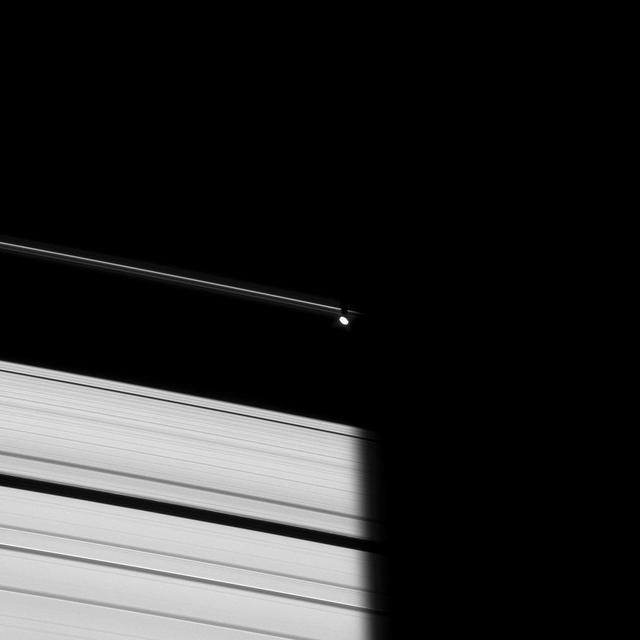
Prometheus Emerges
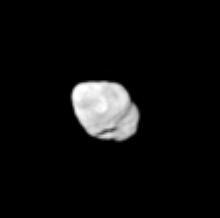
Lumpy Prometheus
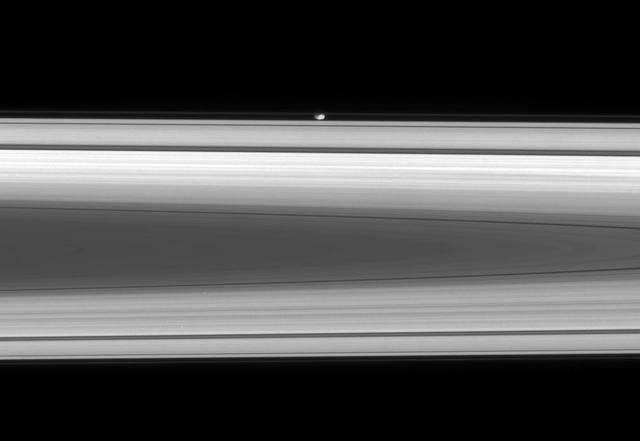
Spotting Prometheus
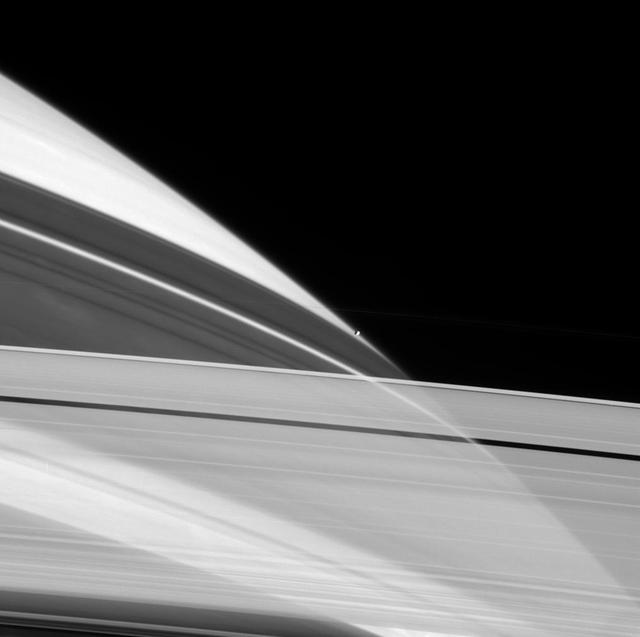
Prometheus On the Edge
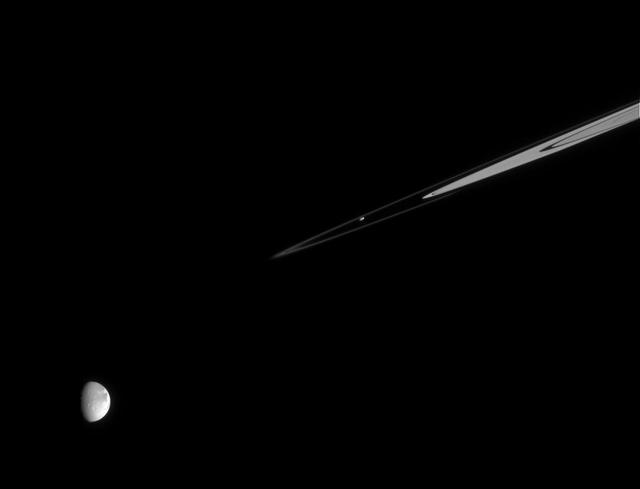
Prometheus with Distant Dione
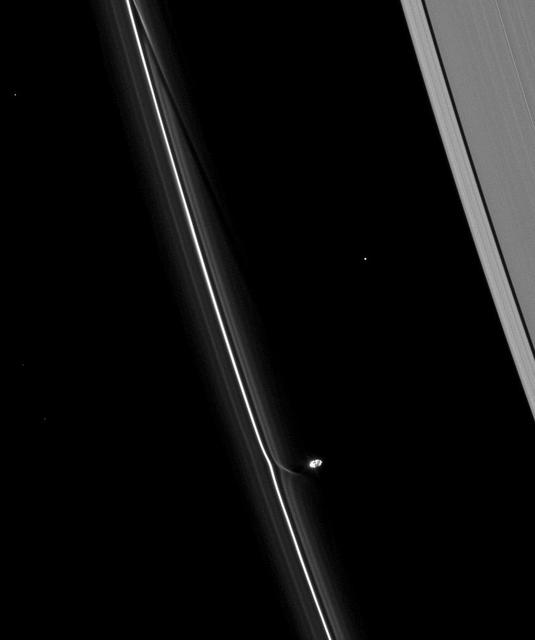
Prometheus Two-Step
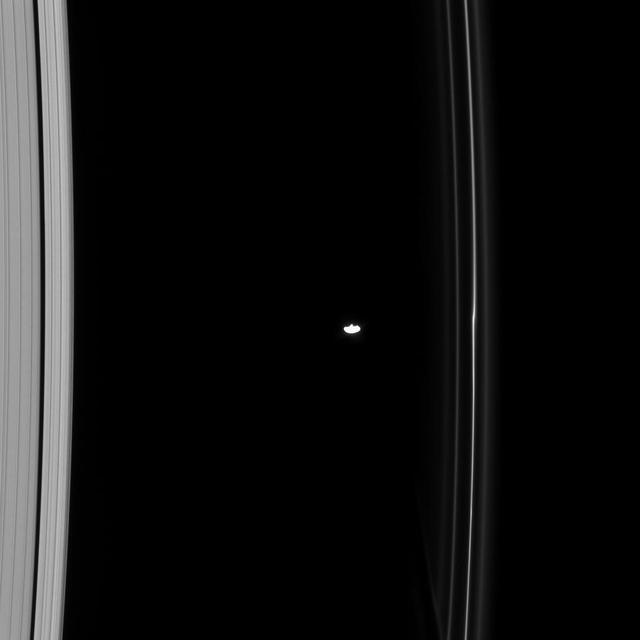
Prometheus Brings Change to the F Ring

Saturn moon Prometheus orbits near some of its handiwork in the F ring in this image from NASA Cassini spacecraft. Prometheus and its partner Pandora gravitationally sculpt and maintain the narrow F ring.
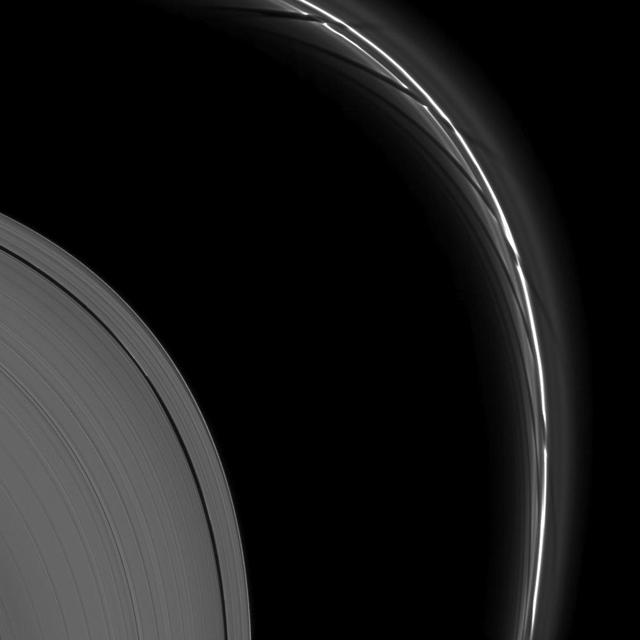
The effects of the moon Prometheus create intricate formations in Saturn thin F ring.
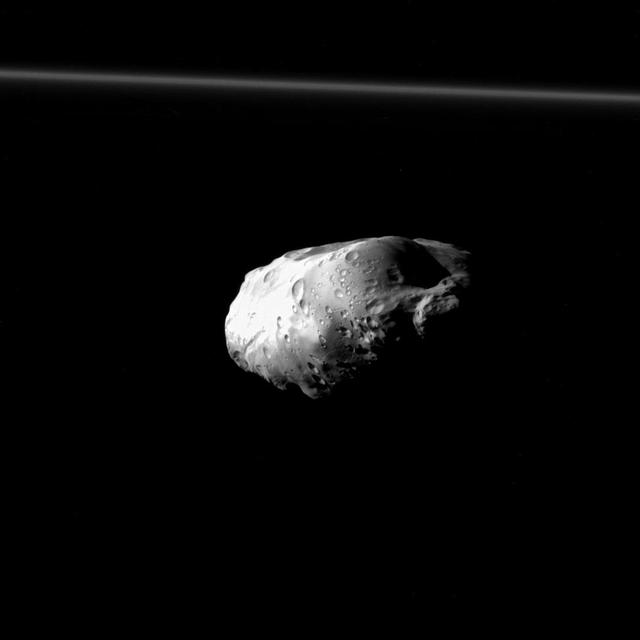
NASA Cassini spacecraft spied details on the pockmarked surface of Saturn moon Prometheus 86 kilometers, or 53 miles across during a moderately close flyby on Dec. 6, 2015. This is one of Cassini highest resolution views of Prometheus.
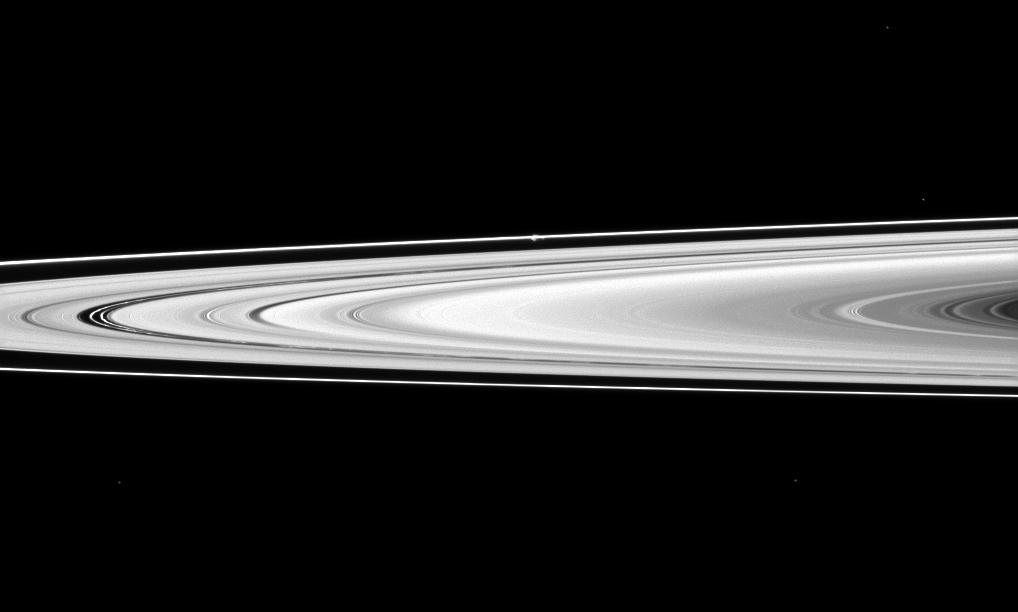
NASA Cassini spacecraft looks across Saturn rings and finds the moon Prometheus, a shepherd of the thin F ring. Prometheus looks like a small white bulge near the F ring -- the outermost ring seen here -- above the center of the image.
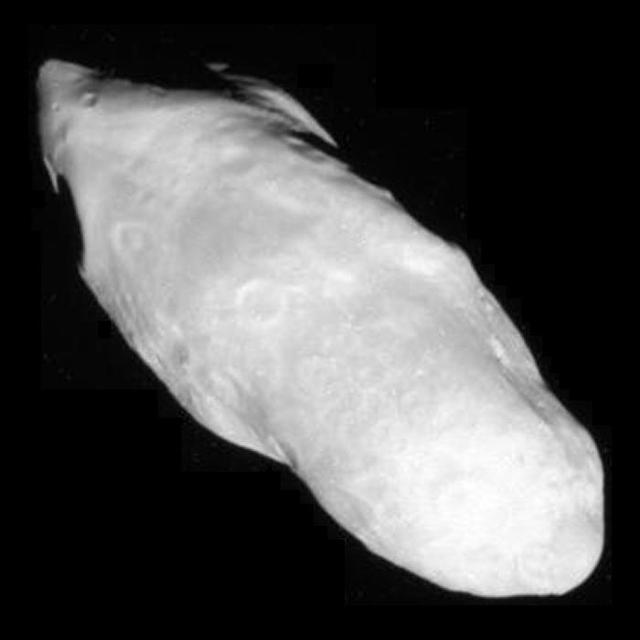
Saturn potato-shaped moon Prometheus is shown in this close-up from NASA Cassini spacecraft.
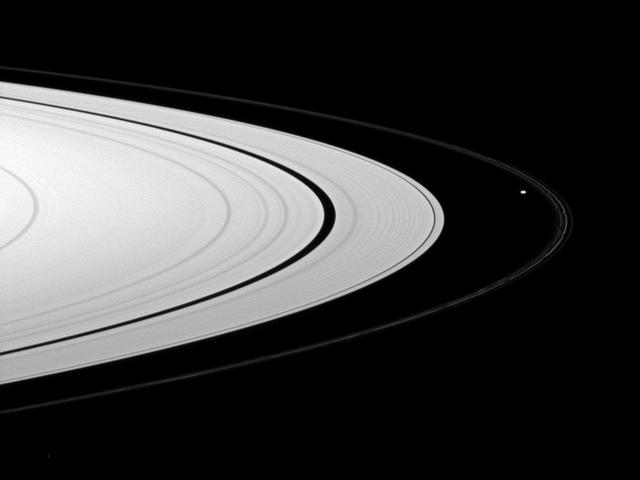
Saturn A ring appears bright compared to the thin F ring, which is shepherded by the moon Prometheus, in this view from NASA Cassini spacecraft.
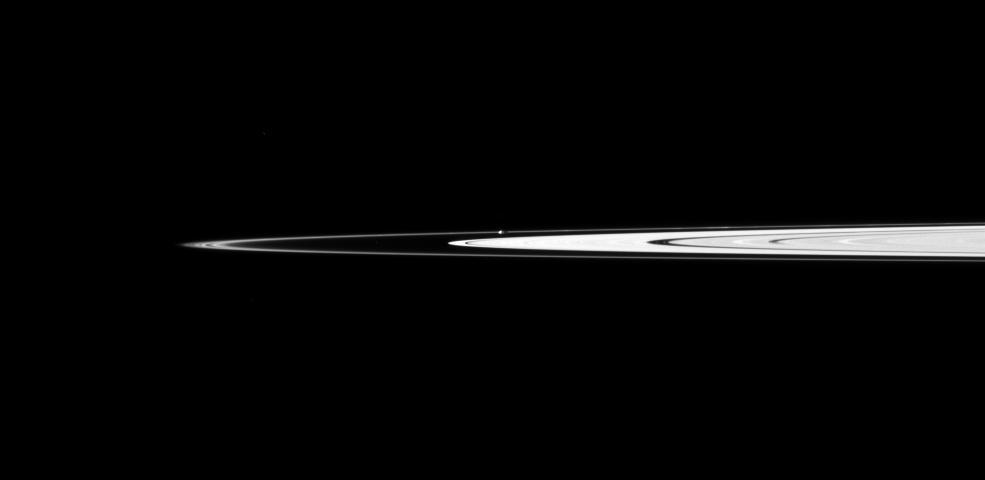
Saturn small, potato-shaped moon Prometheus orbits between the main rings and the thin F ring in this view captured by NASA Cassini spacecraft.
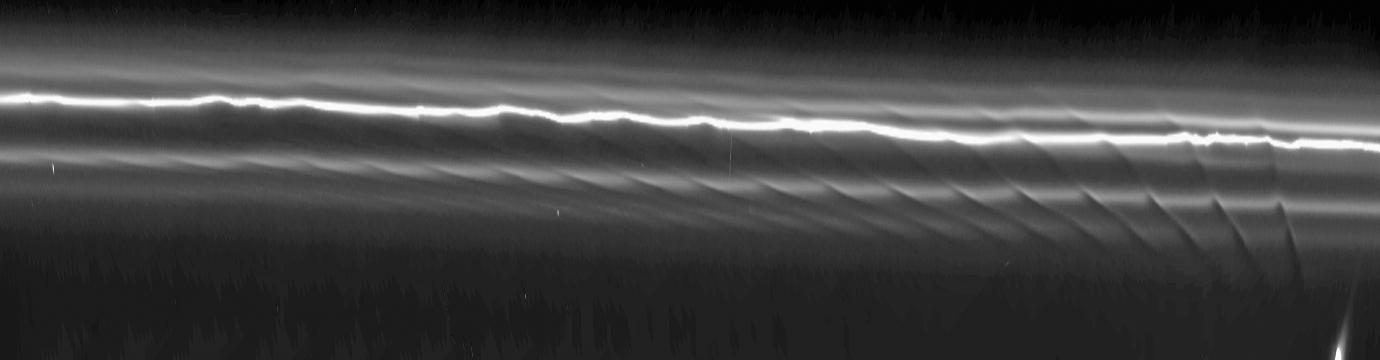
The Prometheus Effect
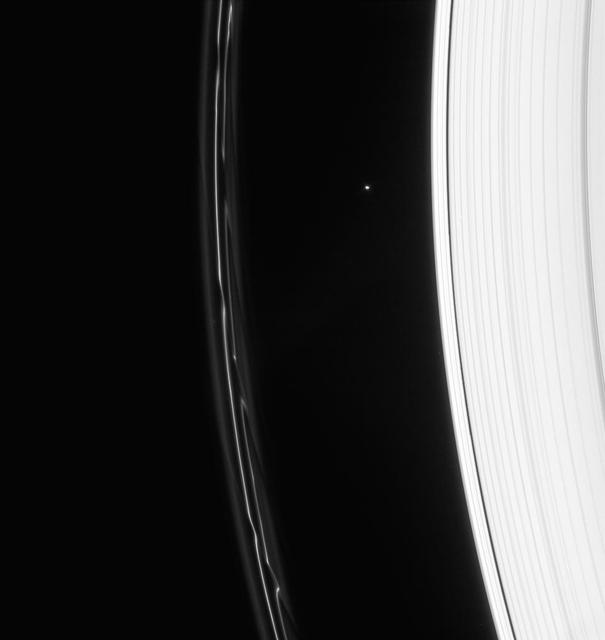
Trailing Prometheus
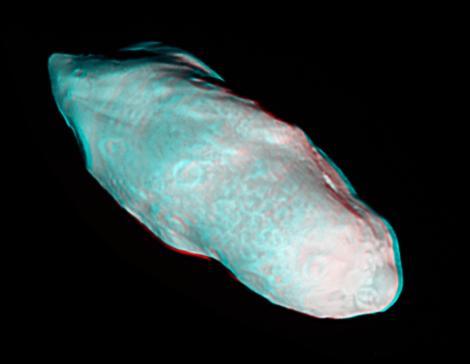
Saturn potato-shaped moon Prometheus is rendered in three dimensions in this close-up from NASA Cassini spacecraft. You will need 3-D glasses to view this image.
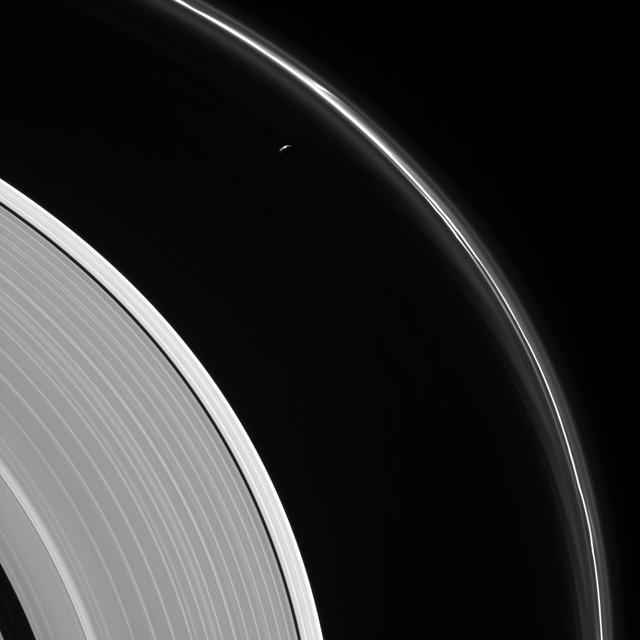
The thin sliver of Saturn's moon Prometheus lurks near ghostly structures in Saturn's narrow F ring in this view from NASA's Cassini spacecraft. Many of the narrow ring's faint and wispy features result from its gravitational interactions with Prometheus (86 kilometers, or 53 miles across). Most of the small moon's surface is in darkness due to the viewing geometry here. Cassini was positioned behind Saturn and Prometheus with respect to the sun, looking toward the moon's dark side and just a bit of the moon's sunlit northern hemisphere. Also visible here is a distinct difference in brightness between the outermost section of Saturn's A ring (left of center) and rest of the ring, interior to the Keeler Gap (lower left). This view looks toward the sunlit side of the rings from about 13 degrees above the ring plane. The image was taken in visible light with the Cassini spacecraft narrow-angle camera on May 13, 2017. The view was acquired at a distance of approximately 680,000 miles (1.1 million kilometers) from Saturn. Image scale is 4 miles (6 kilometers) per pixel. https://photojournal.jpl.nasa.gov/catalog/PIA21340
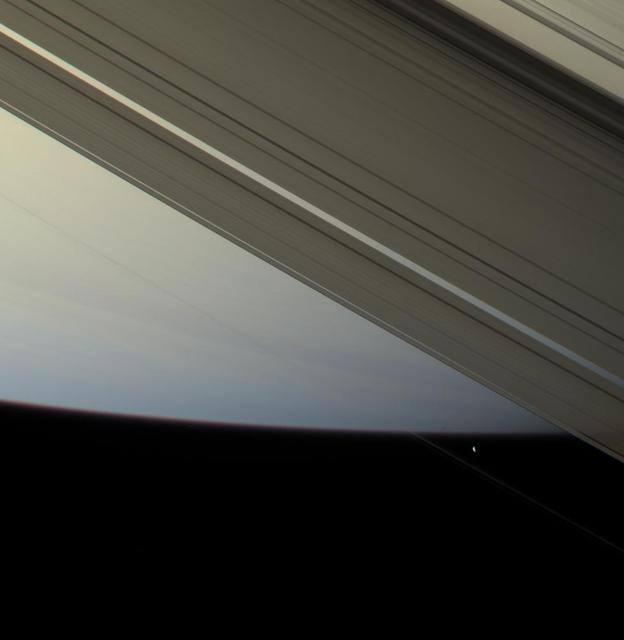
Prometheus Makes Contact
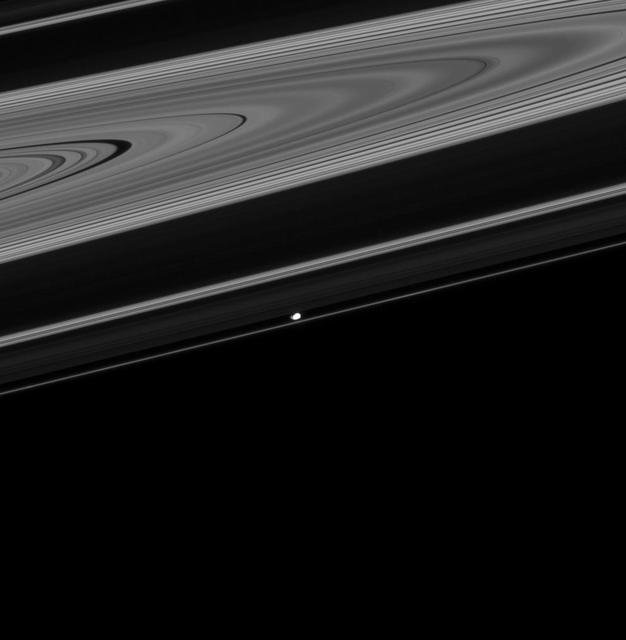
Prometheus Lurking in the Rings
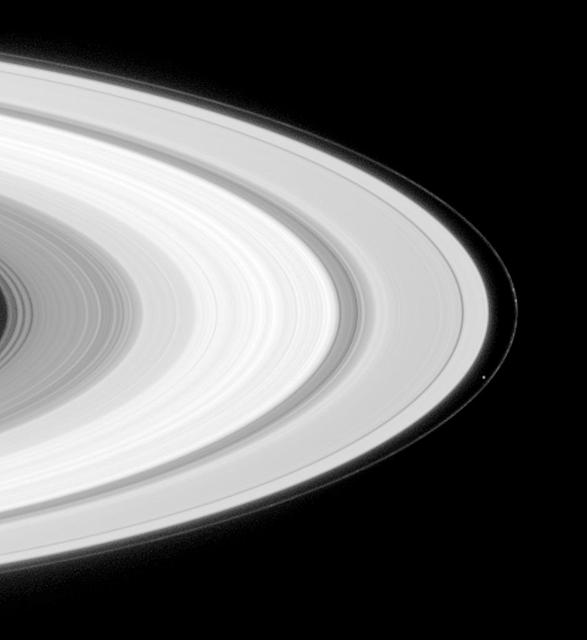
Prometheus and Knots in the F Ring
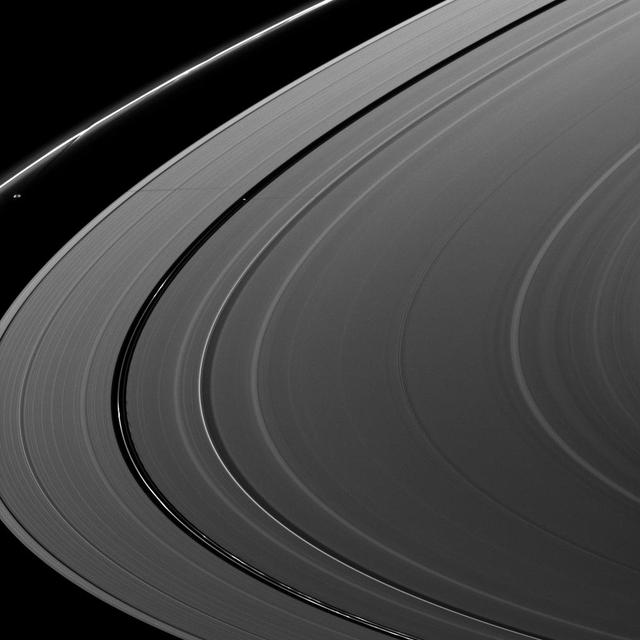
Prometheus and Pan Pair
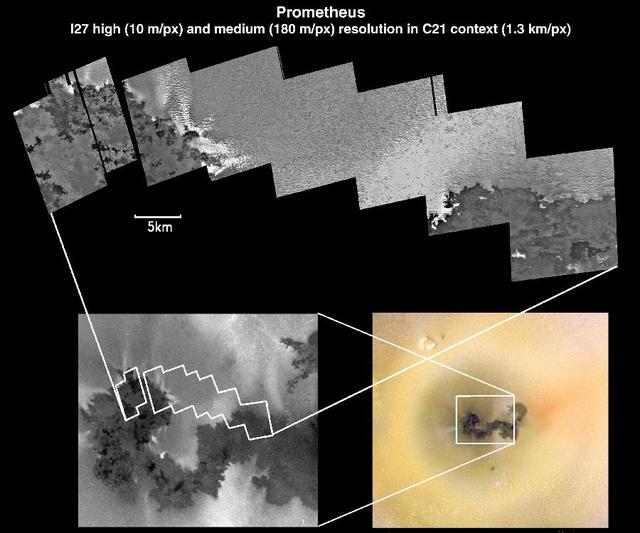
Io Prometheus Volcano at Various Resolutions
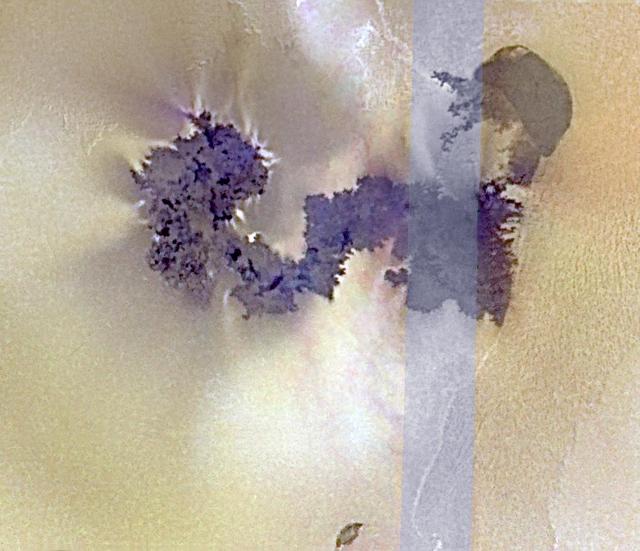
Sources of Volcanic Plumes Near Prometheus
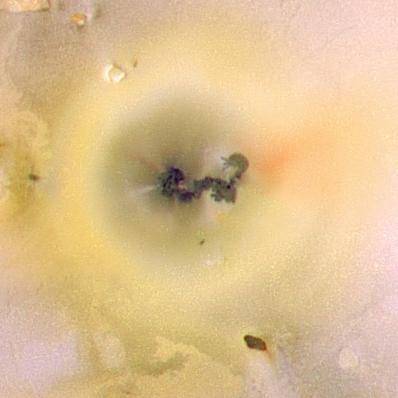
Close-up of Prometheus, Io color
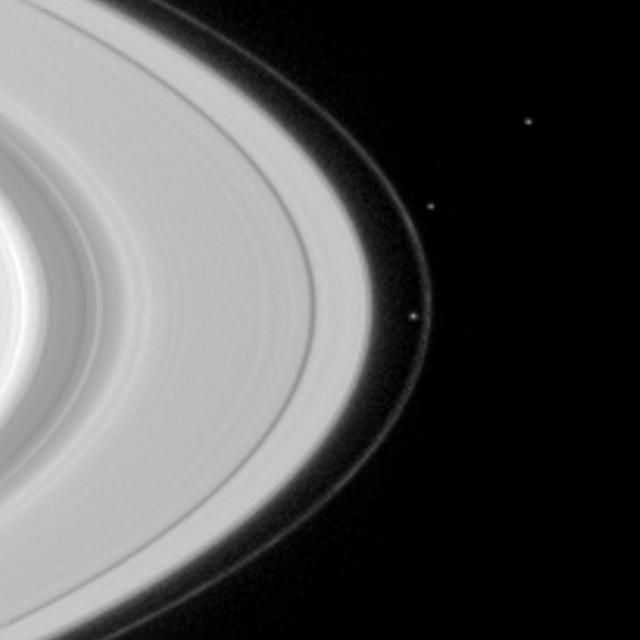
Pandora and Prometheus Near F Ring
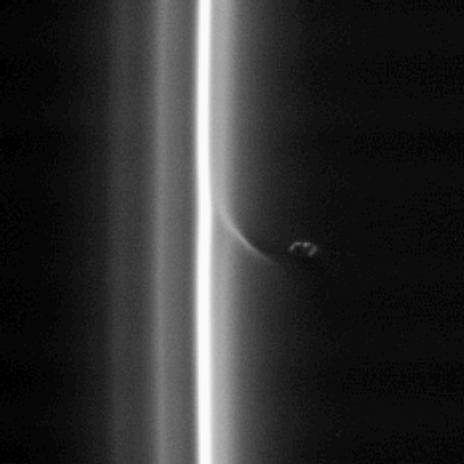
This view shows Prometheus with a streamer it has created in the inner edge of the F ring. Prometheus comes close to the inner edge of the ring once per orbit, perturbing the ring particles there
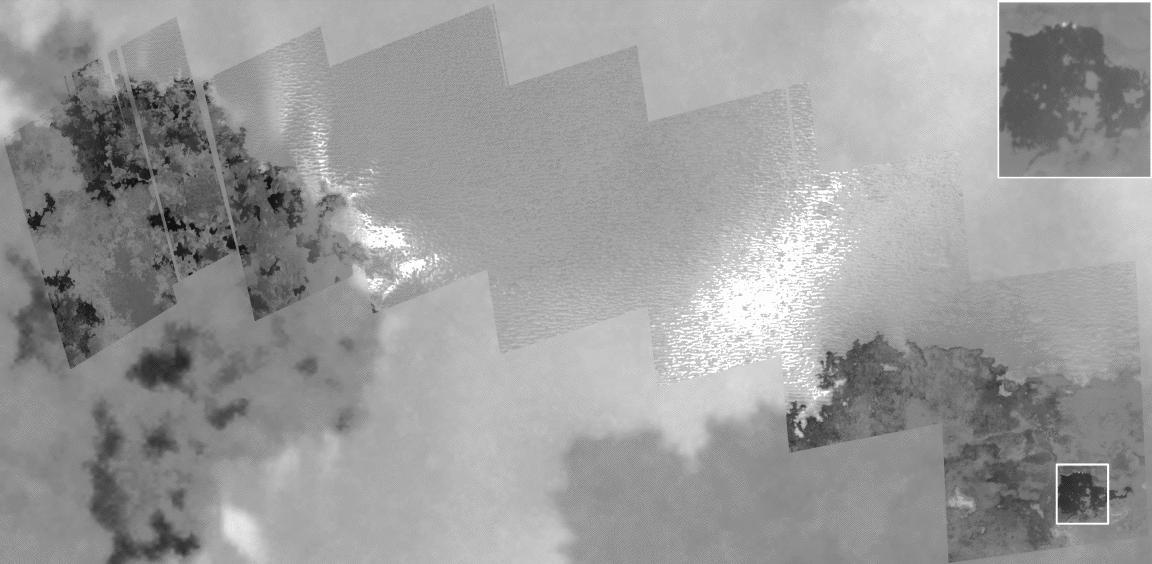
Galileo Takes a Close-up Look at Prometheus
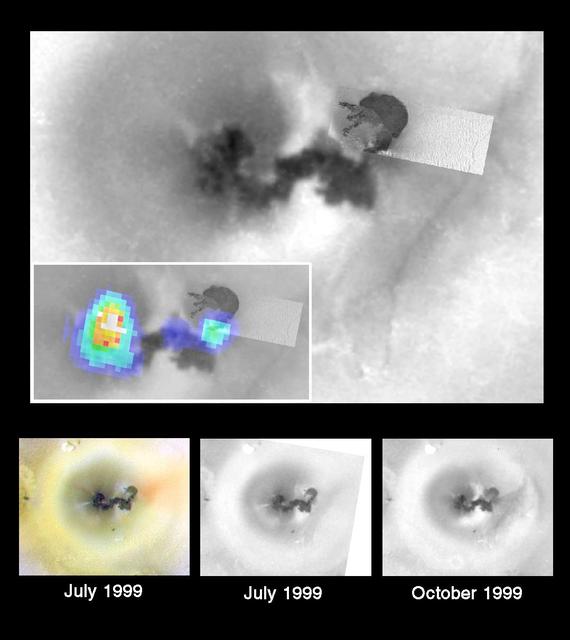
Ongoing Geologic Activity at Prometheus Volcano, Io

Galileo Discovers Caldera at Prometheus Volcano, Io
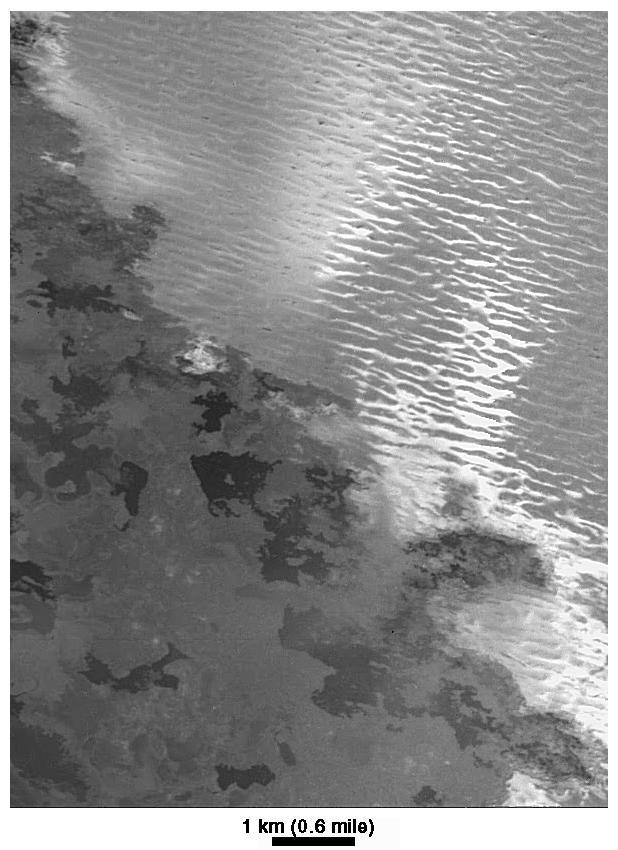
Lava Flows and Ridged Plains at Prometheus, Io
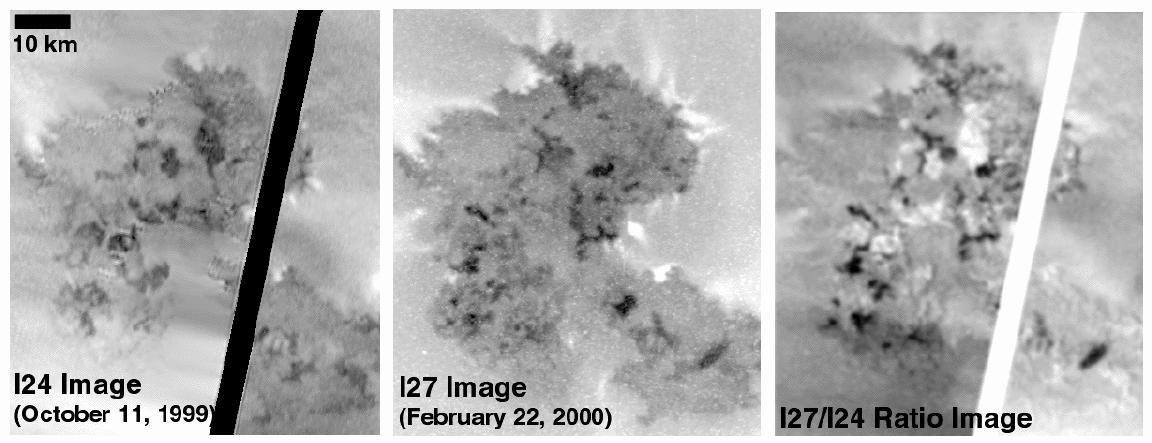
Changes Observed in Just 4.5 Months at Prometheus, Io

The oblong form of Prometheus glides by, trailing behind it wiggles in Saturn ribbon-like F ring
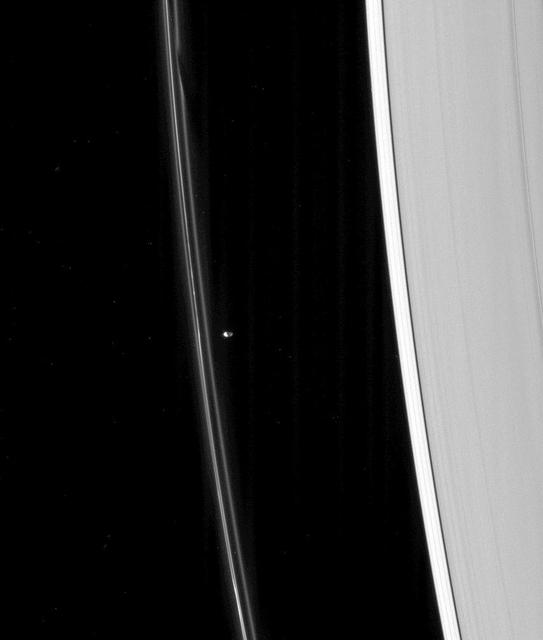
The shepherd moon Prometheus is lit partly by reflected light from Saturn as it lurks near the heavily perturbed F ring
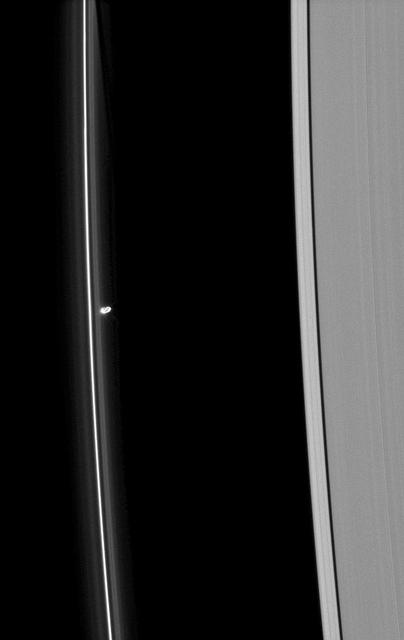
Prometheus is seen near Saturn tenuous F ring as the moon orbits in the Roche Division, between the F and A rings.
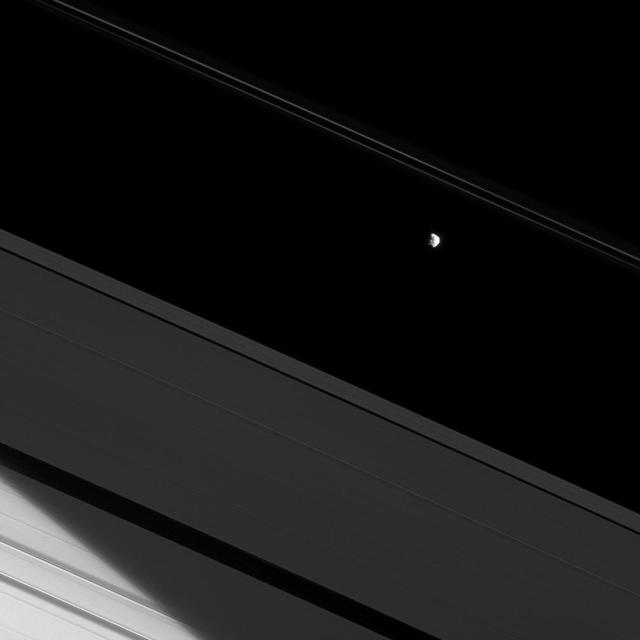
The moon Prometheus and a bit of Saturn northern hemisphere are both brilliantly lit by the sun here, making the A ring seem dim in comparison.
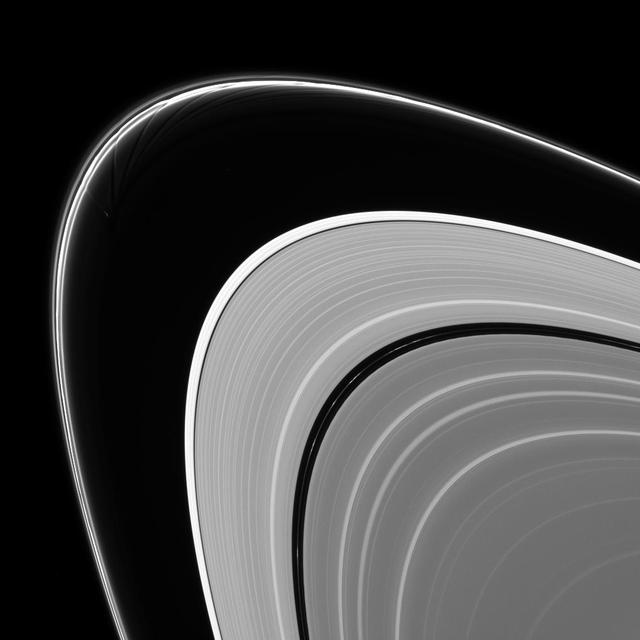
Prometheus is caught in the act of creating gores and streamers in the F ring. Scientists believe that Prometheus and its partner-moon Pandora are responsible for much of the structure in the F ring as shown by NASA Cassini spacecraft. The orbit of Prometheus (53 miles, or 86 kilometers across) regularly brings it into the F ring. When this happens, it creates gores, or channels, in the ring where it entered. Prometheus then draws ring material with it as it exits the ring, leaving streamers in its wake. This process creates the pattern of structures seen in this image. This process is described in detail, along with a movie of Prometheus creating one of the streamer/channel features, in PIA08397. This view looks toward the sunlit side of the rings from about 8.6 degrees above the ringplane. The image was taken in visible light with the Cassini spacecraft narrow-angle camera on Feb. 11, 2014. The view was acquired at a distance of approximately 1.3 million miles (2.1 million kilometers) from Saturn and at a Sun-Saturn-spacecraft, or phase, angle of 147 degrees. Image scale is 8 miles (13 kilometers) per pixel. http://photojournal.jpl.nasa.gov/catalog/PIA18270

Volcanic hot spots are seen in this color temperature map of the Prometheus volcano on Jupiter moon Io created with data obtained by NASA Galileo and Voyager spacecraft.
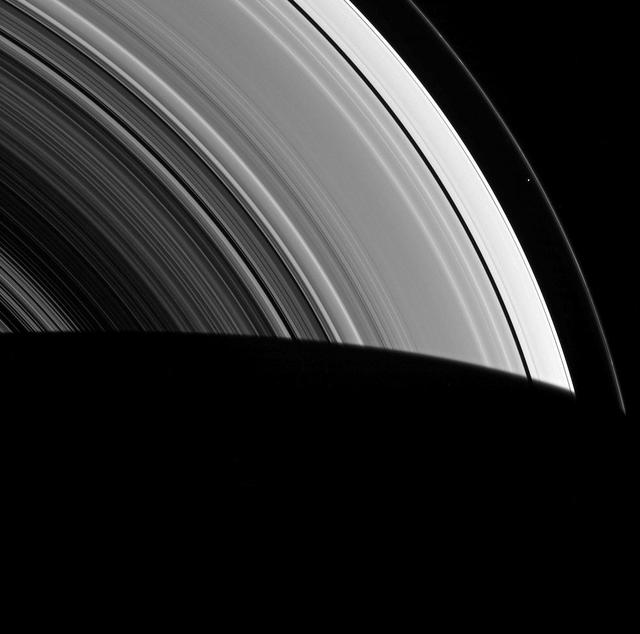
Seen by NASA Cassini spacecraft within the vast expanse of Saturn rings, Prometheus appears as little more than a dot. But that little moon still manages to shape the F ring, confining it to its narrow domain. Prometheus (53 miles, or 86 kilometers across) and its fellow moon Pandora (50 miles, or 81 kilometers across) orbit beside the F ring and keep the ring from spreading outward through a process dubbed "shepherding." This view looks toward the unilluminated side of the rings from about 45 degrees below the ringplane. The image was taken in green light with the Cassini spacecraft wide-angle camera on March 8, 2014. The view was obtained at a distance of approximately 533,000 miles (858,000 kilometers) from Prometheus and at a Sun-Prometheus-spacecraft, or phase, angle of 90 degrees. Image scale is 32 miles (51 kilometers) per pixel. http://photojournal.jpl.nasa.gov/catalog/PIA18272
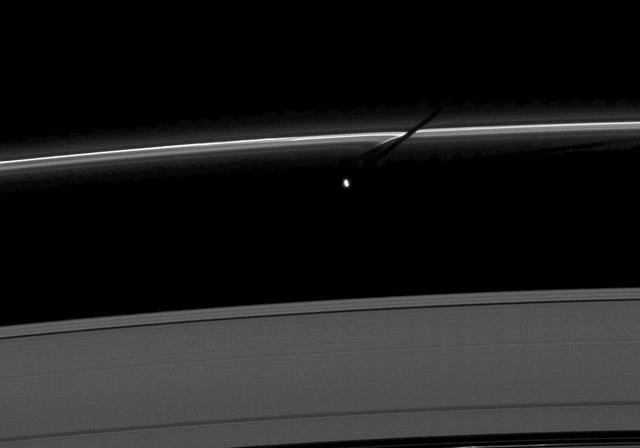
The moon Prometheus casts a shadow on the thin F ring marked with streamer-channels created by the moon in this image taken as Saturn approaches its August 2009 equinox.
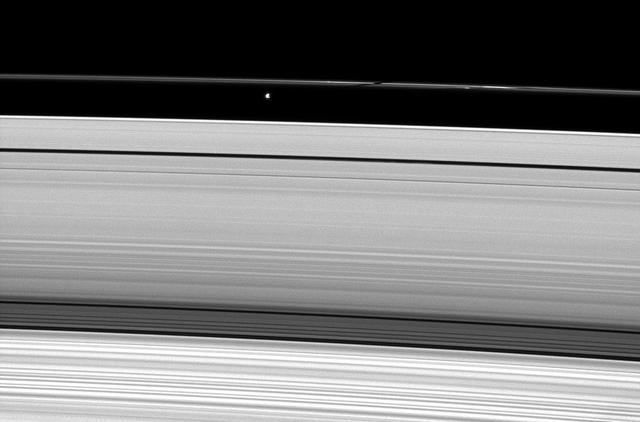
Saturn moon Prometheus casts a shadow on the narrow F ring in this image captured by NASA Cassini Orbiter weeks after the planet August 2009 equinox
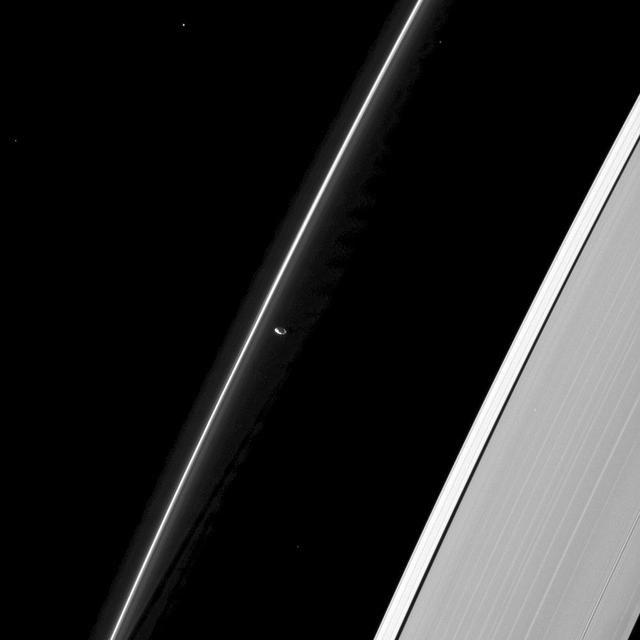
Like a shepherd guarding his sheep, Prometheus keeps a lonely watch over the F ring in this image captured by NASA Cassini spacecraft.
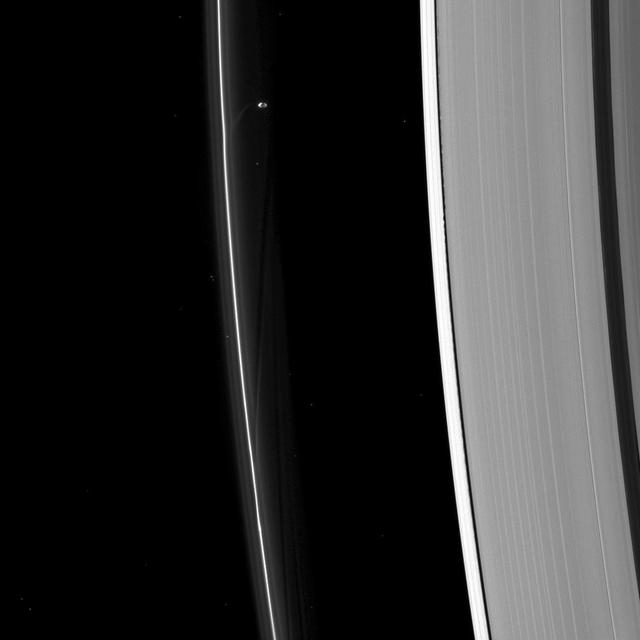
Prometheus, seen here by NASA Cassini spacecraft, sculpting the F ring while Daphnis too small to discern in this image raises waves on the edges of the Encke gap.
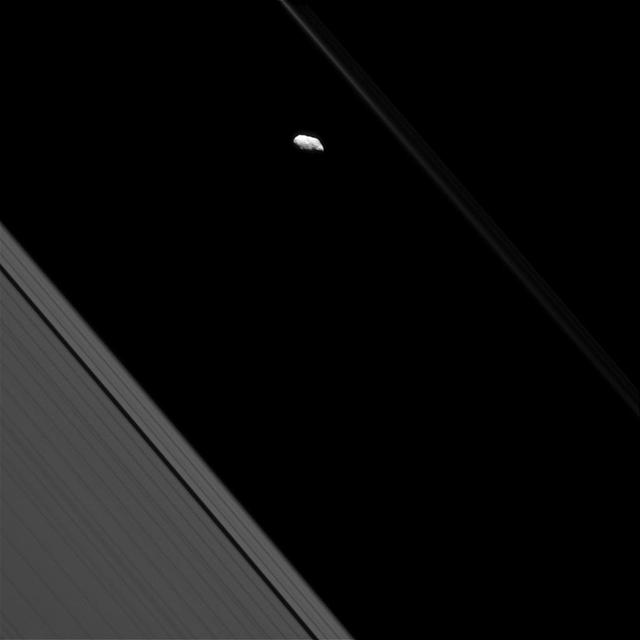
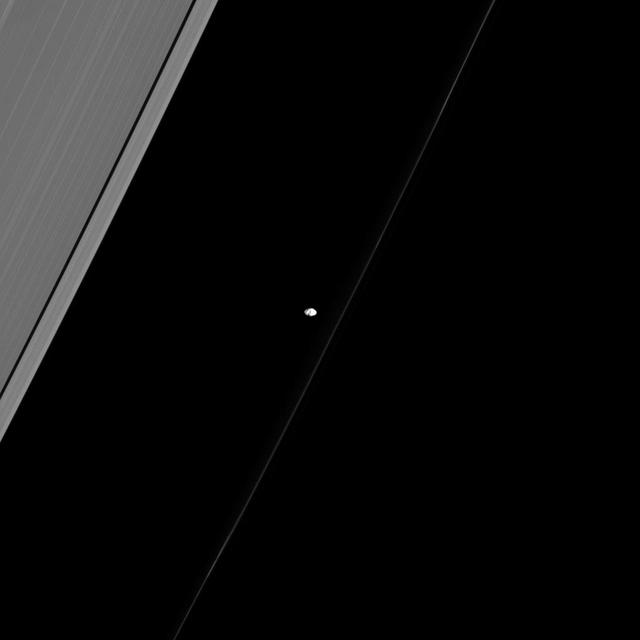
Surface features are visible on Saturn's moon Prometheus in this view from NASA's Cassini spacecraft. Most of Cassini's images of Prometheus are too distant to resolve individual craters, making views like this a rare treat. Saturn's narrow F ring, which makes a diagonal line beginning at top center, appears bright and bold in some Cassini views, but not here. Since the sun is nearly behind Cassini in this image, most of the light hitting the F ring is being scattered away from the camera, making it appear dim. Light-scattering behavior like this is typical of rings comprised of small particles, such as the F ring. This view looks toward the unilluminated side of the rings from about 14 degrees below the ring plane. The image was taken in visible light with the Cassini spacecraft narrow-angle camera on Sept. 24, 2016. The view was acquired at a distance of approximately 226,000 miles (364,000 kilometers) from Prometheus and at a sun-Prometheus-spacecraft, or phase, angle of 51 degrees. Image scale is 1.2 miles (2 kilometers) per pixel. http://photojournal.jpl.nasa.gov/catalog/PIA20508
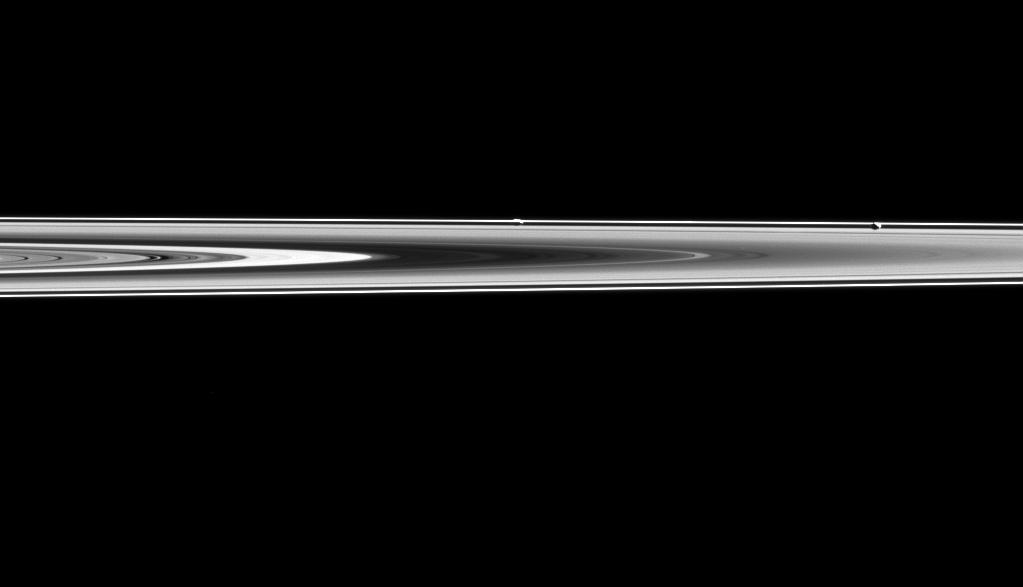
Prometheus and Pandora are almost hidden in Saturn's rings in this image. Prometheus (53 miles or 86 kilometers across) and Pandora (50 miles or 81 kilometers across) orbit along side Saturn's narrow F ring, which is shaped, in part, by their gravitational influences help to shape that ring. Their proximity to the rings also means that they often lie on the same line of sight as the rings, sometimes making them difficult to spot. In this image, Prometheus is the left most moon in the ring plane, roughly in the center of the image. Pandora is towards the right. This view looks toward the unilluminated side of the rings from about 0.3 degrees below the ring plane. The image was taken in visible light with the Cassini spacecraft narrow-angle camera on May 6, 2015. The view was obtained at a distance of approximately 994,000 miles (1.6 million kilometers) from Prometheus and at a Sun-Prometheus-spacecraft, or phase, angle of 106 degrees. Image scale is 6 miles (10 kilometers) per pixel. http://photojournal.jpl.nasa.gov/catalog/PIA18334
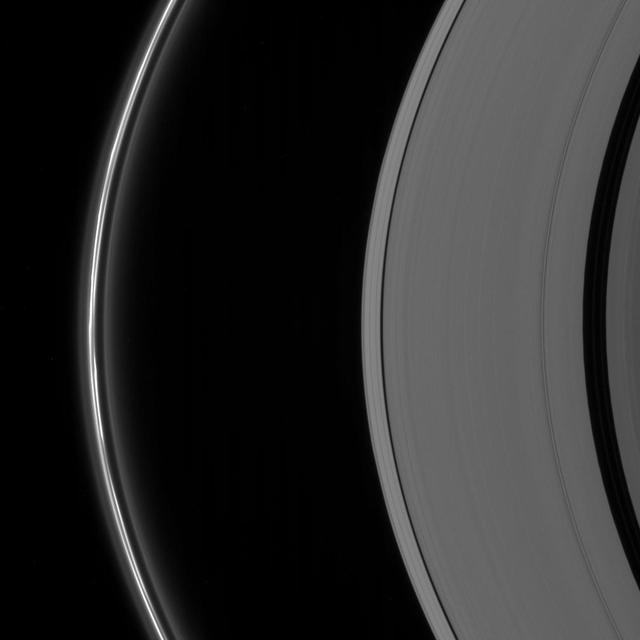
The clumpy disturbed appearance of the brilliant F ring constantly changes. The irregular structure of the ring is due, in large part, to the gravitational perturbations on the ring material by one of Saturn moons, Prometheus
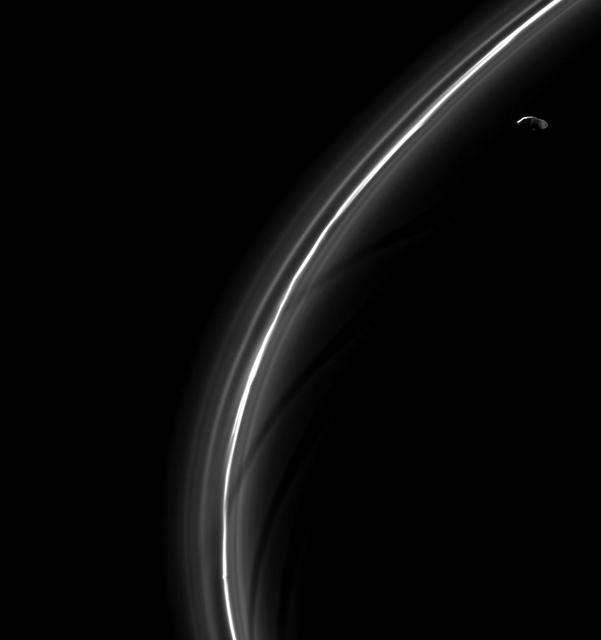
Saturn's moon Prometheus, seen here looking suspiciously blade-like, is captured near some of its sculpting in the F ring. Prometheus' (53 miles or 86 kilometers across) orbit sometimes takes it into the F ring. When it enters the ring, it leaves a gore where its gravitational influence clears out some of the smaller ring particles. Below Prometheus, the dark lanes interior to the F ring's bright core provide examples of previous ring-moon interactions. This view looks toward the unilluminated side of the rings from about 7 degrees below the ring plane. The image was taken in visible light with the Cassini spacecraft narrow-angle camera on March 15, 2015. The view was obtained at a distance of approximately 286,000 miles (461,000 kilometers) from Saturn and at a Sun-Saturn-spacecraft, or phase, angle of 115 degrees. Image scale is 1.7 miles (2.8 kilometers) per pixel. http://photojournal.jpl.nasa.gov/catalog/PIA18324
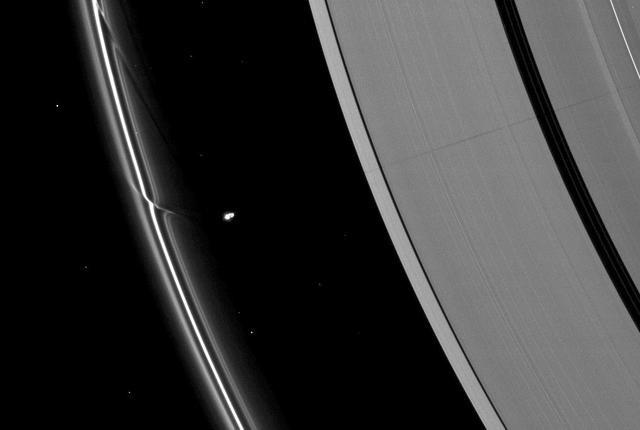
The effects of the small moon Prometheus loom large on two of Saturn rings in this image taken by NASA Cassini spacecraft a short time before Saturn August 2009 equinox.
Similar to many of the small, inner moons of Saturn, Prometheus points its long axis at Saturn as if giving us directions to the planet. This image was taken by NASA Cassini spacecraft.
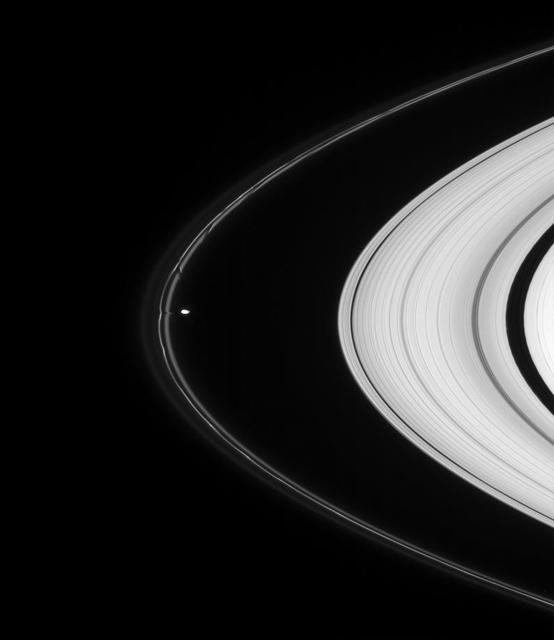
Prometheus pulls material from the tortured F ring in this highly detailed view. The aftereffects of the moon other recent encounters with the ring are visible above as dark channels in the inner ringlet
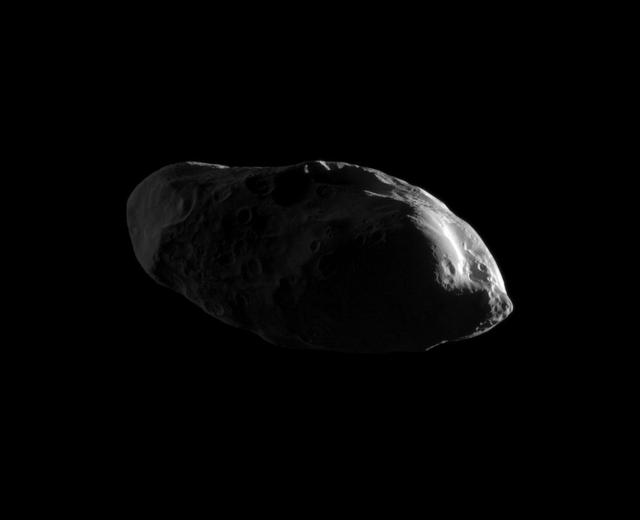
Appearing like eyes on a potato, craters cover the dimly lit surface of the moon Prometheus in this high-resolution image from NASA Cassini spacecraft early 2010 flyby.
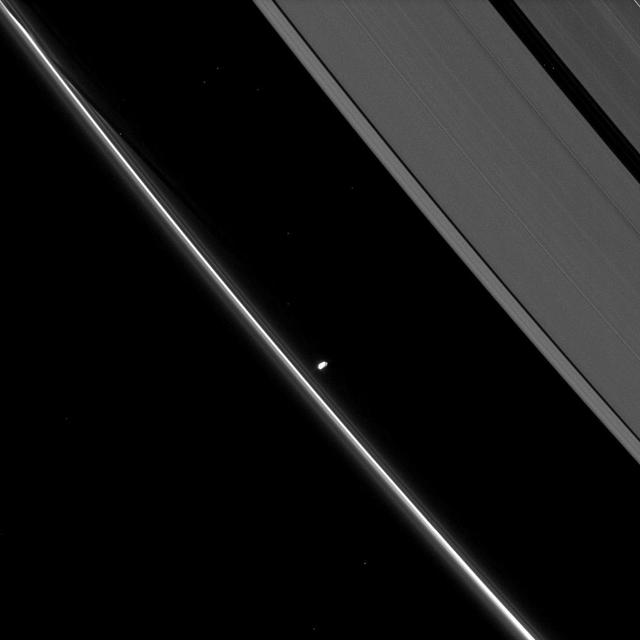
Saturn small moon Prometheus, slightly overexposed in this image taken by NASA Cassini spacecraft, shows off its potato-like shape as it orbits in the Roche Division between the A ring and thin F ring.
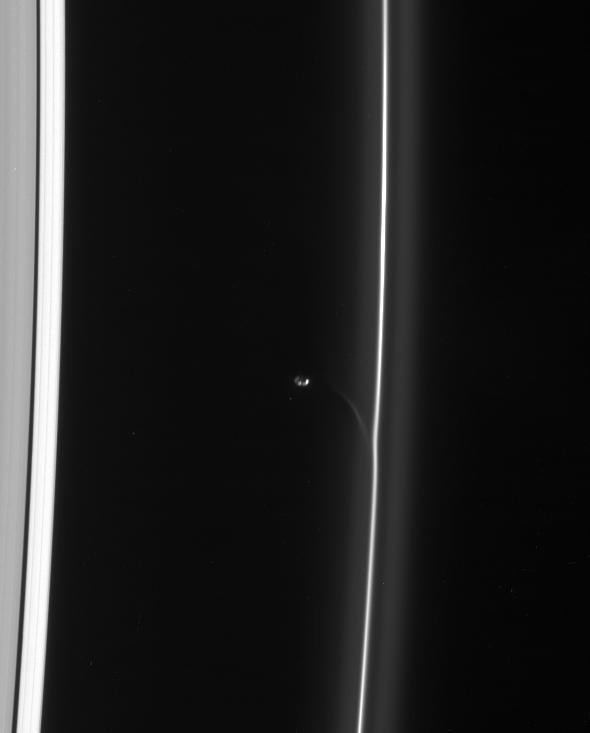
Prometheus draws a fresh streamer of material from the F ring as it passes the ring interior edge. The streamer will continuously shear out as it orbits the planet, becoming more elongated and increasingly aligned with the F ring with time
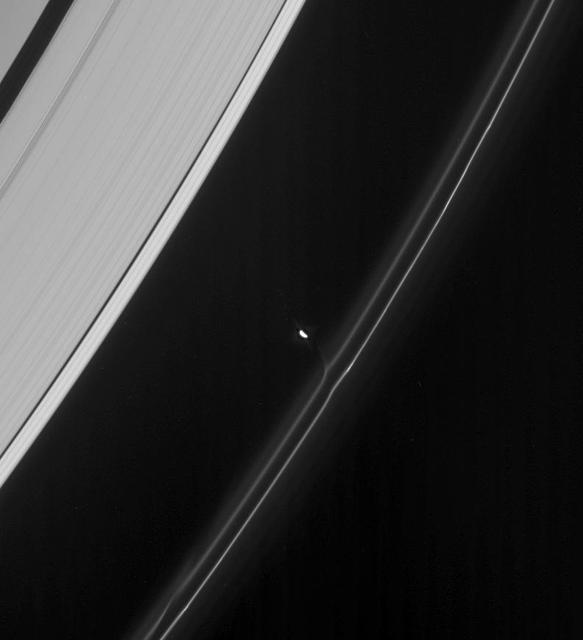
Prometheus draws material from the F ring along an invisible thread of gravity. Near lower left is an identical feature the moon created on a previous pass near the ring
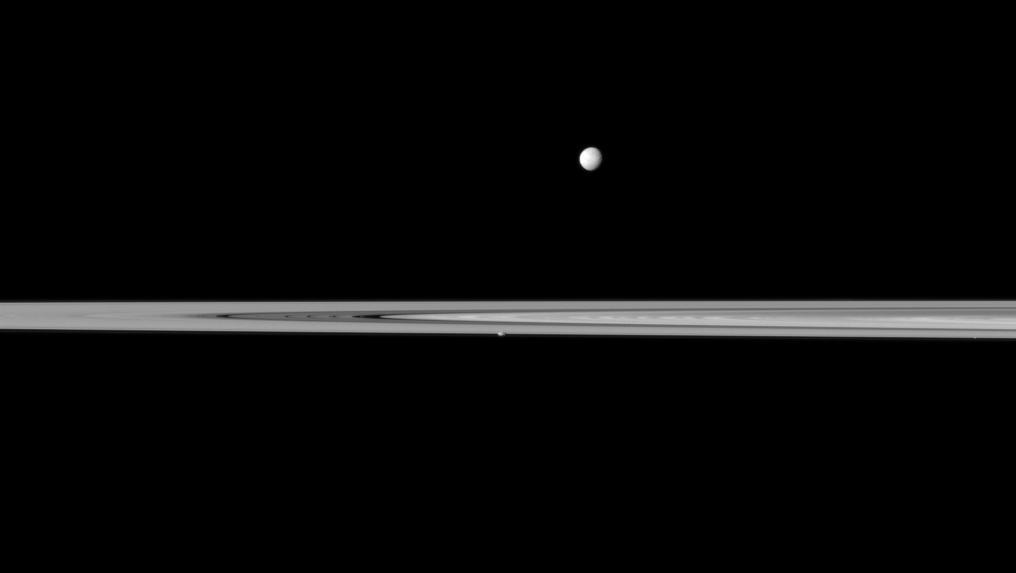
Saturn small, potato-shaped moon Prometheus appears embedded within the planet rings near the center of this view from NASA Cassini spacecraft while the larger moon Mimas orbits beyond the rings.
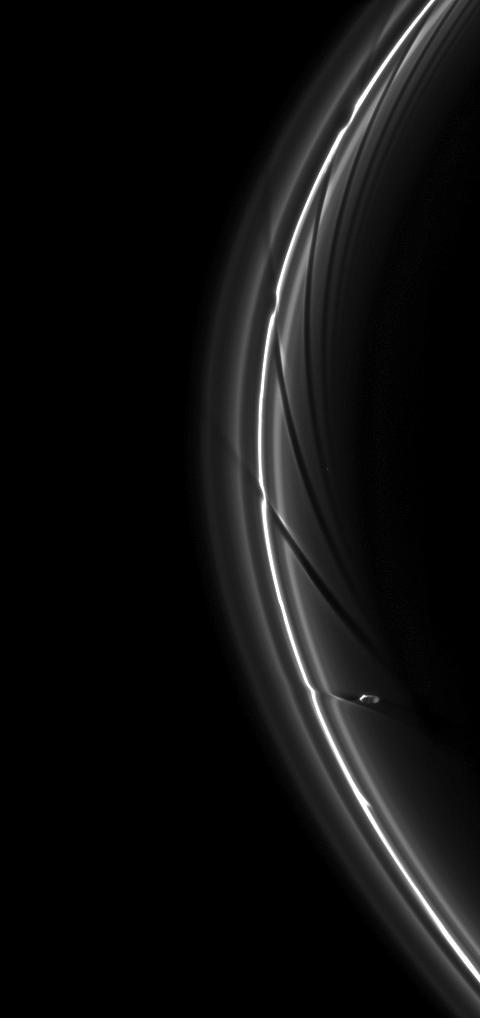
The gravity of potato-shaped Prometheus periodically creates streamer-channels in the F ring, and the moon handiwork can be seen in the dark channels in this image from NASA Cassini spacecraft.

Saturn moon Prometheus casts a narrow shadow on the rings near the much larger shadow cast by the planet in this image taken by NASA Cassini spacecraft about five months after Saturn August 2009 equinox.
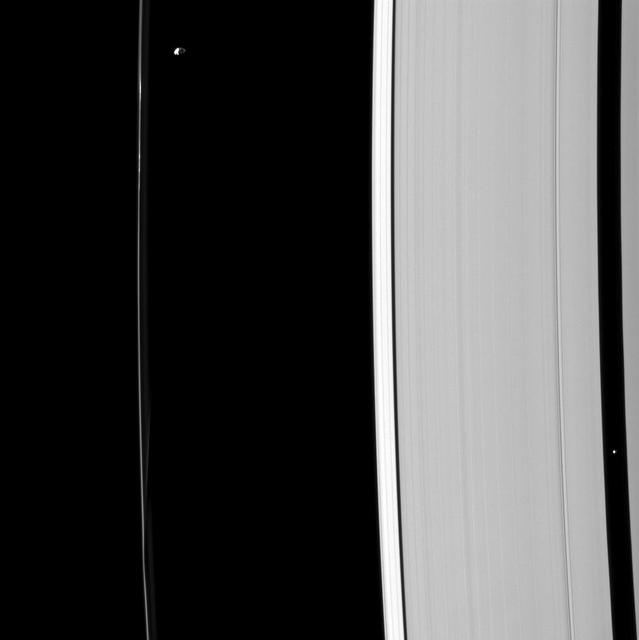
Although their gravitational effects on nearby ring material look quite different, Prometheus and Pan are both shepherd moons, holding back nearby ring edges in this image captured by NASA Cassini spacecraft.
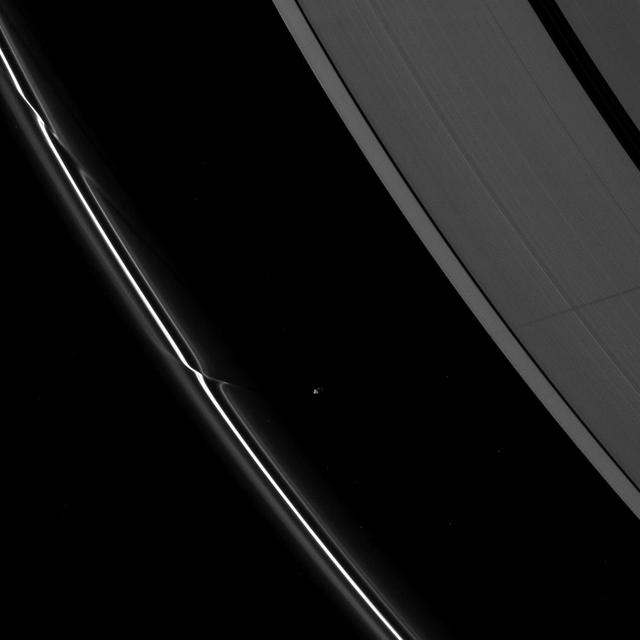
Saturn moon Prometheus casts a long shadow across the A ring in the middle-right side of this image taken shortly before the planet August 2009 equinox by NASA Cassini spacecraft.
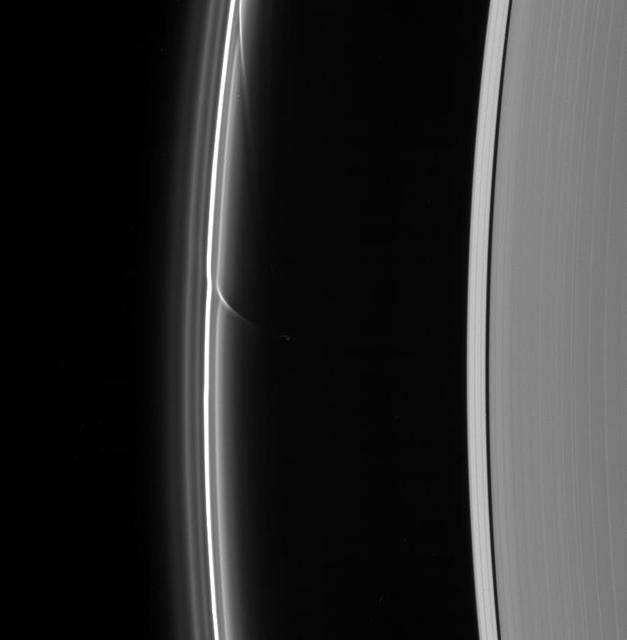
A shepherd moon can do more to define ring structures than just keep the flock of particles in line, as Cassini spacecraft images such as this have shown
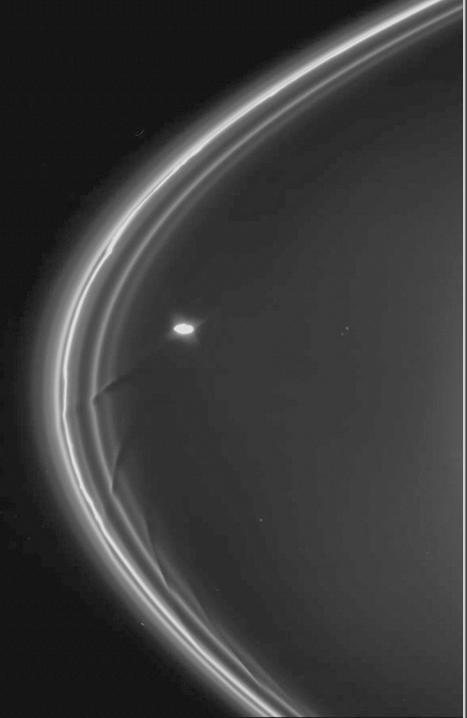
This image is from a simulation showing the changes to a portion of Saturn F ring as the shepherding moon Prometheus swings by it. The animation uses data obtained by the imaging cameras aboard NASA Cassini spacecraft.
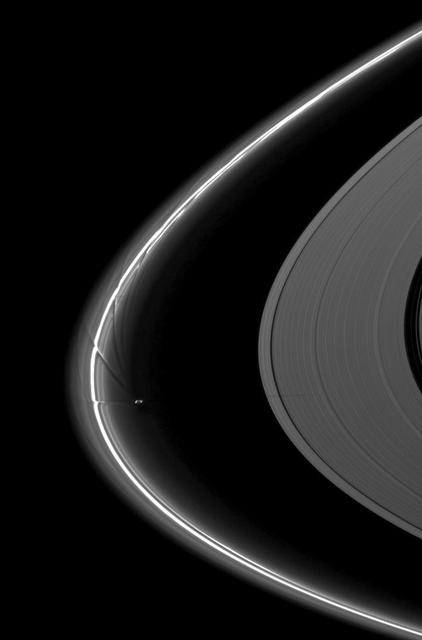
NASA Cassini spacecraft captured Saturn moon Prometheus, orbiting near the streamer-channels it has created in the thin F ring, casts a shadow on the A ring in this image taken a little more than a week after the planet August 2009 equinox.

This image shows the region around the Prometheus volcano on Jupiter moon Io. It was observed by NASA Galileo spacecraft in 1996 as it was flying away from a close approach to Io.
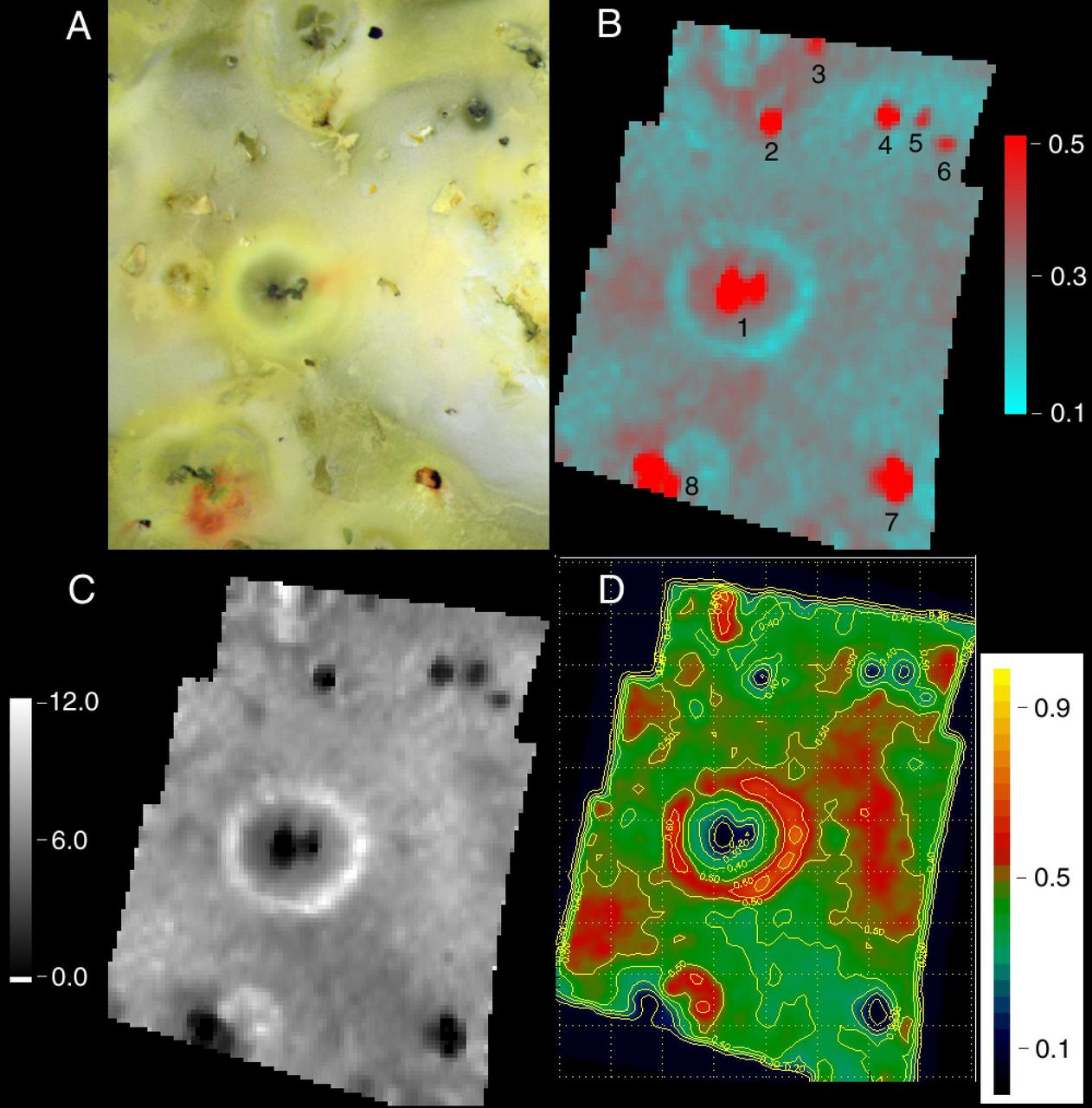
The Prometheus region of Jupiter moon Io was imaged by NASA Galileo spacecraft in 1999. The maps made from spectrometer data show the interplay between hot silicates on the surface and sulfur dioxide frost.
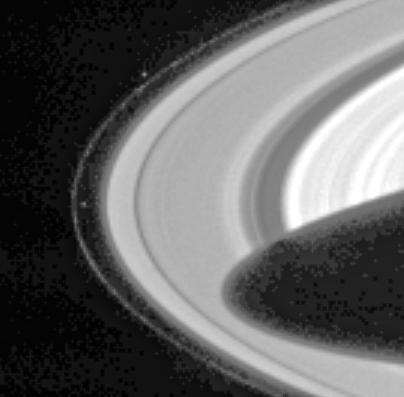
Cassini has sighted Prometheus and Pandora, the two F-ring-shepherding moons whose unpredictable orbits both fascinate scientists and wreak havoc on the F ring. Prometheus (102 kilometers, or 63 miles across) is visible left of center in the image, inside the F ring. Pandora (84 kilometers, or 52 miles across) appears above center, outside the ring. The dark shadow cast by the planet stretches more than halfway across the A ring, the outermost main ring. The mottled pattern appearing in the dark regions of the image is 'noise' in the signal recorded by the camera system, which has subsequently been magnified by the image processing. The F ring is a narrow, ribbon-like structure, with a width seen in this geometry equivalent to a few kilometers. The two small, irregularly shaped moons exert a gravitational influence on particles that make up the F ring, confining it and possibly leading to the formation of clumps, strands and other structures observed there. Pandora prevents the F ring from spreading outward and Prometheus prevents it from spreading inward. However, their interaction with the ring is complex and not fully understood. The shepherds are also known to be responsible for many of the observed structures in Saturn's A ring. The moons, which were discovered in images returned by the Voyager 1 spacecraft in 1980, are in chaotic orbits--their orbits can change unpredictably when the moons get very close to each other. This strange behavior was first noticed in ground-based and Hubble Space Telescope observations in 1995, when the rings were seen nearly edge-on from Earth and the usual glare of the rings was reduced, making the satellites more readily visible than usual. The positions of both satellites at that time were different than expected based on Voyager data. One of the goals for the Cassini-Huygens mission is to derive more precise orbits for Prometheus and Pandora. Seeing how their orbits change over the duration of the mission will help to determine their masses, which in turn will help constrain models of their interiors and provide a more complete understanding of their effect on the rings. This narrow angle camera image was snapped through the broadband green spectral filter, centered at 568 nanometers, on March 10, 2004, when the spacecraft was 55.5 million kilometers (34.5 million miles) from the planet. Image scale is approximately 333 kilometers (207 miles) per pixel. Contrast has been greatly enhanced, and the image has been magnified to aid visibility of the moons as well as structure in the rings. http://photojournal.jpl.nasa.gov/catalog/PIA05387
Changes on Io between Voyager 1 and Galileo Second Orbit Around an Unnamed Vent North of Prometheus
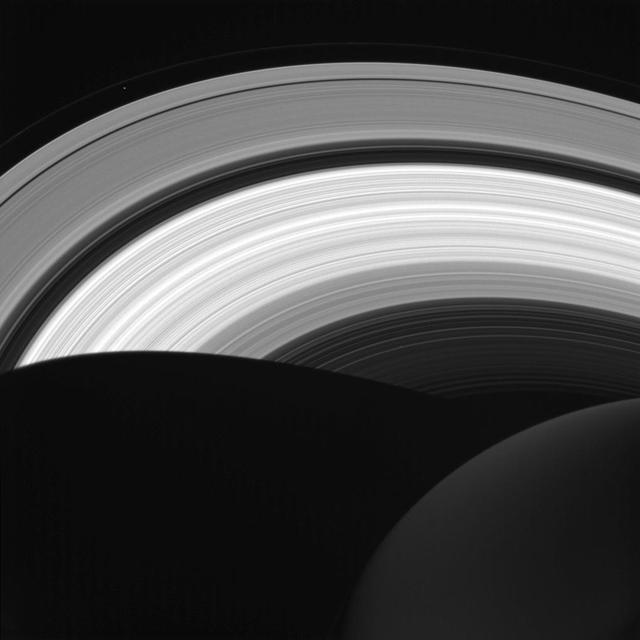
NASA's Cassini spacecraft looks down at the rings of Saturn from above the planet's nightside. The darkened globe of Saturn is seen here at lower right, along with the shadow it casts across the rings. The image shows that even on the planet's night side, the rings remain in sunlight, apart from the portion that lies within Saturn's shadow. The rings also reflect sunlight back onto the night side of the planet, making it appear brighter than it would otherwise appear. Saturn's small moon Prometheus (53 miles or 86 kilometers across) is faintly visible as a speck near upper left. The shadow of Saturn was once long enough to stretch to the orbit of Prometheus. But as northern summer solstice approaches, Saturn's shadow no longer reaches that far (see PIA20498). So Prometheus will not move into the darkness of the planet's shadow until the march of the seasons again causes the shadow to lengthen. This view looks toward the sunlit side of the rings from about 41 degrees above the ring plane. The image was taken in visible light with the Cassini spacecraft wide-angle camera on Aug. 14, 2016. The view was obtained at a distance of approximately 870,000 miles (1.4 million kilometers) from Saturn and at a Sun-Saturn-spacecraft, or phase, angle of 87 degrees. Image scale is 53 miles (86 kilometers) per pixel. Prometheus has been brightened by a factor of two to enhance its visibility. http://photojournal.jpl.nasa.gov/catalog/PIA20505
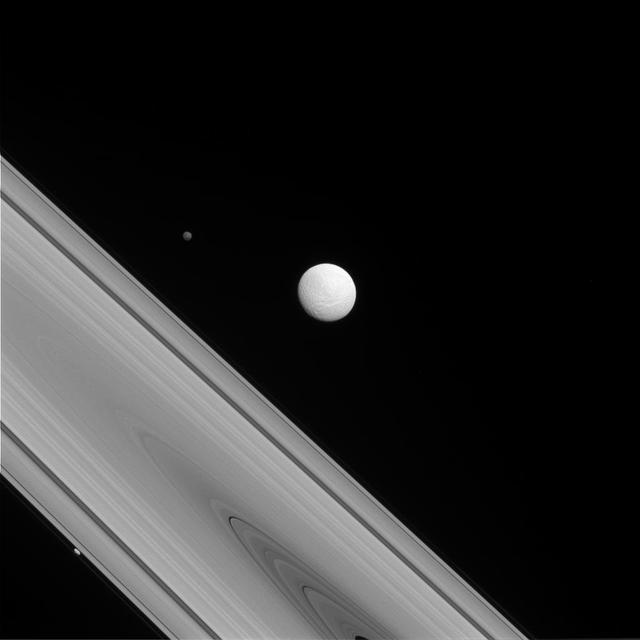
The Cassini spacecraft captures a rare family photo of three of Saturn's moons that couldn't be more different from each other! As the largest of the three, Tethys (image center) is round and has a variety of terrains across its surface. Meanwhile, Hyperion (to the upper-left of Tethys) is the "wild one" with a chaotic spin and Prometheus (lower-left) is a tiny moon that busies itself sculpting the F ring. To learn more about the surface of Tethys (660 miles, or 1,062 kilometers across), see PIA17164 More on the chaotic spin of Hyperion (168 miles, or 270 kilometers across) can be found at PIA07683 And discover more about the role of Prometheus (53 miles, or 86 kilometers across) in shaping the F ring in PIA12786. This view looks toward the sunlit side of the rings from about 1 degree above the ringplane. The image was taken in visible light with the Cassini spacecraft narrow-angle camera on July 14, 2014. The view was acquired at a distance of approximately 1.2 million miles (1.9 million kilometers) from Tethys and at a Sun-Tethys-spacecraft, or phase, angle of 22 degrees. Image scale is 7 miles (11 kilometers) per pixel. http://photojournal.jpl.nasa.gov/catalog/PIA18283
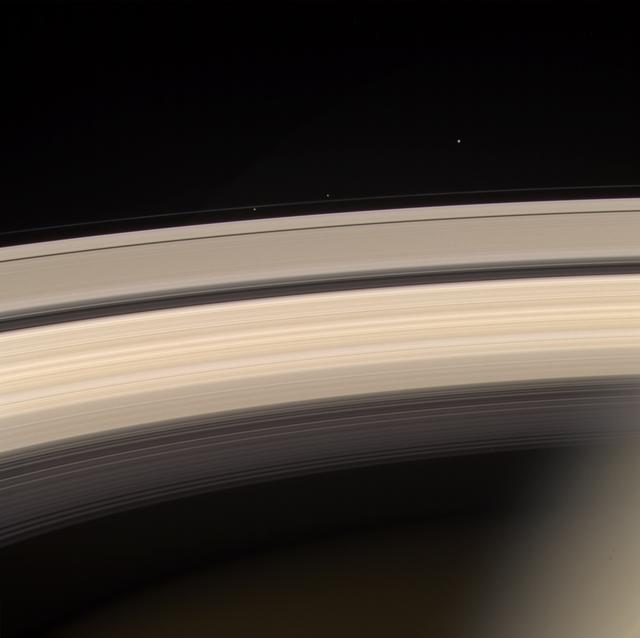
Saturn and its rings are prominently shown in this color image, along with three of Saturn's smaller moons. From left to right, they are Prometheus, Pandora and Janus. Prometheus and Pandora are often called the "F ring shepherds" as they control and interact with Saturn's interesting F ring, seen between them. This image was taken on June 18, 2004, with the Cassini spacecraft narrow angle camera 8.2 million kilometers (5.1 million miles) from Saturn. It was created using the red, green, and blue filters. Contrast has been enhanced to aid visibility. http://photojournal.jpl.nasa.gov/catalog/PIA06422
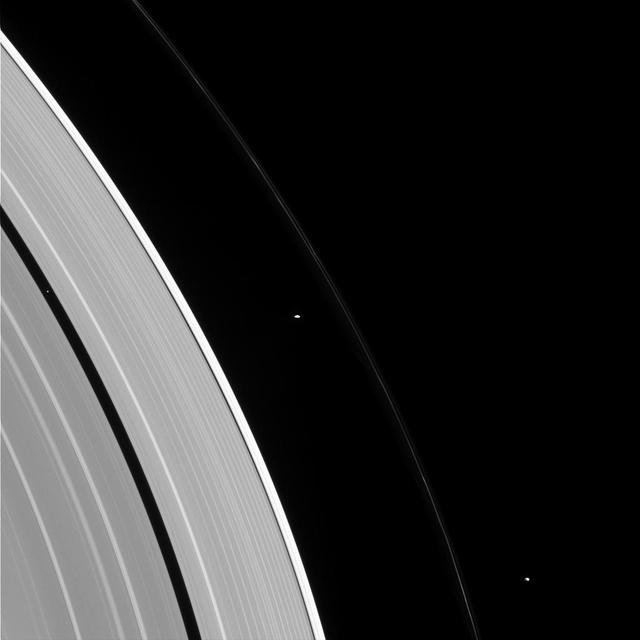
People with similar jobs or interests hold conventions and meetings, so why shouldn't moons? Pandora, Prometheus, and Pan -- seen here, from right to left -- also appear to be holding some sort of convention in this image. Some moons control the structure of nearby rings via gravitational "tugs." The cumulative effect of the moon's tugs on the ring particles can keep the rings' edges from spreading out as they are naturally inclined to do, much like shepherds control their flock. Pan is a prototypical shepherding moon, shaping and controlling the locations of the inner and outer edges of the Encke gap through a mechanism suggested in 1978 to explain the narrow Uranian rings. However, though Prometheus and Pandora have historically been called "the F ring shepherd moons" due to their close proximity to the ring, it has long been known that the standard shepherding mechanism that works so well for Pan does not apply to these two moons. The mechanism for keeping the F ring narrow, and the roles played -- if at all -- by Prometheus and Pandora in the F ring's configuration are not well understood. This is an ongoing topic for study by Cassini scientists. This view looks toward the sunlit side of the rings from about 29 degrees above the ringplane. The image was taken in visible light with the Cassini spacecraft narrow-angle camera on Jan. 2, 2015. The view was obtained at a distance of approximately 1.6 million miles (2.6 million kilometers) from the rings and at a Sun-ring-spacecraft, or phase, angle of 86 degrees. Image scale is 10 miles (15 kilometers) per pixel. http://photojournal.jpl.nasa.gov/catalog/pia18306
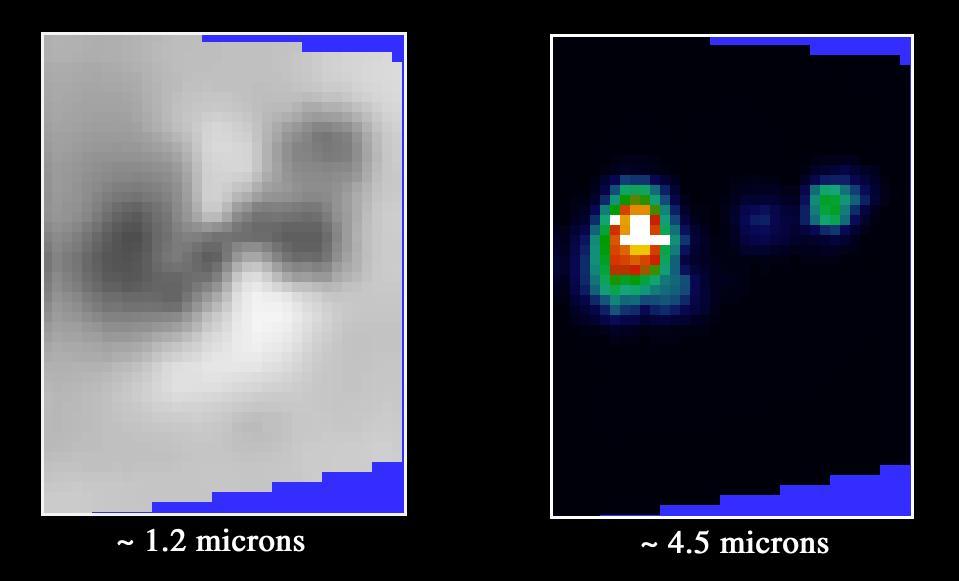
The active volcano Prometheus on Jupiter moon Io was imaged by NASA Galileo spacecraft during the close flyby of Io on Oct.10, 1999. The spectrometer can detect active volcanoes on Io by measuring their heat in the near-infrared wavelengths.
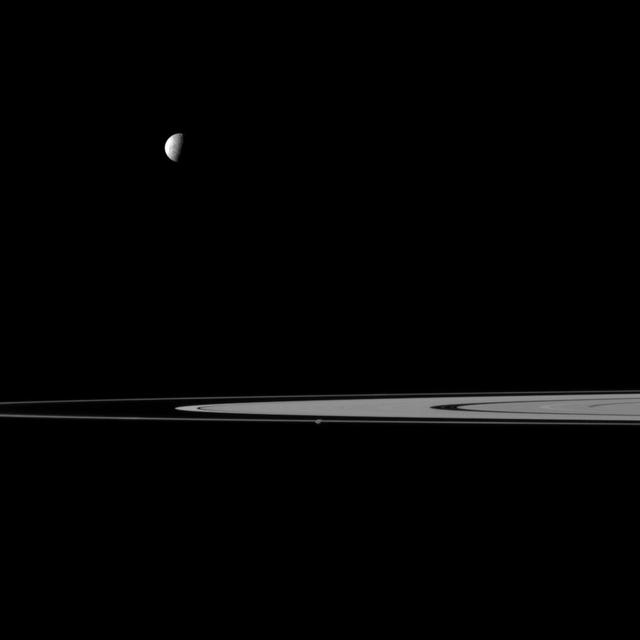
Saturn rings lie between a pair of moons in this view from NASA Cassini spacecraft that features Mimas and Prometheus. Mimas is the more noticeable of the two moons at top left, Prometheus is near the center of image and closest to Cassini.
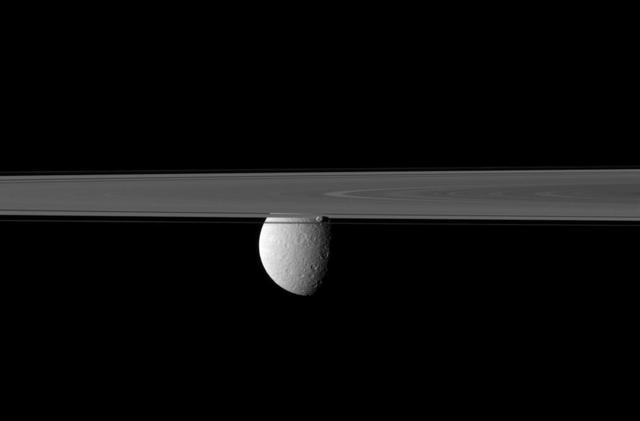
Saturn rings and small moon Prometheus obscure NASA Cassini spacecraft view of the planet second largest moon, Rhea. Prometheus can be seen just below the center of the image, in front of Rhea.
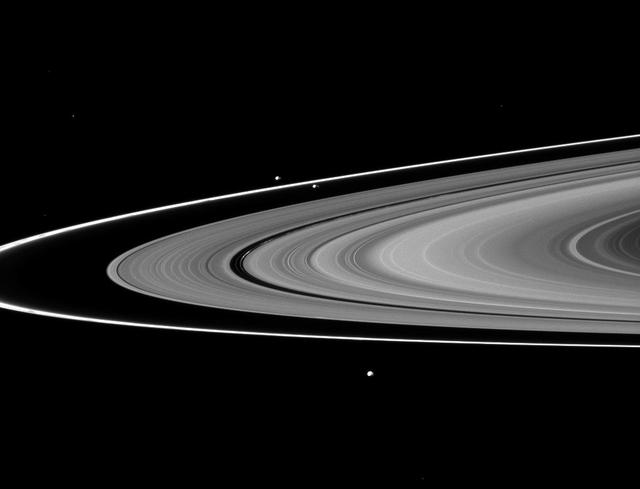
The F ring shepherds, Prometheus and Pandora, join Epimetheus in this image taken by NASA Cassini spacecraft of three of Saturn moons and the rings.
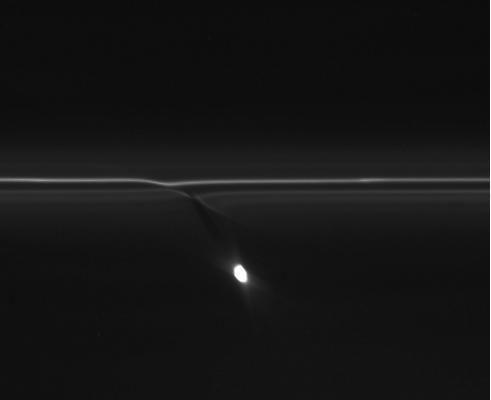
In this image from NASA Cassini spacecraft, the gravitational pull of Saturn moon Prometheus creates patterns in Saturn F ring.
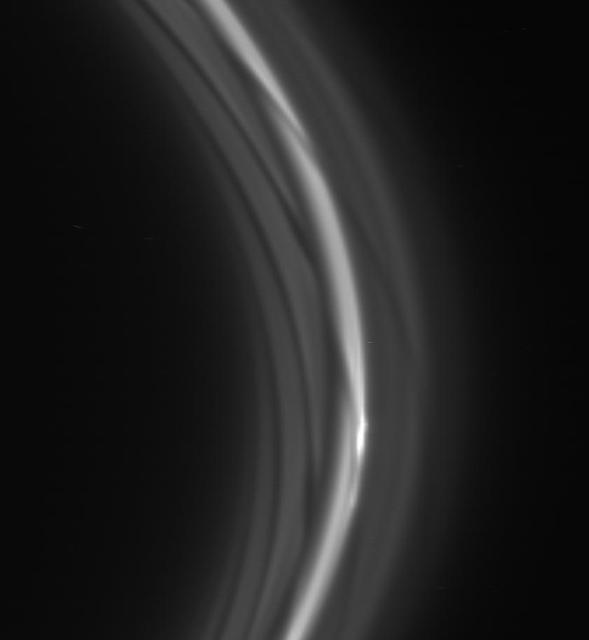
The striated appearance of the F ring is immediately apparent in the region of the ring that trails behind the moon Prometheus
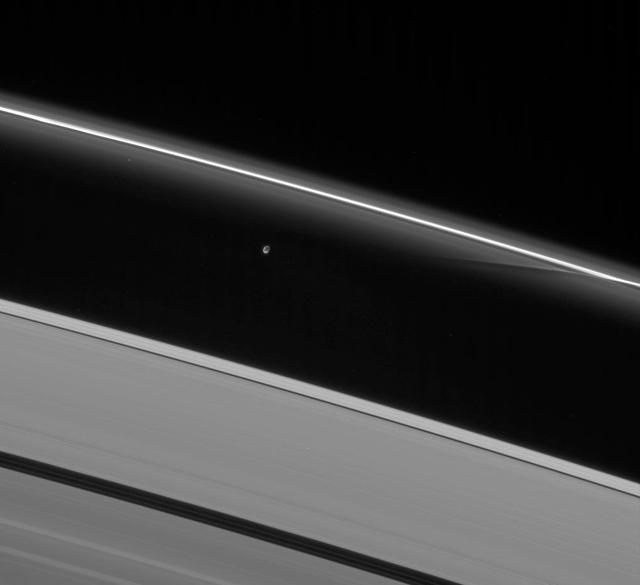
Prometheus interacts gravitationally with the inner flanking ringlets of the F ring, creating dark channels as it passes
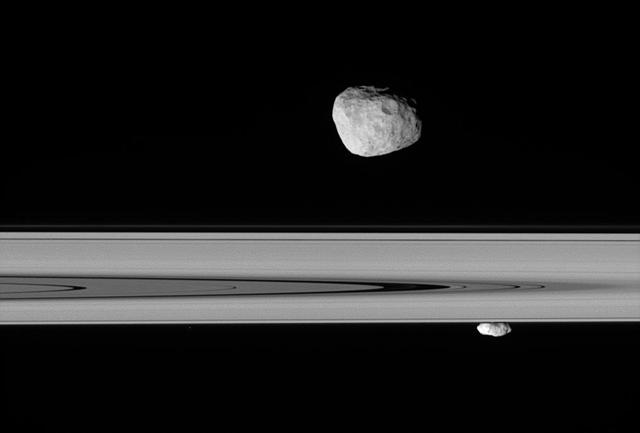
Saturn moons Janus and Prometheus look close enough to touch in this stunningly detailed view
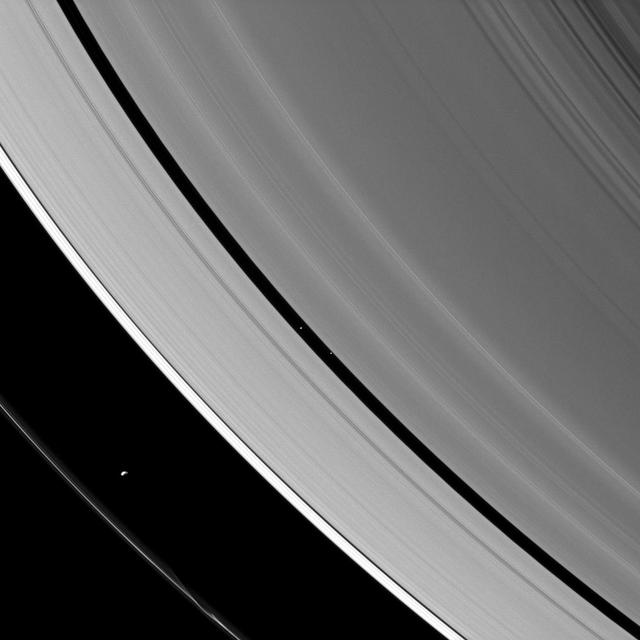
The ring-region Saturnian moons Prometheus and Pan are both caught herding their respective rings in this image from NASA Cassini spacecraft.
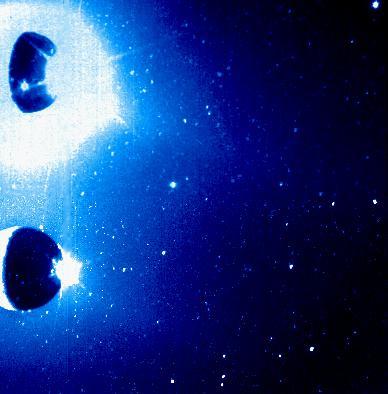
This image from NASA Galileo spacecraft is of Prometheus sunlit plume and Io illuminated crescent.
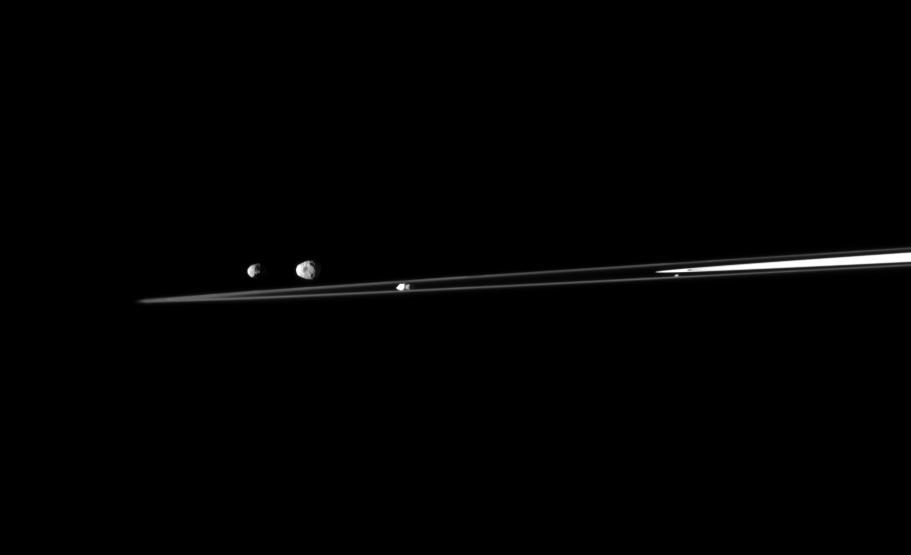
A quartet of Saturn moons are shown with a sliver of the rings in this view from NASA Cassini spacecraft. From left to right in this image are Epimetheus, Janus, Prometheus, and Atlas.
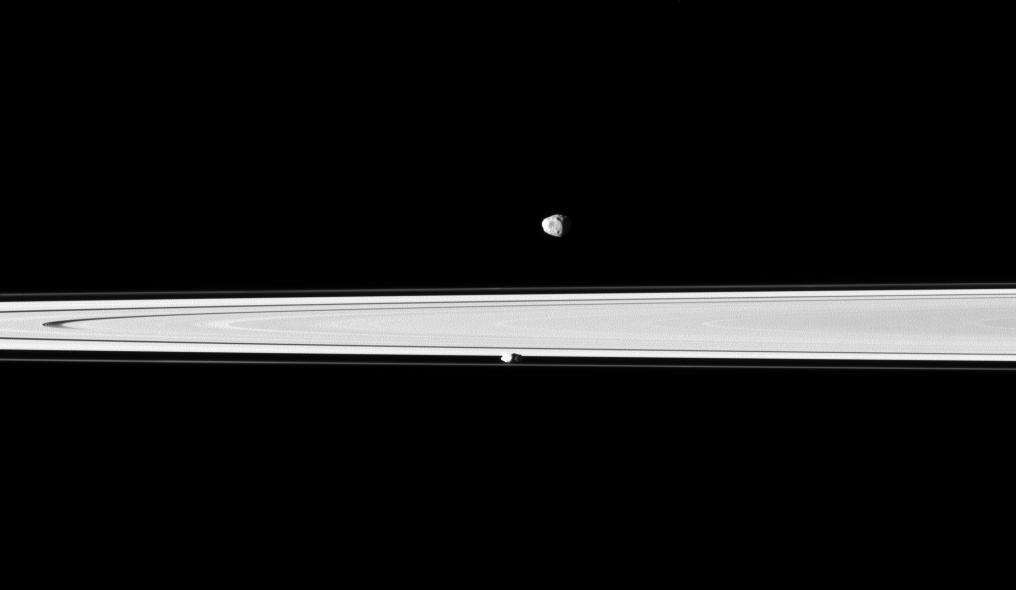
A pair of Saturn small, icy satellites accompany the planet rings in snapshot from NASA Cassini spacecraft. The rings are between Janus and Prometheus.
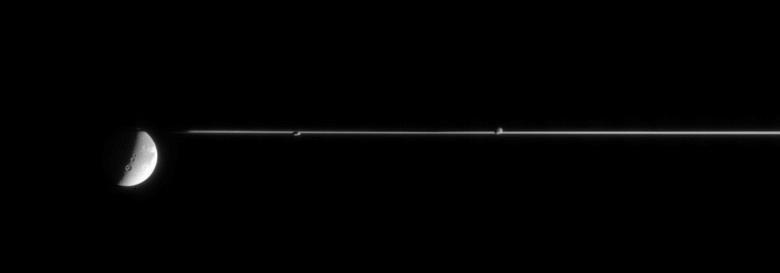
This fortunate view sights along Saturn ringplane to capture three moons aligned in a row: Dione at left, Prometheus at center and Epimetheus at right

Prometheus dips into the inner F ring at its farthest point from Saturn in its orbit, creating a dark gore and a corresponding bright streamer
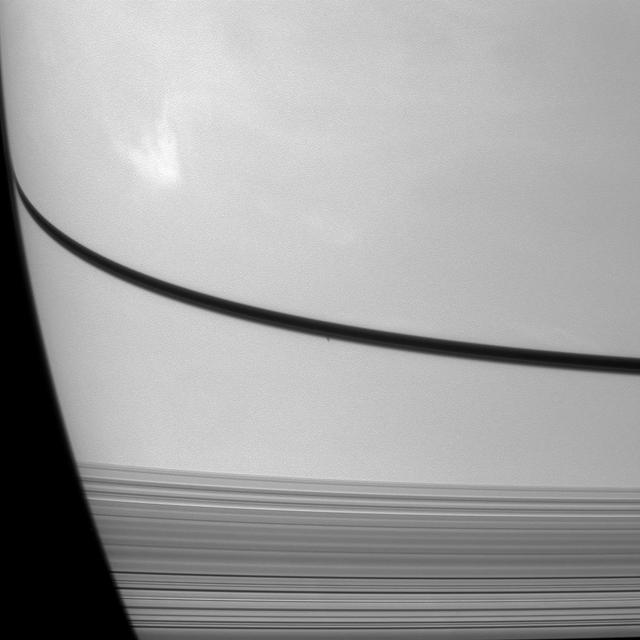
NASA Cassini Orbiter caught the shadow of the moon Prometheus as a small dark dot on Saturn just below the narrow shadow cast by the rings in the center of this image.
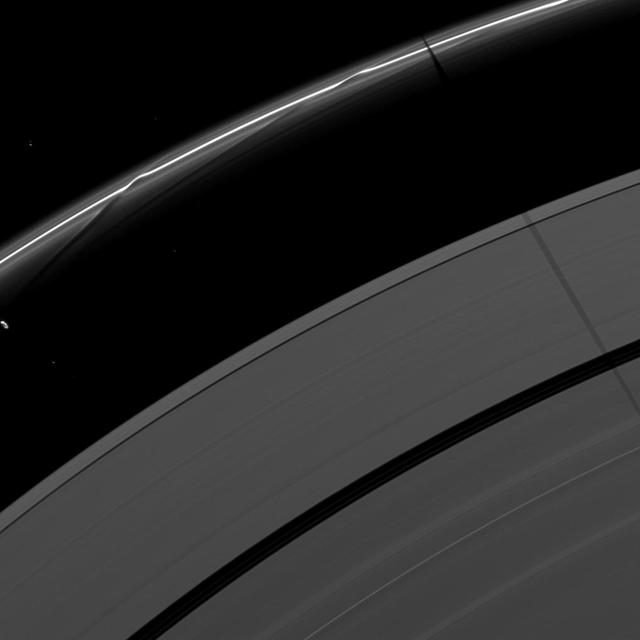
Saturn moon Janus casts a shadow on the F and A rings while the moon Prometheus, seen on the left of the image, creates a streamer-channel in the thin F ring.
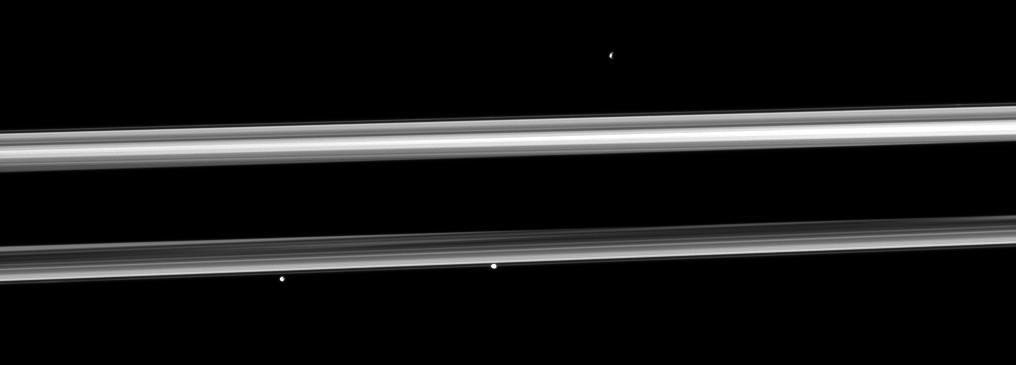
Three of Saturn small moons straddle the rings in this image captured by NASA Cassini spacecraft. From left to right are Pandora, Prometheus and, near the top right, Epimetheus.

The moon Tethys is upstaged by two smaller moons, Pandora and Prometheus, in this image from NASA Cassini spacecraft. Go to the Photojournal to view the animation.
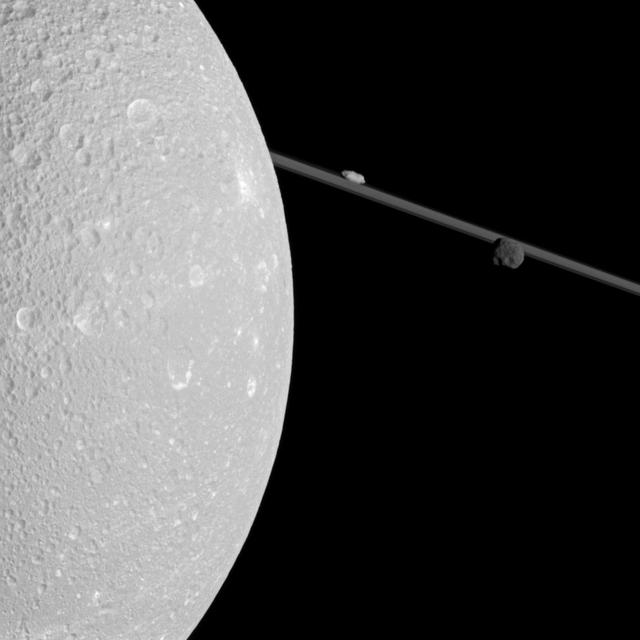
Flying past Saturn moon Dione, NASA Cassini captured this view which includes two smaller moons, Epimetheus and Prometheus, near the planet rings.
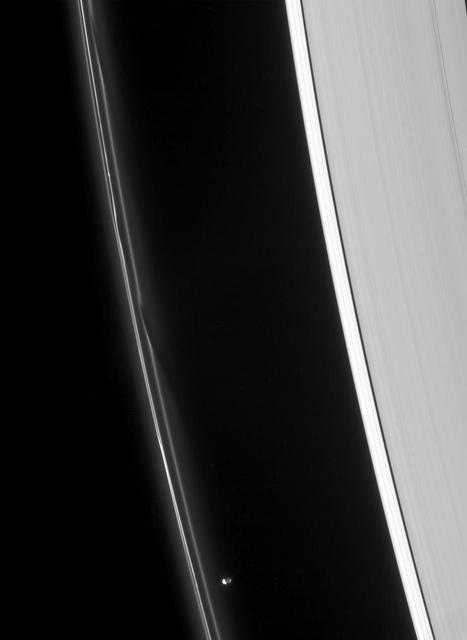
Prometheus speeds ahead of two dark gores in the F ring inner edge. The ring bright core swerves and twirls in its wake
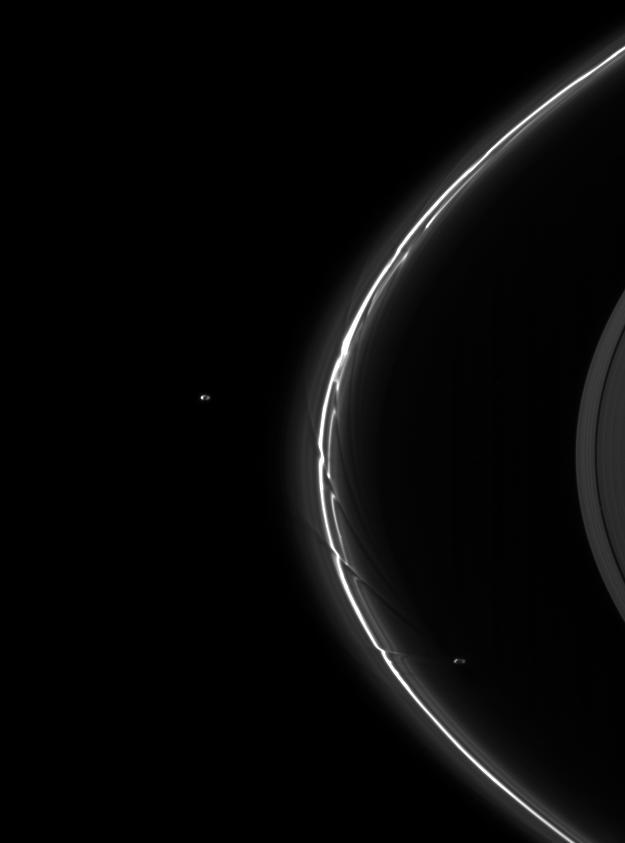
This image shows a pair of moons, Pandora and Prometheus, continuing their shepherding duties near Saturn thin F ring as seen by NASA Cassini spacecraft.
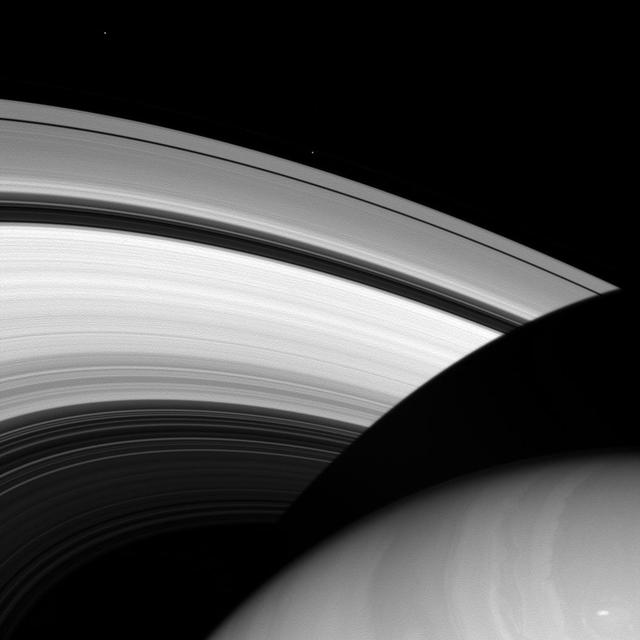
Befitting moons named for brothers, the moons Prometheus and Epimetheus share a lot in common. Both are small, icy moons that orbit near the main rings of Saturn. But, like most brothers, they also assert their differences: while Epimetheus is relatively round for a small moon, Prometheus is elongated in shape, similar to a lemon. Prometheus (53 miles, or 86 kilometers across) orbits just outside the A ring - seen here upper-middle of the image - while Epimetheus (70 miles, 113 kilometers across) orbits farther out - seen in the upper-left, doing an orbital two-step with its partner, Janus. This view looks toward the sunlit side of the rings from about 28 degrees above the ringplane. The image was taken in visible light with the Cassini spacecraft wide-angle camera on July 9, 2013. The view was obtained at a distance of approximately 557,000 miles (897,000 kilometers) from Saturn and at a Sun-Saturn-spacecraft, or phase, angle of 11 degrees. Image scale is 33 miles (54 kilometers) per pixel. Prometheus and Epimetheus have been brightened by a factor of 2 relative to the rest of the image to enhance their visibility. http://photojournal.jpl.nasa.gov/catalog/PIA18286
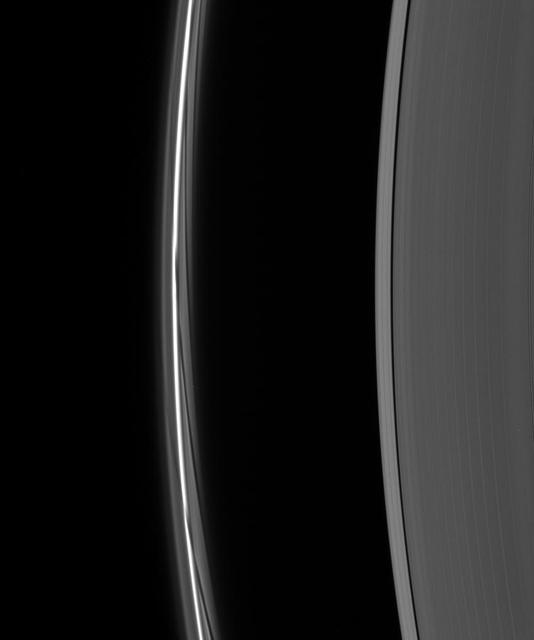
A close-up of the F ring shows dark gores in its interior faint ringlets following the passage of Prometheus. Each gore represents a single interaction of the moon with the F ring material

The moon Prometheus casts a shadow on Saturn F ring near a streamer-channel it has created on the ring. The image was taken as the planet approached its August 2009 equinox.
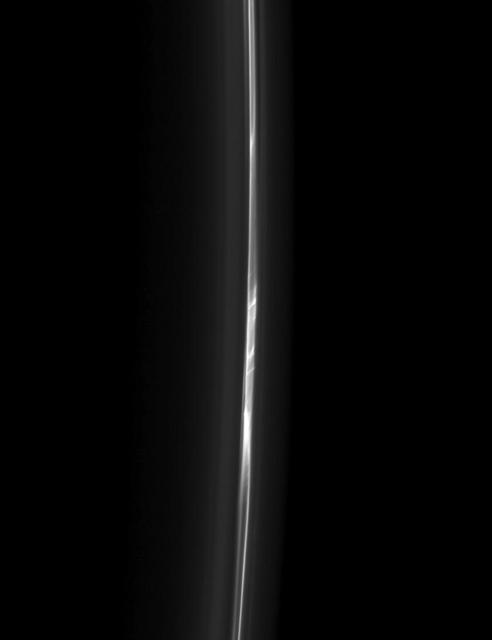
Forever changing, the F ring takes on a ladder-like appearance in this recent image from NASA Cassini spacecraft. Scientists believe that interactions between the F ring and the moons Prometheus and Pandora cause the dynamic structure of the ring.
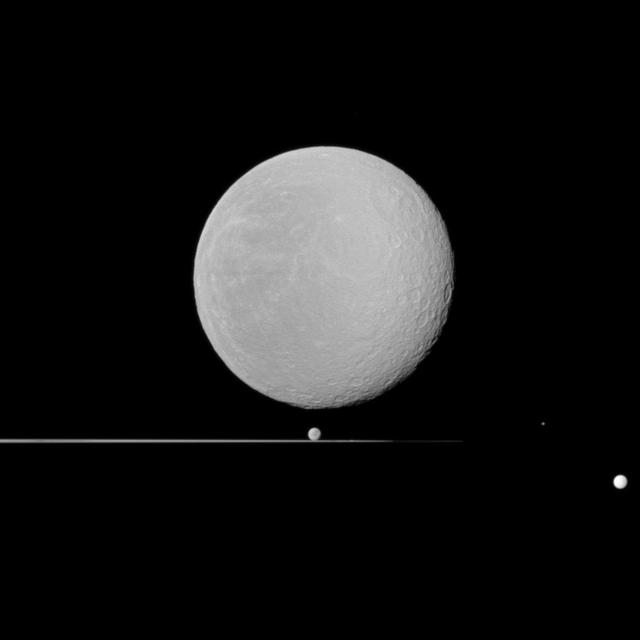
Five moons, dominated by Rhea in the foreground, share NASA Cassini spacecraft view with Saturn rings seen nearly edge-on. Also seen here are Dione, Epimetheus, Prometheus, and Tethys.
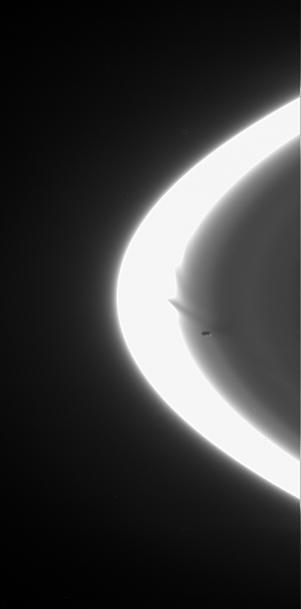
Prometheus zooms across the Cassini spacecraft field of view, attended by faint streamers and deep gores in the F ring. This movie sequence of five images shows the F ring shepherd moon shaping the ring inner edge
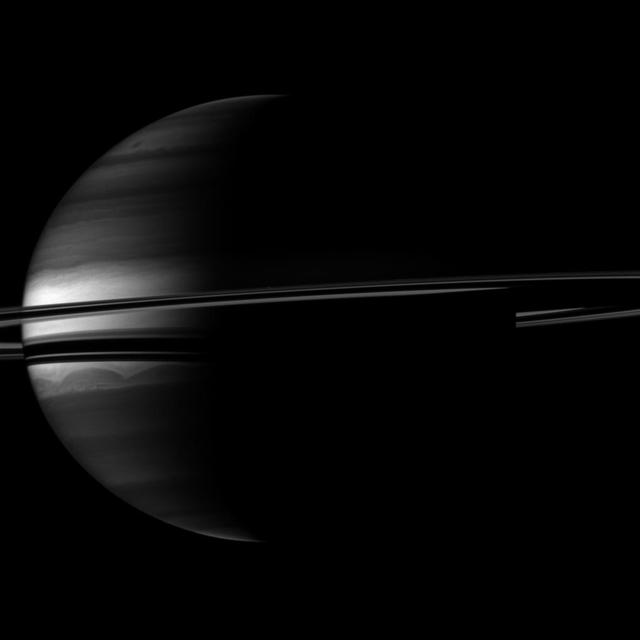
A crescent Saturn appears nestled within encircling rings in this image captured by NASA Cassini spacecraft. Clouds swirl through the atmosphere of the planet. Prometheus appears as a speck above the rings near the middle of the image.
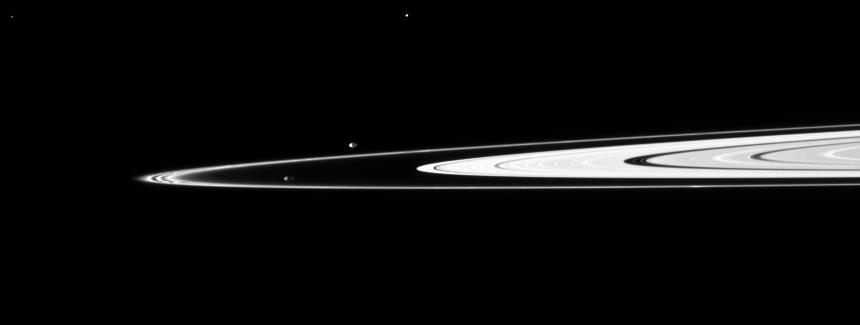
Pandora and Prometheus, the shepherding moons of the F ring, orbit inside and outside the thin ring. The elongated, potato-like shapes of the two moons are both visible in this image taken by NASA Cassini spacecraft.
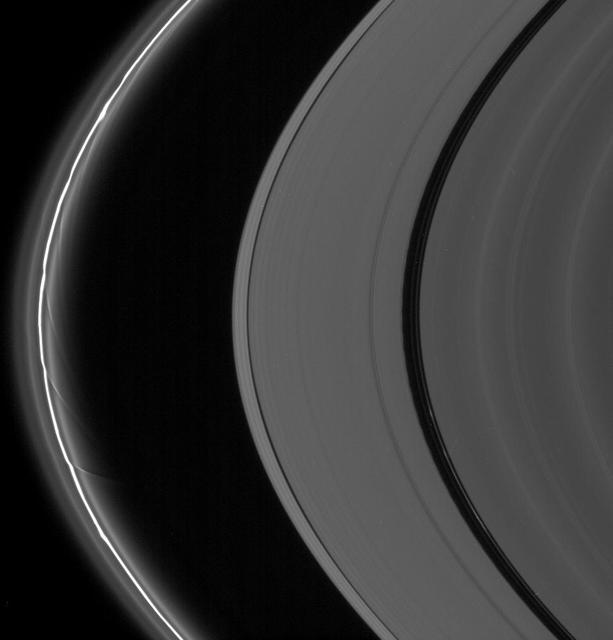
The A and F rings are alive with moving structures in this Cassini spacecraft view. Graceful drapes of ring material created by Prometheus are seen sliding by at left, while clumpy ringlets slip through the Encke Gap