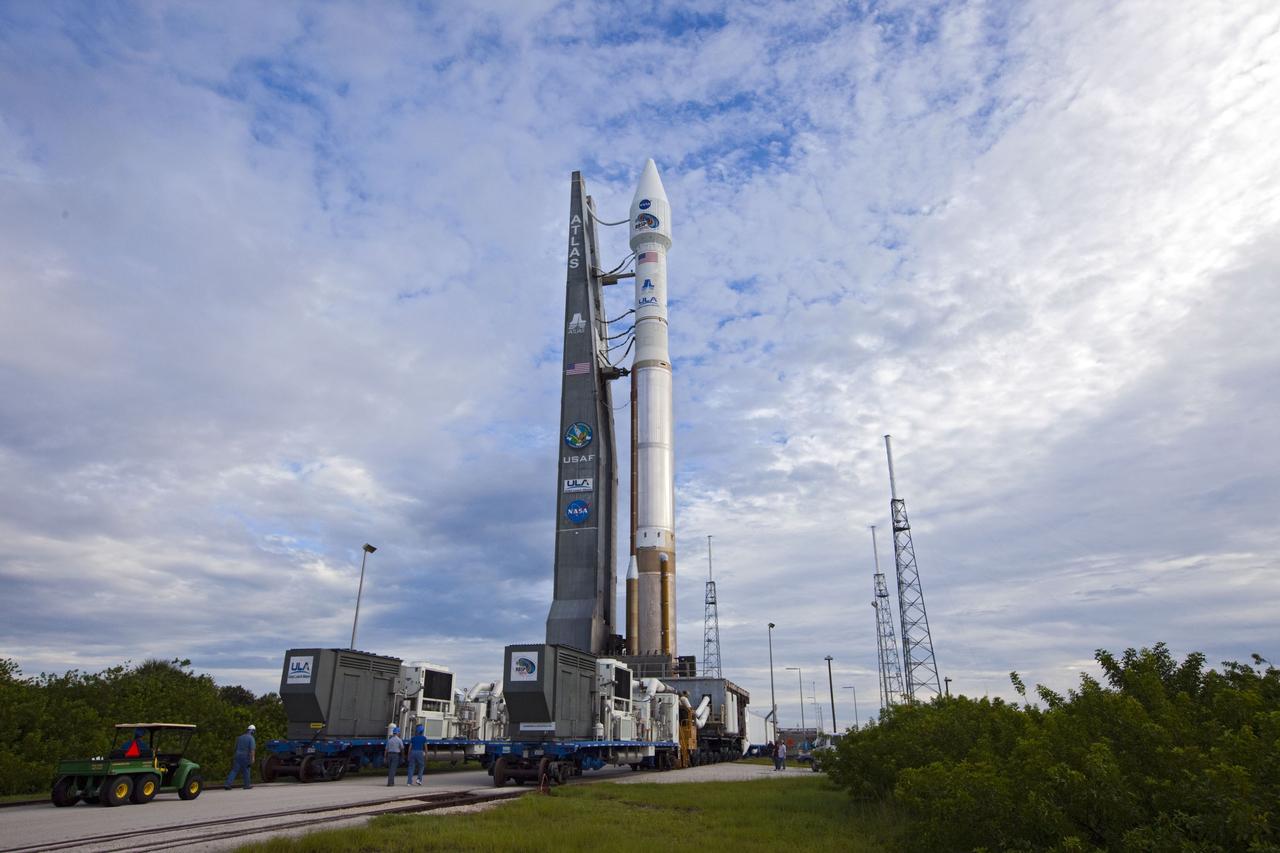
CAPE CANAVERAL, Fla. – Workers help guide the United Launch Alliance Atlas V rocket with the Radiation Belt Storm Probes, or RBSP, spacecraft aboard as it moves to the launch pad at Space Launch Complex 41 at Cape Canaveral Air Force Station. NASA’s RBSP mission will help researchers understand the sun’s influence on Earth and near-Earth space by studying the Earth’s radiation belts on various scales of space and time. RBSP will begin its mission of exploration of Earth’s Van Allen radiation belts and the extremes of space weather after its launch aboard an Atlas V rocket. Launch is targeted for Aug. 24. Photo credit: NASA/Kim Shiflett
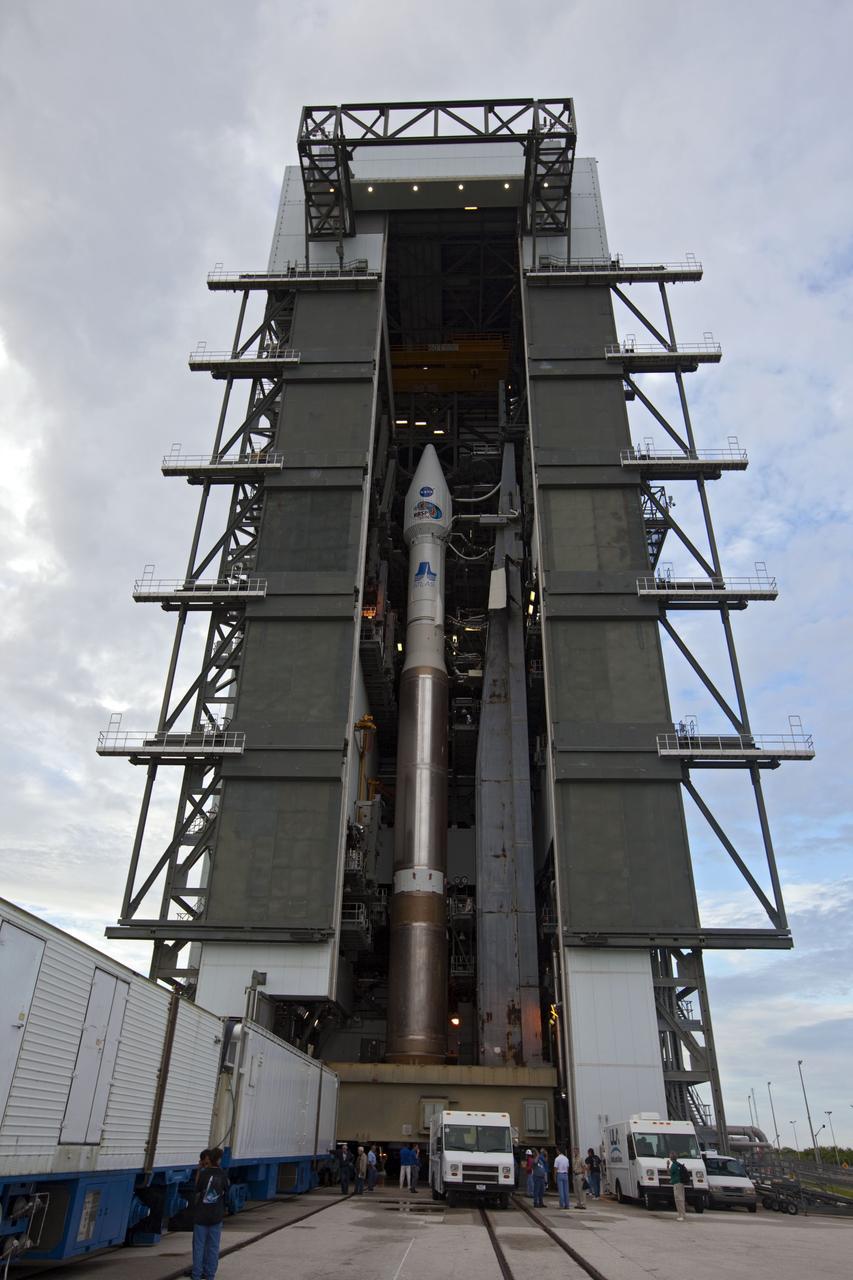
CAPE CANAVERAL, Fla. – The United Launch Alliance Atlas V rocket with the Radiation Belt Storm Probes, or RBSP, spacecraft aboard is readied for rollout to the launch pad at Space Launch Complex 41 at Cape Canaveral Air Force Station. NASA’s RBSP mission will help researchers understand the sun’s influence on Earth and near-Earth space by studying the Earth’s radiation belts on various scales of space and time. RBSP will begin its mission of exploration of Earth’s Van Allen radiation belts and the extremes of space weather after its launch aboard an Atlas V rocket. Launch is targeted for Aug. 24. Photo credit: NASA/Kim Shiflett
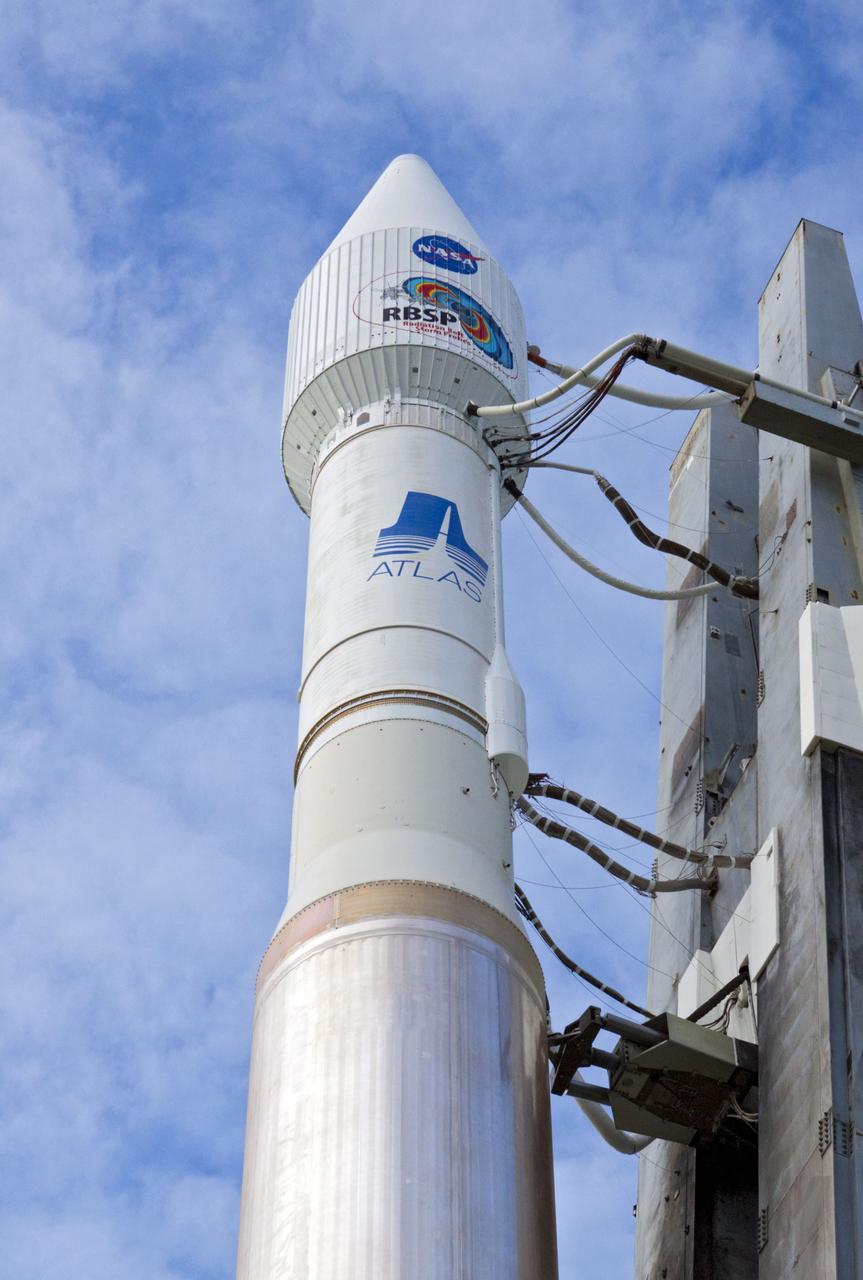
CAPE CANAVERAL, Fla. – The United Launch Alliance Atlas V rocket with the Radiation Belt Storm Probes, or RBSP, spacecraft aboard stands at the launch pad at Space Launch Complex 41 at Cape Canaveral Air Force Station. NASA’s RBSP mission will help researchers understand the sun’s influence on Earth and near-Earth space by studying the Earth’s radiation belts on various scales of space and time. RBSP will begin its mission of exploration of Earth’s Van Allen radiation belts and the extremes of space weather after its launch aboard an Atlas V rocket. Launch is targeted for Aug. 24. Photo credit: NASA/Kim Shiflett
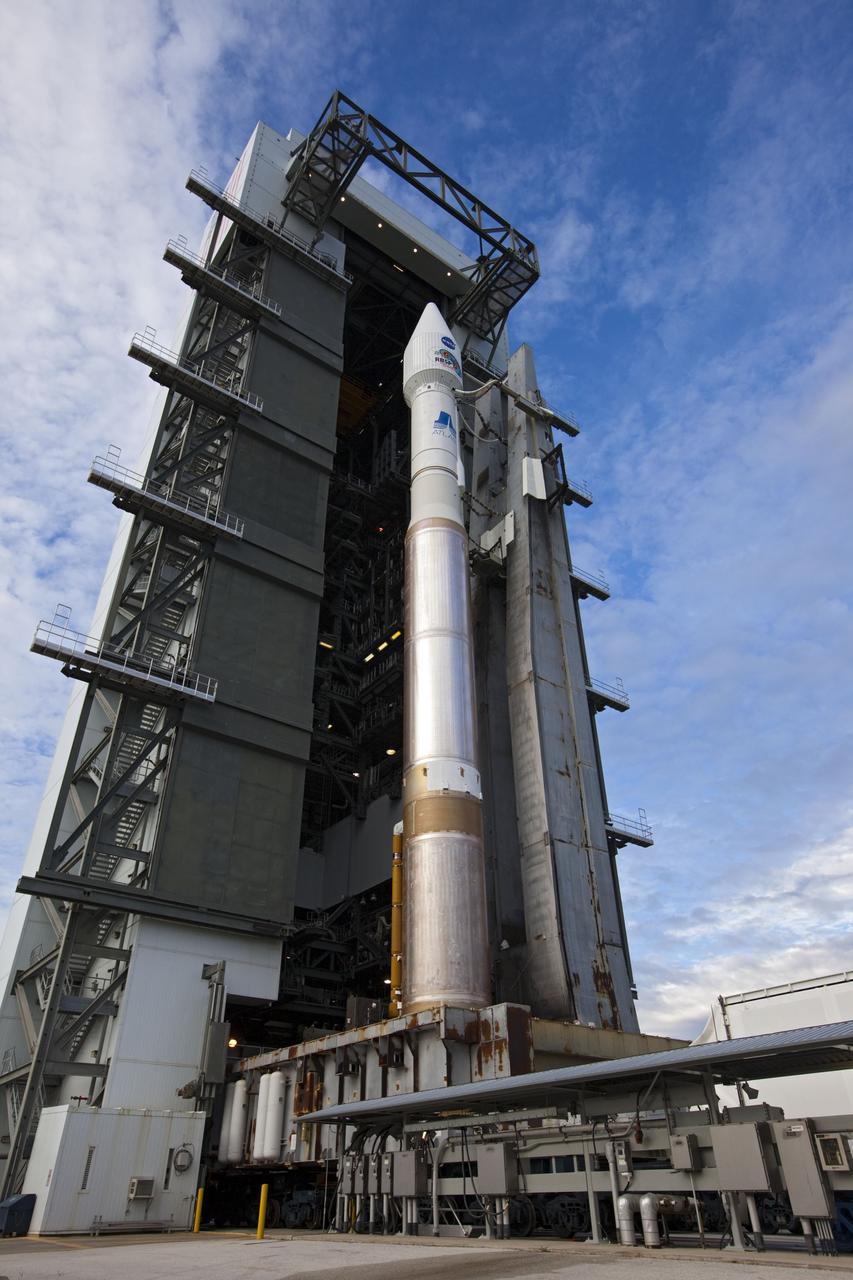
CAPE CANAVERAL, Fla. – The United Launch Alliance Atlas V rocket with the Radiation Belt Storm Probes, or RBSP, spacecraft aboard is readied for rollout to the launch pad at Space Launch Complex 41 at Cape Canaveral Air Force Station. NASA’s RBSP mission will help researchers understand the sun’s influence on Earth and near-Earth space by studying the Earth’s radiation belts on various scales of space and time. RBSP will begin its mission of exploration of Earth’s Van Allen radiation belts and the extremes of space weather after its launch aboard an Atlas V rocket. Launch is targeted for Aug. 24. Photo credit: NASA/Kim Shiflett
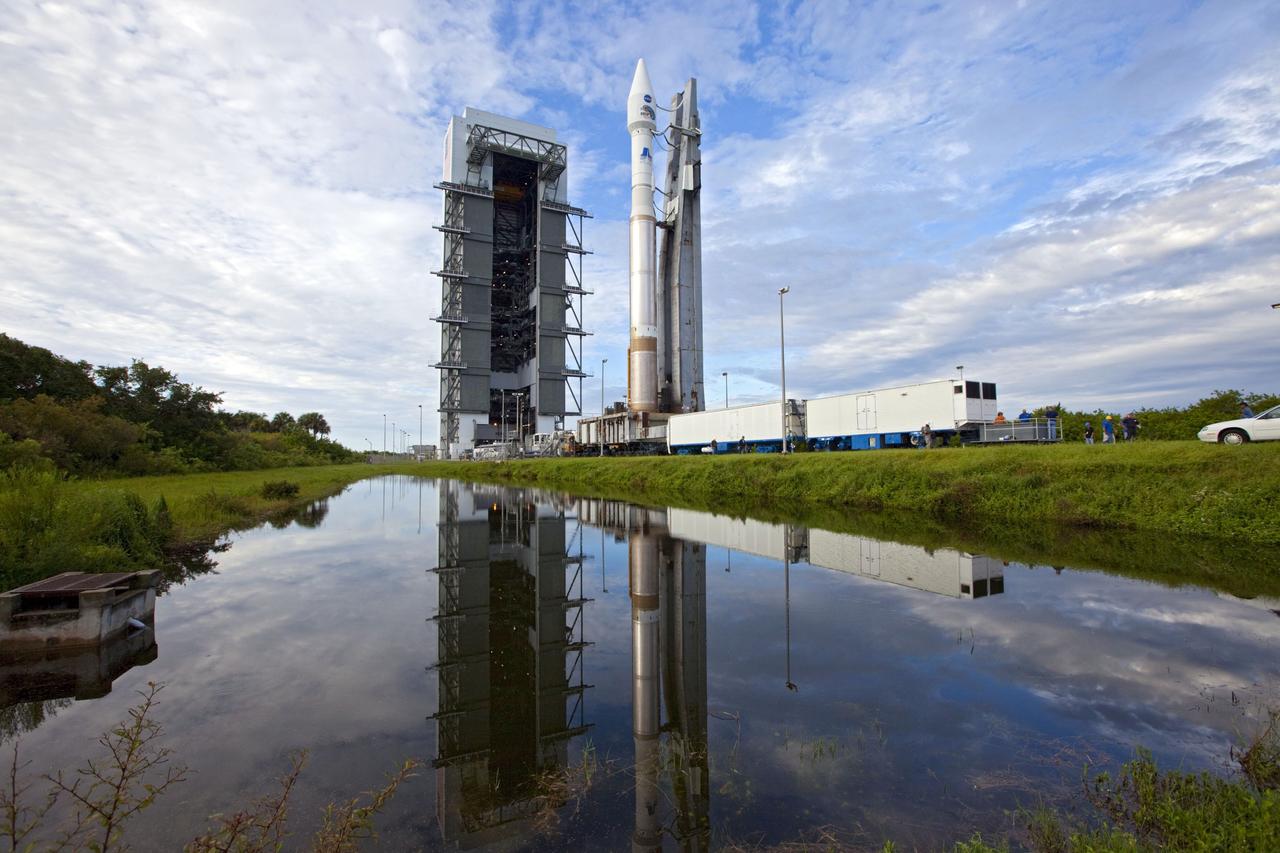
CAPE CANAVERAL, Fla. – The United Launch Alliance Atlas V rocket with the Radiation Belt Storm Probes, or RBSP, spacecraft aboard rolls to the launch pad at Space Launch Complex 41 at Cape Canaveral Air Force Station. NASA’s RBSP mission will help researchers understand the sun’s influence on Earth and near-Earth space by studying the Earth’s radiation belts on various scales of space and time. RBSP will begin its mission of exploration of Earth’s Van Allen radiation belts and the extremes of space weather after its launch aboard an Atlas V rocket. Launch is targeted for Aug. 24. Photo credit: NASA/Kim Shiflett
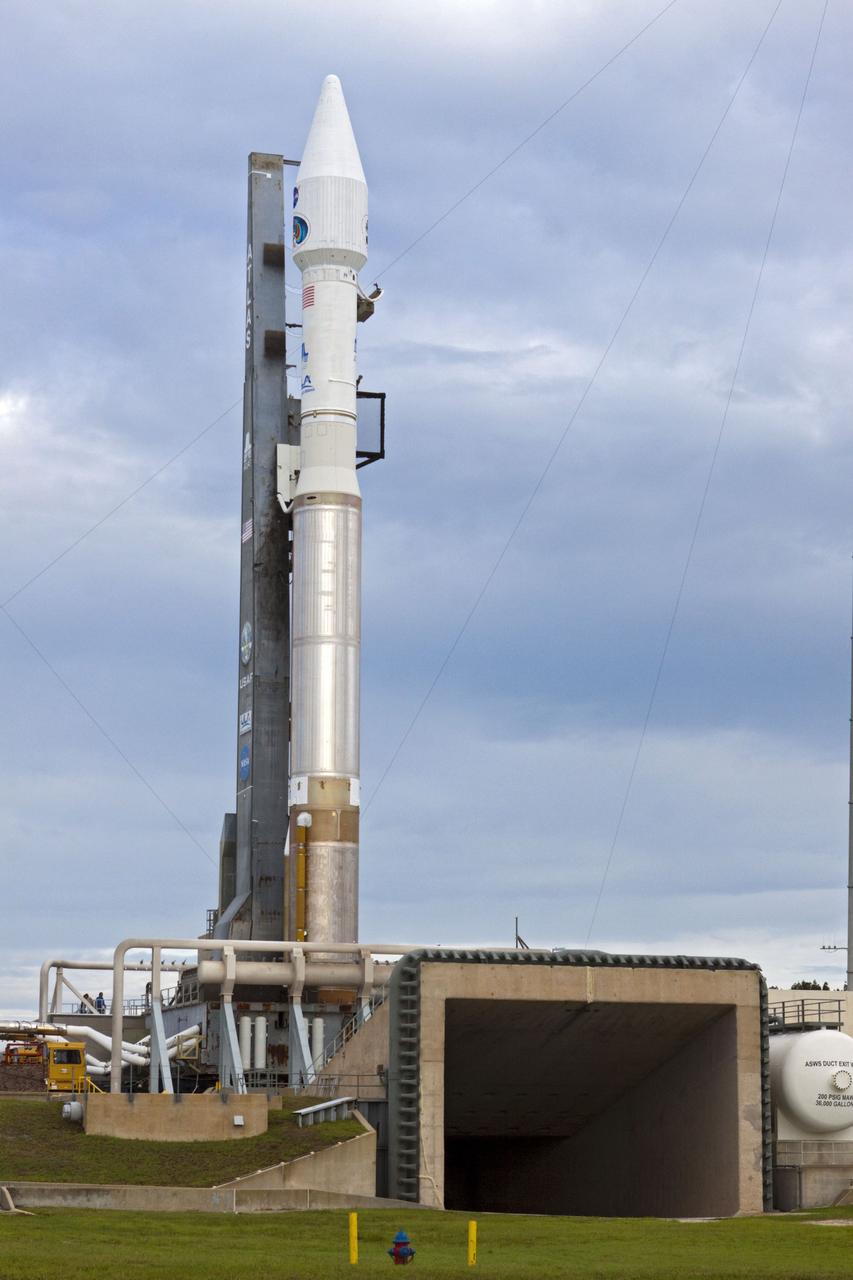
CAPE CANAVERAL, Fla. – The United Launch Alliance Atlas V rocket with the Radiation Belt Storm Probes, or RBSP, spacecraft aboard stands at the launch pad at Space Launch Complex 41 at Cape Canaveral Air Force Station. NASA’s RBSP mission will help researchers understand the sun’s influence on Earth and near-Earth space by studying the Earth’s radiation belts on various scales of space and time. RBSP will begin its mission of exploration of Earth’s Van Allen radiation belts and the extremes of space weather after its launch aboard an Atlas V rocket. Launch is targeted for Aug. 24. Photo credit: NASA/Kim Shiflett
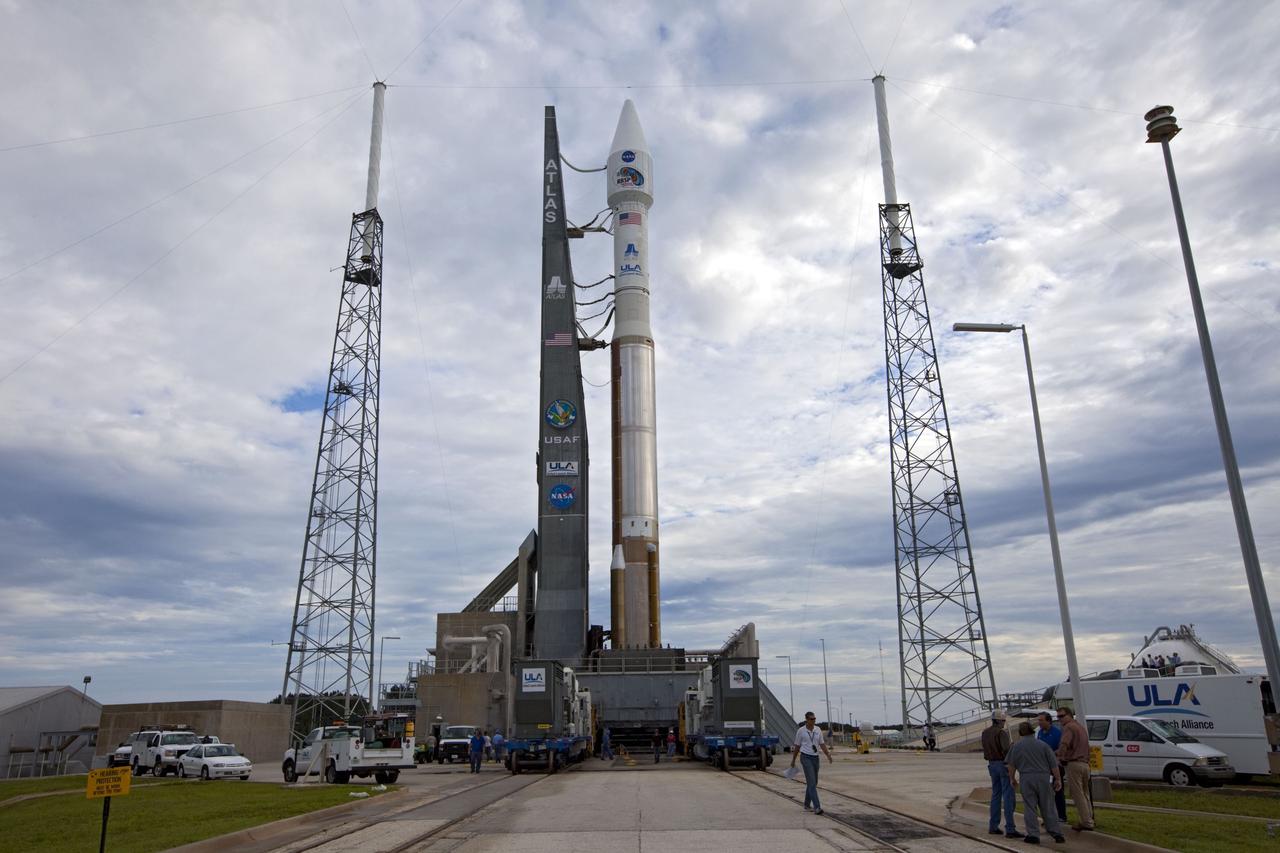
CAPE CANAVERAL, Fla. – The United Launch Alliance Atlas V rocket with the Radiation Belt Storm Probes, or RBSP, spacecraft aboard stands at the launch pad at Space Launch Complex 41 at Cape Canaveral Air Force Station. NASA’s RBSP mission will help researchers understand the sun’s influence on Earth and near-Earth space by studying the Earth’s radiation belts on various scales of space and time. RBSP will begin its mission of exploration of Earth’s Van Allen radiation belts and the extremes of space weather after its launch aboard an Atlas V rocket. Launch is targeted for Aug. 24. Photo credit: NASA/Kim Shiflett
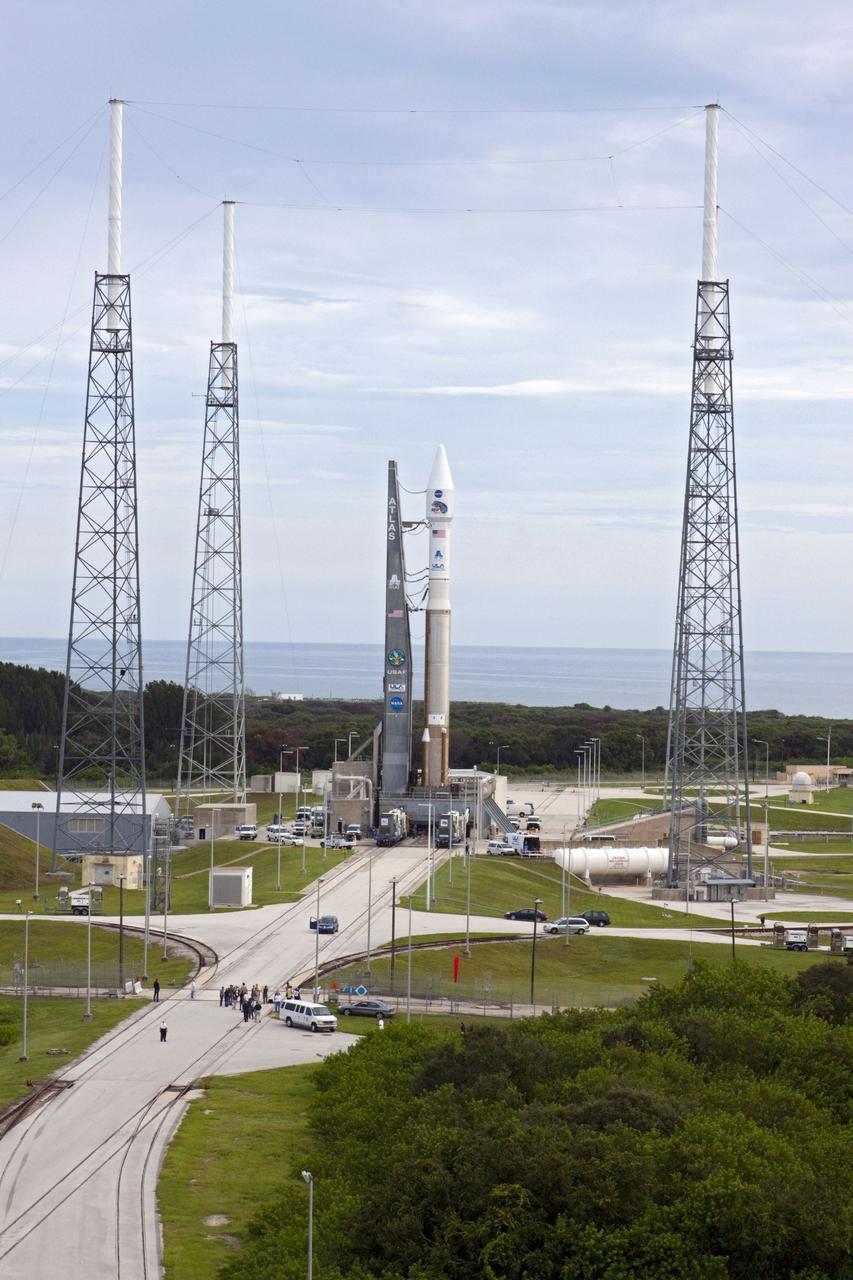
CAPE CANAVERAL, Fla. – The United Launch Alliance Atlas V rocket with the Radiation Belt Storm Probes, or RBSP, spacecraft aboard stands at the launch pad at Space Launch Complex 41 at Cape Canaveral Air Force Station. NASA’s RBSP mission will help researchers understand the sun’s influence on Earth and near-Earth space by studying the Earth’s radiation belts on various scales of space and time. RBSP will begin its mission of exploration of Earth’s Van Allen radiation belts and the extremes of space weather after its launch aboard an Atlas V rocket. Launch is targeted for Aug. 24. Photo credit: NASA/Kim Shiflett
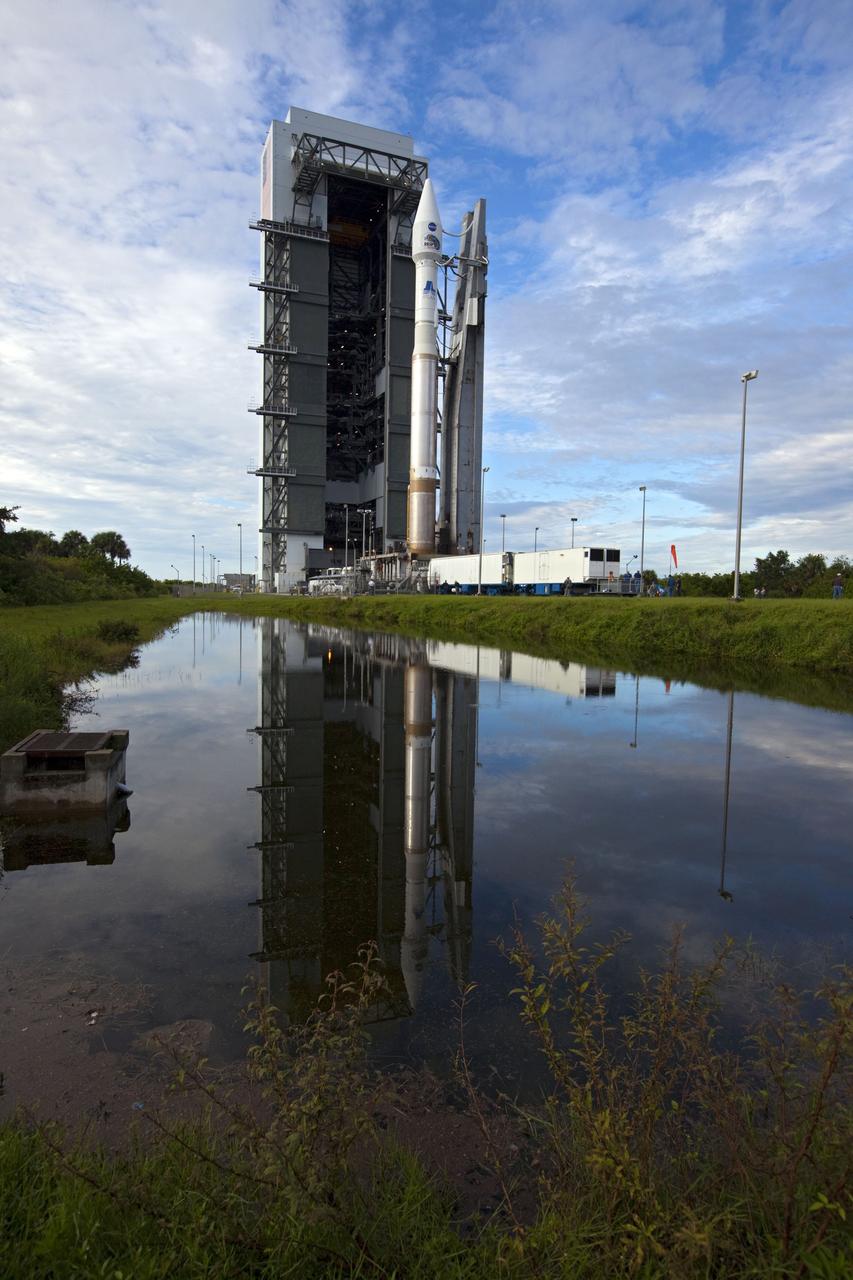
CAPE CANAVERAL, Fla. – The United Launch Alliance Atlas V rocket with the Radiation Belt Storm Probes, or RBSP, spacecraft aboard rolls to the launch pad at Space Launch Complex 41 at Cape Canaveral Air Force Station. NASA’s RBSP mission will help researchers understand the sun’s influence on Earth and near-Earth space by studying the Earth’s radiation belts on various scales of space and time. RBSP will begin its mission of exploration of Earth’s Van Allen radiation belts and the extremes of space weather after its launch aboard an Atlas V rocket. Launch is targeted for Aug. 24. Photo credit: NASA/Kim Shiflett
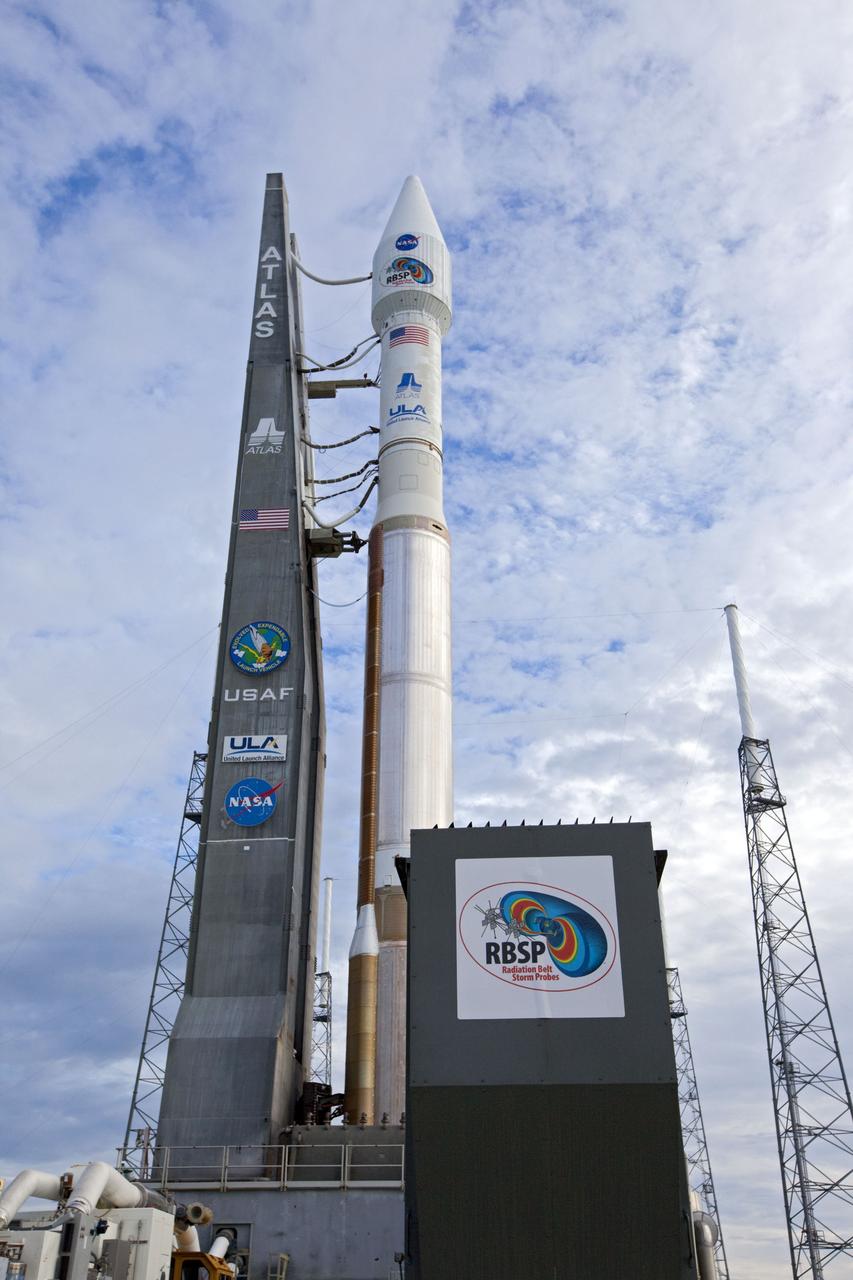
CAPE CANAVERAL, Fla. – The United Launch Alliance Atlas V rocket with the Radiation Belt Storm Probes, or RBSP, spacecraft aboard rolls to the launch pad at Space Launch Complex 41 at Cape Canaveral Air Force Station. NASA’s RBSP mission will help researchers understand the sun’s influence on Earth and near-Earth space by studying the Earth’s radiation belts on various scales of space and time. RBSP will begin its mission of exploration of Earth’s Van Allen radiation belts and the extremes of space weather after its launch aboard an Atlas V rocket. Launch is targeted for Aug. 24. Photo credit: NASA/Kim Shiflett
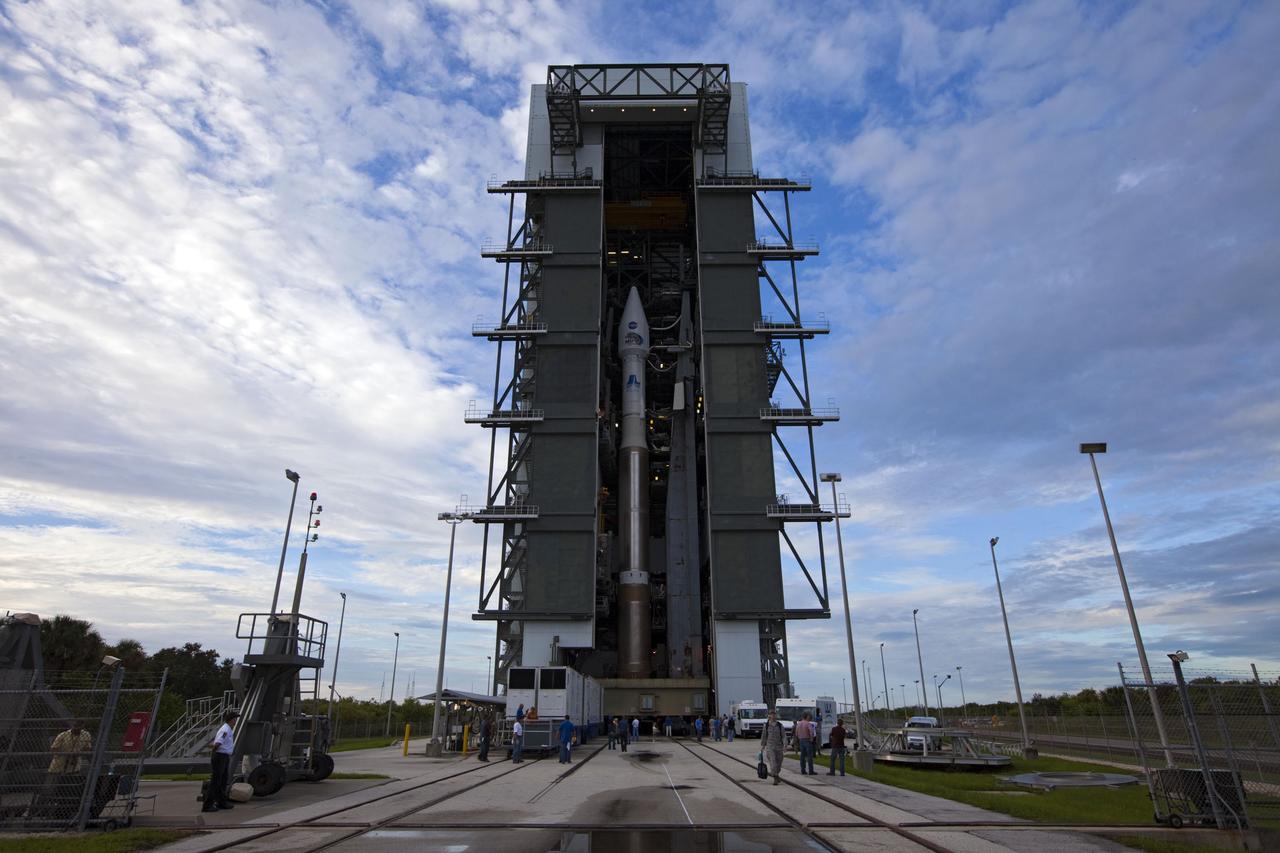
CAPE CANAVERAL, Fla. – The United Launch Alliance Atlas V rocket with the Radiation Belt Storm Probes, or RBSP, spacecraft aboard is readied for rollout to the launch pad at Space Launch Complex 41 at Cape Canaveral Air Force Station. NASA’s RBSP mission will help researchers understand the sun’s influence on Earth and near-Earth space by studying the Earth’s radiation belts on various scales of space and time. RBSP will begin its mission of exploration of Earth’s Van Allen radiation belts and the extremes of space weather after its launch aboard an Atlas V rocket. Launch is targeted for Aug. 24. Photo credit: NASA/Kim Shiflett
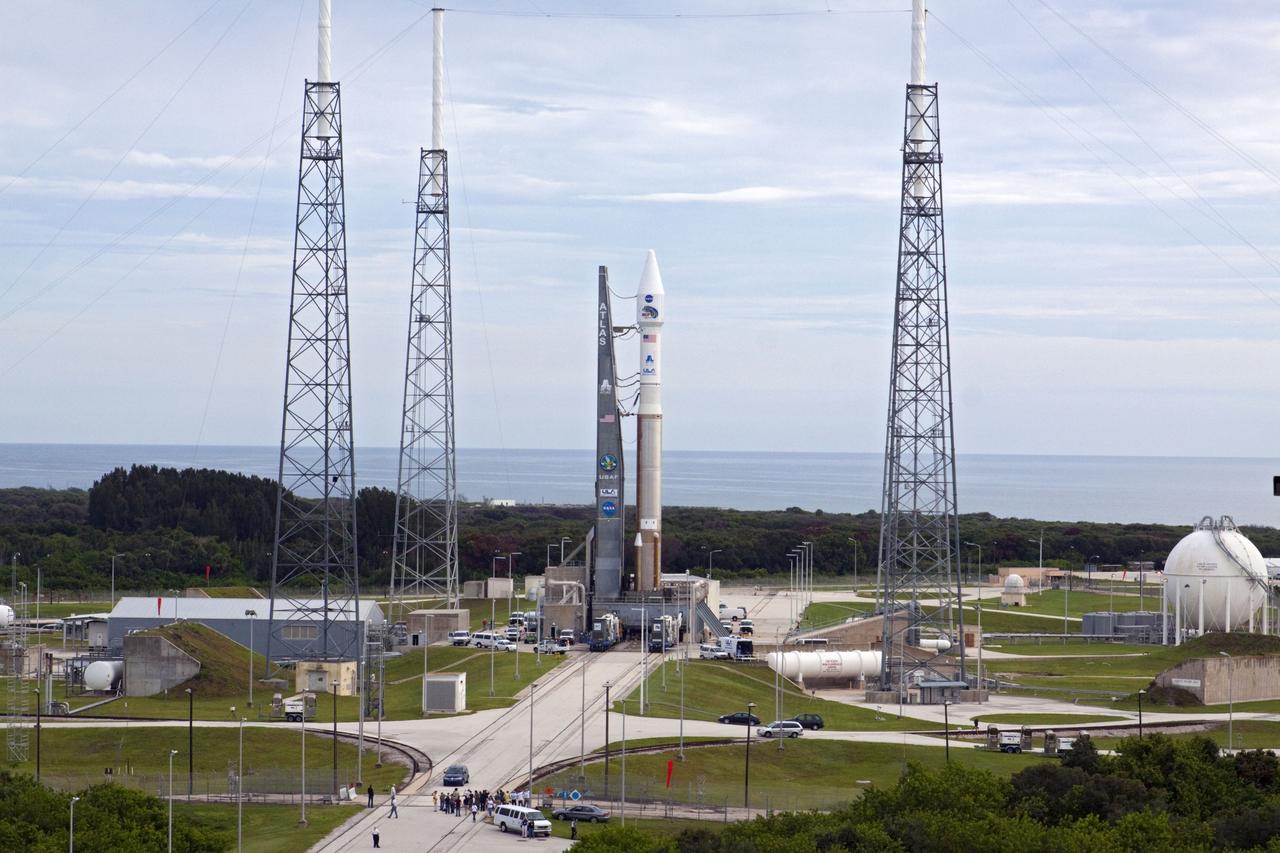
CAPE CANAVERAL, Fla. – The United Launch Alliance Atlas V rocket with the Radiation Belt Storm Probes, or RBSP, spacecraft aboard stands at the launch pad at Space Launch Complex 41 at Cape Canaveral Air Force Station. NASA’s RBSP mission will help researchers understand the sun’s influence on Earth and near-Earth space by studying the Earth’s radiation belts on various scales of space and time. RBSP will begin its mission of exploration of Earth’s Van Allen radiation belts and the extremes of space weather after its launch aboard an Atlas V rocket. Launch is targeted for Aug. 24. Photo credit: NASA/Kim Shiflett

CAPE CANAVERAL, Fla. – Workers help guide the United Launch Alliance Atlas V rocket with the Radiation Belt Storm Probes, or RBSP, spacecraft aboard as it moves to the launch pad at Space Launch Complex 41 at Cape Canaveral Air Force Station. NASA’s RBSP mission will help researchers understand the sun’s influence on Earth and near-Earth space by studying the Earth’s radiation belts on various scales of space and time. RBSP will begin its mission of exploration of Earth’s Van Allen radiation belts and the extremes of space weather after its launch aboard an Atlas V rocket. Launch is targeted for Aug. 24. Photo credit: NASA/Kim Shiflett
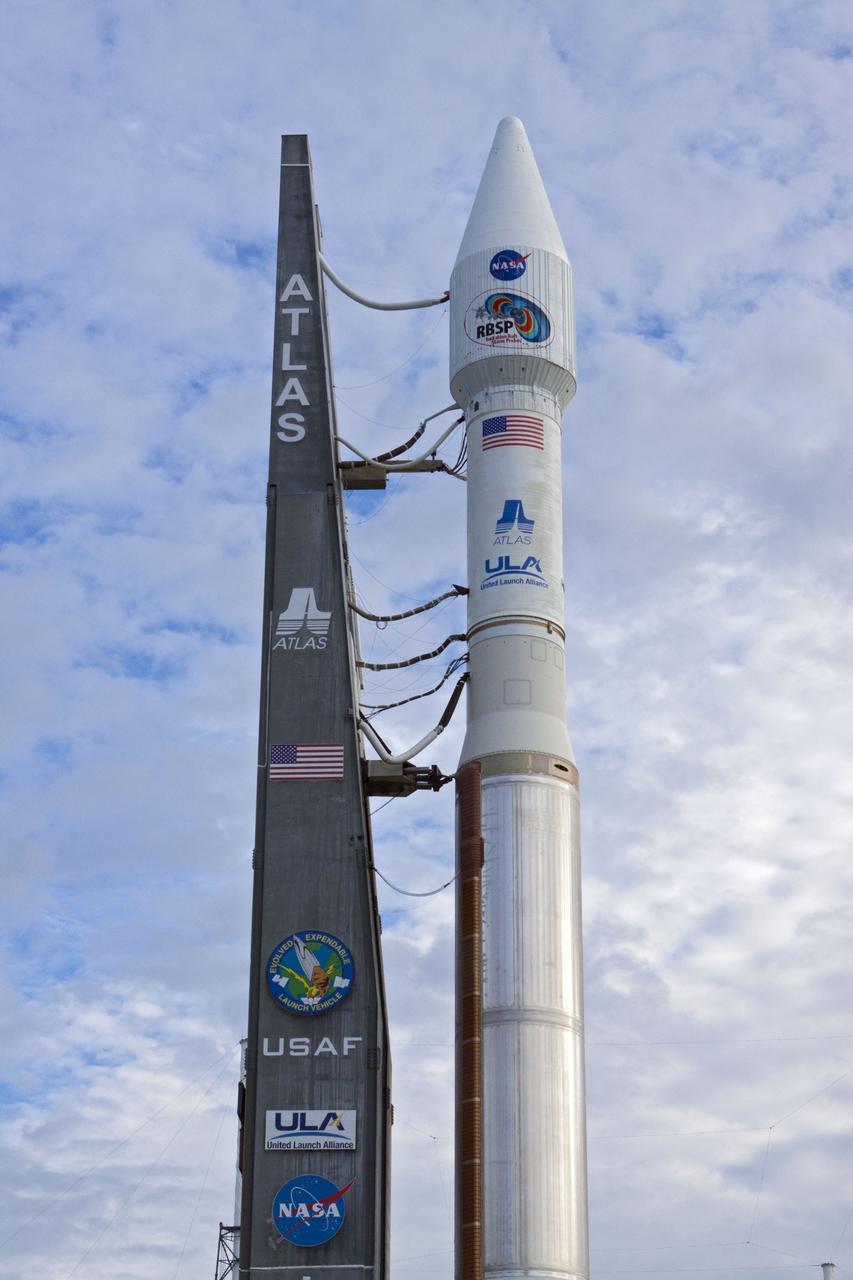
CAPE CANAVERAL, Fla. – The United Launch Alliance Atlas V rocket with the Radiation Belt Storm Probes, or RBSP, spacecraft aboard stands at the launch pad at Space Launch Complex 41 at Cape Canaveral Air Force Station. NASA’s RBSP mission will help researchers understand the sun’s influence on Earth and near-Earth space by studying the Earth’s radiation belts on various scales of space and time. RBSP will begin its mission of exploration of Earth’s Van Allen radiation belts and the extremes of space weather after its launch aboard an Atlas V rocket. Launch is targeted for Aug. 24. Photo credit: NASA/Kim Shiflett
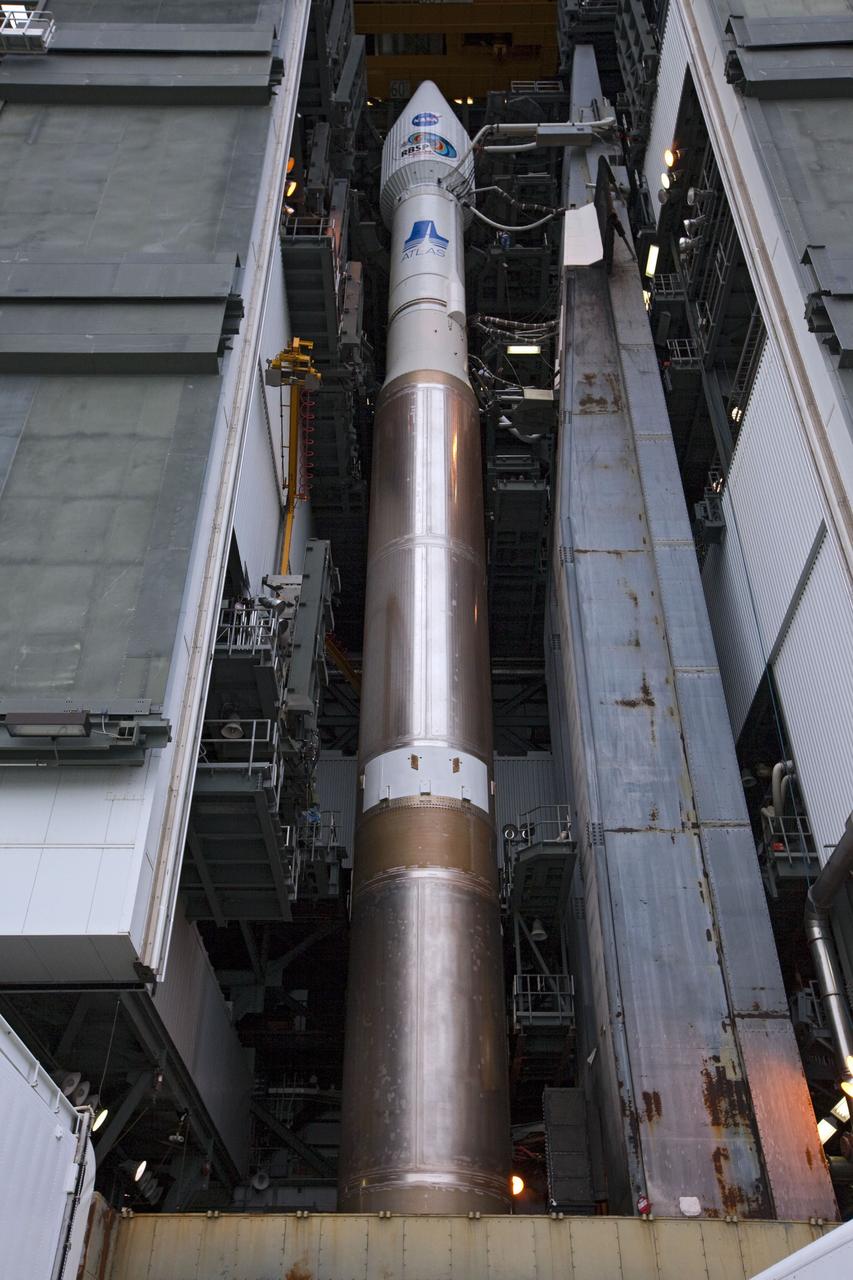
CAPE CANAVERAL, Fla. – The United Launch Alliance Atlas V rocket with the Radiation Belt Storm Probes, or RBSP, spacecraft aboard is readied for rollout to the launch pad at Space Launch Complex 41 at Cape Canaveral Air Force Station. NASA’s RBSP mission will help researchers understand the sun’s influence on Earth and near-Earth space by studying the Earth’s radiation belts on various scales of space and time. RBSP will begin its mission of exploration of Earth’s Van Allen radiation belts and the extremes of space weather after its launch aboard an Atlas V rocket. Launch is targeted for Aug. 24. Photo credit: NASA/Kim Shiflett
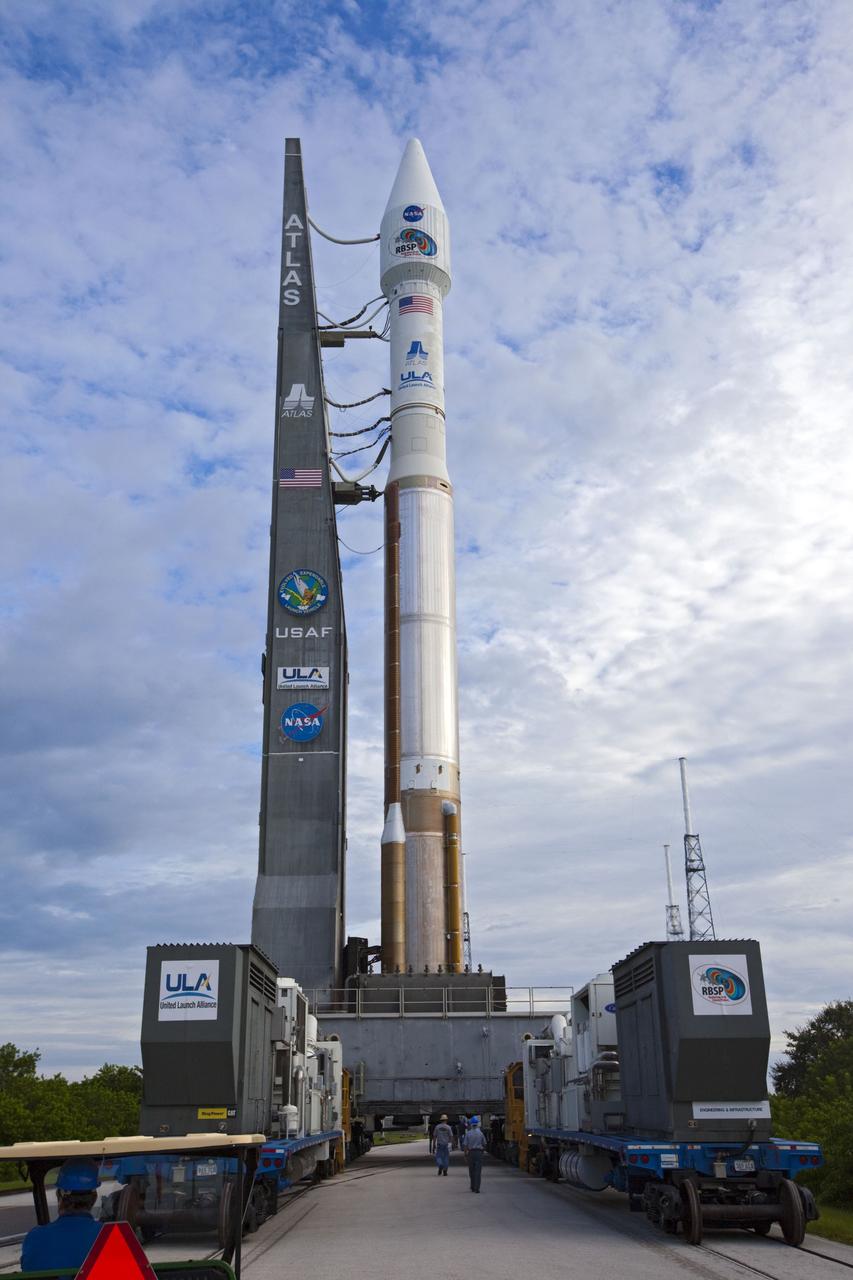
CAPE CANAVERAL, Fla. – Workers help guide the United Launch Alliance Atlas V rocket with the Radiation Belt Storm Probes, or RBSP, spacecraft aboard as it moves to the launch pad at Space Launch Complex 41 at Cape Canaveral Air Force Station. NASA’s RBSP mission will help researchers understand the sun’s influence on Earth and near-Earth space by studying the Earth’s radiation belts on various scales of space and time. RBSP will begin its mission of exploration of Earth’s Van Allen radiation belts and the extremes of space weather after its launch aboard an Atlas V rocket. Launch is targeted for Aug. 24. Photo credit: NASA/Kim Shiflett
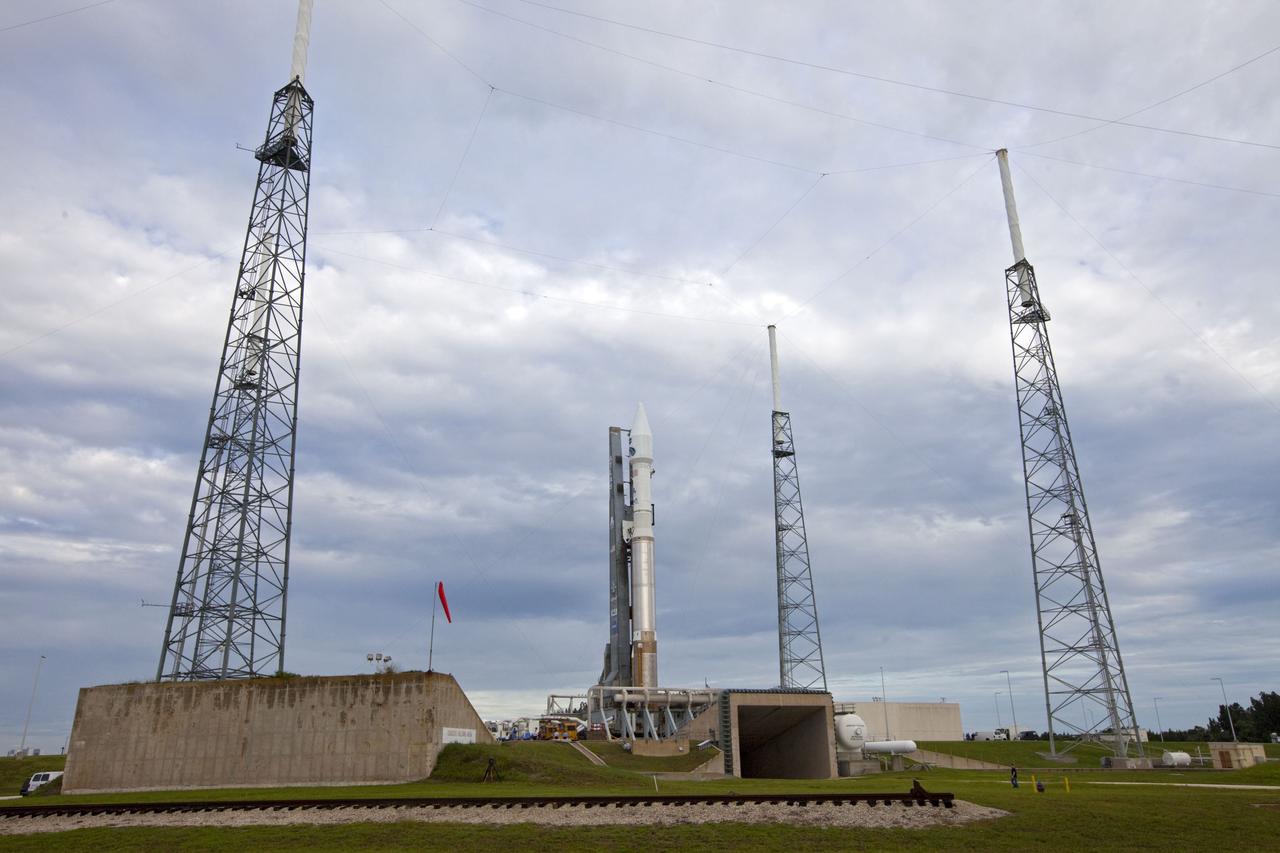
CAPE CANAVERAL, Fla. – The United Launch Alliance Atlas V rocket with the Radiation Belt Storm Probes, or RBSP, spacecraft aboard stands at the launch pad at Space Launch Complex 41 at Cape Canaveral Air Force Station. NASA’s RBSP mission will help researchers understand the sun’s influence on Earth and near-Earth space by studying the Earth’s radiation belts on various scales of space and time. RBSP will begin its mission of exploration of Earth’s Van Allen radiation belts and the extremes of space weather after its launch aboard an Atlas V rocket. Launch is targeted for Aug. 24. Photo credit: NASA/Kim Shiflett
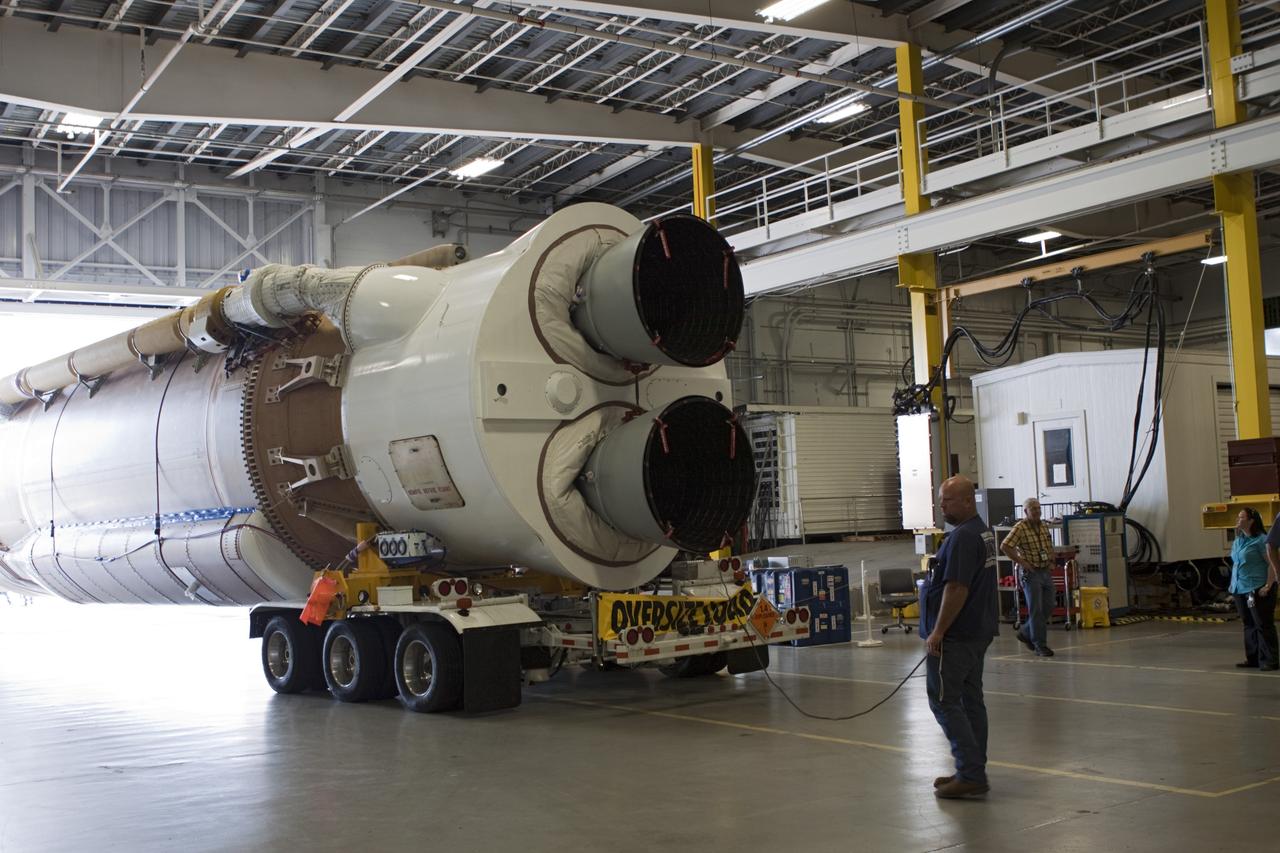
CAPE CANAVERAL, Fla. – The United Launch Alliance Atlas V first stage booster for NASA's Radiation Belt Storm Probes mission backs into the Atlas Spaceflight Operations Center, or ASOC, at Cape Canaveral Air Force Station in Florida. The Radiation Belt Storm Probes, or RBSP, mission will help us understand the sun’s influence on Earth and near-Earth space by studying the Earth’s radiation belts on various scales of space and time. For more information, visit http://www.nasa.gov/rbsp. Photo credit: NASA/Jim Grossmann
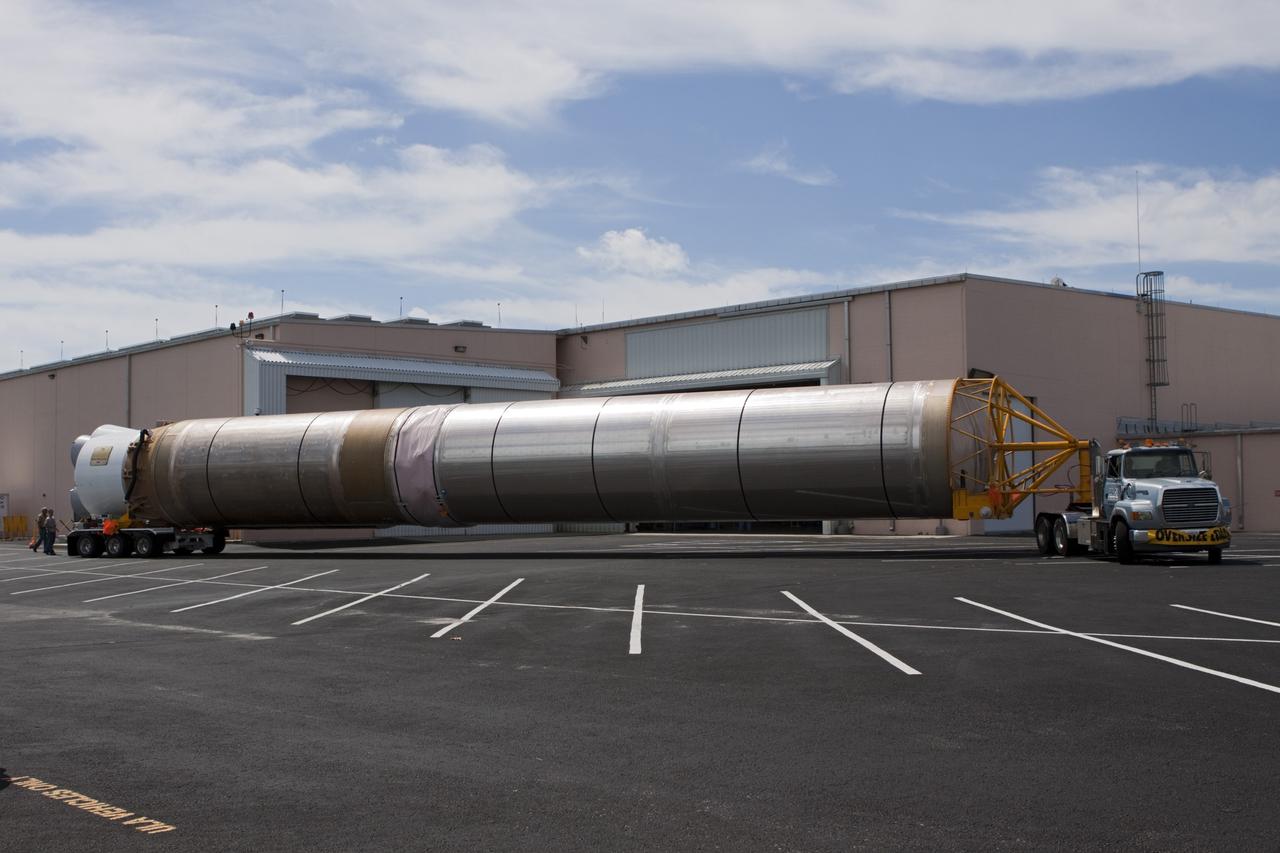
CAPE CANAVERAL, Fla. – The United Launch Alliance Atlas V first stage booster for NASA's Radiation Belt Storm Probes mission arrives at the Atlas Spaceflight Operations Center, or ASOC, at Cape Canaveral Air Force Station in Florida. The Radiation Belt Storm Probes, or RBSP, mission will help us understand the sun’s influence on Earth and near-Earth space by studying the Earth’s radiation belts on various scales of space and time. For more information, visit http://www.nasa.gov/rbsp. Photo credit: NASA/Jim Grossmann

CAPE CANAVERAL, Fla. – The United Launch Alliance Atlas V first stage booster for NASA's Radiation Belt Storm Probes mission approaches the Atlas Spaceflight Operations Center, or ASOC, at Cape Canaveral Air Force Station in Florida. The Radiation Belt Storm Probes, or RBSP, mission will help us understand the sun’s influence on Earth and near-Earth space by studying the Earth’s radiation belts on various scales of space and time. For more information, visit http://www.nasa.gov/rbsp. Photo credit: NASA/Jim Grossmann
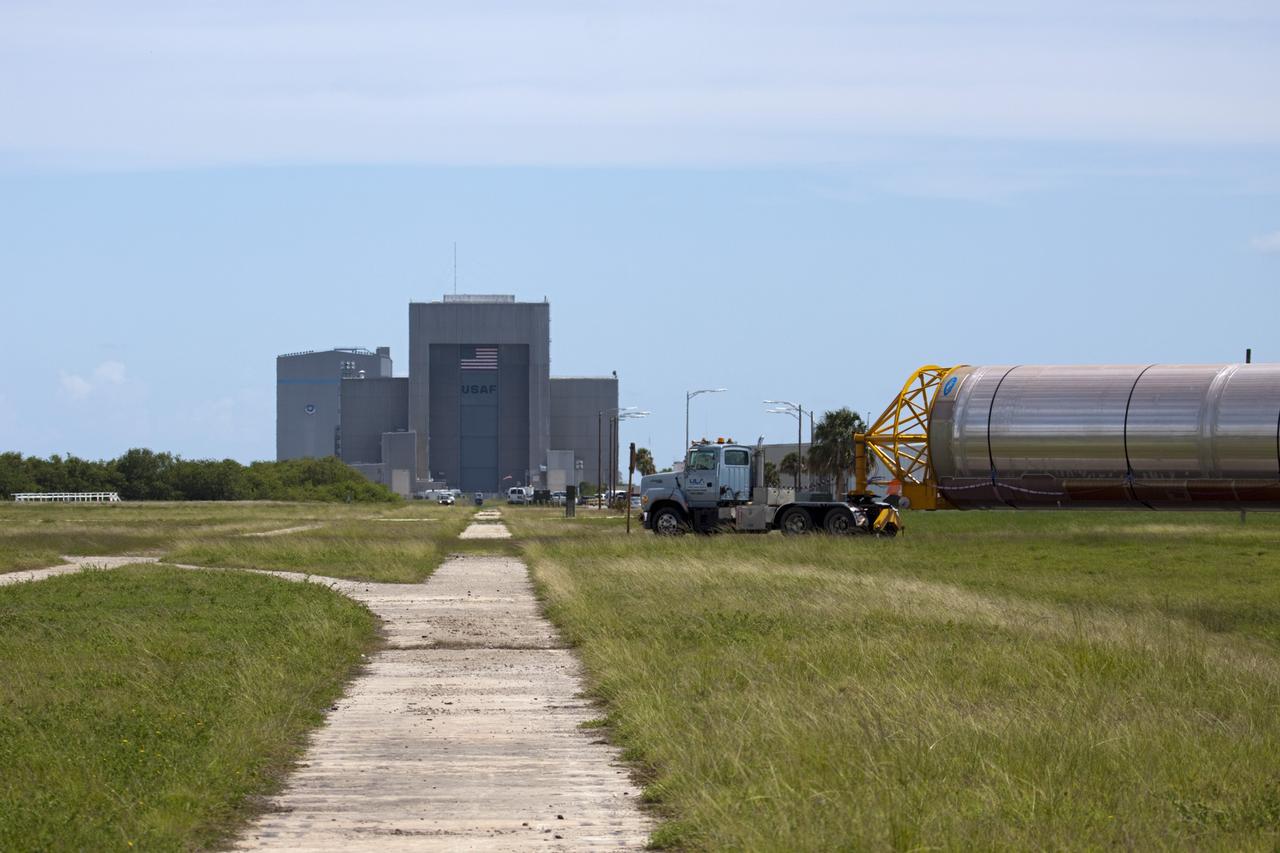
CAPE CANAVERAL, Fla. – The United Launch Alliance Atlas V first stage booster for NASA's Radiation Belt Storm Probes mission approaches the Atlas Spaceflight Operations Center, or ASOC, at Cape Canaveral Air Force Station in Florida. The Radiation Belt Storm Probes, or RBSP, mission will help us understand the sun’s influence on Earth and near-Earth space by studying the Earth’s radiation belts on various scales of space and time. For more information, visit http://www.nasa.gov/rbsp. Photo credit: NASA/Jim Grossmann
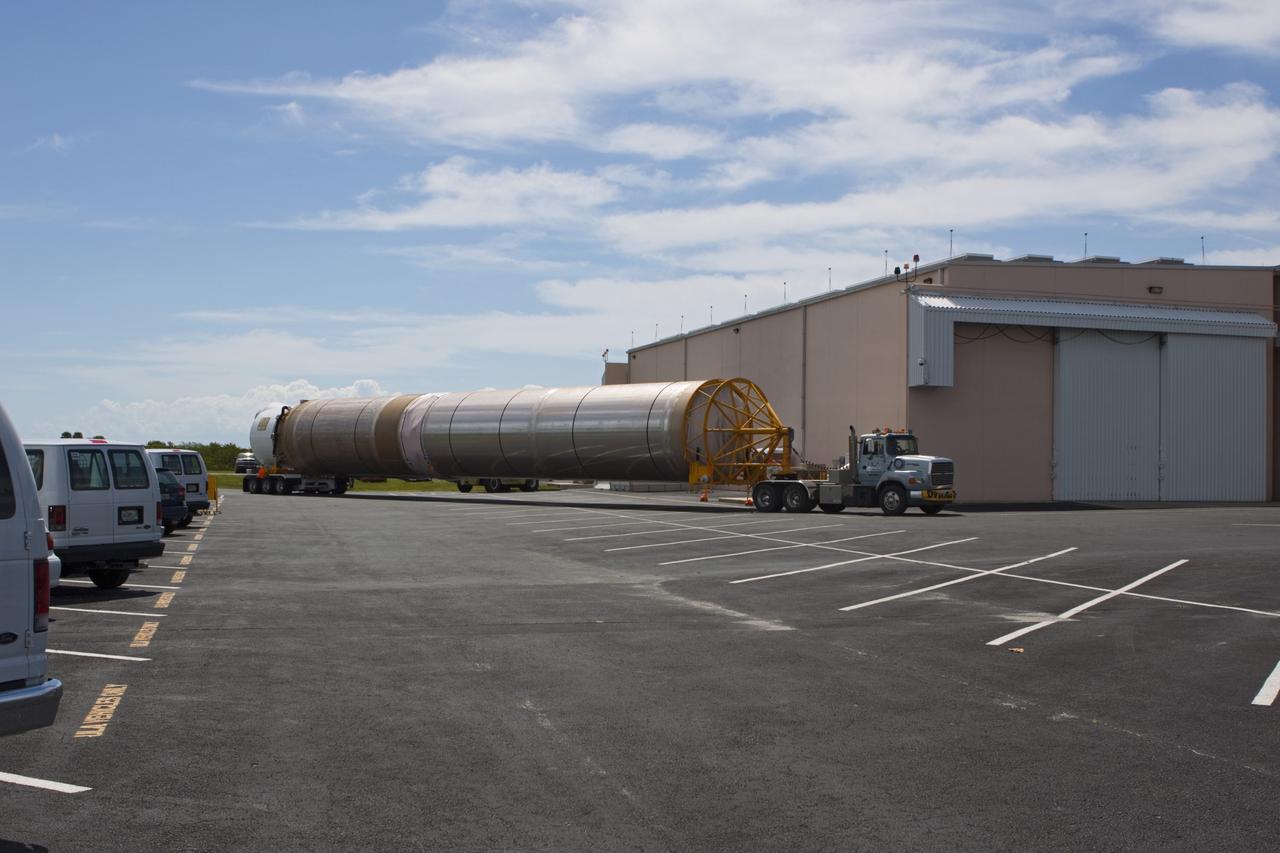
CAPE CANAVERAL, Fla. – The United Launch Alliance Atlas V first stage booster for NASA's Radiation Belt Storm Probes mission arrives at the Atlas Spaceflight Operations Center, or ASOC, at Cape Canaveral Air Force Station in Florida. The Radiation Belt Storm Probes, or RBSP, mission will help us understand the sun’s influence on Earth and near-Earth space by studying the Earth’s radiation belts on various scales of space and time. For more information, visit http://www.nasa.gov/rbsp. Photo credit: NASA/Jim Grossmann
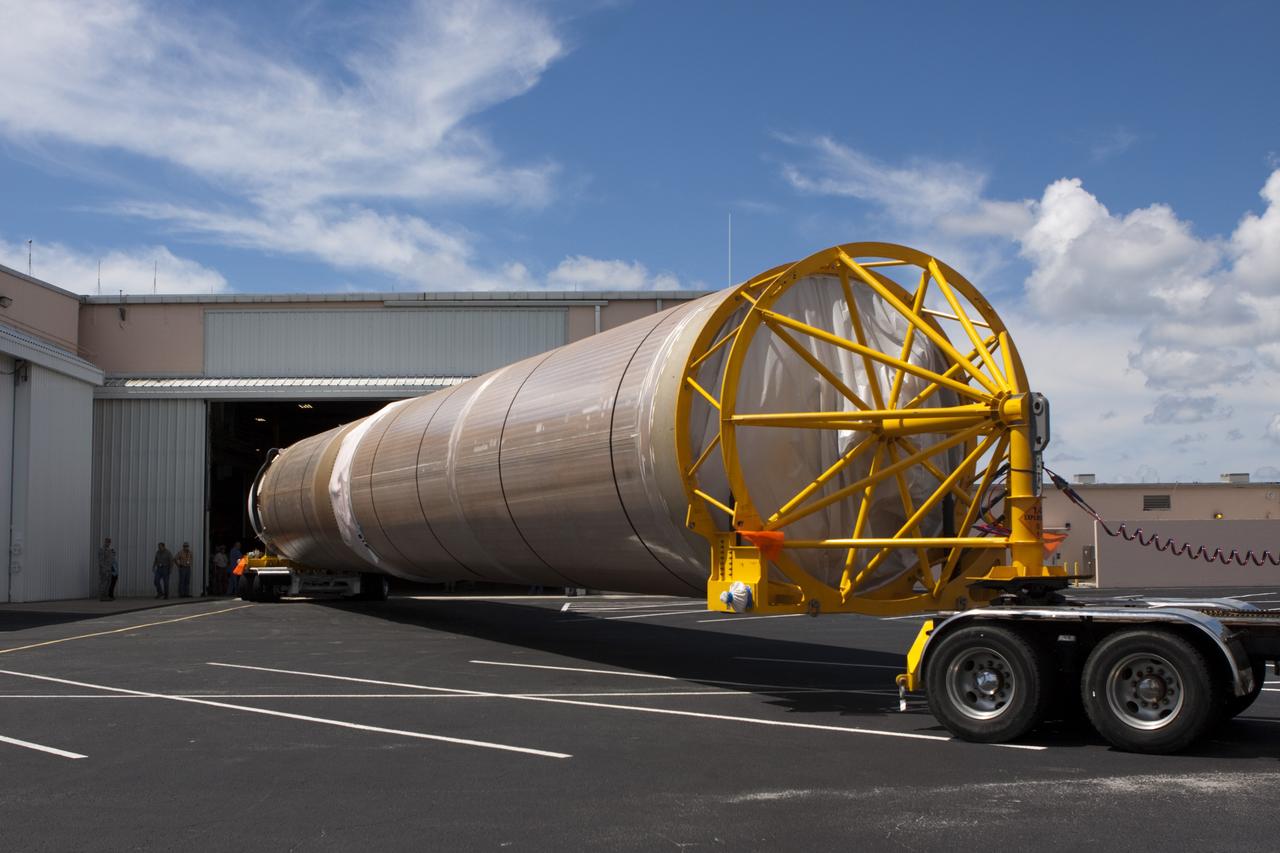
CAPE CANAVERAL, Fla. – The United Launch Alliance Atlas V first stage booster for NASA's Radiation Belt Storm Probes mission begins moving into the Atlas Spaceflight Operations Center, or ASOC, at Cape Canaveral Air Force Station in Florida. The Radiation Belt Storm Probes, or RBSP, mission will help us understand the sun’s influence on Earth and near-Earth space by studying the Earth’s radiation belts on various scales of space and time. For more information, visit http://www.nasa.gov/rbsp. Photo credit: NASA/Jim Grossmann
CAPE CANAVERAL, Fla. – The Atlas V first stage booster for NASA's Radiation Belt Storm Probes mission is towed away from the dock at Port Canaveral. The booster arrived on United Launch Alliance's barge, the Delta Mariner. The Radiation Belt Storm Probes, or RBSP, mission will help us understand the sun’s influence on Earth and near-Earth space by studying the Earth’s radiation belts on various scales of space and time. For more information, visit http://www.nasa.gov/rbsp. Photo credit: NASA/Jim Grossmann
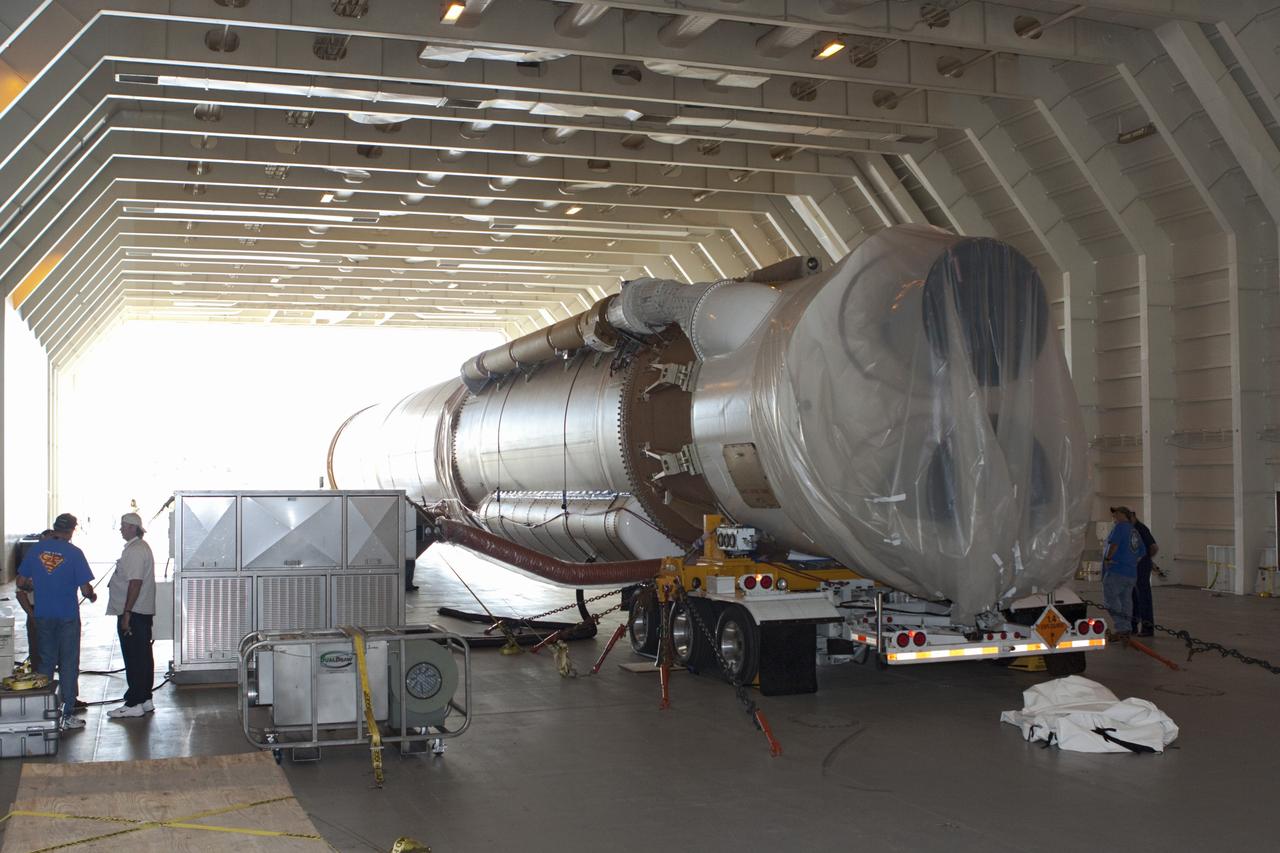
CAPE CANAVERAL, Fla. – At Port Canaveral in Florida, the Atlas V first stage booster for NASA's Radiation Belt Storm Probes mission waits to be offloaded from United Launch Alliance's Delta Mariner barge. The Radiation Belt Storm Probes, or RBSP, mission will help us understand the sun’s influence on Earth and near-Earth space by studying the Earth’s radiation belts on various scales of space and time. For more information, visit http://www.nasa.gov/rbsp. Photo credit: NASA/Jim Grossmann
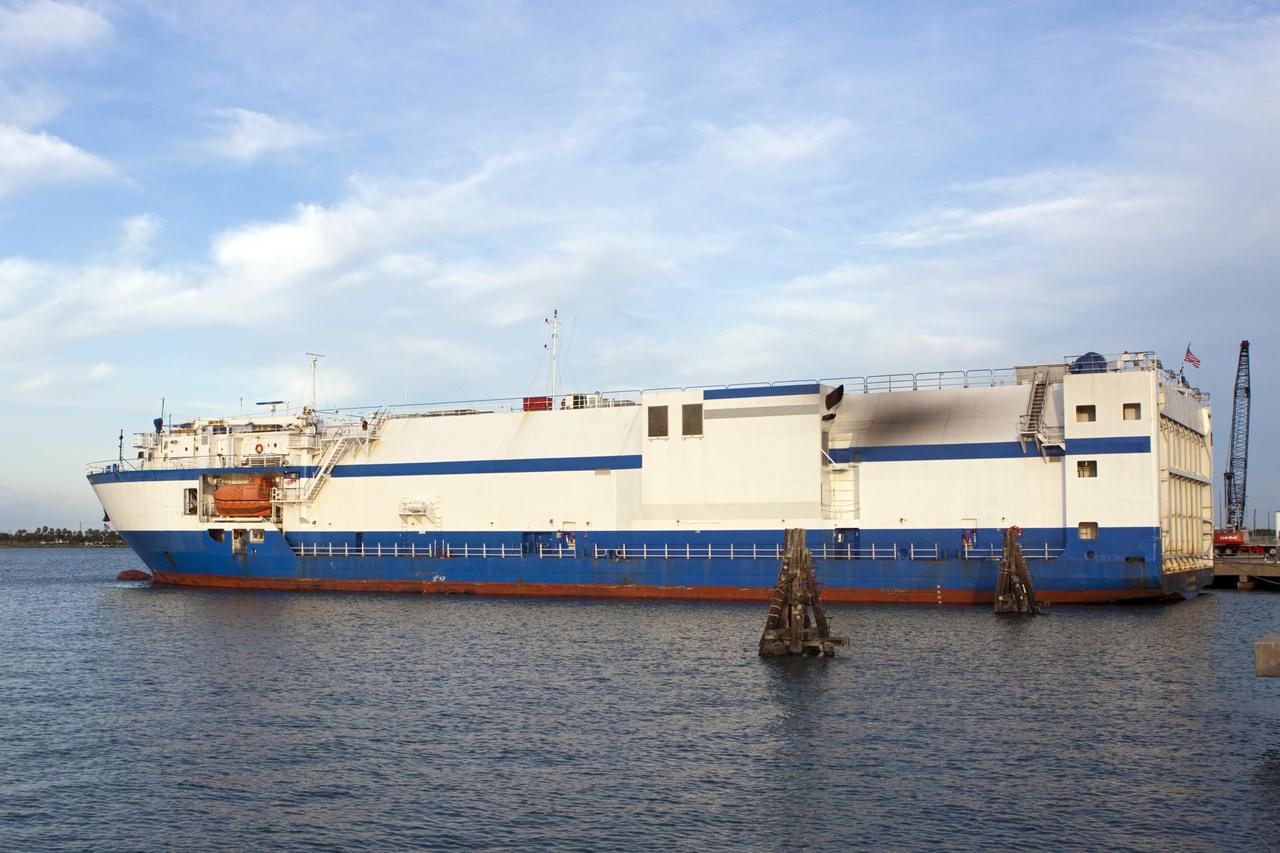
CAPE CANAVERAL, Fla. – United Launch Alliance's Delta Mariner barge arrives at Port Canaveral in Florida carrying the Atlas V first stage booster for NASA's Radiation Belt Storm Probes mission. The Radiation Belt Storm Probes, or RBSP, mission will help us understand the sun’s influence on Earth and near-Earth space by studying the Earth’s radiation belts on various scales of space and time. For more information, visit http://www.nasa.gov/rbsp. Photo credit: NASA/Jim Grossmann
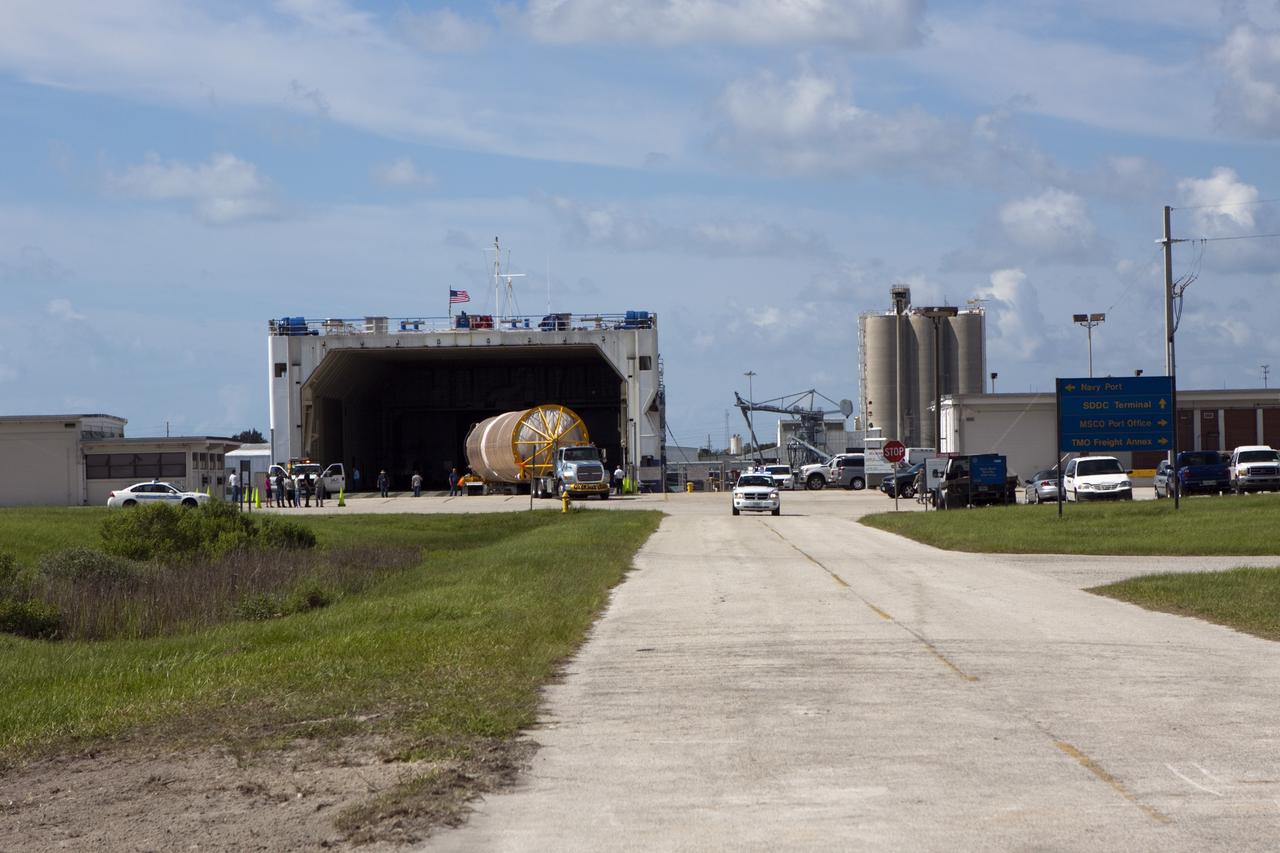
CAPE CANAVERAL, Fla. – The Atlas V first stage booster for NASA's Radiation Belt Storm Probes mission is offloaded from United Launch Alliance's Delta Mariner barge at Port Canaveral in Florida. The Radiation Belt Storm Probes, or RBSP, mission will help us understand the sun’s influence on Earth and near-Earth space by studying the Earth’s radiation belts on various scales of space and time. For more information, visit http://www.nasa.gov/rbsp. Photo credit: NASA/Jim Grossmann
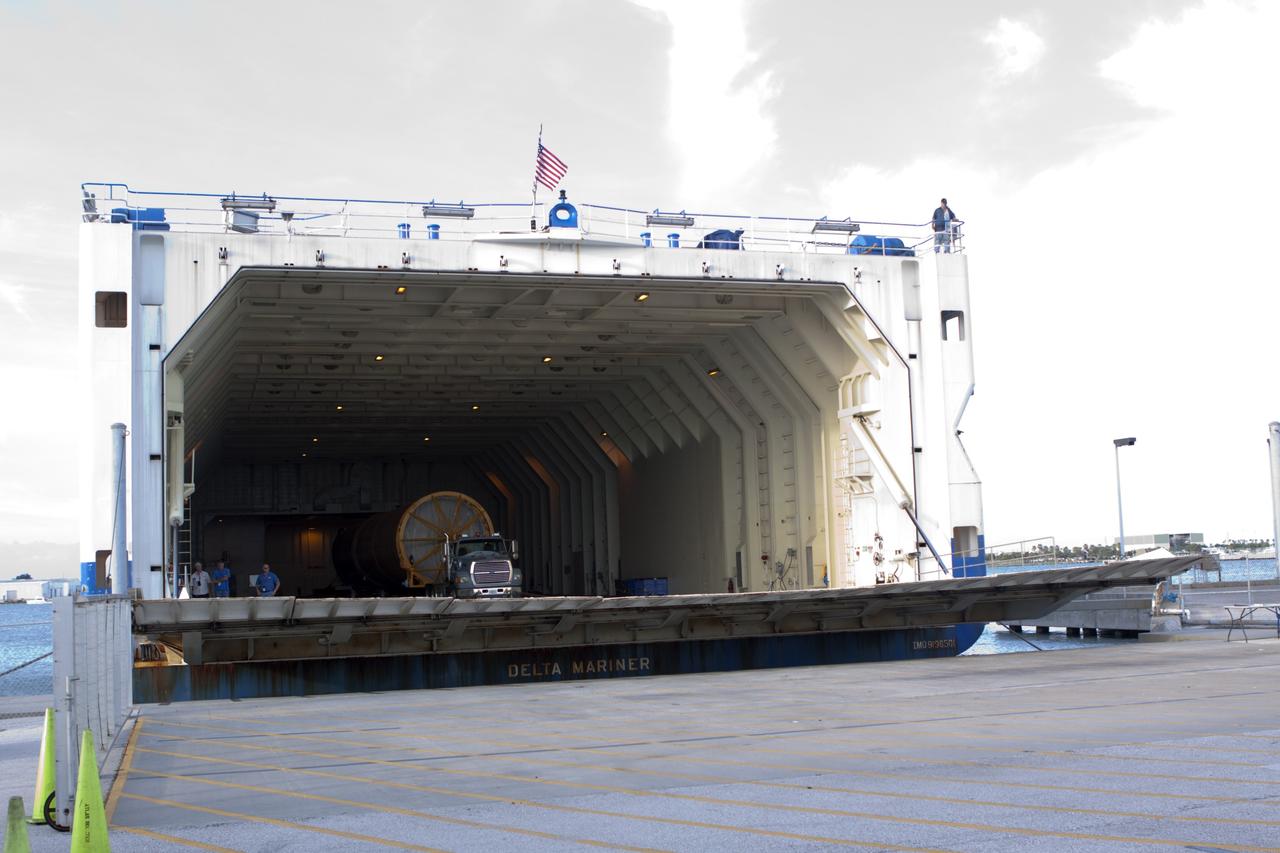
CAPE CANAVERAL, Fla. – The Atlas V first stage booster for NASA's Radiation Belt Storm Probes mission arrives at Port Canaveral in Florida aboard United Launch Alliance's Delta Mariner barge. The Radiation Belt Storm Probes, or RBSP, mission will help us understand the sun’s influence on Earth and near-Earth space by studying the Earth’s radiation belts on various scales of space and time. For more information, visit http://www.nasa.gov/rbsp. Photo credit: NASA/Jim Grossmann
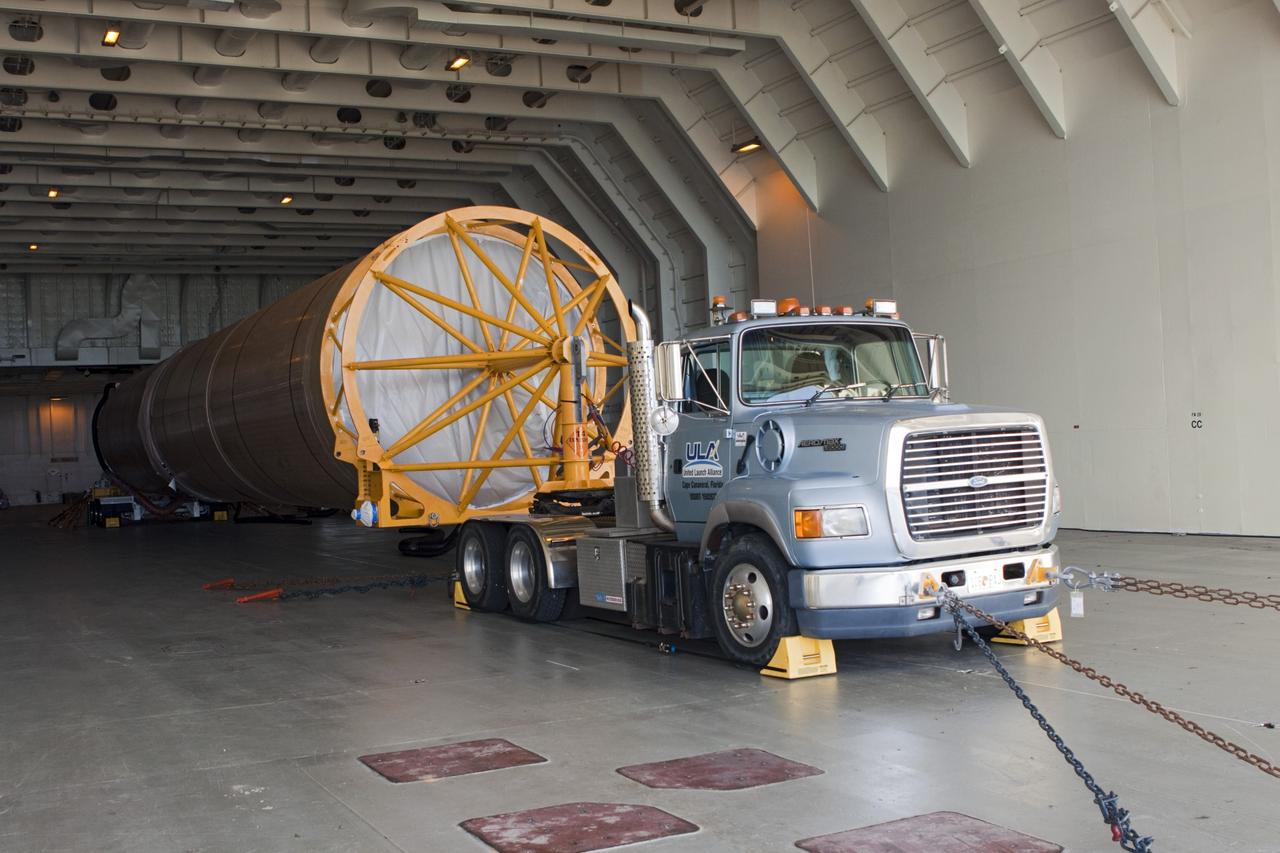
CAPE CANAVERAL, Fla. – At Port Canaveral in Florida, the Atlas V first stage booster for NASA's Radiation Belt Storm Probes mission is attached to a truck for offloading from United Launch Alliance's Delta Mariner barge. The Radiation Belt Storm Probes, or RBSP, mission will help us understand the sun’s influence on Earth and near-Earth space by studying the Earth’s radiation belts on various scales of space and time. For more information, visit http://www.nasa.gov/rbsp. Photo credit: NASA/Jim Grossmann
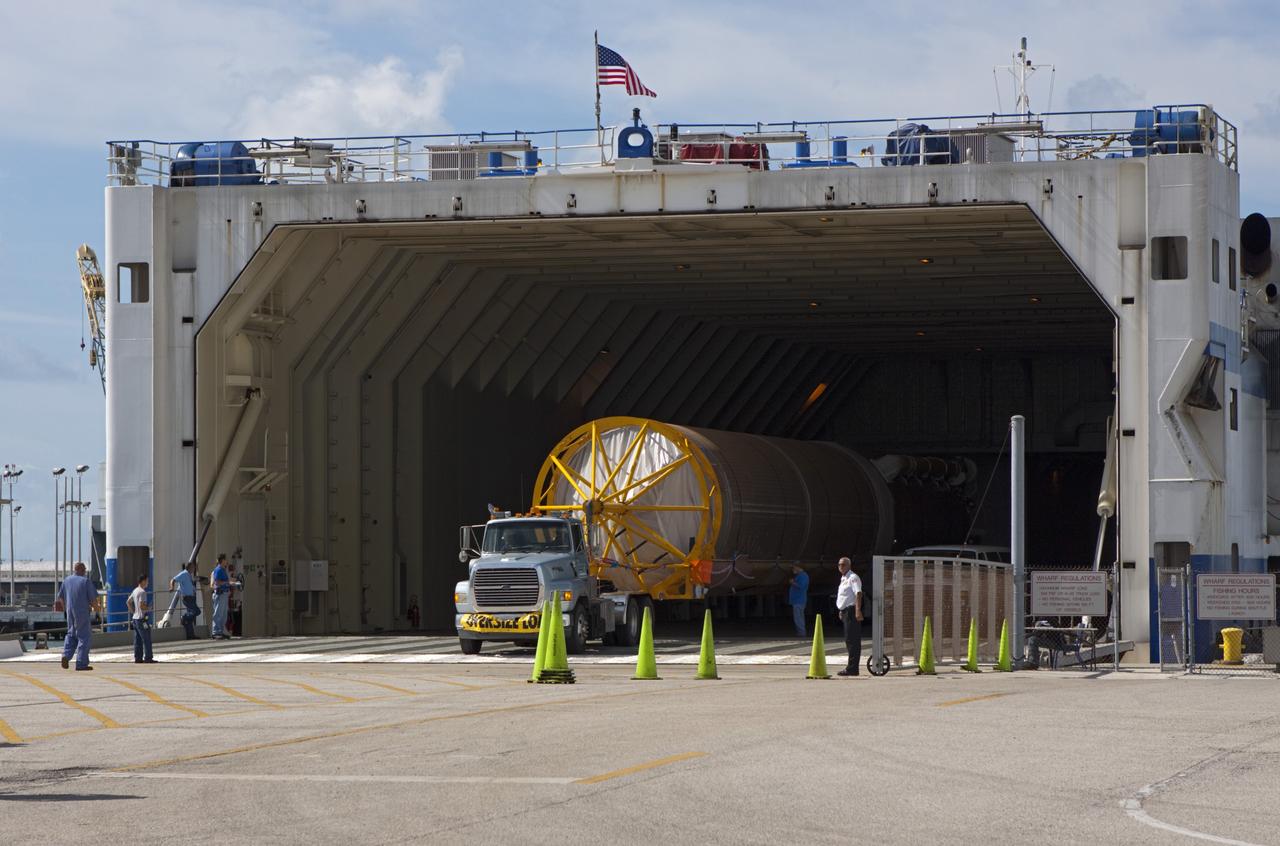
CAPE CANAVERAL, Fla. – The Atlas V first stage booster for NASA's Radiation Belt Storm Probes mission emerges from United Launch Alliance's Delta Mariner barge at Port Canaveral in Florida. The Radiation Belt Storm Probes, or RBSP, mission will help us understand the sun’s influence on Earth and near-Earth space by studying the Earth’s radiation belts on various scales of space and time. For more information, visit http://www.nasa.gov/rbsp. Photo credit: NASA/Jim Grossmann
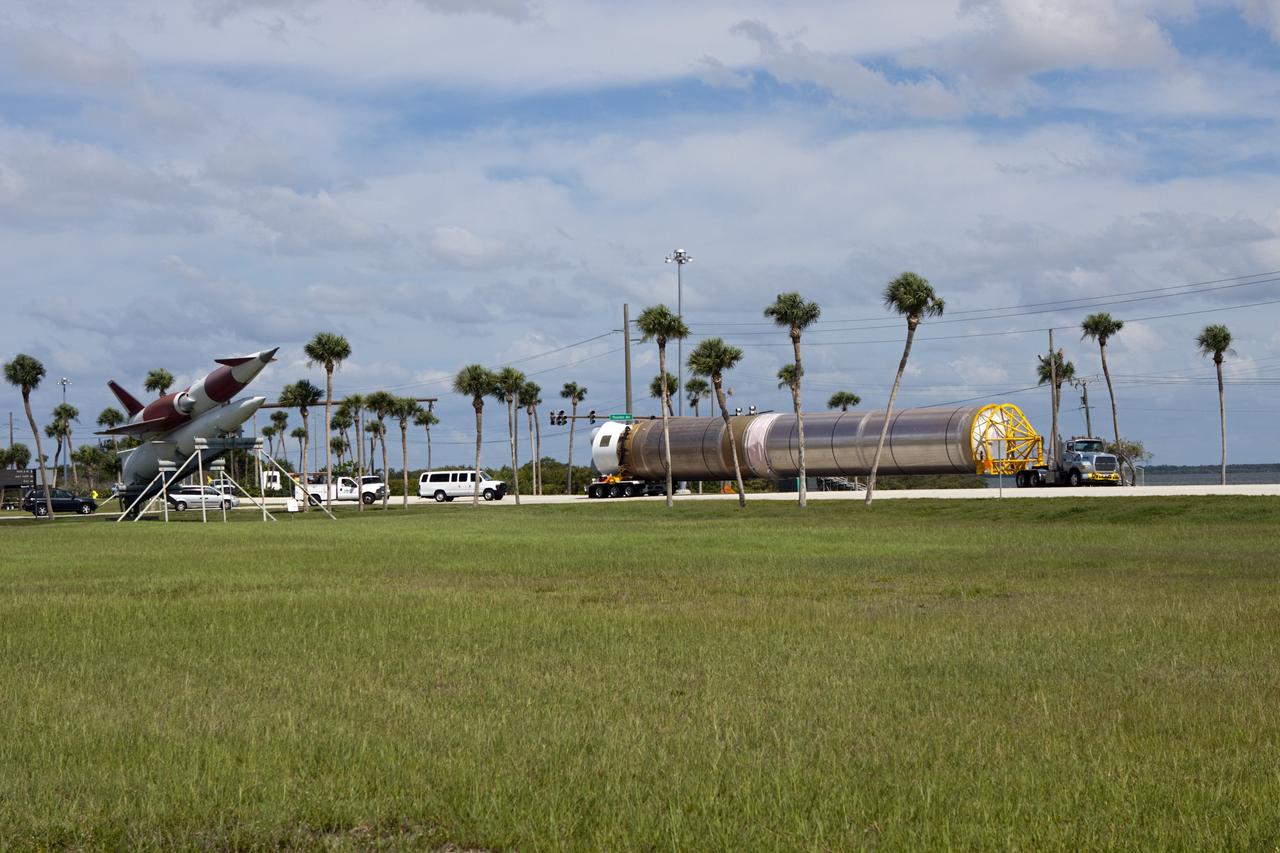
CAPE CANAVERAL, Fla. – The Atlas V first stage booster for NASA's Radiation Belt Storm Probes mission approaches Cape Canaveral Air Force Station in Florida. The booster was delivered by barge to nearby Port Canaveral. The Radiation Belt Storm Probes, or RBSP, mission will help us understand the sun’s influence on Earth and near-Earth space by studying the Earth’s radiation belts on various scales of space and time. For more information, visit http://www.nasa.gov/rbsp. Photo credit: NASA/Jim Grossmann
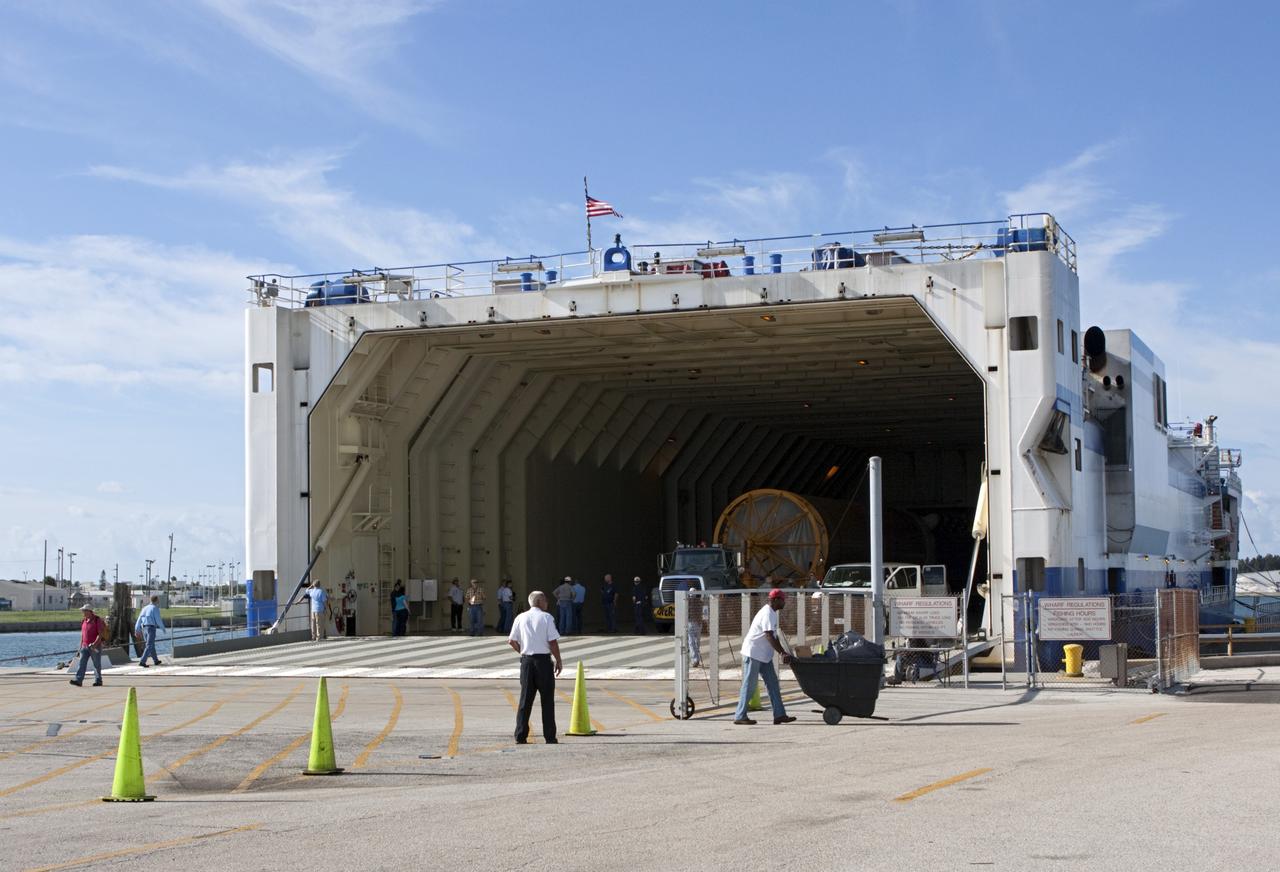
CAPE CANAVERAL, Fla. – The Atlas V first stage booster for NASA's Radiation Belt Storm Probes mission is ready to be offloaded at Port Canaveral in Florida. The booster arrived on United Launch Alliance's barge, the Delta Mariner. The Radiation Belt Storm Probes, or RBSP, mission will help us understand the sun’s influence on Earth and near-Earth space by studying the Earth’s radiation belts on various scales of space and time. For more information, visit http://www.nasa.gov/rbsp. Photo credit: NASA/Jim Grossmann
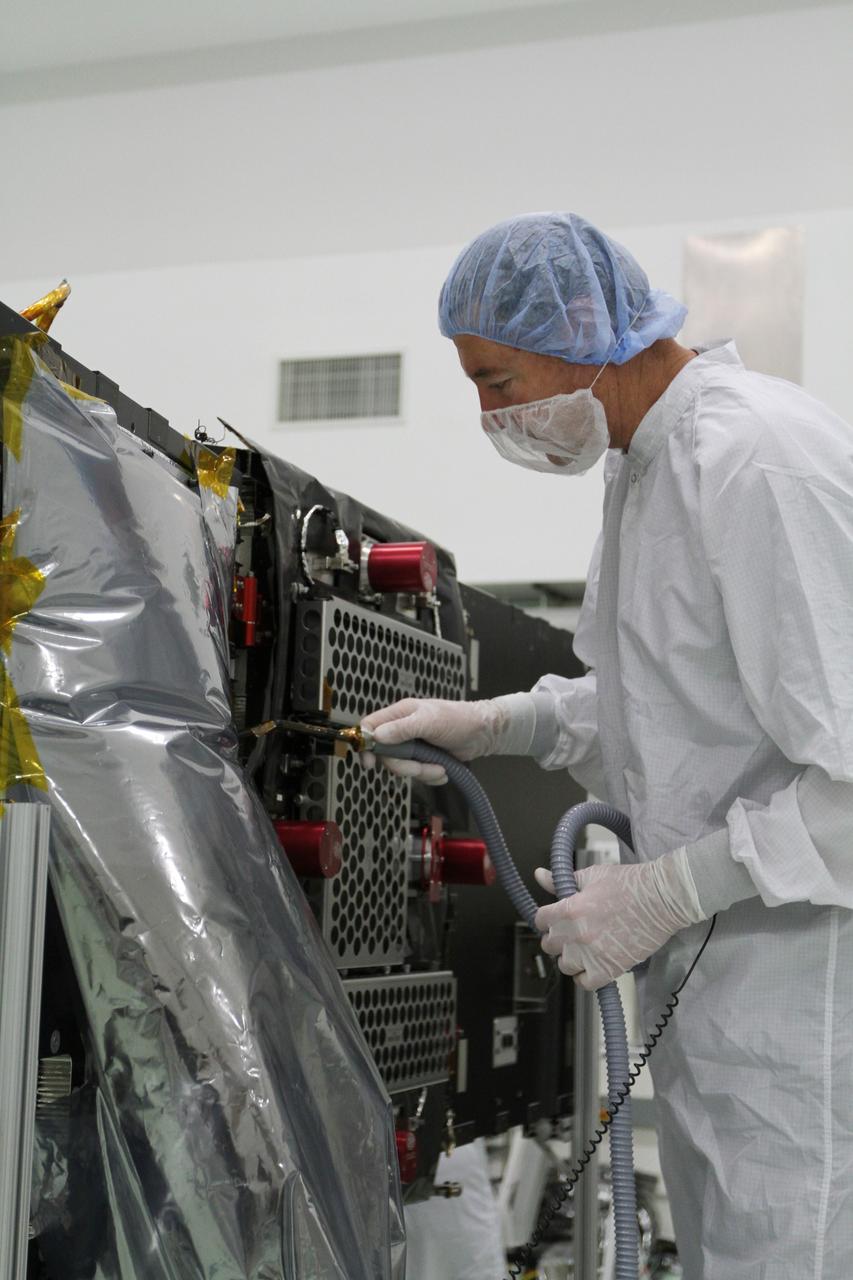
CAPE CANAVERAL, Fla. – A technician cleans and inspects one of NASA's twin Radiation Belt Storm Probes in the clean room high bay at the Astrotech payload processing facility near Kennedy Space Center in Florida. The Radiation Belt Storm Probes, or RBSP, mission will help us understand the sun’s influence on Earth and near-Earth space by studying the Earth’s radiation belts on various scales of space and time. RBSP will begin its mission of exploration of Earth's Van Allen radiation belts and the extremes of space weather after its launch aboard a United Launch Alliance Atlas V rocket. For more information, visit http://www.nasa.gov/rbsp. Photo credit: NASA/Kim Shiflett
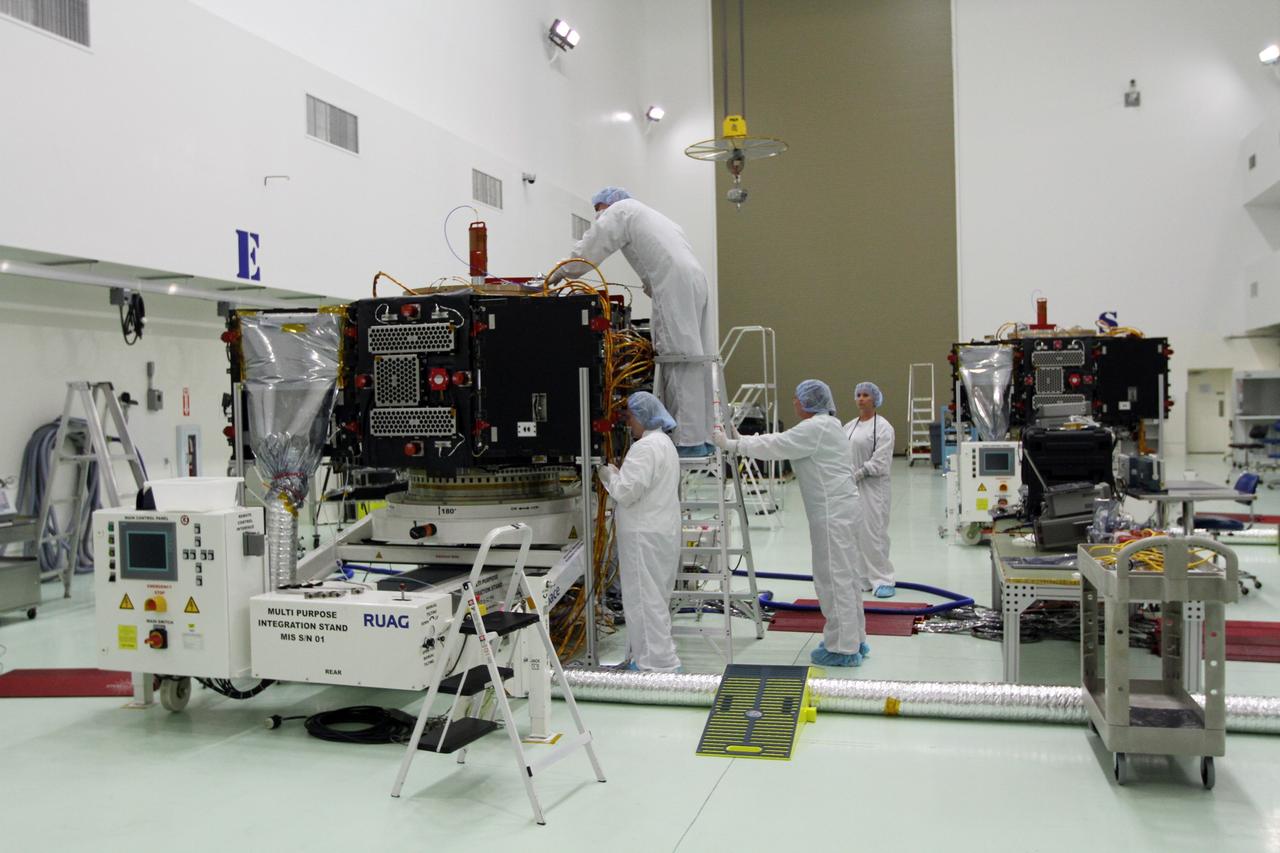
CAPE CANAVERAL, Fla. – Technicians inspect one of NASA's twin Radiation Belt Storm Probes inside the clean room high bay at Astrotech payload processing facility. The Radiation Belt Storm Probes, or RBSP, mission will help us understand the sun’s influence on Earth and near-Earth space by studying the Earth’s radiation belts on various scales of space and time. RBSP will begin its mission of exploration of Earth's Van Allen radiation belts and the extremes of space weather after its launch aboard a United Launch Alliance Atlas V rocket. For more information, visit http://www.nasa.gov/rbsp. Photo credit: NASA/Kim Shiflett
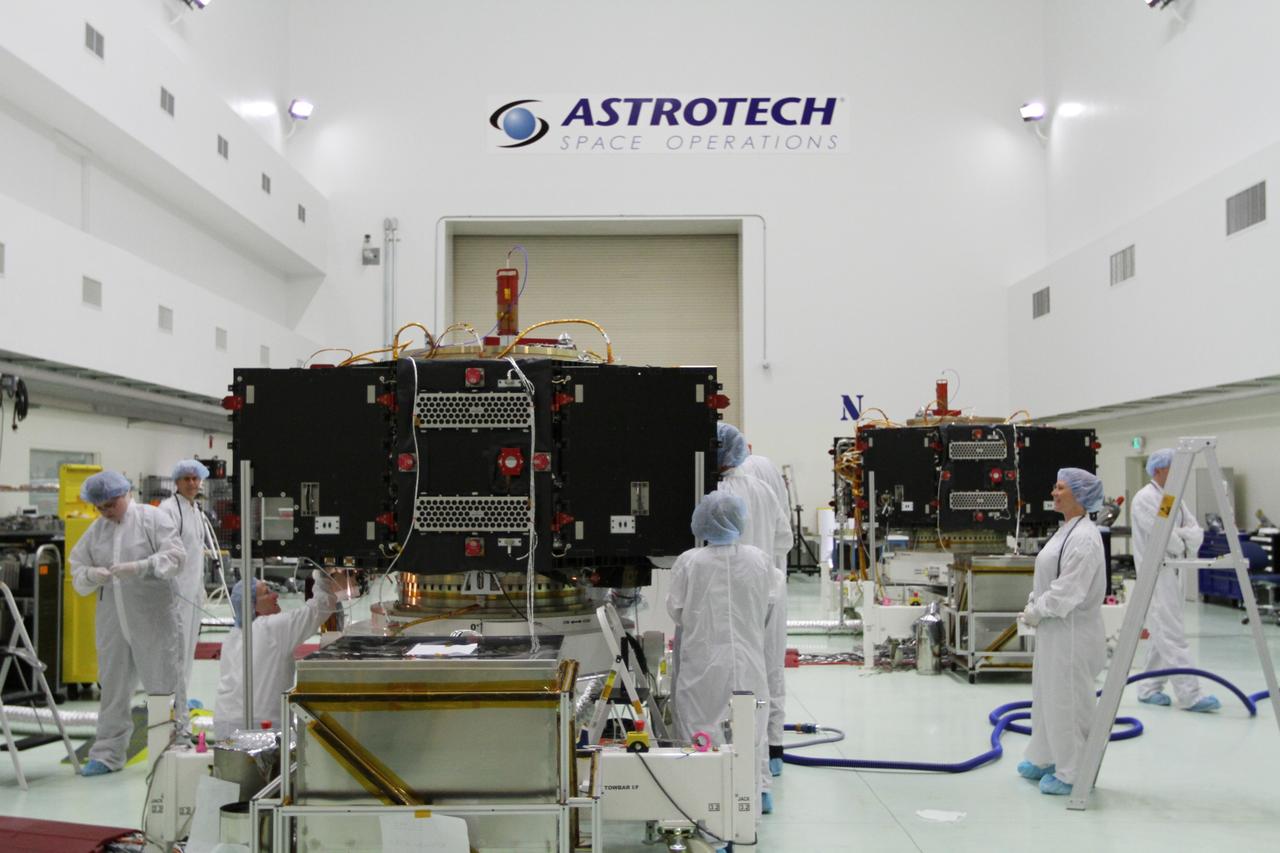
CAPE CANAVERAL, Fla. – In the clean room high bay at the Astrotech payload processing facility near NASA’s Kennedy Space Center in Florida, technicians prepare to clean and inspect Radiation Belt Storm Probes A and B. The Radiation Belt Storm Probes, or RBSP, mission will help us understand the sun’s influence on Earth and near-Earth space by studying the Earth’s radiation belts on various scales of space and time. RBSP will begin its mission of exploration of Earth's Van Allen radiation belts and the extremes of space weather after its launch aboard a United Launch Alliance Atlas V rocket. For more information, visit http://www.nasa.gov/rbsp. Photo credit: NASA/Kim Shiflett
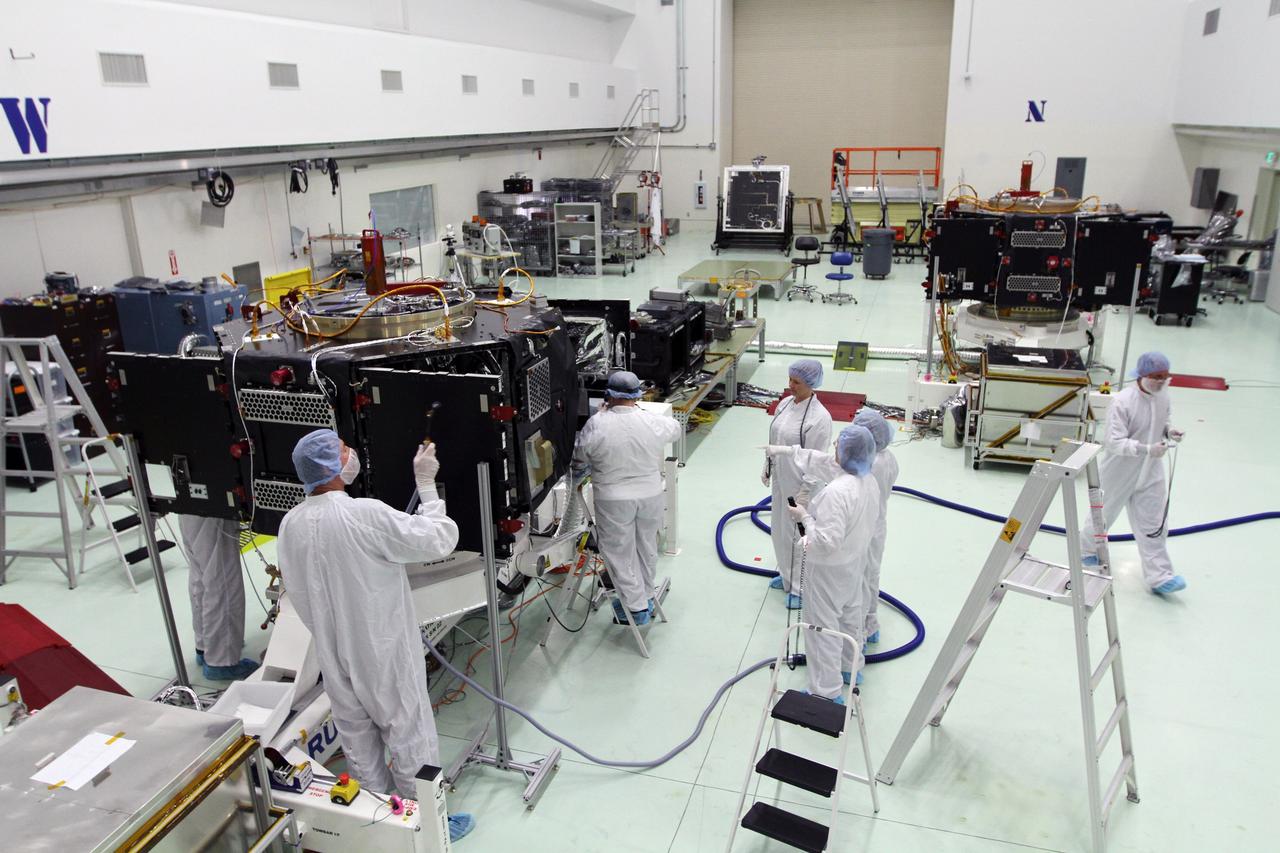
CAPE CANAVERAL, Fla. – NASA's Radiation Belt Storm Probes A and B are secured to work stands in the Astrotech payload processing facility, where technicians work to clean and inspect the two spacecraft. The Radiation Belt Storm Probes, or RBSP, mission will help us understand the sun’s influence on Earth and near-Earth space by studying the Earth’s radiation belts on various scales of space and time. RBSP will begin its mission of exploration of Earth's Van Allen radiation belts and the extremes of space weather after its launch aboard a United Launch Alliance Atlas V rocket. For more information, visit http://www.nasa.gov/rbsp. Photo credit: NASA/Kim Shiflett
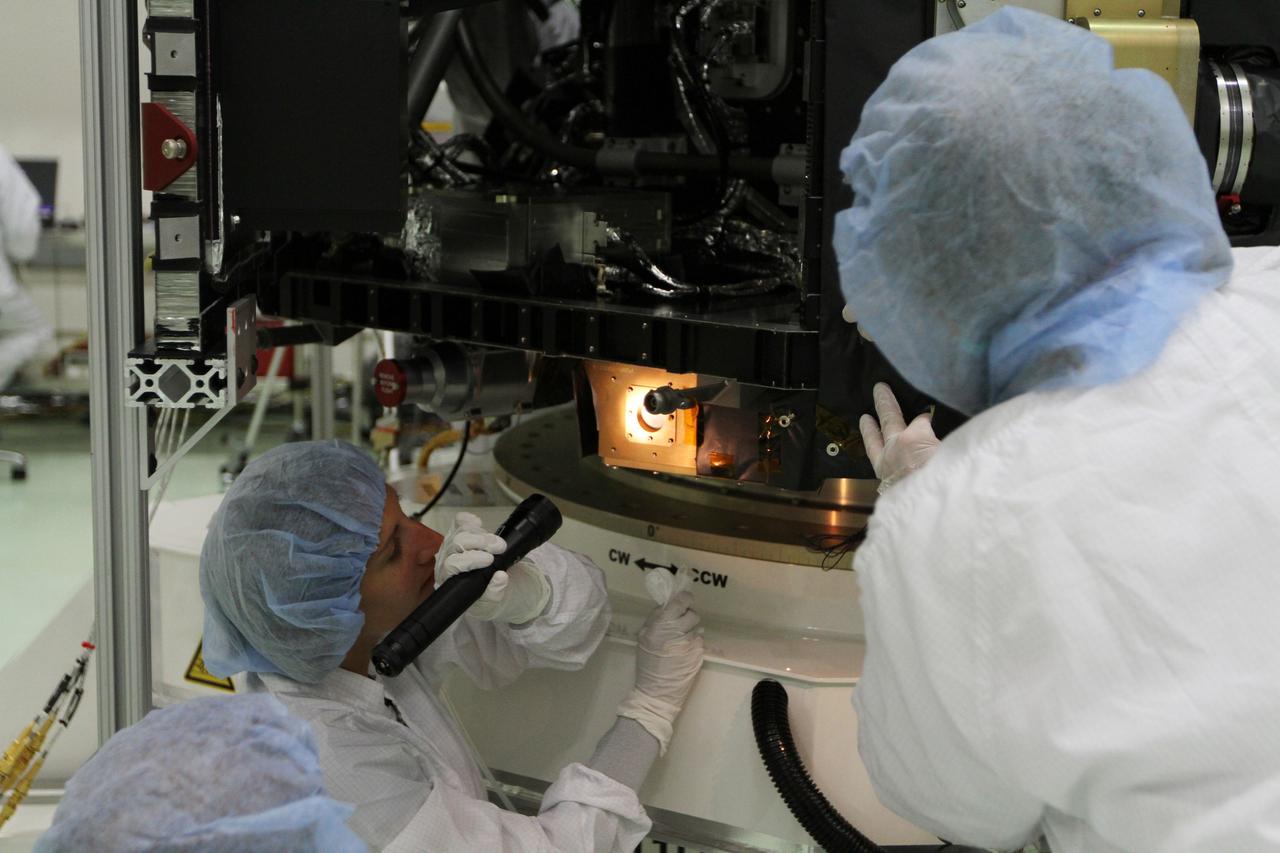
CAPE CANAVERAL, Fla. – Using flashlights, technicians closely inspect one of NASA's twin Radiation Belt Storm Probes in the Astrotech payload processing facility near Kennedy Space Center in Florida. The Radiation Belt Storm Probes, or RBSP, mission will help us understand the sun’s influence on Earth and near-Earth space by studying the Earth’s radiation belts on various scales of space and time. RBSP will begin its mission of exploration of Earth's Van Allen radiation belts and the extremes of space weather after its launch aboard a United Launch Alliance Atlas V rocket. For more information, visit http://www.nasa.gov/rbsp. Photo credit: NASA/Kim Shiflett
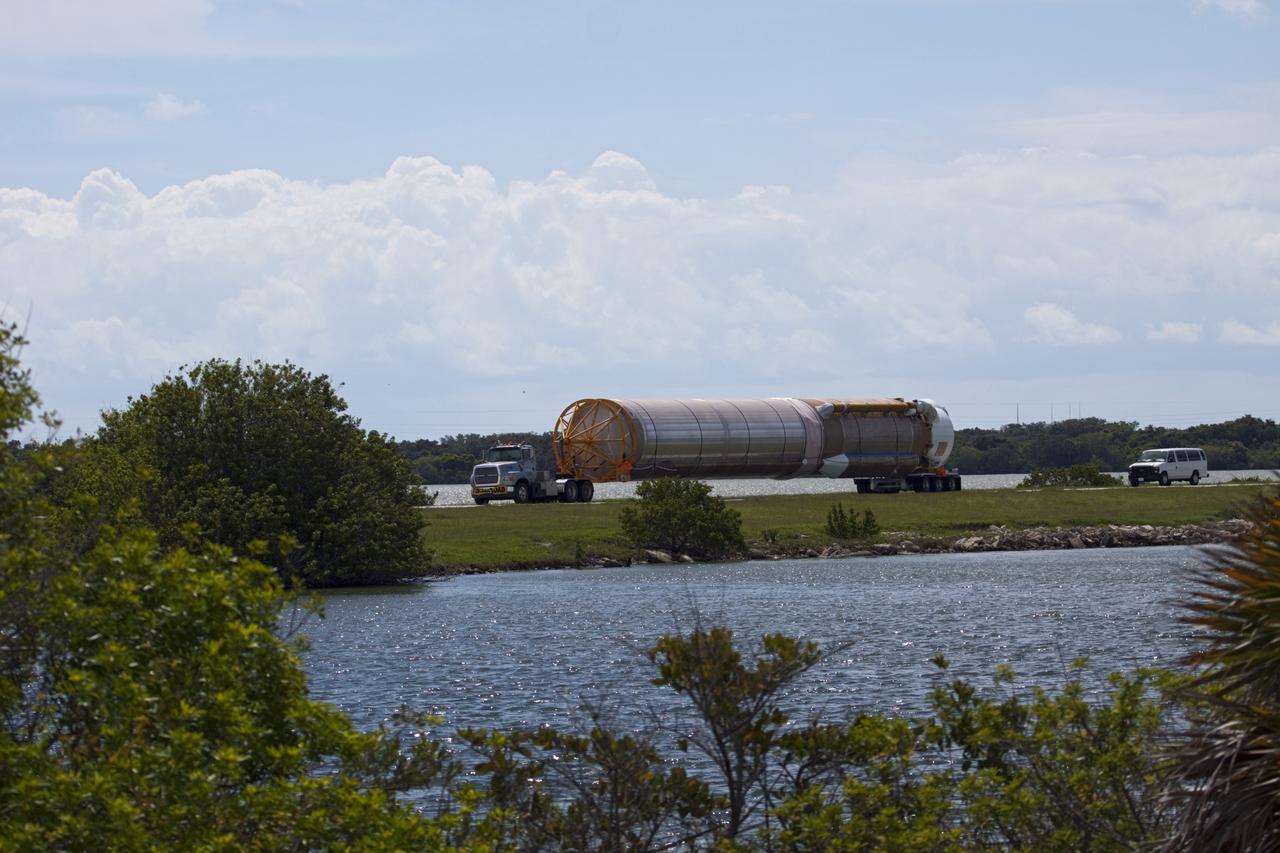
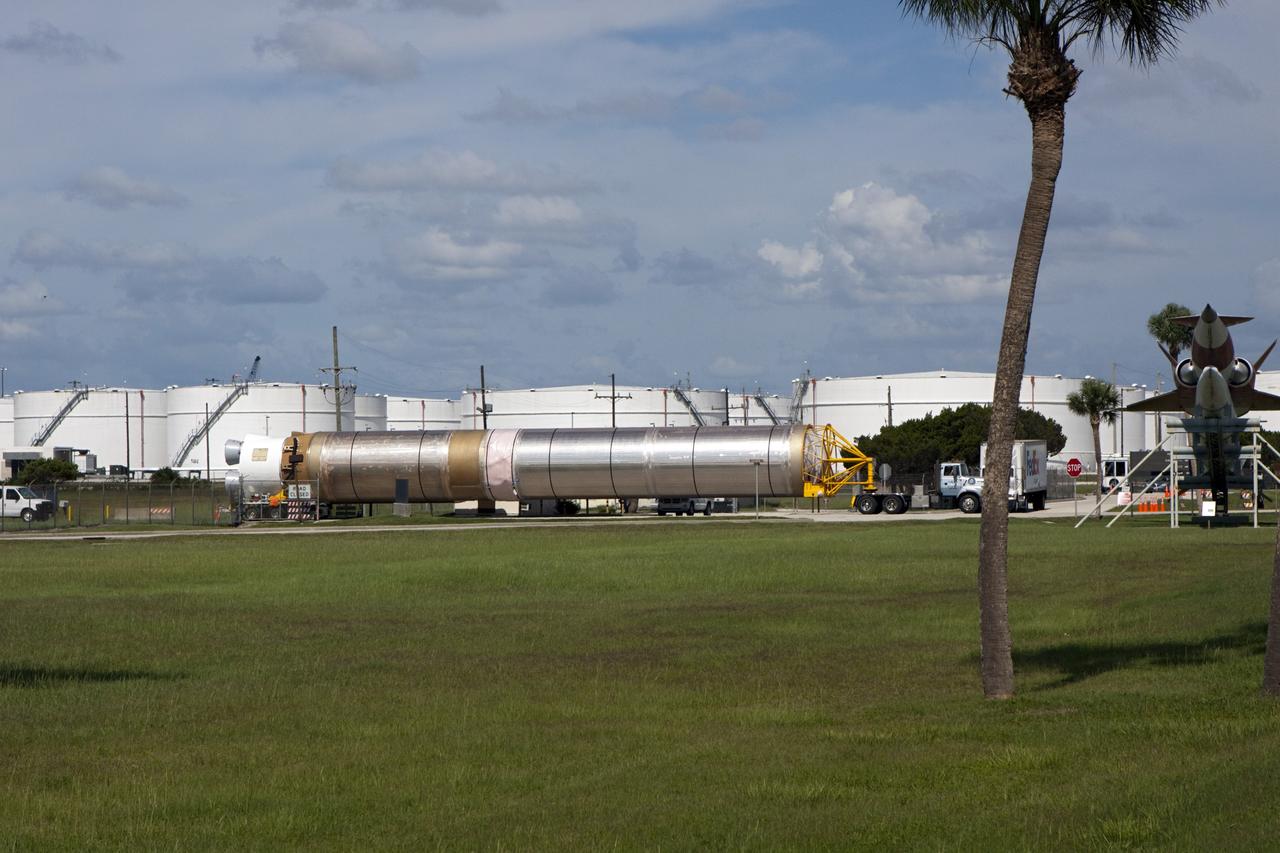
CAPE CANAVERAL, Fla. – A truck tows the United Launch Alliance Atlas V first stage booster through Cape Canaveral Air Force Station in Florida en route to the Atlas Spaceflight Operations Center, or ASOC. The booster, which was delivered by barge to nearby Port Canaveral, will be used to launch NASA's Radiation Belt Storm Probes mission. The Radiation Belt Storm Probes, or RBSP, mission will help us understand the sun’s influence on Earth and near-Earth space by studying the Earth’s radiation belts on various scales of space and time. For more information, visit http://www.nasa.gov/rbsp. Photo credit: NASA/Jim Grossmann
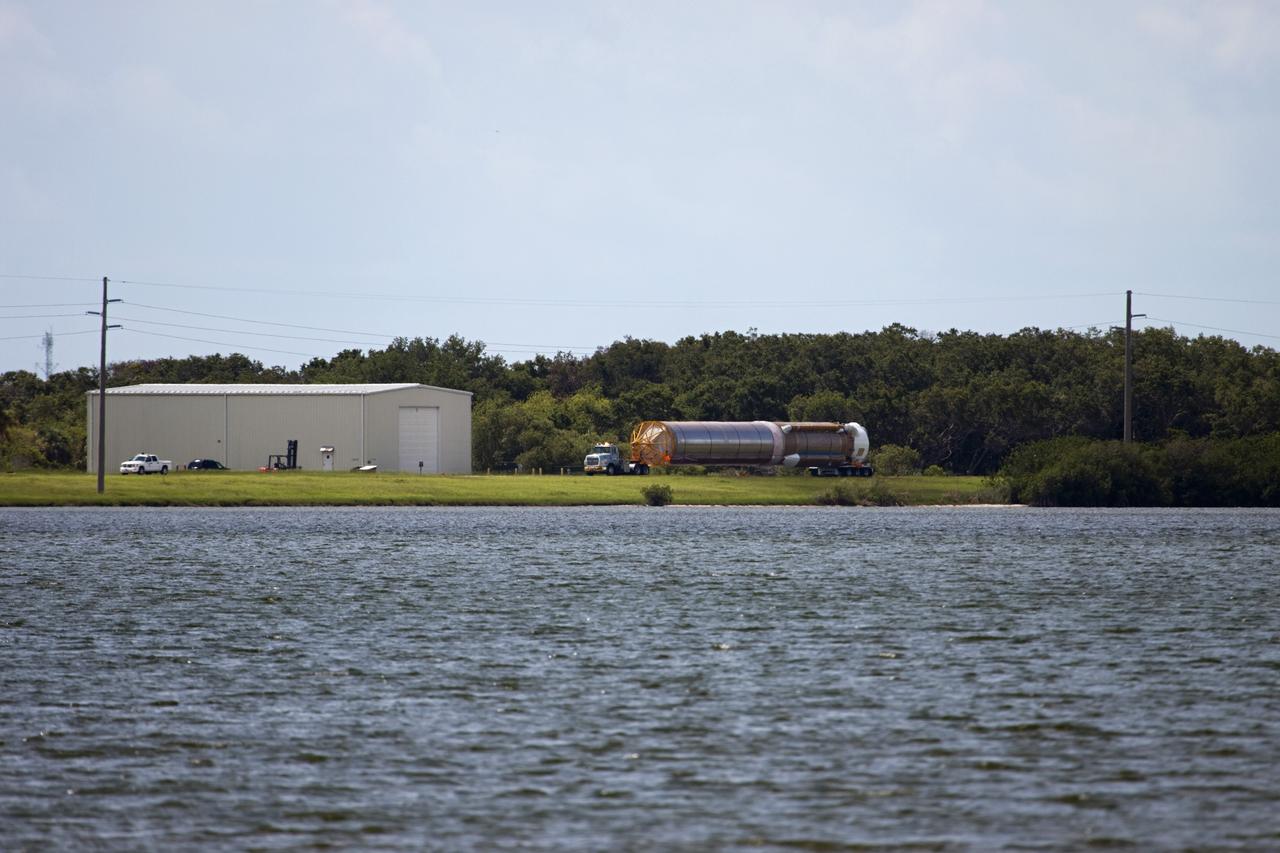
CAPE CANAVERAL, Fla. – The United Launch Alliance Atlas V first stage booster for NASA's Radiation Belt Storm Probes mission travels through Cape Canaveral Air Force Station in Florida en route to the Atlas Spaceflight Operations Center, or ASOC. The Radiation Belt Storm Probes, or RBSP, mission will help us understand the sun’s influence on Earth and near-Earth space by studying the Earth’s radiation belts on various scales of space and time. For more information, visit http://www.nasa.gov/rbsp. Photo credit: NASA/Jim Grossmann

CAPE CANAVERAL, Fla. – A truck tows the United Launch Alliance Atlas V first stage booster through Cape Canaveral Air Force Station in Florida en route to the Atlas Spaceflight Operations Center, or ASOC. The booster, which was delivered by barge to nearby Port Canaveral, will be used to launch NASA's Radiation Belt Storm Probes mission. The Radiation Belt Storm Probes, or RBSP, mission will help us understand the sun’s influence on Earth and near-Earth space by studying the Earth’s radiation belts on various scales of space and time. For more information, visit http://www.nasa.gov/rbsp. Photo credit: NASA/Jim Grossmann
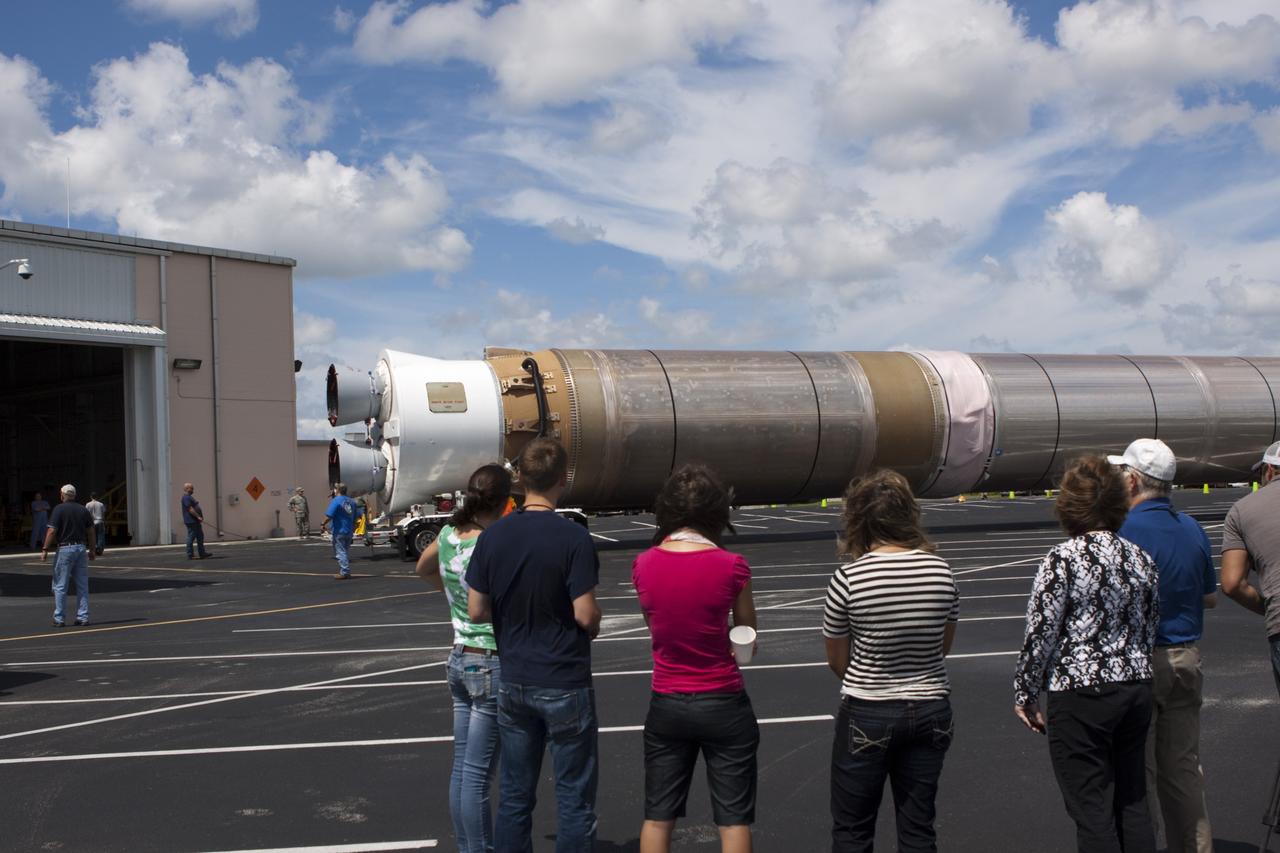
CAPE CANAVERAL, Fla. – Employees watch as the United Launch Alliance Atlas V first stage booster for NASA's Radiation Belt Storm Probes mission arrives at the Atlas Spaceflight Operations Center, or ASOC, at Cape Canaveral Air Force Station in Florida. The Radiation Belt Storm Probes, or RBSP, mission will help us understand the sun’s influence on Earth and near-Earth space by studying the Earth’s radiation belts on various scales of space and time. For more information, visit http://www.nasa.gov/rbsp. Photo credit: NASA/Jim Grossmann
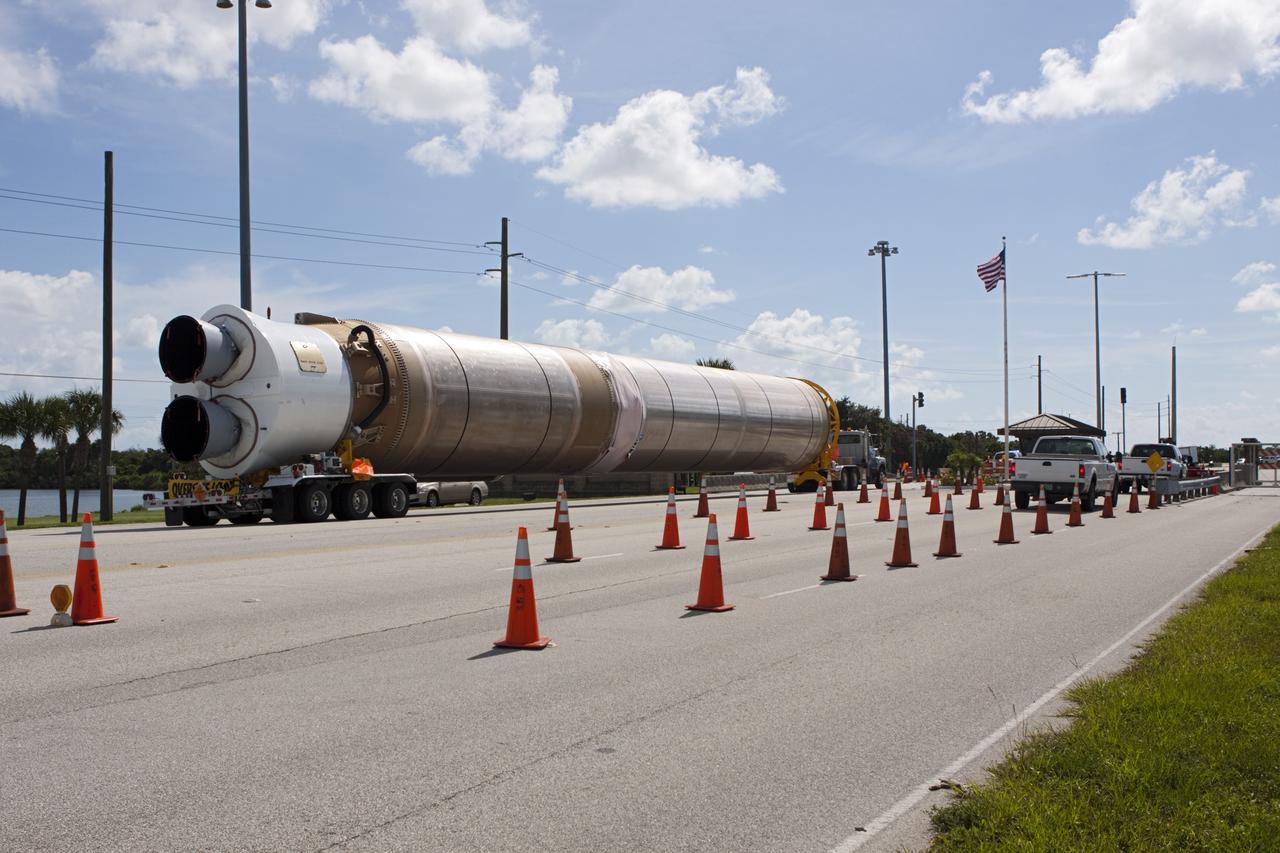
CAPE CANAVERAL, Fla. – The United Launch Alliance Atlas V first stage booster for NASA's Radiation Belt Storm Probes mission passes the secure gate at Cape Canaveral Air Force Station in Florida en route to the Atlas Spaceflight Operations Center, or ASOC. The Radiation Belt Storm Probes, or RBSP, mission will help us understand the sun’s influence on Earth and near-Earth space by studying the Earth’s radiation belts on various scales of space and time. For more information, visit http://www.nasa.gov/rbsp. Photo credit: NASA/Jim Grossmann
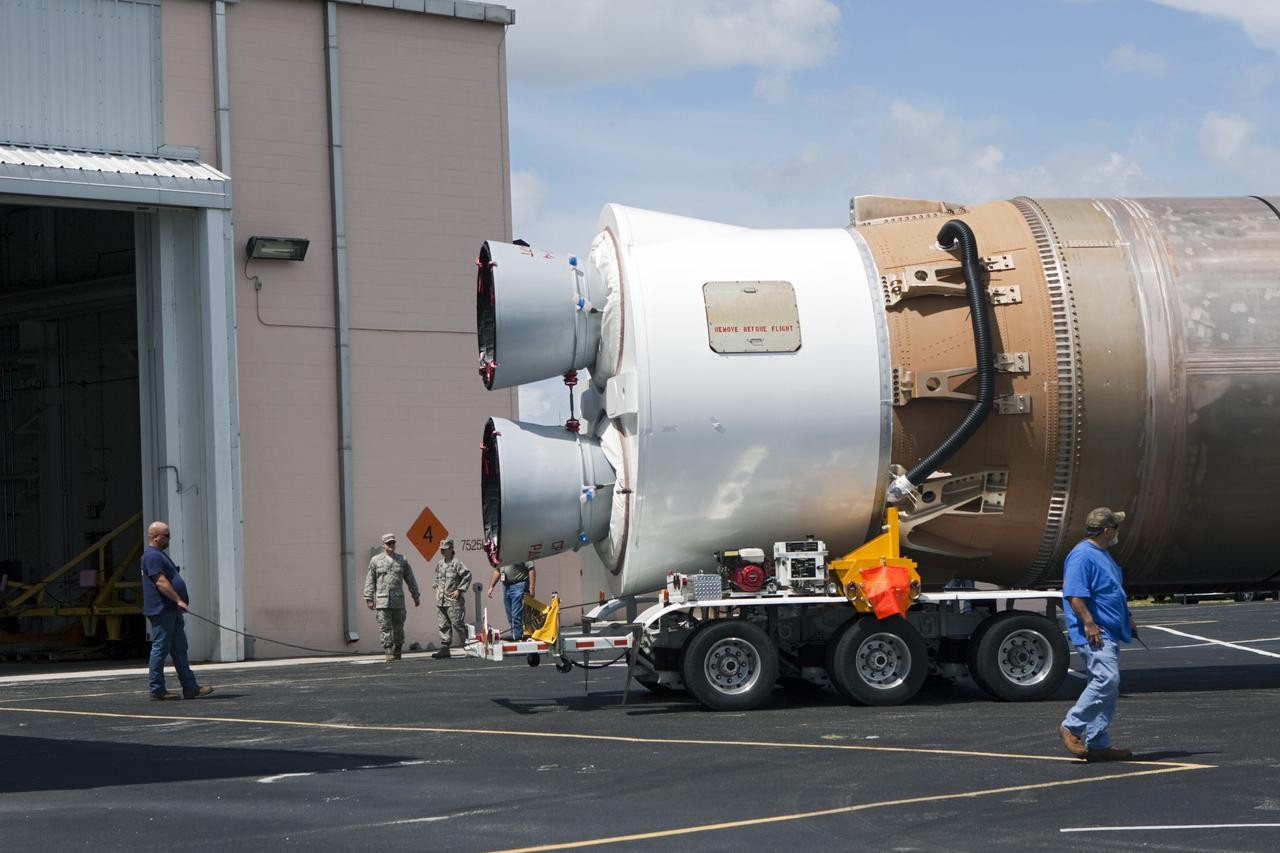
CAPE CANAVERAL, Fla. – At Cape Canaveral Air Force Station in Florida, employees prepare to move the United Launch Alliance Atlas V first stage booster into the Atlas Spaceflight Operations Center, or ASOC. The booster, which was delivered by barge to nearby Port Canaveral, will be used to launch NASA's Radiation Belt Storm Probes mission. The Radiation Belt Storm Probes, or RBSP, mission will help us understand the sun’s influence on Earth and near-Earth space by studying the Earth’s radiation belts on various scales of space and time. For more information, visit http://www.nasa.gov/rbsp. Photo credit: NASA/Jim Grossmann
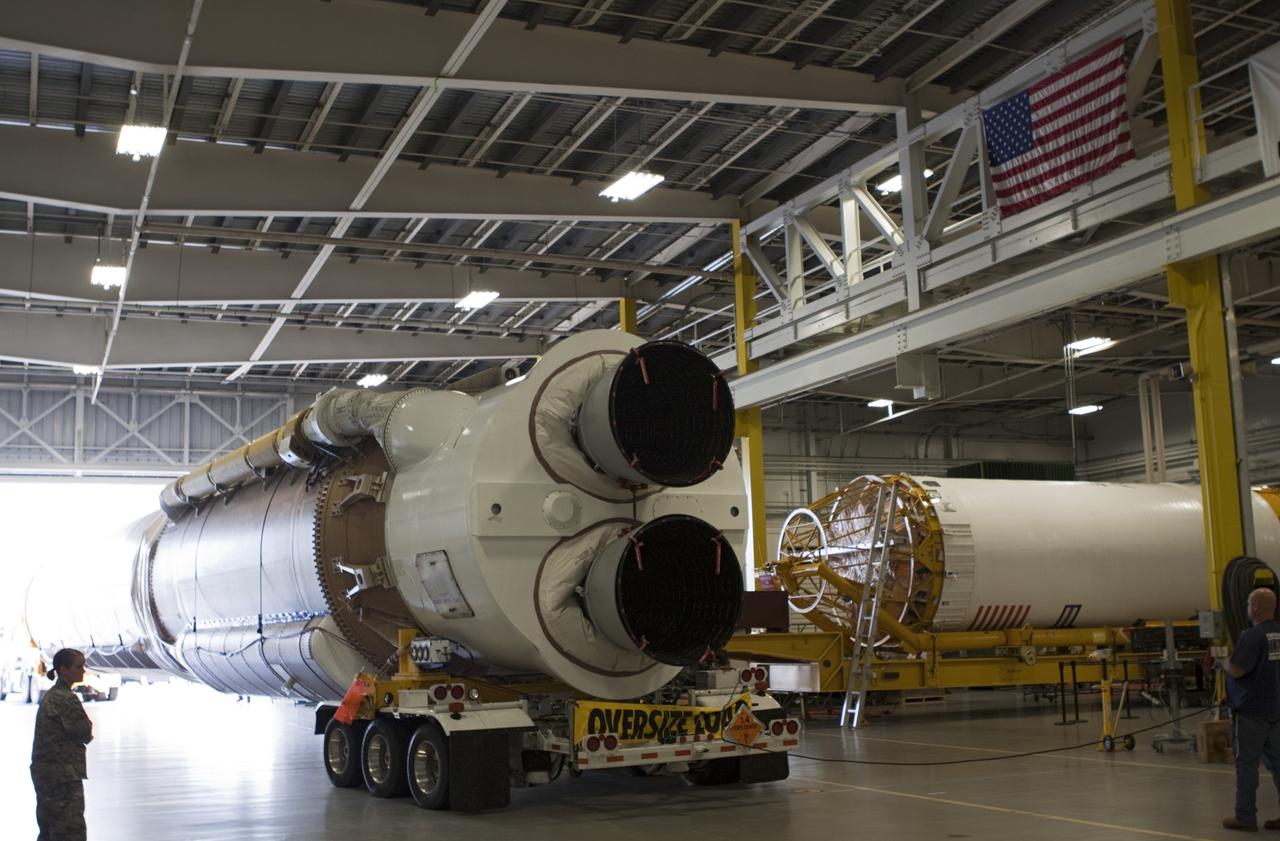
CAPE CANAVERAL, Fla. – The United Launch Alliance Atlas V first stage booster for NASA's Radiation Belt Storm Probes enters the Atlas Spaceflight Operations Center, or ASOC, at Cape Canaveral Air Force Station in Florida. At right is the rocket's Centaur upper stage. The Radiation Belt Storm Probes, or RBSP, mission will help us understand the sun’s influence on Earth and near-Earth space by studying the Earth’s radiation belts on various scales of space and time. For more information, visit http://www.nasa.gov/rbsp. Photo credit: NASA/Jim Grossmann
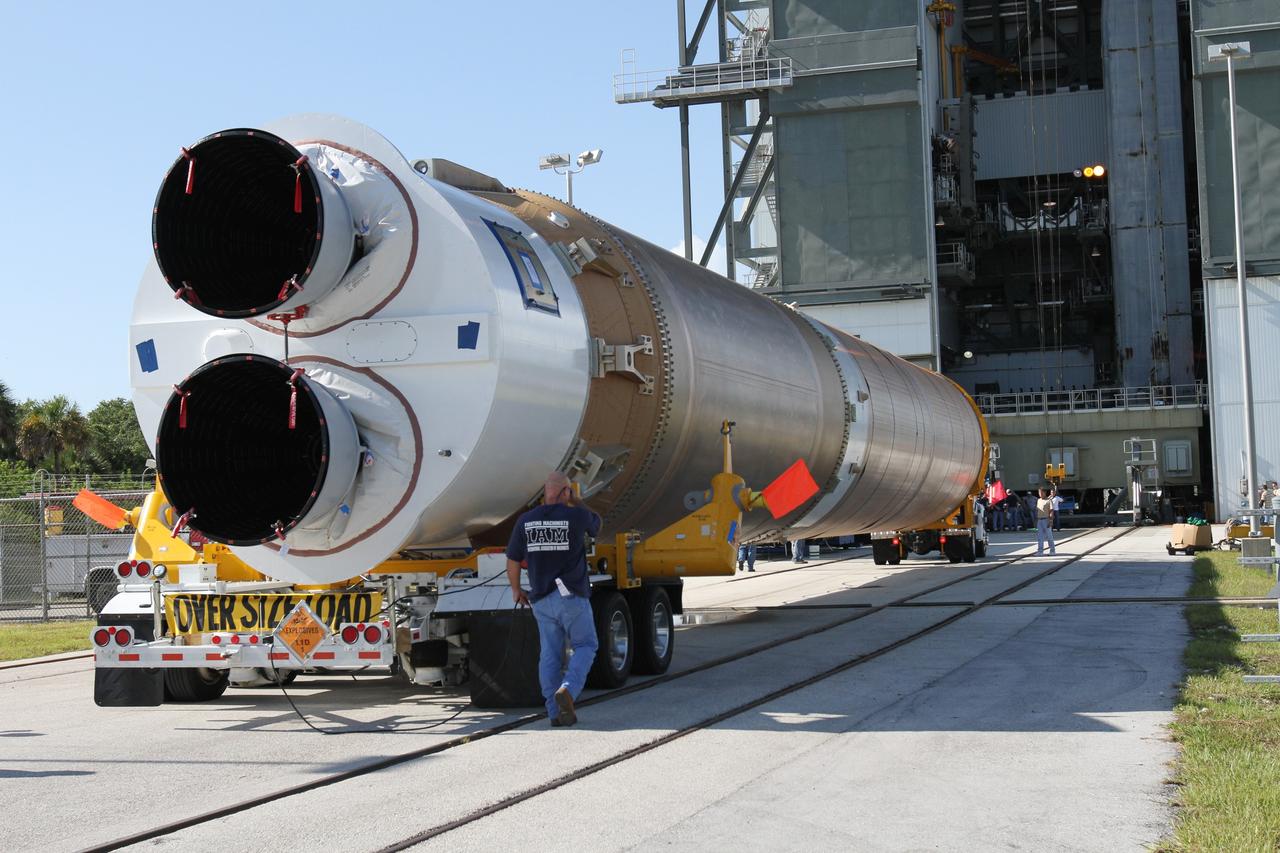
CAPE CANAVERAL, Fla. - The first stage of the United Launch Alliance Atlas V rocket arrives at Launch Complex 41 at Cape Canaveral Air Force Station in Florida for the Radiation Belt Storm Probes, or RBSP, mission. NASA’s RBSP mission will help us understand the sun’s influence on Earth and near-Earth space by studying the Earth’s radiation belts on various scales of space and time. RBSP will begin its mission of exploration of Earth’s Van Allen radiation belts and the extremes of space weather after its launch aboard an Atlas V rocket. Launch is targeted for Aug. 23. For more information, visit http://www.nasa.gov/rbsp. Photo credit: NASA/Cory Huston
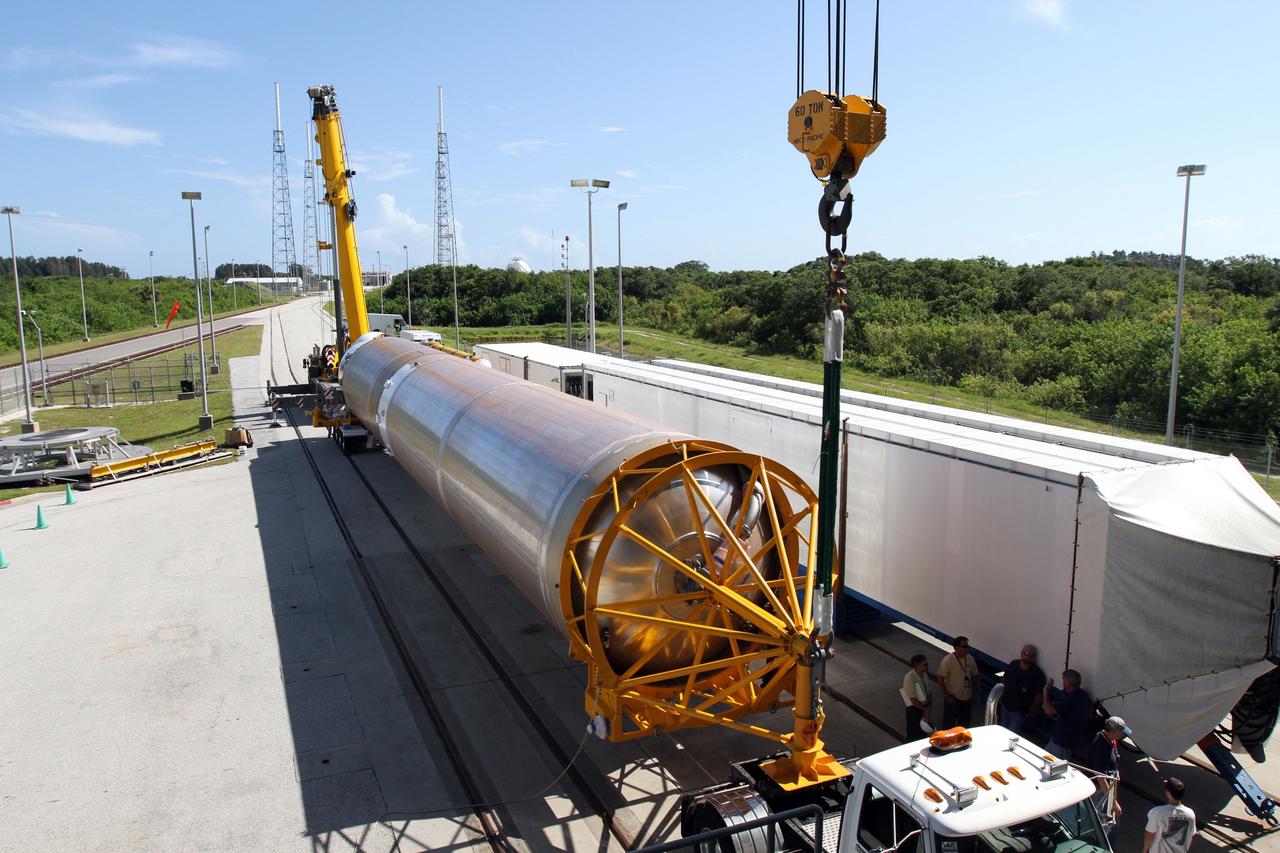
CAPE CANAVERAL, Fla. - The first stage of the United Launch Alliance Atlas V rocket arrives at Launch Complex 41 at Cape Canaveral Air Force Station in Florida for the Radiation Belt Storm Probes, or RBSP, mission. NASA’s RBSP mission will help us understand the sun’s influence on Earth and near-Earth space by studying the Earth’s radiation belts on various scales of space and time. RBSP will begin its mission of exploration of Earth’s Van Allen radiation belts and the extremes of space weather after its launch aboard an Atlas V rocket. Launch is targeted for Aug. 23. For more information, visit http://www.nasa.gov/rbsp. Photo credit: NASA/Cory Huston

CAPE CANAVERAL, Fla. -The first stage of the United Launch Alliance Atlas V rocket arrives at Launch Complex 41 at Cape Canaveral Air Force Station in Florida for the Radiation Belt Storm Probes, or RBSP, mission. NASA’s RBSP mission will help us understand the sun’s influence on Earth and near-Earth space by studying the Earth’s radiation belts on various scales of space and time. RBSP will begin its mission of exploration of Earth’s Van Allen radiation belts and the extremes of space weather after its launch aboard an Atlas V rocket. Launch is targeted for Aug. 23. For more information, visit http://www.nasa.gov/rbsp. Photo credit: NASA/Cory Huston
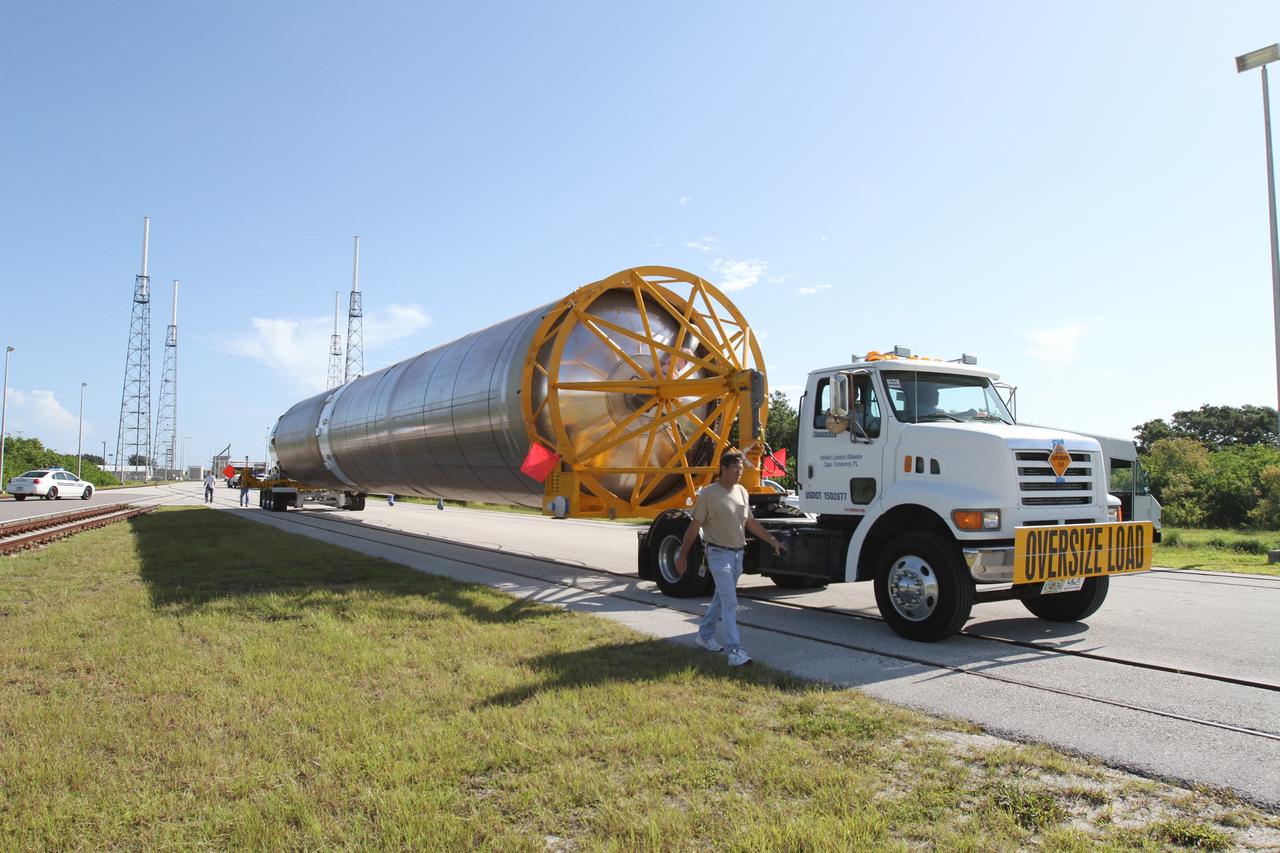
CAPE CANAVERAL, Fla. - The first stage of the United Launch Alliance Atlas V rocket is being transported to Launch Complex 41 at Cape Canaveral Air Force Station in Florida for the Radiation Belt Storm Probes, or RBSP, mission. NASA’s RBSP mission will help us understand the sun’s influence on Earth and near-Earth space by studying the Earth’s radiation belts on various scales of space and time. RBSP will begin its mission of exploration of Earth’s Van Allen radiation belts and the extremes of space weather after its launch aboard an Atlas V rocket. Launch is targeted for Aug. 23. For more information, visit http://www.nasa.gov/rbsp. Photo credit: NASA/Cory Huston
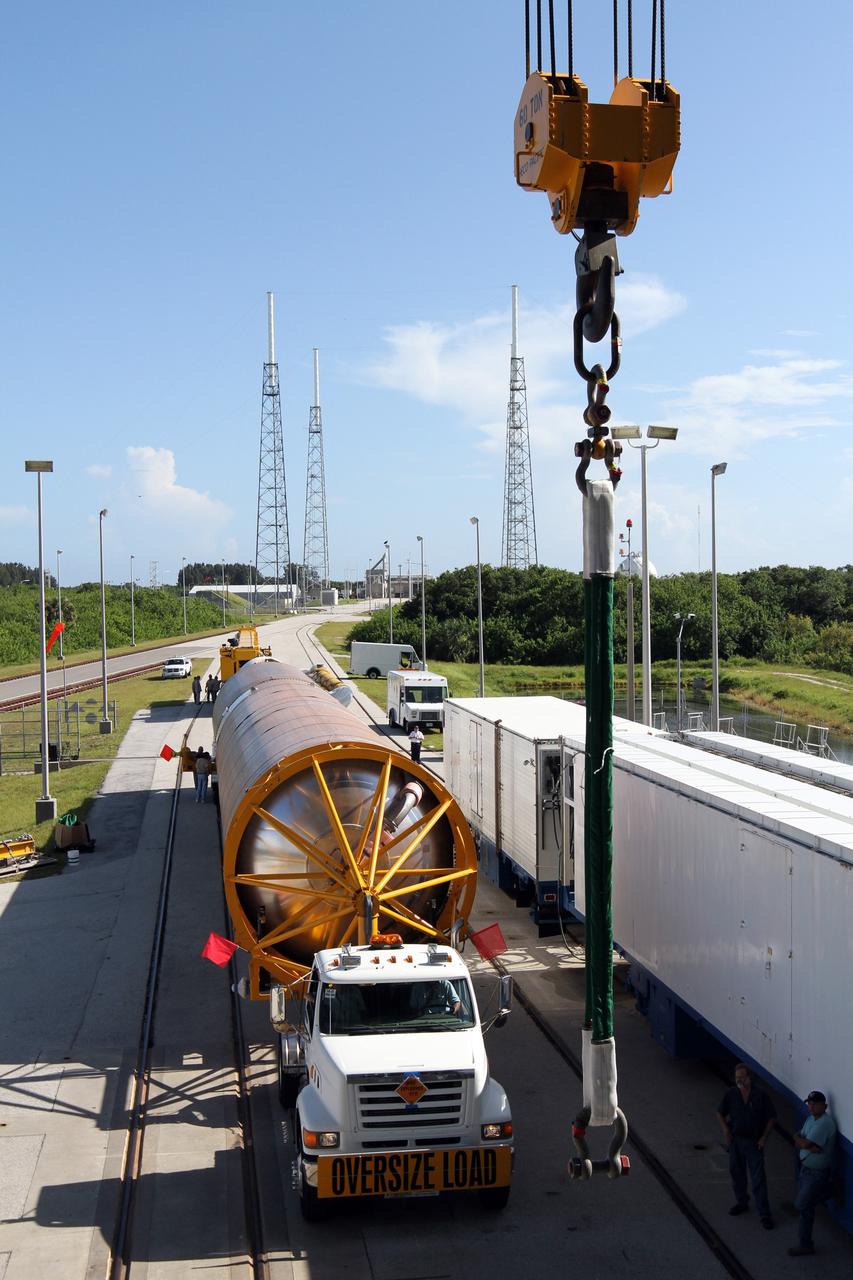
CAPE CANAVERAL, Fla. - The first stage of the United Launch Alliance Atlas V rocket arrives at Launch Complex 41 at Cape Canaveral Air Force Station in Florida for the Radiation Belt Storm Probes, or RBSP, mission. NASA’s RBSP mission will help us understand the sun’s influence on Earth and near-Earth space by studying the Earth’s radiation belts on various scales of space and time. RBSP will begin its mission of exploration of Earth’s Van Allen radiation belts and the extremes of space weather after its launch aboard an Atlas V rocket. Launch is targeted for Aug. 23. For more information, visit http://www.nasa.gov/rbsp. Photo credit: NASA/Cory Huston

CAPE CANAVERAL, Fla. - The first stage of the United Launch Alliance Atlas V rocket arrives at Launch Complex 41 at Cape Canaveral Air Force Station in Florida for the Radiation Belt Storm Probes, or RBSP, mission. NASA’s RBSP mission will help us understand the sun’s influence on Earth and near-Earth space by studying the Earth’s radiation belts on various scales of space and time. RBSP will begin its mission of exploration of Earth’s Van Allen radiation belts and the extremes of space weather after its launch aboard an Atlas V rocket. Launch is targeted for Aug. 23. For more information, visit http://www.nasa.gov/rbsp. Photo credit: NASA/Cory Huston
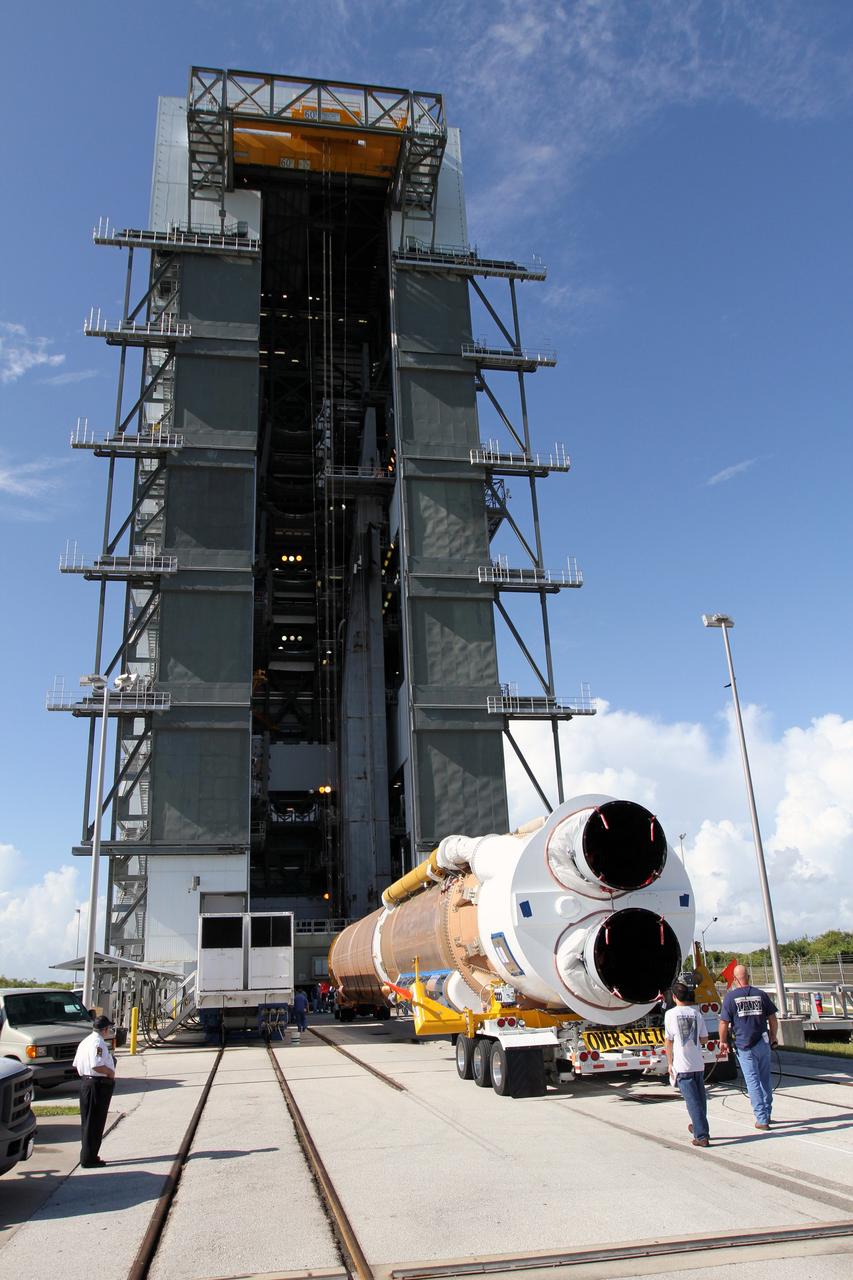
CAPE CANAVERAL, Fla. - The first stage of the United Launch Alliance Atlas V rocket arrives at Launch Complex 41 at Cape Canaveral Air Force Station in Florida for the Radiation Belt Storm Probes, or RBSP, mission. NASA’s RBSP mission will help us understand the sun’s influence on Earth and near-Earth space by studying the Earth’s radiation belts on various scales of space and time. RBSP will begin its mission of exploration of Earth’s Van Allen radiation belts and the extremes of space weather after its launch aboard an Atlas V rocket. Launch is targeted for Aug. 23. For more information, visit http://www.nasa.gov/rbsp. Photo credit: NASA/Cory Huston
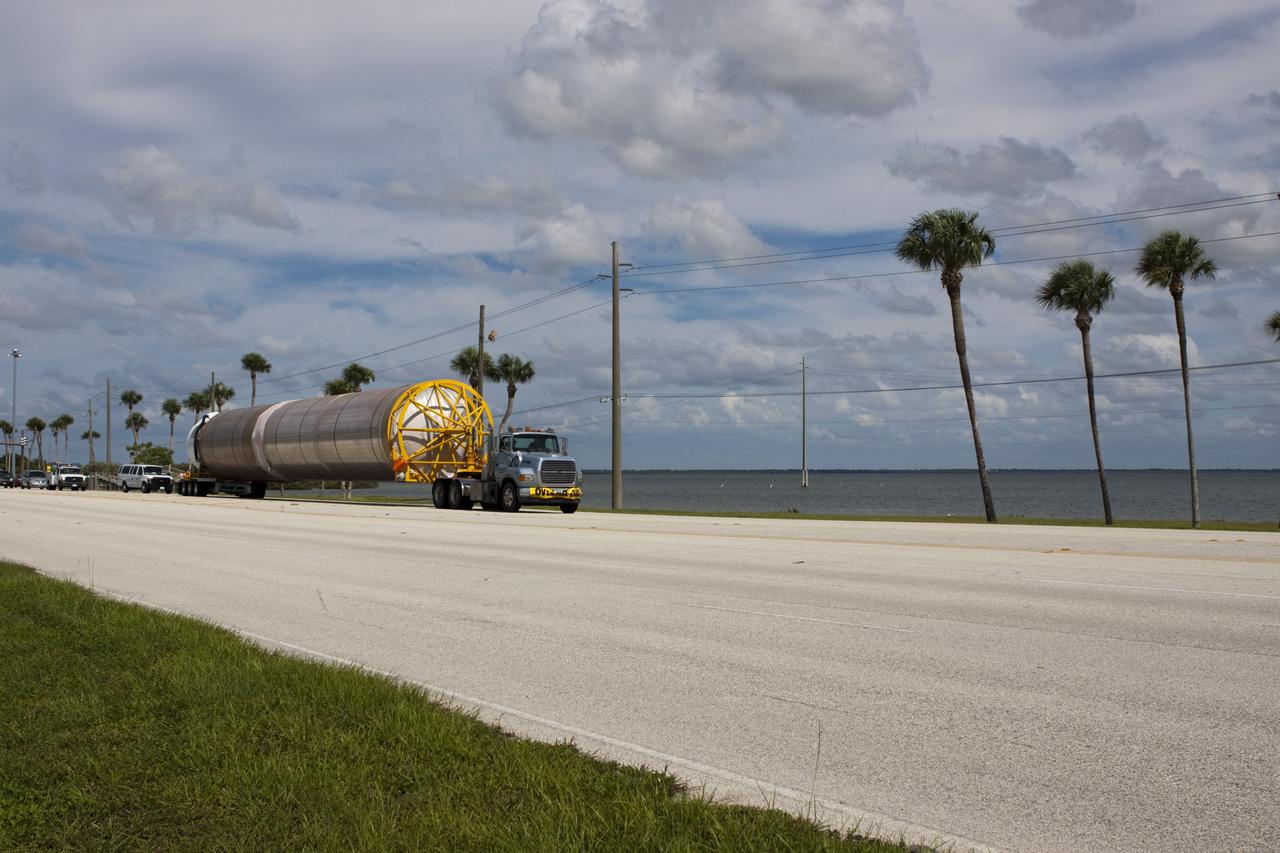
CAPE CANAVERAL, Fla. – Framed by palm trees and backdropped by the Banana River, the United Launch Alliance Atlas V first stage booster for NASA's Radiation Belt Storm Probes mission arrives at Cape Canaveral Air Force Station in Florida. The booster was delivered by barge to nearby Port Canaveral. The Radiation Belt Storm Probes, or RBSP, mission will help us understand the sun’s influence on Earth and near-Earth space by studying the Earth’s radiation belts on various scales of space and time. For more information, visit http://www.nasa.gov/rbsp. Photo credit: NASA/Jim Grossmann
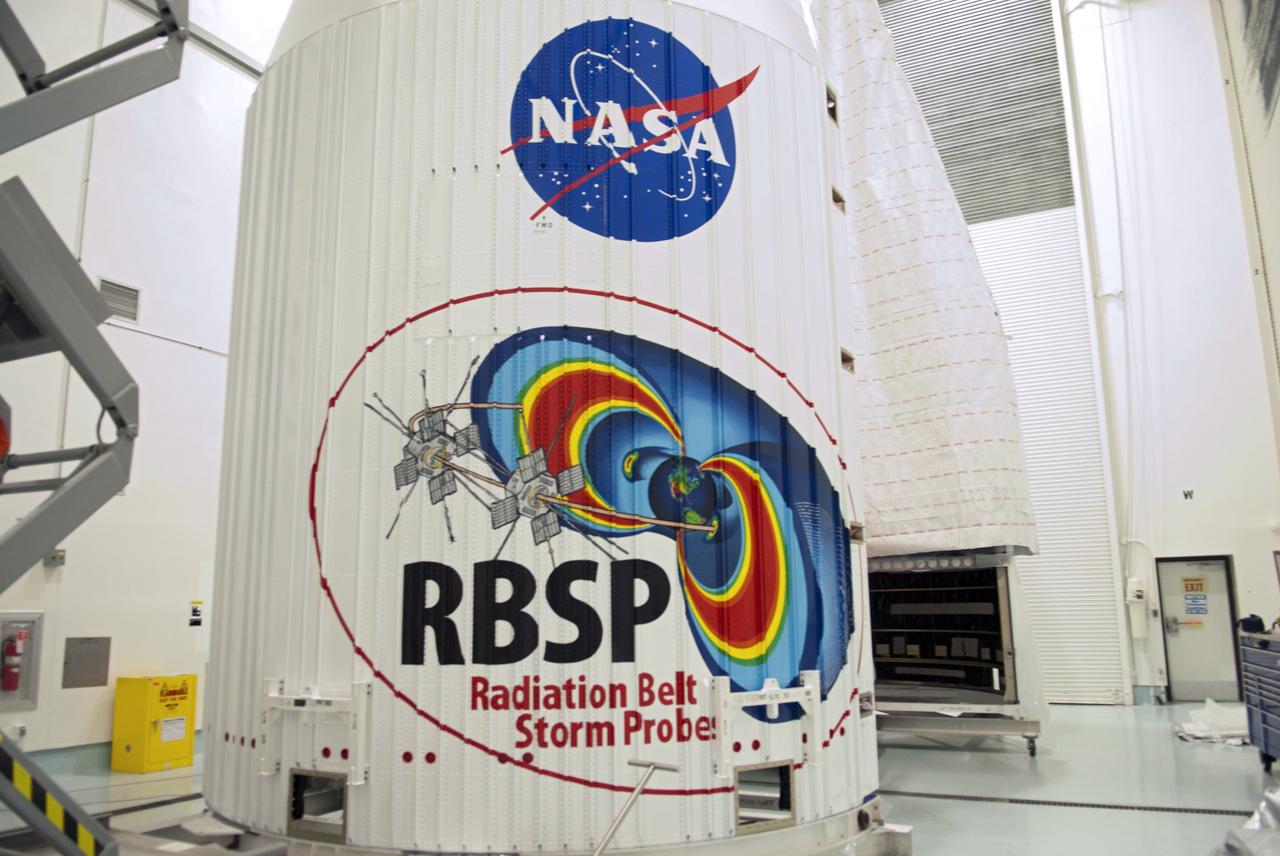
CAPE CANAVERAL, Fla. - Inside the Astrotech payload processing facility near NASA’s Kennedy Space Center in Florida, the nose cone fairing for the Radiation Belt Storm Probes, or RBSP, spacecraft includes an artistic depiction of the probe’s mission. The nose faring will house and protect the RBSP during liftoff aboard an Atlas V rocket. NASA’s RBSP mission will help us understand the sun’s influence on Earth and near-Earth space by studying the Earth’s radiation belts on various scales of space and time. RBSP will begin its mission of exploration of Earth’s Van Allen radiation belts and the extremes of space weather after its liftoff aboard a United Launch Alliance Atlas V from Space Launch Complex 41 at Cape Canaveral Air Force Station, Fla. Liftoff is targeted for Aug. 23, 2012. For more information, visit http://www.nasa.gov/rbsp. Photo credit: NASA/Charisse Nahser
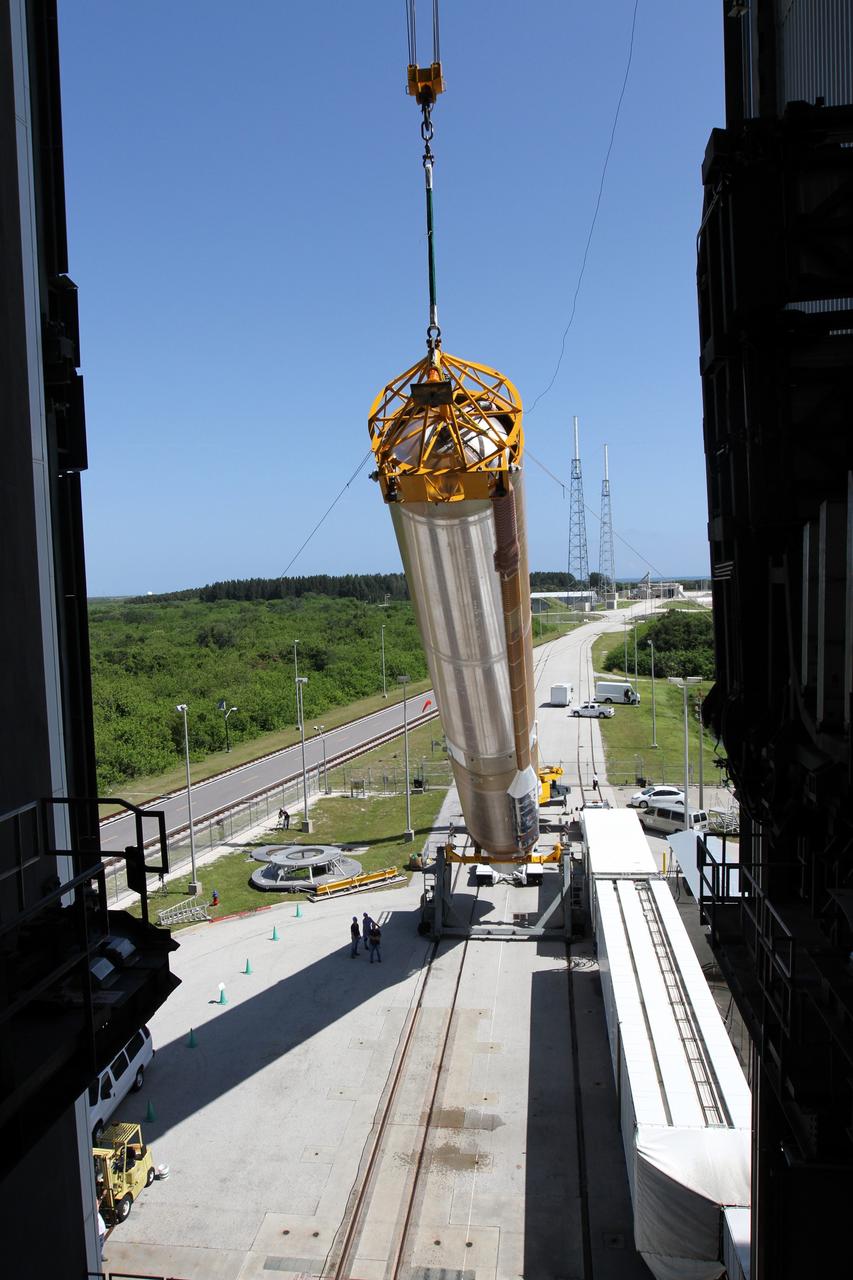
CAPE CANAVERAL, Fla. - At Launch Complex 41 at Cape Canaveral Air Force Station in Florida, a large crane lifts the first stage of the United Launch Alliance Atlas V rocket into the vertical position. The Atlas V is being prepared for the Radiation Belt Storm Probes, or RBSP, mission. NASA’s RBSP mission will help us understand the sun’s influence on Earth and near-Earth space by studying the Earth’s radiation belts on various scales of space and time. RBSP will begin its mission of exploration of Earth’s Van Allen radiation belts and the extremes of space weather after its launch aboard an Atlas V rocket. Launch is targeted for Aug. 23. For more information, visit http://www.nasa.gov/rbsp. Photo credit: NASA/Cory Huston
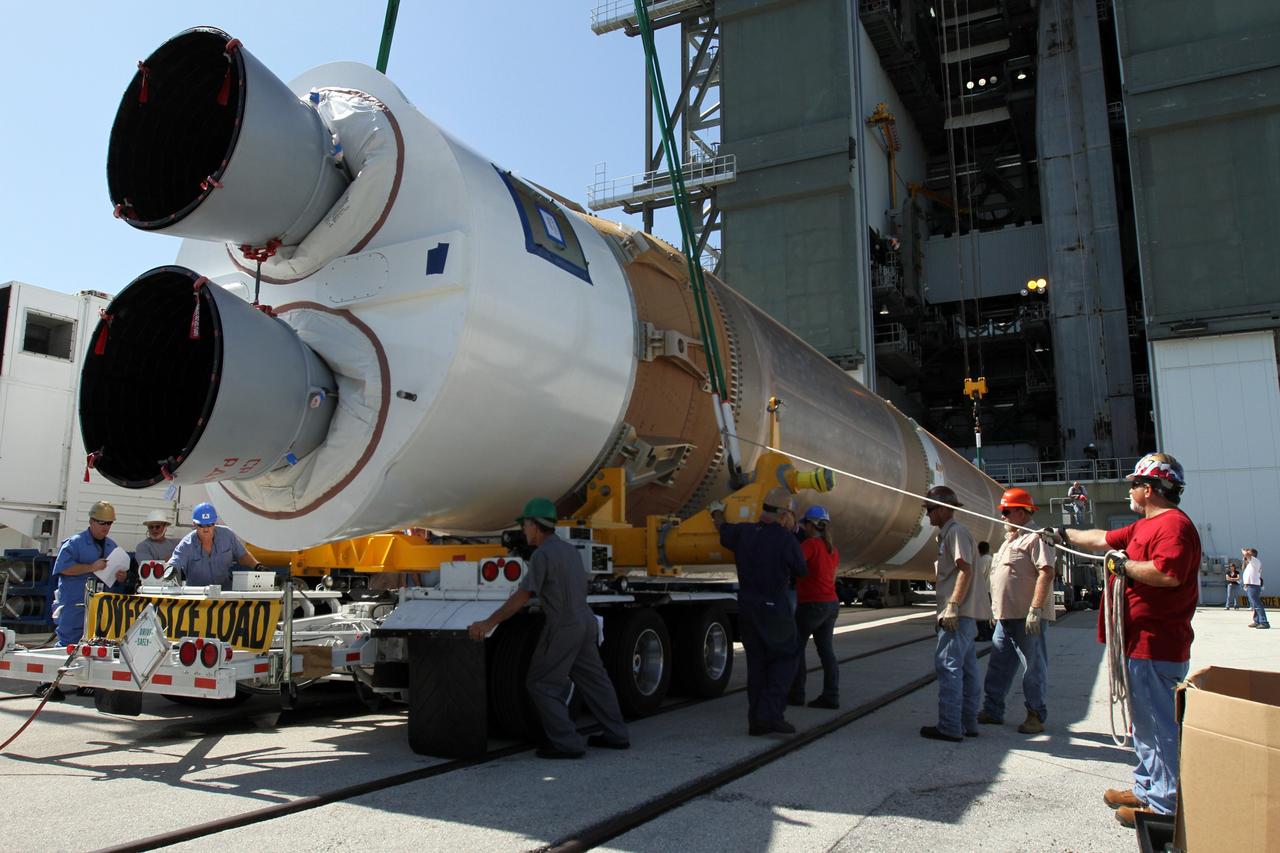
CAPE CANAVERAL, Fla. - At Launch Complex 41 at Cape Canaveral Air Force Station in Florida, preparations are underway to lift the first stage of the United Launch Alliance Atlas V rocket into the vertical position. The Atlas V is being prepared for the Radiation Belt Storm Probes, or RBSP, mission. NASA’s RBSP mission will help us understand the sun’s influence on Earth and near-Earth space by studying the Earth’s radiation belts on various scales of space and time. RBSP will begin its mission of exploration of Earth’s Van Allen radiation belts and the extremes of space weather after its launch aboard an Atlas V rocket. Launch is targeted for Aug. 23. For more information, visit http://www.nasa.gov/rbsp. Photo credit: NASA/Cory Huston
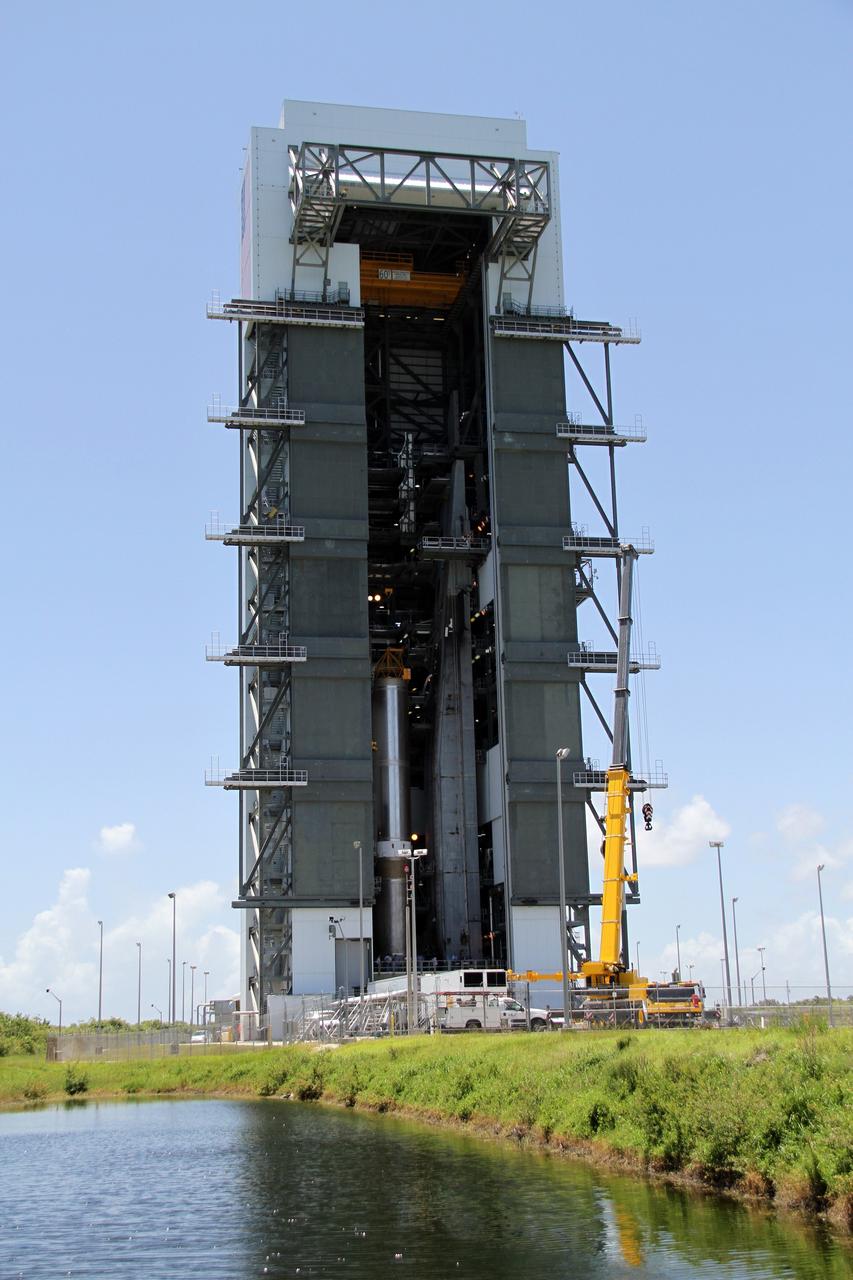
CAPE CANAVERAL, Fla. - At Launch Complex 41 at Cape Canaveral Air Force Station in Florida, the first stage of the United Launch Alliance Atlas V rocket is in the Vertical Integration Facility. The Atlas V is being prepared for the Radiation Belt Storm Probes, or RBSP, mission. NASA’s RBSP mission will help us understand the sun’s influence on Earth and near-Earth space by studying the Earth’s radiation belts on various scales of space and time. RBSP will begin its mission of exploration of Earth’s Van Allen radiation belts and the extremes of space weather after its launch aboard an Atlas V rocket. Launch is targeted for Aug. 23. For more information, visit http://www.nasa.gov/rbsp. Photo credit: NASA/Cory Huston
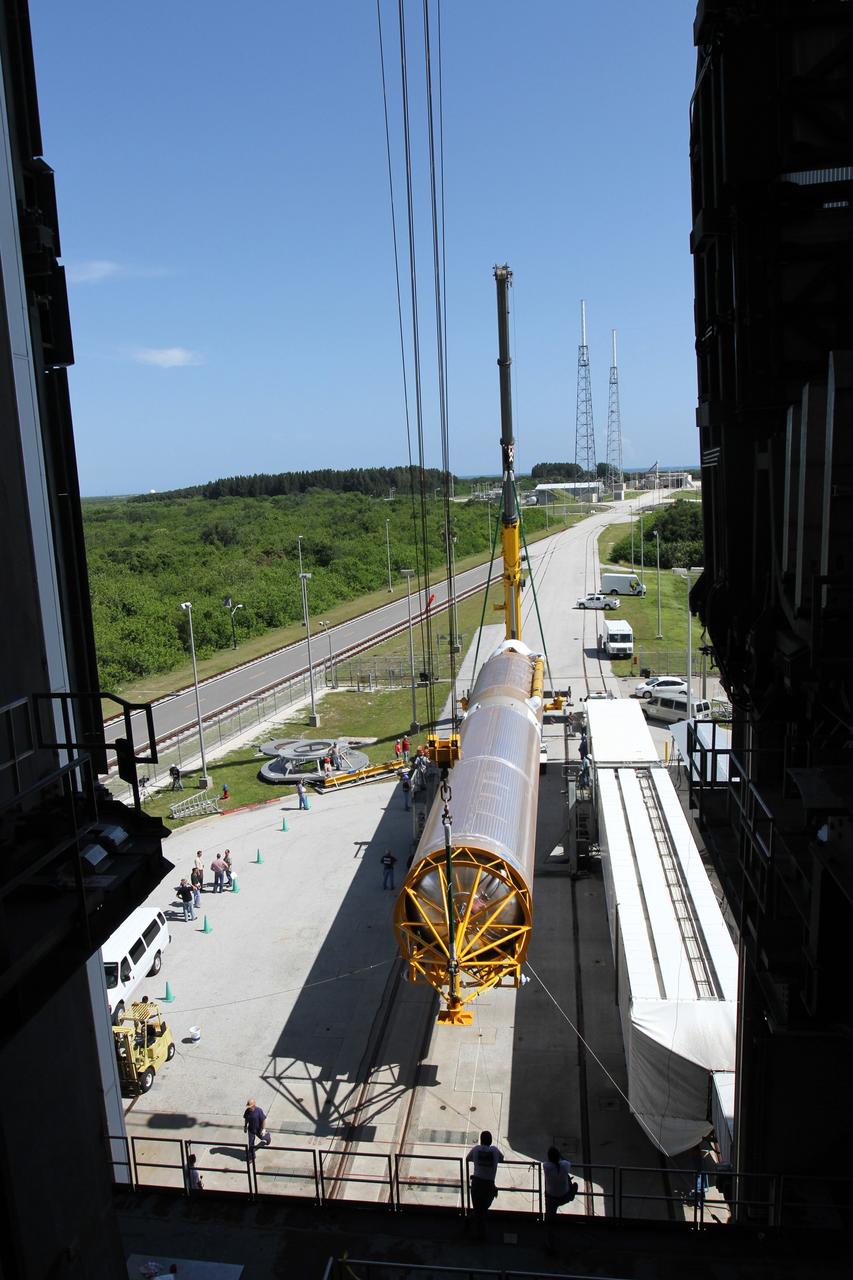
CAPE CANAVERAL, Fla. - At Launch Complex 41 at Cape Canaveral Air Force Station in Florida, a large crane begins to lift the first stage of the United Launch Alliance Atlas V rocket into the vertical position. The Atlas V is being prepared for the Radiation Belt Storm Probes, or RBSP, mission. NASA’s RBSP mission will help us understand the sun’s influence on Earth and near-Earth space by studying the Earth’s radiation belts on various scales of space and time. RBSP will begin its mission of exploration of Earth’s Van Allen radiation belts and the extremes of space weather after its launch aboard an Atlas V rocket. Launch is targeted for Aug. 23. For more information, visit http://www.nasa.gov/rbsp. Photo credit: NASA/Cory Huston
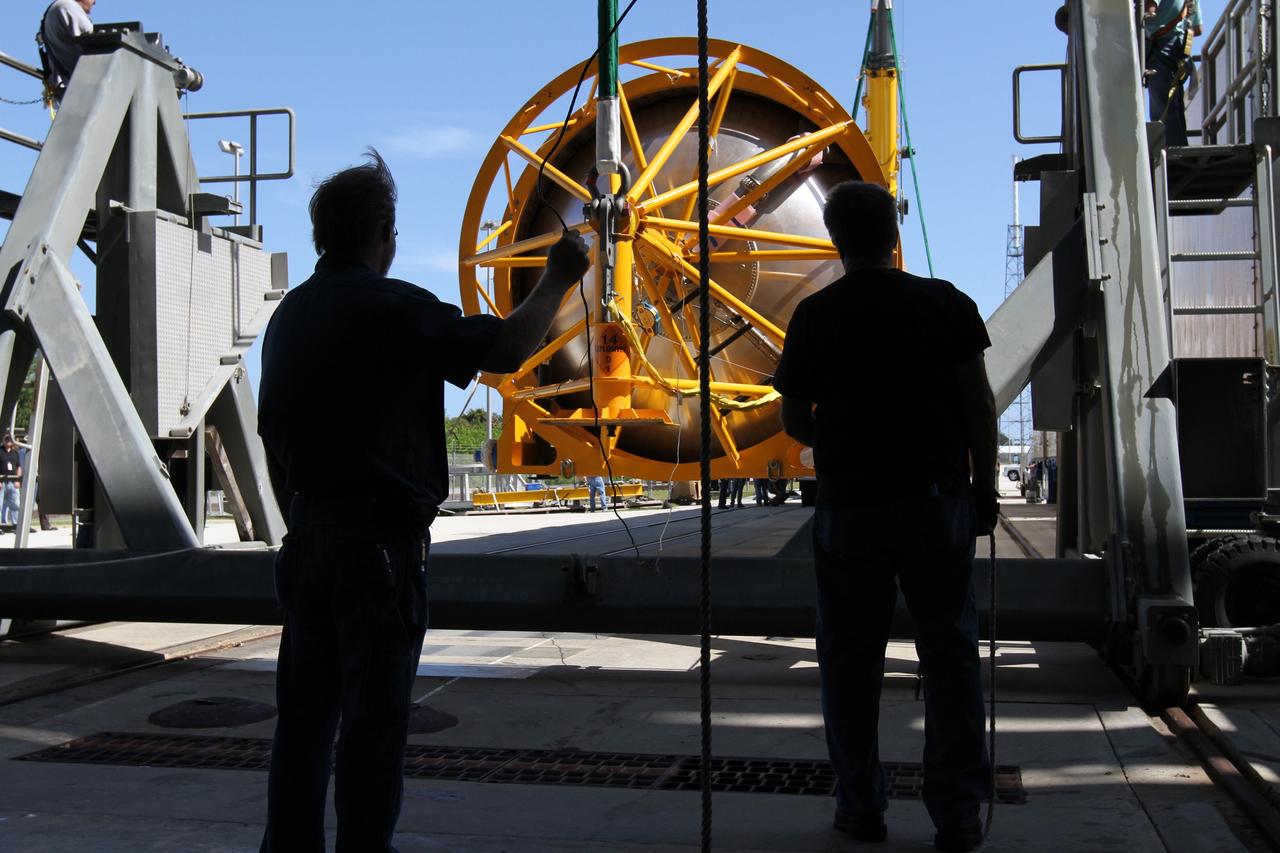
CAPE CANAVERAL, Fla. - At Launch Complex 41 at Cape Canaveral Air Force Station in Florida, preparations are underway to lift the first stage of the United Launch Alliance Atlas V rocket into the vertical position. The Atlas V is being prepared for the Radiation Belt Storm Probes, or RBSP, mission. NASA’s RBSP mission will help us understand the sun’s influence on Earth and near-Earth space by studying the Earth’s radiation belts on various scales of space and time. RBSP will begin its mission of exploration of Earth’s Van Allen radiation belts and the extremes of space weather after its launch aboard an Atlas V rocket. Launch is targeted for Aug. 23. For more information, visit http://www.nasa.gov/rbsp. Photo credit: NASA/Cory Huston
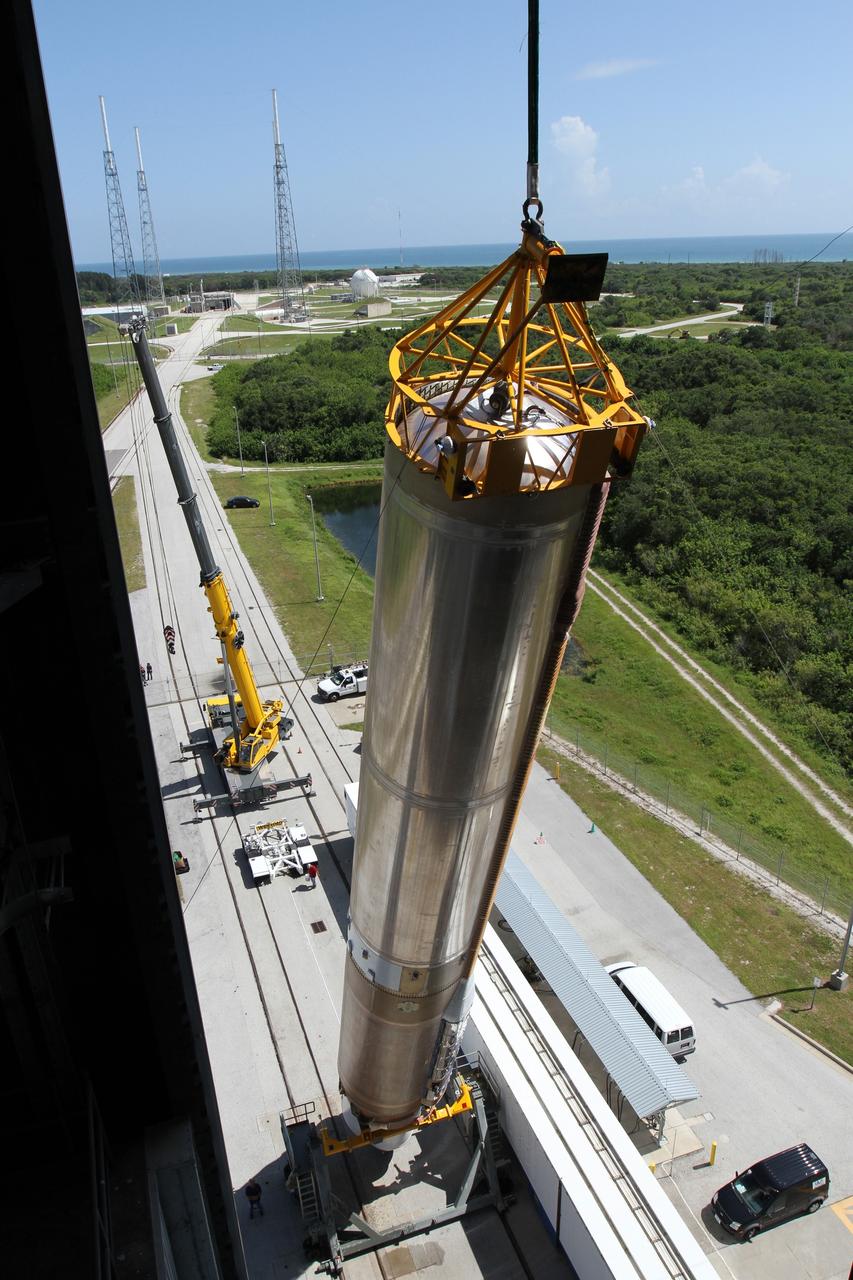
CAPE CANAVERAL, Fla. - At Launch Complex 41 at Cape Canaveral Air Force Station in Florida, a large crane lifts the first stage of the United Launch Alliance Atlas V rocket into the vertical position. The Atlas V is being prepared for the Radiation Belt Storm Probes, or RBSP, mission. NASA’s RBSP mission will help us understand the sun’s influence on Earth and near-Earth space by studying the Earth’s radiation belts on various scales of space and time. RBSP will begin its mission of exploration of Earth’s Van Allen radiation belts and the extremes of space weather after its launch aboard an Atlas V rocket. Launch is targeted for Aug. 23. For more information, visit http://www.nasa.gov/rbsp. Photo credit: NASA/Cory Huston
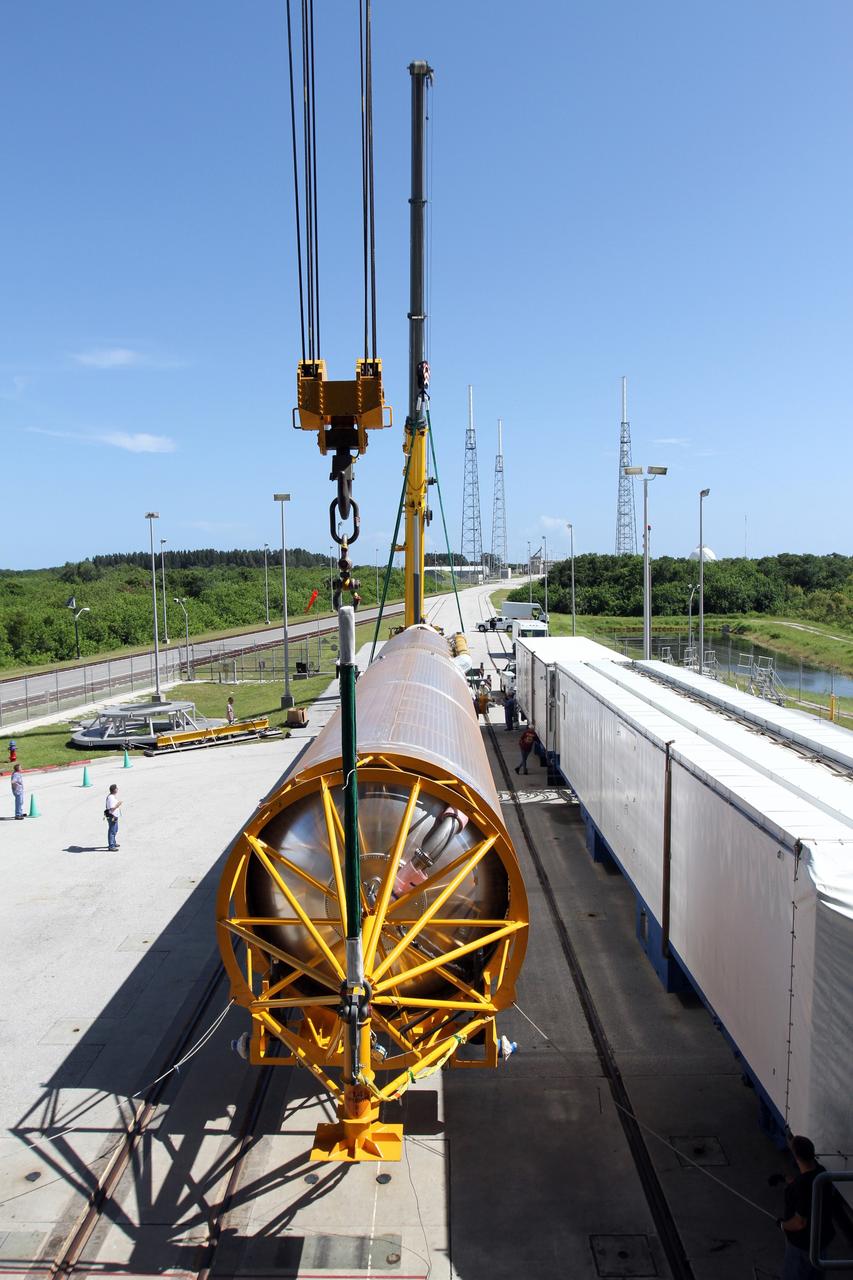
CAPE CANAVERAL, Fla. - At Launch Complex 41 at Cape Canaveral Air Force Station in Florida, preparations are underway to lift the first stage of the United Launch Alliance Atlas V rocket into the vertical position. The Atlas V is being prepared for the Radiation Belt Storm Probes, or RBSP, mission. NASA’s RBSP mission will help us understand the sun’s influence on Earth and near-Earth space by studying the Earth’s radiation belts on various scales of space and time. RBSP will begin its mission of exploration of Earth’s Van Allen radiation belts and the extremes of space weather after its launch aboard an Atlas V rocket. Launch is targeted for Aug. 23. For more information, visit http://www.nasa.gov/rbsp. Photo credit: NASA/Cory Huston
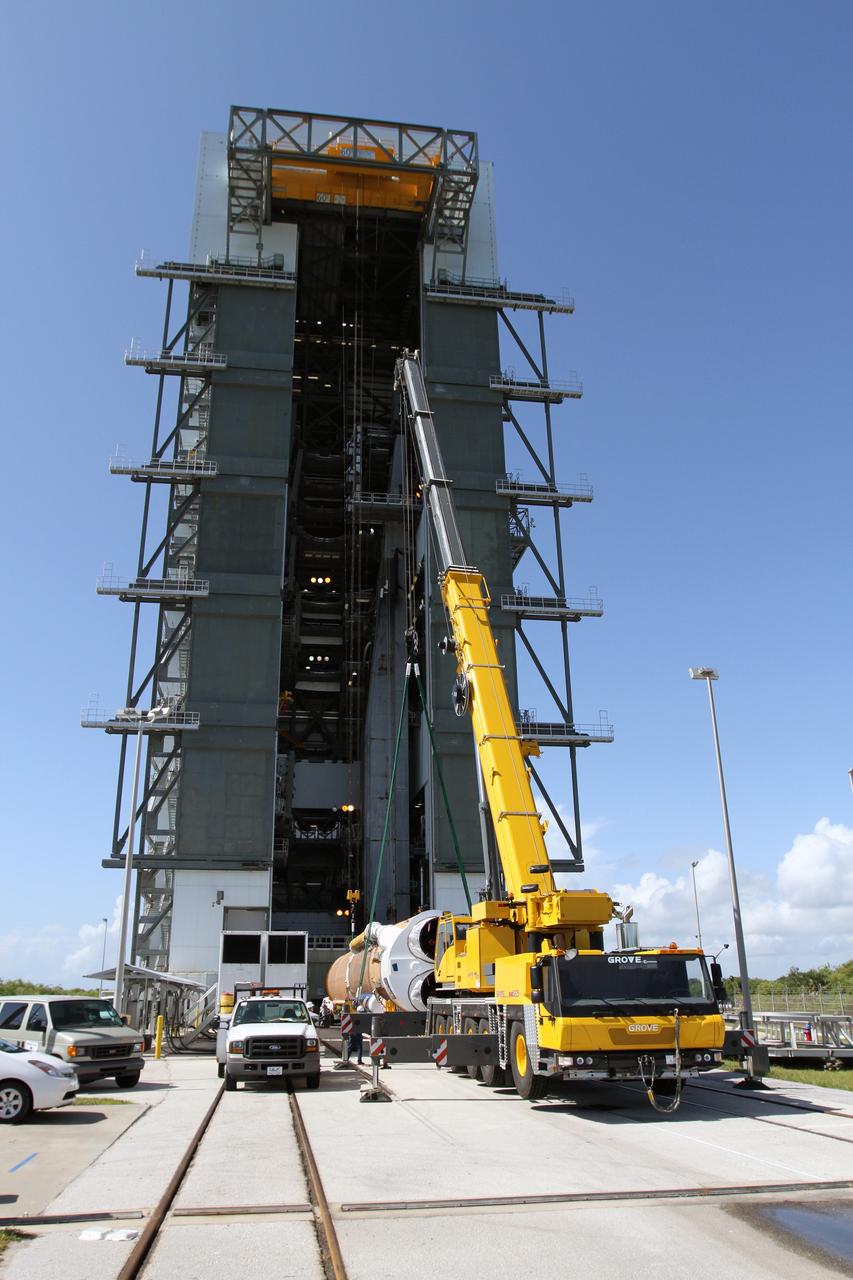
CAPE CANAVERAL, Fla. - At Launch Complex 41 at Cape Canaveral Air Force Station in Florida, preparations are underway to lift the first stage of the United Launch Alliance Atlas V rocket into the vertical position. The Atlas V is being prepared for the Radiation Belt Storm Probes, or RBSP, mission. NASA’s RBSP mission will help us understand the sun’s influence on Earth and near-Earth space by studying the Earth’s radiation belts on various scales of space and time. RBSP will begin its mission of exploration of Earth’s Van Allen radiation belts and the extremes of space weather after its launch aboard an Atlas V rocket. Launch is targeted for Aug. 23. For more information, visit http://www.nasa.gov/rbsp. Photo credit: NASA/Cory Huston
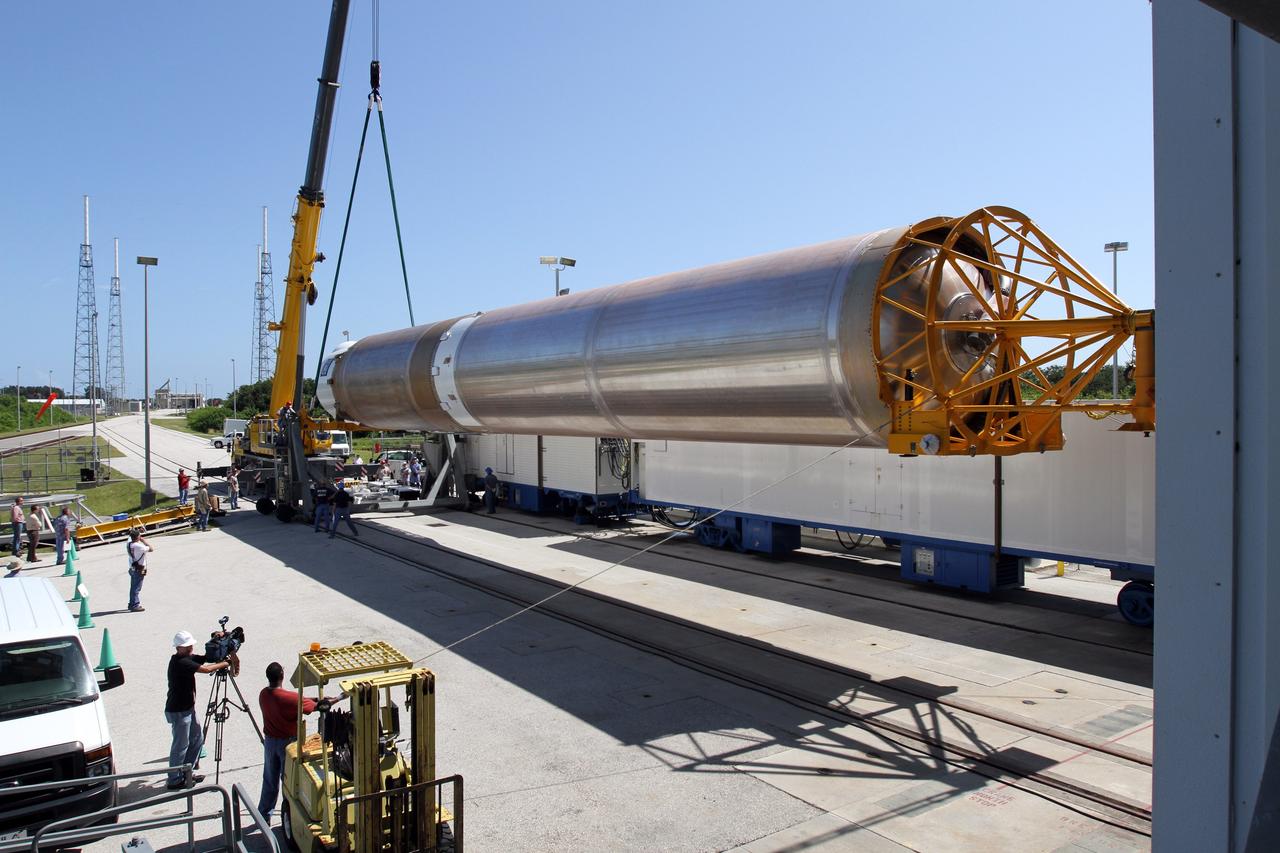
CAPE CANAVERAL, Fla. - At Launch Complex 41 at Cape Canaveral Air Force Station in Florida, technicians monitor the progress as a large crane begins to lift the first stage of the United Launch Alliance Atlas V rocket into the vertical position. The Atlas V is being prepared for the Radiation Belt Storm Probes, or RBSP, mission. NASA’s RBSP mission will help us understand the sun’s influence on Earth and near-Earth space by studying the Earth’s radiation belts on various scales of space and time. RBSP will begin its mission of exploration of Earth’s Van Allen radiation belts and the extremes of space weather after its launch aboard an Atlas V rocket. Launch is targeted for Aug. 23. For more information, visit http://www.nasa.gov/rbsp. Photo credit: NASA/Cory Huston
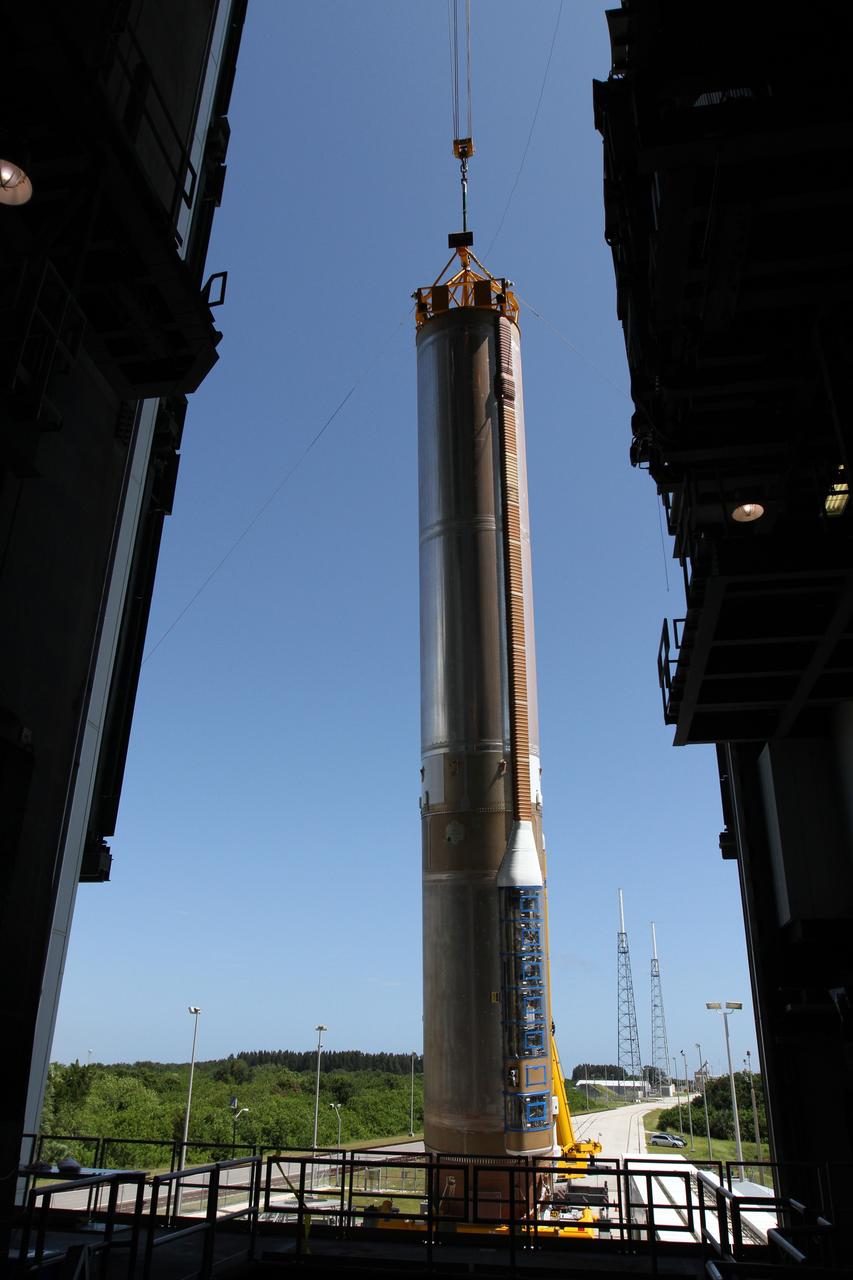
CAPE CANAVERAL, Fla. - At Launch Complex 41 at Cape Canaveral Air Force Station in Florida, a large crane lifts the first stage of the United Launch Alliance Atlas V rocket into the vertical position. The Atlas V is being prepared for the Radiation Belt Storm Probes, or RBSP, mission. NASA’s RBSP mission will help us understand the sun’s influence on Earth and near-Earth space by studying the Earth’s radiation belts on various scales of space and time. RBSP will begin its mission of exploration of Earth’s Van Allen radiation belts and the extremes of space weather after its launch aboard an Atlas V rocket. Launch is targeted for Aug. 23. For more information, visit http://www.nasa.gov/rbsp. Photo credit: NASA/Cory Huston
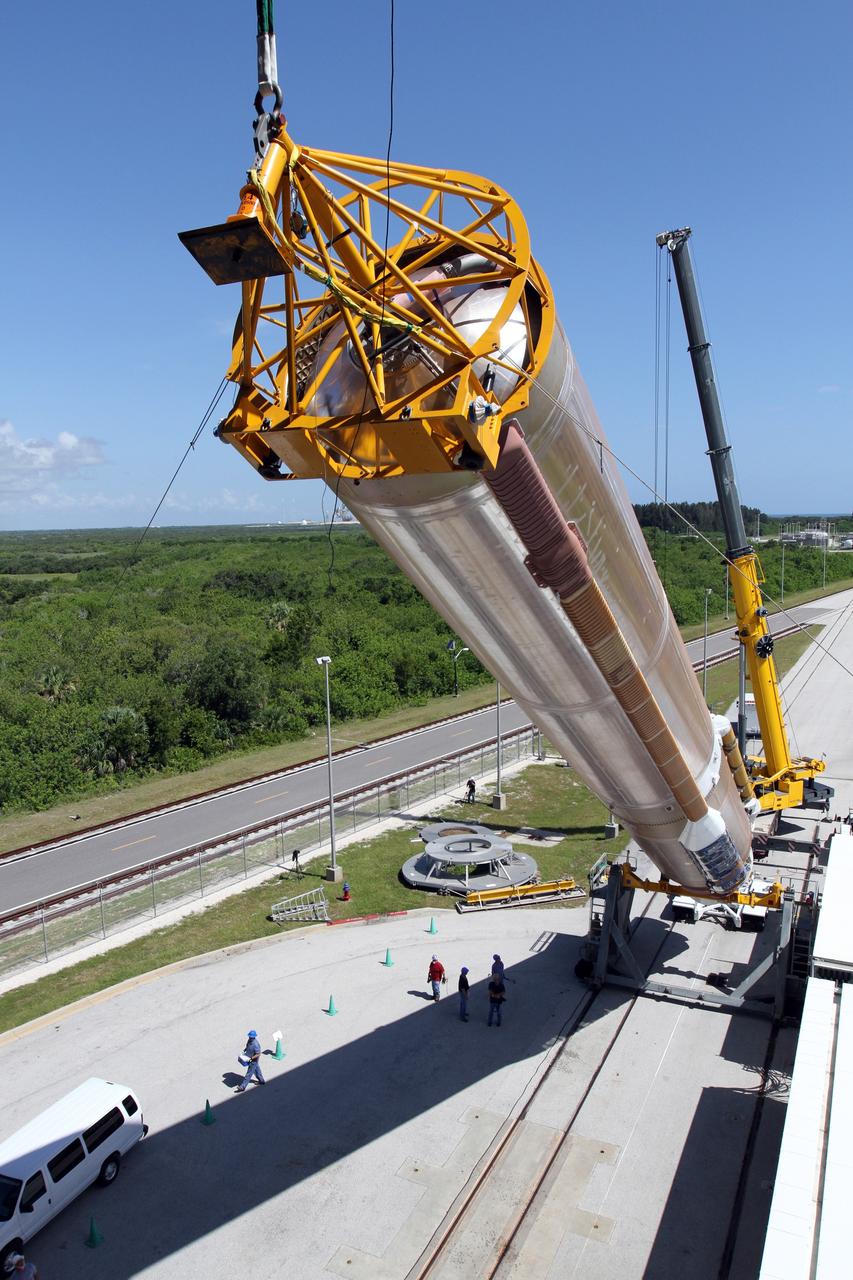
CAPE CANAVERAL, Fla. - At Launch Complex 41 at Cape Canaveral Air Force Station in Florida, a large crane lifts the first stage of the United Launch Alliance Atlas V rocket into the vertical position. The Atlas V is being prepared for the Radiation Belt Storm Probes, or RBSP, mission. NASA’s RBSP mission will help us understand the sun’s influence on Earth and near-Earth space by studying the Earth’s radiation belts on various scales of space and time. RBSP will begin its mission of exploration of Earth’s Van Allen radiation belts and the extremes of space weather after its launch aboard an Atlas V rocket. Launch is targeted for Aug. 23. For more information, visit http://www.nasa.gov/rbsp. Photo credit: NASA/Cory Huston
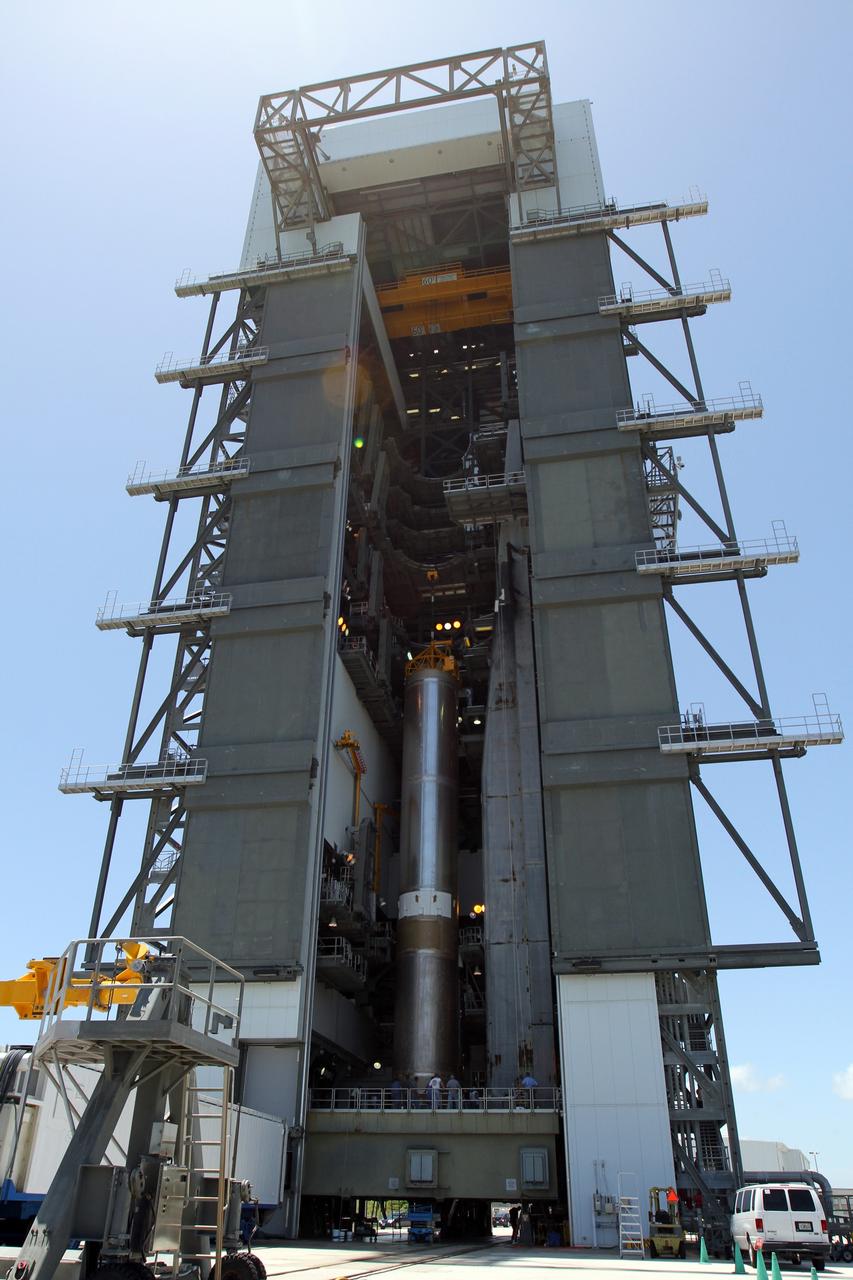
CAPE CANAVERAL, Fla. - At Launch Complex 41 at Cape Canaveral Air Force Station in Florida, the first stage of the United Launch Alliance Atlas V rocket has been moved into the Vertical Integration Facility. The Atlas V is being prepared for the Radiation Belt Storm Probes, or RBSP, mission. NASA’s RBSP mission will help us understand the sun’s influence on Earth and near-Earth space by studying the Earth’s radiation belts on various scales of space and time. RBSP will begin its mission of exploration of Earth’s Van Allen radiation belts and the extremes of space weather after its launch aboard an Atlas V rocket. Launch is targeted for Aug. 23. For more information, visit http://www.nasa.gov/rbsp. Photo credit: NASA/Cory Huston
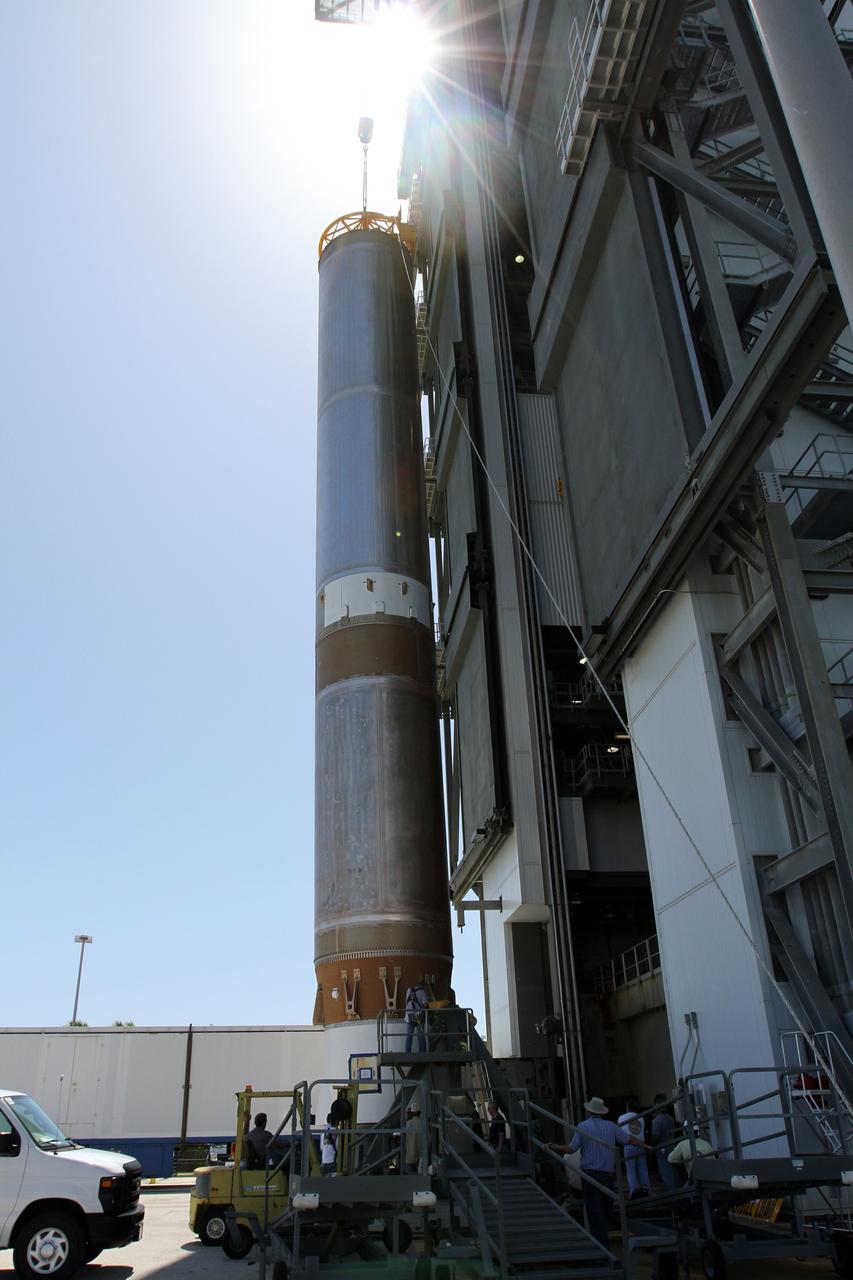
CAPE CANAVERAL, Fla. - At Launch Complex 41 at Cape Canaveral Air Force Station in Florida, a large crane lifts the first stage of the United Launch Alliance Atlas V rocket into the vertical position. The Atlas V is being prepared for the Radiation Belt Storm Probes, or RBSP, mission. NASA’s RBSP mission will help us understand the sun’s influence on Earth and near-Earth space by studying the Earth’s radiation belts on various scales of space and time. RBSP will begin its mission of exploration of Earth’s Van Allen radiation belts and the extremes of space weather after its launch aboard an Atlas V rocket. Launch is targeted for Aug. 23. For more information, visit http://www.nasa.gov/rbsp. Photo credit: NASA/Cory Huston
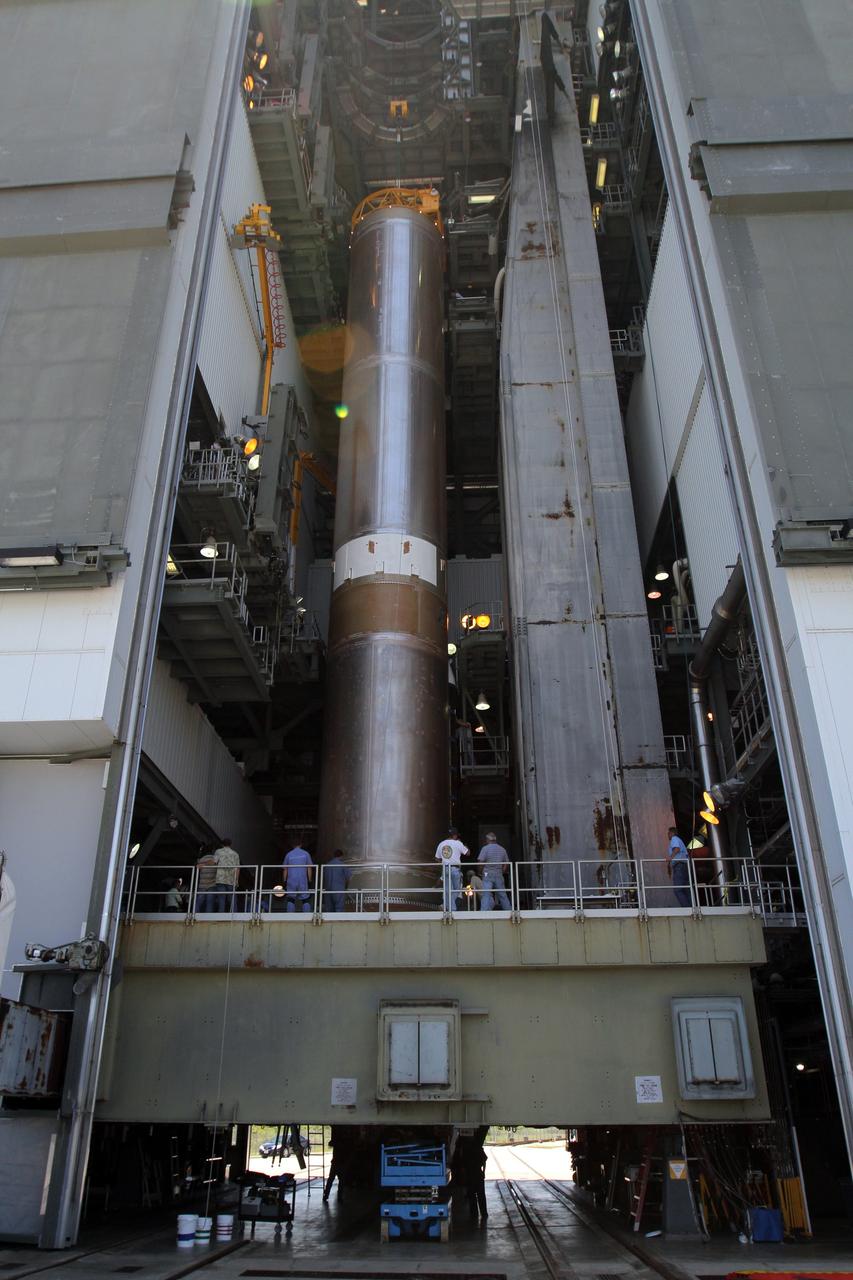
CAPE CANAVERAL, Fla. - At Launch Complex 41 at Cape Canaveral Air Force Station in Florida, the first stage of the United Launch Alliance Atlas V rocket has been moved into the Vertical Integration Facility. The Atlas V is being prepared for the Radiation Belt Storm Probes, or RBSP, mission. NASA’s RBSP mission will help us understand the sun’s influence on Earth and near-Earth space by studying the Earth’s radiation belts on various scales of space and time. RBSP will begin its mission of exploration of Earth’s Van Allen radiation belts and the extremes of space weather after its launch aboard an Atlas V rocket. Launch is targeted for Aug. 23. For more information, visit http://www.nasa.gov/rbsp. Photo credit: NASA/Cory Huston
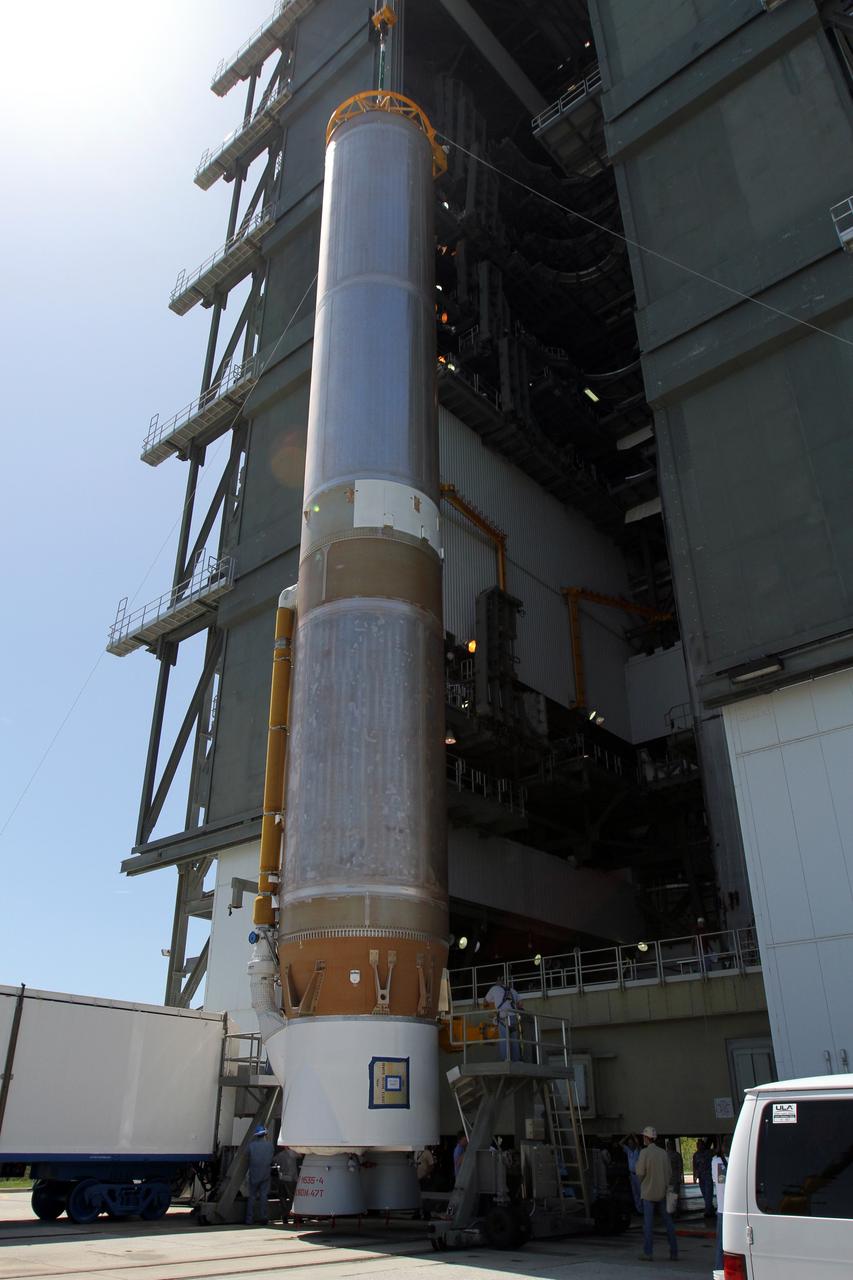
CAPE CANAVERAL, Fla. - At Launch Complex 41 at Cape Canaveral Air Force Station in Florida, a large crane lifts the first stage of the United Launch Alliance Atlas V rocket into the vertical position. The Atlas V is being prepared for the Radiation Belt Storm Probes, or RBSP, mission. NASA’s RBSP mission will help us understand the sun’s influence on Earth and near-Earth space by studying the Earth’s radiation belts on various scales of space and time. RBSP will begin its mission of exploration of Earth’s Van Allen radiation belts and the extremes of space weather after its launch aboard an Atlas V rocket. Launch is targeted for Aug. 23. For more information, visit http://www.nasa.gov/rbsp. Photo credit: NASA/Cory Huston
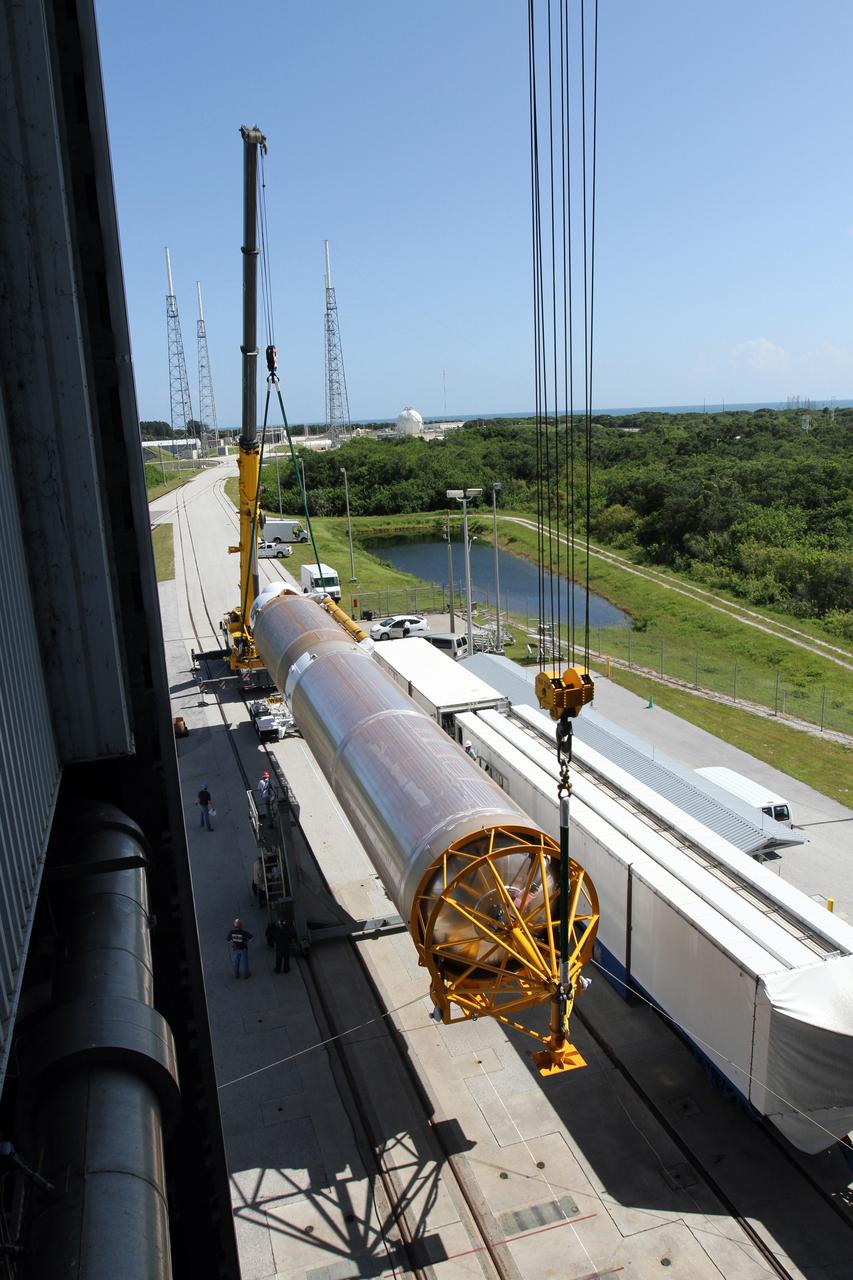
CAPE CANAVERAL, Fla. - At Launch Complex 41 at Cape Canaveral Air Force Station in Florida, technicians monitor the progress as a large crane begins to lift the first stage of the United Launch Alliance Atlas V rocket into the vertical position. The Atlas V is being prepared for the Radiation Belt Storm Probes, or RBSP, mission. NASA’s RBSP mission will help us understand the sun’s influence on Earth and near-Earth space by studying the Earth’s radiation belts on various scales of space and time. RBSP will begin its mission of exploration of Earth’s Van Allen radiation belts and the extremes of space weather after its launch aboard an Atlas V rocket. Launch is targeted for Aug. 23. For more information, visit http://www.nasa.gov/rbsp. Photo credit: NASA/Cory Huston

CAPE CANAVERAL, Fla. - At Launch Complex 41 at Cape Canaveral Air Force Station in Florida, the first stage of the United Launch Alliance Atlas V rocket is in the Vertical Integration Facility. The Atlas V is being prepared for the Radiation Belt Storm Probes, or RBSP, mission. NASA’s RBSP mission will help us understand the sun’s influence on Earth and near-Earth space by studying the Earth’s radiation belts on various scales of space and time. RBSP will begin its mission of exploration of Earth’s Van Allen radiation belts and the extremes of space weather after its launch aboard an Atlas V rocket. Launch is targeted for Aug. 23. For more information, visit http://www.nasa.gov/rbsp. Photo credit: NASA/Cory Huston
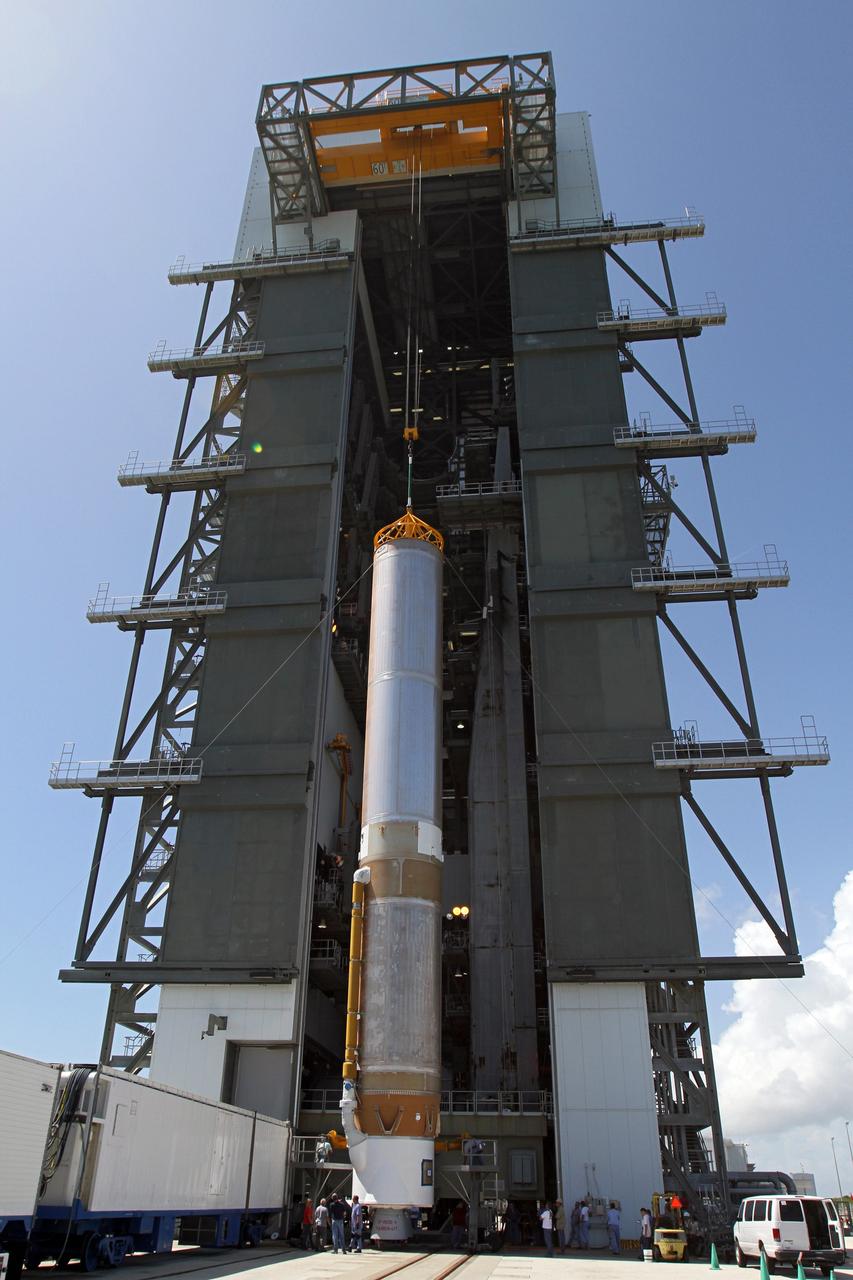
CAPE CANAVERAL, Fla. - At Launch Complex 41 at Cape Canaveral Air Force Station in Florida, a large crane lifts the first stage of the United Launch Alliance Atlas V rocket into the vertical position. The Atlas V is being prepared for the Radiation Belt Storm Probes, or RBSP, mission. NASA’s RBSP mission will help us understand the sun’s influence on Earth and near-Earth space by studying the Earth’s radiation belts on various scales of space and time. RBSP will begin its mission of exploration of Earth’s Van Allen radiation belts and the extremes of space weather after its launch aboard an Atlas V rocket. Launch is targeted for Aug. 23. For more information, visit http://www.nasa.gov/rbsp. Photo credit: NASA/Cory Huston
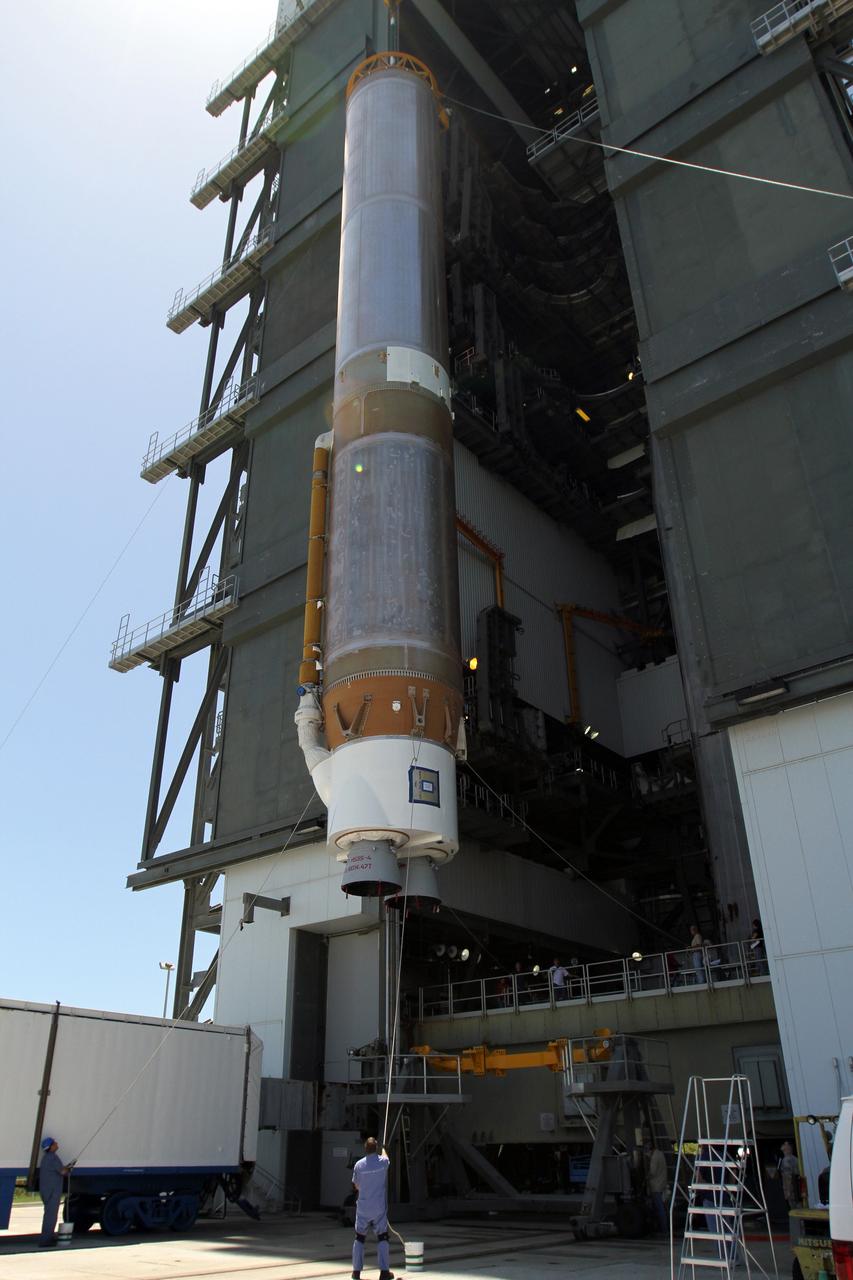
CAPE CANAVERAL, Fla. - At Launch Complex 41 at Cape Canaveral Air Force Station in Florida, a large crane lifts the first stage of the United Launch Alliance Atlas V rocket into the vertical position. The Atlas V is being prepared for the Radiation Belt Storm Probes, or RBSP, mission. NASA’s RBSP mission will help us understand the sun’s influence on Earth and near-Earth space by studying the Earth’s radiation belts on various scales of space and time. RBSP will begin its mission of exploration of Earth’s Van Allen radiation belts and the extremes of space weather after its launch aboard an Atlas V rocket. Launch is targeted for Aug. 23. For more information, visit http://www.nasa.gov/rbsp. Photo credit: NASA/Cory Huston
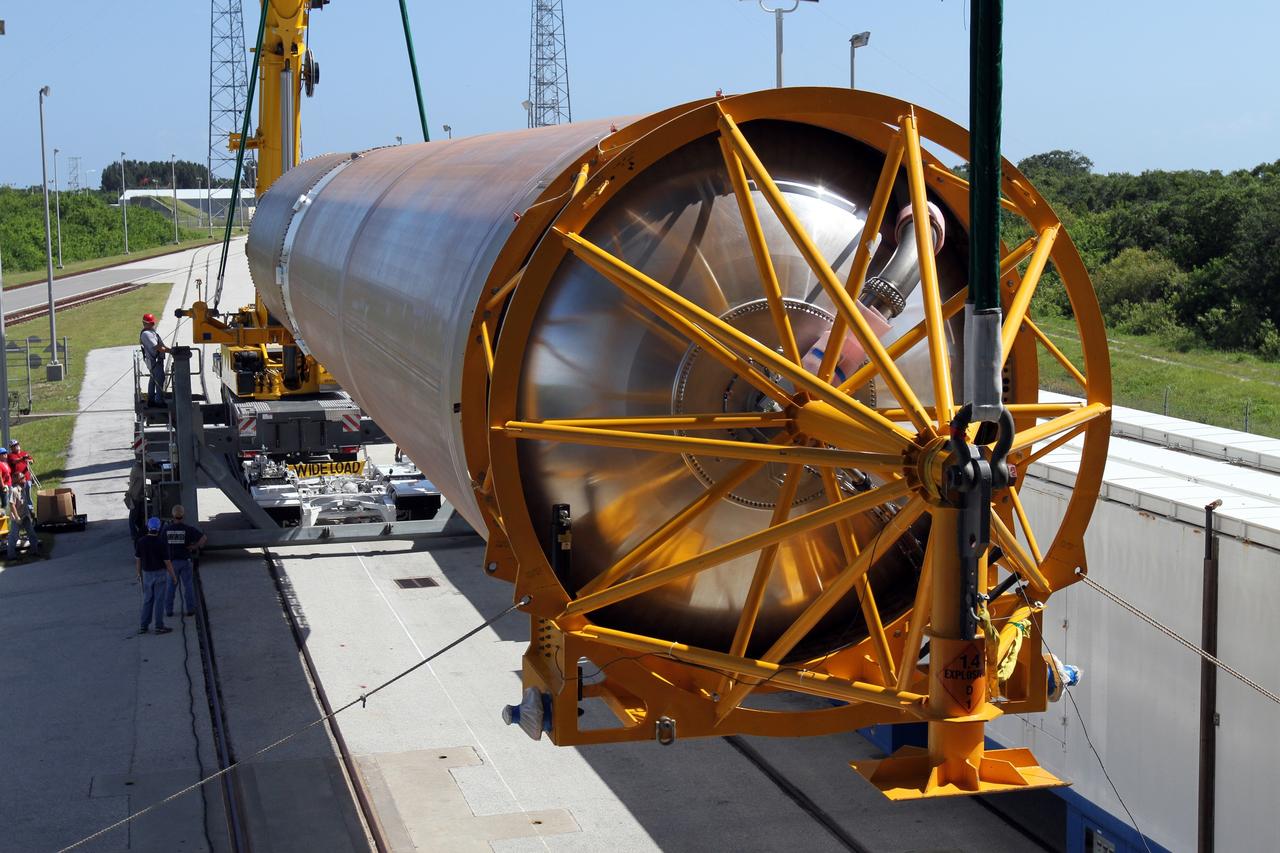
CAPE CANAVERAL, Fla. - At Launch Complex 41 at Cape Canaveral Air Force Station in Florida, a large crane begins to lift the first stage of the United Launch Alliance Atlas V rocket into the vertical position. The Atlas V is being prepared for the Radiation Belt Storm Probes, or RBSP, mission. NASA’s RBSP mission will help us understand the sun’s influence on Earth and near-Earth space by studying the Earth’s radiation belts on various scales of space and time. RBSP will begin its mission of exploration of Earth’s Van Allen radiation belts and the extremes of space weather after its launch aboard an Atlas V rocket. Launch is targeted for Aug. 23. For more information, visit http://www.nasa.gov/rbsp. Photo credit: NASA/Cory Huston
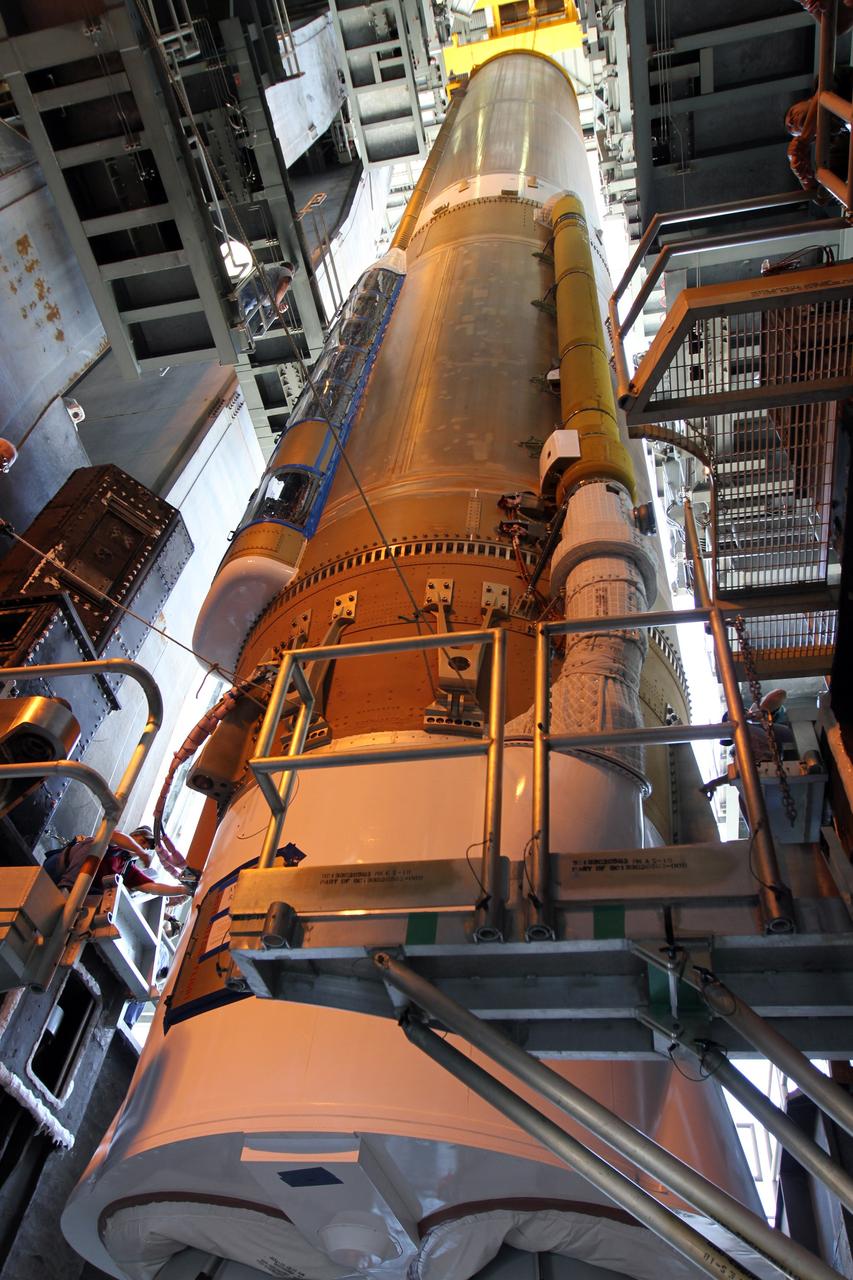
CAPE CANAVERAL, Fla. - At Launch Complex 41 at Cape Canaveral Air Force Station in Florida, the first stage of the United Launch Alliance Atlas V rocket is moved into the Vertical Integration Facility. The Atlas V is being prepared for the Radiation Belt Storm Probes, or RBSP, mission. NASA’s RBSP mission will help us understand the sun’s influence on Earth and near-Earth space by studying the Earth’s radiation belts on various scales of space and time. RBSP will begin its mission of exploration of Earth’s Van Allen radiation belts and the extremes of space weather after its launch aboard an Atlas V rocket. Launch is targeted for Aug. 23. For more information, visit http://www.nasa.gov/rbsp. Photo credit: NASA/Cory Huston
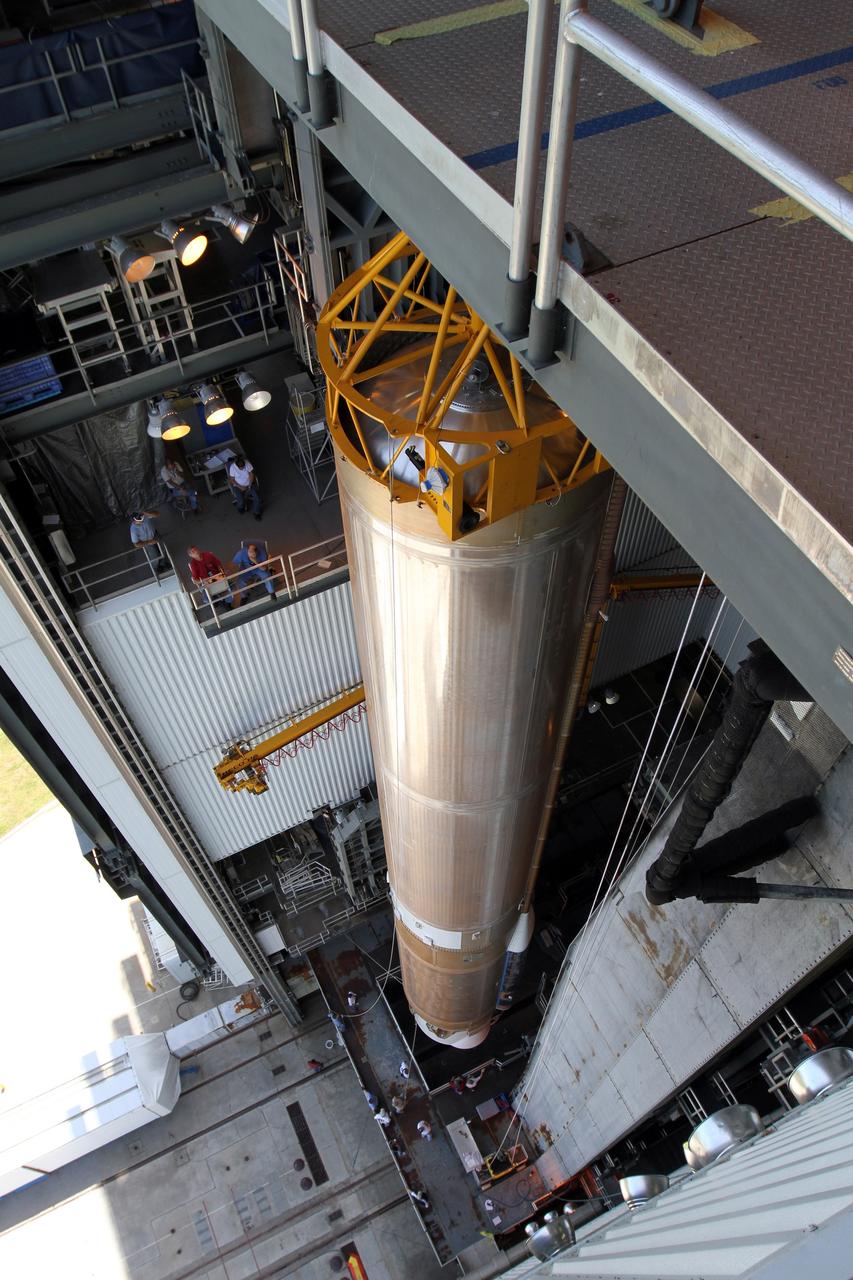
CAPE CANAVERAL, Fla. - At Launch Complex 41 at Cape Canaveral Air Force Station in Florida, a large crane moves the first stage of the United Launch Alliance Atlas V rocket into the Vertical Integration Facility. The Atlas V is being prepared for the Radiation Belt Storm Probes, or RBSP, mission. NASA’s RBSP mission will help us understand the sun’s influence on Earth and near-Earth space by studying the Earth’s radiation belts on various scales of space and time. RBSP will begin its mission of exploration of Earth’s Van Allen radiation belts and the extremes of space weather after its launch aboard an Atlas V rocket. Launch is targeted for Aug. 23. For more information, visit http://www.nasa.gov/rbsp. Photo credit: NASA/Cory Huston
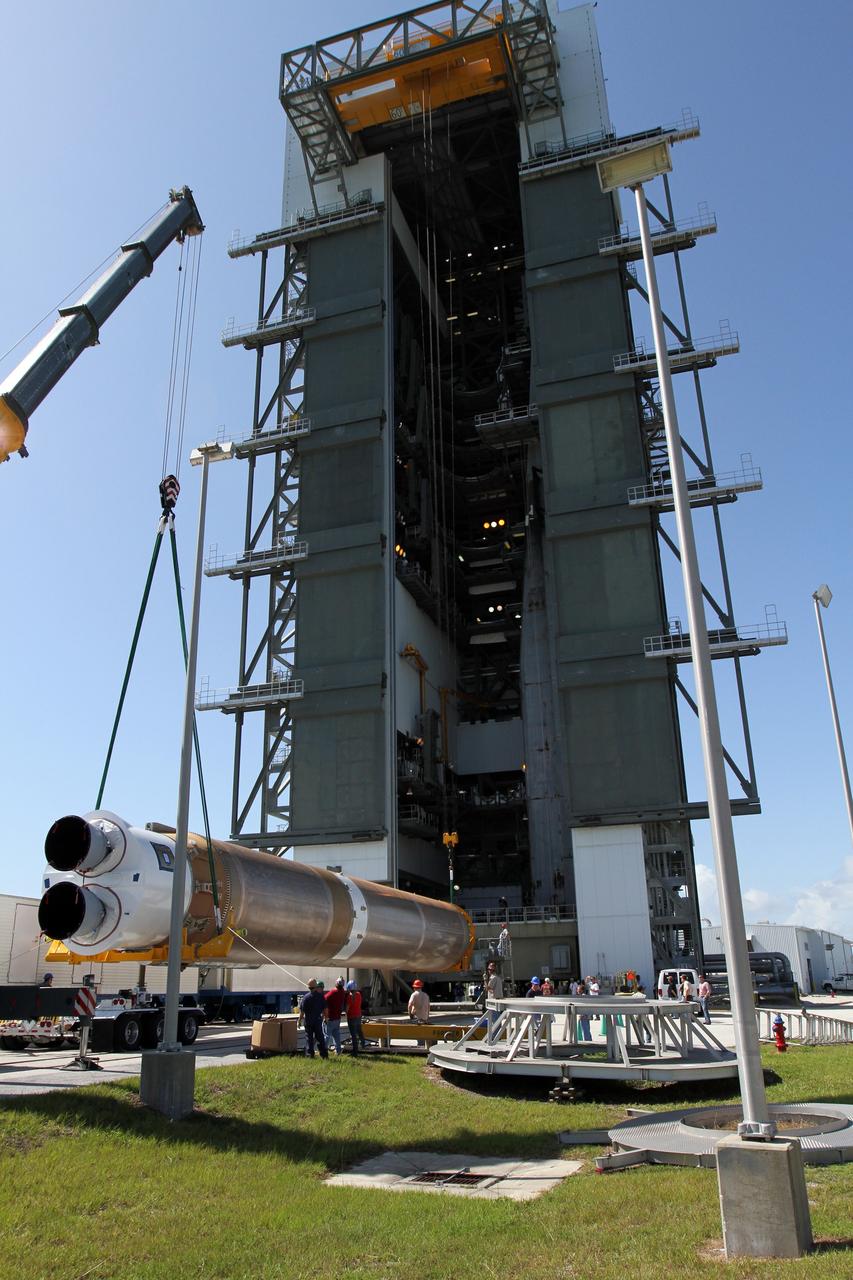
CAPE CANAVERAL, Fla. - At Launch Complex 41 at Cape Canaveral Air Force Station in Florida, technicians use a large crane to lift the first stage of the United Launch Alliance Atlas V rocket into the vertical position. The Atlas V is being prepared for the Radiation Belt Storm Probes, or RBSP, mission. NASA’s RBSP mission will help us understand the sun’s influence on Earth and near-Earth space by studying the Earth’s radiation belts on various scales of space and time. RBSP will begin its mission of exploration of Earth’s Van Allen radiation belts and the extremes of space weather after its launch aboard an Atlas V rocket. Launch is targeted for Aug. 23. For more information, visit http://www.nasa.gov/rbsp. Photo credit: NASA/Cory Huston
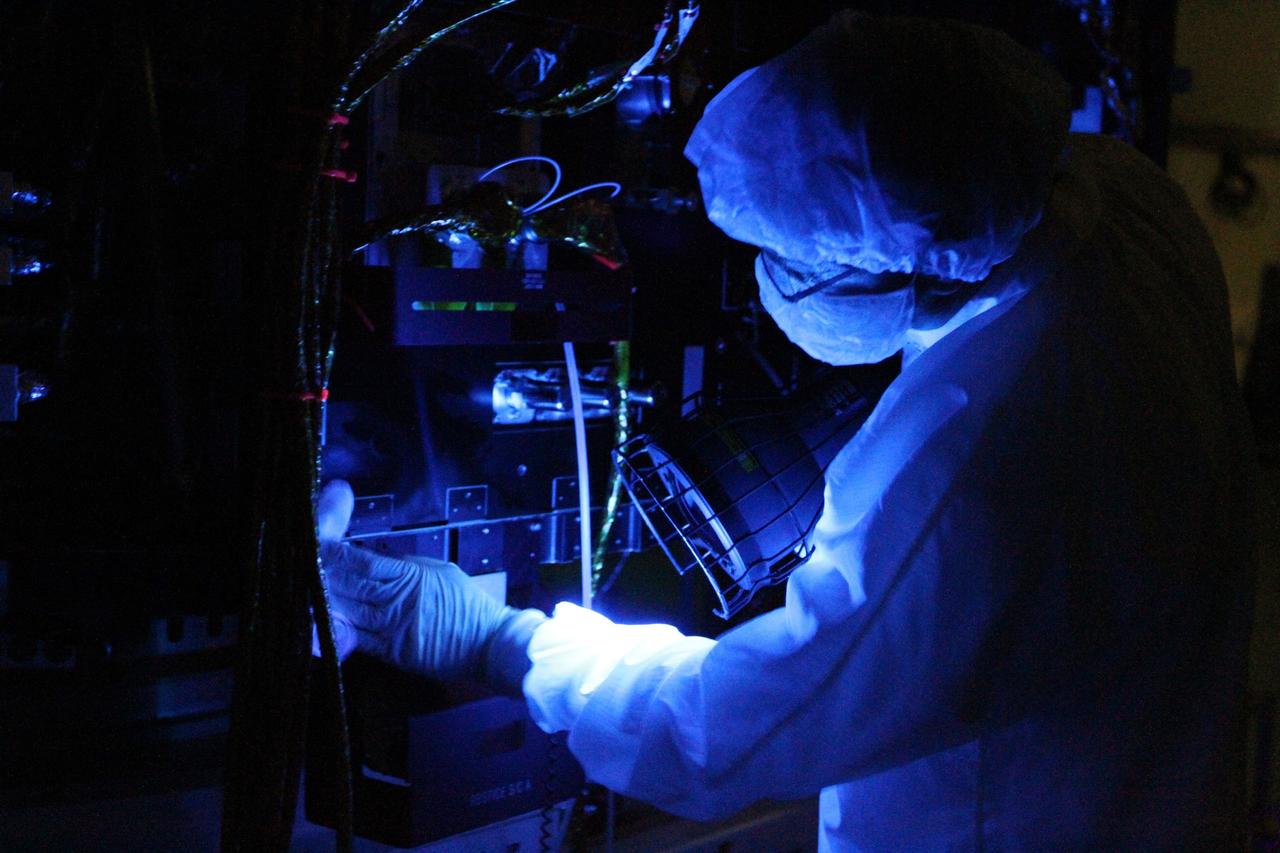
CAPE CANAVERAL, Fla. – Using a black light, a technician closely inspects one of NASA's twin Radiation Belt Storm Probes inside the clean room high bay at Astrotech payload processing facility. Black light inspection uses UVA fluorescence to detect possible microcontamination, small cracks or fluid leaks. The Radiation Belt Storm Probes, or RBSP, mission will help us understand the sun’s influence on Earth and near-Earth space by studying the Earth’s radiation belts on various scales of space and time. RBSP will begin its mission of exploration of Earth's Van Allen radiation belts and the extremes of space weather after its launch aboard a United Launch Alliance Atlas V rocket. For more information, visit http://www.nasa.gov/rbsp. Photo credit: NASA/Kim Shiflett
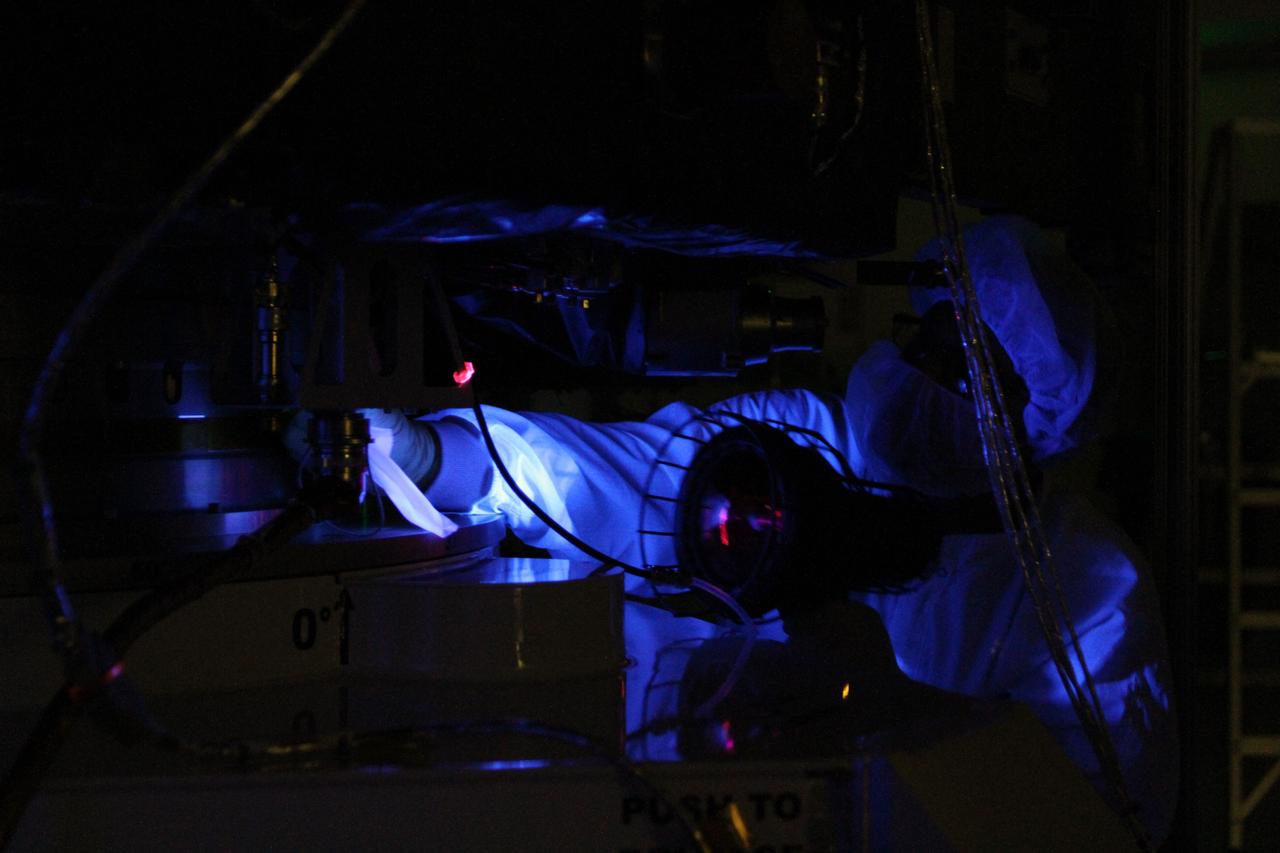
CAPE CANAVERAL, Fla. – Barely visible behind equipment, a technician uses a black light to inspect one of NASA's twin Radiation Belt Storm Probes inside the clean room high bay at Astrotech payload processing facility. Black light inspection uses UVA fluorescence to detect possible microcontamination, small cracks or fluid leaks. The Radiation Belt Storm Probes, or RBSP, mission will help us understand the sun’s influence on Earth and near-Earth space by studying the Earth’s radiation belts on various scales of space and time. RBSP will begin its mission of exploration of Earth's Van Allen radiation belts and the extremes of space weather after its launch aboard a United Launch Alliance Atlas V rocket. For more information, visit http://www.nasa.gov/rbsp. Photo credit: NASA/Kim Shiflett
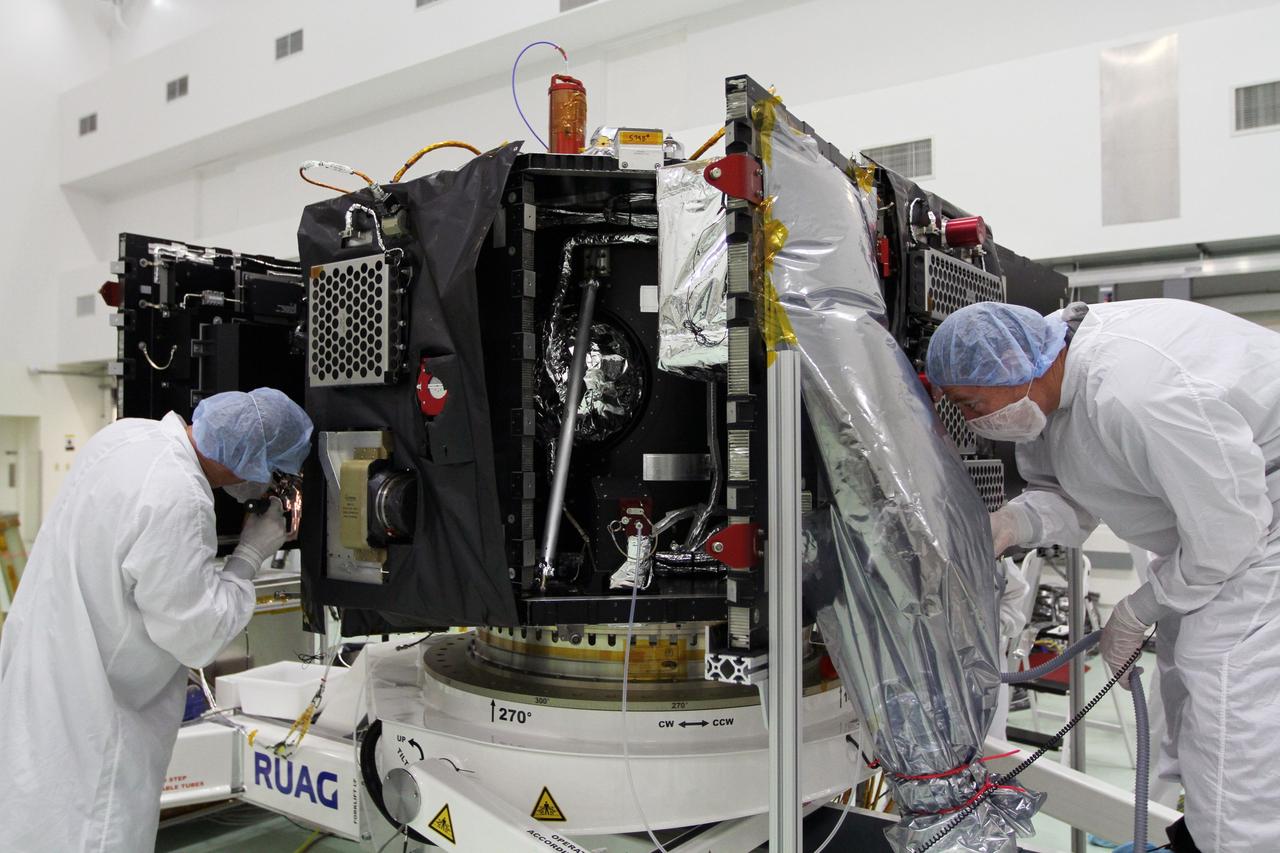
CAPE CANAVERAL, Fla. – Technicians use flashlights to conduct a meticulous inspection of one of NASA's twin Radiation Belt Storm Probes. The spacecraft is secured to a work stand inside the Astrotech payload processing facility near Kennedy Space Center in Florida. The Radiation Belt Storm Probes, or RBSP, mission will help us understand the sun’s influence on Earth and near-Earth space by studying the Earth’s radiation belts on various scales of space and time. RBSP will begin its mission of exploration of Earth's Van Allen radiation belts and the extremes of space weather after its launch aboard a United Launch Alliance Atlas V rocket. For more information, visit http://www.nasa.gov/rbsp. Photo credit: NASA/Kim Shiflett
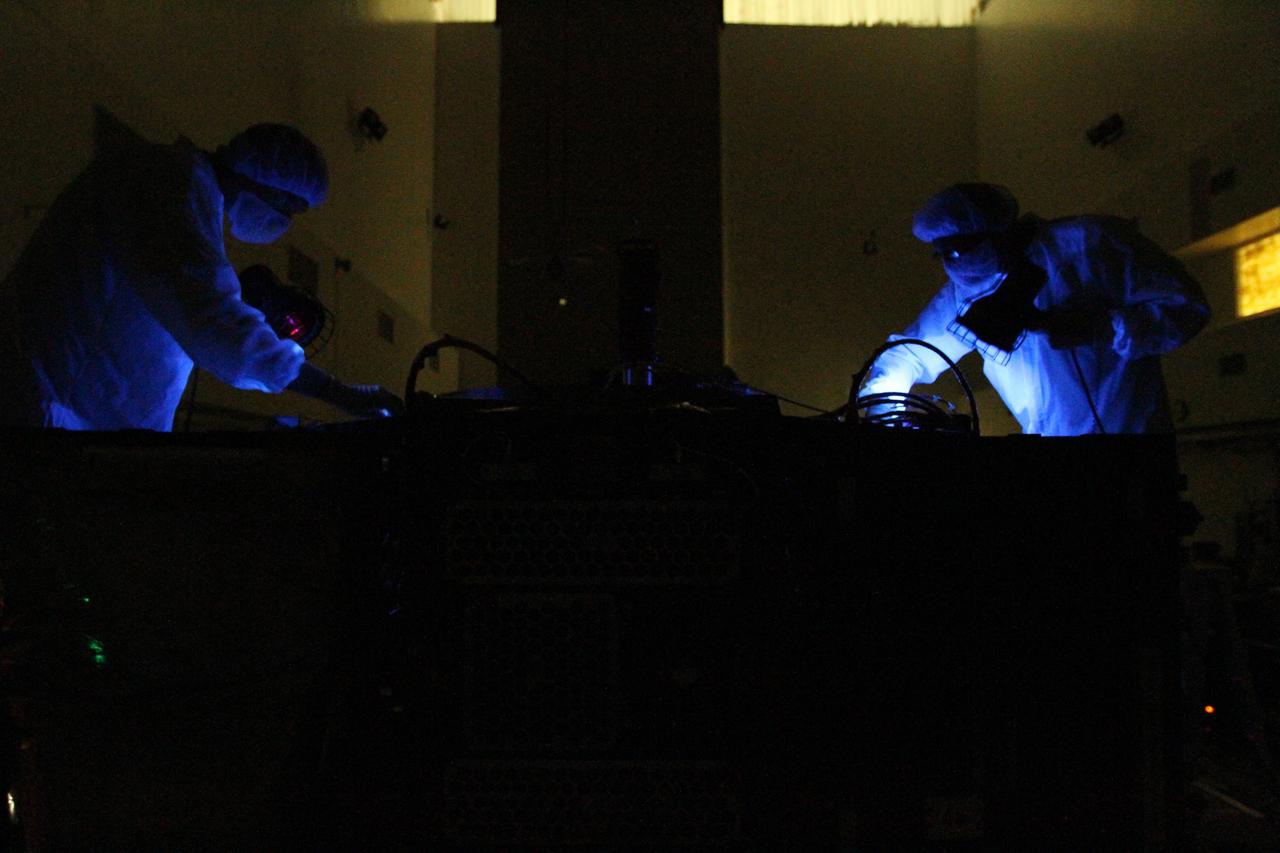
CAPE CANAVERAL, Fla. – Working in near-darkness inside the high bay clean room at the Astrotech payload processing facility, two technicians use black lights to inspect of one of NASA's twin Radiation Belt Storm Probes. Black light inspection uses UVA fluorescence to detect possible microcontamination, small cracks or fluid leaks. The Radiation Belt Storm Probes, or RBSP, mission will help us understand the sun’s influence on Earth and near-Earth space by studying the Earth’s radiation belts on various scales of space and time. RBSP will begin its mission of exploration of Earth's Van Allen radiation belts and the extremes of space weather after its launch aboard a United Launch Alliance Atlas V rocket. For more information, visit http://www.nasa.gov/rbsp. Photo credit: NASA/Kim Shiflett
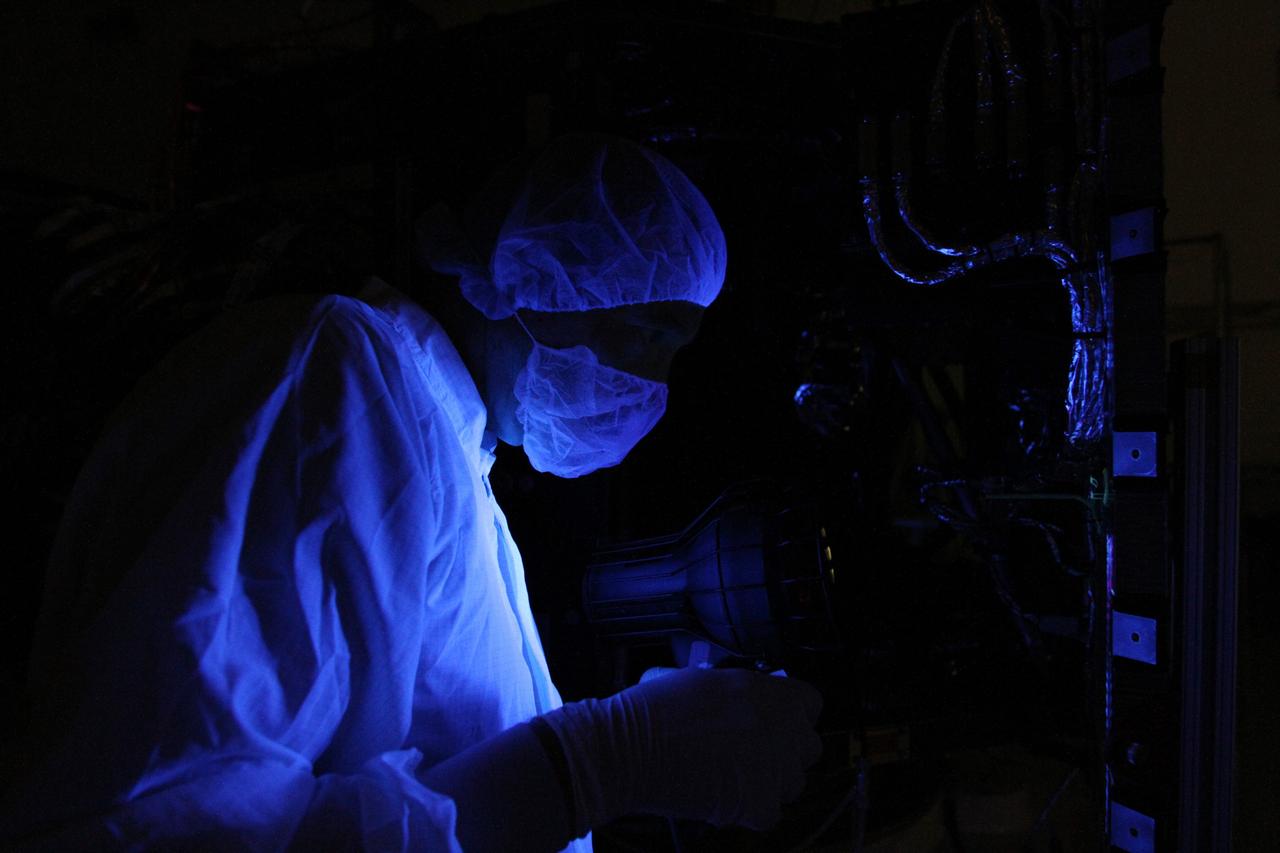
CAPE CANAVERAL, Fla. – A technician performs a black light inspection on one of NASA's Radiation Belt Storm Probes inside the clean room high bay at Astrotech payload processing facility. Black light inspection uses UVA fluorescence to detect possible microcontamination, small cracks or fluid leaks. The Radiation Belt Storm Probes, or RBSP, mission will help us understand the sun’s influence on Earth and near-Earth space by studying the Earth’s radiation belts on various scales of space and time. RBSP will begin its mission of exploration of Earth's Van Allen radiation belts and the extremes of space weather after its launch aboard a United Launch Alliance Atlas V rocket. For more information, visit http://www.nasa.gov/rbsp. Photo credit: NASA/Kim Shiflett
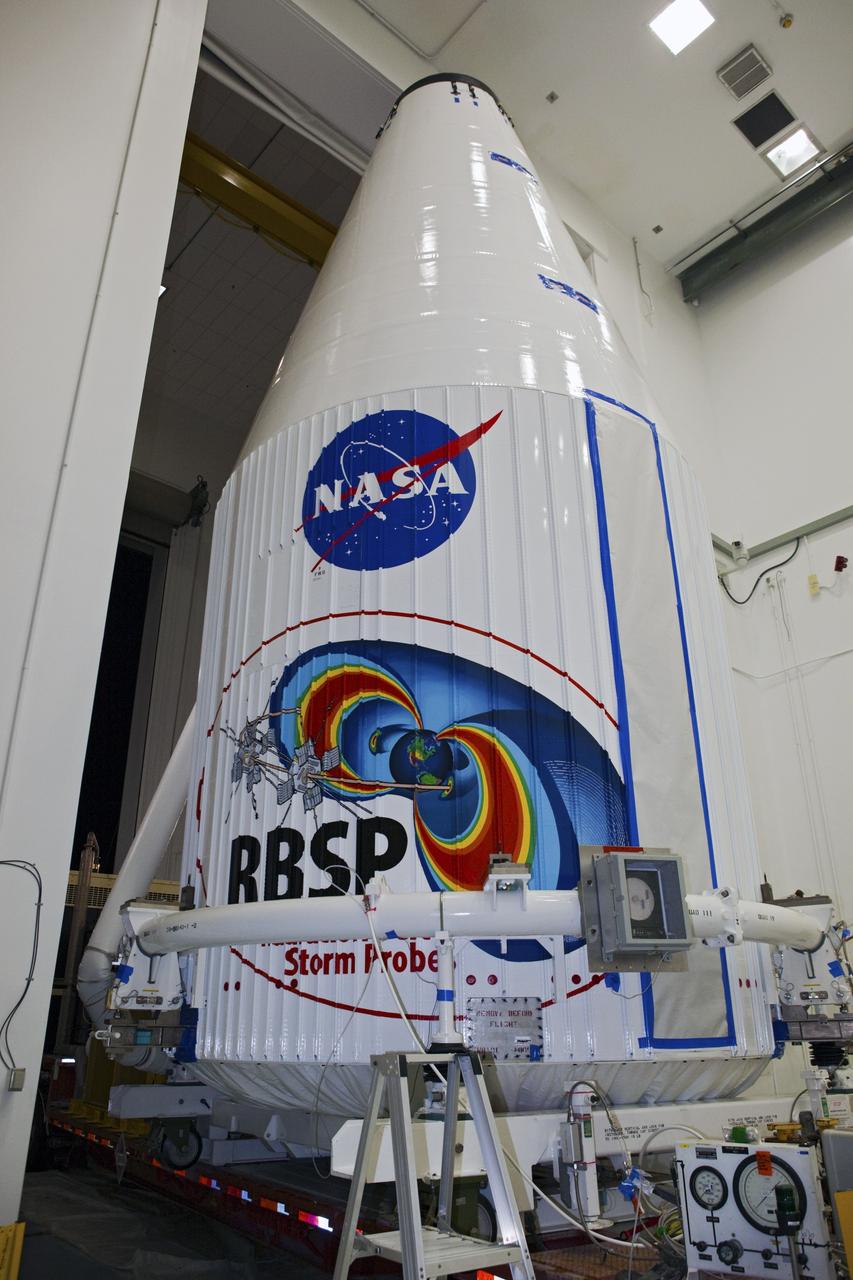
CAPE CANAVERAL, Fla. – The Radiation Belt Storm Probes, or RBSP, spacecraft are moved inside their payload fairing on the payload transporter from the Astrotech payload processing facility in Titusville, Fla. to Space Launch Complex-41 at Cape Canaveral Air Force Station. The fairing, which holds the twin RBSP spacecraft, will be lifted to the top of a United Launch Alliance Atlas V rocket for launch later in August. The two spacecraft are designed to study the Van Allen radiation belts in unprecedented detail. Photo credit: NASA/Dmitri Gerondidakis
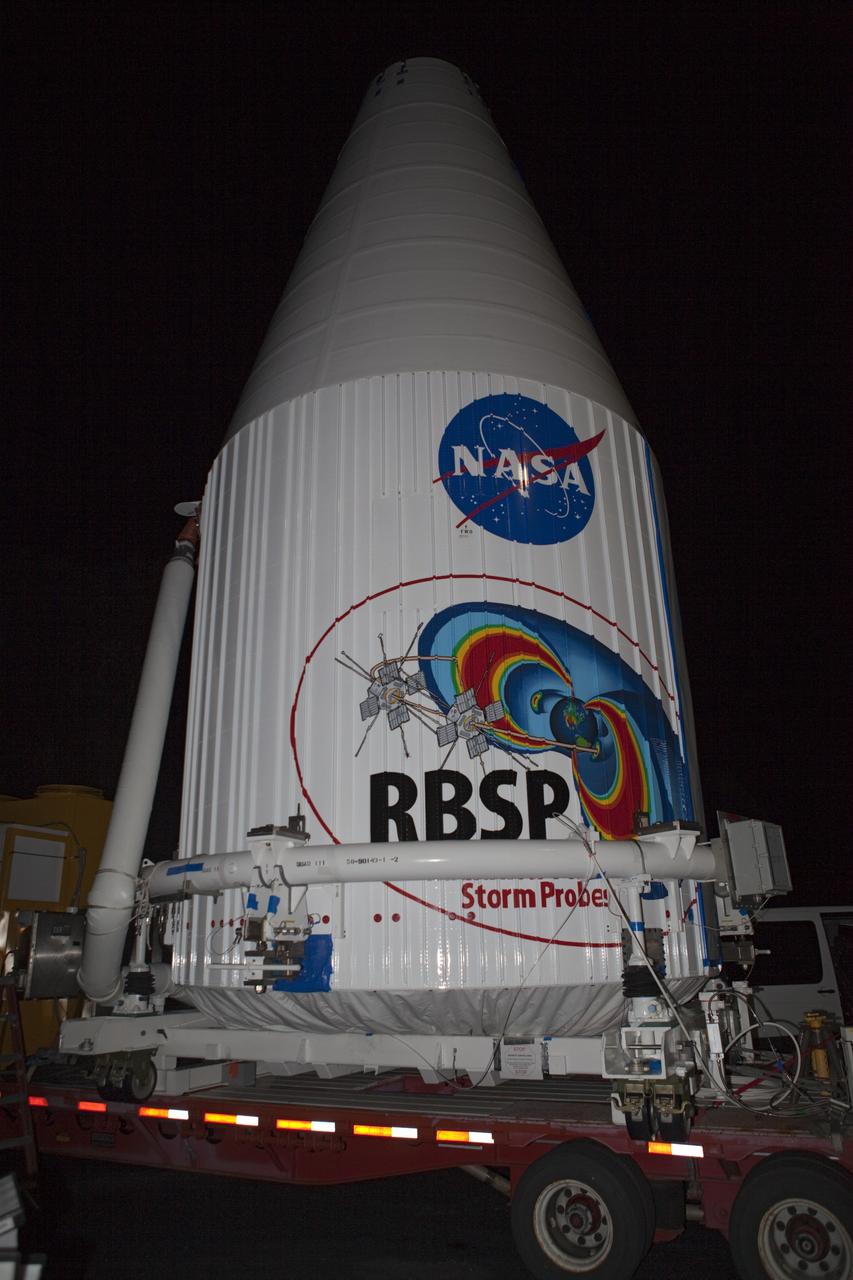
CAPE CANAVERAL, Fla. – The Radiation Belt Storm Probes, or RBSP, spacecraft are moved inside their payload fairing on the payload transporter from the Astrotech payload processing facility in Titusville, Fla. to Space Launch Complex-41 at Cape Canaveral Air Force Station. The fairing, which holds the twin RBSP spacecraft, will be lifted to the top of a United Launch Alliance Atlas V rocket for launch later in August. The two spacecraft are designed to study the Van Allen radiation belts in unprecedented detail. Photo credit: NASA/Dmitri Gerondidakis
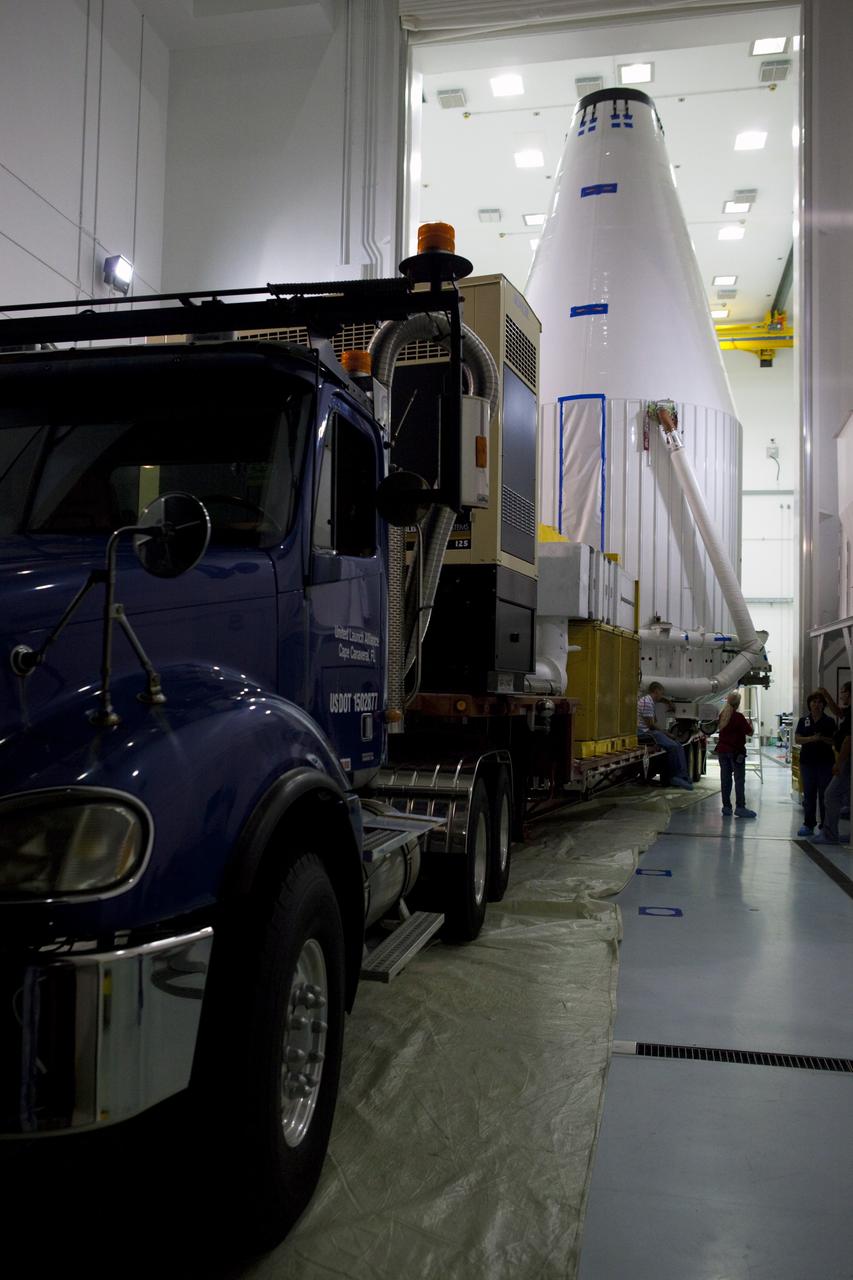
CAPE CANAVERAL, Fla. – The Radiation Belt Storm Probes, or RBSP, spacecraft are moved inside their payload fairing on the payload transporter from the Astrotech payload processing facility in Titusville, Fla. to Space Launch Complex-41 at Cape Canaveral Air Force Station. The fairing, which holds the twin RBSP spacecraft, will be lifted to the top of a United Launch Alliance Atlas V rocket for launch later in August. The two spacecraft are designed to study the Van Allen radiation belts in unprecedented detail. Photo credit: NASA/Dmitri Gerondidakis

CAPE CANAVERAL, Fla. – The Radiation Belt Storm Probes, or RBSP, spacecraft are moved inside their payload fairing on the payload transporter from the Astrotech payload processing facility in Titusville, Fla. to Space Launch Complex-41 at Cape Canaveral Air Force Station. The fairing, which holds the twin RBSP spacecraft, will be lifted to the top of a United Launch Alliance Atlas V rocket for launch later in August. The two spacecraft are designed to study the Van Allen radiation belts in unprecedented detail. Photo credit: NASA/Dmitri Gerondidakis
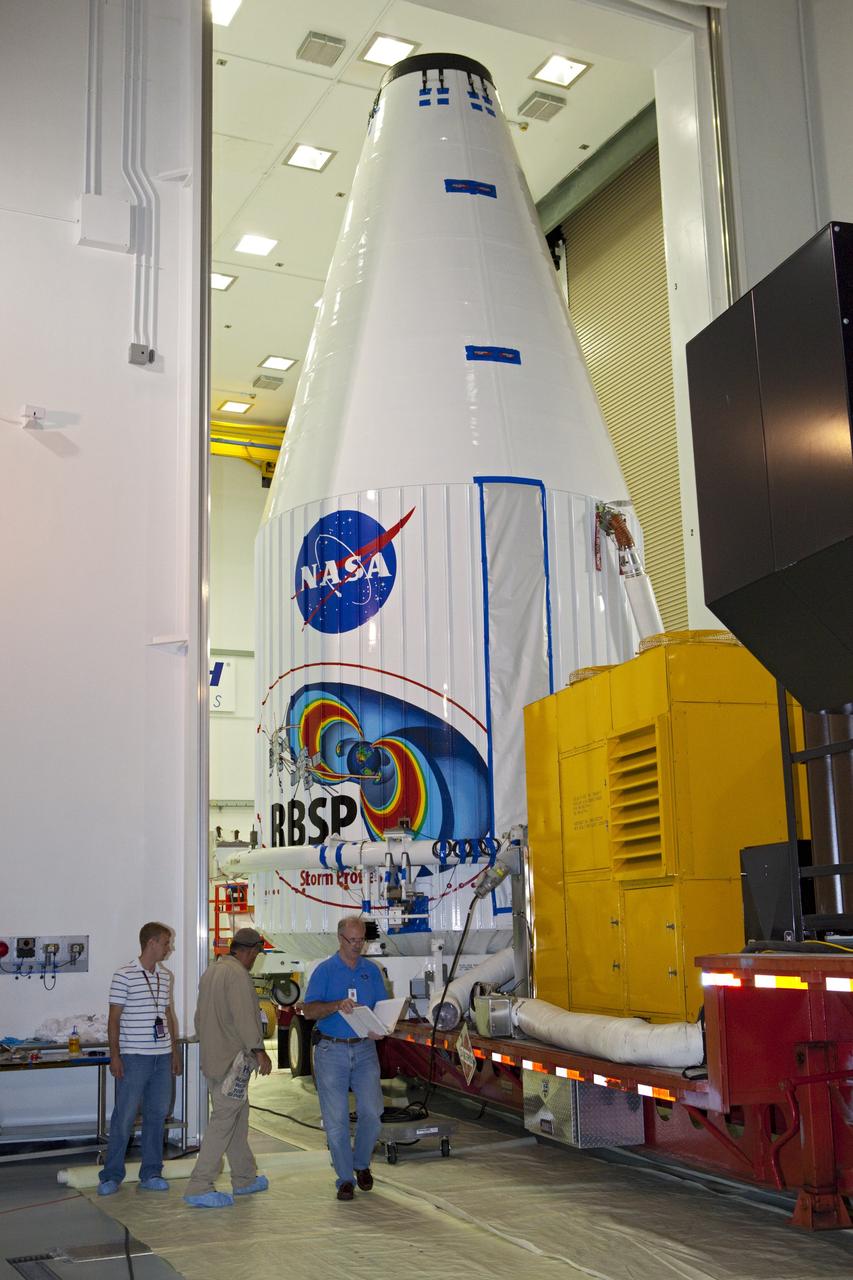
CAPE CANAVERAL, Fla. – The Radiation Belt Storm Probes, or RBSP, spacecraft are moved inside their payload fairing on the payload transporter from the Astrotech payload processing facility in Titusville, Fla. to Space Launch Complex-41 at Cape Canaveral Air Force Station. The fairing, which holds the twin RBSP spacecraft, will be lifted to the top of a United Launch Alliance Atlas V rocket for launch later in August. The two spacecraft are designed to study the Van Allen radiation belts in unprecedented detail. Photo credit: NASA/Dmitri Gerondidakis
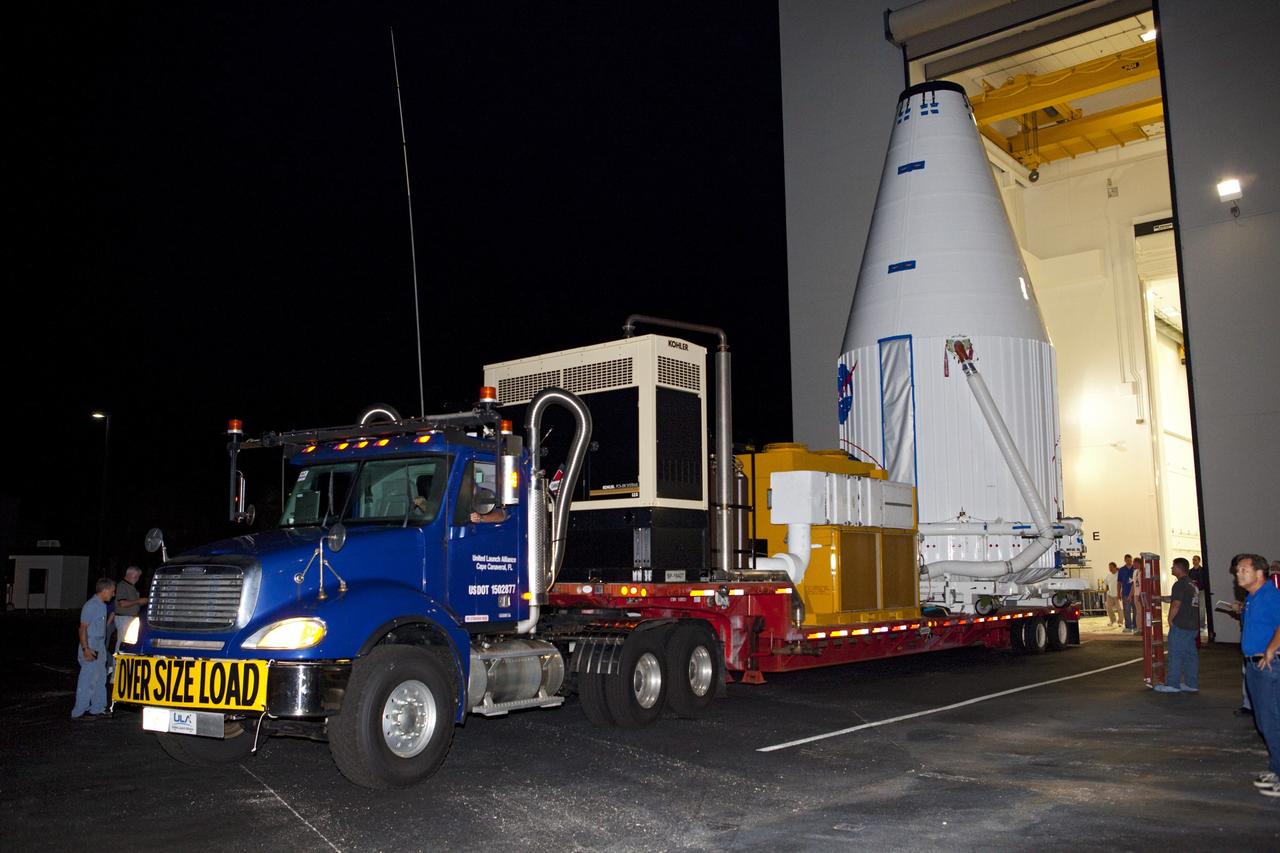
CAPE CANAVERAL, Fla. – The Radiation Belt Storm Probes, or RBSP, spacecraft are moved inside their payload fairing on the payload transporter from the Astrotech payload processing facility in Titusville, Fla. to Space Launch Complex-41 at Cape Canaveral Air Force Station. The fairing, which holds the twin RBSP spacecraft, will be lifted to the top of a United Launch Alliance Atlas V rocket for launch later in August. The two spacecraft are designed to study the Van Allen radiation belts in unprecedented detail. Photo credit: NASA/Dmitri Gerondidakis
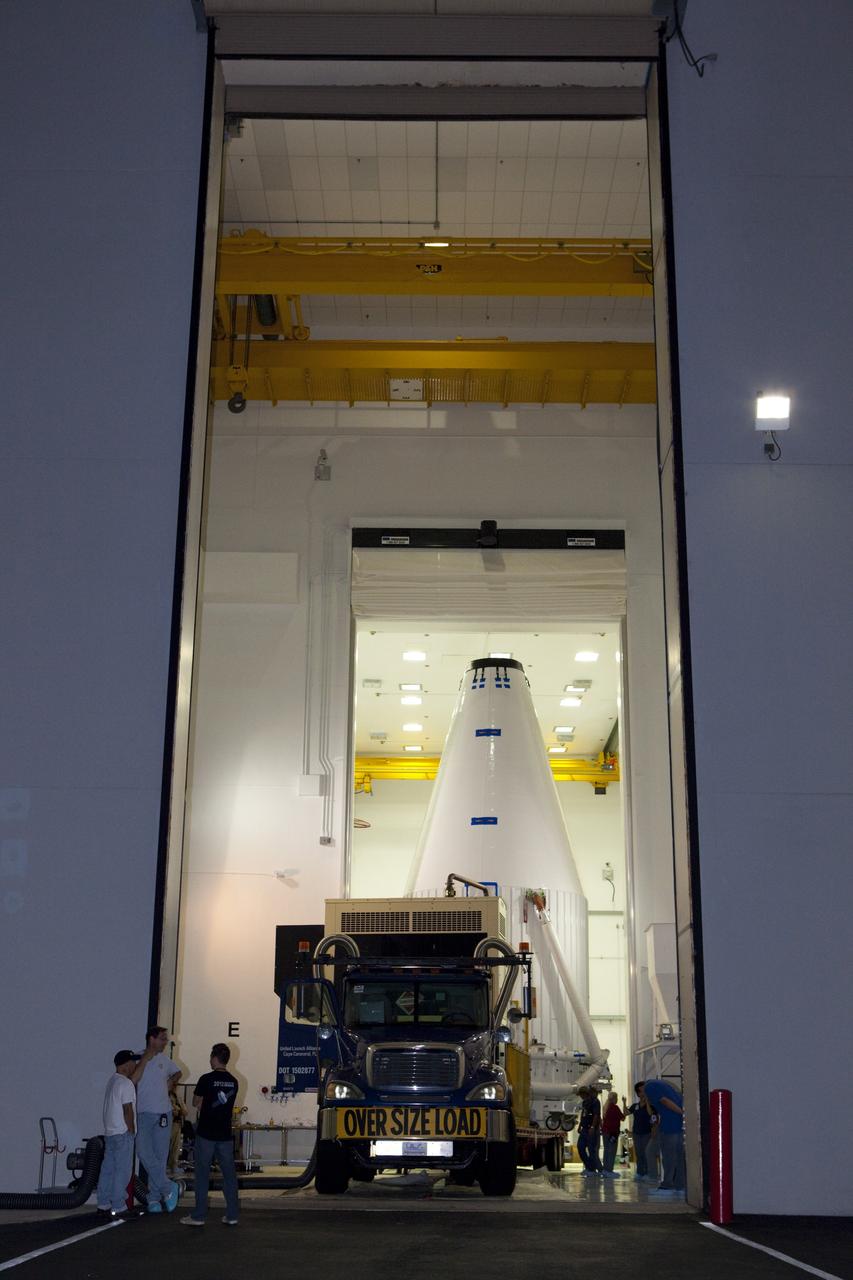
CAPE CANAVERAL, Fla. – The Radiation Belt Storm Probes, or RBSP, spacecraft are moved inside their payload fairing on the payload transporter from the Astrotech payload processing facility in Titusville, Fla. to Space Launch Complex-41 at Cape Canaveral Air Force Station. The fairing, which holds the twin RBSP spacecraft, will be lifted to the top of a United Launch Alliance Atlas V rocket for launch later in August. The two spacecraft are designed to study the Van Allen radiation belts in unprecedented detail. Photo credit: NASA/Dmitri Gerondidakis
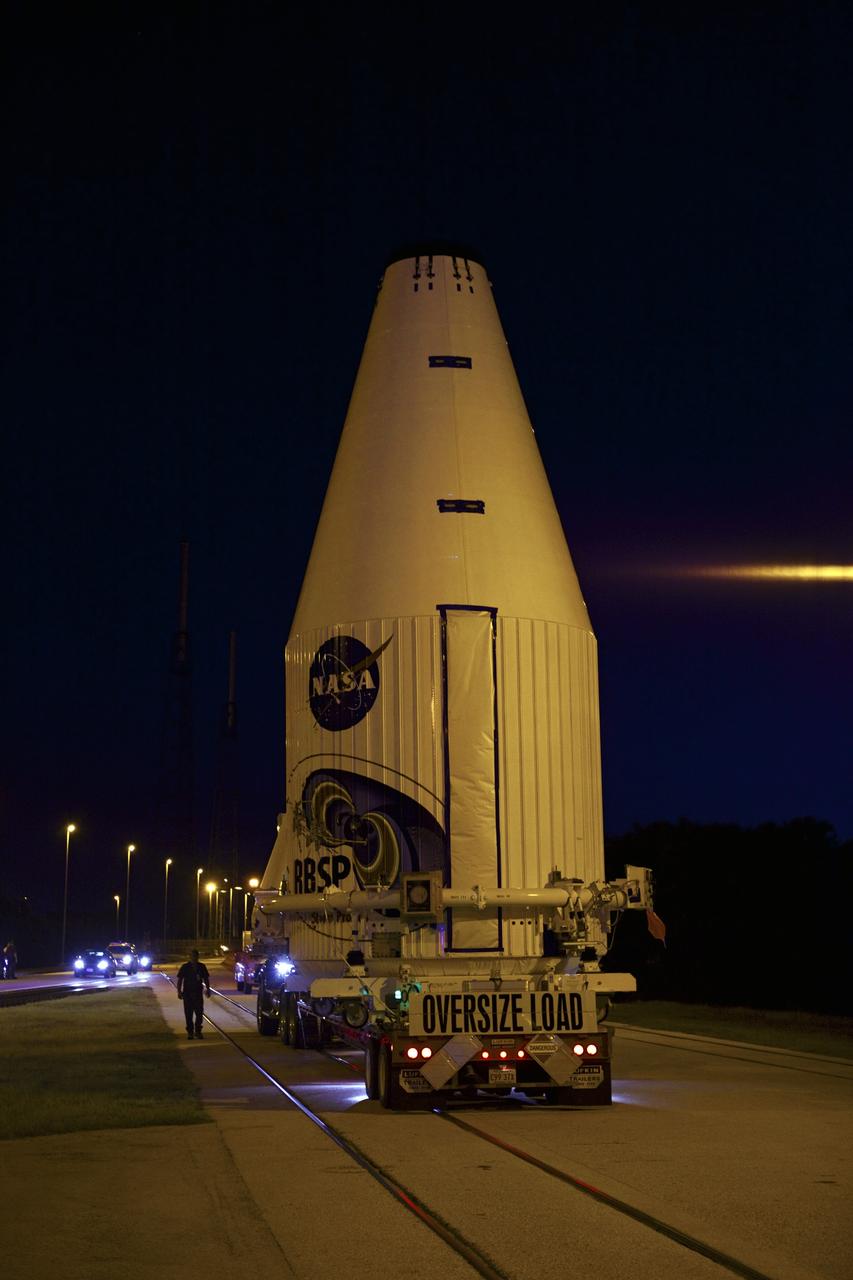
CAPE CANAVERAL, Fla. – The Radiation Belt Storm Probes, or RBSP, spacecraft are moved inside their payload fairing on the payload transporter from the Astrotech payload processing facility in Titusville, Fla. to Space Launch Complex-41 at Cape Canaveral Air Force Station. The fairing, which holds the twin RBSP spacecraft, will be lifted to the top of a United Launch Alliance Atlas V rocket for launch later in August. The two spacecraft are designed to study the Van Allen radiation belts in unprecedented detail. Photo credit: NASA/Dmitri Gerondidakis
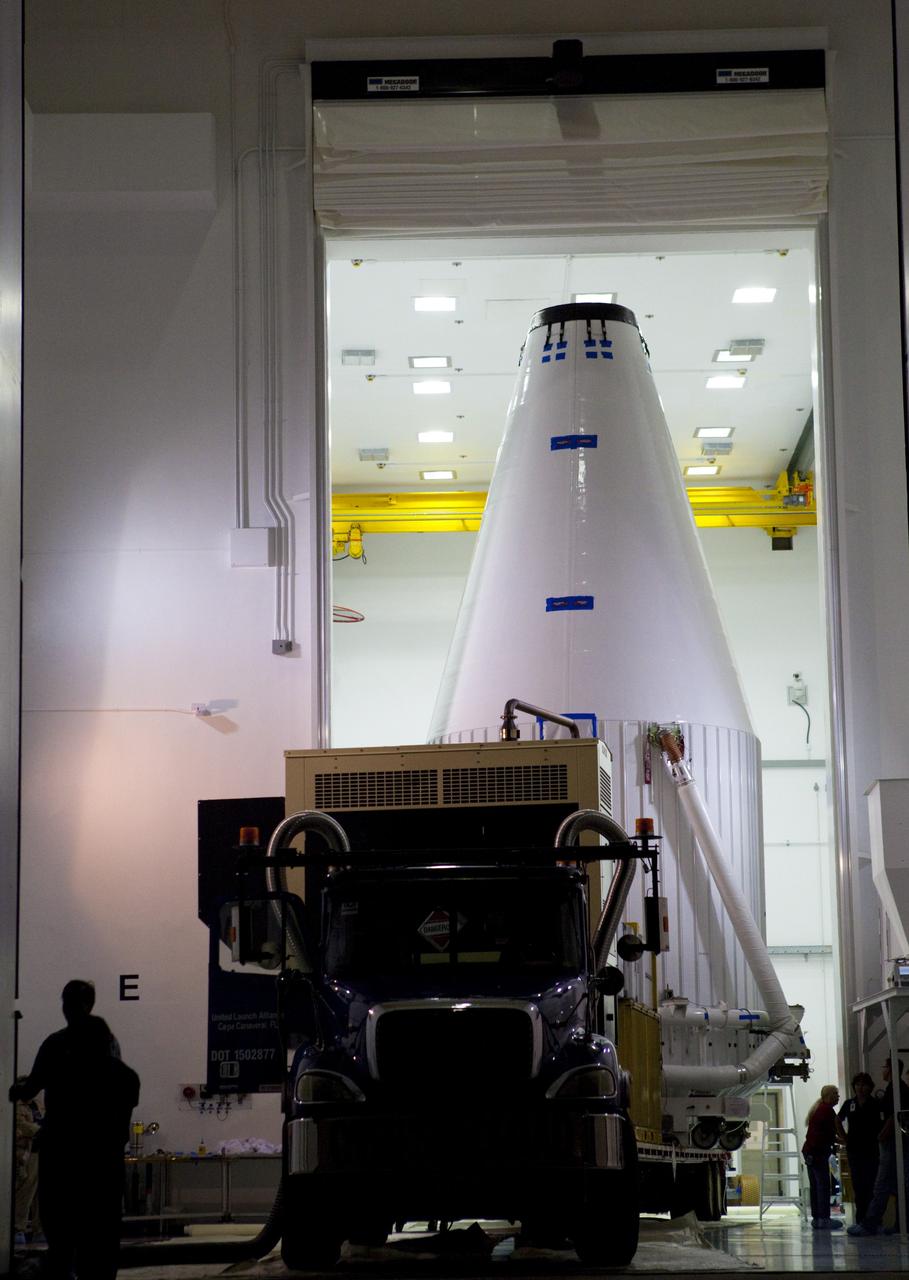
CAPE CANAVERAL, Fla. – The Radiation Belt Storm Probes, or RBSP, spacecraft are moved inside their payload fairing on the payload transporter from the Astrotech payload processing facility in Titusville, Fla. to Space Launch Complex-41 at Cape Canaveral Air Force Station. The fairing, which holds the twin RBSP spacecraft, will be lifted to the top of a United Launch Alliance Atlas V rocket for launch later in August. The two spacecraft are designed to study the Van Allen radiation belts in unprecedented detail. Photo credit: NASA/Dmitri Gerondidakis
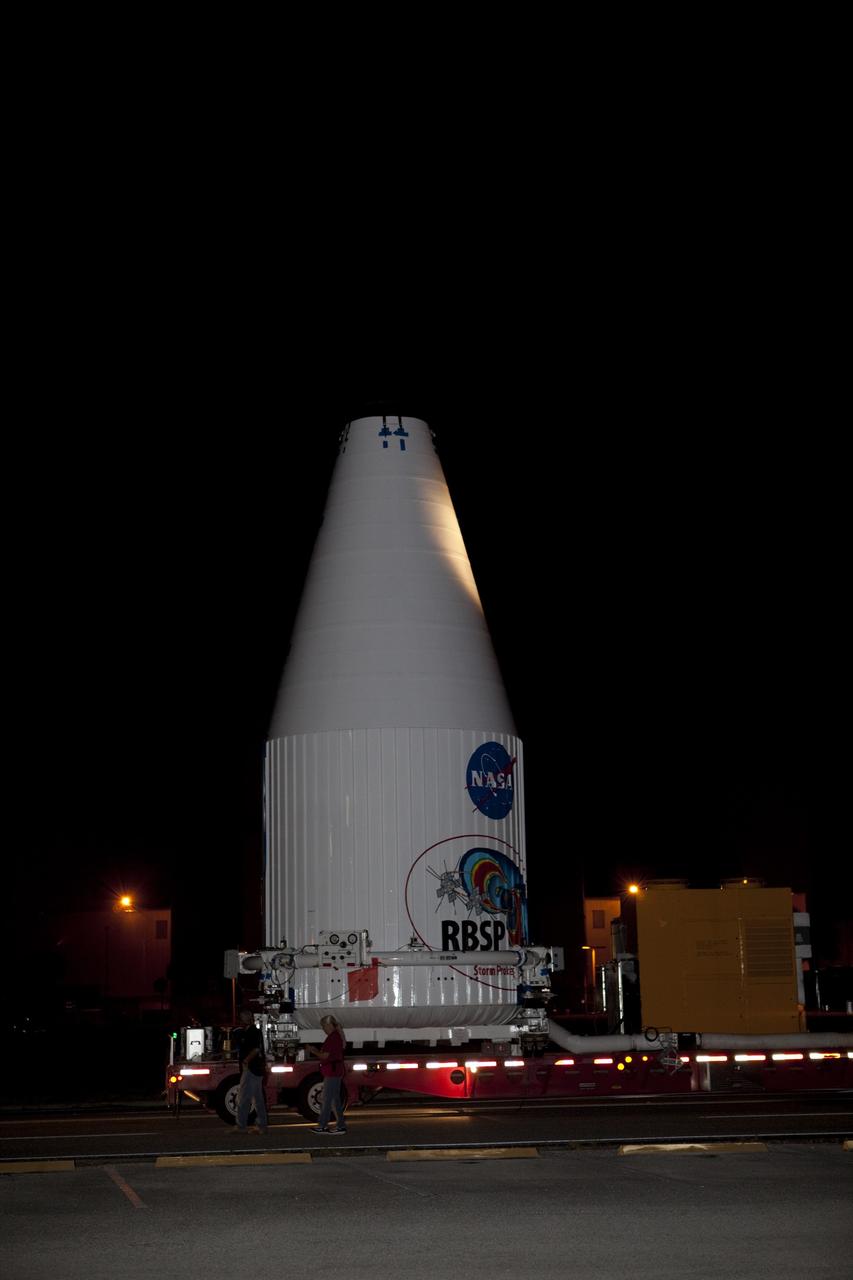
CAPE CANAVERAL, Fla. – The Radiation Belt Storm Probes, or RBSP, spacecraft are moved inside their payload fairing on the payload transporter from the Astrotech payload processing facility in Titusville, Fla. to Space Launch Complex-41 at Cape Canaveral Air Force Station. The fairing, which holds the twin RBSP spacecraft, will be lifted to the top of a United Launch Alliance Atlas V rocket for launch later in August. The two spacecraft are designed to study the Van Allen radiation belts in unprecedented detail. Photo credit: NASA/Dmitri Gerondidakis
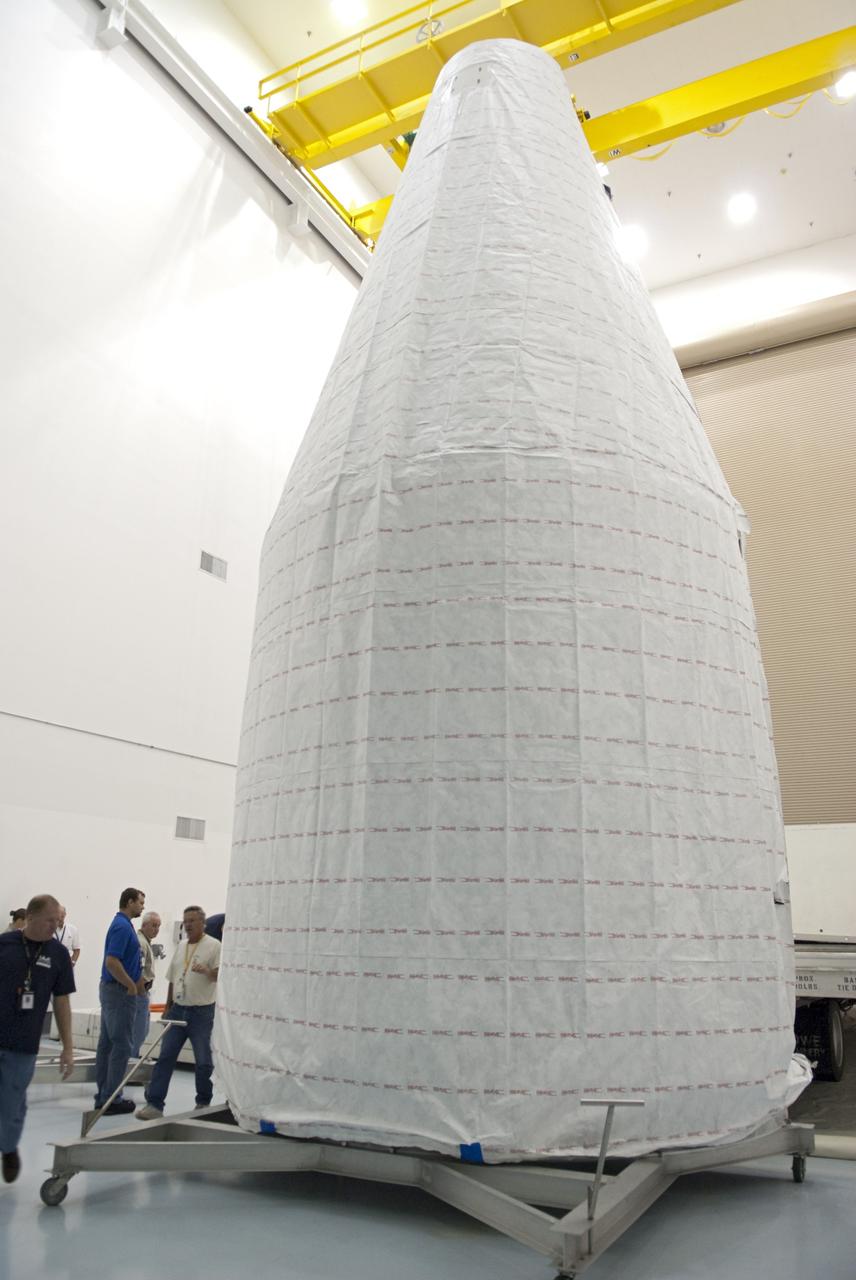
CAPE CANAVERAL, Fla. - Inside the Astrotech payload processing facility near NASA’s Kennedy Space Center in Florida, technicians offload, inspect and prepare to uncover the nose cone fairing for the Radiation Belt Storm Probes, or RBSP, spacecraft. The nose faring will house and protect the RBSP during liftoff aboard an Atlas V rocket. NASA’s RBSP mission will help us understand the sun’s influence on Earth and near-Earth space by studying the Earth’s radiation belts on various scales of space and time. RBSP will begin its mission of exploration of Earth’s Van Allen radiation belts and the extremes of space weather after its liftoff aboard a United Launch Alliance Atlas V from Space Launch Complex 41 at Cape Canaveral Air Force Station, Fla. Liftoff is targeted for Aug. 23, 2012. For more information, visit http://www.nasa.gov/rbsp. Photo credit: NASA/Charisse Nahser
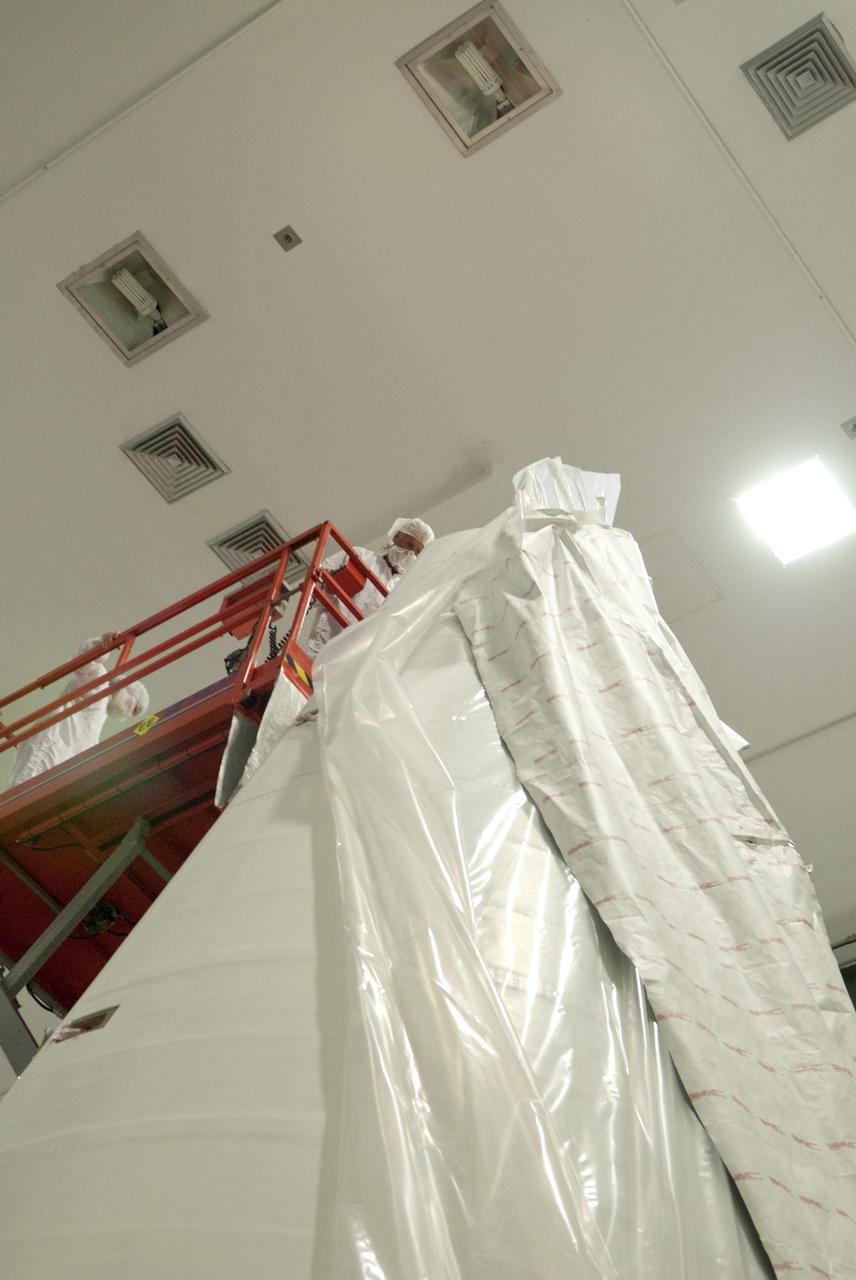
CAPE CANAVERAL, Fla. - Inside the Astrotech payload processing facility near NASA’s Kennedy Space Center in Florida, technicians use a lift to uncover and inspect the nose cone fairing for the Radiation Belt Storm Probes, or RBSP, spacecraft. The nose faring will house and protect the RBSP during liftoff aboard an Atlas V rocket.rocket. NASA’s RBSP mission will help us understand the sun’s influence on Earth and near-Earth space by studying the Earth’s radiation belts on various scales of space and time. RBSP will begin its mission of exploration of Earth’s Van Allen radiation belts and the extremes of space weather after its liftoff aboard a United Launch Alliance Atlas V from Space Launch Complex 41 at Cape Canaveral Air Force Station, Fla. Liftoff is targeted for Aug. 23, 2012. For more information, visit http://www.nasa.gov/rbsp. Photo credit: NASA/Charisse Nahser
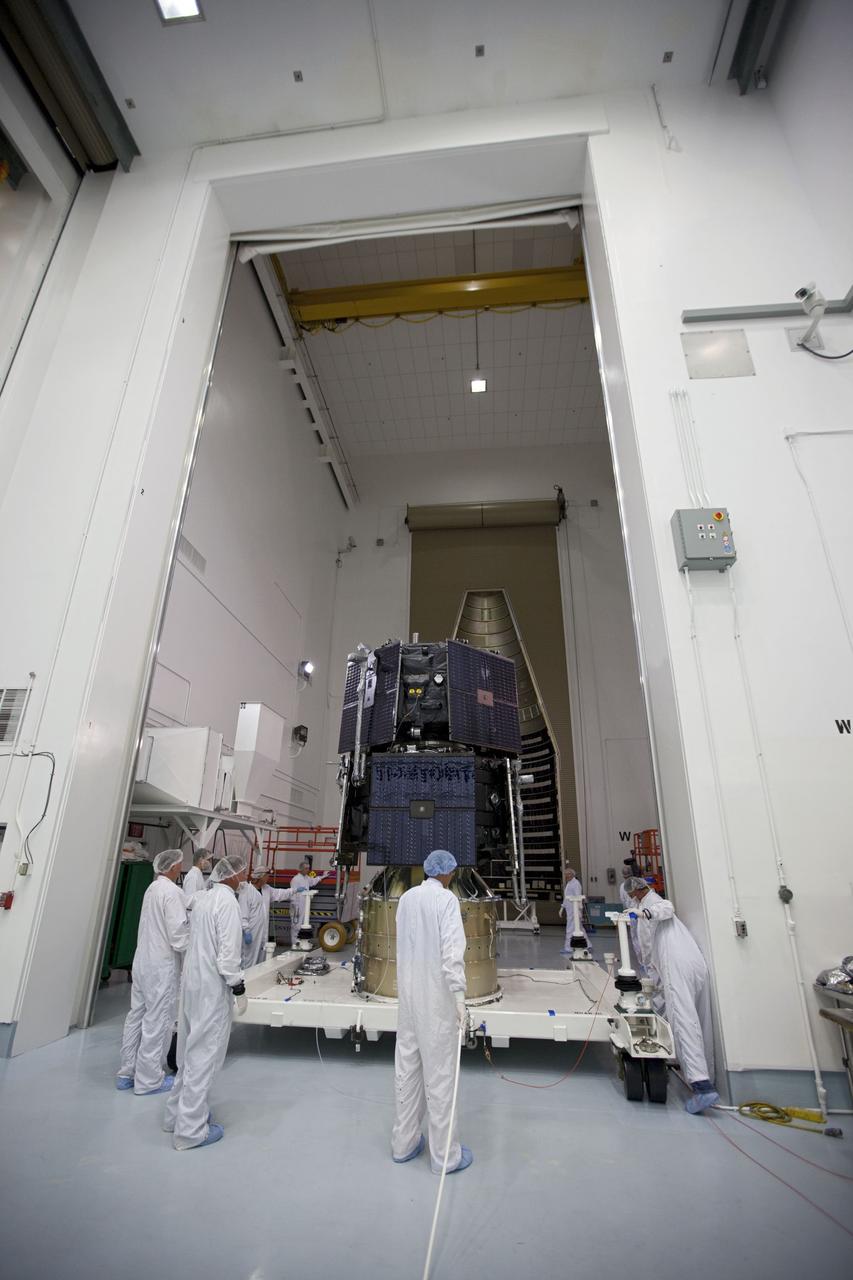
TITUSVILLE, Fla. - Inside the Astrotech payload processing facility in Titusville, Fla. near NASA’s Kennedy Space Center, technicians move the two Radiation Belt Storm Probes, or RBSP, spacecraft into position for encapsulation in the payload faring. The fairing will house and protect the RBSP during liftoff and flight through the atmosphere aboard an Atlas V rocket. NASA’s RBSP mission will help us understand the sun’s influence on Earth and near-Earth space by studying the Earth’s radiation belts on various scales of space and time. RBSP will begin its mission of exploration of Earth’s Van Allen radiation belts and the extremes of space weather after its liftoff aboard a United Launch Alliance Atlas V from Space Launch Complex 41 at Cape Canaveral Air Force Station, Fla. Liftoff is targeted for Aug. 23, 2012. For more information, visit http://www.nasa.gov/rbsp. Photo credit: NASA/ Kim Shiflett
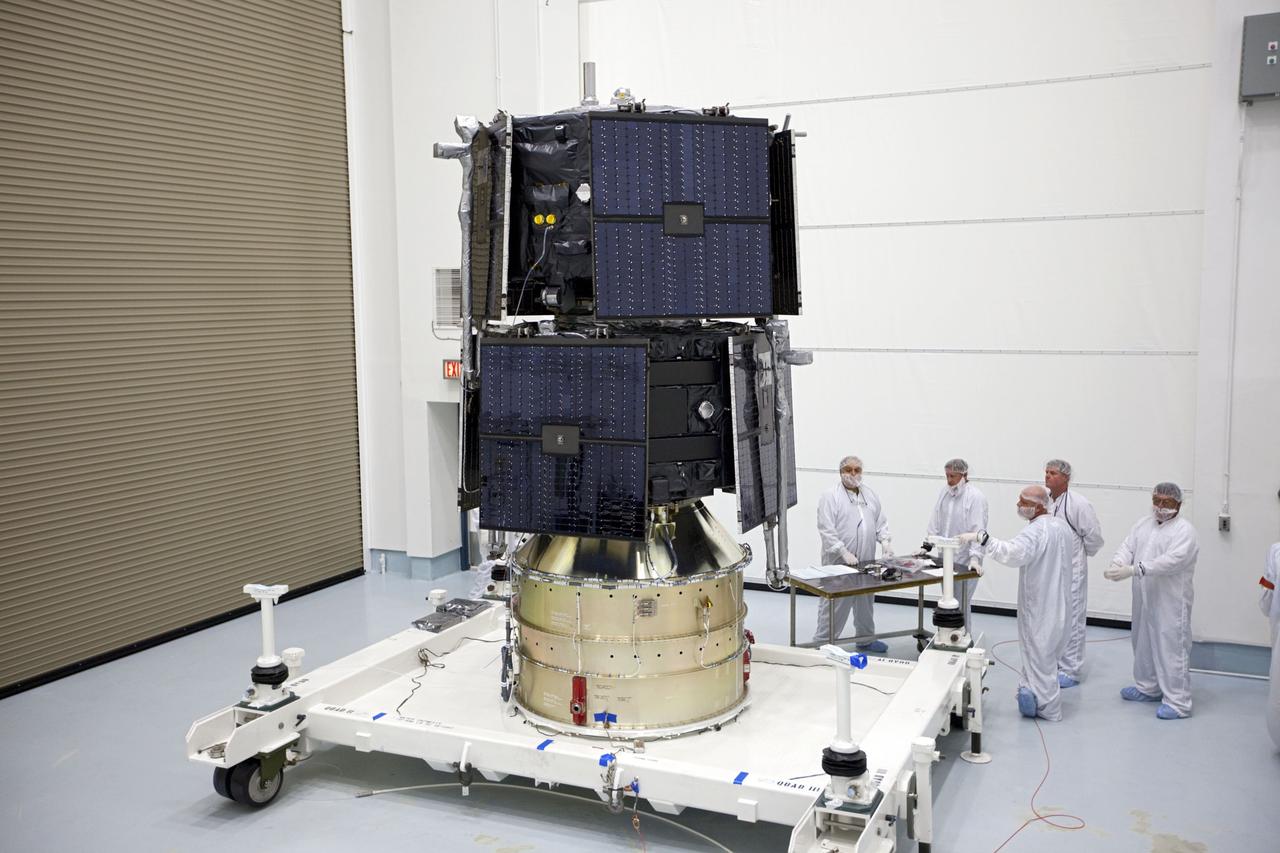
TITUSVILLE, Fla. - Inside the Astrotech payload processing facility in Titusville, Fla. near NASA’s Kennedy Space Center, technicians checkout the two Radiation Belt Storm Probes, or RBSP, spacecraft prior to vertical encapsulation in the payload faring. The fairing will house and protect the RBSP during liftoff and flight through the atmosphere aboard an Atlas V rocket. NASA’s RBSP mission will help us understand the sun’s influence on Earth and near-Earth space by studying the Earth’s radiation belts on various scales of space and time. RBSP will begin its mission of exploration of Earth’s Van Allen radiation belts and the extremes of space weather after its liftoff aboard a United Launch Alliance Atlas V from Space Launch Complex 41 at Cape Canaveral Air Force Station, Fla. Liftoff is targeted for Aug. 23, 2012. For more information, visit http://www.nasa.gov/rbsp. Photo credit: NASA/ Kim Shiflett
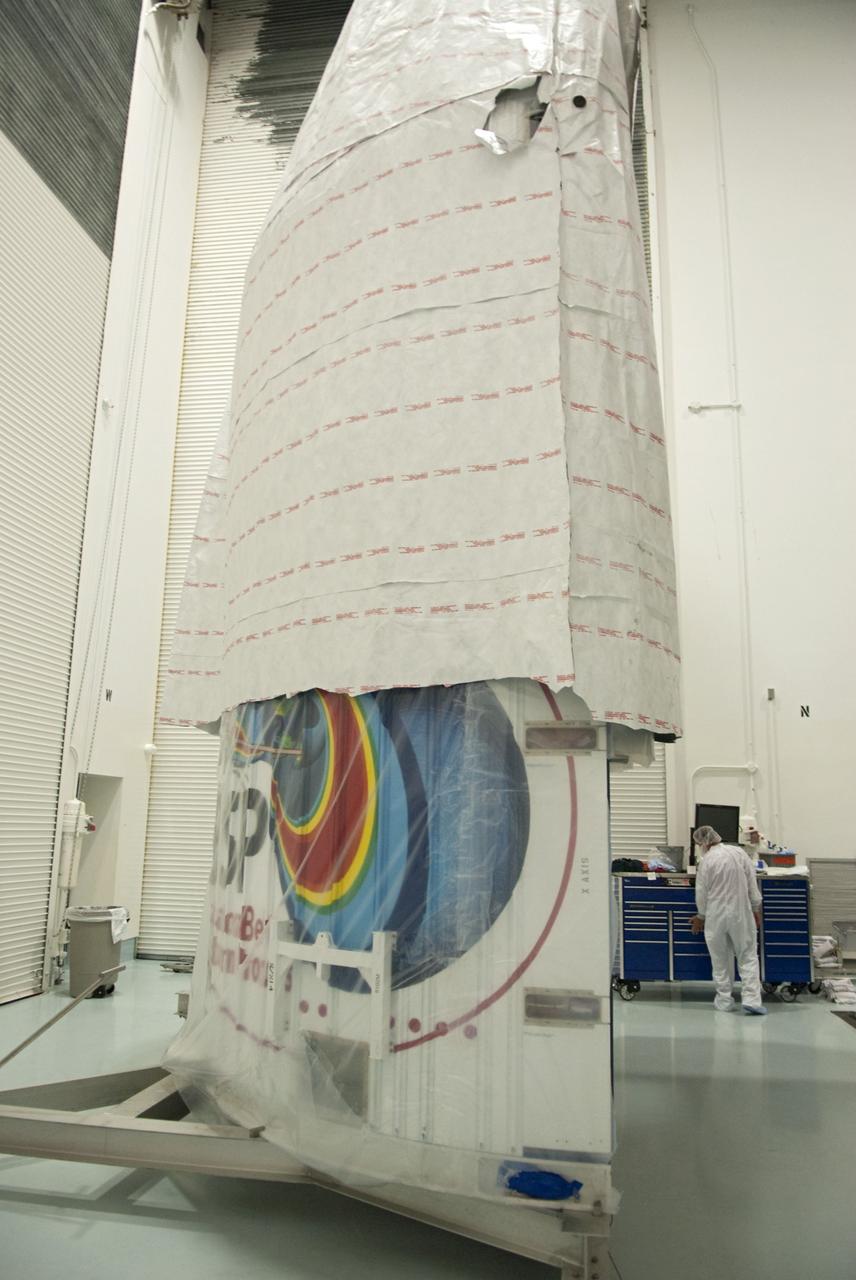
CAPE CANAVERAL, Fla. - Inside the Astrotech payload processing facility near NASA’s Kennedy Space Center in Florida, the nose cone fairing for the Radiation Belt Storm Probes, or RBSP, spacecraft is being uncovered for inspection. The nose faring will house and protect the RBSP during liftoff aboard an Atlas V rocket. NASA’s RBSP mission will help us understand the sun’s influence on Earth and near-Earth space by studying the Earth’s radiation belts on various scales of space and time. RBSP will begin its mission of exploration of Earth’s Van Allen radiation belts and the extremes of space weather after its liftoff aboard a United Launch Alliance Atlas V from Space Launch Complex 41 at Cape Canaveral Air Force Station, Fla. Liftoff is targeted for Aug. 23, 2012. For more information, visit http://www.nasa.gov/rbsp. Photo credit: NASA/Charisse Nahser
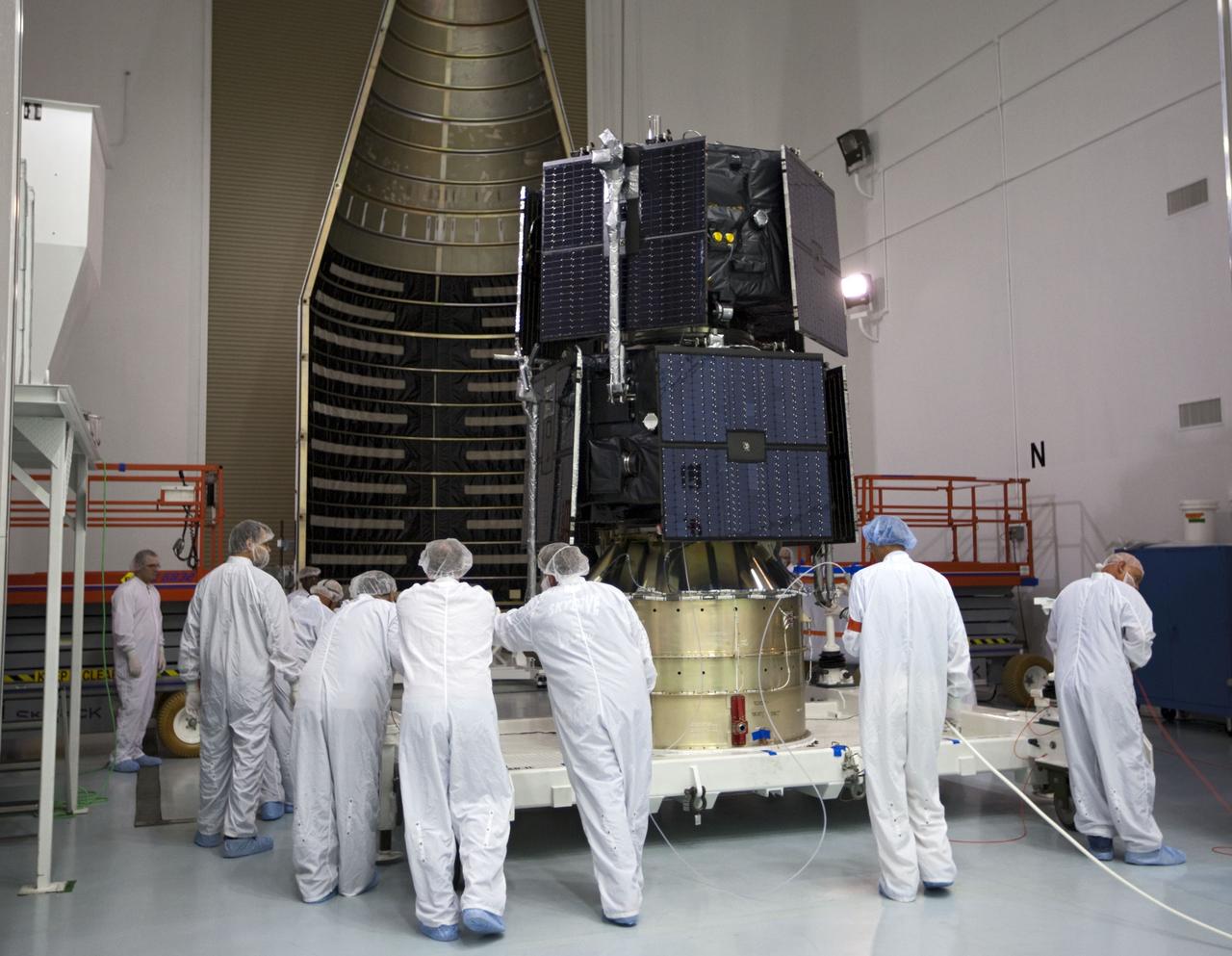
TITUSVILLE, Fla. - Inside the Astrotech payload processing facility in Titusville, Fla. near NASA’s Kennedy Space Center, technicians move the two Radiation Belt Storm Probes, or RBSP, spacecraft into position for encapsulation in the payload faring. The fairing will house and protect the RBSP during liftoff and flight through the atmosphere aboard an Atlas V rocket. NASA’s RBSP mission will help us understand the sun’s influence on Earth and near-Earth space by studying the Earth’s radiation belts on various scales of space and time. RBSP will begin its mission of exploration of Earth’s Van Allen radiation belts and the extremes of space weather after its liftoff aboard a United Launch Alliance Atlas V from Space Launch Complex 41 at Cape Canaveral Air Force Station, Fla. Liftoff is targeted for Aug. 23, 2012. For more information, visit http://www.nasa.gov/rbsp. Photo credit: NASA/ Kim Shiflett
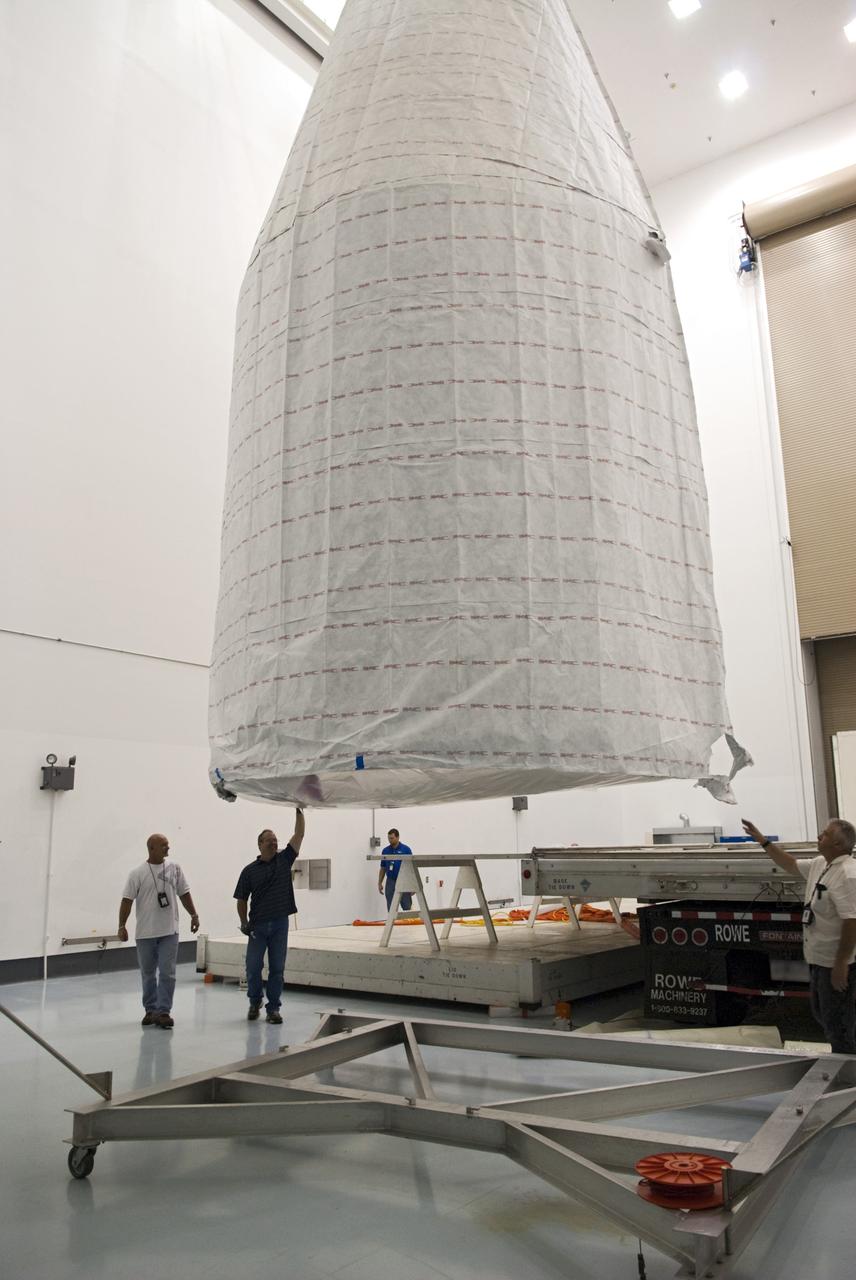
CAPE CANAVERAL, Fla. - Inside the Astrotech payload processing facility near NASA’s Kennedy Space Center in Florida, technicians offload, inspect and prepare to uncover the nose cone fairing for the Radiation Belt Storm Probes, or RBSP, spacecraft. The nose faring will house and protect the RBSP during liftoff aboard an Atlas V rocket. NASA’s RBSP mission will help us understand the sun’s influence on Earth and near-Earth space by studying the Earth’s radiation belts on various scales of space and time. RBSP will begin its mission of exploration of Earth’s Van Allen radiation belts and the extremes of space weather after its liftoff aboard a United Launch Alliance Atlas V from Space Launch Complex 41 at Cape Canaveral Air Force Station, Fla. Liftoff is targeted for Aug. 23, 2012. For more information, visit http://www.nasa.gov/rbsp. Photo credit: NASA/Charisse Nahser

TITUSVILLE, Fla. - Inside the Astrotech payload processing facility in Titusville, Fla. near NASA’s Kennedy Space Center, technicians prepare the two Radiation Belt Storm Probes, or RBSP, spacecraft for encapsulation in the payload faring. The fairing will house and protect the RBSP during liftoff and flight through the atmosphere aboard an Atlas V rocket. NASA’s RBSP mission will help us understand the sun’s influence on Earth and near-Earth space by studying the Earth’s radiation belts on various scales of space and time. RBSP will begin its mission of exploration of Earth’s Van Allen radiation belts and the extremes of space weather after its liftoff aboard a United Launch Alliance Atlas V from Space Launch Complex 41 at Cape Canaveral Air Force Station, Fla. Liftoff is targeted for Aug. 23, 2012. For more information, visit http://www.nasa.gov/rbsp. Photo credit: NASA/ Kim Shiflett
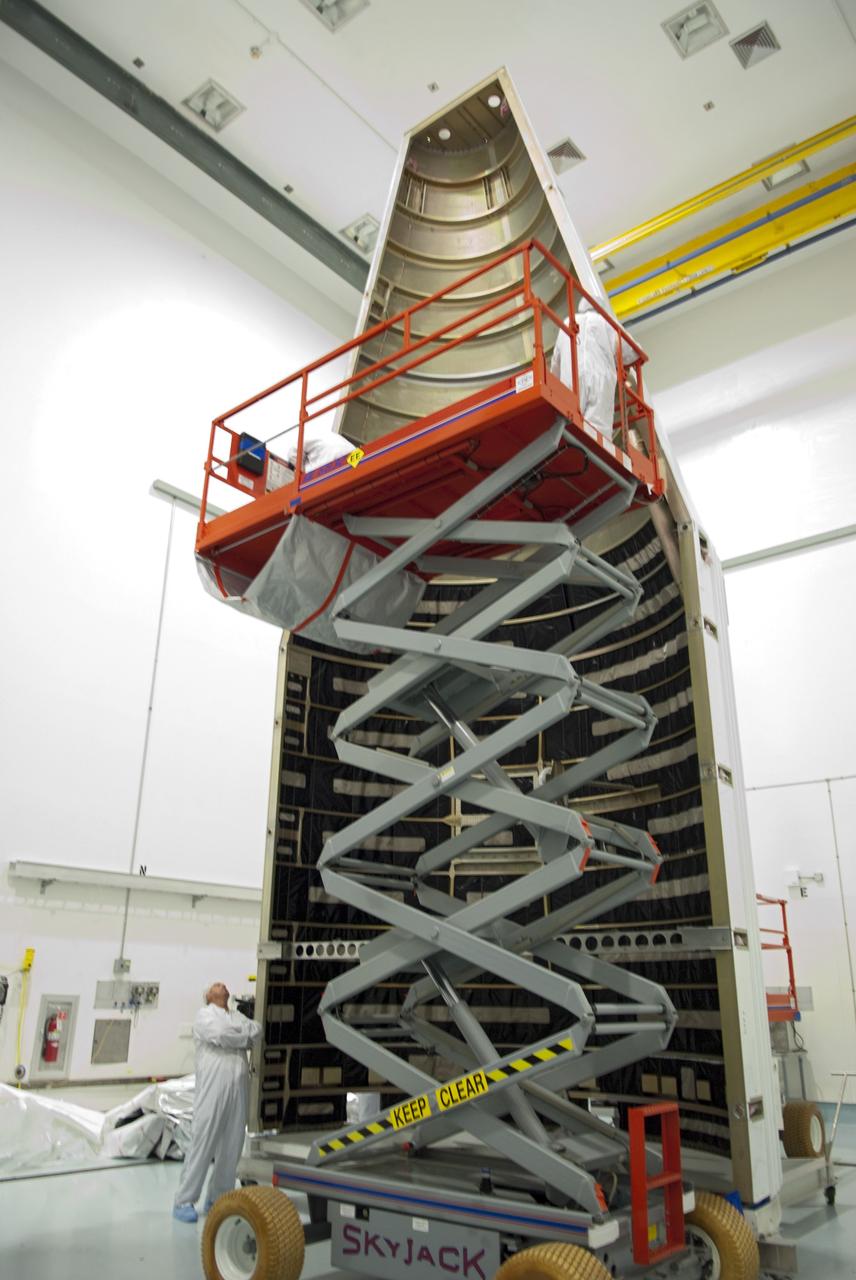
CAPE CANAVERAL, Fla. - Inside the Astrotech payload processing facility near NASA’s Kennedy Space Center in Florida, technicians use a lift to inspect the nose cone fairing for the Radiation Belt Storm Probes, or RBSP, spacecraft. The nose faring will house and protect the RBSP during liftoff aboard an Atlas V rocket. NASA’s RBSP mission will help us understand the sun’s influence on Earth and near-Earth space by studying the Earth’s radiation belts on various scales of space and time. RBSP will begin its mission of exploration of Earth’s Van Allen radiation belts and the extremes of space weather after its liftoff aboard a United Launch Alliance Atlas V from Space Launch Complex 41 at Cape Canaveral Air Force Station, Fla. Liftoff is targeted for Aug. 23, 2012. For more information, visit http://www.nasa.gov/rbsp. Photo credit: NASA/Charisse Nahser