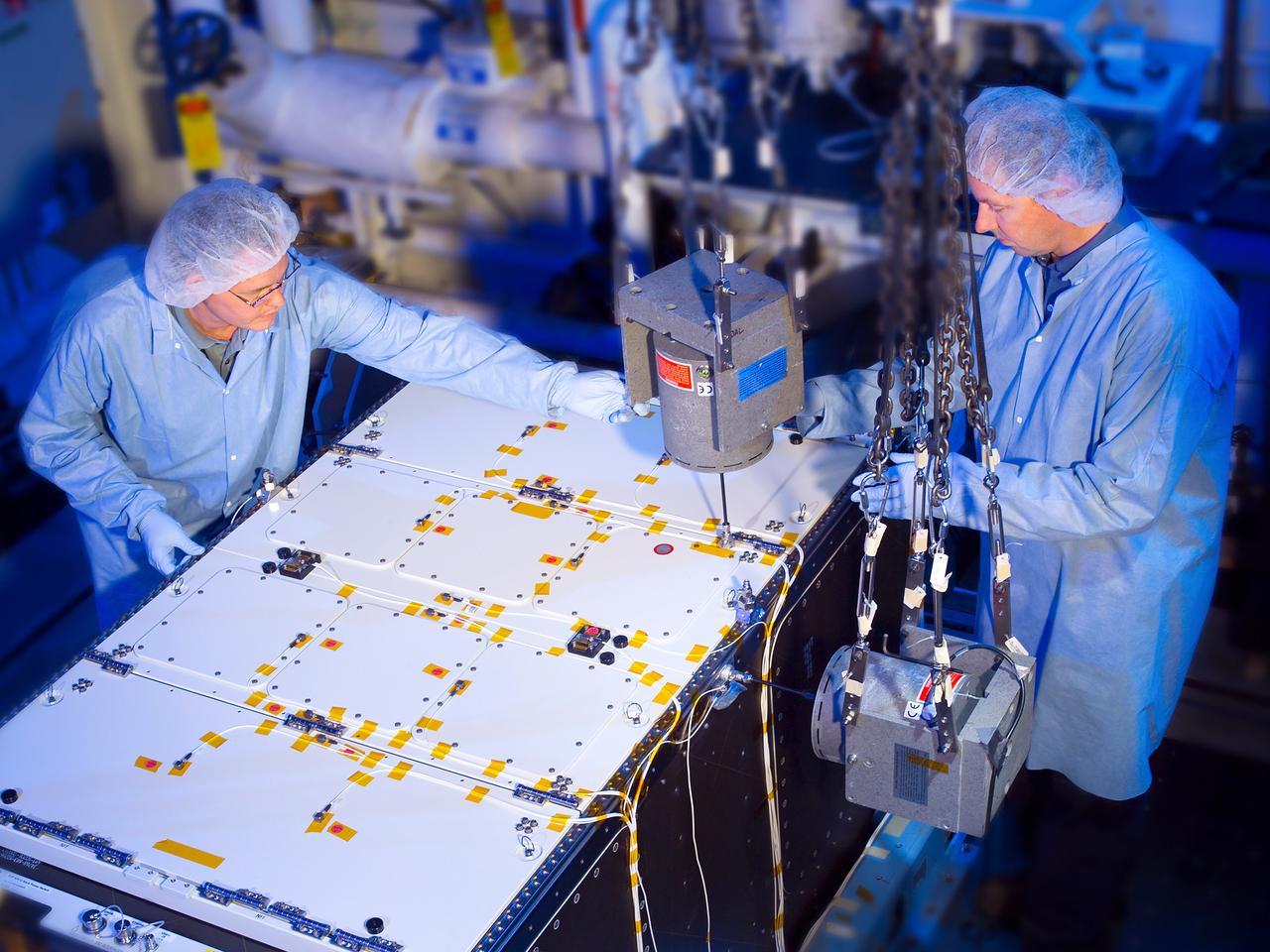
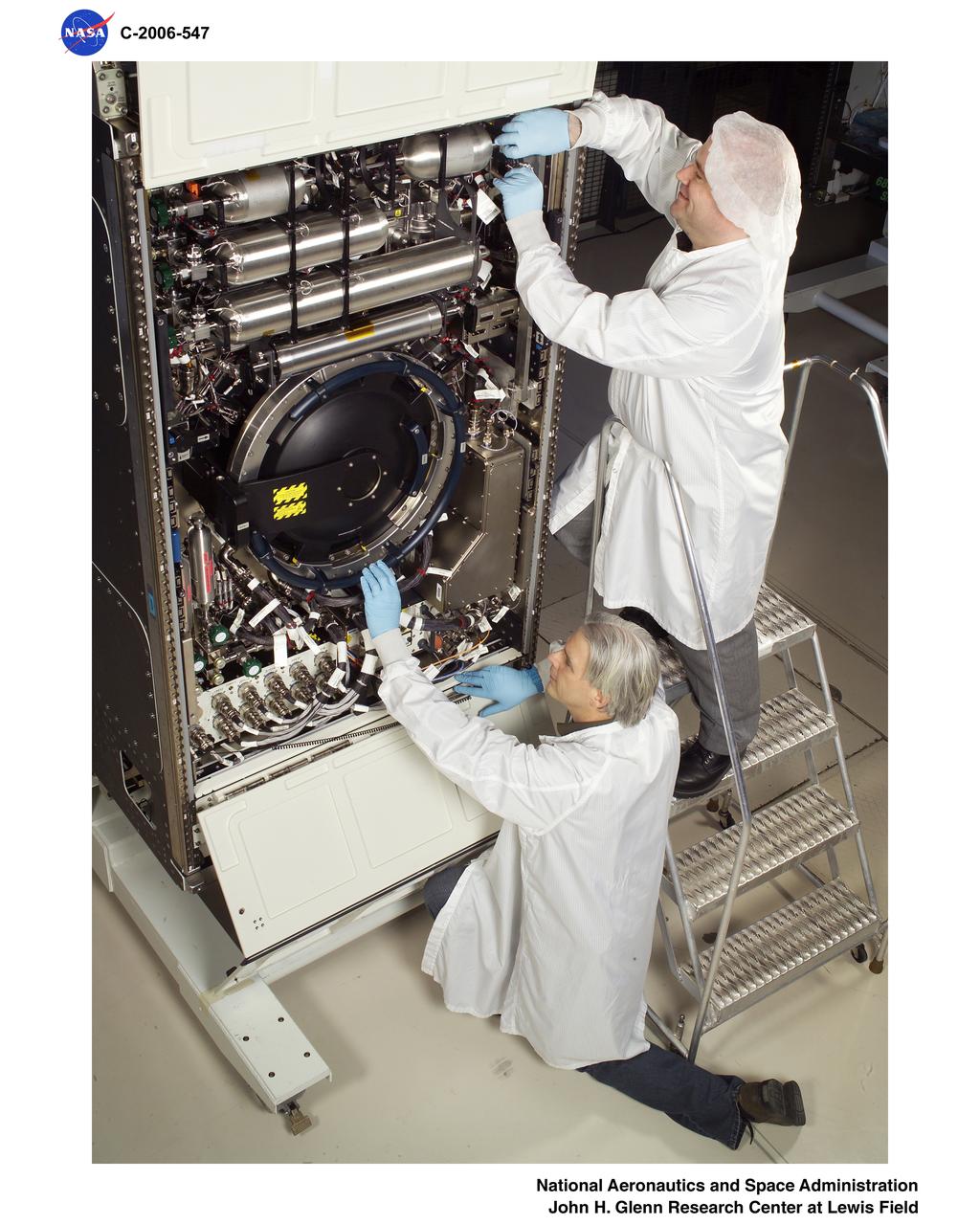
Fluids and Combustion Facility (FCF), Combustion Integration Rack (CIR) during testing in the Structural Dynamics Laboratory (SDL). The Fluids and Combustion Facility (FCF) is a set of two International Space Station (ISS) research facilities designed to support physical and biological experiments in support of technology development and validation in space. The FCF consists of two modular, reconfigurable racks called the Combustion Integration Rack (CIR) and the Fluids Integration Rack (FIR). The CIR and FIR were developed at NASAʼs Glenn Research Center.
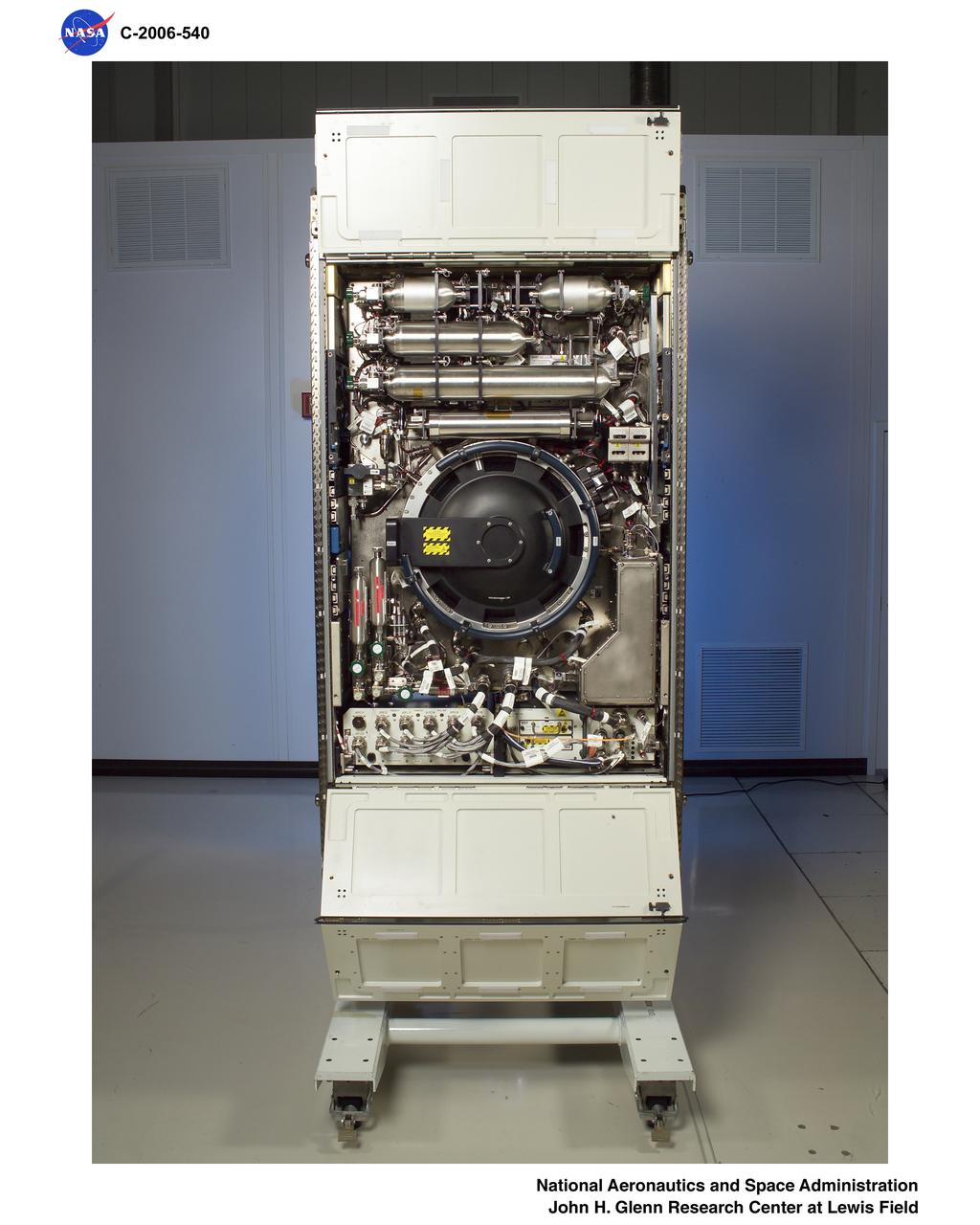
Combustion Integrated Rack (CIR)
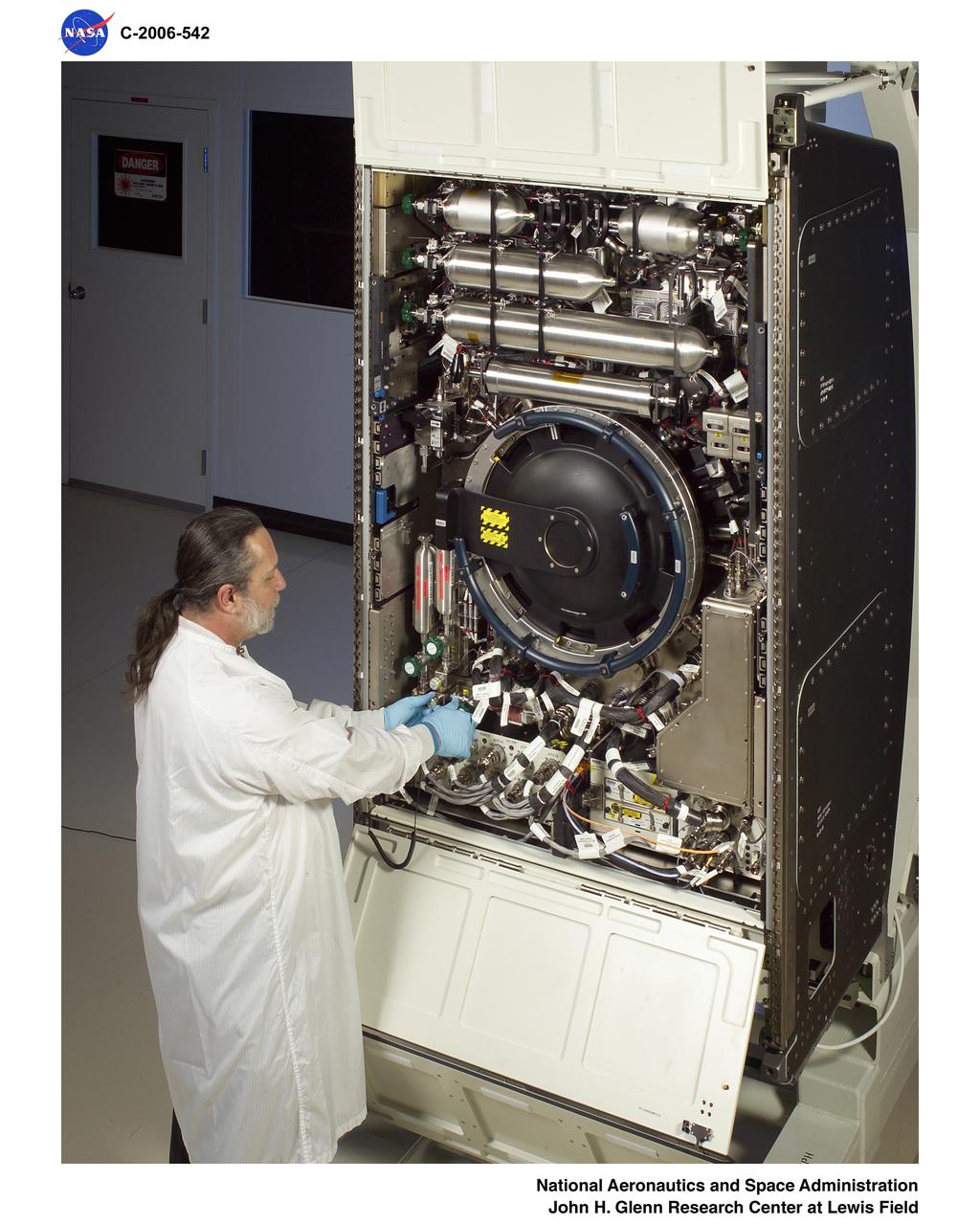
Combustion Integrated Rack (CIR)
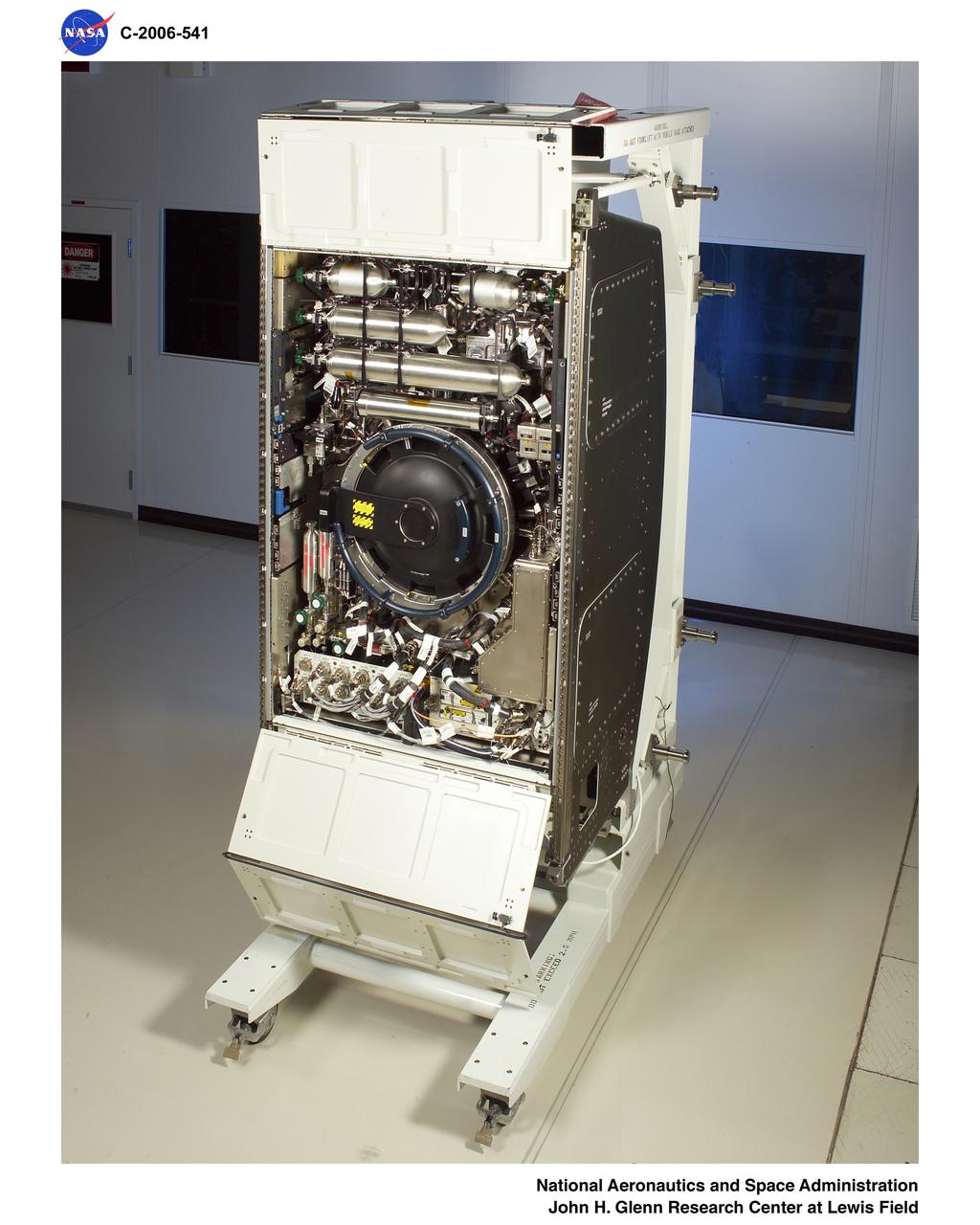
Combustion Integrated Rack (CIR)
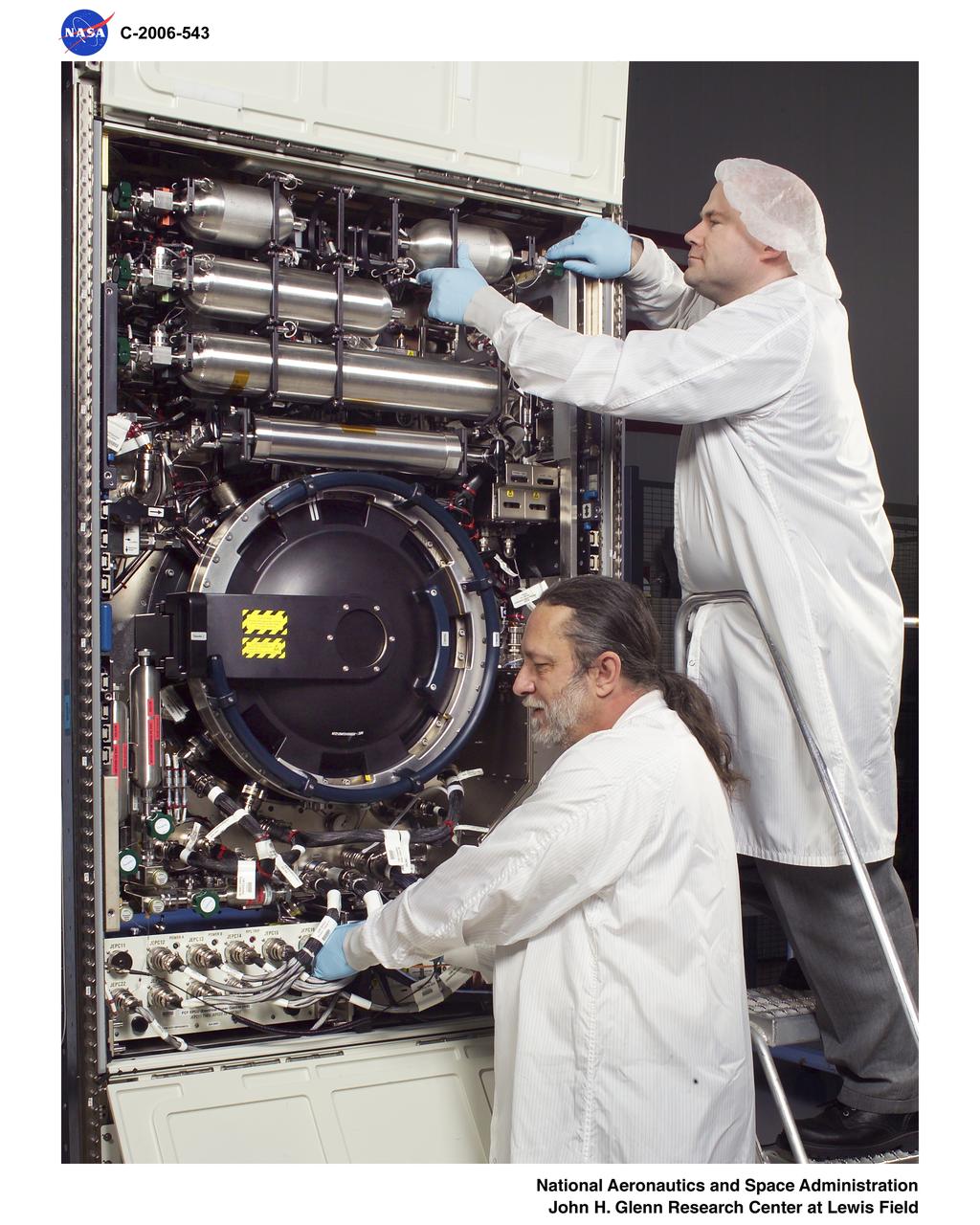
Combustion Integrated Rack (CIR)
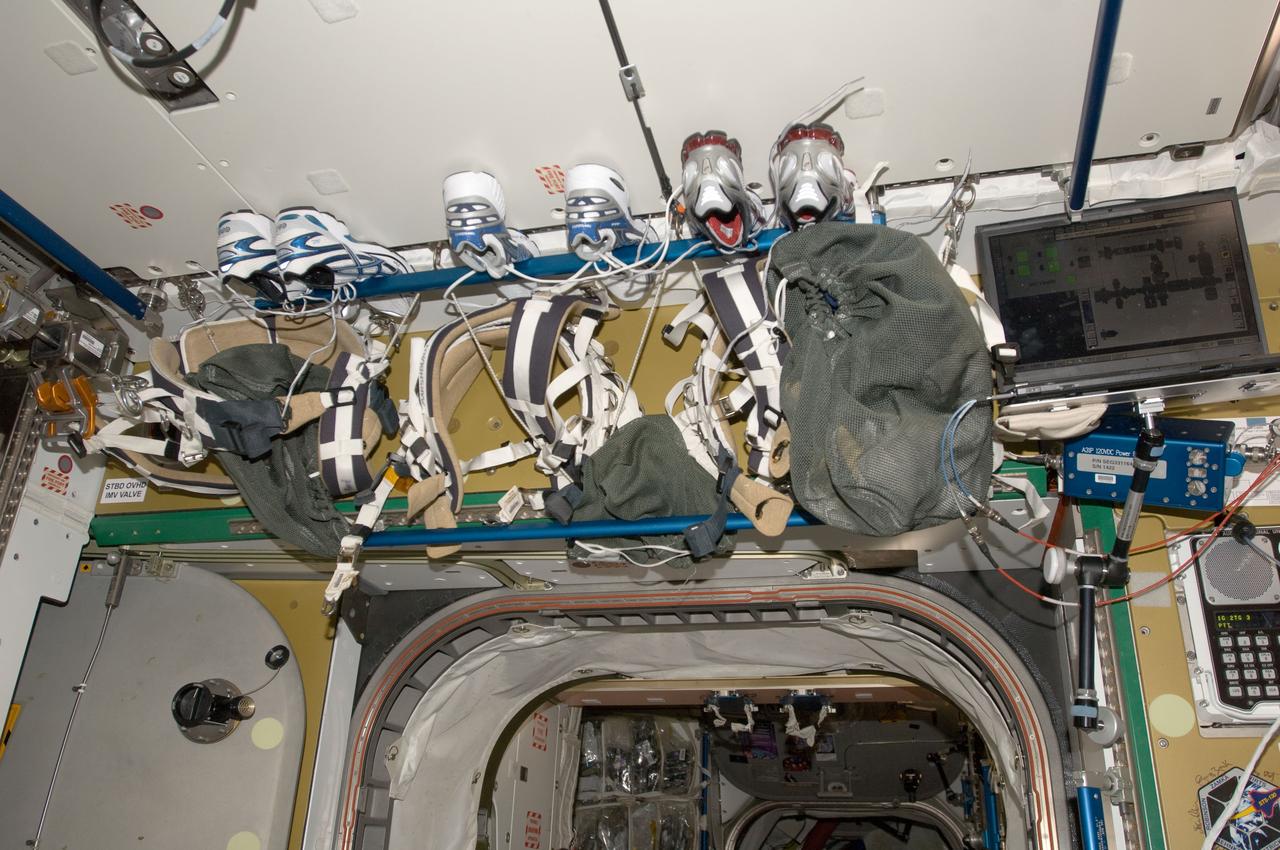
View of Avionics Rack 2 Closeout Panel with tennis shoes,in the Node 3. Photo was taken during Expedition 34.
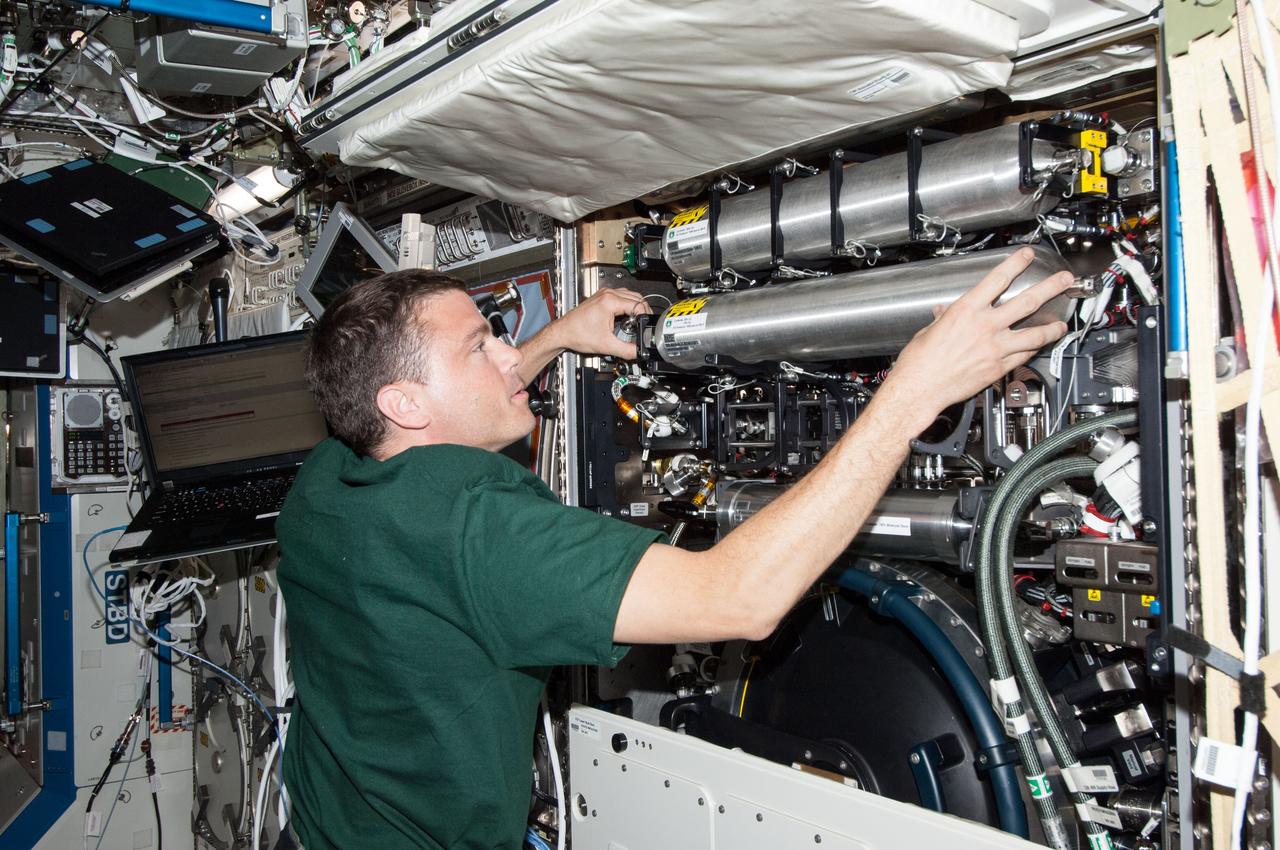
ISS040-E-008521 (9 June 2014) --- NASA astronaut Reid Wiseman, Expedition 40 flight engineer, removes and replaces a new manifold bottle in the Combustion Integration Rack (CIR) in the Destiny laboratory of the International Space Station.

"NASA astronaut Karen Nyberg,Expedition 36 flight engineer,works with the Combustion Integrated Rack (CIR) Alignment Guide Removal.
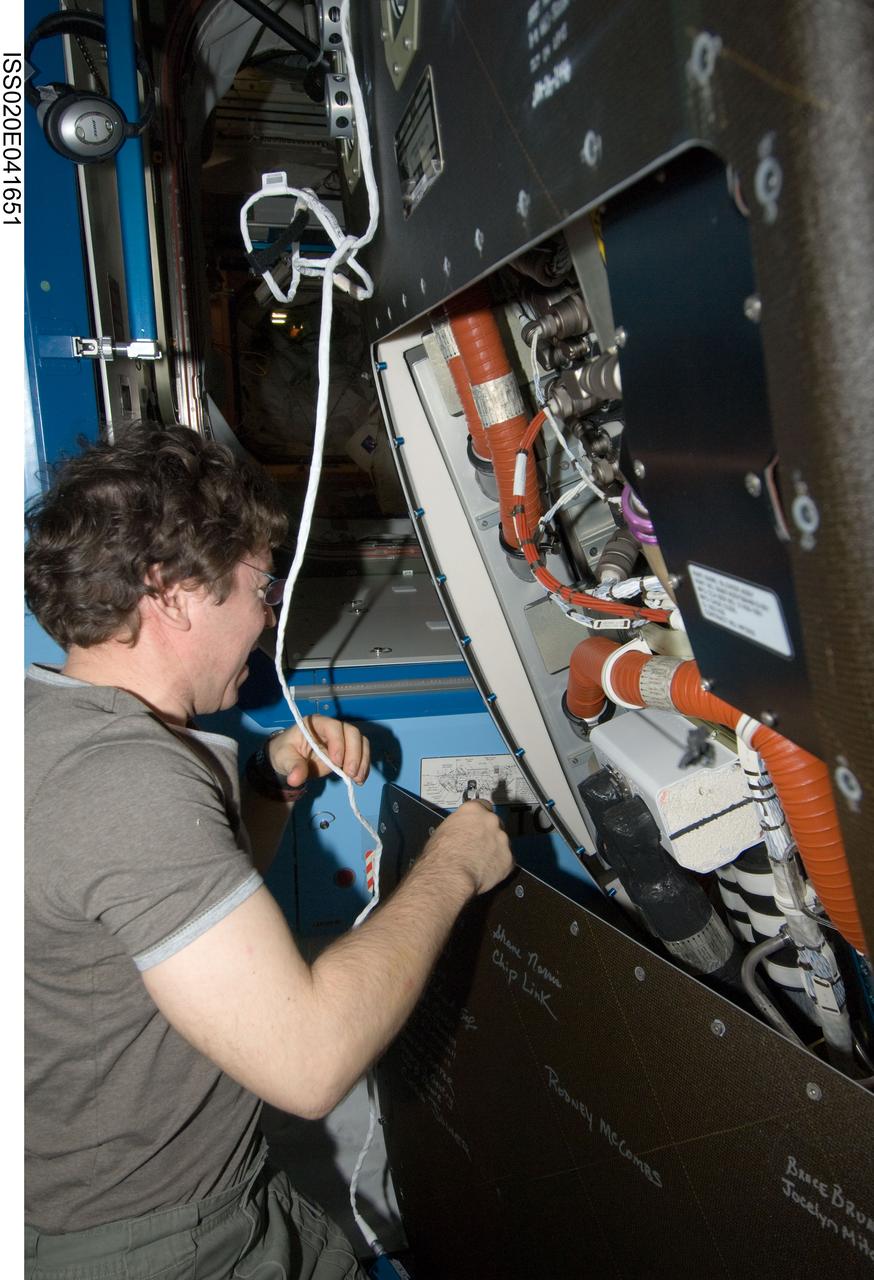
ISS020-E-041651 (22 Sept. 2009) --- NASA astronaut Michael Barratt works with the Atmosphere Revitalization System (ARS) rack in the Destiny laboratory of the International Space Station. Barratt, Canadian Space Agency astronaut Robert Thirsk (out of frame) and European Space Agency astronaut Frank De Winne (out of frame), all Expedition 20 flight engineers, spent several hours with the extensive dual-rack swap/install activity, to move Destiny?s ARS rack to the Kibo laboratory and install in Destiny in its place the newly-delivered ARS rack for Node-3.
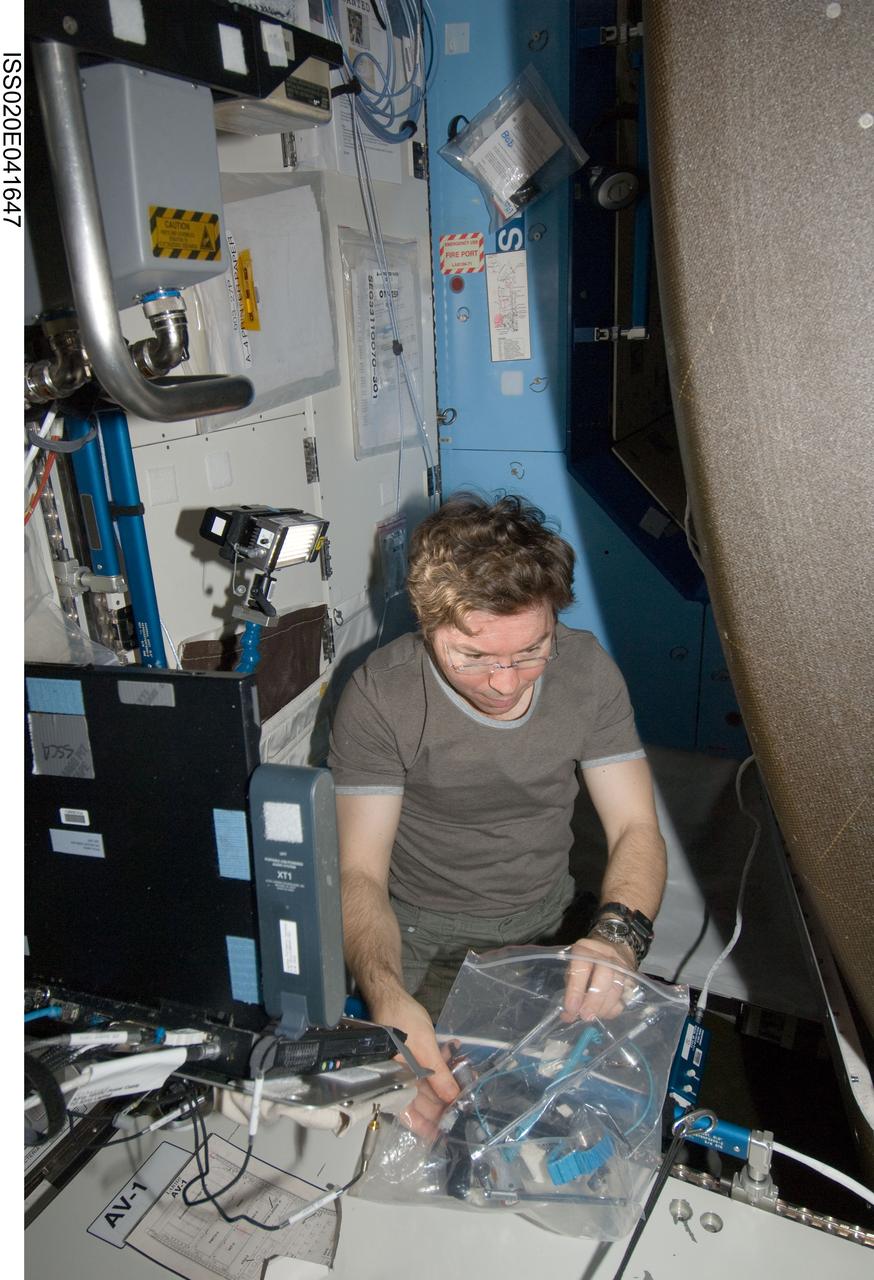
ISS020-E-041647 (22 Sept. 2009) --- NASA astronaut Michael Barratt works with the Atmosphere Revitalization System (ARS) rack in the Destiny laboratory of the International Space Station. Barratt, Canadian Space Agency astronaut Robert Thirsk (out of frame) and European Space Agency astronaut Frank De Winne (out of frame), all Expedition 20 flight engineers, spent several hours with the extensive dual-rack swap/install activity, to move Destiny?s ARS rack to the Kibo laboratory and install in Destiny in its place the newly-delivered ARS rack for Node-3.
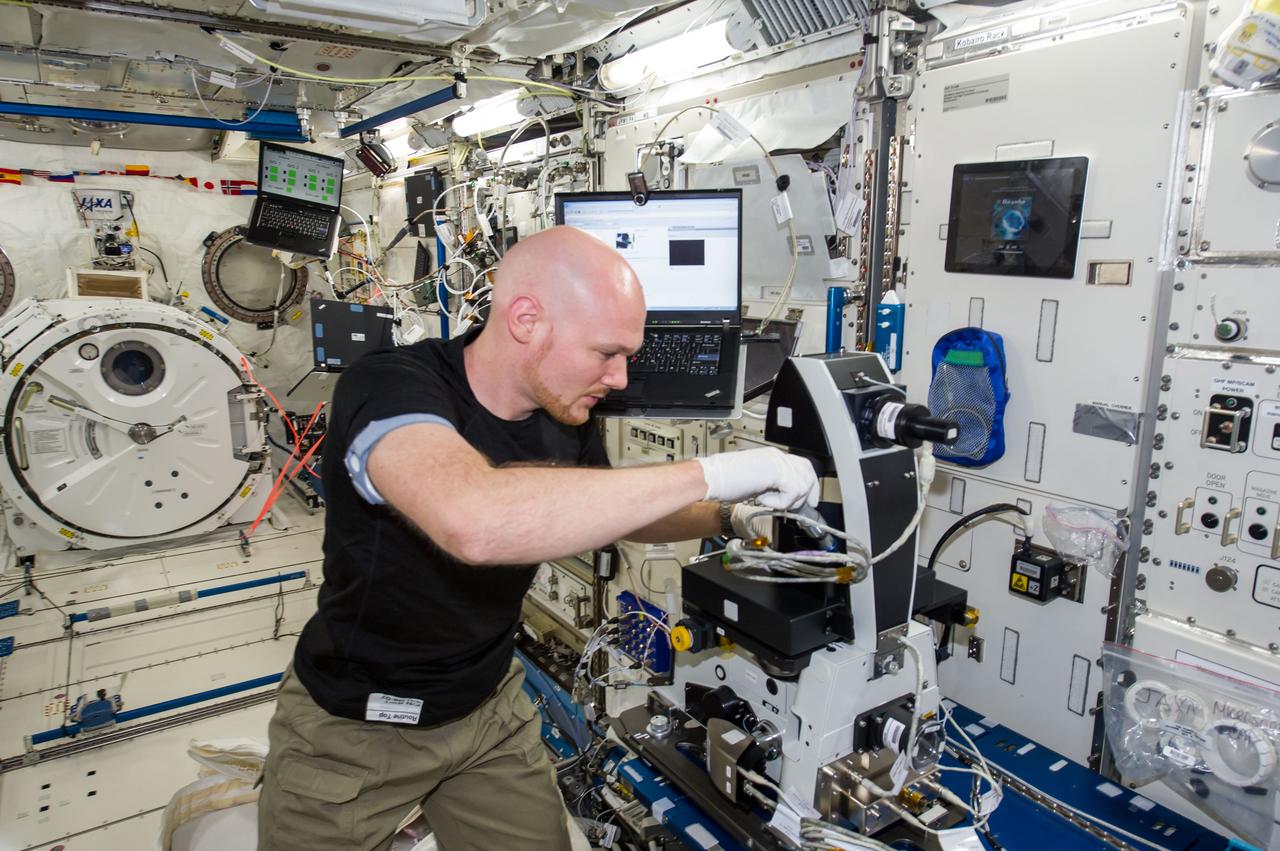
European Space Agency astronaut Alexander Gerst,Expedition 40 flight engineer,installs a microscope for the Cell Mechanosensing-2 experiment in the Kibo laboratory of the International Space Station. The Japanese experiment,which is conducted in Kibos Kobairo rack,seeks to identify gravity sensors in cells that may change the expression of key proteins and genes and allowing muscles to atrophy in microgravity.
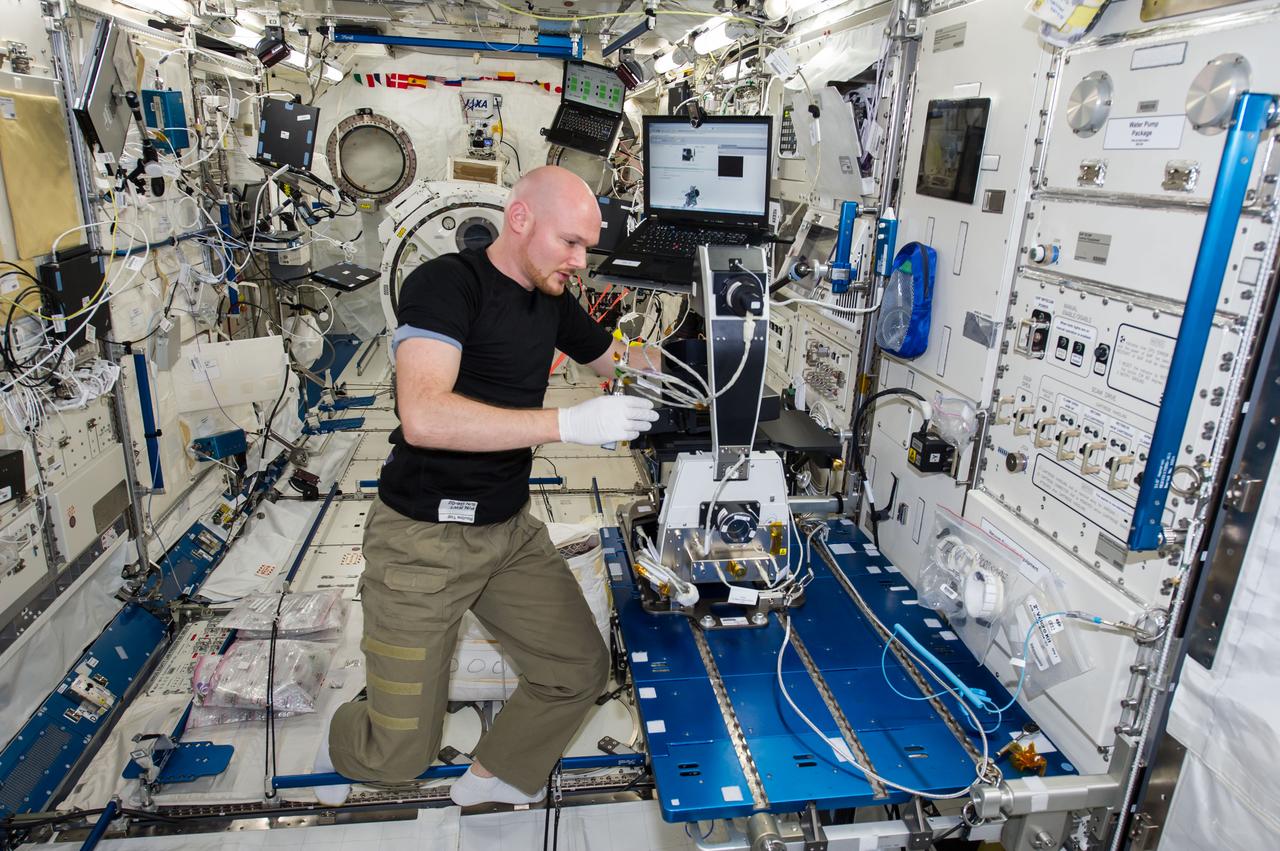
ISS040-E-130233 (9 Sept. 2014) --- European Space Agency astronaut Alexander Gerst, Expedition 40 flight engineer, installs a microscope for the Cell Mechanosensing-2 experiment in the Kibo laboratory of the International Space Station. The Japanese experiment, which is conducted in Kibo’s Kobairo rack, seeks to identify gravity sensors in cells that may change the expression of key proteins and genes and allowing muscles to atrophy in microgravity.
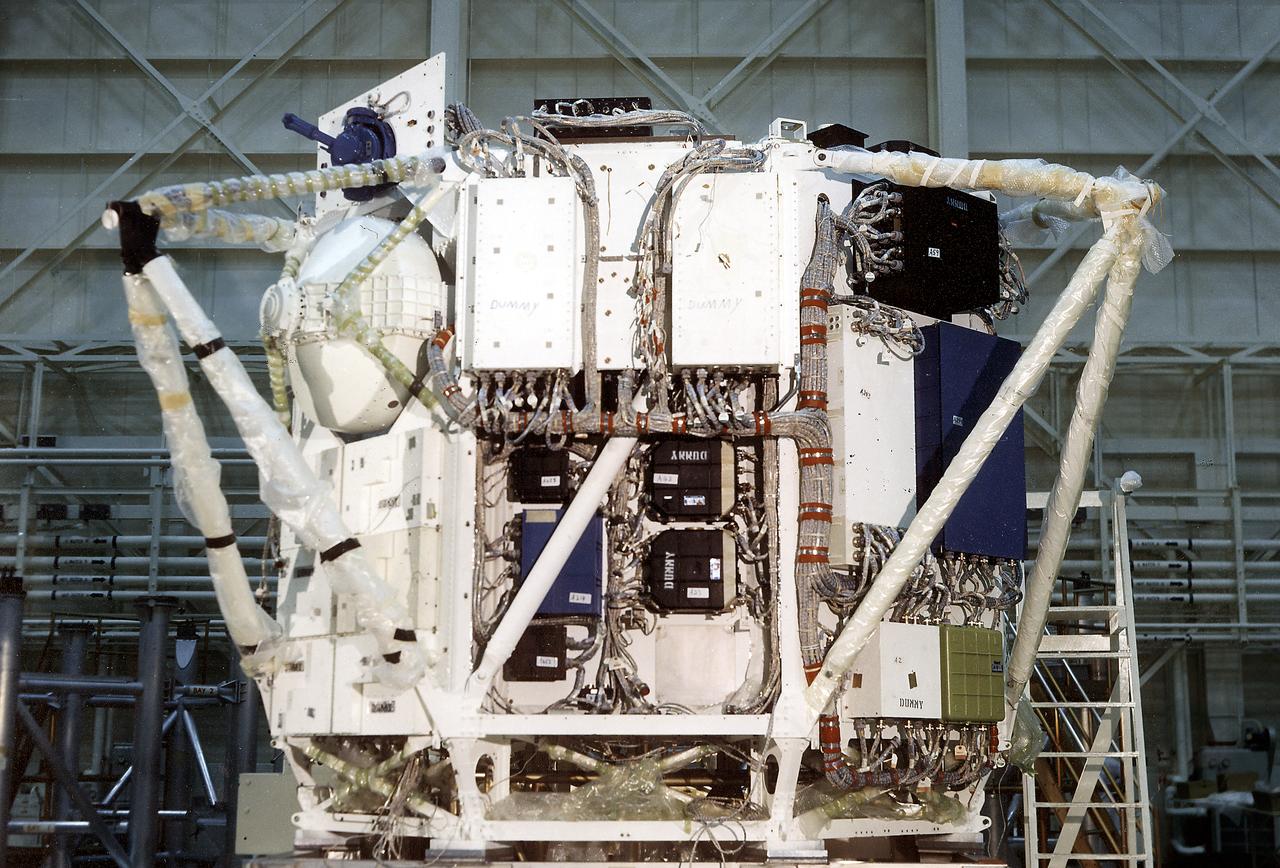
The Apollo Telescope Mount (ATM) was designed and developed by the Marshall Space Flight Center and served as the primary scientific instrument unit aboard Skylab (1973-1979). The ATM consisted of eight scientific instruments as well as a number of smaller experiments. This is a photograph of the assembly of an ATM flight unit rack. The flight unit rack was an octagonal shaped complex outer frame that housed the canister containing the solar instruments.
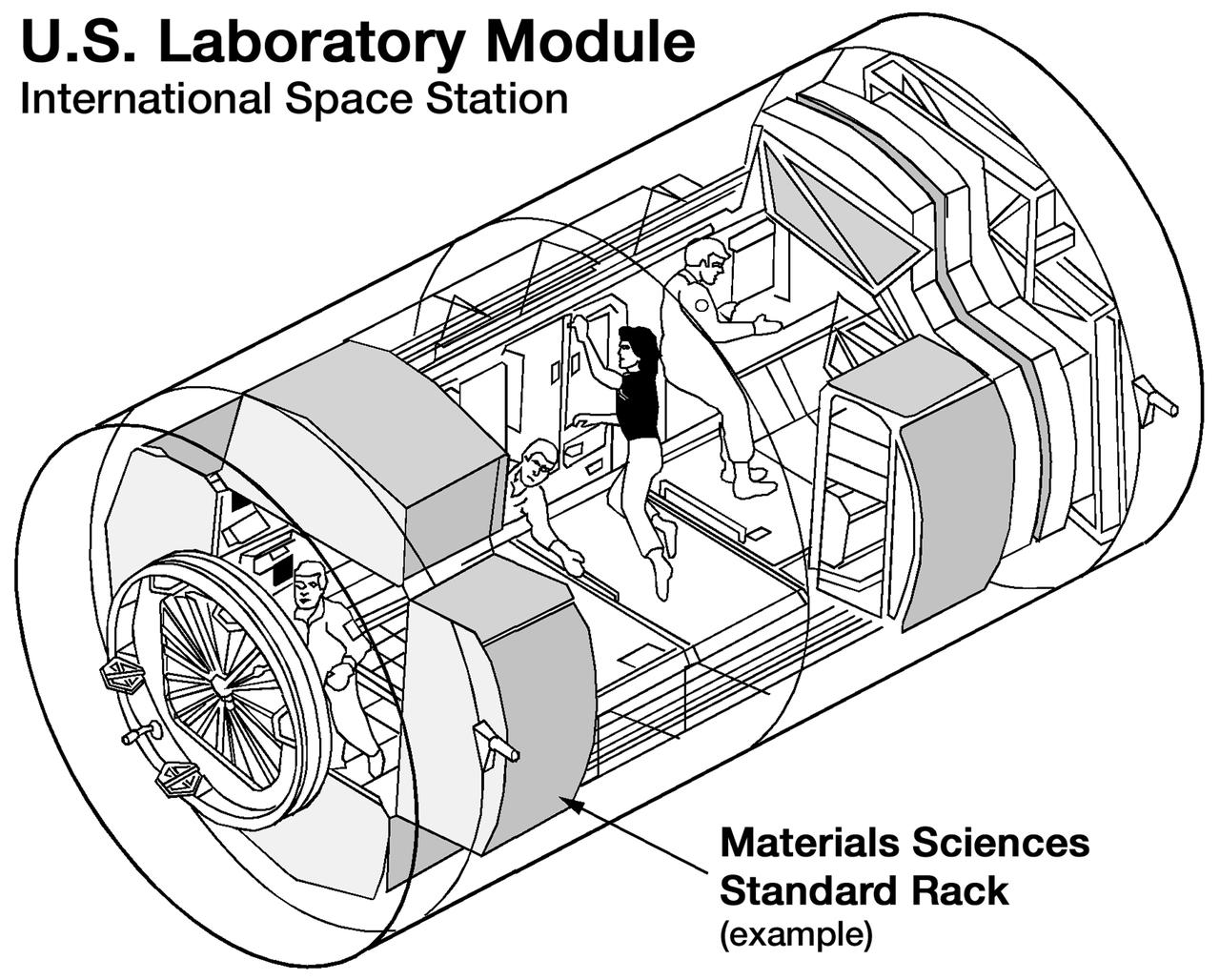
Line drawing depicts the location of one of three racks that will make up the Materials Science Research Facility in the U.S. Destiny laboratory module to be attached to the International Space Station (ISS). Other positions will be occupied by a variety of racks supporting research in combustion, fluids, biotechnology, and human physiology, and racks to support lab and station opertions. The Materials Science Research Facility is managed by NASA's Marshall Space Flight Center. Photo credit: NASA/Marshall Space Flight Center
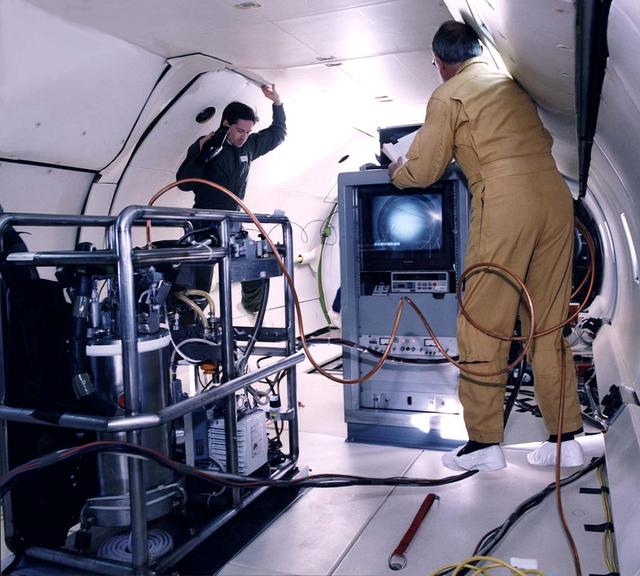
Ted Brunzie and Peter Mason observe the float package and the data rack aboard the DC-9 reduced gravity aircraft. The float package contains a cryostat, a video camera, a pump and accelerometers. The data rack displays and record the video signal from the float package on tape and stores acceleration and temperature measurements on disk.
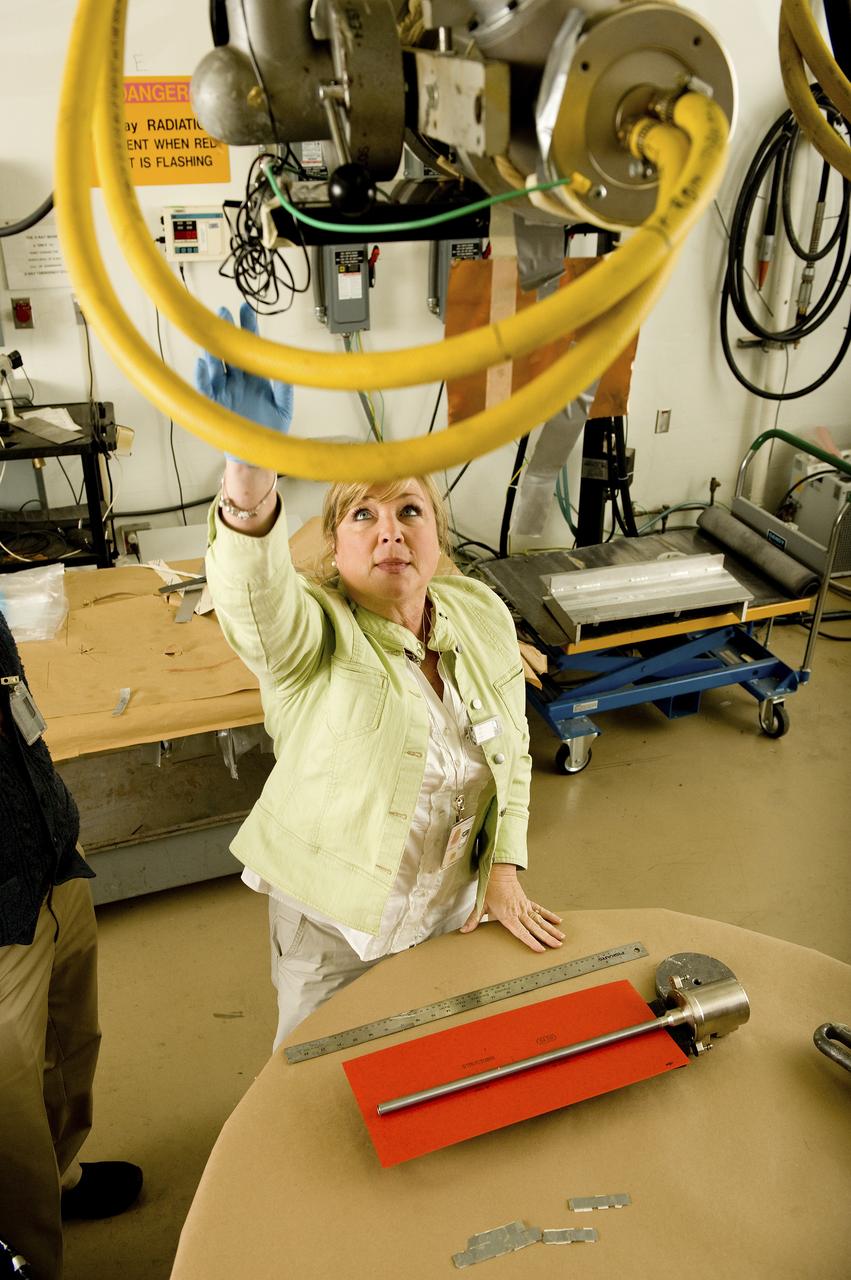
RHONDA LASH, A MATERIALS ENGINEER, PREPARES A SAMPLE CARTRIDGE FOR X-RAY. THE CARTRIDGE WAS TESTED ON THE MATERIAL SCIENCE RESEARCH RACK

The Apollo Telescope Mount (ATM) was designed and developed by the Marshall Space Flight Center and served as the primary scientific instrument unit aboard Skylab (1973-1979). The ATM consisted of eight scientific instruments as well as a number of smaller experiments. This is a photograph of the assembly of an ATM flight unit rack. The flight unit rack was an octagonal shaped complex outer frame that housed the canister containing the solar instruments.
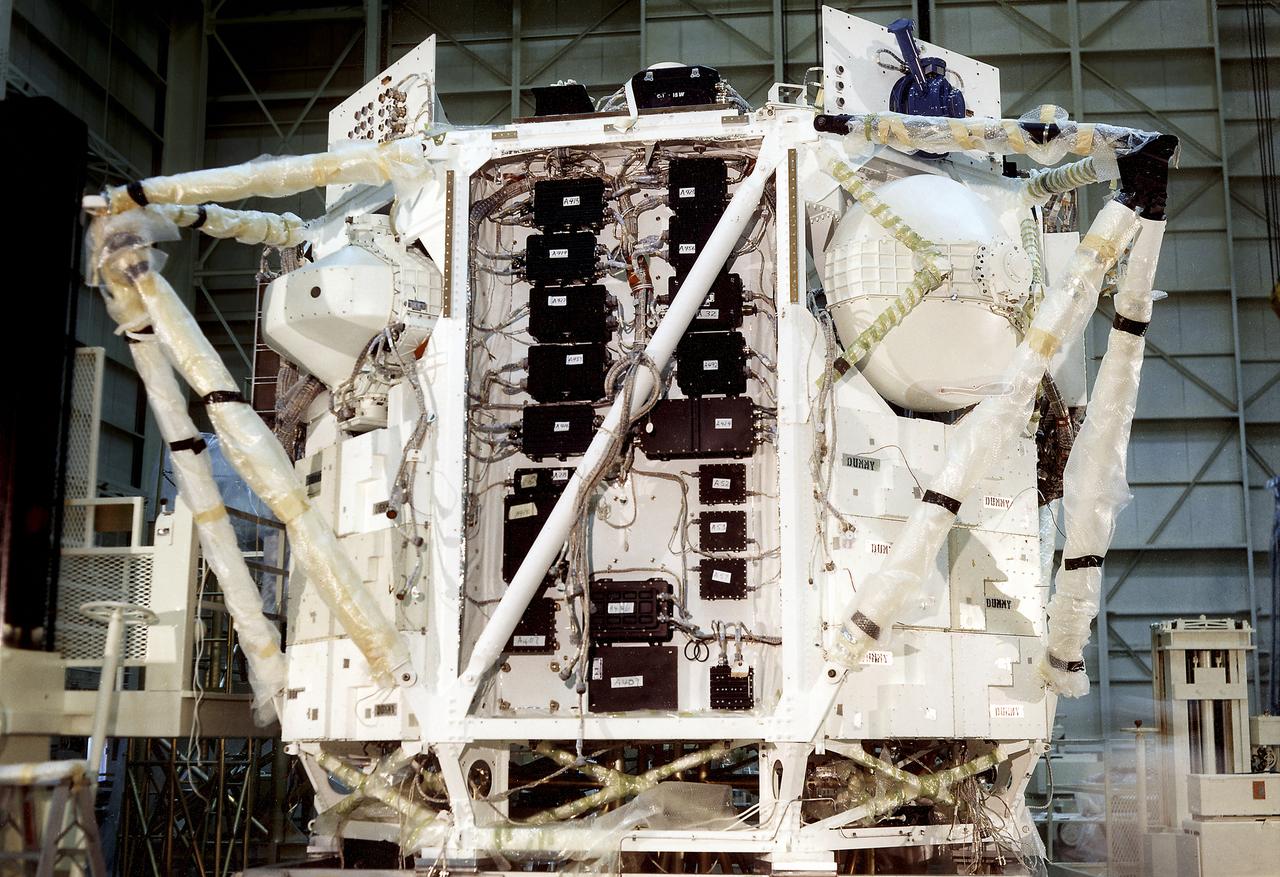
The Apollo Telescope Mount (ATM) was designed and developed by the Marshall Space Flight Center and served as the primary scientific instrument unit aboard Skylab (1973-1979). The ATM consisted of eight scientific instruments as well as a number of smaller experiments. This is a photograph of the assembly of an ATM flight unit rack. The flight unit rack was an octagonal shaped complex outer frame that housed the canister containing the solar instruments.
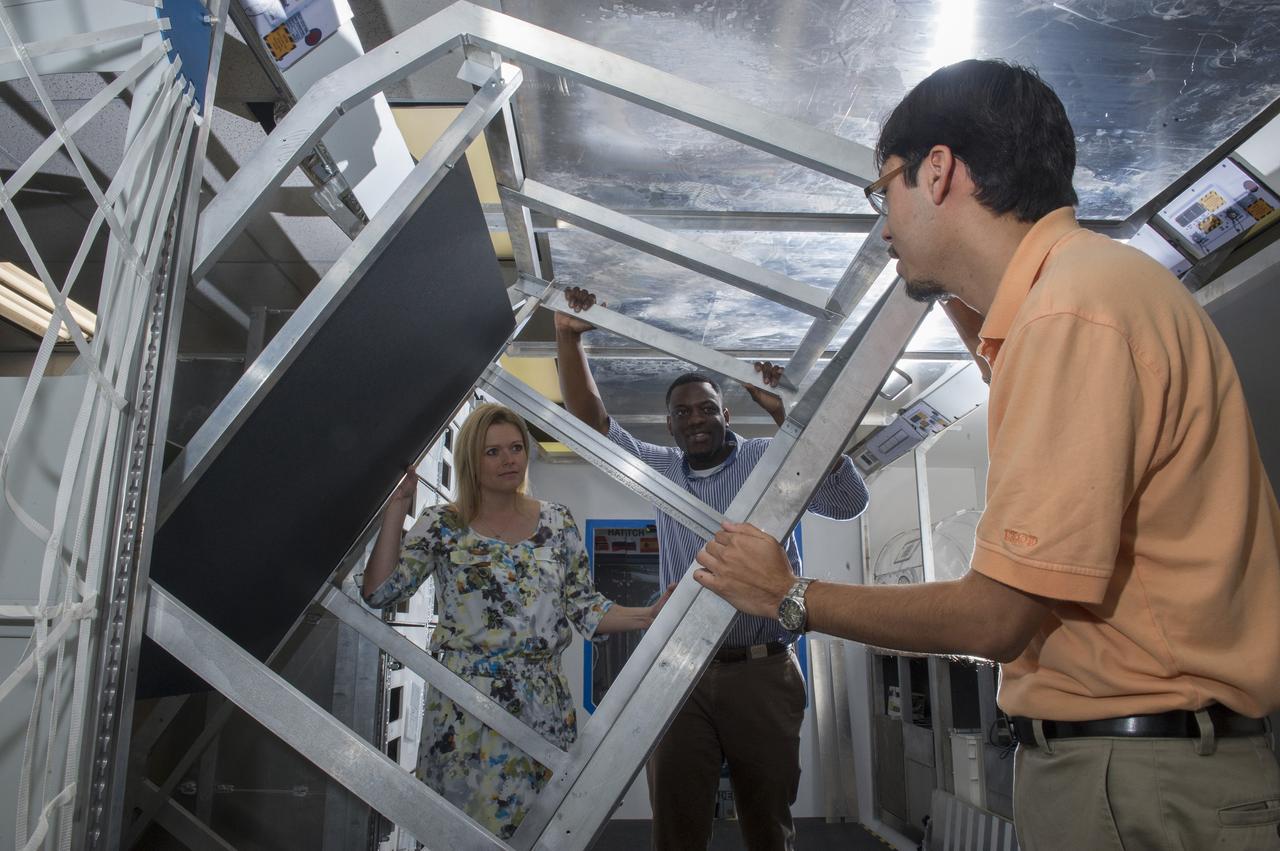
NANCY HORVATH, JONATHAN BIBB, & VINCENT VIDAURRI MISSION OPERATIONS LABORATORY - LABORATORY TRAINING COMPLEX (LTC), BUILDING 4663, EXPRESS RACK (ROTATING EXPRESS RACK SHELL).
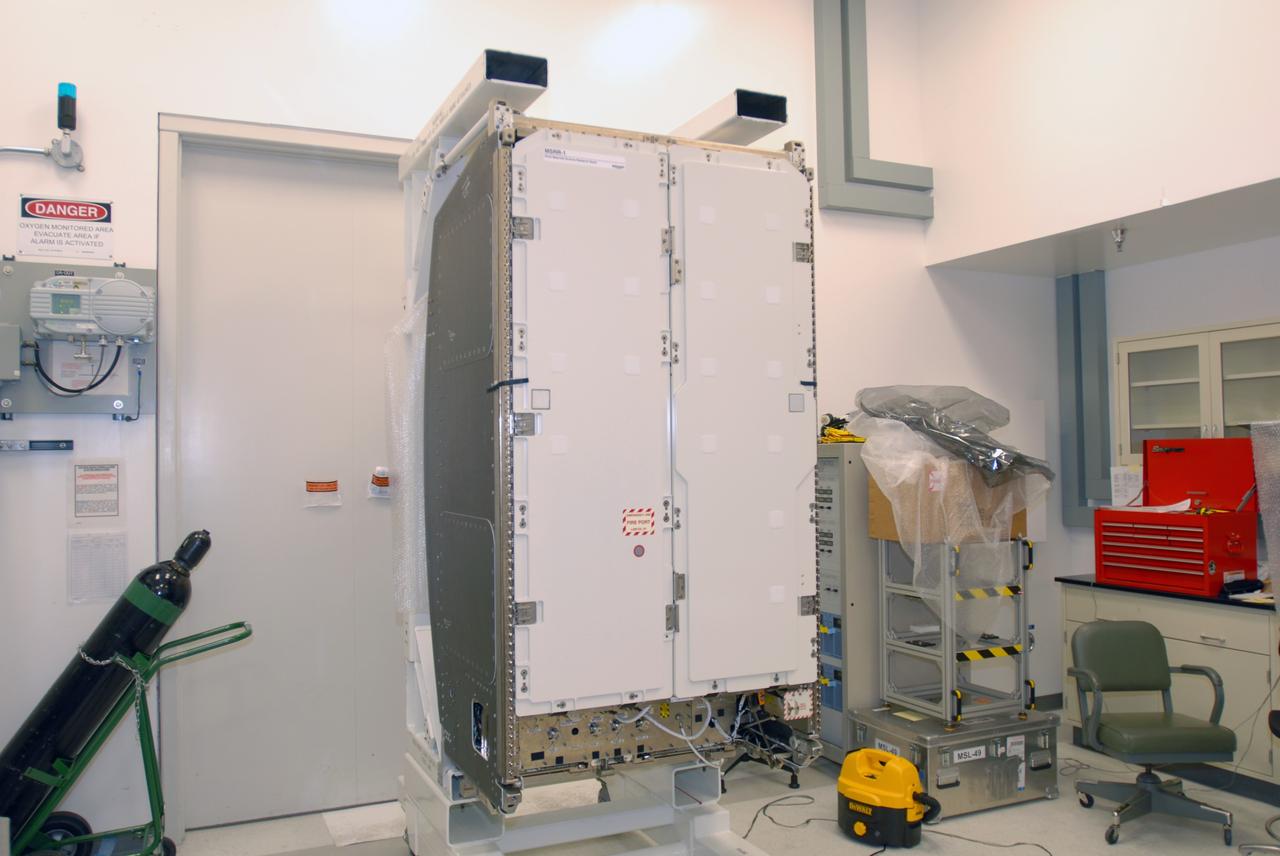
CAPE CANAVERAL, Fla. – The Materials Science Research Rack-1, or MSRR-1, arrived at NASA's Kennedy Space Center in Florida for final flight preparations. The size of a large refrigerator, MSRR-1 is 6 feet high, 3.5 feet wide and 40 inches deep and weighs about 1 ton. MSRR-1 is the payload for the STS-128 mission targeted to launch in August. The rack will be installed in the Leonardo Multi-Purpose Logistics Module for transport to the International Space Station . After arriving at the station, the rack will be housed in the U.S. Destiny laboratory. MSRR-1 will allow for study of a variety of materials including metals, ceramics, semiconductor crystals and glasses onboard the orbiting laboratory. Photo credit: NASA/Jim Grossmann
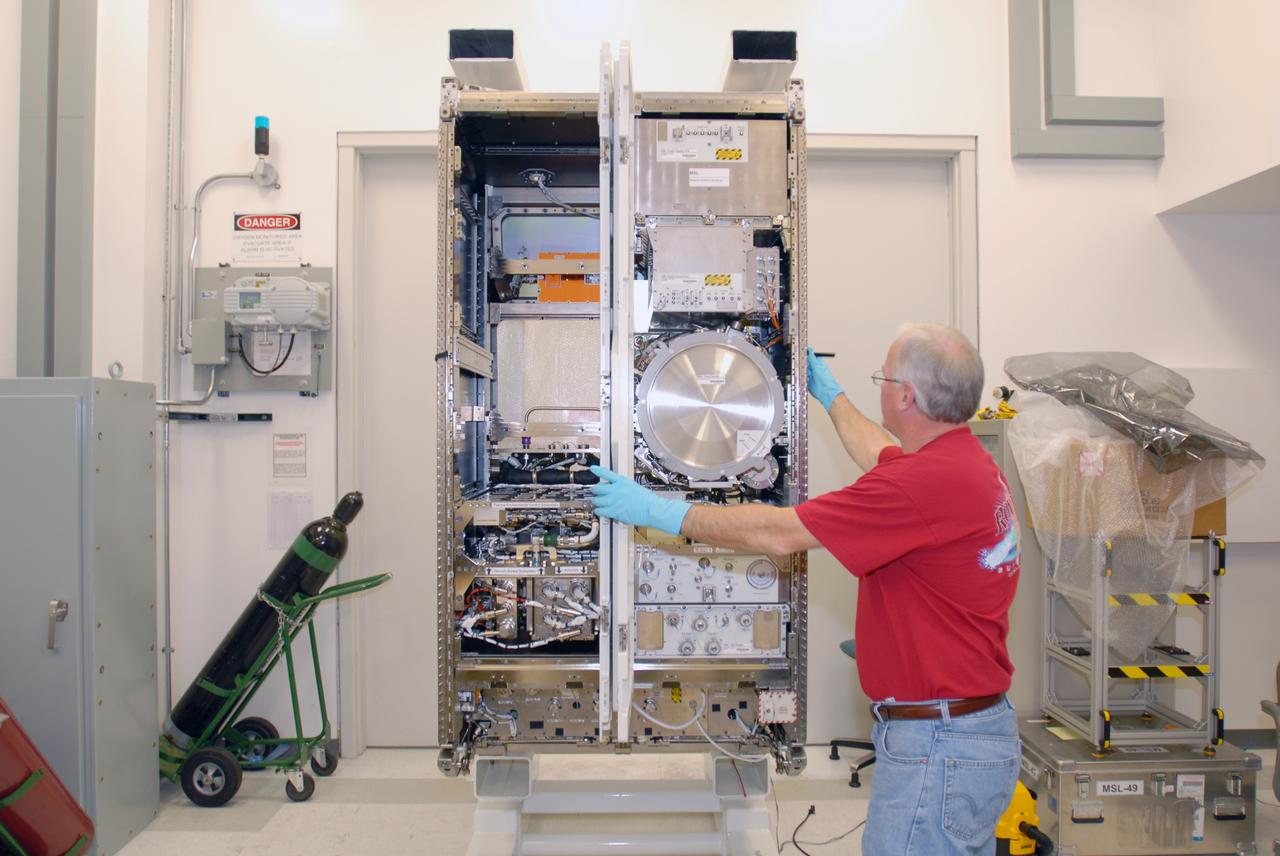
CAPE CANAVERAL, Fla. – At NASA's Kennedy Space Center in Florida, a technician checks out the Materials Science Research Rack-1, or MSRR-1, which will undergo final flight preparations. The size of a large refrigerator, MSRR-1 is 6 feet high, 3.5 feet wide and 40 inches deep and weighs about 1 ton. MSRR-1 is the payload for the STS-128 mission targeted to launch in August. The rack will be installed in the Leonardo Multi-Purpose Logistics Module for transport to the International Space Station . After arriving at the station, the rack will be housed in the U.S. Destiny laboratory. MSRR-1 will allow for study of a variety of materials including metals, ceramics, semiconductor crystals and glasses onboard the orbiting laboratory. Photo credit: NASA/Jim Grossmann
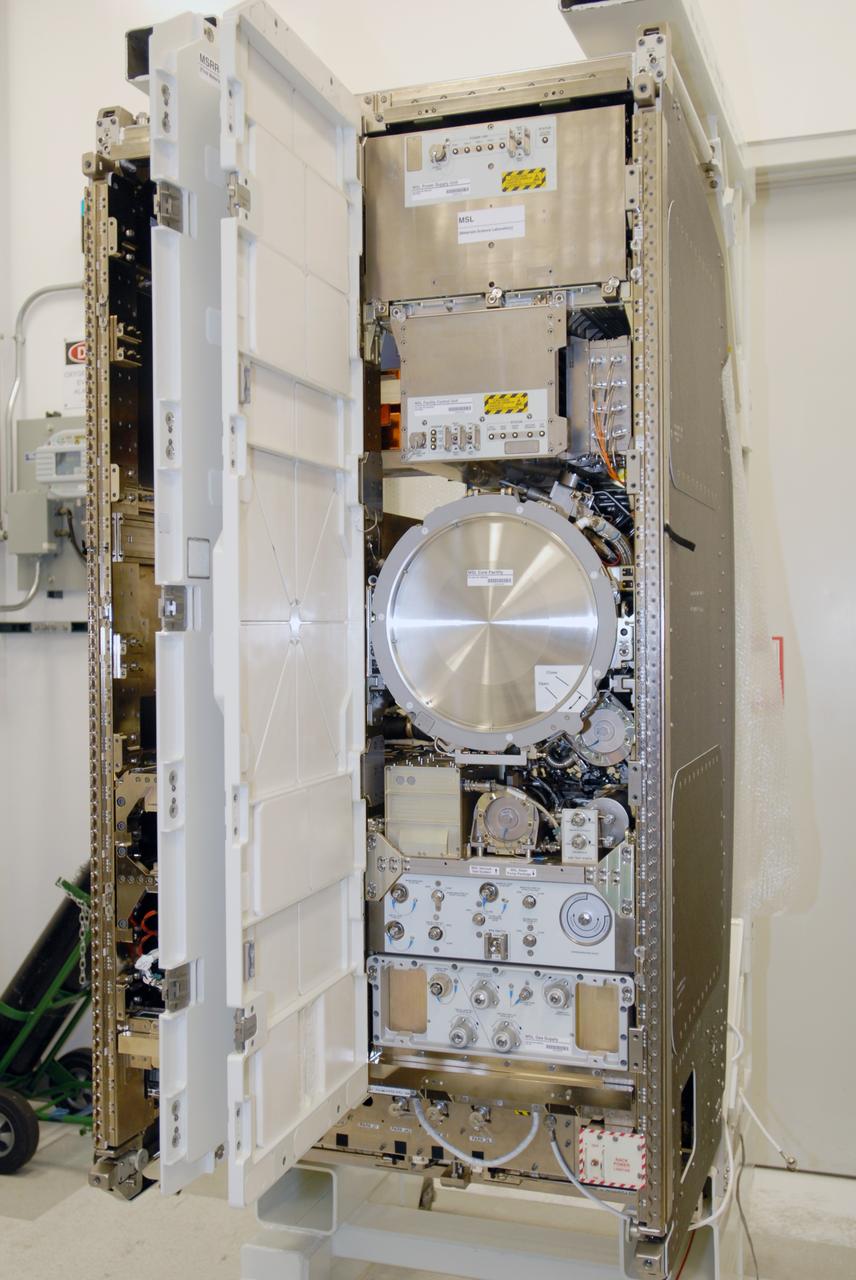
CAPE CANAVERAL, Fla. – This close-up shows some of the components of the Materials Science Research Rack-1, or MSRR-1, which arrived at NASA's Kennedy Space Center in Florida for final flight preparations. The size of a large refrigerator, MSRR-1 is 6 feet high, 3.5 feet wide and 40 inches deep and weighs about 1 ton. MSRR-1 is the payload for the STS-128 mission targeted to launch in August. The rack will be installed in the Leonardo Multi-Purpose Logistics Module for transport to the International Space Station . After arriving at the station, the rack will be housed in the U.S. Destiny laboratory. MSRR-1 will allow for study of a variety of materials including metals, ceramics, semiconductor crystals and glasses onboard the orbiting laboratory. Photo credit: NASA/Jim Grossmann
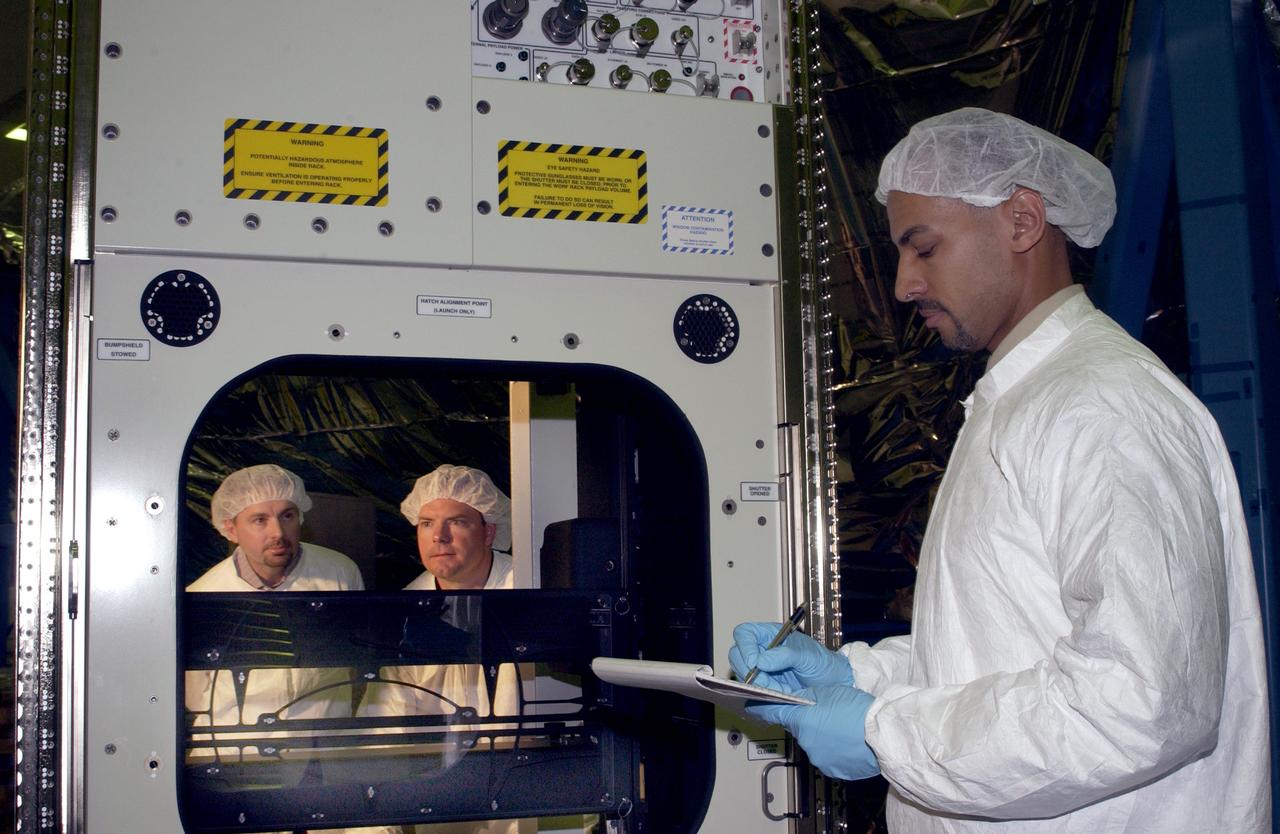
Developed by Boeing, at the Marshall Space Flight Center (MSFC) Space Station Manufacturing building, the Window Observational Rack Facility (WORF) will help Space Station crews take some of the best photographs ever snapped from an orbiting spacecraft by eliminating glare and allowing researchers to control their cameras and other equipment from the ground. The WORF is designed to make the best possible use of the high-quality research window in the Space Station's U.S. Destiny laboratory module. Engineers at the MSFC proposed a derivative of the EXPRESS (Expedite the Processing of Experiments to the Space Station) Rack already used on the Space Station and were given the go-ahead. The EXPRESS rack can hold a wide variety of experiments and provide them with power, communications, data, cooling, fluids, and other utilities - all the things that Earth-observing experiment instruments would need. WORF will supply payloads with power, data, cooling, video downlink, and stable, standardized interfaces for mounting imaging instruments. Similar to specialized orbital observatories, the interior of the rack is sealed against light and coated with a special low-reflectant black paint, so payloads will be able to observe low-light-level subjects such as the faint glow of auroras. Cameras and remote sensing instruments in the WORF can be preprogrammed, controlled from the ground, or operated by a Station crewmember by using a flexible shroud designed to cinch tightly around the crewmember's waist. The WORF is scheduled to be launched aboard the STS-114 Space Shuttle mission in the year 2003.
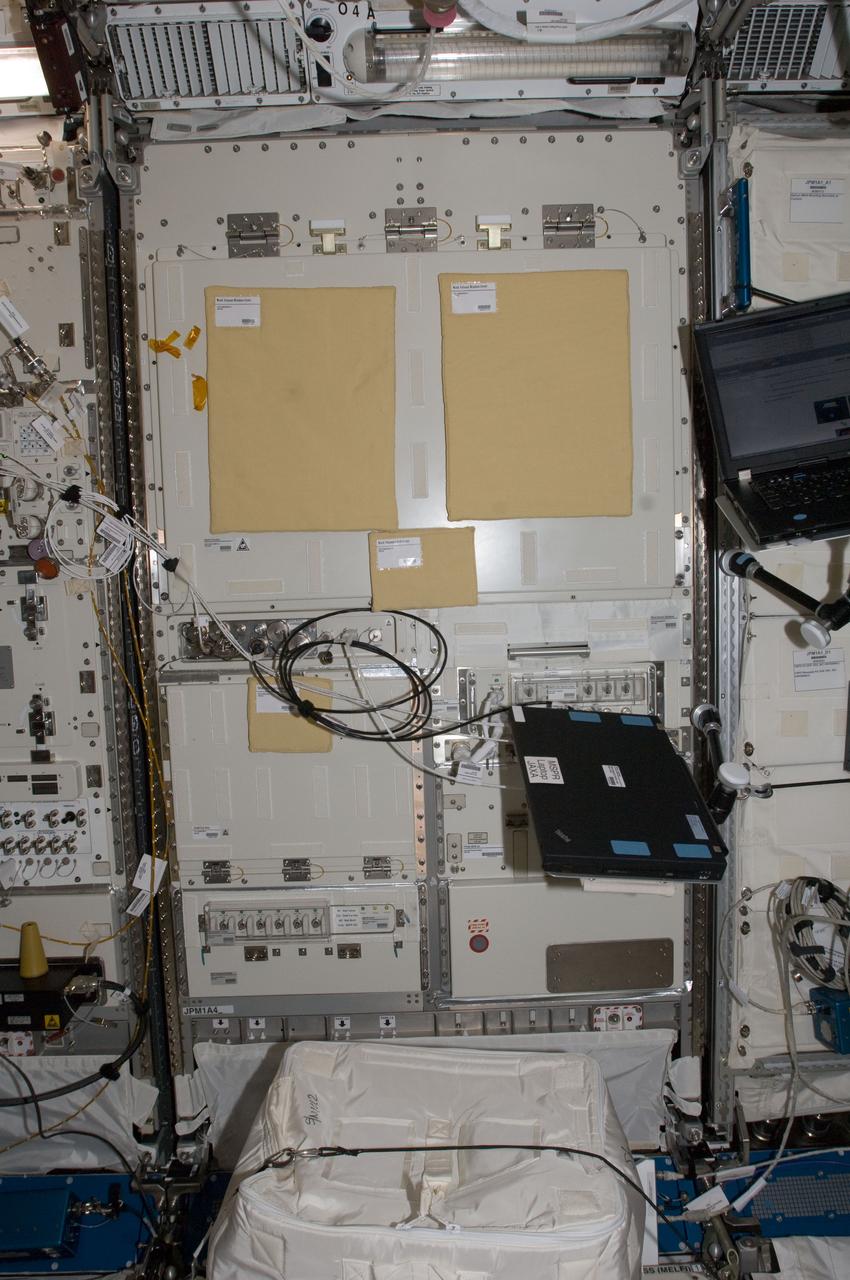
iss030e051039 (1/28/2012) --- View of MSPR Rack,in the Japanese Experiment Module (JEM) Pressurized Module (JPM). Photo was taken during Expedition 30.
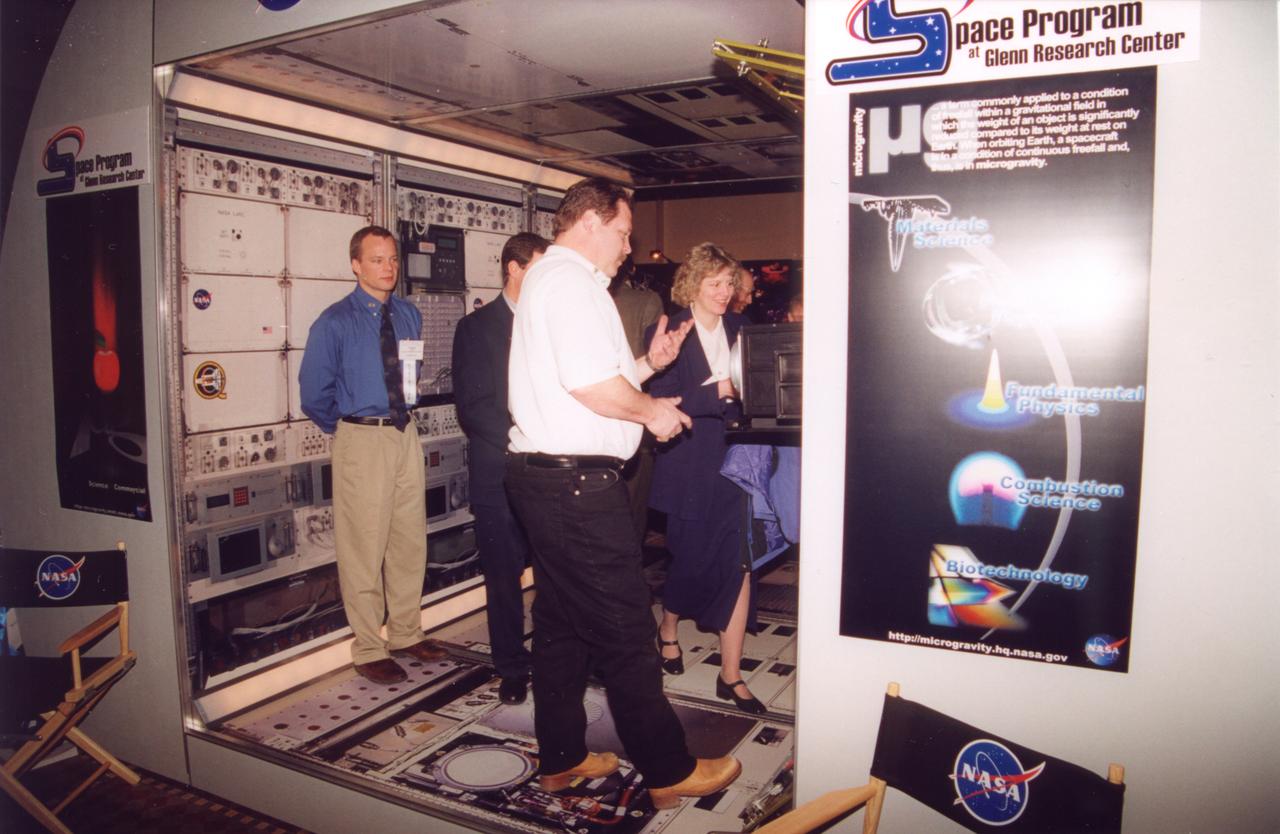
Engineers from NASA's Glenn Research Center, demonstrate access to one of the experiment racks planned for the U.S. Destiny laboratory module on the International Space Station. This mockup has the full diameter, full corridor width, and half the length of the module. The mockup includes engineering mockups of the Fluids and Combustion Facility being developed by NASA's Glenn Research Center. (The full module will be six racks long; the mockup is three rack long) Photo credit: NASA/Marshall Space Flight Center
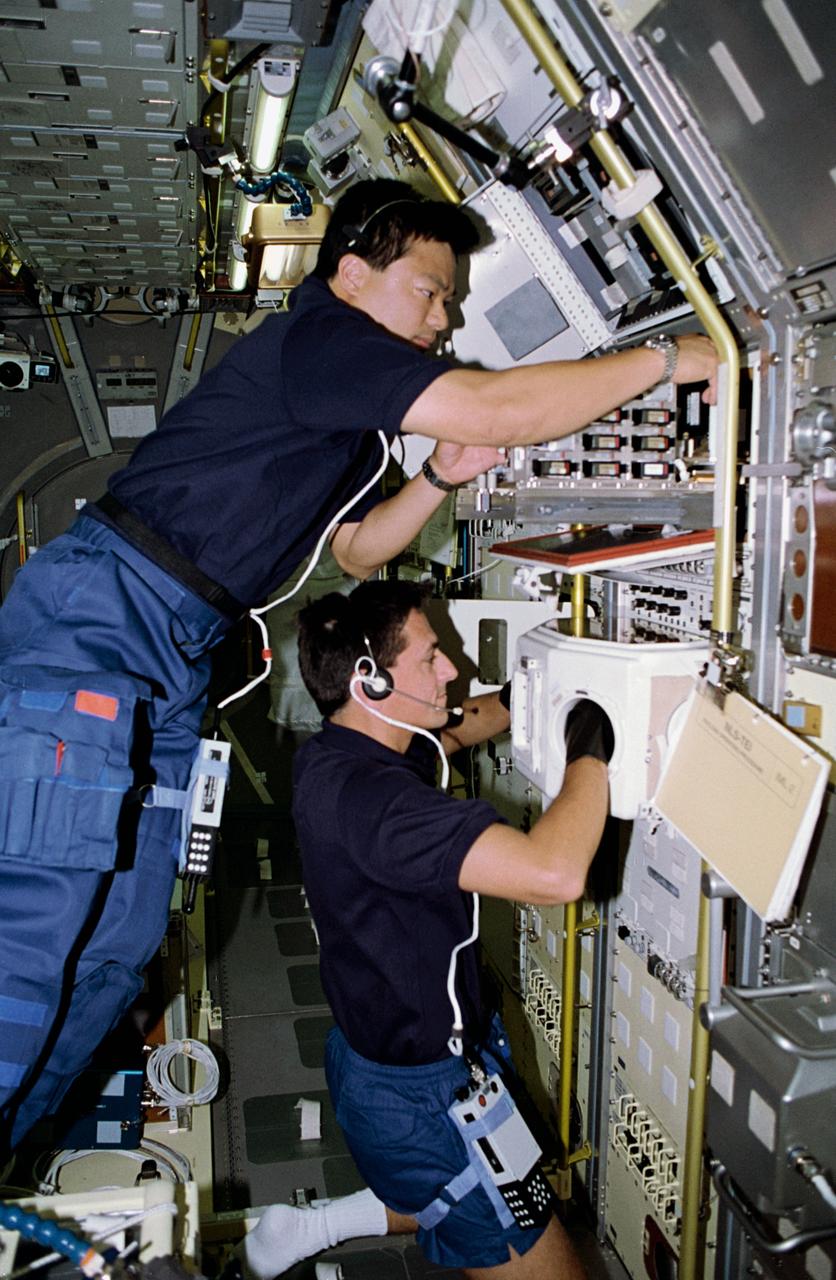
STS-65 Mission Specialist (MS) Leroy Chiao (top) and MS Donald A. Thomas are seen at work in the International Microgravity Laboratory 2 (IML-2) spacelab science module aboard the Space Shuttle Columbia, Orbiter Vehicle (OV) 102. The two crewmembers are conducting experiments at the IML-2 Rack 5 Biorack (BR). Chiao places a sample in the BR incubator as Thomas handles another sample inside the BR glovebox. The glovebox is used to prepare samples for BR and slow rotating centrifuge microscope (NIZEMI) experiments.
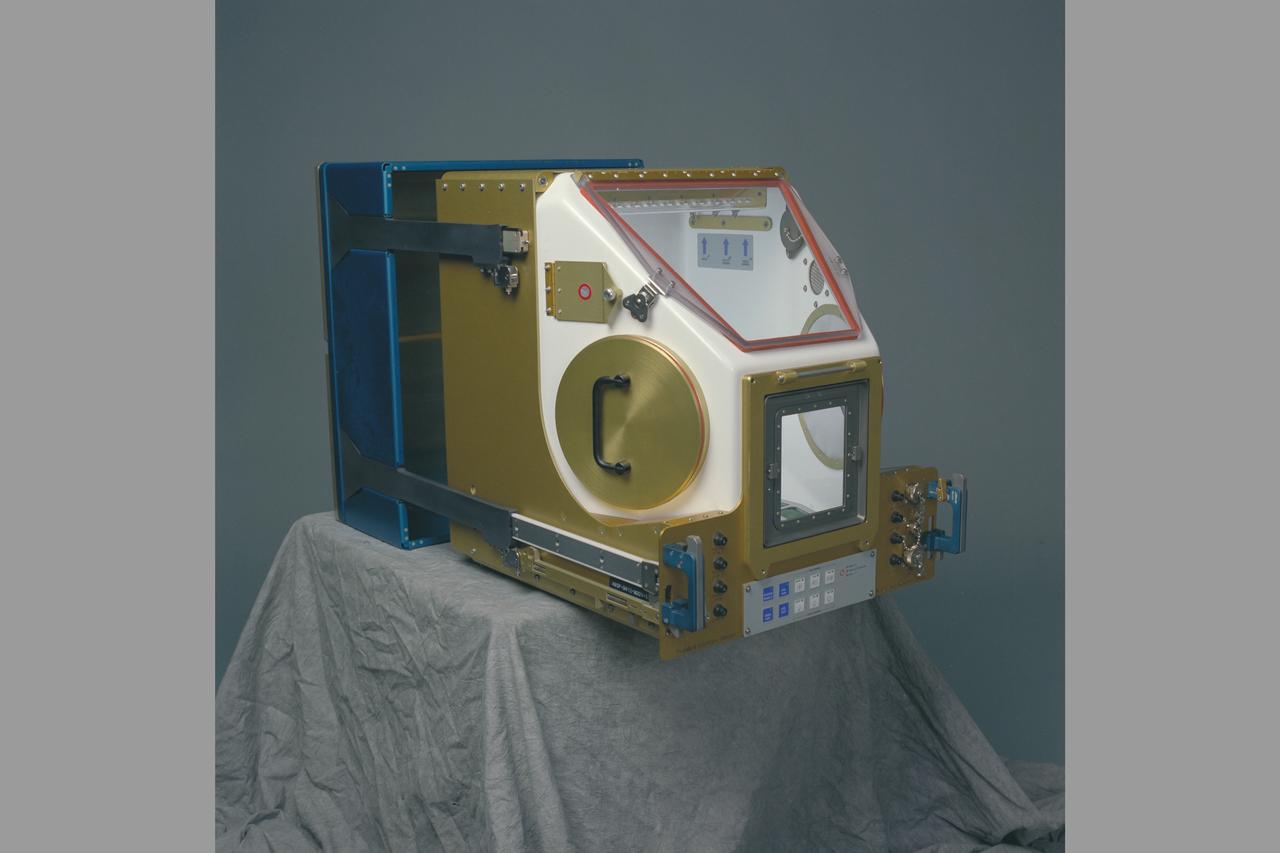
SIGB (Standard Interface Glove Box) & MRS (Middeck Rack Structure).
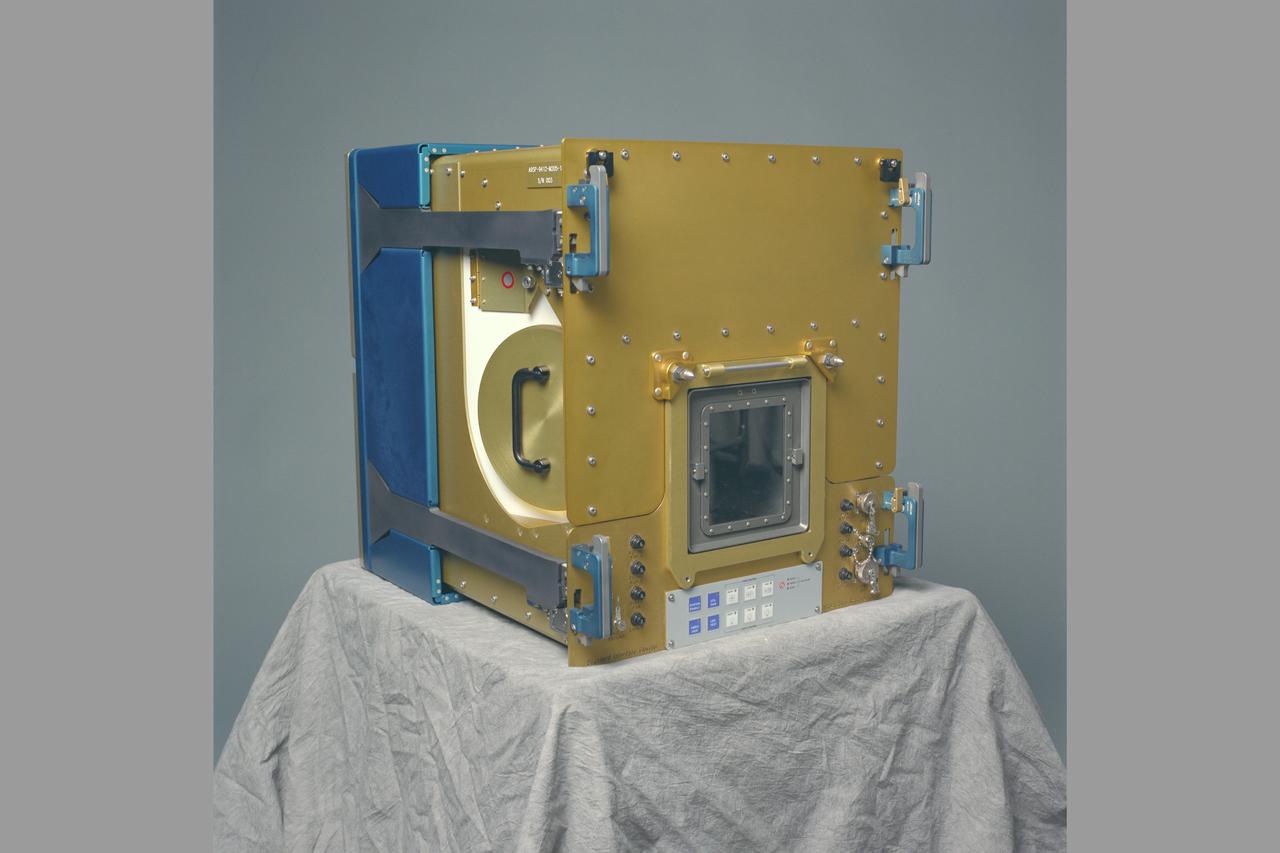
SIGB (Standard Interface Glove Box) & MRS (Middeck Rack Structure).
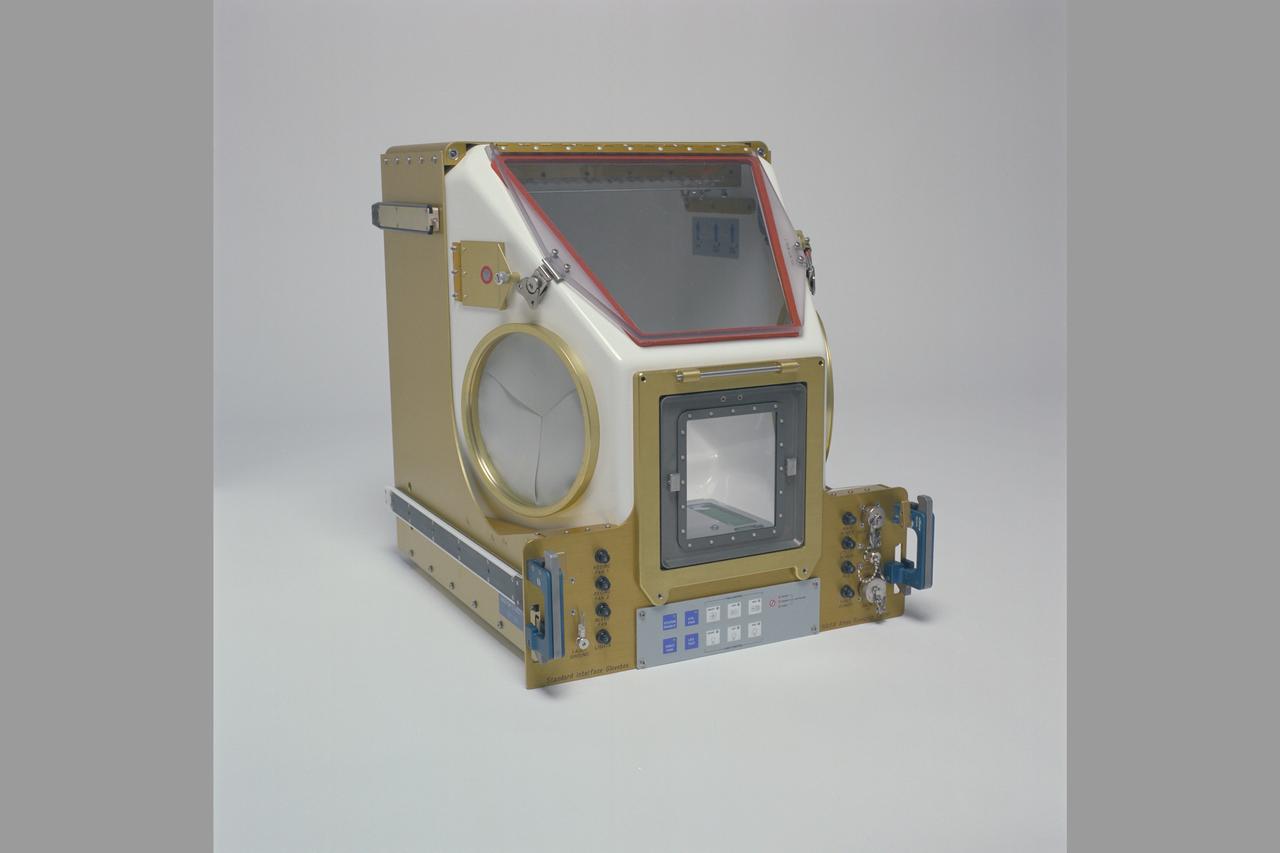
SIGB (Standard Interface Glove Box) & MRS (Middeck Rack Structure).
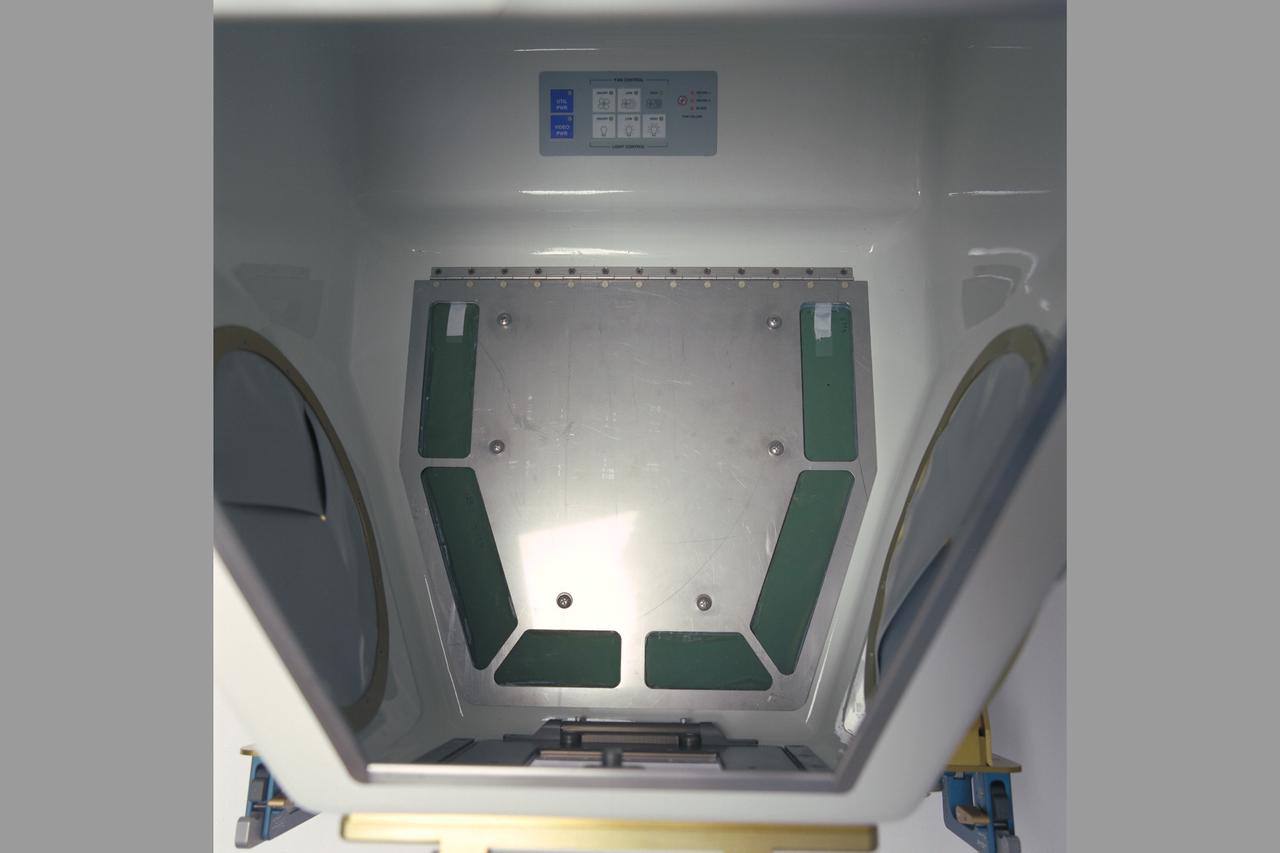
SIGB (Standard Interface Glove Box) & MRS (Middeck Rack Structure).
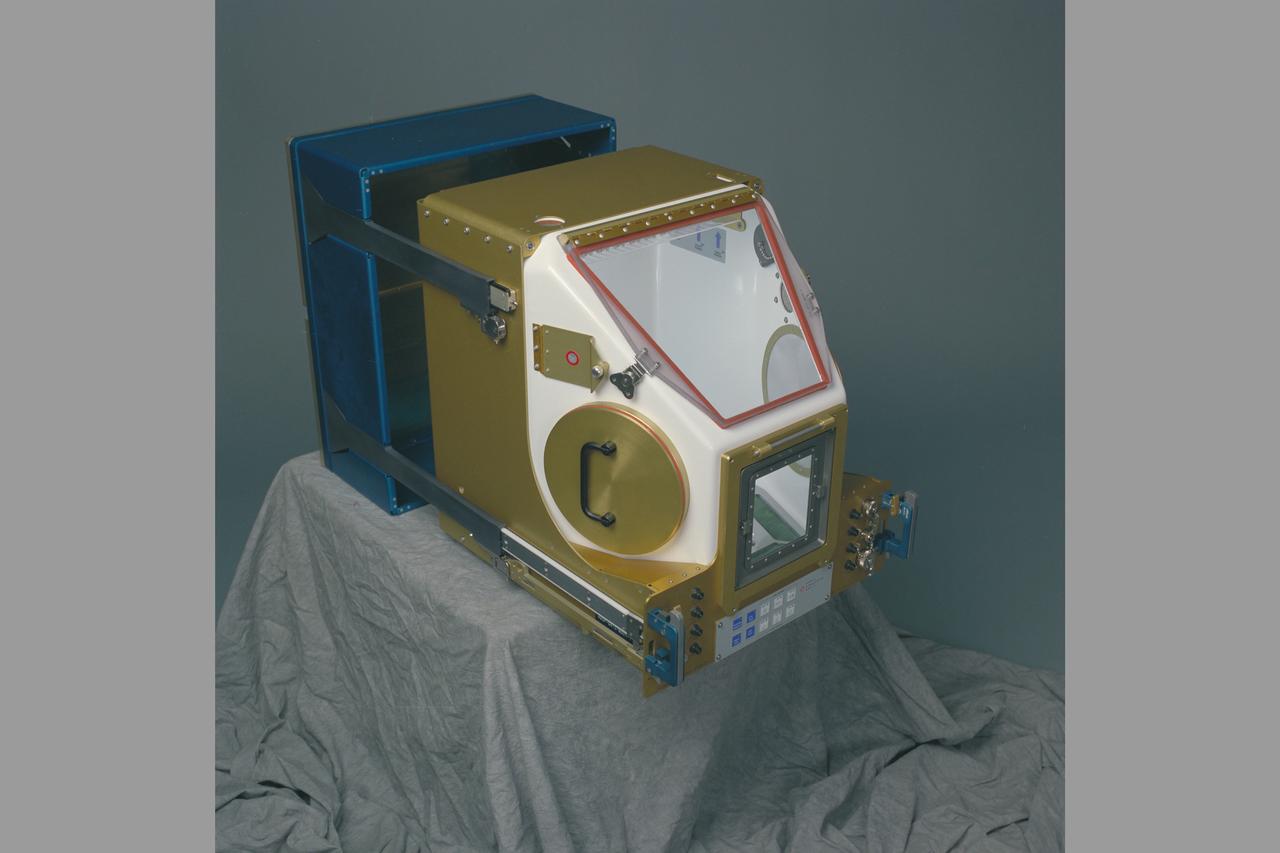
SIGB (Standard Interface Glove Box) & MRS (Middeck Rack Structure).
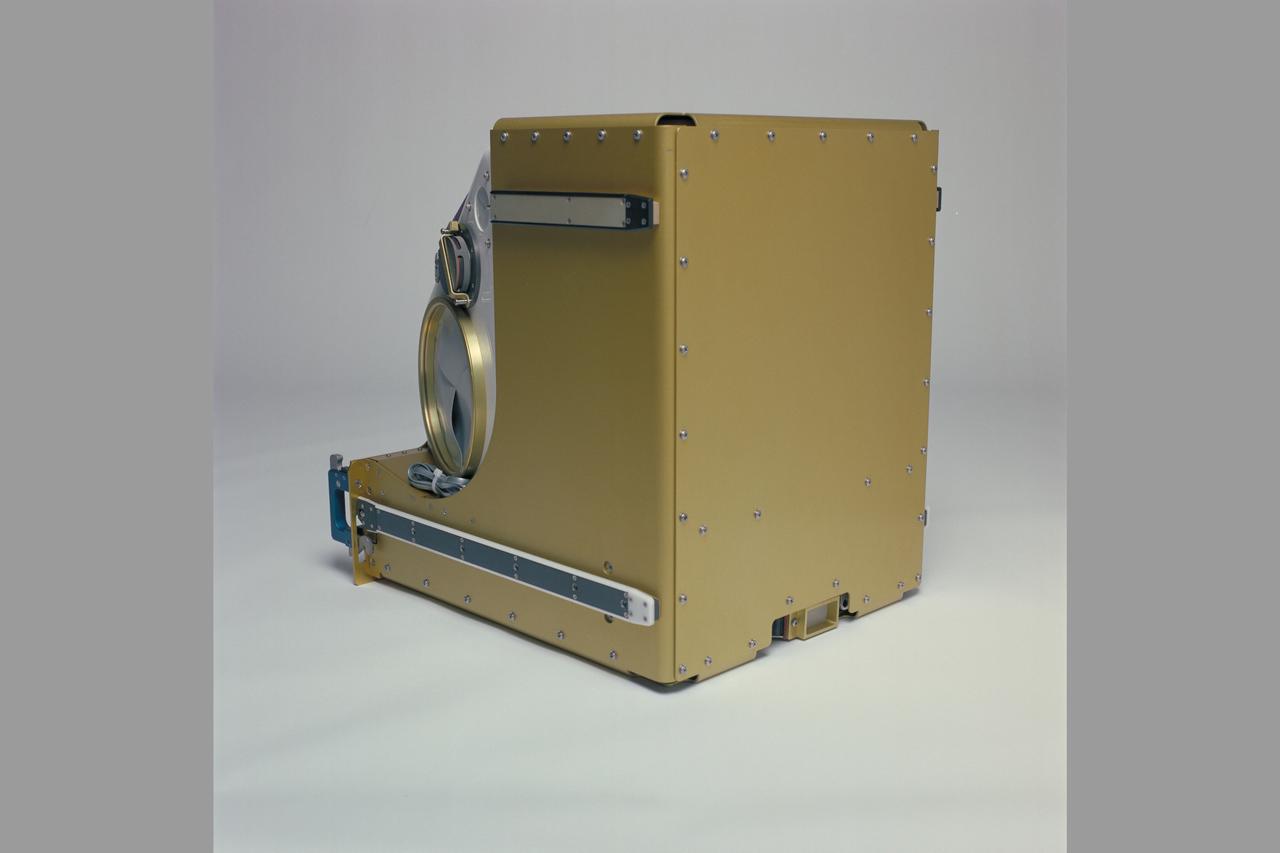
SIGB (Standard Interface Glove Box) & MRS (Middeck Rack Structure).
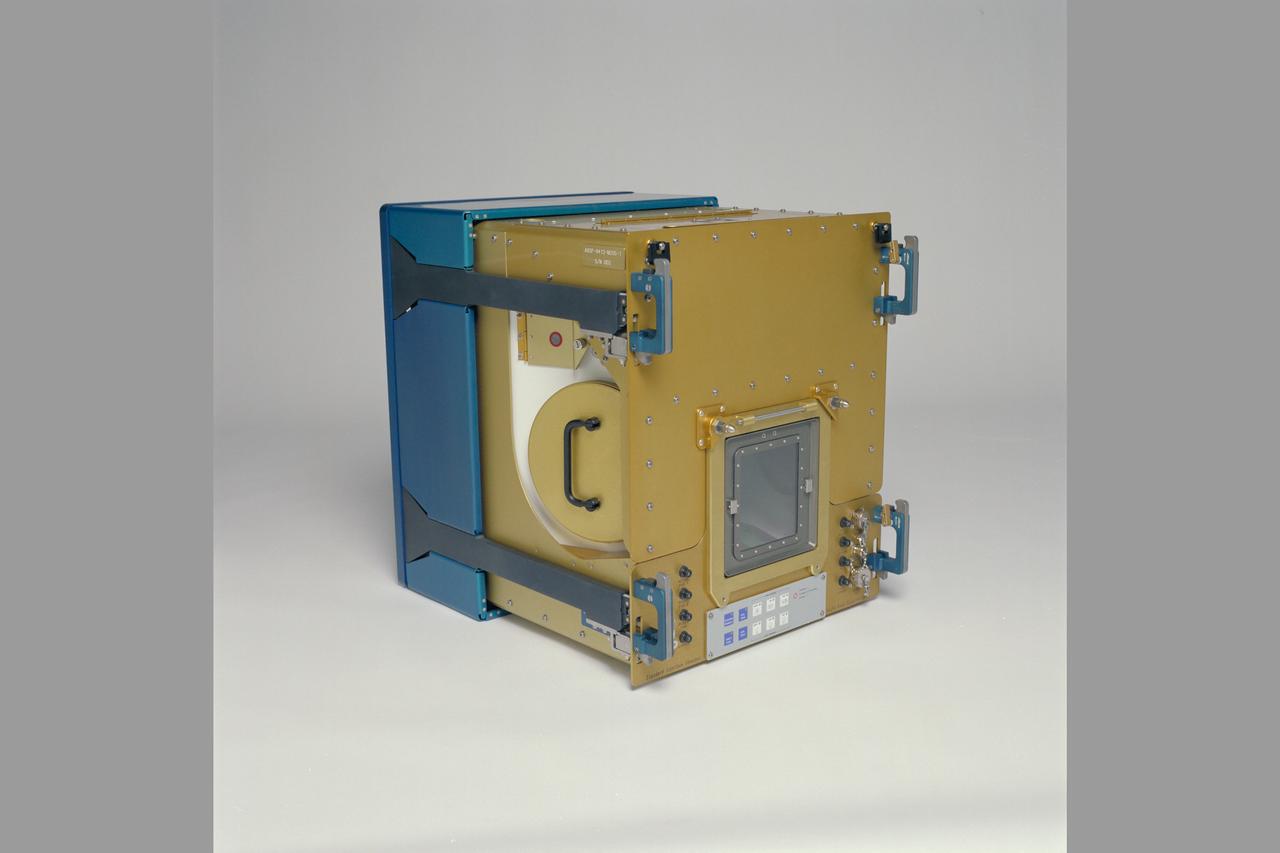
SIGB (Standard Interface Glove Box) & MRS (Middeck Rack Structure).
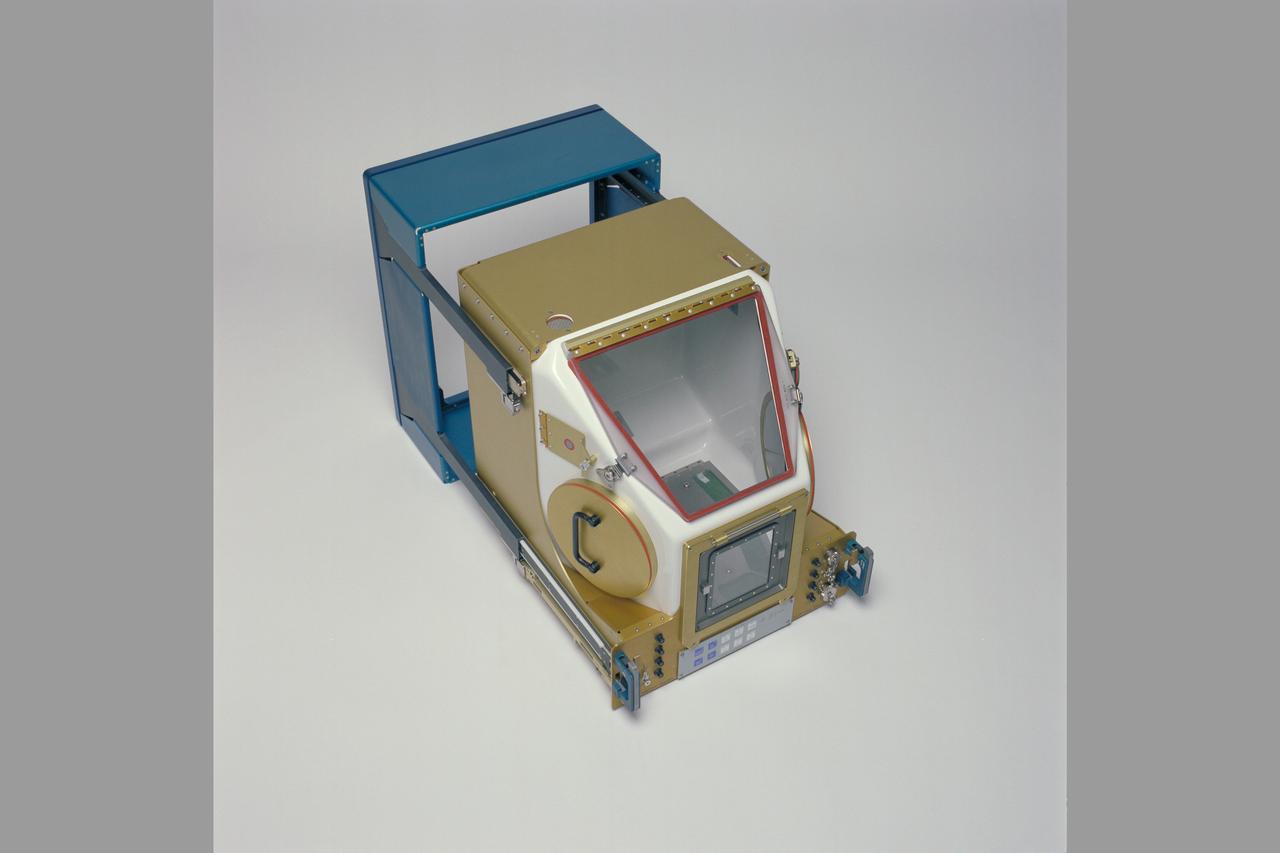
SIGB (Standard Interface Glove Box) & MRS (Middeck Rack Structure).
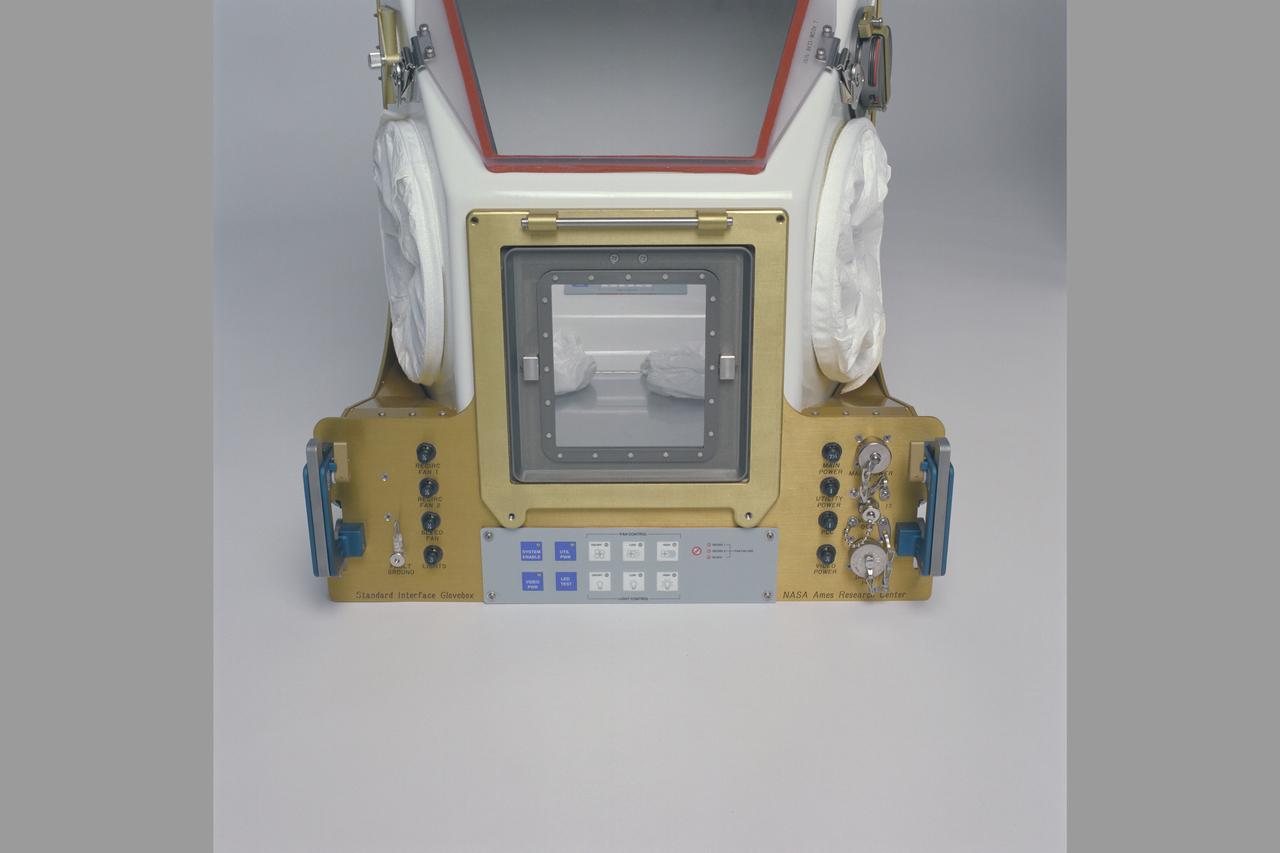
SIGB (Standard Interface Glove Box) & MRS (Middeck Rack Structure).
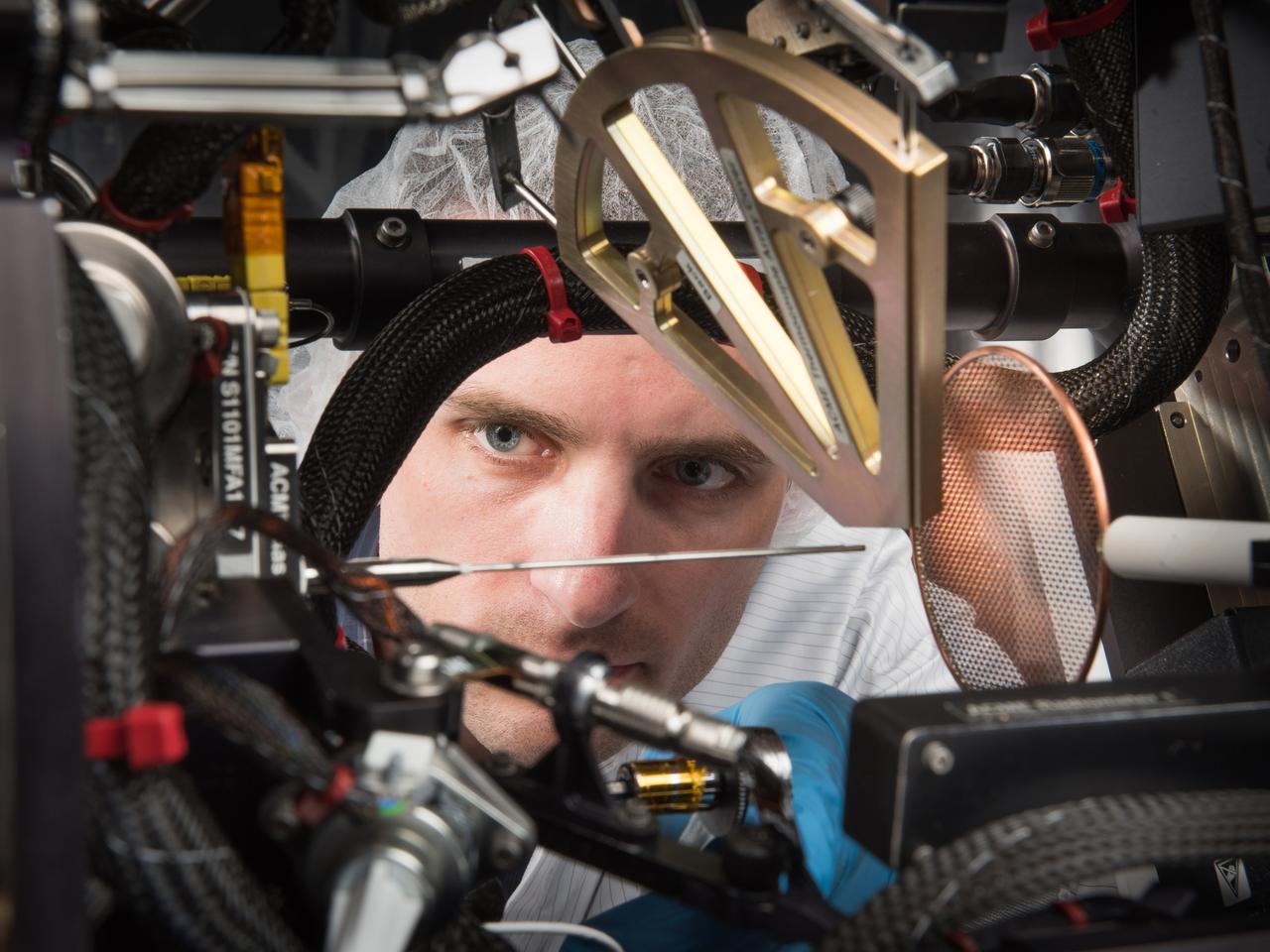
NASA Glenn engineer Christopher Mroczka inspects the gas-jet burner within the Advanced Combustion via Microgravity Experiments, ACME insert for the Combustion Integrated Rack, CIR. The apparatus allows researchers to conduct experiments with flames of gaseous fuels on the International Space Station, ISS
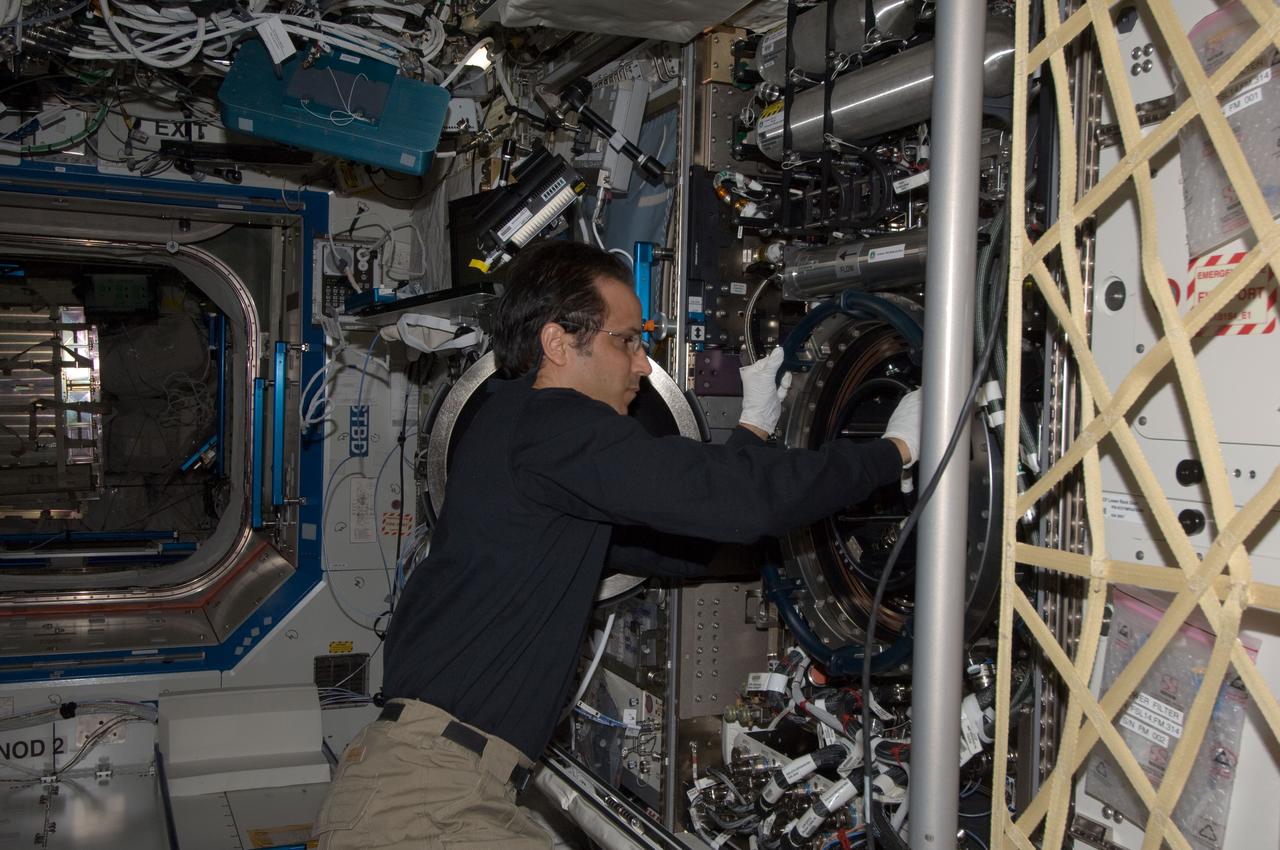
ISS032-E-014574 (7 Aug. 2012) --- NASA astronaut Joe Acaba, Expedition 32 flight engineer, works on the Combustion Integrated Rack (CIR) in the Destiny laboratory of the International Space Station.
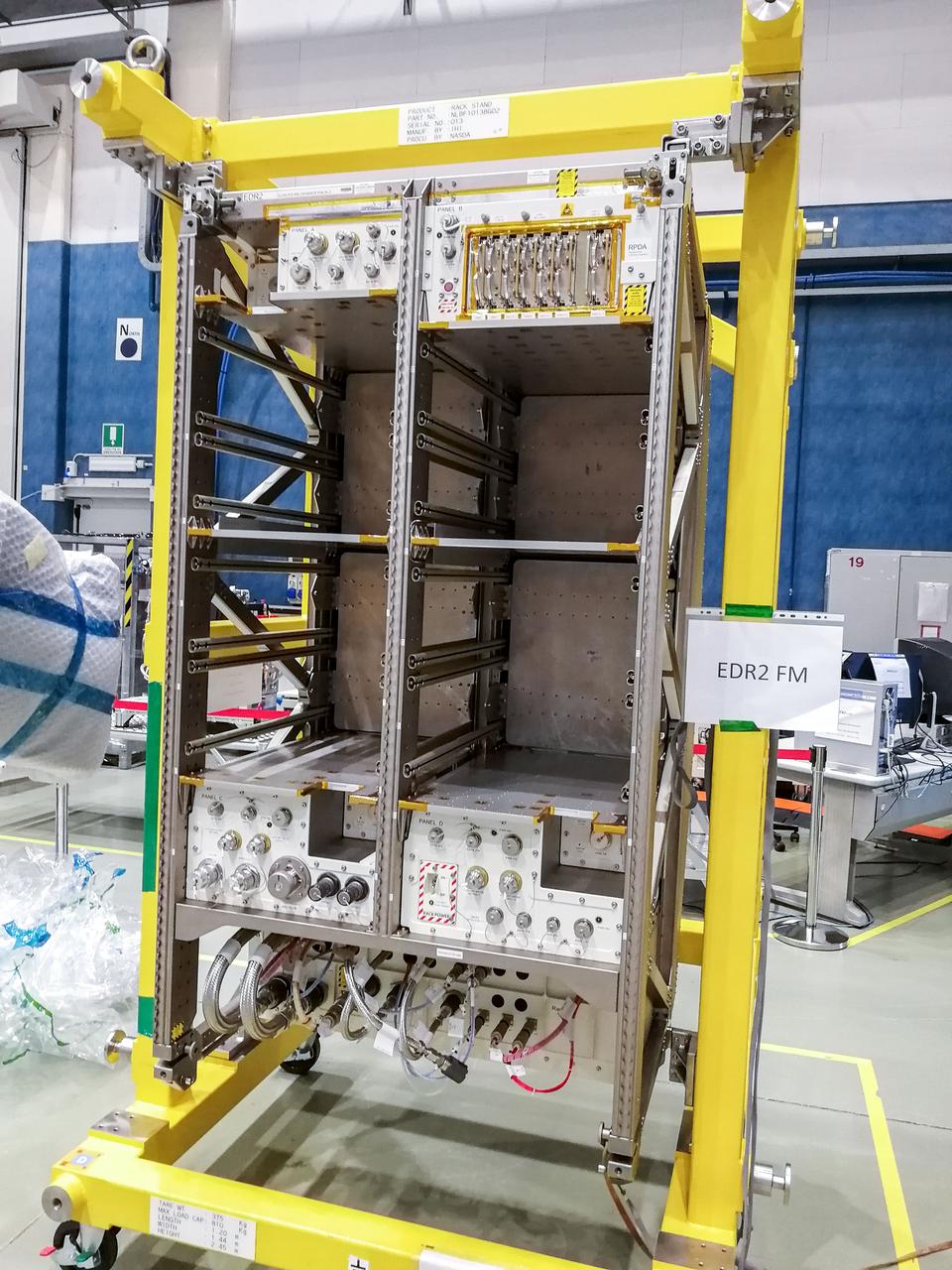
jsc2019e048243 (3/28/2019) — Preflight imagery of the EDR-2 Flight Model in its rack integration stand. The European Drawer Rack-2 (EDR-2) is an experiment support facility accommodated in the Columbus module. The rack provides general services to experiments, including power, data communication, water cooling, vacuum and venting/waste gas, nitrogen supply and structural interfaces.
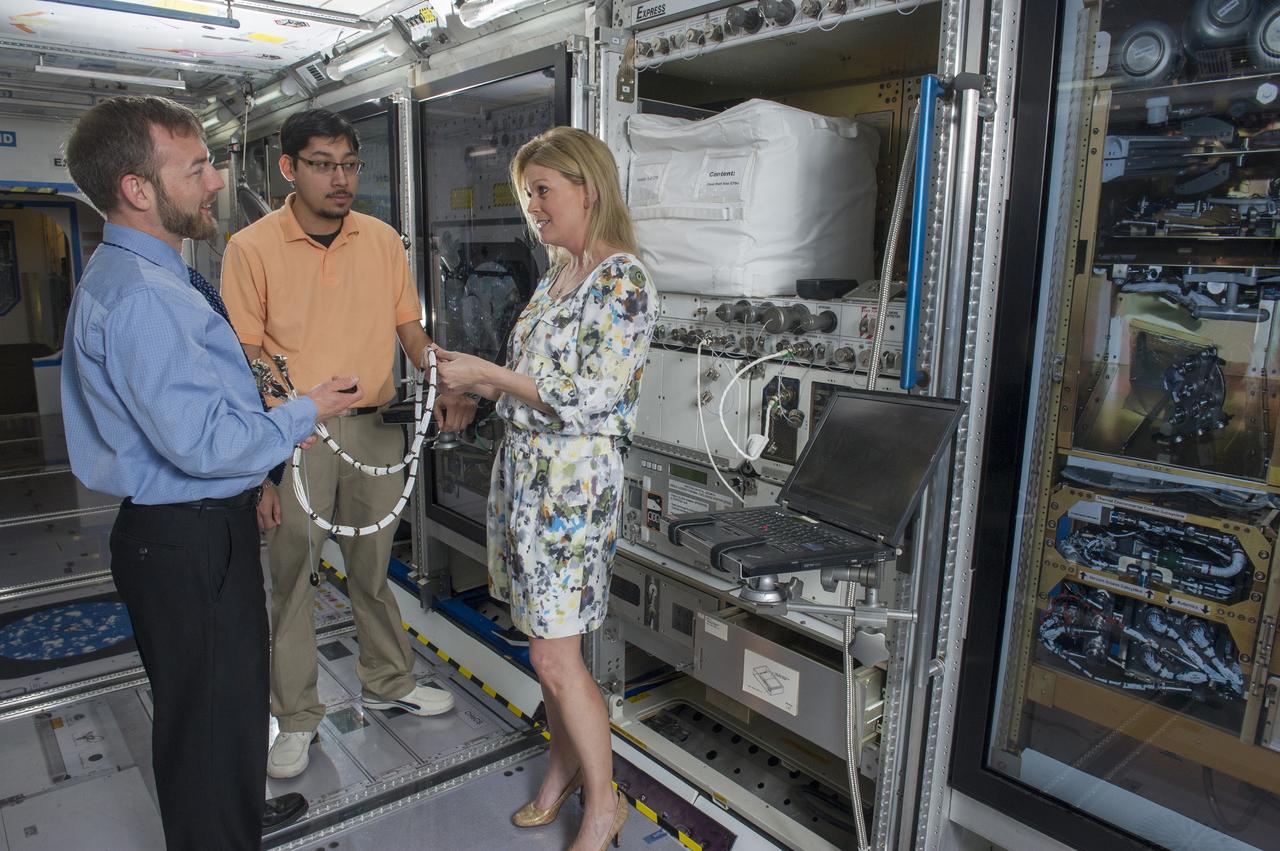
JOEL HARDY, VINCENT VIDAURRI, & NANCY HALLMARK MISSION OPERATIONS LABORATORY - LABORATORY TRAINING COMPLEX (LTC), BUILDING 4663, EXPRESS RACK TRAINING.-
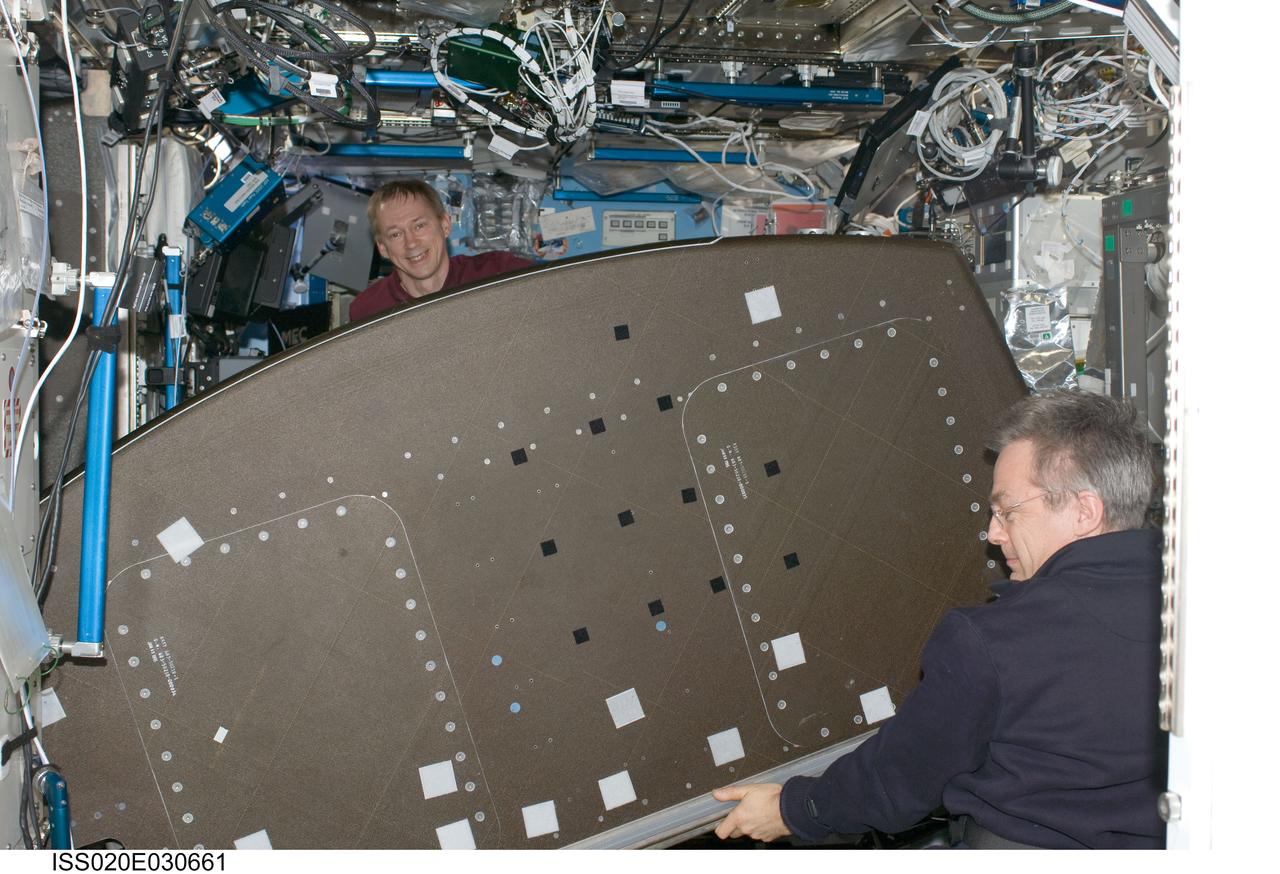
ISS020-E-030661 (13 Aug. 2009) --- Canadian Space Agency astronaut Robert Thirsk (right) and European Space Agency astronaut Frank De Winne, both Expedition 20 flight engineers, prepare to relocate the Crew Health Care System (CHeCS) rack in the Destiny laboratory to the Kibo laboratory of the International Space Station.
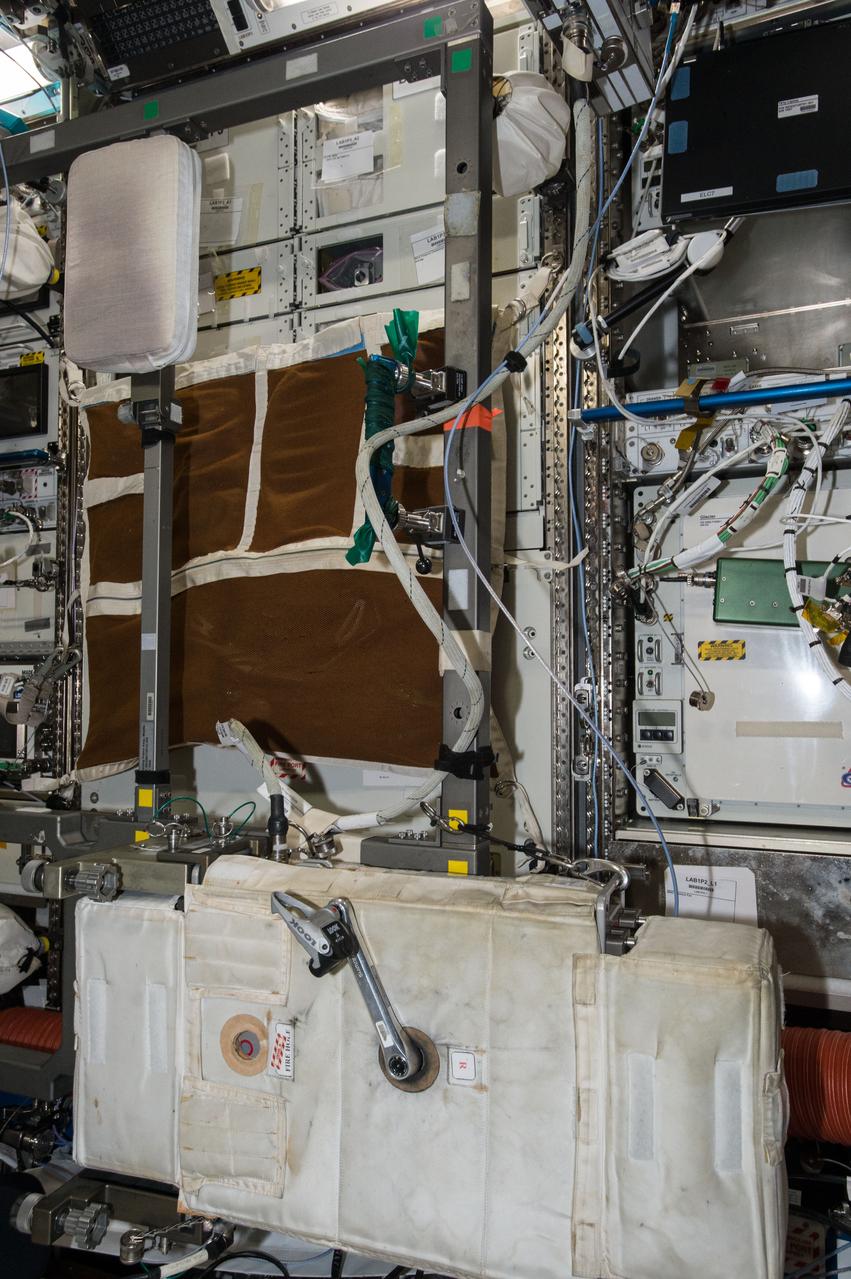
iss048e004552 (6/20/2016) --- Image taken to document re-installation of the Cycle Ergometer with Vibration Isolation and Stabilization (CEVIS) at LAB1P3 following inflight maintenance (IFM) on the Direct Current to Direct Current Converter Unit-1 (DDCU-1) Rack. Image was taken in the Destiny U.S. Laboratory.
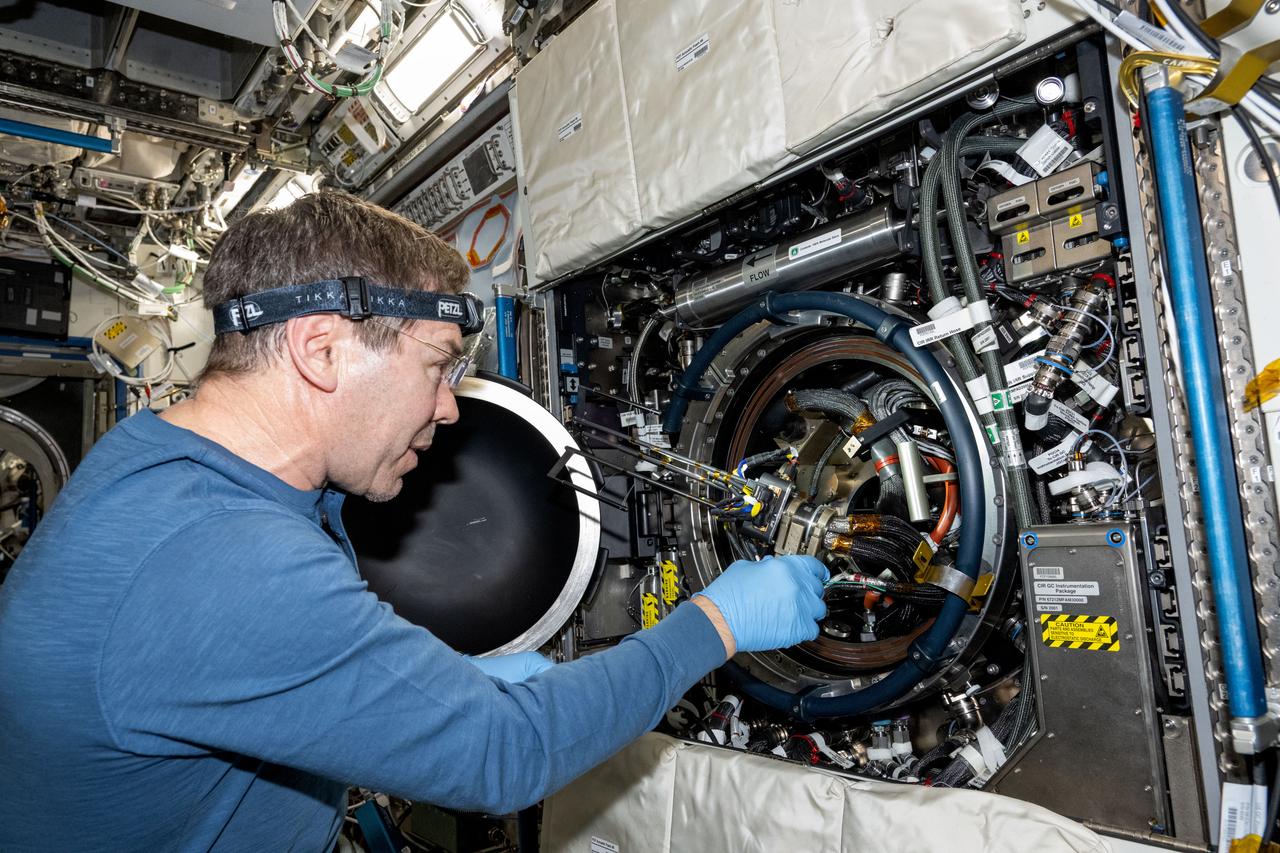
iss071e439784 (Aug. 5, 2024) --- NASA astronaut and Expedition 71 Flight Engineer Mike Barratt replaces fuel bottles and other components inside the Combustion Integrated Rack located inside the Intenational Space Station's Destiny laboratory.
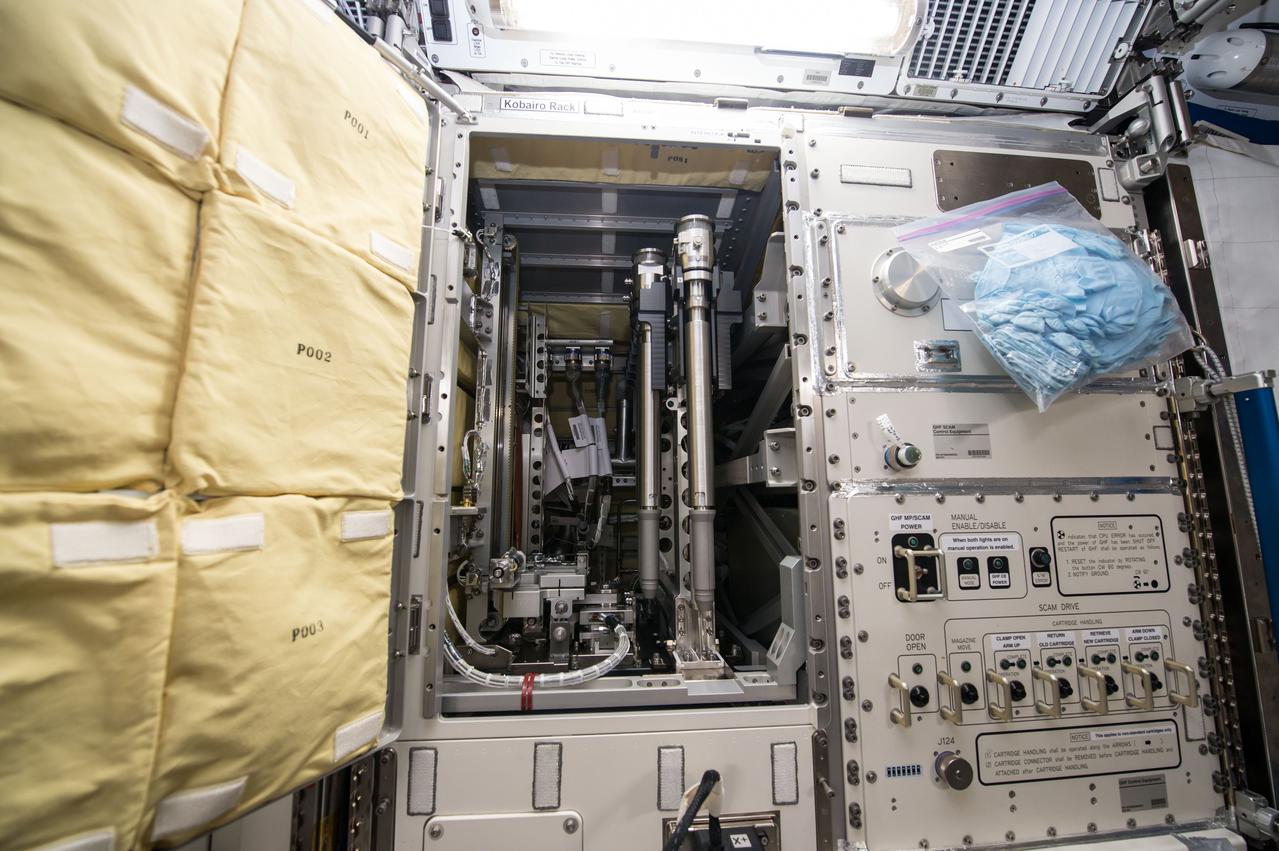
iss042e049014 (12/18/2014) --- A view of the interior of the Kobairo rack of the Japanese Experiment Module (JEM) aboard the International Space station (ISS).The KOBAIRO Rack houses the Gradient Heating Furnace (GHF), an experiment facility for investigating crystal growth of semiconductors. This furnace has the capability of directional solidification of samples.
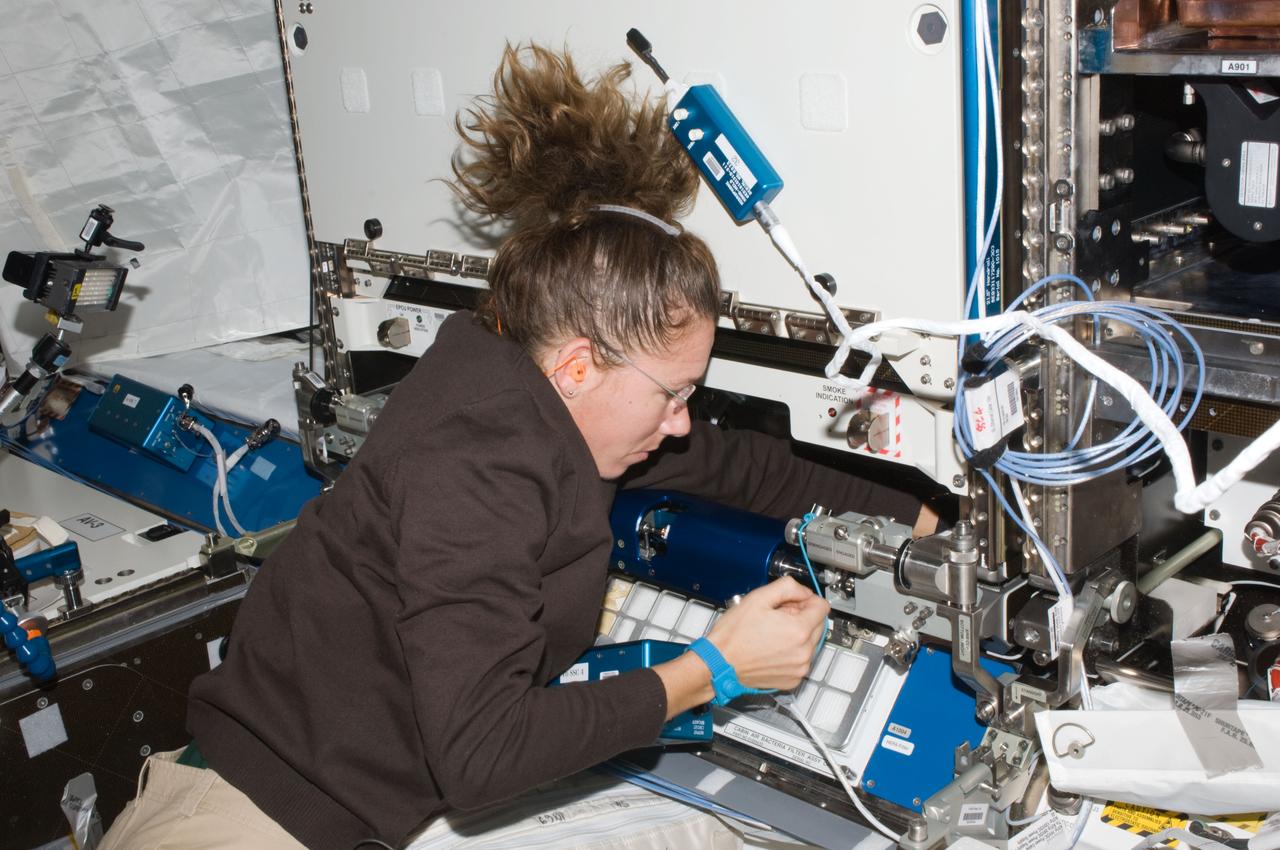
ISS018-E-017796 (5 Jan. 2009) --- Astronaut Sandra Magnus, Expedition 18 flight engineer, works on the Fluids and Combustion Facility (FCF) Combustion Integration Rack (CIR) Passive Rack Isolation System (PaRIS) in the Destiny laboratory of the International Space Station.
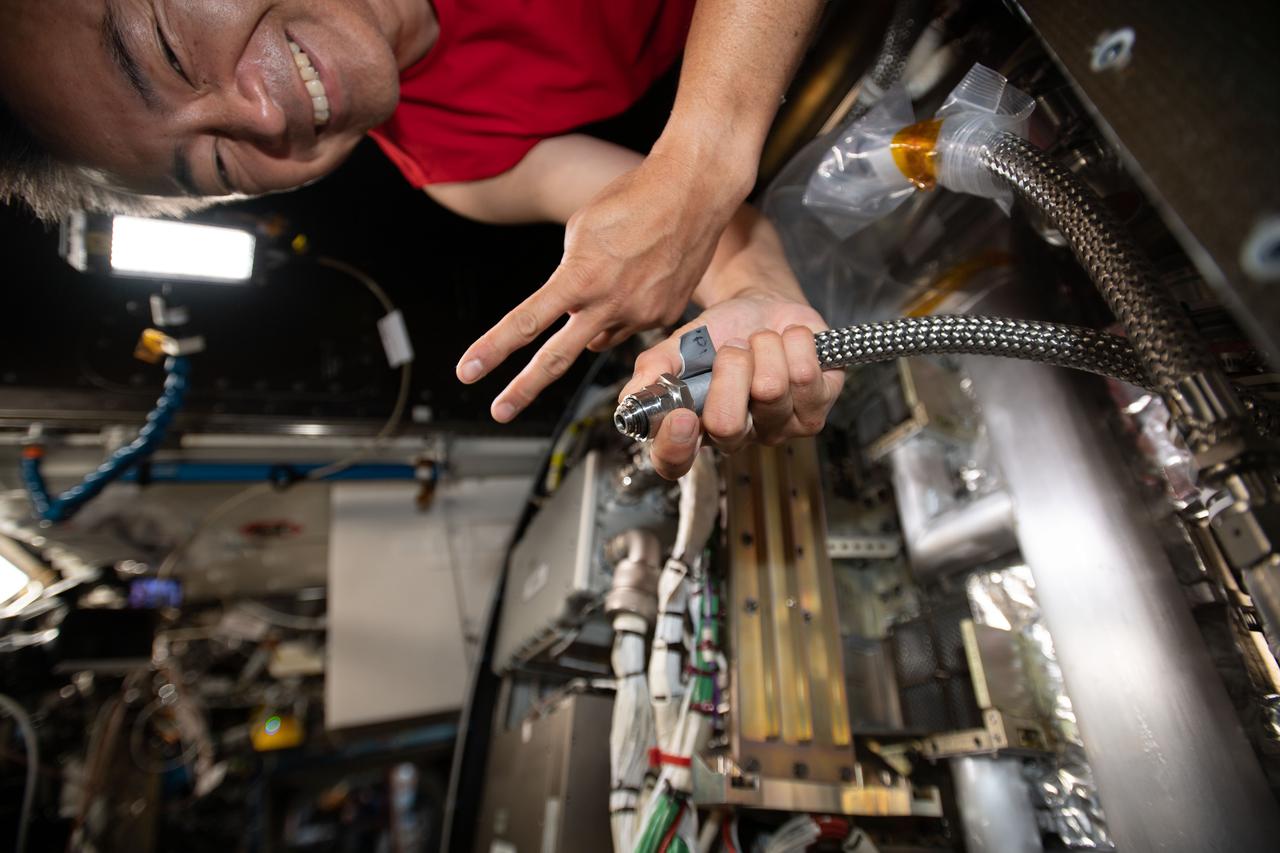
iss065e032225 (May 11, 2021) --- Expedition 65 Commander Akihiko Hoshide of the Japan Aerospace Exploration Agency replaces a science rack fan inside the International Space Station's U.S. Destiny laboratory.
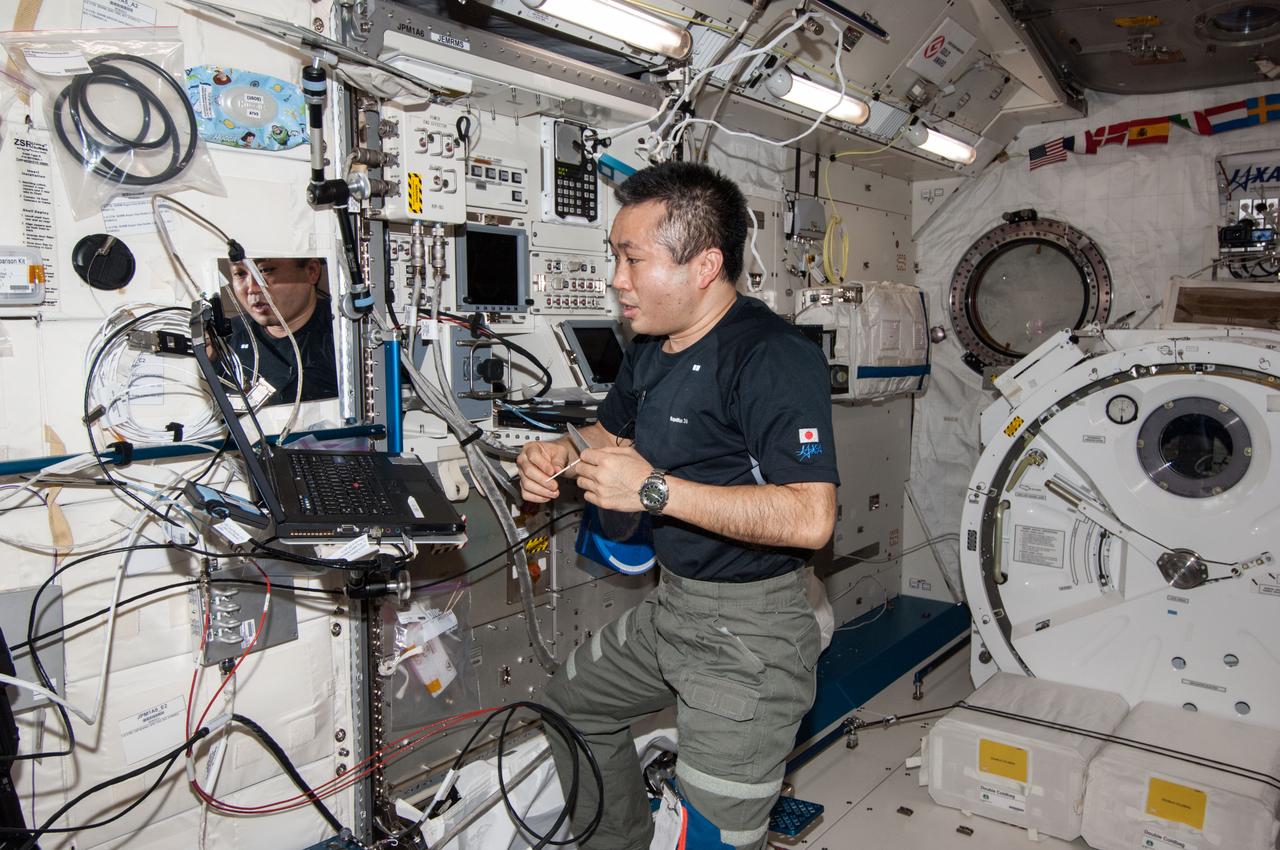
ISS038-E-031382 (14 Jan. 2014) --- Japan Aerospace Exploration Agency astronaut Koichi Wakata, Expedition 38 flight engineer, works at the Zero-Gravity Stowage Rack (ZSR) in the Kibo laboratory of the International Space Station.
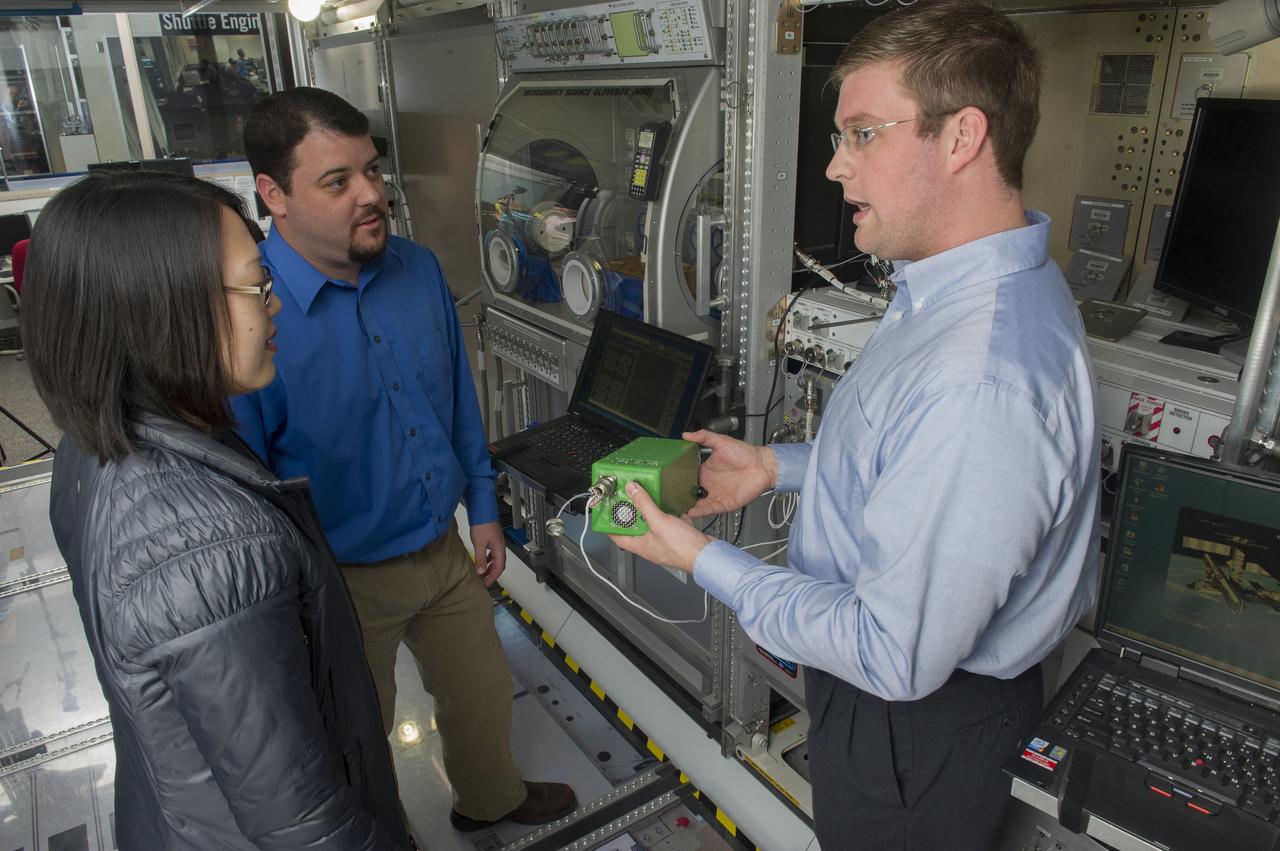
ELEASA WILSON, KRAIG TERSIGNI, JUSTIN CARTLEDGE MISSION OPERATIONS LABORATORY - LABORATORY TRAINING COMPLEX (LTC), BUILDING 4663, EXPRESS RACK TRAINING, EMERALD BRICK (POWER DISTRIBUTION FOR EXPRESS RACK LAPTOP).
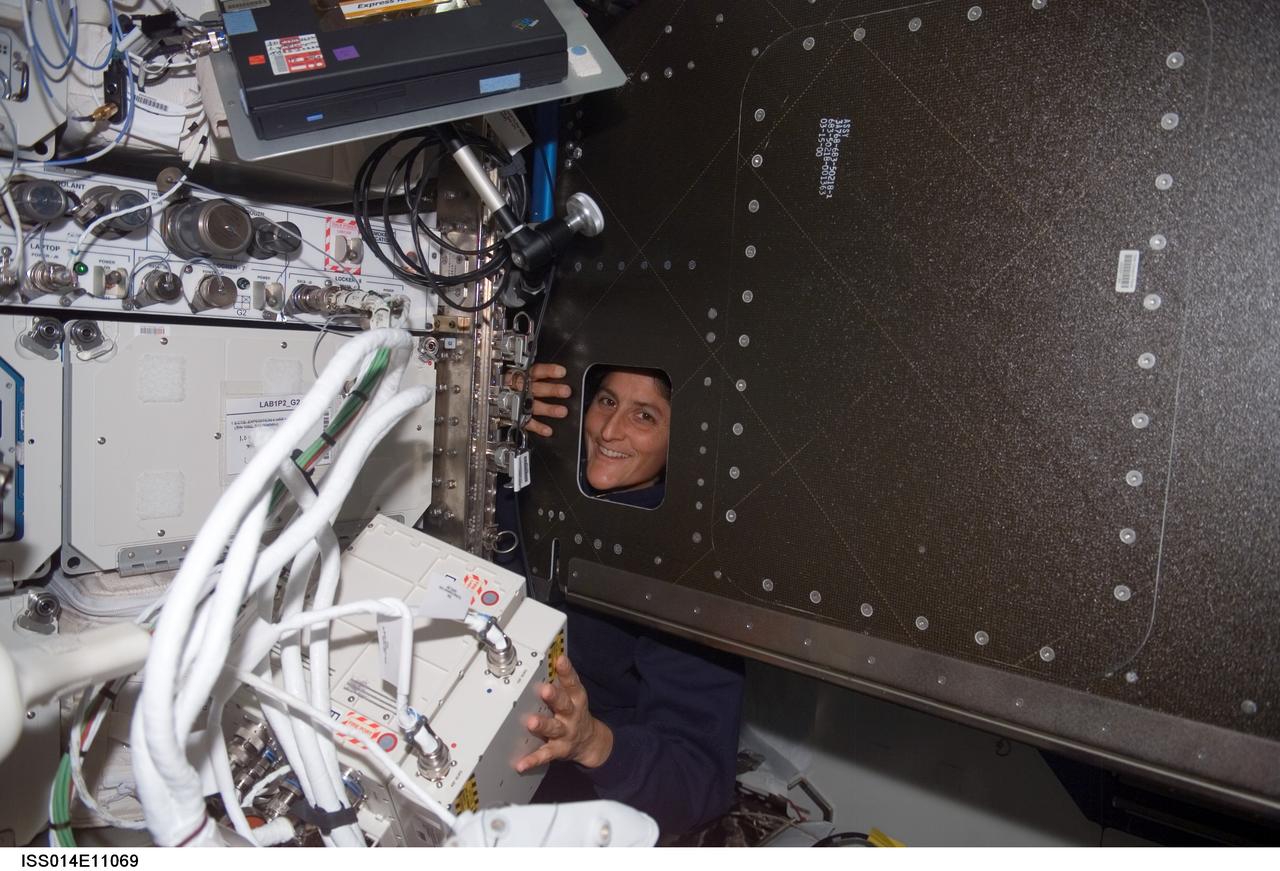
ISS014-E-11069 (3 Jan. 2007) --- Astronaut Sunita L. Williams, Expedition 14 flight engineer, looks through an opening during the Oxygen Generator System (OGS) rack rotation in the Destiny laboratory of the International Space Station.
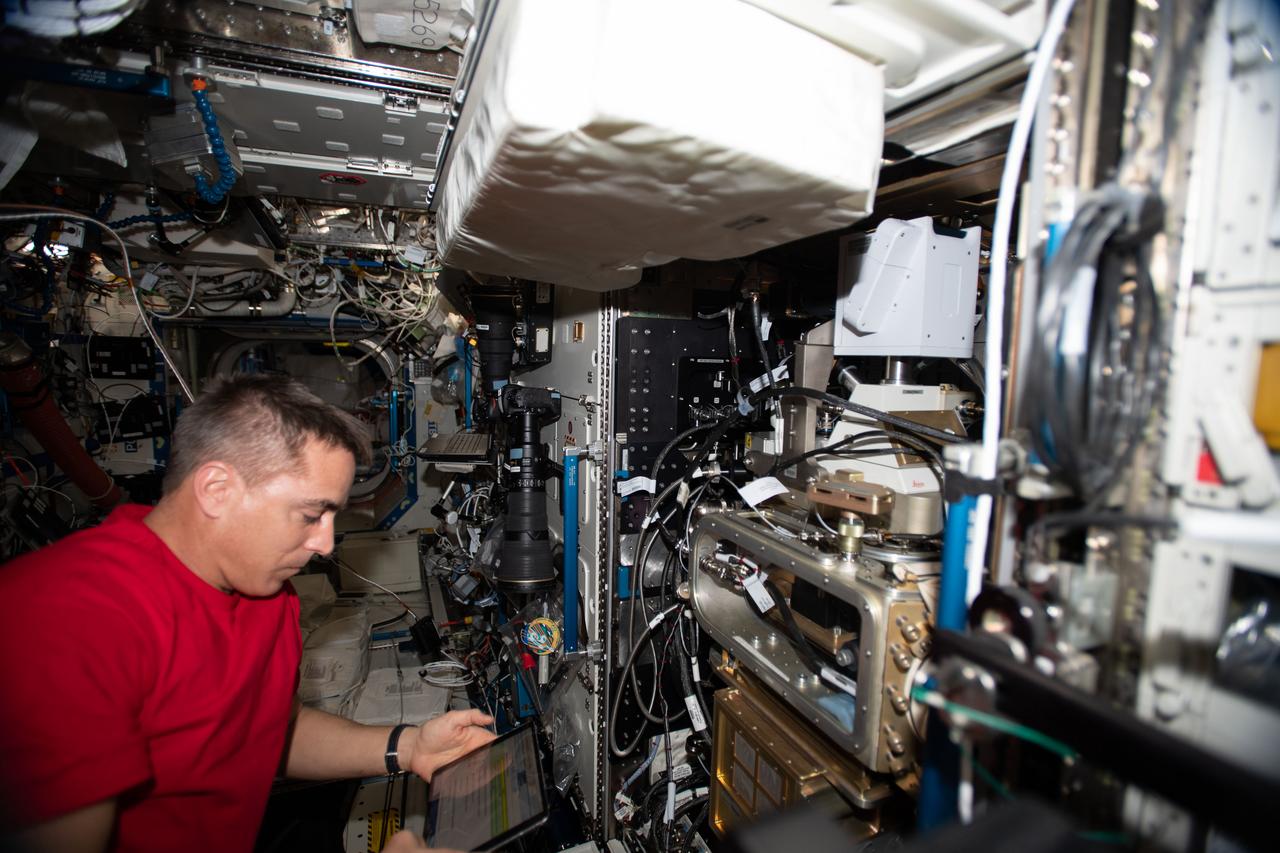
iss063e001782 (April 21, 2020) --- NASA astronaut and Expedition 63 Commander Chris Cassidy works on the Fluids Integrated Rack (FIR) replacing components in the research device that studies the behavior of fluids in microgravity. The FIR will help promote the design of advanced space-based fuel tanks and other complex fluid transfer systems.
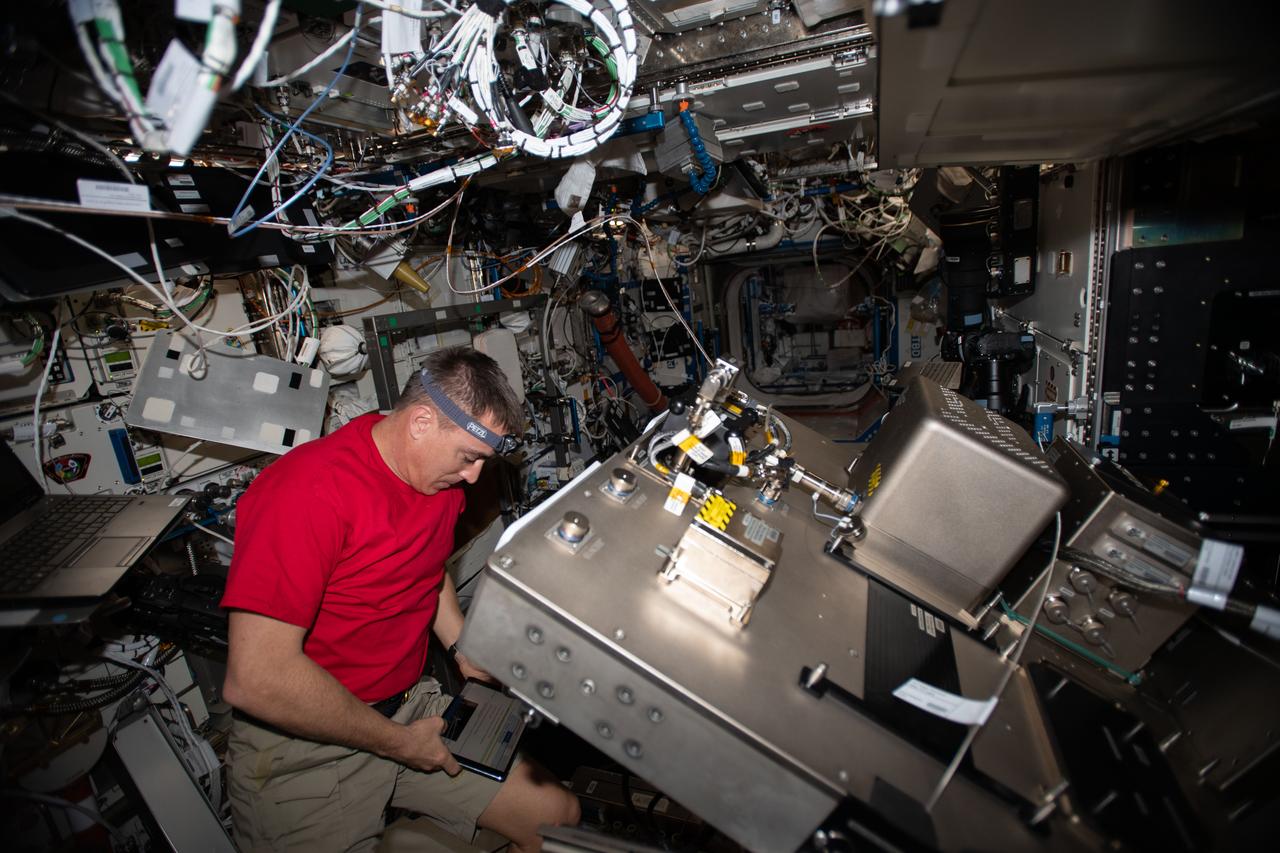
iss063e001804 (April 21, 2020) --- NASA astronaut and Expedition 63 Commander Chris Cassidy works on the Fluids Integrated Rack (FIR) replacing components in the research device that studies the behavior of fluids in microgravity. The FIR will help promote the design of advanced space-based fuel tanks and other complex fluid transfer systems.
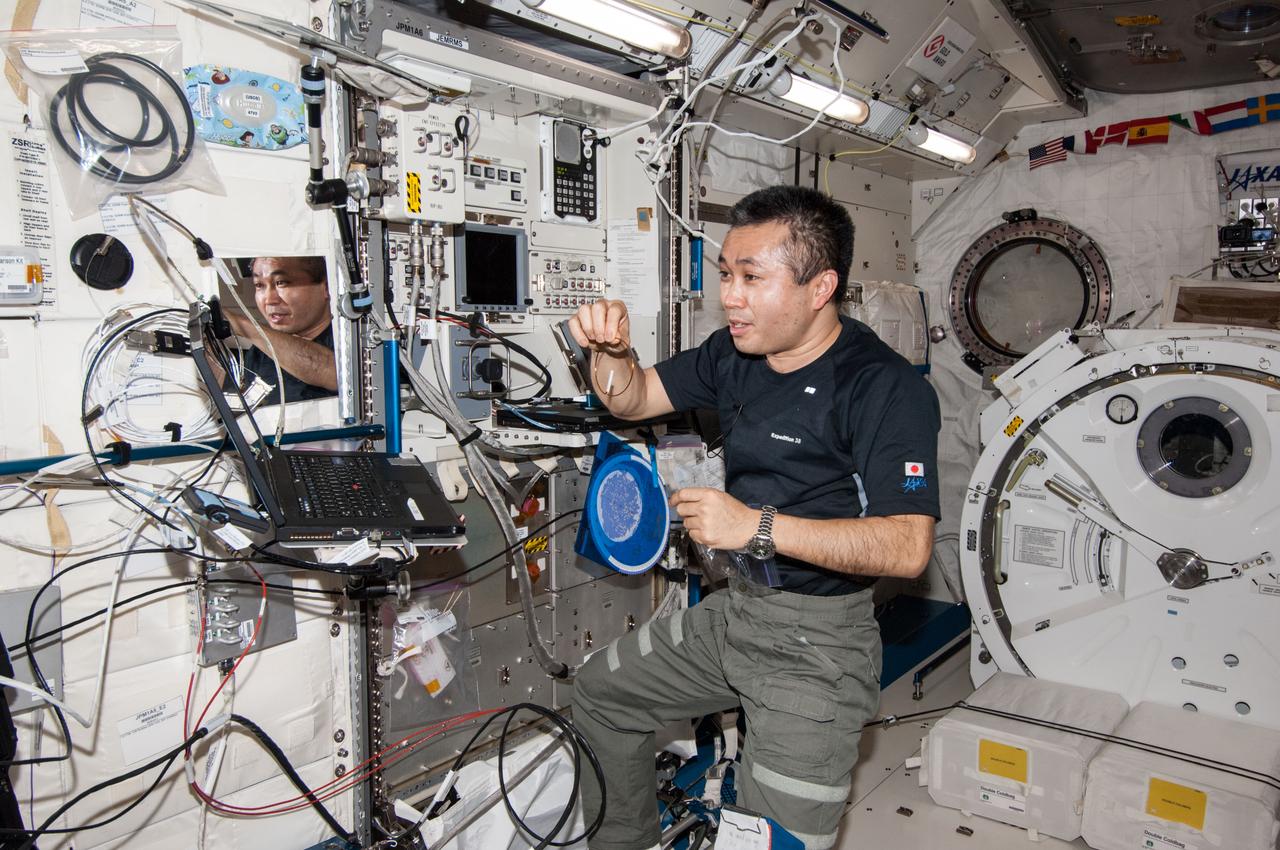
ISS038-E-031384 (14 Jan. 2014) --- Japan Aerospace Exploration Agency astronaut Koichi Wakata, Expedition 38 flight engineer, holds a brass ring at the Zero-Gravity Stowage Rack (ZSR) in the Kibo laboratory of the International Space Station.
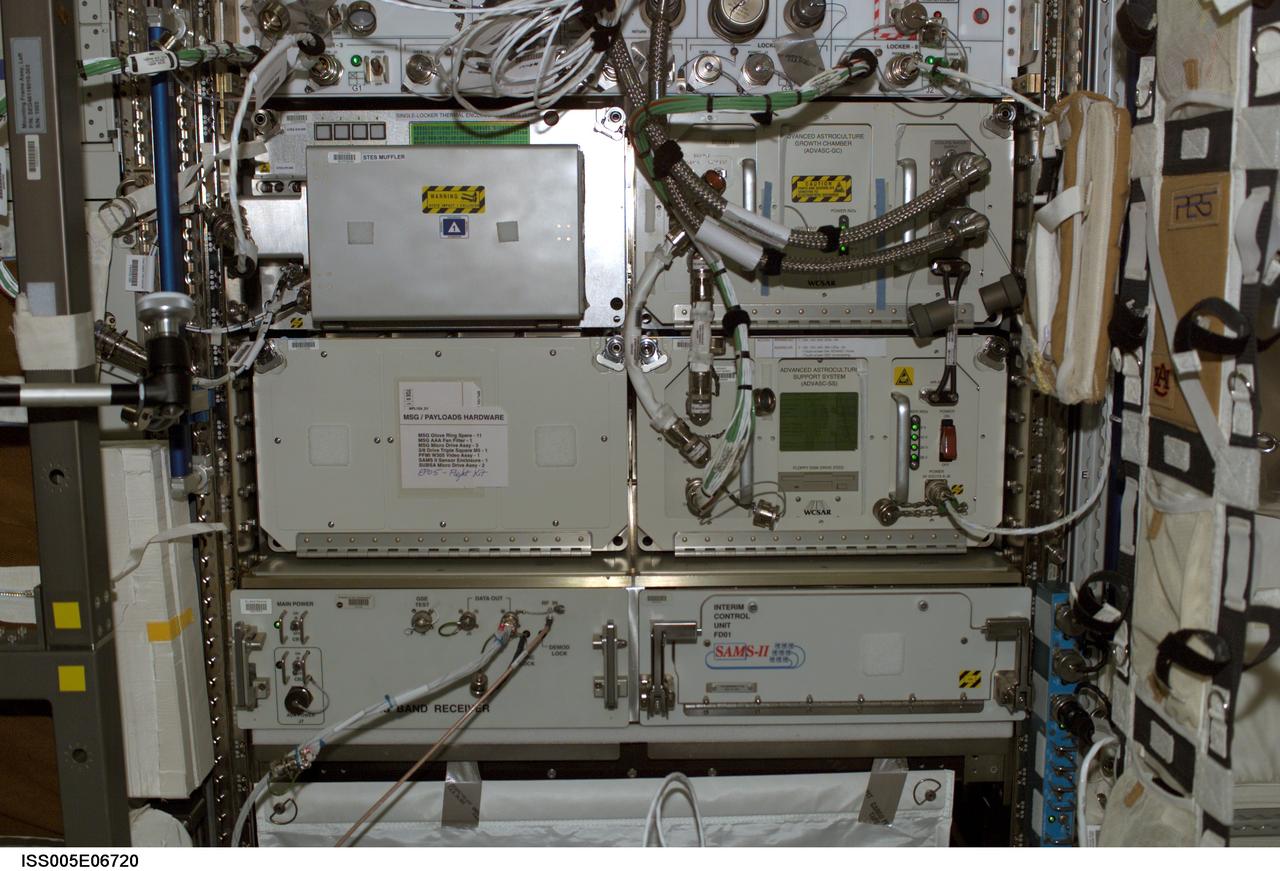
iss005e06720 (7/4/2002) --- Front view of Express Rack 4 in the U.S. Laboratory / Destiny taken during Expedition Five. Visible in the rack are the following items: Single-Locker Thermal Enclosure System (STES) Muffler, Advanced Astroculture Growth Chamber (ADVASC-GC), Advanced Astroculture Support System (ADVASC-SS). And Space Acceleration and Measurement System (SAMS) II.
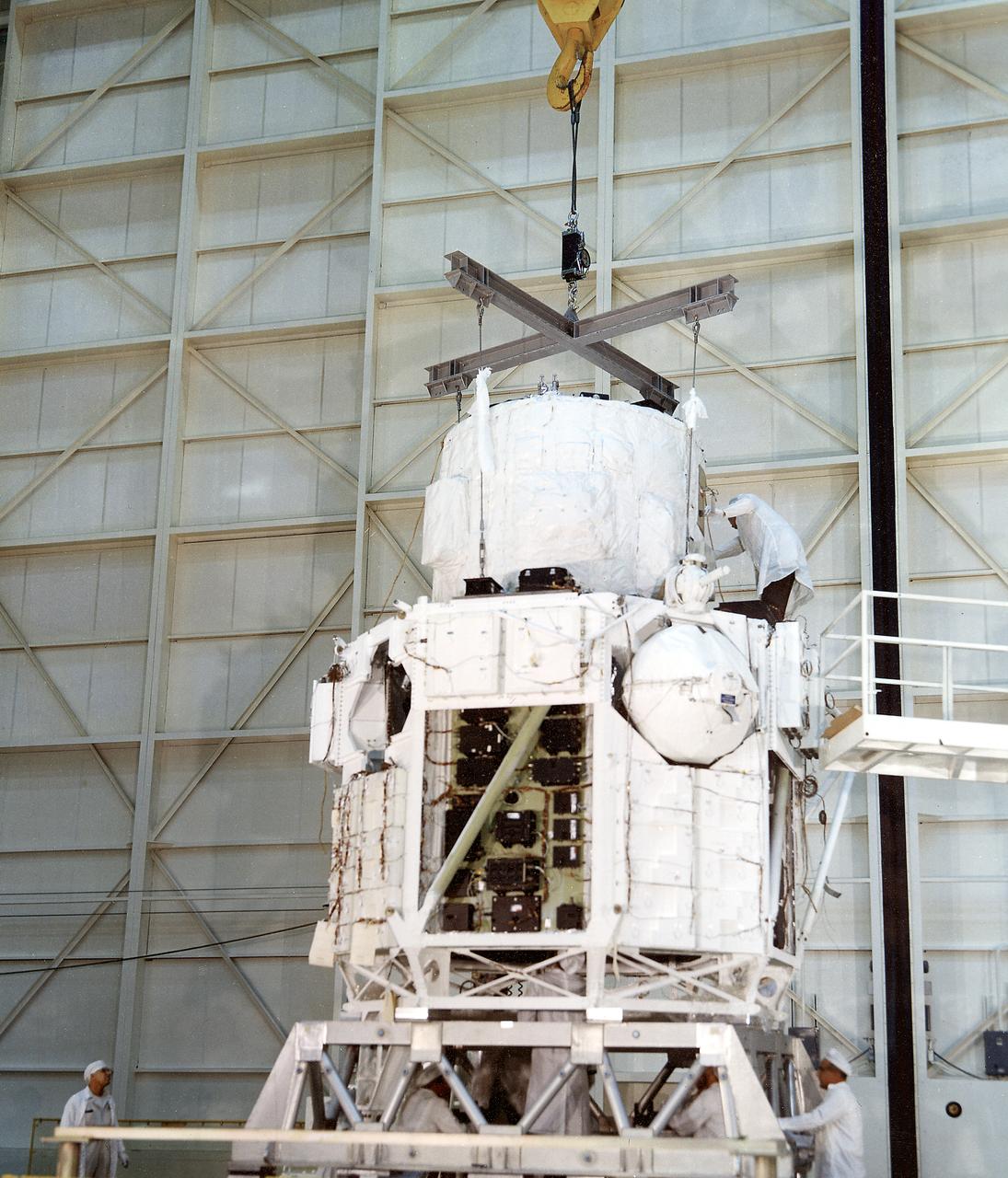
The Apollo Telescope Mount (ATM) was designed and developed by the Marshall Space Flight Center and served as the primary scientific instrument unit aboard Skylab (1973-1979). The ATM consisted of eight scientific instruments as well as a number of smaller experiments. In this image, the ATM canister, housing the solar instruments, is mated to the thermal rack that provided thermal stability.
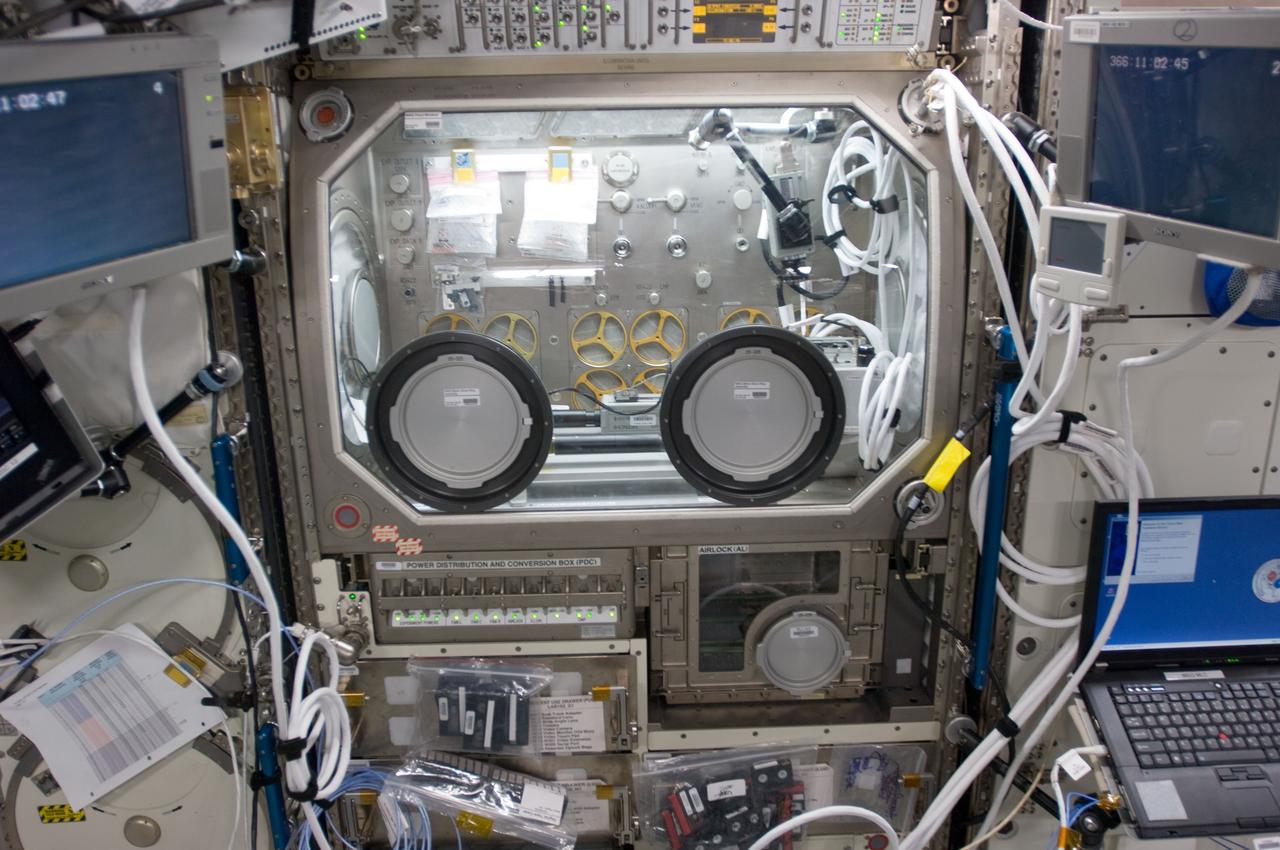
View of Command and Monitoring Panel (CMP),and Power Distribution and Conversion Box (PDC),on the Microgravity Science Glovebox (MSG) rack during Investigating the Structure of Paramagnetic Aggregates from Colloidal Emulsions 3 (InSPACE-3) Experiment,in the U.S. Laboratory. Photo was taken during Expedition 34.
Combustion Integrated Rack (CIR)
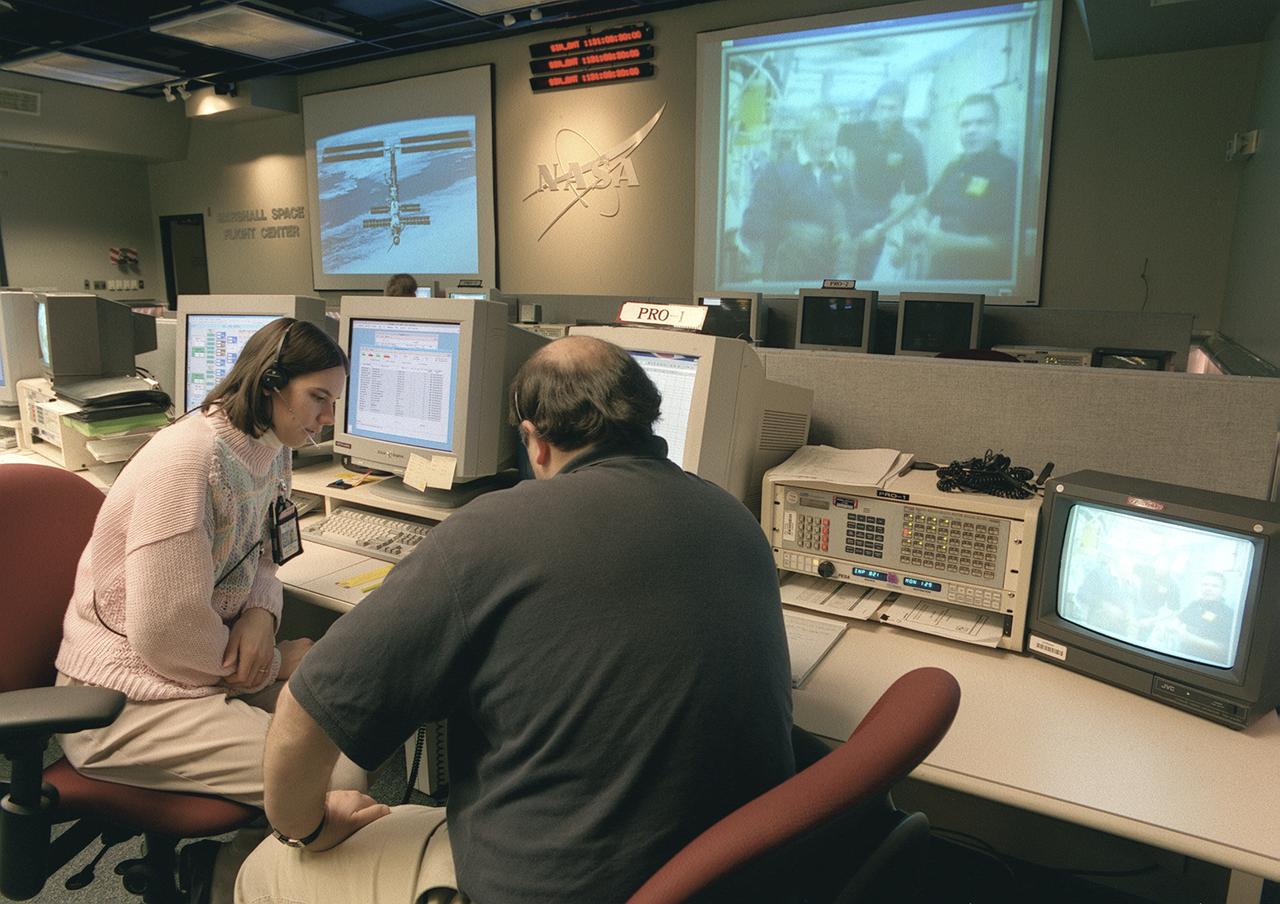
The Payload Operations Center (POC) is the science command post for the International Space Station (ISS). Located at NASA's Marshall Space Flight Center in Huntsville, Alabama, it is the focal point for American and international science activities aboard the ISS. The POC's unique capabilities allow science experts and researchers around the world to perform cutting-edge science in the unique microgravity environment of space. The POC is staffed around the clock by shifts of payload flight controllers. At any given time, 8 to 10 flight controllers are on consoles operating, plarning for, and controlling various systems and payloads. This photograph shows a Payload Rack Officer (PRO) at a work station. The PRO is linked by a computer to all payload racks aboard the ISS. The PRO monitors and configures the resources and environment for science experiments including EXPRESS Racks, multiple-payload racks designed for commercial payloads.
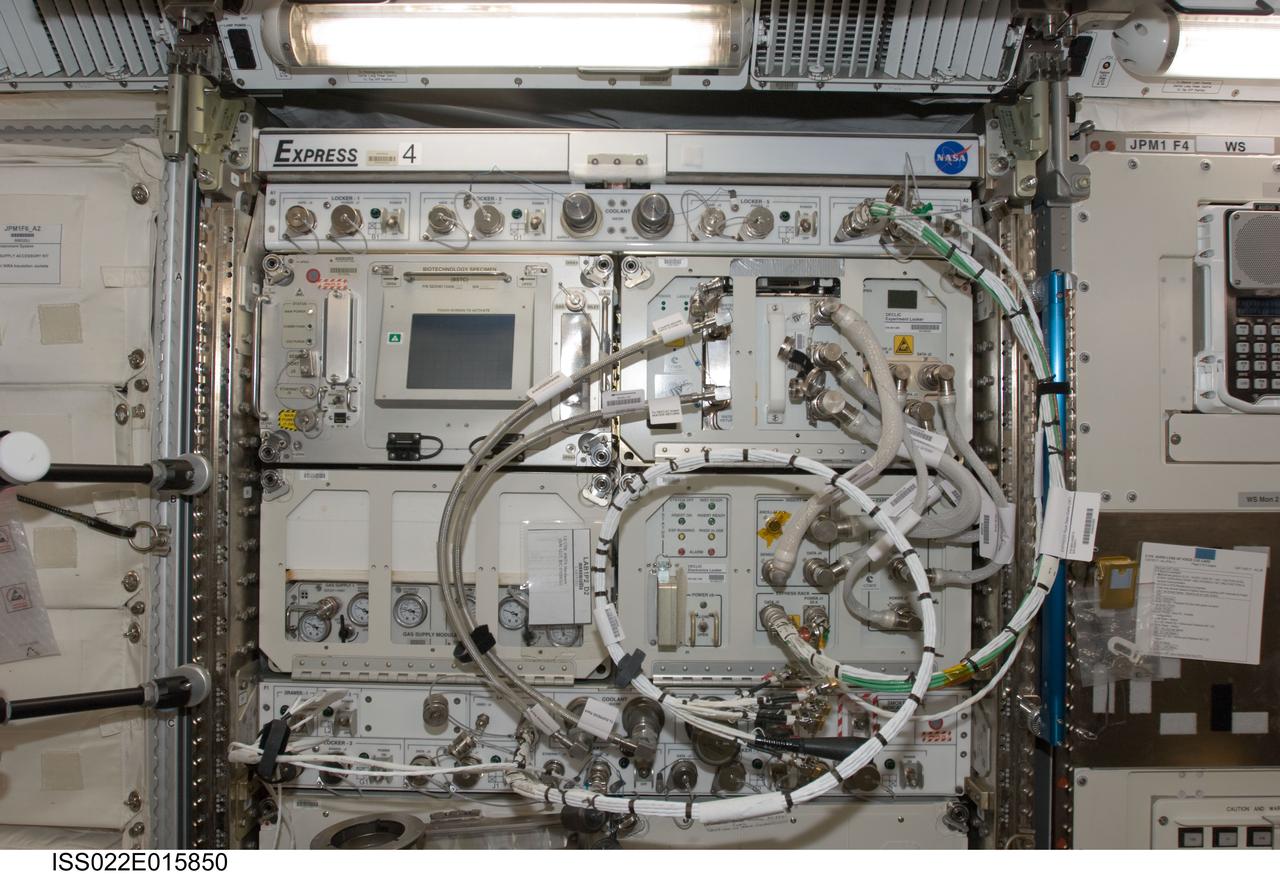
iss022e015850 (12/30/2009) --- The image shows a front view of EXpedite the PRocessing of Experiments to Space Station EXPRESS Rack 4 (Rack 4,JPM/1F5) in the Japanese Experiment Module (JEM) Japanese Pressurized Module (JPM). Equipment visible in the EXPRESS Rack includes the Biotechnology Specimen Temperature Controller (BSTC) and the Gas Supply Module (GSM) support hardware for the CBOSS (Cellular Biotechnology Operations Support Systems) investigations, and the Device for the Study of Critical Liquids and Crystallization (DECLIC).

Advanced Colloids Experiment, Thermal 5-2, ACE T5-2 International Space Station, ISS, Fluids Integrated Rack, FIR Operations in the Telescience Support Center, TSC
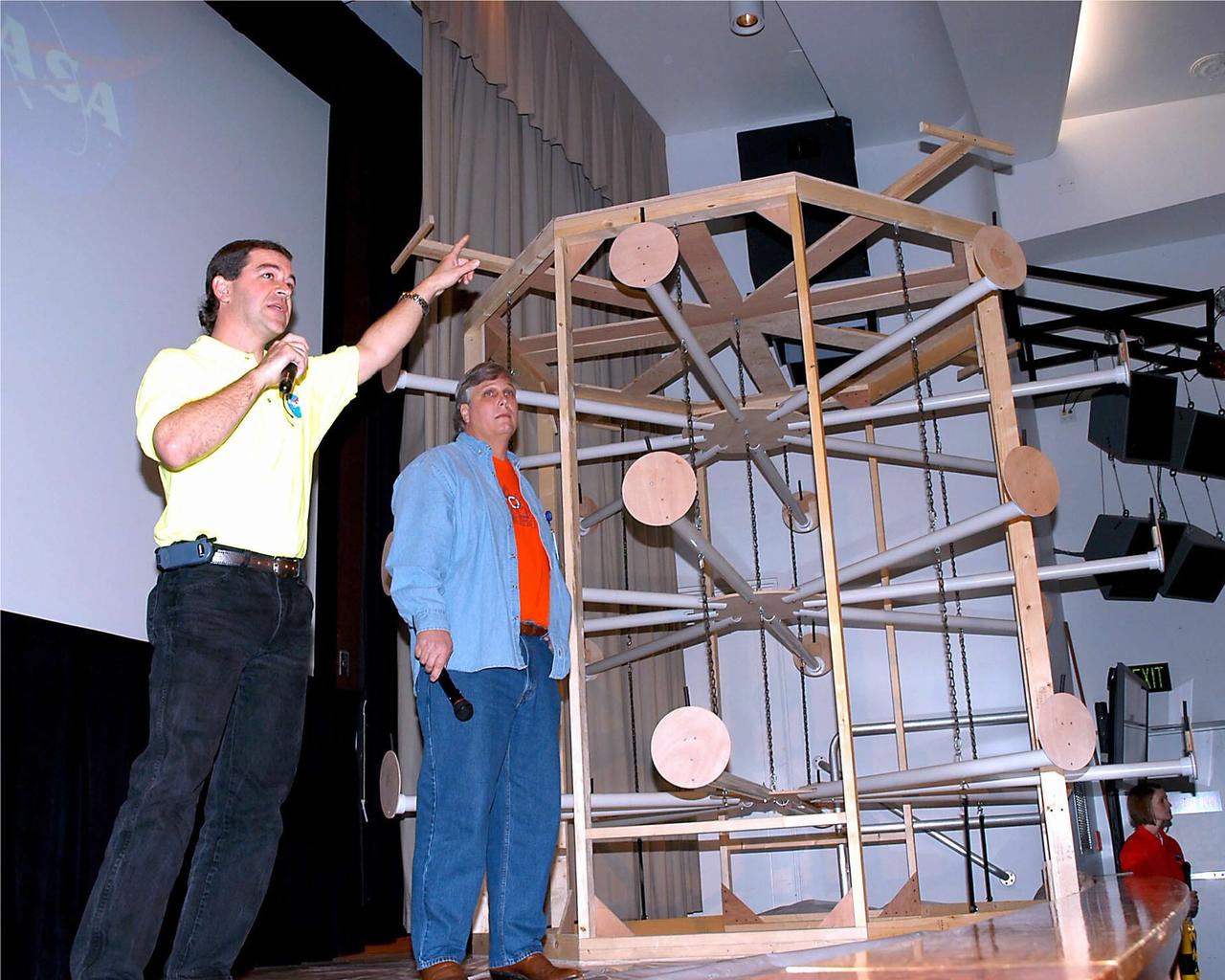
NASA engineers Scott Olive (left) and Bo Clarke answer questions during the 2007 FIRST (For Inspiration and Recognition of Science and Technology) Robotics Competition regional kickoff event held Saturday, Jan. 6, 2007, at StenniSphere, the visitor center at NASA Stennis Space Center near Bay St. Louis, Miss. The SSC employees and FIRST Robotics volunteer mentors are standing near a mock-up of the playing field for the FIRST Robotics' 2007 `Rack n' Roll' challenge. Roughly 300 students and adult volunteers - representing 29 high schools from four states - attended the kickoff to hear the rules of `Rack n' Roll.' The teams will spend the next six weeks building and programming robots from parts kits they received Saturday, then battle their creations at regional spring competitions in New Orleans, Houston, Atlanta and other cities around the nation. FIRST aims to inspire students in the pursuit of engineering and technology studies and careers.
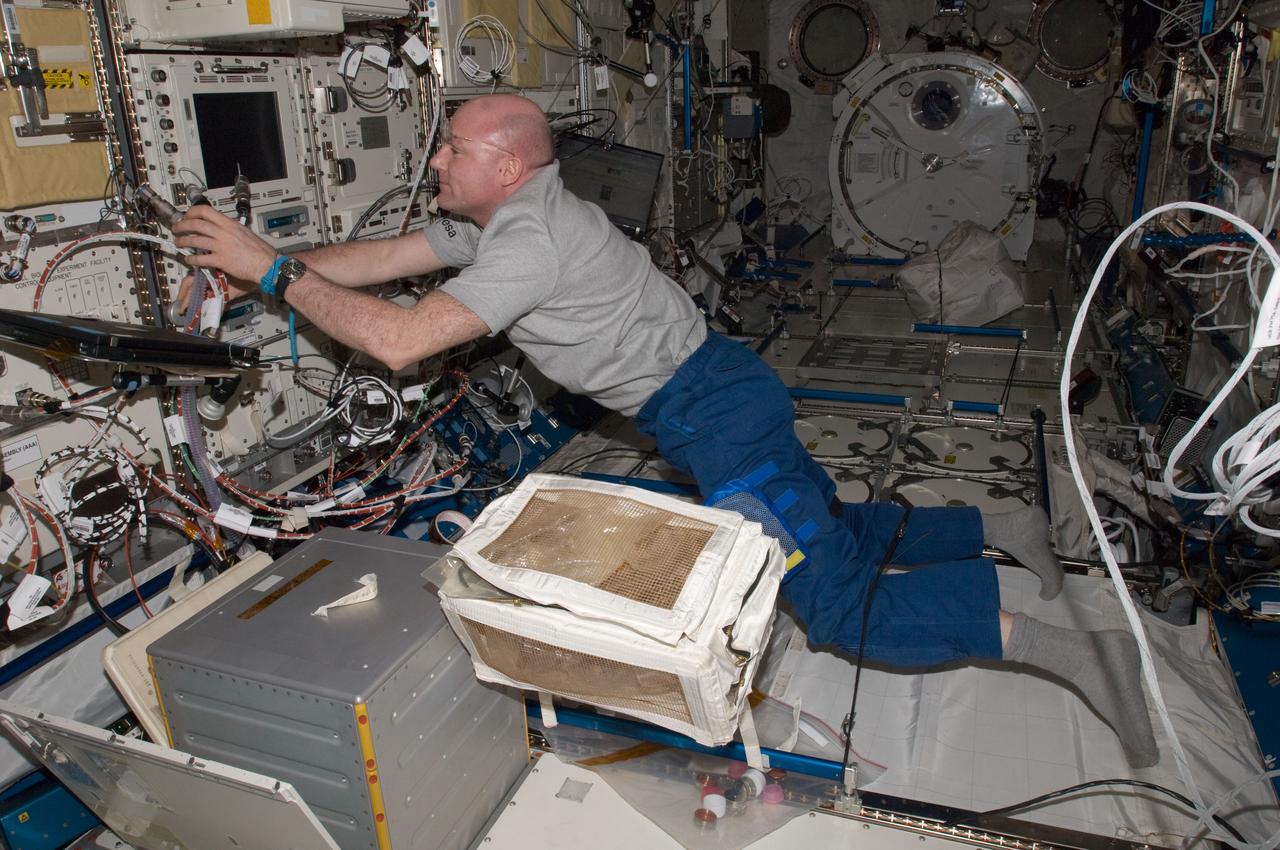
ISS031-E-140601 (1 June 2012) --- European Space Agency astronaut Andre Kuipers, Expedition 31 flight engineer, works with the Ryutai Rack in the Kibo laboratory of the International Space Station.
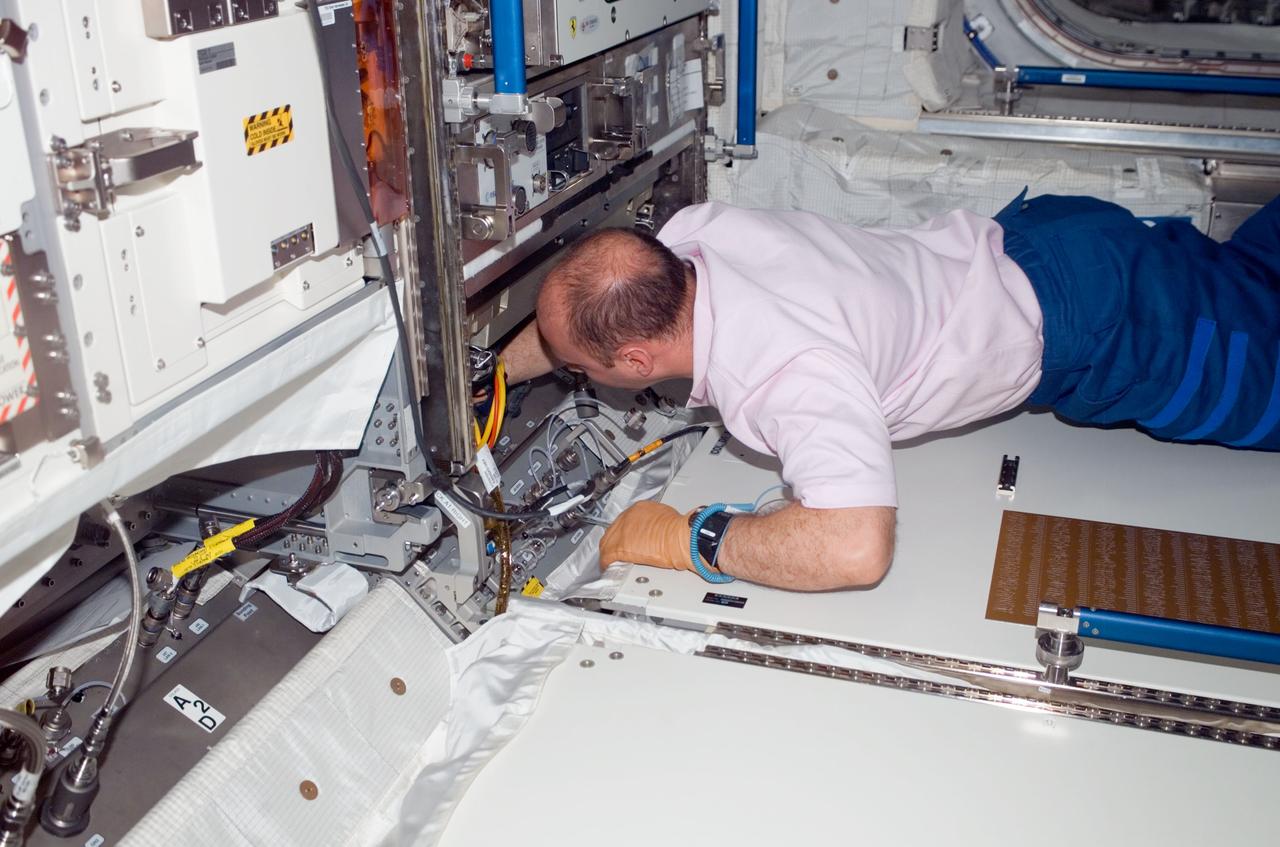
ISS016-E-033436 (23 March 2008) --- Astronaut Garrett Reisman, Expedition 16 flight engineer, works on the completion of the installation of the EXPRESS 3 rack in the Columbus module following its transfer from Destiny.
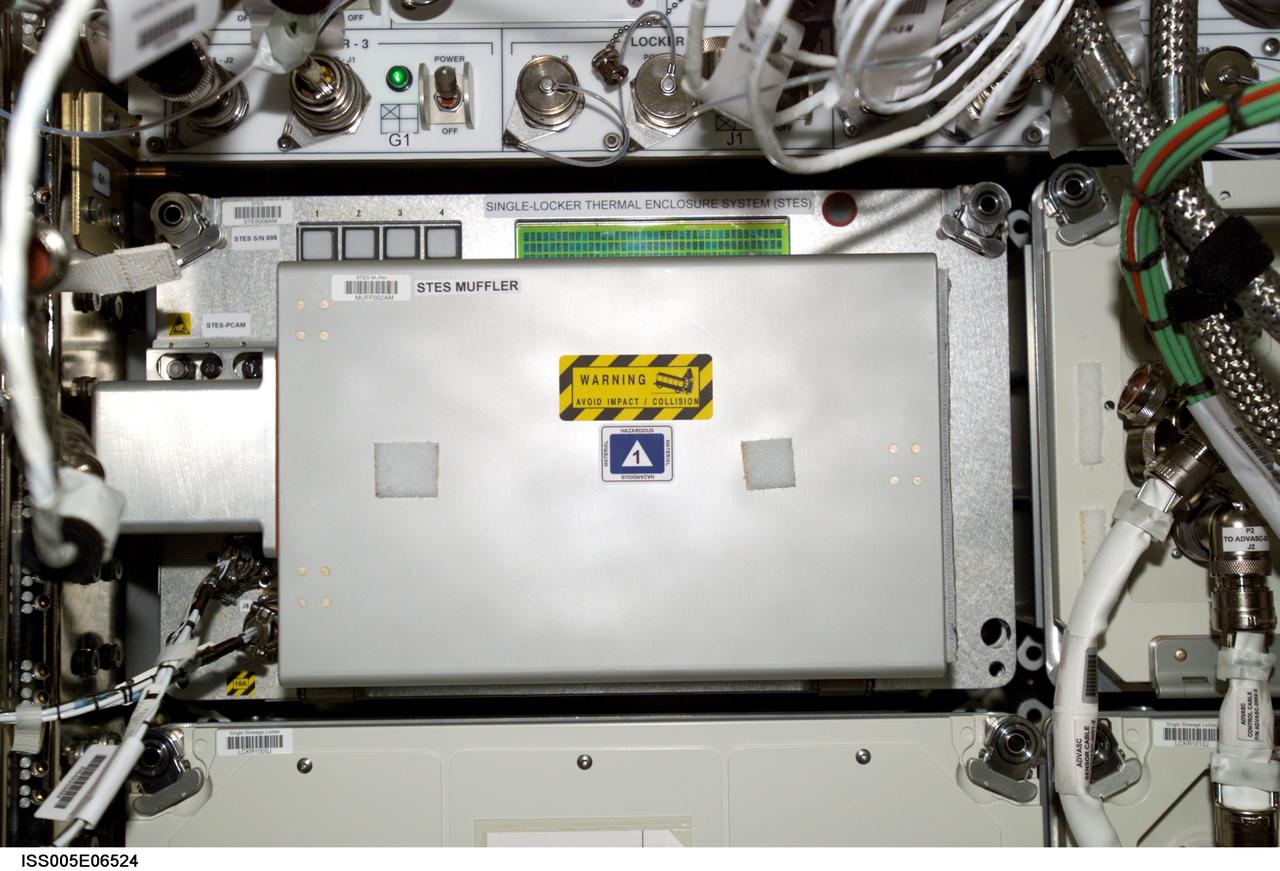
iss005e06524 (7/2/2002) --- View of the Single-Locker Thermal Enclosure System (STES), located on the Expedite the Processing of Experiments to the Space Station (EXPRESS) Rack 4 in the Destiny / U.S. Laboratory.
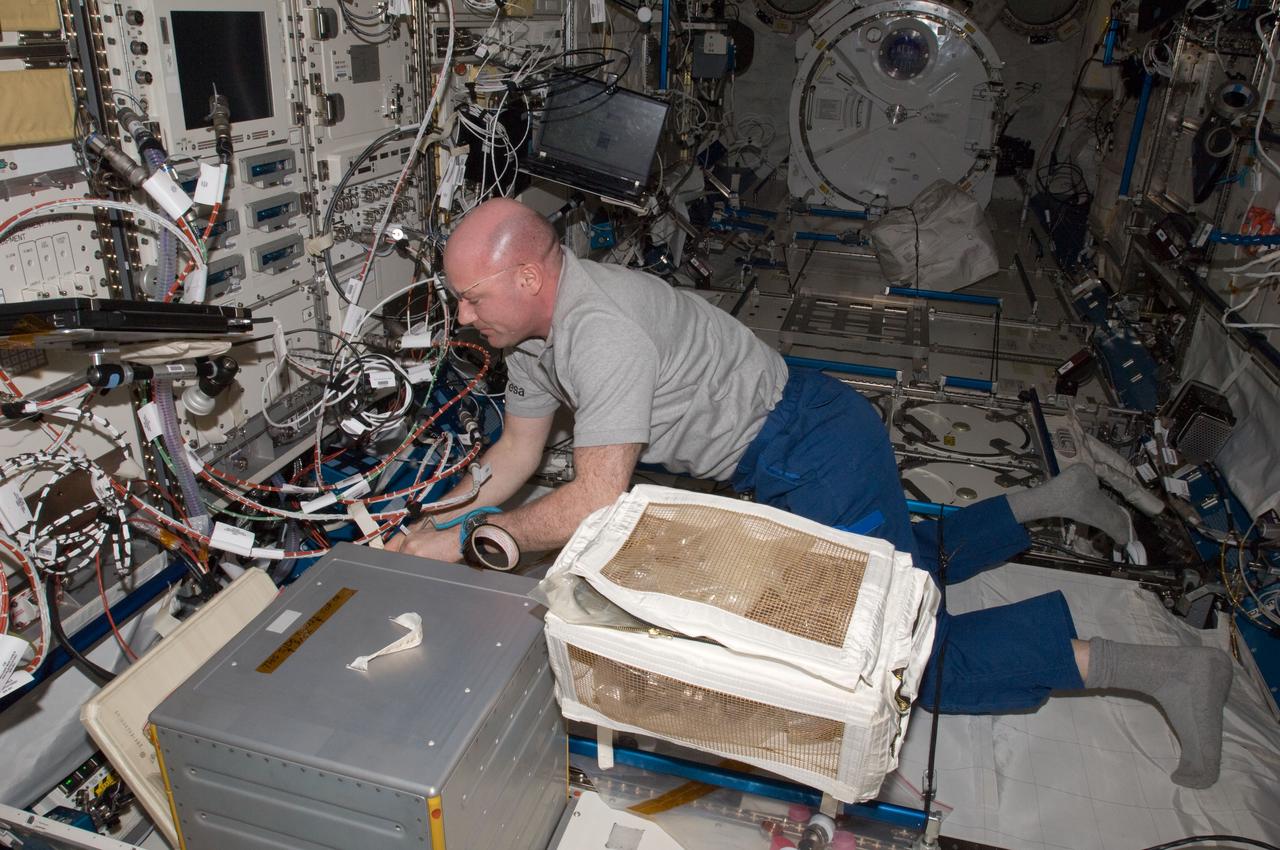
ISS031-E-140600 (1 June 2012) --- European Space Agency astronaut Andre Kuipers, Expedition 31 flight engineer, works with the Ryutai Rack in the Kibo laboratory of the International Space Station.
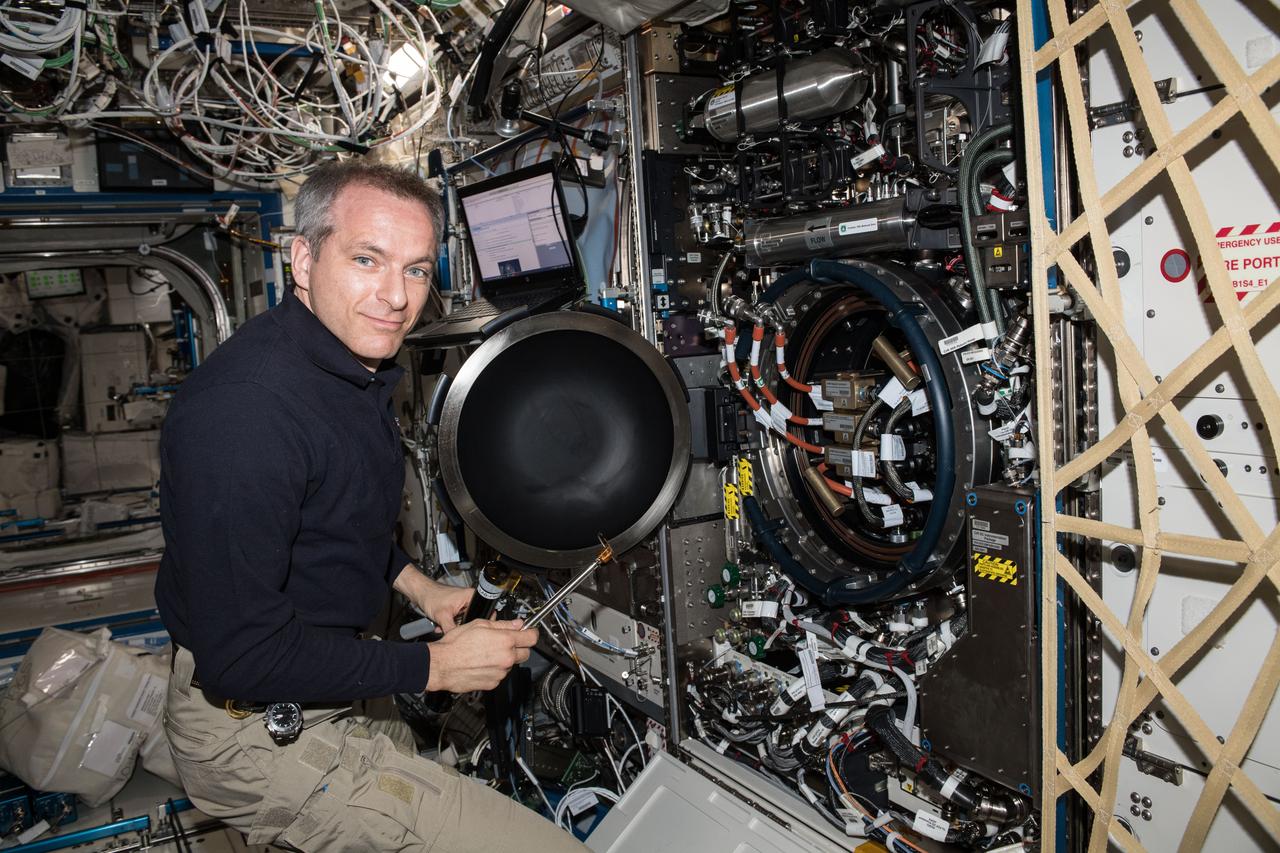
iss058e026380 (Feb. 26, 2019) --- Astronaut David Saint-Jacques of the Canadian Space Agency is inside the U.S. Destiny laboratory module working on the Combustion Integrated Rack. Saint-Jacques replaced fuel flow controllers inside the device for the Advanced Combustion via Microgravity Experiments which are a set of five independent studies of gaseous flames.
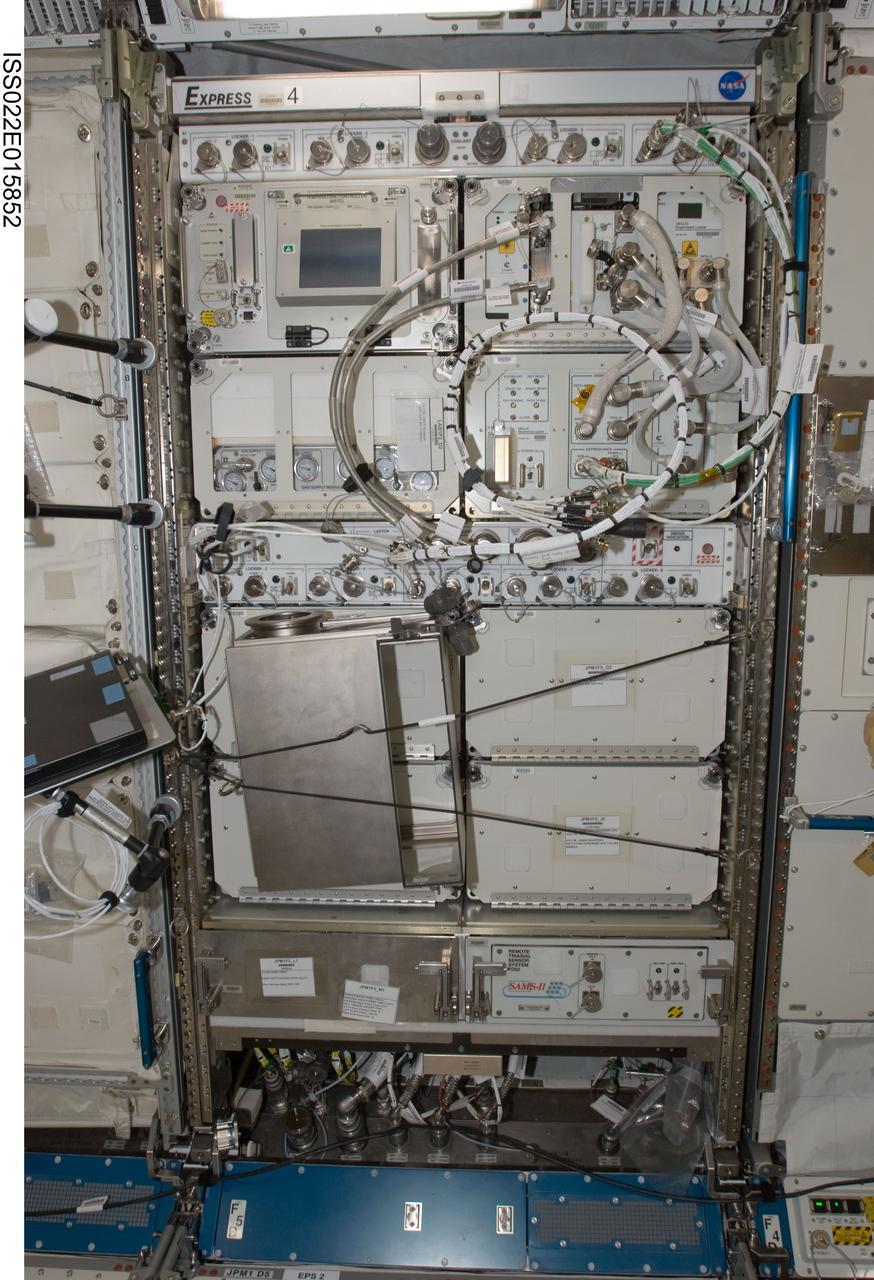
iss022e015852 (12/30/2009) --- The image shows a front view of EXpedite the PRocessing of Experiments to Space Station EXPRESS Rack 4 (Rack 4,JPM/1F5) in the Japanese Experiment Module (JEM) Japanese Pressurized Module (JPM). Equipment visible in the EXPRESS Rack includes the Biotechnology Specimen Temperature Controller (BSTC) and the Gas Supply Module (GSM) support hardware for the CBOSS (Cellular Biotechnology Operations Support Systems) investigations, and the Device for the Study of Critical Liquids and Crystallization (DECLIC). Also visible is the Space Acceleration Measurement System (SAMS) II.
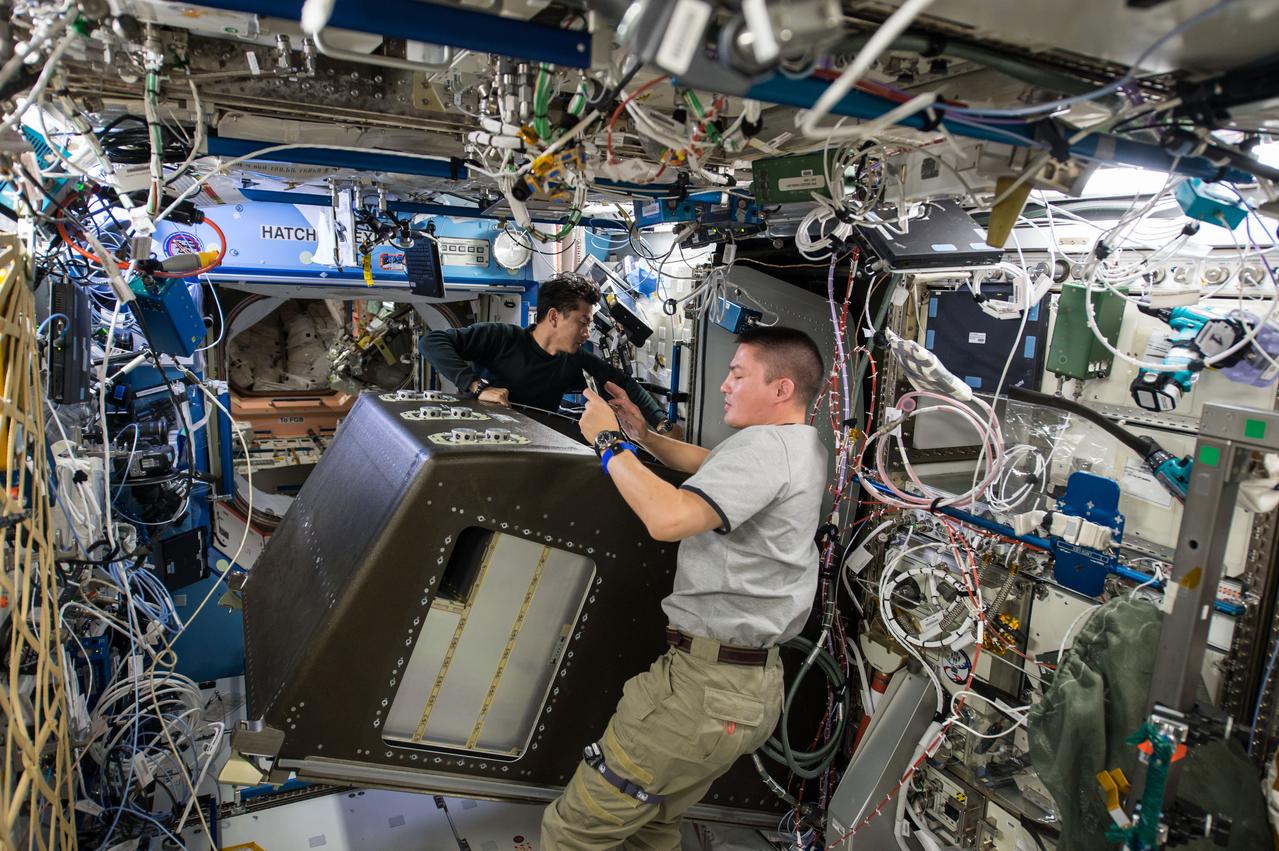
ISS045E019087 (09/18/2015) --- Japanese astronaut Kimiya Yui (left) and NASA astronaut Kjell Lindgren (right) work on removing items from a storage rack located inside the International Space Station’s Destiny laboratory. The pair are making room for new communications hardware that will be used for future visiting vehicles arriving at the space station, including the new U.S. commercial crew vehicles currently in development.
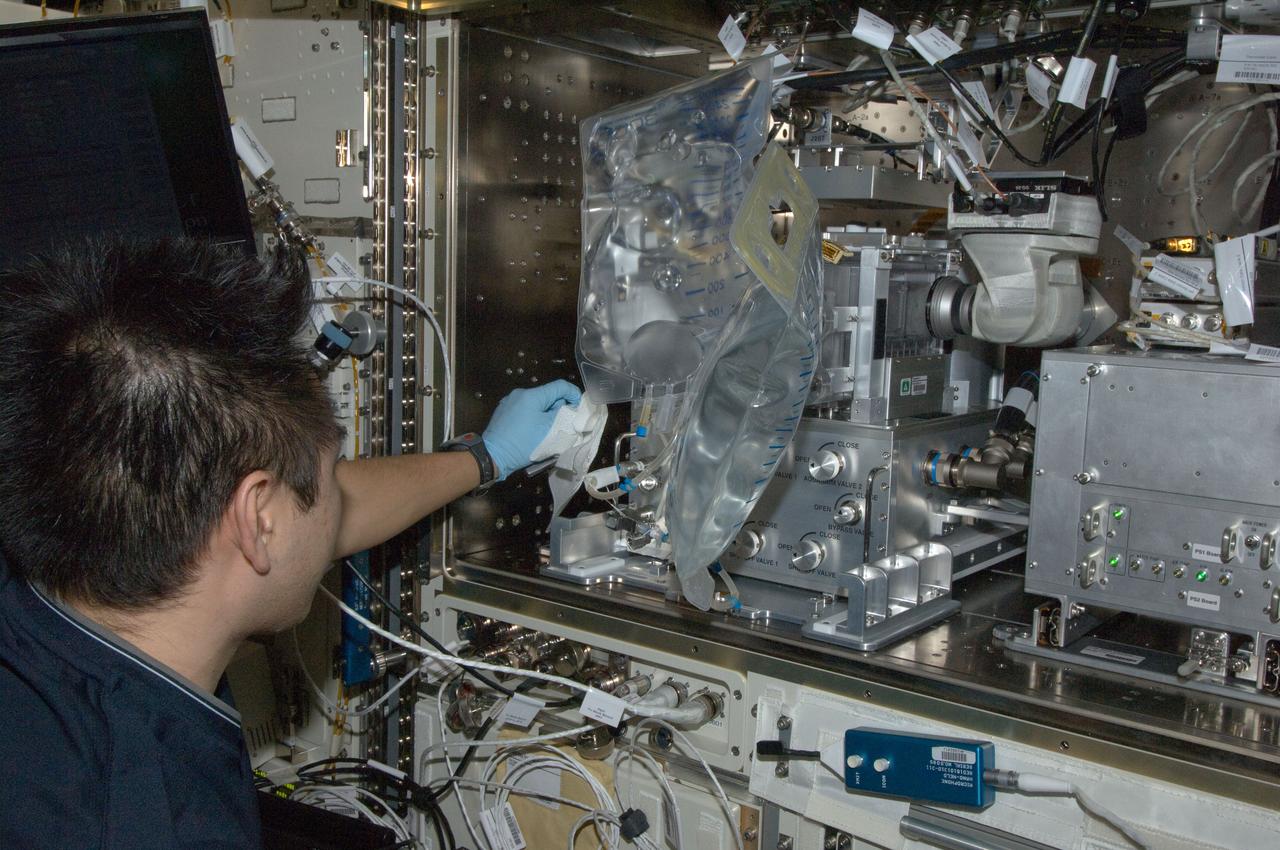
ISS033-E-016607 (24 Oct. 2012) --- In the International Space Station’s Kibo laboratory, Japan Aerospace Exploration Agency astronaut Aki Hoshide, Expedition 33 flight engineer, works on the Multipurpose Small Payload Rack (MSPR) in preparation for the arrival of the JAXA Medaka Osteoclast (MOST) payload which will arrive on the Soyuz TMA-06M spacecraft on Oct. 25.
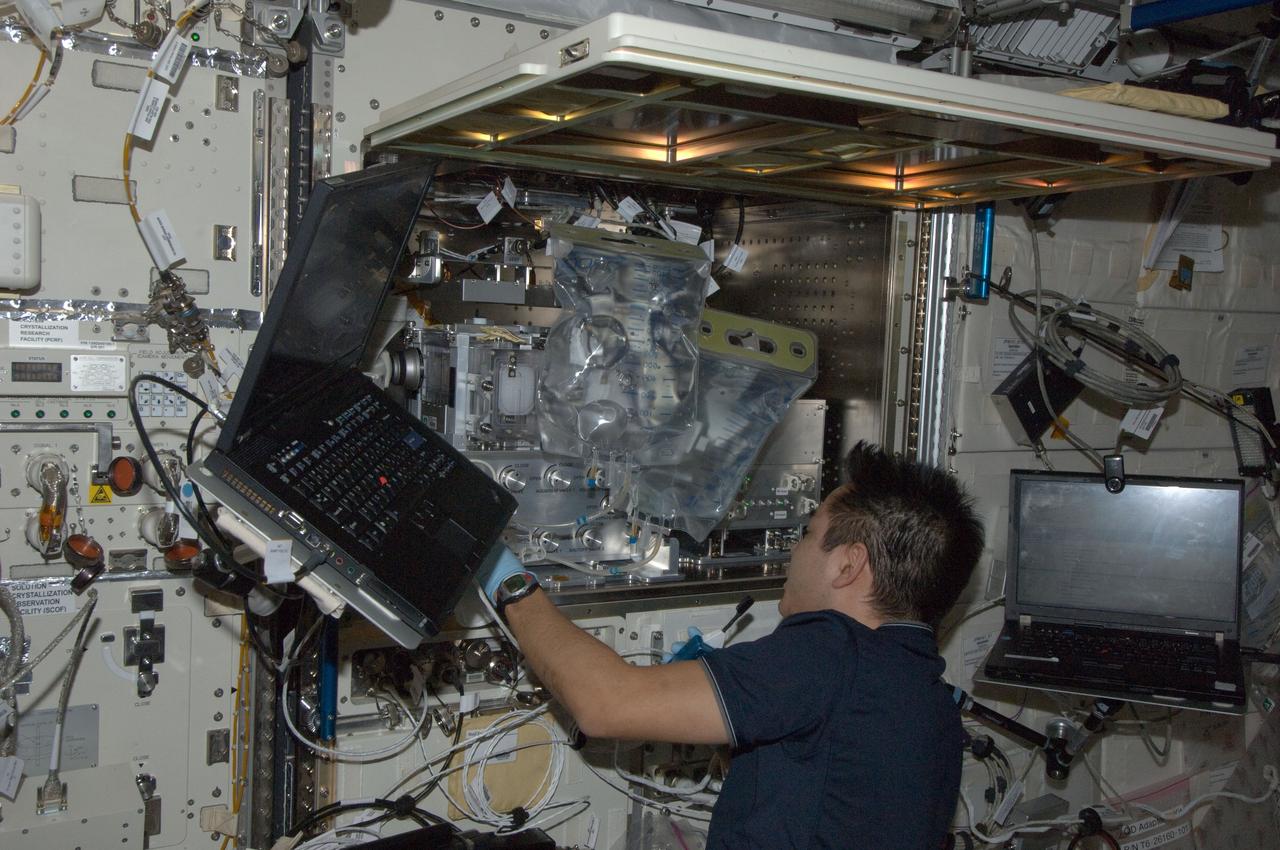
ISS033-E-016602 (24 Oct. 2012) --- In the International Space Station’s Kibo laboratory, Japan Aerospace Exploration Agency astronaut Aki Hoshide, Expedition 33 flight engineer, works on the Multipurpose Small Payload Rack (MSPR) in preparation for the arrival of the JAXA Medaka Osteoclast (MOST) payload which will arrive on the Soyuz TMA-06M spacecraft on Oct. 25.
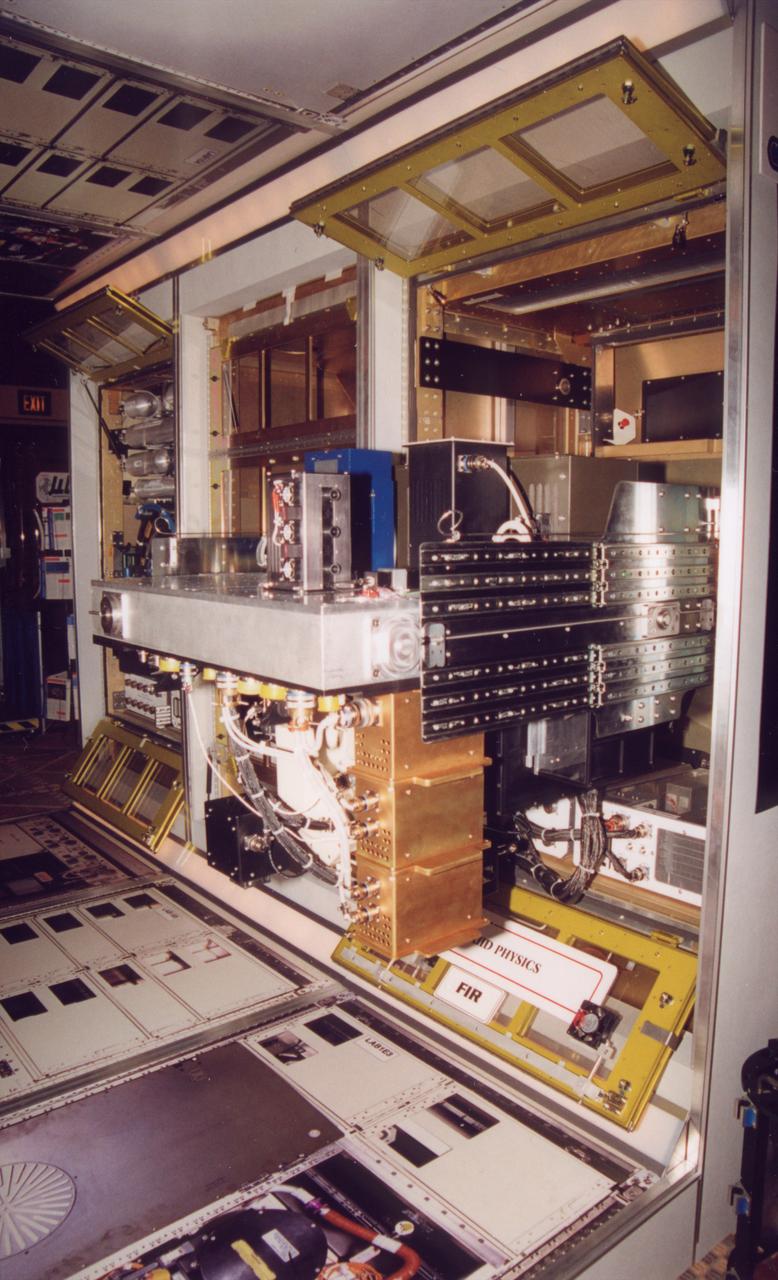
The optical bench for the Fluids Integrated Rack section of the Fluids and Combustion Facility (FCF) is shown extracted for servicing and with the optical bench rotated 90 degrees to access the rear elements. The FCF will be installed, in phases, in the Destiny, the U.S. Laboratory Module of the International Space Station (ISS), and will accommodate multiple users for a range of investigations. This is an engineering mockup; the flight hardware is subject to change as designs are refined. The FCF is being developed by the Microgravity Science Division (MSD) at the NASA Glenn Research Center. (Photo credit: NASA/Marshall Space Flight Center)
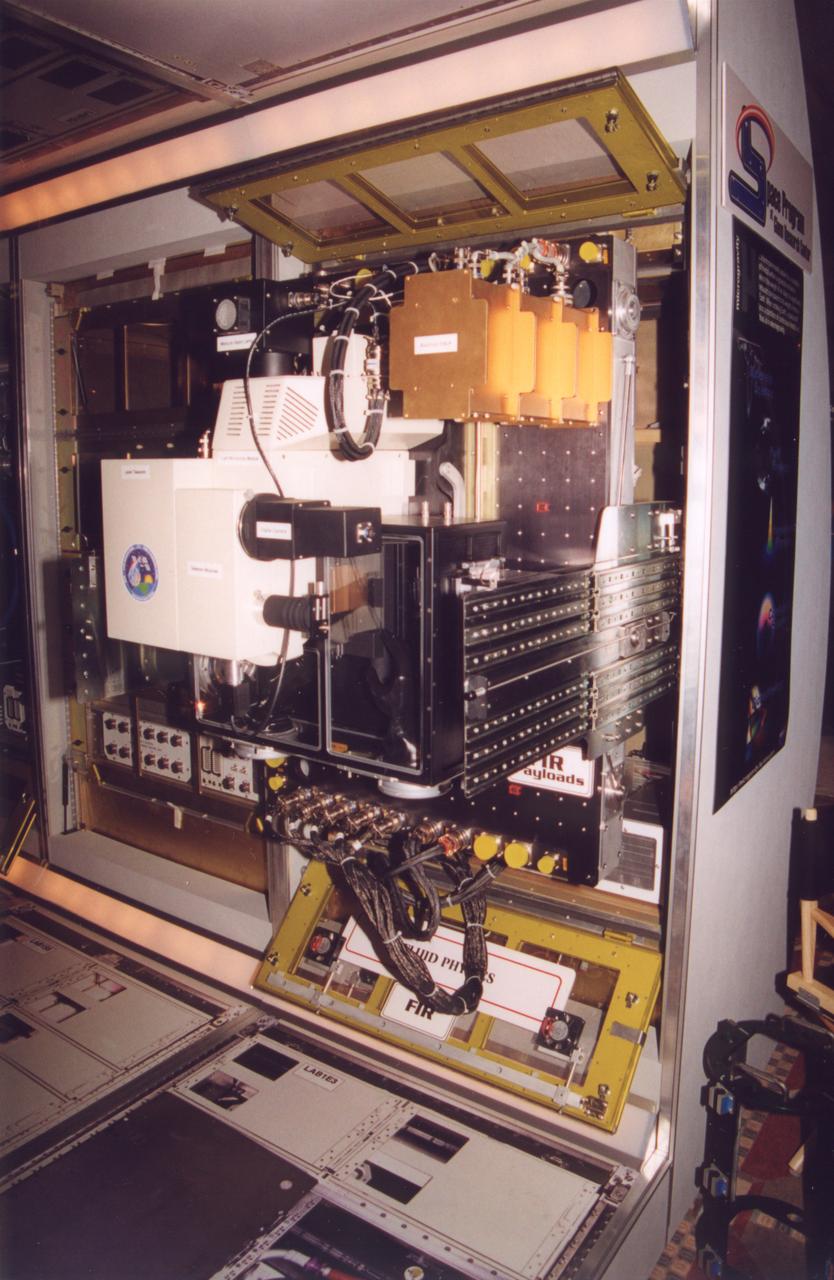
The optical bench for the Fluids Integrated Rack section of the Fluids and Combustion Facility (FCF) is shown extracted for servicing. The FCF will be installed, in phases, in the Destiny, the U.S. Laboratory Module of the International Space Station (ISS), and will accommodate multiple users for a range of investigations. This is an engineering mockup; the flight hardware is subject to change as designs are refined. The FCF is being developed by the Microgravity Science Division (MSD) at the NASA Glenn Research Center. (Photo credit: NASA/Marshall Space Flight Center)
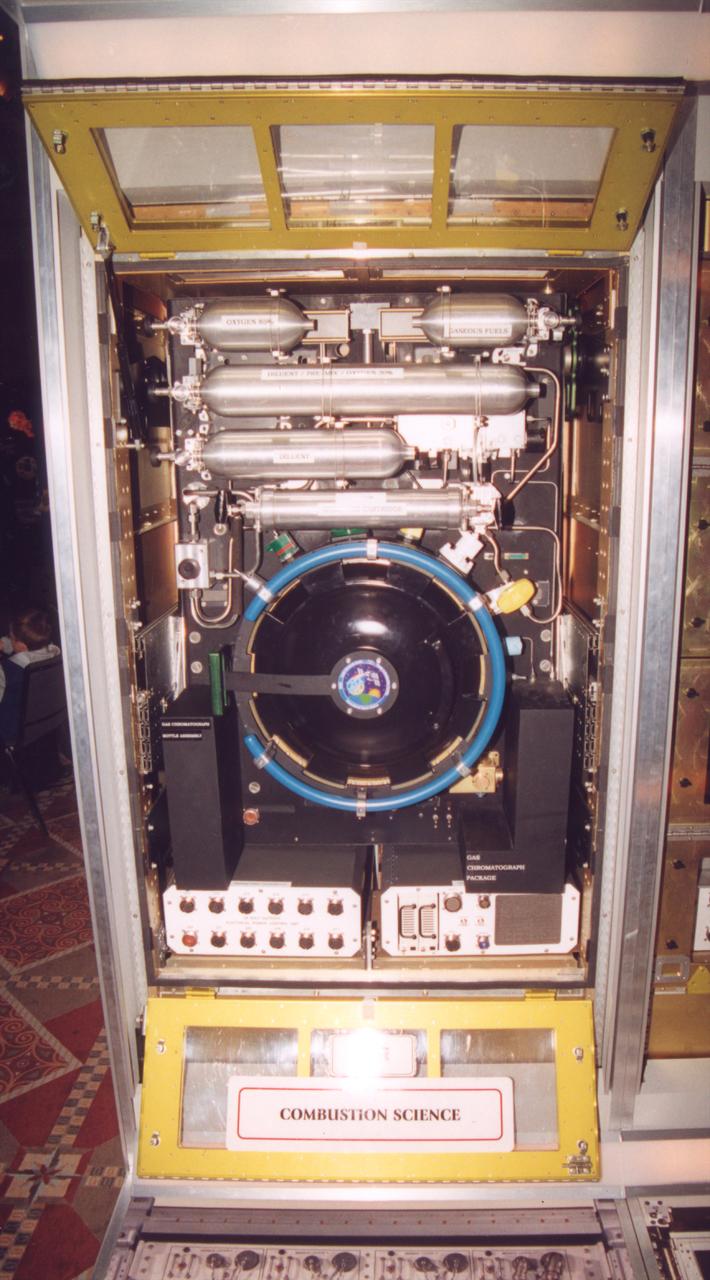
The combustion chamber for the Combustion Integrated Rack section of the Fluids and Combustion Facility (FCF) is shown in its operational configuration. The FCF will be installed, in phases, in the Destiny, the U.S. Laboratory Module of the International Space Station (ISS), and will accommodate multiple users for a range of investigations. This is an engineering mockup; the flight hardware is subject to change as designs are refined. The FCF is being developed by the Microgravity Science Division (MSD) at the NASA Glenn Research Center. (Photo credit: NASA/Marshall Space Flight Center)
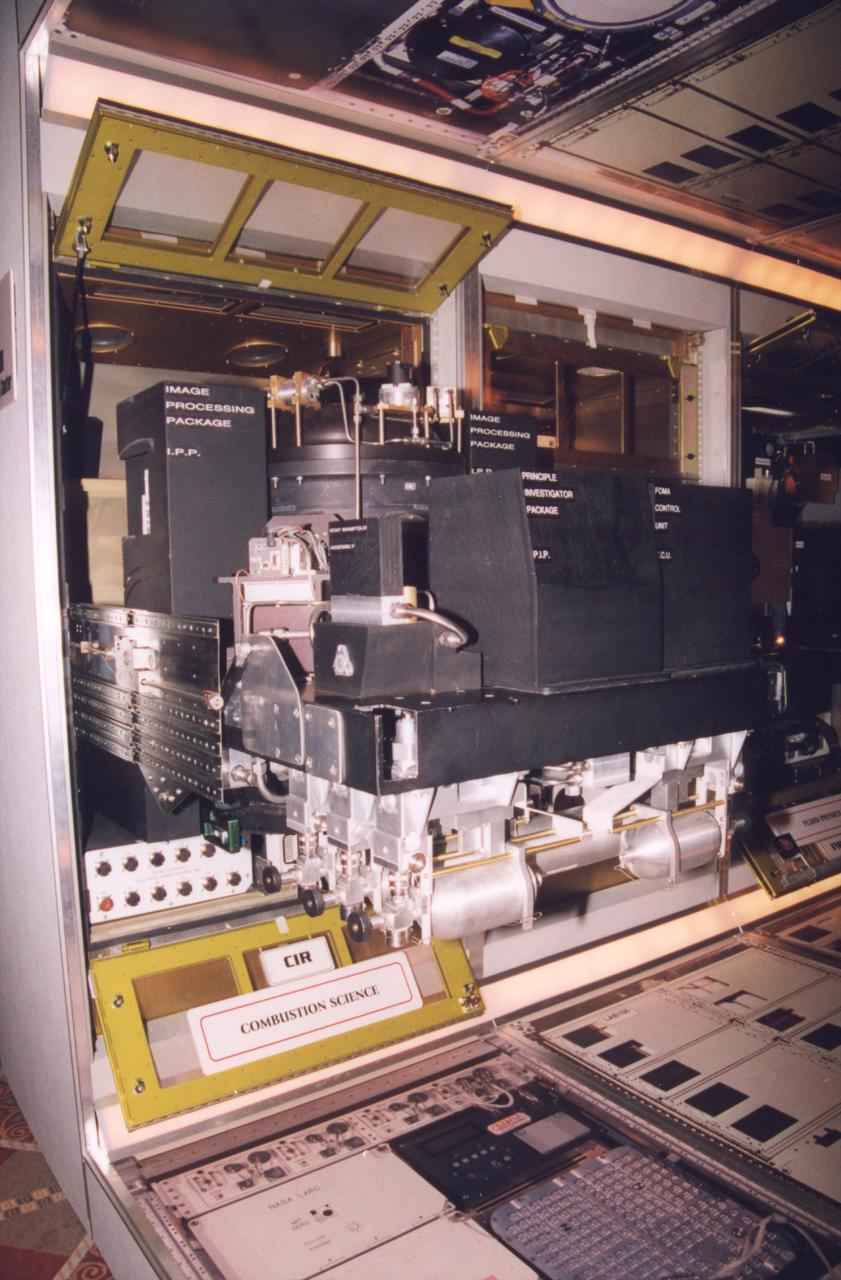
The combustion chamber for the Combustion Integrated Rack section of the Fluids and Combustion Facility (FCF) is shown extracted for servicing and with the optical bench rotated 90 degrees for access to the rear elements. The FCF will be installed, in phases, in the Destiny, the U.S. Laboratory Module of the International Space Station (ISS), and will accommodate multiple users for a range of investigations. This is an engineering mockup; the flight hardware is subject to change as designs are refined. The FCF is being developed by the Microgravity Science Division (MSD) at the NASA Glenn Research Center. (Photo credit: NASA/Marshall Space Flight Center)
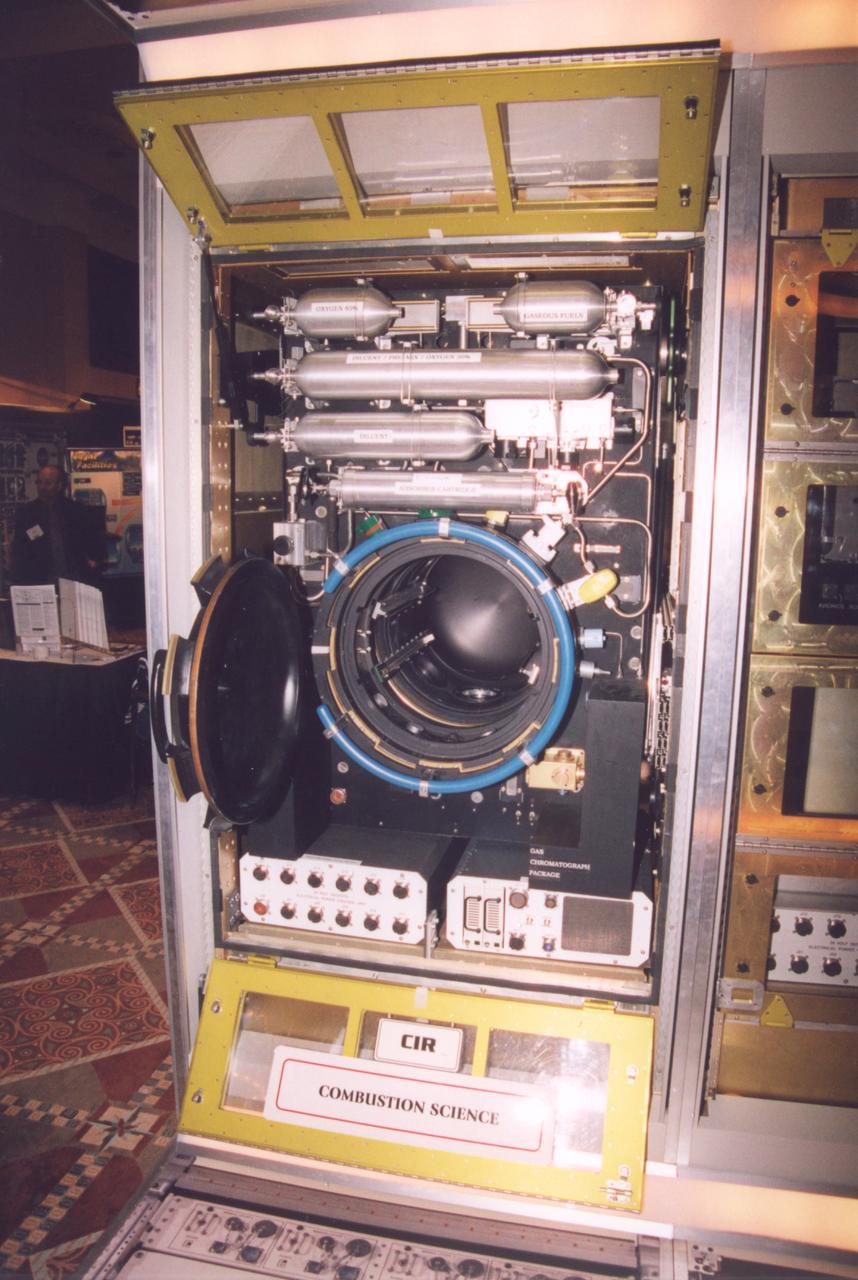
The combustion chamber for the Combustion Integrated Rack section of the Fluids and Combustion Facility (FCF) is shown opened for installation of burn specimens. The FCF will be installed, in phases, in the Destiny, the U.S. Laboratory Module of the International Space Station (ISS), and will accommodate multiple users for a range of investigations. This is an engineering mockup; the flight hardware is subject to change as designs are refined. The FCF is being developed by the Microgravity Science Division (MSD) at the NASA Glenn Research Center. (Photo credit: NASA/Marshall Space Flight Center)
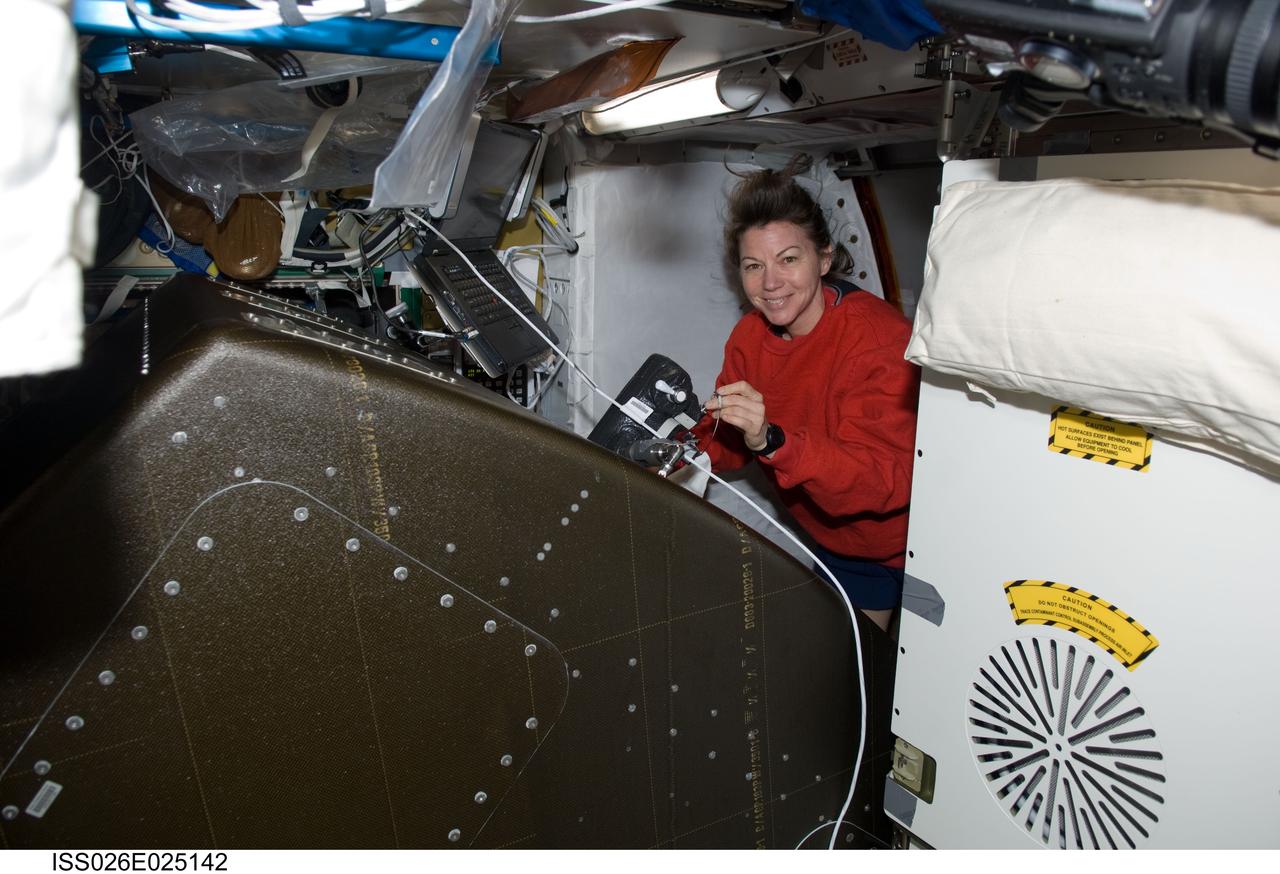
ISS026-E-025142 (8 Feb. 2011) --- NASA astronaut Catherine (Cady) Coleman, Expedition 26 flight engineer, works at the Atmosphere Revitalization / Oxygen Generation System (AR OGS) rack in the Harmony node of the International Space Station. Coleman collected recirculation loop samples for subsequent analysis for pH value.
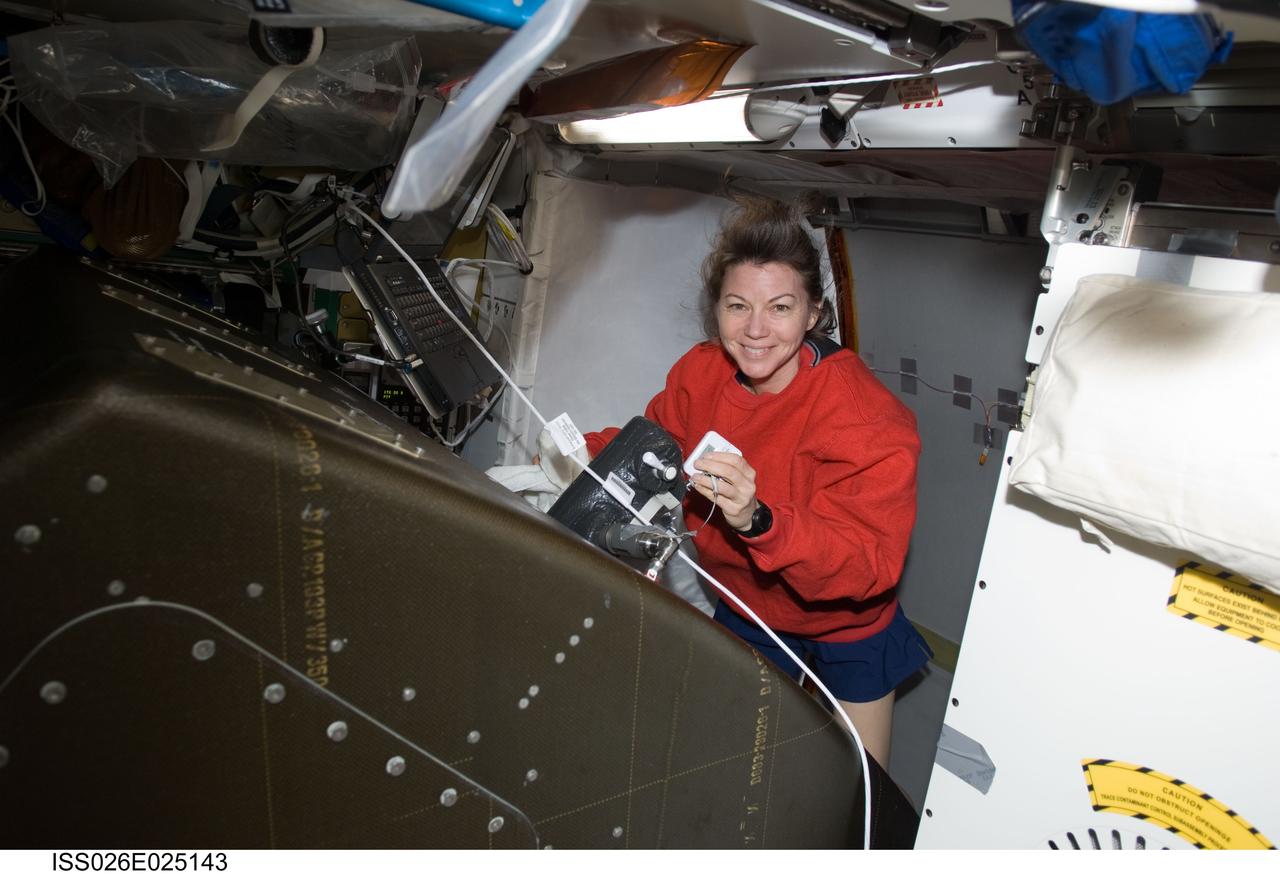
ISS026-E-025143 (8 Feb. 2011) --- NASA astronaut Catherine (Cady) Coleman, Expedition 26 flight engineer, works at the Atmosphere Revitalization / Oxygen Generation System (AR OGS) rack in the Harmony node of the International Space Station. Coleman collected recirculation loop samples for subsequent analysis for pH value.
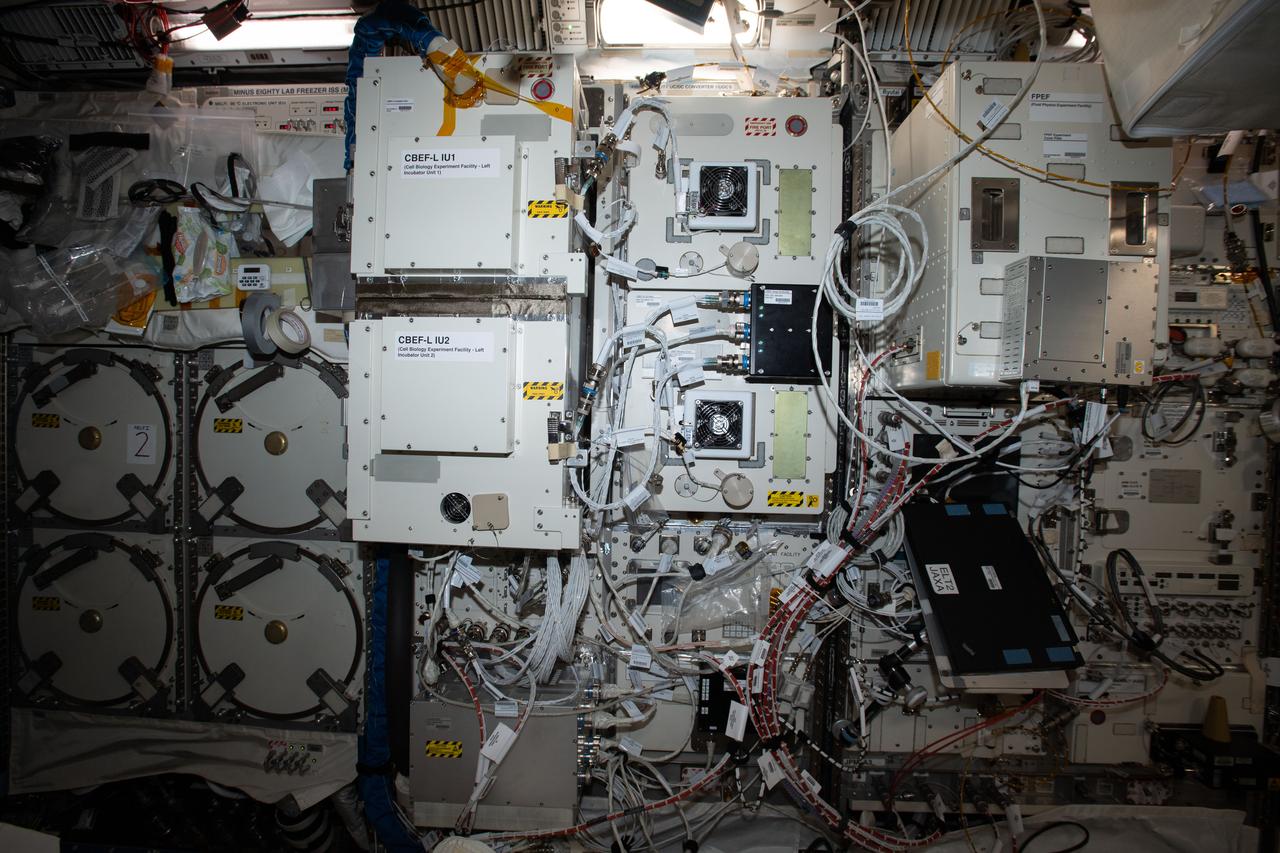
iss062e103684 (3/21/2020) --- A view of the rack containing CBEF-L (Cell Biology Experiment Facility-L) IU1 and CBEF-L IU2 in the Japanese Experiment Module (JEM) Pressurized Module (JPM). aboard the International Space Station (ISS). Cell Biology Experiment Facility-L (CBEF-L) is a Japan Aerospace Exploration Agency (JAXA) new subrack facility, which is an upgraded facility of the original Cell Biology Experiment Facility (CBEF) currently aboard the International Space Station (ISS). CBEF-L provides new capabilities with additional new resources such as Full High Definition video interface, Ethernet, 24 VDC power supply, and a larger diameter centrifugal test environment. By using the original CBEF and CBEF-L as one facility for the same experiment, the payload user is provided with an upgraded experimental environment that can handle the processing of more experimental samples for a wider array of experiments.
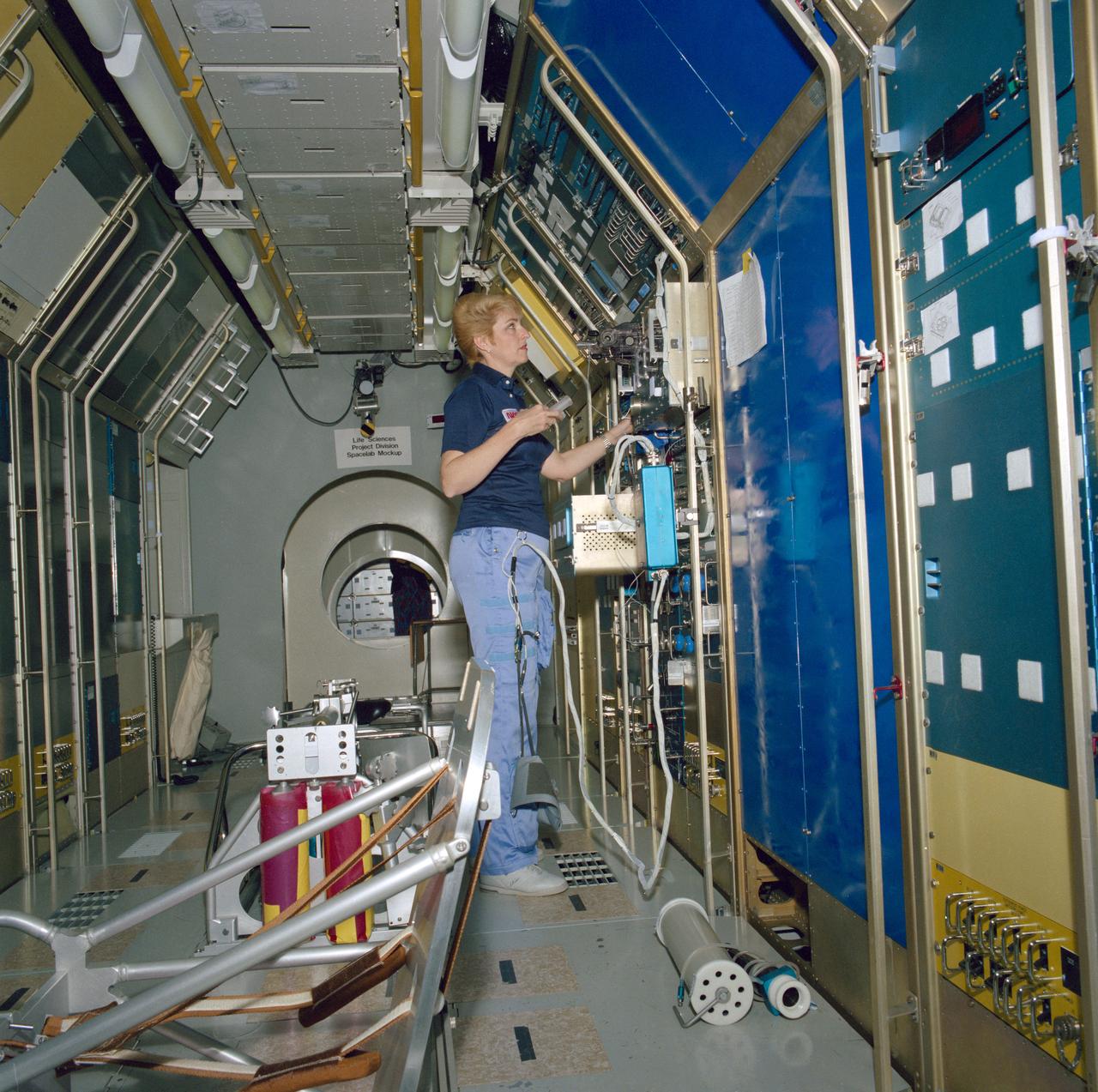
S87-28666 (March 1987) --- Millie Hughes-Fulford, STS-40/SLS-1 payload specialist, stands near the Echocardiograph on Rack 6 of the SLS-1 module, during a rehearsal of experimentation scheduled for her spaceflight.

ROBERT TRIMBLE, TAMEKA STEWART, ERIK SHAUGHNESSY, JEREMIAH HALEY, JOEL HARDY, & MICHAEL HARDY MISSION OPERATIONS LABORATORY - LABORATORY TRAINING COMPLEX (LTC), BUILDING 4663, EXPRESS RACK TRAINING.-
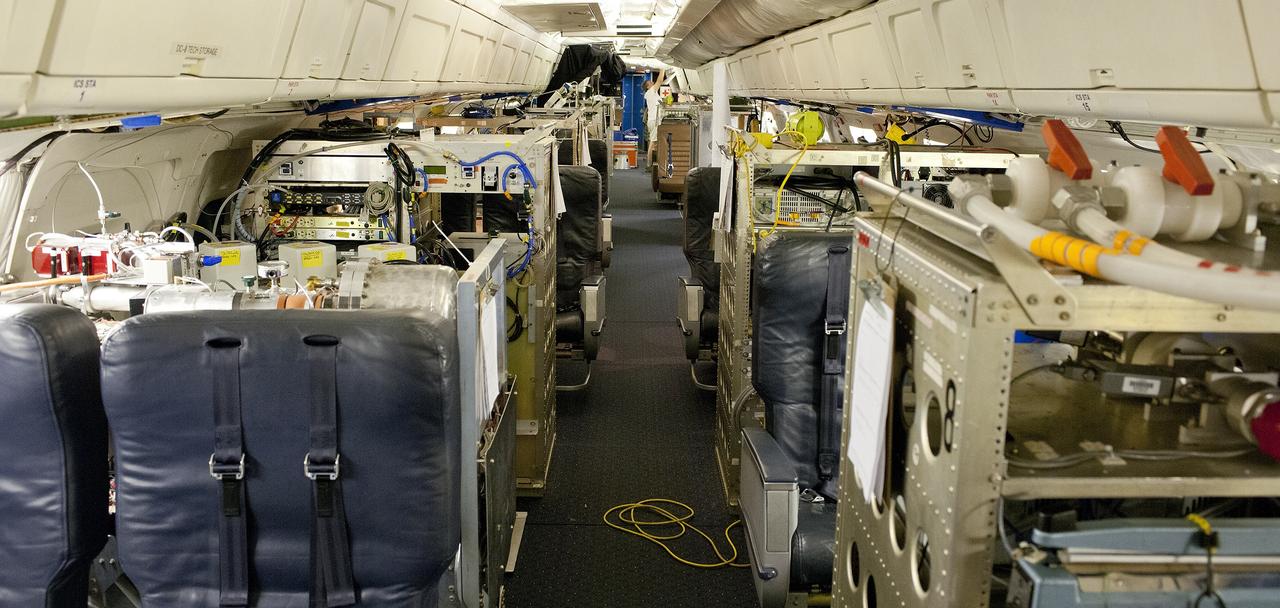
NASA's DC-8 flying laboratory is fully loaded with seats and instrument racks in preparation for NASA's 2013 SEAC4RS climate science mission.
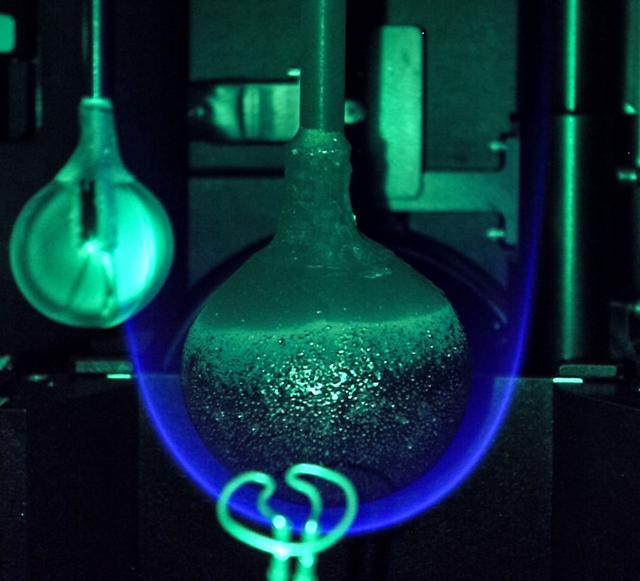
jsc2024e021222 (3/21/2024) --- Solid Fuel Ignition and Extinction (SoFIE) insert supports the Growth and Extinction Limit (GEL) investigation test image taken in the Combustion Integrated Rack (CIR). This image was taken just prior to flame extinction while the green LED was flashing on. The LED allows the fuel surface to be seen during the burn, so that several important parameters can be evaluated, such as how far the flame is from the fuel and how much the fuel is heating up. The igniter wire appears in the camera view, but it is in the foreground and not near the flame. In the background on the left, an unburned acrylic sphere waits for its turn to be tested on another day.
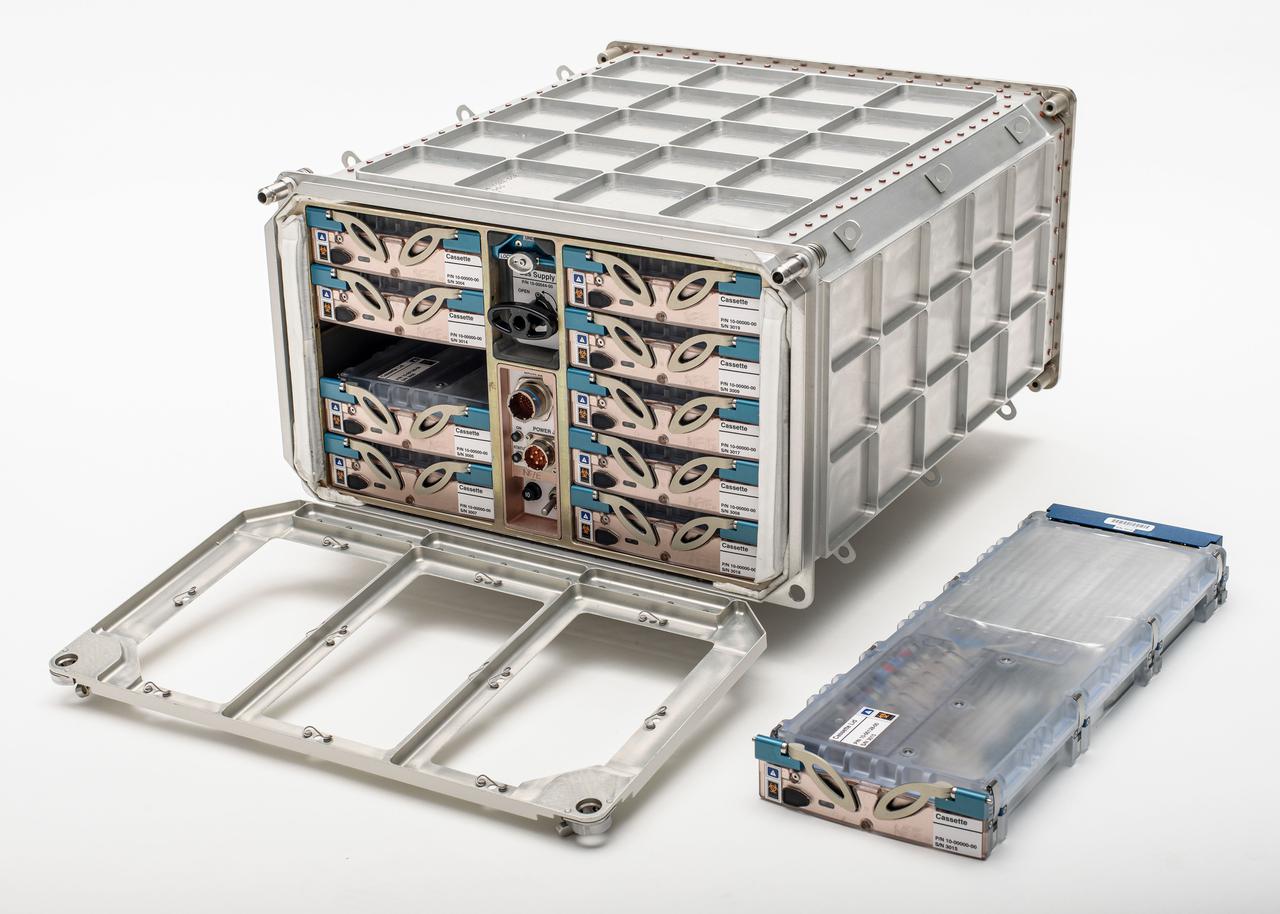
jsc2020e031188 (7/11/2014) --- A preflight view of the Bioculture System inside an ExPRESS Rack Locker. The Bioculture System is a biological science incubator for use on the International Space Station (ISS) with the capability of transporting active and stored investigations to ISS. This incubator supports a wide diversity of tissue, cell, and microbiological cultures and experiment methods to meet any spaceflight research investigation goals and objectives. The facility enables variable duration and long-duration cellular and microbiological investigations on ISS to meet the scientific needs of academic and biotechnology interests. Credits: NASA / Dominic Hart
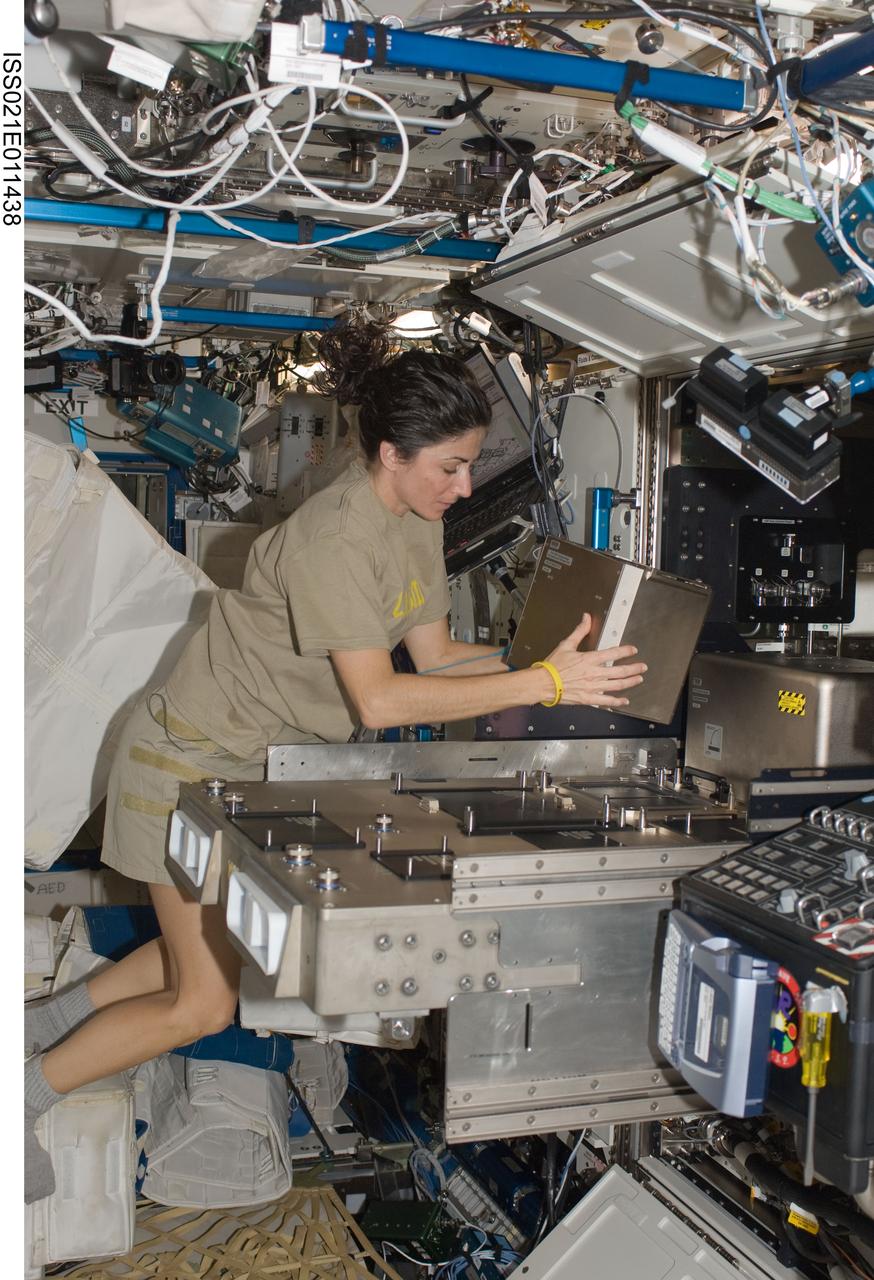
ISS021-E-011438 (22 Oct. 2009) --- NASA astronaut Nicole Stott, Expedition 21 flight engineer, installs hardware in the Fluids Integrated Rack (FIR) in the Destiny laboratory of the International Space Station.
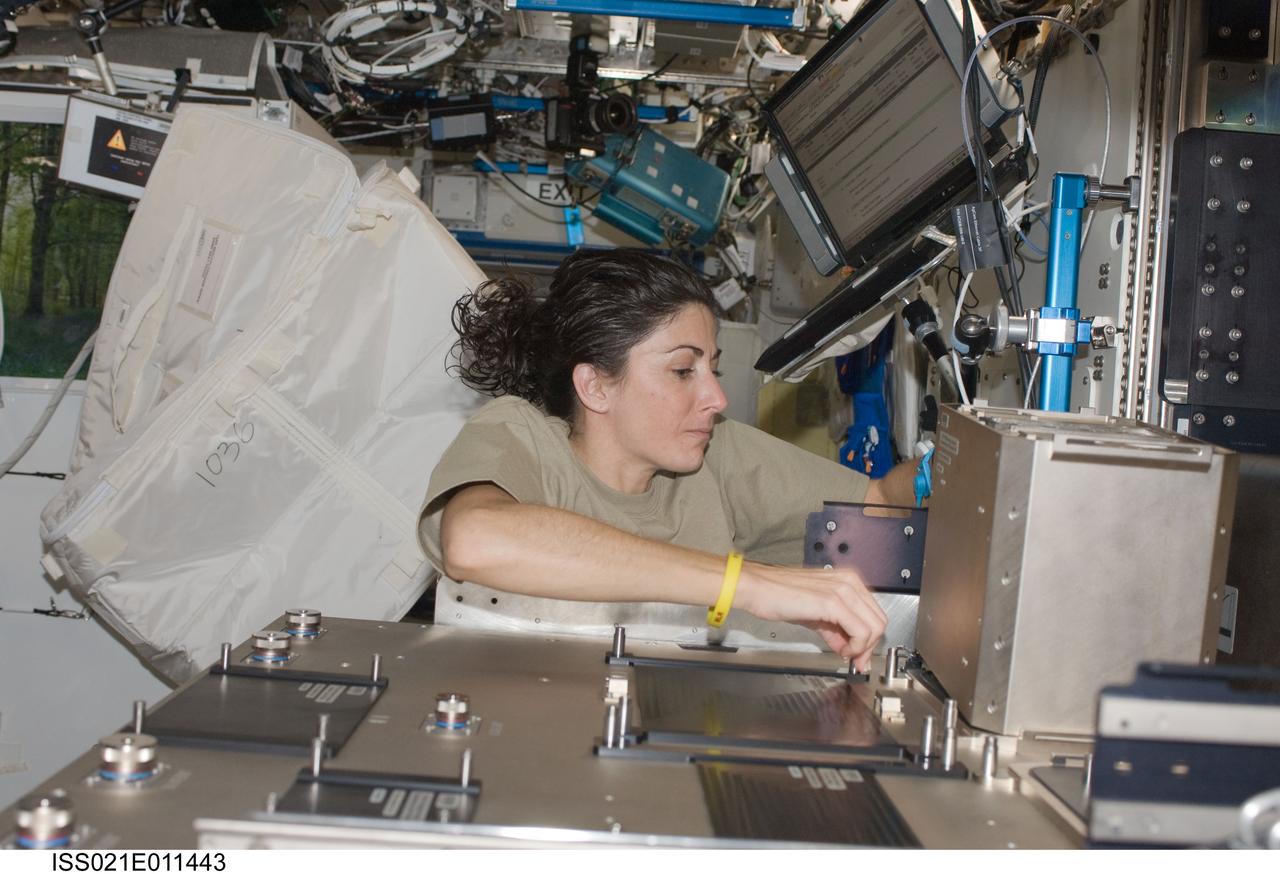
ISS021-E-011443 (22 Oct. 2009) --- NASA astronaut Nicole Stott, Expedition 21 flight engineer, installs hardware in the Fluids Integrated Rack (FIR) in the Destiny laboratory of the International Space Station.
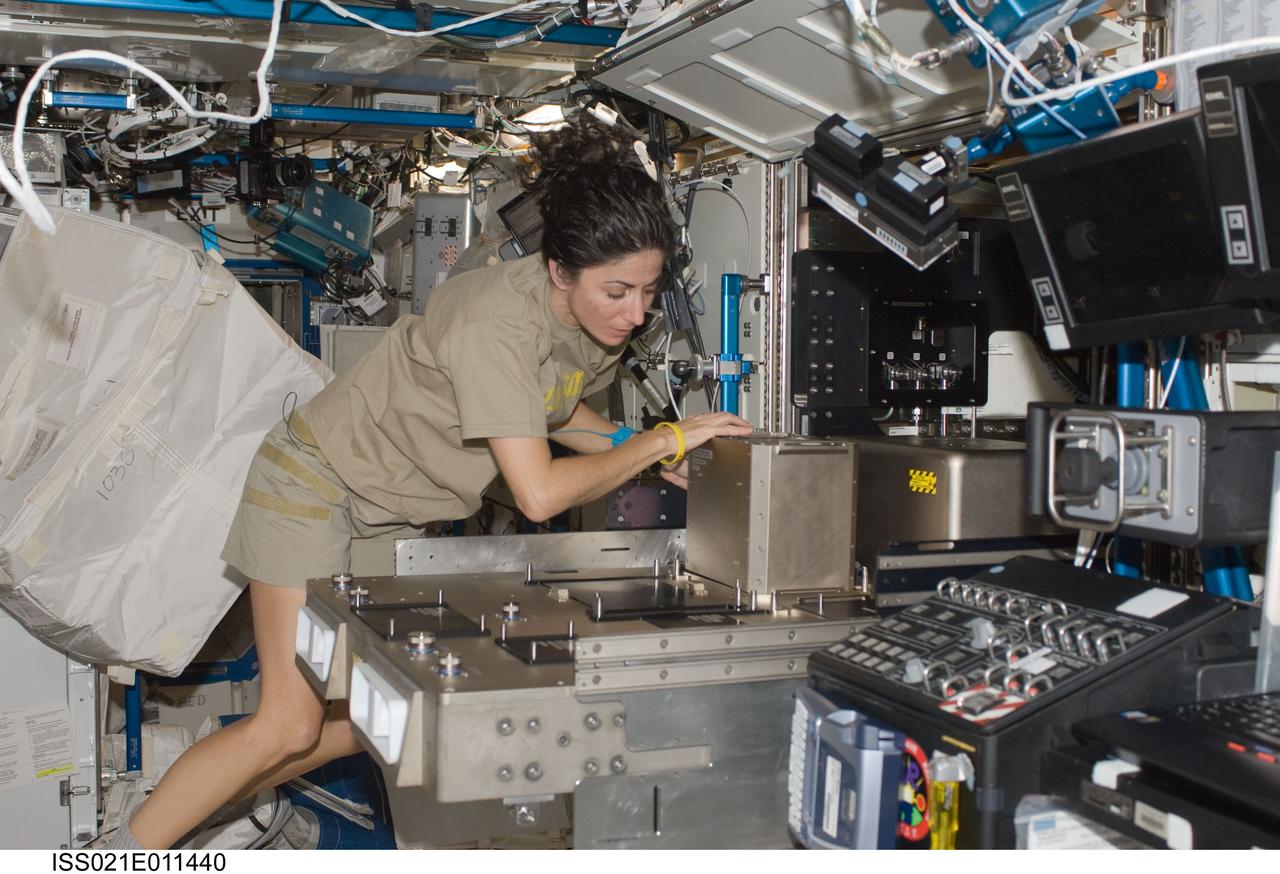
ISS021-E-011440 (22 Oct. 2009) --- NASA astronaut Nicole Stott, Expedition 21 flight engineer, installs hardware in the Fluids Integrated Rack (FIR) in the Destiny laboratory of the International Space Station.
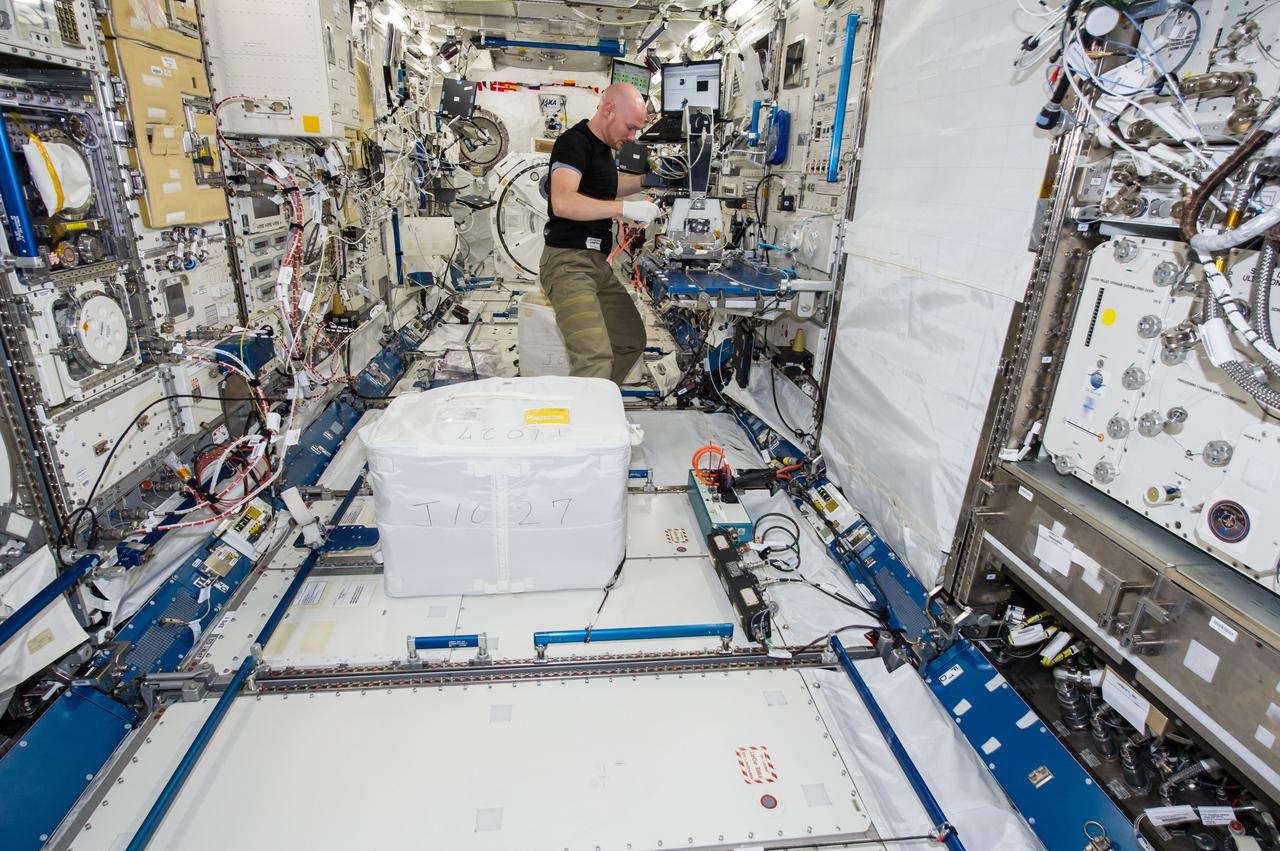
ISS040-E-130231 (9 Sept. 2014) --- European Space Agency astronaut Alexander Gerst, Expedition 40 flight engineer, installs a microscope for the Cell Mechanosensing-2 experiment in the Kibo laboratory of the International Space Station. The Japanese experiment, which is conducted in Kibo’s Kobairo rack, seeks to identify gravity sensors in cells that may change the expression of key proteins and genes and allowing muscles to atrophy in microgravity.
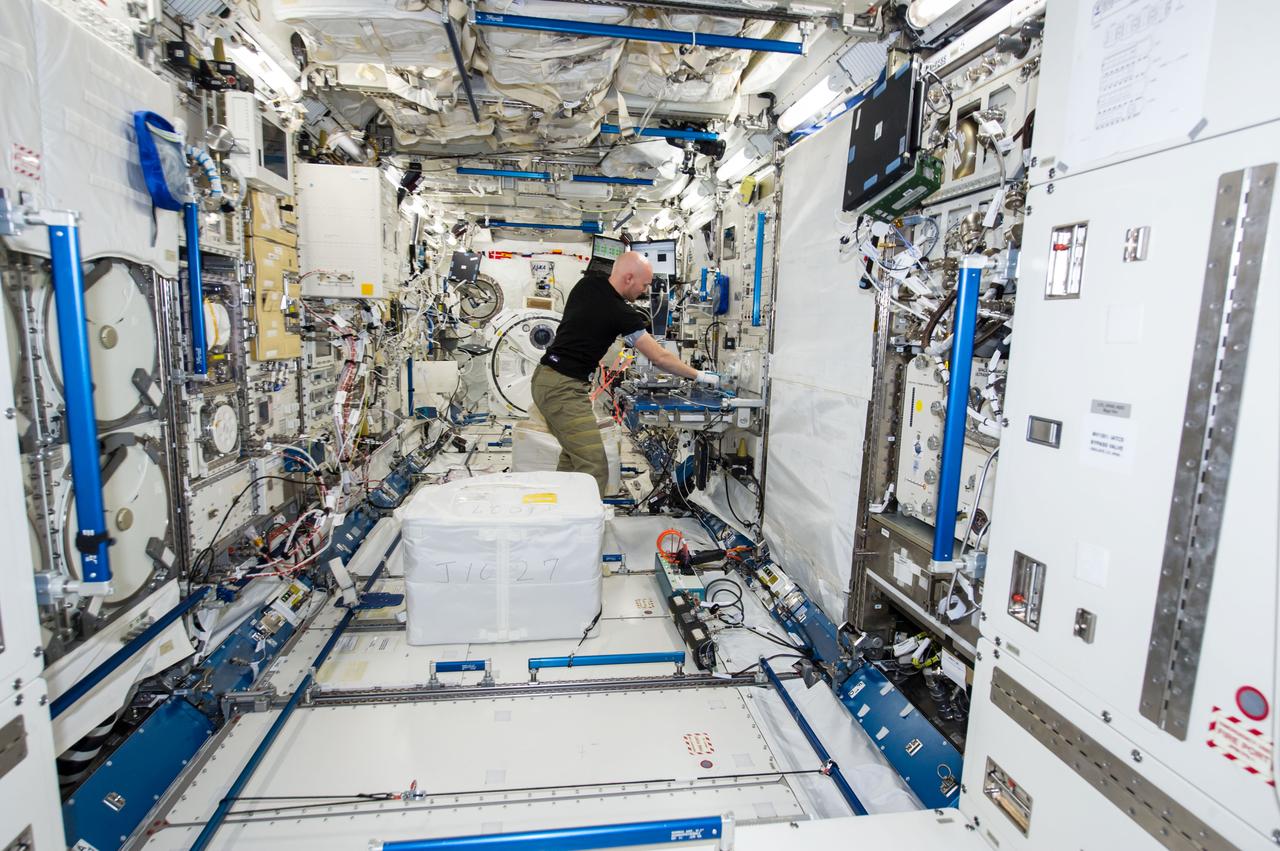
ISS040-E-130230 (9 Sept. 2014) --- European Space Agency astronaut Alexander Gerst, Expedition 40 flight engineer, installs a microscope for the Cell Mechanosensing-2 experiment in the Kibo laboratory of the International Space Station. The Japanese experiment, which is conducted in Kibo’s Kobairo rack, seeks to identify gravity sensors in cells that may change the expression of key proteins and genes and allowing muscles to atrophy in microgravity.
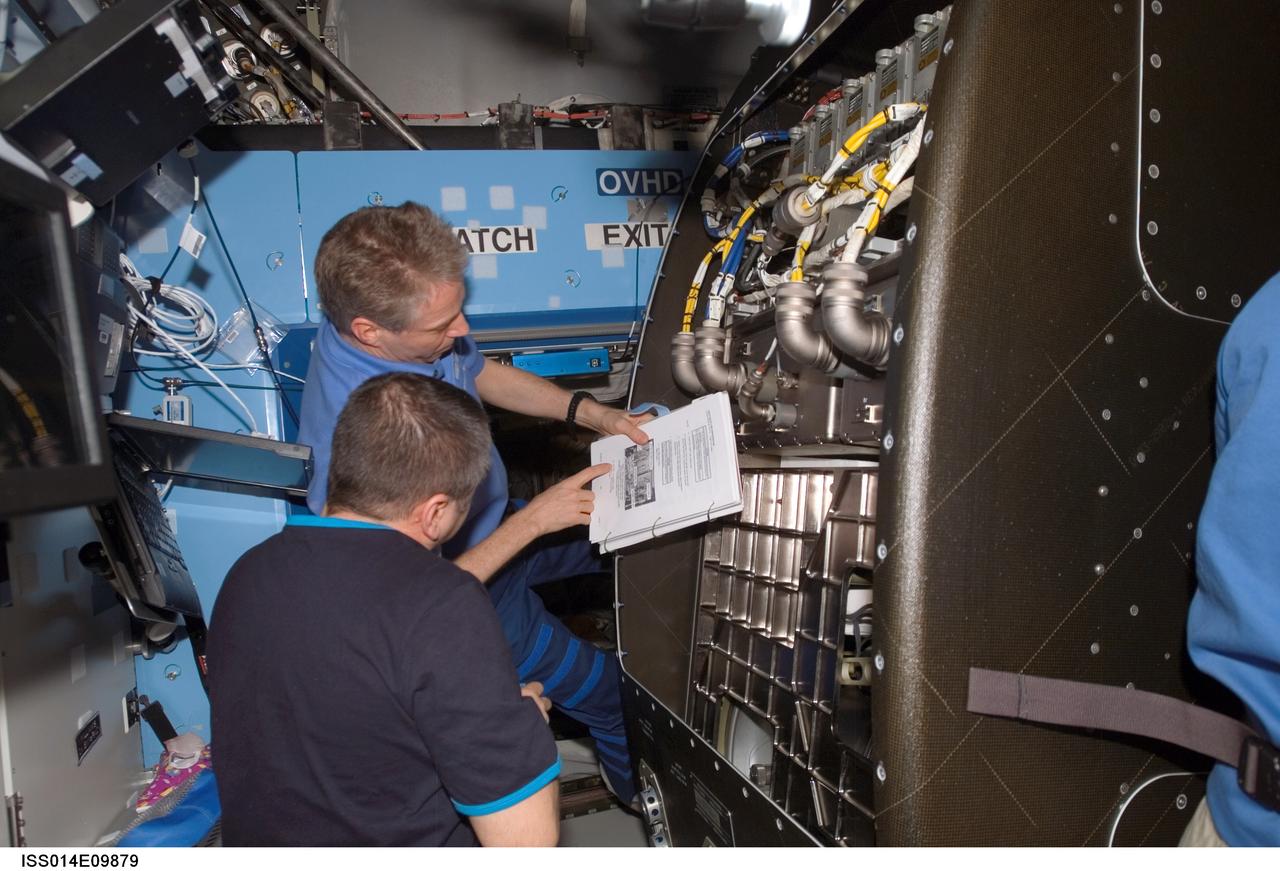
ISS014-E-09879 (14 Dec. 2006) --- Cosmonaut Mikhail Tyurin (foreground), Expedition 14 flight engineer representing Russia's Federal Space Agency, and European Space Agency (ESA) astronaut Thomas Reiter, STS-116 mission specialist, work with the Direct Current-to-Current Converter Unit (DDCU-2) rack during reconfiguration activity while Space Shuttle Discovery was docked with the station.
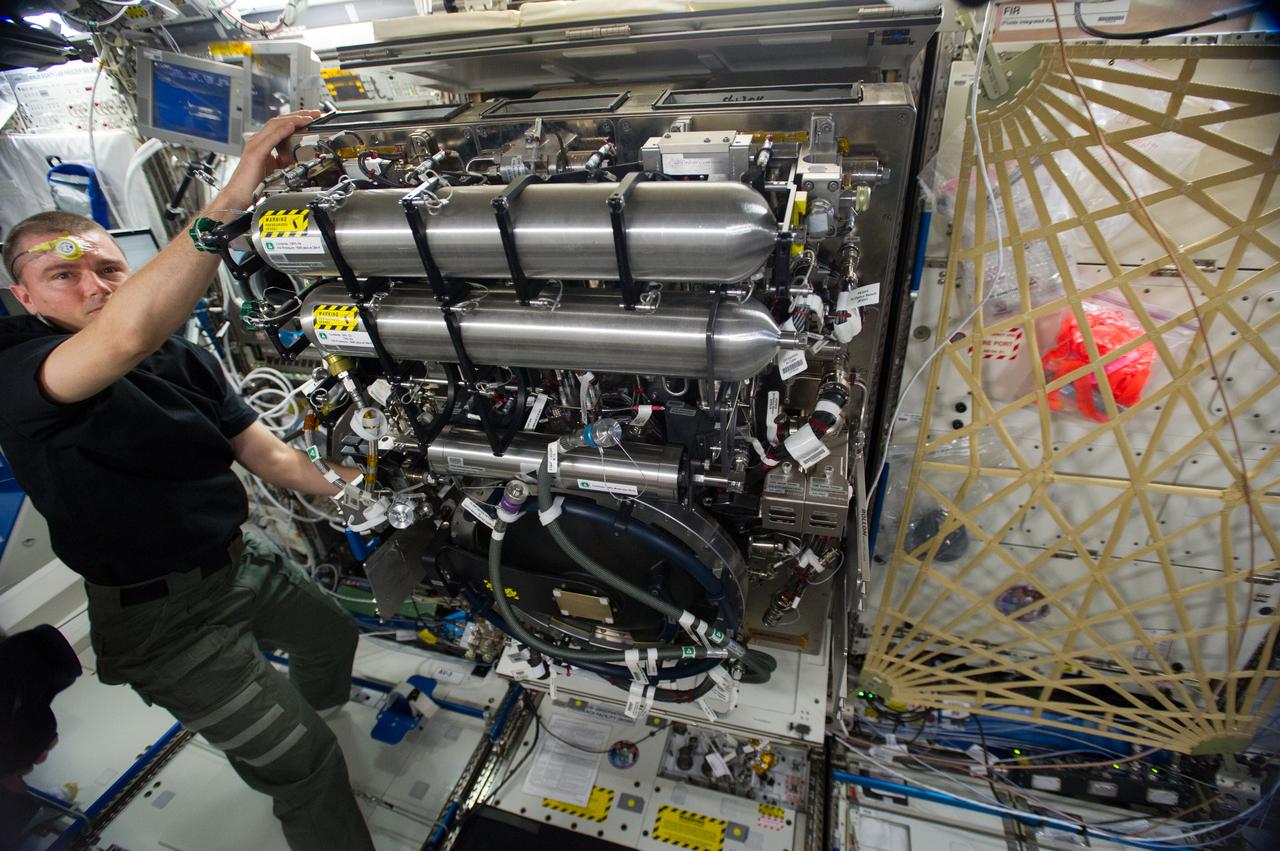
ISS040-E-072156 (21 July 2014) --- In the International Space Station’s Destiny laboratory, NASA astronaut Reid Wiseman, Expedition 40 flight engineer, sets up the Combustion Integrated Rack (CIR) for more ground-commanded tests. This facility, which includes an optics bench, combustion chamber, fuel and oxidizer control and five different cameras, allows a variety of combustion experiments to be performed safely aboard the station.
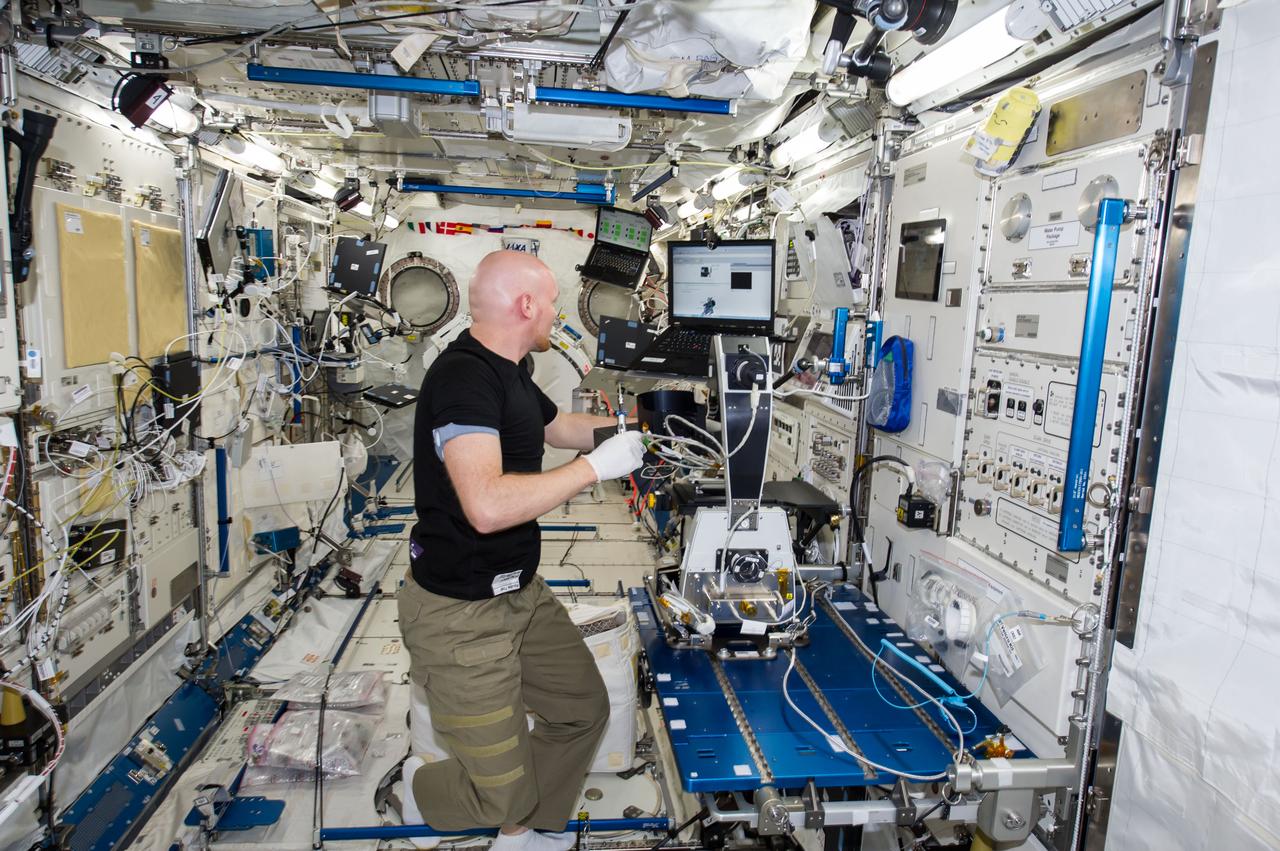
ISS040-E-130232 (9 Sept. 2014) --- European Space Agency astronaut Alexander Gerst, Expedition 40 flight engineer, installs a microscope for the Cell Mechanosensing-2 experiment in the Kibo laboratory of the International Space Station. The Japanese experiment, which is conducted in Kibo’s Kobairo rack, seeks to identify gravity sensors in cells that may change the expression of key proteins and genes and allowing muscles to atrophy in microgravity.

S133-E-008319 (3 March 2011) --- NASA astronaut Michael Barratt (foreground), STS-133 mission specialist; and Scott Kelly, Expedition 26 commander, perform maintenance on the Carbon Dioxide Removal Assembly (CDRA) in the Air Revitalization 2 (AR2) rack in the Tranquility node of the International Space Station while space shuttle Discovery remains docked with the station. Photo credit: NASA or National Aeronautics and Space Administration
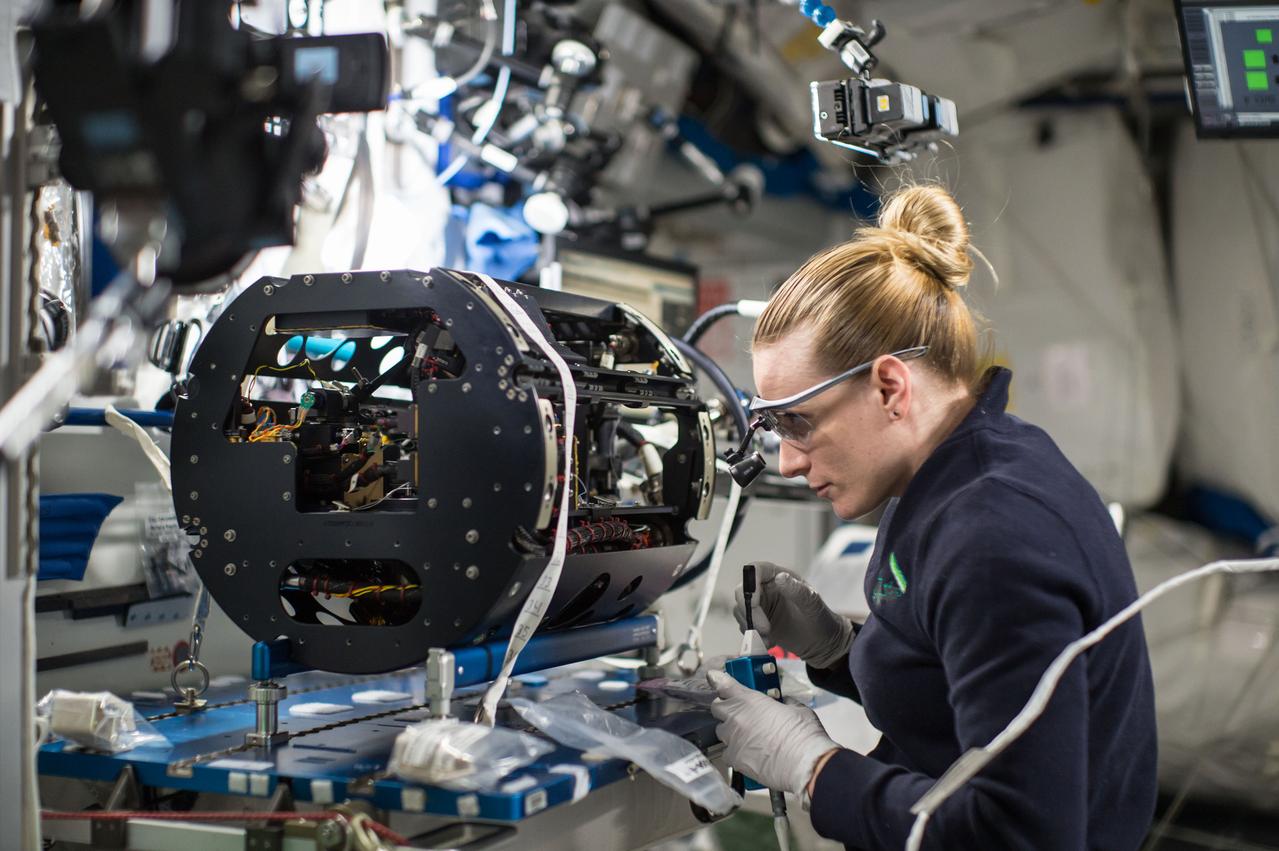
iss049e003808 (9/15/2016) --- NASA astronaut Kate Rubins is photographed replacing two Multi-user Droplet Combustion Apparatus (MDCA) Igniter Tips as part of the Combustion Integration Rack (CIR) Igniter Replacement operations. The CIR is used to perform combustion experiments in microgravity. The CIR can be reconfigured easily on orbit to accommodate a variety of combustion experiments. It consists of an optics bench, a combustion chamber, a fuel and oxidizer management system, environmental management systems, and interfaces for science diagnostics and experiment specific equipment.
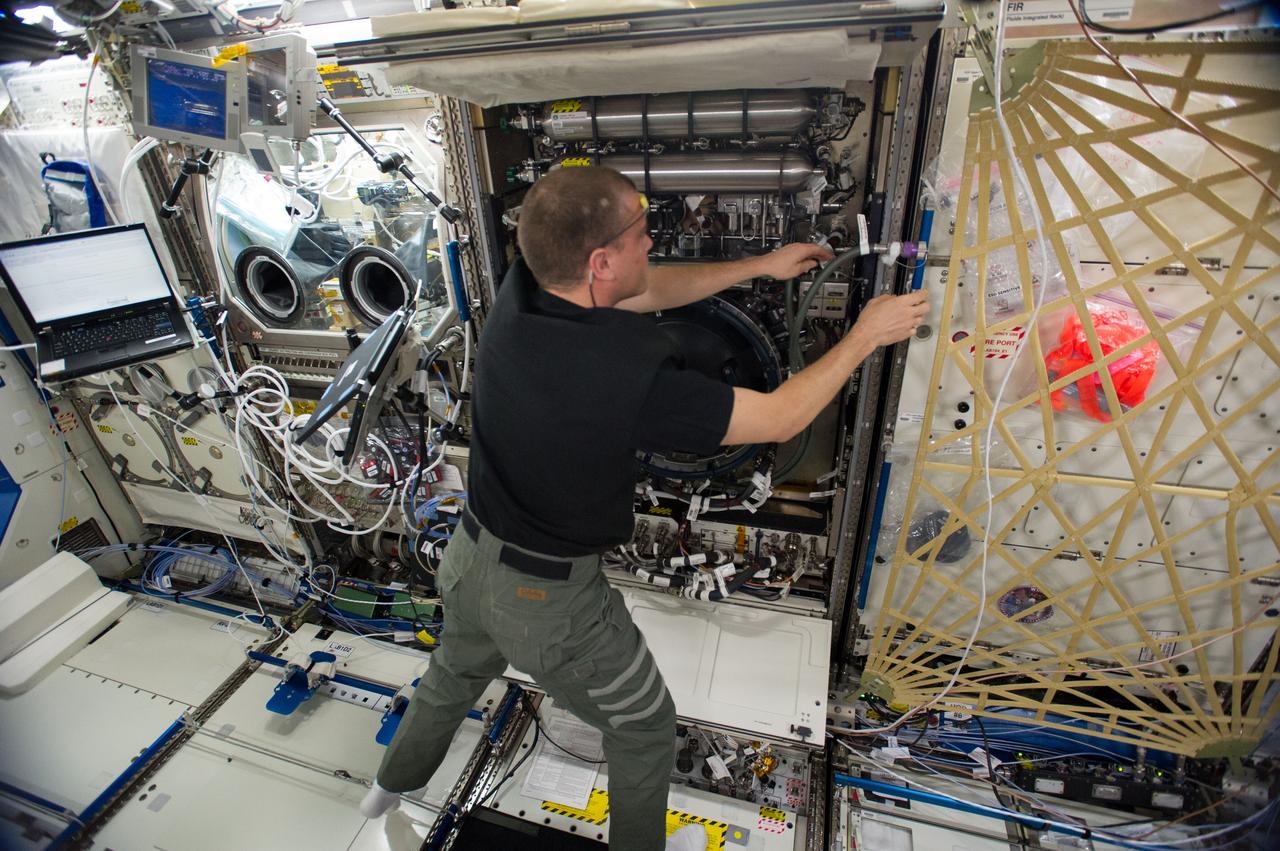
ISS040-E-071994 (21 July 2014) --- In the International Space Station’s Destiny laboratory, NASA astronaut Reid Wiseman, Expedition 40 flight engineer, sets up the Combustion Integrated Rack (CIR) for more ground-commanded tests. This facility, which includes an optics bench, combustion chamber, fuel and oxidizer control and five different cameras, allows a variety of combustion experiments to be performed safely aboard the station.

ISS040-E-072228 (21 July 2014) --- In the International Space Station’s Destiny laboratory, NASA astronaut Reid Wiseman, Expedition 40 flight engineer, sets up the Combustion Integrated Rack (CIR) for more ground-commanded tests. This facility, which includes an optics bench, combustion chamber, fuel and oxidizer control and five different cameras, allows a variety of combustion experiments to be performed safely aboard the station.
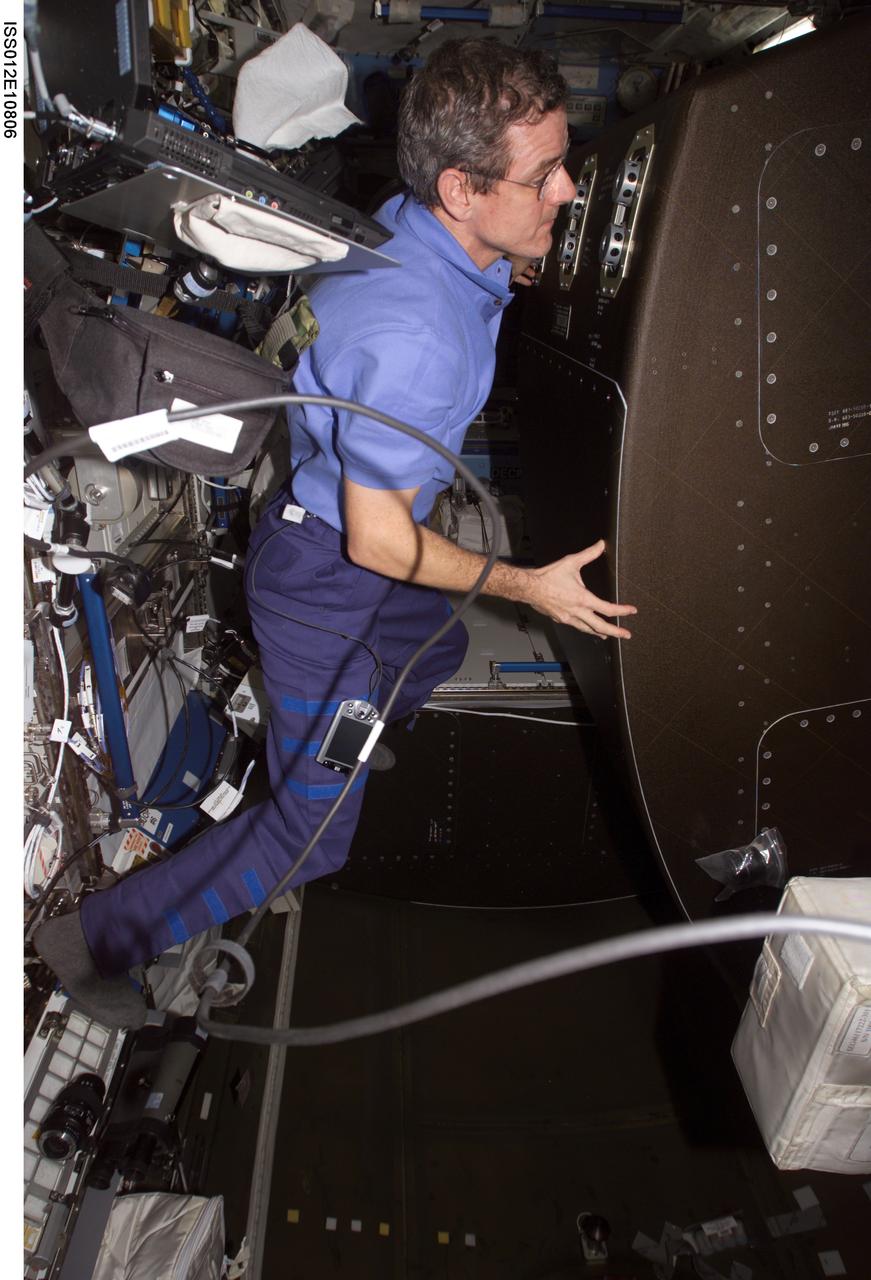
ISS012-E-10806 (9 December 2005) --- Astronaut William S. (Bill) McArthur Jr., Expedition 12 commander and NASA space station science officer, rotates the Crew Health Care System (CHeCS) rack in order to access the Avionics Air Assembly (AAA) air ducts during in-flight maintenance (IFM) in the Destiny laboratory of the International Space Station.
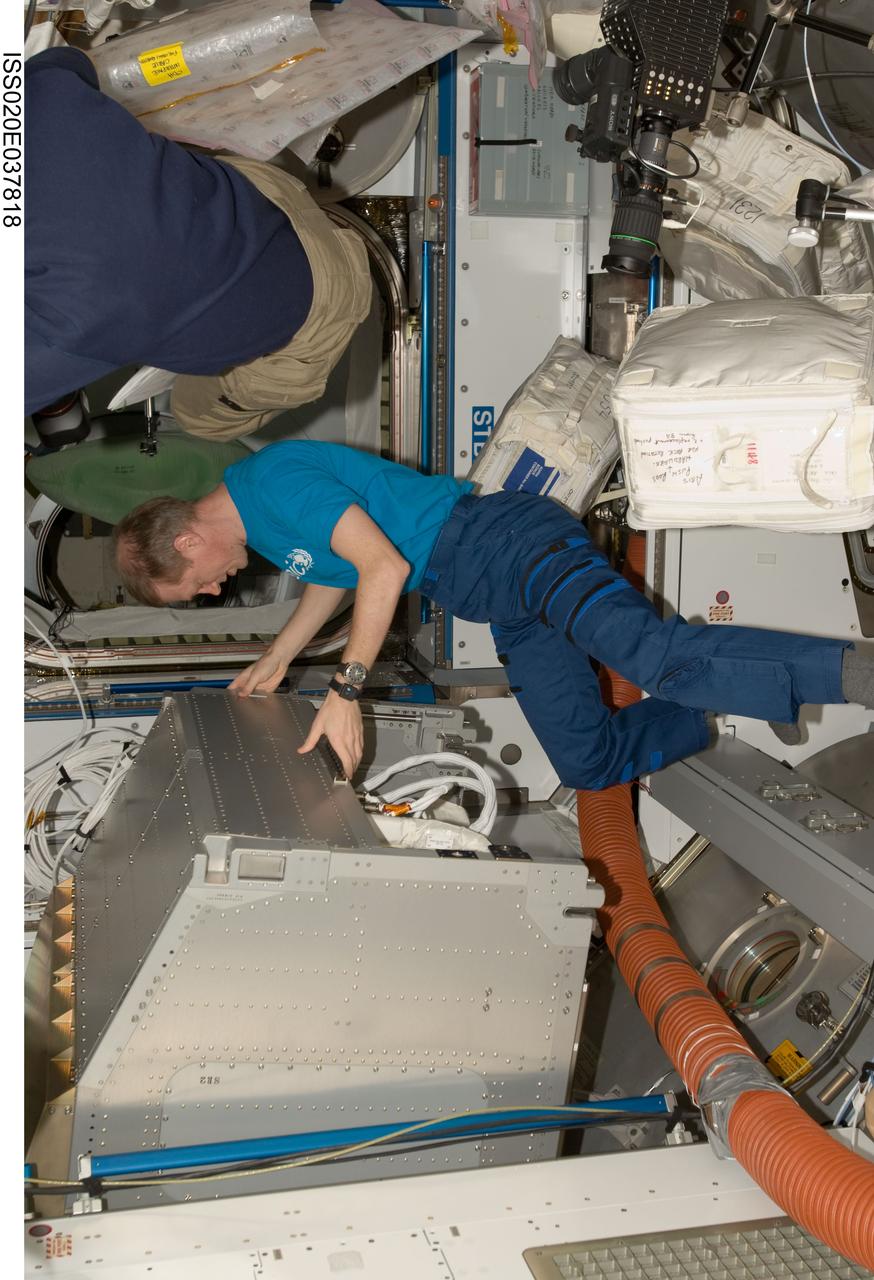
ISS020-E-037818 (2 Sept. 2009) --- European Space Agency astronaut Frank De Winne, Expedition 20 flight engineer, moves a rack through a hatch in the Harmony node of the International Space Station while Space Shuttle Discovery (STS-128) remains docked with the station.
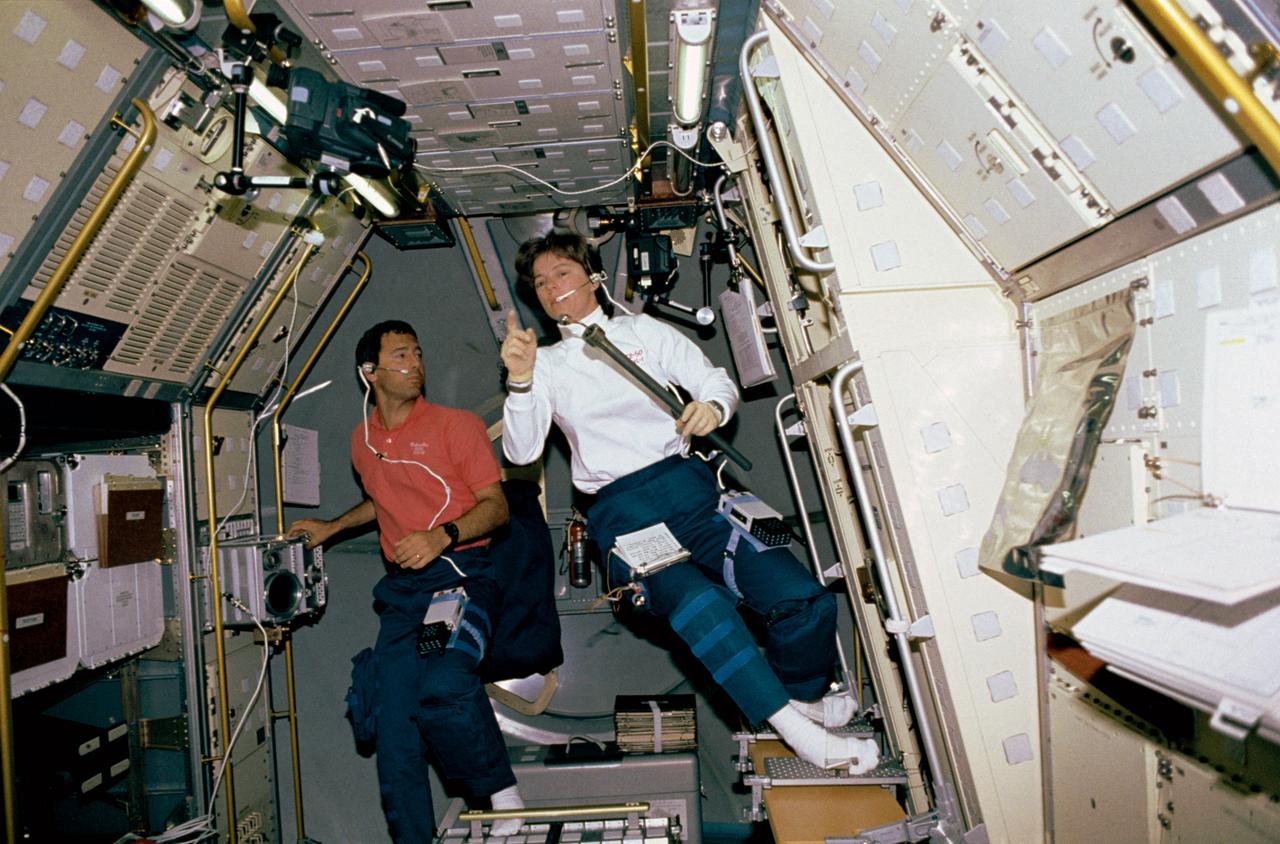
View showing Payload Specialists Bonnie Dunbar and Larry DeLucas in the aft section of the U. S. Microgravity Laboratory-1. Dunbar prepares to load a sample in the Crystal Growth Furnace (CGF) Integrated Furnace Experiment Assembly (IFEA) in rack 9 of the Microgravity Laboratory, while DeLucas checks out the multi-purpose Glovebox Facility.
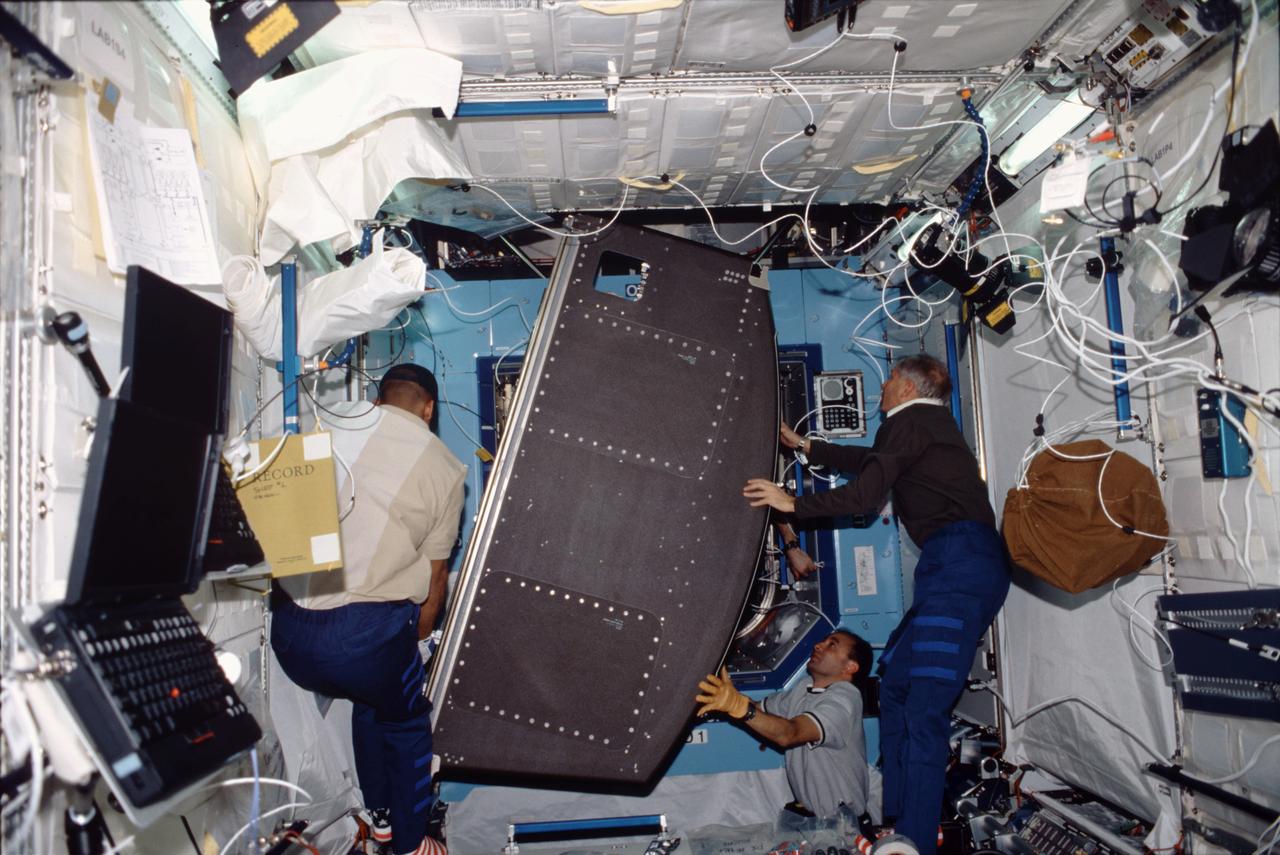
STS098-322-0001 (7-20 February 2001) --- Three STS-98 astronauts move a rack into position aboard the newly attached Destiny laboratory. From the left to right are astronauts Robert L. Curbeam, mission specialist; Mark L. Polansky, pilot; and Kenneth D. Cockrell, mission commander.
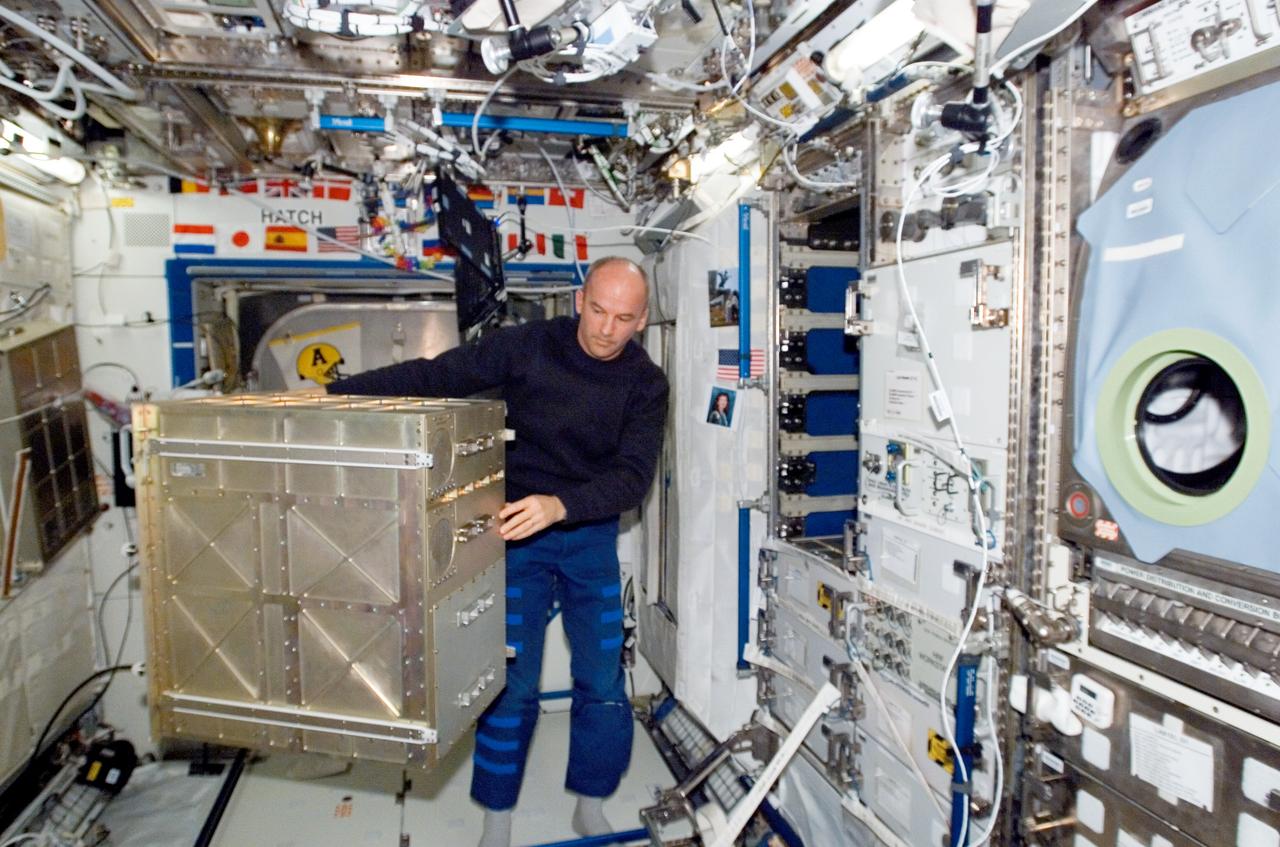
ISS013-E-38339 (17 June 2006) --- Astronaut Jeffrey N. Williams, Expedition 13 NASA space station science officer and flight engineer, works with a section of the Human Research Facility (HRF) rack in the Destiny laboratory of the International Space Station.
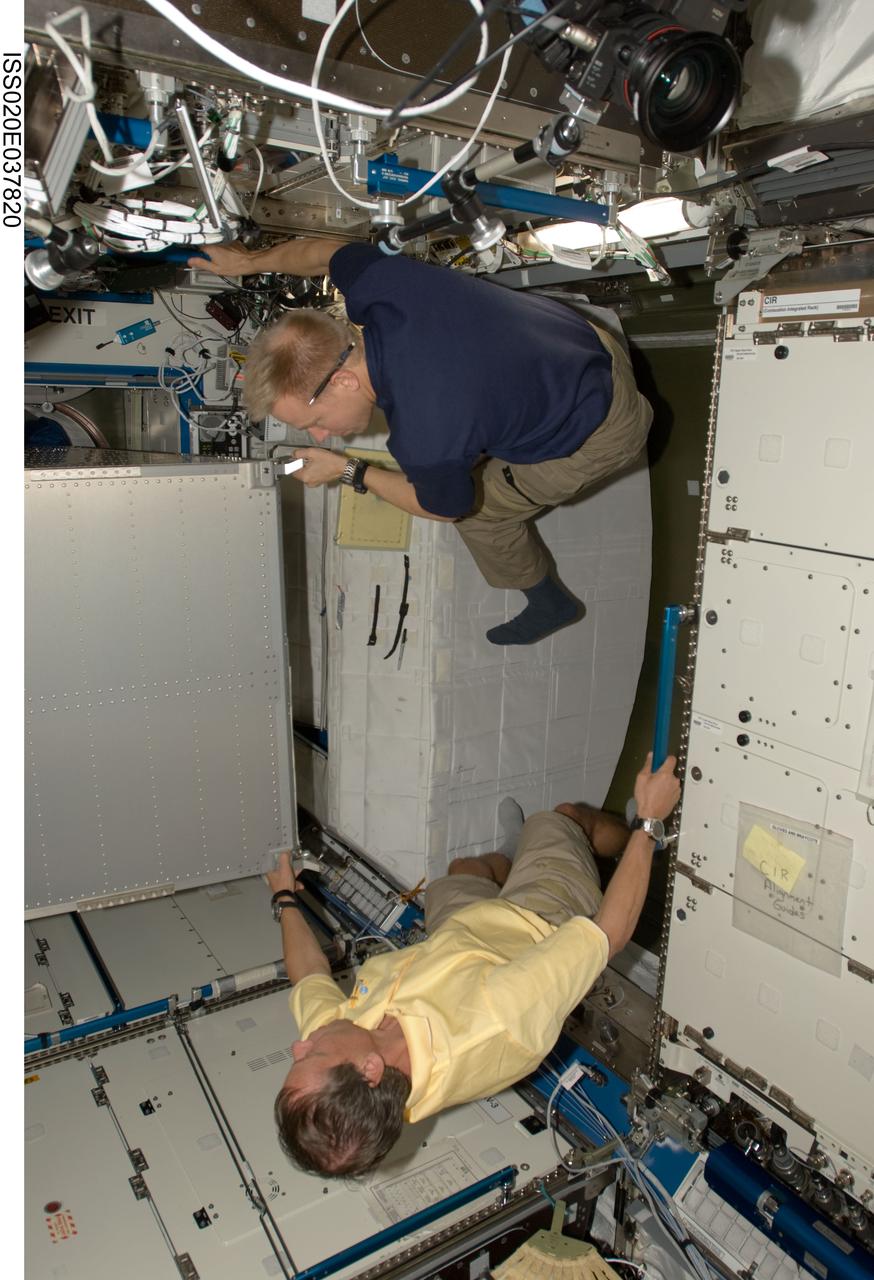
ISS020-E-037820 (2 Sept. 2009) --- European Space Agency astronaut Christer Fuglesang (bottom) and NASA astronaut Tim Kopra, both STS-128 mission specialists, install a new Minus Eighty Degree Laboratory Freezer for ISS (MELFI) rack in the Destiny laboratory of the International Space Station.
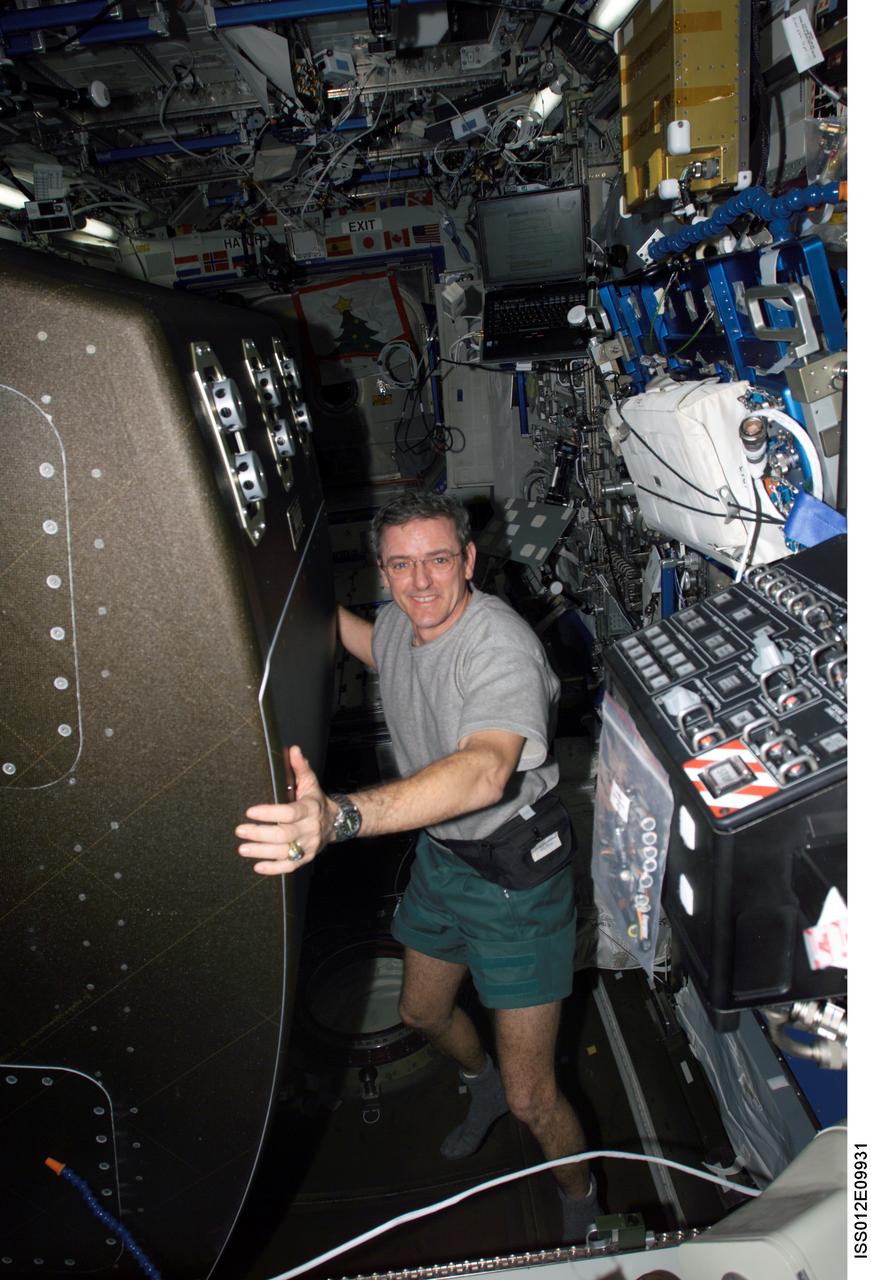
ISS012-E-09931 (1 December 2005) --- Astronaut William S. (Bill) McArthur Jr., Expedition 12 commander and NASA space station science officer, rotates the Crew Health Care System (CHeCS) rack back into position after cleaning the Avionics Air Assembly fan in the Destiny laboratory of the International Space Station.