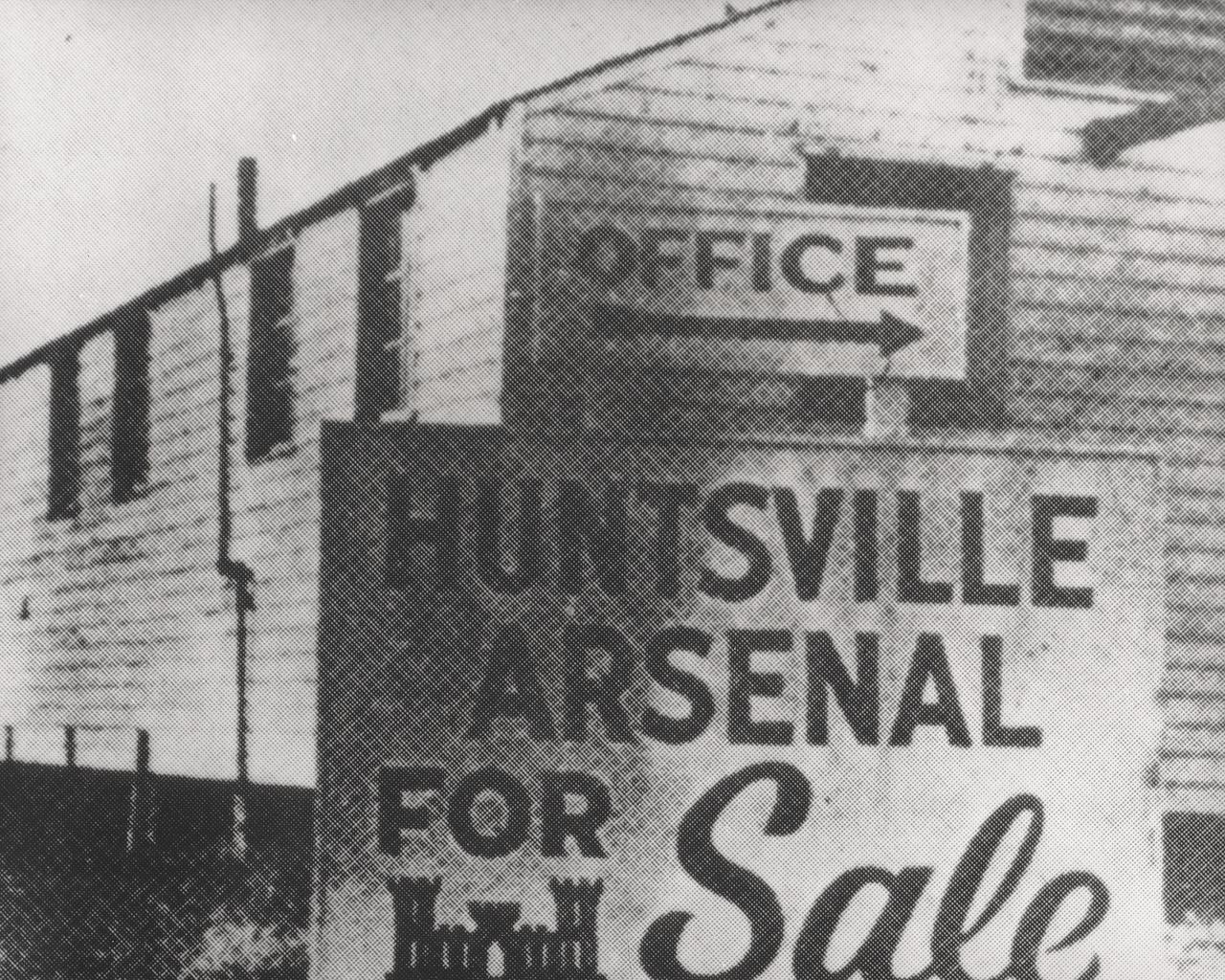
In the years following World War II, the Army directed that the Huntsville, Alabama Arsenal be advertised for sale. The decision was reversed because the Army found it needed this land for the new missile work that would occur at Redstone Arsenal.
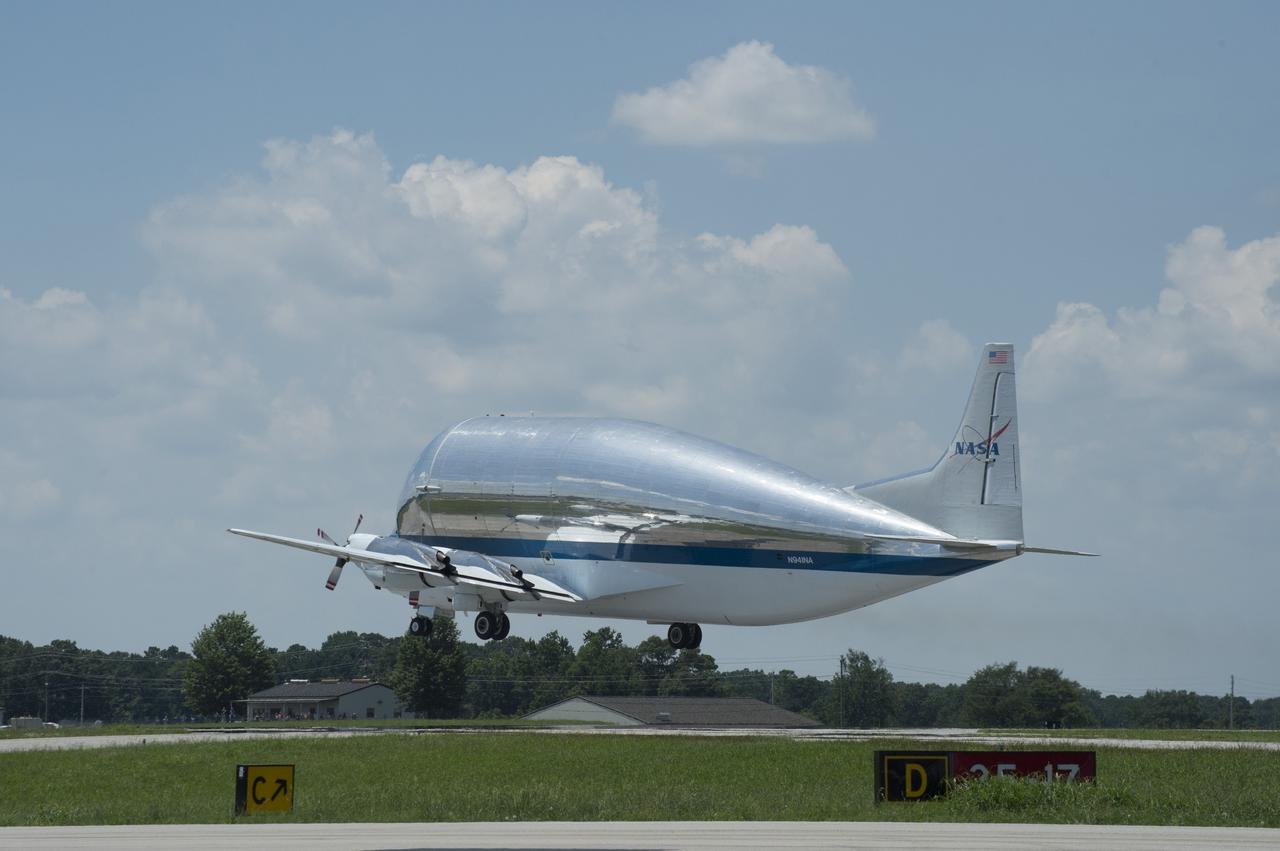
NASA's Super Guppie aircraft lifts off from Redstone Arsenal's airfield with the Orion stage adapter which will be transported to Denver, Colorado for further testing.
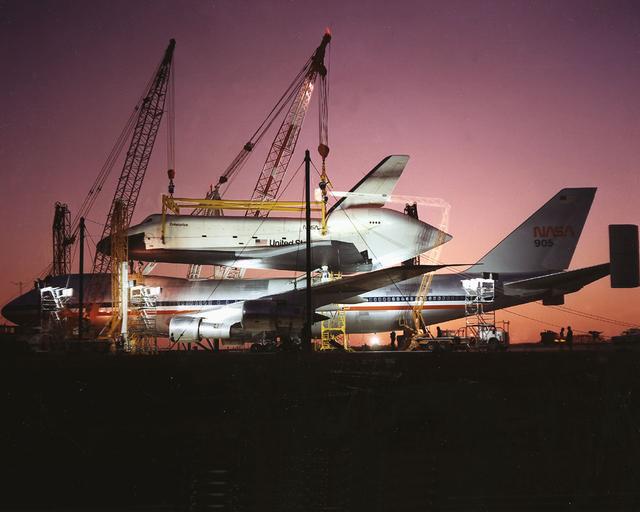
The Shuttle Orbiter Enterprise is off-loaded at Redstone Arsenal Airfield for later Mated Vertical Ground Vibration tests (MVGVT) at Marshall Space Flight Center's Dynamic Test Stand. The tests marked the first time ever that the entire shuttle complement (including orbiter, external tank, and solid rocket boosters) were mated vertically.
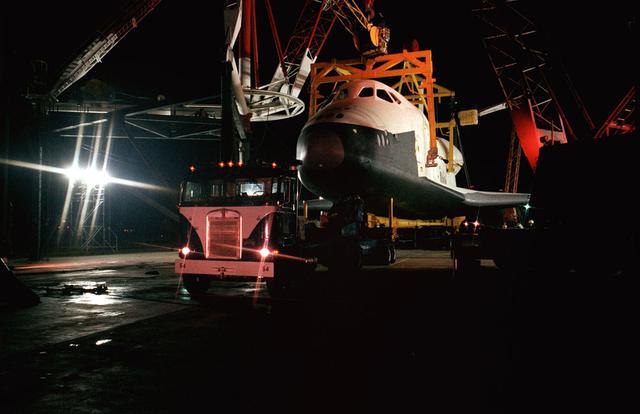
The Shuttle Orbiter Enterprise is off-loaded at Redstone Arsenal Airfield for later Mated Vertical Ground Vibration tests (MVGVT) at Marshall Space Flight Center's Dynamic Test Stand. The tests marked the first time ever that the entire shuttle complement including orbiter, external tank, and solid rocket boosters were vertically mated.
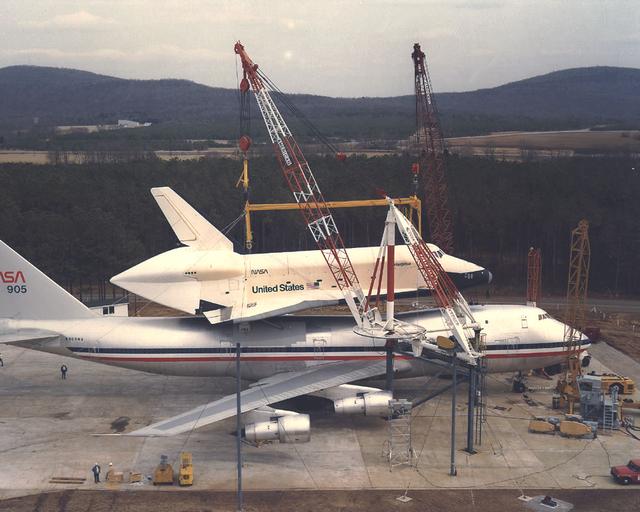
The Shuttle Orbiter Enterprise is off-loaded at Redstone Arsenal Airfield for later Mated Vertical Ground Vibration tests (MVGVT) at Marshall Space Flight Center's Dynamic Test Stand. The tests marked the first time ever that the entire shuttle complement (including orbiter, external tank, and solid rocket boosters) were mated vertically.
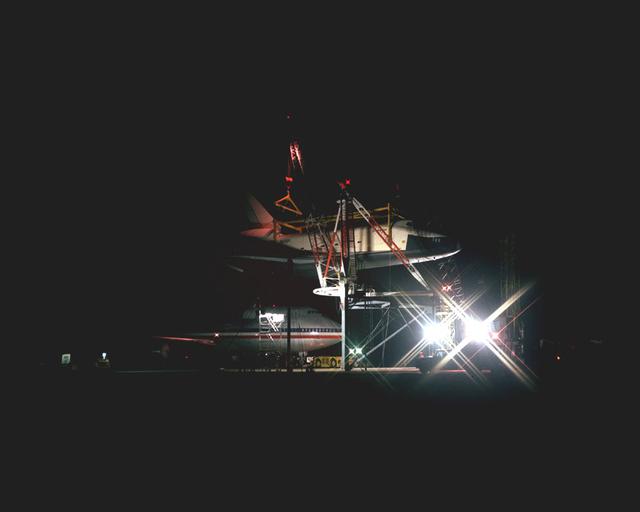
The Shuttle Orbiter Enterprise is off-loaded Redstone Arsenal Airfield for later Mated Vertical Ground Vibration tests (MVGVT) at Marshall Space Flight Center's Dynamic Test Stand. The tests marked the first time ever that the entire shuttle complement (including orbiter, external tank, and solid rocket boosters) were mated vertically.
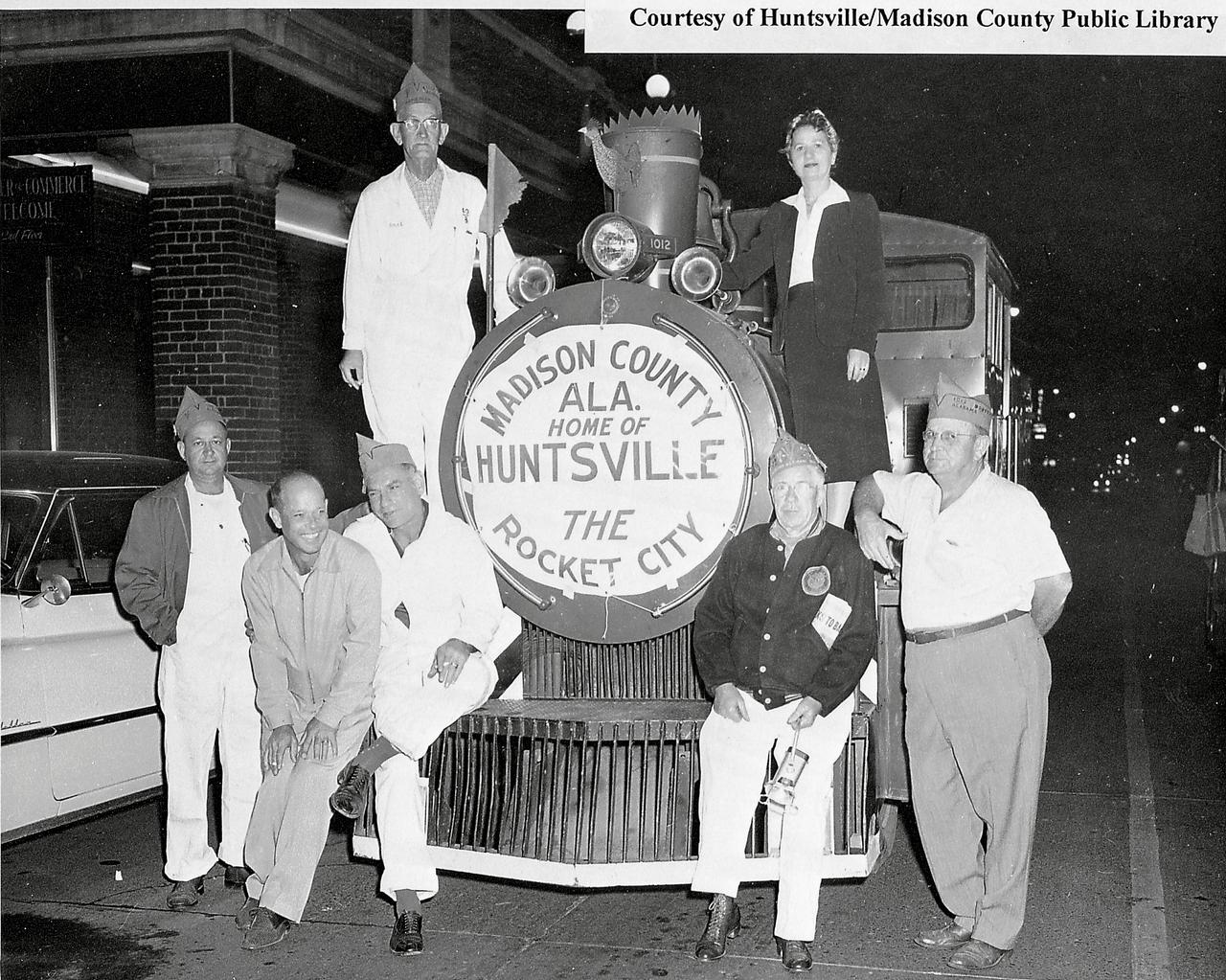
As the nations missile and rocket program began to expand in the 50's, Huntsville, Alabama was the home to Redstone Arsenal and the famous team of rocket experts led by Dr. Wernher Von Braun. Soon Huntsville was called the "Rocket City" as depicted in this photo believed to have been taken in the 1950's in Huntsville, Alabama. (Courtesy of Huntsville/Madison County Public Library)

The Shuttle Orbiter Enterprise atop a 747 landing at Redstone Arsenal Airfield for later Mated Vertical Ground Vibration tests (MVGVT) at Marshall Space Flight Center's Dynamic Test Stand. The tests marked the first time ever that the entire shuttle complement (including orbiter, external tank, and solid rocket boosters) were mated vertically.
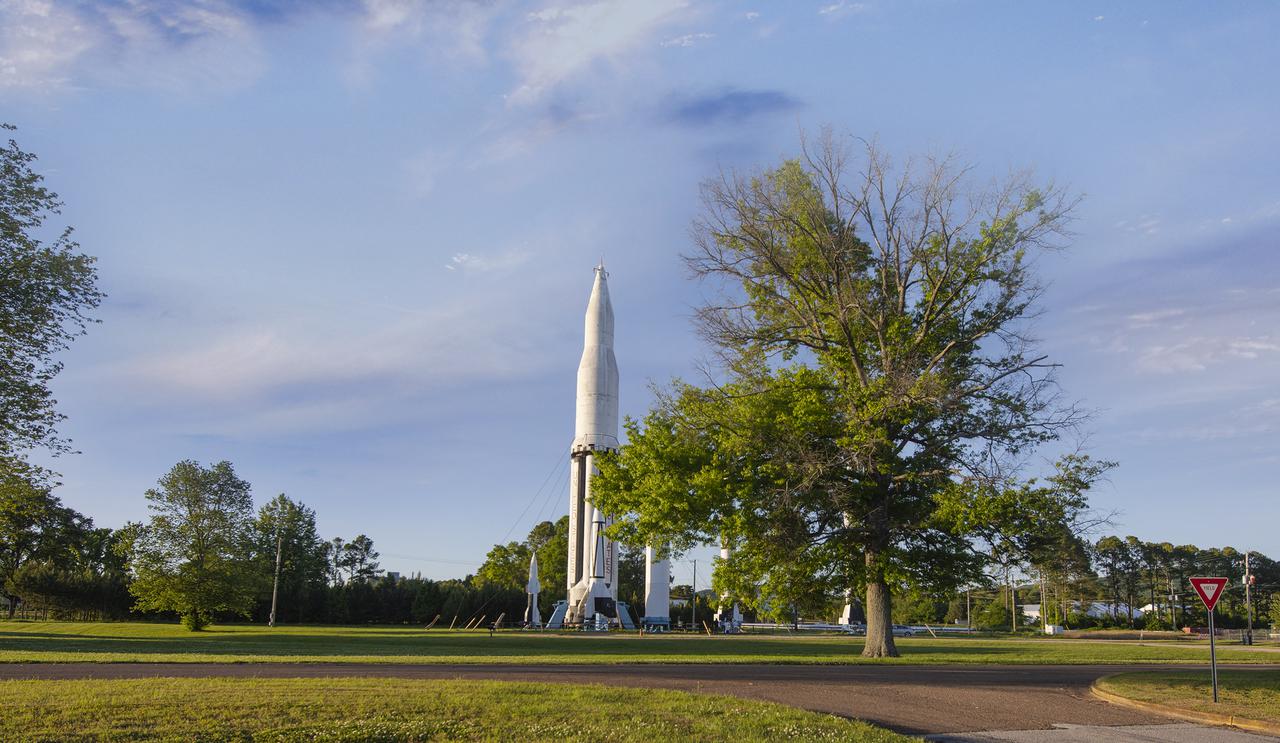
Marshall Space Flight Center’s Rocket Park, located on Redstone Arsenal, stands as a living testament to the spirit of cooperation that continues between the U.S. Army and NASA.
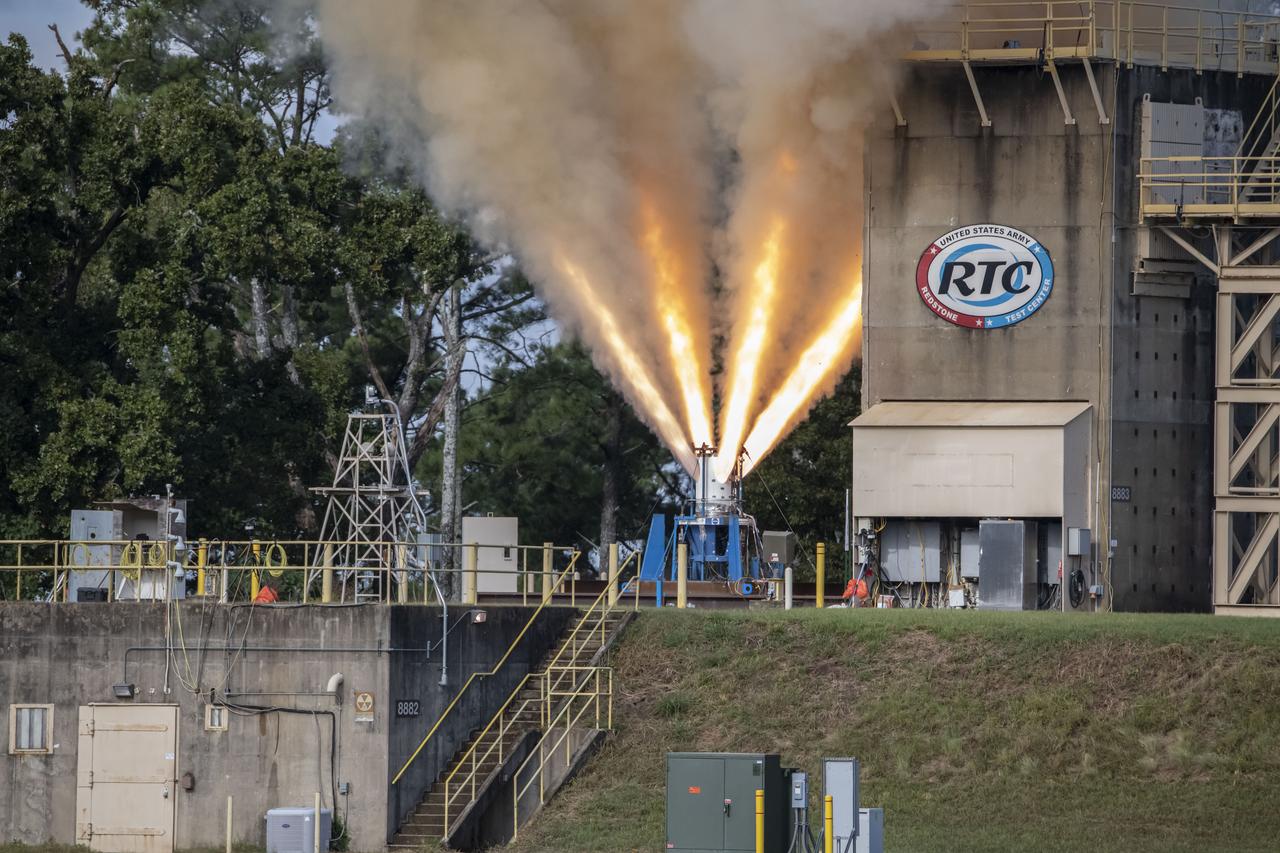
Redstone Test Center hosted the final hot fire test of the Aerojet Rocketdyne Orion Launch Abort System (LAS) at Redstone Arsenal’s test area 5.
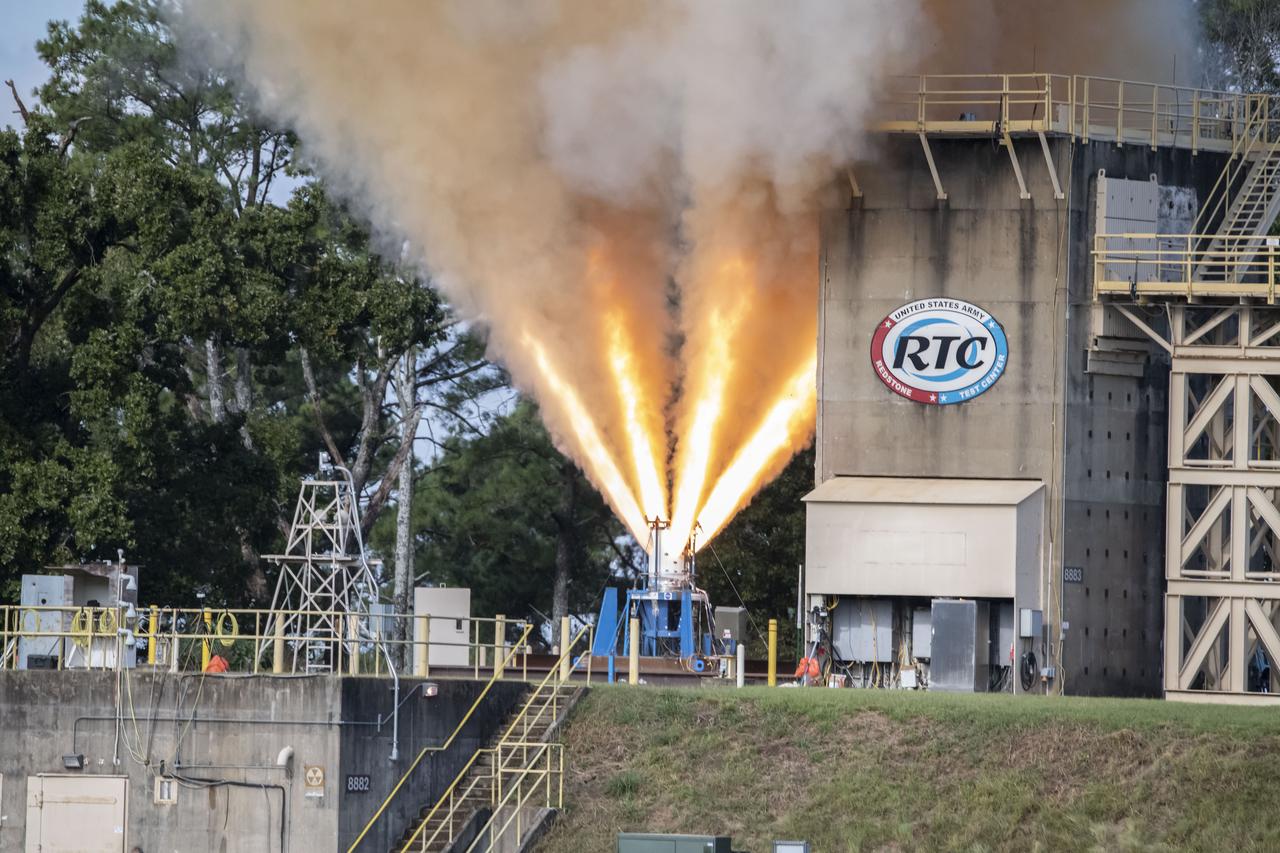
Redstone Test Center hosted the final hot fire test of the Aerojet Rocketdyne Orion Launch Abort System (LAS) at Redstone Arsenal’s test area 5.
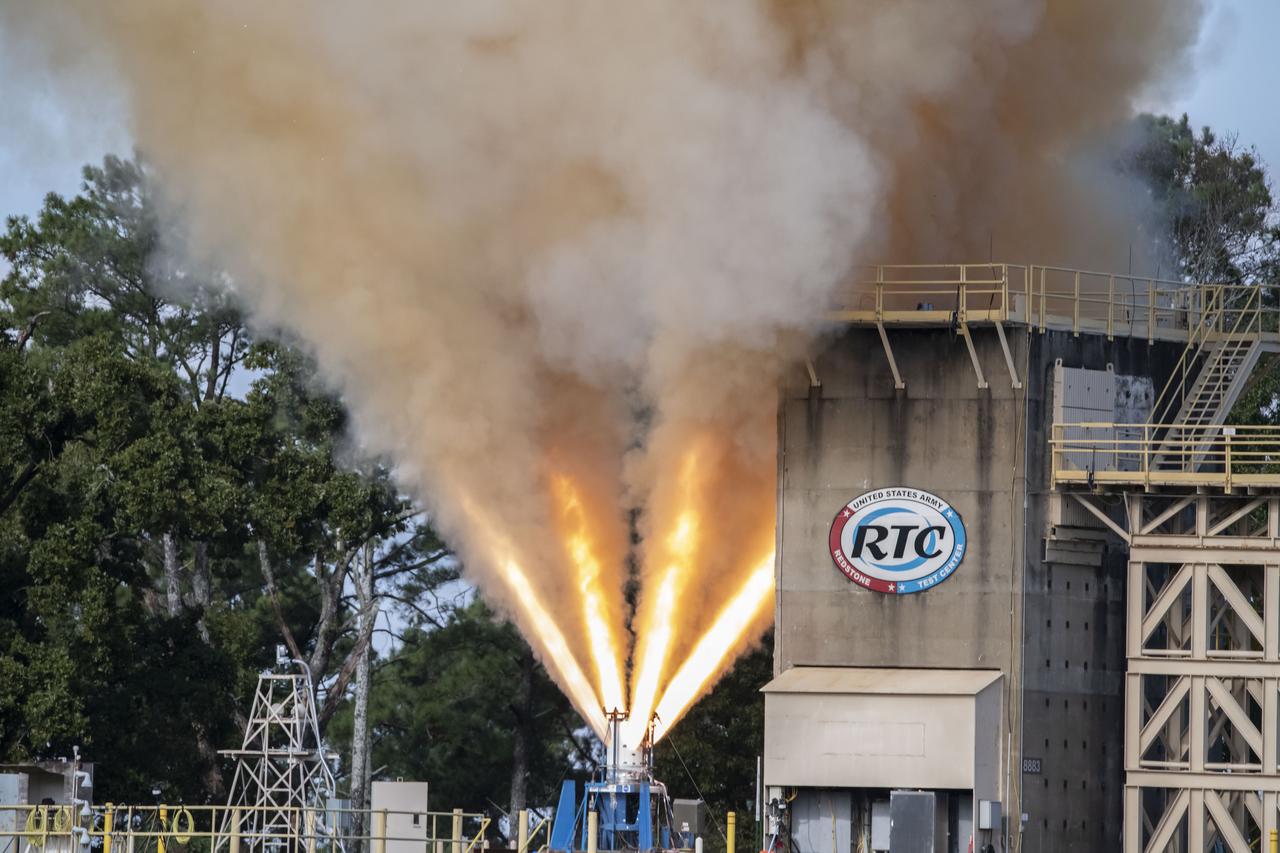
Redstone Test Center hosted the final hot fire test of the Aerojet Rocketdyne Orion Launch Abort System (LAS) at Redstone Arsenal’s test area 5.
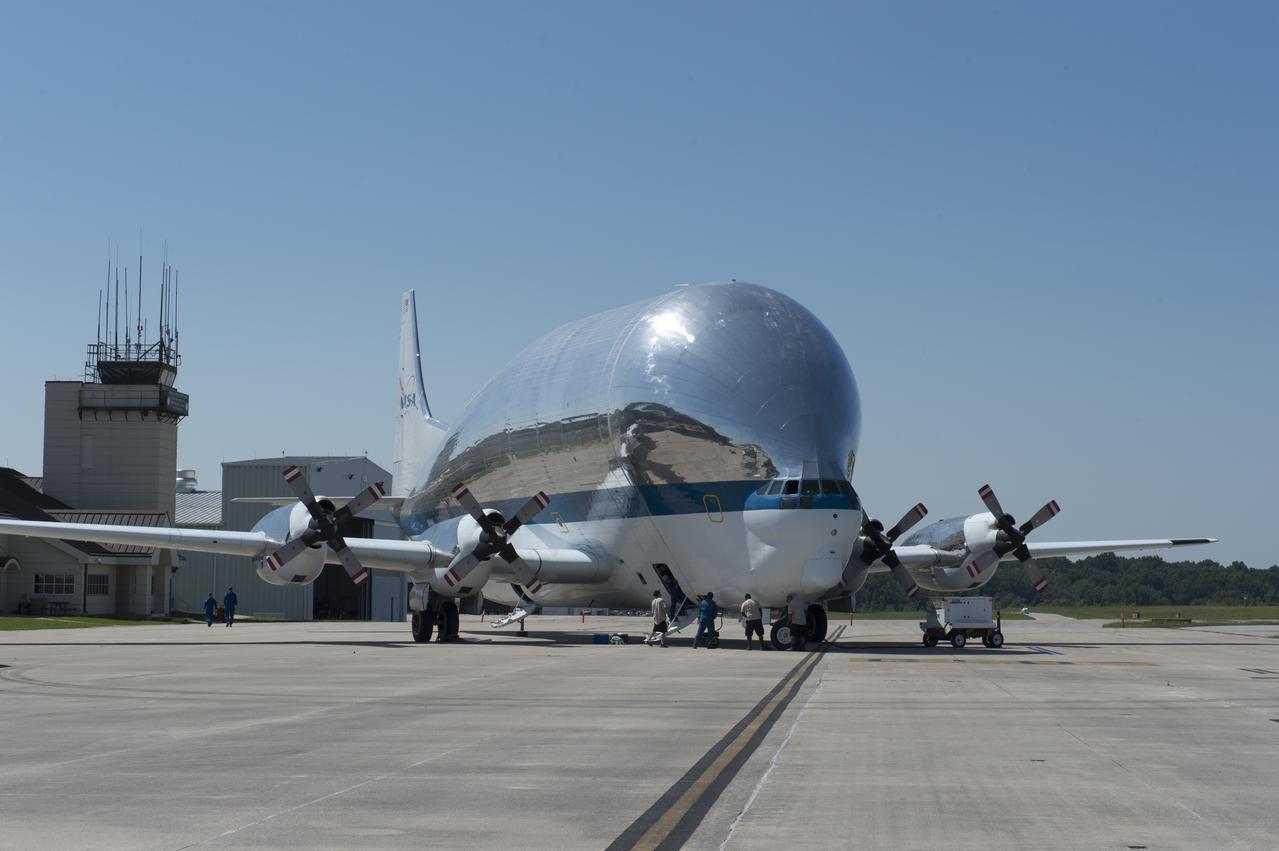
NASA's Super Guppie aircraft on to tarmac of Redstone Arsenal airfield prior to liftoff with the Orion stage adapter which will be transported to Denver, Colorado for further testing.
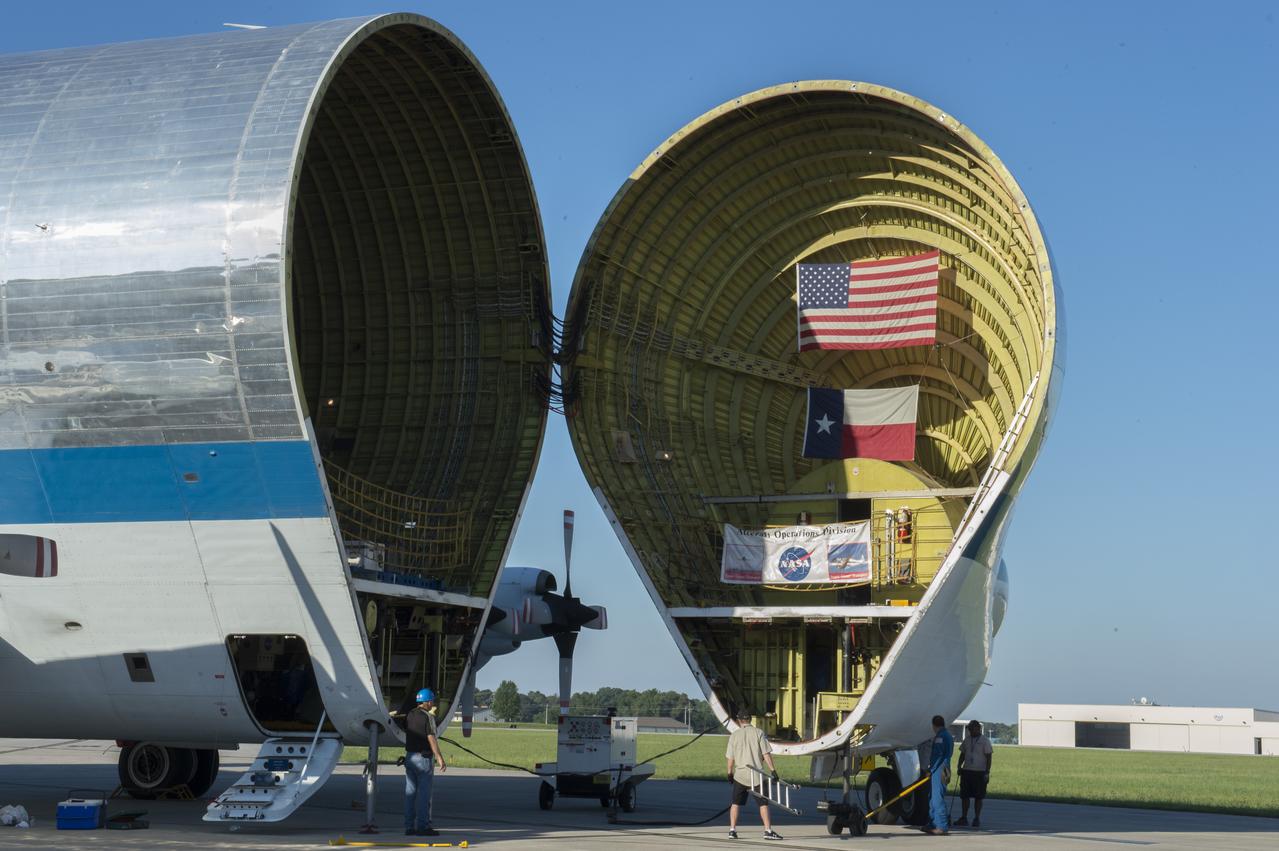
NASA's Super Guppie arrives at Redstone Arsenal airfield to transport the Orion stage adapter to Denver Colorado for further testing. The nose is open exposing the cargo bay.
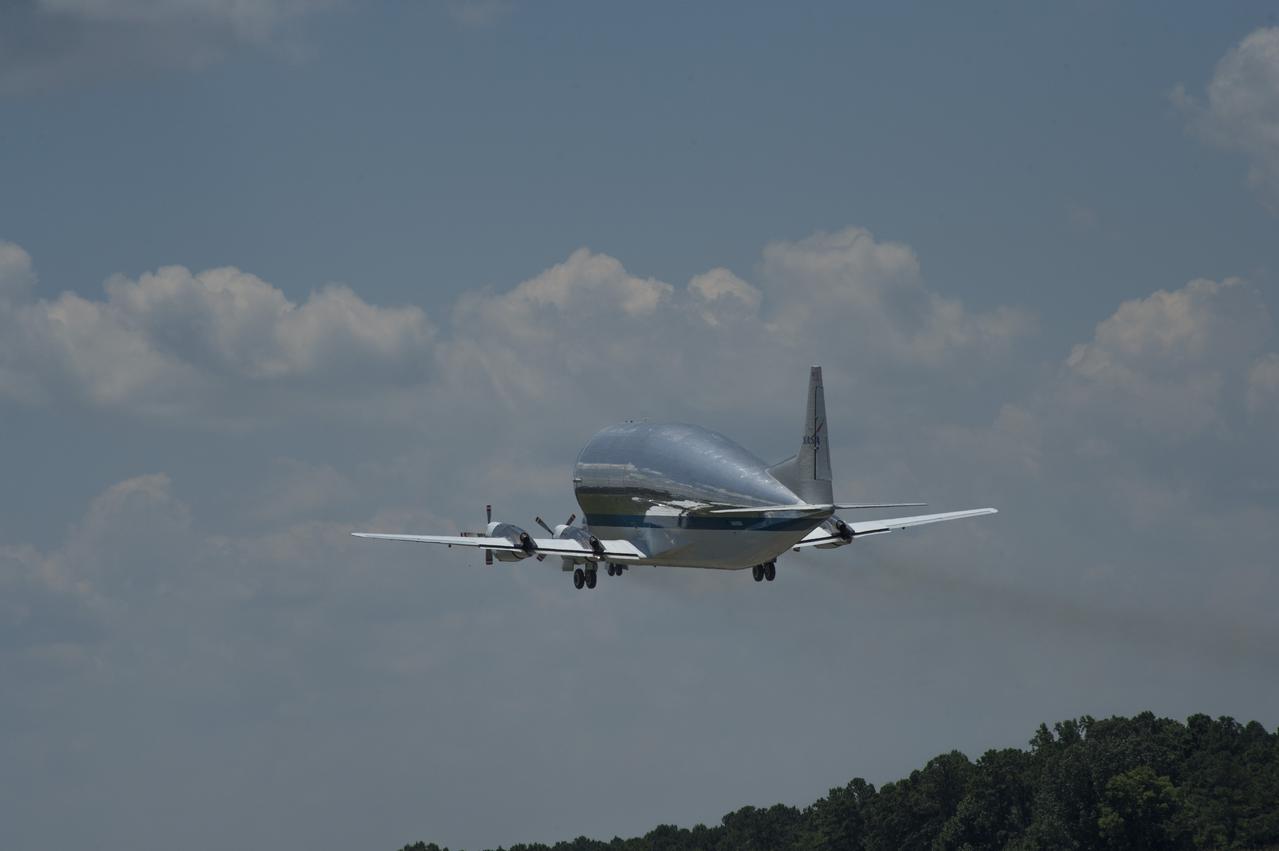
NASA's Super Guppie aircraft lifts off from Redstone Arsenal's airfield with the Orion stage adapter which will be transported to Denver, Colorado for further testing.
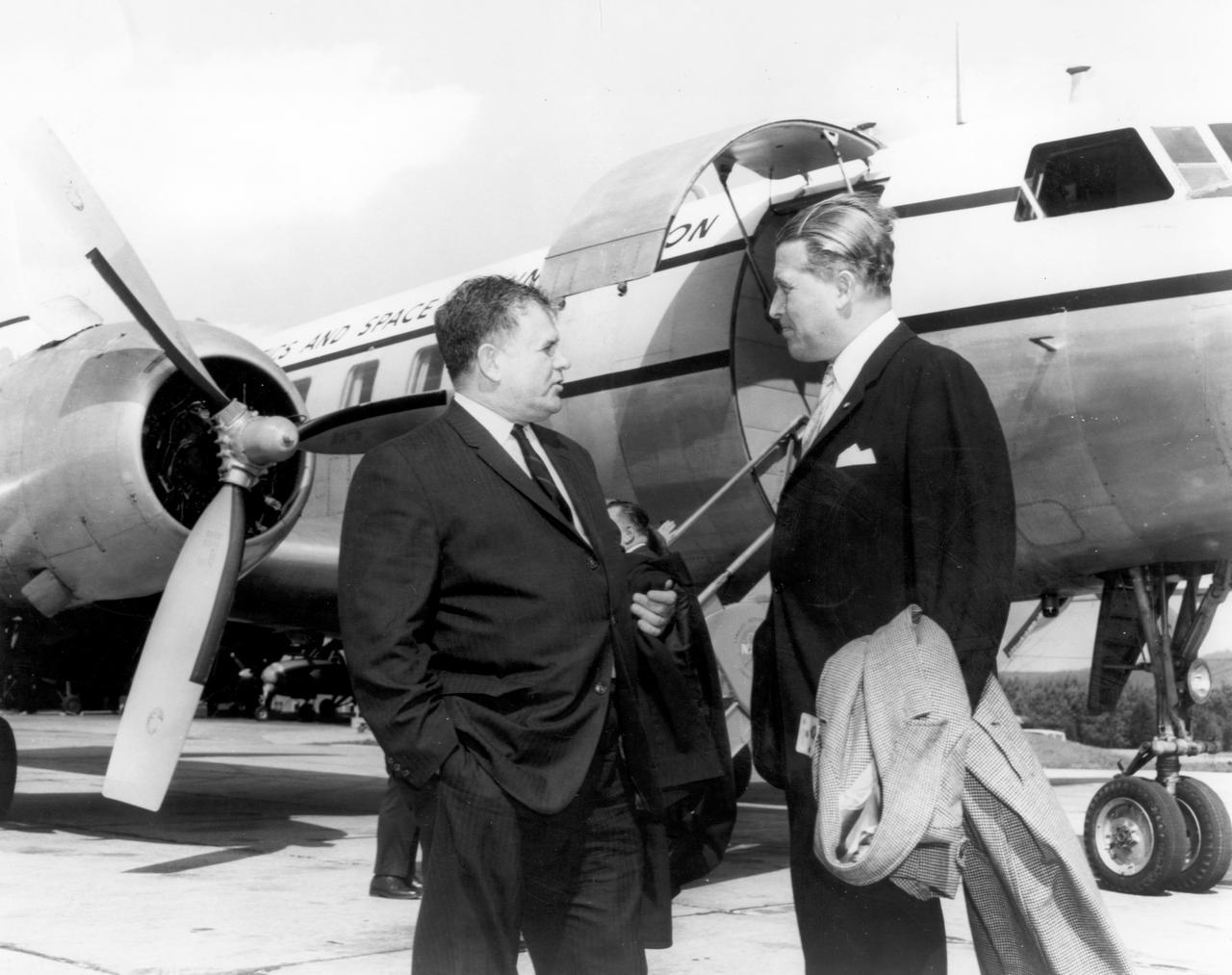
The members of the House Committee on Science and Astronautics visited the Marshall Space Flight Center (MSFC) on March 9, 1962 to gather firsthand information of the nation’s space exploration program. The congressional group was composed of members of the Subcommittee on Manned Space Flight. The subcommittee was briefed on MSFC’s manned space efforts earlier in the day and then inspected mockups of the Saturn I Workshop and the Apollo Telescope Mount, two projects developed by MSFC for the post-Apollo program. In this photograph, MSFC Director, Dr. Wernher von Braun, bids farewell to Texas Democratic Representative Olin E. Teague before departure at the Redstone Arsenal Airstrip.
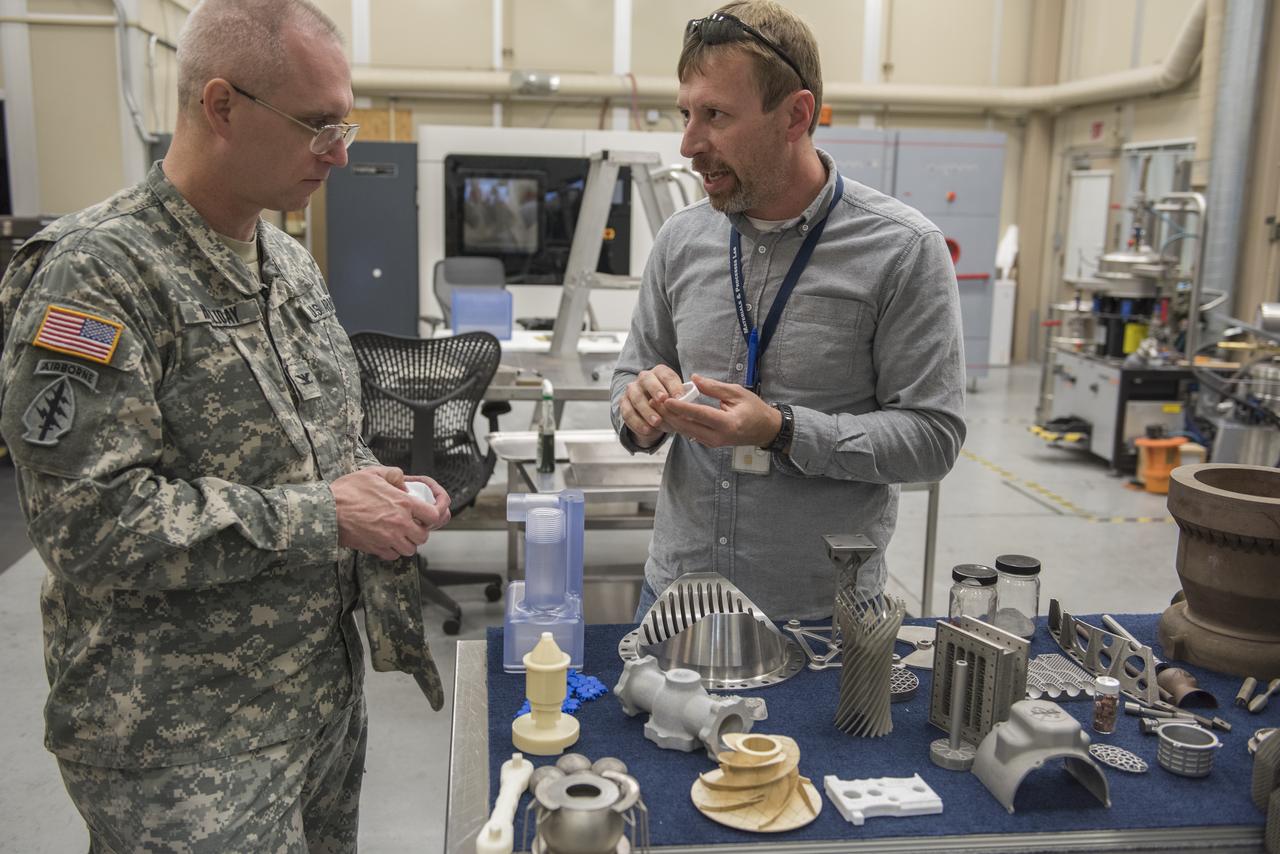
REDSTONE ARSENAL GARRISON COMMANDER COL. THOMAS "DOC" HOLLIDAY, LEFT, DISCUSSES THE PROCESSES AND HARDWARE USED IN NASA IN-SPACE MANUFACTURING TECHNIQUES WITH KEN COOPER, A STRUCTURAL MATERIALS ENGINEER AT NASA'S MARSHALL SPACE FLIGHT CENTER. COOPER, PART OF THE MARSHALL ENGINEERING DIRECTORATE'S ADVANCED MANUFACTURING AND DIGITAL SOLUTIONS TEAM, WAS AMONG NUMEROUS SUBJECT-MATTER EXPERTS WHO SHARED KEY MARSHALL CAPABILITIES DURING HOLLIDAY'S MARCH 3 MARSHALL TOUR. HOLLIDAY, A DECORATED OFFICER WHOSE MILITARY CAREER BEGAN IN 1992, GAINED FIRSTHAND INSIGHT INTO MARSHALL'S ADVANCED MANUFACTURING AND 3-D PRINTING TECHNIQUES; ROUND-THE-CLOCK INTERNATIONAL SPACE STATION SCIENCE AND COMMUNICATIONS SUPPORT BY THE PAYLOAD OPERATIONS INTEGRATION CENTER TEAM; AND THE LATEST UPGRADES TO MARSHALL TEST STANDS IN SUPPORT OF NEXT-GENERATION LAUNCH VEHICLE AND FLIGHT HARDWARE DEVELOPMENT. MARSHALL, A REDSTONE ARSENAL TENANT, ROUTINELY SHARES CUTTING-EDGE RESEARCH AND MANUFACTURING ADVANCES WITH ITS MILITARY AND FEDERAL AGENCY COUNTERPARTS, WORKING IN PARTNERSHIP TO ADVANCE NASA'S MISSION AND MAINTAIN THE NATION'S TECHNOLOGICAL LEADERSHIP.
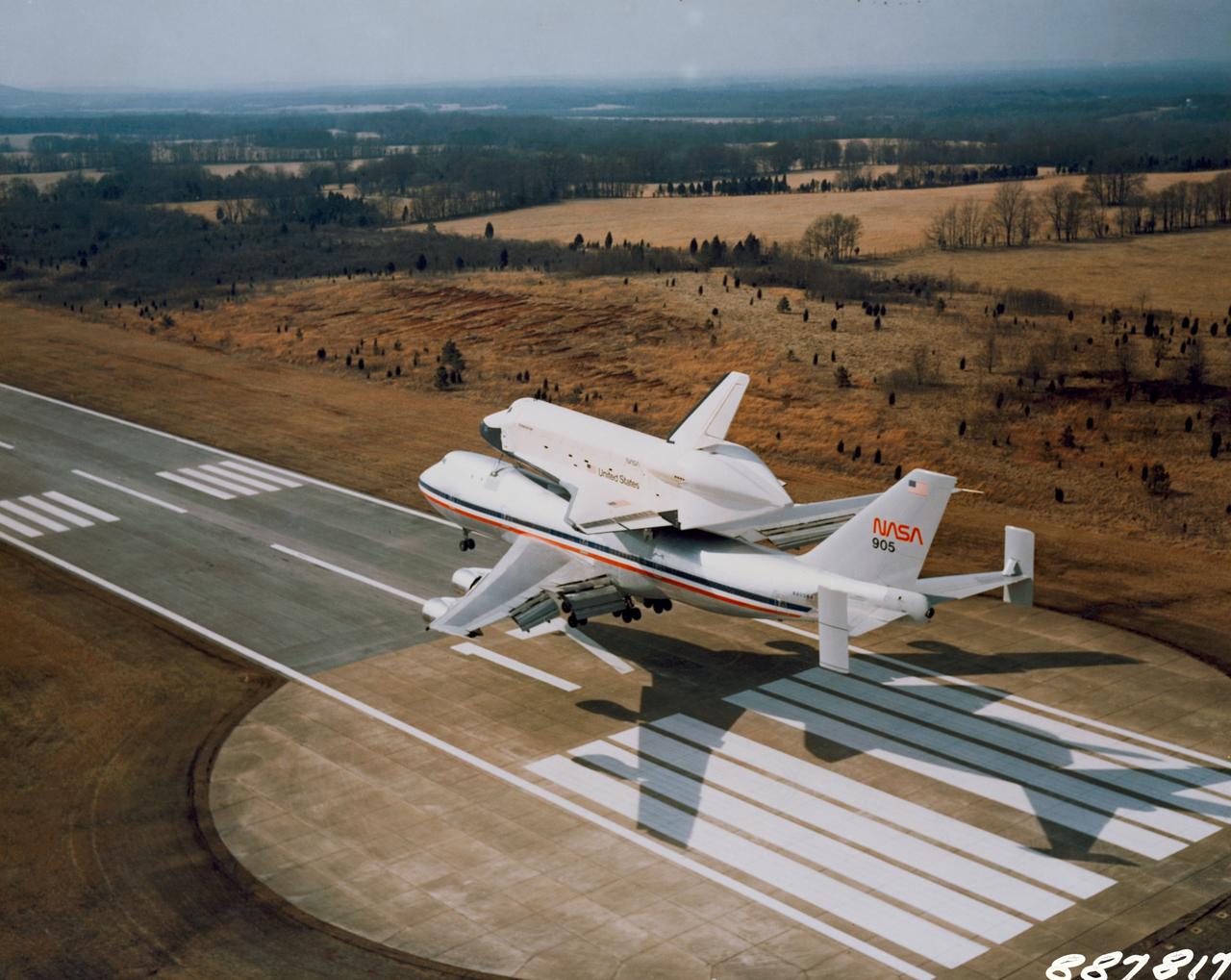
S78-27238 (13 March 1978) --- The space shuttle orbiter 101 Enterprise approaches riding atop its 747 carrier aircraft, arrives at the Redstone Arsenal airstrip near Marshall Space Flight Center (MSFC), Huntsville, Alabama, on March 13, 1978. It is to undergo ground vibration tests along with the external tank and solid rocket boosters, in preparation for Orbiter Flight Tests (OFT) in which its successor craft (Orbiter 102) will take several two-man crews into Earth orbit. Photo credit: NASA
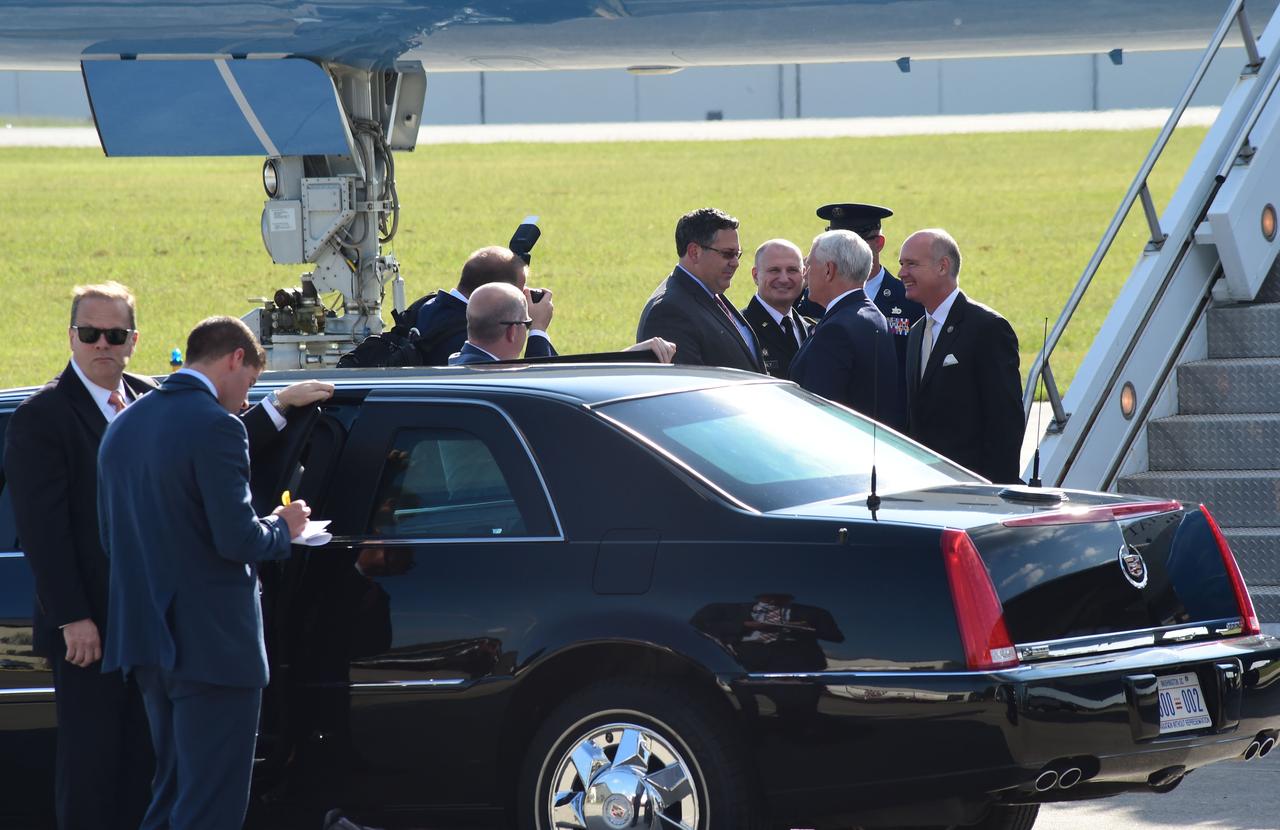
Air Force Two lands with Vice President Mike Pence along with Congressman Robert Aderholt at the Redstone Army Airfield in Huntsville, Alabama, on Monday, Sept. 25. They were greeted by NASA’s Marshall Space Flight Center Director Todd May and Redstone Arsenal’s Lt. Gen. Edward Daly. The Vice President is visiting NASA’s Marshall Center to meet with employees, view test hardware for NASA’s Space Launch System — America’s new deep-space rocket, and tour the Payload Operations Integration Center, “science central” for the International Space Station. Photo Credit: (NASA/Emmett Given)
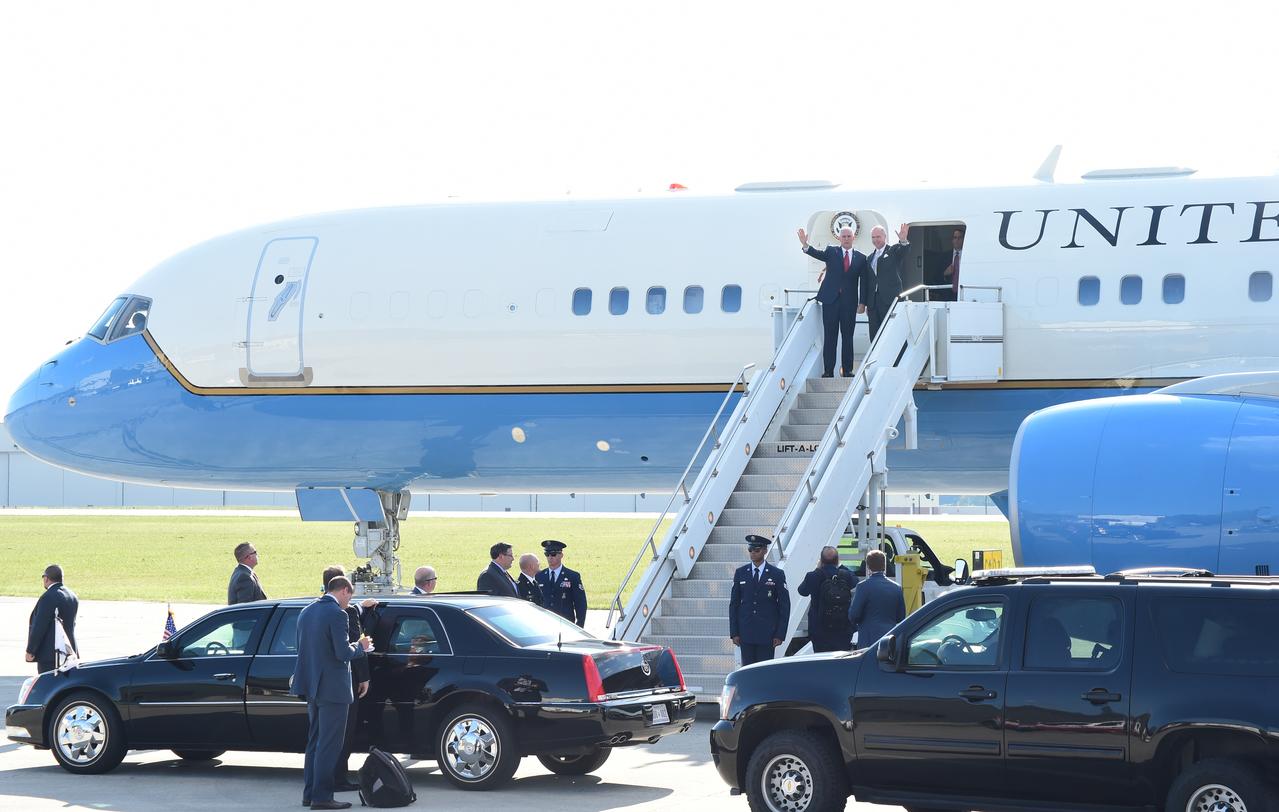
Air Force Two lands with Vice President Mike Pence along with Congressman Robert Aderholt at the Redstone Army Airfield in Huntsville, Alabama, on Monday, Sept. 25. The Vice President is visiting NASA’s Marshall Space Flight Center, located on Redstone Arsenal, to meet with employees, view test hardware for NASA’s Space Launch System — America’s new deep-space rocket, and tour the Payload Operations Integration Center, “science central” for the International Space Station. Photo Credit: (NASA/Emmett Given)
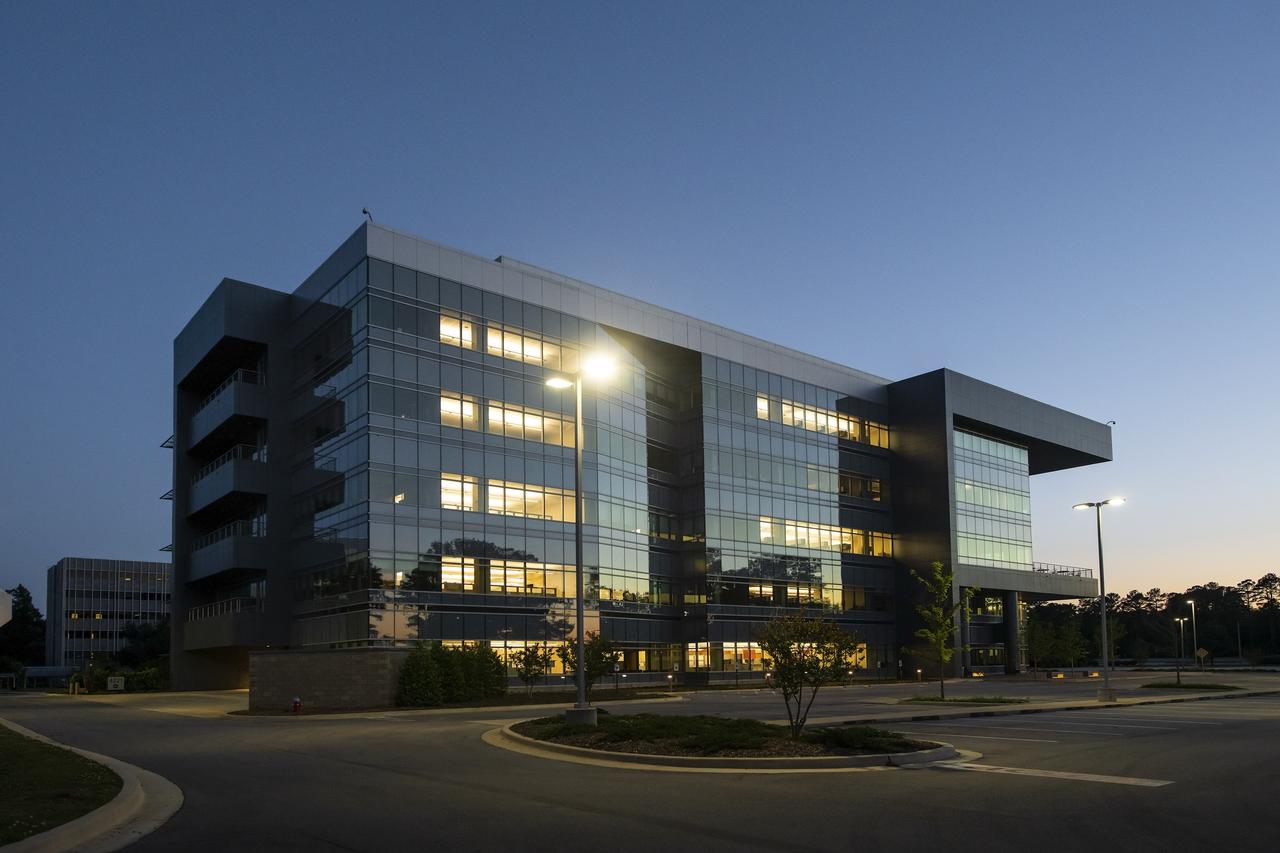
At dusk, the northern side of Building 4221 on Marshall Space Flight Center’s campus is silhouetted against blue skies.
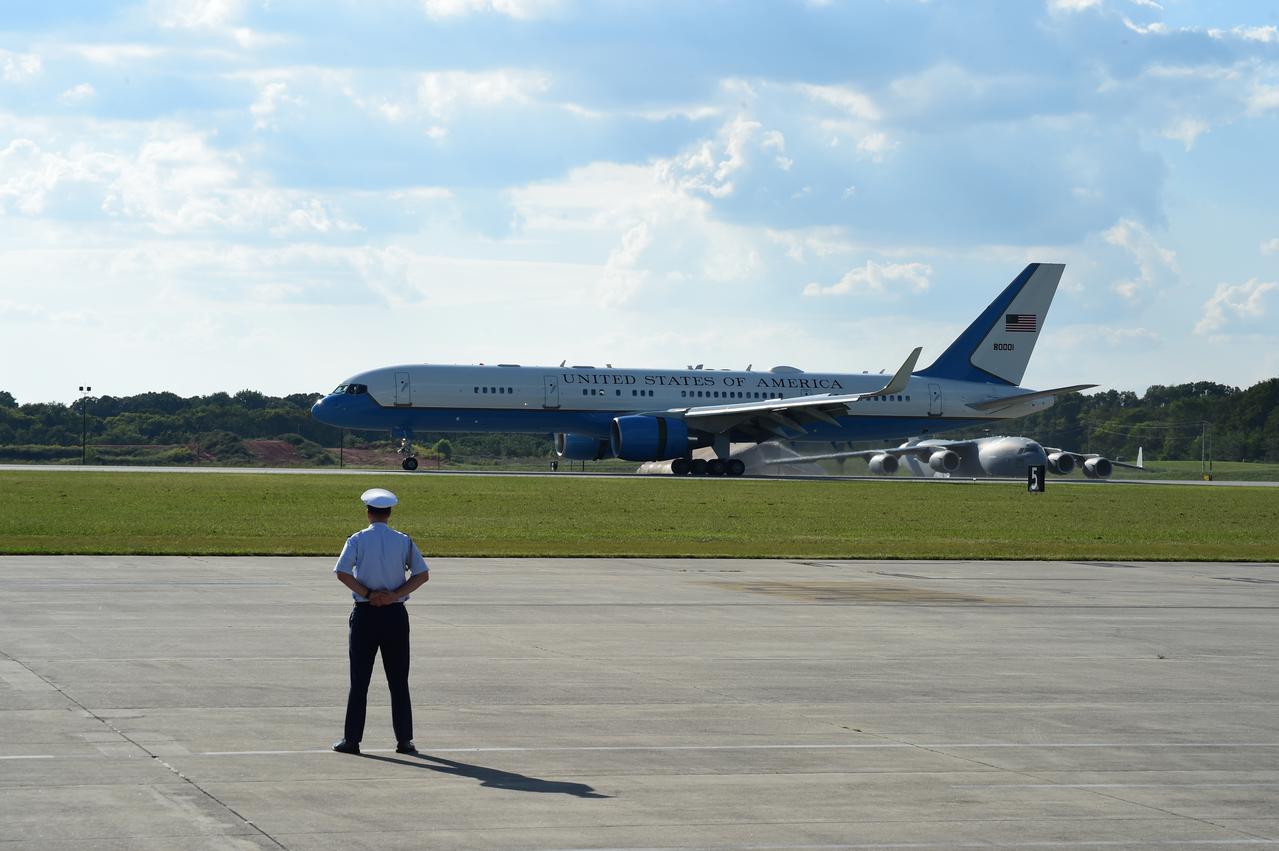
Air Force Two lands with Vice President Mike Pence along with Congressman Robert Aderholt at the Redstone Army Airfield in Huntsville, Alabama, on Monday, Sept. 25. The Vice President is visiting NASA’s Marshall Space Flight Center, located on Redstone Arsenal, to meet with employees, view test hardware for NASA’s Space Launch System — America’s new deep-space rocket, and tour the Payload Operations Integration Center, “science central” for the International Space Station. Photo Credit: (NASA/Emmett Given)
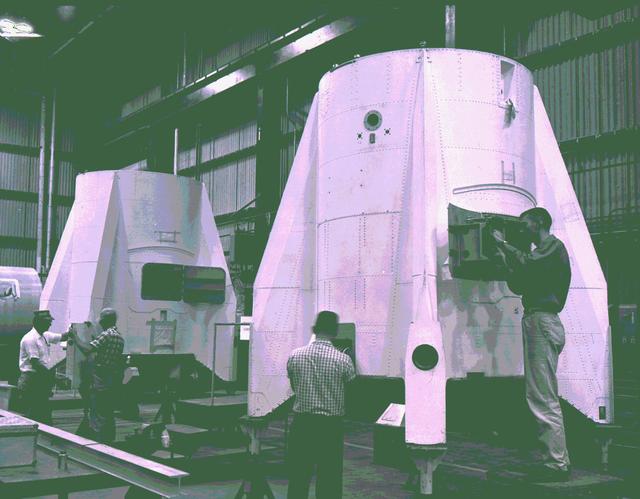
In this 1959 photograph, technicians prepare tail sections for Mercury-Redstone vehicles in Building 4706 at Redstone Arsenal in Huntsville, Alabama. Developed by Dr. Wernher von Braun and the rocket team at Redstone, the Mercury-Redstone launched the first two marned U.S. missions.
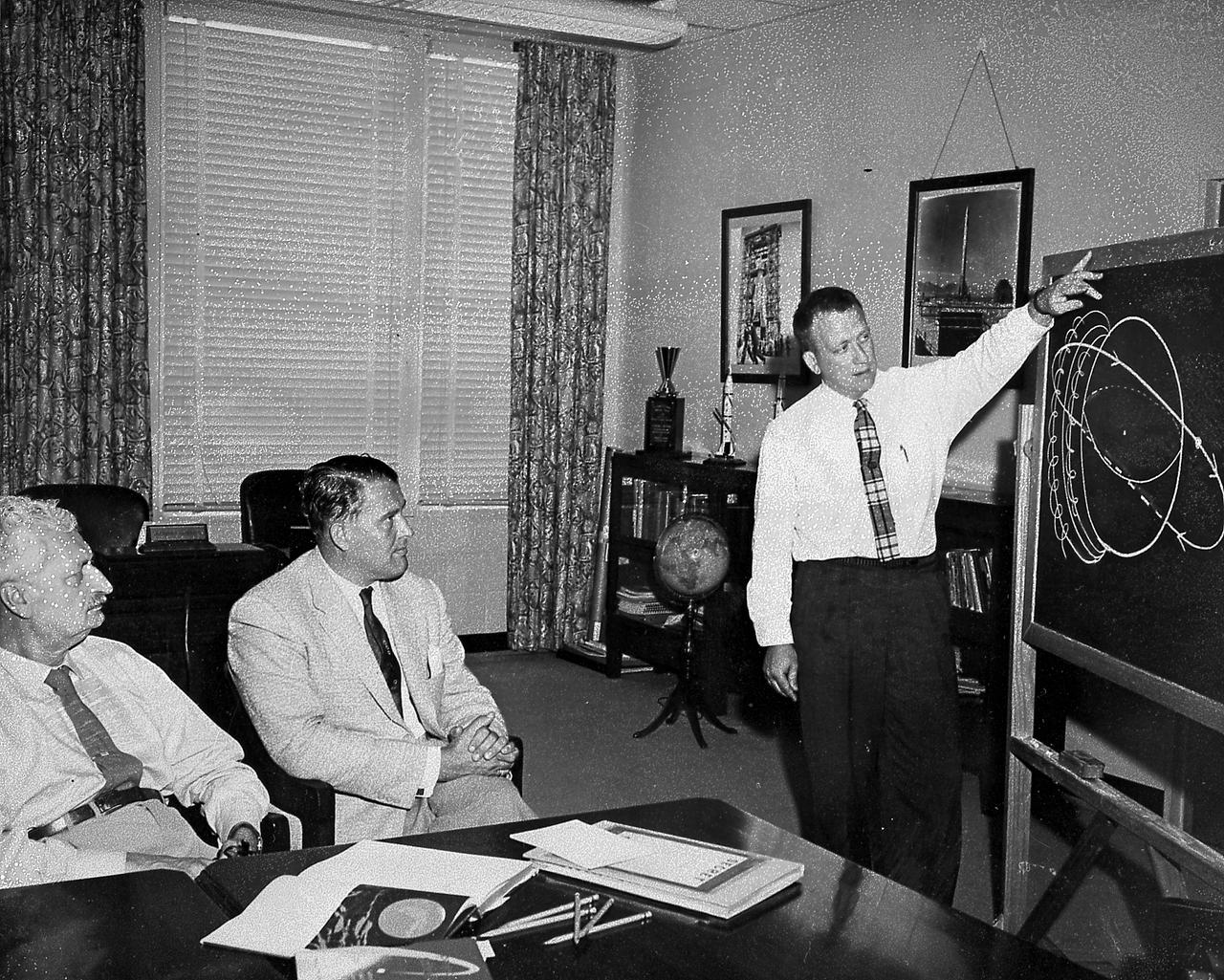
Professor Hermann Oberth and Dr. von Braun are briefed on satellite orbits by Dr. Charles A. Lundquist at Army Ballistic Missile Agency, Redstone Arsenal, Huntsville, Alabama.
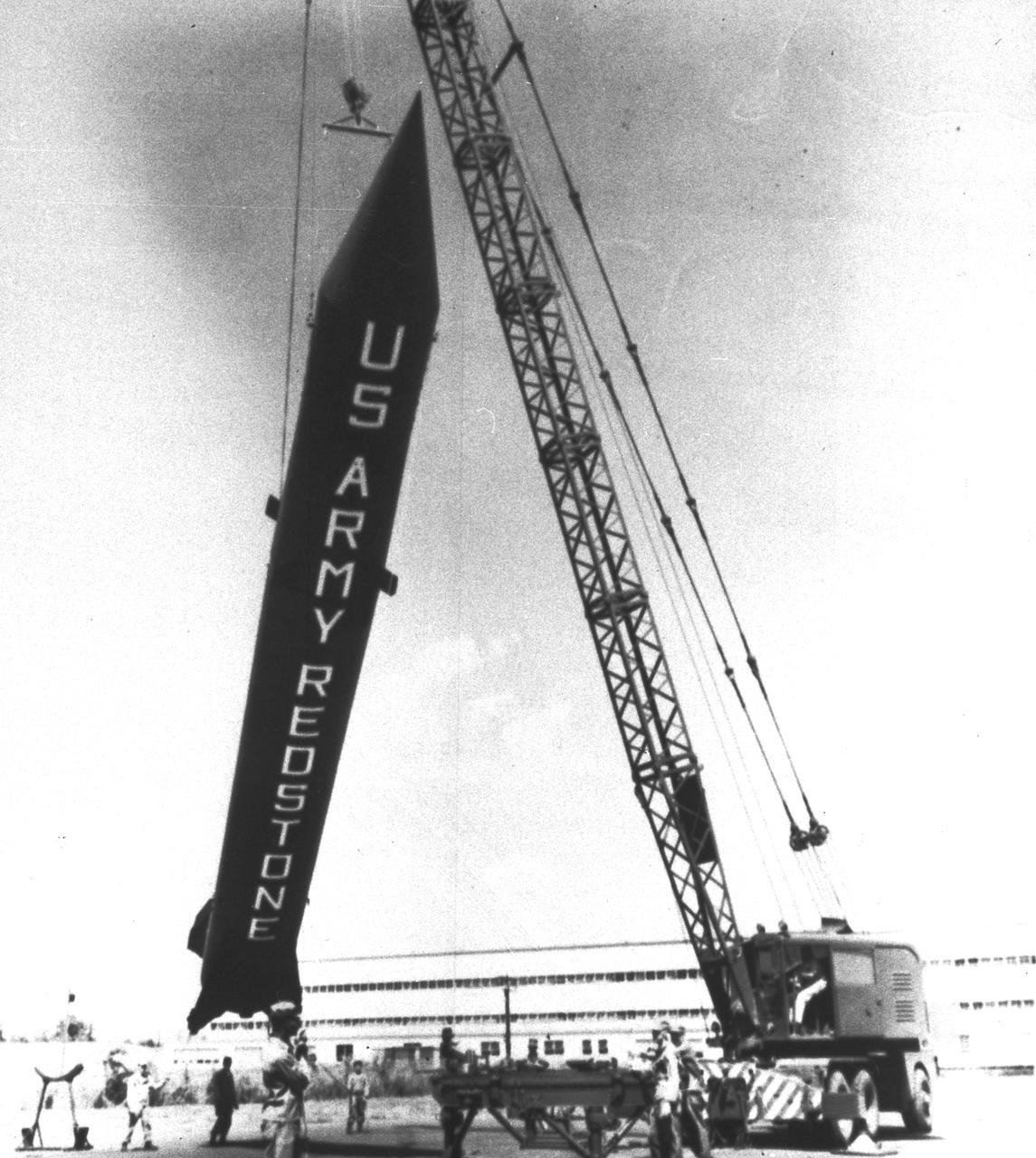
U.S. Army Redstone Rocket: The Redstone ballistic missile was a high-accuracy, liquid-propelled, surface-to-surface missile developed by the Army Ballistic Missile Agency, Redstone Arsenal, in Huntsville, Alabama, under the direction of Dr. von Braun. The Redstone rocket was also known as "Old Reliable" because of its many diverse missions. The first Redstone Missile was launched from Cape Canaveral, Florida on August 30, 1953.
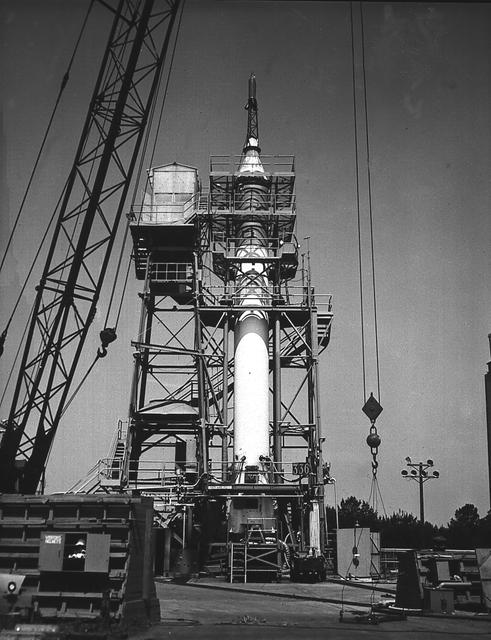
A Mercury-Redstone launch vehicle awaits test-firing in the Redstone Test Stand during the late 1950s. Between 1953 and 1960, the rocket team at Redstone Arsenal in Huntsville, Alabama performed hundreds of test firings on the Redstone rocket, over 200 on the Mercury-Redstone vehicle configuration alone. It was this configuration which launched America's first two marned space missions, Freedom 7 and Liberty Bell 7,in 1961.
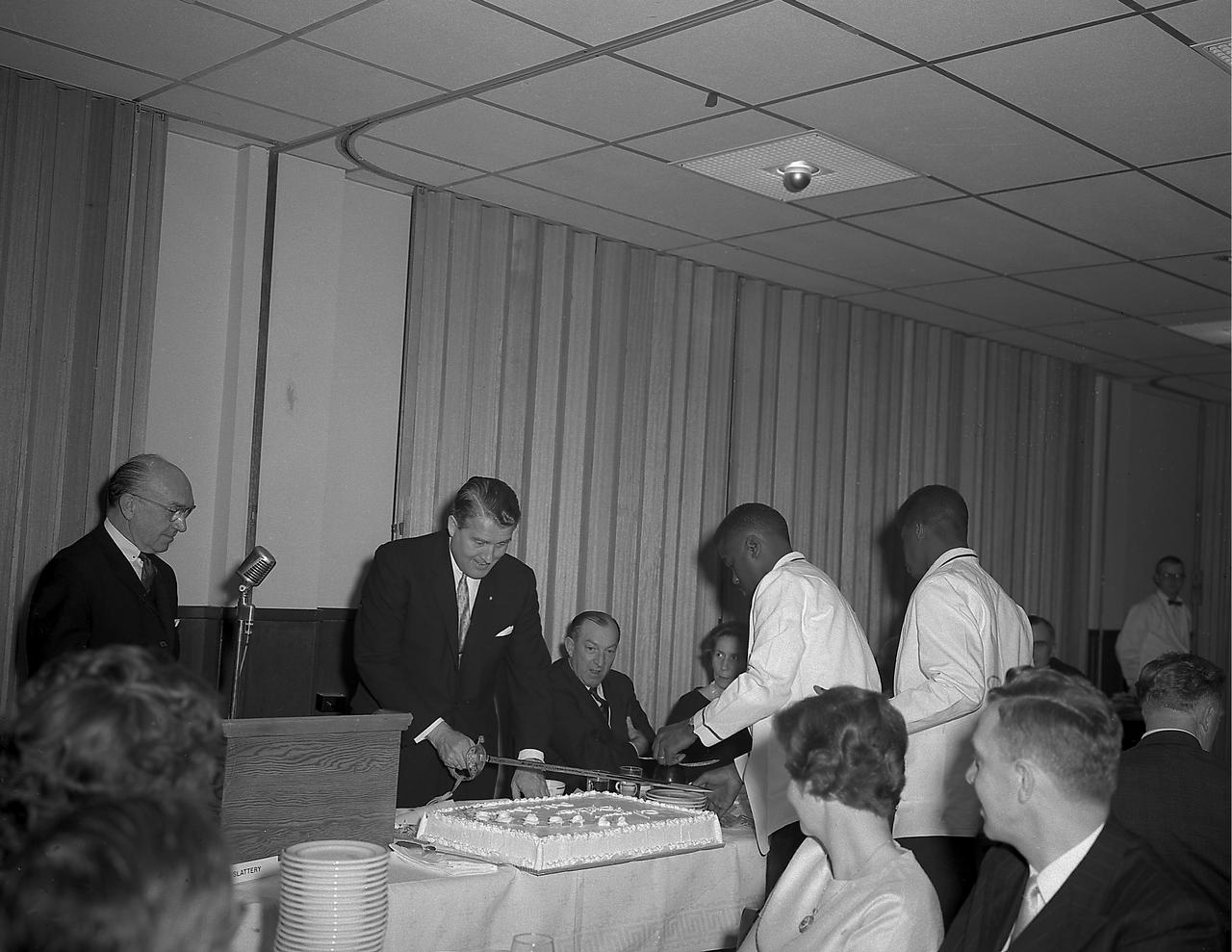
Dr. von Braun's 50th Birthday Party was celebrated at the Officers Club at Redstone Arsenal, Alabama on March 23, 1962. Dr. von Braun cuts his birthday cake, while congressman Bob Jones looks on.
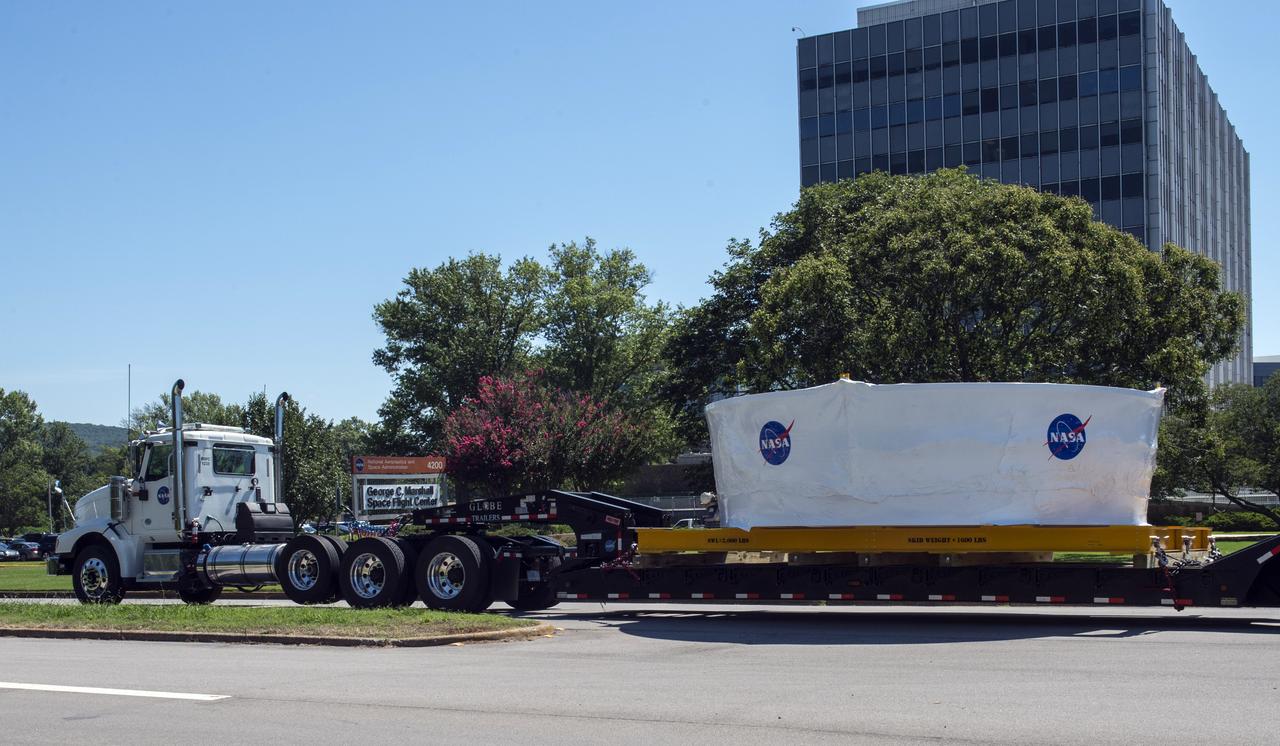
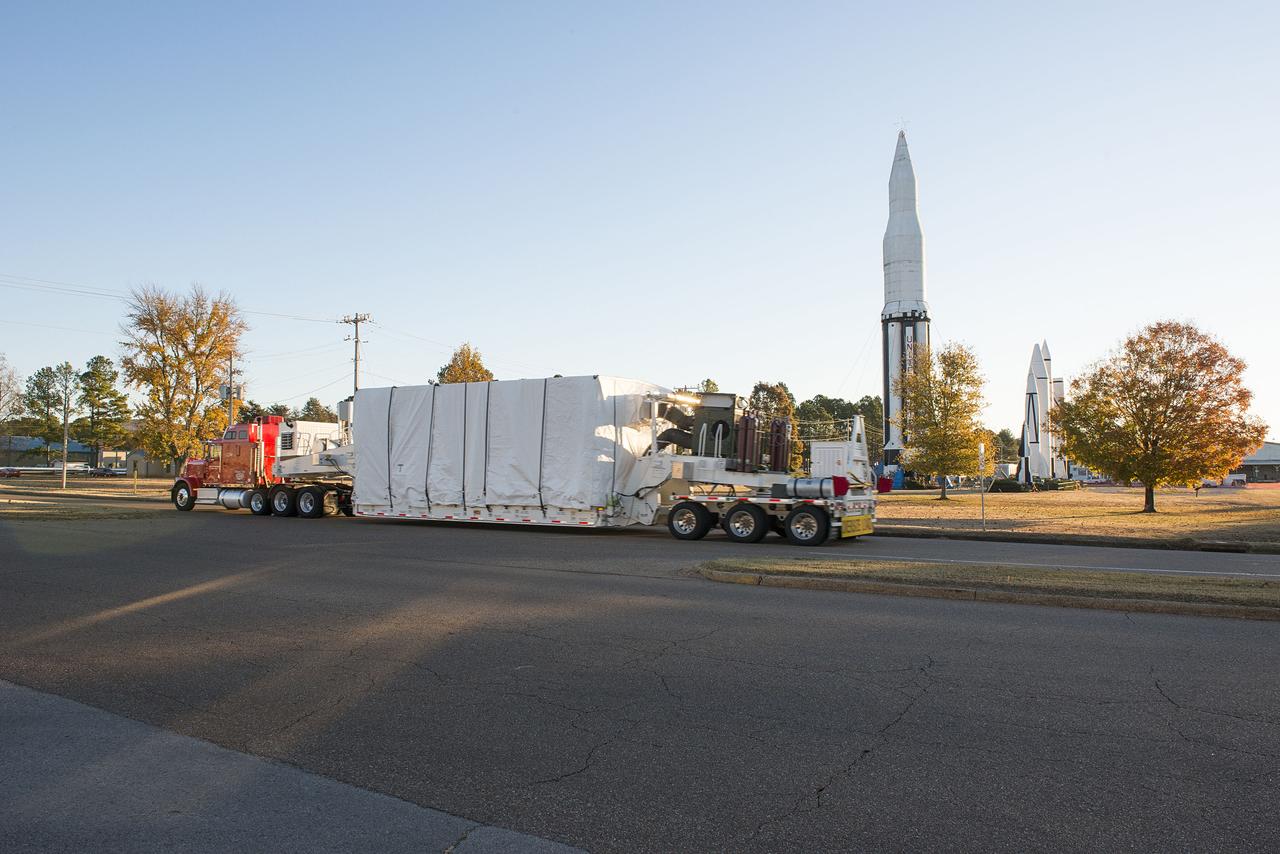
The Orion stage adapter being transported from Marshall Space Flight Center to Redstone Arsenal's airfield for transportation on NASA's Guppie aircraft to Denver, Colorado for further testing.
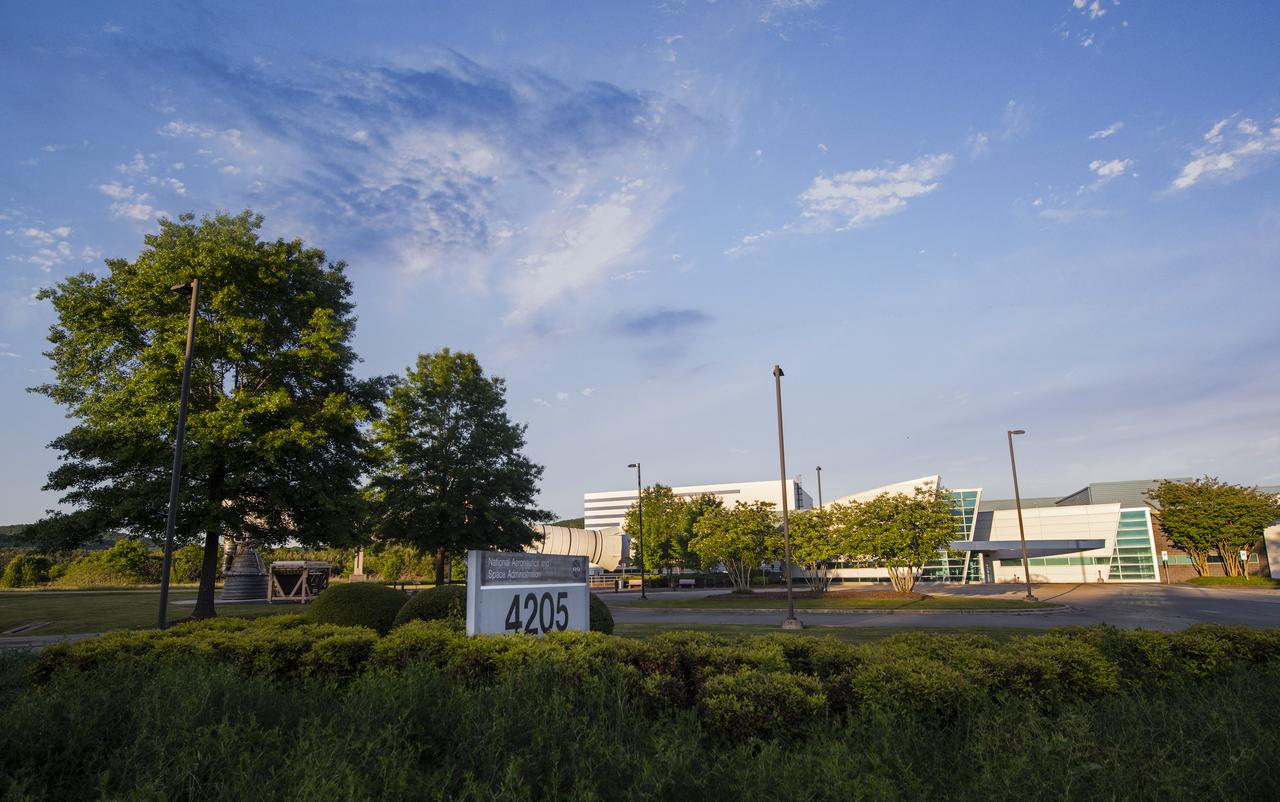
Pictured is Building 4205, which serves as Marshall Space Flight Center’s Propulsion R&D Lab.
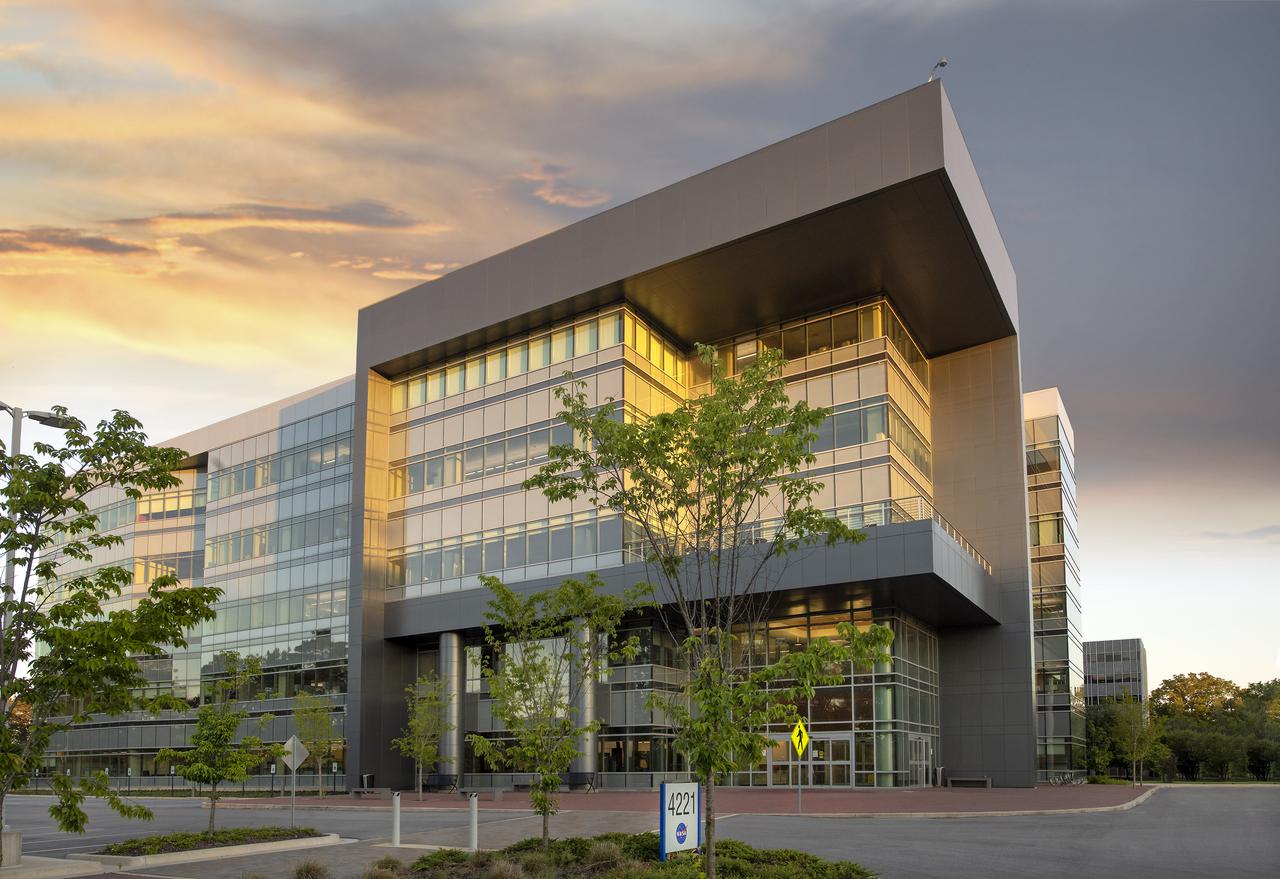
Pictured is the north side of Building 4221 on the campus of Marshall Space Flight Center.
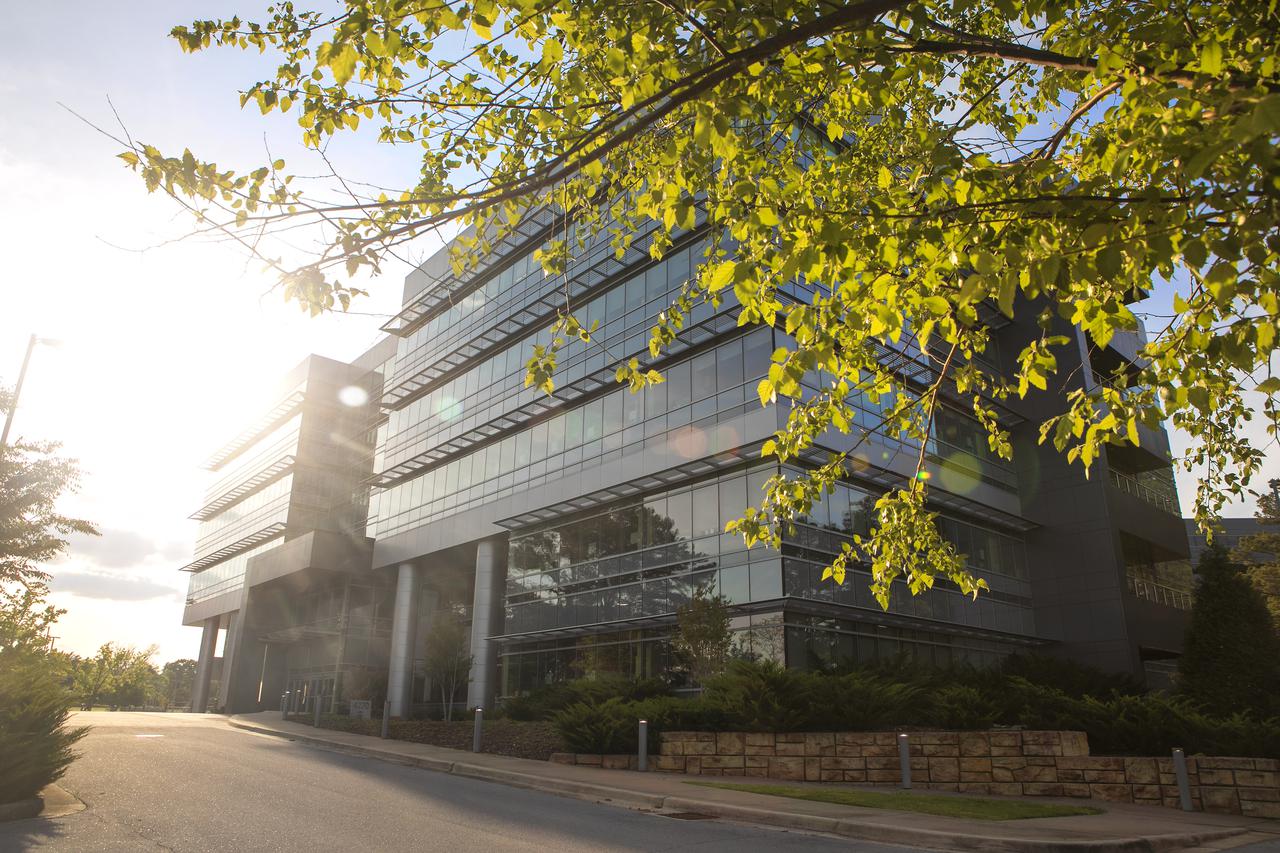
The southward-facing side of Building 4220 on Marshall Space Flight Center’s campus is illuminated by the afternoon sun.
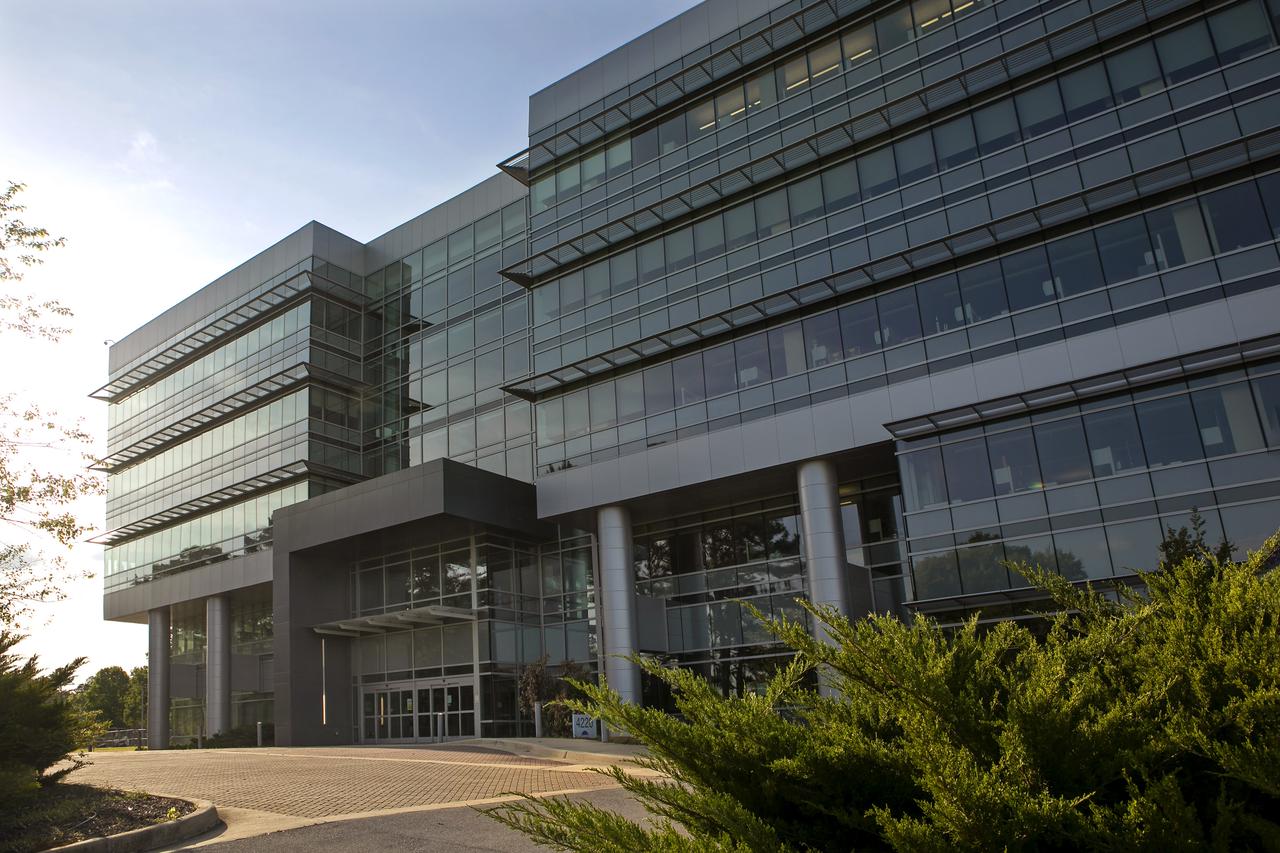
Building 4220 on the campus of Marshall Space Flight Center is home to NASA’s Space Launch System Program.
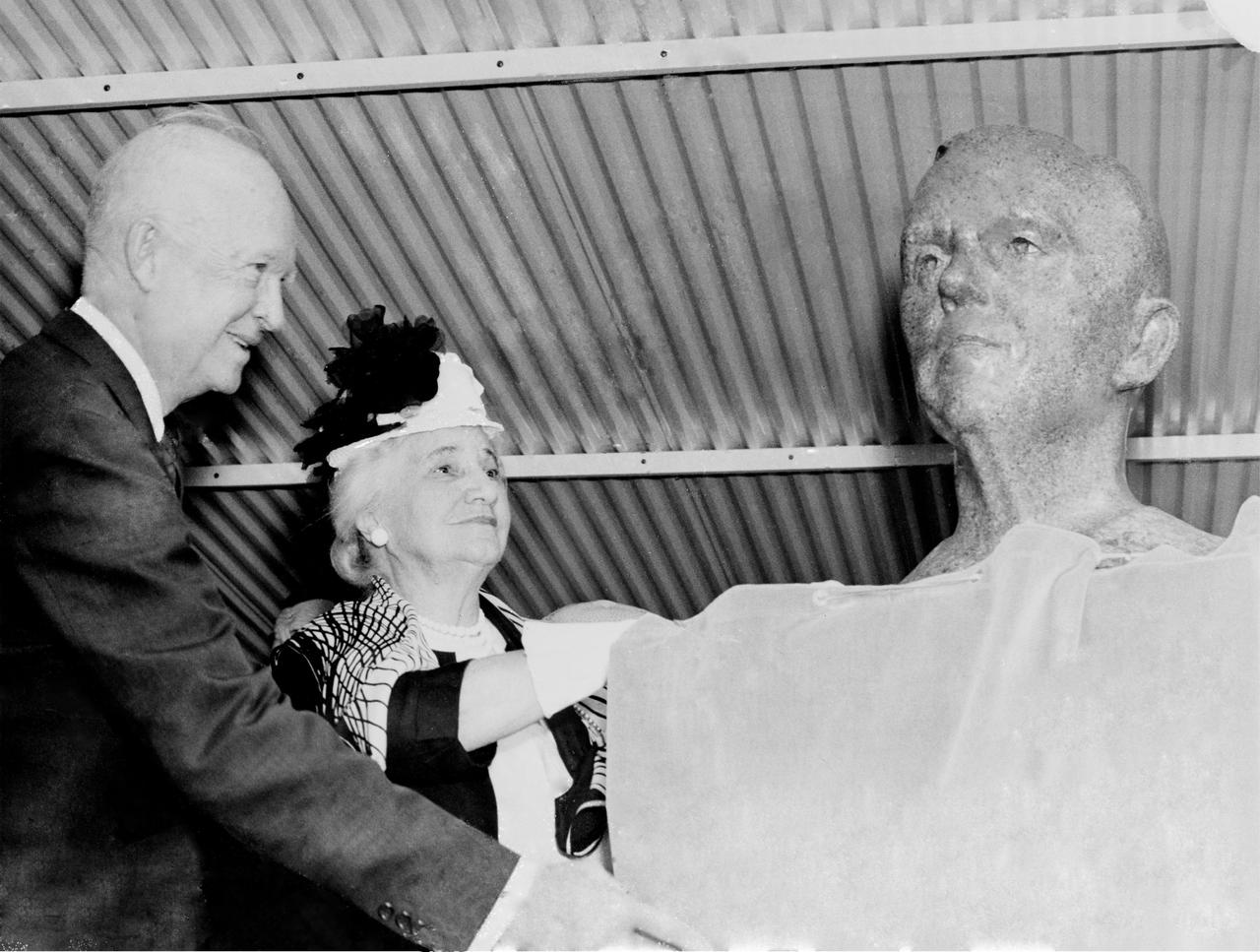
President Dwight D. Eisenhower and Mrs. George C. Marshall unveil the bronze bust of General George C. Marshall during the dedication of the Marshall Space Flight Center. Eisenhower signed an Executive Order on October 21, 1959 directing the transfer of persornel from the Redstone Arsenal's Army Ballistic Missile Agency Development Operations Division to NASA. On March 15, 1960, another Executive Order announced that the space complex formed within the boundaries of Redstone Arsenal would become the George C. Marshall Space Flight Center. The Center was activated on July 1, 1960, with dedication ceremonies taking place September 8, 1960.
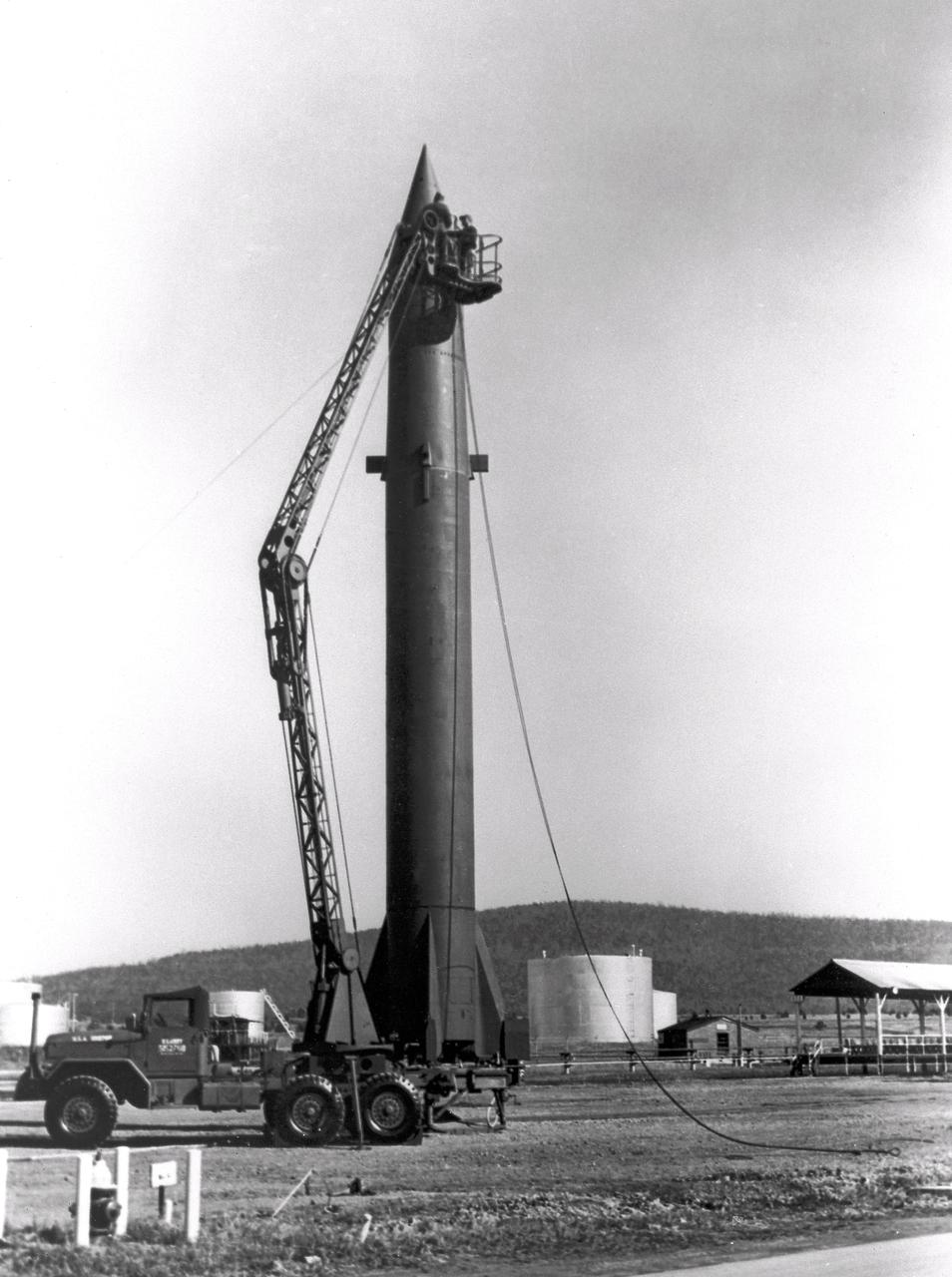
The image depicts Redstone missile being erected. The Redstone ballistic missile was a high-accuracy, liquid-propelled, surface-to-surface missile developed by Army Ballistic Missile Agency, Redstone Arsenal, in Huntsville, Alabama, under the direction of Dr. von Braun. The Redstone engine was a modified and improved version of the Air Force's Navaho cruise missile engine of the late forties. The A-series, as this would be known, utilized a cylindrical combustion chamber as compared with the bulky, spherical V-2 chamber. By 1951, the Army was moving rapidly toward the design of the Redstone missile, and the production was begun in 1952. Redstone rockets became the "reliable workhorse" for America's early space program. As an example of the versatility, Redstone was utilized in the booster for Explorer 1, the first American satellite, with no major changes to the engine or missile
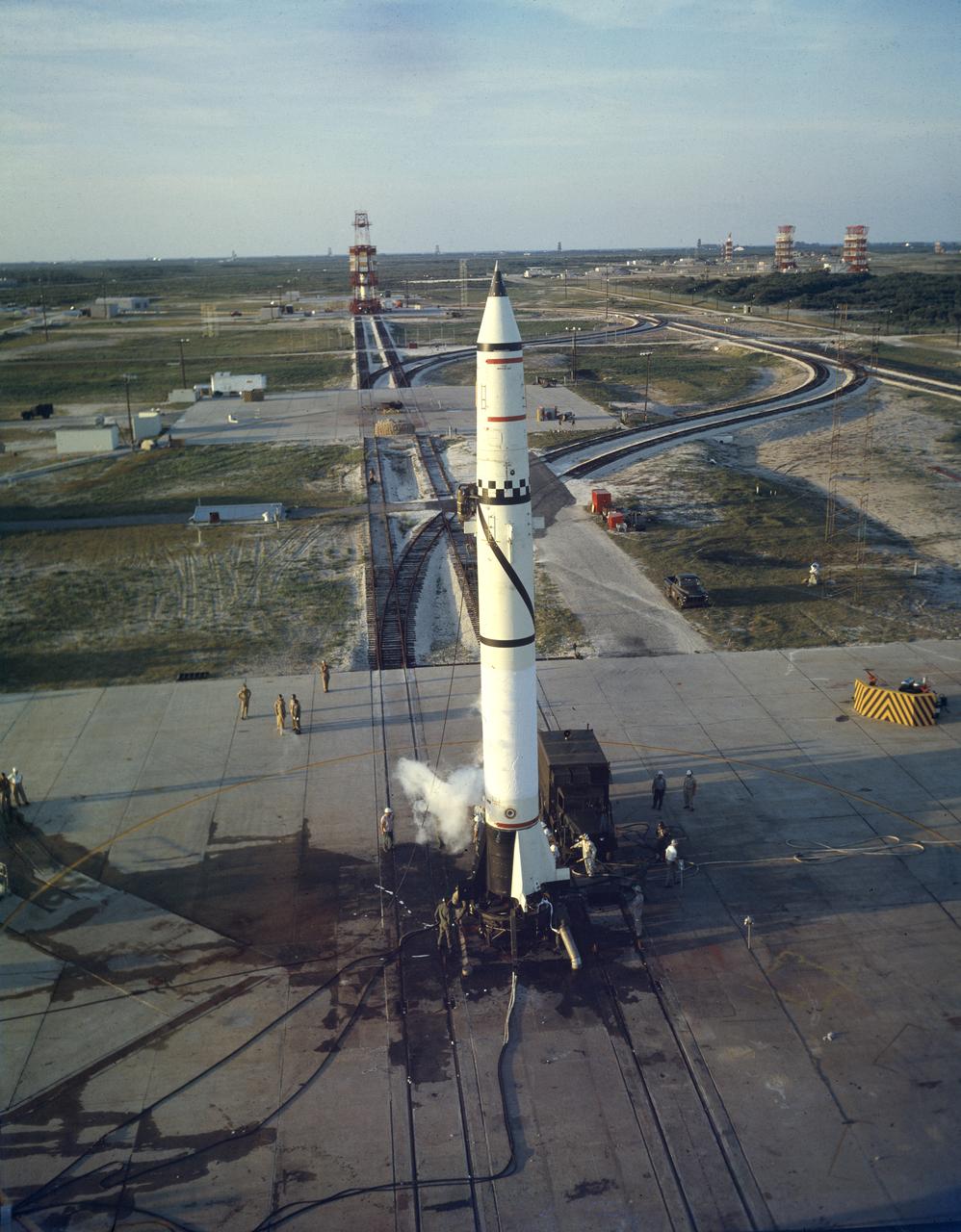
Redstone missile No. 1002 on the launch pad at Cape Canaveral, Florida, on May 16, 1958. The Redstone ballistic missile was a high-accuracy, liquid-propelled, surface-to-surface missile developed by the Army Ballistic Missile Agency, Redstone Arsenal, in Huntsville, Alabama, under the direction of Dr. von Braun. The Redstone engine was a modified and improved version of the Air Force's Navaho cruise missile engine of the late forties. The A-series, as this would be known, utilized a cylindrical combustion chamber as compared with the bulky, spherical V-2 chamber. By 1951, the Army was moving rapidly toward the design of the Redstone missile, and production was begun in 1952. Redstone rockets became the "reliable workhorse" for America's early space program. As an example of the versatility, Redstone was utilized in the booster for Explorer 1, the first American satellite, with no major changes to the engine or missile
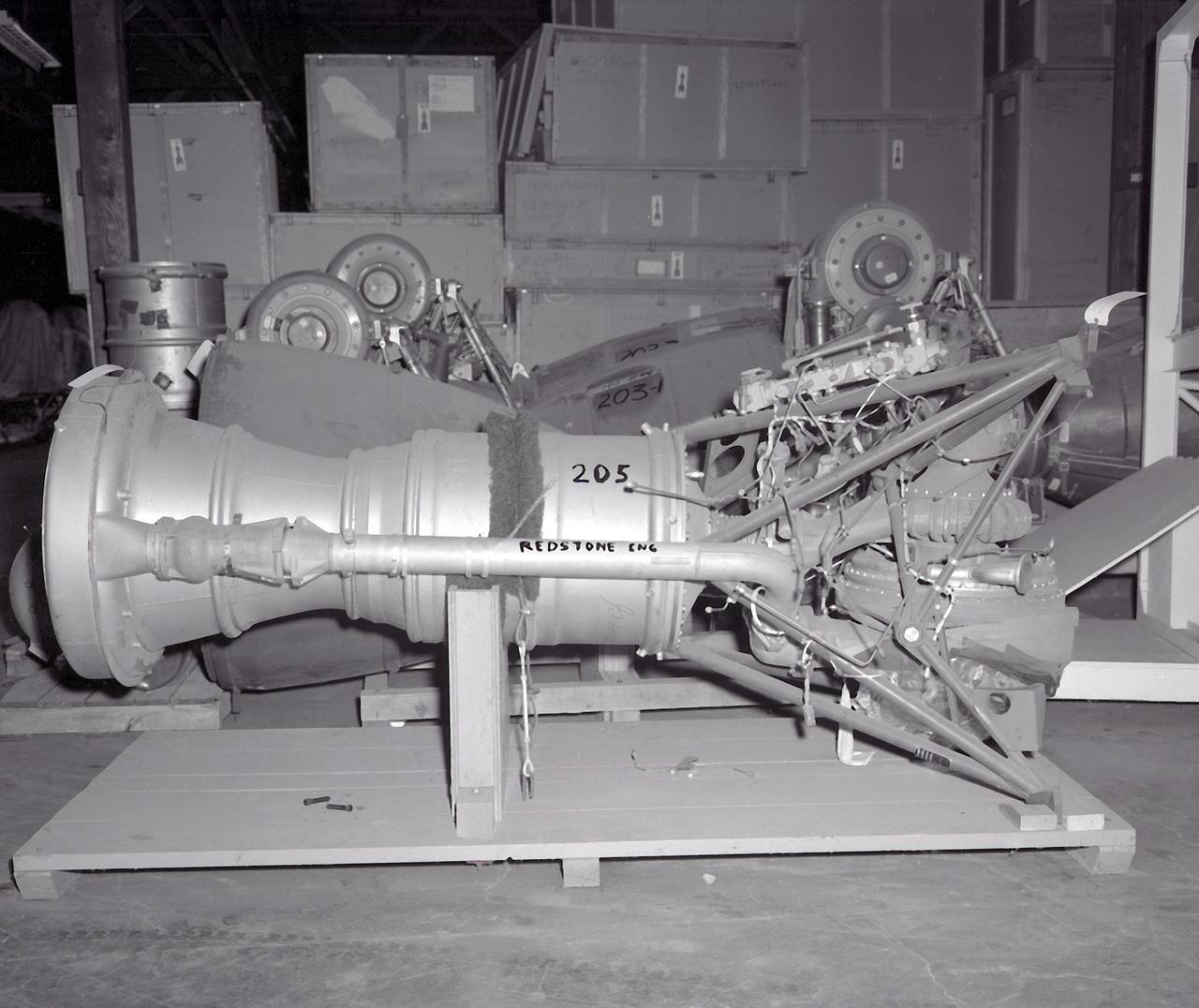
This photograph is of the engine for the Redstone rocket. The Redstone ballistic missile was a high-accuracy, liquid-propelled, surface-to-surface missile developed by the Army Ballistic Missile Agency, Redstone Arsenal, in Huntsville, Alabama, under the direction of Dr. von Braun. The Redstone engine was a modified and improved version of the Air Force's Navaho cruise missile engine of the late forties. The A-series, as this would be known, utilized a cylindrical combustion chamber as compared with the bulky, spherical V-2 chamber. By 1951, the Army was moving rapidly toward the design of the Redstone missile, and the production was begun in 1952. Redstone rockets became the "reliable workhorse" for America's early space program. As an example of its versatility, the Redstone was utilized in the booster for Explorer 1, the first American satellite, with no major changes to the engine or missile.
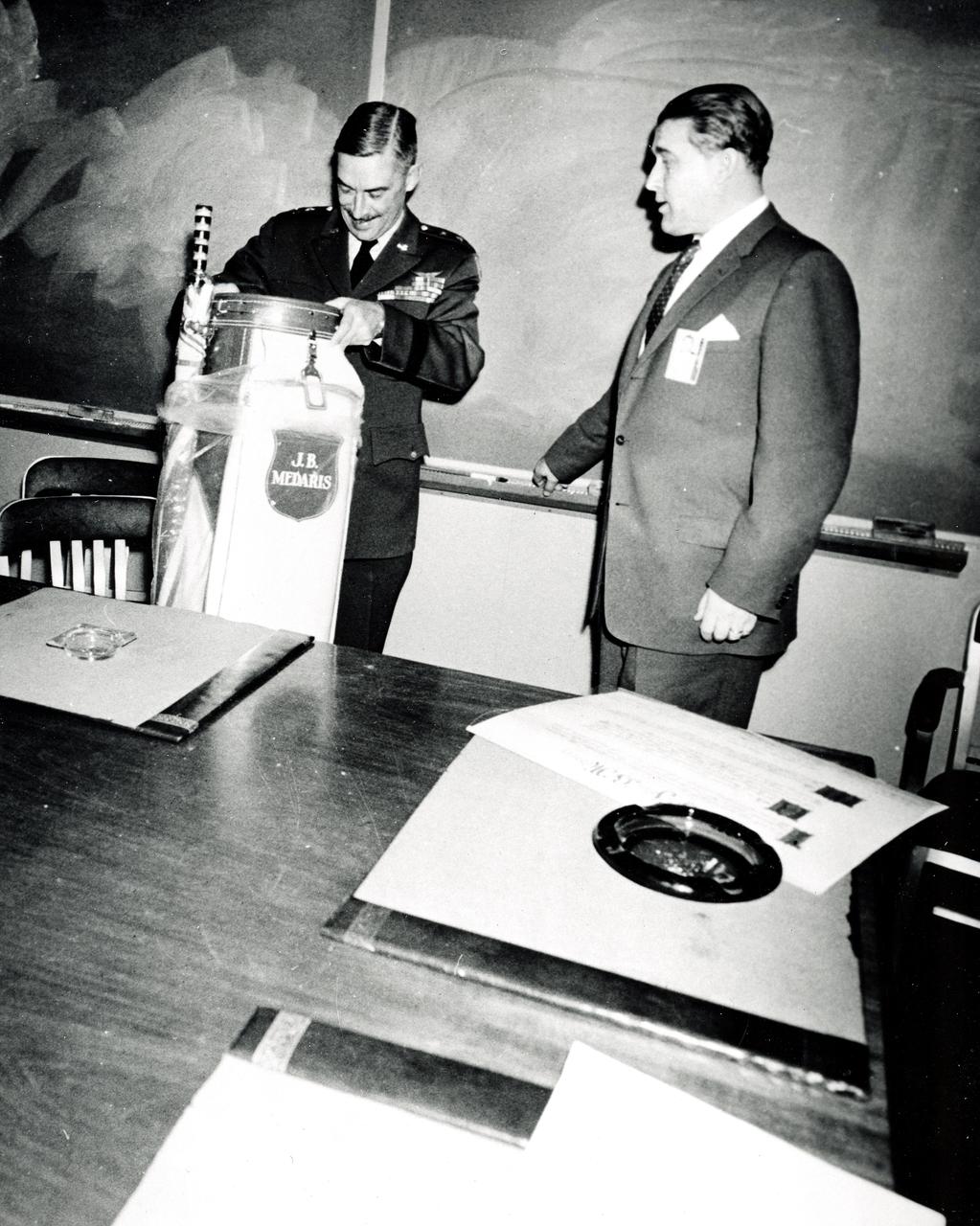
Marshall Space Flight Center Director Wernher von Braun presents General J.B. Medaris with a new golf bag. General Medaris, (left) was a Commander of the Army Ballistic Missile Agency (ABMA) in Redstone Arsenal, Alabama during 1955 to 1958.
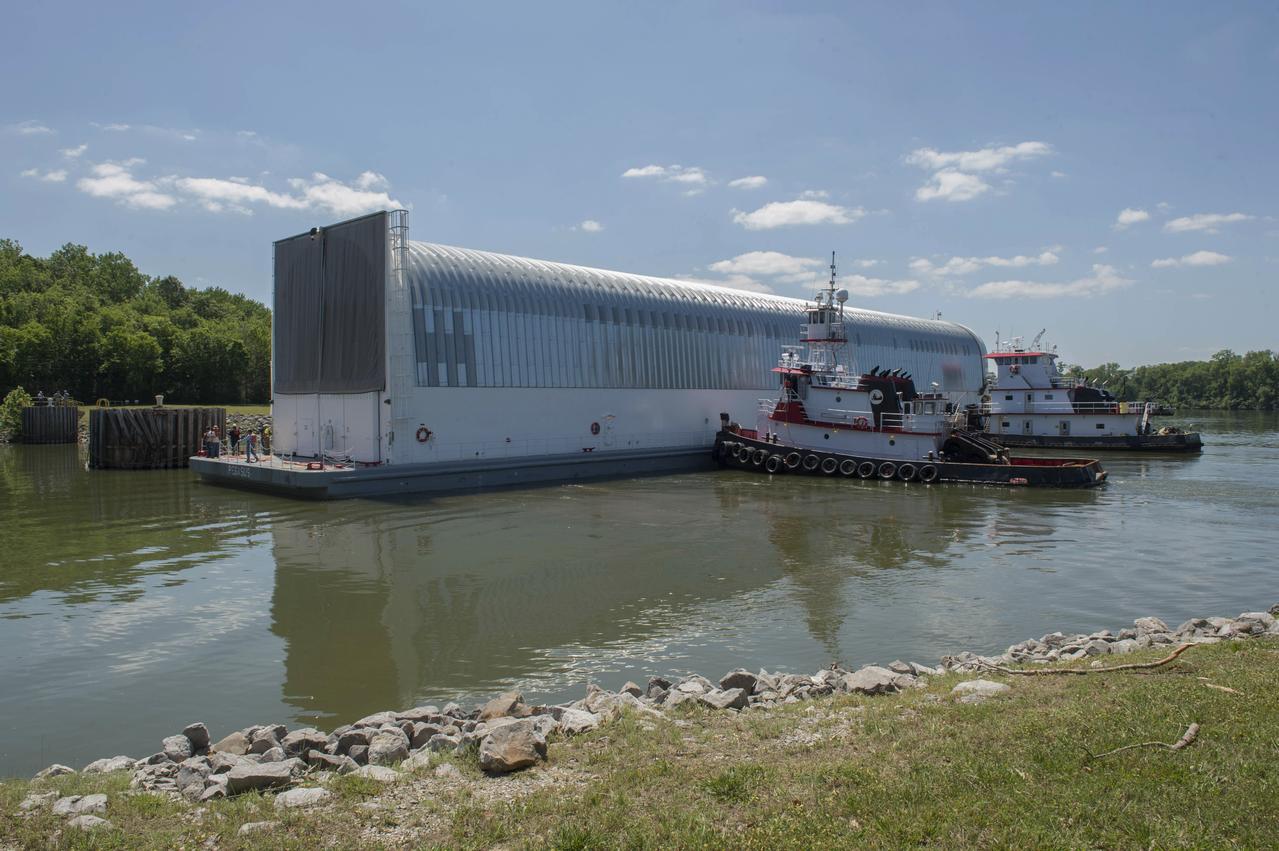
NASA’s barge, Pegasus, approaches the barge dock on Redstone Arsenal, home to the Marshall Space Flight Center. Pegasus is transporting the RS-25 engine core stage test article from the Michoud Assembly Facility to Marshall for structural testing.
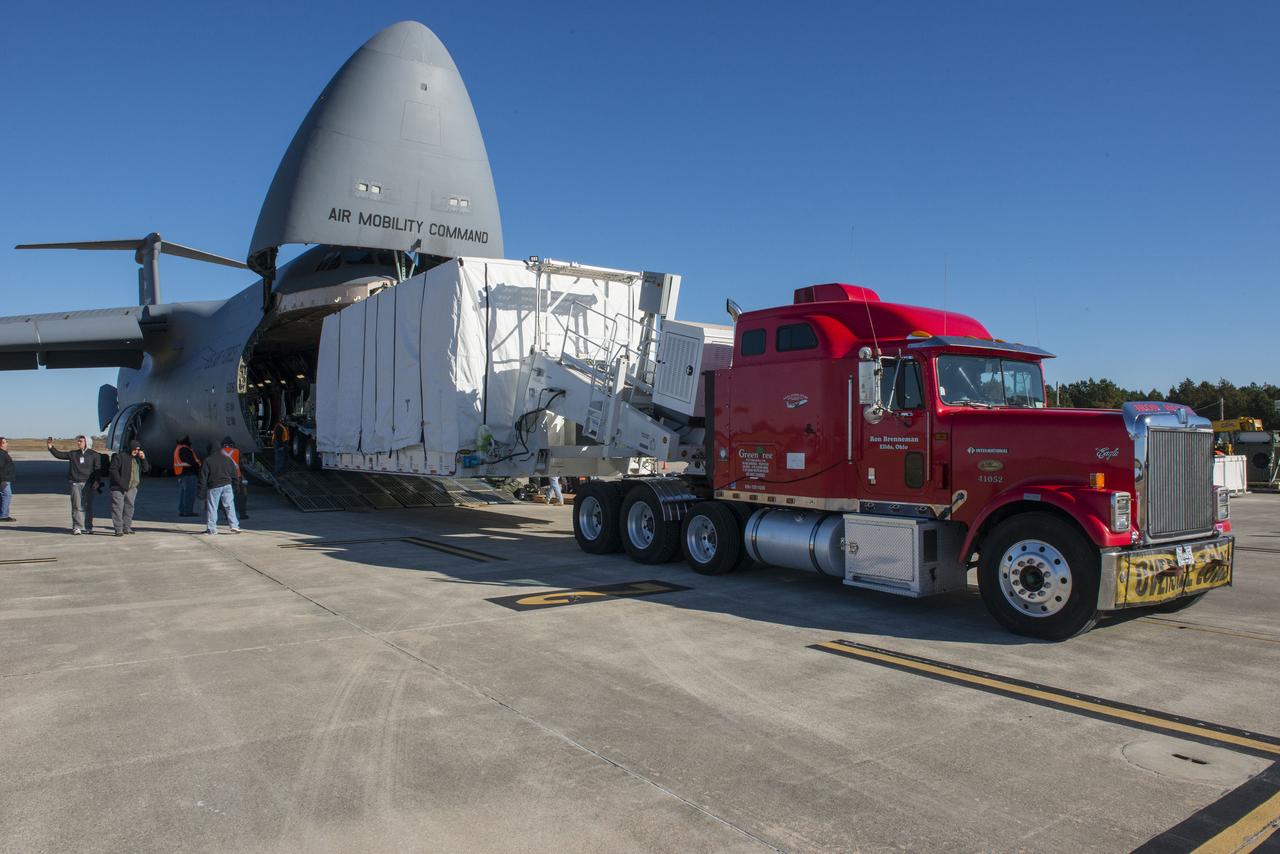
JAMES WEBB SPACE TELESCOPE (JWST) BACKPLANE MOVE FROM MARSHALL SPACE FLIGHT CENTER’S X-RAY CALIBRATION FACILITY (XCRF) TO THE REDSTONE ARSENAL AIRFIELD WHERE THE TEST ARTICLE WAS PLACED IN A USAF C-5 GALAXY FOR IT’S FLIGHT BACK TO THE MANUFACTURER.
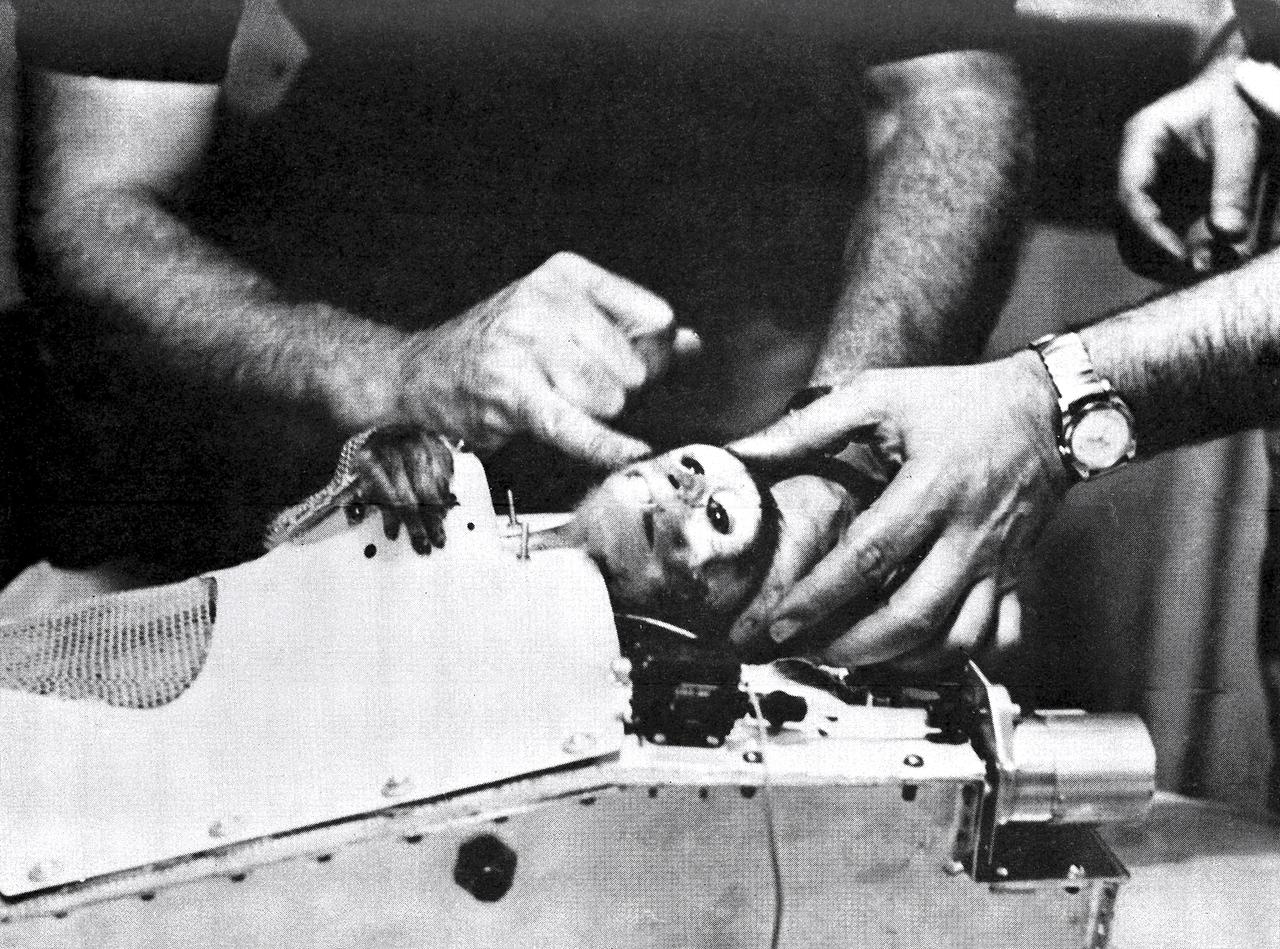
On May 28, 1959, a Jupiter Intermediate Range Ballistic Missile provided by a U.S. Army team in Redstone Arsenal, Alabama, launched a nose cone carrying Baker, A South American squirrel monkey and Able, An American-born rhesus monkey. This photograph shows Able after recovery of the nose cone of the Jupiter rocket by U.S.S. Kiowa.
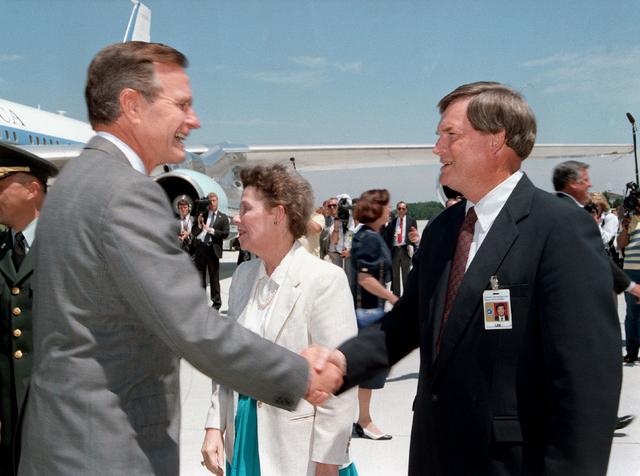
Marshall Space Flight Center Director T. J. Lee greets President George Bush upon arrival at the Redstone Arsenal Airfield, June 20, 1990. During his visit Bush toured Marshall facilities and addressed Center employees.
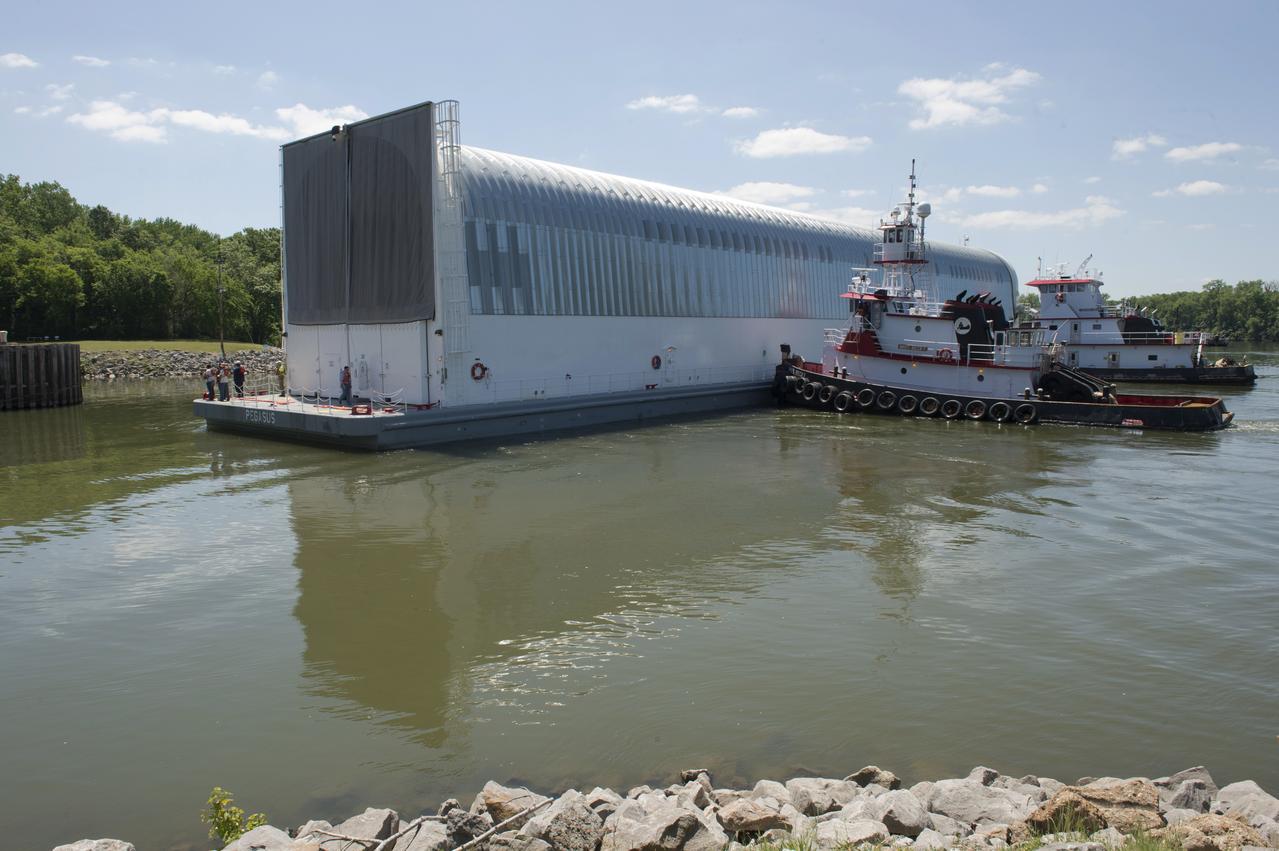
NASA’s barge, Pegasus, approaches the barge dock on Redstone Arsenal, home to the Marshall Space Flight Center. Pegasus is transporting the RS-25 engine core stage test article from the Michoud Assembly Facility to Marshall for structural testing.
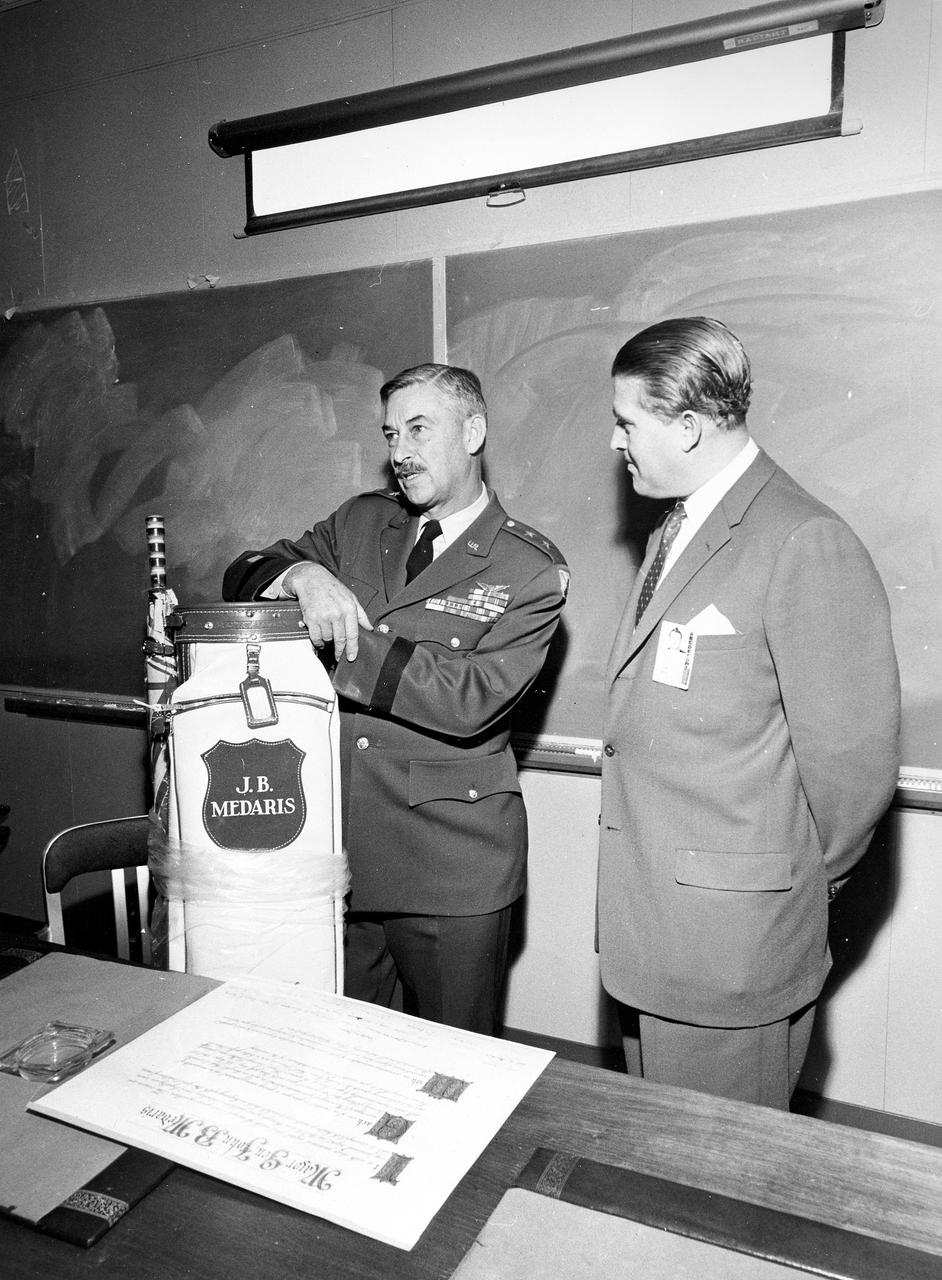
Marshall Space Flight Center Director Wernher von Braun presents General J.B. Medaris with a new golf bag. General Medaris, (left) was a Commander of the Army Ballistic Missile Agency (ABMA) in Redstone Arsenal, Alabama during 1955 to 1958.
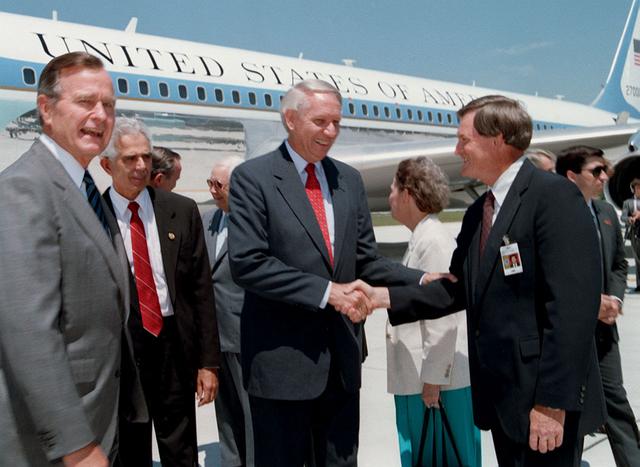
President George Bush and Alabama Governor Guy Hunt are greeted by Marshall's sixth Center Director Thomas J. Lee (1989-1994) upon their arrival at Redstone Arsenal (RSA) airfield. This was the first sitting president to visit Marshall Space Flight Center (MSFC) since President Kennedy's visit almost 30 years ago.
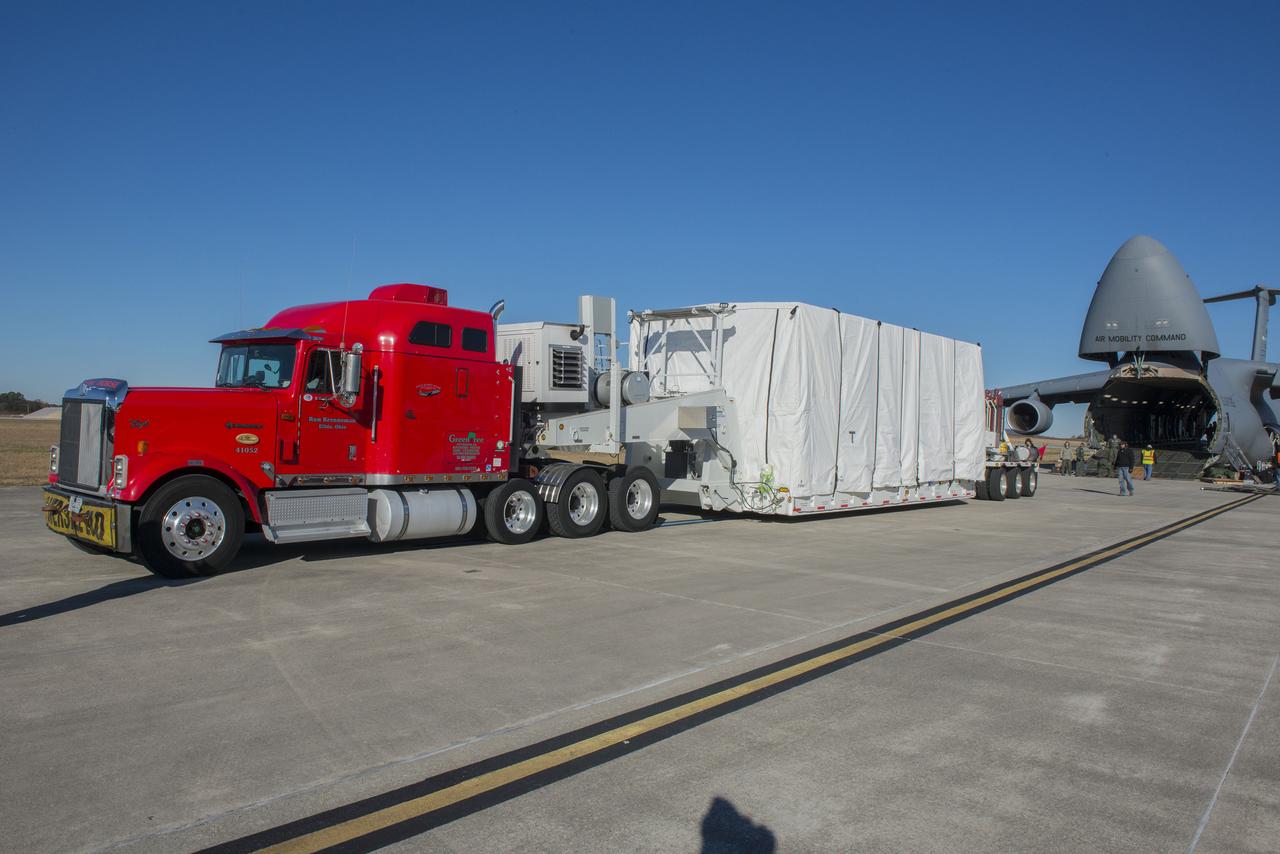
JAMES WEBB SPACE TELESCOPE (JWST) BACKPLANE MOVE FROM MARSHALL SPACE FLIGHT CENTER’S X-RAY CALIBRATION FACILITY (XCRF) TO THE REDSTONE ARSENAL AIRFIELD WHERE THE TEST ARTICLE WAS PLACED IN A USAF C-5 GALAXY FOR IT’S FLIGHT BACK TO THE MANUFACTURER.
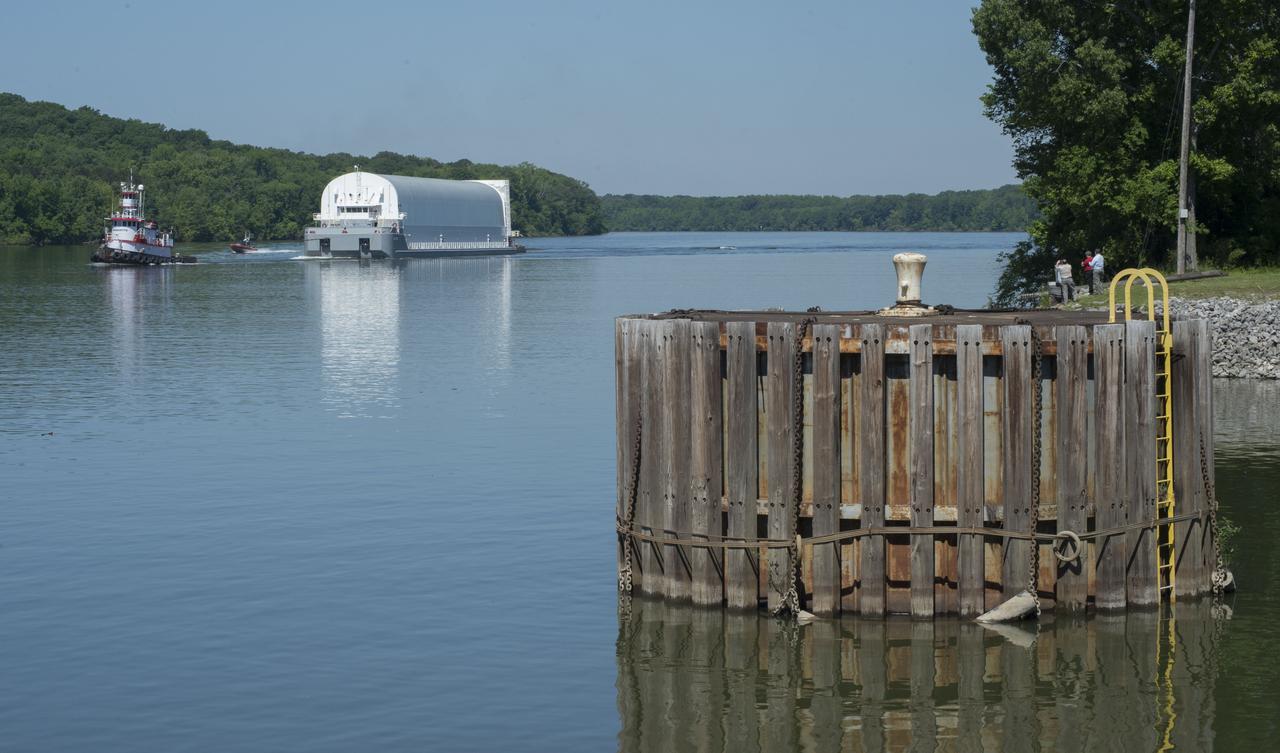
NASA’s barge, Pegasus, approaches the barge dock on Redstone Arsenal, home to the Marshall Space Flight Center. Pegasus is transporting the RS-25 engine core stage test article from the Michoud Assembly Facility to Marshall for structural testing.
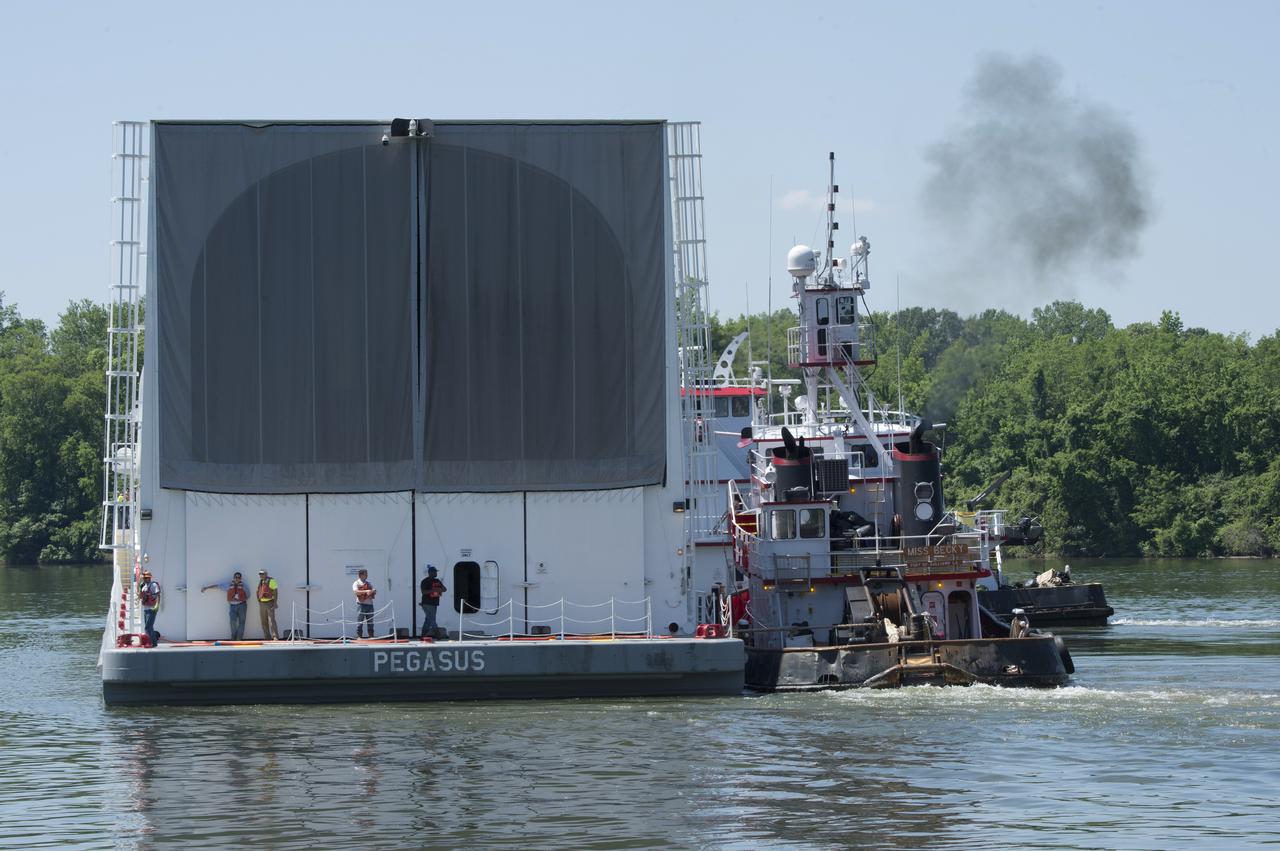
NASA’s barge, Pegasus, approaches the barge dock on Redstone Arsenal, home to the Marshall Space Flight Center. Pegasus is transporting the RS-25 engine core stage test article from the Michoud Assembly Facility to Marshall for structural testing.
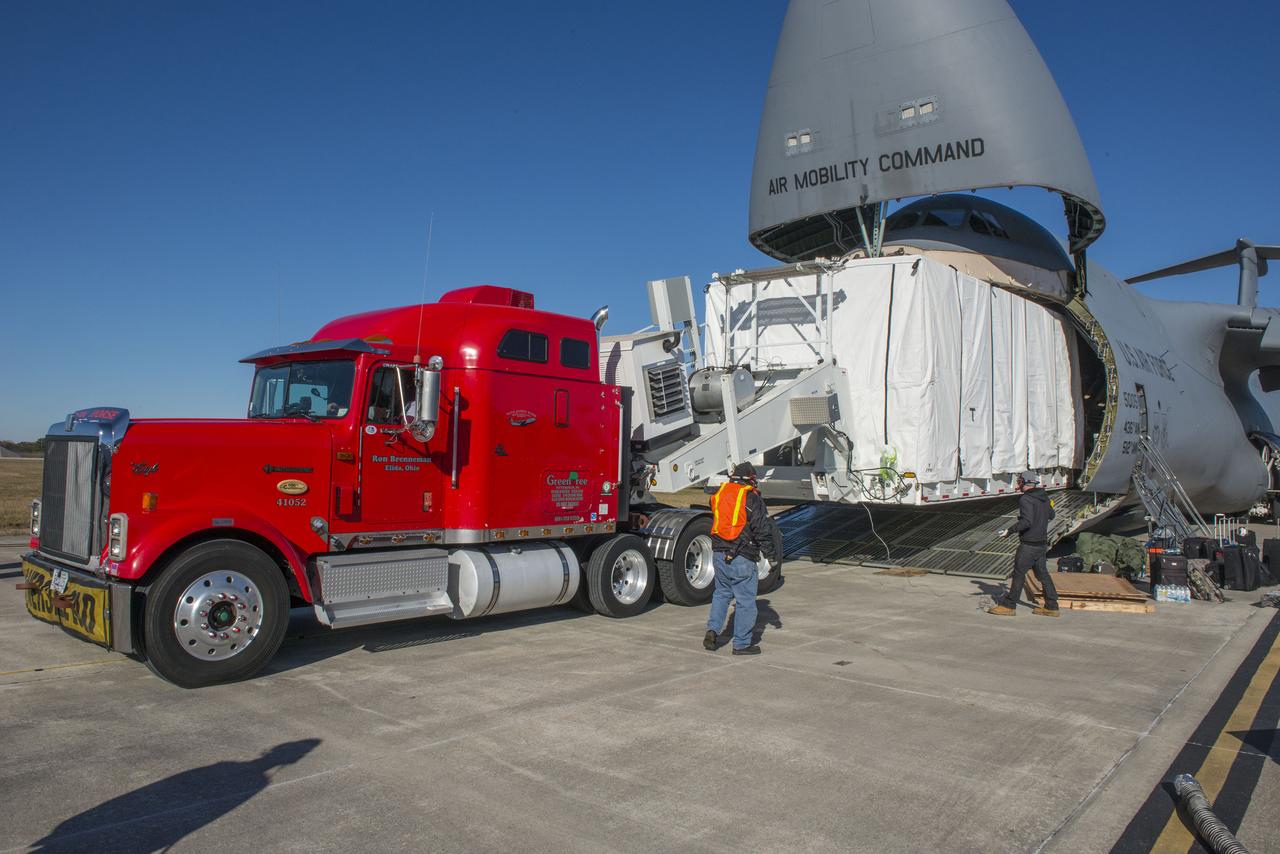
JAMES WEBB SPACE TELESCOPE (JWST) BACKPLANE MOVE FROM MARSHALL SPACE FLIGHT CENTER’S X-RAY CALIBRATION FACILITY (XCRF) TO THE REDSTONE ARSENAL AIRFIELD WHERE THE TEST ARTICLE WAS PLACED IN A USAF C-5 GALAXY FOR IT’S FLIGHT BACK TO THE MANUFACTURER.
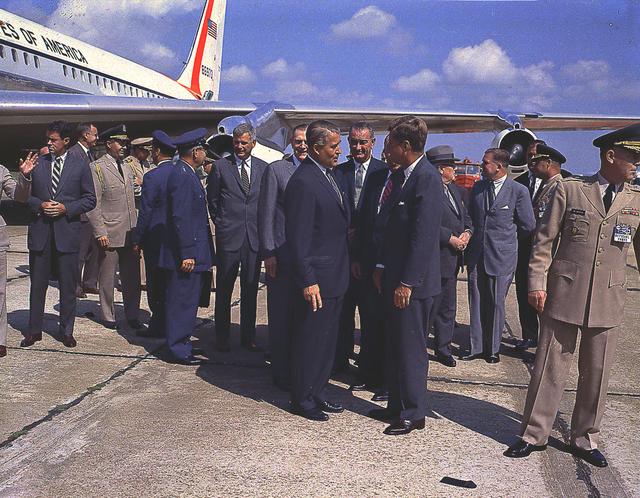
President John F. Kennedy, Vice President Lyndon B. Johnson and Marshall Space Flight Center Director Dr. Wernher von Braun at the Redstone Arsenal Airfield, September 11, 1962. Kennedy and Johnson visited the Marshall Center to tour national space facilities.
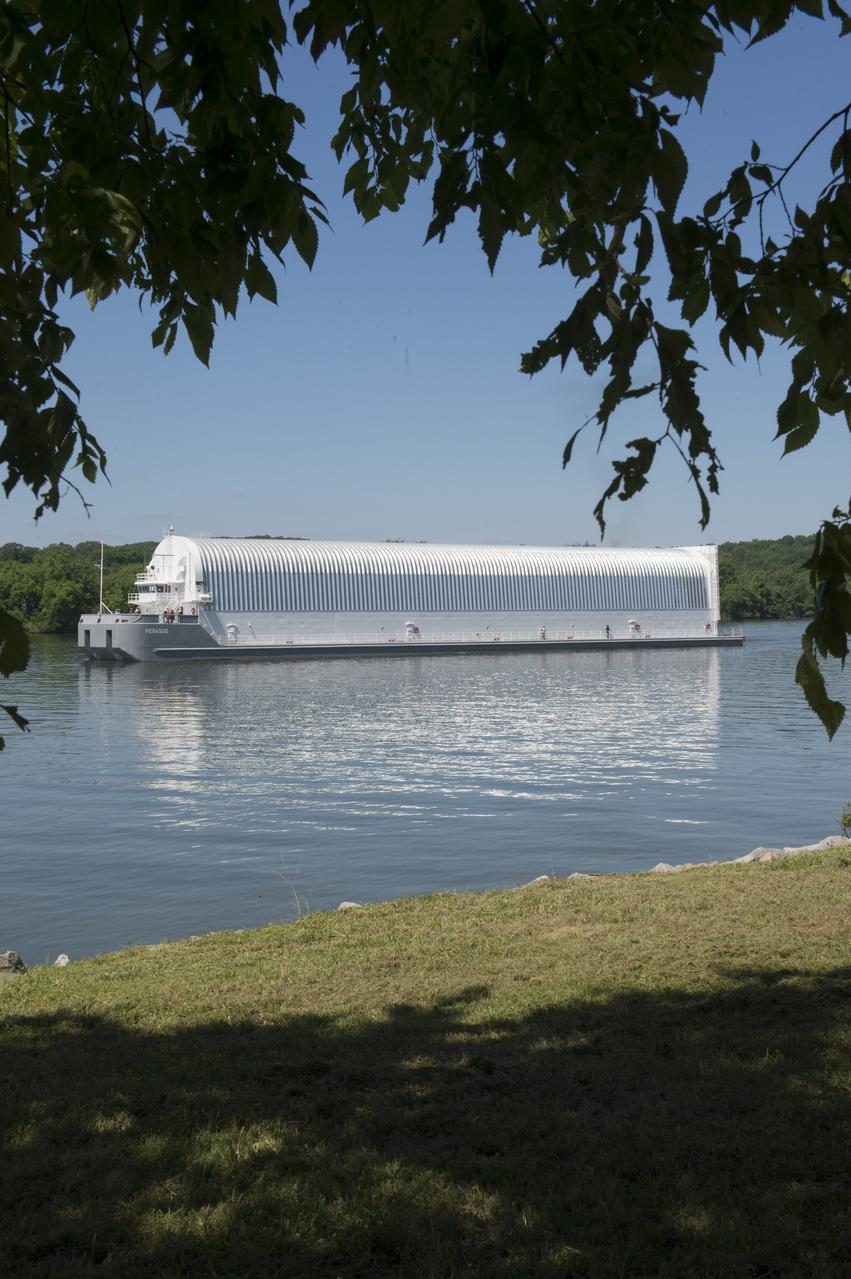
NASA’s barge, Pegasus, approaches the barge dock on Redstone Arsenal, home to the Marshall Space Flight Center. Pegasus is transporting the RS-25 engine core stage test article from the Michoud Assembly Facility to Marshall for structural testing.
JAMES WEBB SPACE TELESCOPE (JWST) BACKPLANE MOVE FROM MARSHALL SPACE FLIGHT CENTER’S X-RAY CALIBRATION FACILITY (XCRF) TO THE REDSTONE ARSENAL AIRFIELD WHERE THE TEST ARTICLE WAS PLACED IN A USAF C-5 GALAXY FOR IT’S FLIGHT BACK TO THE MANUFACTURER.
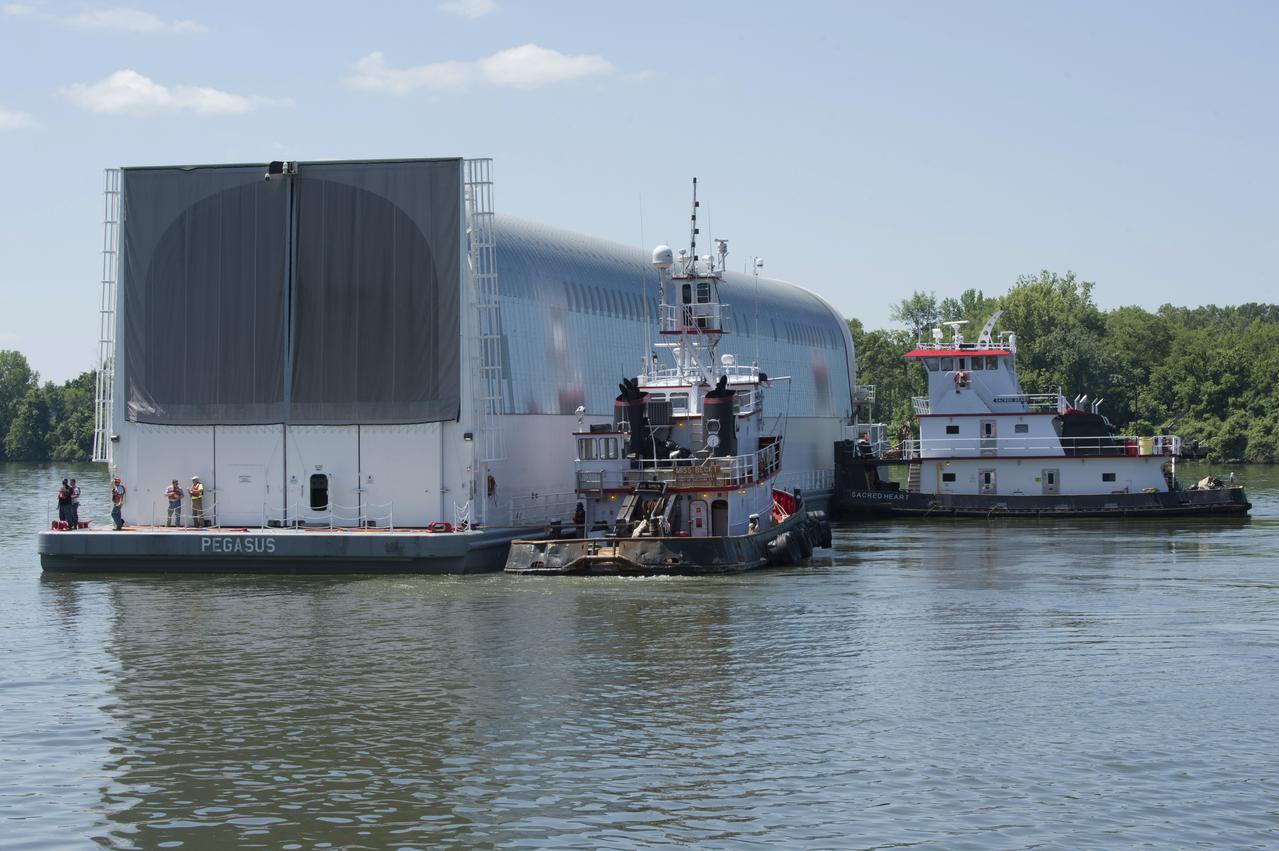
NASA’s barge, Pegasus, approaches the barge dock on Redstone Arsenal, home to the Marshall Space Flight Center. Pegasus is transporting the RS-25 engine core stage test article from the Michoud Assembly Facility to Marshall for structural testing.
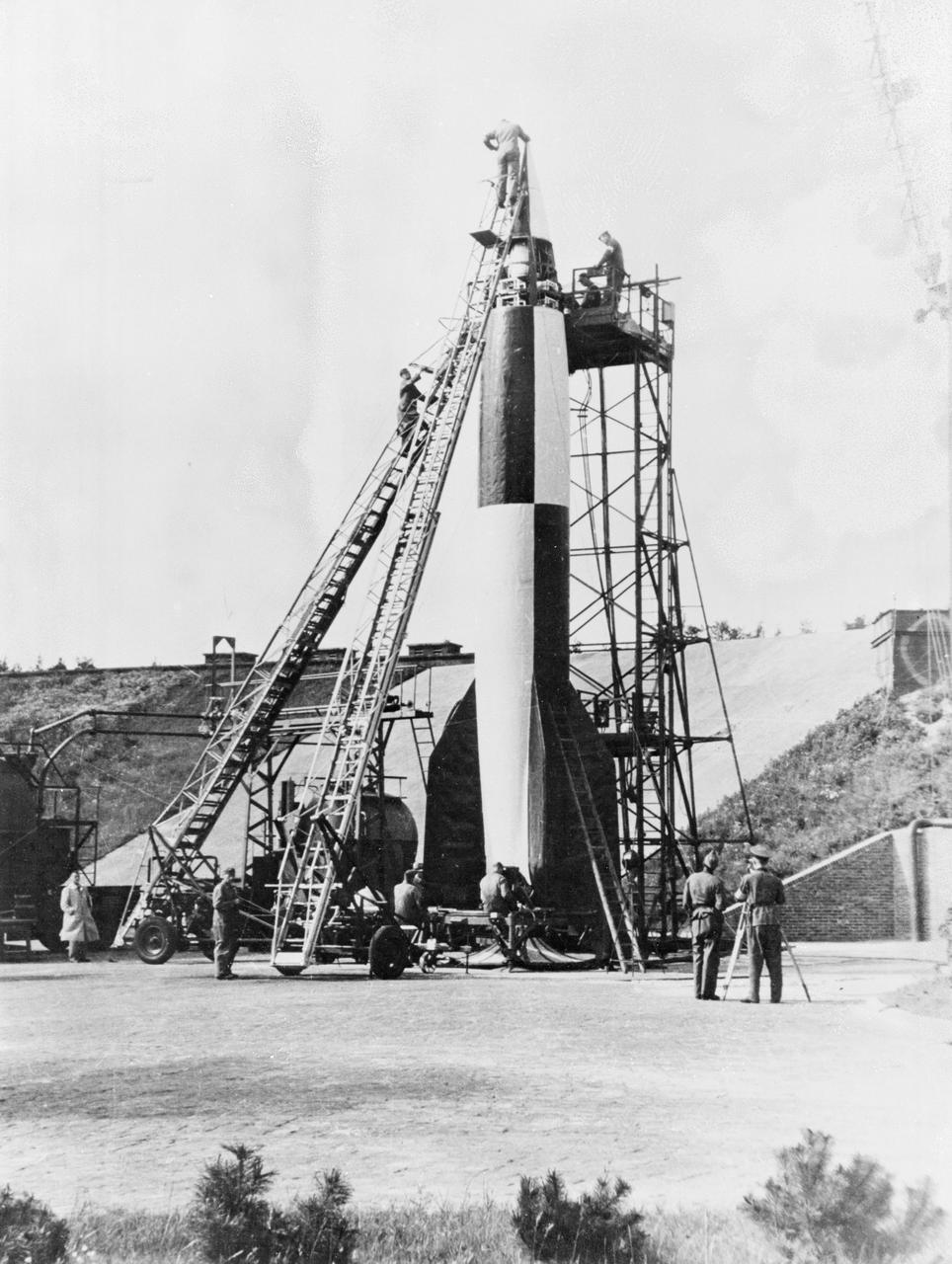
German technicians stack the various stages of the V-2 rocket in this undated photograph. The team of German engineers and scientists who developed the V-2 came to the United States at the end of World War II and worked for the U. S. Army at Fort Bliss, Texas, and Redstone Arsenal in Huntsville, Alabama.
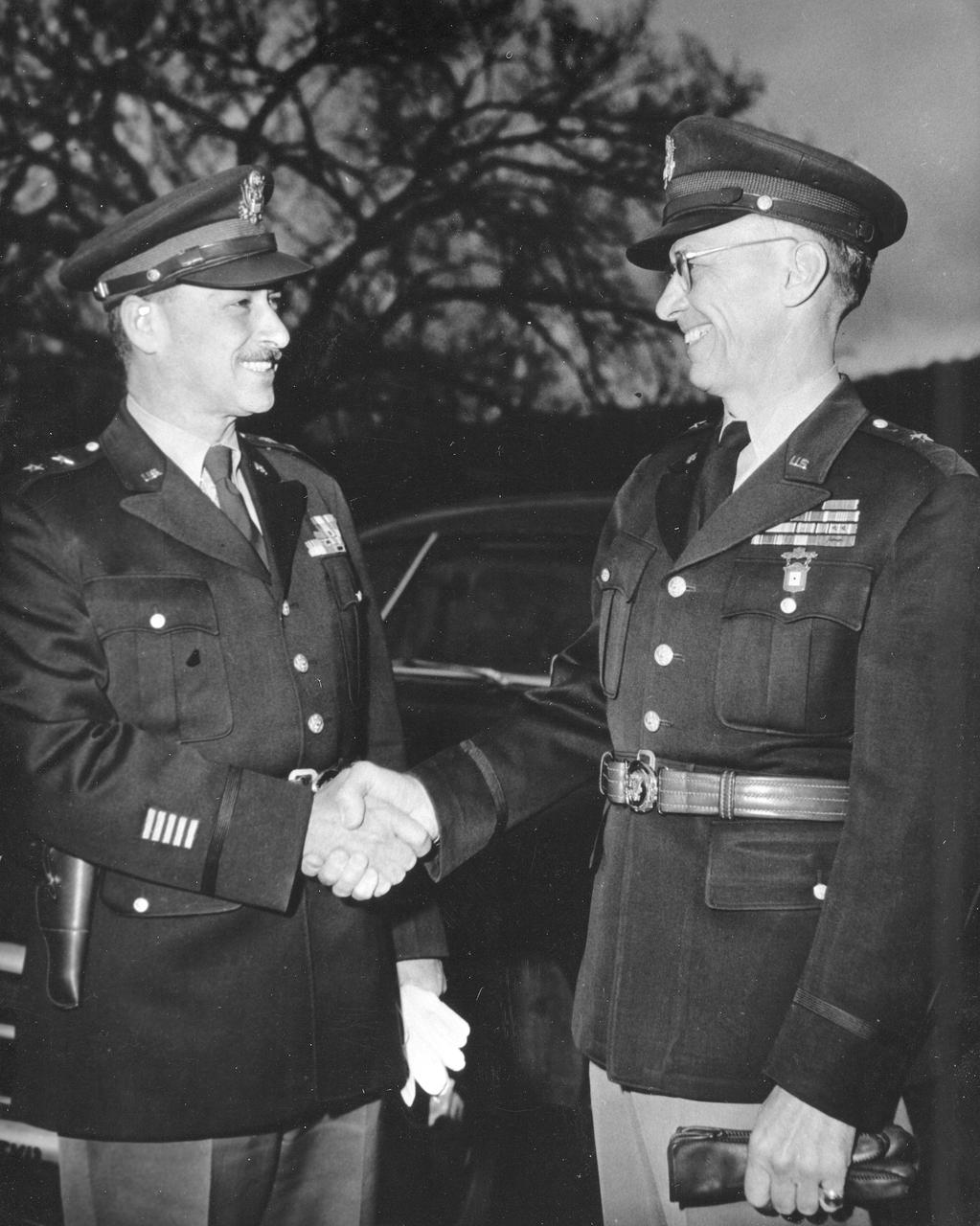
General Medaris, (left) who was a Commander of the Army Ballistic Missile Agency (ABMA) in Redstone Arsenal, Alabama, during 1955 to 1958, shakes hands with Major General Holger Toftoy (right), who consolidated U.S. missile and rocketry development.

JAMES WEBB SPACE TELESCOPE (JWST) BACKPLANE MOVE FROM MARSHALL SPACE FLIGHT CENTER’S X-RAY CALIBRATION FACILITY (XCRF) TO THE REDSTONE ARSENAL AIRFIELD WHERE THE TEST ARTICLE WAS PLACED IN A USAF C-5 GALAXY FOR IT’S FLIGHT BACK TO THE MANUFACTURER.
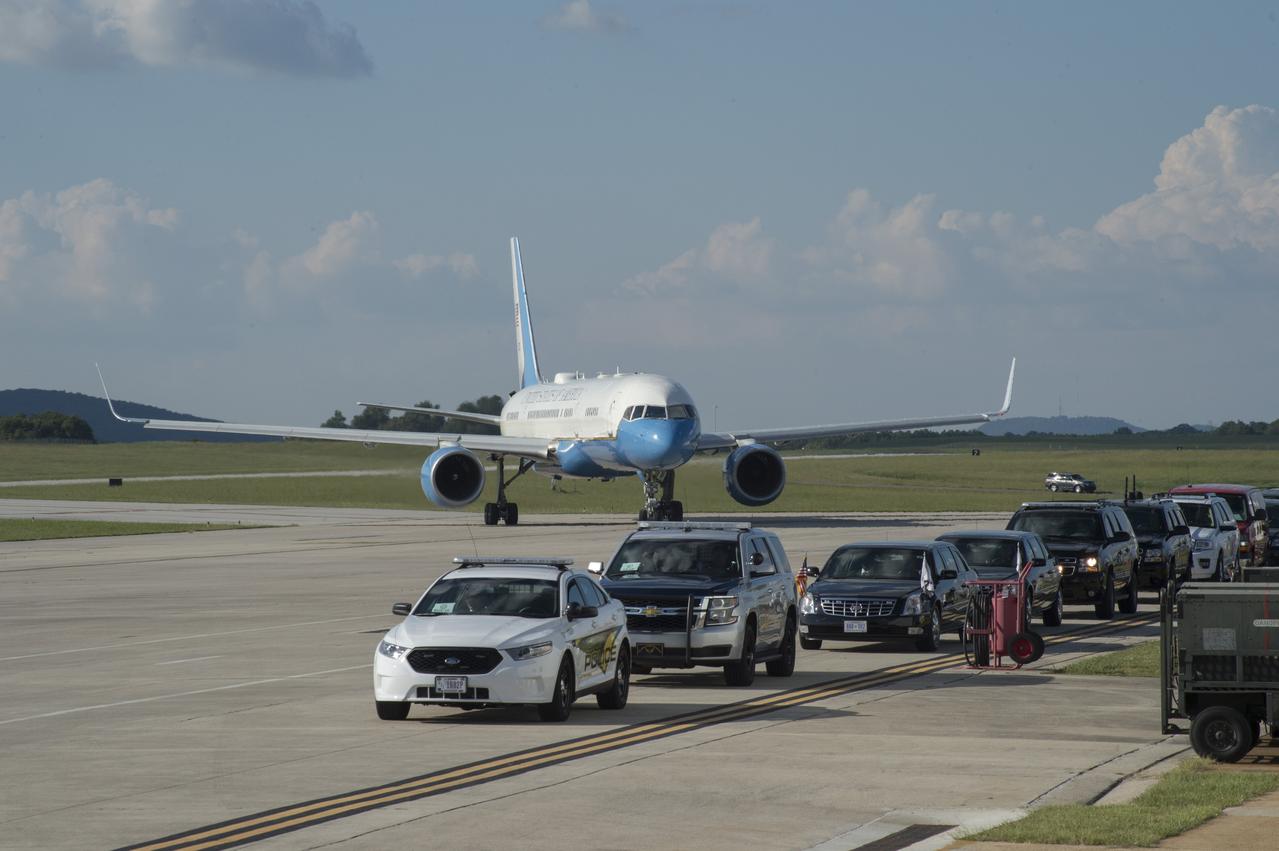
Air Force Two lands with Vice President Mike Pence along with Congressman Robert Aderholt at the Redstone Army Airfield in Huntsville, Alabama, on Monday, Sept. 25. The Vice President is visiting NASA’s Marshall Space Flight Center, located on Redstone Arsenal, to meet with employees, view test hardware for NASA’s Space Launch System — America’s new deep-space rocket, and tour the Payload Operations Integration Center, “science central” for the International Space Station.
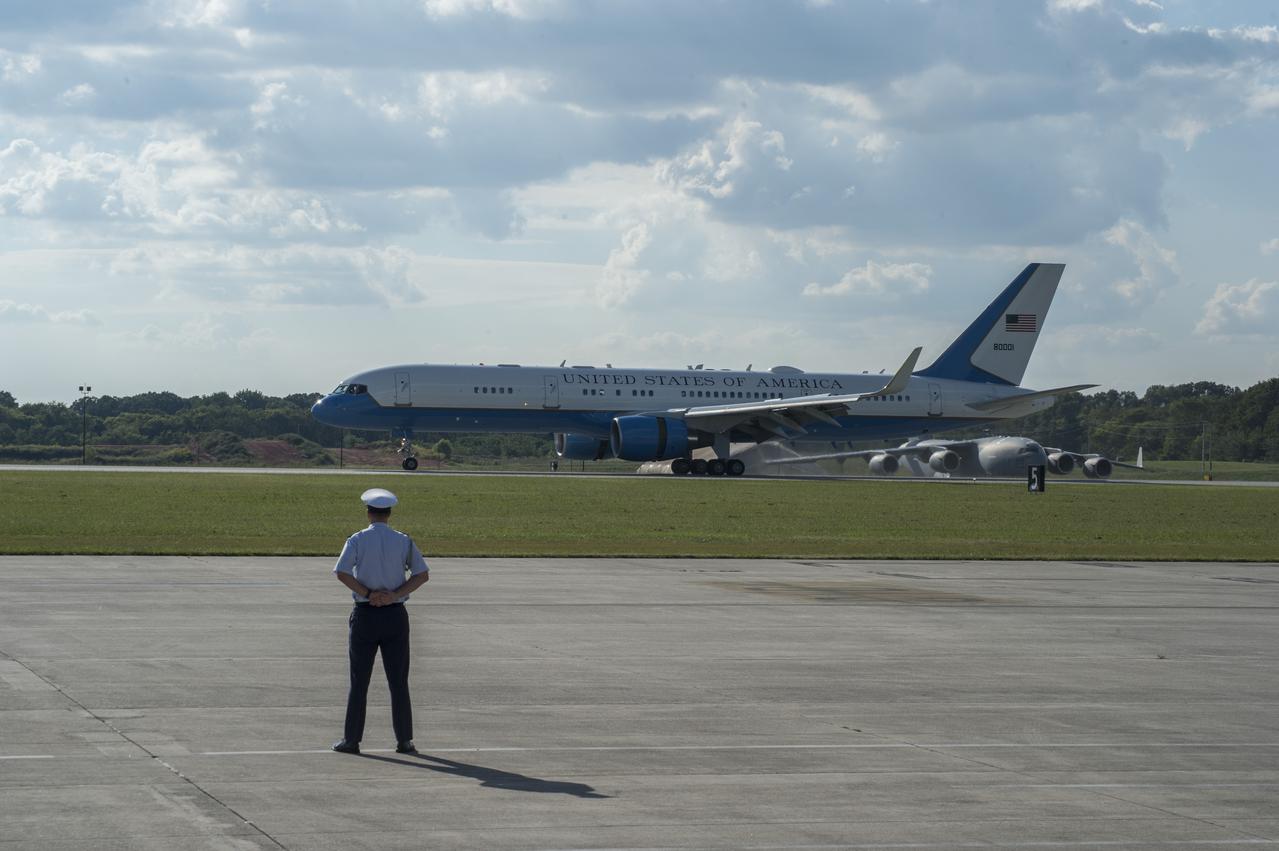
Air Force Two lands with Vice President Mike Pence along with Congressman Robert Aderholt at the Redstone Army Airfield in Huntsville, Alabama, on Monday, Sept. 25. The Vice President is visiting NASA’s Marshall Space Flight Center, located on Redstone Arsenal, to meet with employees, view test hardware for NASA’s Space Launch System — America’s new deep-space rocket, and tour the Payload Operations Integration Center, “science central” for the International Space Station.
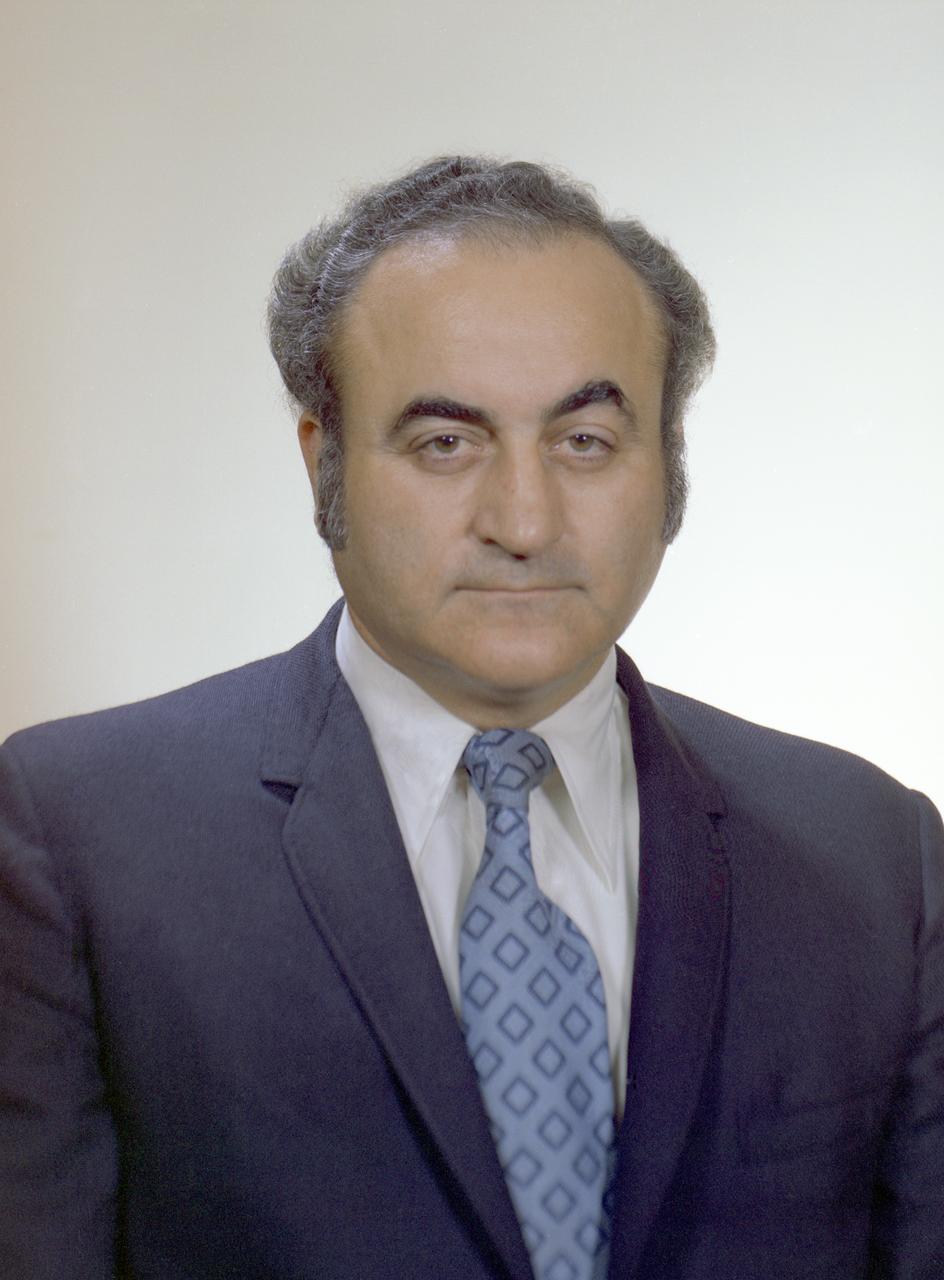
Dr. Rocco A. Petrone served at director of the Marshall Space Flight Center from January 26, 1973 to March 15, 1974. Prior to his tenure at Marshall, Petrone served as director of the Apollo program and director of launch operations at Kennedy Space Center. His career in rocket development and space programs began with his participation in the development of the Redstone missiles at the Army's Redstone Arsenal in Huntsville, Alabama. Upon his departure from Marshall, Petrone served as NASA Associate Administrator for Center Operations.
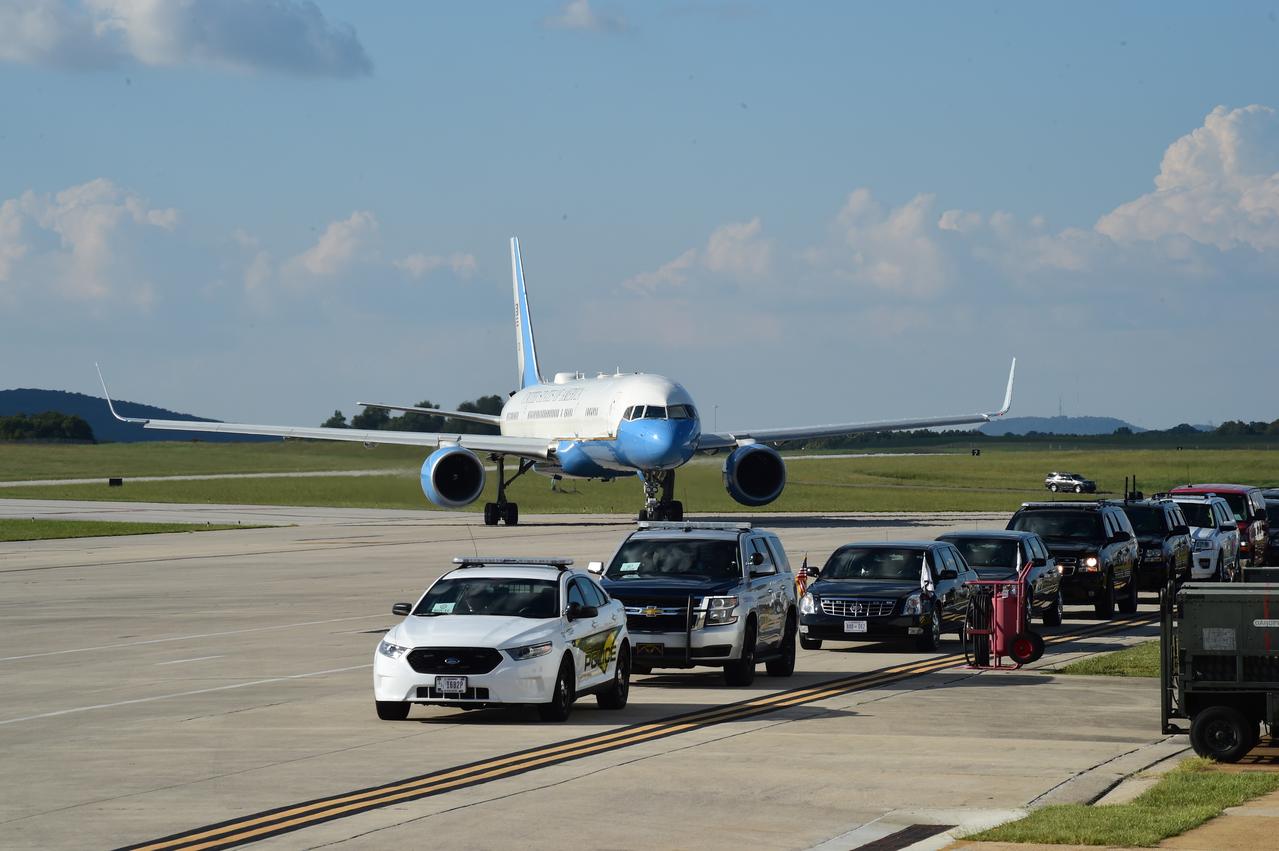
Air Force Two lands with Vice President Mike Pence along with Congressman Robert Aderholt at the Redstone Army Airfield in Huntsville, Alabama, on Monday, Sept. 25. The Vice President is visiting NASA’s Marshall Space Flight Center, located on Redstone Arsenal, to meet with employees, view test hardware for NASA’s Space Launch System — America’s new deep-space rocket, and tour the Payload Operations Integration Center, “science central” for the International Space Station. Photo Credit: (NASA/Emmett Given)
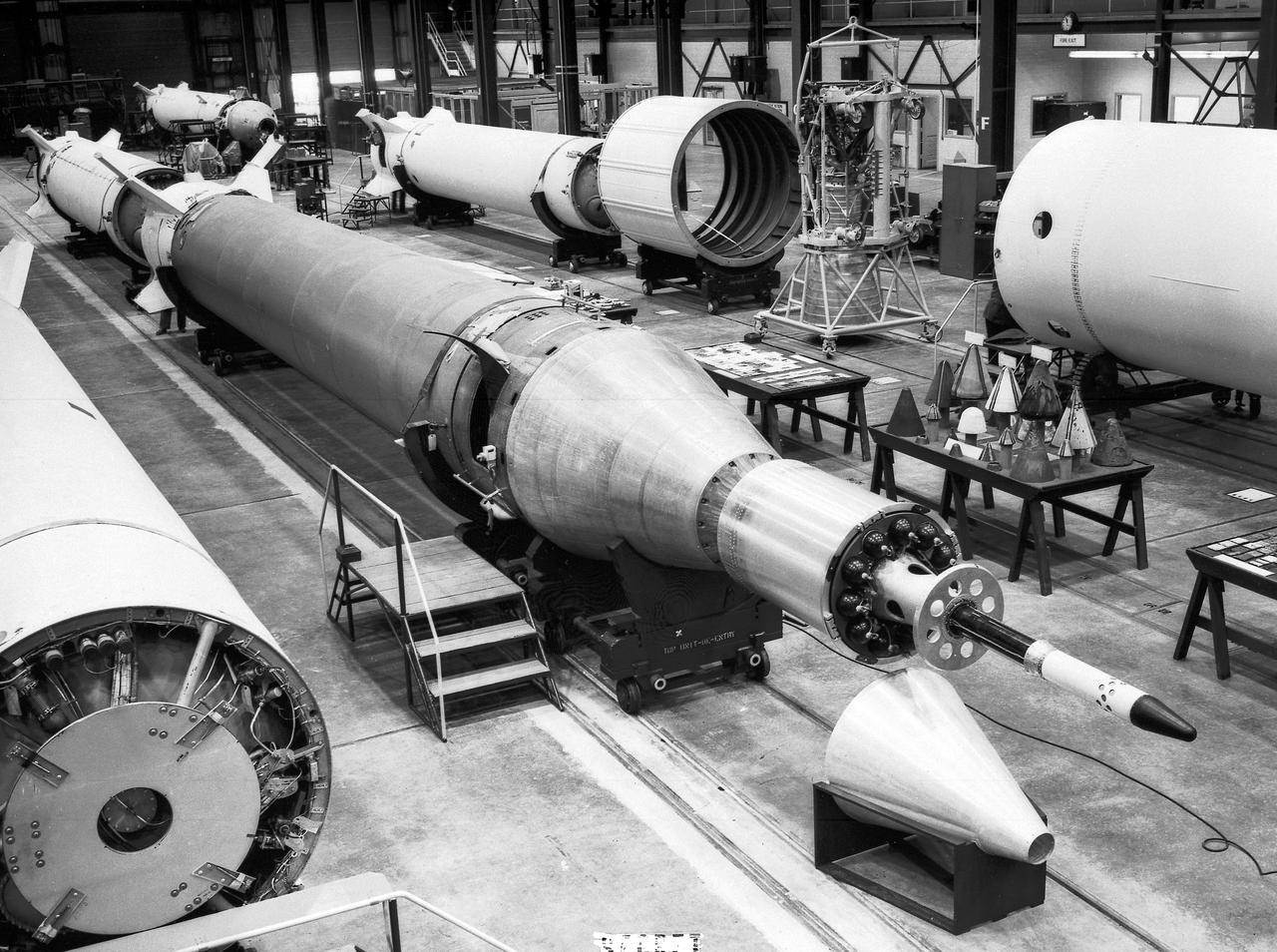
Jupiter-C Missile No. 27 assembly at the Army Ballistic Missile Agency (ABMA), Redstone Arsenal, in Huntsville, Aalabama. The Jupiter-C was a modification of the Redstone Missile, and originally developed as a nose cone re-entry test vehicle for the Jupiter Intermediate Range Ballistic Missile (IRBM). Jupiter-C successfully launched the first American Satellite, Explorer 1, in orbit on January 31, 1958.
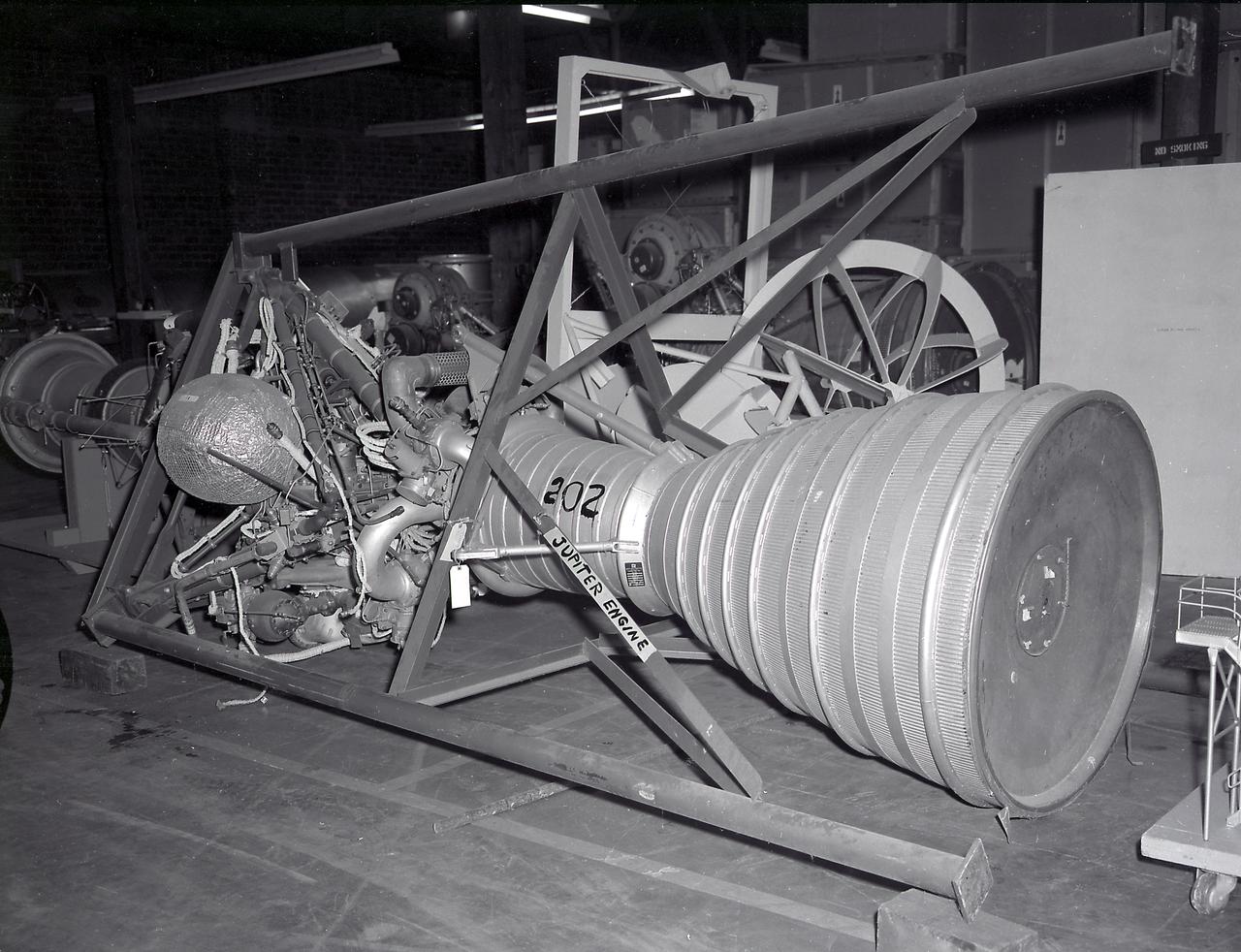
Engine for the Jupiter rocket. The Jupiter vehicle was a direct derivative of the Redstone. The Army Ballistic Missile Agency (ABMA) at Redstone Arsenal, Alabama, continued Jupiter development into a successful intermediate ballistic missile, even though the Department of Defense directed its operational development to the Air Force. ABMA maintained a role in Jupiter RD, including high-altitude launches that added to ABMA's understanding of rocket vehicle operations in the near-Earth space environment. It was knowledge that paid handsome dividends later.
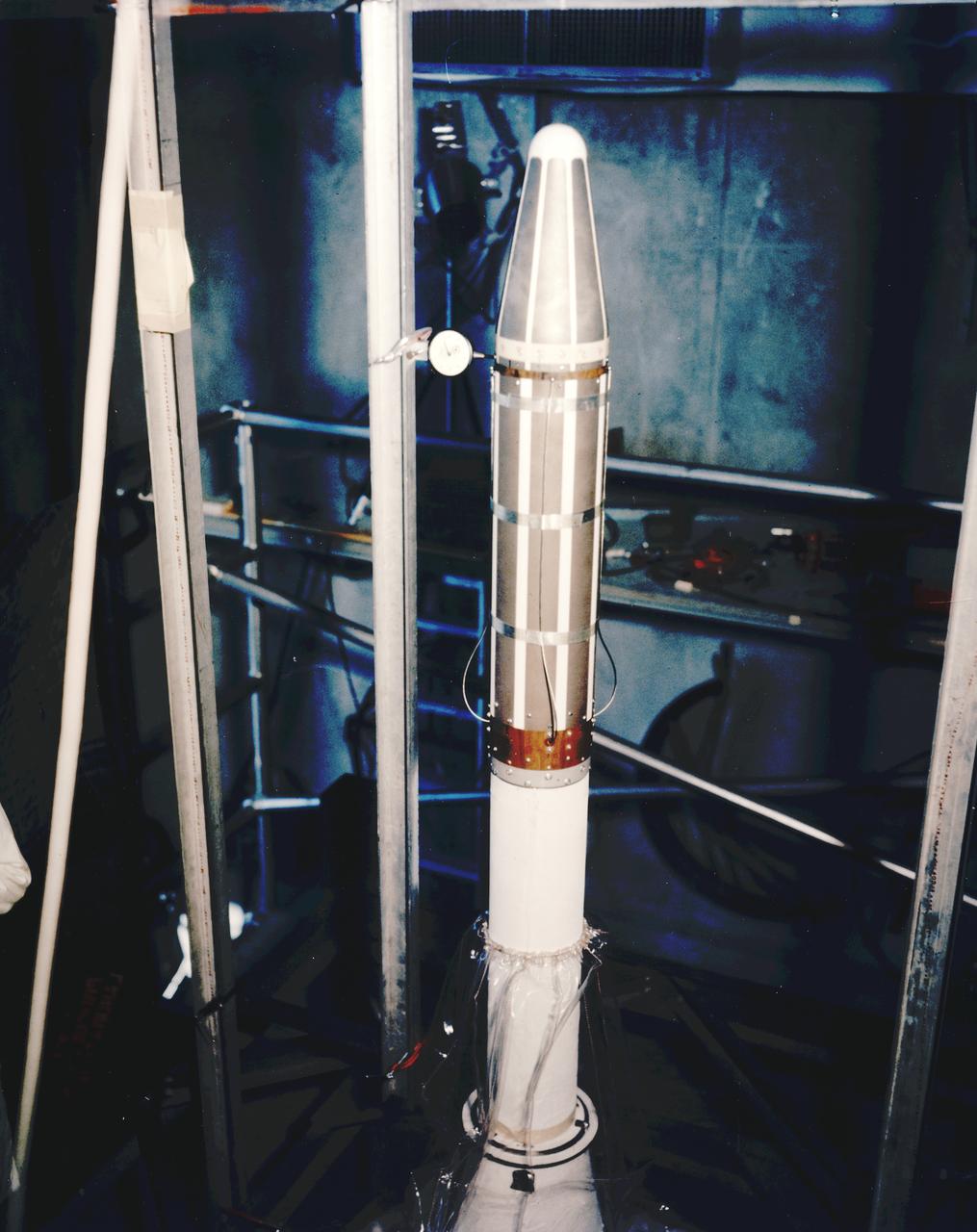
America’s first scientific satellite, the Explorer I, carried the radiation detection experiment designed by Dr. James Van Allen and discovered the Van Allen Radiation Belt. It was launched aboard a modified redstone rocket known as the Jupiter C, developed by Dr. von Braun’s rocket team at Redstone Arsenal in Huntsville, Alabama. The satellite launched on January 31, 1958, just 3 months after the the von Braun team received the go-ahead.
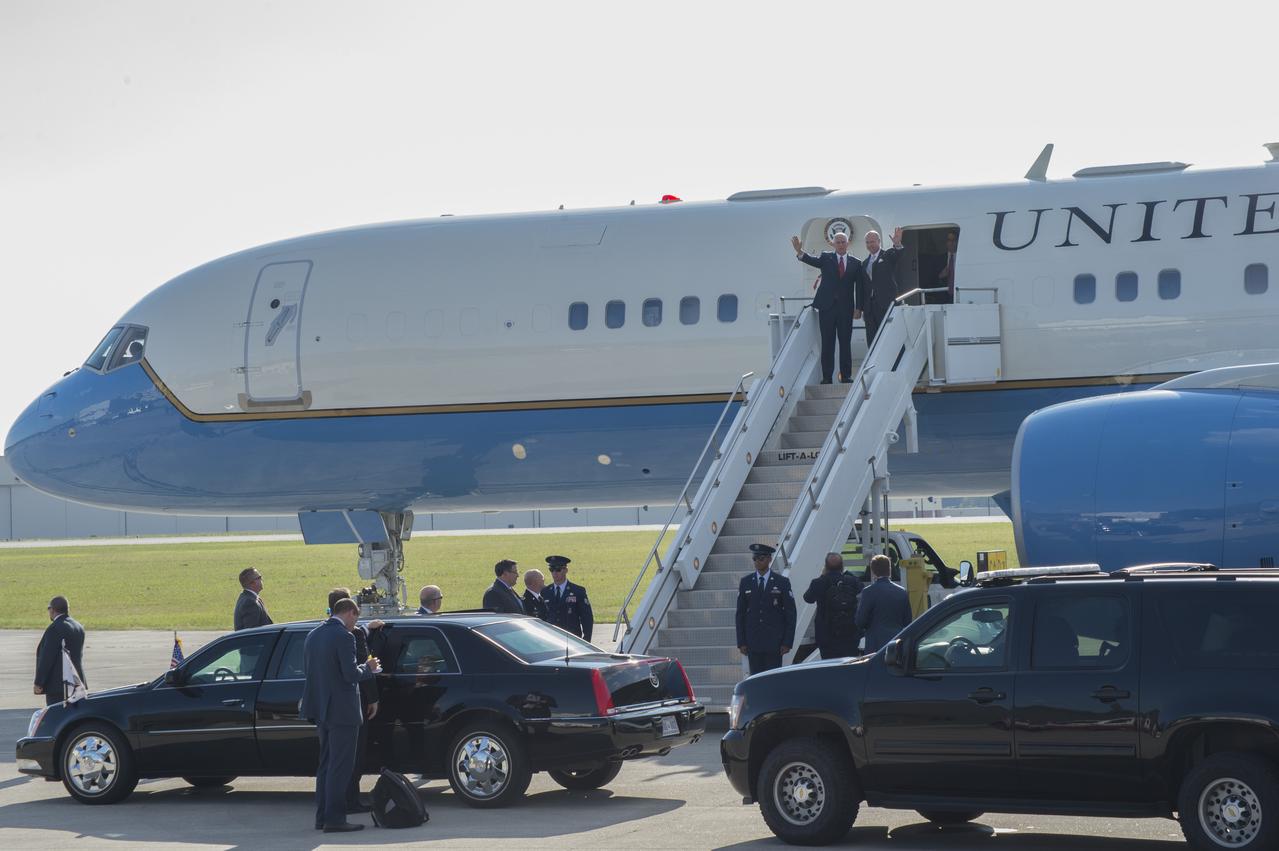
Air Force Two lands with Vice President Mike Pence along with Congressman Robert Aderholt at the Redstone Army Airfield in Huntsville, Alabama, on Monday, Sept. 25. The Vice President is visiting NASA’s Marshall Space Flight Center, located on Redstone Arsenal, to meet with employees, view test hardware for NASA’s Space Launch System — America’s new deep-space rocket, and tour the Payload Operations Integration Center, “science central” for the International Space Station.
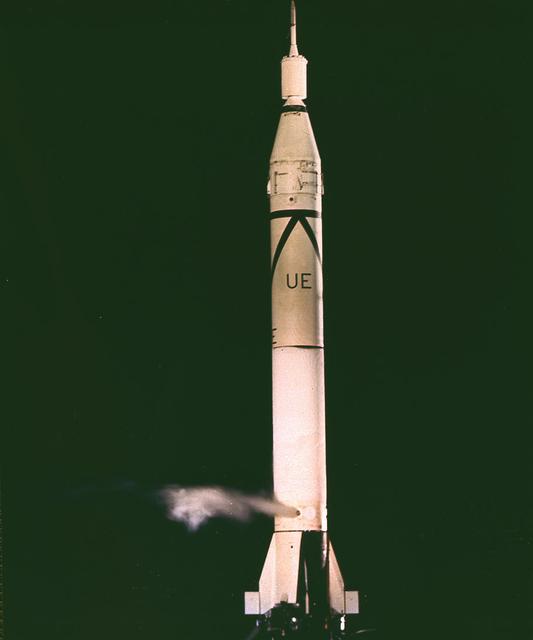
Juno I, a slightly modified Jupiter-C launch vehicle, shortly before the January 31, 1958 launch of America's first satellite, Explorer I. The Jupiter-C, developed by Dr. Wernher von Braun and the rocket team at Redstone Arsenal in Huntsville, Alabama, consisted of a modified version of the Redstone rocket's first stage and two upper stages of clustered Baby Sergeant rockets developed by the Jet Propulsion Laboratory.
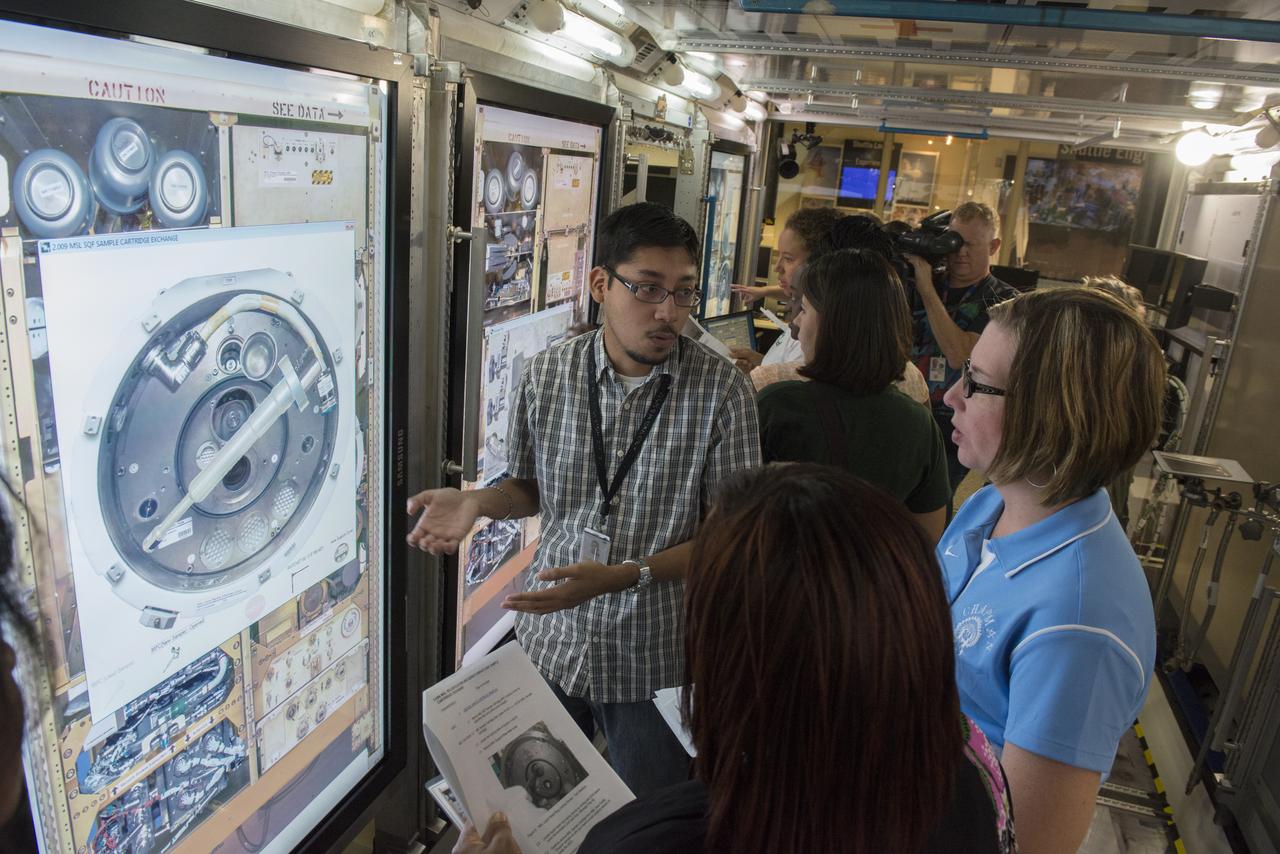
VINCENT VIDAURRI, CENTER, A TECHNICAL SPECIALIST WITH TELEDYNE BROWN ENGINEERING SUPPORTING MISSION OPERATIONS AT THE MARSHALL SPACE FLIGHT CENTER, PROVIDES DETAILS ABOUT A MOCK-UP OF THE INTERNATIONAL SPACE STATION SCIENCE LAB TO A GROUP OF AREA TEACHERS AS PART OF "BACK-2-SCHOOL DAY." TEAM REDSTONE -- WHICH INCLUDES THE MARSHALL SPACE FLIGHT CENTER AND U.S. ARMY ORGANIZATIONS ON REDSTONE ARSENAL -- INVITED 50 TEACHERS TO TOUR REDSTONE ARSENAL AUG. 15, GIVING THEM AN OPPORTUNITY TO LEARN OF AND SEE RESOURCES AVAILABLE TO THEM AND THEIR STUDENTS. THE TOUR FOCUSED ON SITES AVAILABLE FOR FIELD TRIPS FOR STUDENTS STUDYING MATH, SCIENCE, TECHNOLOGY AND ENGINEERING. STOPS INCLUDED MARSHALL'S PAYLOAD OPERATIONS INTEGRATION CENTER AND THE HIGH SCHOOLS UNITED WITH NASA TO CREATE HARDWARE LAB, OR HUNCH, BOTH LOCATED IN BUILDING 4663. THE PROGRAM GIVES HIGH SCHOOL STUDENTS THE CHANCE TO WORK WITH NASA ENGINEERS TO DESIGN AND BUILD HARDWARE FOR USE ON THE INTERNATIONAL SPACE STATION. THE TEACHERS ALSO VISITED THE ARMY AVIATION & MISSILE RESEARCH DEVELOPMENT & ENGINEERING CENTER AND THE REDSTONE TEST CENTER
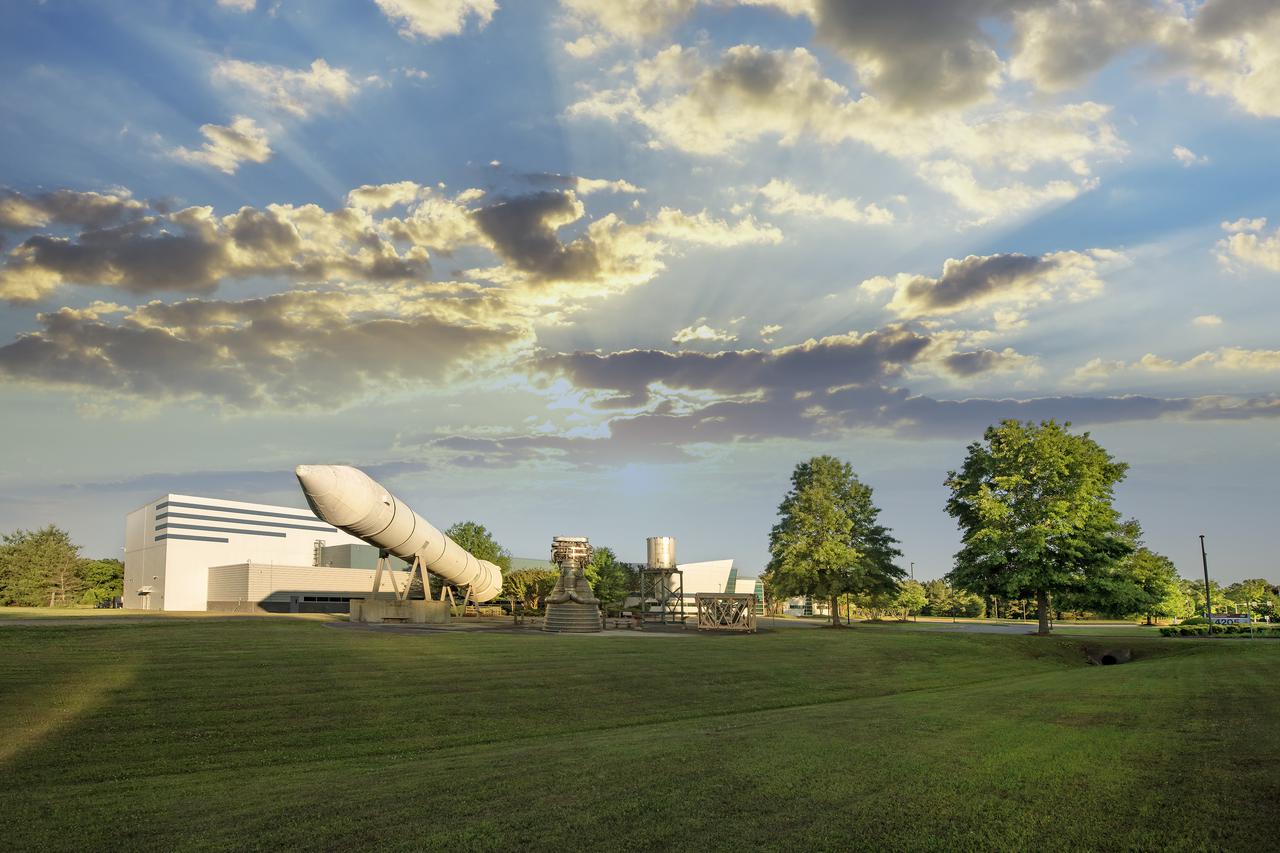
Pictured at sunset is Marshall Space Flight Center’s Propulsion R&D Lab, Building 4205.
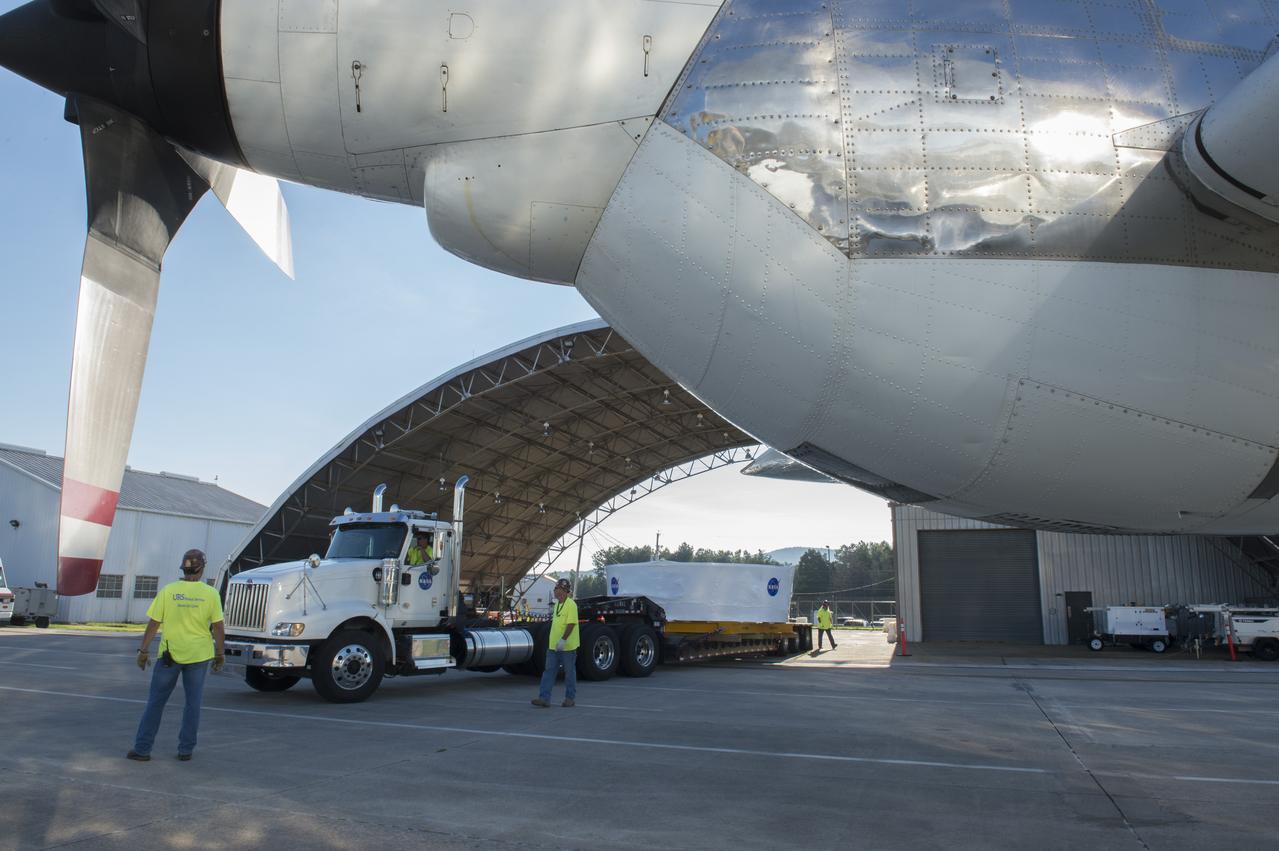
The Orion stage adapter arrives at Redstone Airfield where it will be loaded into NASA's Super Guppie aircraft for transportation to Denver, Colorado where it will undergo further testing.
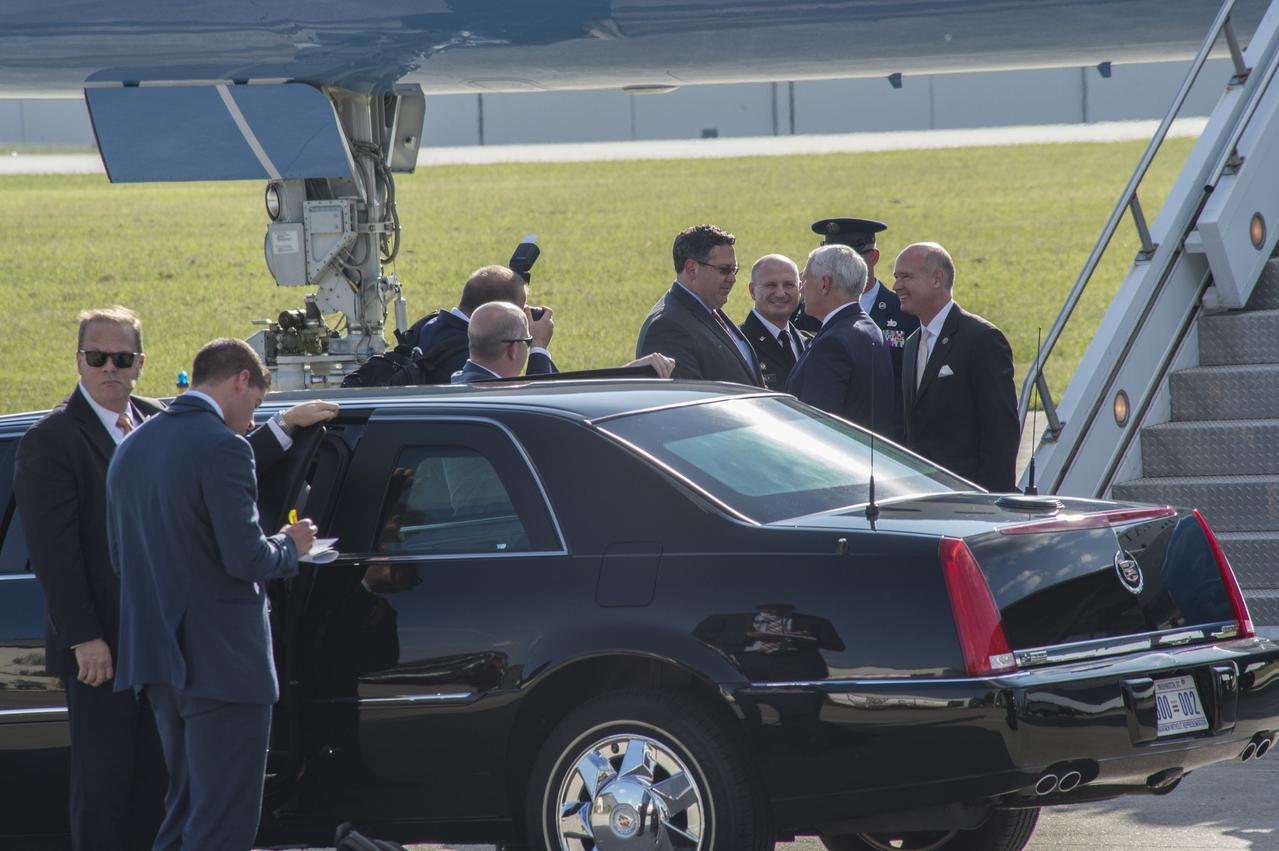
Air Force Two lands with Vice President Mike Pence along with Congressman Robert Aderholt at the Redstone Army Airfield in Huntsville, Alabama, on Monday, Sept. 25. They were greeted by NASA’s Marshall Space Flight Center Director Todd May and Redstone Arsenal’s Lt. Gen. Edward Daly. The Vice President is visiting NASA’s Marshall Center to meet with employees, view test hardware for NASA’s Space Launch System — America’s new deep-space rocket, and tour the Payload Operations Integration Center, “science central” for the International Space Station.
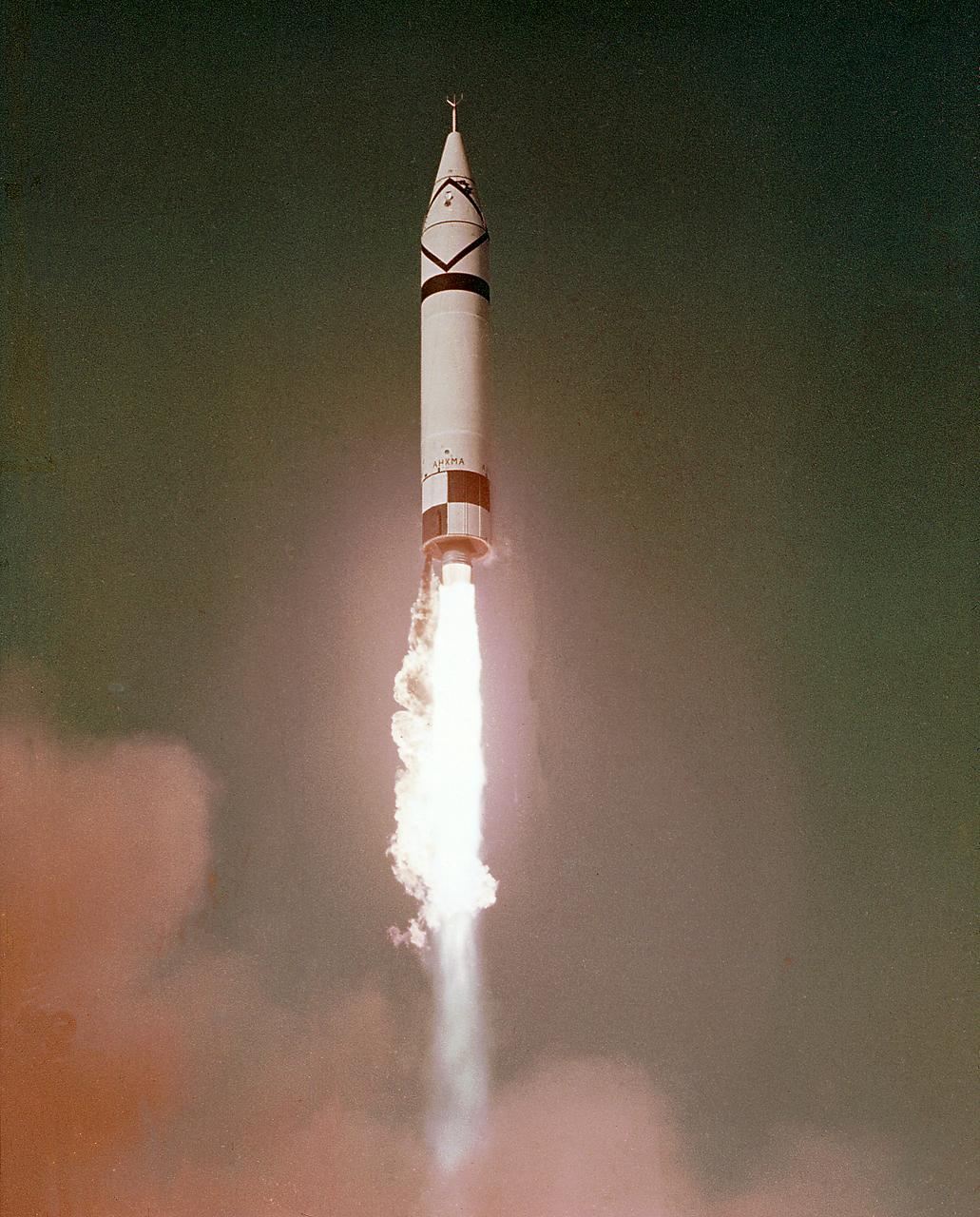
The Jupiter rocket was designed and developed by the Army Ballistic Missile Agency (ABMA). ABMA launched the Jupiter-A at Cape Canaveral, Florida, on March 1, 1957. The Jupiter vehicle was a direct derivative of the Redstone. The Army Ballistic Missile Agency (ABMA) at Redstone Arsenal, Alabama, continued Jupiter development into a successful intermediate ballistic missile, even though the Department of Defense directed its operational development to the Air Force. ABMA maintained a role in Jupiter RD, including high-altitude launches that added to ABMA's understanding of rocket vehicle operations in the near-Earth space environment. It was knowledge that paid handsome dividends later.
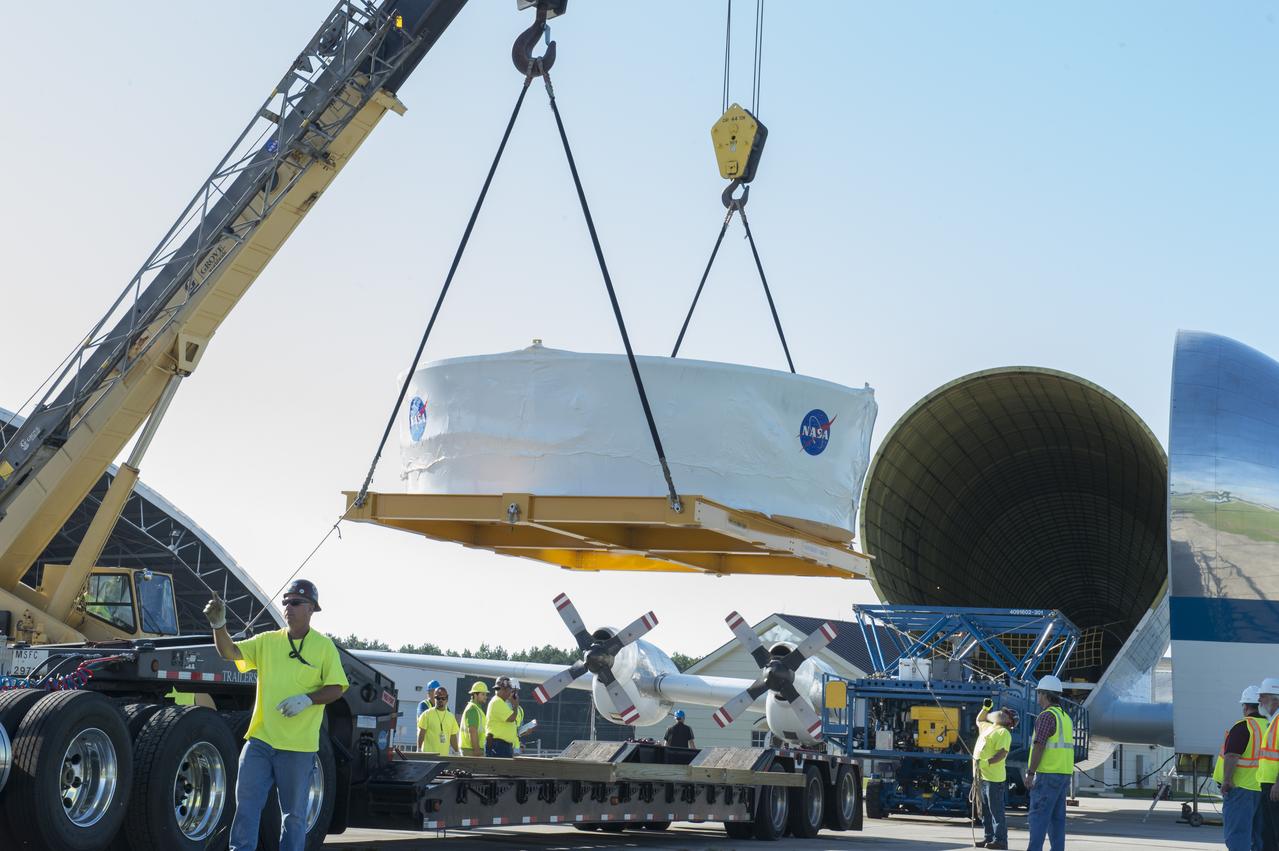
The Orion stage adapter is being lifted for placement onto the loading platform for NASA's Super Guppie aircraft before being flown to Denver, Colorado for further testing.
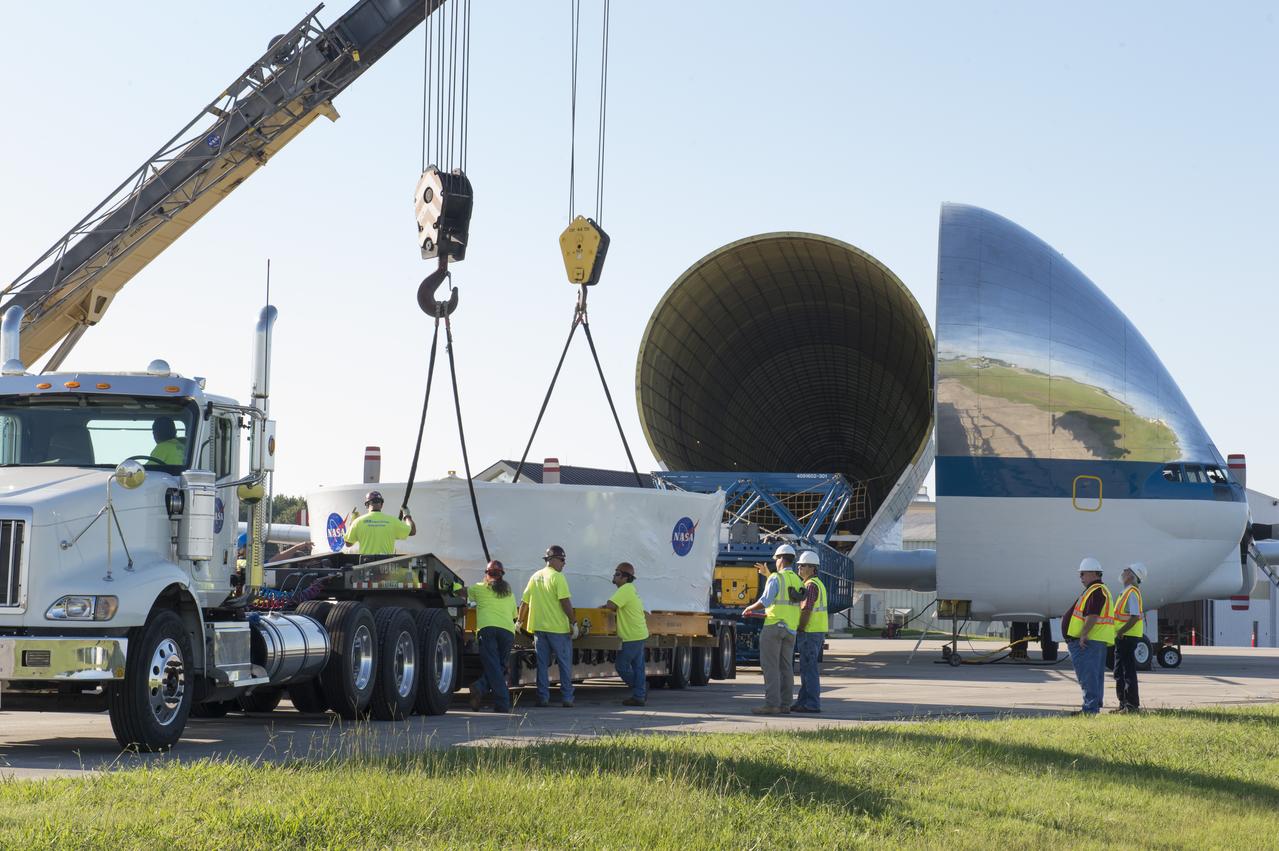
The Orion stage adapter is being positioned for lifting onto the loading platform before being loaded into NASA's Super Guppie aircraft. The adapter will be flown to Denver, Colorado for further testing.
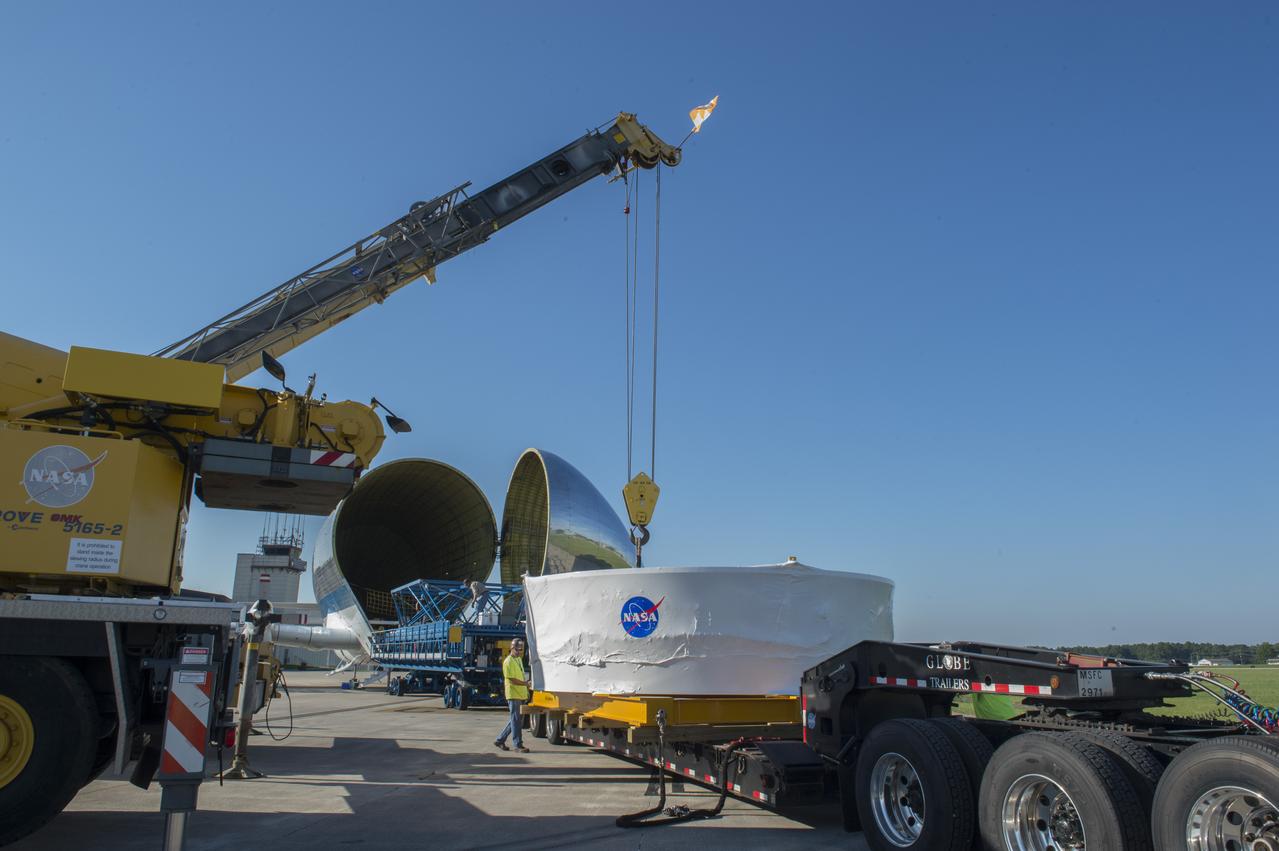
The Orion stage adapter is being positioned for lifting onto the loading platform before being loaded into NASA's Super Guppie aircraft. The adapter will be flown to Denver, Colorado for further testing.
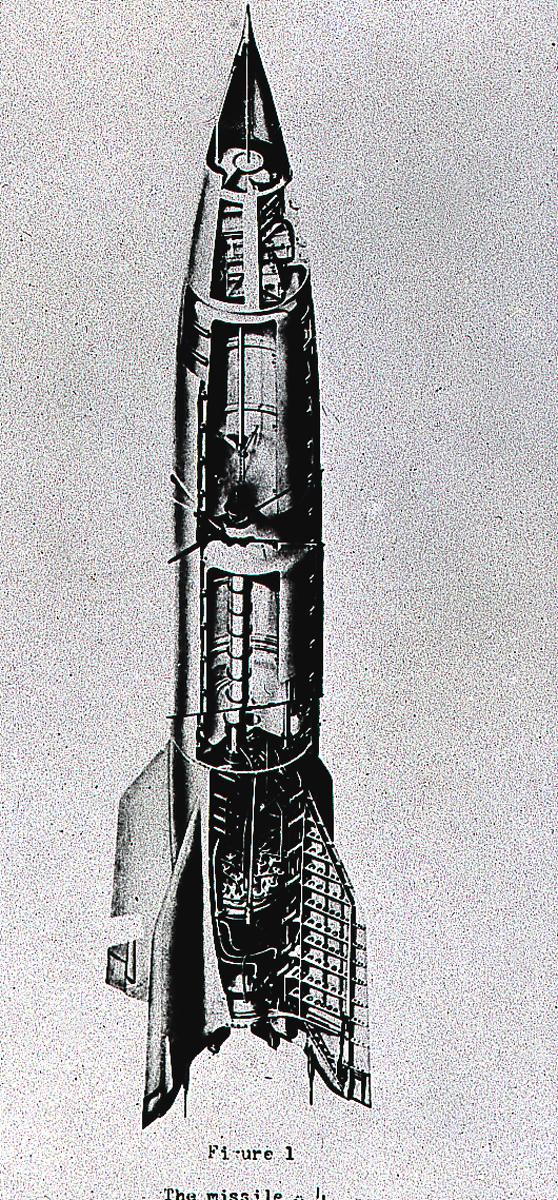
The cutaway drawing of the A-4 (Aggregate-4) rocket. Later renamed the V-2 (Vengeance Weapon-2), The rocket was developed by Dr. Wernher von Braun and the German rocket team at Peenemuende, Germany on the Baltic Sea. At the end of World War II, the team of German engineers and scientists came to the United States and continued rocket research for the Army at Fort Bliss, Texas, and Redstone Arsenal in Huntsville, Alabama.
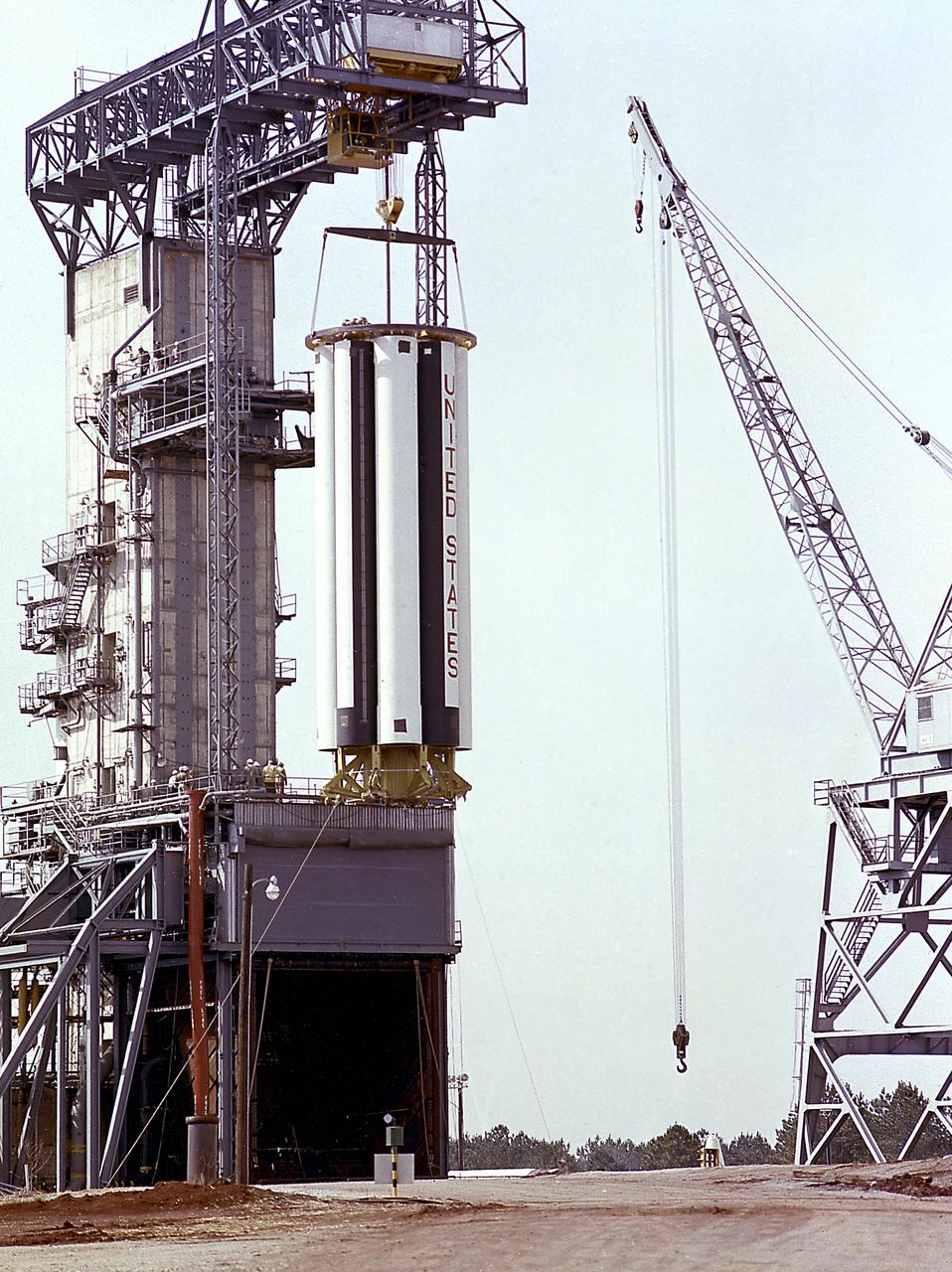
The Saturn Project was approved on January 18, 1960, as a program of the highest national priority. The formal test program to prove out the clustered-booster concept was well underway at Redstone Arsenal. This photograph depicts a mockup of the Saturn booster (S-I stage) being installed in the Army Ballistic Missile Agency (ABMA) test stand, on January 19, 1960, to check mating of the booster and stand and servicing methods.
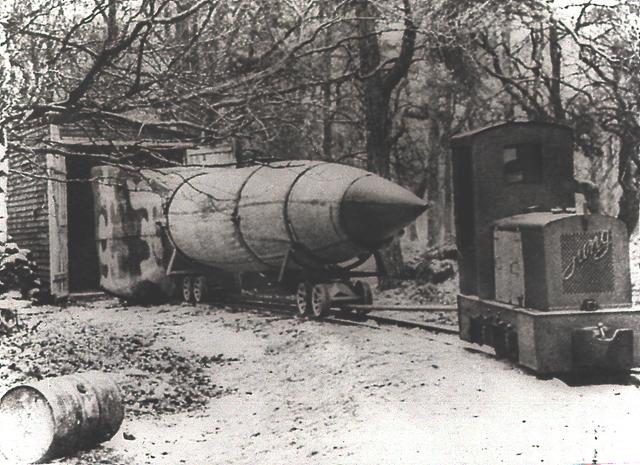
In this undated file photo, probably from World War II, a V-2 rocket emerges from its camouflaged shelter. The team of German engineers and scientists who developed the V-2 came to the United States after World War II and worked for the U. S. Army at Fort Bliss, Texas and Redstone Arsenal in Huntsville, Alabama.
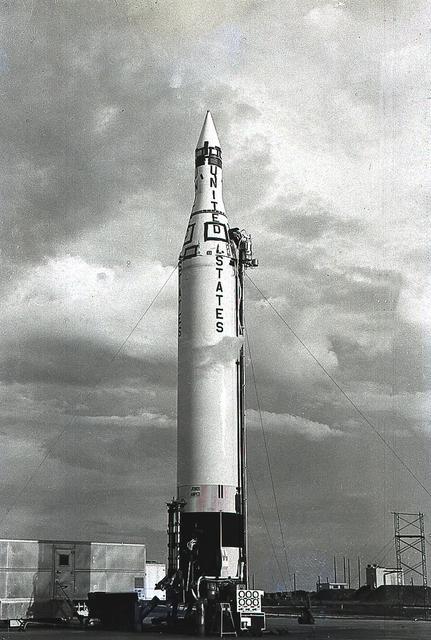
The Juno II launch vehicle, shown here, was a modified Jupiter Intermediate-Range Ballistic missionile, developed by Dr. Wernher von Braun and the rocket team at Redstone Arsenal in Huntsville, Alabama. Between December 1958 and April 1961, the Juno II launched space probes Pioneer III and IV, as well as Explorer satellites VII, VIII and XI.
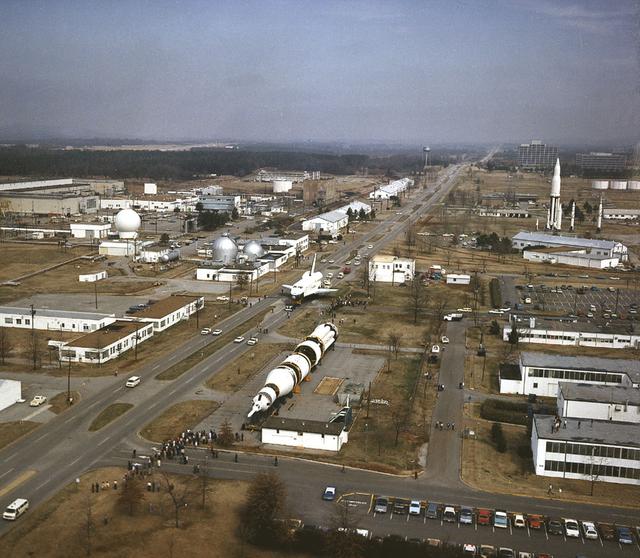
In this view looking northwest over the Marshall Space Flight Center (MSFC), the Shuttle Orbiter Enterprise is seen heading South on Rideout Road near the Redstone Arsenal Fire Station as it is being transported to MSFC's building 4755 for later Mated Vertical Ground Vibration tests (MVGVT) at MSFC's Dynamic Test Stand. The tests marked the first time ever that the entire shuttle complement (including Orbiter, external tank, and solid rocket boosters) were mated vertically.
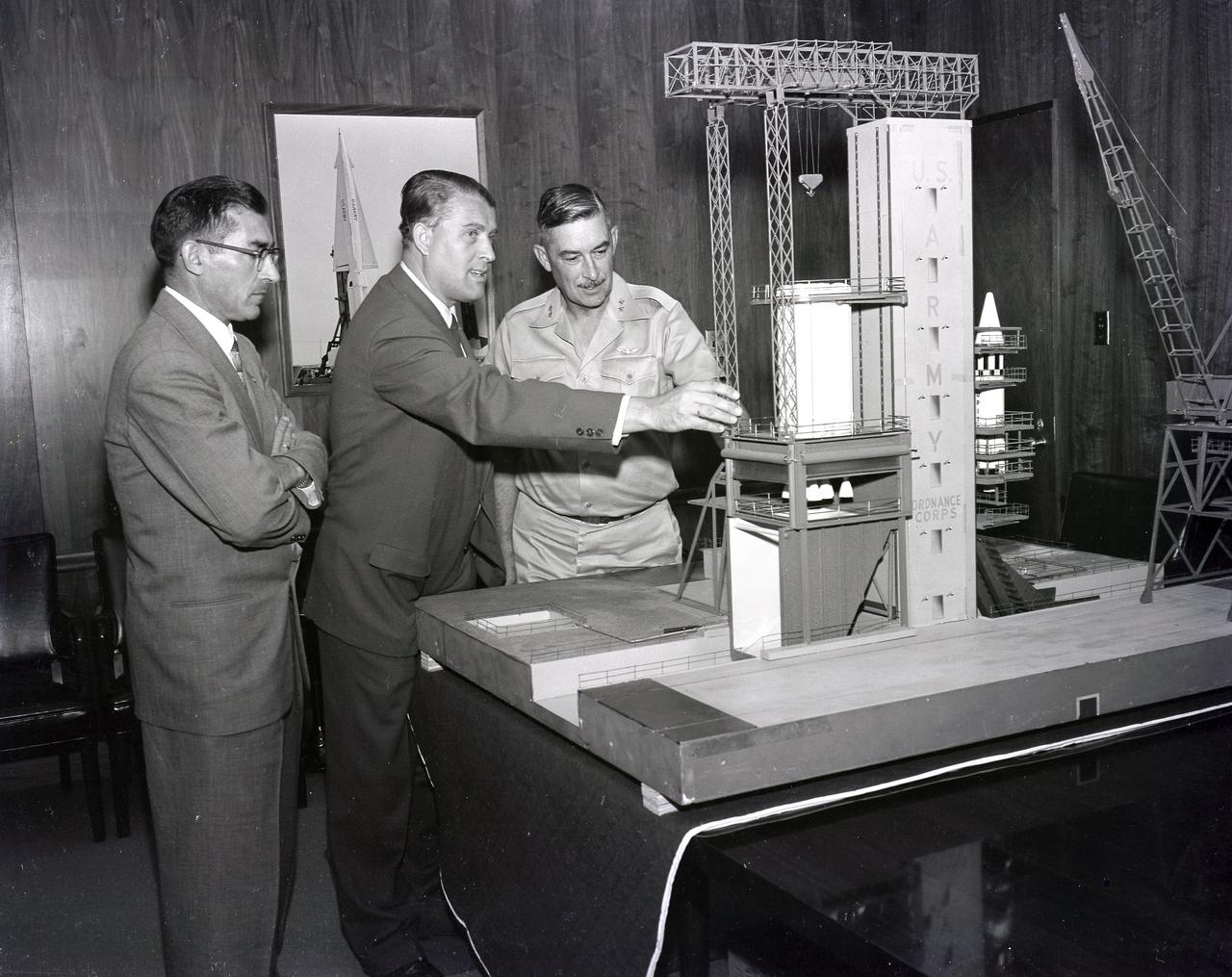
(From left to right) Karl L. Heimburg, Director of the Test Laboratory; Dr. Wernher von Braun, Director of the Development Operation Division; and Major General John B. Medaris with the model of S-1B Test Stand. Gen. Medaris was a Commander of the Army Ballistic Missile Agency (ABMA) in Redstone Arsenal, Alabama, during 1955 to 1958.
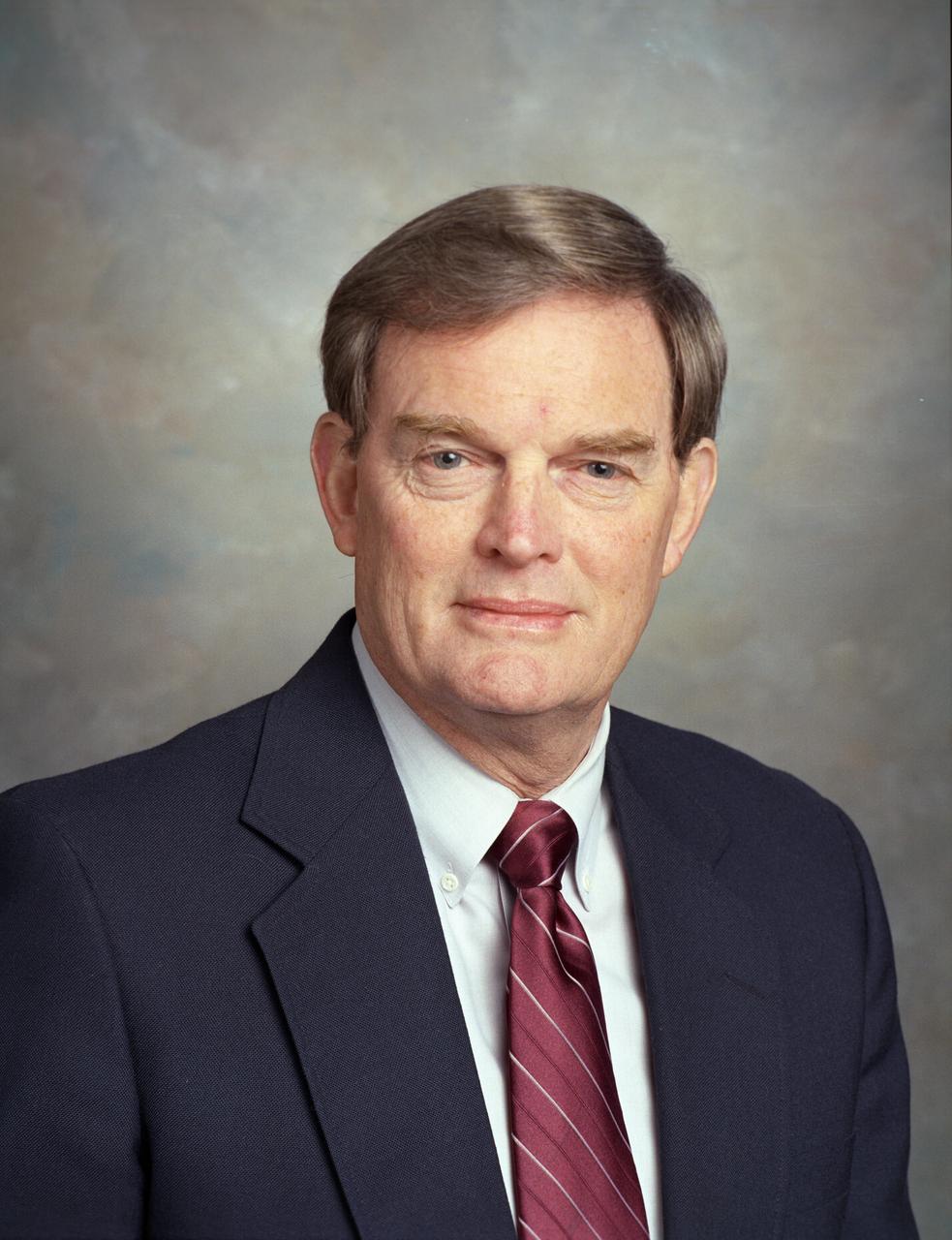
Thomas Jack Lee served as the sixth director of the Marshall Space Flight Center from July 6, 1989 to January 6, 1994. Prior to the appointment, Lee held positions as Center Deputy Director (1980 - 1989) and Spacelab Program Manager (1973 - 1980). Lee began his NASA career in July 1960 when he transferred to the newly formed MSFC from Redstone Arsenal's Army Ballistic Missile Agency.
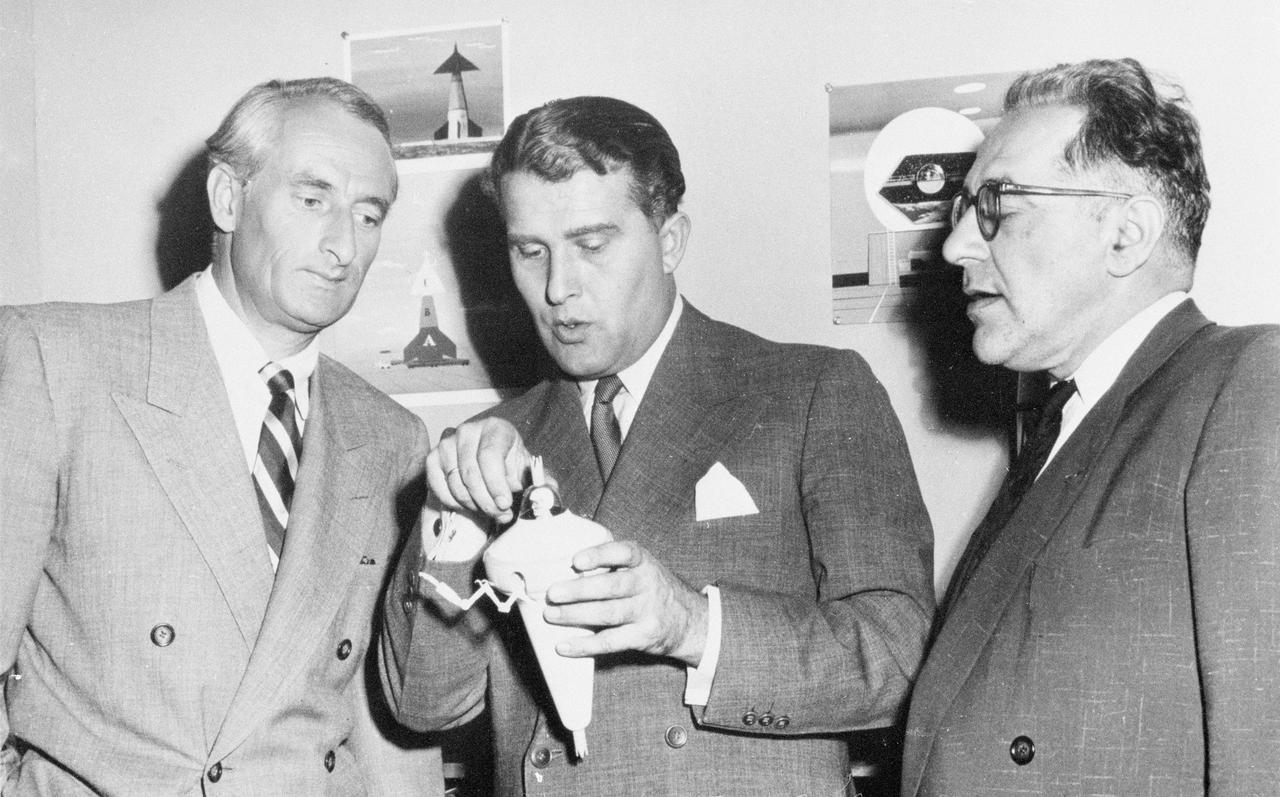
Dr. Wernher von Braun (center), then Chief of the Guided Missile Development Division at Redstone Arsenal, Alabama, discusses a "bottle suit" model with Dr. Heinz Haber (left), an expert on aviation medicine, and Willey Ley, a science writer on rocketry and space exploration. The three men were at the Disney studios appearing in the motion picture, entitled "Man in Space."
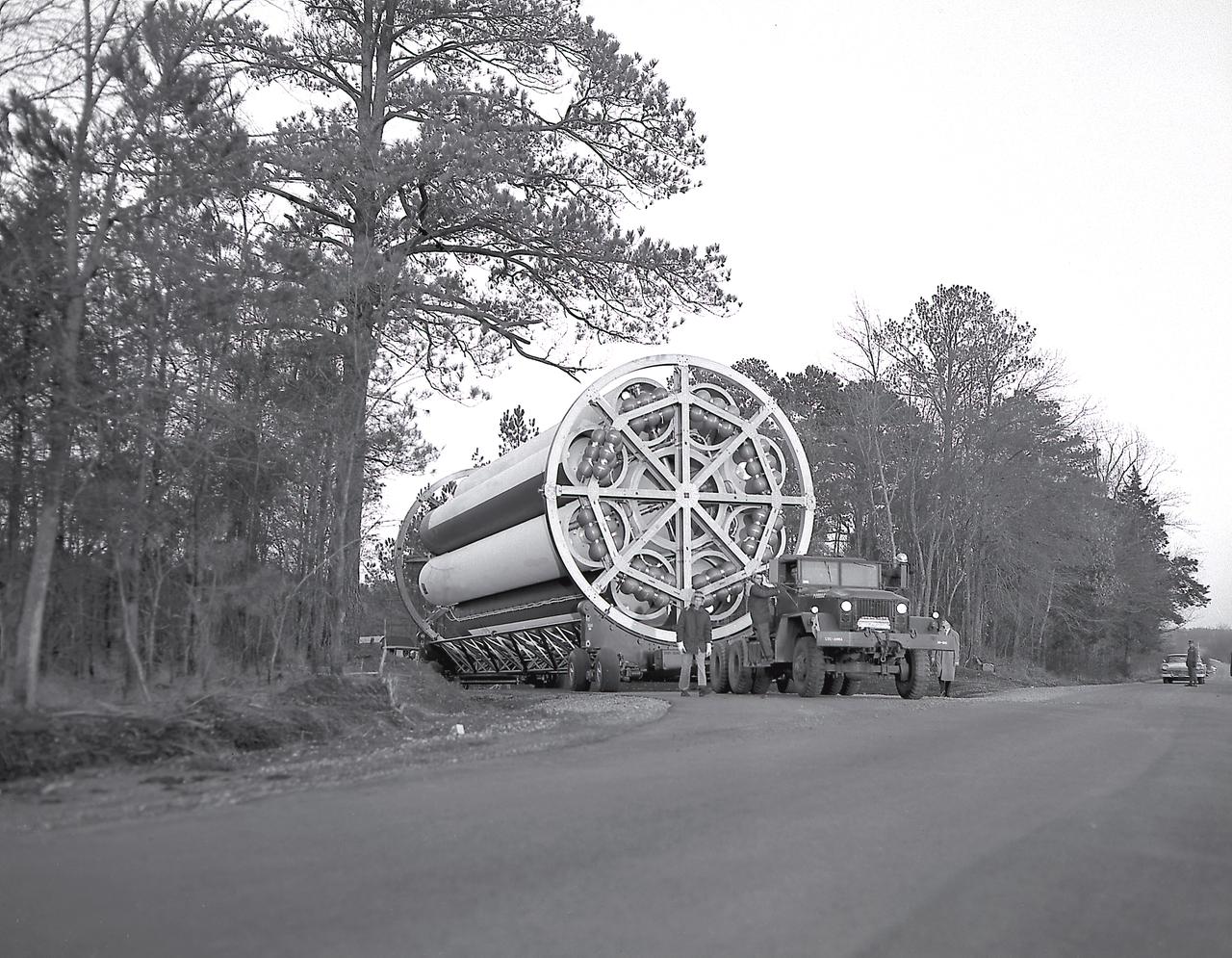
The Saturn Project was approved on January 18, 1960 as a program of the highest national priority. The formal test program to prove out the clustered-booster concept was well underway at Redstone Arsenal. This photograph depicts a mockup of the Saturn booster (S-I stage) being transported to the Army Ballistic Missile Agency (ABMA) test stand, to check mating of the booster and stand and servicing methods.
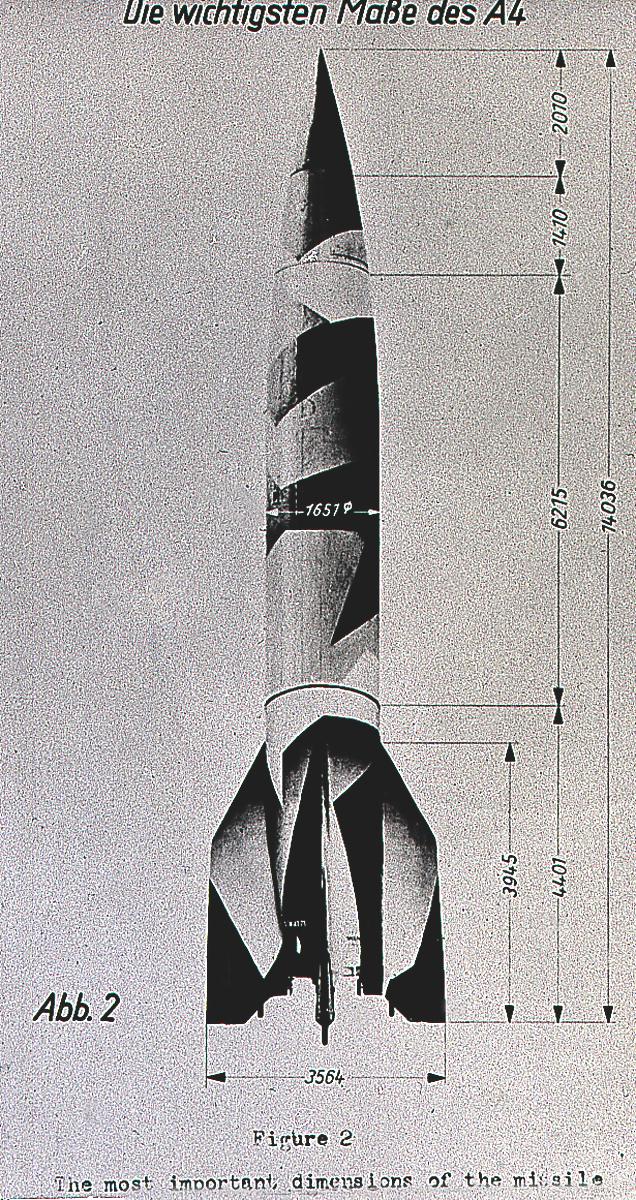
This drawing illustrates the vital dimensions of the A-4 (Aggregate-4). Later renamed the V-2 (Vengeance Weapon-2), the rocket was developed by Dr. Wernher von Braun and the German rocket team at Peenemuende, Germany on the Baltic Sea. At the end of World War II, the team of German engineers and scientists came to the United States and continued rocket research for the Army at Fort Bliss, Texas, and Redstone Arsenal in Huntsville, Alabama.
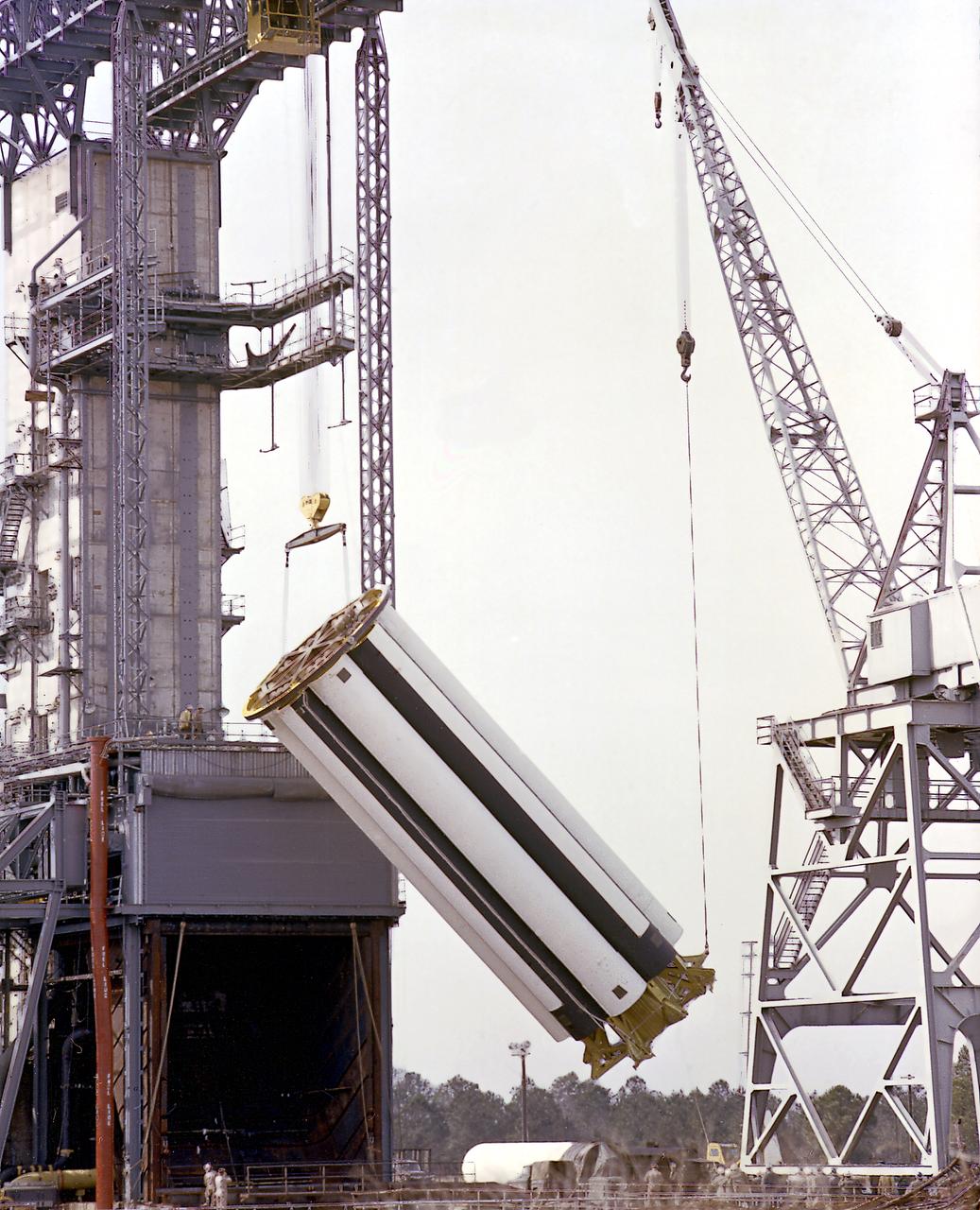
The Saturn Project was approved on January 18, 1960 as a program of the highest national priority. The formal test program, to prove out the clustered-booster concept, was well underway at Redstone Arsenal. This photograph depicts a mockup of the Saturn booster (S-I stage) being installed in the Army Ballistic Missile Agency (ABMA) test stand, on January 19, 1960, to check mating of the booster and stand and servicing methods.
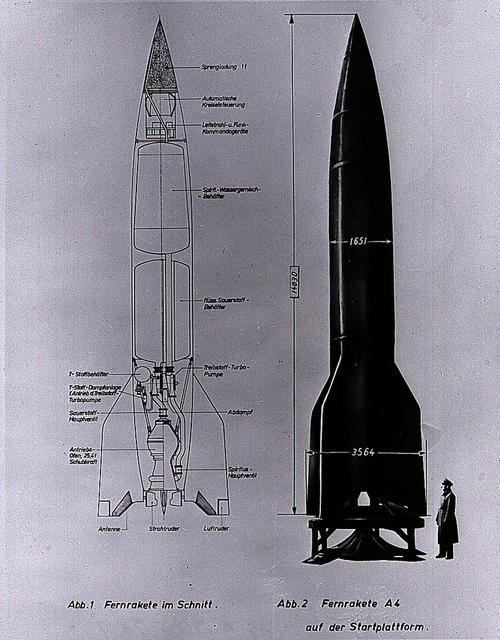
This German cutaway drawing of the Aggregate-4 (A-4) illustrates the dimensions and internal workings of the rocket. Later renamed the V-2, the rocket was developed by Dr. Wernher von Braun and the German Rocket Team at Peenemuende on the Baltic Sea. At the end of World War II, the team of German engineers and scientists came to the United States to work for the Army at Fort Bliss, Texas, and Redstone Arsenal in Huntsville, Alabama.
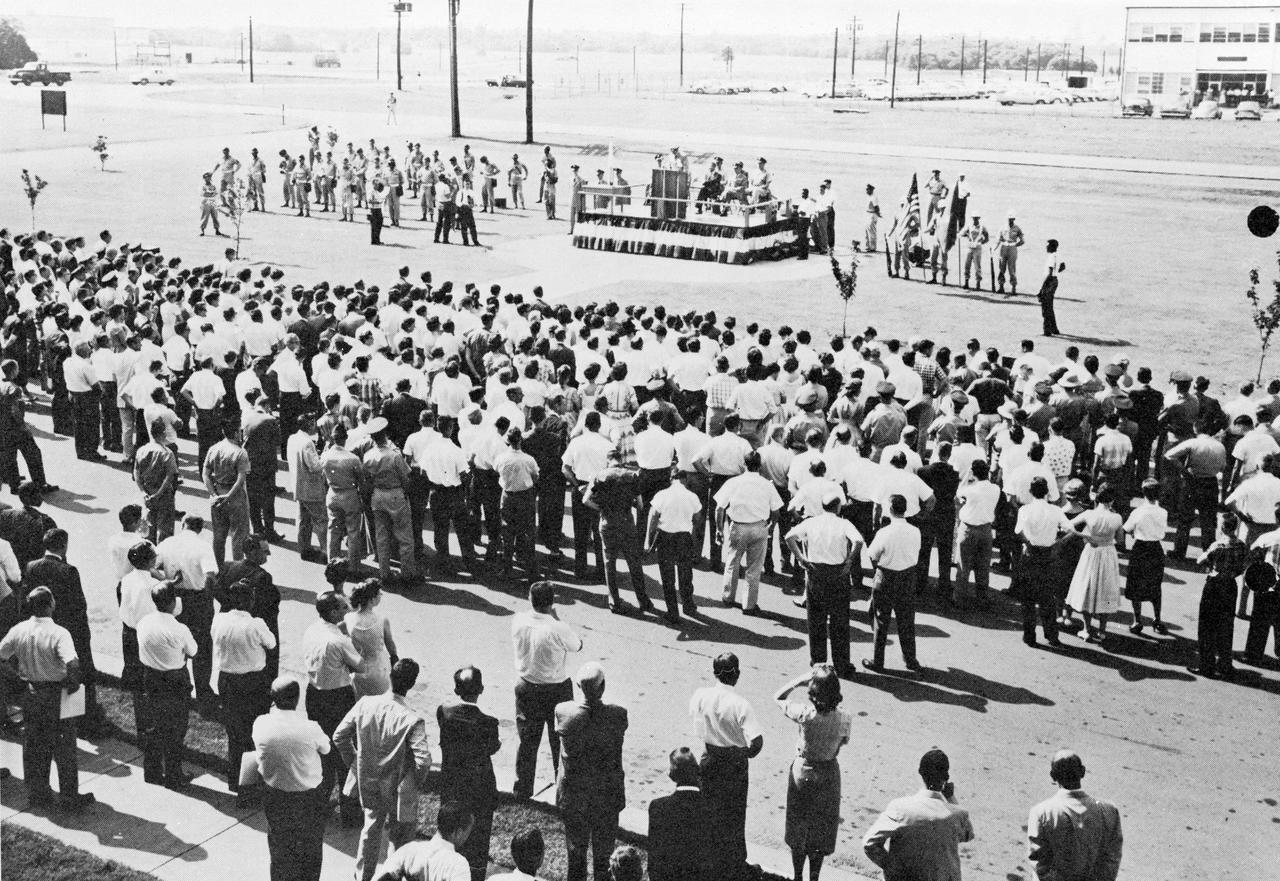
Dr. Wernher von Braun and Maj. Gen. August Schomburg officiate the official transfer of the Army Ballistic Missile Agency (ABMA) to the NASA George C. Marshall Space Flight Center (MSFC) on July 1, 1960. The Official transfer ceremony took place in the front of the ABMA-MSFC joint headquarters, building 4488, Redstone Arsenal, Alabama.
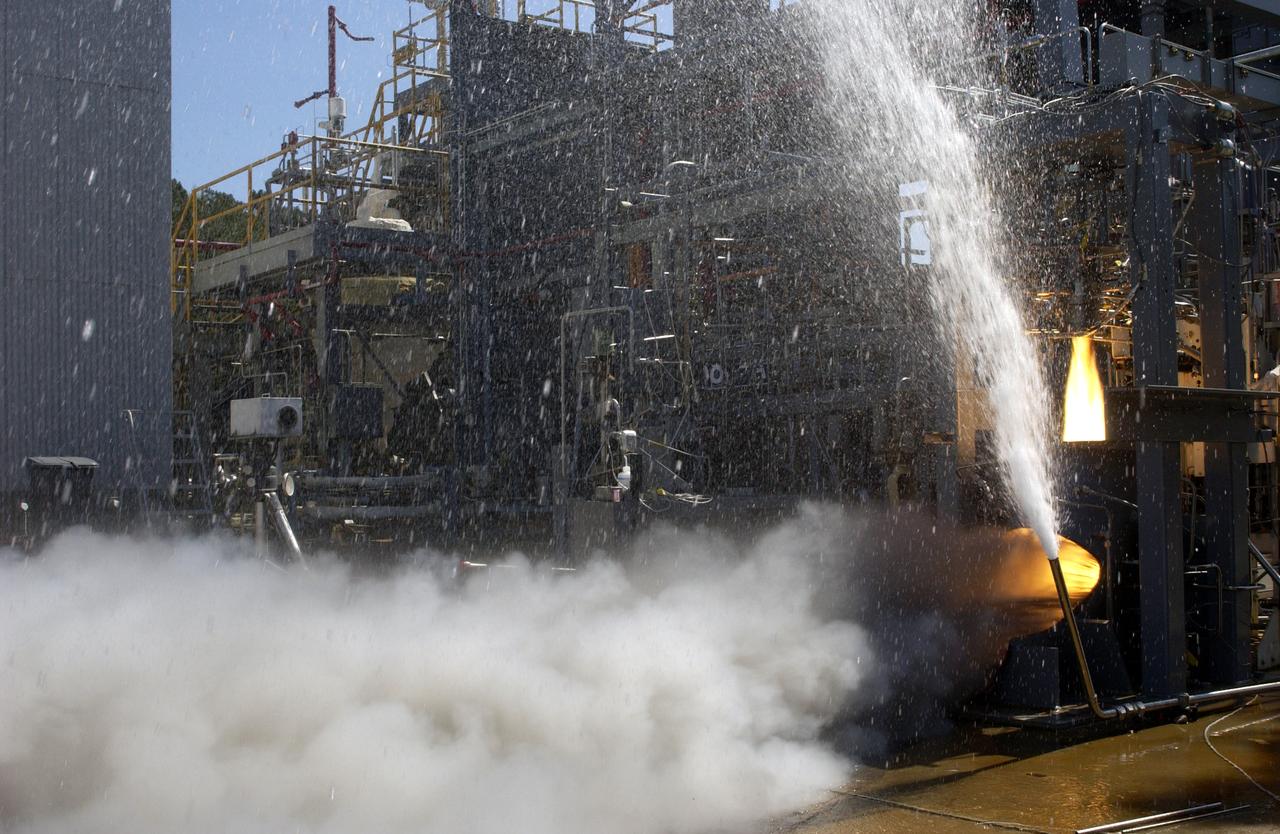
This photograph depicts one of over thirty tests conducted on the Vortex Combustion Chamber Engine at Marshall Space Flight Center's (MSFC) test stand 115, a joint effort between NASA's MSFC and the U.S. Army AMCOM of Redstone Arsenal. The engine tests were conducted to evaluate an irnovative, "self-cooled", vortex combustion chamber, which relies on tangentially injected propellants from the chamber wall producing centrifugal forces that keep the relatively cold liquid propellants near the wall.
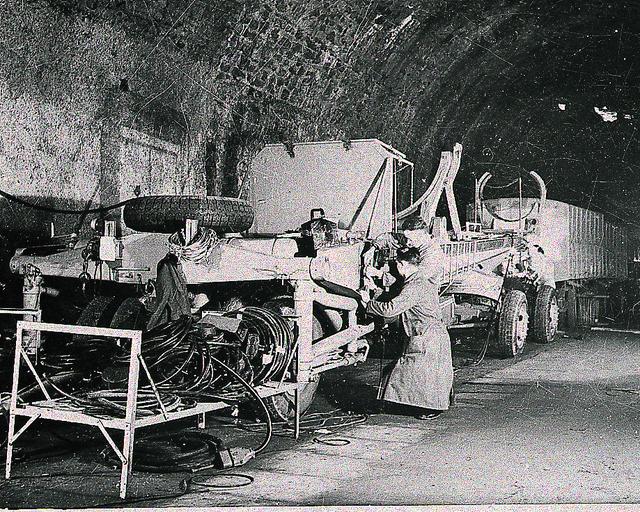
In this photograph from the fall of 1943, German technicians wire vehicles for mobile V-2 batteries in an abandoned railroad turnel in the Rhineland. The team of German engineers and scientists who developed the V-2 came to the United States at the end of World War II and worked for the U. S. Army at Fort Bliss, Texas, and Redstone Arsenal in Huntsville, Alabama.
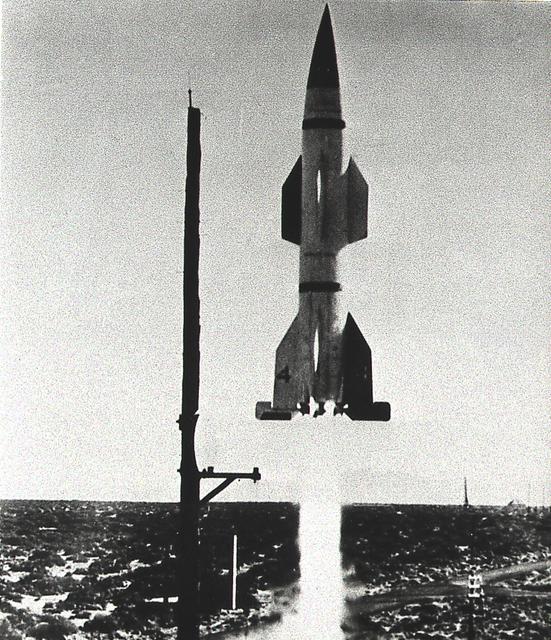
The Hermes A-1 rocket was designed by the U. S. Army after capturing the V-2 rocket from the German army at the conclusion of the Second World War. The Hermes A-1 is a modified V-2 rocket; it utilized the German aerodynamic configuration; however, internally it was a completely new design. This rocket was the first designed by the German Rocket Team at Redstone Arsenal in Huntsville, AL.
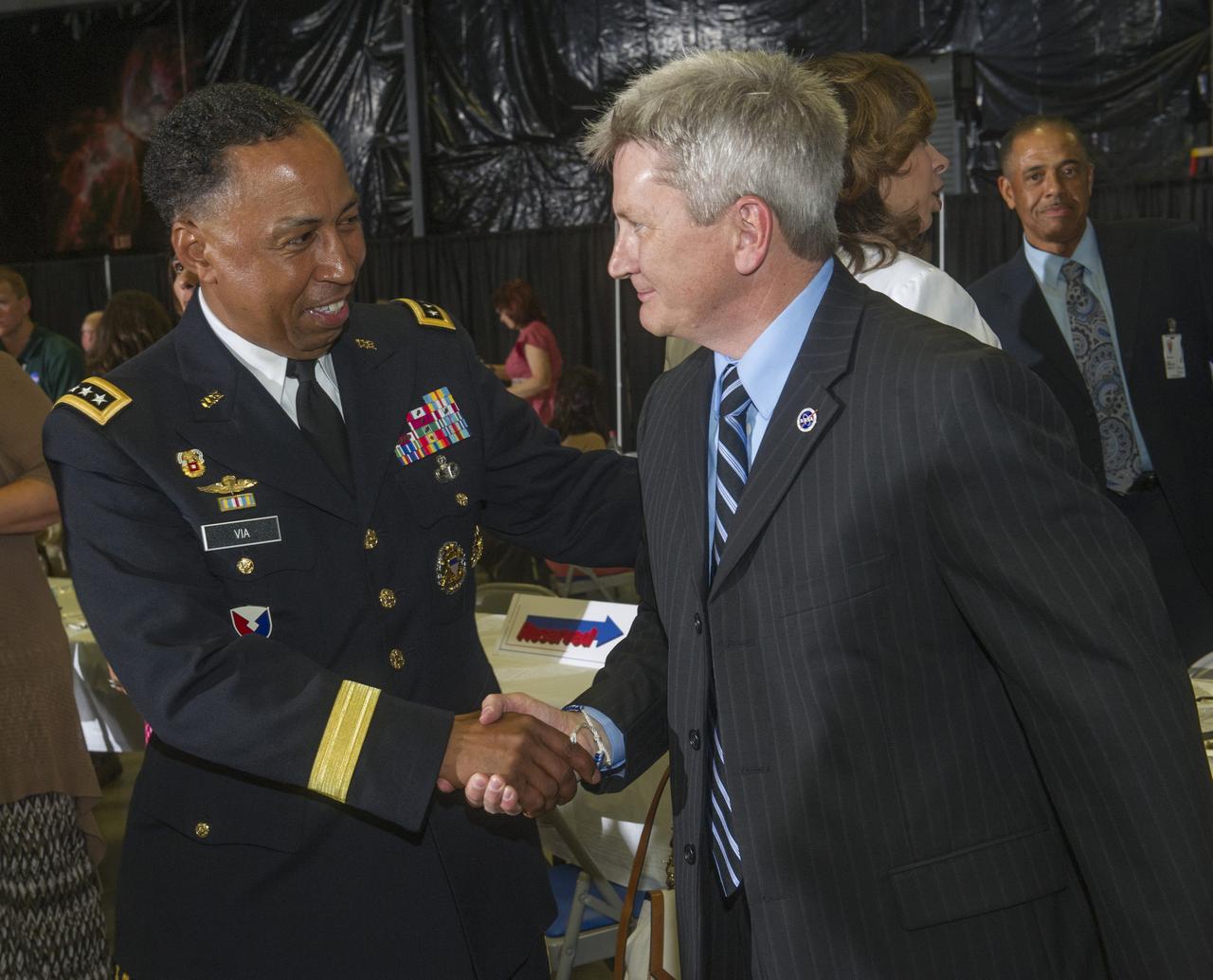
JOHNNY STEPHENSON, RIGHT, DEPUTY DIRECTOR OF THE MARSHALL SPACE FLIGHT CENTER'S OFFICE OF STRATEGIC ANALYSIS & COMMUNICATIONS, GREETS GENERAL DENNIS VIA, COMMANDER OF THE U.S. ARMY MATERIEL COMMAND (AMC) ON REDSTONE ARSENAL. VIA, WHO OVERSEES A WORK FORCE OF MORE THAN 67,000 DEDICATED MILITARY AND CIVILIAN EMPLOYEES, WAS THE GUEST SPEAKER AT THE JULY 10 LUNCHEON MEETING OF THE MARSHALL ASSOCIATION, THE CENTER'S PROFESSIONAL, EMPLOYEE SERVICE ORGANIZATION.
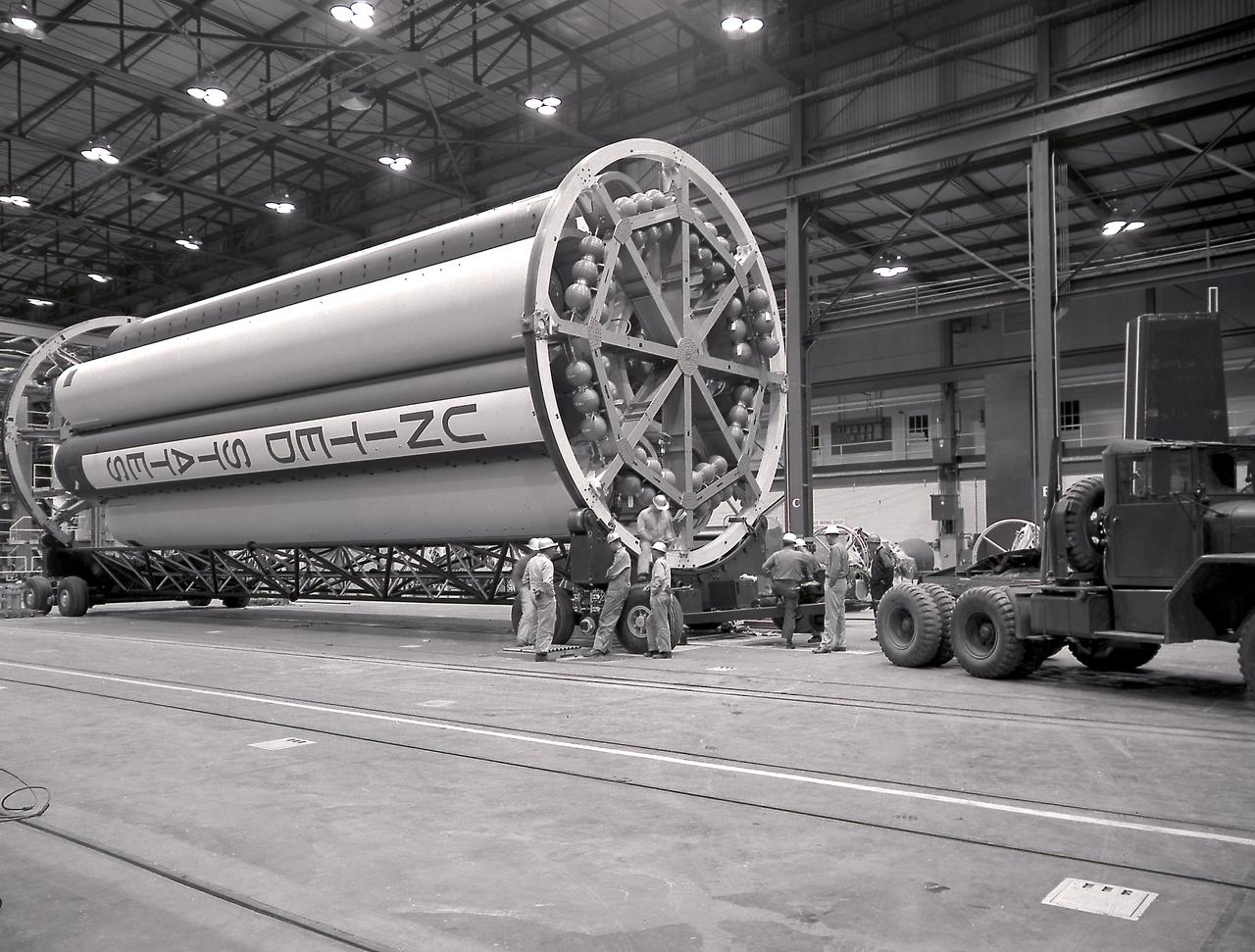
The Saturn Project was approved on January 18, 1960 as a program of the highest national priority. The formal test program to prove out the clustered-booster concept was well underway at Redstone Arsenal. This photograph depicts a mockup of the Saturn booster (S-I stage) being placed on a transporter and later being installed in the Army Ballistic Missile Agency (ABMA) test stand, on January 19, 1960, to check mating of the booster and stand and servicing methods.

Launch of Jupiter-C/Explorer 1 at Cape Canaveral, Florida on January 31, 1958. After the Russian Sputnik 1 was launched in October 1957, the launching of an American satellite assumed much greater importance. After the Vanguard rocket exploded on the pad in December 1957, the ability to orbit a satellite became a matter of national prestige. On January 31, 1958, slightly more than four weeks after the launch of Sputnik.The ABMA (Army Ballistic Missile Agency) in Redstone Arsenal, Huntsville, Alabama, in cooperation with the Jet Propulsion Laboratory, launched a Jupiter from Cape Canaveral, Florida. The rocket consisted of a modified version of the Redstone rocket's first stage and two upper stages of clustered Baby Sergeant rockets developed by the Jet Propulsion Laboratory and later designated as Juno boosters for space launches
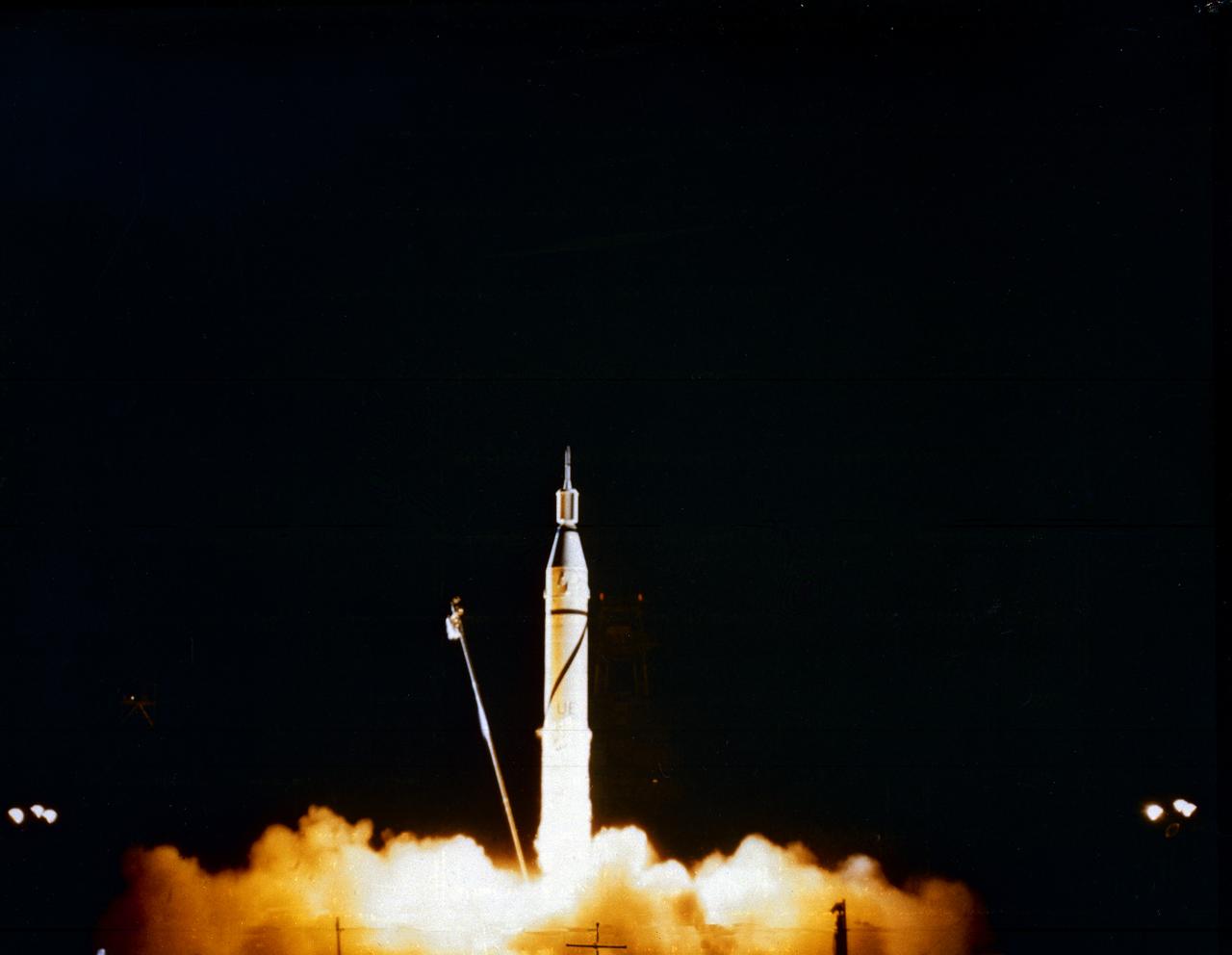
Launch of Jupiter-C/Explorer 1 at Cape Canaveral, Florida on January 31, 1958. After the Russian Sputnik 1 was launched in October 1957, the launching of an American satellite assumed much greater importance. After the Vanguard rocket exploded on the pad in December 1957, the ability to orbit a satellite became a matter of national prestige. On January 31, 1958, slightly more than four weeks after the launch of Sputnik.The ABMA (Army Ballistic Missile Agency) in Redstone Arsenal, Huntsville, Alabama, in cooperation with the Jet Propulsion Laboratory, launched a Jupiter from Cape Canaveral, Florida. The rocket consisted of a modified version of the Redstone rocket's first stage and two upper stages of clustered Baby Sergeant rockets developed by the Jet Propulsion Laboratory and later designated as Juno boosters for space launches

This artist's concept portrays the plan for the new Engineering Directorate office to be constructed at the Marshall Space Flight Center. The first of several new buildings to be constructed as replacements for older Center facilities, the 5-story, 139,000-square-foot building will house approximately 500 current Marshall employees that provide development and research engineering services for the Marshall Center. Ground breaking ceremonies took place on June 10, 2003 at the construction site, southwest of the Martin and Rideout Roads intersection on Redstone Arsenal. GSC Construction of Waynesboro, Georgia has been selected as the contractor for the facility, which is scheduled for a September 2004 completion.
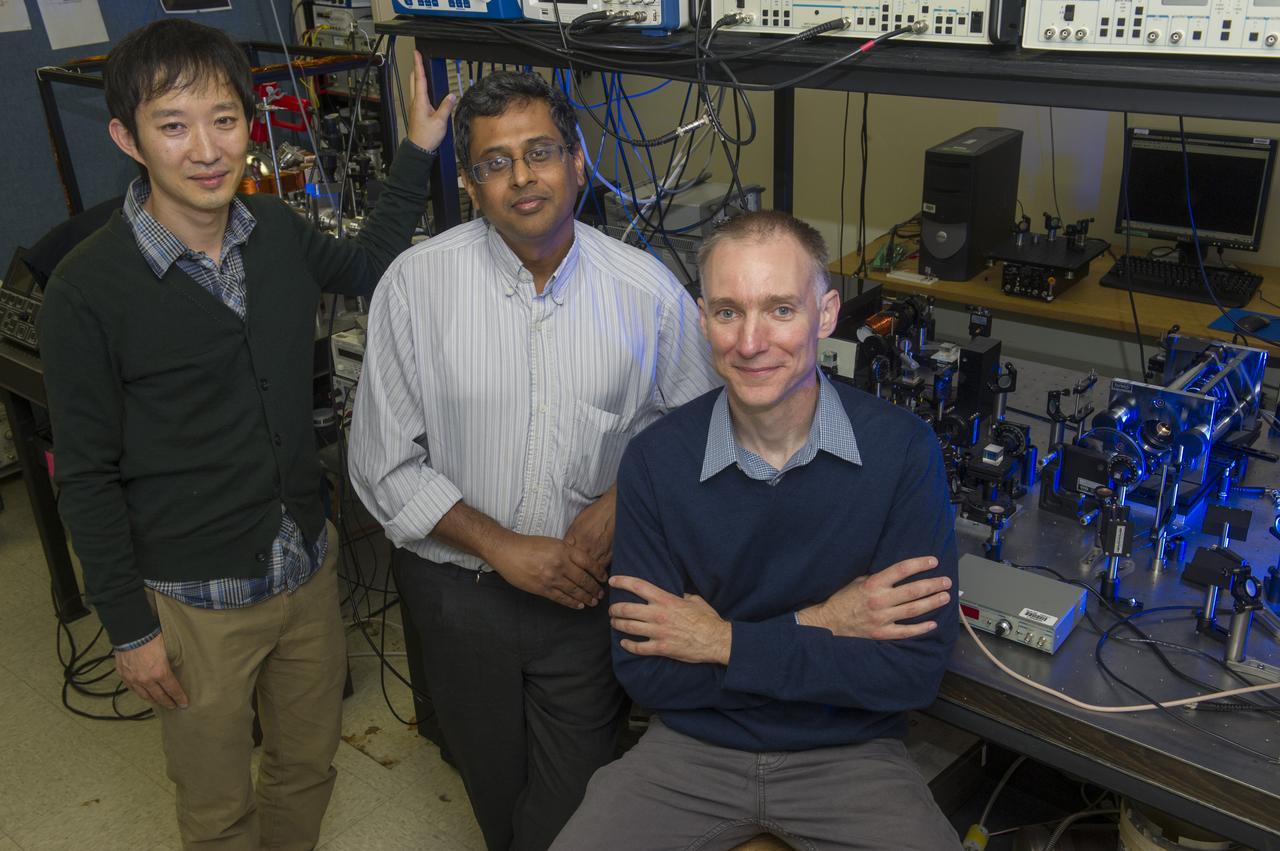
FROM RIGHT, MARSHALL RESEARCHER DR. DAVID SMITH, U.S. ARMY RESEARCHER KRISHNA MYNENI AND ARMY CONTRACTOR HONGROK CHANG HAVE BEGUN A THREE-YEAR NASA PROJECT TO DEVELOP INNOVATIVE NEW GYROSCOPES THAT COULD DRAMATICALLY IMPROVE IN-FLIGHT NAVIGATION CAPABILITIES FOR SPACE VEHICLES, MILITARY AIR AND SEA ASSETS AND COMMERCIAL VEHICLES. THE “FAST LIGHT OPTICAL GYROSCOPES FOR PRECISE INERTIAL NAVIGATION” PROJECT INCLUDES RESEARCHERS AT NASA’S MARSHALL SPACE FLIGHT CENTER IN HUNTSVILLE, ALA.; THE U.S. ARMY AVIATION AND MISSILE RESEARCH, DEVELOPMENT AND ENGINEERING CENTER (AMRDEC) AT REDSTONE ARSENAL IN HUNTSVILLE; AND NORTHWESTERN UNIVERSITY IN EVANSTON, ILL.
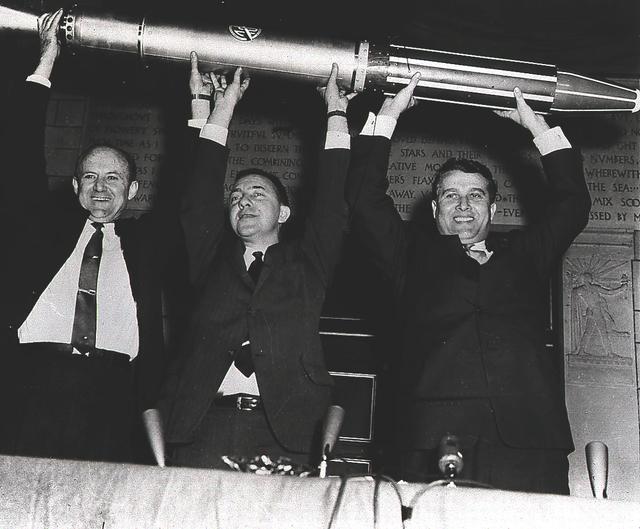
Jet Propulsion Laboratory Director Dr. William Pickering, Dr. James van Allen of the State University of Iowa, and Army Ballistic missionile Agency Technical Director Dr. Wernher von Braun triumphantly display a model of the Explorer I, America's first satellite, shortly after the satellite's launch on January 31, 1958. The Jet Propulsion Laboratory packed and tested the payload, a radiation detection experiment designed by Dr. van Allen. Dr. von Braun's rocket team at Redstone Arsenal in Huntsville, Alabama, developed the Juno I launch vehicle, a modified Jupiter-C.
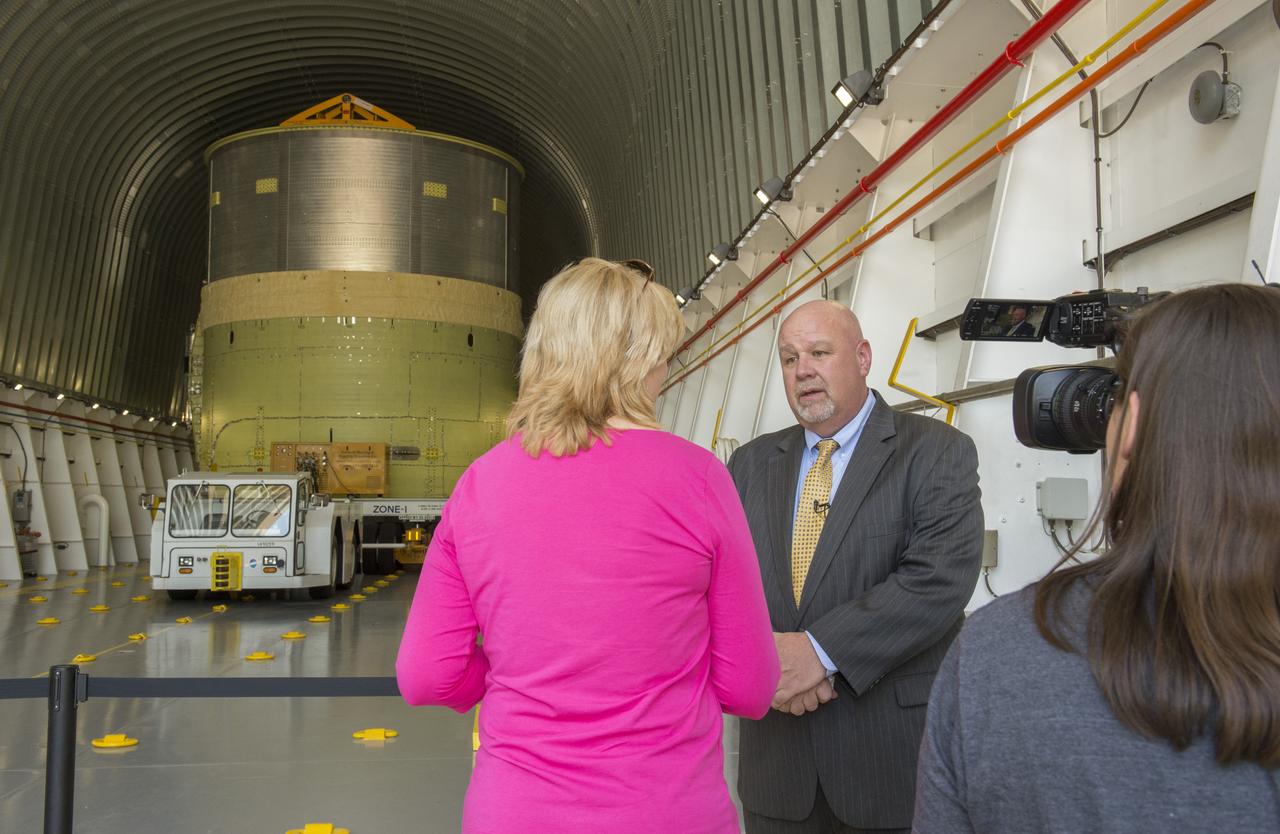
John Honeycutt talks with reporters on NASA Barge Pegasus
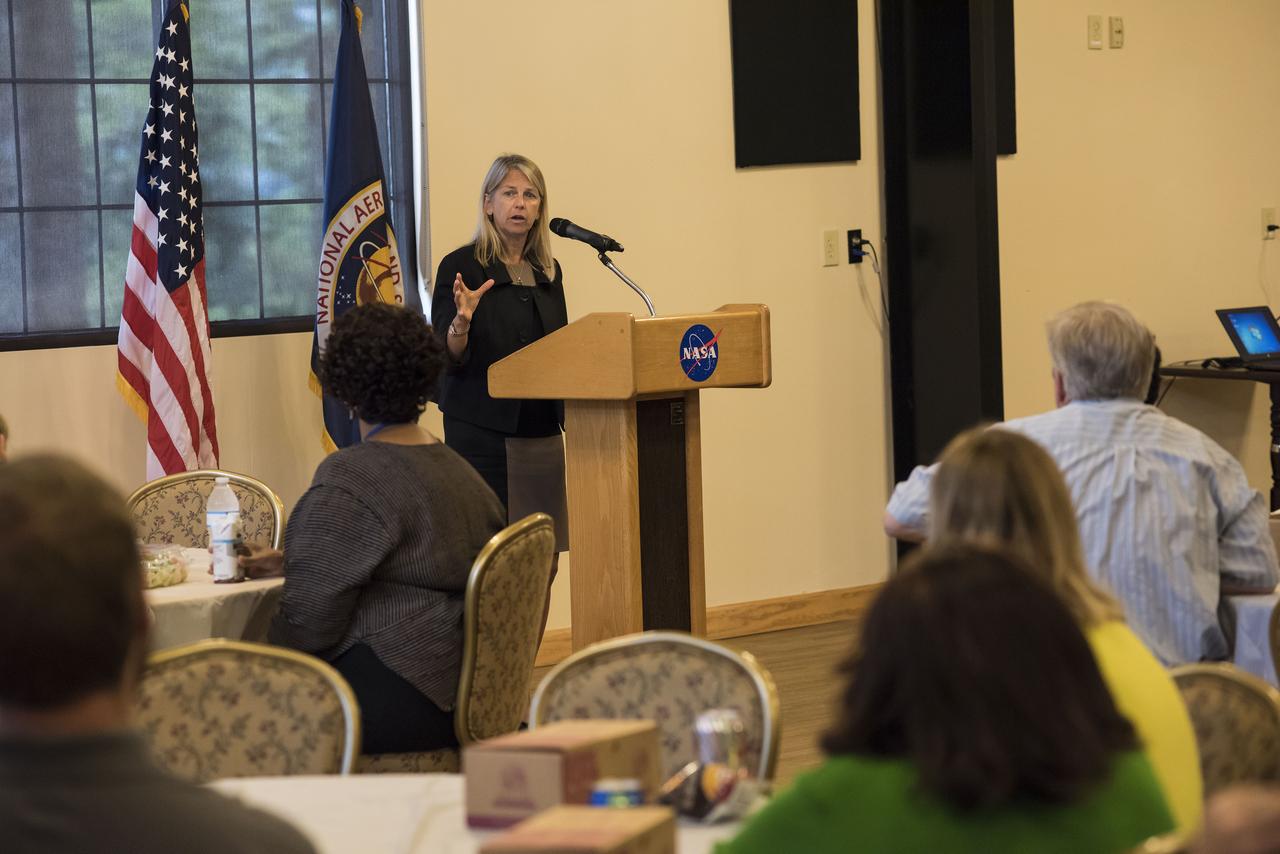
MARSHALL ASSOCIATION LUNCHEON WITH GUEST SPEAKER DR. DAVA NEWMAN, NASA DEPUTY ADMINISTRATOR. AUGUST 16, 2016.
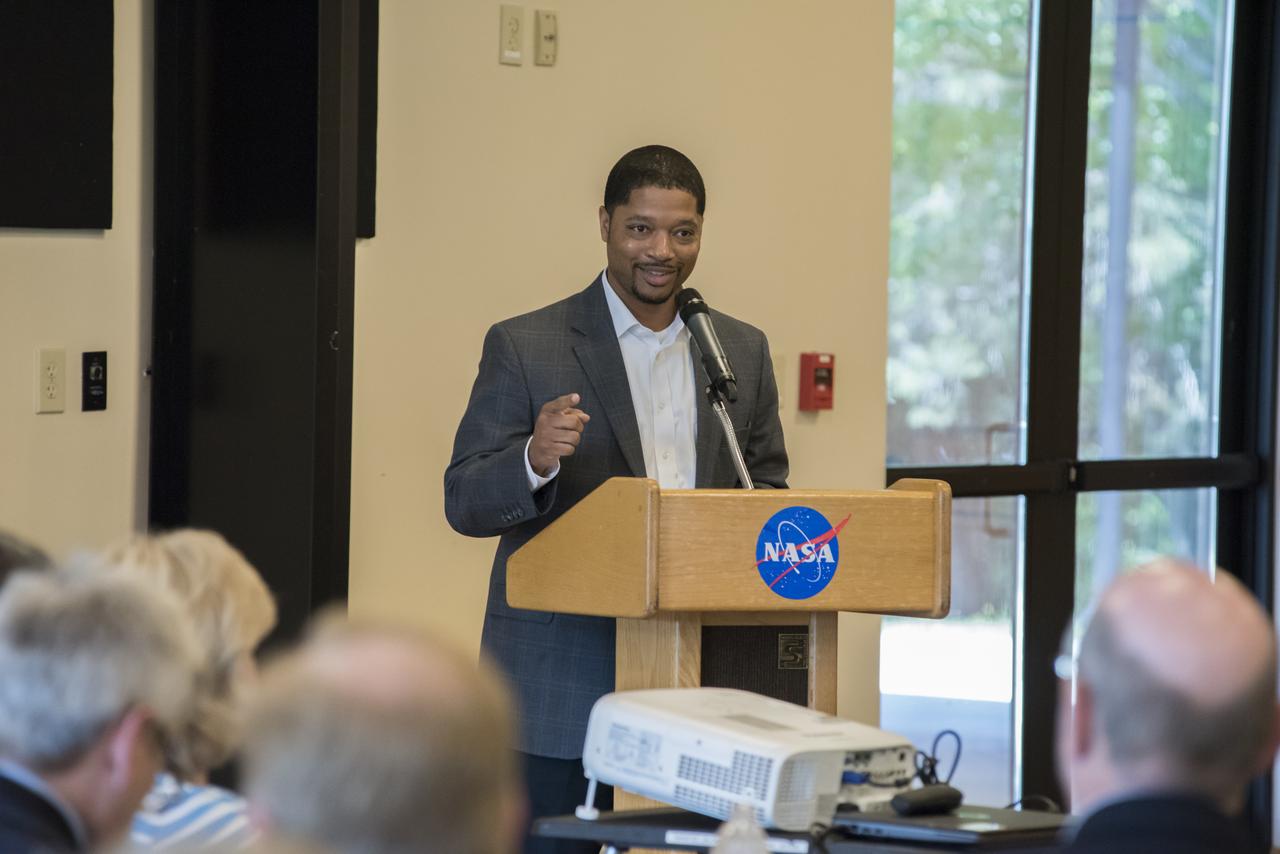
Markeeva Morgan, SLS avionics subsystem manager at NASA’s Marshall Space Flight Center, speaks to an audience of Marshall team members April 26 at the Overlook at Redstone. Morgan was the introductory speaker for the luncheon meeting of the Marshall Association, the center’s professional, employee service organization.
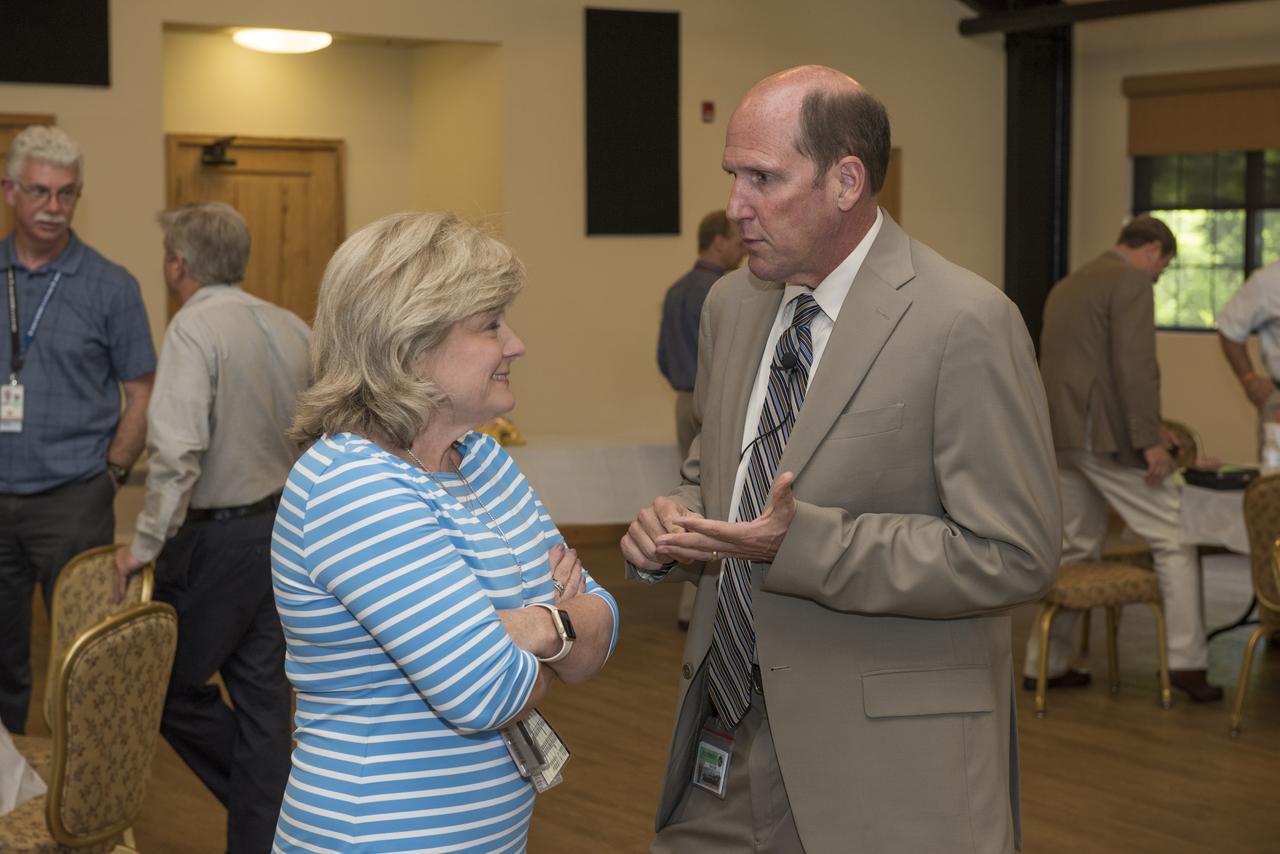
Paul Finley, mayor of the City of Madison, Alabama, chats with Jody Singer, deputy director of NASA’s Marshall Space Flight Center, following the April 26 lunch meeting of the Marshall Association, the center's professional, employee service organization. Finley, the guest speaker for the event, served as mayor of Madison from 2008-2012 and was elected to the post again in 2016.

John Honeycutt talks with reporters on NASA Barge Pegasus