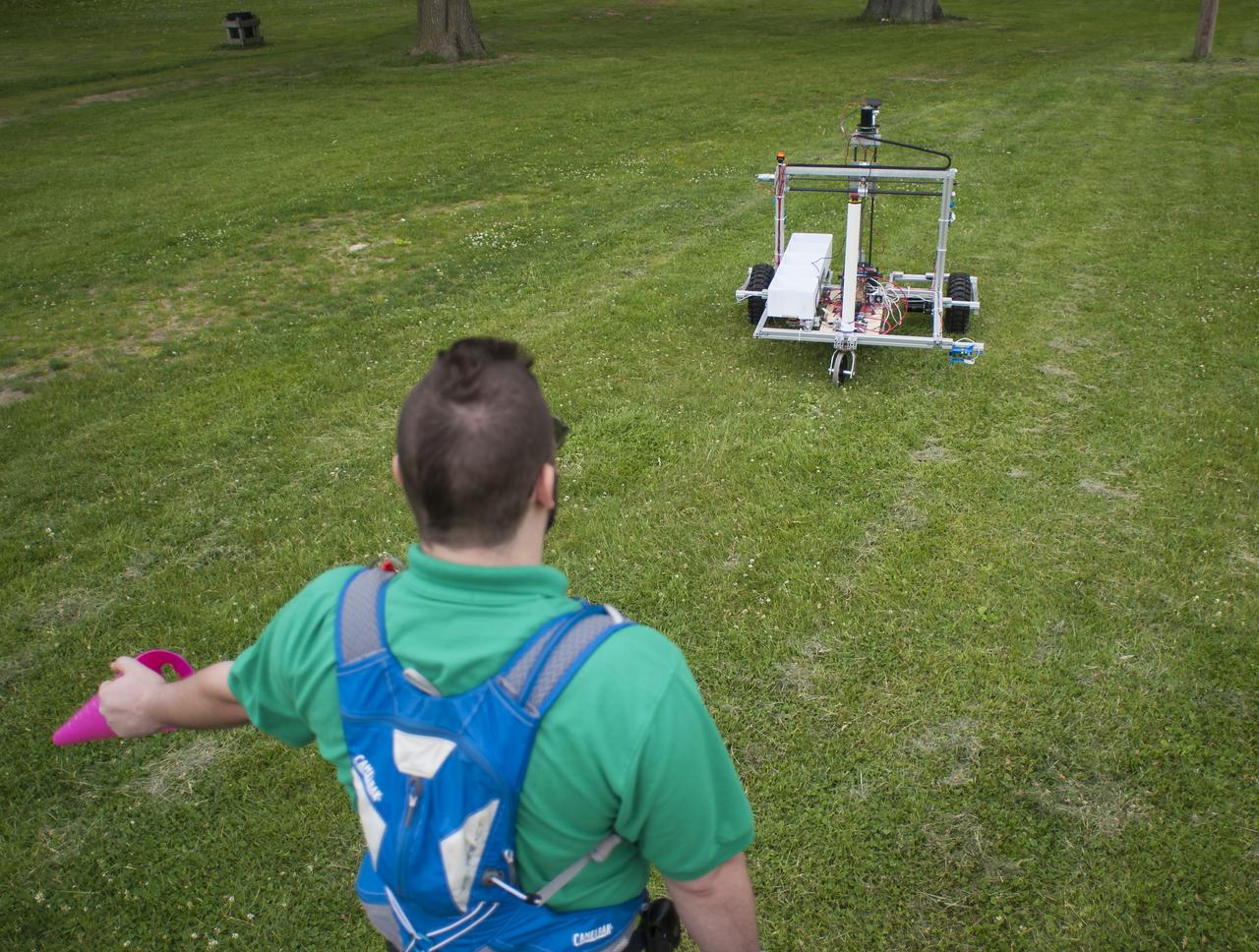
The Retrievers team robot is seen as it attempts the level one challenge the 2014 NASA Centennial Challenges Sample Return Robot Challenge, Wednesday, June 11, 2014, at the Worcester Polytechnic Institute (WPI) in Worcester, Mass. Eighteen teams are competing for a $1.5 million NASA prize purse. Teams will be required to demonstrate autonomous robots that can locate and collect samples from a wide and varied terrain, operating without human control. The objective of this NASA-WPI Centennial Challenge is to encourage innovations in autonomous navigation and robotics technologies. Innovations stemming from the challenge may improve NASA's capability to explore a variety of destinations in space, as well as enhance the nation's robotic technology for use in industries and applications on Earth. Photo Credit: (NASA/Joel Kowsky)
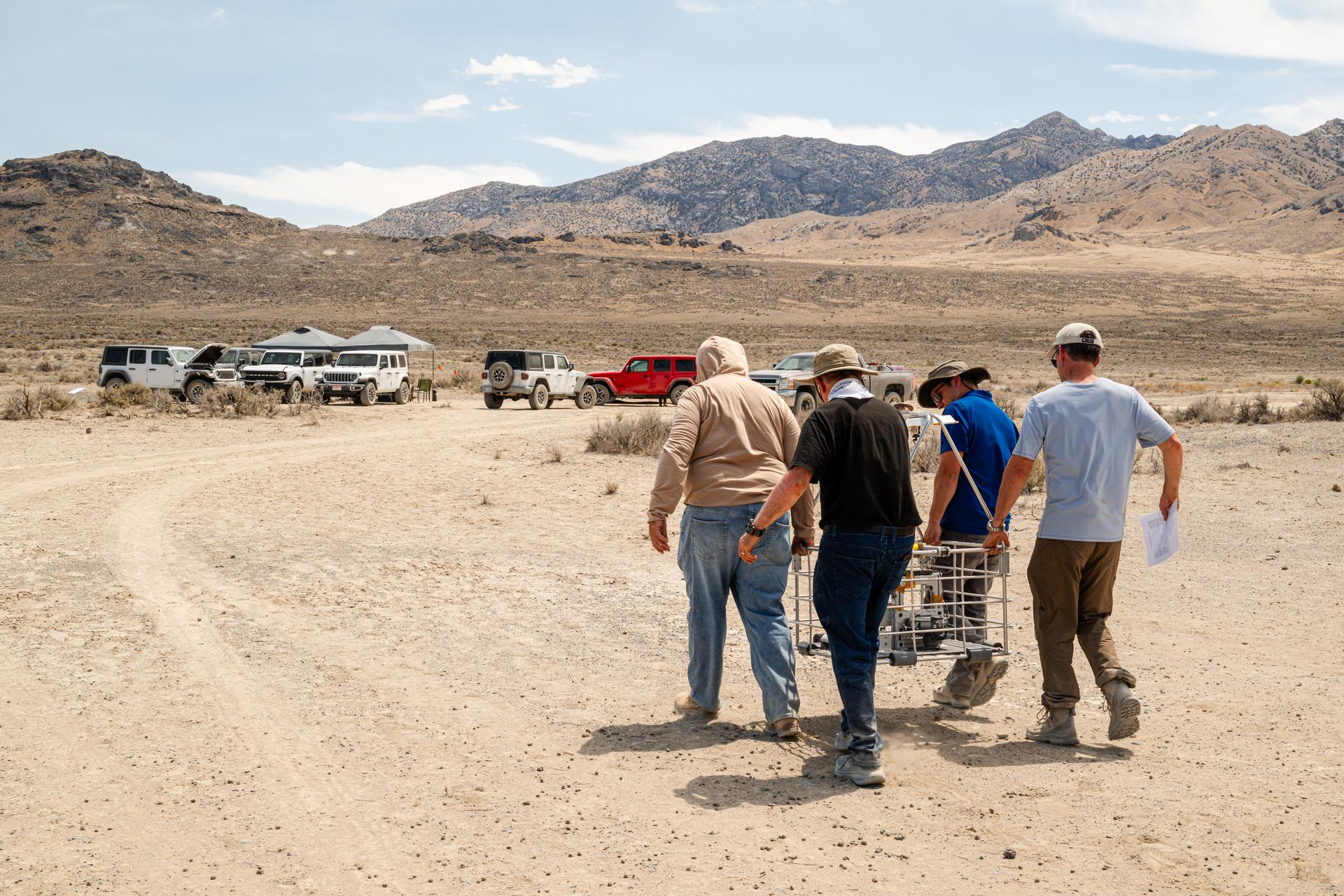
DAVINCI VADIX team carries the VADIX payload from the helicopter back to basecamp so they can retrieve flight data and get the payload back onto the helicopter for the next test flight at Crater Island, Utah, June 24, 2026. NASA/Mike Guinto

NASA Administrator Charles Bolden talks with a member of the Orion recovery team on board the USS Anchorage as the ship makes its way out to sea to retrieve a test version of the Orion spacecraft and try out tools and techniques used to recover it on Sept. 15, 2014. Part of Batch image transfer from Flickr.
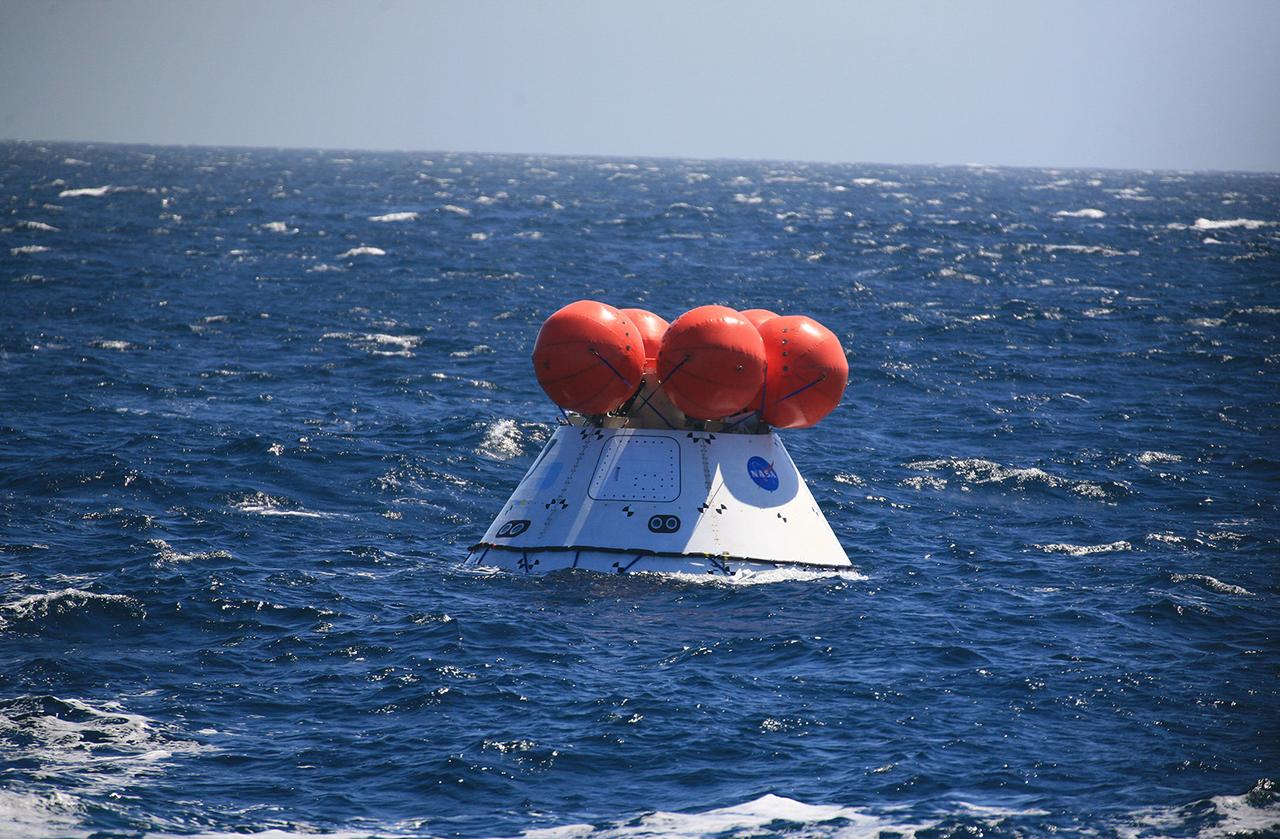
A test version of Orion floats in the Pacific Ocean, ready to be recovered by NASA and the US Navy on Sept. 17, 2014. The combined NASA/Navy team is testing tools and techniques that will be used to retrieve Orion when it splashes down following Exploration Flight Test-1 (EFT-1). Part of Batch image transfer from Flickr.
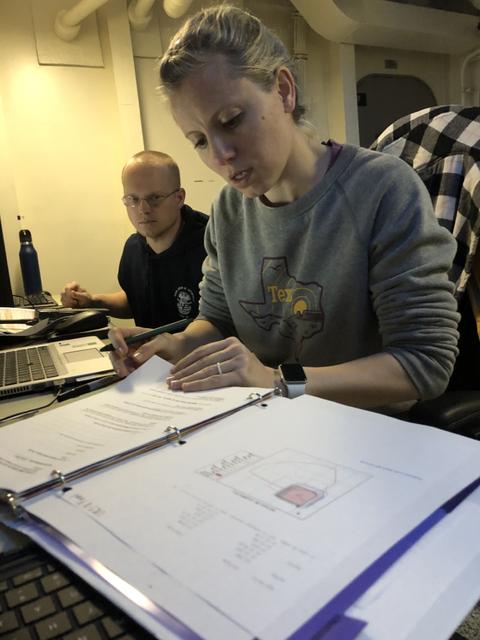
Sarah Manning, an aerospace engineer at NASA’s Johnson Space Center, is part of a team that operates “Sasquatch,” an important software tool created specifically for the agency’s Orion spacecraft. Sasquatch will be used to predict large footprints of the various debris that will be released from Orion before splashdown into the Pacific Ocean. The Landing and Recovery team, based out of Exploration Ground Systems at Kennedy Space Center in Florida, will be aboard a Navy ship, ready to retrieve Orion and some of the intentionally released debris.
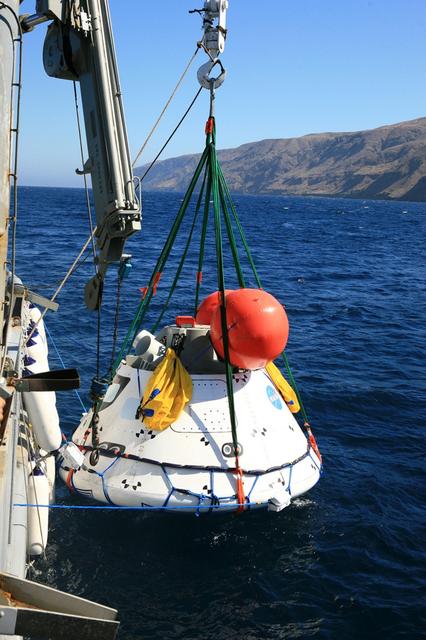
Recovery team members retrieve a test version of Orion from the Pacific Ocean using a crane on the Navy's USS Salvor on Sept. 13, 2014. A combined NASA and U.S. Navy team practiced recovery techniques off the coast of California over the course of the the week -- first with the Salvor's crane, then using the USS Anchorage's well deck -- in preparation for Exploration Flight Test-1 (EFT-1). Part of Batch image transfer from Flickr.
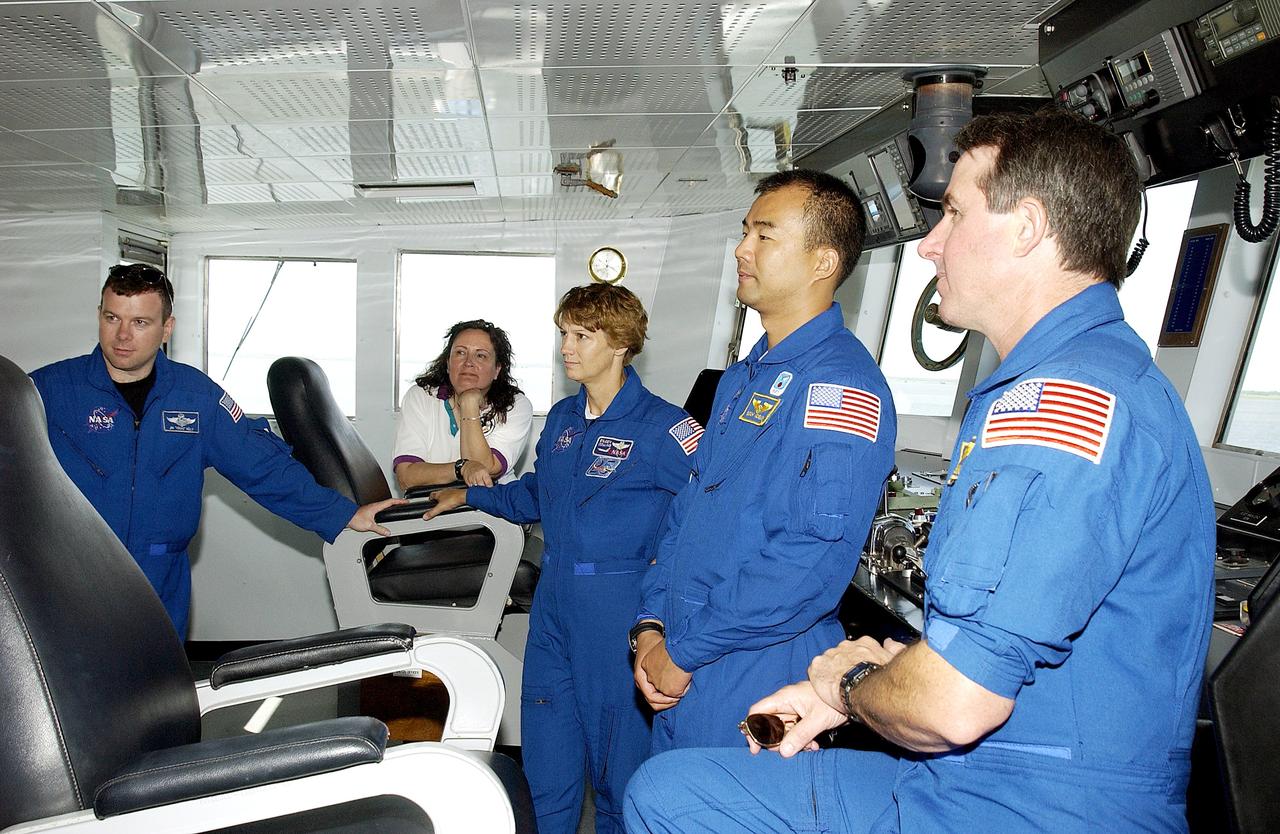
KENNEDY SPACE CENTER, FLA. - The STS-114 crew visit the bridge of the Liberty Star, one of two SRB Retrieval Ships. From left are Pilot James Kelly, Louise Kleba (with the Vehicle Integration Test Team (VITT) office), Commander Eileen Collins and Mission Specialists Soichi Noguchi and Stephen Robinson. Noguchi is with the Japanese space agency NASDA. On their mission, the crew will carry the MultiPurpose Logistics Module (MPLM) Raffaello and External Stowage Platform 2 to the International Space Station. The MPLM will contain supplies and equipment. Another goal of the mission is to remove and replace a Control Moment Gyro. Launch date for mission STS-114 is under review.

On Dec. 1, 2014, Milt Heflin briefs the Orion recovery team on board the U.S. Navy's USS Anchorage, which will be used to retrieve Orion after it splashes down in the Pacific Ocean following Exploration Flight Test-1 (EFT-1) on Dec. 4. Heflin began his 46-year-long NASA career as part of the team that recovered the Apollo capsules from the Pacific. Now retired from NASA, he is acting as a consultant for the Orion team through Red Canyon Software, Inc. Part of Batch image transfer from Flickr.
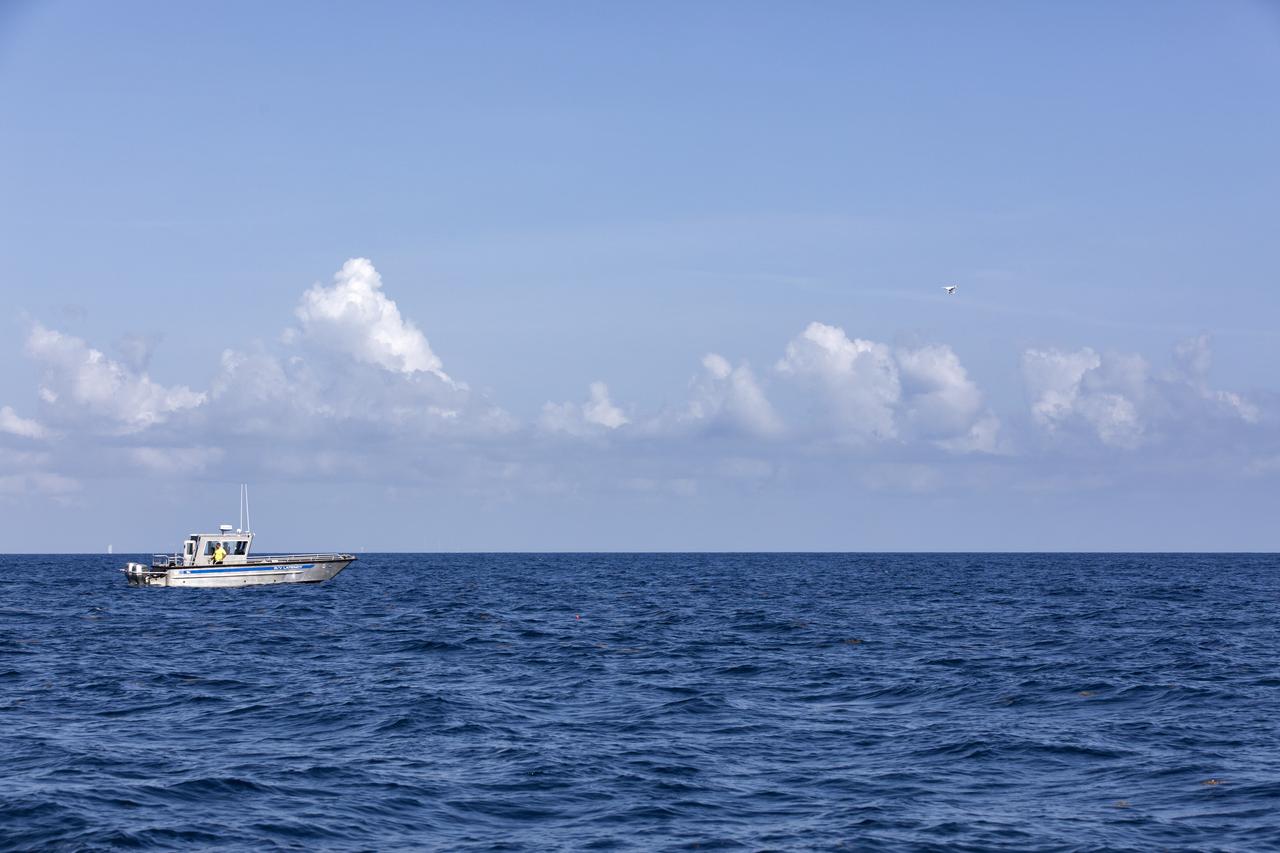
Members of the Ascent Abort-2 (AA-2) Flight Test team perform a drop test of data recording devices about 10 miles off the coast of NASA’s Kennedy Space Center in Florida on Wednesday, Aug. 8, 2018. These devices, called Ejectable Data Recorders (EDRs), were tossed out of a helicopter hovering 5,000 feet over the Atlantic Ocean and retrieved by recovery boats. The AA-2 Flight Test team is evaluating how the systems in the devices react to elements encountered from the sky to the ocean. In April 2019, the EDRs will eject from the Orion test article during a scheduled test of the spacecraft’s Launch Abort System (LAS).
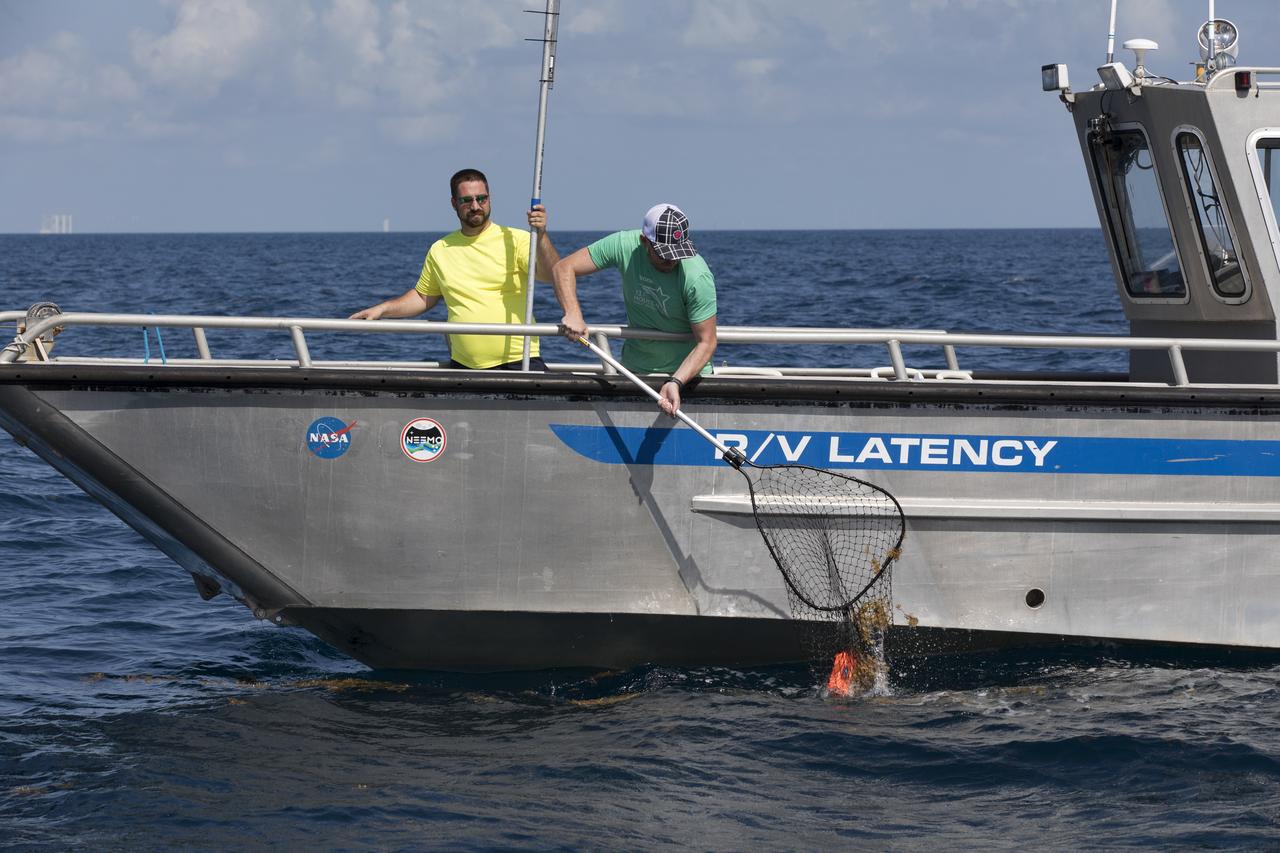
Members of the Ascent Abort-2 (AA-2) Flight Test team perform a drop test of data recording devices about 10 miles off the coast of NASA’s Kennedy Space Center in Florida on Wednesday, Aug. 8, 2018. These devices, called Ejectable Data Recorders (EDRs), were tossed out of a helicopter hovering 5,000 feet over the Atlantic Ocean and retrieved by recovery boats. The AA-2 Flight Test team is evaluating how the systems in the devices react to elements encountered from the sky to the ocean. In April 2019, the EDRs will eject from the Orion test article during a scheduled test of the spacecraft’s Launch Abort System (LAS).

Members of the Ascent Abort-2 (AA-2) Flight Test team perform a drop test of data recording devices about 10 miles off the coast of NASA’s Kennedy Space Center in Florida on Wednesday, Aug. 8, 2018. These devices, called Ejectable Data Recorders (EDRs), were tossed out of a helicopter hovering 5,000 feet over the Atlantic Ocean and retrieved by recovery boats. The AA-2 Flight Test team is evaluating how the systems in the devices react to elements encountered from the sky to the ocean. In April 2019, the EDRs will eject from the Orion test article during a scheduled test of the spacecraft’s Launch Abort System (LAS).
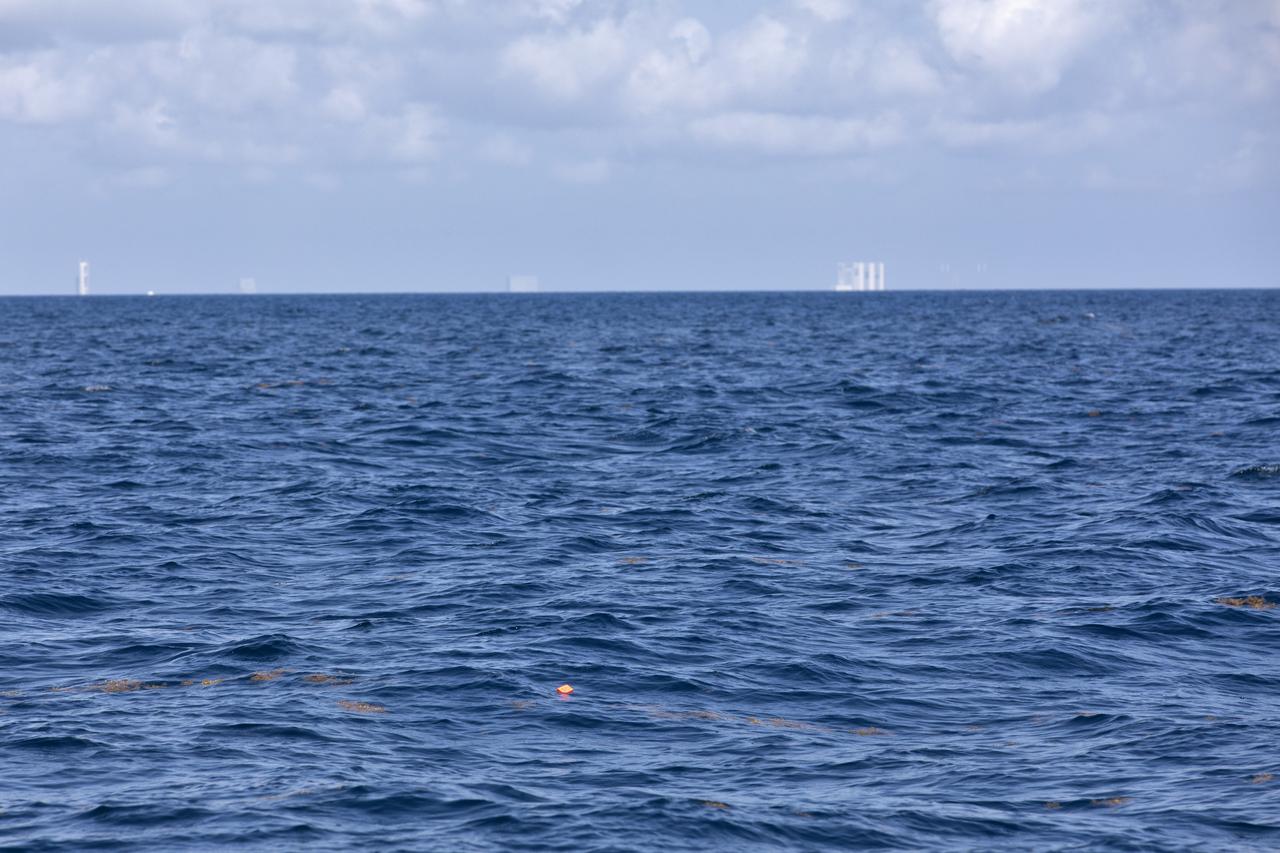
Members of the Ascent Abort-2 (AA-2) Flight Test team perform a drop test of data recording devices about 10 miles off the coast of NASA’s Kennedy Space Center in Florida on Wednesday, Aug. 8, 2018. These devices, called Ejectable Data Recorders (EDRs), were tossed out of a helicopter hovering 5,000 feet over the Atlantic Ocean and retrieved by recovery boats. The AA-2 Flight Test team is evaluating how the systems in the devices react to elements encountered from the sky to the ocean. In April 2019, the EDRs will eject from the Orion test article during a scheduled test of the spacecraft’s Launch Abort System (LAS).
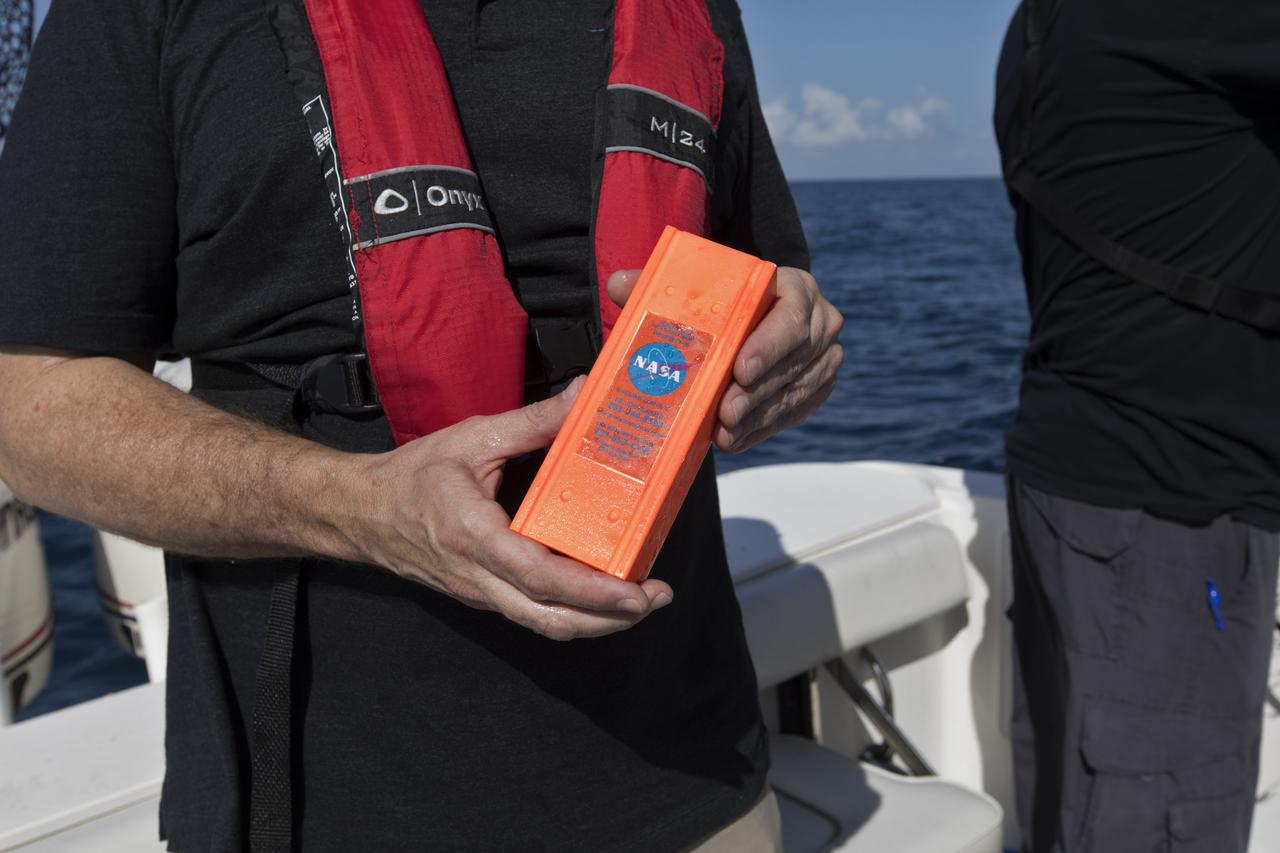
Members of the Ascent Abort-2 (AA-2) Flight Test team perform a drop test of data recording devices about 10 miles off the coast of NASA’s Kennedy Space Center in Florida on Wednesday, Aug. 8, 2018. These devices, called Ejectable Data Recorders (EDRs), were tossed out of a helicopter hovering 5,000 feet over the Atlantic Ocean and retrieved by recovery boats. The AA-2 Flight Test team is evaluating how the systems in the devices react to elements encountered from the sky to the ocean. In April 2019, the EDRs will eject from the Orion test article during a scheduled test of the spacecraft’s Launch Abort System (LAS).
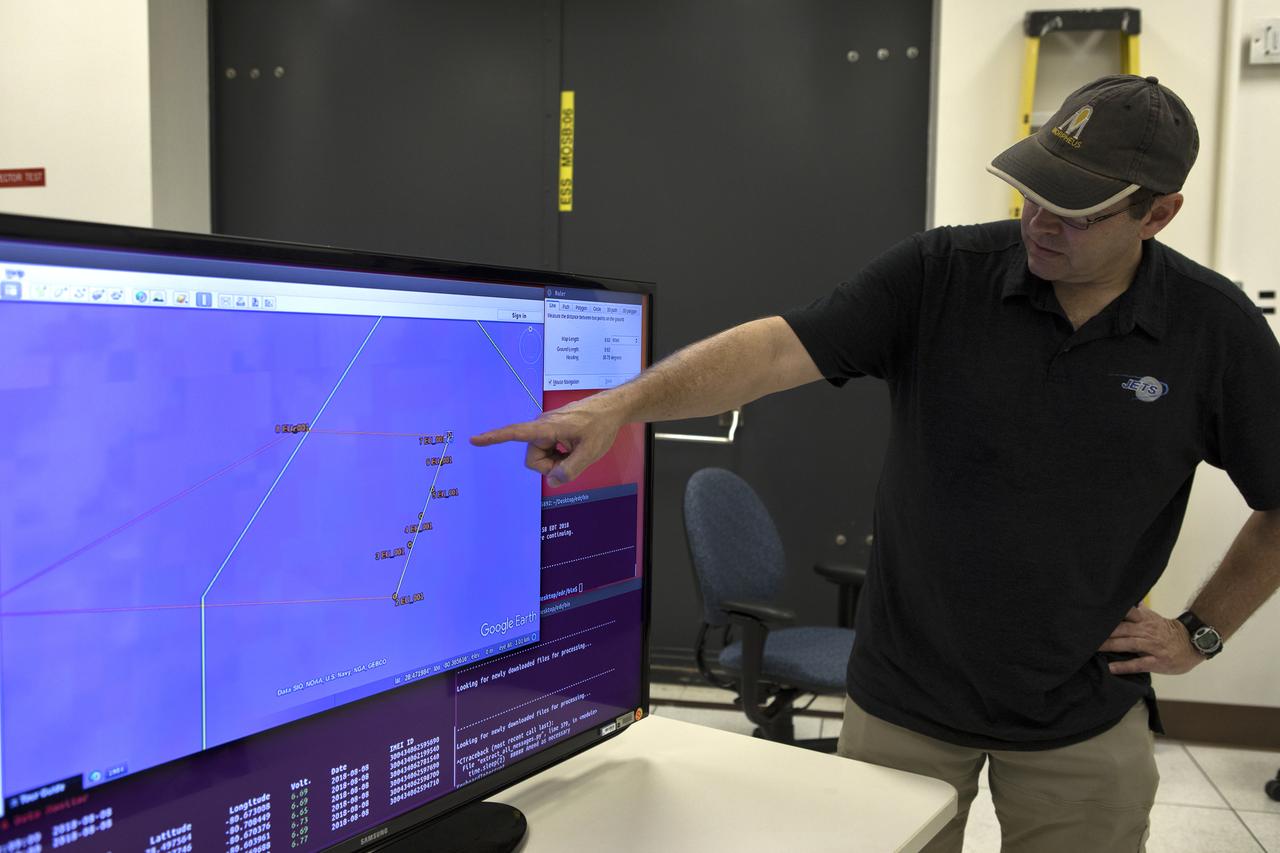
Members of the Ascent Abort-2 (AA-2) Flight Test team perform a drop test of data recording devices about 10 miles off the coast of NASA’s Kennedy Space Center in Florida on Wednesday, Aug. 8, 2018. These devices, called Ejectable Data Recorders (EDRs), were tossed out of a helicopter hovering 5,000 feet over the Atlantic Ocean and retrieved by recovery boats. The AA-2 Flight Test team is evaluating how the systems in the devices react to elements encountered from the sky to the ocean. In April 2019, the EDRs will eject from the Orion test article during a scheduled test of the spacecraft’s Launch Abort System (LAS).
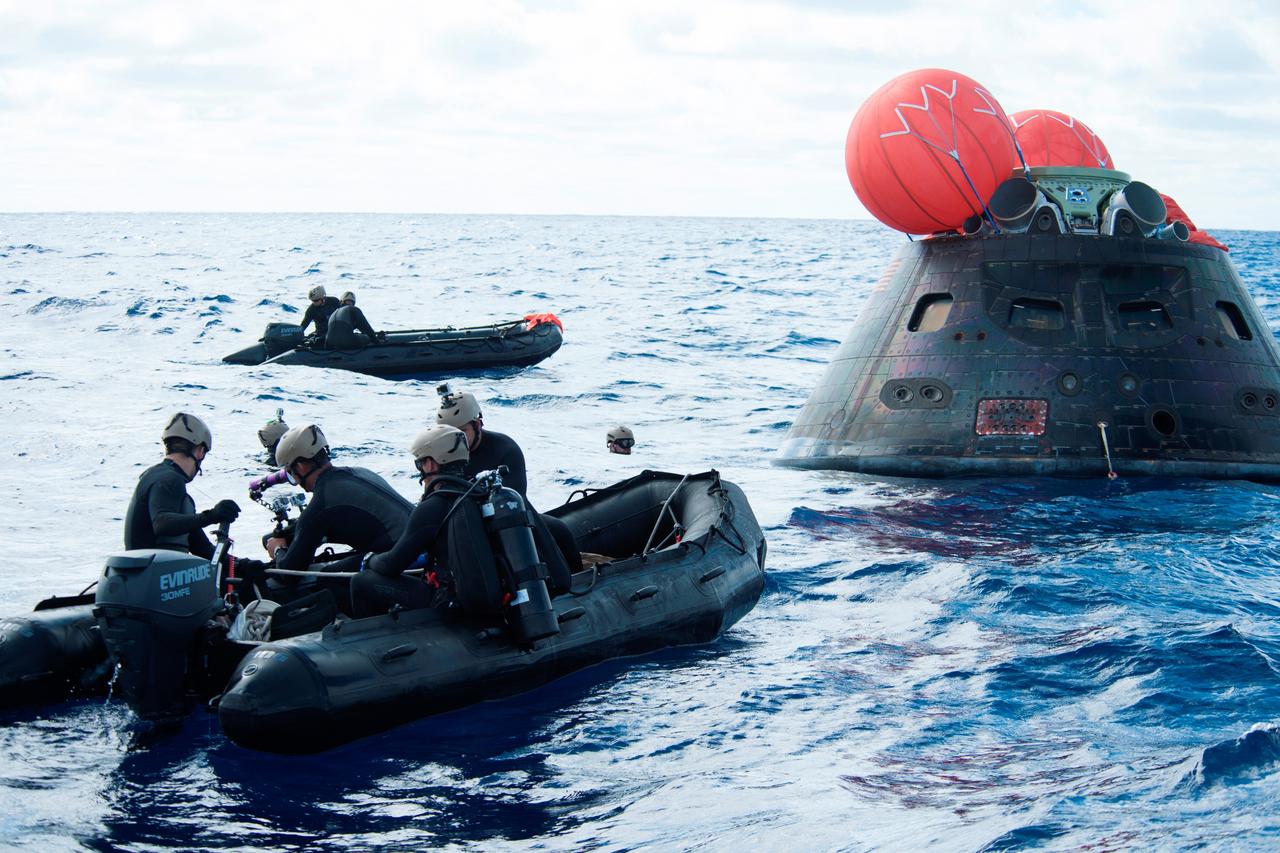
Recovery team members in rigid-hulled inflatable boats approach NASA's Orion spacecraft following its splashdown in the Pacific Ocean. Orion launched into space on a two-orbit, 4.5-test flight at 7:05 am EST on Dec. 5, and returned safely to Earth, where a combined team from NASA, the Navy and Orion prime contractor Lockheed Martin retrieved it for return to shore. It's now being transported back to shore on board the U.S. Navy's USS Anchorage. It is expected to be off loaded at Naval Base San Diego on Monday. Part of Batch image transfer from Flickr.
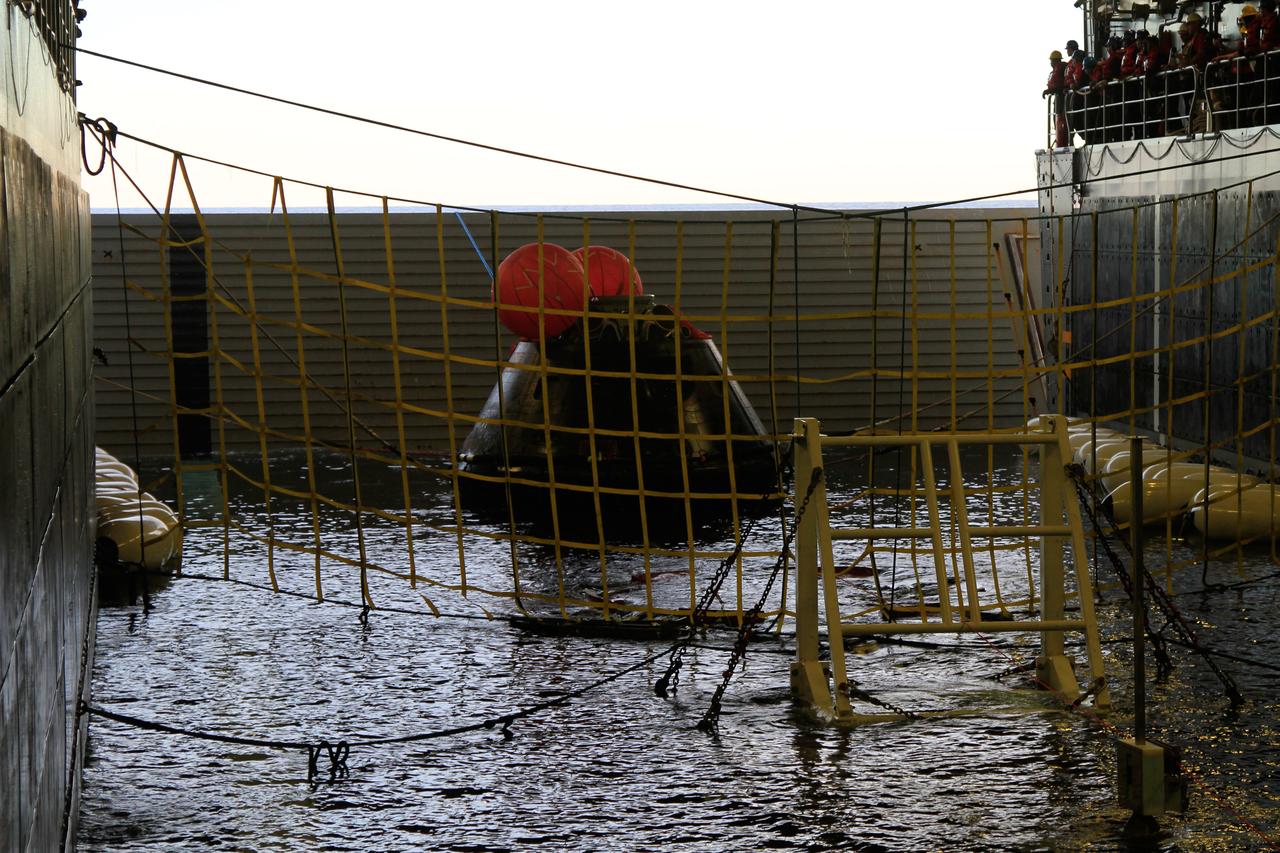
NASA’s Orion spacecraft is pulled safely into the well deck of the U.S. Navy’s USS Anchorage, following its splashdown in the Pacific Ocean. Orion launched into space on a two-orbit, 4.5-test flight at 7:05 am EST on Dec. 5, and returned safely to Earth, where a combined team from NASA, the Navy and Orion prime contractor Lockheed Martin retrieved it for return to shore. Over the next several days, the team will perform an initial check out of Orion while the Anchorage transports the spacecraft back to shore. It is expected to be off loaded at Naval Base San Diego on Monday. Part of Batch image transfer from Flickr.
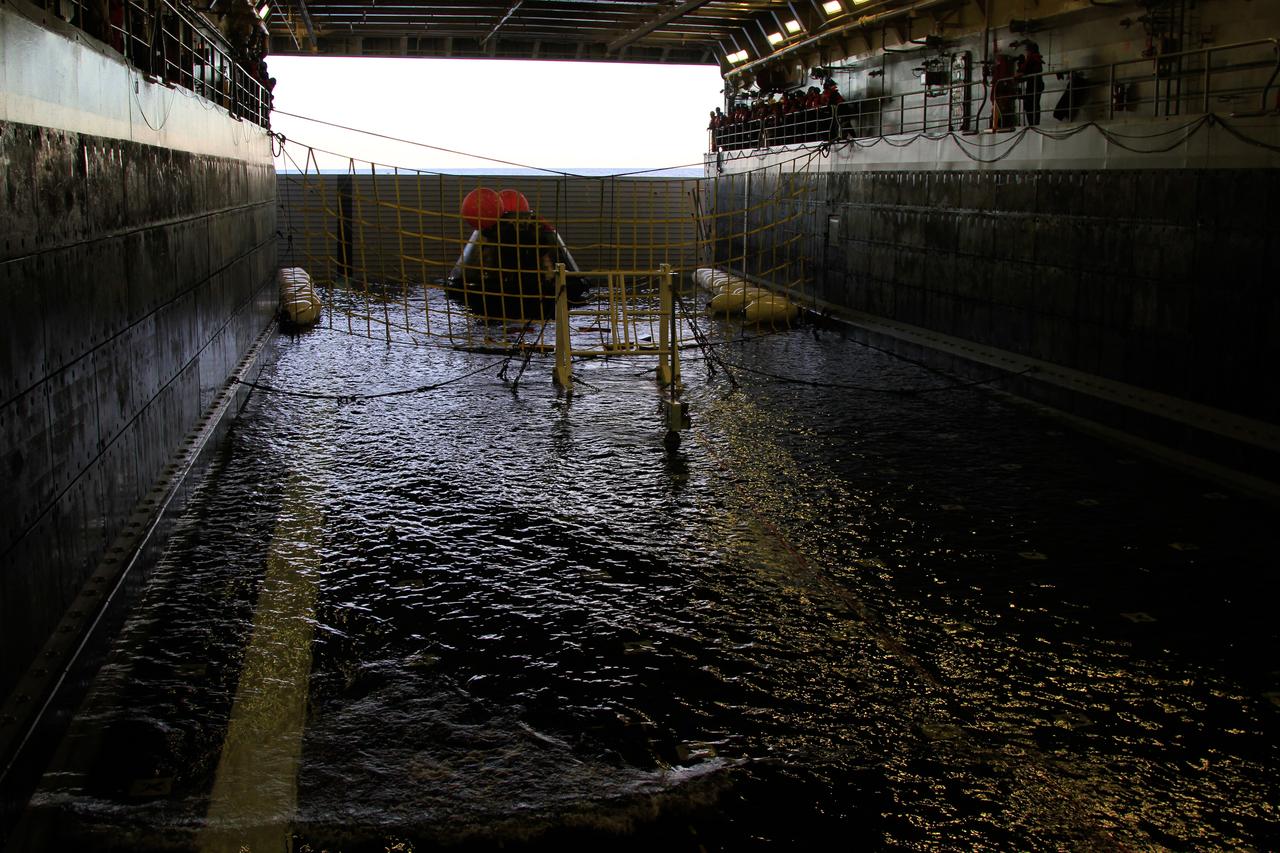
NASA’s Orion spacecraft is pulled safely into the well deck of the U.S. Navy’s USS Anchorage, following its splashdown in the Pacific Ocean. Orion launched into space on a two-orbit, 4.5-test flight at 7:05 am EST on Dec. 5, and returned safely to Earth, where a combined team from NASA, the Navy and Orion prime contractor Lockheed Martin retrieved it for return to shore. Over the next several days, the team will perform an initial check out of Orion while the Anchorage transports the spacecraft back to shore. It is expected to be off loaded at Naval Base San Diego on Monday. Part of Batch image transfer from Flickr.
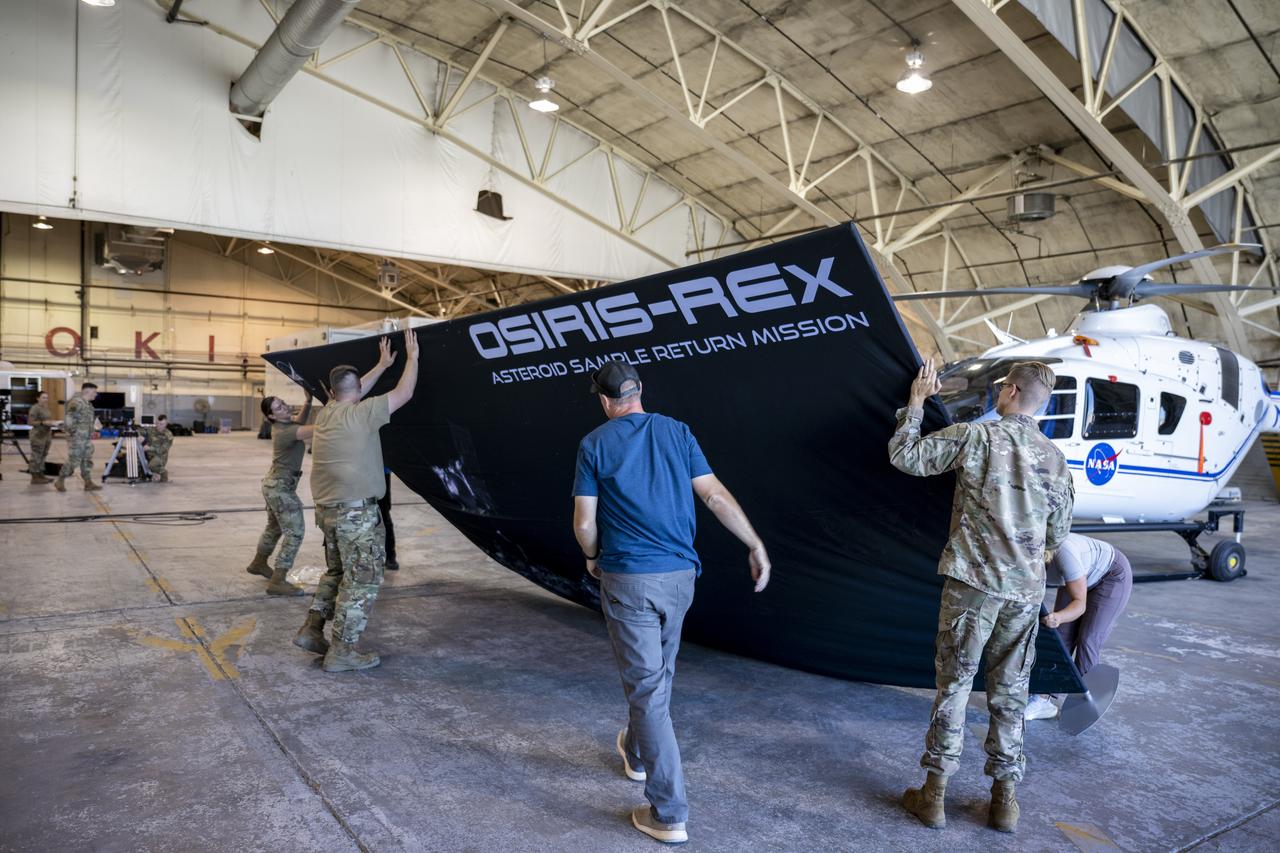
NASA communications teams and members of the Air Force’s 2nd Audiovisual Squadron prepare a backdrop, Sunday, Aug. 27, 2023, at Michael Army Air Field near Dugway, Utah. Teams met in August for rehearsals in preparation for the retrieval of the sample return capsule from NASA's OSIRIS-REx mission. The sample was collected from the asteroid Bennu in October 2020 by NASA’s OSIRIS-REx spacecraft and will return to Earth on September 24th, landing under parachute at the Department of Defense's Utah Test and Training Range. Photo Credit: (NASA/Keegan Barber)
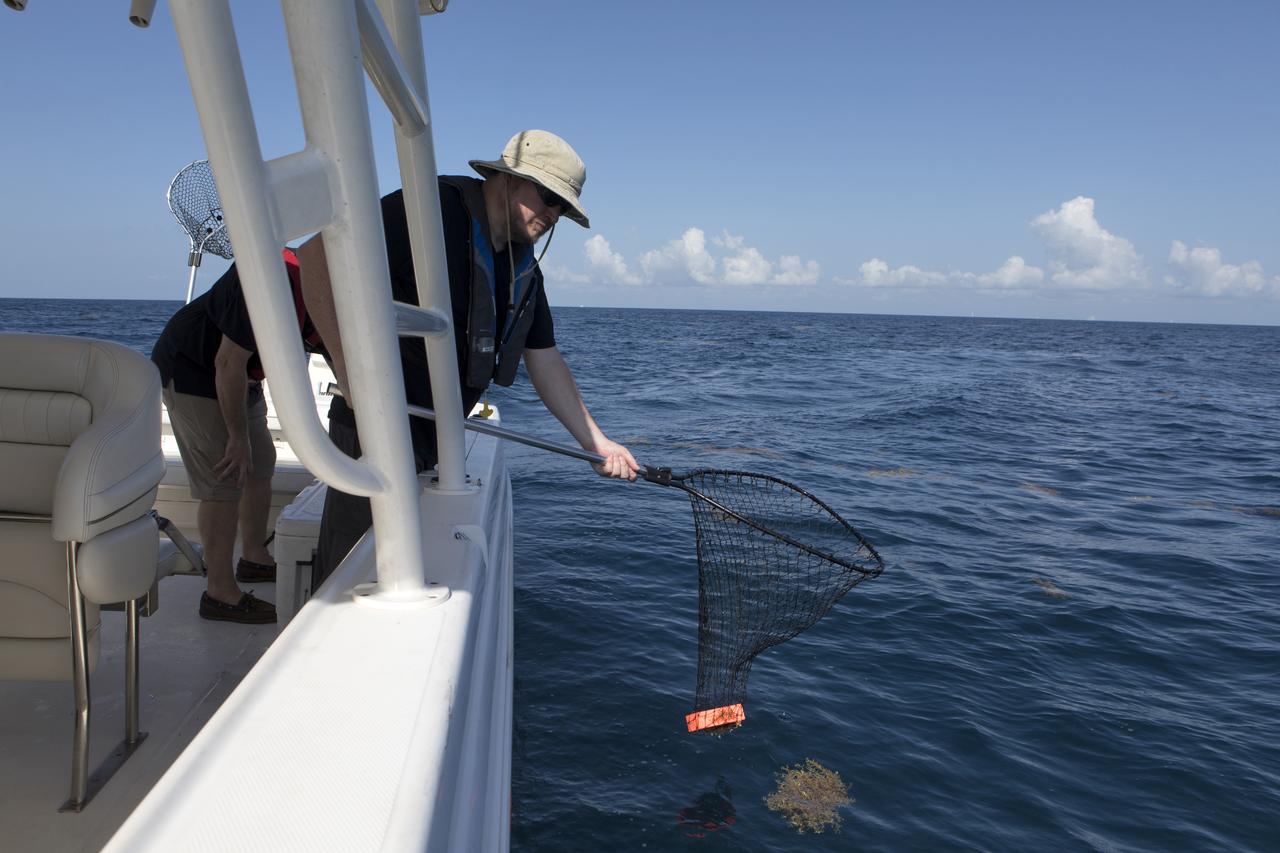
Members of the Ascent Abort-2 (AA-2) Flight Test team perform a drop test of data recording devices about 10 miles off the coast of NASA’s Kennedy Space Center in Florida on Wednesday, Aug. 8, 2018. These devices, called Ejectable Data Recorders (EDRs), were tossed out of a helicopter hovering 5,000 feet over the Atlantic Ocean and retrieved by recovery boats. The AA-2 Flight Test team is evaluating how the systems in the devices react to elements encountered from the sky to the ocean. In April 2019, the EDRs will eject from the Orion test article during a scheduled test of the spacecraft’s Launch Abort System (LAS).
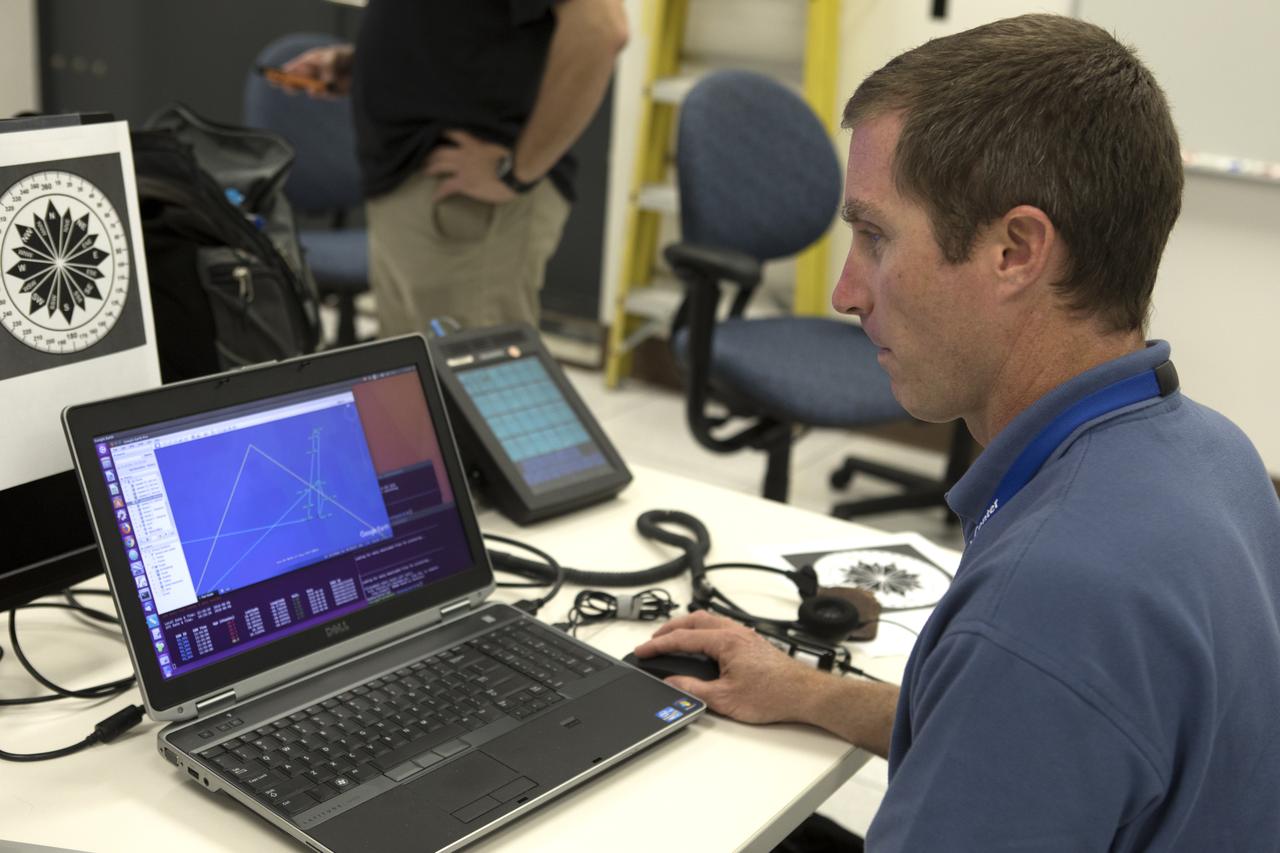
Members of the Ascent Abort-2 (AA-2) Flight Test team perform a drop test of data recording devices about 10 miles off the coast of NASA’s Kennedy Space Center in Florida on Wednesday, Aug. 8, 2018. These devices, called Ejectable Data Recorders (EDRs), were tossed out of a helicopter hovering 5,000 feet over the Atlantic Ocean and retrieved by recovery boats. The AA-2 Flight Test team is evaluating how the systems in the devices react to elements encountered from the sky to the ocean. In April 2019, the EDRs will eject from the Orion test article during a scheduled test of the spacecraft’s Launch Abort System (LAS).
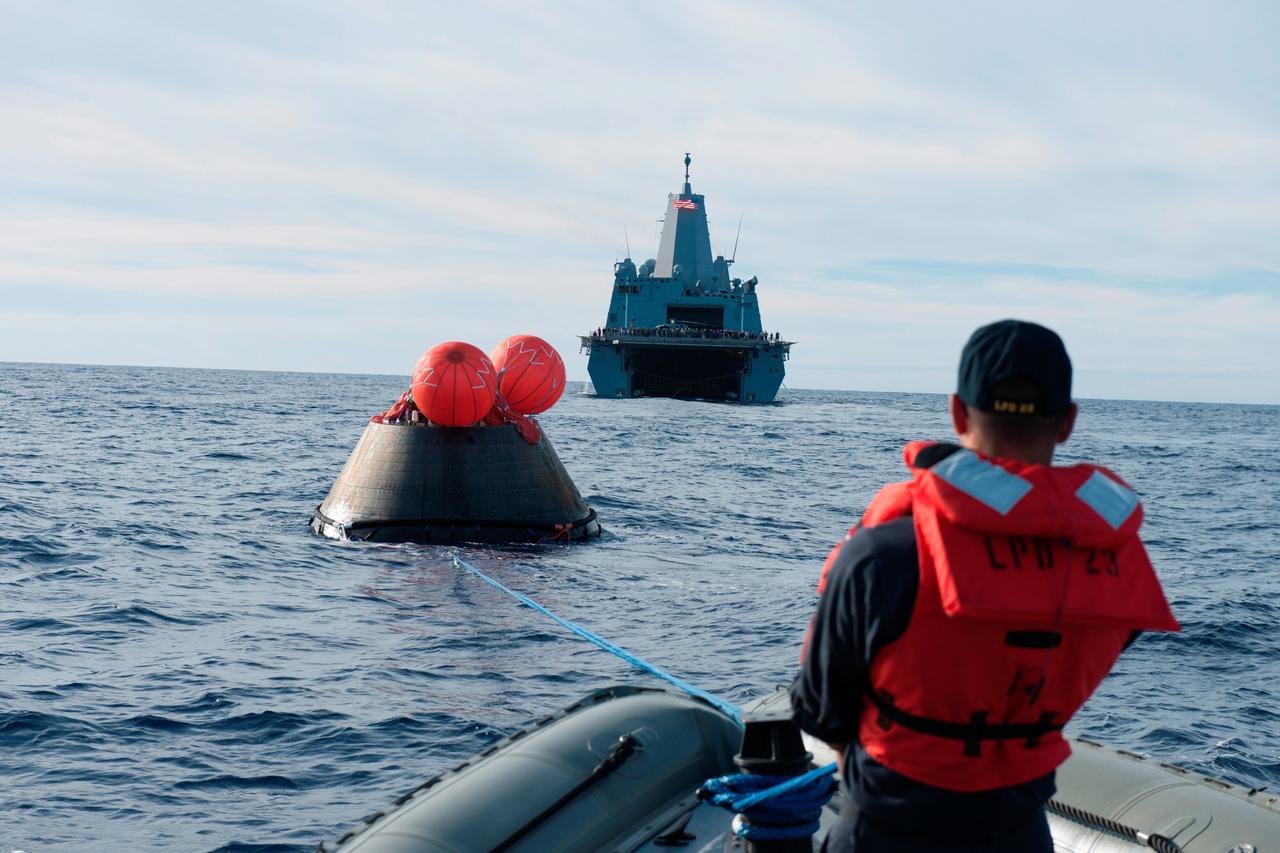
Recovery team members in a Zodiac boat help guide NASA's Orion spacecraft into the well deck of the USS Anchorage following its splashdown in the Pacific Ocean. Orion launched into space on a two-orbit, 4.5-test flight at 7:05 am EST on Dec. 5, and returned safely to Earth, where a combined team from NASA, the Navy and Orion prime contractor Lockheed Martin retrieved it for return to shore. It's now being transported back to shore on board the Anchorage. It is expected to be off loaded at Naval Base San Diego on Monday. Part of Batch image transfer from Flickr.
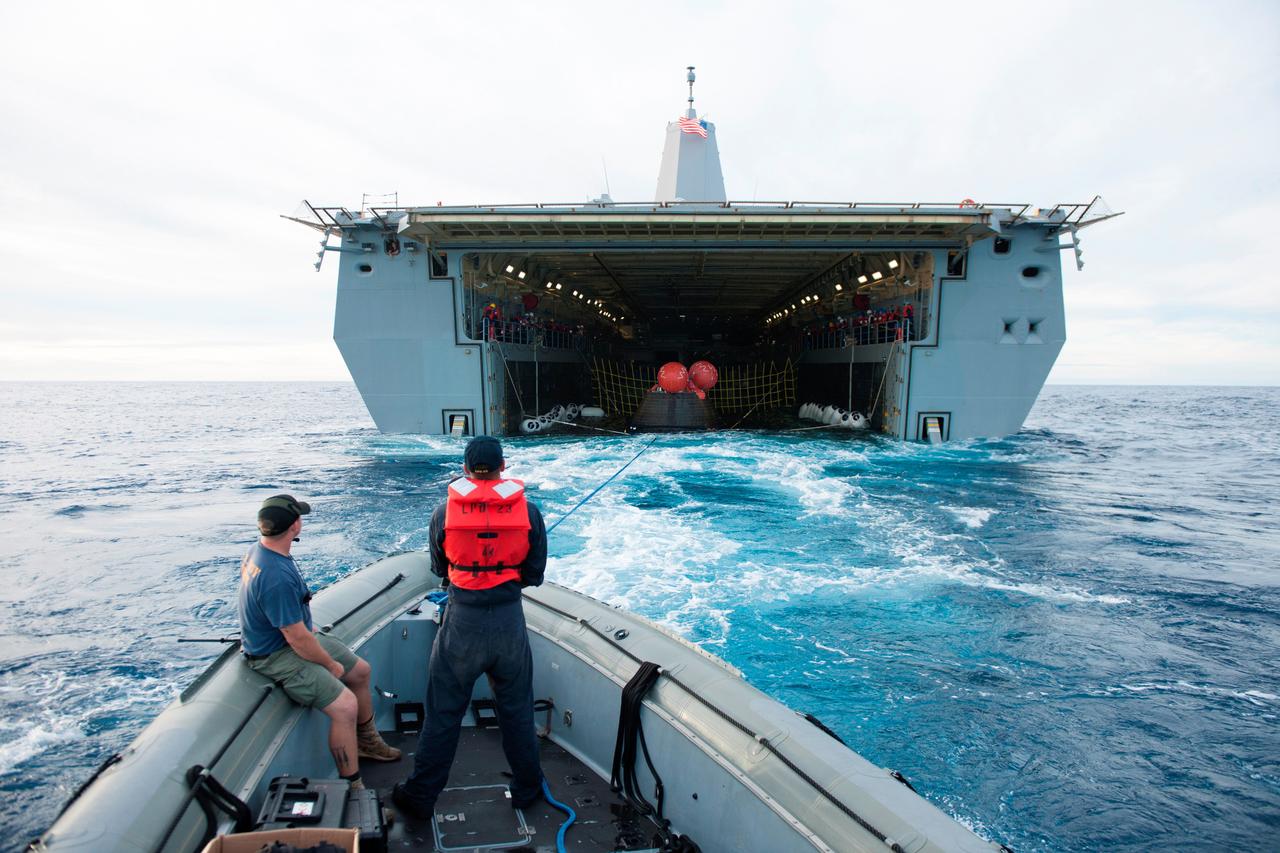
Recovery team members in a Zodiac boat help guide NASA's Orion spacecraft into the well deck of the USS Anchorage following its splashdown in the Pacific Ocean. Orion launched into space on a two-orbit, 4.5-test flight at 7:05 am EST on Dec. 5, and returned safely to Earth, where a combined team from NASA, the Navy and Orion prime contractor Lockheed Martin retrieved it for return to shore. It's now being transported back to shore on board the Anchorage. It is expected to be off loaded at Naval Base San Diego on Monday. Part of Batch image transfer from Flickr.
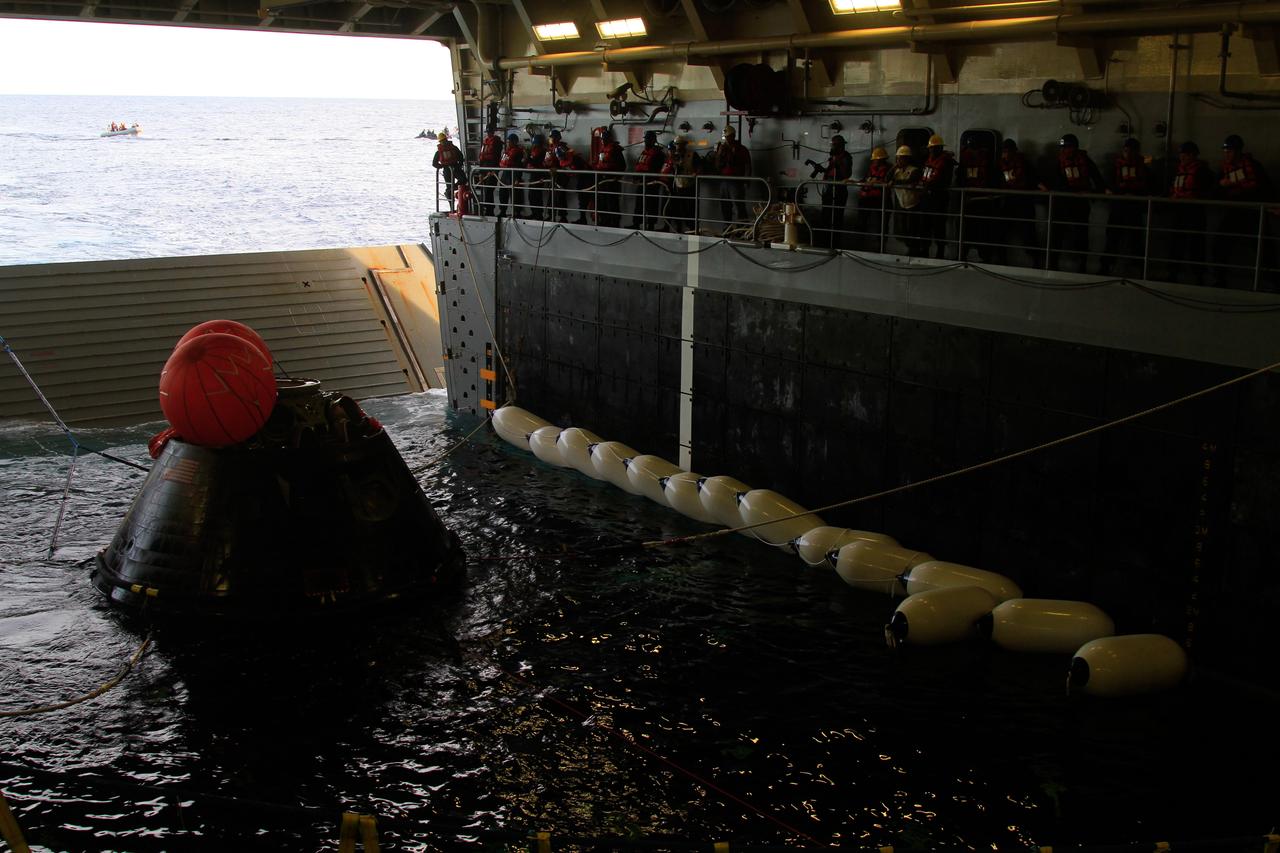
NASA’s Orion spacecraft is pulled safely into the well deck of the U.S. Navy’s USS Anchorage, following its splashdown in the Pacific Ocean. Orion launched into space on a two-orbit, 4.5-test flight at 7:05 am EST on Dec. 5, and returned safely to Earth, where a combined team from NASA, the Navy and Orion prime contractor Lockheed Martin retrieved it for return to shore. Over the next several days, the team will perform an initial check out of Orion while the Anchorage transports the spacecraft back to shore. It is expected to be off loaded at Naval Base San Diego on Monday. Part of Batch image transfer from Flickr.
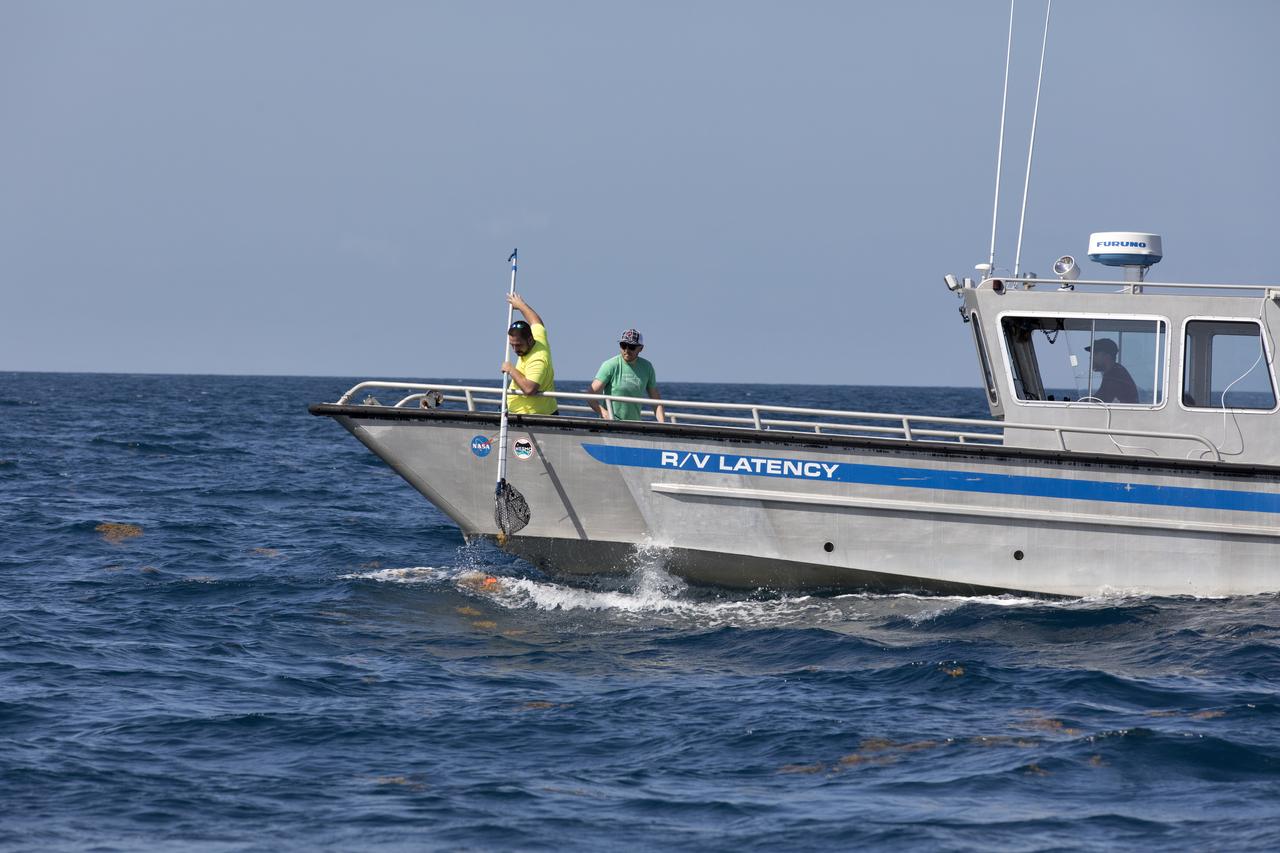
Members of the Ascent Abort-2 (AA-2) Flight Test team perform a drop test of data recording devices about 10 miles off the coast of NASA’s Kennedy Space Center in Florida on Wednesday, Aug. 8, 2018. These devices, called Ejectable Data Recorders (EDRs), were tossed out of a helicopter hovering 5,000 feet over the Atlantic Ocean and retrieved by recovery boats. The AA-2 Flight Test team is evaluating how the systems in the devices react to elements encountered from the sky to the ocean. In April 2019, the EDRs will eject from the Orion test article during a scheduled test of the spacecraft’s Launch Abort System (LAS).
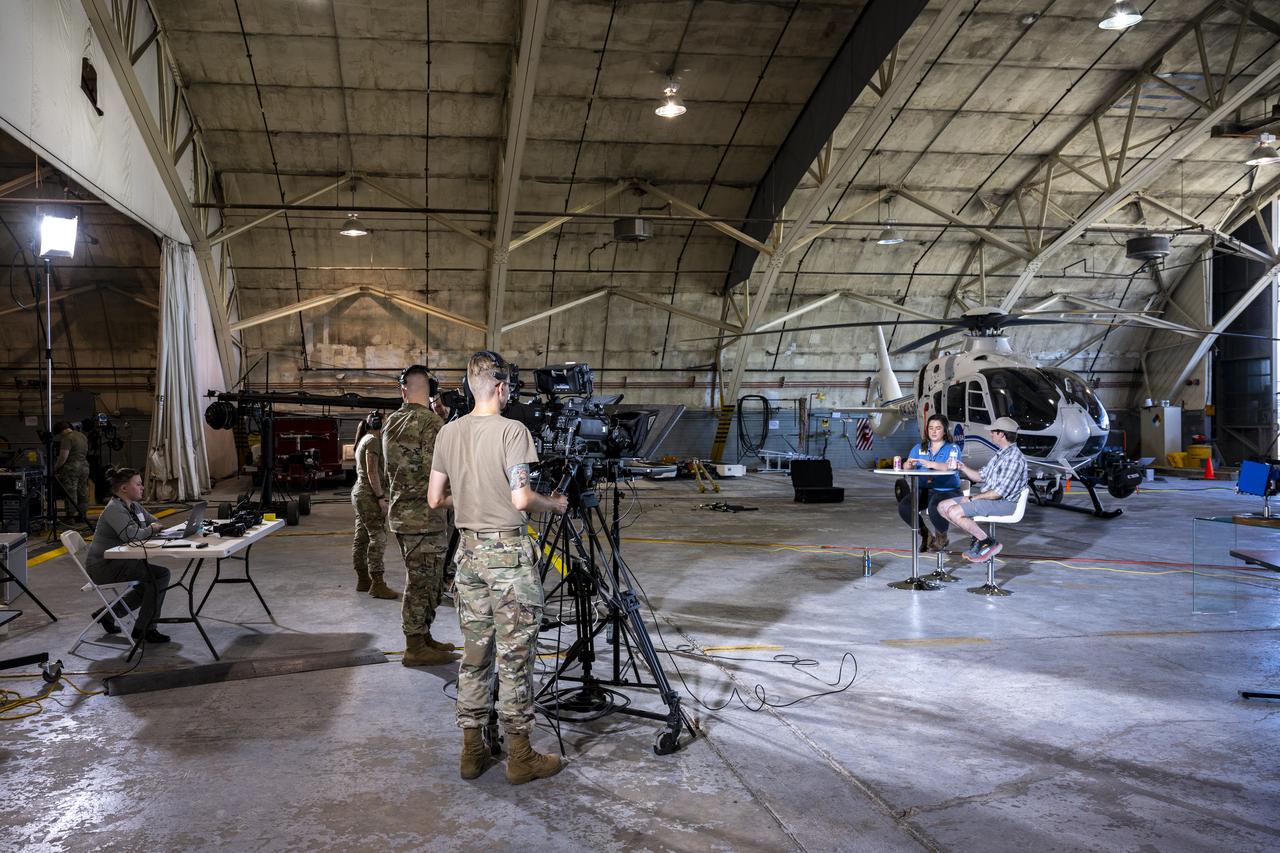
NASA communications teams and members of the Air Force’s 2nd Audiovisual Squadron participate in television rehearsals, Monday, Aug. 28, 2023, at Michael Army Air Field near Dugway, Utah. Teams met in August for rehearsals in preparation for the retrieval of the sample return capsule from NASA's OSIRIS-REx mission. The sample was collected from the asteroid Bennu in October 2020 by NASA’s OSIRIS-REx spacecraft and will return to Earth on September 24th, landing under parachute at the Department of Defense's Utah Test and Training Range. Photo Credit: (NASA/Keegan Barber)

Members of the Ascent Abort-2 (AA-2) Flight Test team perform a drop test of data recording devices about 10 miles off the coast of NASA’s Kennedy Space Center in Florida on Wednesday, Aug. 8, 2018. These devices, called Ejectable Data Recorders (EDRs), were tossed out of a helicopter hovering 5,000 feet over the Atlantic Ocean and retrieved by recovery boats. The AA-2 Flight Test team is evaluating how the systems in the devices react to elements encountered from the sky to the ocean. In April 2019, the EDRs will eject from the Orion test article during a scheduled test of the spacecraft’s Launch Abort System (LAS).
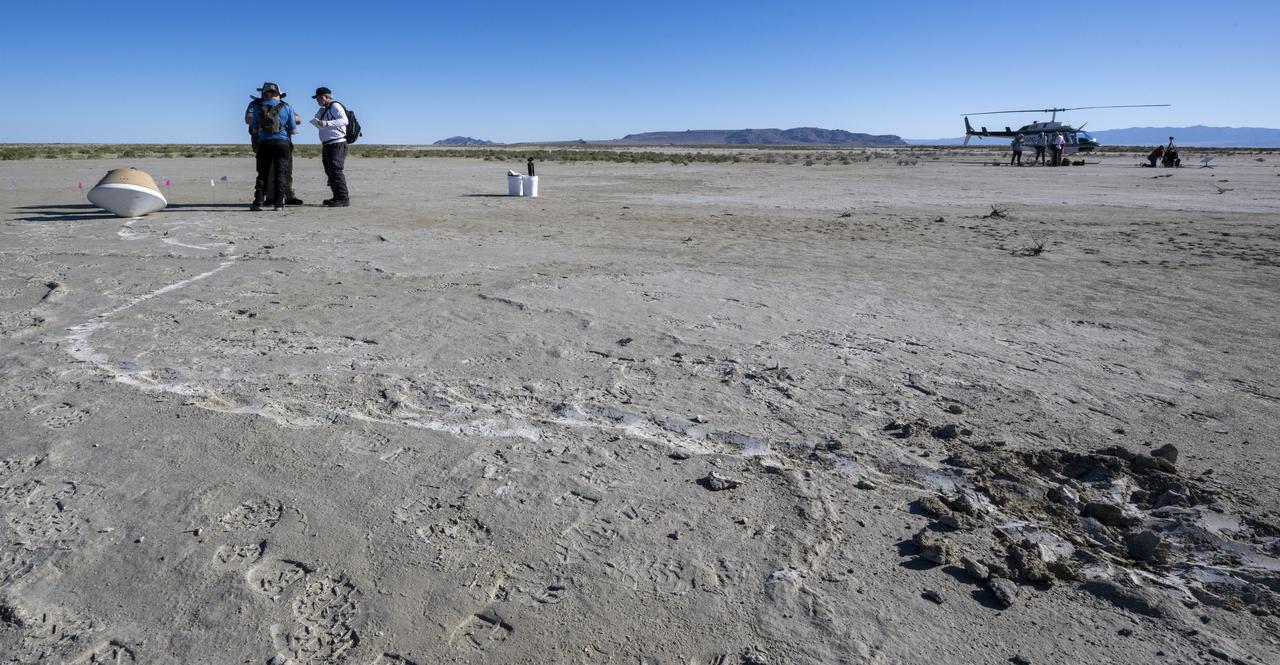
Recovery teams participate in field rehearsals in preparation for the retrieval of the sample return capsule from NASA's OSIRIS-REx mission, Tuesday, Aug. 29, 2023, at the Department of Defense's Utah Test and Training Range. The sample was collected from the asteroid Bennu in October 2020 by NASA’s OSIRIS-REx spacecraft and will return to Earth on September 24th, landing under parachute at the Utah Test and Training Range. Photo Credit: (NASA/Keegan Barber)
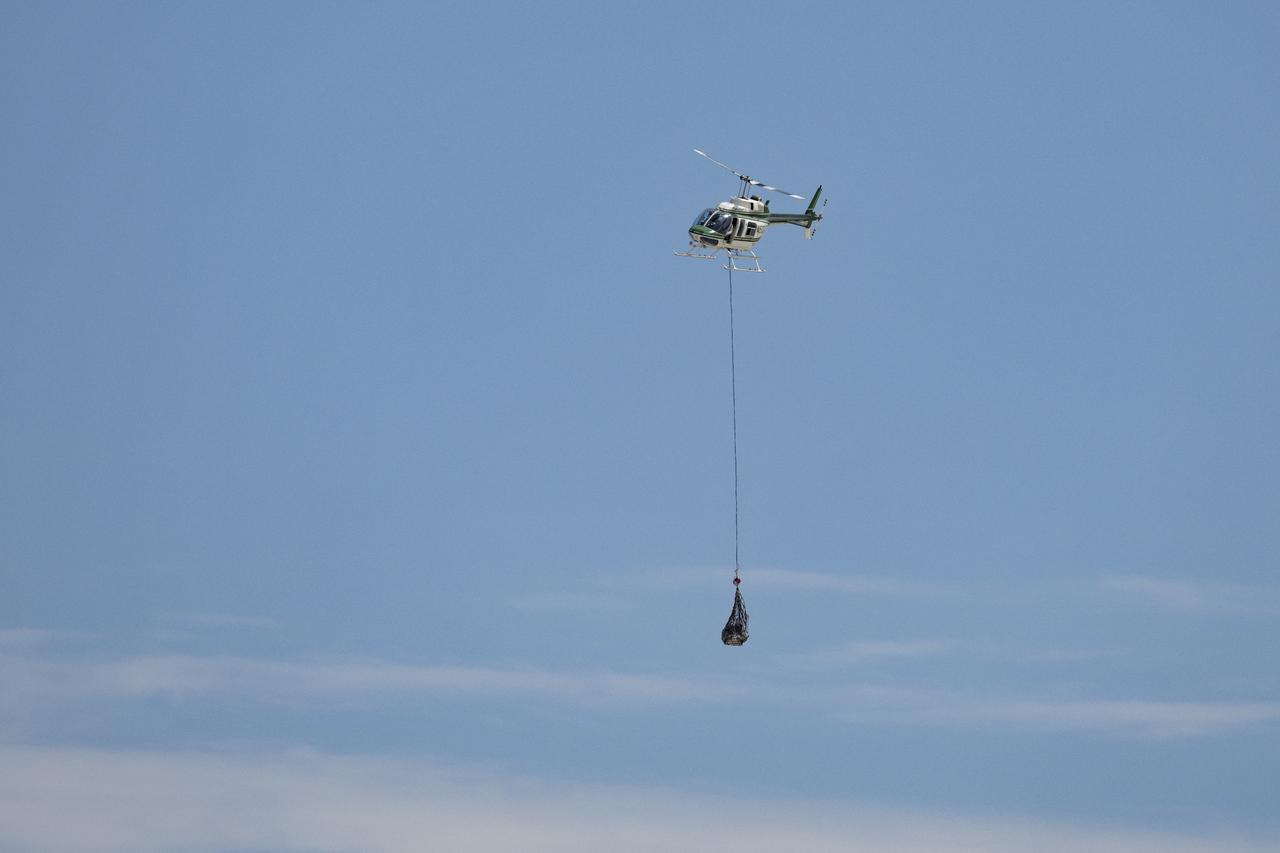
Recovery teams participate in helicopter training in preparation for the retrieval of the sample return capsule from NASA's OSIRIS-REx mission, Wednesday, July 19, 2023, at the Department of Defense's Utah Test and Training Range. The sample was collected from the asteroid Bennu in October 2020 by NASA’s OSIRIS-REx spacecraft and will return to Earth on September 24th, landing under parachute at the Utah Test and Training Range. Photo Credit: (NASA/Keegan Barber)
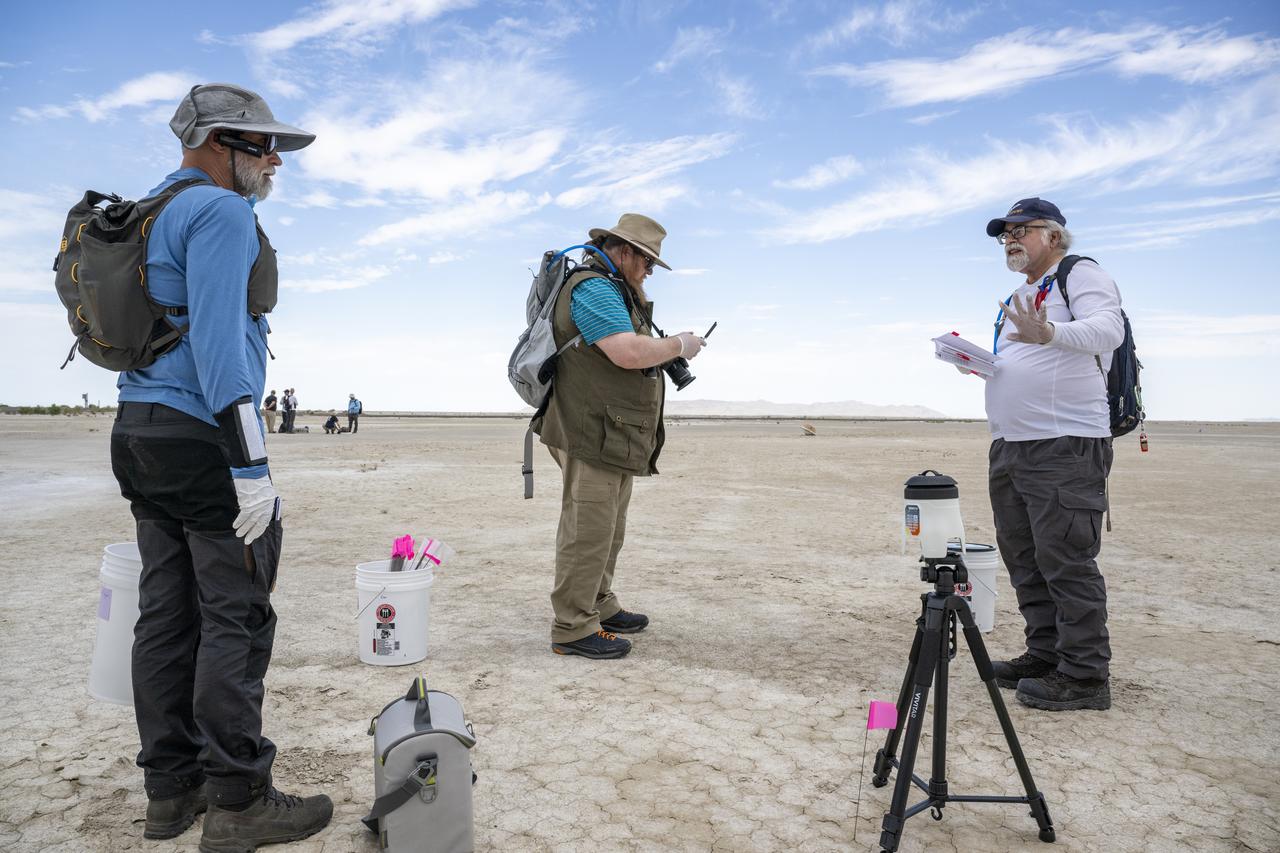
Recovery teams participate in field rehearsals in preparation for the retrieval of the sample return capsule from NASA's OSIRIS-REx mission, Tuesday, July 18, 2023, at the Department of Defense's Utah Test and Training Range. The sample was collected from the asteroid Bennu in October 2020 by NASA’s OSIRIS-REx spacecraft and will return to Earth on September 24th, landing under parachute at the Utah Test and Training Range. Photo Credit: (NASA/Keegan Barber)
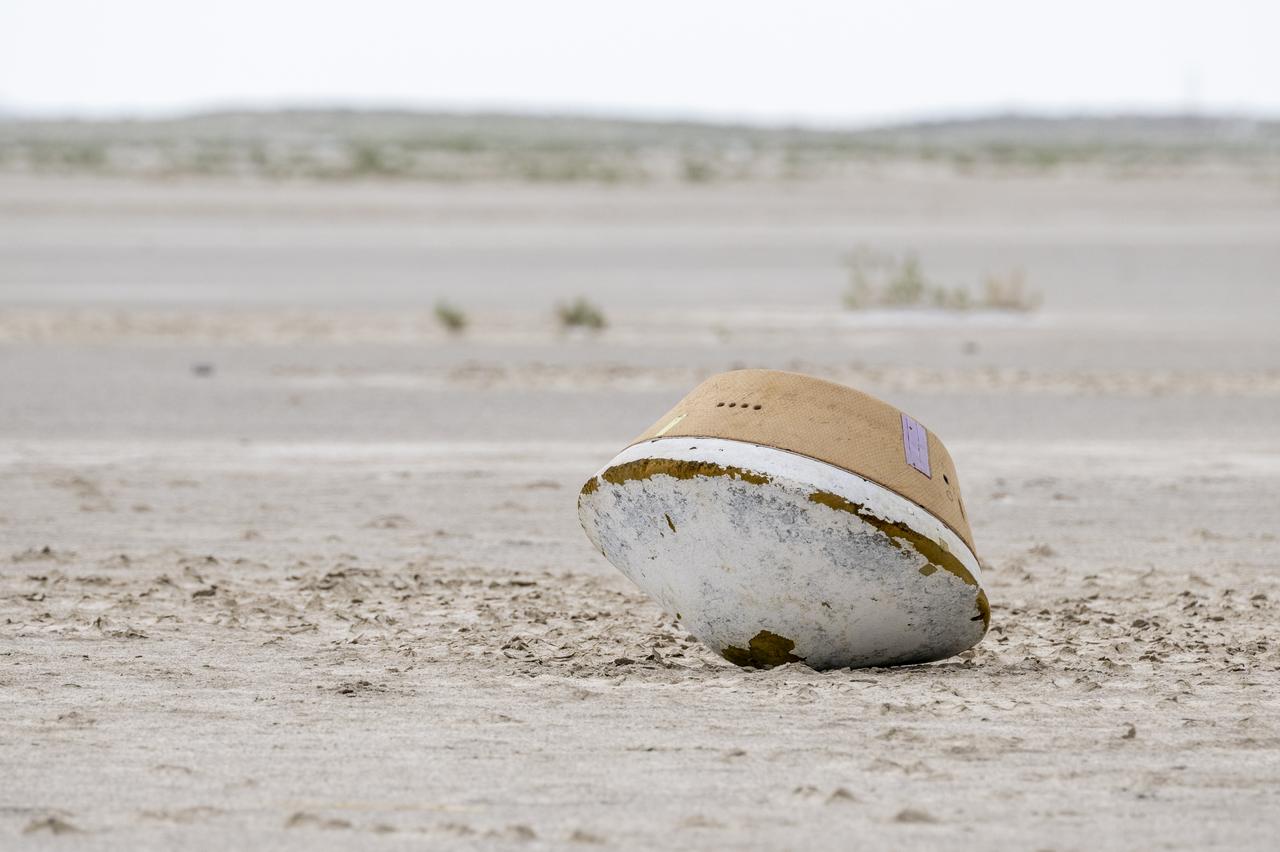
Recovery teams participate in field rehearsals in preparation for the retrieval of the sample return capsule from NASA's OSIRIS-REx mission, Tuesday, July 18, 2023, at the Department of Defense's Utah Test and Training Range. The sample was collected from the asteroid Bennu in October 2020 by NASA’s OSIRIS-REx spacecraft and will return to Earth on September 24th, landing under parachute at the Utah Test and Training Range. Photo Credit: (NASA/Keegan Barber)
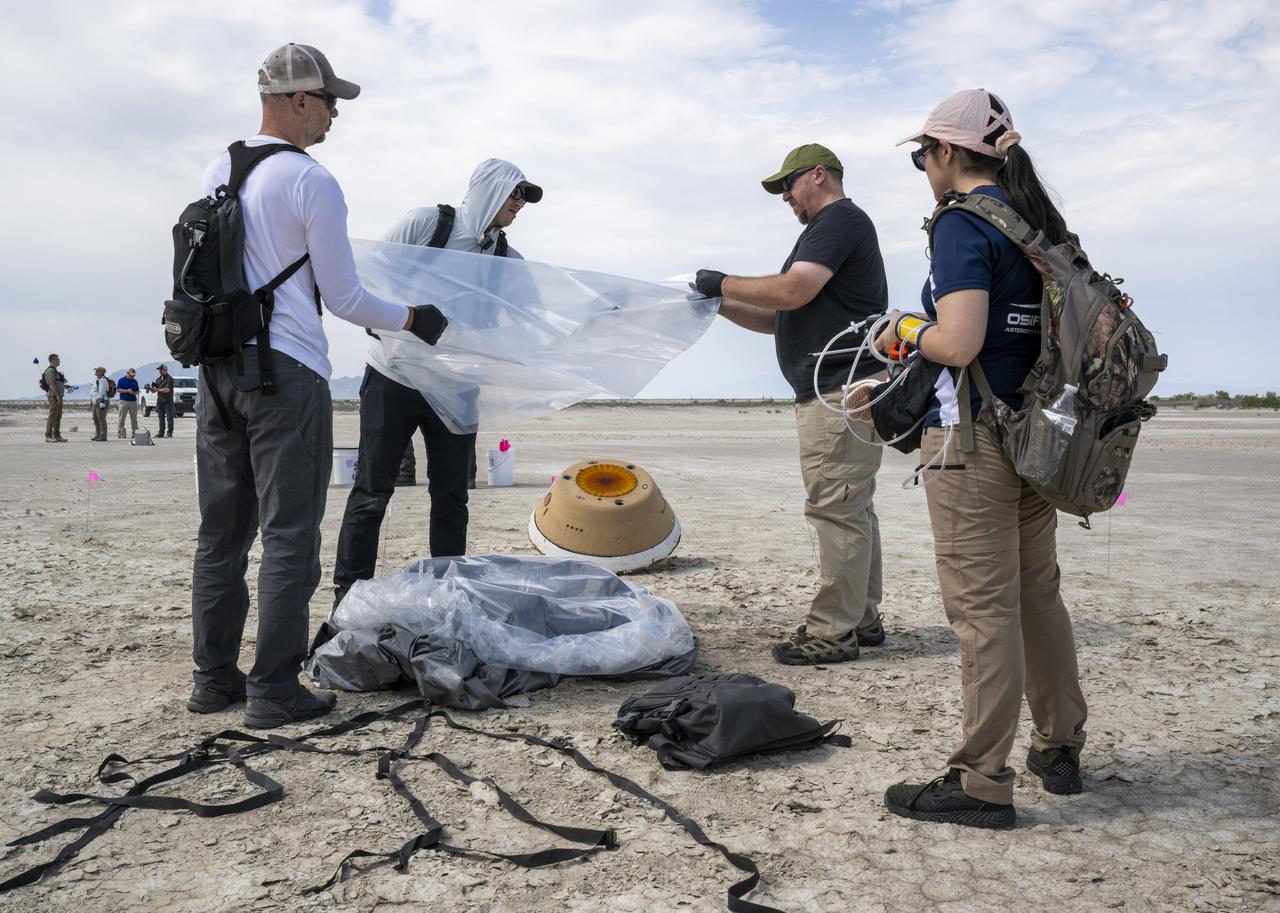
Recovery teams participate in field rehearsals in preparation for the retrieval of the sample return capsule from NASA's OSIRIS-REx mission, Tuesday, July 18, 2023, at the Department of Defense's Utah Test and Training Range. The sample was collected from the asteroid Bennu in October 2020 by NASA’s OSIRIS-REx spacecraft and will return to Earth on September 24th, landing under parachute at the Utah Test and Training Range. Photo Credit: (NASA/Keegan Barber)
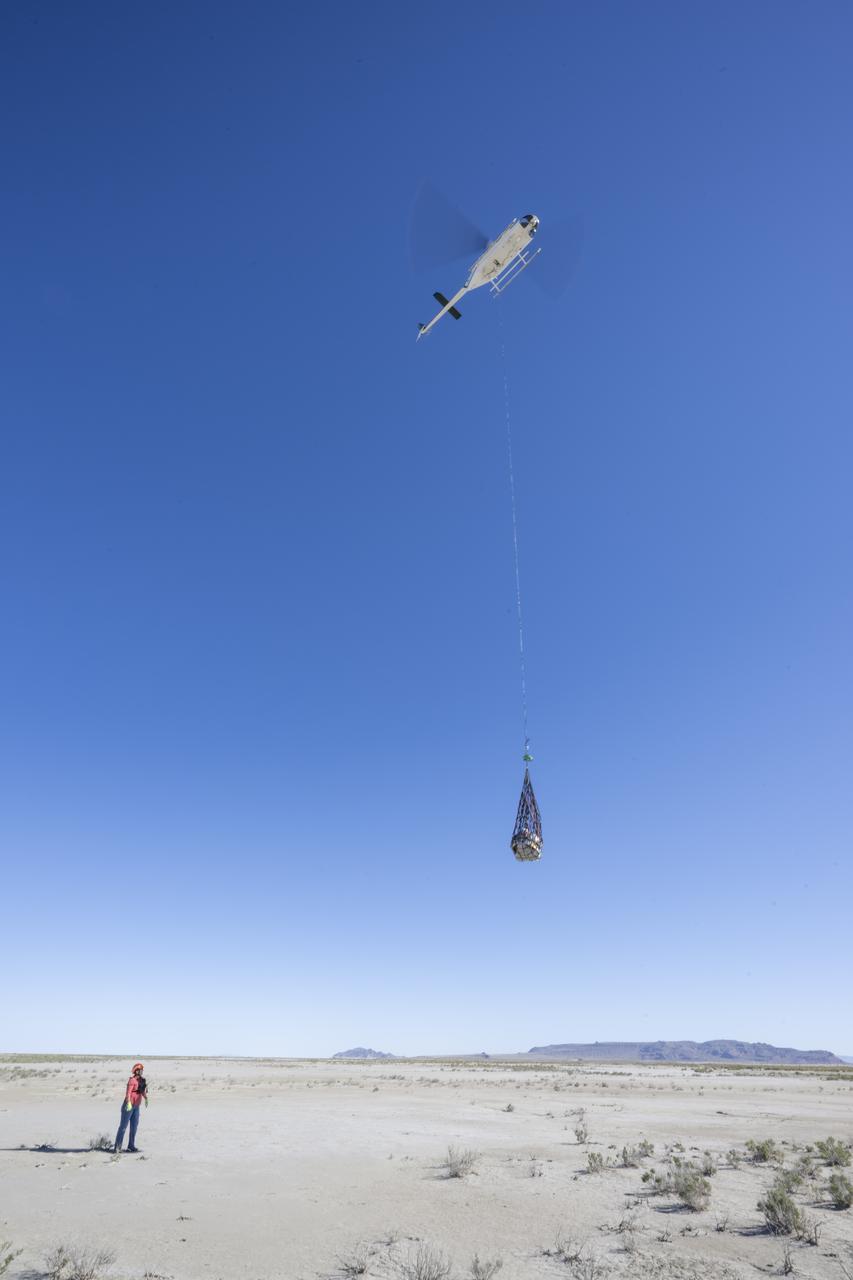
Recovery teams participate in field rehearsals in preparation for the retrieval of the sample return capsule from NASA's OSIRIS-REx mission, Tuesday, Aug. 29, 2023, at the Department of Defense's Utah Test and Training Range. The sample was collected from the asteroid Bennu in October 2020 by NASA’s OSIRIS-REx spacecraft and will return to Earth on September 24th, landing under parachute at the Utah Test and Training Range. Photo Credit: (NASA/Keegan Barber)
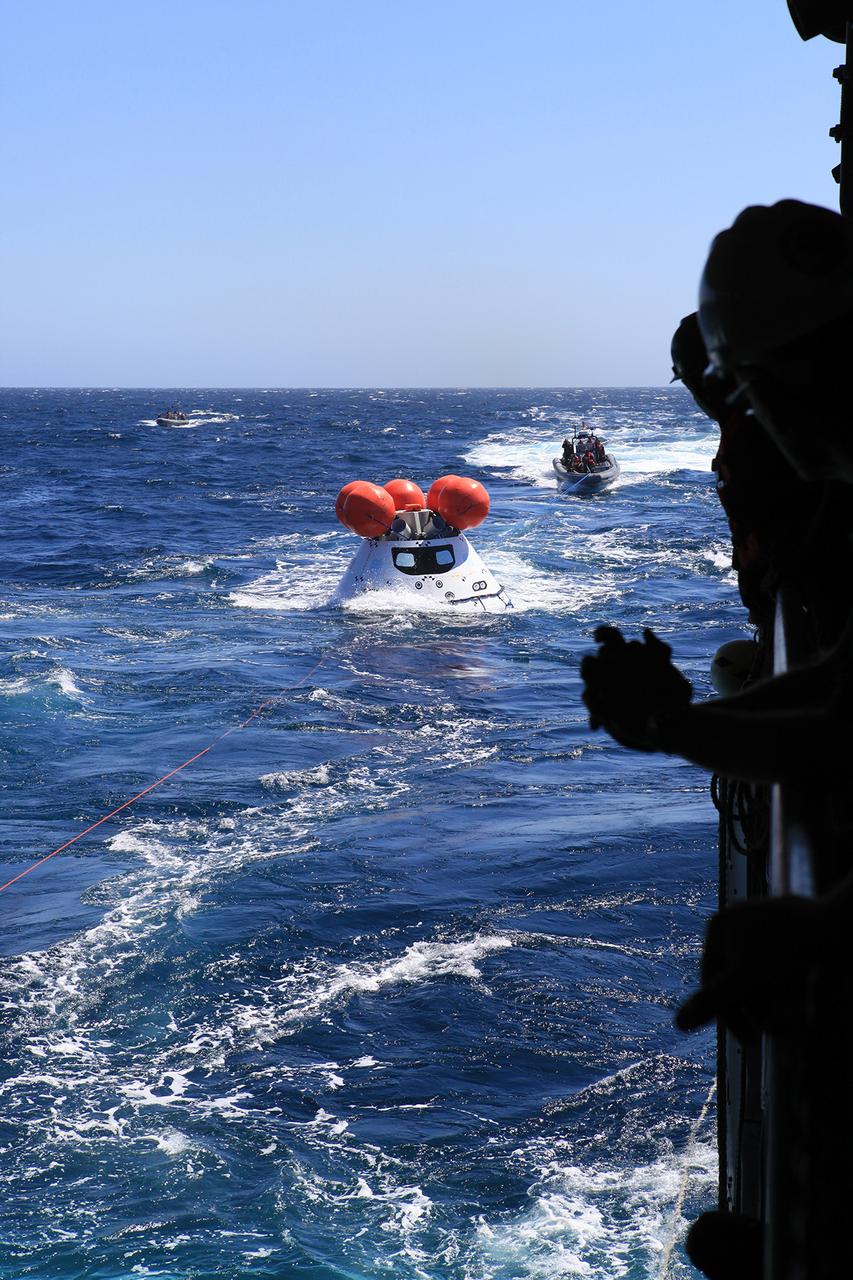
Recovery team members observe from inside the USS Anchorage's well deck as a test version of Orion is reeled in from the Pacific Ocean on Sept. 17, 2014, during a test of tools and techniques that will be used to retrieve the spacecraft once it splashes down following Exploration Flight Test-1 (EFT-1). Part of Batch image transfer from Flickr.
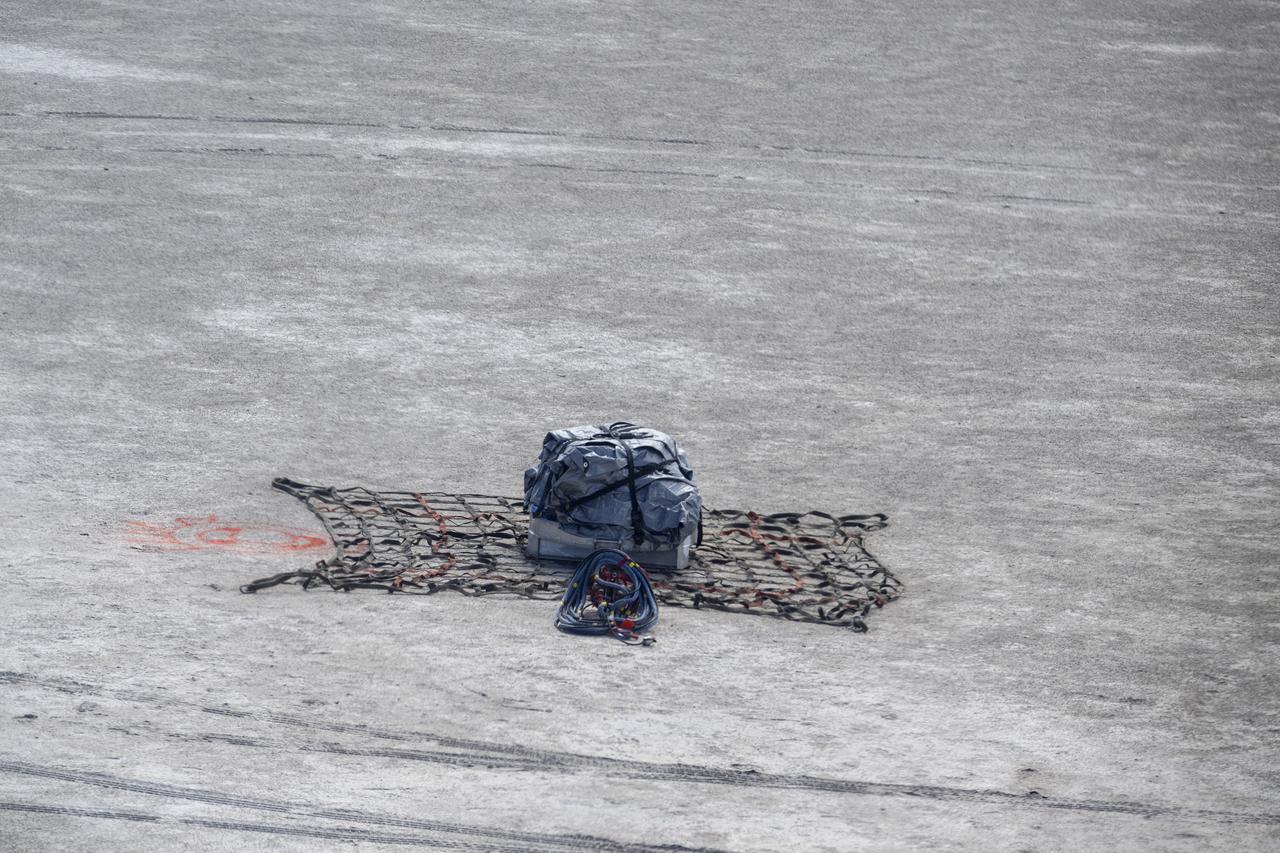
A training model of the sample return capsule is seen from the cockpit of a helicopter as recovery teams participate training in preparation for the retrieval of the sample return capsule from NASA's OSIRIS-REx mission, Wednesday, July 19, 2023, at the Department of Defense's Utah Test and Training Range. The sample was collected from the asteroid Bennu in October 2020 by NASA’s OSIRIS-REx spacecraft and will return to Earth on September 24th, landing under parachute at the Utah Test and Training Range. Photo Credit: (NASA/Keegan Barber)
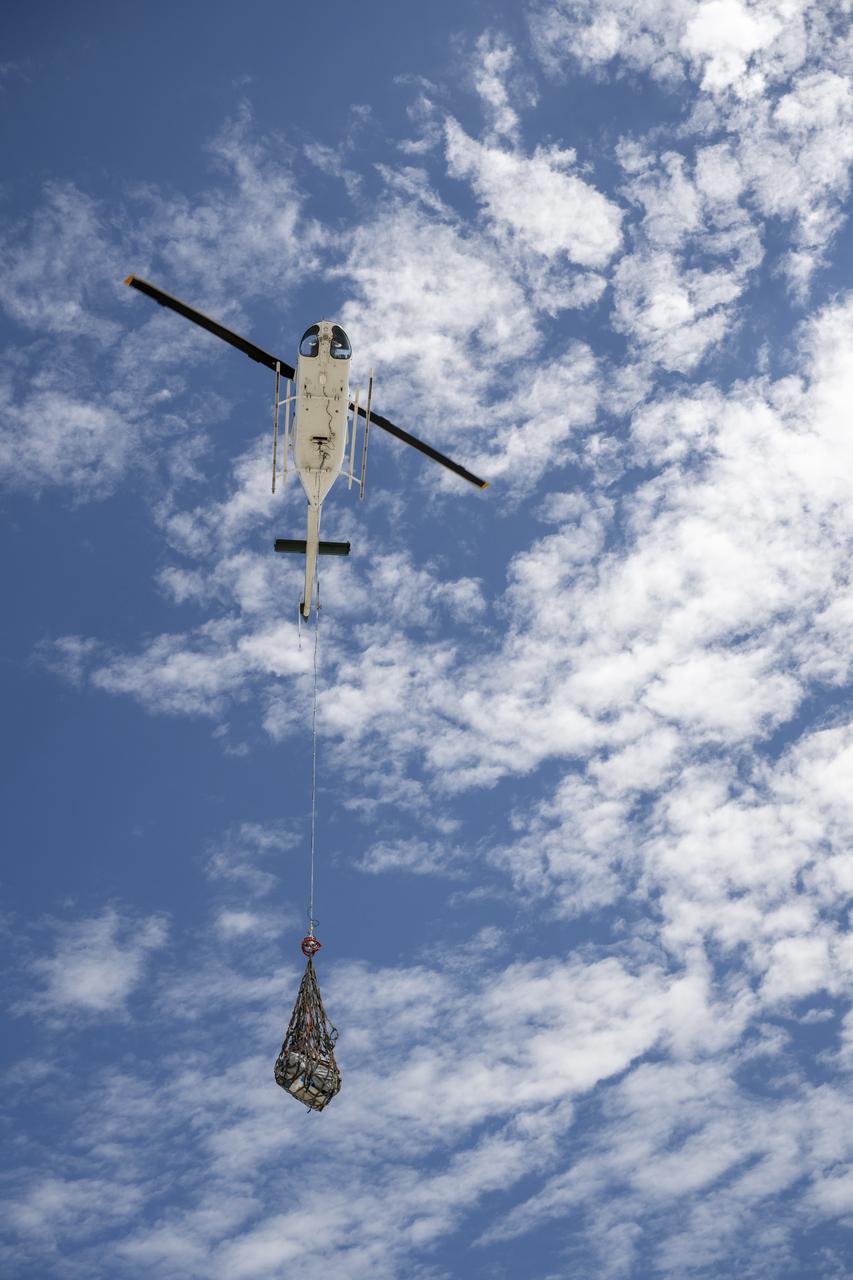
Recovery teams participate in helicopter training in preparation for the retrieval of the sample return capsule from NASA's OSIRIS-REx mission, Wednesday, July 19, 2023, at the Department of Defense's Utah Test and Training Range. The sample was collected from the asteroid Bennu in October 2020 by NASA’s OSIRIS-REx spacecraft and will return to Earth on September 24th, landing under parachute at the Utah Test and Training Range. Photo Credit: (NASA/Keegan Barber)
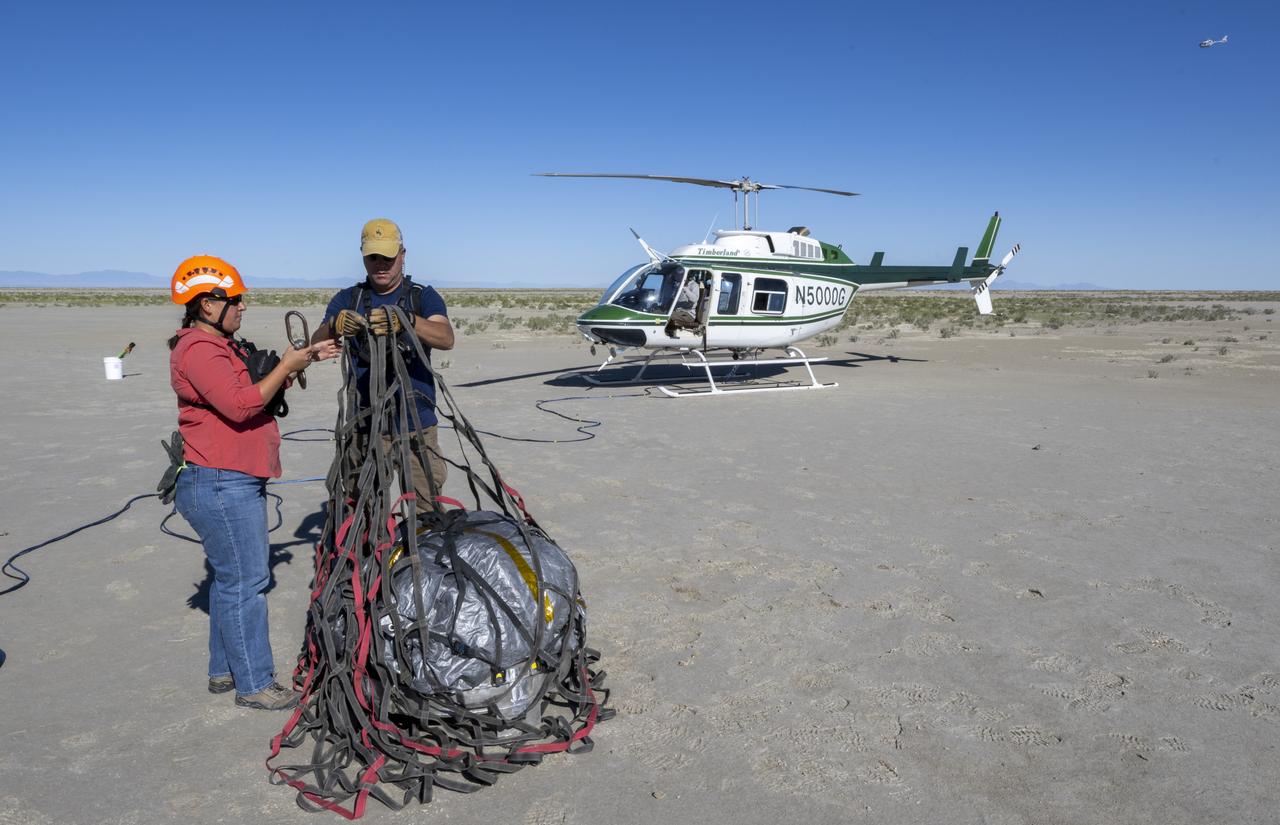
Recovery teams participate in field rehearsals in preparation for the retrieval of the sample return capsule from NASA's OSIRIS-REx mission, Tuesday, Aug. 29, 2023, at the Department of Defense's Utah Test and Training Range. The sample was collected from the asteroid Bennu in October 2020 by NASA’s OSIRIS-REx spacecraft and will return to Earth on September 24th, landing under parachute at the Utah Test and Training Range. Photo Credit: (NASA/Keegan Barber)
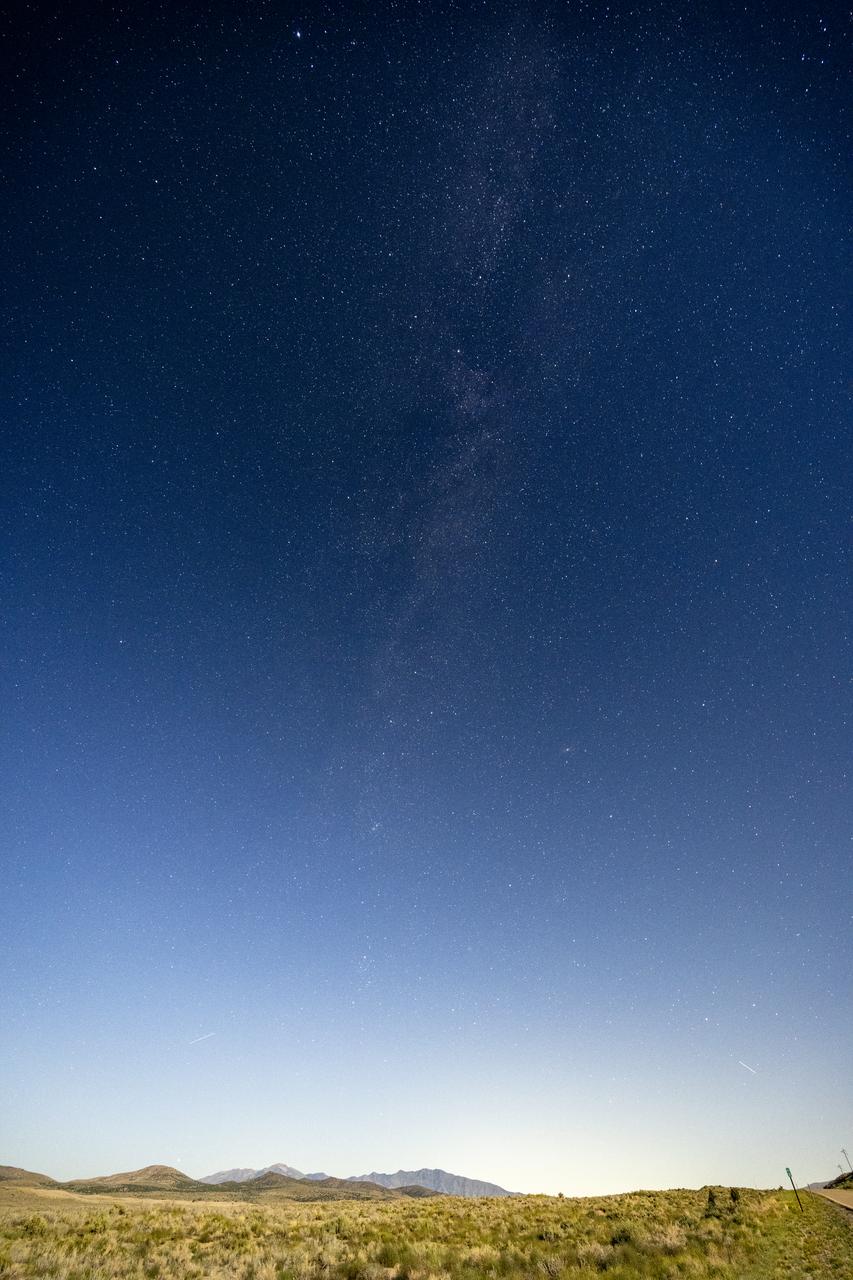
The Milky Way is seen above Dugway Proving Ground, Sunday, Aug. 27, 2023, near Dugway, Utah. Recovery teams met in August for rehearsals in preparation for the retrieval of the sample return capsule from NASA's OSIRIS-REx mission. The sample was collected from the asteroid Bennu in October 2020 by NASA’s OSIRIS-REx spacecraft and will return to Earth on September 24th, landing under parachute at the Utah Test and Training Range. Photo Credit: (NASA/Keegan Barber)
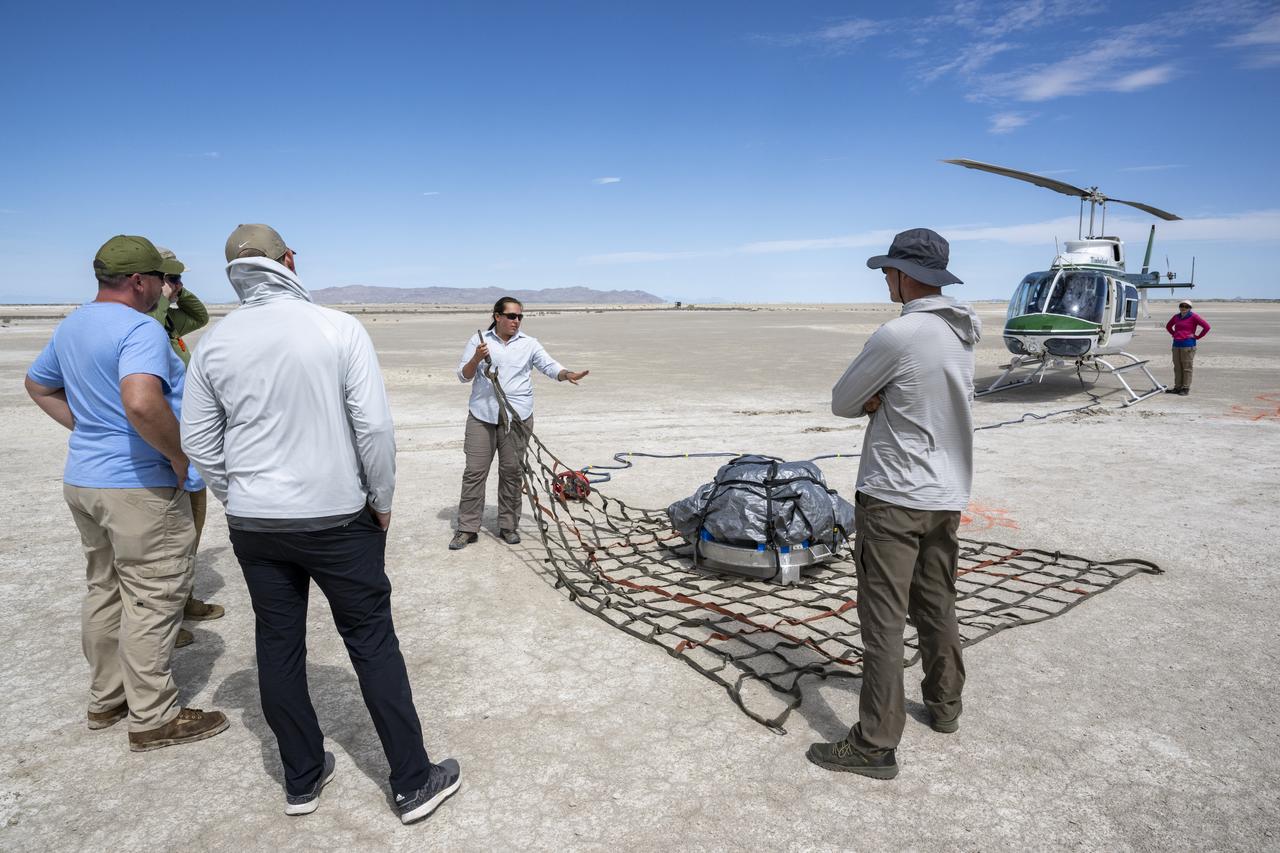
Recovery teams participate in helicopter training in preparation for the retrieval of the sample return capsule from NASA's OSIRIS-REx mission, Wednesday, July 19, 2023, at the Department of Defense's Utah Test and Training Range. The sample was collected from the asteroid Bennu in October 2020 by NASA’s OSIRIS-REx spacecraft and will return to Earth on September 24th, landing under parachute at the Utah Test and Training Range. Photo Credit: (NASA/Keegan Barber)
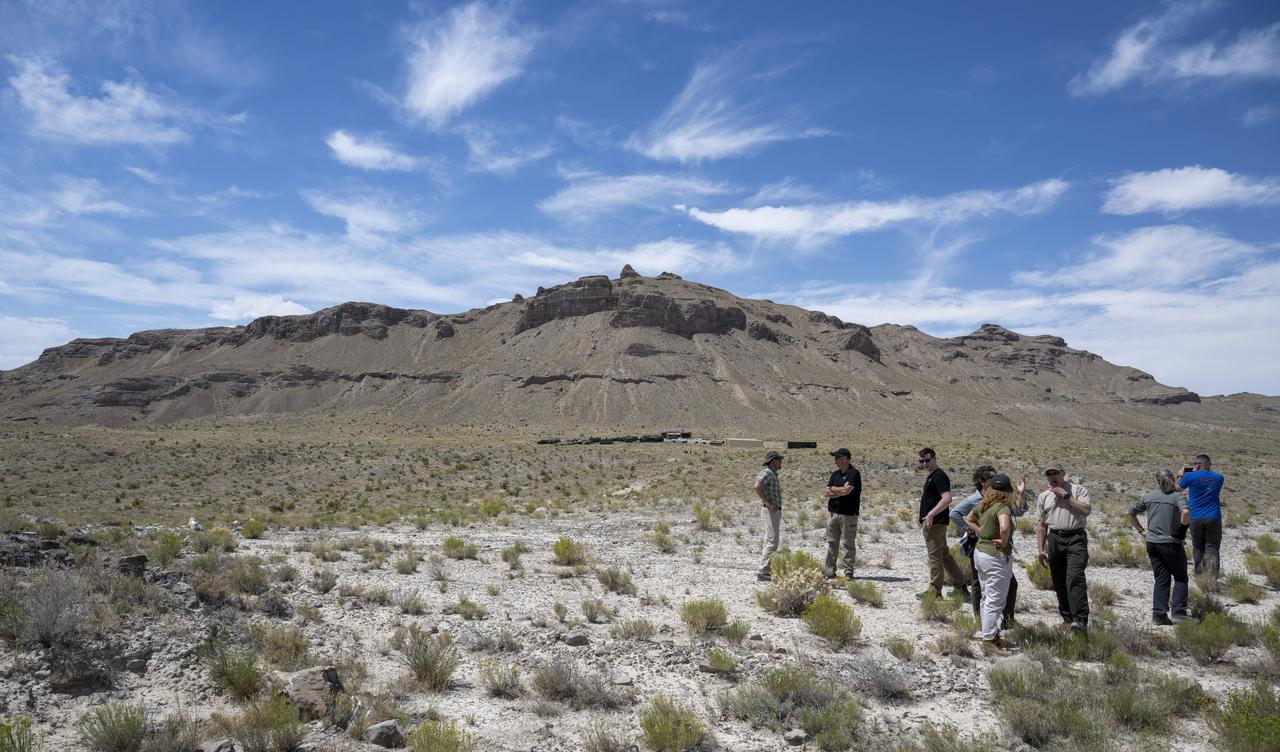
The Department of Defense's Utah Test and Training Range is seen, Monday, July 17, 2023, as recovery teams tour the projected landing ellipse in preparation for the retrieval of the sample return capsule from NASA's OSIRIS-REx mission. The sample was collected from the asteroid Bennu in October 2020 by NASA’s OSIRIS-REx spacecraft and will return to Earth on September 24th, landing under parachute at the Utah Test and Training Range. Photo Credit: (NASA/Keegan Barber)
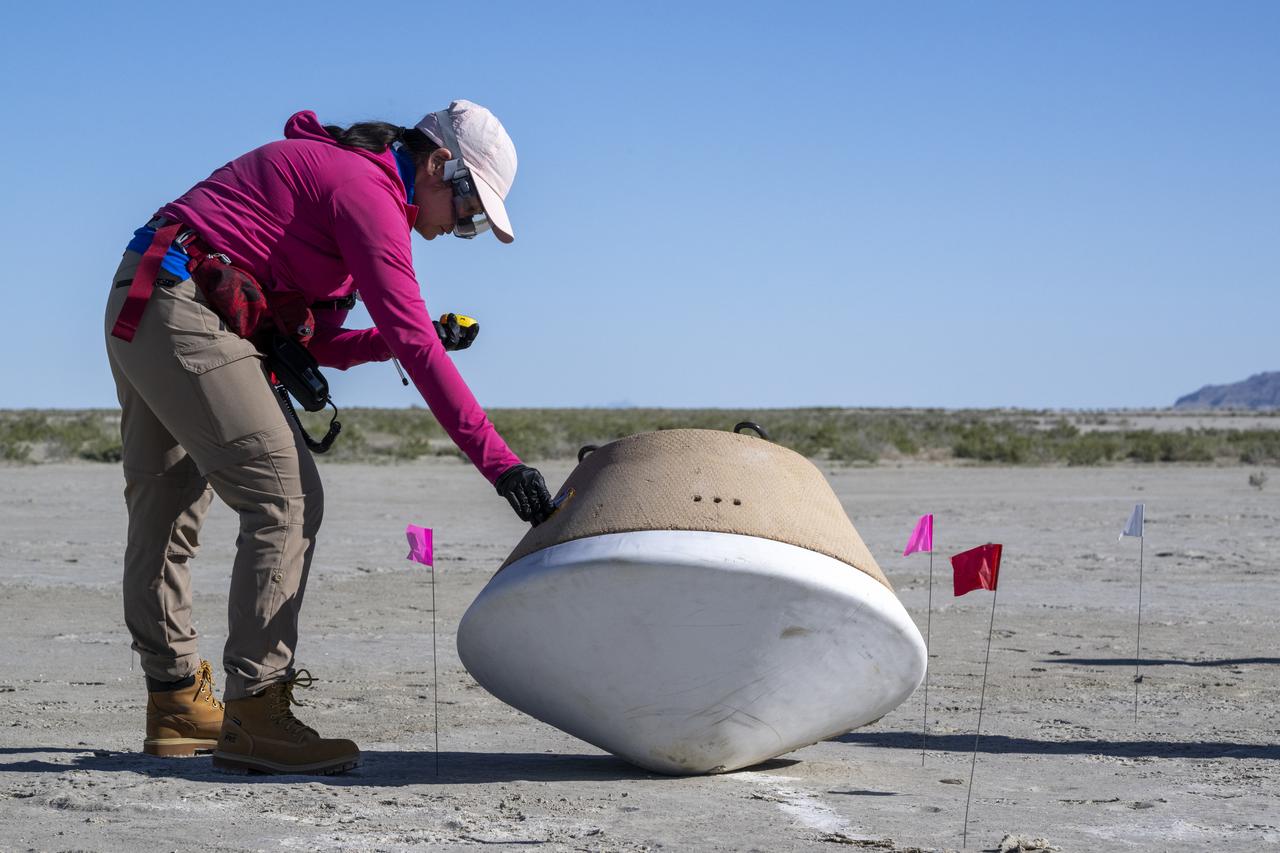
Recovery teams participate in field rehearsals in preparation for the retrieval of the sample return capsule from NASA's OSIRIS-REx mission, Tuesday, Aug. 29, 2023, at the Department of Defense's Utah Test and Training Range. The sample was collected from the asteroid Bennu in October 2020 by NASA’s OSIRIS-REx spacecraft and will return to Earth on September 24th, landing under parachute at the Utah Test and Training Range. Photo Credit: (NASA/Keegan Barber)
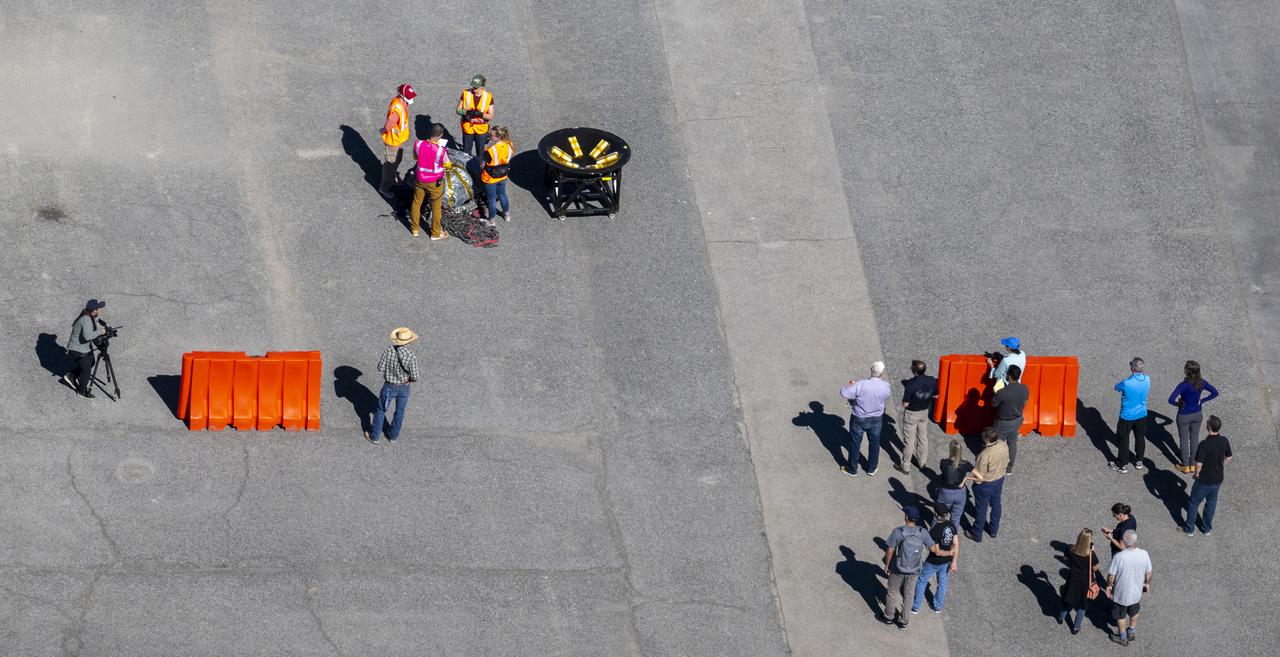
Recovery teams participate in field rehearsals in preparation for the retrieval of the sample return capsule from NASA's OSIRIS-REx mission, Tuesday, Aug. 29, 2023, at the Department of Defense's Utah Test and Training Range. The sample was collected from the asteroid Bennu in October 2020 by NASA’s OSIRIS-REx spacecraft and will return to Earth on September 24th, landing under parachute at the Utah Test and Training Range. Photo Credit: (NASA/Keegan Barber)
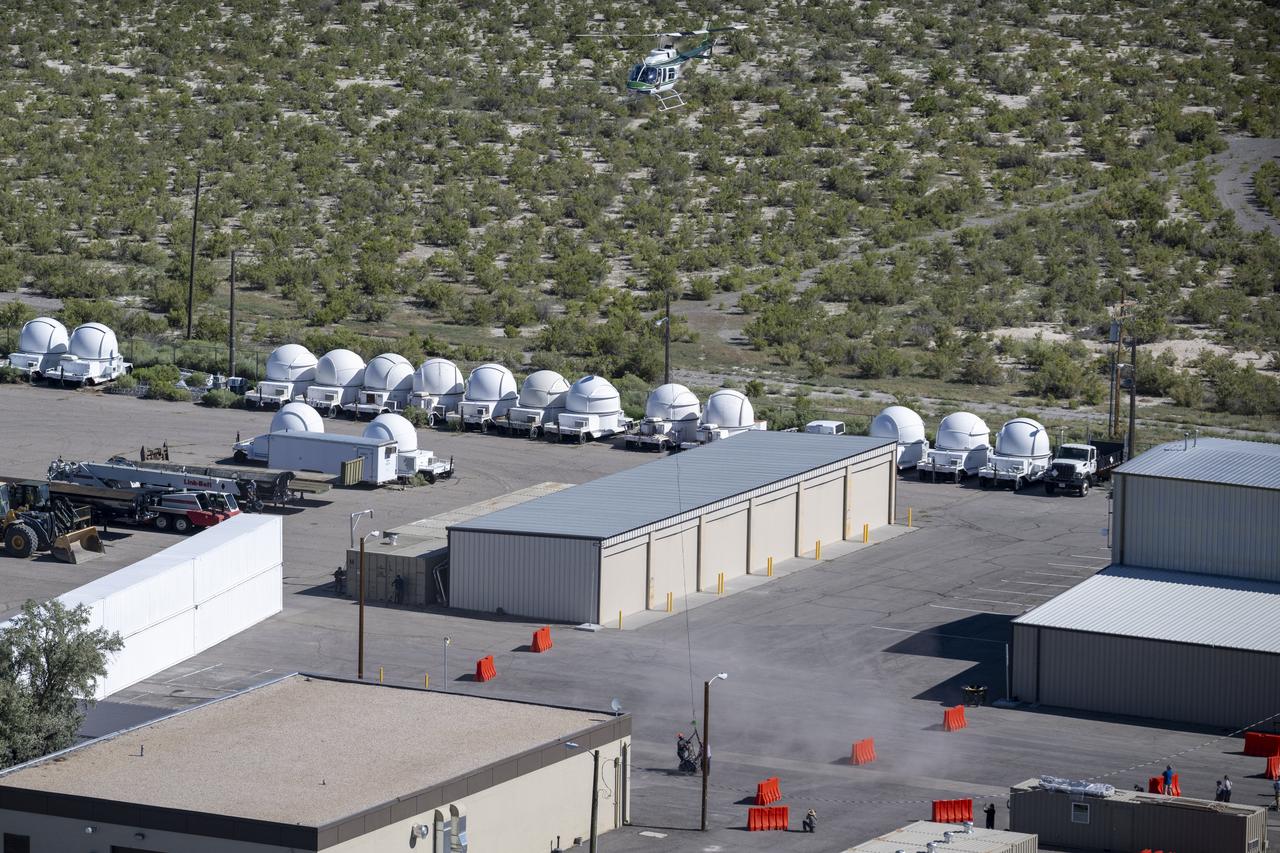
Recovery teams participate in field rehearsals in preparation for the retrieval of the sample return capsule from NASA's OSIRIS-REx mission, Tuesday, Aug. 29, 2023, at the Department of Defense's Utah Test and Training Range. The sample was collected from the asteroid Bennu in October 2020 by NASA’s OSIRIS-REx spacecraft and will return to Earth on September 24th, landing under parachute at the Utah Test and Training Range. Photo Credit: (NASA/Keegan Barber)
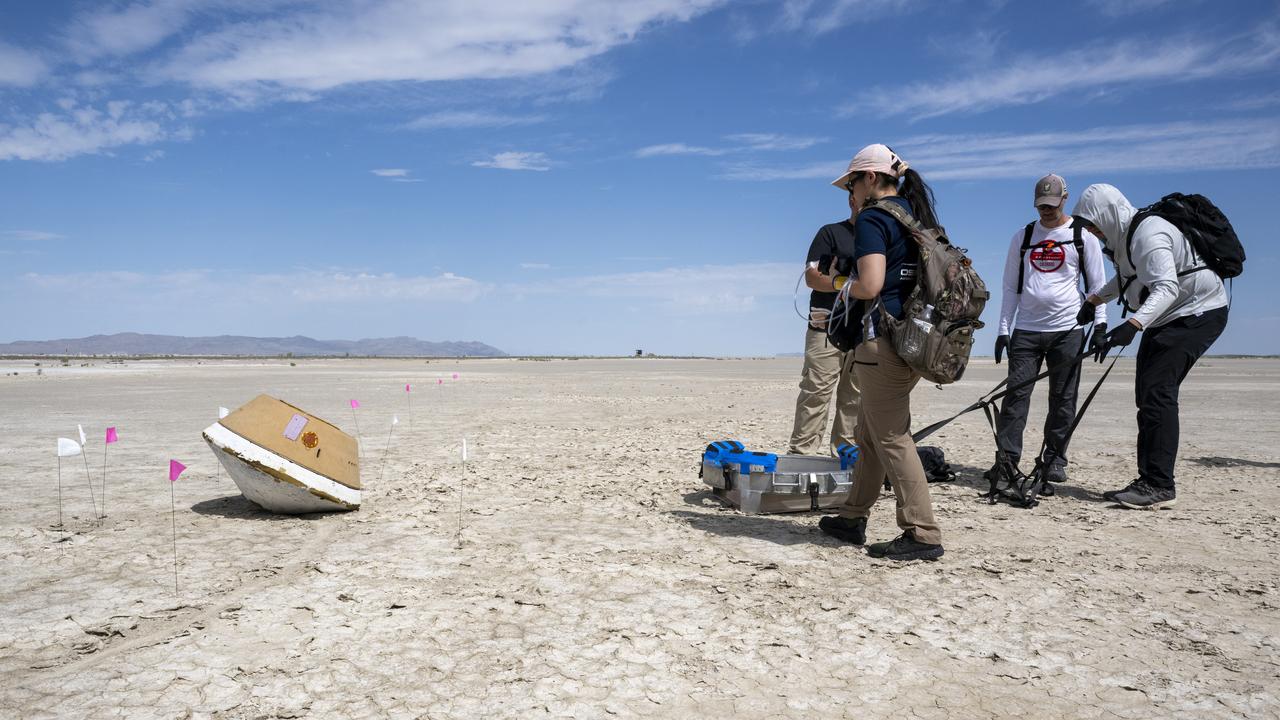
Recovery teams participate in field rehearsals in preparation for the retrieval of the sample return capsule from NASA's OSIRIS-REx mission, Tuesday, July 18, 2023, at the Department of Defense's Utah Test and Training Range. The sample was collected from the asteroid Bennu in October 2020 by NASA’s OSIRIS-REx spacecraft and will return to Earth on September 24th, landing under parachute at the Utah Test and Training Range. Photo Credit: (NASA/Keegan Barber)
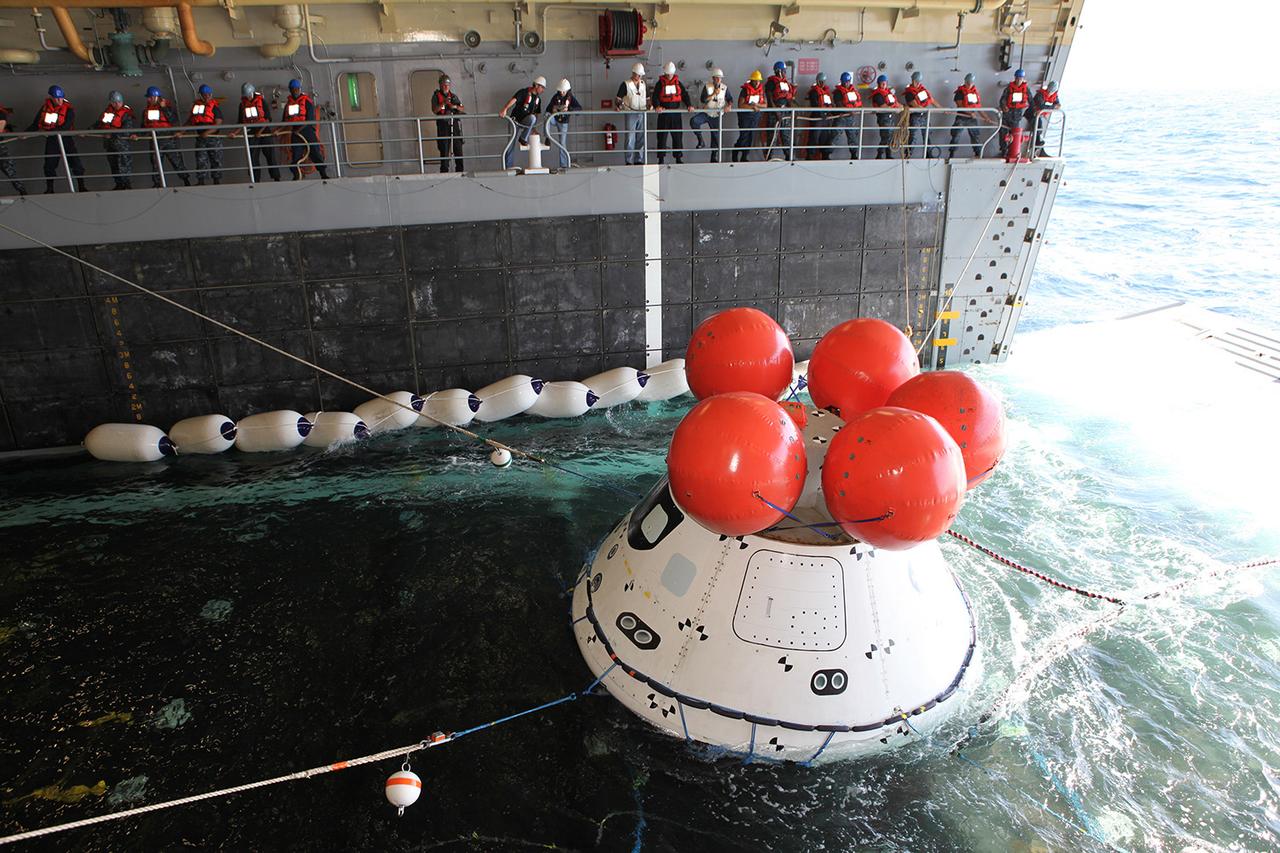
Recovery team members use ropes to hold a test version of Orion steady inside the USS Anchorage's well deck as it is reeled in from the Pacific Ocean on Sept. 17, 2014, during a test of tools and techniques that will be used to retrieve the spacecraft once it splashes down following Exploration Flight Test-1 (EFT-1). Part of Batch image transfer from Flickr.
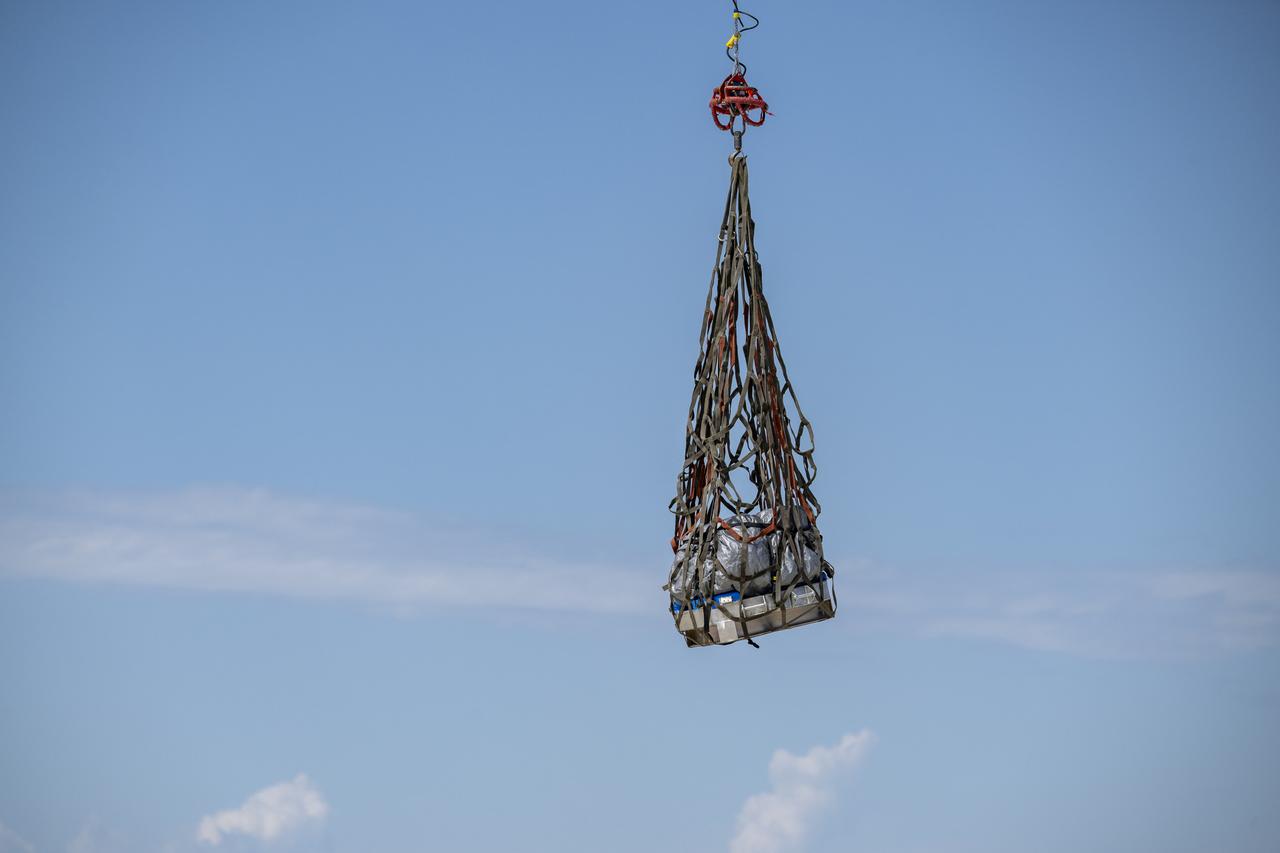
Recovery teams participate in helicopter training in preparation for the retrieval of the sample return capsule from NASA's OSIRIS-REx mission, Wednesday, July 19, 2023, at the Department of Defense's Utah Test and Training Range. The sample was collected from the asteroid Bennu in October 2020 by NASA’s OSIRIS-REx spacecraft and will return to Earth on September 24th, landing under parachute at the Utah Test and Training Range. Photo Credit: (NASA/Keegan Barber)
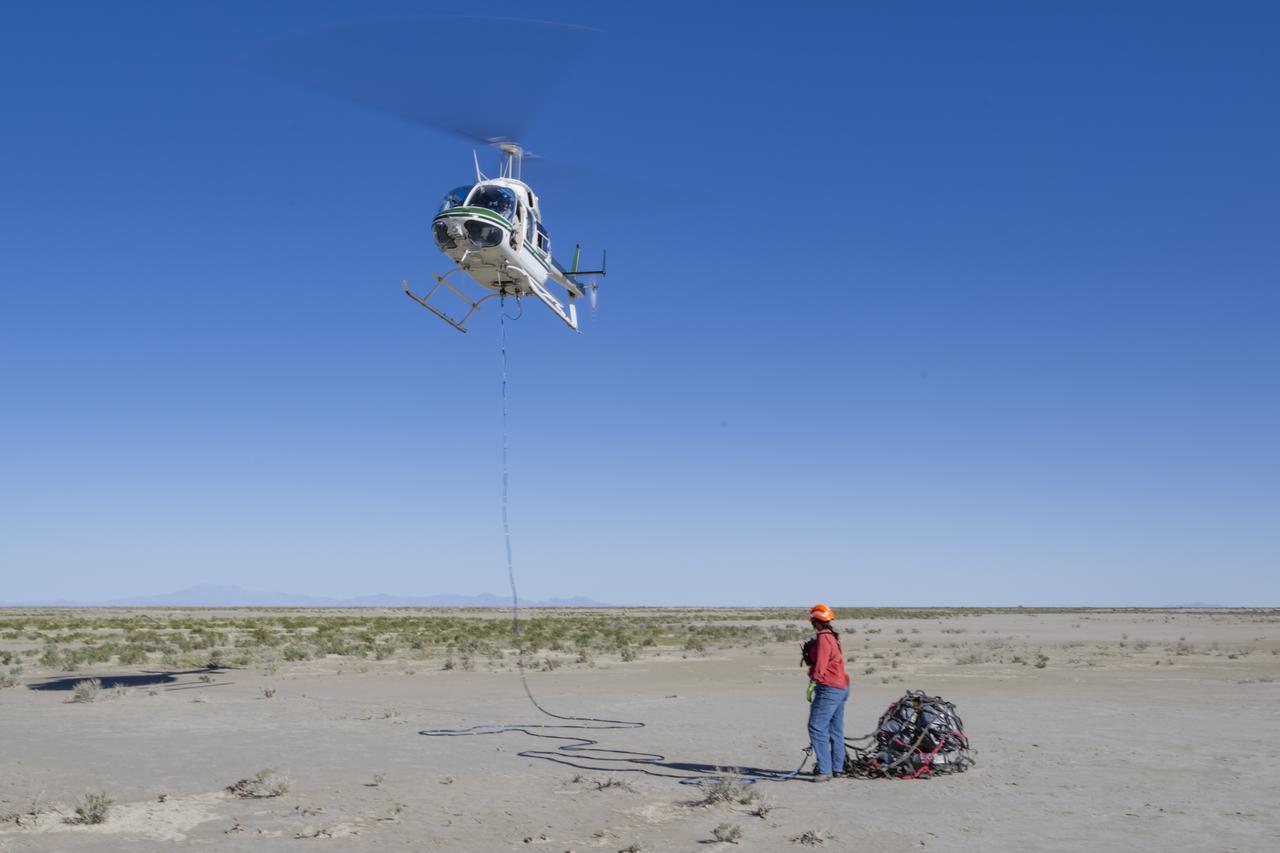
Recovery teams participate in field rehearsals in preparation for the retrieval of the sample return capsule from NASA's OSIRIS-REx mission, Tuesday, Aug. 29, 2023, at the Department of Defense's Utah Test and Training Range. The sample was collected from the asteroid Bennu in October 2020 by NASA’s OSIRIS-REx spacecraft and will return to Earth on September 24th, landing under parachute at the Utah Test and Training Range. Photo Credit: (NASA/Keegan Barber)
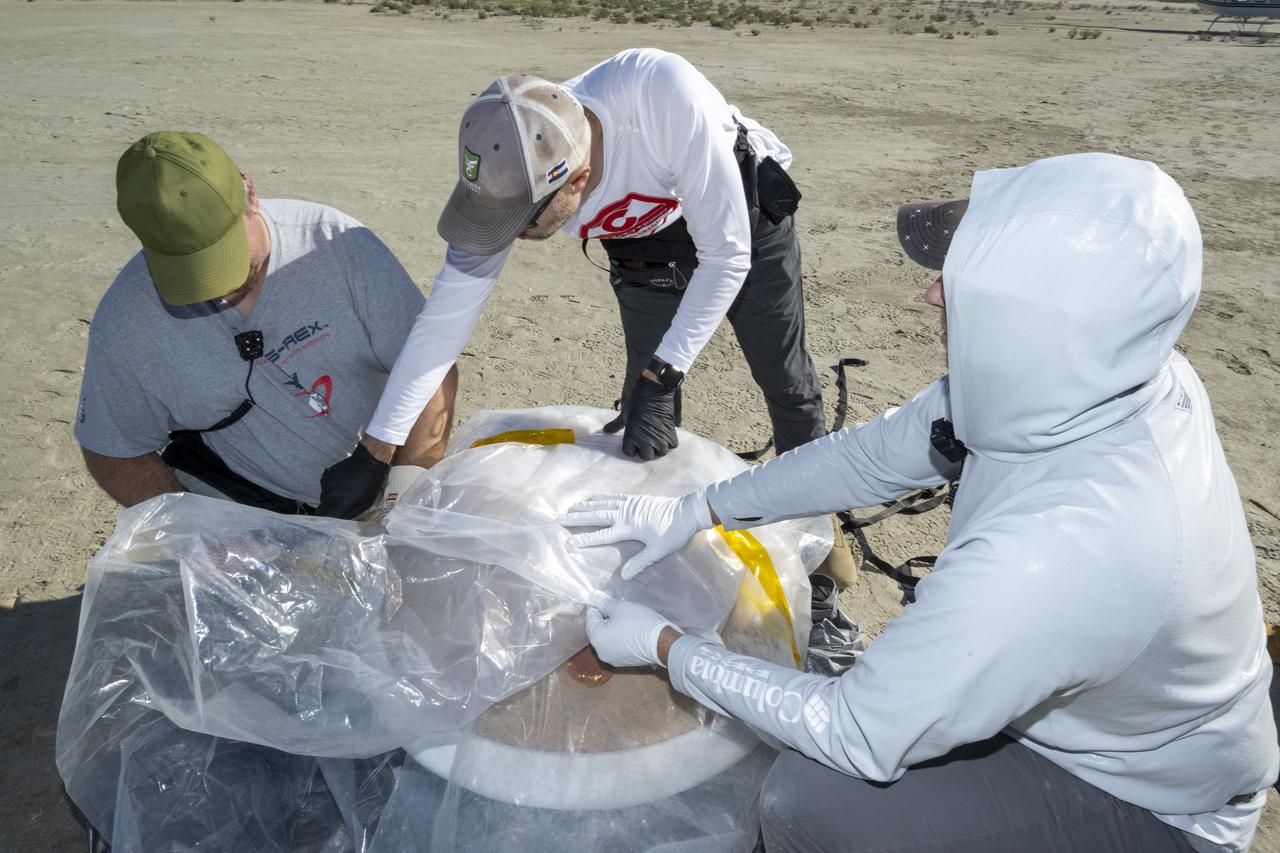
Recovery teams participate in field rehearsals in preparation for the retrieval of the sample return capsule from NASA's OSIRIS-REx mission, Tuesday, Aug. 29, 2023, at the Department of Defense's Utah Test and Training Range. The sample was collected from the asteroid Bennu in October 2020 by NASA’s OSIRIS-REx spacecraft and will return to Earth on September 24th, landing under parachute at the Utah Test and Training Range. Photo Credit: (NASA/Keegan Barber)
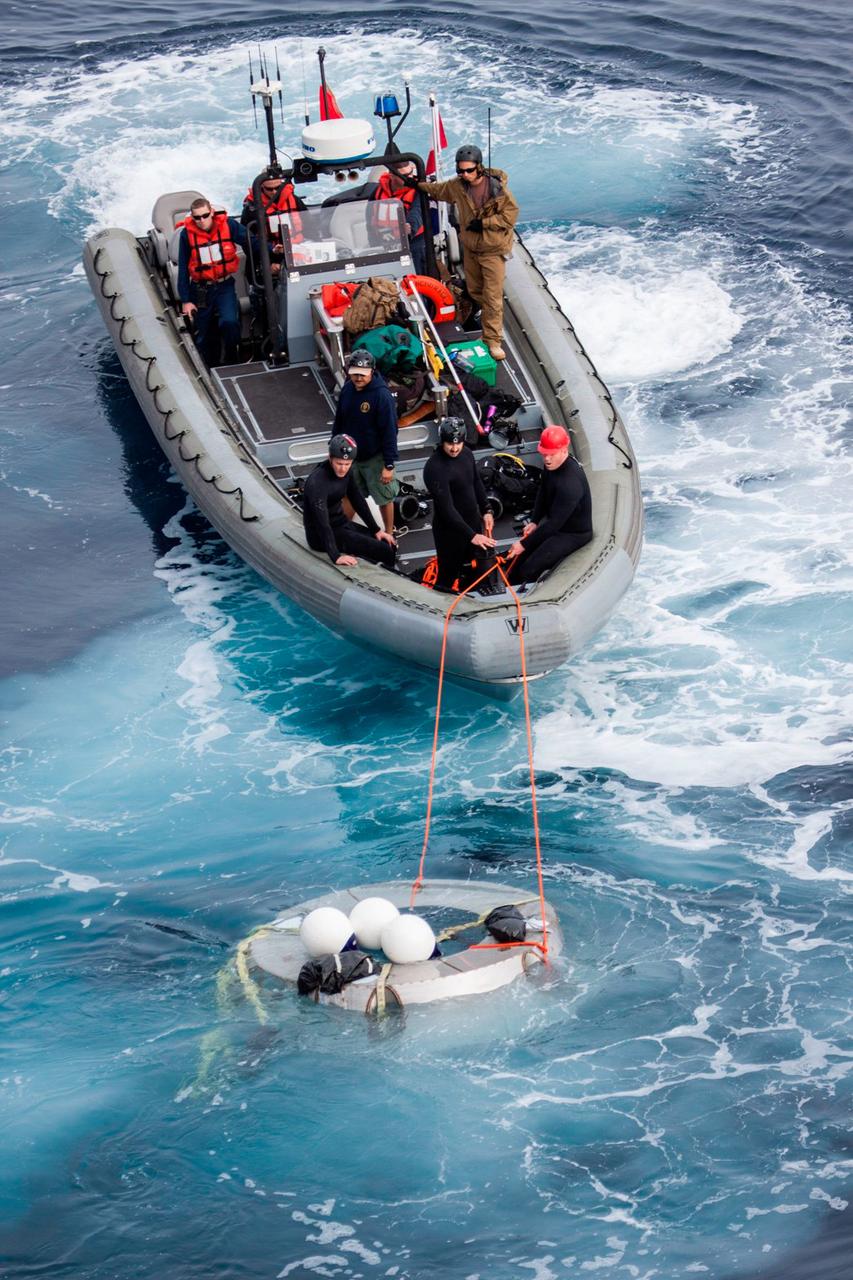
Members of the Orion recovery team work to retrieve a test version of Orion's forward bay cover, a protective shell that fits on top of the crew module, from the Pacific Ocean on Feb. 18, 2014, during an Underway Recovery Test. NASA and U.S. Navy personnel came together on board the USS San Diego, off the coast of California, to practice the processes they used to recover Orion after its splashdown following Exploration Flight Test-1 (EFT-1). Part of Batch image transfer from Flickr.
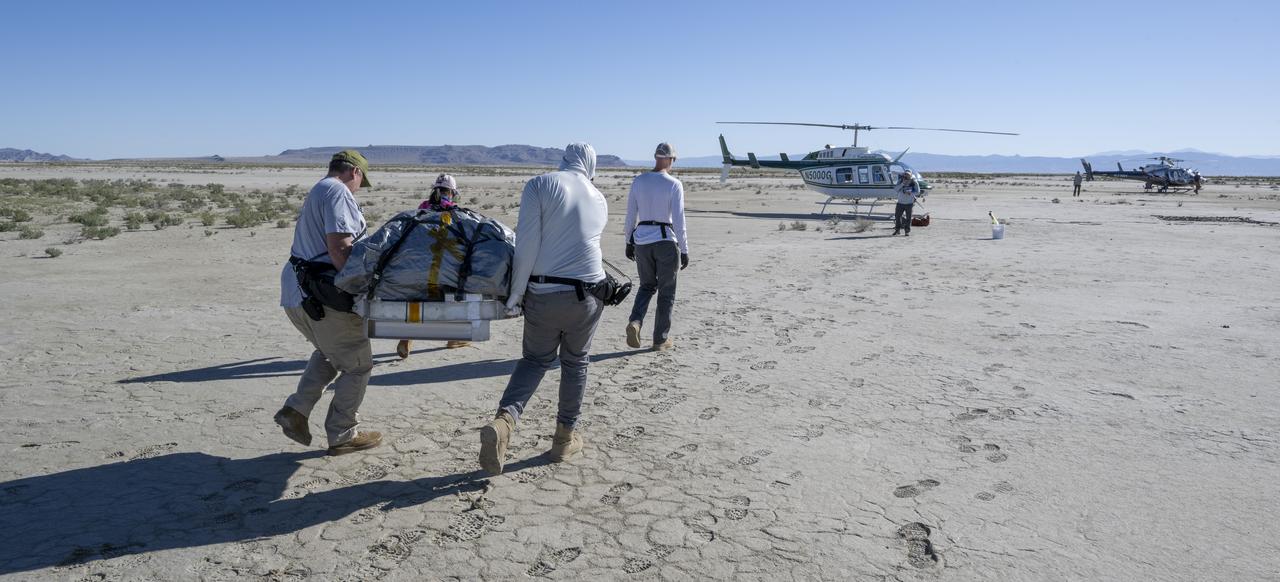
Recovery teams participate in field rehearsals in preparation for the retrieval of the sample return capsule from NASA's OSIRIS-REx mission, Tuesday, Aug. 29, 2023, at the Department of Defense's Utah Test and Training Range. The sample was collected from the asteroid Bennu in October 2020 by NASA’s OSIRIS-REx spacecraft and will return to Earth on September 24th, landing under parachute at the Utah Test and Training Range. Photo Credit: (NASA/Keegan Barber)
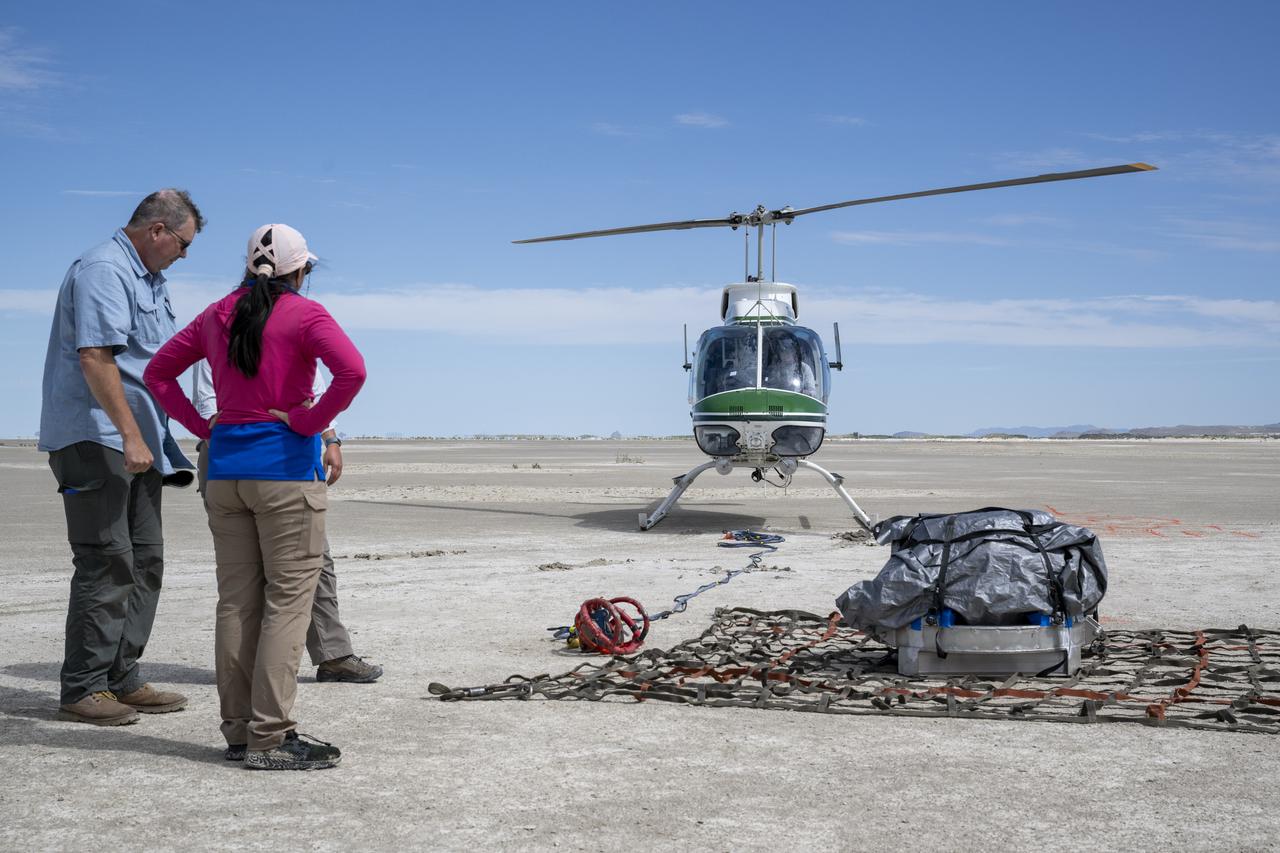
Recovery teams participate in helicopter training in preparation for the retrieval of the sample return capsule from NASA's OSIRIS-REx mission, Wednesday, July 19, 2023, at the Department of Defense's Utah Test and Training Range. The sample was collected from the asteroid Bennu in October 2020 by NASA’s OSIRIS-REx spacecraft and will return to Earth on September 24th, landing under parachute at the Utah Test and Training Range. Photo Credit: (NASA/Keegan Barber)
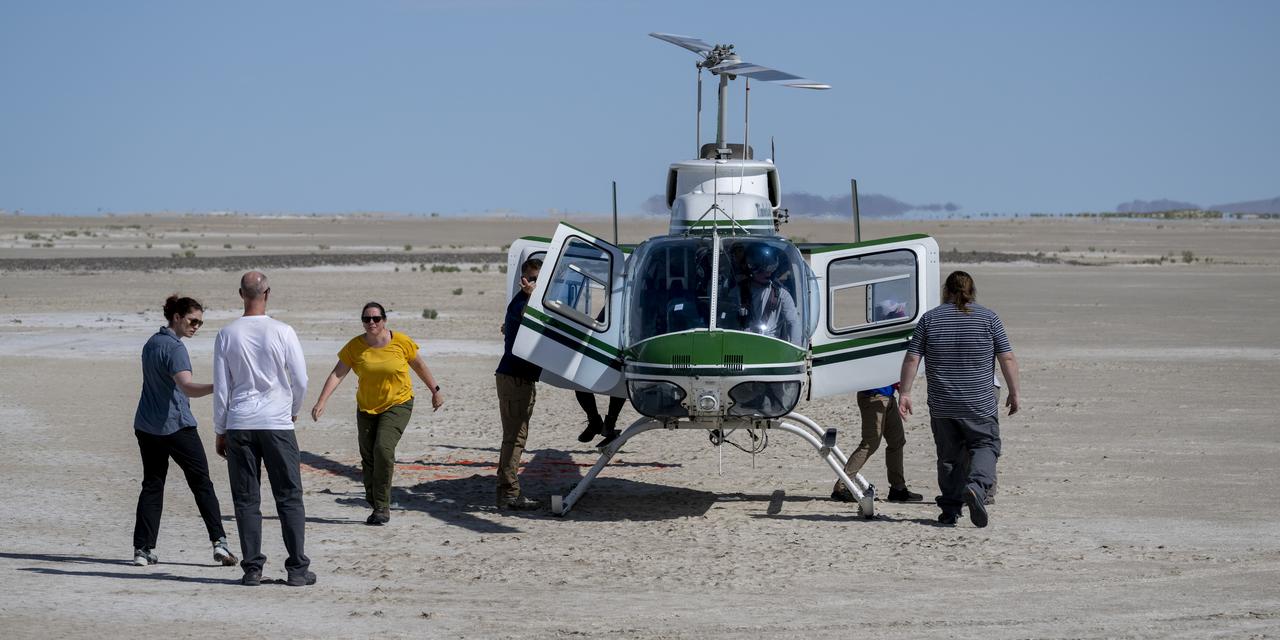
Recovery teams participate in helicopter training in preparation for the retrieval of the sample return capsule from NASA's OSIRIS-REx mission, Wednesday, July 19, 2023, at the Department of Defense's Utah Test and Training Range. The sample was collected from the asteroid Bennu in October 2020 by NASA’s OSIRIS-REx spacecraft and will return to Earth on September 24th, landing under parachute at the Utah Test and Training Range. Photo Credit: (NASA/Keegan Barber)
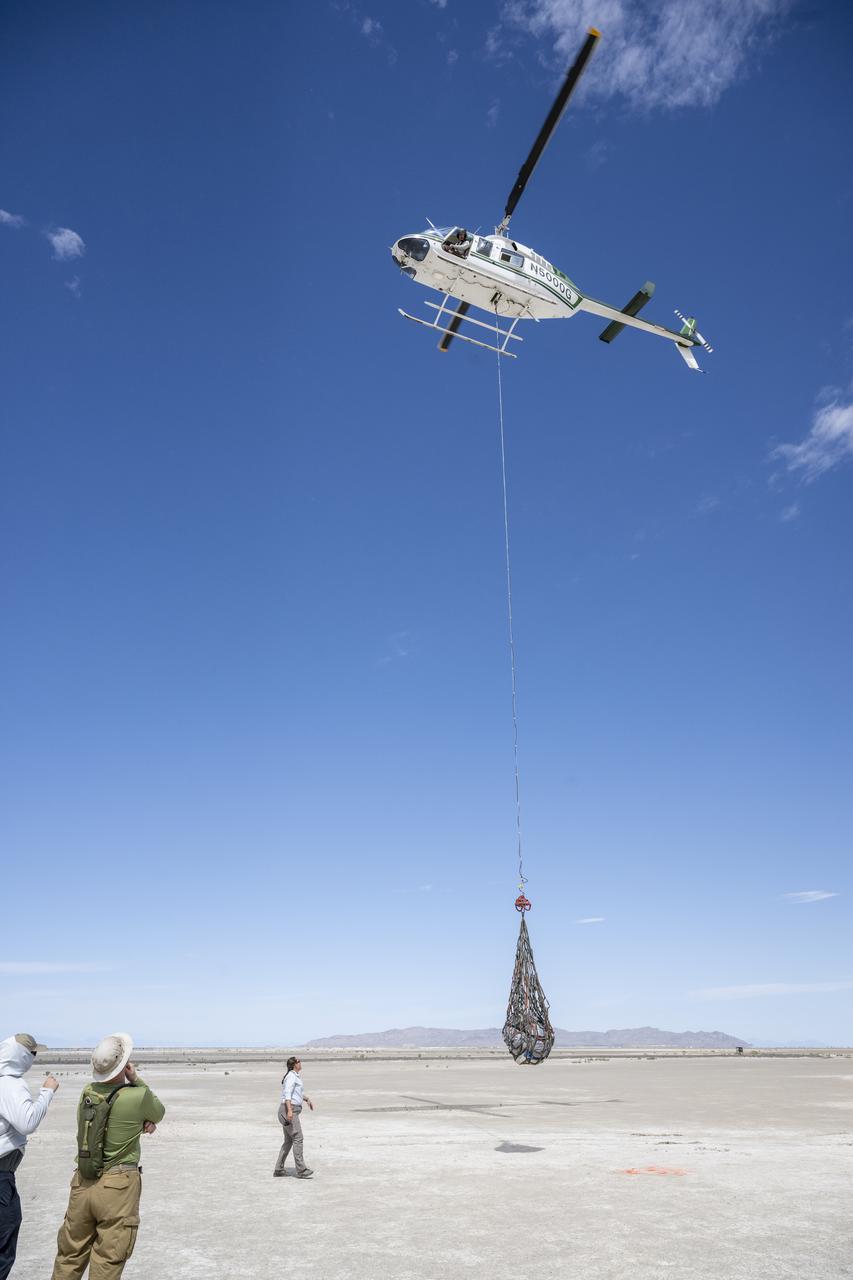
Recovery teams participate in helicopter training in preparation for the retrieval of the sample return capsule from NASA's OSIRIS-REx mission, Wednesday, July 19, 2023, at the Department of Defense's Utah Test and Training Range. The sample was collected from the asteroid Bennu in October 2020 by NASA’s OSIRIS-REx spacecraft and will return to Earth on September 24th, landing under parachute at the Utah Test and Training Range. Photo Credit: (NASA/Keegan Barber)
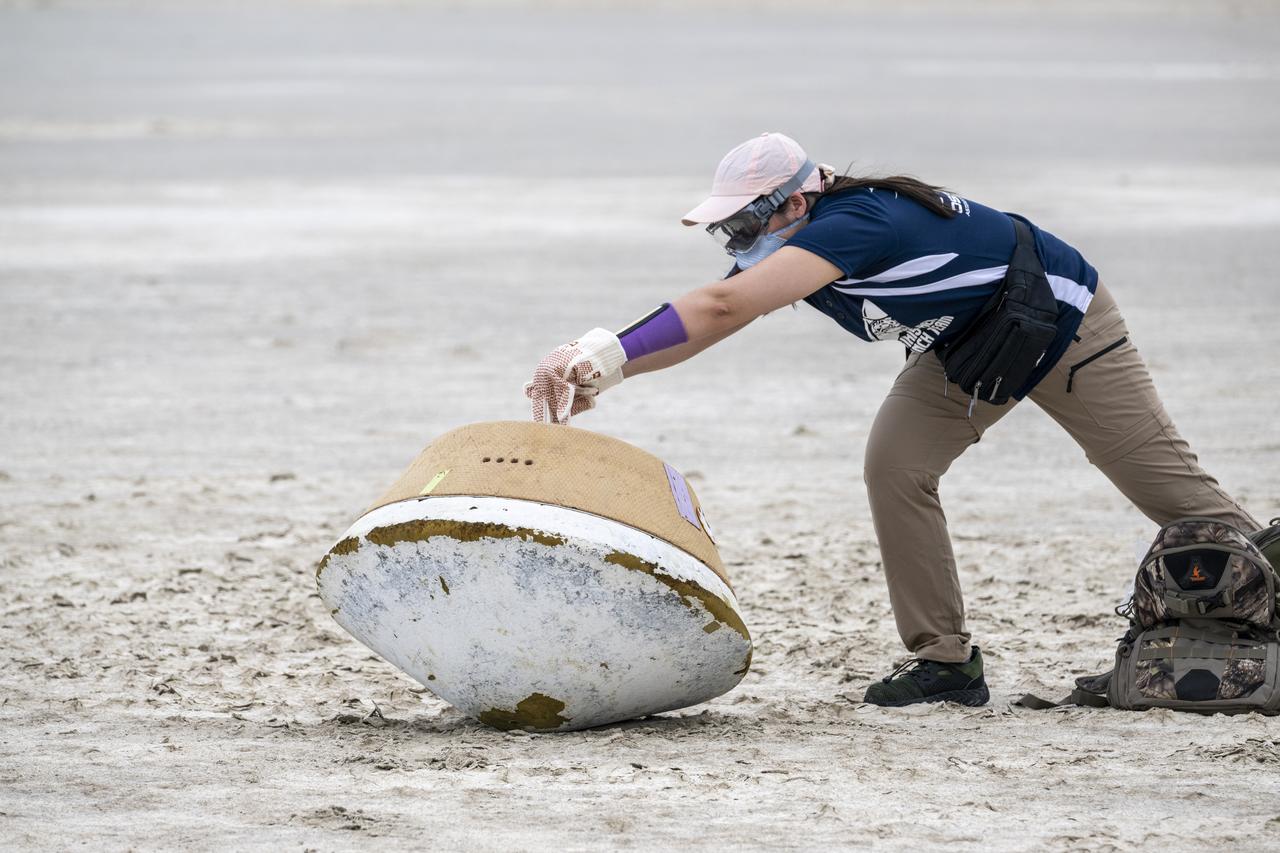
Recovery teams participate in field rehearsals in preparation for the retrieval of the sample return capsule from NASA's OSIRIS-REx mission, Tuesday, July 18, 2023, at the Department of Defense's Utah Test and Training Range. The sample was collected from the asteroid Bennu in October 2020 by NASA’s OSIRIS-REx spacecraft and will return to Earth on September 24th, landing under parachute at the Utah Test and Training Range. Photo Credit: (NASA/Keegan Barber)
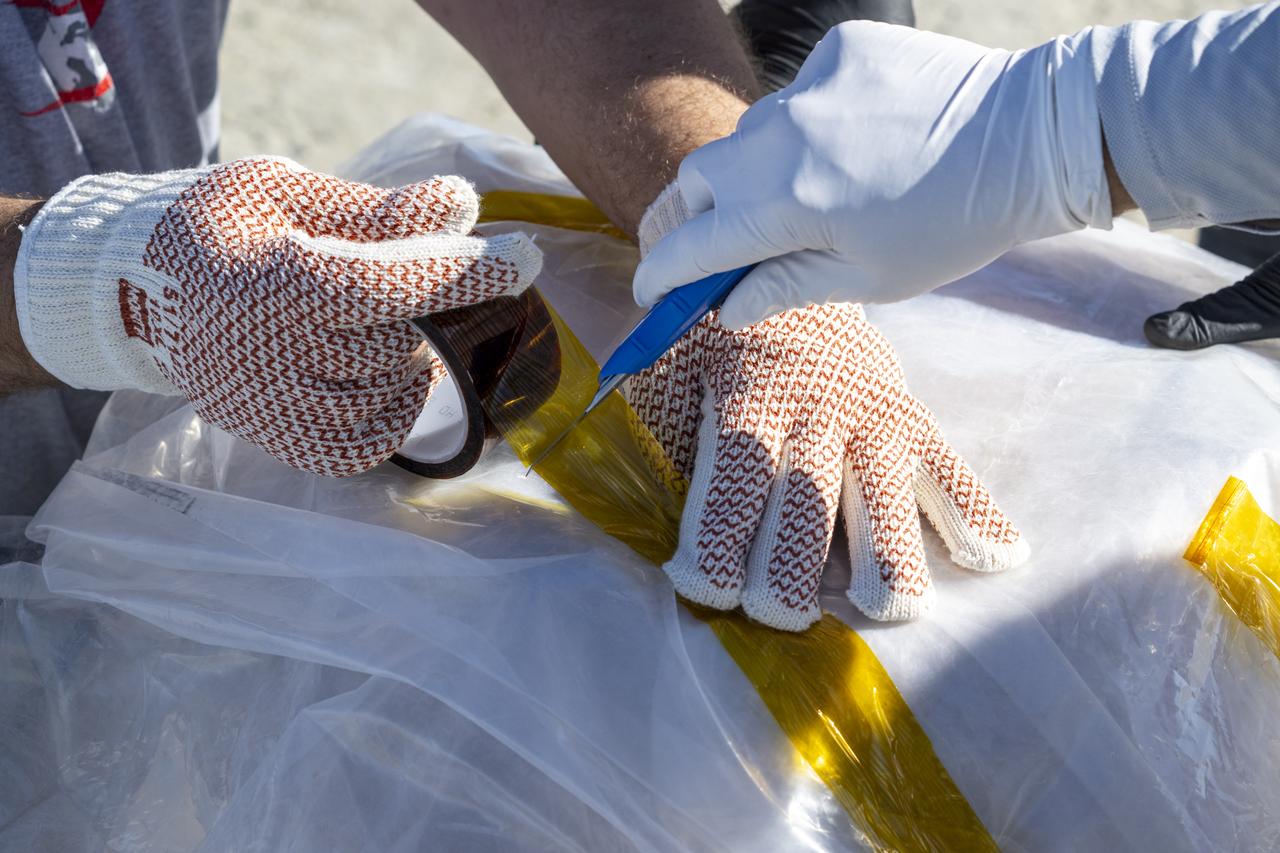
Recovery teams participate in field rehearsals in preparation for the retrieval of the sample return capsule from NASA's OSIRIS-REx mission, Tuesday, Aug. 29, 2023, at the Department of Defense's Utah Test and Training Range. The sample was collected from the asteroid Bennu in October 2020 by NASA’s OSIRIS-REx spacecraft and will return to Earth on September 24th, landing under parachute at the Utah Test and Training Range. Photo Credit: (NASA/Keegan Barber)
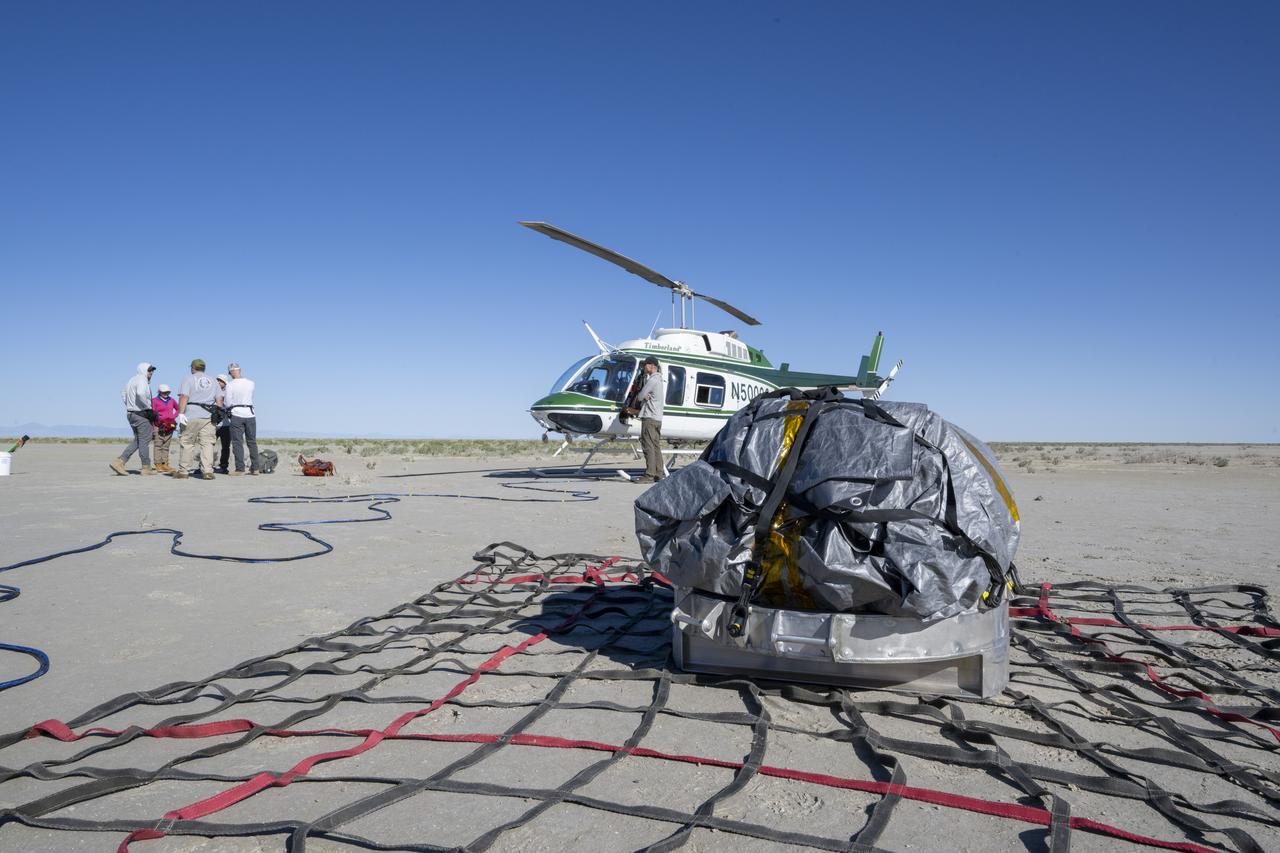
Recovery teams participate in field rehearsals in preparation for the retrieval of the sample return capsule from NASA's OSIRIS-REx mission, Tuesday, Aug. 29, 2023, at the Department of Defense's Utah Test and Training Range. The sample was collected from the asteroid Bennu in October 2020 by NASA’s OSIRIS-REx spacecraft and will return to Earth on September 24th, landing under parachute at the Utah Test and Training Range. Photo Credit: (NASA/Keegan Barber)
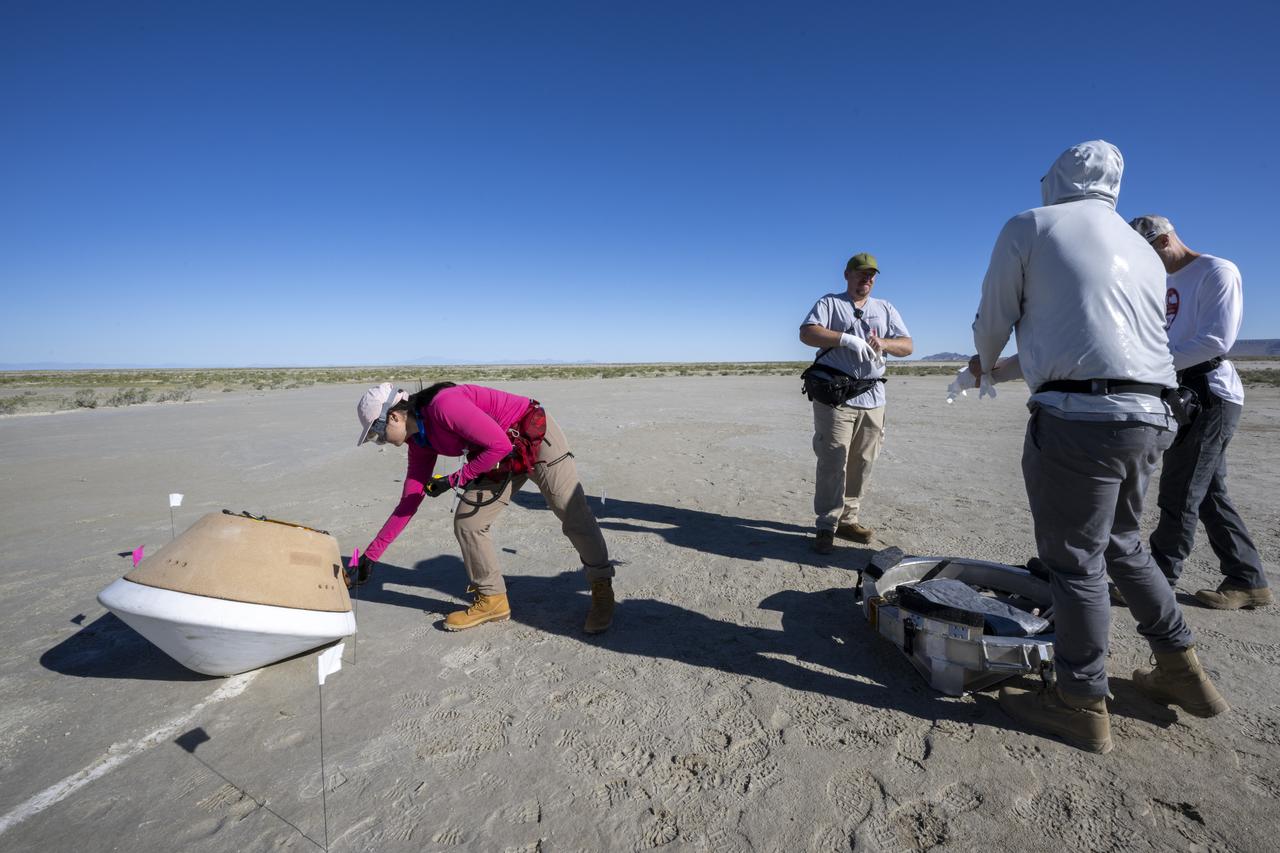
Recovery teams participate in field rehearsals in preparation for the retrieval of the sample return capsule from NASA's OSIRIS-REx mission, Tuesday, Aug. 29, 2023, at the Department of Defense's Utah Test and Training Range. The sample was collected from the asteroid Bennu in October 2020 by NASA’s OSIRIS-REx spacecraft and will return to Earth on September 24th, landing under parachute at the Utah Test and Training Range. Photo Credit: (NASA/Keegan Barber)
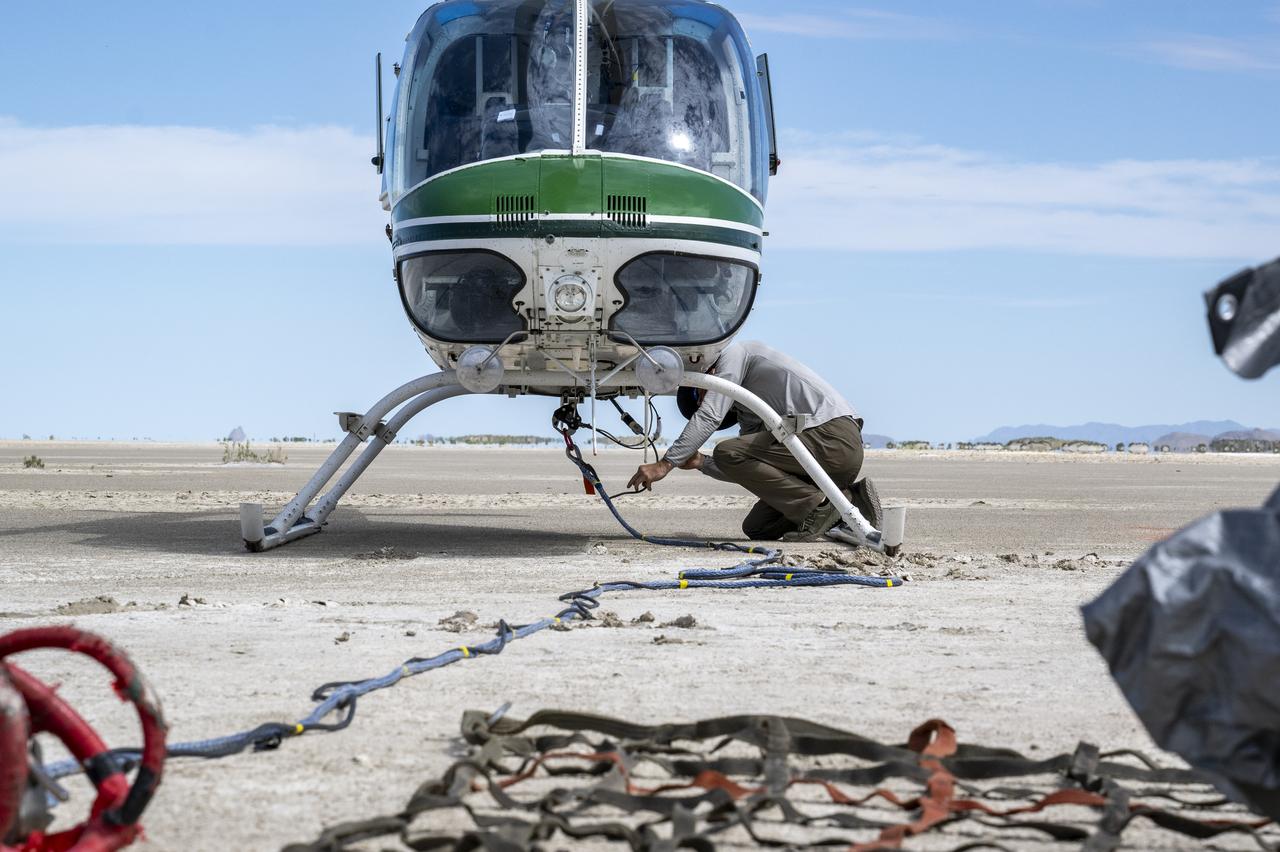
Recovery teams participate in helicopter training in preparation for the retrieval of the sample return capsule from NASA's OSIRIS-REx mission, Wednesday, July 19, 2023, at the Department of Defense's Utah Test and Training Range. The sample was collected from the asteroid Bennu in October 2020 by NASA’s OSIRIS-REx spacecraft and will return to Earth on September 24th, landing under parachute at the Utah Test and Training Range. Photo Credit: (NASA/Keegan Barber)
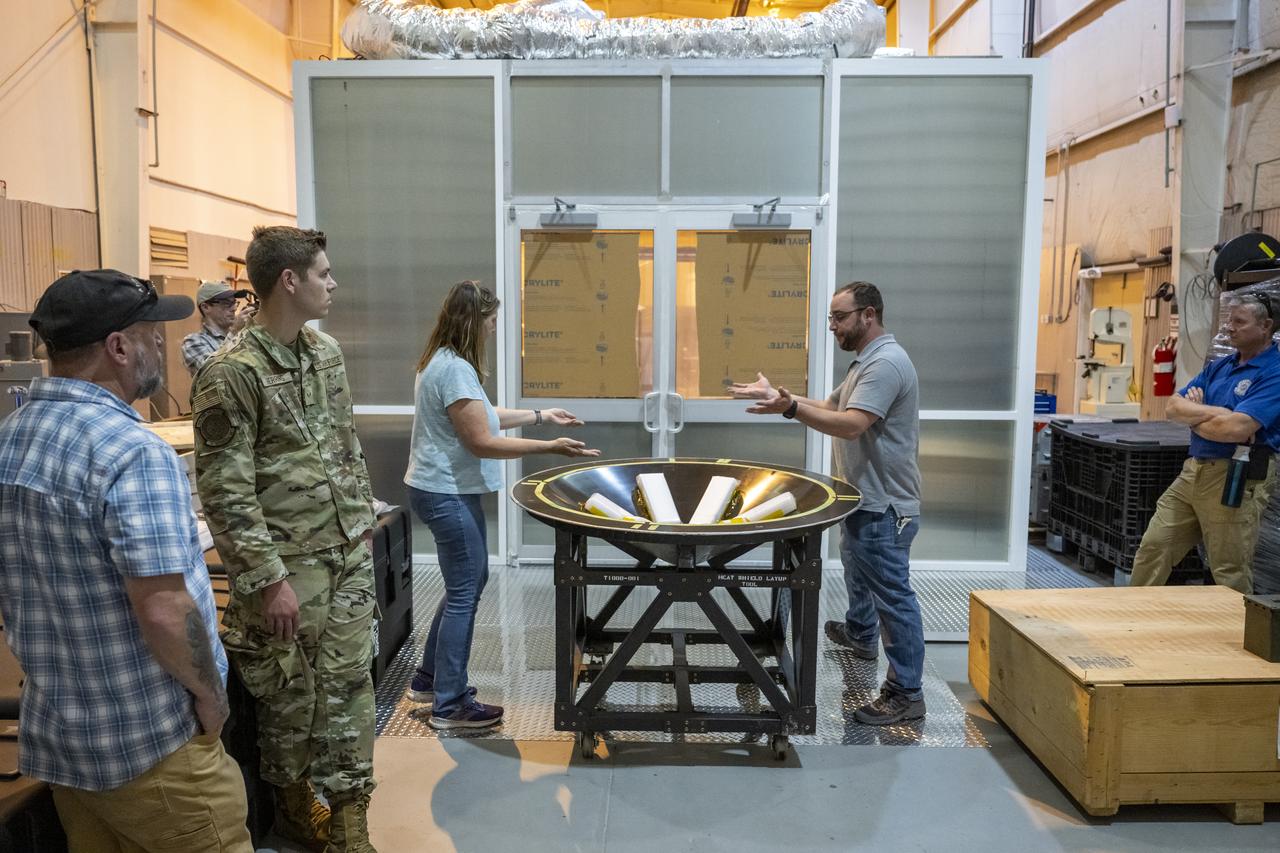
Recovery teams participate in clean room tours and rehearsals in preparation for the retrieval of the sample return capsule from NASA's OSIRIS-REx mission, Monday, July 17, 2023, at the Department of Defense's Utah Test and Training Range. The sample was collected from the asteroid Bennu in October 2020 by NASA’s OSIRIS-REx spacecraft and will return to Earth on September 24th, landing under parachute at the Utah Test and Training Range. Photo Credit: (NASA/Keegan Barber)
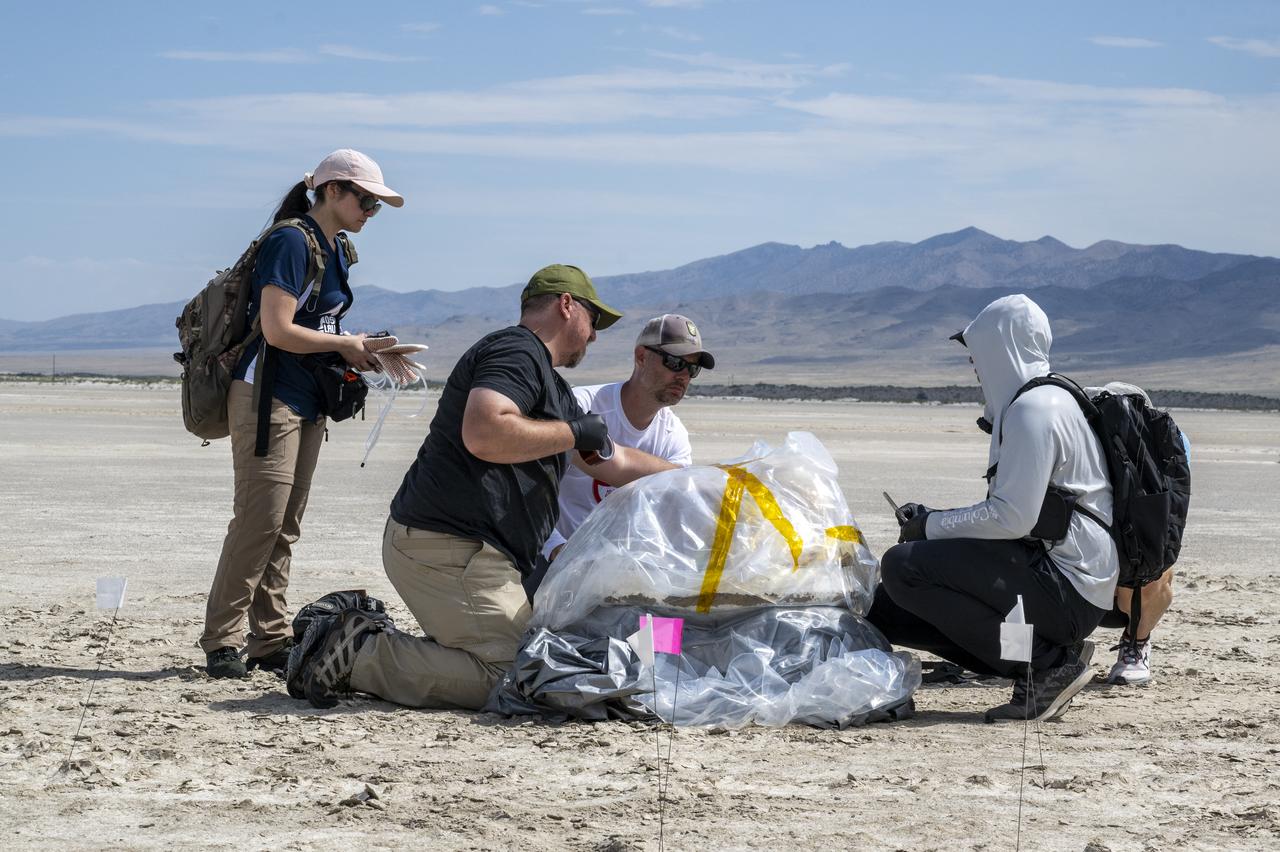
Recovery teams participate in field rehearsals in preparation for the retrieval of the sample return capsule from NASA's OSIRIS-REx mission, Tuesday, July 18, 2023, at the Department of Defense's Utah Test and Training Range. The sample was collected from the asteroid Bennu in October 2020 by NASA’s OSIRIS-REx spacecraft and will return to Earth on September 24th, landing under parachute at the Utah Test and Training Range. Photo Credit: (NASA/Keegan Barber)
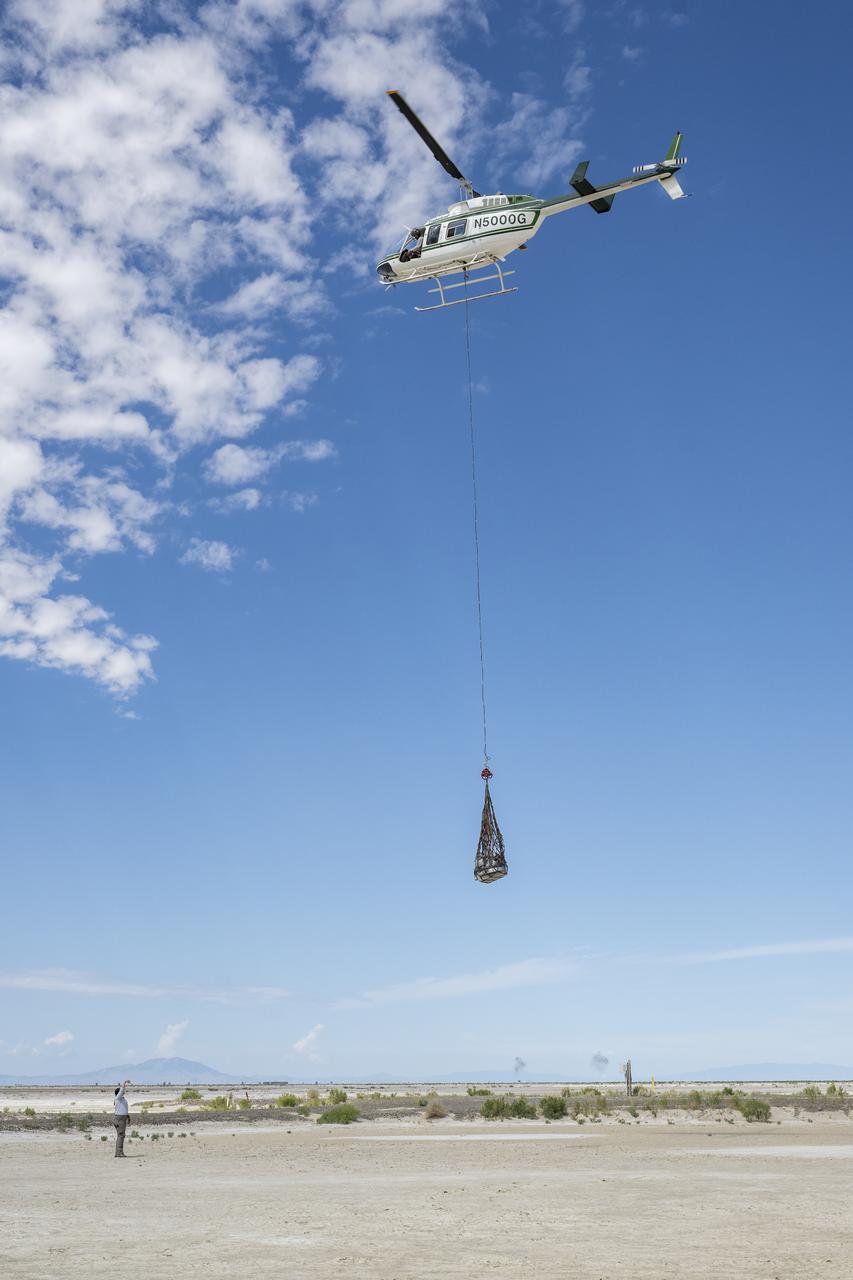
Recovery teams participate in helicopter training in preparation for the retrieval of the sample return capsule from NASA's OSIRIS-REx mission, Wednesday, July 19, 2023, at the Department of Defense's Utah Test and Training Range. The sample was collected from the asteroid Bennu in October 2020 by NASA’s OSIRIS-REx spacecraft and will return to Earth on September 24th, landing under parachute at the Utah Test and Training Range. Photo Credit: (NASA/Keegan Barber)
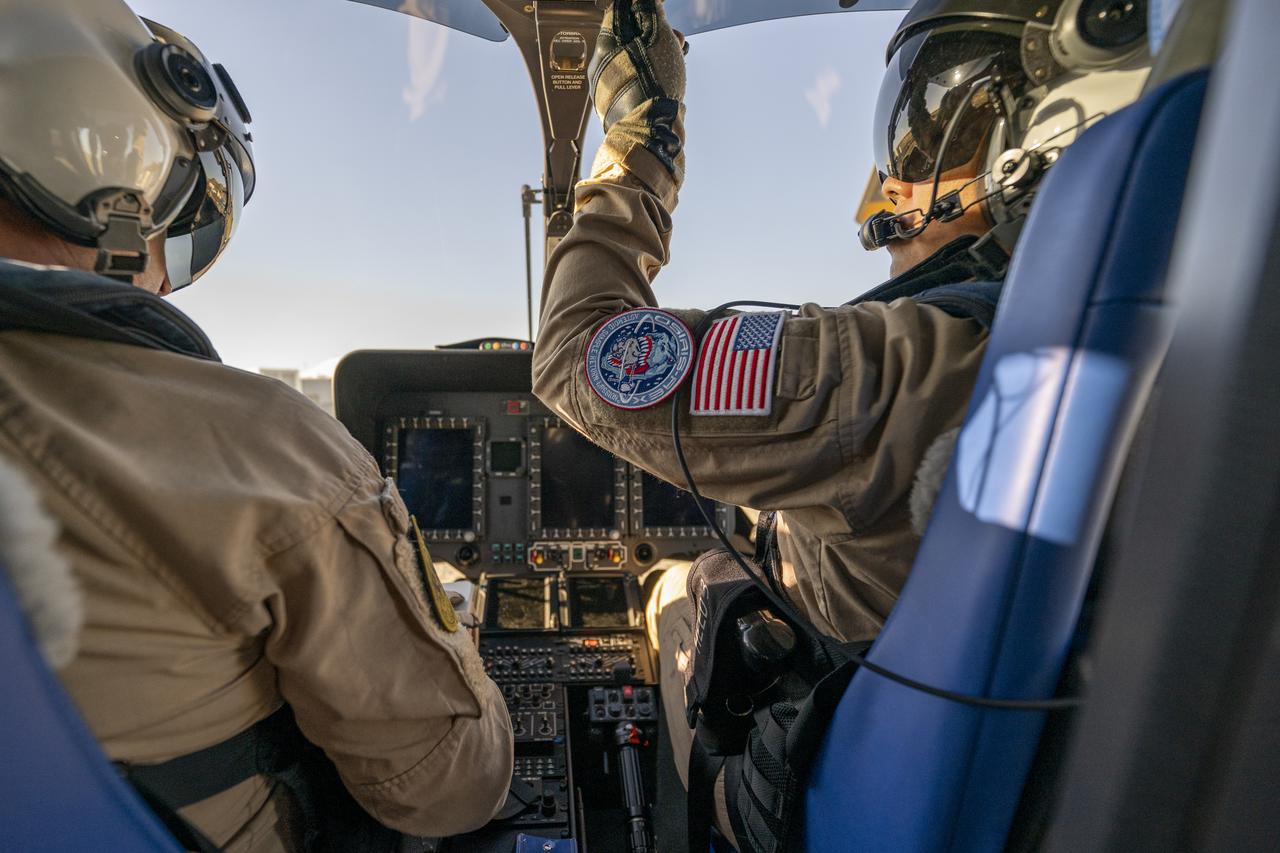
Members of the Kennedy Space Center (KSC) Flight Operations team are seen during field rehearsals in preparation for the retrieval of the sample return capsule from NASA's OSIRIS-REx mission, Tuesday, Aug. 29, 2023, at the Department of Defense's Utah Test and Training Range. The sample was collected from the asteroid Bennu in October 2020 by NASA’s OSIRIS-REx spacecraft and will return to Earth on September 24th, landing under parachute at the Utah Test and Training Range. Photo Credit: (NASA/Keegan Barber)
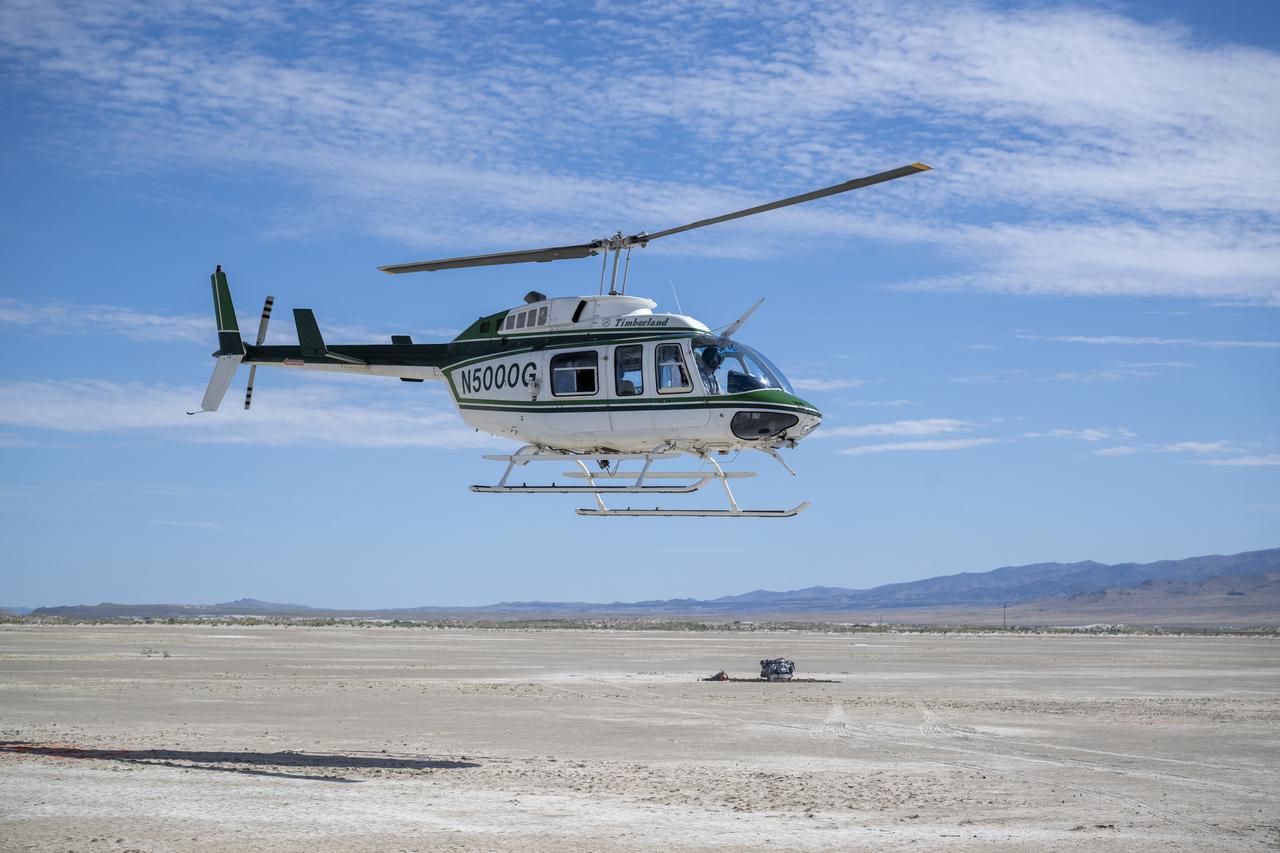
Recovery teams participate in helicopter training in preparation for the retrieval of the sample return capsule from NASA's OSIRIS-REx mission, Wednesday, July 19, 2023, at the Department of Defense's Utah Test and Training Range. The sample was collected from the asteroid Bennu in October 2020 by NASA’s OSIRIS-REx spacecraft and will return to Earth on September 24th, landing under parachute at the Utah Test and Training Range. Photo Credit: (NASA/Keegan Barber)
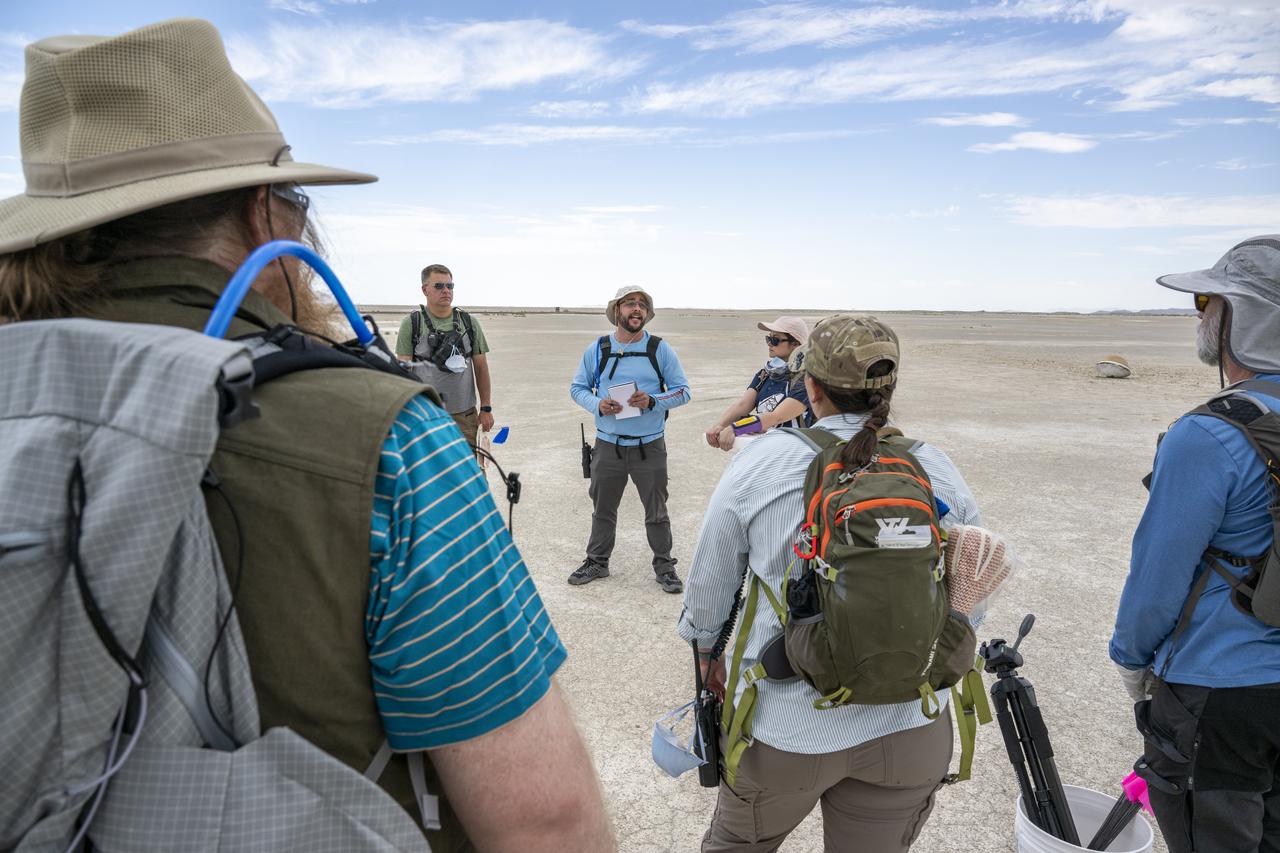
Recovery teams participate in field rehearsals in preparation for the retrieval of the sample return capsule from NASA's OSIRIS-REx mission, Tuesday, July 18, 2023, at the Department of Defense's Utah Test and Training Range. The sample was collected from the asteroid Bennu in October 2020 by NASA’s OSIRIS-REx spacecraft and will return to Earth on September 24th, landing under parachute at the Utah Test and Training Range. Photo Credit: (NASA/Keegan Barber)
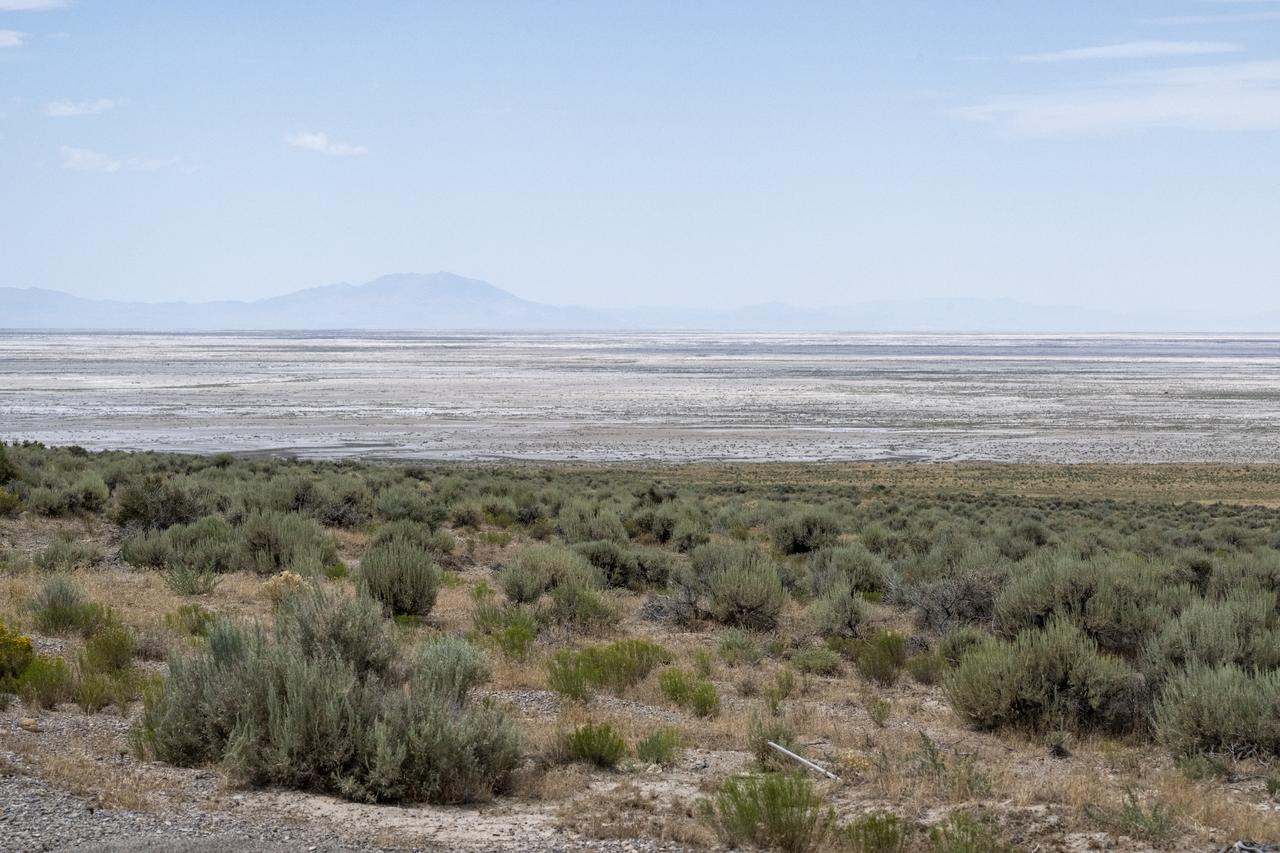
The Department of Defense's Utah Test and Training Range is seen, Monday, July 17, 2023, as recovery teams tour the projected landing ellipse in preparation for the retrieval of the sample return capsule from NASA's OSIRIS-REx mission. The sample was collected from the asteroid Bennu in October 2020 by NASA’s OSIRIS-REx spacecraft and will return to Earth on September 24th, landing under parachute at the Utah Test and Training Range. Photo Credit: (NASA/Keegan Barber)
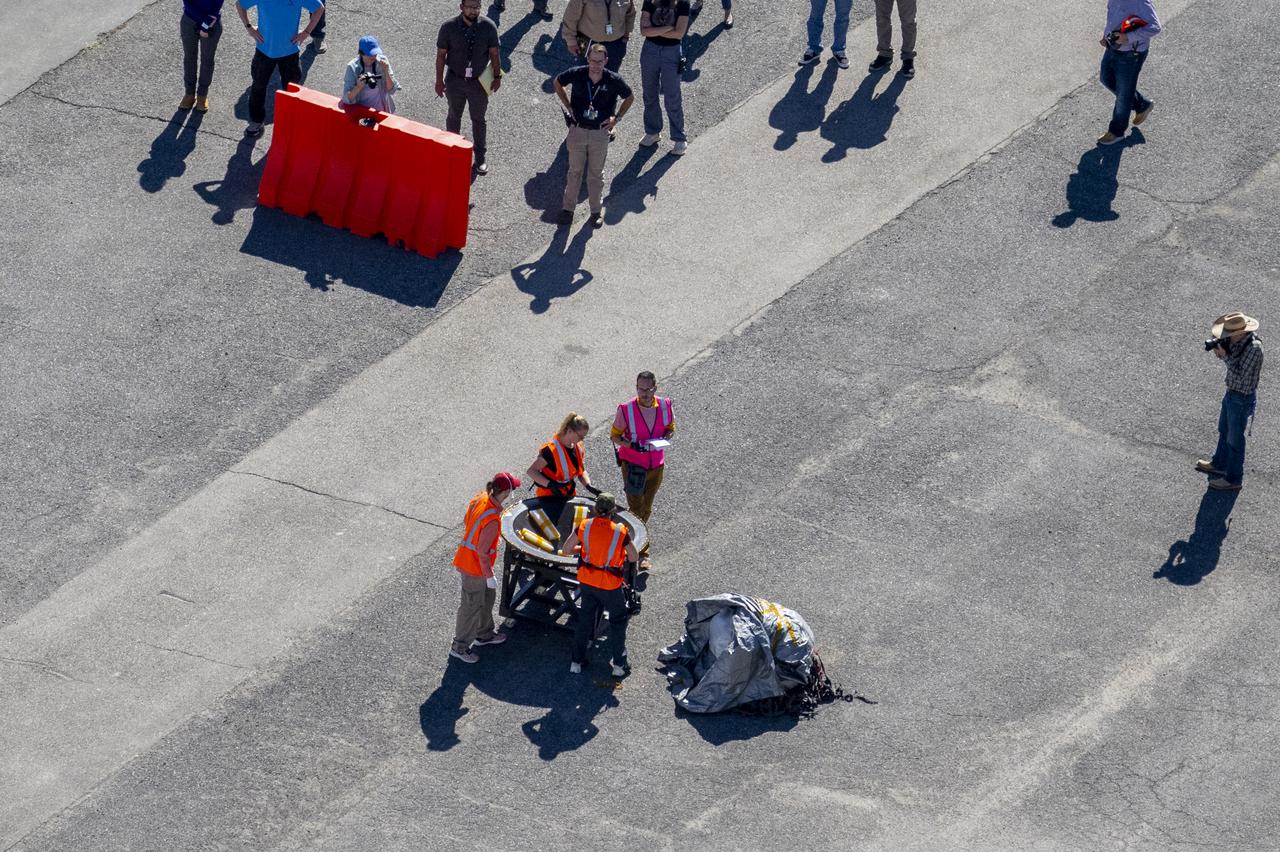
Recovery teams participate in field rehearsals in preparation for the retrieval of the sample return capsule from NASA's OSIRIS-REx mission, Tuesday, Aug. 29, 2023, at the Department of Defense's Utah Test and Training Range. The sample was collected from the asteroid Bennu in October 2020 by NASA’s OSIRIS-REx spacecraft and will return to Earth on September 24th, landing under parachute at the Utah Test and Training Range. Photo Credit: (NASA/Keegan Barber)

Recovery teams participate in field rehearsals in preparation for the retrieval of the sample return capsule from NASA's OSIRIS-REx mission, Tuesday, Aug. 29, 2023, at the Department of Defense's Utah Test and Training Range. The sample was collected from the asteroid Bennu in October 2020 by NASA’s OSIRIS-REx spacecraft and will return to Earth on September 24th, landing under parachute at the Utah Test and Training Range. Photo Credit: (NASA/Keegan Barber)
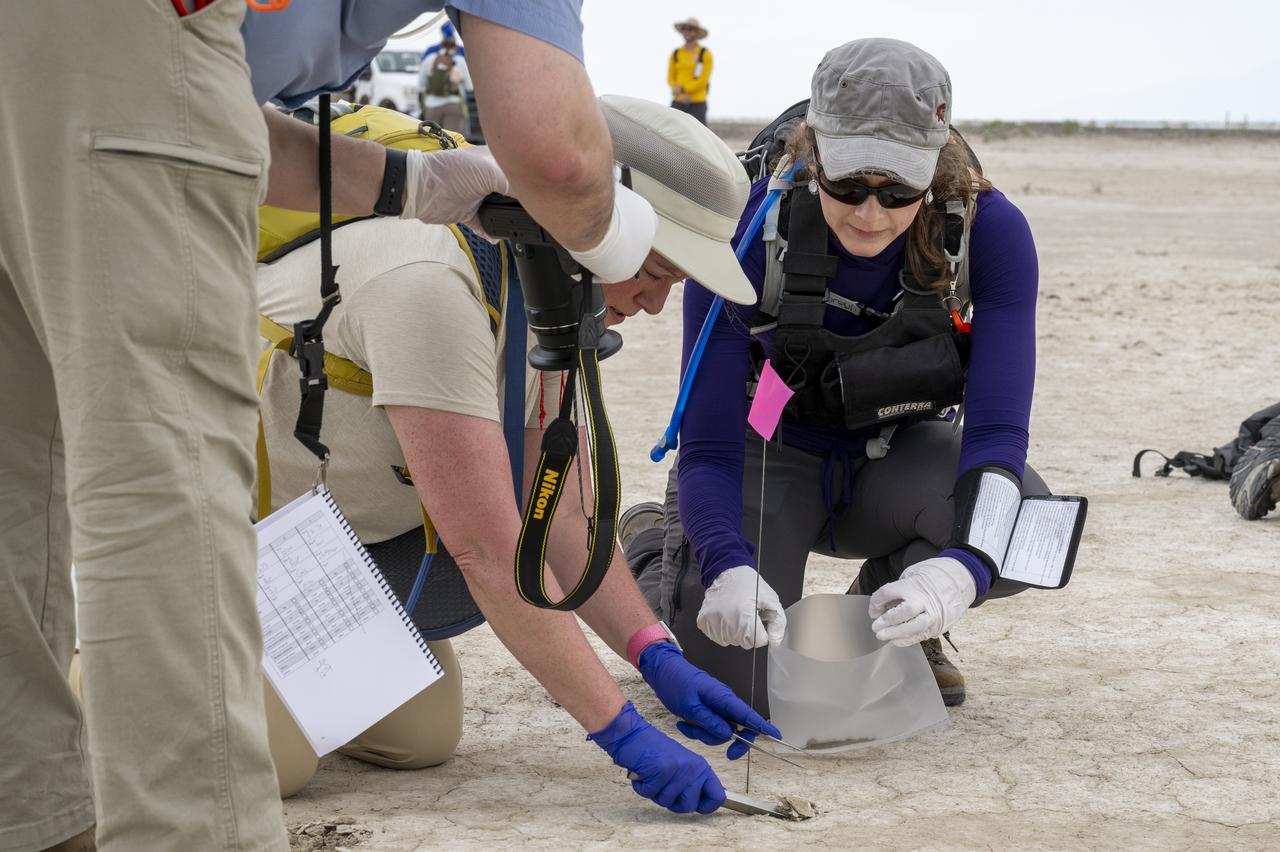
Recovery teams participate in field rehearsals in preparation for the retrieval of the sample return capsule from NASA's OSIRIS-REx mission, Tuesday, July 18, 2023, at the Department of Defense's Utah Test and Training Range. The sample was collected from the asteroid Bennu in October 2020 by NASA’s OSIRIS-REx spacecraft and will return to Earth on September 24th, landing under parachute at the Utah Test and Training Range. Photo Credit: (NASA/Keegan Barber)
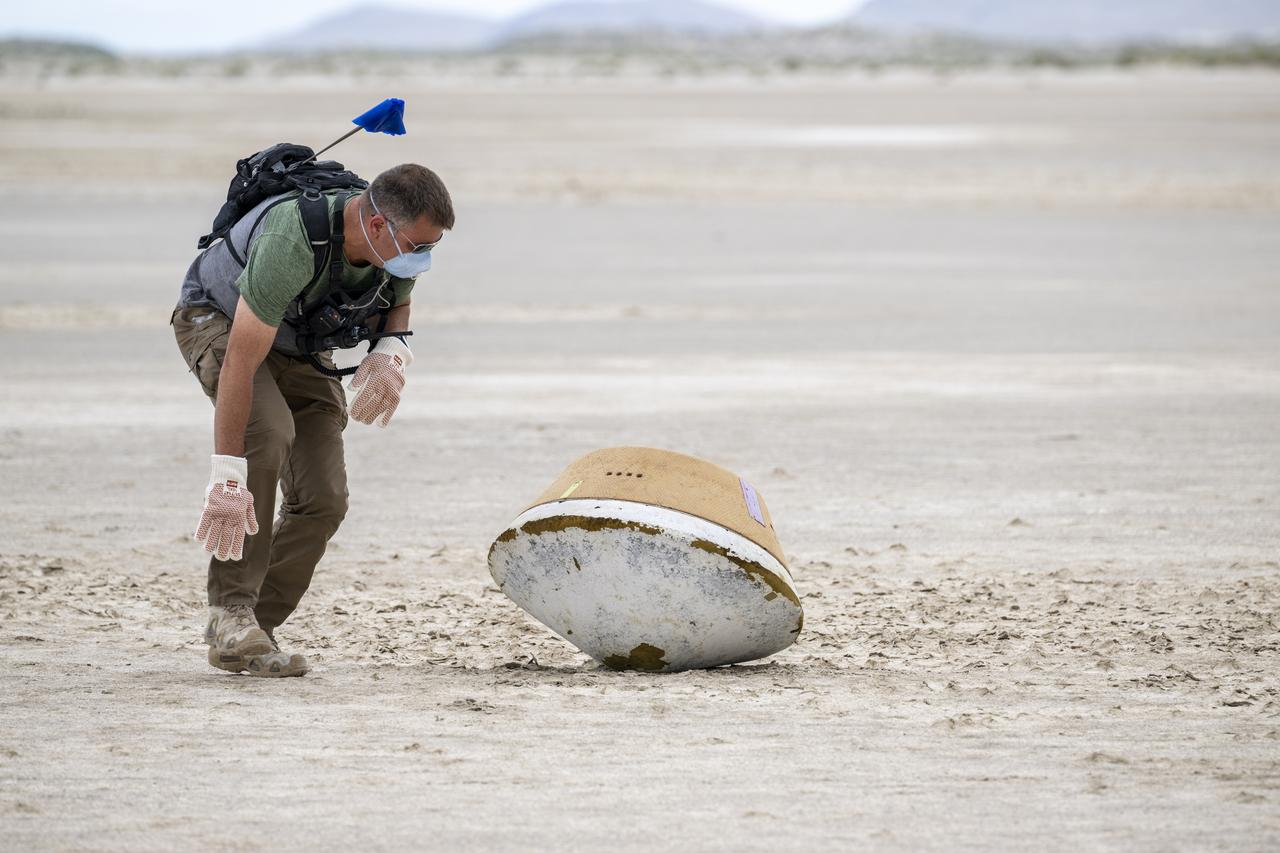
Recovery teams participate in field rehearsals in preparation for the retrieval of the sample return capsule from NASA's OSIRIS-REx mission, Tuesday, July 18, 2023, at the Department of Defense's Utah Test and Training Range. The sample was collected from the asteroid Bennu in October 2020 by NASA’s OSIRIS-REx spacecraft and will return to Earth on September 24th, landing under parachute at the Utah Test and Training Range. Photo Credit: (NASA/Keegan Barber)
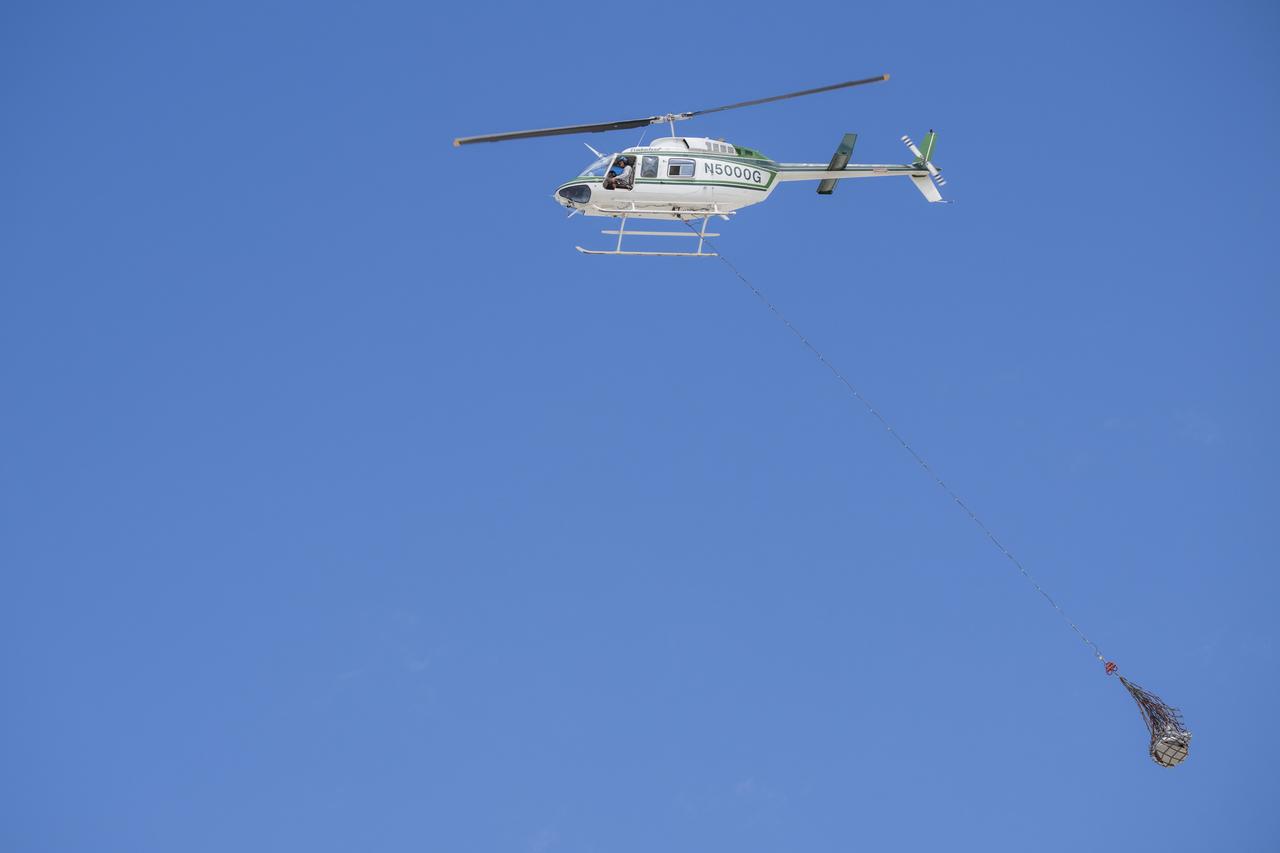
Recovery teams participate in helicopter training in preparation for the retrieval of the sample return capsule from NASA's OSIRIS-REx mission, Wednesday, July 19, 2023, at the Department of Defense's Utah Test and Training Range. The sample was collected from the asteroid Bennu in October 2020 by NASA’s OSIRIS-REx spacecraft and will return to Earth on September 24th, landing under parachute at the Utah Test and Training Range. Photo Credit: (NASA/Keegan Barber)
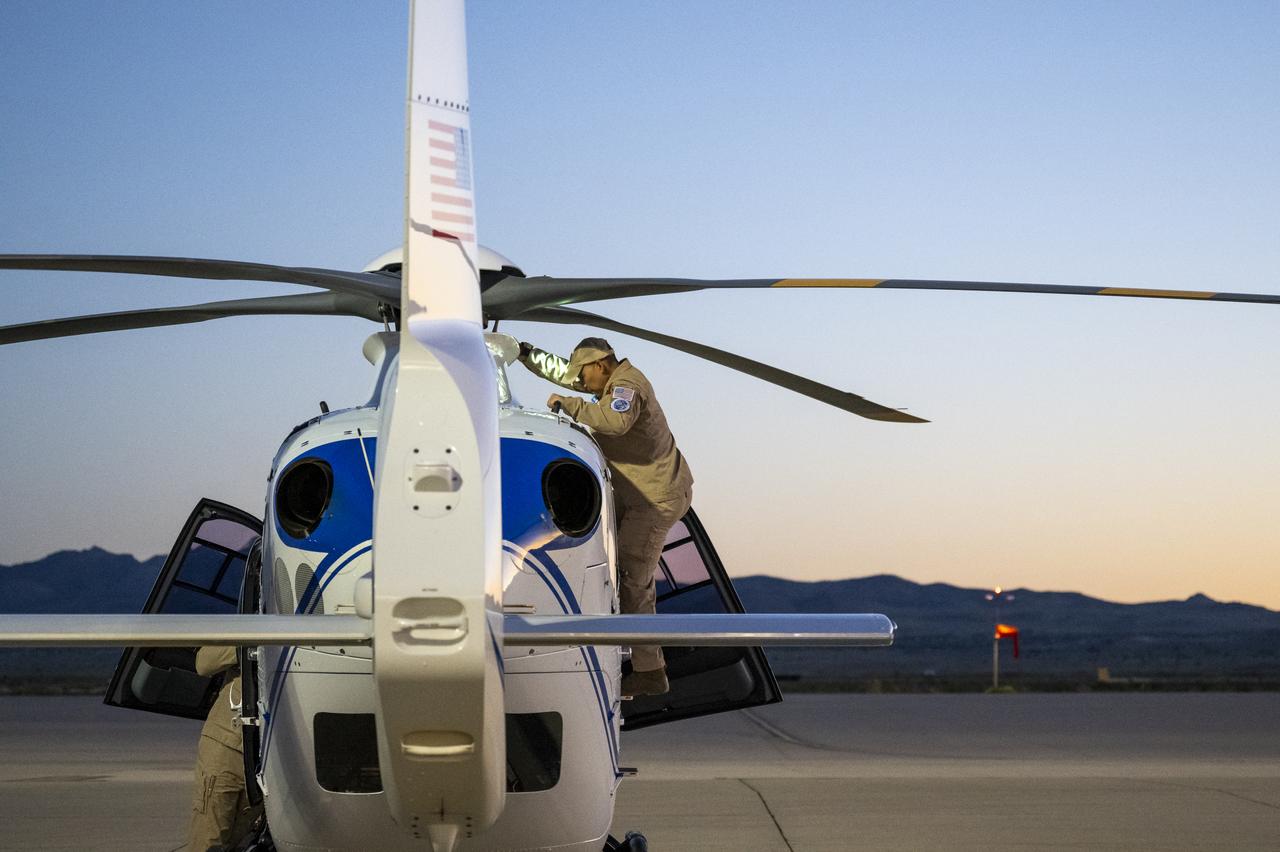
Members of the Kennedy Space Center (KSC) Flight Operations team perform preflight checks prior to field rehearsals in preparation for the retrieval of the sample return capsule from NASA's OSIRIS-REx mission, Tuesday, Aug. 29, 2023, at the Department of Defense's Utah Test and Training Range. The sample was collected from the asteroid Bennu in October 2020 by NASA’s OSIRIS-REx spacecraft and will return to Earth on September 24th, landing under parachute at the Utah Test and Training Range. Photo Credit: (NASA/Keegan Barber)
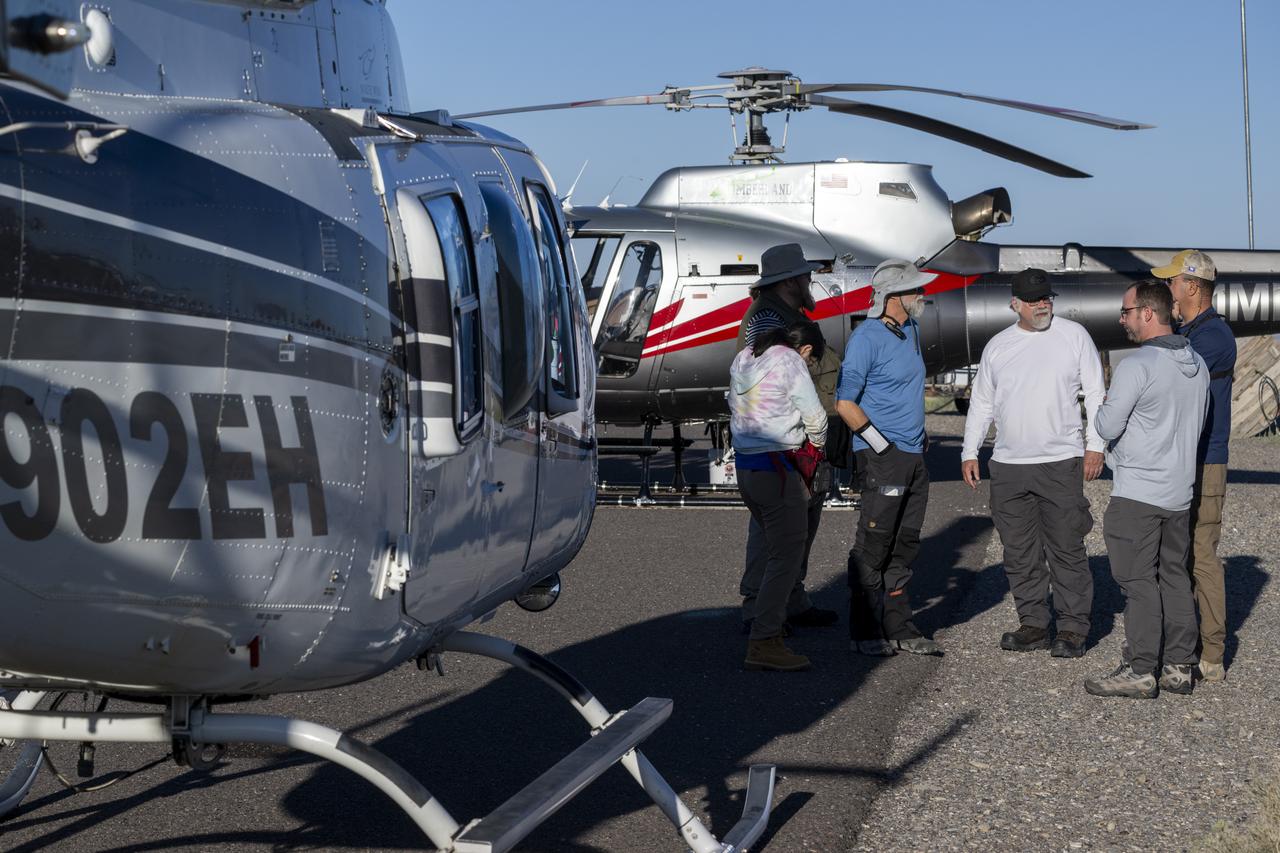
Recovery teams participate in field rehearsals in preparation for the retrieval of the sample return capsule from NASA's OSIRIS-REx mission, Tuesday, Aug. 29, 2023, at the Department of Defense's Utah Test and Training Range. The sample was collected from the asteroid Bennu in October 2020 by NASA’s OSIRIS-REx spacecraft and will return to Earth on September 24th, landing under parachute at the Utah Test and Training Range. Photo Credit: (NASA/Keegan Barber)
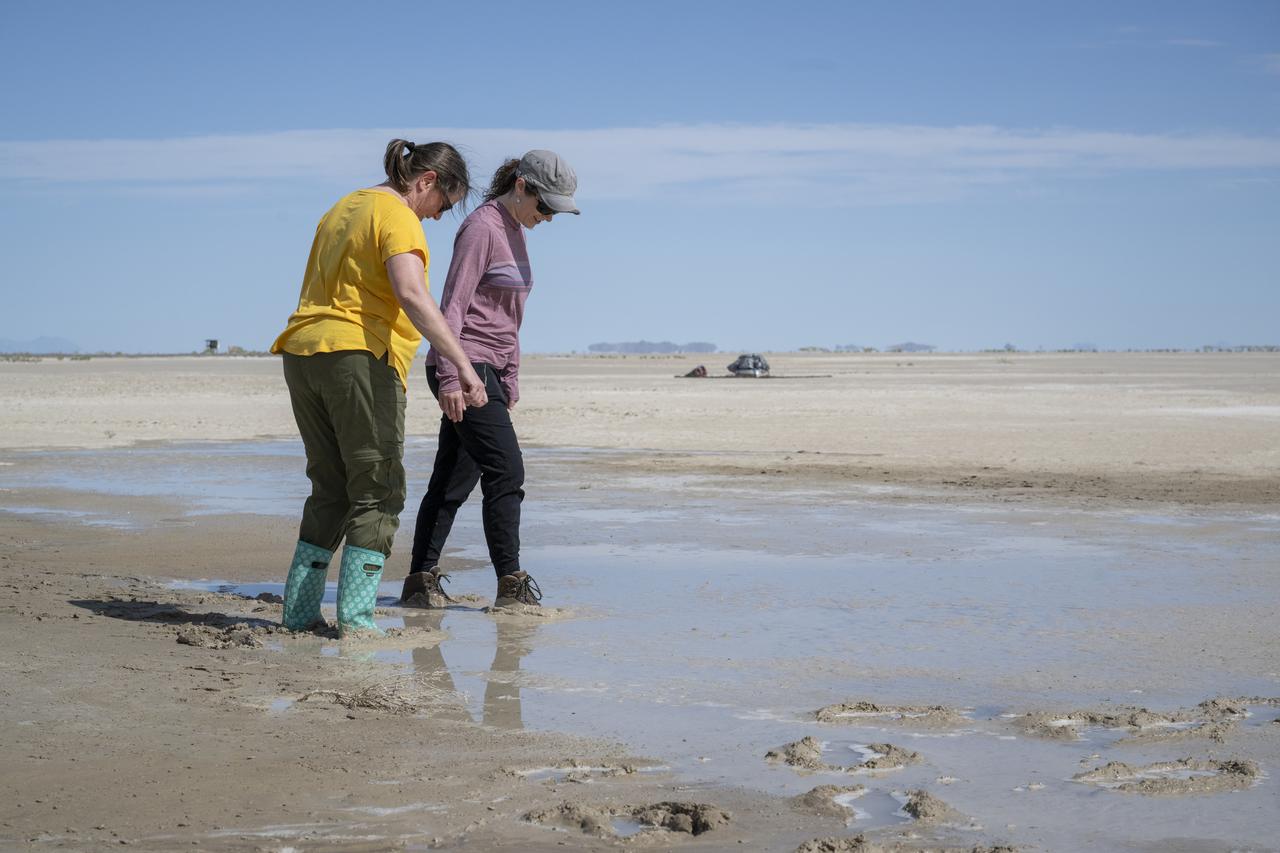
Recovery teams participate in field rehearsals in preparation for the retrieval of the sample return capsule from NASA's OSIRIS-REx mission, Wednesday, July 19, 2023, at the Department of Defense's Utah Test and Training Range. The sample was collected from the asteroid Bennu in October 2020 by NASA’s OSIRIS-REx spacecraft and will return to Earth on September 24th, landing under parachute at the Utah Test and Training Range. Photo Credit: (NASA/Keegan Barber)
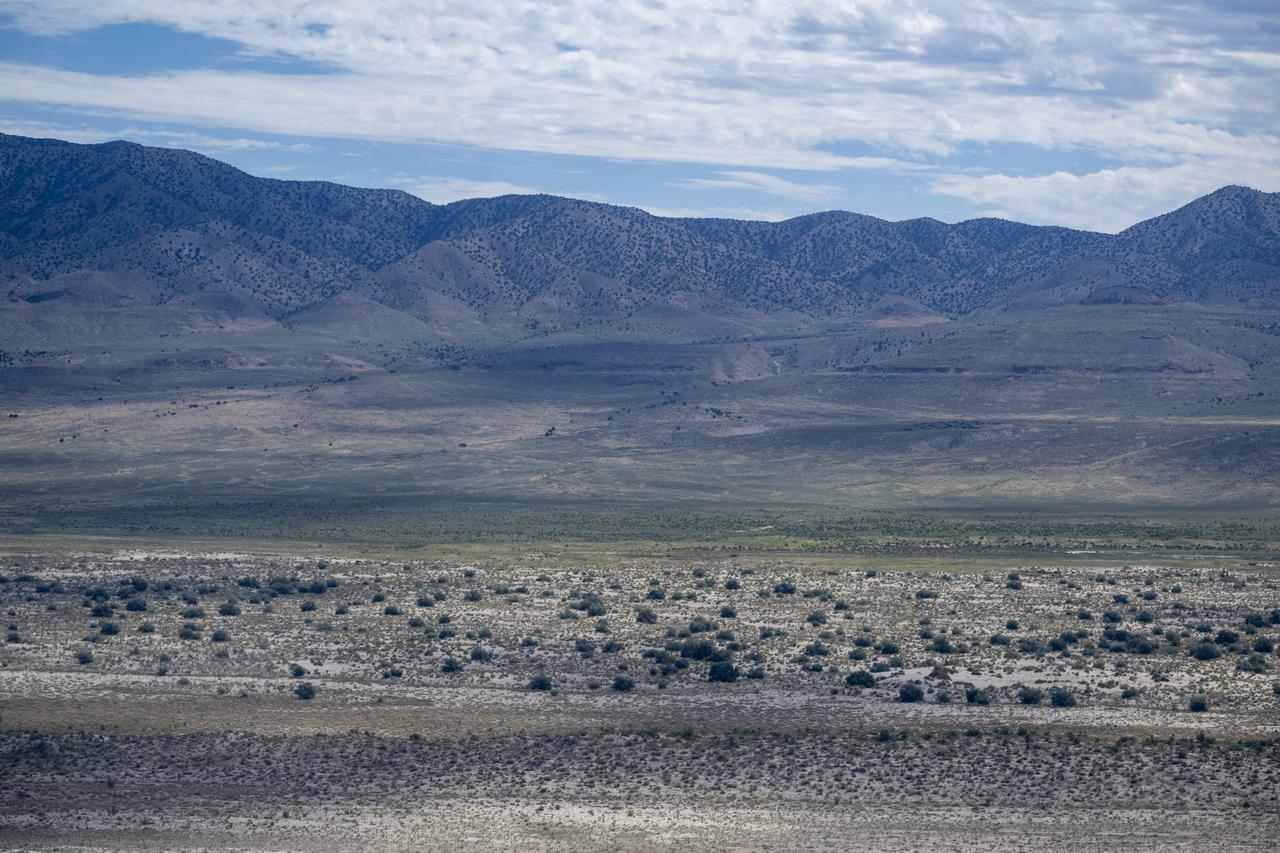
The Department of Defense's Utah Test and Training Range is seen from the cockpit of a helicopter, Wednesday, July 19, 2023, as recovery teams participate in helicopter training in preparation for the retrieval of the sample return capsule from NASA's OSIRIS-REx mission. The sample was collected from the asteroid Bennu in October 2020 by NASA’s OSIRIS-REx spacecraft and will return to Earth on September 24th, landing under parachute at the Utah Test and Training Range. Photo Credit: (NASA/Keegan Barber)
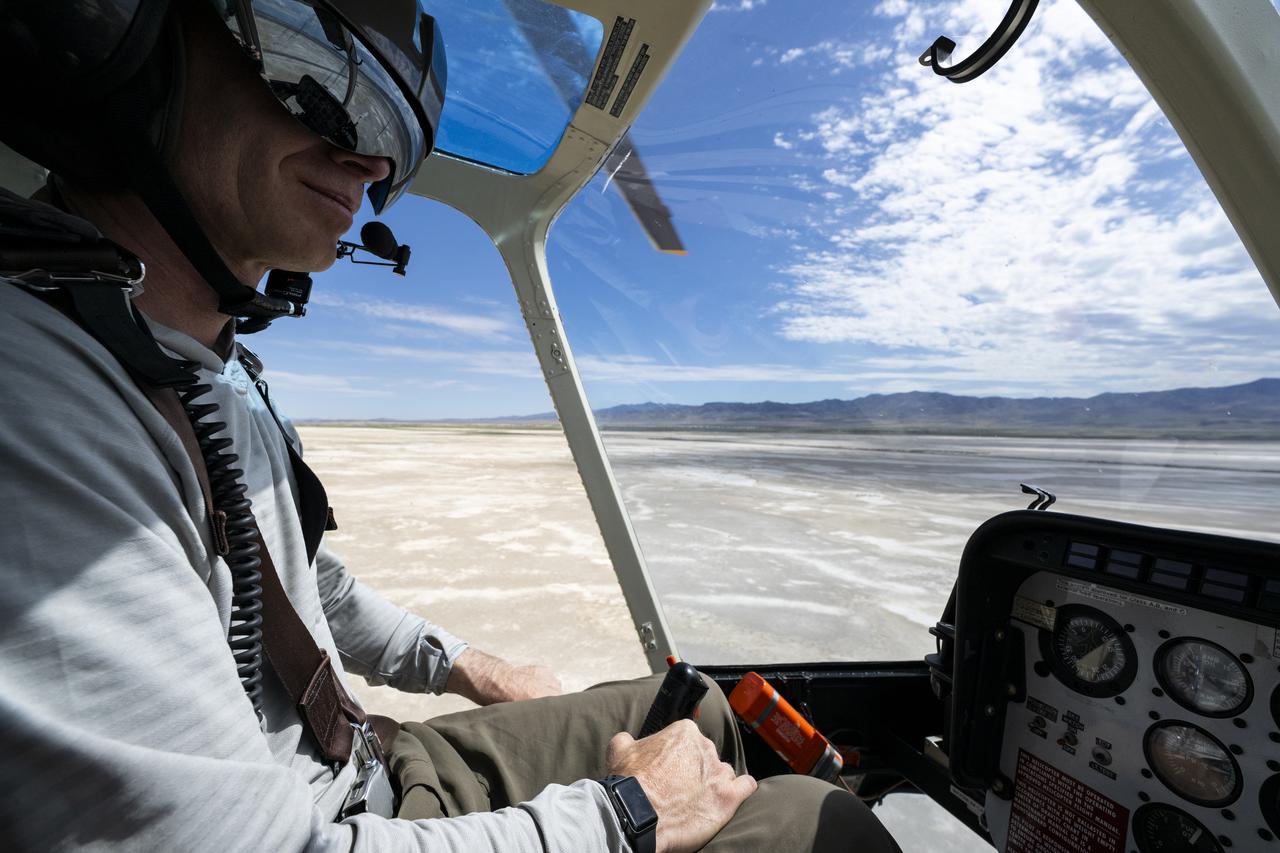
The Department of Defense's Utah Test and Training Range is seen from the cockpit of a helicopter, Wednesday, July 19, 2023, as recovery teams participate in helicopter training in preparation for the retrieval of the sample return capsule from NASA's OSIRIS-REx mission. The sample was collected from the asteroid Bennu in October 2020 by NASA’s OSIRIS-REx spacecraft and will return to Earth on September 24th, landing under parachute at the Utah Test and Training Range. Photo Credit: (NASA/Keegan Barber)
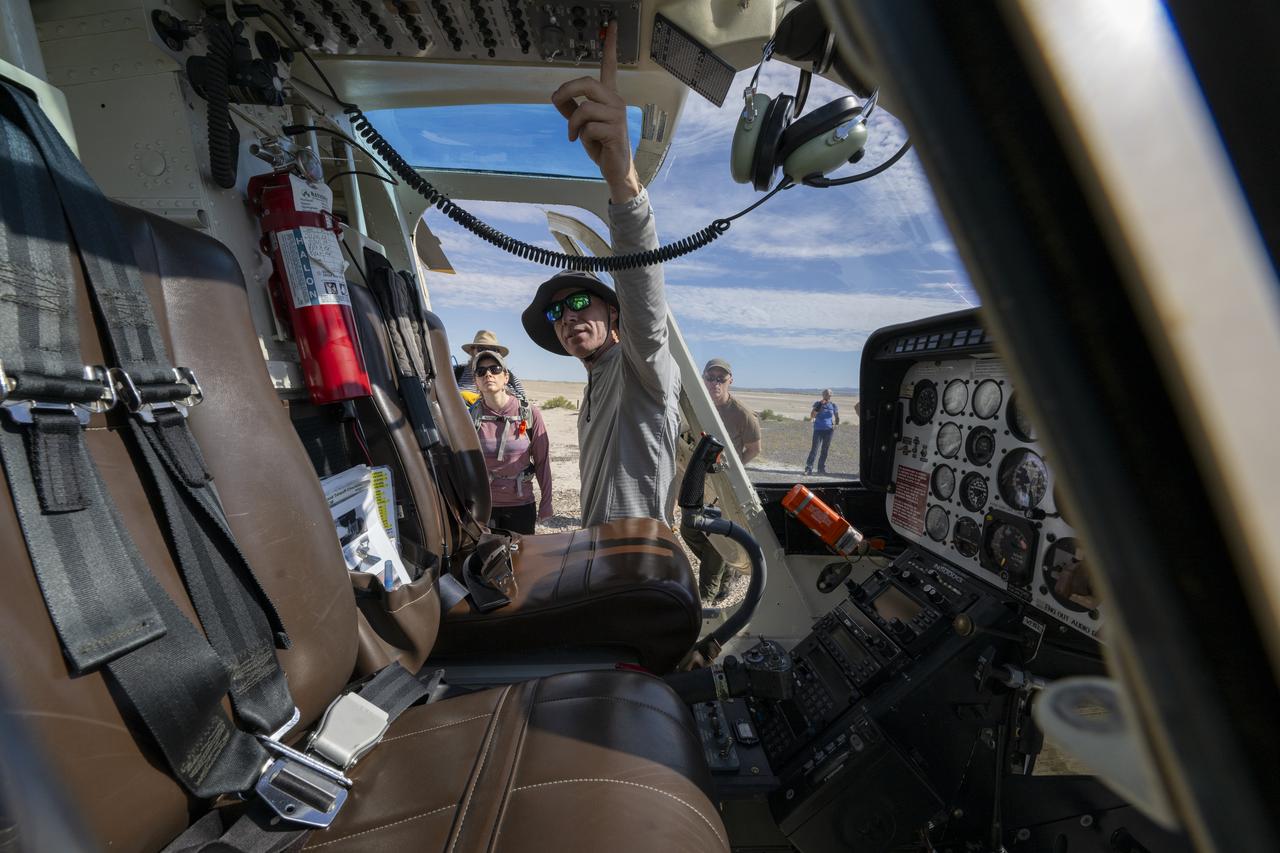
Recovery teams participate in helicopter training in preparation for the retrieval of the sample return capsule from NASA's OSIRIS-REx mission, Wednesday, July 19, 2023, at the Department of Defense's Utah Test and Training Range. The sample was collected from the asteroid Bennu in October 2020 by NASA’s OSIRIS-REx spacecraft and will return to Earth on September 24th, landing under parachute at the Utah Test and Training Range. Photo Credit: (NASA/Keegan Barber)
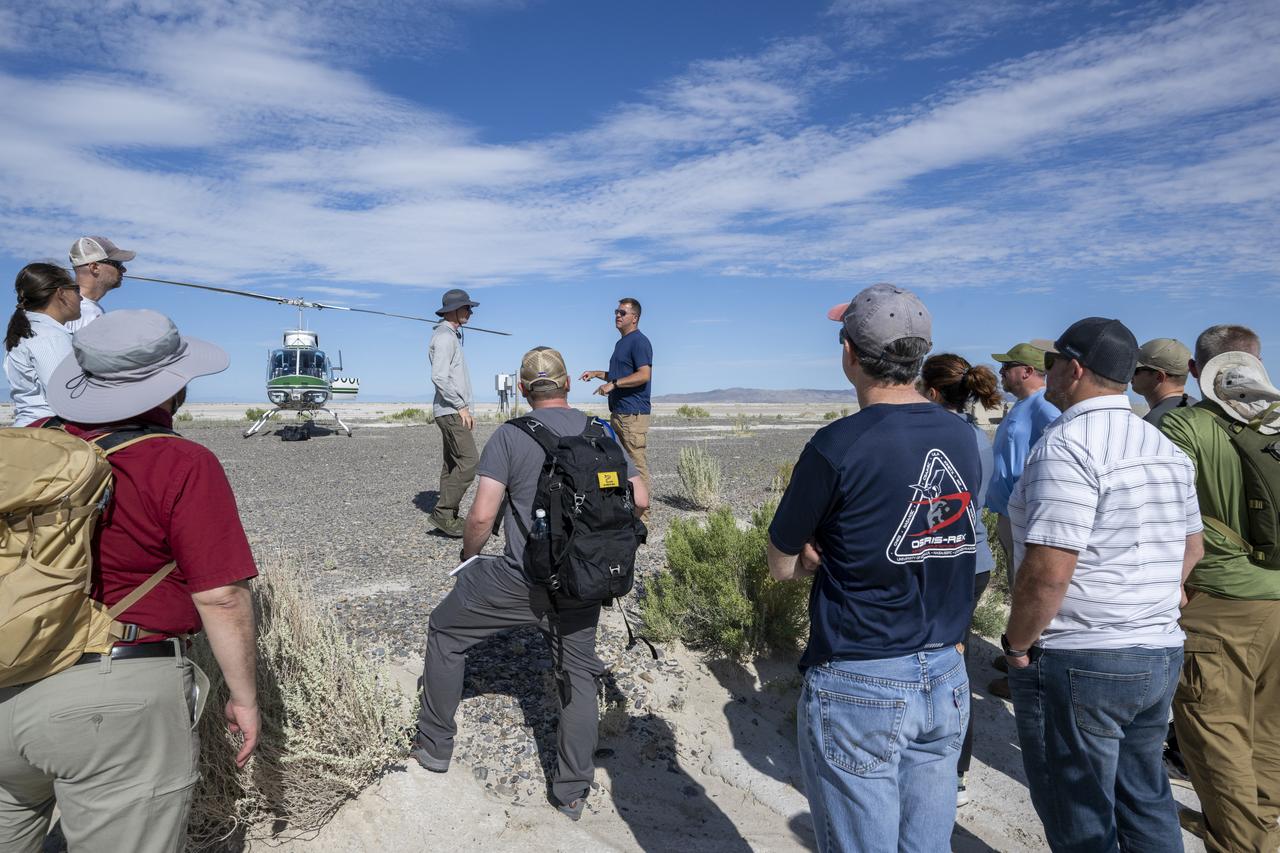
Recovery teams participate in helicopter training in preparation for the retrieval of the sample return capsule from NASA's OSIRIS-REx mission, Wednesday, July 19, 2023, at the Department of Defense's Utah Test and Training Range. The sample was collected from the asteroid Bennu in October 2020 by NASA’s OSIRIS-REx spacecraft and will return to Earth on September 24th, landing under parachute at the Utah Test and Training Range. Photo Credit: (NASA/Keegan Barber)
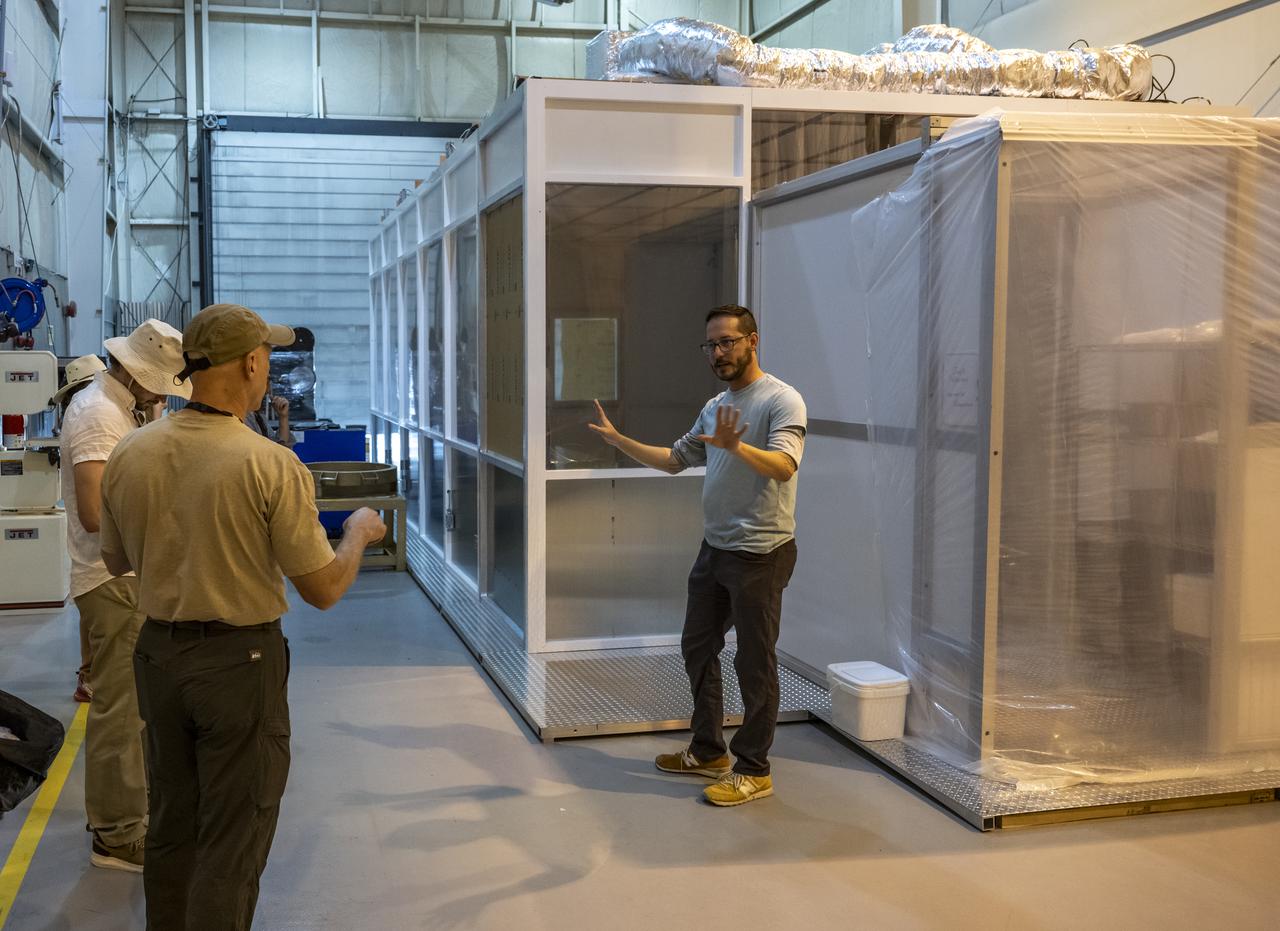
Recovery teams participate in clean room tours and rehearsals in preparation for the retrieval of the sample return capsule from NASA's OSIRIS-REx mission, Monday, July 17, 2023, at the Department of Defense's Utah Test and Training Range. The sample was collected from the asteroid Bennu in October 2020 by NASA’s OSIRIS-REx spacecraft and will return to Earth on September 24th, landing under parachute at the Utah Test and Training Range. Photo Credit: (NASA/Keegan Barber)
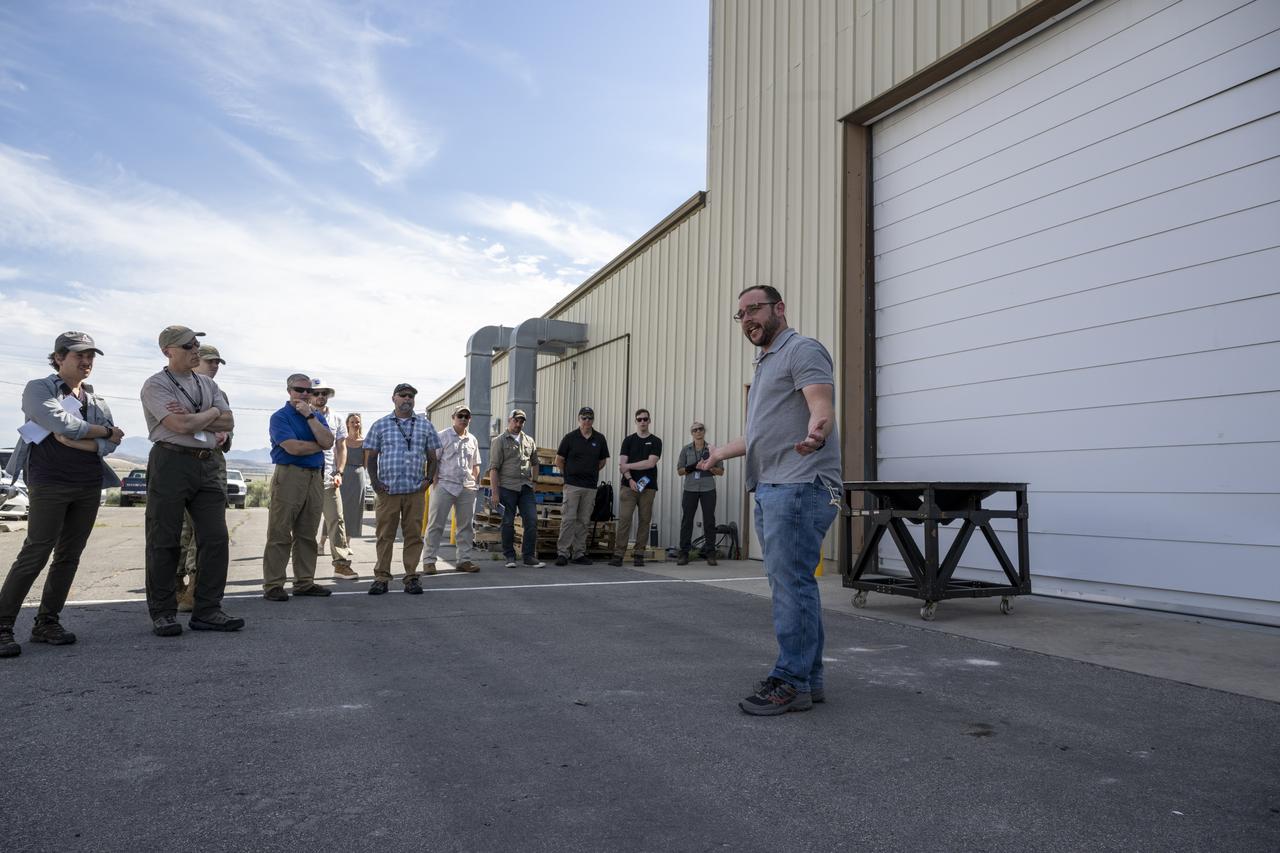
Recovery teams participate in clean room tours and rehearsals in preparation for the retrieval of the sample return capsule from NASA's OSIRIS-REx mission, Monday, July 17, 2023, at the Department of Defense's Utah Test and Training Range. The sample was collected from the asteroid Bennu in October 2020 by NASA’s OSIRIS-REx spacecraft and will return to Earth on September 24th, landing under parachute at the Utah Test and Training Range. Photo Credit: (NASA/Keegan Barber)
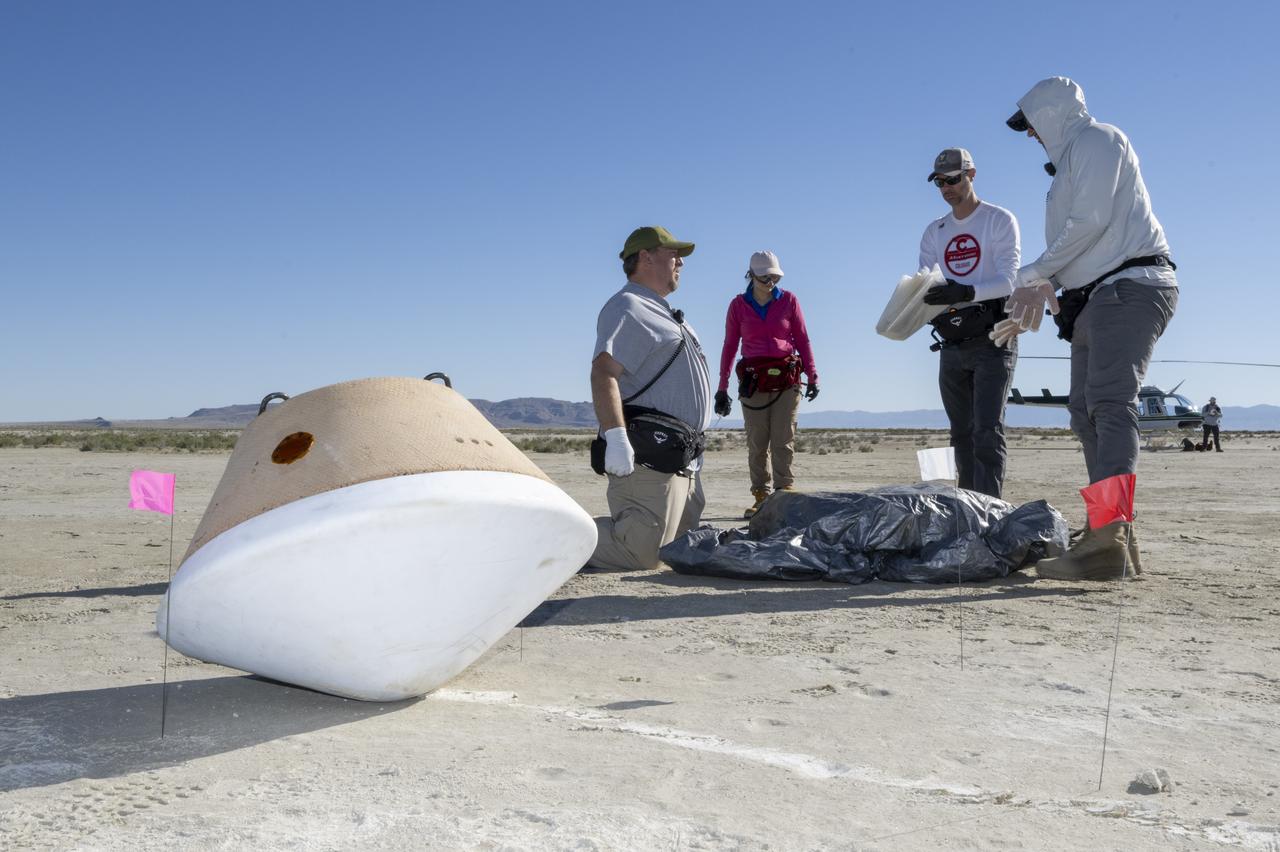
Recovery teams participate in field rehearsals in preparation for the retrieval of the sample return capsule from NASA's OSIRIS-REx mission, Tuesday, Aug. 29, 2023, at the Department of Defense's Utah Test and Training Range. The sample was collected from the asteroid Bennu in October 2020 by NASA’s OSIRIS-REx spacecraft and will return to Earth on September 24th, landing under parachute at the Utah Test and Training Range. Photo Credit: (NASA/Keegan Barber)
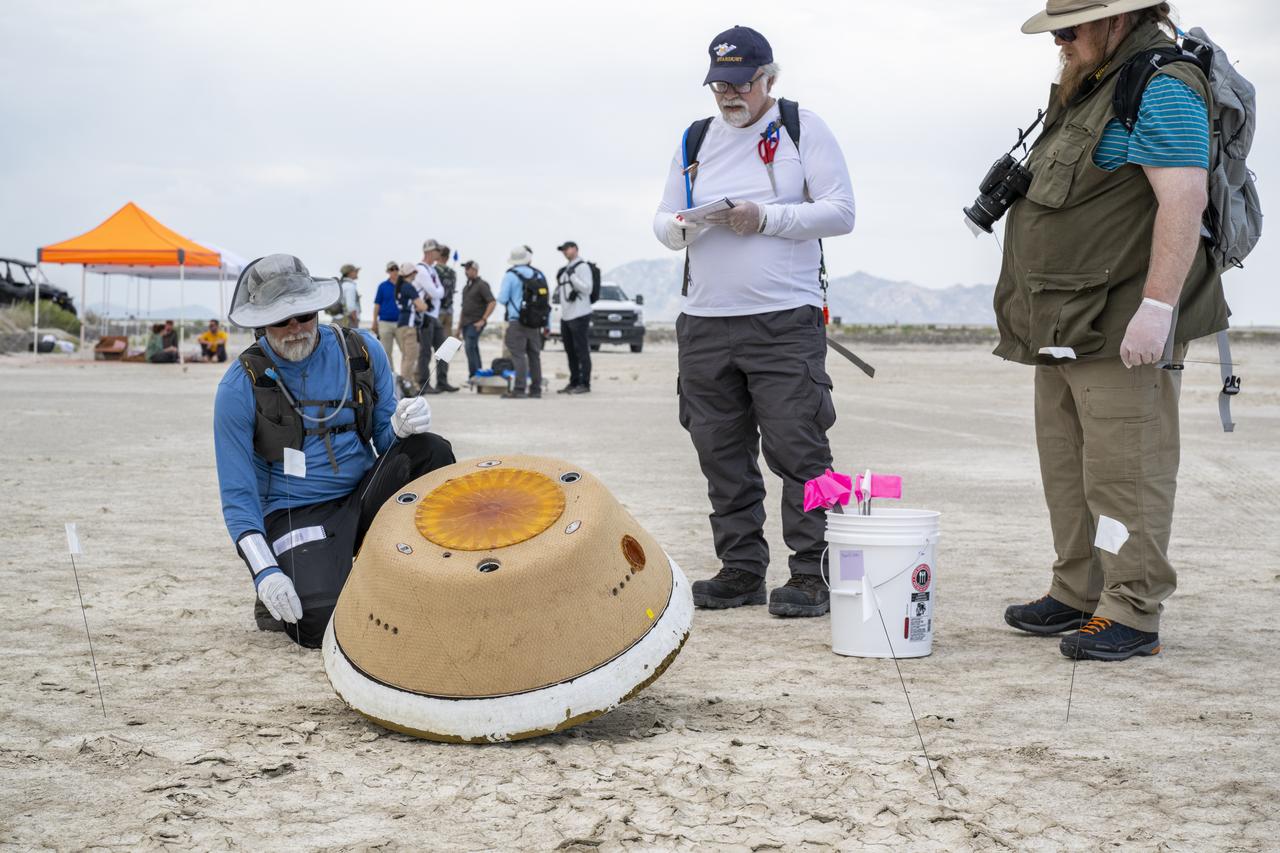
Recovery teams participate in field rehearsals in preparation for the retrieval of the sample return capsule from NASA's OSIRIS-REx mission, Tuesday, July 18, 2023, at the Department of Defense's Utah Test and Training Range. The sample was collected from the asteroid Bennu in October 2020 by NASA’s OSIRIS-REx spacecraft and will return to Earth on September 24th, landing under parachute at the Utah Test and Training Range. Photo Credit: (NASA/Keegan Barber)
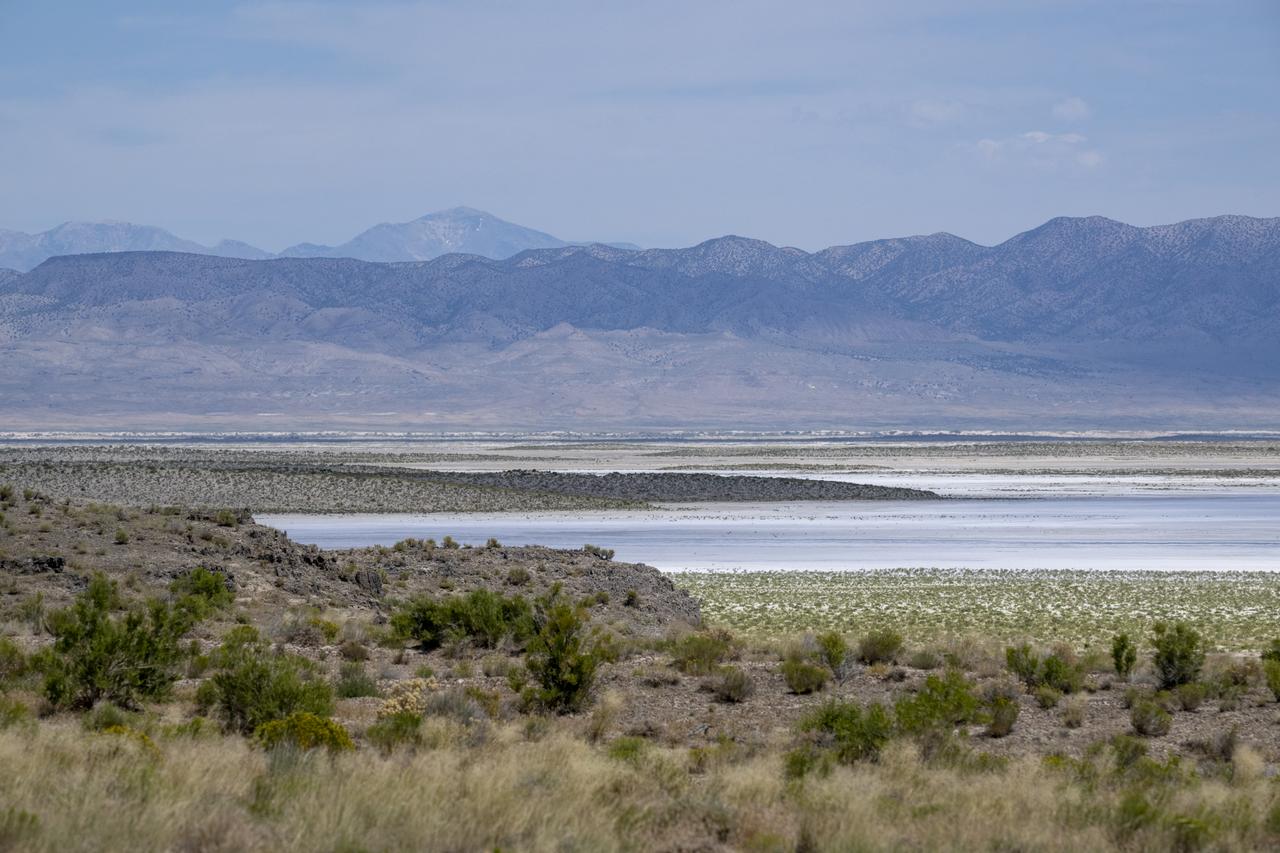
The Department of Defense's Utah Test and Training Range is seen, Monday, July 17, 2023, as recovery teams tour the projected landing ellipse in preparation for the retrieval of the sample return capsule from NASA's OSIRIS-REx mission. The sample was collected from the asteroid Bennu in October 2020 by NASA’s OSIRIS-REx spacecraft and will return to Earth on September 24th, landing under parachute at the Utah Test and Training Range. Photo Credit: (NASA/Keegan Barber)
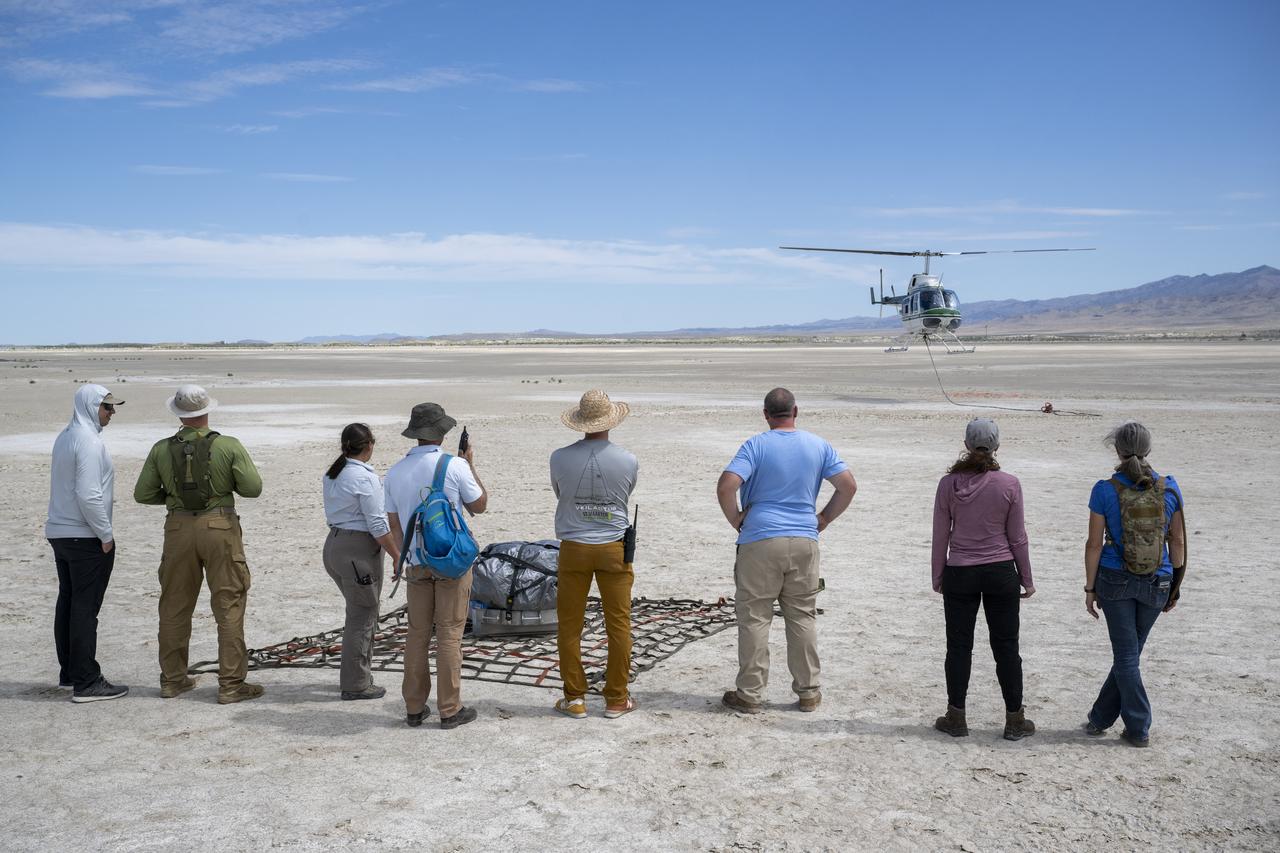
Recovery teams participate in helicopter training in preparation for the retrieval of the sample return capsule from NASA's OSIRIS-REx mission, Wednesday, July 19, 2023, at the Department of Defense's Utah Test and Training Range. The sample was collected from the asteroid Bennu in October 2020 by NASA’s OSIRIS-REx spacecraft and will return to Earth on September 24th, landing under parachute at the Utah Test and Training Range. Photo Credit: (NASA/Keegan Barber)
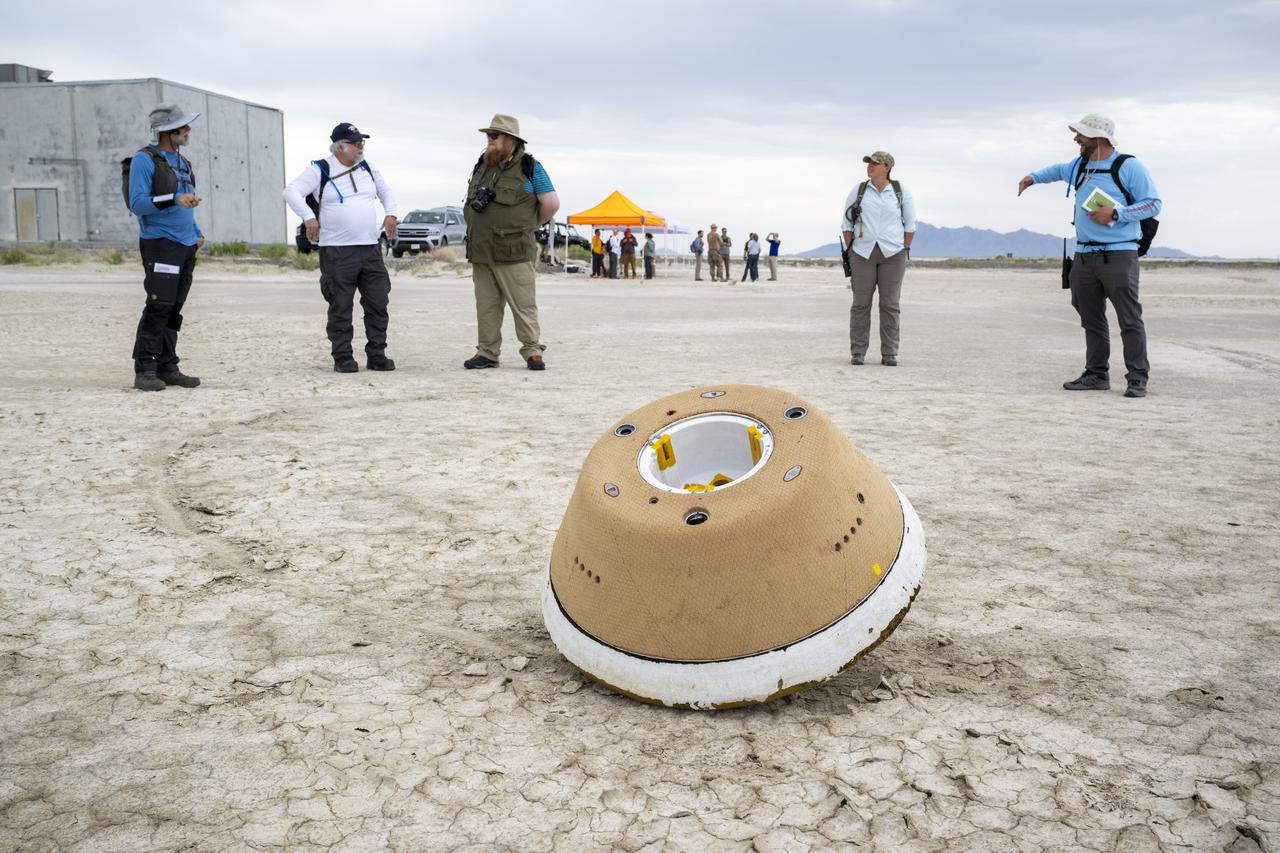
Recovery teams participate in field rehearsals in preparation for the retrieval of the sample return capsule from NASA's OSIRIS-REx mission, Tuesday, July 18, 2023, at the Department of Defense's Utah Test and Training Range. The sample was collected from the asteroid Bennu in October 2020 by NASA’s OSIRIS-REx spacecraft and will return to Earth on September 24th, landing under parachute at the Utah Test and Training Range. Photo Credit: (NASA/Keegan Barber)
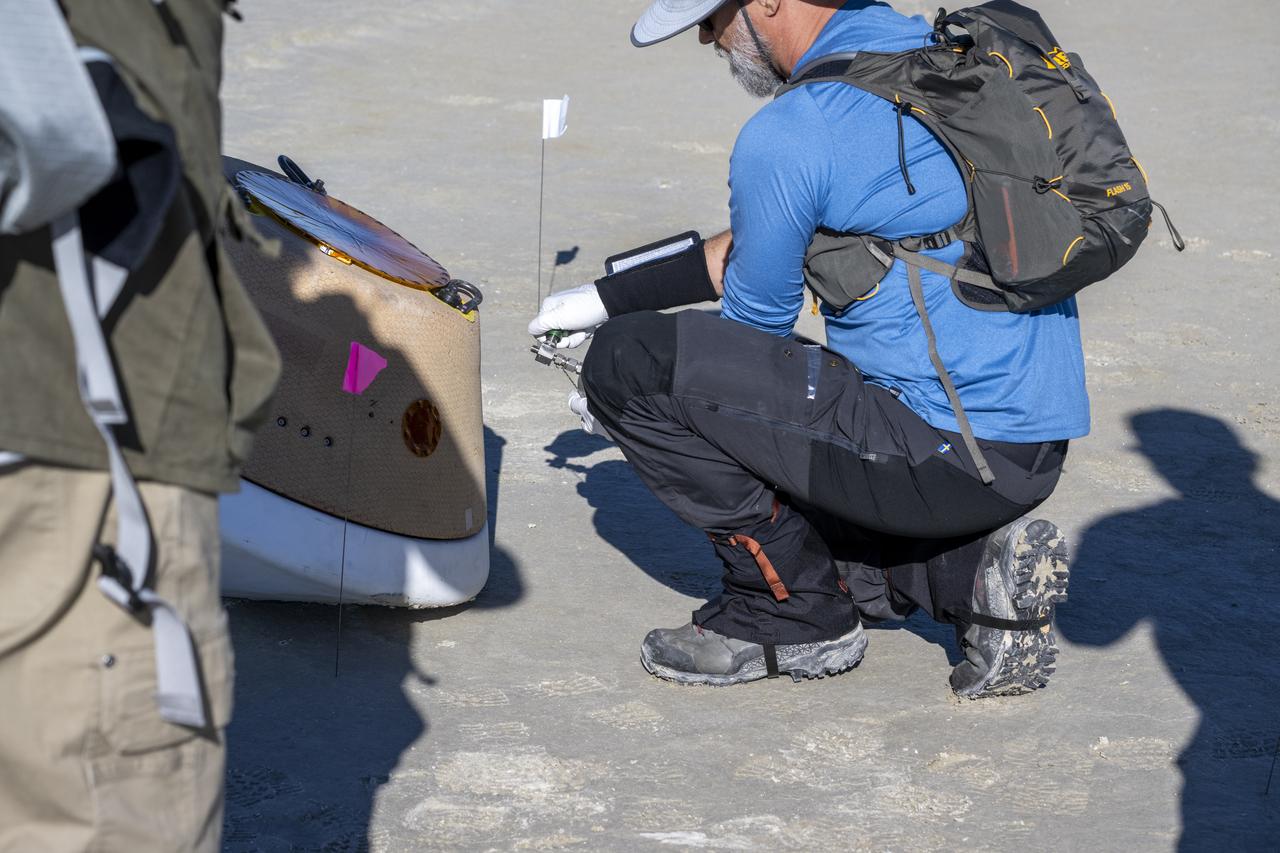
Recovery teams participate in field rehearsals in preparation for the retrieval of the sample return capsule from NASA's OSIRIS-REx mission, Tuesday, Aug. 29, 2023, at the Department of Defense's Utah Test and Training Range. The sample was collected from the asteroid Bennu in October 2020 by NASA’s OSIRIS-REx spacecraft and will return to Earth on September 24th, landing under parachute at the Utah Test and Training Range. Photo Credit: (NASA/Keegan Barber)
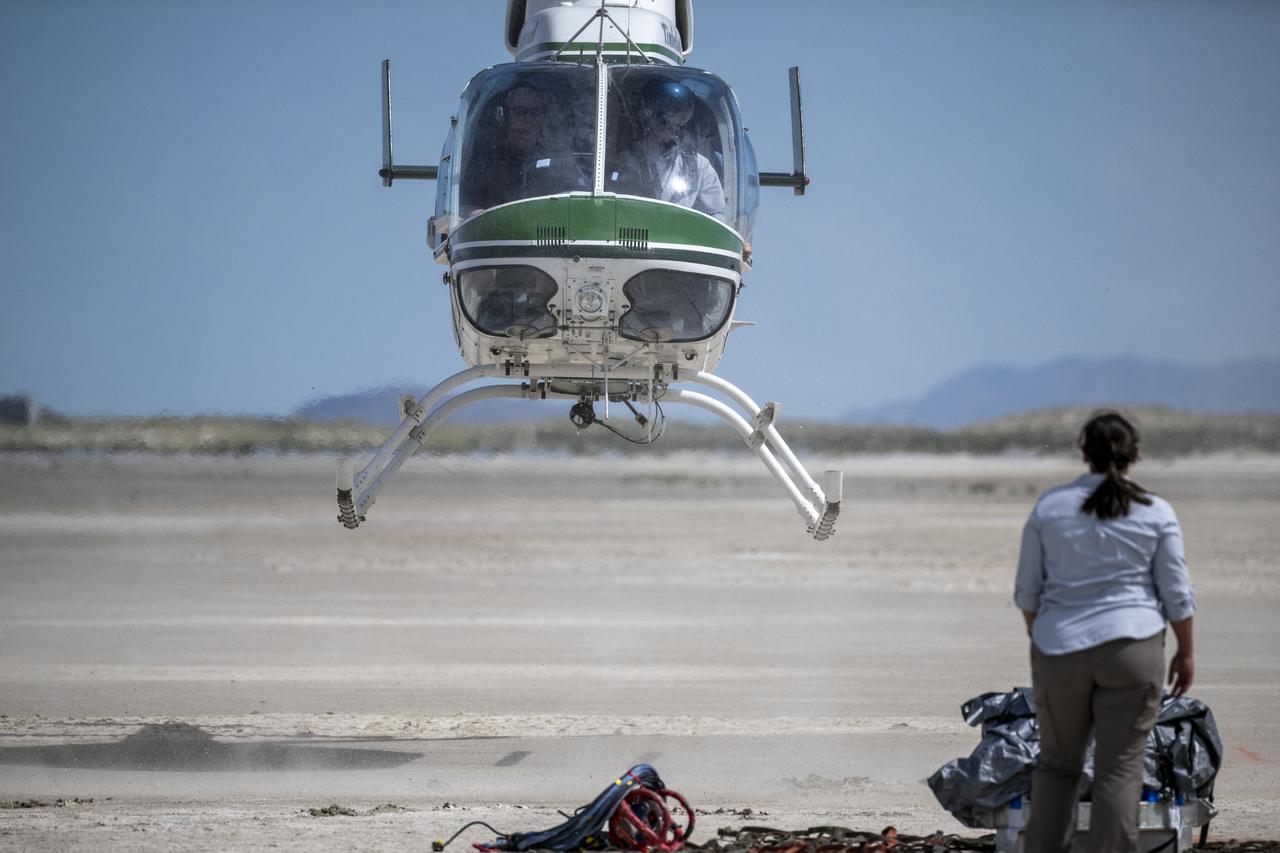
Recovery teams participate in helicopter training in preparation for the retrieval of the sample return capsule from NASA's OSIRIS-REx mission, Wednesday, July 19, 2023, at the Department of Defense's Utah Test and Training Range. The sample was collected from the asteroid Bennu in October 2020 by NASA’s OSIRIS-REx spacecraft and will return to Earth on September 24th, landing under parachute at the Utah Test and Training Range. Photo Credit: (NASA/Keegan Barber)
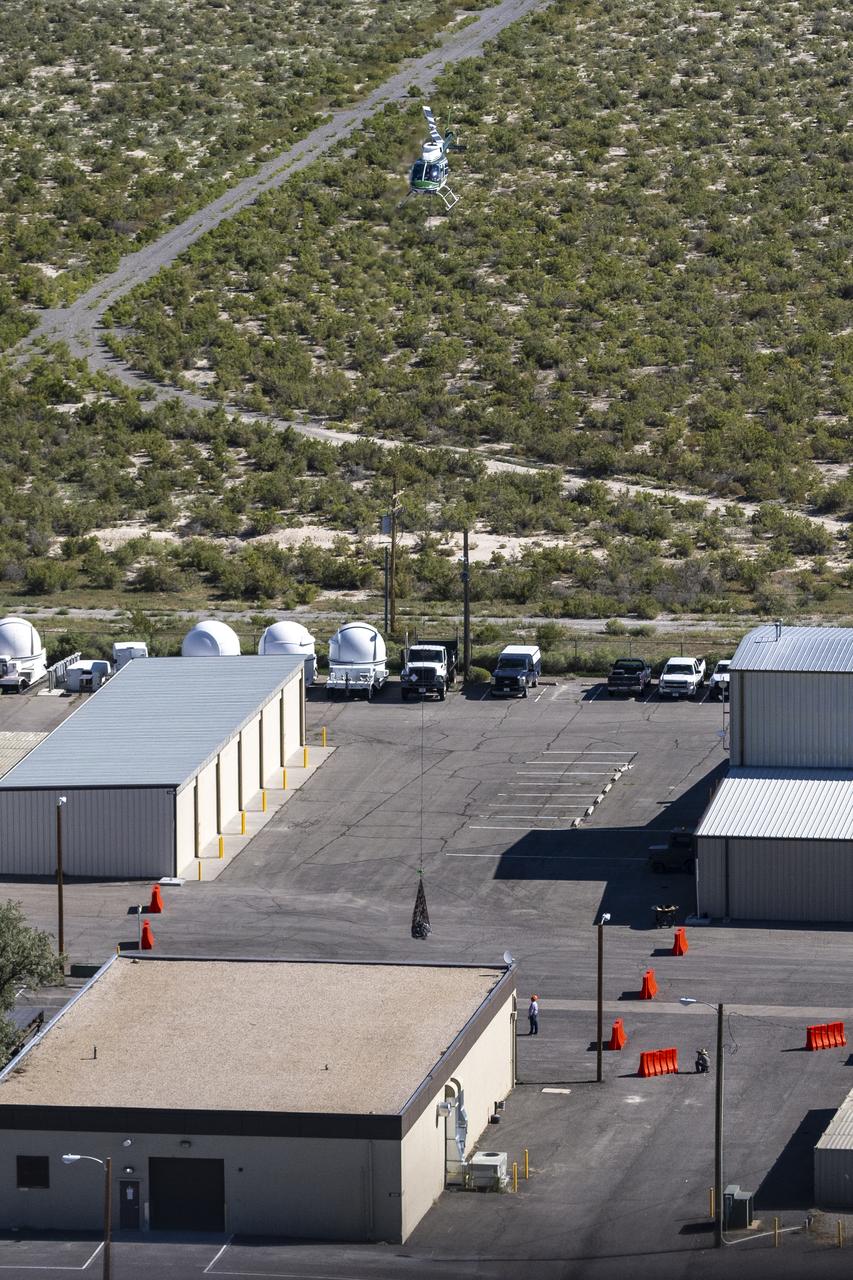
Recovery teams participate in field rehearsals in preparation for the retrieval of the sample return capsule from NASA's OSIRIS-REx mission, Tuesday, Aug. 29, 2023, at the Department of Defense's Utah Test and Training Range. The sample was collected from the asteroid Bennu in October 2020 by NASA’s OSIRIS-REx spacecraft and will return to Earth on September 24th, landing under parachute at the Utah Test and Training Range. Photo Credit: (NASA/Keegan Barber)
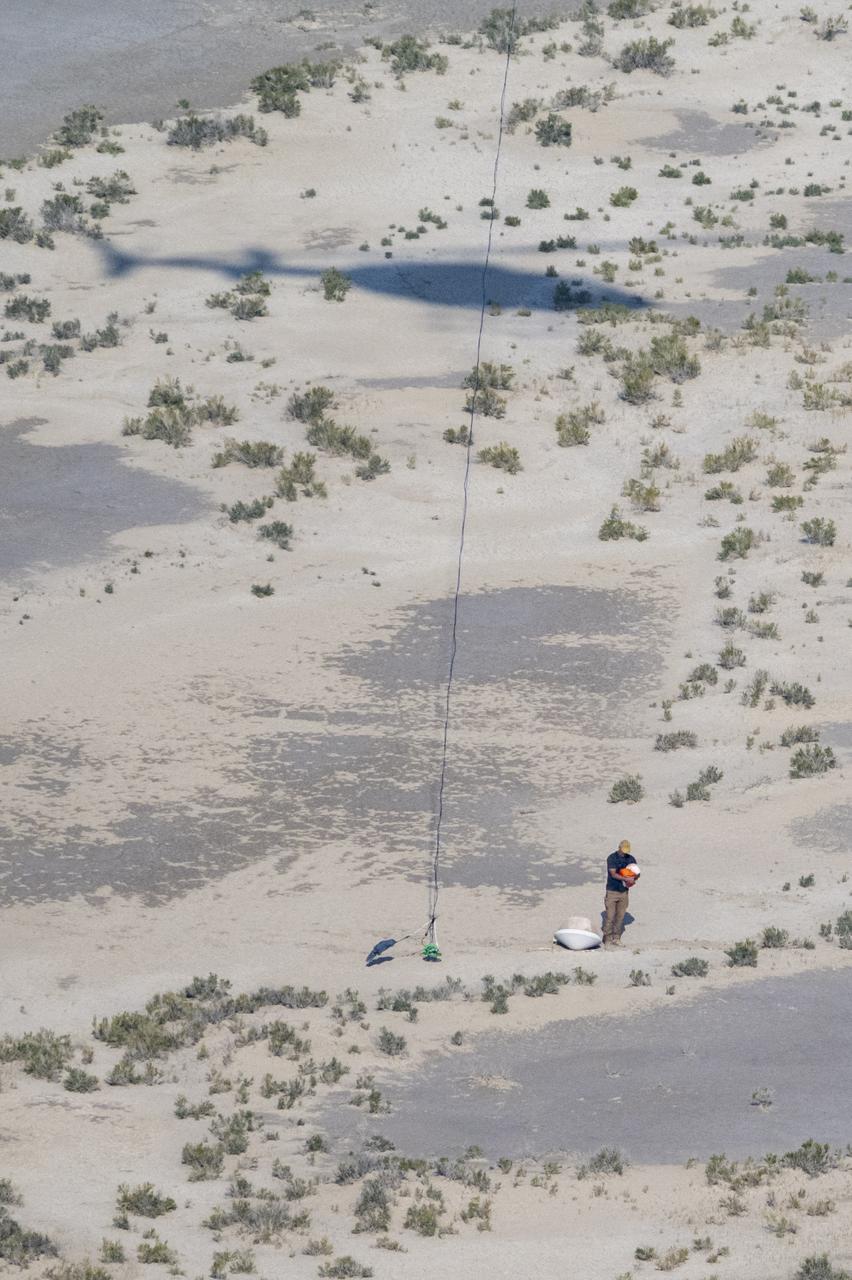
A recovery team member is seen with the training model of the sample return capsule following a drop test in preparation for the retrieval of the sample return capsule from NASA's OSIRIS-REx mission, Wednesday, Aug. 30, 2023, at the Department of Defense's Utah Test and Training Range. The sample was collected from asteroid Bennu in October 2020 by NASA’s OSIRIS-REx spacecraft and will return to Earth on September 24th, landing under parachute at the Utah Test and Training Range. Photo Credit: (NASA/Keegan Barber)
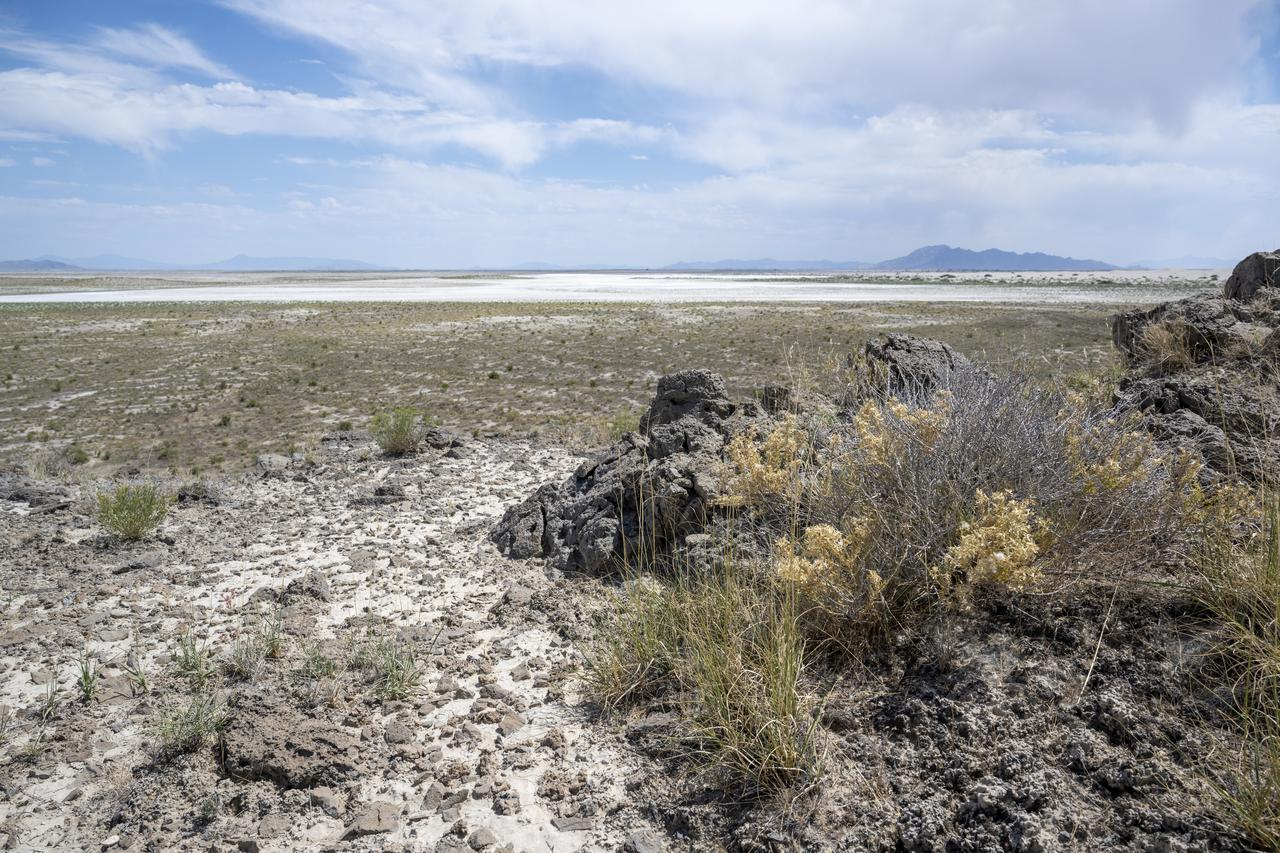
The Department of Defense's Utah Test and Training Range is seen, Monday, July 17, 2023, as recovery teams tour the projected landing ellipse in preparation for the retrieval of the sample return capsule from NASA's OSIRIS-REx mission. The sample was collected from the asteroid Bennu in October 2020 by NASA’s OSIRIS-REx spacecraft and will return to Earth on September 24th, landing under parachute at the Utah Test and Training Range. Photo Credit: (NASA/Keegan Barber)
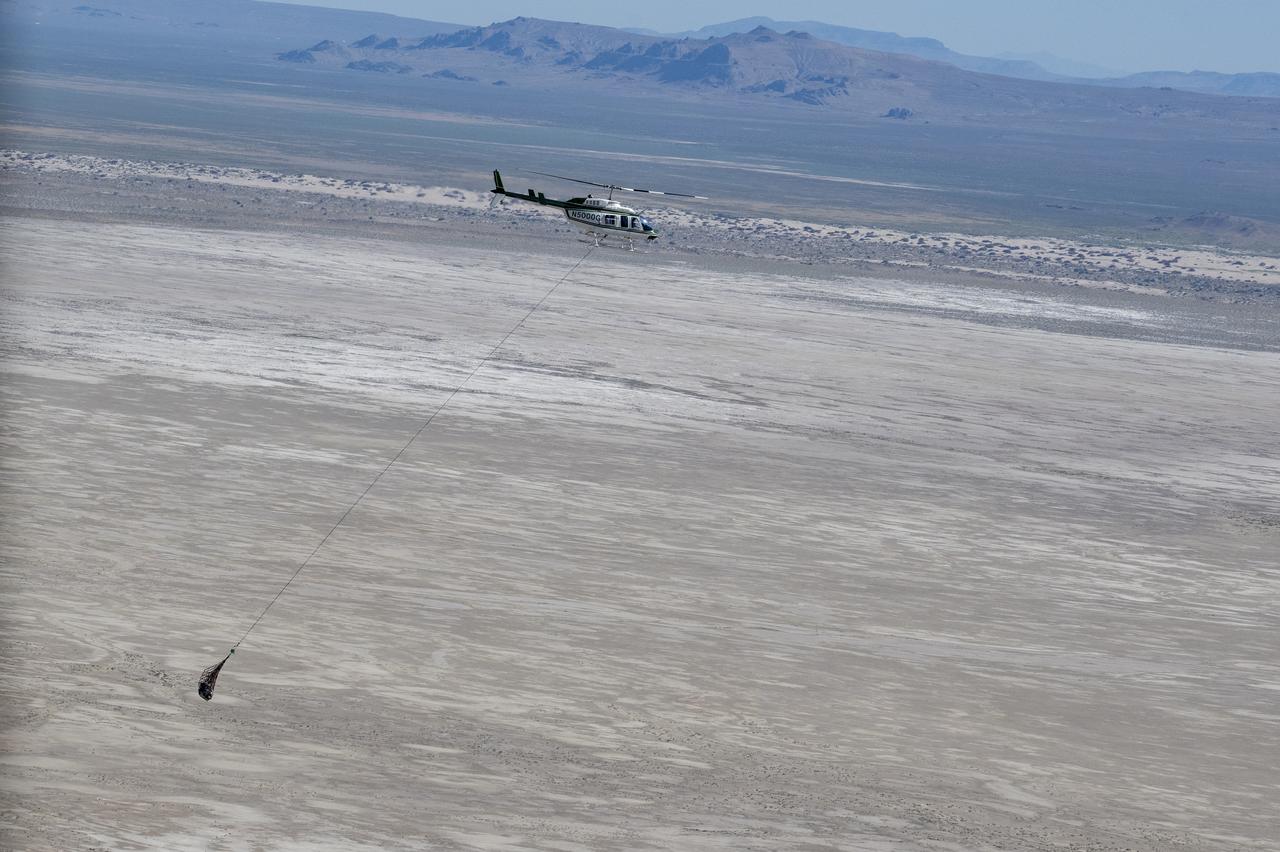
Recovery teams participate in field rehearsals in preparation for the retrieval of the sample return capsule from NASA's OSIRIS-REx mission, Tuesday, Aug. 29, 2023, at the Department of Defense's Utah Test and Training Range. The sample was collected from the asteroid Bennu in October 2020 by NASA’s OSIRIS-REx spacecraft and will return to Earth on September 24th, landing under parachute at the Utah Test and Training Range. Photo Credit: (NASA/Keegan Barber)
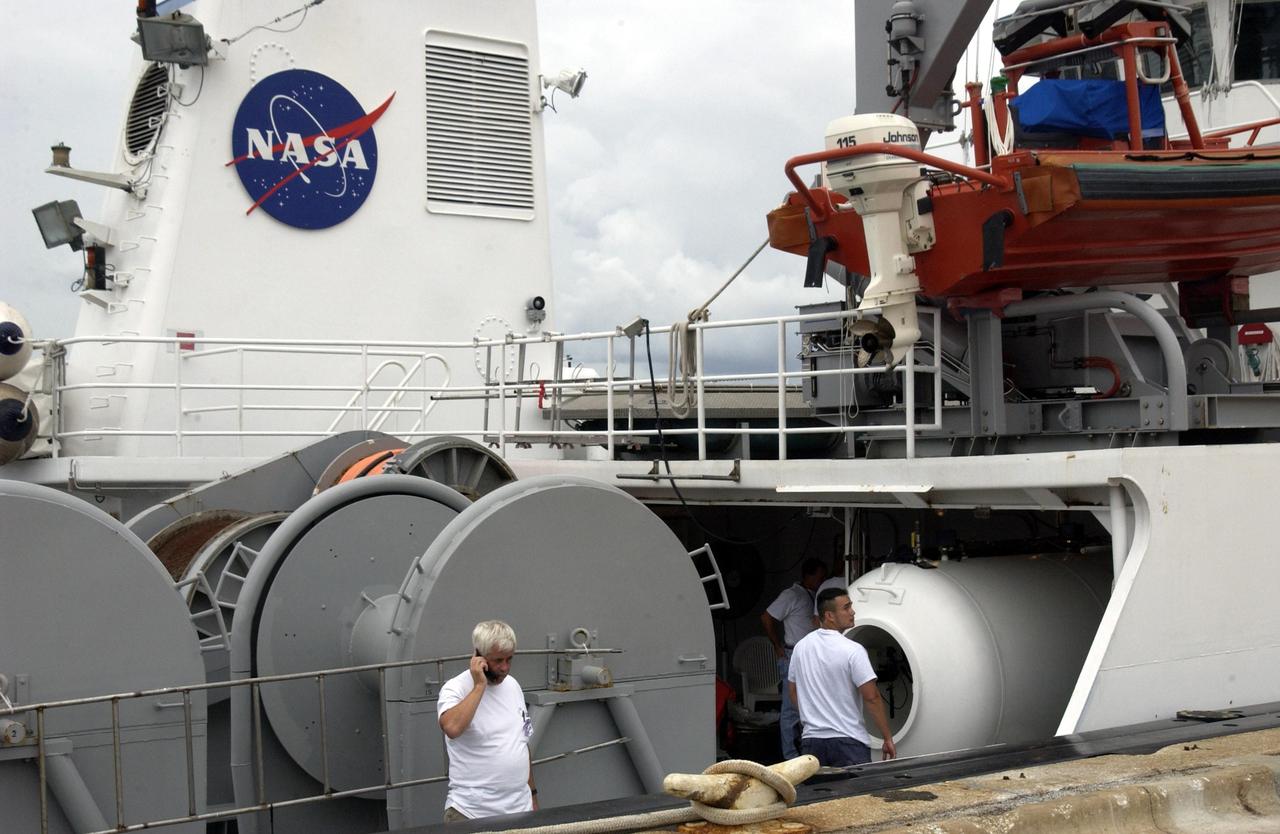
KENNEDY SPACE CENTER, FLA. - On board the Freedom Star, one of the Shuttle Rocket Booster retrieval ships, workers with United Space Alliance help finalize the rescue of a lobster diver in distress after their return to port Sept. 11. The ship was on a certification exercise and near the location of a lobster diving boat that radioed the U.S. Coast Guard for help when one of the divers experienced difficulty breathing on his return to the surface. Hearing the call for help, the captain of the Freedom Star offered to help. On board the ship was a dive team, including a diver medical technician, Andy Fish, who are trained to assist in case of a dive accident during a retrieval mission. Fish stayed with the diver in the recompression chamber aboard the Freedom Star until the ship reached Port Canaveral where a KSC Occupational Health doctor waited. The diver was stabilized and taken to Florida Hospital.
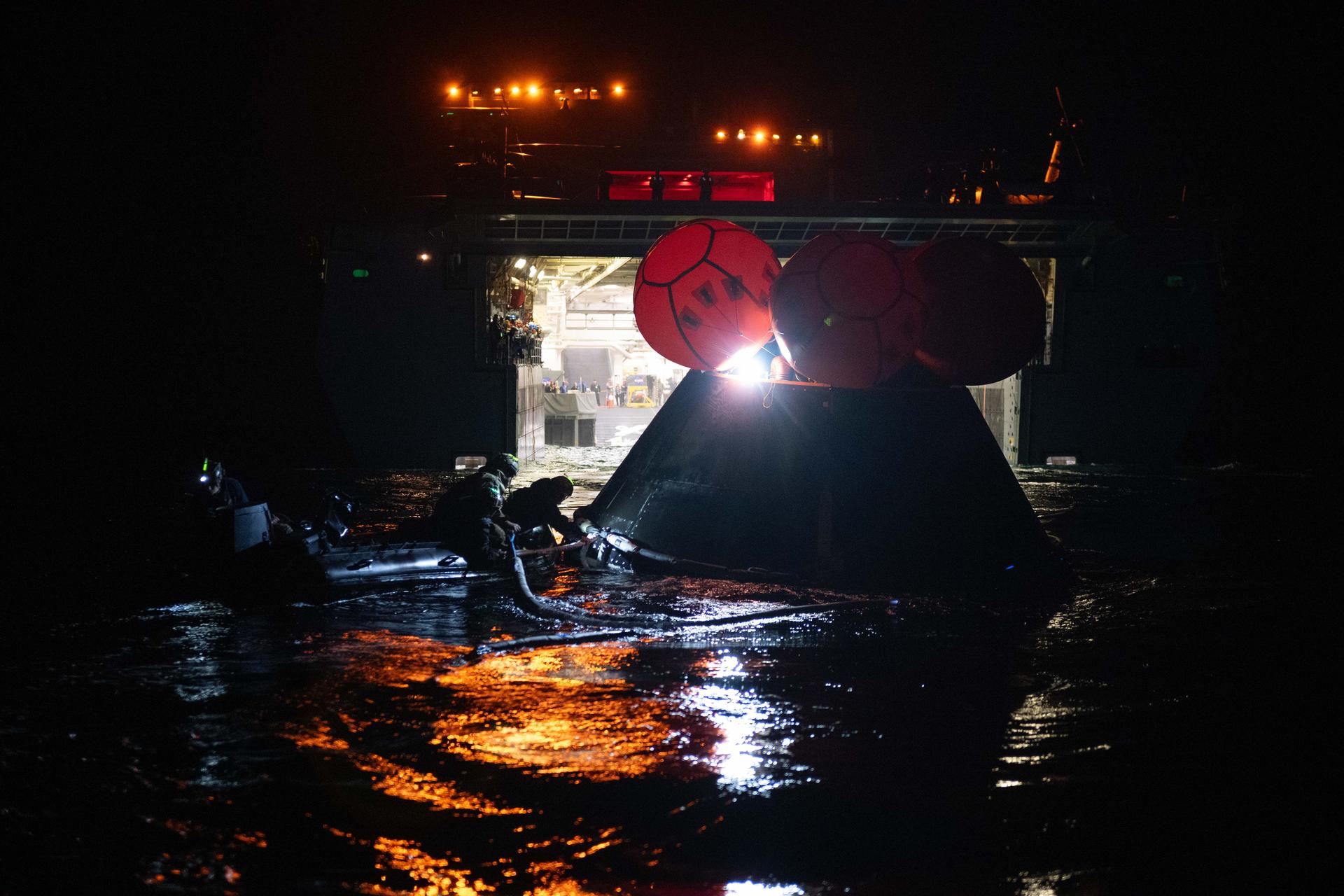
Members from NASA’s Artemis Landing and Recovery team and the Department of War perform a final simulation of the Artemis II splashdown, called a just-in-time training, in the Pacific Ocean off the coast of California on Thursday, Jan. 29, 2026. The teams will work together to retrieve the Artemis II crew and Orion spacecraft following their return to Earth, and during the training the teams use the Crew Module Test Article, a full-scale mockup of the Orion spacecraft, to simulate as close as possible the conditions they can expect to encounter during splashdown of the Artemis II mission. NASA’s first crewed test flight in the Artemis campaign, the approximately 10-day Artemis II mission will send NASA astronauts Reid Wiseman, Victor Glover, and Christina Koch, and CSA (Canadian Space Agency) astronaut Jeremy Hansen around the Moon and farther than any humans have ever been from Earth.
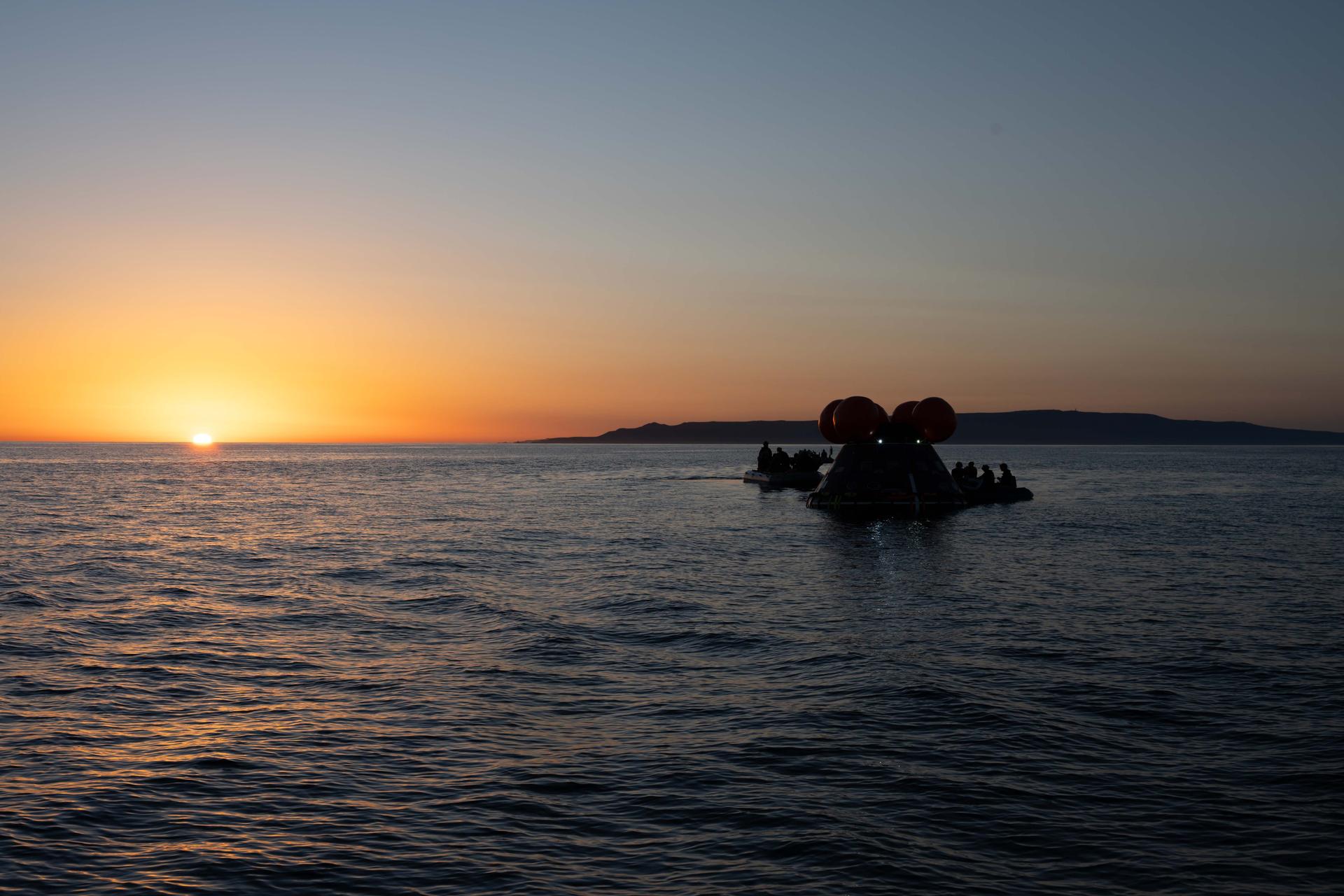
Members from NASA’s Artemis Landing and Recovery team and the Department of War perform a final simulation of the Artemis II splashdown, called a just-in-time training, in the Pacific Ocean off the coast of California at sunset on Thursday, Jan. 29, 2026. The teams will work together to retrieve the Artemis II crew and Orion spacecraft following their return to Earth, and during the training the teams use the Crew Module Test Article, a full-scale mockup of the Orion spacecraft, to simulate as close as possible the conditions they can expect to encounter during splashdown of the Artemis II mission. NASA’s first crewed test flight in the Artemis campaign, the approximately 10-day Artemis II mission will send NASA astronauts Reid Wiseman, Victor Glover, and Christina Koch, and CSA (Canadian Space Agency) astronaut Jeremy Hansen around the Moon and farther than any humans have ever been from Earth.
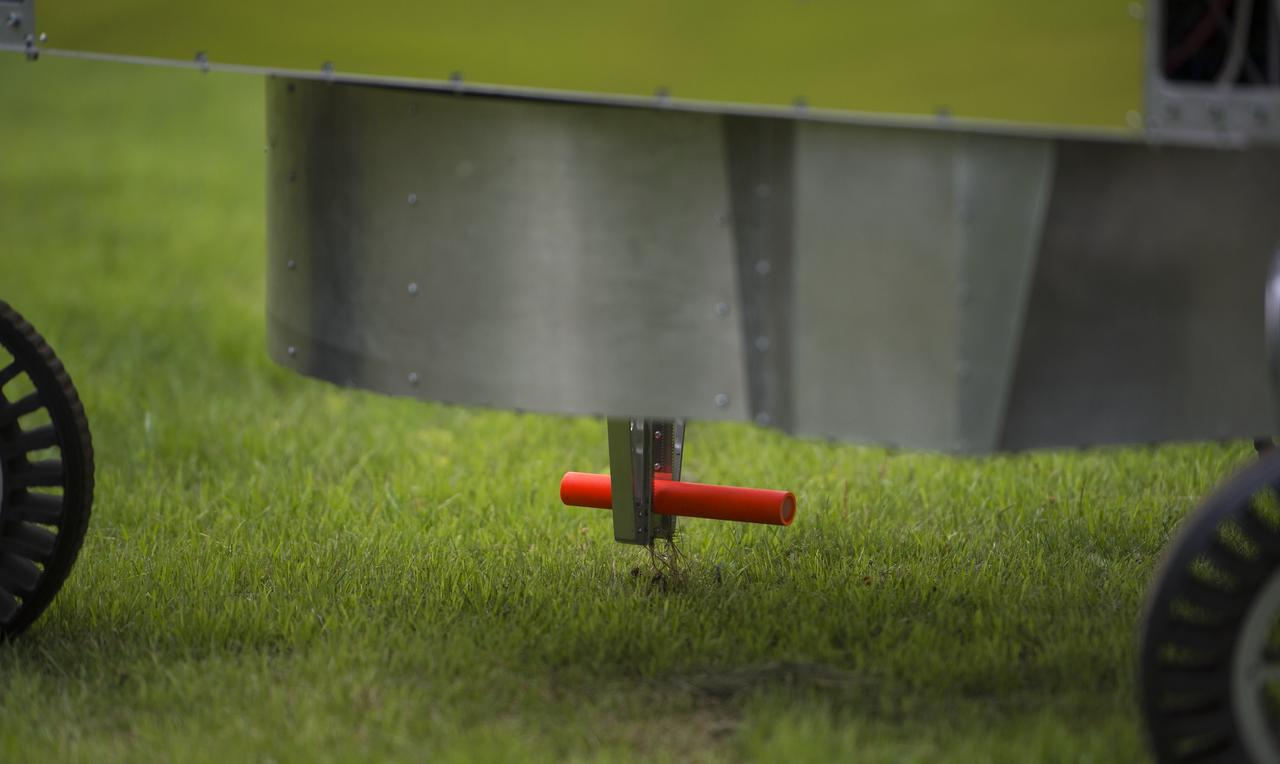
The team Survey robot retrieves a sample during a demonstration of the level two challenge at the 2014 NASA Centennial Challenges Sample Return Robot Challenge, Thursday, June 12, 2014, at the Worcester Polytechnic Institute (WPI) in Worcester, Mass. Eighteen teams are competing for a $1.5 million NASA prize purse. Teams will be required to demonstrate autonomous robots that can locate and collect samples from a wide and varied terrain, operating without human control. The objective of this NASA-WPI Centennial Challenge is to encourage innovations in autonomous navigation and robotics technologies. Innovations stemming from the challenge may improve NASA's capability to explore a variety of destinations in space, as well as enhance the nation's robotic technology for use in industries and applications on Earth. Photo Credit: (NASA/Joel Kowsky)
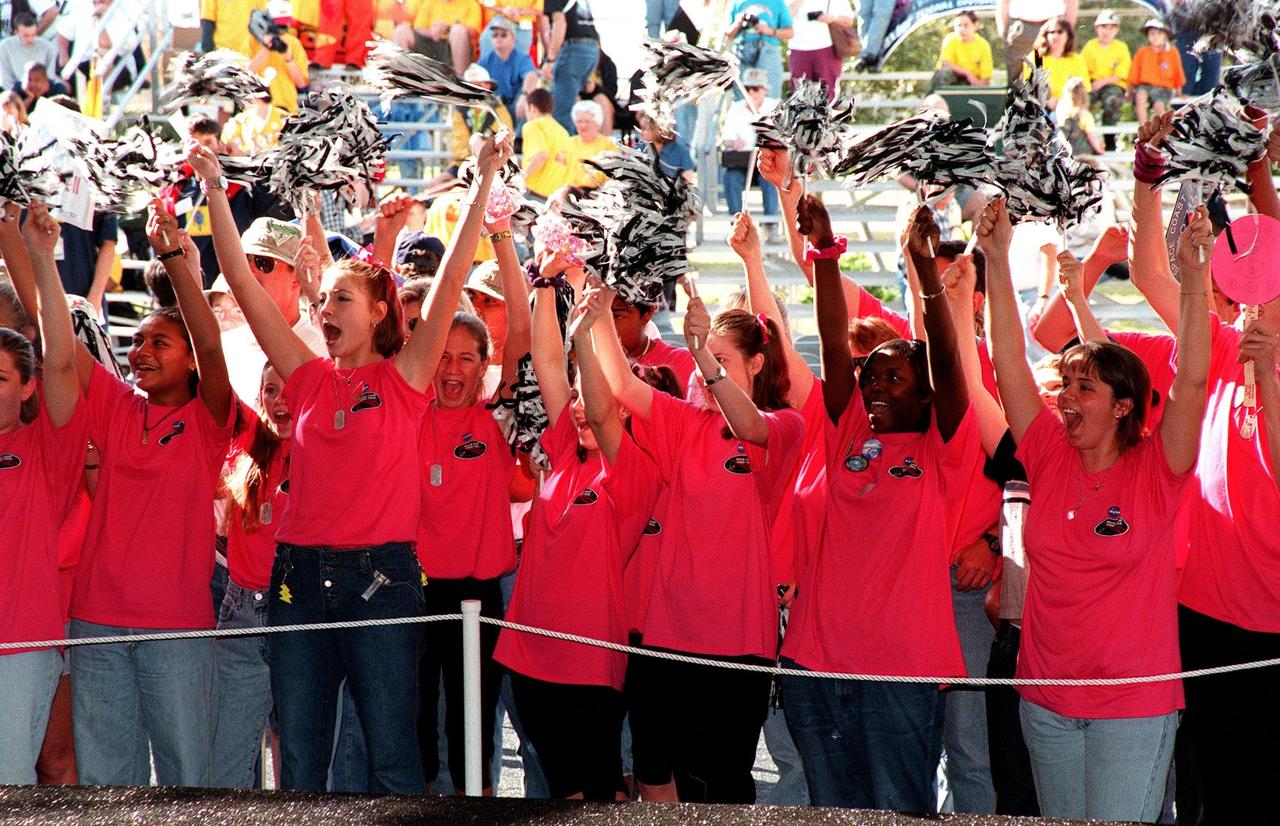
Students cheer their team during final matches at the 1999 Southeastern Regional robotic competition at the KSC Visitor Complex. Thirty schools from around the country have converged at KSC for the event that pits gladiator robots against each other in an athletic-style competition. The robots have to retrieve pillow-like disks from the floor, climb onto a platform (with flags), as well as raise the cache of pillows, maneuvered by student teams behind protective walls. KSC is hosting the event being sponsored by the nonprofit organization For Inspiration and Recognition of Science and Technology, known as FIRST. The FIRST robotics competition is designed to provide students with a hands-on, inside look at engineering and other professional careers by pairing engineers and corporations with student teams
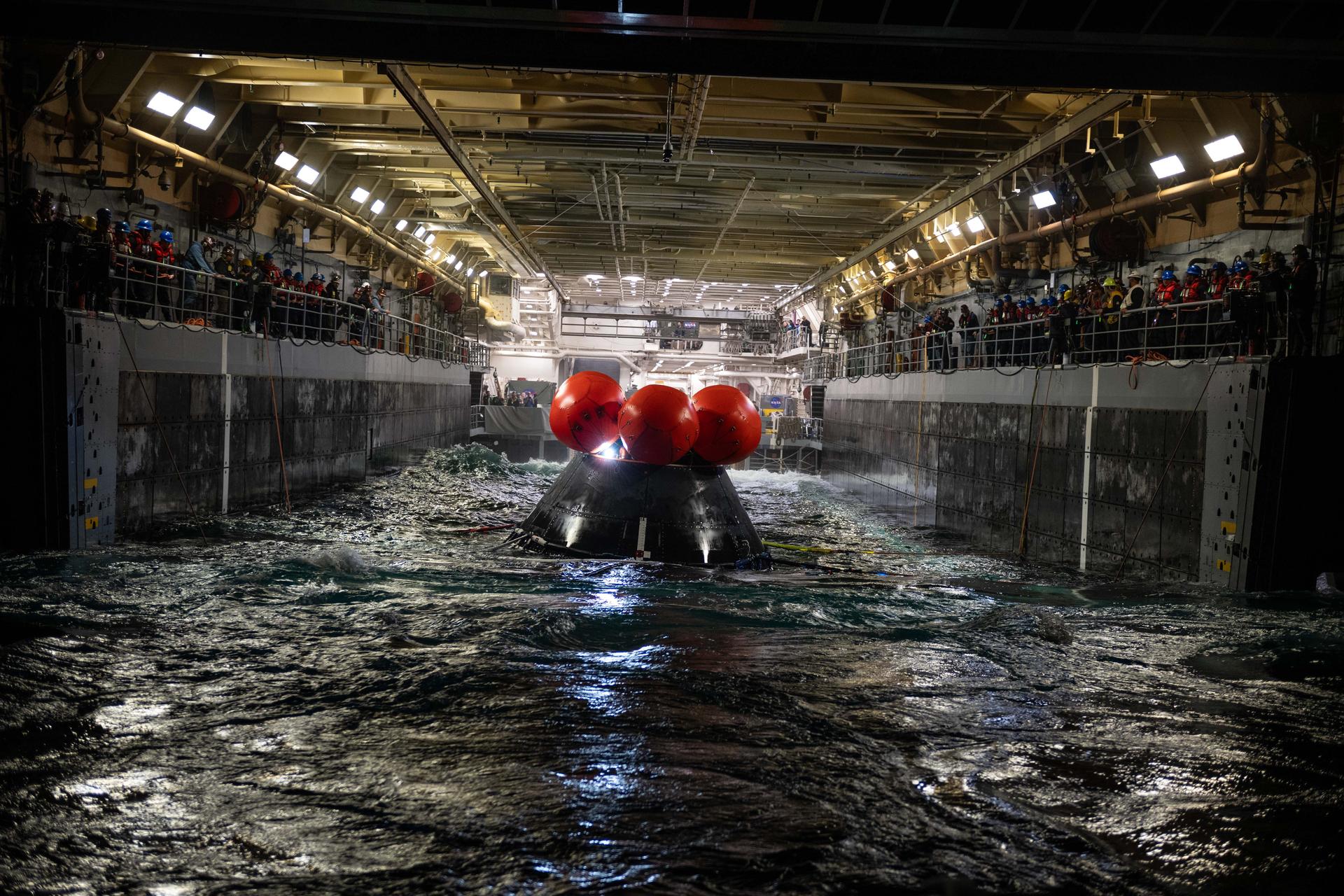
Members from NASA’s Artemis Landing and Recovery team and the Department of War perform a final simulation of the Artemis II splashdown, called a just-in-time training, in the Pacific Ocean off the coast of California on Thursday, Jan. 29, 2026. The teams will work together to retrieve the Artemis II crew and Orion spacecraft following their return to Earth, and during the training the teams use the Crew Module Test Article, a full-scale mockup of the Orion spacecraft, to simulate as close as possible the conditions they can expect to encounter during splashdown of the Artemis II mission. NASA’s first crewed test flight in the Artemis campaign, the approximately 10-day Artemis II mission will send NASA astronauts Reid Wiseman, Victor Glover, and Christina Koch, and CSA (Canadian Space Agency) astronaut Jeremy Hansen around the Moon and farther than any humans have ever been from Earth.
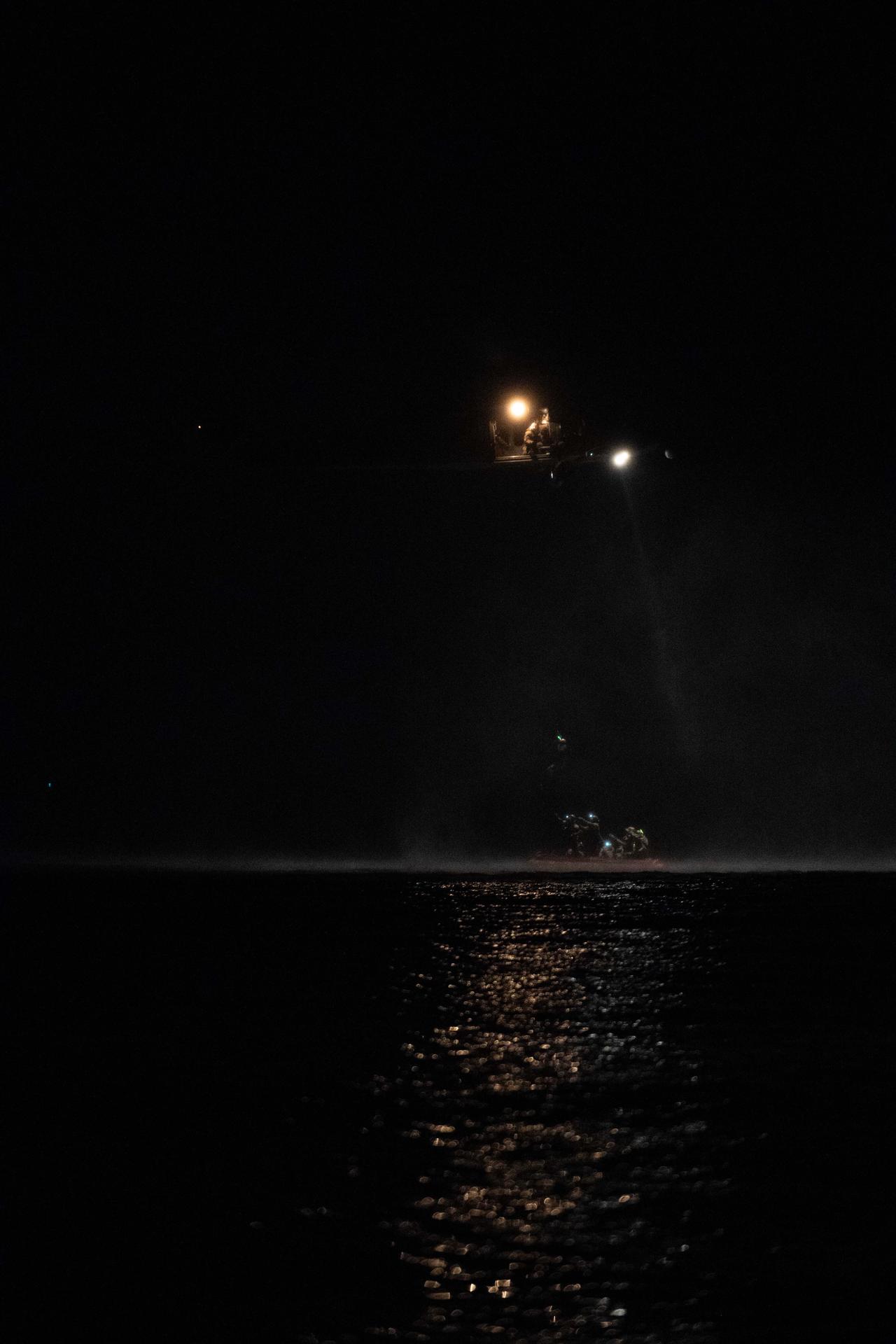
Members from NASA’s Artemis Landing and Recovery team and the Department of War perform a final simulation of the Artemis II splashdown, called a just-in-time training, in the Pacific Ocean off the coast of California on Thursday, Jan. 29, 2026. The teams will work together to retrieve the Artemis II crew and Orion spacecraft following their return to Earth, and during the training the teams use the Crew Module Test Article, a full-scale mockup of the Orion spacecraft, to simulate as close as possible the conditions they can expect to encounter during splashdown of the Artemis II mission. NASA’s first crewed test flight in the Artemis campaign, the approximately 10-day Artemis II mission will send NASA astronauts Reid Wiseman, Victor Glover, and Christina Koch, and CSA (Canadian Space Agency) astronaut Jeremy Hansen around the Moon and farther than any humans have ever been from Earth.
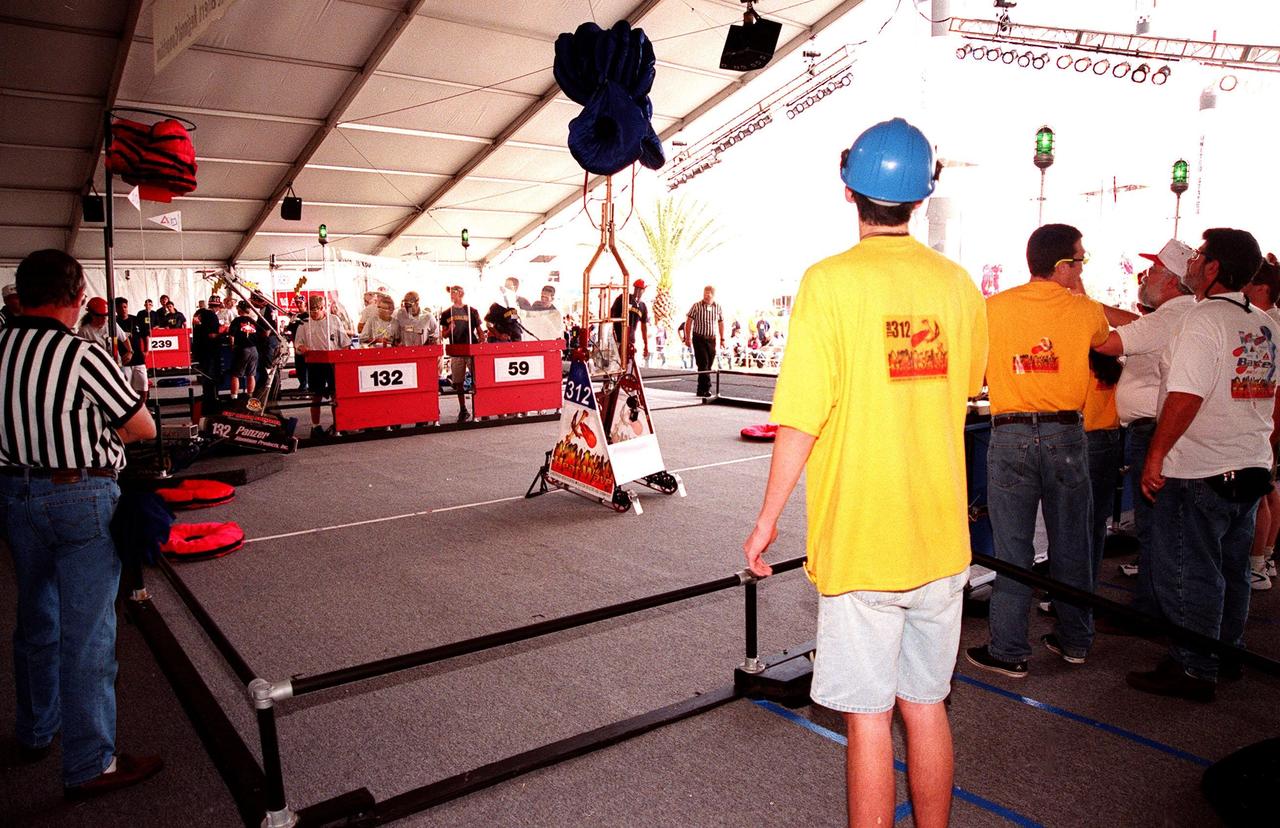
During final matches at the 1999 Southeastern Regional robotic competition at the KSC Visitor Complex, referees in opposite corners and student teams watch as two robots raise their pillow disks to a height of eight feet, one of the goals of the competition. Thirty schools from around the country have converged at KSC for the event that pits gladiator robots against each other in an athletic-style competition. The robots have to retrieve the pillow disks from the floor, climb onto a platform (with flags), as well as raise the cache of pillows, maneuvered by student teams behind protective walls. KSC is hosting the event being sponsored by the nonprofit organization For Inspiration and Recognition of Science and Technology, known as FIRST. The FIRST robotics competition is designed to provide students with a hands-on, inside look at engineering and other professional careers by pairing engineers and corporations with student teams
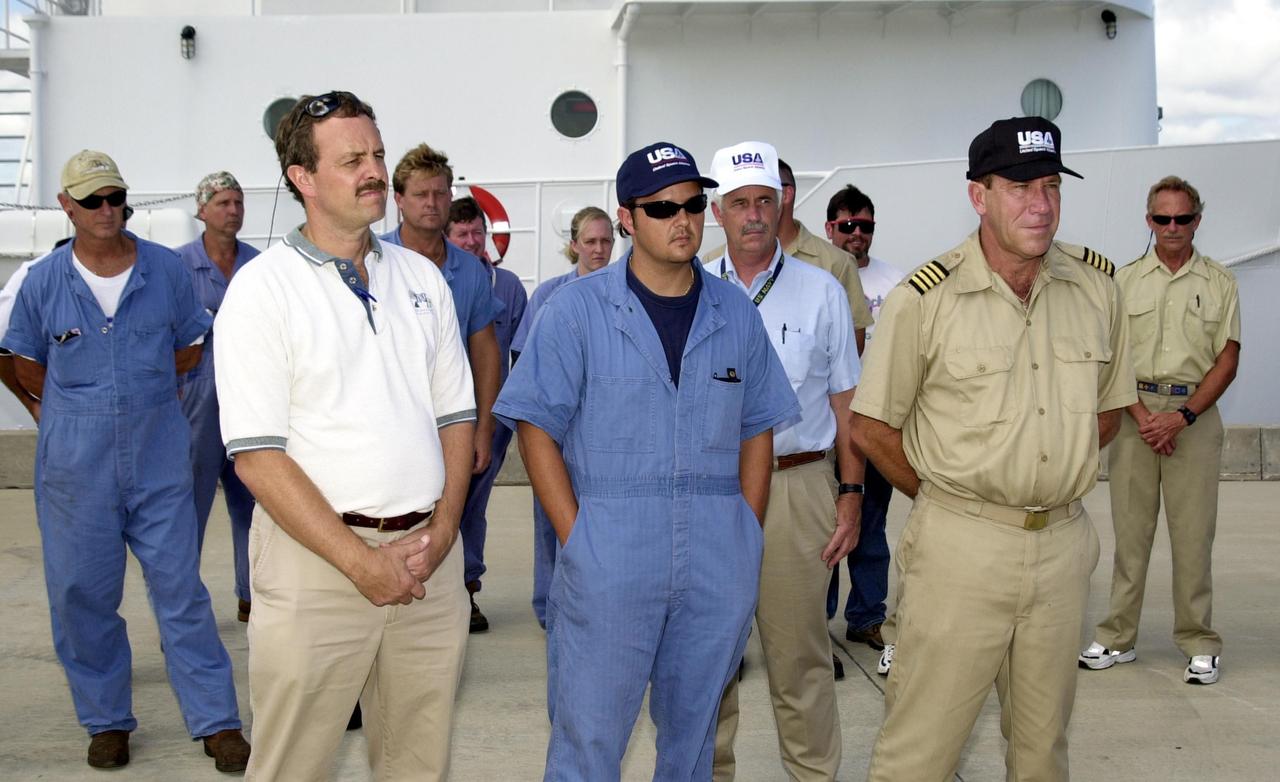
KENNEDY SPACE CENTER, FLA. - A reunion at the Hangar AF docks, Cape Canaveral Air Force Station, brought together a diver and his rescuers, the crew of KSC's Freedom Star SRB retrieval ship and a medical team. In the photo are (foreground, left to right) KSC Occupational Health physician Skip Beeler, retrieval diver and diver medical technician Andy Fish, and Freedom Star's Captain, Dave Fraine. The diver, Jack Wilcox, suffered decompression sickness on a diving expedition 20 miles off shore in the Atlantic Ocean. When the Freedom Star team heard the call for help, they asked the Coast Guard if they could assist. The ship was out on a crane certification exercise and coincidentally had a diver medical technician and other divers training on the crane. The ship's divers were trained for the hyperbaric chamber on board. Upon reaching the Army dock, KSC Occupational Health physician Skip Beeler entered the chamber and continued the process of helping to stabilize Wilcox. After several hours in the chamber, Wilcox, who lives in Orlando, was airlifted to Florida Hospital Orlando
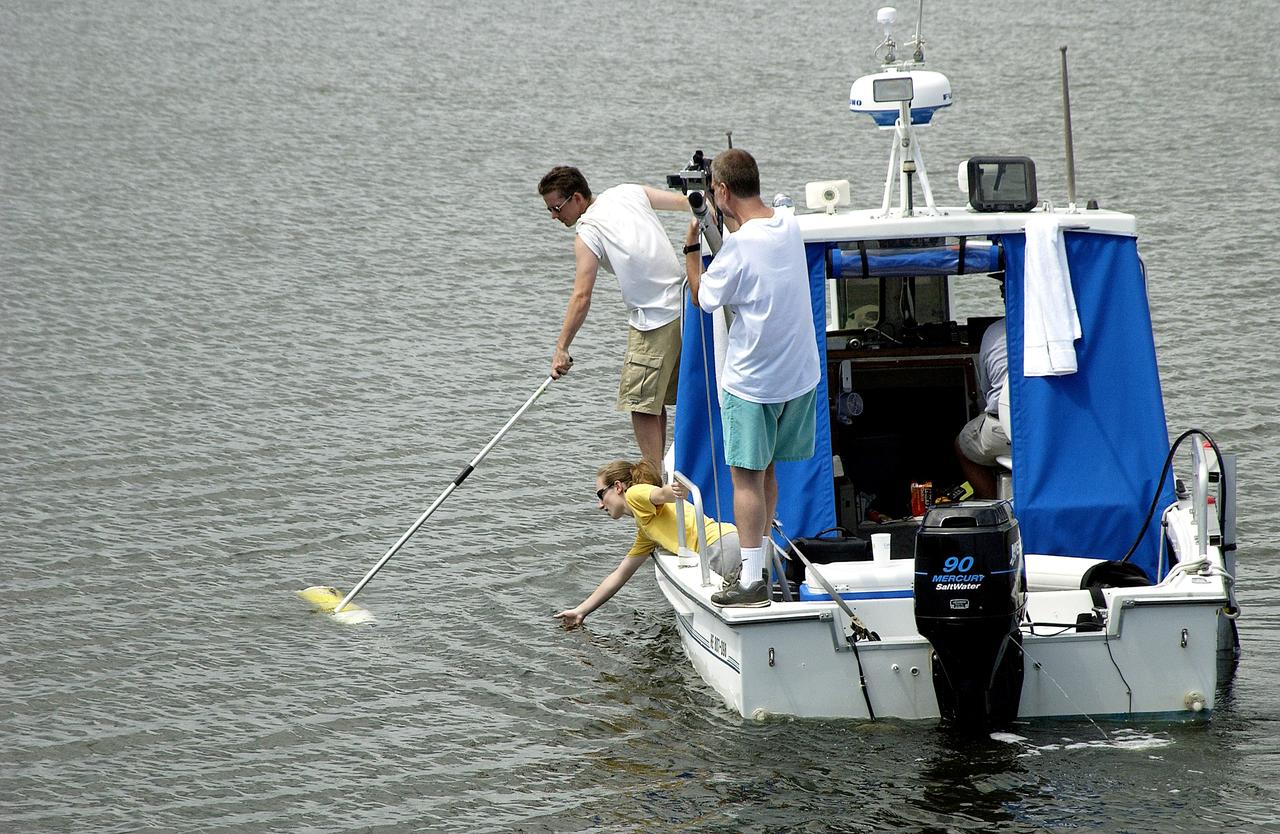
KENNEDY SPACE CENTER, FLA. - Research team members aboard one of the watercraft being utilized to conduct underwater acoustic research in the Launch Complex 39 turn basin retrieve some of the project's equipment from the water. Several government agencies, including NASA, NOAA, the Navy, the Coast Guard, and the Florida Fish and Wildlife Commission are involved in the testing. The research involves demonstrations of passive and active sensor technologies, with applications in fields ranging from marine biological research to homeland security. The work is also serving as a pilot project to assess the cooperation between the agencies involved. Equipment under development includes a passive acoustic monitor developed by NASA’s Jet Propulsion Laboratory, and mobile robotic sensors from the Navy’s Mobile Diving and Salvage Unit.
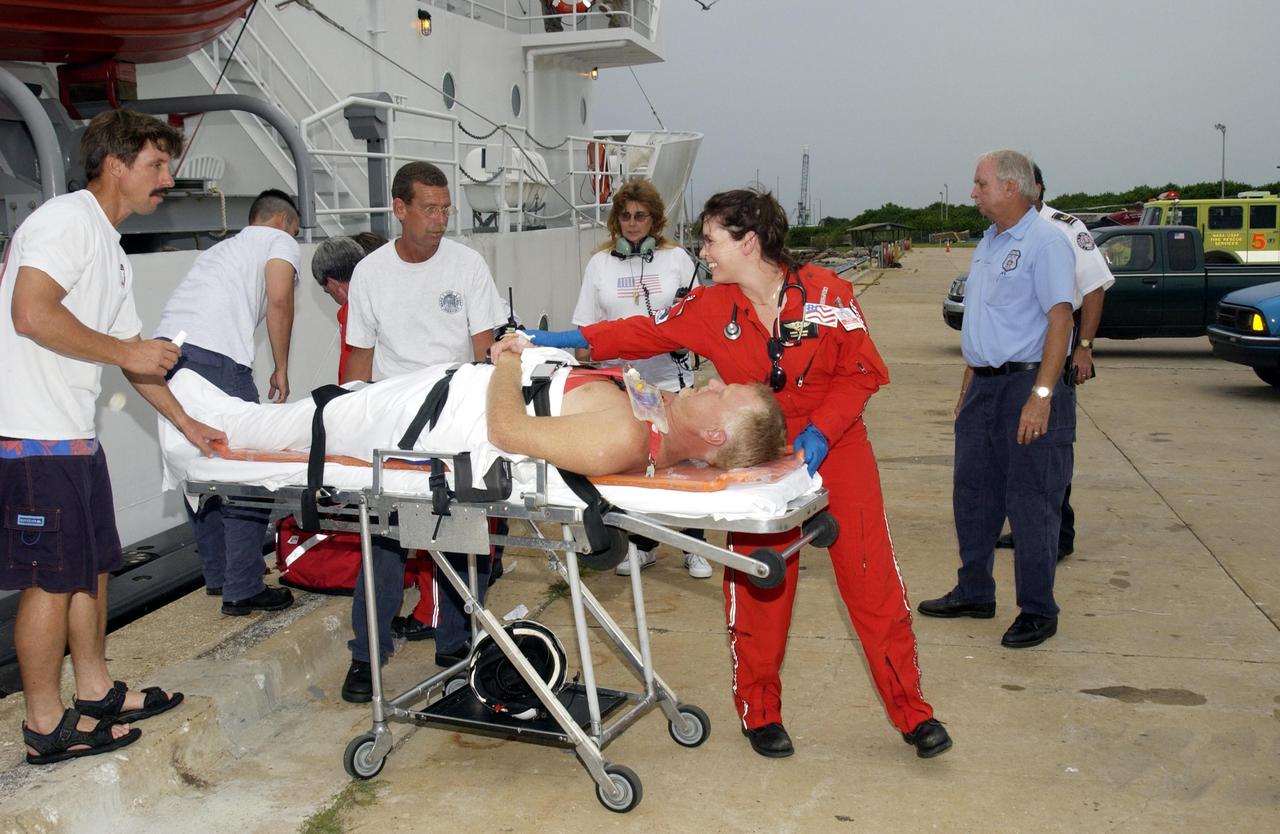
KENNEDY SPACE CENTER, FLA. - United Space Alliance workers on board the Freedom Star, one of the Shuttle Rocket Booster retrieval ships, release a distressed lobster diver to an Air Care Team from Orlando for transfer to a hospital. The ship and its dive team, including a diver medical technician, Andy Fish, were instrumental in rescuing the diver off Cape Canaveral Sept. 11. The ship was on a certification exercise and near the location of a lobster diving boat that radioed the U.S. Coast Guard for help when one of the divers experienced difficulty breathing on his return to the surface. Hearing the call for help, the captain of the Freedom Star offered to help. Fish stayed with the diver in the recompression chamber aboard the Freedom Star until the ship reached Port Canaveral where a KSC Occupational Health doctor waited. The diver was stabilized and then taken to Florida Hospital.