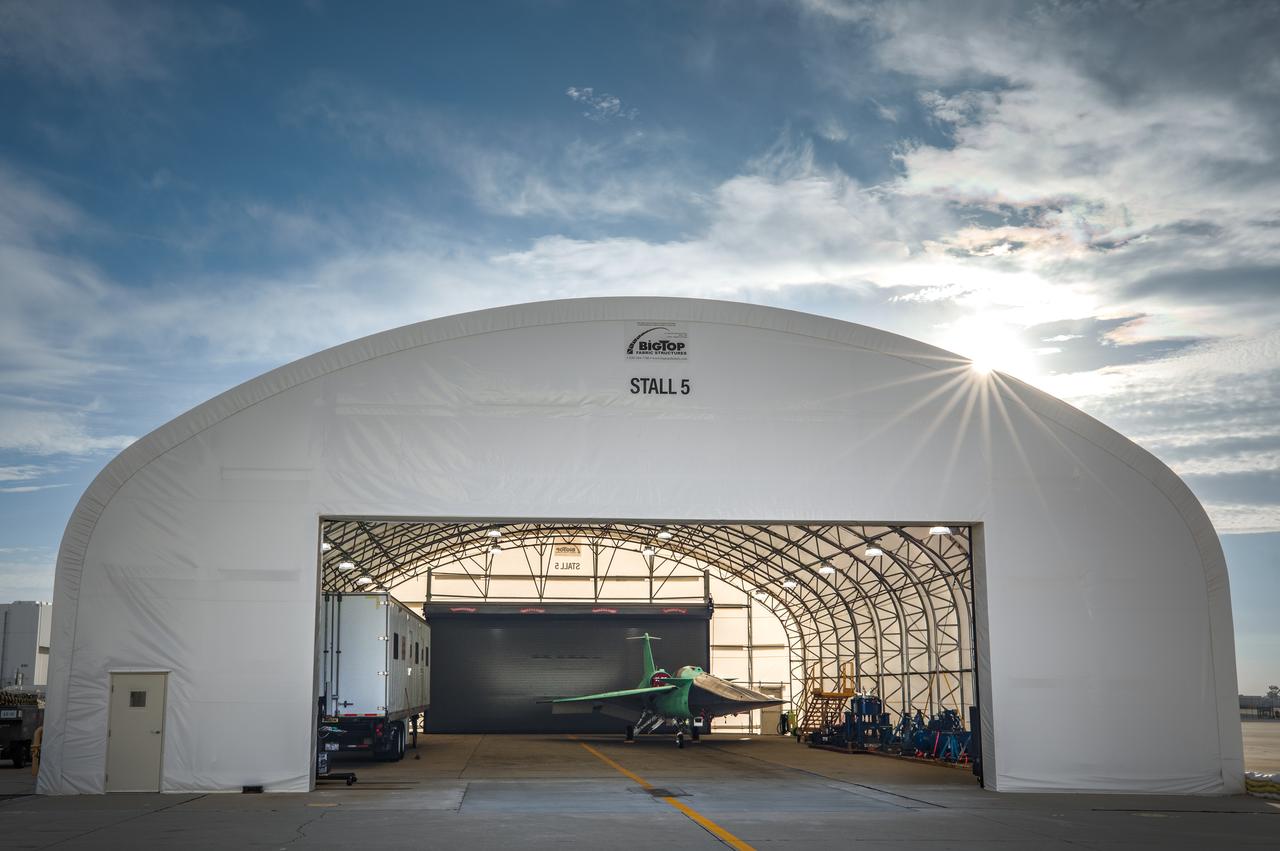
NASA’s X-59 aircraft is parked in stall five near the runway at Lockheed Martin Skunk Works in Palmdale, California, on June 19, 2023. This is where the X-59 will be housed during ground and initial flight tests. Lockheed Martin Photography By Garry Tice 1011 Lockheed Way, Palmdale, Ca. 93599 Event: Move to Run Stall 5 Date: 6/19/2023 Additional Info:
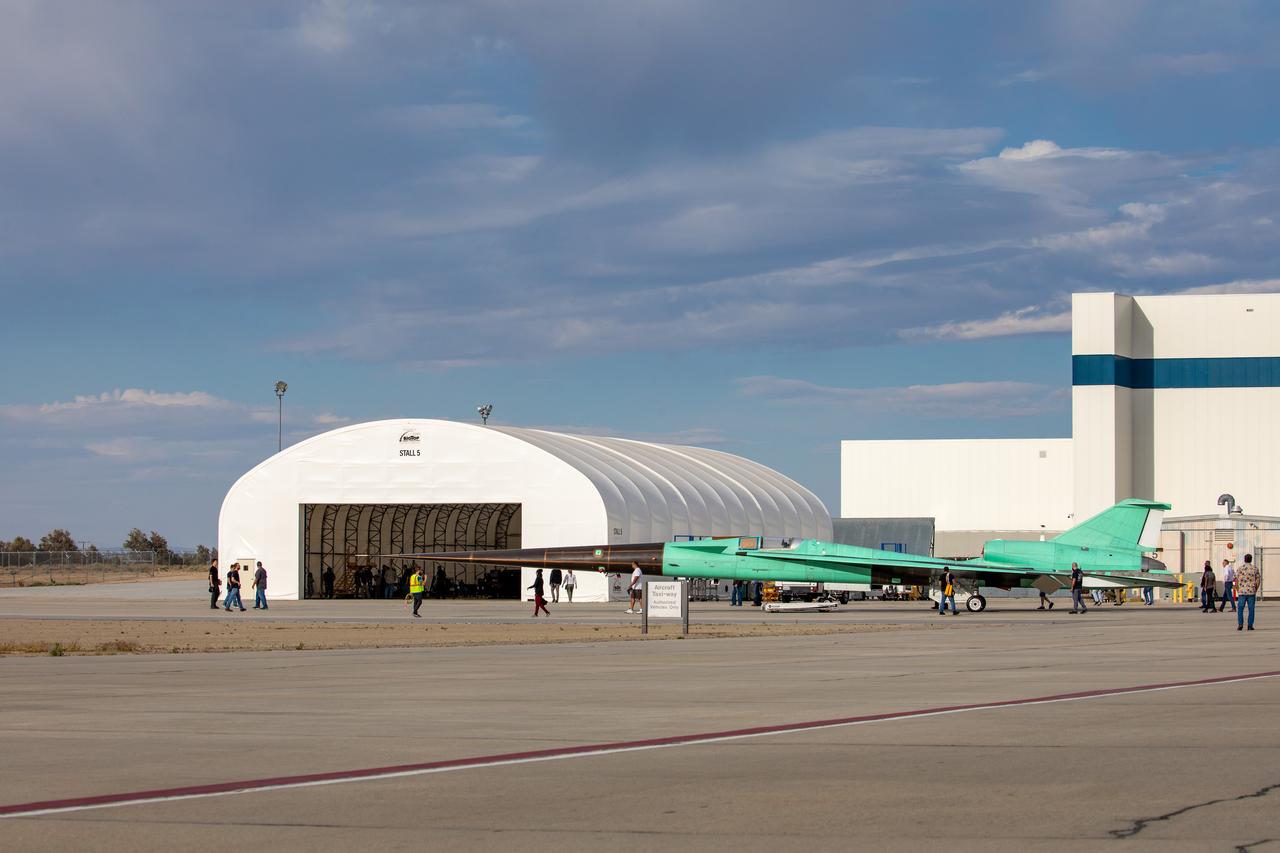
Technicians check out the X-59 aircraft as it sits near the runway at Lockheed Martin Skunk Works in Palmdale, California, on June 19, 2023. Lockheed Martin Photography By Garry Tice 1011 Lockheed Way, Palmdale, Ca. 93599 Event: Move to Run Stall 5 Date: 6/19/2023 Additional Info:
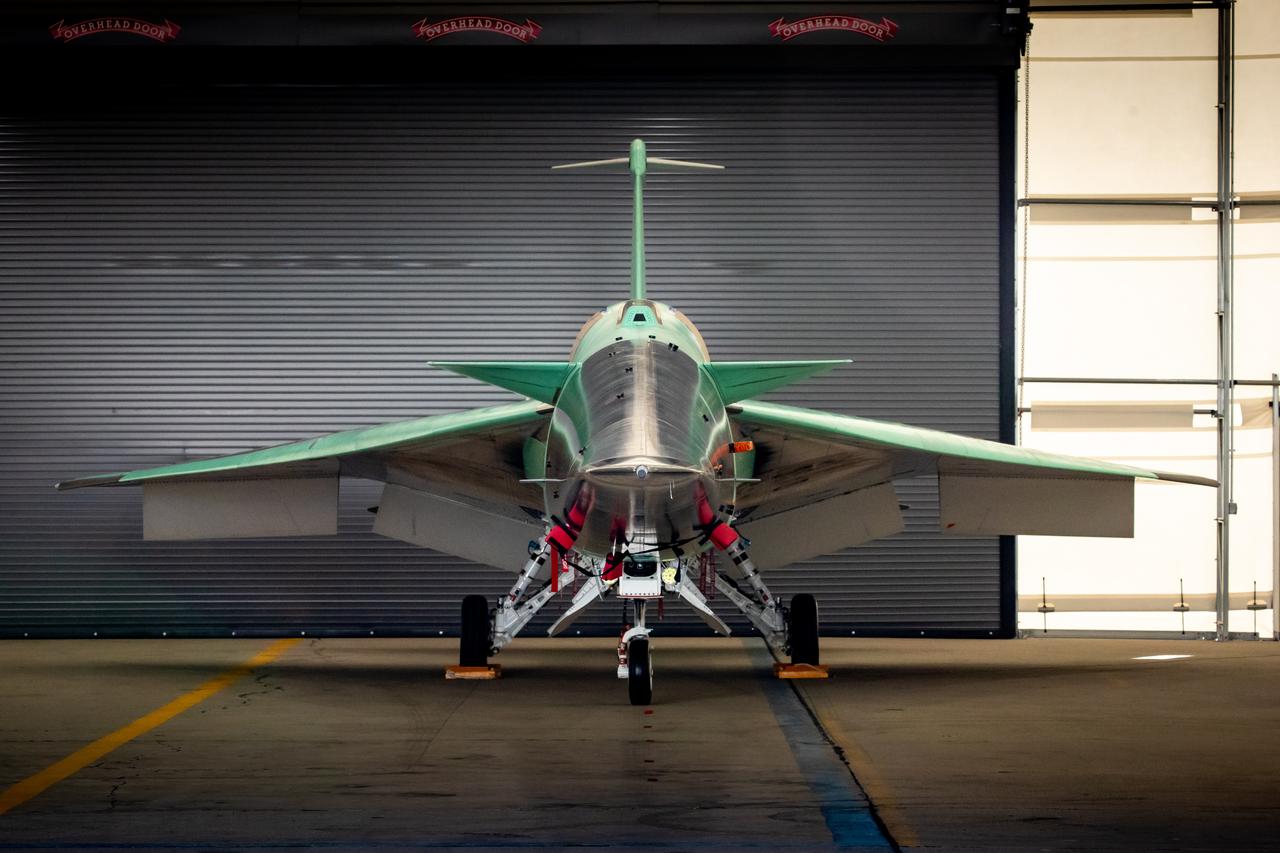
NASA’s X-59 aircraft is parked near the runway at Lockheed Martin Skunk Works in Palmdale, California, on June 19, 2023. This is where the X-59 will be housed during ground and initial flight tests. Lockheed Martin Photography By Garry Tice 1011 Lockheed Way, Palmdale, Ca. 93599 Event: Move to Run Stall 5 Date: 6/19/2023 Additional Info:
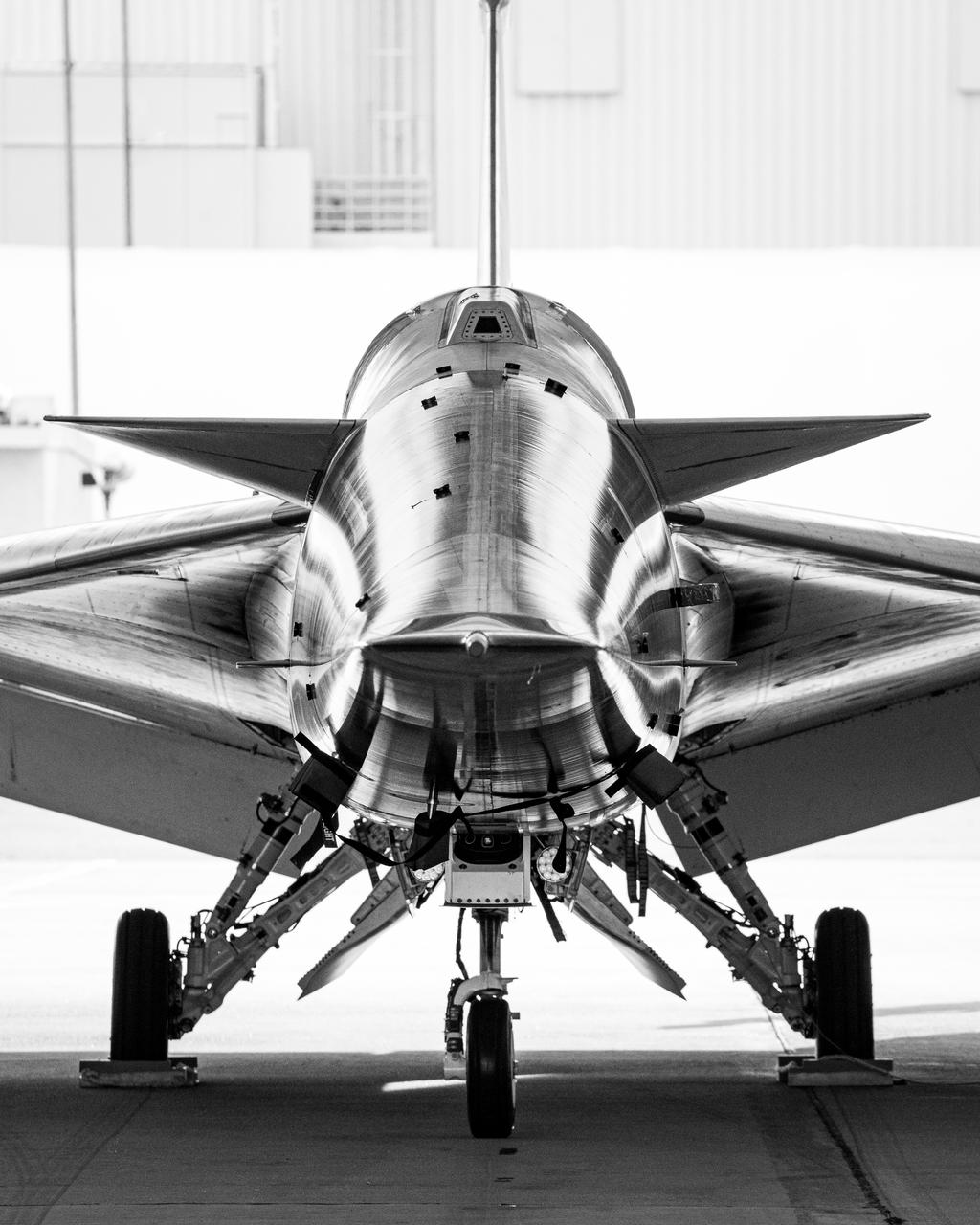
NASA’s X-59 research aircraft moves from its construction site to the flight line – or the space between the hangar and the runway – at Lockheed Martin Skunk Works in Palmdale, California, on June 16, 2023. This milestone kicks off a series of ground tests to ensure the X-59 is safe and ready to fly. The X-59 is designed to fly faster than Mach 1 while reducing the resulting sonic boom to a thump for people on the ground. NASA will evaluate this technology during flight tests as part of the agency’s Quesst mission, which helps enable commercial supersonic air travel over land. Lockheed Martin Photography By Garry Tice 1011 Lockheed Way, Palmdale, Ca. 93599 Event: Move to Run Stall 5 Date: 6/19/2023 Additional Info:
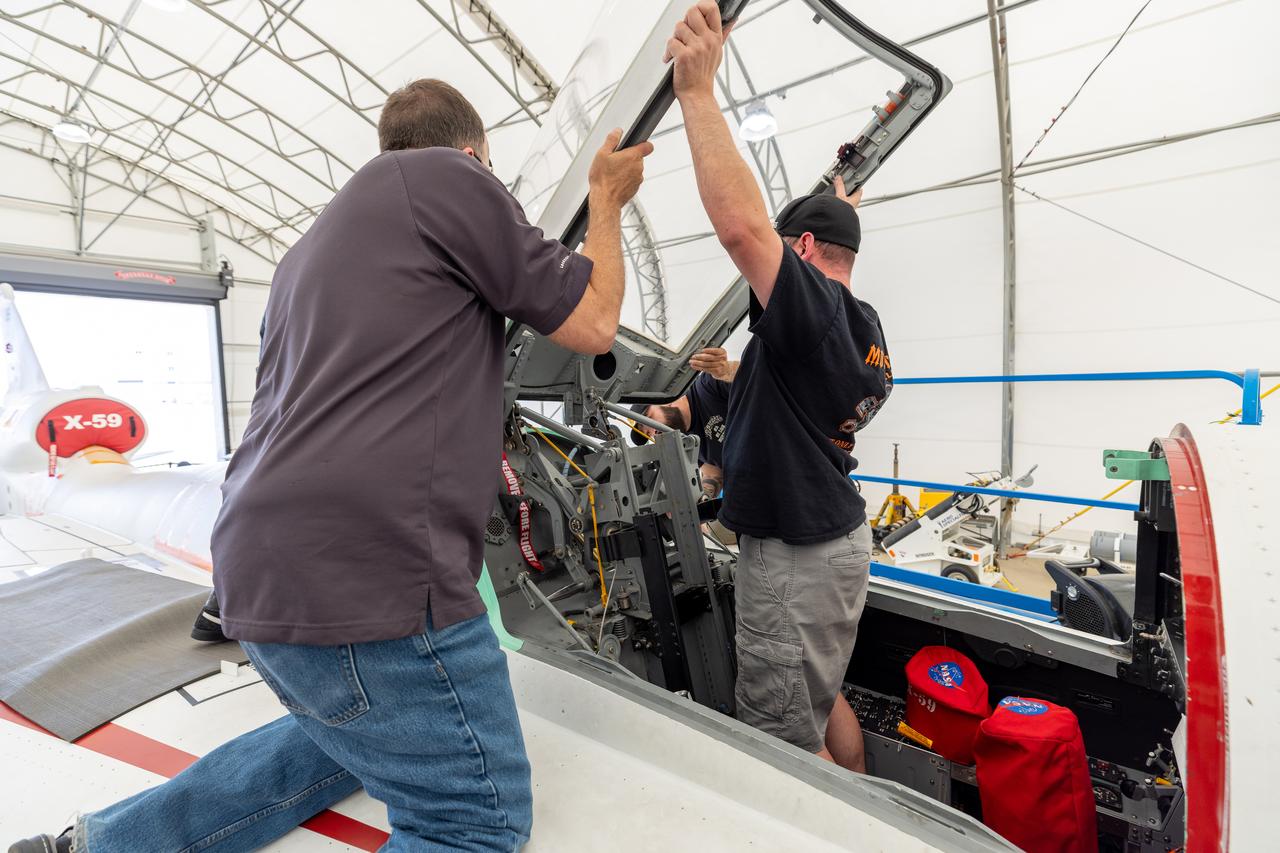
Lockheed Martin technicians temporarily remove the canopy from the X-59 in preparation for final installation of the ejection seat into the aircraft.
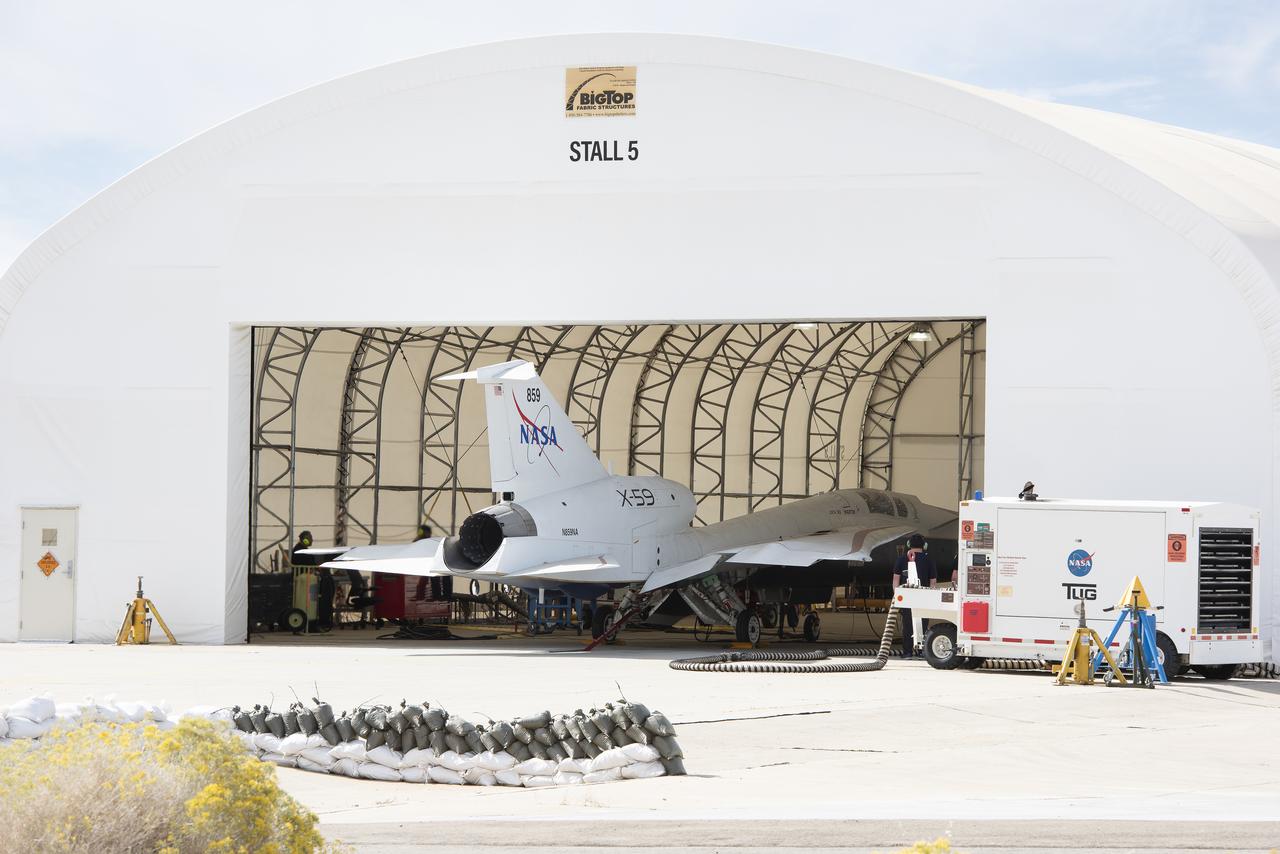
NASA’s X-59 quiet supersonic research aircraft sits in its run stall at Lockheed Martin’s Skunk Works facility in Palmdale, California, firing up its engine for the first time. These engine-run tests start at low power and allow the X-59 team to verify the aircraft’s systems are working together while powered by its own engine. The X-59 is the centerpiece of NASA’s Quesst mission, which seeks to solve one of the major barriers to supersonic flight over land by making sonic booms quieter.
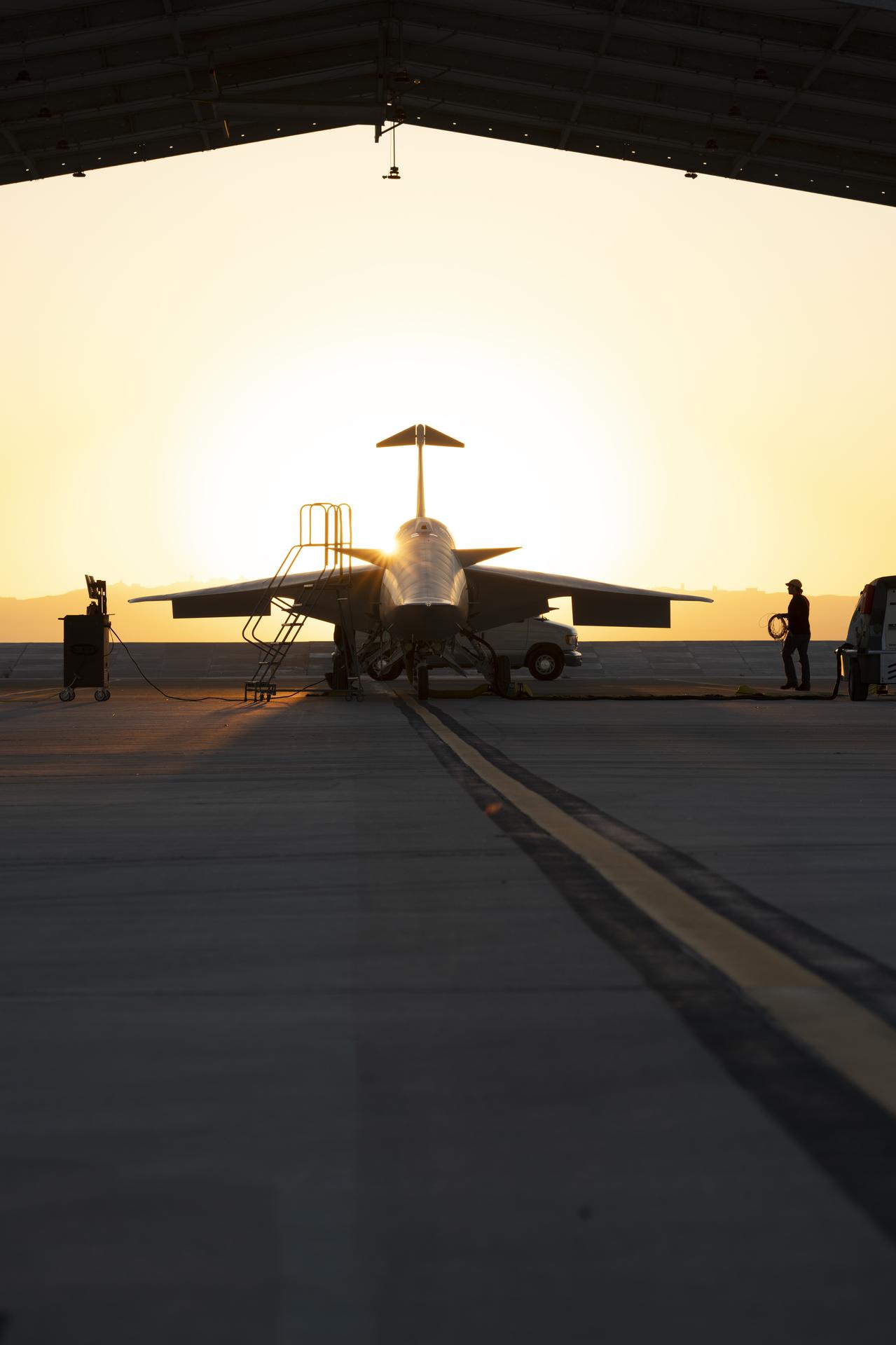
NASA’s X-59 quiet supersonic research aircraft sits in a run stall during sunrise on Tuesday, March 20, 2026, near NASA’s Armstrong Flight Research Center in Edwards, California, ahead of its second flight.
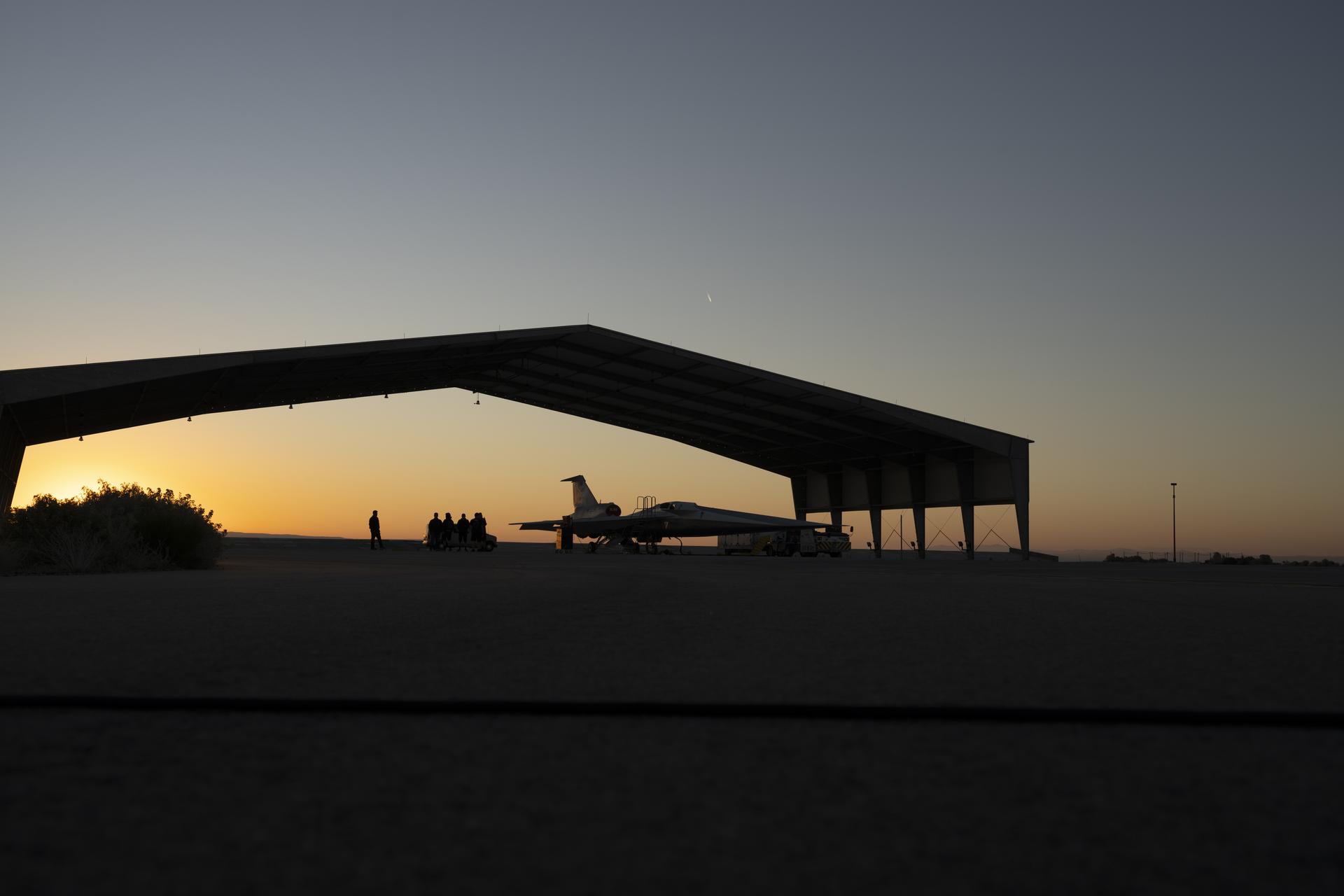
NASA’s X-59 quiet supersonic research aircraft sits in a run stall during sunrise on Tuesday, March 20, 2026, near NASA’s Armstrong Flight Research Center in Edwards, California, ahead of its second flight.
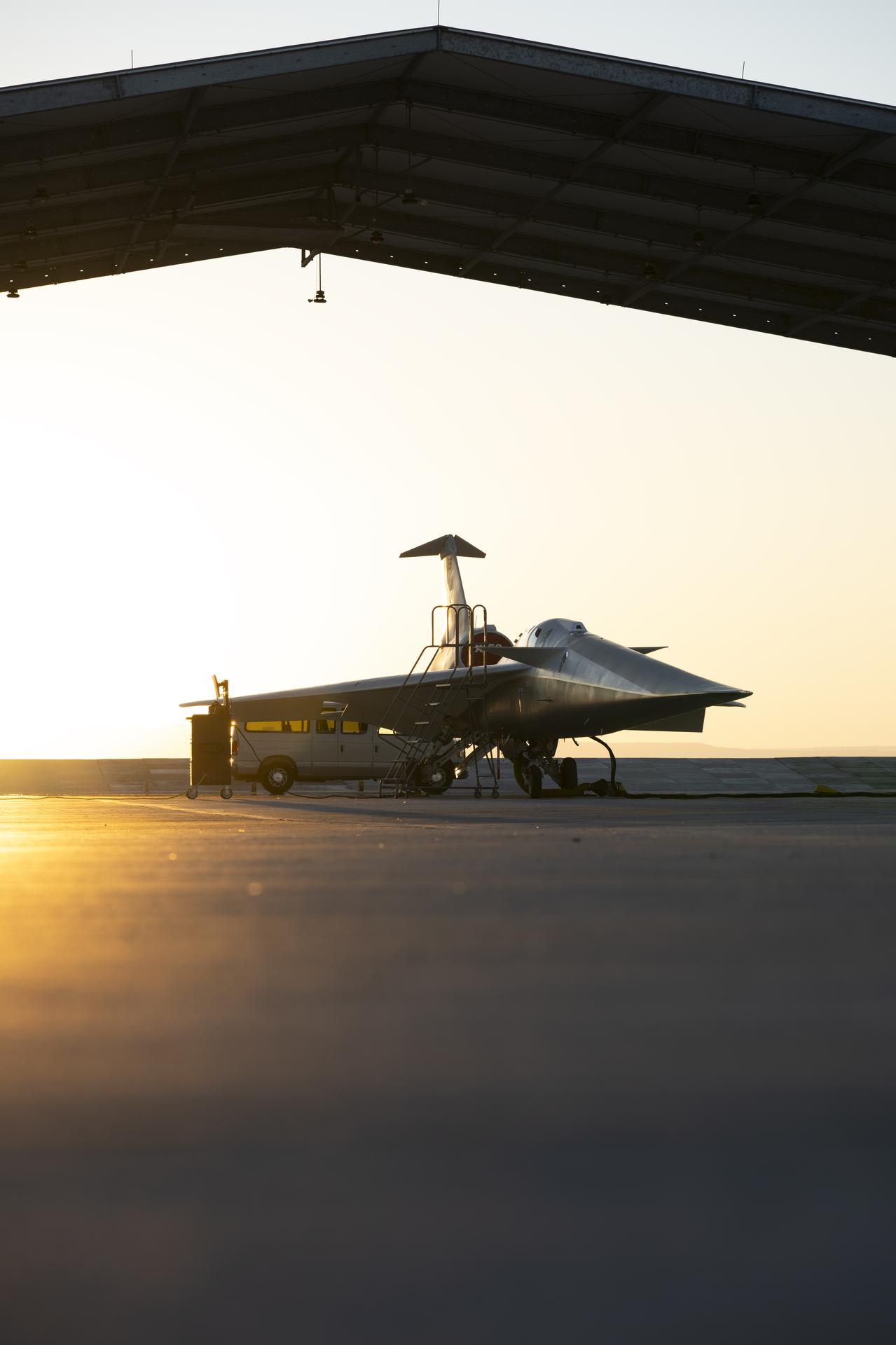
NASA’s X-59 quiet supersonic research aircraft sits in a run stall during sunrise on Tuesday, March 20, 2026, near NASA’s Armstrong Flight Research Center in Edwards, California, ahead of its second flight.
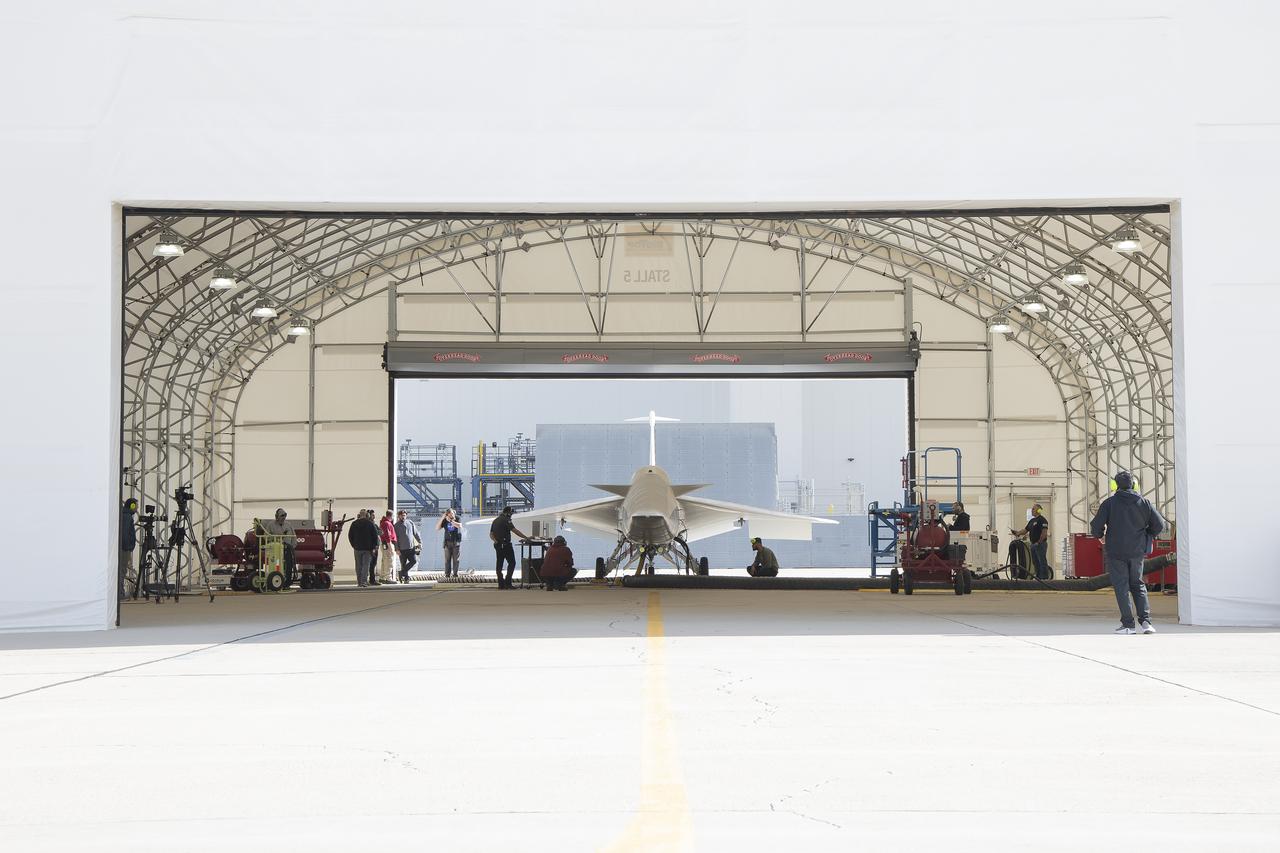
NASA’s X-59 quiet supersonic research aircraft sits in its run stall at Lockheed Martin’s Skunk Works facility in Palmdale, California, prior to its first engine run. Engine runs are part of a series of integrated ground tests needed to ensure safe flight and successful achievement of mission goals. The X-59 is the centerpiece of NASA’s Quesst mission, which seeks to solve one of the major barriers to supersonic flight over land by making sonic booms quieter.
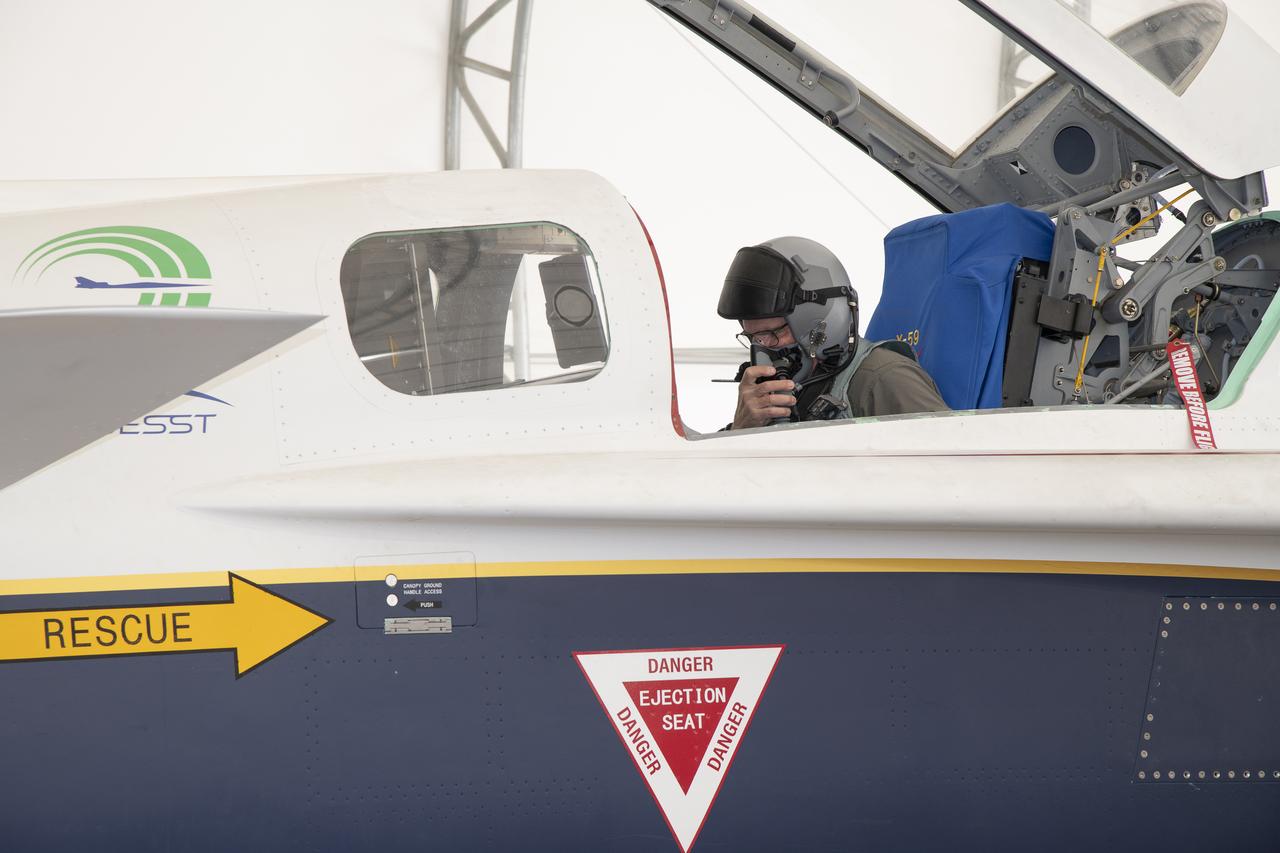
Lockheed Martin test pilot Dan “Dog” Canin sits in the cockpit of NASA’s X-59 quiet supersonic research aircraft in a run stall at Lockheed Martin’s Skunk Works facility in Palmdale, California prior to its first engine run. These engine-run tests featured the X-59 powered by its own engine, whereas in previous tests, the aircraft depended on external sources for power. The X-59 is the centerpiece of NASA’s Quesst mission, which seeks to solve one of the major barriers to supersonic flight over land by making sonic booms quieter.
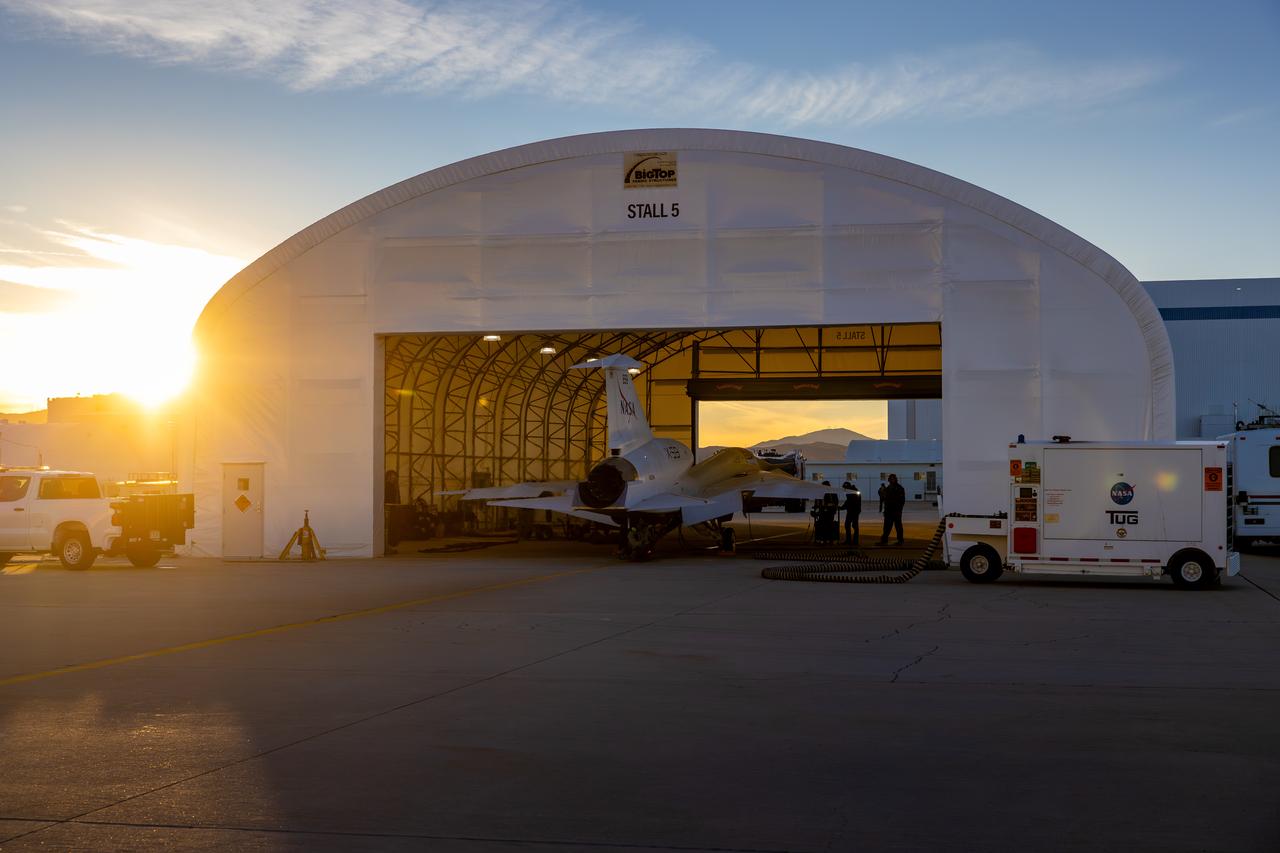
NASA’s X-59 quiet supersonic research aircraft sits inside its run stall in preparation for maximum afterburner testing at Lockheed Martin’s Skunk Works facility in Palmdale, California. Teams conduct final checks on the aircraft before its high-thrust engine runs. The X-59 is the centerpiece of NASA’s Quesst mission designed to demonstrate quiet supersonic flight over land, addressing a key barrier to commercial supersonic travel.
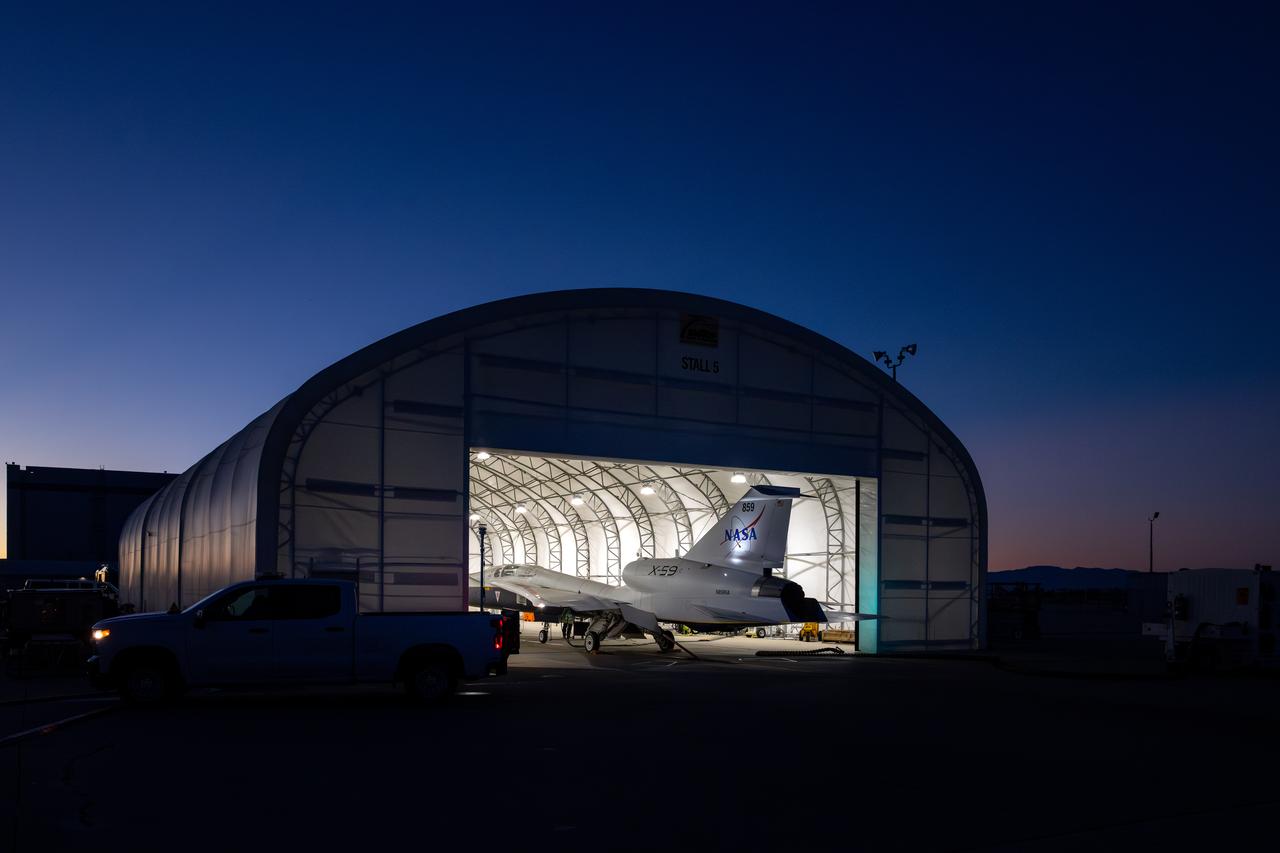
NASA’s X-59 quiet supersonic research aircraft sits inside its run stall following maximum afterburner testing at Lockheed Martin’s Skunk Works facility in Palmdale, California. The test demonstrates the engine’s ability to generate the thrust required for supersonic flight, advancing NASA’s Quesst mission. The X-59 is the centerpiece of the mission, designed to demonstrate quiet supersonic flight over land, addressing a key barrier to commercial supersonic travel.
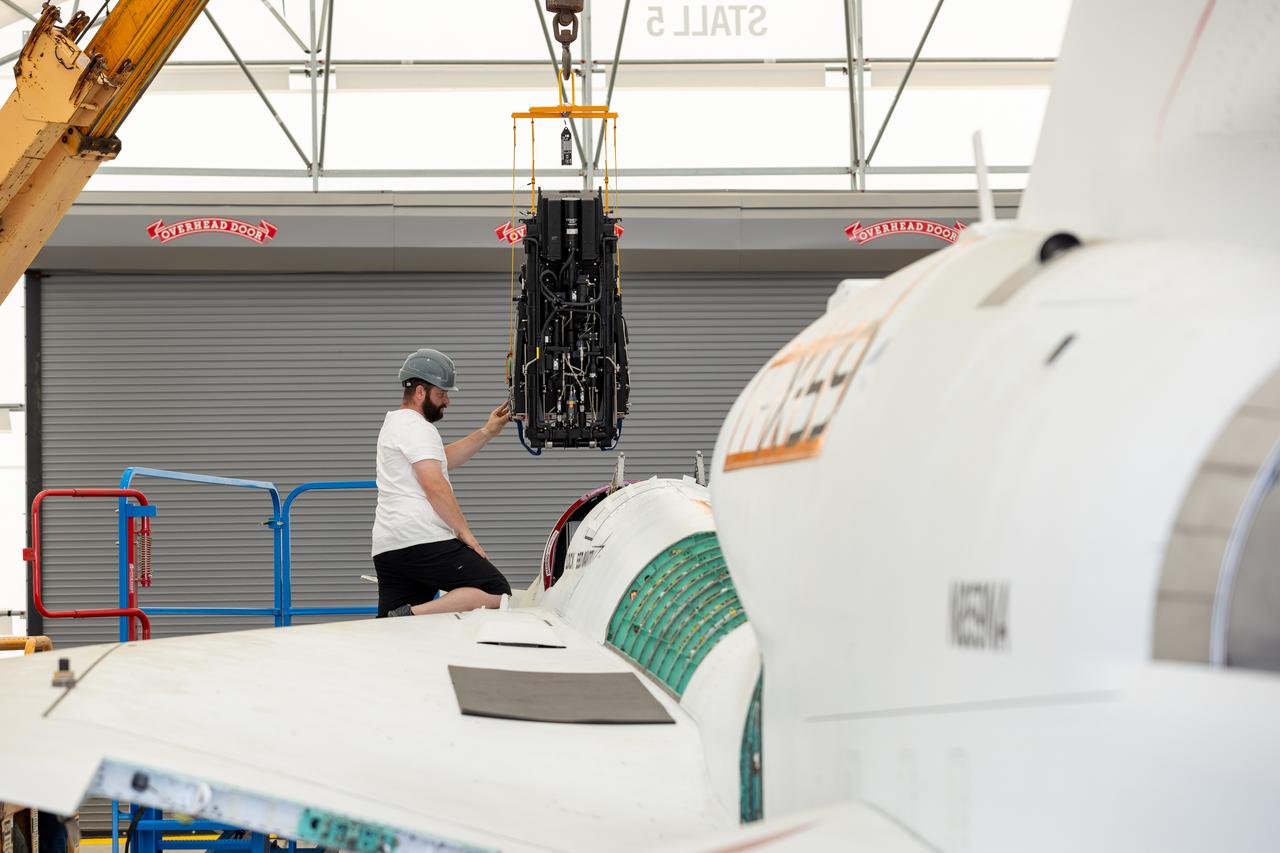
NASA Life Support Technician Mathew Sechler provides support as the X-59’s ejection seat is installed into the aircraft at Lockheed Martin Skunk Works’ facilities in Palmdale, California. Completion of the seat’s installation marks an integration milestone for the aircraft as it prepares for final ground tests.

The crack in the crawler-transporter cleat that stalled rollout of Space Shuttle Endeavour can be seen as a white dotted line on the top-center and running down the side. The cleat rests on the ground near Launch Pad 39B. The cracked cleat forced the reverse of the rollout back outside the pad gate so the cleat could be repaired on flat ground before moving up the incline to the top of the pad. Endeavour is scheduled to be launched Nov. 30 at 10:01 p.m. EST on mission STS-97, the sixth construction flight to the International Space Station. Its payload includes the P6 Integrated Truss Structure and a photovoltaic (PV) module, with giant solar arrays that will provide power to the Station. The mission includes two spacewalks to complete the solar array connections
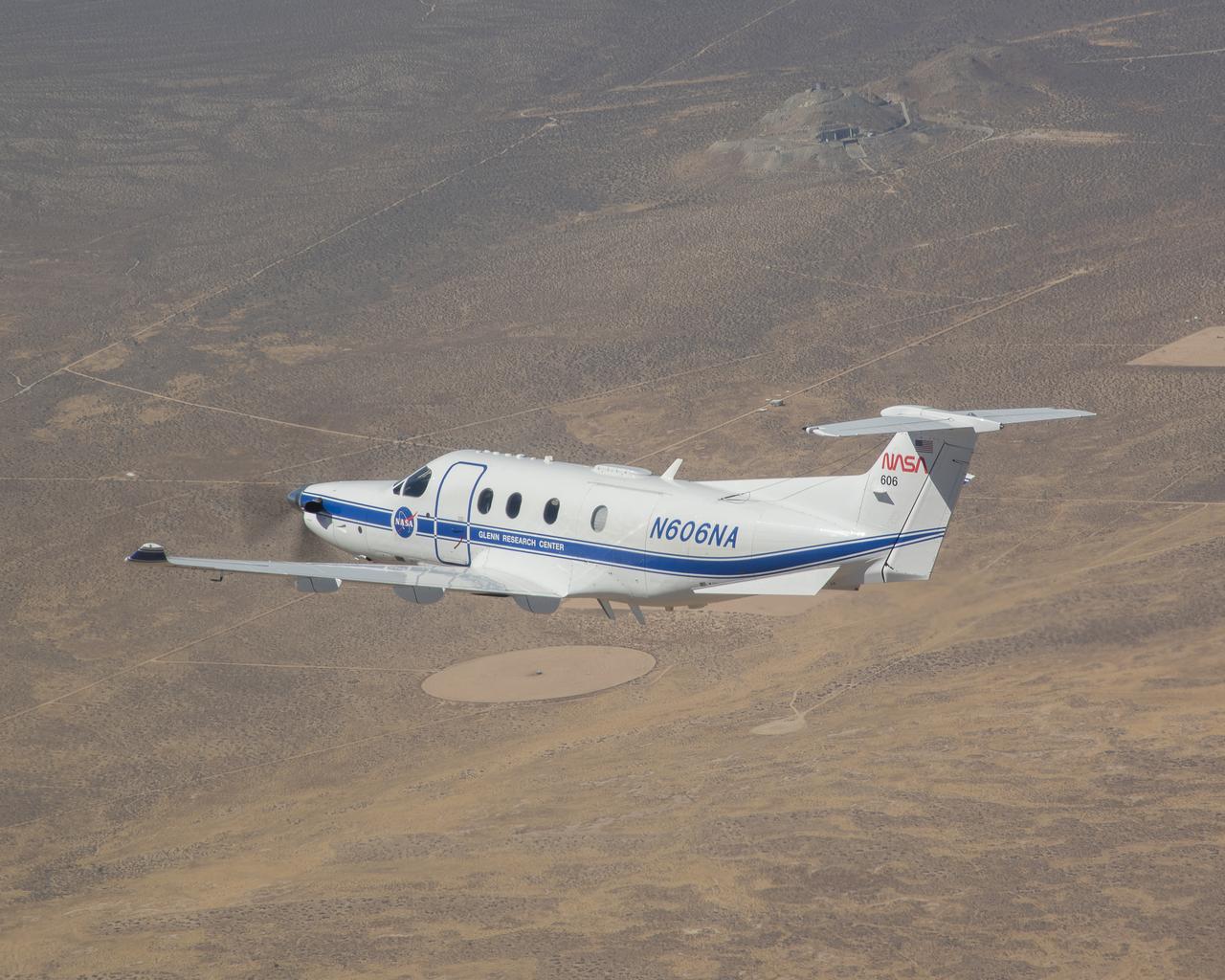
Equipped with state-of-the-art technology to test and evaluate communication, navigation, and surveillance systems, NASA’s Pilatus PC-12 flies over the Mojave Desert near Armstrong Flight Research Center in Edwards, California. Based at Glenn Research Center in Cleveland, the Pilatus PC-12 runs a series of familiarization flights for NASA Armstrong pilots before a test series evaluating ADS-B or Automatic Dependent Surveillance Broadcast systems for advanced air mobility applications in the desert flight test range on Sept. 18, 2024. Airborne work during familiarization flights includes several approach and landings, with an emphasis on avionics, then medium altitude air-work with steep turns, slow flight, and stall demonstrations to qualitatively understand the handling characteristics of the aircraft. The flights lasted about 60 to 90 minutes on average.
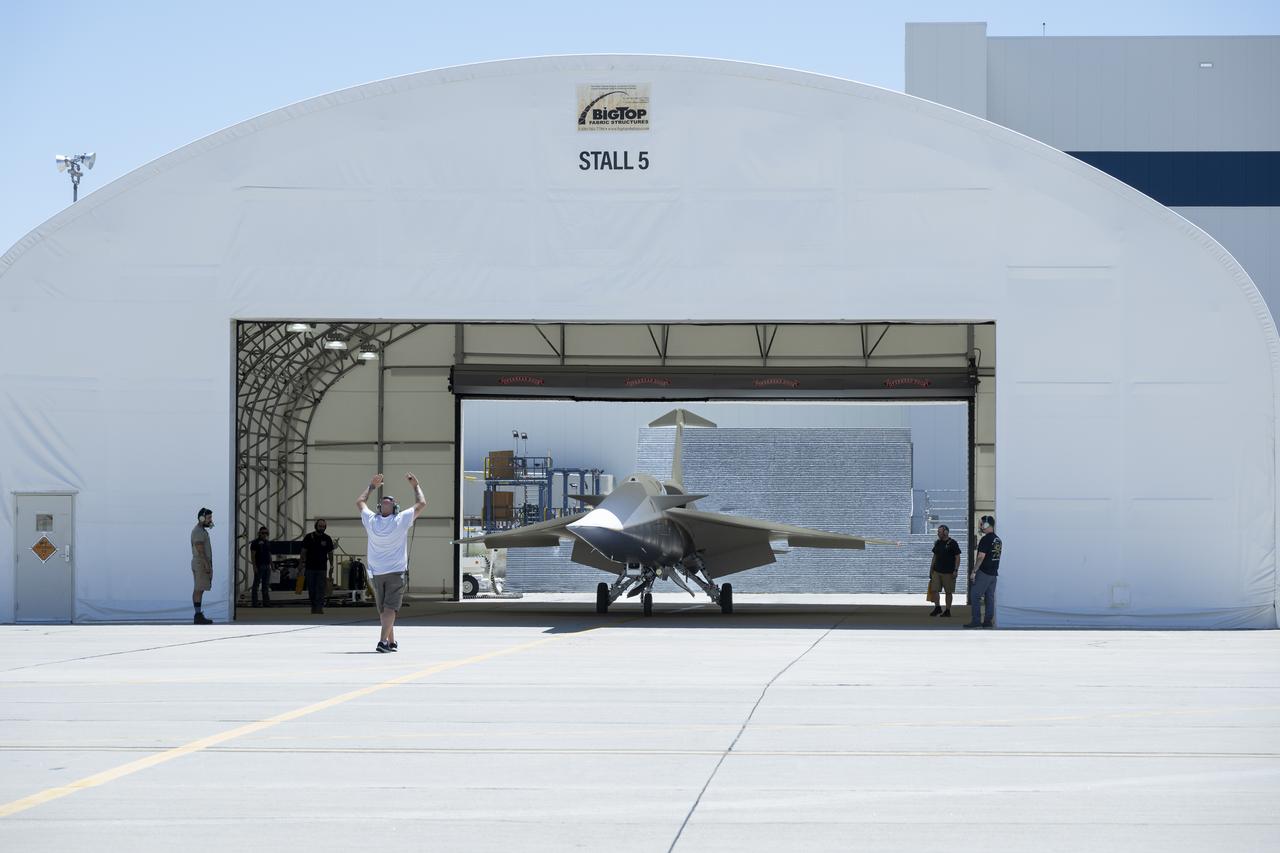
NASA’s X-59 quiet supersonic research aircraft moves under its own power for the first time at Lockheed Martin’s Skunk Works facility in Palmdale, California, on July 10, 2025. Guided by the aircraft’s crew chief, the event marks the beginning of taxi tests – a key milestone and the final series of ground tests before first flight.
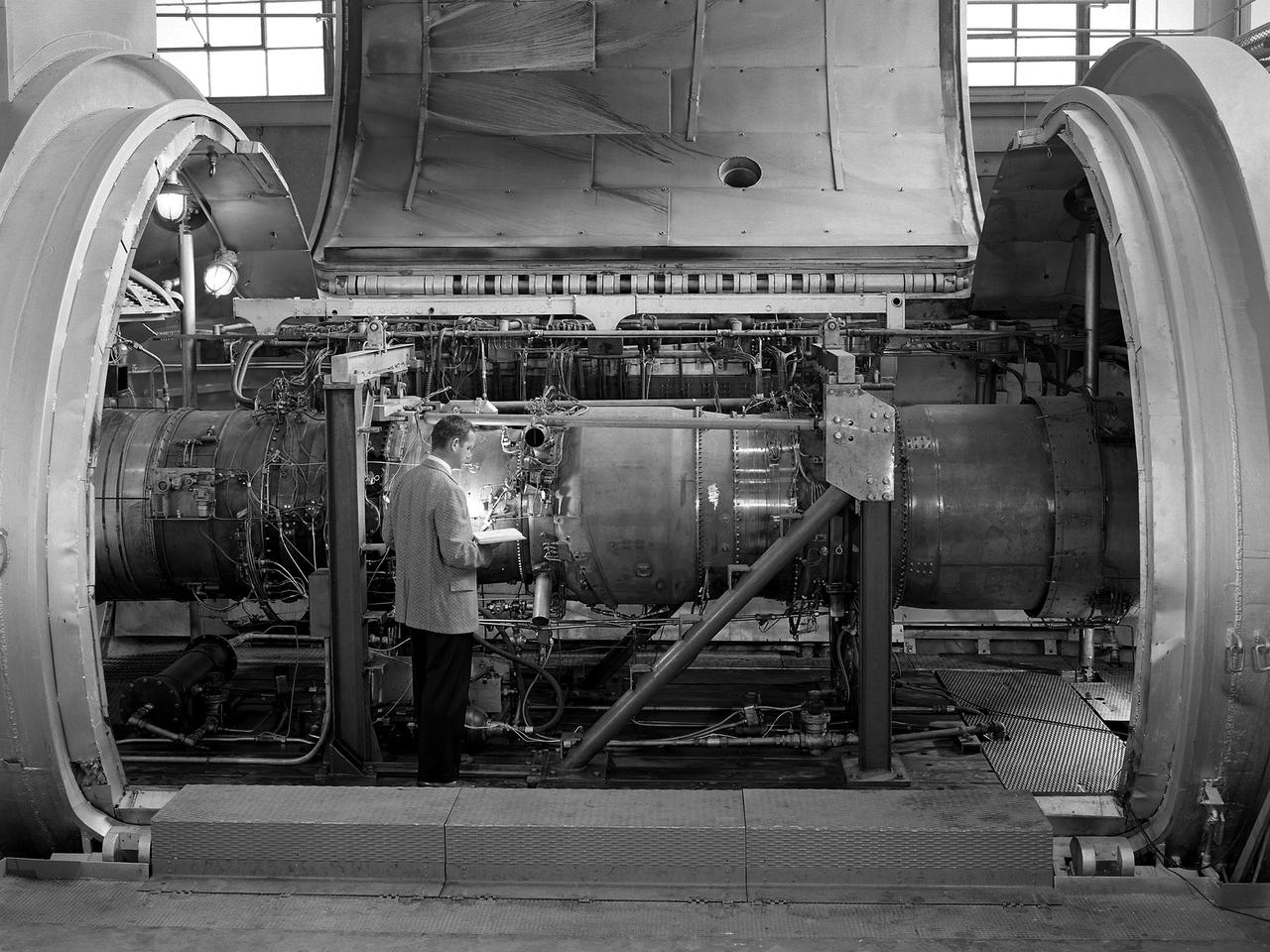
A researcher examines the Orenda Iroquois PS.13 turbojet in a Propulsion Systems Laboratory test chamber at the National Advisory Committee for Aeronautics (NACA) Lewis Flight Propulsion Laboratory. The Iroquois was being developed to power the CF-105 Arrow fighter designed by the Avro Canada Company. Avro began design work on the Arrow jet fighter in 1952. The company’s Orenda branch suggested building a titanium-based PS.13 Iroquois engine after development problems arose with the British engines that Avro had originally intended to use. The 10-stage, 20,000-pound-thrust Iroquois would prove to be more powerful than any contemporary US or British turbojet. It was also significantly lighter and more fuel efficient. An Iroquois was sent to Cleveland in April 1957 so that Lewis researchers could study the engine’s basic performance for the air force in the Propulsion Systems Laboratory. The tests were run over a wide range of speeds and altitudes with variations in exhaust-nozzle area. Initial studies determined the Iroquois’s windmilling and ignition characteristics at high altitude. After operating for 64 minutes, the engine was reignited at altitudes up to the 63,000-foot limit of the facility. Various modifications were attempted to reduce the occurrence of stall but did not totally eradicate the problem. The Arrow jet fighter made its initial flight in March 1958 powered by a substitute engine. In February 1959, however, both the engine and the aircraft programs were cancelled. The world’s superpowers had quickly transitioned from bombers to ballistic missiles which rendered the Avro Arrow prematurely obsolete.
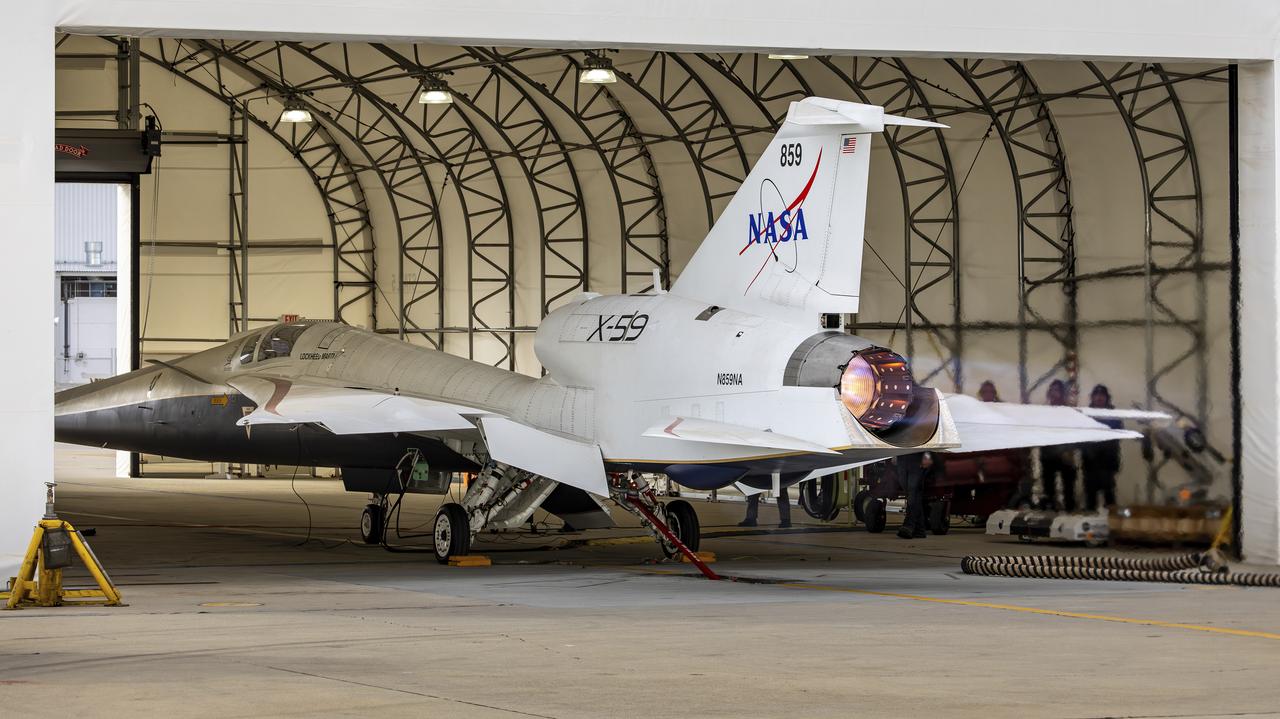
NASA’s X-59 quiet supersonic research aircraft completed its first maximum afterburner test at Lockheed Martin’s Skunk Works facility in Palmdale, California. This full-power test, during which the engine generates additional thrust, validates the additional power needed for meeting the testing conditions of the aircraft. The X-59 is the centerpiece of NASA’s Quesst mission, which aims to overcome a major barrier to supersonic flight over land by reducing the noise of sonic booms.
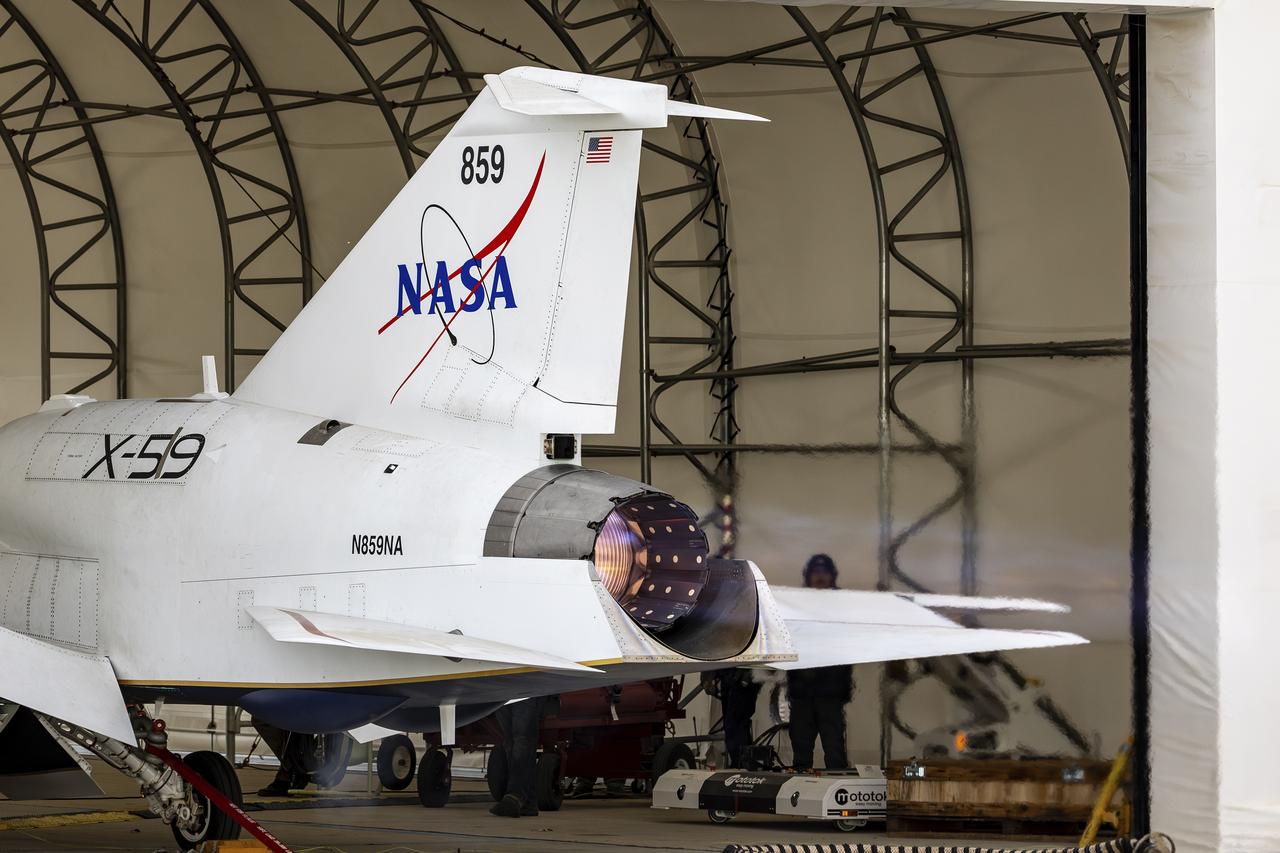
NASA’s X-59 quiet supersonic research aircraft completed its first maximum afterburner test at Lockheed Martin’s Skunk Works facility in Palmdale, California. This full-power test, during which the engine generates additional thrust, validates the additional power needed for meeting the testing conditions of the aircraft. The X-59 is the centerpiece of NASA’s Quesst mission, which aims to overcome a major barrier to supersonic flight over land by reducing the noise of sonic booms.
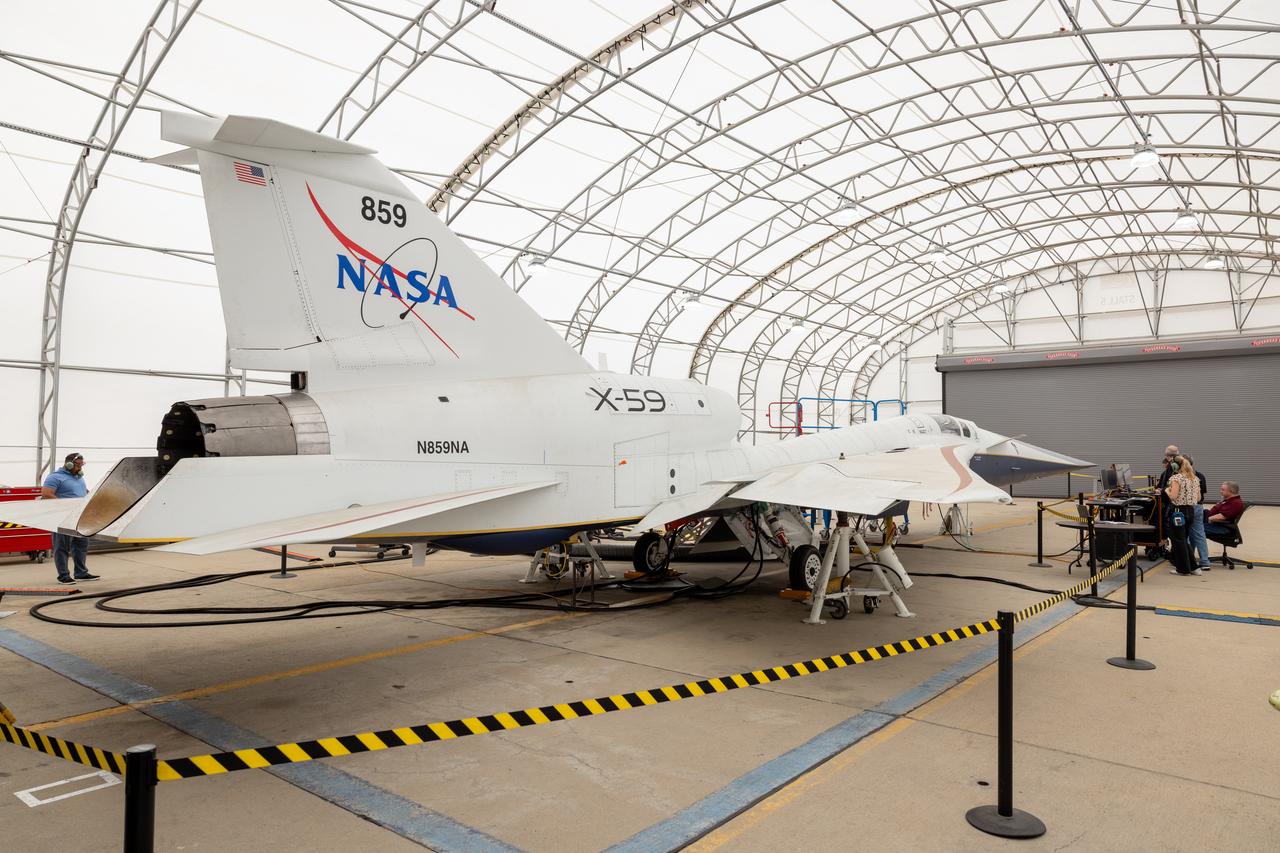
NASA’s X-59 quiet supersonic research aircraft successfully completed its “aluminum bird” systems test at Lockheed Martin’s Skunk Works facility in Palmdale, California. With NASA pilot James Less in the cockpit, the X-59 team simulated flight conditions from takeoff to landing – without ever leaving the ground. The test verified how the aircraft’s hardware and software work together, responding to pilot inputs and handling injected system failures. This milestone confirms the aircraft’s readiness for the next series of tests leading to first flight.
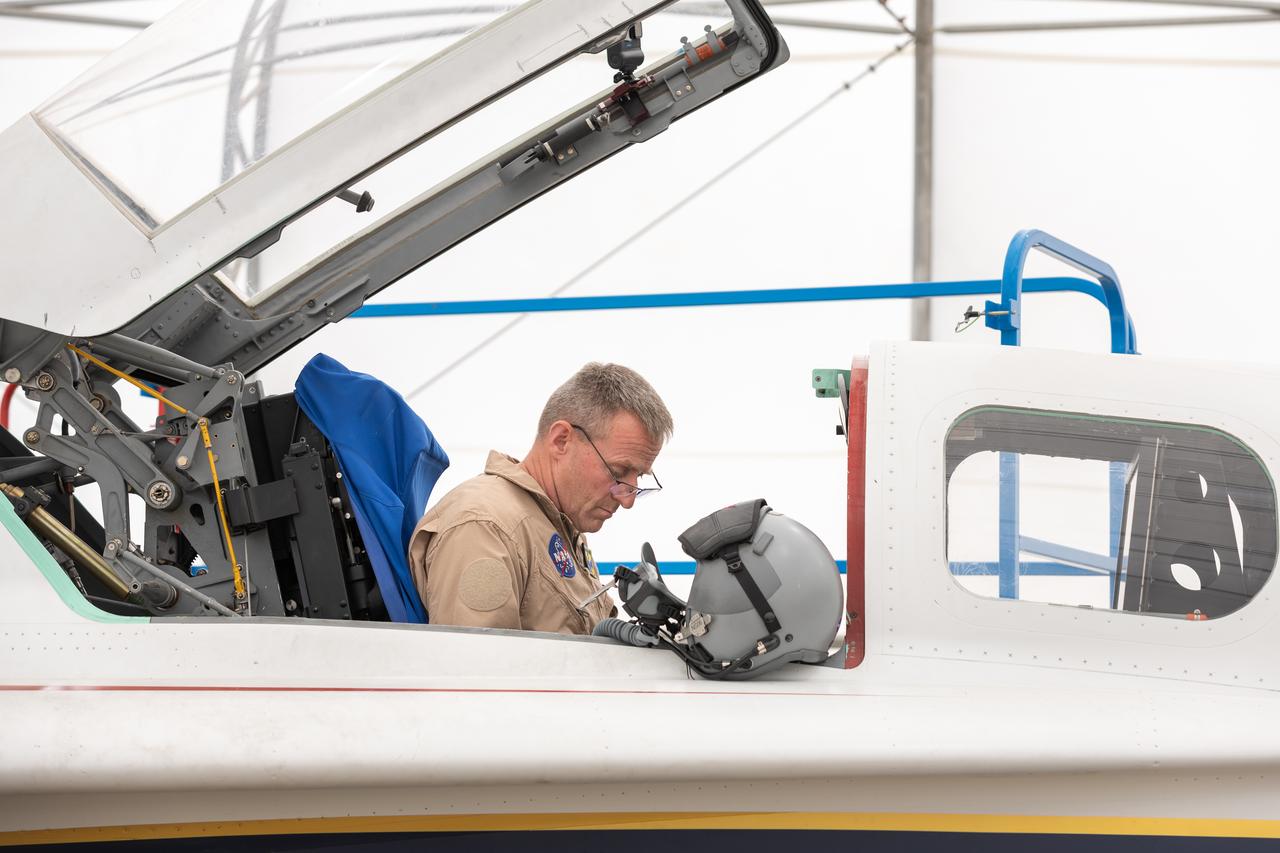
NASA’s X-59 quiet supersonic research aircraft successfully completed its “aluminum bird” systems test at Lockheed Martin’s Skunk Works facility in Palmdale, California. With NASA pilot James Less in the cockpit, the X-59 team simulated flight conditions from takeoff to landing – without ever leaving the ground. The test verified how the aircraft’s hardware and software work together, responding to pilot inputs and handling injected system failures. This milestone confirms the aircraft’s readiness for the next series of tests leading to first flight.