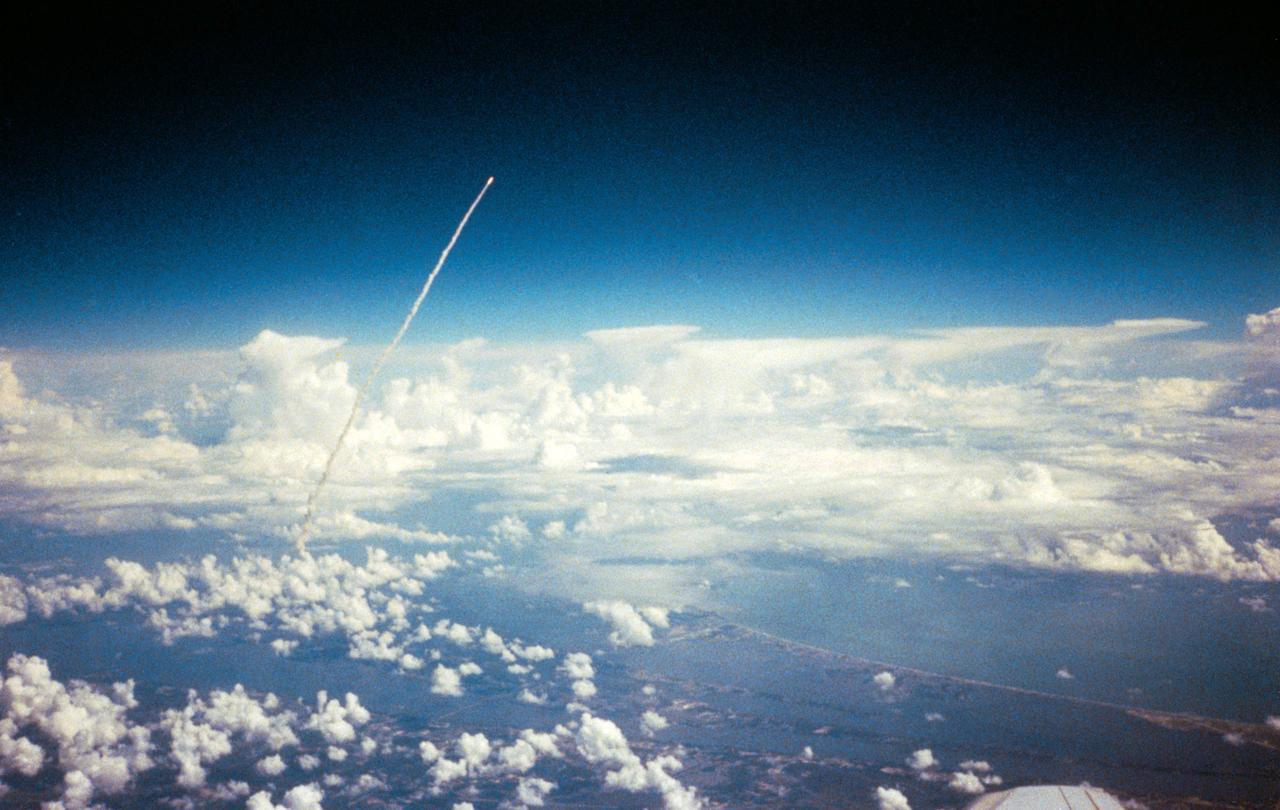
Long range view of an unidentified space shuttle lift off taken from an unidentified high flying aircraft.
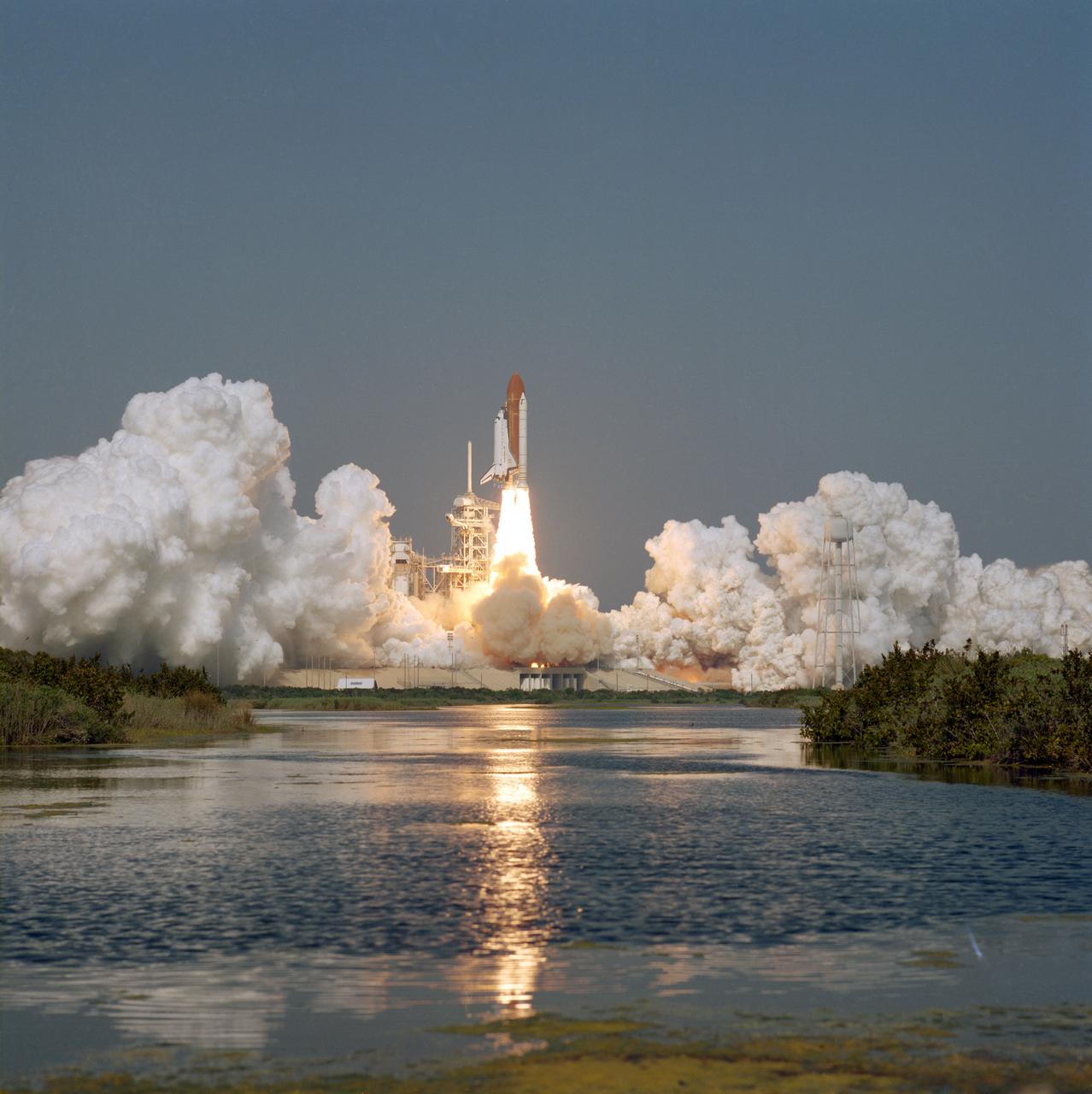
STS029-S-026 (13 Mar 1989) --- A wide shot of the Space Shuttle Discovery lifting off from Launch Pad 39B on mission STS-29. Discovery lifted off at 9:57 a.m. (EST), March 13, 1989, carrying the Tracking And Data Relay Satellite (TDRS-1) into orbit. The brilliant flames associated with the launch are reflected in the marsh waters. Onboard the spacecraft were astronauts Michael L. Coats, commander; John E. Blaha, pilot; and James F. Buchli, James P. Bagian and Robert C. Springer, all mission specialists.
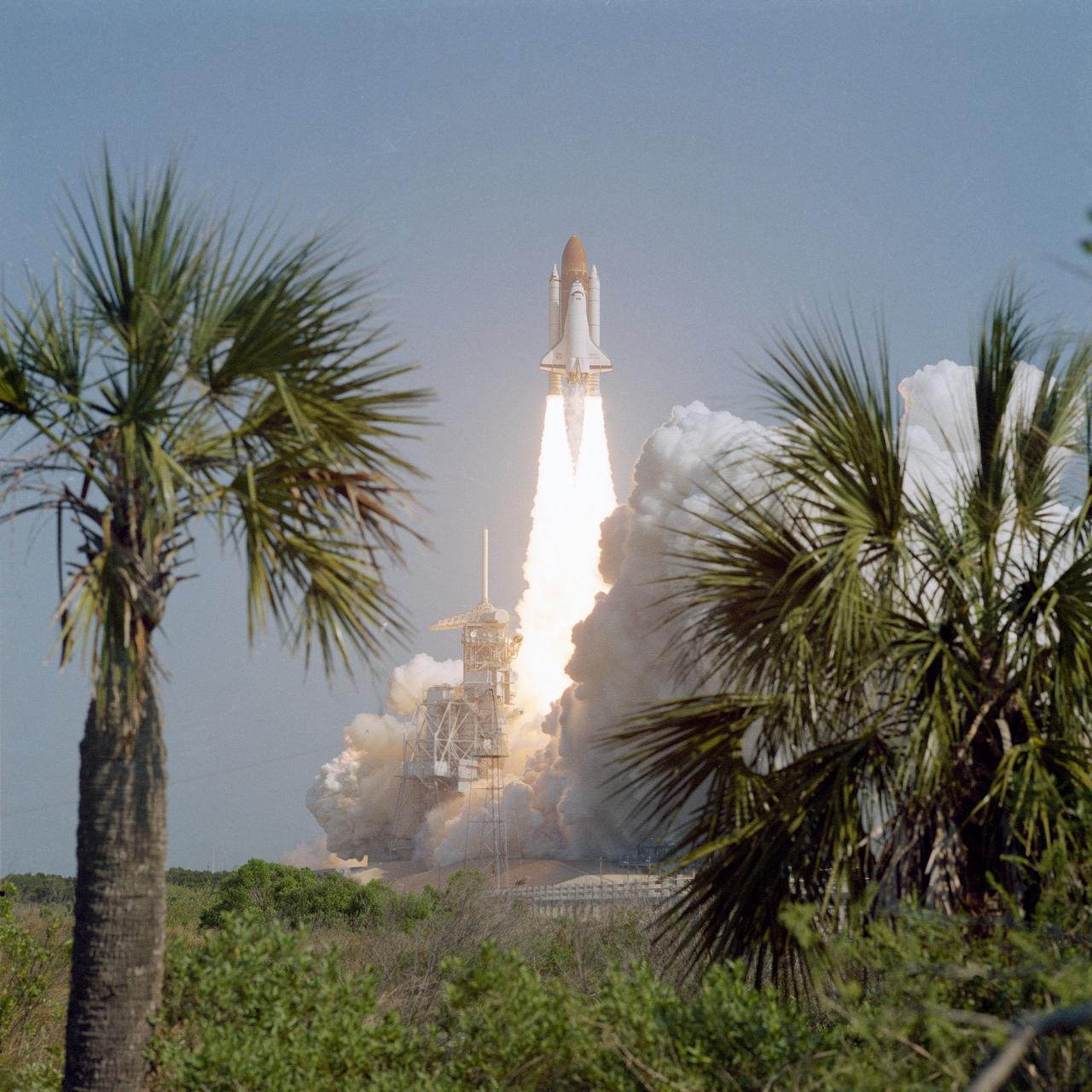
STS029-S-027 (13 March 1989) --- From Launch Pad 39D, the Space Shuttle Discovery is launched on mission STS-29. Discovery lifted off at 9:57 a.m. (EST), March 13, 1989, carrying the tracking and data relay satellite (TDRS-1) into orbit. Florida vegetation frames the launch scene. Onboard the spacecraft were astronauts Michael L. Coats, commander; John E. Blaha, pilot; and James F. Buchli, James P. Bagian and Robert C. Springer, all mission specialists.
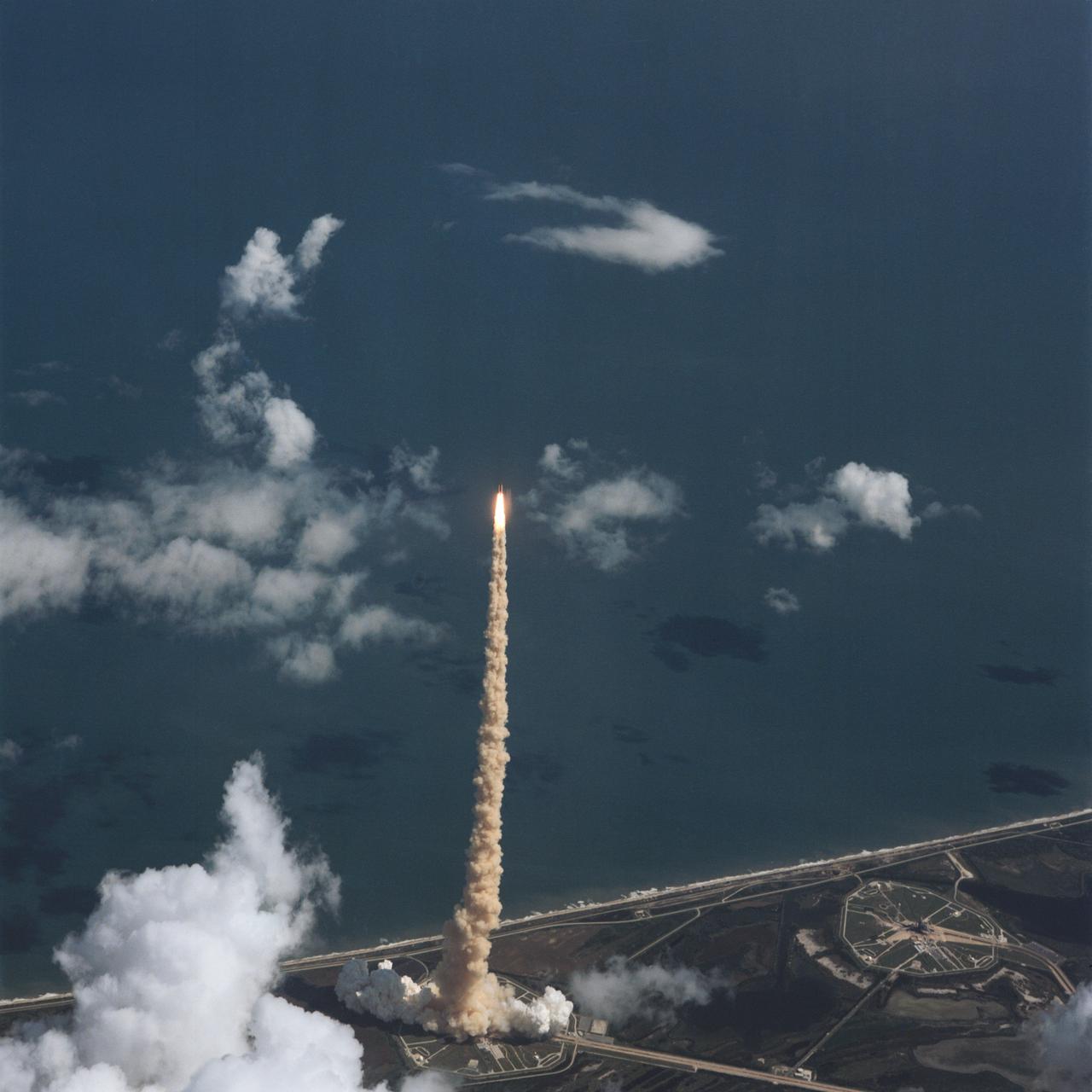
STS-34 Atlantis, Orbiter Vehicle (OV) 104, lifts off from Kennedy Space Center (KSC) Launch Complex (LC) Pad 39B at 12:53:39:983 pm Eastern Daylight Time (EDT). This aerial view shows OV-104, its external tank (ET), and two solid rocket boosters (SRBs) rising high above LC Pad 39B atop a plume of exhaust smoke. Atlantic Ocean is visible in the background. The liftoff marks the beginning of a five-day mission in space.
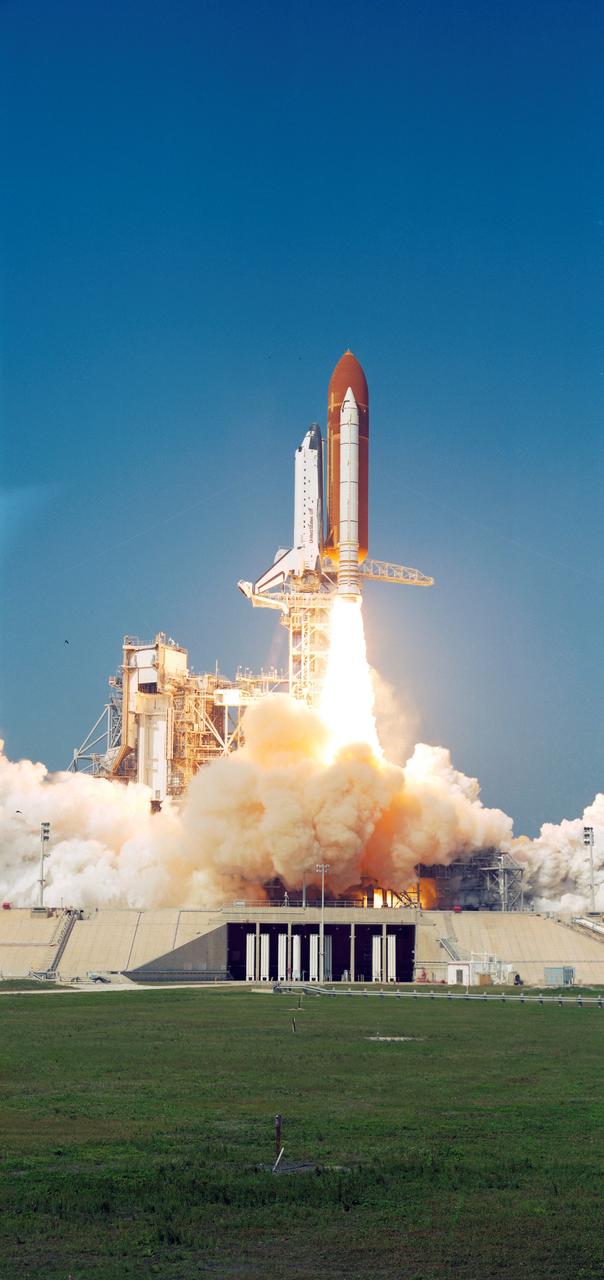
STS029-S-028 (13 March 1989) --- From Launch Pad 39B, the Space Shuttle Discovery is launched on Mission STS-29. Discovery lifted off at 9:57 a.m. (EST), March 13, 1989, carrying the tracking and data relay satellite (TDRS-1) into orbit. Onboard the spacecraft were astronauts Michael L. Coats, commander; John E. Blaha, pilot; and James F. Buchli, James P. Bagian and Robert C. Springer, all mission specialists.
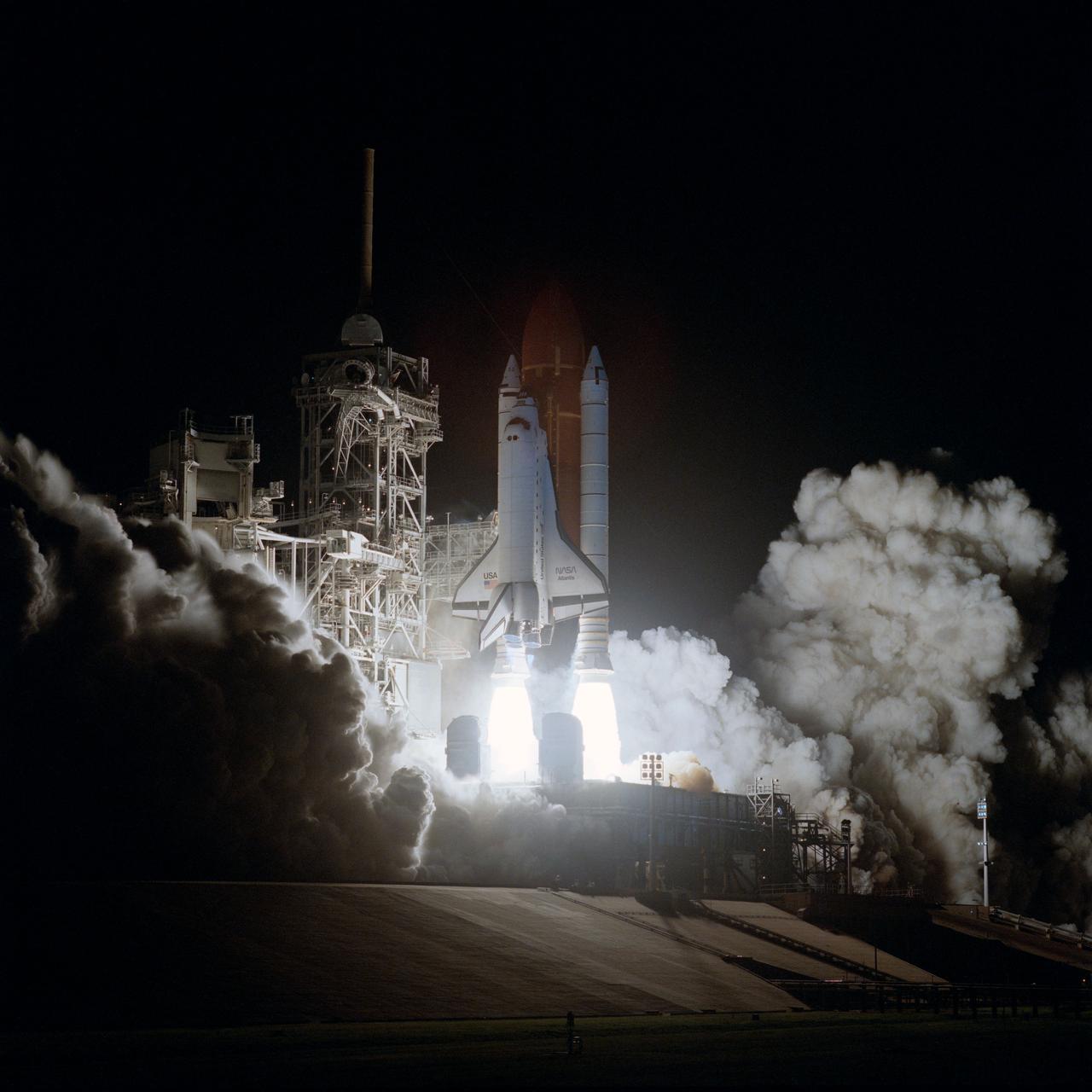
STS-38 Atlantis, Orbiter Vehicle (OV) 104, lifts off from Kennedy Space Center (KSC) Launch Complex Pad at 6:46:15:0639 pm (Eastern Standard Time (EST)). As OV-104, atop the external tank (ET) and flanked by two solid rocket boosters (SRBs), rises above the mobile launcher platform, exhaust smoke fills the area surrounding the launch pad. SRB and space shuttle main engine (SSME) firings glow against the night darkness and light up the fixed service structure (FSS) and retracted rotating service structure (RSS). STS-38 is a Department of Defense (DOD) devoted mission.
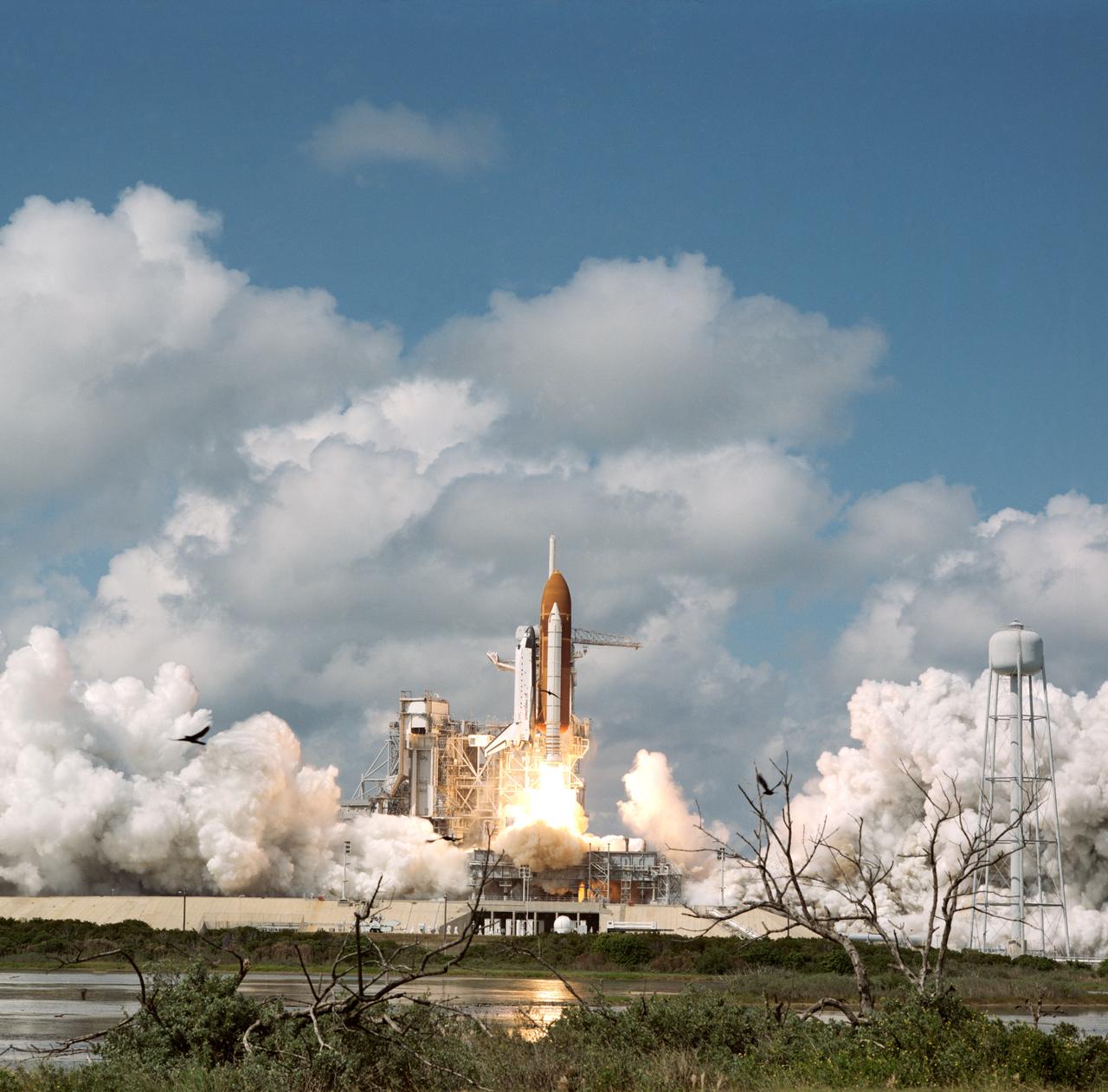
STS-26 Discovery, Orbiter Vehicle (OV) 103, lifts off from mobile launcher platform at Kennedy Space Center (KSC) Launch Complex (LC) pad 39B. Riding atop the orange external tank (ET), OV-103 heads for Earth orbit as the exhaust plumes from the two solid rocket boosters (SRBs) cover the mobile launcher platform and the area surrounding the launch pad. SRB firings are reflected in a nearby waterway. In the foreground are trees and several birds in flight. STS-26 marks OV-103's first flight since September 1985 and NASA's first manned mission since the 51L Challenger accident, 01-28-86.
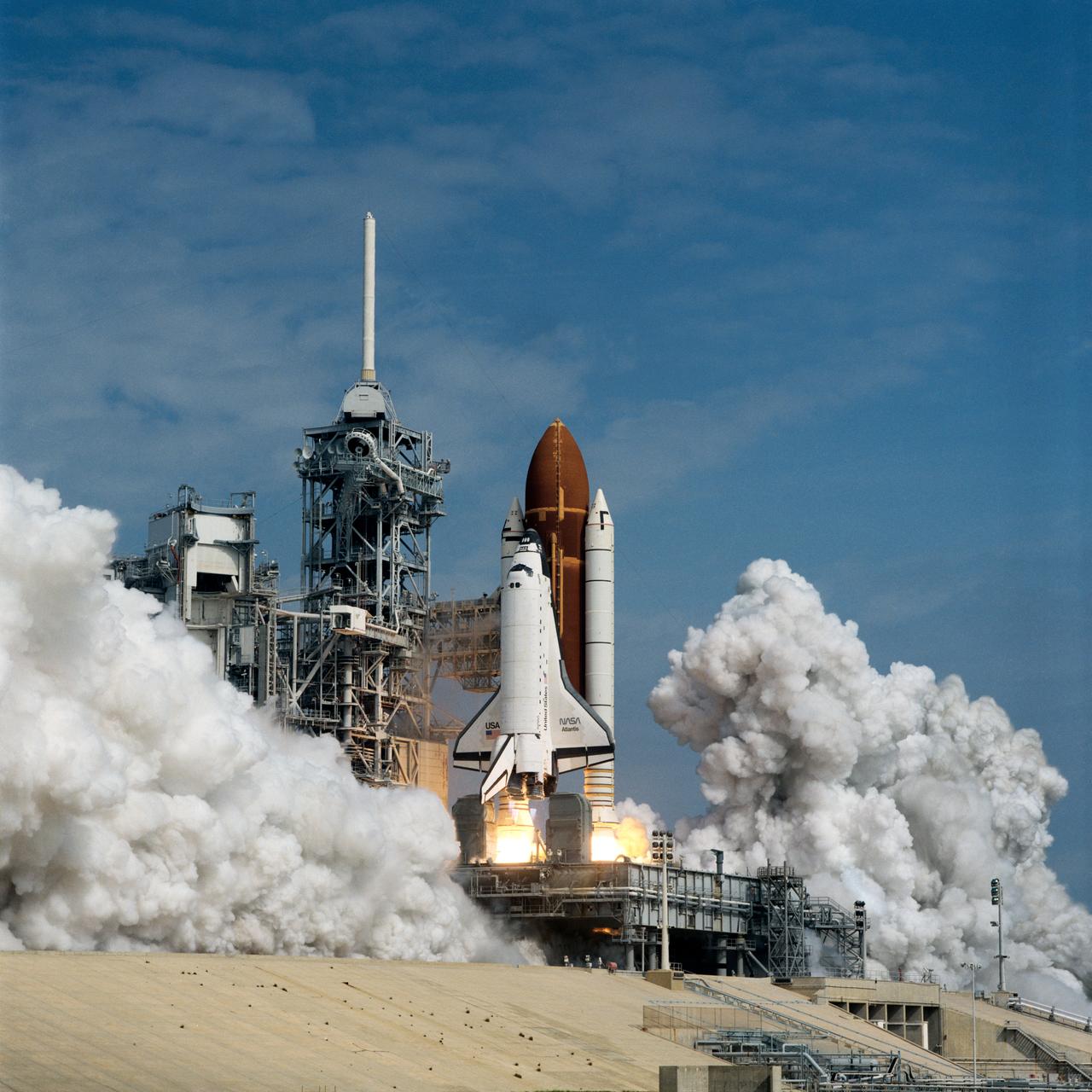
STS-37 Atlantis, Orbiter Vehicle (OV) 104, lifts off from Kennedy Space Center (KSC) Launch Complex (LC) Pad at 9:22:45:0439 (Eastern Standard Time (EST)). OV-104, atop its external tank (ET) and flanked by its two solid rocket boosters (SRBs), is captured just after space shuttle main engine (SSME) firing and as it rises above the mobile launcher platform. The fixed service structure (FSS) and retracted rotating service structure (RSS) appear along side OV-104. Clouds of exhaust smoke begin to fill the launch pad area.
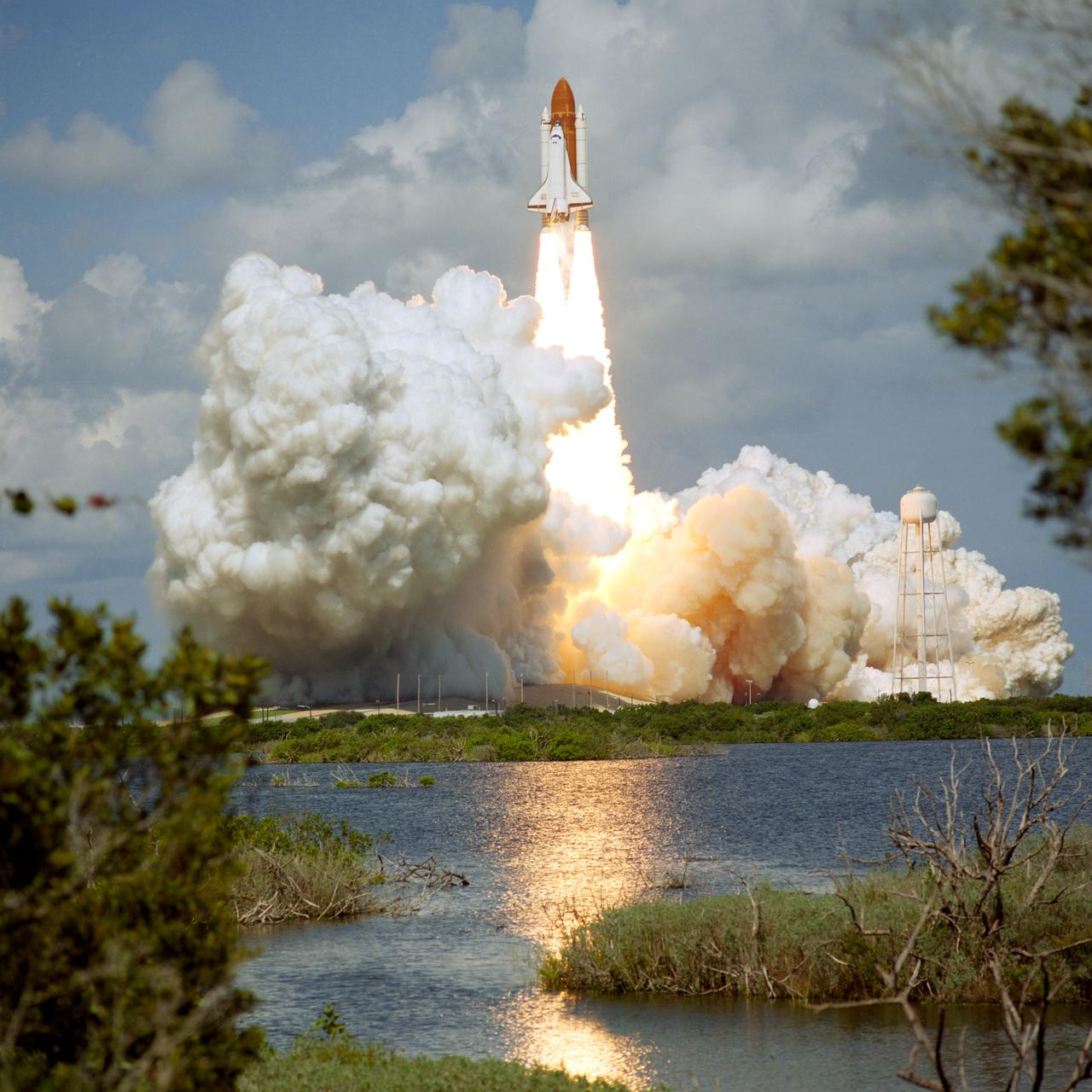
STS034-S-025 (18 Oct 1989) --- The STS-34 Space Shuttle Atlantis lifts off from Launch Pad 39-B at 2:53:39:983 p.m. (EDT), marking the beginning of a five-day mission in space. Atlantis carries a crew of five and the spacecraft Galileo, along with a number of other scientific experiments. The Jupiter-bound probe will be deployed from Atlantis some six hours after launch. The journey to the giant planet is expected to take over six years. Crewmembers for the mission are astronauts Donald E. Williams, Michael J. McCulley, Shannon W. Lucid, Franklin R. Chang-Diaz and Ellen S. Baker. The scene was recorded with a 70mm camera.
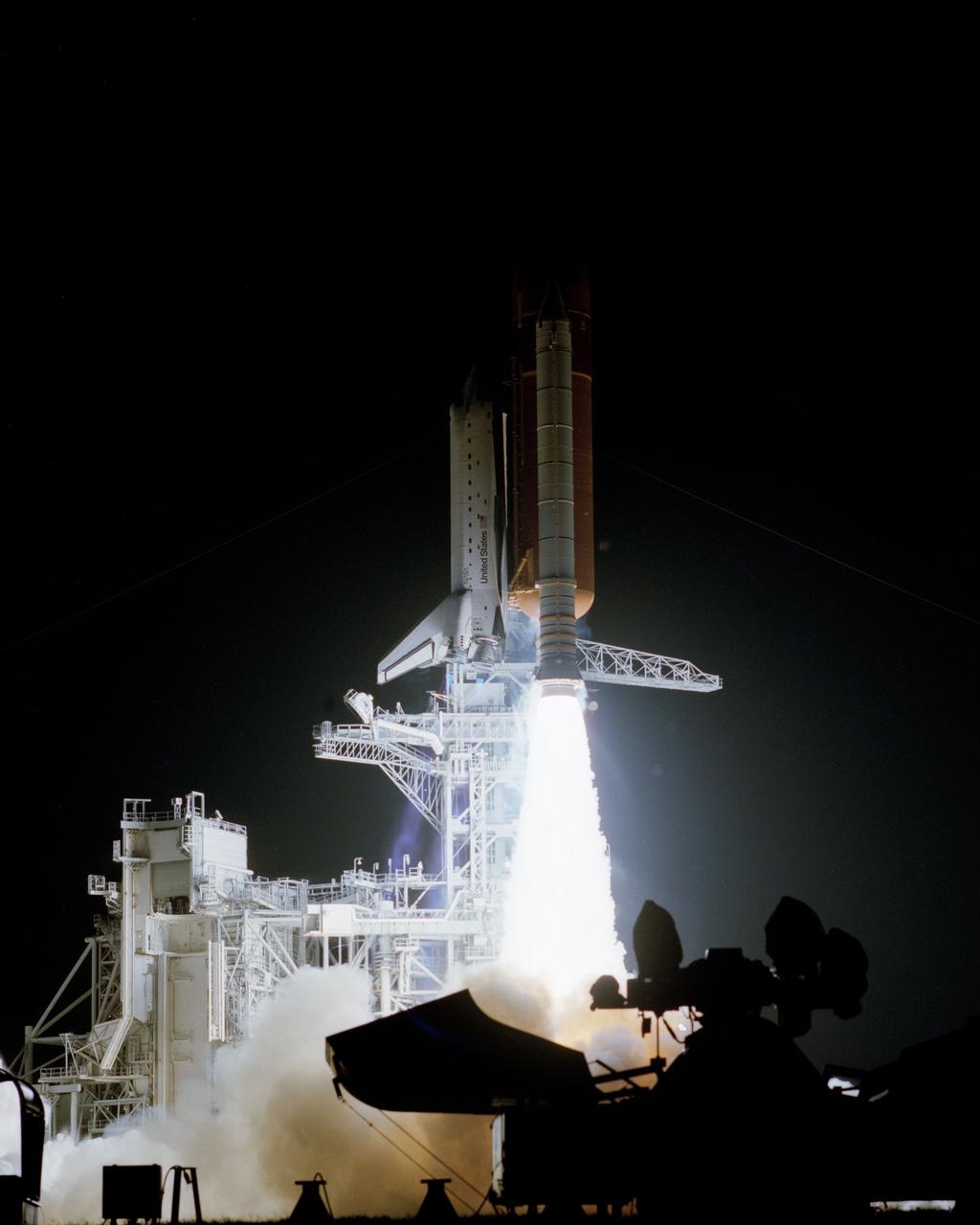
STS-38 Atlantis, Orbiter Vehicle (OV) 104, lifts off from Kennedy Space Center (KSC) Launch Complex (LC) Pad at 6:48:15:0639 pm (Eastern Standard Time (EST)) for Department of Defense (DOD)-devoted mission. OV-104, atop the external tank (ET) and flanked by solid rocket boosters (SRBs), is almost clear of the launch tower which is lit up by the SRB and space shuttle main engine (SSME) firings. Spotlight equipment is silhouetted against the SRB/SSME glow in the foreground. The retracted rotating service structure (RSS) is highlighted against the evening darkness by the launch fireworks.
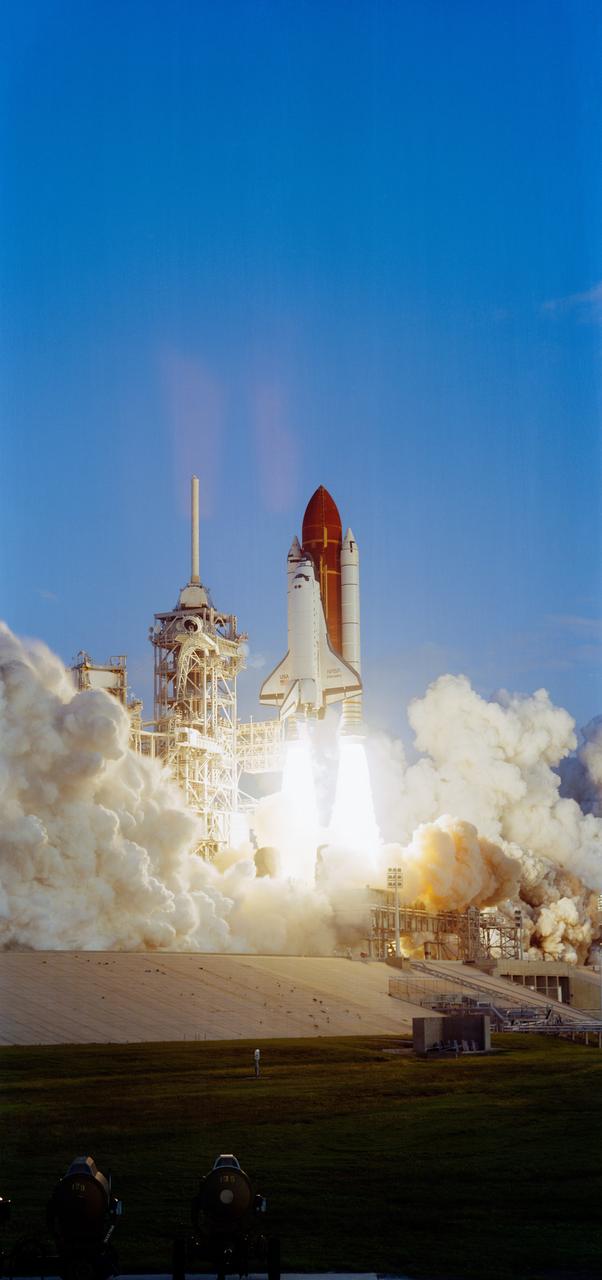
STS-41 Discovery, Orbiter Vehicle (OV) 103, lifts off from the Kennedy Space Center (KSC) Launch Complex (LC) Pad 39 mobile launcher platform at 7:47 am (Eastern Daylight Time (EDT)). OV-103 riding atop the external tank (ET) and flanked by two solid rocket boosters (SRBs), is captured just moments after liftoff. Not yet clear of the fixed service structure (FSS) tower, OV-103 is highlighted against the cloudless morning sky. Exhaust smoke billows from the SRBs and the space shuttle main engines (SSMEs) creating a cloud over the launch pad area.
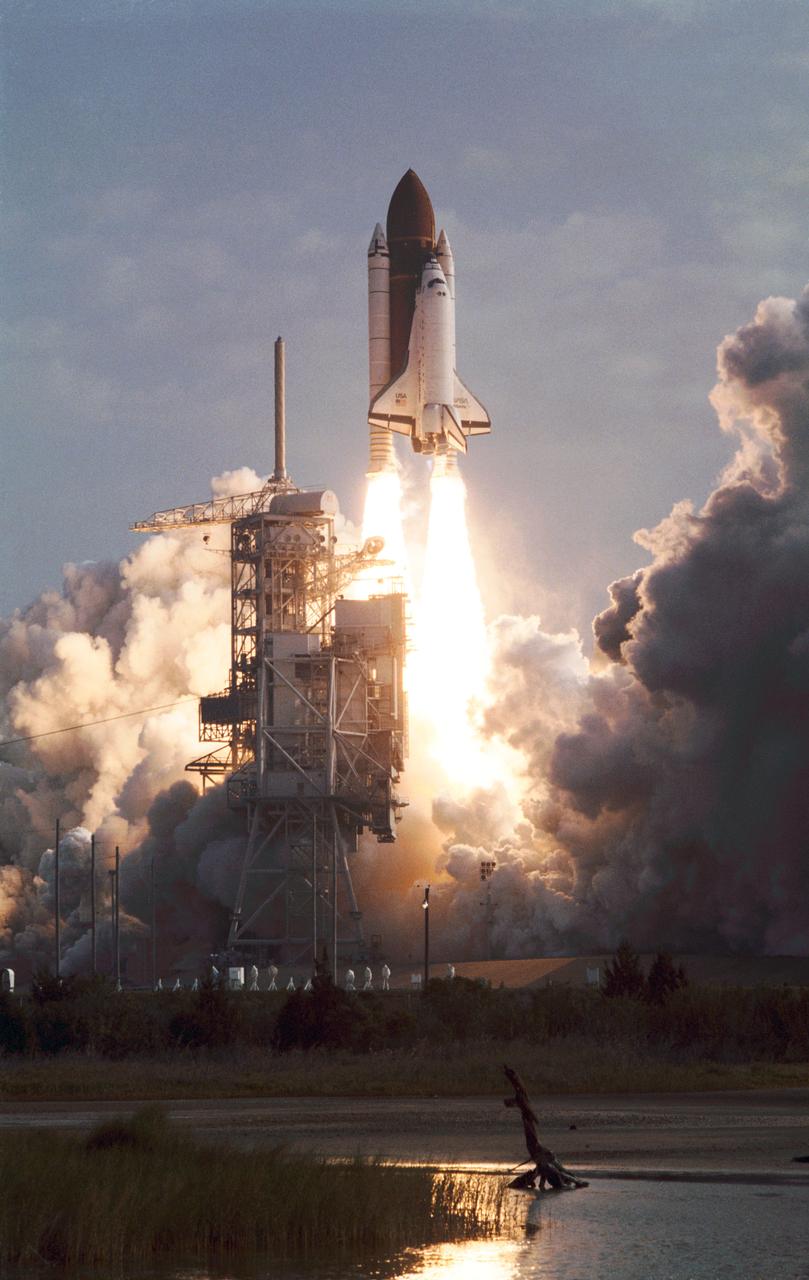
STS-45 Atlantis, Orbiter Vehicle (OV) 104, lifts off from a Kennedy Space Center (KSC) Launch Complex (LC) Pad at 8:13:40:048 am (Eastern Standard Time (EST)). Exhaust billows out the solid rocket boosters (SRBs) as OV-104 atop its external tank (ET) soars above the mobile launcher platform and is nearly clear of the fixed service structure (FSS) tower. The diamond shock effect produced by the space shuttle main engines (SSMEs) is visible. The glow of the SRB/SSME firings is reflected in a nearby waterway. An exhaust cloud covers the launch pad area.
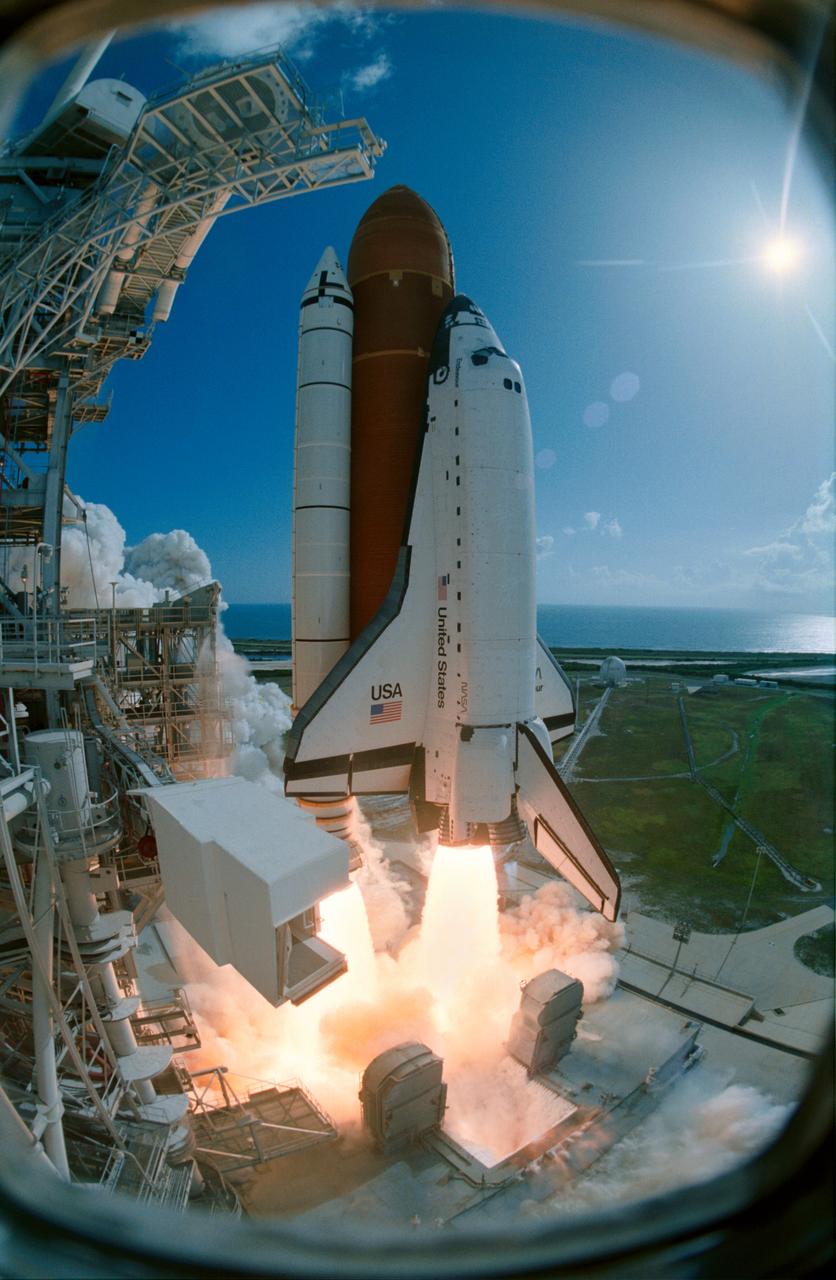
STS057-S-053 (21 June 1993) --- The Space Shuttle Endeavour lifts off Launch Pad 39B as captured on film by an audio-activated camera positioned at the 270-feet level on the Rotating Service Structure (RSS) at Launch Pad 39B. STS-57 launch occurred at 9:07:22 a.m. (EDT), June 21, 1993. The mission represents the first flight of the commercially developed SpaceHab laboratory module and also will feature a retrieval of the European Retrievable Carrier (EURECA). Onboard for Endeavour's fourth flight are a crew of six NASA astronauts; Ronald J. Grabe, mission commander; Brian Duffy, pilot; G. David Low, payload commander; and Nancy J. Sherlock, Peter J. K. (Jeff) Wisoff and Janice E. Voss, all mission specialists. An earlier launch attempt was scrubbed due to unacceptable weather conditions both at the Kennedy Space Center (KSC) and the overseas contingency landing sites.
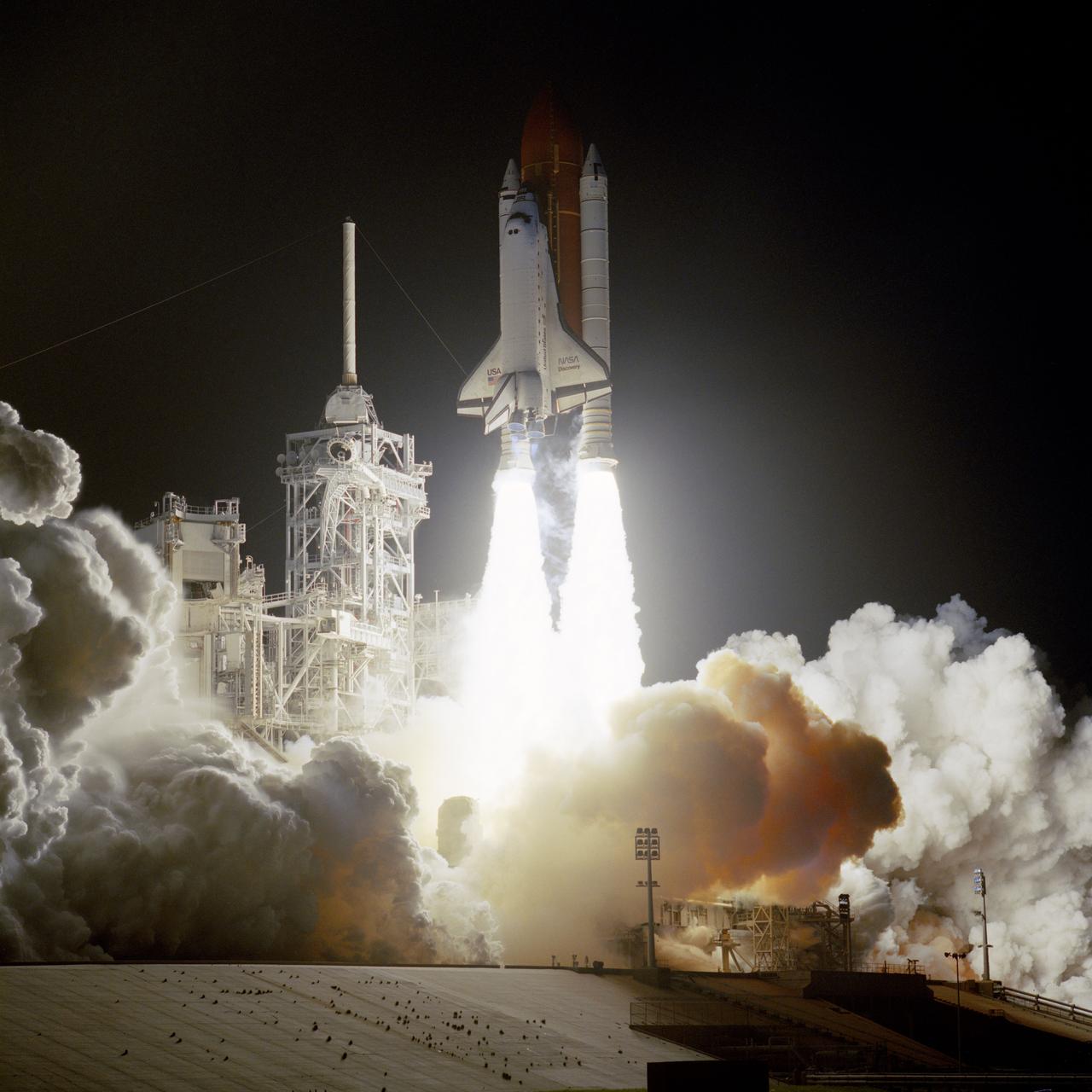
STS-56 Discovery, Orbiter Vehicle (OV) 103, riding atop its external tank (ET) and flanked by two solid rocket boosters (SRBs), lifts off from Kennedy Space Center (KSC) Launch Complex (LC) Pad 39B into the early morning darkness at 1:29 am (Eastern Daylight Time (EDT)). In this nocturnal scene, OV-102's nose section is obscured in the shadowy darkness as it clears the fixed service structure (FSS) tower. Exhaust plumes trail from the SRB skirts and cover the launch pad area in a billowy cloud. The SRB / Space Shuttle Main Engine (SSME) firings illuminate the FSS and the retracted rotating service structure (RSS). Debris is visible on the base of the launch pad.
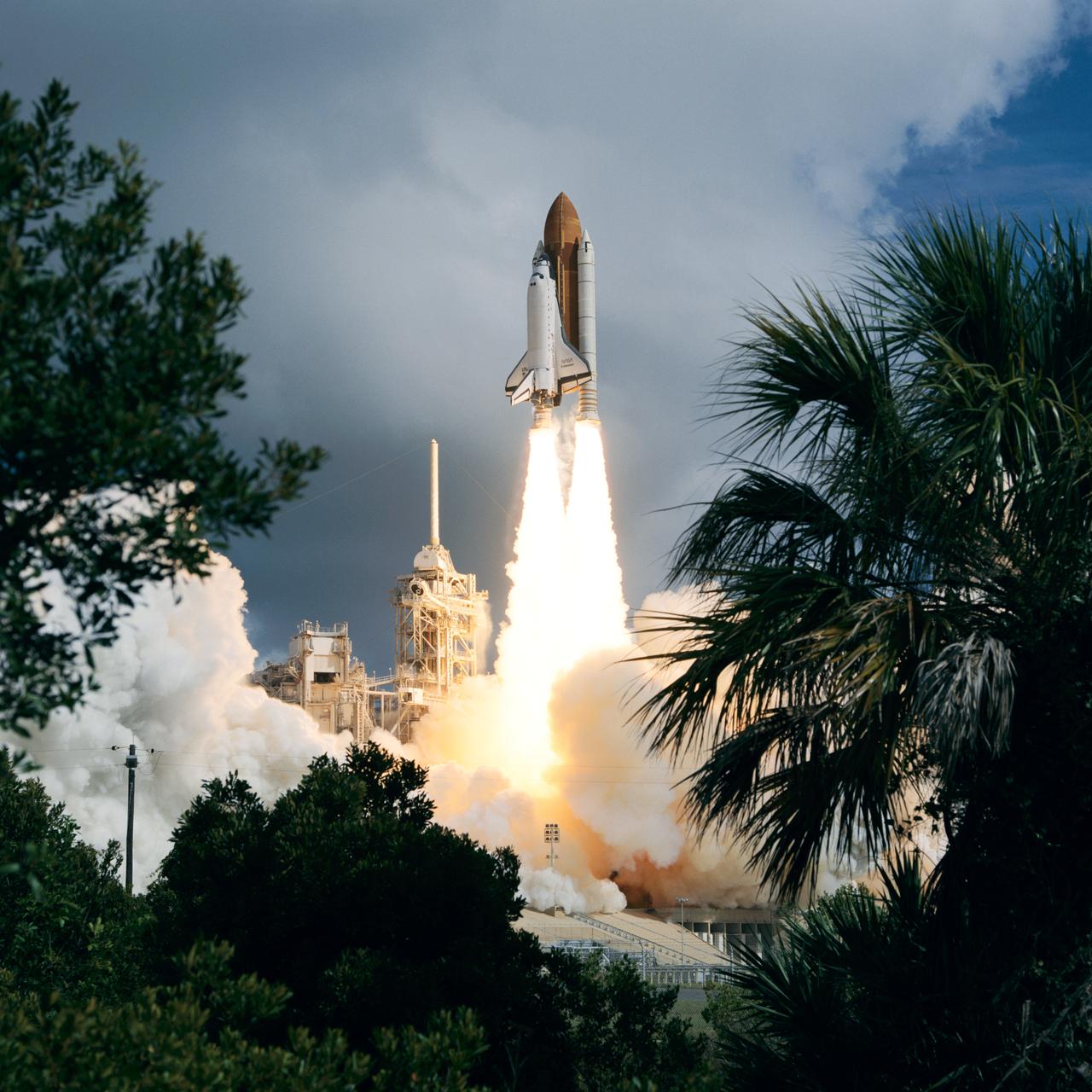
STS057-S-055 (21 June 1993) --- Framed by a variety of flora types, the Space Shuttle Endeavour lifts off Launch Pad 39B to begin the STS-57 mission. Launch occurred at 9:07:22 a.m. (EDT), June 21, 1993. The mission represents the first flight of the commercially developed SPACEHAB laboratory module and also will feature a retrieval of the European Retrievable Carrier (EURECA). Onboard for Endeavour's fourth flight are a crew of six - Ronald J. Grabe, mission commander; Brian Duffy, pilot; G. David Low, payload commander; and Nancy J. Sherlock, Peter J.K. (Jeff) Wisoff and Janice E. Voss, all mission specialists. An earlier launch attempt was scrubbed due to unacceptable weather conditions both at KSC and the overseas contingency landing sites.
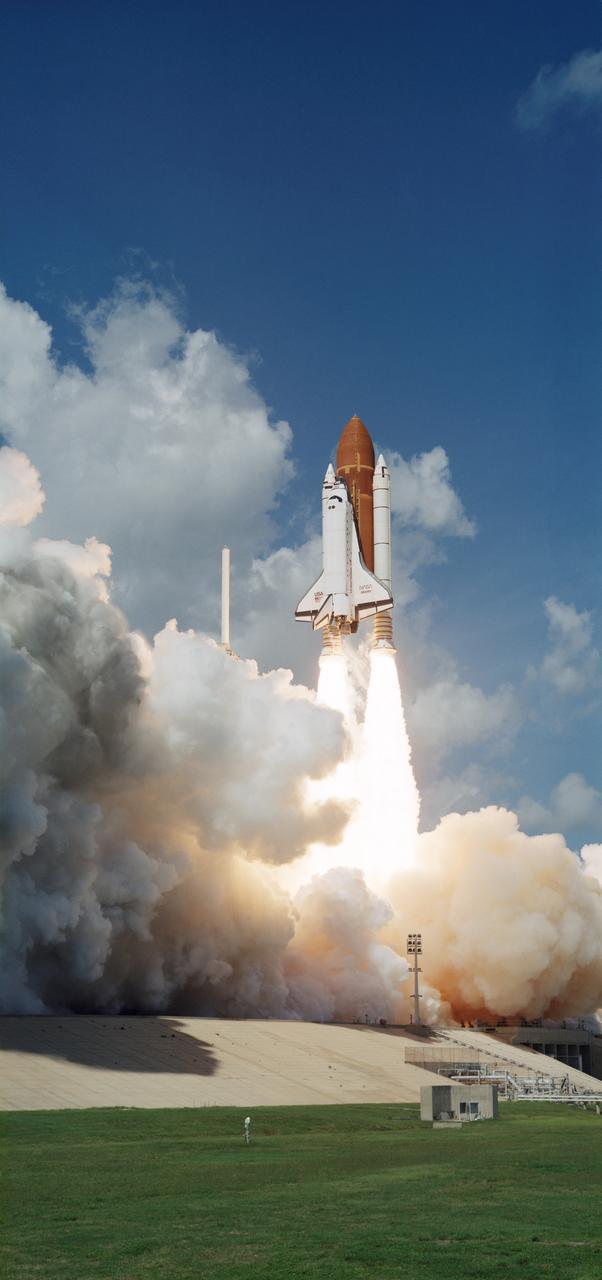
STS034-S-023 (18 Oct. 1989) --- The STS-34 Space Shuttle Atlantis lifts off from Kennedy Space Center’s launch pad 39-B at l2:53:39 p.m. (EDT) on Oct. 18, 1989, marking the beginning of a five-day mission in space. Atlantis carries a crew of five and the spacecraft Galileo. The Jupiter-bound probe will be deployed from Atlantis some six hours after launch. The journey to the giant planet is expected to take over six years. Crewmembers for the mission are astronauts Donald E. Williams, Michael J. McCulley, Shannon W. Lucid, Franklin R. Chang-Diaz and Ellen S. Baker. The scene was recorded with a 70mm camera.
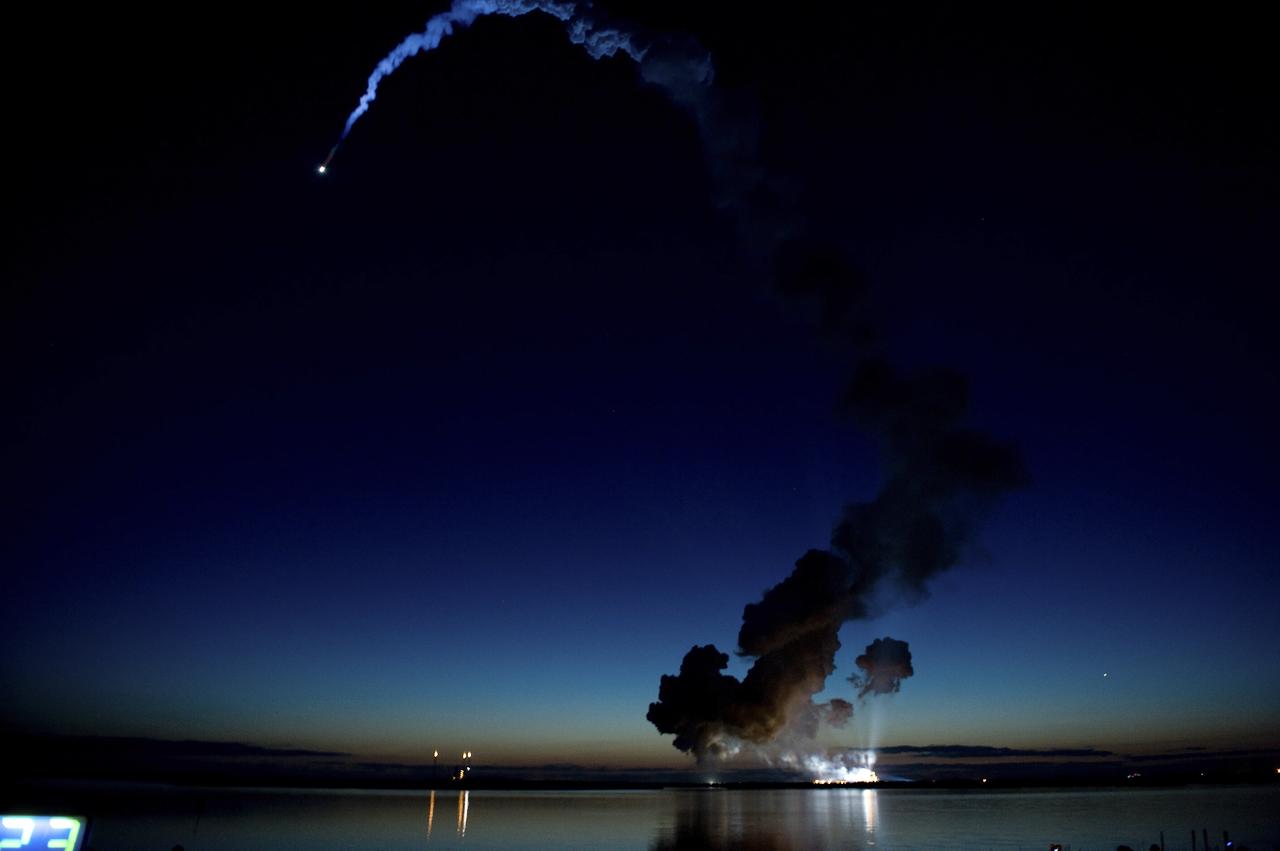
STS-131 LIFTS OFF INTO THE EARLY MORNING SKY AT KENNEDY SPACE CENTER
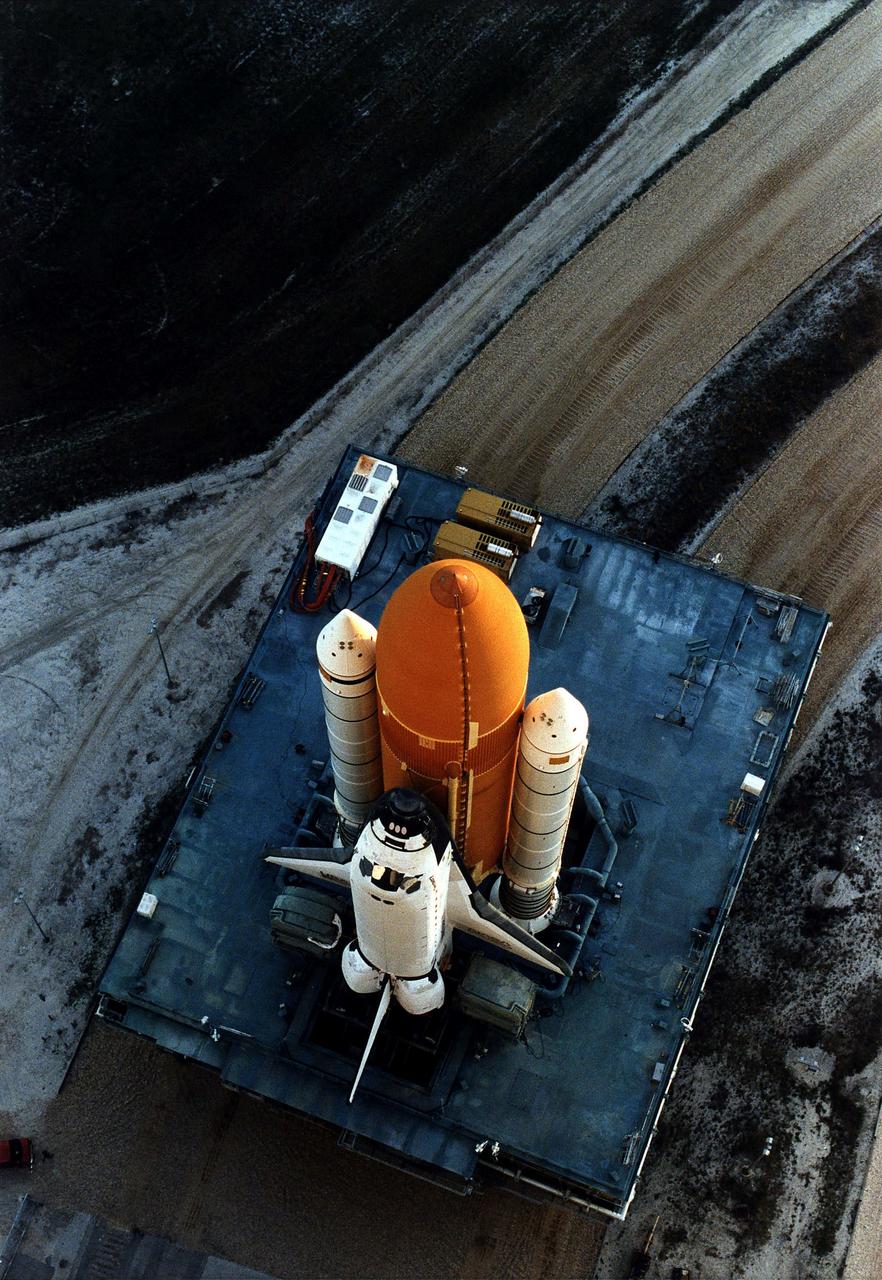
KENNEDY SPACE CENTER, FLA. - The Space Shuttle Discovery on its Mobile Launcher Platform slowly moves through the high bay doors of the Vehicle Assembly Building en route to Launch Pad 39A, where Discovery is scheduled to lift off on the STS-82 mission on Feb. 11. A seven-member crew will perform the second servicing of the orbiting Hubble Space Telescope (HST) during the 10-day STS-82 mission.
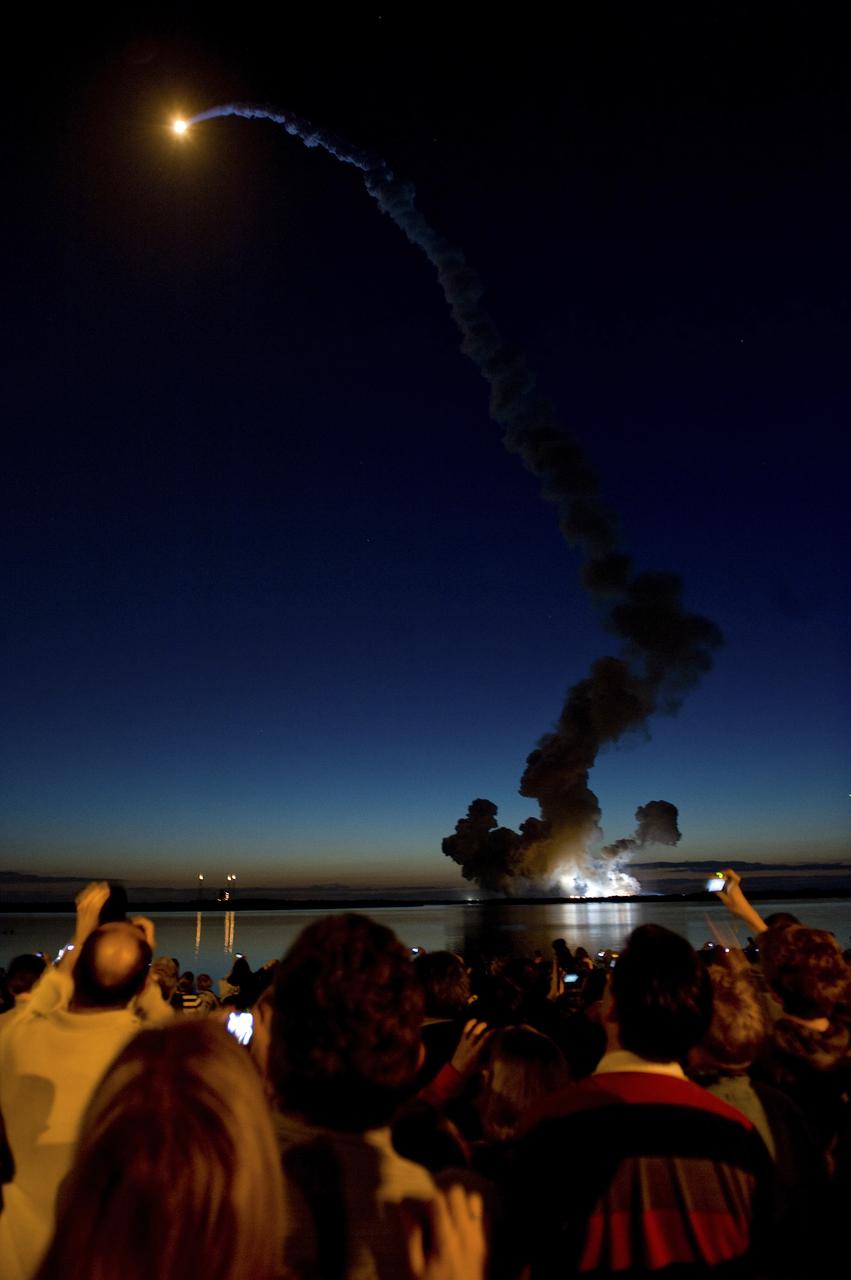
STS-131 LIFTS OFF INTO THE EARLY MORNING SKY AS SPECTATORS AT THE BANANA CREEK VIEWING AREA OBSERVE
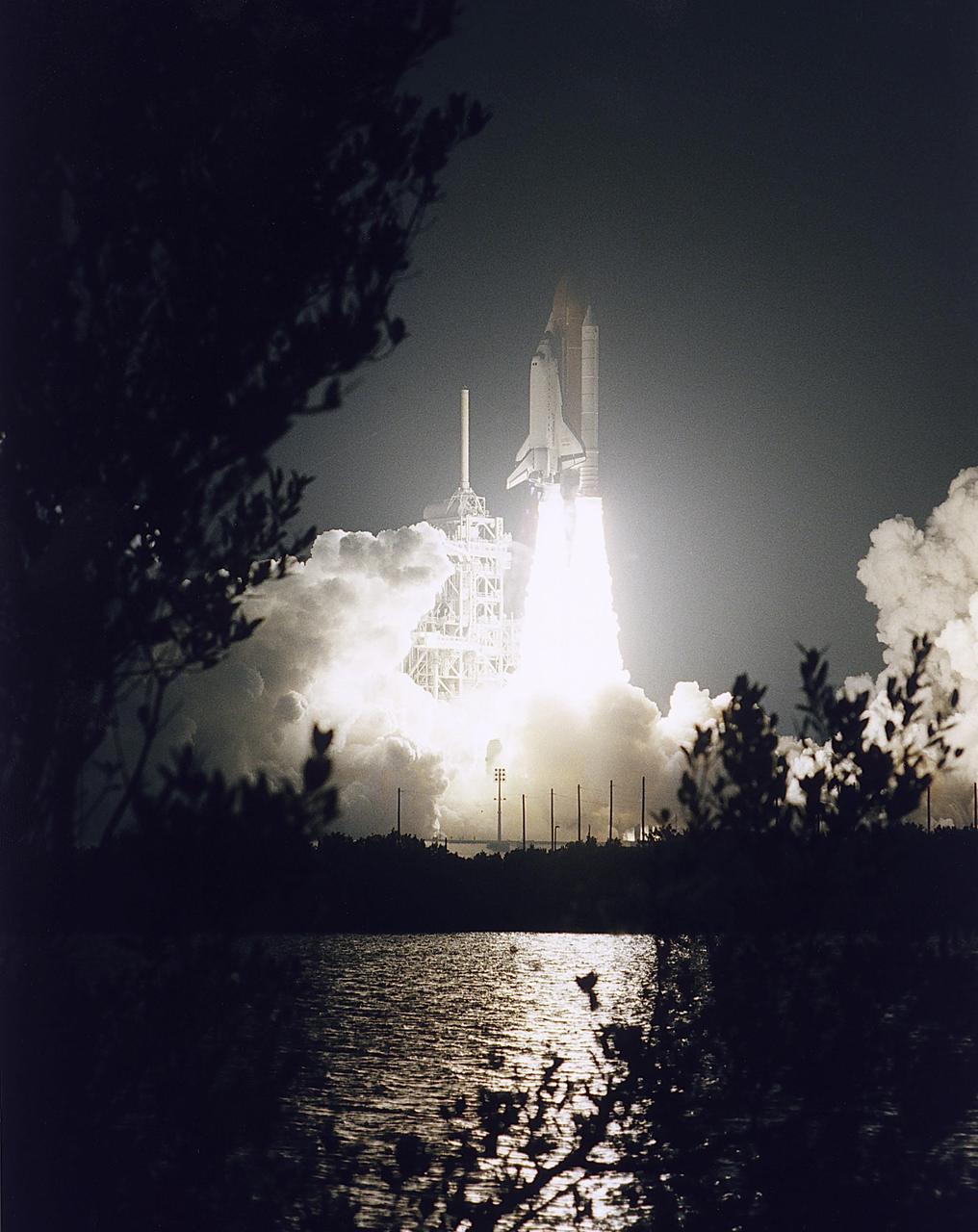
KENNEDY SPACE CENTER, FLA. -- STS-79: Atlantis lifts off from Launch Pad 39A.
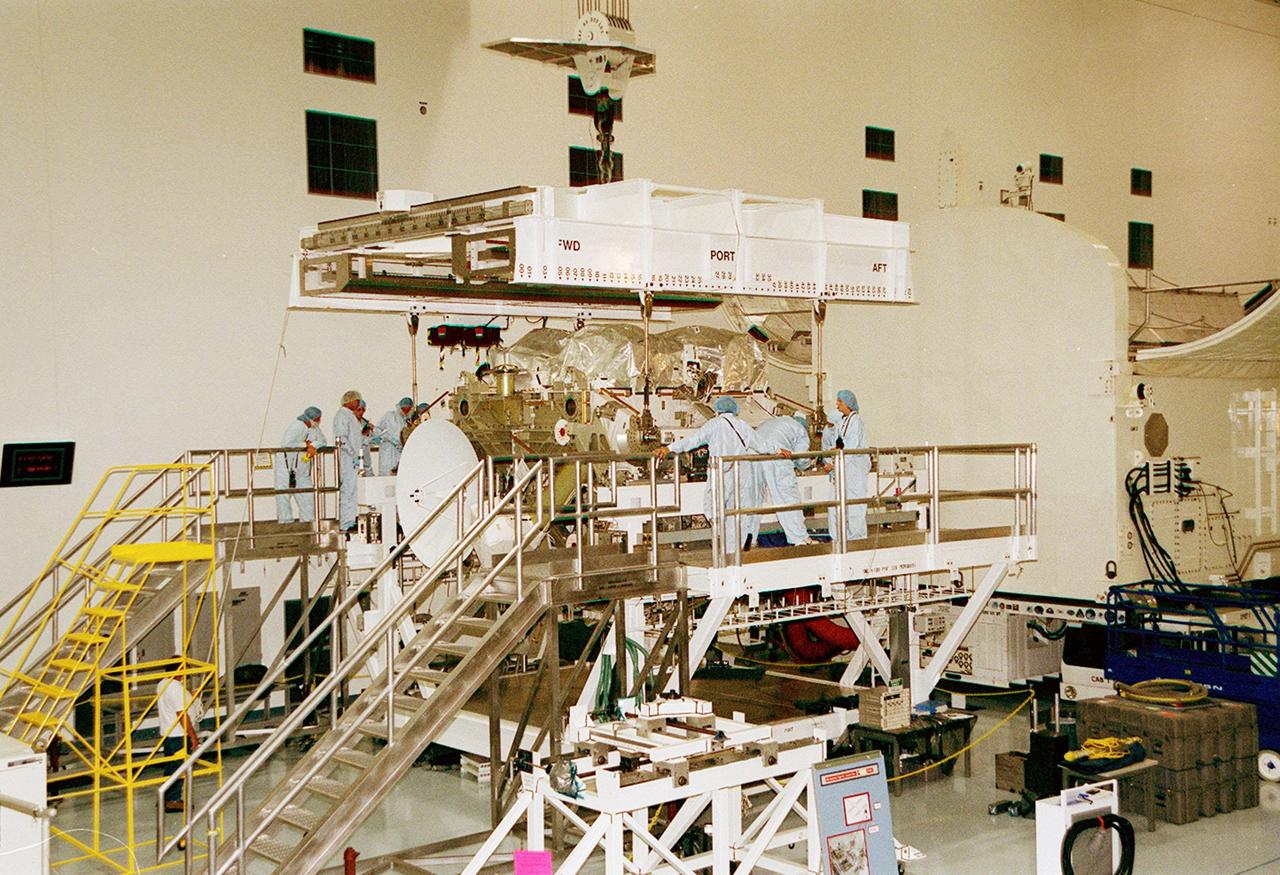
In the Space Station Processing Facility, an overhead crane is placed into position to lift the Integrated Truss Structure Z1, part of the backbone of the International Space Station. The truss, which is being moved to a payload canister for transport to Launch Pad 39A, is part of the payload on mission STS-92 scheduled to lift off Oct. 5, 2000
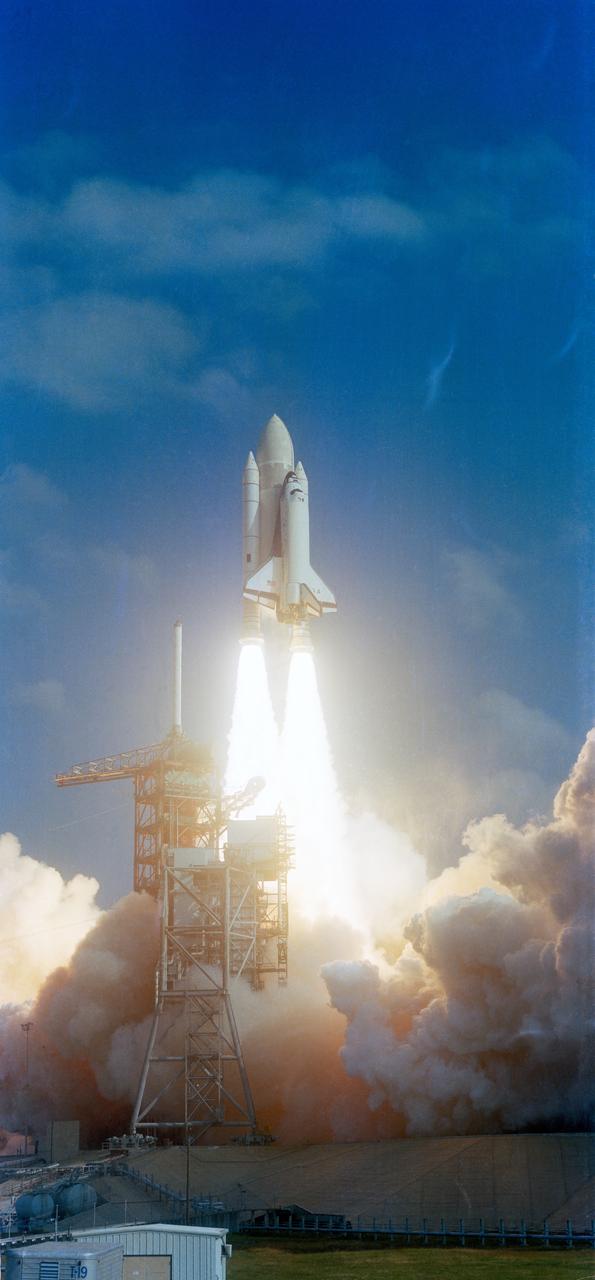
The 122 foot tall Space Shuttle Orbiter Columbia mated to its external fuel container (ET) and two solid rocket boosters (SRB) lifts off from Launch Pad 39A for the begining of STS-2.
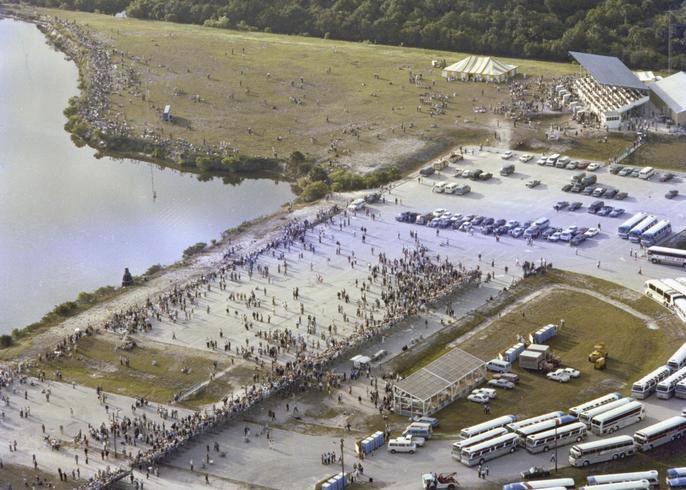
Aerial view of Press Site on April 10, 1981, as media and others wait for the launch of STS-1, which was eventually scrubbed. (Lift-off occurred two days later, April 12, 1981.)
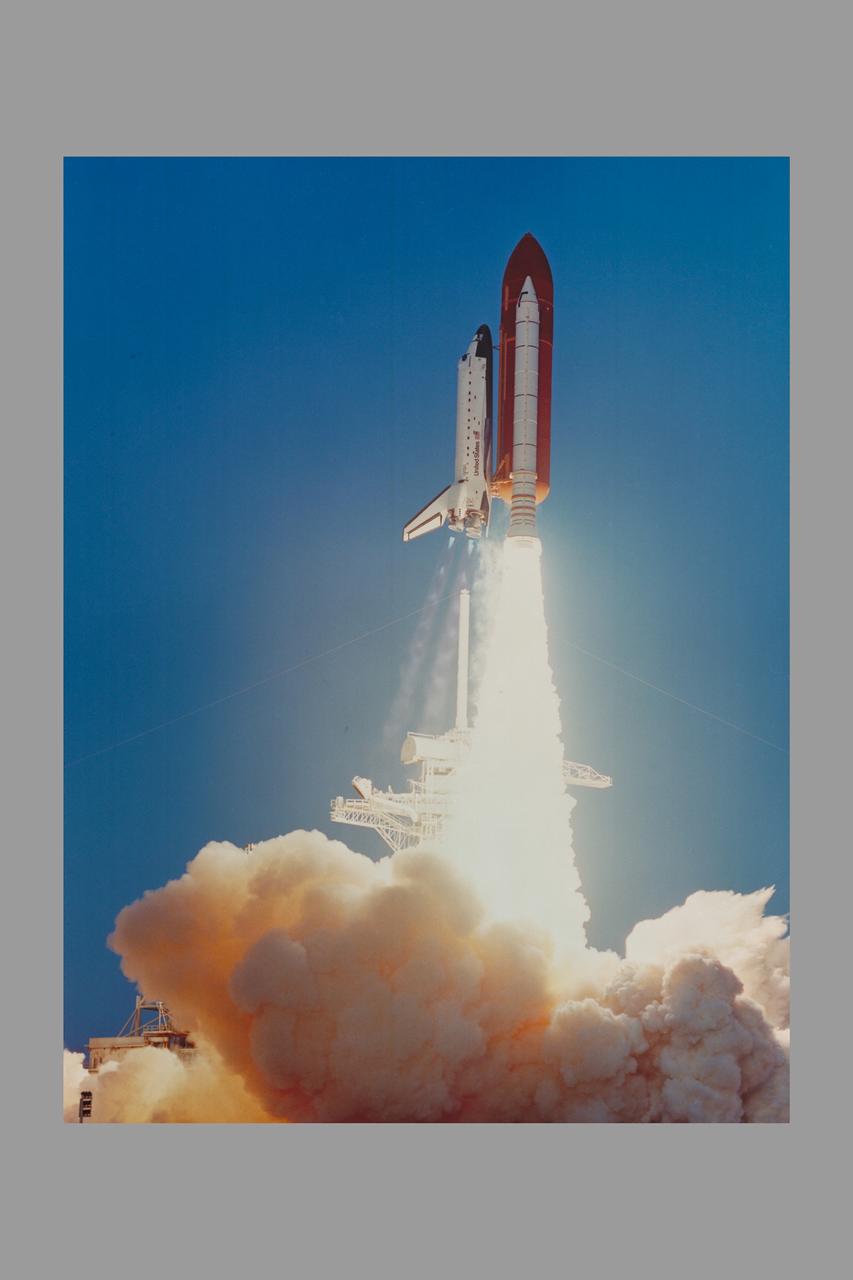
STS-41 Discovery lifts off from Launch Complex 39 at the Kennedy Space Center to begin a four-day mission in space for its five-man crew. Onboard the spacecraft were Astronauts Richard N. Richards, Robert D Cabana, William M Sheperd, Bruce E. Melnick and Thomas D. Akers. Lift off was at 7:47 a.m. EDT on oct 6, 1990. A feww hours after this photo was made, the crewmembers released the Ulysses spacecraft onits way to a long-awaited mission.
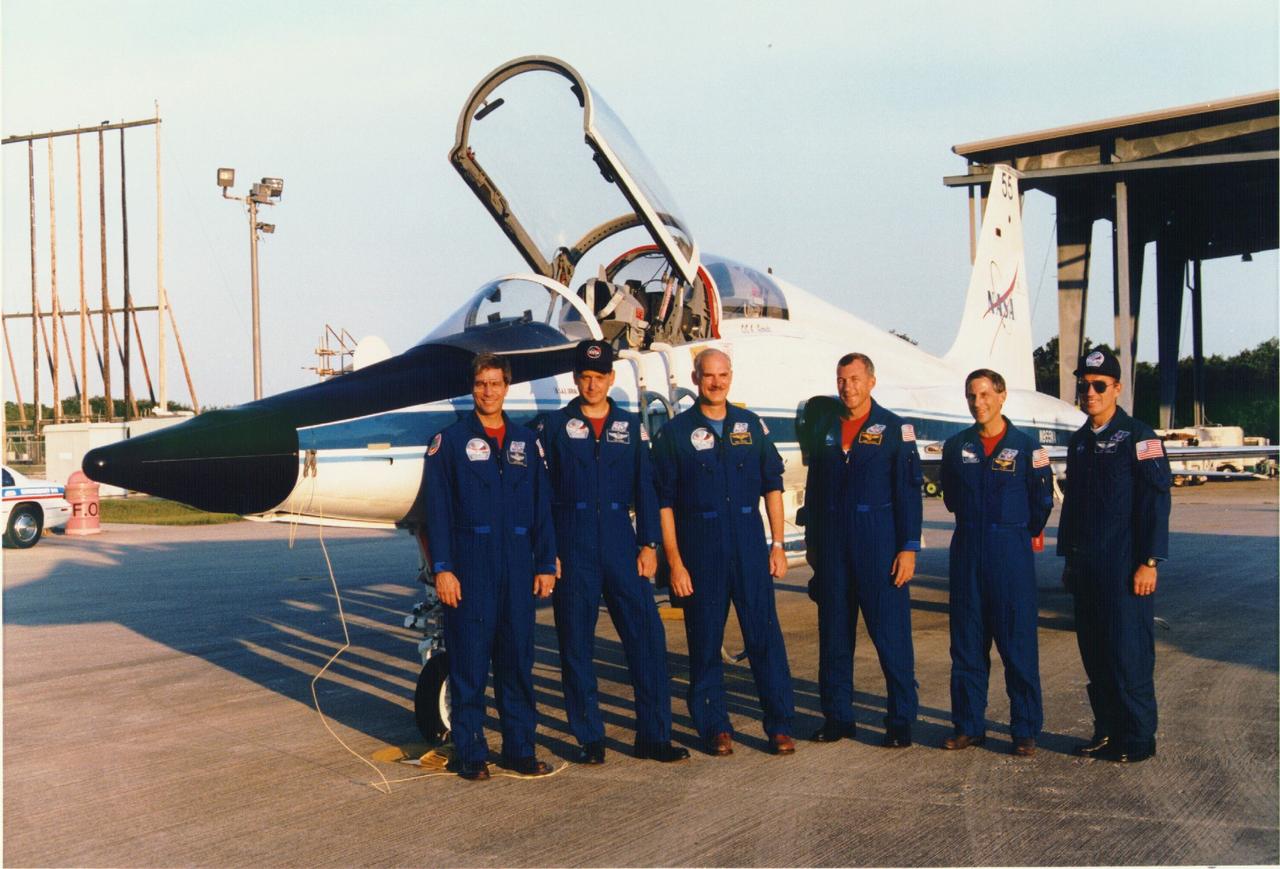
KENNEDY SPACE CENTER, FLA. - The STS-79 astronauts arrive at KSC's Shuttle Landing Facility in their T-38 aircraft from Johnson Space Center in Houston. From left are Mission Specialists John E. Blaha and Tom Akers; Commander William F. Readdy; PIlot Terrence W. Wilcutt; and Mission Specialists Jay Apt and Carl E. Walz. The astronauts are at KSC for the Terminal Countdown Demonstration Test, a dress rehearsal for launch. They are scheduled to lift off around Sept. 12 on Mission STS-79, the fourth docking between the U.S. Shuttle and Russian Space Station Mir.

CAPE CANAVERAL, Fla. -- In the transfer aisle of the Vehicle Assembly Building at NASA's Kennedy Space Center in Florida, external fuel tank 130 is fitted with a crane to lift it off the transporter. The tank will be raised to vertical and lifted into high bay 2 for checkout before stacking with the solid rocket boosters and space shuttle Endeavour for the STS-125 mission. The fuel tank was previously designated for the STS-127 mission. The STS-125 Hubble servicing mission is targeted to launch May 12. Photo credit: NASA/Tim Jacobs
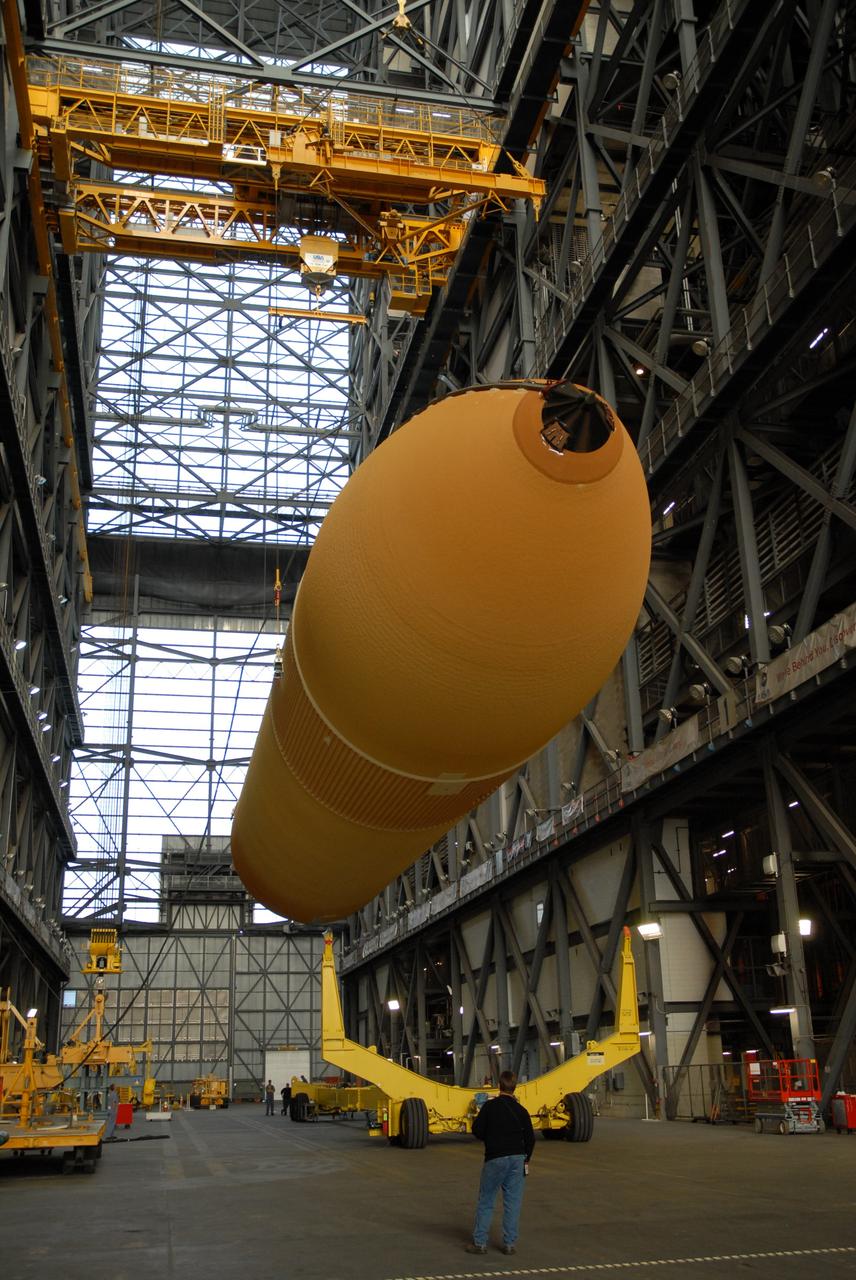
CAPE CANAVERAL, Fla. -- In the transfer aisle of the Vehicle Assembly Building at NASA's Kennedy Space Center in Florida, external fuel tank 130 is lifted off its transporter. The tank will be raised to vertical and lifted into high bay 2 for checkout before stacking with the solid rocket boosters and space shuttle Atlantis for the STS-125 mission. The fuel tank was previously designated for the STS-127 mission. The STS-125 Hubble servicing mission is targeted to launch May 12. Photo credit: NASA/Tim Jacobs
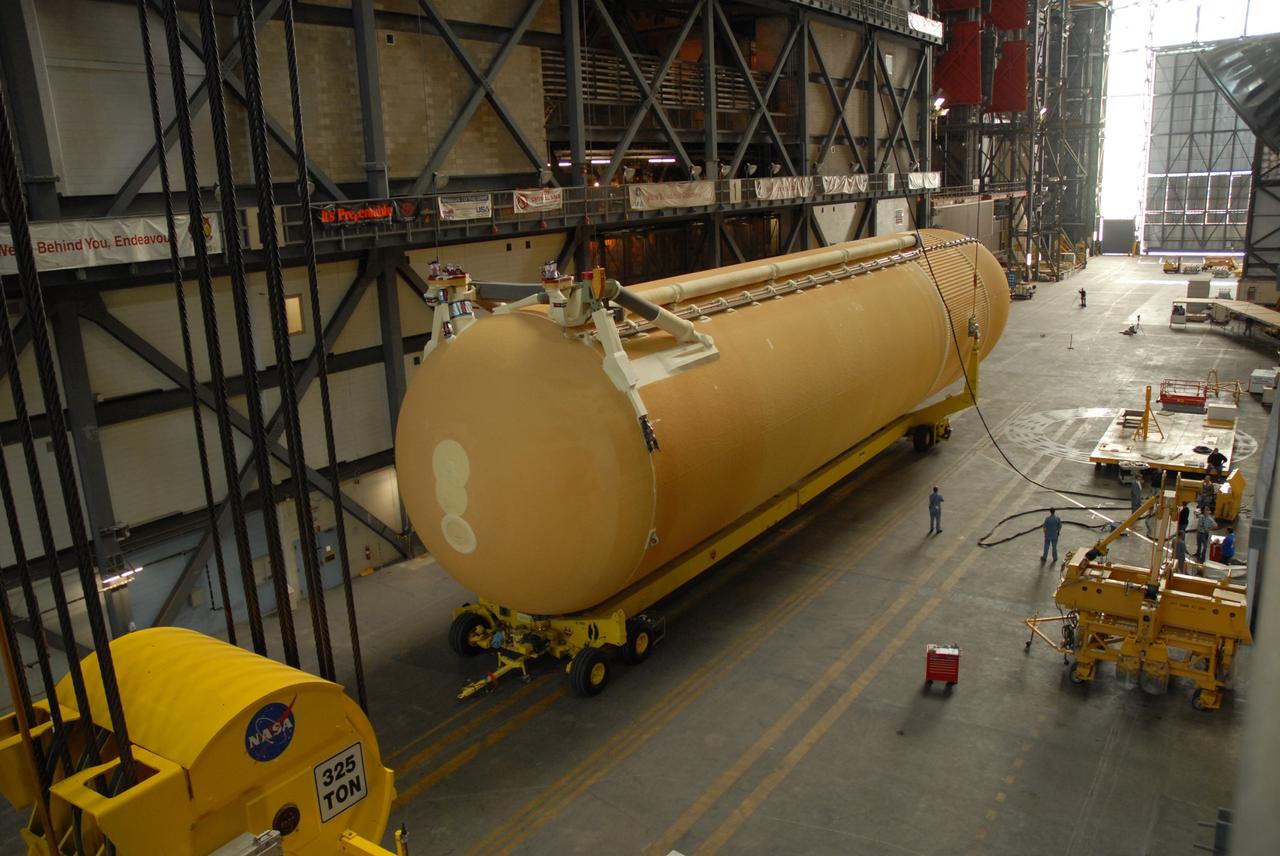
CAPE CANAVERAL, Fla. -- In the transfer aisle of the Vehicle Assembly Building at NASA's Kennedy Space Center in Florida, external fuel tank 130 is fitted with a crane to lift it off the transporter. The tank will be raised to vertical and lifted into high bay 2 for checkout before stacking with the solid rocket boosters and space shuttle Endeavour for the STS-125 mission. The fuel tank was previously designated for the STS-127 mission. The STS-125 Hubble servicing mission is targeted to launch May 12. Photo credit: NASA/Tim Jacobs
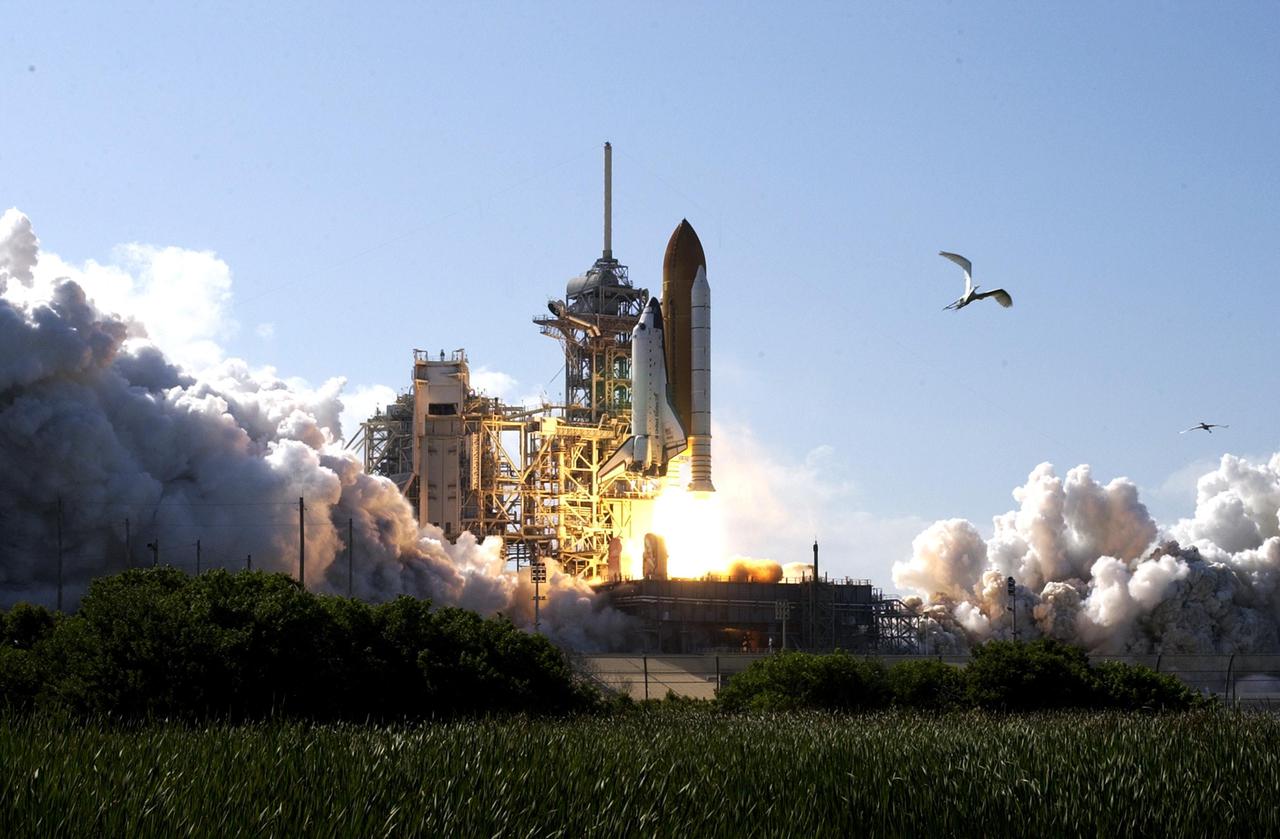
KENNEDY SPACE CENTER, FLA. -- Space Shuttle Atlantis hurtles into the clear blue sky as it lifts off on mission STS-110. Liftoff occurred at 4:44:19 p.m. EDT (20:44:19 GMT). STS-110 is the 13th assembly flight to the International Space Station
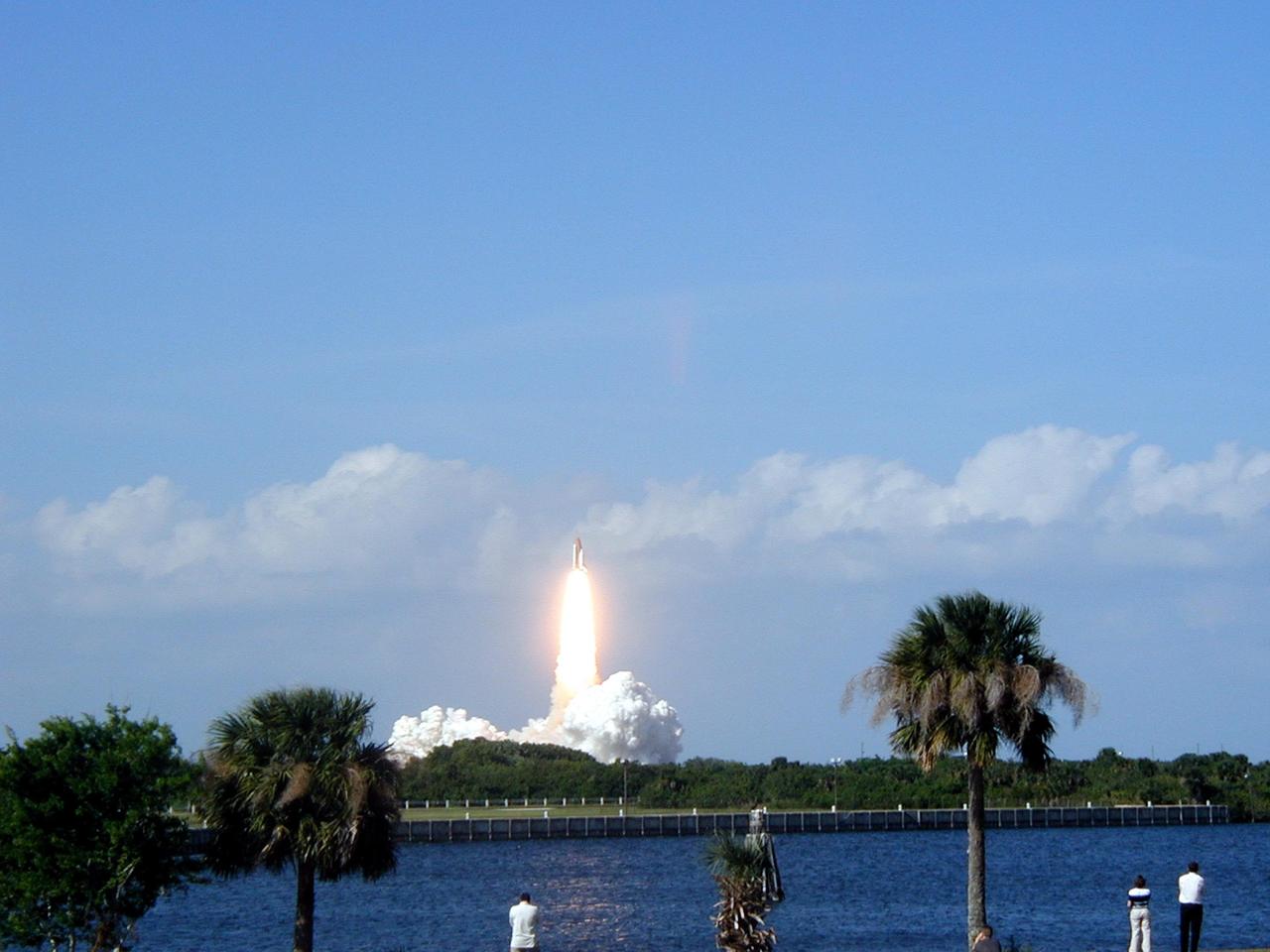
KENNEDY SPACE CENTER, FLA. -- Space Shuttle Atlantis hurtles into the clear blue sky as it lifts off on mission STS-110. Liftoff occurred at 4:44:19 p.m. EDT (20:44:19 GMT). STS-110 is the 13th assembly flight to the International Space Station
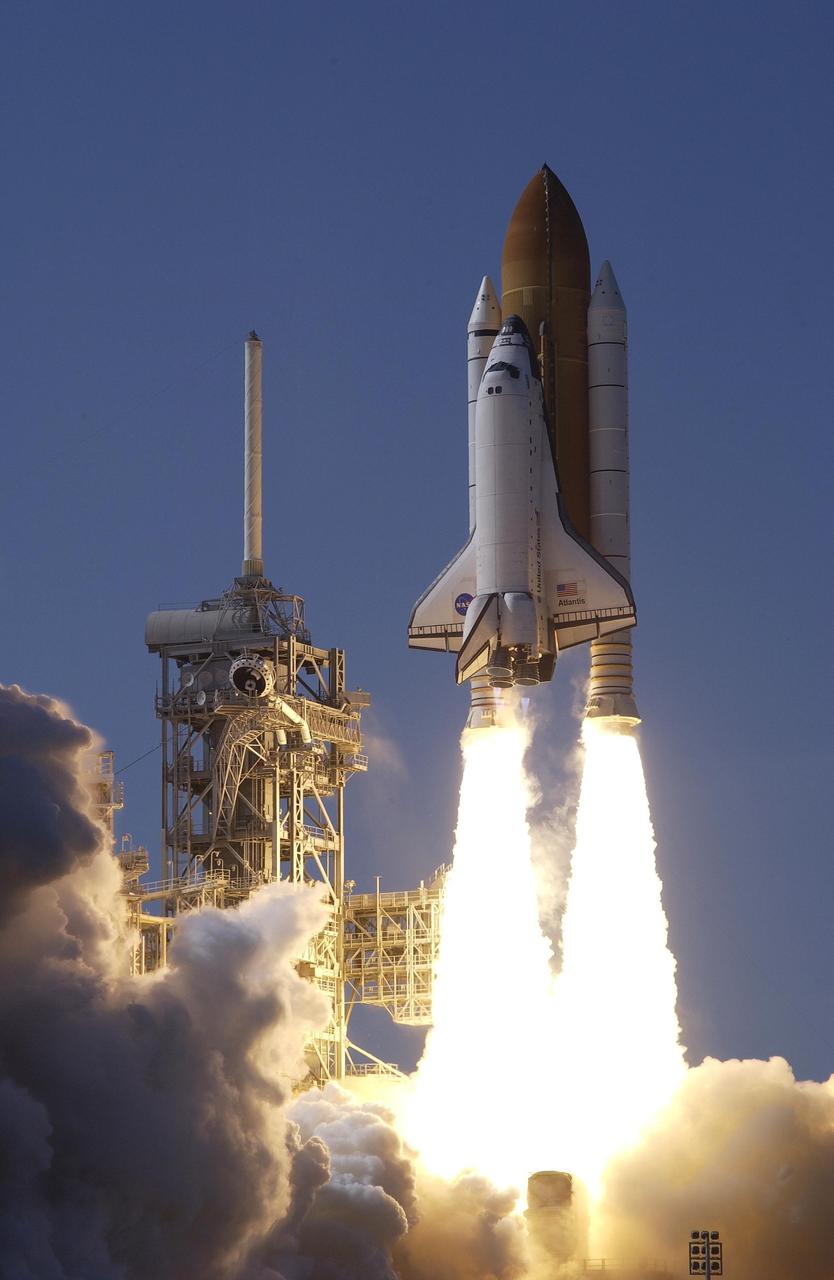
KENNEDY SPACE CENTER, FLA. -- Space Shuttle Atlantis hurtles into the clear blue sky as it lifts off on mission STS-110. Liftoff occurred at 4:44:19 p.m. EDT (20:44:19 GMT). STS-110 is the 13th assembly flight to the International Space Station
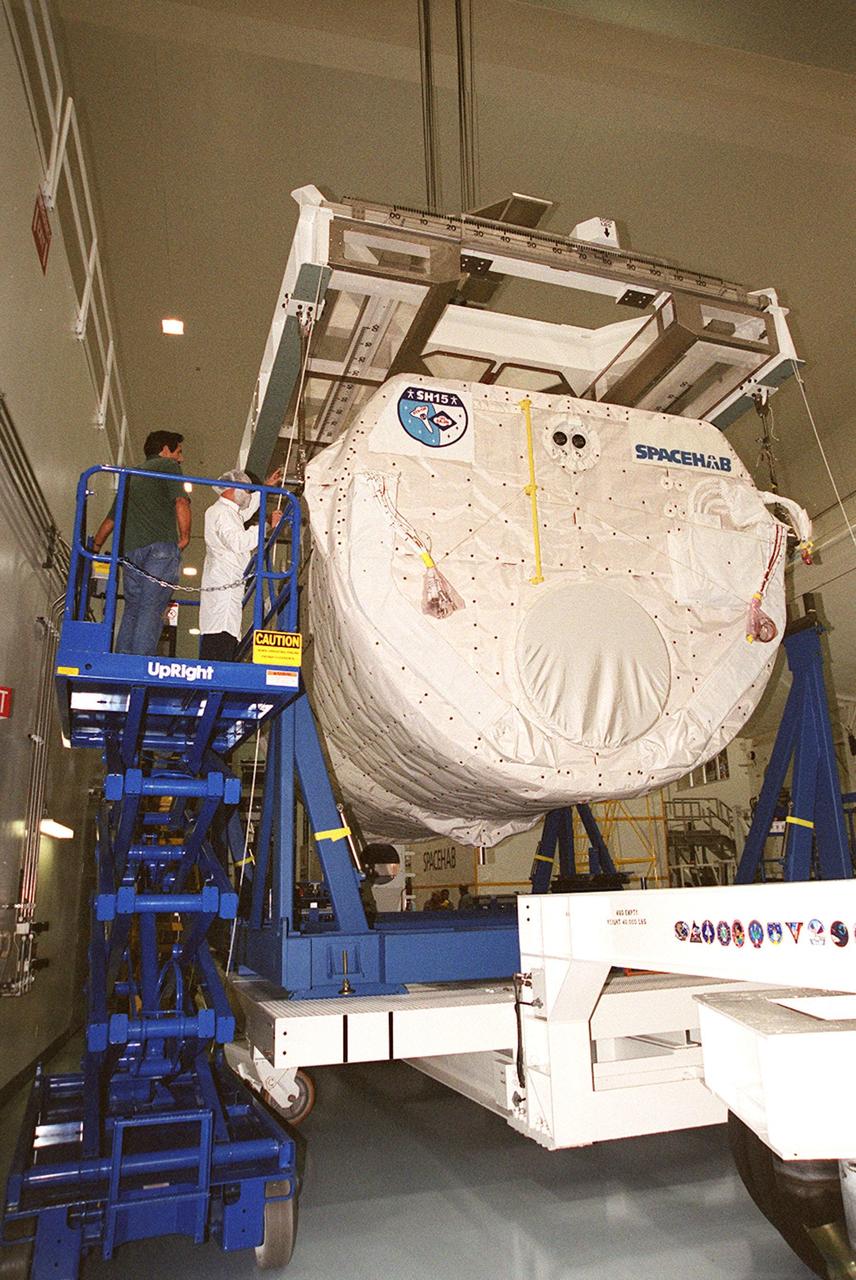
KENNEDY SPACE CENTER, FLA. -- Workers attach an overhead crane to the SPACEHAB module to lift it off the transport vehicle beneath it. The module, part of the payload on mission STS-106, will be placed in the payload canister for transport to the launch pad. STS-106 is scheduled to launch Sept. 8 at 8:31 a.m. EDT
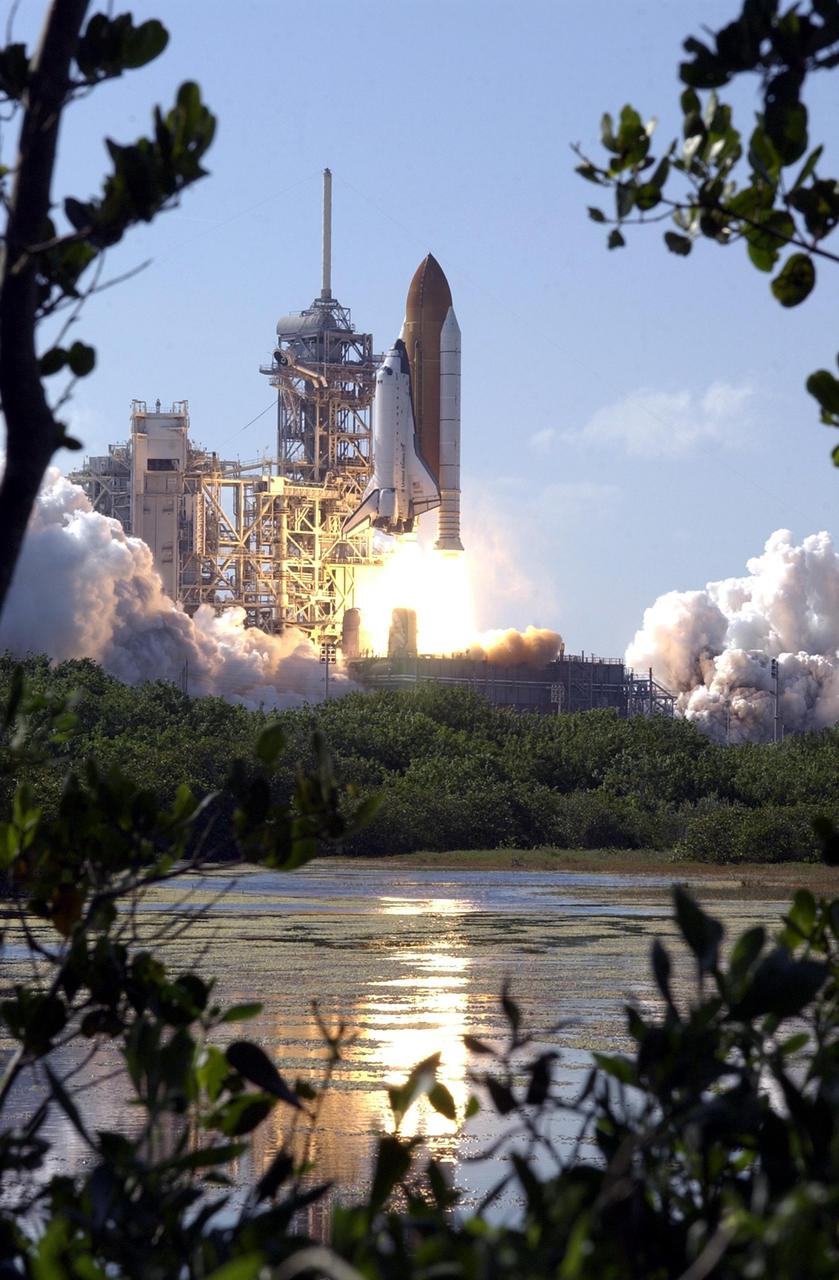
KENNEDY SPACE CENTER, FLA. -- Space Shuttle Atlantis hurtles into the clear blue sky as it lifts off on mission STS-110. Liftoff occurred at 4:44:19 p.m. EDT (20:44:19 GMT). STS-110 is the 13th assembly flight to the International Space Station
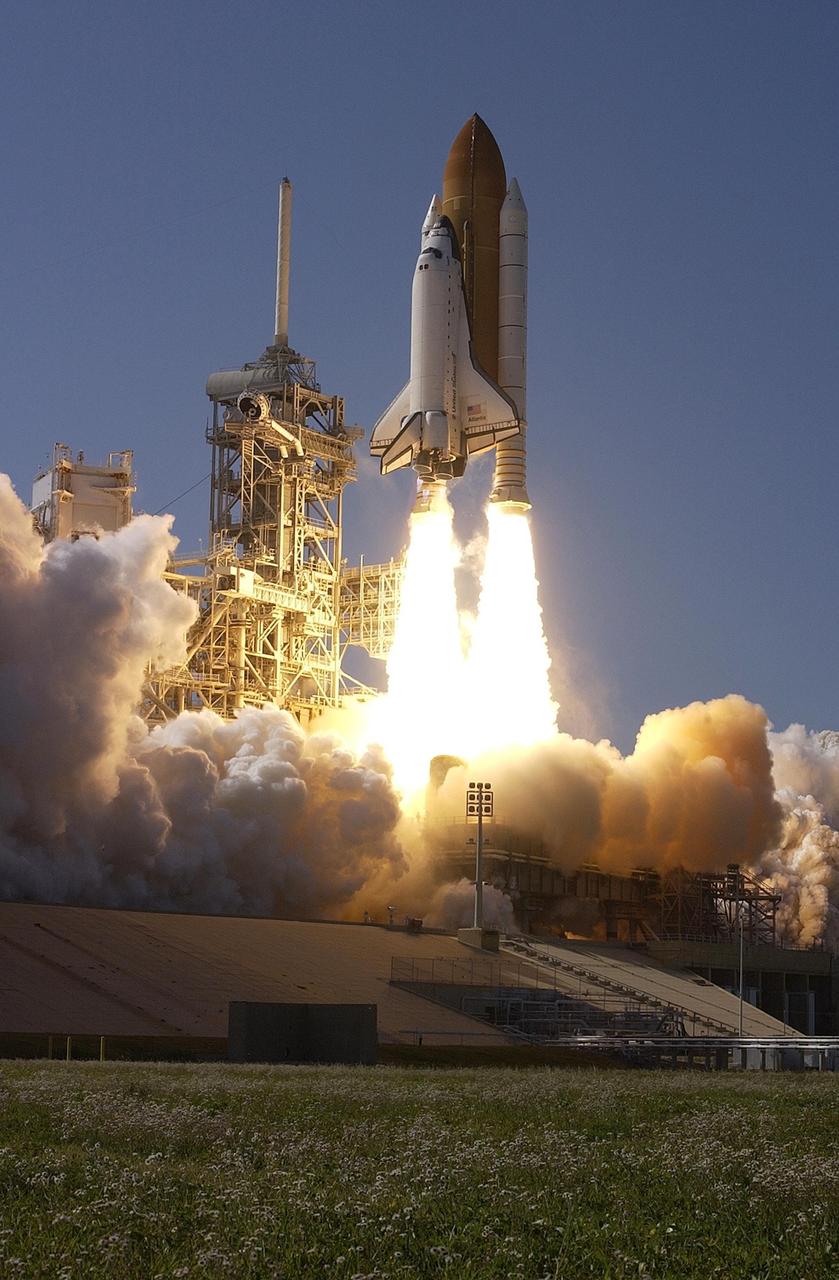
KENNEDY SPACE CENTER, FLA. -- Space Shuttle Atlantis hurtles into the clear blue sky as it lifts off on mission STS-110. Liftoff occurred at 4:44:19 p.m. EDT (20:44:19 GMT). STS-110 is the 13th assembly flight to the International Space Station
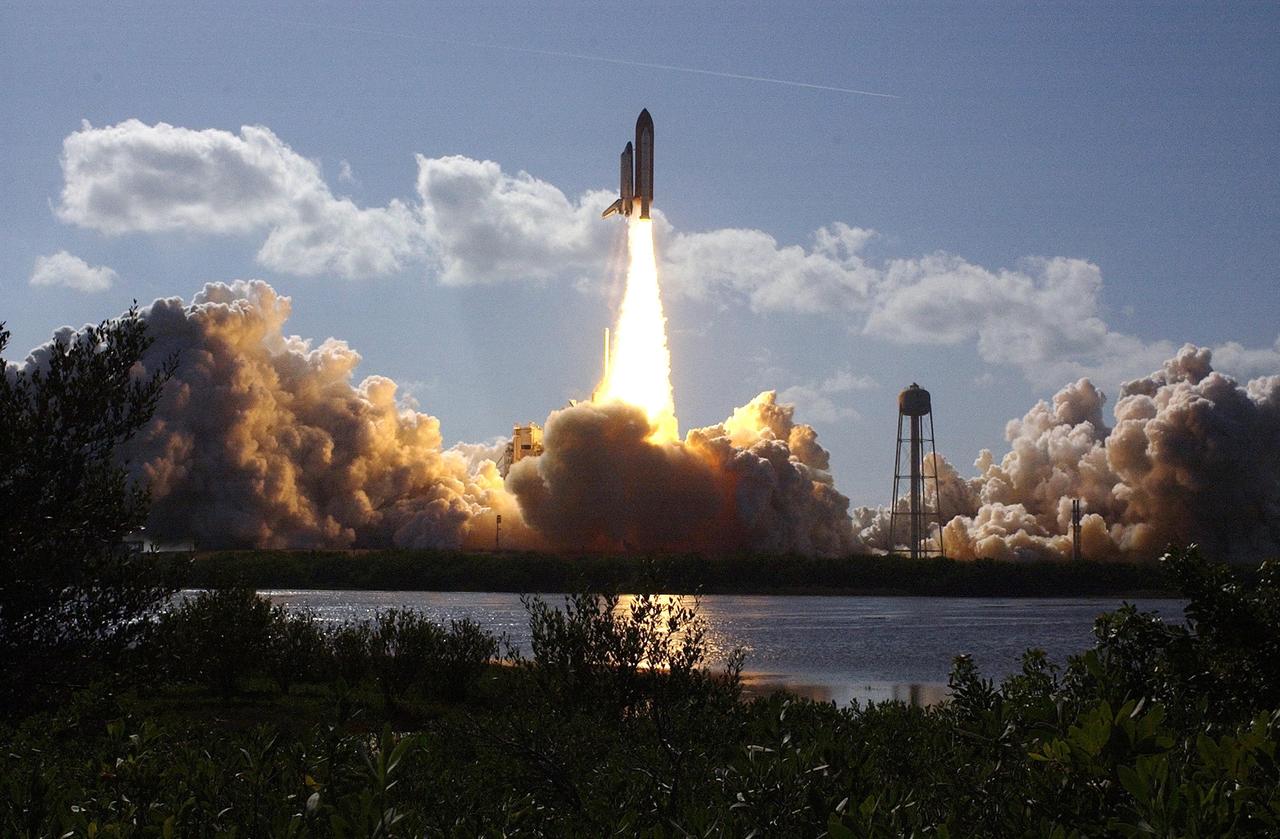
KENNEDY SPACE CENTER, FLA. -- Space Shuttle Atlantis hurtles into the clear blue sky as it lifts off on mission STS-110. Liftoff occurred at 4:44:19 p.m. EDT (20:44:19 GMT). STS-110 is the 13th assembly flight to the International Space Station
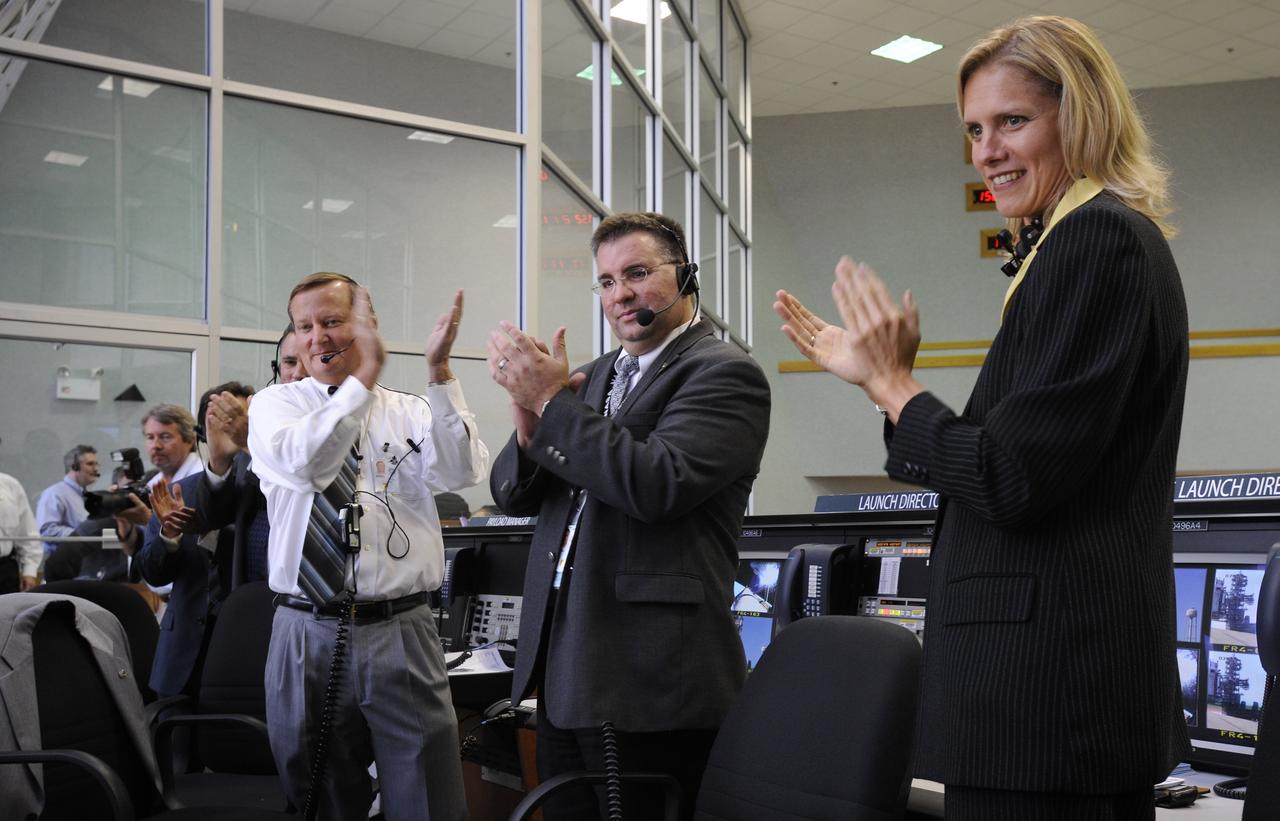
NASA Shuttle Launch Director Michael Leinbach, left, STS-124 Assistant Launch Director Ed Mango, center, and Flow Director for Space Shuttle Discovery Stephanie Stilson clap in the the Launch Control Center after the main engine cut off and successful launch of the Space Shuttle Discovery (STS-124) Saturday, May 31, 2008, at the Kennedy Space Center in Cape Canaveral, Fla. The Shuttle lifted off from launch pad 39A at 5:02 p.m. EDT. Photo Credit: (NASA/Bill Ingalls)
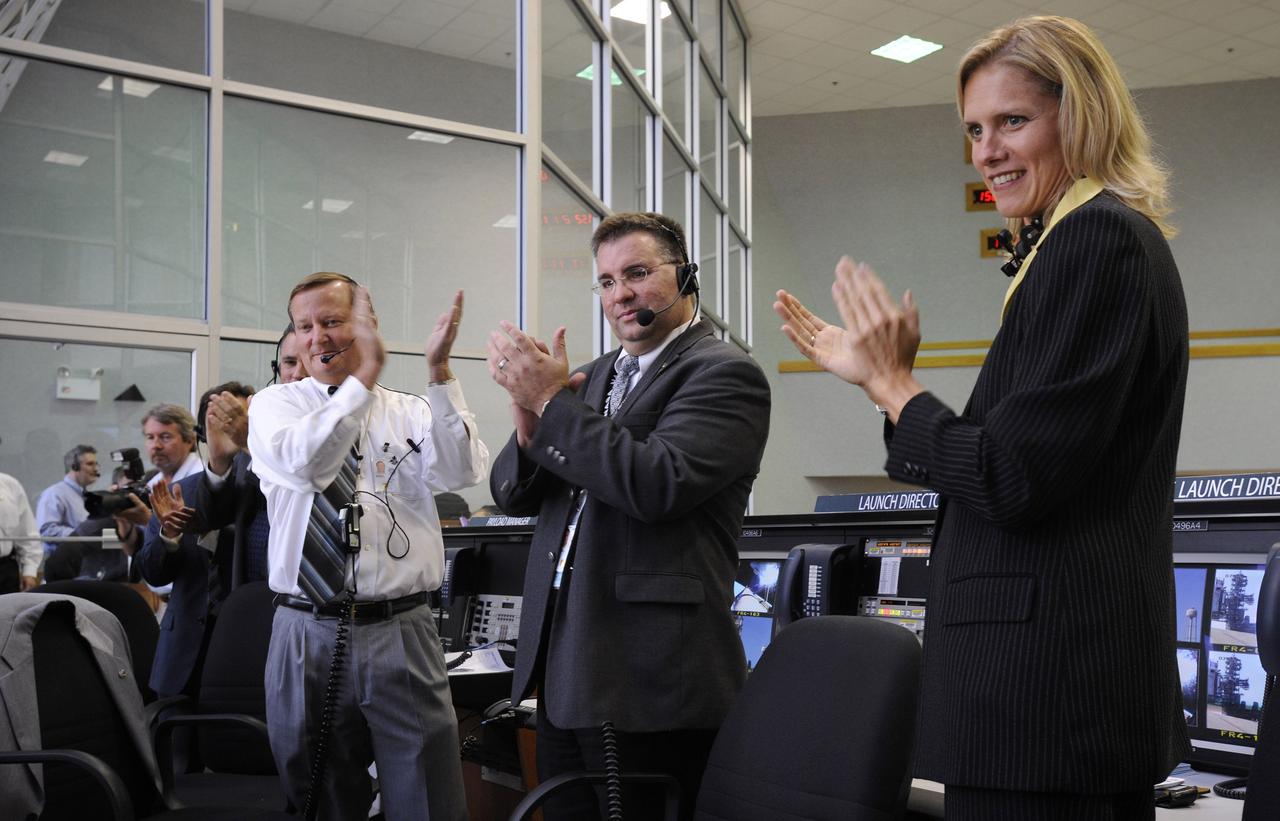
NASA Shuttle Launch Director Michael Leinbach, left, STS-124 Assistant Launch Director Ed Mango, center, and Flow Director for Space Shuttle Discovery Stephanie Stilson clap in the the Launch Control Center after the main engine cut off and successful launch of the Space Shuttle Discovery (STS-124) Saturday, May 31, 2008, at the Kennedy Space Center in Cape Canaveral, Fla. The Shuttle lifted off from launch pad 39A at 5:02 p.m. EDT. Photo Credit: (NASA/Bill Ingalls)
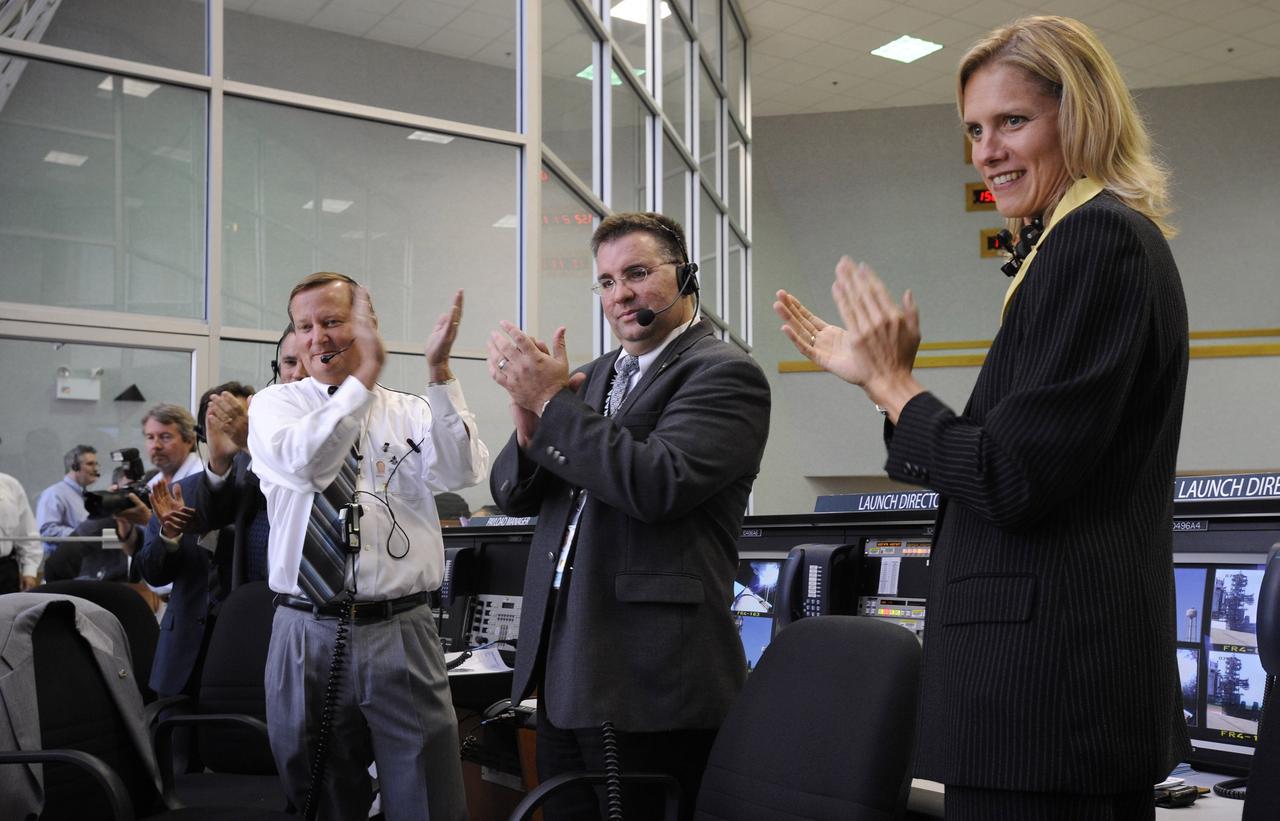
CAPE CANAVERAL, Fla. -- NASA Shuttle Launch Director Michael Leinbach, left, STS-124 Assistant Launch Director Ed Mango, center, and Flow Director for space shuttle Discovery Stephanie Stilson clap in the Launch Control Center after the main engine cut-off and successful launch of Discovery on the STS-124 mission Saturday, May 31, 2008, at NASA's Kennedy Space Center. The shuttle lifted off from Launch Pad 39A at 5:02 p.m. EDT. Photo credit: NASA/Bill Ingalls
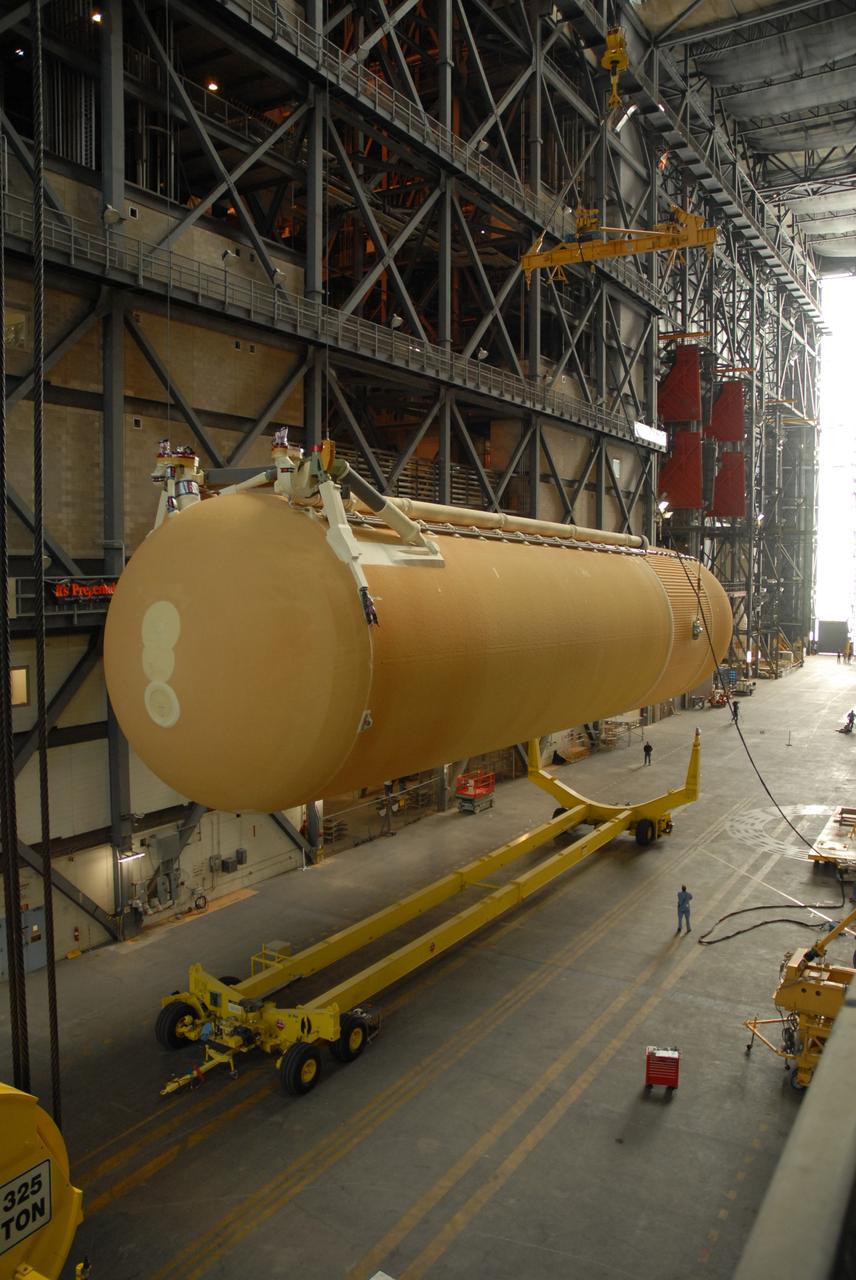
CAPE CANAVERAL, Fla. -- In the transfer aisle of the Vehicle Assembly Building at NASA's Kennedy Space Center in Florida, external fuel tank 130 is lifted off its transporter. The tank will be raised to vertical and lifted into high bay 2 for checkout. The fuel tank was previously designated for the STS-127 mission. The STS-125 Hubble servicing mission is targeted to launch May 12. Photo credit: NASA/Tim Jacobs
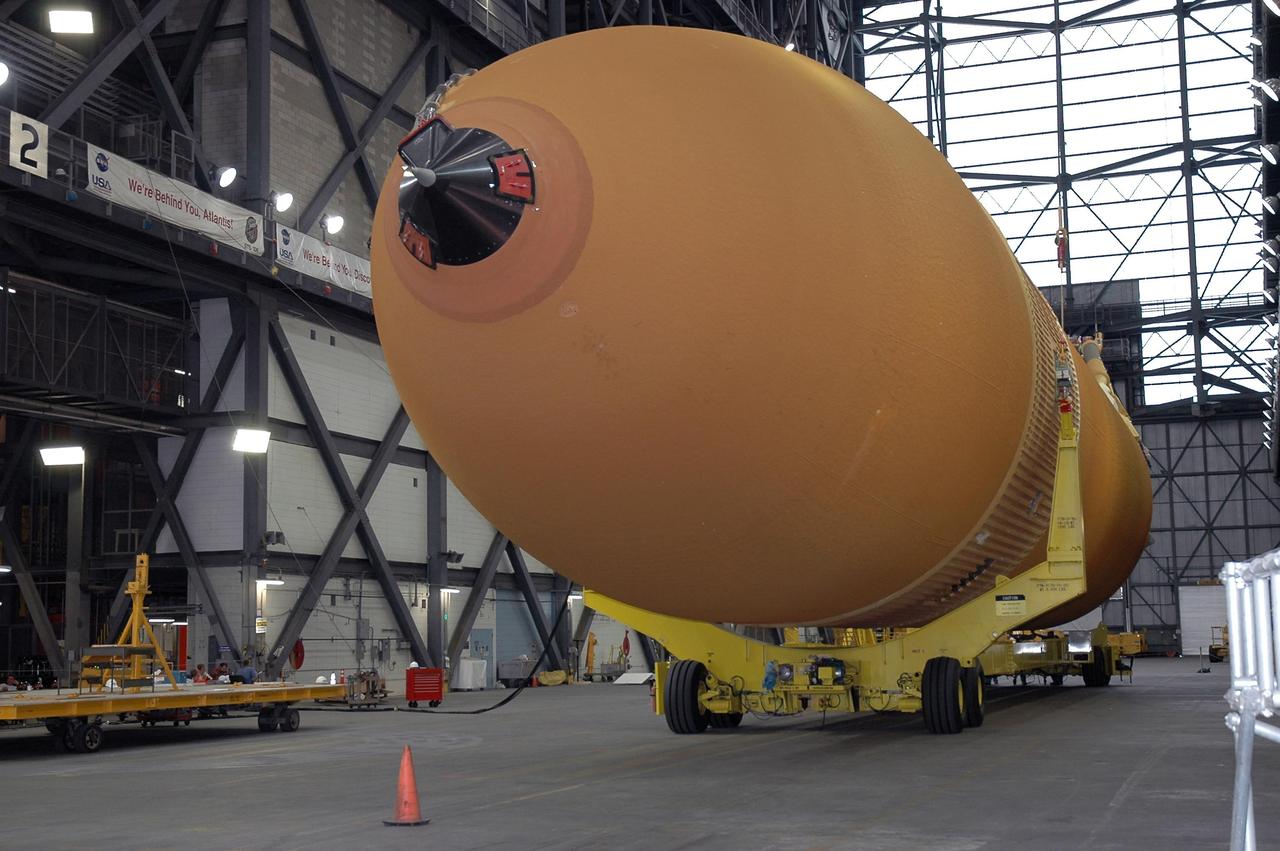
KENNEDY SPACE CENTER, FLA. -- In the Vehicle Assembly Building, external tank No. 117 is lifted off its transporter in preparation for being lifted to a vertical position. Once vertical, the tank will be lifted into the checkout cell in high bay 2 for processing. ET-117 arrived aboard the Pegasus barge after its voyage around the Florida Peninsula from the Michoud Assembly Facility near New Orleans. The tank is slated for mission STS-118, which is targeted for launch in early August. Photo credit: NASA/Jack Pfaller
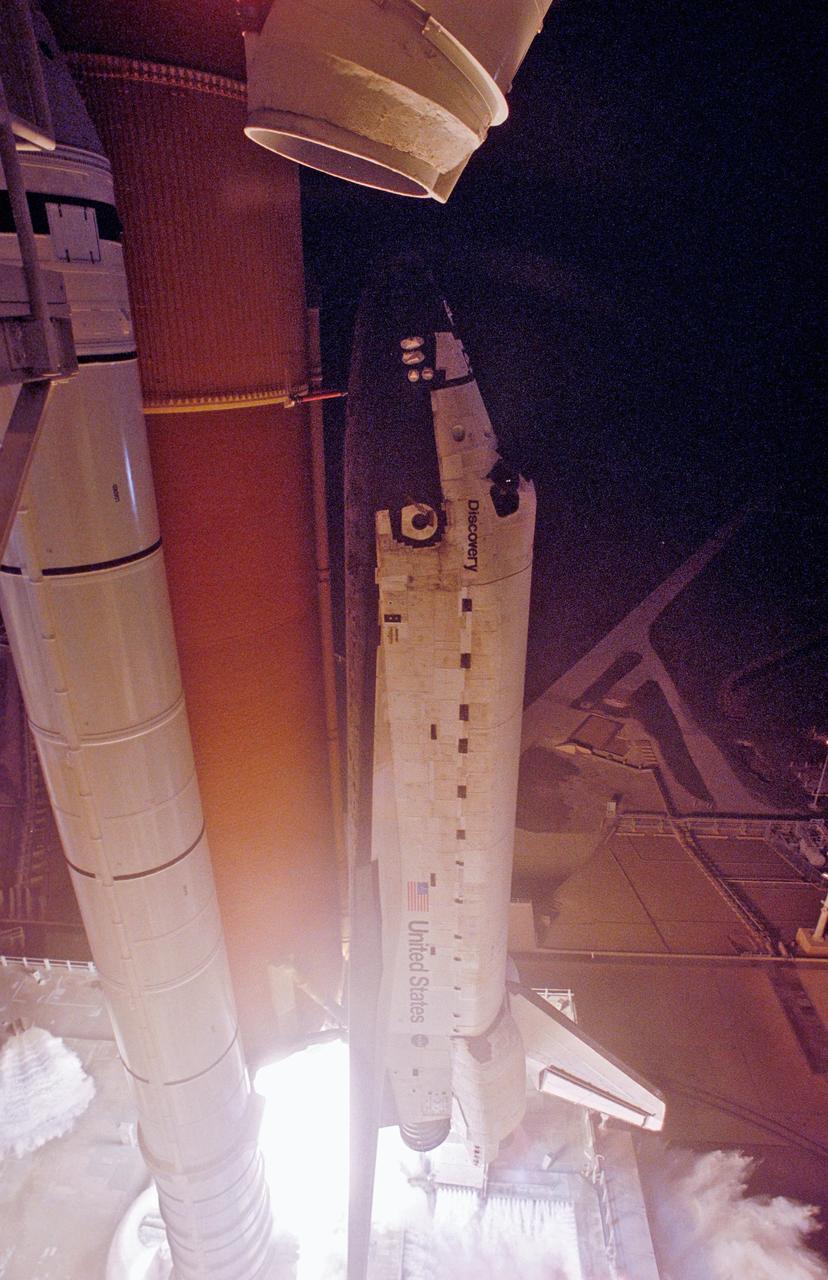
KENNEDY SPACE CENTER, FLA. -- This closeup view shows the water flooding the mobile launcher platform below Space Shuttle Discovery as it lifts off Launch Pad 39B on mission STS-116. Discovery lifted off from KSC's Launch Pad 39B at 8:47 p.m. EST on mission STS-116. This was the second launch attempt for mission STS-116. The first launch attempt on Dec. 7 was postponed due a low cloud ceiling over Kennedy Space Center. This is Discovery's 33rd mission and the first night launch since 2002. The 20th shuttle mission to the International Space Station, STS-116 carries another truss segment, P5. It will serve as a spacer, mated to the P4 truss that was attached in September. After installing the P5, the crew will reconfigure and redistribute the power generated by two pairs of U.S. solar arrays. Landing is expected Dec. 21 at KSC.
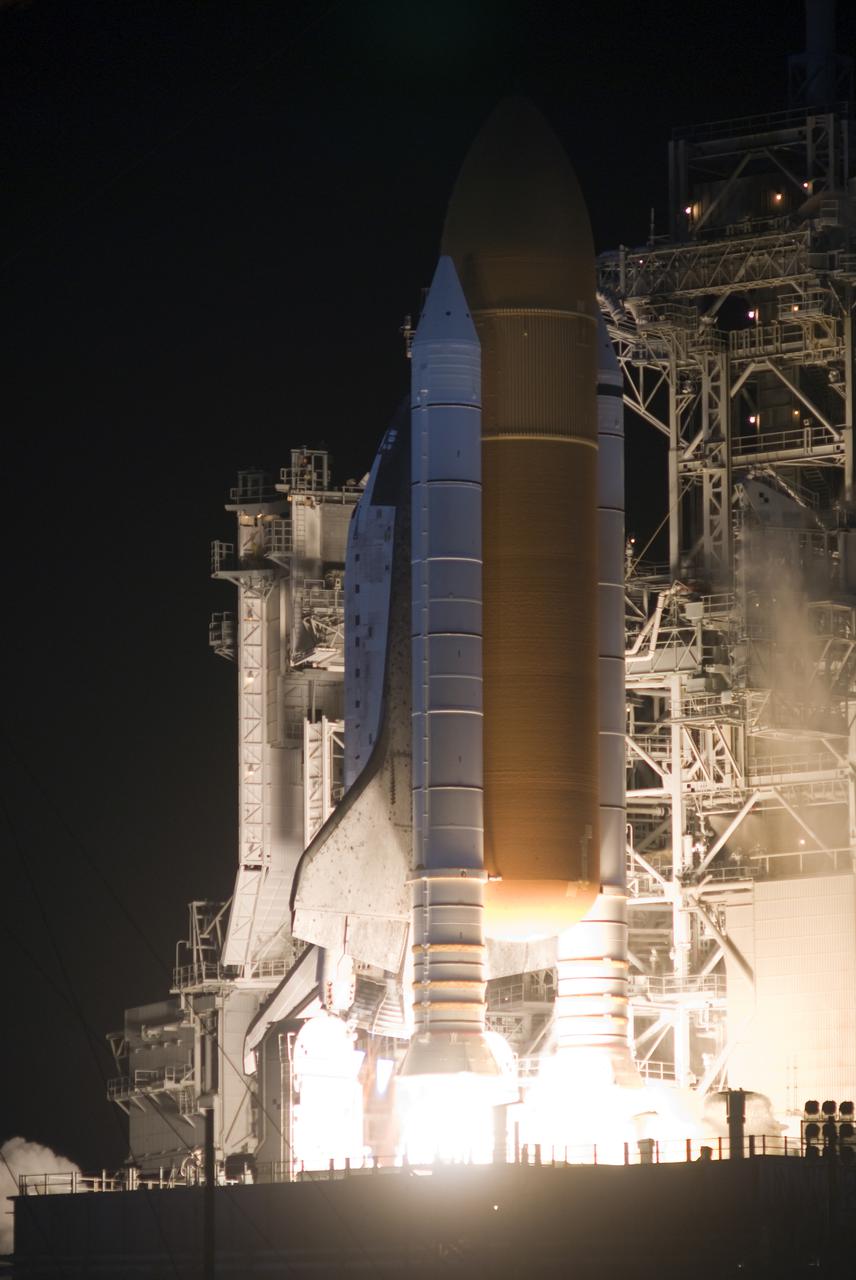
CAPE CANAVERAL, Fla. - Space shuttle Discovery lifts off of Launch Pad 39A at NASA's Kennedy Space Center in Florida beginning the STS-131 mission. Shuttle Discovery lifted off at 6:21 a.m. EDT on April 5, 2010. The seven-member STS-131 crew will deliver the multi-purpose logistics module Leonardo, filled with supplies, a new crew sleeping quarters and science racks that will be transferred to the International Space Station's laboratories. The crew also will switch out a gyroscope on the station’s truss, install a spare ammonia storage tank and retrieve a Japanese experiment from the station’s exterior. STS-131 is the 33rd shuttle mission to the station and the 131st shuttle mission overall. For information on the STS-131 mission and crew, visit http:__www.nasa.gov_mission_pages_shuttle_shuttlemissions_sts131_index.html. Photo credit: NASA_Rusty Backer and Michael Gayle
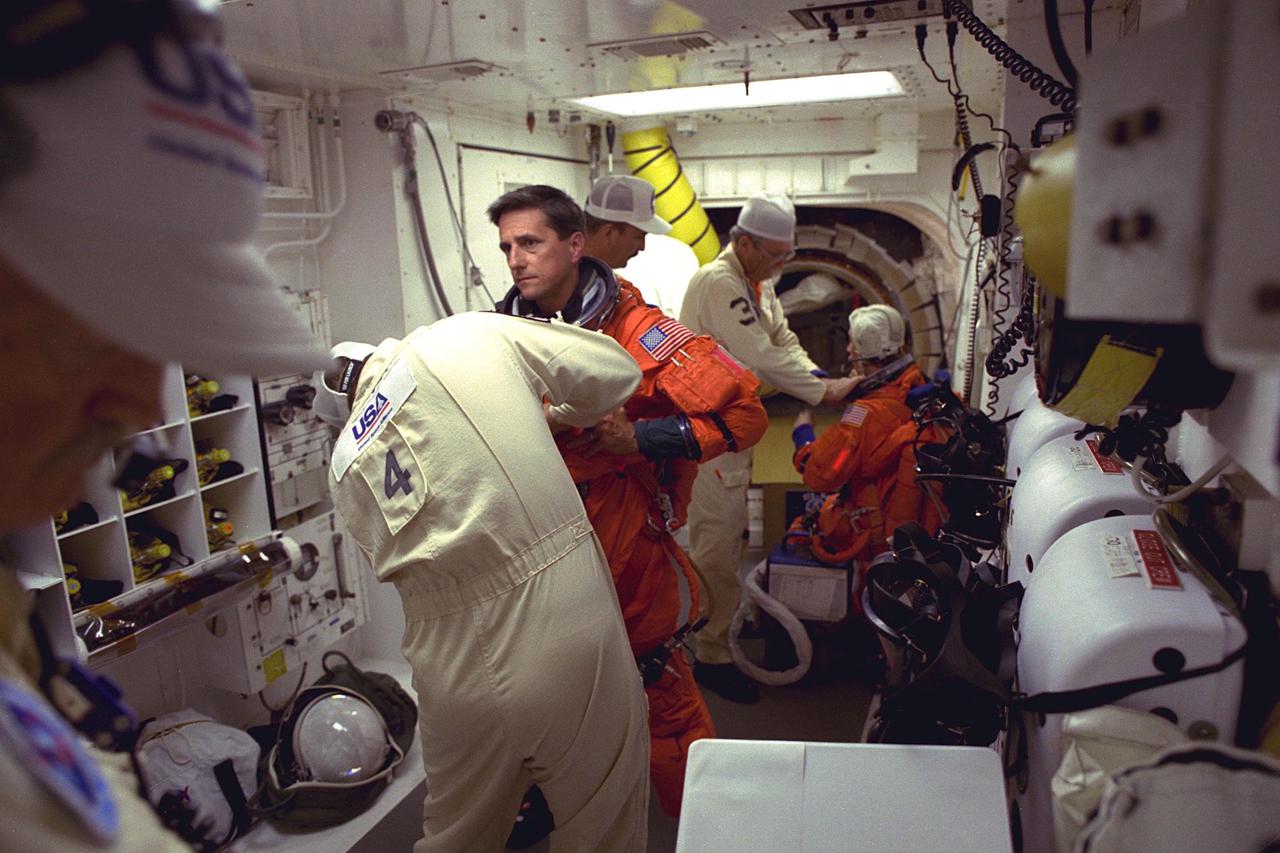
STS-94 Mission Specialist Donald A. Thomas prepares to enter the Space Shuttle Columbia at Launch Pad 39A in preparation for launch. He has flown on STS-83, STS-70 and STS-65. He holds a doctorate in materials science and has been the Principal Investigator for a Space Shuttle crystal growth experiment. Because of his background in materials science, Thomas will be concentrating his efforts during the Red shift on the five experiments in this discipline in the Large Isothermal Furnace. He also will work on the ten materials science investigations in the Electromagnetic Containerless Processing Facility and four that will be measuring the effects of microgravity and motion in the orbiter on the experiments. Thomas and six fellow crew members will lift off during a launch window that opens at 1:50 p.m. EDT, July 1. The launch window will open 47 minutes early to improve the opportunity to lift off before Florida summer rain showers reach the space center
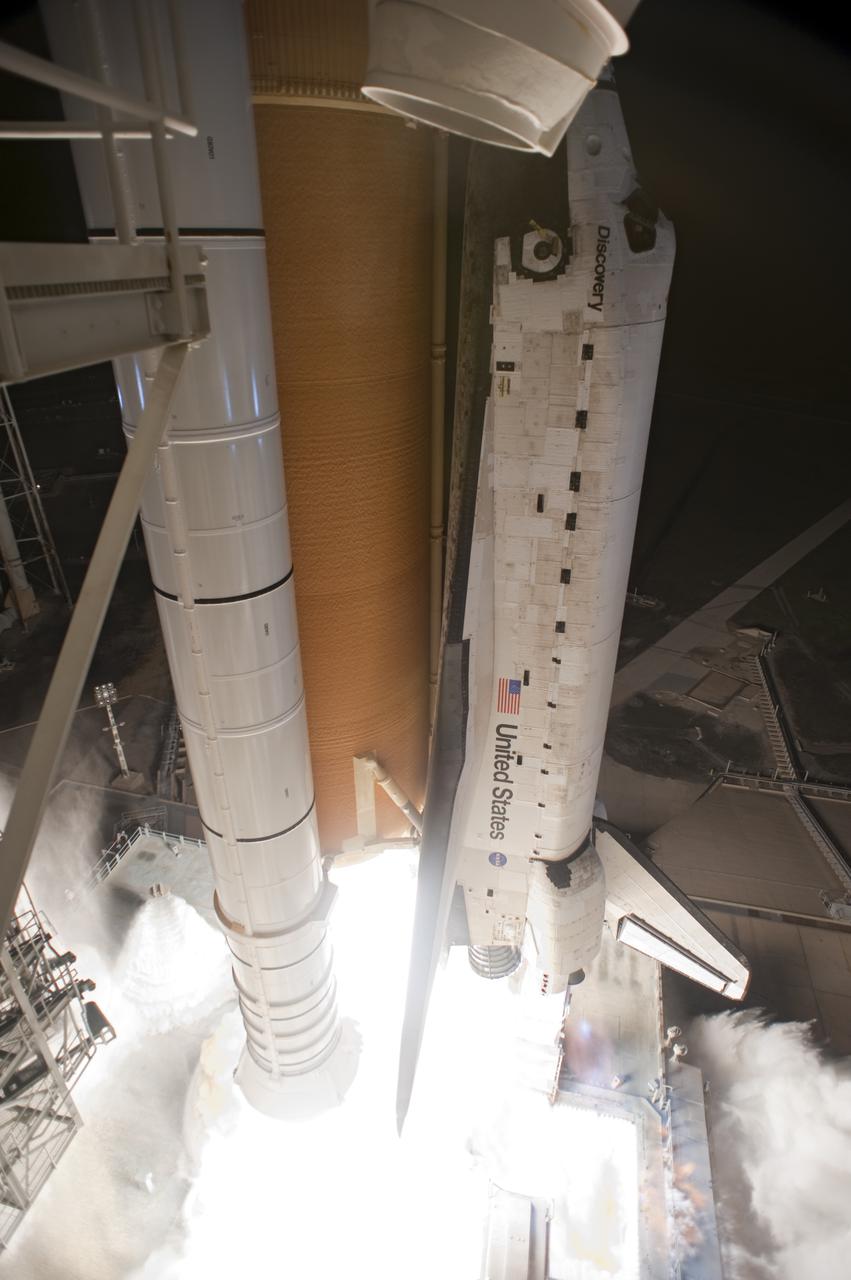
CAPE CANAVERAL, Fla. - On Launch Pad 39A at NASA's Kennedy Space Center in Florida, space shuttle Discovery lifts off on a column of dazzling smoke and fire headed for the International Space Station on the STS-131 mission. Shuttle Discovery lifted off at 6:21 a.m. EDT on April 5, 2010. The seven-member STS-131 crew will deliver the multi-purpose logistics module Leonardo, filled with supplies, a new crew sleeping quarters and science racks that will be transferred to the International Space Station's laboratories. The crew also will switch out a gyroscope on the station’s truss, install a spare ammonia storage tank and retrieve a Japanese experiment from the station’s exterior. STS-131 is the 33rd shuttle mission to the station and the 131st shuttle mission overall. For information on the STS-131 mission and crew, visit http:__www.nasa.gov_mission_pages_shuttle_shuttlemissions_sts131_index.html. Photo credit: NASA_Tony Gray and Tom Farrar
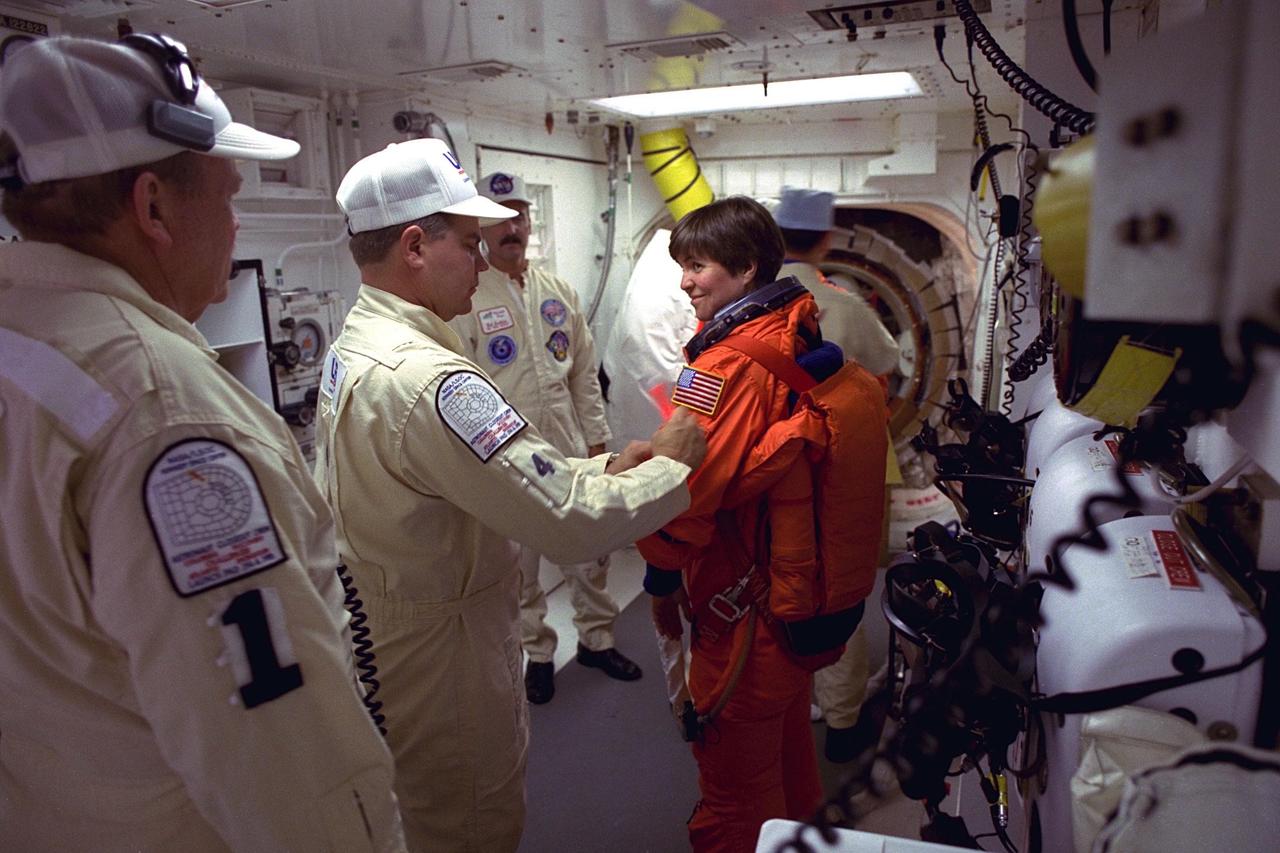
STS-94 Payload Commander Janice Voss prepares to enter the Space Shuttle Columbia at Launch Pad 39A in preparation for launch. She has flown on STS-83, STS-63 and STS-57. Voss holds a doctorate degree in aeronautics/astronautics from the Massachusetts Institute of Technology and has earned two NASA Space Flight Medals. As Payload Commander and a member of the Blue team, Voss will have overall responsibility for the operation of all of the MSL-1 experiments. During the experimentation phase of the mission, she be working primarily with three combustion experiments. She and six fellow crew members will lift off during a launch window that opens at 1:50 p.m. EDT, July 1. The launch window will open 47 minutes early to improve the opportunity to lift off before Florida summer rain showers reach the space center
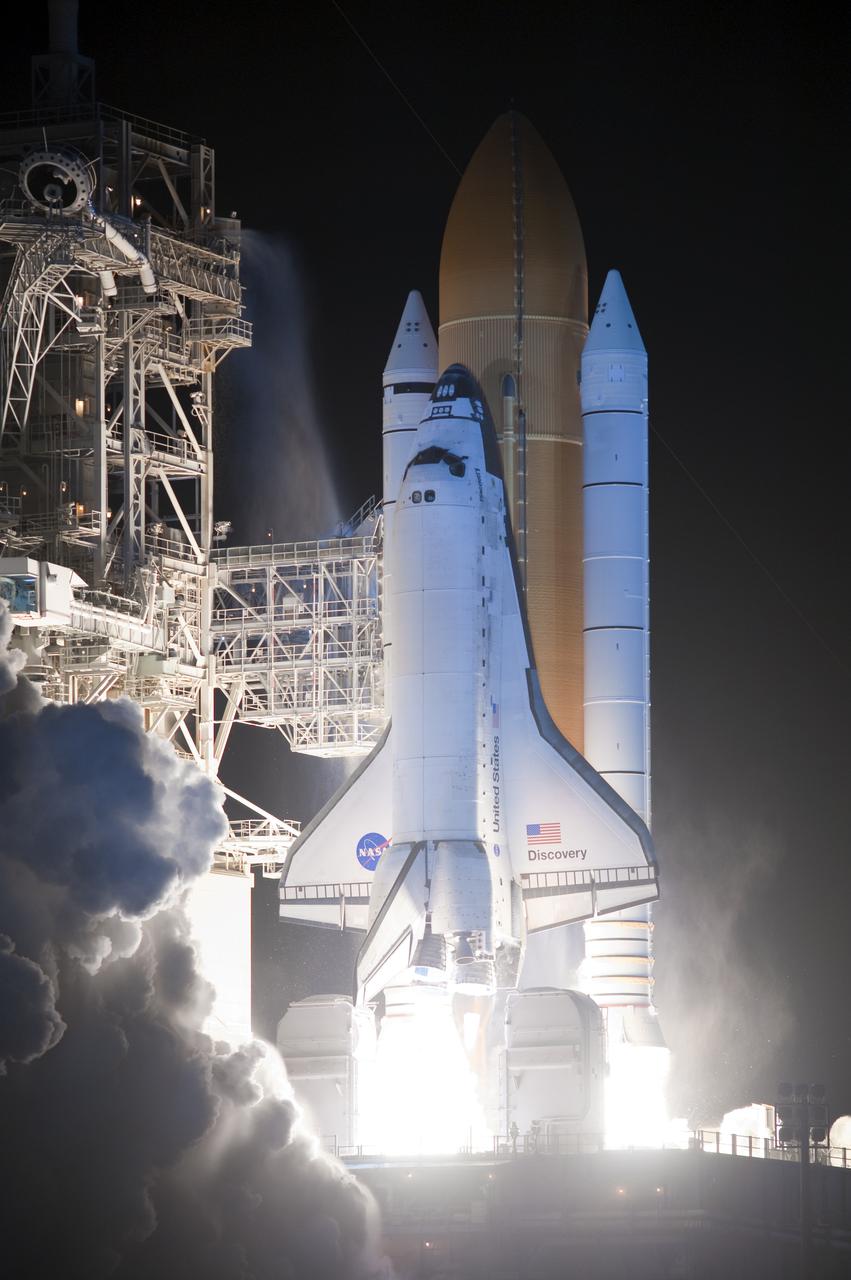
CAPE CANAVERAL, Fla. - On Launch Pad 39A at NASA's Kennedy Space Center in Florida space shuttle Discovery lights up the early morning sky as it lifts off on the STS-131 mission. Shuttle Discovery lifted off at 6:21 a.m. EDT on April 5, 2010. The seven-member STS-131 crew will deliver the multi-purpose logistics module Leonardo, filled with supplies, a new crew sleeping quarters and science racks that will be transferred to the International Space Station's laboratories. The crew also will switch out a gyroscope on the station’s truss, install a spare ammonia storage tank and retrieve a Japanese experiment from the station’s exterior. STS-131 is the 33rd shuttle mission to the station and the 131st shuttle mission overall. For information on the STS-131 mission and crew, visit http:__www.nasa.gov_mission_pages_shuttle_shuttlemissions_sts131_index.html. Photo credit: NASA_Sandra Joseph and Kevin O'Connell
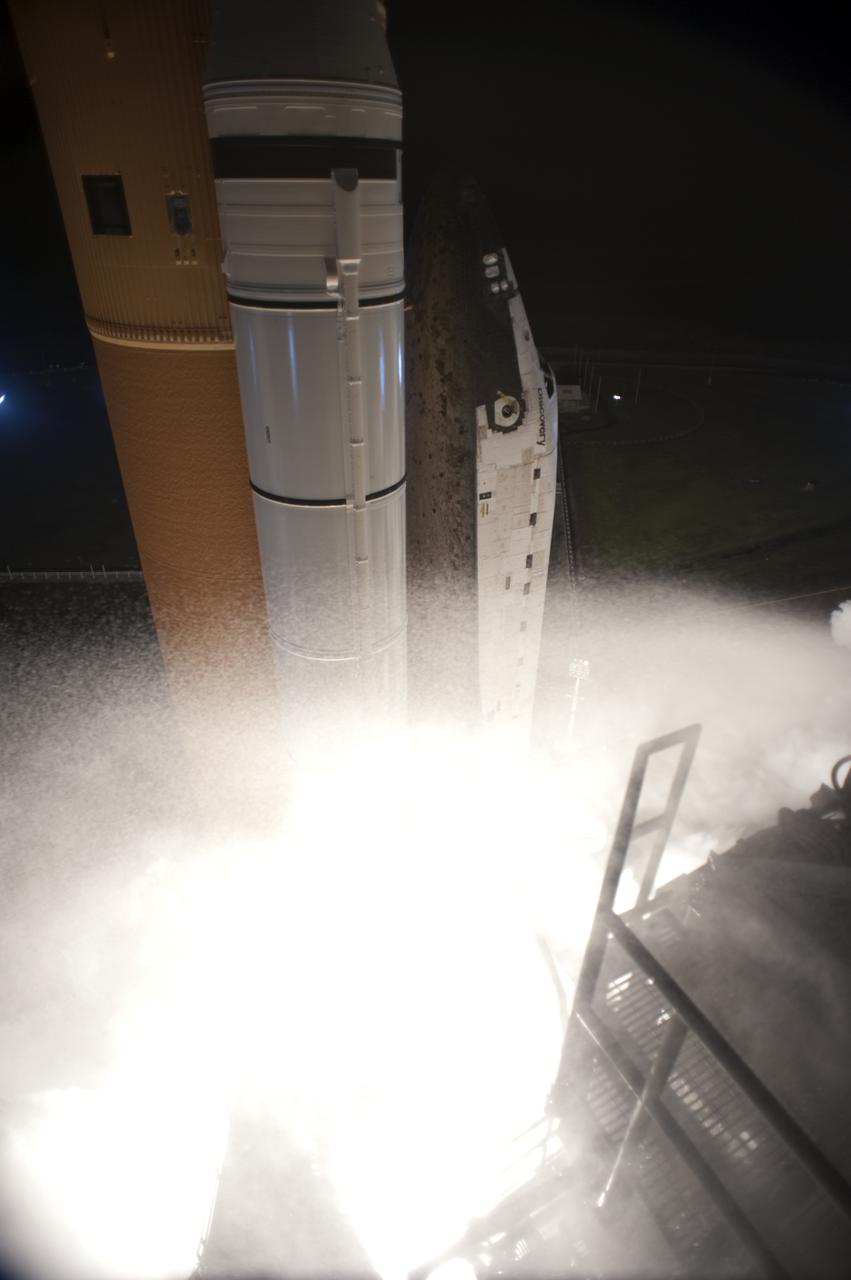
CAPE CANAVERAL, Fla. - An exhaust cloud billows around Launch Pad 39A at NASA's Kennedy Space Center in Florida as space shuttle Discovery lifts off to begin the STS-131 mission. Shuttle Discovery lifted off at 6:21 a.m. EDT on April 5, 2010. The seven-member STS-131 crew will deliver the multi-purpose logistics module Leonardo, filled with supplies, a new crew sleeping quarters and science racks that will be transferred to the International Space Station's laboratories. The crew also will switch out a gyroscope on the station’s truss, install a spare ammonia storage tank and retrieve a Japanese experiment from the station’s exterior. STS-131 is the 33rd shuttle mission to the station and the 131st shuttle mission overall. For information on the STS-131 mission and crew, visit http:__www.nasa.gov_mission_pages_shuttle_shuttlemissions_sts131_index.html. Photo credit: NASA_Tony Gray and Tom Farrar
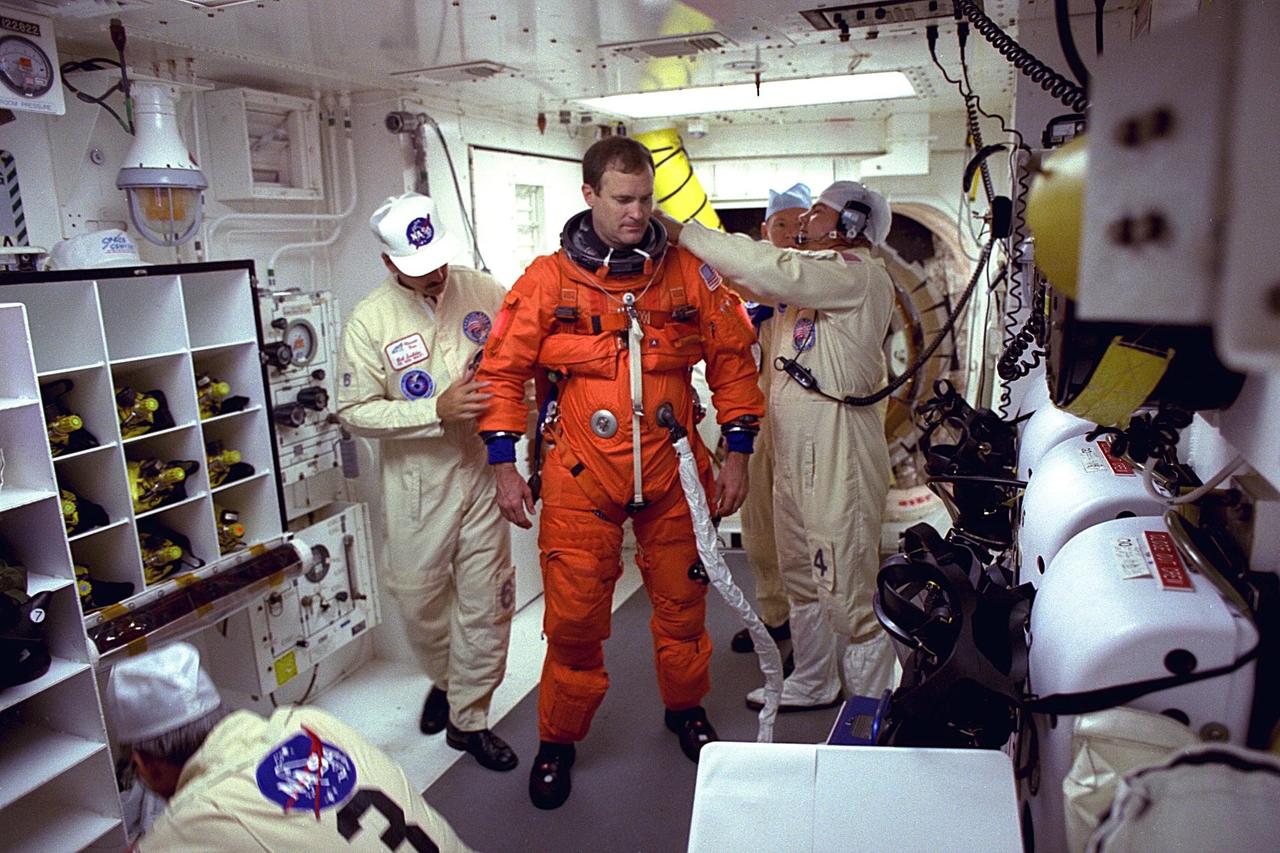
STS-94 Mission Commander James D. Halsell, Jr., prepares to enter the Space Shuttle Columbia at Launch Pad 39A in preparation for launch. Halsell is on his fourth space flight, having served as commander of STS-83 and pilot of both STS-74 and STS-65. He is a lieutenant colonel in the Air Force and a former SR-71 Blackbird test pilot and holds master’s degrees in management and space operations. Halsell will have responsibility for the success of the mission and will operate and maintain Columbia during the Red, or second shift. He will also assist with a materials science experiment and a protein crystal growth payload during the 16-day mission. Halsell and six fellow crew members will lift off during a launch window that opens at 1:50 p.m. EDT, July 1. The launch window will open 47 minutes early to improve the opportunity to lift off before Florida summer rain showers reach the space center
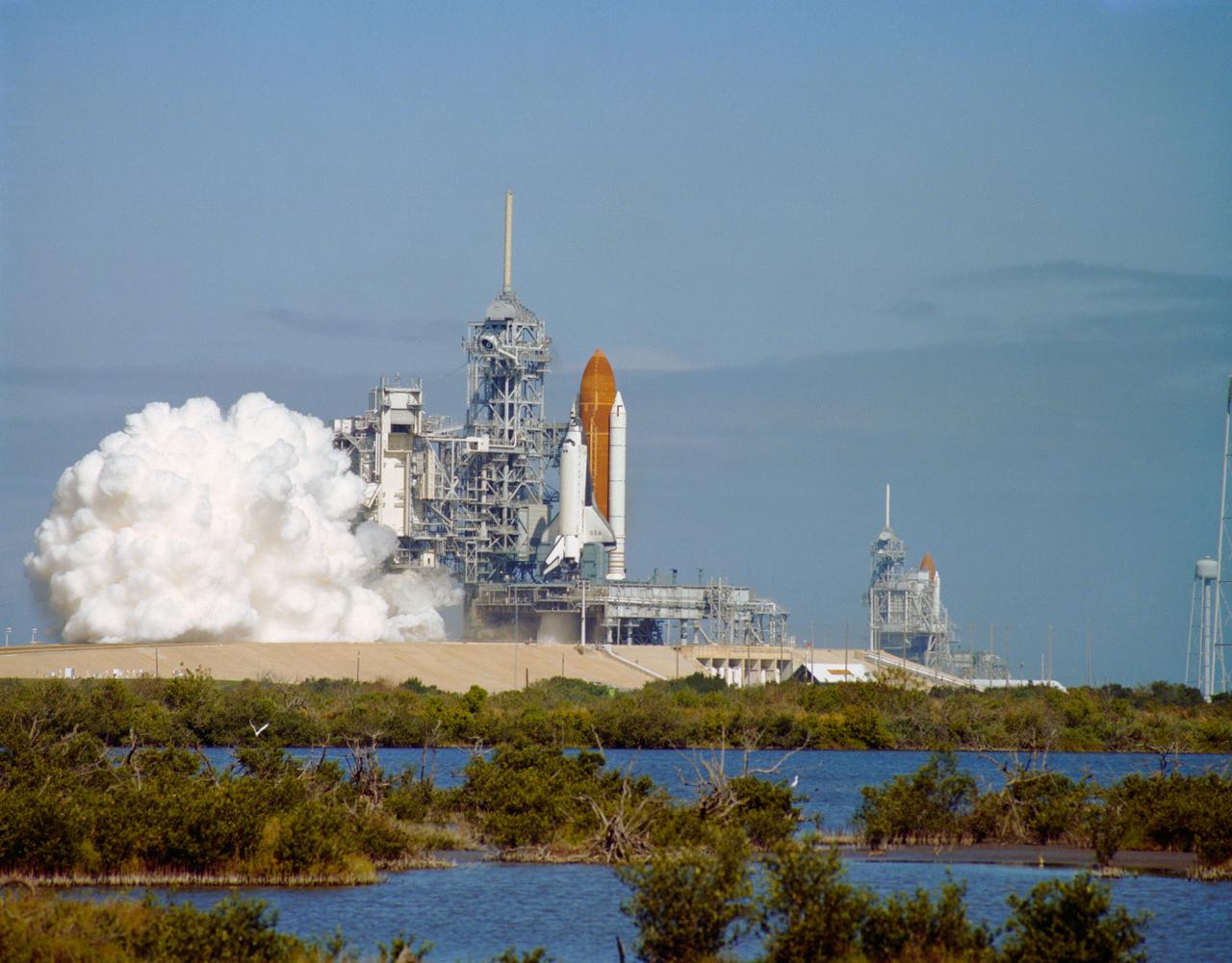
S93-31601 (March 1993) --- The second Space Shuttle launch attempt of 1993 comes to an abrupt halt when one of the three main engines on the orbiter Columbia shuts down at T -3 seconds, resulting in an on-the-pad abort of Mission STS-55. This was the first time in the post-Challenger era that a main engine shutdown has halted a Shuttle launch countdown, and only the third time in the history of the program. In 1984, STS-41D was scrubbed at T -4 seconds when the orbiter General Purpose Computer detected an anomaly in a main engine, and in 1985, STS-51F was halted at T -3 seconds due to a main engine malfunction that caused shutdown of all three engines. Columbia had been scheduled to lift off from Launch Pad 39B is the Space Shuttle Discovery, undergoing preparations for lift off on Mission STS-56.
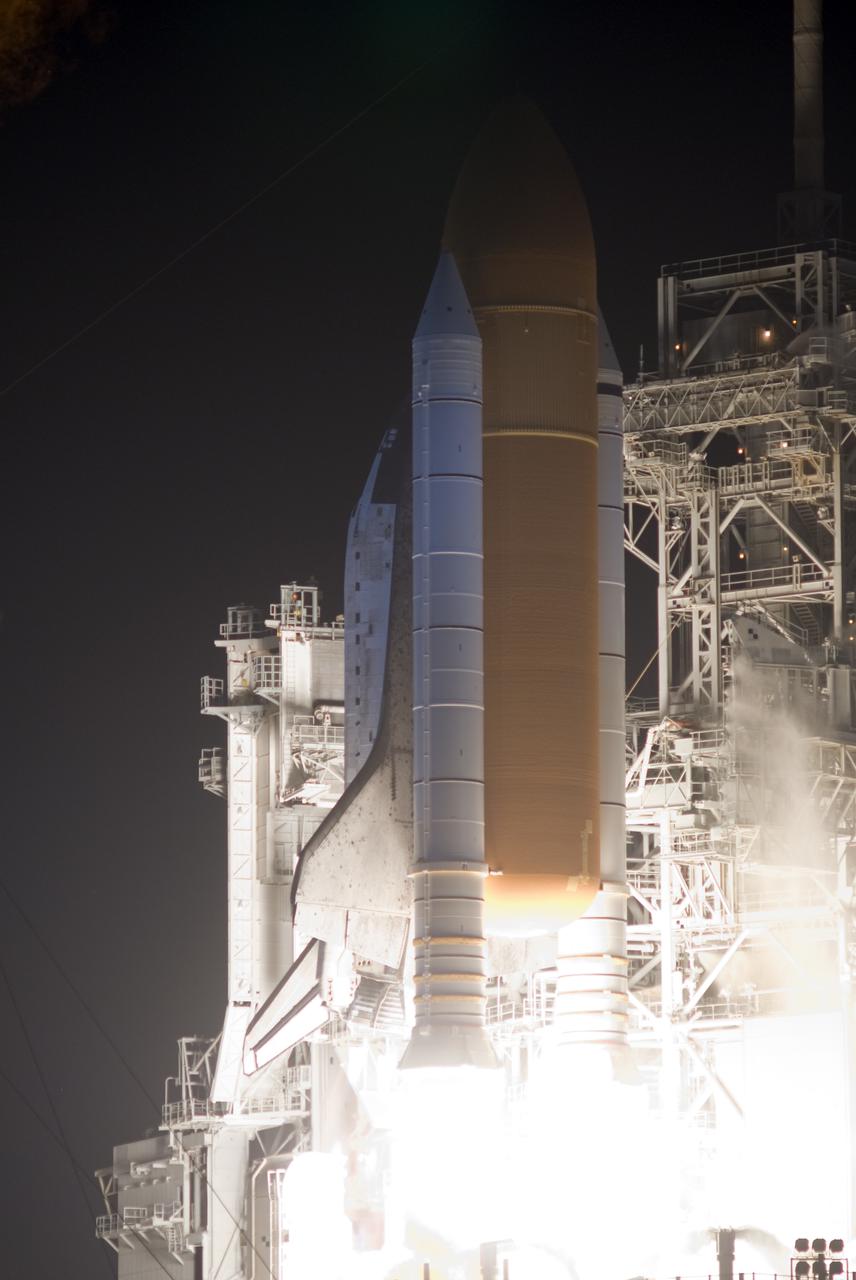
CAPE CANAVERAL, Fla. - A radiant cloud of smoke and steam swirl around Launch Pad 39A at NASA's Kennedy Space Center in Florida as space shuttle Discovery roars to life lifting off on the STS-131 mission. Shuttle Discovery lifted off at 6:21 a.m. EDT on April 5, 2010. The seven-member STS-131 crew will deliver the multi-purpose logistics module Leonardo, filled with supplies, a new crew sleeping quarters and science racks that will be transferred to the International Space Station's laboratories. The crew also will switch out a gyroscope on the station’s truss, install a spare ammonia storage tank and retrieve a Japanese experiment from the station’s exterior. STS-131 is the 33rd shuttle mission to the station and the 131st shuttle mission overall. For information on the STS-131 mission and crew, visit http:__www.nasa.gov_mission_pages_shuttle_shuttlemissions_sts131_index.html. Photo credit: NASA_Rusty Backer and Michael Gayle
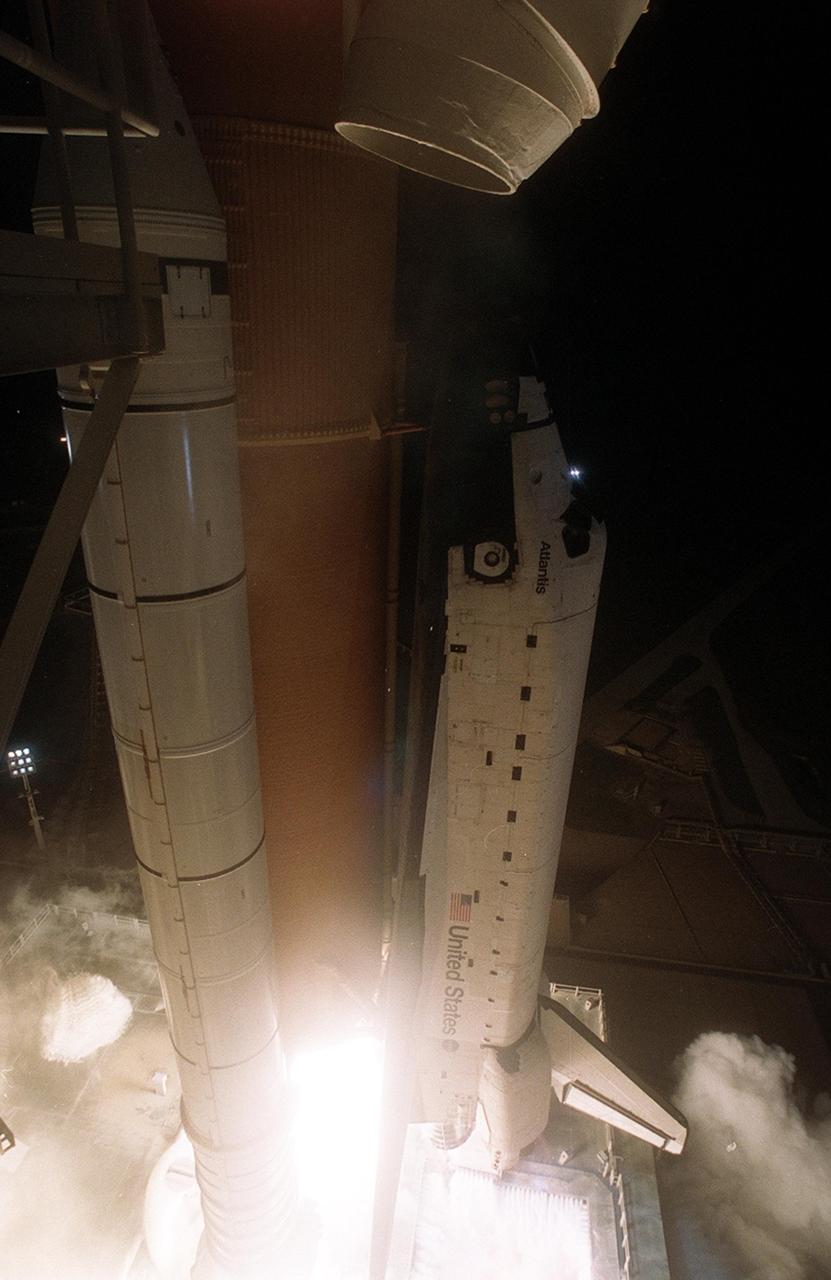
KENNEDY SPACE CENTER, Fla. -- Space Shuttle Atlantis begins its trek to the International Space Station as it lifts off the pad with a crew of five on mission STS-104. Atlantis lifted off from Launch Pad 39B on time at 5:03:59 a.m. EDT. The 10th assembly flight to the International Space Station, the primary payload on the mission is the joint airlock module, which will require two spacewalks to attach it to the Space Station. The airlock will be the primary path for Space Station spacewalk entry and departure for U.S. spacesuits, and will also support the Russian Orlan spacesuit for EVA activity
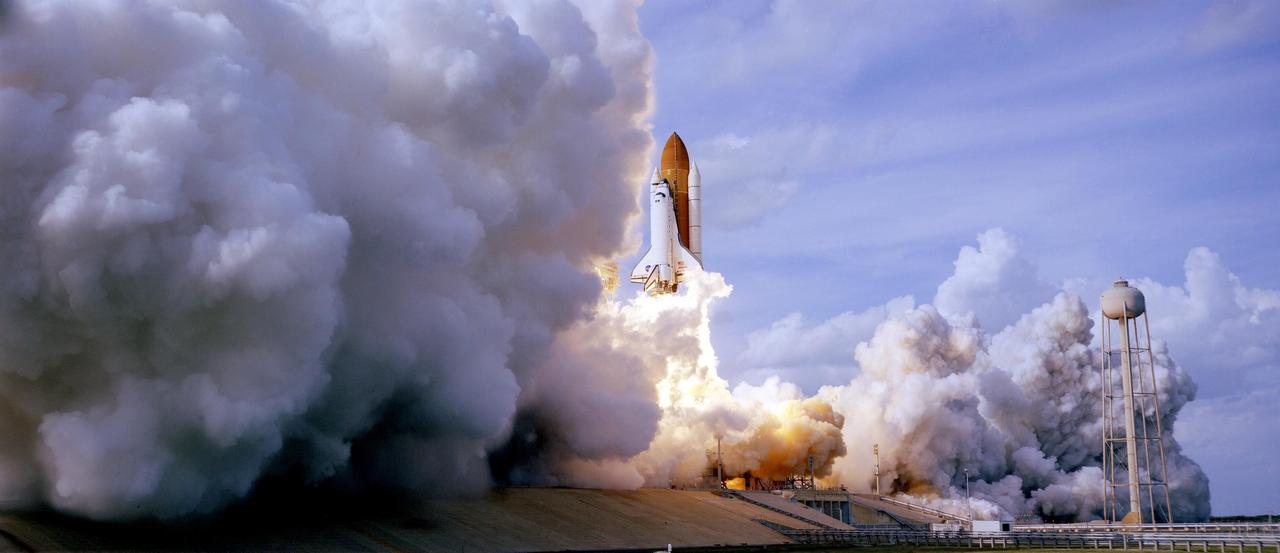
KENNEDY SPACE CENTER, FLA. -- Space shuttle Atlantis is surrounded by clouds of smoke and steam as it lifts off Launch Pad 39A on mission STS-122. At far right is the water tower that provides water for the sound suppression system during liftoff. The shuttle lifted off on time at 2:45 p.m. EST. This is the third launch attempt for Atlantis since December 2007 to carry the European Space Agency's Columbus laboratory to the International Space Station. During the 11-day mission, the crew's prime objective is to attach the laboratory to the Harmony module, adding to the station's size and capabilities. Photo credit: NASA/NASA/Rick Wetherington, Tim Terry, Tim Powers
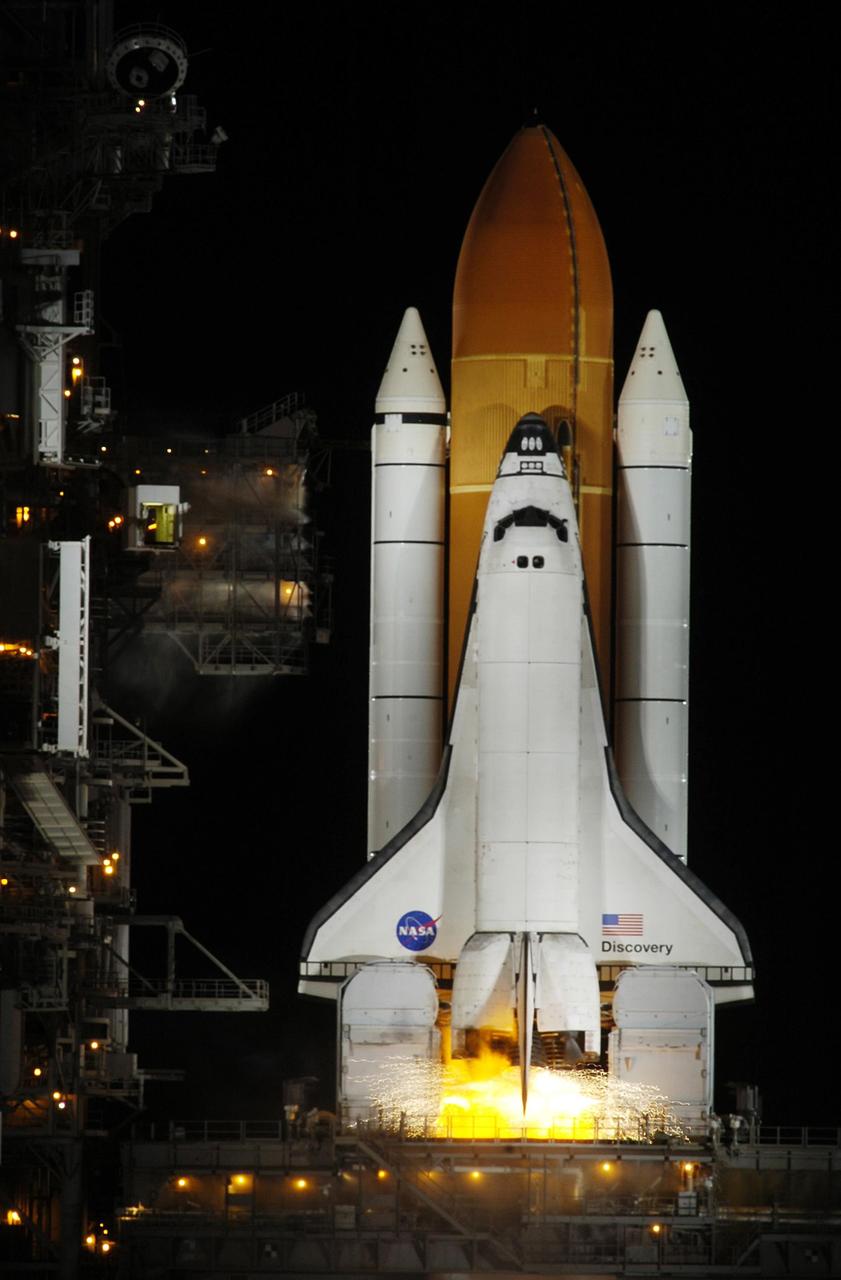
KENNEDY SPACE CENTER, FLA. -- Sparks appear just prior to Space Shuttle Discovery's main engines firing approximately T-7 seconds before liftoff. Once the engines are running normally, the solid rocket boosters are ignited and the shuttle lifts off. Discovery lifted off on mission STS-116 at 8:47 p.m. EST. This was the second launch attempt for mission STS-116. The first launch attempt on Dec. 7 was postponed due a low cloud ceiling over Kennedy Space Center. This is Discovery's 33rd mission and the first night launch since 2002. The 20th shuttle mission to the International Space Station, STS-116 carries another truss segment, P5. It will serve as a spacer, mated to the P4 truss that was attached in September. After installing the P5, the crew will reconfigure and redistribute the power generated by two pairs of U.S. solar arrays. Landing is expected Dec. 21 at KSC. Photo courtesy of Nikon/Scott Andrews
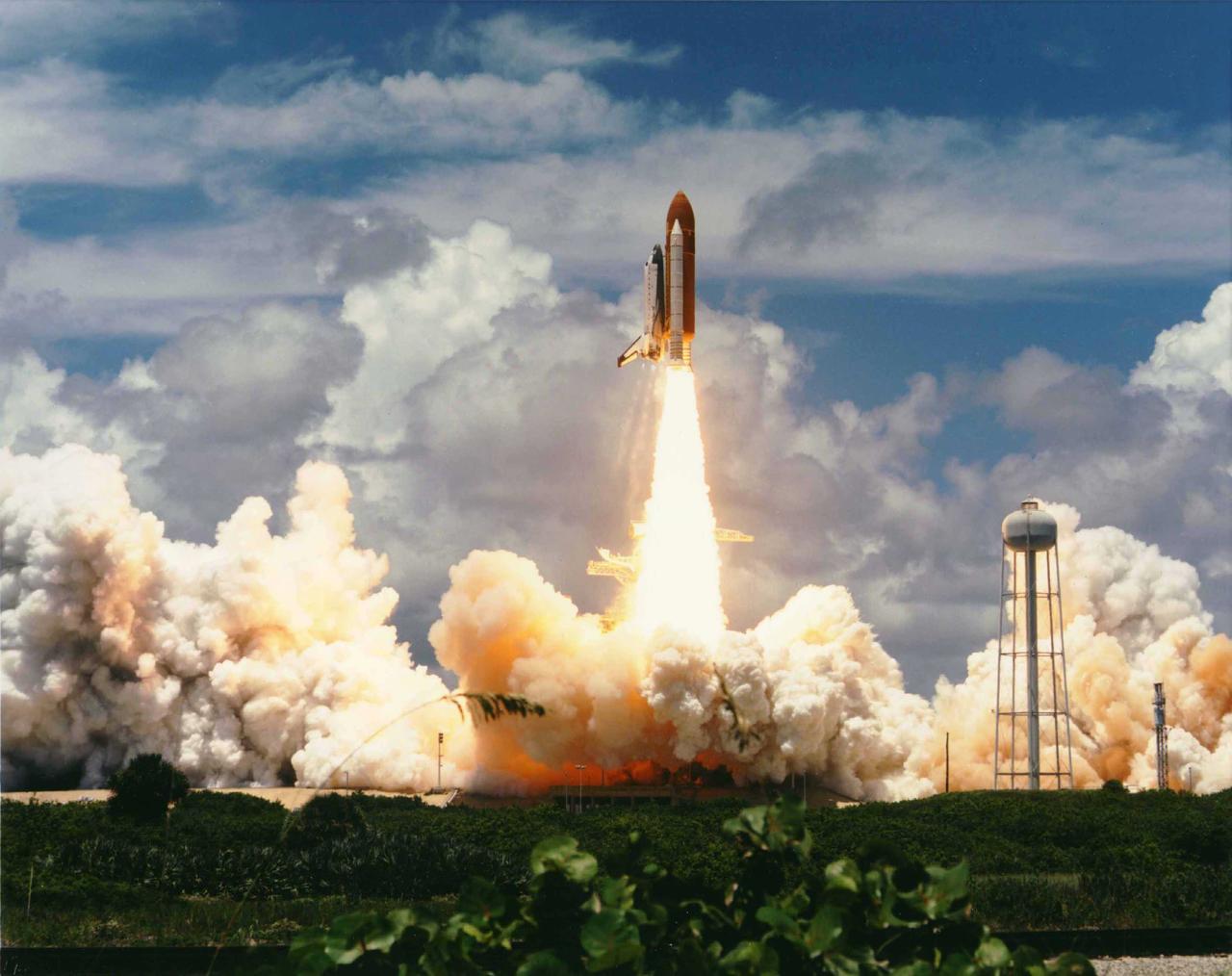
KENNEDY SPACE CENTER, FLA. - The second International Microgravity Laboratory-2 (IML-2) is off to an ontime start as the Space Shuttle Columbia lifts off from Launch Pad 39A at 12:43:00 p.m. EDT. On board are a crew of seven and more than 80 investigations developed by more than 200 scientists from 13 countries. The IML-2 complement includes materials science, bioprocessing, space and radiation biology, and human physiology experiments that will be carried out over the course of the 14-day flight. The commander of Space Shuttle Mission STS-65 is Robert D. Cabana. James D. Halsell Jr. is the pilot; the payload commander is Richard J. Hieb; the three mission specialists are Carl E. Walz, Leroy Chiao and Donald A. Thomas. Dr. Chiaki Mukai, representing NASDA, the National Space Development Agency of Japan, is the payload specialist. Mukai becomes the first Japanese woman to fly into space.
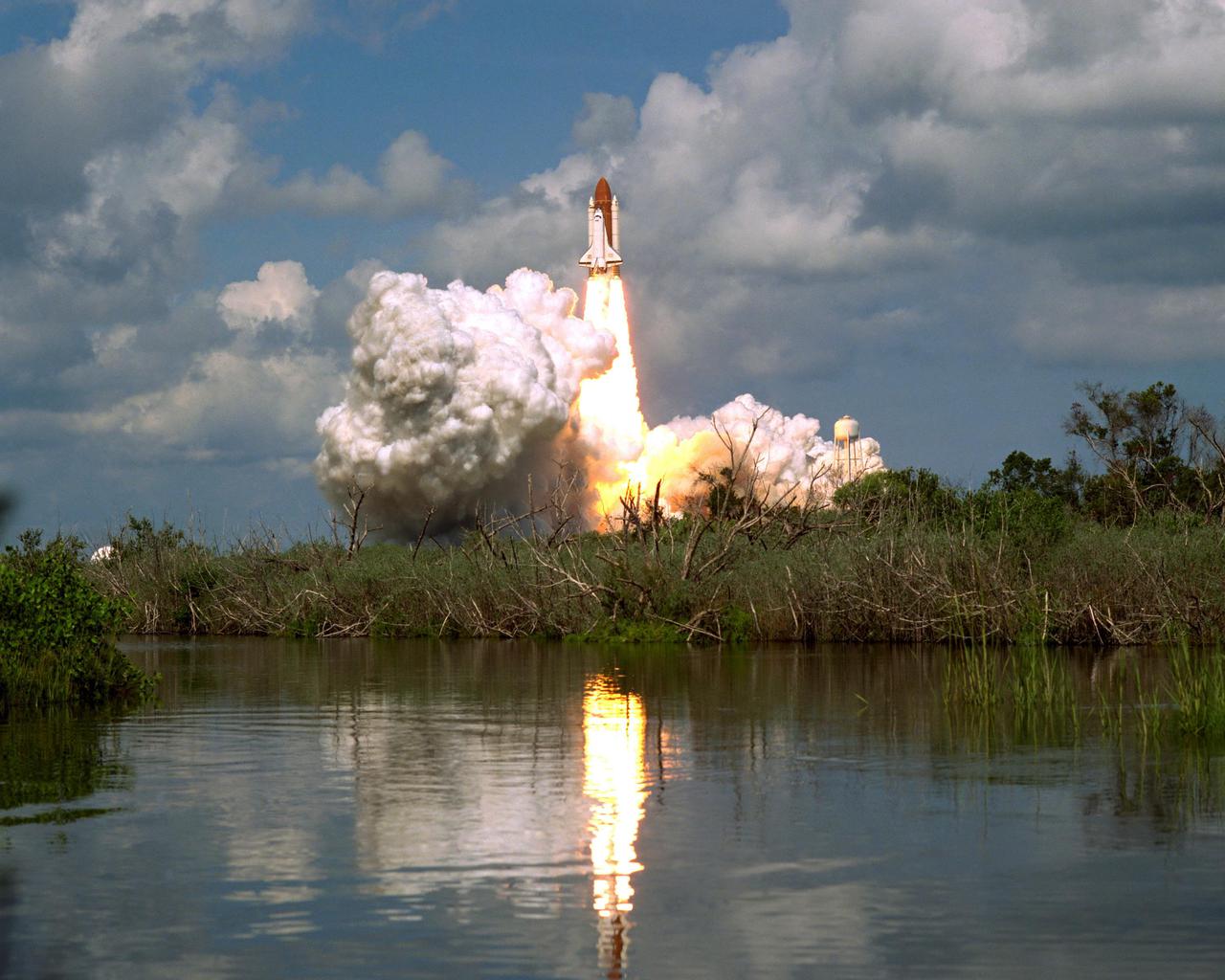
KENNEDY SPACE CENTER, FLA. -- The STS-34 Space Shuttle Atlantis lifts off from pad 39-B at 12:53 p.m. EDT, marking the beginning of a five-day mission in space. Atlantis is carrying a crew of five and the spacecraft Galileo, wich will be making a six-year trip to Jupiter..
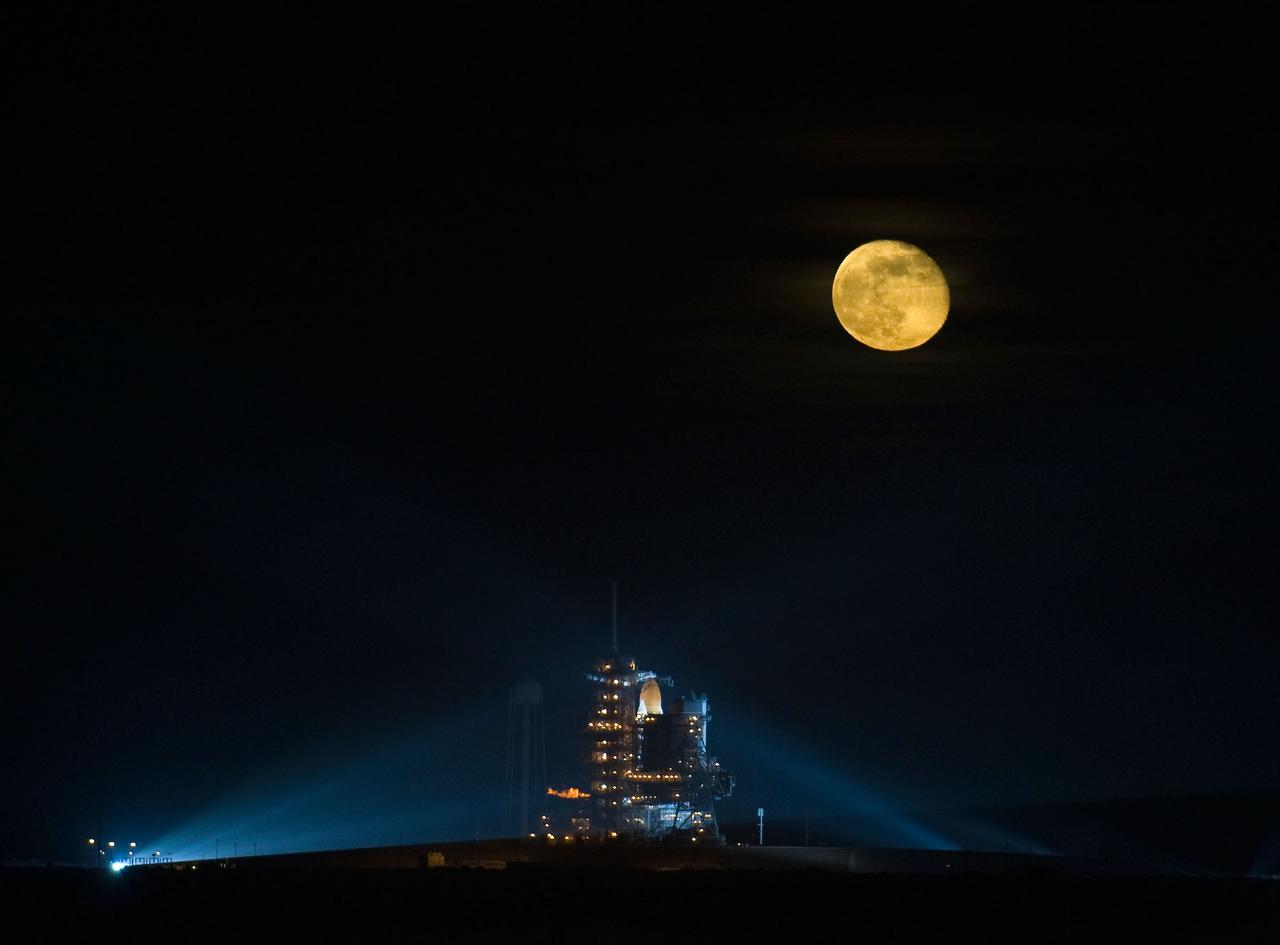
The Moon is seen rising behind the Space Shuttle Endeavour (STS-126) on pad 39a Friday, November 14, 2008, at the Kennedy Space Center in Cape Canaveral, Fla. The Shuttle lifted off from launch pad 39A at 7:55 p.m. EST. Photo Credit: (NASA/Bill Ingalls)
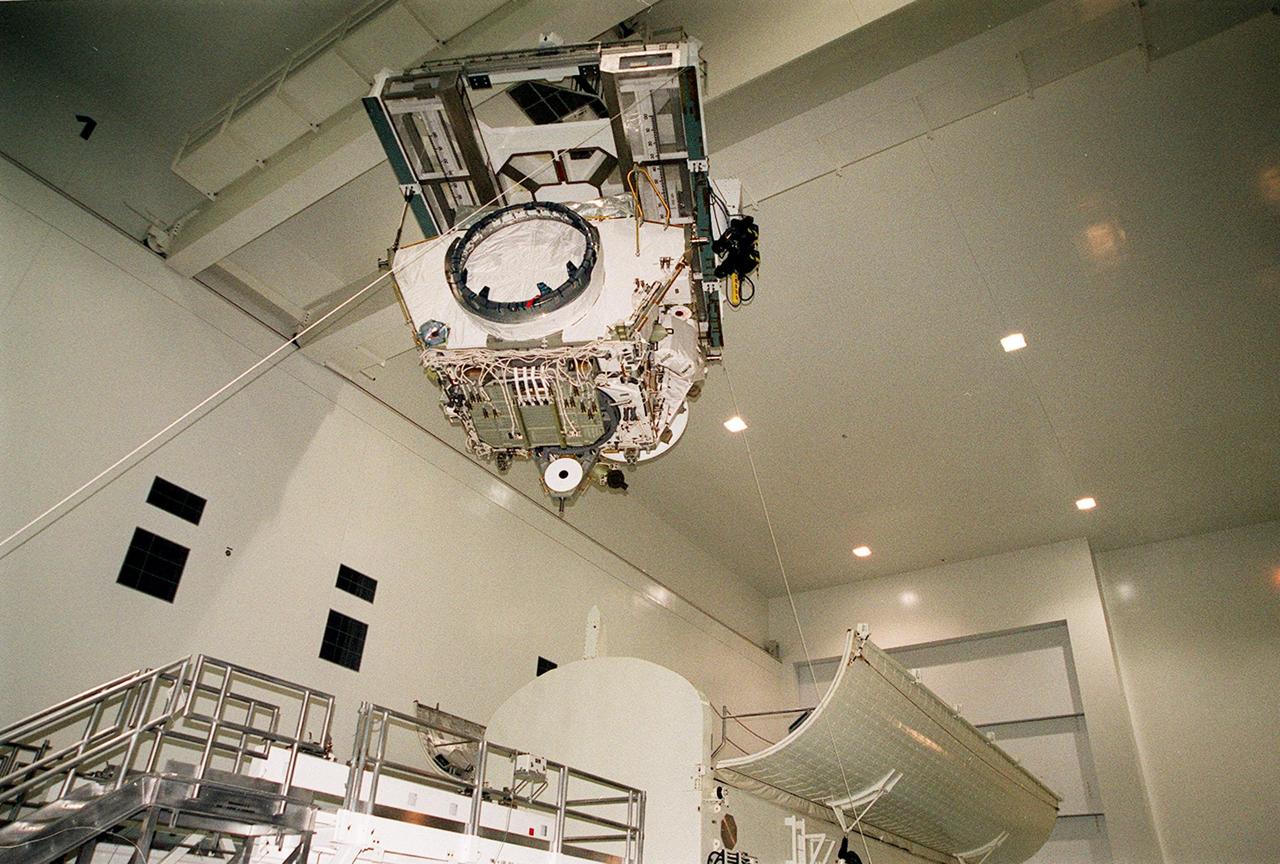
In the Space Station Processing Facility, the Integrated Truss Structure Z1, suspended from an overhead crane, nearly finishes rotation before placement inside the payload canister below it. The truss will then be transported to Launch Pad 39A. It is part of the payload on mission STS-92 scheduled to lift off Oct. 5, 2000
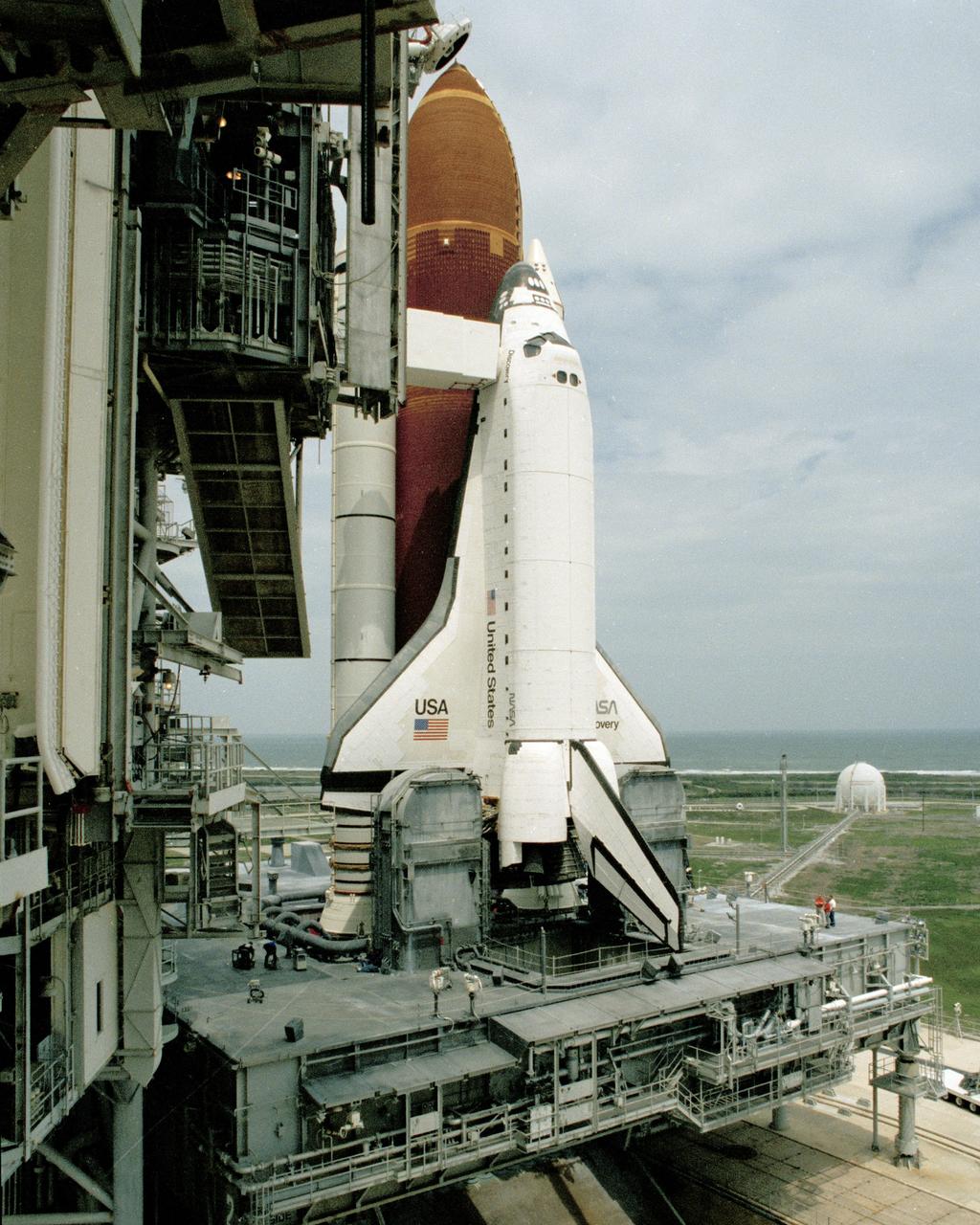
The orbiter Discovery is unveiled as rollback of the Rotating Service Structure begins during final prelaunch preparations at Launch Pad 39B on April 9. Space shuttle mission STS-31, carrying a crew of five and the Hubble Space Telescope, is set to lift off at 6:47 a.m. EDT, April 10. Photo credit: NASA
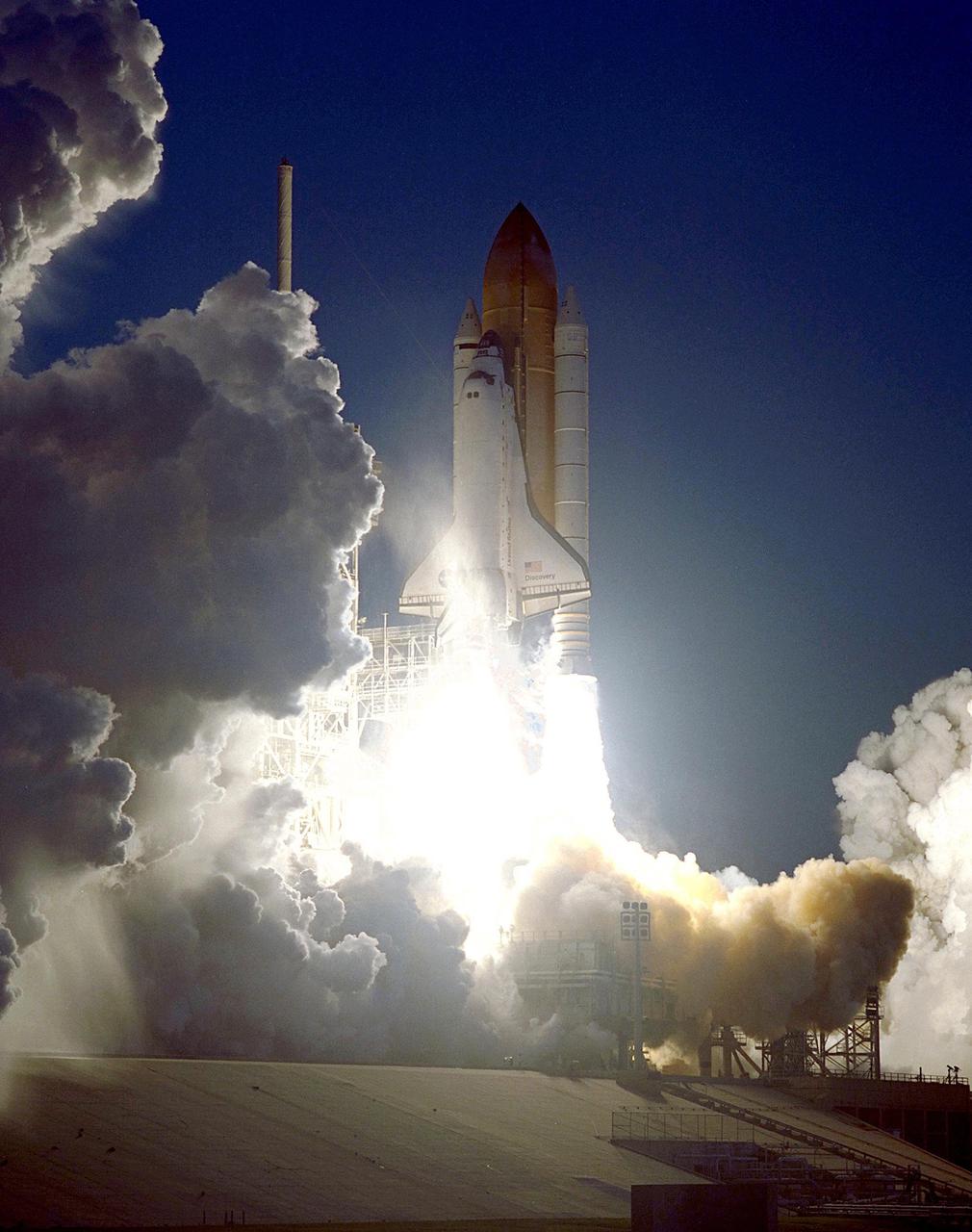
KENNEDY SPACE CENTER, Fla. -- Clouds of smoke and steam billow out from Launch Pad 39B as Space Shuttle Discovery lifts off for mission STS-102 to the International Space Station. The brilliance of the launch rivaled the sunrise on this perfect launch. Liftoff occurred at 6:42:09 EST for the eighth flight to the Space Station
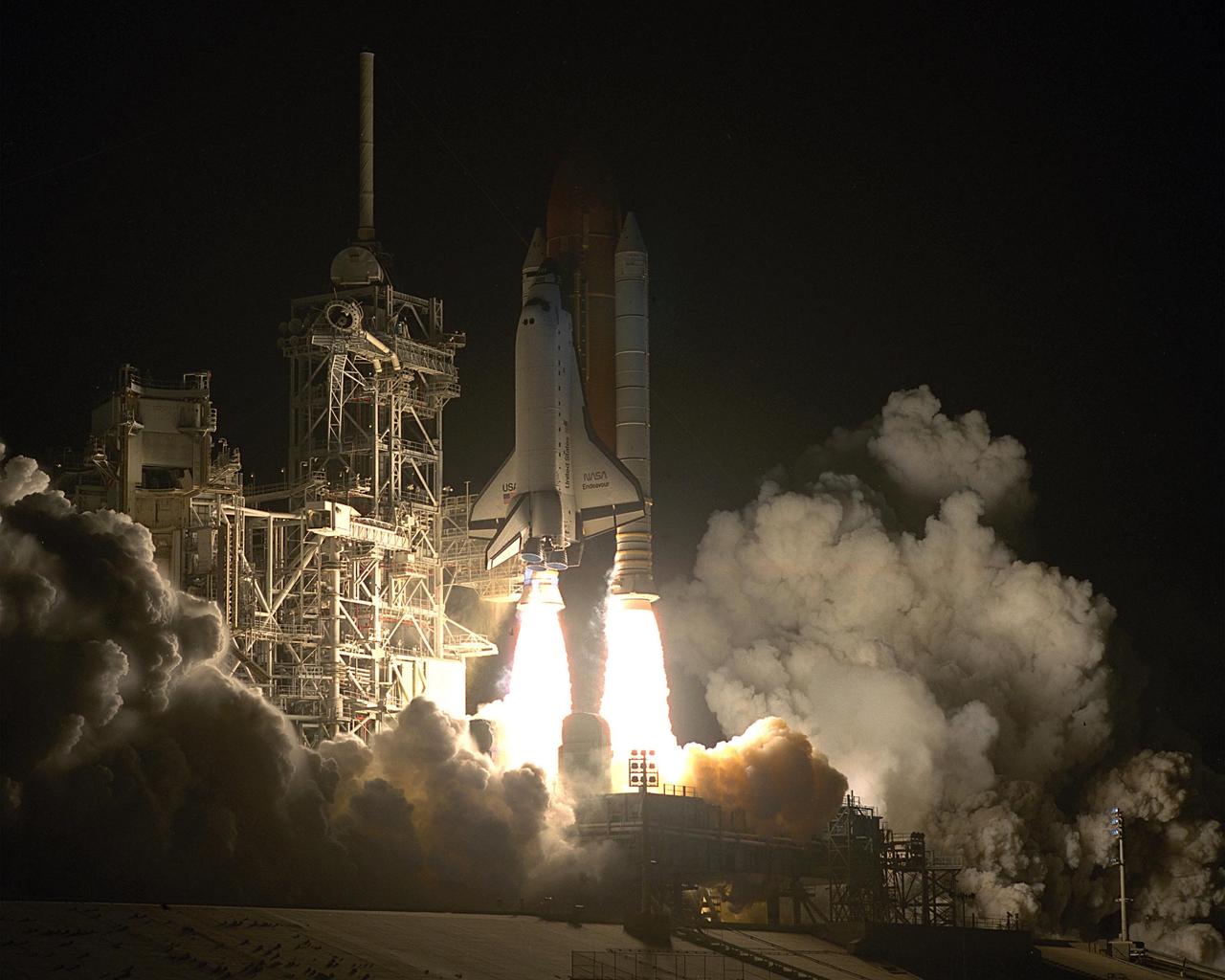
KENNEDY SPACE CENTER, FLA. - The Space Shuttle Endeavour lifts off from Launch Pad 39B on mission STS-61 with a crew of six NASA astronauts, a Swiss mission specialist and a variety of special tools aboard. Launch occured at 4:27:00 a.m. December 2, 1993.
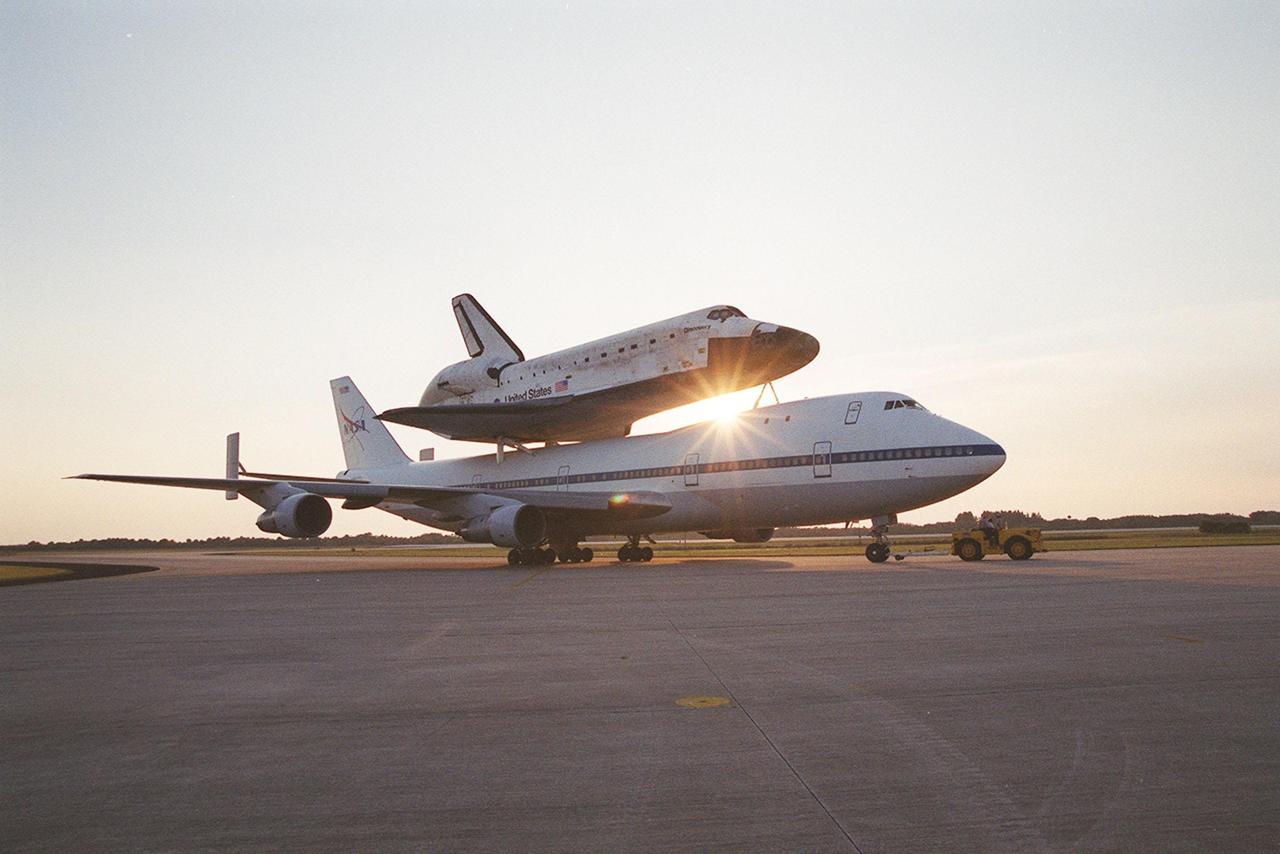
After landing at the Shuttle Landing Facility (SLF), the Shuttle Carrier Aircraft (SCA), with its unique cargo Discovery on top, is towed to the mate/demate device at the SLF. Discovery will be lifted off the SCA and transported to the Orbiter Processing Facility bay 1. There it will undergo preparations for its next launch, STS-102, scheduled for February 2001
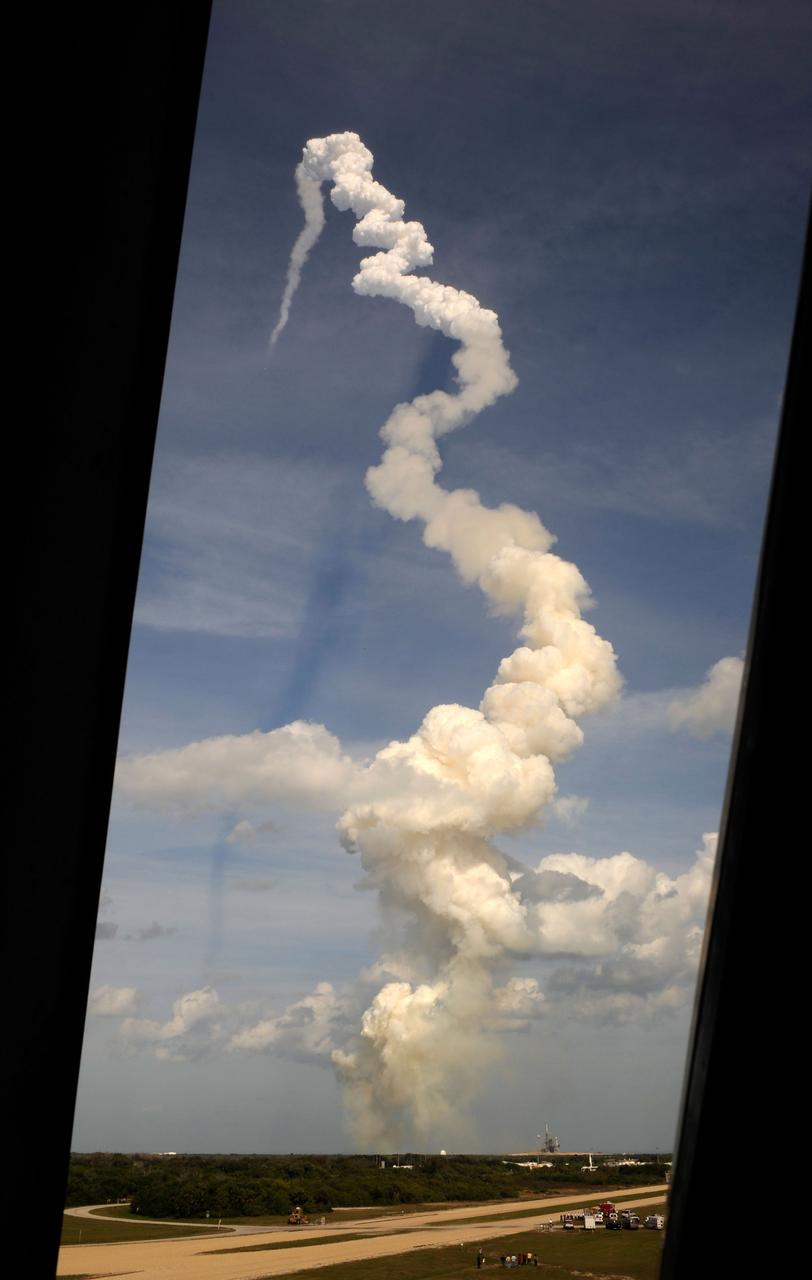
The launch of the Space Shuttle Atlantis (STS-122) as seen through the louvered windows of the Launch Control Center Thursday, Feb. 7, 2008, at the Kennedy Space Center in Cape Canaveral, Fla. The Shuttle lifted off from launch pad 39A at 2:45p.m. EST. Photo Credit: (NASA/Bill Ingalls)
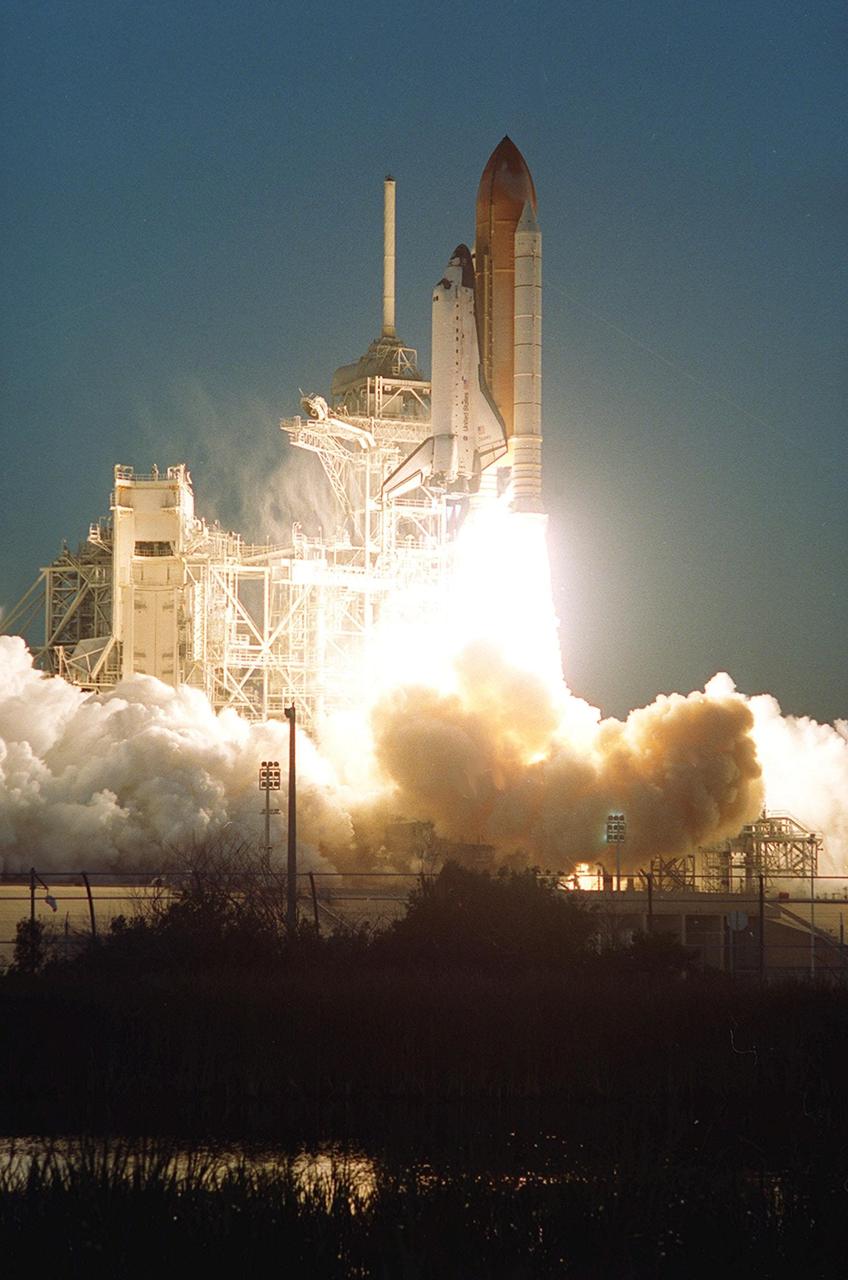
KENNEDY SPACE CENTER, Fla. -- Clouds of smoke and steam flow from Space Shuttle Discovery as it lifts off on mission STS-102 to the International Space Station. The brilliance of the launch rivaled the sunrise on this perfect launch. Liftoff occurred at 6:42:09 EST for the eighth flight to the Space Station

After its overhead rotation in the Space Station Processing Facility, the Integrated Truss Structure Z1 is guided toward the open doors of the payload canister below. After secured inside, the truss will be transported to Launch Pad 39A. It is part of the payload on mission STS-92 scheduled to lift off Oct. 5, 2000
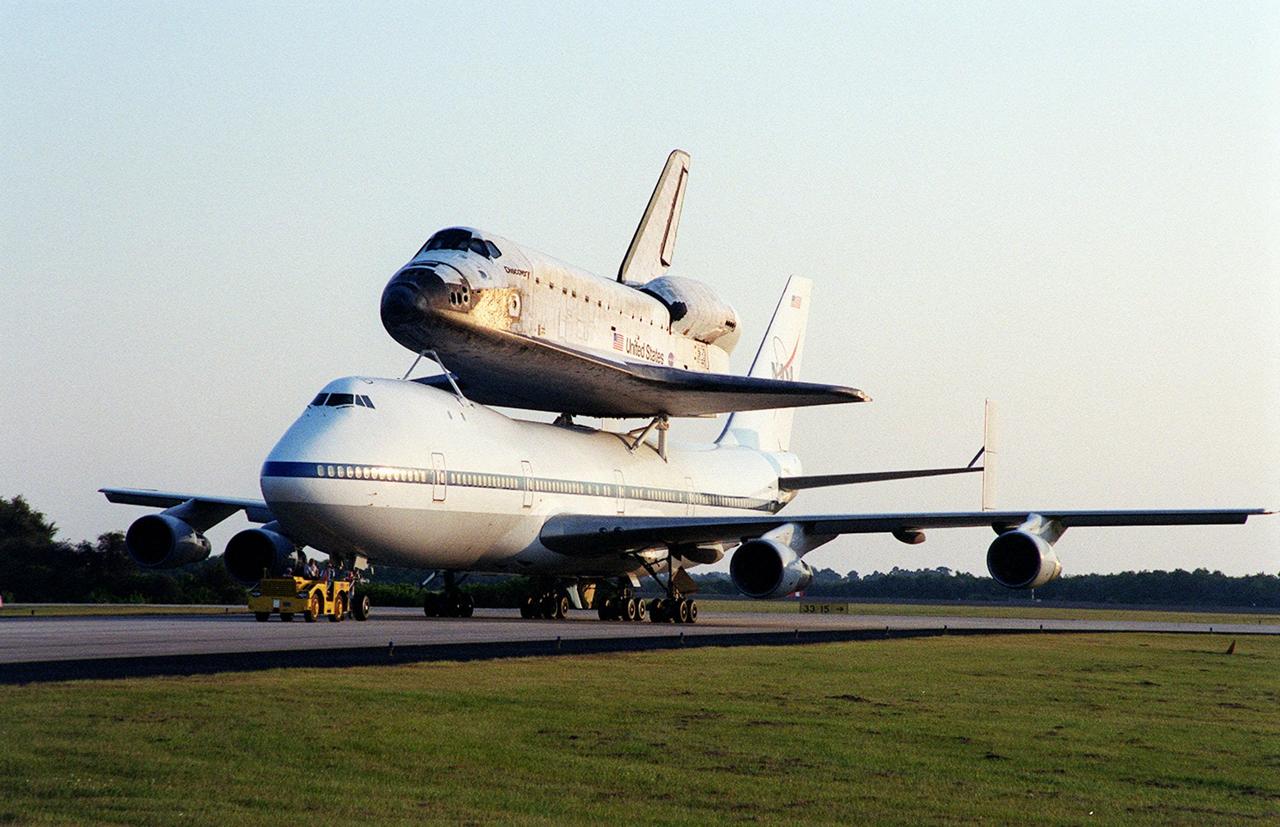
After landing at the Shuttle Landing Facility (SLF), the Shuttle Carrier Aircraft (SCA), with its unique cargo Discovery on top, is towed to the mate/demate device at the SLF. Discovery will be lifted off the SCA and transported to the Orbiter Processing Facility bay 1. There it will undergo preparations for its next launch, STS-102, scheduled for February 2001
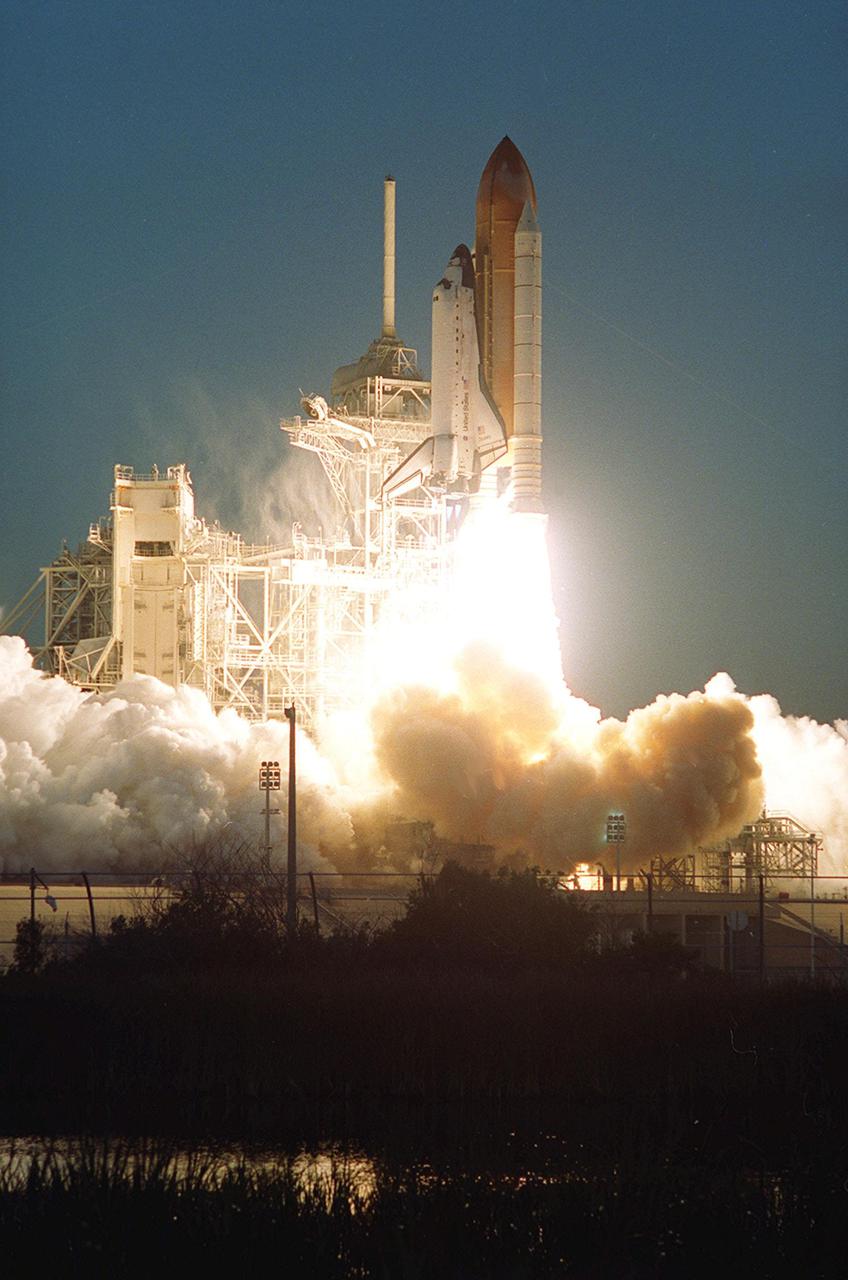
KENNEDY SPACE CENTER, Fla. -- Clouds of smoke and steam flow from Space Shuttle Discovery as it lifts off on mission STS-102 to the International Space Station. The brilliance of the launch rivaled the sunrise on this perfect launch. Liftoff occurred at 6:42:09 EST for the eighth flight to the Space Station
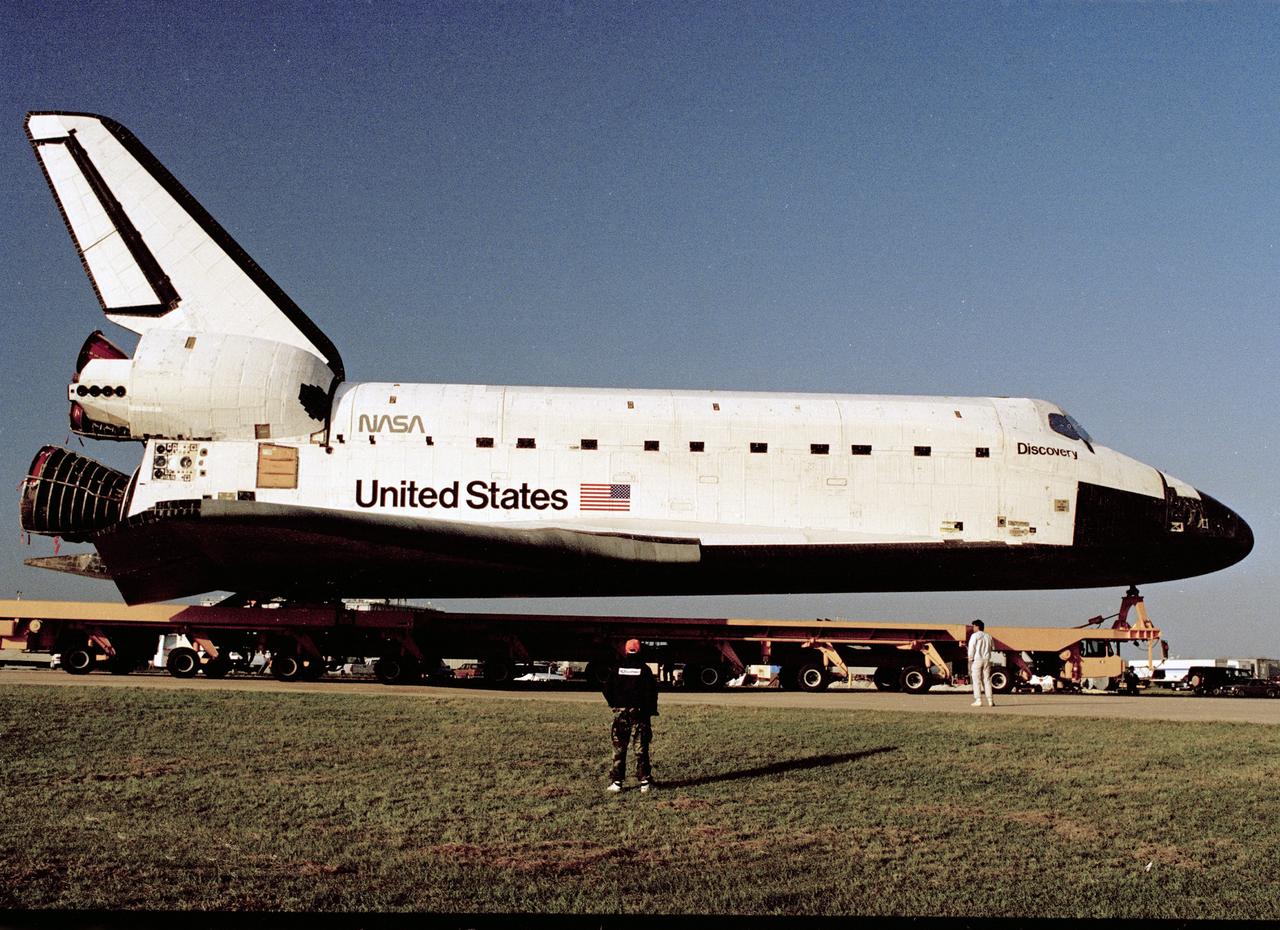
CAPE CANAVERAL, Fla. – The orbiter Discovery, its wheels retracted atop the orbiter transporter, rolls over from the OPF high bay to the VAB. Discovery is slated to lift off in March on mission STS-39, a DoD flight carrying a crew of seven. Photo credit: NASA
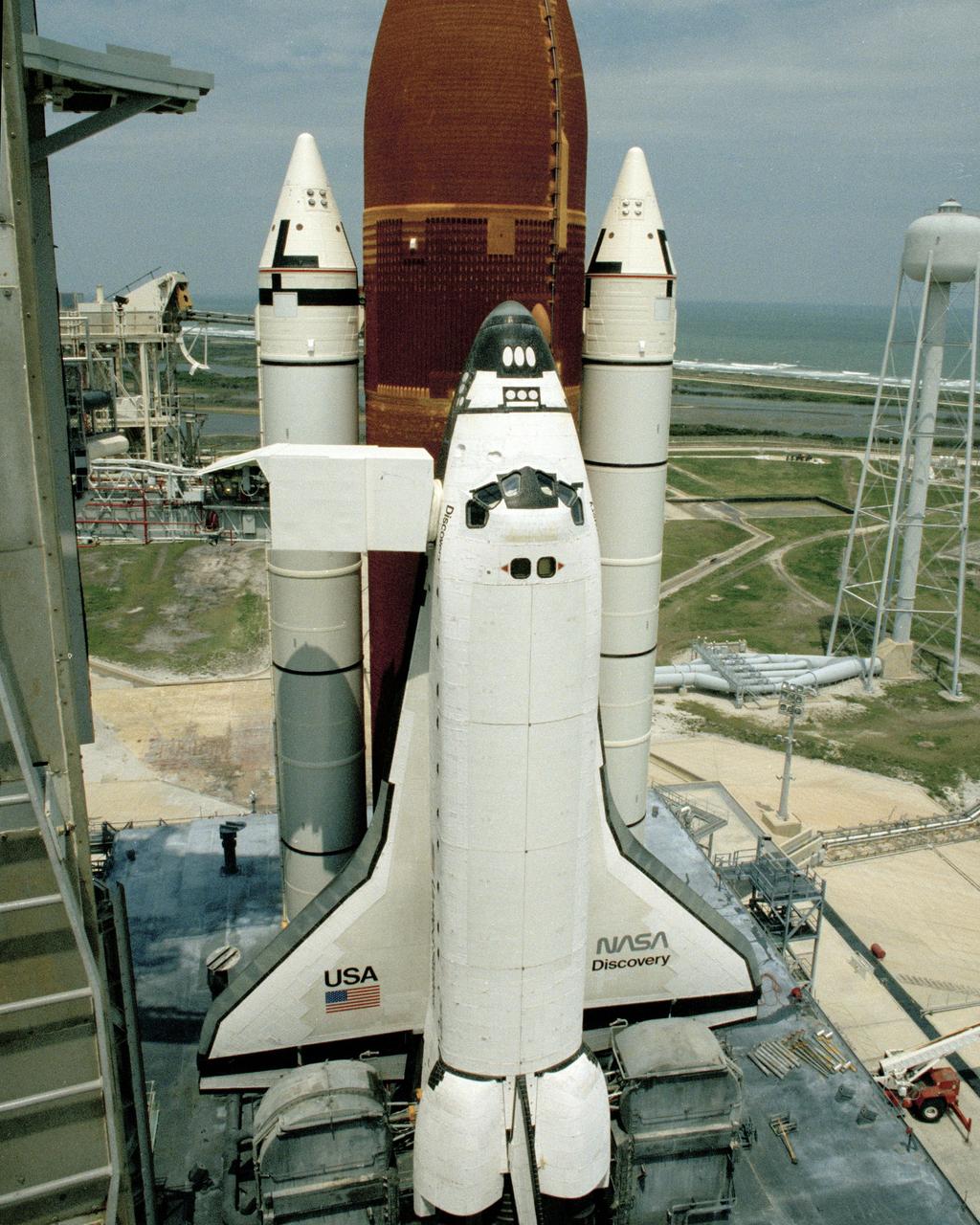
The orbiter Discovery is unveiled as rollback of the Rotating Service Structure begins during final prelaunch preparations at Launch Pad 39B on April 9. Space shuttle mission STS-31, carrying a crew of five and the Hubble Space Telescope, is set to lift off at 6:47 a.m. EDT, April 10. Photo credit: NASA
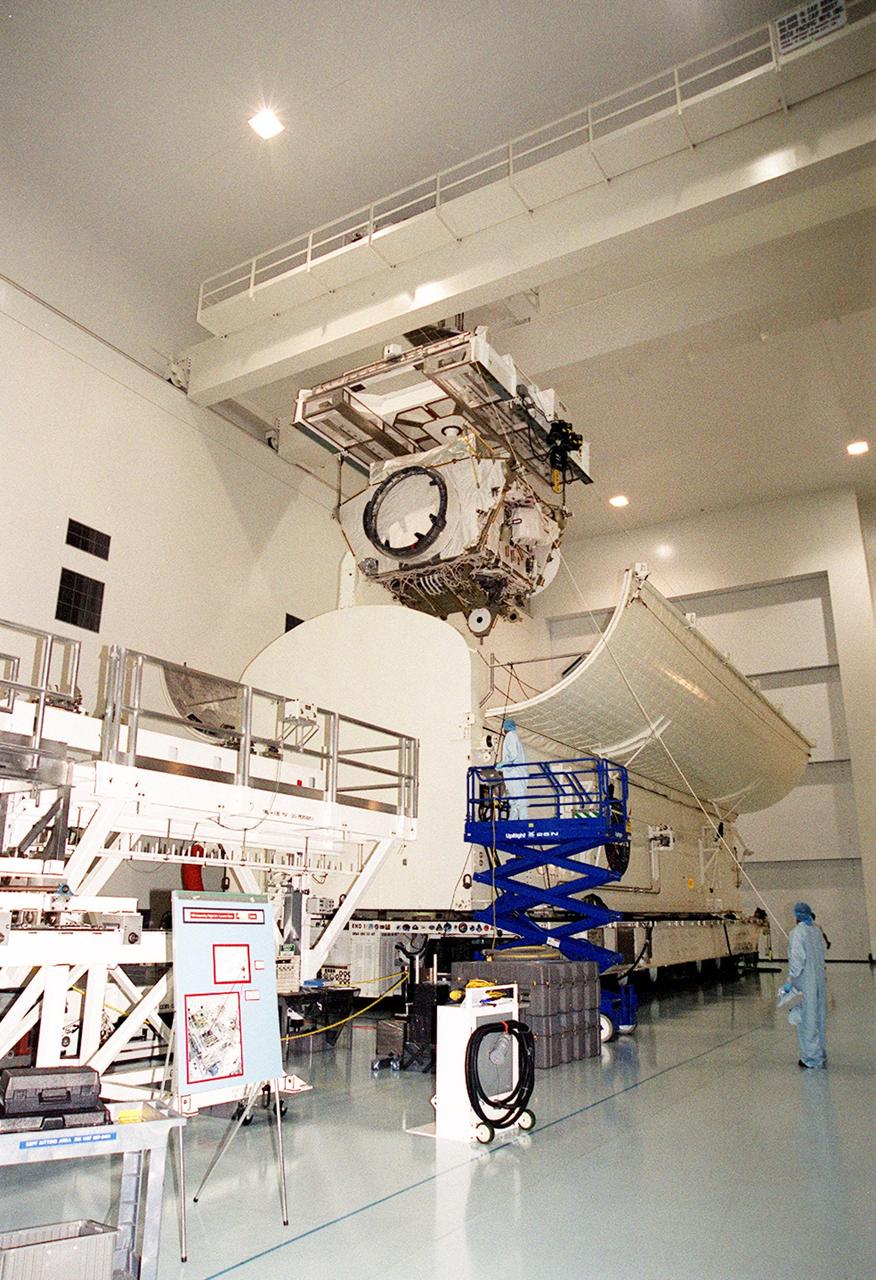
Suspended by an overhead crane in the Space Station Processing Facility, the Integrated Truss Structure Z1 is lowered toward the open doors of the payload canister below. After secured inside, the truss will be transported to Launch Pad 39A. It is part of the payload on mission STS-92 scheduled to lift off Oct. 5, 2000
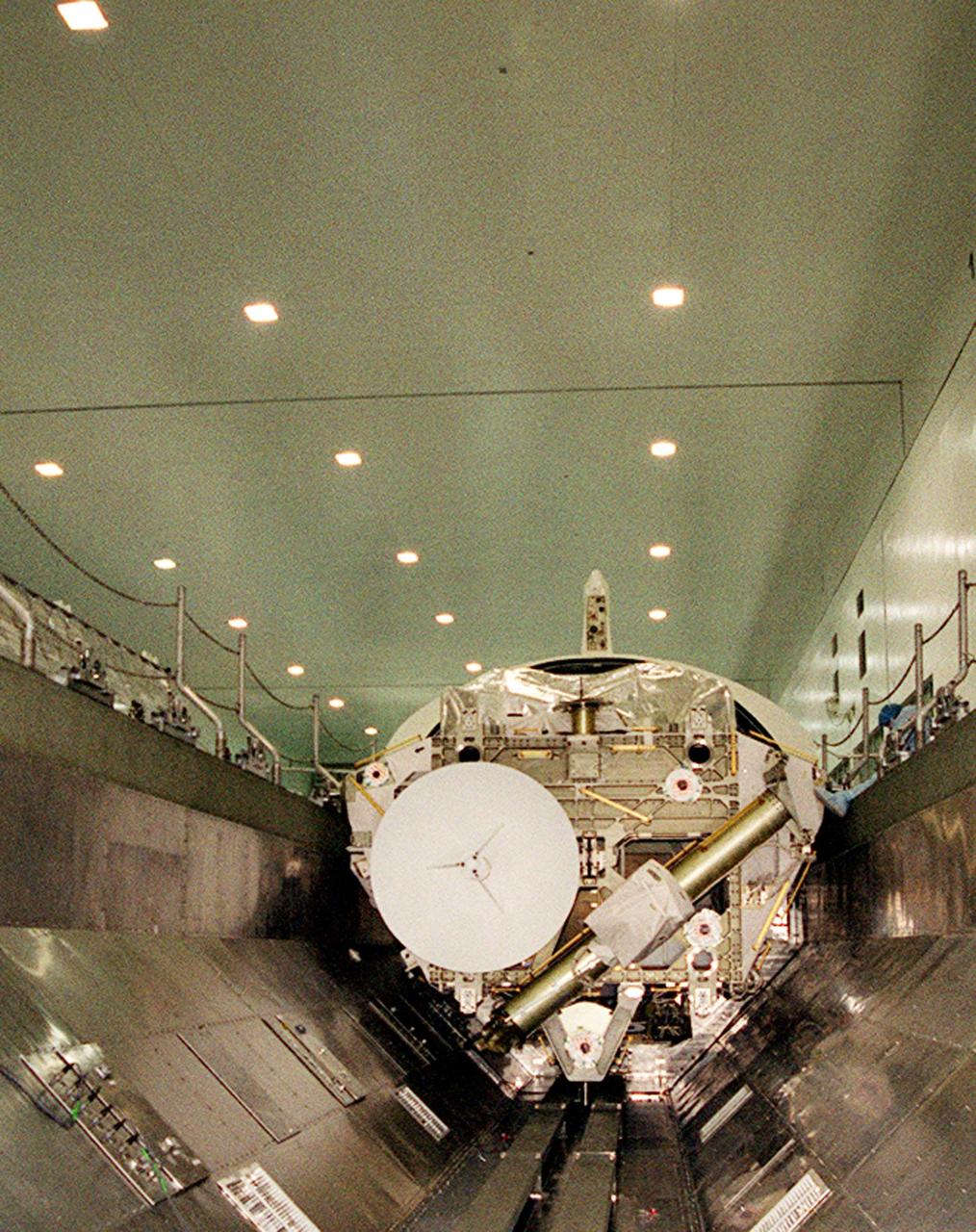
The Integrated Truss Structure Z1 rests on the bottom of the payload canister in this view from inside. Once it is secured, the truss will be transported from the Space Station Processing Facility to Launch Pad 39A. The Z1 is part of the payload on mission STS-92 scheduled to lift off Oct. 5, 2000
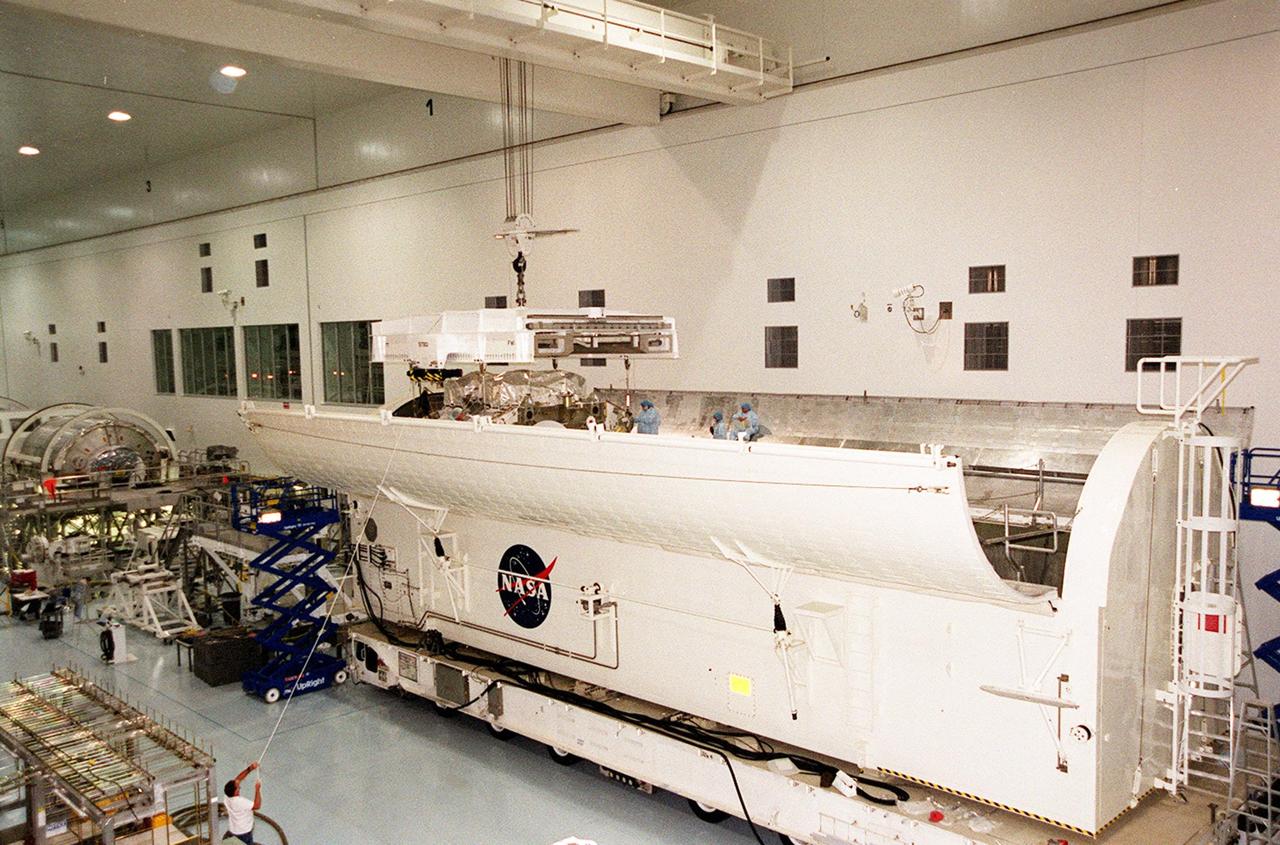
The Integrated Truss Structure Z1 disappears inside the payload canister after being lowered by the overhead crane in the Space Station Processing Facility. Once it is secured inside, the truss will be transported to Launch Pad 39A. It is part of the payload on mission STS-92 scheduled to lift off Oct. 5, 2000
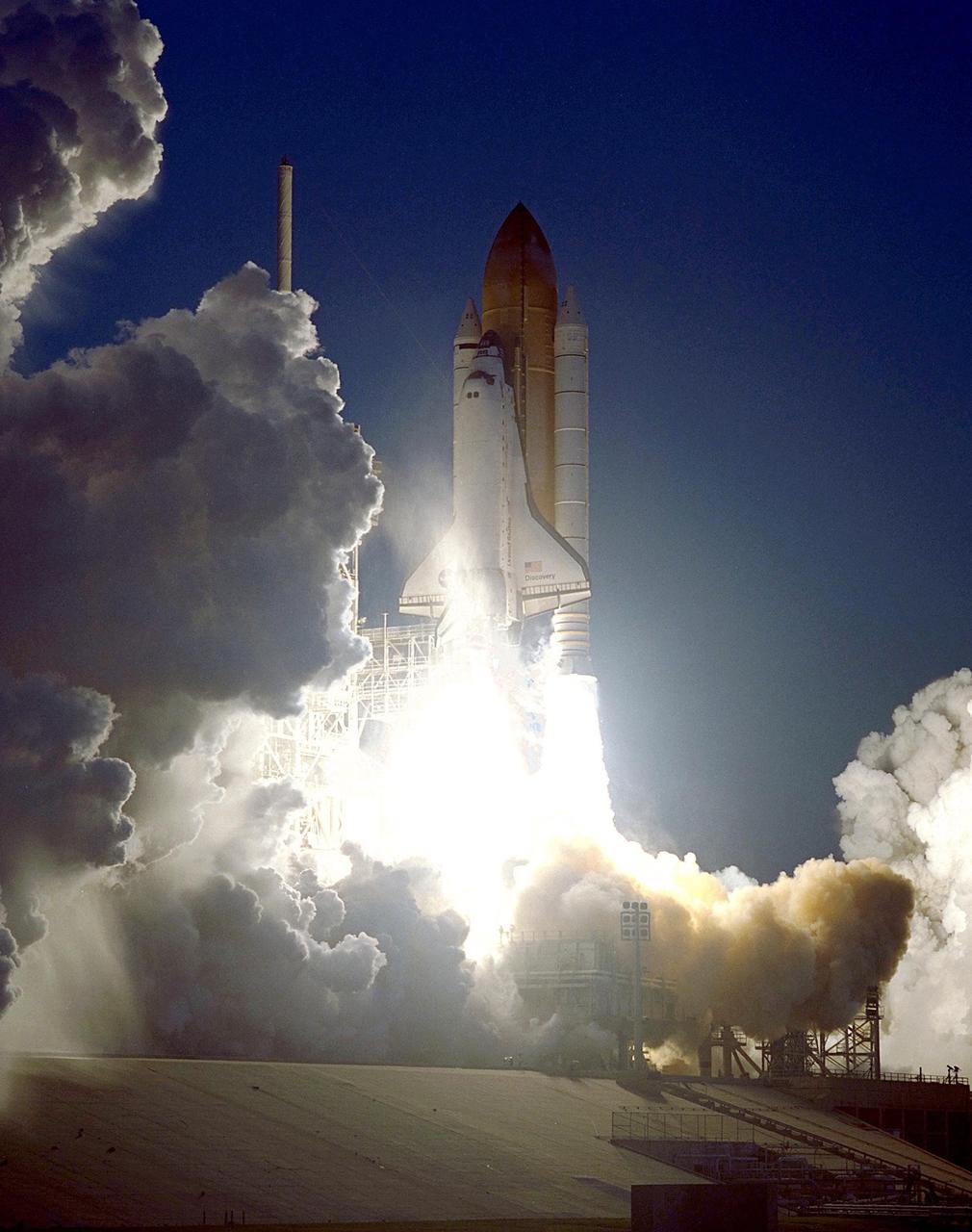
KENNEDY SPACE CENTER, Fla. -- Clouds of smoke and steam billow out from Launch Pad 39B as Space Shuttle Discovery lifts off for mission STS-102 to the International Space Station. The brilliance of the launch rivaled the sunrise on this perfect launch. Liftoff occurred at 6:42:09 EST for the eighth flight to the Space Station

In the Space Station Processing Facility, the Integrated Truss Structure Z1 hangs from an overhead crane that will place it in the payload canister behind it. The truss will then be transported to Launch Pad 39A. It is part of the payload on mission STS-92 scheduled to lift off Oct. 5, 2000
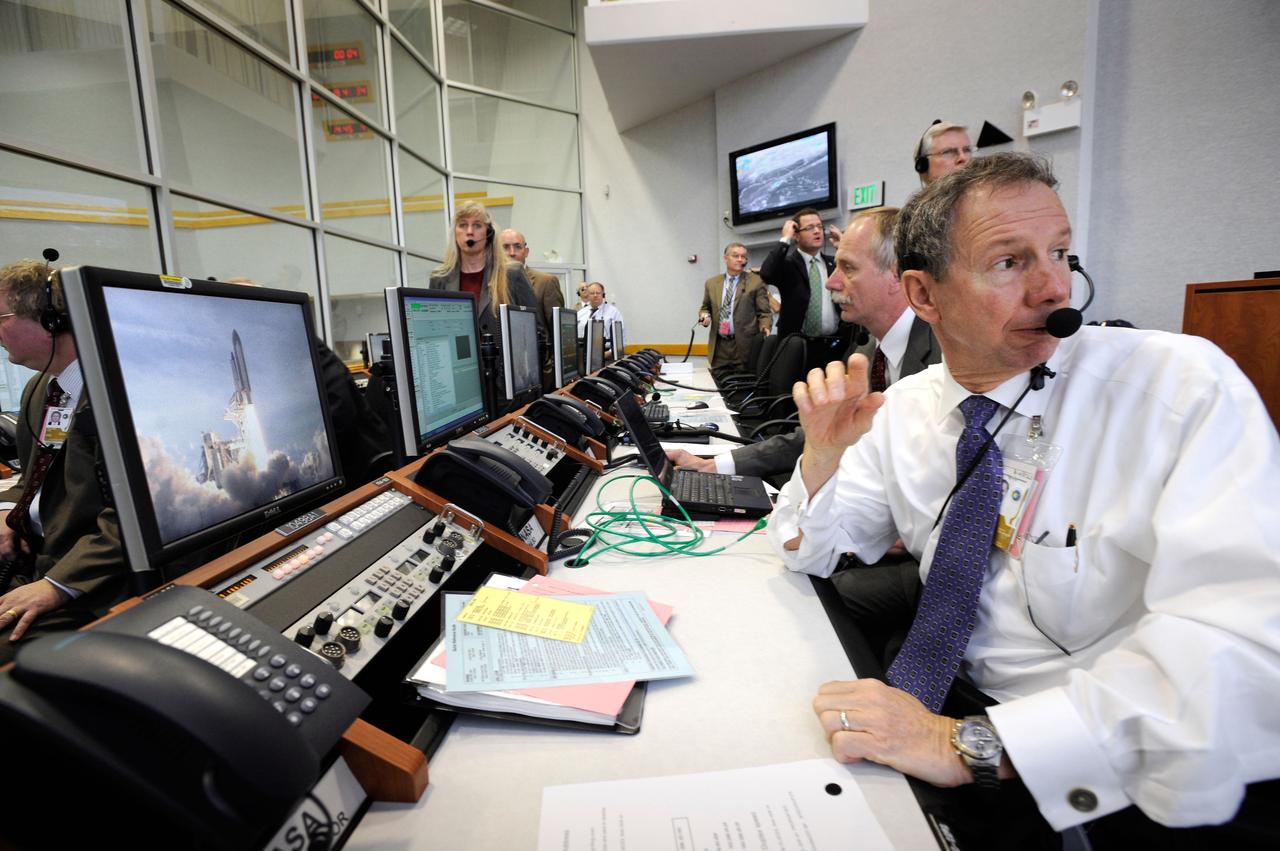
NASA Administrator, Michael Griffin watches the launch of the Space Shuttle Atlantis (STS-122) from the Launch Control Center Thursday, Feb. 7, 2008, at the Kennedy Space Center in Cape Canaveral, Fla. The Shuttle lifted off from launch pad 39A at 2:45p.m. EST. Photo Credit: (NASA/Bill Ingalls)
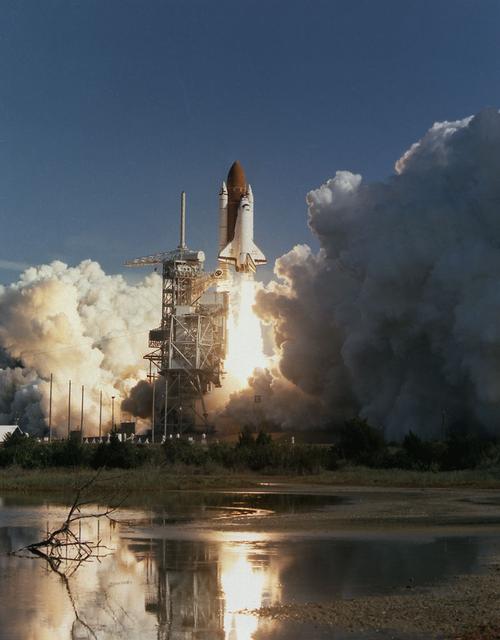
Space Shuttle Discovery (STS-42) lifted off from Kennedy Space Center (KSC) with International Microgravity Laboratory (IML-1) aboard the orbiter's cargo bay. IML missions were devoted to material and life sciences studies using the Spacelab Long Module.
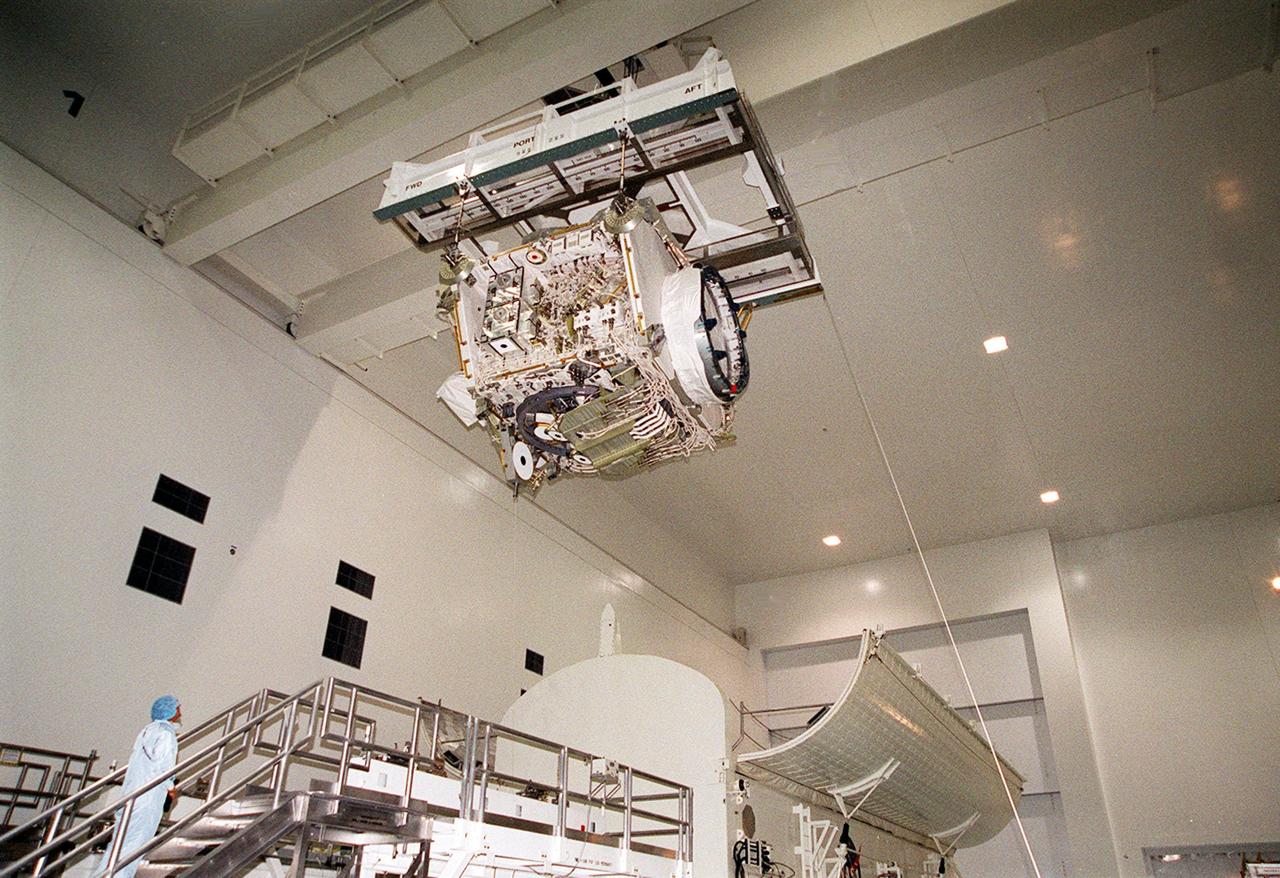
In the Space Station Processing Facility, the Integrated Truss Structure Z1, suspended from an overhead crane, is rotated before being placed inside the payload canister below it. The truss will then be transported to Launch Pad 39A. It is part of the payload on mission STS-92 scheduled to lift off Oct. 5, 2000
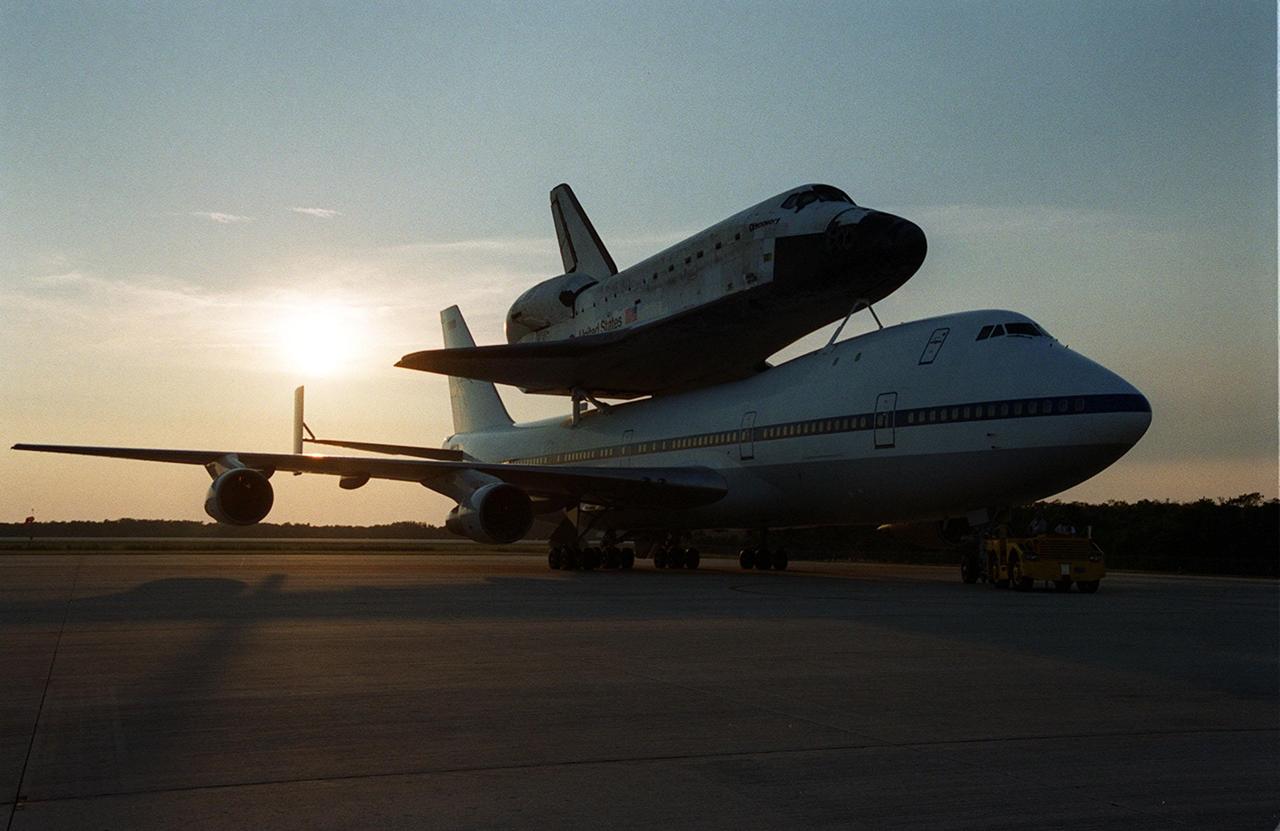
The Shuttle Carrier Aircraft (SCA) and its unique cargo Discovery on top rest in the shadows from the setting sun behind them. Discovery will be lifted off the SCA via the mate/demate device and transported to the Orbiter Processing Facility bay 1. There it will undergo preparations for its next launch, STS-102, scheduled for February 2001

The Moon is seen rising behind the Space Shuttle Endeavour (STS-126) on pad 39a Friday, November 14, 2008, at the Kennedy Space Center in Cape Canaveral, Fla. The Shuttle lifted off from launch pad 39A at 7:55 p.m. EST. Photo Credit: (NASA/Bill Ingalls)
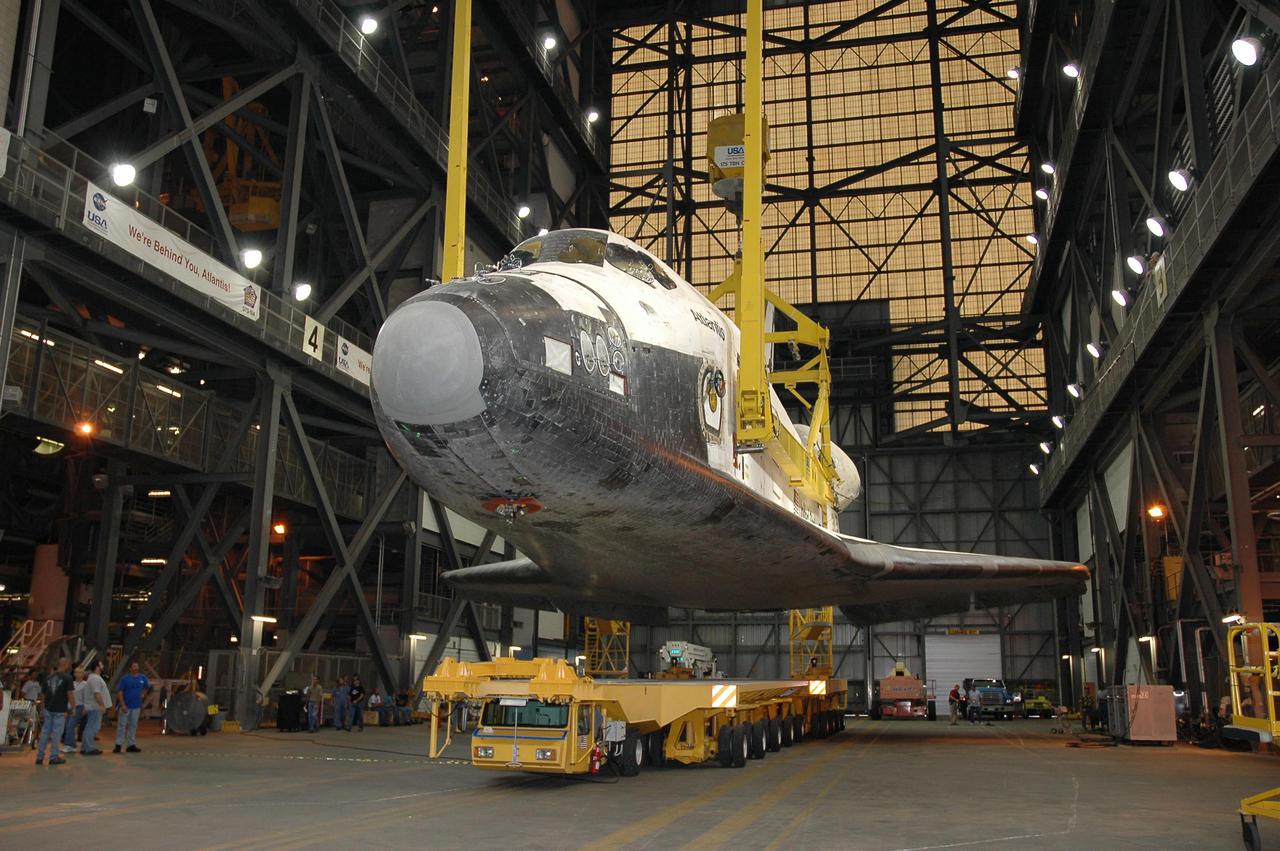
KENNEDY SPACE CENTER, FLA. - In the transfer aisle of the Vehicle Assembly Building at NASA Kennedy Space Center, the orbiter Atlantis is lifted off the transporter. The orbiter will be raised to a vertical position and lifted up and over the cross-beam into high bay 1 and mated with the Solid Rocket Boosters and External Tank already stacked there on the Mobile Launcher Platform. Atlantis is the designated orbiter for Return to Flight mission STS-121. The lighted planning window for launch extends from Sept. 9 to Sept. 25.
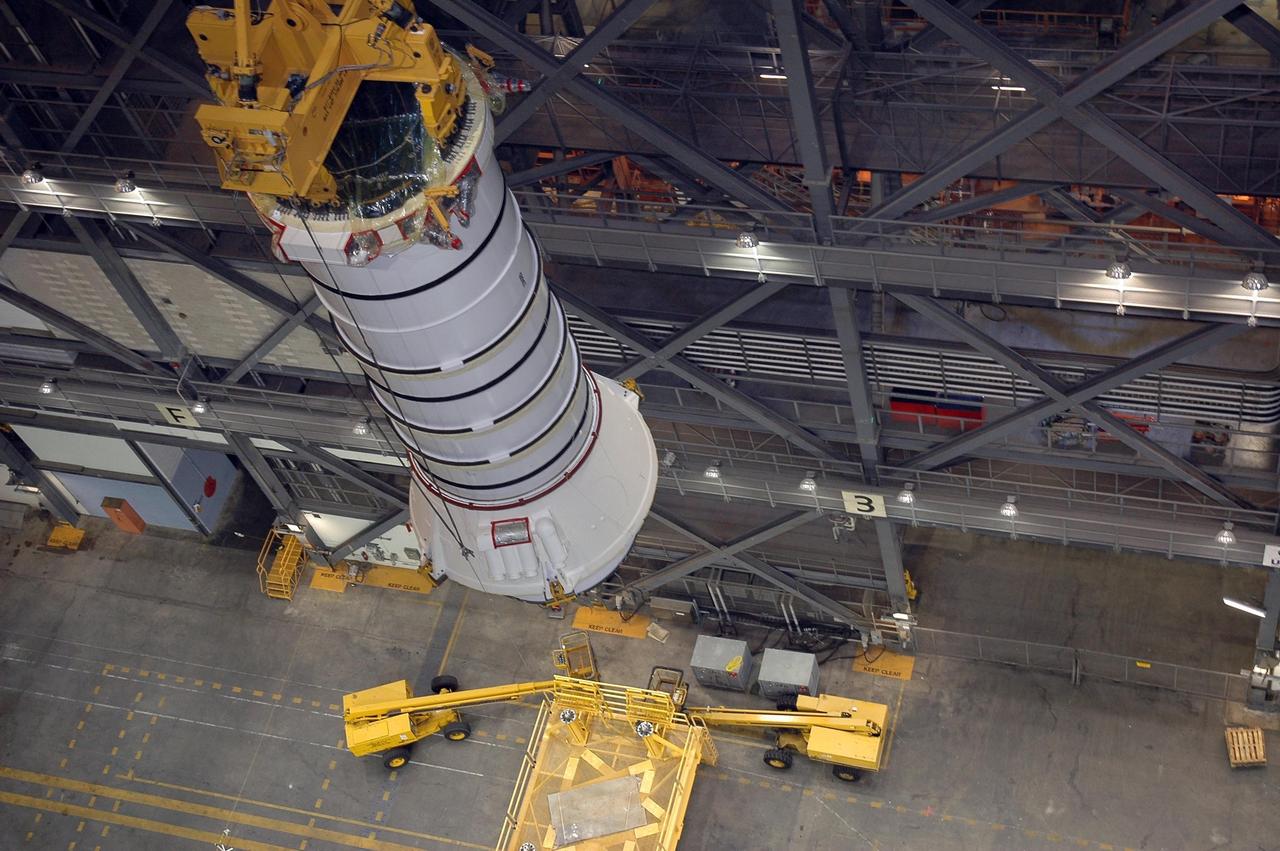
KENNEDY SPACE CENTER, FLA. - In the Vehicle Assembly Building at NASA's Kennedy Space Center, a solid rocket booster segment is lifted off its transporter below. The segment is being lifted up into high bay 3 and will be placed on mobile launcher platform No. 2 for use on mission STS-115. The mission will deliver a truss and other key components to the International Space Station. Launch is currently scheduled for late August. Photo credit: NASA/Charisse Nahser

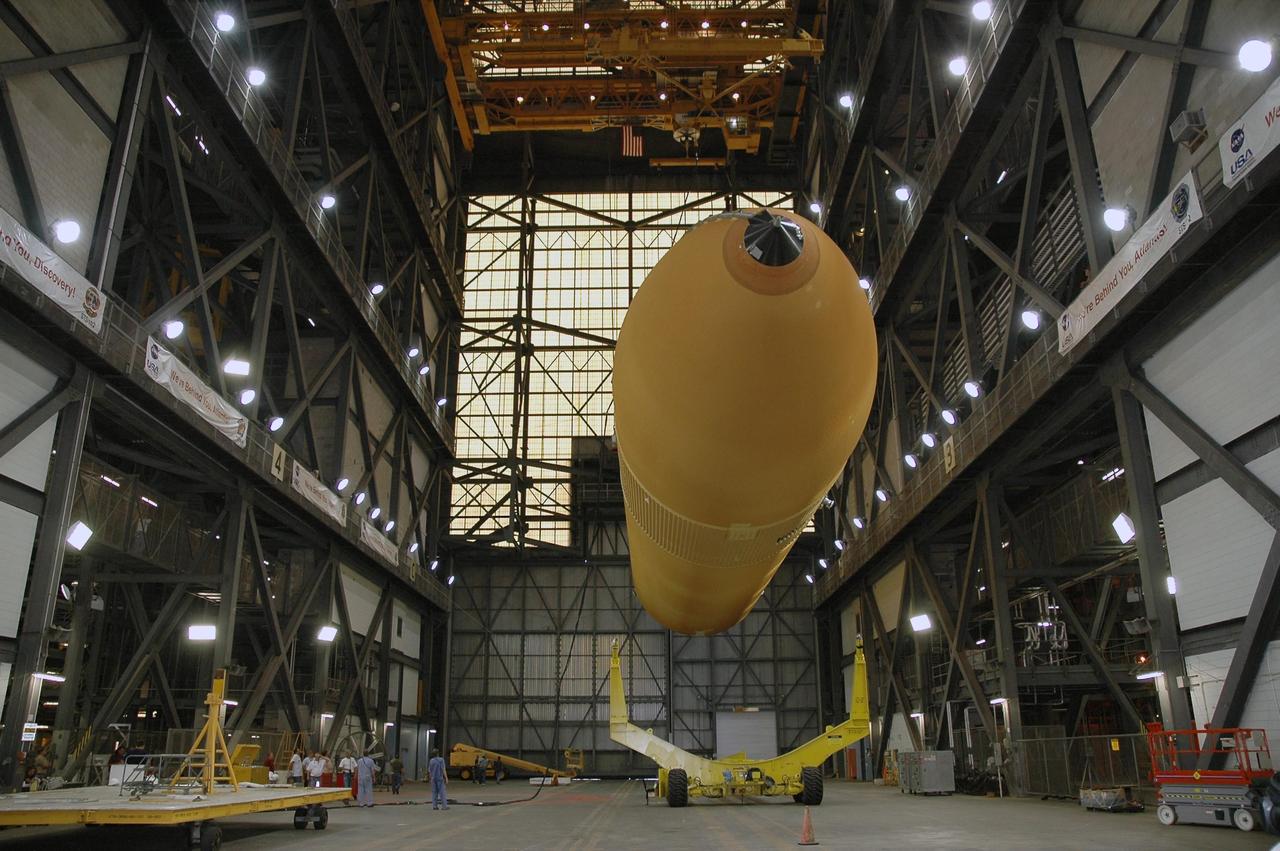
KENNEDY SPACE CENTER, FLA. --In the Vehicle Assembly Building, the overhead crane lifts external tank No. 117 off its transporter. The tank will be raised to a vertical position and then lifted into the checkout cell in high bay 2 for processing. ET-117 arrived aboard the Pegasus barge after its voyage around the Florida Peninsula from the Michoud Assembly Facility near New Orleans. The tank is slated for mission STS-118, which is targeted for launch in early August. Photo credit: NASA/Jack Pfaller
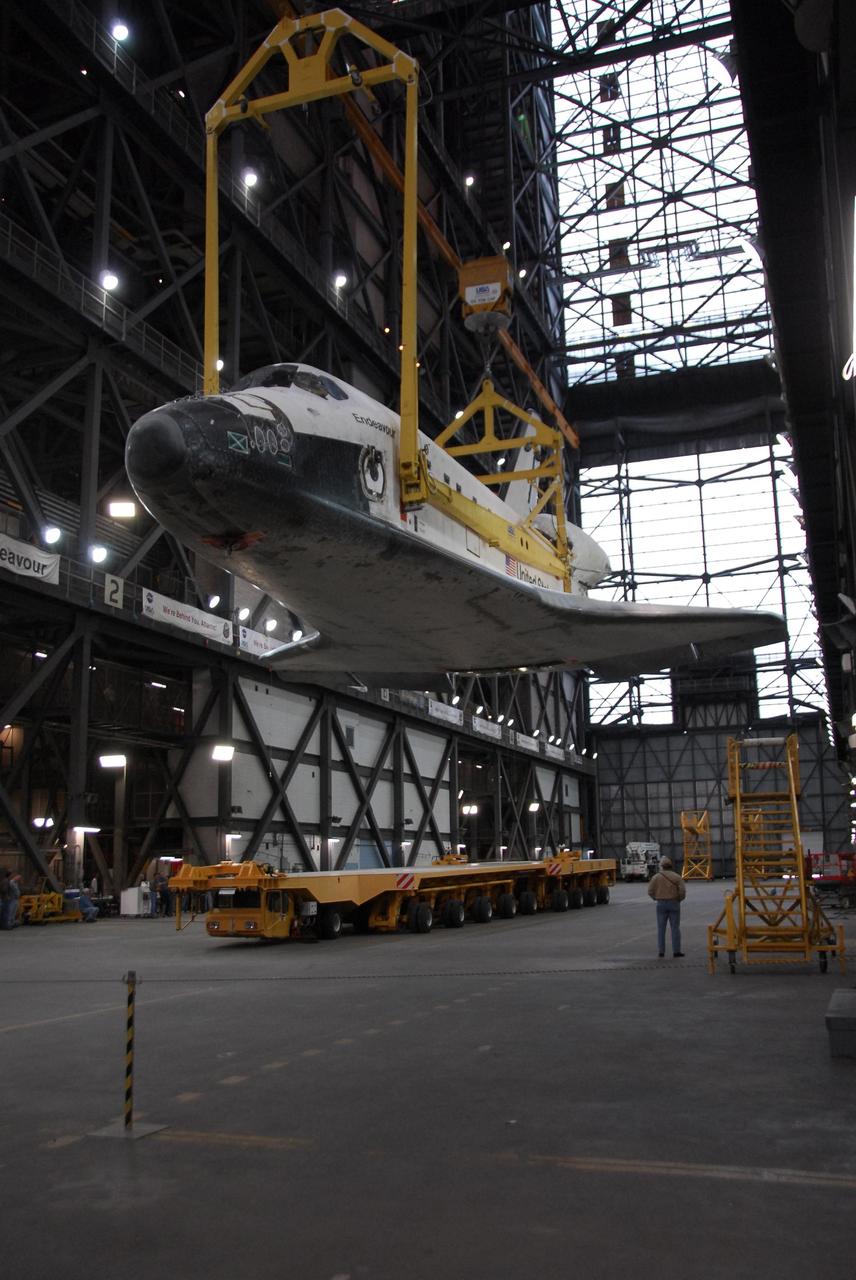
KENNEDY SPACE CENTER, FLA. -- In the transfer aisle of the Vehicle Assembly Building, space shuttle Endeavour is lifted off its transporter. The shuttle will be raised to a vertical position and lifted up into high bay 1 to be attached to its external fuel tank and solid rocket boosters in preparation for launch on the STS-123 mission, targeted for March 11. The mission will deliver the first section of the Japan Aerospace Exploration Agency's Kibo laboratory and the Canadian Space Agency's two-armed robotic system, Dextre. Photo credit: NASA/Dimitri Gerondidakis
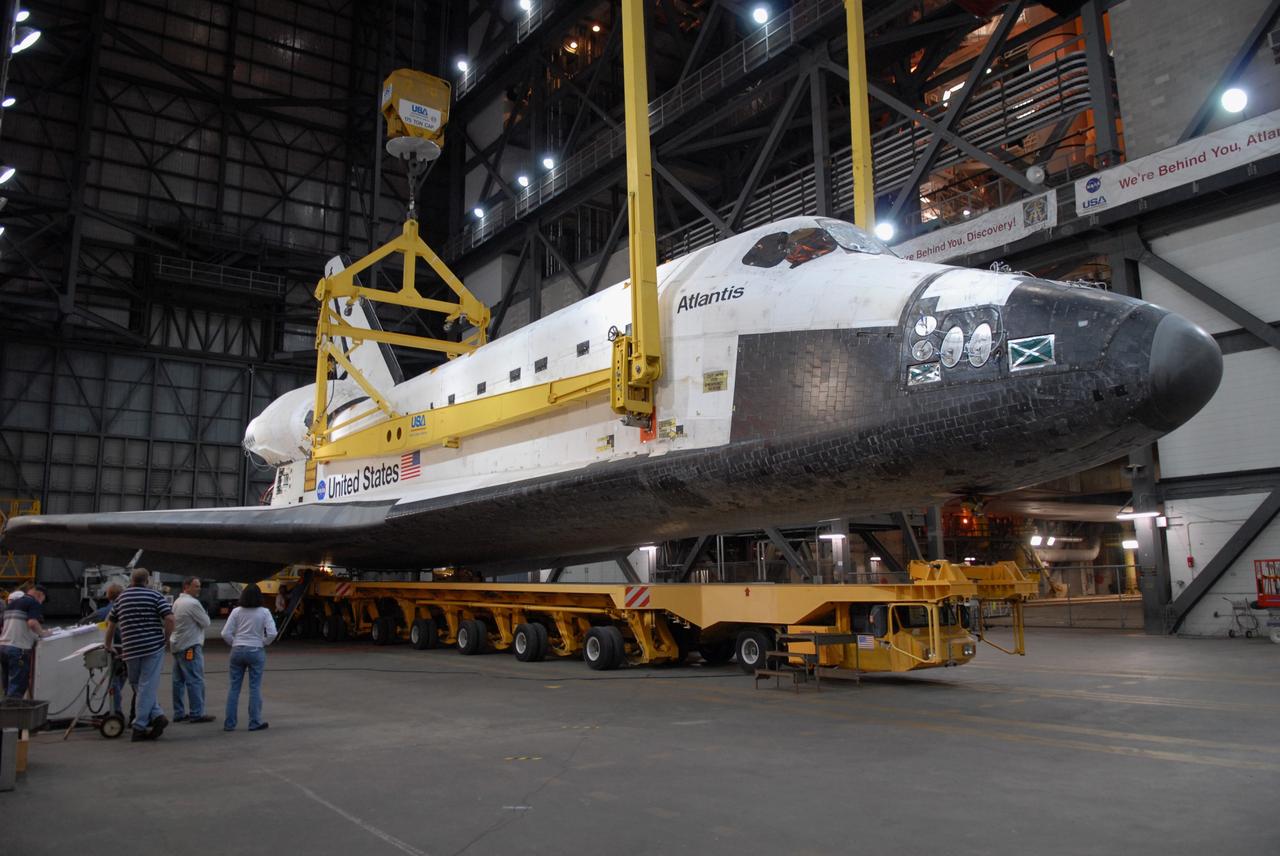
CAPE CANAVERAL, Fla. – In the Vehicle Assembly Building at NASA's Kennedy Space Center in Florida, space shuttle Atlantis is lifted off its transporter in the transfer aisle. The shuttle will be raised to a vertical position and lifted into High Bay 3 where it will be attached to its external fuel tank and solid rocket boosters on the mobile launcher platform. After additional preparations are made, the shuttle will be rolled out to Launch Pad 39A for a targeted launch on May 12 on the STS-125 Hubble servicing mission. Photo credit: NASA/Cory Huston
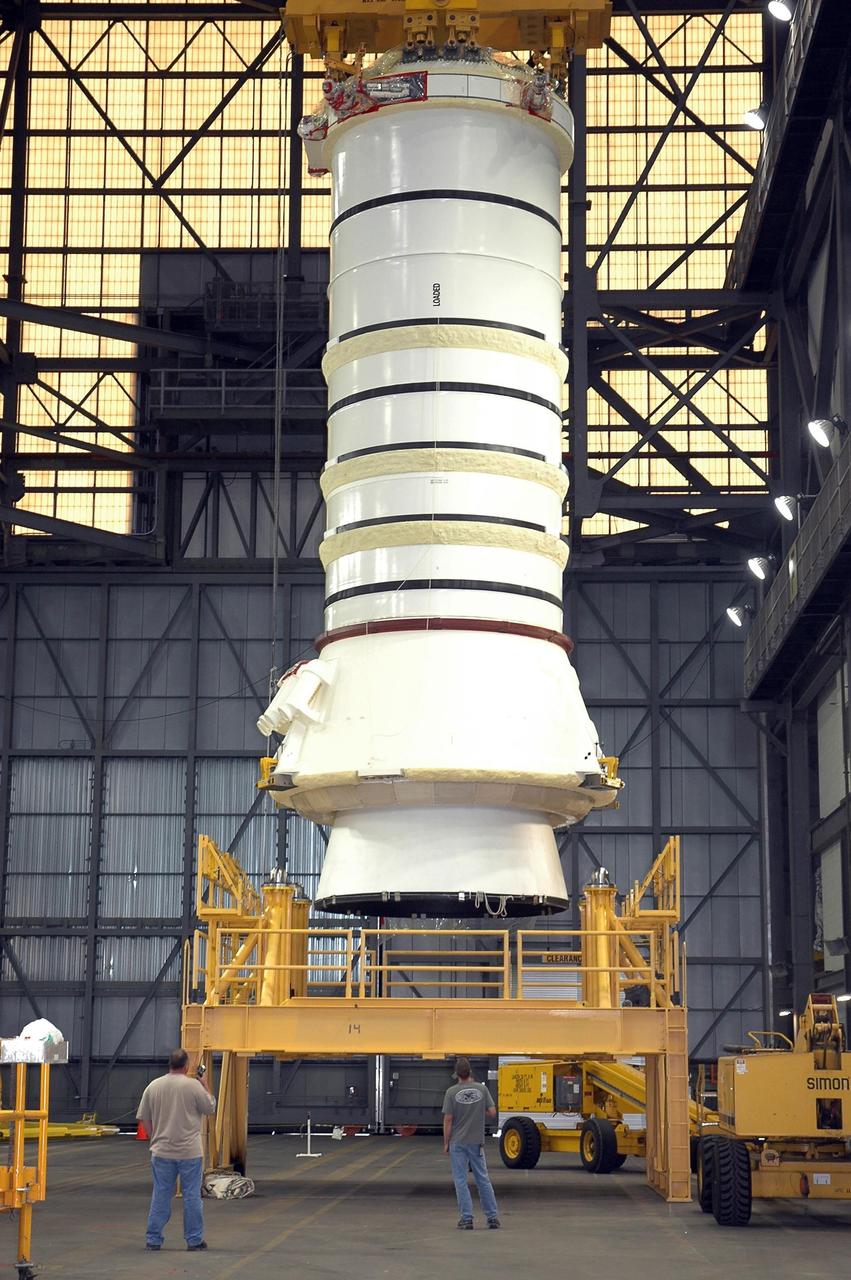
KENNEDY SPACE CENTER, FLA. - In the Vehicle Assembly Building at NASA's Kennedy Space Center, a crane lifts a solid rocket booster segment off its transporter. The segment is being lifted up into high bay 3 and will be placed on mobile launcher platform No. 2 for use on mission STS-115. The mission will deliver a truss and other key components to the International Space Station. Launch is currently scheduled for late August. Photo credit: NASA/Charisse Nahser
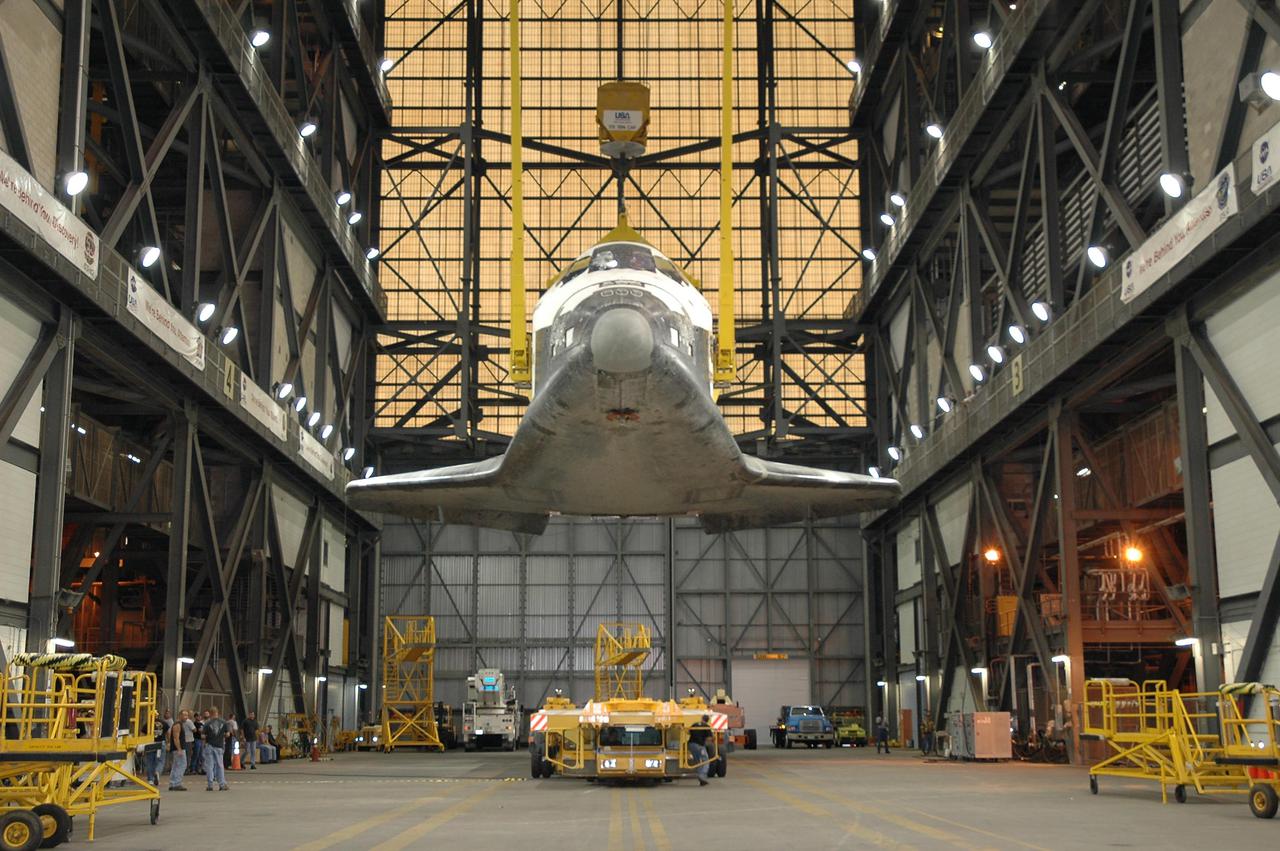
KENNEDY SPACE CENTER, FLA. - In the transfer aisle of the Vehicle Assembly Building at NASA Kennedy Space Center, the orbiter Atlantis is lifted off the transporter. The orbiter will be raised to a vertical position and lifted up and over the cross-beam into high bay 1 and mated with the Solid Rocket Boosters and External Tank already stacked there on the Mobile Launcher Platform. Atlantis is the designated orbiter for Return to Flight mission STS-121. The lighted planning window for launch extends from Sept. 9 to Sept. 25.
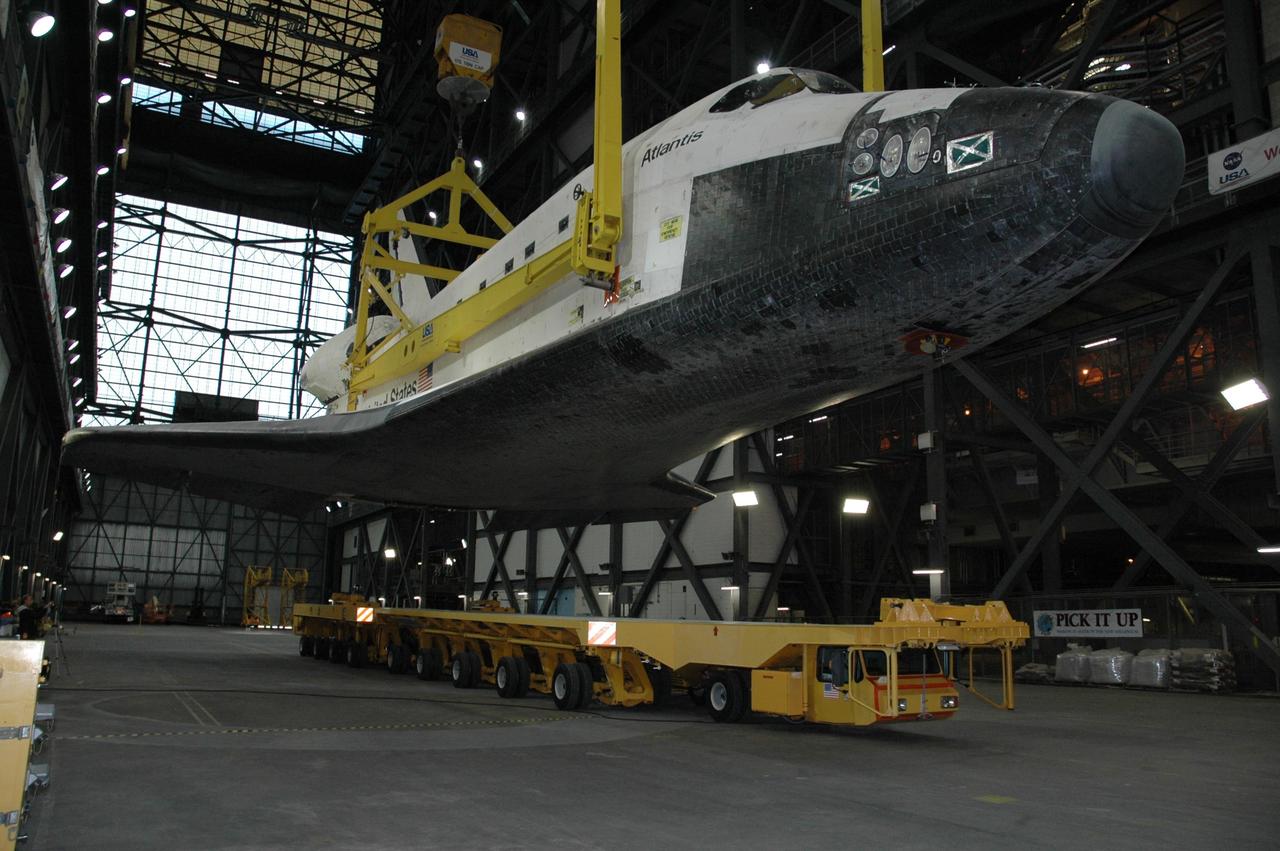
KENNEDY SPACE CENTER, FLA. -- In the transfer aisle of the Vehicle Assembly Building, the overhead sling lifts the orbiter Atlantis off the transporter. The orbiter will be raised to vertical and lifted up into high bay 1. Then it will be lowered onto the mobile launcher platform where the external tank and solid rocket boosters are already stacked. Space Shuttle Atlantis is targeted to roll out to Launch Pad 39A on February 14 for mission STS-117. The mission is No. 21 to the International Space Station and construction flight 13A. Photo credit: NASA/Amanda Diller
KENNEDY SPACE CENTER, FLA. - In the Vehicle Assembly Building's transfer aisle at NASA's Kennedy Space Center, external tank No. 119 is lifted off its transporter. The tank will be raised to vertical and lifted into high bay 3 for stacking with solid rocket boosters. The tank and boosters will launch Space Shuttle Discovery on mission STS-121 in July. Photo credit: NASA/Jack Pfaller
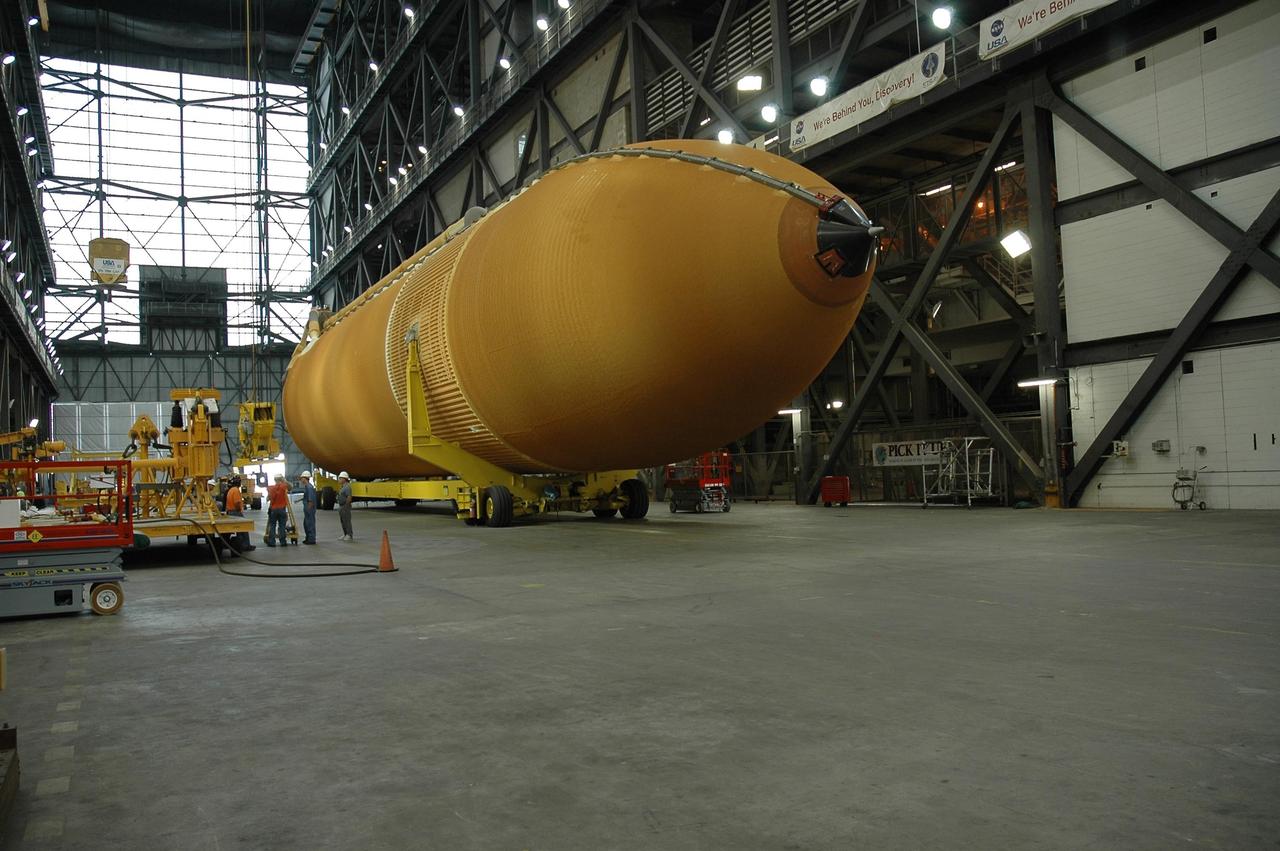
KENNEDY SPACE CENTER, FLA. -- In the Vehicle Assembly Building, external tank No. 117 is waiting to be raised off its transporter in order to lift it to a vertical position. Once vertical, the tank will be lifted into the checkout cell in high bay 2 for processing. ET-117 arrived aboard the Pegasus barge after its voyage around the Florida Peninsula from the Michoud Assembly Facility near New Orleans. The tank is slated for mission STS-118, which is targeted for launch in early August. Photo credit: NASA/Jack Pfaller

KENNEDY SPACE CENTER, FLA. -- In the Vehicle Assembly Building, external tank No. 117 seems to float above the transfer aisle as it is lifted off its transporter. The tank will be raised to a vertical position and then lifted into the checkout cell in high bay 2 for processing. ET-117 arrived aboard the Pegasus barge after its voyage around the Florida Peninsula from the Michoud Assembly Facility near New Orleans. The tank is slated for mission STS-118, which is targeted for launch in early August. Photo credit: NASA/Jack Pfaller
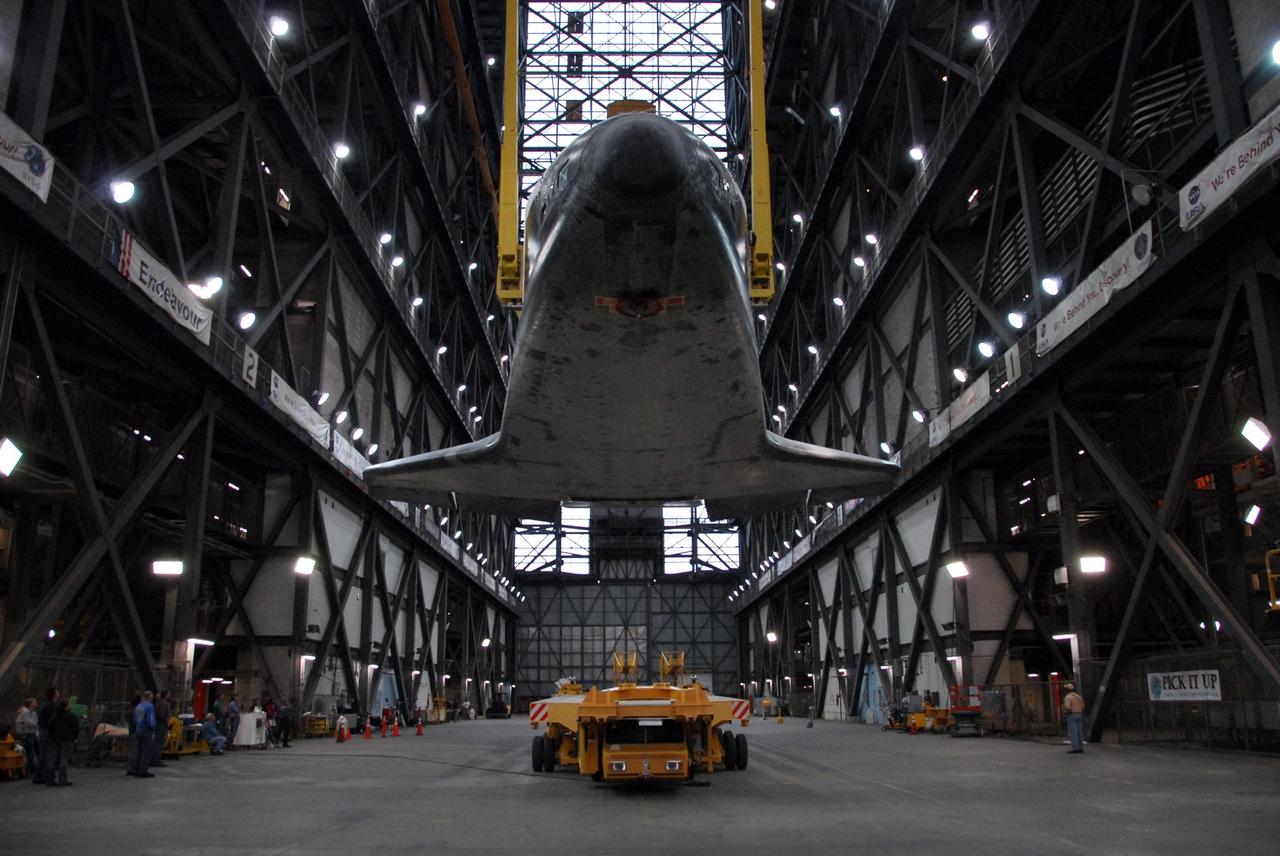
KENNEDY SPACE CENTER, FLA. -- In the transfer aisle of the Vehicle Assembly Building, space shuttle Endeavour is lifted off its transporter. The shuttle will be raised to a vertical position and lifted up into high bay 1 to be attached to its external fuel tank and solid rocket boosters in preparation for launch on the STS-123 mission, targeted for March 11. The mission will deliver the first section of the Japan Aerospace Exploration Agency's Kibo laboratory and the Canadian Space Agency's two-armed robotic system, Dextre. Photo credit: NASA/Dimitri Gerondidakis
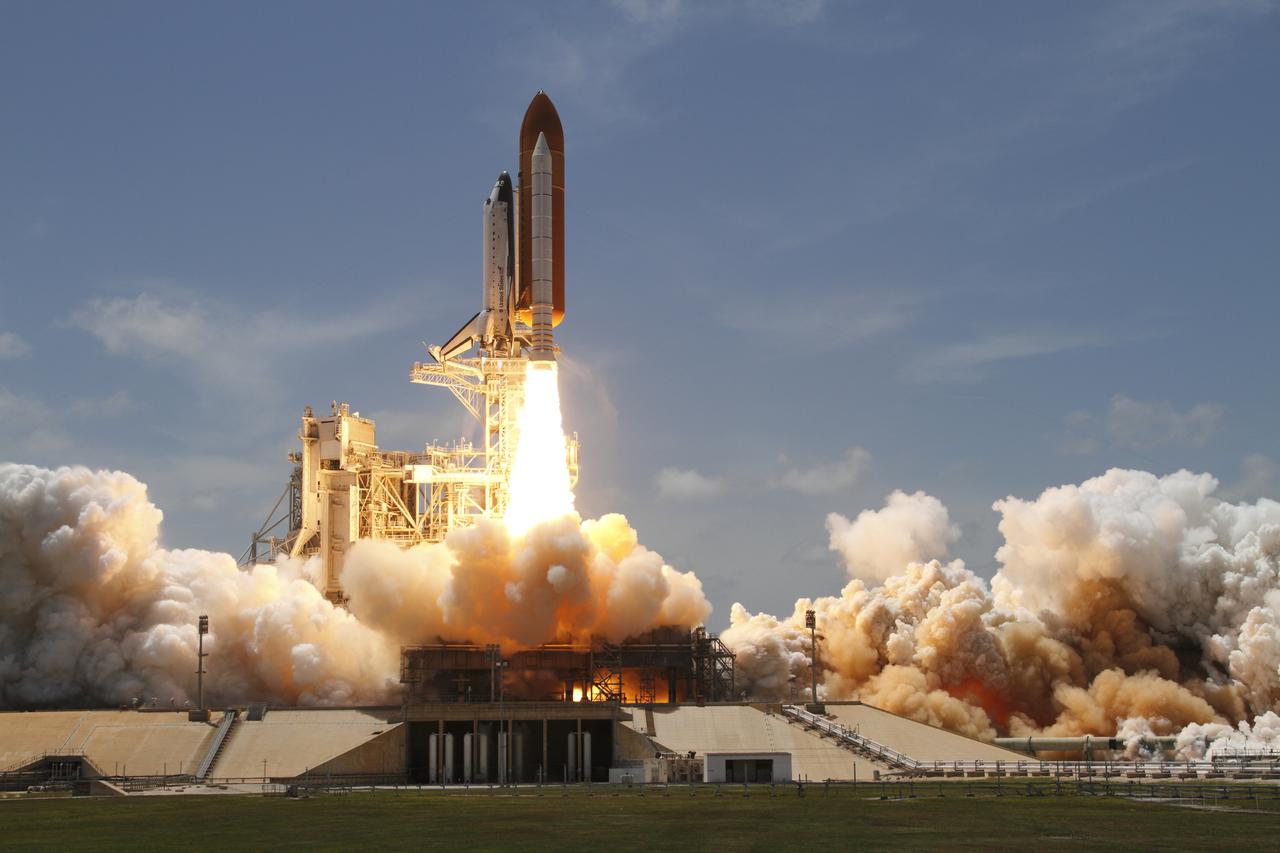
CAPE CANAVERAL, Fla. - At NASA's Kennedy Space Center in Florida, an exhaust plume forms under the mobile launcher platform on Launch Pad 39A as space shuttle Atlantis lifts off on the STS-132 mission to the International Space Station at 2:20 p.m. EDT on May 14. STS-132 is the 132nd shuttle flight, the 32nd for Atlantis and the 34th shuttle mission dedicated to station assembly and maintenance. For more information on the STS-132 mission objectives, payload and crew, visit www.nasa.gov_mission_pages_shuttle_shuttlemissions_sts132_index.html. Photo courtesy of Scott Andrews
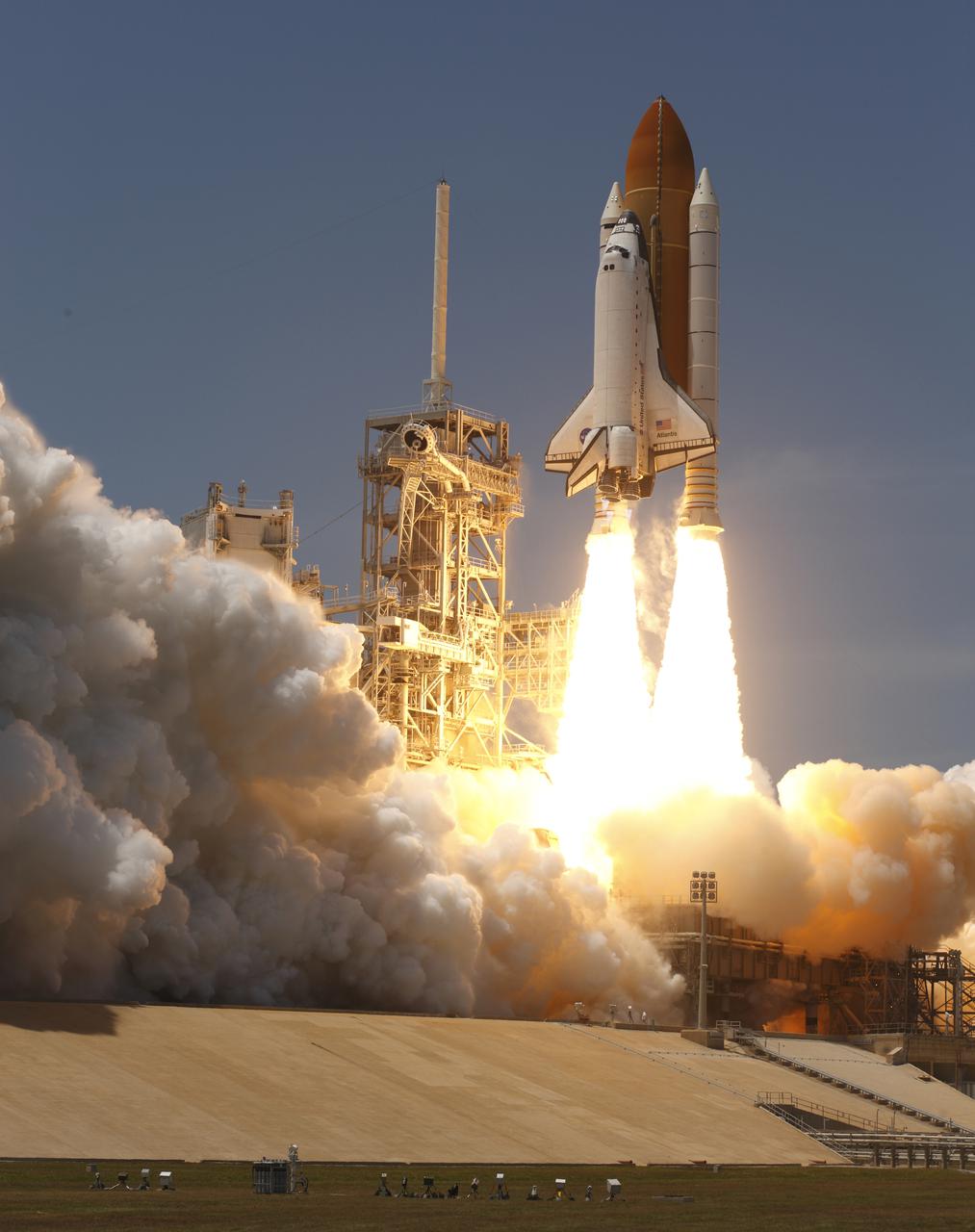
CAPE CANAVERAL, Fla. - At NASA's Kennedy Space Center in Florida, an exhaust plume forms under the mobile launcher platform on Launch Pad 39A as space shuttle Atlantis lifts off on the STS-132 mission at 2:20 p.m. EDT on May 14. STS-132 is the 132nd shuttle flight, the 32nd for Atlantis and the 34th shuttle mission dedicated to station assembly and maintenance. For more information on the STS-132 mission objectives, payload and crew, visit www.nasa.gov_mission_pages_shuttle_shuttlemissions_sts132_index.html. Photo courtesy of Scott Andrews
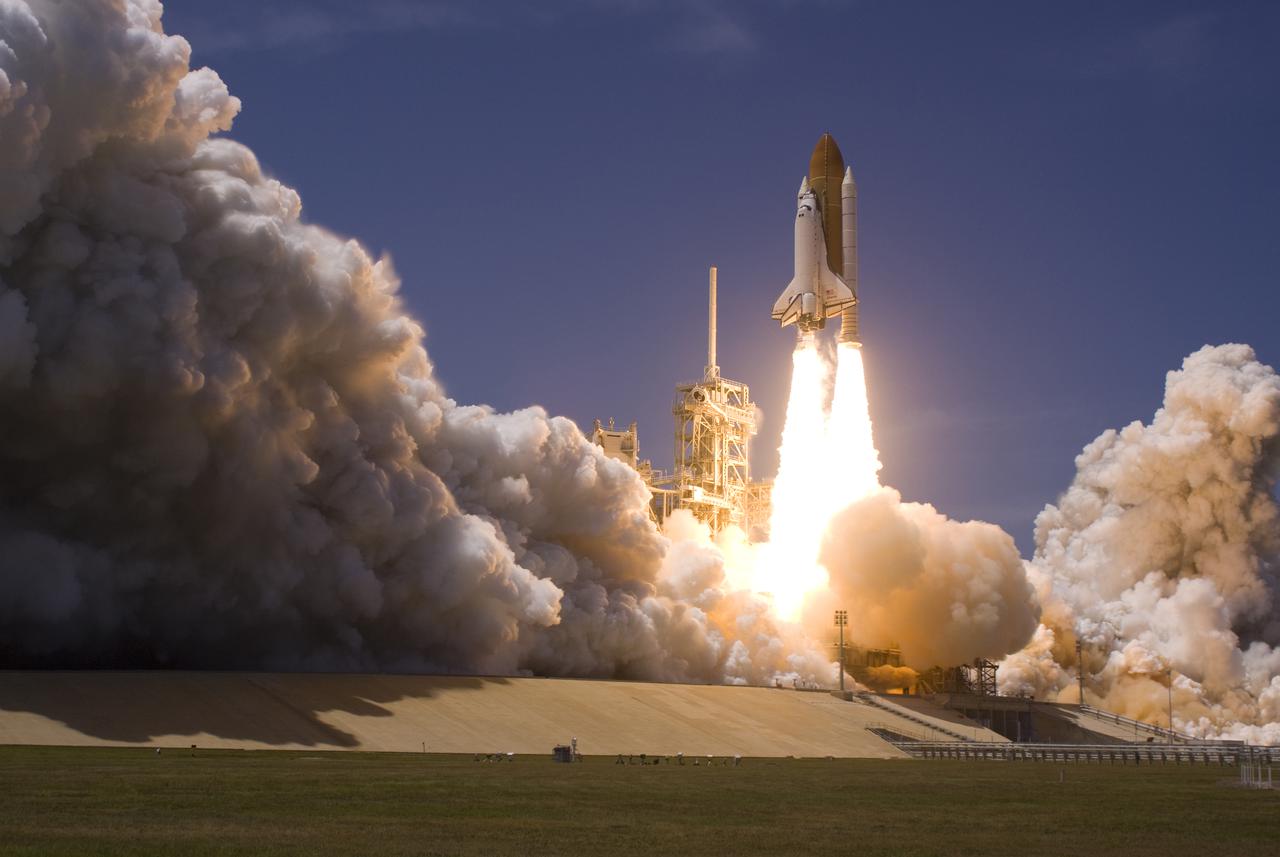
CAPE CANAVERAL, Fla. - At NASA's Kennedy Space Center in Florida, an exhaust plume forms under the mobile launcher platform on Launch Pad 39A as space shuttle Atlantis lifts off on the STS-132 mission to the International Space Station at 2:20 p.m. EDT on May 14. STS-132 is the 132nd shuttle flight, the 32nd for Atlantis and the 34th shuttle mission dedicated to station assembly and maintenance. For more information on the STS-132 mission objectives, payload and crew, visit www.nasa.gov_mission_pages_shuttle_shuttlemissions_sts132_index.html. Photo courtesy of Scott Andrews
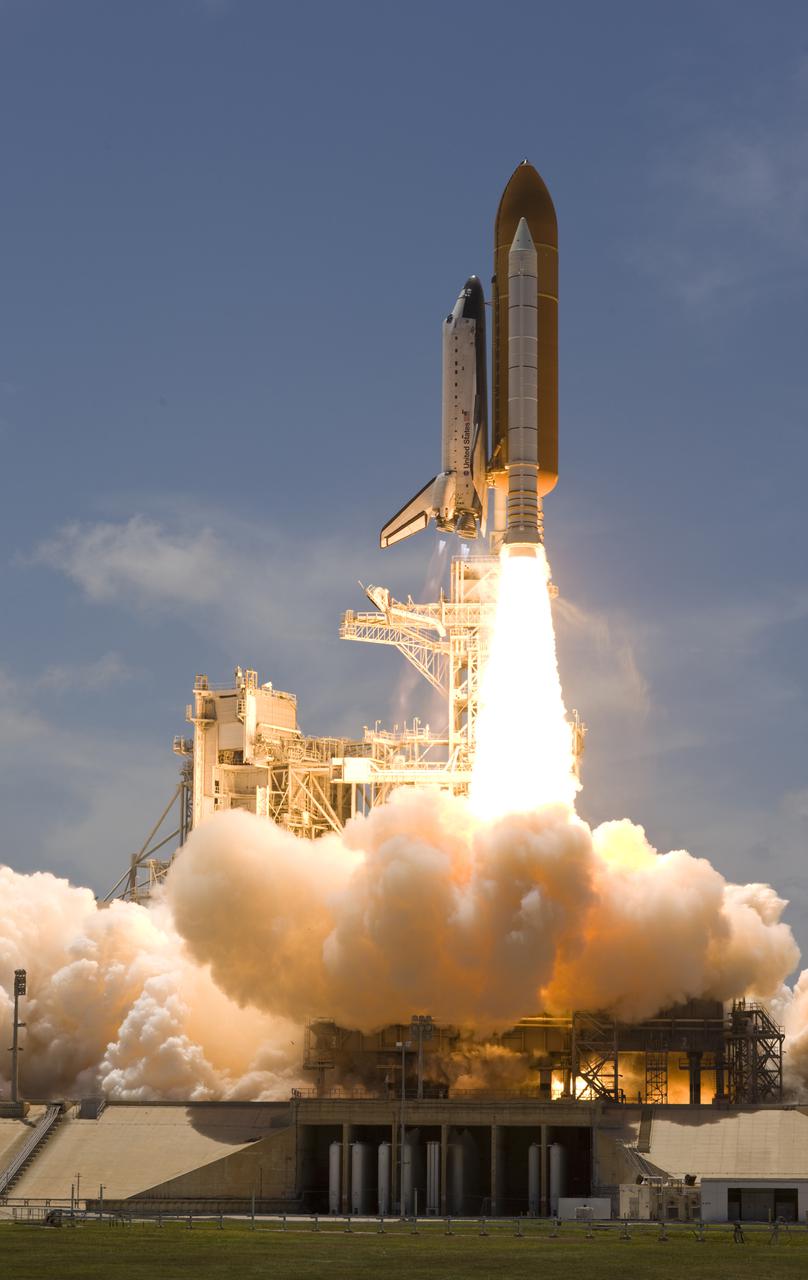
CAPE CANAVERAL, Fla. - At NASA's Kennedy Space Center in Florida, an exhaust plume forms under the mobile launcher platform on Launch Pad 39A as space shuttle Atlantis lifts off on the STS-132 mission to the International Space Station at 2:20 p.m. EDT on May 14. STS-132 is the 132nd shuttle flight, the 32nd for Atlantis and the 34th shuttle mission dedicated to station assembly and maintenance. For more information on the STS-132 mission objectives, payload and crew, visit www.nasa.gov_mission_pages_shuttle_shuttlemissions_sts132_index.html. Photo courtesy of Scott Andrews
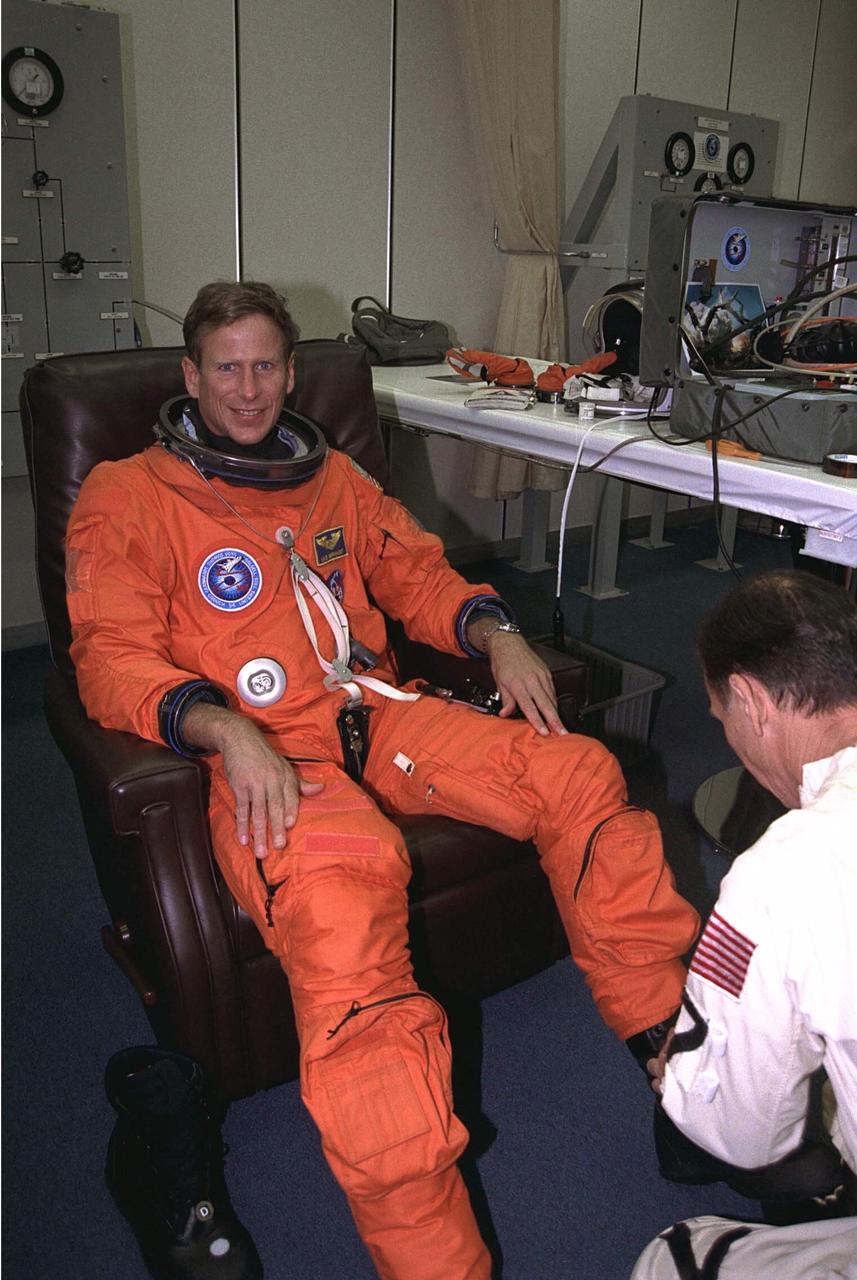
STS-94 Mission Specialist Michael L. Gernhardt is assisted into his launch/entry suit by a suit technician in the Operations and Checkout (O&C) Building. He first flew in this capacity on STS-69. He has been a professional deep sea diver and engineer and holds a doctorate in bioengineering. Gernhardt will be in charge of the Blue shift and as flight engineer will operate and maintain the orbiter while Halsell and Still are asleep as members of the Red shift. He will also back them up on the flight deck during the ascent and re-entry phases of the mission. Gernhardt and six fellow crew members will shortly depart the O&C and head for Launch Pad 39A, where the Space Shuttle Columbia will lift off during a launch window that opens at 1:50 p.m. EDT, July 1. The launch window was opened 47 minutes early to improve the opportunity to lift off before Florida summer rain showers reached the space center
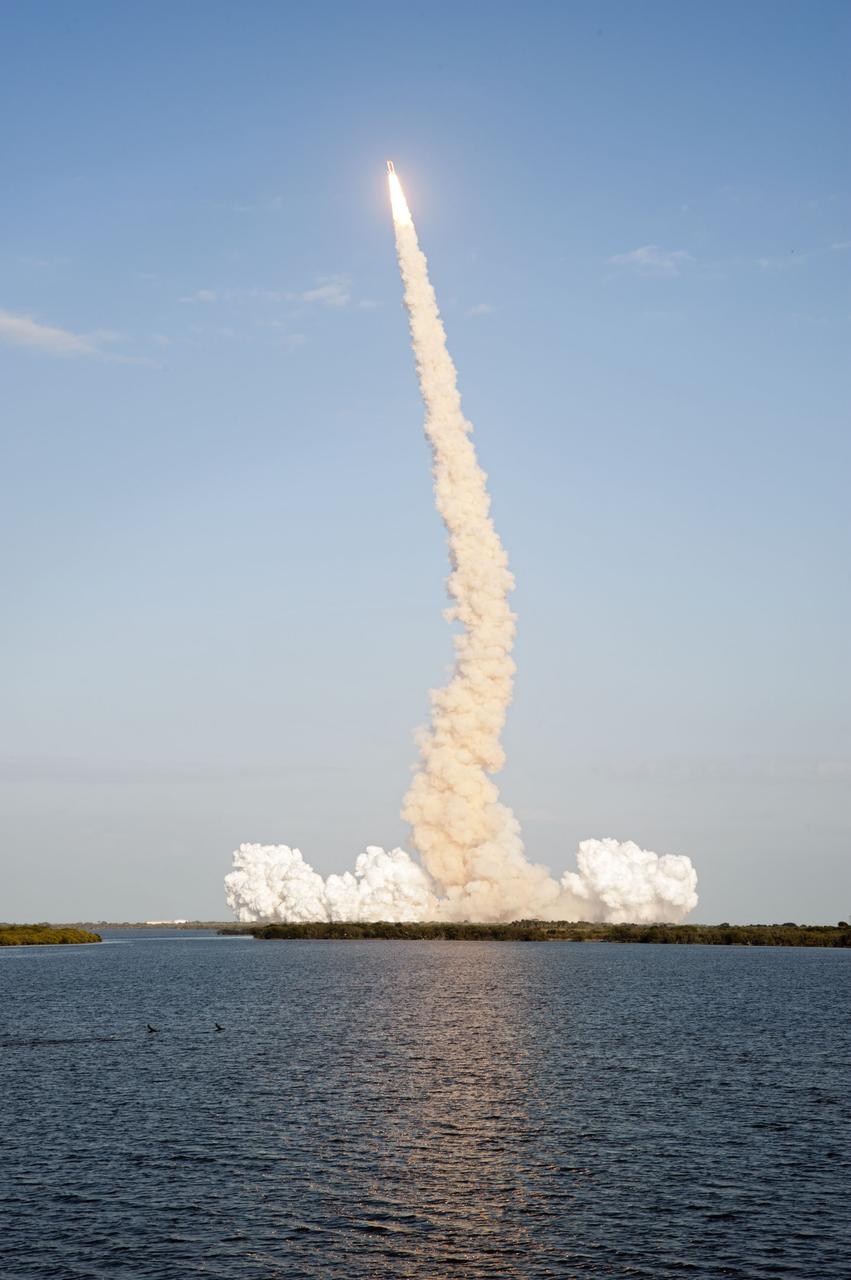
CAPE CANAVERAL, Fla. -- From the Banana River Creek VIP viewing area at NASA's Kennedy Space Center in Florida, space shuttle Discovery is imaged lifting off from Launch Pad 39A on its final mission to the International Space Station. Discovery lifted off at 4:53 p.m. EST on Feb. 24. The six-member STS-133 crew will deliver the Permanent Multipurpose Module, supplies and critical spare parts, as well as Robonaut 2, the dexterous humanoid astronaut helper, to the station. This is the 133rd Space Shuttle Program mission and the 35th shuttle voyage to the space station. For more information on the STS-133 mission, visit www.nasa.gov/mission_pages/shuttle/shuttlemissions/sts133/. Photo credit: NASA/Ben Cooper
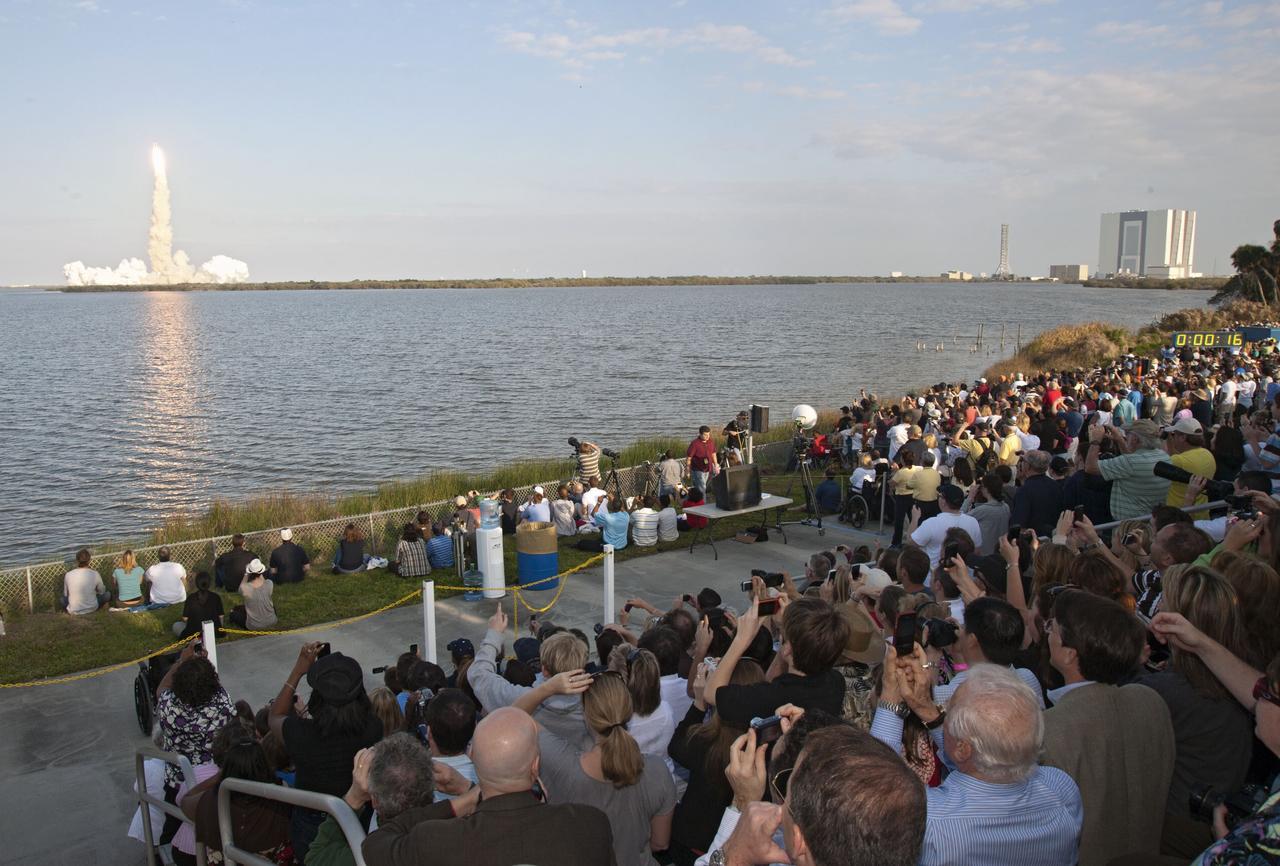
CAPE CANAVERAL, Fla. -- From the Banana River Creek VIP viewing area at NASA's Kennedy Space Center in Florida, spectators watch space shuttle Discovery's lift off from Launch Pad 39A on its final mission to the International Space Station. Discovery lifted off at 4:53 p.m. EST on Feb. 24. The six-member STS-133 crew will deliver the Permanent Multipurpose Module, supplies and critical spare parts, as well as Robonaut 2, the dexterous humanoid astronaut helper, to the station. This is the 133rd Space Shuttle Program mission and the 35th shuttle voyage to the space station. For more information on the STS-133 mission, visit www.nasa.gov/mission_pages/shuttle/shuttlemissions/sts133/. Photo credit: NASA/Ben Cooper

CAPE CANAVERAL, Fla. -- From the Banana River Creek VIP viewing area at NASA's Kennedy Space Center in Florida, spectators watch space shuttle Discovery's lift off from Launch Pad 39A on its final mission to the International Space Station. Discovery lifted off at 4:53 p.m. EST on Feb. 24. The six-member STS-133 crew will deliver the Permanent Multipurpose Module, supplies and critical spare parts, as well as Robonaut 2, the dexterous humanoid astronaut helper, to the station. This is the 133rd Space Shuttle Program mission and the 35th shuttle voyage to the space station. For more information on the STS-133 mission, visit www.nasa.gov/mission_pages/shuttle/shuttlemissions/sts133/. Photo credit: NASA/Ben Cooper

CAPE CANAVERAL, Fla. -- From the terrace of the VIP viewing area at the Operations Support Building II at NASA's Kennedy Space Center in Florida, space shuttle Discovery is seen lifting off from Launch Pad 39A on its final mission to the International Space Station. Discovery lifted off at 4:53 p.m. EST on Feb. 24. The six-member STS-133 crew will deliver the Permanent Multipurpose Module, supplies and critical spare parts, as well as Robonaut 2, the dexterous humanoid astronaut helper, to the station. This is the 133rd Space Shuttle Program mission and the 35th shuttle voyage to the space station. For more information on the STS-133 mission, visit www.nasa.gov/mission_pages/shuttle/shuttlemissions/sts133/. Photo credit: NASA/Jim Grossmann
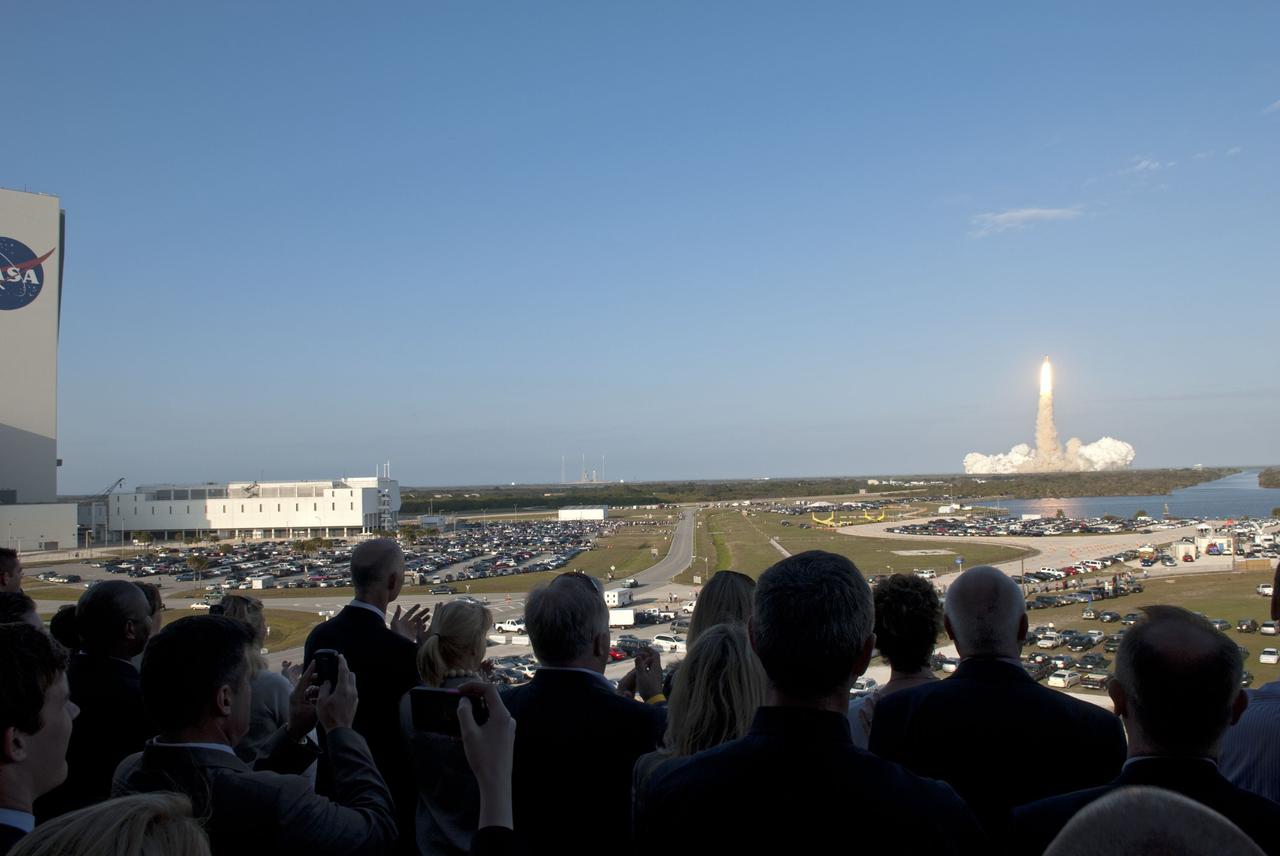
CAPE CANAVERAL, Fla. -- From the terrace of the VIP viewing area at the Operations Support Building II at NASA's Kennedy Space Center in Florida, space shuttle Discovery is seen lifting off from Launch Pad 39A on its final mission to the International Space Station. Discovery lifted off at 4:53 p.m. EST on Feb. 24. The six-member STS-133 crew will deliver the Permanent Multipurpose Module, supplies and critical spare parts, as well as Robonaut 2, the dexterous humanoid astronaut helper, to the station. This is the 133rd Space Shuttle Program mission and the 35th shuttle voyage to the space station. For more information on the STS-133 mission, visit www.nasa.gov/mission_pages/shuttle/shuttlemissions/sts133/. Photo credit: NASA/Jim Grossmann