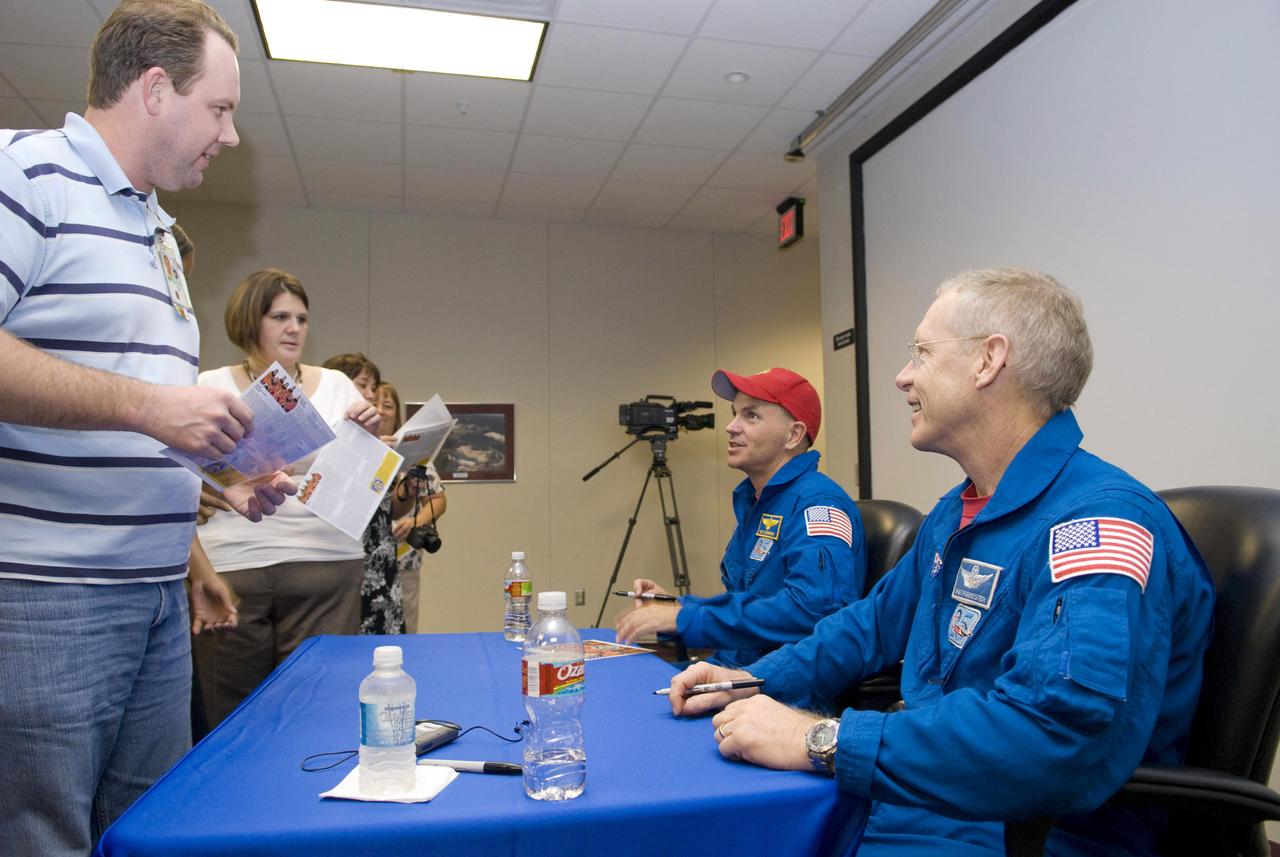
Astronauts C.J. Sturckow (seated, left) and Pat Forrester (seated, right) sign autographs during their Oct. 7 visit to Stennis Space Center. The astronauts visited the rocket engine testing facility to thank Stennis employees for contributions to their recent STS-128 space shuttle mission. All three of the main engines used on the mission were tested at Stennis. Sturckow served as commander for the STS-128 flight; Forrester was a mission specialist. During a 14-day mission aboard space shuttle discovery, the STS-128 crew delivered equipment and supplies to the International Space Station, including science and storage racks, a freezer to store research samples, a new sleeping compartment and an exercise treadmill. The mission featured three spacewalks to replace experiments and install new equipment at the space station.
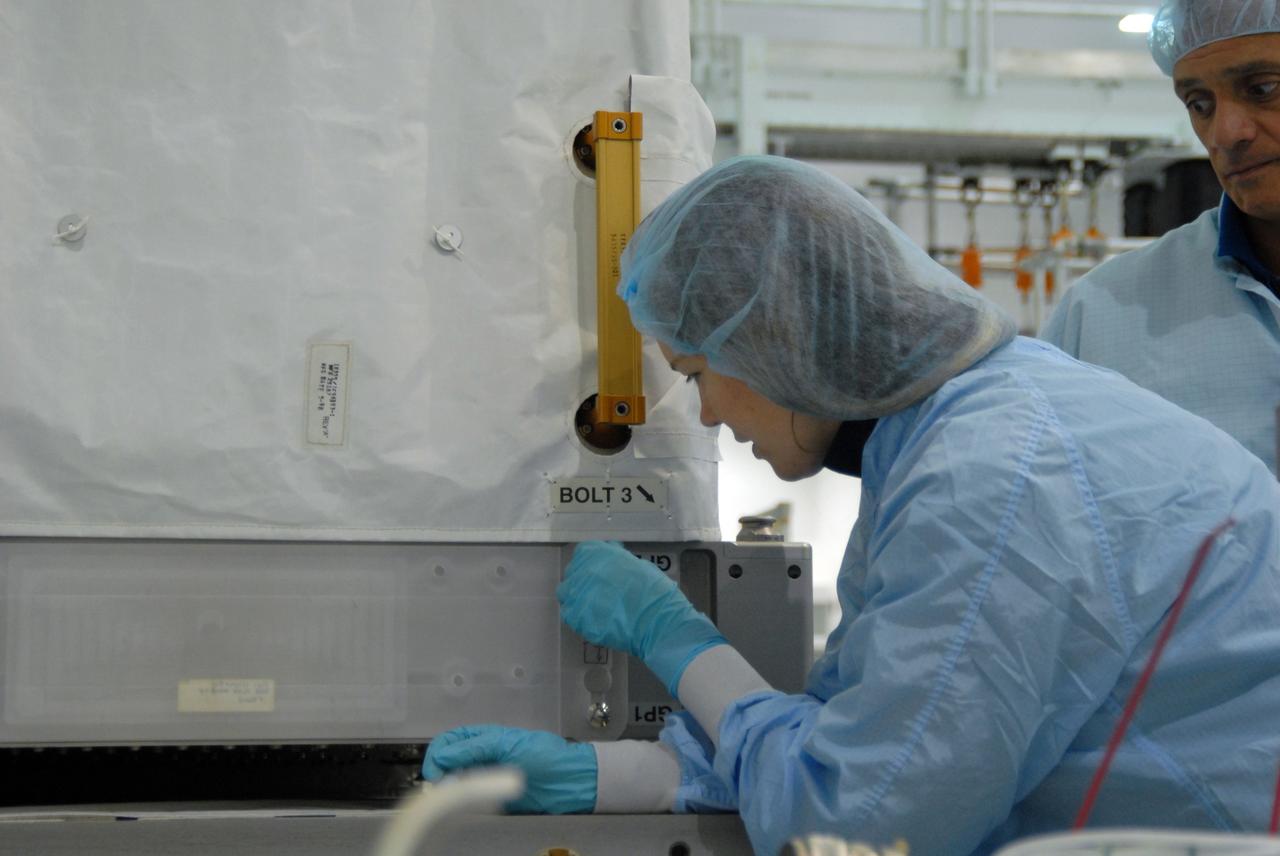
CAPE CANAVERAL, Fla. – In the Space Station Processing Facility at NASA's Kennedy Space Center in Florida, a worker demonstrates an attachment point on ammonia tanks while STS-128 Mission Specialist John "Danny" Olivas (far right) looks on. The tanks are part of the payload for their upcoming STS-128 mission. Members of the STS-128 crew are at Kennedy for a crew equipment interface test, or CEIT, which provides hands-on training and observation of shuttle and flight hardware. The STS-128 flight will carry science and storage racks to the International Space Station on space shuttle Discovery. The STS-128 mission is targeted to launch on Aug. 6. Photo credit: NASA/Jim Grossmann
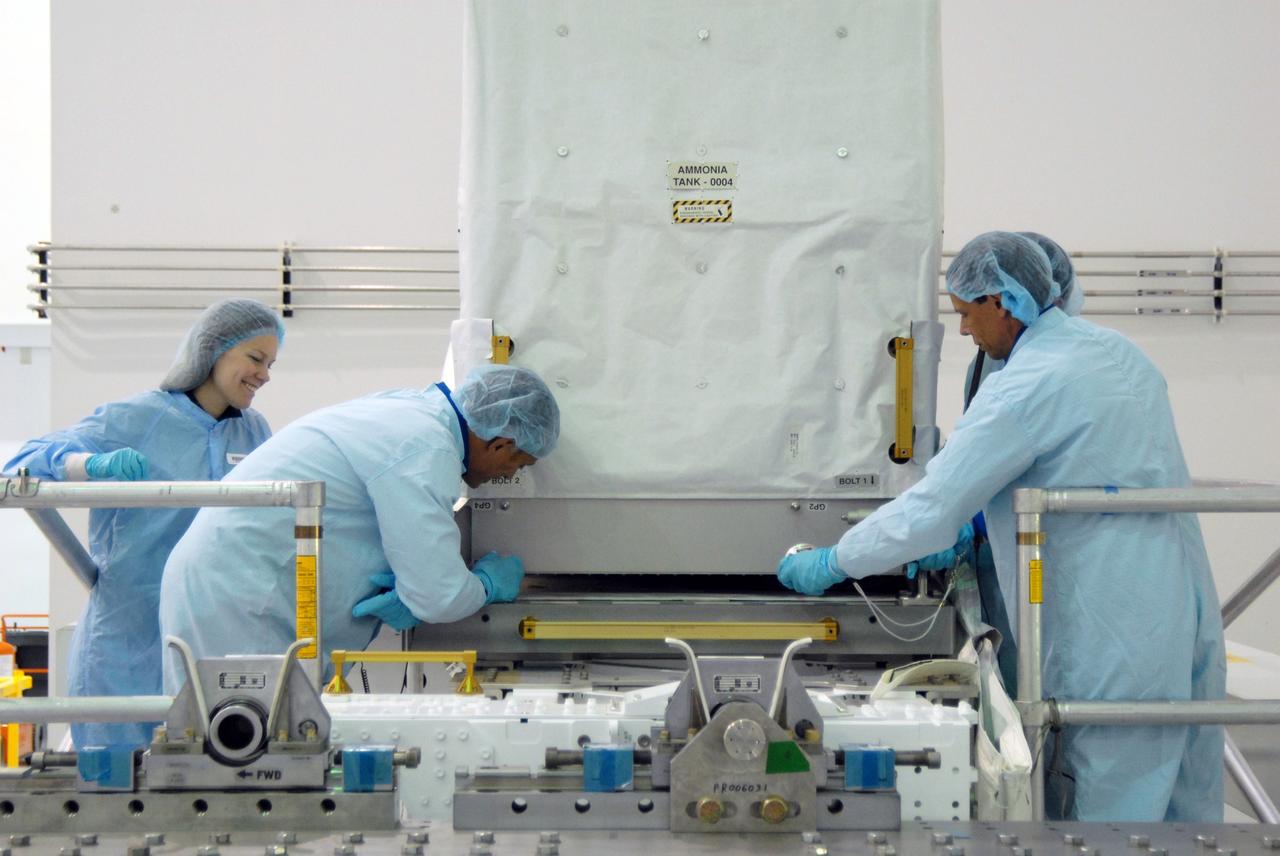
CAPE CANAVERAL, Fla. – In the Space Station Processing Facility at NASA's Kennedy Space Center in Florida, STS-128 Mission Specialists John "Danny" Olivas (second from left) and Christer Fugelsang (right) inspect ammonia tanks, part of the payload for their mission. Fugelsang is with the European Space Agency. Members of the STS-128 crew are at Kennedy for a crew equipment interface test, or CEIT, which provides hands-on training and observation of shuttle and flight hardware. The STS-128 flight will carry science and storage racks to the International Space Station on space shuttle Discovery. The STS-128 mission is targeted to launch on Aug. 6. Photo credit: NASA/Jim Grossmann
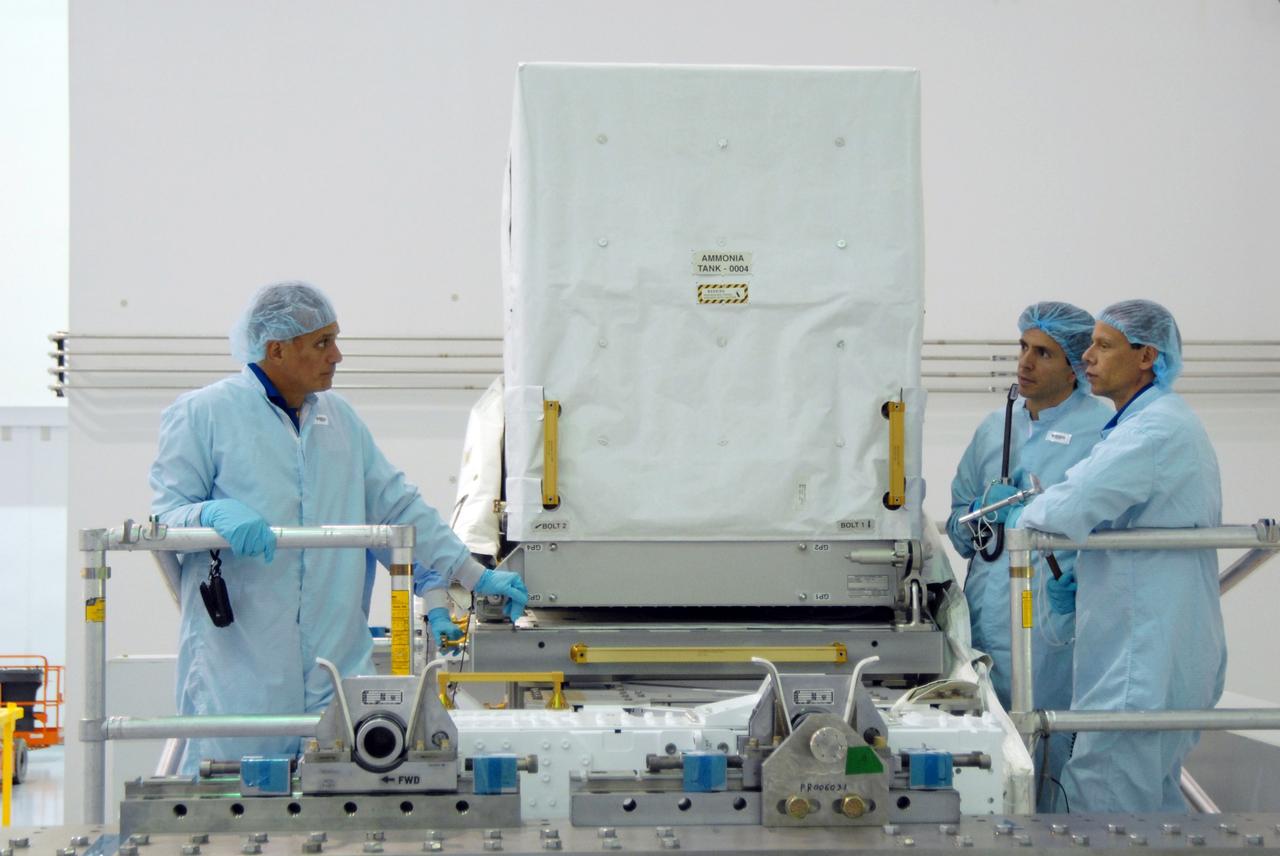
CAPE CANAVERAL, Fla. – In the Space Station Processing Facility at NASA's Kennedy Space Center in Florida, STS-128 Mission Specialists John "Danny" Olivas (left) and Christer Fugelsang (far right) inspect ammonia tanks, part of the payload for their mission. Fugelsang is with the European Space Agency. Members of the STS-128 crew are at Kennedy for a crew equipment interface test, or CEIT, which provides hands-on training and observation of shuttle and flight hardware. The STS-128 flight will carry science and storage racks to the International Space Station on space shuttle Discovery. The STS-128 mission is targeted to launch on Aug. 6. Photo credit: NASA/Jim Grossmann
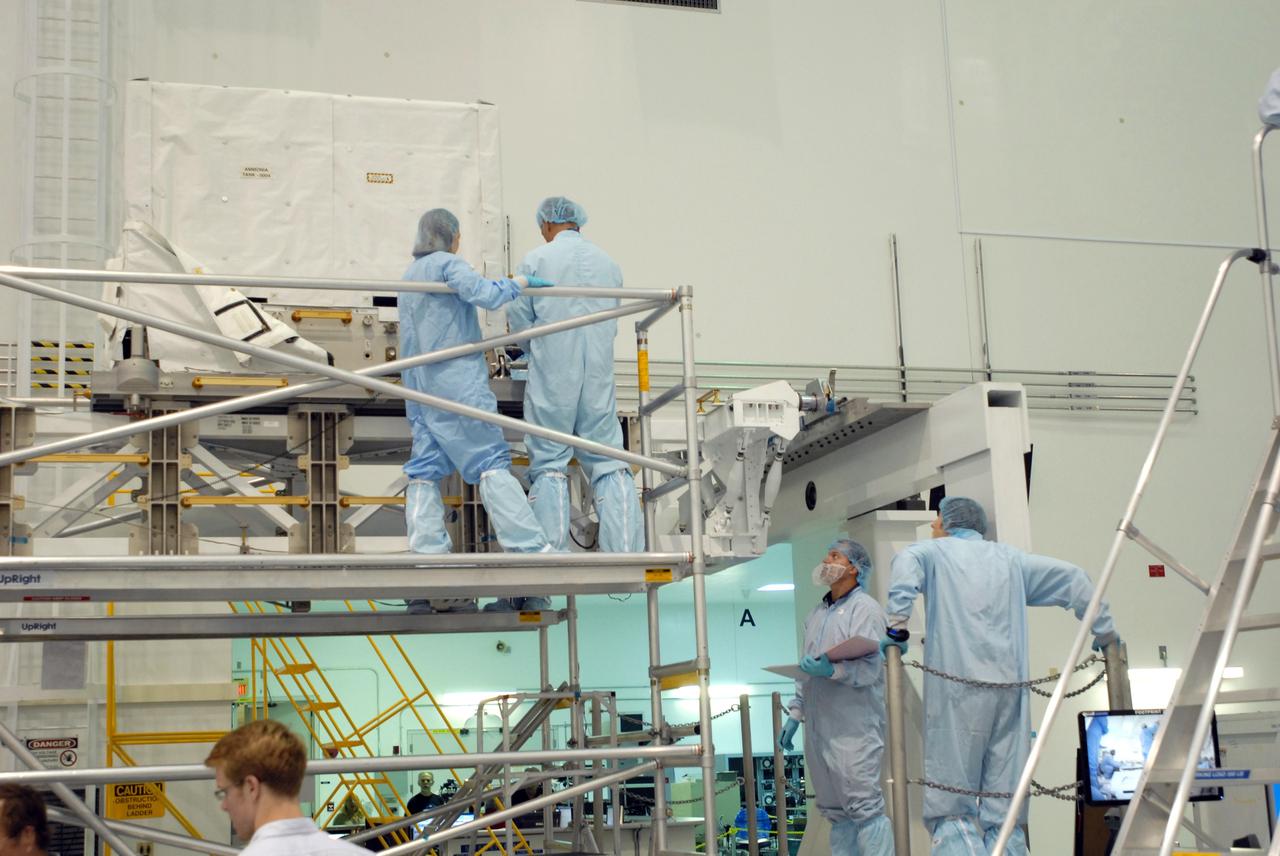
CAPE CANAVERAL, Fla. – In the Space Station Processing Facility at NASA's Kennedy Space Center in Florida, STS-128 Mission Specialists John "Danny" Olivas (top right) and Christer Fugelsang (bottom right) inspect ammonia tanks, part of the payload for their mission. Members of the STS-128 crew are at Kennedy for a crew equipment interface test, or CEIT, which provides hands-on training and observation of shuttle and flight hardware. The STS-128 flight will carry science and storage racks to the International Space Station on space shuttle Discovery. The STS-128 mission is targeted to launch on Aug. 6. Photo credit: NASA/Jim Grossmann
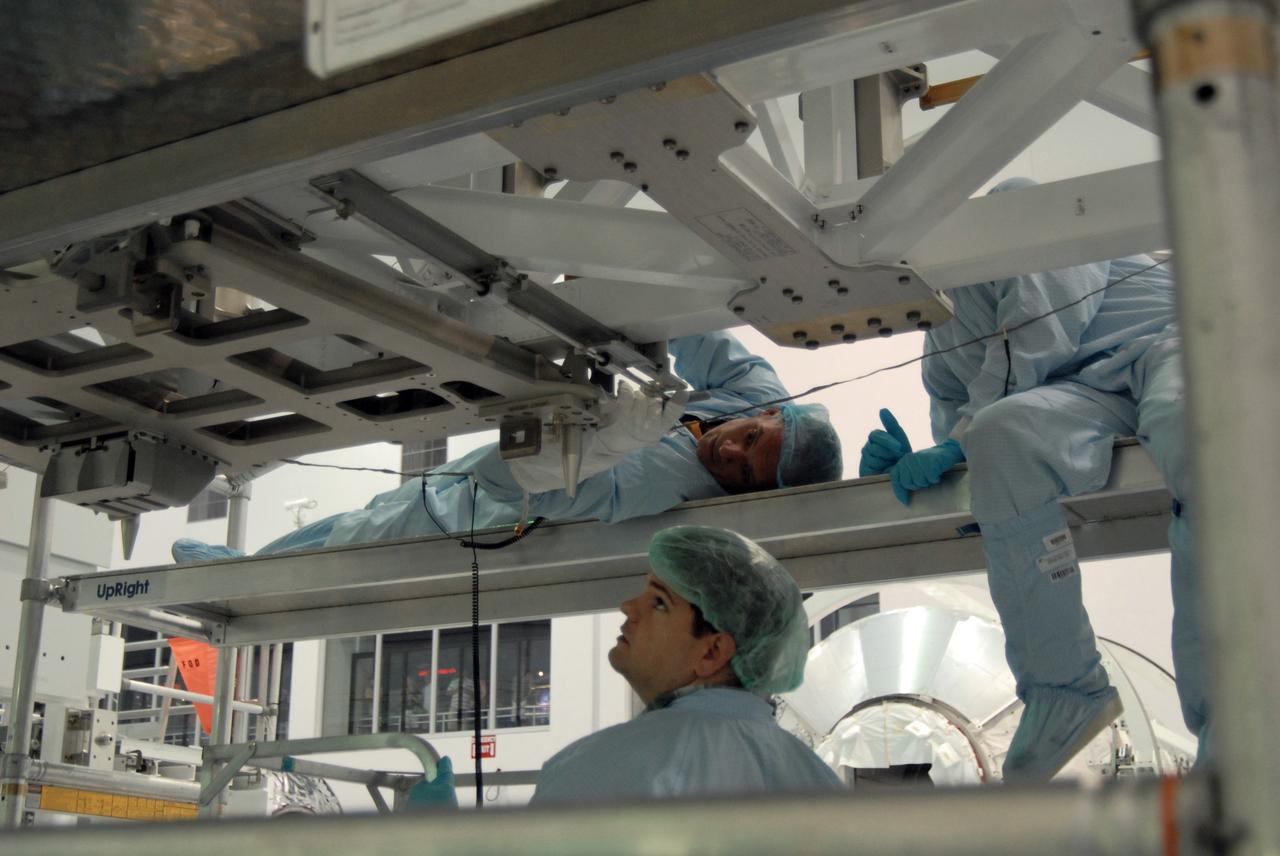
CAPE CANAVERAL, Fla. – In the Space Station Processing Facility at NASA's Kennedy Space Center in Florida, STS-128 Mission Specialist John "Danny" Olivas lies on a carrier while unbolting equipment, a task required for the mission. Members of the STS-128 crew are at Kennedy for a crew equipment interface test, or CEIT, which provides hands-on training and observation of shuttle and flight hardware. The STS-128 flight will carry science and storage racks to the International Space Station on space shuttle Discovery. The STS-128 mission is targeted to launch on Aug. 6. Photo credit: NASA/Jim Grossmann

CAPE CANAVERAL, Fla. – In the Space Station Processing Facility at NASA's Kennedy Space Center in Florida, STS-128 Mission Specialist John "Danny" Olivas lies on a carrier while unbolting equipment, a task required for the mission. Members of the STS-128 crew are at Kennedy for a crew equipment interface test, or CEIT, which provides hands-on training and observation of shuttle and flight hardware. The STS-128 flight will carry science and storage racks to the International Space Station on space shuttle Discovery. The STS-128 mission is targeted to launch on Aug. 6. Photo credit: NASA/Jim Grossmann
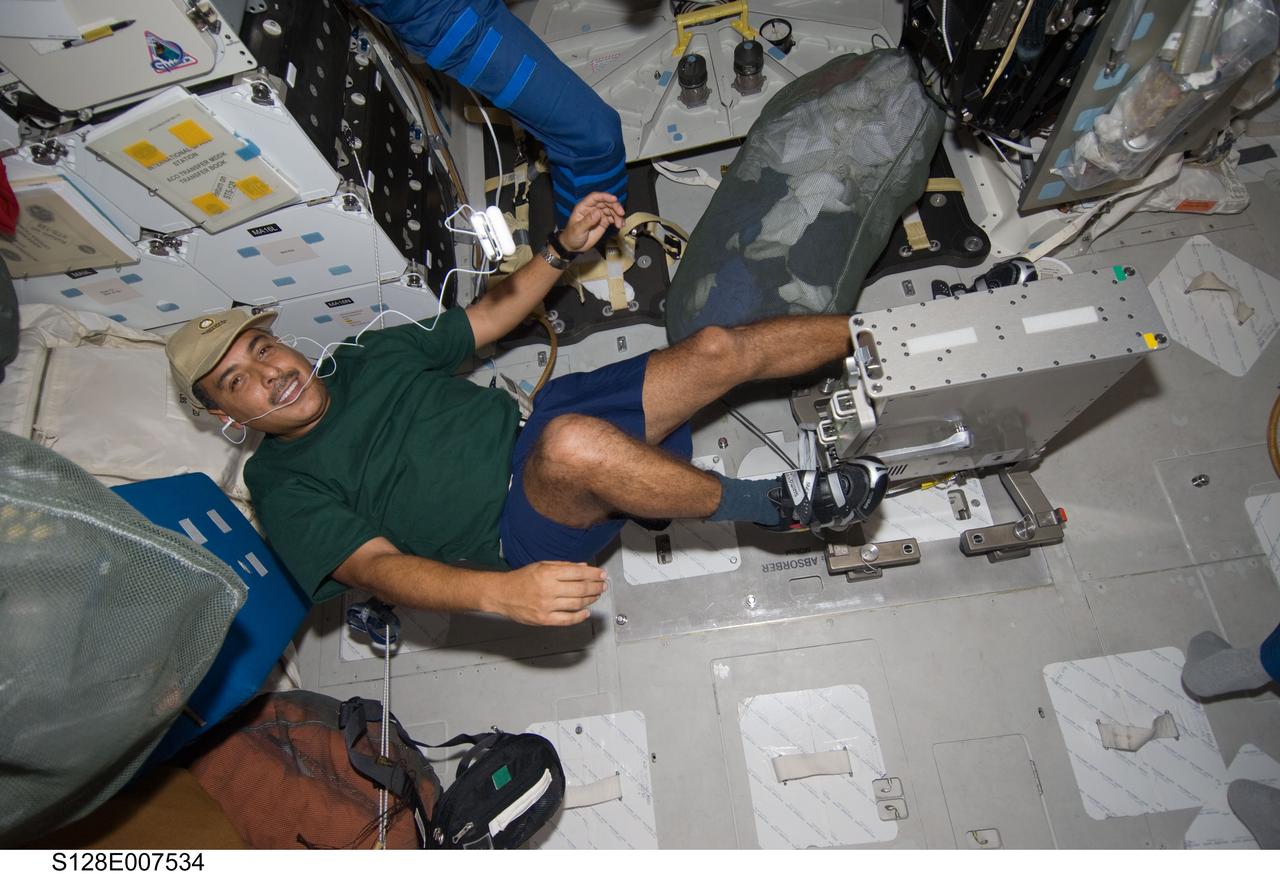
S128-E-007534 (4 Sept. 2009) ---- Astronaut Jose Hernandez, STS-128 mission specialist, works out on the bicycle ergometer on the middeck of the Space Shuttle Discovery. The shuttle is currently docked with the International Space Station while the STS-128 astronauts work with the Expedition 20 crewmembers aboard the orbital outpost.
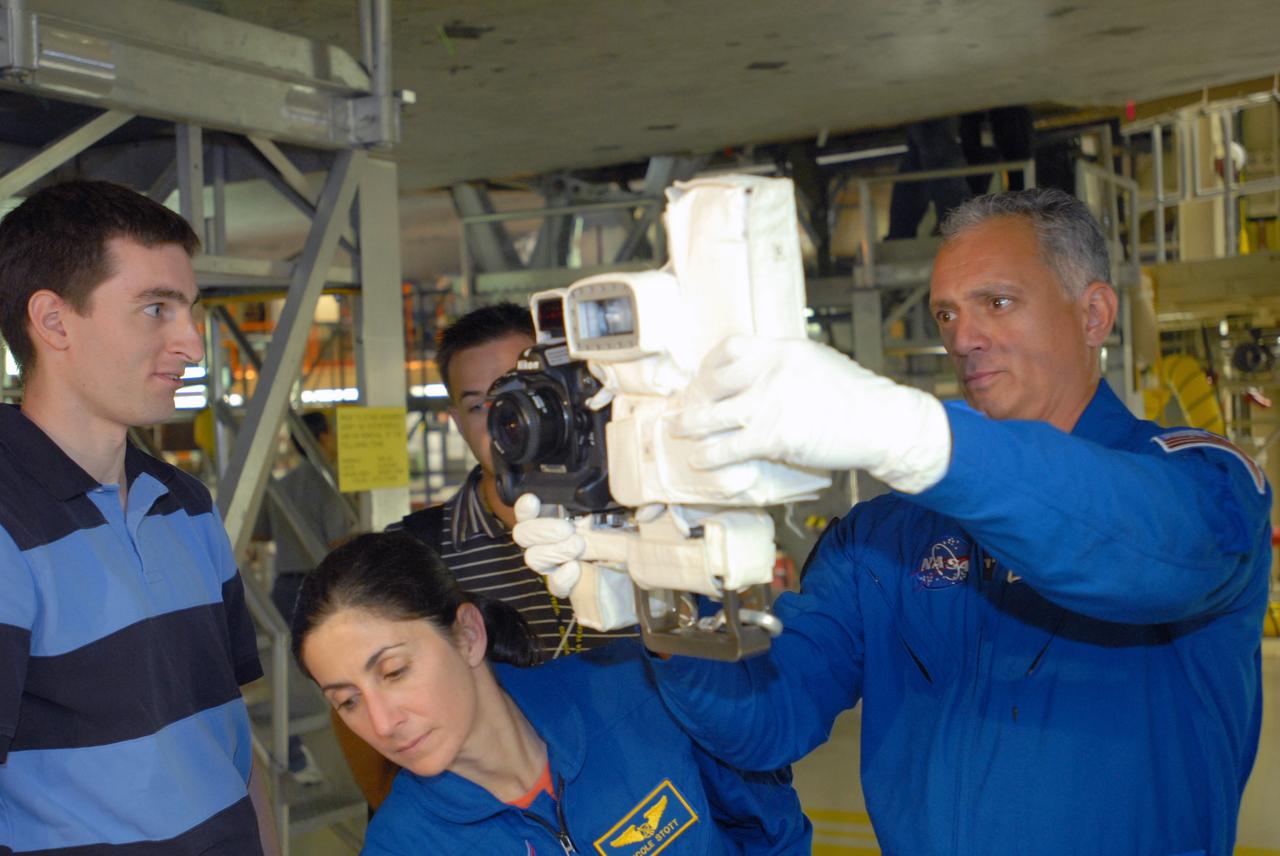
CAPE CANAVERAL, Fla. – In Orbiter Processing Facility 3 at NASA's Kennedy Space Center in Florida, STS-128 Mission Specialists Nicole Stott and John "Danny" Olivas practice with a camera they will use on their upcoming STS-128 mission. The crew is at Kennedy for a crew equipment interface test, or CEIT, which provides hands-on training and observation of shuttle and flight hardware. The STS-128 flight will carry science and storage racks to the International Space Station on Discovery. Launch is targeted for Aug. 7. Photo credit: NASA/Jim Grossmann
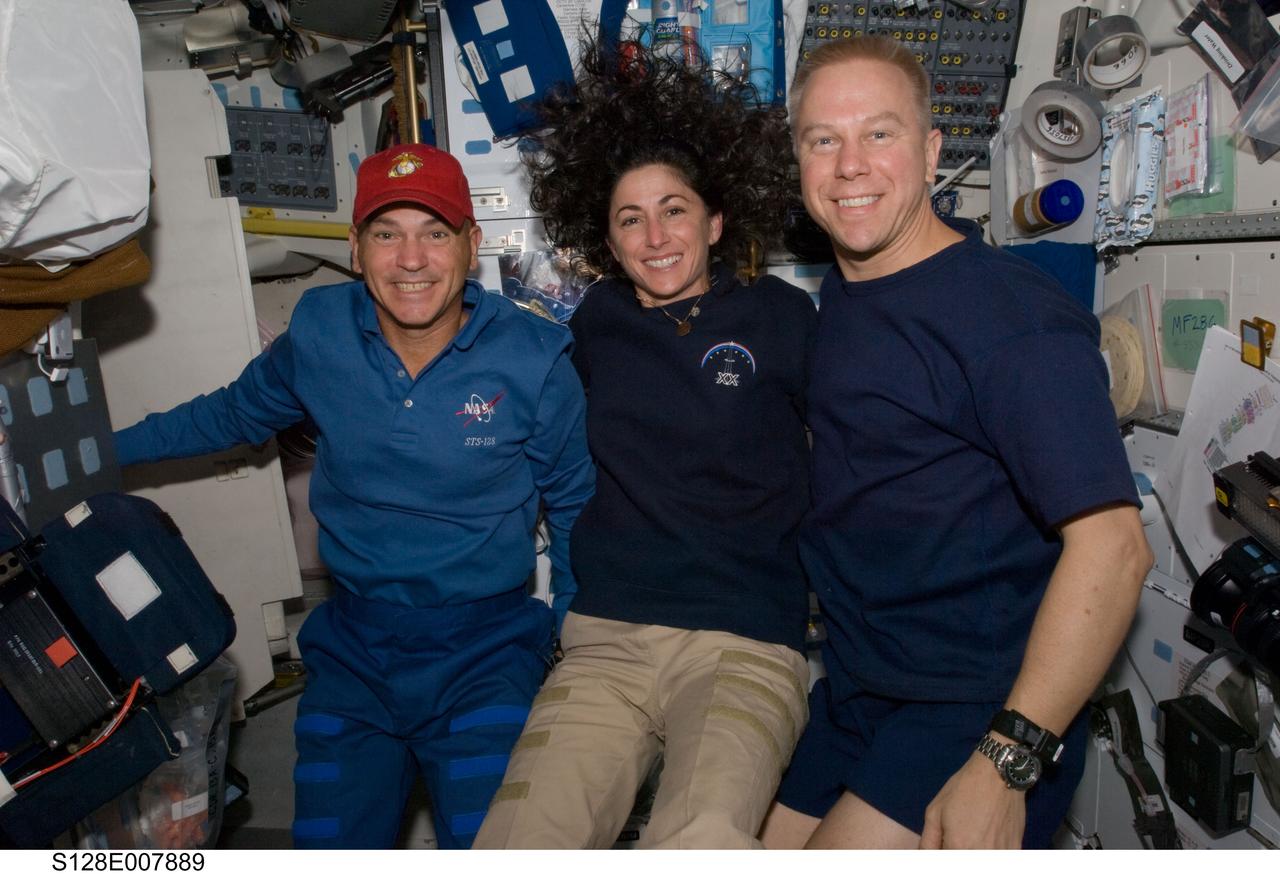
S128-E-007889 (6 Sept. 2009) --- NASA astronauts Rick Sturckow (left), STS-128 commander; Nicole Stott, Expedition 20 flight engineer; and Tim Kopra, STS-128 mission specialist, pose for a photo on the middeck of Space Shuttle Discovery while docked with the International Space Station.
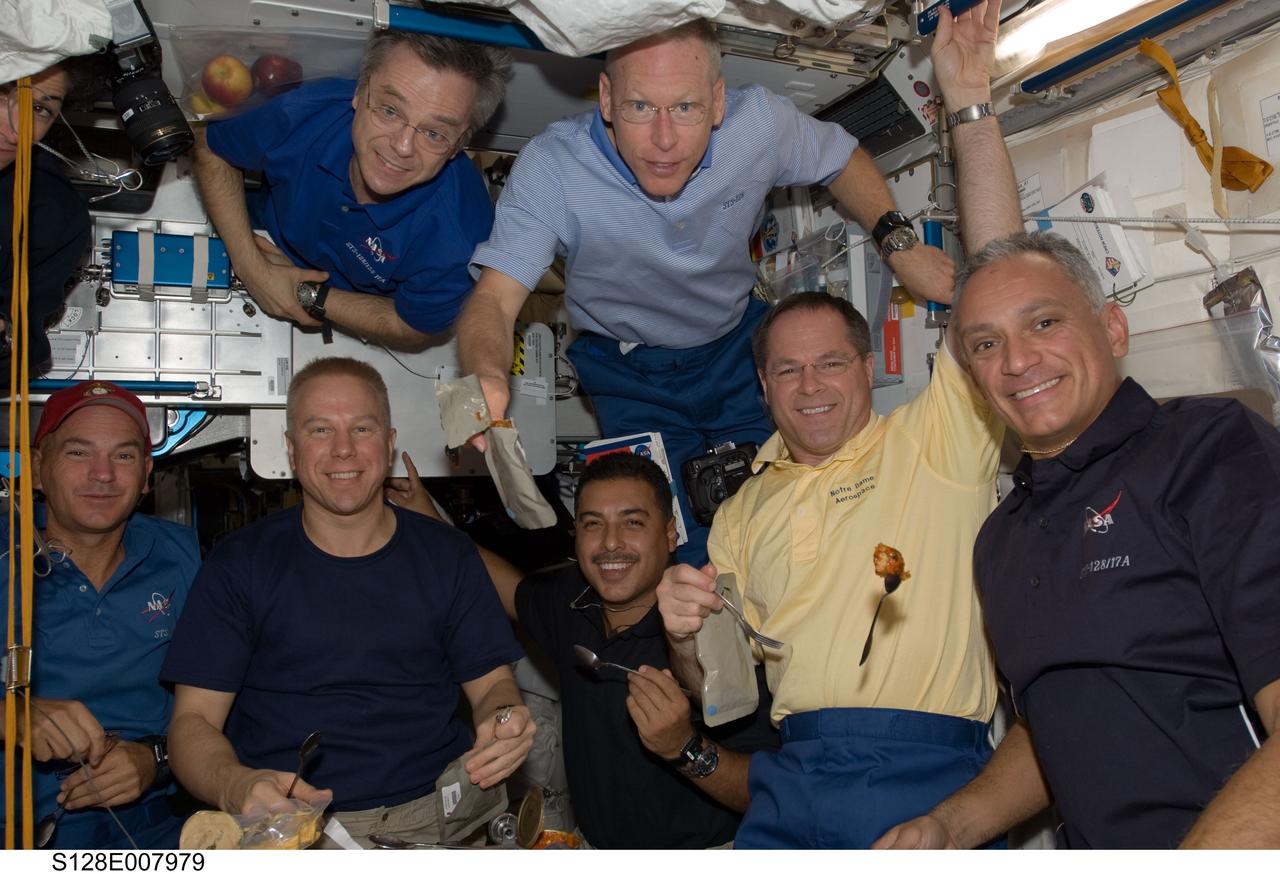
S128-E-007979 (7 Sept. 2009) --- Crew members onboard the International Space Station share a meal in the Unity node while Space Shuttle Discovery remains docked with the station. Pictured from the left (bottom) are NASA astronauts Rick Sturckow, STS-128 commander; Tim Kopra and Jose Hernandez, both STS-128 mission specialists; along with Kevin Ford, STS-128 pilot; and John “Danny” Olivas, STS-128 mission specialist. Pictured from the left (top) are NASA astronaut Nicole Stott (mostly out of frame) and Canadian Space Agency astronaut Robert Thirsk, both Expedition 20 flight engineers; along with NASA astronaut Patrick Forrester, STS-128 mission specialist.
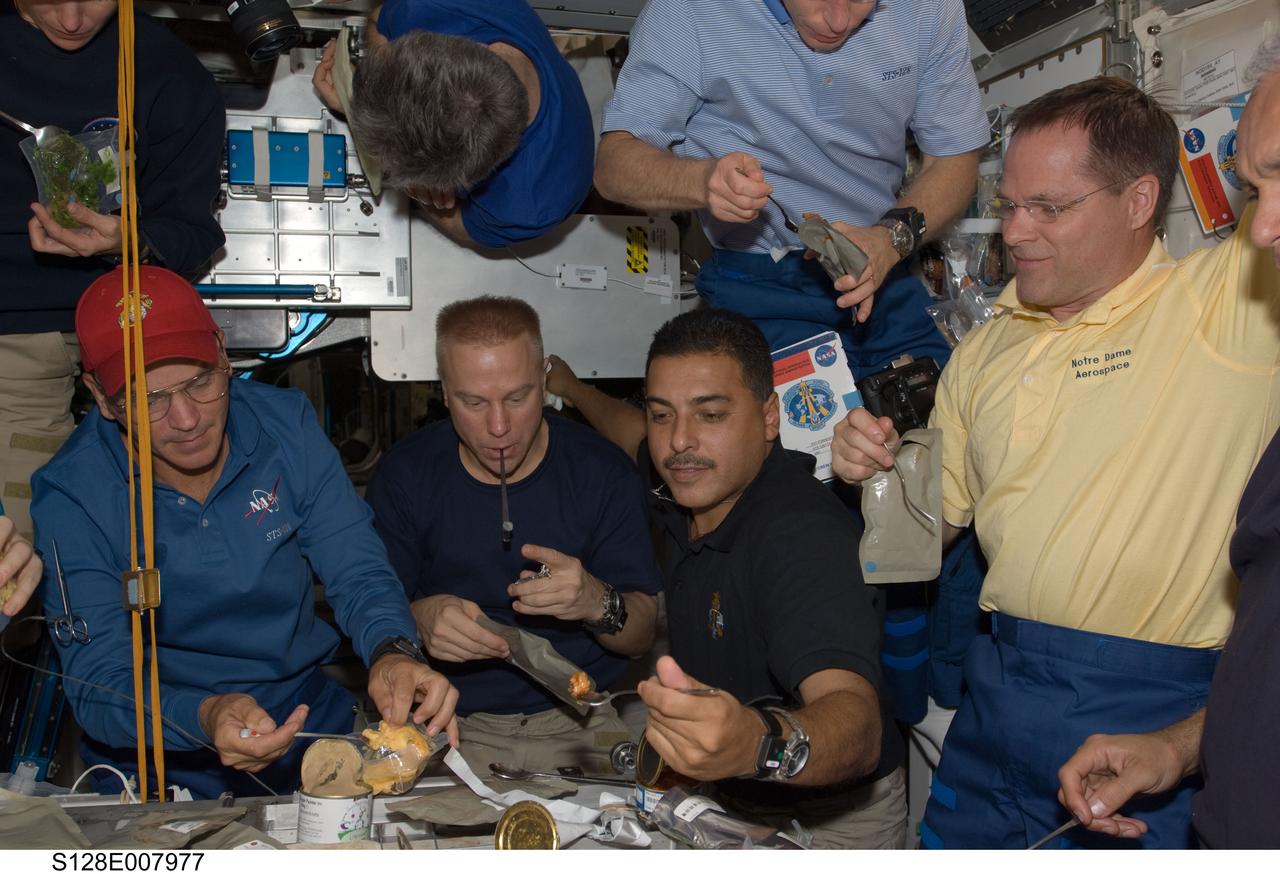
S128-E-007977 (7 Sept. 2009) --- Crew members onboard the International Space Station share a meal in the Unity node while Space Shuttle Discovery remains docked with the station. Pictured from the left (bottom) are NASA astronauts Rick Sturckow, STS-128 commander; Tim Kopra and Jose Hernandez, both STS-128 mission specialists; along with Kevin Ford, STS-128 pilot; and John “Danny” Olivas (mostly out of frame at right), STS-128 mission specialist. Pictured from the left (top, partially out of frame) are NASA astronaut Nicole Stott and Canadian Space Agency astronaut Robert Thirsk, both Expedition 20 flight engineers; along with NASA astronaut Patrick Forrester, STS-128 mission specialist.
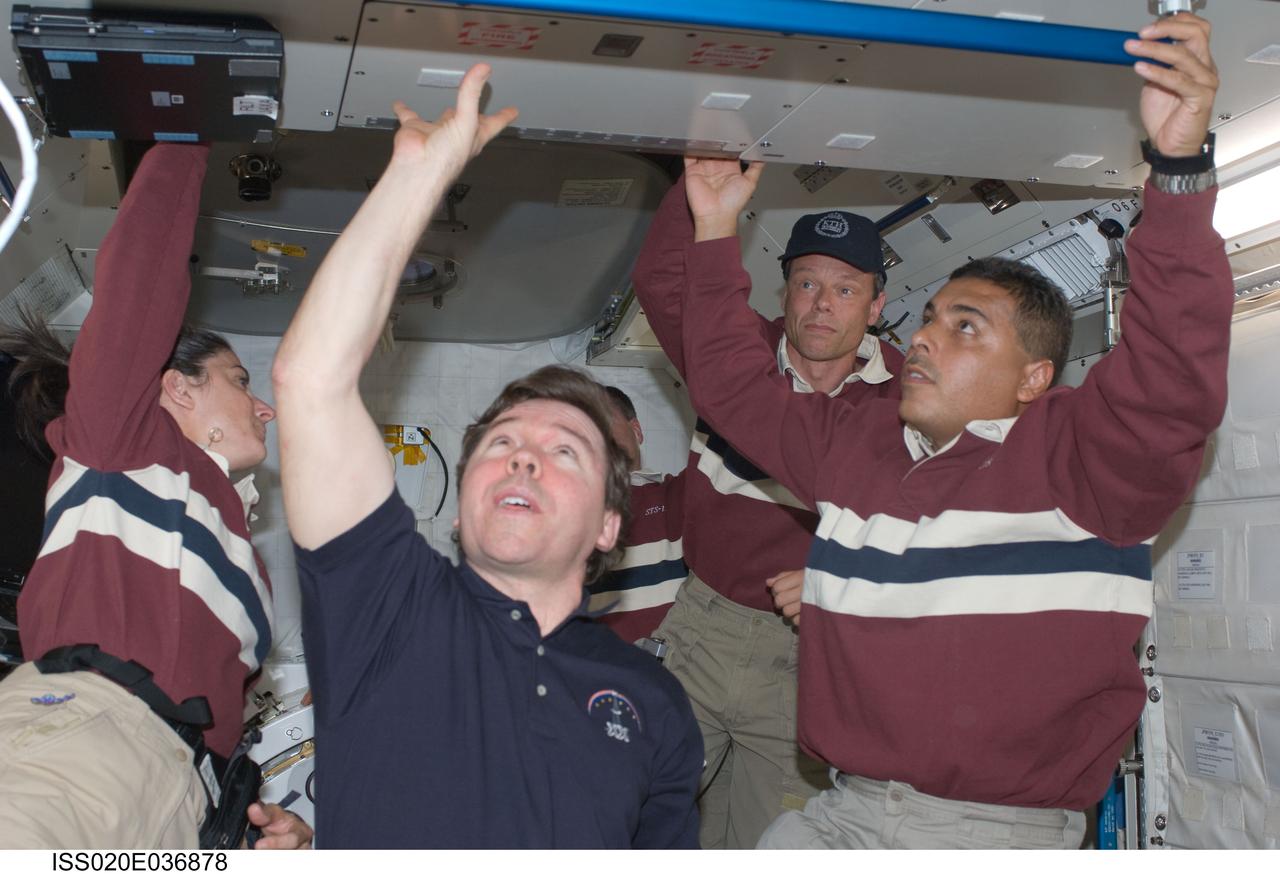
ISS020-E-036878 (30 Aug. 2009) --- This is one of a series of digital still images that were recorded shortly after the STS-128 and Expedition 20 crewmembers reunited in space and not long after the Space Shuttle Discovery and the International Space Station joined up in Earth orbit to create the second consecutive 13-person aggregation to perform more work on the orbital outpost. From the left are astronauts Nicole Stott, STS-128 mission specialist, soon to transfer into a role as Expedition 20 flight engineer, and Michael Barratt, Expedition 20 flight engineer, along with European Space Agency astronaut Christer Fugelsang, STS-128 mission specialist.

CAPE CANAVERAL, Fla. – In NASA Kennedy Space Center's Firing Room 4, STS-128 Launch Director Pete Nickolenko waits for the launch of space shuttle Discovery on the STS-128 mission. Liftoff from Launch Pad 39A was on time at 11:59 p.m. EDT. The first launch attempt on Aug. 24 was postponed due to unfavorable weather conditions. The second attempt on Aug. 25 also was postponed due to an issue with a valve in space shuttle Discovery's main propulsion system. The STS-128 mission is the 30th International Space Station assembly flight and the 128th space shuttle flight. The 13-day mission will deliver more than 7 tons of supplies, science racks and equipment, as well as additional environmental hardware to sustain six crew members on the International Space Station. The equipment includes a freezer to store research samples, a new sleeping compartment and the COLBERT treadmill. Photo credit: NASA/Kim Shiflett
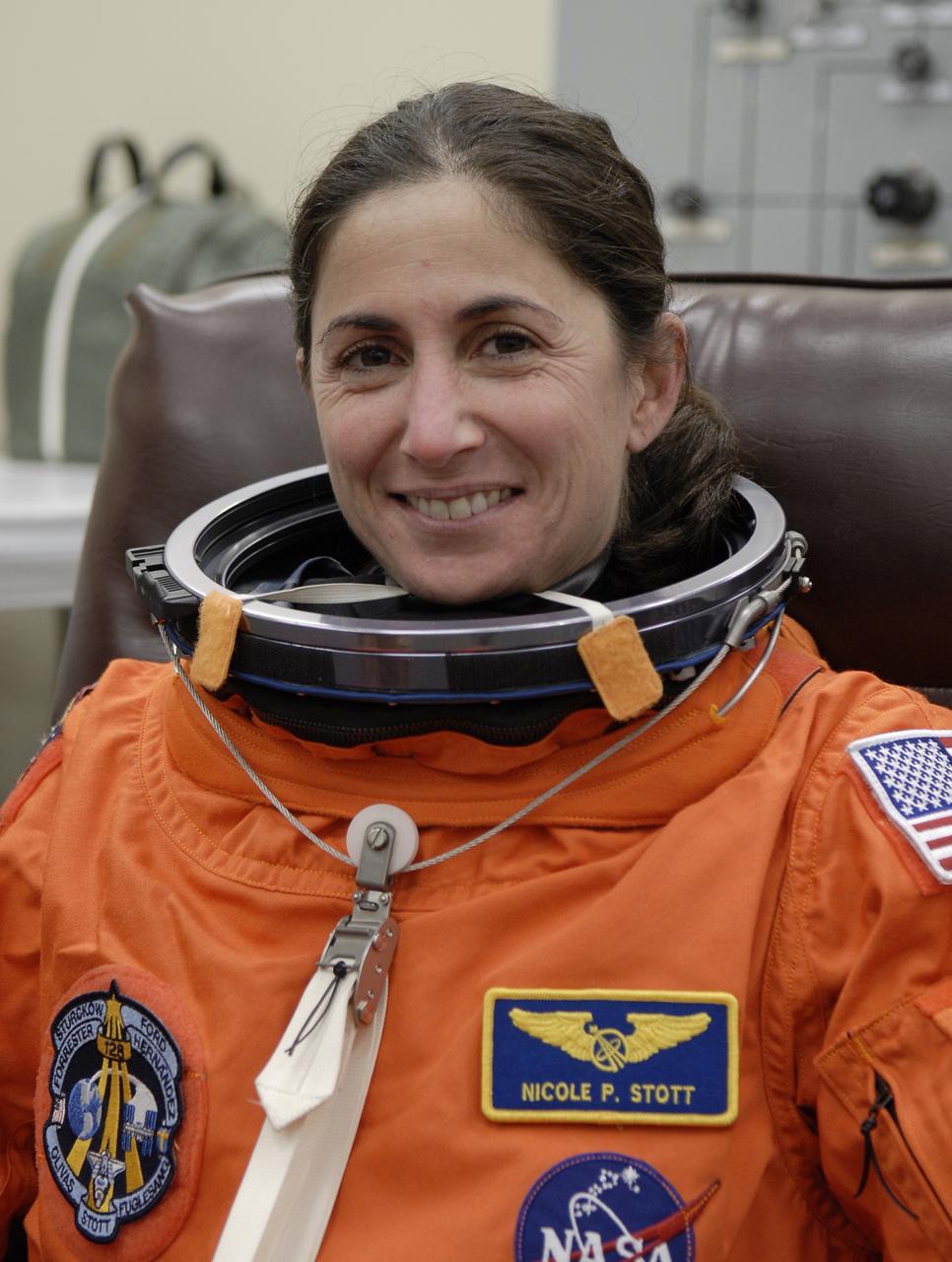
CAPE CANAVERAL, Fla. – STS-128 Mission Specialist Nicole Stott is donning her launch and entry suit for a fit check before the simulated launch countdown at NASA Kennedy Space Center's Launch Pad 39A. The countdown is the culmination of terminal countdown demonstration test activities to prepare the STS-128 crew for launch on space shuttle Discovery's STS-128 mission. Discovery will deliver 33,000 pounds of equipment to the station, including science and storage racks, a freezer to store research samples, a new sleeping compartment and the COLBERT treadmill. Launch is targeted for late August. Photo credit: NASA/Kim Shiflett
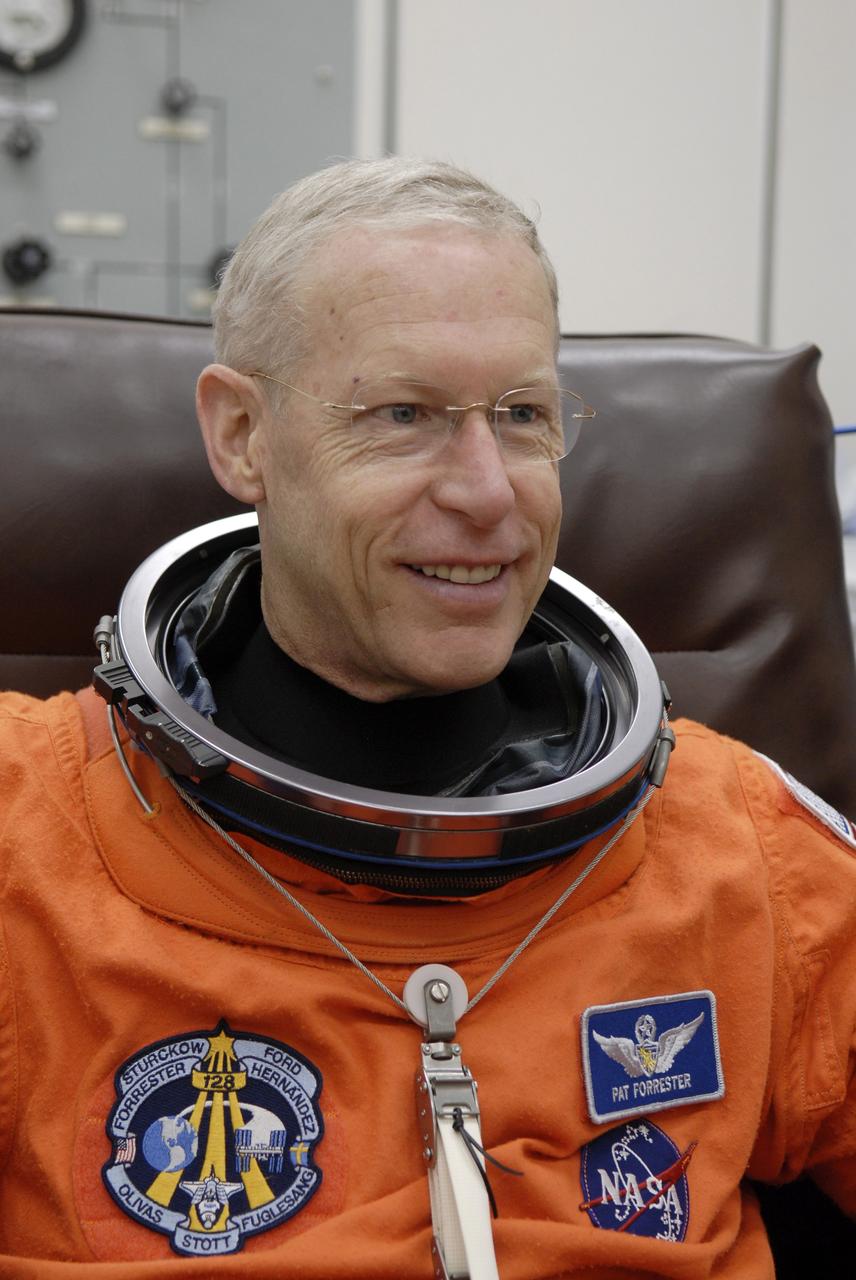
CAPE CANAVERAL, Fla. – STS-128 Mission Specialist Patrick Forrester checks the fit of his launch and entry suit before heading to the NASA Kennedy Space Center's Launch Pad 39A for the simulated launch countdown. The countdown is the culmination of terminal countdown demonstration test activities to prepare the STS-128 crew for launch on space shuttle Discovery's STS-128 mission. Discovery will deliver 33,000 pounds of equipment to the station, including science and storage racks, a freezer to store research samples, a new sleeping compartment and the COLBERT treadmill. Launch is targeted for late August. Photo credit: NASA/Kim Shiflett
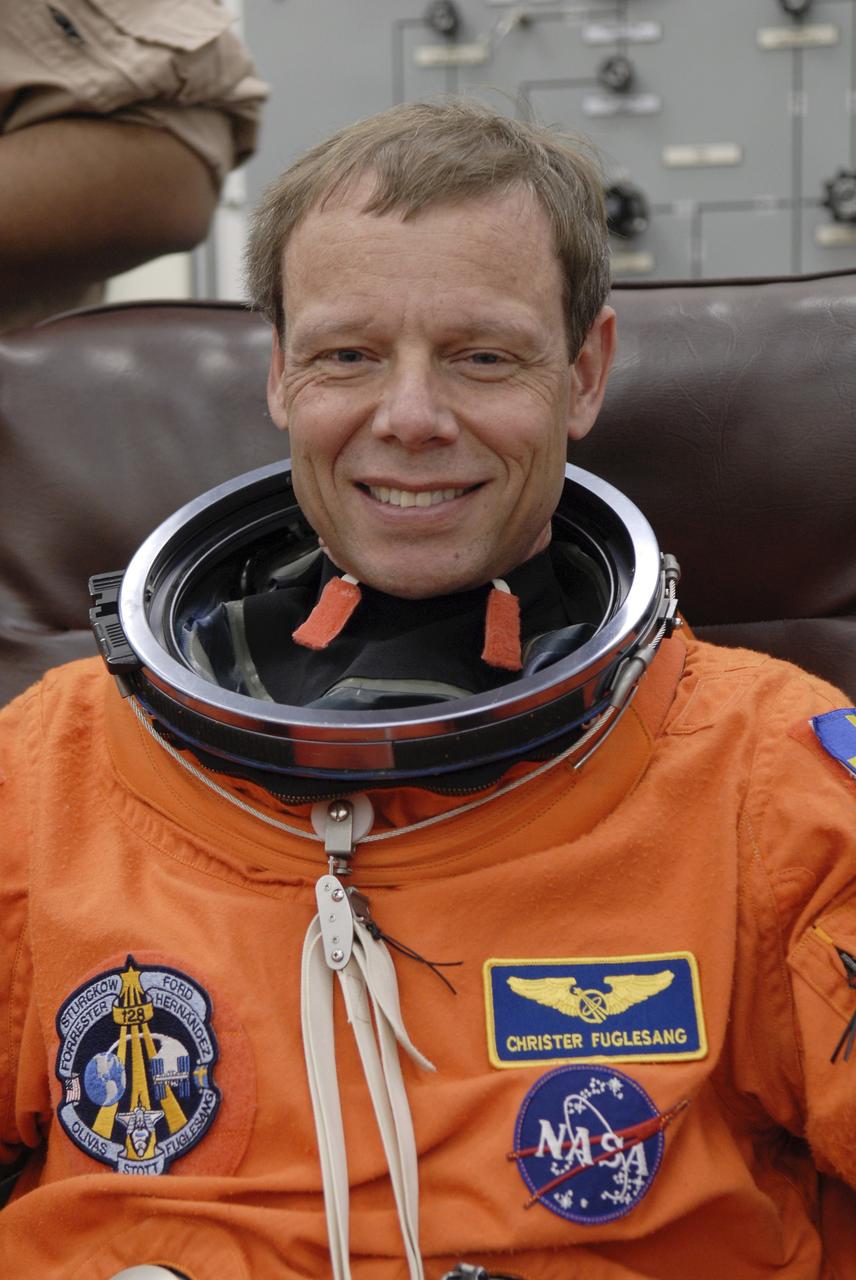
CAPE CANAVERAL, Fla. – STS-128 Mission Specialist Christer Fuglesang is donning his launch and entry suit for a fit check before the simulated launch countdown at NASA Kennedy Space Center's Launch Pad 39A. The countdown is the culmination of terminal countdown demonstration test activities to prepare the STS-128 crew for launch on space shuttle Discovery's STS-128 mission. Discovery will deliver 33,000 pounds of equipment to the station, including science and storage racks, a freezer to store research samples, a new sleeping compartment and the COLBERT treadmill. Launch is targeted for late August. Photo credit: NASA/Kim Shiflett
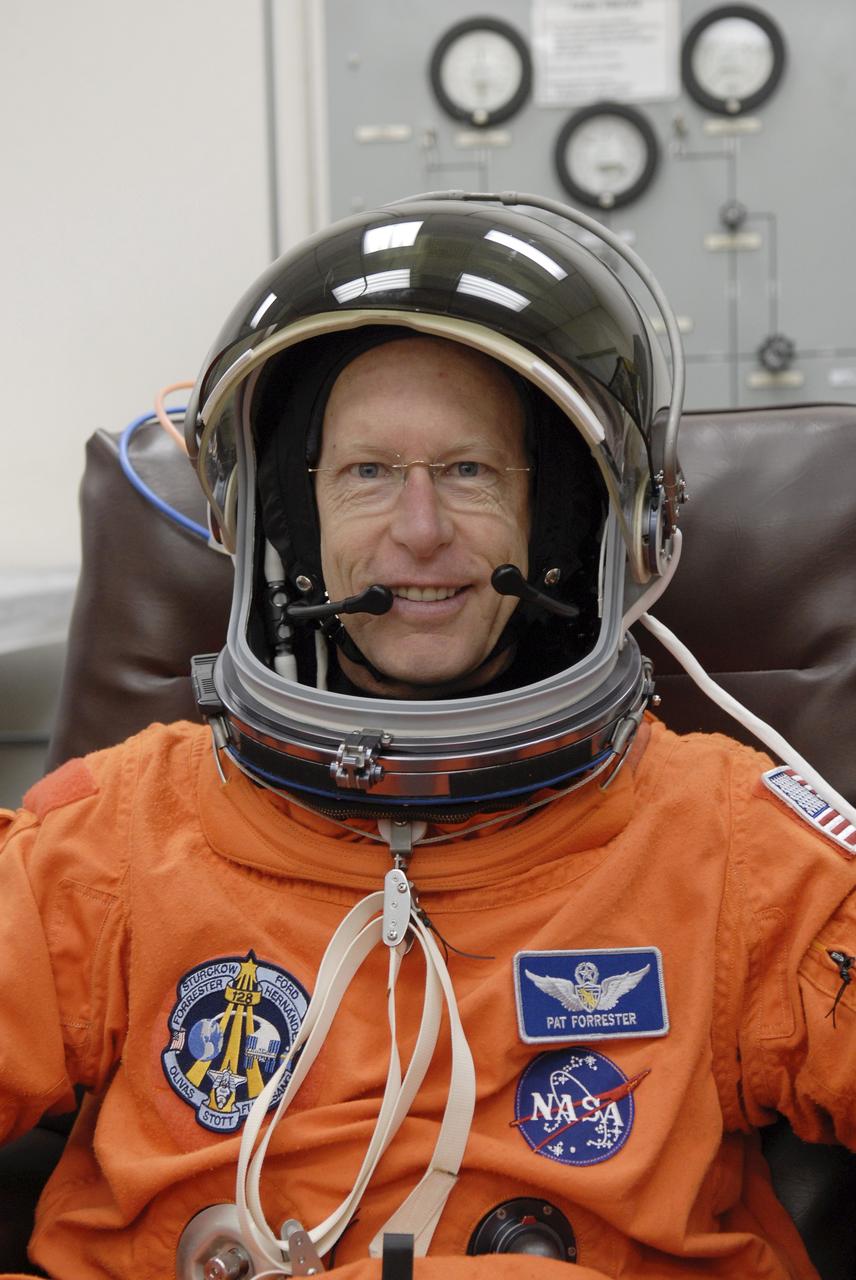
CAPE CANAVERAL, Fla. – STS-128 Mission Specialist Patrick Forrester tests the fit of his helmet before heading to the NASA Kennedy Space Center's Launch Pad 39A for the simulated launch countdown. The countdown is the culmination of terminal countdown demonstration test activities to prepare the STS-128 crew for launch on space shuttle Discovery's STS-128 mission. Discovery will deliver 33,000 pounds of equipment to the station, including science and storage racks, a freezer to store research samples, a new sleeping compartment and the COLBERT treadmill. Launch is targeted for late August. Photo credit: NASA/Kim Shiflett
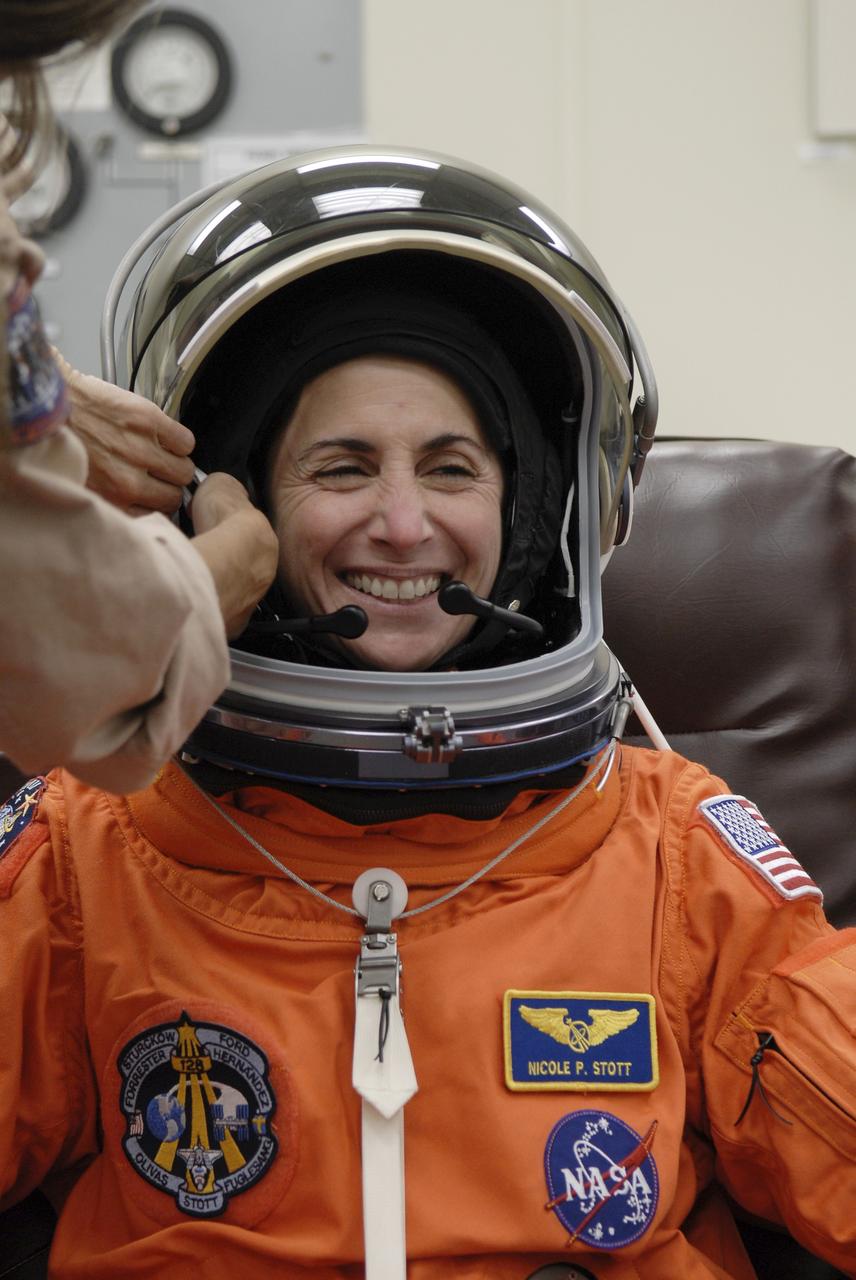
CAPE CANAVERAL, Fla. – STS-128 Mission Specialist Nicole Stott tests the fit of her helmet before the simulated launch countdown at NASA Kennedy Space Center's Launch Pad 39A. The countdown is the culmination of terminal countdown demonstration test activities to prepare the STS-128 crew for launch on space shuttle Discovery's STS-128 mission. Discovery will deliver 33,000 pounds of equipment to the station, including science and storage racks, a freezer to store research samples, a new sleeping compartment and the COLBERT treadmill. Launch is targeted for late August. Photo credit: NASA/Kim Shiflett
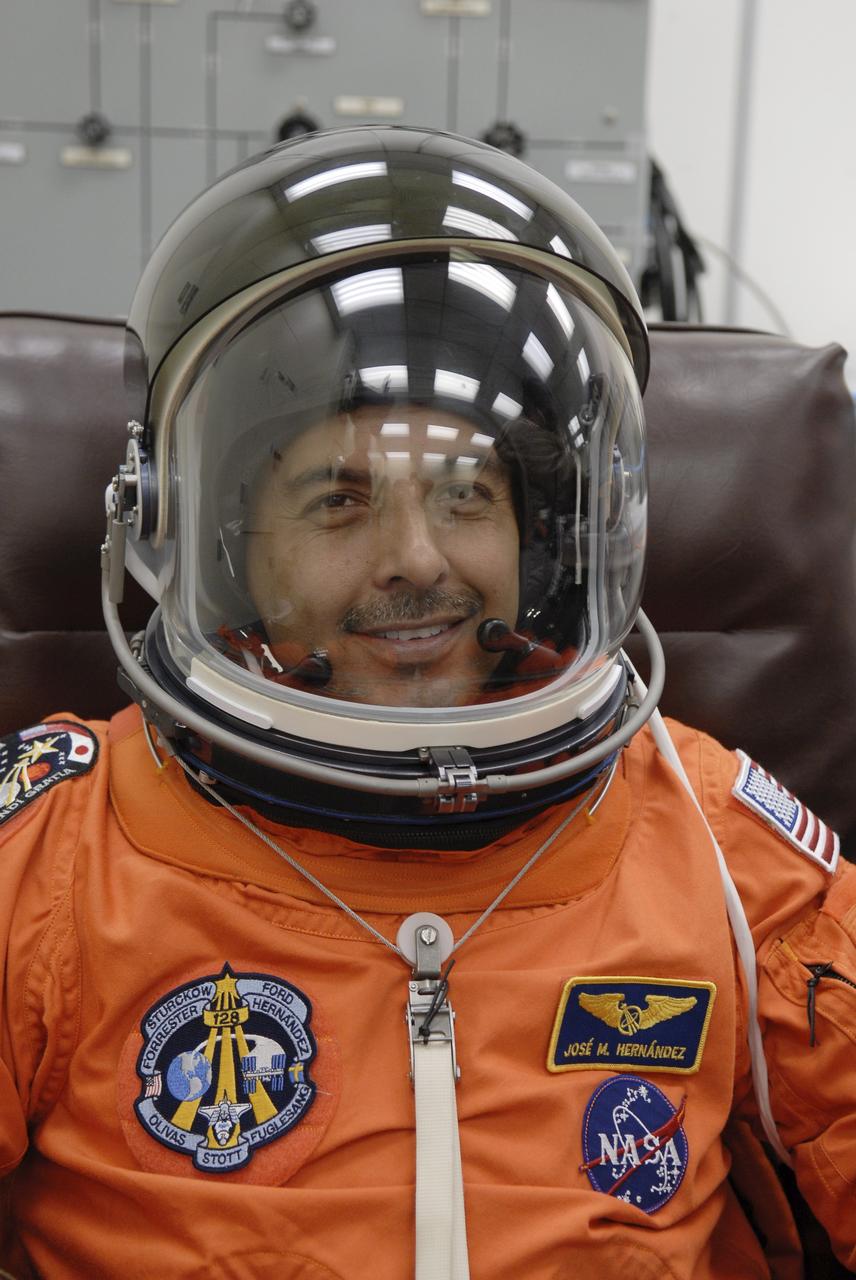
CAPE CANAVERAL, Fla. – STS-128 Mission Specialist Jose Hernandez completes the fit check of his launch and entry suit and helmet before heading to the NASA Kennedy Space Center's Launch Pad 39A for the simulated launch countdown. The countdown is the culmination of terminal countdown demonstration test activities to prepare the STS-128 crew for launch on space shuttle Discovery's STS-128 mission. Discovery will deliver 33,000 pounds of equipment to the station, including science and storage racks, a freezer to store research samples, a new sleeping compartment and the COLBERT treadmill. Launch is targeted for late August. Photo credit: NASA/Kim Shiflett
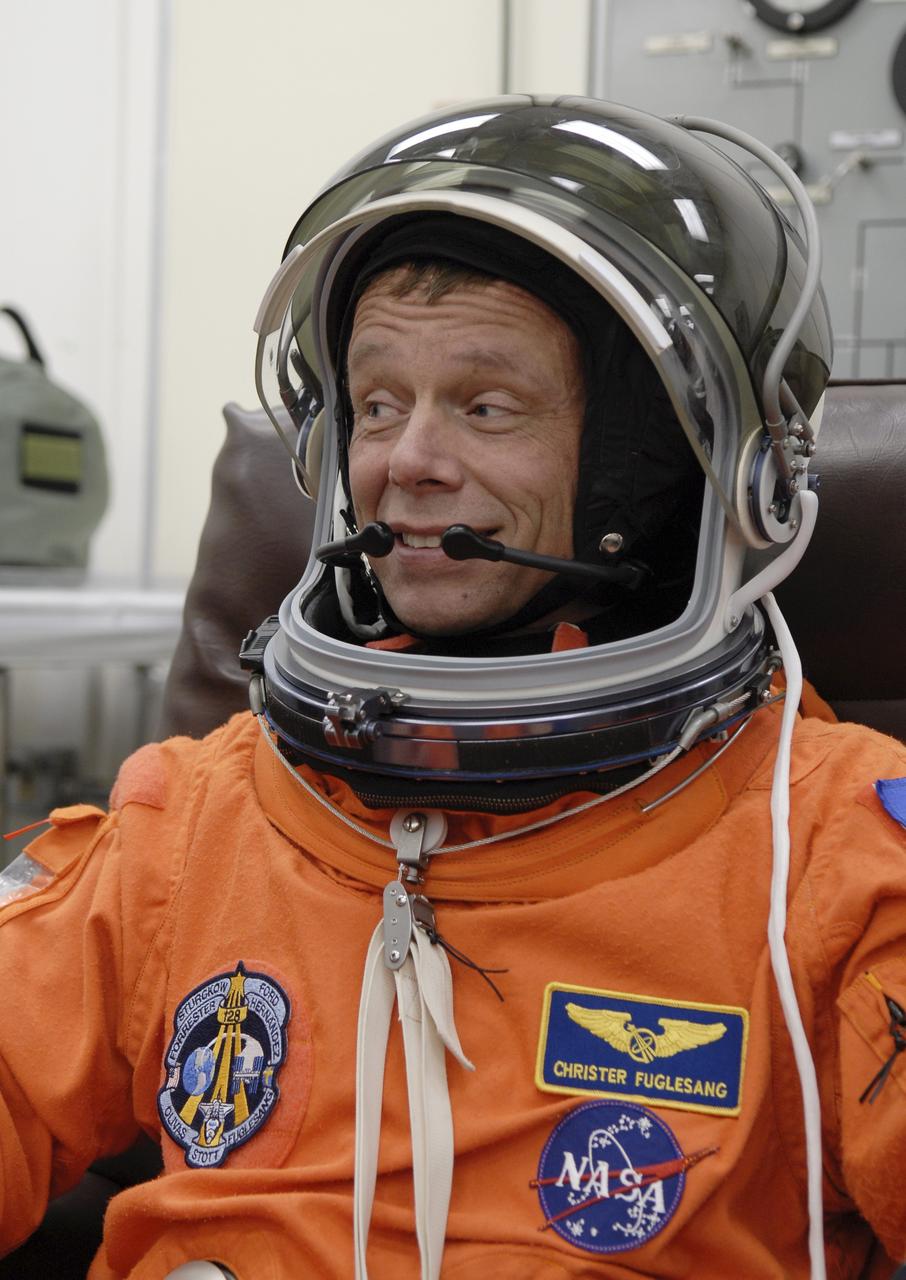
CAPE CANAVERAL, Fla. – STS-128 Mission Specialist Christer Fuglesang tests the fit of his helmet before heading to the NASA Kennedy Space Center's Launch Pad 39A for the simulated launch countdown. The countdown is the culmination of terminal countdown demonstration test activities to prepare the STS-128 crew for launch on space shuttle Discovery's STS-128 mission. Discovery will deliver 33,000 pounds of equipment to the station, including science and storage racks, a freezer to store research samples, a new sleeping compartment and the COLBERT treadmill. Launch is targeted for late August. Photo credit: NASA/Kim Shiflett
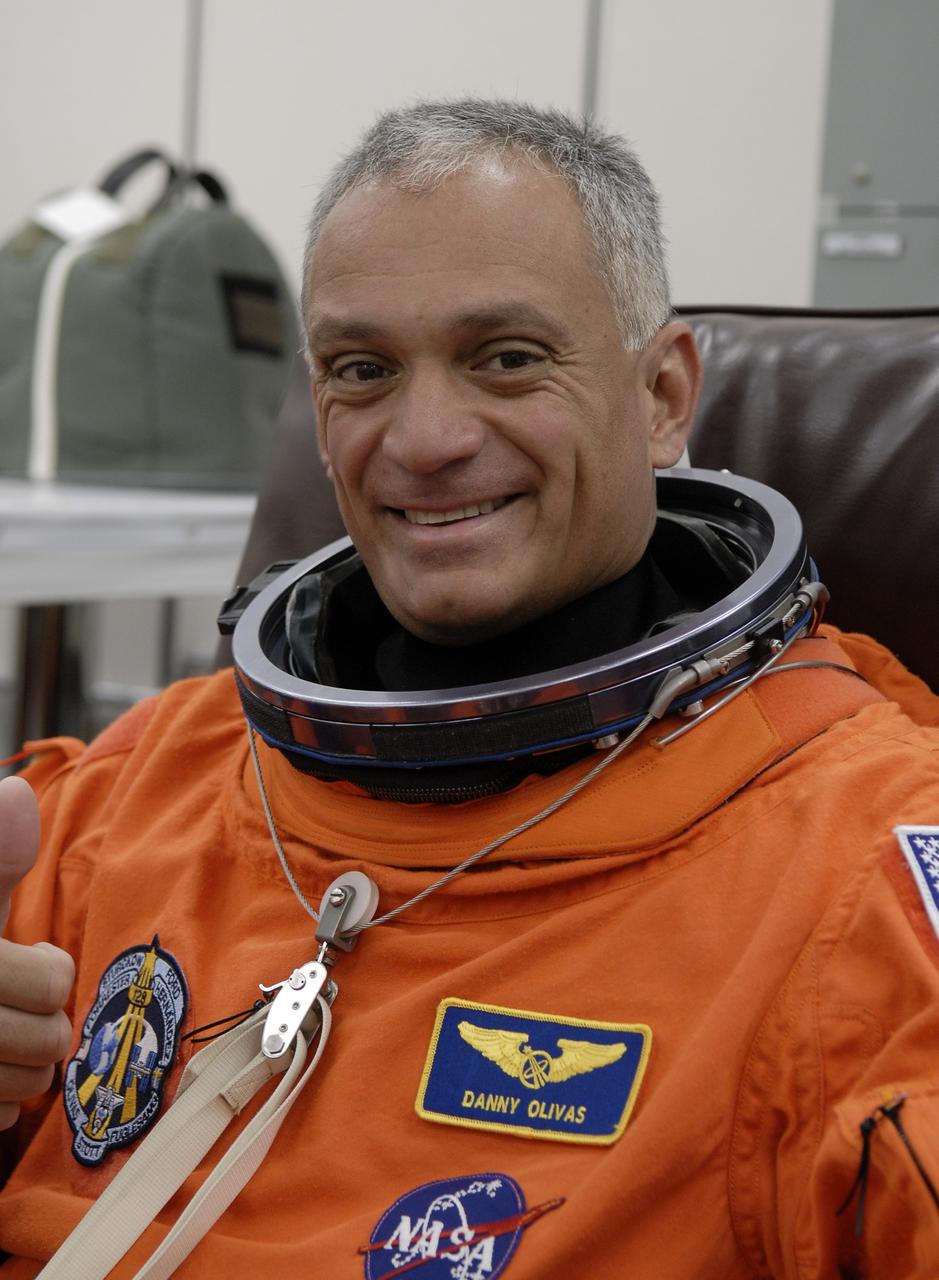
CAPE CANAVERAL, Fla. – STS-128 Mission Specialist Danny Olivas is donning his launch and entry suit for a fit check before the simulated launch countdown at NASA Kennedy Space Center's Launch Pad 39A. The countdown is the culmination of terminal countdown demonstration test activities to prepare the STS-128 crew for launch on space shuttle Discovery's STS-128 mission. Discovery will deliver 33,000 pounds of equipment to the station, including science and storage racks, a freezer to store research samples, a new sleeping compartment and the COLBERT treadmill. Launch is targeted for late August. Photo credit: NASA/Kim Shiflett
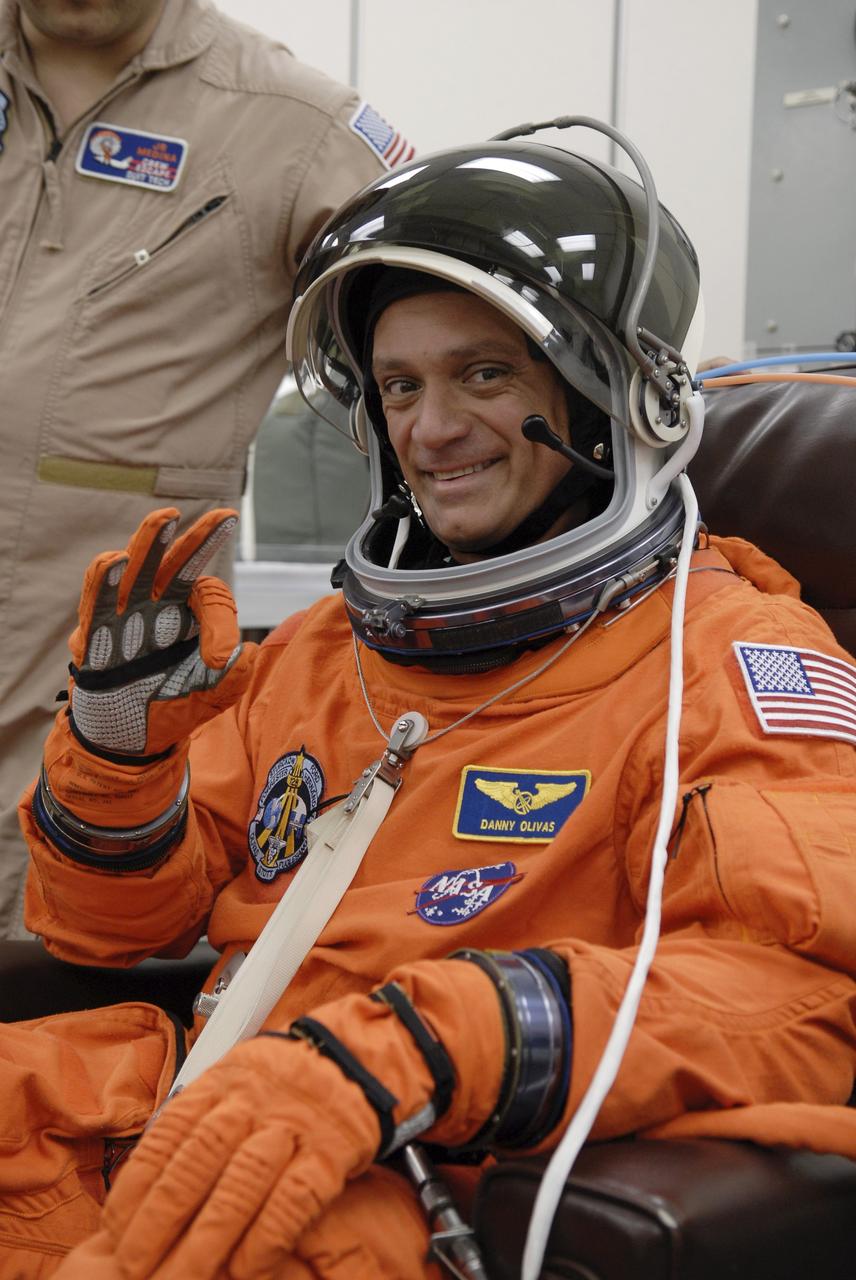
CAPE CANAVERAL, Fla. – STS-128 Mission Specialist Danny Olivas signals the fit of his launch and entry suit and helmet before heading to the NASA Kennedy Space Center's Launch Pad 39A for the simulated launch countdown. The countdown is the culmination of terminal countdown demonstration test activities to prepare the STS-128 crew for launch on space shuttle Discovery's STS-128 mission. Discovery will deliver 33,000 pounds of equipment to the station, including science and storage racks, a freezer to store research samples, a new sleeping compartment and the COLBERT treadmill. Launch is targeted for late August. Photo credit: NASA/Kim Shiflett
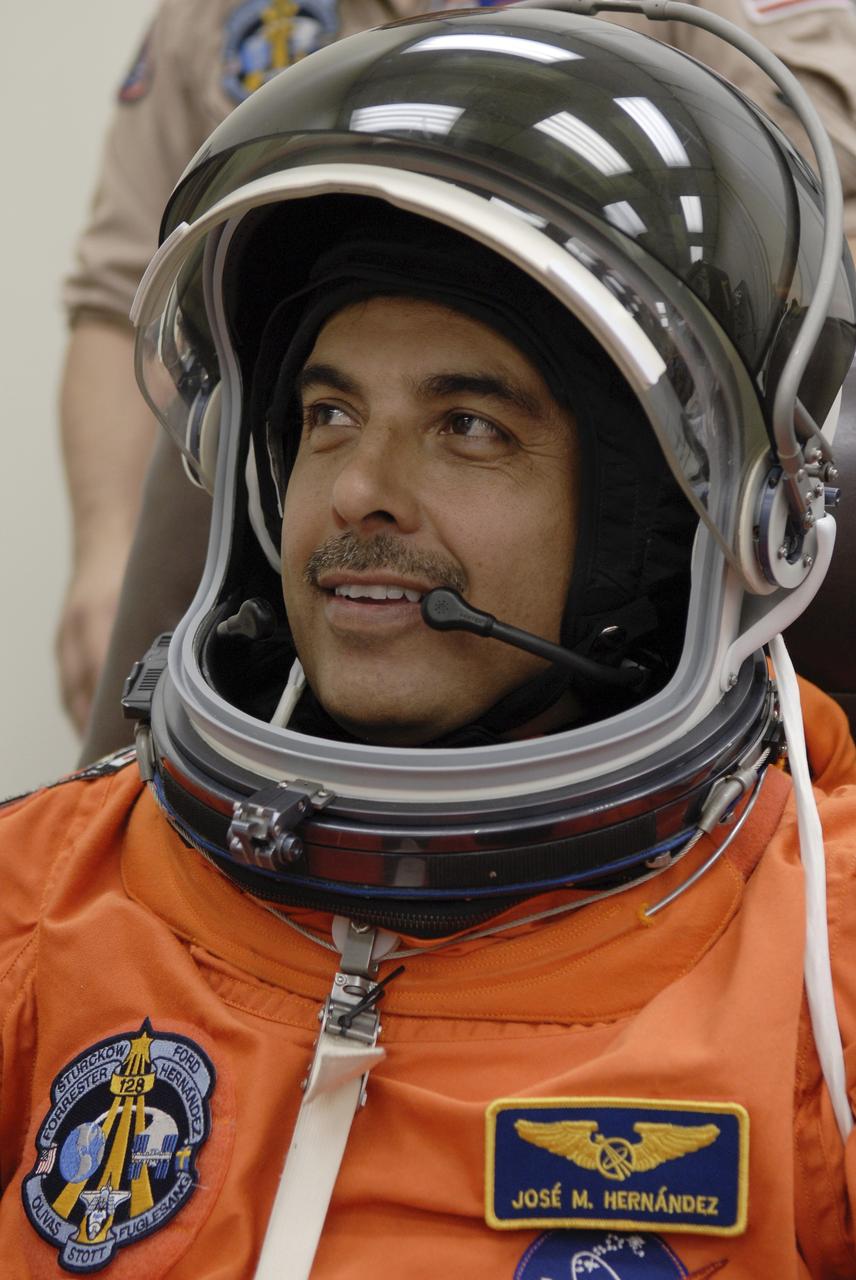
CAPE CANAVERAL, Fla. – STS-128 Mission Specialist Jose Hernandez completes the fit check of his launch and entry suit and helmet before heading to the NASA Kennedy Space Center's Launch Pad 39A for the simulated launch countdown. The countdown is the culmination of terminal countdown demonstration test activities to prepare the STS-128 crew for launch on space shuttle Discovery's STS-128 mission. Discovery will deliver 33,000 pounds of equipment to the station, including science and storage racks, a freezer to store research samples, a new sleeping compartment and the COLBERT treadmill. Launch is targeted for late August. Photo credit: NASA/Kim Shiflett
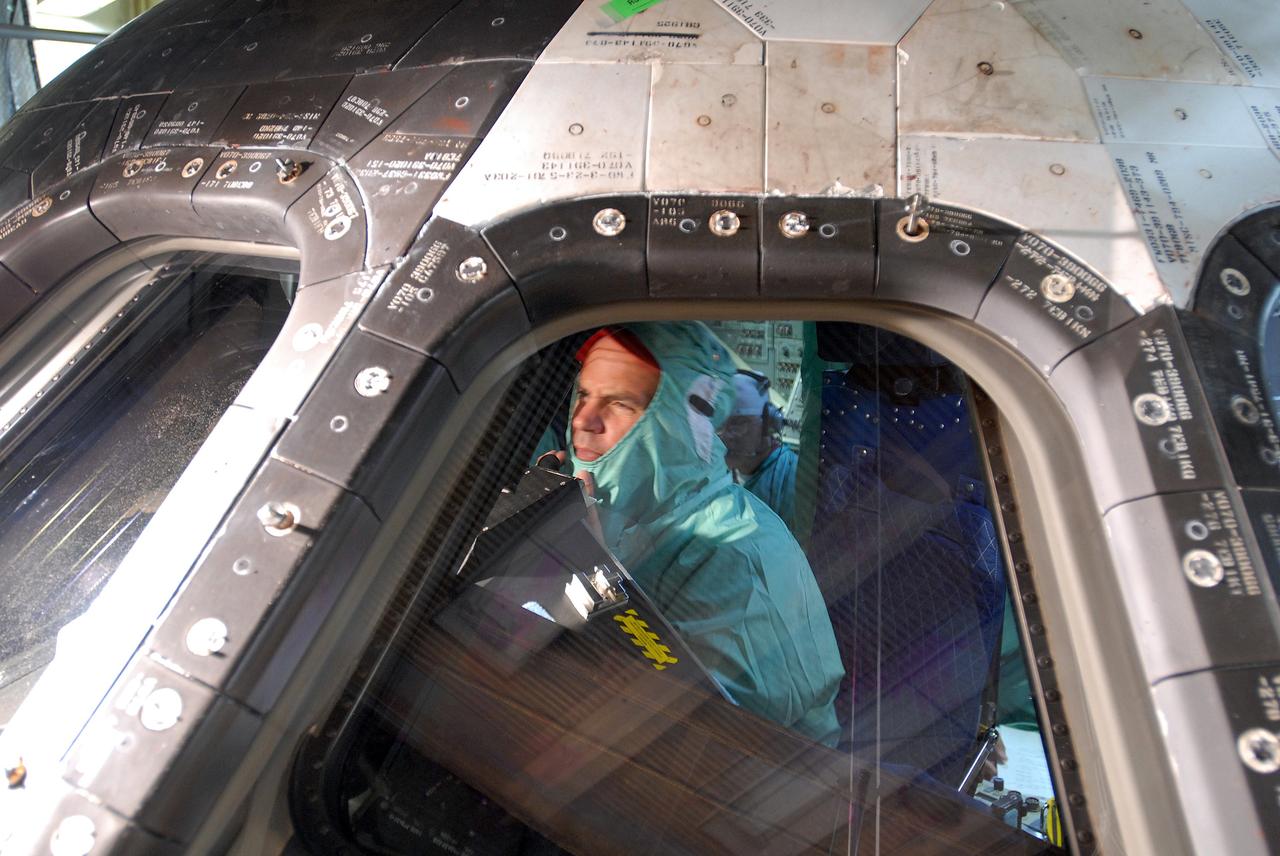
CAPE CANAVERAL, Fla. – In Orbiter Processing Facility 3 at NASA's Kennedy Space Center in Florida, STS-128 mission Commander Rick Sturckow checks out the cockpit window of space shuttle Discovery. The crew is at Kennedy for a crew equipment interface test, or CEIT, which provides hands-on training and observation of shuttle and flight hardware. The STS-128 flight will carry science and storage racks to the International Space Station on Discovery. Launch is targeted for Aug. 7. Photo credit: NASA/Jim Grossmann
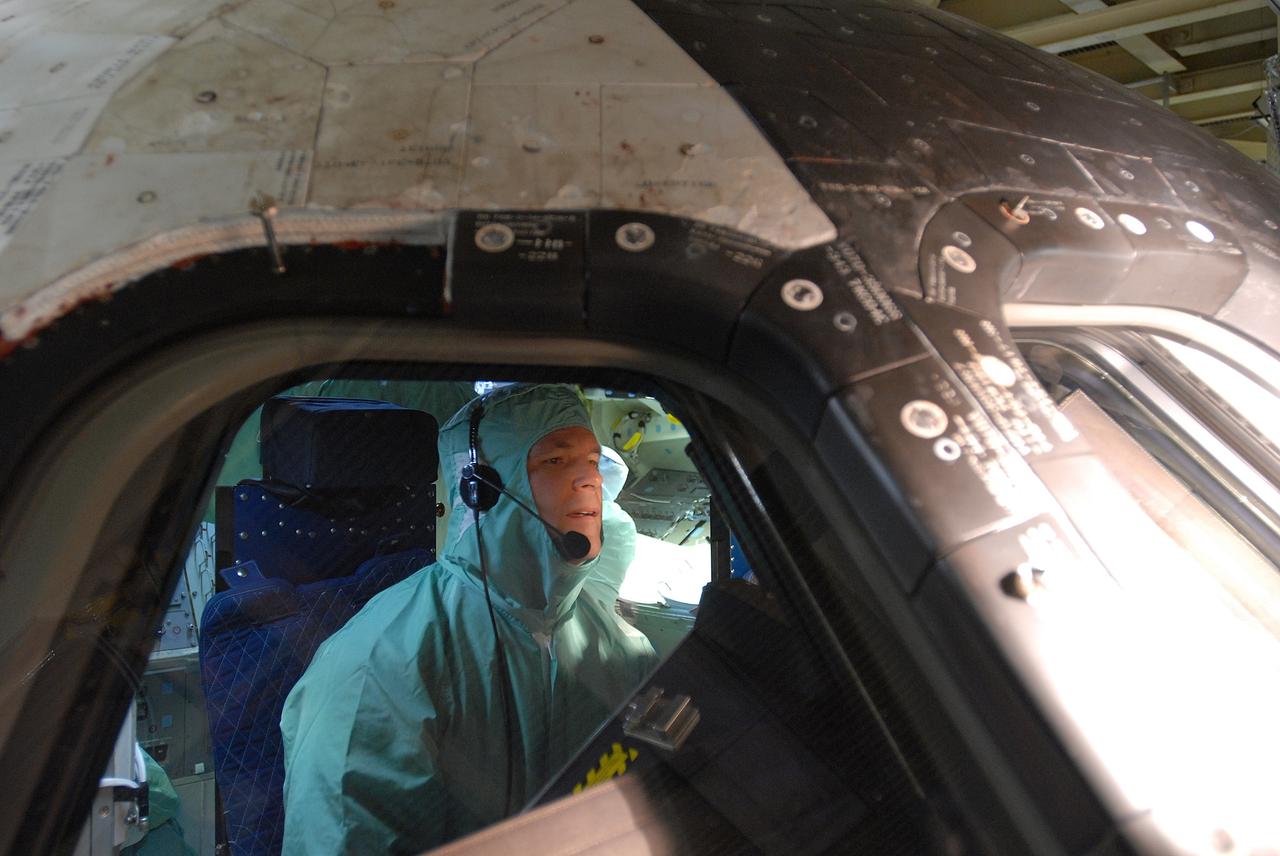
CAPE CANAVERAL, Fla. – In Orbiter Processing Facility 3 at NASA's Kennedy Space Center in Florida, STS-128 mission Pilot Kevin Ford checks out the cockpit window of space shuttle Discovery. The crew is at Kennedy for a crew equipment interface test, or CEIT, which provides hands-on training and observation of shuttle and flight hardware. The STS-128 flight will carry science and storage racks to the International Space Station on Discovery. Launch is targeted for Aug. 7. Photo credit: NASA/Jim Grossmann
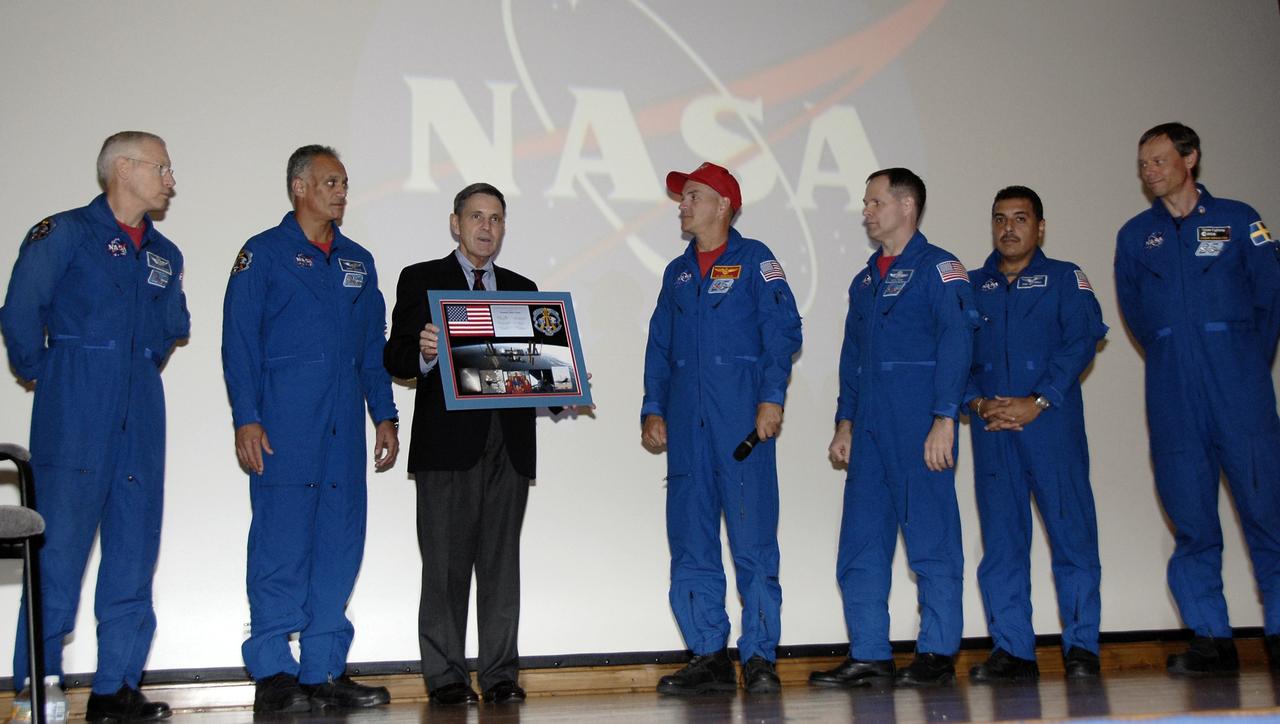
CAPE CANAVERAL, Fla. – CAPE CANAVERAL, Fla. – In the Training Auditorium at NASA's Kennedy Space Center in Florida, Center Director Bob Cabana accepts a plaque commemorating the STS-128 space shuttle mission for the STS-128 crew. From left are Mission Specialists Patrick Forrester and John "Danny" Olivas; Cabana; Commander Rick Sturckow; Pilot Kevin Ford; and Mission Specialists Jose Hernandez and Christer Fuglesang. More than 7 tons of supplies, science racks and equipment, as well as additional environmental hardware to sustain six crew members on the International Space Station were delivered to the International Space Station on the STS-128 mission. The equipment included a freezer to store research samples, a new sleeping compartment and the COLBERT treadmill. The mission was the 128th in the Space Shuttle Program, the 37th flight of Discovery and the 30th station assembly flight. Launch was Aug. 28, 2009. Photo credit: NASA/Kim Shiflett
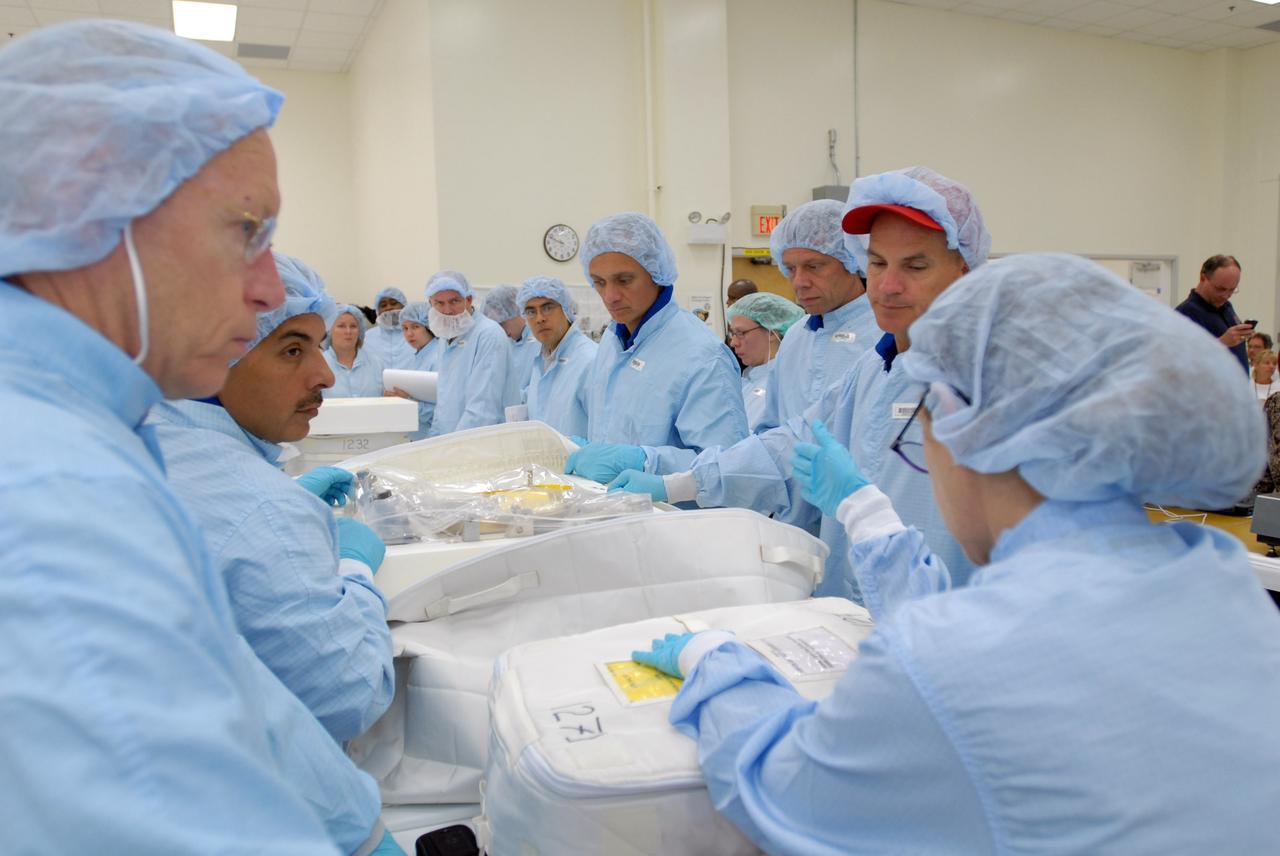
CAPE CANAVERAL, Fla. – In the Space Station Processing Facility, STS-128 crew members look over packages of equipment that will accompany the mission. At left are Mission Specialists Patrick Forrester and Jose Hernandez. At right are Commander Rick Sturckow (with the red cap) and on his left Mission Specialists Christer Fuglesang and John "Danny" Olivas. The STS-128 flight will carry science and storage racks to the International Space Station on space shuttle Discovery. Launch of Discovery is targeted for Aug. 6. Photo credit: NASA/Jim Grossmann
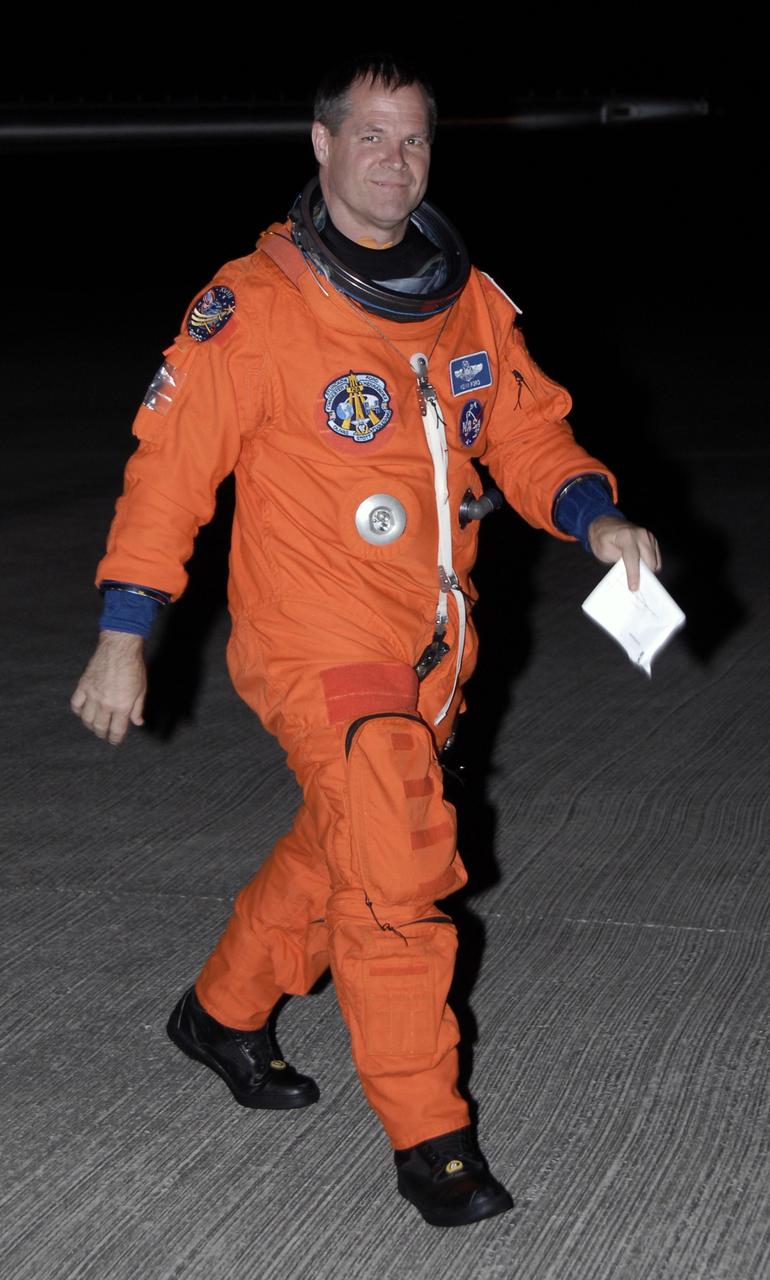
CAPE CANAVERAL, Fla. –At the Shuttle Landing Facility at NASA's Kennedy Space Center in Florida, STS-128 Pilot Kevin Ford walks away from the Shuttle Training Aircraft, or STA, after completing shuttle landing practice. The practice is in preparation for launch of space shuttle Discovery's STS-128 mission in late August to the International Space Station. The STA is a Grumman American Aviation-built Gulfstream II jet that was modified to simulate a shuttle’s cockpit, motion and visual cues, and handling qualities. The STS-128 crew is at Kennedy for a launch dress rehearsal called the terminal countdown demonstration test, or TCDT, which includes emergency exit training and equipment familiarization, as well as a simulated launch countdown. Discovery will deliver 33,000 pounds of equipment to the station, including science and storage racks, a freezer to store research samples, a new sleeping compartment and the COLBERT treadmill. Photo credit: NASA/Kim Shiflett
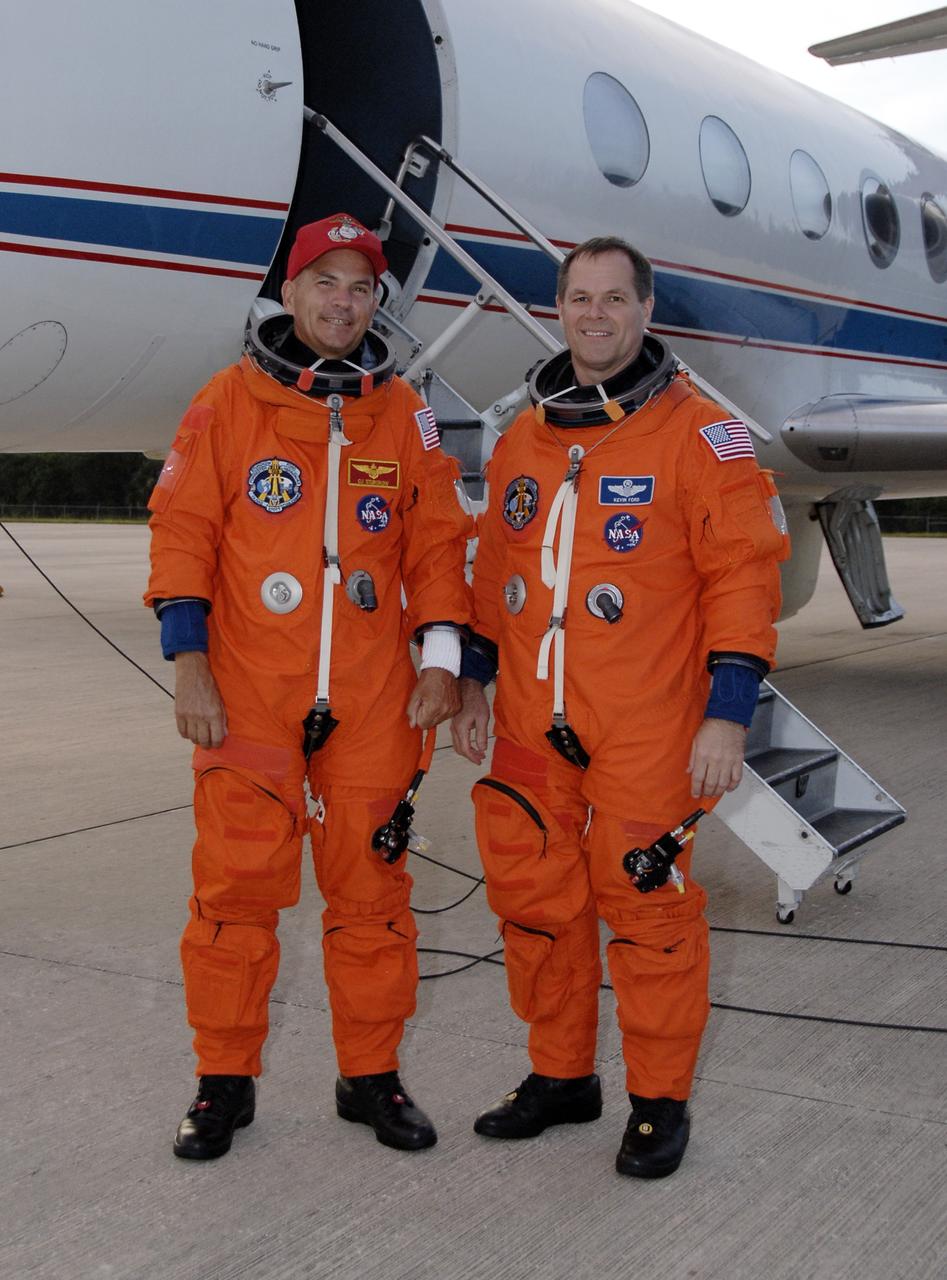
CAPE CANAVERAL, Fla. – At the Shuttle Landing Facility at NASA's Kennedy Space Center in Florida, STS-128 Commander Rick Sturckow (left) and Pilot Kevin Ford are ready to begin practicing shuttle landings in the Shuttle Training Aircraft, or STA. The practice is in preparation for launch of space shuttle Discovery's STS-128 mission in late August to the International Space Station. The STA is a Grumman American Aviation-built Gulfstream II jet that was modified to simulate a shuttle’s cockpit, motion and visual cues, and handling qualities. The STS-128 crew is at Kennedy for a launch dress rehearsal called the terminal countdown demonstration test, or TCDT, which includes emergency exit training and equipment familiarization, as well as a simulated launch countdown. Discovery will deliver 33,000 pounds of equipment to the station, including science and storage racks, a freezer to store research samples, a new sleeping compartment and the COLBERT treadmill. Photo credit: NASA/Kim Shiflett
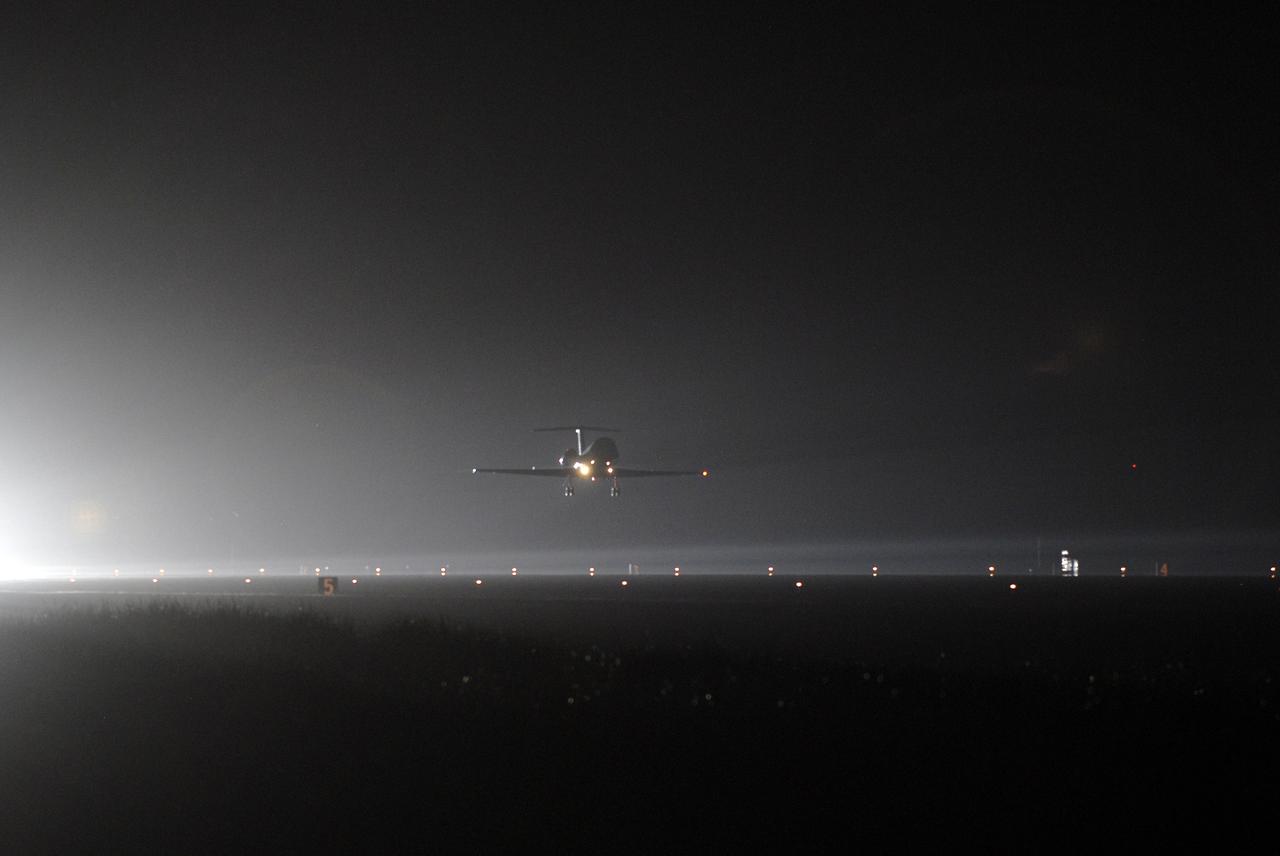
CAPE CANAVERAL, Fla. –At the Shuttle Landing Facility at NASA's Kennedy Space Center in Florida, a Shuttle Training Aircraft, or STA, approaches the runway during landing practice. STS-128 Commander Rick Sturckow and Pilot Kevin Ford are using the STAs to practice shuttle landings. The practice is in preparation for launch of space shuttle Discovery's STS-128 mission in late August to the International Space Station. The STA is a Grumman American Aviation-built Gulfstream II jet that was modified to simulate a shuttle’s cockpit, motion and visual cues, and handling qualities. The STS-128 crew is at Kennedy for a launch dress rehearsal called the terminal countdown demonstration test, or TCDT, which includes emergency exit training and equipment familiarization, as well as a simulated launch countdown. Discovery will deliver 33,000 pounds of equipment to the station, including science and storage racks, a freezer to store research samples, a new sleeping compartment and the COLBERT treadmill. Photo credit: NASA/Kim Shiflett
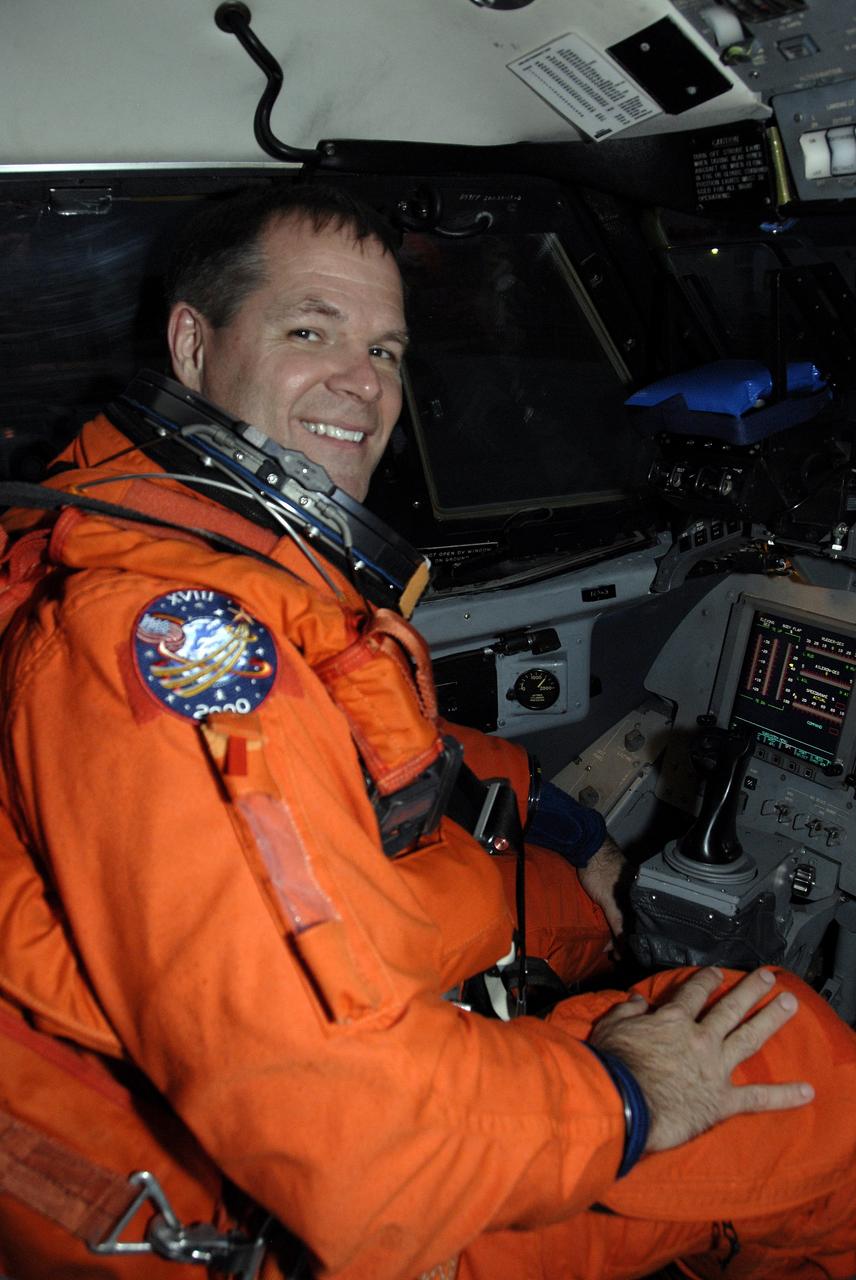
CAPE CANAVERAL, Fla. –At the Shuttle Landing Facility at NASA's Kennedy Space Center in Florida, STS-128 Pilot Kevin Ford settles in the cockpit of the Shuttle Training Aircraft, or STA, to practice shuttle landings. The practice is in preparation for launch of space shuttle Discovery's STS-128 mission in late August to the International Space Station. The STA is a Grumman American Aviation-built Gulfstream II jet that was modified to simulate a shuttle’s cockpit, motion and visual cues, and handling qualities. The STS-128 crew is at Kennedy for a launch dress rehearsal called the terminal countdown demonstration test, or TCDT, which includes emergency exit training and equipment familiarization, as well as a simulated launch countdown. Discovery will deliver 33,000 pounds of equipment to the station, including science and storage racks, a freezer to store research samples, a new sleeping compartment and the COLBERT treadmill. Photo credit: NASA/Kim Shiflett
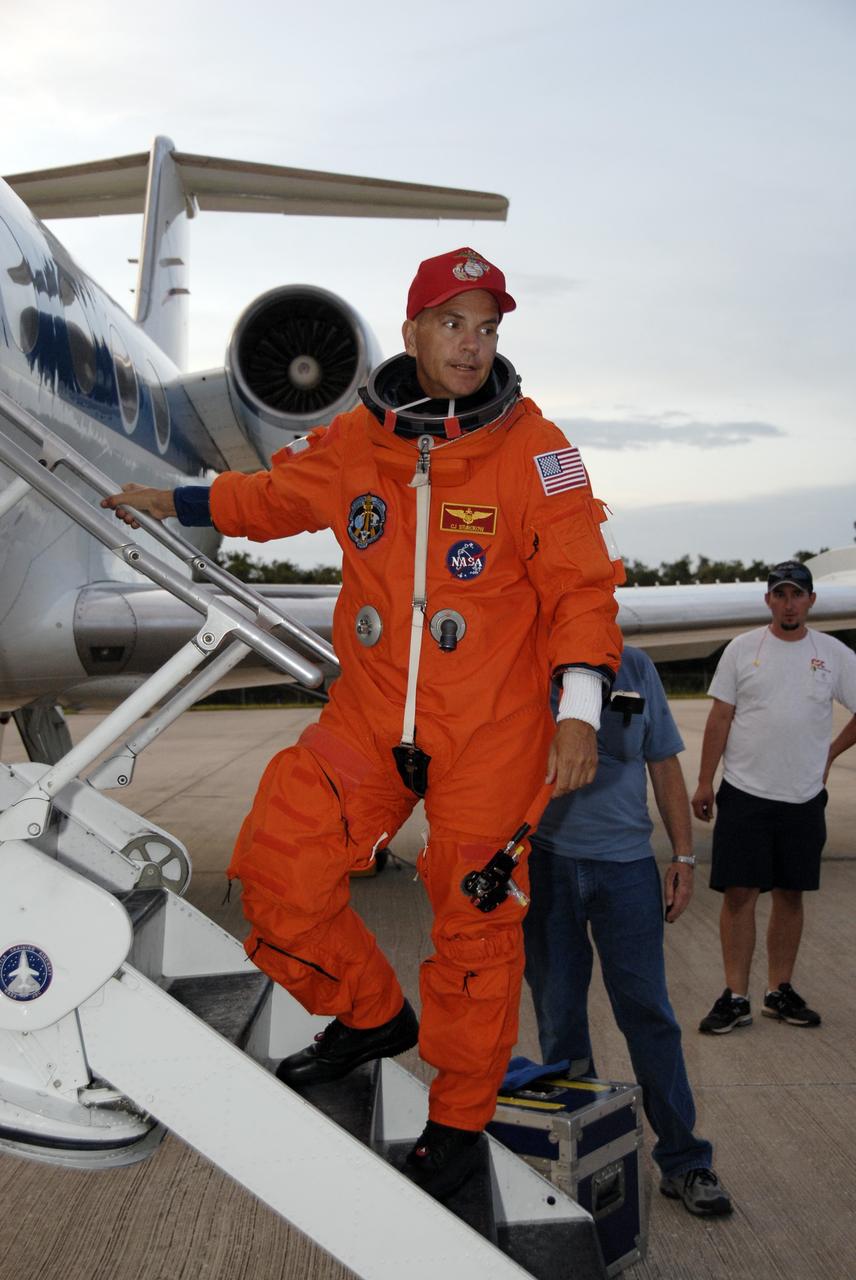
CAPE CANAVERAL, Fla. – At the Shuttle Landing Facility at NASA's Kennedy Space Center in Florida, STS-128 Commander Rick Sturckow heads up the stairs to the cockpit of the Shuttle Training Aircraft, or STA, to practice shuttle landings. The practice is in preparation for launch of space shuttle Discovery's STS-128 mission in late August to the International Space Station. The STA is a Grumman American Aviation-built Gulfstream II jet that was modified to simulate a shuttle’s cockpit, motion and visual cues, and handling qualities. The STS-128 crew is at Kennedy for a launch dress rehearsal called the terminal countdown demonstration test, or TCDT, which includes emergency exit training and equipment familiarization, as well as a simulated launch countdown. Discovery will deliver 33,000 pounds of equipment to the station, including science and storage racks, a freezer to store research samples, a new sleeping compartment and the COLBERT treadmill. Photo credit: NASA/Kim Shiflett
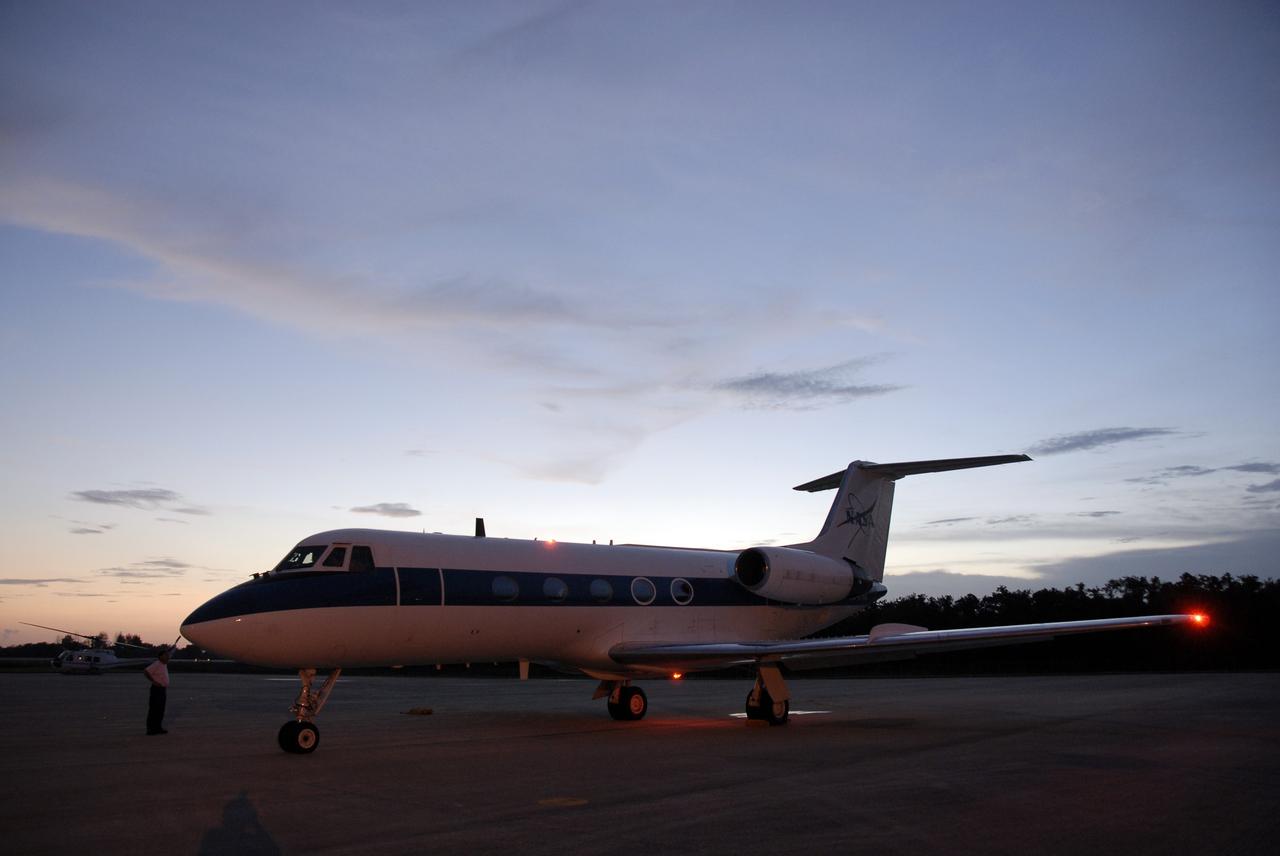
CAPE CANAVERAL, Fla. –At the Shuttle Landing Facility at NASA's Kennedy Space Center in Florida, one of the two Shuttle Training Aircraft, or STAs, waits to taxi to the runway. STS-128 Commander Rick Sturckow and Pilot Kevin Ford are using the STAs to practice shuttle landings. The practice is in preparation for launch of space shuttle Discovery's STS-128 mission in late August to the International Space Station. The STA is a Grumman American Aviation-built Gulfstream II jet that was modified to simulate a shuttle’s cockpit, motion and visual cues, and handling qualities. The STS-128 crew is at Kennedy for a launch dress rehearsal called the terminal countdown demonstration test, or TCDT, which includes emergency exit training and equipment familiarization, as well as a simulated launch countdown. Discovery will deliver 33,000 pounds of equipment to the station, including science and storage racks, a freezer to store research samples, a new sleeping compartment and the COLBERT treadmill. Photo credit: NASA/Kim Shiflett
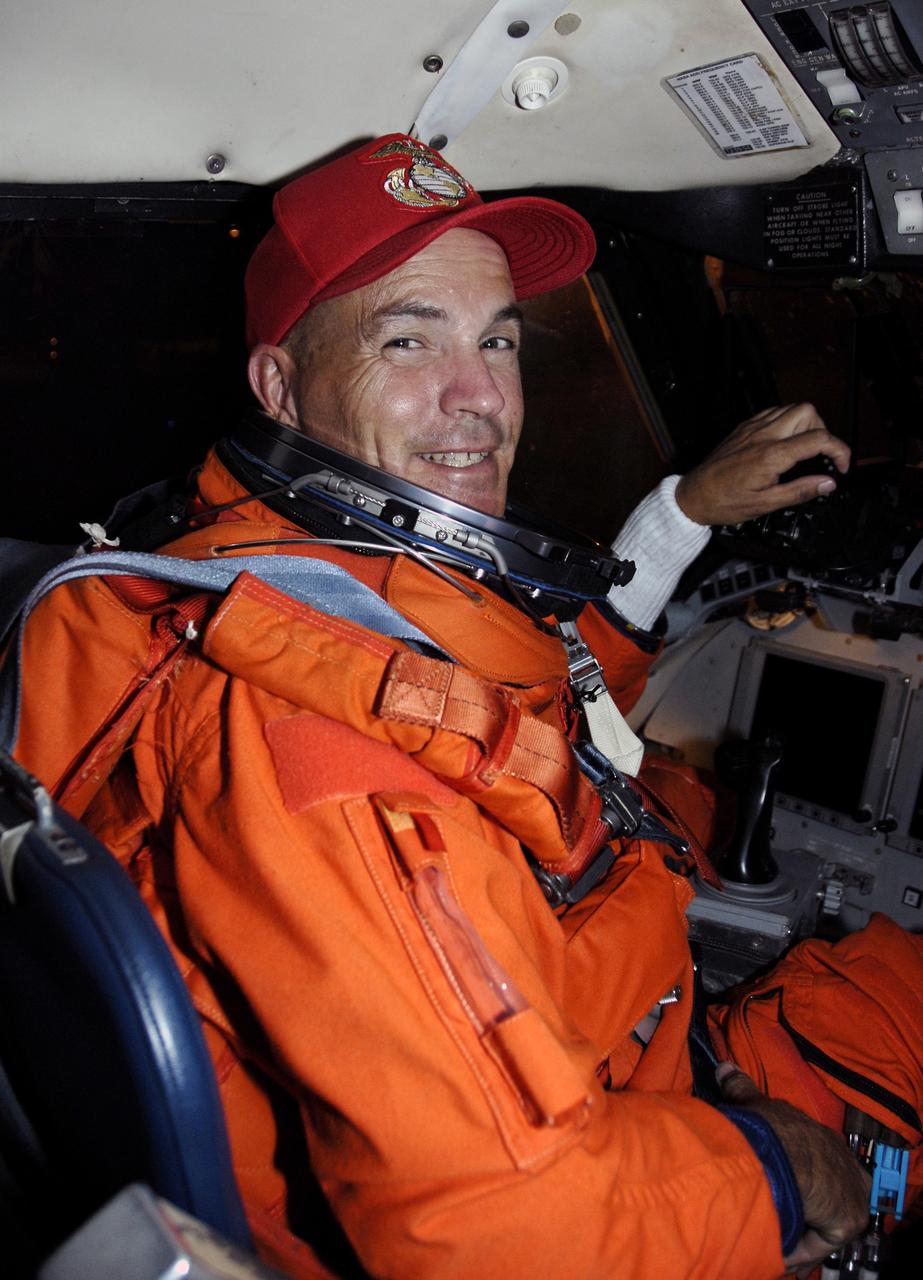
CAPE CANAVERAL, Fla. – At the Shuttle Landing Facility at NASA's Kennedy Space Center in Florida, STS-128 Commander Rick Sturckow completes shuttle landing practice in the Shuttle Training Aircraft, or STA. The practice is in preparation for launch of space shuttle Discovery's STS-128 mission in late August to the International Space Station. The STA is a Grumman American Aviation-built Gulfstream II jet that was modified to simulate a shuttle’s cockpit, motion and visual cues, and handling qualities. The STS-128 crew is at Kennedy for a launch dress rehearsal called the terminal countdown demonstration test, or TCDT, which includes emergency exit training and equipment familiarization, as well as a simulated launch countdown. Discovery will deliver 33,000 pounds of equipment to the station, including science and storage racks, a freezer to store research samples, a new sleeping compartment and the COLBERT treadmill. Photo credit: NASA/Kim Shiflett
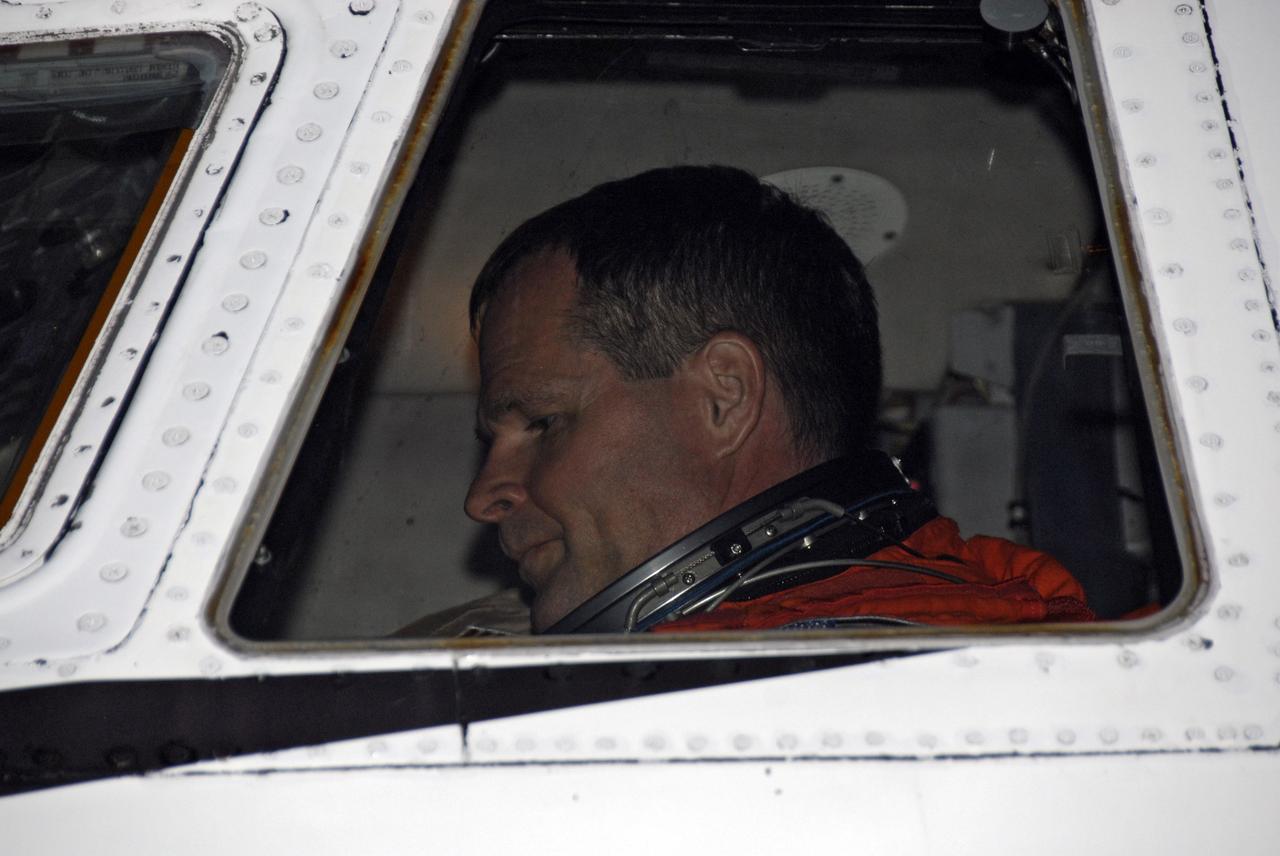
CAPE CANAVERAL, Fla. –At the Shuttle Landing Facility at NASA's Kennedy Space Center in Florida, STS-128 Pilot Kevin Ford settles in the cockpit of the Shuttle Training Aircraft, or STA, to practice shuttle landings. The practice is in preparation for launch of space shuttle Discovery's STS-128 mission in late August to the International Space Station. The STA is a Grumman American Aviation-built Gulfstream II jet that was modified to simulate a shuttle’s cockpit, motion and visual cues, and handling qualities. The STS-128 crew is at Kennedy for a launch dress rehearsal called the terminal countdown demonstration test, or TCDT, which includes emergency exit training and equipment familiarization, as well as a simulated launch countdown. Discovery will deliver 33,000 pounds of equipment to the station, including science and storage racks, a freezer to store research samples, a new sleeping compartment and the COLBERT treadmill. Photo credit: NASA/Kim Shiflett
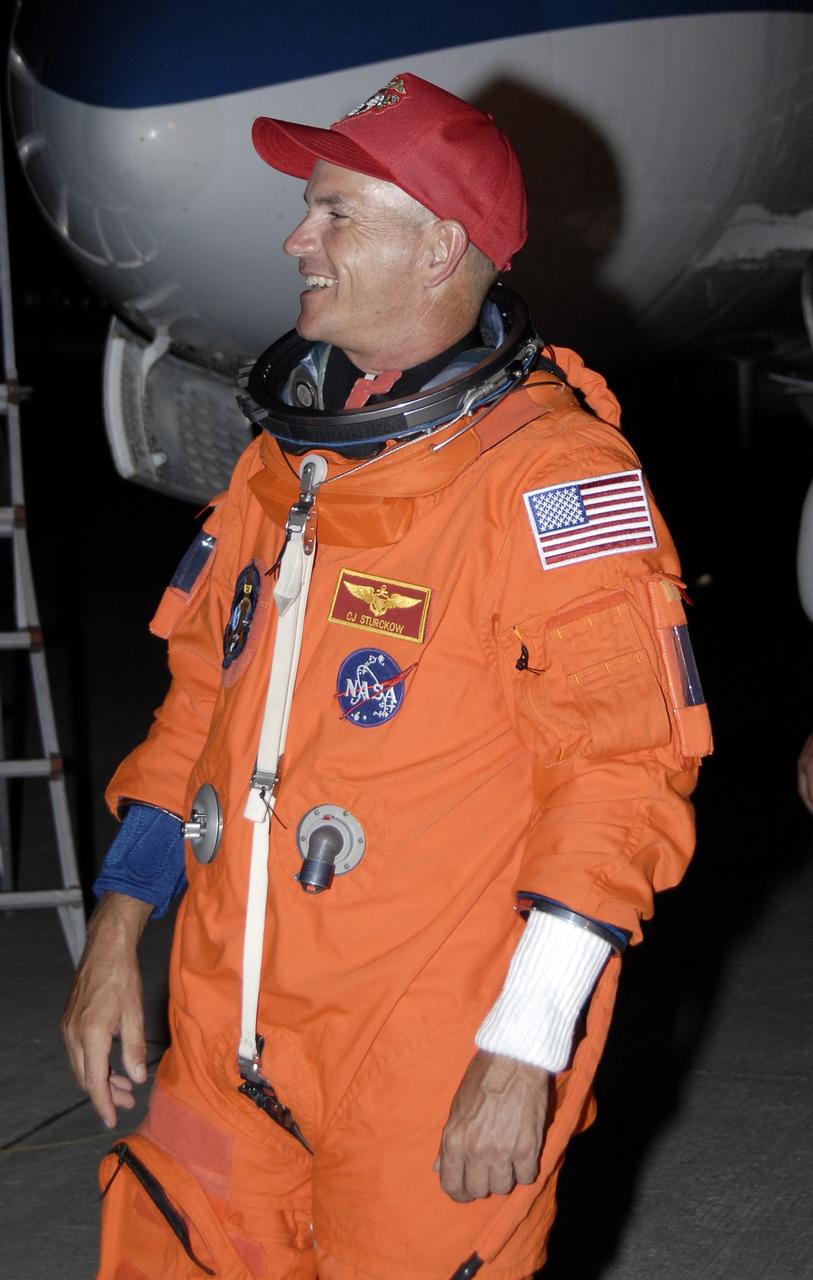
CAPE CANAVERAL, Fla. – At the Shuttle Landing Facility at NASA's Kennedy Space Center in Florida, STS-128 Commander Rick Sturckow is pleased with the shuttle landing practice he completed in the Shuttle Training Aircraft, or STA. The practice is in preparation for launch of space shuttle Discovery's STS-128 mission in late August to the International Space Station. The STA is a Grumman American Aviation-built Gulfstream II jet that was modified to simulate a shuttle’s cockpit, motion and visual cues, and handling qualities. The STS-128 crew is at Kennedy for a launch dress rehearsal called the terminal countdown demonstration test, or TCDT, which includes emergency exit training and equipment familiarization, as well as a simulated launch countdown. Discovery will deliver 33,000 pounds of equipment to the station, including science and storage racks, a freezer to store research samples, a new sleeping compartment and the COLBERT treadmill. Photo credit: NASA/Kim Shiflett
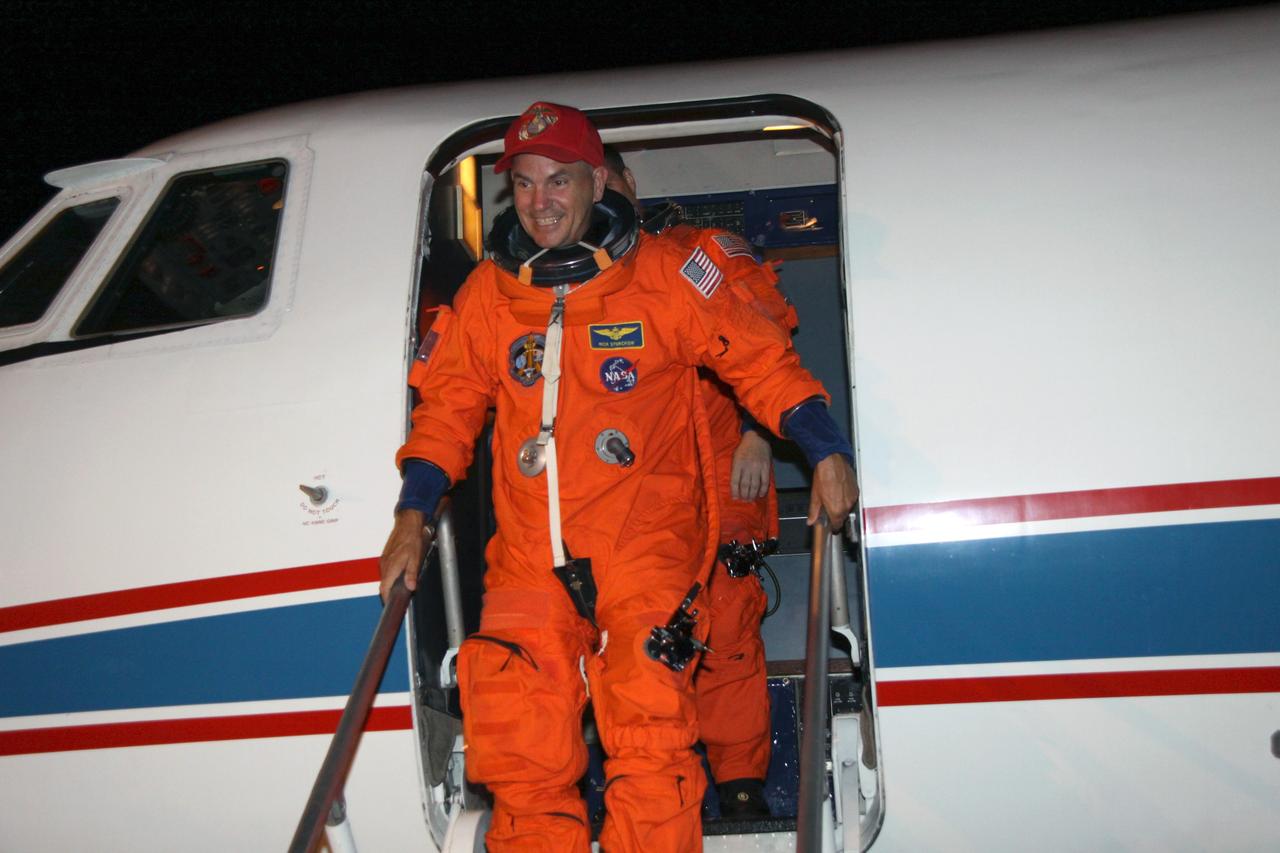
CAPE CANAVERAL, Fla. – At NASA Kennedy Space Center's Shuttle Landing Facility, STS-128 Commander Rick Sturckow exits the Shuttle Training Aircraft after completing practice shuttle landings as preparation for space shuttle Discovery's launch Aug. 25 on the STS-128 mission. The 13-day mission will deliver a new crew member and 33,000 pounds of equipment to the International Space Station. The equipment includes science and storage racks, a freezer to store research samples, a new sleeping compartment and the COLBERT treadmill. Photo credit: NASA/Troy Cryder

CAPE CANAVERAL, Fla. – At NASA Kennedy Space Center's Shuttle Landing Facility, the two Shuttle Training Aircraft are waiting to take off. STS-128 Commander Rick Sturckow and Pilot Kevin Ford are scheduled to practice shuttle landings as preparation for space shuttle Discovery's launch Aug. 25 on the STS-128 mission. The 13-day mission will deliver a new crew member and 33,000 pounds of equipment to the International Space Station. The equipment includes science and storage racks, a freezer to store research samples, a new sleeping compartment and the COLBERT treadmill. Photo credit: NASA/Troy Cryder
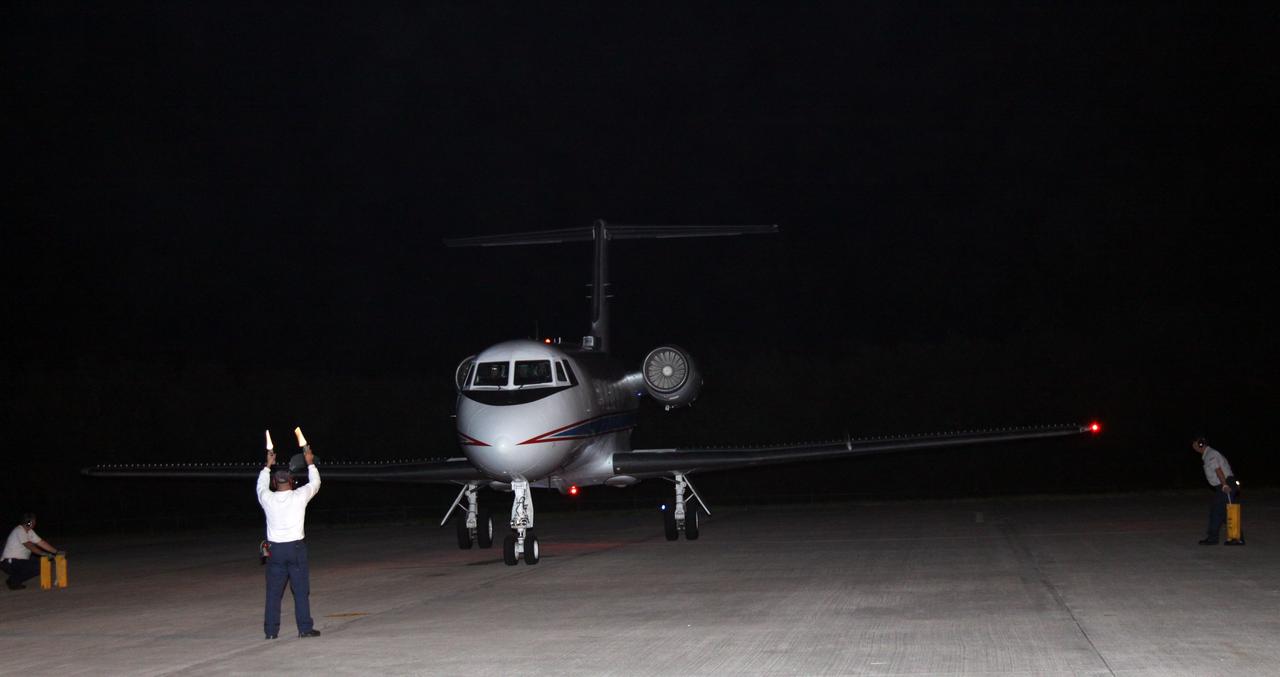
CAPE CANAVERAL, Fla. – At NASA Kennedy Space Center's Shuttle Landing Facility, a Shuttle Training Aircraft is directed for takeoff. STS-128 Commander Rick Sturckow and Pilot Kevin Ford are practicing shuttle landings as preparation for space shuttle Discovery's launch Aug. 25 on the STS-128 mission. The 13-day mission will deliver a new crew member and 33,000 pounds of equipment to the International Space Station. The equipment includes science and storage racks, a freezer to store research samples, a new sleeping compartment and the COLBERT treadmill. Photo credit: NASA/Troy Cryder
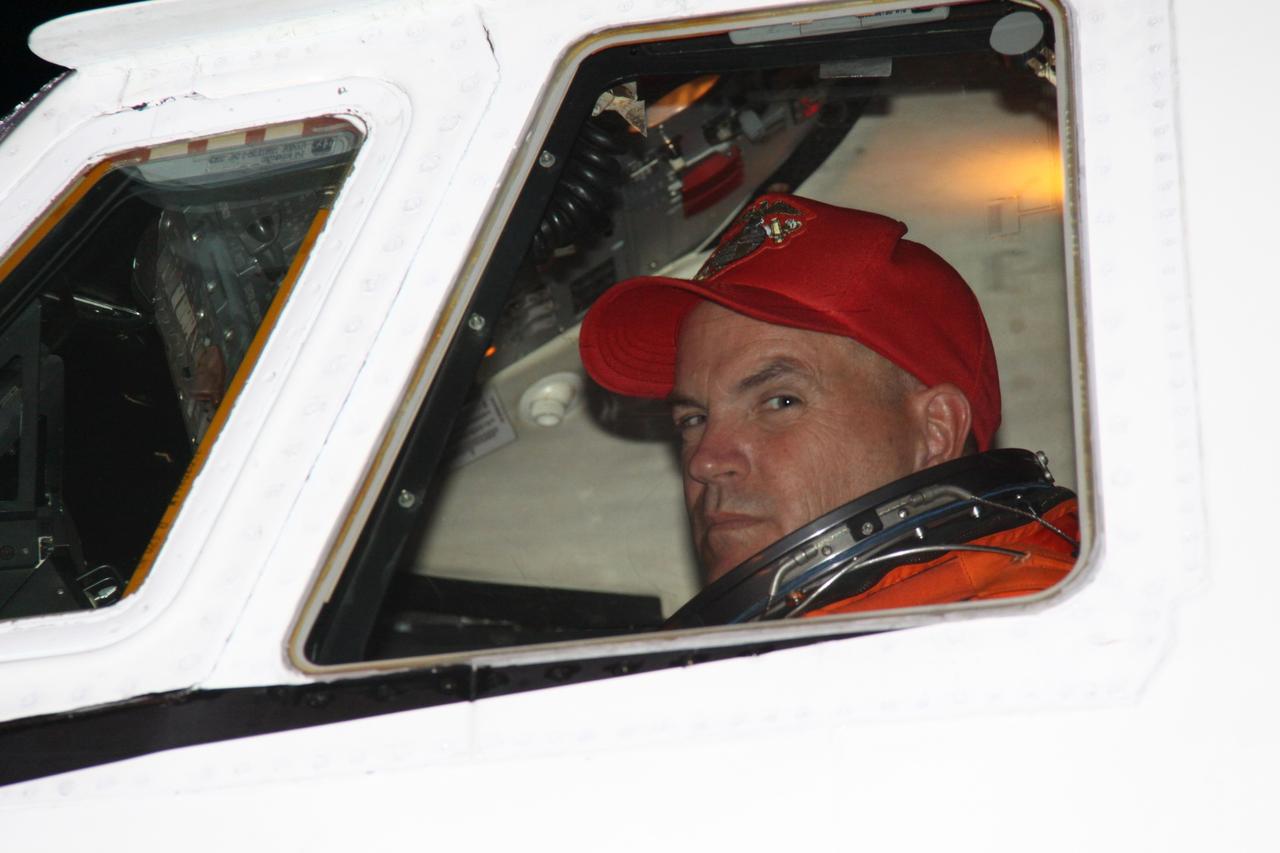
CAPE CANAVERAL, Fla. – STS-128 Commander Rick Sturckow sits in the Shuttle Training Aircraft cockpit at NASA Kennedy Space Center's Shuttle Landing Facility. Sturckow and Pilot Kevin Ford are ready to practice shuttle landings as preparation for space shuttle Discovery's launch Aug. 25 on the STS-128 mission. The 13-day mission will deliver a new crew member and 33,000 pounds of equipment to the International Space Station. The equipment includes science and storage racks, a freezer to store research samples, a new sleeping compartment and the COLBERT treadmill. Photo credit: NASA/Troy Cryder
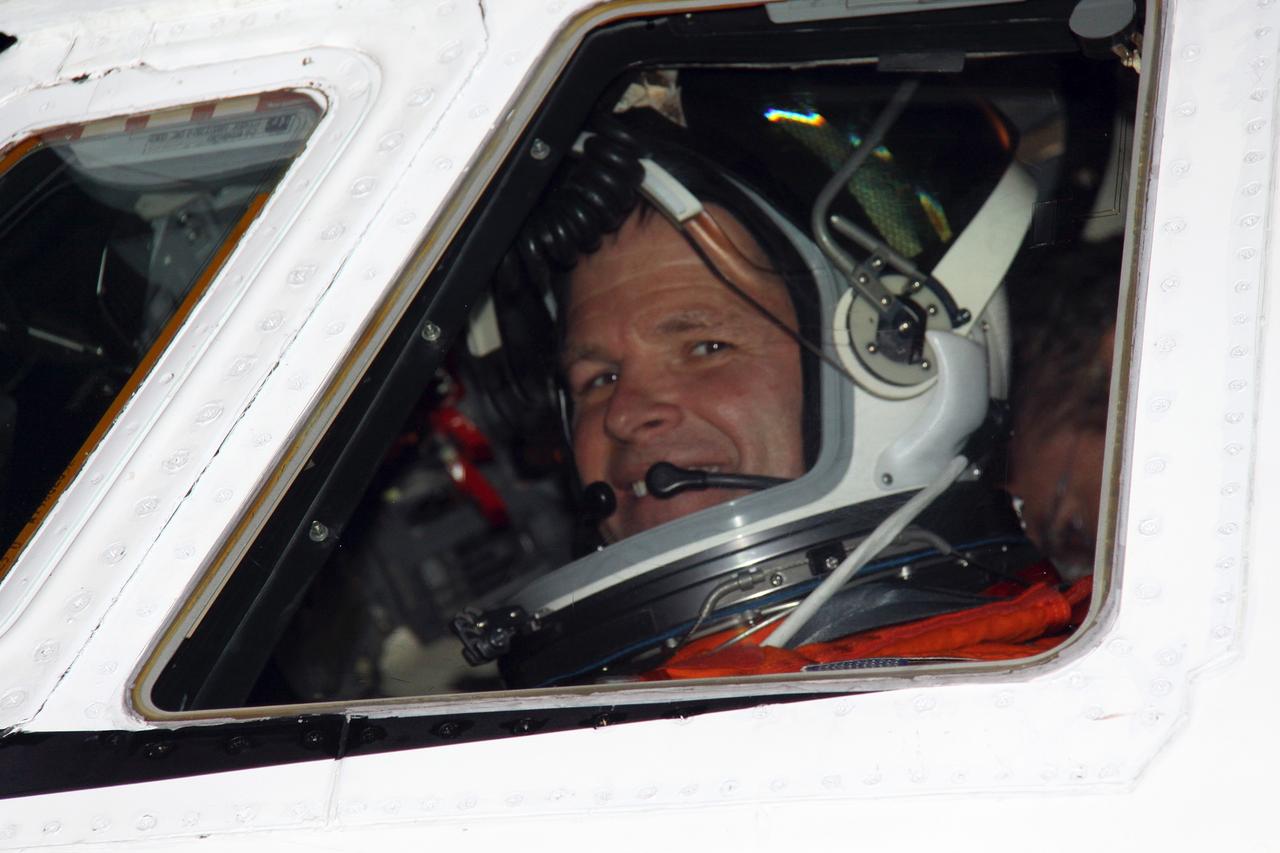
CAPE CANAVERAL, Fla. – STS-128 Pilot Kevin Ford sits in the Shuttle Training Aircraft cockpit at NASA Kennedy Space Center's Shuttle Landing Facility. Ford and Commander Rick Sturckow are ready to practice shuttle landings as preparation for space shuttle Discovery's launch Aug. 25 on the STS-128 mission. The 13-day mission will deliver a new crew member and 33,000 pounds of equipment to the International Space Station. The equipment includes science and storage racks, a freezer to store research samples, a new sleeping compartment and the COLBERT treadmill. Photo credit: NASA/Troy Cryder
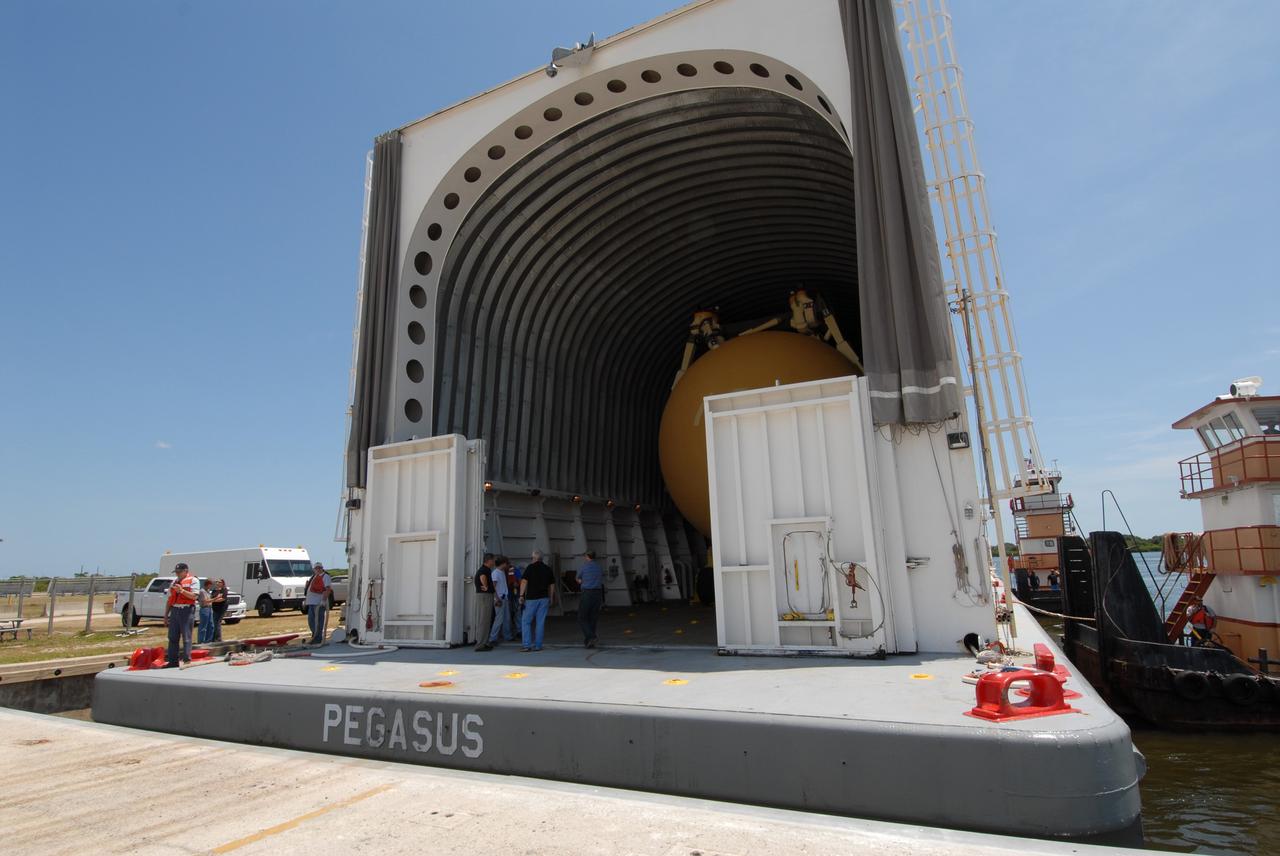
CAPE CANAVERAL, Fla. – The Pegasus barge is docked in the turn basin in the Launch Complex 39 Area at NASA's Kennedy Space Center in Florida. Inside is the external fuel tank, ET- 132, designated for space shuttle Discovery on the STS-128 mission. The tank will be offloaded and transported to a high bay in the Vehicle Assembly Building for checkout. On the STS-128 mission, Discovery will carry science and storage racks to the International Space Station. Launch of Discovery is targeted for Aug. 6. Photo credit: NASA/Troy Cryder
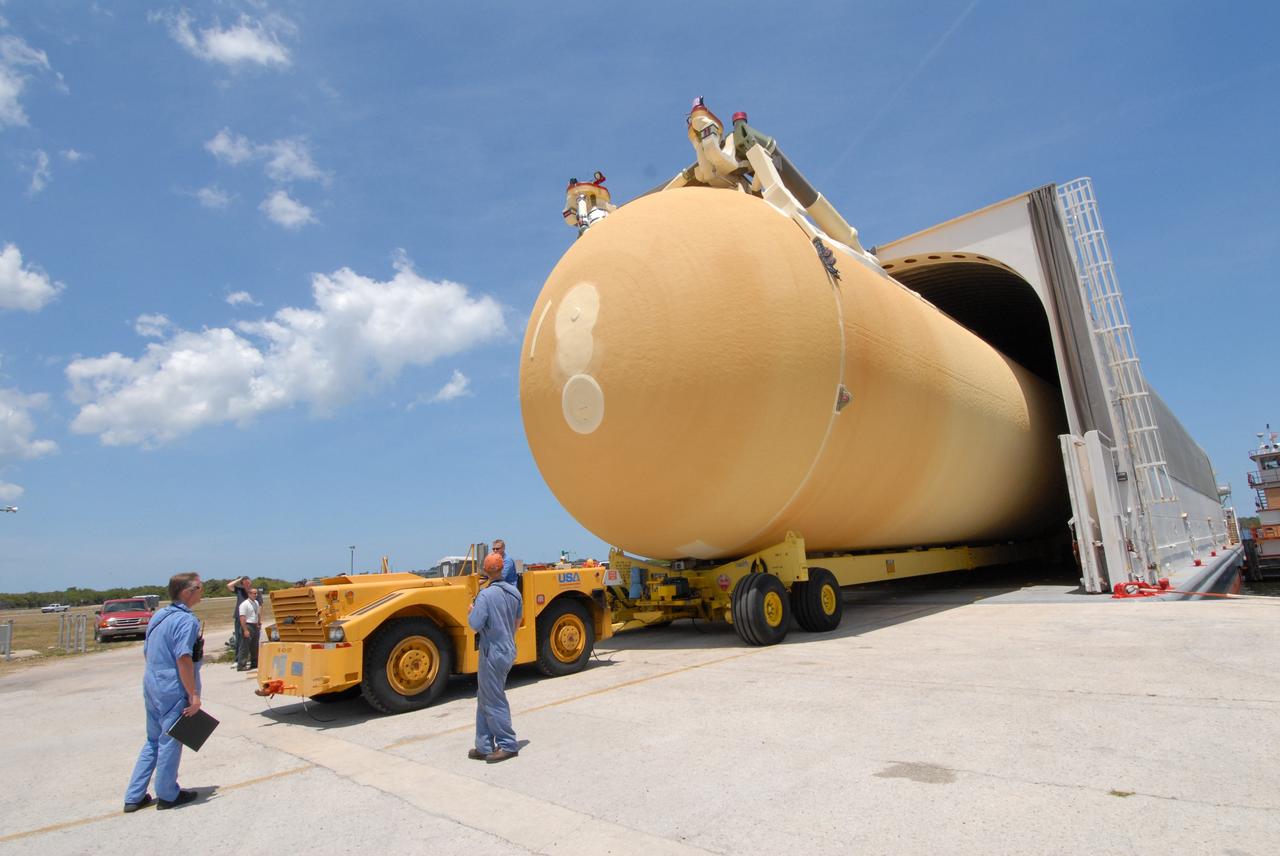
CAPE CANAVERAL, Fla. – The external fuel tank, ET- 132, designated for use with space shuttle Discovery on the STS-128 mission is moved out of the Pegasus barge in the turn basin at NASA's Kennedy Space Center in Florida. It will be transported to a high bay in the Vehicle Assembly Building for checkout. On the STS-128 mission, Discovery will carry science and storage racks to the International Space Station. Launch of Discovery is targeted for Aug. 6. Photo credit: NASA/Jack Pfaller
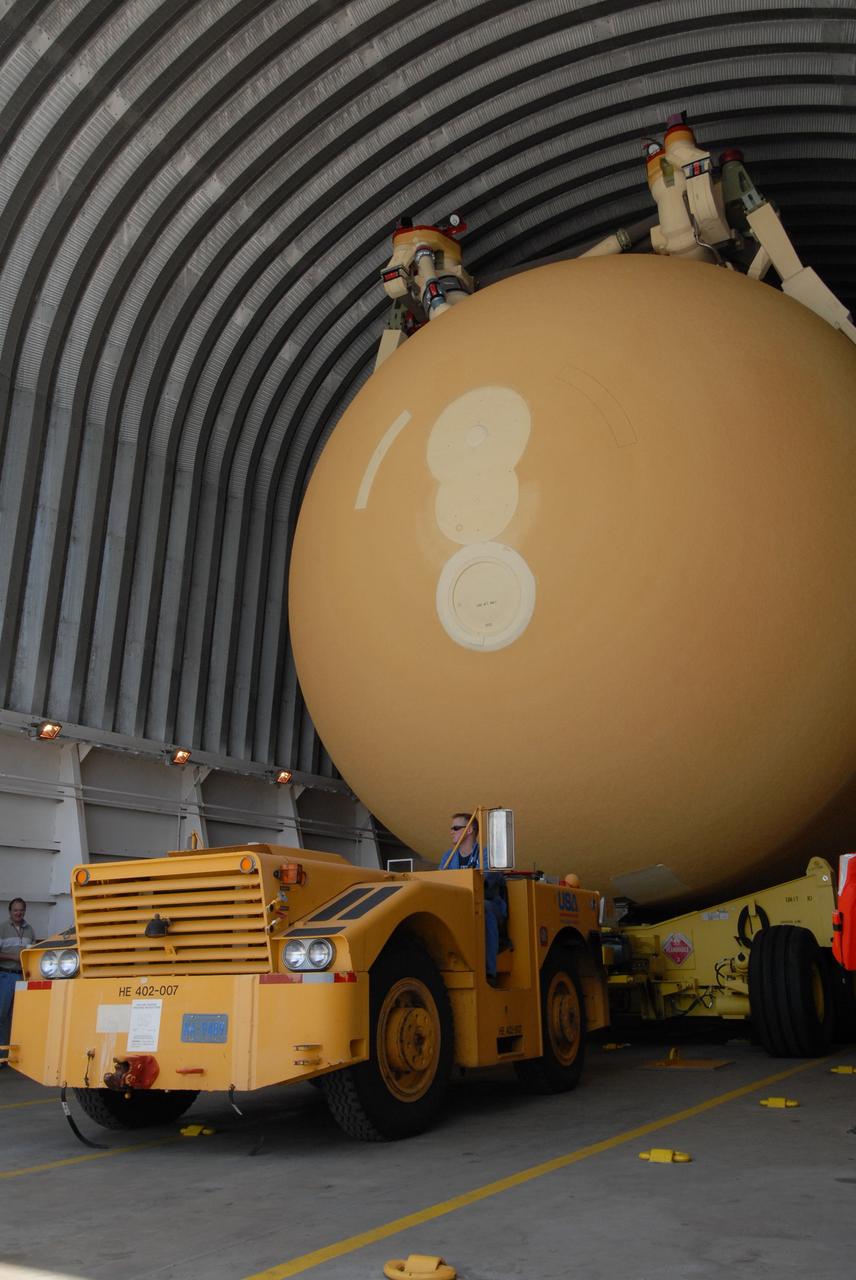
CAPE CANAVERAL, Fla. – The external fuel tank, ET- 132, designated for use with space shuttle Discovery on the STS-128 mission is being offloaded from the Pegasus barge at NASA's Kennedy Space Center in Florida. It will be transported to a high bay in the Vehicle Assembly Building for checkout. On the STS-128 mission, Discovery will carry science and storage racks to the International Space Station. Launch of Discovery is targeted for Aug. 6. Photo credit: NASA/Jack Pfaller

CAPE CANAVERAL, Fla. – In the Space Station Processing Facility, STS-128 crew members look over packages of equipment that will accompany the mission. At left are Pilot Kevin Ford, and Mission Specialists Christer Fuglesang and John "Danny" Olivas. At right is Commander Rick Sturckow (with the red cap). The STS-128 flight will carry science and storage racks to the International Space Station on space shuttle Discovery. Launch of Discovery is targeted for Aug. 6. Photo credit: NASA/Jim Grossmann
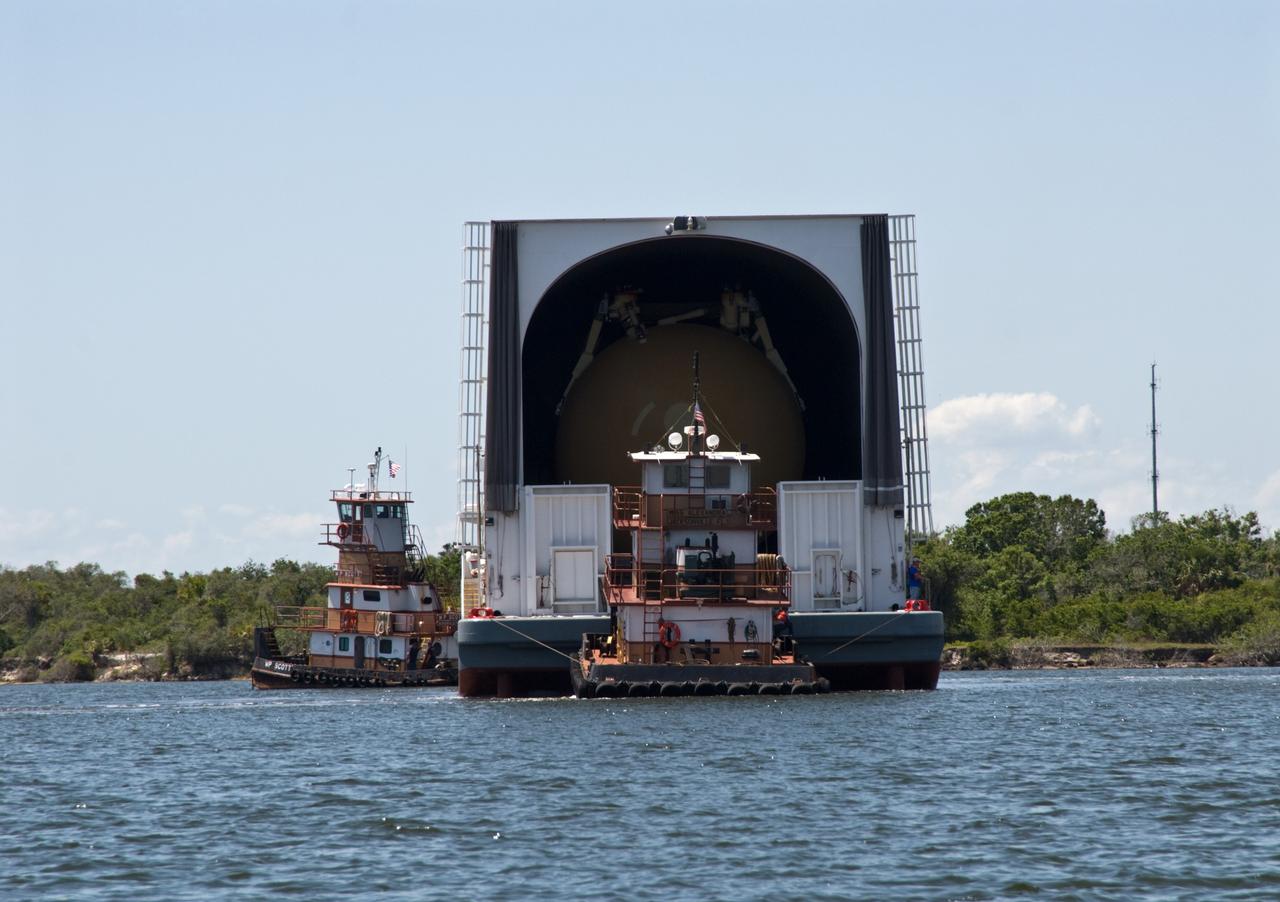
CAPE CANAVERAL, Fla. – Tugboats maneuver the Pegasus barge toward the dock in the turn basin in the Launch Complex 39 Area at NASA's Kennedy Space Center in Florida. The barge holds the external fuel tank, ET- 132, designated for space shuttle Discovery on the STS-128 mission. The tank will be offloaded and transported to a high bay in the Vehicle Assembly Building for checkout. On the STS-128 mission, Discovery will carry science and storage racks to the International Space Station. Launch of Discovery is targeted for Aug. 6. Photo credit: NASA/Troy Cryder
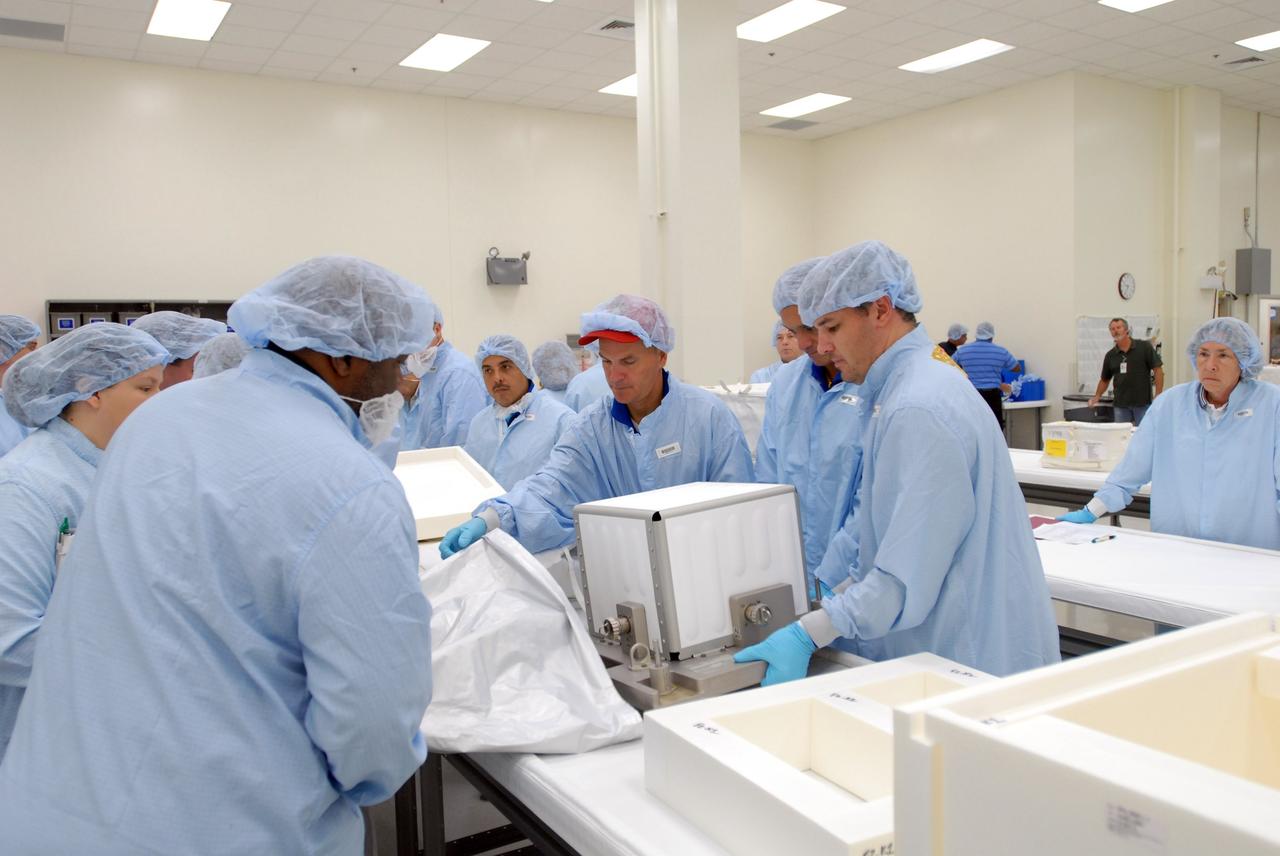
CAPE CANAVERAL, Fla. – In the Space Station Processing Facility, STS-128 crew members look over packages of equipment that will accompany the mission. At center (with the red cap) is Commander Rick Sturckow; to his left is Mission Specialist José Hernandez. The STS-128 flight will carry science and storage racks to the International Space Station on space shuttle Discovery. Launch of Discovery is targeted for Aug. 6. Photo credit: NASA/Jim Grossmann
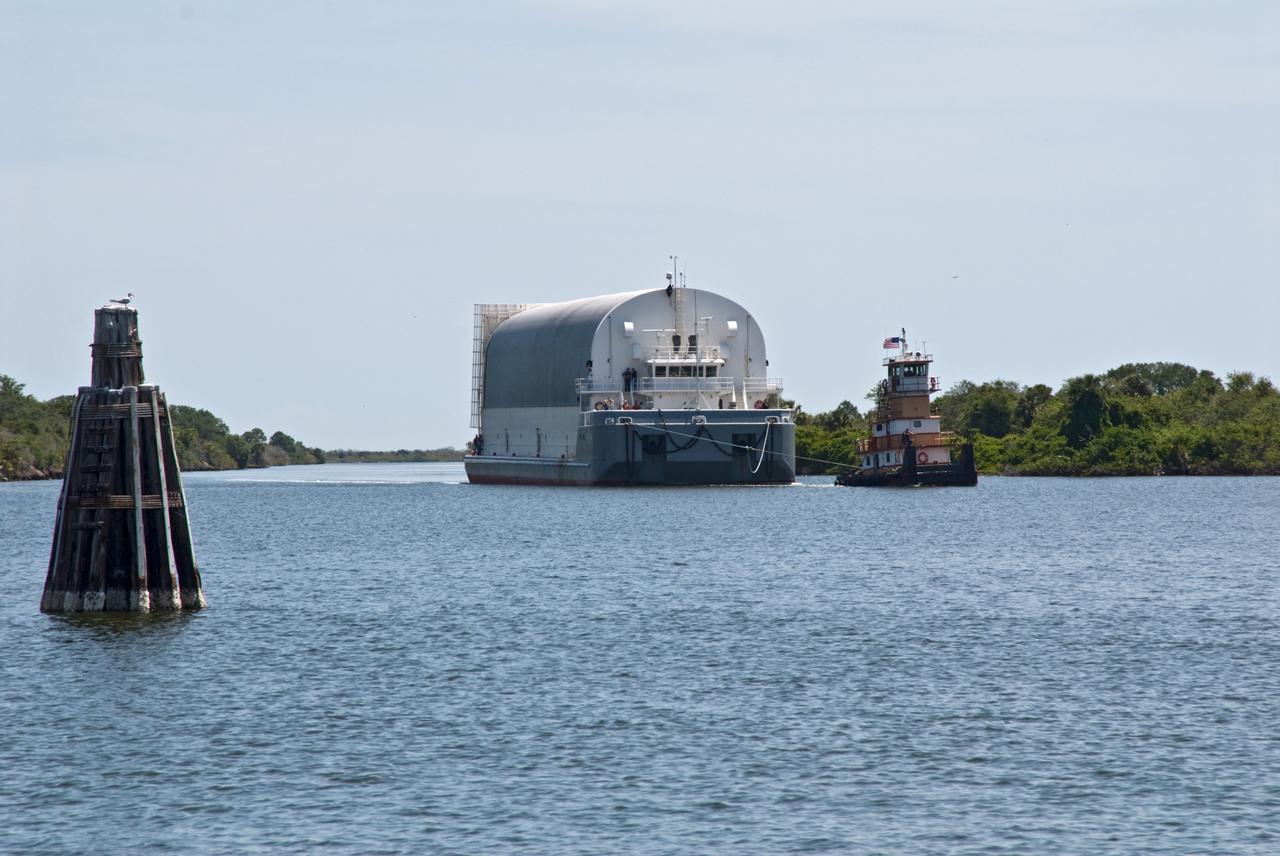
CAPE CANAVERAL, Fla. – The Pegasus barge, towed by a tugboat, enters the turn basin in the Launch Complex 39 Area at NASA's Kennedy Space Center in Florida. The barge holds the external fuel tank, ET- 132, designated for space shuttle Discovery on the STS-128 mission. The tank will be offloaded and transported to a high bay in the Vehicle Assembly Building for checkout. On the STS-128 mission, Discovery will carry science and storage racks to the International Space Station. Launch of Discovery is targeted for Aug. 6. Photo credit: NASA/Troy Cryder
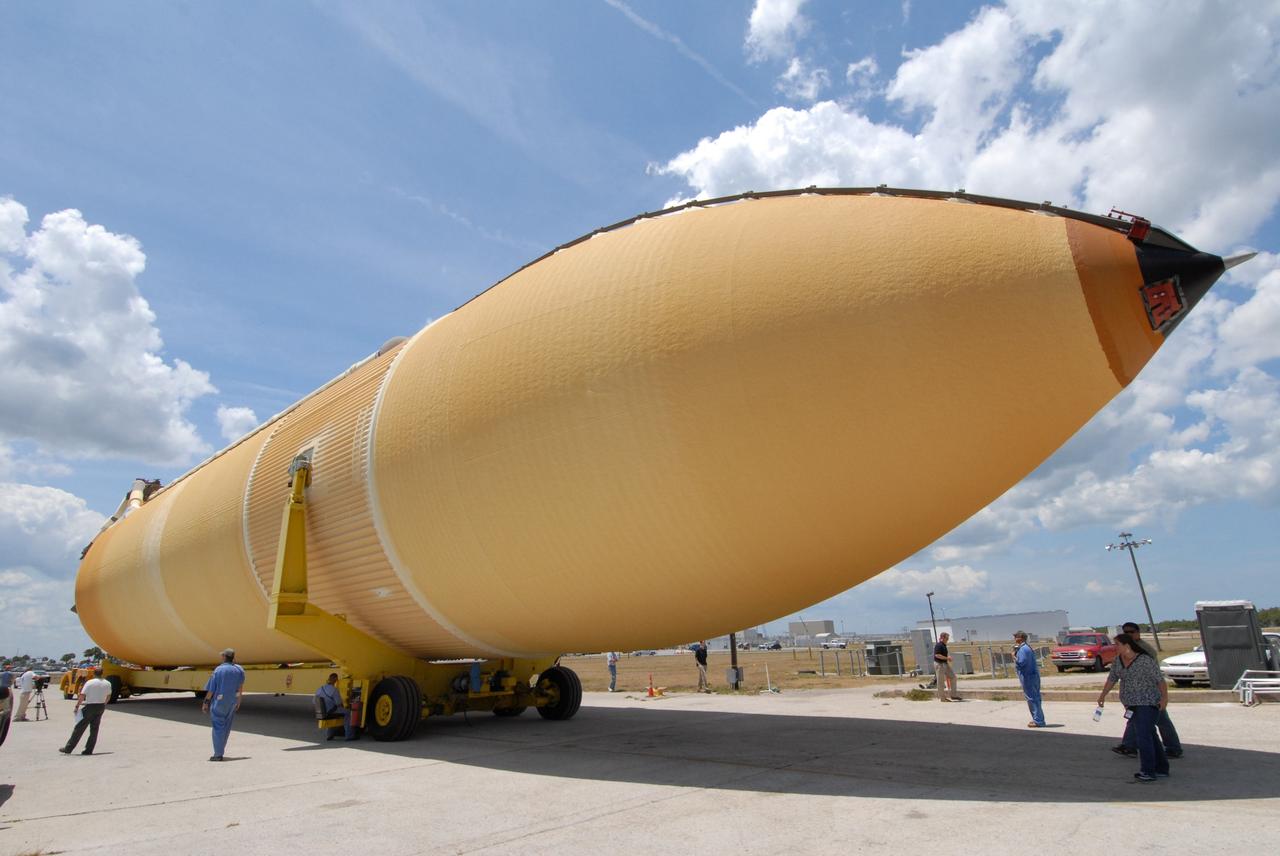
CAPE CANAVERAL, Fla. – The external fuel tank, ET- 132, designated for use with space shuttle Discovery on the STS-128 mission is moved away from the turn basin, heading for the Vehicle Assembly Building (at left) at NASA's Kennedy Space Center in Florida for checkout in a high bay. On the STS-128 mission, Discovery will carry science and storage racks to the International Space Station. Launch of Discovery is targeted for Aug. 6. Photo credit: NASA/Jack Pfaller
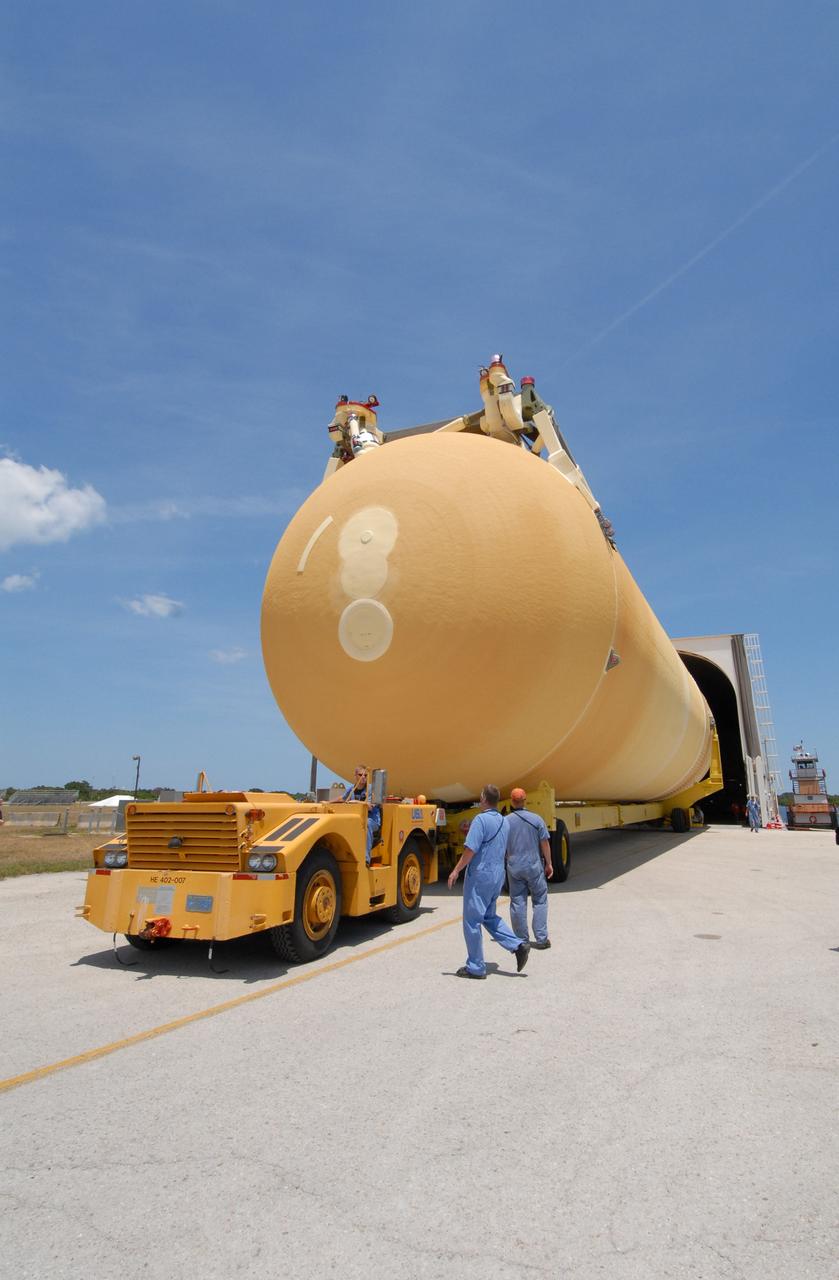
CAPE CANAVERAL, Fla. – The external fuel tank, ET- 132, designated for use with space shuttle Discovery on the STS-128 mission is moved out of the Pegasus barge in the turn basin at NASA's Kennedy Space Center in Florida. It will be transported to a high bay in the Vehicle Assembly Building for checkout. On the STS-128 mission, Discovery will carry science and storage racks to the International Space Station. Launch of Discovery is targeted for Aug. 6. Photo credit: NASA/Jack Pfaller
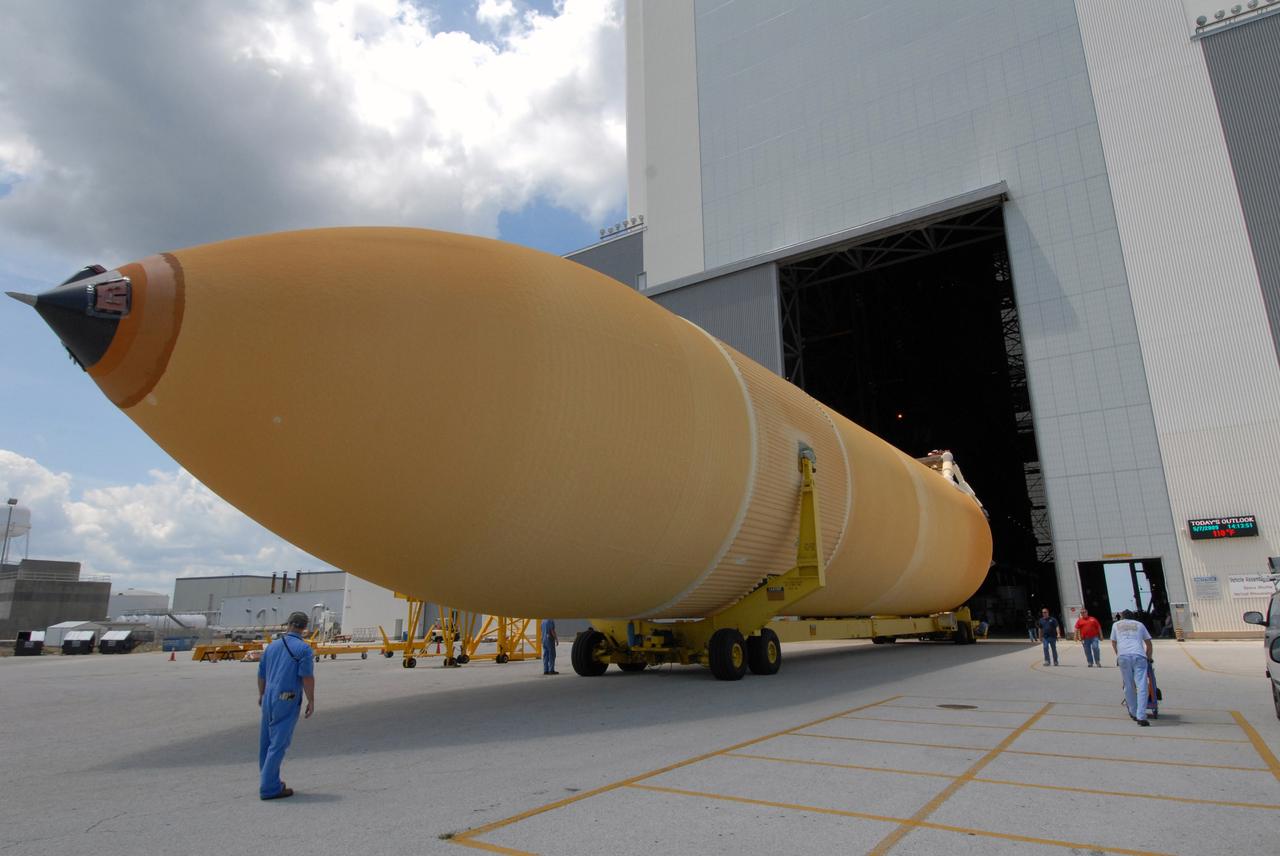
CAPE CANAVERAL, Fla. – The external fuel tank, ET- 132, designated for use with space shuttle Discovery on the STS-128 mission moves toward the open door of the Vehicle Assembly Building at NASA's Kennedy Space Center in Florida. The tank will be moved into a high bay for checkout. On the STS-128 mission, Discovery will carry science and storage racks to the International Space Station. Launch of Discovery is targeted for Aug. 6. Photo credit: NASA/Jack Pfaller
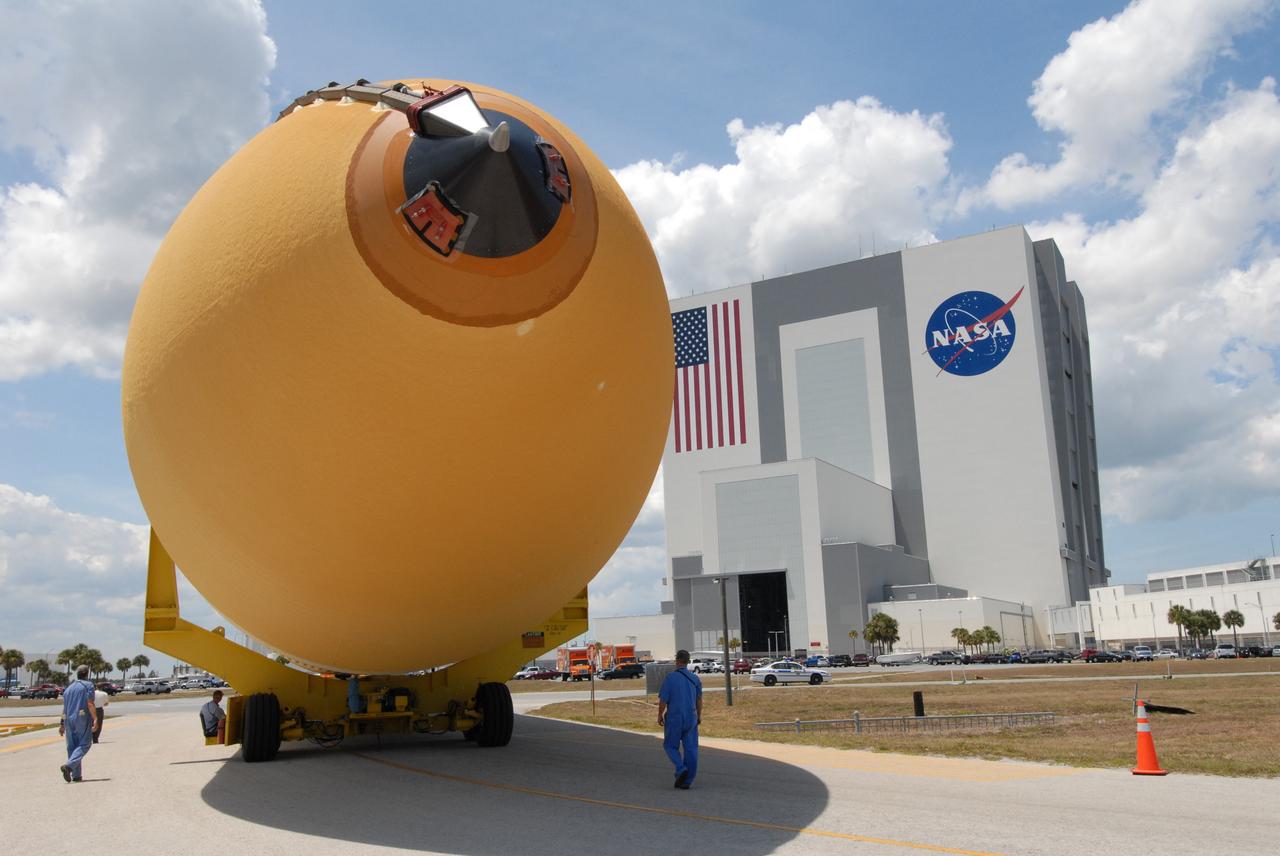
CAPE CANAVERAL, Fla. – The external fuel tank, ET- 132, designated for use with space shuttle Discovery on the STS-128 mission makes the turn toward the Vehicle Assembly Building (at right) at NASA's Kennedy Space Center in Florida. It will be moved into a high bay for checkout. On the STS-128 mission, Discovery will carry science and storage racks to the International Space Station. Launch of Discovery is targeted for Aug. 6. Photo credit: NASA/Jack Pfaller
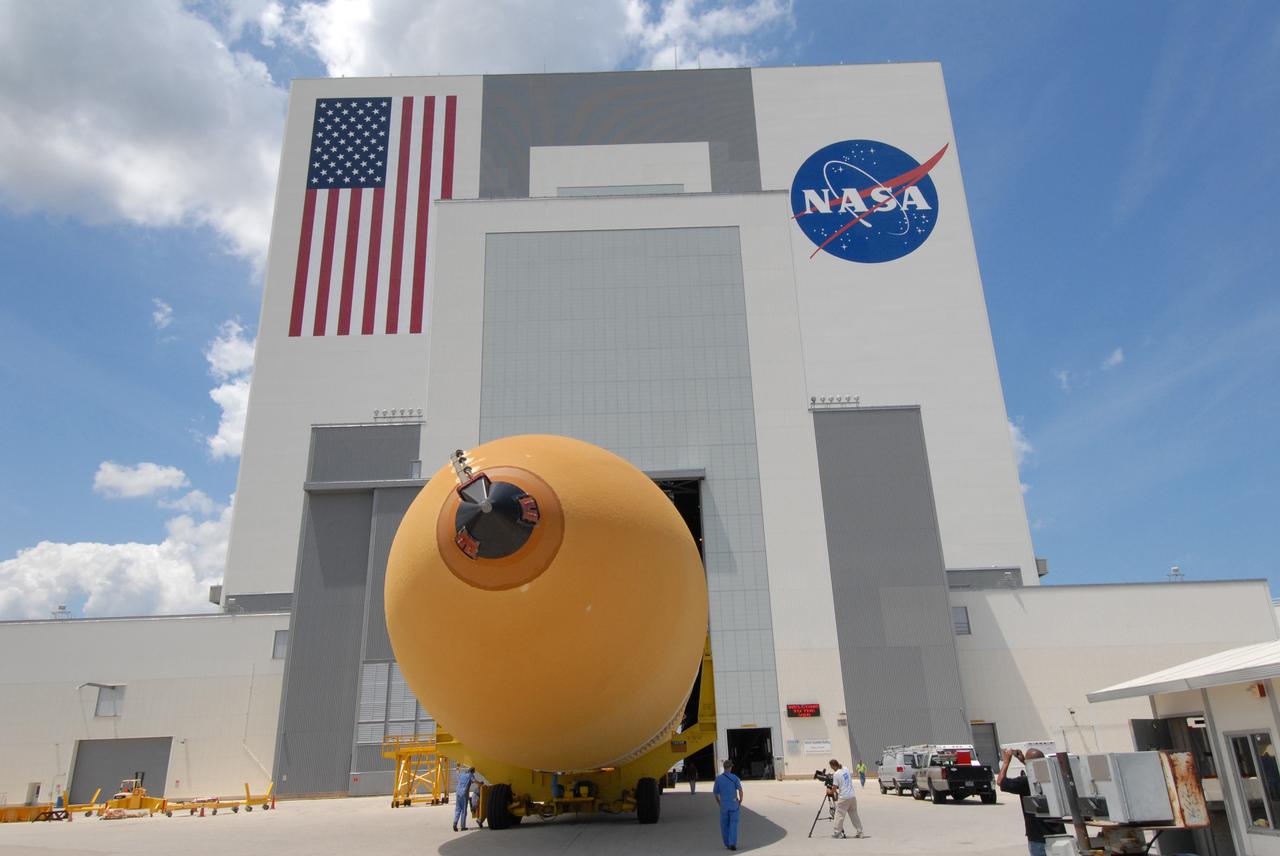
CAPE CANAVERAL, Fla. – The external fuel tank, ET- 132, designated for use with space shuttle Discovery on the STS-128 mission moves toward the open door of the Vehicle Assembly Building at NASA's Kennedy Space Center in Florida. The tank will be moved into a high bay for checkout. On the STS-128 mission, Discovery will carry science and storage racks to the International Space Station. Launch of Discovery is targeted for Aug. 6. Photo credit: NASA/Jack Pfaller
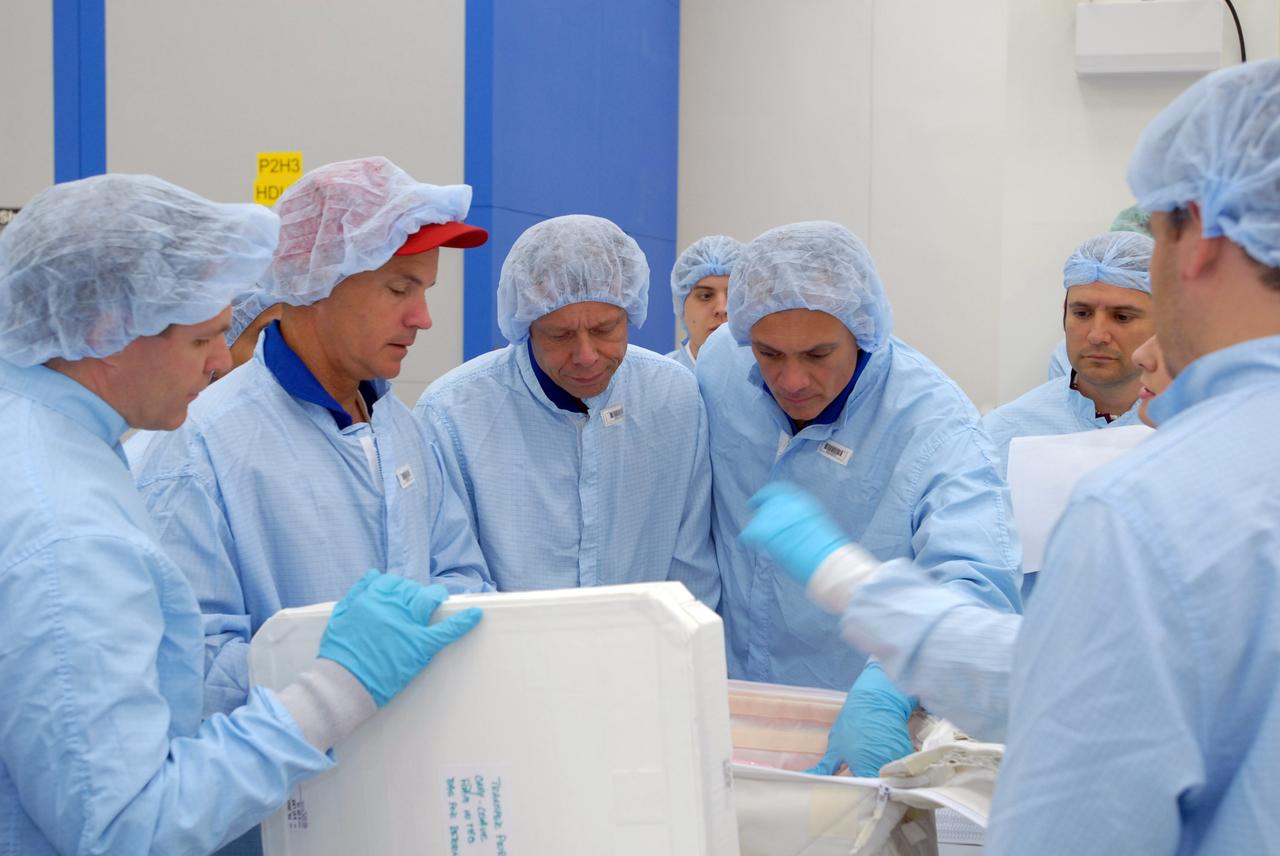
CAPE CANAVERAL, Fla. – In the Space Station Processing Facility, STS-128 crew members look over packages of equipment that will accompany the mission. From left are Pilot Kevin Ford, Commander Rick Sturckow and Mission Specialists Christer Fuglesang and John "Danny" Olivas. The STS-128 flight will carry science and storage racks to the International Space Station on space shuttle Discovery. Launch of Discovery is targeted for Aug. 6. Photo credit: NASA/Jim Grossmann
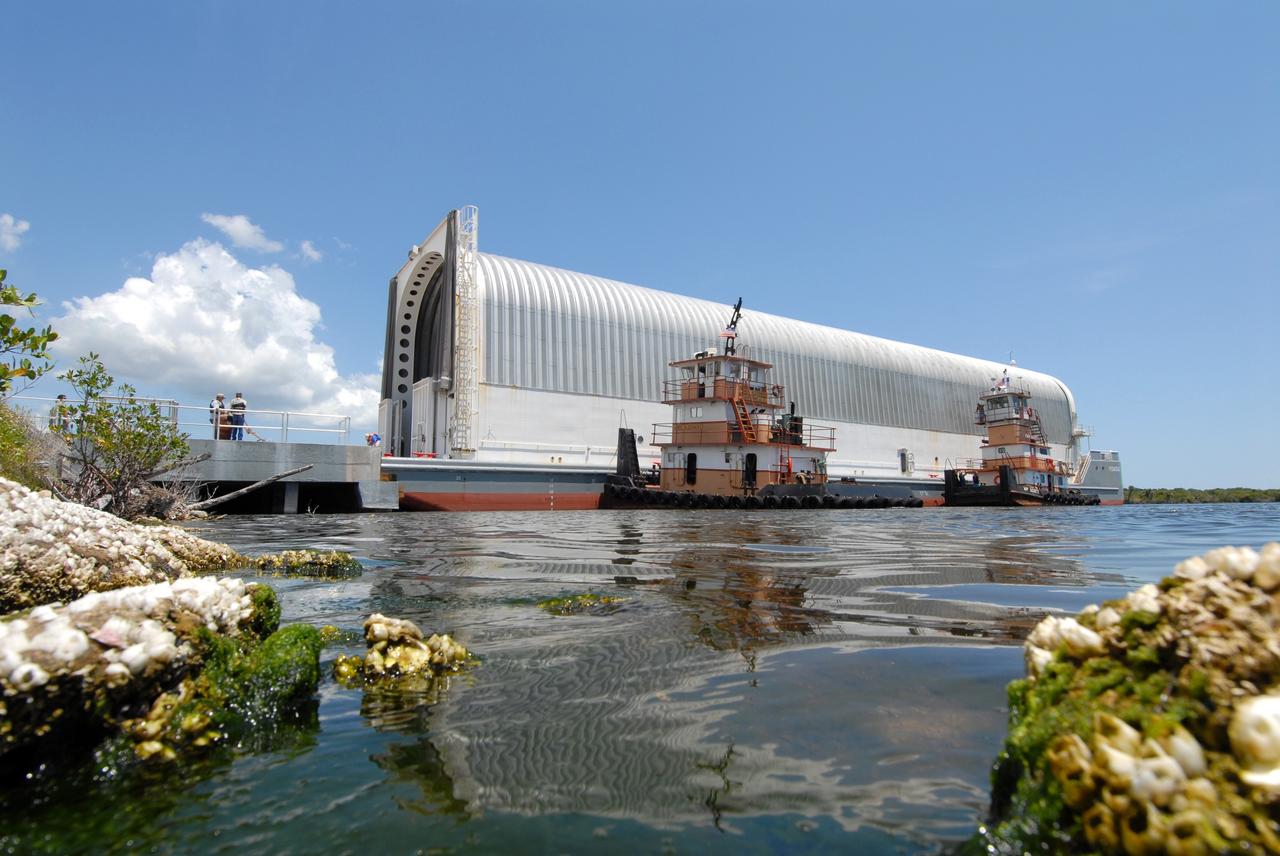
CAPE CANAVERAL, Fla. – The Pegasus barge is docked in the turn basin in the Launch Complex 39 Area at NASA's Kennedy Space Center in Florida. Inside is the external fuel tank, ET- 132, designated for space shuttle Discovery on the STS-128 mission. The tank will be offloaded and transported to a high bay in the Vehicle Assembly Building for checkout. On the STS-128 mission, Discovery will carry science and storage racks to the International Space Station. Launch of Discovery is targeted for Aug. 6. Photo credit: NASA/Troy Cryder
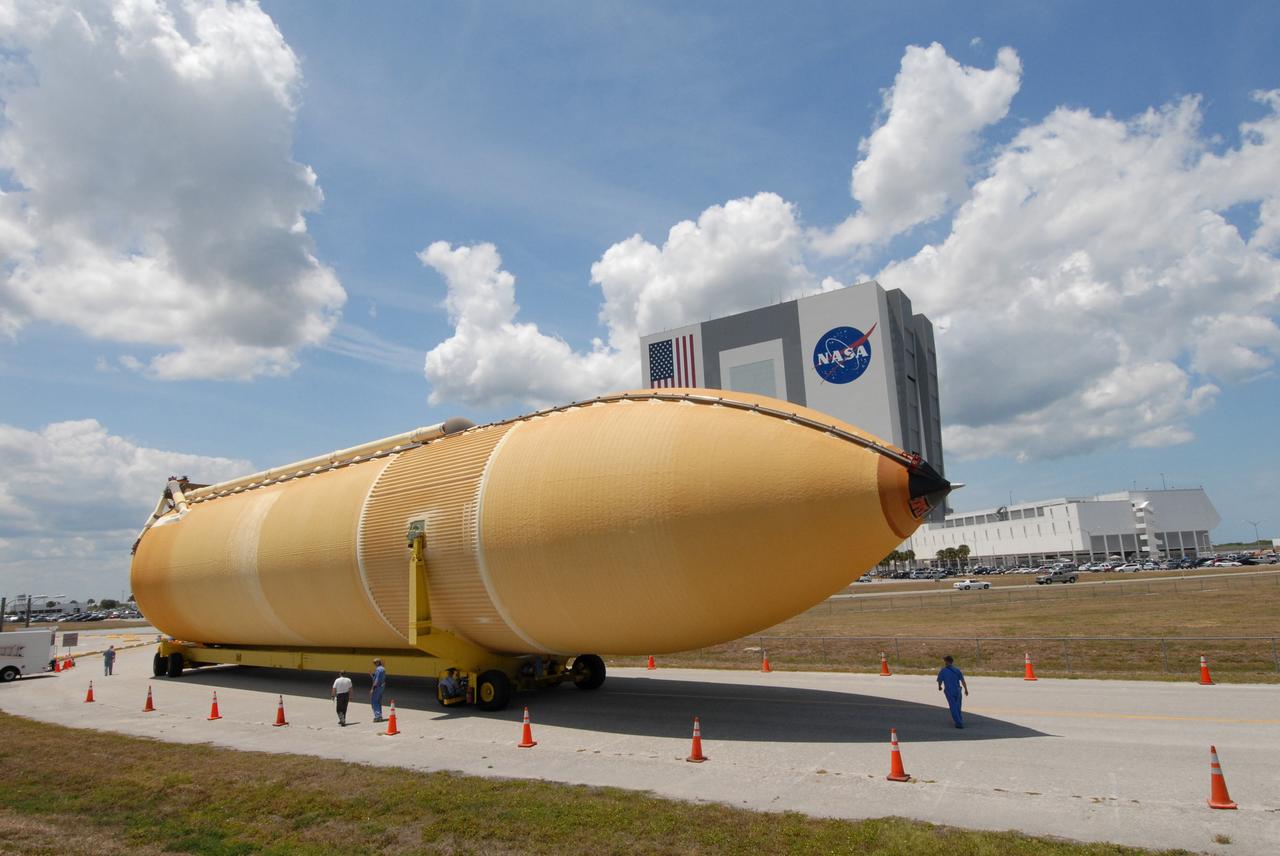
CAPE CANAVERAL, Fla. – The external fuel tank, ET- 132, designated for use with space shuttle Discovery on the STS-128 mission is transported to the Vehicle Assembly Building (at left) at NASA's Kennedy Space Center in Florida, for checkout in a high bay. It arrived at Kennedy aboard the Pegasus barge. On the STS-128 mission, Discovery will carry science and storage racks to the International Space Station. Launch of Discovery is targeted for Aug. 6. Photo credit: NASA/Jack Pfaller
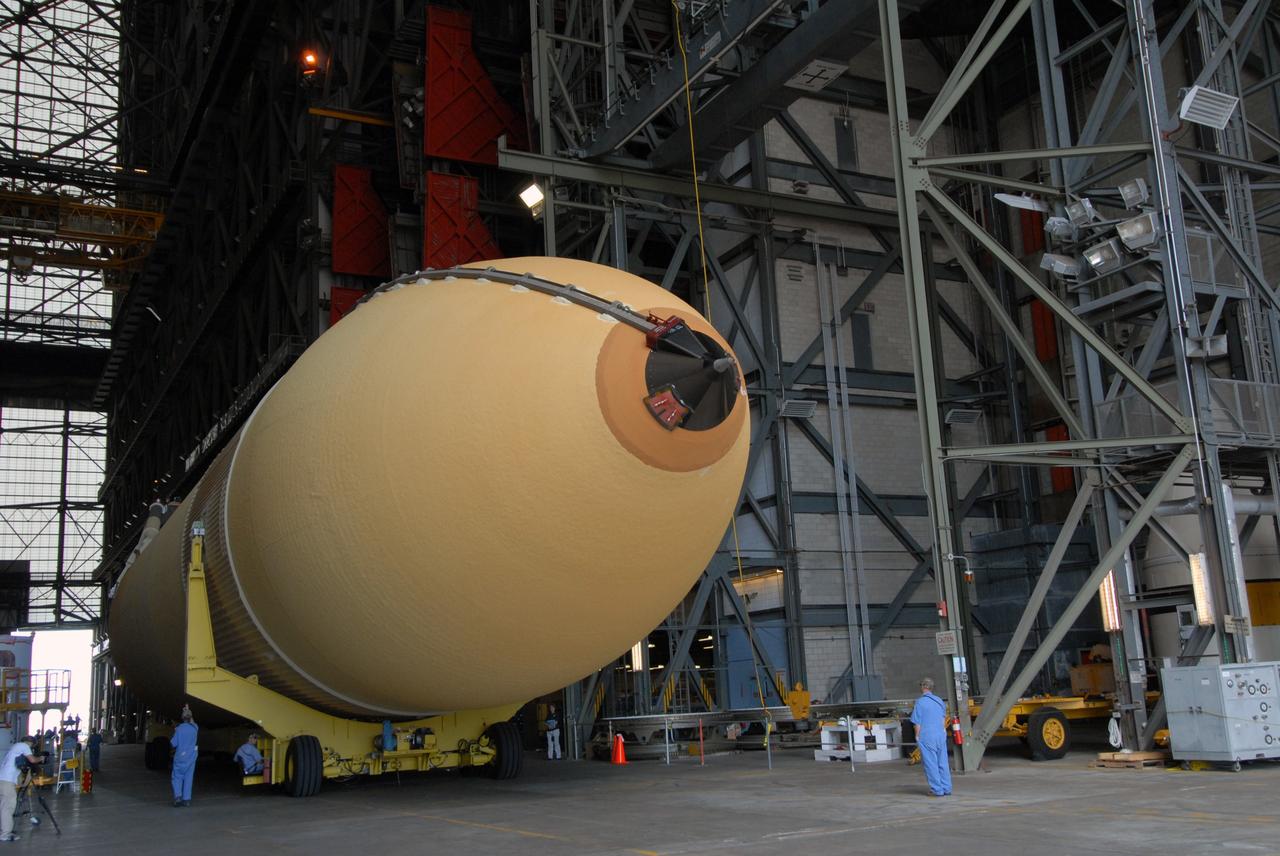
CAPE CANAVERAL, Fla. – The external fuel tank, ET- 132, designated for use with space shuttle Discovery on the STS-128 mission moves into the transfer aisle of the Vehicle Assembly Building at NASA's Kennedy Space Center in Florida. The tank will be moved into a high bay for checkout. On the STS-128 mission, Discovery will carry science and storage racks to the International Space Station. Launch of Discovery is targeted for Aug. 6. Photo credit: NASA/Jack Pfaller
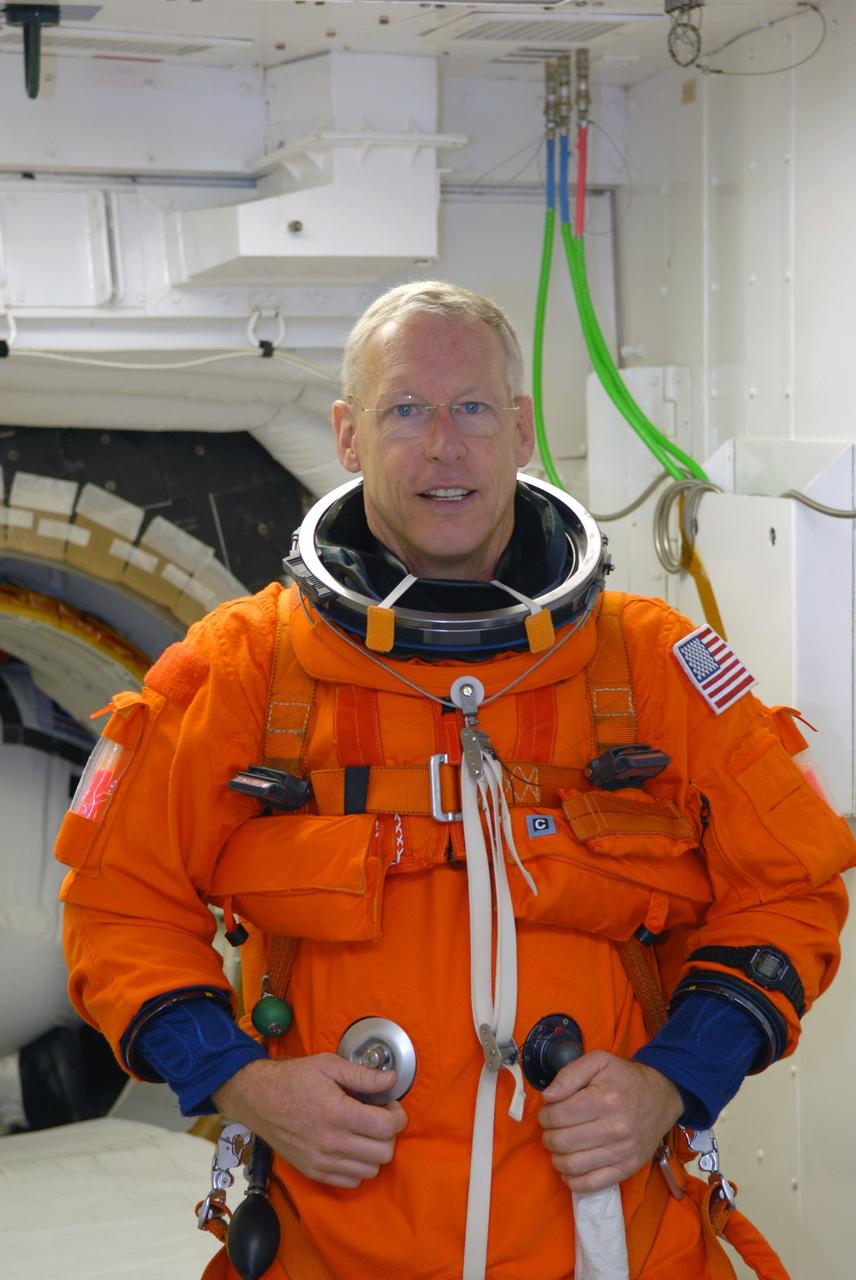
CAPE CANAVERAL, Fla. – STS-128 Mission Specialist Patrick Forrester is the White Room on NASA Kennedy Space Center's Launch Pad 39A getting ready to enter space shuttle Discovery. The White Room is at the end of the orbiter access arm and provides entry into the shuttle. Mission crew members are at Kennedy to take part in the terminal countdown demonstration test, or TCDT, which culminates in a simulated launch countdown inside the shuttle. On the STS-128 mission, Discovery will deliver 33,000 pounds of equipment to the station, including science and storage racks, a freezer to store research samples, a new sleeping compartment and the COLBERT treadmill. Launch is targeted for late August. Photo credit: NASA/Jim Grossmann
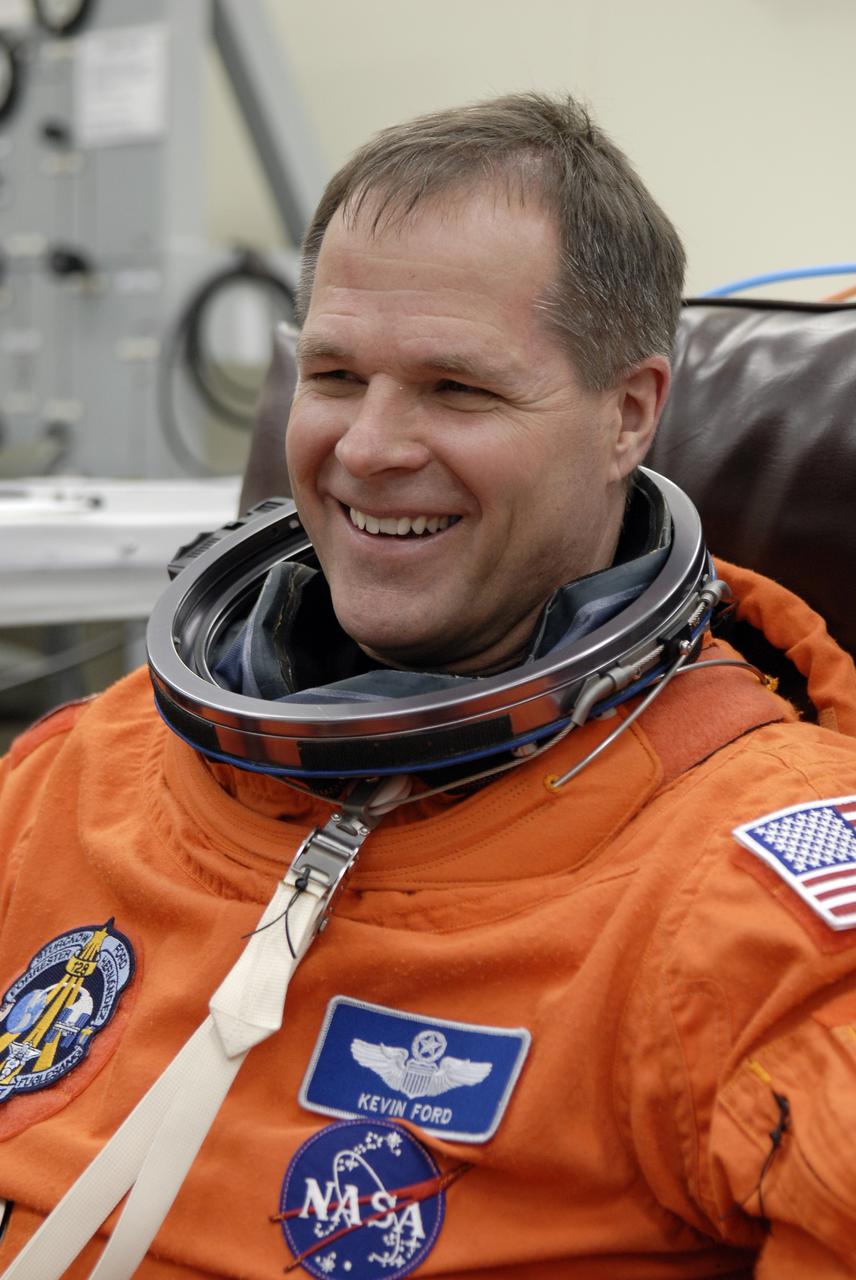
CAPE CANAVERAL, Fla. – STS-128 Pilot Kevin Ford checks the fit of his launch and entry suit before heading to the NASA Kennedy Space Center's Launch Pad 39A for the simulated launch countdown. The countdown is the culmination of terminal countdown demonstration test activities to prepare the STS-128 crew for launch on space shuttle Discovery's STS-128 mission. Discovery will deliver 33,000 pounds of equipment to the station, including science and storage racks, a freezer to store research samples, a new sleeping compartment and the COLBERT treadmill. Launch is targeted for late August. Photo credit: NASA/Kim Shiflett
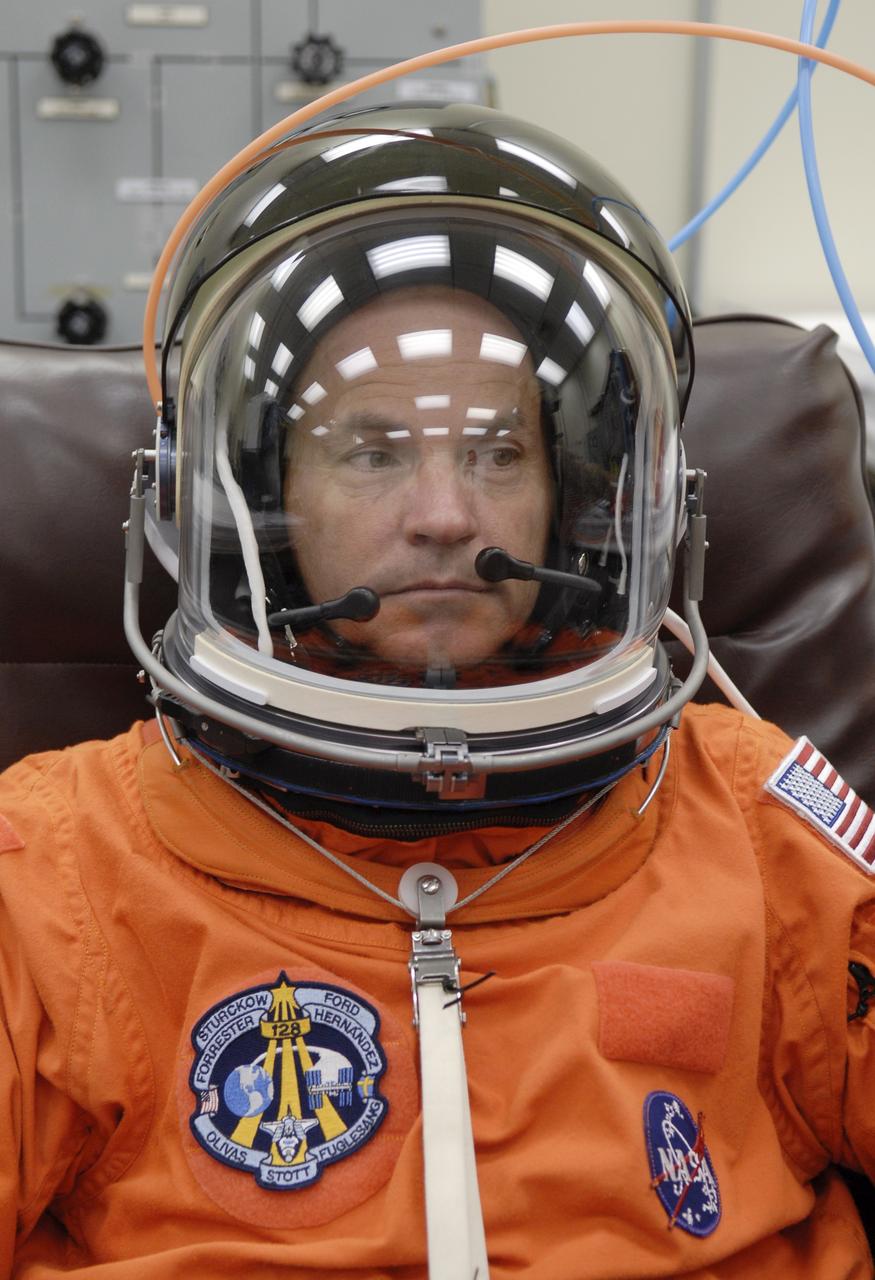
CAPE CANAVERAL, Fla. – STS-128 Commander Rick Sturckow completes the fit check of his launch and entry suit and helmet before heading to the NASA Kennedy Space Center's Launch Pad 39A for the simulated launch countdown. The countdown is the culmination of terminal countdown demonstration test activities to prepare the STS-128 crew for launch on space shuttle Discovery's STS-128 mission. Discovery will deliver 33,000 pounds of equipment to the station, including science and storage racks, a freezer to store research samples, a new sleeping compartment and the COLBERT treadmill. Launch is targeted for late August. Photo credit: NASA/Kim Shiflett
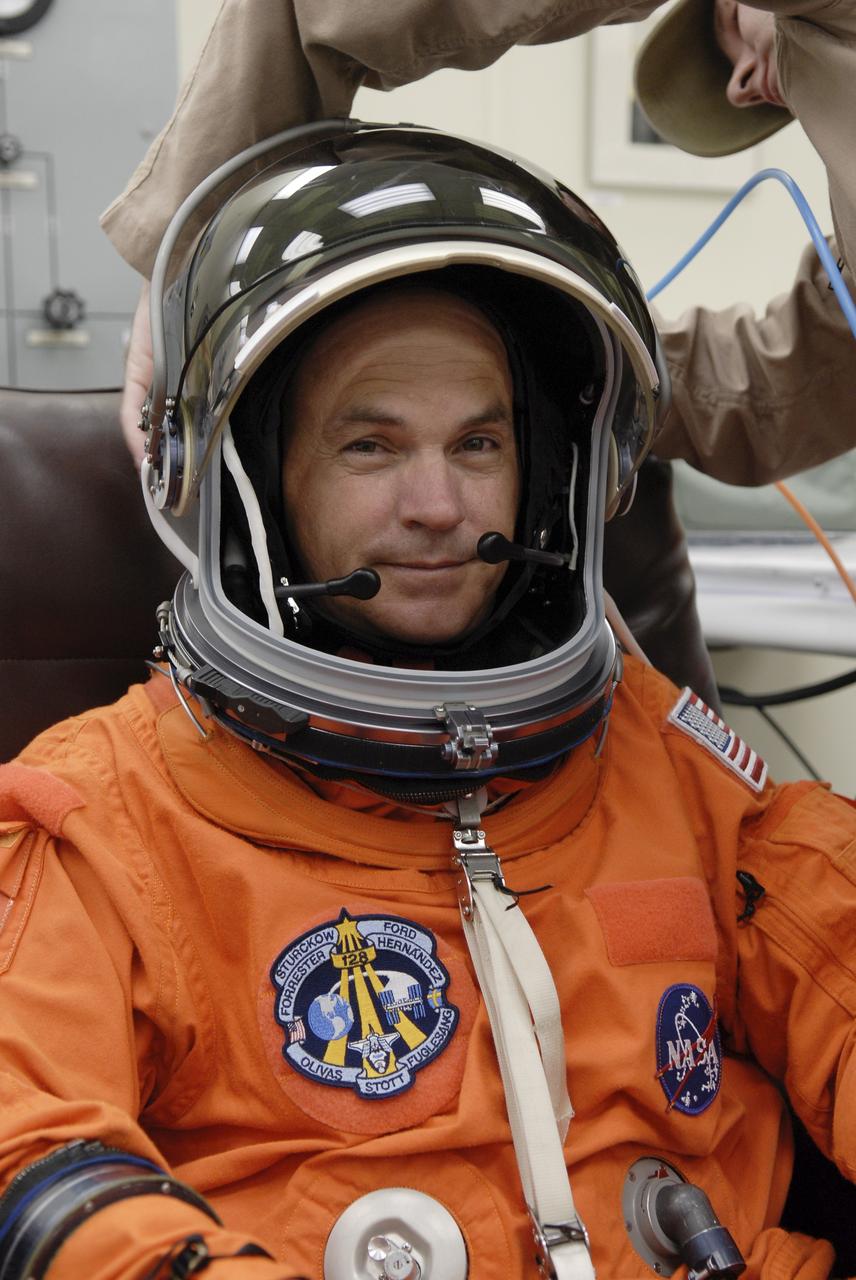
CAPE CANAVERAL, Fla. – A worker helps secure the helmet on STS-128 Commander Rick Sturckow as he checks the fit before heading to the NASA Kennedy Space Center's Launch Pad 39A for the simulated launch countdown. The countdown is the culmination of terminal countdown demonstration test activities to prepare the STS-128 crew for launch on space shuttle Discovery's STS-128 mission. Discovery will deliver 33,000 pounds of equipment to the station, including science and storage racks, a freezer to store research samples, a new sleeping compartment and the COLBERT treadmill. Launch is targeted for late August. Photo credit: NASA/Kim Shiflett
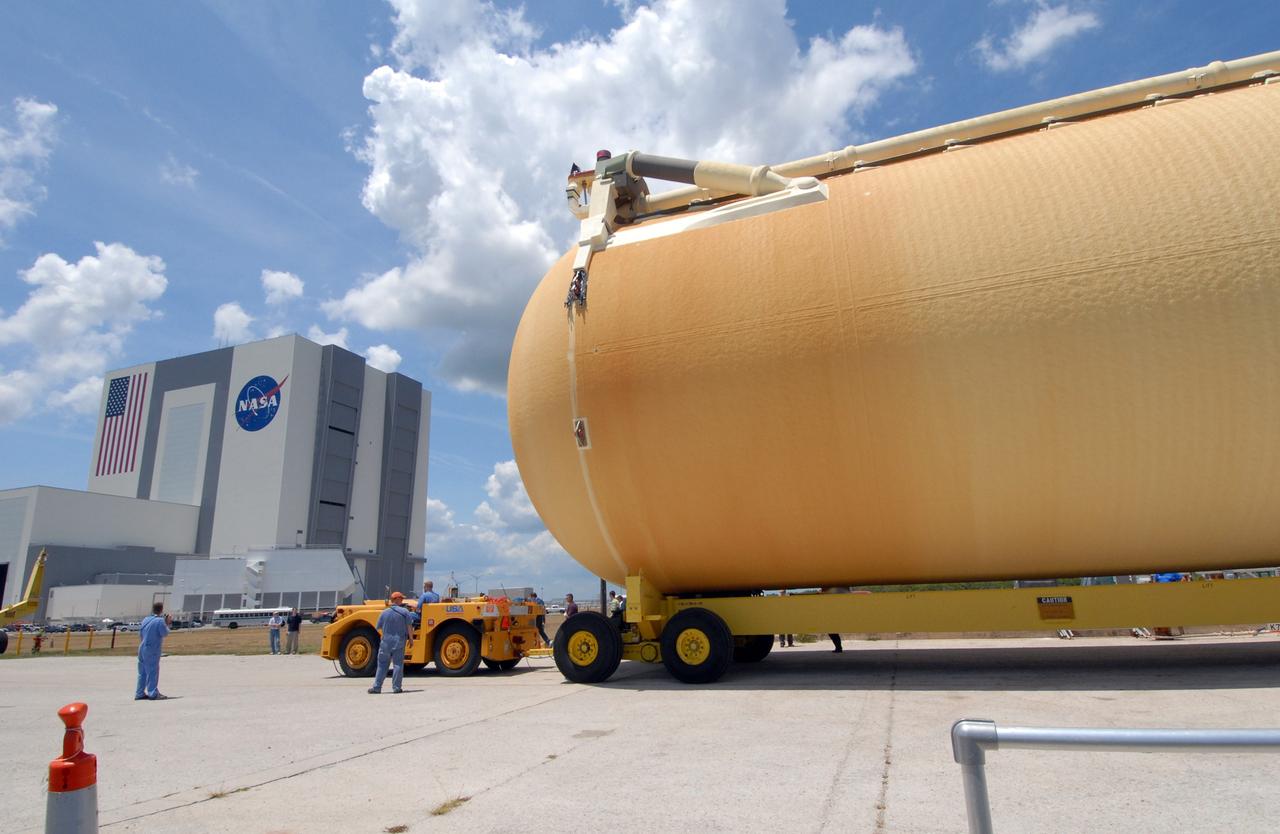
CAPE CANAVERAL, Fla. – The external fuel tank, ET- 132, designated for use with space shuttle Discovery on the STS-128 mission is moved away from the turn basin, heading for a high bay in the Vehicle Assembly Building, at left, for checkout. On the STS-128 mission, Discovery will carry science and storage racks to the International Space Station. Launch of Discovery is targeted for Aug. 6. Photo credit: NASA/Jack Pfaller
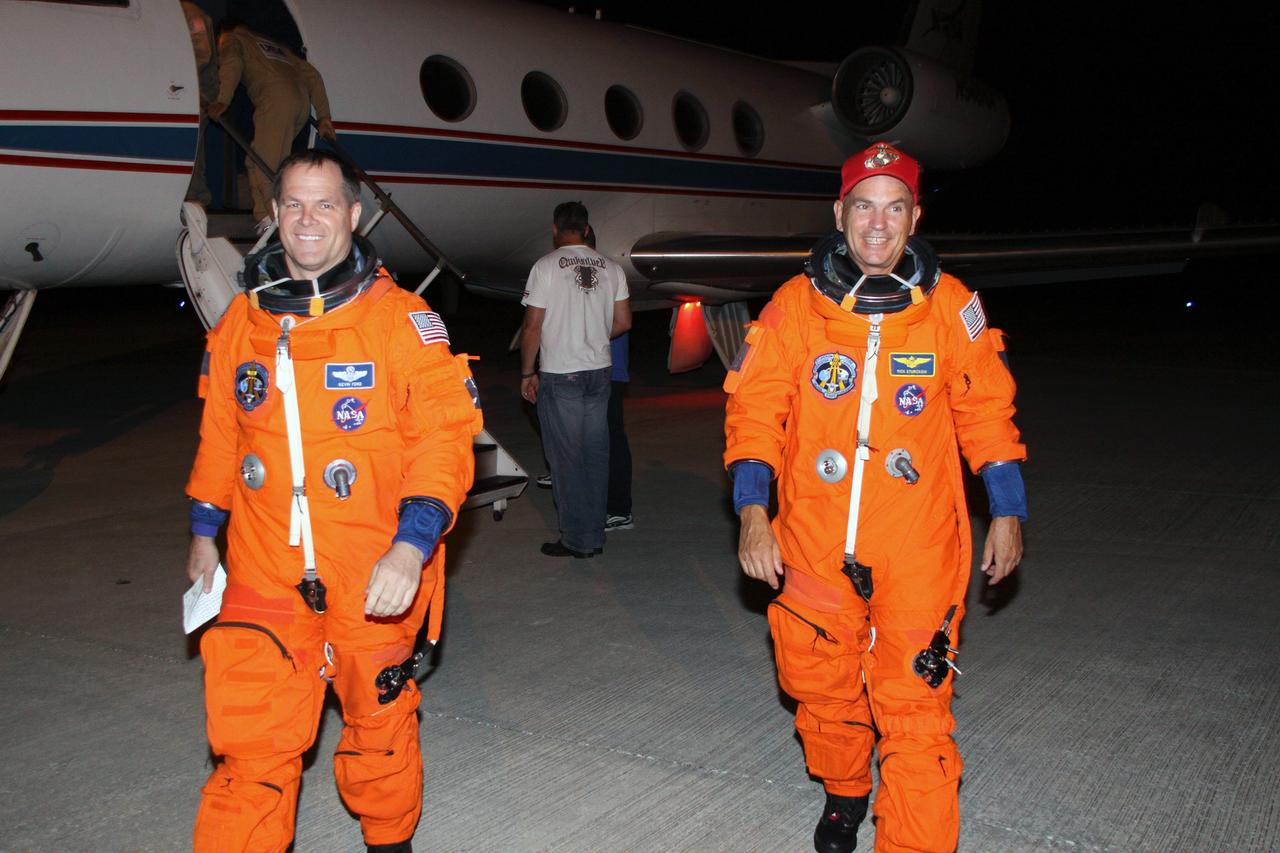
CAPE CANAVERAL, Fla. – STS-128 Commander Rick Sturckow (right) and Pilot Kevin Ford walk across NASA Kennedy Space Center's Shuttle Landing Facility after completing practice shuttle landings as preparation for space shuttle Discovery's launch Aug. 25 on the STS-128 mission. The 13-day mission will deliver a new crew member and 33,000 pounds of equipment to the International Space Station. The equipment includes science and storage racks, a freezer to store research samples, a new sleeping compartment and the COLBERT treadmill. Photo credit: NASA/Troy Cryder
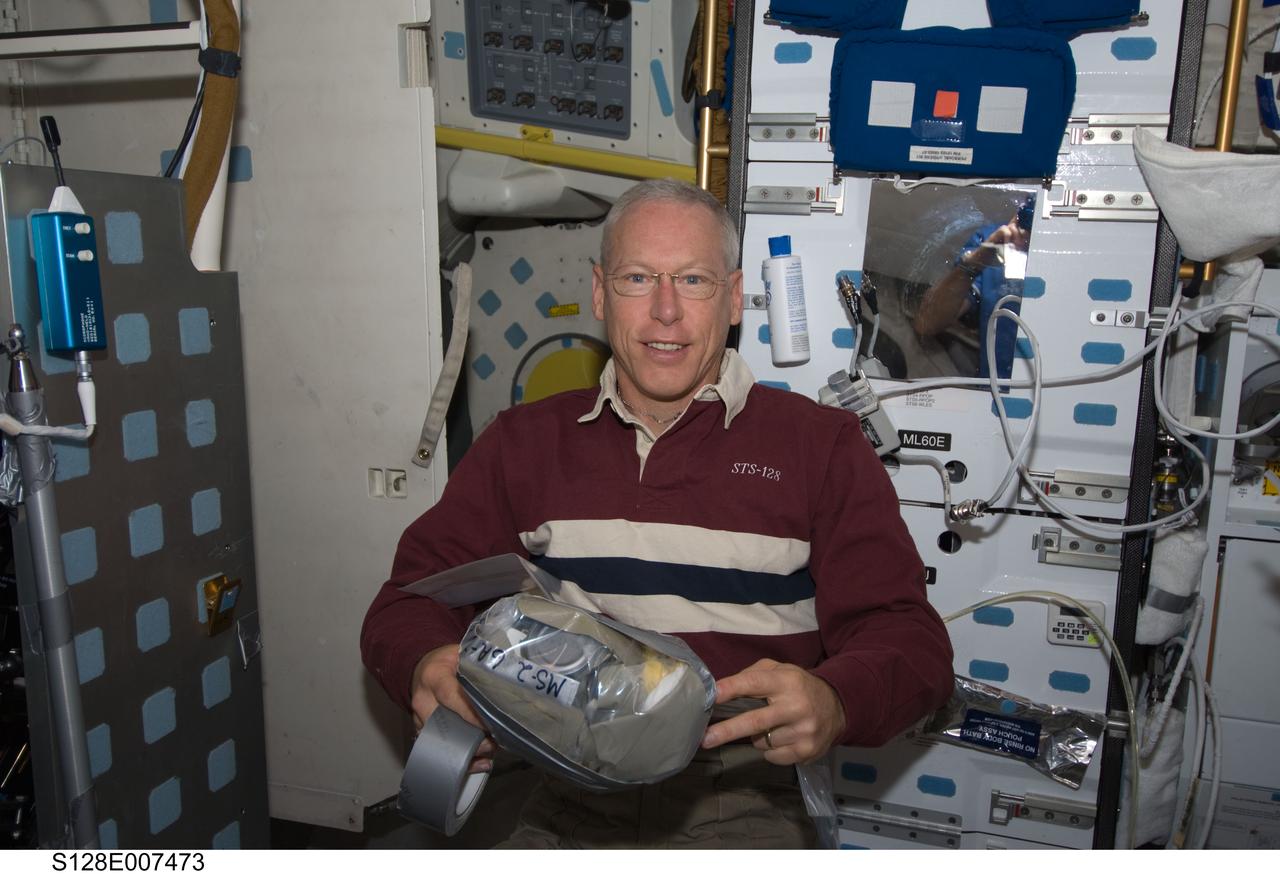
S128-E-007473 (3 Sept. 2009) --- NASA astronaut Patrick Forrester, STS-128 mission specialist, is pictured on the middeck of Space Shuttle Discovery while docked with the International Space Station.
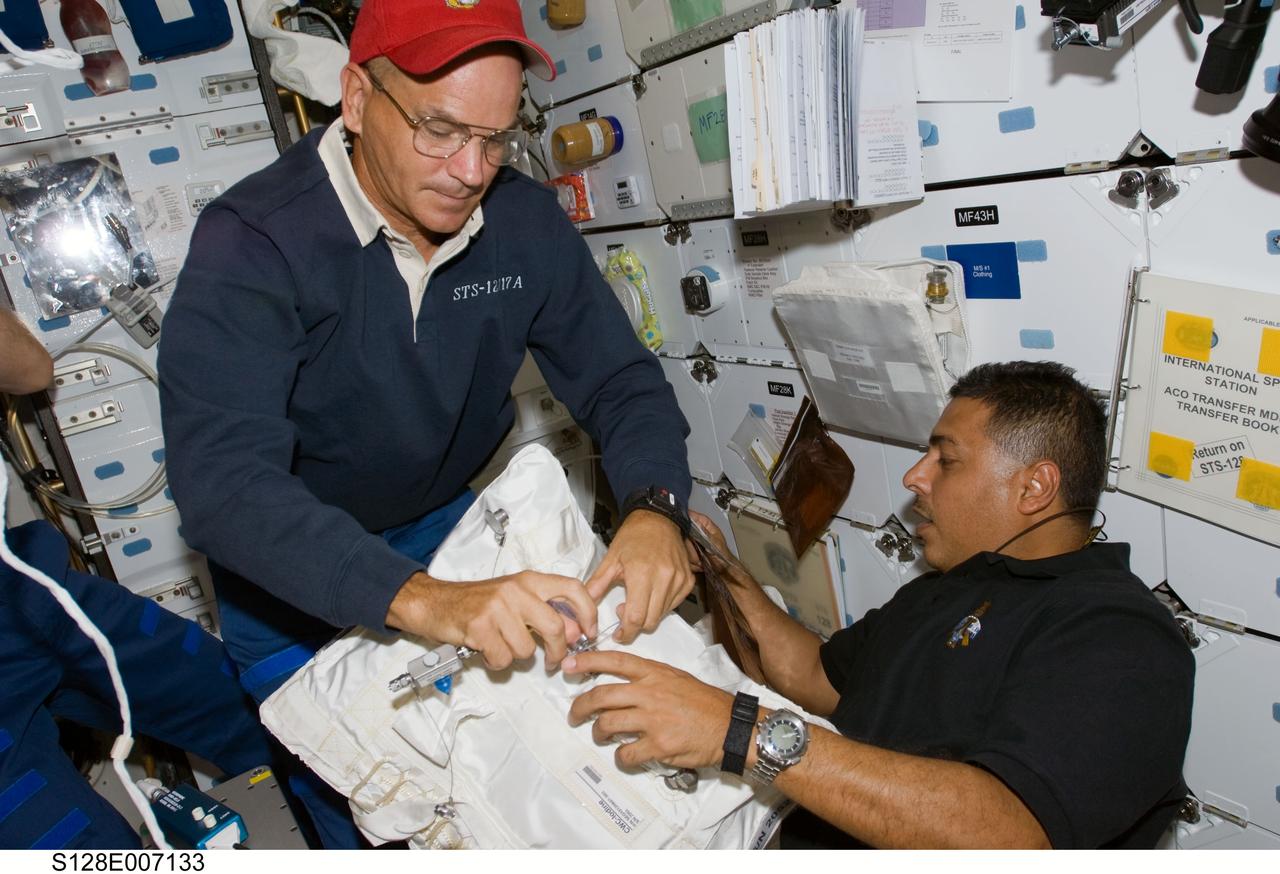
S128-E-007133 (31 Aug. 2009) --- Astronauts Rick Sturckow (left), STS-128 commander, and Jose Hernandez, mission specialist, work on the middeck of Space Shuttle Discovery while docked with the International Space Station.
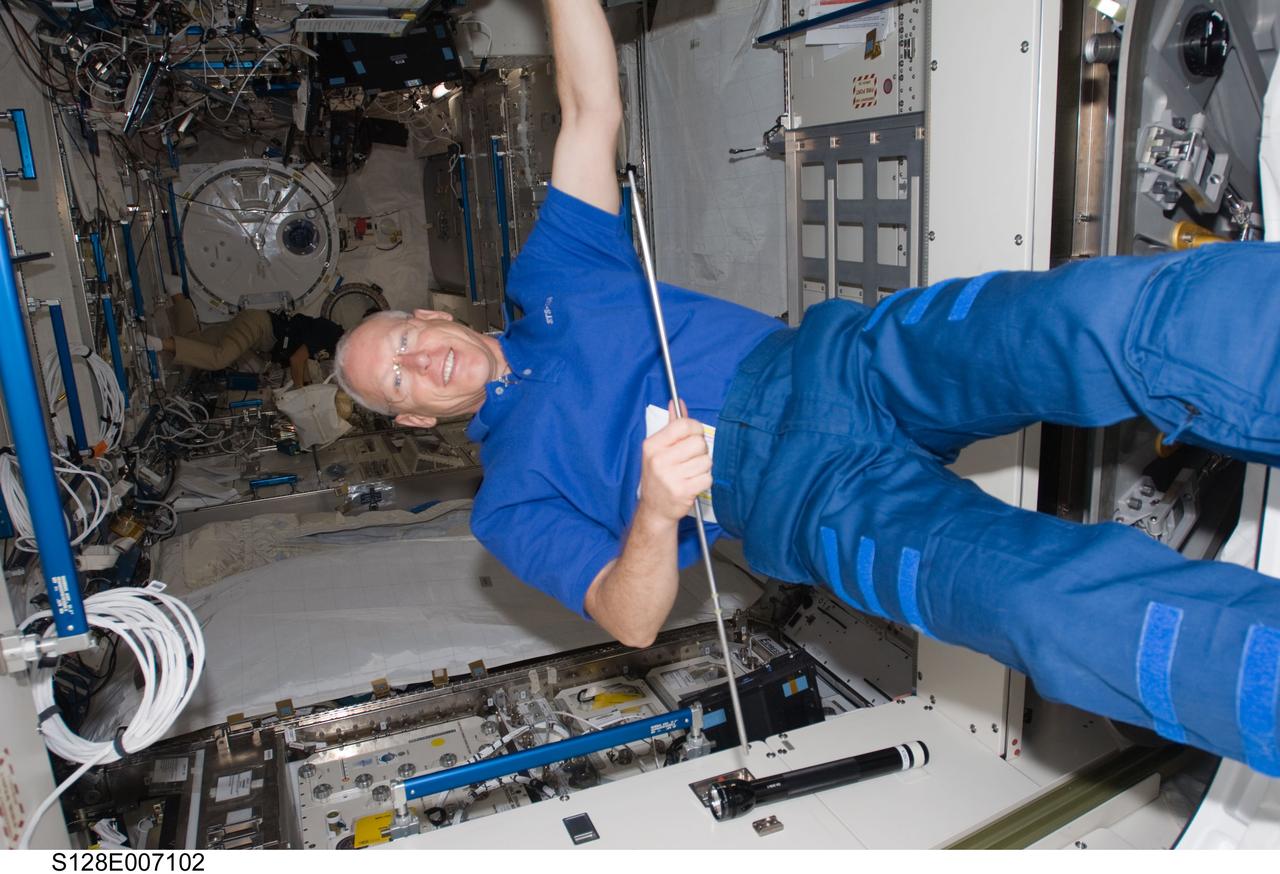
S128-E-007102 (31 Aug. 2009) --- Astronaut Patrick Forrester, STS-128 mission specialist, is pictured in the Kibo laboratory of the International Space Station while Space Shuttle Discovery remains docked to the station.
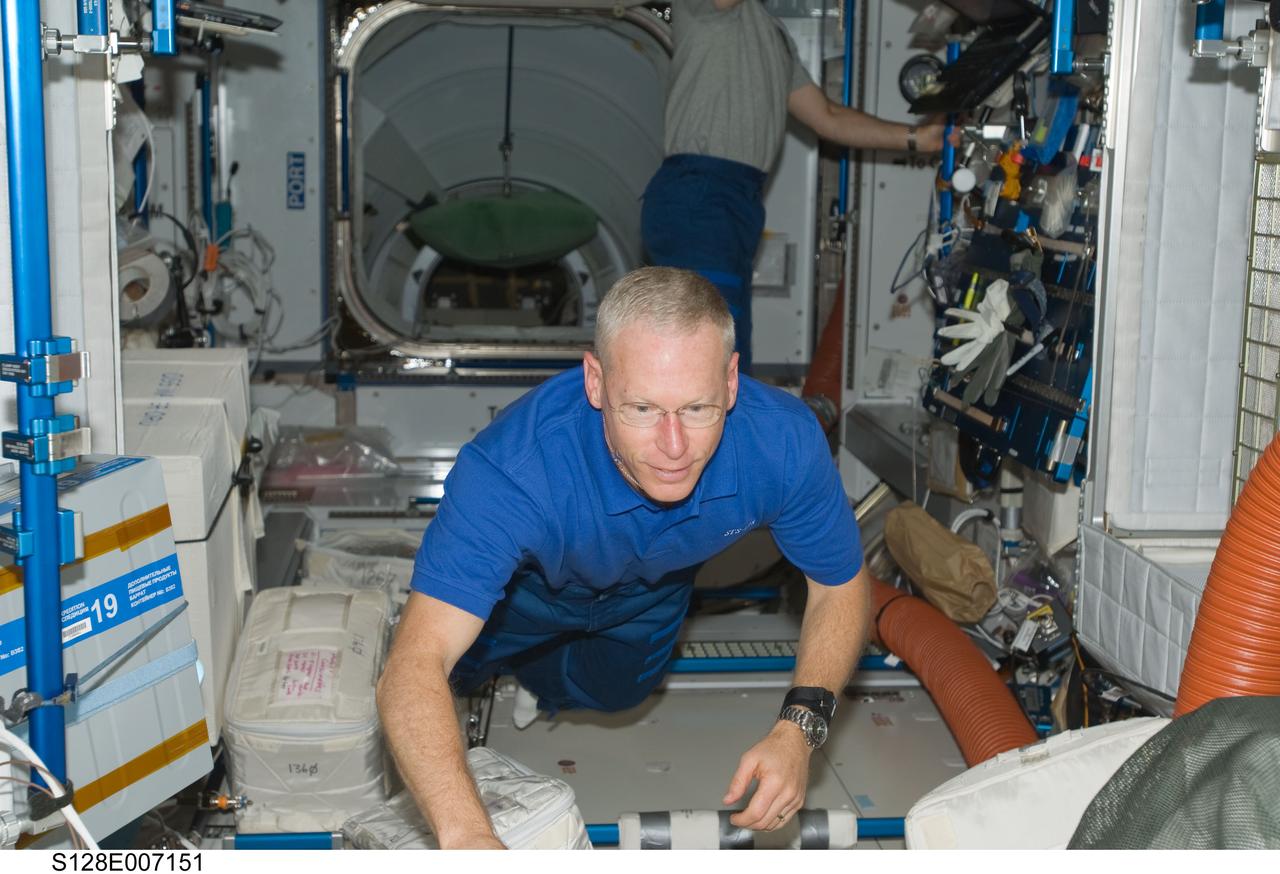
S128-E-007151 (31 Aug. 2009) --- Astronaut Patrick Forrester, STS-128 mission specialist, is pictured in the Harmony node of the International Space Station while Space Shuttle Discovery remains docked with the station.
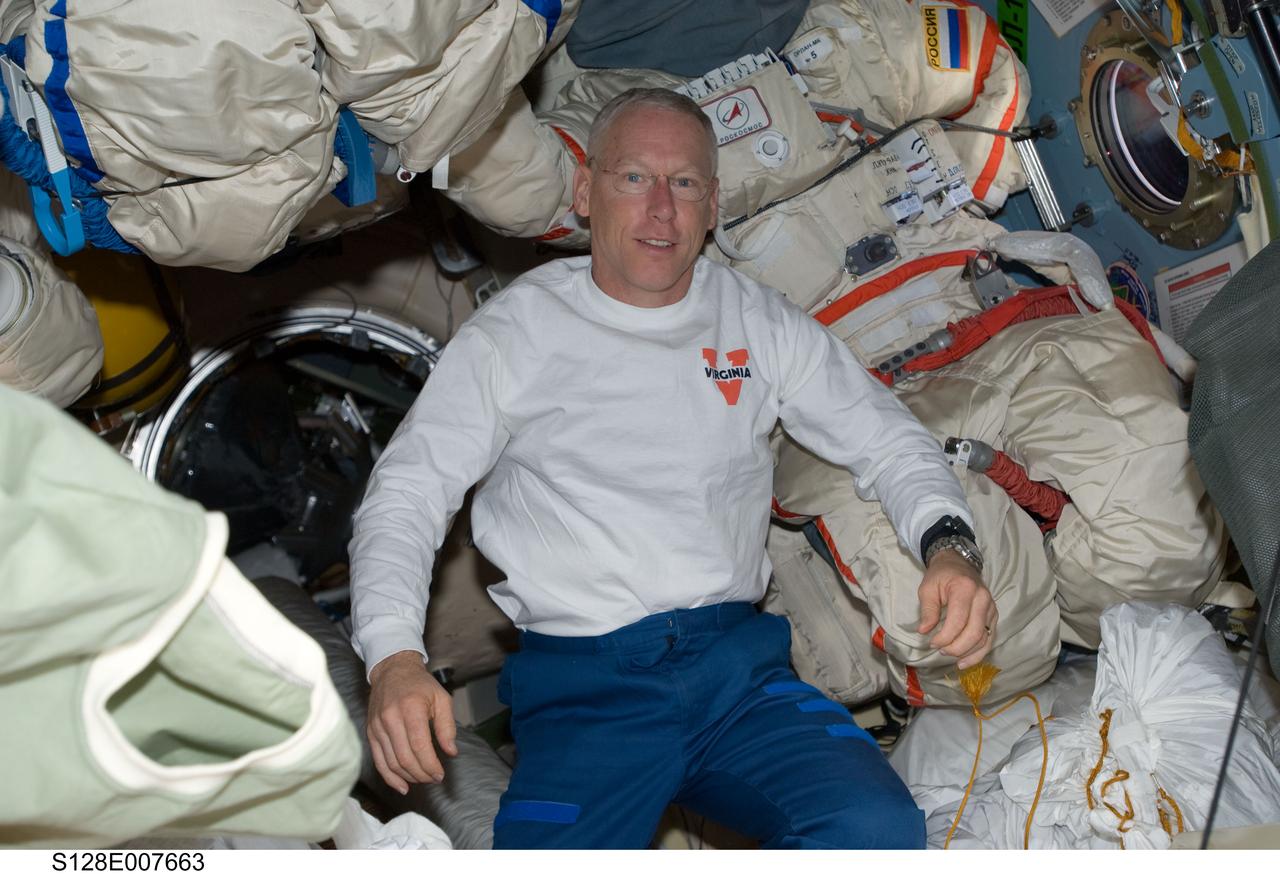
S128-E-007663 (5 Sept. 2009) --- NASA astronaut Patrick Forrester, STS-128 mission specialist, is pictured in the Pirs Docking Compartment of the International Space Station while Space Shuttle Discovery remains docked with the station.
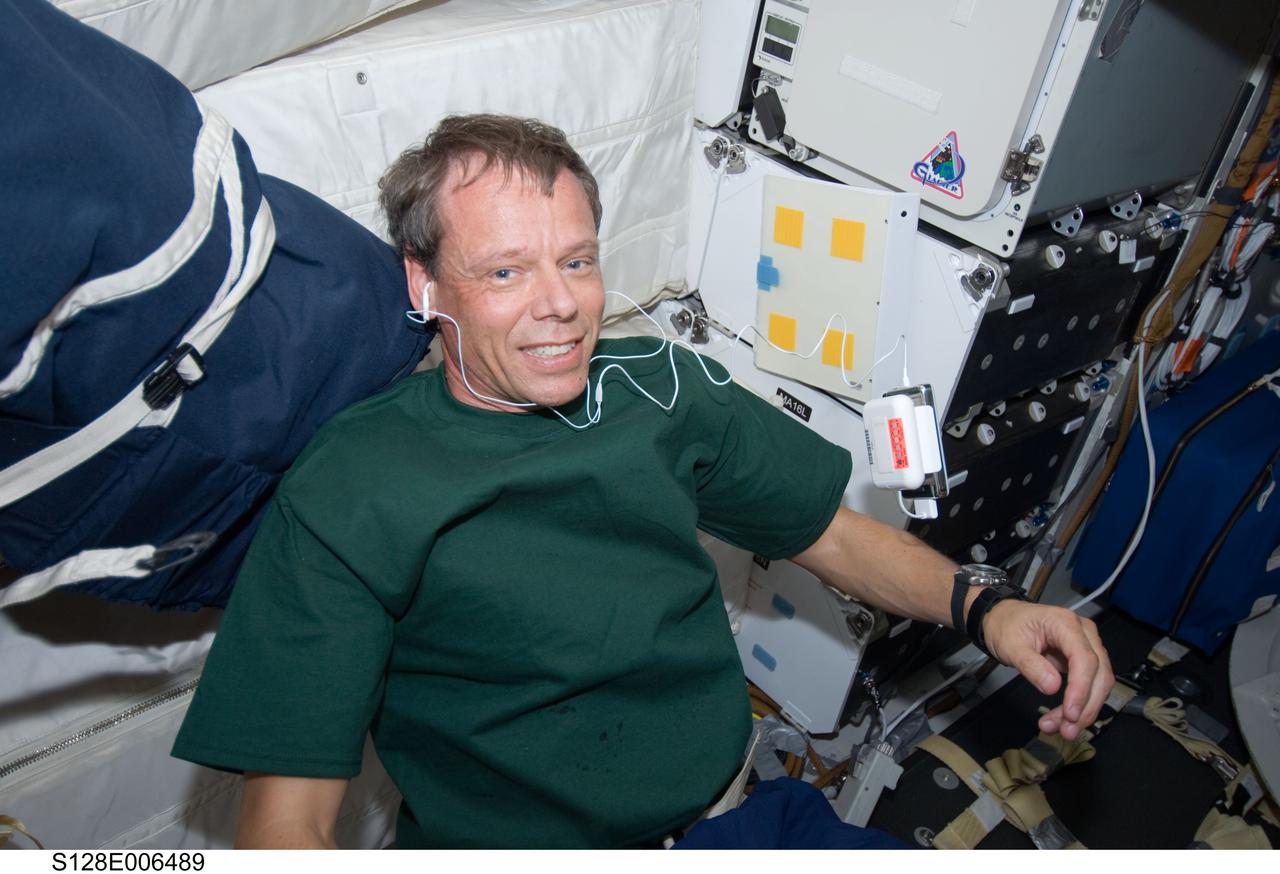
S128-E-006489 (29 Aug. 2009) --- European Space Agency astronaut Christer Fuglesang, STS-128 mission specialist, is pictured on the middeck of the Earth-orbiting Space Shuttle Discovery during flight day two activities.
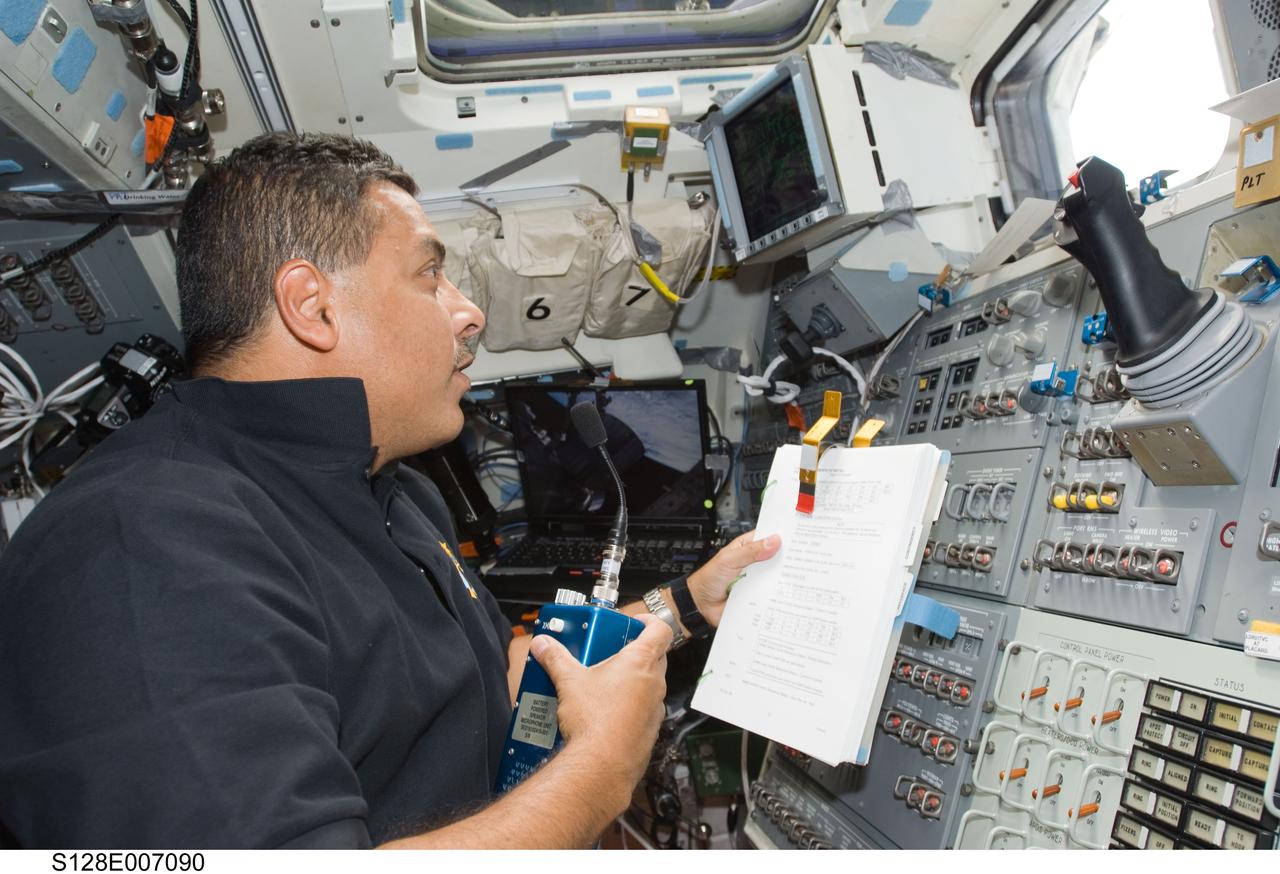
S128-E-007090 (31 Aug. 2009) --- Astronaut Jose Hernandez, STS-128 mission specialist, uses a communication system on the aft flight deck of Space Shuttle Discovery while docked with the International Space Station.
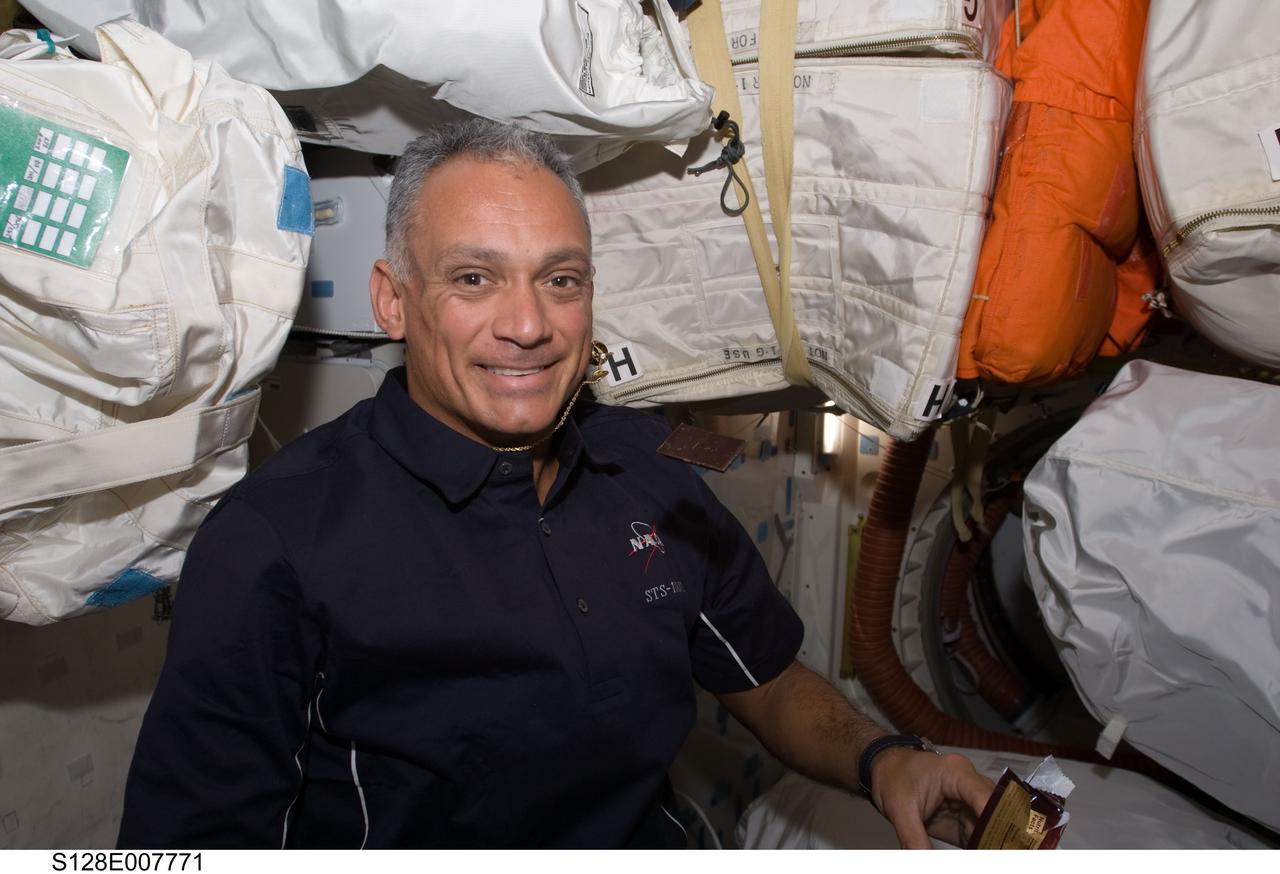
S128-E-007771 (6 Sept. 2009) --- NASA astronaut John “Danny” Olivas, STS-128 mission specialist, is pictured on the middeck of Space Shuttle Discovery with a floating piece of chocolate while docked with the International Space Station.
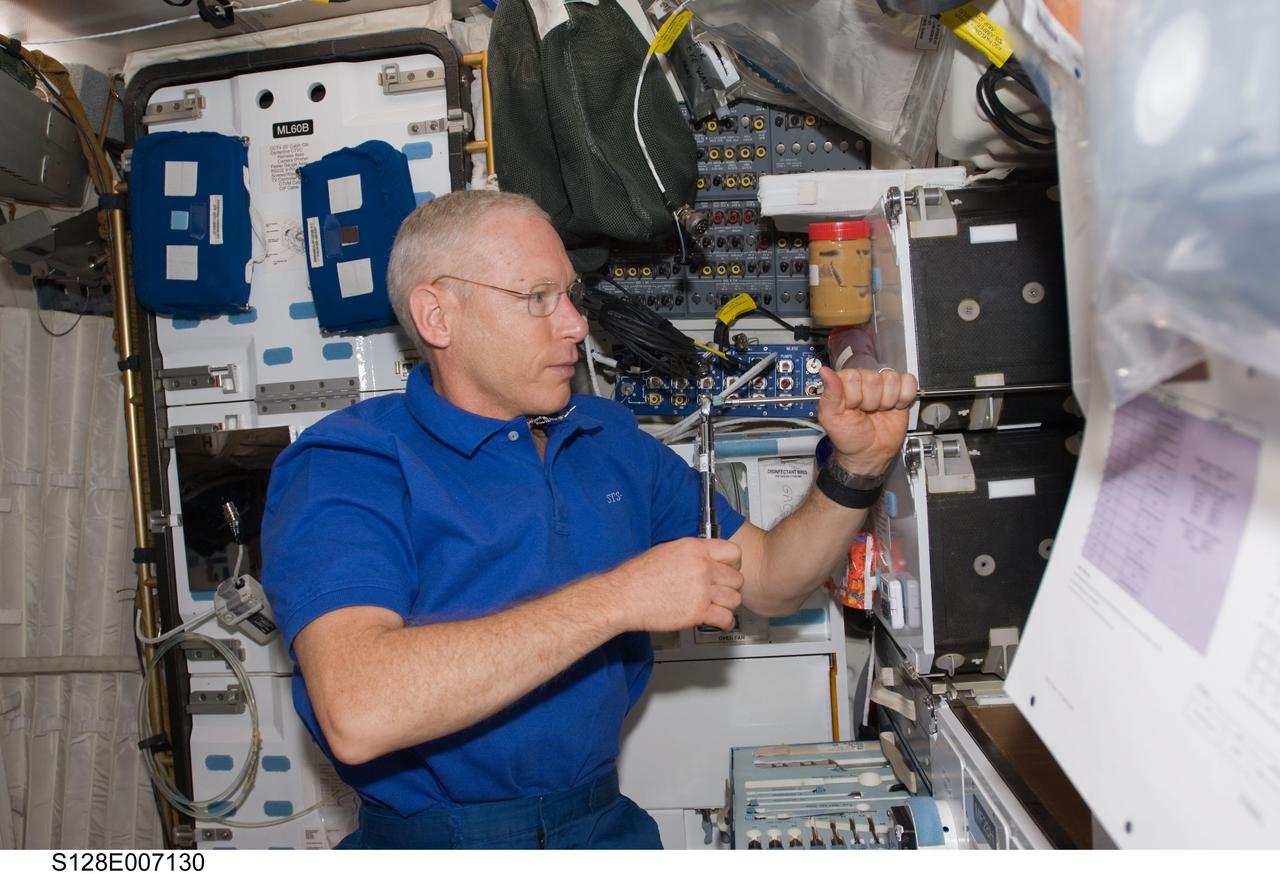
S128-E-007130 (31 Aug. 2009) --- Astronaut Patrick Forrester, STS-128 mission specialist, works on the middeck of Space Shuttle Discovery while docked with the International Space Station.
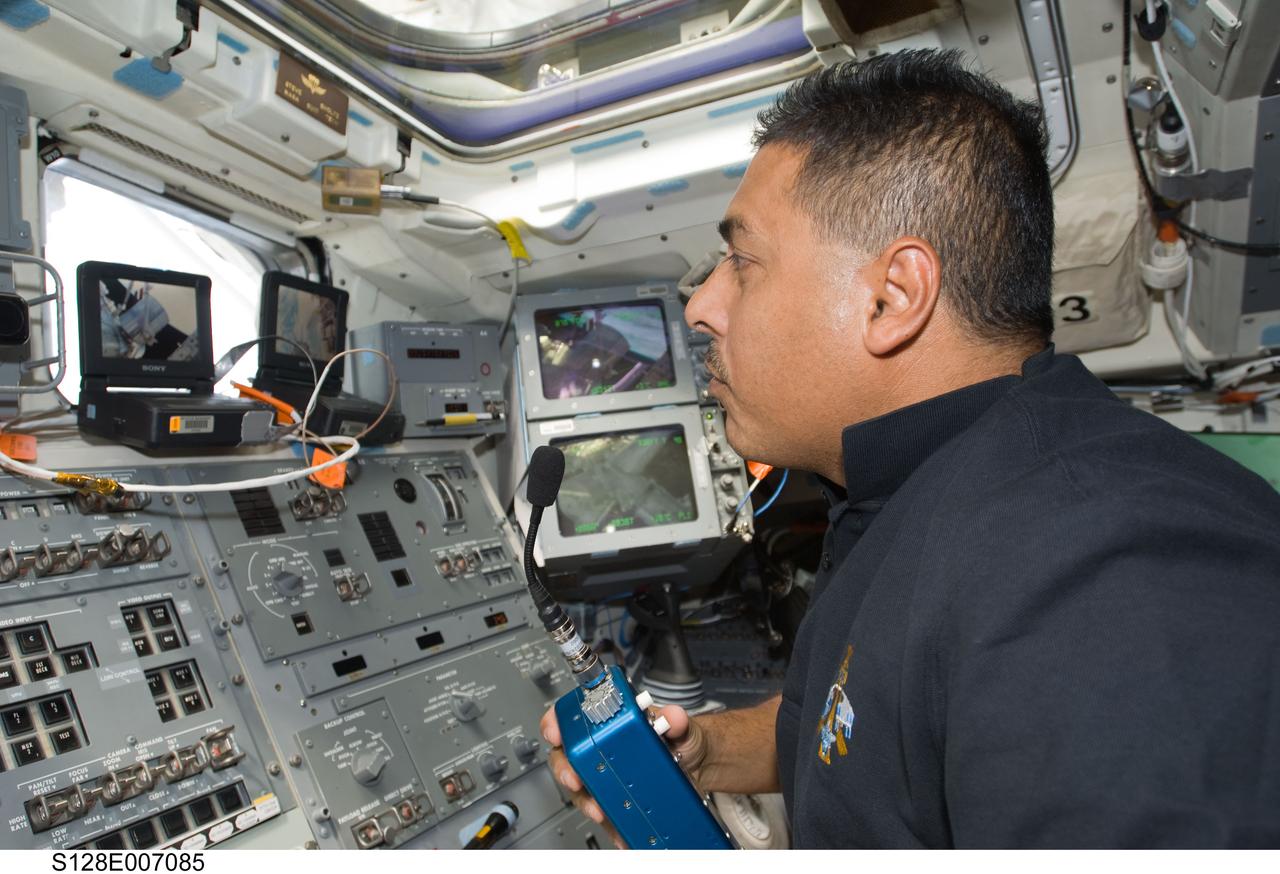
S128-E-007085 (31 Aug. 2009) --- Astronaut Jose Hernandez, STS-128 mission specialist, uses a communication system on the aft flight deck of Space Shuttle Discovery while docked with the International Space Station.
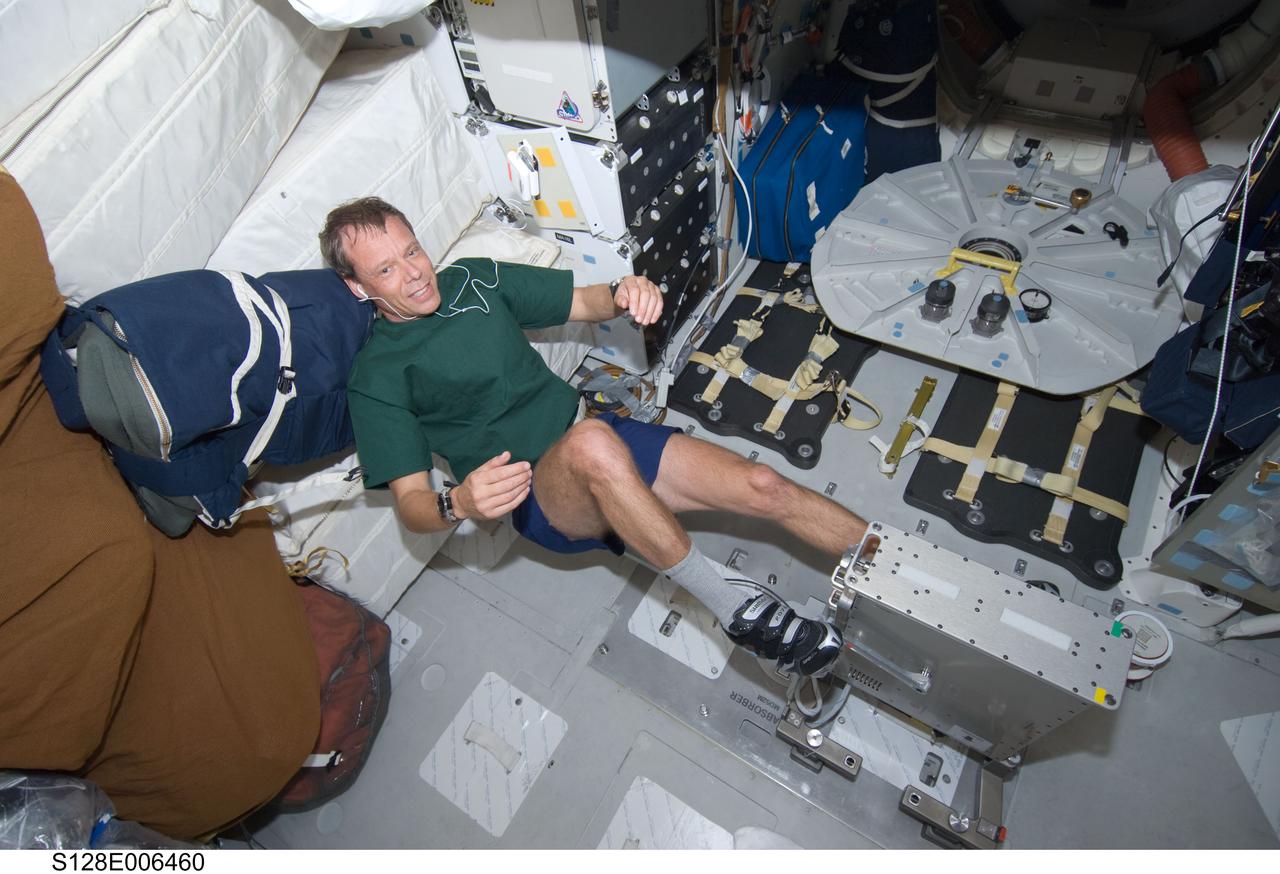
S128-E-006460 (29 Aug. 2009) --- European Space Agency astronaut Christer Fuglesang, STS-128 mission specialist, exercises on a bicycle ergometer on the middeck of the Earth-orbiting Space Shuttle Discovery.
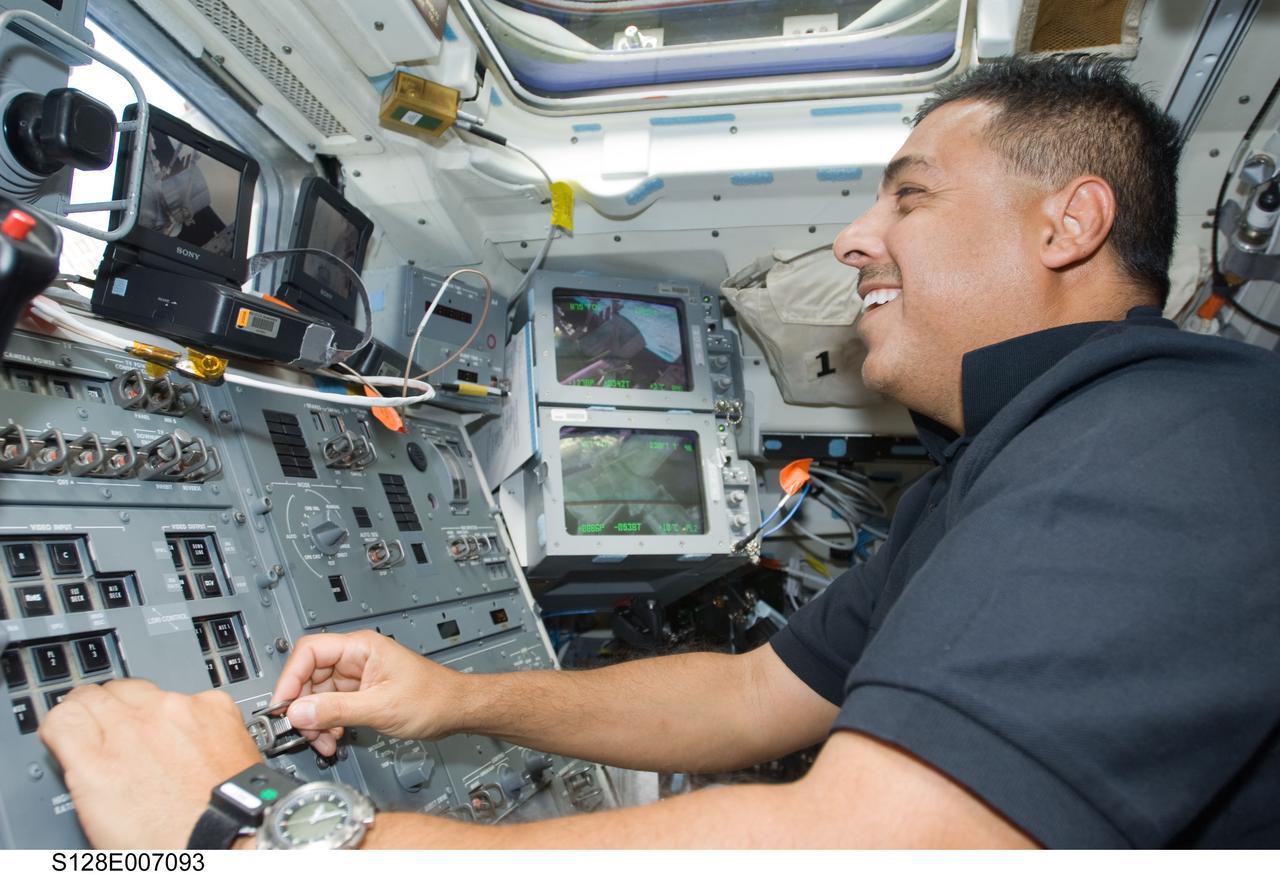
S128-E-007093 (31 Aug. 2009) --- Astronaut Jose Hernandez, STS-128 mission specialist, works controls on the aft flight deck of Space Shuttle Discovery while docked with the International Space Station.
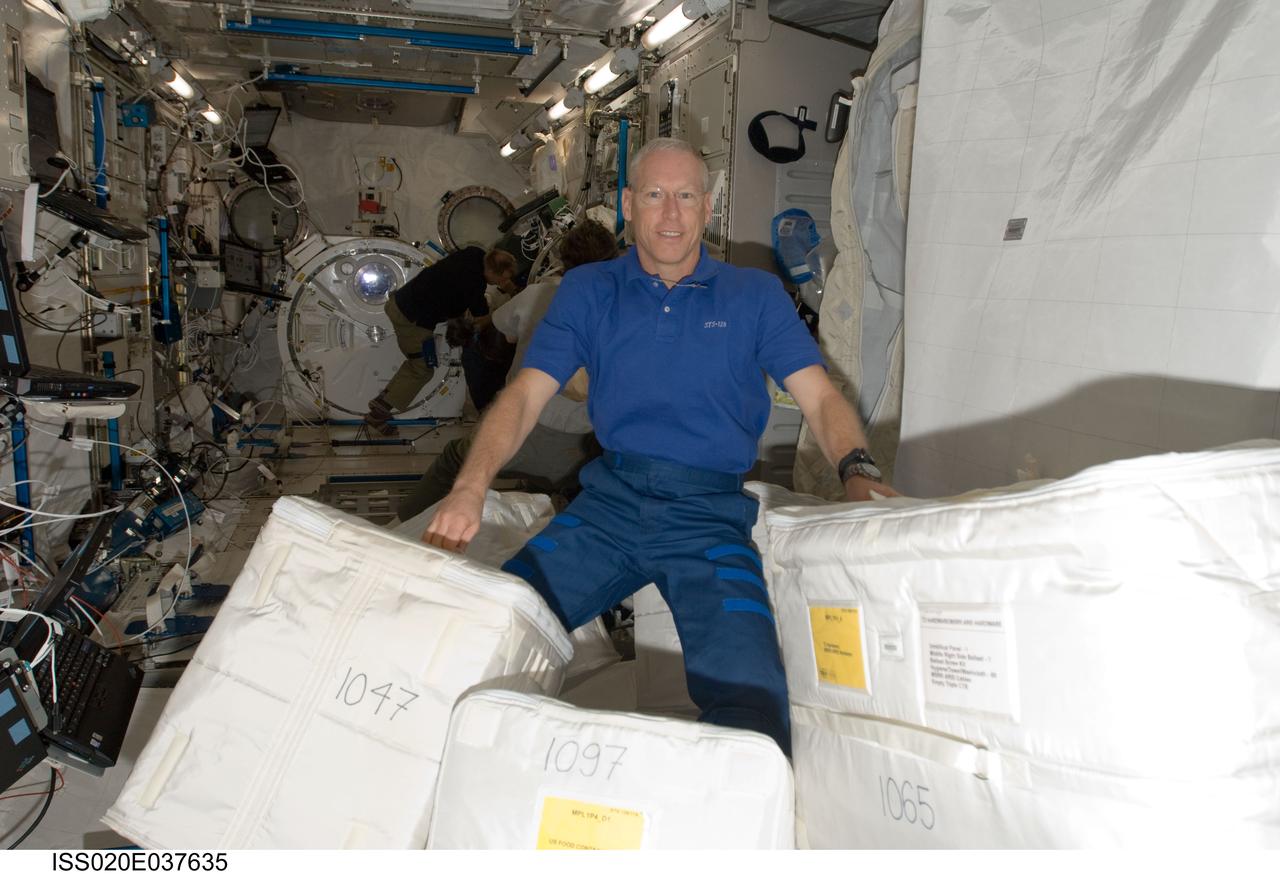
ISS020-E-037635 (31 Aug. 2009) --- Astronaut Patrick Forrester, STS-128 mission specialist, moves cargo containers in the Kibo laboratory of the International Space Station while Space Shuttle Discovery remains docked with the station.
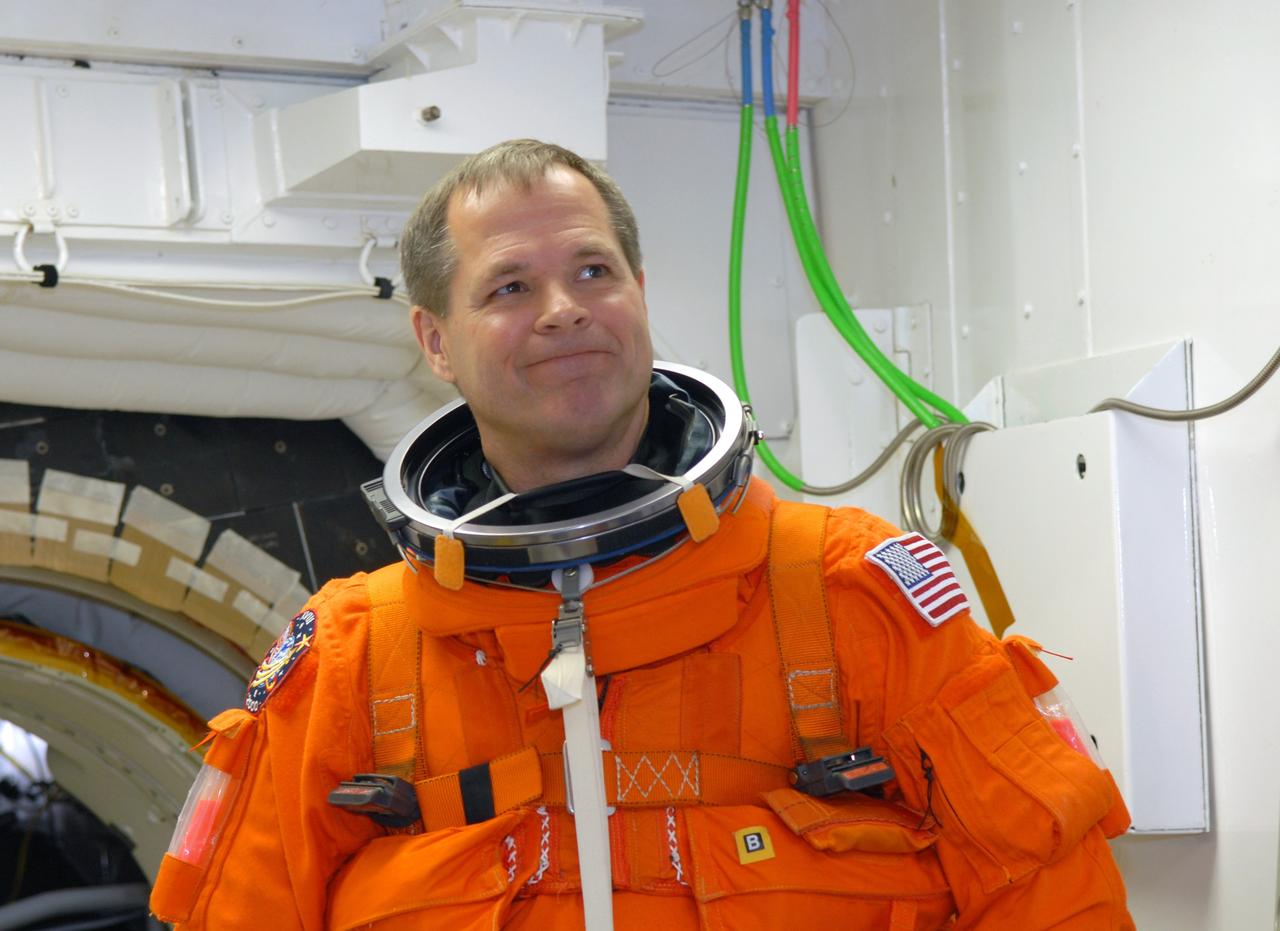
CAPE CANAVERAL, Fla. – STS-128 Pilot Kevin Ford is the White Room on NASA Kennedy Space Center's Launch Pad 39A getting ready to enter space shuttle Discovery. The White Room is at the end of the orbiter access arm and provides entry into the shuttle. Mission crew members are at Kennedy to take part in the terminal countdown demonstration test, or TCDT, which culminates in a simulated launch countdown inside the shuttle. On the STS-128 mission, Discovery will deliver 33,000 pounds of equipment to the station, including science and storage racks, a freezer to store research samples, a new sleeping compartment and the COLBERT treadmill. Launch is targeted for late August. Photo credit: NASA/Jim Grossmann
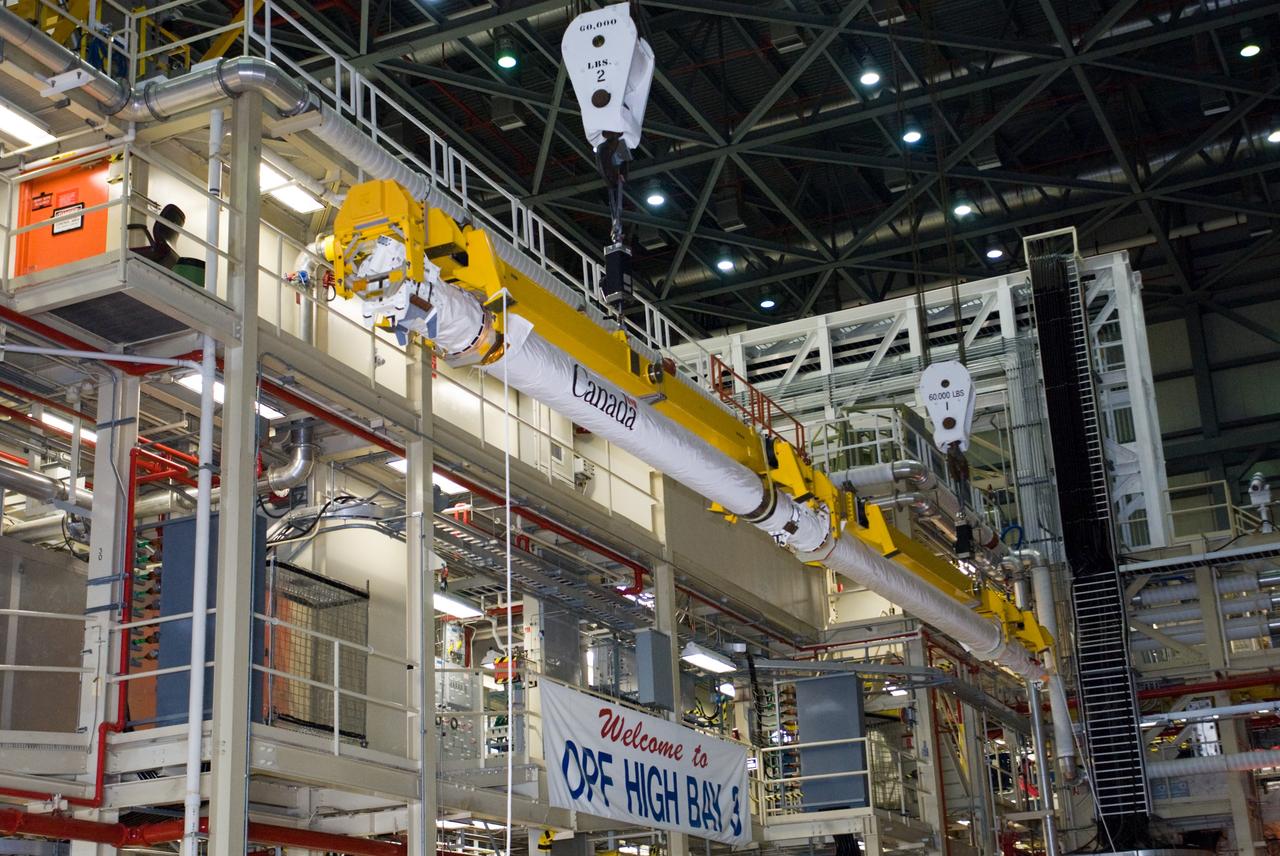
CAPE CANAVERAL, Fla. – In the Orbiter Processing Facility’s bay 3, the orbiter boom sensor system is lifted by a crane for installation in space shuttle Discovery’s payload bay for mission STS-128. The 50-foot-long boom attaches to the shuttle arm and provides equipment to inspect the shuttle's heat shield while in space. It contains an intensified television camera (ITVC) and a laser dynamic range imager, which are mounted on a pan and tilt unit, and a laser camera system (LCS) mounted on a stationary bracket. The STS-128 flight will carry science and storage racks to the International Space Station on space shuttle Discovery. Launch of Discovery is targeted for Aug. 6. Photo credit: NASA/Jim Grossmann
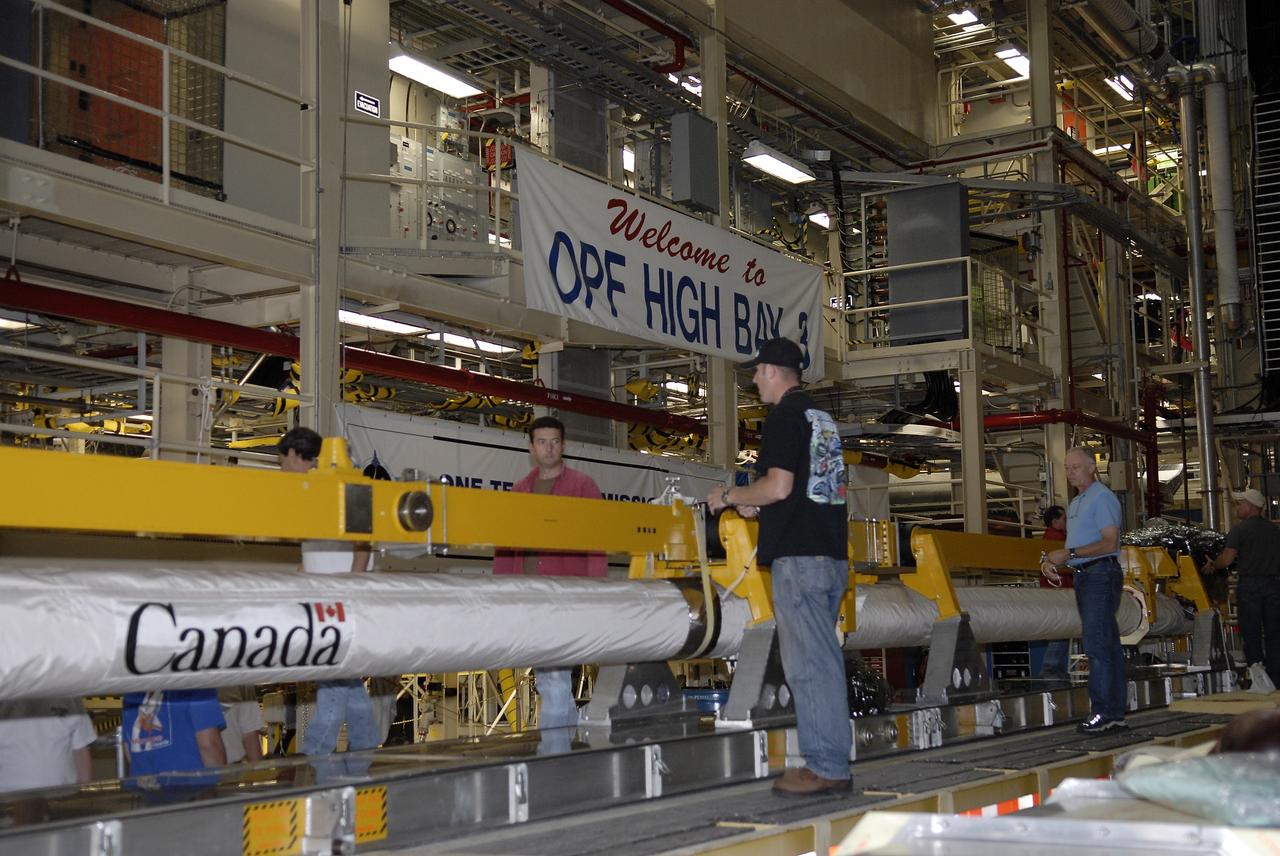
CAPE CANAVERAL, Fla. – In the Orbiter Processing Facility’s bay 3, workers prepare to install the orbiter boom sensor system in the payload bay of space shuttle Discovery to support mission STS-128. The 50-foot-long boom attaches to the shuttle arm and provides equipment to inspect the shuttle's heat shield while in space. It contains an intensified television camera (ITVC) and a laser dynamic range imager, which are mounted on a pan and tilt unit, and a laser camera system (LCS) mounted on a stationary bracket. The STS-128 flight will carry science and storage racks to the International Space Station on space shuttle Discovery. Launch of Discovery is targeted for Aug. 6. Photo credit: NASA/Kim Shiflett
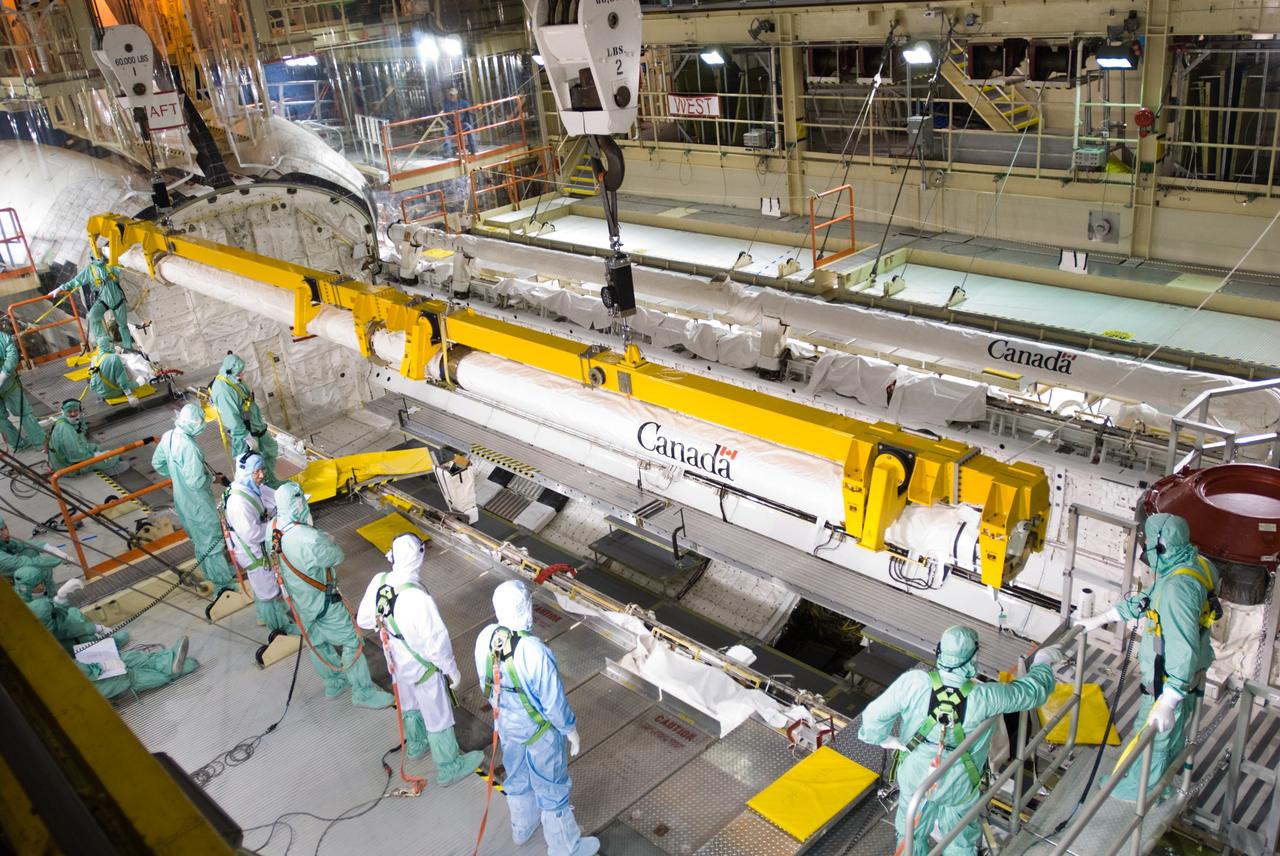
CAPE CANAVERAL, Fla. – In the Orbiter Processing Facility’s bay 3, the orbiter boom sensor system is lowered by a crane into the payload bay of space shuttle Discovery for installation to support mission STS-128. The 50-foot-long boom attaches to the shuttle arm and provides equipment to inspect the shuttle's heat shield while in space. It contains an intensified television camera (ITVC) and a laser dynamic range imager, which are mounted on a pan and tilt unit, and a laser camera system (LCS) mounted on a stationary bracket. The STS-128 flight will carry science and storage racks to the International Space Station on space shuttle Discovery. Launch of Discovery is targeted for Aug. 6. Photo credit: NASA/Jim Grossmann
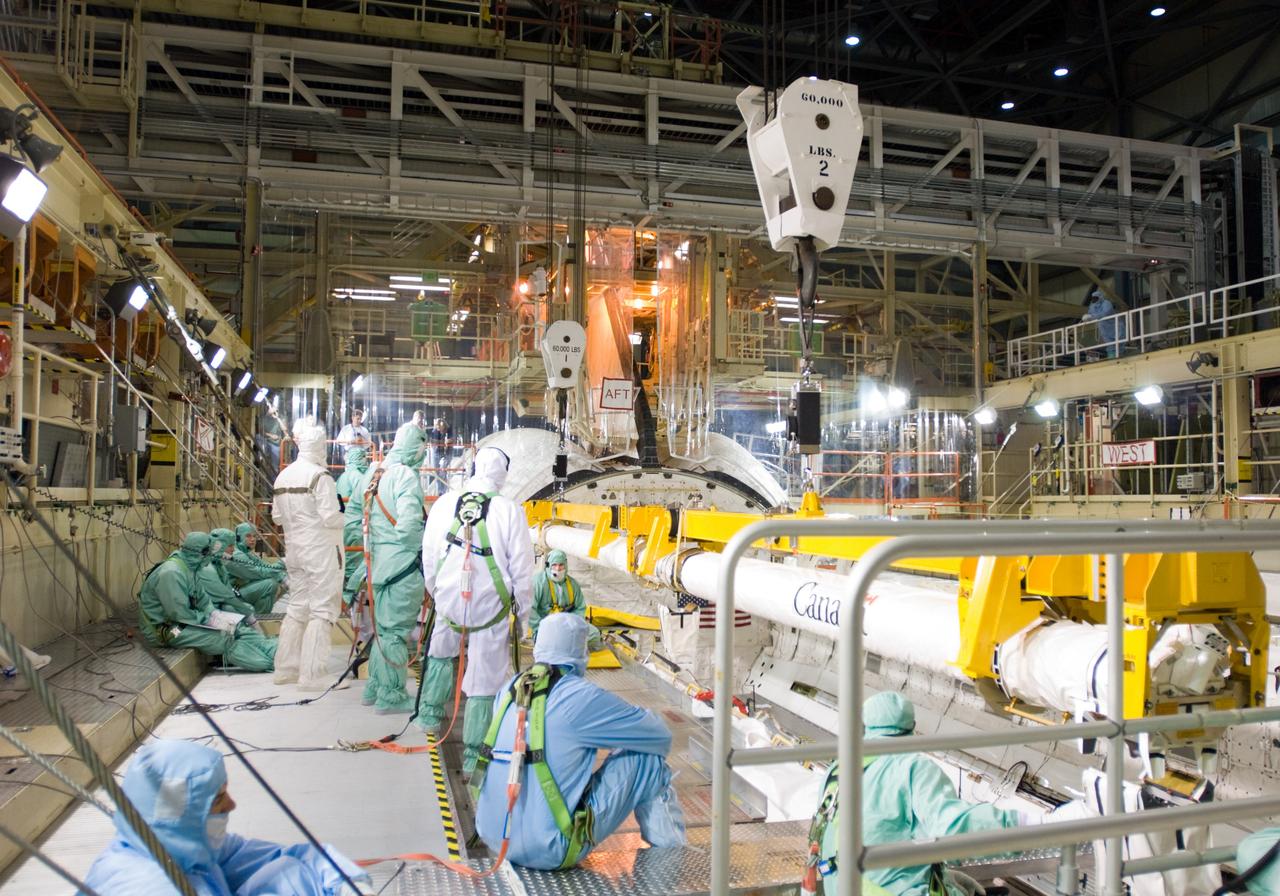
CAPE CANAVERAL, Fla. – In the Orbiter Processing Facility’s bay 3, workers install the orbiter boom sensor system in the payload bay of space shuttle Discovery to support mission STS-128. The 50-foot-long boom attaches to the shuttle arm and provides equipment to inspect the shuttle's heat shield while in space. It contains an intensified television camera (ITVC) and a laser dynamic range imager, which are mounted on a pan and tilt unit, and a laser camera system (LCS) mounted on a stationary bracket. The STS-128 flight will carry science and storage racks to the International Space Station on space shuttle Discovery. Launch of Discovery is targeted for Aug. 6. Photo credit: NASA/Jim Grossmann

CAPE CANAVERAL, Fla. – In the Orbiter Processing Facility’s bay 3, space shuttle Discovery’s payload bay is readied for installation of the orbiter boom sensor system to support mission STS-128. The 50-foot-long boom attaches to the shuttle arm and provides equipment to inspect the shuttle's heat shield while in space. It contains an intensified television camera (ITVC) and a laser dynamic range imager, which are mounted on a pan and tilt unit, and a laser camera system (LCS) mounted on a stationary bracket. The STS-128 flight will carry science and storage racks to the International Space Station on space shuttle Discovery. Launch of Discovery is targeted for Aug. 6. Photo credit: NASA/Jim Grossmann
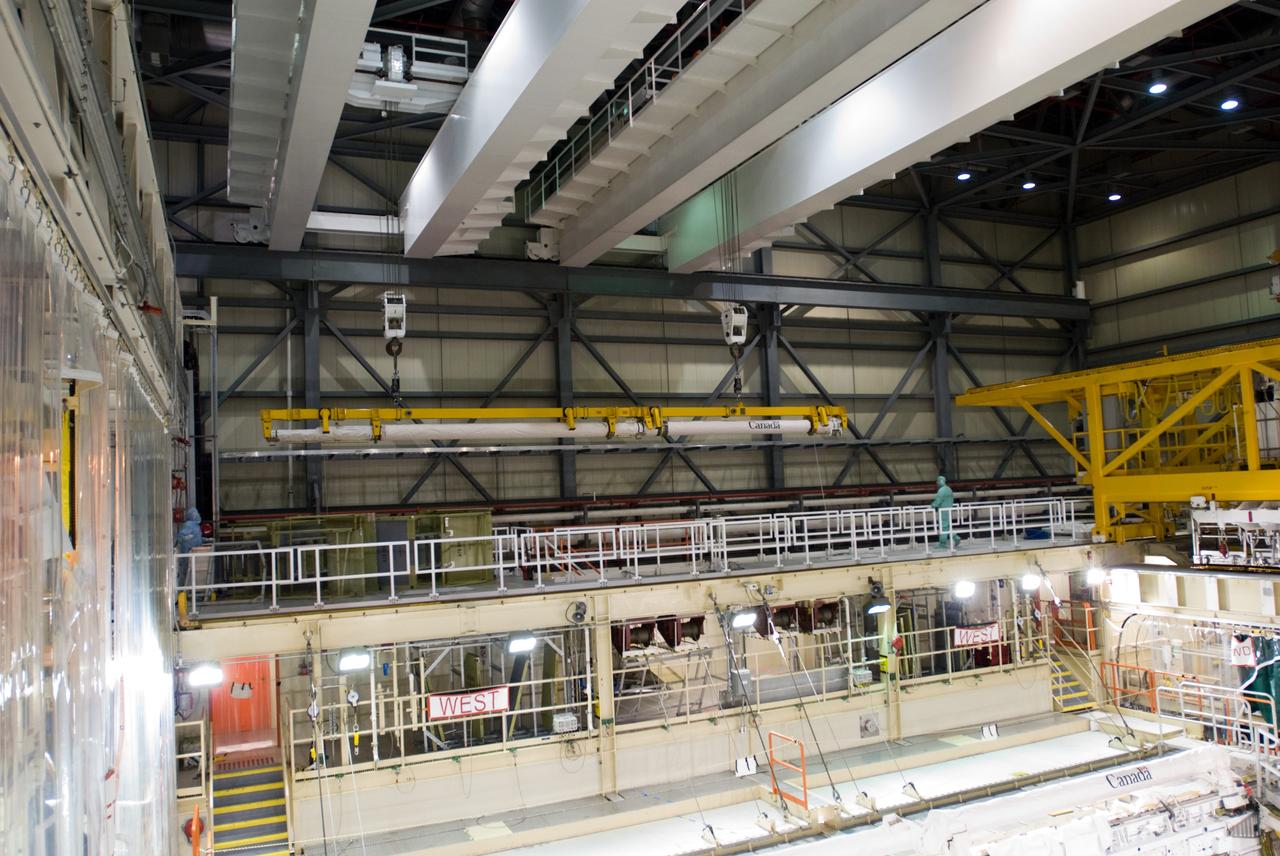
CAPE CANAVERAL, Fla. – In the Orbiter Processing Facility’s bay 3, the orbiter boom sensor system is lifted by a crane for installation in space shuttle Discovery’s payload bay for mission STS-128. The 50-foot-long boom attaches to the shuttle arm and provides equipment to inspect the shuttle's heat shield while in space. It contains an intensified television camera (ITVC) and a laser dynamic range imager, which are mounted on a pan and tilt unit, and a laser camera system (LCS) mounted on a stationary bracket. The STS-128 flight will carry science and storage racks to the International Space Station on space shuttle Discovery. Launch of Discovery is targeted for Aug. 6. Photo credit: NASA/Jim Grossmann
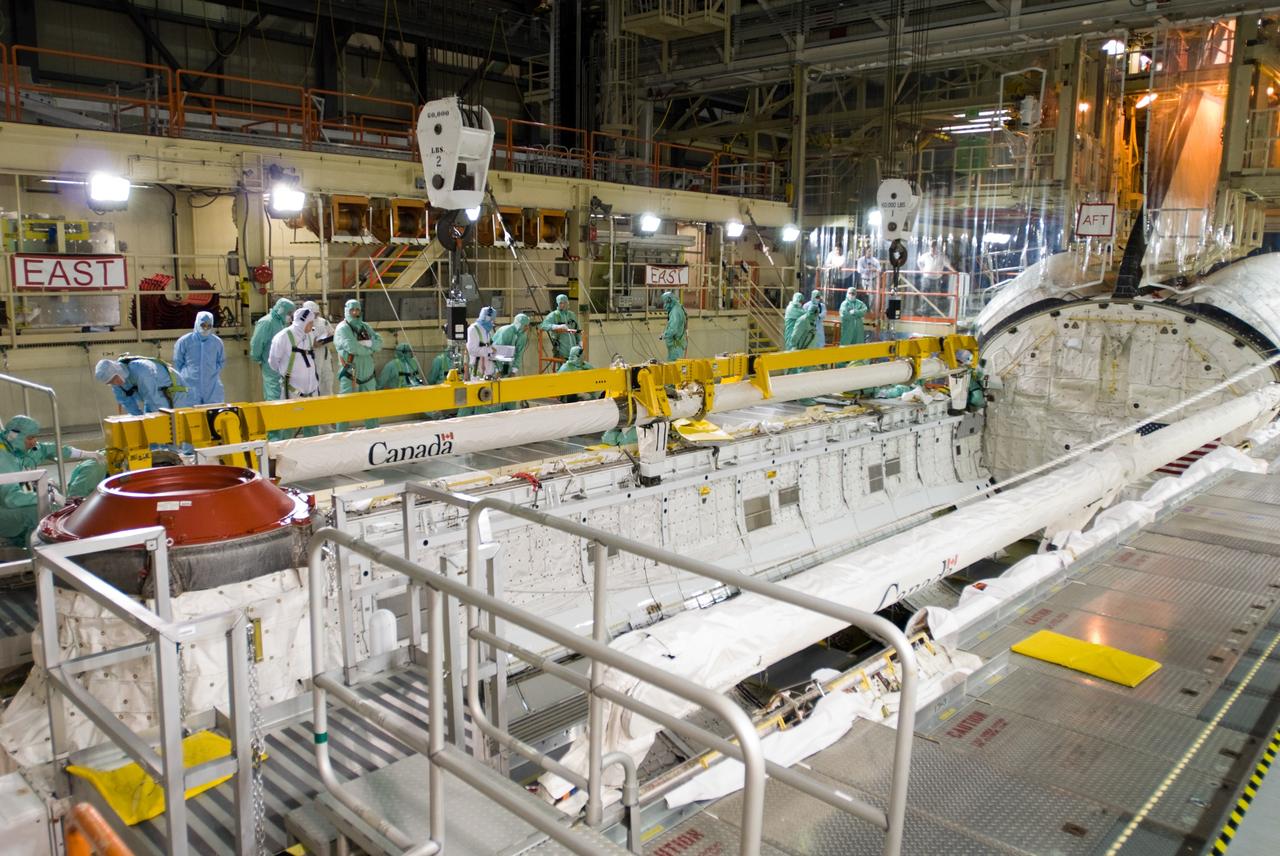
CAPE CANAVERAL, Fla. – In the Orbiter Processing Facility’s bay 3, the orbiter boom sensor system is installed in the payload bay of space shuttle Discovery to support mission STS-128. The 50-foot-long boom attaches to the shuttle arm and provides equipment to inspect the shuttle's heat shield while in space. It contains an intensified television camera (ITVC) and a laser dynamic range imager, which are mounted on a pan and tilt unit, and a laser camera system (LCS) mounted on a stationary bracket. The STS-128 flight will carry science and storage racks to the International Space Station on space shuttle Discovery. Launch of Discovery is targeted for Aug. 6. Photo credit: NASA/Jim Grossmann
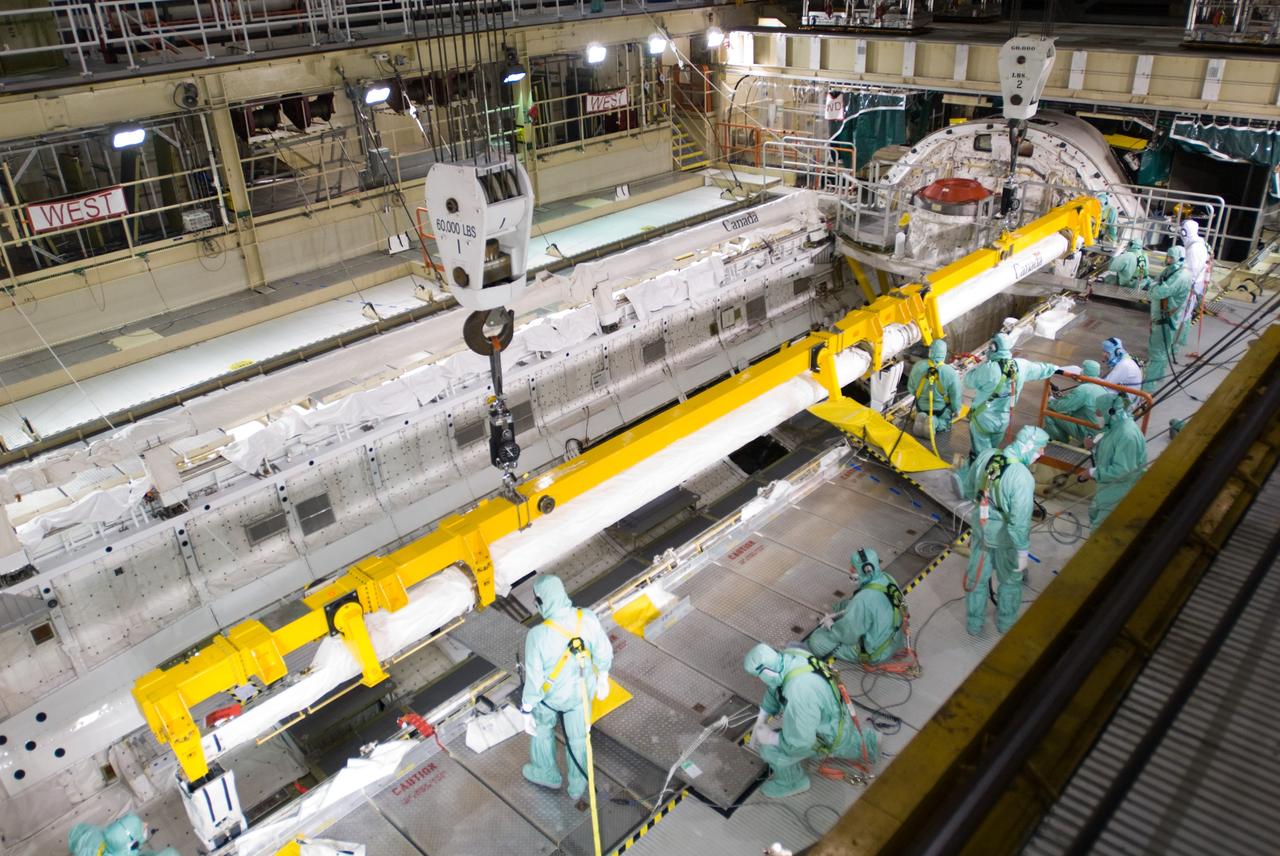
CAPE CANAVERAL, Fla. – In the Orbiter Processing Facility’s bay 3, workers prepare to install the orbiter boom sensor system in the payload bay of space shuttle Discovery to support mission STS-128. The 50-foot-long boom attaches to the shuttle arm and provides equipment to inspect the shuttle's heat shield while in space. It contains an intensified television camera (ITVC) and a laser dynamic range imager, which are mounted on a pan and tilt unit, and a laser camera system (LCS) mounted on a stationary bracket. The STS-128 flight will carry science and storage racks to the International Space Station on space shuttle Discovery. Launch of Discovery is targeted for Aug. 6. Photo credit: NASA/Jim Grossmann
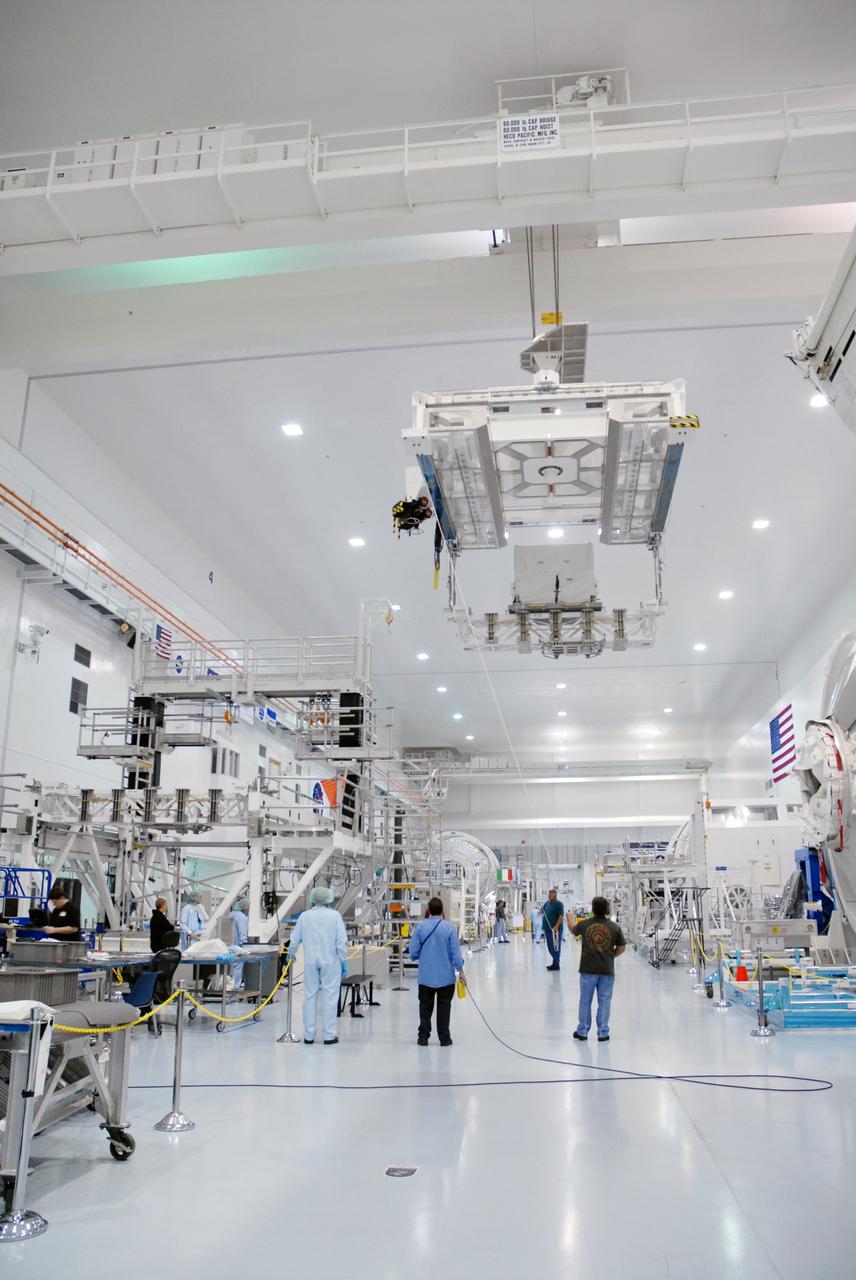
CAPE CANAVERAL, Fla. – In the Space Station Processing Facility at NASA's Kennedy Space Center in Florida, the Lightweight Multi-Purpose Experiment Support Structure Carrier, or LMC, is moved across the facility for weighing and installation in the payload canister. Part of the payload for space shuttle Discovery's STS-128 mission to the International Space Station, the carrier holds an ammonia tank assembly. The STS-128 flight also will carry science and storage racks to the space station on Discovery. Launch of Discovery is targeted for Aug. 18. Photo credit: NASA/Tim Jacobs
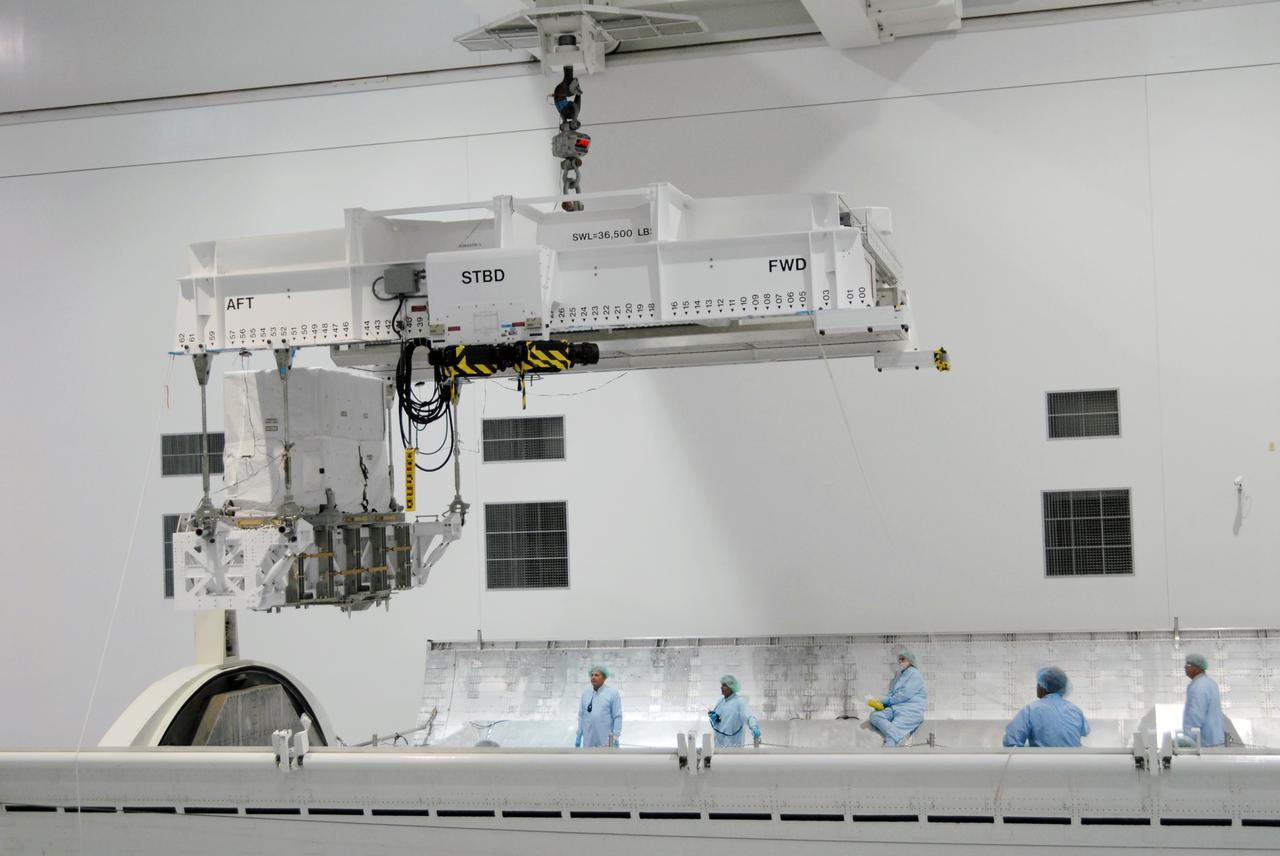
CAPE CANAVERAL, Fla. – In the Space Station Processing Facility at NASA's Kennedy Space Center in Florida, the Lightweight Multi-Purpose Experiment Support Structure Carrier, or LMC, lowered into the payload canister for installation. Part of the payload for space shuttle Discovery's STS-128 mission to the International Space Station, the carrier holds an ammonia tank assembly. The STS-128 flight also will carry science and storage racks to the space station on Discovery. Launch of Discovery is targeted for Aug. 18. Photo credit: NASA/Tim Jacobs
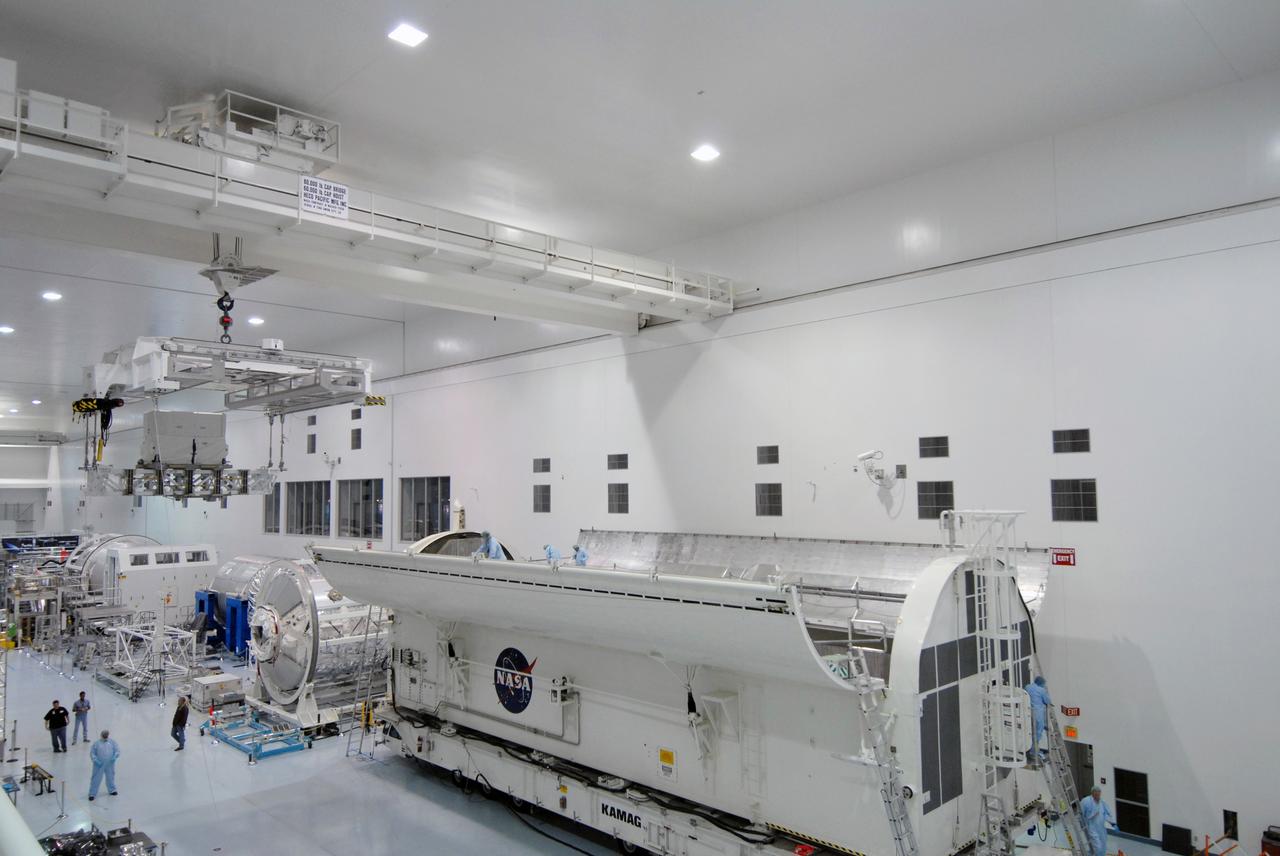
CAPE CANAVERAL, Fla. – In the Space Station Processing Facility at NASA's Kennedy Space Center in Florida, the Lightweight Multi-Purpose Experiment Support Structure Carrier, or LMC, is being moved to the payload canister for installation. Part of the payload for space shuttle Discovery's STS-128 mission to the International Space Station, the carrier holds an ammonia tank assembly. The STS-128 flight also will carry science and storage racks to the space station on Discovery. Launch of Discovery is targeted for Aug. 18. Photo credit: NASA/Tim Jacobs
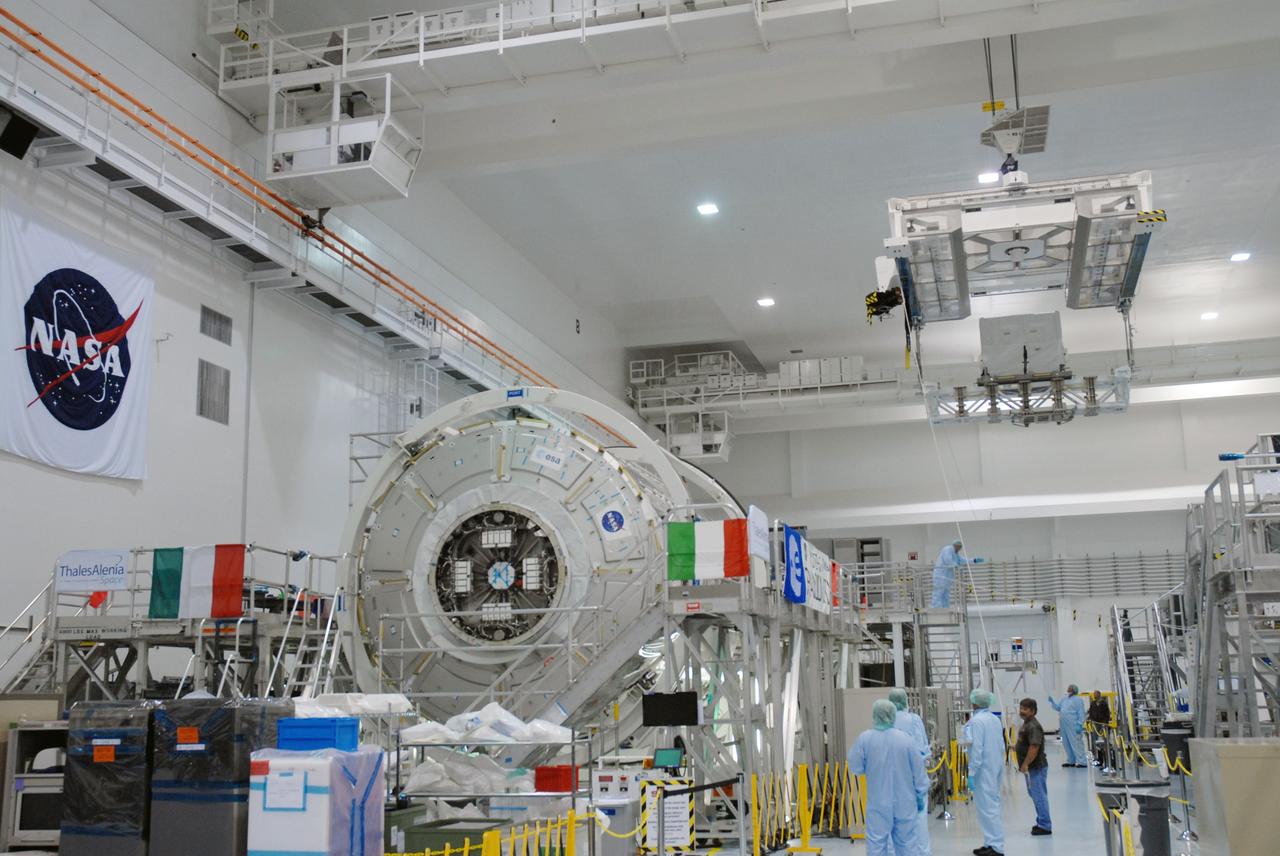
CAPE CANAVERAL, Fla. – In the Space Station Processing Facility at NASA's Kennedy Space Center in Florida, the Lightweight Multi-Purpose Experiment Support Structure Carrier, or LMC, is being moved to the payload canister for installation. Part of the payload for space shuttle Discovery's STS-128 mission to the International Space Station, the carrier holds an ammonia tank assembly. The STS-128 flight also will carry science and storage racks to the space station on Discovery. Launch of Discovery is targeted for Aug. 18. Photo credit: NASA/Tim Jacobs
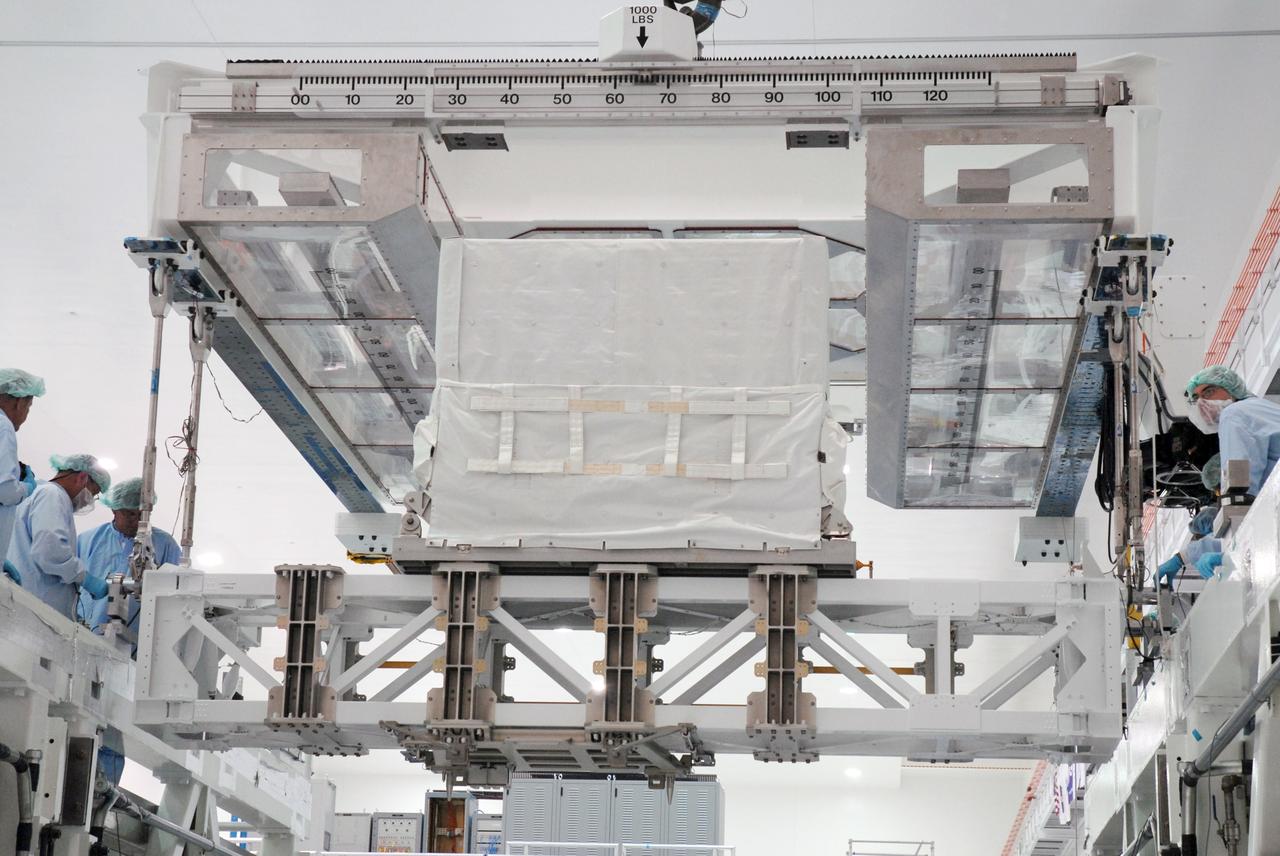
CAPE CANAVERAL, Fla. – In the Space Station Processing Facility at NASA's Kennedy Space Center in Florida, the Lightweight Multi-Purpose Experiment Support Structure Carrier, or LMC, is weighed. Part of the payload for space shuttle Discovery's STS-128 mission to the International Space Station, the carrier holds an ammonia tank assembly. The STS-128 flight also will carry science and storage racks to the space station on Discovery. Launch of Discovery is targeted for Aug. 18. Photo credit: NASA/Tim Jacobs

CAPE CANAVERAL, Fla. – In the Space Station Processing Facility at NASA's Kennedy Space Center in Florida, the Lightweight Multi-Purpose Experiment Support Structure Carrier, or LMC, lowered into the payload canister for installation. Part of the payload for space shuttle Discovery's STS-128 mission to the International Space Station, the carrier holds an ammonia tank assembly. The STS-128 flight also will carry science and storage racks to the space station on Discovery. Launch of Discovery is targeted for Aug. 18. Photo credit: NASA/Tim Jacobs

S128-E-006304 (29 Aug. 2009) --- Astronaut Nicole Stott, STS-128 mission specialist, looks over a checklist on the middeck of Space Shuttle Discovery during flight day two activities.
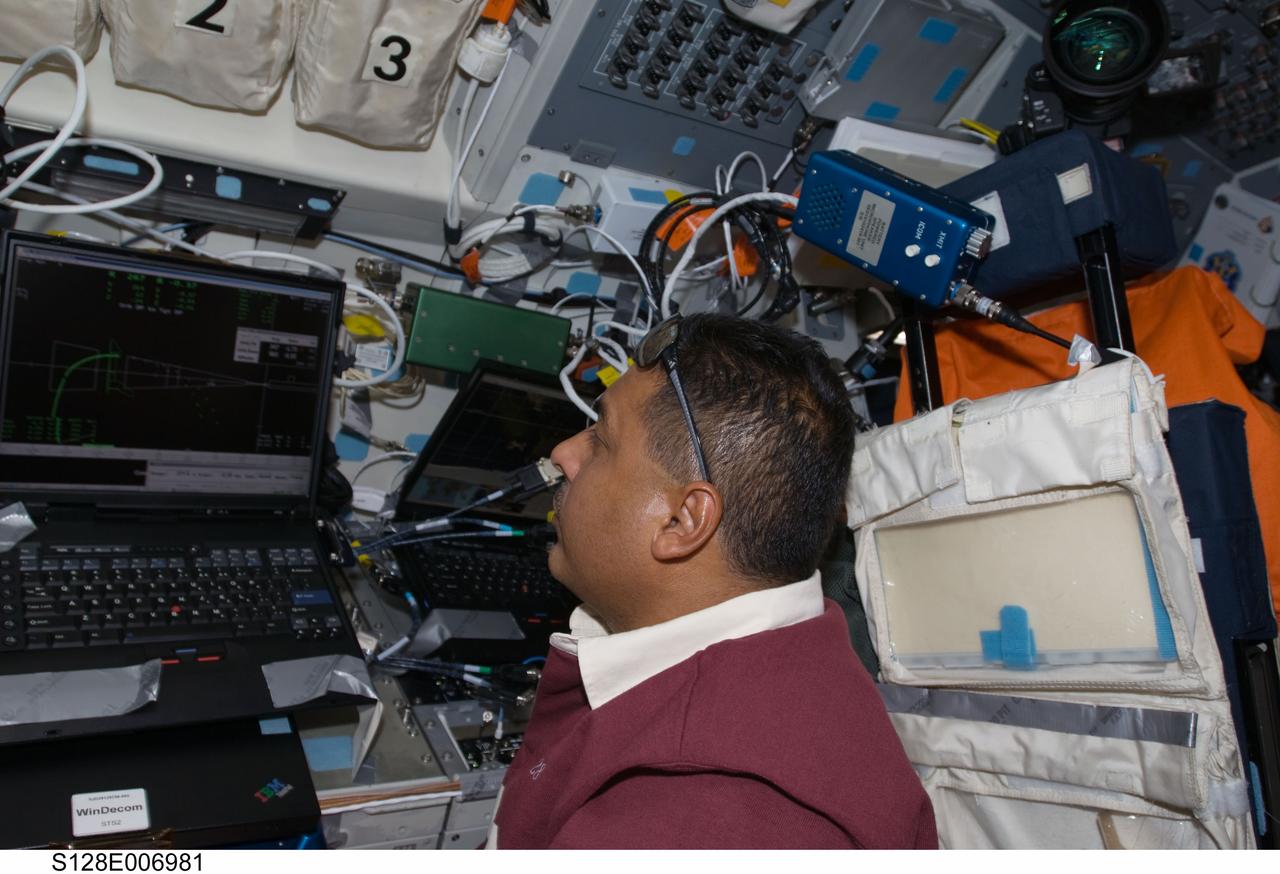
S128-E-006981 (30 Aug. 2009) --- Astronaut Jose Hernandez, STS-128 mission specialist, watches a computer monitor on the flight deck of Space Shuttle Discovery during flight day three activities.
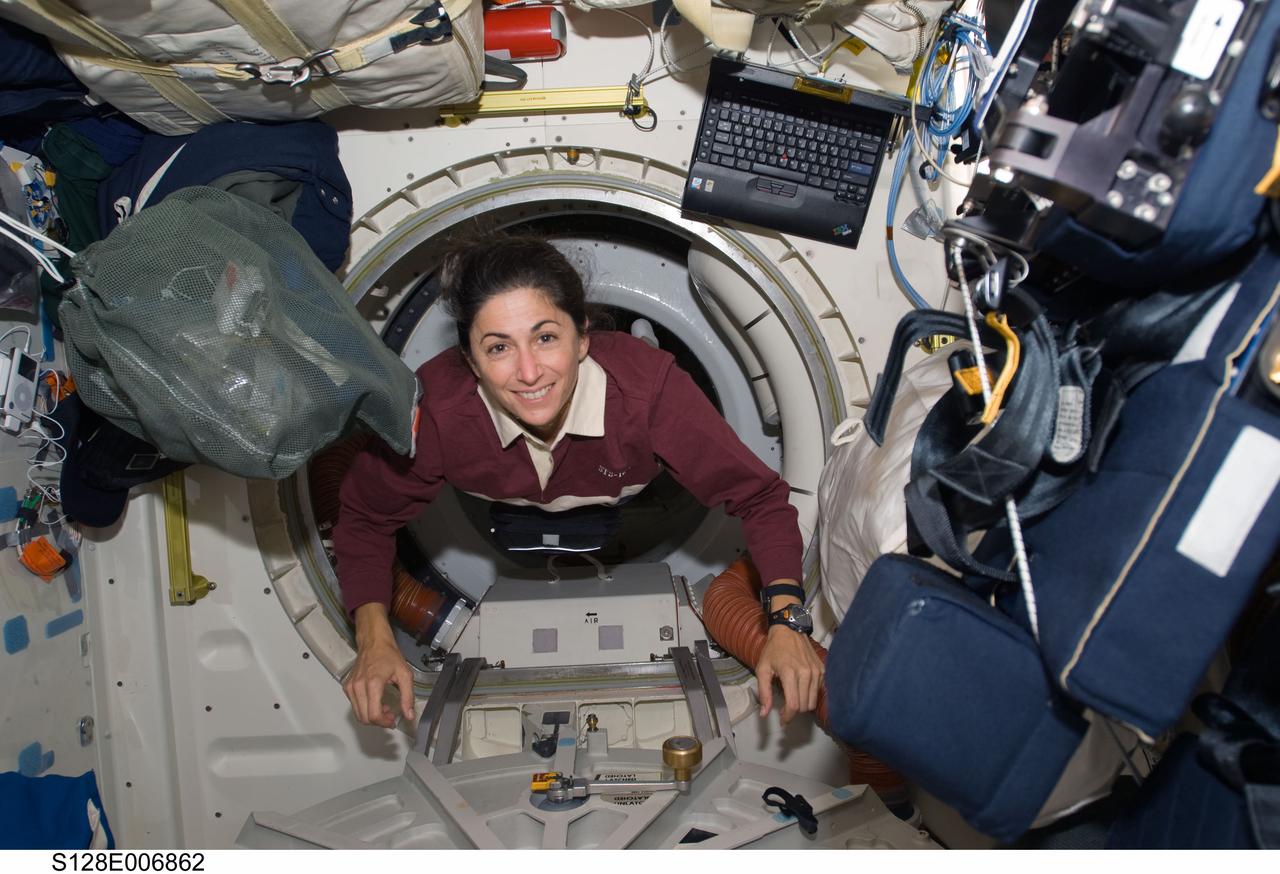
S128-E-006862 (30 Aug. 2009) --- Astronaut Nicole Stott, STS-128 mission specialist, floats through a hatch on the Space Shuttle Discovery during flight day three activities.

S128-E-006275 (29 Aug. 2009) --- Astronaut John “Danny” Olivas, STS-128 mission specialist, prepares food near the galley on the middeck of Space Shuttle Discovery during flight day two activities.
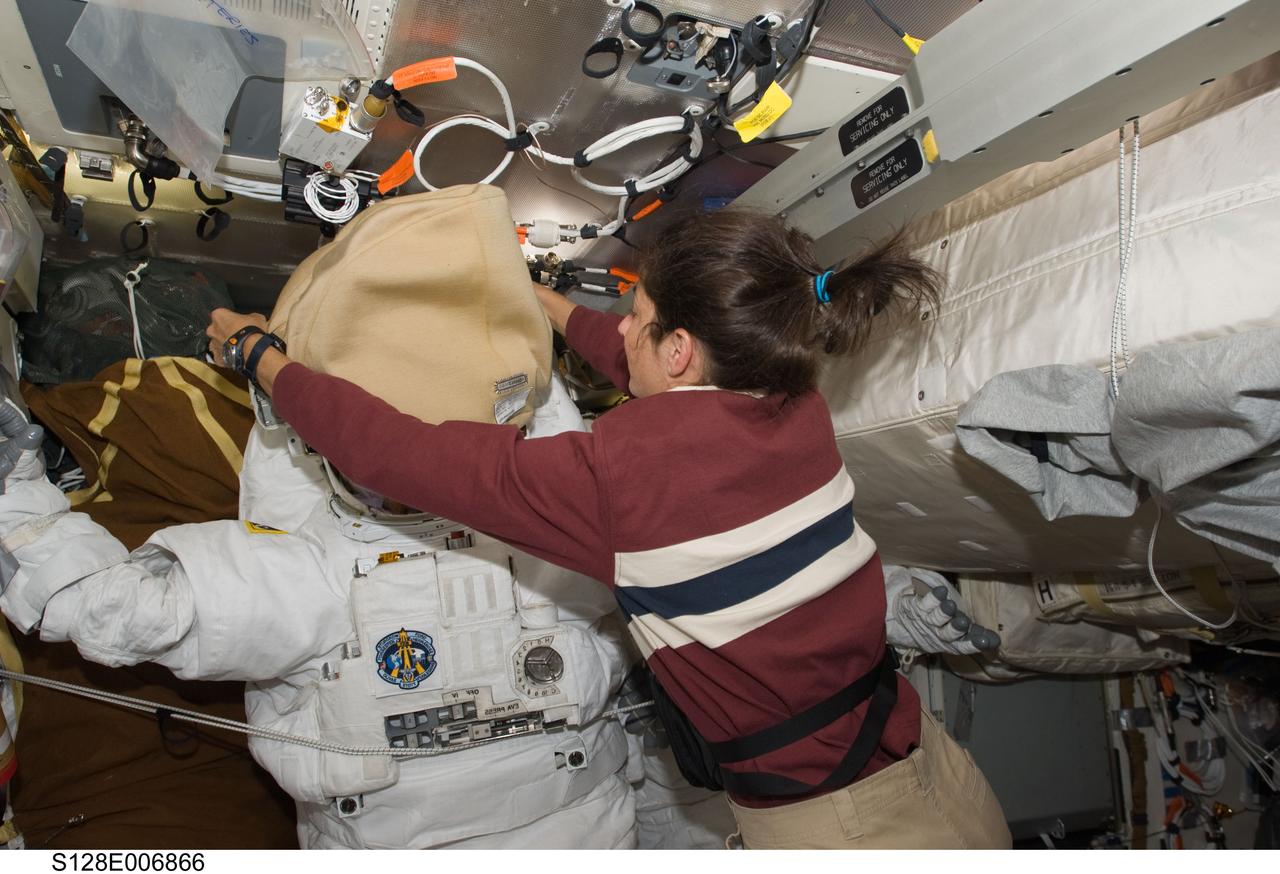
S128-E-006866 (30 Aug. 2009) --- Astronaut Nicole Stott, STS-128 mission specialist, works with an Extravehicular Mobility Unit (EMU) spacesuit on the middeck of the Space Shuttle Discovery during flight day three activities.
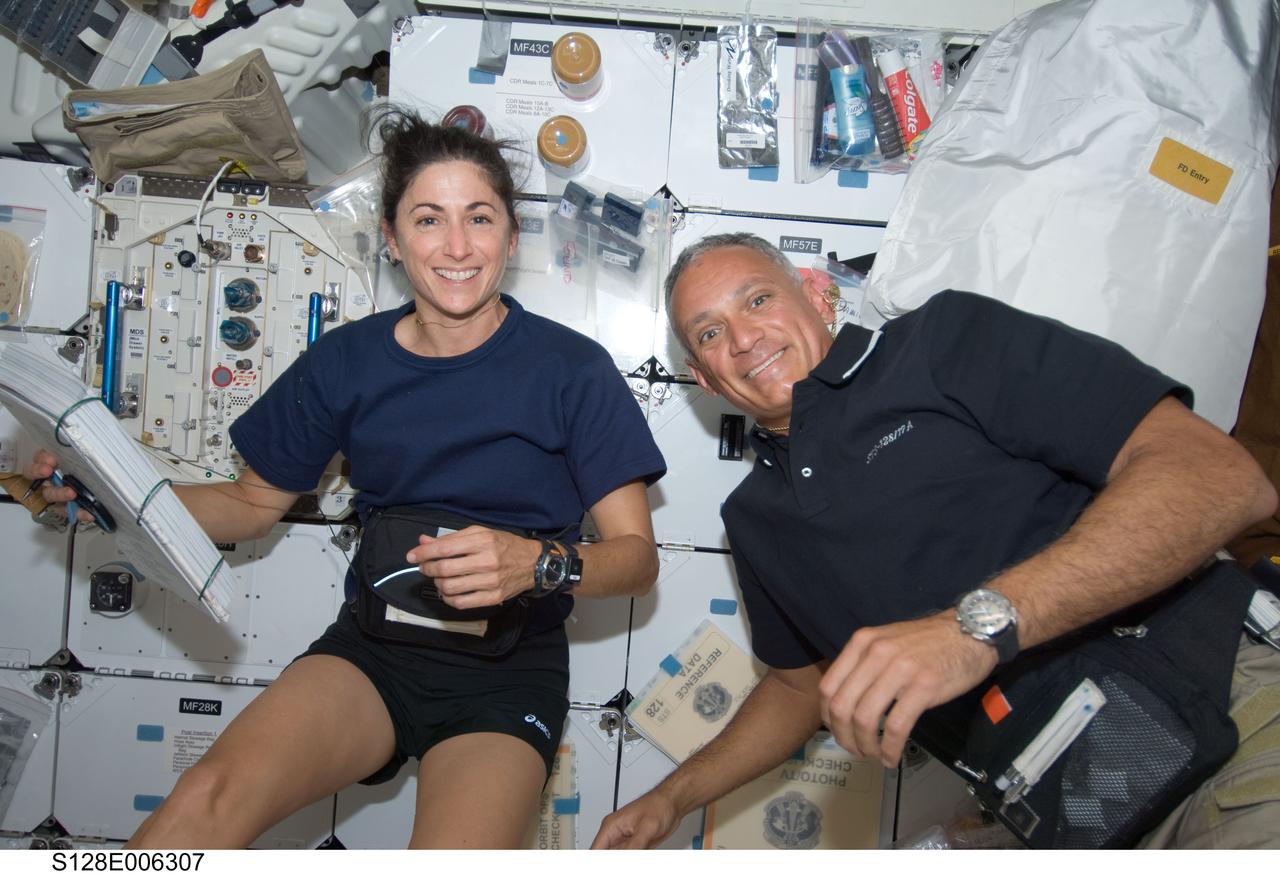
S128-E-006307 (29 Aug. 2009) --- Astronaut Nicole Stott and John “Danny” Olivas, both STS-128 mission specialists, smile for a photo on Space Shuttle Discovery’s middeck during flight day two activities.
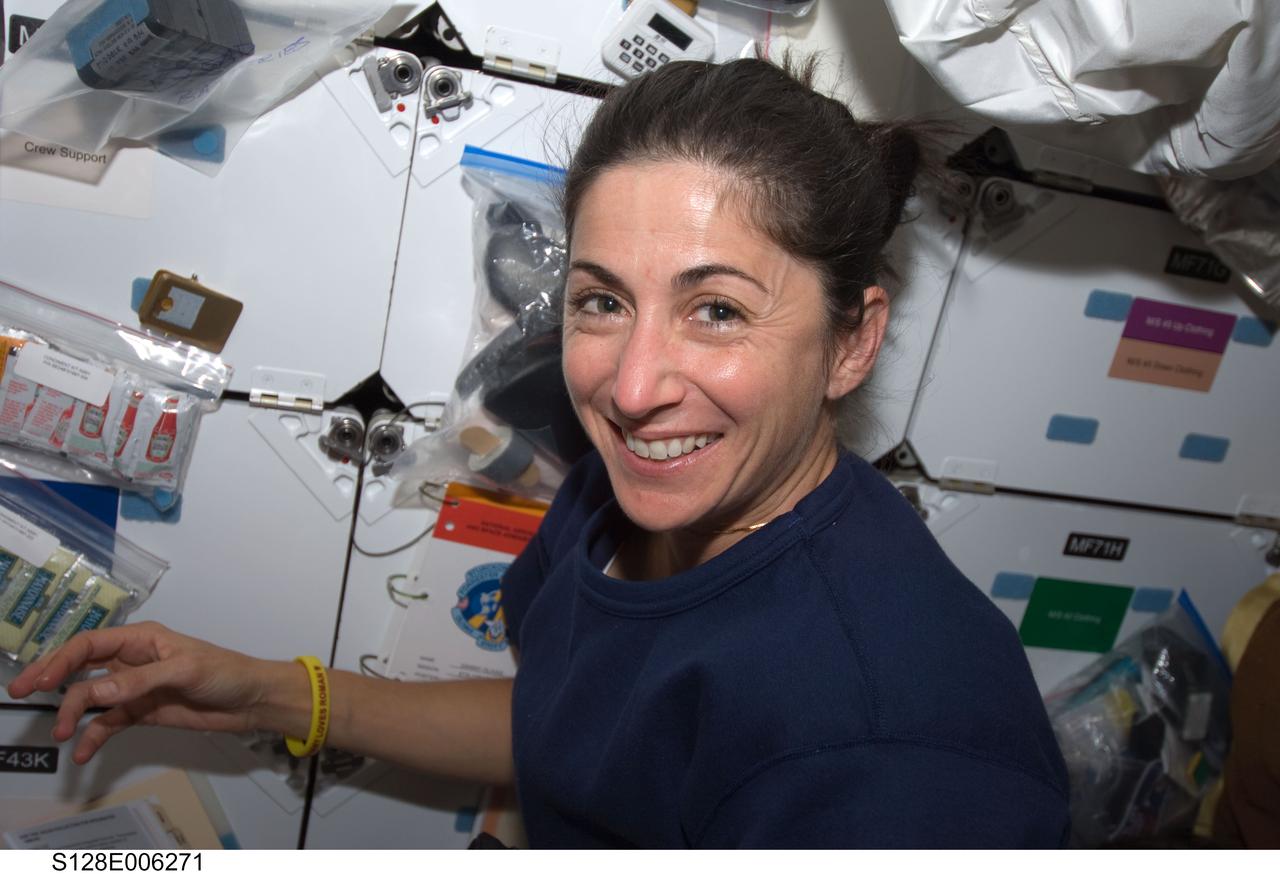
S128-E-006271 (29 Aug. 2009) --- Astronaut Nicole Stott, STS-128 mission specialist, smiles for a photo on the middeck of Space Shuttle Discovery during flight day two activities.
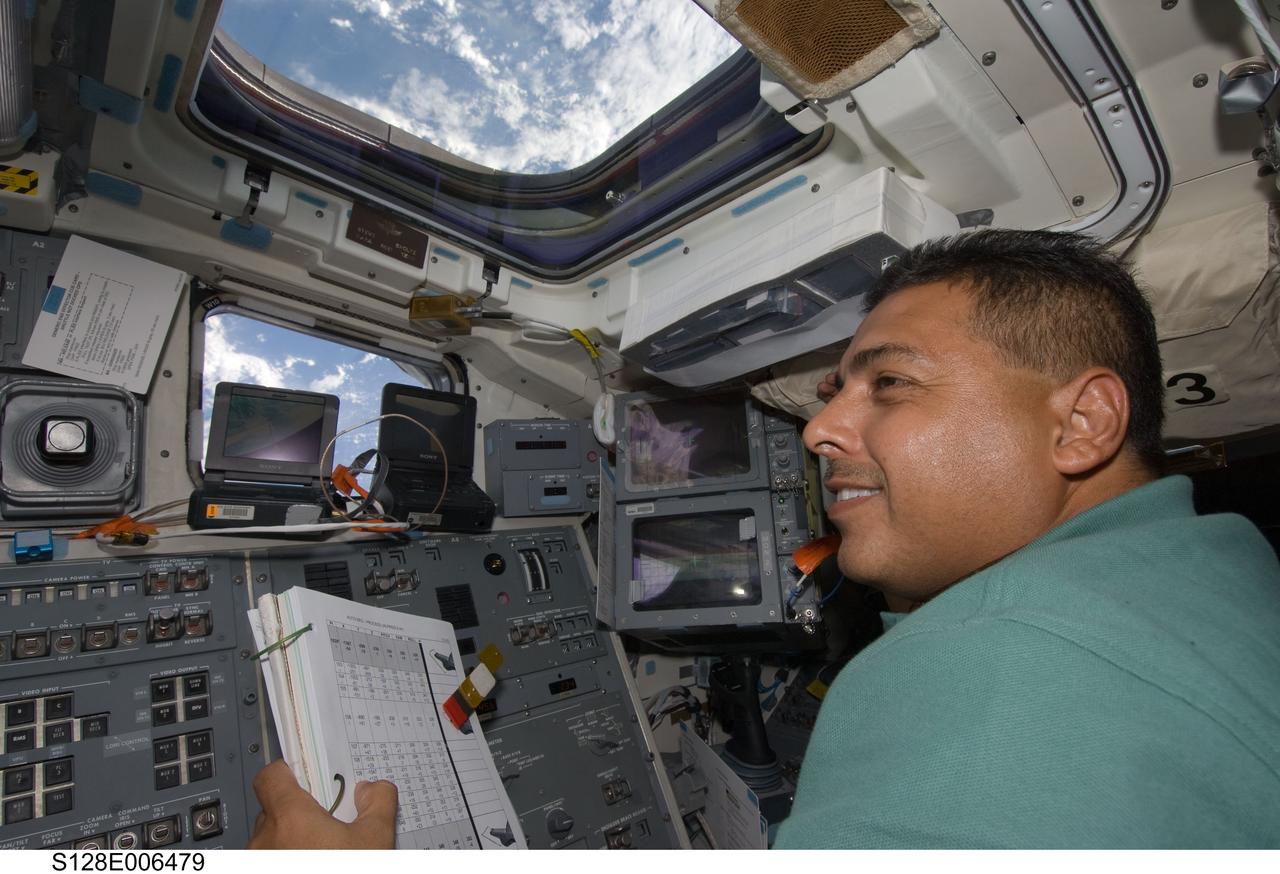
S128-E-006479 (29 Aug. 2009) --- Astronaut Jose Hernandez, STS-128 mission specialist, works on the aft flight deck of the Earth-orbiting Space Shuttle Discovery during flight day two activities.