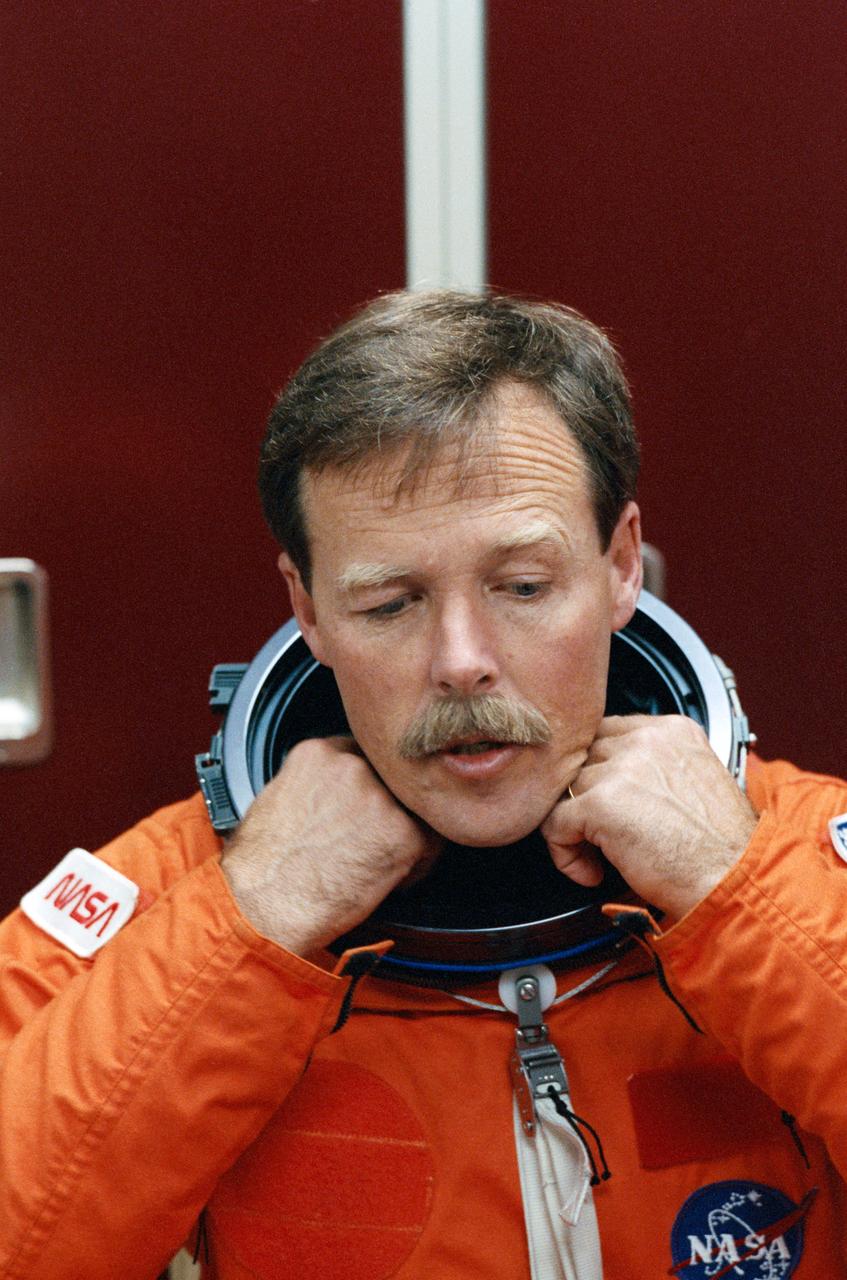
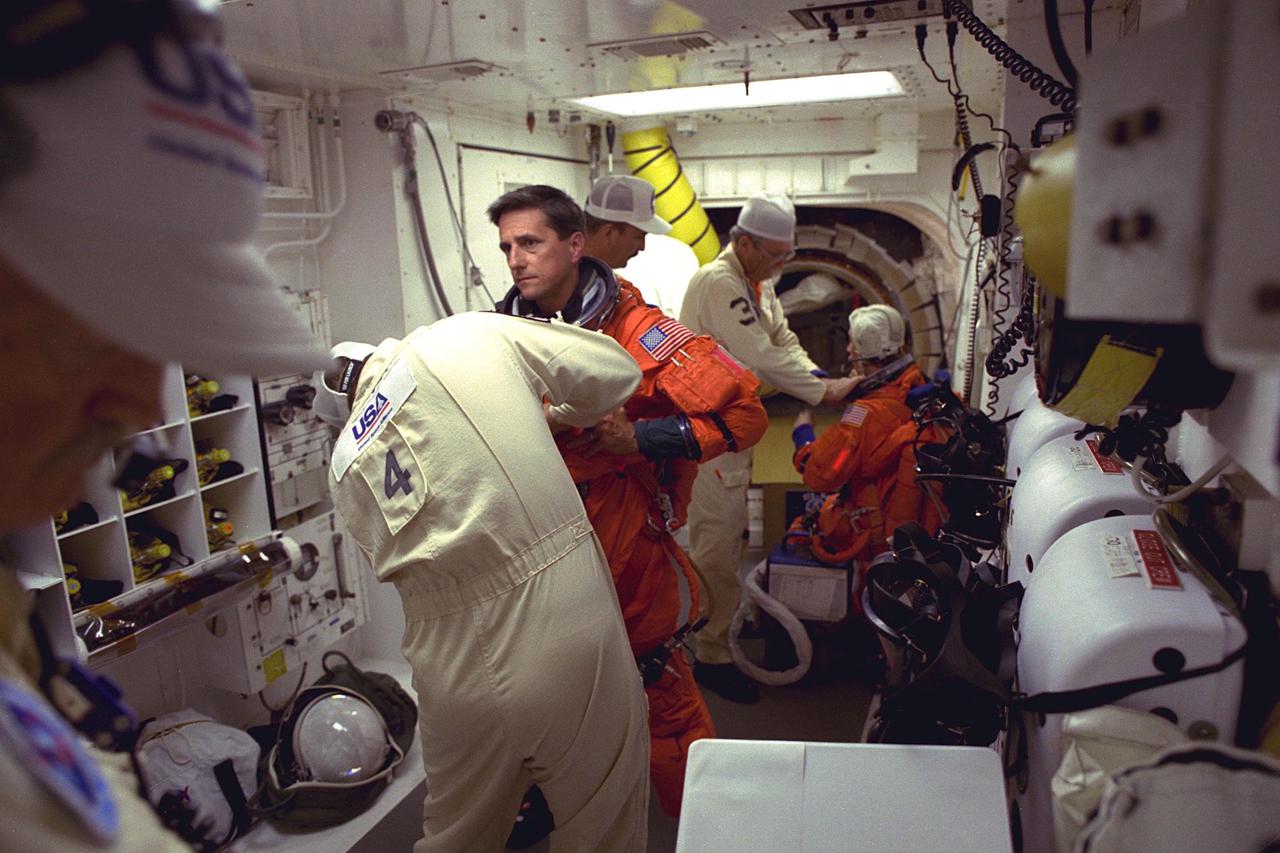
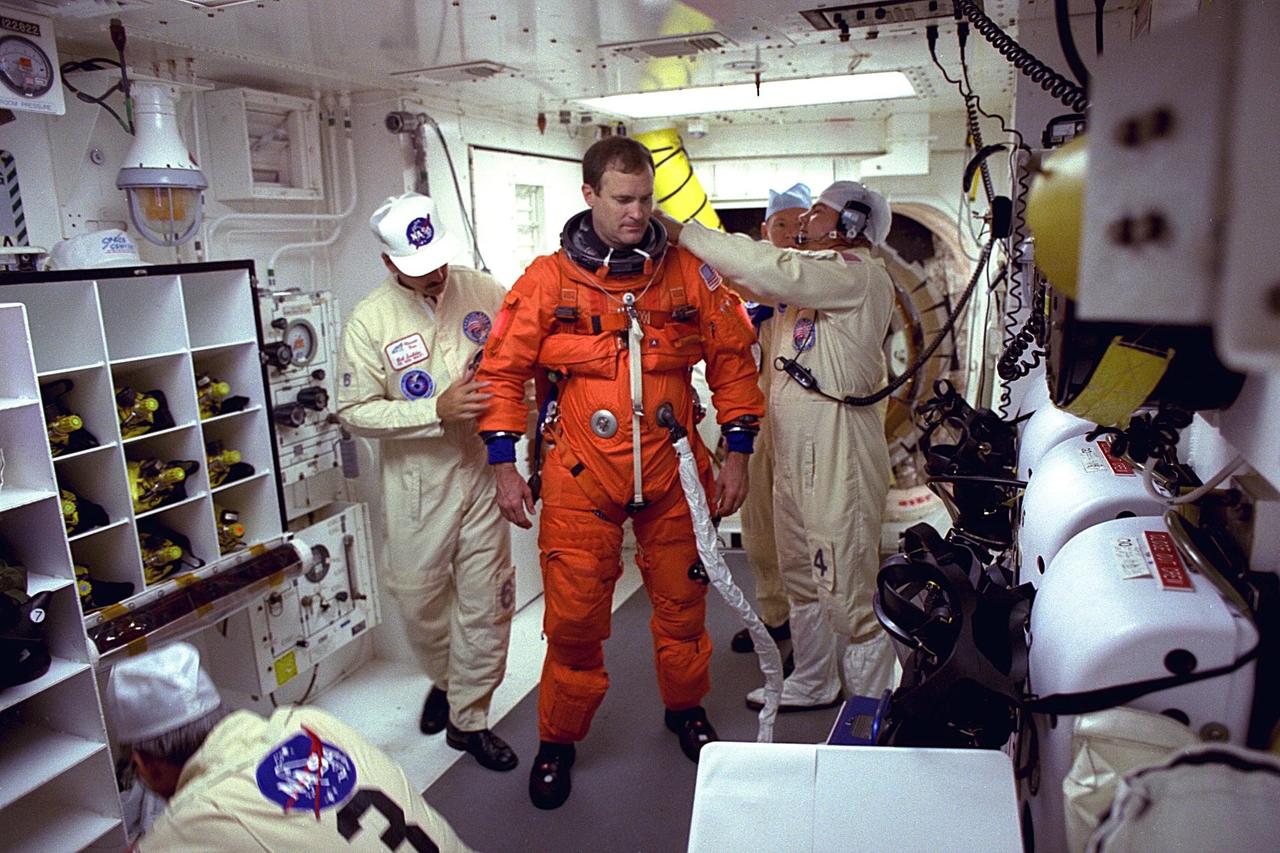
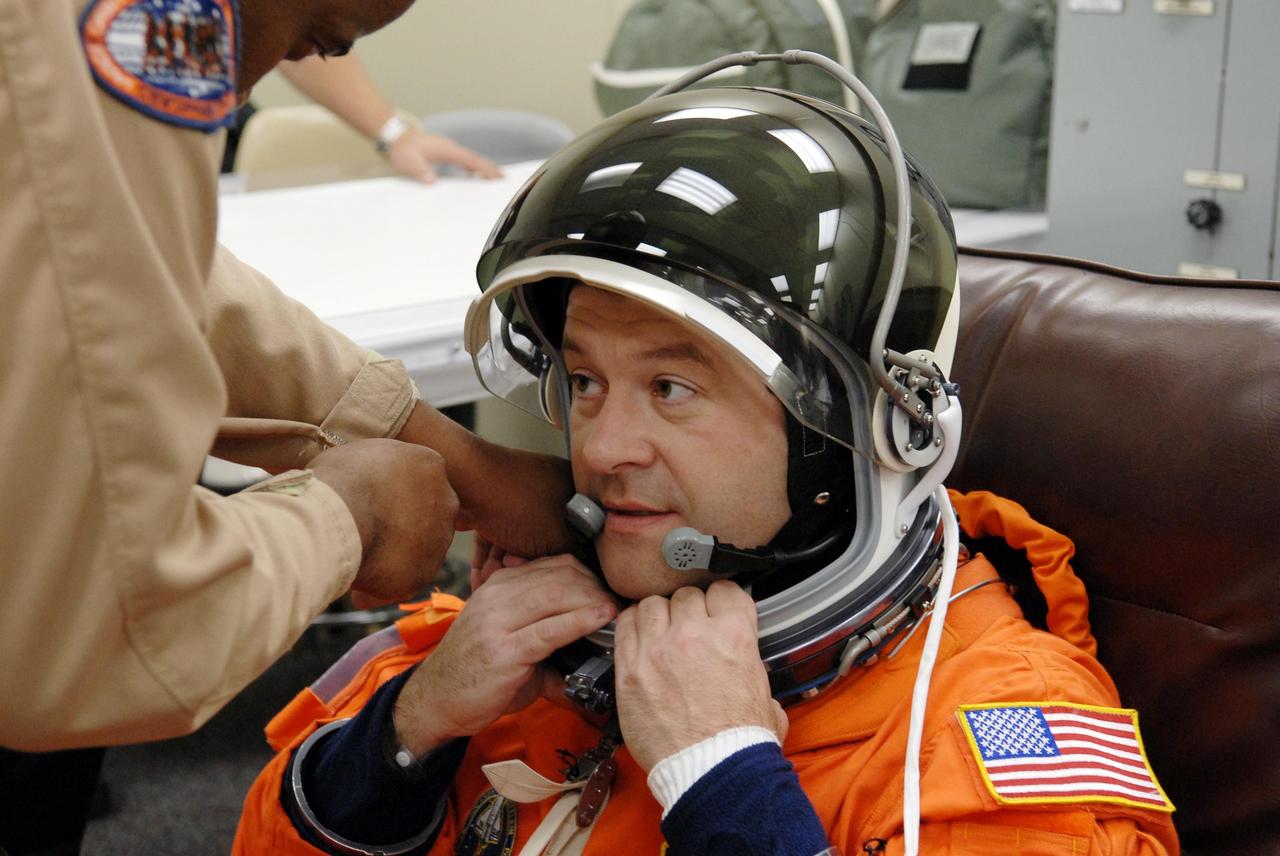
STS-47 Endeavour, Orbiter Vehicle (OV) 105, Commander Robert L. Gibson adjusts the launch and entry suit (LES) neck dam during suit donning in JSC's Mockup and Integration Laboratory (MAIL) Bldg 9A. Gibson is preparing for launch emergency egress (bailout) exercises in the Crew Compartment Trainer (CCT).
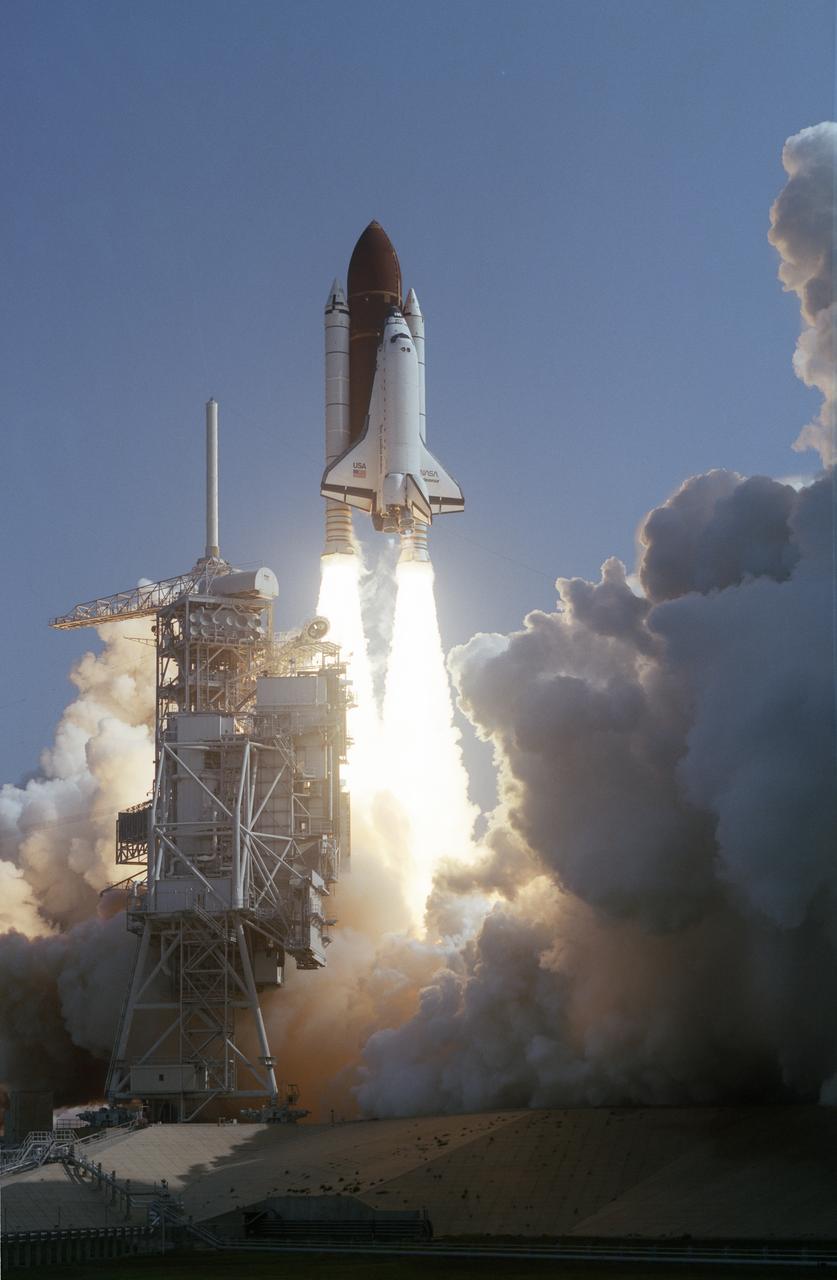
A smooth countdown culminated in a picture-perfect launch as the Space Shuttle Orbiter Endeavour (STS-47) climbed skyward atop a ladder of billowing smoke on September 12, 1992. The primary payload for the plarned seven-day flight was the Spacelab-J science laboratory. The second flight of Endeavour marks a number of historic firsts: the first space flight of an African-American woman, the first Japanese citizen to fly on a Space Shuttle, and the first married couple to fly in space.
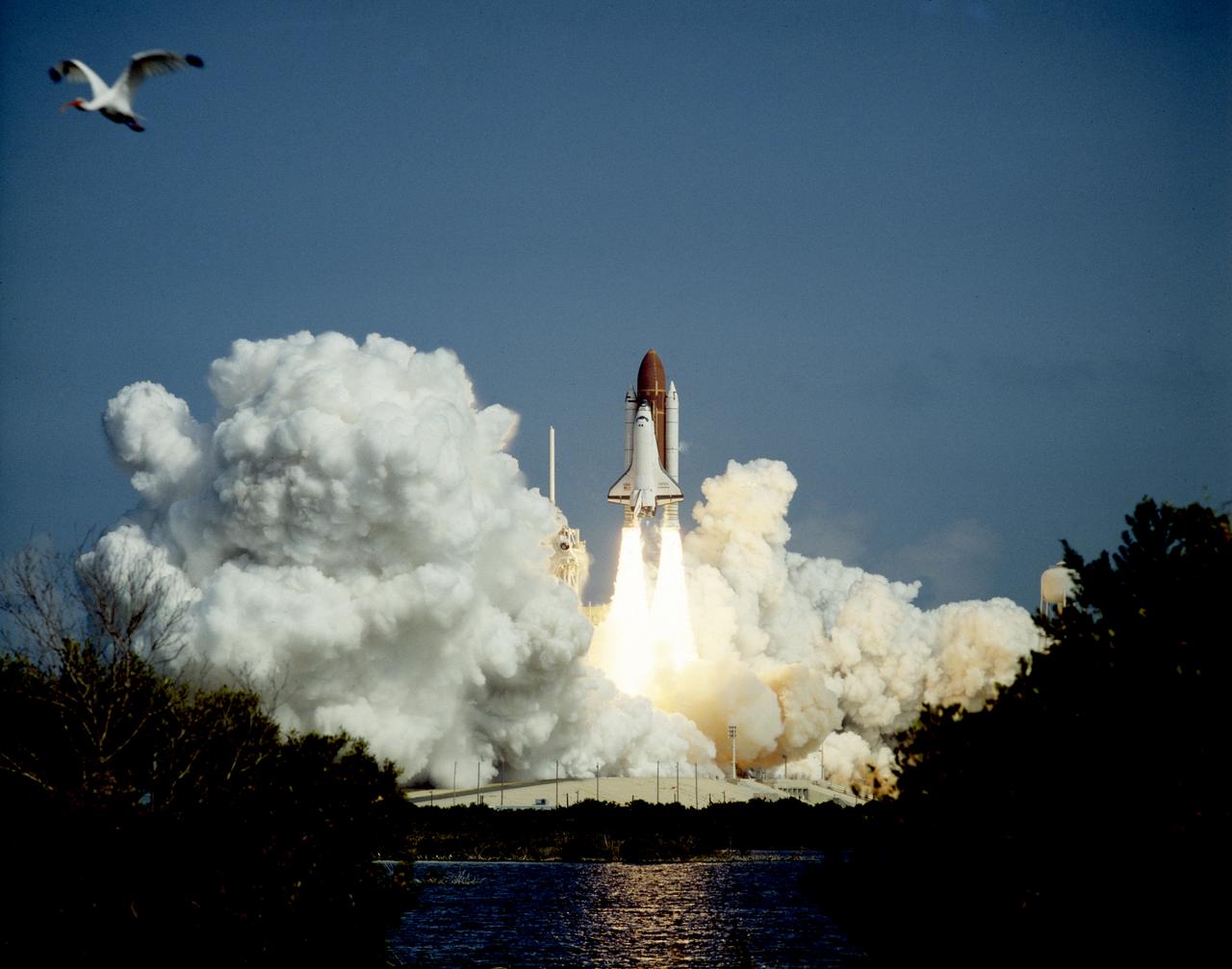
A smooth countdown culminated in a picture-perfect launch as the Space Shuttle Endeavour (STS-47) climbed skyward atop a ladder of billowing smoke. Primary payload for the plarned seven-day flight was Spacelab-J science laboratory. The second flight of Endeavour marks a number of historic firsts: the first space flight of an African-American woman, the first Japanese citizen to fly on a Space Shuttle, and the first married couple to fly in space.
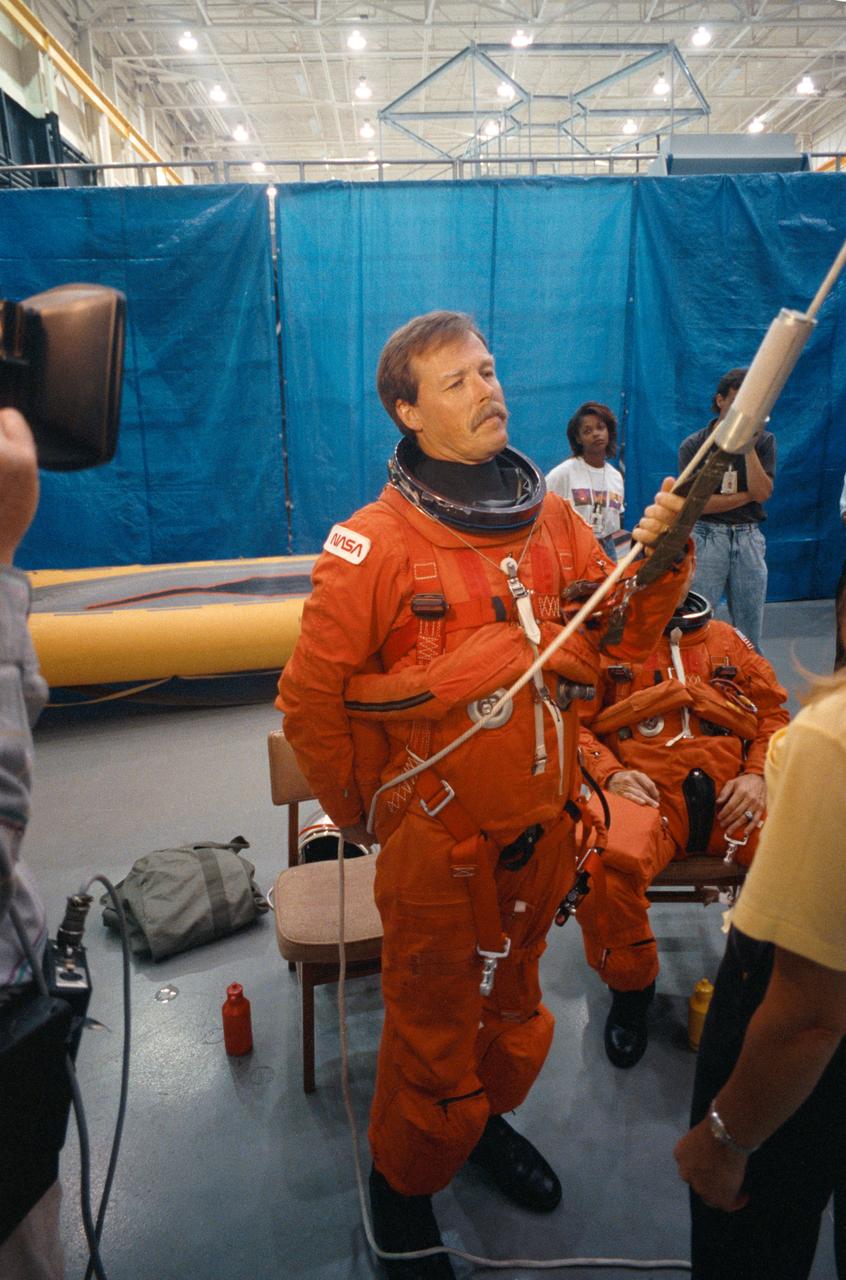
STS-47 Endeavour, Orbiter Vehicle (OV) 105, Spacelab Japan (SLJ) Commander Robert L. Gibson, wearing launch and entry suit (LES), holds sky genie equipment in proper position while listening to a training instructor's directions. Gibson along with the other STS-47 crewmembers is participating in post landing emergency egress procedures at JSC's Mockup and Integration Laboratory (MAIL) Bldg 9NE.
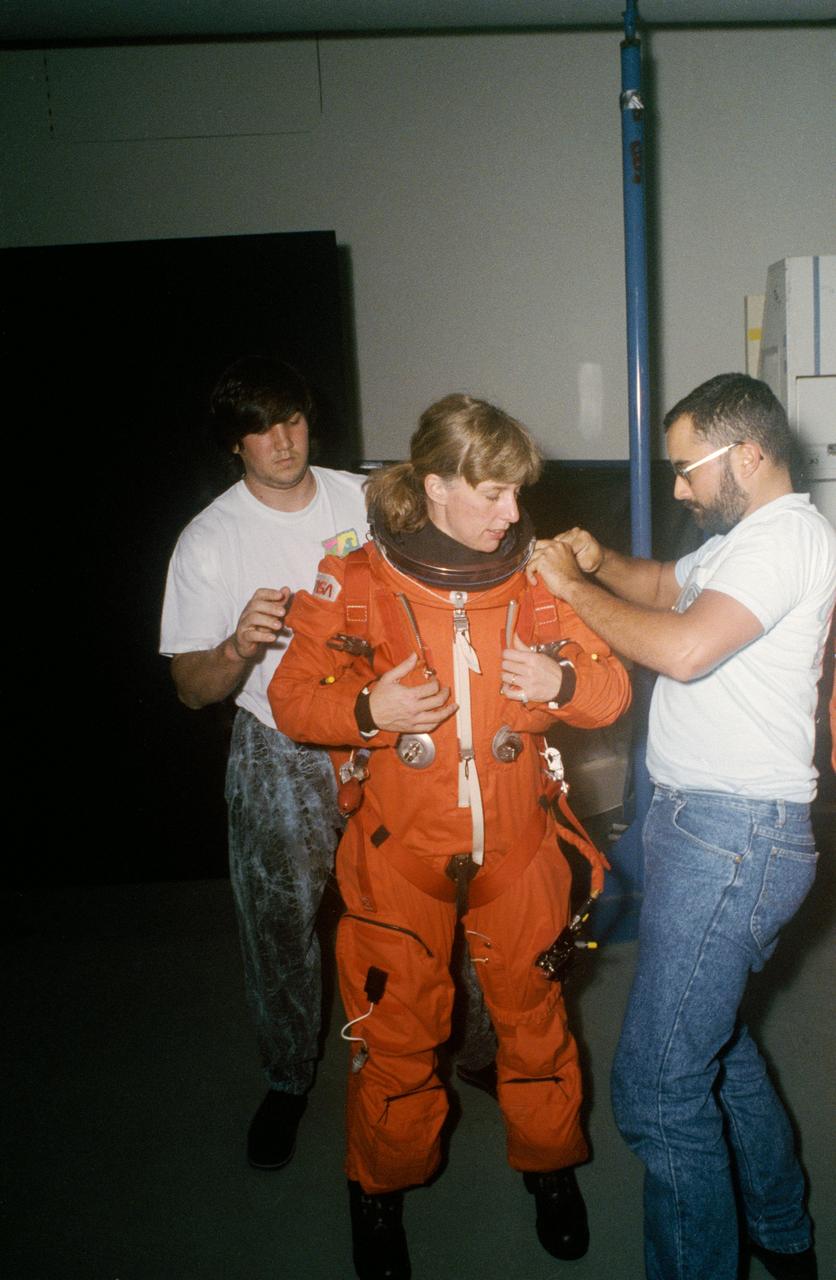
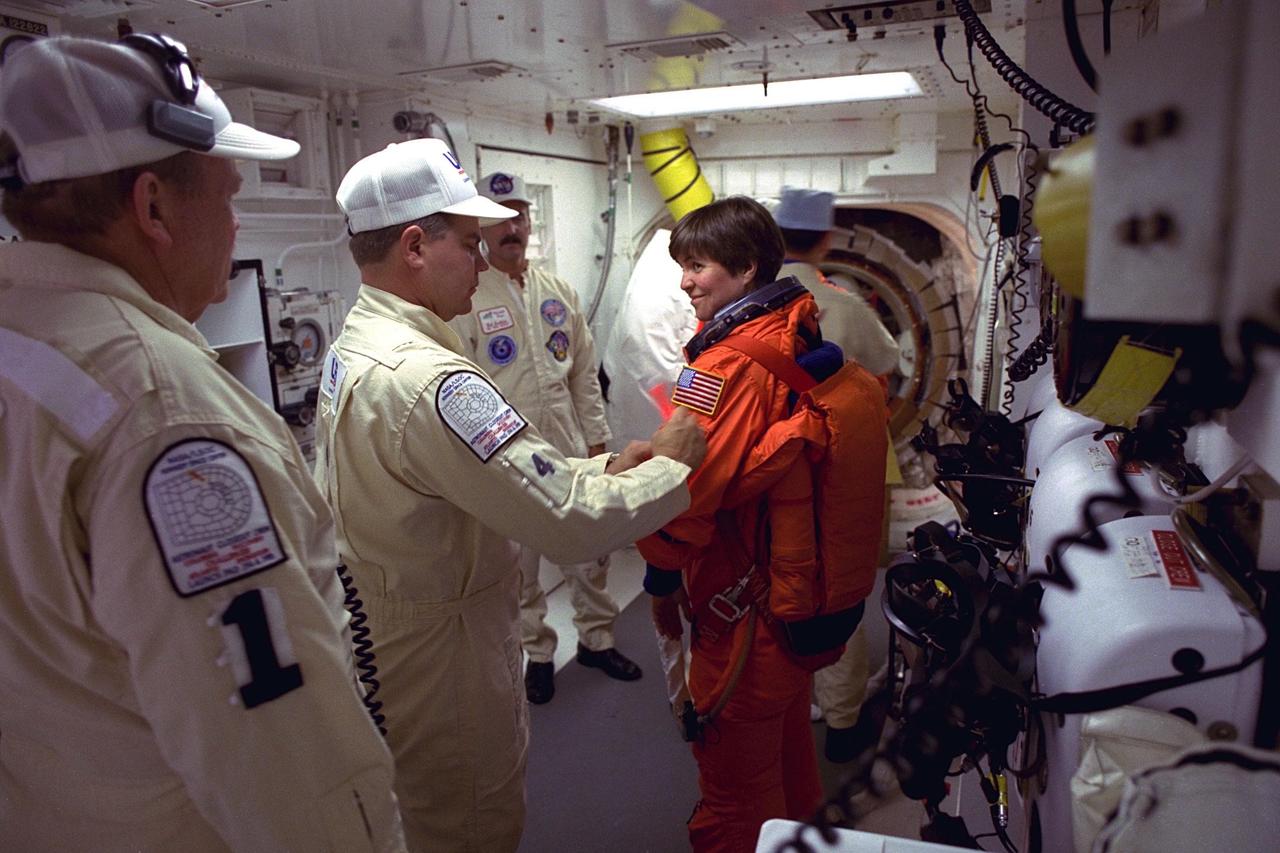
STS-47 Endeavour, Orbiter Vehicle (OV) 105, Mission Specialist (MS) N. Jan Davis, wearing a launch and entry suit (LES), looks on as technicians adjust her LES parachute pack prior to launch emergency egress (bailout) exercises in JSC's Mockup and Integration Laboratory (MAIL) Bldg 9A. Davis is making her first flight in space.
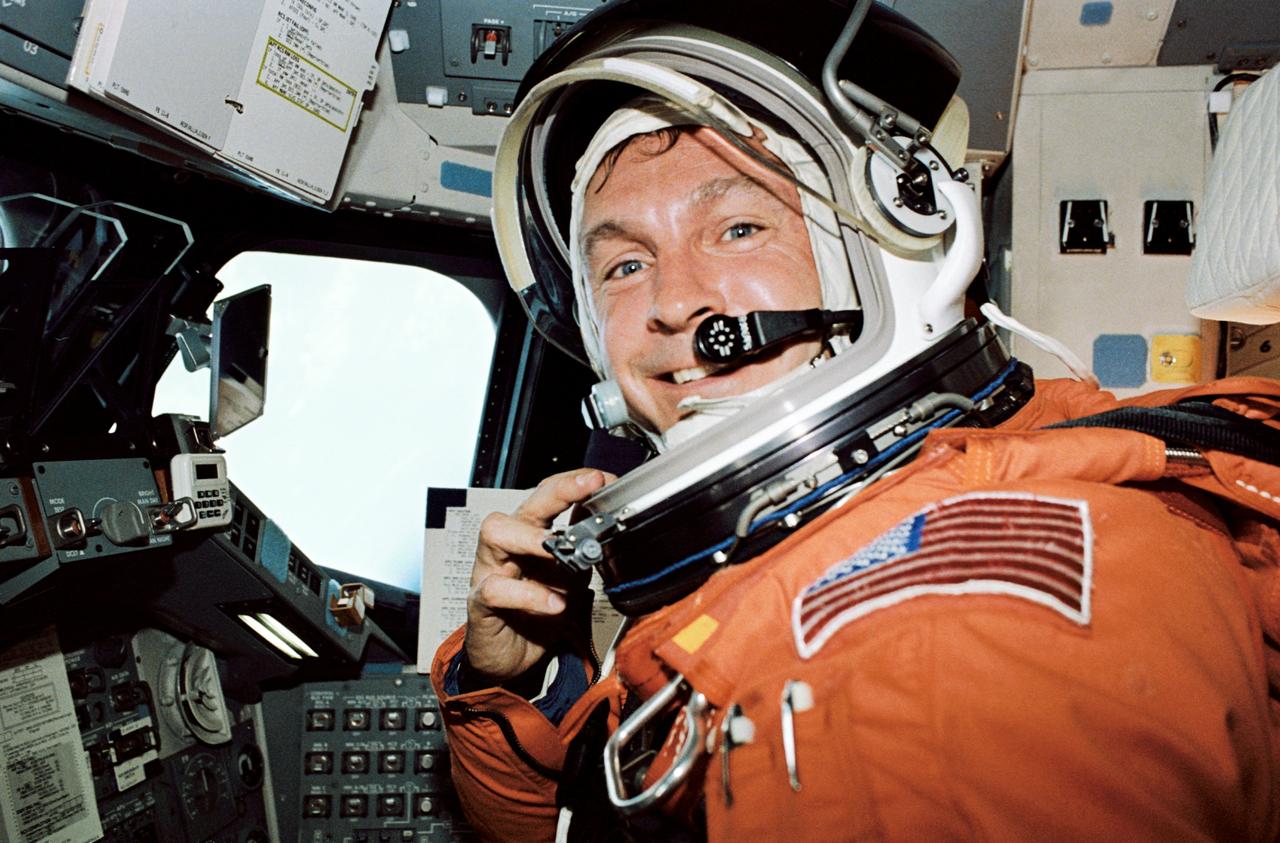
STS047-28-002 (20 Sept. 1992) --- Astronaut Curtis L. Brown, Jr., STS-47 pilot, is photographed at the Space Shuttle Endeavour's pilot station about ten minutes after main engine cutoff on launch day of the eight-day Spacelab-J mission. Wearing the partial-pressure launch and entry suit, Brown shared the forward cabin with astronaut Robert L. Gibson (out of frame at left), mission commander. Endeavour was beginning its second mission in space, this one devoted to research supporting the Spacelab-J mission.
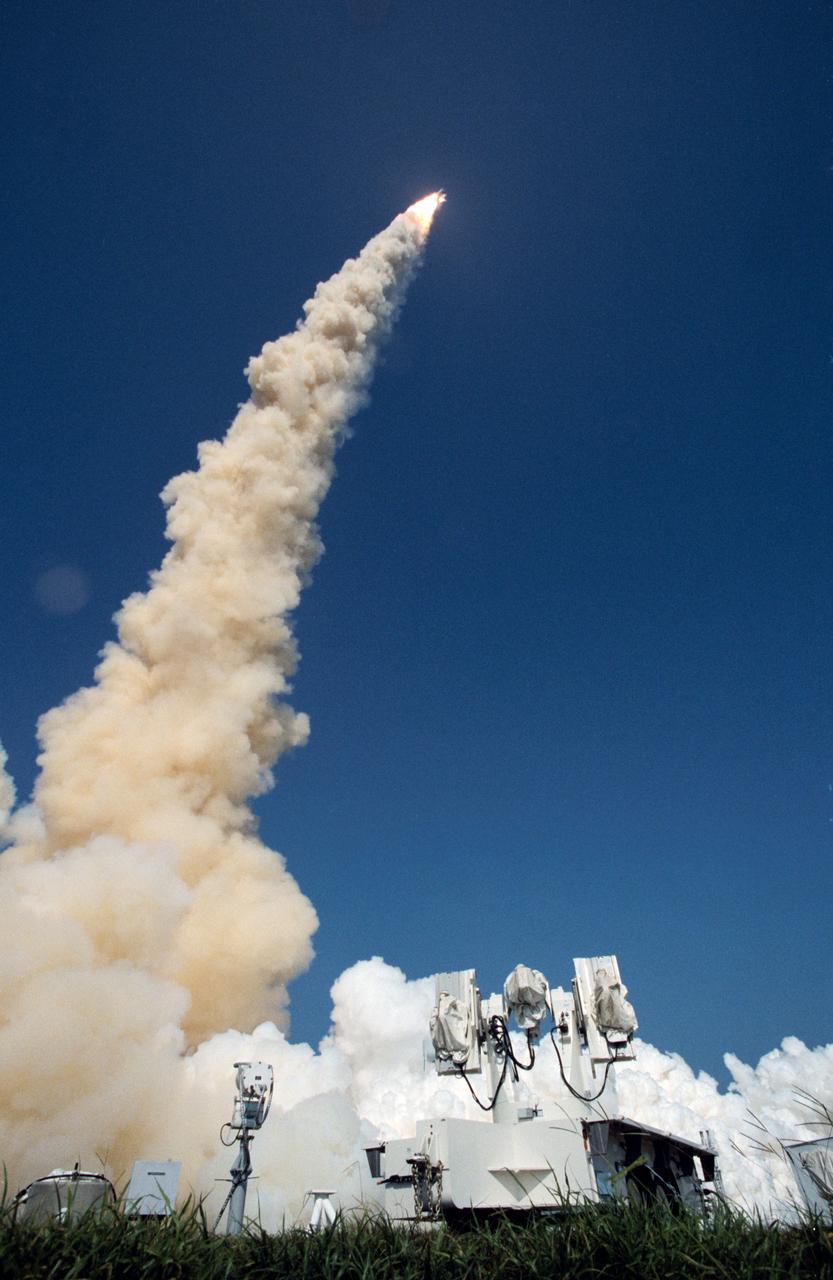
STS047-S-040 (12 Sept 1992) --- A 35mm camera was used to record this distant, low-angle view of the STS-47 launch. With a crew of six NASA astronauts and a Japanese payload specialist onboard, the Space Shuttle Endeavour was heading for its second trip into space. This mission is devoted to support of the Spacelab-J mission, a joint effort between Japan and the United States. Launch occurred at 10:23:00:0680 a.m. (EDT), September 12, 1992. Onboard were astronauts Robert L. Gibson, mission commander; Curtis L. Brown Jr., pilot; Mark C. Lee, payload commander; and Jerome (Jay) Apt, Mae C. Jemison and N. Jan Davis, mission specialists; along with payload specialist Mamoru Mohri, representing the National Space Development Agency (NASDA) of Japan.
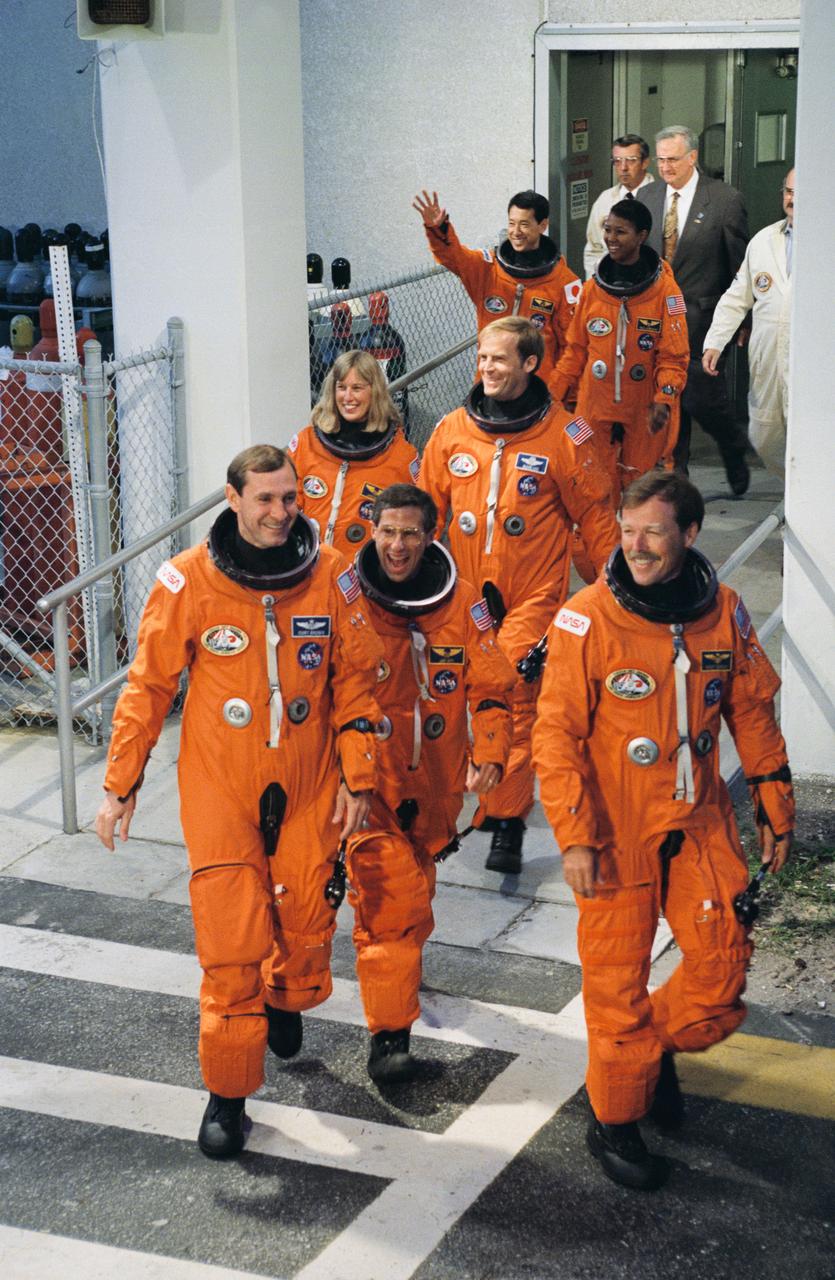
STS047-S-038 (12 Sept 1992) --- The seven crewmembers who will be aboard for Endeavour's second trip into space leave the Operations and Checkout Building to board a van headed for Launch Complex 39. This mission will be devoted to support of the Spacelab-J mission, a joint effort between Japan and the United States. Launch occurred at 10:23:00:0680 a.m. (EDT), September 12, 1992. Onboard were astronauts Robert L. Gibson, mission commander; Curtis L. Brown Jr., pilot; Mark C. Lee, payload commander; and Jerome (Jay) Apt, Mae C. Jemison and N. Jan Davis, mission specialists; along with payload specialist Mamoru Mohri, representing the National Space Development Agency (NASDA) of Japan.
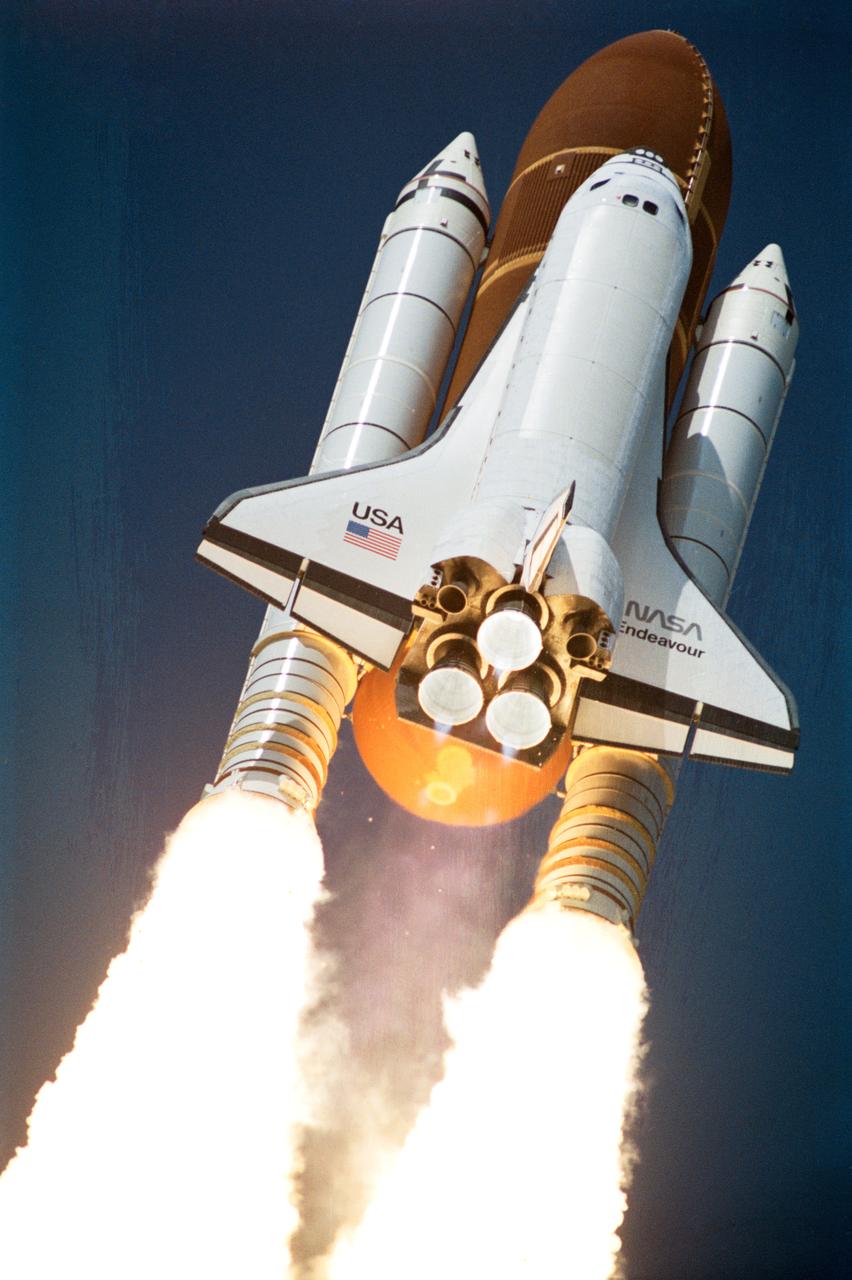
STS047-S-039 (12 Sept 1992) --- A 35mm camera was used to record this low-angle view of the STS-47 launch. With a crew of six NASA astronauts and a Japanese payload specialist onboard, the Space Shuttle Endeavour was heading for its second trip into space. This mission will be devoted to support of the Spacelab-J mission, a joint effort between Japan and the United States. Launch occurred at 10:23:00:0680 a.m. (EDT), September 12, 1992. Onboard were astronauts Robert L. Gibson, mission commander; Curtis L. Brown Jr., pilot; Mark C. Lee, payload commander; and Jerome (Jay) Apt, Mae C. Jemison and N. Jan Davis, mission specialists; along with payload specialist Mamoru Mohri, representing the National Space Development Agency (NASDA) of Japan.
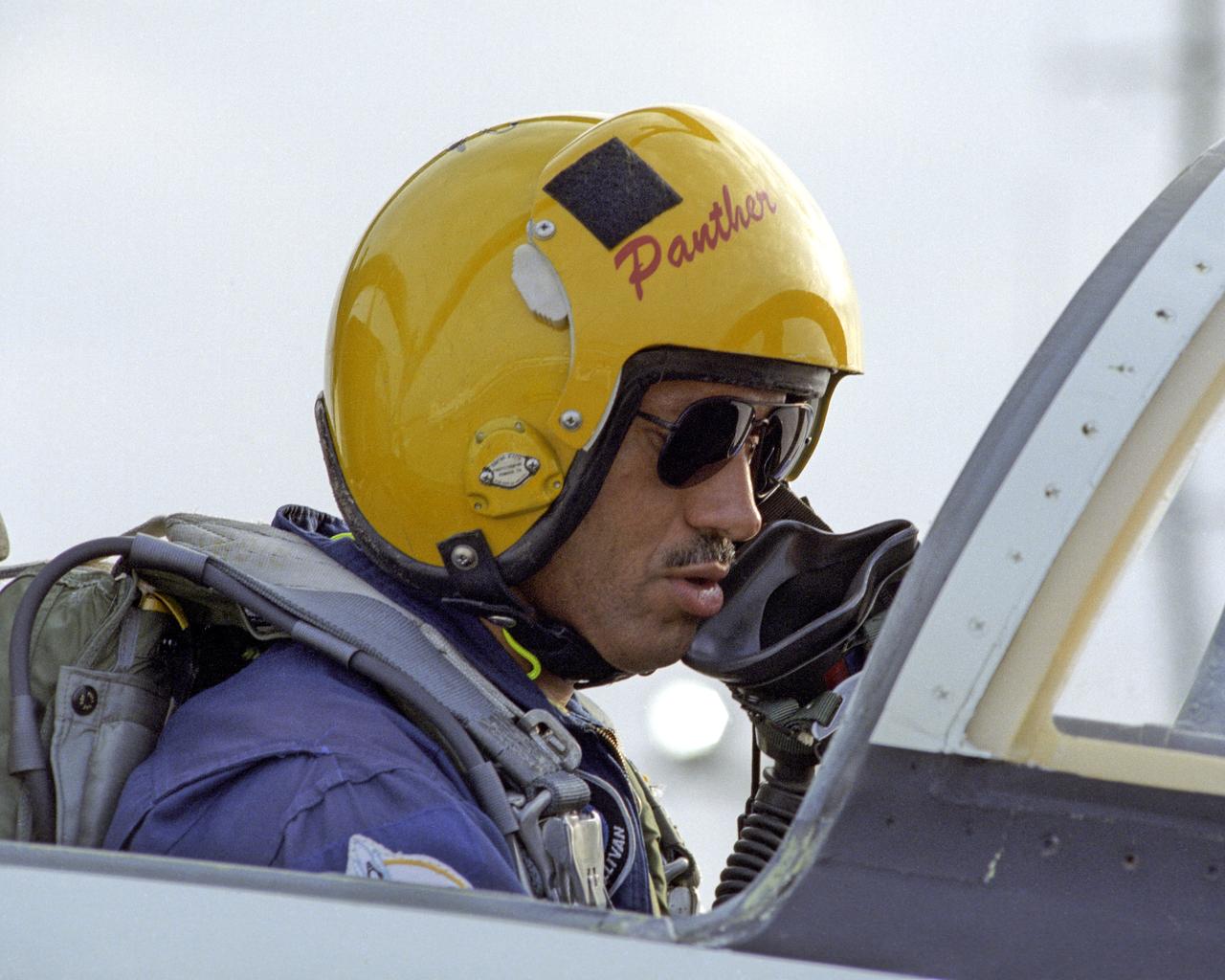
Charles F. Bolden, Jr., Pilot of Space Shuttle Mission STS-31, prepares for rehearsing shuttle contingency landings in the T-38S are among the final pre-launch activities. STS-31, carrying five crew members and the HST is set to liftoff at 8:47 a.m. April 10.
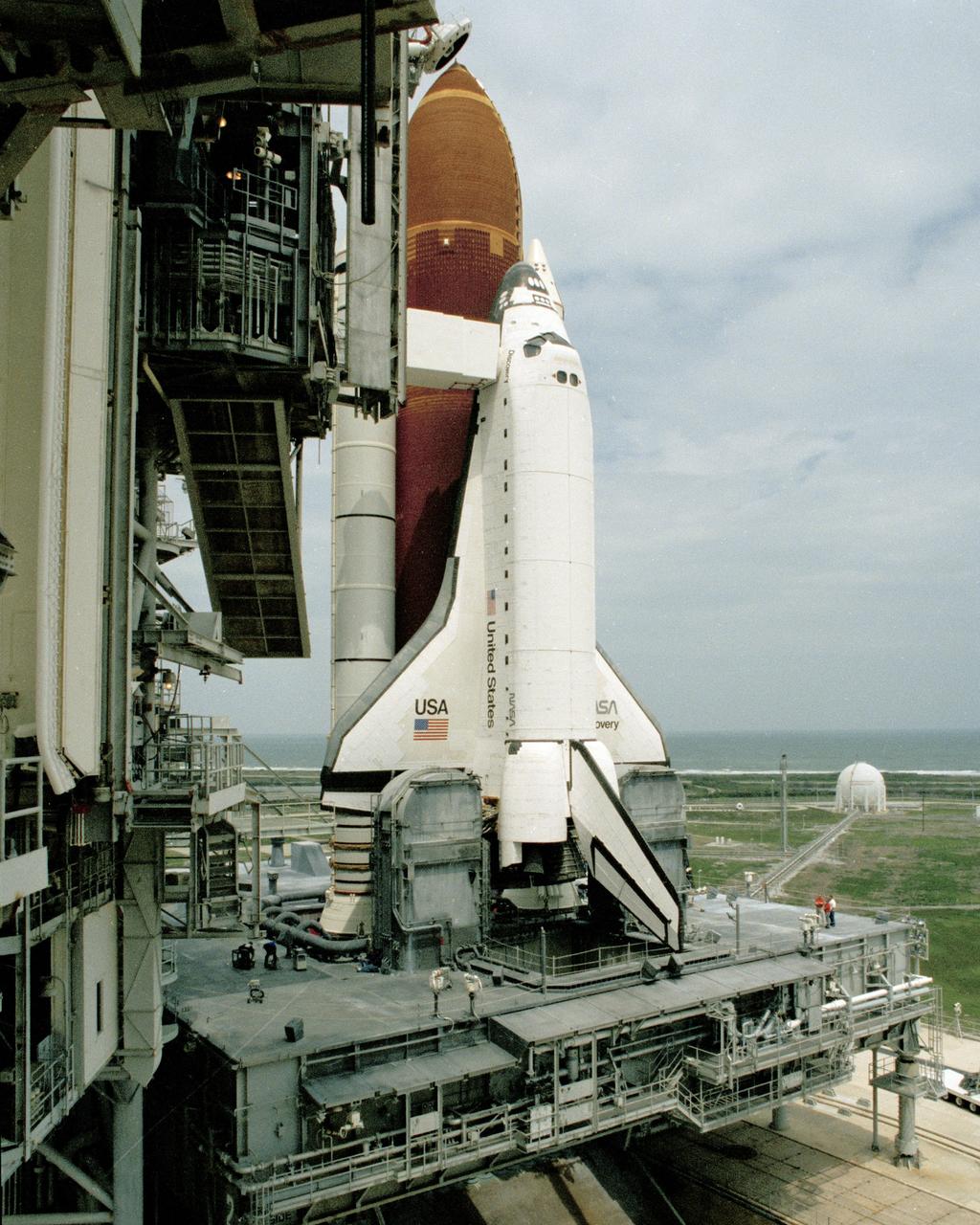
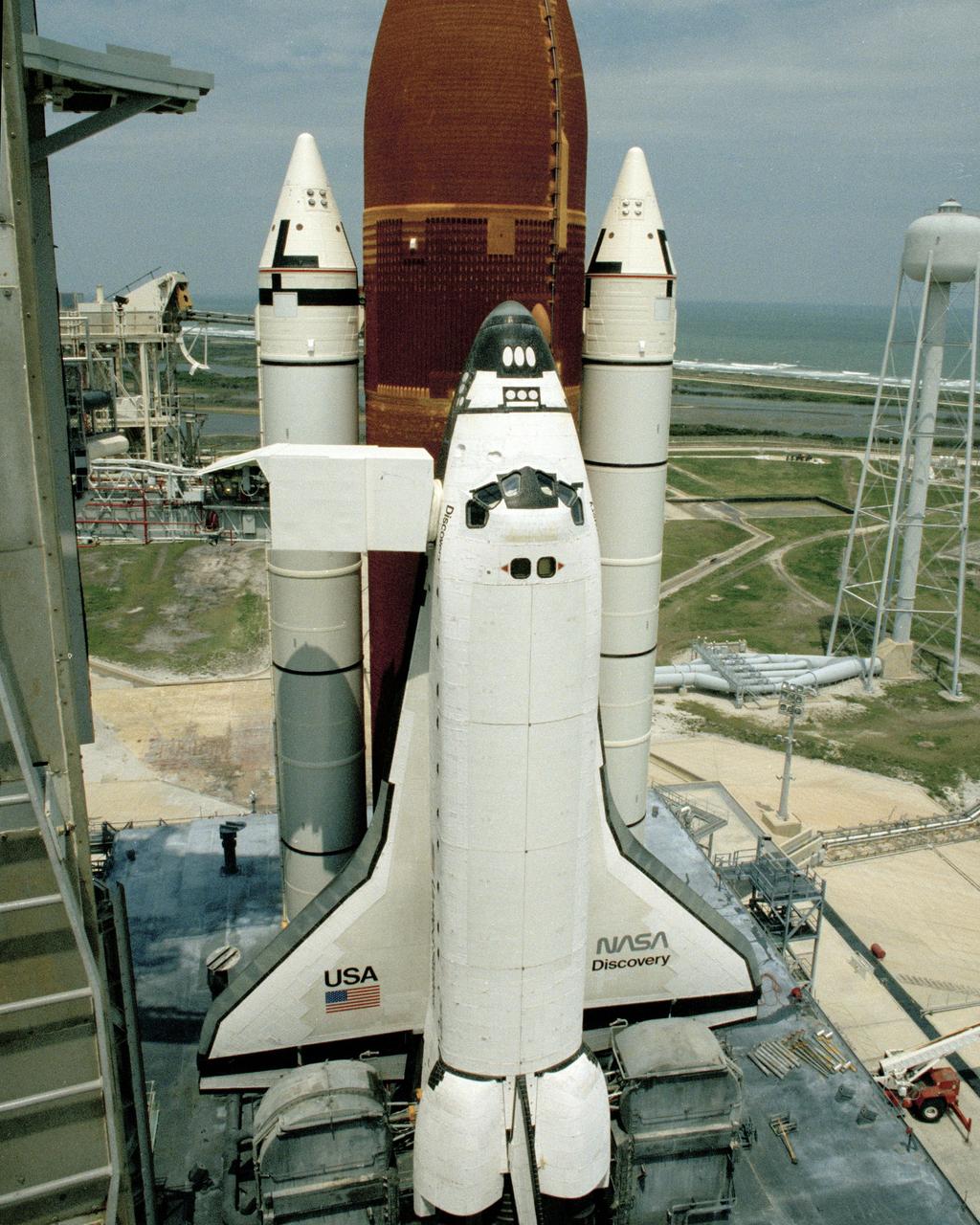
The orbiter Discovery is unveiled as rollback of the Rotating Service Structure begins during final prelaunch preparations at Launch Pad 39B on April 9. Space shuttle mission STS-31, carrying a crew of five and the Hubble Space Telescope, is set to lift off at 6:47 a.m. EDT, April 10. Photo credit: NASA
The orbiter Discovery is unveiled as rollback of the Rotating Service Structure begins during final prelaunch preparations at Launch Pad 39B on April 9. Space shuttle mission STS-31, carrying a crew of five and the Hubble Space Telescope, is set to lift off at 6:47 a.m. EDT, April 10. Photo credit: NASA
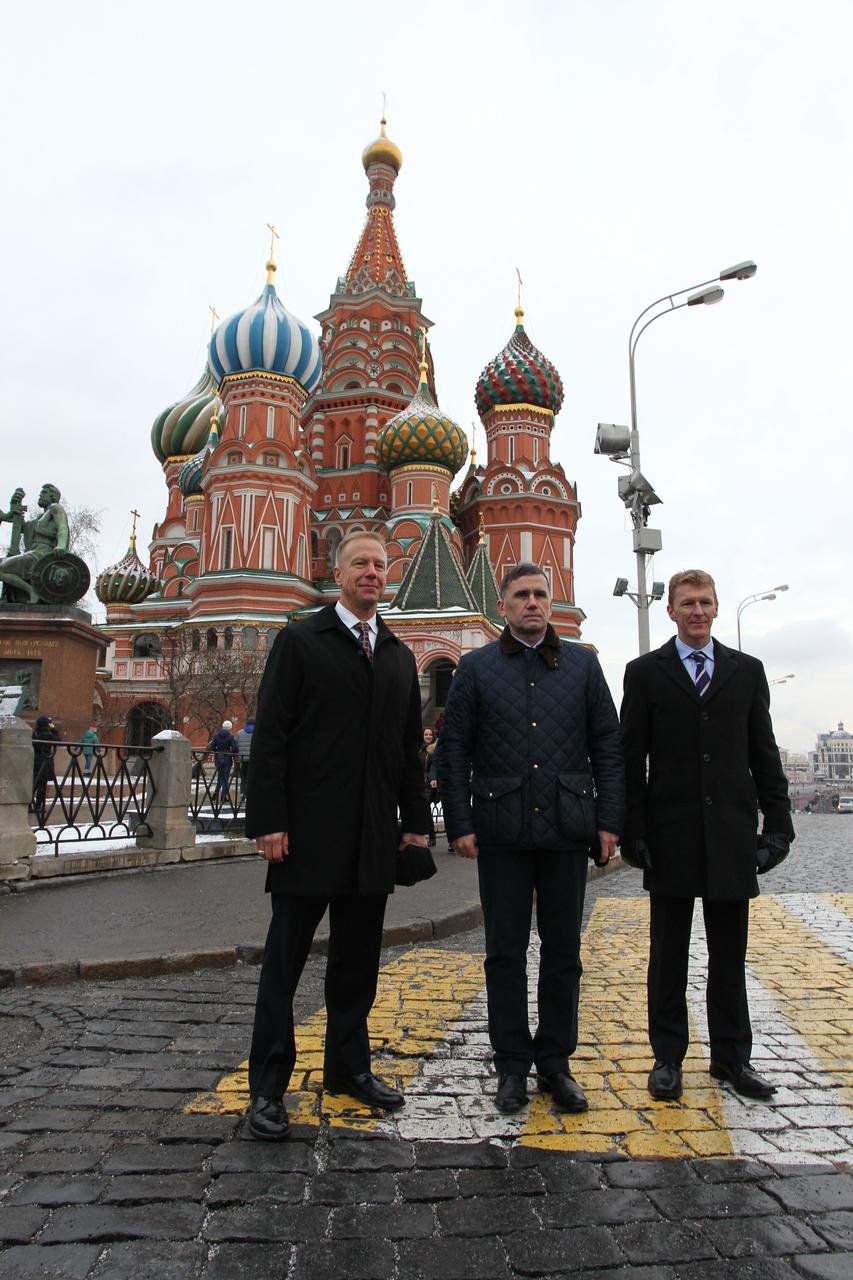
With St. Basil’s Cathedral in Red Square in Moscow serving as a backdrop, Expedition 46-47 crewmembers Tim Kopra of NASA (left), Yuri Malenchenko of the Russian Federal Space Agency (Roscosmos, center) and Tim Peake of the European Space Agency (right) pose for pictures Nov. 23 after laying flowers at the Kremlin Wall where Russian space icons are interred. Peake, Malenchenko and Kopra will launch on Dec. 15 on the Soyuz TMA-19M spacecraft from the Baikonur Cosmodrome in Kazakhstan for a six-month mission on the International Space Station. NASA/Seth Marcantel
KENNEDY SPACE CENTER, FLA. -- Launch Pad 39A is illuminated as Space Shuttle Endeavour blazes into the sky on mission STS-113. Liftoff from Launch Pad 39A occurred ontime at 7:49:47 p.m. EST. The launch is the 19th for Endeavour, and the 112th flight in the Shuttle program. Mission STS-113 is the 16th assembly flight to the International Space Station, carrying another structure for the Station, the P1 integrated truss. Also onboard are the Expedition 6 crew, who will replace Expedition 5. Endeavour is scheduled to land at KSC after an 11-day journey.
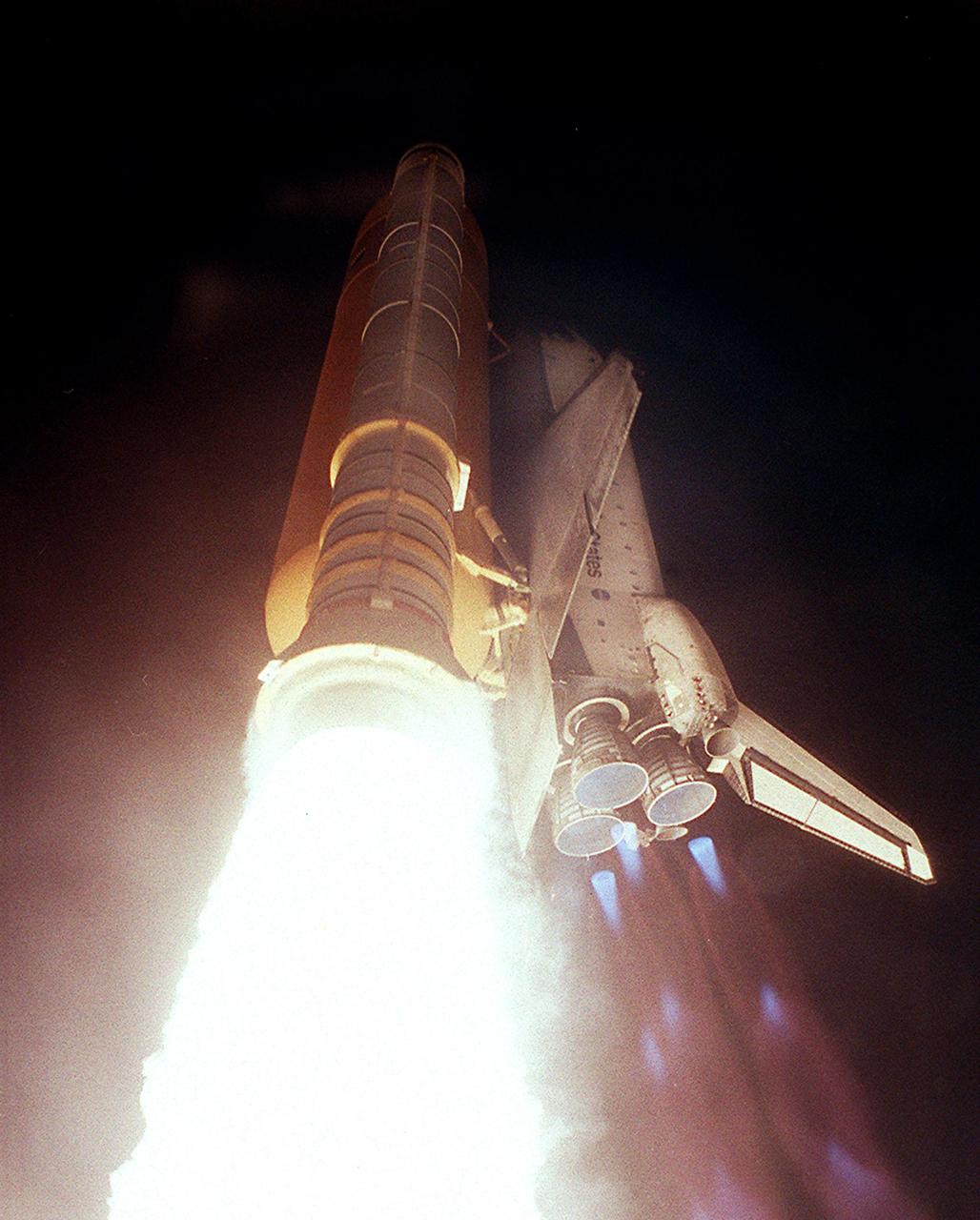
KENNEDY SPACE CENTER, FLA. - Blue mach diamonds appear behind the main engine nozzles on Space Shuttle Endeavour as it roars off the launch pad on mission STS-113. Liftoff from Launch Pad 39A occurred ontime at 7:49:47 p.m. EST. The launch is the 19th for Endeavour, and the 112th flight in the Shuttle program. Mission STS-113 is the 16th assembly flight to the International Space Station, carrying another structure for the Station, the P1 integrated truss. Also onboard are the Expedition 6 crew, who will replace Expedition 5. Endeavour is scheduled to land at KSC after an 11-day journey.
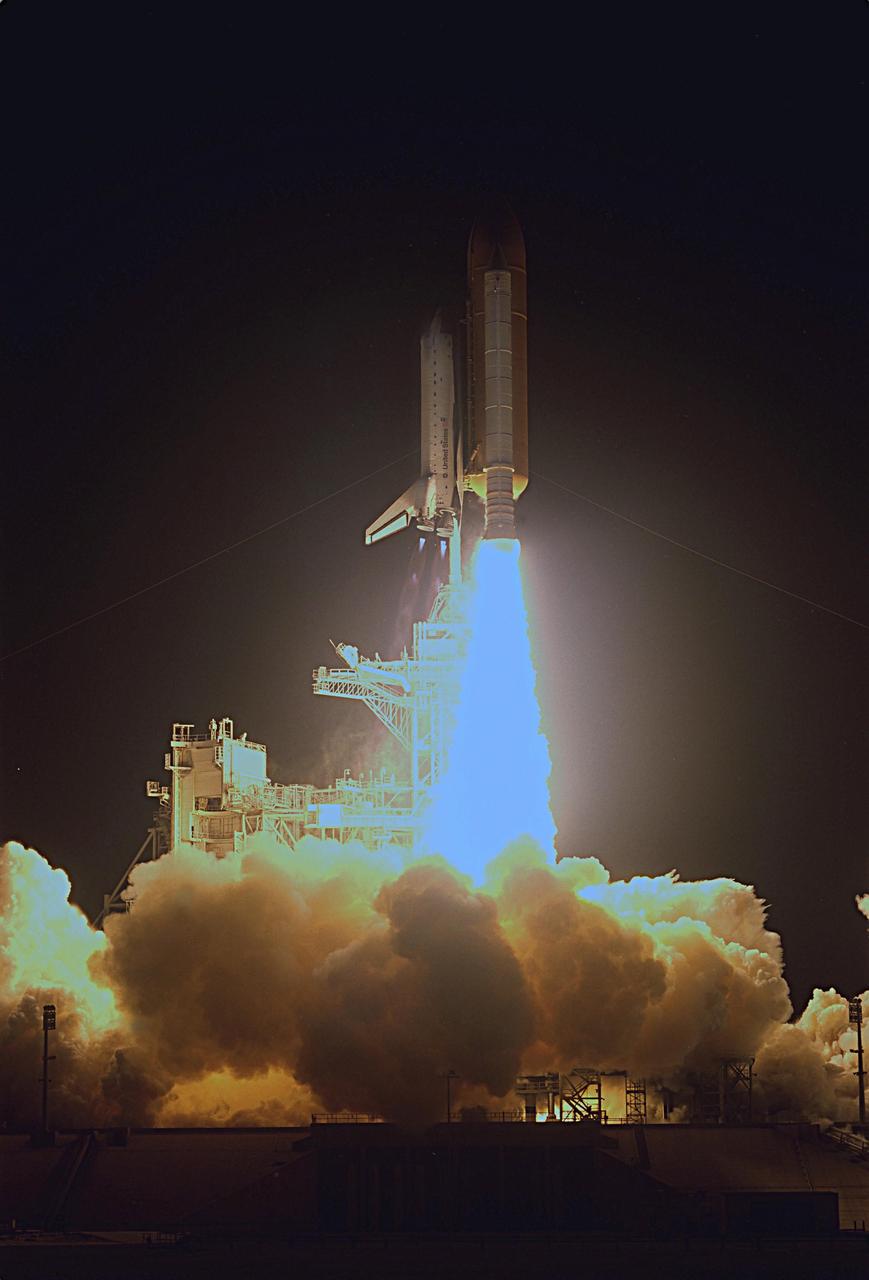
KENNEDY SPACE CENTER, FLA. -- From a blaze of fire and smoke, Space Shuttle Endeavour roars off the launch pad on mission STS-113. Liftoff from Launch Pad 39A occurred ontime at 7:49:47 p.m. EST. The launch is the 19th for Endeavour, and the 112th flight in the Shuttle program. Mission STS-113 is the 16th assembly flight to the International Space Station, carrying another structure for the Station, the P1 integrated truss. Also onboard are the Expedition 6 crew, who will replace Expedition 5. Endeavour is scheduled to land at KSC after an 11-day journey.
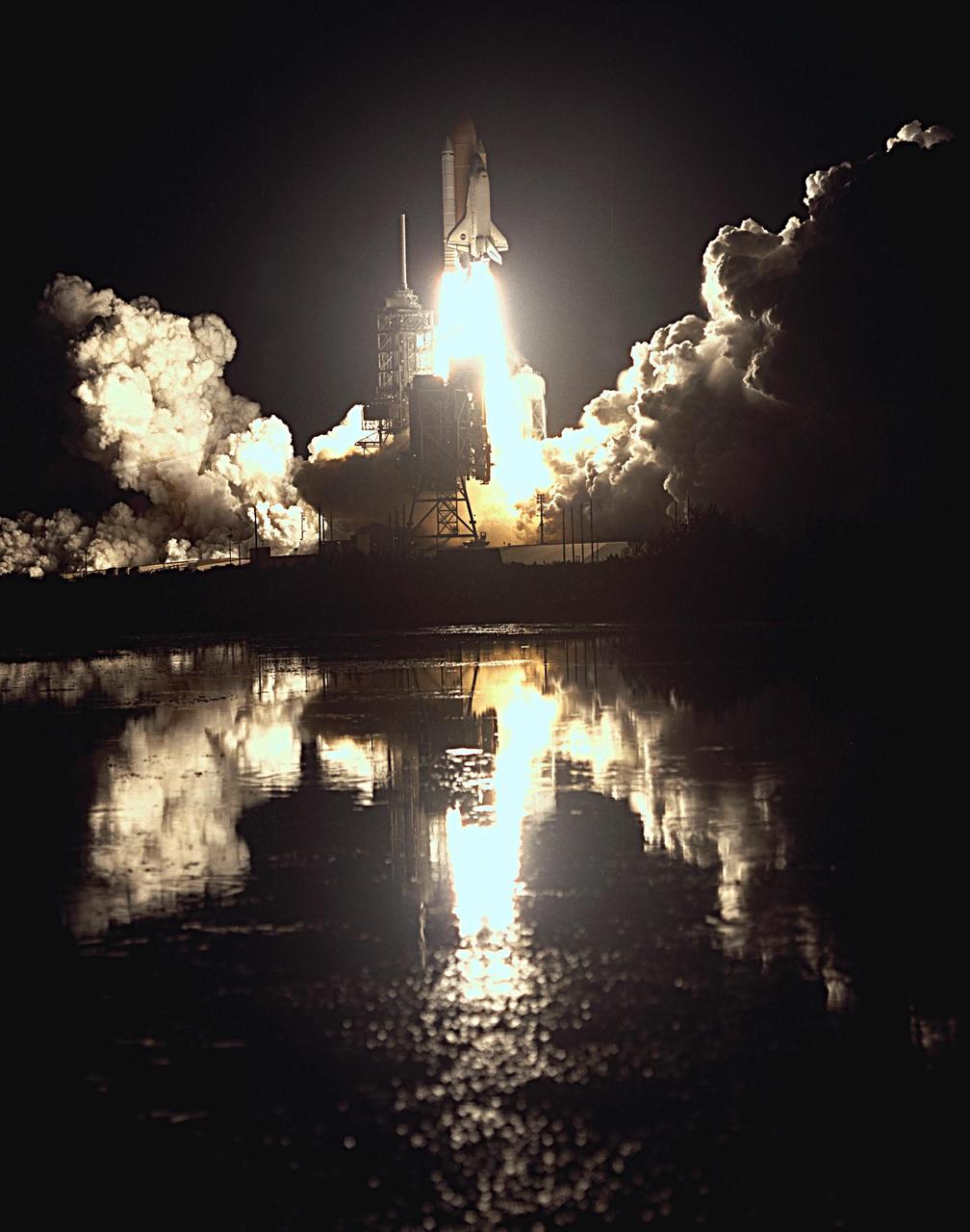
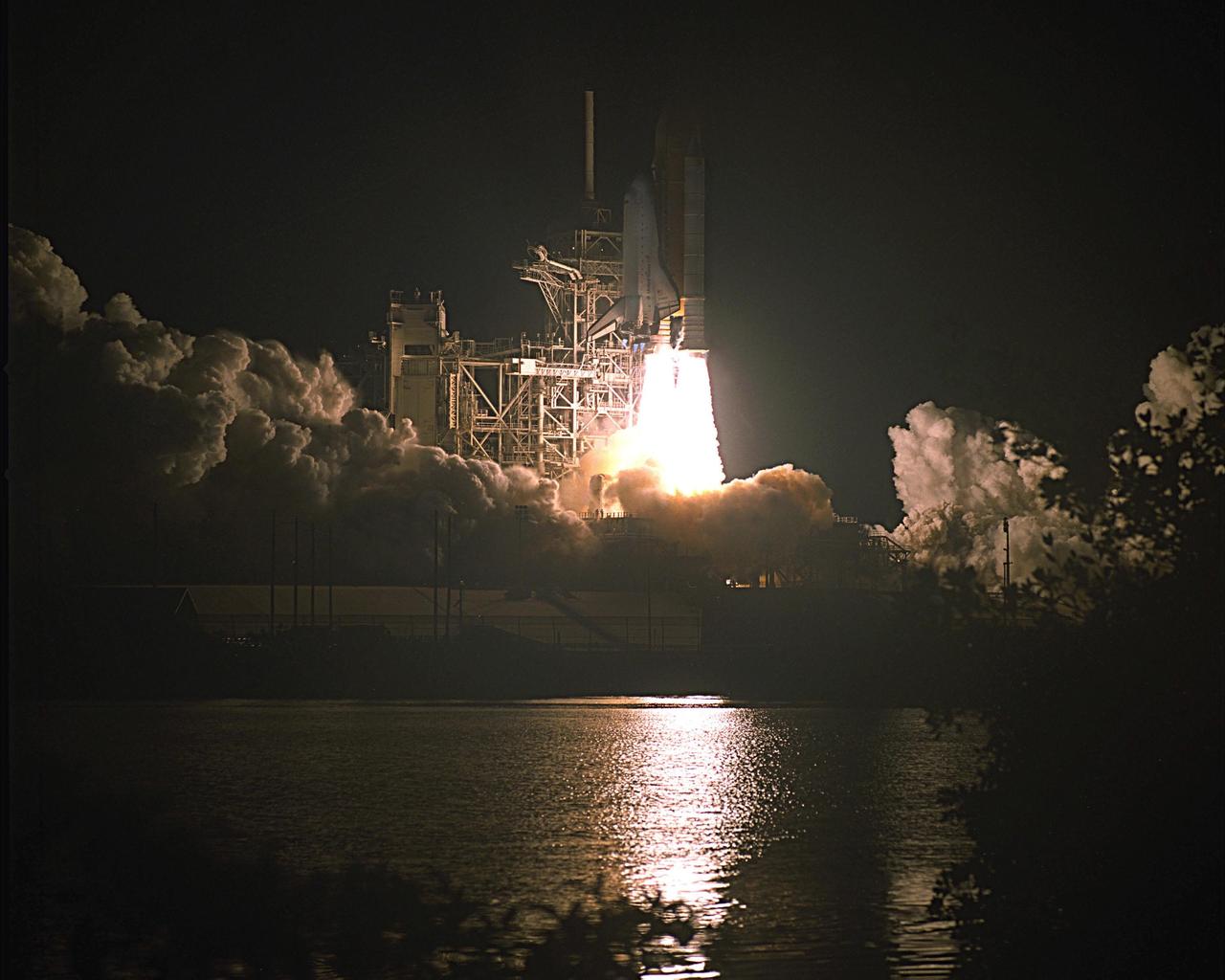
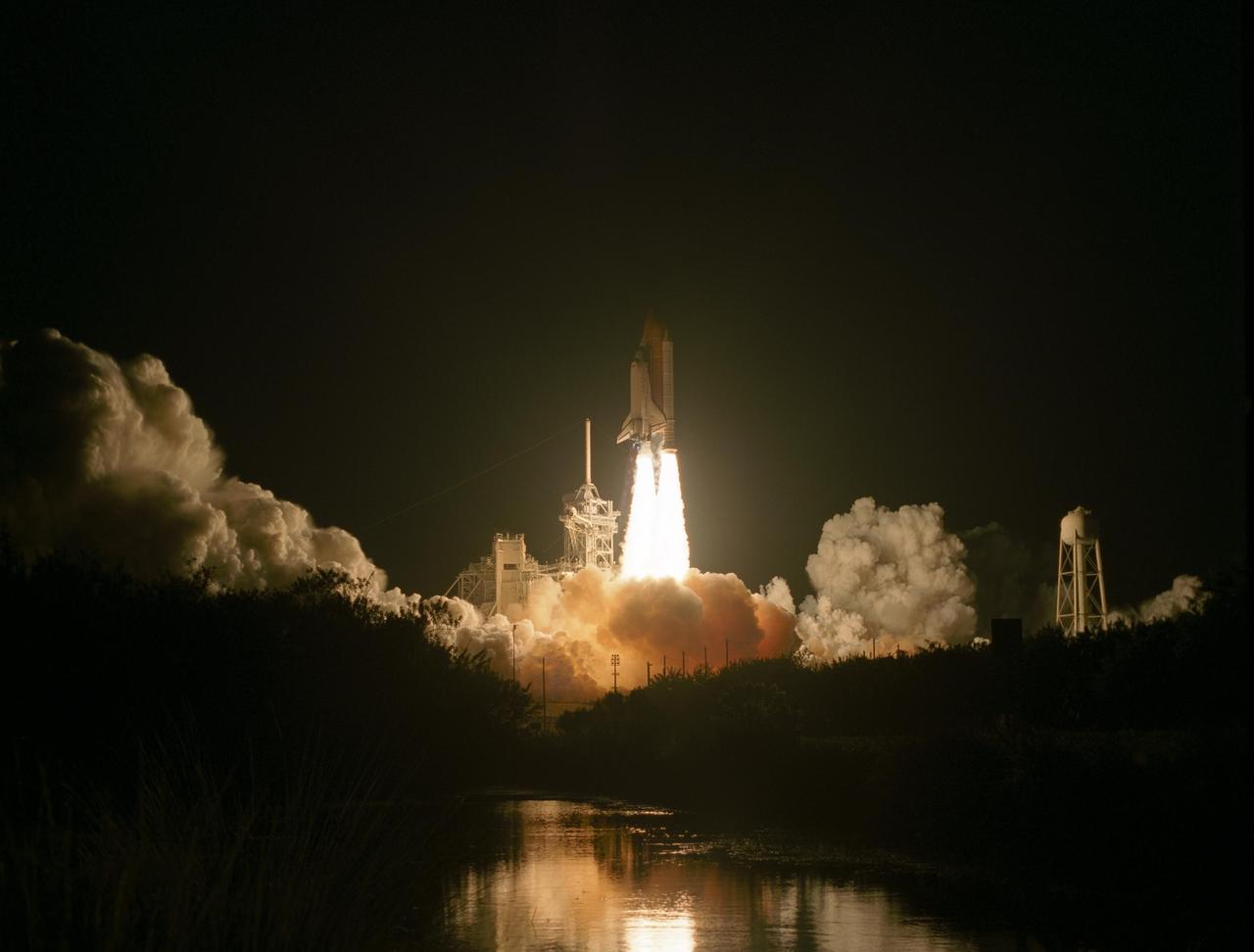
KENNEDY SPACE CENTER, FLA. - Water near Launch Pad 39A provides a mirror image of Space Shuttle Endeavour blazing a path into the night sky after launch on mission STS-113. Liftoff occurred ontime at 7:49:47 p.m. EST. The launch is the 19th for Endeavour, and the 112th flight in the Shuttle program. Mission STS-113 is the 16th assembly flight to the International Space Station, carrying another structure for the Station, the P1 integrated truss. Also onboard are the Expedition 6 crew, who will replace Expedition 5. Endeavour is scheduled to land at KSC after an 11-day journey.
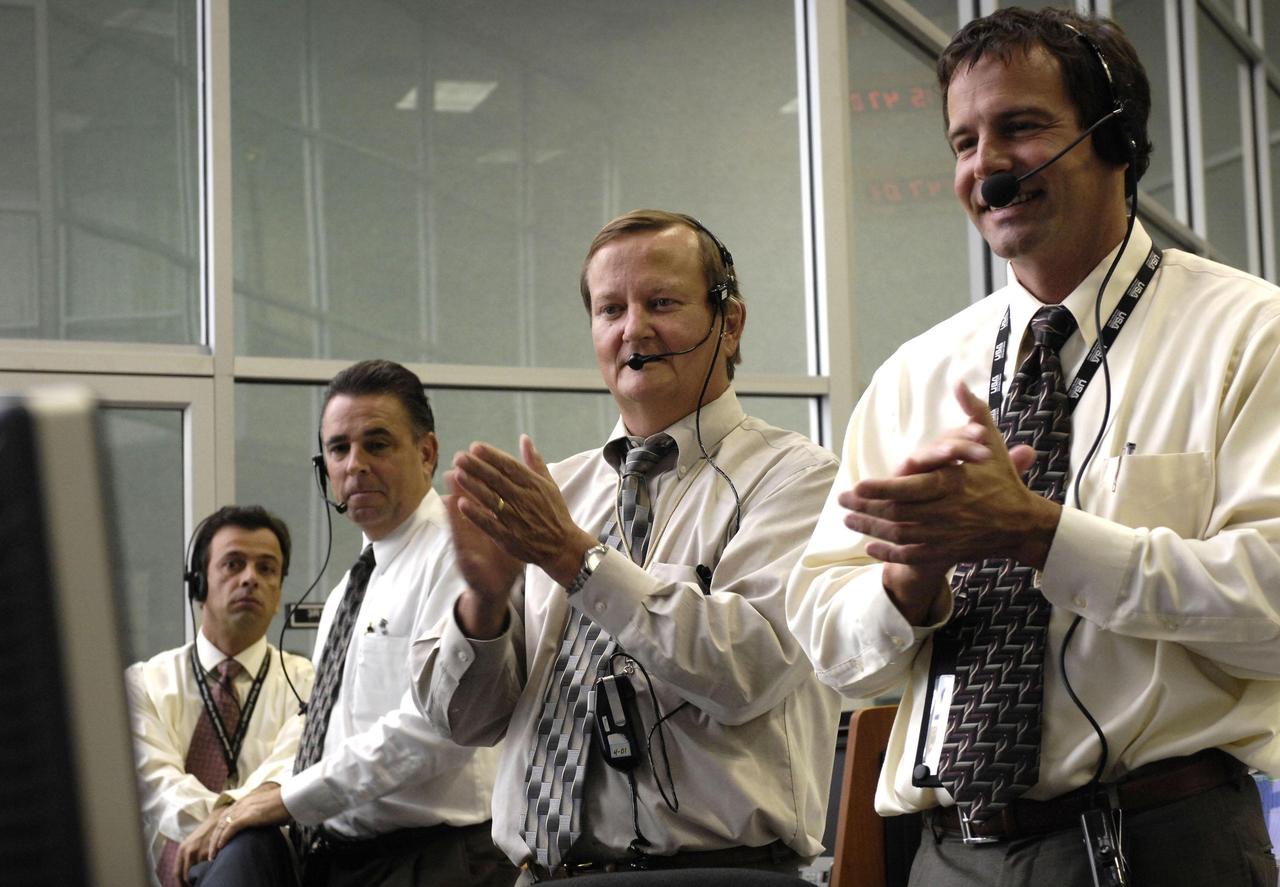
KENNEDY SPACE CENTER, FLA. -- In the firing room at NASA's Kennedy Space Center, Shuttle Launch Director Mike Leinbach (second from right) and Assistant Launch Director Doug Lyons (right) applaud the on-time launch of space shuttle Discovery on mission STS-120. Liftoff was at 11:38:19 am. EDT. Discovery carries the Italian-built U.S. Node 2, called Harmony. During the 14-day STS-120 mission, the crew will install Harmony and move the P6 solar arrays to their permanent position and deploy them. Discovery is expected to complete its mission and return home at 4:47 a.m. EST on Nov. 6. Photo credit: NASA/Bill Ingalls
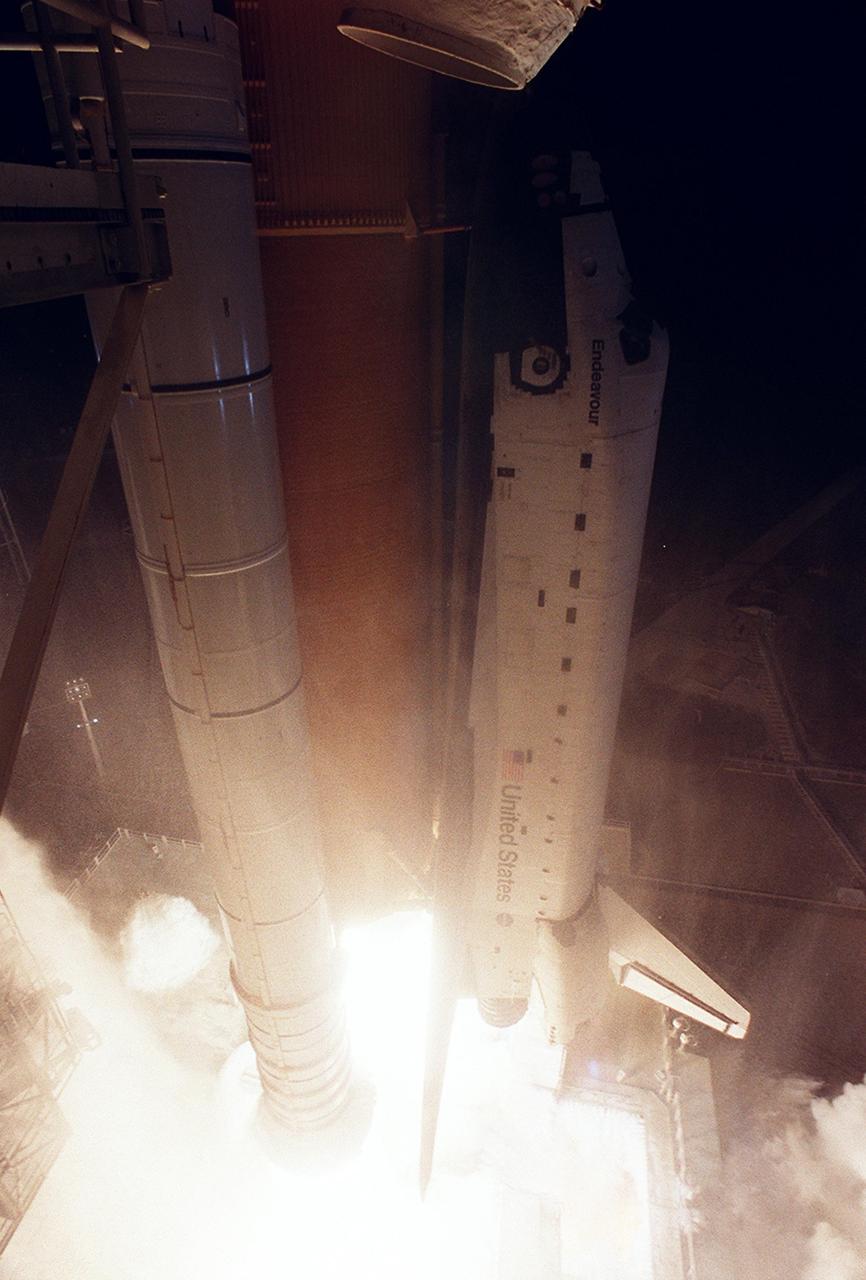
KENNEDY SPACE CENTER, FLA. - From a blaze of fire and smoke, Space Shuttle Endeavour roars off the launch pad on mission STS-113. Liftoff from Launch Pad 39A occurred ontime at 7:49:47 p.m. EST. The launch is the 19th for Endeavour, and the 112th flight in the Shuttle program. Mission STS-113 is the 16th assembly flight to the International Space Station, carrying another structure for the Station, the P1 integrated truss. Also onboard are the Expedition 6 crew, who will replace Expedition 5. Endeavour is scheduled to land at KSC after an 11-day journey.
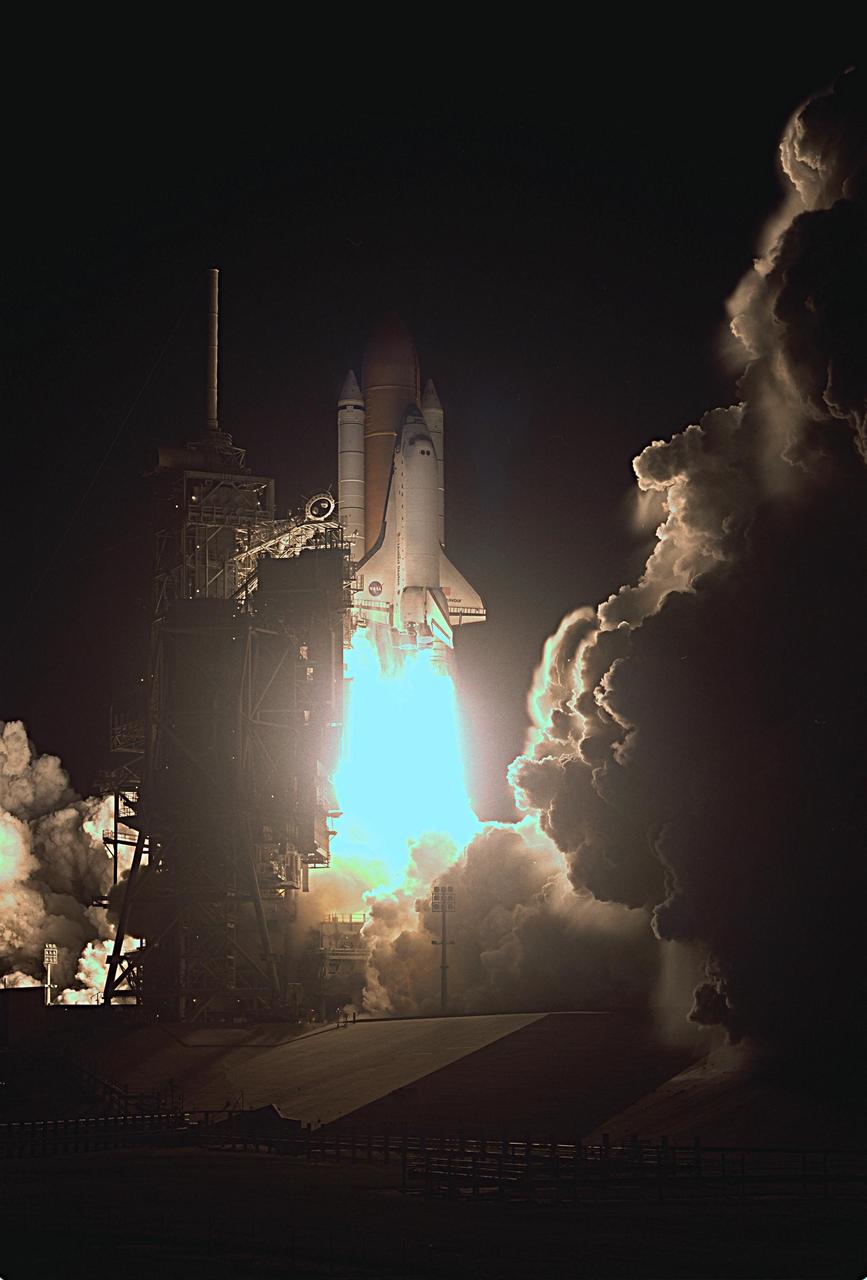
KENNEDY SPACE CENTER, FLA. - Launch Pad 39A is illuminated as Space Shuttle Endeavour blazes into the sky on mission STS-113. Liftoff from Launch Pad 39A occurred ontime at 7:49:47 p.m. EST. The launch is the 19th for Endeavour, and the 112th flight in the Shuttle program. Mission STS-113 is the 16th assembly flight to the International Space Station, carrying another structure for the Station, the P1 integrated truss. Also onboard are the Expedition 6 crew, who will replace Expedition 5. Endeavour is scheduled to land at KSC after an 11-day journey.
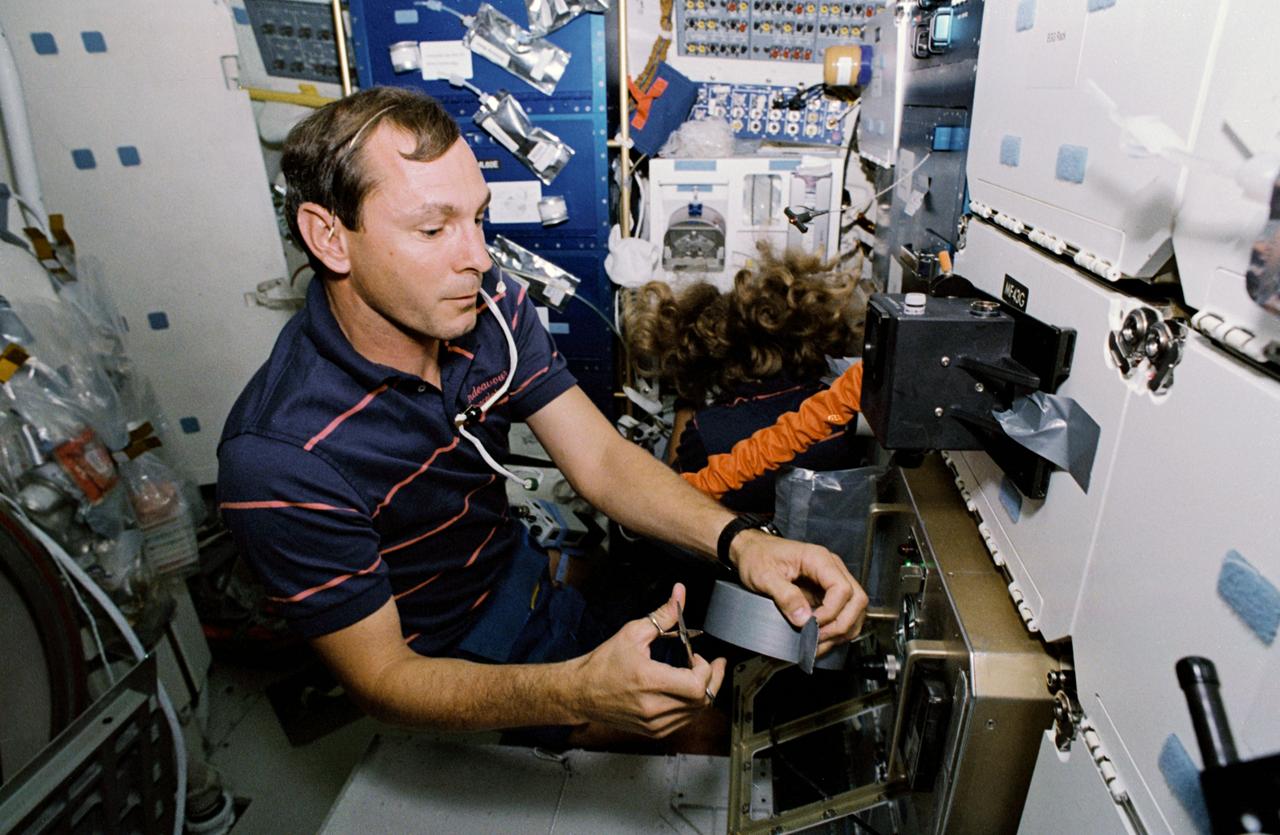
STS047-35-022 (12 - 20 Sept 1992) --- Astronauts Curtis L. Brown, Jr., pilot, and N. Jan Davis, mission specialist, team up to cure a high humidity problem in the hornet experiment in the Spacelab-J Science Module of the Earth-orbiting Space Shuttle Endeavour. Via a jury-rigged hose hook-up, the two were able to blow air from a spacesuit fan into the experiment, thus eliminating condensation that obscured the viewing of the Israeli hornet experiment. The experiment examined the effects of microgravity on the orientation, reproductive capability and social activity of 180 female Oriental Hornets.
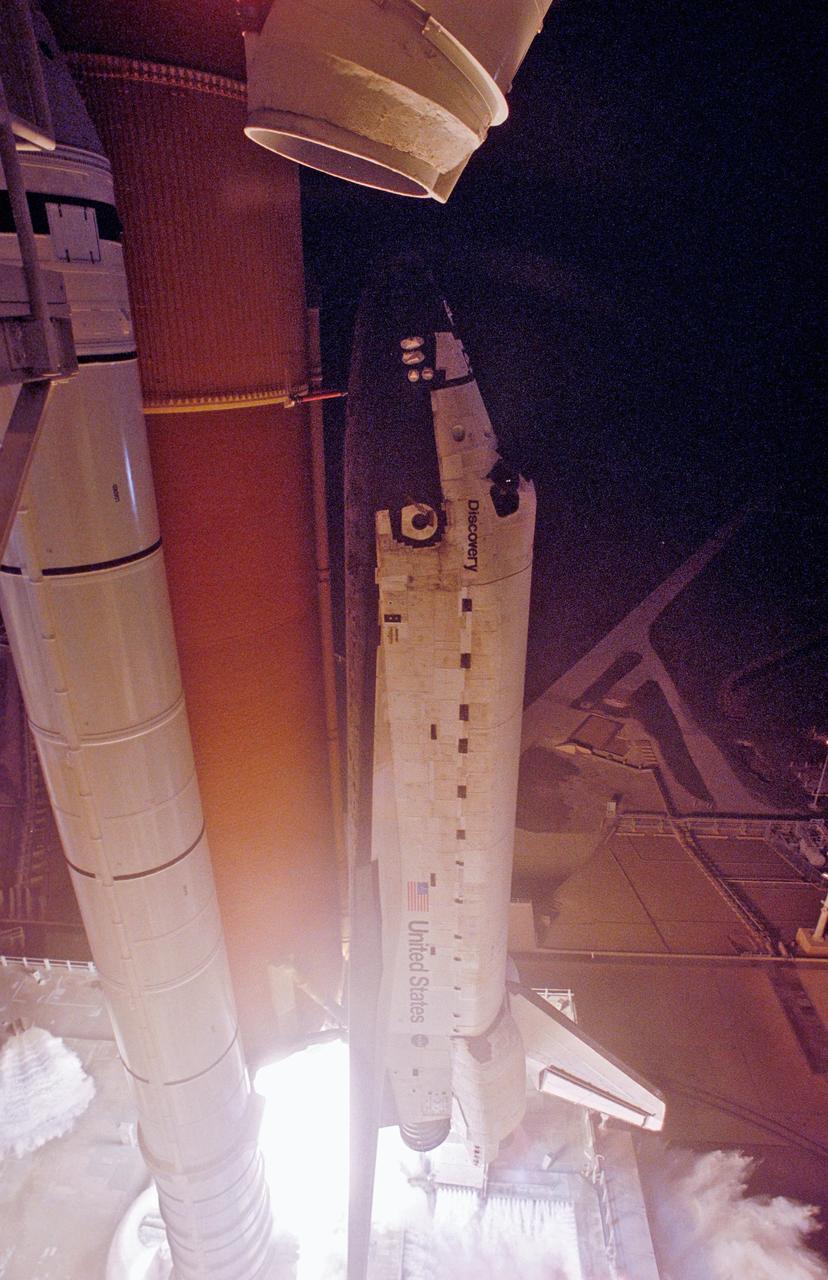
KENNEDY SPACE CENTER, FLA. -- This closeup view shows the water flooding the mobile launcher platform below Space Shuttle Discovery as it lifts off Launch Pad 39B on mission STS-116. Discovery lifted off from KSC's Launch Pad 39B at 8:47 p.m. EST on mission STS-116. This was the second launch attempt for mission STS-116. The first launch attempt on Dec. 7 was postponed due a low cloud ceiling over Kennedy Space Center. This is Discovery's 33rd mission and the first night launch since 2002. The 20th shuttle mission to the International Space Station, STS-116 carries another truss segment, P5. It will serve as a spacer, mated to the P4 truss that was attached in September. After installing the P5, the crew will reconfigure and redistribute the power generated by two pairs of U.S. solar arrays. Landing is expected Dec. 21 at KSC.
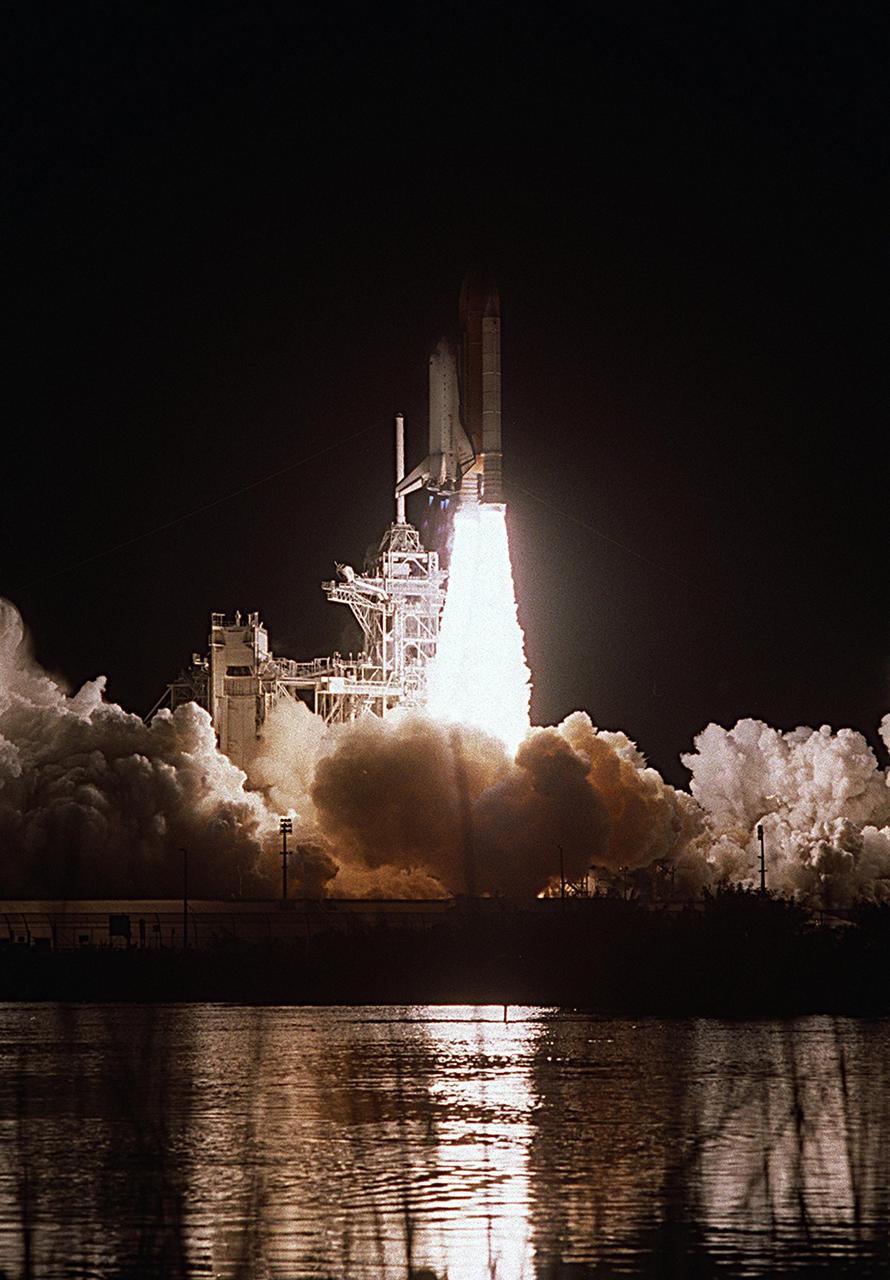
KENNEDY SPACE CENTER, FLA. -- Space Shuttle Endeavour, painting a swath of light on nearby water, blazes into the night sky on mission STS-113. Liftoff from Launch Pad 39A occurred ontime at 7:49:47 p.m. EST. The launch is the 19th for Endeavour, and the 112th flight in the Shuttle program. Mission STS-113 is the 16th assembly flight to the International Space Station, carrying another structure for the Station, the P1 integrated truss. Also onboard are the Expedition 6 crew, who will replace Expedition 5. Endeavour is scheduled to land at KSC after an 11-day journey.
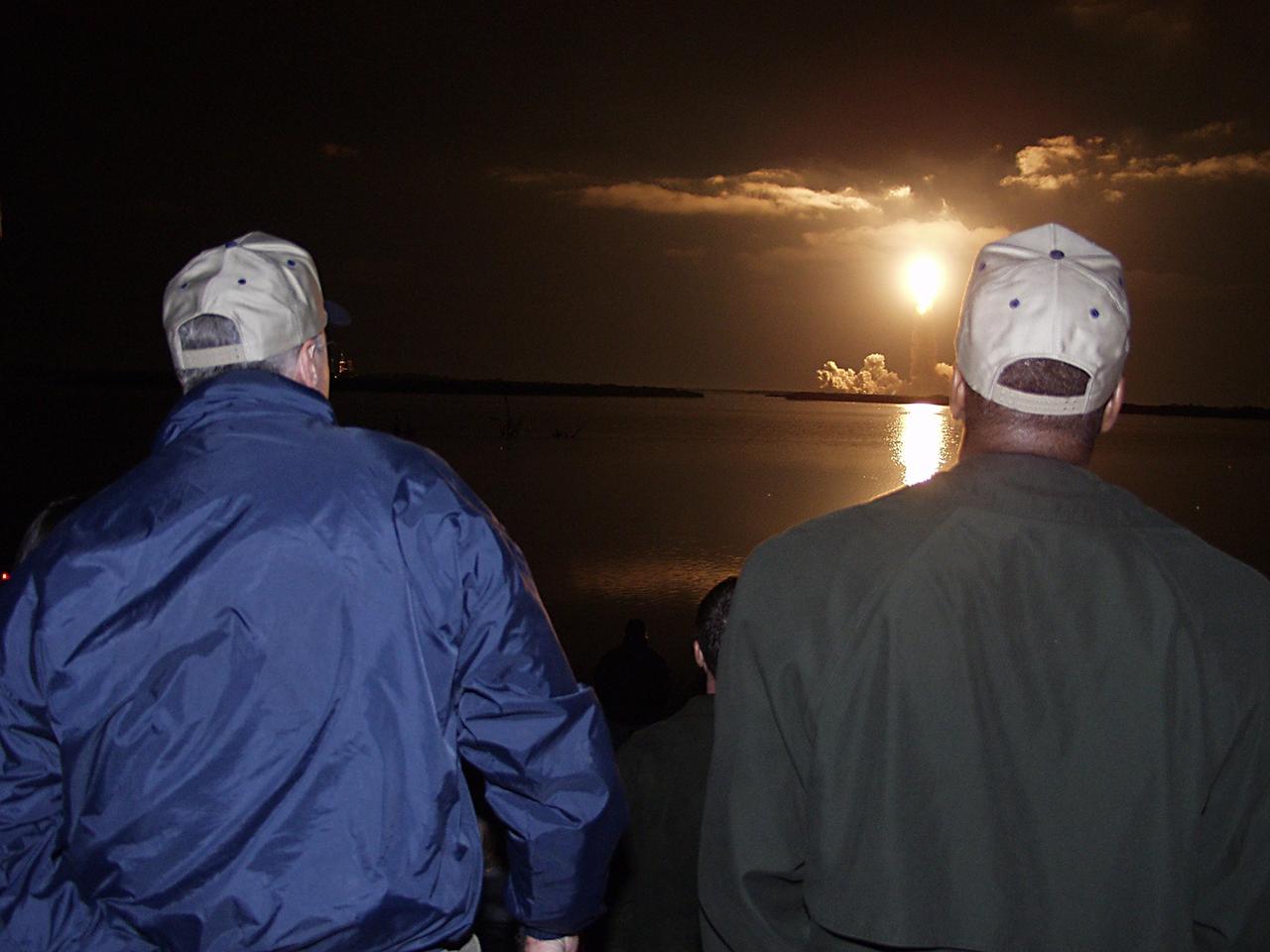
KENNEDY SPACE CENTER, FLA. - Watching the launch of Space Shuttle Endeavour on mission STS-113 are NASA Administrator Sean O'Keefe (left) and Associate Administrator of Public Affairs Glen Mahone. Liftoff occurred ontime at 7:49:47 p.m. EST. The launch is the 19th for Endeavour, and the 112th flight in the Shuttle program. Mission STS-113 is the 16th assembly flight to the International Space Station, carrying another structure for the Station, the P1 integrated truss. Also onboard are the Expedition 6 crew, who will replace Expedition 5. Endeavour is scheduled to land at KSC after an 11-day journey.
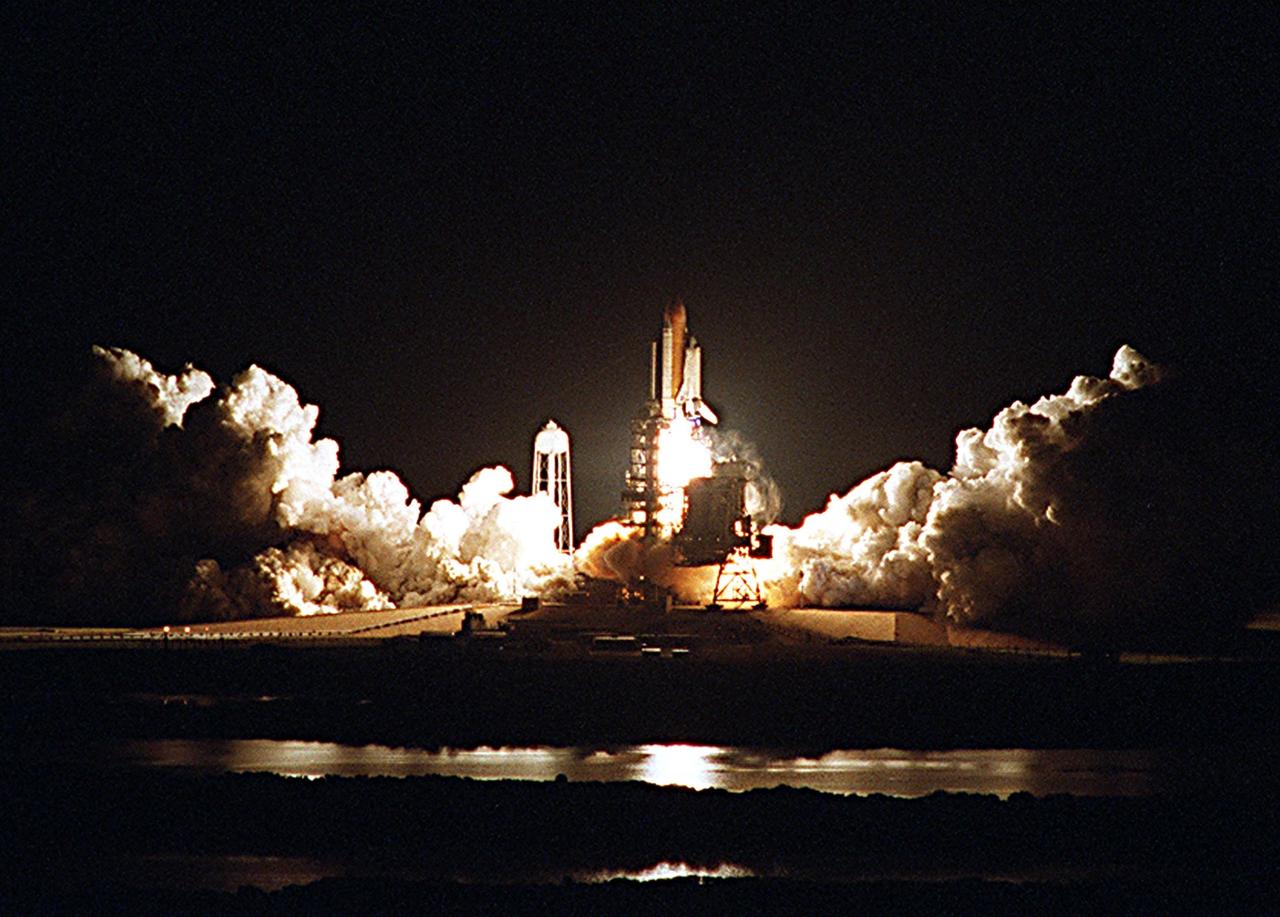
KENNEDY SPACE CENTER, FLA. - As the clouds of smoke and steam roll away into the darkness, Space Shuttle Endeavour blazes into the night sky on mission STS-113. Liftoff from Launch Pad 39A occurred ontime at 7:49:47 p.m. EST. The launch is the 19th for Endeavour, and the 112th flight in the Shuttle program. Mission STS-113 is the 16th assembly flight to the International Space Station, carrying another structure for the Station, the P1 integrated truss. Also onboard are the Expedition 6 crew, who will replace Expedition 5. Endeavour is scheduled to land at KSC after an 11-day journey.
![KENNEDY SPACE CENTER, FLA. -- Space Shuttle Endeavour climbs into the black sky as it lifts off Launch Pad 39A on mission STS-113. Liftoff occurred ontime at 7:49:47 p.m. EST. The launch is the 19th for Endeavour, and the 112th flight in the Shuttle program. Mission STS-113 is the 16th assembly flight to the International Space Station, carrying another structure for the Station, the P1 integrated truss. Also onboard are the Expedition 6 crew, who will replace Expedition 5. Endeavour is scheduled to land at KSC after an 11-day journey. [Photo by Scott Andrews]](https://images-assets.nasa.gov/image/KSC-02pd1811/KSC-02pd1811~medium.jpg)
KENNEDY SPACE CENTER, FLA. -- Space Shuttle Endeavour climbs into the black sky as it lifts off Launch Pad 39A on mission STS-113. Liftoff occurred ontime at 7:49:47 p.m. EST. The launch is the 19th for Endeavour, and the 112th flight in the Shuttle program. Mission STS-113 is the 16th assembly flight to the International Space Station, carrying another structure for the Station, the P1 integrated truss. Also onboard are the Expedition 6 crew, who will replace Expedition 5. Endeavour is scheduled to land at KSC after an 11-day journey. [Photo by Scott Andrews]
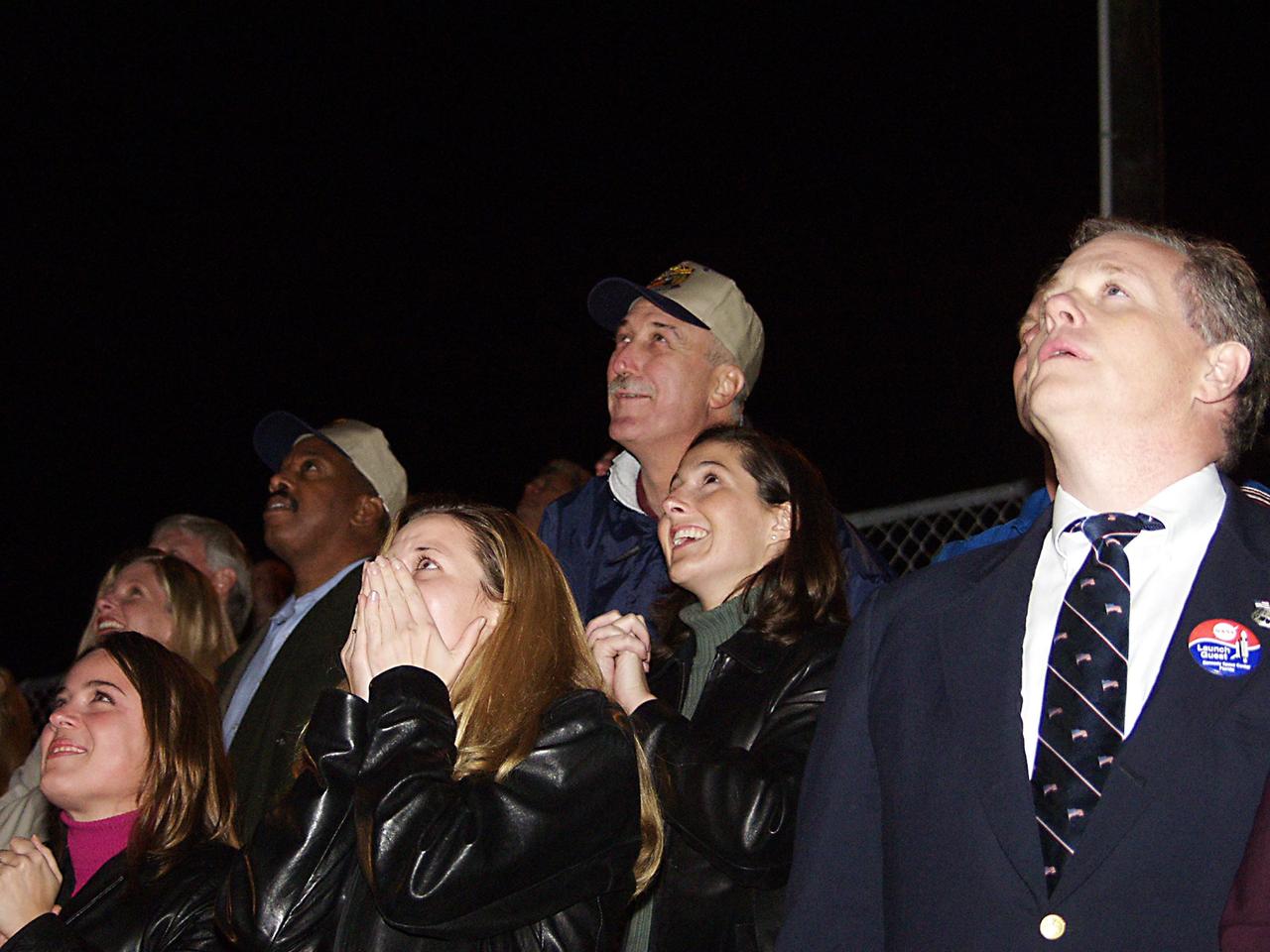
KENNEDY SPACE CENTER, FLA. - Among the visitors watching the launch of Space Shuttle Endeavour on mission STS-113 are NASA Administrator Sean O'Keefe (top, center) and Glen Mahone, associate administrator for public affairs, NASA (left of O'Keefe). Liftoff occurred ontime at 7:49:47 p.m. EST. The launch is the 19th for Endeavour, and the 112th flight in the Shuttle program. Mission STS-113 is the 16th assembly flight to the International Space Station, carrying another structure for the Station, the P1 integrated truss. Also onboard are the Expedition 6 crew, who will replace Expedition 5. Endeavour is scheduled to land at KSC after an 11-day journey.
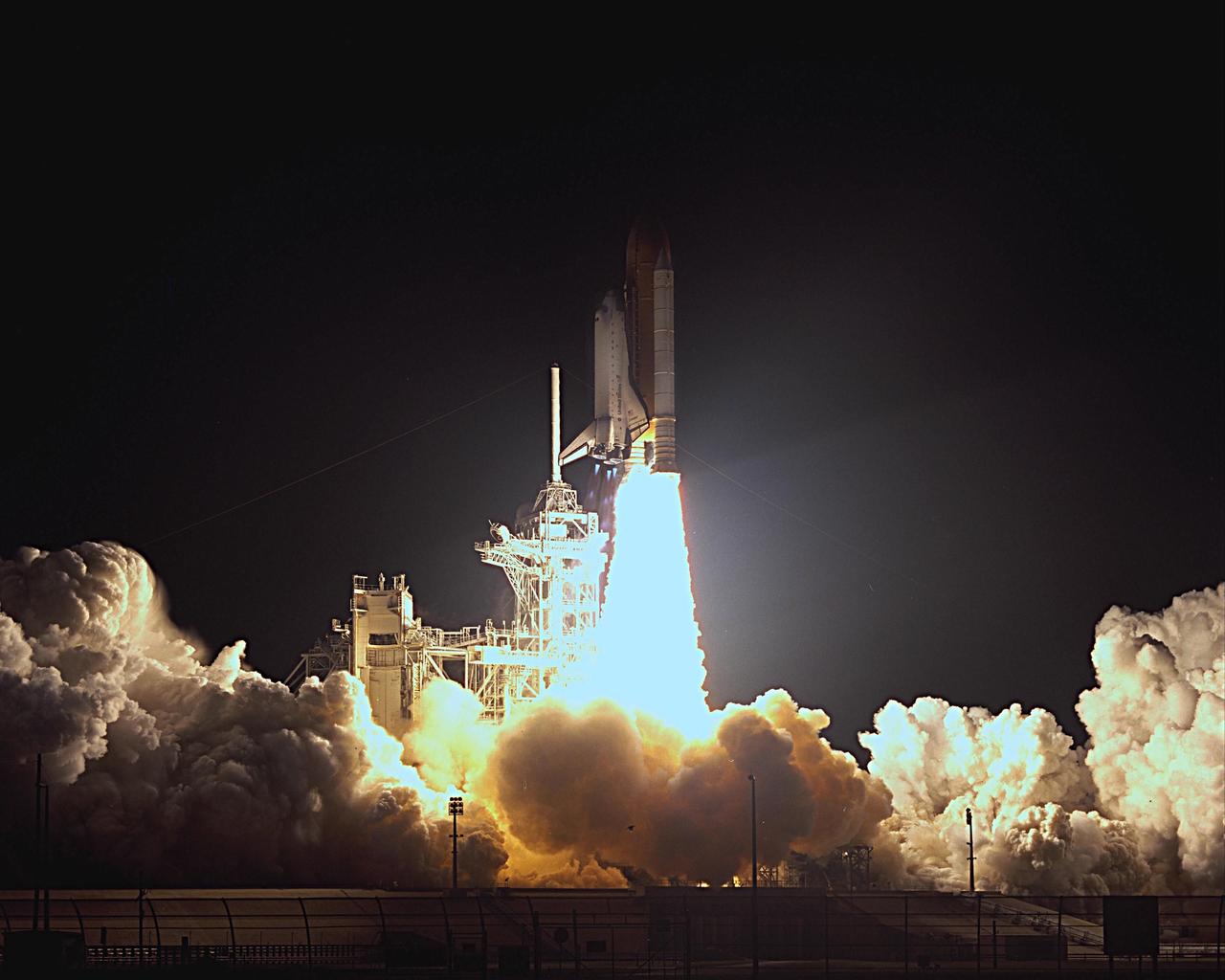
KENNEDY SPACE CENTER, FLA. -- As the clouds of smoke and steam roll away beneath it, Space Shuttle Endeavour blazes into the night sky on mission STS-113. Liftoff from Launch Pad 39A occurred ontime at 7:49:47 p.m. EST. The launch is the 19th for Endeavour, and the 112th flight in the Shuttle program. Mission STS-113 is the 16th assembly flight to the International Space Station, carrying another structure for the Station, the P1 integrated truss. Also onboard are the Expedition 6 crew, who will replace Expedition 5. Endeavour is scheduled to land at KSC after an 11-day journey.
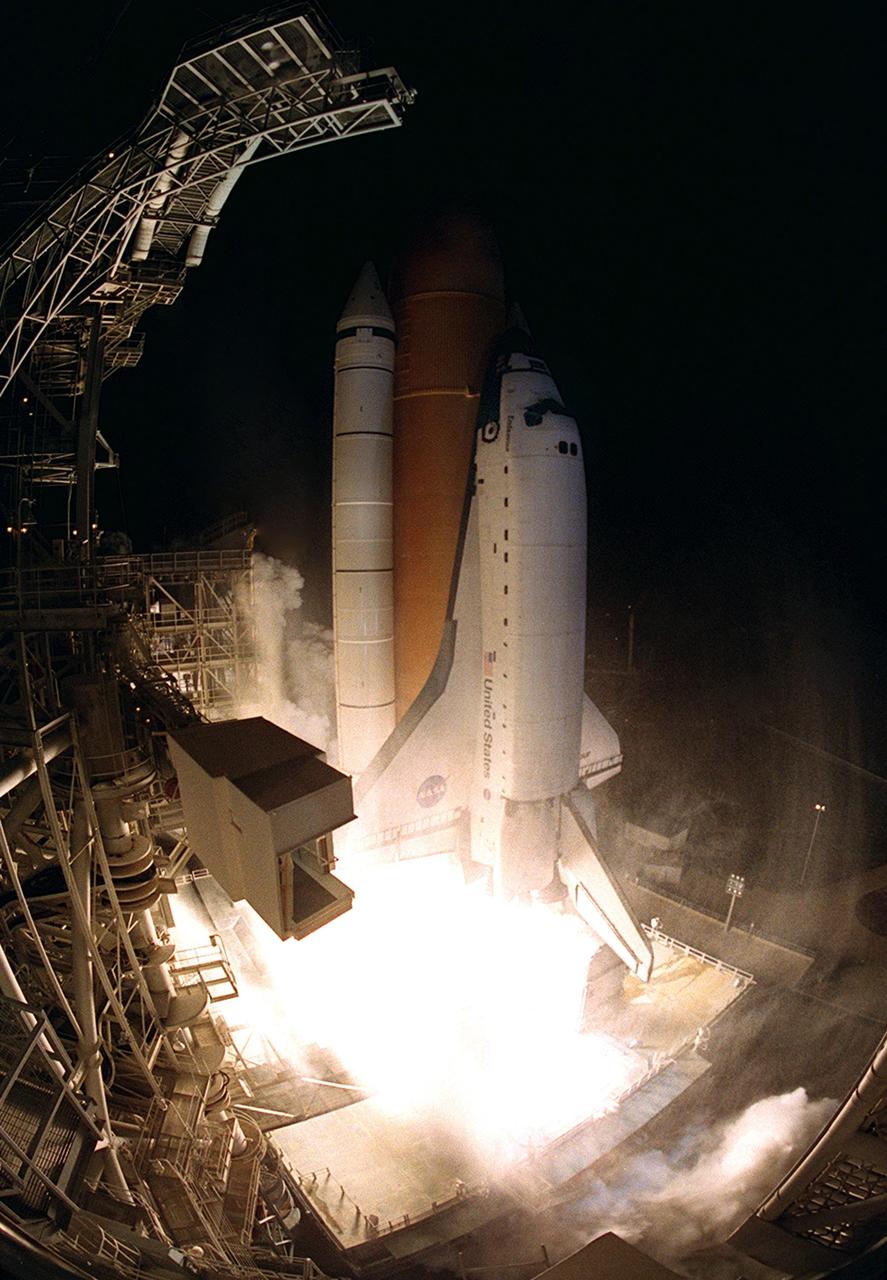
KENNEDY SPACE CENTER, FLA. -- Space Shuttle Endeavour blazes into the night sky on mission STS-113. Liftoff from Launch Pad 39A occurred ontime at 7:49:47 p.m. EST. The launch is the 19th for Endeavour, and the 112th flight in the Shuttle program. Mission STS-113 is the 16th assembly flight to the International Space Station, carrying another structure for the Station, the P1 integrated truss. Also onboard are the Expedition 6 crew, who will replace Expedition 5. Endeavour is scheduled to land at KSC after an 11-day journey.
![KENNEDY SPACE CENTER, FLA. -Space Shuttle Endeavour roars into the black sky on columns of fire as it lifts off Launch Pad 39A on mission STS-113. Liftoff occurred ontime at 7:49:47 p.m. EST. The launch is the 19th for Endeavour, and the 112th flight in the Shuttle program. Mission STS-113 is the 16th assembly flight to the International Space Station, carrying another structure for the Station, the P1 integrated truss. Also onboard are the Expedition 6 crew, who will replace Expedition 5. Endeavour is scheduled to land at KSC after an 11-day journey. [Photo by Scott Andrews]](https://images-assets.nasa.gov/image/KSC-02pd1812/KSC-02pd1812~medium.jpg)
KENNEDY SPACE CENTER, FLA. -Space Shuttle Endeavour roars into the black sky on columns of fire as it lifts off Launch Pad 39A on mission STS-113. Liftoff occurred ontime at 7:49:47 p.m. EST. The launch is the 19th for Endeavour, and the 112th flight in the Shuttle program. Mission STS-113 is the 16th assembly flight to the International Space Station, carrying another structure for the Station, the P1 integrated truss. Also onboard are the Expedition 6 crew, who will replace Expedition 5. Endeavour is scheduled to land at KSC after an 11-day journey. [Photo by Scott Andrews]
STS-94 Mission Specialist Donald A. Thomas prepares to enter the Space Shuttle Columbia at Launch Pad 39A in preparation for launch. He has flown on STS-83, STS-70 and STS-65. He holds a doctorate in materials science and has been the Principal Investigator for a Space Shuttle crystal growth experiment. Because of his background in materials science, Thomas will be concentrating his efforts during the Red shift on the five experiments in this discipline in the Large Isothermal Furnace. He also will work on the ten materials science investigations in the Electromagnetic Containerless Processing Facility and four that will be measuring the effects of microgravity and motion in the orbiter on the experiments. Thomas and six fellow crew members will lift off during a launch window that opens at 1:50 p.m. EDT, July 1. The launch window will open 47 minutes early to improve the opportunity to lift off before Florida summer rain showers reach the space center
STS-94 Mission Commander James D. Halsell, Jr., prepares to enter the Space Shuttle Columbia at Launch Pad 39A in preparation for launch. Halsell is on his fourth space flight, having served as commander of STS-83 and pilot of both STS-74 and STS-65. He is a lieutenant colonel in the Air Force and a former SR-71 Blackbird test pilot and holds master’s degrees in management and space operations. Halsell will have responsibility for the success of the mission and will operate and maintain Columbia during the Red, or second shift. He will also assist with a materials science experiment and a protein crystal growth payload during the 16-day mission. Halsell and six fellow crew members will lift off during a launch window that opens at 1:50 p.m. EDT, July 1. The launch window will open 47 minutes early to improve the opportunity to lift off before Florida summer rain showers reach the space center
STS-94 Payload Commander Janice Voss prepares to enter the Space Shuttle Columbia at Launch Pad 39A in preparation for launch. She has flown on STS-83, STS-63 and STS-57. Voss holds a doctorate degree in aeronautics/astronautics from the Massachusetts Institute of Technology and has earned two NASA Space Flight Medals. As Payload Commander and a member of the Blue team, Voss will have overall responsibility for the operation of all of the MSL-1 experiments. During the experimentation phase of the mission, she be working primarily with three combustion experiments. She and six fellow crew members will lift off during a launch window that opens at 1:50 p.m. EDT, July 1. The launch window will open 47 minutes early to improve the opportunity to lift off before Florida summer rain showers reach the space center
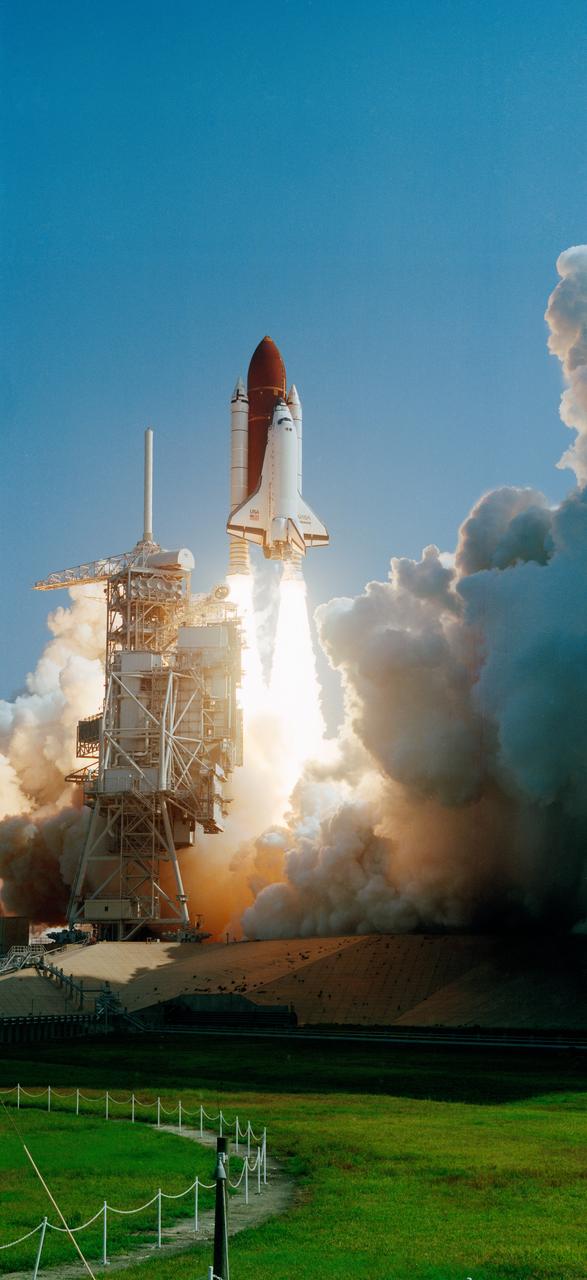
STS047-S-021 (12 Sept 1992) --- With a crew of six NASA astronauts and a Japanese payload specialist onboard, the Space Shuttle Endeavour heads for its second trip into space. This trip will be devoted to support of the Spacelab-J mission, a joint effort between Japan and the United States. Launch occurred at 10:23:00:0680 a.m. (EDT), September 12, 1992. Onboard were astronauts Robert L. Gibson, mission commander; Curtis L. Brown Jr., pilot; Mark C. Lee, payload commander; and Jerome (Jay) Apt, Mae C. Jemison and N. Jan Davis, mission specialists, along with payload specialist Mamoru Mohri, representing the National Space Development Agency of Japan.
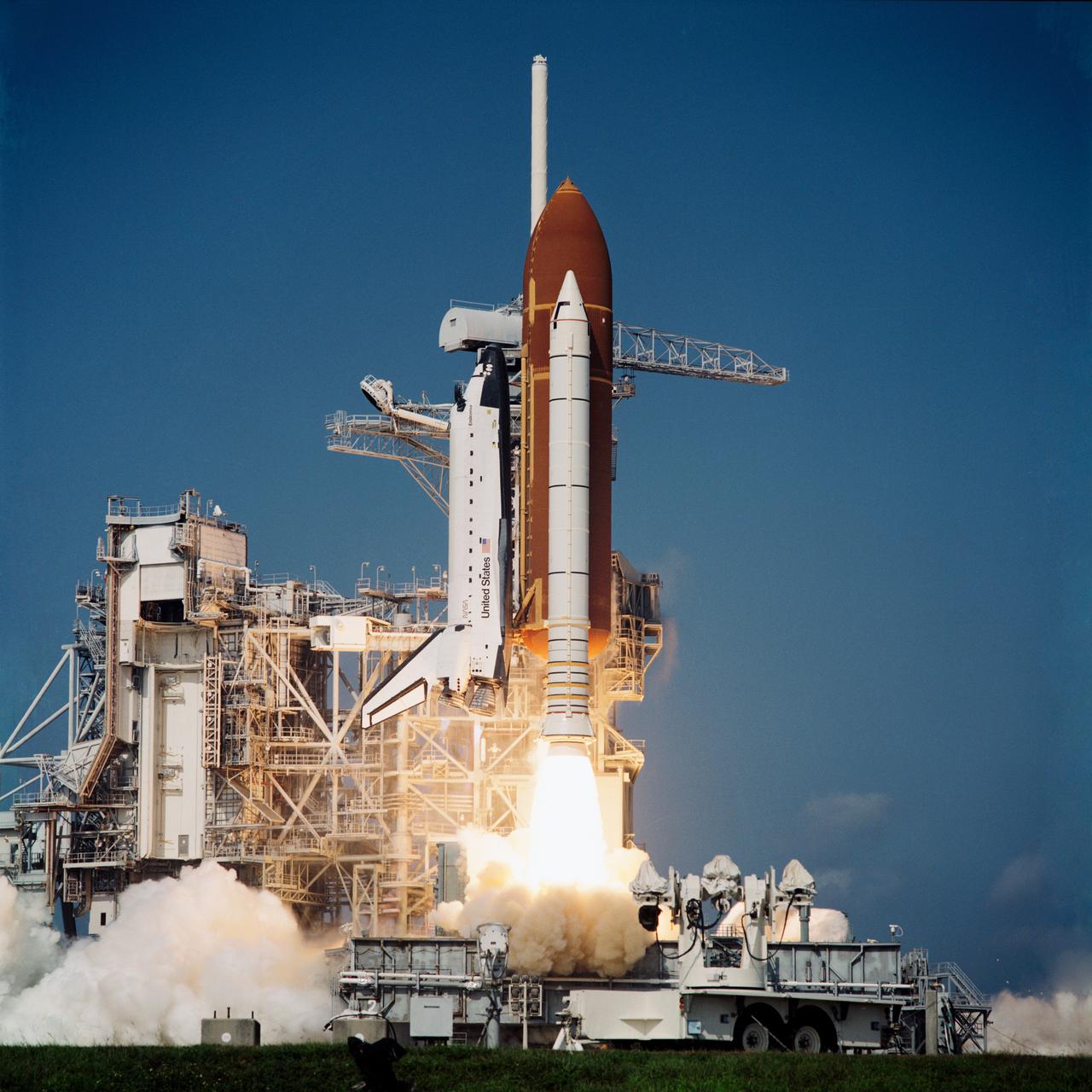
STS047-S-019 (12 Sept 1992) --- With a crew of six NASA astronauts and a Japanese payload specialist onboard, the Space Shuttle Endeavour heads for its second trip into space. This trip will be devoted to support of the Spacelab-J mission, a joint effort between Japan and the United States. Launch occurred at 10:23:00:0680 a.m. (EDT), September 12, 1992. Onboard were astronauts Robert L. Gibson, mission commander; Curtis L. Brown Jr., pilot; Mark C. Lee, payload commander; and Jerome (Jay) Apt, Mae C. Jemison and N. Jan Davis, mission specialists; along with payload specialist Mamoru Mohri, representing the National Space Development Agency of Japan.
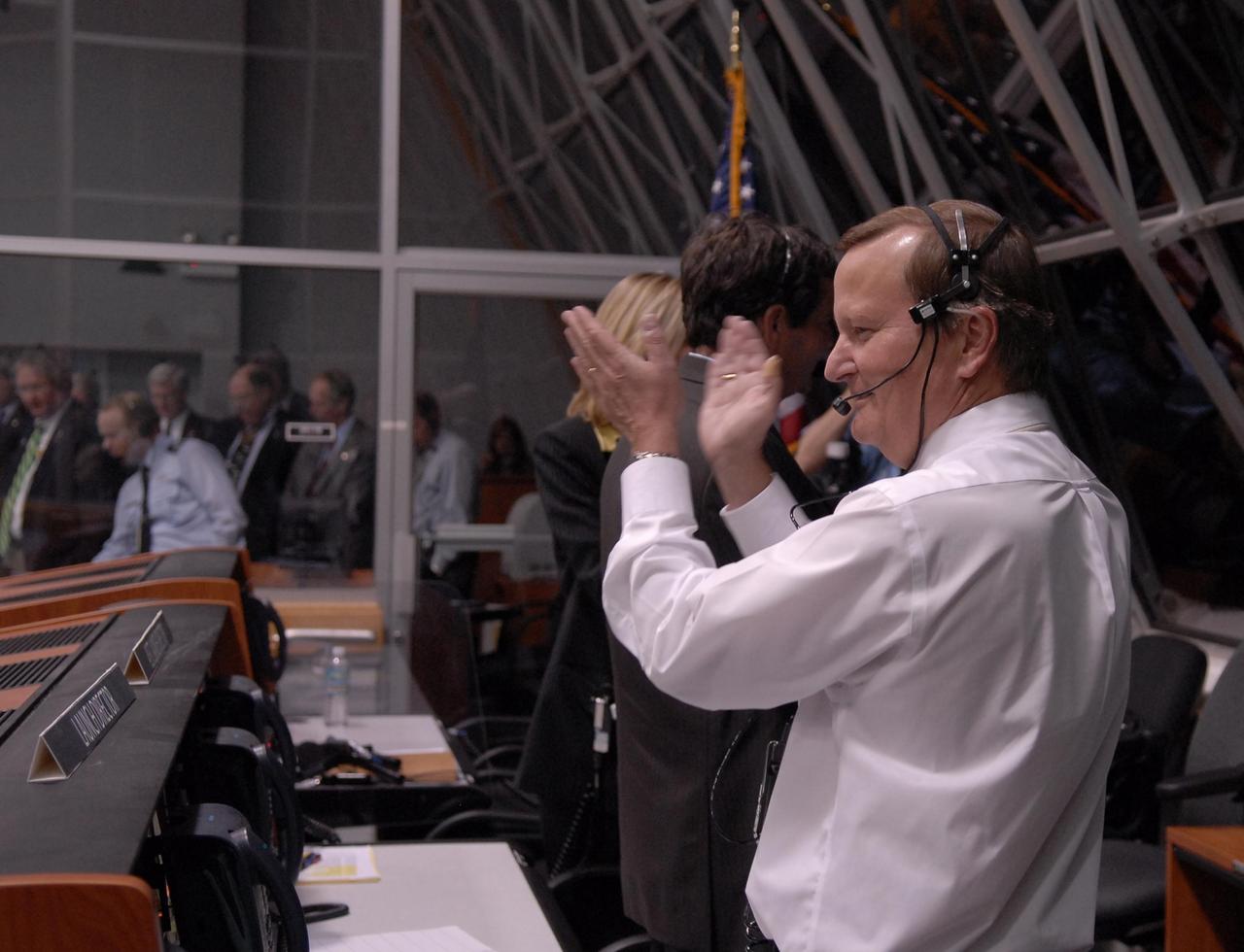
KENNEDY SPACE CENTER, FLA. -- In the firing room at the Launch Control Center, Shuttle Launch Director Mike Leinbach applauds the successful launch of Space Shuttle Discovery on mission STS-116. Liftoff occurred on time at 8:47 p.m. EST. This was the second launch attempt for mission STS-116. The first launch attempt on Dec. 7 was postponed due a low cloud ceiling over Kennedy Space Center. This is Discovery's 33rd mission and the first night launch since 2002. The 20th shuttle mission to the International Space Station, STS-116 carries another truss segment, P5. It will serve as a spacer, mated to the P4 truss that was attached in September. After installing the P5, the crew will reconfigure and redistribute the power generated by two pairs of U.S. solar arrays. Landing is expected Dec. 21 at KSC. Photo credit: NASA/Kim Shiflett
![KENNEDY SPACE CENTER, FLA. -- Against a black moonless sky, Space Shuttle Endeavour blazes into space after an ontime liftoff at 7:49:47 p.m. EST. The launch is the 19th for Endeavour, and the 112th flight in the Shuttle program. Mission STS-113 is the 16th assembly flight to the International Space Station, carrying another structure for the Station, the P1 integrated truss. Also onboard are the Expedition 6 crew, who will replace Expedition 5. Endeavour is scheduled to land at KSC after an 11-day journey. [Photo by Ray Yost]](https://images-assets.nasa.gov/image/KSC-02pd1805/KSC-02pd1805~medium.jpg)
KENNEDY SPACE CENTER, FLA. -- Against a black moonless sky, Space Shuttle Endeavour blazes into space after an ontime liftoff at 7:49:47 p.m. EST. The launch is the 19th for Endeavour, and the 112th flight in the Shuttle program. Mission STS-113 is the 16th assembly flight to the International Space Station, carrying another structure for the Station, the P1 integrated truss. Also onboard are the Expedition 6 crew, who will replace Expedition 5. Endeavour is scheduled to land at KSC after an 11-day journey. [Photo by Ray Yost]
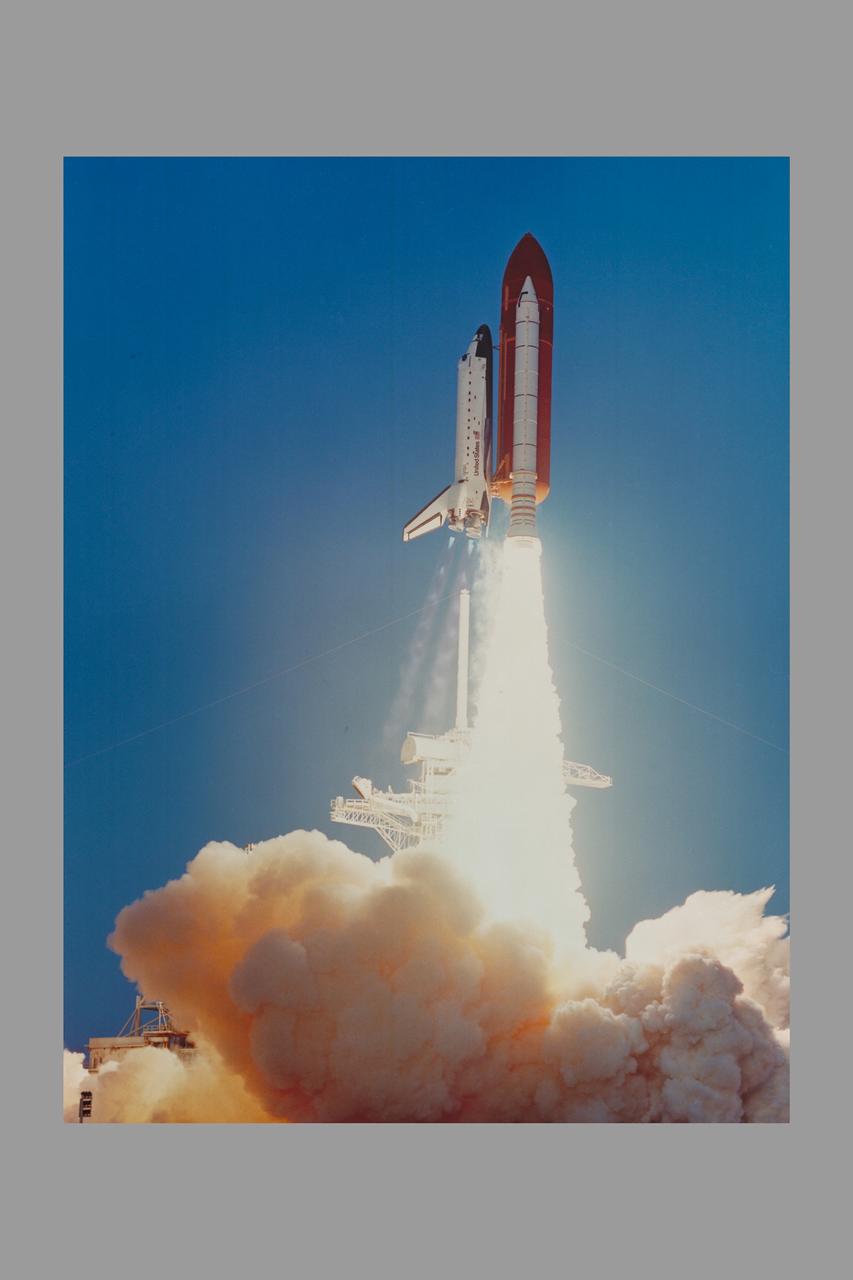
STS-41 Discovery lifts off from Launch Complex 39 at the Kennedy Space Center to begin a four-day mission in space for its five-man crew. Onboard the spacecraft were Astronauts Richard N. Richards, Robert D Cabana, William M Sheperd, Bruce E. Melnick and Thomas D. Akers. Lift off was at 7:47 a.m. EDT on oct 6, 1990. A feww hours after this photo was made, the crewmembers released the Ulysses spacecraft onits way to a long-awaited mission.
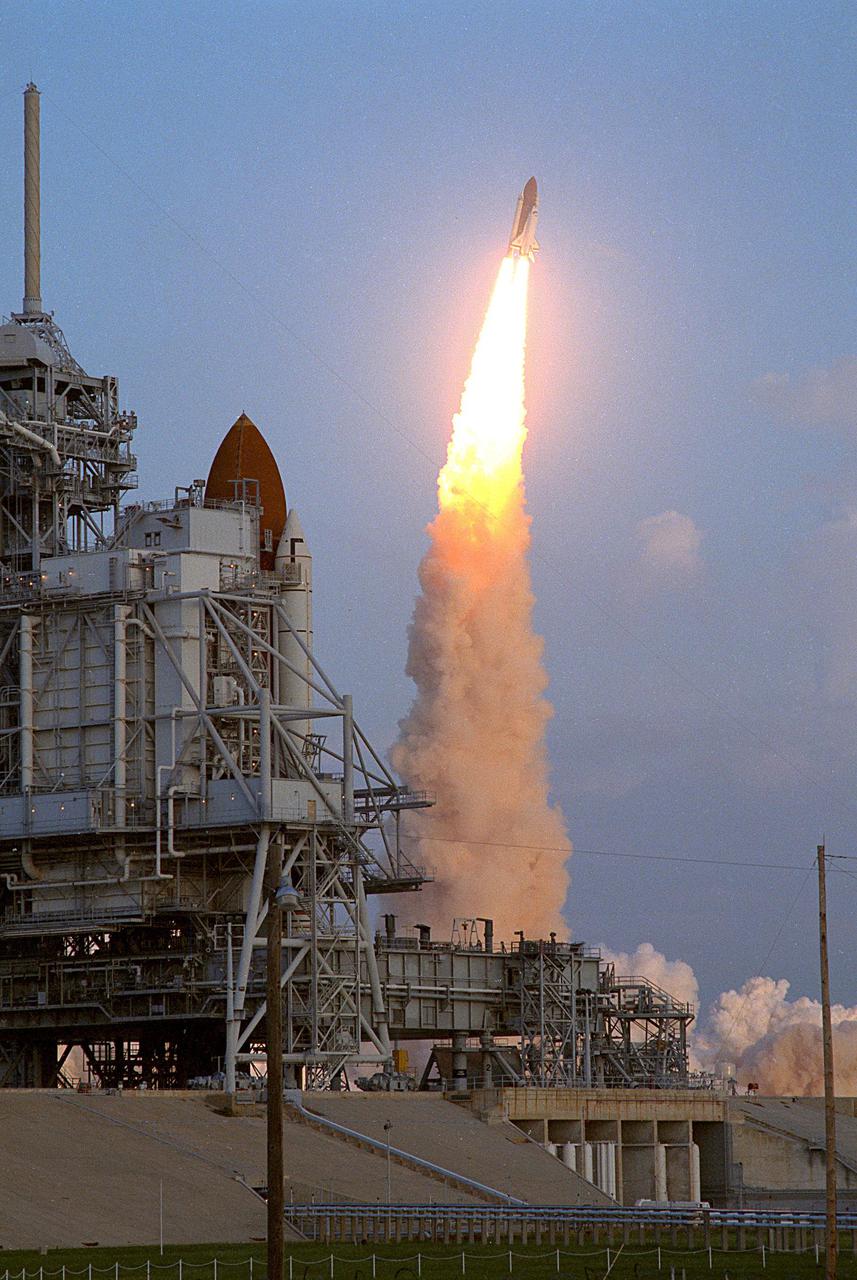
KENNEDY SPACE CENTER, FLA. -- The Space Shuttle Discovery hurtles into space as sister ship Columbia looks on from Launch Pad 39A. Discovery lifted off from pad 39B at 7:47 a.m. EDT, Oct. 6. Columbia will be moved to the vacated pad 39B where it will undergo testing to pinpoint the source of a liquid hydrogen leak. Discovery is carrying a crew of five and the Ulysses solar explorer as it embarks on mission STS-41, a four-day flight
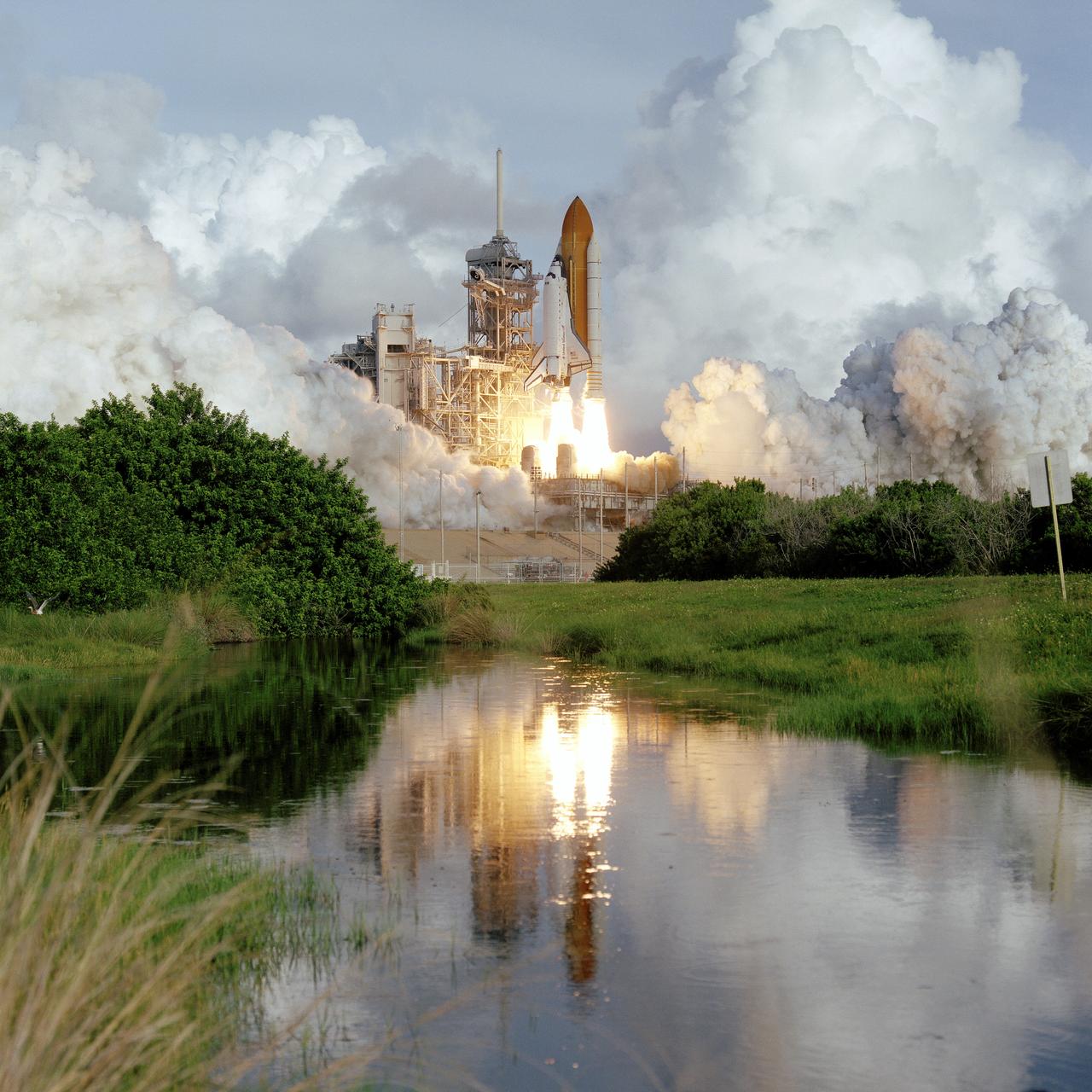
STS106-S-010 (8 Sept. 2000) --- The Space Shuttle Atlantis is mirrored in nearby marsh waters as it makes its 22nd launch into space. The perfect on-time liftoff for STS-106 occurred at 8:45:47 a.m. (EDT), Sept. 8, 2000. Onboard the shuttle were astronauts Terrence W. Wilcutt, Scott D. Altman, Edward T. Lu, Richard A. Mastracchio and Daniel C. Burbank, along with cosmonauts Yuri I. Malenchenko and Boris V. Morukov who represent the Russian Aviation and Space Agency.
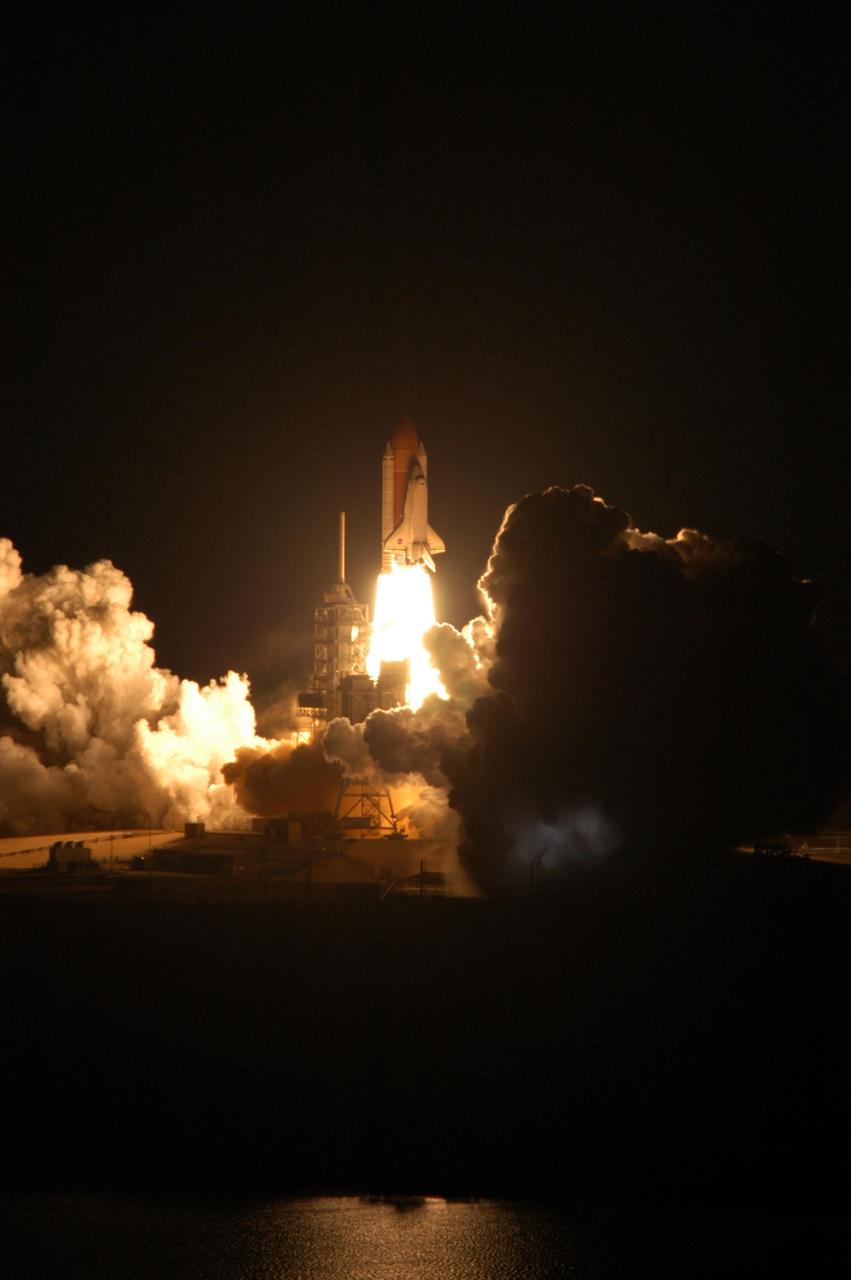
KENNEDY SPACE CENTER, FLA. -- Flooding the night sky with its blazing light, Space Shuttle Discovery leaps toward the sky from Launch Pad 39B on mission STS-116. The launch occurred at 8:47:35 p.m. EST. This was the second launch attempt for mission STS-116. The first launch attempt on Dec. 7 was postponed due a low cloud ceiling over Kennedy Space Center. This is Discovery's 33rd mission and the first night launch since 2002. The 20th shuttle mission to the International Space Station, STS-116 carries another truss segment, P5. It will serve as a spacer, mated to the P4 truss that was attached in September. After installing the P5, the crew will reconfigure and redistribute the power generated by two pairs of U.S. solar arrays. Landing is expected Dec. 21 at KSC. Photo credit: NASA/George Shelton
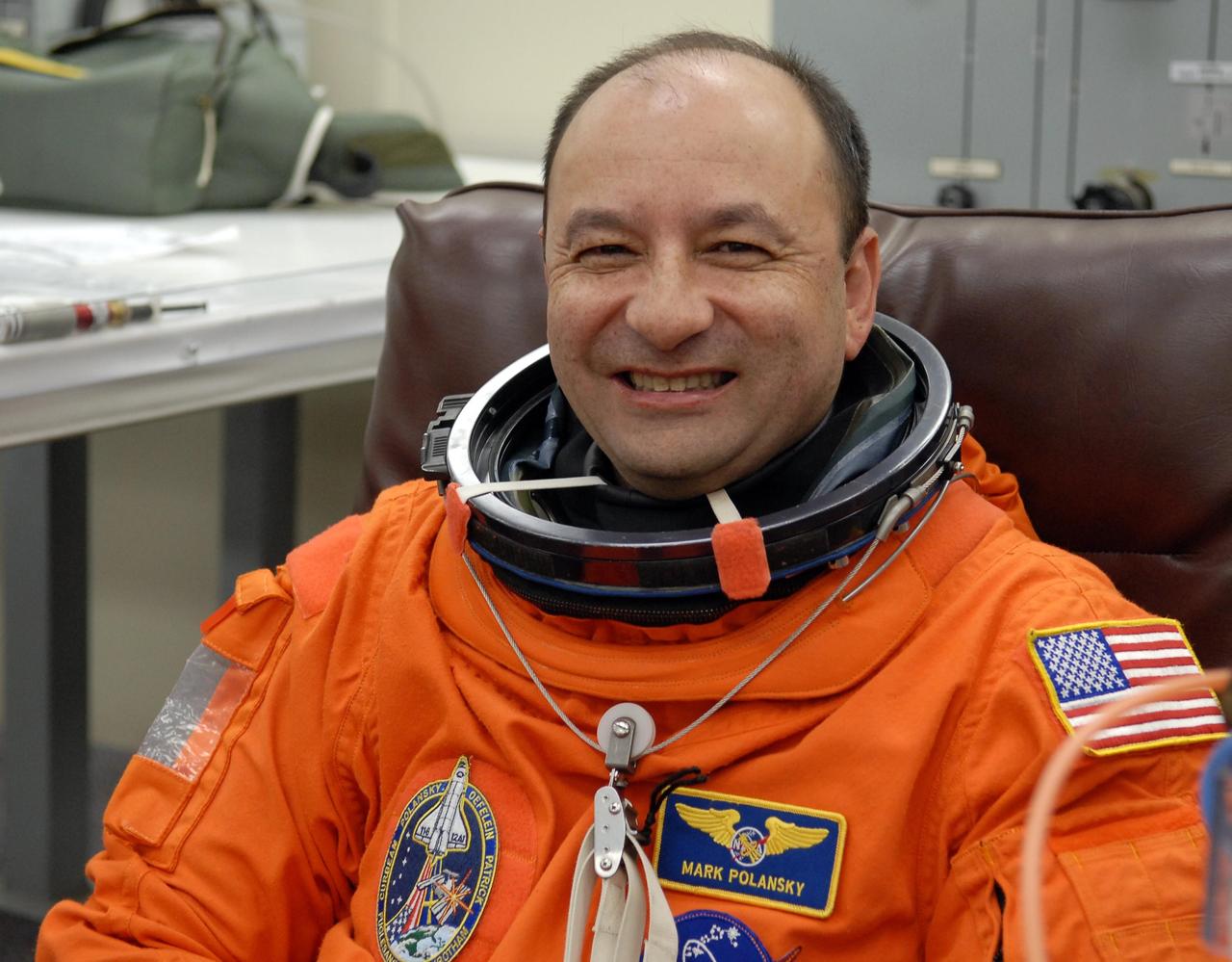
KENNEDY SPACE CENTER, FLA. -- The crew members of mission STS-116 are suiting up for a second launch attempt at 8:47 p.m. EST from Launch Pad 39B aboard Space Shuttle Discovery. Pictured here is Commander Mark Polansky, who shows his delight in progressing toward another launch attempt. The first launch attempt of STS-116 on Dec. 7 was postponed due a low cloud ceiling over Kennedy Space Center. This is Discovery's 33rd mission and the first night launch since 2002. The 20th shuttle mission to the International Space Station, STS-116 carries another truss segment, P5. It will serve as a spacer, mated to the P4 truss that was attached in September. After installing the P5, the crew will reconfigure and redistribute the power generated by two pairs of U.S. solar arrays. Landing is expected Dec. 19 at KSC. Photo credit: NASA/Kim Shiflett
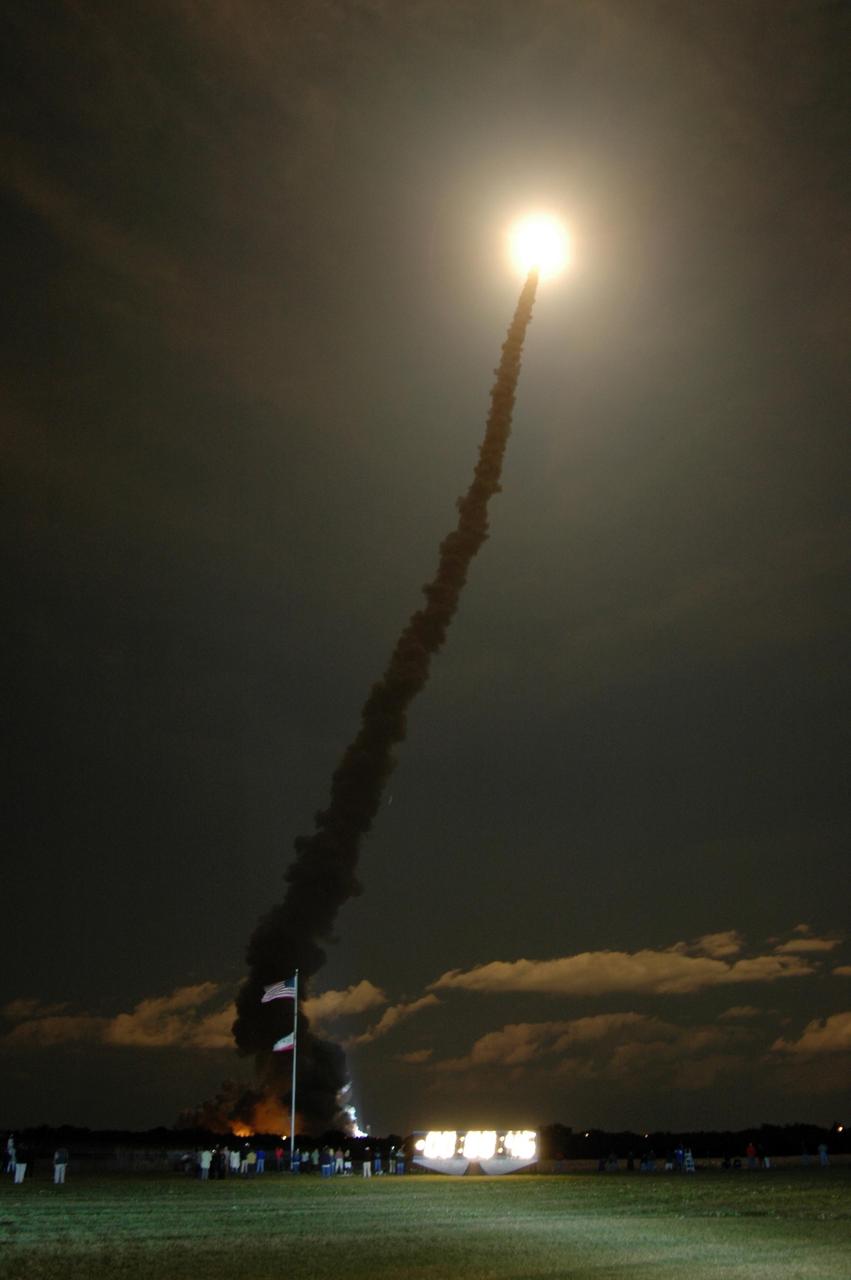
KENNEDY SPACE CENTER, FLA. -- Like a shooting star flooding the night sky with its blazing light, Space Shuttle Discovery leaps toward the sky from Launch Pad 39B on mission STS-116. The launch occurred at 8:47:35 p.m. EST. This was the second launch attempt for mission STS-116. The first launch attempt on Dec. 7 was postponed due a low cloud ceiling over Kennedy Space Center. This is Discovery's 33rd mission and the first night launch since 2002. The 20th shuttle mission to the International Space Station, STS-116 carries another truss segment, P5. It will serve as a spacer, mated to the P4 truss that was attached in September. After installing the P5, the crew will reconfigure and redistribute the power generated by two pairs of U.S. solar arrays. Landing is expected Dec. 21 at KSC. Photo credit: NASA/Jim Grossmann
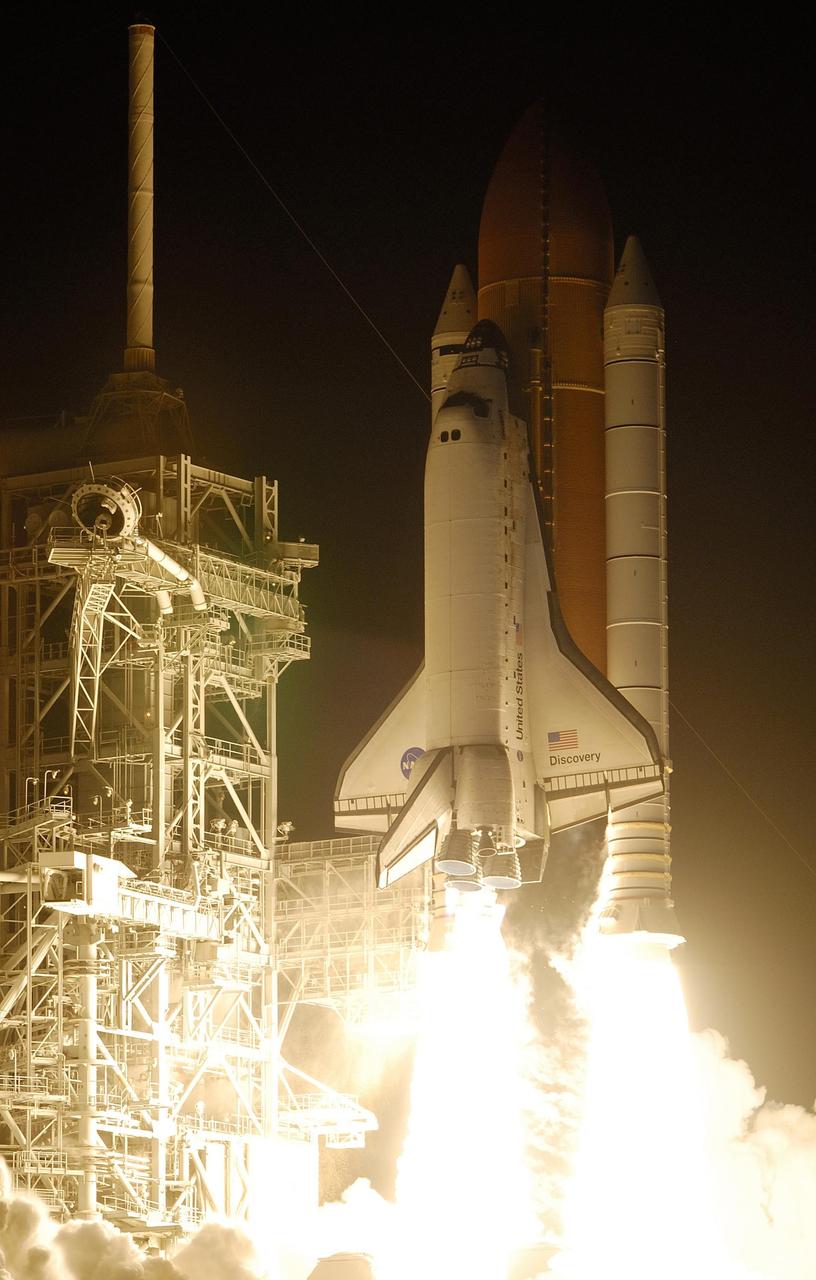
KENNEDY SPACE CENTER, FLA. -- Space Shuttle Discovery seems to be standing on the fiery columns erupting from the solid rocket boosters as it lifts off Launch Pad 39B on mission STS-116. The blazing light illuminated the launch pad and fixed service structure, at left. Liftoff occurred on time at 8:47 p.m. EST. This was the second launch attempt for mission STS-116. The first launch attempt on Dec. 7 was postponed due a low cloud ceiling over Kennedy Space Center. This is Discovery's 33rd mission and the first night launch since 2002. The 20th shuttle mission to the International Space Station, STS-116 carries another truss segment, P5. It will serve as a spacer, mated to the P4 truss that was attached in September. After installing the P5, the crew will reconfigure and redistribute the power generated by two pairs of U.S. solar arrays. Landing is expected Dec. 21 at KSC. Photo courtesy of Nikon/Scott Andrews
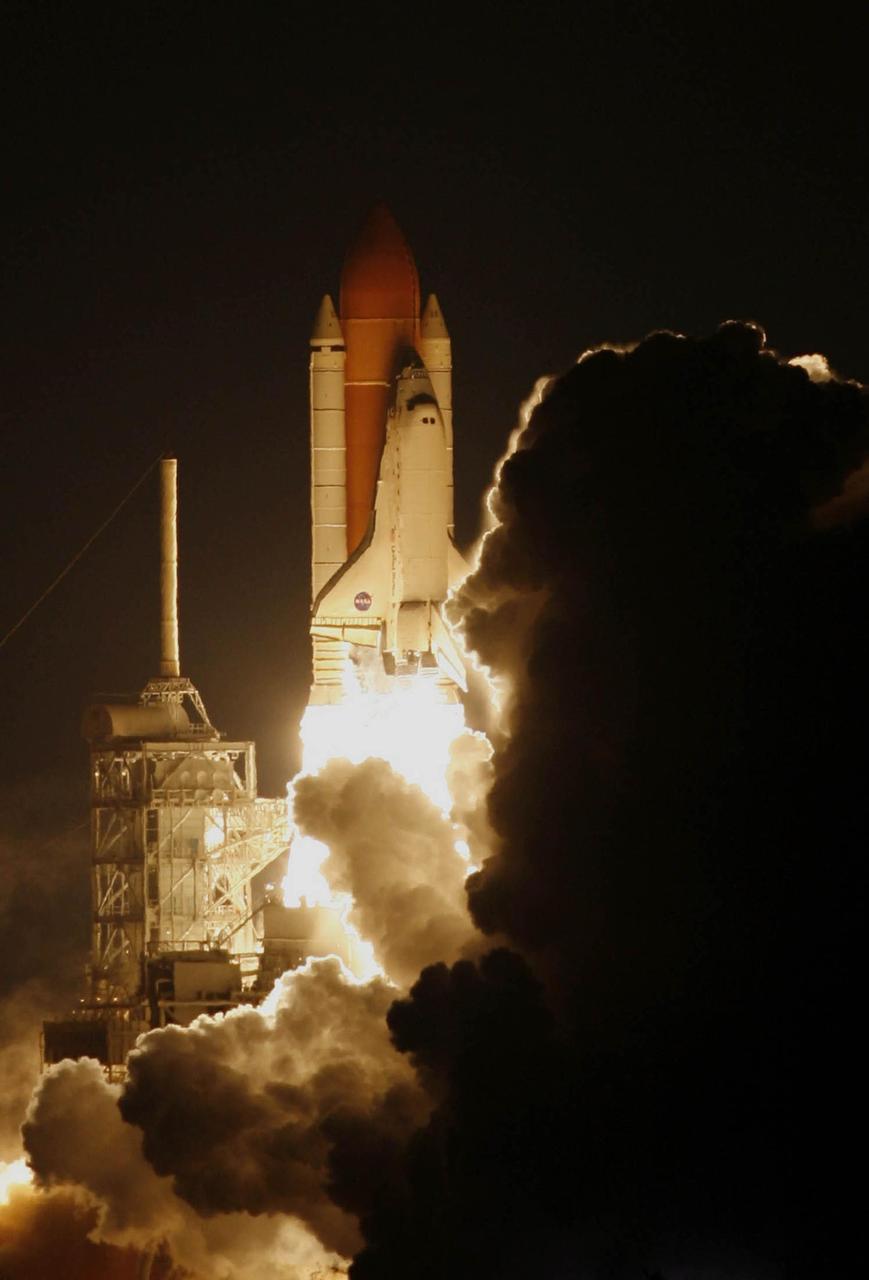
KENNEDY SPACE CENTER, FLA. -- From amid the smoke and steam, Space Shuttle Discovery leaps toward the sky past the lightning mast on Launch Pad 39B on mission STS-116. The launch occurred at 8:47:35 p.m. EST. This was the second launch attempt for mission STS-116. The first launch attempt on Dec. 7 was postponed due a low cloud ceiling over Kennedy Space Center. This is Discovery's 33rd mission and the first night launch since 2002. The 20th shuttle mission to the International Space Station, STS-116 carries another truss segment, P5. It will serve as a spacer, mated to the P4 truss that was attached in September. After installing the P5, the crew will reconfigure and redistribute the power generated by two pairs of U.S. solar arrays. Landing is expected Dec. 21 at KSC. Photo courtesy of Reuters/Larry Rubenstein and Peter Jones
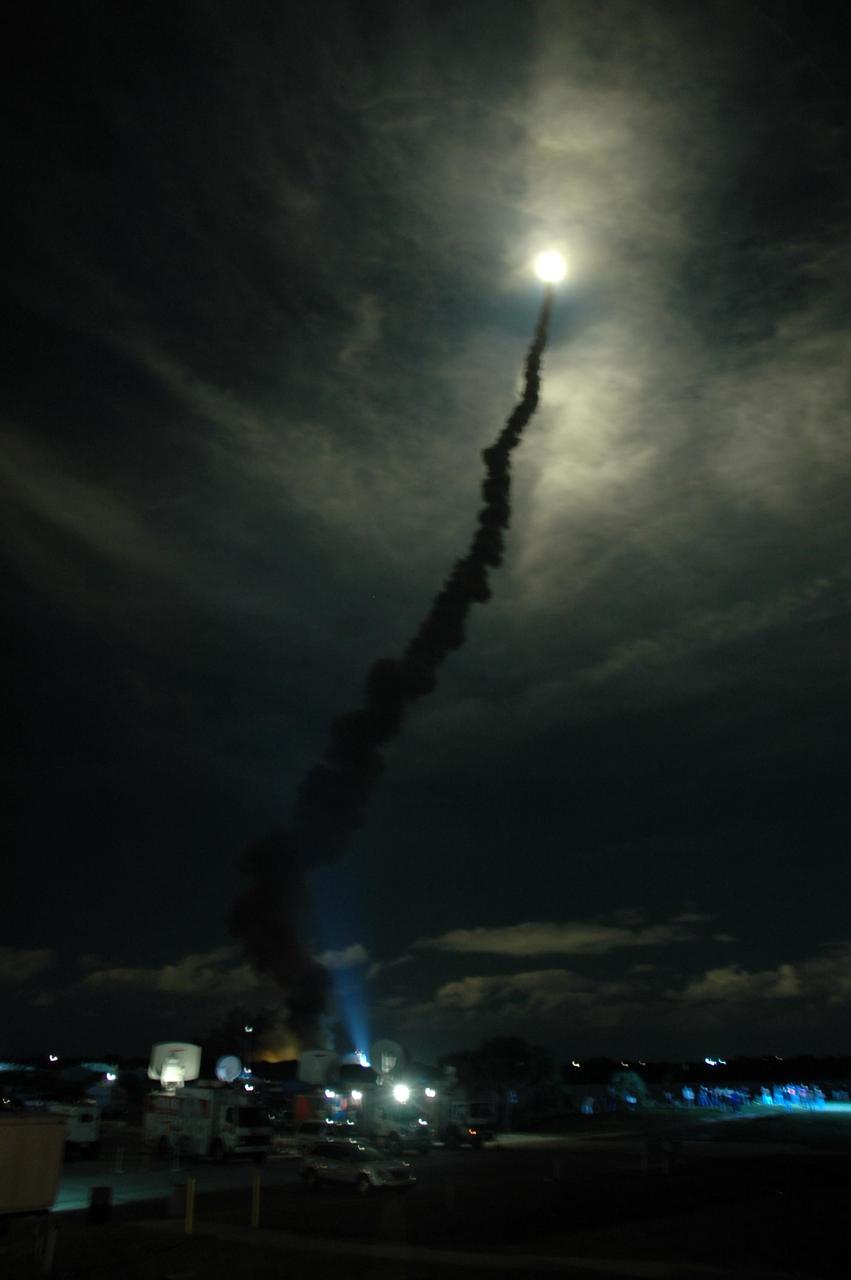
KENNEDY SPACE CENTER, FLA. -- Flooding the night sky with light, Space Shuttle Discovery streaks through the clouds after liftoff from Launch Pad 39B on mission STS-116. The launch occurred at 8:47:35 p.m. EST. This was the second launch attempt for mission STS-116. The first launch attempt on Dec. 7 was postponed due a low cloud ceiling over Kennedy Space Center. This is Discovery's 33rd mission and the first night launch since 2002. The 20th shuttle mission to the International Space Station, STS-116 carries another truss segment, P5. It will serve as a spacer, mated to the P4 truss that was attached in September. After installing the P5, the crew will reconfigure and redistribute the power generated by two pairs of U.S. solar arrays. Landing is expected Dec. 21 at KSC. Photo credit: NASA/Amanda Diller
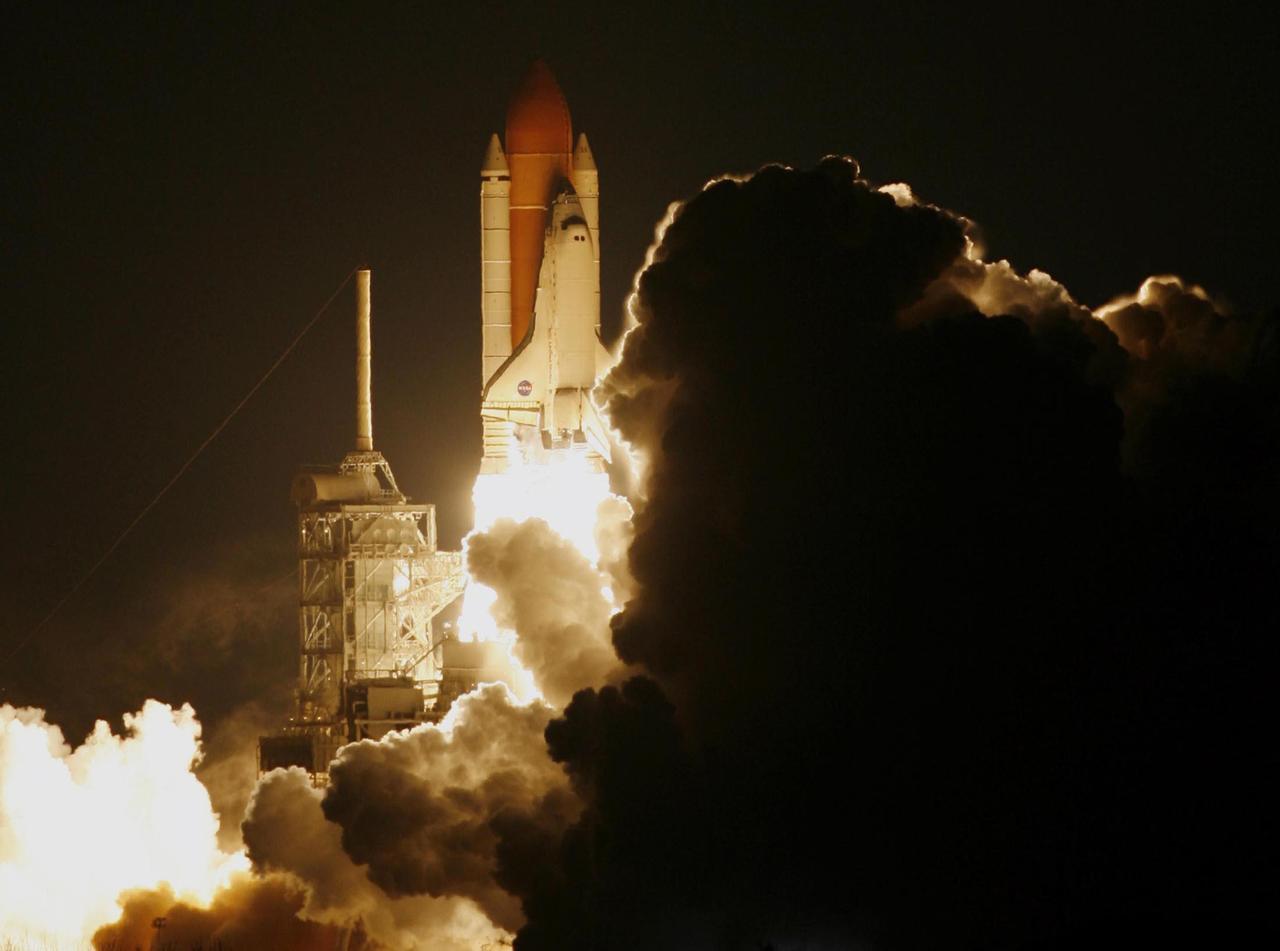
KENNEDY SPACE CENTER, FLA. -- From amid the smoke and steam, Space Shuttle Discovery leaps toward the sky past the lightning mast on Launch Pad 39B on mission STS-116. The launch occurred at 8:47:35 p.m. EST. This was the second launch attempt for mission STS-116. The first launch attempt on Dec. 7 was postponed due a low cloud ceiling over Kennedy Space Center. This is Discovery's 33rd mission and the first night launch since 2002. The 20th shuttle mission to the International Space Station, STS-116 carries another truss segment, P5. It will serve as a spacer, mated to the P4 truss that was attached in September. After installing the P5, the crew will reconfigure and redistribute the power generated by two pairs of U.S. solar arrays. Landing is expected Dec. 21 at KSC. Photo courtesy of Reuters/Larry Rubenstein and Peter Jones
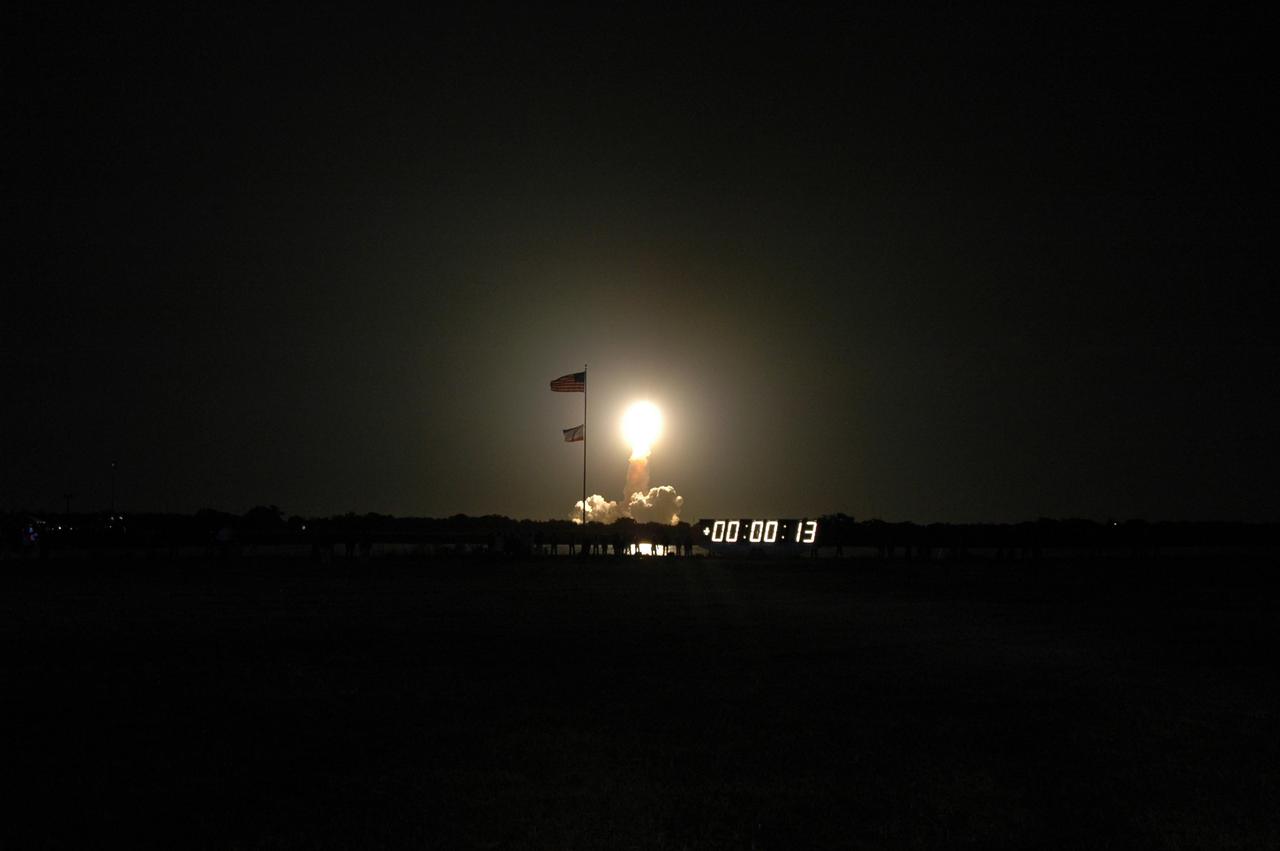
KENNEDY SPACE CENTER, FLA. -- Flooding the night sky with its blazing light, Space Shuttle Discovery leaps toward the sky from Launch Pad 39B on mission STS-116. The launch occurred at 8:47:35 p.m. EST. This was the second launch attempt for mission STS-116. The first launch attempt on Dec. 7 was postponed due a low cloud ceiling over Kennedy Space Center. This is Discovery's 33rd mission and the first night launch since 2002. The 20th shuttle mission to the International Space Station, STS-116 carries another truss segment, P5. It will serve as a spacer, mated to the P4 truss that was attached in September. After installing the P5, the crew will reconfigure and redistribute the power generated by two pairs of U.S. solar arrays. Landing is expected Dec. 21 at KSC. Photo credit: NASA/Jim Grossmann
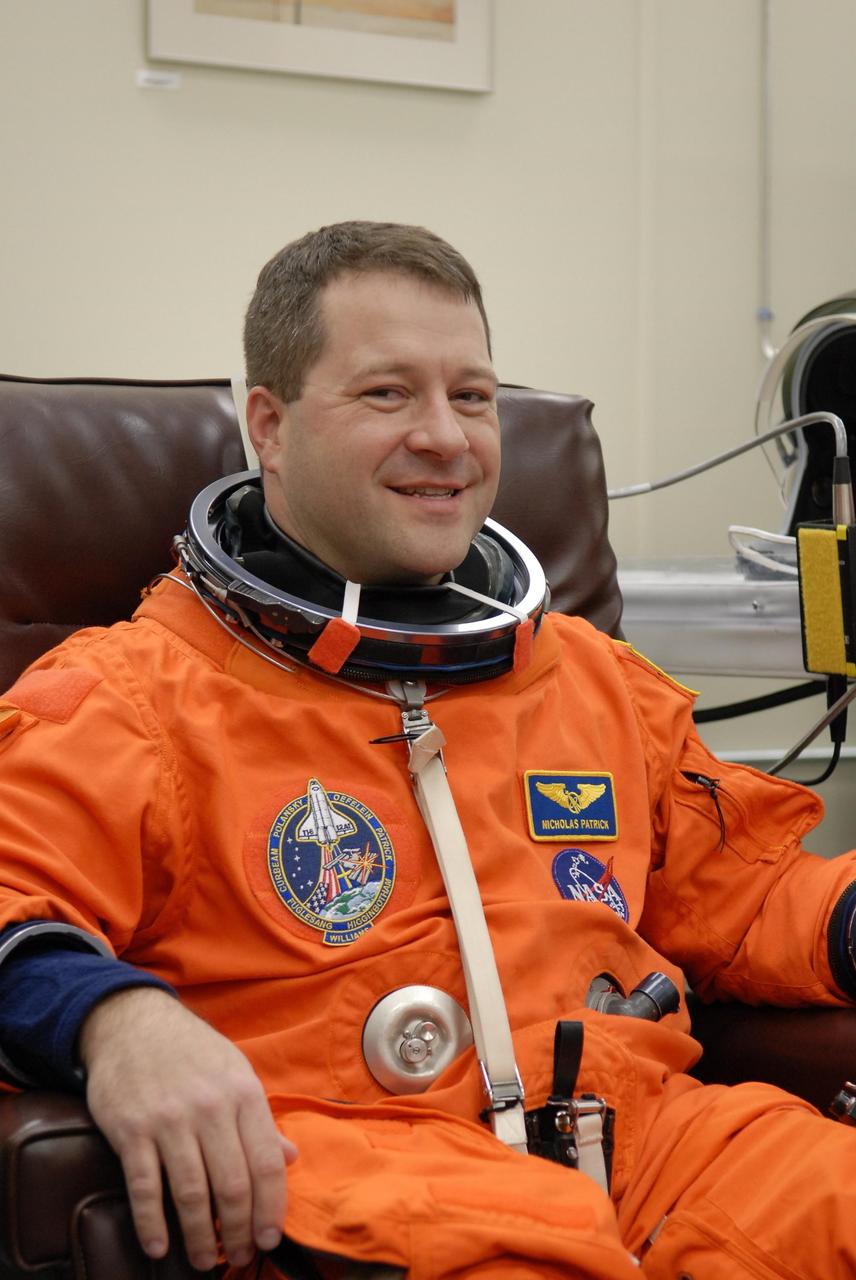
KENNEDY SPACE CENTER, FLA. -- The crew members of mission STS-116 are suiting up for a second launch attempt at 8:47 p.m. EST from Launch Pad 39B aboard Space Shuttle Discovery. Pictured here is Mission Specialist Nicholas Patrick, who will be making his first shuttle flight. The first launch attempt of STS-116 on Dec. 7 was postponed due a low cloud ceiling over Kennedy Space Center. This is Discovery's 33rd mission and the first night launch since 2002. The 20th shuttle mission to the International Space Station, STS-116 carries another truss segment, P5. It will serve as a spacer, mated to the P4 truss that was attached in September. After installing the P5, the crew will reconfigure and redistribute the power generated by two pairs of U.S. solar arrays. Landing is expected Dec. 19 at KSC. Photo credit: NASA/Kim Shiflett
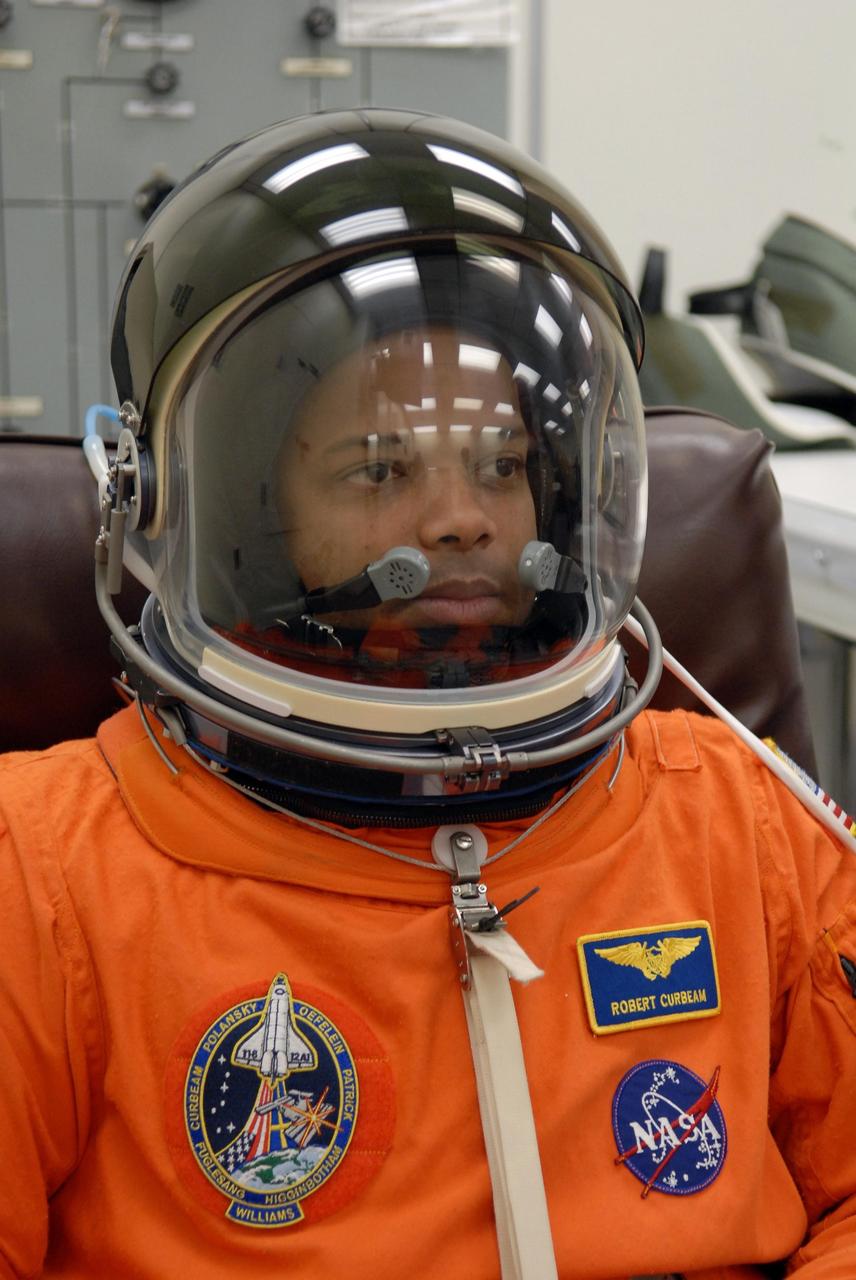
KENNEDY SPACE CENTER, FLA. -- The crew members of mission STS-116 are suiting up for a second launch attempt at 8:47 p.m. EST from Launch Pad 39B aboard Space Shuttle Discovery. Pictured here is Mission Specialist Robert Curbeam, after donning his helmet. Curbeam will be making his third shuttle flight. The first launch attempt of STS-116 on Dec. 7 was postponed due a low cloud ceiling over Kennedy Space Center. This is Discovery's 33rd mission and the first night launch since 2002. The 20th shuttle mission to the International Space Station, STS-116 carries another truss segment, P5. It will serve as a spacer, mated to the P4 truss that was attached in September. After installing the P5, the crew will reconfigure and redistribute the power generated by two pairs of U.S. solar arrays. Landing is expected Dec. 19 at KSC. Photo credit: NASA/Kim Shiflett
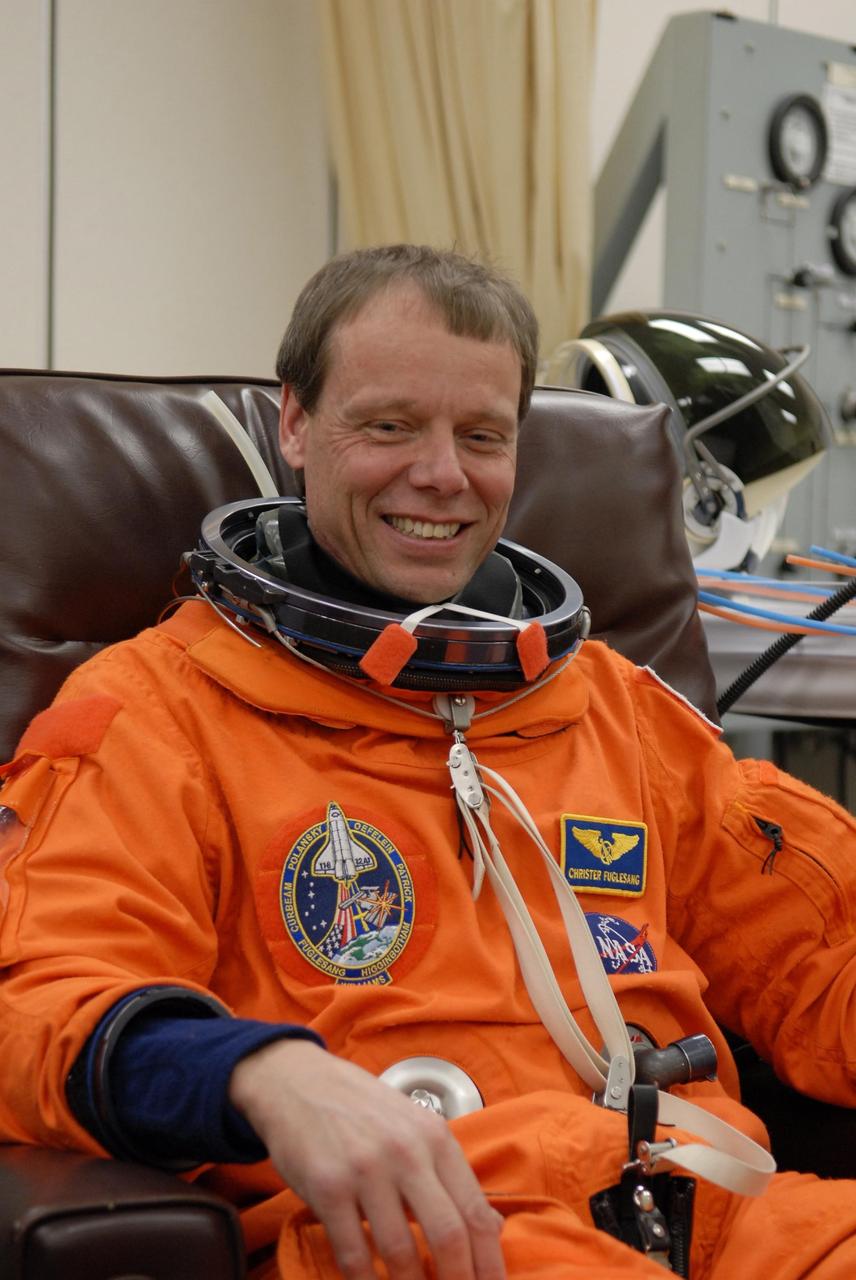
KENNEDY SPACE CENTER, FLA. -- The crew members of mission STS-116 are suiting up for a second launch attempt at 8:47 p.m. EST from Launch Pad 39B aboard Space Shuttle Discovery. Pictured here is Mission Specialist Christer Fuglesang, who represents the European Space Agency. Fuglesang is making his first shuttle flight. The first launch attempt of STS-116 on Dec. 7 was postponed due a low cloud ceiling over Kennedy Space Center. This is Discovery's 33rd mission and the first night launch since 2002. The 20th shuttle mission to the International Space Station, STS-116 carries another truss segment, P5. It will serve as a spacer, mated to the P4 truss that was attached in September. After installing the P5, the crew will reconfigure and redistribute the power generated by two pairs of U.S. solar arrays. Landing is expected Dec. 19 at KSC. Photo credit: NASA/Kim Shiflett
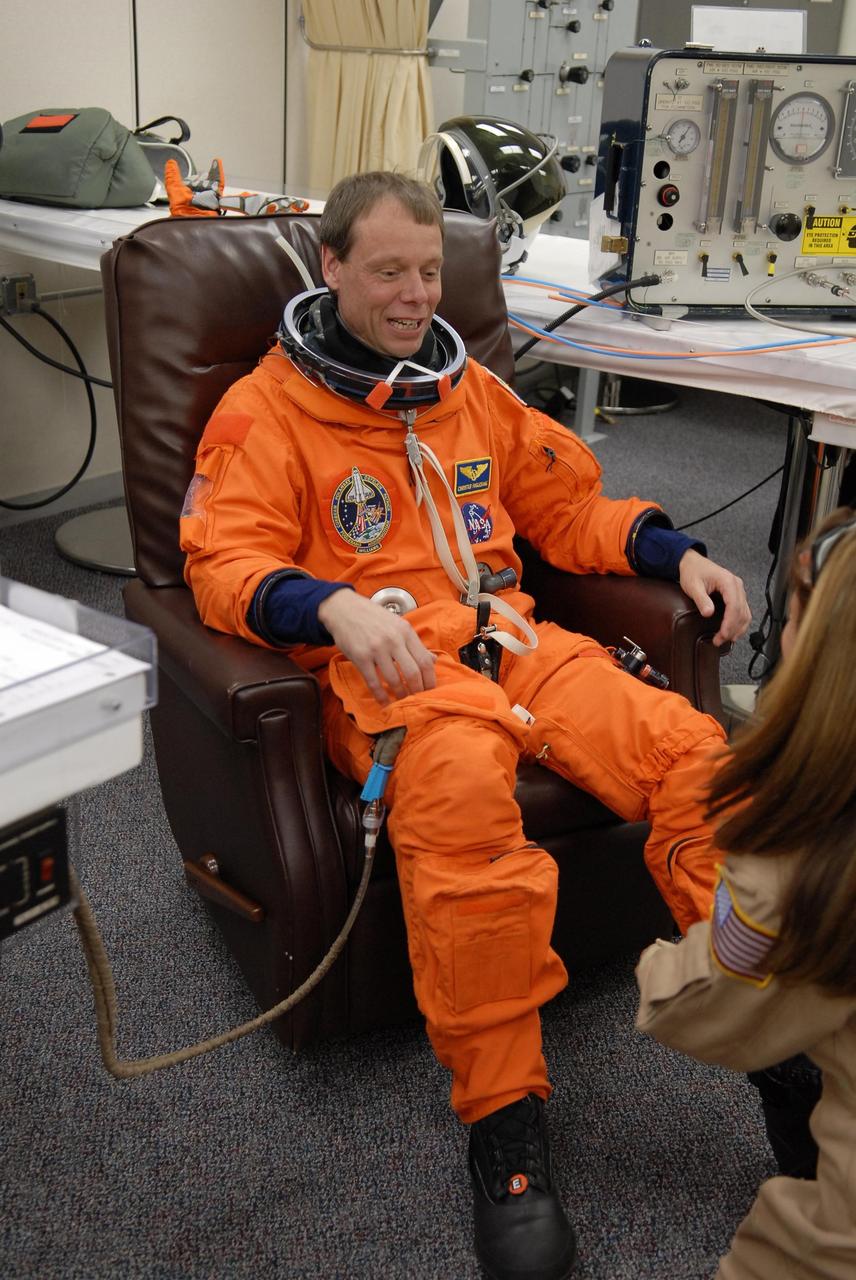
KENNEDY SPACE CENTER, FLA. -- The crew members of mission STS-116 are suiting up for a second launch attempt at 8:47 p.m. EST from Launch Pad 39B aboard Space Shuttle Discovery. Pictured here, Mission Specialist Christer Fuglesang is helped with his boot. Fuglesang represents the European Space Agency. He is making his first shuttle flight. The first launch attempt of STS-116 on Dec. 7 was postponed due a low cloud ceiling over Kennedy Space Center. This is Discovery's 33rd mission and the first night launch since 2002. The 20th shuttle mission to the International Space Station, STS-116 carries another truss segment, P5. It will serve as a spacer, mated to the P4 truss that was attached in September. After installing the P5, the crew will reconfigure and redistribute the power generated by two pairs of U.S. solar arrays. Landing is expected Dec. 19 at KSC. Photo credit: NASA/Kim Shiflett

KENNEDY SPACE CENTER, FLA. -- The smoke and steam obscure Launch Pad 39B as Space Shuttle Discovery rockets through the black skies into space on mission STS-116. Liftoff occurred at 8:47 p.m. EST. This was the second launch attempt for mission STS-116. The first launch attempt on Dec. 7 was postponed due a low cloud ceiling over Kennedy Space Center. This is Discovery's 33rd mission and the first night launch since 2003. The 20th shuttle mission to the International Space Station, STS-116 carries another truss segment, P5. It will serve as a spacer, mated to the P4 truss that was attached in September. After installing the P5, the crew will reconfigure and redistribute the power generated by two pairs of U.S. solar arrays. Landing is expected Dec. 21 at KSC. Photo credit: NASA/Sandy Joseph, Robert Murray & Chris Lynch
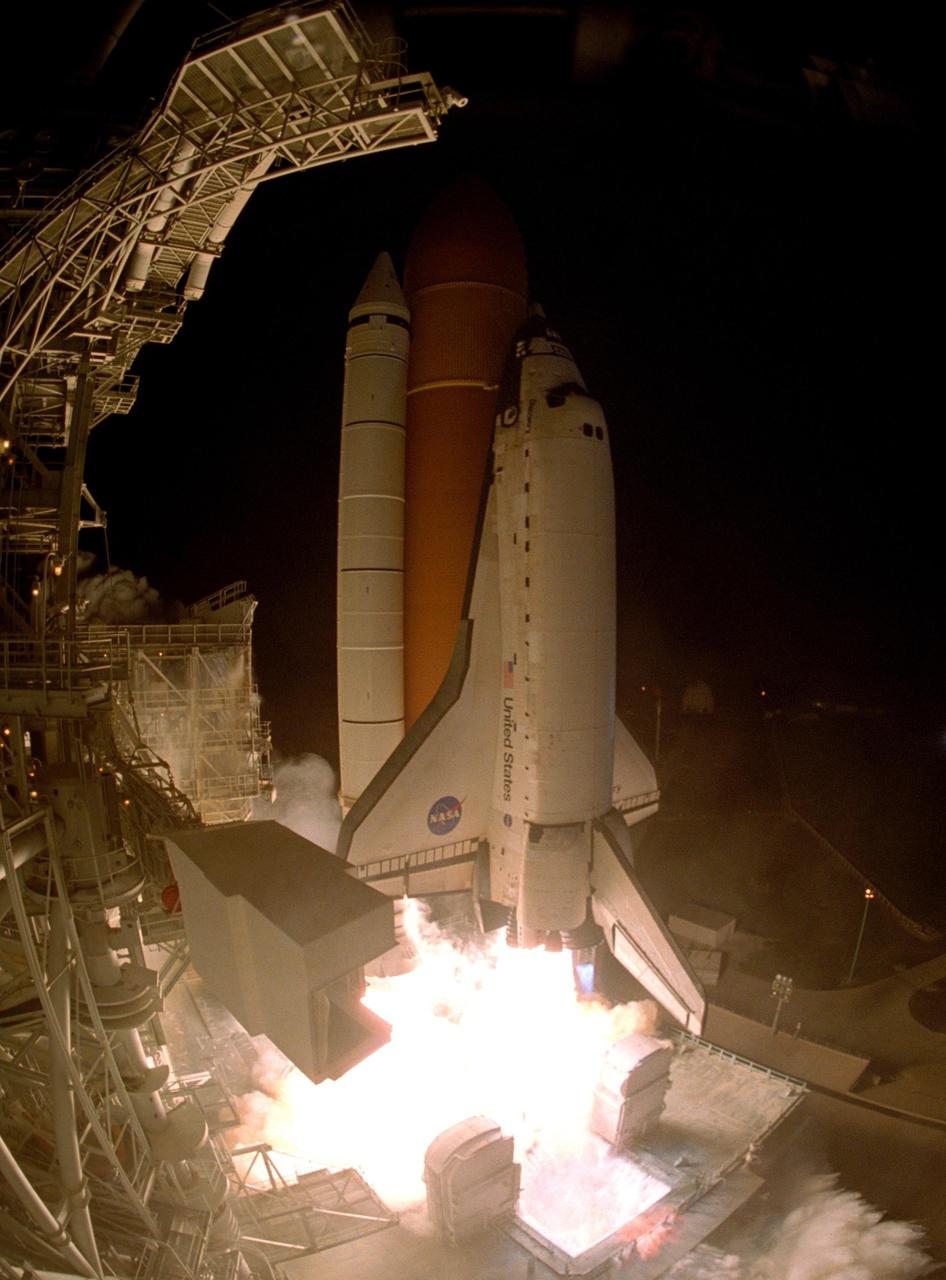
KENNEDY SPACE CENTER, FLA. -- This fish-eye view shows the water flooding the mobile launcher platform as Space Shuttle Discovery lifts off Launch Pad 39B on mission STS-116. Liftoff occurred on time at 8:47 p.m. EST. This was the second launch attempt for mission STS-116. The first launch attempt on Dec. 7 was postponed due a low cloud ceiling over Kennedy Space Center. This is Discovery's 33rd mission and the first night launch since 2002. The 20th shuttle mission to the International Space Station, STS-116 carries another truss segment, P5. It will serve as a spacer, mated to the P4 truss that was attached in September. After installing the P5, the crew will reconfigure and redistribute the power generated by two pairs of U.S. solar arrays. Landing is expected Dec. 21 at KSC. Photo credit: NASA/Tony Gray & Don Kight
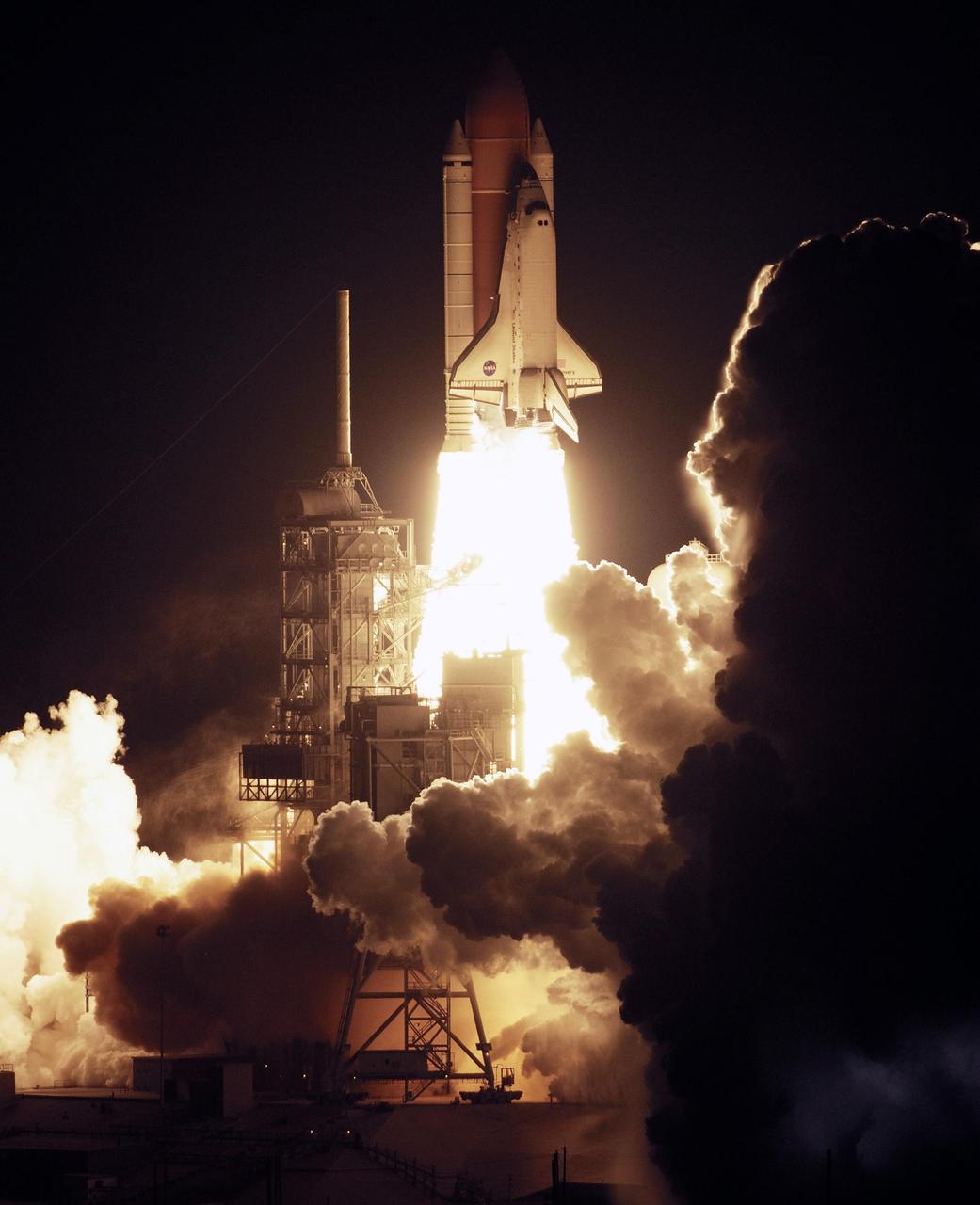
KENNEDY SPACE CENTER, FLA. -- Rising on columns of fire above the smoke and steam below, Space Shuttle Discovery leaps toward the sky past the lightning mast on Launch Pad 39B on mission STS-116. Liftoff occurred on time at 8:47 p.m. EST. This was the second launch attempt for mission STS-116. The first launch attempt on Dec. 7 was postponed due a low cloud ceiling over Kennedy Space Center. This is Discovery's 33rd mission and the first night launch since 2002. The 20th shuttle mission to the International Space Station, STS-116 carries another truss segment, P5. It will serve as a spacer, mated to the P4 truss that was attached in September. After installing the P5, the crew will reconfigure and redistribute the power generated by two pairs of U.S. solar arrays. Landing is expected Dec. 21 at KSC. Photo courtesy of Nikon/Scott Andrews
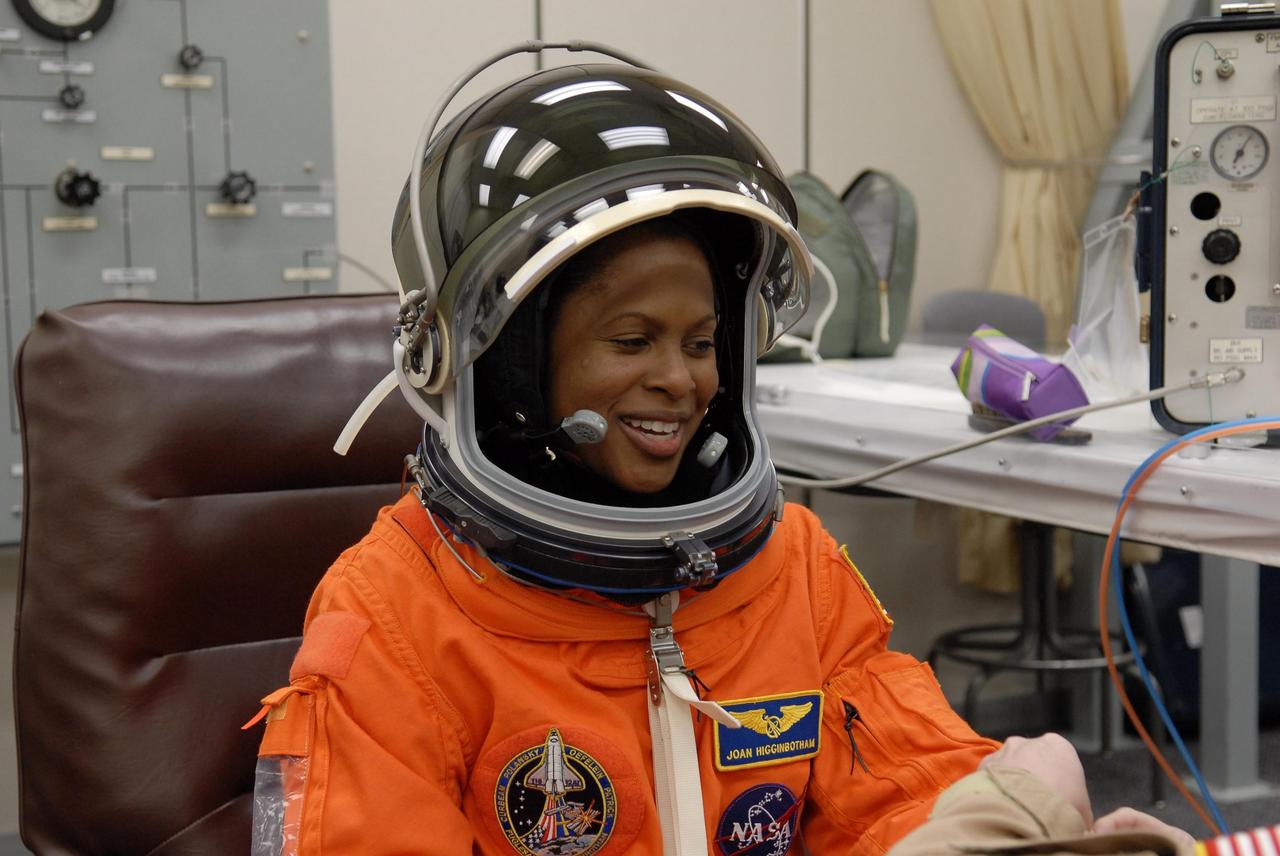
KENNEDY SPACE CENTER, FLA. -- The crew members of mission STS-116 are suiting up for a second launch attempt at 8:47 p.m. EST from Launch Pad 39B aboard Space Shuttle Discovery. Pictured here, Mission Specialist Joan Higginbotham, who will be making her first shuttle flight, has donned her helmet. The first launch attempt of STS-116 on Dec. 7 was postponed due a low cloud ceiling over Kennedy Space Center. This is Discovery's 33rd mission and the first night launch since 2002. The 20th shuttle mission to the International Space Station, STS-116 carries another truss segment, P5. It will serve as a spacer, mated to the P4 truss that was attached in September. After installing the P5, the crew will reconfigure and redistribute the power generated by two pairs of U.S. solar arrays. Landing is expected Dec. 19 at KSC. Photo credit: NASA/Kim Shiflett
KENNEDY SPACE CENTER, FLA. -- The crew members of mission STS-116 are suiting up for a second launch attempt at 8:47 p.m. EST from Launch Pad 39B aboard Space Shuttle Discovery. Pictured here is Mission Specialist Nicholas Patrick, who will be making his first shuttle flight, being helped with his helmet. The first launch attempt of STS-116 on Dec. 7 was postponed due a low cloud ceiling over Kennedy Space Center. This is Discovery's 33rd mission and the first night launch since 2002. The 20th shuttle mission to the International Space Station, STS-116 carries another truss segment, P5. It will serve as a spacer, mated to the P4 truss that was attached in September. After installing the P5, the crew will reconfigure and redistribute the power generated by two pairs of U.S. solar arrays. Landing is expected Dec. 19 at KSC. Photo credit: NASA/Kim Shiflett
KENNEDY SPACE CENTER, FLA. -- Rising on columns of fire from amid the smoke and steam below, Space Shuttle Discovery leaps toward the sky past the lightning mast on Launch Pad 39B on mission STS-116. Liftoff occurred on time at 8:47 p.m. EST. This was the second launch attempt of Discovery on mission STS-116. The first launch attempt on Dec. 7 was postponed due a low cloud ceiling over Kennedy Space Center. This is Discovery's 33rd mission and the first night launch since 2002. The 20th shuttle mission to the International Space Station, STS-116 carries another truss segment, P5. It will serve as a spacer, mated to the P4 truss that was attached in September. After installing the P5, the crew will reconfigure and redistribute the power generated by two pairs of U.S. solar arrays. Landing is expected Dec. 21 at KSC. Photo credit: NASA/Sandra Joseph, Robert Murray, Chris Lynch
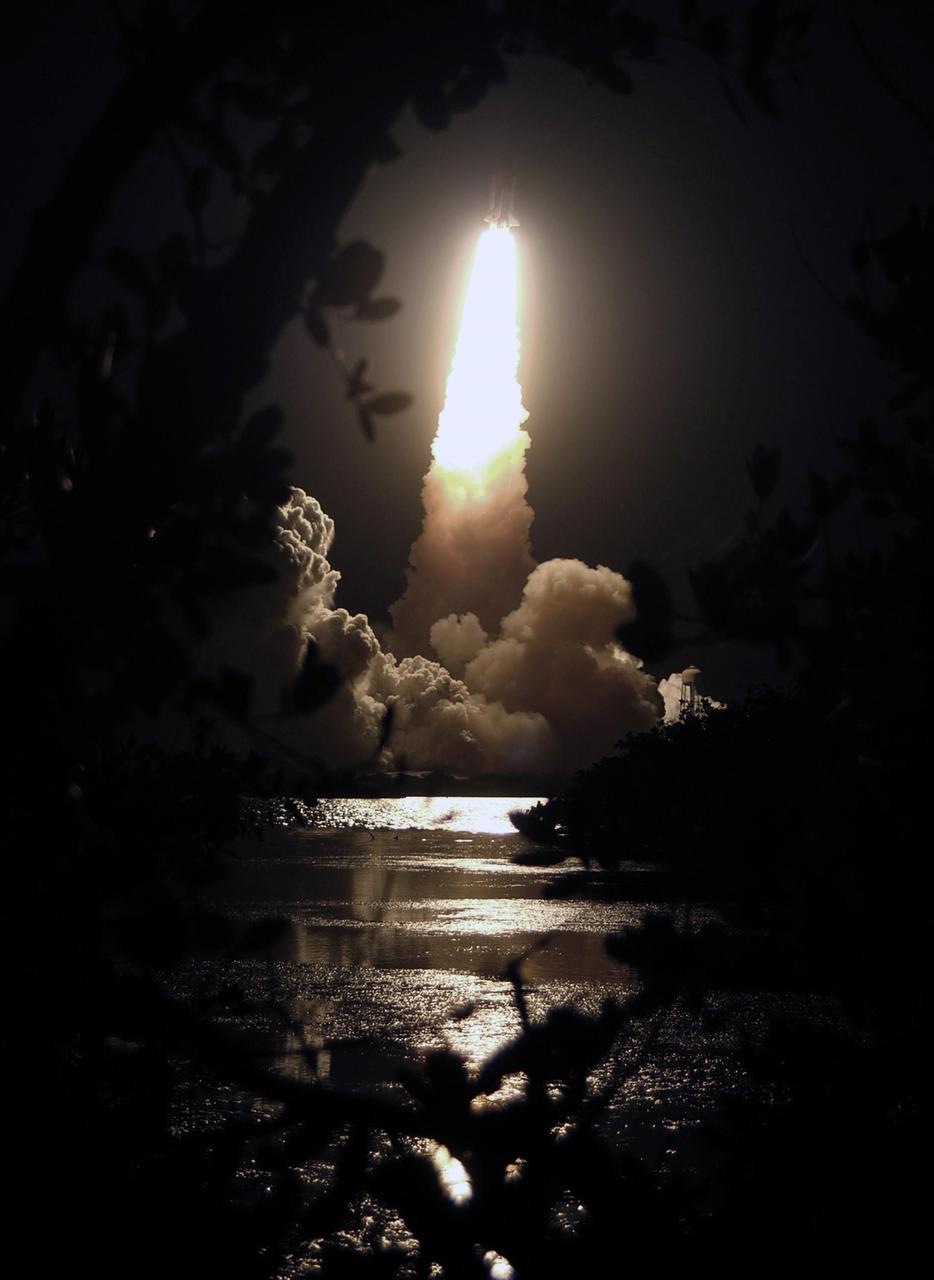
KENNEDY SPACE CENTER, FLA. -- Looking like a shooting star, Space Shuttle Discovery roars into the night sky on mission STS-116. The trailing blaze lighted the sky and nearby water, while clouds of smoke and steam billowed across the launch pad. Liftoff occurred on time at 8:47 p.m. EST. This was the second launch attempt for mission STS-116. The first launch attempt on Dec. 7 was postponed due a low cloud ceiling over Kennedy Space Center. This is Discovery's 33rd mission and the first night launch since 2002. The 20th shuttle mission to the International Space Station, STS-116 carries another truss segment, P5. It will serve as a spacer, mated to the P4 truss that was attached in September. After installing the P5, the crew will reconfigure and redistribute the power generated by two pairs of U.S. solar arrays. Landing is expected Dec. 21 at KSC. Photo courtesy of Nikon/Scott Andrews
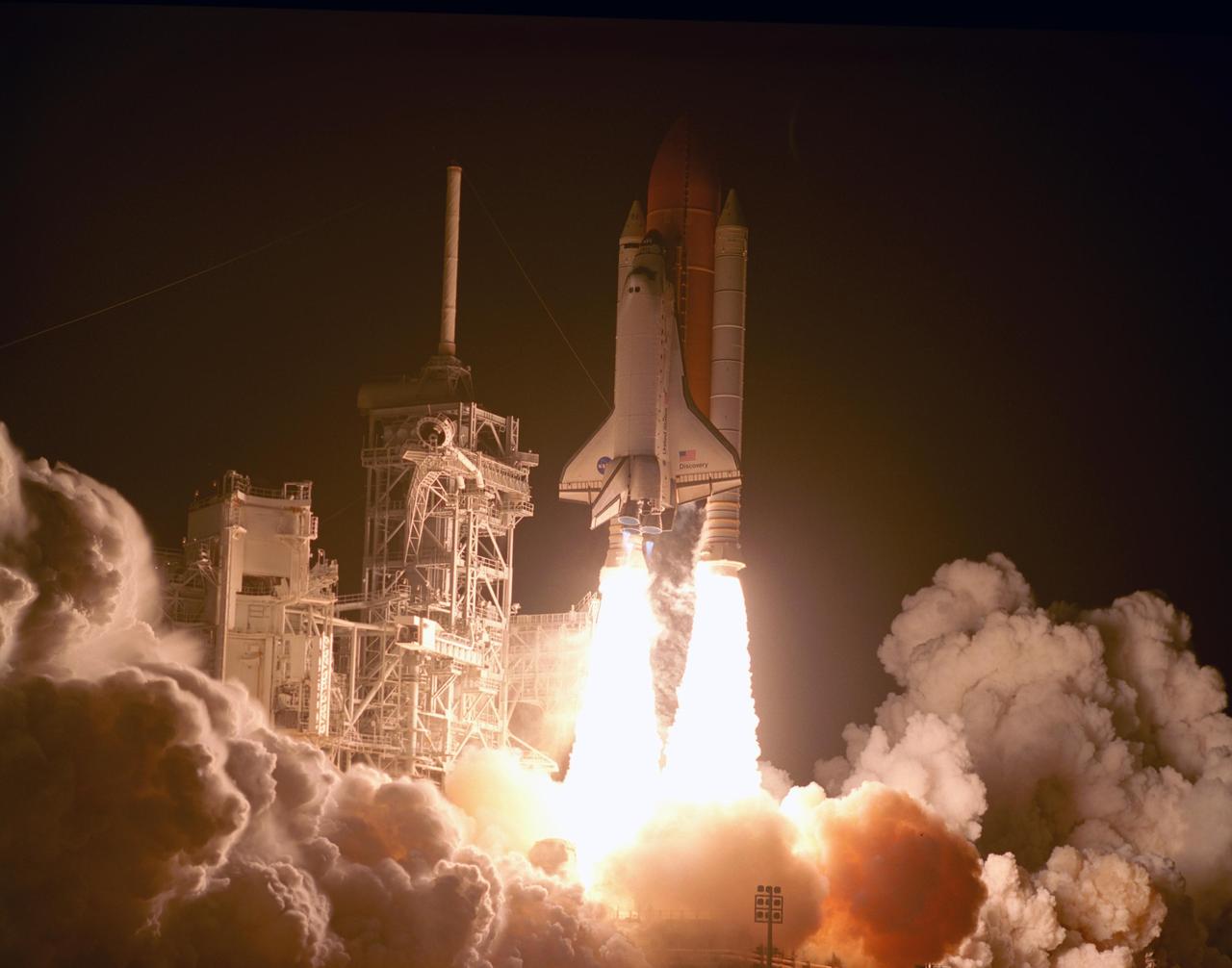
KENNEDY SPACE CENTER, FLA. -- Space Shuttle Discovery seems to be standing on the fiery columns erupting from the solid rocket boosters as it lifts off Launch Pad 39B on mission STS-116. Liftoff occurred on time at 8:47 p.m. EST. This was the second launch attempt for mission STS-116. The first launch attempt on Dec. 7 was postponed due a low cloud ceiling over Kennedy Space Center. This is Discovery's 33rd mission and the first night launch since 2002. The 20th shuttle mission to the International Space Station, STS-116 carries another truss segment, P5. It will serve as a spacer, mated to the P4 truss that was attached in September. After installing the P5, the crew will reconfigure and redistribute the power generated by two pairs of U.S. solar arrays. Landing is expected Dec. 21 at KSC. Photo credit: NASA/Regina Mitchell-Ryall & Tim Powers
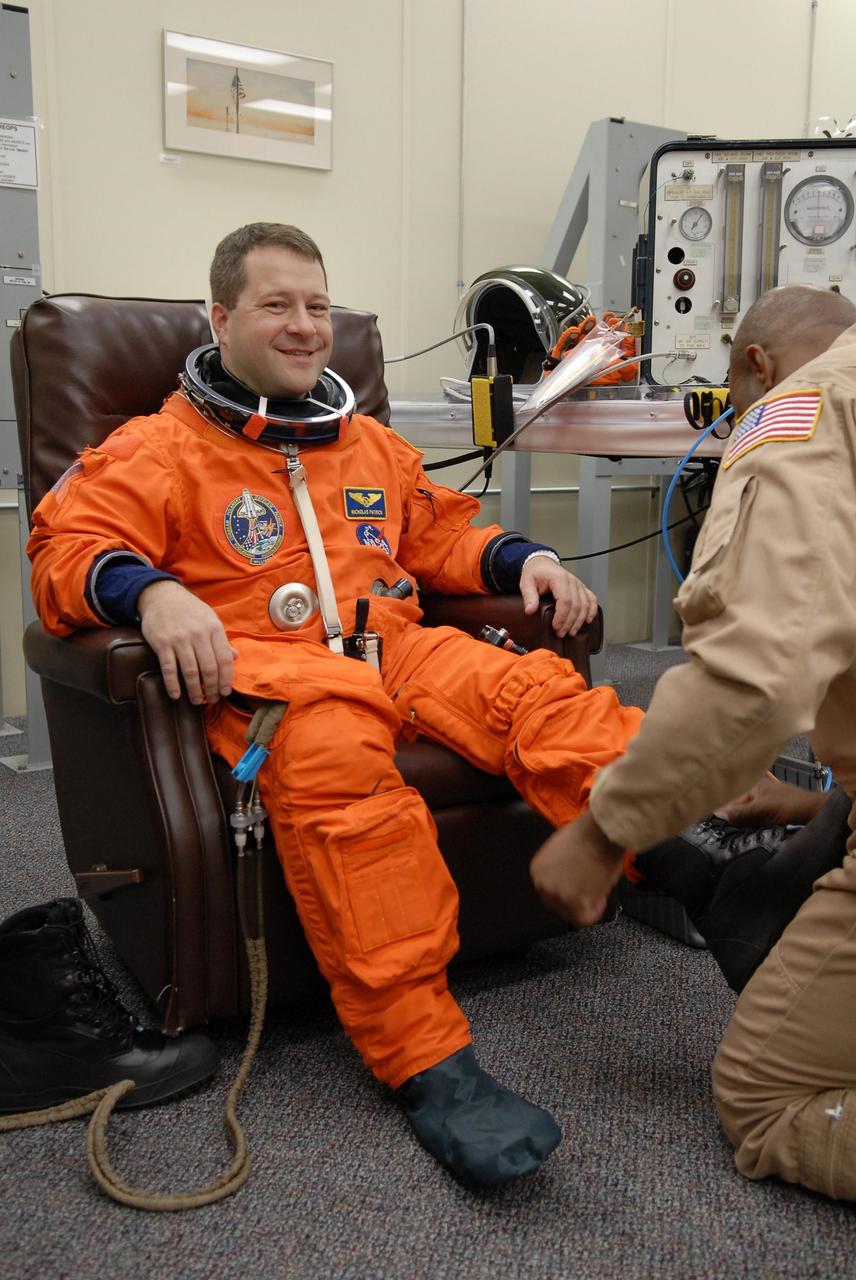
KENNEDY SPACE CENTER, FLA. -- The crew members of mission STS-116 are suiting up for a second launch attempt at 8:47 p.m. EST from Launch Pad 39B aboard Space Shuttle Discovery. Pictured here is Mission Specialist Nicholas Patrick, who will be making his first shuttle flight, being helped with his boot. The first launch attempt of STS-116 on Dec. 7 was postponed due a low cloud ceiling over Kennedy Space Center. This is Discovery's 33rd mission and the first night launch since 2002. The 20th shuttle mission to the International Space Station, STS-116 carries another truss segment, P5. It will serve as a spacer, mated to the P4 truss that was attached in September. After installing the P5, the crew will reconfigure and redistribute the power generated by two pairs of U.S. solar arrays. Landing is expected Dec. 19 at KSC. Photo credit: NASA/Kim Shiflett
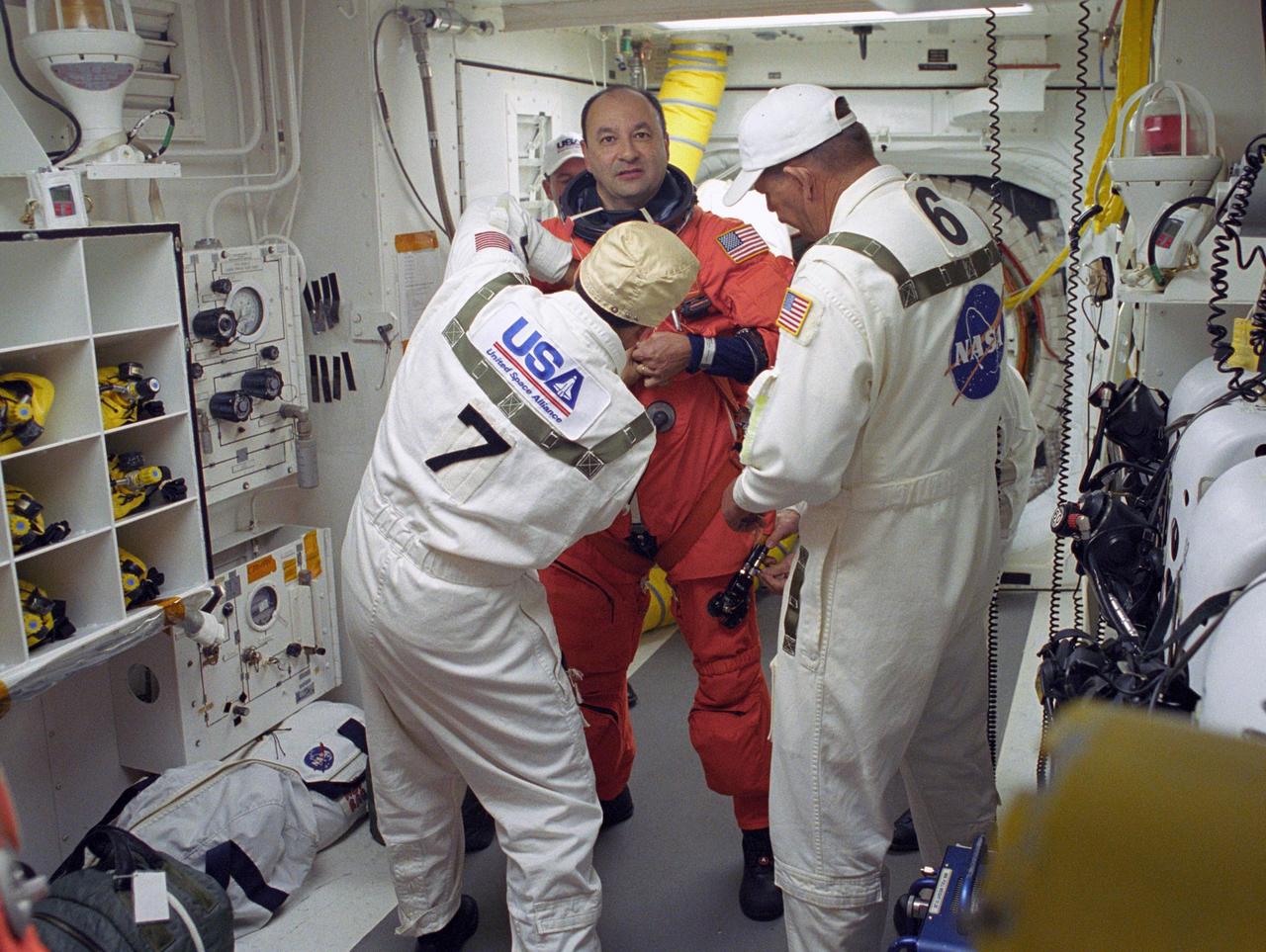
KENNEDY SPACE CENTER, FLA. -- STS-116 Commander Mark Polansky is helped by the closeout crew in the White Room to secure his launch suit before climbing into Space Shuttle Discovery. The White Room is at the end of the orbiter access arm that extends from the fixed service structure and provides entry into the orbiter. The first launch attempt of STS-116 on Dec. 7 was postponed due a low cloud ceiling over Kennedy Space Center. This second launch attempt is scheduled for 8:47 p.m. This is Discovery's 33rd mission and the first night launch since 2002. The 20th shuttle mission to the International Space Station, STS-116 carries another truss segment, P5. It will serve as a spacer, mated to the P4 truss that was attached in September. After installing the P5, the crew will reconfigure and redistribute the power generated by two pairs of U.S. solar arrays. Landing is expected Dec. 21 at KSC. Photo credit: NASA/Tony Gray & Don Kight
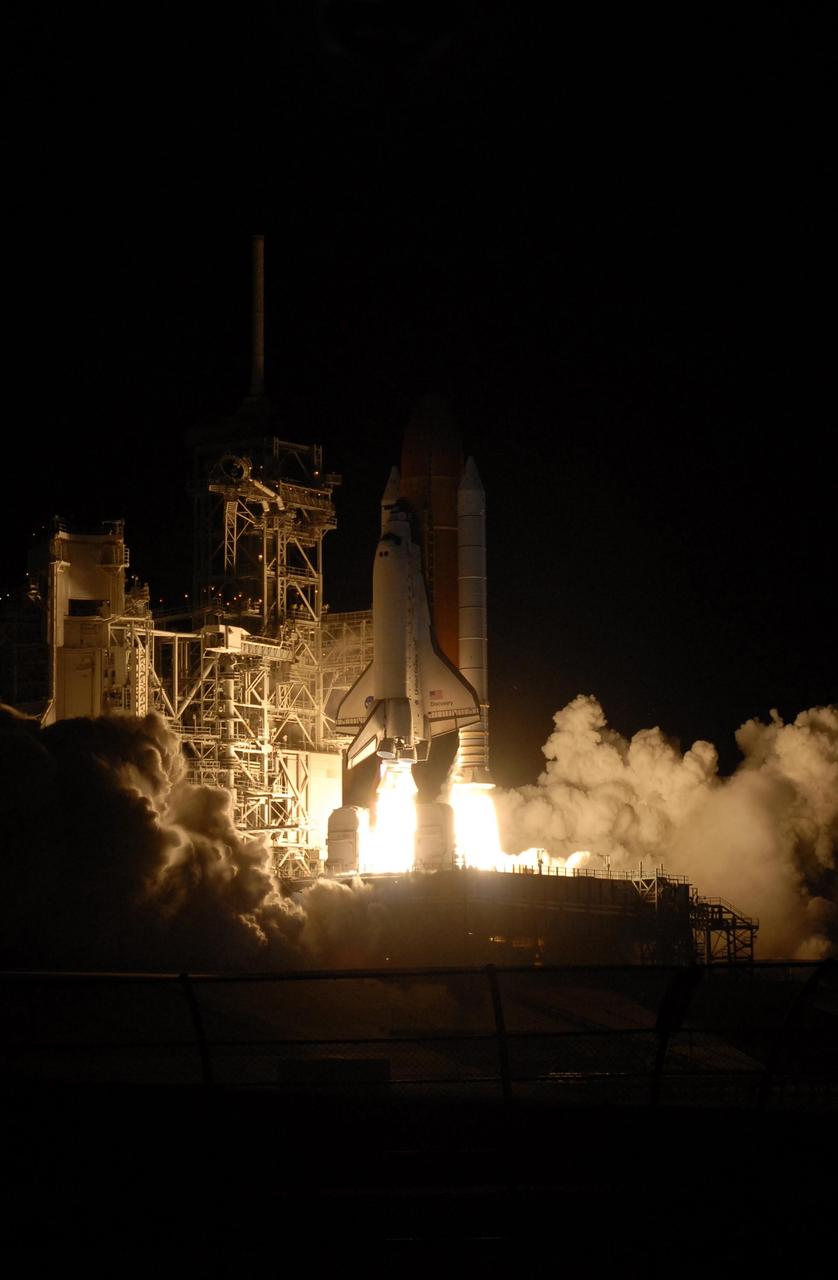
KENNEDY SPACE CENTER, FLA. -- Space Shuttle Discovery seems to be standing on the fiery columns erupting from the solid rocket boosters as it lifts off Launch Pad 39B on mission STS-116. Liftoff occurred on time at 8:47 p.m. EST. This was the second launch attempt of Discovery on mission STS-116. The first launch attempt on Dec. 7 was postponed due a low cloud ceiling over Kennedy Space Center. This is Discovery's 33rd mission and the first night launch since 2002. The 20th shuttle mission to the International Space Station, STS-116 carries another truss segment, P5. It will serve as a spacer, mated to the P4 truss that was attached in September. After installing the P5, the crew will reconfigure and redistribute the power generated by two pairs of U.S. solar arrays. Landing is expected Dec. 21 at KSC. Photo credit: NASA/Sandra Joseph, Robert Murray, Chris Lynch
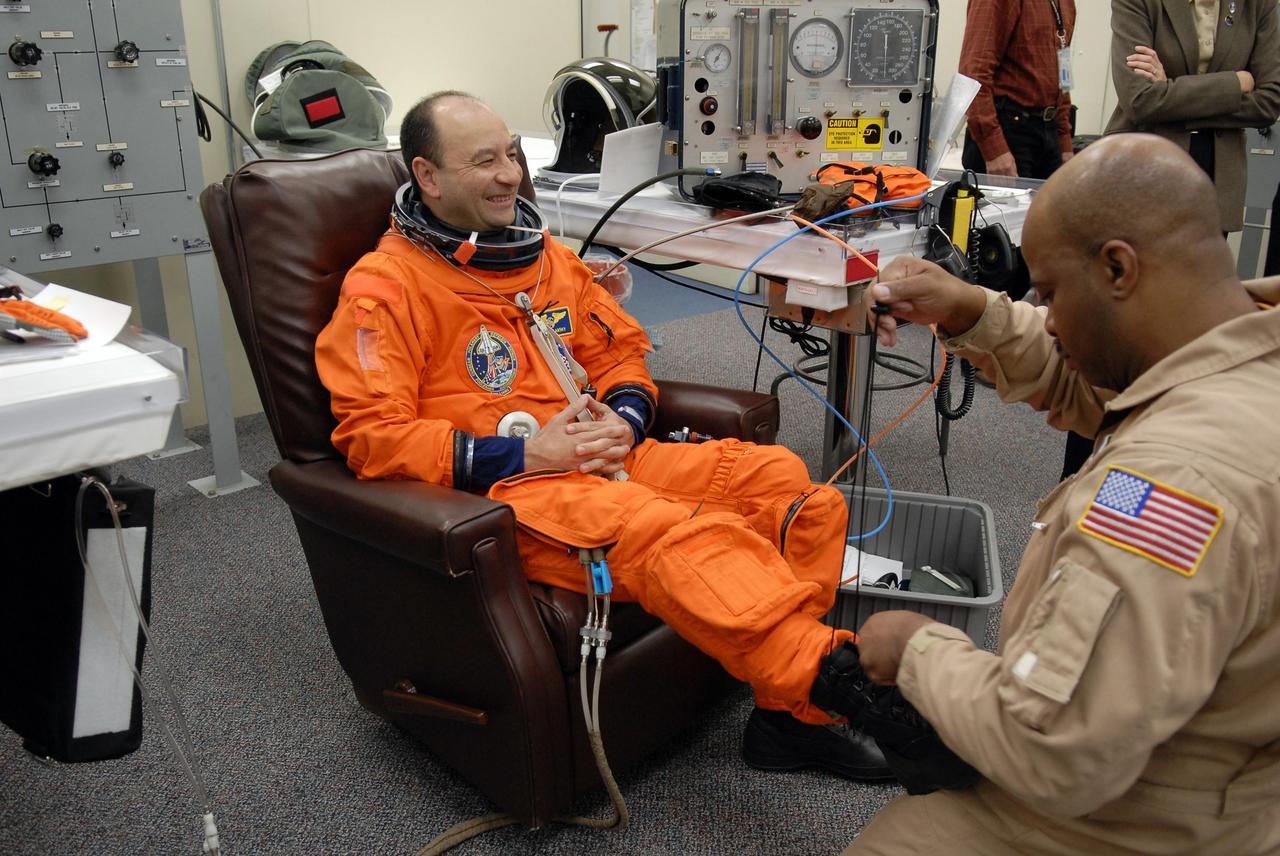
KENNEDY SPACE CENTER, FLA. -- The crew members of mission STS-116 are suiting up for a second launch attempt at 8:47 p.m. EST from Launch Pad 39B aboard Space Shuttle Discovery. Pictured here is Commander Mark Polansky, being helped with his boot. Polansky will be making his second shuttle flight. The first launch attempt of STS-116 on Dec. 7 was postponed due a low cloud ceiling over Kennedy Space Center. This is Discovery's 33rd mission and the first night launch since 2002. The 20th shuttle mission to the International Space Station, STS-116 carries another truss segment, P5. It will serve as a spacer, mated to the P4 truss that was attached in September. After installing the P5, the crew will reconfigure and redistribute the power generated by two pairs of U.S. solar arrays. Landing is expected Dec. 19 at KSC. Photo credit: NASA/Kim Shiflett
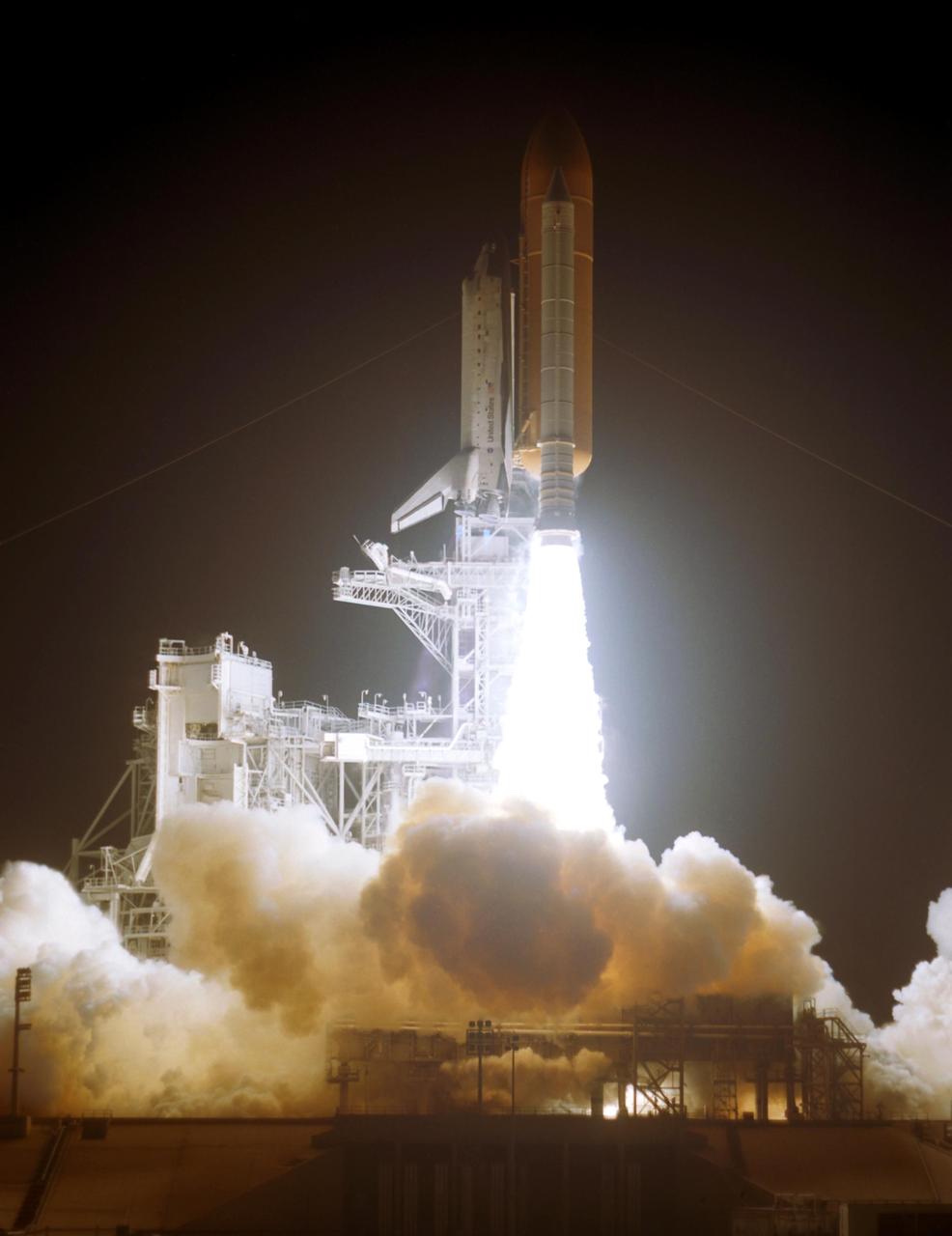
KENNEDY SPACE CENTER, FLA. -- Rising on columns of fire above the smoke and steam below, Space Shuttle Discovery leaps toward the sky past the lightning mast on Launch Pad 39B on mission STS-116. Liftoff occurred at 8:47 p.m. EST. This was the second launch attempt for mission STS-116. The first launch attempt on Dec. 7 was postponed due a low cloud ceiling over Kennedy Space Center. This is Discovery's 33rd mission and the first night launch since 2002. The 20th shuttle mission to the International Space Station, STS-116 carries another truss segment, P5. It will serve as a spacer, mated to the P4 truss that was attached in September. After installing the P5, the crew will reconfigure and redistribute the power generated by two pairs of U.S. solar arrays. Landing is expected Dec. 21 at KSC. Photo credit: NASA/Regina Mitchell-Ryall & Tim Powers
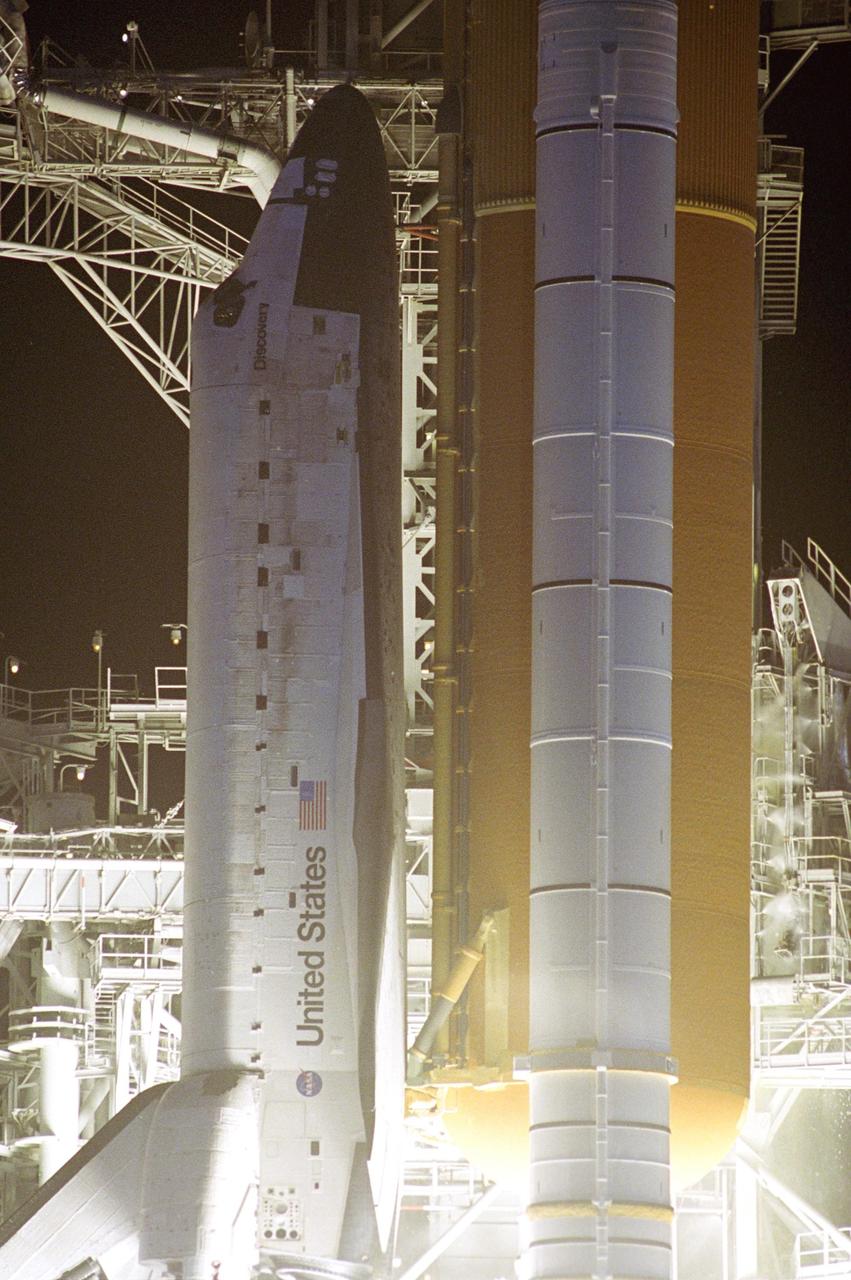
KENNEDY SPACE CENTER, FLA. -- A closeup of Space Shuttle Discovery at liftoff from Launch Pad 39B on mission STS-116. Liftoff occurred on time at 8:47 p.m. EST. This was the second launch attempt for mission STS-116. The first launch attempt on Dec. 7 was postponed due a low cloud ceiling over Kennedy Space Center. This is Discovery's 33rd mission and the first night launch since 2002. The 20th shuttle mission to the International Space Station, STS-116 carries another truss segment, P5. It will serve as a spacer, mated to the P4 truss that was attached in September. After installing the P5, the crew will reconfigure and redistribute the power generated by two pairs of U.S. solar arrays. Landing is expected Dec. 21 at KSC. Photo credit: NASA/Jerry Cannon & Mike Kerley
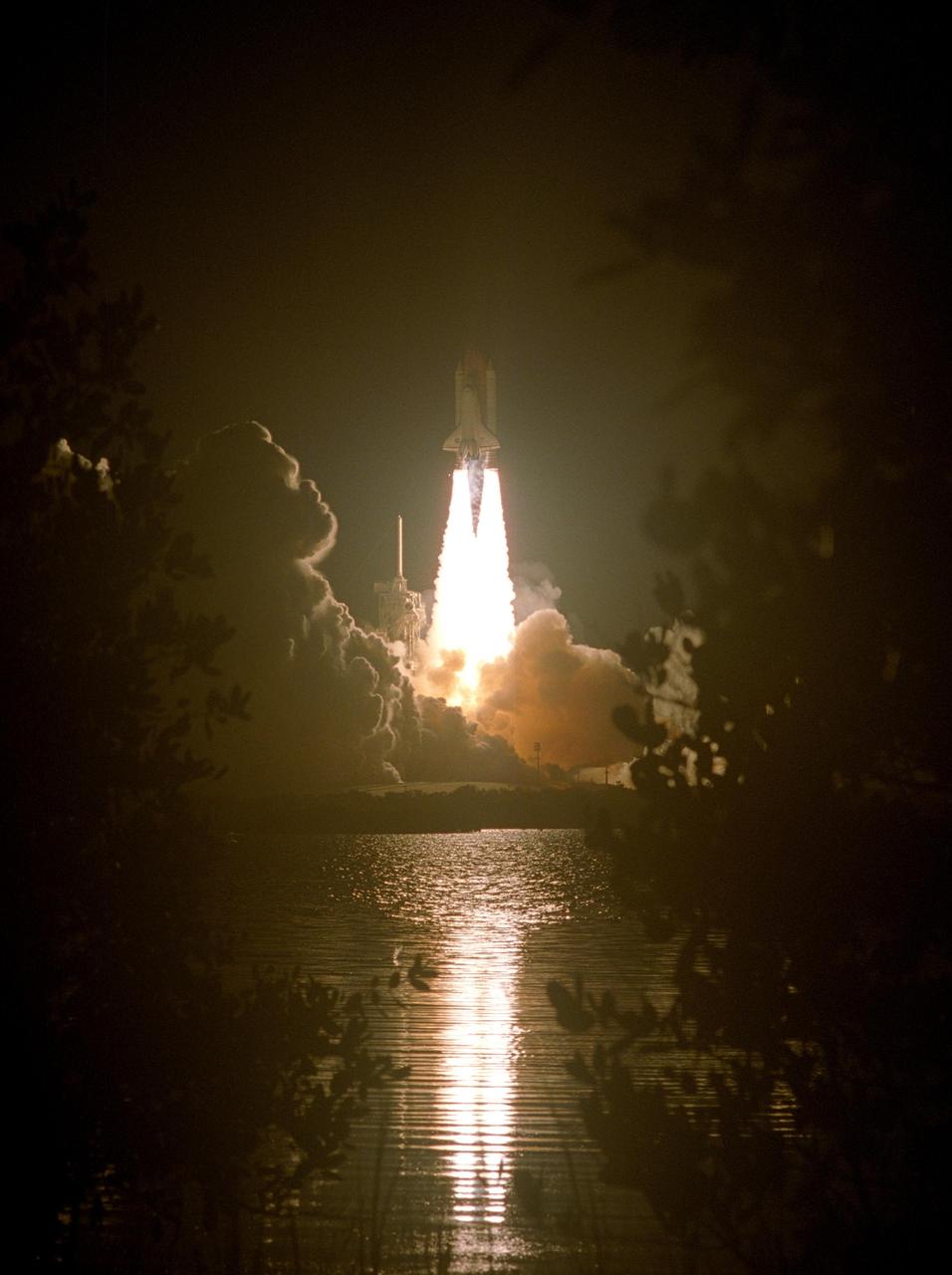
KENNEDY SPACE CENTER, FLA. -- The fiery liftoff of Space Shuttle Discovery from Launch Pad 39B on mission STS-116 is captured in the nearby water. Liftoff occurred on time at 8:47 p.m. EST. This was the second launch attempt for mission STS-116. The first launch attempt on Dec. 7 was postponed due a low cloud ceiling over Kennedy Space Center. This is Discovery's 33rd mission and the first night launch since 2002. The 20th shuttle mission to the International Space Station, STS-116 carries another truss segment, P5. It will serve as a spacer, mated to the P4 truss that was attached in September. After installing the P5, the crew will reconfigure and redistribute the power generated by two pairs of U.S. solar arrays. Landing is expected Dec. 21 at KSC. Photo credit: NASA/Sandy Joseph, Robert Murray & Chris Lynch
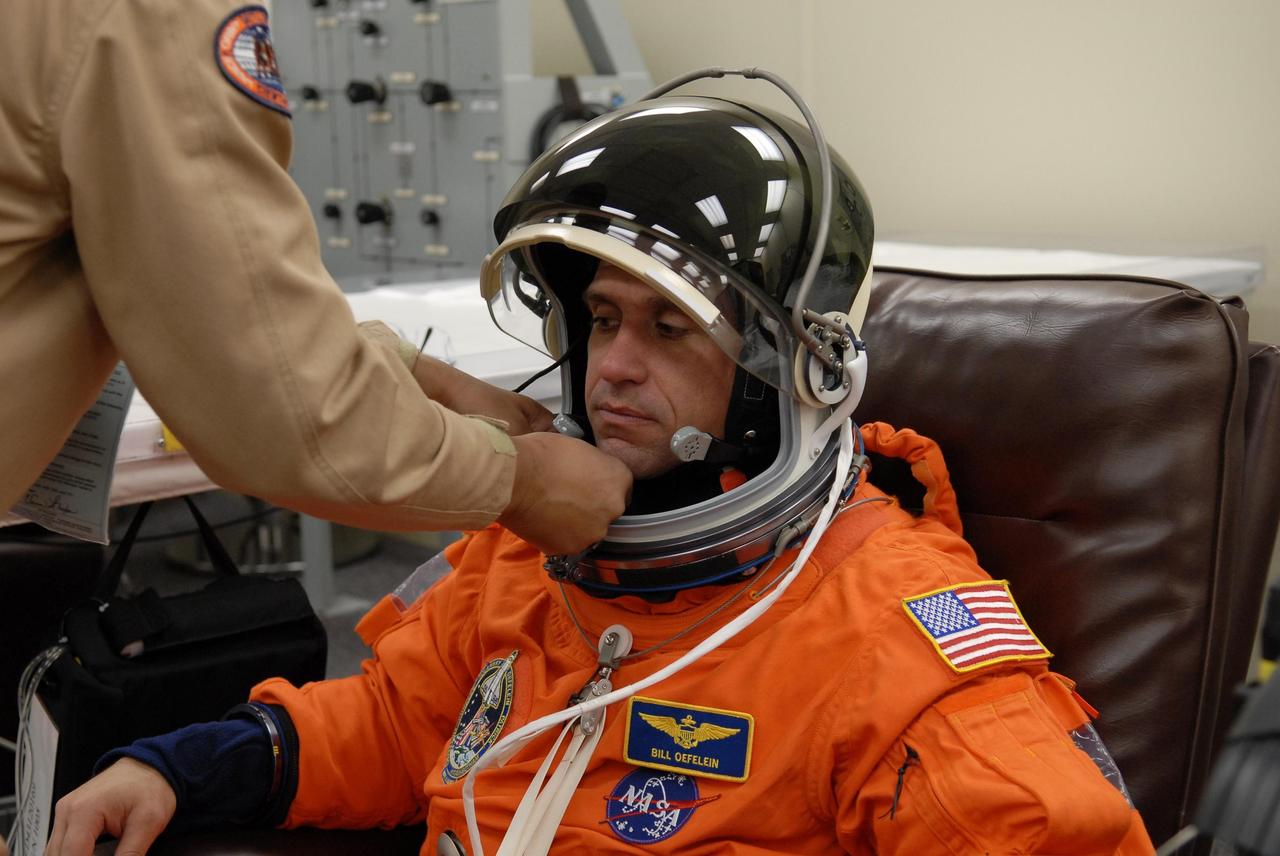
KENNEDY SPACE CENTER, FLA. -- The crew members of mission STS-116 are suiting up for a second launch attempt at 8:47 p.m. EST from Launch Pad 39B aboard Space Shuttle Discovery. Pictured here is Pilot William Oefelein, being helped with his helmet. Oefelein is making his first shuttle flight. The first launch attempt of STS-116 on Dec. 7 was postponed due a low cloud ceiling over Kennedy Space Center. This is Discovery's 33rd mission and the first night launch since 2002. The 20th shuttle mission to the International Space Station, STS-116 carries another truss segment, P5. It will serve as a spacer, mated to the P4 truss that was attached in September. After installing the P5, the crew will reconfigure and redistribute the power generated by two pairs of U.S. solar arrays. Landing is expected Dec. 19 at KSC. Photo credit: NASA/Kim Shiflett
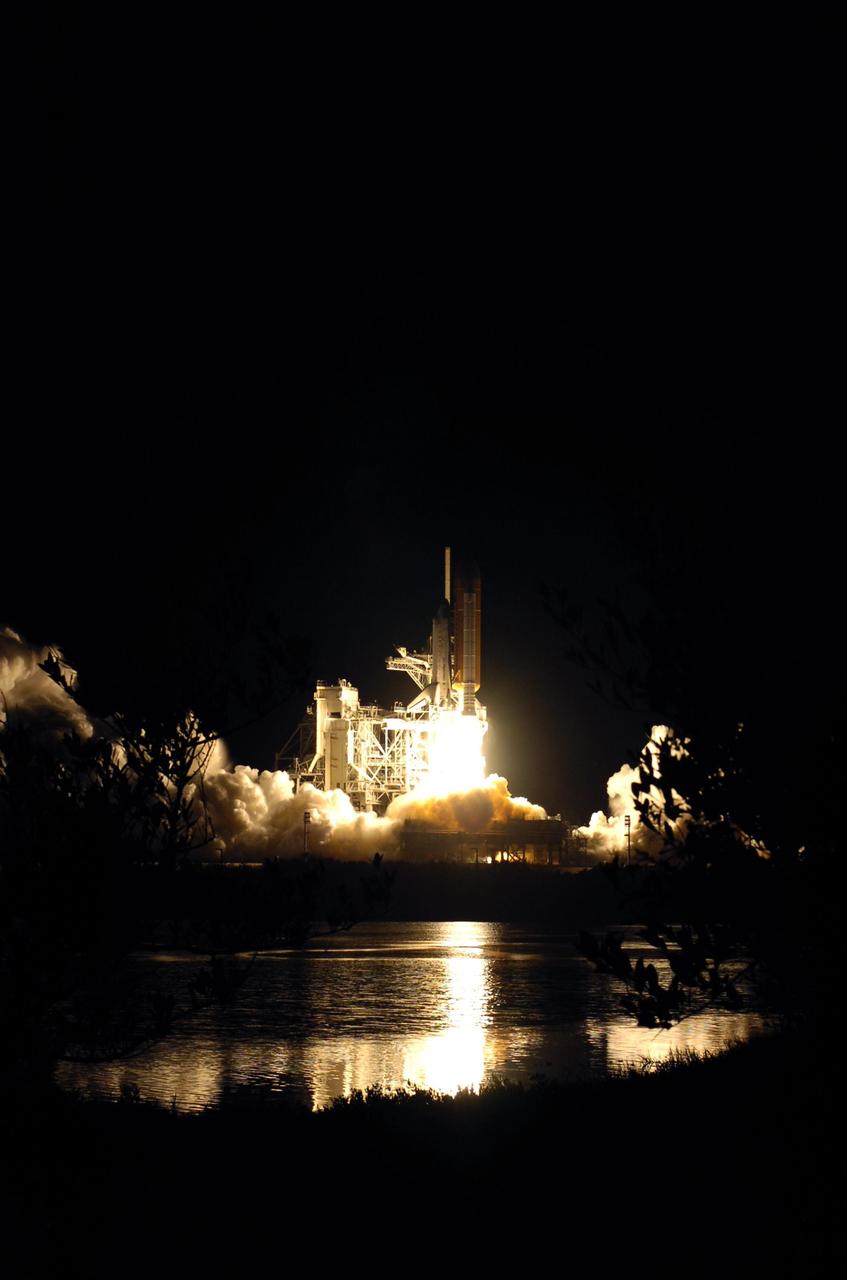
KENNEDY SPACE CENTER, FLA. -- The fiery liftoff of Space Shuttle Discovery from Launch Pad 39B on mission STS-116 is captured in the nearby water. Liftoff occurred on time at 8:47 p.m. EST. This was the second launch attempt of Discovery on mission STS-116. The first launch attempt on Dec. 7 was postponed due a low cloud ceiling over Kennedy Space Center. This is Discovery's 33rd mission and the first night launch since 2002. The 20th shuttle mission to the International Space Station, STS-116 carries another truss segment, P5. It will serve as a spacer, mated to the P4 truss that was attached in September. After installing the P5, the crew will reconfigure and redistribute the power generated by two pairs of U.S. solar arrays. Landing is expected Dec. 21 at KSC. Photo credit: NASA/Sandra Joseph, Robert Murray, Chris Lynch
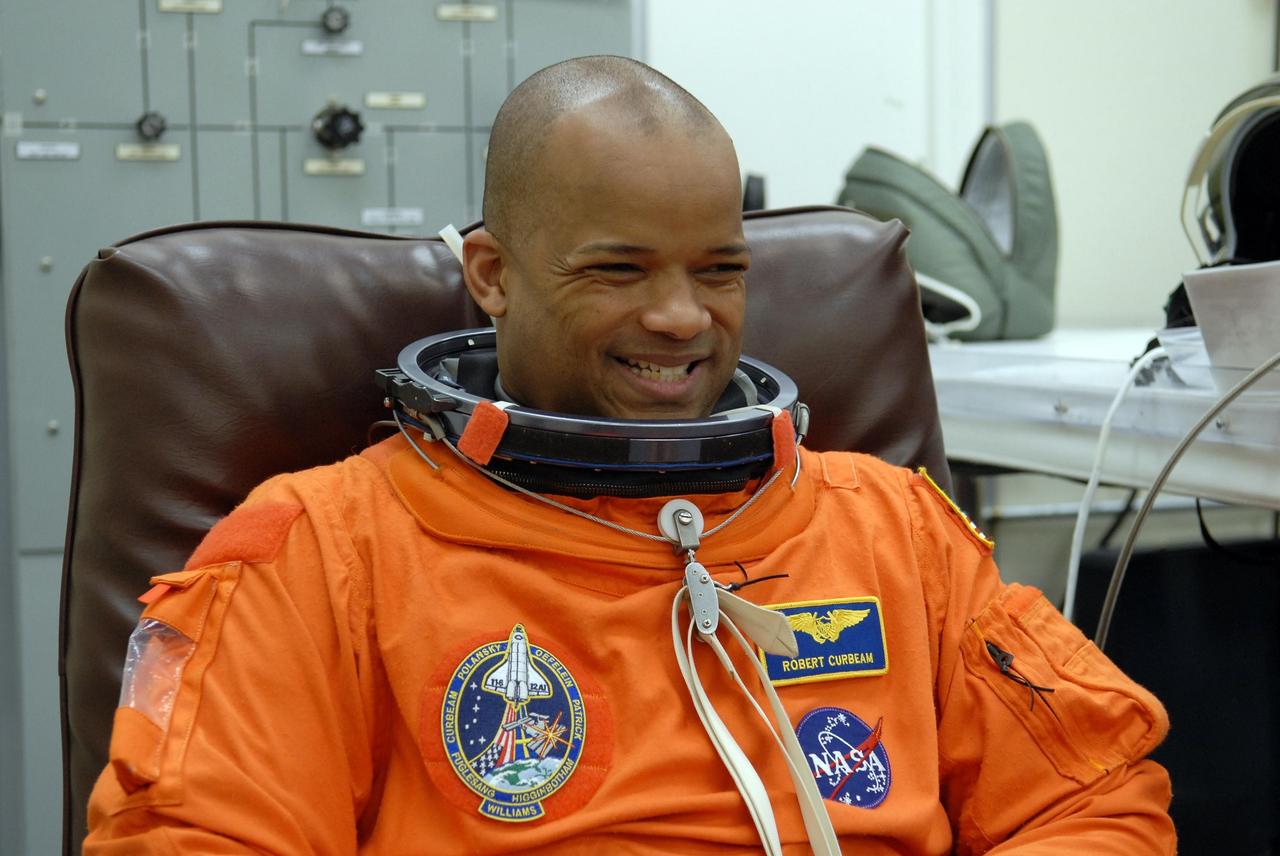
KENNEDY SPACE CENTER, FLA. -- The crew members of mission STS-116 are suiting up for a second launch attempt at 8:47 p.m. EST from Launch Pad 39B aboard Space Shuttle Discovery. Pictured here is Mission Specialist Robert Curbeam, who is making his third shuttle flight. The first launch attempt of STS-116 on Dec. 7 was postponed due a low cloud ceiling over Kennedy Space Center. This is Discovery's 33rd mission and the first night launch since 2002. The 20th shuttle mission to the International Space Station, STS-116 carries another truss segment, P5. It will serve as a spacer, mated to the P4 truss that was attached in September. After installing the P5, the crew will reconfigure and redistribute the power generated by two pairs of U.S. solar arrays. Landing is expected Dec. 19 at KSC. Photo credit: NASA/Kim Shiflett
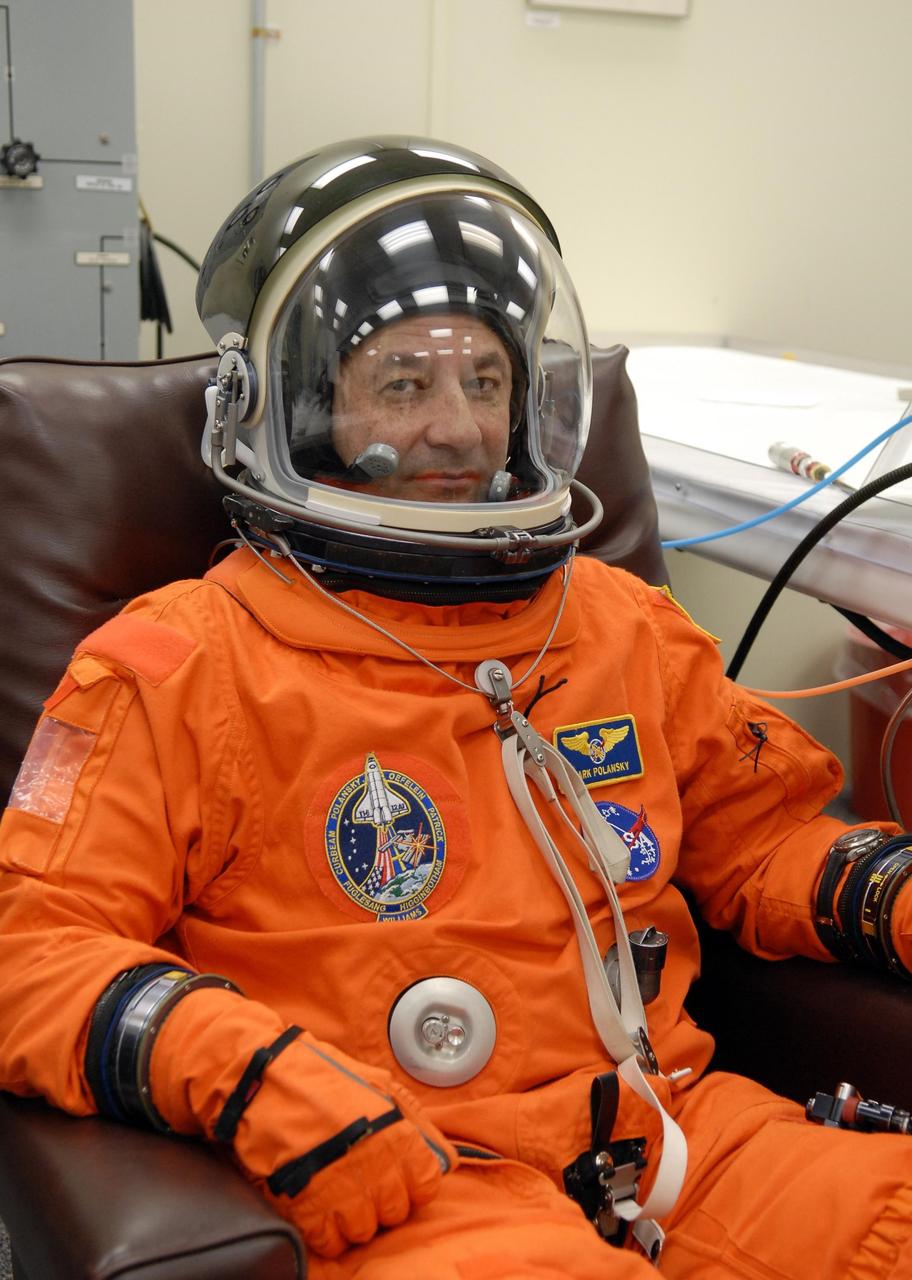
KENNEDY SPACE CENTER, FLA. -- The crew members of mission STS-116 are suiting up for a second launch attempt at 8:47 p.m. EST from Launch Pad 39B aboard Space Shuttle Discovery. Polansky is making his second shuttle flight. The first launch attempt of STS-116 on Dec. 7 was postponed due a low cloud ceiling over Kennedy Space Center. This is Discovery's 33rd mission and the first night launch since 2002. The 20th shuttle mission to the International Space Station, STS-116 carries another truss segment, P5. It will serve as a spacer, mated to the P4 truss that was attached in September. After installing the P5, the crew will reconfigure and redistribute the power generated by two pairs of U.S. solar arrays. Landing is expected Dec. 19 at KSC. Photo credit: NASA/Kim Shiflett
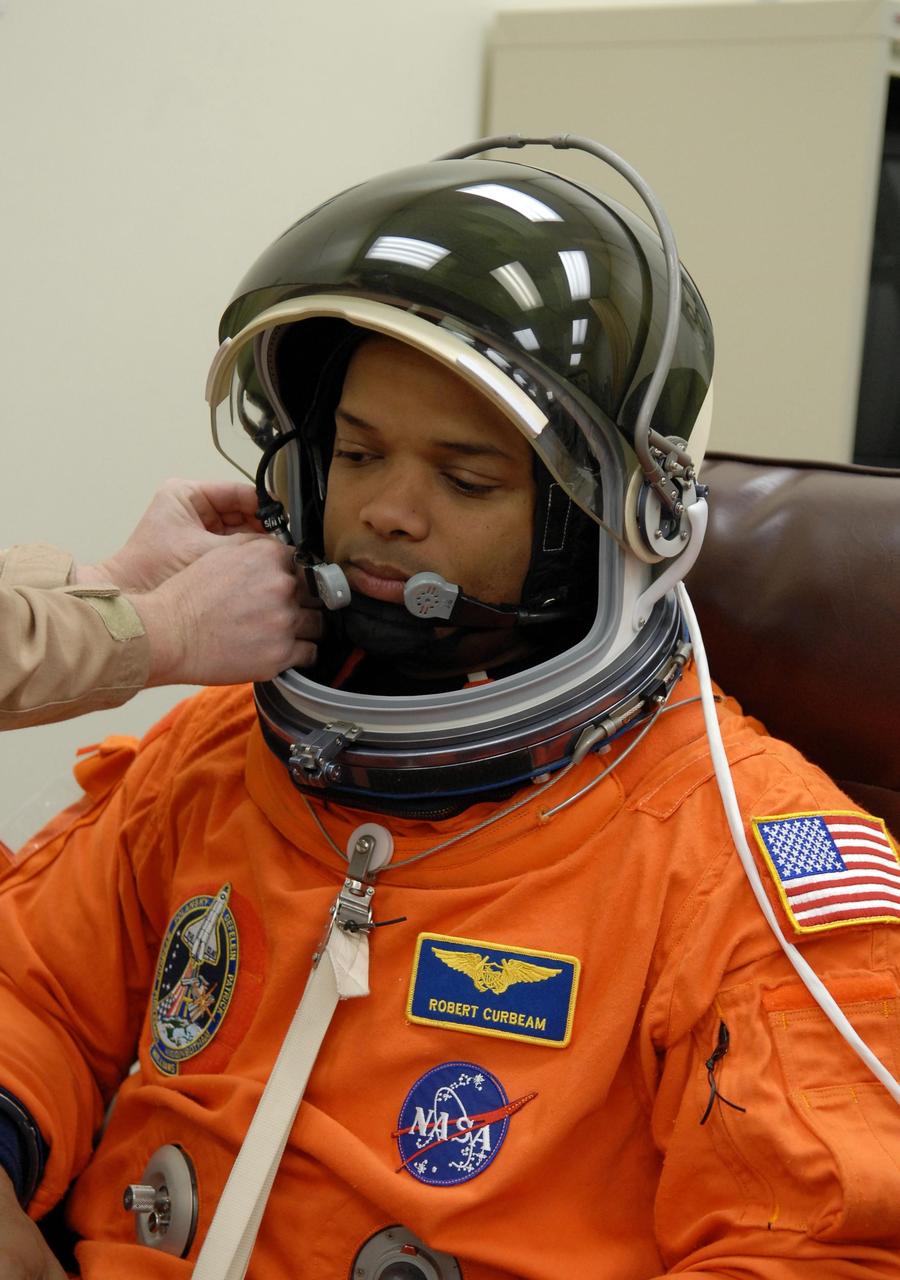
KENNEDY SPACE CENTER, FLA. -- The crew members of mission STS-116 are suiting up for a second launch attempt at 8:47 p.m. EST from Launch Pad 39B aboard Space Shuttle Discovery. Pictured here is Mission Specialist Robert Curbeam, getting help with the helmet. Curbeam will be making his third shuttle flight. The first launch attempt of STS-116 on Dec. 7 was postponed due a low cloud ceiling over Kennedy Space Center. This is Discovery's 33rd mission and the first night launch since 2002. The 20th shuttle mission to the International Space Station, STS-116 carries another truss segment, P5. It will serve as a spacer, mated to the P4 truss that was attached in September. After installing the P5, the crew will reconfigure and redistribute the power generated by two pairs of U.S. solar arrays. Landing is expected Dec. 19 at KSC. Photo credit: NASA/Kim Shiflett
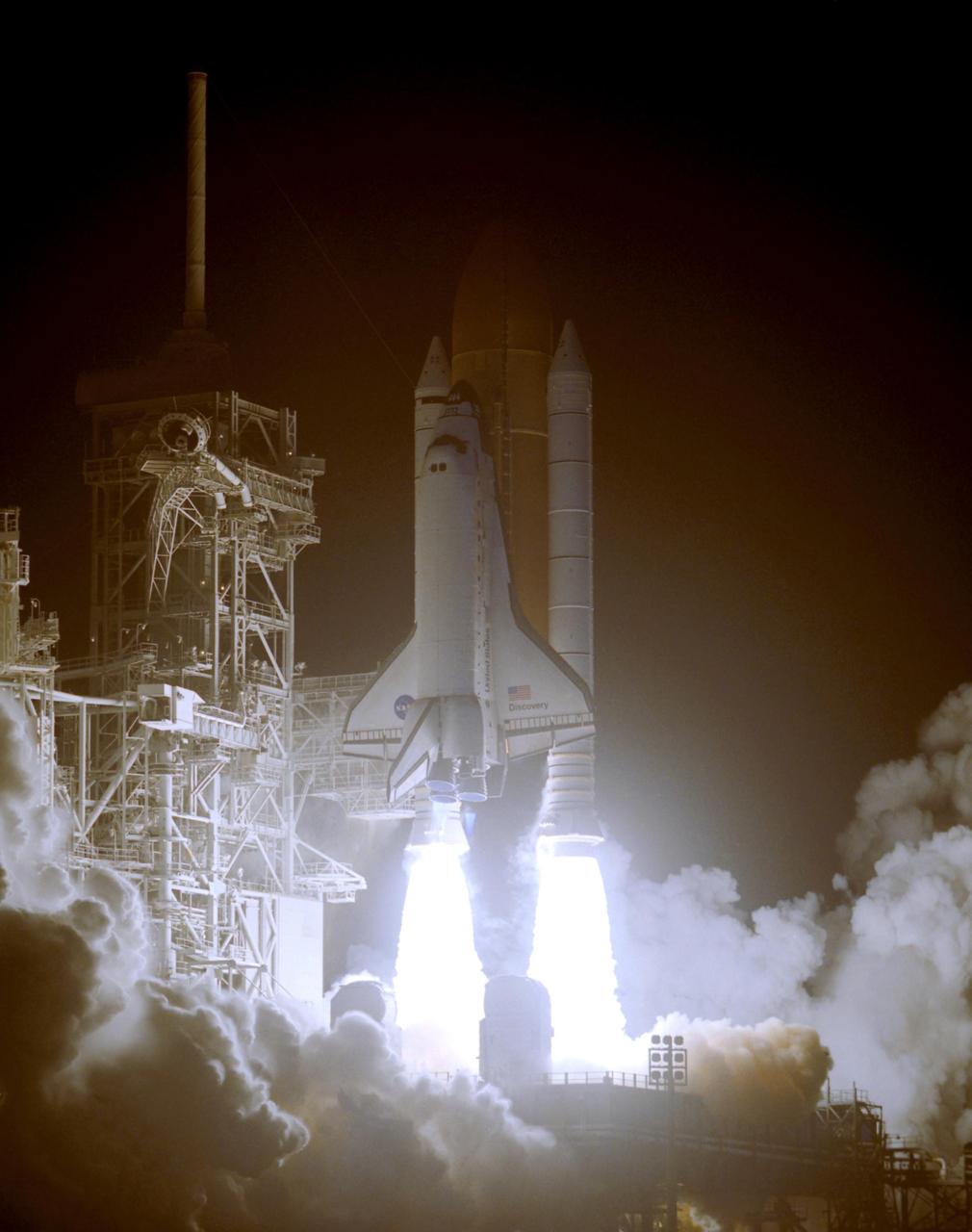
KENNEDY SPACE CENTER, FLA. -- Space Shuttle Discovery seems to be standing on the fiery columns erupting from the solid rocket boosters as it lifts off Launch Pad 39B on mission STS-116. Liftoff occurred at 8:47 p.m. EST. This was the second launch attempt for mission STS-116. The first launch attempt on Dec. 7 was postponed due a low cloud ceiling over Kennedy Space Center. This is Discovery's 33rd mission and the first night launch since 2002. The 20th shuttle mission to the International Space Station, STS-116 carries another truss segment, P5. It will serve as a spacer, mated to the P4 truss that was attached in September. After installing the P5, the crew will reconfigure and redistribute the power generated by two pairs of U.S. solar arrays. Landing is expected Dec. 21 at KSC. Photo credit: NASA/Regina Mitchell-Ryall & Tim Powers
KENNEDY SPACE CENTER, FLA. -- The crew members of mission STS-116 are suiting up for a second launch attempt at 8:47 p.m. EST from Launch Pad 39B aboard Space Shuttle Discovery. Pictured here is Pilot William Oefelein, who will be making his first shuttle flight. The first launch attempt of STS-116 on Dec. 7 was postponed due a low cloud ceiling over Kennedy Space Center. This is Discovery's 33rd mission and the first night launch since 2002. The 20th shuttle mission to the International Space Station, STS-116 carries another truss segment, P5. It will serve as a spacer, mated to the P4 truss that was attached in September. After installing the P5, the crew will reconfigure and redistribute the power generated by two pairs of U.S. solar arrays. Landing is expected Dec. 19 at KSC. Photo credit: NASA/Kim Shiflett
KENNEDY SPACE CENTER, FLA. -- The fiery liftoff of Space Shuttle Discovery from Launch Pad 39B on mission STS-116 is captured in the nearby water. Liftoff occurred on time at 8:47 p.m. EST. This was the second launch attempt of Discovery on mission STS-116. The first launch attempt on Dec. 7 was postponed due a low cloud ceiling over Kennedy Space Center. This is Discovery's 33rd mission and the first night launch since 2002. The 20th shuttle mission to the International Space Station, STS-116 carries another truss segment, P5. It will serve as a spacer, mated to the P4 truss that was attached in September. After installing the P5, the crew will reconfigure and redistribute the power generated by two pairs of U.S. solar arrays. Landing is expected Dec. 21 at KSC. Photo credit: NASA/Sandra Joseph, Robert Murray, Chris Lynch
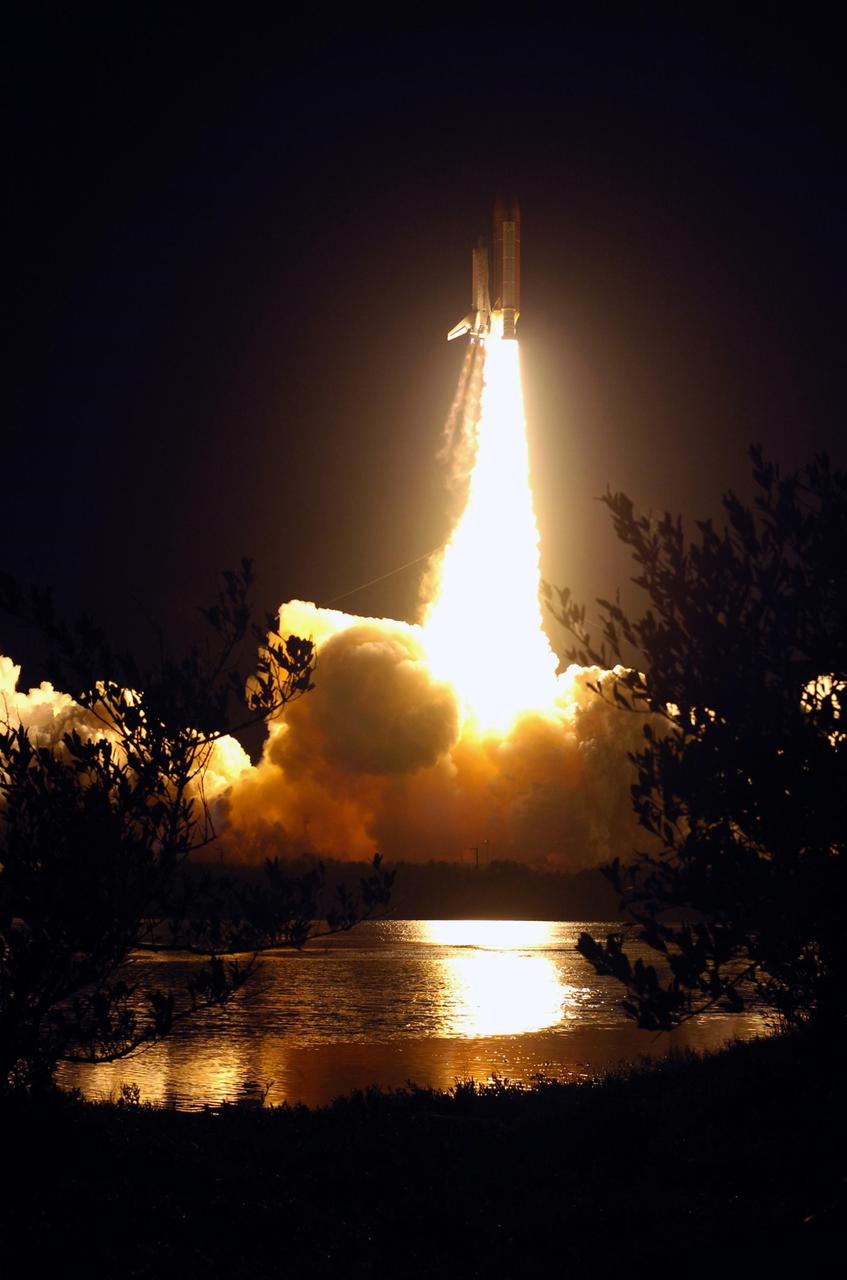
KENNEDY SPACE CENTER, FLA. --Space Shuttle Discovery soars away from the fiery clouds on Launch Pad 39B on mission STS-116. The light is captured in the nearby water. Liftoff occurred on time at 8:47 p.m. EST. This was the second launch attempt of Discovery on mission STS-116. The first launch attempt on Dec. 7 was postponed due a low cloud ceiling over Kennedy Space Center. This is Discovery's 33rd mission and the first night launch since 2002. The 20th shuttle mission to the International Space Station, STS-116 carries another truss segment, P5. It will serve as a spacer, mated to the P4 truss that was attached in September. After installing the P5, the crew will reconfigure and redistribute the power generated by two pairs of U.S. solar arrays. Landing is expected Dec. 21 at KSC. Photo credit: NASA/Sandra Joseph, Robert Murray, Chris Lynch
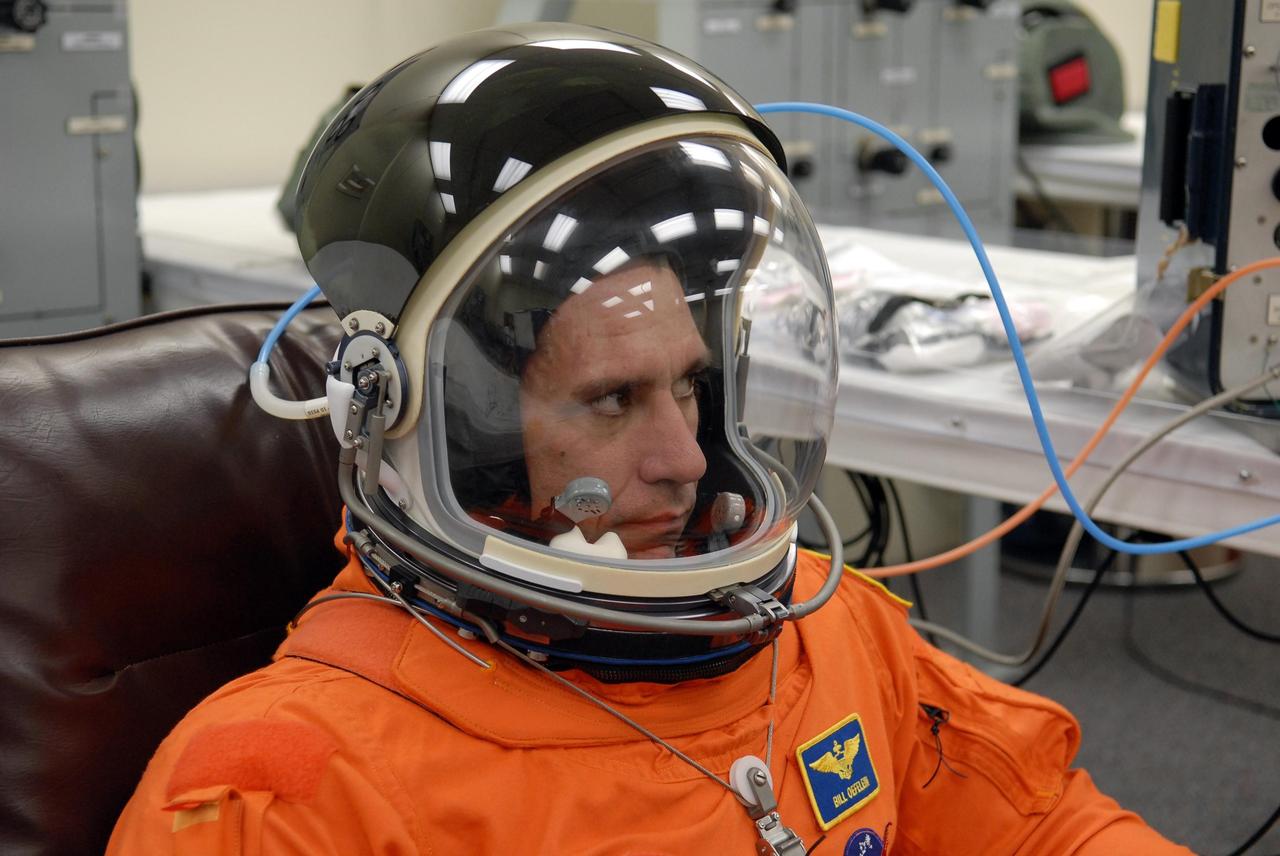
KENNEDY SPACE CENTER, FLA. -- The crew members of mission STS-116 are suiting up for a second launch attempt at 8:47 p.m. EST from Launch Pad 39B aboard Space Shuttle Discovery. Pictured here is Pilot William Oefelein, who is making his first shuttle flight. The first launch attempt of STS-116 on Dec. 7 was postponed due a low cloud ceiling over Kennedy Space Center. This is Discovery's 33rd mission and the first night launch since 2002. The 20th shuttle mission to the International Space Station, STS-116 carries another truss segment, P5. It will serve as a spacer, mated to the P4 truss that was attached in September. After installing the P5, the crew will reconfigure and redistribute the power generated by two pairs of U.S. solar arrays. Landing is expected Dec. 19 at KSC. Photo credit: NASA/Kim Shiflett
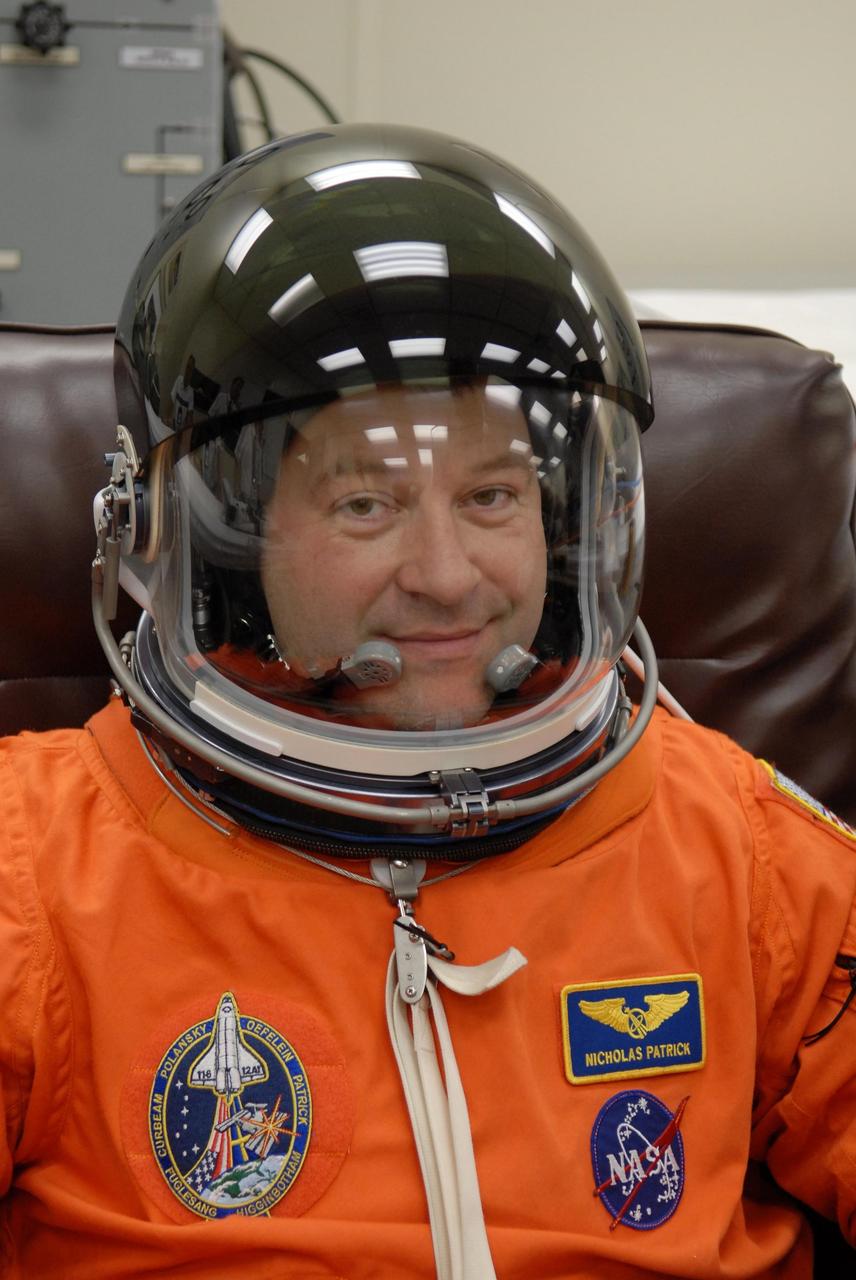
KENNEDY SPACE CENTER, FLA. -- The crew members of mission STS-116 are suiting up for a second launch attempt at 8:47 p.m. EST from Launch Pad 39B aboard Space Shuttle Discovery. Pictured here, Mission Specialist Nicholas Patrick is ready after donning his helmet. Patrick will be making his first shuttle flight. The first launch attempt of STS-116 on Dec. 7 was postponed due a low cloud ceiling over Kennedy Space Center. This is Discovery's 33rd mission and the first night launch since 2002. The 20th shuttle mission to the International Space Station, STS-116 carries another truss segment, P5. It will serve as a spacer, mated to the P4 truss that was attached in September. After installing the P5, the crew will reconfigure and redistribute the power generated by two pairs of U.S. solar arrays. Landing is expected Dec. 19 at KSC. Photo credit: NASA/Kim Shiflett
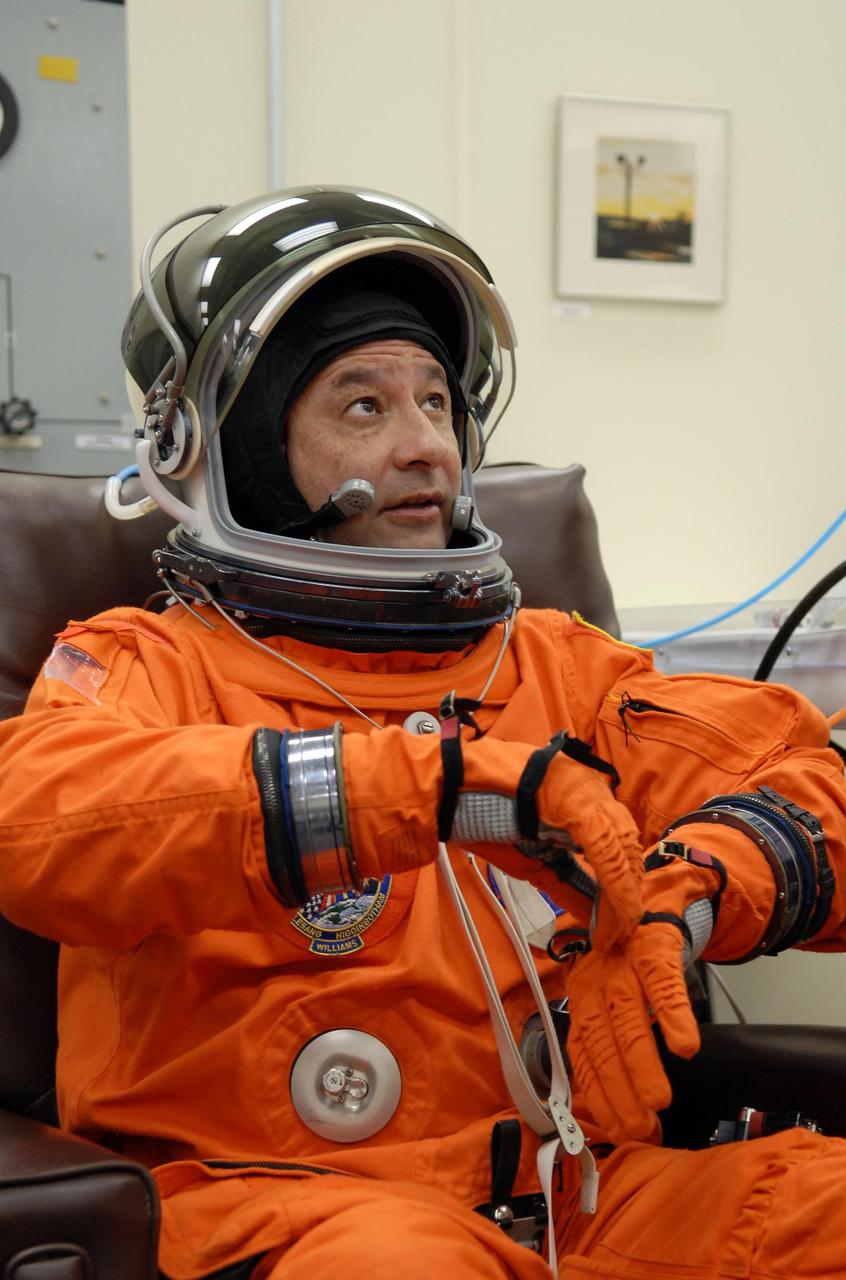
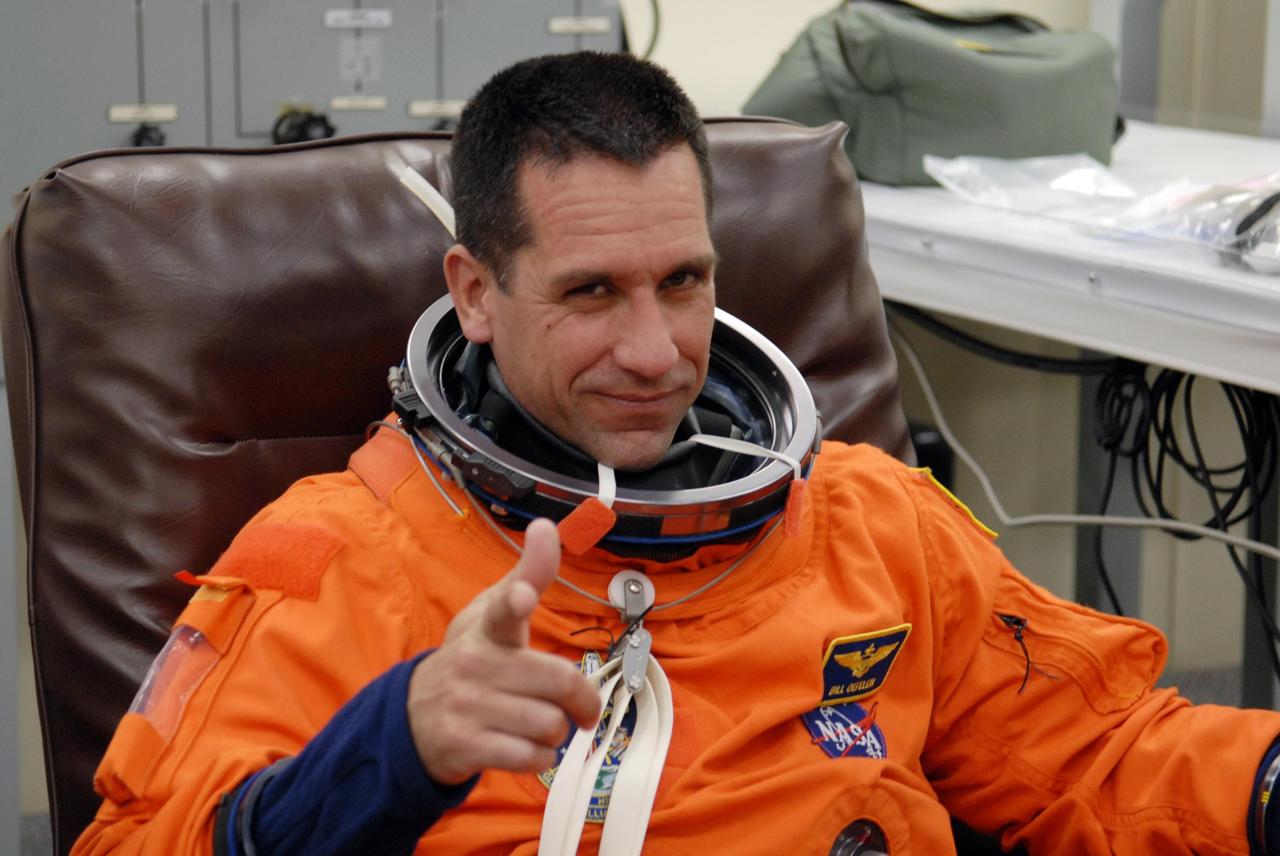
KENNEDY SPACE CENTER, FLA. -- The crew members of mission STS-116 are suiting up for a second launch attempt at 8:47 p.m. EST from Launch Pad 39B aboard Space Shuttle Discovery. Here, Commander Mark Polansky adjusts his glove. Polansky will be making his second shuttle flight. The first launch attempt of STS-116 on Dec. 7 was postponed due a low cloud ceiling over Kennedy Space Center. This is Discovery's 33rd mission and the first night launch since 2002. The 20th shuttle mission to the International Space Station, STS-116 carries another truss segment, P5. It will serve as a spacer, mated to the P4 truss that was attached in September. After installing the P5, the crew will reconfigure and redistribute the power generated by two pairs of U.S. solar arrays. Landing is expected Dec. 19 at KSC. Photo credit: NASA/Kim Shiflett
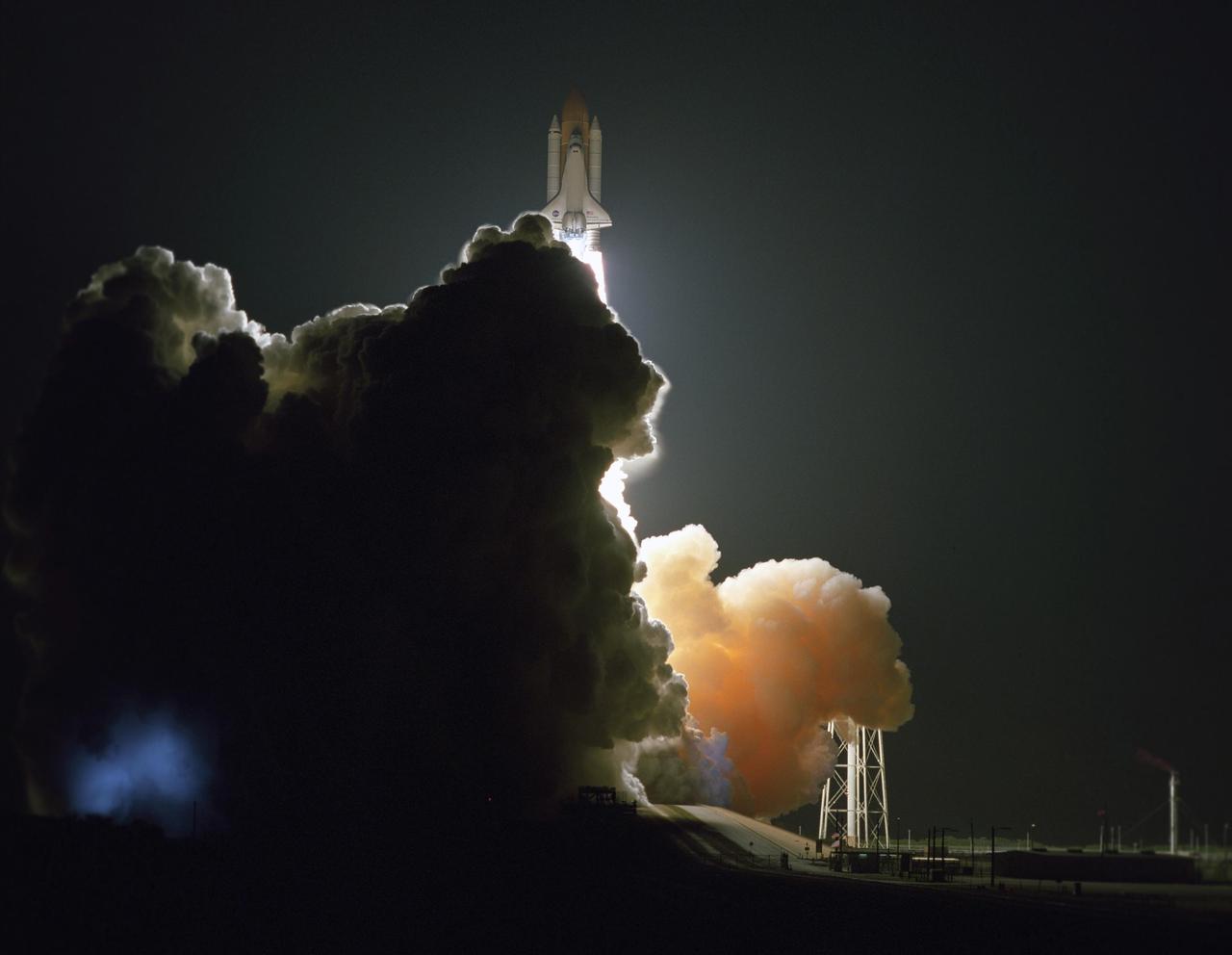
KENNEDY SPACE CENTER, FLA. -- Emerging from behind the clouds of smoke and steam generated by its liftoff, Space Shuttle Discovery leaps toward the sky past the lightning mast on Launch Pad 39B on mission STS-116. Liftoff occurred on time at 8:47 p.m. EST. This was the second launch attempt of Discovery on mission STS-116. The first launch attempt on Dec. 7 was postponed due a low cloud ceiling over Kennedy Space Center. This is Discovery's 33rd mission and the first night launch since 2002. The 20th shuttle mission to the International Space Station, STS-116 carries another truss segment, P5. It will serve as a spacer, mated to the P4 truss that was attached in September. After installing the P5, the crew will reconfigure and redistribute the power generated by two pairs of U.S. solar arrays. Landing is expected Dec. 21 at KSC. Photo credit: NASA/Sandra Joseph, Robert Murray, Chris Lynch
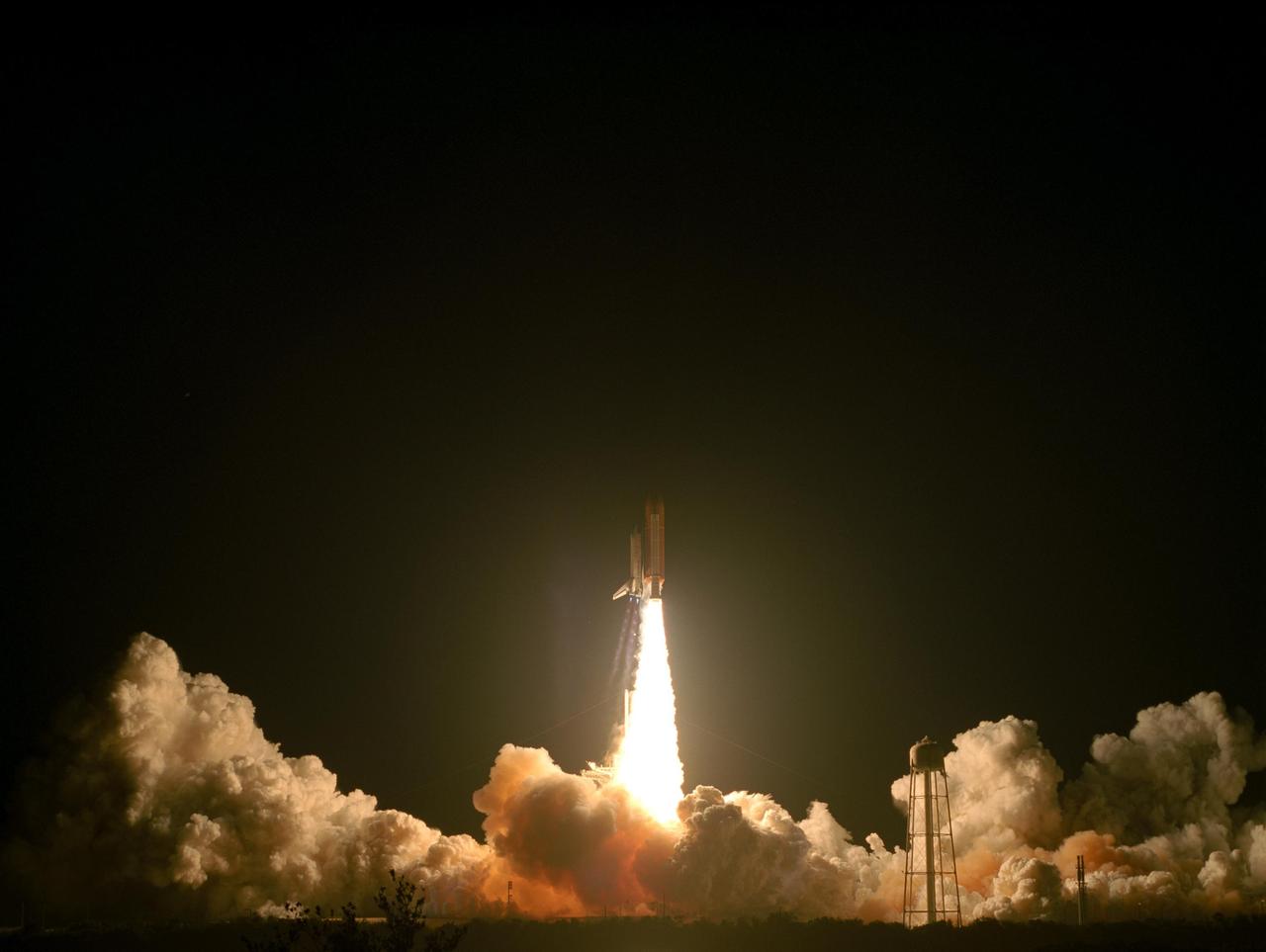
KENNEDY SPACE CENTER, FLA. -- Space Shuttle Discovery hurtles into the night sky trailing columns of fire from its solid rocket boosters as it launches on mission STS-116. Liftoff occurred on time at 8:47 p.m. EST. This was the second launch attempt for mission STS-116. The first launch attempt on Dec. 7 was postponed due a low cloud ceiling over Kennedy Space Center. This is Discovery's 33rd mission and the first night launch since 2002. The 20th shuttle mission to the International Space Station, STS-116 carries another truss segment, P5. It will serve as a spacer, mated to the P4 truss that was attached in September. After installing the P5, the crew will reconfigure and redistribute the power generated by two pairs of U.S. solar arrays. Landing is expected Dec. 21 at KSC. Photo credit: NASA/Sandy Joseph, Robert Murray & Chris Lynch
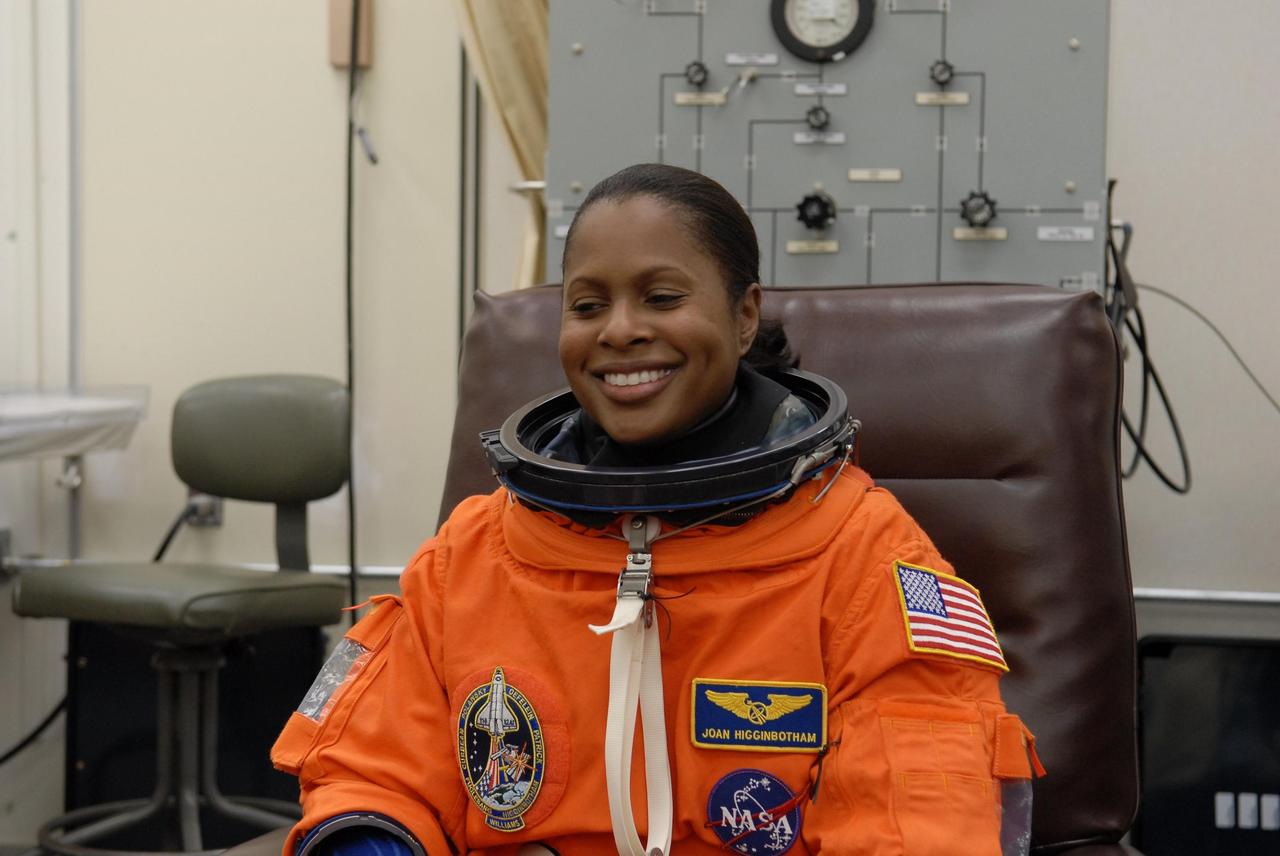
KENNEDY SPACE CENTER, FLA. -- The crew members of mission STS-116 are suiting up for a second launch attempt at 8:47 p.m. EST from Launch Pad 39B aboard Space Shuttle Discovery. Pictured here is Mission Specialist Joan Higginbotham, who will be making her first shuttle flight. The first launch attempt of STS-116 on Dec. 7 was postponed due a low cloud ceiling over Kennedy Space Center. This is Discovery's 33rd mission and the first night launch since 2002. The 20th shuttle mission to the International Space Station, STS-116 carries another truss segment, P5. It will serve as a spacer, mated to the P4 truss that was attached in September. After installing the P5, the crew will reconfigure and redistribute the power generated by two pairs of U.S. solar arrays. Landing is expected Dec. 19 at KSC. Photo credit: NASA/Kim Shiflett
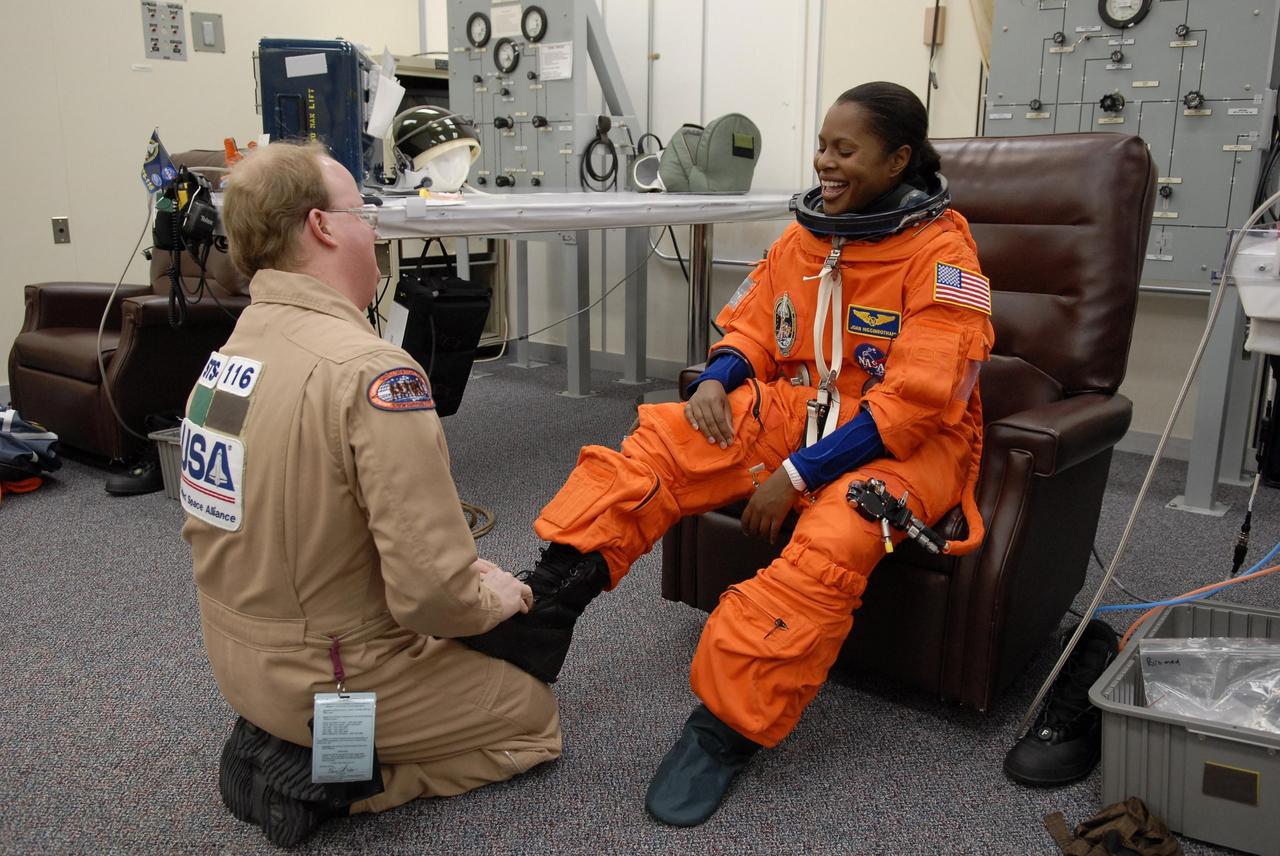
KENNEDY SPACE CENTER, FLA. -- The crew members of mission STS-116 are suiting up for a second launch attempt at 8:47 p.m. EST from Launch Pad 39B aboard Space Shuttle Discovery. Pictured here, Mission Specialist Joan Higginbotham, who will be making her first shuttle flight, is helped with her boot. The first launch attempt of STS-116 on Dec. 7 was postponed due a low cloud ceiling over Kennedy Space Center. This is Discovery's 33rd mission and the first night launch since 2002. The 20th shuttle mission to the International Space Station, STS-116 carries another truss segment, P5. It will serve as a spacer, mated to the P4 truss that was attached in September. After installing the P5, the crew will reconfigure and redistribute the power generated by two pairs of U.S. solar arrays. Landing is expected Dec. 19 at KSC. Photo credit: NASA/Kim Shiflett
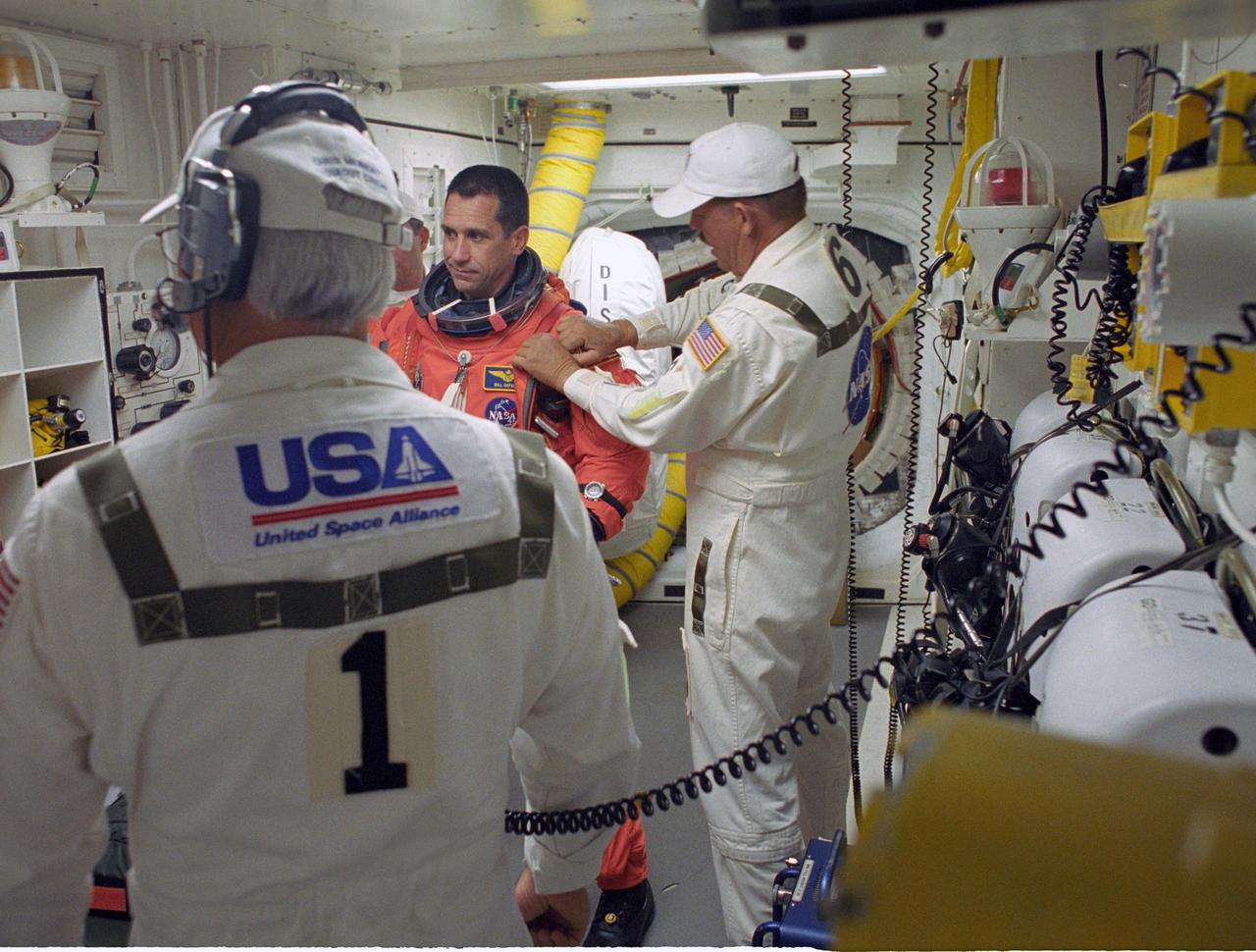
KENNEDY SPACE CENTER, FLA. -- STS-116 Commander William Oefelein is helped by the closeout crew in the White Room to secure his launch suit before climbing into Space Shuttle Discovery. The White Room is at the end of the orbiter access arm that extends from the fixed service structure and provides entry into the orbiter. The first launch attempt of STS-116 on Dec. 7 was postponed due a low cloud ceiling over Kennedy Space Center. This second launch attempt is scheduled for 8:47 p.m. This is Discovery's 33rd mission and the first night launch since 2002. The 20th shuttle mission to the International Space Station, STS-116 carries another truss segment, P5. It will serve as a spacer, mated to the P4 truss that was attached in September. After installing the P5, the crew will reconfigure and redistribute the power generated by two pairs of U.S. solar arrays. Landing is expected Dec. 21 at KSC. Photo credit: NASA/Tony Gray & Don Kight
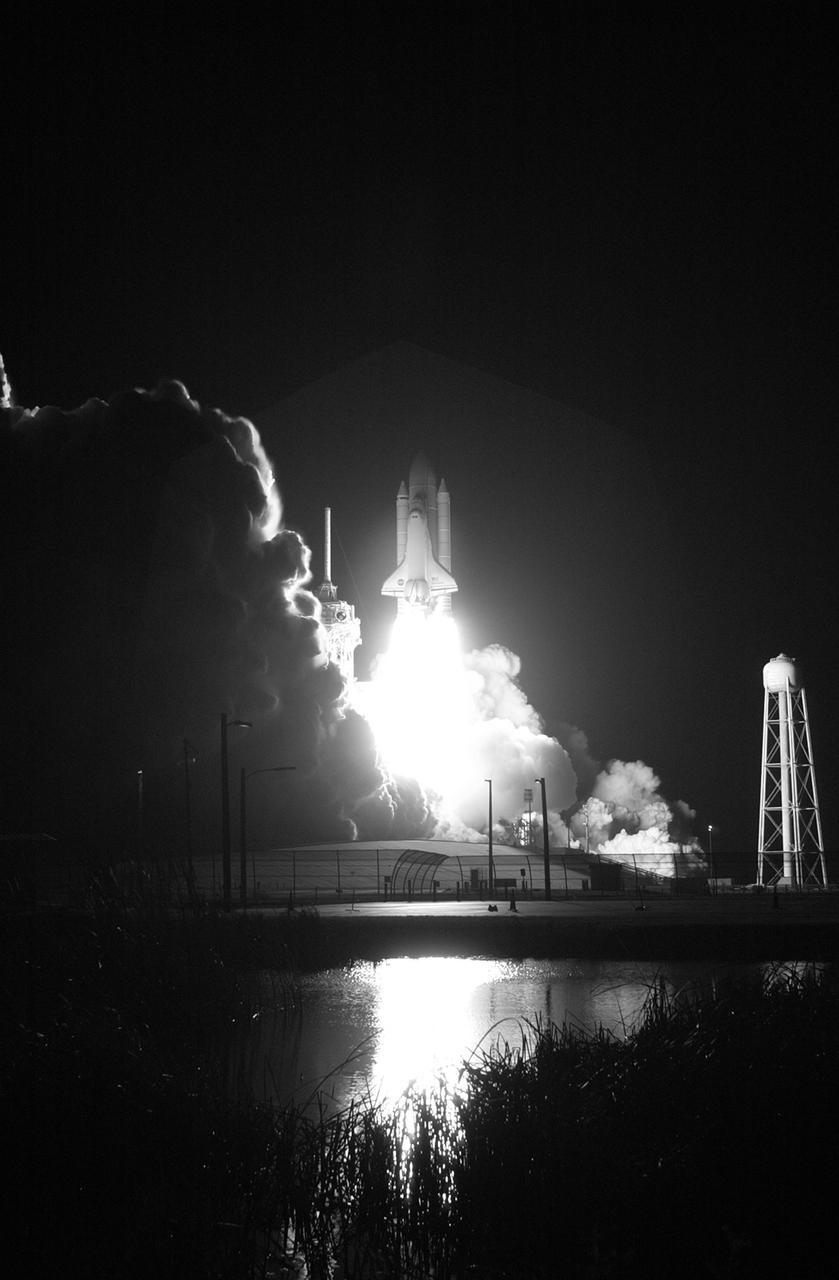
KENNEDY SPACE CENTER, FLA. -- The fiery liftoff of Space Shuttle Discovery from Launch Pad 39B on mission STS-116 is captured in the nearby water. Liftoff occurred on time at 8:47 p.m. EST. This was the second launch attempt of Discovery on mission STS-116. The first launch attempt on Dec. 7 was postponed due a low cloud ceiling over Kennedy Space Center. This is Discovery's 33rd mission and the first night launch since 2002. The 20th shuttle mission to the International Space Station, STS-116 carries another truss segment, P5. It will serve as a spacer, mated to the P4 truss that was attached in September. After installing the P5, the crew will reconfigure and redistribute the power generated by two pairs of U.S. solar arrays. Landing is expected Dec. 21 at KSC. Photo credit: NASA/Sandra Joseph, Robert Murray, Chris Lynch
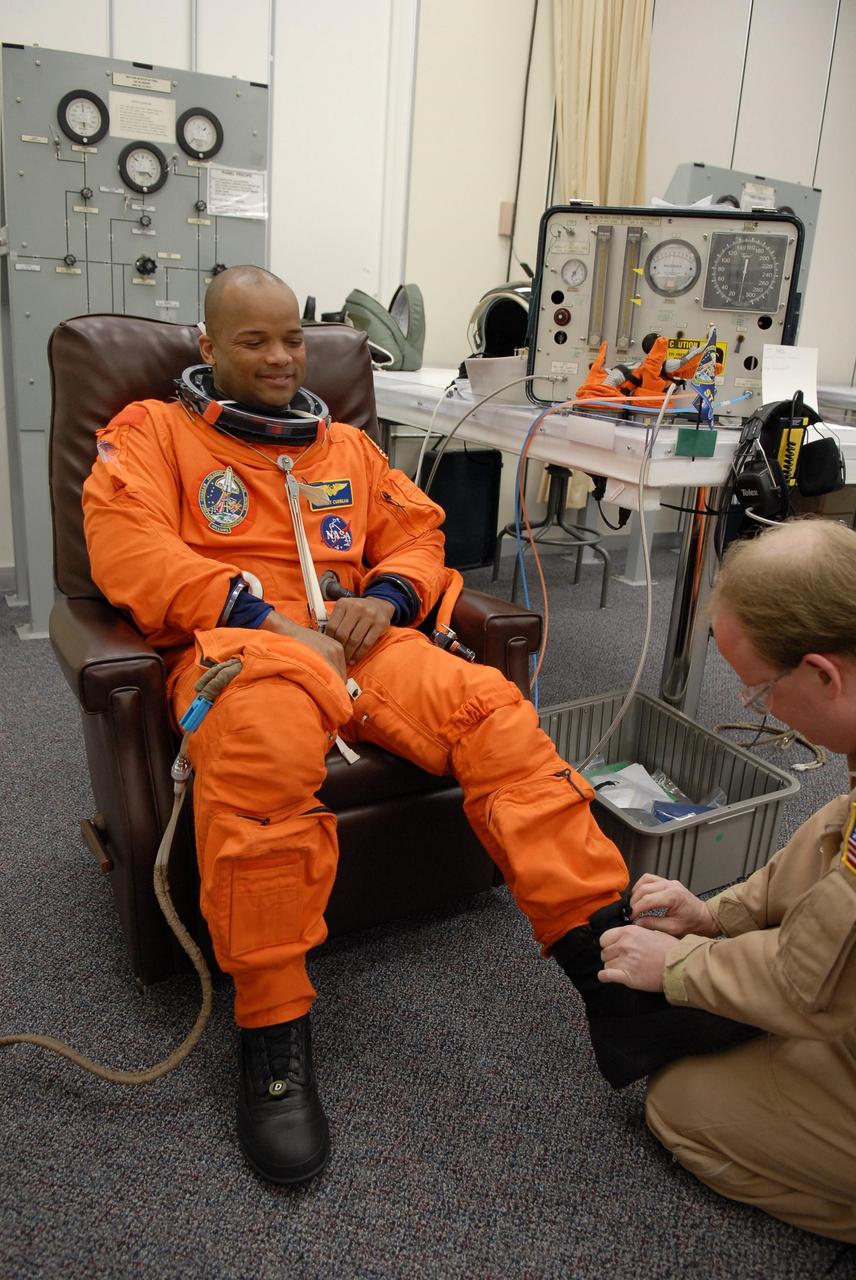
KENNEDY SPACE CENTER, FLA. -- The crew members of mission STS-116 are suiting up for a second launch attempt at 8:47 p.m. EST from Launch Pad 39B aboard Space Shuttle Discovery. Pictured here is Mission Specialist Robert Curbeam, who is helped with his boot. Curbeam is making his third shuttle flight. The first launch attempt of STS-116 on Dec. 7 was postponed due a low cloud ceiling over Kennedy Space Center. This is Discovery's 33rd mission and the first night launch since 2002. The 20th shuttle mission to the International Space Station, STS-116 carries another truss segment, P5. It will serve as a spacer, mated to the P4 truss that was attached in September. After installing the P5, the crew will reconfigure and redistribute the power generated by two pairs of U.S. solar arrays. Landing is expected Dec. 19 at KSC. Photo credit: NASA/Kim Shiflett
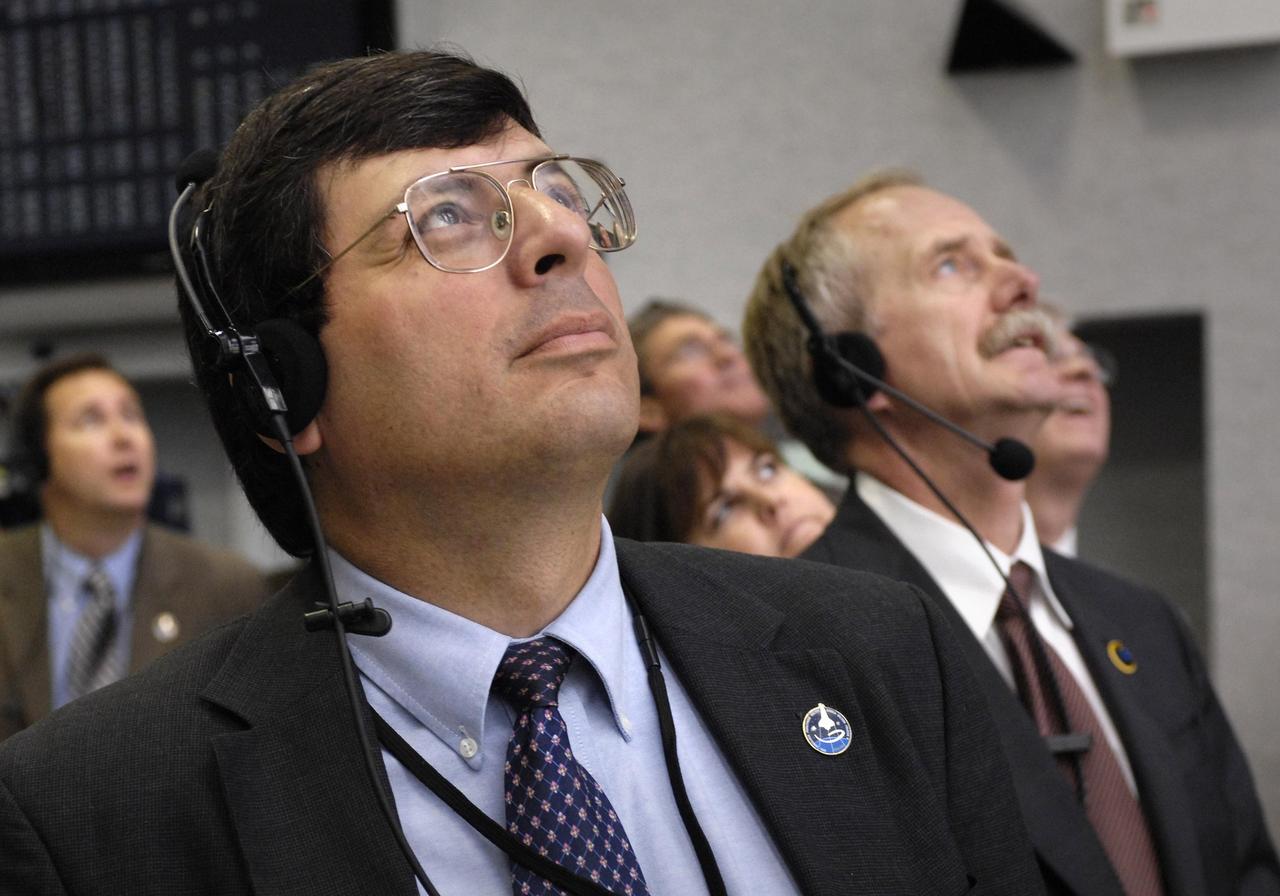
KENNEDY SPACE CENTER, FLA. -- In the firing room at NASA's Kennedy Space Center, NASA Associate Administrator Chris Scolese (left) and associate administrator for NASA Space Operations Bill Gerstenmaier (right) watch the space shuttle Discovery launch on mission STS-120. Liftoff was on time at 11:38:19 am. EDT. Discovery carries the Italian-built U.S. Node 2, called Harmony. During the 14-day STS-120 mission, the crew will install Harmony and move the P6 solar arrays to their permanent position and deploy them. Discovery is expected to complete its mission and return home at 4:47 a.m. EST on Nov. 6. Photo credit: NASA/Bill Ingalls
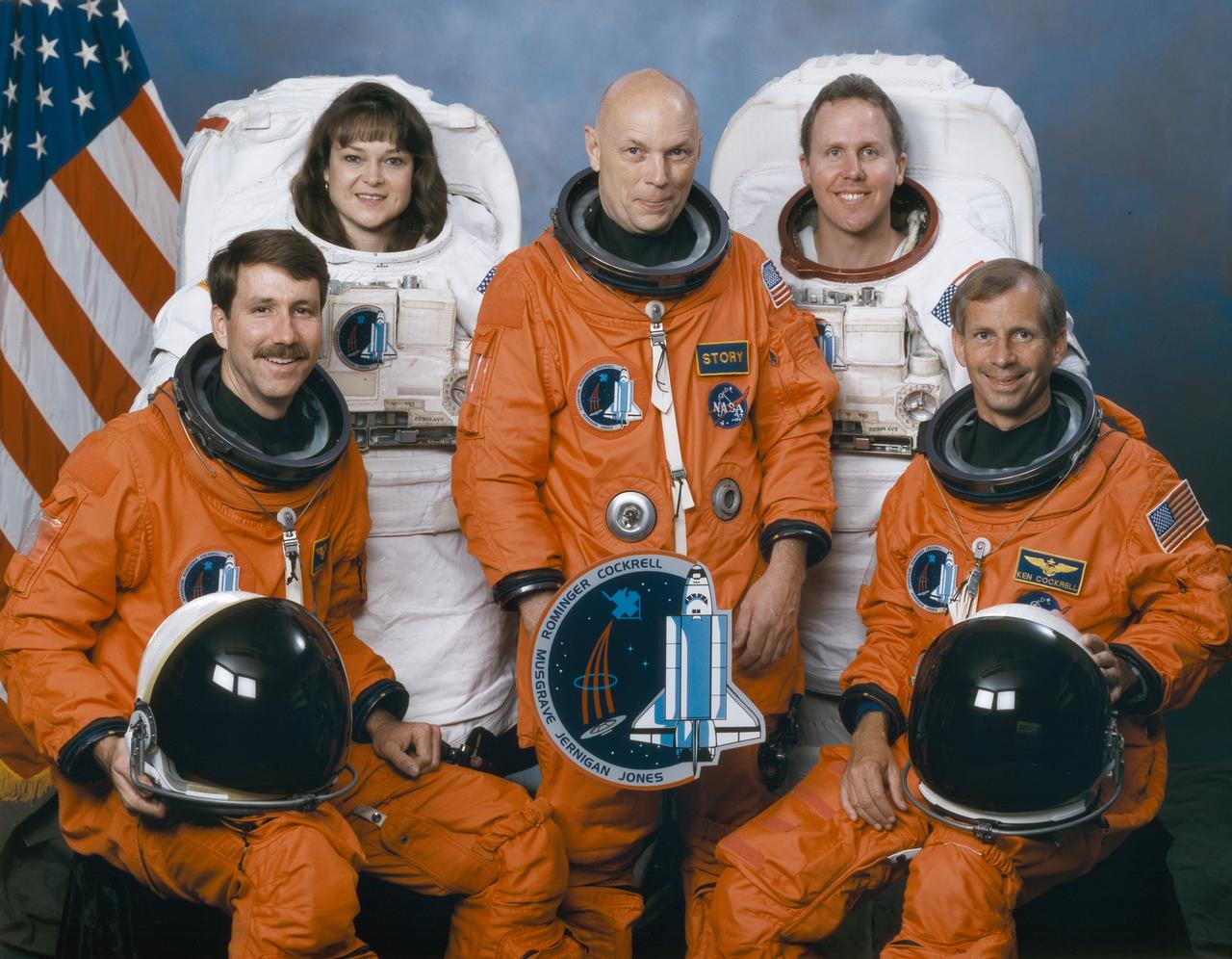
The crew assigned to the STS-79 mission included (seated left to right) Kent V. Rominger, pilot; and Kenneth D. Cockrell, commander. Standing (left to right) are mission specialists Tamara E. Jernigan, F. Story Musgrave, and Thomas D. Jones. Launched aboard the Space Shuttle Columbia on November 19, 1996 at 2:55:47 pm (EST), the STS-80 mission marked the final flight of 1996. The crew successfully deployed and operated the Orbiting and Retrievable Far and Extreme Ultraviolet Spectrometer-Shuttle Pallet Satellite II (ORFEUS-SPAS II), and deployed and retrieved the Wake Shield Facility-3 (WSF-3).
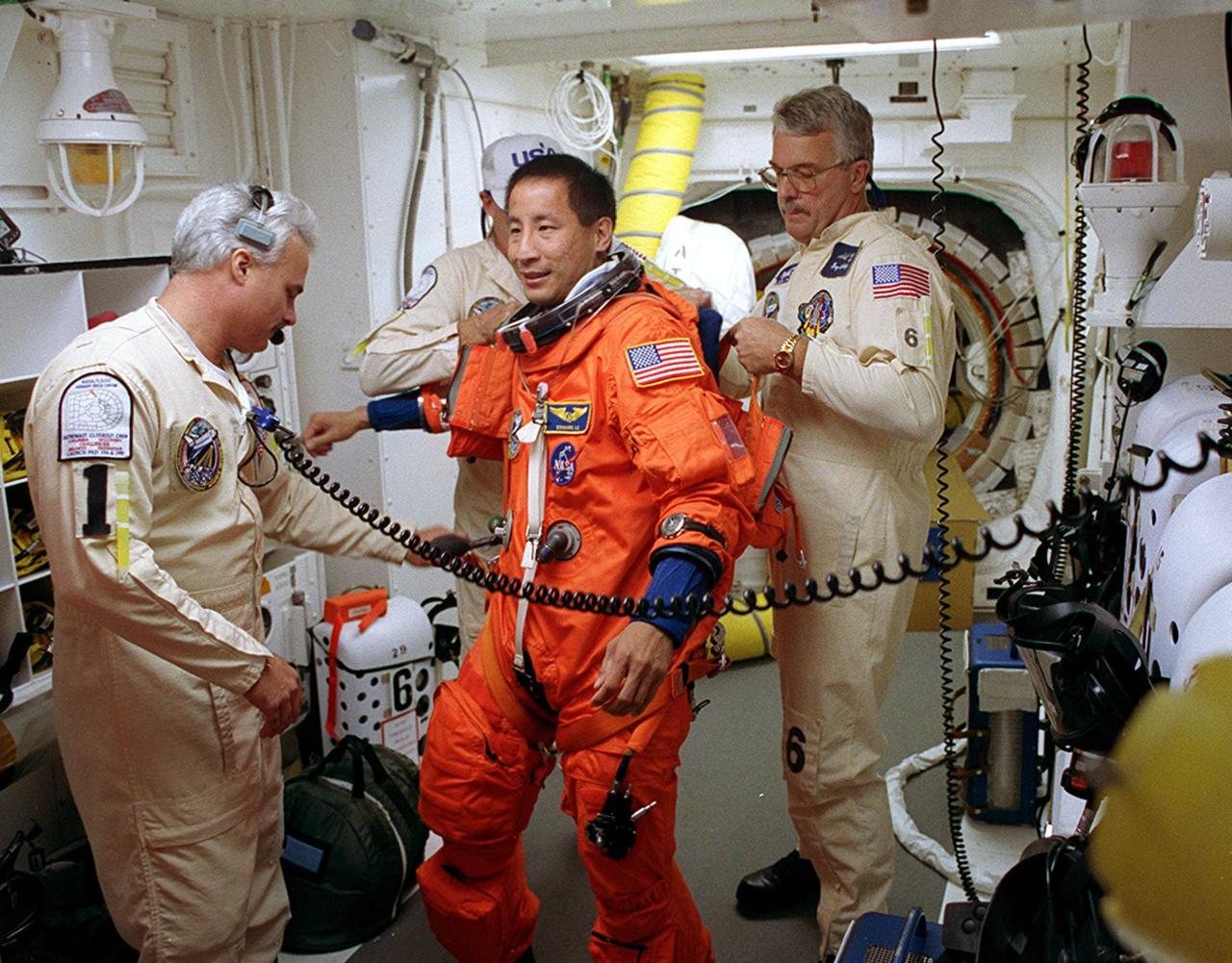
Before entering Space Shuttle Atlantis, STS-106 Mission Specialist Edward T. Lu gets help with his launch and entry suit in the White Room. The perfect on-time liftoff of Atlantis on mission STS-106 occurred at 8:45:47 a.m. EDT. On the 11-day mission to the International Space Station, the seven-member crew will perform support tasks on orbit, transfer supplies and prepare the living quarters in the newly arrived Zvezda Service Module. The first long-duration crew, dubbed “Expedition One,” is due to arrive at the Station in late fall. Landing of Atlantis is targeted for 4:45 a.m. EDT on Sept. 19
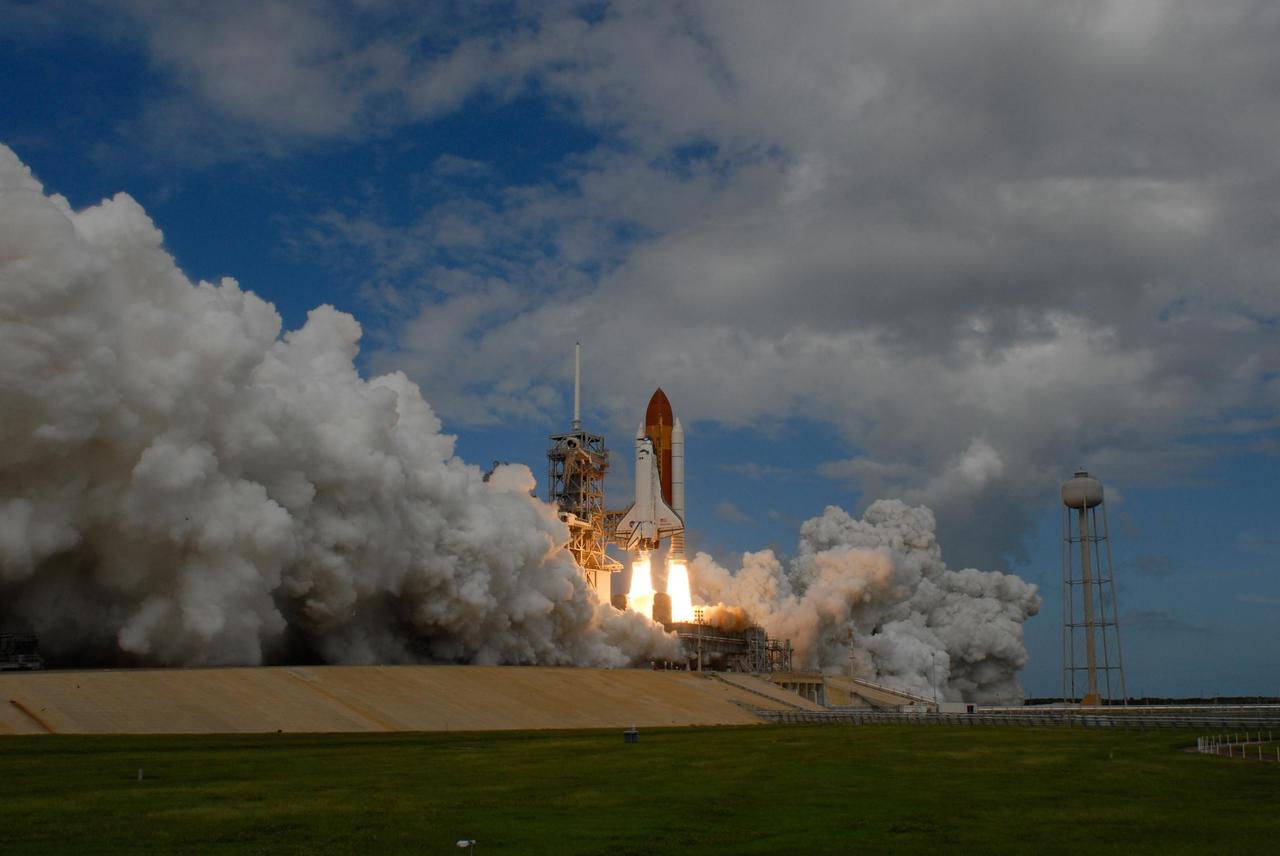
KENNEDY SPACE CENTER, FLA. -- Smoke and steam billow across Launch Pad 39A at NASA's Kennedy Space Center as space shuttle Discovery lifts off on mission STS-120 to the International Space Station. Liftoff was on time at 11:38:19 a.m. EDT. Discovery carries the Italian-built U.S. Node 2, called Harmony. During the 14-day STS-120 mission, the crew will install Harmony and move the P6 solar arrays to their permanent position and deploy them. Discovery is expected to complete its mission and return home at 4:47 a.m. EST on Nov. 6. Photo credit: NASA/Sandra Joseph, Tony Gray & Robert Murray
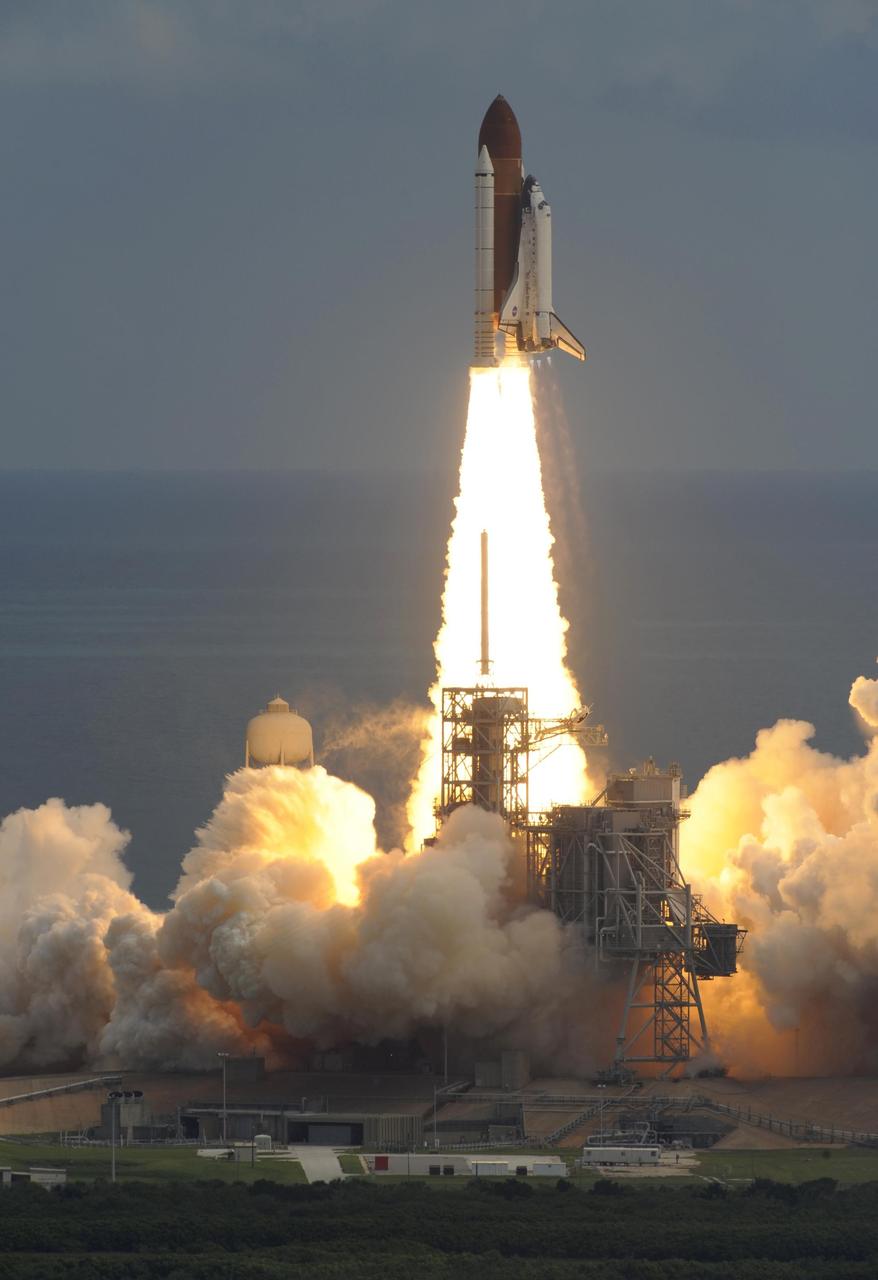
KENNEDY SPACE CENTER, FLA. -- Clouds of smoke and steam reflect the fiery column beneath space shuttle Discovery as it leaps off Launch Pad 39A at NASA's Kennedy Space Center on mission STS-120 to the International Space Station. Liftoff was on time at 11:38:19 a.m. EDT. Discovery carries the Italian-built U.S. Node 2, called Harmony. During the 14-day STS-120 mission, the crew will install Harmony and move the P6 solar arrays to their permanent position and deploy them. Discovery is expected to complete its mission and return home at 4:47 a.m. EST on Nov. 6. Photo courtesy of Nikon/Scott Andrews.
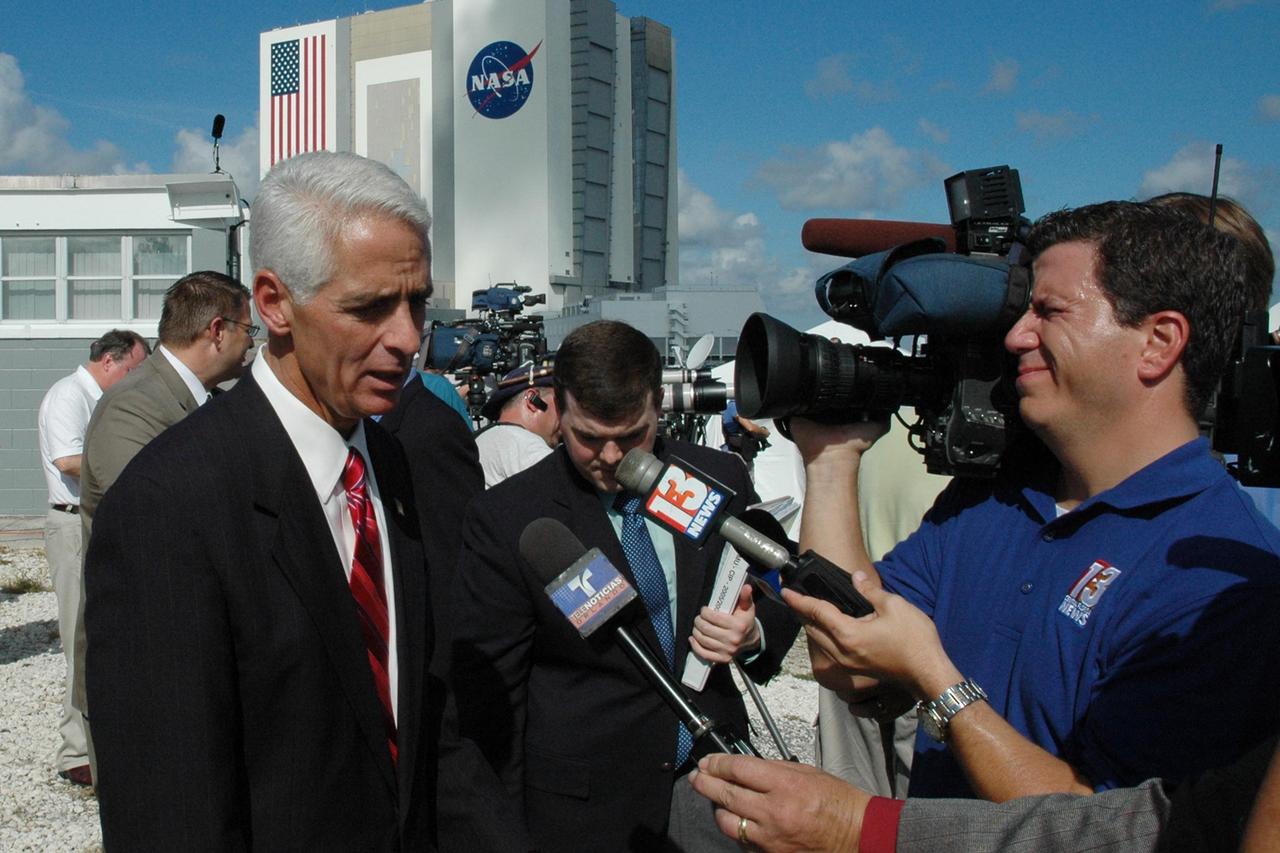
KENNEDY SPACE CENTER, FLA. -- Florida Governor Charlie Crist, left, is interviewed by reporters after the governor watched the successful launch of space shuttle Discovery on mission STS-120 to the International Space Station. Liftoff was on time at 11:38:19 a.m. EDT. Discovery carries the Italian-built U.S. Node 2, called Harmony. During the 14-day STS-120 mission, the crew will install Harmony and move the P6 solar arrays to their permanent position and deploy them. Discovery is expected to complete its mission and return home at 4:47 a.m. EST on Nov. 6. Photo credit: NASA/Troy Cryder
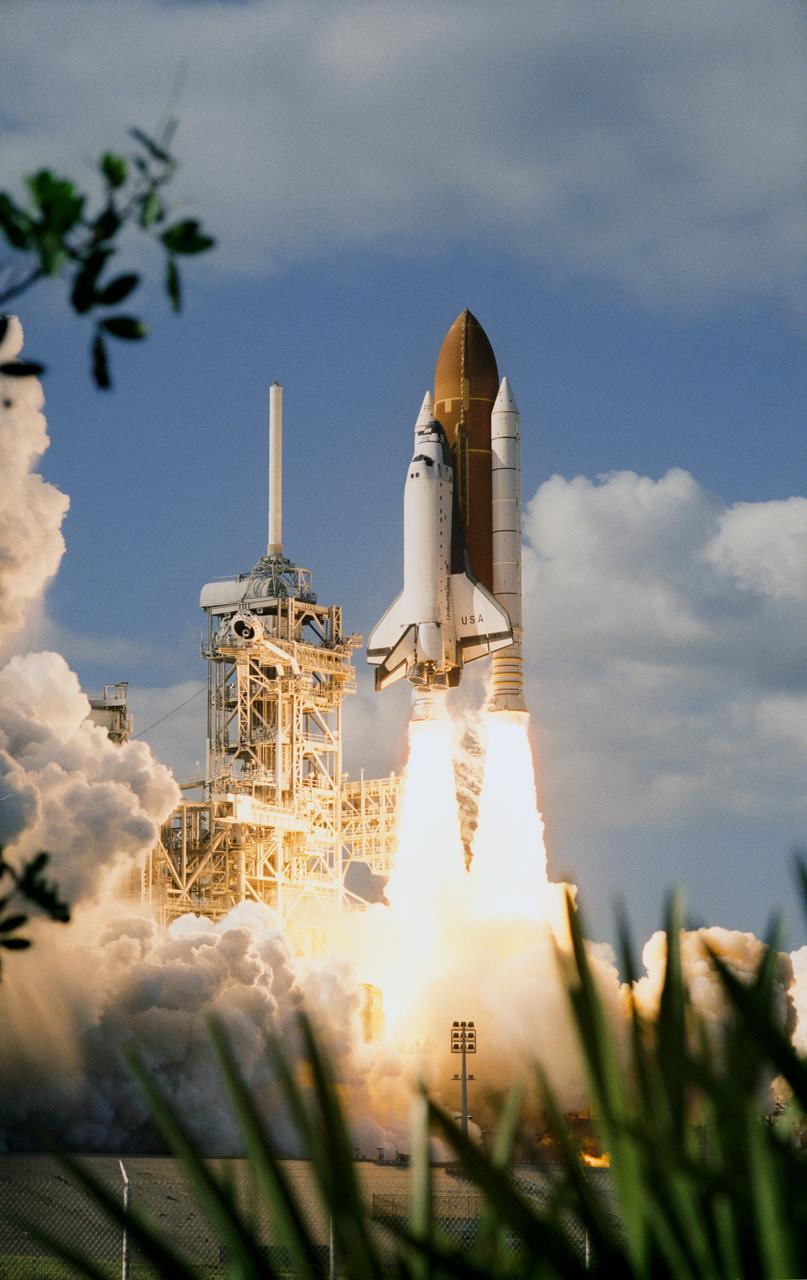
STS080-S-004 (19 Nov. 1996) --- The space shuttle Columbia lifts off from the Kennedy Space Center's (KSC) Launch Pad 39B at 2:55:47 p.m. (EST), Nov. 19, 1996. Onboard are astronauts Kenneth D. Cockrell, STS-80 mission commander; Kent V. Rominger, pilot; along with Story Musgrave, Tamara E. Jernigan and Thomas D. Jones, all mission specialists. The two primary payloads for STS-80 stowed in Columbia's cargo bay for later deployment and testing are the Wake Shield Facility (WSF-3) and the Orbiting and Retrievable Far and Extreme Ultraviolet Spectrometer (ORFEUS) with its associated Shuttle Pallet Satellite (SPAS).

STS-106 Pilot Scott D. Altman is helped with his launch and entry suit by suit technicians in the White Room before entering Space Shuttle Atlantis. The perfect on-time liftoff of Atlantis on mission STS-106 occurred at 8:45:47 a.m. EDT. On the 11-day mission to the International Space Station, the seven-member crew will perform support tasks on orbit, transfer supplies and prepare the living quarters in the newly arrived Zvezda Service Module. The first long-duration crew, dubbed “Expedition One,” is due to arrive at the Station in late fall. Landing of Atlantis is targeted for 4:45 a.m. EDT on Sept. 19
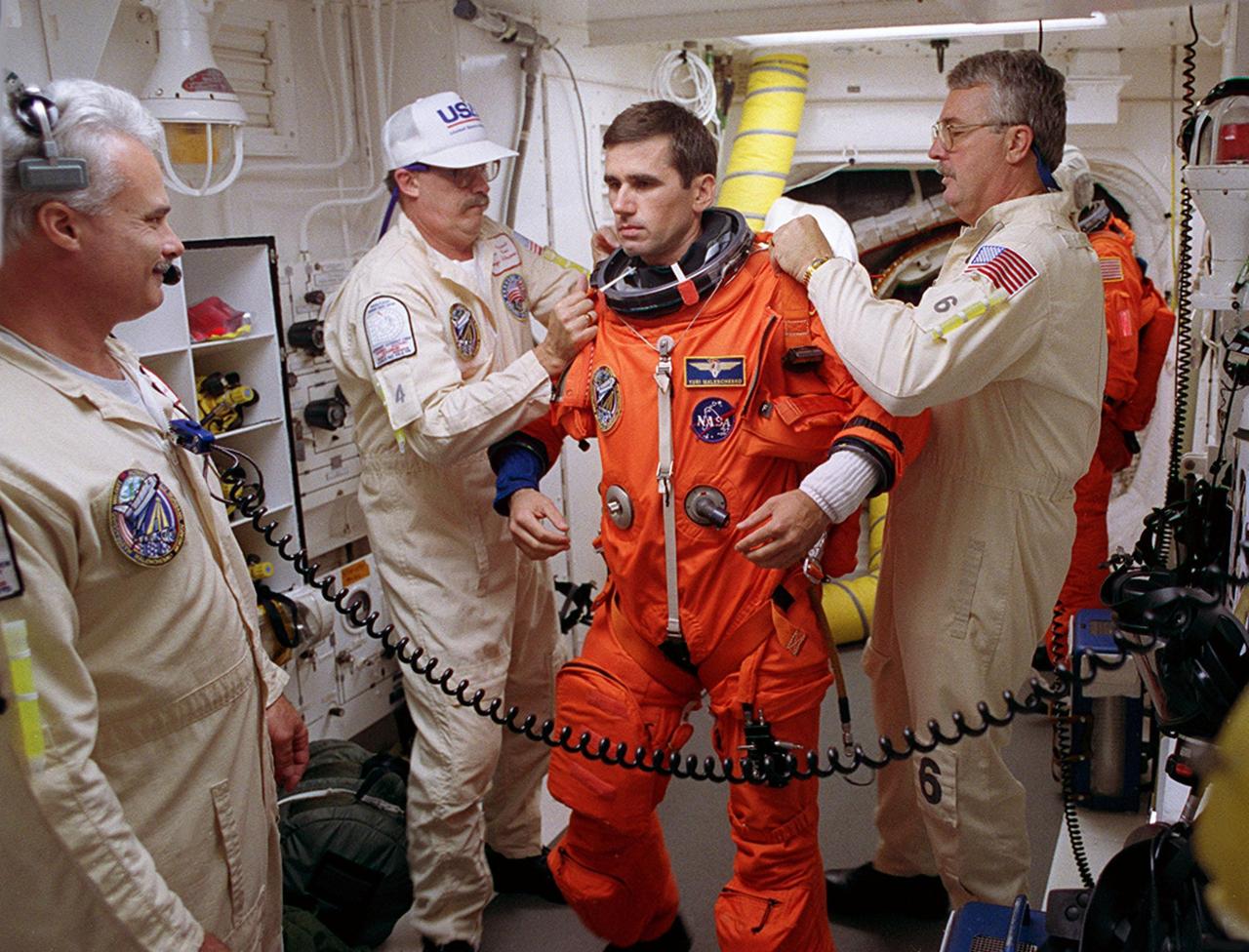
Before entering Space Shuttle Atlantis, STS-106 Mission Specialist Yuri I. Malenchenko gets help with his launch and entry suit in the White Room. The perfect on-time liftoff of Atlantis on mission STS-106 occurred at 8:45:47 a.m. EDT. On the 11-day mission to the International Space Station, the seven-member crew will perform support tasks on orbit, transfer supplies and prepare the living quarters in the newly arrived Zvezda Service Module. The first long-duration crew, dubbed “Expedition One,” is due to arrive at the Station in late fall. Landing of Atlantis is targeted for 4:45 a.m. EDT on Sept. 19
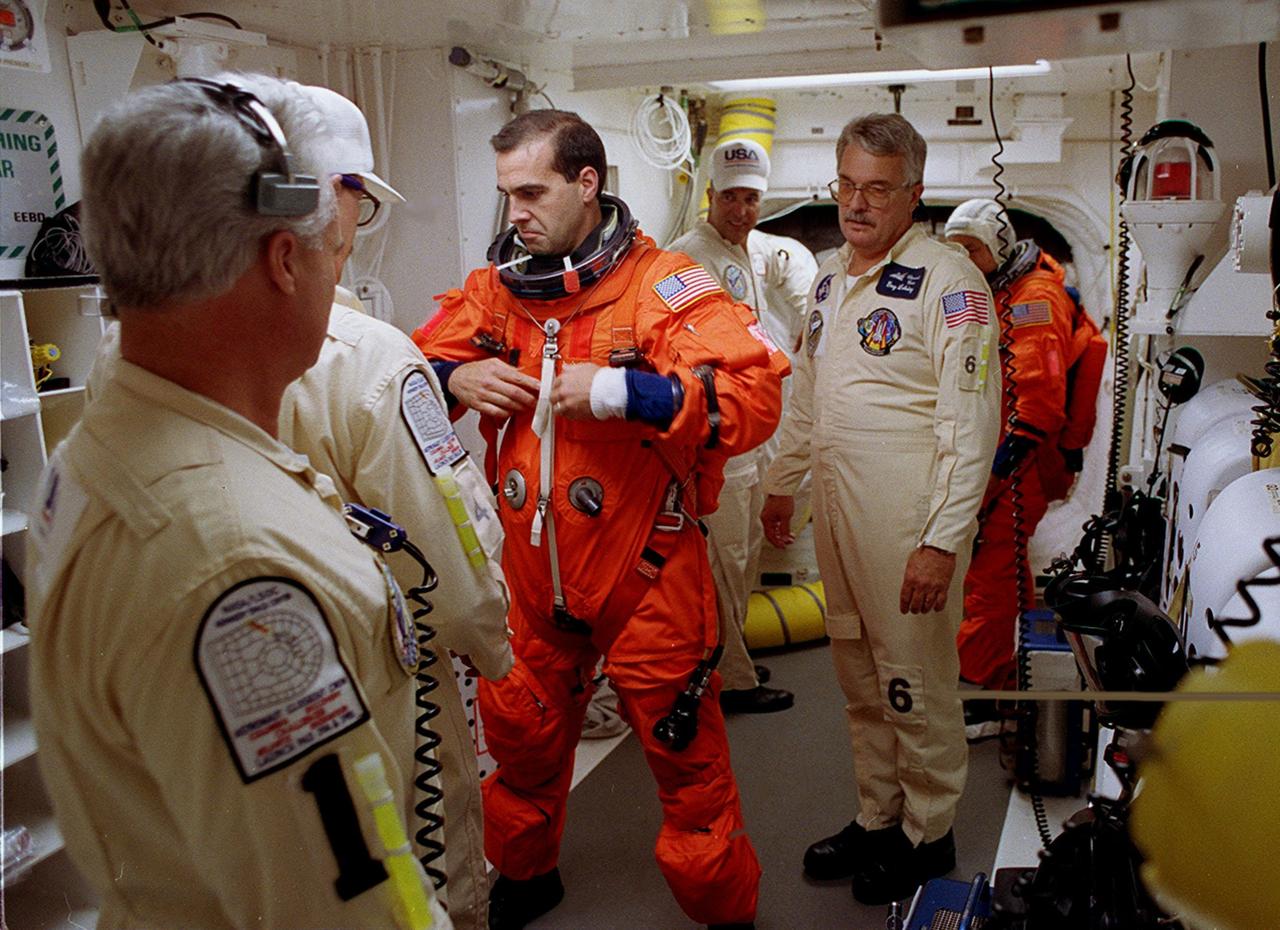
STS-106 Mission Specialist Richard A. Mastracchio is helped with his launch and entry suit in the White Room before entering Space Shuttle Atlantis. The perfect on-time liftoff of Atlantis on mission STS-106 occurred at 8:45:47 a.m. EDT. On the 11-day mission to the International Space Station, the seven-member crew will perform support tasks on orbit, transfer supplies and prepare the living quarters in the newly arrived Zvezda Service Module. The first long-duration crew, dubbed “Expedition One,” is due to arrive at the Station in late fall. Landing of Atlantis is targeted for 4:45 a.m. EDT on Sept. 19
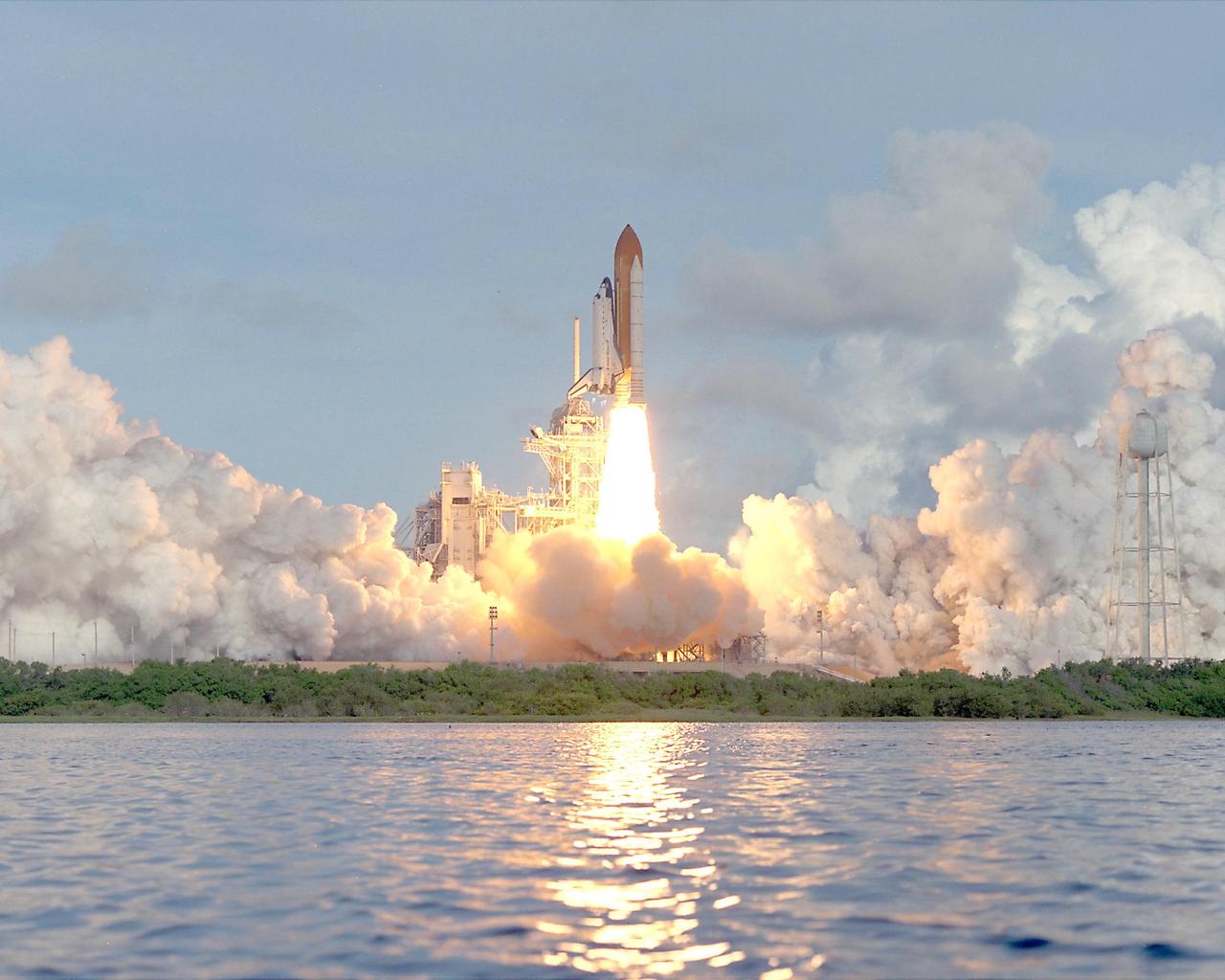
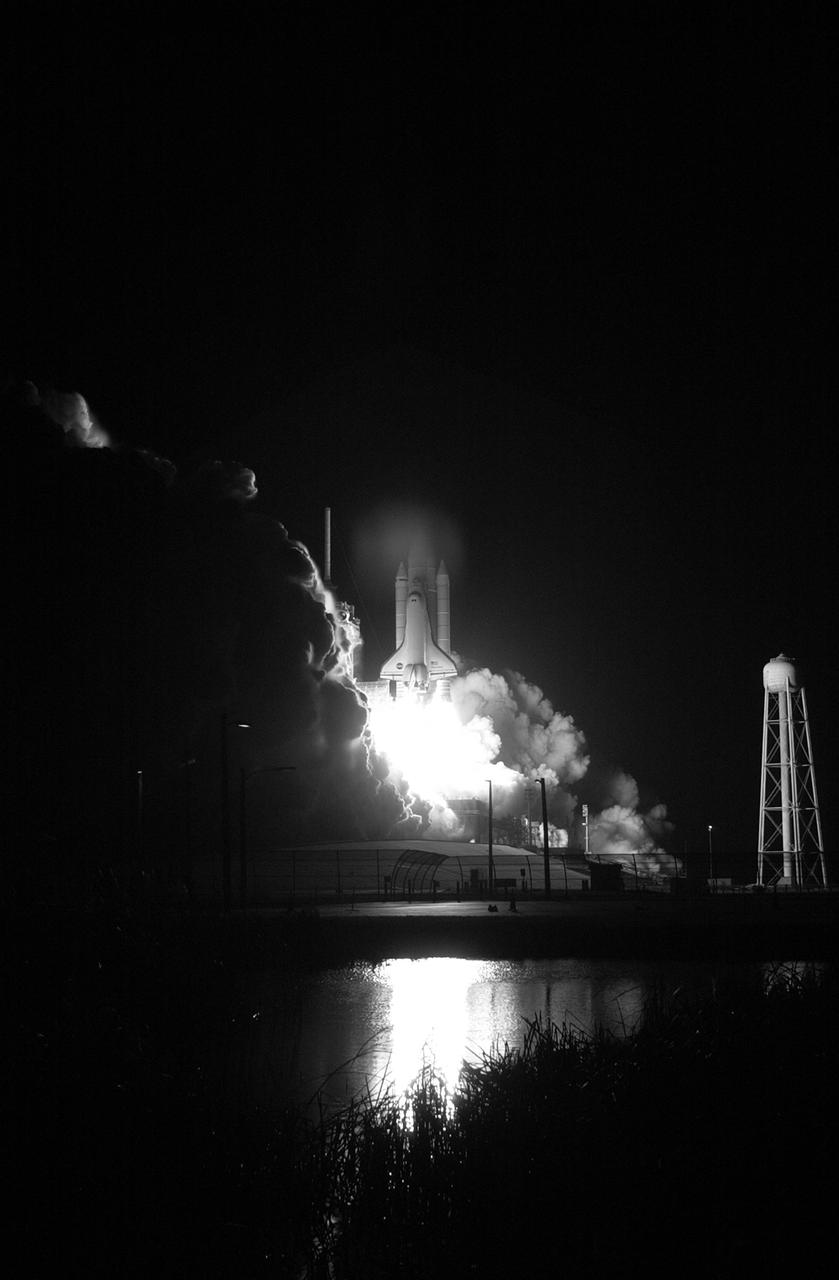
KENNEDY SPACE CENTER, Fla. -- The clouds of steam and smoke generated from the launch of Space Shuttle Atlantis seem to blend with the sky. The launch is reflected in waters near Launch Pad 39B. The perfect on-time liftoff of Atlantis on mission STS-106 occurred at 8:45:47 a.m. EDT. On the 11-day mission to the International Space Station, the seven-member crew will perform support tasks on orbit, transfer supplies and prepare the living quarters in the newly arrived Zvezda Service Module. The first long-duration crew, dubbed “Expedition One,” is due to arrive at the Station in late fall. Landing of Atlantis is targeted for 4:45 a.m. EDT on Sept. 19
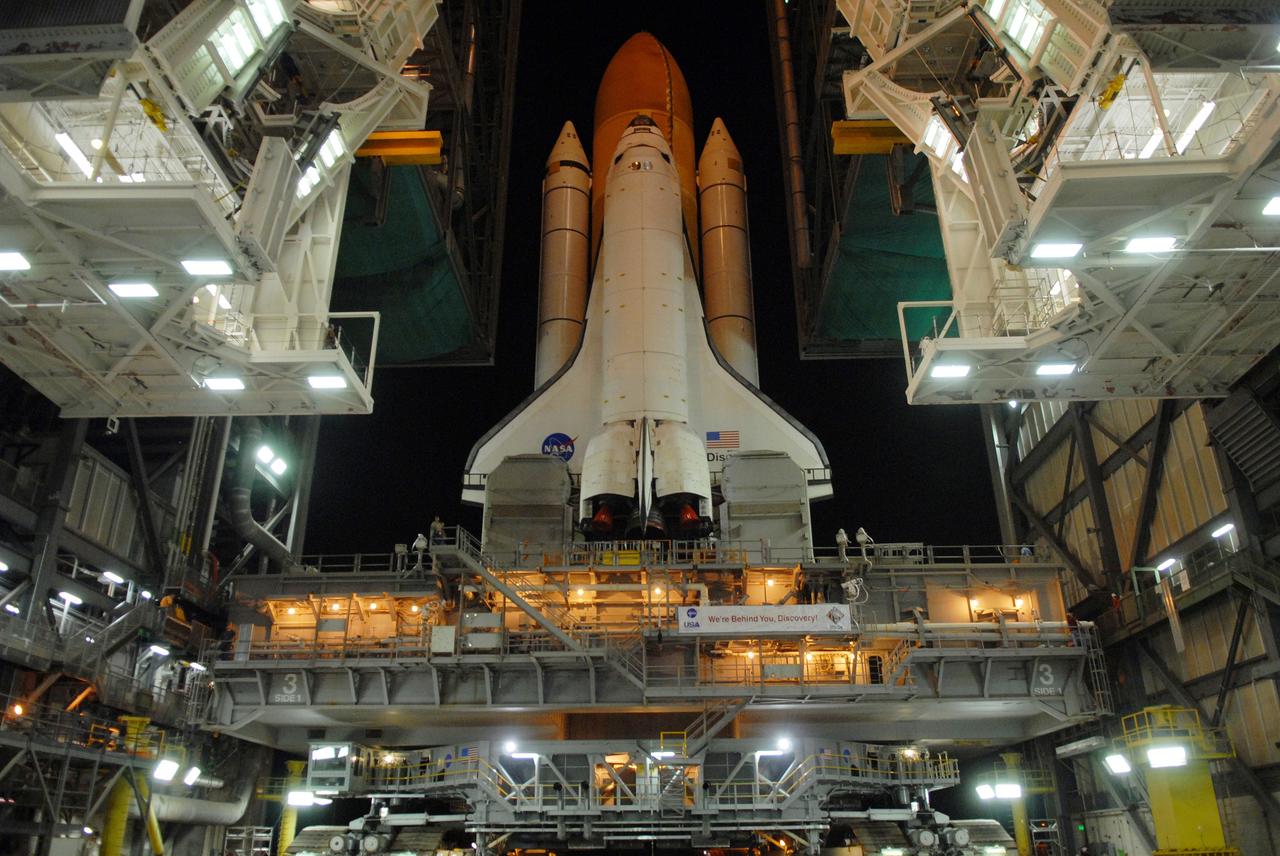
CAPE CANAVERAL, Fla. -- Getting ready for the STS-124 mission, space shuttle Discovery, atop a mobile launch platform, begins rollout to Launch Pad 39A at NASA's Kennedy Space Center. The 3.4-mile journey from the Vehicle Assembly Building began at 11:47 p.m. on May 2. After arriving at the pad, the shuttle was secured, or hard down, at 6:06 a.m. EDT May 3. On the 13-day mission, Discovery and its crew will deliver the Japan Aerospace Exploration Agency's Japanese Experiment Module – Pressurized Module and the Japanese Remote Manipulator System. Launch is targeted for May 31. Photo credit: NASA/Troy Cryder
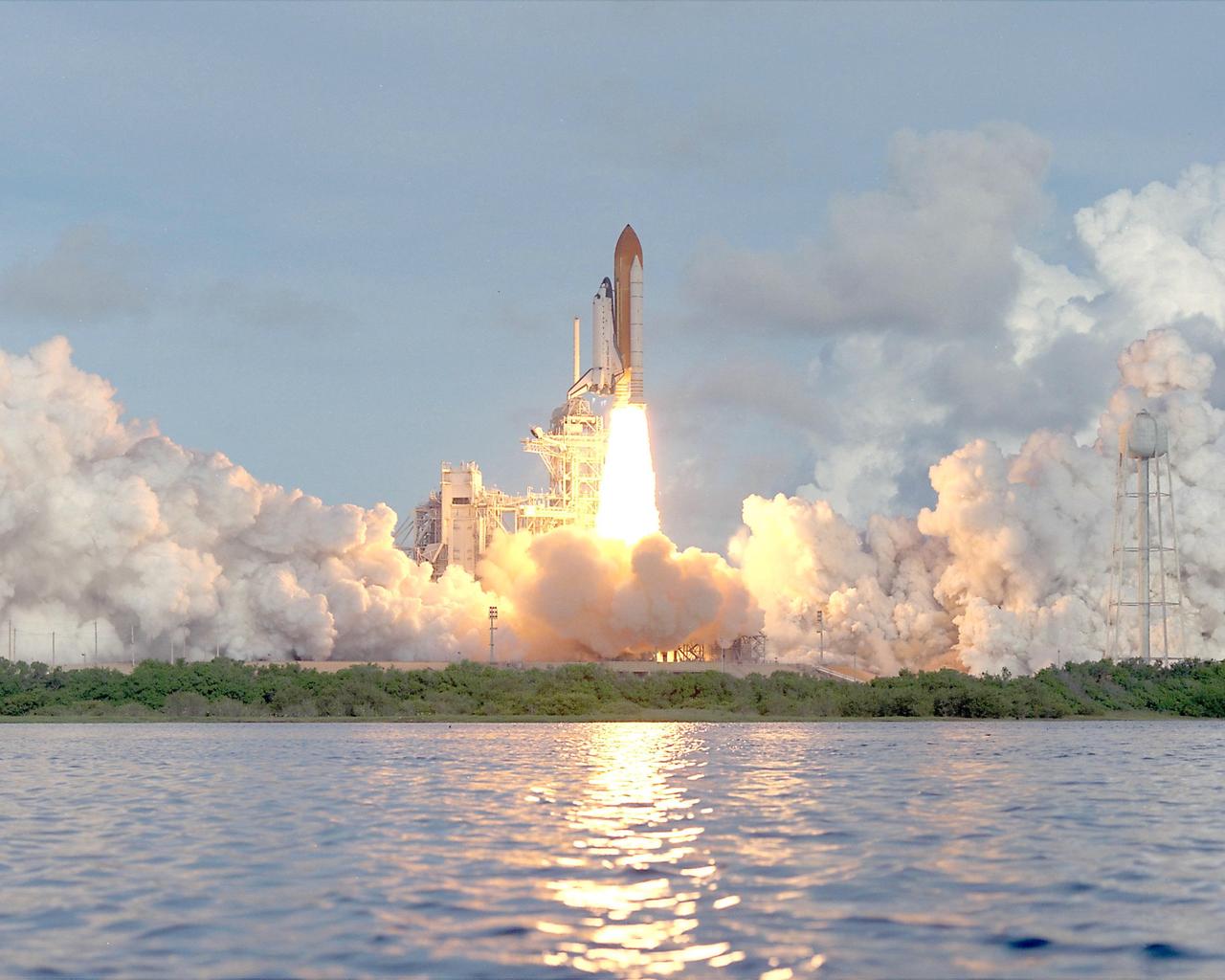
KENNEDY SPACE CENTER, Fla. -- The clouds of steam and smoke generated from the launch of Space Shuttle Atlantis seem to blend with the sky. The launch is reflected in waters near Launch Pad 39B. The perfect on-time liftoff of Atlantis on mission STS-106 occurred at 8:45:47 a.m. EDT. On the 11-day mission to the International Space Station, the seven-member crew will perform support tasks on orbit, transfer supplies and prepare the living quarters in the newly arrived Zvezda Service Module. The first long-duration crew, dubbed “Expedition One,” is due to arrive at the Station in late fall. Landing of Atlantis is targeted for 4:45 a.m. EDT on Sept. 19
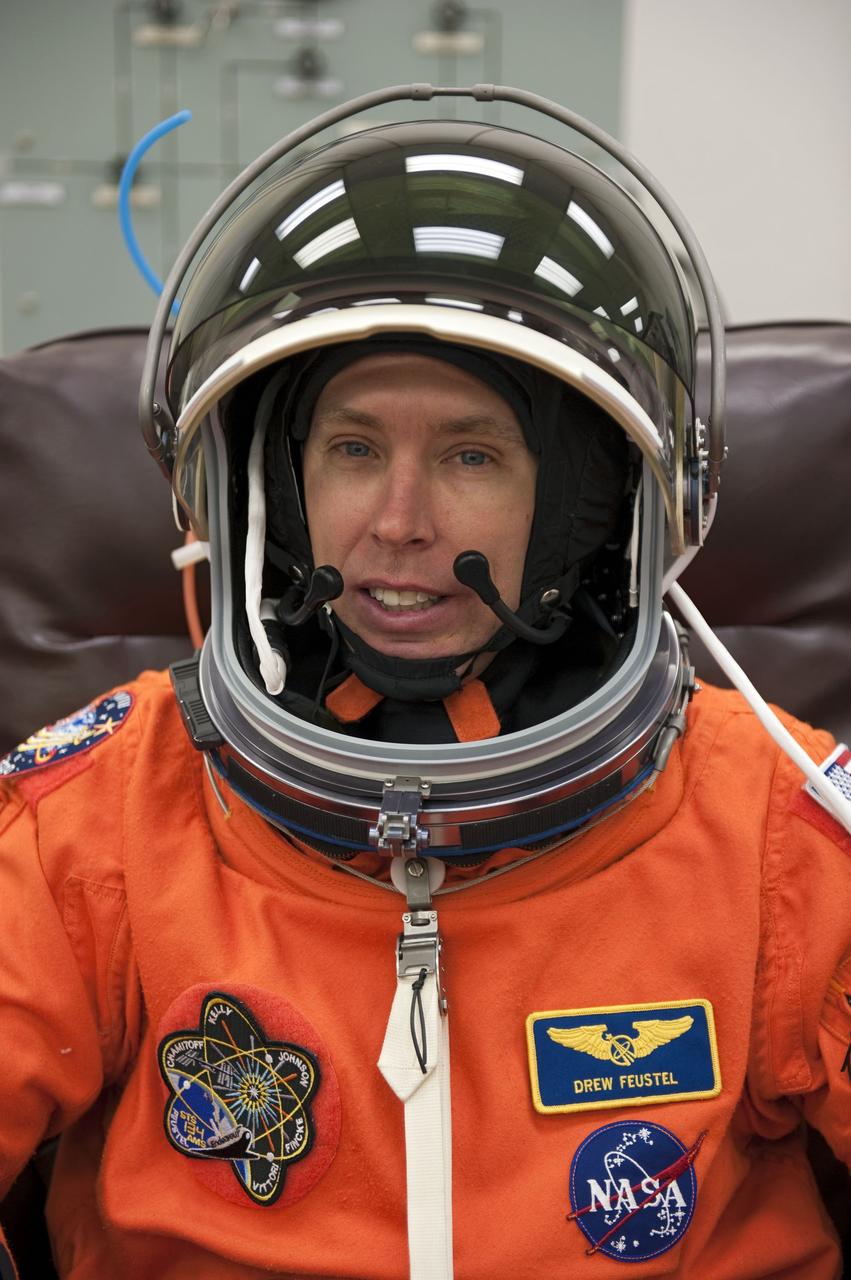
CAPE CANAVERAL, Fla. -- In the Operations and Checkout Building (O&C) at NASA's Kennedy Space Center in Florida, space shuttle Endeavour's STS-134 astronauts put on their launch-and-entry suits and check the fit of their helmets and gloves before heading to the Astrovan for the ride to Launch Pad 39A. Mission Specialist Andrew Feustel, seen here, last flew to NASA's Hubble Space Telescope in 2009. STS-134 will deliver the Express Logistics Carrier-3, Alpha Magnetic Spectrometer-2 (AMS), a high-pressure gas tank and additional spare parts for the Dextre robotic helper to the space station. Endeavour was scheduled to launch at 3:47 p.m. on April 29, but that attempt was scrubbed for at least 72 hours while engineers assess an issue associated with the shuttle's Auxiliary Power Unit 1. STS-134 will be the final spaceflight for Endeavour. For more information visit, www.nasa.gov/mission_pages/shuttle/shuttlemissions/sts134/index.html. Photo credit: NASA/Kim Shiflett