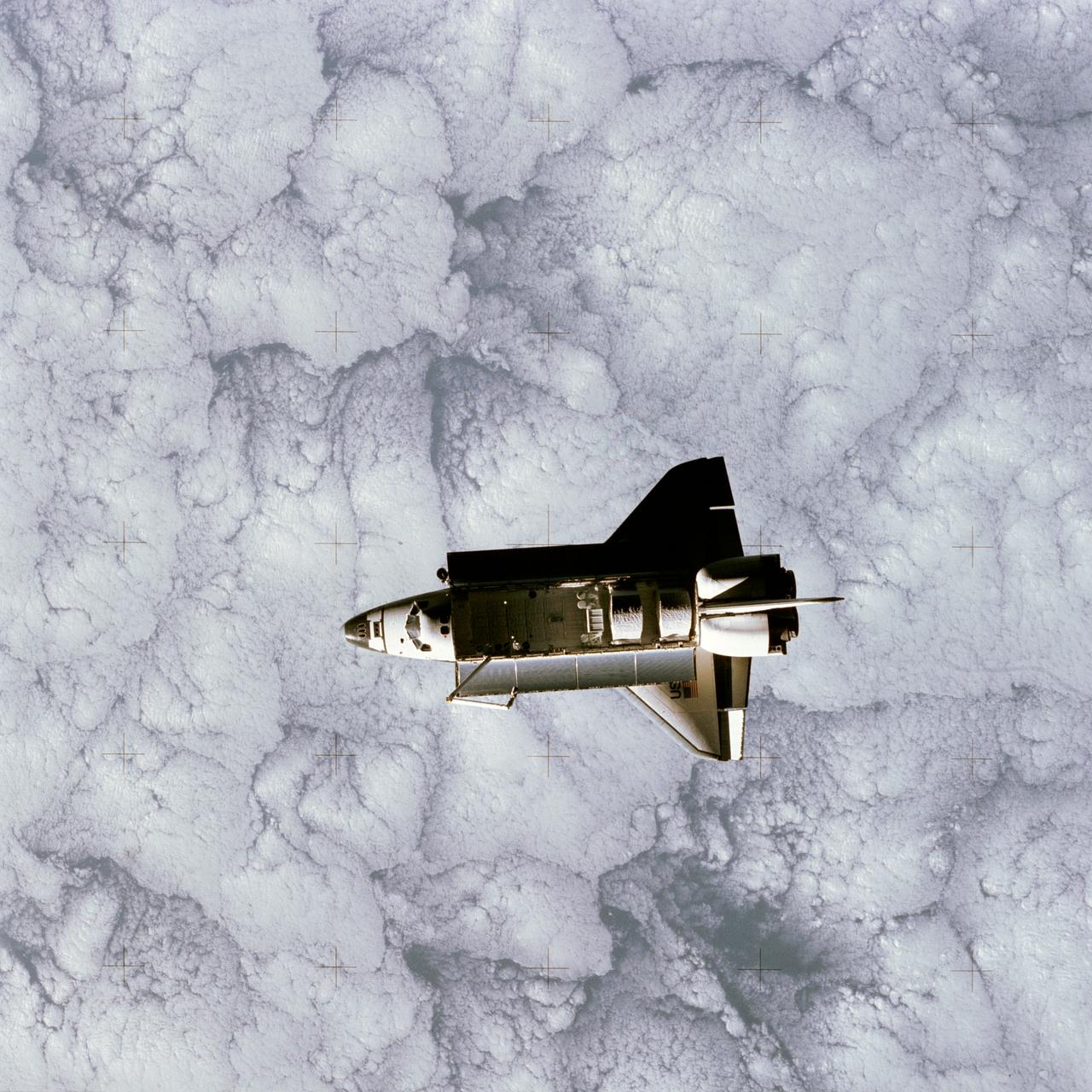
STS007-32-1667 (22 June 1983) --- The Earth-orbiting Space Shuttle Challenger over a heavily cloud-covered portion of the Earth was captured by a 70mm camera onboard the temporarily free-flying Shuttle Pallet Satellite (SPAS-01) during a busy Day 5 on the STS-7 mission. Visible in the cargo bay are the protective cradles for the now vacated Telesat Anik C2 and Palapa-B communications satellites, the pallet for the NASA Office of Space and Terrestrial Applications (OSTA-2); the Remote Manipulator System (RMS) and the KU-Band antenna. The STS-7 astronaut crew and the RMS arm later retrieved the SPAS and returned it to a stowed position in the cargo bay of the Space Shuttle Challenger for the return to Earth.
![STS-7, Orbiter Challenger in orbit, taken from camera aboard Shuttle Pallet Satellite (SPAS) [Germany]](https://images-assets.nasa.gov/image/335891/335891~medium.jpg)
STS-7, Orbiter Challenger in orbit, taken from camera aboard Shuttle Pallet Satellite (SPAS) [Germany]
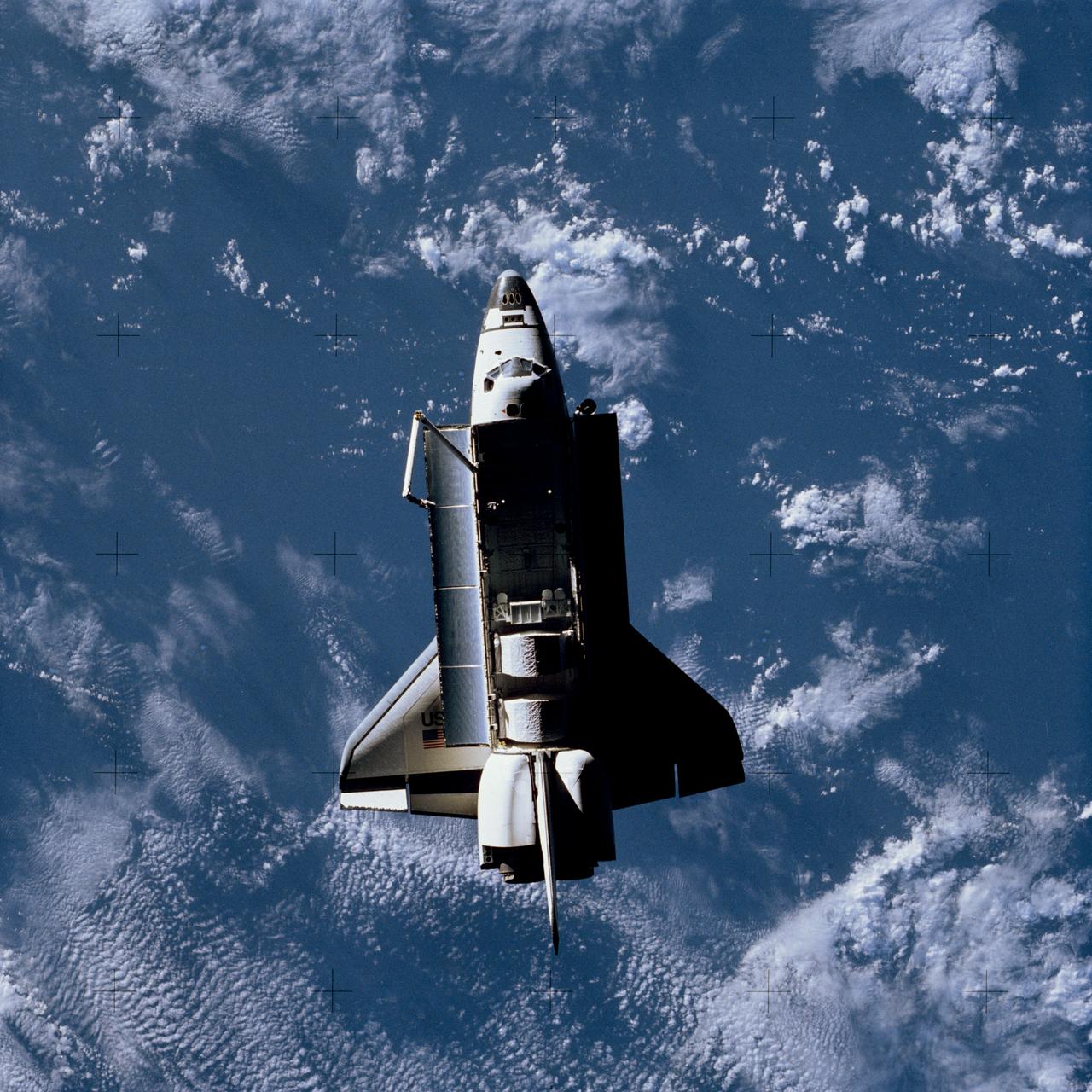
Full views of "Challenger" in Space, taken by the Shuttle Pallet Satellite (SPAS), also views of Cargo Bay and Remote Manipulator System (RMS) extended. 1. SHUTTLE - RMS (STS-7) Also available in 4x5 CN
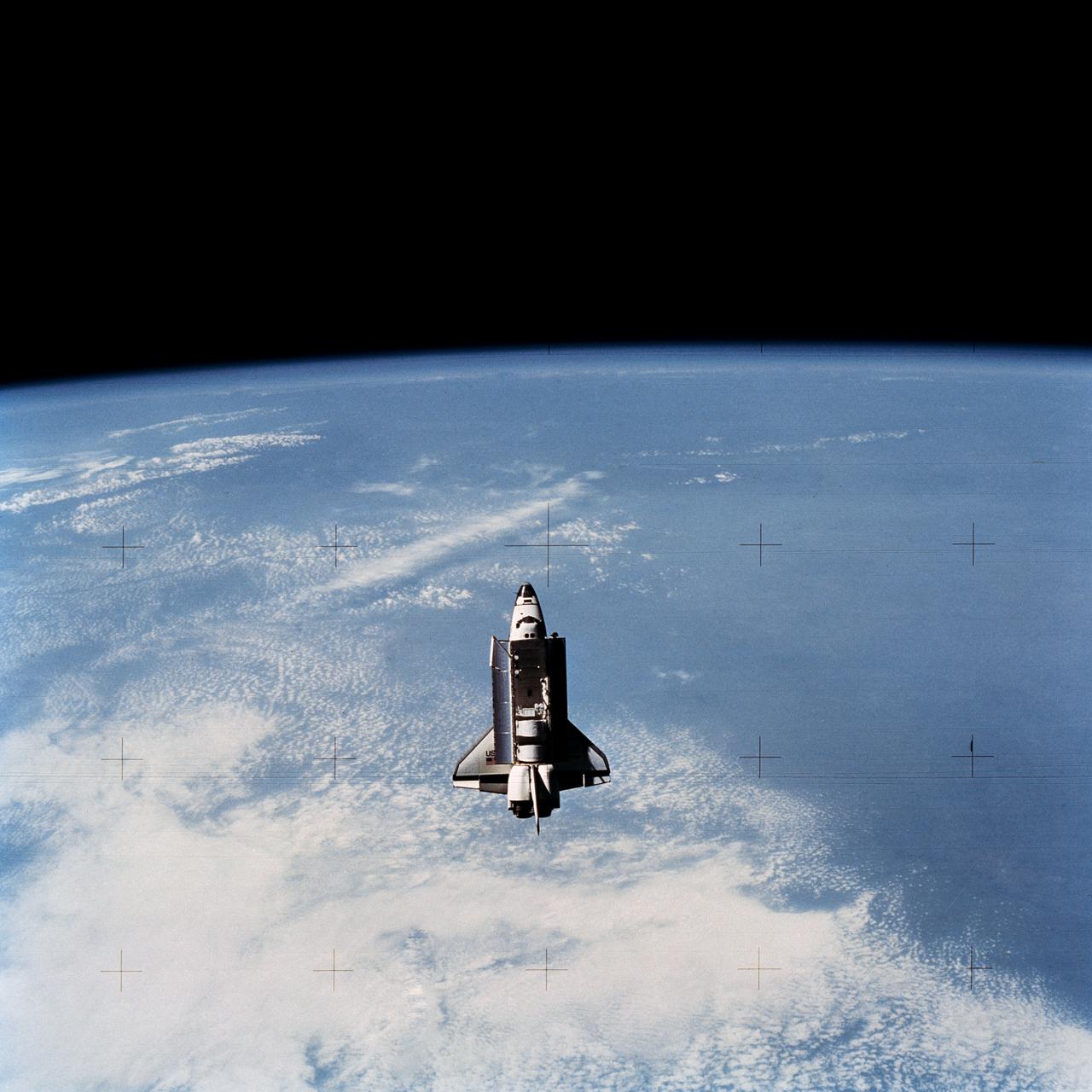
Full views of "Challenger" in Space, taken by the Shuttle Pallet Satellite (SPAS), also views of Cargo Bay and Remote Manipulator System (RMS) extended. 1. SHUTTLE - RMS (STS-7) Also available in 4x5 CN
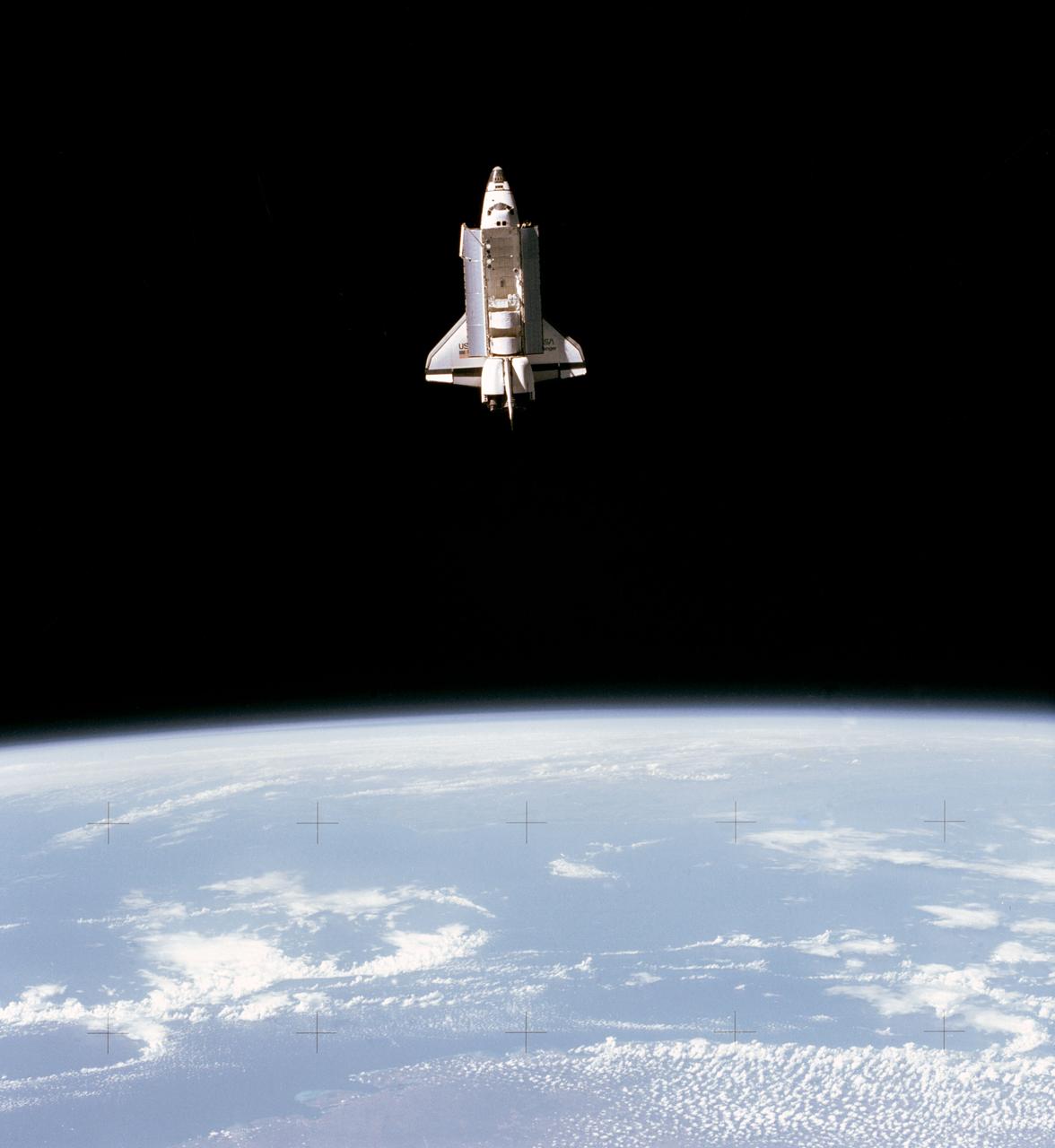
Full views of "Challenger" in Space, taken by the Shuttle Pallet Satellite (SPAS), also views of Cargo Bay and Remote Manipulator System (RMS) extended. 1. SHUTTLE - RMS (STS-7) Also available in 4x5 CN
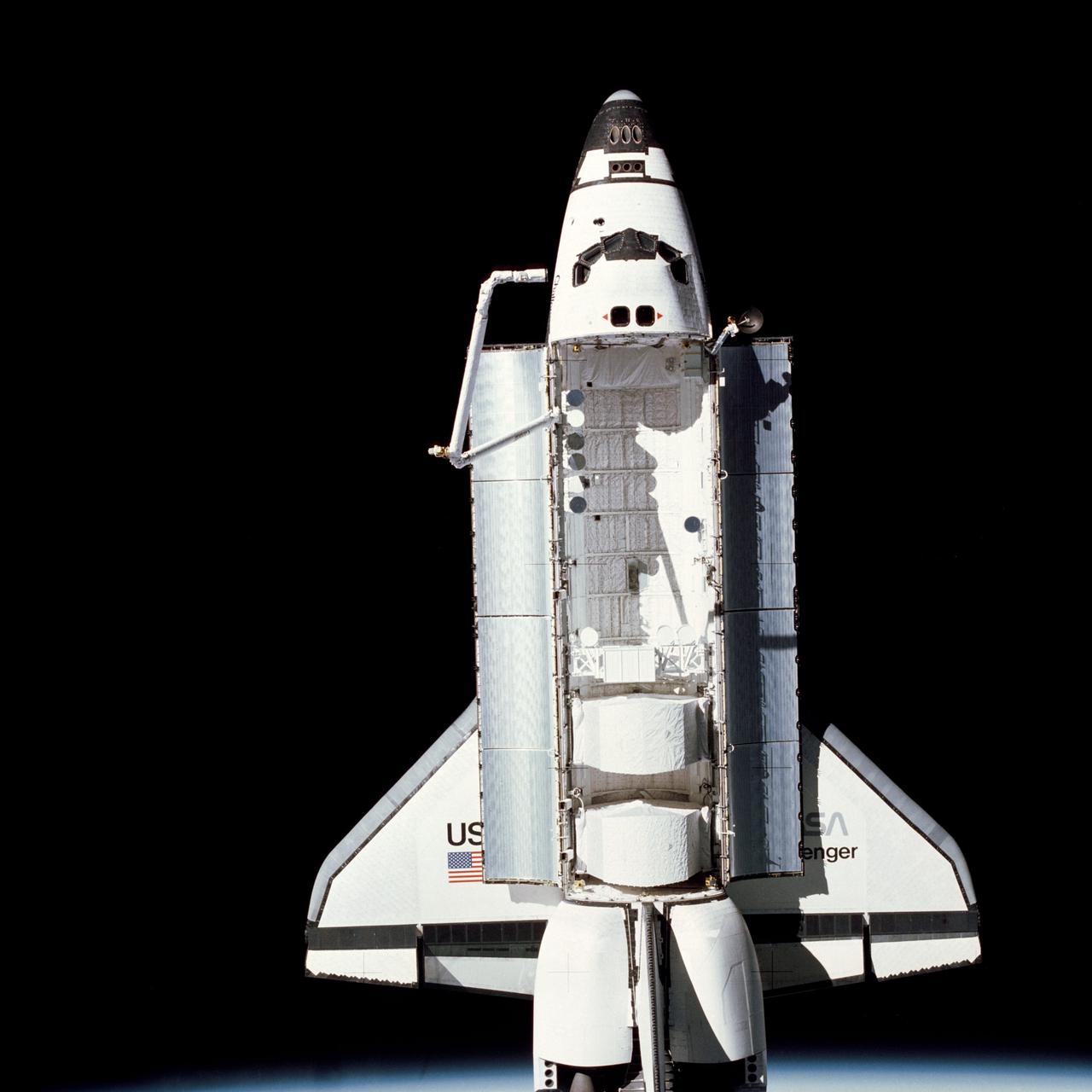
S83-35803 (22 June 1983) --- The Earth-orbiting space shuttle Challenger against the blackness of space was captured by a 70mm camera onboard the temporarily free-flying Shuttle Pallet Satellite (SPAS-01) during a busy Day 5 on the STS-7 mission. Visible in the cargo bay are the protective cradles for the now vacated Telesat Anik C2 and Palapa B communications satellites, the pallet for the NASA Office of Space and Terrestrial Applications (OSTA-2); the Remote Manipulator System (RMS) and the KU-Band antenna. The STS-7 astronaut crew with the RMS arm later retrieved the SPAS and returned it to a stowed position in the cargo bay for the return to Earth. Photo credit: NASA
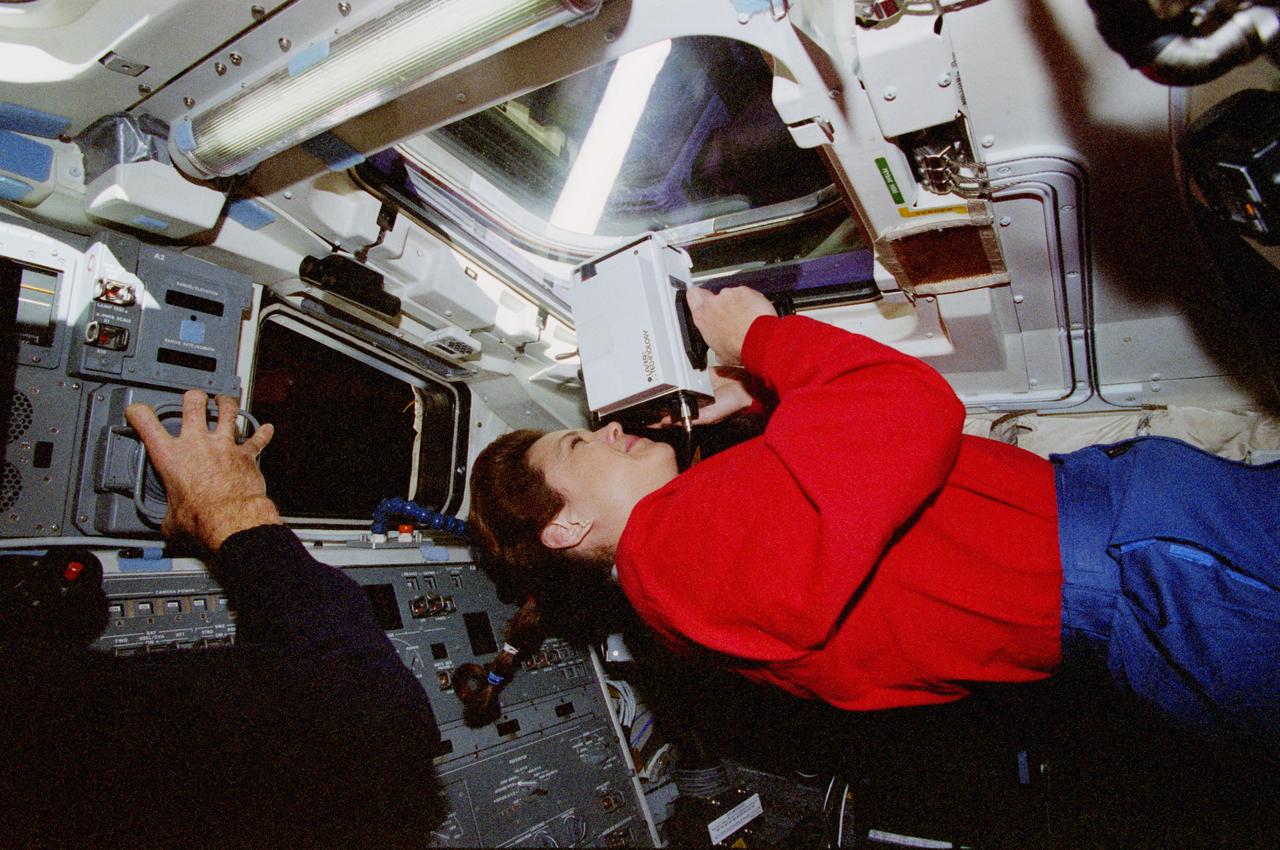
STS080-370-022 (19 Nov.-7 Dec. 1996) --- Astronaut Tamara E. Jernigan, STS-80 mission specialist, uses a laser ranging device during the space shuttle Columbia's rendezvous operations with the Orbiting Retrievable Far and Extreme Ultraviolet Spectrometer - Shuttle Pallet Satellite (ORFEUS-SPAS).

S83-35782 (18 June 1983) --- An Orbital Maneuvering System (OMS) engine firing caused this bright glow at the aft end of the Earth-orbiting space shuttle Challenger on June 18, 1983. Also visible in the 70mm exposure are parts of the Shuttle Pallet Satellite (SPAS-01). The experiment package for NASA's Office of Space and Terrestrial Applications (OSTA-2), the protective cradles for the Indonesian Palapa-B and Telesat Canada Anik C2 satellites, some getaway special (GAS) canisters and the Canadian-built Remote Manipulator System (RMS). The firing took place less than an hour after deployment of Anik. Photo credit: NASA

KENNEDY SPACE CENTER, Fla. -- The Space Shuttle Discovery, targeted for launch on August 7, 1997, on mission <a href="http://www.ksc.nasa.gov/shuttle/missions/sts-85/mission-sts-85.html">STS-85</a>, rolls out to <a href="http://www-pao.ksc.nasa.gov/kscpao/nasafact/pads.htm">Launch Complex 39A</a>. STS-85 will feature the second flight of the Cryogenic Infrared Spectrometers and Telescopes for the Atmosphere-Shuttle Pallet Satellite (<a href="http://www.crista.uni-wuppertal.de">CRISTA-SPAS</a>)

KENNEDY SPACE CENTER, Fla. -- The Space Shuttle Discovery, targeted for launch on August 7, 1997, on mission <a href="http://www.ksc.nasa.gov/shuttle/missions/sts-85/mission-sts-85.html">STS-85</a>, rolls out to <a href="http://www-pao.ksc.nasa.gov/kscpao/nasafact/pads.htm">Launch Complex 39A</a>. STS-85 will feature the second flight of the Cryogenic Infrared Spectrometers and Telescopes for the Atmosphere-Shuttle Pallet Satellite (<a href="http://www.crista.uni-wuppertal.de">CRISTA-SPAS</a>)
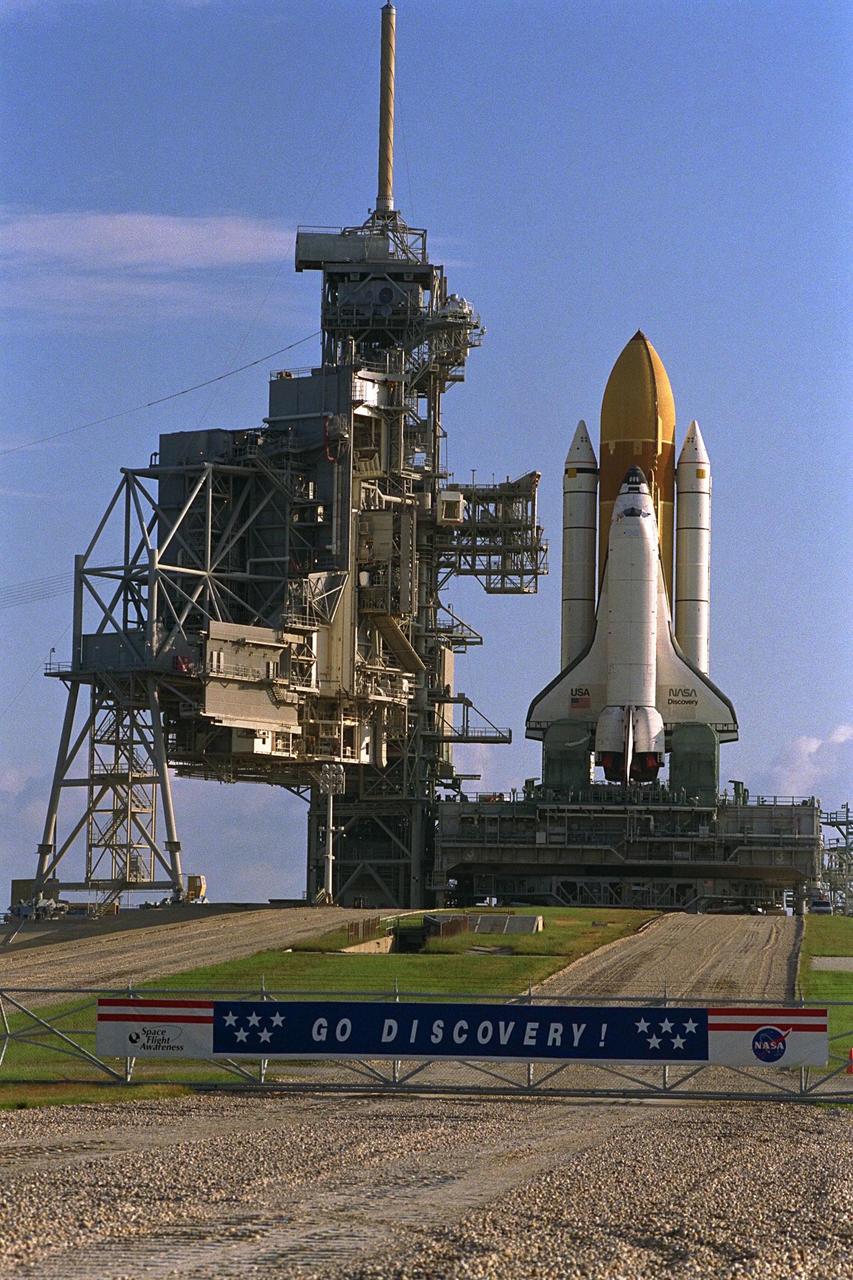
KENNEDY SPACE CENTER, Fla. -- The Space Shuttle Discovery, targeted for launch on August 7, 1997, on mission <a href="http://www.ksc.nasa.gov/shuttle/missions/sts-85/mission-sts-85.html">STS-85</a>, rolls out to <a href="http://www-pao.ksc.nasa.gov/kscpao/nasafact/pads.htm">Launch Complex 39A</a>. STS-85 will feature the second flight of the Cryogenic Infrared Spectrometers and Telescopes for the Atmosphere-Shuttle Pallet Satellite (<a href="http://www.crista.uni-wuppertal.de">CRISTA-SPAS</a>)
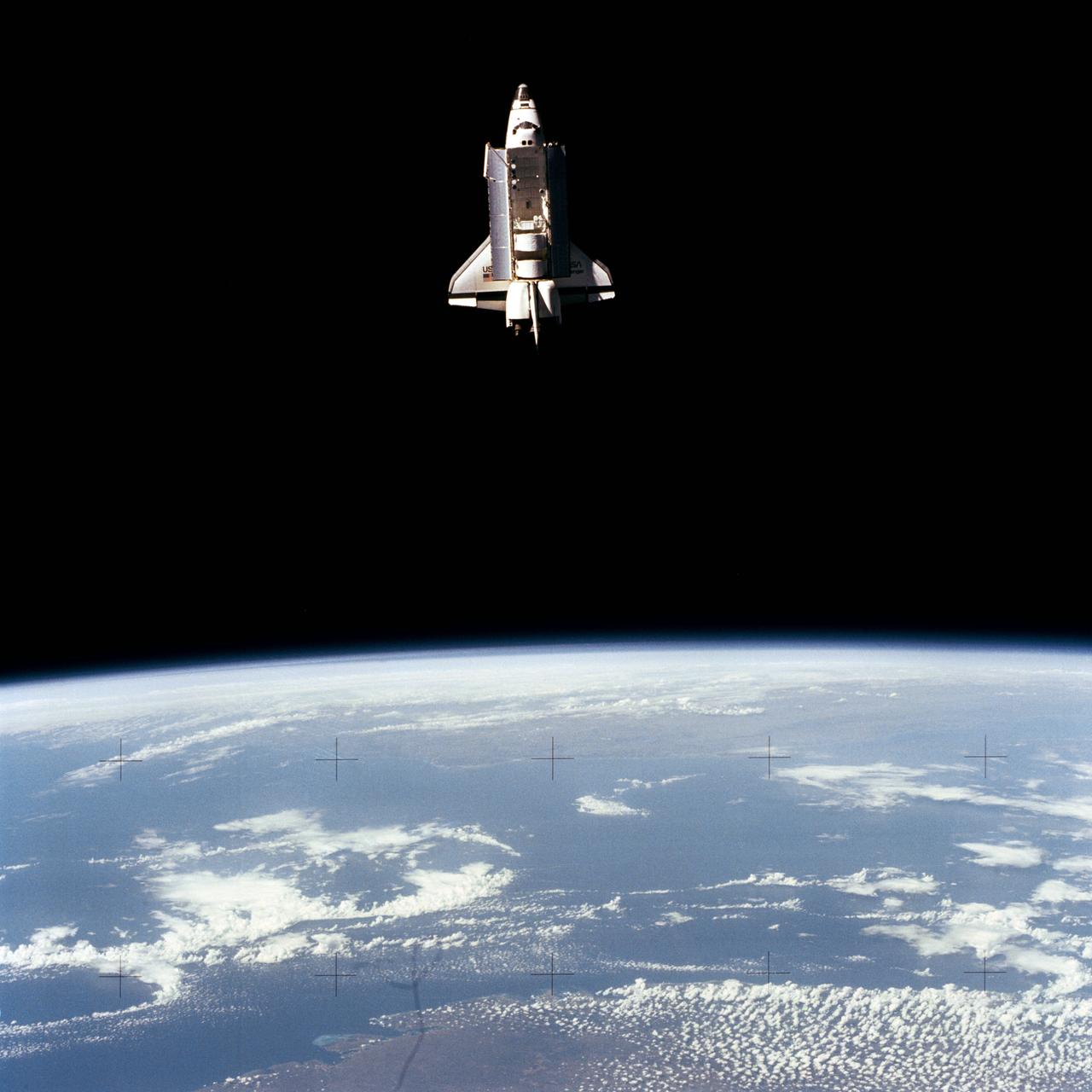
STS007-32-1702 (22 June 1983) --- The Earth-orbiting space shuttle Challenger beyond the Earth's horizon was captured by a 70mm camera onboard the unmanned, free-flying Shuttle Pallet Satellite (SPAS-01) during the busy flight day 5 of the STS-7 mission. Visible in the cargo bay are the protective cradles for the now-vacated Telesat Anik C-2 and Palapa B communications satellites, the pallet for the NASA Office of Space and Terrestrial Applications (OSTA-02), the Remote Manipulator System (RMS) and the KU-Band antenna. The STS-7 crew with the RMS later retrieved the SPAS and returned it to a stowed position in the cargo bay for return to Earth. Photo credit: NASA or National Aeronautics and Space Administration
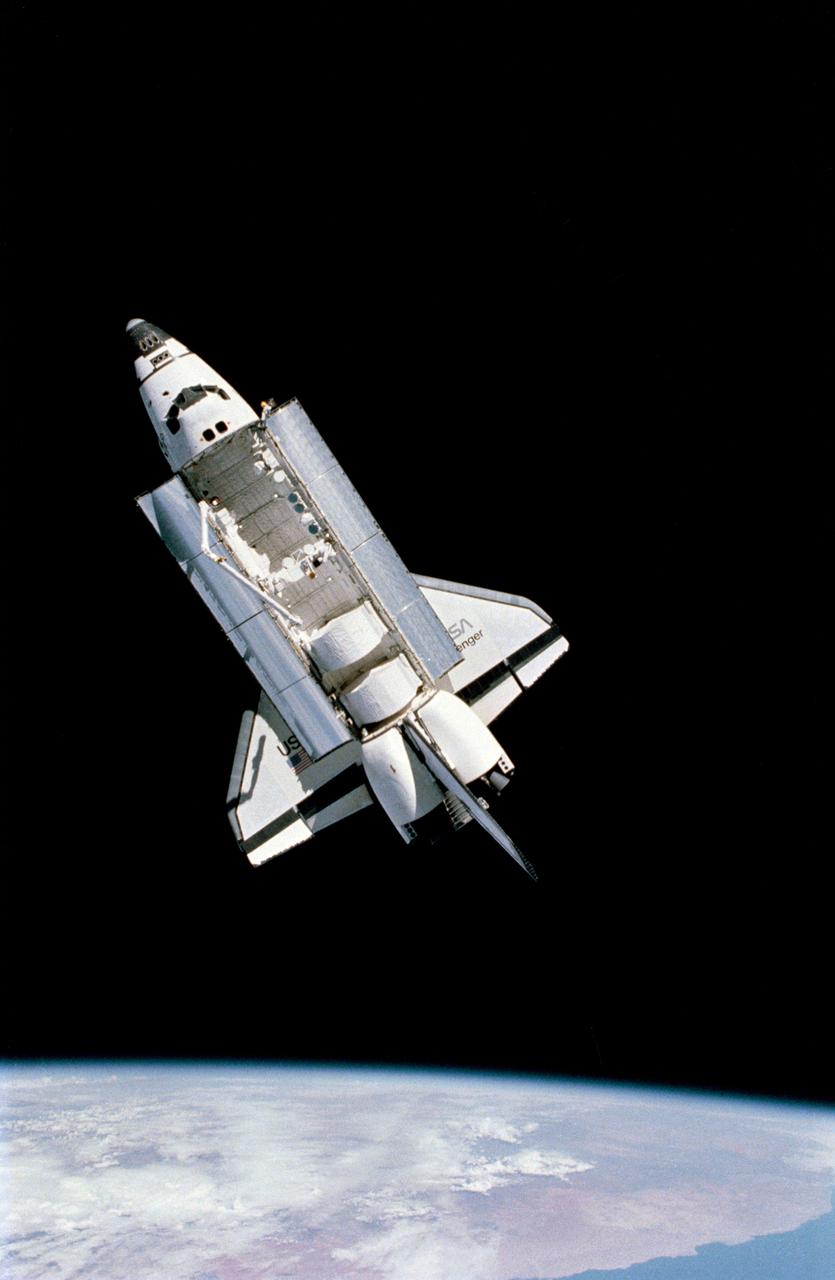
S84-27022 (7 Feb 1984) --- A 35mm frame from the February 7, 1984, extravehicular activity (EVA) photographed with a camera affixed to the gear of astronaut Bruce McCandless II. The mission specialist was equipped with the nitrogen-propelled, hand-controlled Manned Maneuvering Unit (MMU), which took him some 90 meters away from the Space Shuttle Challenger. This scene is reminiscent of views of the Challenger during the June 1983, STS-7 flight, on which the Shuttle Pallet Satellite (SPAS - seen here in the middle of the cargo bay) provided scenes of 38-meter-long reusable vehicle over the Earth.
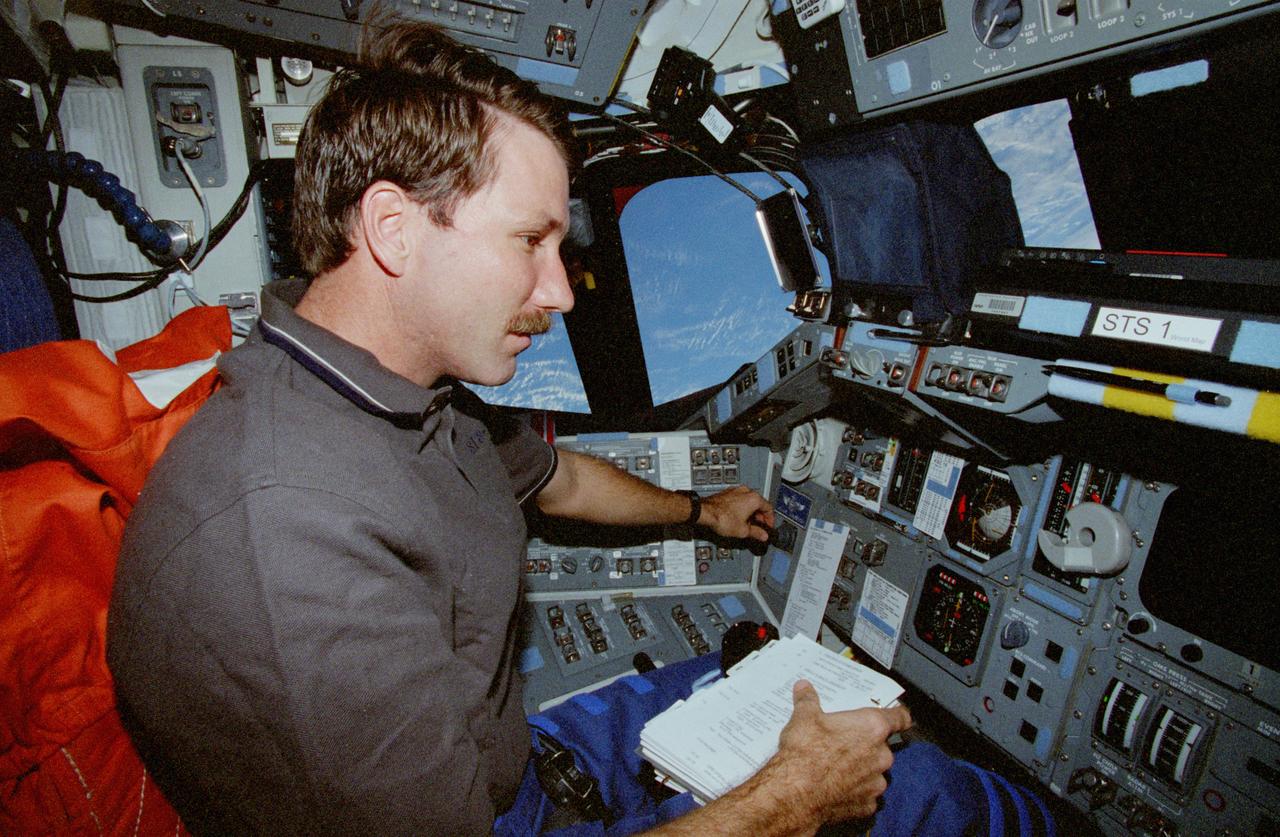
STS080-341-032 (19 Nov.-7 Dec. 1996) --- Astronaut Kent V. Rominger, STS-80 pilot, occupies the commander's station aboard the space shuttle Columbia during station keeping operations with the Orbiting Retrievable Far and Extreme Ultraviolet Spectrometer-Shuttle Pallet Satellite (ORFEUS-SPAS). Earth, actually some 190 nautical miles away, appears to be just beyond arm's length on Columbia's port side.
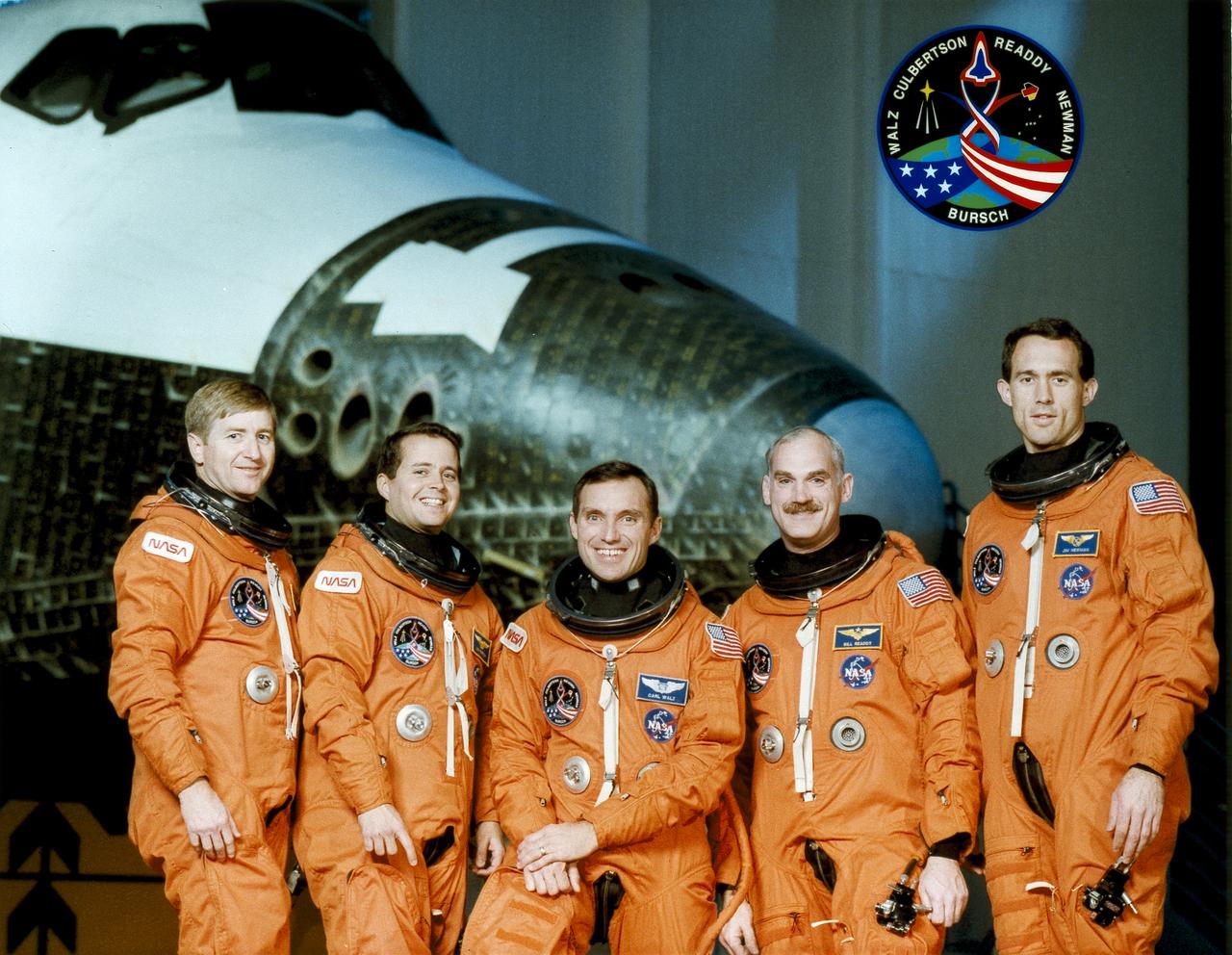
The STS-51 crew portrait features (left to right): Frank L. Culbertson, commander; Daniel W. Bursch, mission specialist; Carl E. Walz, mission specialist; William F. Readdy, pilot; and James H. Newman, mission specialist. The crew of five launched aboard the Space Shuttle Discovery on September 12, 1993 at 7:45:00 am (EDT). Two primary payloads included the Advanced Communications Technology Satellite (ACTS), and the Orbiting and Retrievable Far and Extreme Ultraviolet Spectrograph Shuttle Pallet Satellite (OERFEUS-SPAS).
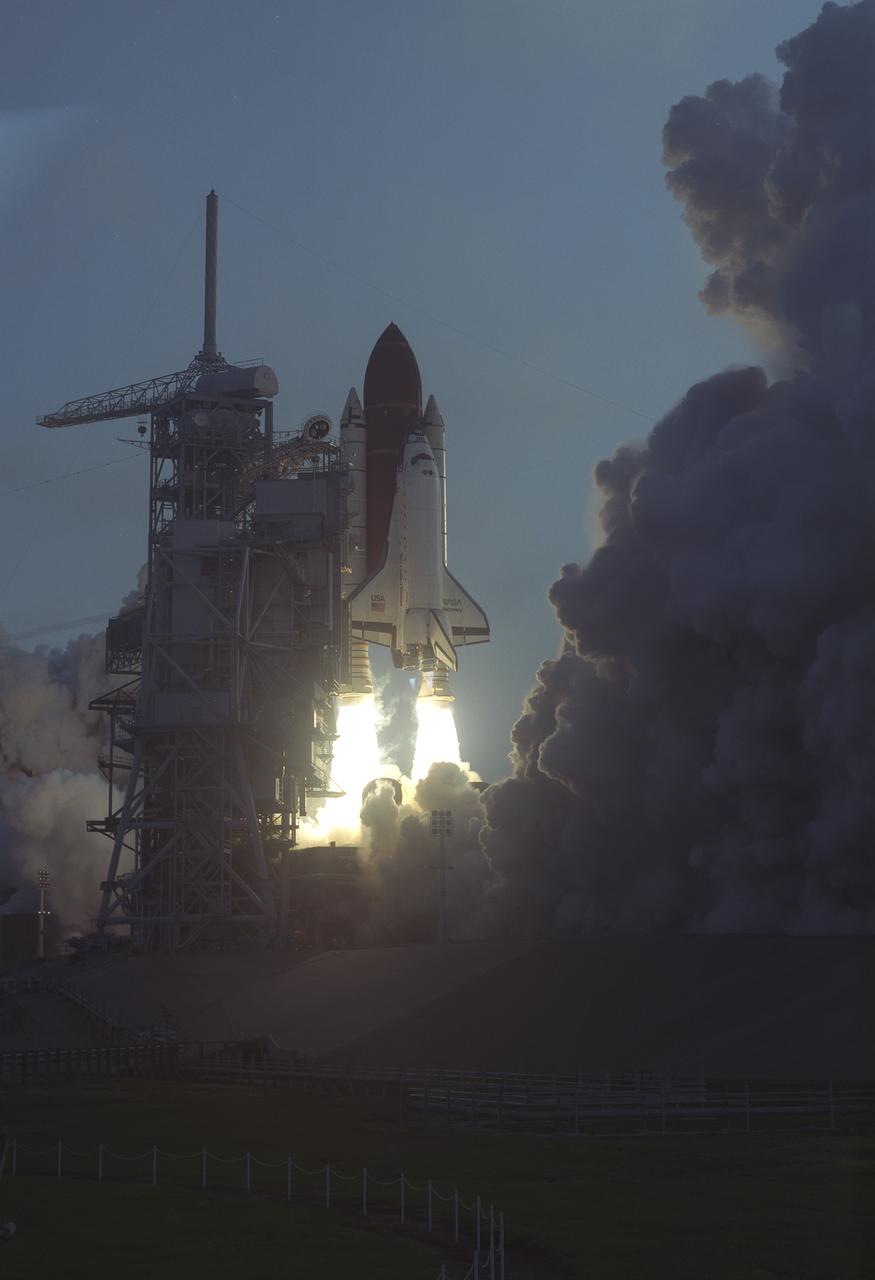
Launched aboard the Space Shuttle Discovery on April 28, 1991 at 7:33:14 am (EDT), STS-39 was a Department of Defense (DOD) mission. The crew included seven astronauts: Michael L. Coats, commander; L. Blaine Hammond, pilot; Guion S. Buford, Jr., mission specialist 1; Gregory J. Harbaugh, mission specialist 2; Richard J. Hieb, mission specialist 3; Donald R. McMonagle, mission specialist 4; and Charles L. Veach, mission specialist 5. The primary unclassified payload included the Air Force Program 675 (AFP-675), the Infrared Background Signature Survey (IBSS), and the Shuttle Pallet Satellite II (SPAS II).
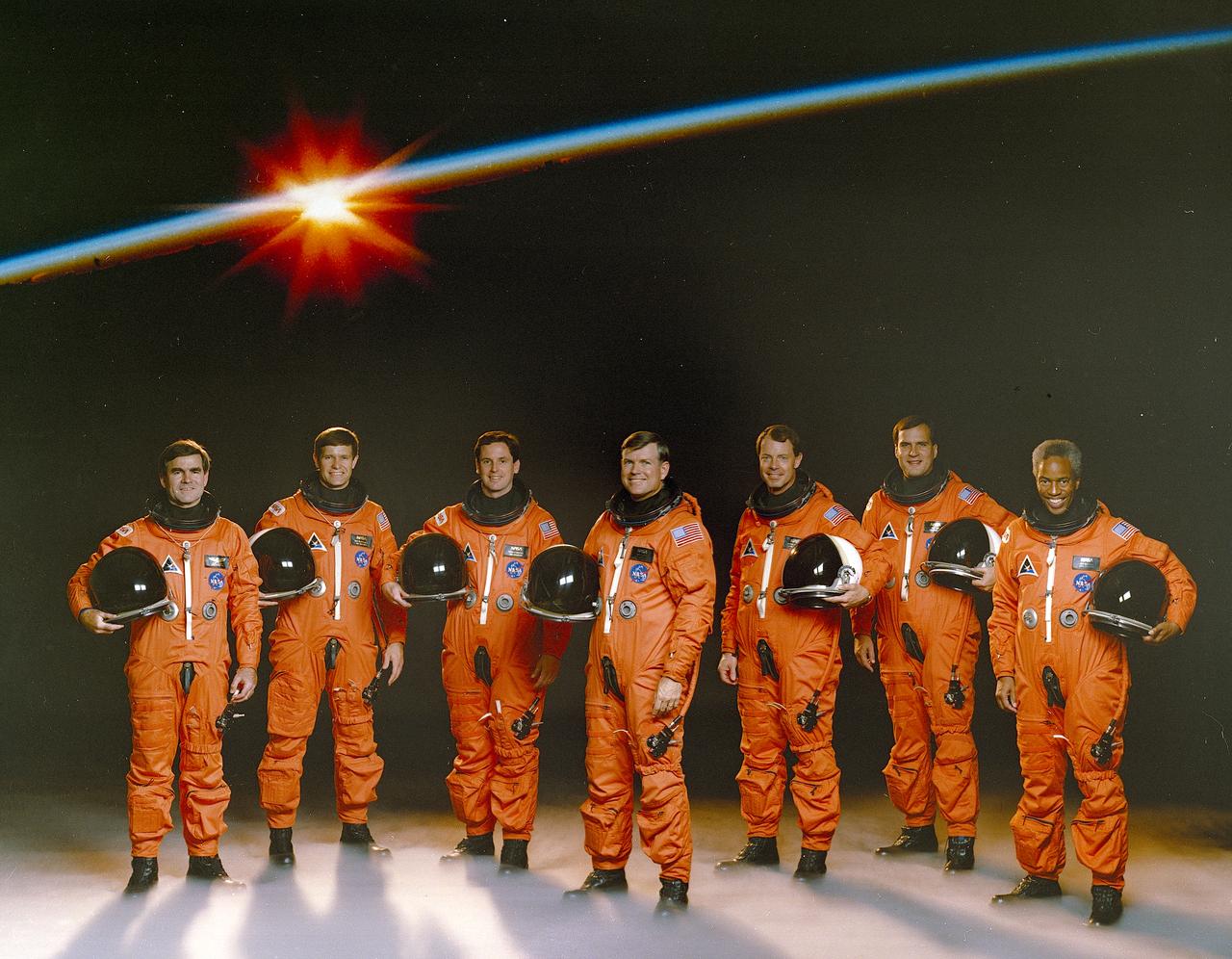
The STS-39 crew portrait includes 7 astronauts. Pictured are Charles L. Veach, mission specialist 5; Michael L. Coats, commander; Gregory J. Harbaugh, mission specialist 2; Donald R. McMonagle, mission specialist 4; L. Blaine Hammond, pilot; Richard J. Hieb, mission specialist 3; and Guion S. Buford, Jr., mission specialist 1. Launched aboard the Space Shuttle Discovery on April 28, 1991 at 7:33:14 am (EDT), STS-39 was a Department of Defense (DOD) mission. The primary unclassified payload included the Air Force Program 675 (AFP-675), the Infrared Background Signature Survey (IBSS), and the Shuttle Pallet Satellite II (SPAS II).
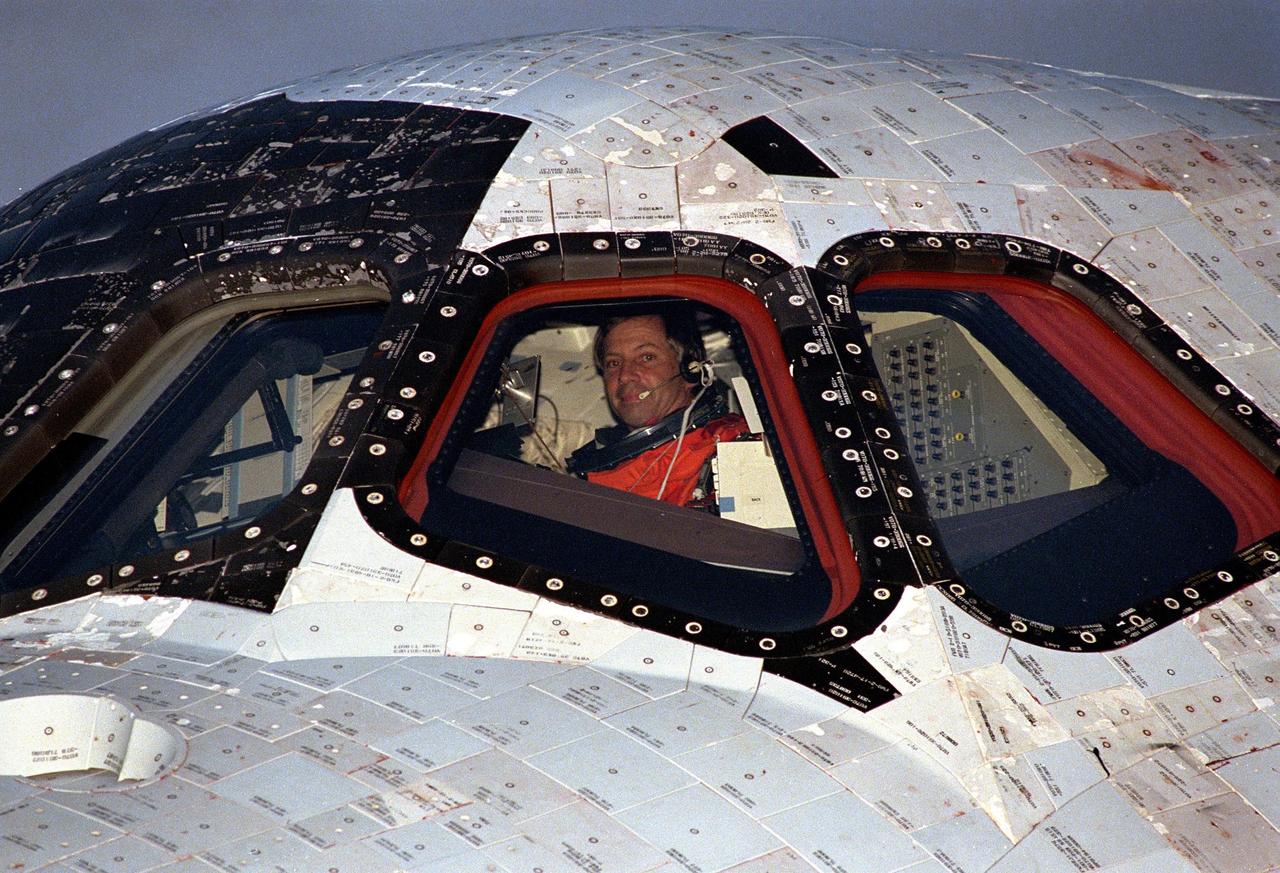
KENNEDY SPACE CENTER, FLA. -- STS-80 Commander Kenneth D. Cockrell peers out the window of the orbiter Columbia minutes after guiding the spacecraft to a successful landing on KSC’s Runway 33. Main gear touchdown occurred at 6:49:04 a.m. EST, Dec. 7. On board with Cockrell are four fellow crew members, Pilot Kent V. Rominger, and Mission Specialists Story Musgrave, Thomas D. Jones, and Tamara E. Jernigan, and the two primary payloads of the mission, the Wake Shield Facility-3 (WSF-3) and the Orbiting and Retrievable Far and Extreme Ultraviolet Spectrometer-Shuttle Pallet Satellite II (ORFEUS-SPAS II).
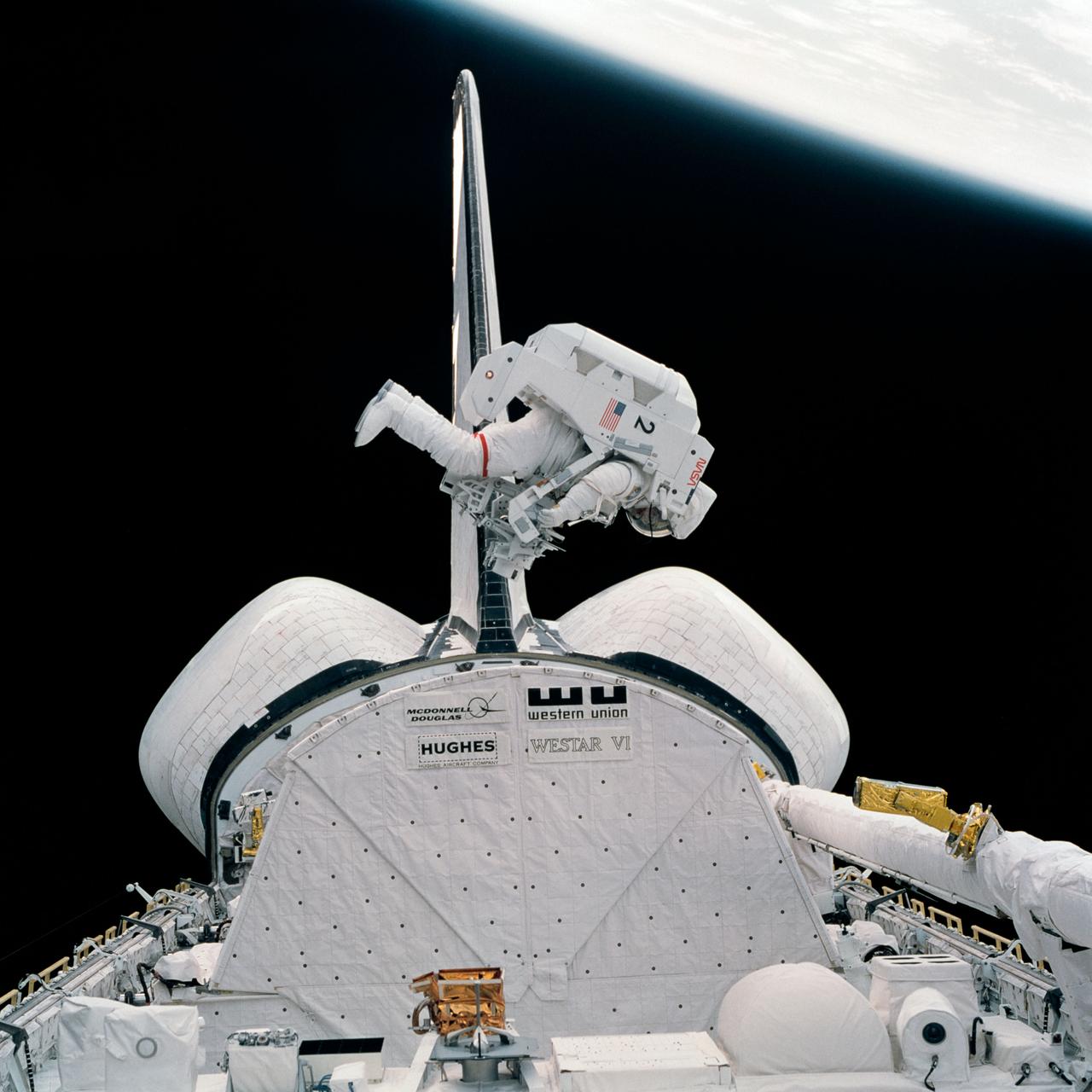
S84-27023 (7 Feb 1984) --- This 70mm frame shows astronaut Bruce McCandless II moving in to conduct a test involving the Trunion Pin Attachment Device (TPAD) he carries and the Shuttle Pallet Satellite (SPAS-01A) partially visible at bottom of frame. SPAS was a stand-in for the damaged Solar Maximum Satellite (SMS) which will be visited for repairs by the STS-41C Shuttle crew in early spring. This particular Extravehicular Activity (EVA) session was a rehearsal for the SMS visit. The test and the actual visit to the SMS both involve the use of jet-powered, hand-controlled Manned Maneuvering Unit (MMU). The one McCandless uses is the second unit to be tested on this flight. Astronaut Robert L. Stewart got a chance to work with both MMU's on the two EVA's.
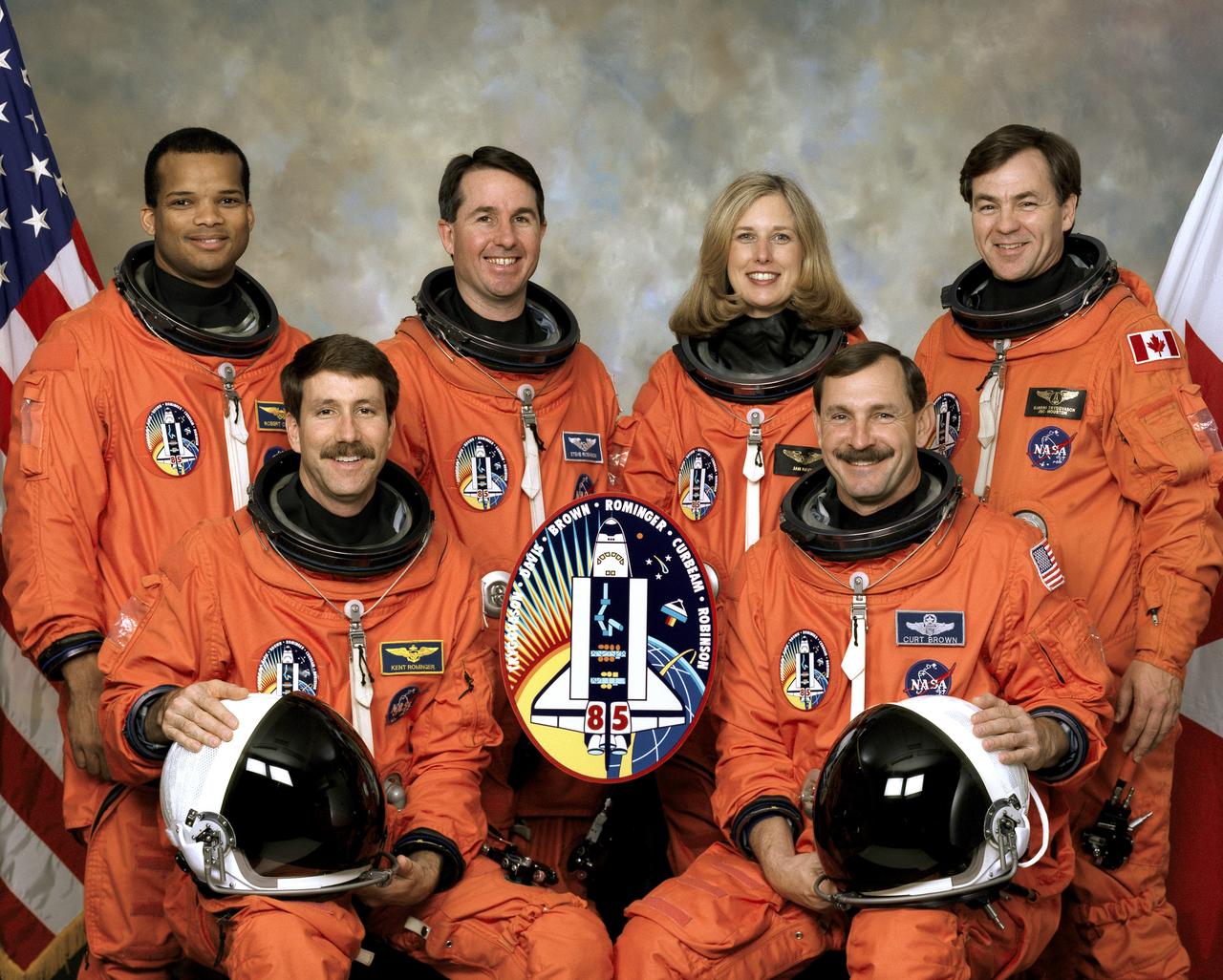
Five NASA astronauts and a Canadian payload specialist pause from their training schedule to pose for the traditional crew portrait for their mission, STS-85. In front are astronauts Curtis L. Brown, Jr. (right), mission commander, and Kent V. Rominger, pilot. On the back row, from the left, are astronauts Robert L. Curbeam, Jr., Stephen K. Robinson, and N. Jan Davis, all mission specialists, along with the Canadian Space Agency’s (CSA) payload specialist, Bjarni Tryggvason. The five launched into space aboard the Space Shuttle Discovery on August 7, 1997 at 10:41:00 a.m. (EDT). Major payloads included the satellite known as Cryogenic Infrared Spectrometers and Telescopes for the Atmosphere-Shuttle Pallet Satellite-2 CRISTA-SPAS-02. CRISTA; a Japanese Manipulator Flight Development (MFD); the Technology Applications and Science (TAS-01); and the International Extreme Ultraviolet Hitchhiker (IEH-02).
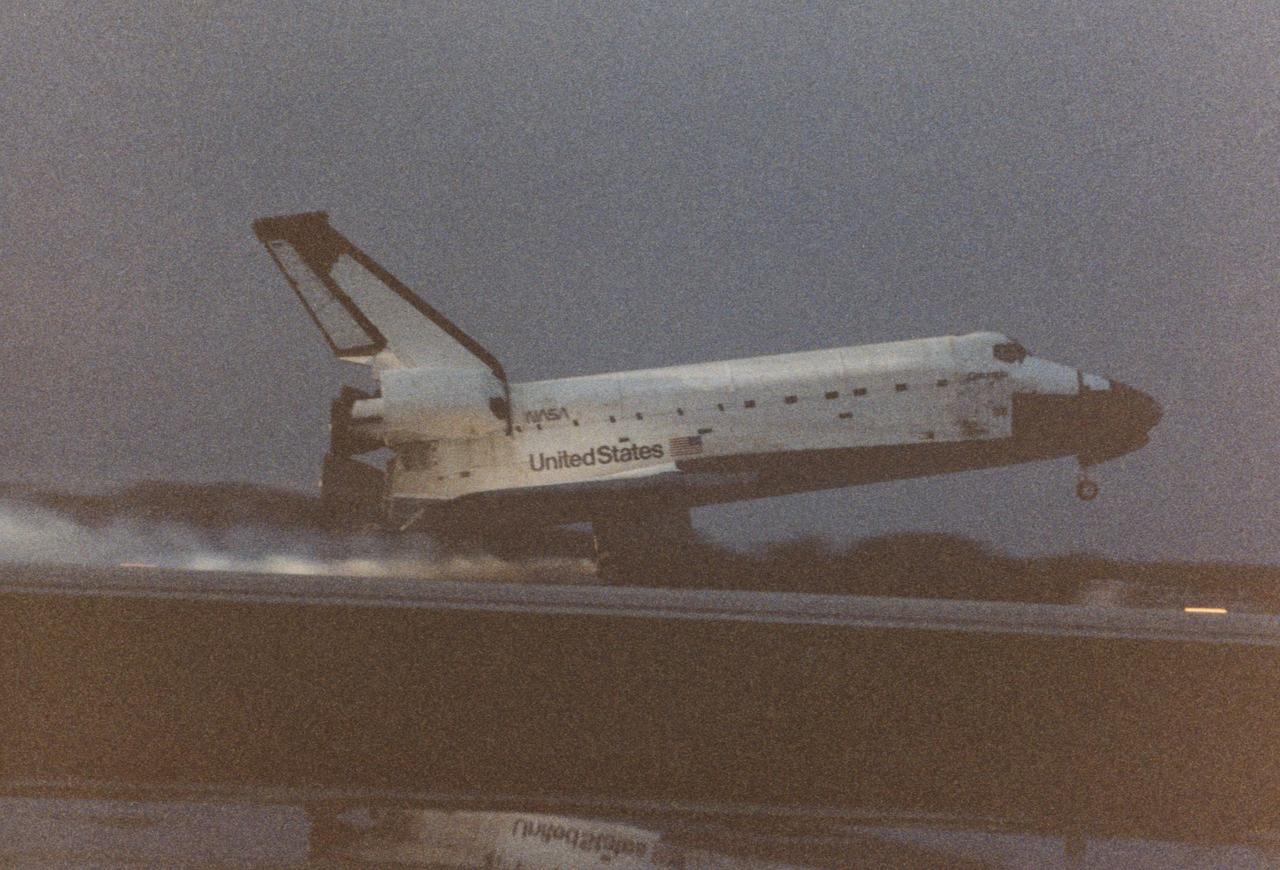
KENNEDY SPACE CENTER, FLA. -- The final Space Shuttle flight of 1996 comes to a successful close as the orbiter Columbia touches down on Runway 33 of KSC’s Shuttle Landing Facility. Main gear touchdown occurred at 6:49:05 a.m. EST, Dec. 7. The mission duration of 17 days, 15 hours and 53 minutes establishes a new record for extended Shuttle flight. The five- member STS-80 crew is led by Commander Kenneth D. Cockrell and Pilot Kent V. Rominger. The three mission specialists on board are Tamara E. Jernigan, Thomas D. Jones and Story Musgrave. At age 61, Musgrave is the oldest person ever to fly in space; he also becomes the first person to fly six times on the Shuttle. The two primary payloads of the 80th Shuttle flight are the Orbiting and Retrievable Far and Extreme Ultraviolet Spectrometer-Shuttle Pallet Satellite II (ORFEUS-SPAS II) and the Wake Shield Facility-3 (WSF-3).
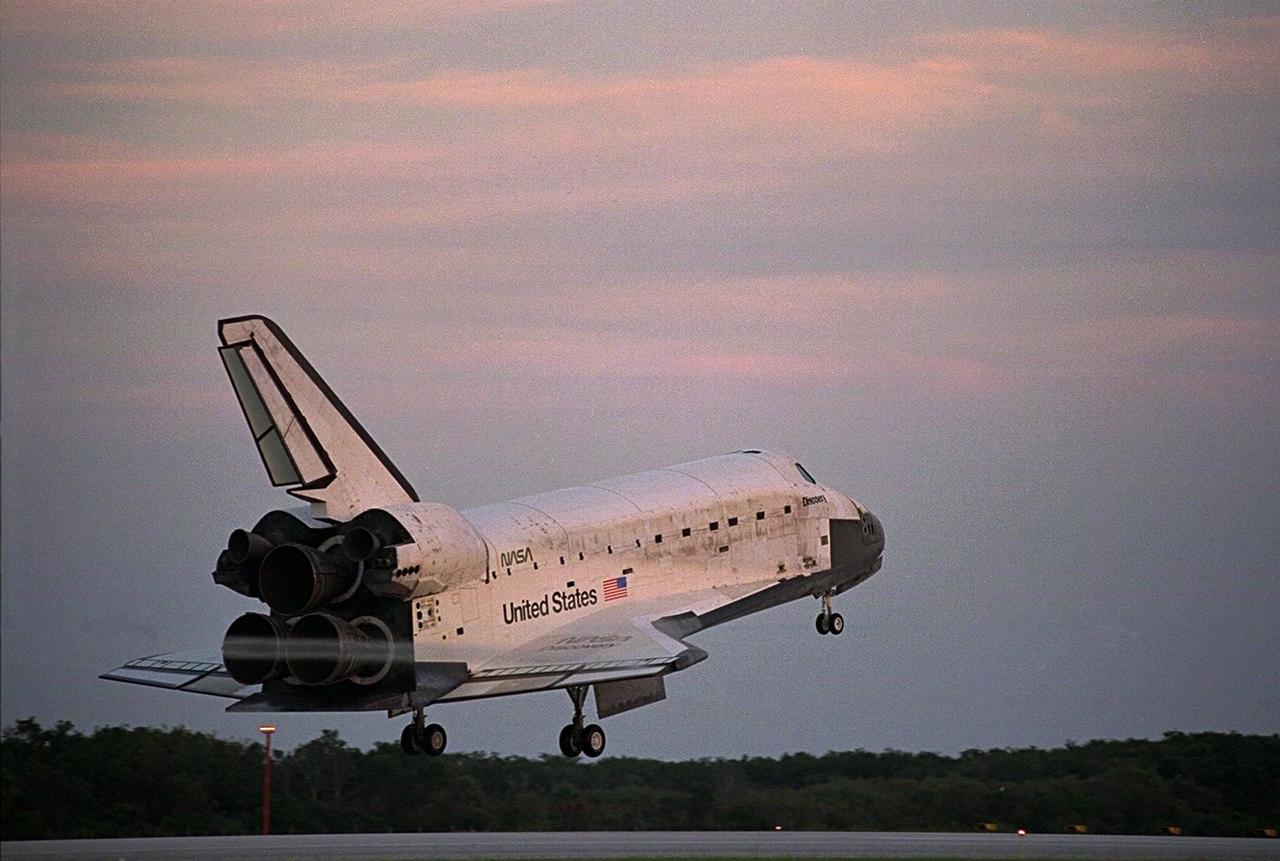
KENNEDY SPACE CENTER, FLA. -- With Commander Curtis L. Brown, Jr. and Pilot Kent V. Rominger at the controls, the Space Shuttle orbiter Discovery prepares to touch down on Runway 33 at KSC’s Shuttle Landing Facility at approximately 7:08 a.m. EDT Aug. 19 to complete the nearly 12-day-long STS-85 mission. The first landing opportunity on Aug. 18 was waved off due to the potential for ground fog. Also onboard the orbiter are Payload Commander N. Jan Davis, Mission Specialist Robert L. Curbeam, Jr., Mission Specialist Stephen K. Robinson and Payload Specialist Bjarni V. Tryggvason. During the 86th Space Shuttle mission, the crew deployed the Cryogenic Infrared Spectrometers and Telescopes for the Atmosphere-Shuttle Pallet Satellite-2 (CRISTA-SPAS-2) free-flyer to conduct research on the Earth’s middle atmosphere, retrieving it on flight day 9. They also conducted investigations with the Manipulator Flight Demonstration (MFD), Technology Applications and Science-1 (TAS-1) and International Extreme Ultraviolet Hitchhiker-2 (IEH-2) experiments. Robinson also made observations of the comet Hale-Bopp with the Southwest Ultraviolet Imaging System (SWIS) while other members of the crew conducted biological experiments in the orbiter’s crew cabin
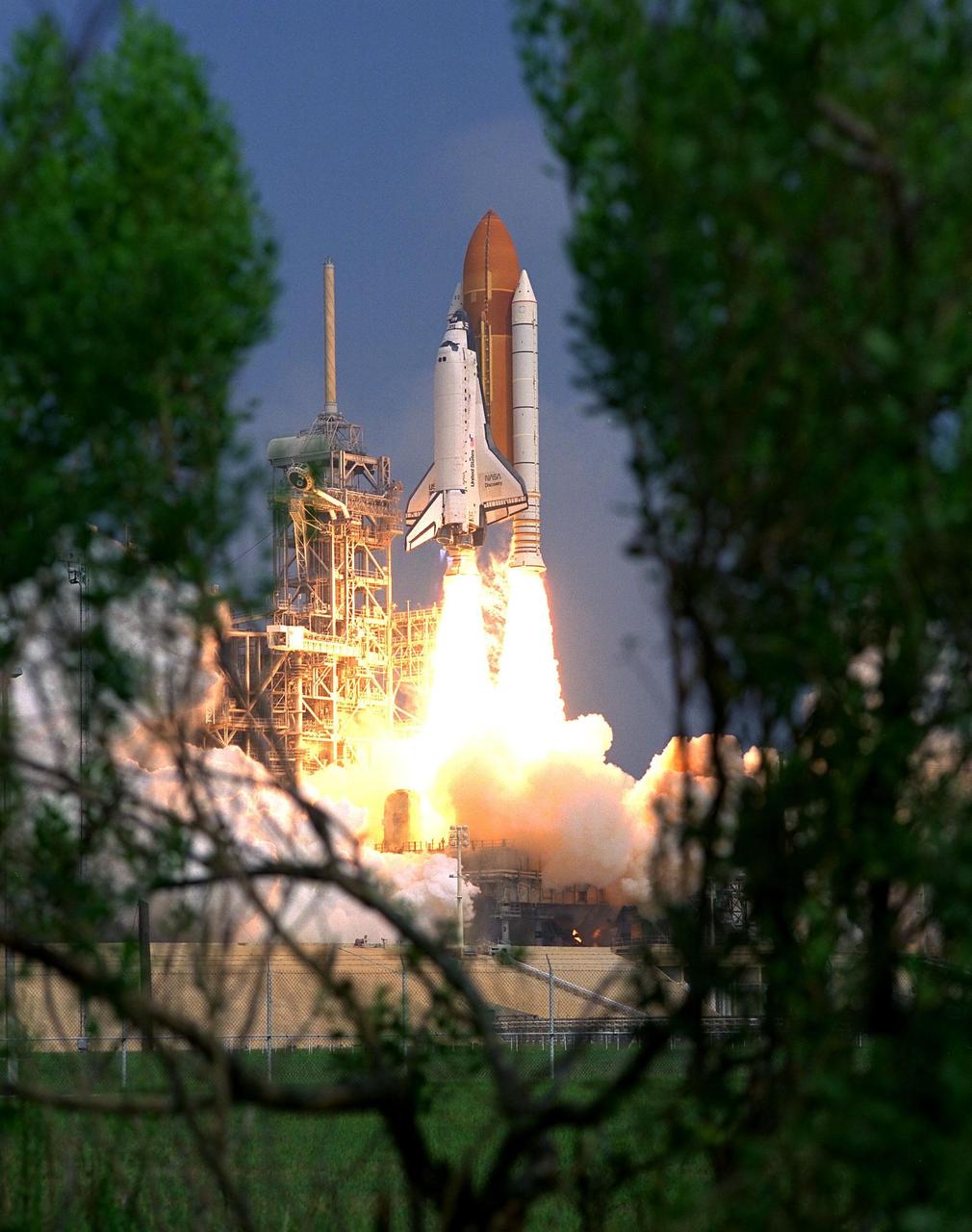
KENNEDY SPACE CENTER, Fla. -- Blasting through the hazy late morning sky, the Space Shuttle Discovery soars from Launch Pad 39A at 10:41 a.m. EDT Aug. 7 on the 11-day STS-85 mission. Aboard Discovery are Commander Curtis L. Brown, Jr.; Pilot Kent V. Rominger, Payload Commander N. Jan Davis, Mission Specialist Robert L. Curbeam, Jr., Mission Specialist Stephen K. Robinson and Payload Specialist Bjarni V. Tryggvason, a Canadian Space Agency astronaut . The primary payload aboard the Space Shuttle orbiter Discovery is the Cryogenic Infrared Spectrometers and Telescopes for the Atmosphere-Shuttle Pallet Satellite-2 (CRISTA-SPAS-2) free-flyer. The CRISTA-SPAS-2 will be deployed on flight day 1 to study trace gases in the Earth’s atmosphere as a part of NASA’s Mission to Planet Earth program. Also aboard the free-flying research platform will be the Middle Atmosphere High Resolution Spectrograph Instrument (MAHRSI). Other payloads on the 11-day mission include the Manipulator Flight Demonstration (MFD), a Japanese Space Agency-sponsored experiment. Also in Discovery’s payload bay are the Technology Applications and Science-1 (TAS-1) and International Extreme Ultraviolet Hitchhiker-2 (IEH-2) experiments
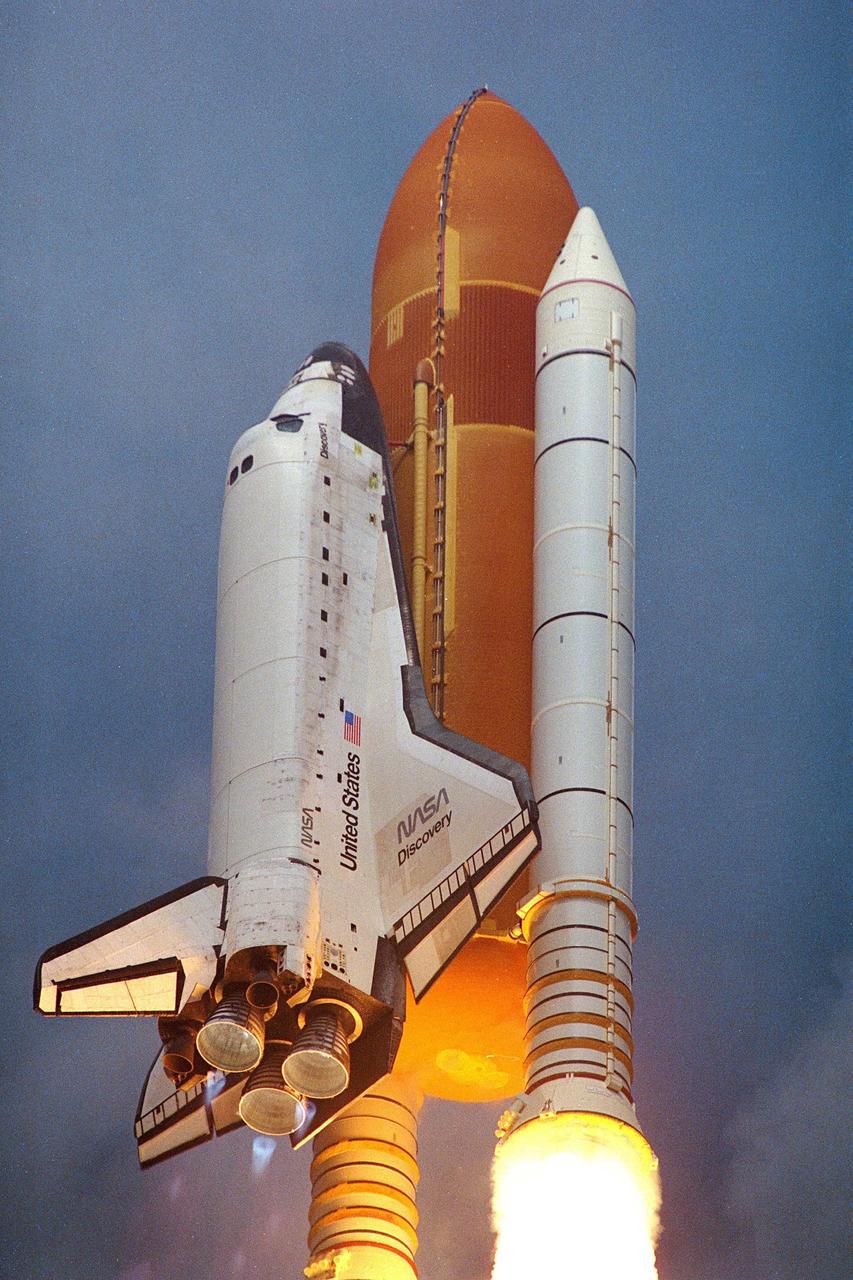
KENNEDY SPACE CENTER, Fla. -- Blasting through the hazy late morning sky, the Space Shuttle Discovery soars from Launch Pad 39A at 10:41 a.m. EDT Aug. 7 on the 11-day STS-85 mission. Aboard Discovery are Commander Curtis L. Brown, Jr.; Pilot Kent V. Rominger, Payload Commander N. Jan Davis, Mission Specialist Robert L. Curbeam, Jr., Mission Specialist Stephen K. Robinson and Payload Specialist Bjarni V. Tryggvason, a Canadian Space Agency astronaut . The primary payload aboard the Space Shuttle orbiter Discovery is the Cryogenic Infrared Spectrometers and Telescopes for the Atmosphere-Shuttle Pallet Satellite-2 (CRISTA-SPAS-2) free-flyer. The CRISTA-SPAS-2 will be deployed on flight day 1 to study trace gases in the Earth’s atmosphere as a part of NASA’s Mission to Planet Earth program. Also aboard the free-flying research platform will be the Middle Atmosphere High Resolution Spectrograph Instrument (MAHRSI). Other payloads on the 11-day mission include the Manipulator Flight Demonstration (MFD), a Japanese Space Agency-sponsored experiment. Also in Discovery’s payload bay are the Technology Applications and Science-1 (TAS-1) and International Extreme Ultraviolet Hitchhiker-2 (IEH-2) experiments
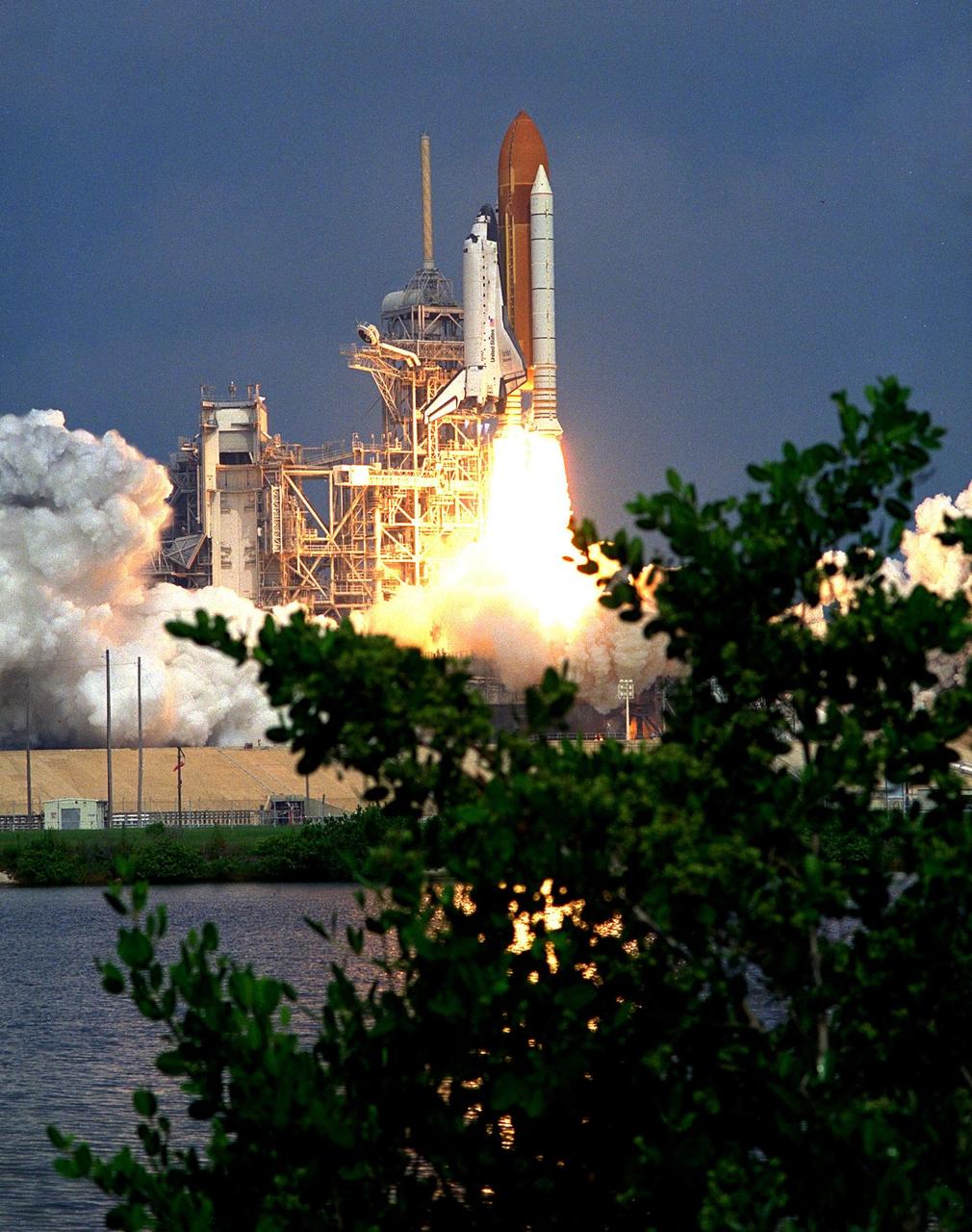
KENNEDY SPACE CENTER, Fla. -- Blasting through the hazy late morning sky, the Space Shuttle Discovery soars from Launch Pad 39A at 10:41 a.m. EDT Aug. 7 on the 11-day STS-85 mission. Aboard Discovery are Commander Curtis L. Brown, Jr.; Pilot Kent V. Rominger, Payload Commander N. Jan Davis, Mission Specialist Robert L. Curbeam, Jr., Mission Specialist Stephen K. Robinson and Payload Specialist Bjarni V. Tryggvason, a Canadian Space Agency astronaut . The primary payload aboard the Space Shuttle orbiter Discovery is the Cryogenic Infrared Spectrometers and Telescopes for the Atmosphere-Shuttle Pallet Satellite-2 (CRISTA-SPAS-2) free-flyer. The CRISTA-SPAS-2 will be deployed on flight day 1 to study trace gases in the Earth’s atmosphere as a part of NASA’s Mission to Planet Earth program. Also aboard the free-flying research platform will be the Middle Atmosphere High Resolution Spectrograph Instrument (MAHRSI). Other payloads on the 11-day mission include the Manipulator Flight Demonstration (MFD), a Japanese Space Agency-sponsored experiment. Also in Discovery’s payload bay are the Technology Applications and Science-1 (TAS-1) and International Extreme Ultraviolet Hitchhiker-2 (IEH-2) experiments
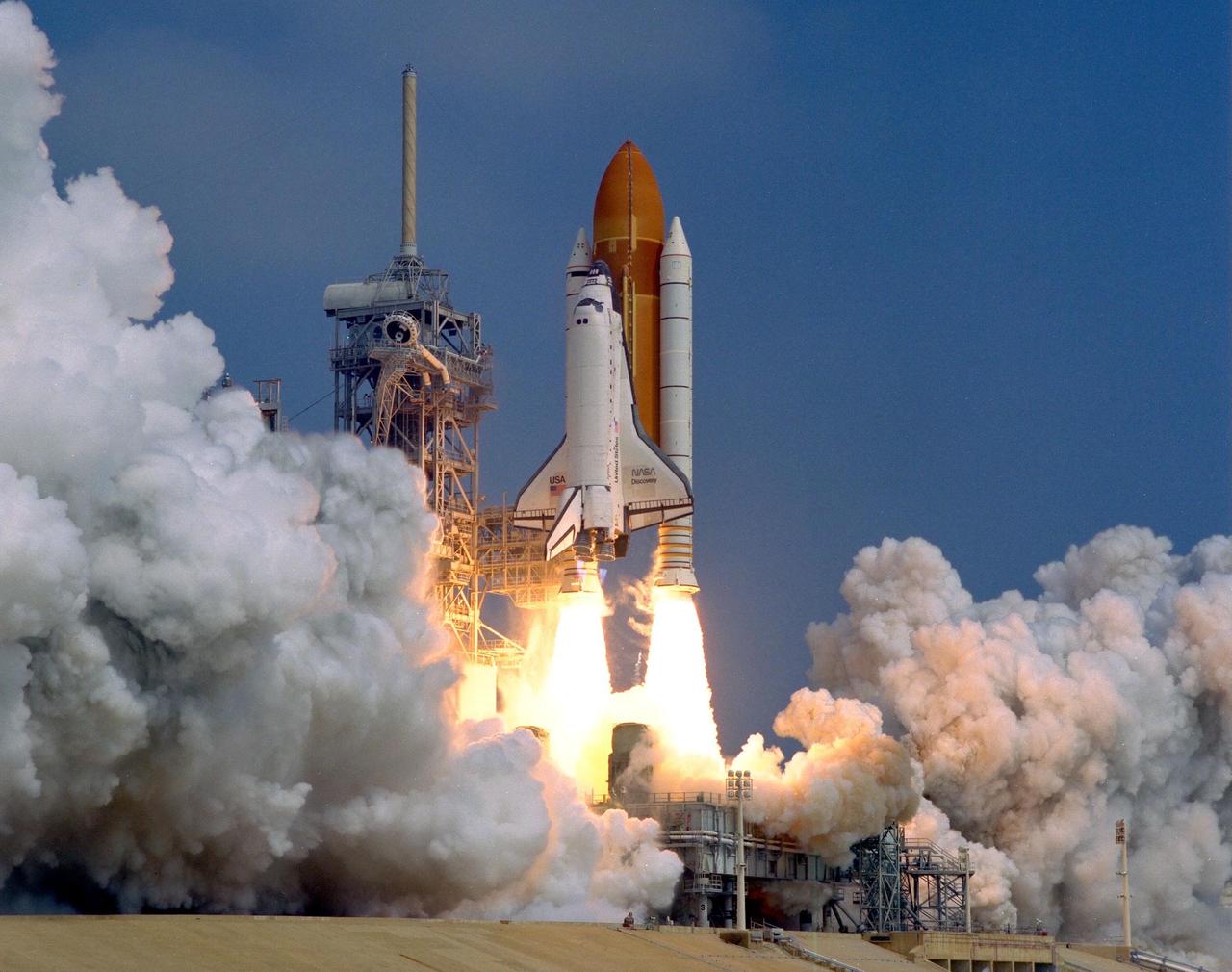
KENNEDY SPACE CENTER, Fla. -- Blasting through the hazy late morning sky, the Space Shuttle Discovery soars from Launch Pad 39A at 10:41 a.m. EDT Aug. 7 on the 11-day STS-85 mission. Aboard Discovery are Commander Curtis L. Brown, Jr.; Pilot Kent V. Rominger, Payload Commander N. Jan Davis, Mission Specialist Robert L. Curbeam, Jr., Mission Specialist Stephen K. Robinson and Payload Specialist Bjarni V. Tryggvason, a Canadian Space Agency astronaut . The primary payload aboard the Space Shuttle orbiter Discovery is the Cryogenic Infrared Spectrometers and Telescopes for the Atmosphere-Shuttle Pallet Satellite-2 (CRISTA-SPAS-2) free-flyer. The CRISTA-SPAS-2 will be deployed on flight day 1 to study trace gases in the Earth’s atmosphere as a part of NASA’s Mission to Planet Earth program. Also aboard the free-flying research platform will be the Middle Atmosphere High Resolution Spectrograph Instrument (MAHRSI). Other payloads on the 11-day mission include the Manipulator Flight Demonstration (MFD), a Japanese Space Agency-sponsored experiment. Also in Discovery’s payload bay are the Technology Applications and Science-1 (TAS-1) and International Extreme Ultraviolet Hitchhiker-2 (IEH-2) experiments
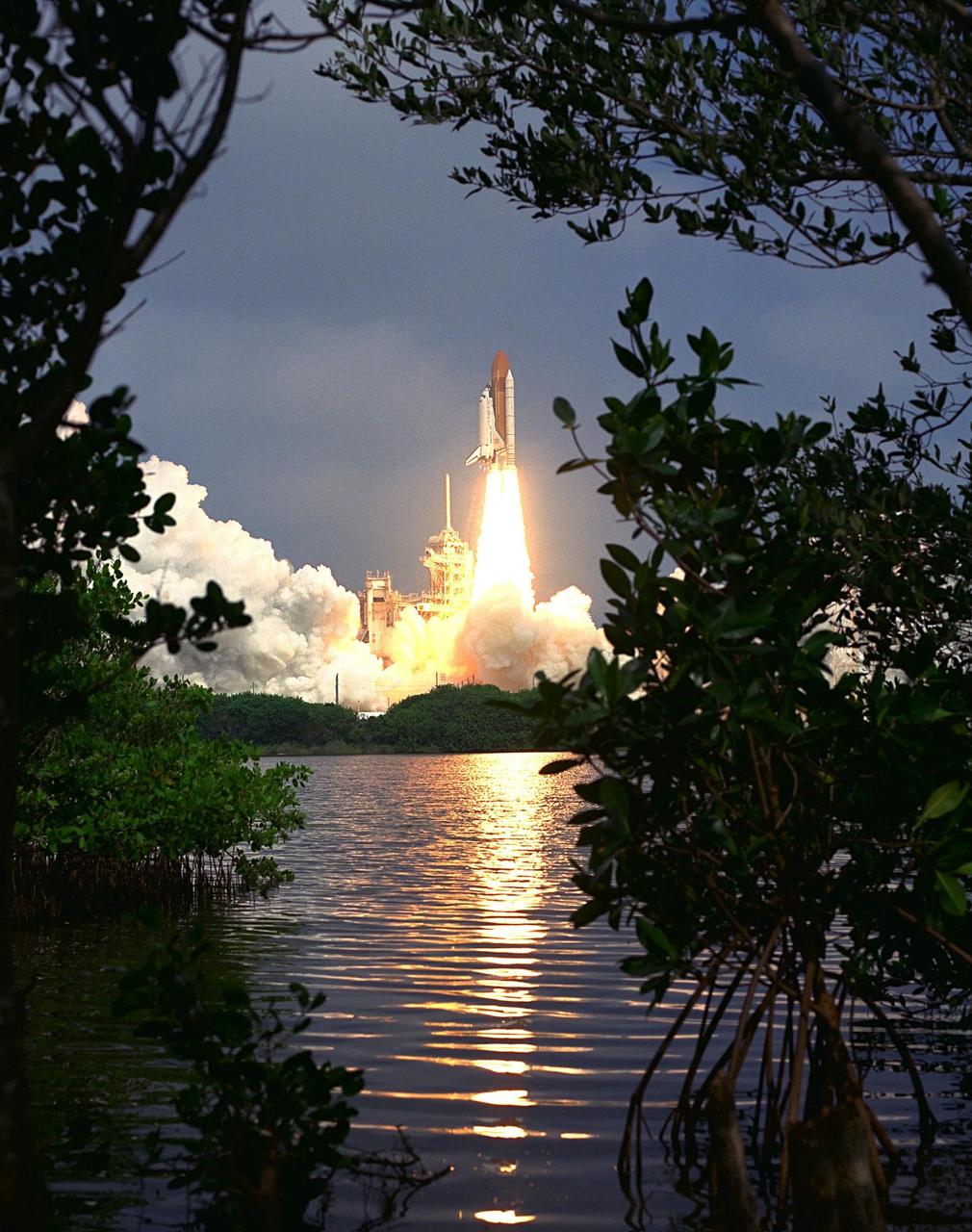
KENNEDY SPACE CENTER, Fla. -- Blasting through the hazy late morning sky, the Space Shuttle Discovery soars from Launch Pad 39A at 10:41 a.m. EDT Aug. 7 on the 11-day STS-85 mission. Aboard Discovery are Commander Curtis L. Brown, Jr.; Pilot Kent V. Rominger, Payload Commander N. Jan Davis, Mission Specialist Robert L. Curbeam, Jr., Mission Specialist Stephen K. Robinson and Payload Specialist Bjarni V. Tryggvason, a Canadian Space Agency astronaut . The primary payload aboard the Space Shuttle orbiter Discovery is the Cryogenic Infrared Spectrometers and Telescopes for the Atmosphere-Shuttle Pallet Satellite-2 (CRISTA-SPAS-2) free-flyer. The CRISTA-SPAS-2 will be deployed on flight day 1 to study trace gases in the Earth’s atmosphere as a part of NASA’s Mission to Planet Earth program. Also aboard the free-flying research platform will be the Middle Atmosphere High Resolution Spectrograph Instrument (MAHRSI). Other payloads on the 11-day mission include the Manipulator Flight Demonstration (MFD), a Japanese Space Agency-sponsored experiment. Also in Discovery’s payload bay are the Technology Applications and Science-1 (TAS-1) and International Extreme Ultraviolet Hitchhiker-2 (IEH-2) experiments
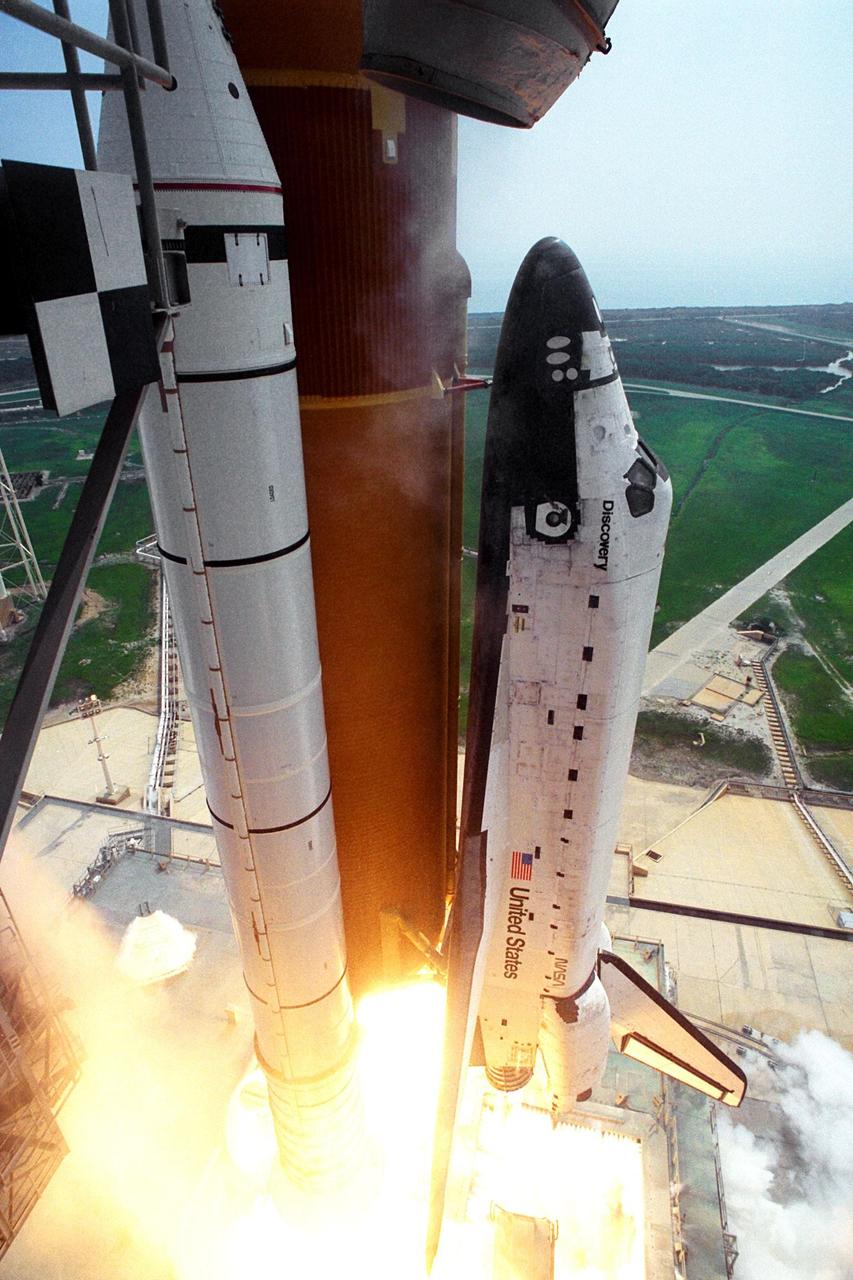
KENNEDY SPACE CENTER, Fla. -- Blasting through the hazy late morning sky, the Space Shuttle Discovery soars from Launch Pad 39A at 10:41 a.m. EDT Aug. 7 on the 11-day STS-85 mission. Aboard Discovery are Commander Curtis L. Brown, Jr.; Pilot Kent V. Rominger, Payload Commander N. Jan Davis, Mission Specialist Robert L. Curbeam, Jr., Mission Specialist Stephen K. Robinson and Payload Specialist Bjarni V. Tryggvason, a Canadian Space Agency astronaut . The primary payload aboard the Space Shuttle orbiter Discovery is the Cryogenic Infrared Spectrometers and Telescopes for the Atmosphere-Shuttle Pallet Satellite-2 (CRISTA-SPAS-2) free-flyer. The CRISTA-SPAS-2 will be deployed on flight day 1 to study trace gases in the Earth’s atmosphere as a part of NASA’s Mission to Planet Earth program. Also aboard the free-flying research platform will be the Middle Atmosphere High Resolution Spectrograph Instrument (MAHRSI). Other payloads on the 11-day mission include the Manipulator Flight Demonstration (MFD), a Japanese Space Agency-sponsored experiment. Also in Discovery’s payload bay are the Technology Applications and Science-1 (TAS-1) and International Extreme Ultraviolet Hitchhiker-2 (IEH-2) experiments
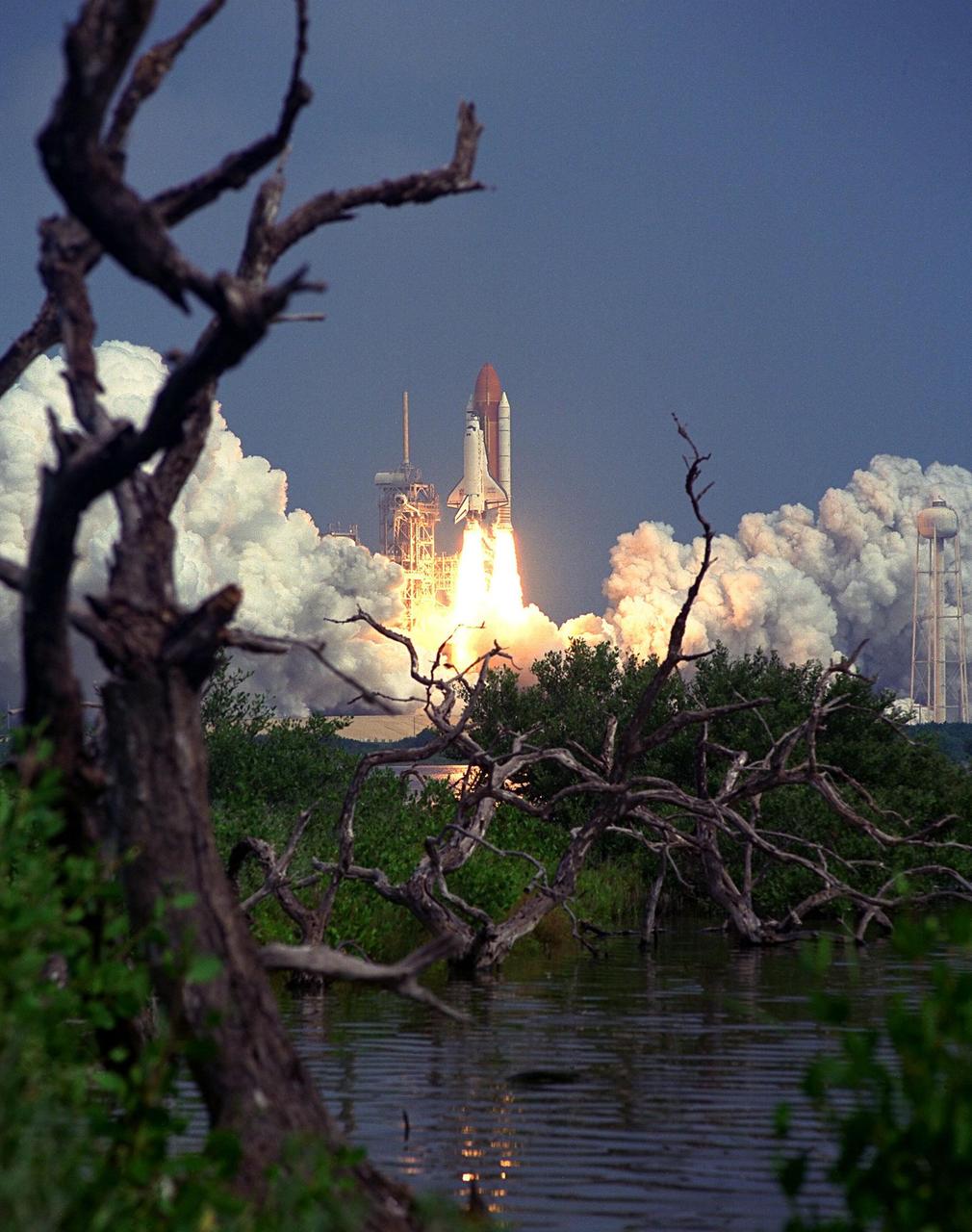
KENNEDY SPACE CENTER, Fla. -- Blasting through the hazy late morning sky, the Space Shuttle Discovery soars from Launch Pad 39A at 10:41 a.m. EDT Aug. 7 on the 11-day STS-85 mission. Aboard Discovery are Commander Curtis L. Brown, Jr.; Pilot Kent V. Rominger, Payload Commander N. Jan Davis, Mission Specialist Robert L. Curbeam, Jr., Mission Specialist Stephen K. Robinson and Payload Specialist Bjarni V. Tryggvason, a Canadian Space Agency astronaut . The primary payload aboard the Space Shuttle orbiter Discovery is the Cryogenic Infrared Spectrometers and Telescopes for the Atmosphere-Shuttle Pallet Satellite-2 (CRISTA-SPAS-2) free-flyer. The CRISTA-SPAS-2 will be deployed on flight day 1 to study trace gases in the Earth’s atmosphere as a part of NASA’s Mission to Planet Earth program. Also aboard the free-flying research platform will be the Middle Atmosphere High Resolution Spectrograph Instrument (MAHRSI). Other payloads on the 11-day mission include the Manipulator Flight Demonstration (MFD), a Japanese Space Agency-sponsored experiment. Also in Discovery’s payload bay are the Technology Applications and Science-1 (TAS-1) and International Extreme Ultraviolet Hitchhiker-2 (IEH-2) experiments
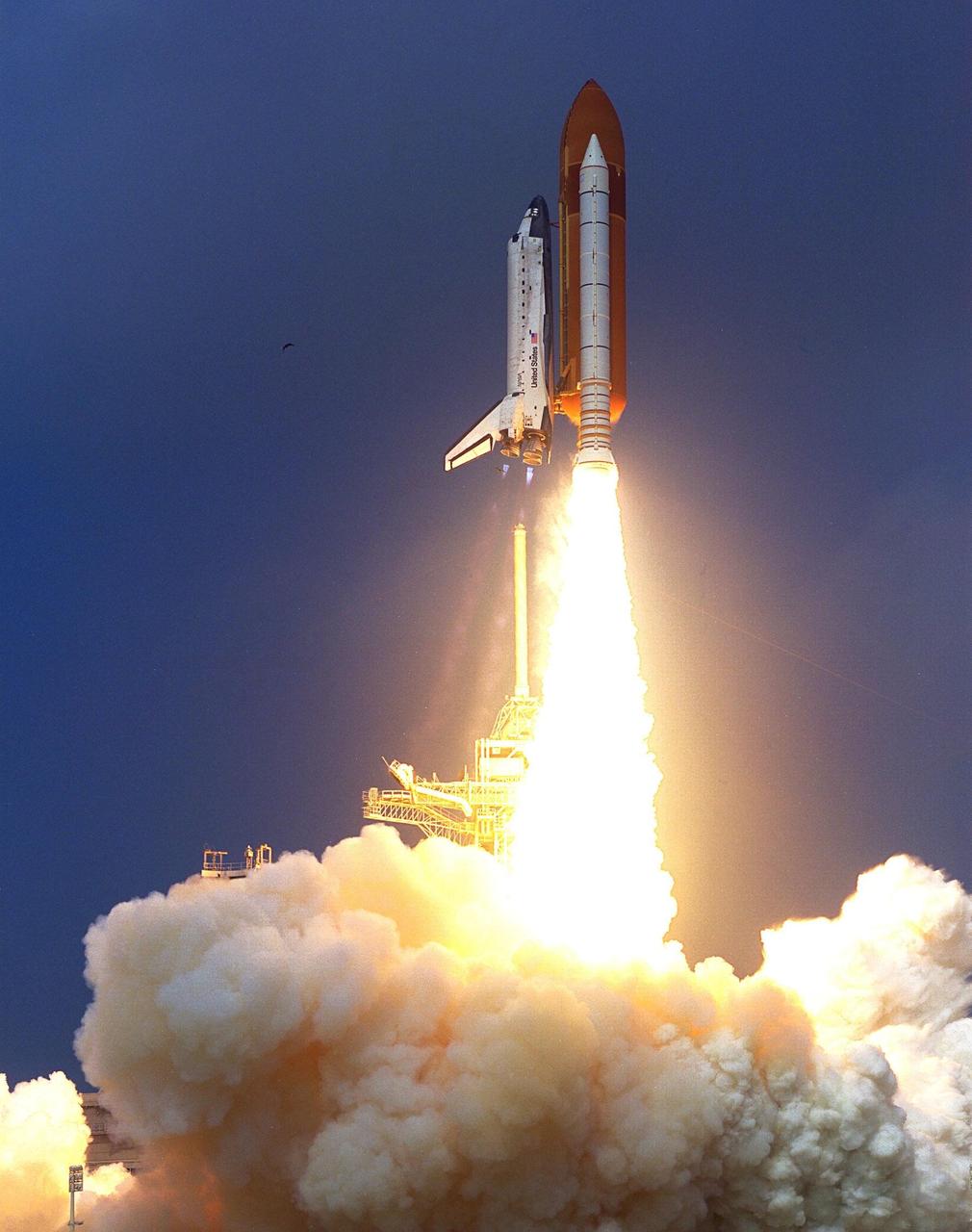
KENNEDY SPACE CENTER, Fla. -- Blasting through the hazy late morning sky, the Space Shuttle Discovery soars from Launch Pad 39A at 10:41 a.m. EDT Aug. 7 on the 11-day STS-85 mission. Aboard Discovery are Commander Curtis L. Brown, Jr.; Pilot Kent V. Rominger, Payload Commander N. Jan Davis, Mission Specialist Robert L. Curbeam, Jr., Mission Specialist Stephen K. Robinson and Payload Specialist Bjarni V. Tryggvason, a Canadian Space Agency astronaut . The primary payload aboard the Space Shuttle orbiter Discovery is the Cryogenic Infrared Spectrometers and Telescopes for the Atmosphere-Shuttle Pallet Satellite-2 (CRISTA-SPAS-2) free-flyer. The CRISTA-SPAS-2 will be deployed on flight day 1 to study trace gases in the Earth’s atmosphere as a part of NASA’s Mission to Planet Earth program. Also aboard the free-flying research platform will be the Middle Atmosphere High Resolution Spectrograph Instrument (MAHRSI). Other payloads on the 11-day mission include the Manipulator Flight Demonstration (MFD), a Japanese Space Agency-sponsored experiment. Also in Discovery’s payload bay are the Technology Applications and Science-1 (TAS-1) and International Extreme Ultraviolet Hitchhiker-2 (IEH-2) experiments
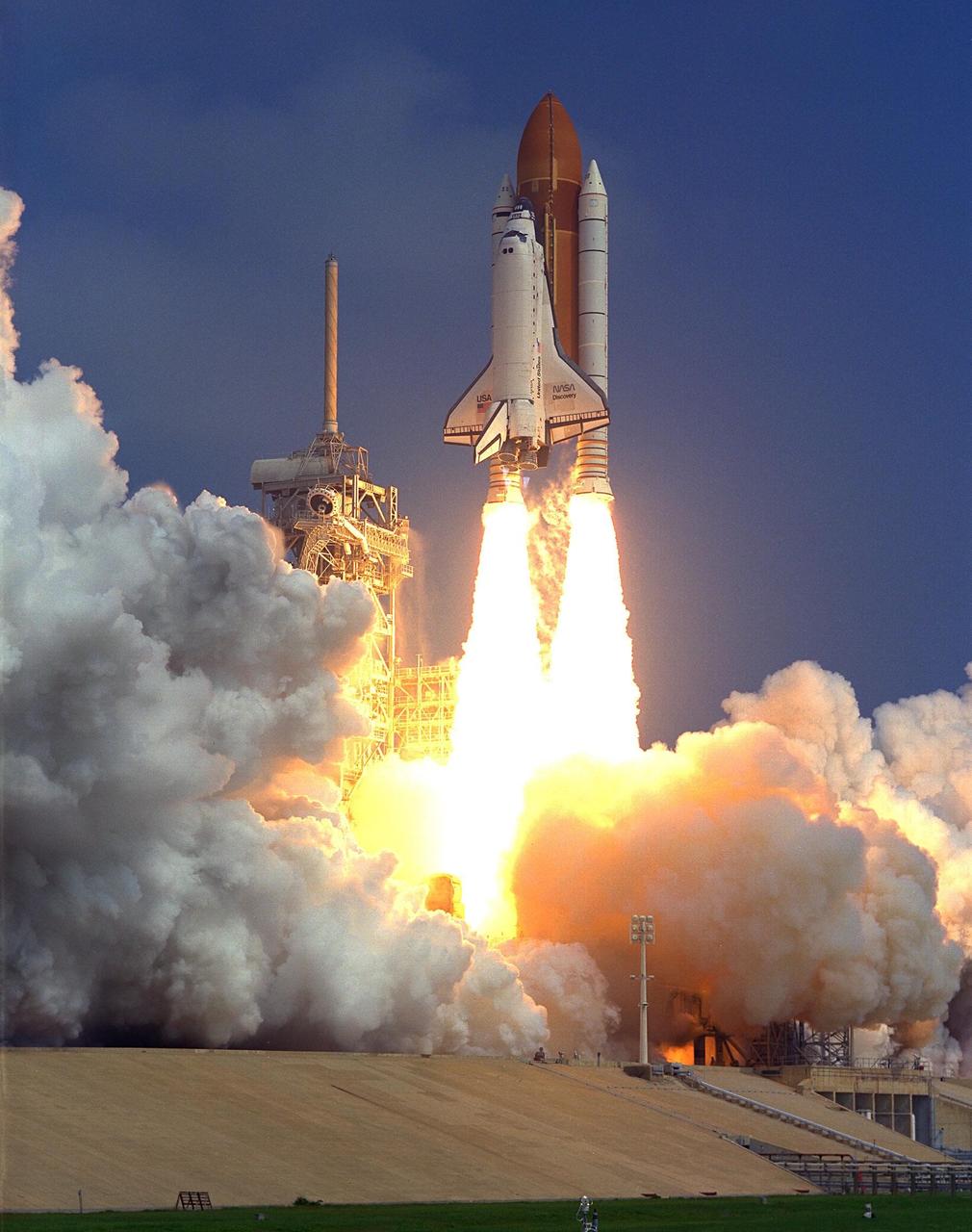
KENNEDY SPACE CENTER, Fla. -- Blasting through the hazy late morning sky, the Space Shuttle Discovery soars from Launch Pad 39A at 10:41 a.m. EDT Aug. 7 on the 11-day STS-85 mission. Aboard Discovery are Commander Curtis L. Brown, Jr.; Pilot Kent V. Rominger, Payload Commander N. Jan Davis, Mission Specialist Robert L. Curbeam, Jr., Mission Specialist Stephen K. Robinson and Payload Specialist Bjarni V. Tryggvason, a Canadian Space Agency astronaut . The primary payload aboard the Space Shuttle orbiter Discovery is the Cryogenic Infrared Spectrometers and Telescopes for the Atmosphere-Shuttle Pallet Satellite-2 (CRISTA-SPAS-2) free-flyer. The CRISTA-SPAS-2 will be deployed on flight day 1 to study trace gases in the Earth’s atmosphere as a part of NASA’s Mission to Planet Earth program. Also aboard the free-flying research platform will be the Middle Atmosphere High Resolution Spectrograph Instrument (MAHRSI). Other payloads on the 11-day mission include the Manipulator Flight Demonstration (MFD), a Japanese Space Agency-sponsored experiment. Also in Discovery’s payload bay are the Technology Applications and Science-1 (TAS-1) and International Extreme Ultraviolet Hitchhiker-2 (IEH-2) experiments
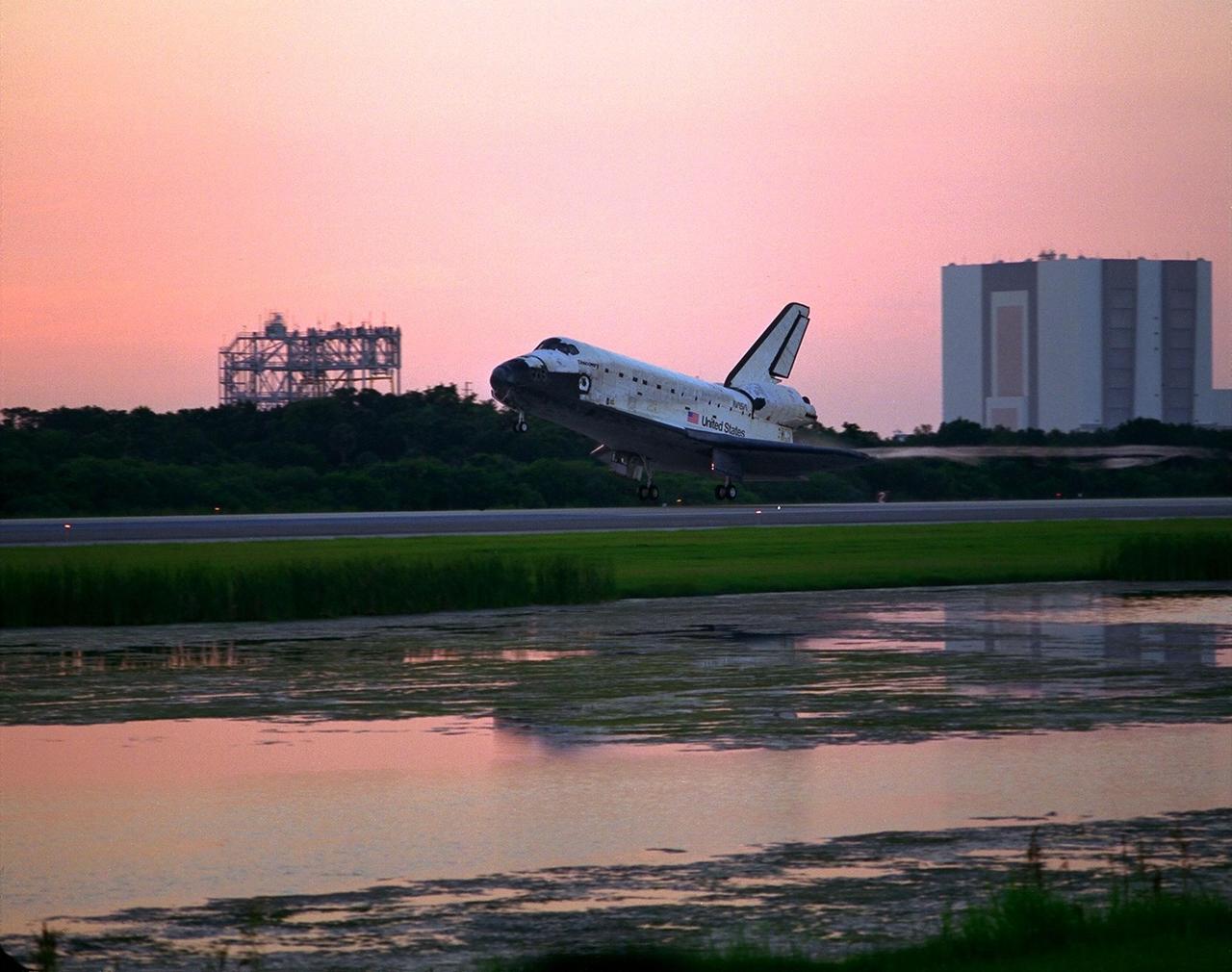
KENNEDY SPACE CENTER, FLA. -- With Commander Curtis L. Brown, Jr. and Pilot Kent V. Rominger at the controls and the Mate/Demate Device (MDD) and the Vehicle Assembly Building (VAB) in the background, the Space Shuttle orbiter Discovery touches down on Runway 33 at KSC’s Shuttle Landing Facility at 7:07:59 a.m. EDT Aug. 19 to complete the 11-day, 20-hour and 27-minute-long STS-85 mission. The first landing opportunity on Aug. 18 was waved off due to the potential for ground fog. Also onboard the orbiter are Payload Commander N. Jan Davis, Mission Specialist Robert L. Curbeam, Jr., Mission Specialist Stephen K. Robinson and Payload Specialist Bjarni V. Tryggvason. During the 86th Space Shuttle mission, the crew deployed the Cryogenic Infrared Spectrometers and Telescopes for the Atmosphere-Shuttle Pallet Satellite-2 (CRISTA-SPAS-2) free-flyer to conduct research on the Earth’s middle atmosphere, retrieving it on flight day 9. The crew also conducted investigations with the Manipulator Flight Demonstration (MFD), Technology Applications and Science-1 (TAS-1) and International Extreme Ultraviolet Hitchhiker-2 (IEH-2) experiments. Robinson also made observations of the comet HaleBopp with the Southwest Ultraviolet Imaging System (SWIS) while other members of the crew conducted biological experiments in the orbiter’s crew cabin. This was the 39th landing at KSC in the history of the Space Shuttle program and the 11th touchdown for Discovery at the space center
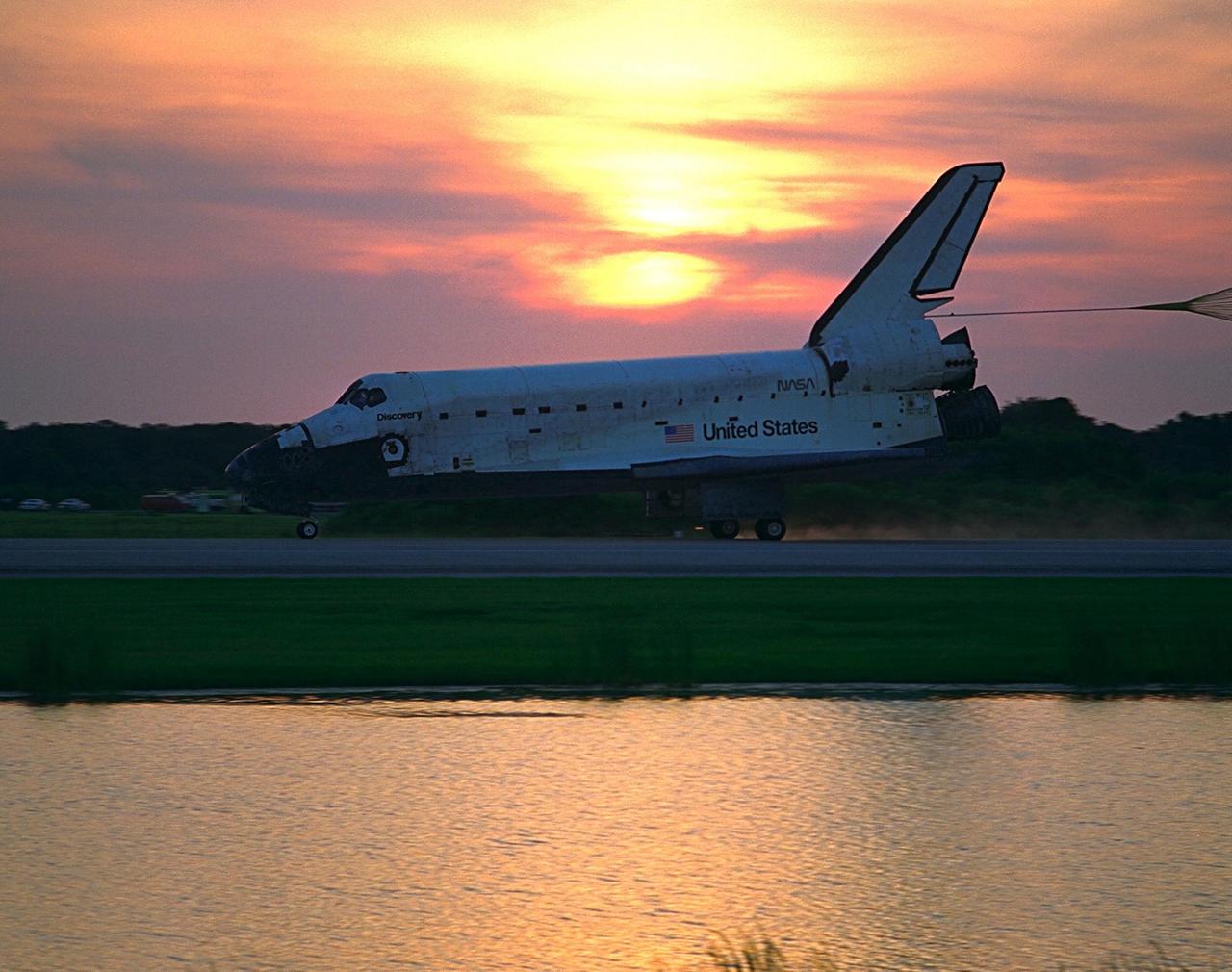
KENNEDY SPACE CENTER, FLA. -- With Commander Curtis L. Brown, Jr. and Pilot Kent V. Rominger at the controls, the Space Shuttle orbiter Discovery touches down on Runway 33 at KSC’s Shuttle Landing Facility at 7:07:59 a.m. EDT Aug. 19 to complete the 11-day, 20-hour and 27-minute-long STS-85 mission. The first landing opportunity on Aug. 18 was waved off due to the potential for ground fog. Also onboard the orbiter are Payload Commander N. Jan Davis, Mission Specialist Robert L. Curbeam, Jr., Mission Specialist Stephen K. Robinson and Payload Specialist Bjarni V. Tryggvason. During the 86th Space Shuttle mission, the crew deployed the Cryogenic Infrared Spectrometers and Telescopes for the Atmosphere-Shuttle Pallet Satellite-2 (CRISTA-SPAS-2) free-flyer to conduct research on the Earth’s middle atmosphere, retrieving it on flight day 9. The crew also conducted investigations with the Manipulator Flight Demonstration (MFD), Technology Applications and Science-1 (TAS-1) and International Extreme Ultraviolet Hitchhiker-2 (IEH-2) experiments. Robinson also made observations of the comet HaleBopp with the Southwest Ultraviolet Imaging System (SWIS) while other members of the crew conducted biological experiments in the orbiter’s crew cabin. This was the 39th landing at KSC in the history of the Space Shuttle program and the 11th touchdown for Discovery at the space center
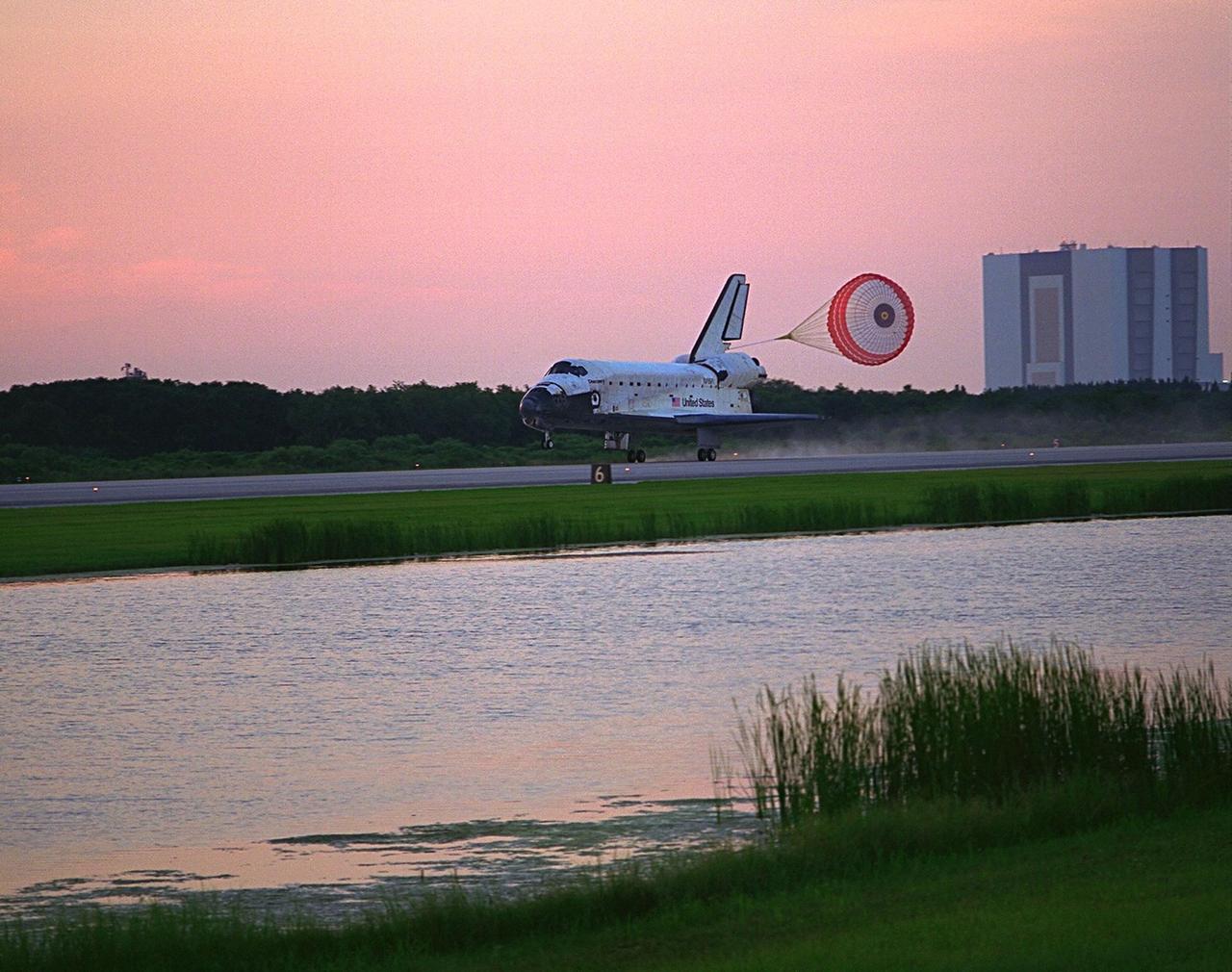
KENNEDY SPACE CENTER, FLA. -- With Commander Curtis L. Brown, Jr. and Pilot Kent V. Rominger at the controls and the Vehicle Assembly Building (VAB) in the background, the Space Shuttle orbiter Discovery touches down on Runway 33 at KSC’s Shuttle Landing Facility at 7:07:59 a.m. EDT Aug. 19 to complete the 11-day, 20-hour and 27-minute-long STS-85 mission. The first landing opportunity on Aug. 18 was waved off due to the potential for ground fog. Also onboard the orbiter are Payload Commander N. Jan Davis, Mission Specialist Robert L. Curbeam, Jr., Mission Specialist Stephen K. Robinson and Payload Specialist Bjarni V. Tryggvason. During the 86th Space Shuttle mission, the crew deployed the Cryogenic Infrared Spectrometers and Telescopes for the Atmosphere-Shuttle Pallet Satellite-2 (CRISTA-SPAS-2) free-flyer to conduct research on the Earth’s middle atmosphere, retrieving it on flight day 9. The crew also conducted investigations with the Manipulator Flight Demonstration (MFD), Technology Applications and Science-1 (TAS-1) and International Extreme Ultraviolet Hitchhiker-2 (IEH-2) experiments. Robinson also made observations of the comet HaleBopp with the Southwest Ultraviolet Imaging System (SWIS) while other members of the crew conducted biological experiments in the orbiter’s crew cabin. This was the 39th landing at KSC in the history of the Space Shuttle program and the 11th touchdown for Discovery at the space center
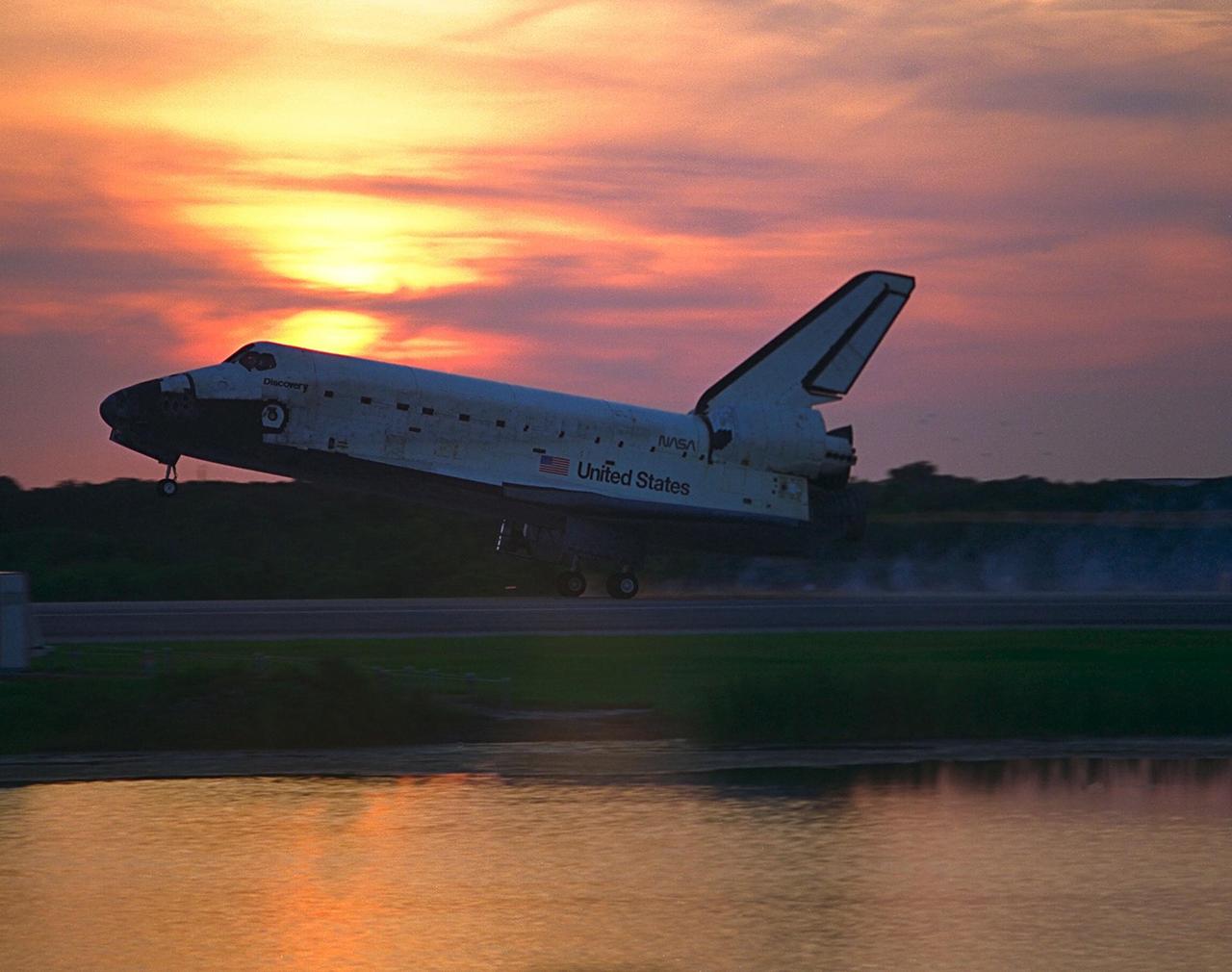
KENNEDY SPACE CENTER, FLA. -- With Commander Curtis L. Brown, Jr. and Pilot Kent V. Rominger at the controls, the Space Shuttle orbiter Discovery touches down on Runway 33 at KSC’s Shuttle Landing Facility at 7:07:59 a.m. EDT Aug. 19 to complete the 11-day, 20-hour and 27-minute-long STS-85 mission. The first landing opportunity on Aug. 18 was waved off due to the potential for ground fog. Also onboard the orbiter are Payload Commander N. Jan Davis, Mission Specialist Robert L. Curbeam, Jr., Mission Specialist Stephen K. Robinson and Payload Specialist Bjarni V. Tryggvason. During the 86th Space Shuttle mission, the crew deployed the Cryogenic Infrared Spectrometers and Telescopes for the Atmosphere-Shuttle Pallet Satellite-2 (CRISTA-SPAS-2) free-flyer to conduct research on the Earth’s middle atmosphere, retrieving it on flight day 9. The crew also conducted investigations with the Manipulator Flight Demonstration (MFD), Technology Applications and Science-1 (TAS-1) and International Extreme Ultraviolet Hitchhiker-2 (IEH-2) experiments. Robinson also made observations of the comet HaleBopp with the Southwest Ultraviolet Imaging System (SWIS) while other members of the crew conducted biological experiments in the orbiter’s crew cabin. This was the 39th landing at KSC in the history of the Space Shuttle program and the 11th touchdown for Discovery at the space center
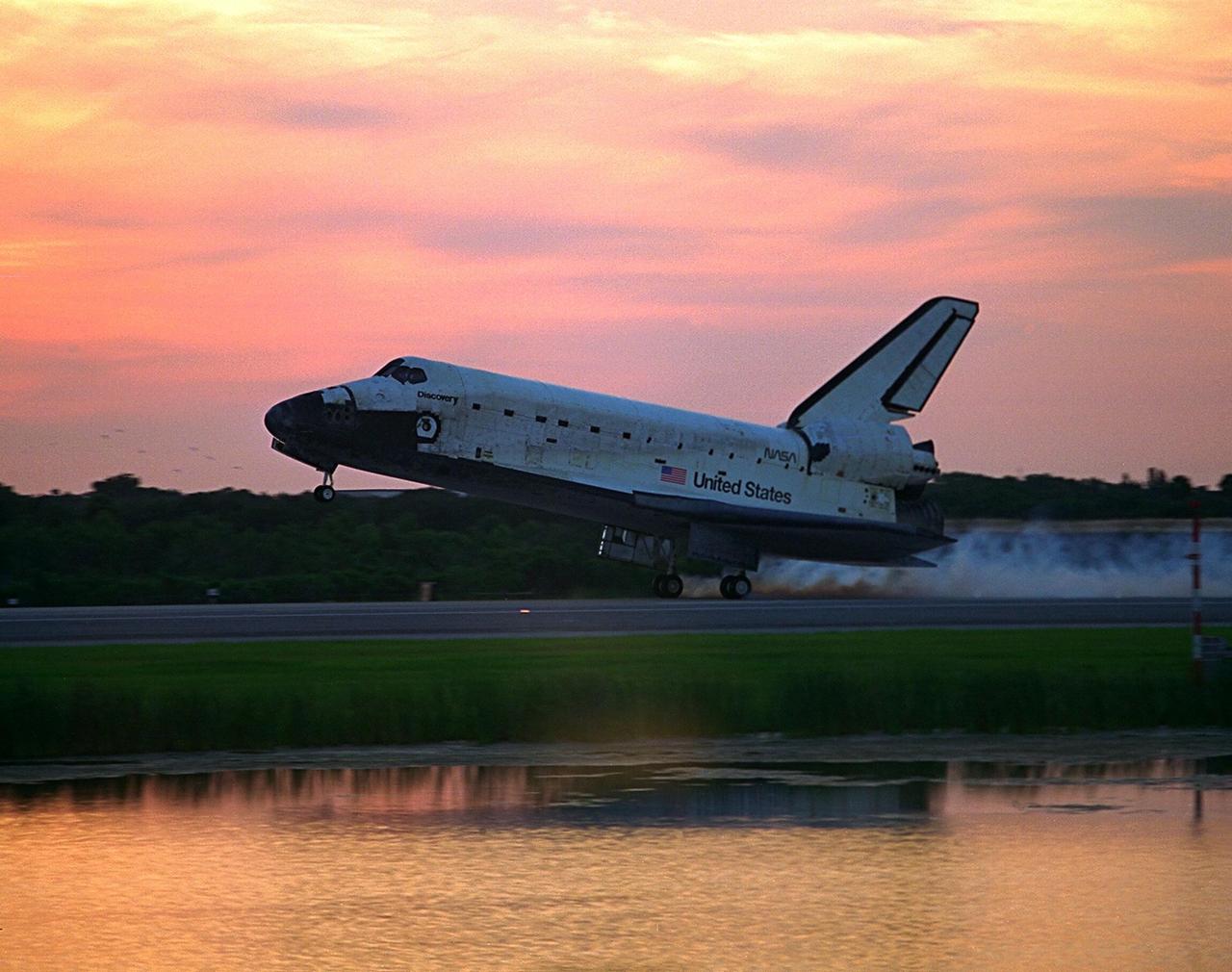
KENNEDY SPACE CENTER, FLA. -- With Commander Curtis L. Brown, Jr. and Pilot Kent V. Rominger at the controls, the Space Shuttle orbiter Discovery touches down on Runway 33 at KSC’s Shuttle Landing Facility at 7:07:59 a.m. EDT Aug. 19 to complete the 11-day, 20-hour and 27-minute-long STS-85 mission. The first landing opportunity on Aug. 18 was waved off due to the potential for ground fog. Also onboard the orbiter are Payload Commander N. Jan Davis, Mission Specialist Robert L. Curbeam, Jr., Mission Specialist Stephen K. Robinson and Payload Specialist Bjarni V. Tryggvason. During the 86th Space Shuttle mission, the crew deployed the Cryogenic Infrared Spectrometers and Telescopes for the Atmosphere-Shuttle Pallet Satellite-2 (CRISTA-SPAS-2) free-flyer to conduct research on the Earth’s middle atmosphere, retrieving it on flight day 9. The crew also conducted investigations with the Manipulator Flight Demonstration (MFD), Technology Applications and Science-1 (TAS-1) and International Extreme Ultraviolet Hitchhiker-2 (IEH-2) experiments. Robinson also made observations of the comet HaleBopp with the Southwest Ultraviolet Imaging System (SWIS) while other members of the crew conducted biological experiments in the orbiter’s crew cabin. This was the 39th landing at KSC in the history of the Space Shuttle program and the 11th touchdown for Discovery at the space center
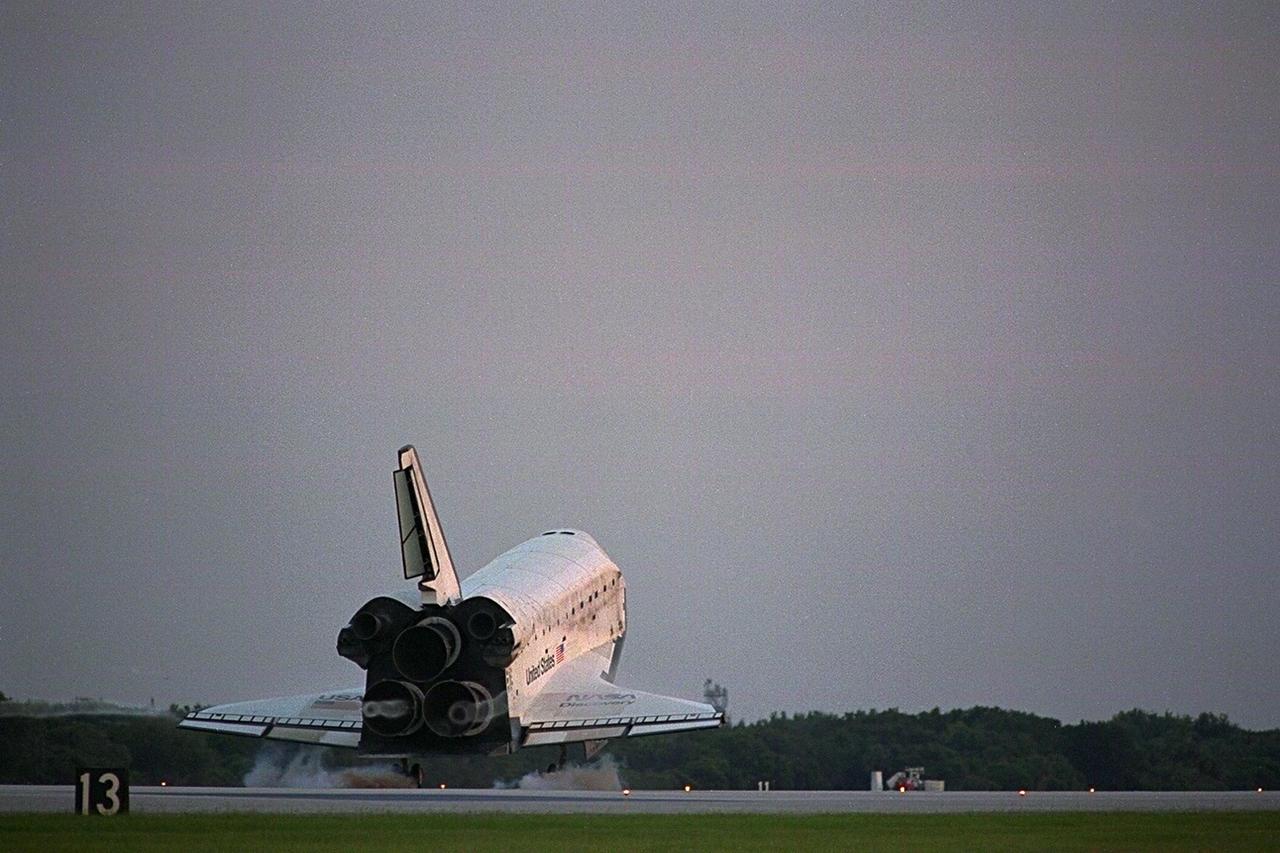
KENNEDY SPACE CENTER, FLA. -- With Commander Curtis L. Brown, Jr. and Pilot Kent V. Rominger at the controls, the Space Shuttle orbiter Discovery touches down on Runway 33 at KSC’s Shuttle Landing Facility at 7:07:59 a.m. EDT Aug. 19 to complete the 11-day, 20-hour and 27-minute-long STS-85 mission. The first landing opportunity on Aug. 18 was waved off due to the potential for ground fog. Also onboard the orbiter are Payload Commander N. Jan Davis, Mission Specialist Robert L. Curbeam, Jr., Mission Specialist Stephen K. Robinson and Payload Specialist Bjarni V. Tryggvason. During the 86th Space Shuttle mission, the crew deployed the Cryogenic Infrared Spectrometers and Telescopes for the Atmosphere-Shuttle Pallet Satellite-2 (CRISTA-SPAS-2) free-flyer to conduct research on the Earth’s middle atmosphere, retrieving it on flight day 9. The crew also conducted investigations with the Manipulator Flight Demonstration (MFD), Technology Applications and Science-1 (TAS-1) and International Extreme Ultraviolet Hitchhiker-2 (IEH-2) experiments. Robinson also made observations of the comet HaleBopp with the Southwest Ultraviolet Imaging System (SWIS) while other members of the crew conducted biological experiments in the orbiter’s crew cabin. This was the 39th landing at KSC in the history of the Space Shuttle program and the 11th touchdown for Discovery at the space center
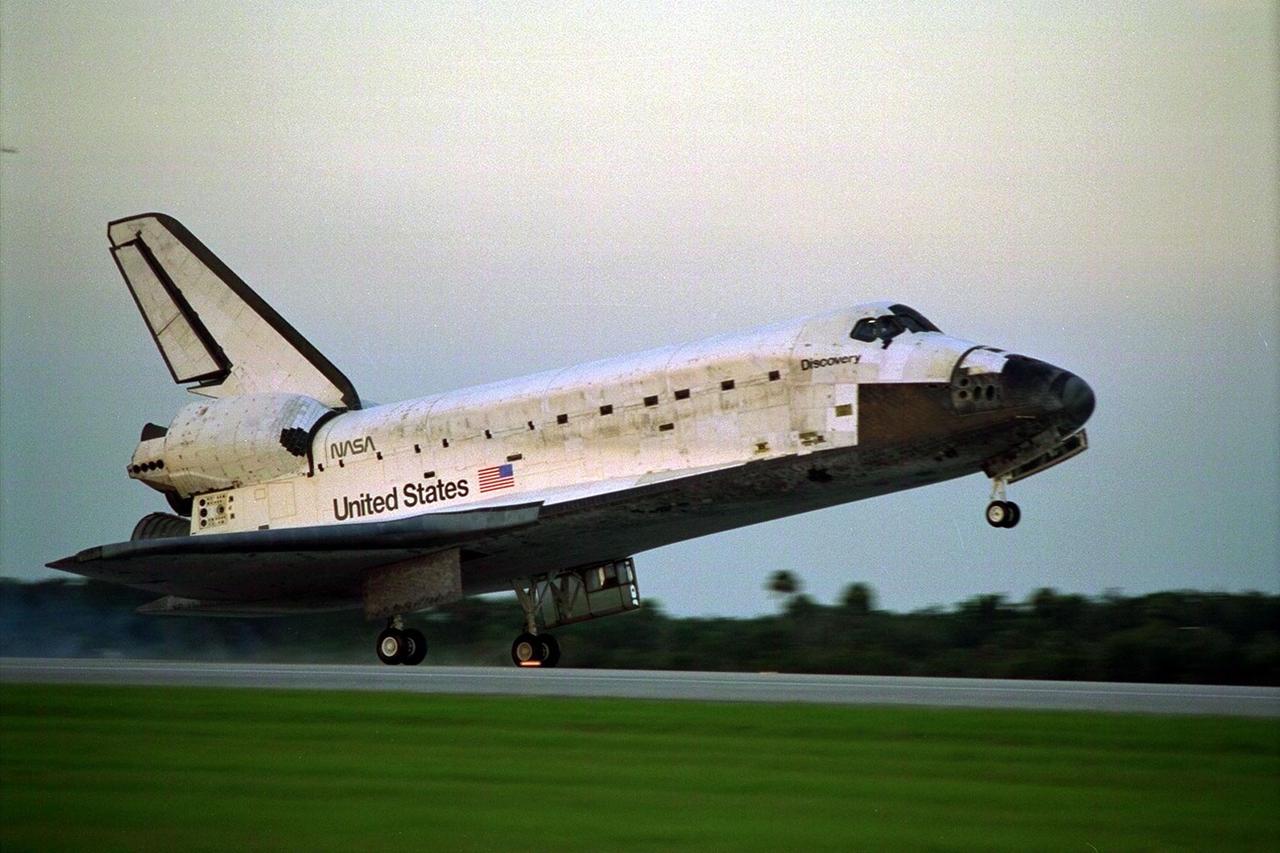
KENNEDY SPACE CENTER, FLA. -- With Commander Curtis L. Brown, Jr. and Pilot Kent V. Rominger at the controls, the Space Shuttle orbiter Discovery touches down on Runway 33 at KSC’s Shuttle Landing Facility at 7:07:59 a.m. EDT Aug. 19 to complete the 11-day, 20-hour and 27-minute-long STS-85 mission. The first landing opportunity on Aug. 18 was waved off due to the potential for ground fog. Also onboard the orbiter are Payload Commander N. Jan Davis, Mission Specialist Robert L. Curbeam, Jr., Mission Specialist Stephen K. Robinson and Payload Specialist Bjarni V. Tryggvason. During the 86th Space Shuttle mission, the crew deployed the Cryogenic Infrared Spectrometers and Telescopes for the Atmosphere-Shuttle Pallet Satellite-2 (CRISTA-SPAS-2) free-flyer to conduct research on the Earth’s middle atmosphere, retrieving it on flight day 9. The crew also conducted investigations with the Manipulator Flight Demonstration (MFD), Technology Applications and Science-1 (TAS-1) and International Extreme Ultraviolet Hitchhiker-2 (IEH-2) experiments. Robinson also made observations of the comet HaleBopp with the Southwest Ultraviolet Imaging System (SWIS) while other members of the crew conducted biological experiments in the orbiter’s crew cabin. This was the 39th landing at KSC in the history of the Space Shuttle program and the 11th touchdown for Discovery at the space center
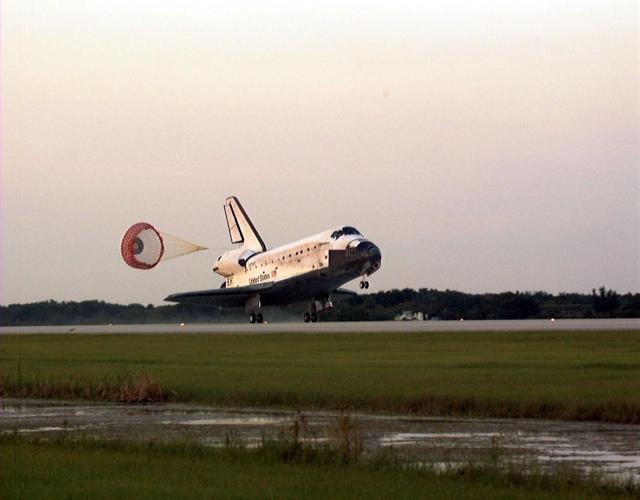
KENNEDY SPACE CENTER, FLA. -- With drag chute deployed, the Space Shuttle orbiter Discovery touches down on Runway 33 at KSC’s Shuttle Landing Facility at 7:07:59 a.m. EDT Aug. 19 to complete the 11-day, 20-hour and 27-minute-long STS-85 mission. At the controls are Commander Curtis L. Brown, Jr. and Pilot Kent V. Rominger. The first landing opportunity on Aug. 18 was waved off due to the potential for ground fog. Also onboard the orbiter are Payload Commander N. Jan Davis, Mission Specialist Robert L. Curbeam, Jr., Mission Specialist Stephen K. Robinson and Payload Specialist Bjarni V. Tryggvason. During the 86th Space Shuttle mission, the crew deployed the Cryogenic Infrared Spectrometers and Telescopes for the AtmosphereShuttle Pallet Satellite-2 (CRISTA-SPAS-2) free-flyer to conduct research on the Earth’s middle atmosphere, retrieving it on flight day 9. The crew also conducted investigations with the Manipulator Flight Demonstration (MFD), Technology Applications and Science-1 (TAS-1) and International Extreme Ultraviolet Hitchhiker-2 (IEH-2) experiments. Robinson also made observations of the comet Hale-Bopp with the Southwest Ultraviolet Imaging System (SWIS) while other members of the crew conducted biological experiments in the orbiter’s crew cabin. This was the 39th landing at KSC in the history of the Space Shuttle program and the 11th touchdown for Discovery at the space center
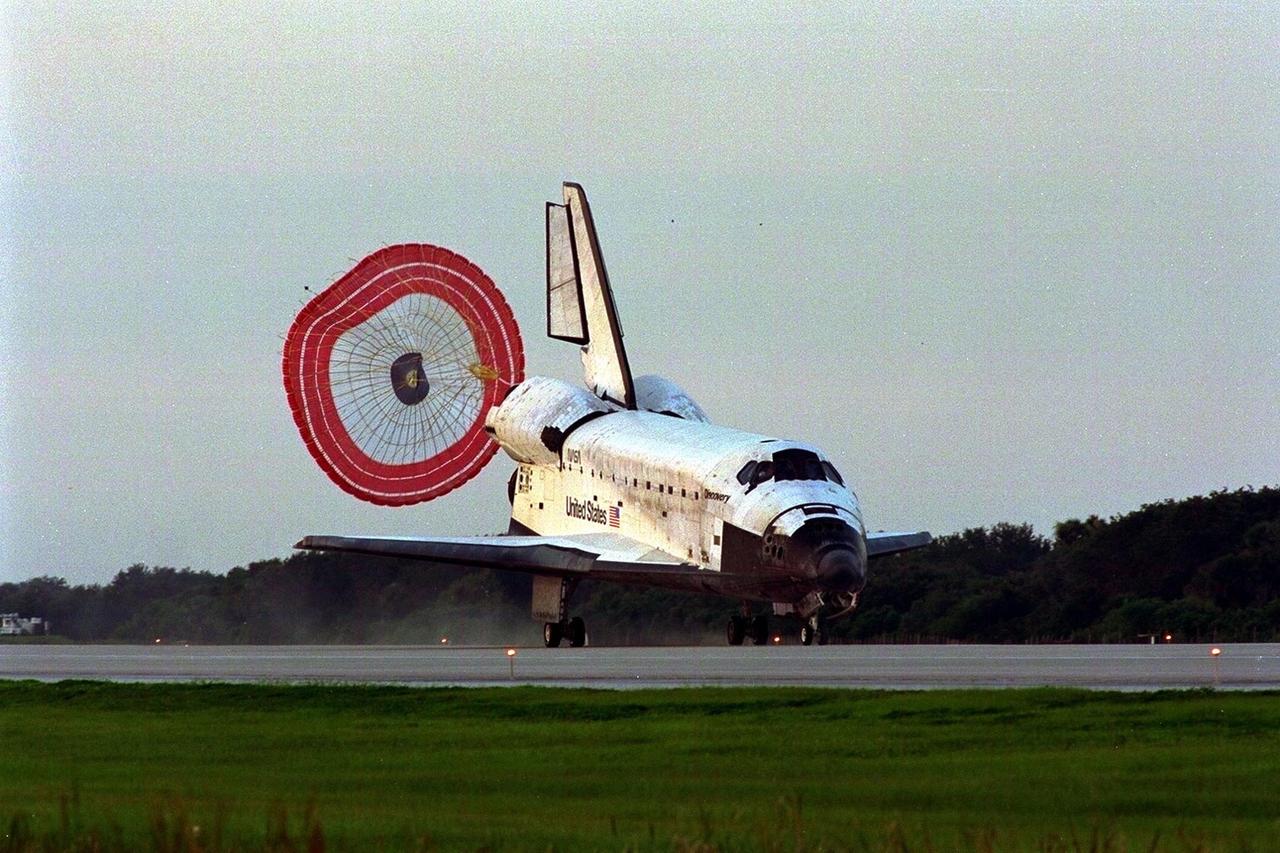
KENNEDY SPACE CENTER, FLA. -- With drag chute deployed, the Space Shuttle orbiter Discovery touches down on Runway 33 at KSC’s Shuttle Landing Facility at 7:07:59 a.m. EDT Aug. 19 to complete the 11-day, 20-hour and 27-minute-long STS-85 mission. At the controls are Commander Curtis L. Brown, Jr. and Pilot Kent V. Rominger. The first landing opportunity on Aug. 18 was waved off due to the potential for ground fog. Also onboard the orbiter are Payload Commander N. Jan Davis, Mission Specialist Robert L. Curbeam, Jr., Mission Specialist Stephen K. Robinson and Payload Specialist Bjarni V. Tryggvason. During the 86th Space Shuttle mission, the crew deployed the Cryogenic Infrared Spectrometers and Telescopes for the AtmosphereShuttle Pallet Satellite-2 (CRISTA-SPAS-2) free-flyer to conduct research on the Earth’s middle atmosphere, retrieving it on flight day 9. The crew also conducted investigations with the Manipulator Flight Demonstration (MFD), Technology Applications and Science-1 (TAS-1) and International Extreme Ultraviolet Hitchhiker-2 (IEH-2) experiments. Robinson also made observations of the comet Hale-Bopp with the Southwest Ultraviolet Imaging System (SWIS) while other members of the crew conducted biological experiments in the orbiter’s crew cabin. This was the 39th landing at KSC in the history of the Space Shuttle program and the 11th touchdown for Discovery at the space center
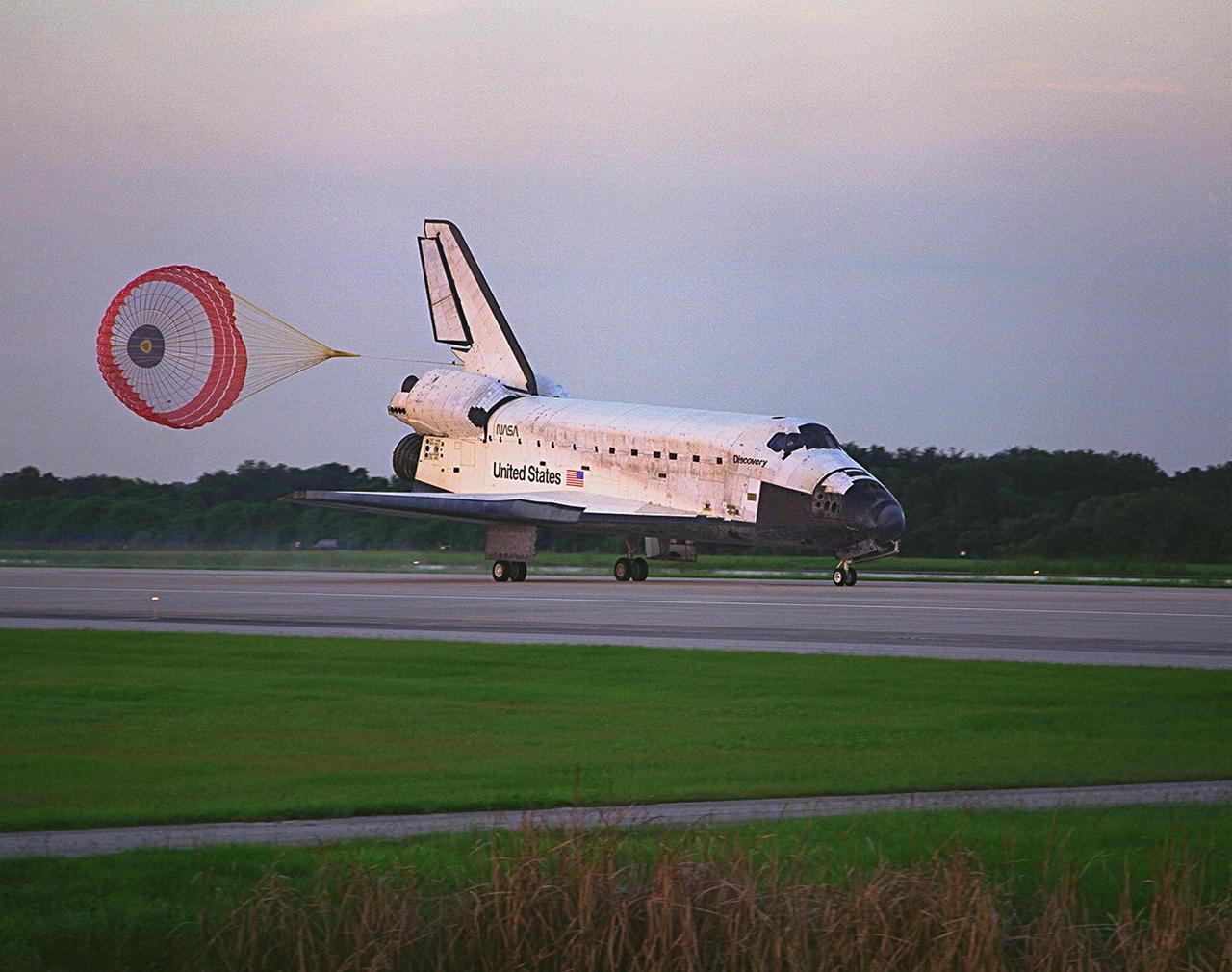
KENNEDY SPACE CENTER, FLA. -- With drag chute deployed, the Space Shuttle orbiter Discovery touches down on Runway 33 at KSC’s Shuttle Landing Facility at 7:07:59 a.m. EDT Aug. 19 to complete the 11-day, 20-hour and 27-minute-long STS-85 mission. At the controls are Commander Curtis L. Brown, Jr. and Pilot Kent V. Rominger. The first landing opportunity on Aug. 18 was waved off due to the potential for ground fog. Also onboard the orbiter are Payload Commander N. Jan Davis, Mission Specialist Robert L. Curbeam, Jr., Mission Specialist Stephen K. Robinson and Payload Specialist Bjarni V. Tryggvason. During the 86th Space Shuttle mission, the crew deployed the Cryogenic Infrared Spectrometers and Telescopes for the AtmosphereShuttle Pallet Satellite-2 (CRISTA-SPAS-2) free-flyer to conduct research on the Earth’s middle atmosphere, retrieving it on flight day 9. The crew also conducted investigations with the Manipulator Flight Demonstration (MFD), Technology Applications and Science-1 (TAS-1) and International Extreme Ultraviolet Hitchhiker-2 (IEH-2) experiments. Robinson also made observations of the comet Hale-Bopp with the Southwest Ultraviolet Imaging System (SWIS) while other members of the crew conducted biological experiments in the orbiter’s crew cabin. This was the 39th landing at KSC in the history of the Space Shuttle program and the 11th touchdown for Discovery at the space center