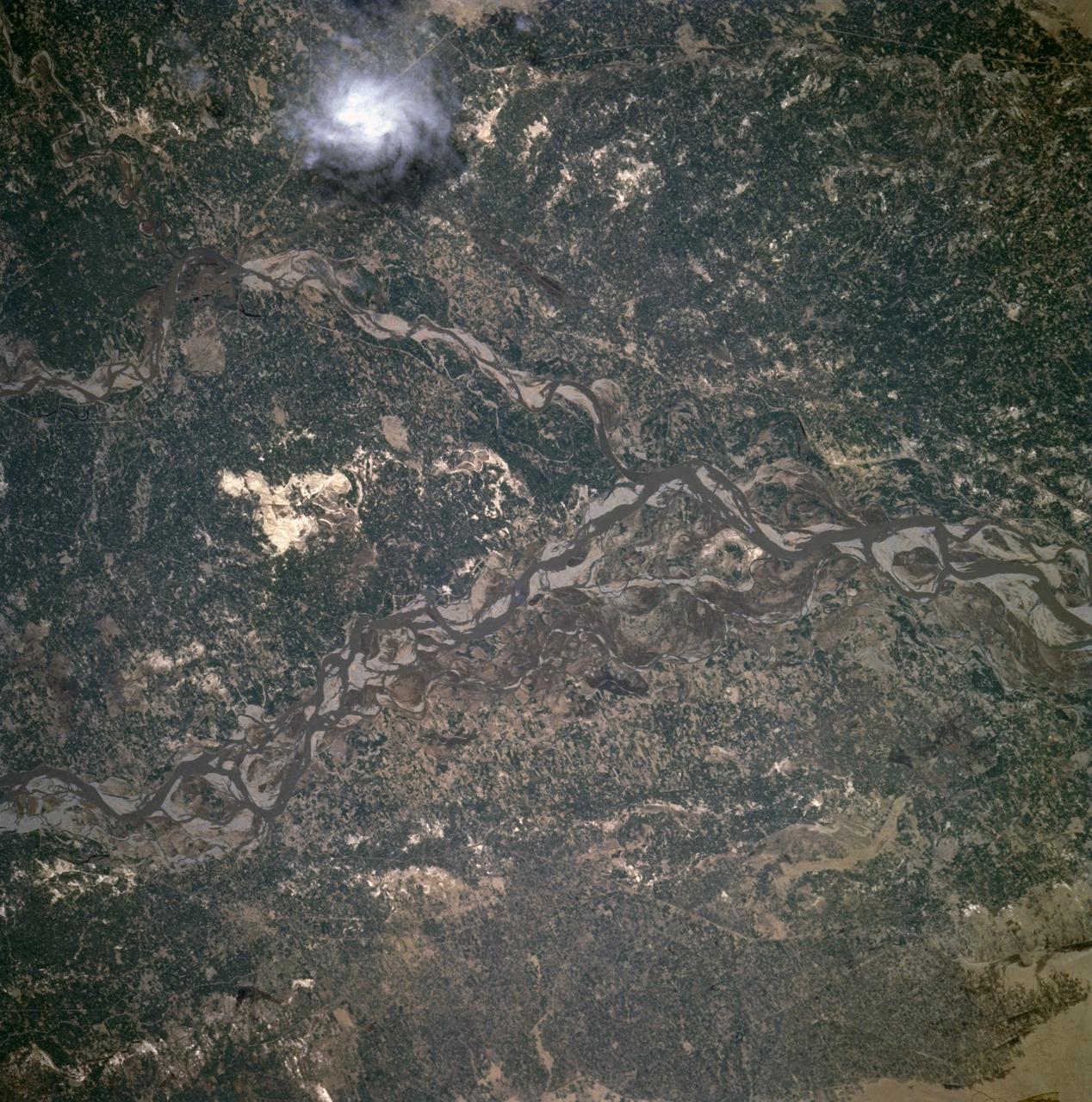
Earth observations taken during the STS-75 mission from the space shuttle Columbia.
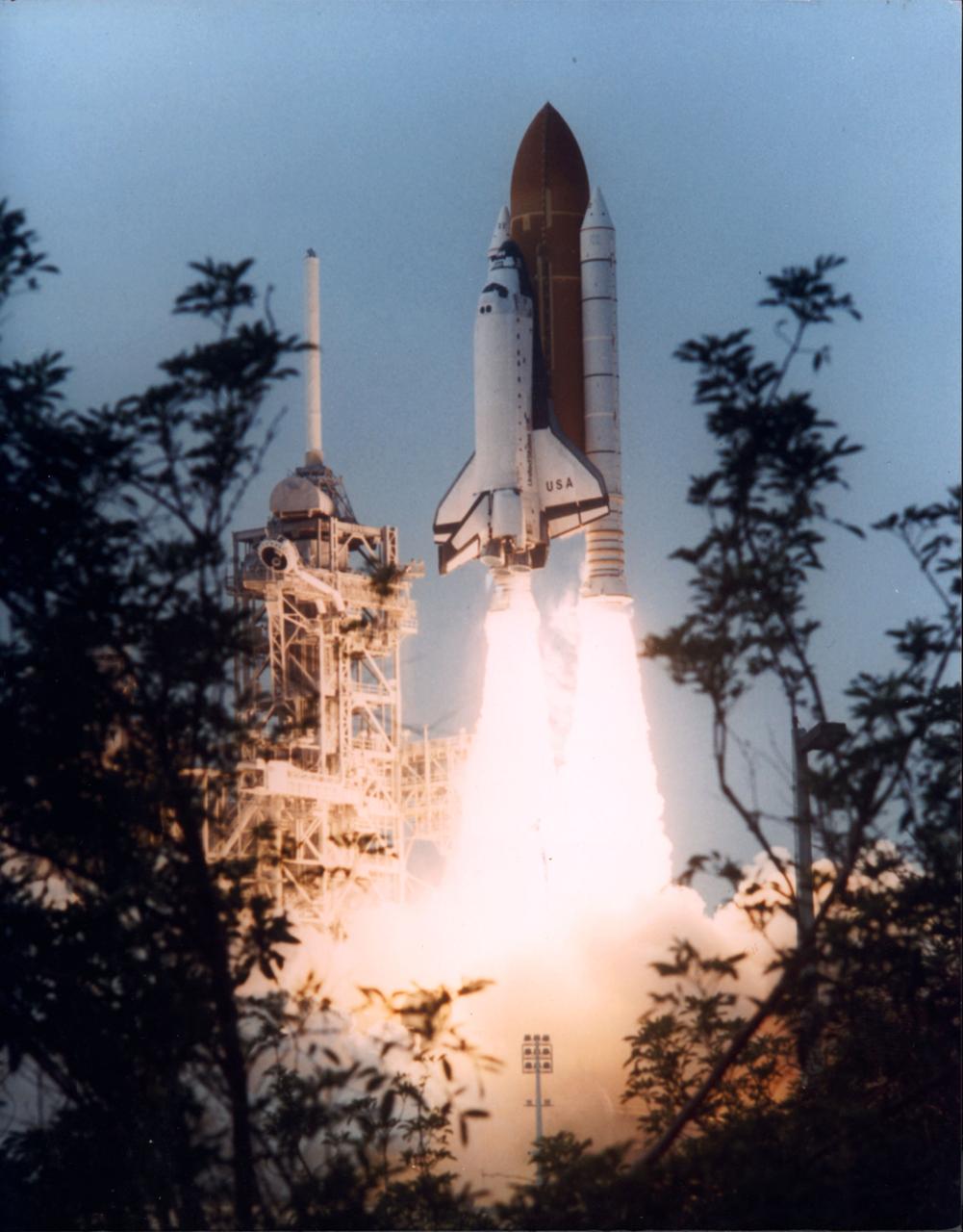
STS-75 Shuttle Columbia Launch
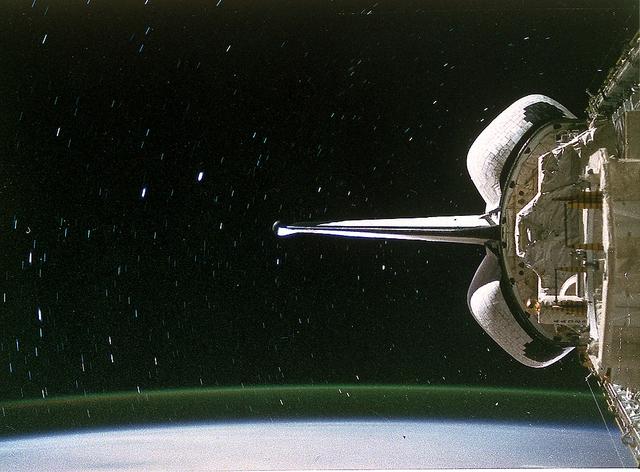
Onboard Space Shuttle Columbia (STS-75) the vertical stabilizer appears to point to the four stars of the Southern Cross. The scene was captured with a 35mm camera just prior to a sunrise.
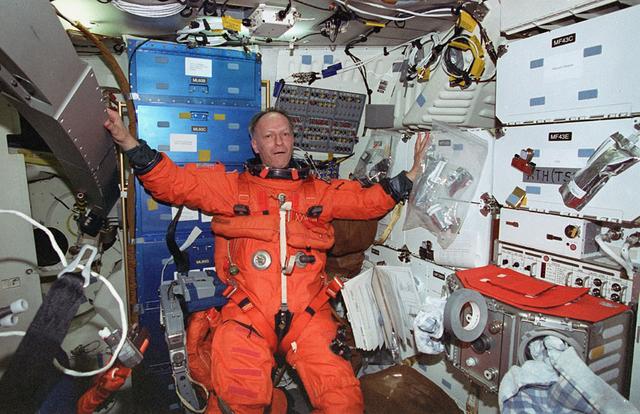
Onboard photo of space shuttle Columbia (STS-75) Swiss crewmember Claude Nicollier with a view of Middeck Glovebox (MGBX) which provides a general-purpose enclosed workspace to carry out small-scale microgravity science experiments.
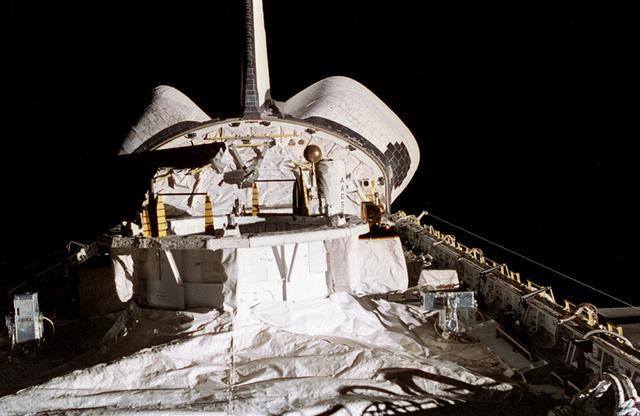
Onboard photo of space shuttle Columbia's (STS-75) open cargo bay carrying the United States Microgravity Payload-3 (USMP-3) at night.
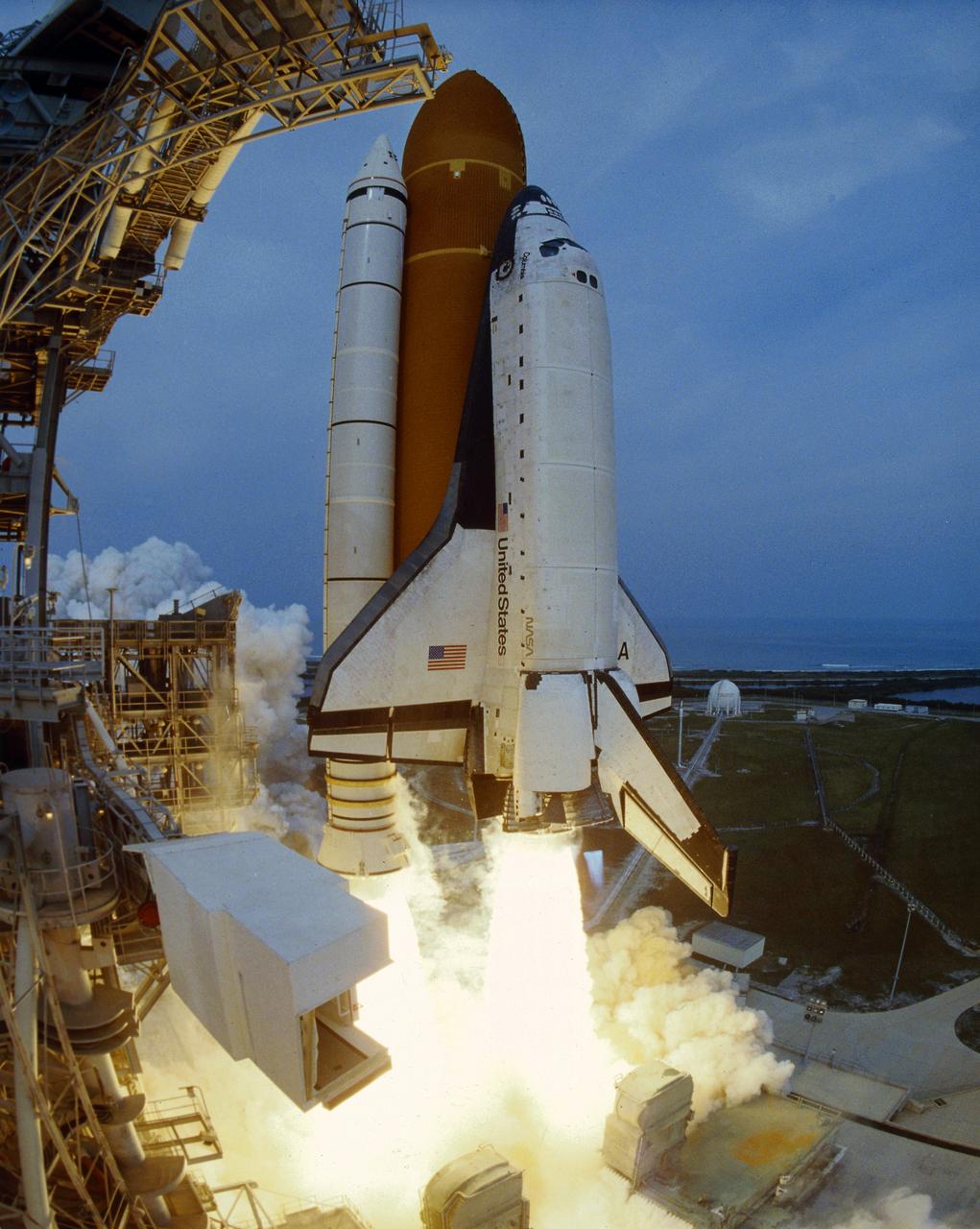
The Space Shuttle Columbia (STS-75) cleared the tower following an on-time liftoff from Launch Pad 39B. Visible at lower left is the white room on the orbiter access arm through which the flight crew entered the orbiter earlier. Columbia's mission lasted 14 days and included retesting of the Tethered Satellite System (TSS-1R) and the third flight of the United States Microgravity Payload (USMP-3), both of which are managed by scientist at Marshall Space Flight Center. Included in Columbia's flight crew were members of the European Space Agency (ESA) and the Italian Space Agency (ASI), Mission Specialists Maurizio Cheli, Claude Nicollier and Payload Specialist Umberto Guidoni, respectively.
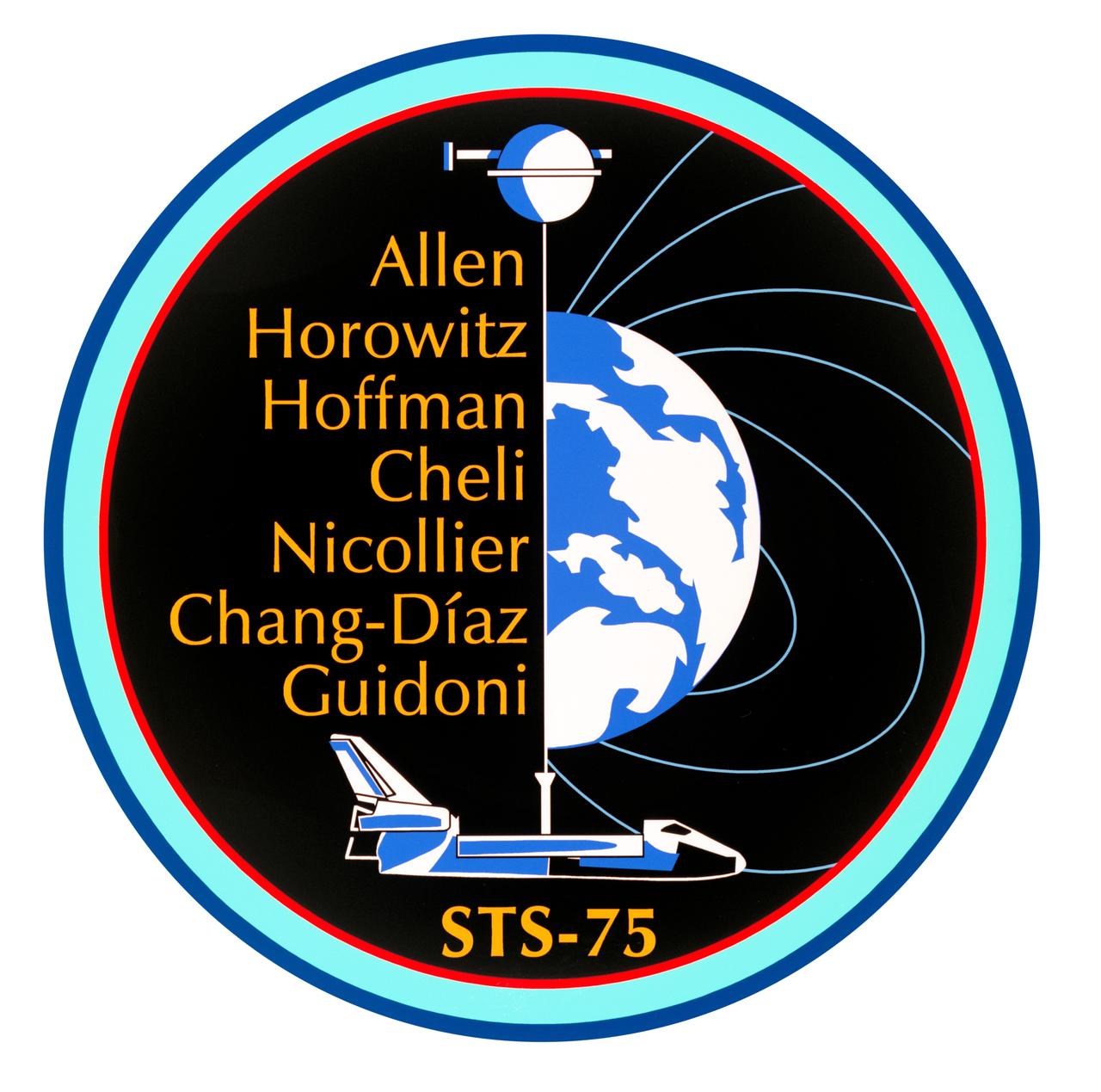
STS075-S-001 (September 1995) --- The STS-75 crew patch depicts the space shuttle Columbia and the Tethered Satellite connected by a 21-kilometer electronically conducting tether. The orbiter/satellite system is passing through Earth?s magnetic field which, like an electronic generator, will produce thousands of volts of electricity. Columbia is carrying the United States Microgravity pallet to conduct microgravity research in material science and thermodynamics. The tether is crossing Earth?s terminator signifying the dawn of a new era for space tether applications and in mankind?s knowledge of Earth?s ionosphere, material science, and thermodynamics. The patch was designed for the STS-75 crew members by Mike Sanni. The NASA insignia design for space shuttle flights is reserved for use by the astronauts and for other official use as the NASA Administrator may authorize. Public availability has been approved only in the forms of illustrations by the various news media. When and if there is any change in this policy, which is not anticipated, the change will be publicly announced. Photo credit: NASA
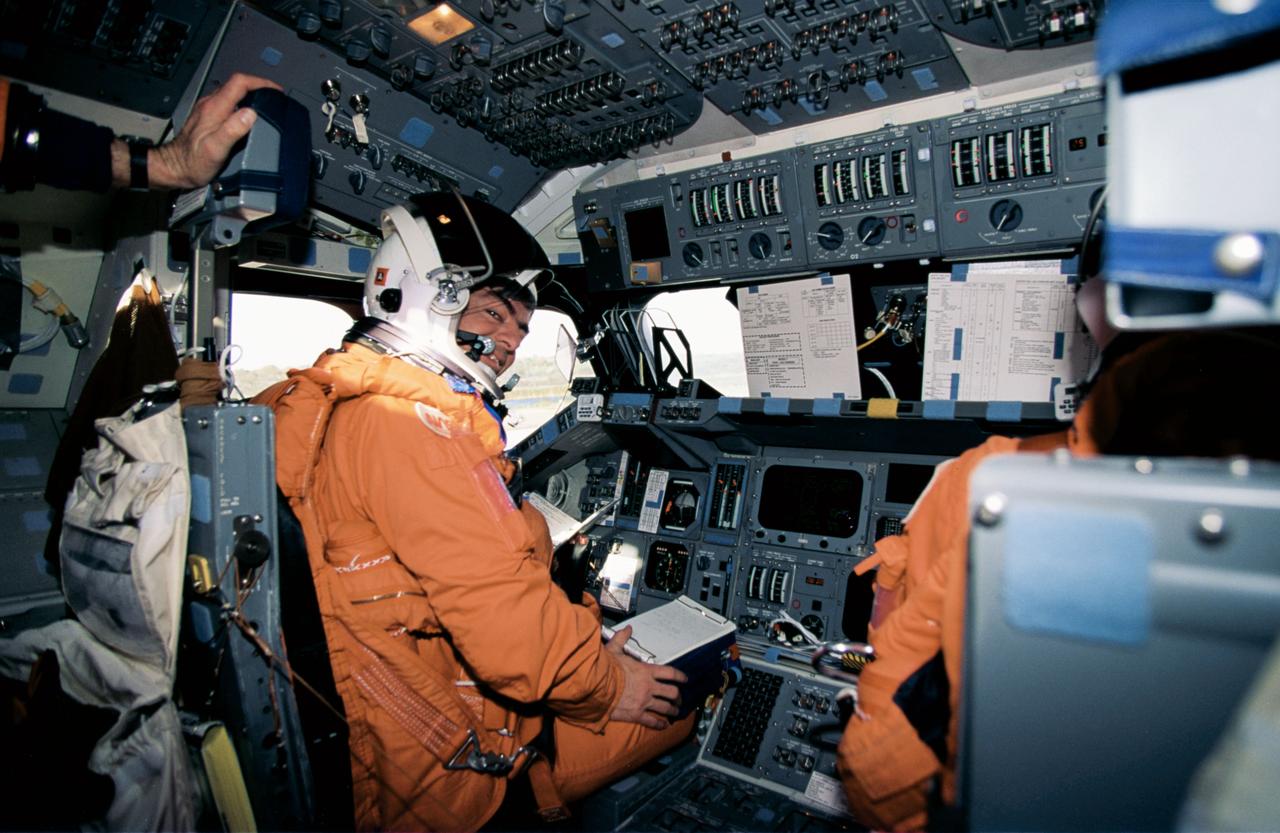
STS075-303-007 (9 March 1996) --- Astronauts Andrew M. Allen (left), mission commander, and Scott J. Horowitz (partially visible at right), pilot, have just completed the landing phase of the STS-75 flight. The Space Shuttle Columbia is now securely on Runway 33 at the Kennedy Space Center (KSC).
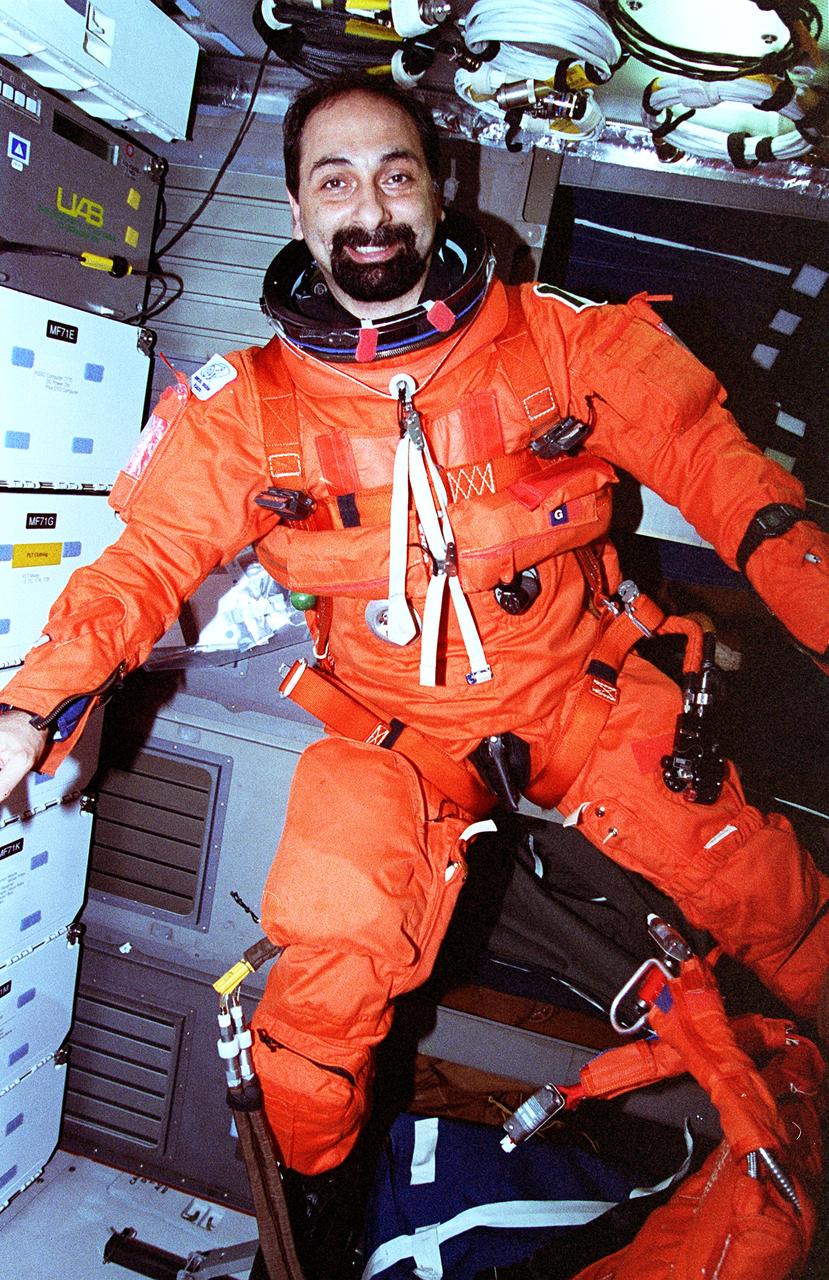
STS075-355-032 (9 March 1996) --- Payload specialist Umberto Guidoni, wearing the shuttle launch and entry garment, prepares for the de-orbit phase of the 16-day flight. Guidoni represents the Italian Space Agency (ASI). The seven member crew was launched aboard the Space Shuttle Columbia on February 22, 1996, and landed on March 9, 1996. Crew members were Andrew M. Allen, mission commander; Scott J. Horowitz, pilot; Franklin R. Chang-Diaz, payload commander; and Maurizio Cheli, European Space Agency (ESA); Jeffrey A. Hoffman and Claude Nicollier, (ESA), all mission specialists; along with Guidoni.
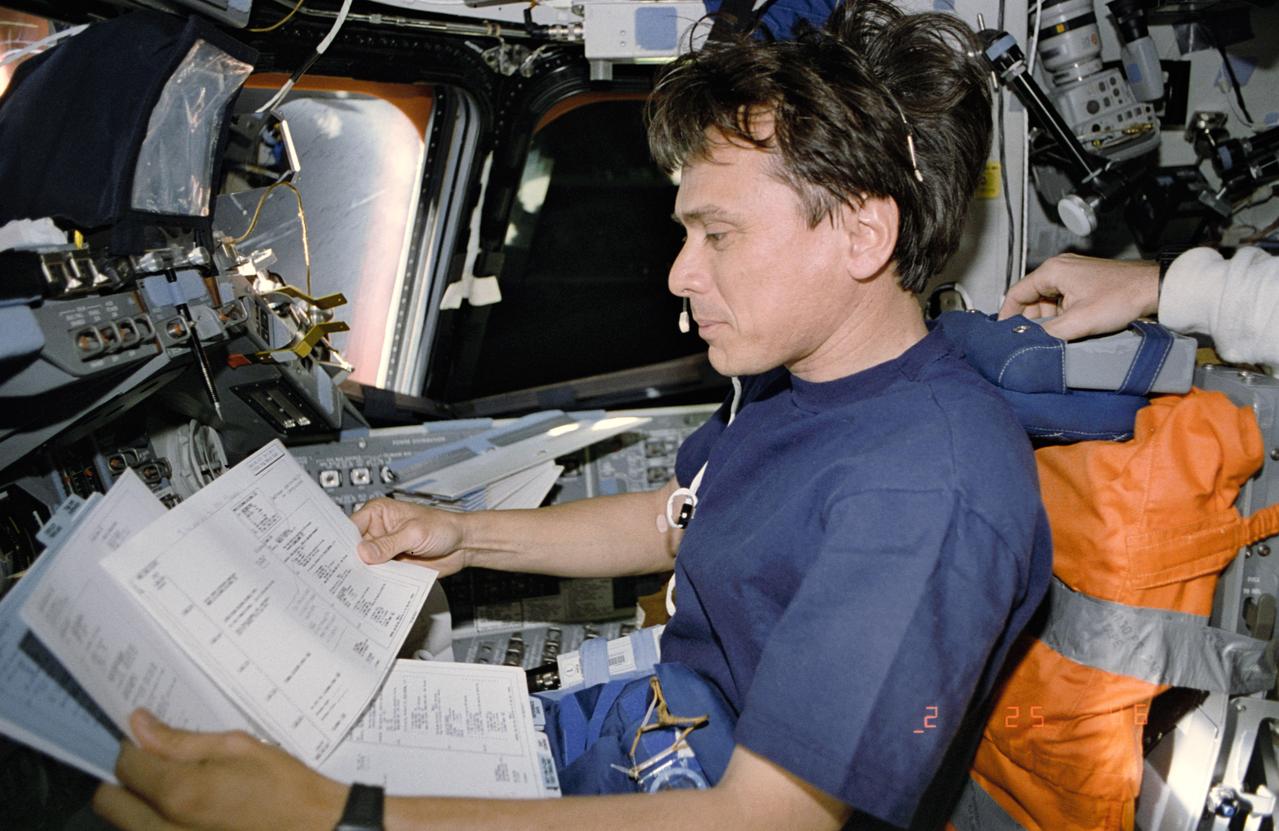
STS075-328-018 (25 Feb. 1996) --- Astronaut Franklin R. Chang-Diaz, STS-75 payload commander, is busy at the pilot's station during operations to deploy the Tethered Satellite System (TSS). His five crew mates (out of frame) were also on the flight deck, of the Earth-orbiting space shuttle Columbia, during the busy deployment activities.
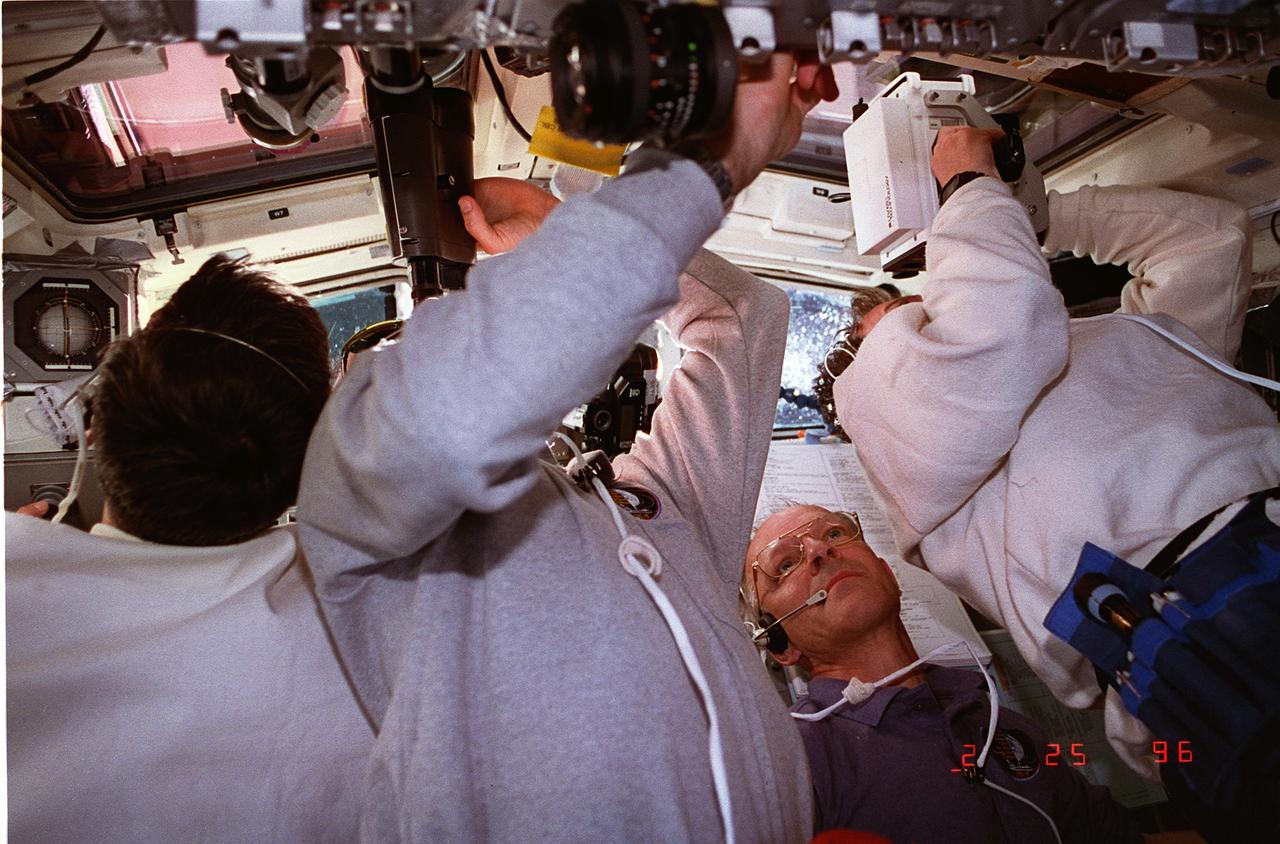
STS075-328-026 (25 Feb. 1996) --- Astronaut Claude Nicollier is the only clearly identifiable crewmember in this scene on the aft flight deck, captured during the busy chores associated with deployment of the Tethered Satellite System (TSS). The seven member crew was launched aboard the space shuttle Columbia on Feb. 22, 1996, and landed on March 9, 1996. Crewmembers were Andrew M. Allen, mission commander; Scott J. Horowitz, pilot; Franklin R. Chang-Diaz, payload commander; and Maurizio Cheli, European Space Agency (ESA); Jeffrey A. Hoffman and Nicollier, ESA, all mission specialists; along with payload specialist Umberto Guidoni of the Italian Space Agency (ASI).
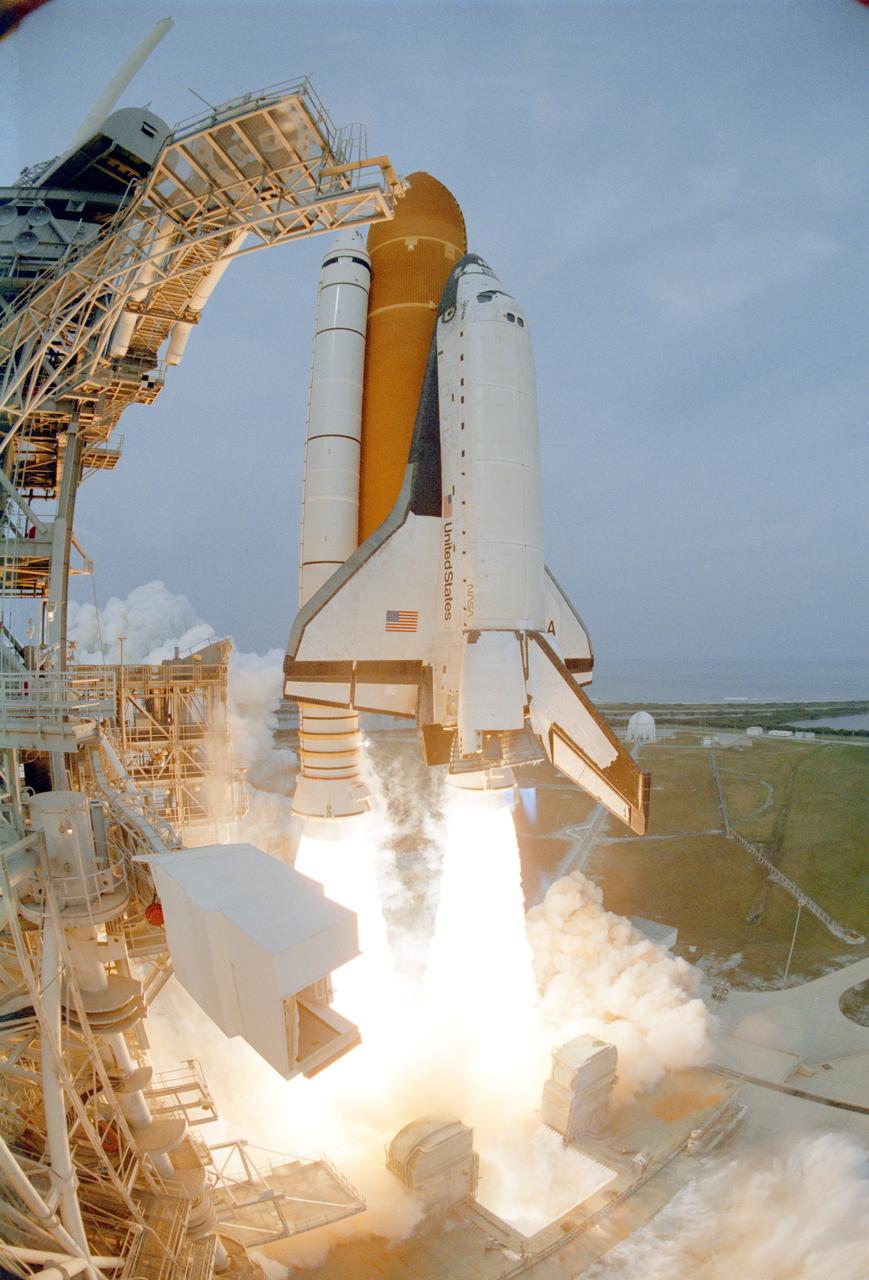
STS075-S-004 (22 Feb. 1996) --- The space shuttle Columbia clears the tower to begin the mission. The liftoff occurred on schedule at 3:18:00 p.m. (EST), Feb. 22, 1996. Visible at left is the White Room on the orbiter access arm through which the flight crew had entered the orbiter. Onboard Columbia for the scheduled two-week mission were astronauts Andrew M. Allen, commander; Scott J. Horowitz, pilot; Franklin R. Chang-Diaz, payload commander; and astronauts Maurizio Cheli, Jeffrey A. Hoffman and Claude Nicollier, along with payload specialist Umberto Guidoni. Cheli and Nicollier represent the European Space Agency (ESA), while Guidoni represents the Italian Space Agency (ASI).
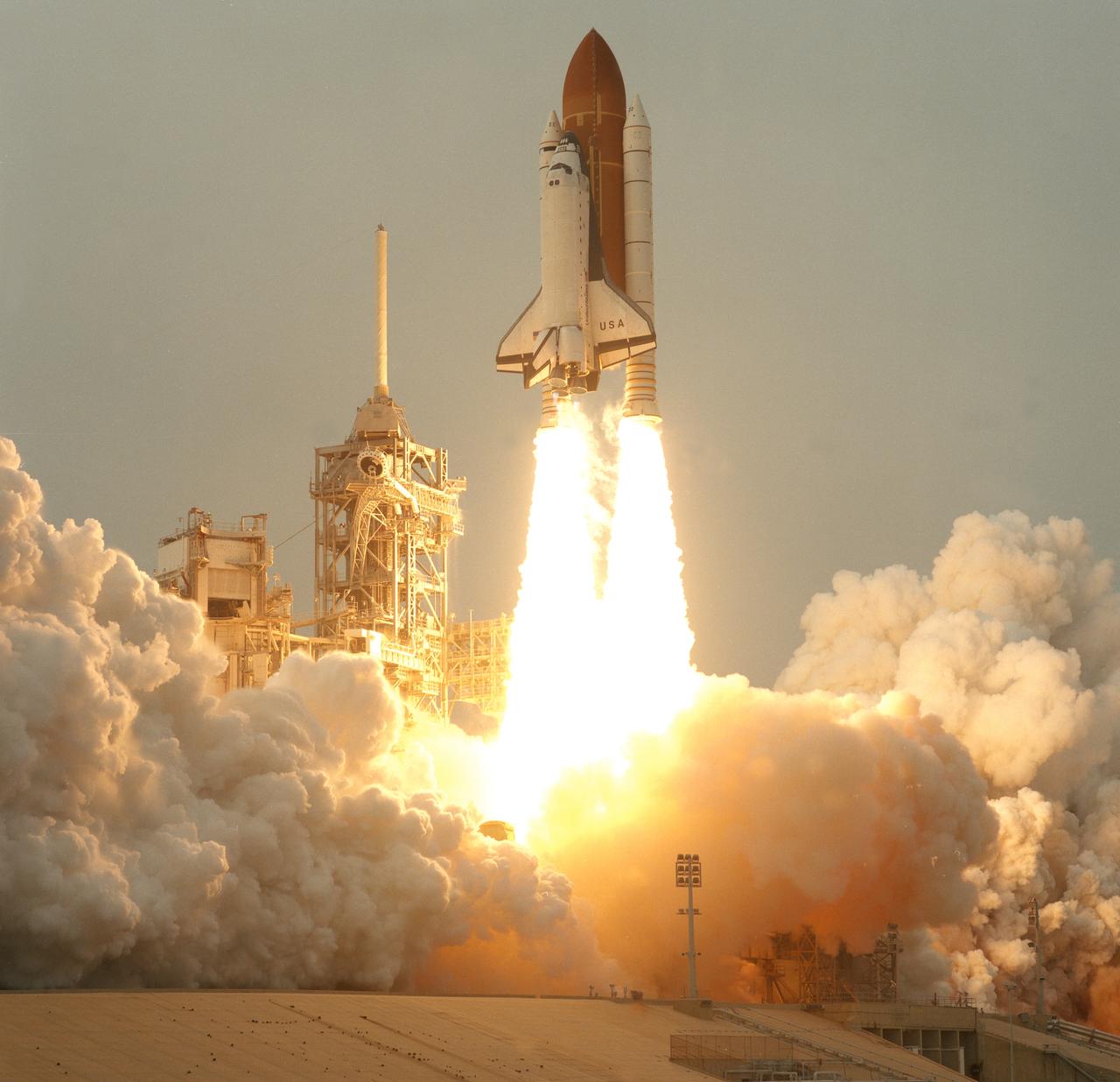
STS075-S-007 (22 Feb. 1996) --- A remote camera at Launch Pad 39B, at the Kennedy Space Center (KSC), recorded this profile view of the space shuttle Columbia as it cleared the tower to begin the mission. The liftoff occurred on schedule at 3:18:00 p.m. (EST), Feb. 22, 1996. Onboard Columbia for the scheduled two-week mission were astronauts Andrew M. Allen, commander; Scott J. Horowitz, pilot; Franklin R. Chang-Diaz, payload commander; and astronauts Maurizio Cheli, Jeffrey A. Hoffman and Claude Nicollier, along with payload specialist Umberto Guidoni. Cheli and Nicollier represent the European Space Agency (ESA), while Guidoni represents the Italian Space Agency (ASI).
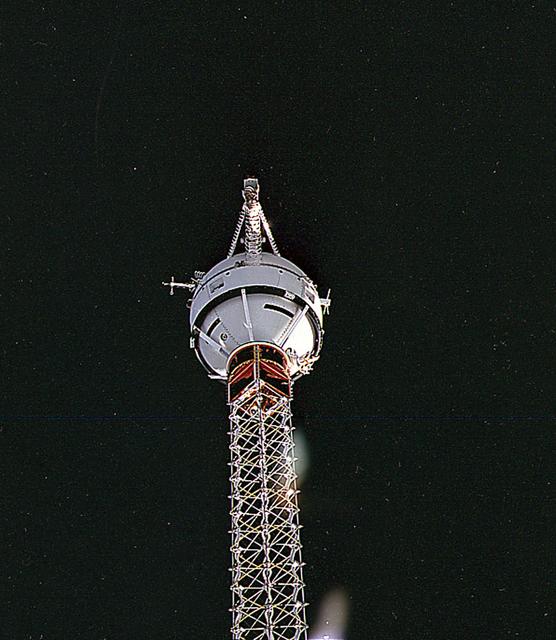
An STS-75 onboard photo of the Tethered Satellite System-1 Reflight (TSS-1R) atop its extended boom. The TSS-1R was a reflight of TSS-1, which was flown on the Space Shuttle in July/August, 1992. Building on the knowledge gained on the TSS-1 about tether dynamics, the TSS will circle the Earth at an altitude of 296 kilometers (184 miles), placing the tether system well within the rarefield, electrically charged layer of the atmosphere known as the ionosphere. The satellite was plarned to be deployed 20.7 kilometers (12.9 miles) above the Shuttle. The conducting tether, generating high voltage and electrical currents as it moves through the ionosphere cutting magnetic field lines, would allow scientists to examine the electrodynamics of a conducting tether system. In addition, the TSS would increase our understanding of physical processes in the near-Earth space environment, such as plasma waves and currents. The tether on the TSS broke as the Satellite was nearing the full extent of its 12.5 mile deployment from the Shuttle. The TSS was a cooperative development effort by the Italian Space Agency (ASI) and NASA, and was managed by scientists at the Marshall Space Flight Center.
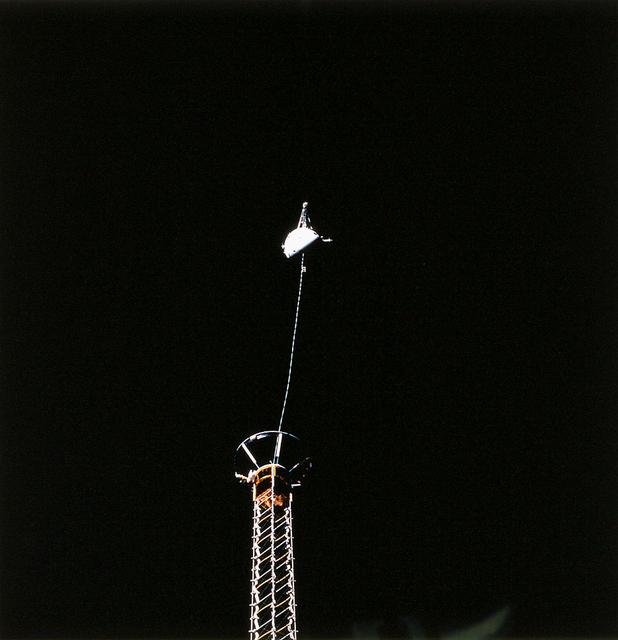
An STS-75 onboard photo of the Tethered Satellite System-1 Reflight (TSS-1R) atop its extended boom. The TSS-1R was a reflight of TSS-1, which was flown on the Space Shuttle in July/August, 1992. Building on the knowledge gained on the TSS-1 about tether dynamics, the TSS will circle the Earth at an altitude of 296 kilometers (184 miles), placing the tether system well within the rarefield, electrically charged layer of the atmosphere known as the ionosphere. The satellite was plarned to be deployed 20.7 kilometers (12.9 miles) above the Shuttle. The conducting tether, generating high voltage and electrical currents as it moves through the ionosphere cutting magnetic field lines, would allow scientists to examine the electrodynamics of a conducting tether system. In addition, the TSS would increase our understanding of physical processes in the near-Earth space environment, such as plasma waves and currents. The tether on the TSS broke as the Satellite was nearing the full extent of its 12.5 mile deployment from the Shuttle. The TSS was a cooperative development effort by the Italian Space Agency (ASI) and NASA, and was managed by scientists at the Marshall Space Flight Center.
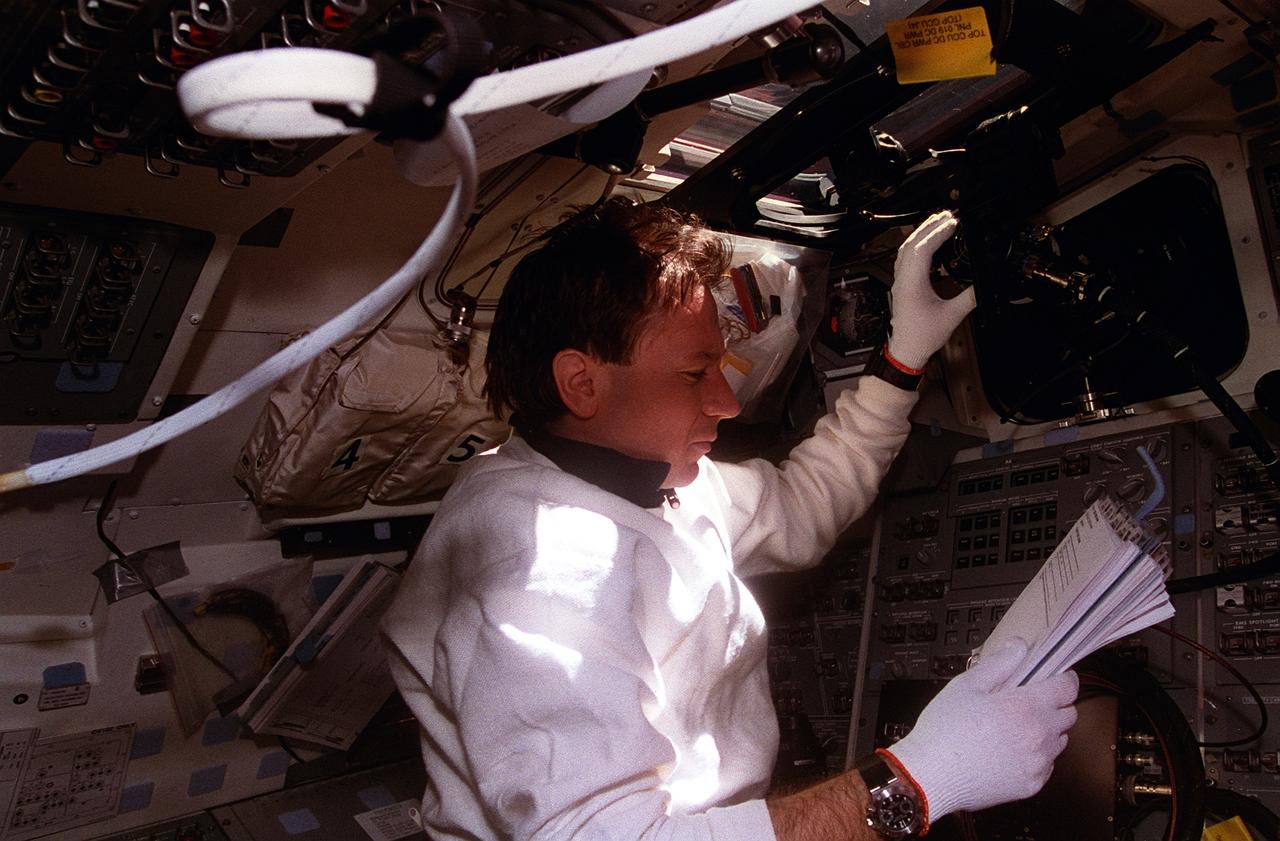
STS075-310-002 (22 Feb.-9 March 1996) --- Astronaut Maurizio Cheli, STS-75 mission specialist, works with the Tether Optical Phenomenon System (TOPS) on the flight deck of the Earth-orbiting Space Shuttle Columbia. Cheli, representing the European Space Agency (ESA), joined four other astronauts and an international payload specialists for 16 days of scientific research in Earth-orbit.
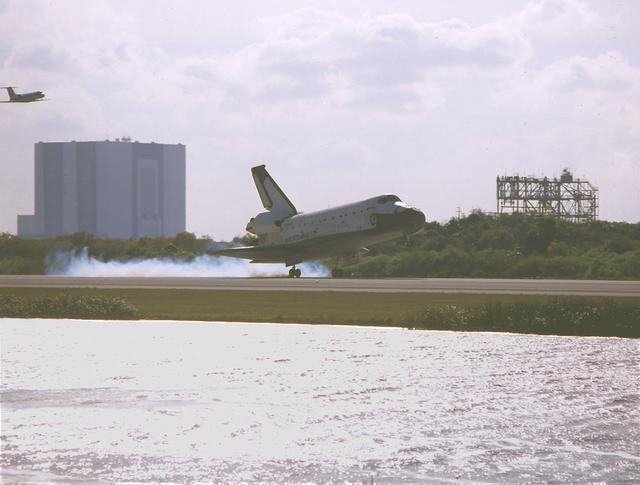
The Space Shuttle Orbiter Columbia's (STS-75) mission came to a close as the orbiter touched down on Runway 33 of Kennedy Space Center's Shuttle Landing Facility on March 9, 1996. Off to the right is the Vehicle Assembly Building and the Shuttle Training Aircraft (STA). The Mate/Demate Device (MDM) is at left. This Marshall Space Flight Center managed mission lasted 15 days and 17-hours, during which time the seven member crew conducted microgravity research with the U.S. Microgravity Payload (USMP-3), which flew for the third time. The other primary payload was the Tethered Satellite System (TSS-1R),a reflight from an earlier mission, but the satellite was lost when the tether broke just short of its fully deployed length of nearly 13 miles.
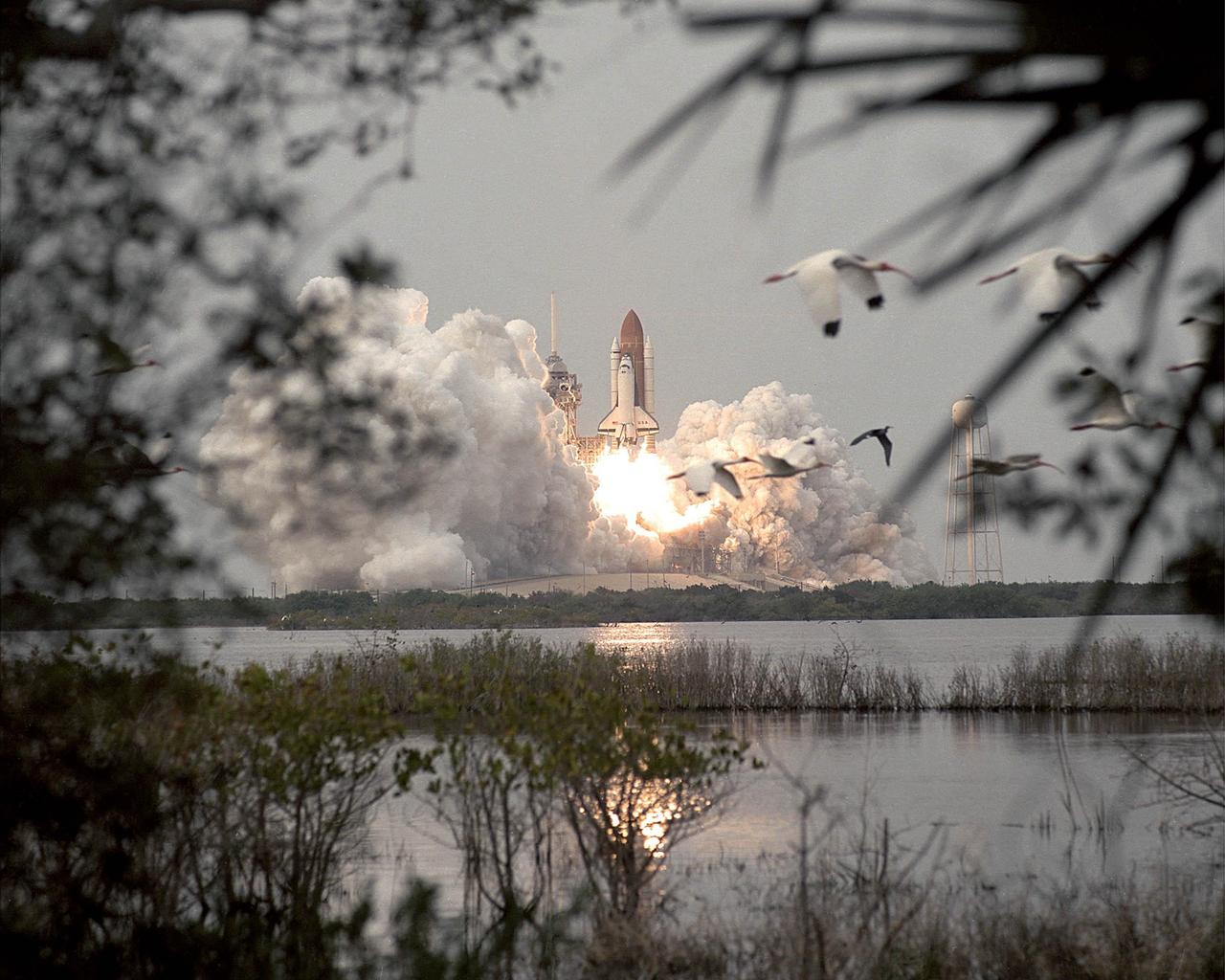
KENNEDY SPACE CENTER, FLA. -- STS-75: Columbia
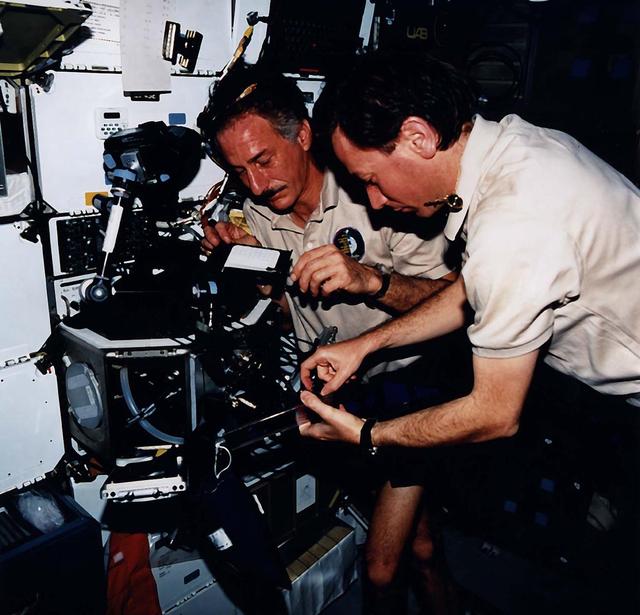
Astronauts Jeffery A. Hoffman (left) and Maurizio Cheli, representing the European Space Agency (ESA), set up an experiment at the glovebox on the Space Shuttle Columbia's mid-deck. The two mission specialists joined three other astronauts and an international payload specialist for more than 16 days of research aboard Columbia.
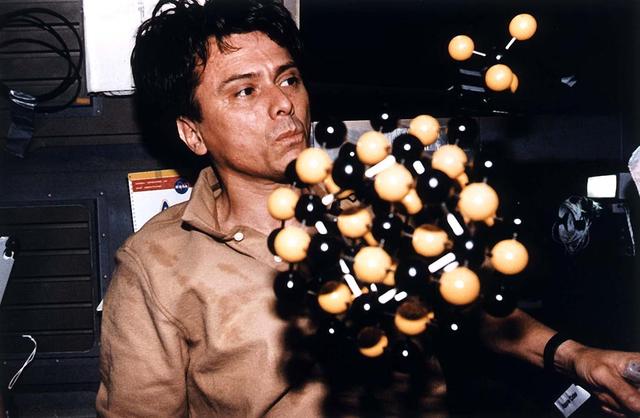
Astronaut Franklin R. Chang-Diaz, payload commander, ponders the elements of a model representing the Commercial Protein Crystal Growth (CPCG) experiment. This flight of the experiment marks the first joint United States--Latin America effort in this discipline. The project brings together a small team of investigators from Costa Rica (Chang-Diaz's native land), Chile, and the United States.
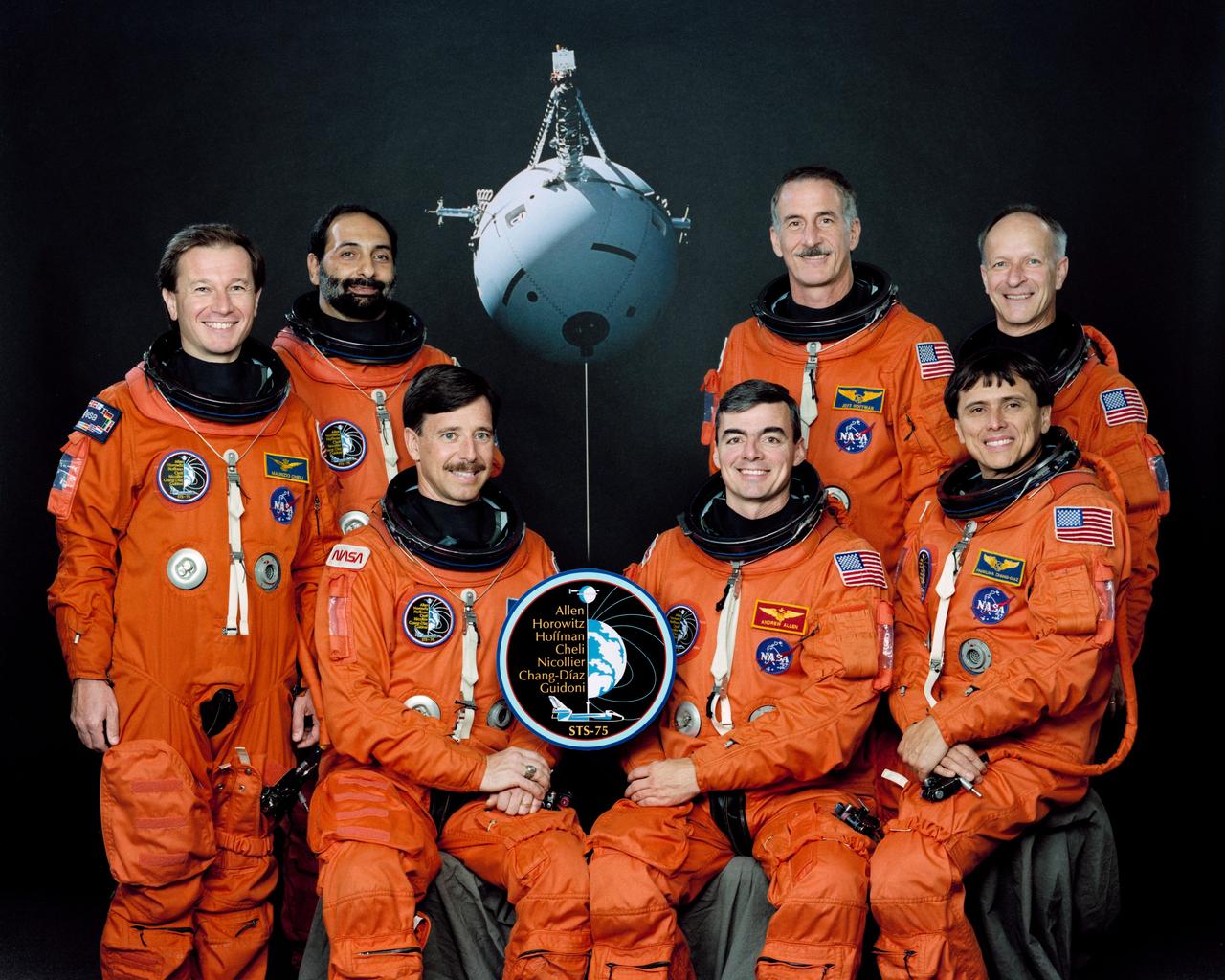
STS075-S-002 (December 1995) --- With their major payload as the backdrop, members of the crew pose for the traditional crew portrait. The crew will deploy and work with the Tethered Satellite System (TSS-1R). Seated at center are astronauts Scott J. Horowitz (left), pilot; and Andrew M. Allen, commander. Astronaut Franklin R. Chang-Diaz (front right) is payload commander. In the rear are (left to right) European Space Agency (ESA) astronaut Maurizio Cheli, mission specialist; payload specialist Umberto Guidoni of the Italian Space Agency (ASI); Jeffrey A. Hoffman and ESA astronaut Claude Nicollier, mission specialists.
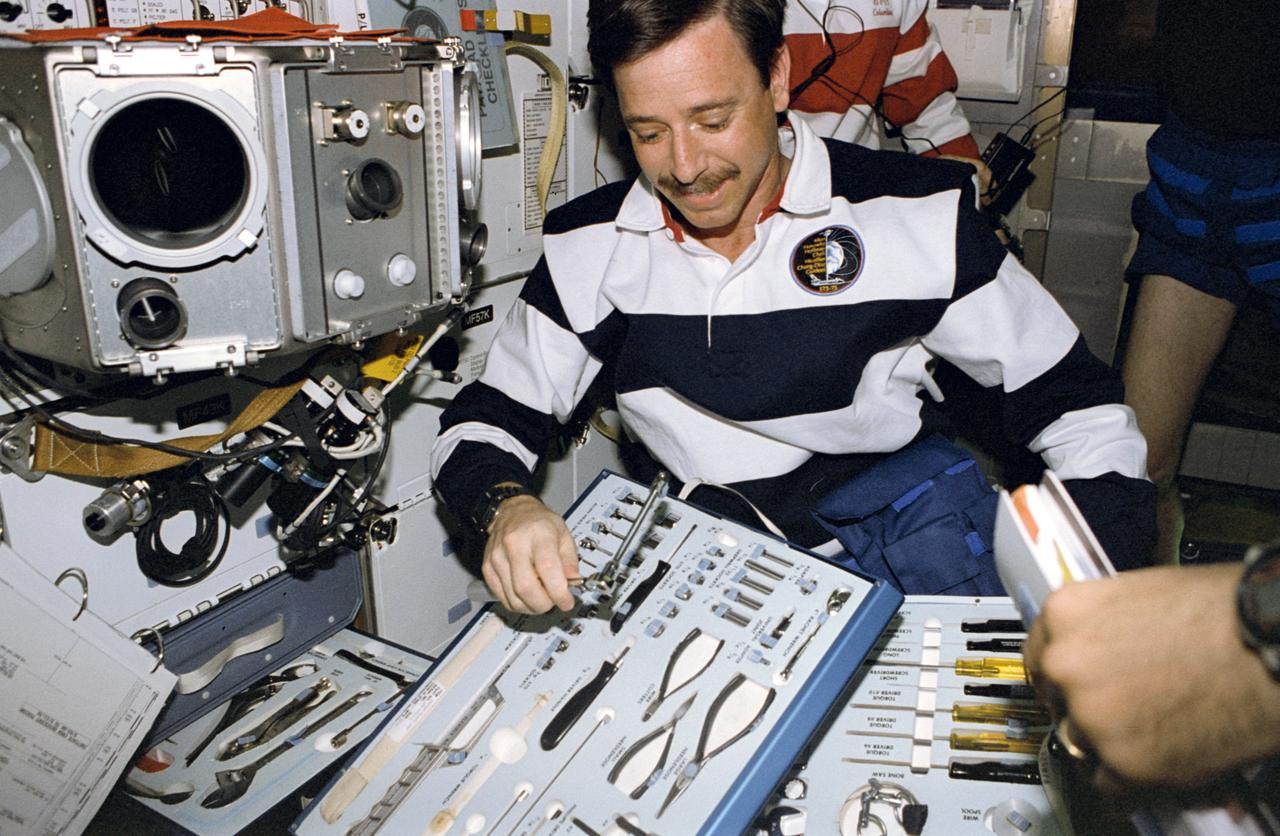
STS075-333-032 (22 Feb.- 9 March 1996) --- Astronaut Scott J. Horowitz, pilot, looks over tools he may use to perform an Inflight Maintenance (IFM) chore on the mid deck of the Earth-orbiting space shuttle Columbia. The glovebox facility is at upper left. Horowitz joined four other astronauts and an international payload specialist for 16 days of scientific research in Earth-orbit.
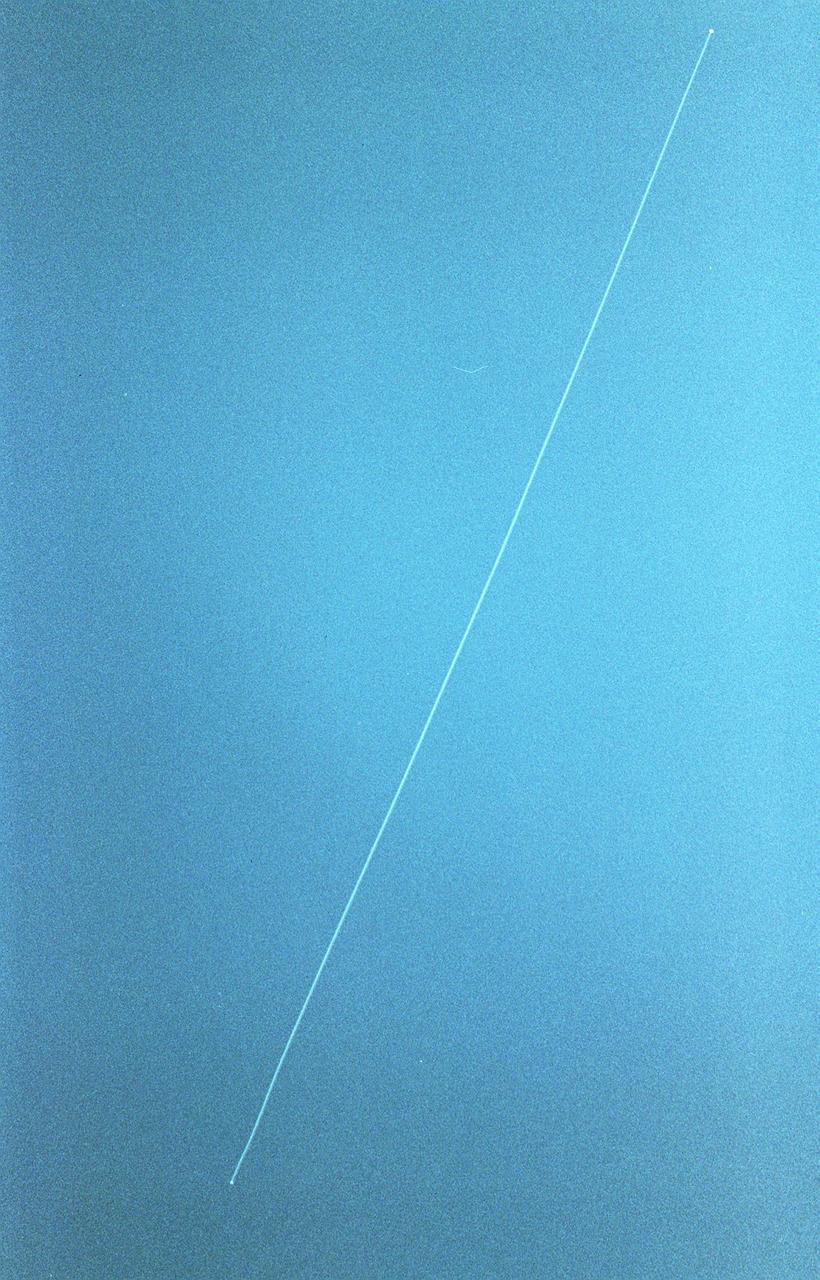
STS075-360-021 (22 Feb.- 9 March 1996) --- The loose tether forms a faint diagonal line in this scene recorded on a later fly-by. On Feb. 25, 1996, the crew deployed the Tethered Satellite System (TSS), which later broke free. The seven member crew was launched aboard the space shuttle Columbia on Feb. 22, 1996, and landed on March 9, 1996. Crew members were Andrew M. Allen, mission commander; Scott J. Horowitz, pilot; Franklin R. Chang-Diaz, payload commander; and Maurizio Cheli, European Space Agency (ESA); Jeffrey A. Hoffman and Claude Nicollier, ESA, all mission specialists; along with payload specialist Umberto Guidoni of the Italian Space Agency (ASI).

STS075-351-022 (22 Feb.- 9 March 1996) --- The space shuttle Columbia's vertical stabilizer appears to point to the four stars of the Southern Cross. The scene was captured with a 35mm camera just prior to a sunrise. The seven member crew was launched aboard the space shuttle Columbia on Feb. 22, 1996, and landed on March 9, 1996. Crew members were Andrew M. Allen, mission commander; Scott J. Horowitz, pilot; Franklin R. Chang-Diaz, payload commander; and Maurizio Cheli, European Space Agency (ESA); Jeffrey A. Hoffman and Claude Nicollier, ESA, all mission specialists; along with payload specialist Umberto Guidoni of the Italian Space Agency (ASI).

STS075-721-013 (22 Feb.-9 March 1996) --- Snow caps the line of the Himalayas in this 70mm frame photographed by a crew member using a handheld 70mm camera. The green plain of the Ganges-lower Brahamaputra is to the south (left) and the brown Tibetan Plateau desert to the right. The Brahamaputra River, 1,800 miles long, rises on the Tibetan Plateau (top) at the foot of a glacier at the elevation of 22,000 feet. It flows east (towards the camera) for more than half its length, and then descends onto the low plains through some of the deepest gorges in the world. In the low country of northeastern India (left side of photo), it flows west to meet the Ganges. Rainfall totals in this part of the Himalayas are some of the highest in the world, measuring 400 inches at Cherapunji on the Himalayan slopes center left. It has a drainage area of 250,000 square miles.
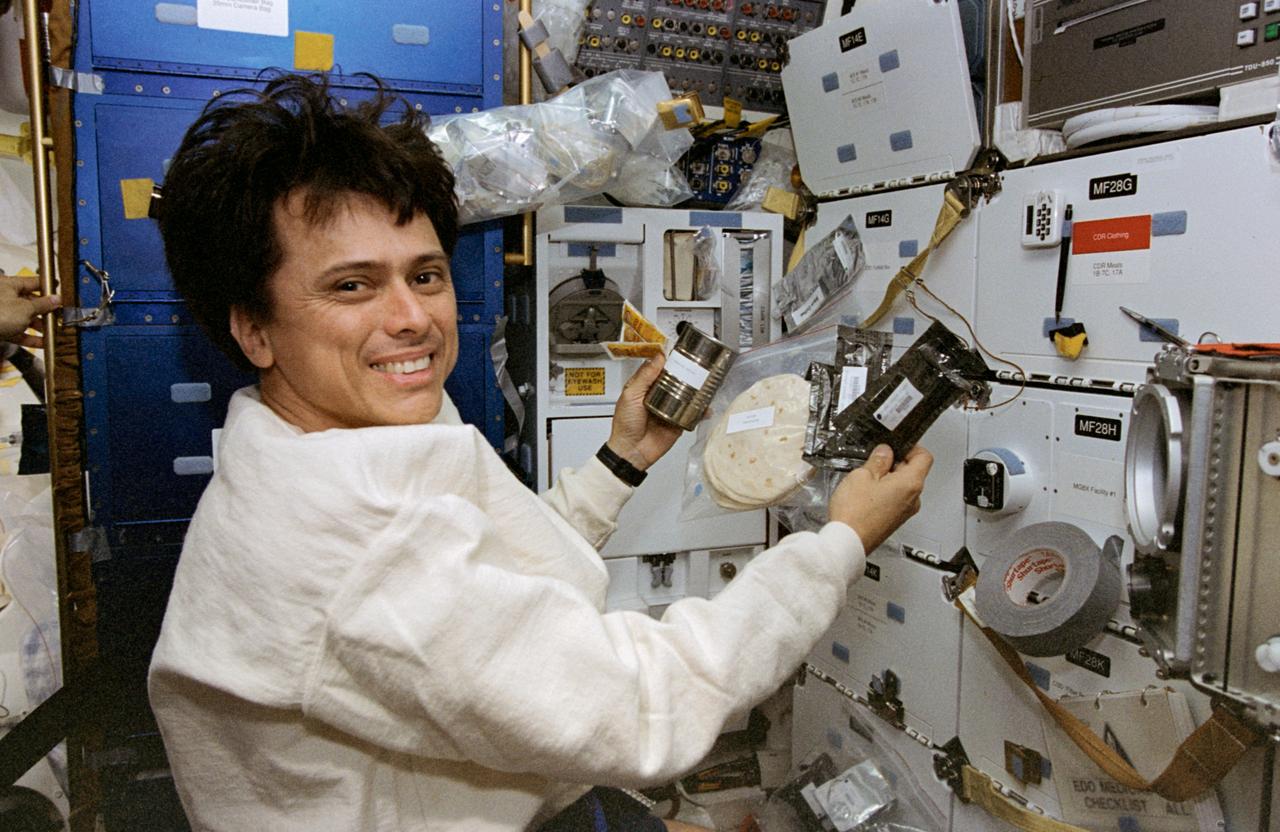
STS075-350-030 (22 Feb.-9 March 1996) --- Astronaut Franklin R. Chang-Diaz, STS-75 payload commander, holds food items at the galley on the middeck of the Earth-orbiting space shuttle Columbia. Photo credit: NASA or National Aeronautics and Space Administration
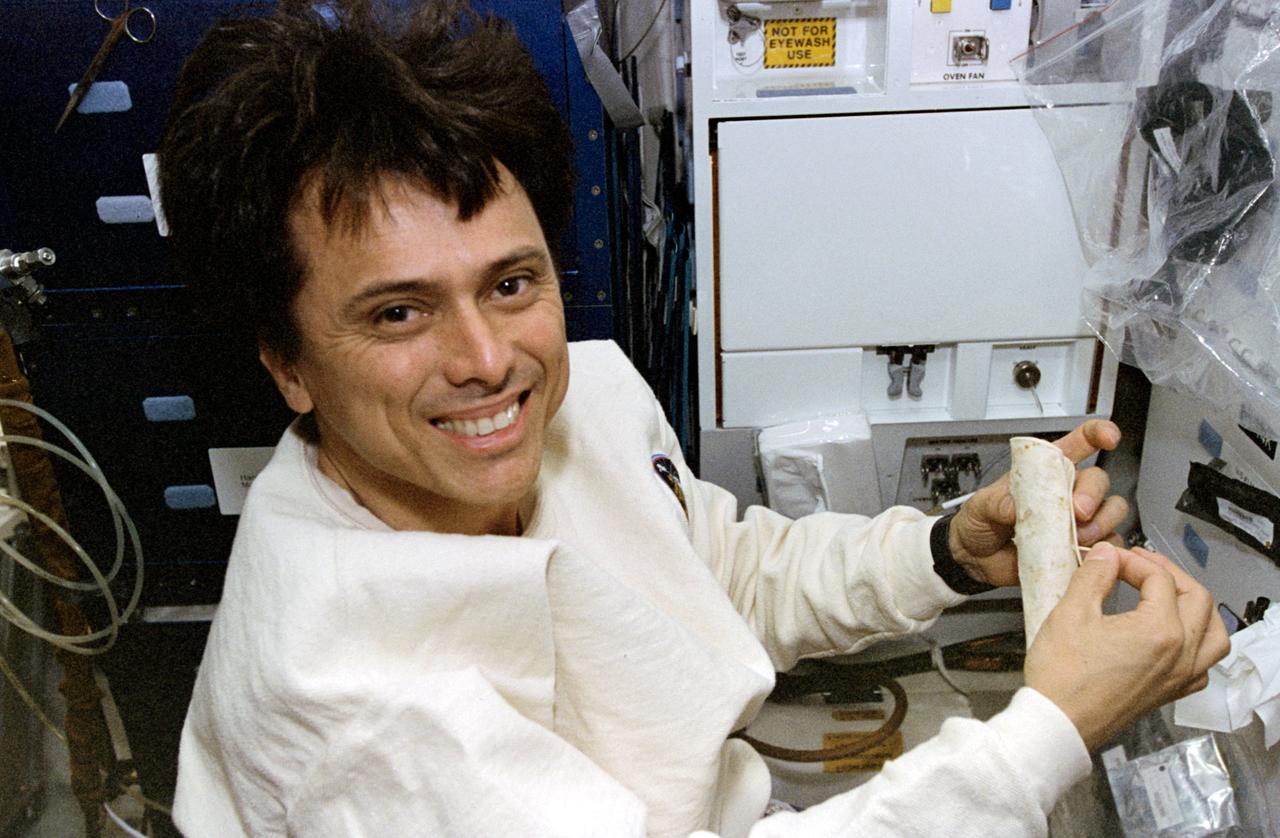
STS075-350-035 (22 Feb.-9 March 1996) --- Astronaut Franklin R. Chang-Diaz, STS-75 payload commander, holds a taco at the galley on the middeck of the Earth-orbiting space shuttle Columbia. Photo credit: NASA or National Aeronautics and Space Administration
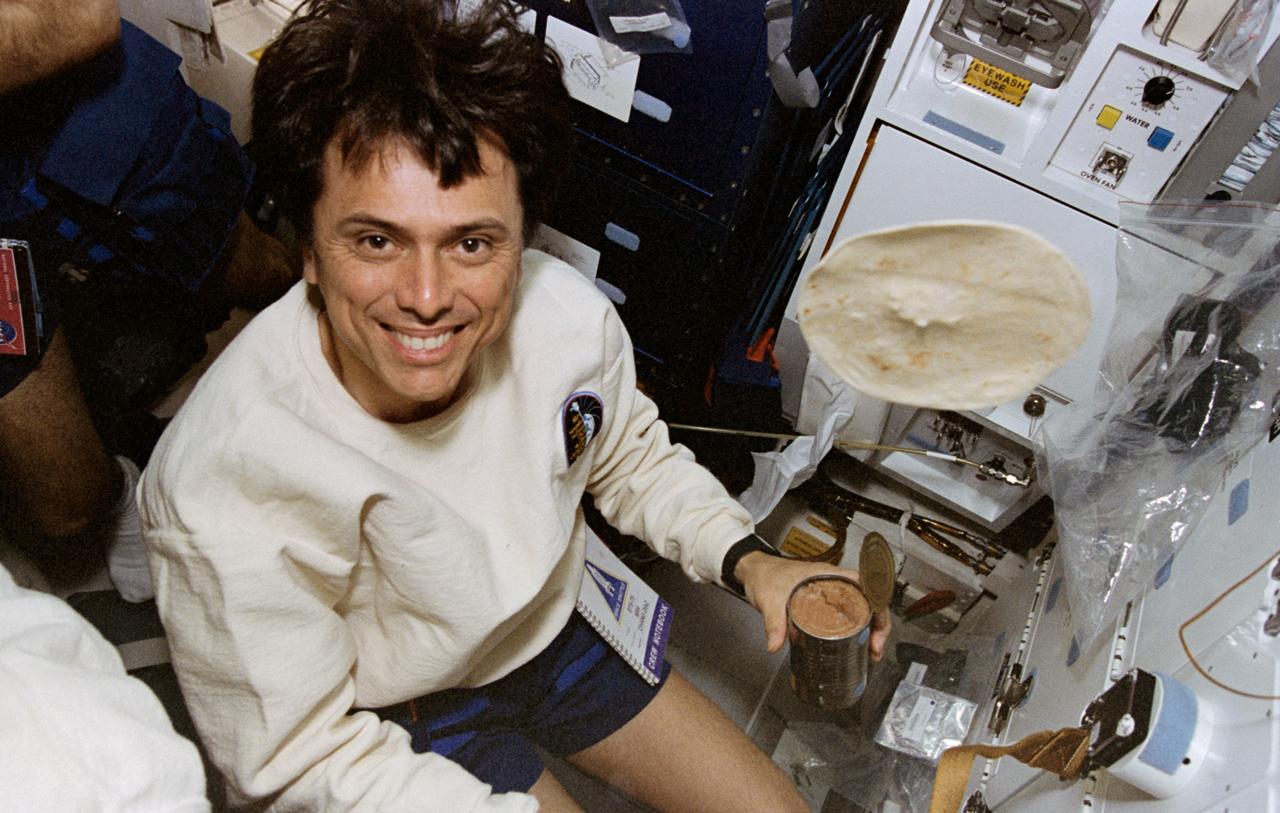
STS075-350-032 (22 Feb.-9 March 1996) --- Astronaut Franklin R. Chang-Diaz, STS-75 payload commander, is pictured with food items at the galley on the middeck of the Earth-orbiting space shuttle Columbia. Photo credit: NASA or National Aeronautics and Space Administration
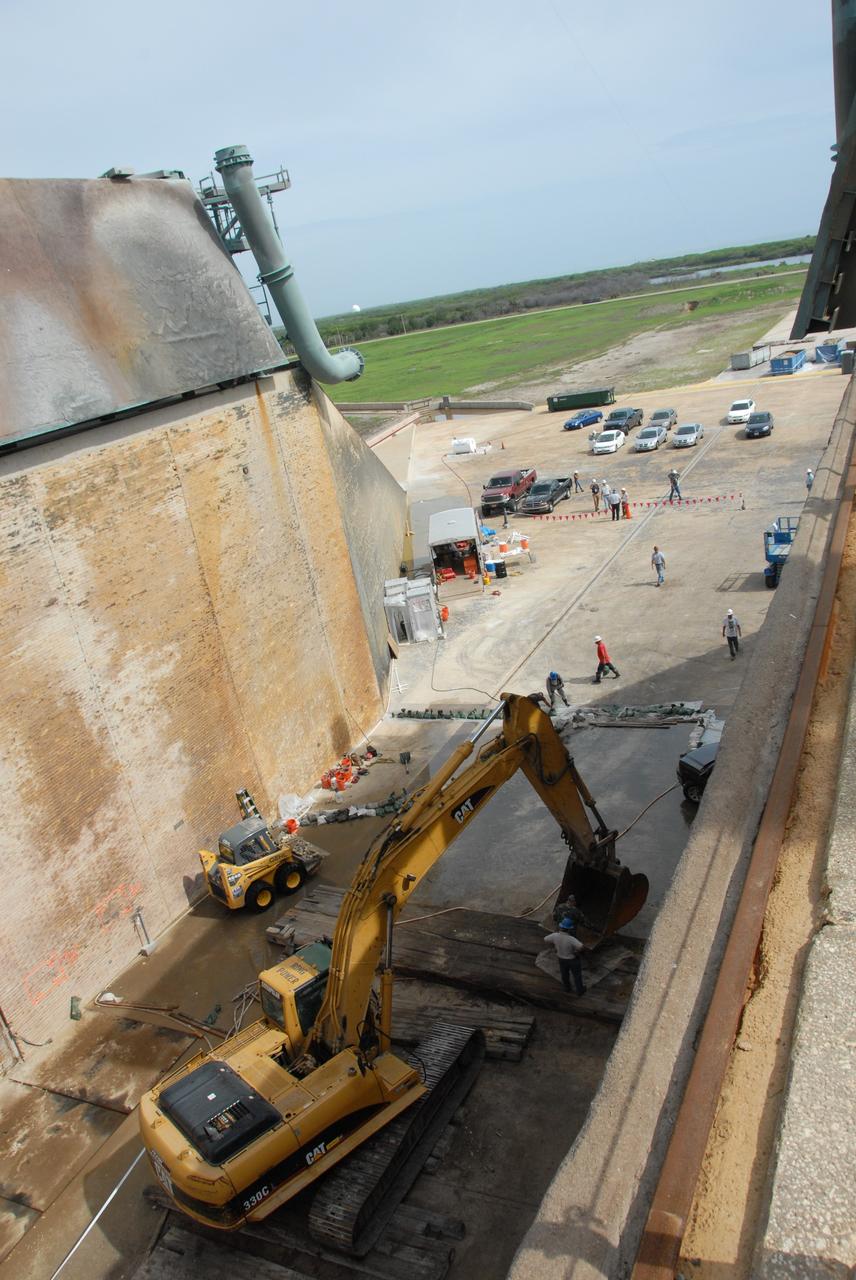
CAPE CANAVERAL, Fla. – A backhoe is being used during repair work under way on the flame trench on Launch Pad 39A at NASA's Kennedy Space Center. Damage to the trench occurred during the launch of Discovery on the STS-124 mission. A 75- by 20-foot section of the east wall was destroyed and debris scattered as far as the pad perimeter fence. Repairs are expected to be completed before the targeted Oct. 8 launch of Atlantis on the STS-125 mission. Photo credit: NASA/Jack Pfaller
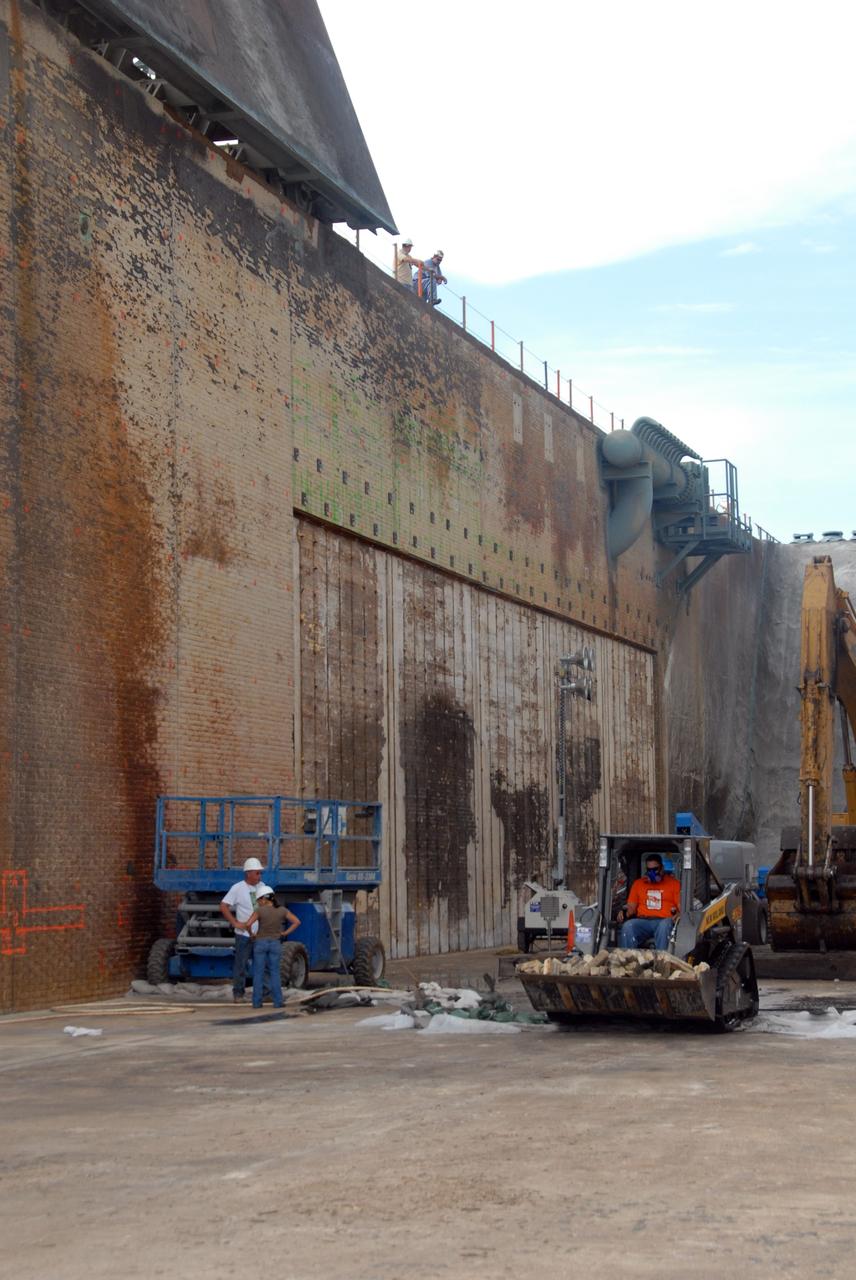
CAPE CANAVERAL, Fla. – Crews remove bricks from the damaged walls of the flame trench on Launch Pad 39A at NASA's Kennedy Space Center. Damage to the trench occurred during the launch of Discovery on the STS-124 mission. A 75- by 20-foot section of the east wall was destroyed and debris scattered as far as the pad perimeter fence. Repairs are expected to be completed before the targeted Oct. 8 launch of Atlantis on the STS-125 mission. Photo credit: NASA/Jack Pfaller
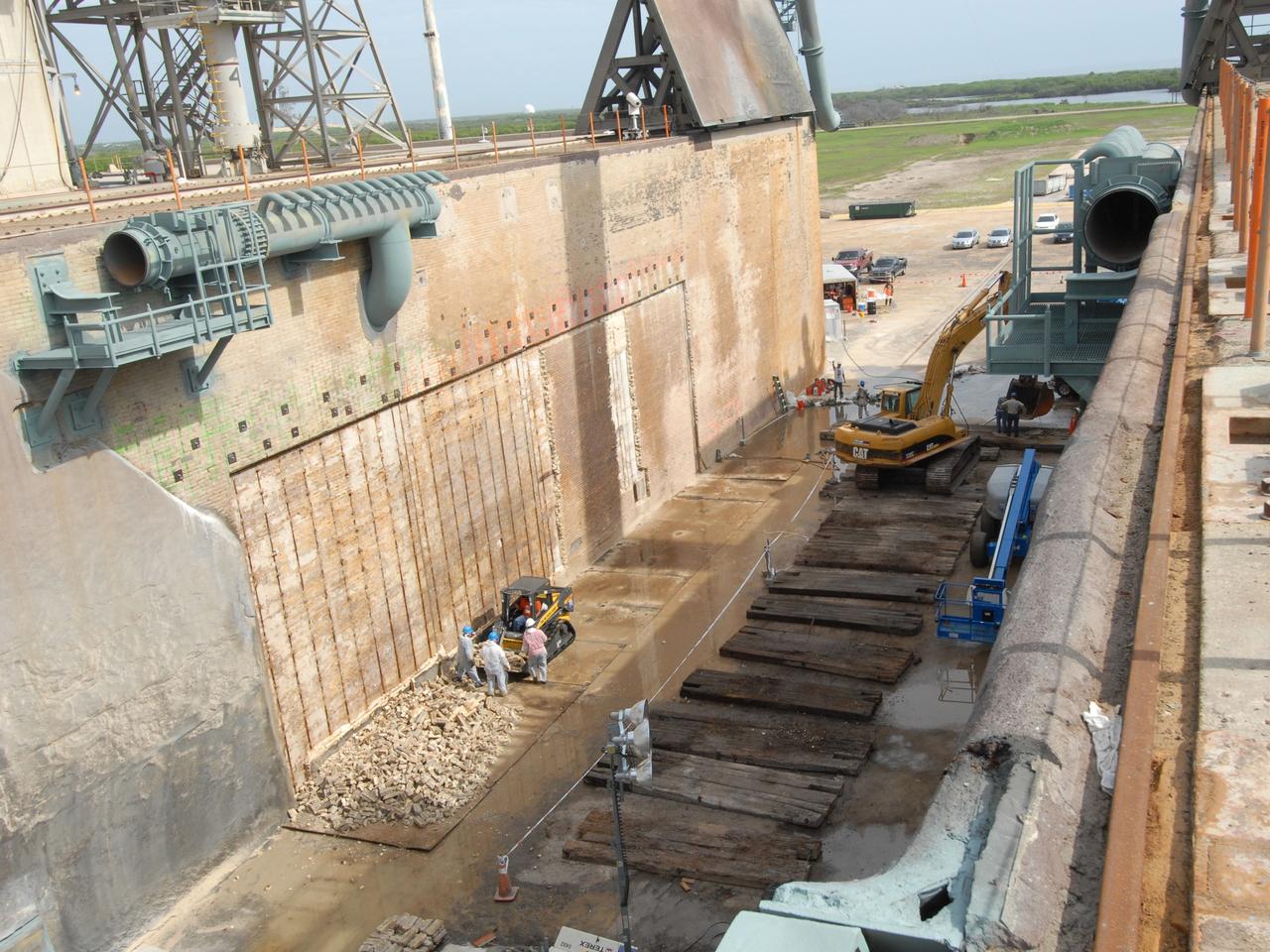
CAPE CANAVERAL, Fla. – A view into the flame trench on Launch Pad 39A at NASA's Kennedy Space Center shows more repair work under way. Damage to the trench occurred during the launch of Discovery on the STS-124 mission. A 75- by 20-foot section of the east wall was destroyed and debris scattered as far as the pad perimeter fence. Repairs are expected to be completed before the targeted Oct. 8 launch of Atlantis on the STS-125 mission. Photo credit: NASA/Jack Pfaller
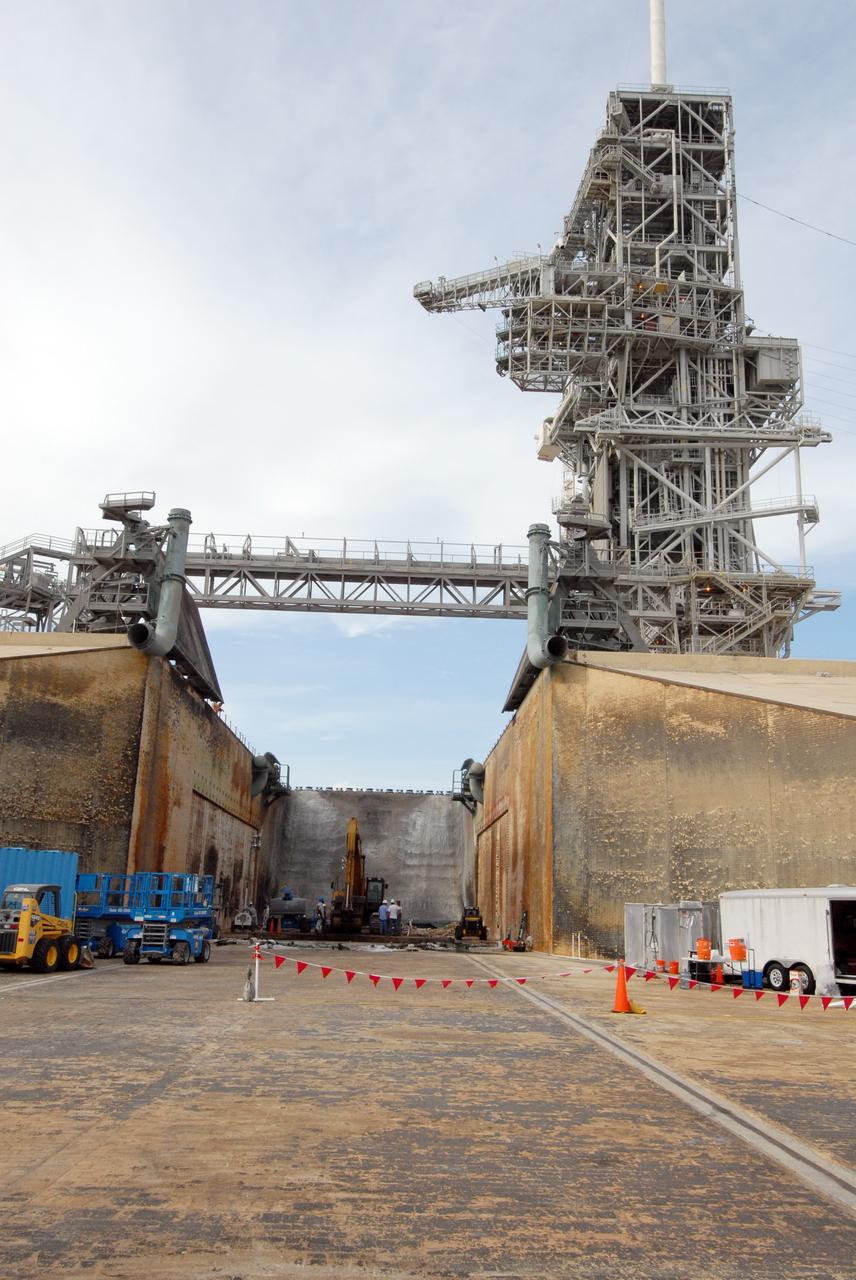
CAPE CANAVERAL, Fla. – Crews remove bricks from the damaged walls of the flame trench on Launch Pad 39A at NASA's Kennedy Space Center. Damage to the trench occurred during the launch of Discovery on the STS-124 mission. A 75- by 20-foot section of the east wall was destroyed and debris scattered as far as the pad perimeter fence. Repairs are expected to be completed before the targeted Oct. 8 launch of Atlantis on the STS-125 mission. Photo credit: NASA/Jack Pfaller
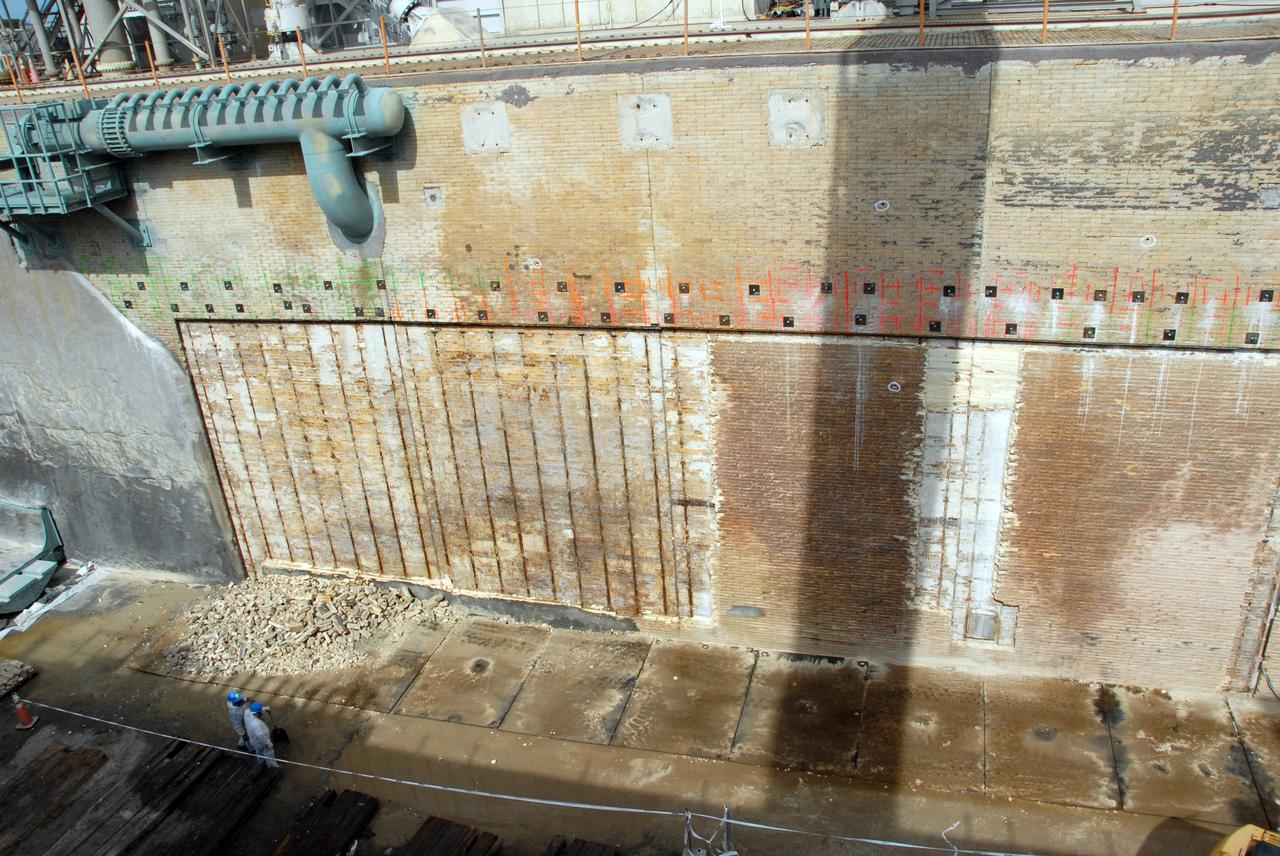
CAPE CANAVERAL, Fla. – A close-up of repair work under way on the flame trench on Launch Pad 39A at NASA's Kennedy Space Center. Damage to the trench occurred during the launch of Discovery on the STS-124 mission. A 75- by 20-foot section of the east wall was destroyed and debris scattered as far as the pad perimeter fence. Repairs are expected to be completed before the targeted Oct. 8 launch of Atlantis on the STS-125 mission. Photo credit: NASA/Jack Pfaller
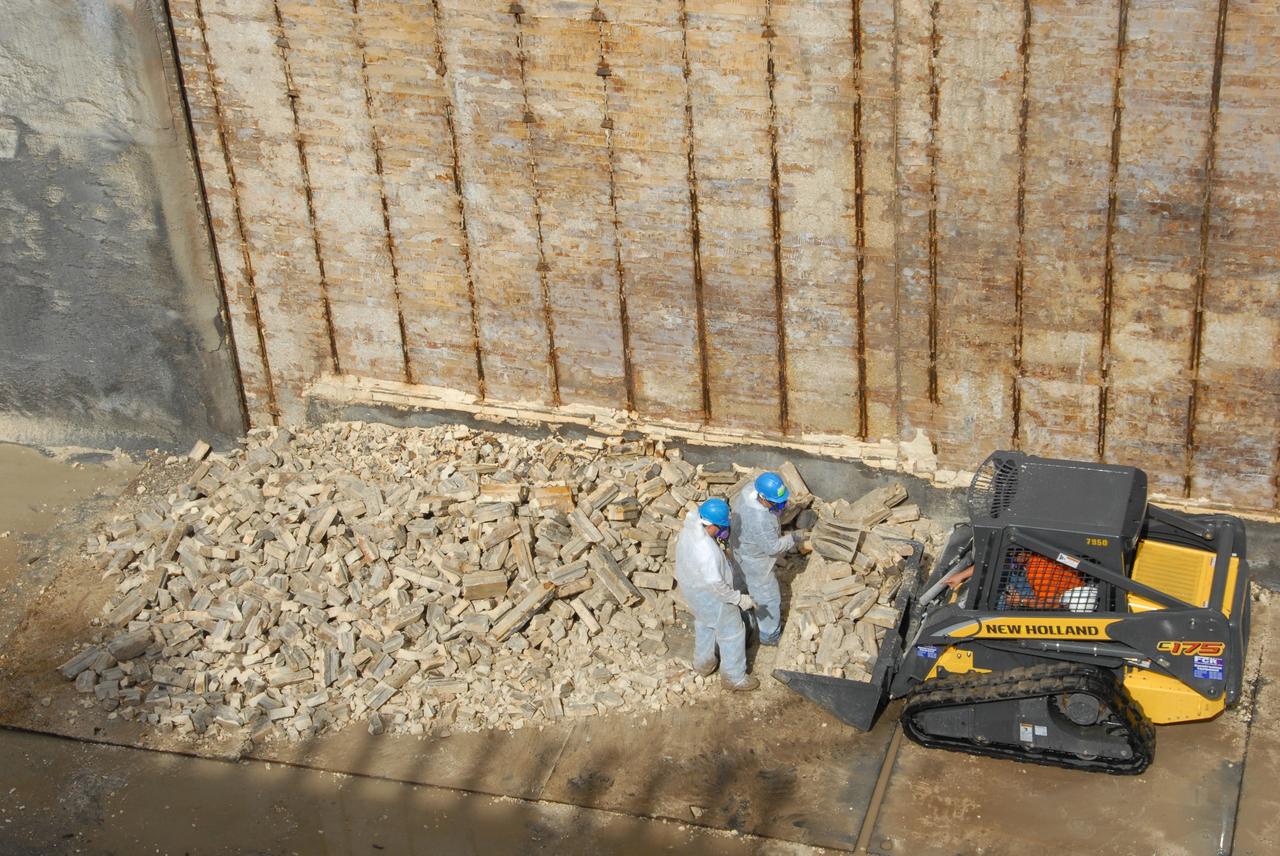
CAPE CANAVERAL, Fla. – A close-up of repair work under way on the flame trench on Launch Pad 39A at NASA's Kennedy Space Center. Damage to the trench occurred during the launch of Discovery on the STS-124 mission. A 75- by 20-foot section of the east wall was destroyed and debris scattered as far as the pad perimeter fence. Repairs are expected to be completed before the targeted Oct. 8 launch of Atlantis on the STS-125 mission. Photo credit: NASA/Jack Pfaller
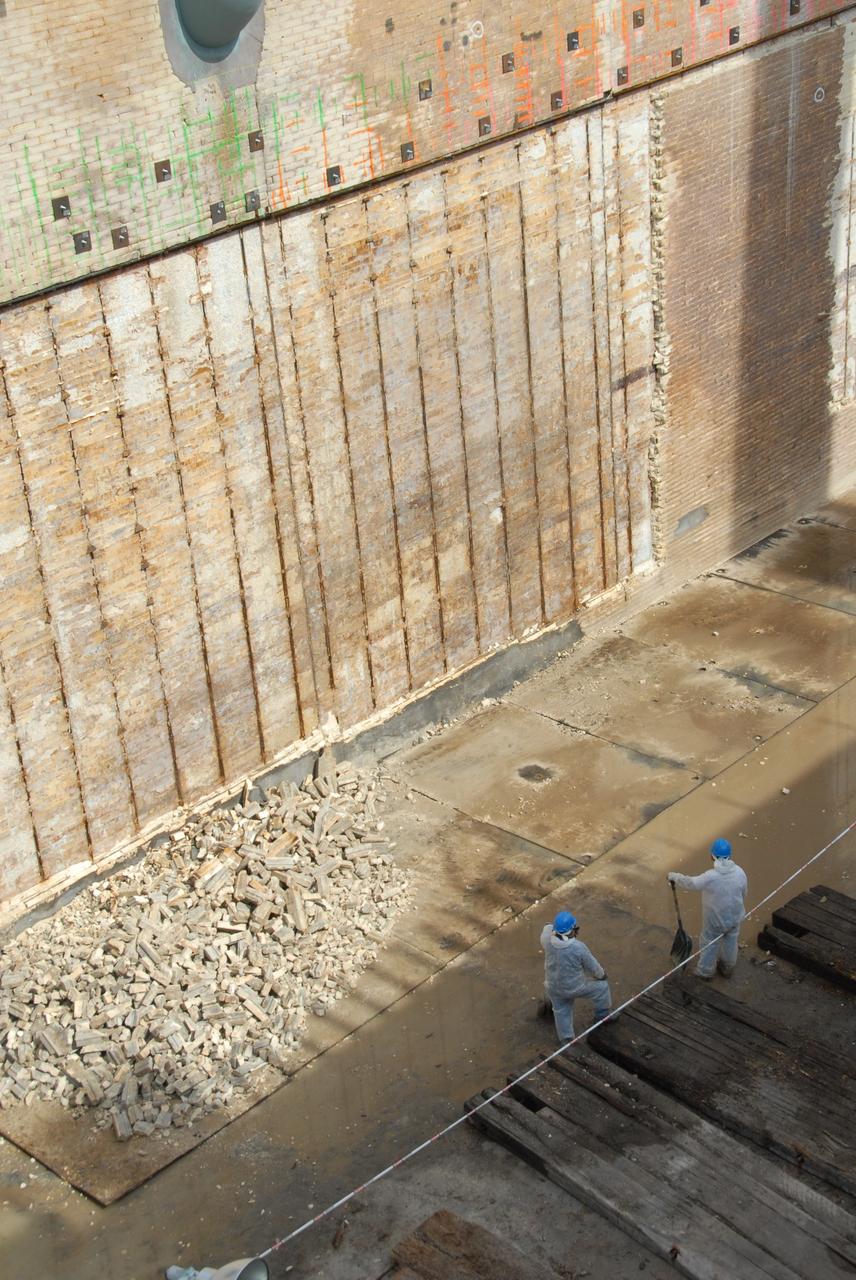
CAPE CANAVERAL, Fla. – A close-up of repair work under way on the flame trench on Launch Pad 39A at NASA's Kennedy Space Center. Damage to the trench occurred during the launch of Discovery on the STS-124 mission. A 75- by 20-foot section of the east wall was destroyed and debris scattered as far as the pad perimeter fence. Repairs are expected to be completed before the targeted Oct. 8 launch of Atlantis on the STS-125 mission. Photo credit: NASA/Jack Pfaller
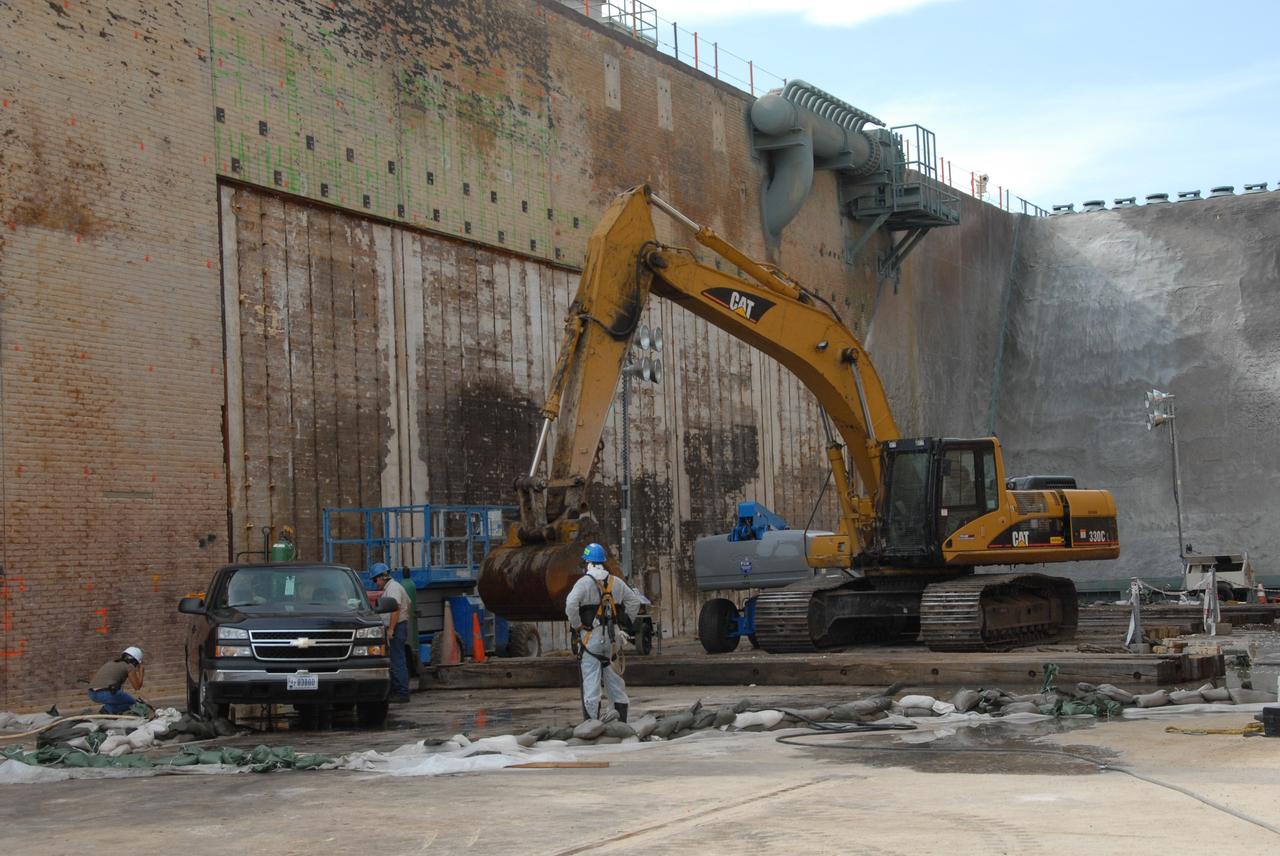
CAPE CANAVERAL, Fla. – Repairs are ongoing in the flame trench on Launch Pad 39A at NASA's Kennedy Space Center. Damage to the trench occurred during the launch of Discovery on the STS-124 mission. A 75- by 20-foot section of the east wall was destroyed and debris scattered as far as the pad perimeter fence. Repairs are expected to be completed before the targeted Oct. 8 launch of Atlantis on the STS-125 mission. Photo credit: NASA/Jack Pfaller
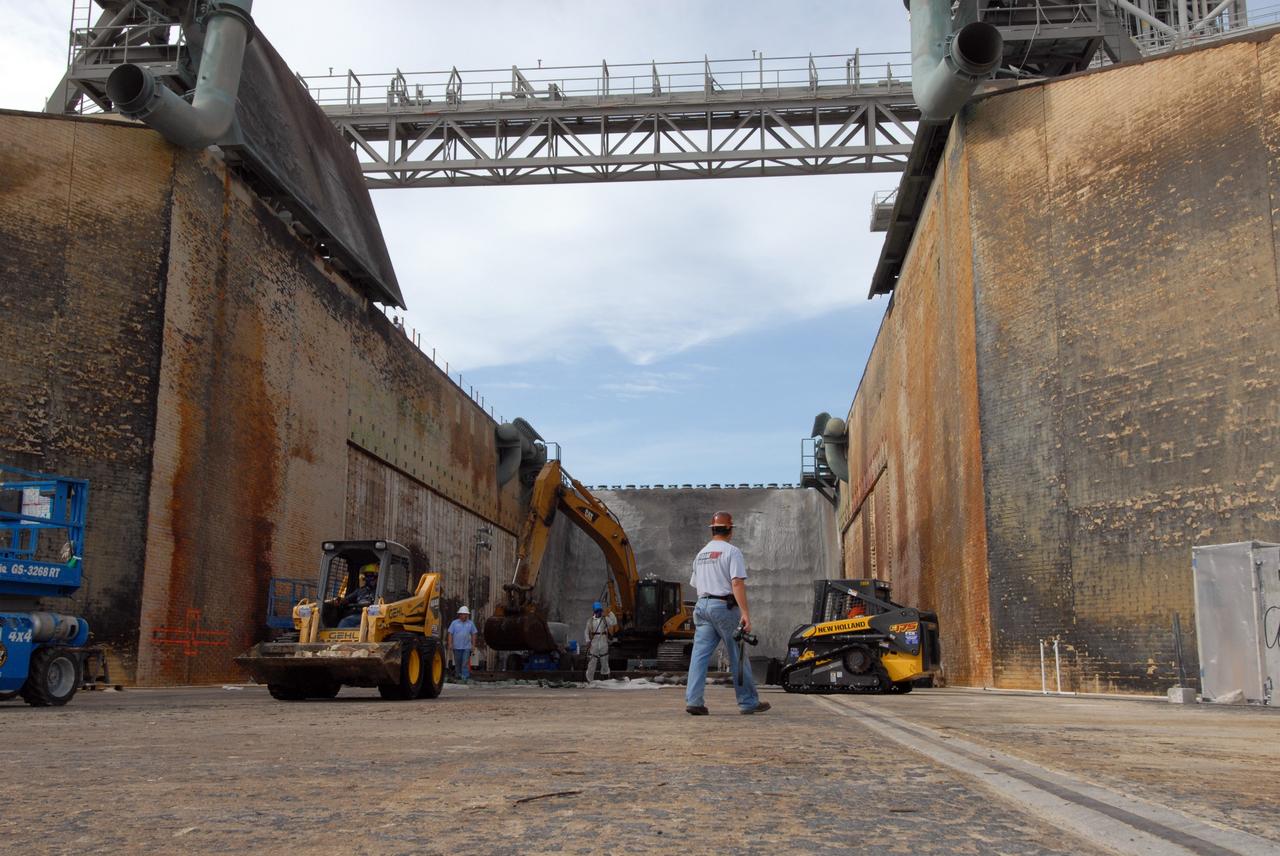
CAPE CANAVERAL, Fla. – Repairs are ongoing in the flame trench on Launch Pad 39A at NASA's Kennedy Space Center. Damage to the trench occurred during the launch of Discovery on the STS-124 mission. A 75- by 20-foot section of the east wall was destroyed and debris scattered as far as the pad perimeter fence. Repairs are expected to be completed before the targeted Oct. 8 launch of Atlantis on the STS-125 mission. Photo credit: NASA/Jack Pfaller
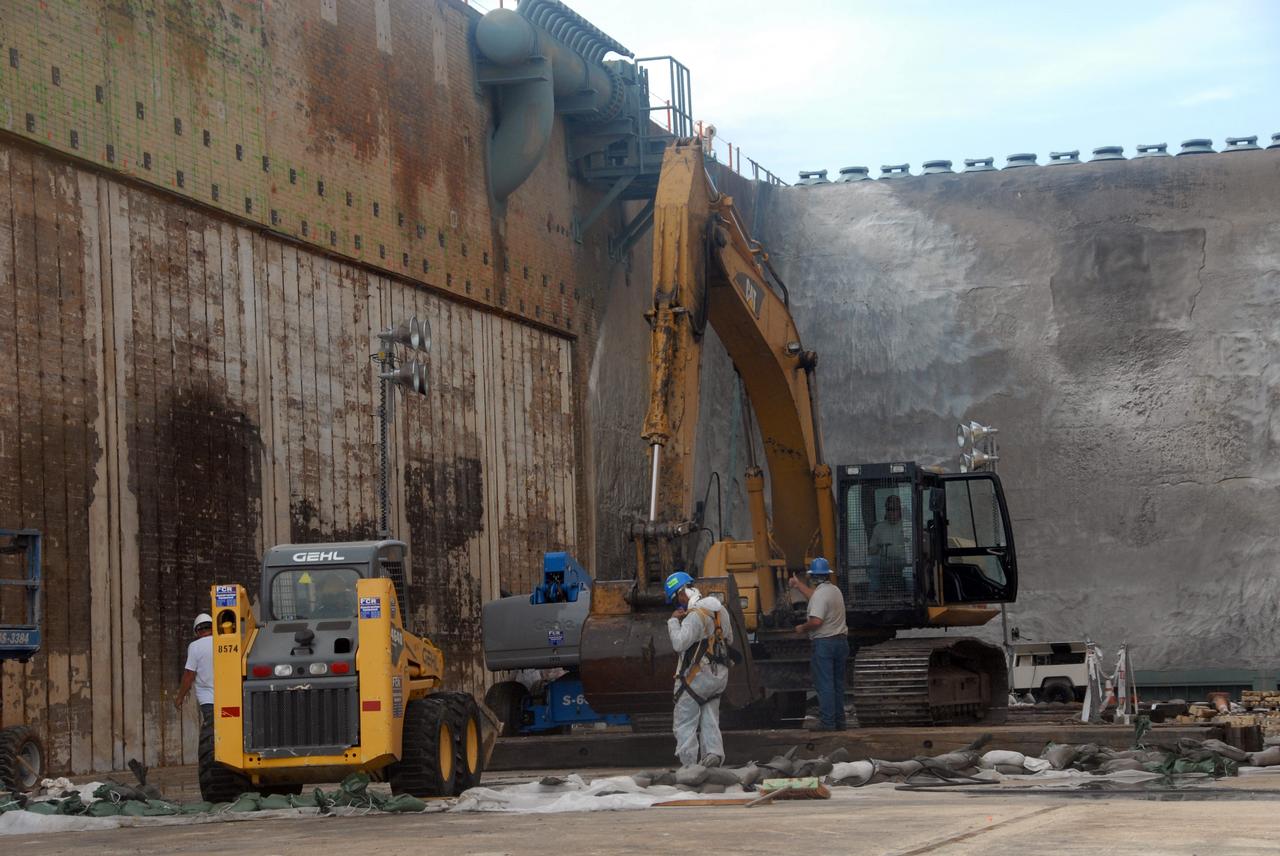
CAPE CANAVERAL, Fla. – This photos shows a close view of the area of repair in the flame trench on Launch Pad 39A at NASA's Kennedy Space Center. Damage to the trench occurred during the launch of Discovery on the STS-124 mission. A 75- by 20-foot section of the east wall was destroyed and debris scattered as far as the pad perimeter fence. Repairs are expected to be completed before the targeted Oct. 8 launch of Atlantis on the STS-125 mission. Photo credit: NASA/Jack Pfaller
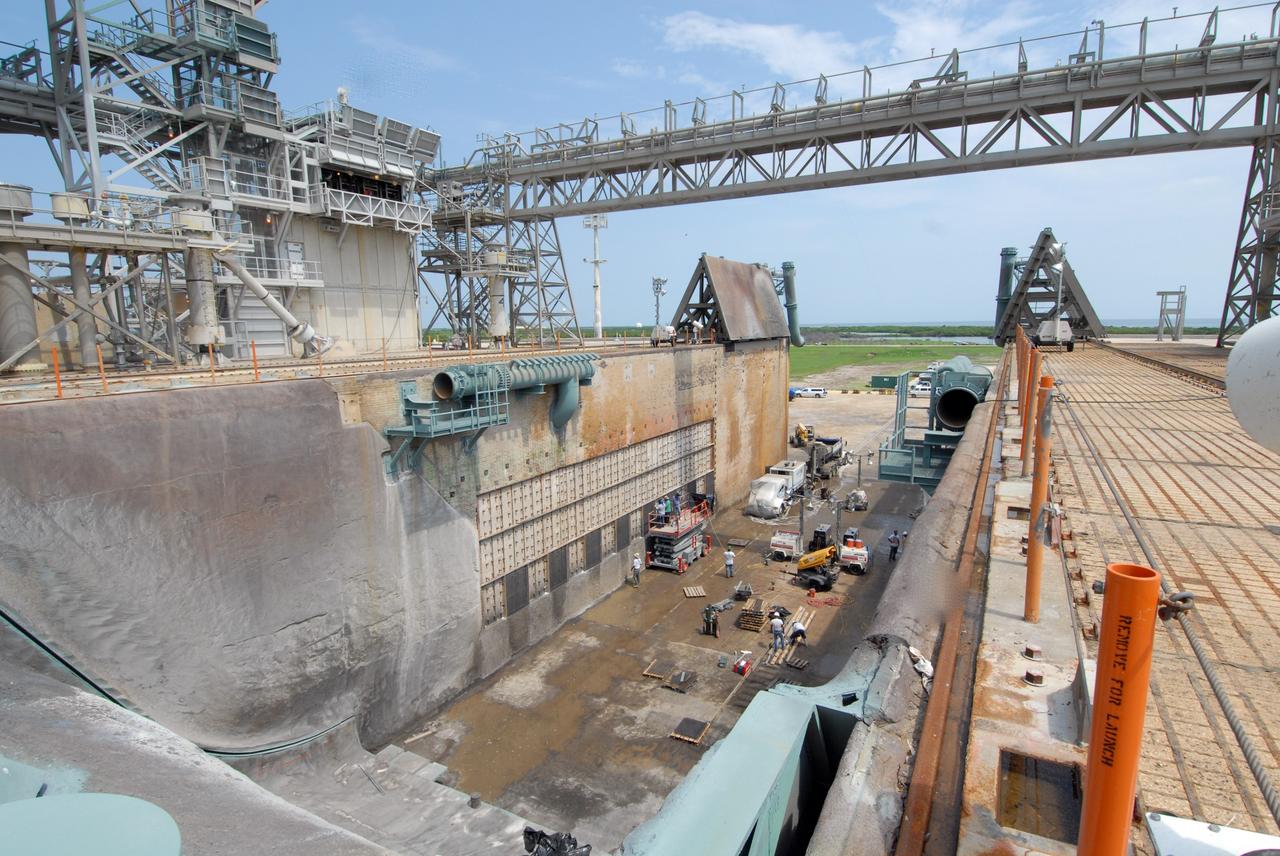
CAPE CANAVERAL, Fla. – This elevated view shows workers on a platform welding a steel grid structure to the wall of the flame trench on Launch Pad 39A at NASA's Kennedy Space Center. Damage to the trench occurred during the launch of Discovery on the STS-124 mission. A 75- by 20-foot section of the east wall was destroyed and debris scattered as far as the pad perimeter fence. Repairs are expected to be completed before the targeted Oct. 8 launch of Atlantis on the NASA Hubble Space Telescope servicing mission. Photo credit: NASA/Jack Pfaller
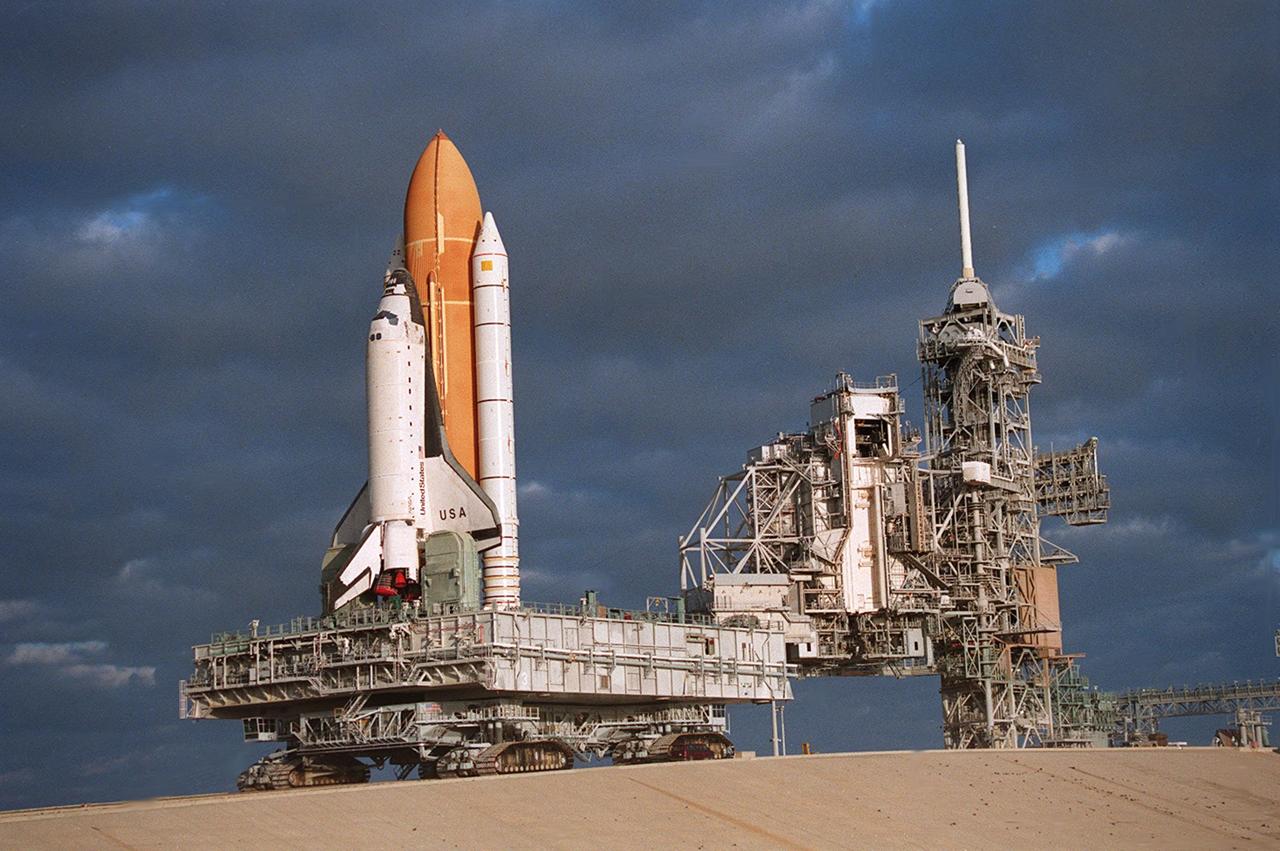
KENNEDY SPACE CENTER, FLA. -- The Space Shuttle Columbia arrives at Launch Pad 39B following an approximate seven-hour journey from the Vehicle Assembly Building. Columbia is being prepared for a targeted Feb. 22 liftoff on Mission STS-75, which will feature a re-flight of the Tethered Satellite System (TSS-1R) and the third flight of the U.S. Microgravity Payload (USMP-3)
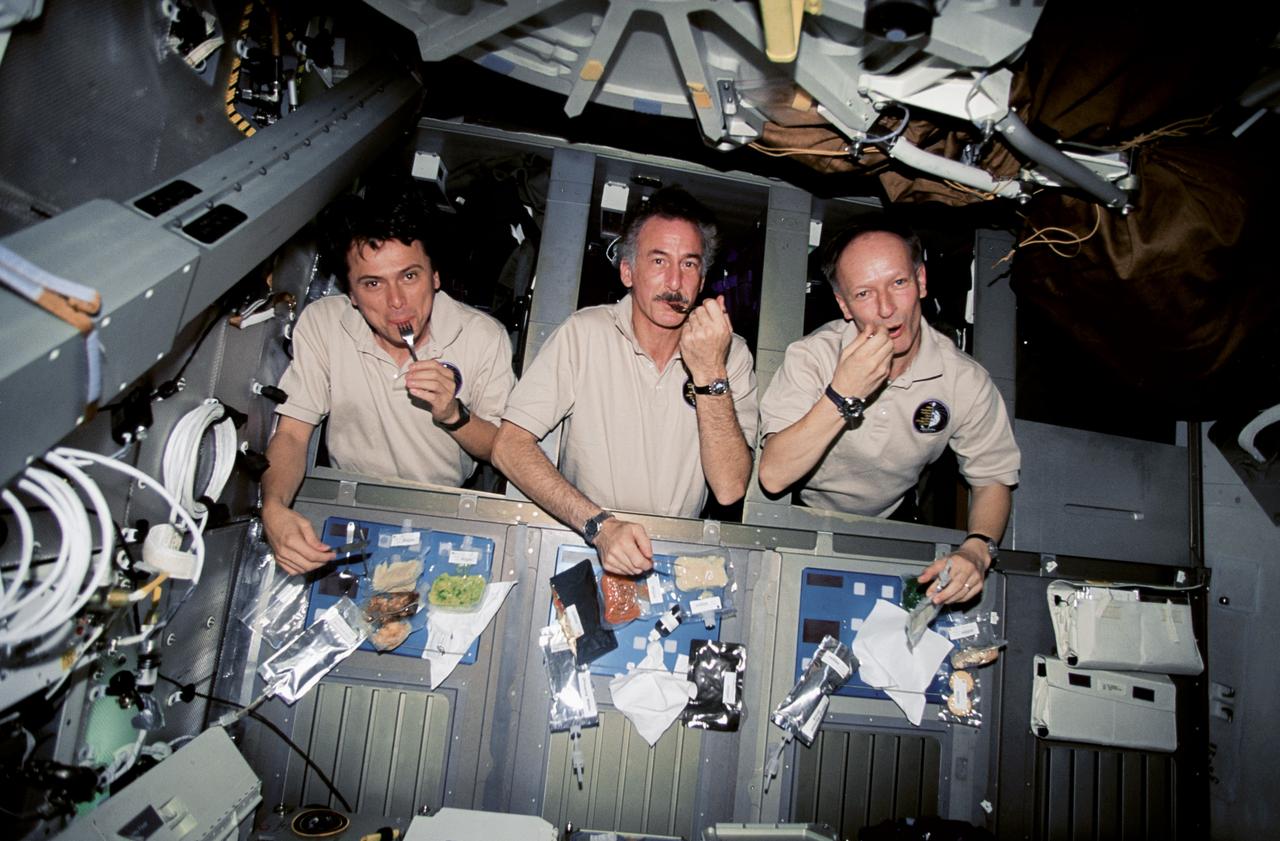
STS075-302-016 (22 Feb.-9 March 1996) --- Soon after reaching Earth orbit, the blue shift team set up what they referred to as a "formal" meal on the space shuttle Columbia's middeck. Left to right are astronauts Franklin R. Chang-Diaz, STS-75 payload commander; Jeffrey A. Hoffman and Claude Nicollier, both mission specialists. Hoffman later told a gathering of Johnson Space Center employees that the meal was accompanied by classical music. Photo credit: NASA or National Aeronautics and Space Administration
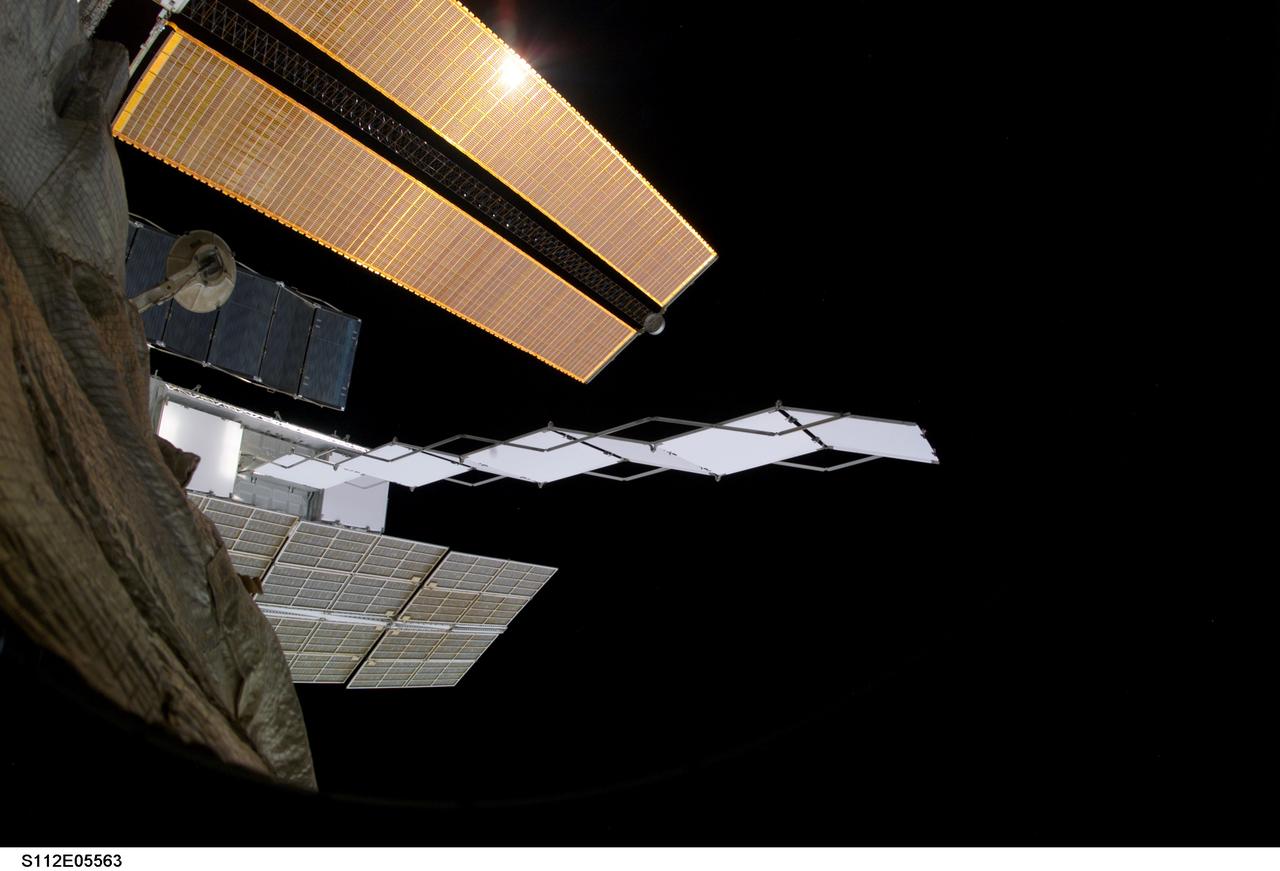
STS112-E-05563 (14 October 2002) --- View of one of the radiators on the newly installed Starboard One (S1) Truss which was remotely deployed to verify the connections established on the first spacewalk for the STS-112 mission. Its extended length was 75 feet with each of the eight panels being 11 feet wide. The cooling systems will not formally be activated until next year.
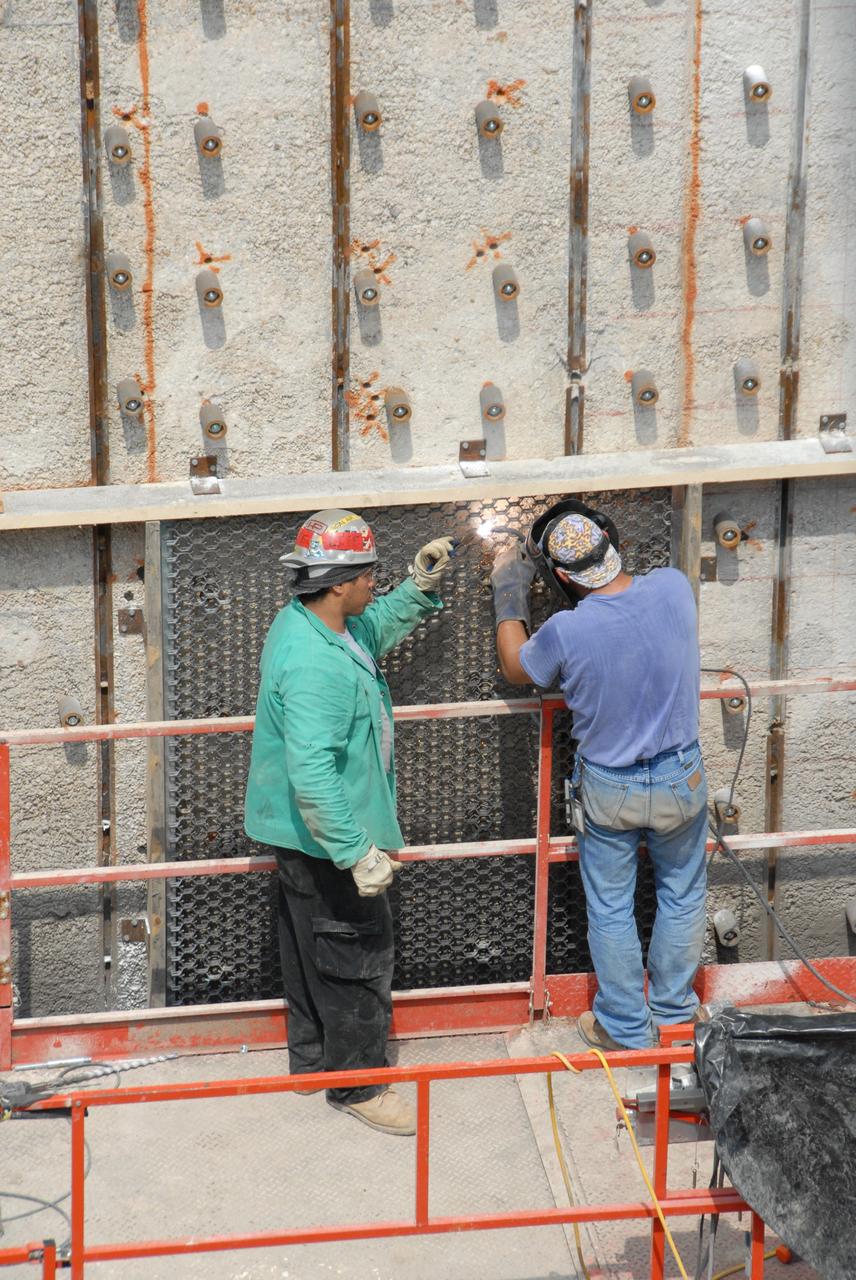
CAPE CANAVERAL, Fla. – Workers weld a steel grid structure to the wall of the flame trench on Launch Pad 39A at NASA's Kennedy Space Center. Damage to the trench occurred during the launch of Discovery on the STS-124 mission. A 75- by 20-foot section of the east wall was destroyed and debris scattered as far as the pad perimeter fence. Repairs are expected to be completed before the targeted Oct. 8 launch of Atlantis on the NASA Hubble Space Telescope servicing mission. Photo credit: NASA/Jack Pfaller
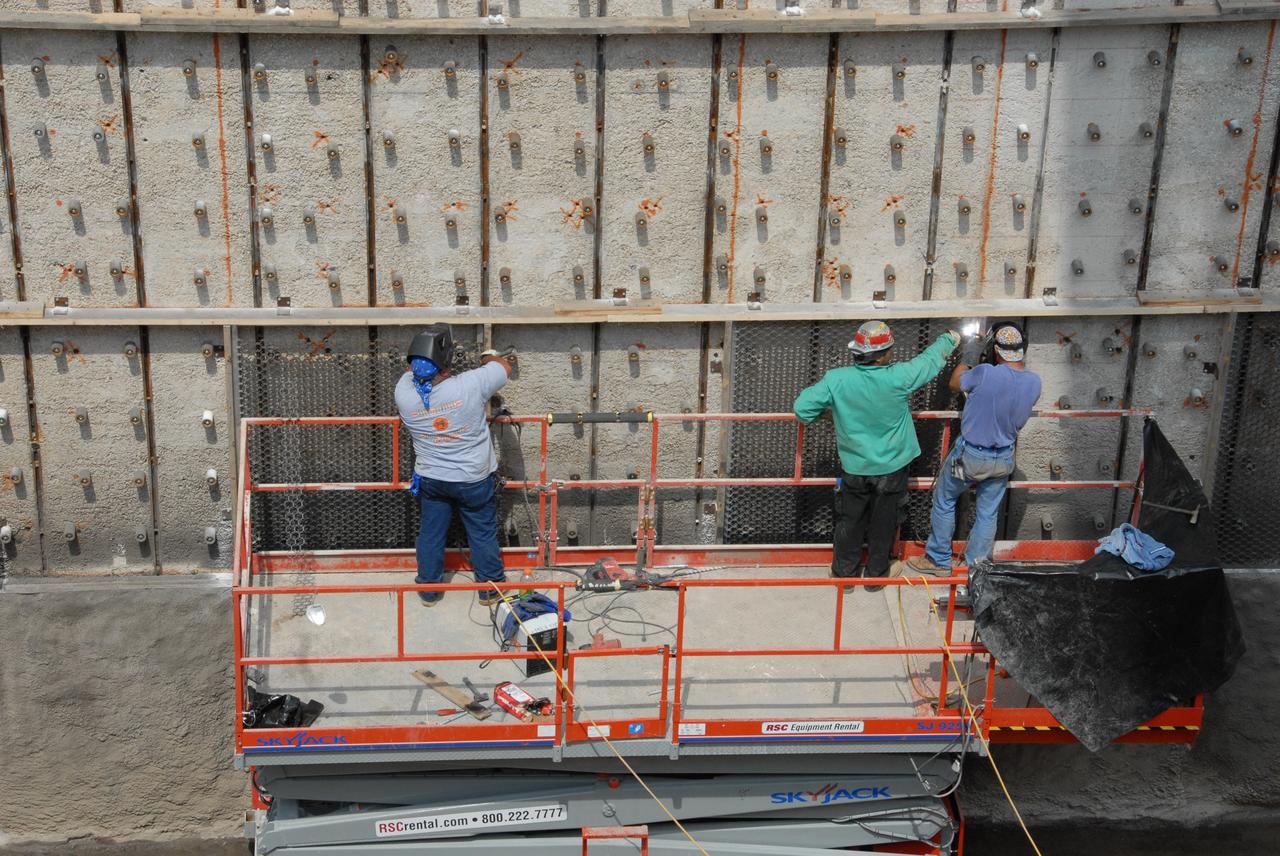
CAPE CANAVERAL, Fla. – Workers weld a steel grid structure to the wall of the flame trench on Launch Pad 39A at NASA's Kennedy Space Center. Damage to the trench occurred during the launch of Discovery on the STS-124 mission. A 75- by 20-foot section of the east wall was destroyed and debris scattered as far as the pad perimeter fence. Repairs are expected to be completed before the targeted Oct. 8 launch of Atlantis on the NASA Hubble Space Telescope servicing mission. Photo credit: NASA/Jack Pfaller
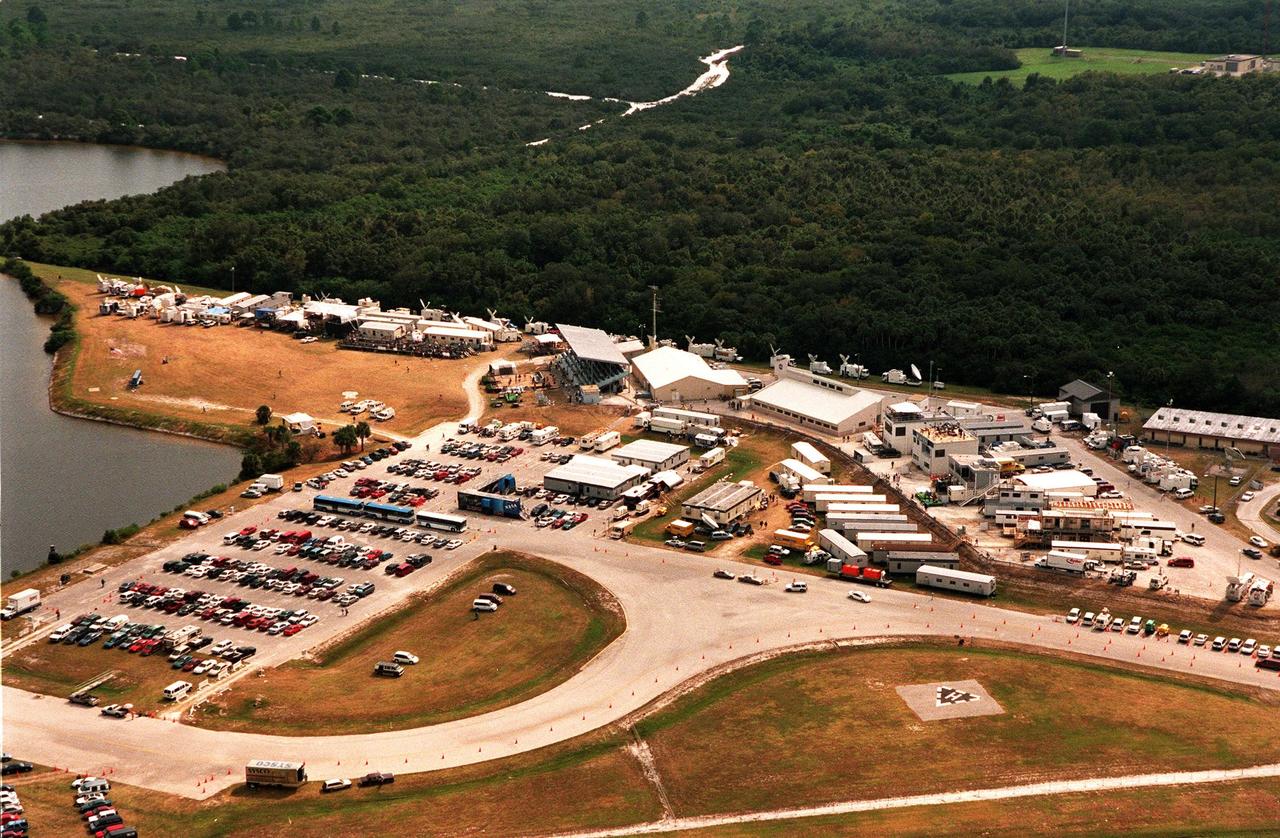
The day before the launch of mission STS-95, the Press Site was inundated with 40 trailers, 75 trucks and RVs, 8 stages and 8 risers to accommodate the 3,750 media requests to cover the launch and return to space of John H. Glenn Jr., a senator from Ohio. Glenn flew aboard Friendship 7 in February 1962, and was the first American to orbit the Earth. Glenn is one of a crew of seven on board Space Shuttle Discovery for the nine-day mission
CAPE CANAVERAL, Fla. – Workers prepare to weld a steel grid structure to the wall of the flame trench on Launch Pad 39A at NASA's Kennedy Space Center. Damage to the trench occurred during the launch of Discovery on the STS-124 mission. A 75- by 20-foot section of the east wall was destroyed and debris scattered as far as the pad perimeter fence. Repairs are expected to be completed before the targeted Oct. 8 launch of Atlantis on the NASA Hubble Space Telescope servicing mission. Photo credit: NASA/Jack Pfaller
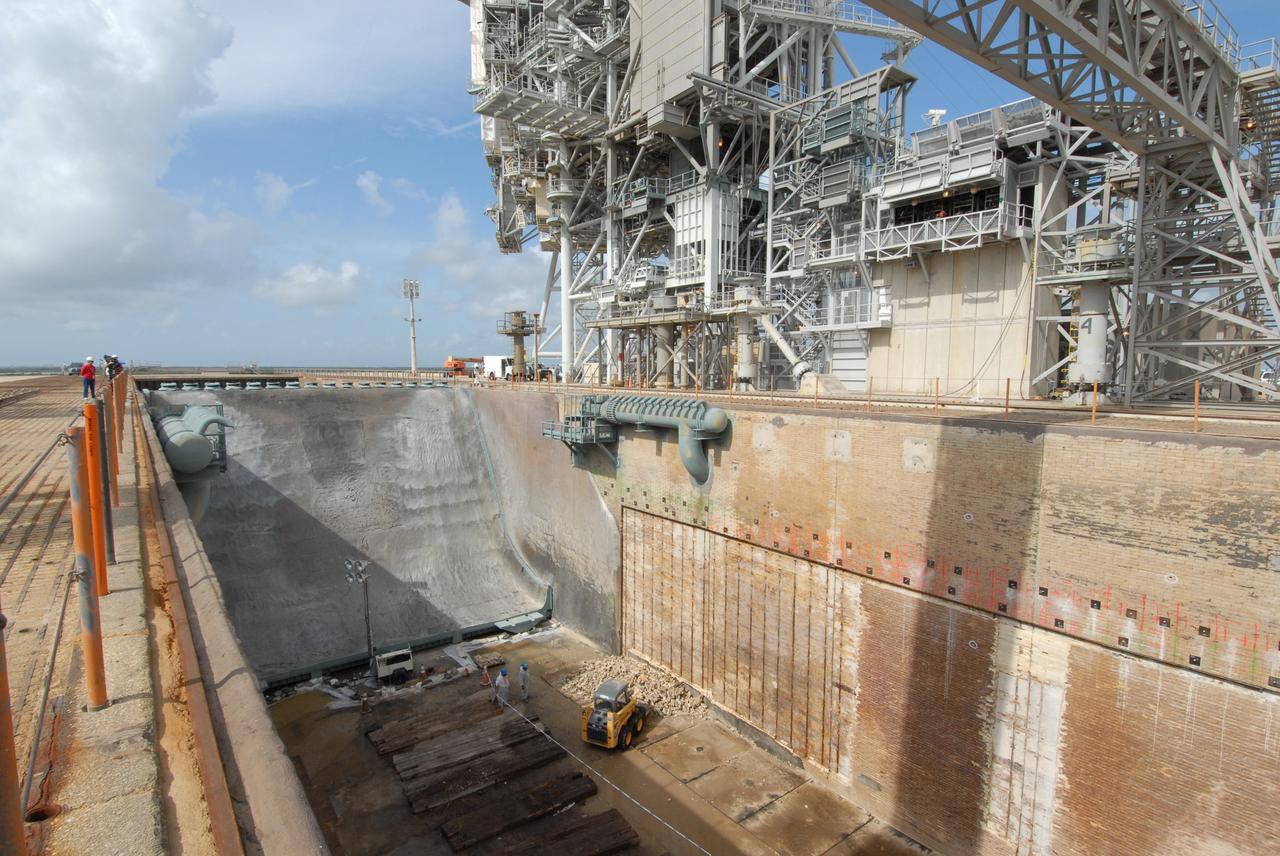
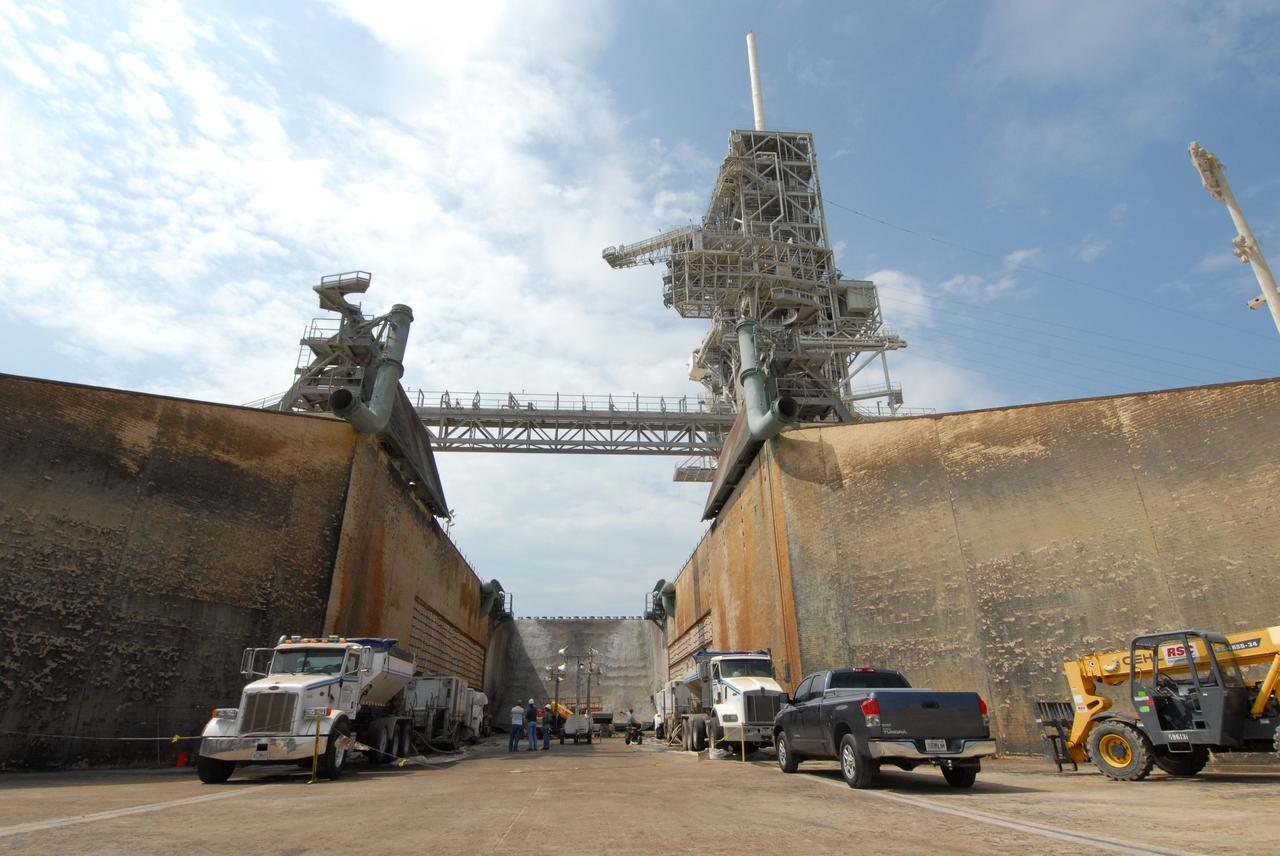
CAPE CANAVERAL, Fla. – A view from above the flame trench on Launch Pad 39A at NASA's Kennedy Space Center shows more repair work under way. The mobile launcher platform, with the space shuttle on top, straddles the trench during launch. Damage to the trench occurred during the launch of Discovery on the STS-124 mission. A 75- by 20-foot section of the east wall was destroyed and debris scattered as far as the pad perimeter fence. Repairs are expected to be completed before the targeted Oct. 8 launch of Atlantis on the STS-125 mission. Photo credit: NASA/Jack Pfaller
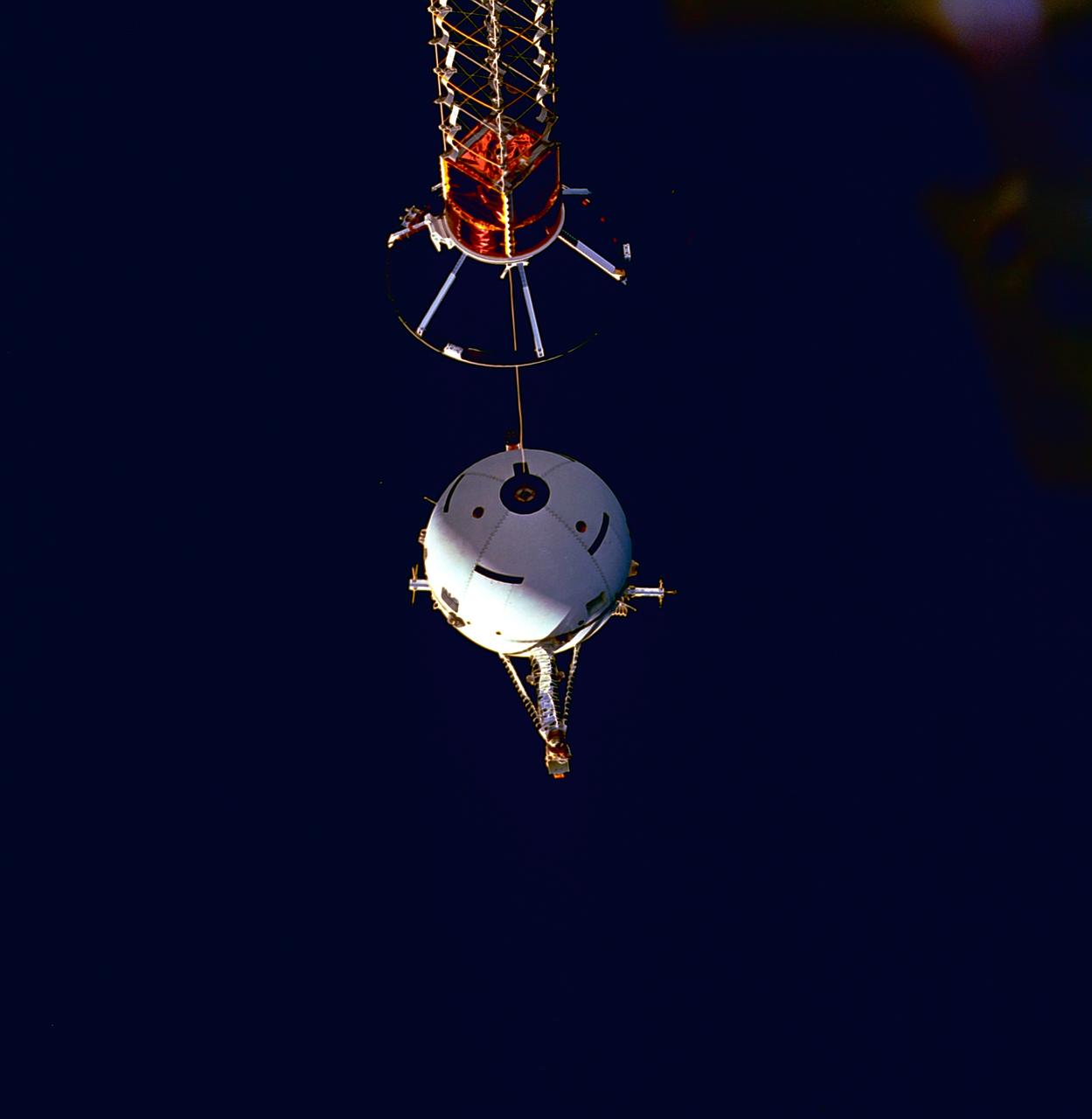
STS075-701-087 (25 Feb. 1996) --- A medium close-up view, captured with a 70mm camera, shows the Tethered Satellite System (TSS) and part of its supportive boom device prior to deployment operations. On Feb. 25, 1996, the crew deployed the TSS, which later broke free. The seven member crew was launched aboard the space shuttle Columbia on Feb. 22, 1996, and landed on March 9, 1996. Crewmembers were Andrew M. Allen, mission commander; Scott J. Horowitz, pilot; Franklin R. Chang-Diaz, payload commander; and Maurizio Cheli, European Space Agency (ESA); Jeffrey A. Hoffman and Claude Nicollier, ESA, all mission specialists; along with payload specialist Umberto Guidoni of the Italian Space Agency (ASI).
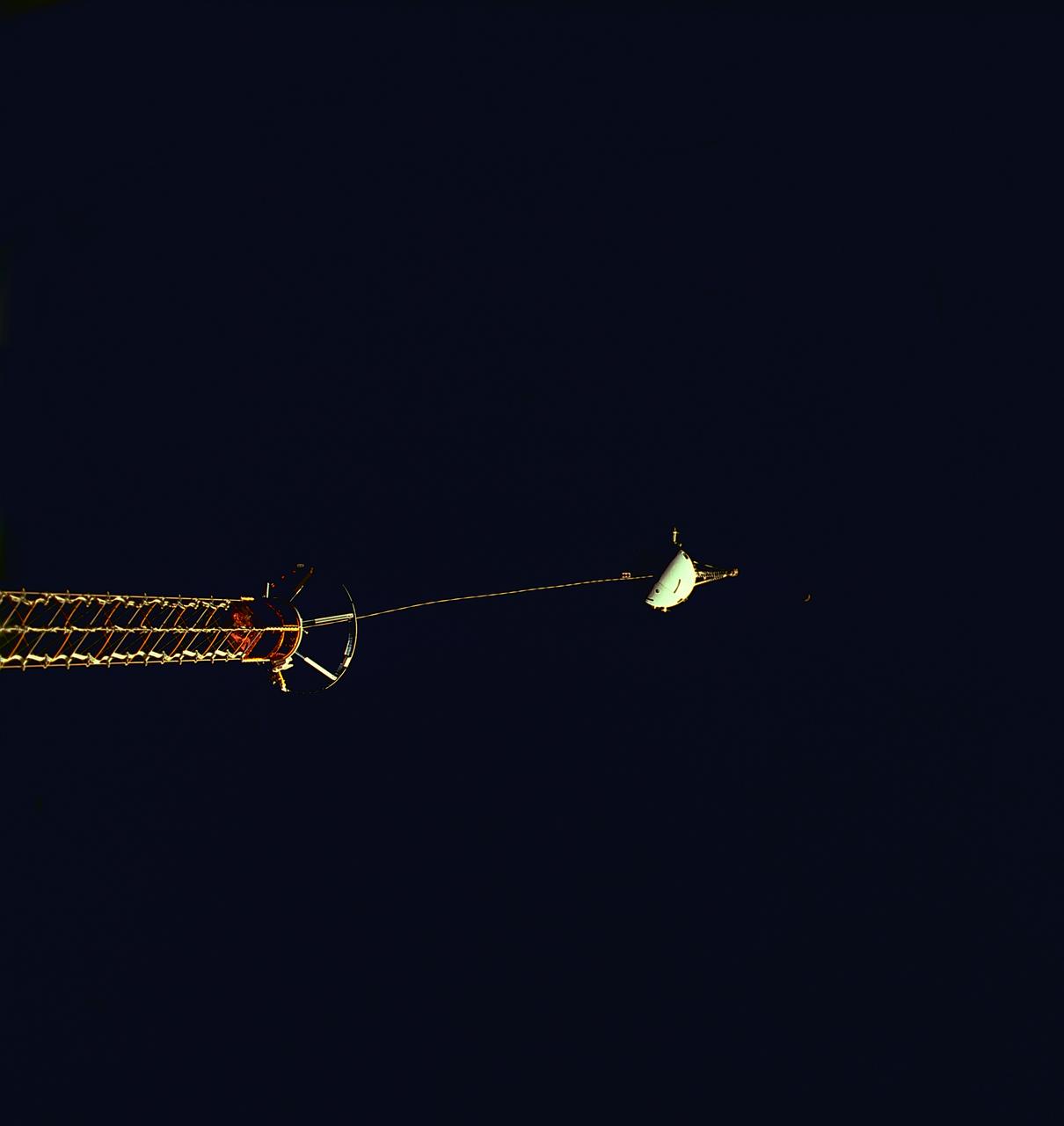
STS075-711-024 (25 Feb. 1996) --- The Tethered Satellite System (TSS) is seen as it is reeled out during early stages of deployment operations. The crew deployed the TSS, which later broke free. The seven member crew was launched aboard the space shuttle Columbia on Feb. 22, 1996, and landed on March 9, 1996. Crewmembers were Andrew M. Allen, mission commander; Scott J. Horowitz, pilot; Franklin R. Chang-Diaz, payload commander; and Maurizio Cheli European Space Agency (ESA); Jeffrey A. Hoffman and Claude Nicollier, ESA, all mission specialists; along with payload specialist Umberto Guidoni of the Italian Space Agency (ASI).
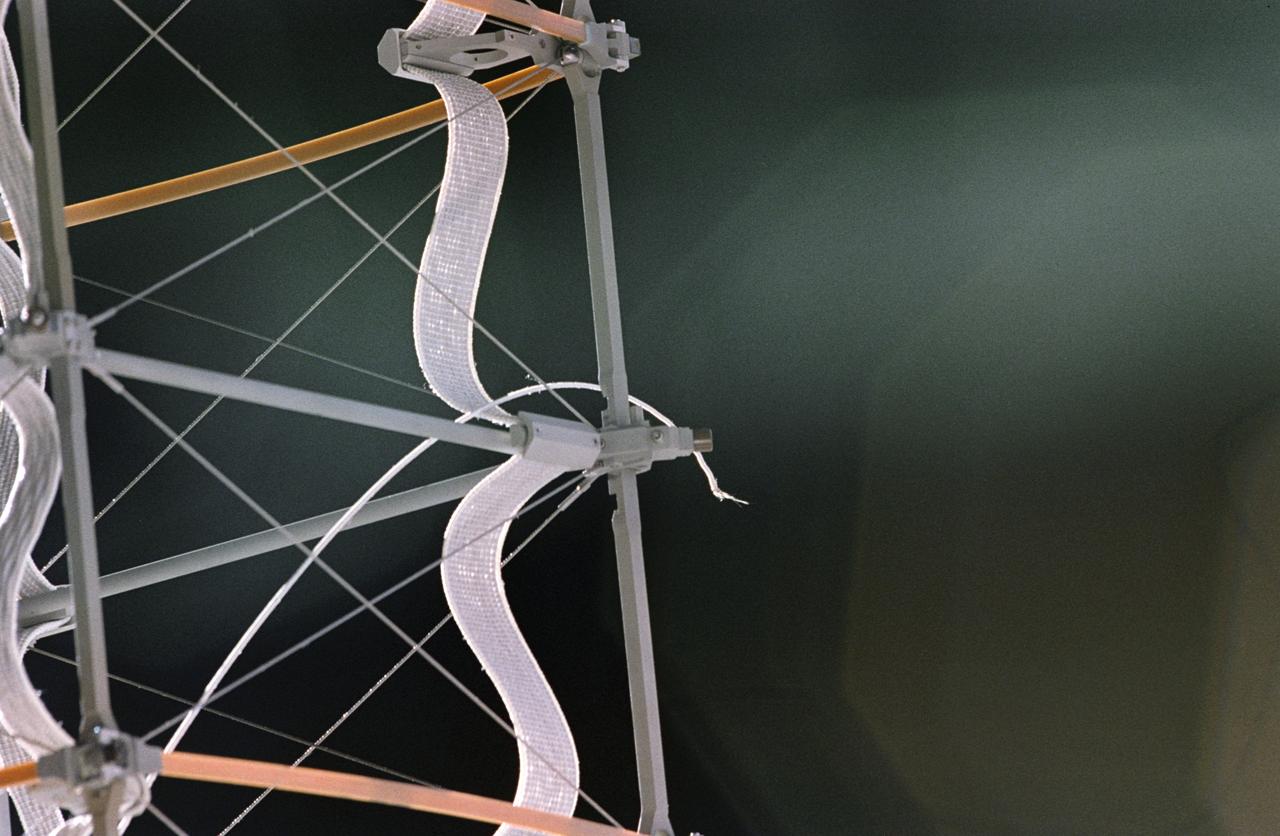
STS075-325-014 (25 Feb. 1996) --- The frayed end of the tether portion of the Tethered Satellite System (TSS) is seen at the end of the supportive boom. On February 25, 1996, the crew deployed the TSS, which later broke free. The seven member crew was launched aboard the Space Shuttle Columbia on February 22, 1996, and landed on March 9, 1996. Crewmembers were Andrew M. Allen, mission commander; Scott J. Horowitz, pilot; Franklin R. Chang-Diaz, payload commander; and Maurizio Cheli, European Space Agency (ESA); Jeffrey A. Hoffman and Claude Nicollier (ESA), all mission specialists; along with payload specialist Umberto Guidoni of the Italian Space Agency (ASI).
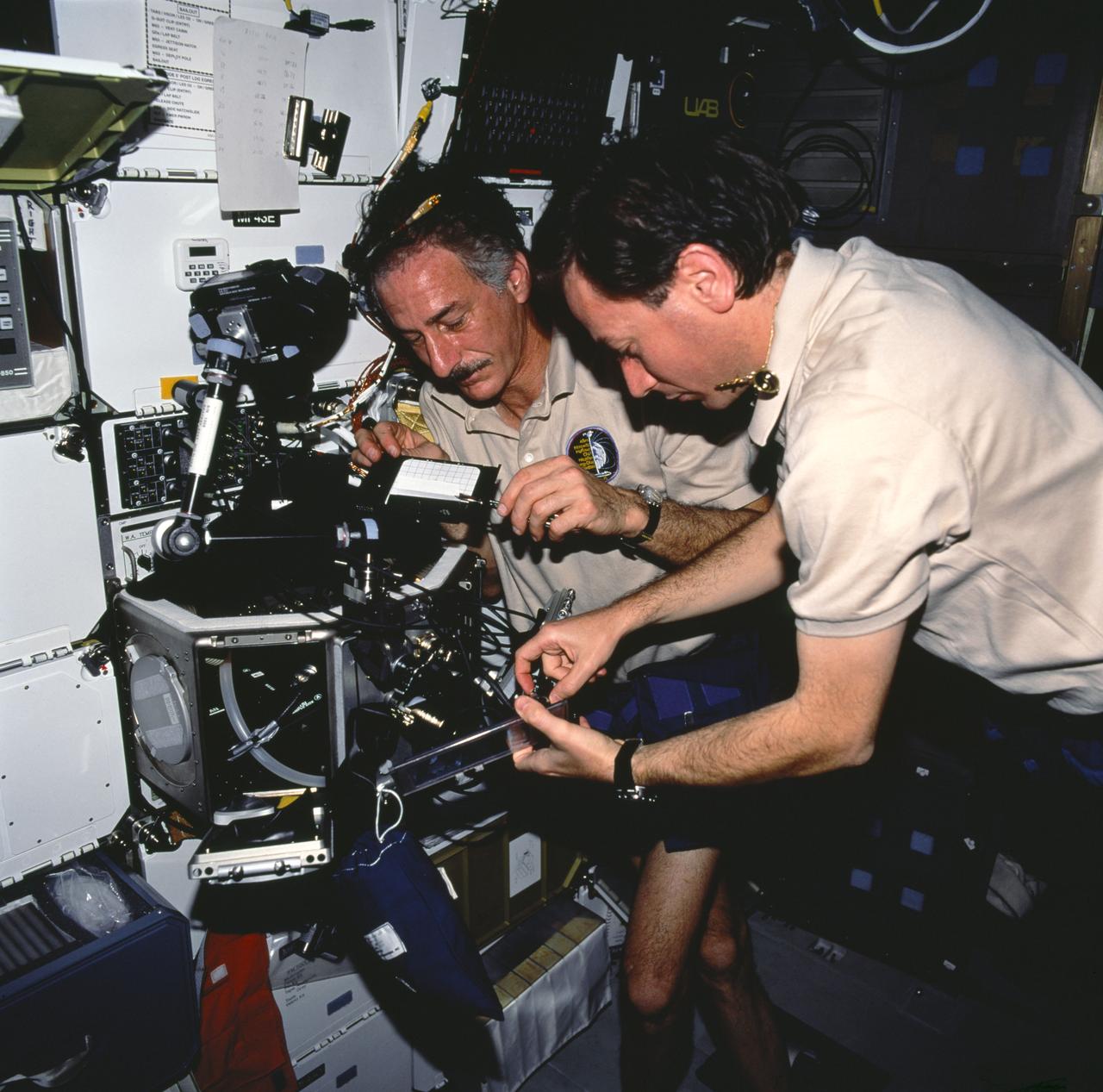
STS075-772-057 (22 Feb.- 9 March 1996) --- Astronauts Jeffrey A. Hoffman (left) and Maurizio Cheli, representing European Space Agency (ESA), set up an experiment at the glovebox on the space shuttle Columbia's middeck. The two mission specialists joined three other astronauts and an international payload specialist for more than 16 days of research aboard Columbia.
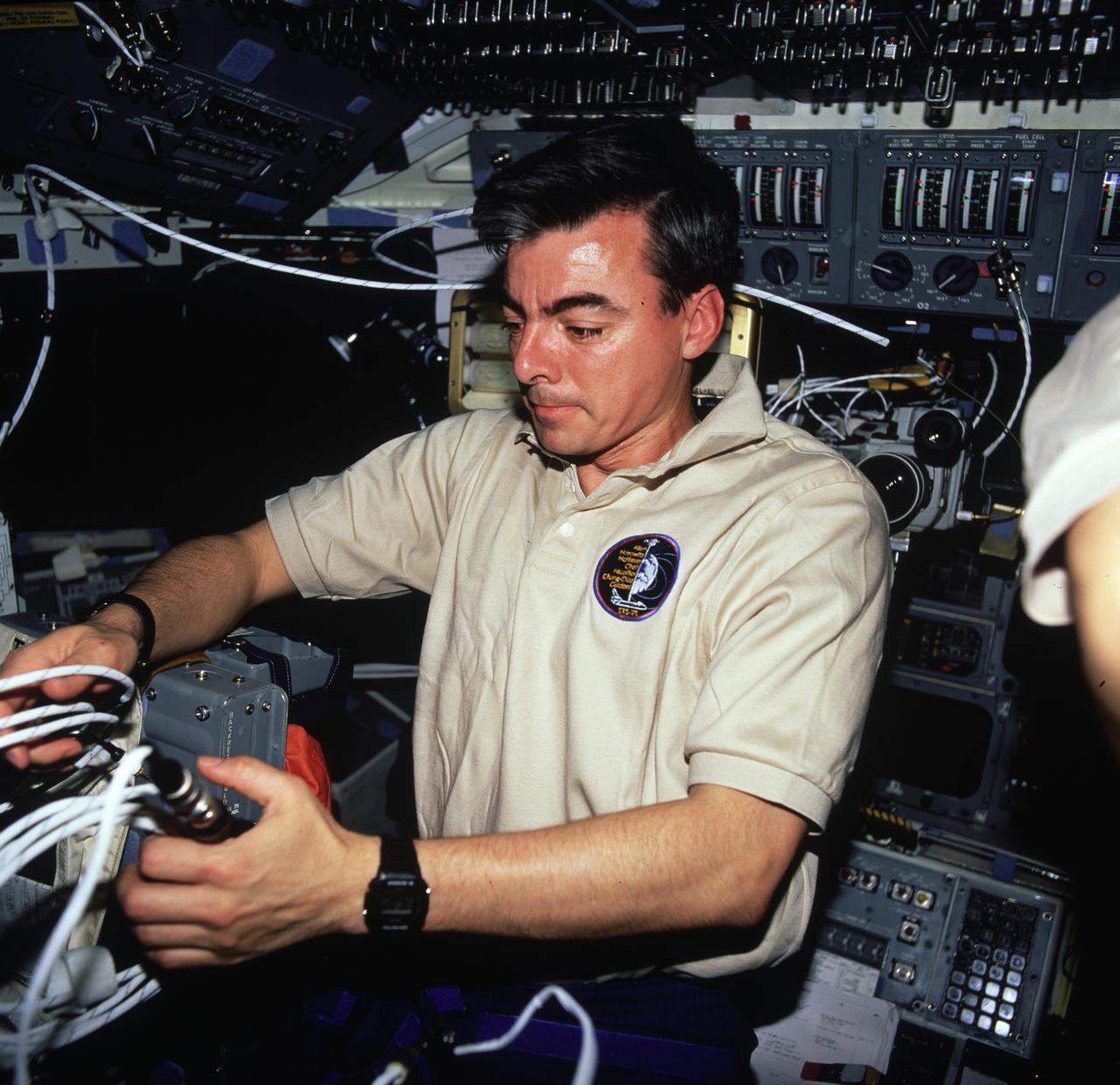
STS075-772-013 (22 Feb.- 9 March 1996) --- Astronaut Andrew M. Allen, mission commander, sets up systems for a television downlink on the flight deck of the space shuttle Columbia. Allen was joined by four other astronauts and an international payload specialist for more than 16 days of research aboard Columbia. The photograph was taken with a 70mm handheld camera.
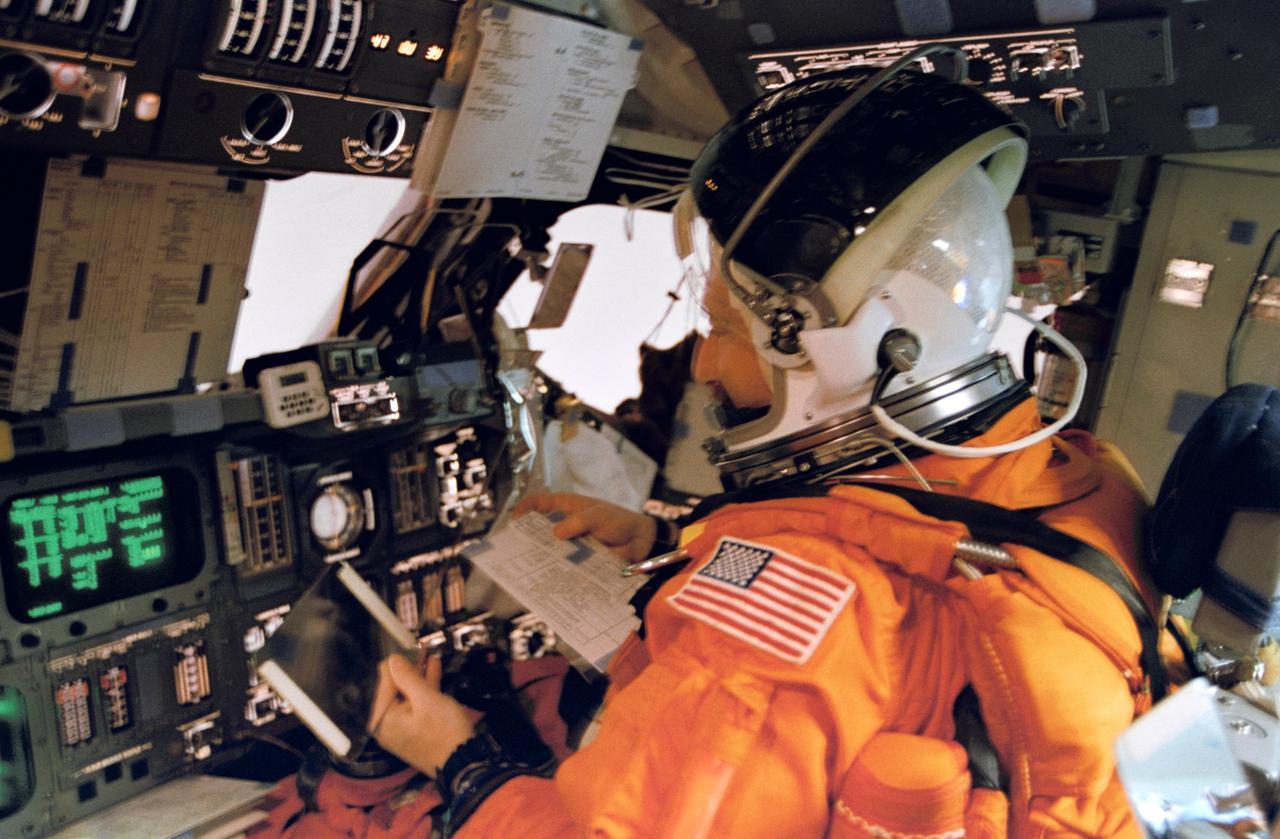
STS075-322-012 (9 March 1996) --- Seated at the pilot's station, astronaut Scott J. Horowitz uses a mirror to monitor the vertical stabilizer and the aft cargo bay area during the entry phase of the flight. Horowitz, pilot, joined four other astronauts and an international payload specialist for 16 days of scientific research in Earth-orbit.
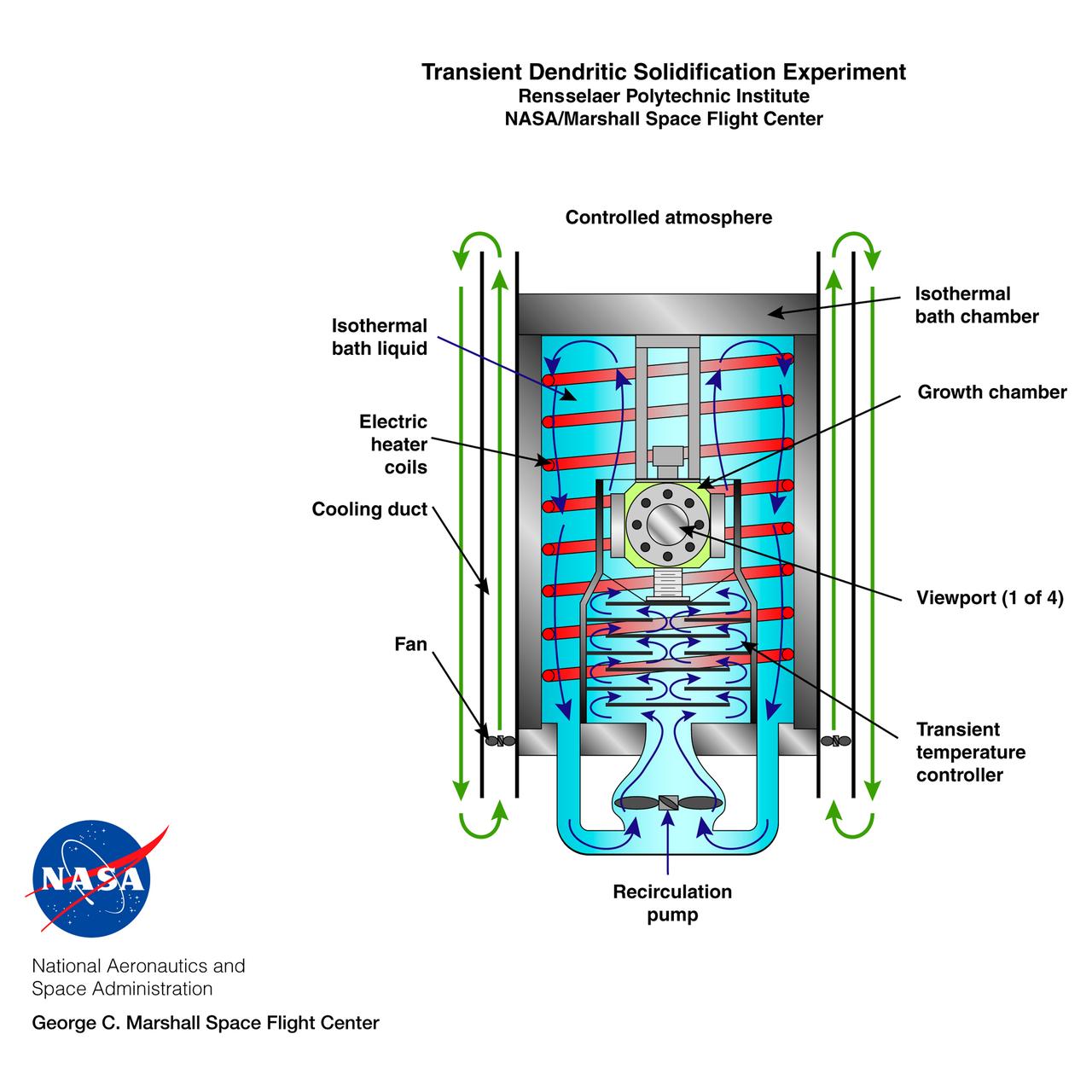
The Transient Dentritic Solidification Experiment (TDSE) is being developed as a candidate for flight aboard the International Space Station. TDSE will study the growth of dentrites (treelike crystalline structures) in a transparent material (succinonitrile or SCN) that mimics the behavior of widely used iron-based metals. Basic work by three Space Shuttle flights (STS-62, STS-75, and STS-87) of the Isothermal Dendritic Growth Experiment (IDGE) is yielding new insights into virtually all industrially relevant metal and alloy forming operations. The TDSE is similar to IDGE, but will maintain a constant temperature while varying pressure on the dentrites. Shown here is a cutaway of the isothermal bath containing its growth cell at the heart of the TDSE. The principal investigator is Matthew Koss of College of the Holy Cross in Worcester, MA. Note: an Acrobat PDF version is available from http://microgravity.nasa.gov/gallery
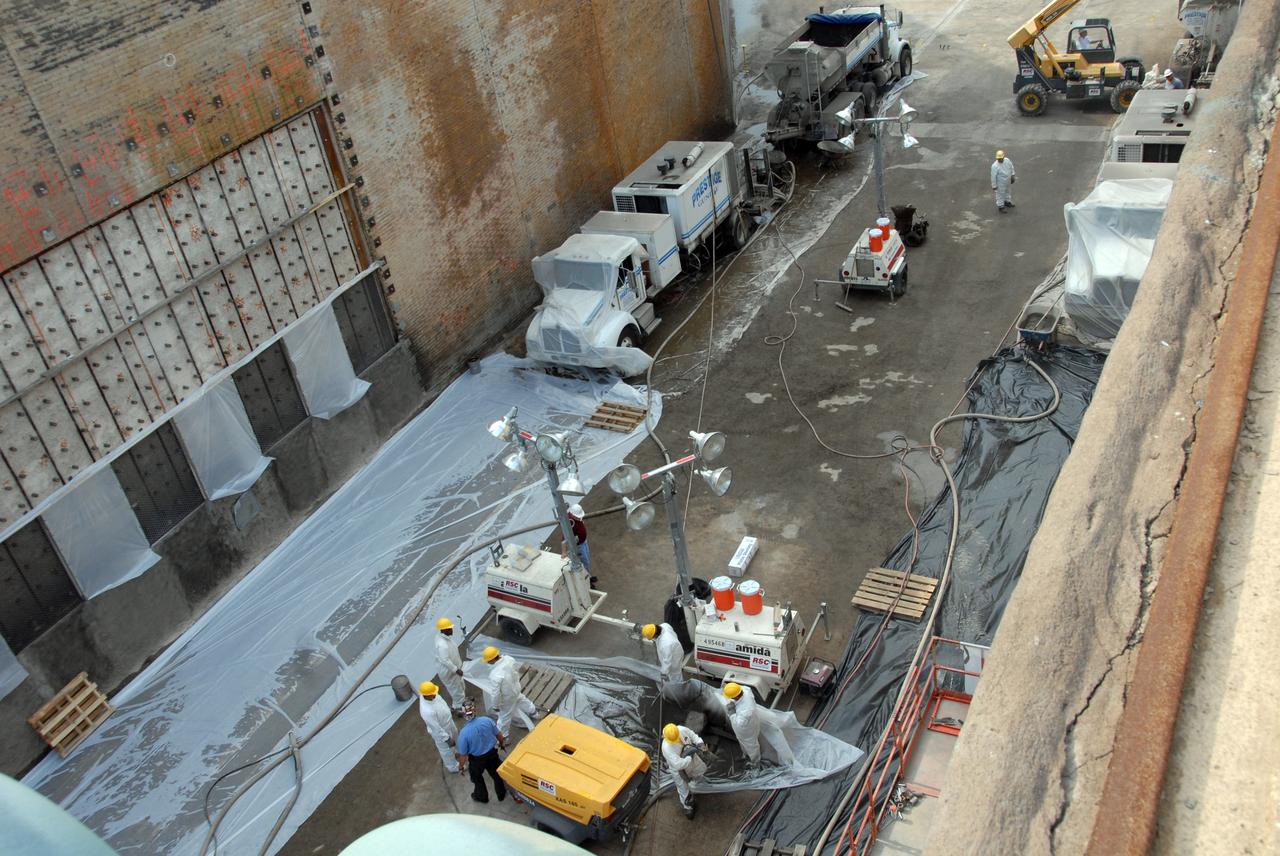
CAPE CANAVERAL, Fla. – This elevated view of Launch Pad 39A at NASA's Kennedy Space Center shows workers filling steel grid structures, welded to the wall of the flame trench, with a heat-resistant concrete called Fondue Fyre, developed during NASA's Apollo lunar program. Damage to the trench occurred during the May 31 launch of Discovery on the STS-124 mission. A 75- by 20-foot section of the east wall was destroyed and debris scattered as far as the pad perimeter fence. Repairs are expected to be completed before the targeted Oct. 8 launch of Atlantis on the NASA Hubble Space Telescope servicing mission. Photo credit: NASA/Jack Pfaller
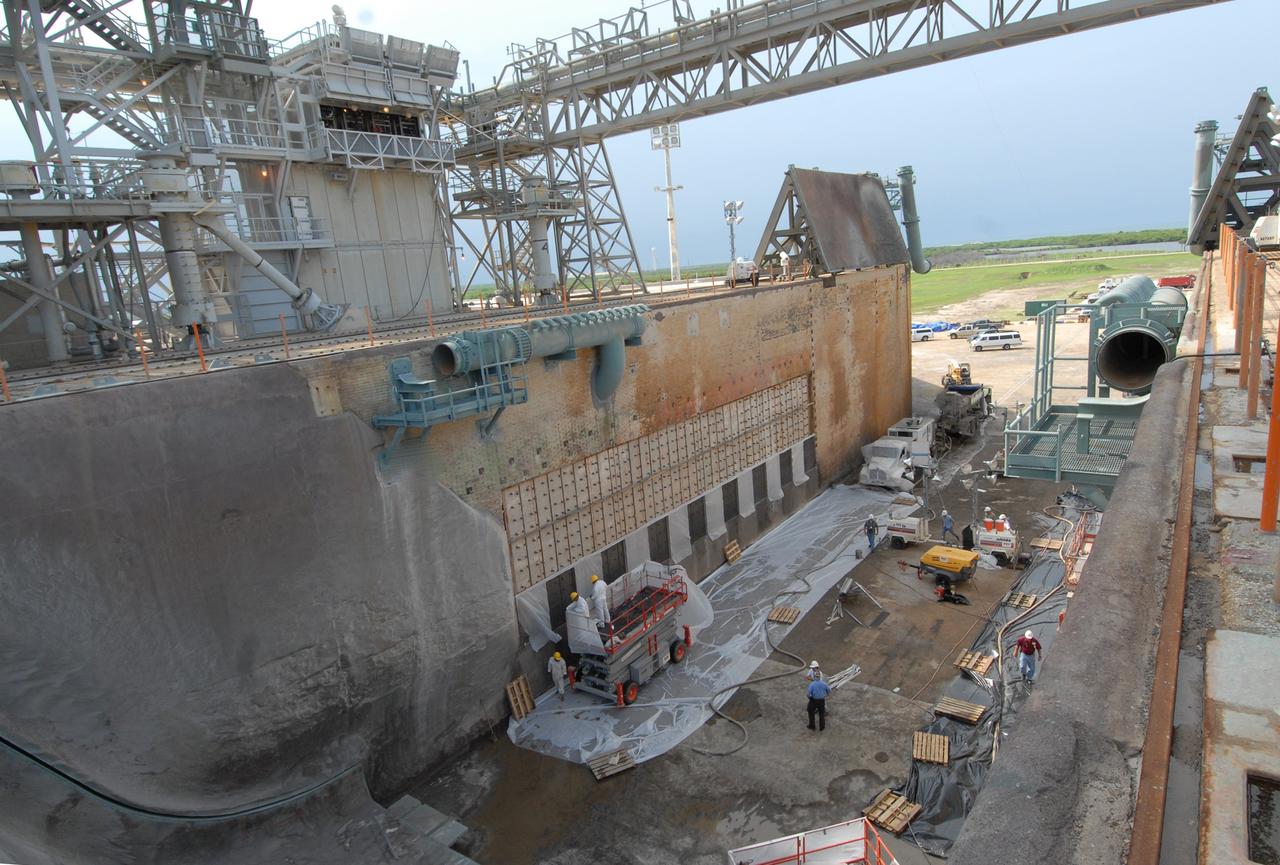
CAPE CANAVERAL, Fla. – This elevated view of Launch Pad 39A at NASA's Kennedy Space Center shows the steel grid structures, welded to the wall of the flame trench, which workers will be filling with a heat-resistant concrete called Fondue Fyre, developed during NASA's Apollo lunar program. Damage to the trench occurred during the May 31 launch of Discovery on the STS-124 mission. A 75- by 20-foot section of the east wall was destroyed and debris scattered as far as the pad perimeter fence. Repairs are expected to be completed before the targeted Oct. 8 launch of Atlantis on the NASA Hubble Space Telescope servicing mission. Photo credit: NASA/Jack Pfaller
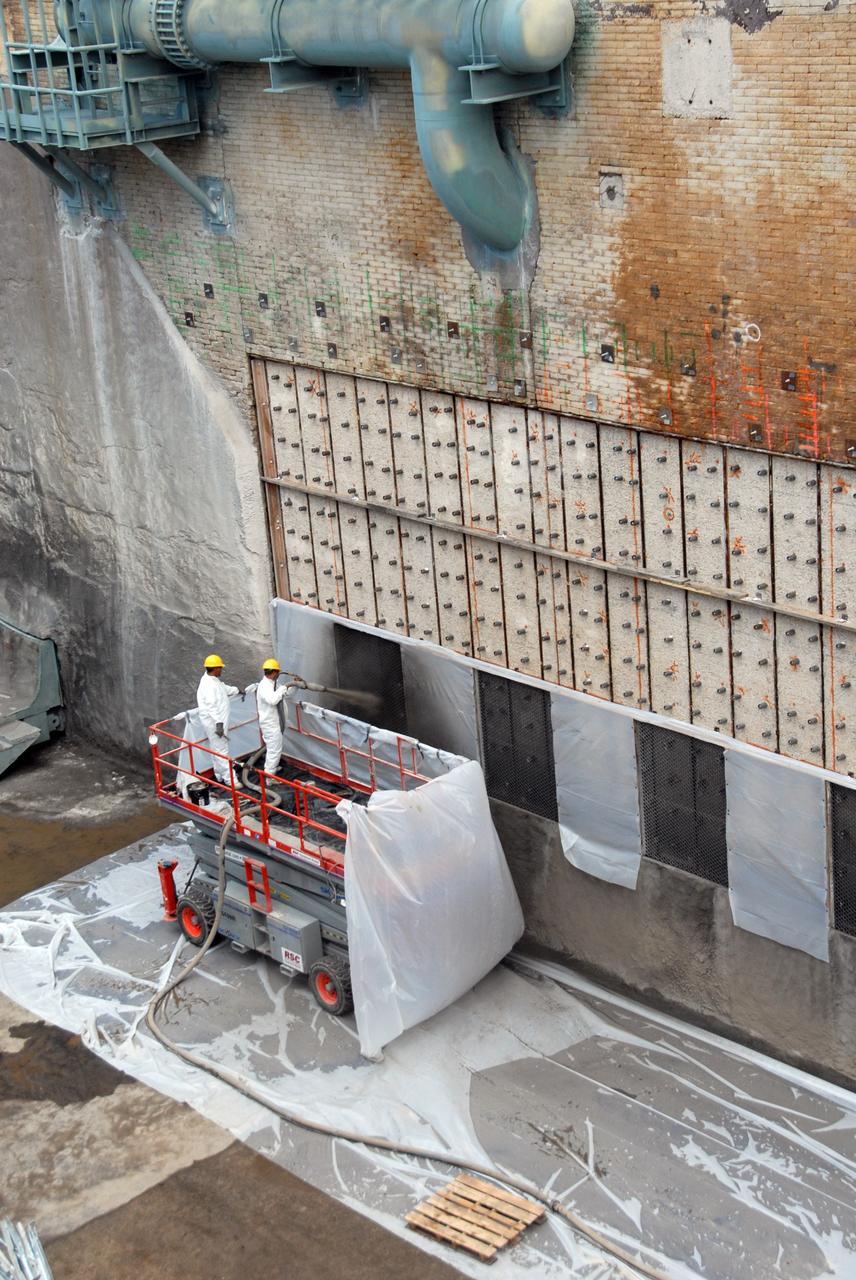
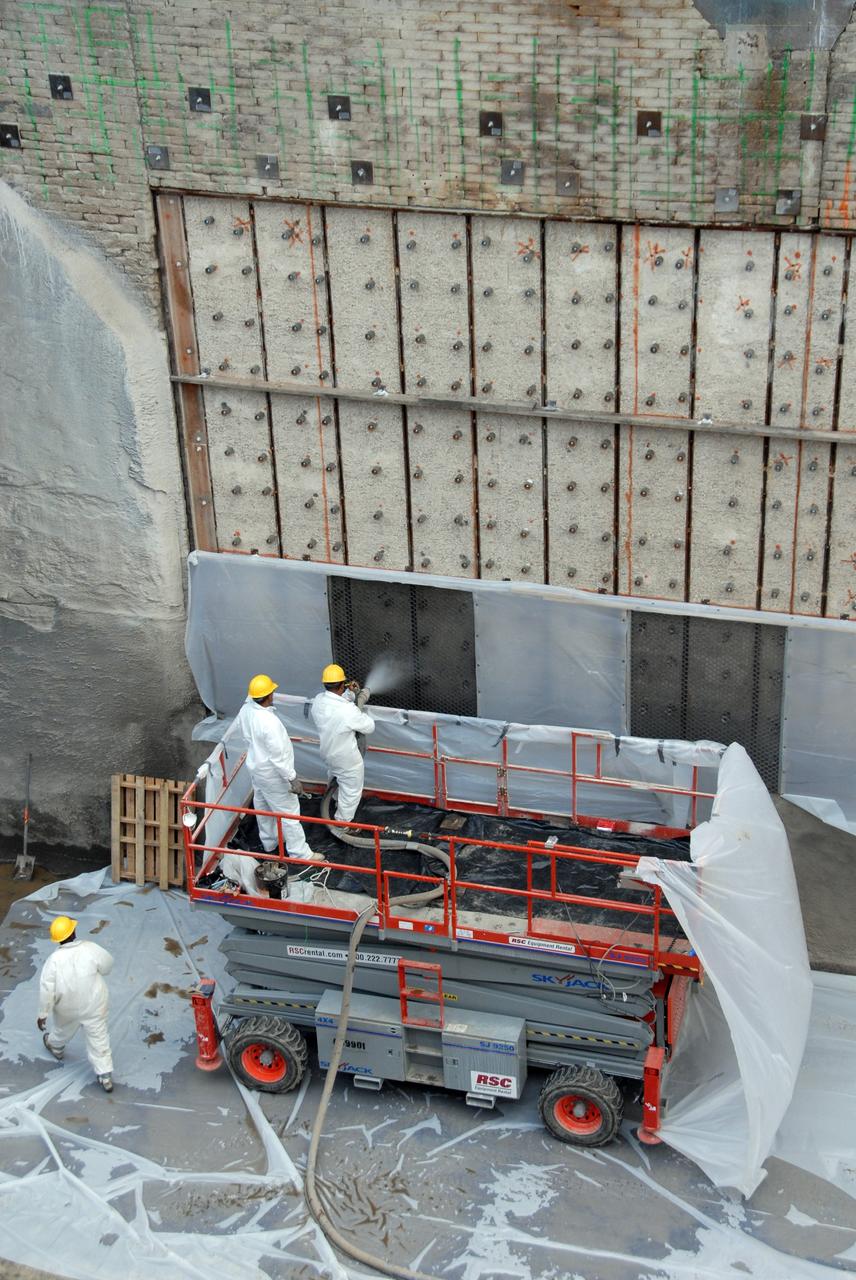
CAPE CANAVERAL, Fla. – At Launch Pad 39A at NASA's Kennedy Space Center, workers on a platform spray a heat-resistant concrete called Fondue Fyre into steel grid structures, welded to the wall of the flame trench. Fondue Fyre was developed during NASA's Apollo lunar program. Damage to the trench occurred during the May 31 launch of Discovery on the STS-124 mission. A 75- by 20-foot section of the east wall was destroyed and debris scattered as far as the pad perimeter fence. Repairs are expected to be completed before the targeted Oct. 8 launch of Atlantis on the NASA Hubble Space Telescope servicing mission. Photo credit: NASA/Jack Pfaller
CAPE CANAVERAL, Fla. – This elevated view of Launch Pad 39A at NASA's Kennedy Space Center shows workers preparing to fill steel grid structures, welded to the wall of the flame trench, with a heat-resistant concrete called Fondue Fyre, developed during NASA's Apollo lunar program. Damage to the trench occurred during the May 31 launch of Discovery on the STS-124 mission. A 75- by 20-foot section of the east wall was destroyed and debris scattered as far as the pad perimeter fence. Repairs are expected to be completed before the targeted Oct. 8 launch of Atlantis on the NASA Hubble Space Telescope servicing mission. Photo credit: NASA/Jack Pfaller
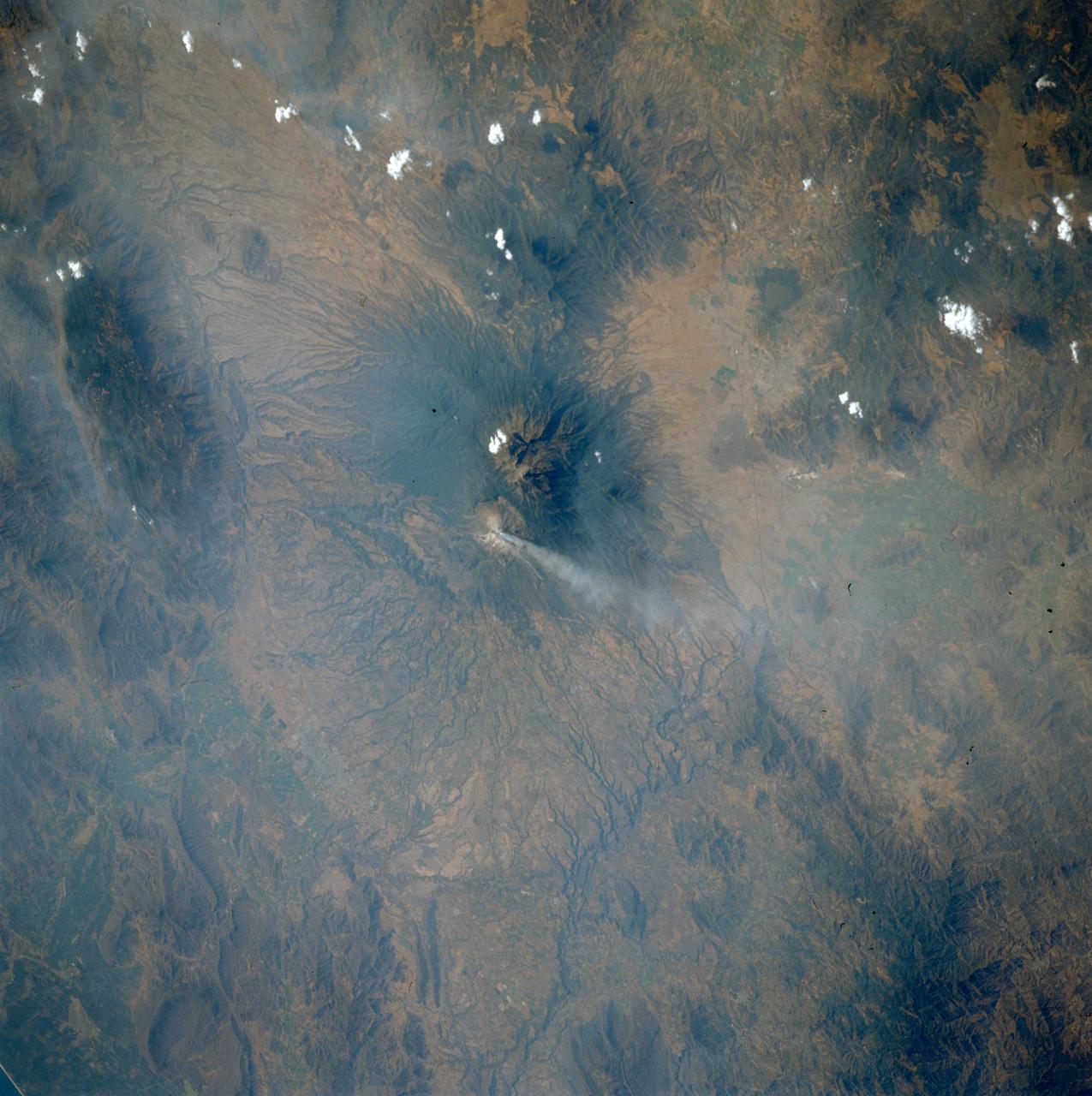
STS039-75-101 (28 April-6 May 1991) --- Spending over eight days in Earth orbit, the STS-39 crew was able to return with photographic coverage of highly variegated geographic scenery, including a number of volcanoes such as Mexico's Colima. Located south of Guadalajara, Colima is Mexico's most active volcano. The current activity started in the first part of March 1991 with avalanches occurring, followed by lava extrusion and ash emission. Colima is captured here in action. The steam plume drifts eastward from the 13,325 ft. summit. Scars from recent landslides can be seen on the southwest flank of the summit.
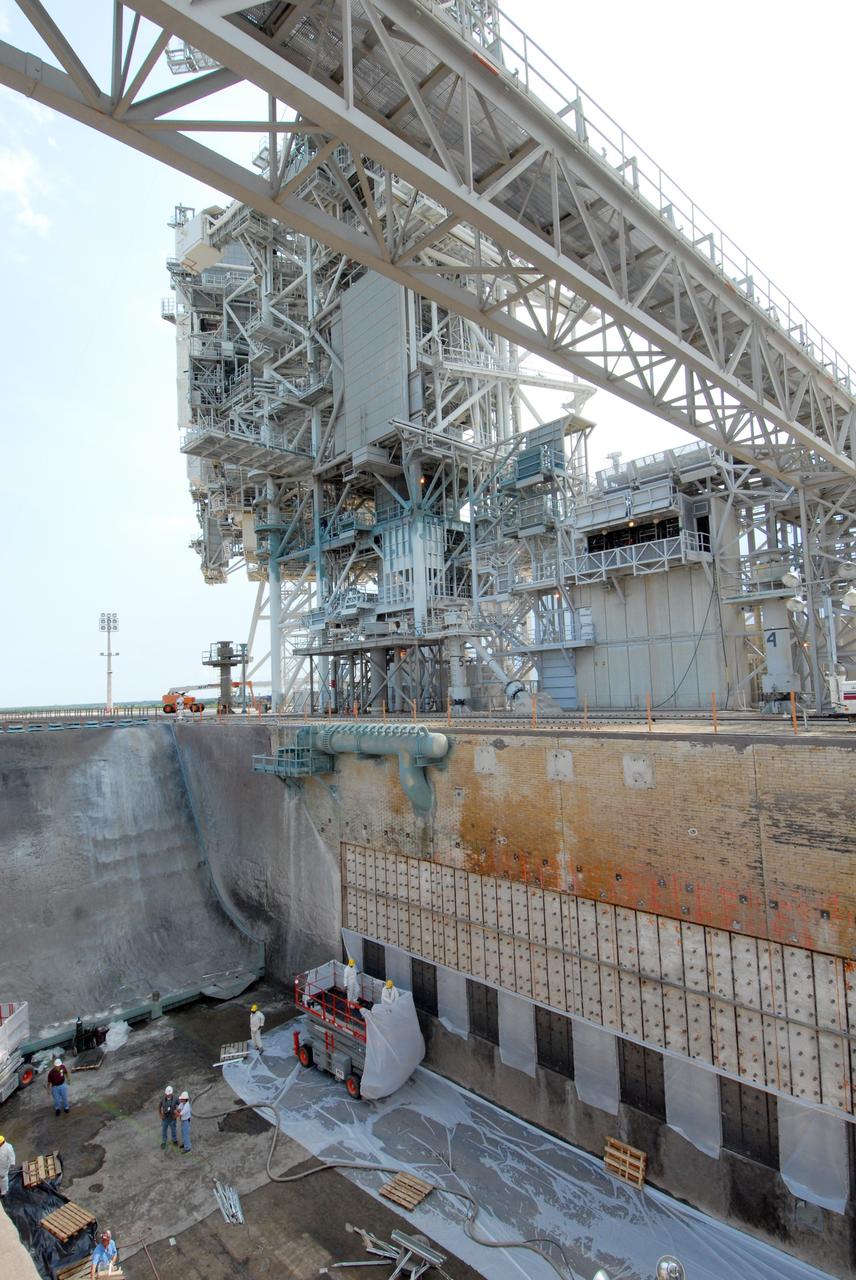
CAPE CANAVERAL, Fla. – This elevated view of Launch Pad 39A at NASA's Kennedy Space Center shows workers preparing to fill steel grid structures, welded to the wall of the flame trench, with a heat-resistant concrete called Fondue Fyre, developed during NASA's Apollo lunar program. Damage to the trench occurred during the May 31 launch of Discovery on the STS-124 mission. A 75- by 20-foot section of the east wall was destroyed and debris scattered as far as the pad perimeter fence. Repairs are expected to be completed before the targeted Oct. 8 launch of Atlantis on the NASA Hubble Space Telescope servicing mission. Photo credit: NASA/Jack Pfaller
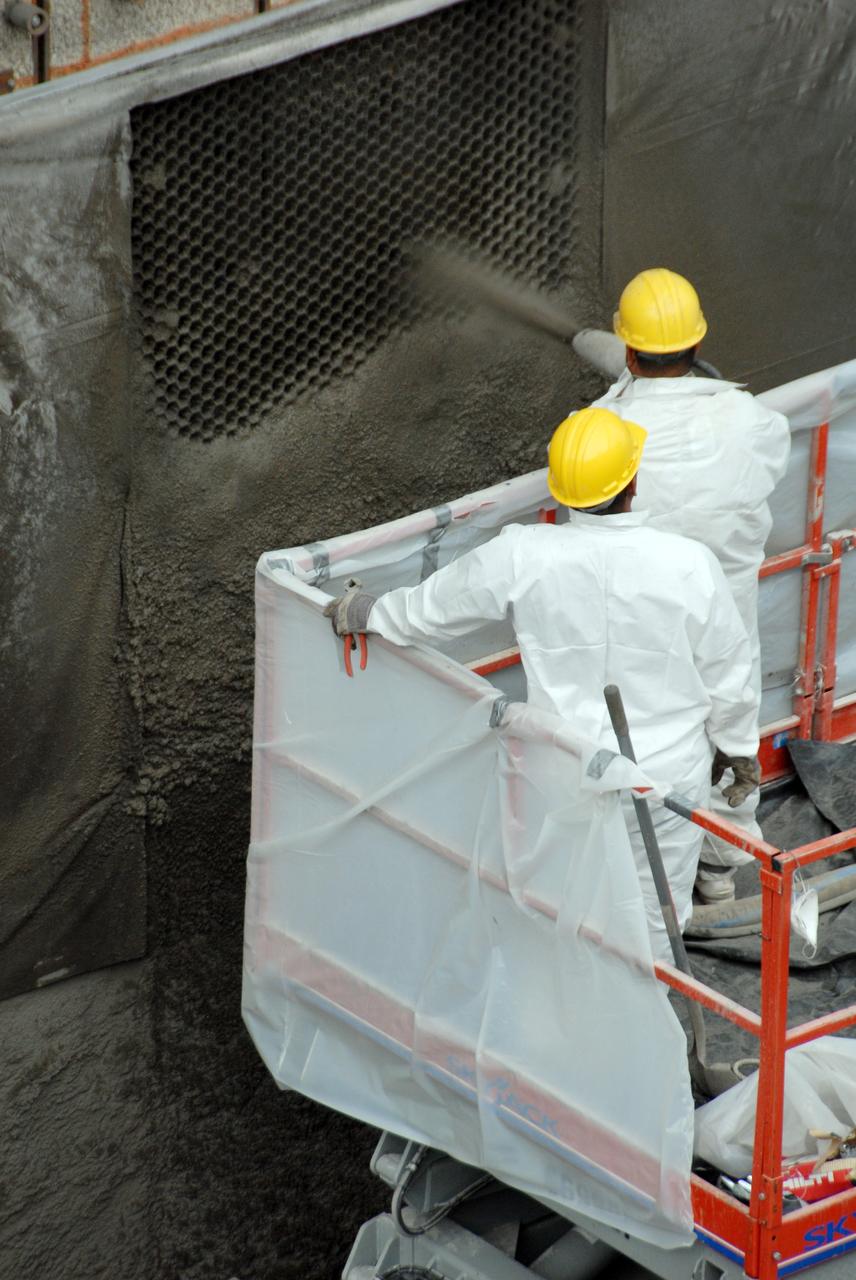
CAPE CANAVERAL, Fla. – At Launch Pad 39A at NASA's Kennedy Space Center, workers spray a heat-resistant concrete called Fondue Fyre into steel grid structures, welded to the wall of the flame trench. Fondue Fyre was developed during NASA's Apollo lunar program. Damage to the trench occurred during the May 31 launch of Discovery on the STS-124 mission. A 75- by 20-foot section of the east wall was destroyed and debris scattered as far as the pad perimeter fence. Repairs are expected to be completed before the targeted Oct. 8 launch of Atlantis on the NASA Hubble Space Telescope servicing mission. Photo credit: NASA/Jack Pfaller
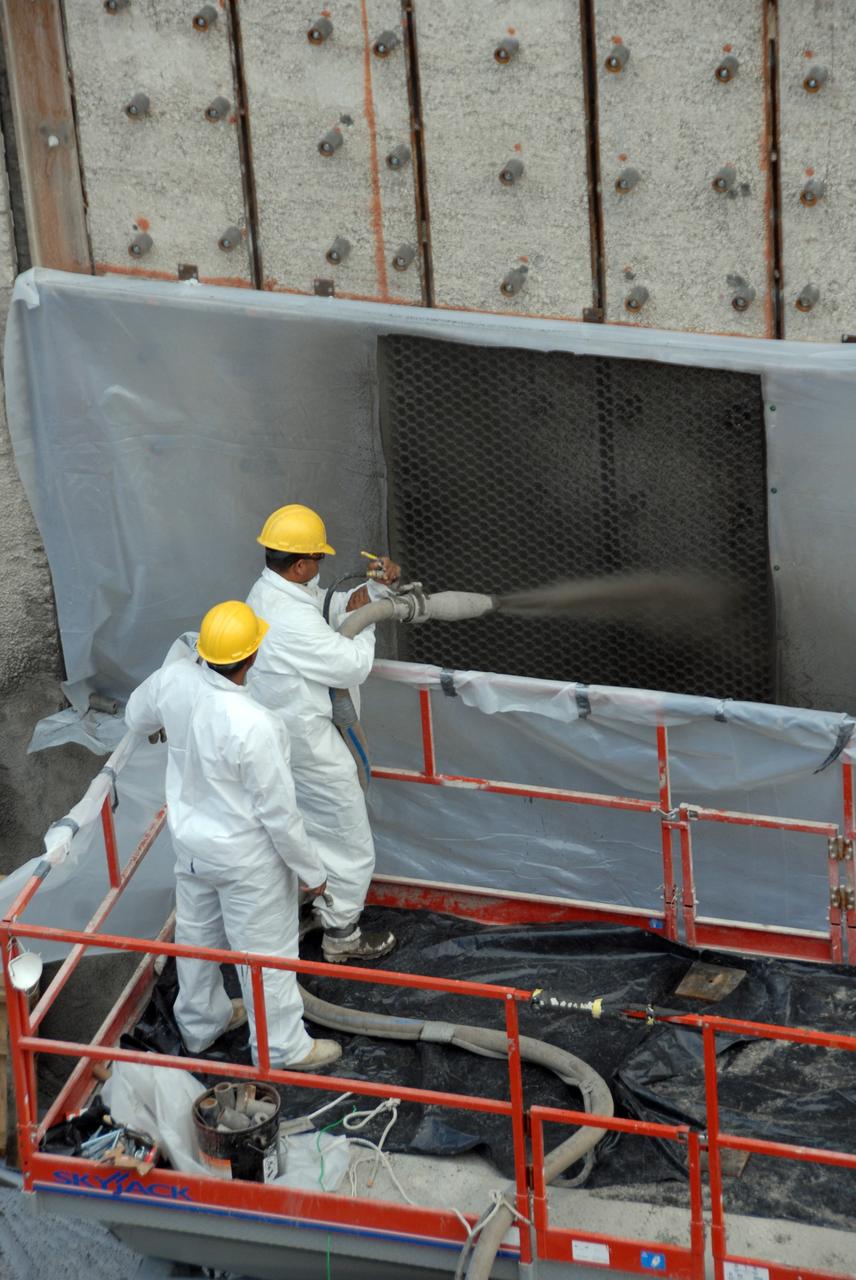
CAPE CANAVERAL, Fla. – At Launch Pad 39A at NASA's Kennedy Space Center, workers spray a heat-resistant concrete called Fondue Fyre into steel grid structures, welded to the wall of the flame trench. Fondue Fyre was developed during NASA's Apollo lunar program. Damage to the trench occurred during the May 31 launch of Discovery on the STS-124 mission. A 75- by 20-foot section of the east wall was destroyed and debris scattered as far as the pad perimeter fence. Repairs are expected to be completed before the targeted Oct. 8 launch of Atlantis on the NASA Hubble Space Telescope servicing mission. Photo credit: NASA/Jack Pfaller
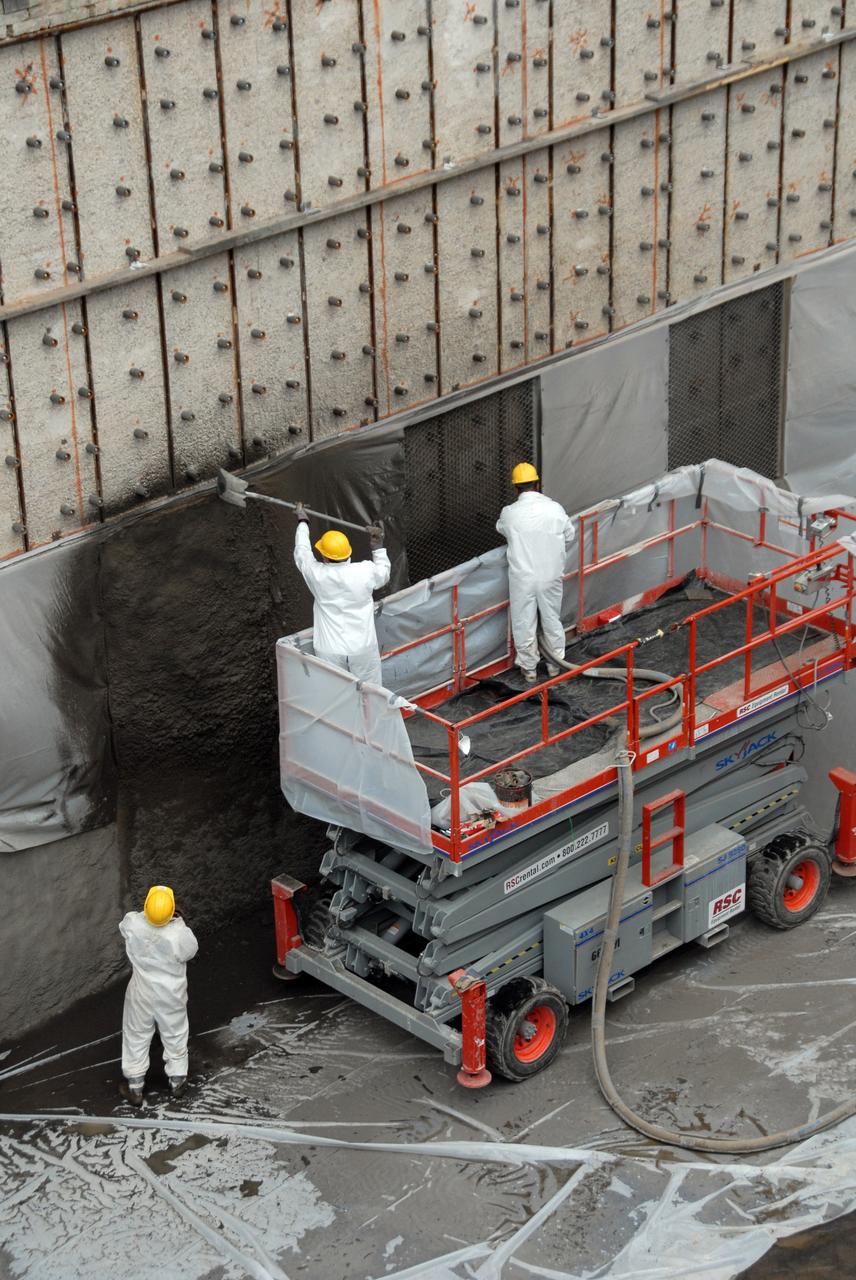
CAPE CANAVERAL, Fla. – At Launch Pad 39A at NASA's Kennedy Space Center, workers pack a heat-resistant concrete called Fondue Fyre into steel grid structures, welded to the wall of the flame trench. Fondue Fyre was developed during NASA's Apollo lunar program. Damage to the trench occurred during the May 31 launch of Discovery on the STS-124 mission. A 75- by 20-foot section of the east wall was destroyed and debris scattered as far as the pad perimeter fence. Repairs are expected to be completed before the targeted Oct. 8 launch of Atlantis on the NASA Hubble Space Telescope servicing mission. Photo credit: NASA/Jack Pfaller
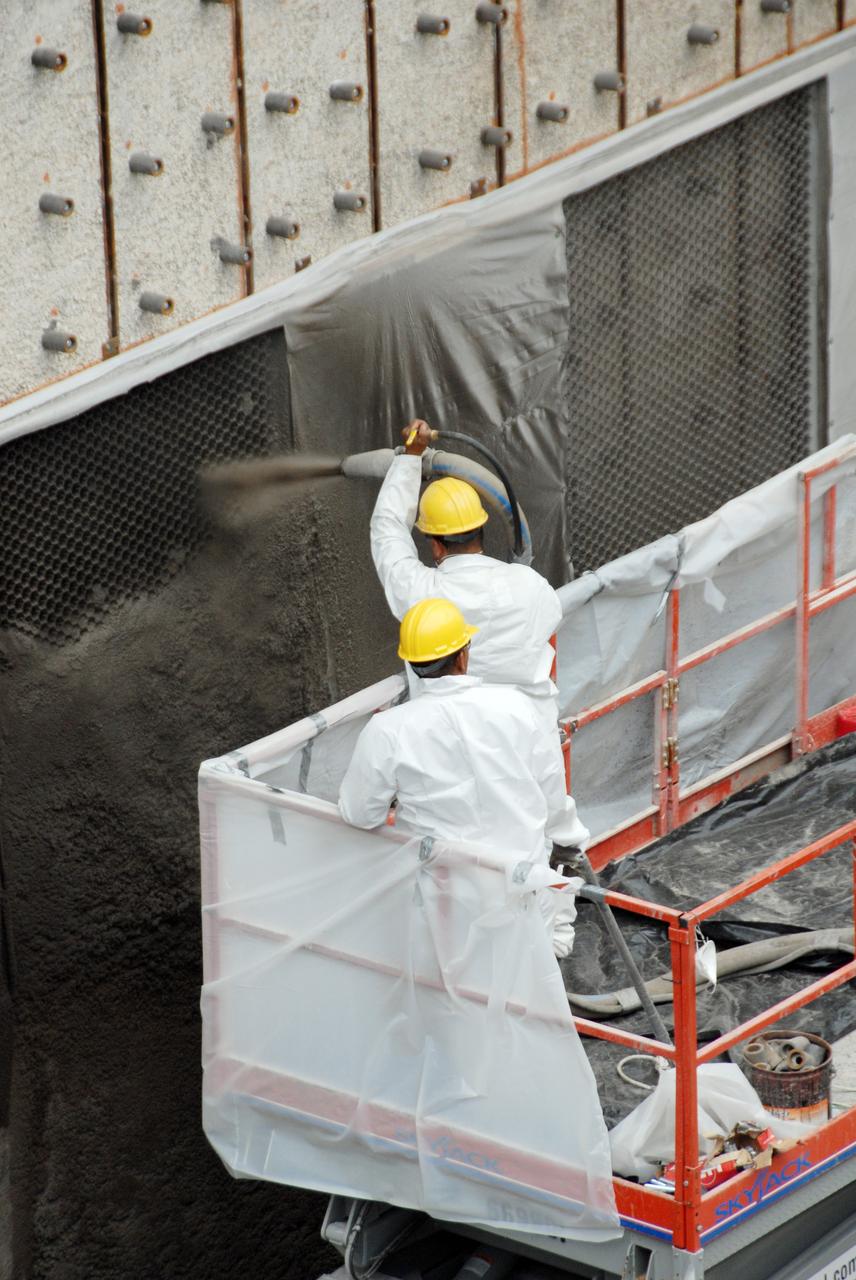
CAPE CANAVERAL, Fla. – At Launch Pad 39A at NASA's Kennedy Space Center, workers spray a heat-resistant concrete called Fondue Fyre into steel grid structures, welded to the wall of the flame trench. Fondue Fyre was developed during NASA's Apollo lunar program. Damage to the trench occurred during the May 31 launch of Discovery on the STS-124 mission. A 75- by 20-foot section of the east wall was destroyed and debris scattered as far as the pad perimeter fence. Repairs are expected to be completed before the targeted Oct. 8 launch of Atlantis on the NASA Hubble Space Telescope servicing mission. Photo credit: NASA/Jack Pfaller
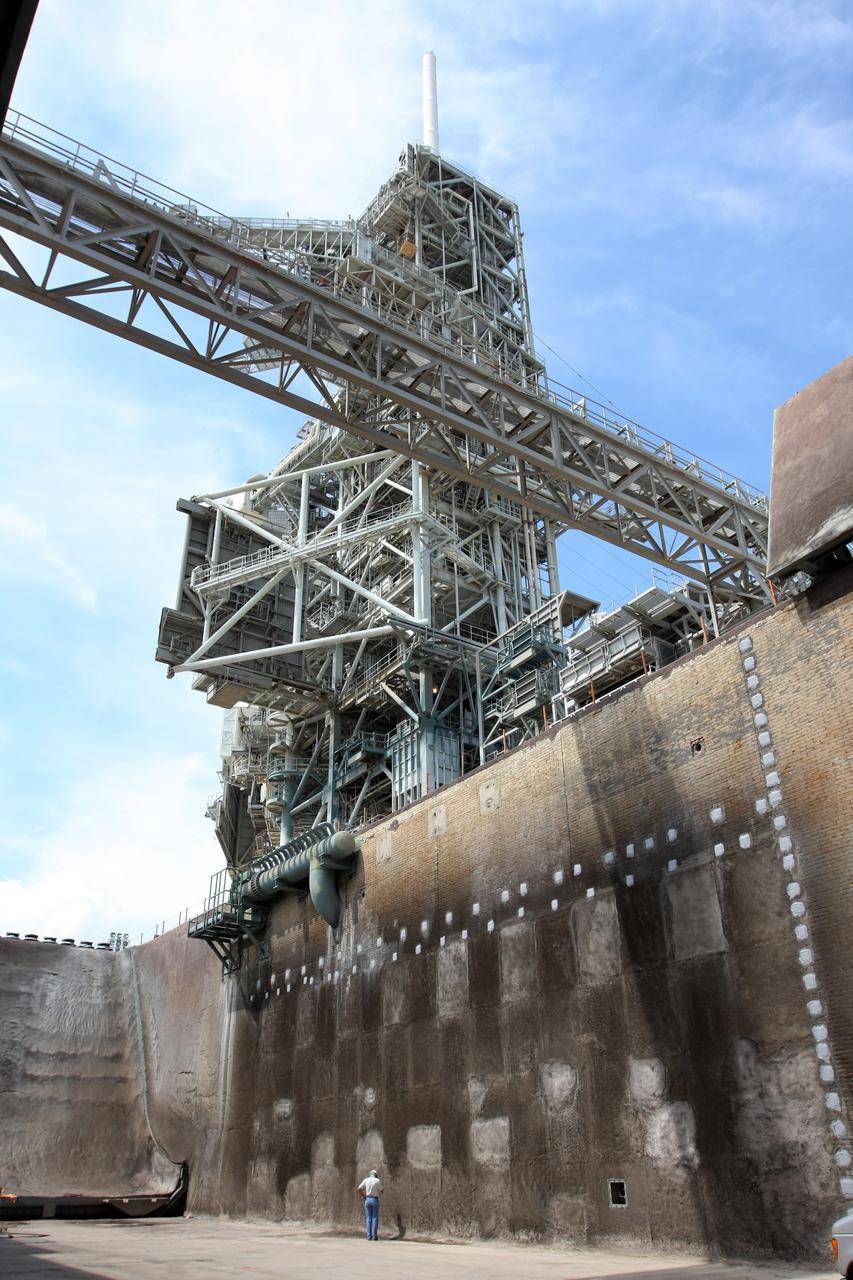
CAPE CANAVERAL, Fla. – An inspector stands in the Launch Pad 39A flame trench at NASA's Kennedy Space Center after tests of the repairs on the wall. Workers sprayed a heat-resistant concrete called Fondue Fyre into steel grid structures, welded to the wall of the flame trench. Fondue Fyre was developed during NASA's Apollo lunar program. Damage to the trench occurred during the launch of space shuttle Discovery on the STS-124 mission. A 75-foot by 20-foot section of the east wall was destroyed and debris scattered as far as the pad perimeter fence. Repairs being completed before the targeted Oct. 8 launch of Atlantis on the NASA Hubble Space Telescope servicing mission. Photo credit: NASA/Dimitri Gerondidakis
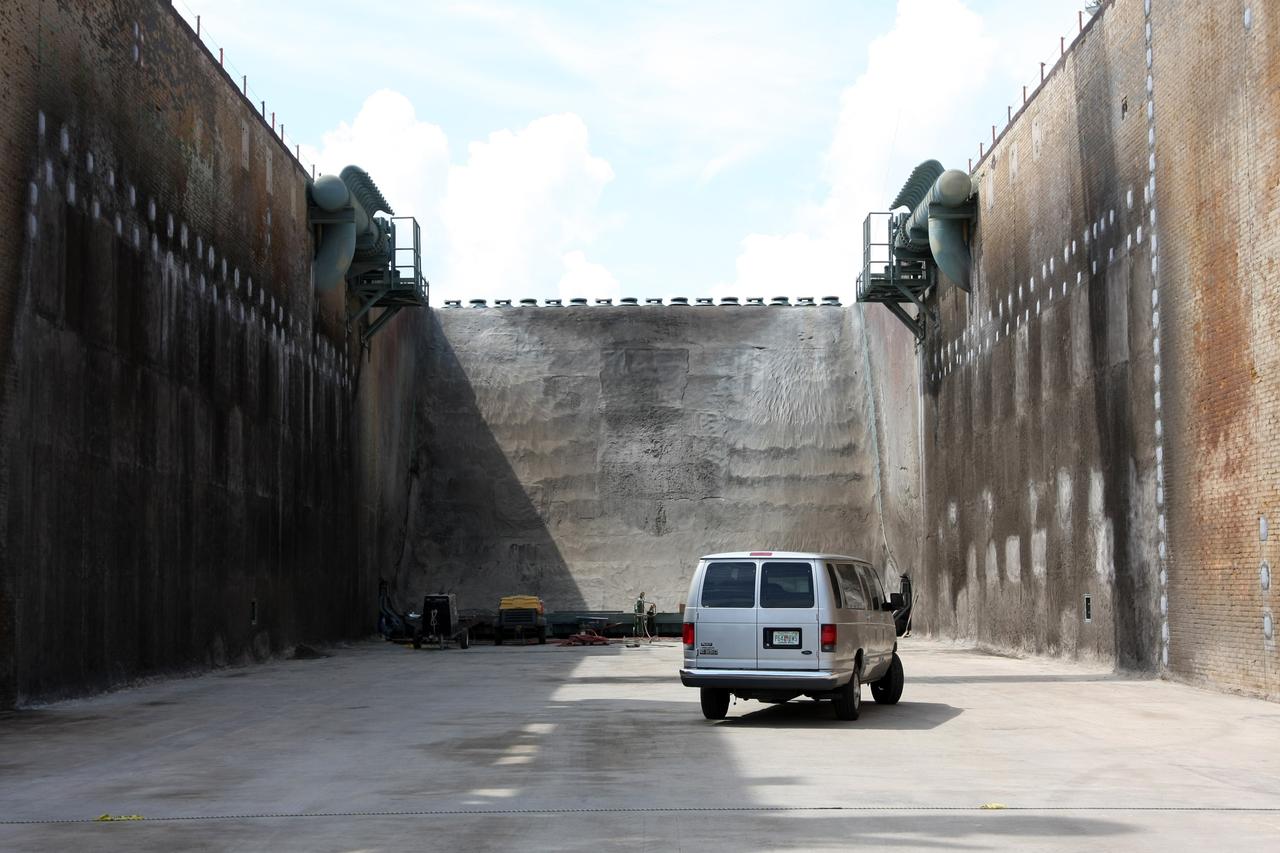
CAPE CANAVERAL, Fla. – A van travels the width of the Launch Pad 39A flame trench at NASA's Kennedy Space Center after tests of the repairs on the wall. Workers sprayed a heat-resistant concrete called Fondue Fyre into steel grid structures, welded to the wall of the flame trench. Fondue Fyre was developed during NASA's Apollo lunar program. Damage to the trench occurred during the launch of space shuttle Discovery on the STS-124 mission. A 75-foot by 20-foot section of the east wall was destroyed and debris scattered as far as the pad perimeter fence. Repairs being completed before the targeted Oct. 8 launch of Atlantis on the NASA Hubble Space Telescope servicing mission. Photo credit: NASA/Dimitri Gerondidakis
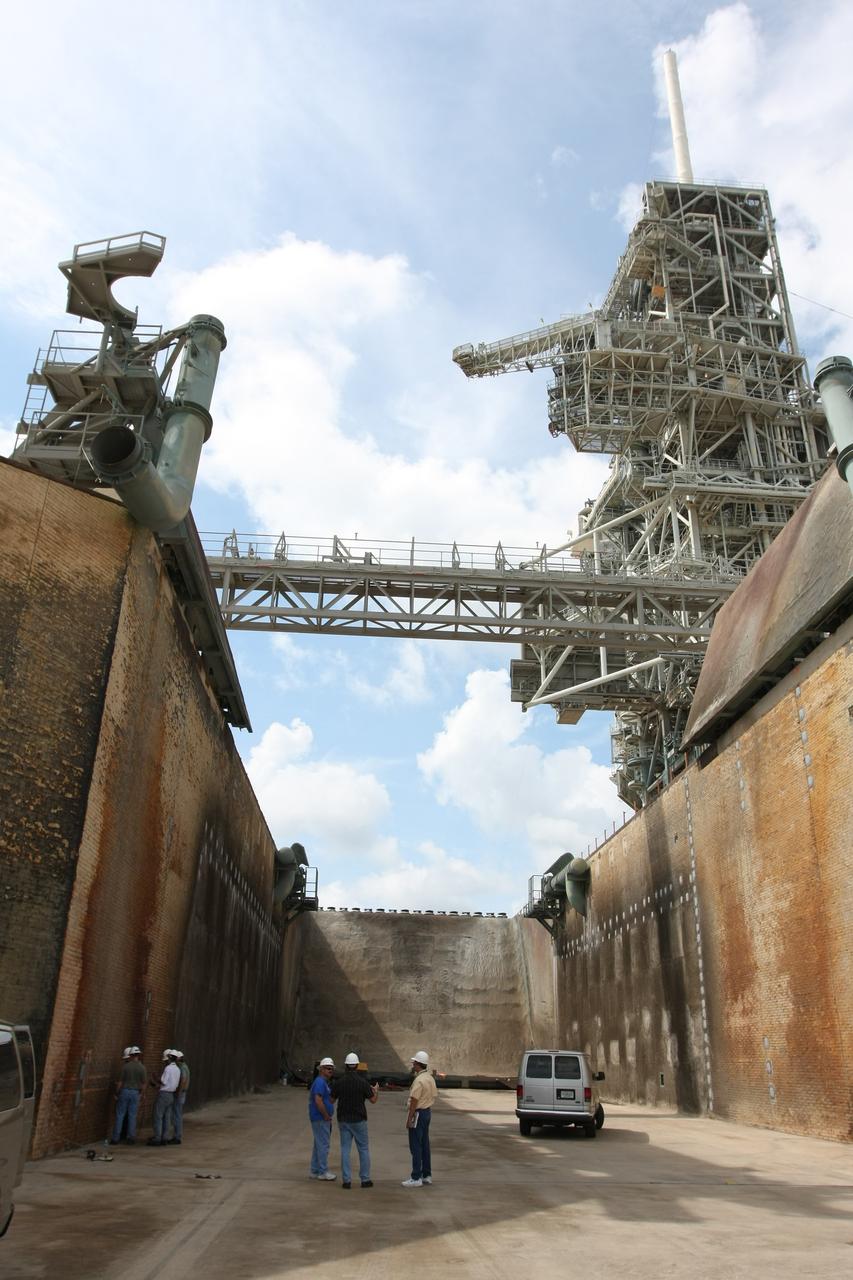
CAPE CANAVERAL, Fla. – This view of the Launch Pad 39A flame trench at NASA's Kennedy Space Center shows the areas on the walls recently repaired. Workers sprayed a heat-resistant concrete called Fondue Fyre into steel grid structures, welded to the wall of the flame trench. Fondue Fyre was developed during NASA's Apollo lunar program. Damage to the trench occurred during the launch of space shuttle Discovery on the STS-124 mission. A 75-foot by 20-foot section of the east wall was destroyed and debris scattered as far as the pad perimeter fence. Repairs being completed before the targeted Oct. 8 launch of Atlantis on the NASA Hubble Space Telescope servicing mission. Photo credit: NASA/Dimitri Gerondidakis
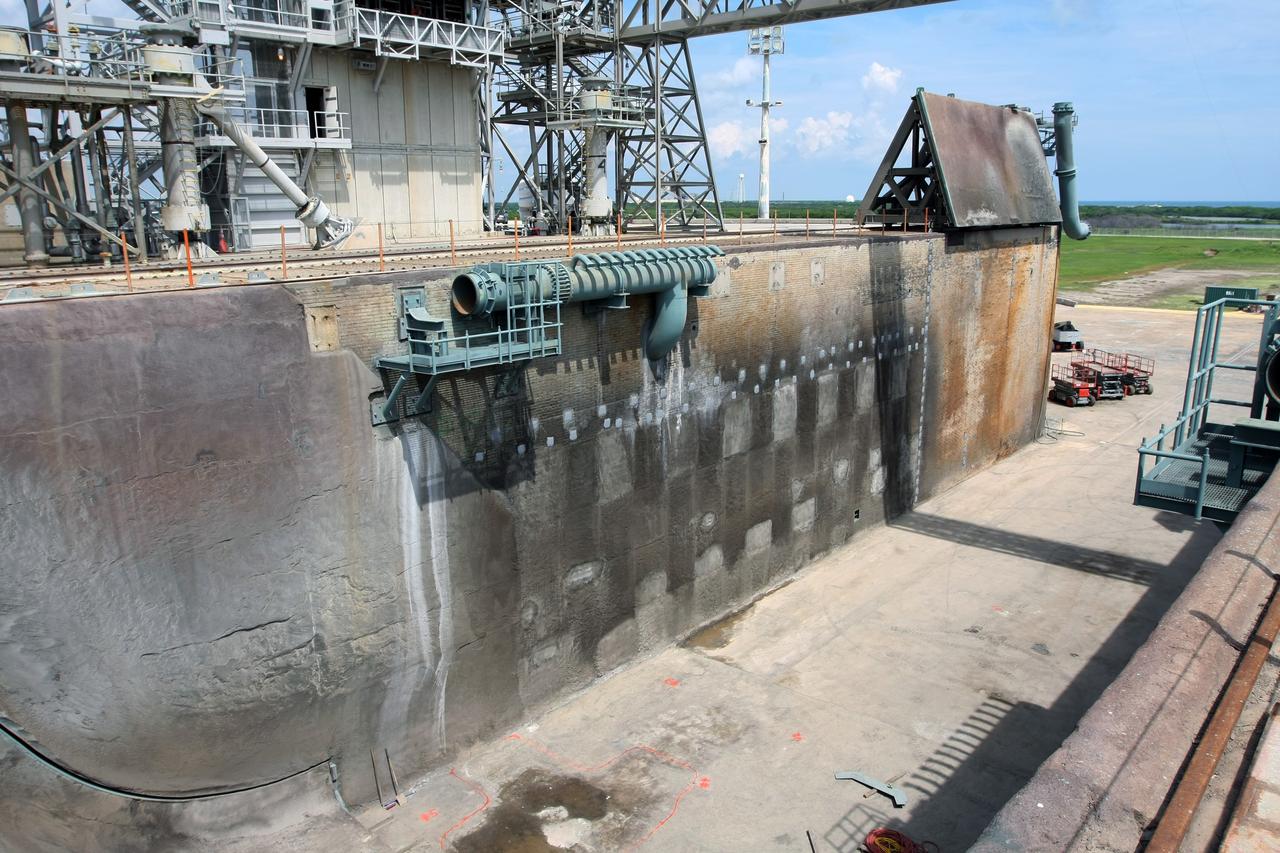
CAPE CANAVERAL, Fla. – A view from above of repairs made to the walls of the Launch Pad 39A flame trench at NASA's Kennedy Space Center. Workers sprayed a heat-resistant concrete called Fondue Fyre into steel grid structures, welded to the wall of the flame trench. Fondue Fyre was developed during NASA's Apollo lunar program. Damage to the trench occurred during the launch of space shuttle Discovery on the STS-124 mission. A 75-foot by 20-foot section of the east wall was destroyed and debris scattered as far as the pad perimeter fence. Repairs being completed before the targeted Oct. 8 launch of Atlantis on the NASA Hubble Space Telescope servicing mission. Photo credit: NASA/Dimitri Gerondidakis
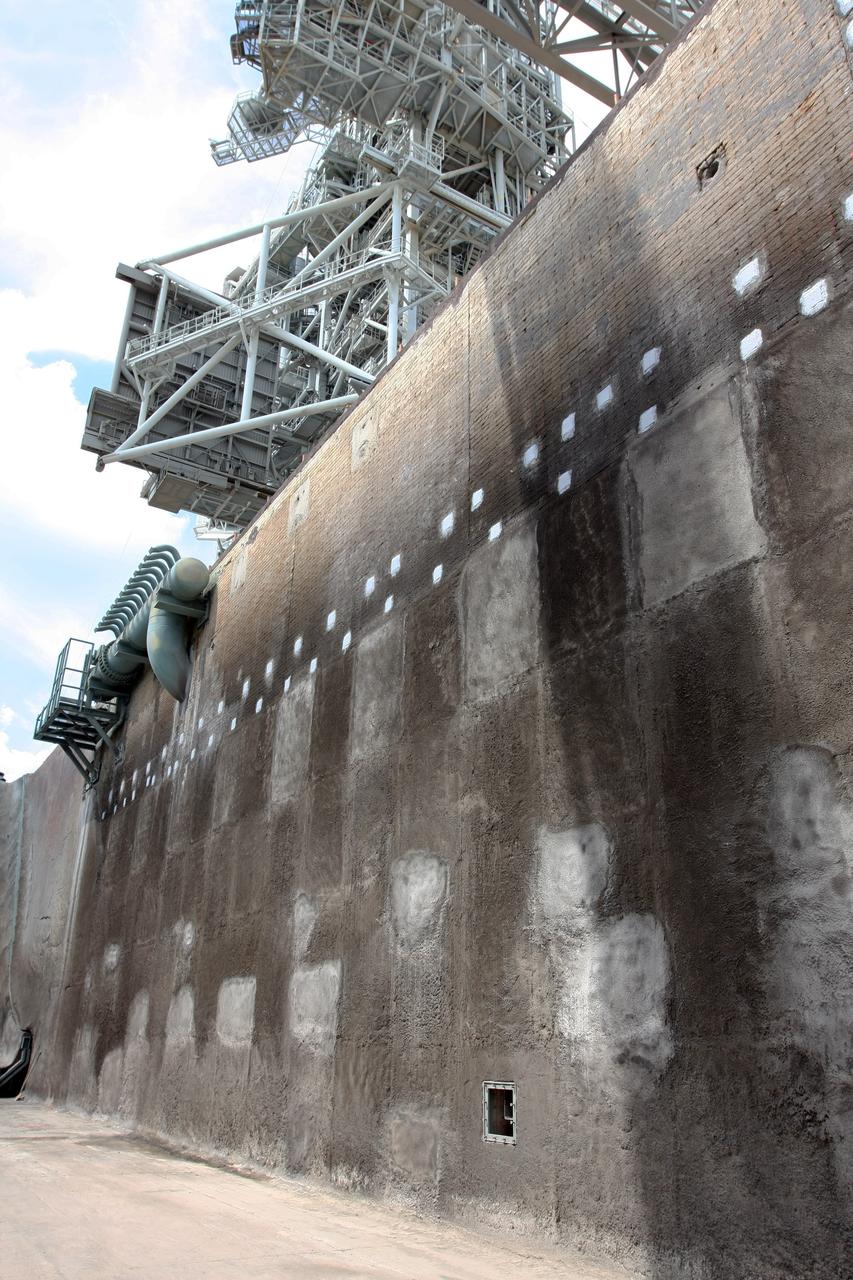
CAPE CANAVERAL, Fla. – A closeup of the wall in the Launch Pad 39A flame trench at NASA's Kennedy Space Center after repairs were made. Workers sprayed a heat-resistant concrete called Fondue Fyre into steel grid structures, welded to the wall of the flame trench. Fondue Fyre was developed during NASA's Apollo lunar program. Damage to the trench occurred during the launch of space shuttle Discovery on the STS-124 mission. A 75-foot by 20-foot section of the east wall was destroyed and debris scattered as far as the pad perimeter fence. Repairs being completed before the targeted Oct. 8 launch of Atlantis on the NASA Hubble Space Telescope servicing mission. Photo credit: NASA/Dimitri Gerondidakis
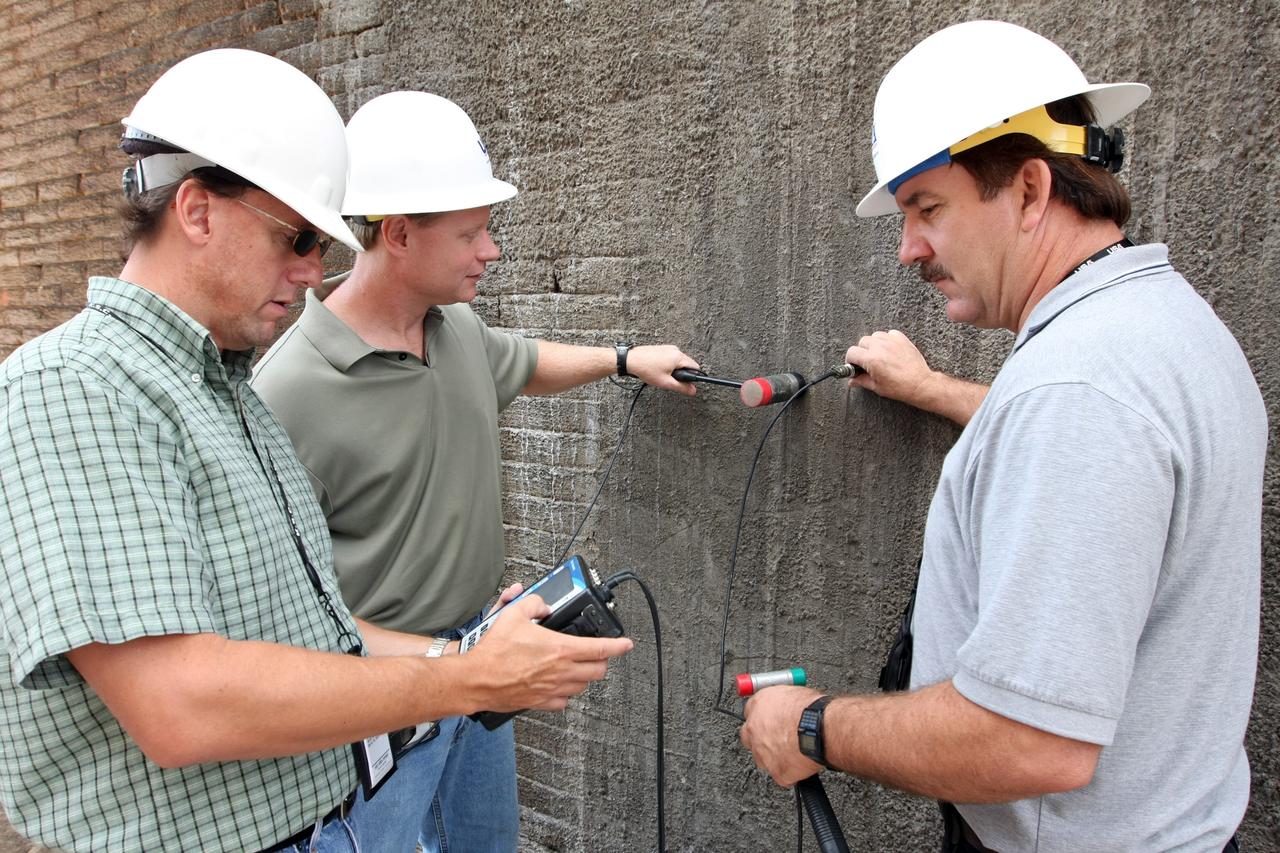
CAPE CANAVERAL, Fla. – In the Launch Pad 39A flame trench at NASA's Kennedy Space Center, inspectors test the repairs on the wall. Workers sprayed a heat-resistant concrete called Fondue Fyre into steel grid structures, welded to the wall of the flame trench. Fondue Fyre was developed during NASA's Apollo lunar program. Damage to the trench occurred during the launch of space shuttle Discovery on the STS-124 mission. A 75-foot by 20-foot section of the east wall was destroyed and debris scattered as far as the pad perimeter fence. Repairs being completed before the targeted Oct. 8 launch of Atlantis on the NASA Hubble Space Telescope servicing mission. Photo credit: NASA/Dimitri Gerondidakis
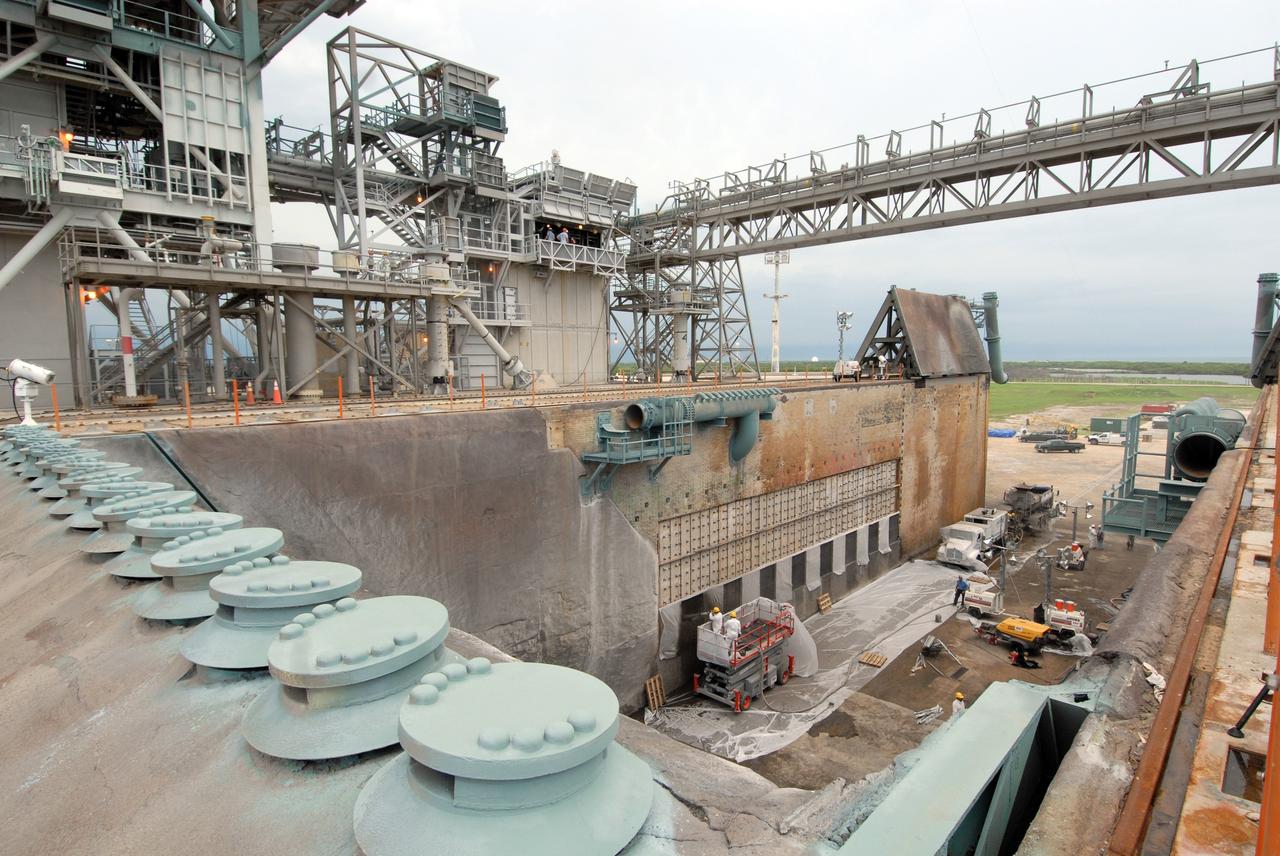
CAPE CANAVERAL, Fla. – This elevated view of Launch Pad 39A at NASA's Kennedy Space Center shows workers filling steel grid structures, welded to the wall of the flame trench, with a heat-resistant concrete called Fondue Fyre, developed during NASA's Apollo lunar program. At left are the pad's "rainbirds." These nozzles are part of the pad sound suppression system which protects the orbiter and its payloads from being damaged by acoustical energy reflected from the mobile launcher platform during liftoff. Damage to the trench occurred during the May 31 launch of Discovery on the STS-124 mission. A 75- by 20-foot section of the east wall was destroyed and debris scattered as far as the pad perimeter fence. Repairs are expected to be completed before the targeted Oct. 8 launch of Atlantis on the NASA Hubble Space Telescope servicing mission. Photo credit: NASA/Jack Pfaller
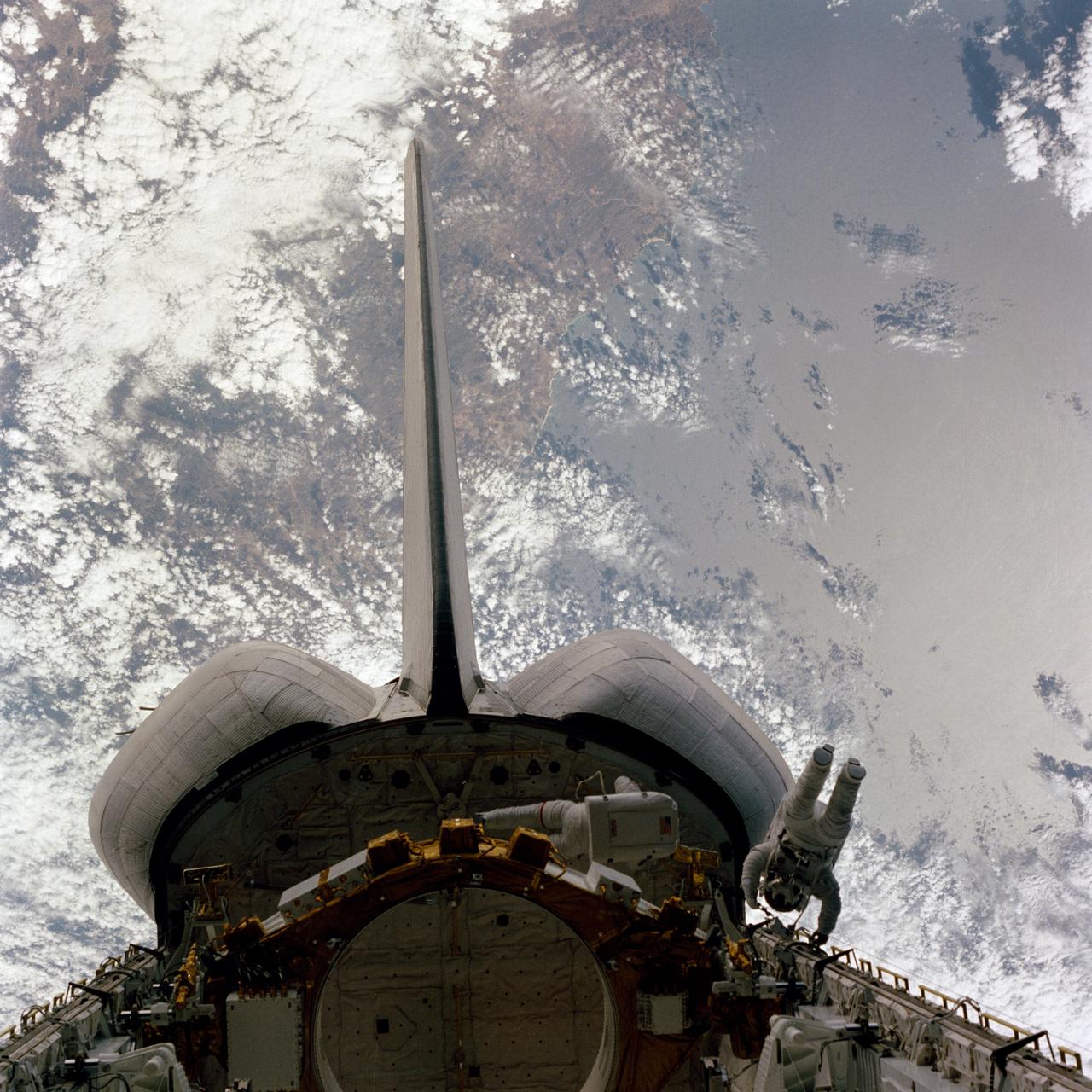
STS006-45-111 (7 April 1983) --- Astronaut Donald H. Peterson (port side) and F. Story Musgrave, STS-6 mission specialists, evaluate the handrail system on the starboard longeron and aft bulkhead, respectively, during a long extravehicular activity (EVA) aboard the Earth-orbiting space shuttle Challenger. The vertical stabilizer and orbital maneuvering system (OMS) pods frame a portion of Mexico?s state of Jalisco below. Punta Farallon and Sahta da Tencatita, about 120 kilometers (75 miles) south of Puerto Vallarta, are visible. Pacific waters form about half of the backdrop for this scene, photographed by one of two crew members who remained inside the spacecraft during the EVA. Astronaut Karol J. Bobko, pilot, took a number of pictures of his fellow crew members during their outside tasks and astronaut Paul J. Weitz, commander, took some photographs while remaining in command of the reusable vehicle. Photo credit: NASA