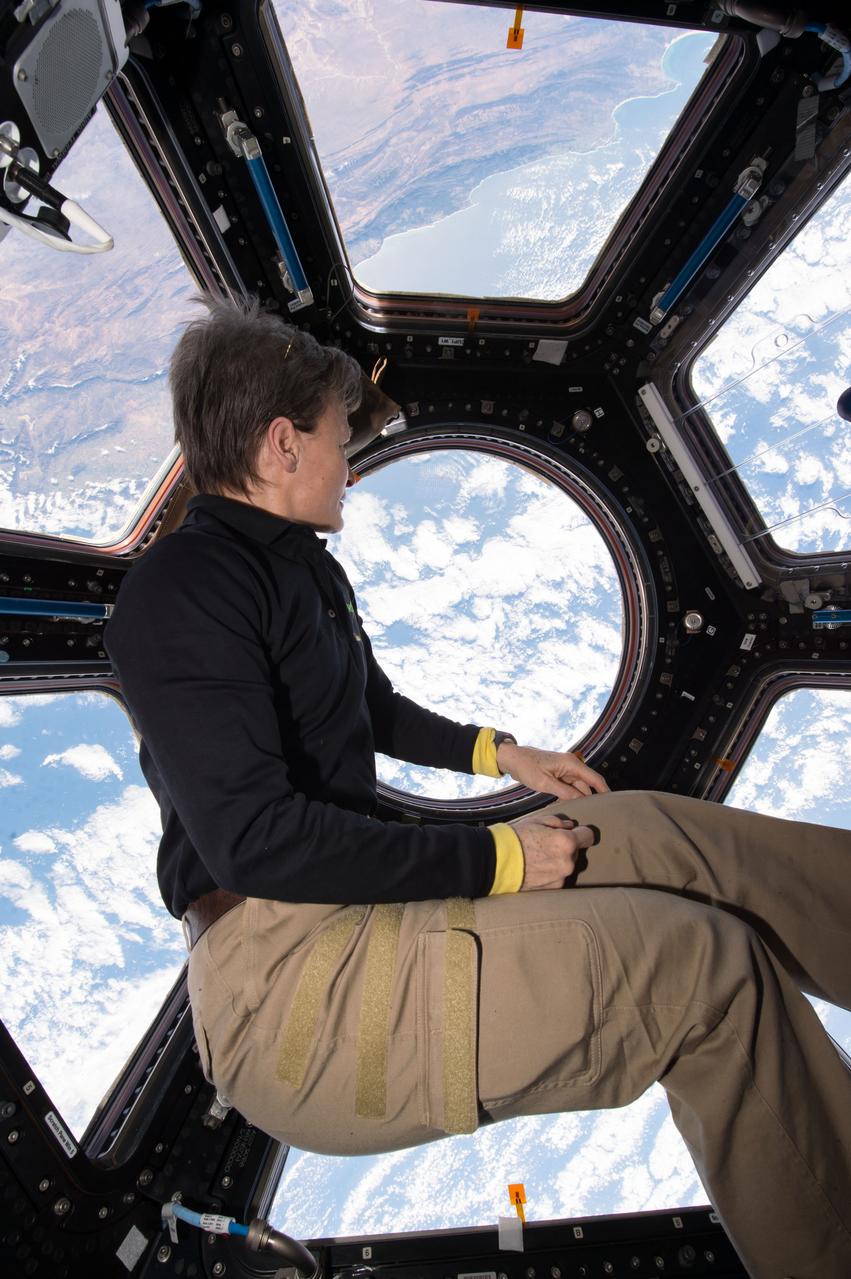
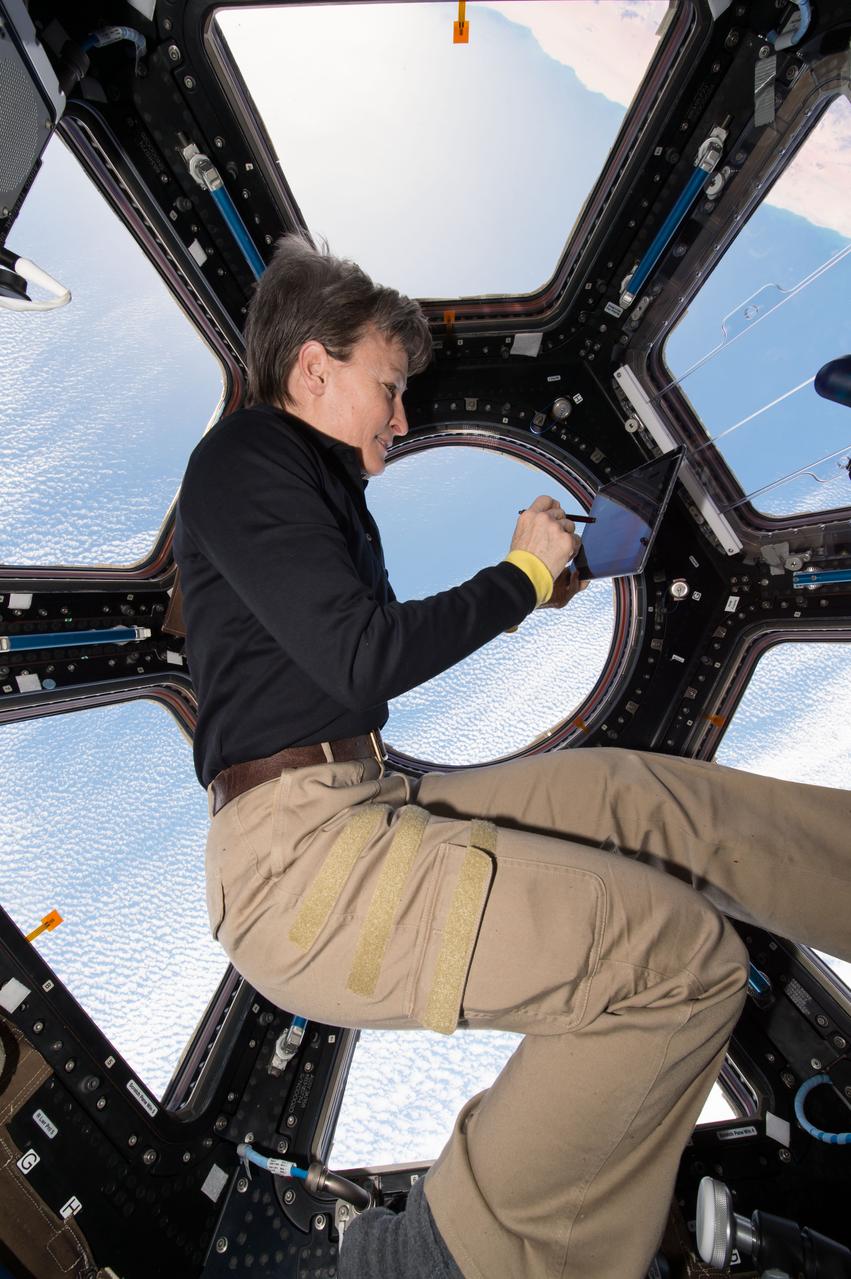
iss052e016190 (July 18, 2017) --- Astronaut Peggy Whitson is photographed sitting in front of the Cupola windows during the final Crew Autonomous Scheduling Test (CAST) session. The CAST investigation analyzes whether crews can develop plans in a reasonable period of time with appropriate input, whether proximity of planners to the planned operations increases efficiency, and if crew members are more satisfied when given a role in plan development.
Crew Autonomous Scheduling Test (CAST)
iss052e016179 (7/18/2017) --- NASA astronaut Peggy Whitson is photographed sitting in front of the Cupola windows during the final Crew Autonomous Scheduling Test (CAST) session. The CAST investigation analyzes whether crews can develop plans in a reasonable period of time with appropriate input, whether proximity of planners to the planned operations increases efficiency, and if crew members are more satisfied when given a role in plan development
Crew Autonomous Scheduling Test (CAST)
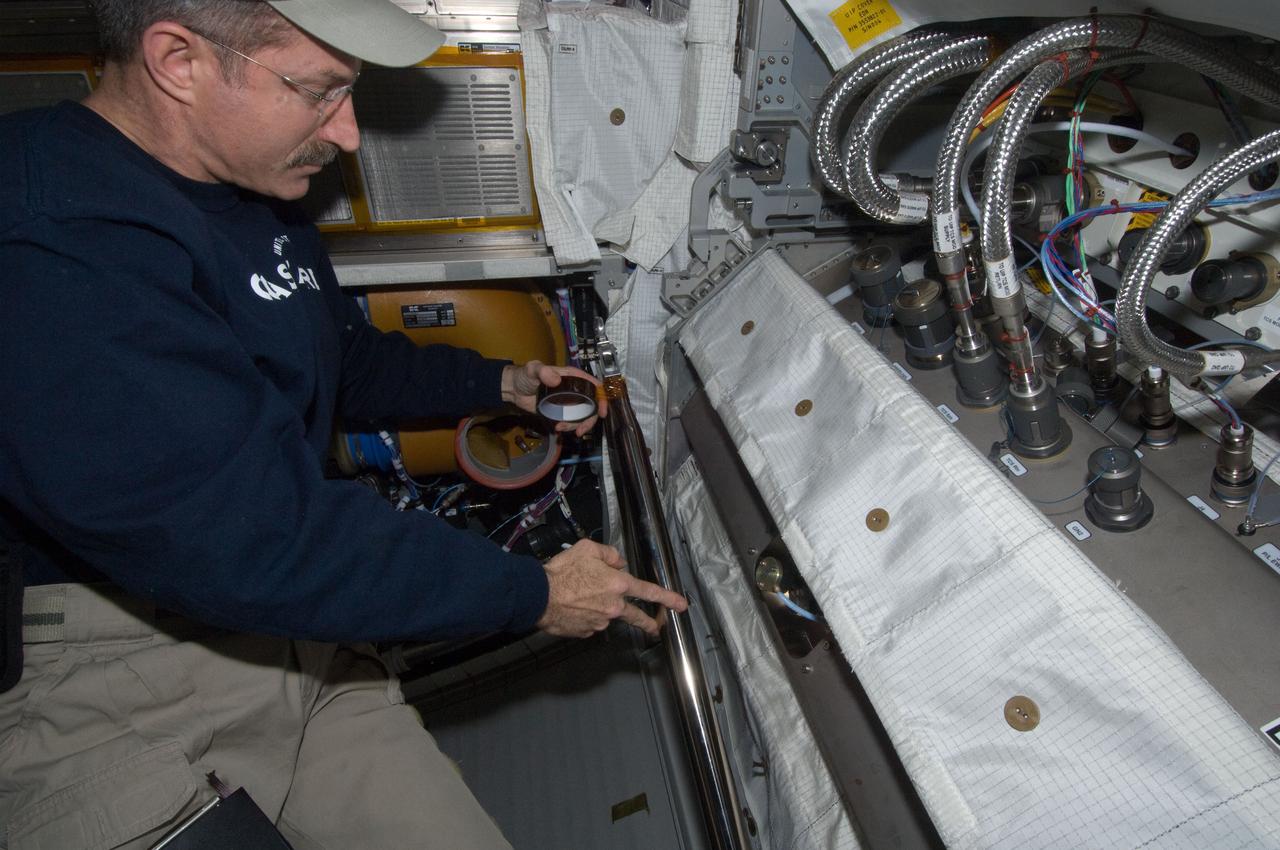
ISS030-E-093414 (22 Feb. 2012) --- NASA astronaut Dan Burbank, Expedition 30 commander, performs the scheduled extensive cleanup of ventilation systems in the Columbus laboratory of the International Space Station.
Burbank performs the scheduled extensive cleanup of ventilation systems
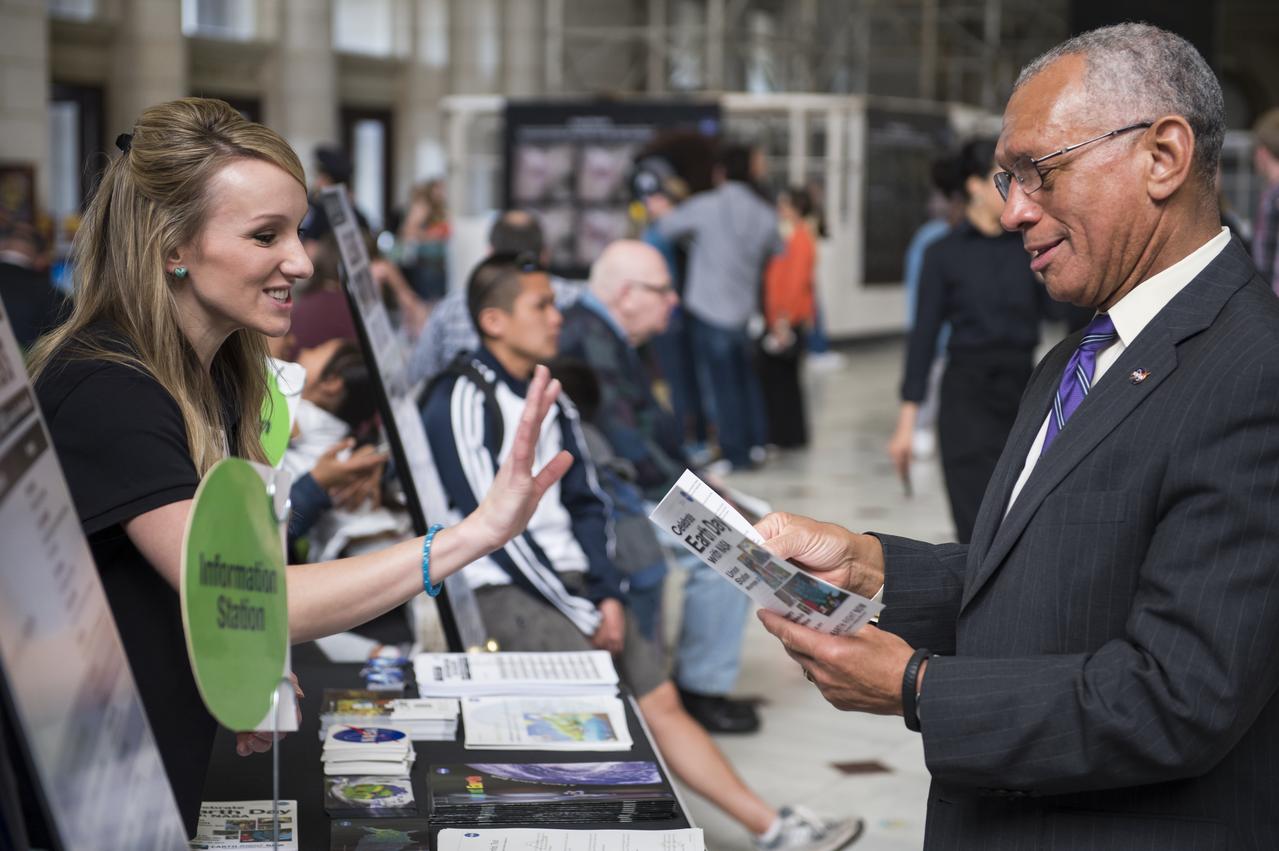
NASA's Administrator, Charles Bolden, visits the exhibits at NASA's Earth Day event. The event took place at Union Station in Washington, DC on April 22, 2014. Photo Credit: (NASA/Aubrey Gemignani)
NASA Earth Day 2014
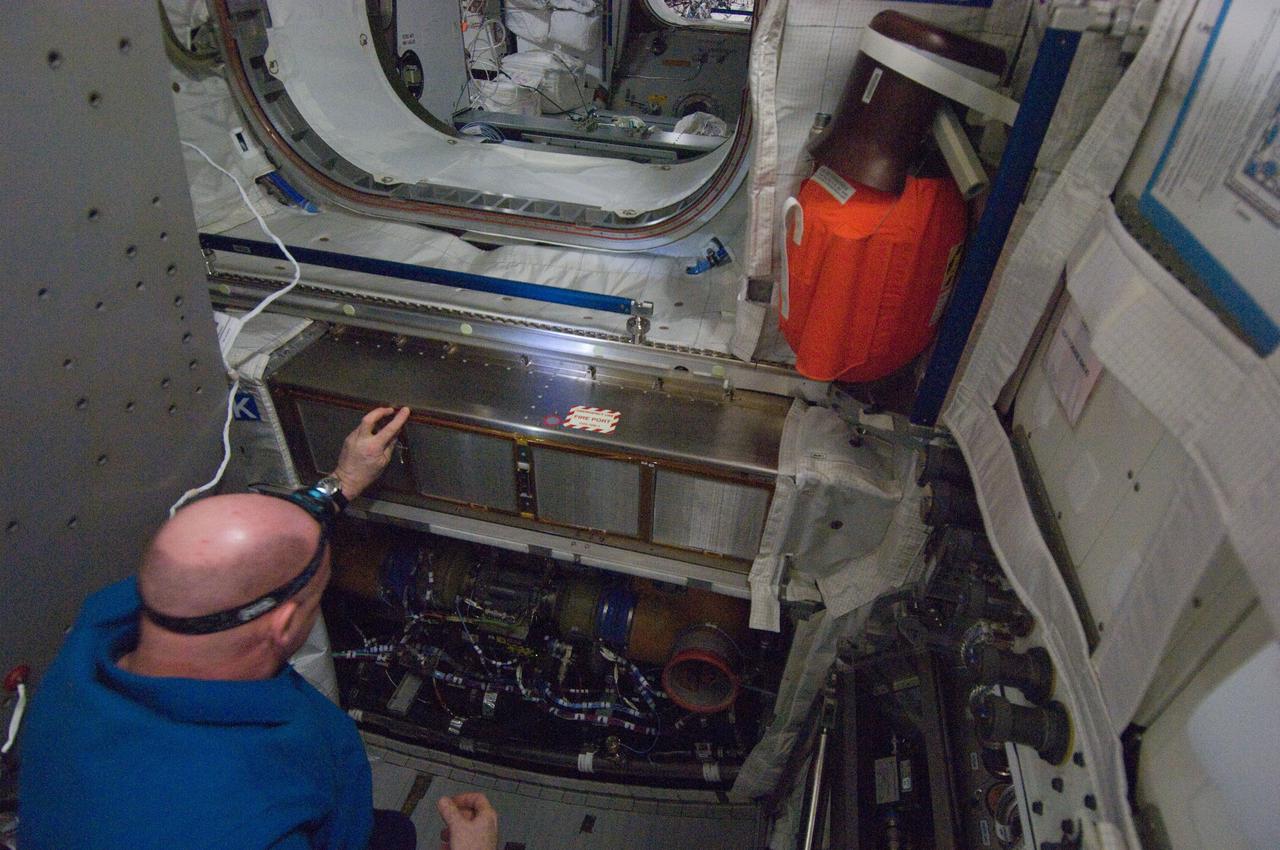
ISS030-E-094598 (23 Feb. 2012) --- European Space Agency astronaut Andre Kuipers, Expedition 30 flight engineer, performs the scheduled inspection and extensive cleanup of ventilation systems in the Columbus laboratory of the International Space Station.
Kuipers during scheduled inspection and extensive cleanup of ventilation systems
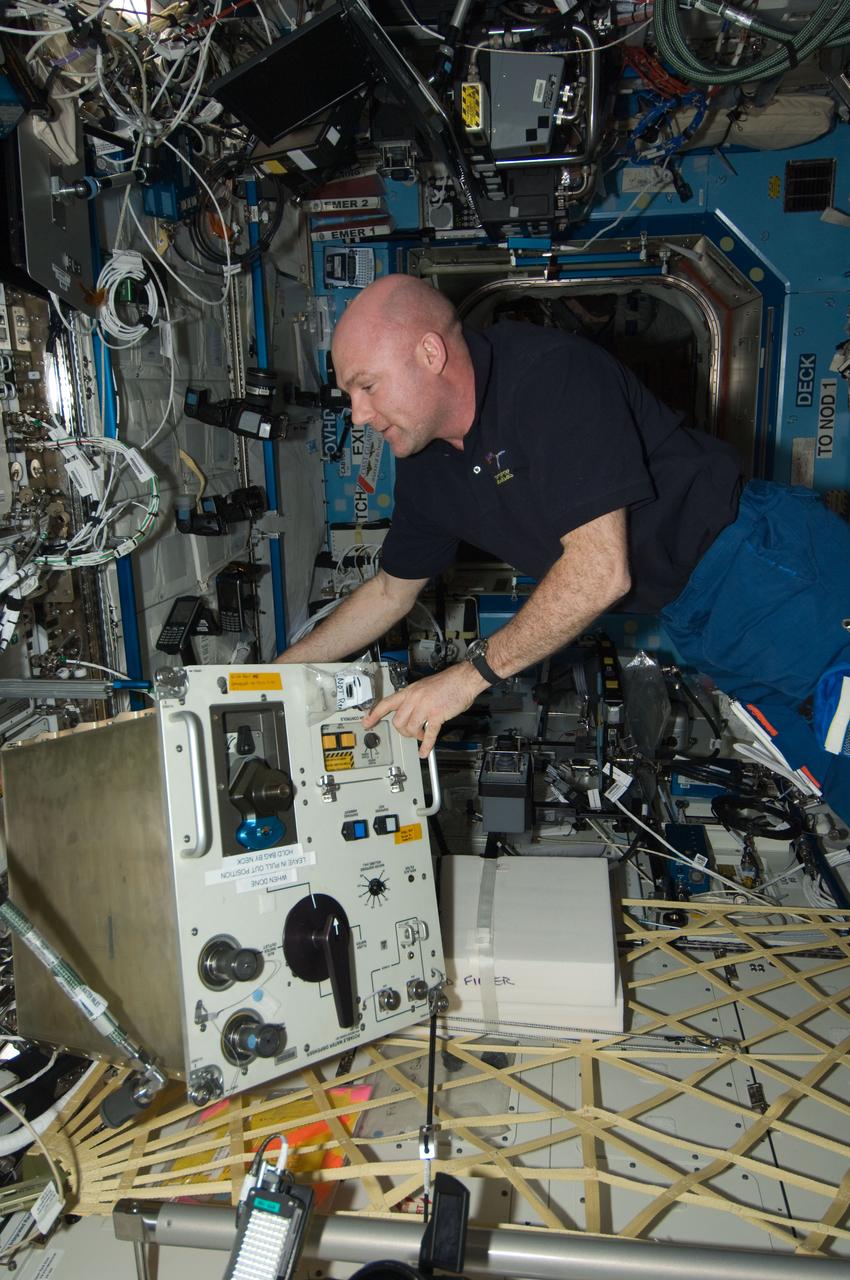
ISS030-E-117471 (2 Feb. 2012) --- European Space Agency astronaut Andre Kuipers, Expedition 30 flight engineer, performs scheduled in-flight maintenance on the Potable Water Dispenser (PWD) in the Destiny laboratory of the International Space Station.
Kuipers performs scheduled in-flight maintenance on the PWD in the U.S. Laboratory
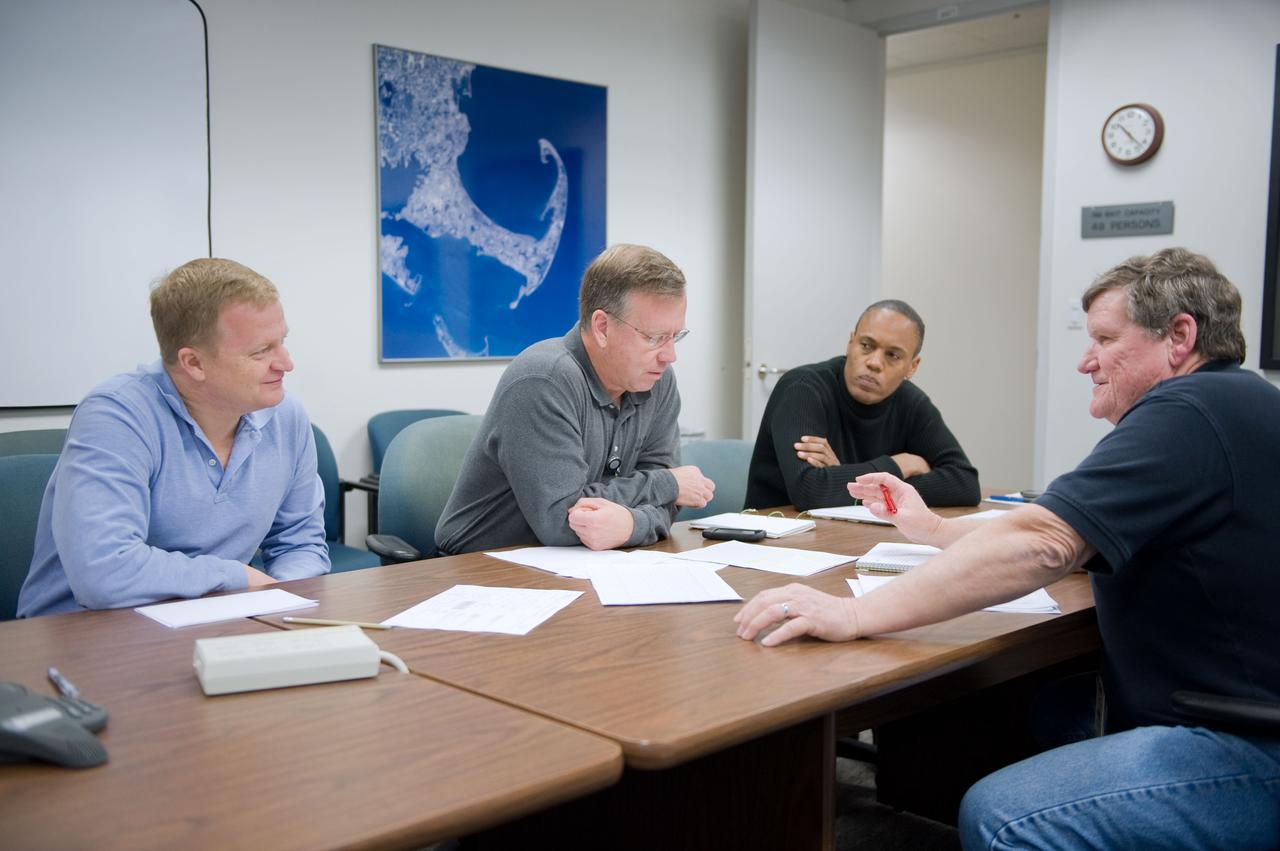
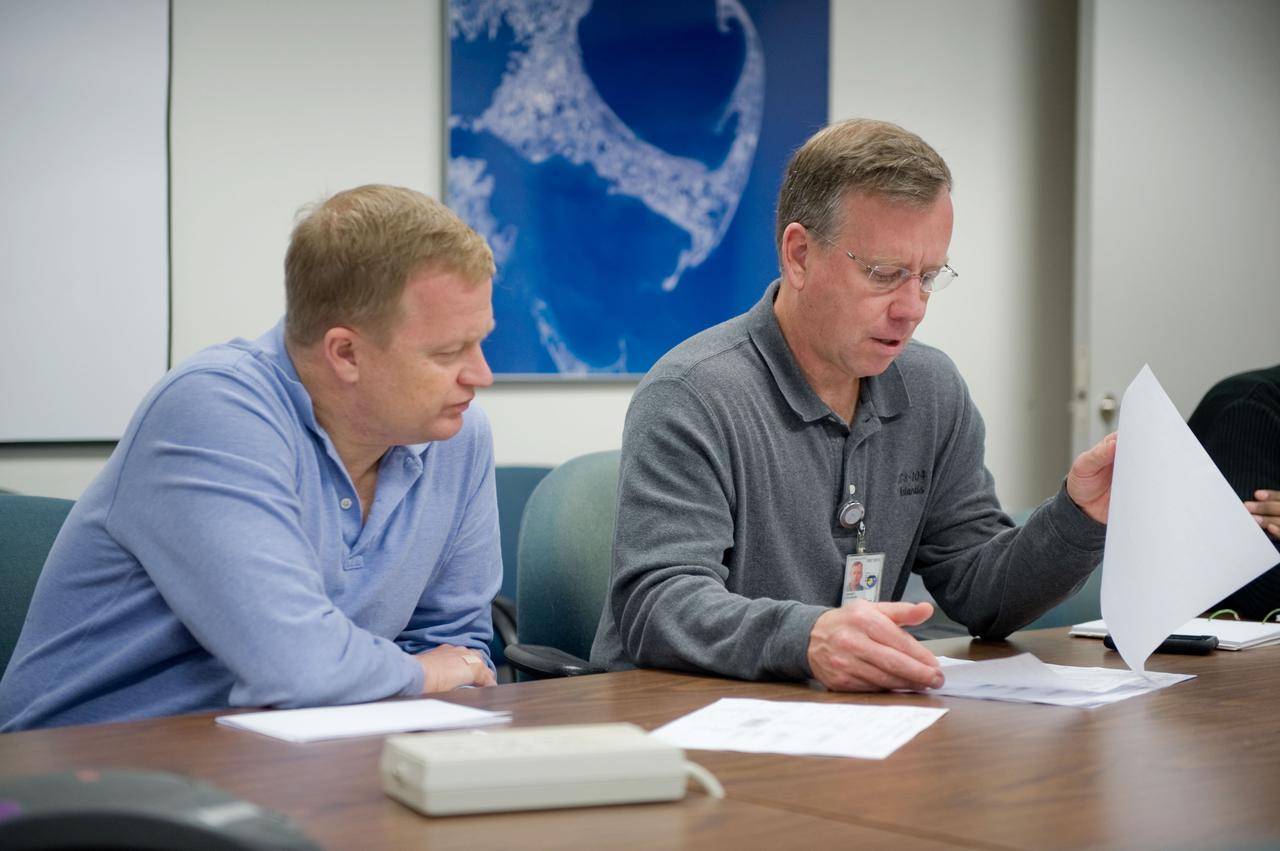
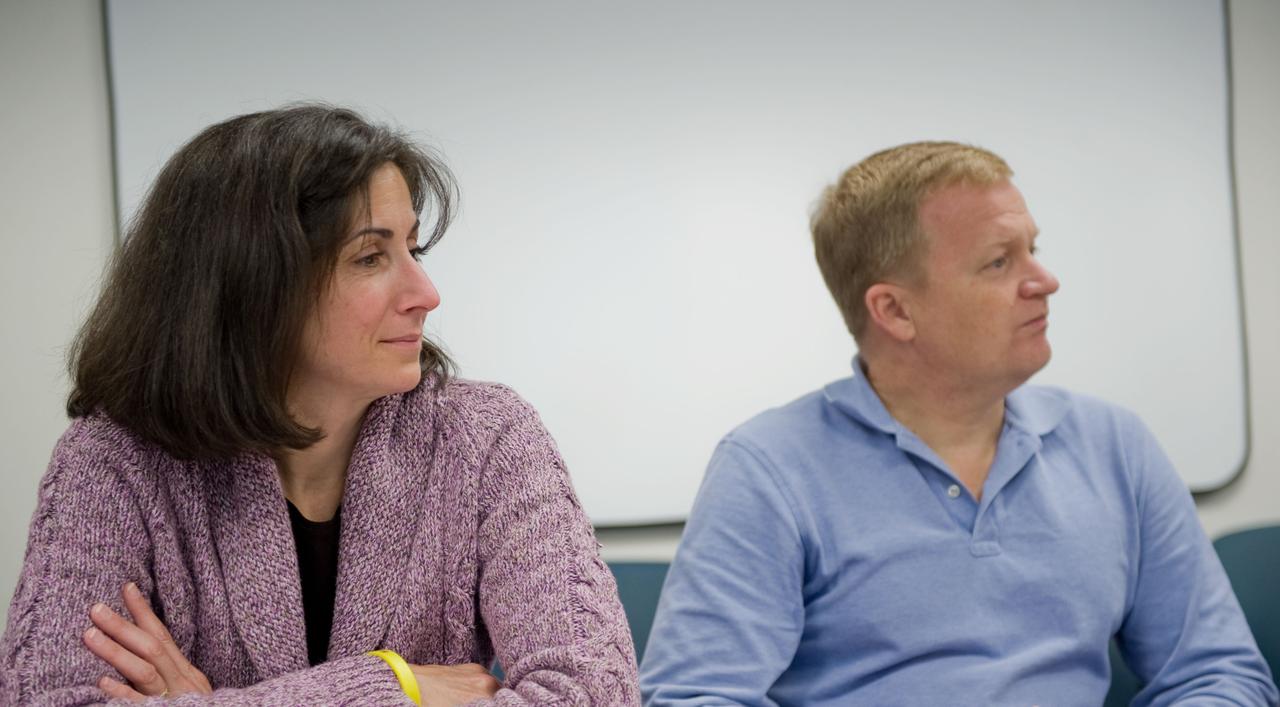
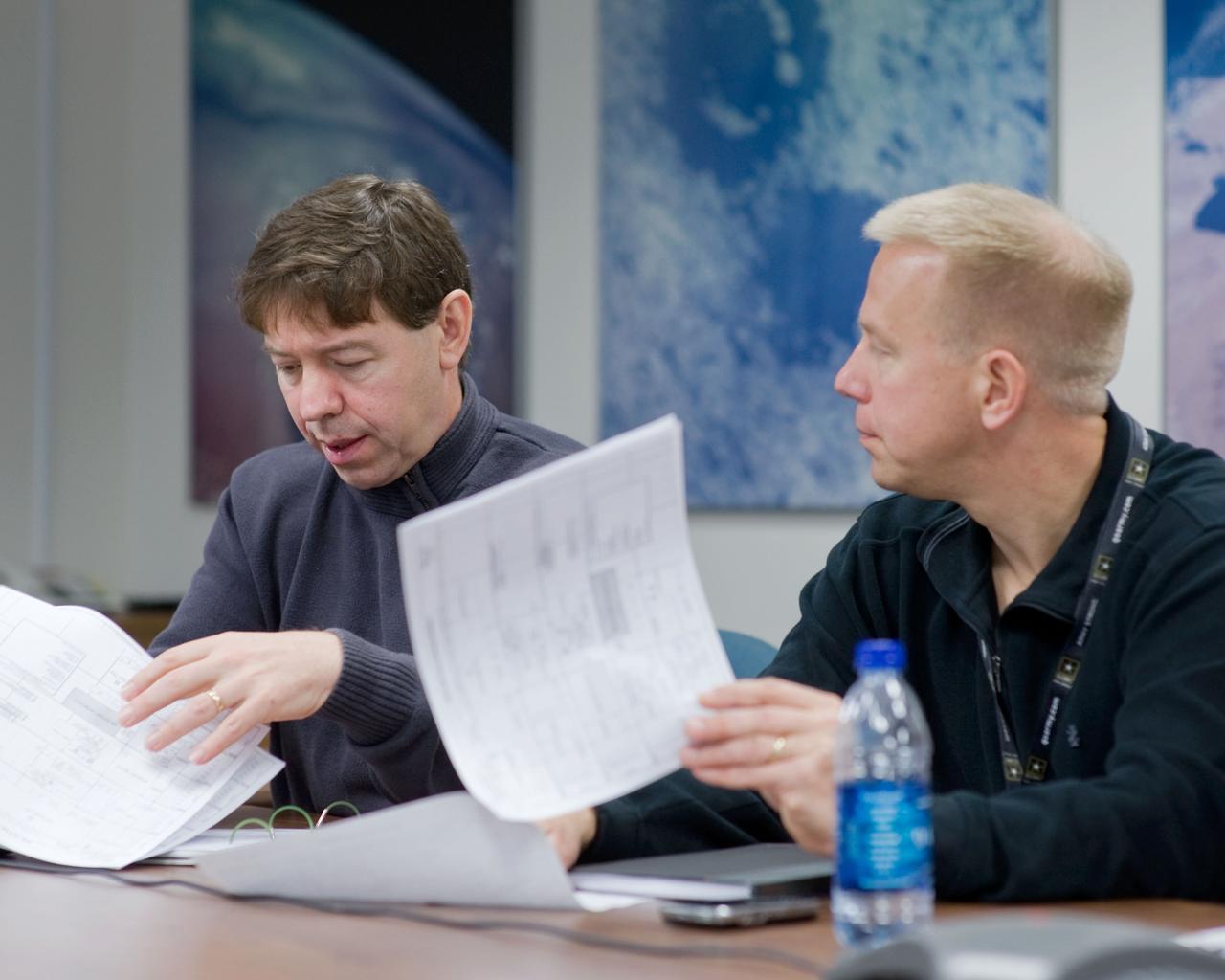
JSC2010-E-006725 (5 Jan. 2010) --- NASA astronaut Steven Lindsey (second left), STS-133 commander; along with astronauts Eric Boe (left), pilot; and Alvin Drew, mission specialist, are pictured during a training scheduling session at NASA?s Johnson Space Center with scheduler Dale Williamson (far right).
STS-133 (Last Shuttle Mission) crew during their meeting with their scheduler Dale Williamson
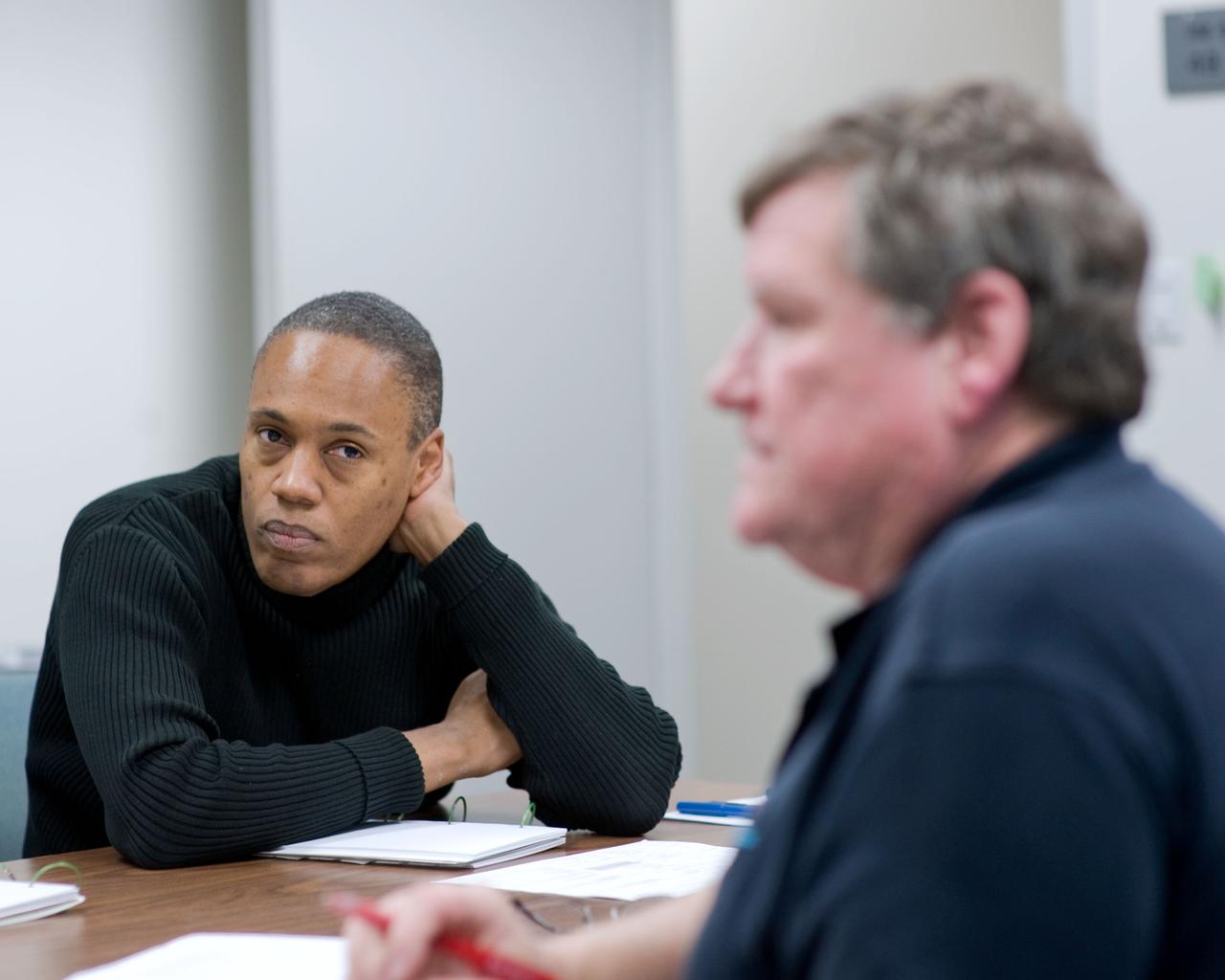
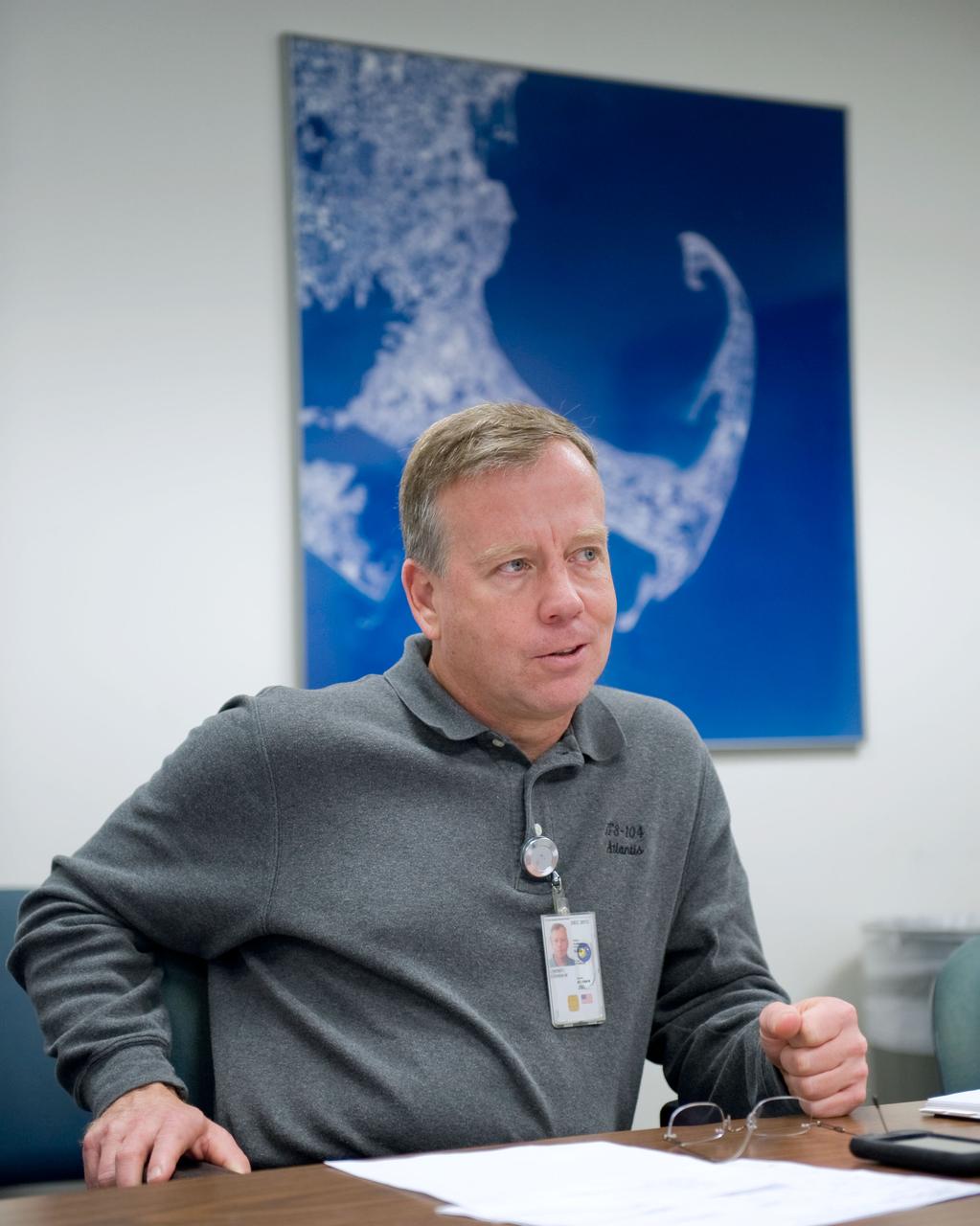
JSC2010-E-006724 (5 Jan. 2010) --- NASA astronaut Alvin Drew (facing camera), STS-133 mission specialist, is pictured during a training scheduling session at NASA?s Johnson Space Center with scheduler Dale Williamson.
STS-133 (Last Shuttle Mission) crew during their meeting with their scheduler Dale Williamson
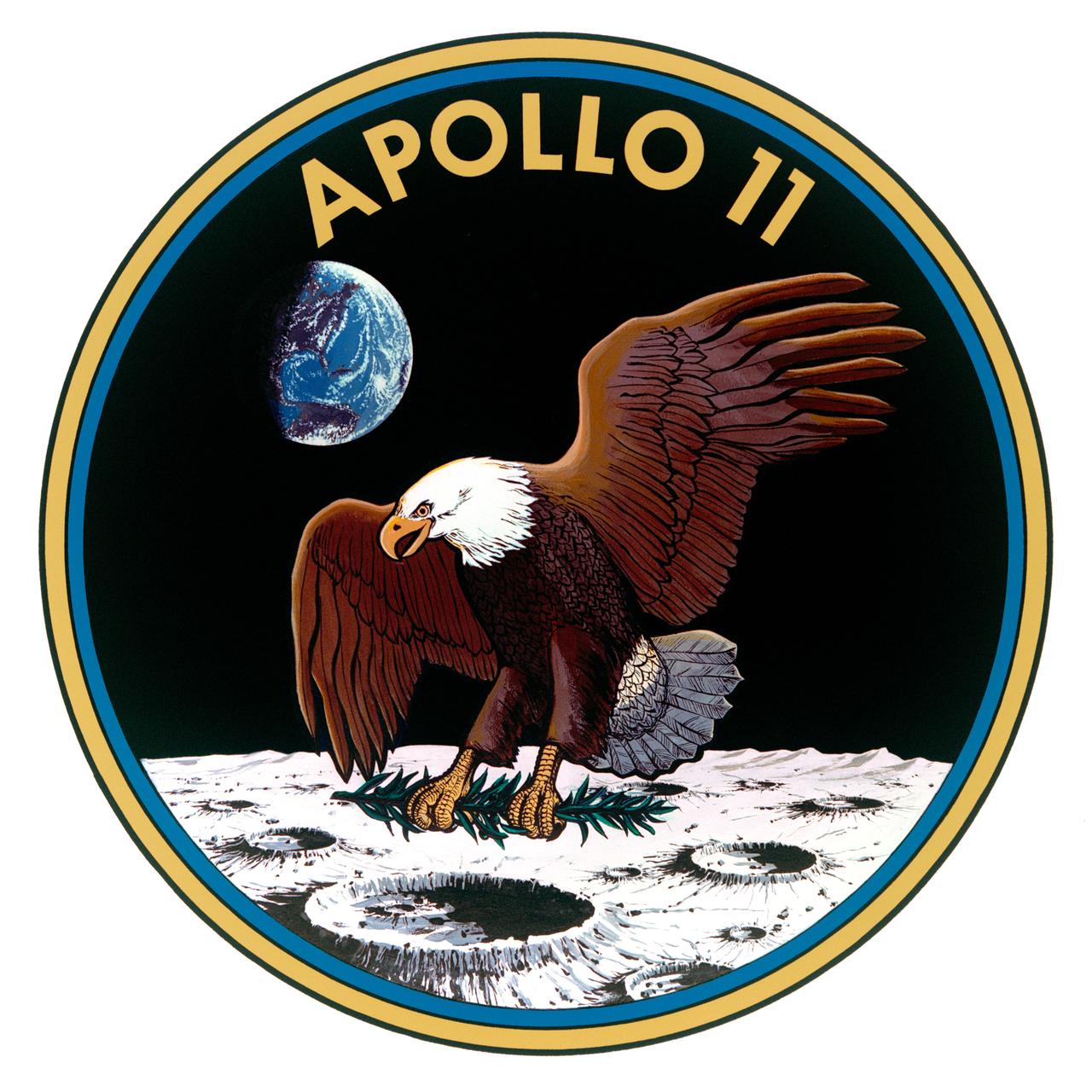
S69-34875 (June 1969) --- The official emblem of Apollo 11, the United States' first scheduled lunar landing mission. The Apollo 11 crew will be astronauts Neil A. Armstrong, commander; Michael Collins, command module pilot; and Edwin E. Aldrin Jr., lunar module pilot.    The NASA insignia design for Apollo flights is reserved for use by the astronauts and for the official use as the NASA Administrator may authorize. Public availability has been approved only in the form of illustrations by the various news media. When and if there is any change in this policy, which we do not anticipate, it will be publicly announced.
OFFICIAL EMBLEM - APOLLO 11 - FIRST (1st) SCHEDULED LUNAR LANDING MISSION
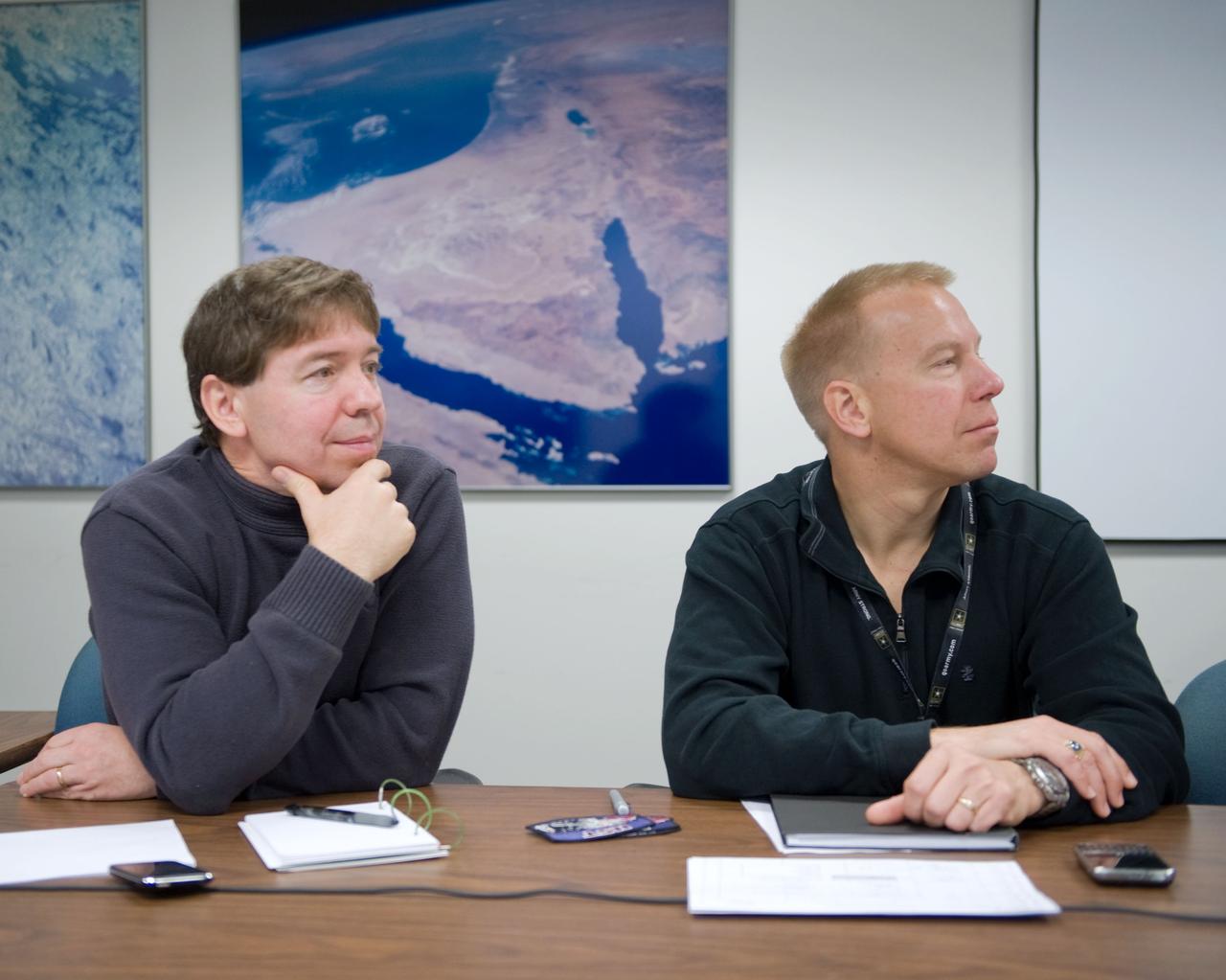
JSC2010-E-006721 (5 Jan. 2010) --- NASA astronauts Michael Barratt (left) and Tim Kopra, both STS-133 mission specialists, are pictured during a training scheduling session at NASA?s Johnson Space Center.
STS-133 (Last Shuttle Mission) crew during their meeting with their scheduler Dale Williamson
JSC2010-E-006726 (5 Jan. 2010) --- NASA astronauts Steven Lindsey (right), STS-133 commander; and Eric Boe, pilot; are pictured during a training scheduling session at NASA?s Johnson Space Center.
STS-133 (Last Shuttle Mission) crew during their meeting with their scheduler Dale Williamson
JSC2010-E-006722 (5 Jan. 2010) --- NASA astronaut Steven Lindsey, STS-133 commander, is pictured during a training scheduling session at NASA?s Johnson Space Center.
STS-133 (Last Shuttle Mission) crew during their meeting with their scheduler Dale Williamson
JSC2010-E-006728 (5 Jan. 2010) --- NASA astronauts Eric Boe, STS-133 pilot; and Nicole Stott, mission specialist, are pictured during a training scheduling session at NASA?s Johnson Space Center.
STS-133 (Last Shuttle Mission) crew during their meeting with their scheduler Dale Williamson
JSC2010-E-006723 (5 Jan. 2010) --- NASA astronauts Michael Barratt (left) and Tim Kopra, both STS-133 mission specialists, are pictured during a training scheduling session at NASA?s Johnson Space Center.
STS-133 (Last Shuttle Mission) crew during their meeting with their scheduler Dale Williamson
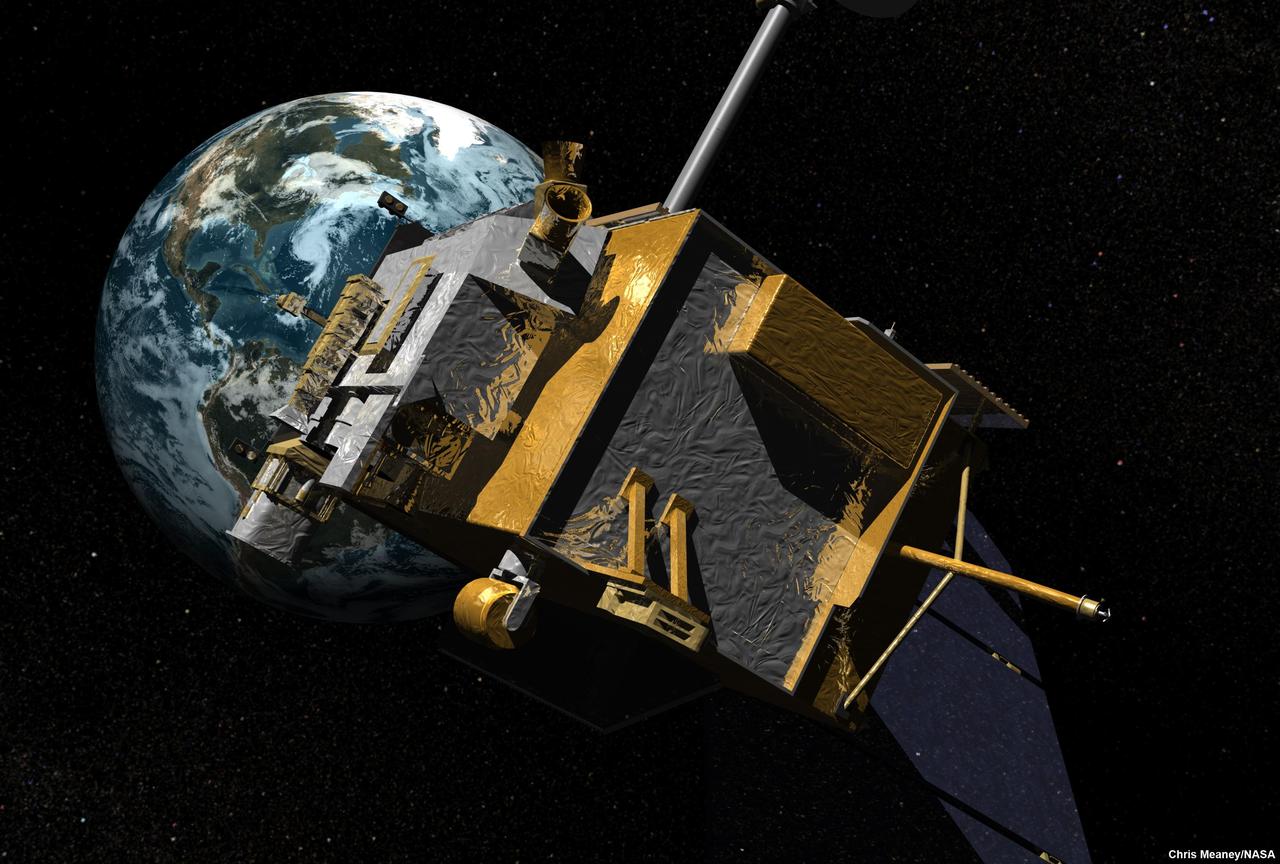
NASA is scheduled to launch the Lunar Reconnaissance Orbiter, an unmanned mission to comprehensively map the entire moon, on June 18, 2009.
Lunar Reconnaissance Orbiter LRO Artist Concept
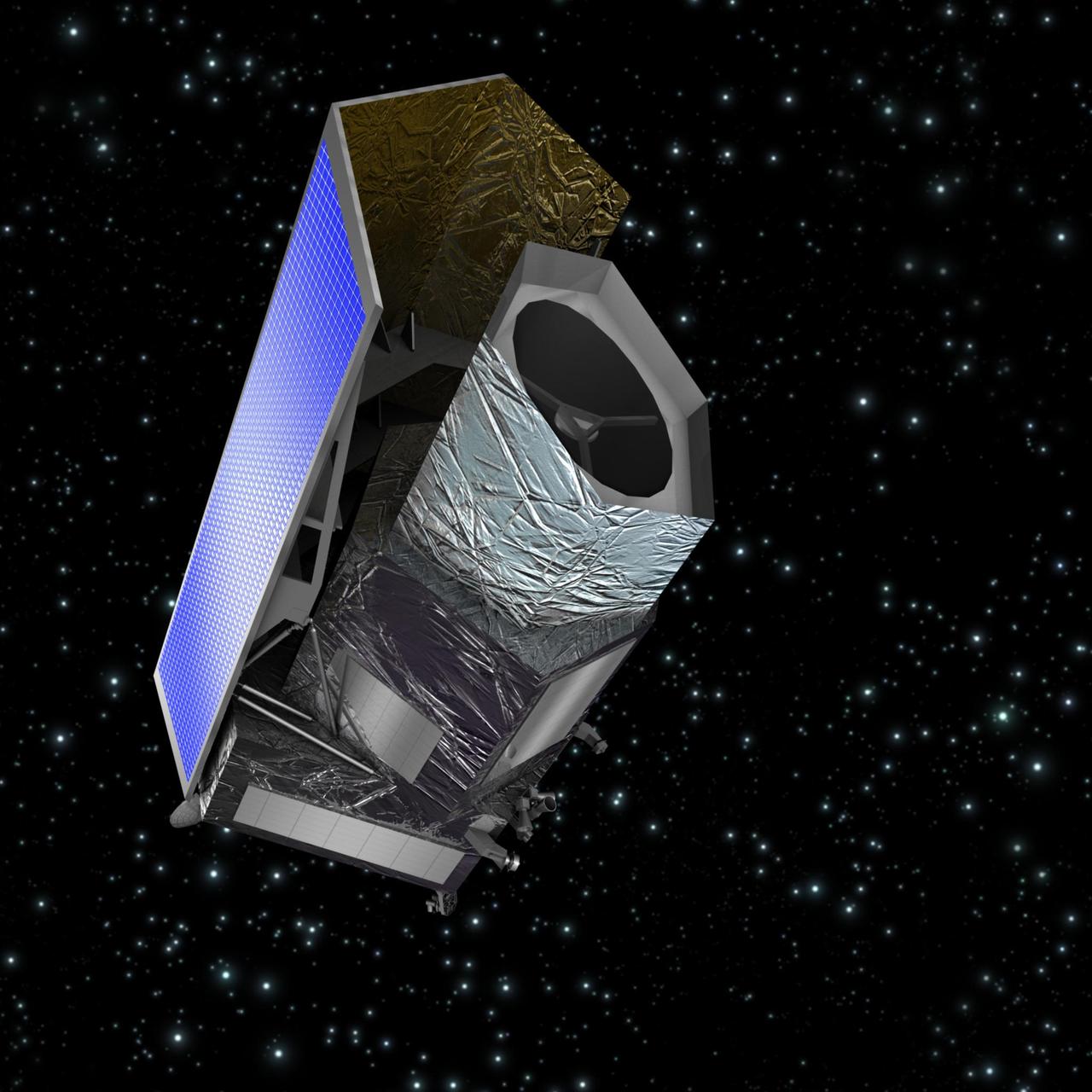
ESA Euclid spacecraft, shown in this artist impression, is scheduled to launch in 2020 with participation from NASA.
Euclid in Space Artist Concept
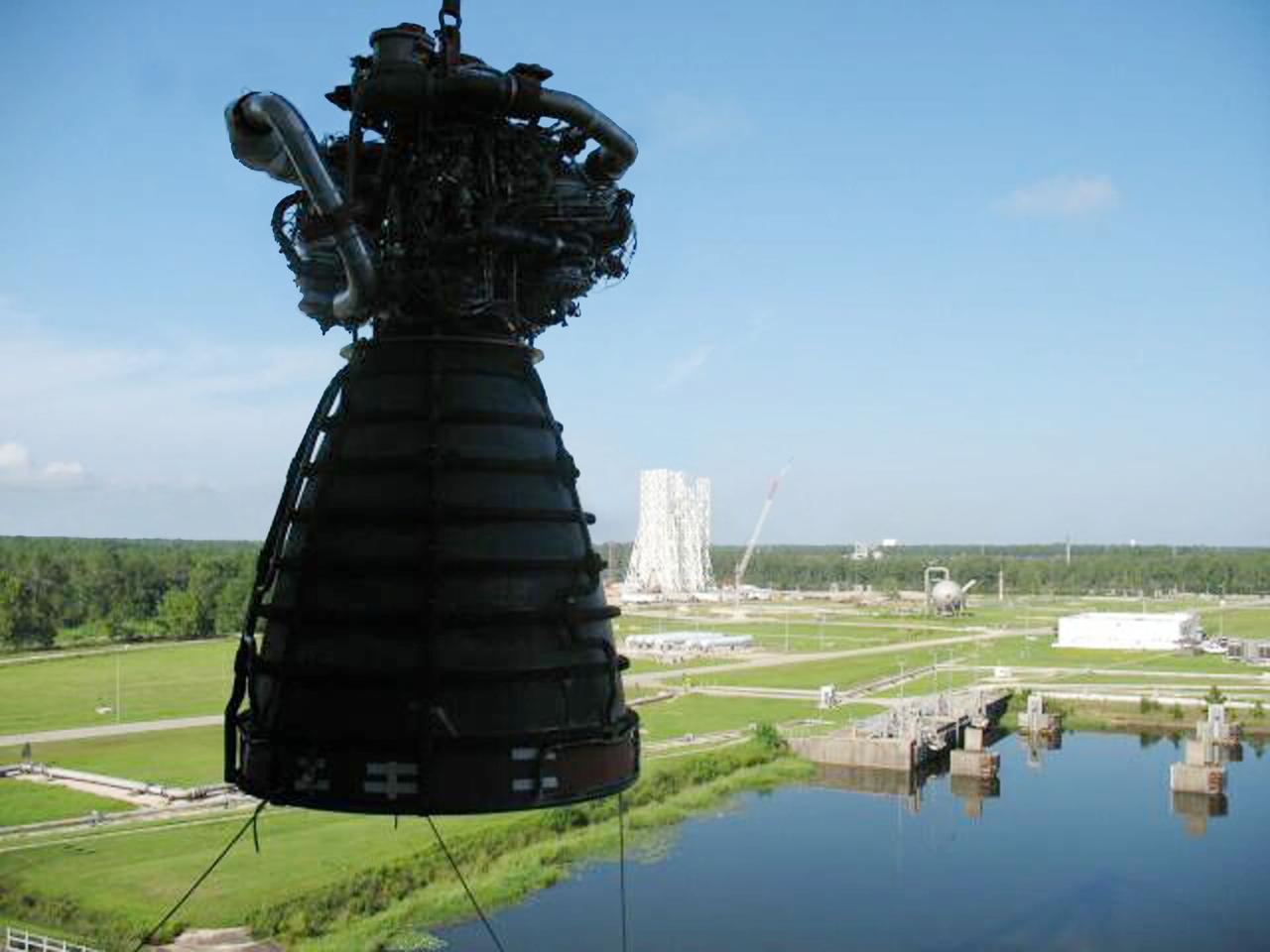
Space shuttle main engine No. 0525 is lifted from the A-2 Test Stand at Stennis Space Center against the backdrop of the new A-3 Test Stand under construction, offering a glimpse of the past and future in the nation's space exploration program. With the shuttle program set to end in 2010, Stennis conducted the last planned space shuttle main engine test on July 29 and now is deactivating the A-2 Test Stand to a safe 'standby' status.
Last scheduled SSME removed after firing
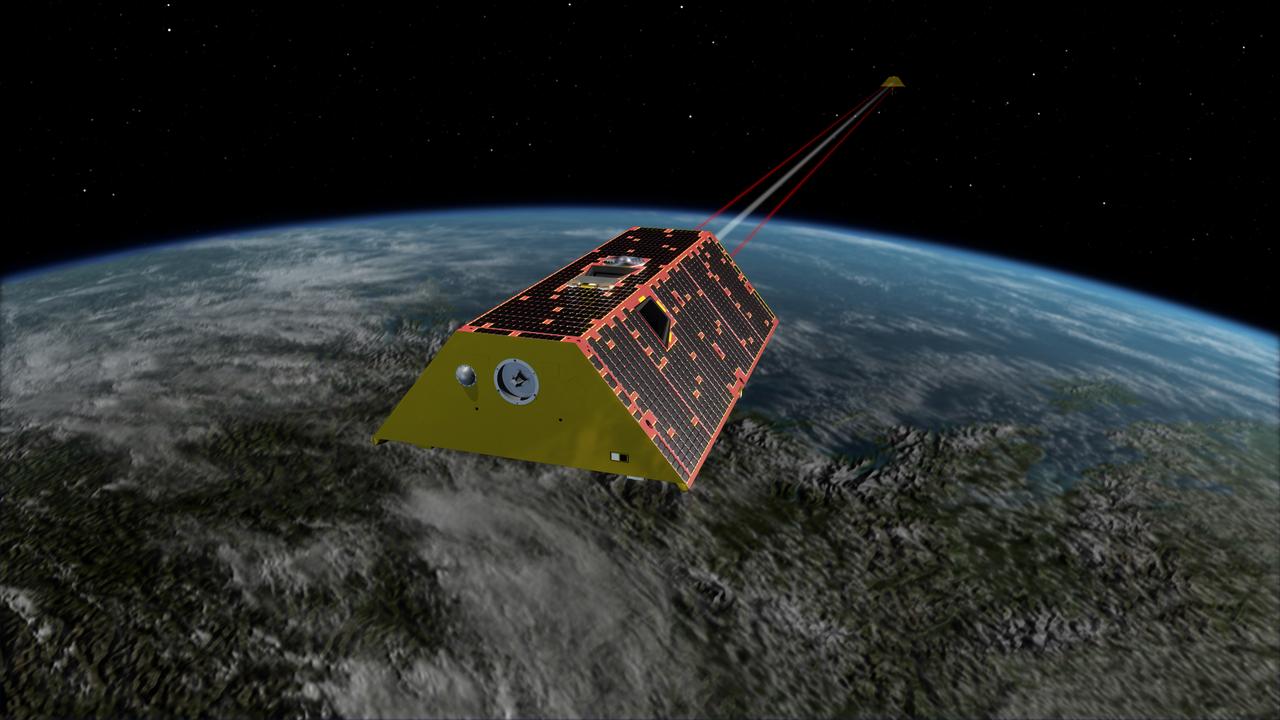
Artist's rendering of the twin spacecraft of the Gravity Recovery and Climate Experiment Follow-On (GRACE-FO) mission, scheduled to launch in May, 2018. GRACE-FO will track the evolution of Earth's water cycle by monitoring changes in the distribution of mass on Earth.  https://photojournal.jpl.nasa.gov/catalog/PIA22431
GRACE-FO Spacecraft (Artist's Rendering)
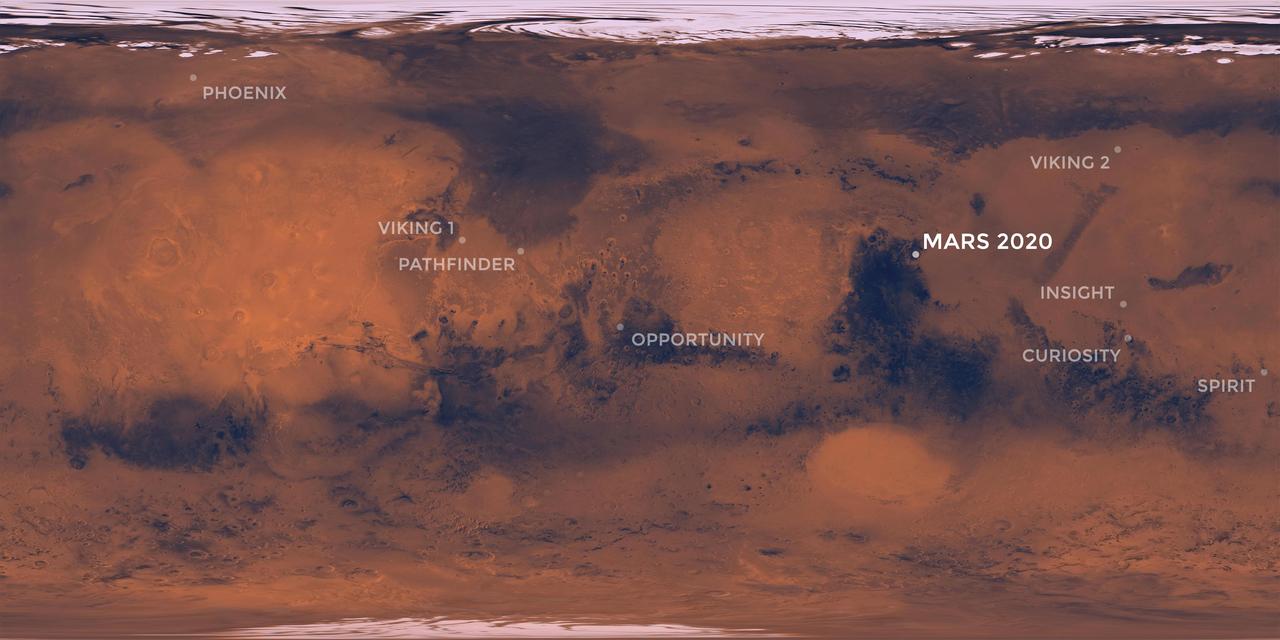
This map of the Red Planet shows Jezero Crater, where NASA's Mars 2020 rover is scheduled to land in February 2021. Also included are the locations where all of NASA's other successful Mars missions touched down.  https://photojournal.jpl.nasa.gov/catalog/PIA23518
Map of NASA's Mars Landing Sites
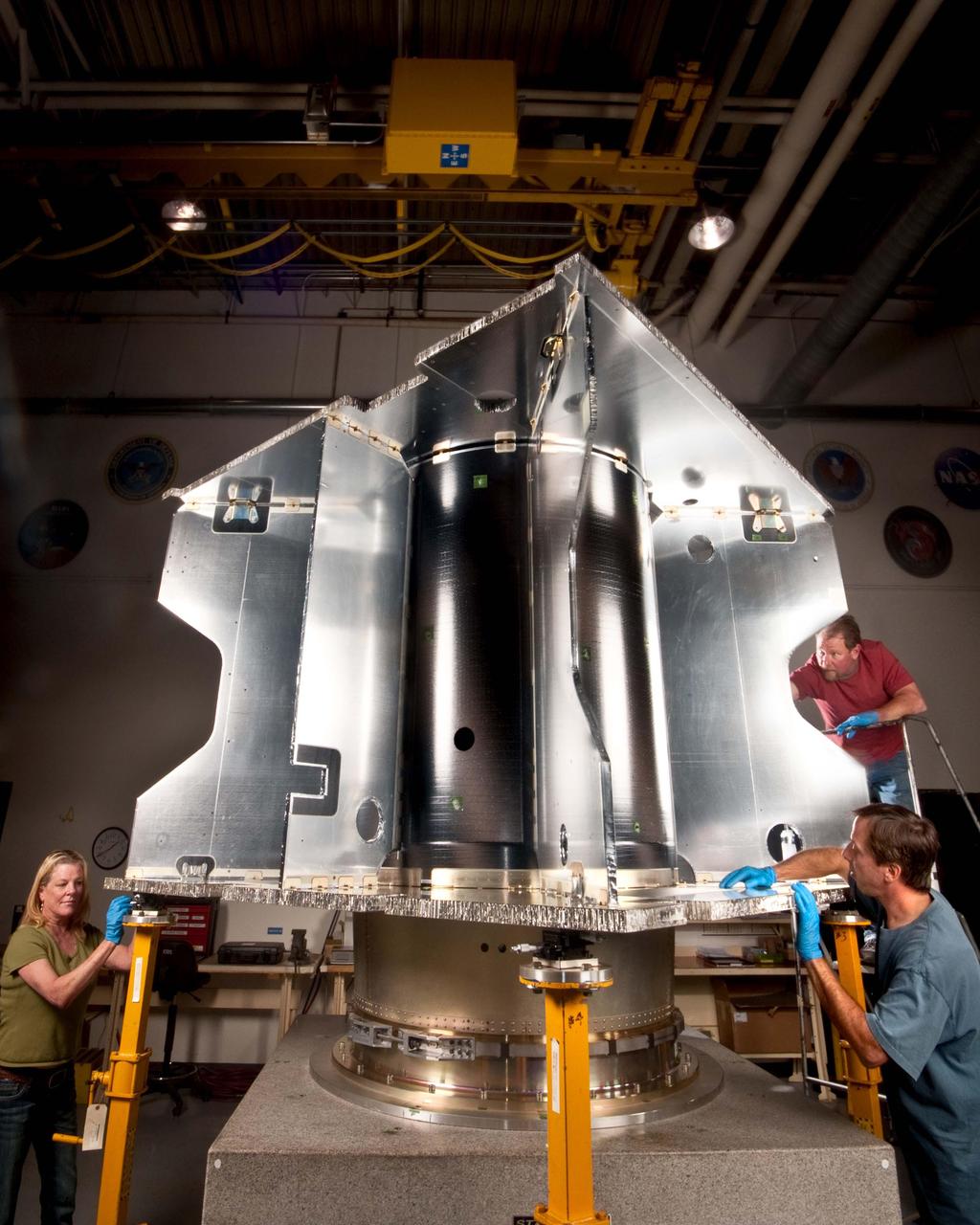
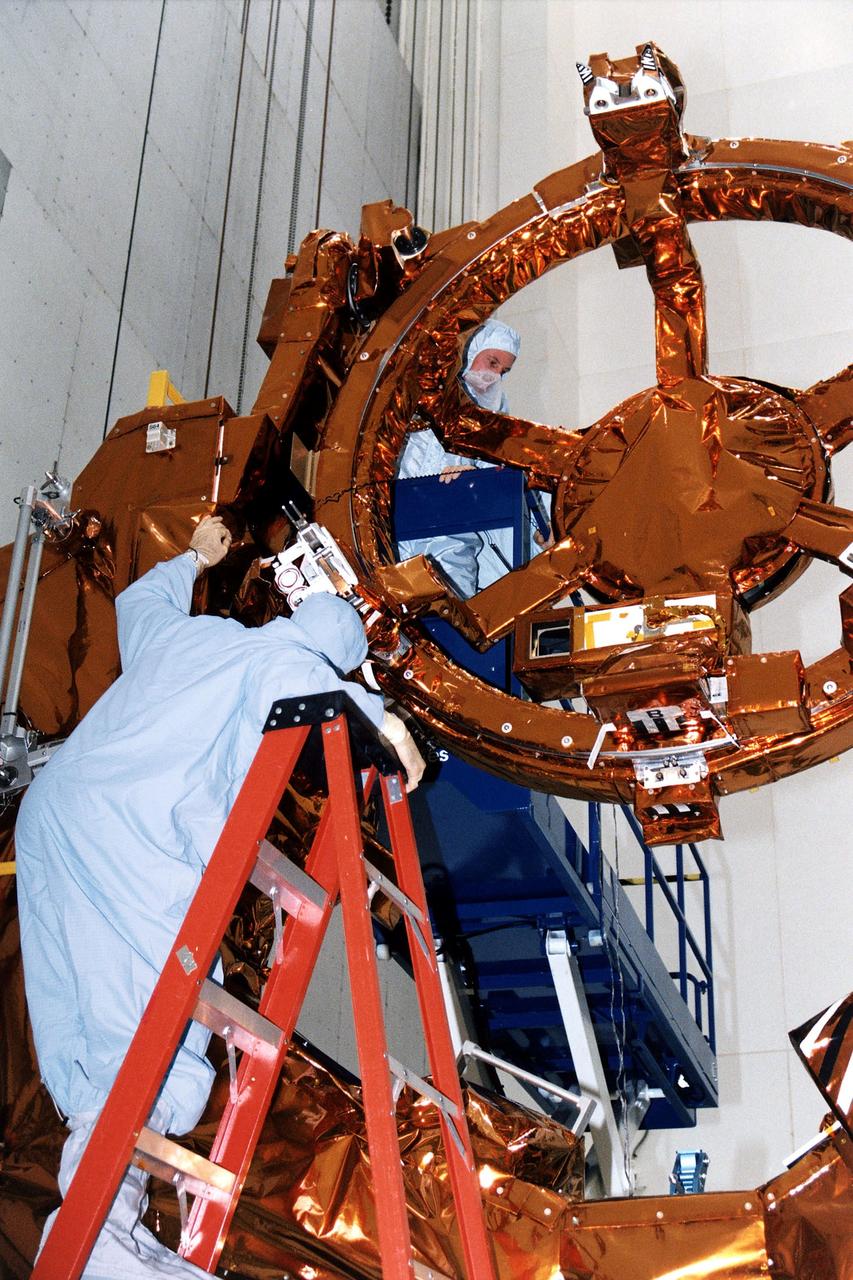
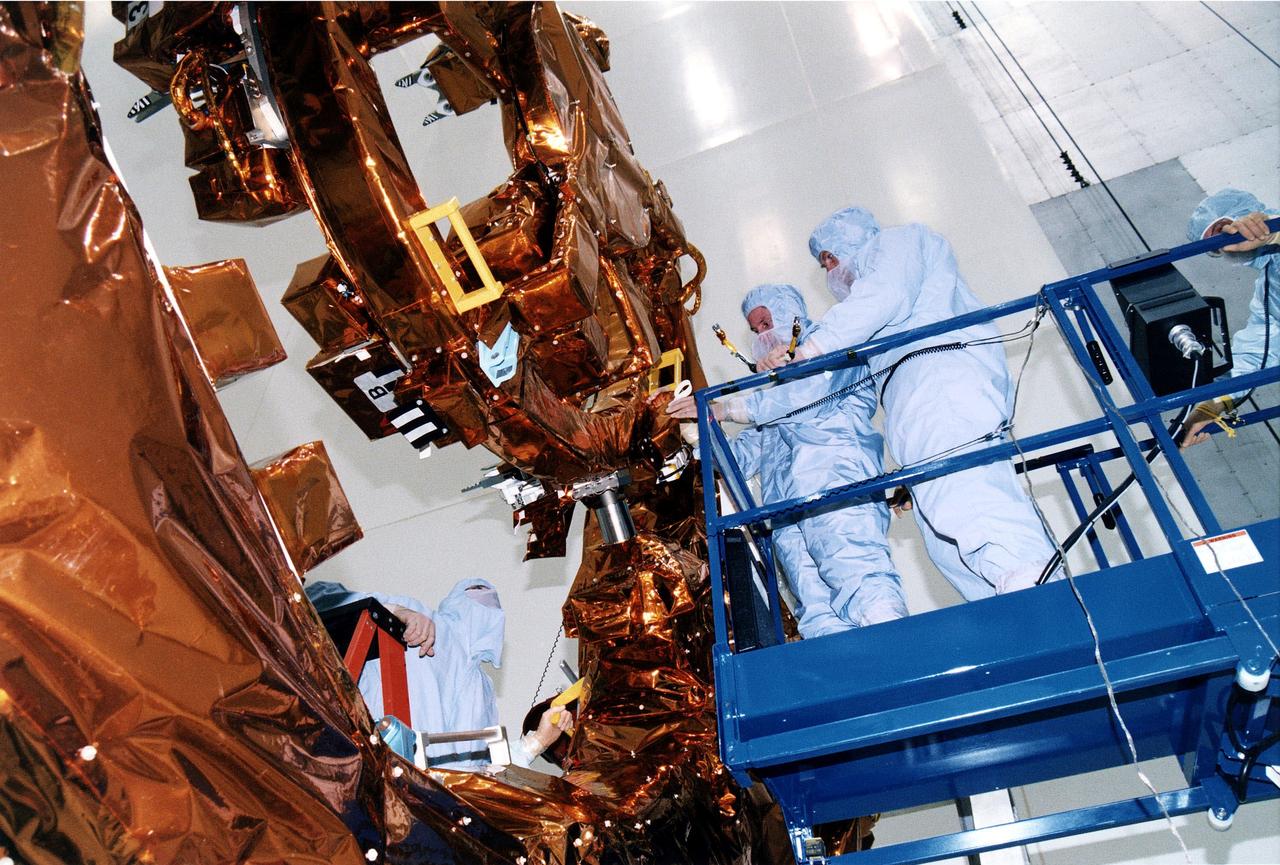
NASA Mars Atmosphere and Volatile EvolutioN MAVEN spacecraft is scheduled to launch in November 2013 and will be the first mission devoted to understanding the Martian upper atmosphere.
Primary Structure for MAVEN Spacecraft
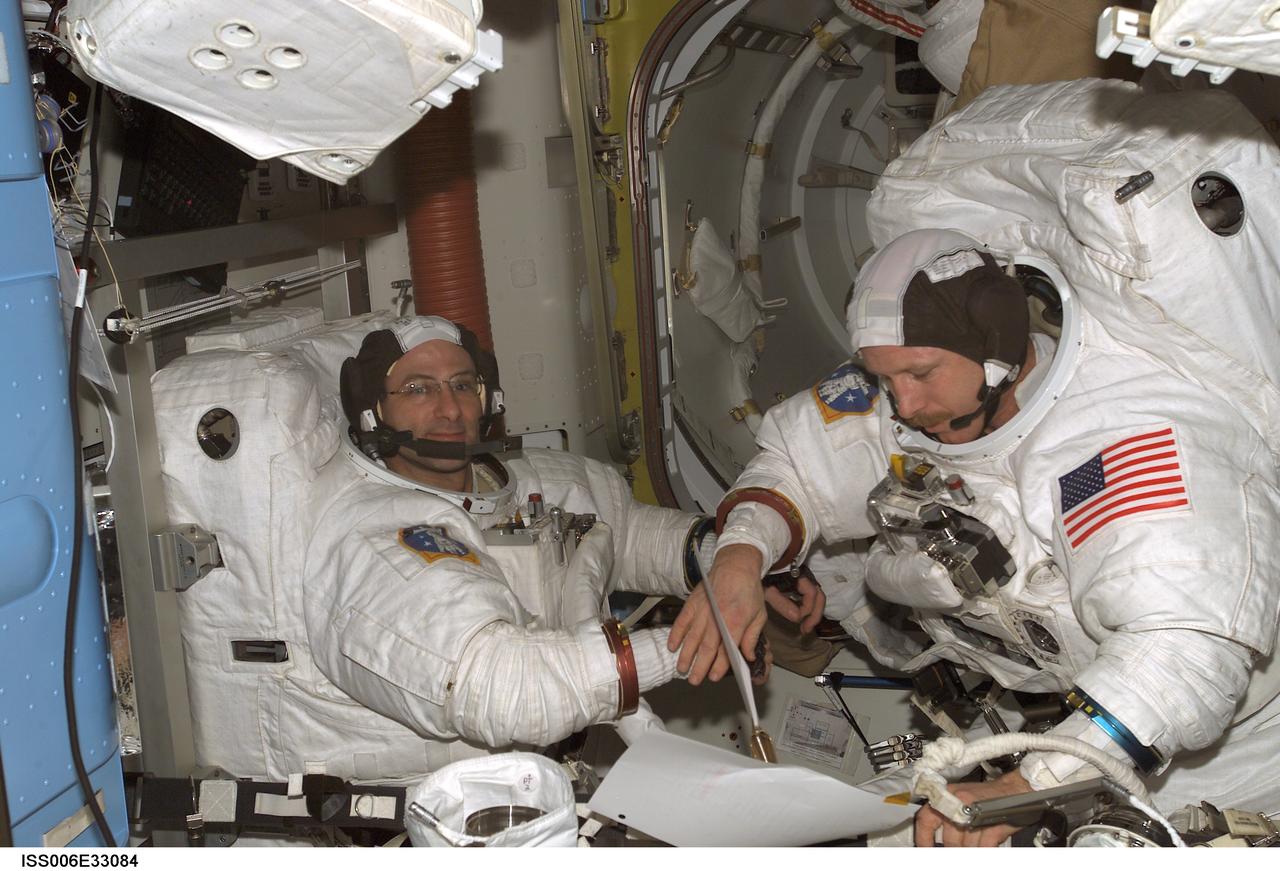
ISS006-E-33084 (24 February 2003) --- Astronauts Kenneth D. Bowersox (right) and Donald R. Pettit, Expedition Six mission commander and NASA ISS science officer, respectively, participate in a scheduled extravehicular activity (EVA) development test objective (DTO) in the Quest Airlock on the International Space Station (ISS). The test demonstrated the ability of two crewmembers to safely get into the American Extravehicular Mobility Unit (EMU) spacesuit without the assistance of a third crewmember; that ability is a prerequisite to sending smaller crews to ISS while the space shuttle fleet remains grounded during the investigation of the Columbia accident. Bowersox and Pettit helped each other into their EMU spacesuits, donned jet backpacks called Simplified Aid for EVA Rescue (SAFER), set up the necessary equipment for a pre-breathe of oxygen to purge nitrogen from their bloodstreams, and then got out of the spacesuits.
Bowersox and Pettit participate in a scheduled EVA DTO in the Quest Airlock during Expedition Six
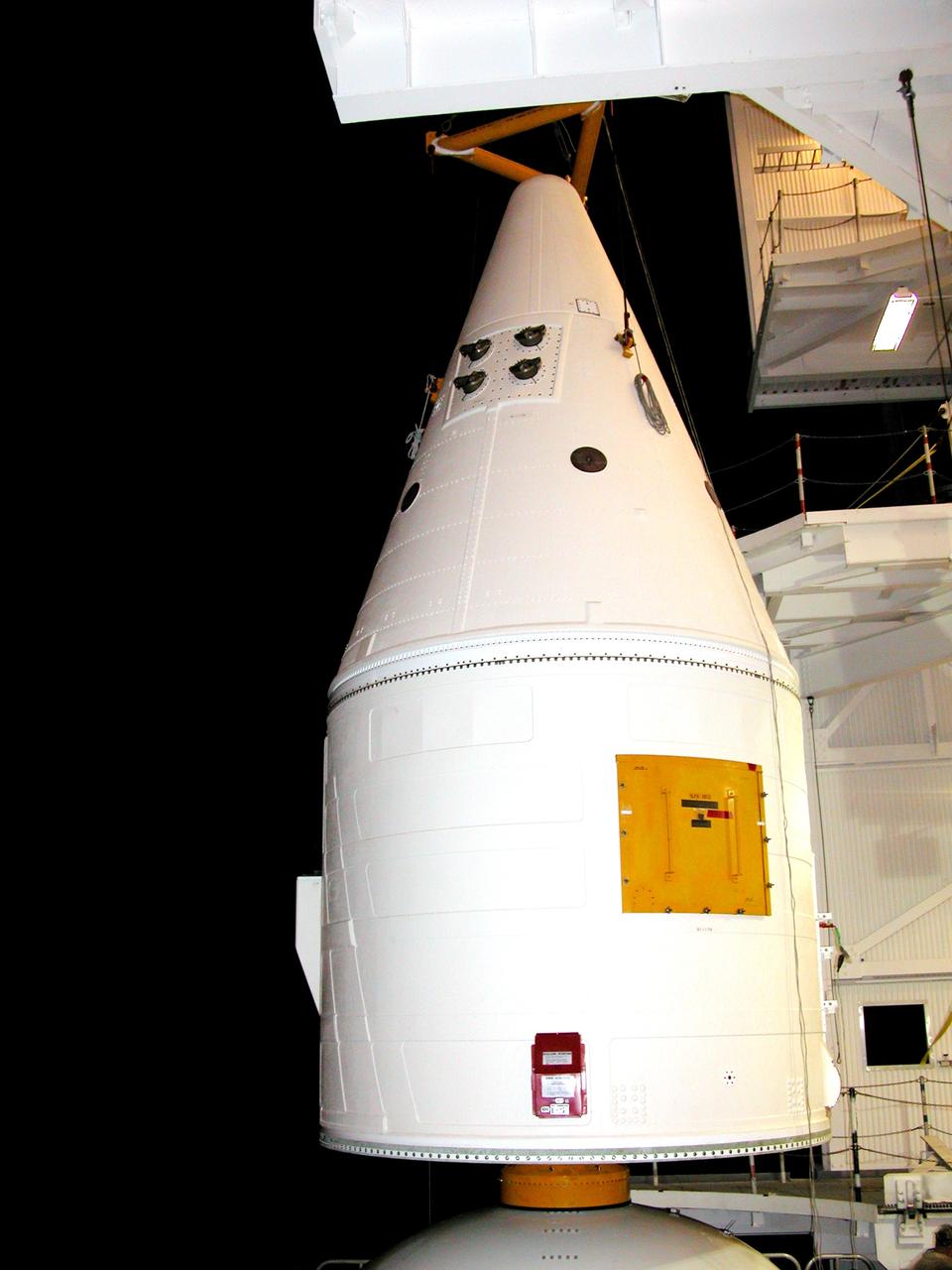
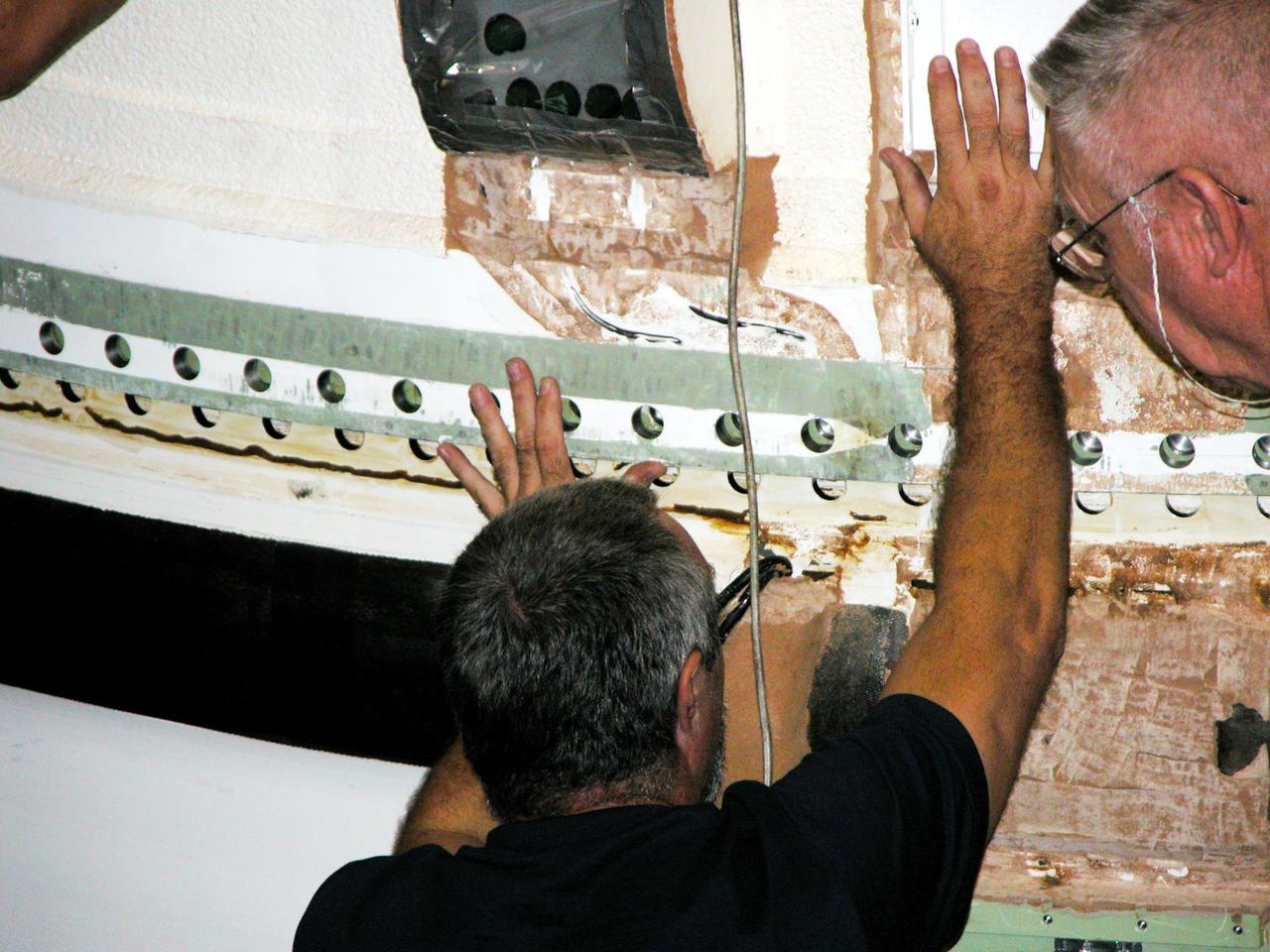
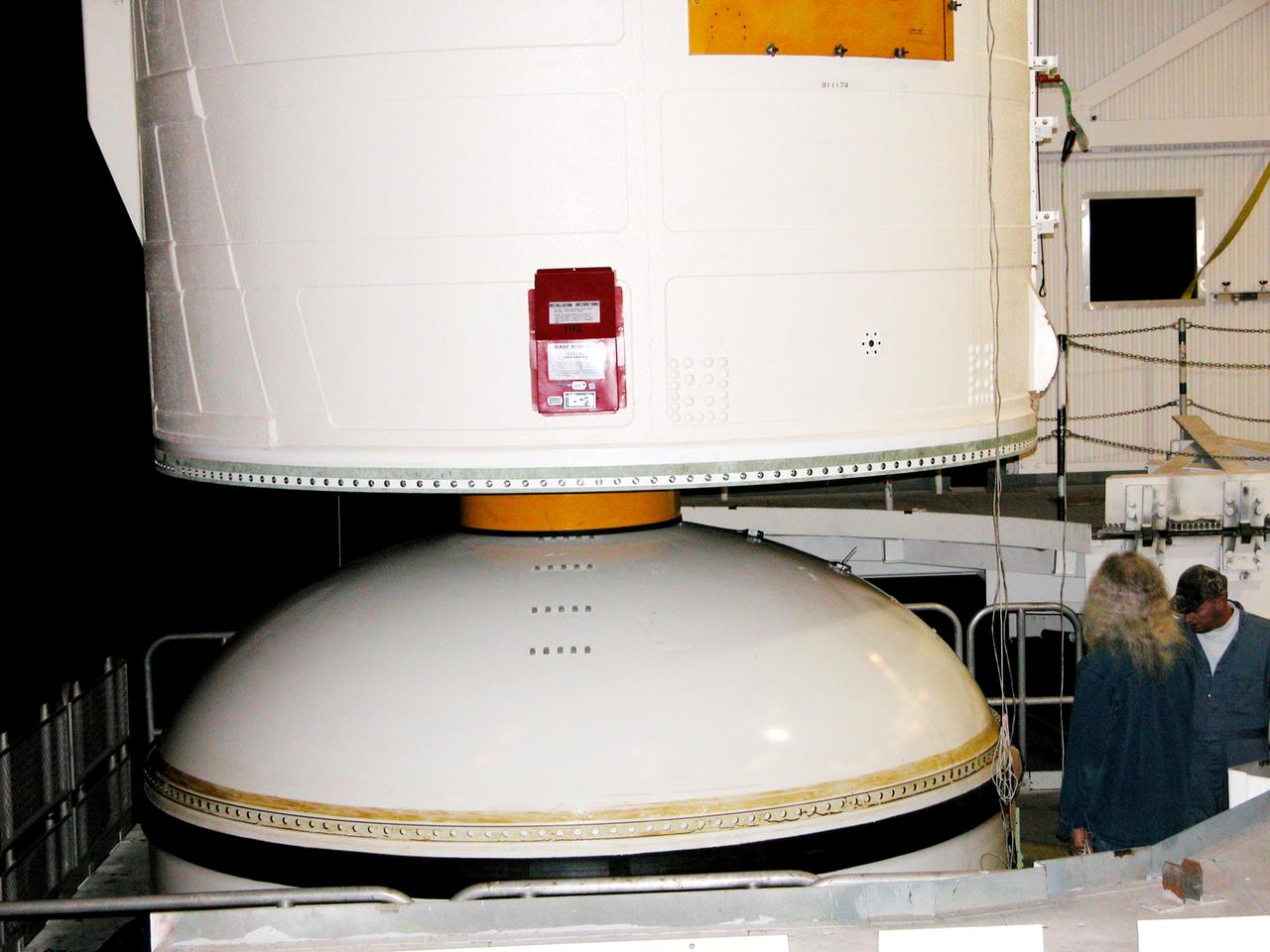
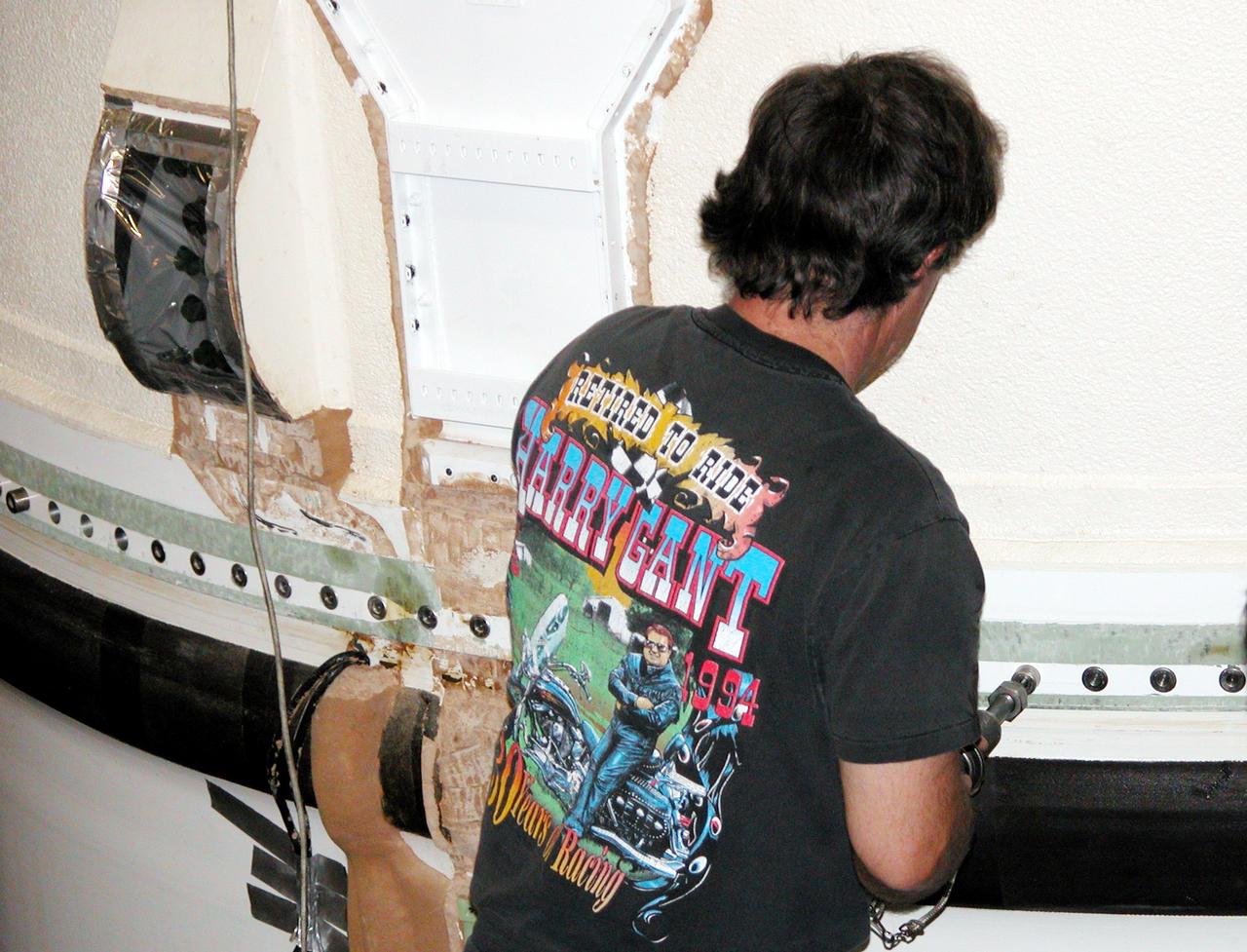
KENNEDY SPACE CENTER, FLA. -  In the Vehicle Assembly Building, a KSC employee separates the forward assembly (nose cap and frustum) from a solid rocket booster (SRB) after removing the bolts.  The destacking is part of time and cycle activities.  The SRB was part of the stack on Atlantis originally scheduled for a March 1, 2003, launch on mission STS-114.  The SRBs and external tank were demated in February 2003.   The mission is now scheduled to occur no earlier than Sept. 12, 2004, on Atlantis.
KENNEDY SPACE CENTER, FLA. - In the Vehicle Assembly Building, a KSC employee separates the forward assembly (nose cap and frustum) from a solid rocket booster (SRB) after removing the bolts. The destacking is part of time and cycle activities. The SRB was part of the stack on Atlantis originally scheduled for a March 1, 2003, launch on mission STS-114. The SRBs and external tank were demated in February 2003. The mission is now scheduled to occur no earlier than Sept. 12, 2004, on Atlantis.
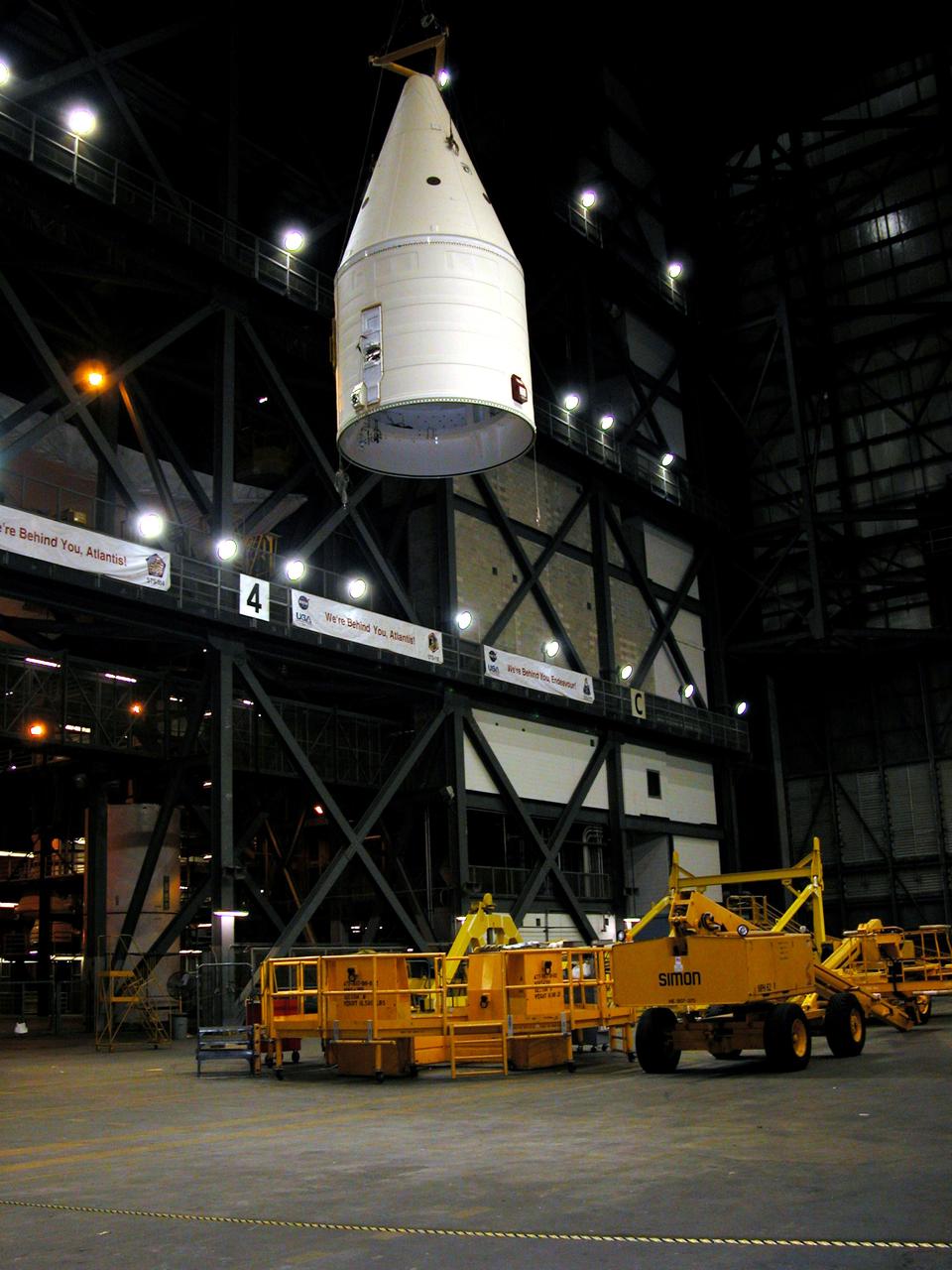
KENNEDY SPACE CENTER, FLA. -  In the Vehicle Assembly Building, after being removed from the solid rocket booster (SRB), the forward assembly is lowered toward a transporter below in the transfer aisle.  The destacking is part of time and cycle activities.  The SRB was part of the stack on Atlantis originally scheduled for a March 1, 2003, launch on mission STS-114.  The SRBs and external tank were demated in February 2003.   The mission is now scheduled to occur no earlier than Sept. 12, 2004, on Atlantis.
KENNEDY SPACE CENTER, FLA. - In the Vehicle Assembly Building, after being removed from the solid rocket booster (SRB), the forward assembly is lowered toward a transporter below in the transfer aisle. The destacking is part of time and cycle activities. The SRB was part of the stack on Atlantis originally scheduled for a March 1, 2003, launch on mission STS-114. The SRBs and external tank were demated in February 2003. The mission is now scheduled to occur no earlier than Sept. 12, 2004, on Atlantis.
KENNEDY SPACE CENTER, FLA. -  In the Vehicle Assembly Building, the forward assembly (nose cap and frustum) is lifted away from the solid rocket booster (SRBThe destacking is part of time and cycle activities.  The SRB was part of the stack on Atlantis originally scheduled for a March 1, 2003, launch on mission STS-114.  The SRBs and external tank were demated in February 2003.   The mission is now scheduled to occur no earlier than Sept. 12, 2004, on Atlantis.
KENNEDY SPACE CENTER, FLA. - In the Vehicle Assembly Building, the forward assembly (nose cap and frustum) is lifted away from the solid rocket booster (SRBThe destacking is part of time and cycle activities. The SRB was part of the stack on Atlantis originally scheduled for a March 1, 2003, launch on mission STS-114. The SRBs and external tank were demated in February 2003. The mission is now scheduled to occur no earlier than Sept. 12, 2004, on Atlantis.
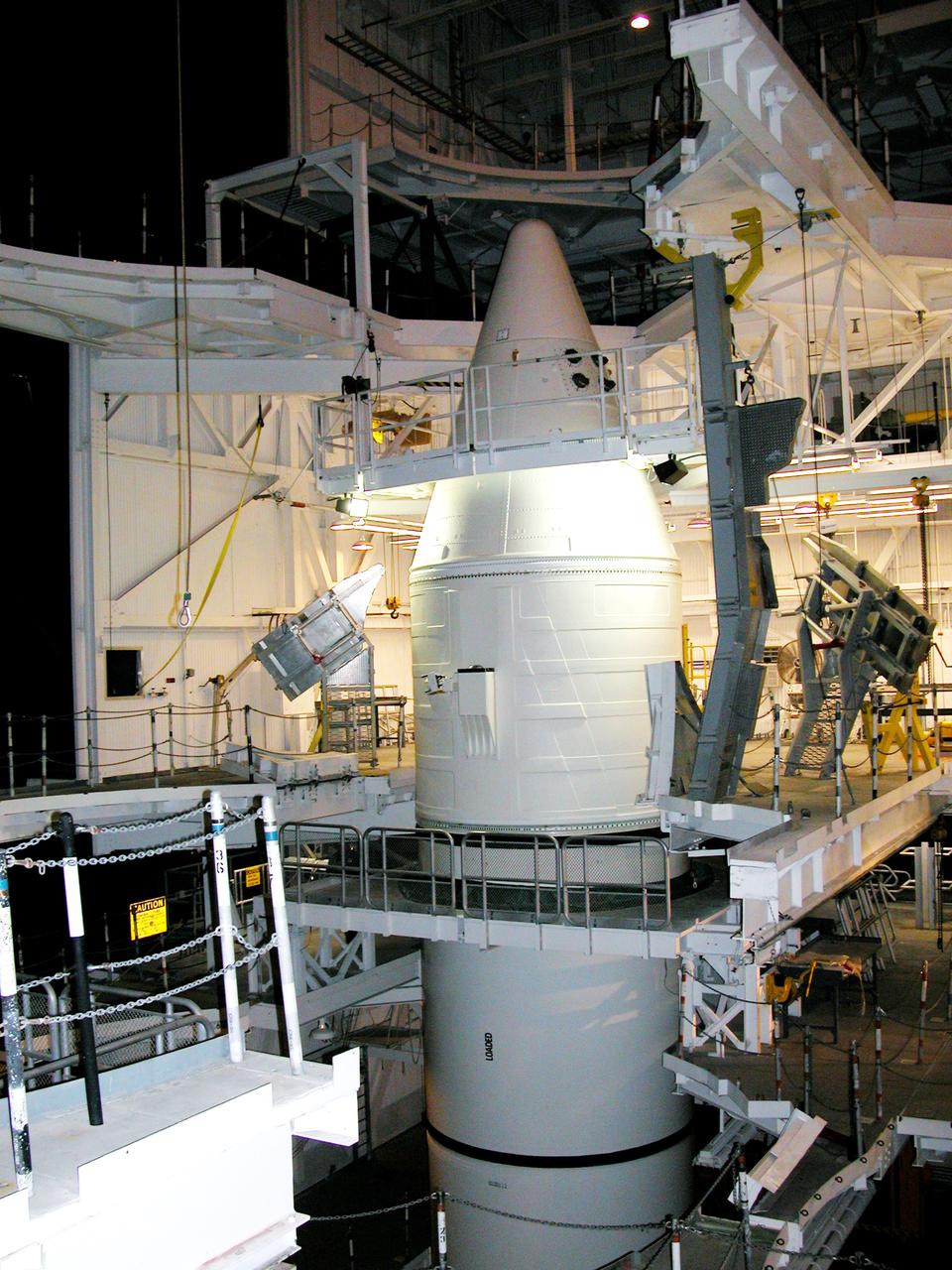
KENNEDY SPACE CENTER, FLA. -  In the Vehicle Assembly Building, the forward assembly of this solid rocket booster (SRB) is ready for destacking, part of time and cycle activities. The SRB was part of the stack on Atlantis originally scheduled for a March 1, 2003, launch on mission STS-114.  The SRBs and external tank were demated in February 2003.  STS-114 is now scheduled to occur no earlier than Sept. 12, 2004, on Atlantis.
KENNEDY SPACE CENTER, FLA. - In the Vehicle Assembly Building, the forward assembly of this solid rocket booster (SRB) is ready for destacking, part of time and cycle activities. The SRB was part of the stack on Atlantis originally scheduled for a March 1, 2003, launch on mission STS-114. The SRBs and external tank were demated in February 2003. STS-114 is now scheduled to occur no earlier than Sept. 12, 2004, on Atlantis.
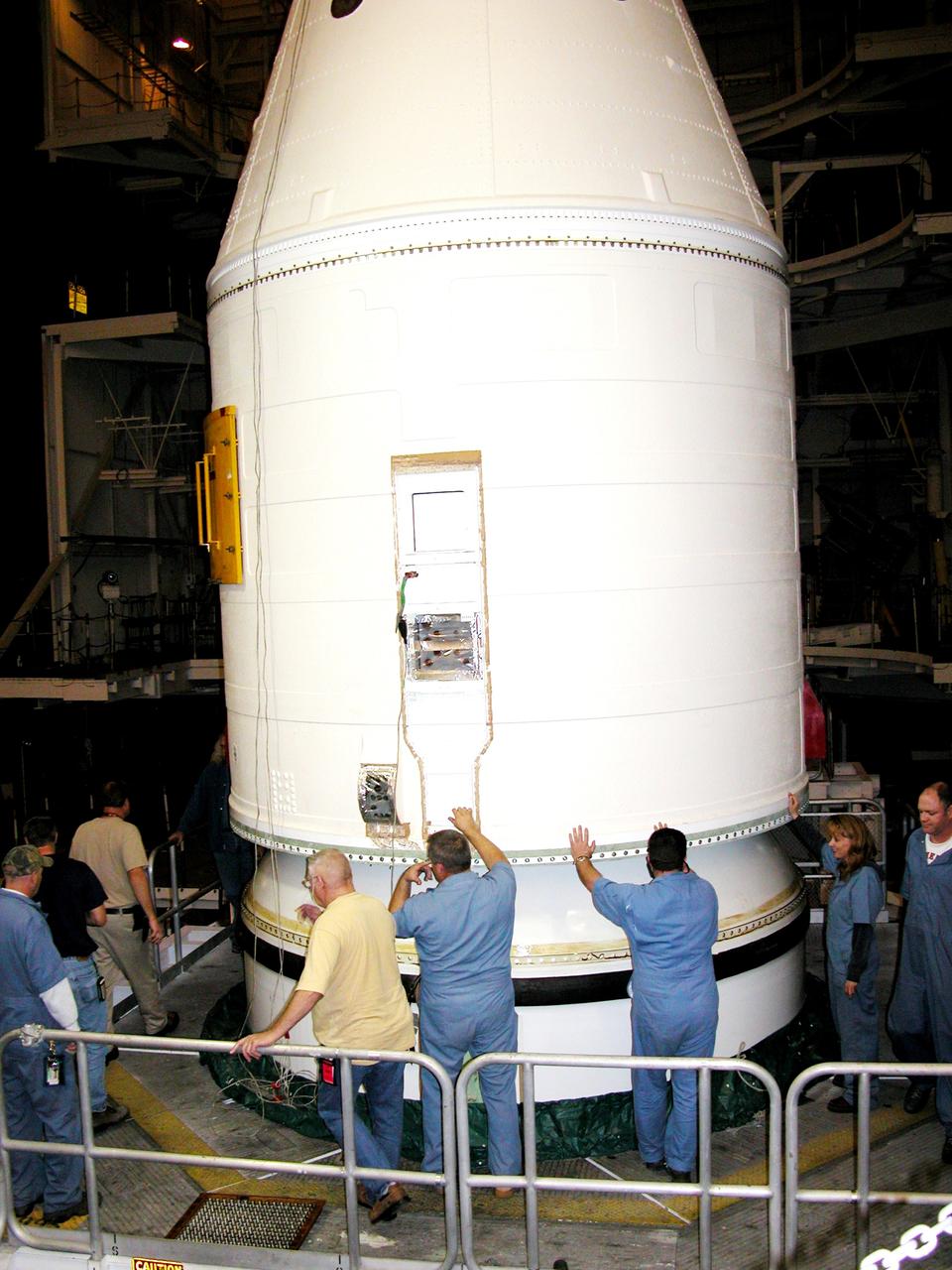
KENNEDY SPACE CENTER, FLA. -  In the Vehicle Assembly Building, a KSC employee separates the forward assembly (nose cap and frustum) from a solid rocket booster (SRB) after the bolts were removed.  The destacking is part of time and cycle activities.  The SRB was part of the stack on Atlantis originally scheduled for a March 1, 2003, launch on mission STS-114.  The SRBs and external tank were demated in February 2003.   The mission is now scheduled to occur no earlier than Sept. 12, 2004, on Atlantis.
KENNEDY SPACE CENTER, FLA. - In the Vehicle Assembly Building, a KSC employee separates the forward assembly (nose cap and frustum) from a solid rocket booster (SRB) after the bolts were removed. The destacking is part of time and cycle activities. The SRB was part of the stack on Atlantis originally scheduled for a March 1, 2003, launch on mission STS-114. The SRBs and external tank were demated in February 2003. The mission is now scheduled to occur no earlier than Sept. 12, 2004, on Atlantis.
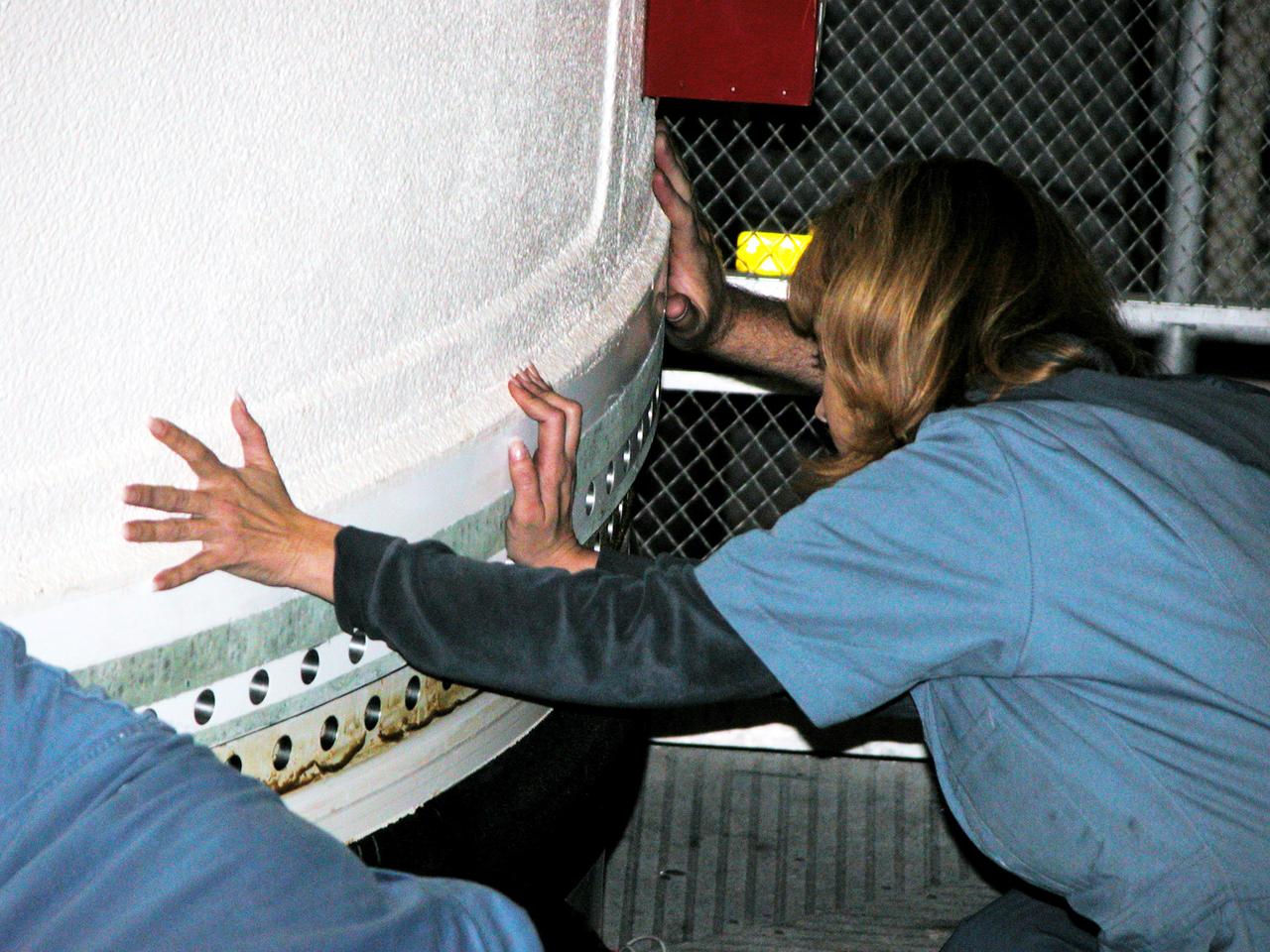
KENNEDY SPACE CENTER, FLA. -  In the Vehicle Assembly Building, a KSC employee loosens a bolt on part of the forward assembly of a solid rocket booster (SRB) before destacking.  The SRB was part of the stack on Atlantis originally scheduled for a March 1, 2003, launch on mission STS-114.  The SRBs and external tank were demated in February 2003.   The destacking is part of time and cycle activities.  STS-114 is now scheduled to occur no earlier than Sept. 12, 2004, on Atlantis.
KENNEDY SPACE CENTER, FLA. - In the Vehicle Assembly Building, a KSC employee loosens a bolt on part of the forward assembly of a solid rocket booster (SRB) before destacking. The SRB was part of the stack on Atlantis originally scheduled for a March 1, 2003, launch on mission STS-114. The SRBs and external tank were demated in February 2003. The destacking is part of time and cycle activities. STS-114 is now scheduled to occur no earlier than Sept. 12, 2004, on Atlantis.
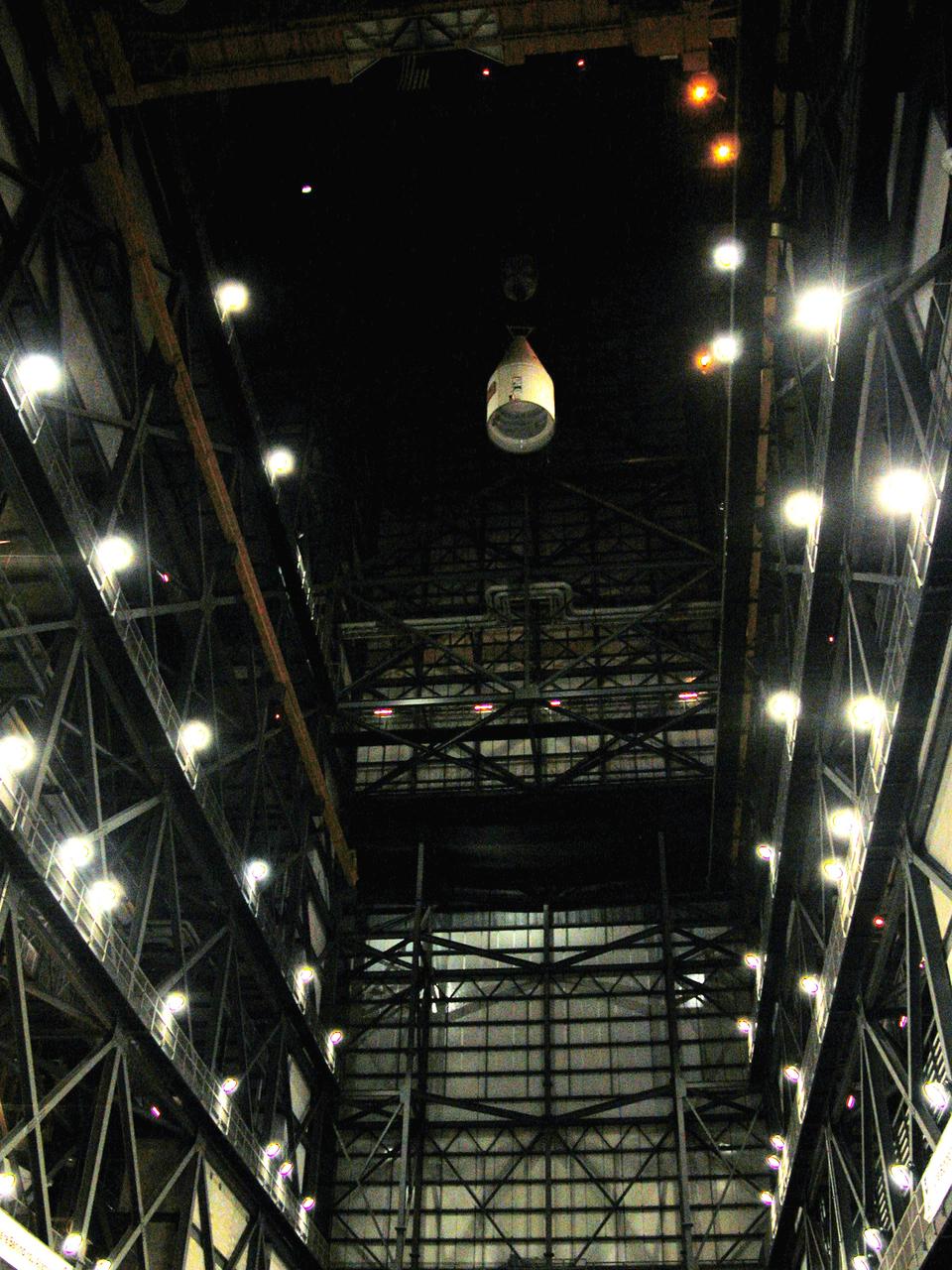
KENNEDY SPACE CENTER, FLA. -  In the Vehicle Assembly Building, after being removed from the solid rocket booster (SRB), the forward assembly is lowered from high above the transfer aisle.  The destacking is part of time and cycle activities.  The SRB was part of the stack on Atlantis originally scheduled for a March 1, 2003, launch on mission STS-114.  The SRBs and external tank were demated in February 2003.   The mission is now scheduled to occur no earlier than Sept. 12, 2004, on Atlantis.
KENNEDY SPACE CENTER, FLA. - In the Vehicle Assembly Building, after being removed from the solid rocket booster (SRB), the forward assembly is lowered from high above the transfer aisle. The destacking is part of time and cycle activities. The SRB was part of the stack on Atlantis originally scheduled for a March 1, 2003, launch on mission STS-114. The SRBs and external tank were demated in February 2003. The mission is now scheduled to occur no earlier than Sept. 12, 2004, on Atlantis.
KENNEDY SPACE CENTER, FLA. -  In the Vehicle Assembly Building, the forward assembly (nose cap and frustum) is moved away from the solid rocket booster (SRB).  The destacking is part of time and cycle activities.  The SRB was part of the stack on Atlantis originally scheduled for a March 1, 2003, launch on mission STS-114.  The SRBs and external tank were demated in February 2003.   The mission is now scheduled to occur no earlier than Sept. 12, 2004, on Atlantis.
KENNEDY SPACE CENTER, FLA. - In the Vehicle Assembly Building, the forward assembly (nose cap and frustum) is moved away from the solid rocket booster (SRB). The destacking is part of time and cycle activities. The SRB was part of the stack on Atlantis originally scheduled for a March 1, 2003, launch on mission STS-114. The SRBs and external tank were demated in February 2003. The mission is now scheduled to occur no earlier than Sept. 12, 2004, on Atlantis.
KENNEDY SPACE CENTER, FLA. -  In the Vehicle Assembly Building, KSC employees help guide the destacking of the forward assembly (nose cap and frustum) from a solid rocket booster (SRB) after the bolts were removedThe destacking is part of time and cycle activities.  The SRB was part of the stack on Atlantis originally scheduled for a March 1, 2003, launch on mission STS-114.  The SRBs and external tank were demated in February 2003.   The mission is now scheduled to occur no earlier than Sept. 12, 2004, on Atlantis.
KENNEDY SPACE CENTER, FLA. - In the Vehicle Assembly Building, KSC employees help guide the destacking of the forward assembly (nose cap and frustum) from a solid rocket booster (SRB) after the bolts were removedThe destacking is part of time and cycle activities. The SRB was part of the stack on Atlantis originally scheduled for a March 1, 2003, launch on mission STS-114. The SRBs and external tank were demated in February 2003. The mission is now scheduled to occur no earlier than Sept. 12, 2004, on Atlantis.
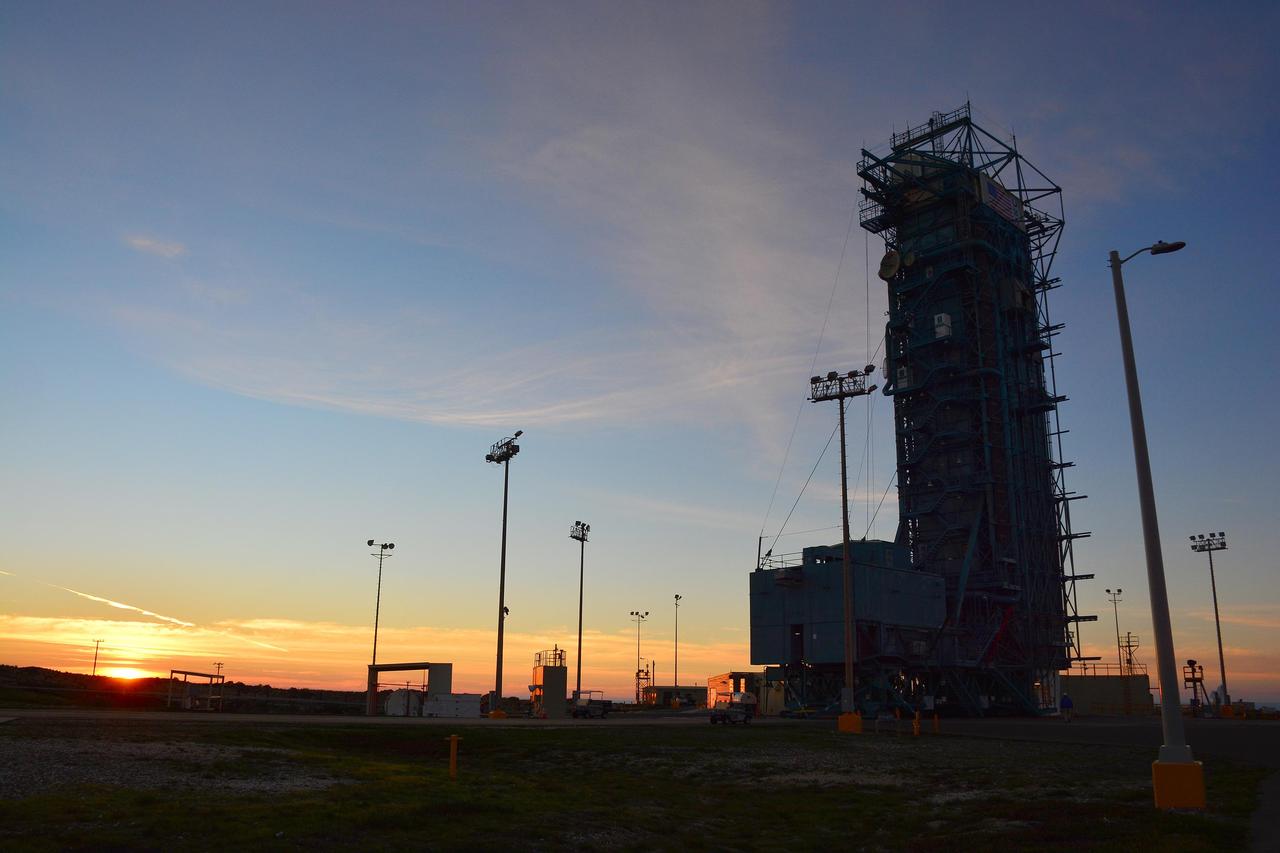
The sun sets behind Space Launch Complex 2, Vandenberg Air Force Base, California, where NASA Soil Moisture Active Passive SMAP mission satellite is being prepared for liftoff. Launch is scheduled for Jan. 29.
Sunset at Vandenberg
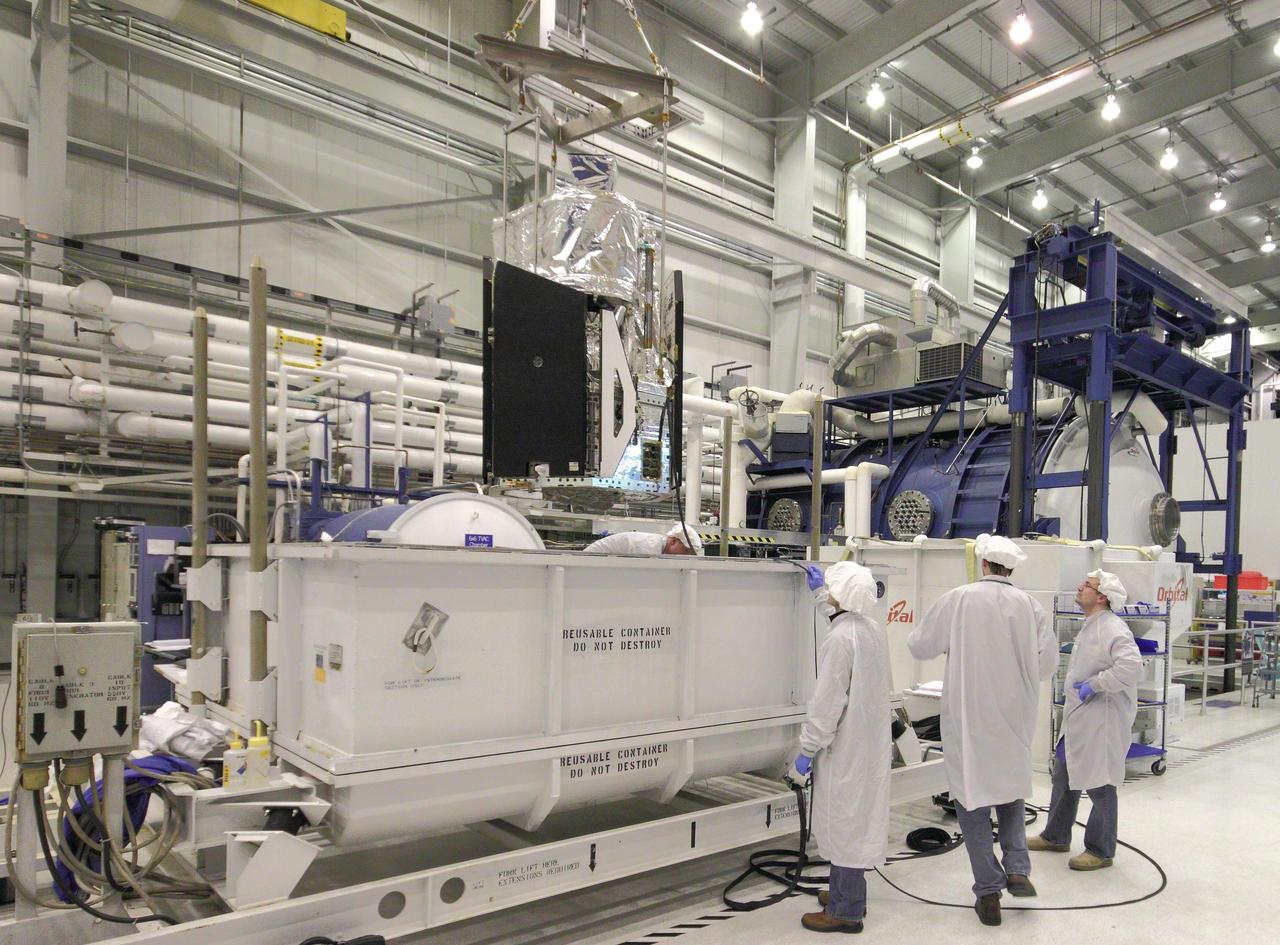
NASA Nuclear Spectroscopic Telescope Array, or NuSTAR, mission is lowered into its shipping container at Orbital Sciences Corporation in Dulles, Va. It is scheduled to launch from Kwajalein Atoll in the Marshall Islands on March 14, 2012.
Beginning the Journey to the Launch Pad
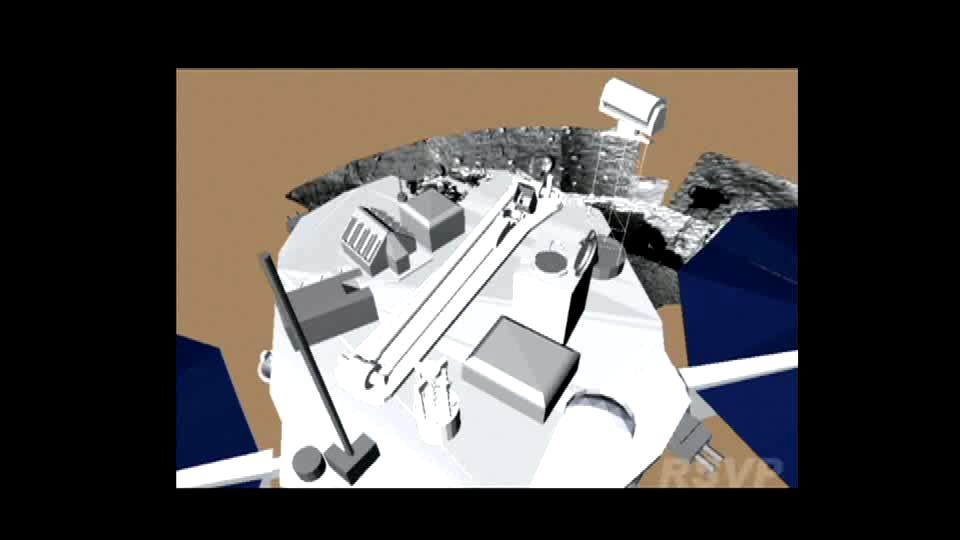
The Phoenix spacecraft is scheduled to begin raising its robotic arm up and out of its stowed configuration on the third Martian day, or Sol 3 May 28, 2008 of the mission
Phoenix Stretches its Arm
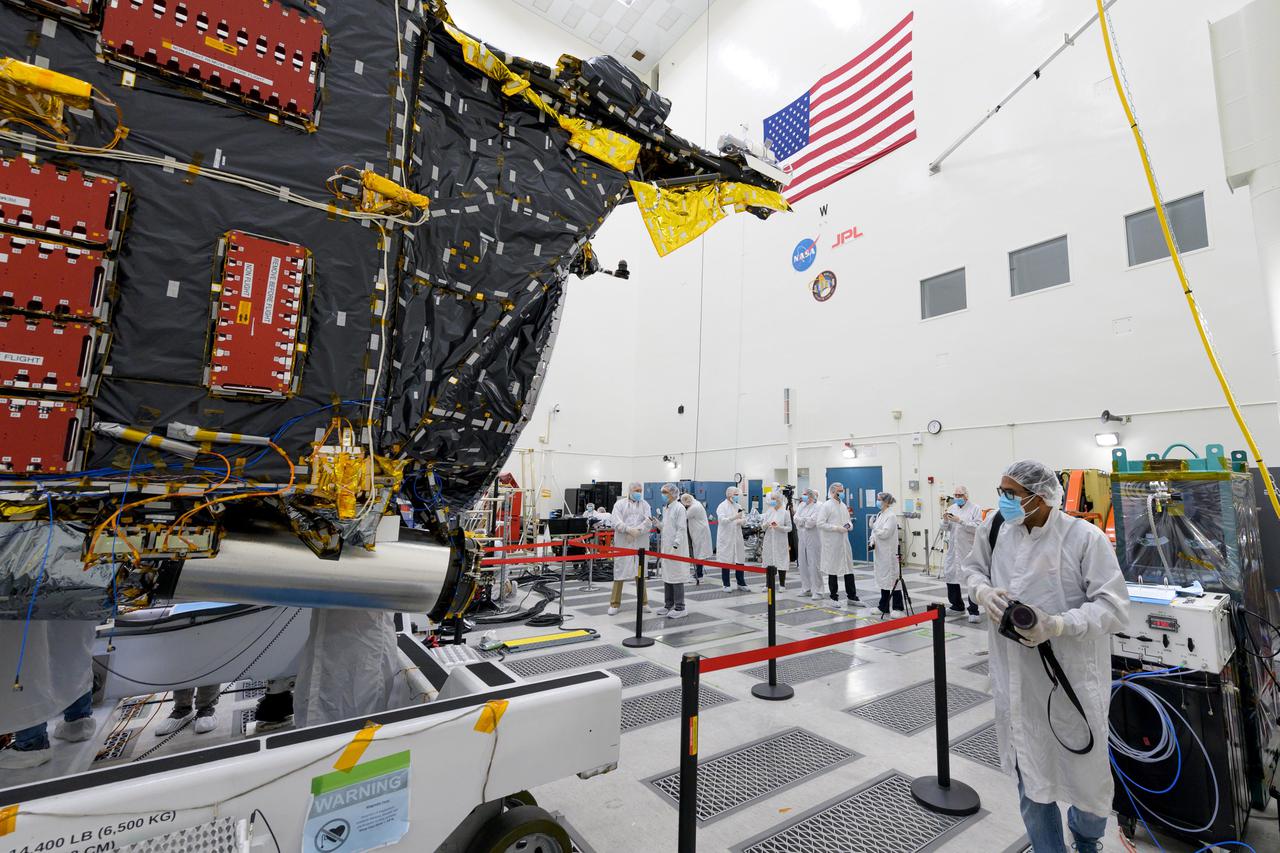
Members of the media view the Psyche spacecraft on April 11, 2022, inside a clean room at JPL. The spacecraft is scheduled to launch in August on a journey to a metal-rich asteroid of the same name.  https://photojournal.jpl.nasa.gov/catalog/PIA25242
NASA Shows Off Psyche Spacecraft to Media
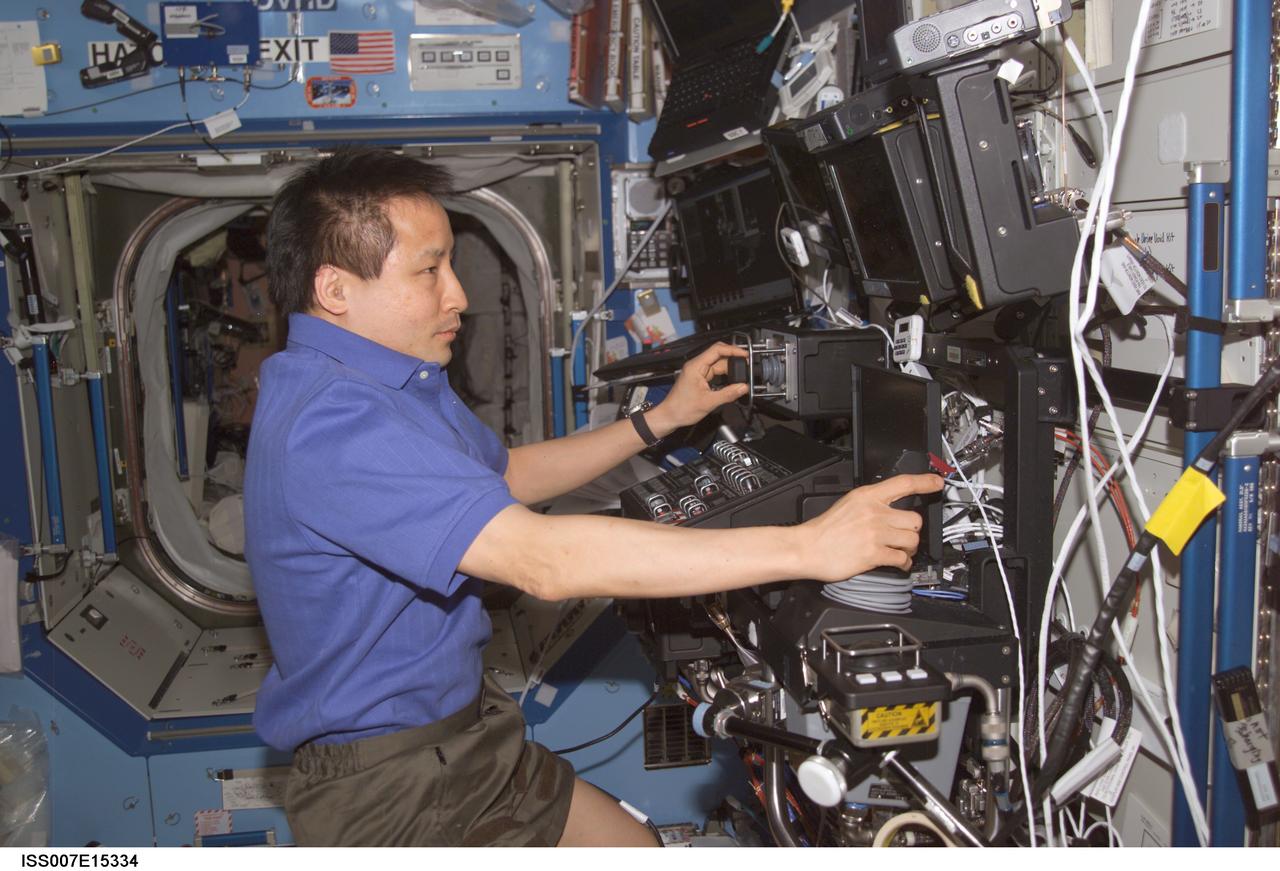
ISS007-E-15334 (23 September 2003) --- Astronaut Edward T. Lu, Expedition 7 NASA ISS science officer and flight engineer, works at the Space Station Remote Manipulator System (SSRMS) or Canadarm2 workstation in the Destiny laboratory on the International Space Station (ISS).
Expedition Seven Lu performs scheduled proficiency operation with the SSRMS
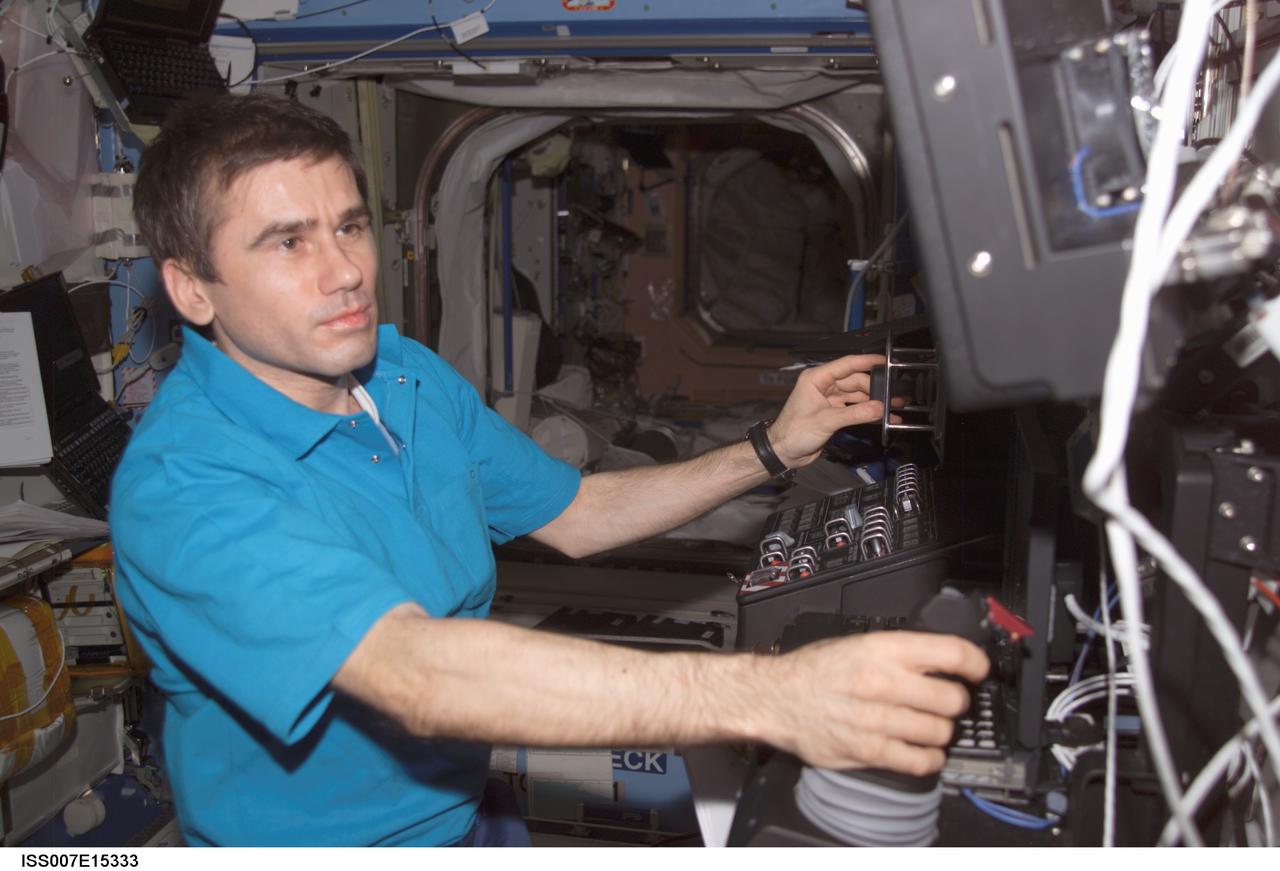
ISS007-E-15333 (23 September 2003) --- Cosmonaut Yuri I. Malenchenko, Expedition 7 mission commander, works at the Space Station Remote Manipulator System (SSRMS) or Canadarm2 workstation in the Destiny laboratory on the International Space Station (ISS). Malenchenko represents Rosaviakosmos.
Expedition Seven Malenchenko performs scheduled proficiency operation with the SSRMS
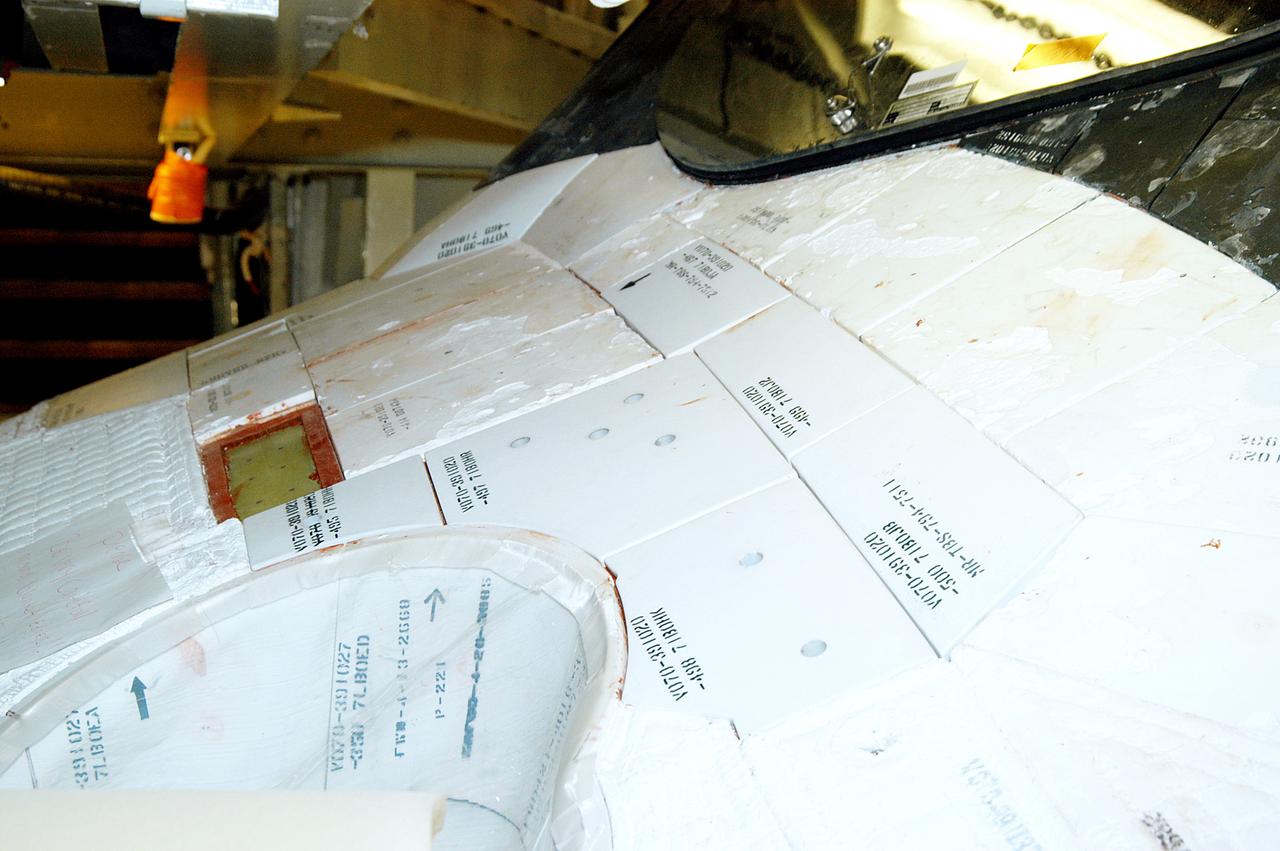
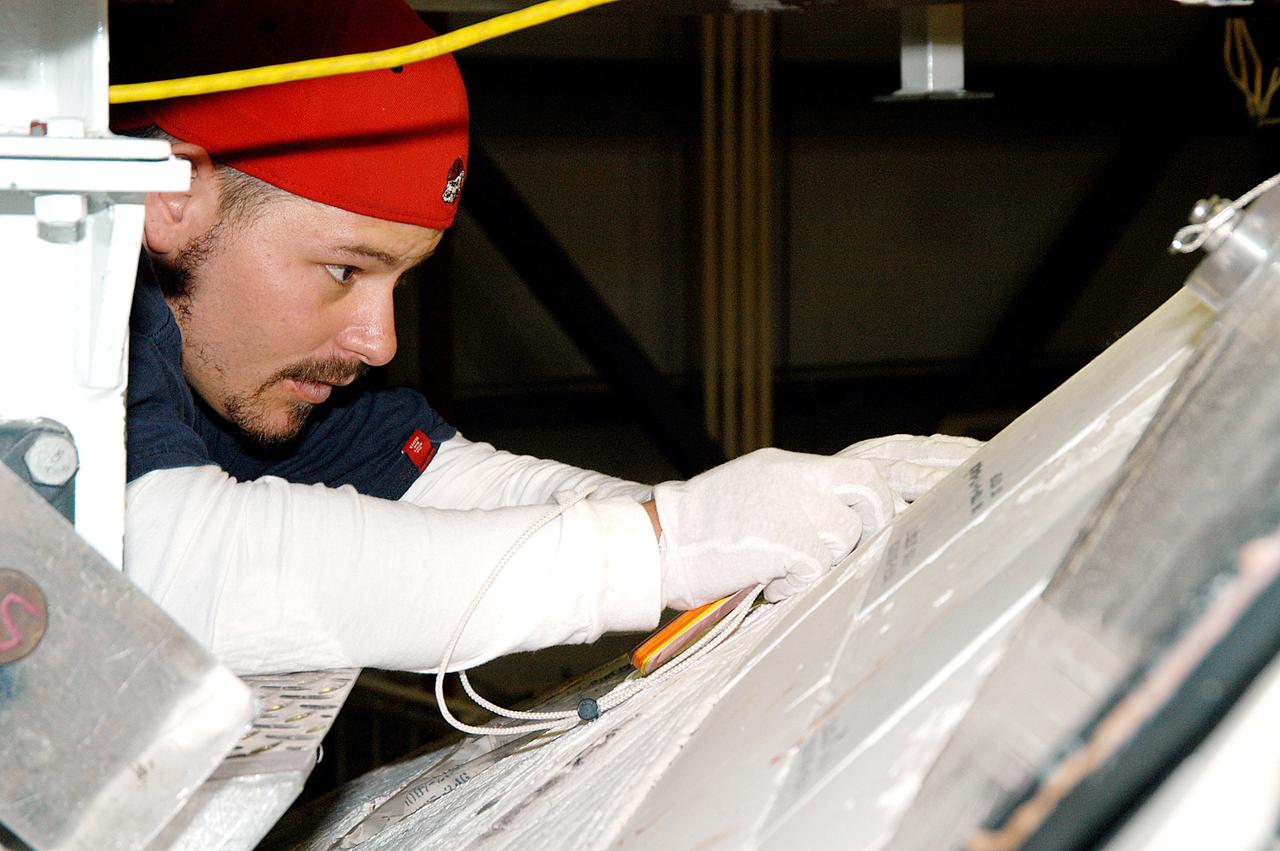
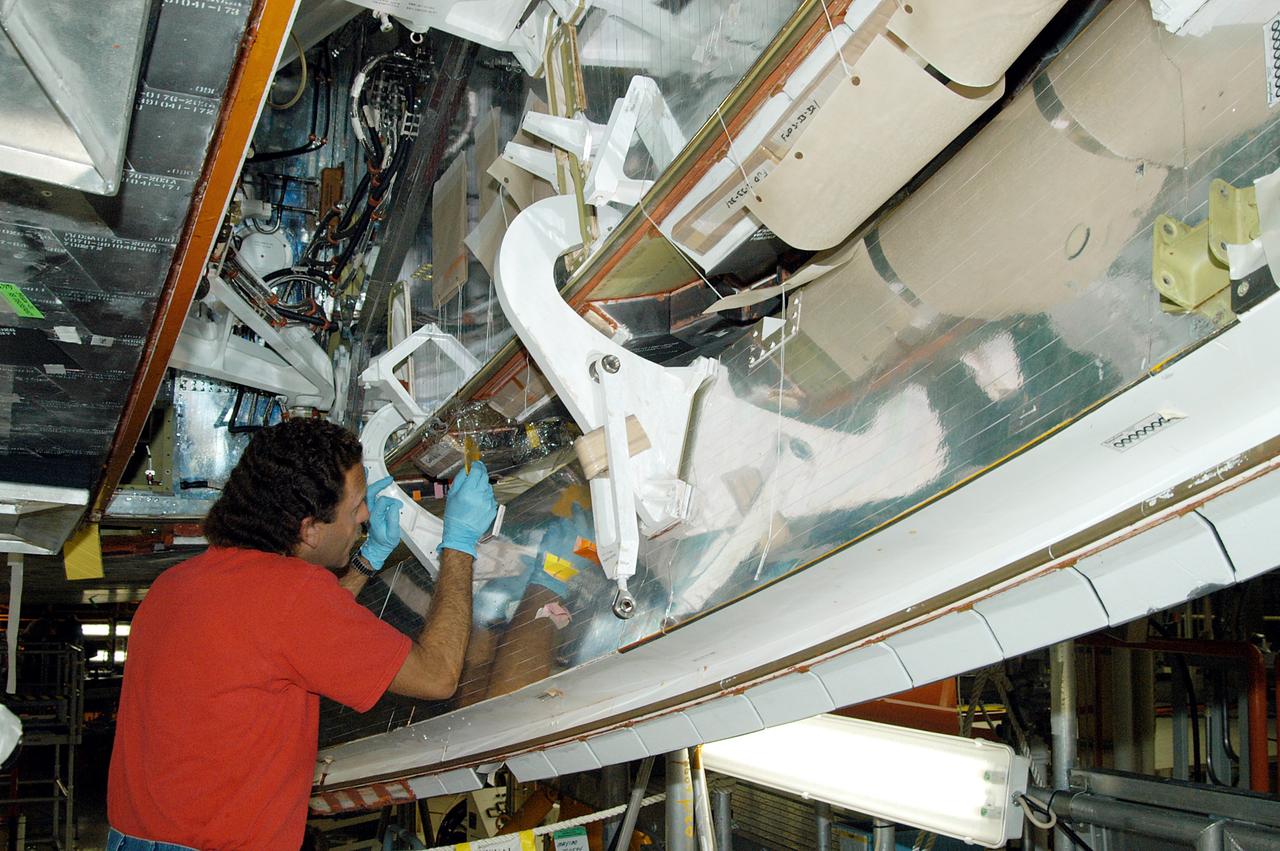
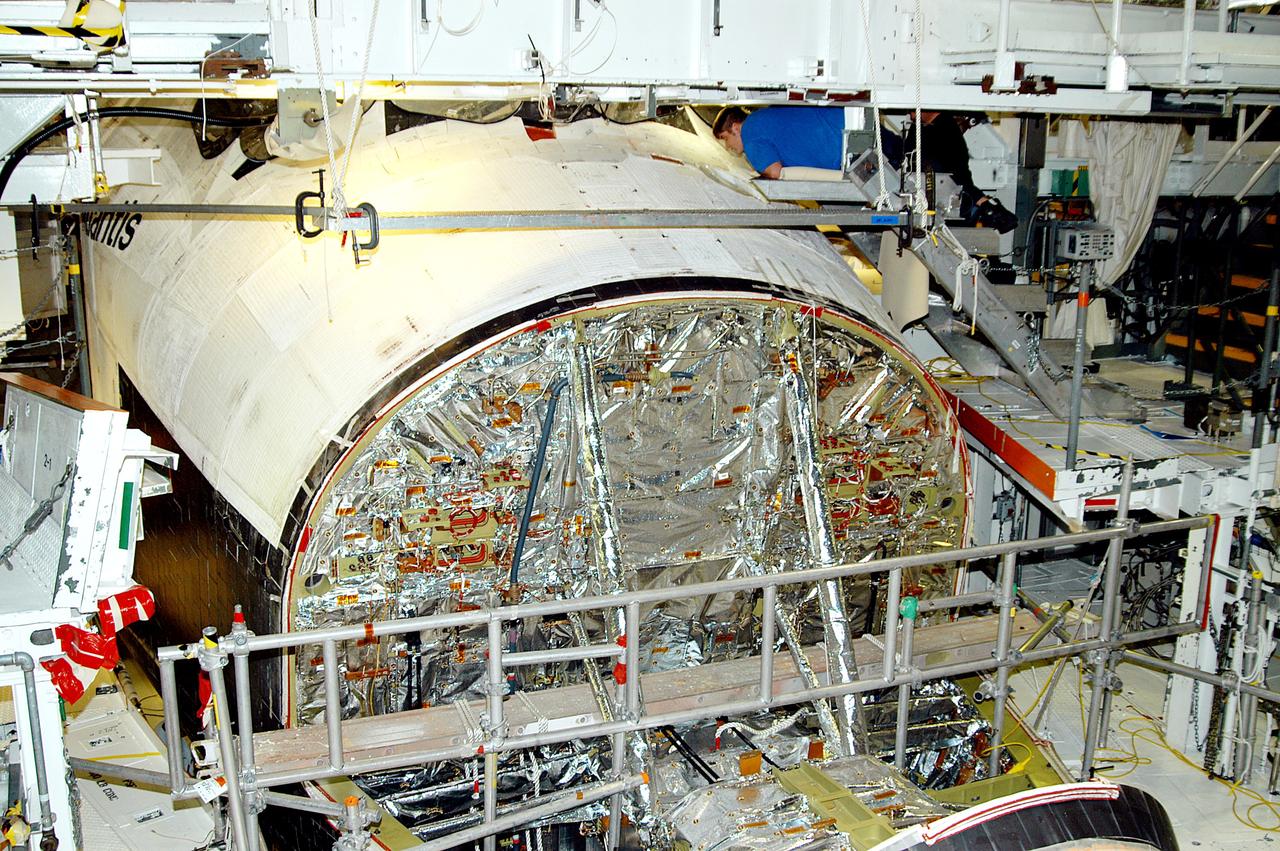
KENNEDY SPACE CENTER, FLA. - In the Orbiter Processing Facility, United Space Alliance technician Jamie Haynes does a gap test on the tiles of the nose of orbiter Atlantis as part of return-to-flight activities.  Atlantis is scheduled for mission STS-114, a return-to-flight test mission to the International Space Station.
KENNEDY SPACE CENTER, FLA. - In the Orbiter Processing Facility, United Space Alliance technician Jamie Haynes does a gap test on the tiles of the nose of orbiter Atlantis as part of return-to-flight activities. Atlantis is scheduled for mission STS-114, a return-to-flight test mission to the International Space Station.
KENNEDY SPACE CENTER, FLA. -  In the Orbiter Processing Facility, United Space Alliance technician Jamie Haynes checks the tiles on the nose of orbiter Atlantis as part of return-to-flight activities.  Atlantis is scheduled for mission STS-114, a return-to-flight test mission to the International Space Station.
KENNEDY SPACE CENTER, FLA. - In the Orbiter Processing Facility, United Space Alliance technician Jamie Haynes checks the tiles on the nose of orbiter Atlantis as part of return-to-flight activities. Atlantis is scheduled for mission STS-114, a return-to-flight test mission to the International Space Station.
KENNEDY SPACE CENTER, FLA. - This view shows the tiles below the windshield on the orbiter Atlantis.  A gap test is being performed on the tiles as part of return-to-flight activities.  Atlantis is scheduled for mission STS-114, a return-to-flight test mission to the International Space Station.
KENNEDY SPACE CENTER, FLA. - This view shows the tiles below the windshield on the orbiter Atlantis. A gap test is being performed on the tiles as part of return-to-flight activities. Atlantis is scheduled for mission STS-114, a return-to-flight test mission to the International Space Station.
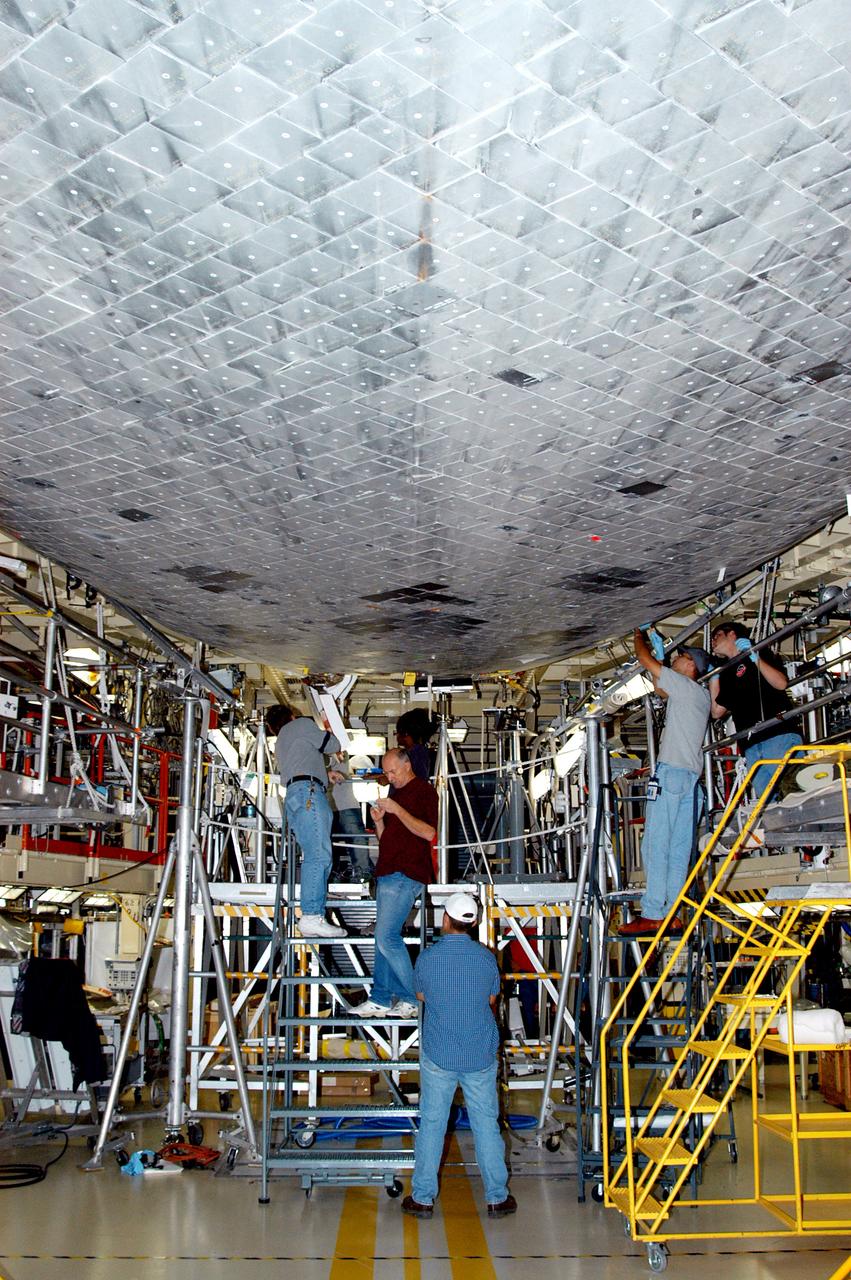
KENNEDY SPACE CENTER, FLA. -  In the Orbiter Processing Facility, KSC technicians work on the underbody of the orbiter Discovery.  The vehicle has undergone Orbiter Major Modifications in the past year.  Discovery is scheduled to fly on mission STS-121 to the International Space Station.
KENNEDY SPACE CENTER, FLA. - In the Orbiter Processing Facility, KSC technicians work on the underbody of the orbiter Discovery. The vehicle has undergone Orbiter Major Modifications in the past year. Discovery is scheduled to fly on mission STS-121 to the International Space Station.
KENNEDY SPACE CENTER, FLA. -  In the Orbiter Processing Facility, KSC employee Gene Peavler works in the wheel area on the orbiter Discovery.  The vehicle has undergone Orbiter Major Modifications in the past year.  Discovery is scheduled to fly on mission STS-121 to the International Space Station.
KENNEDY SPACE CENTER, FLA. - In the Orbiter Processing Facility, KSC employee Gene Peavler works in the wheel area on the orbiter Discovery. The vehicle has undergone Orbiter Major Modifications in the past year. Discovery is scheduled to fly on mission STS-121 to the International Space Station.
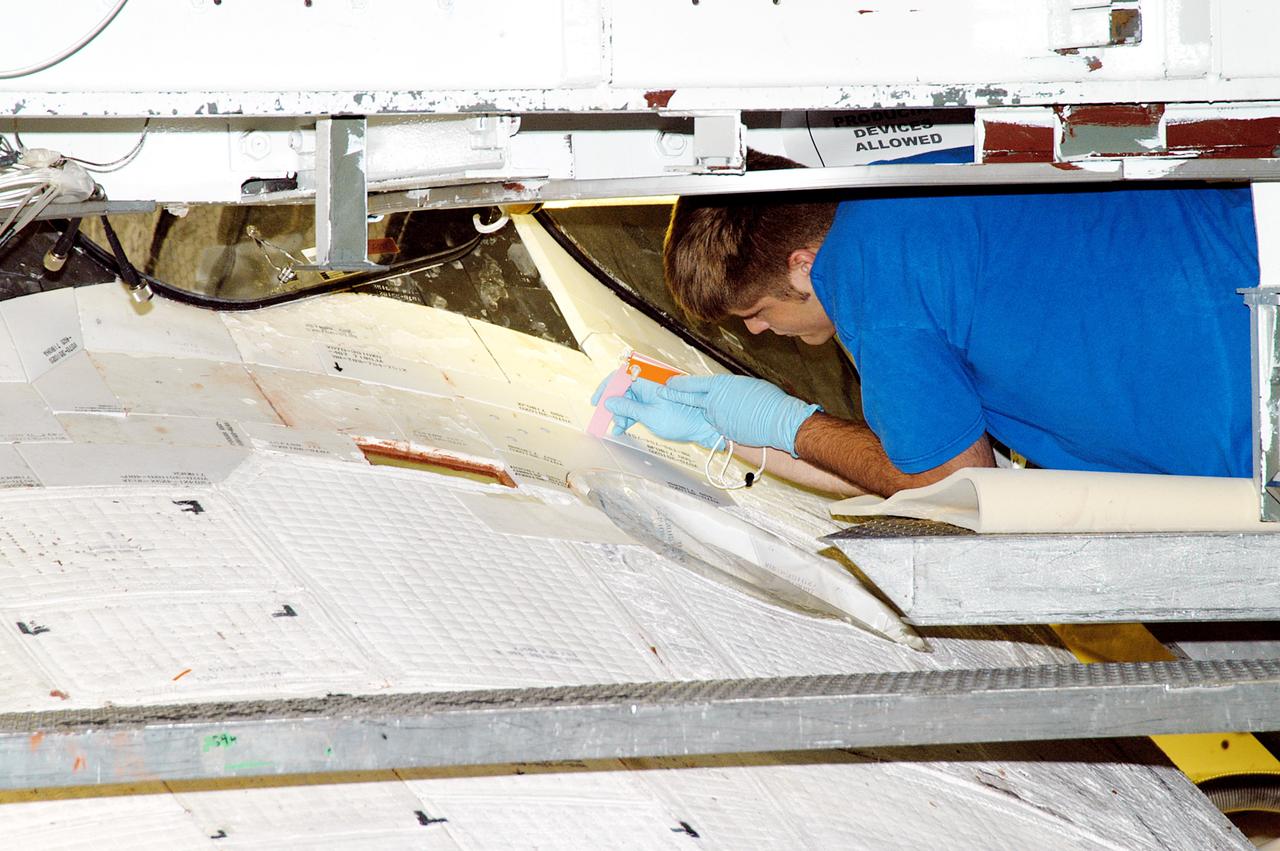
KENNEDY SPACE CENTER, FLA. - In the Orbiter Processing Facility, United Space Alliance technician Chris Moore performs gap tests on the tiles of the nose of orbiter Atlantis as part of return-to-flight activities.  Atlantis is scheduled for mission STS-114, a return-to-flight test mission to the International Space Station.
KENNEDY SPACE CENTER, FLA. - In the Orbiter Processing Facility, United Space Alliance technician Chris Moore performs gap tests on the tiles of the nose of orbiter Atlantis as part of return-to-flight activities. Atlantis is scheduled for mission STS-114, a return-to-flight test mission to the International Space Station.
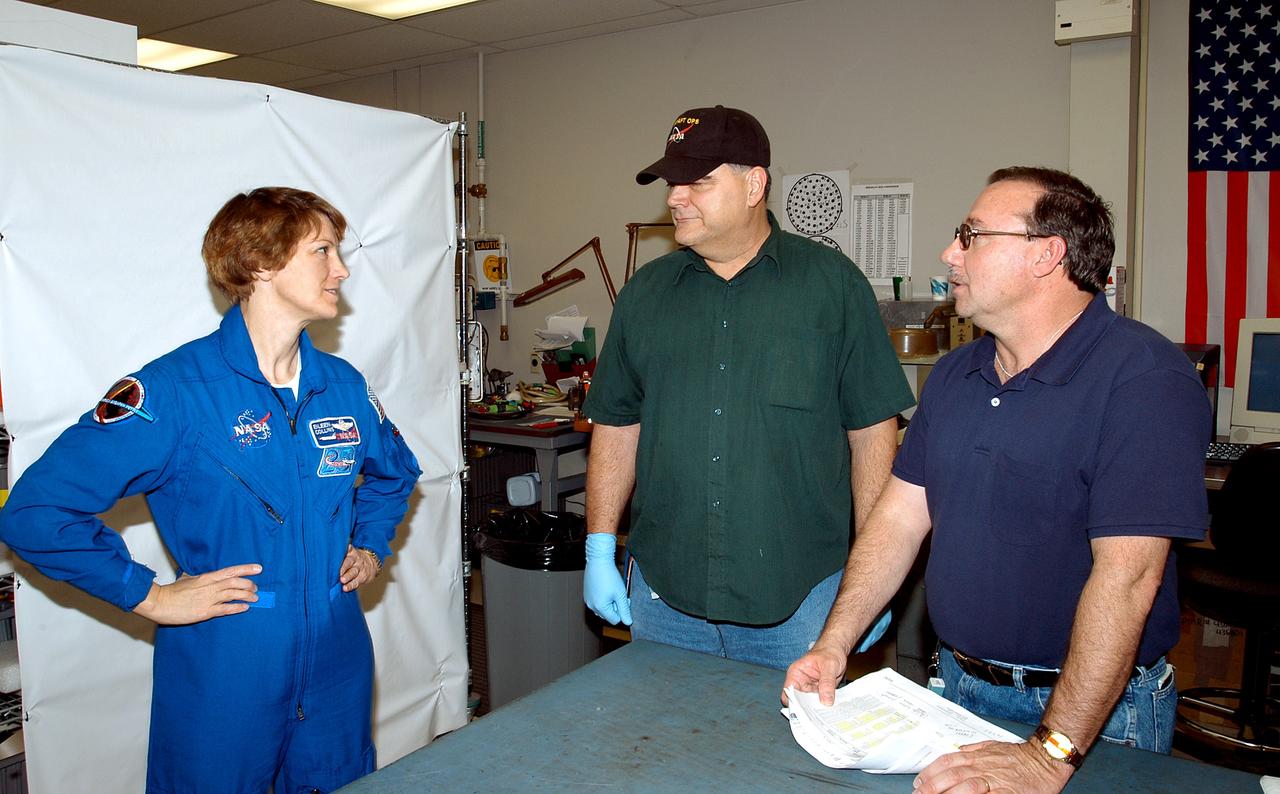
KENNEDY SPACE CENTER, FLA. - STS-114 Commander Eileen Collins talks with workers in the Orbiter Processing Facility.  She and other crew members are at KSC to become familiar with Shuttle and mission equipment.  The mission is Logistics Flight 1, which is scheduled to deliver supplies and equipment plus the external stowage platform to the International Space Station.
KENNEDY SPACE CENTER, FLA. - STS-114 Commander Eileen Collins talks with workers in the Orbiter Processing Facility. She and other crew members are at KSC to become familiar with Shuttle and mission equipment. The mission is Logistics Flight 1, which is scheduled to deliver supplies and equipment plus the external stowage platform to the International Space Station.
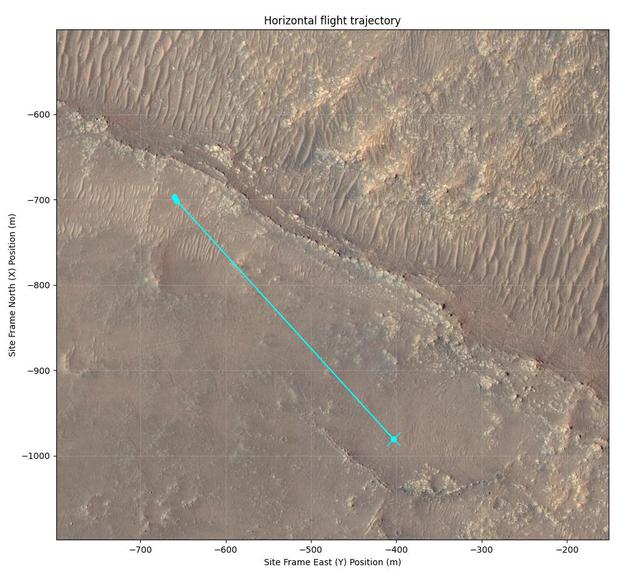
This annotated image of Mars' Jezero Crater depicts the ground track and waypoints of the Ingenuity Mars Helicopter's planned 11th flight, scheduled to take place no earlier than Aug. 4, 2021. It was generated using terrain imaged by the HiRISE camera aboard NASA's Mars Reconnaissance Orbiter. The goal of Flight 11 is to move Ingenuity to a new location where it can support the Perseverance rover by obtaining imagery of geologic features in the "South Seí­tah" area.  This graphic indicates the helicopter's location at takeoff with a pale blue dot on the lower right; upper-left dots indicate its new landing site.  https://photojournal.jpl.nasa.gov/catalog/PIA24690
Ingenuity's 11th Flight
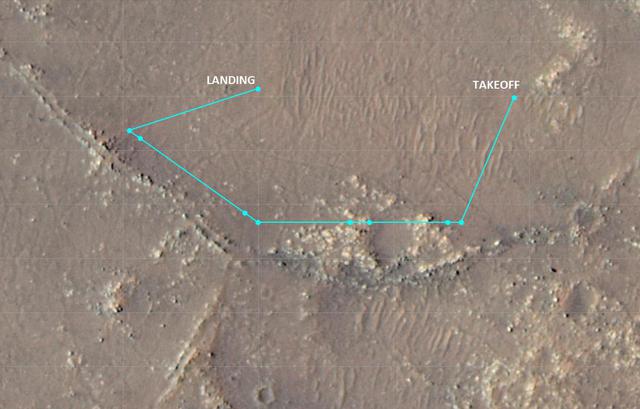
This annotated image of Mars' Jezero Crater depicts the ground track and waypoints of the Ingenuity Mars Helicopter's planned tenth flight, scheduled to take place no earlier than Saturday, July 24. The image was generated using terrain imaged by the HiRISE camera aboard NASA's Mars Reconnaissance Orbiter. The goal of Flight 10 is to obtain 3D imagery of geologic features that are of interest to the agency's Perseverance rover science team.  The pale-blue dots indicate mission waypoints. The first and last waypoints provide takeoff and landing locations. Waypoints 2 through 9 indicate where Ingenuity's color Return to Earth (RTE) camera will take pictures that could be made into stereo images.   https://photojournal.jpl.nasa.gov/catalog/PIA24687
Ingenuity Flight 10 Ground Track
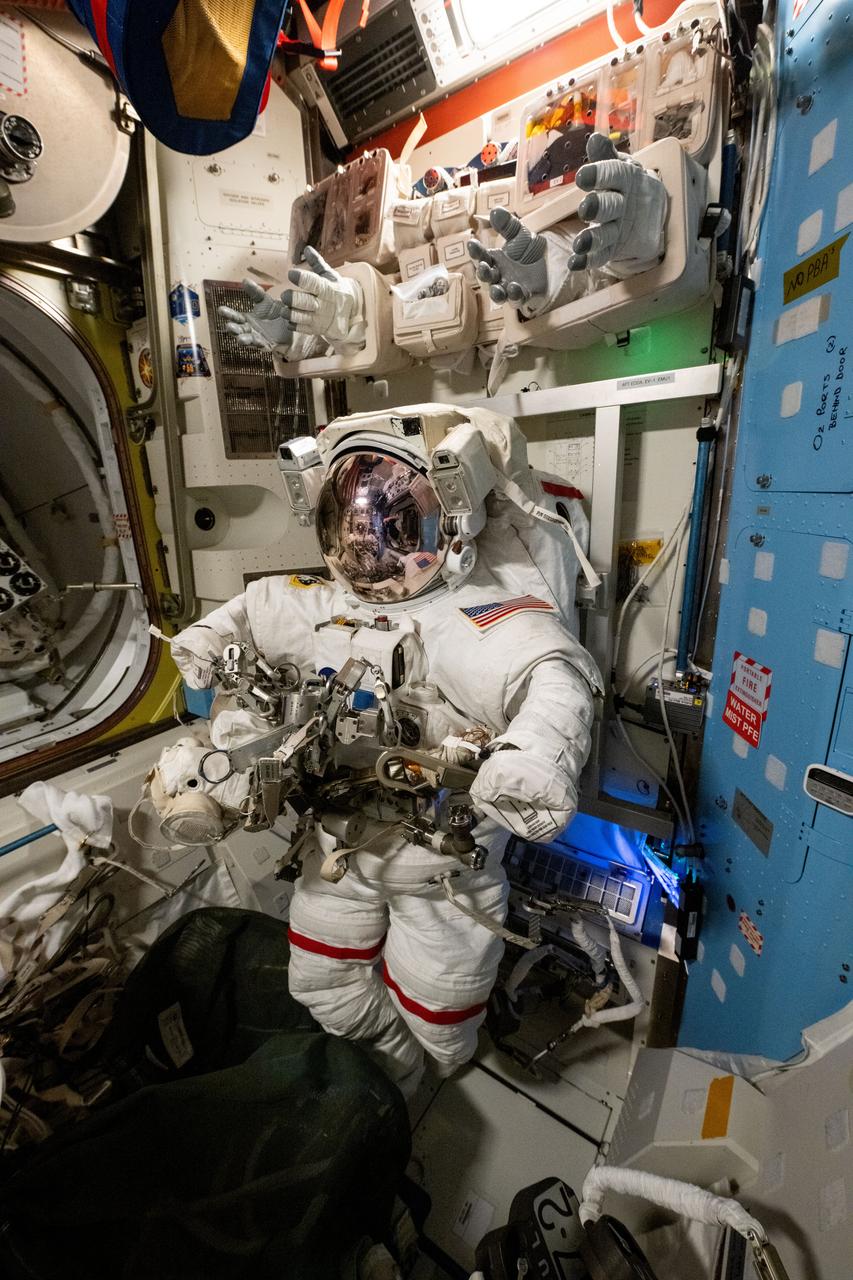
iss072e518456 (Jan. 23, 2025) --- A spacesuit is pictured staged inside the International Space Station's Quest airlock ahead of a spacewalk planned for NASA astronauts Suni Williams and Butch Wilmore. The two spacewalkers are scheduled to exit the Quest airlock on Jan. 30 to remove a radio frequency group antenna assembly and search for microbes outside the orbital outpost.
A spacesuit is pictured staged inside the Quest airlock
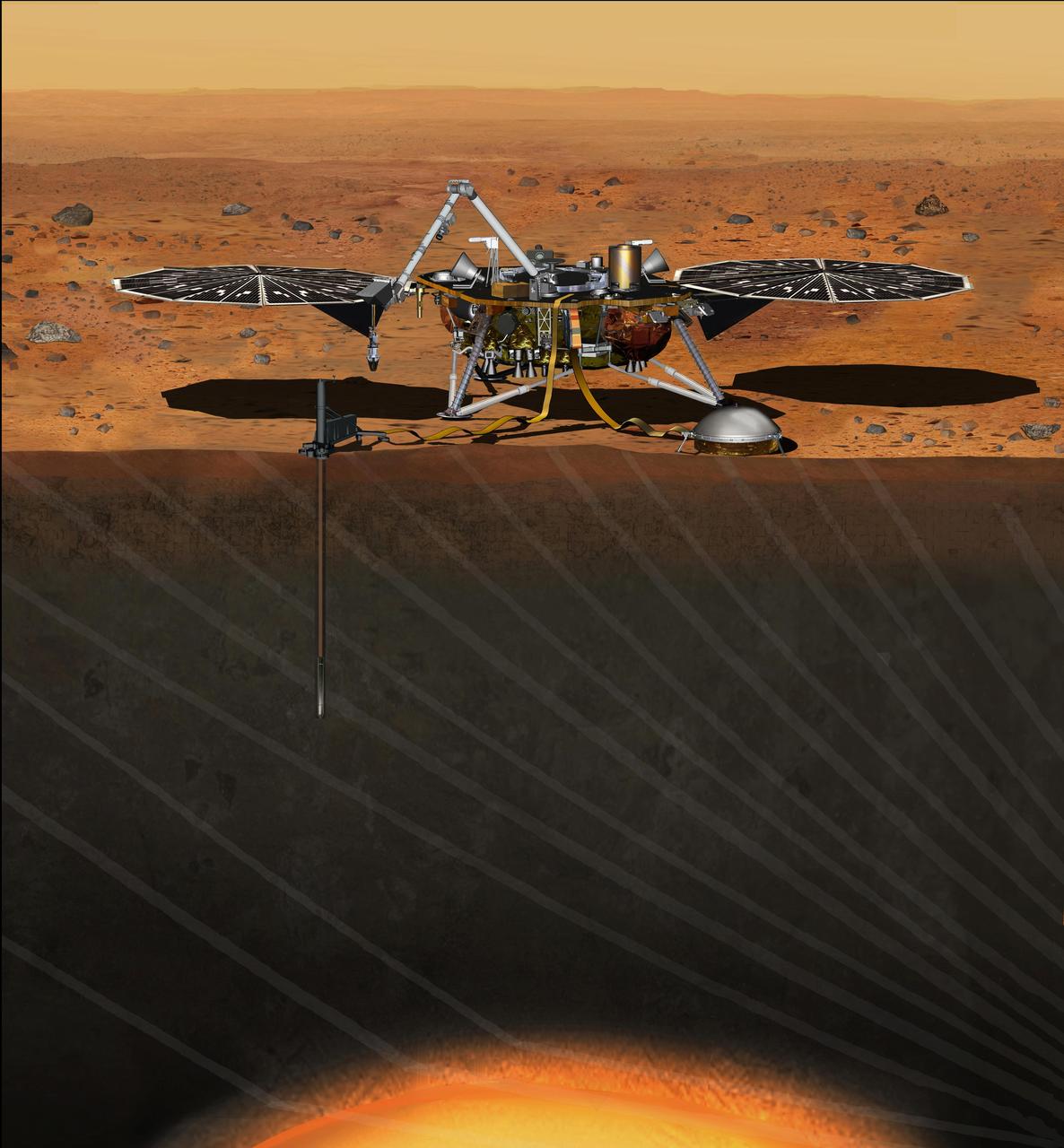
This artist's concept depicts the stationary NASA Mars lander known by the acronym InSight at work studying the interior of Mars. The InSight mission (for Interior Exploration using Seismic Investigations, Geodesy and Heat Transport) is scheduled to launch in March 2016 and land on Mars six months later. It will investigate processes that formed and shaped Mars and will help scientists better understand the evolution of our inner solar system's rocky planets, including Earth.  InSight will deploy two instruments to the ground using a robotic arm: a seismometer (contributed by the French space agency Centre National d'Etudes Spatiales, or CNES) to measure the microscopic ground motions from distant marsquakes, providing detailed information about the interior structure of Mars; and a heat-flow probe (contributed by the German Aerospace Center, or DLR) designed to hammer itself 3 to 5 meters (about 16 feet) deep and monitor heat coming from the planet's interior. The mission will also track the lander's radio to measure wobbles in the planet's rotation that relate to the size of its core and will include a camera and a suite of environmental sensors to monitor the weather and variations in the magnetic field. Lockheed Martin Space Systems, Denver, is building the spacecraft.   Note: After thorough examination, NASA managers have decided to suspend the planned March 2016 launch of the Interior Exploration using Seismic Investigations Geodesy and Heat Transport (InSight) mission. The decision follows unsuccessful attempts to repair a leak in a section of the prime instrument in the science payload.  http://photojournal.jpl.nasa.gov/catalog/PIA17358
Artist Concept of InSight Lander on Mars
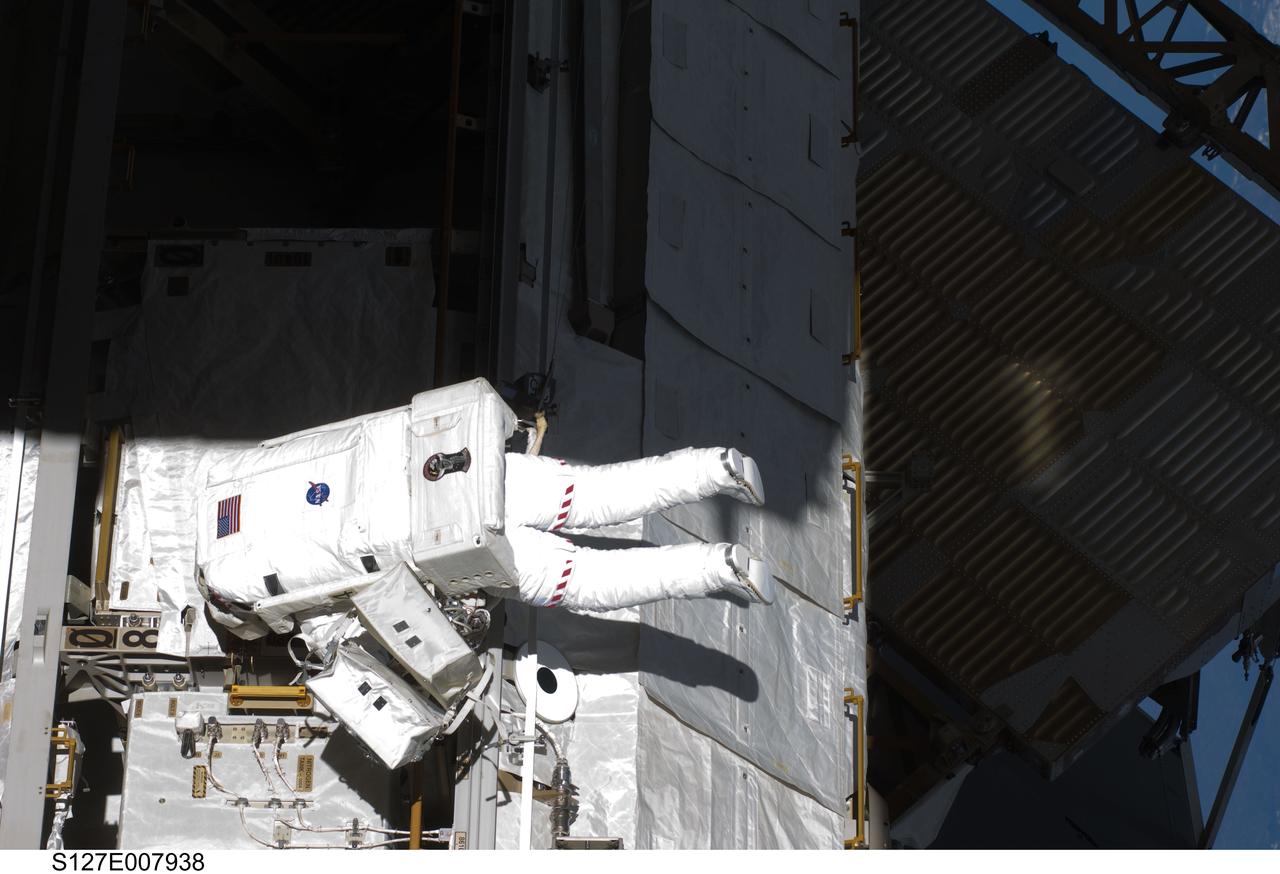
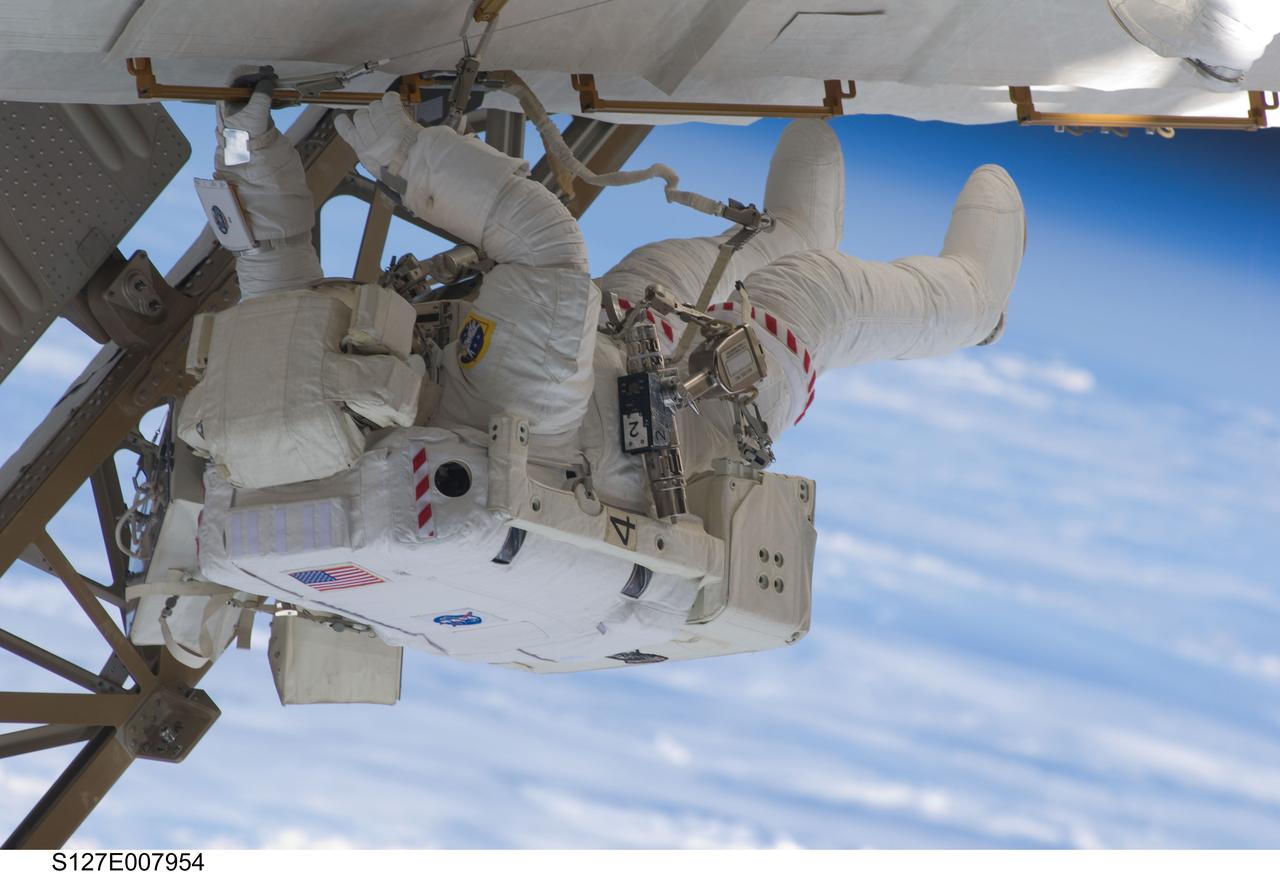
S127-E-007954 (22 July 2009) --- Astronaut Christopher Cassidy, STS-127 mission specialist, participates in Endeavour's third space walk of a scheduled five overall for this flight. This was Cassidy's first of a scheduled three sessions for him. Astronaut Dave Wolf, Cassidy's EVA colleague, is out of frame.
Cassidy at the P1 Truss during EVA-3
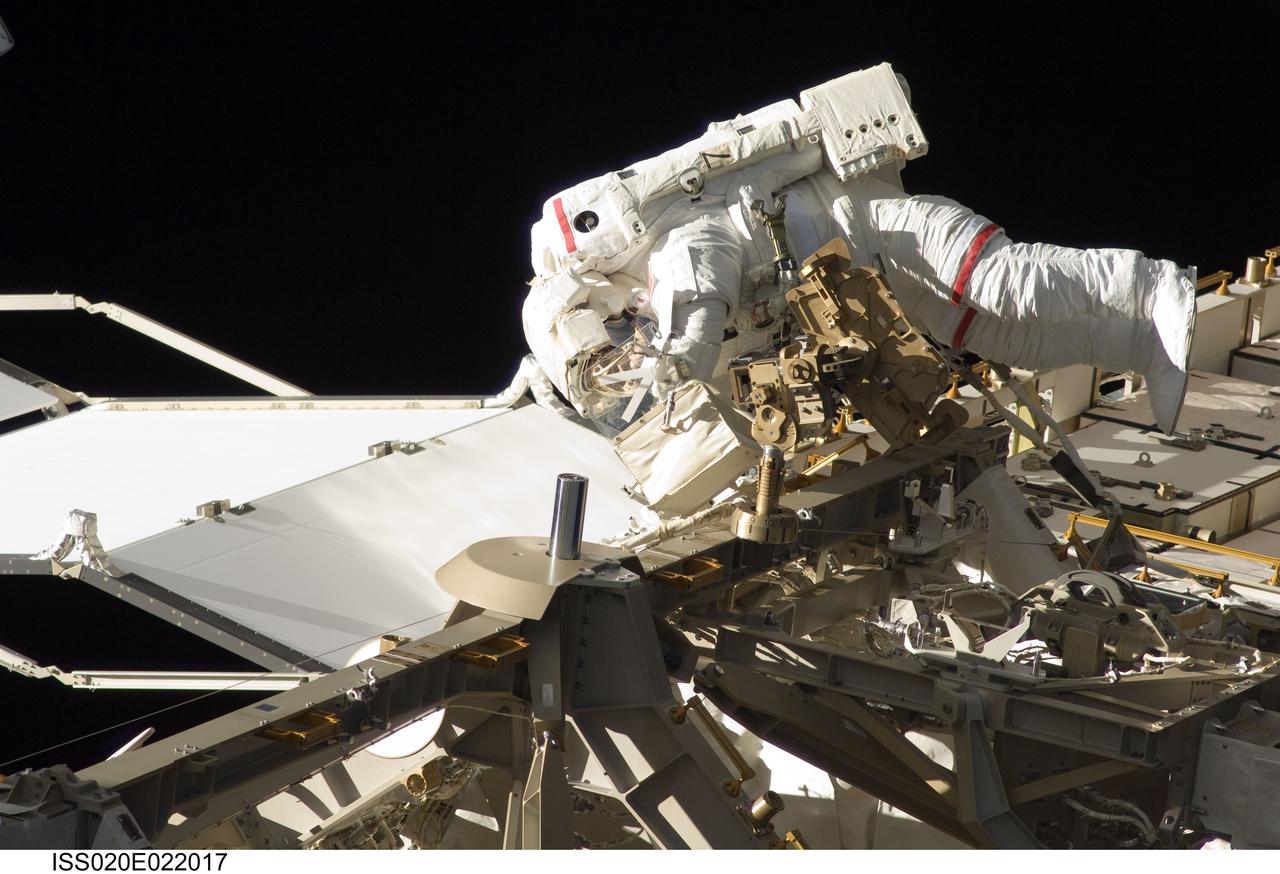
ISS020-E-022017 (18 July 2009) --- Astronauts  Dave Wolf, STS-127 mission specialist, kicks off new work on the International Space Station with the first of five scheduled space walks, to be spread over the next several days.  Wolf is scheduled to pair with three different astronauts for the first three of the spacewalks.
iss020e022017
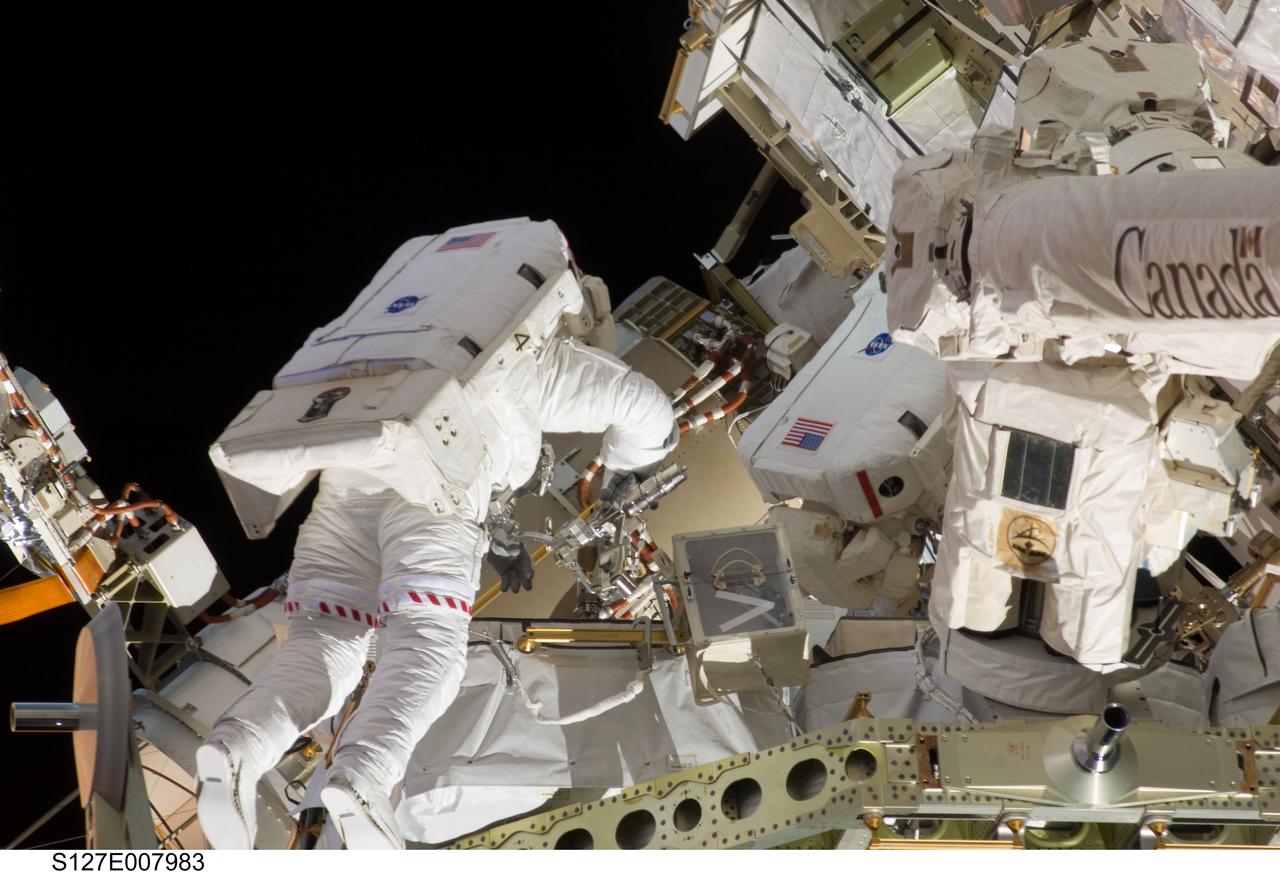
S127-E-007983 (22 July 2009) --- Astronaut Christopher Cassidy, STS-127 mission specialist, participates in Endeavour's third space walk of a scheduled five overall for this flight. This was Cassidy's first of a scheduled three sessions for him. Astronaut Dave Wolf, Cassidy's EVA colleague, partially visible at right.
Wolf and Cassidy works with the ICC during EVA-3
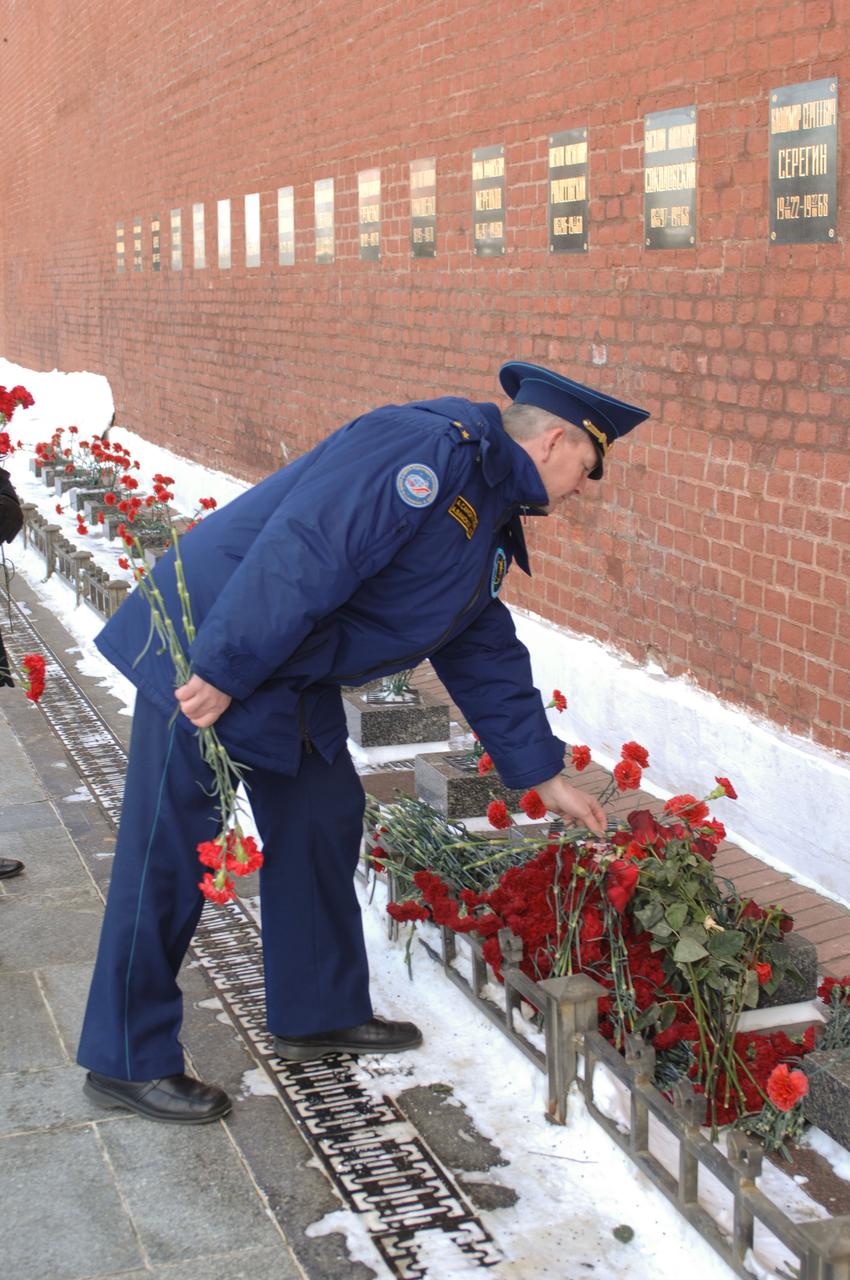
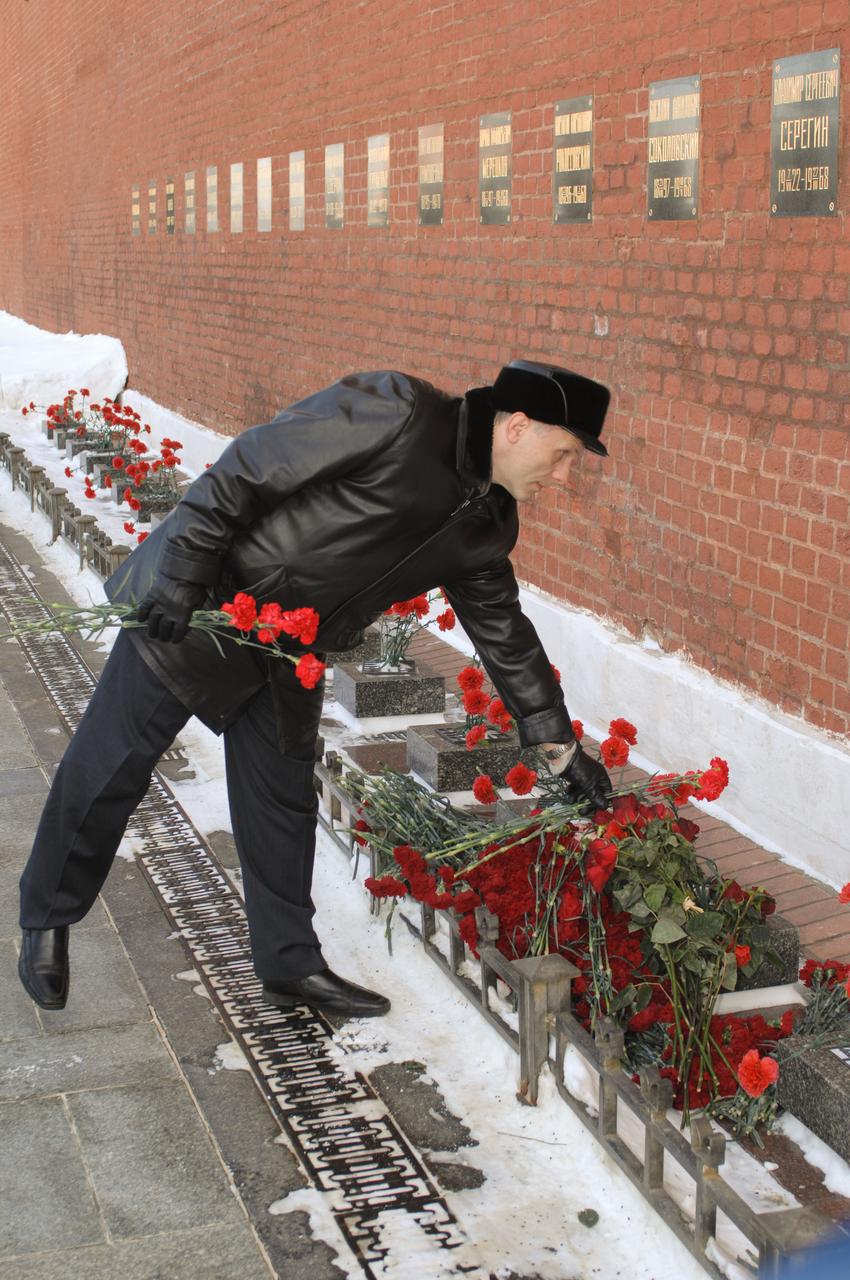
At the Kremlin Wall in Moscow March 11, 2011, Russian cosmonaut Alexander Samokutyaev lays flowers in honor of fallen icons as part of the ceremonial activities leading to the scheduled launch of Expedition 27 to the International Space Station, scheduled for March 30 (Kazakhstan time) in the Soyuz TMA-21 spacecraft. Photo credit: NASA/Mark Polansky
Expedition 27 Preflight
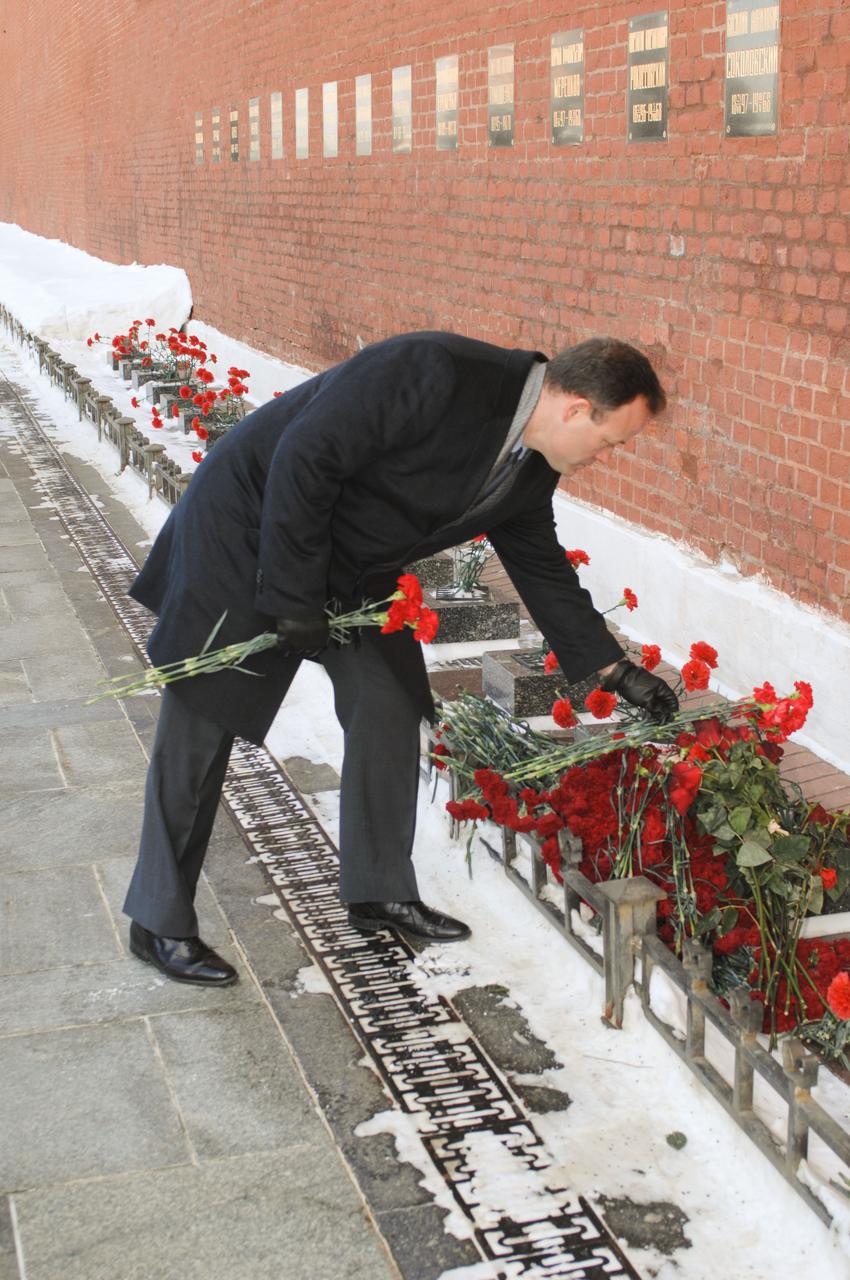
At the Kremlin Wall in Moscow March 11, 2011, NASA astronaut Ron Garan lays flowers in honor of fallen icons as part of the ceremonial activities leading to the scheduled launch of Expedition 27 to the International Space Station, scheduled for March 30 (Kazakhstan time) in the Soyuz TMA-21 spacecraft. Photo credit: NASA/Mark Polansky
Expedition 27 Preflight
S127-E-007938 (22 July 2009) --- Astronaut Christopher Cassidy, STS-127 mission specialist, participates in Endeavour's third space walk of a scheduled five overall for this flight. This was Cassidy's first of a scheduled three sessions for him. Astronaut Dave Wolf, Cassidy's EVA colleague, is out of frame.
Cassidy at the P1 Truss during EVA-3
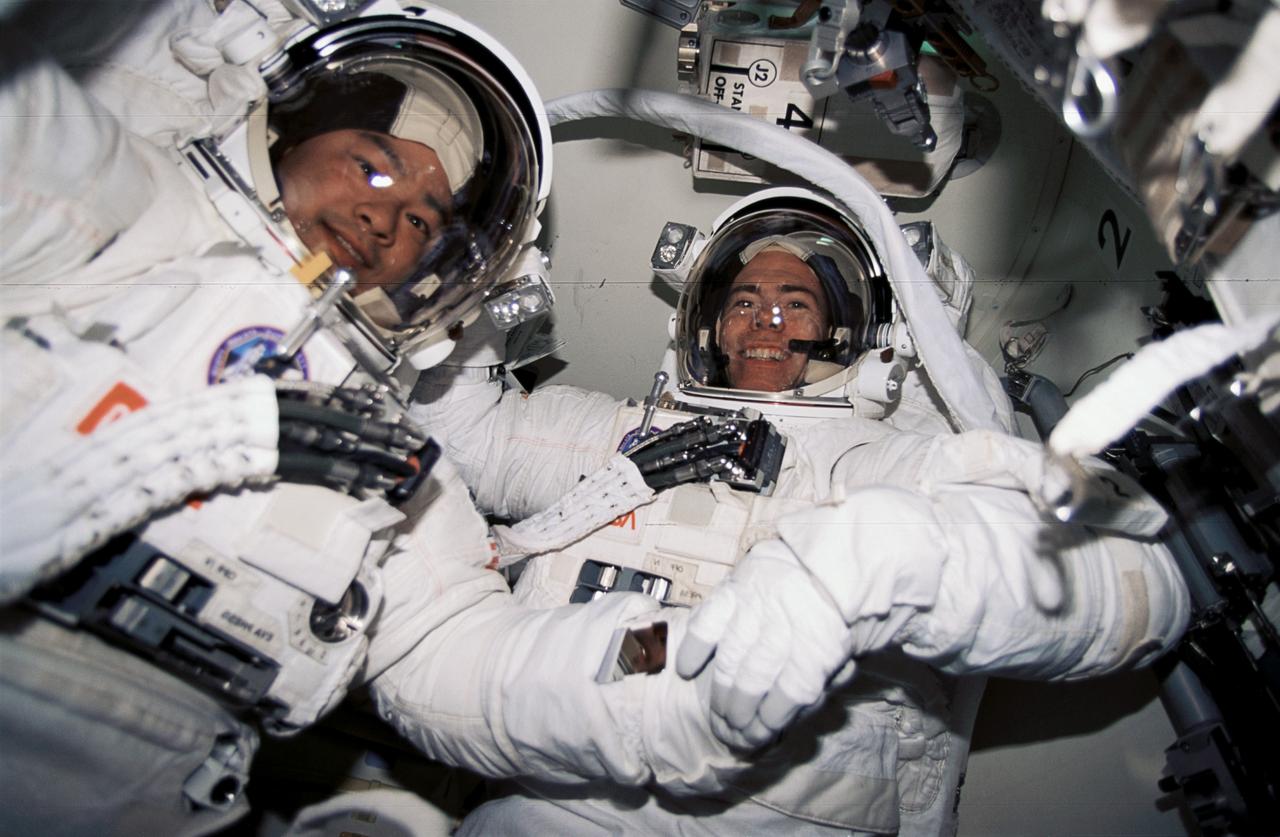
STS072-391-009 (15 Jan. 1996) --- In the Space Shuttle Endeavour's airlock, astronauts Leroy Chiao (left) and Daniel T. Barry prepare for the first extravehicular activity (EVA) scheduled on the mission. The two EVA's were scheduled to evaluate space station assembly techniques.
EMU suited crewmembers prepare for first EVA of STS-72 mission
The test subject of Airspace Technology Demonstration 2 is “Integrated Arrivals Departures Scheduling,” a software tool that coordinates schedules between the ramp, tower, terminal and center control facilities, allowing air traffic controllers to better predict where and when to send aircraft in order to reduce congestion.
iads-display_full
At the Kremlin Wall in Moscow March 11, 2011, Russian cosmonaut Andrey Borisenko lays flowers in honor of fallen icons as part of the ceremonial activities leading to the scheduled launch of Expedition 27 to the International Space Station, scheduled for March 30 (Kazakhstan time) in the Soyuz TMA-21 spacecraft. Photo credit: NASA/Mark Polansky
Expedition 27 Preflight
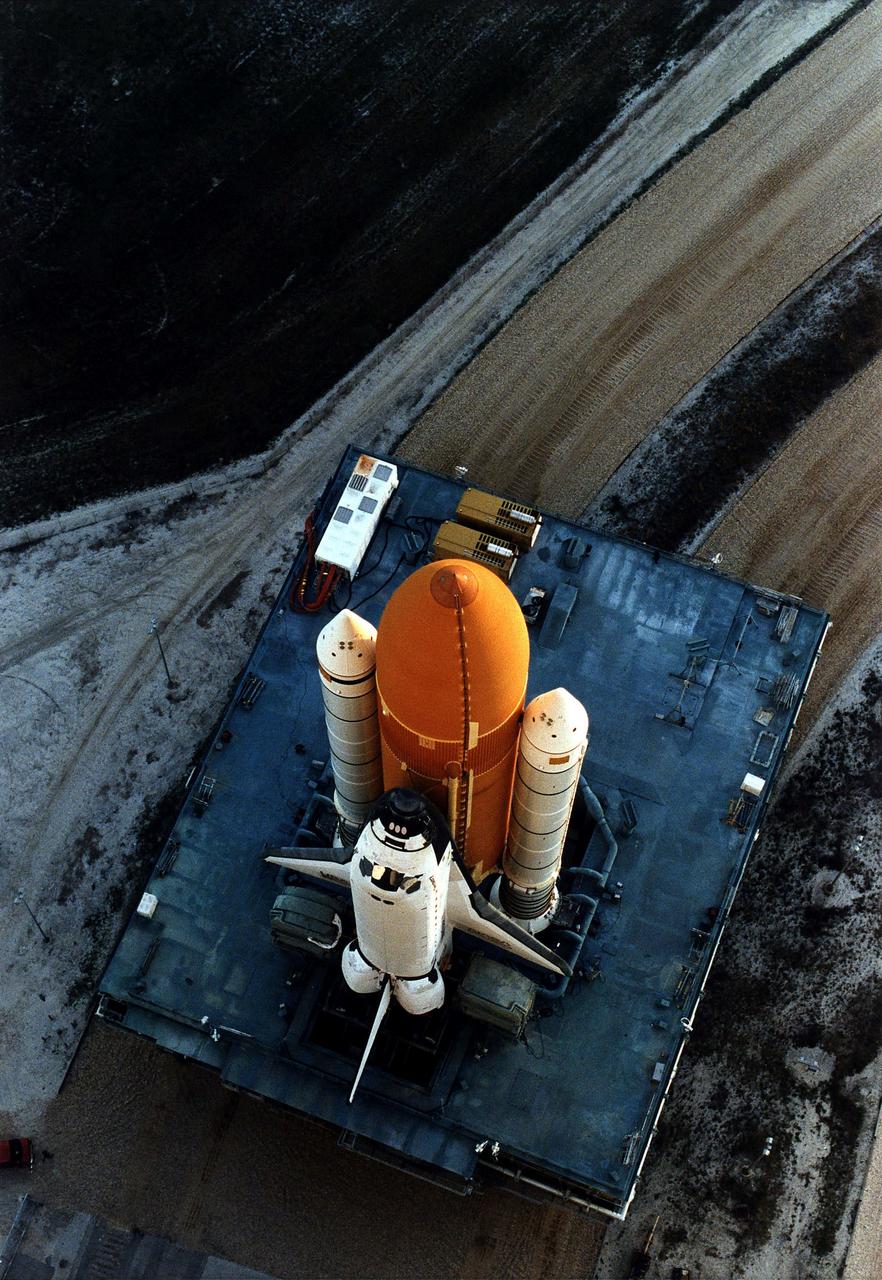
KENNEDY SPACE CENTER, FLA. -  The Space Shuttle Discovery on its Mobile Launcher Platform slowly moves through the high bay doors of the Vehicle Assembly Building en route to Launch Pad 39A, where Discovery is scheduled to lift off on the STS-82 mission on Feb. 11.  A seven-member crew will perform the second servicing of the orbiting Hubble Space Telescope (HST) during the 10-day STS-82 mission.
KENNEDY SPACE CENTER, FLA. - The Space Shuttle Discovery on its Mobile Launcher Platform slowly moves through the high bay doors of the Vehicle Assembly Building en route to Launch Pad 39A, where Discovery is scheduled to lift off on the STS-82 mission on Feb. 11. A seven-member crew will perform the second servicing of the orbiting Hubble Space Telescope (HST) during the 10-day STS-82 mission.
KENNEDY SPACE CENTER, FLA. - STS-114 Mission Specialist Charles Camarda arrives at KSC aboard a T-38 jet aircraft.  He and other crew members are at the Center for familiarization activities with equipment.   The mission is Logistics Flight 1, scheduled to deliver the Multi-Purpose Logistics Module carrying supplies and equipment,to the Space Station, and the external stowage platform.
KENNEDY SPACE CENTER, FLA. - STS-114 Mission Specialist Charles Camarda arrives at KSC aboard a T-38 jet aircraft. He and other crew members are at the Center for familiarization activities with equipment. The mission is Logistics Flight 1, scheduled to deliver the Multi-Purpose Logistics Module carrying supplies and equipment,to the Space Station, and the external stowage platform.
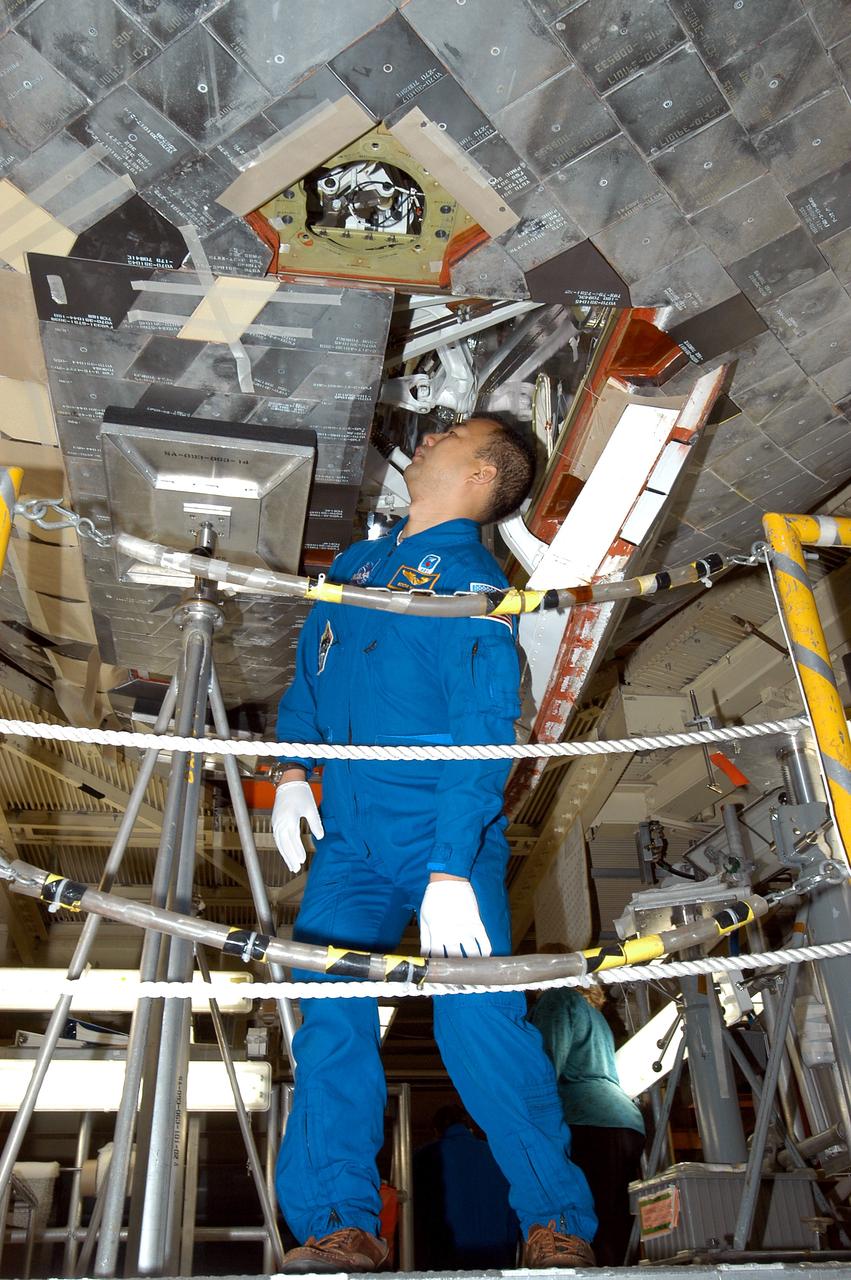
KENNEDY SPACE CENTER, FLA. - STS-114 Mission Specialist Soichi Noguchi looks at tile on the underside of the orbiter Discovery.  Noguchi is with the Japanese Aerospace and Exploration Agency.   He and other crew members are at KSC becoming familiar with Shuttle and mission equipment. The mission is Logistics Flight 1, which is scheduled to deliver supplies and equipment plus the external stowage platform to the International Space Station.
KENNEDY SPACE CENTER, FLA. - STS-114 Mission Specialist Soichi Noguchi looks at tile on the underside of the orbiter Discovery. Noguchi is with the Japanese Aerospace and Exploration Agency. He and other crew members are at KSC becoming familiar with Shuttle and mission equipment. The mission is Logistics Flight 1, which is scheduled to deliver supplies and equipment plus the external stowage platform to the International Space Station.
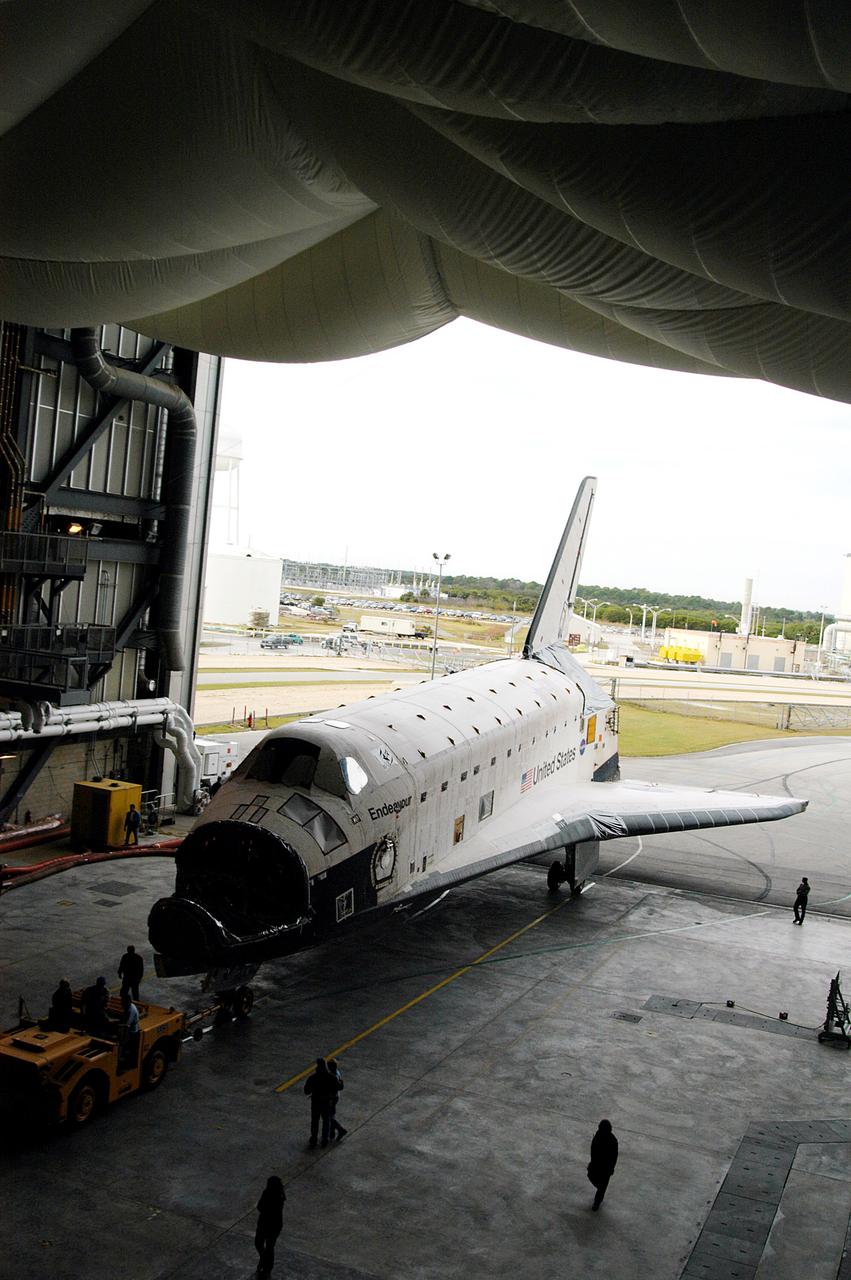
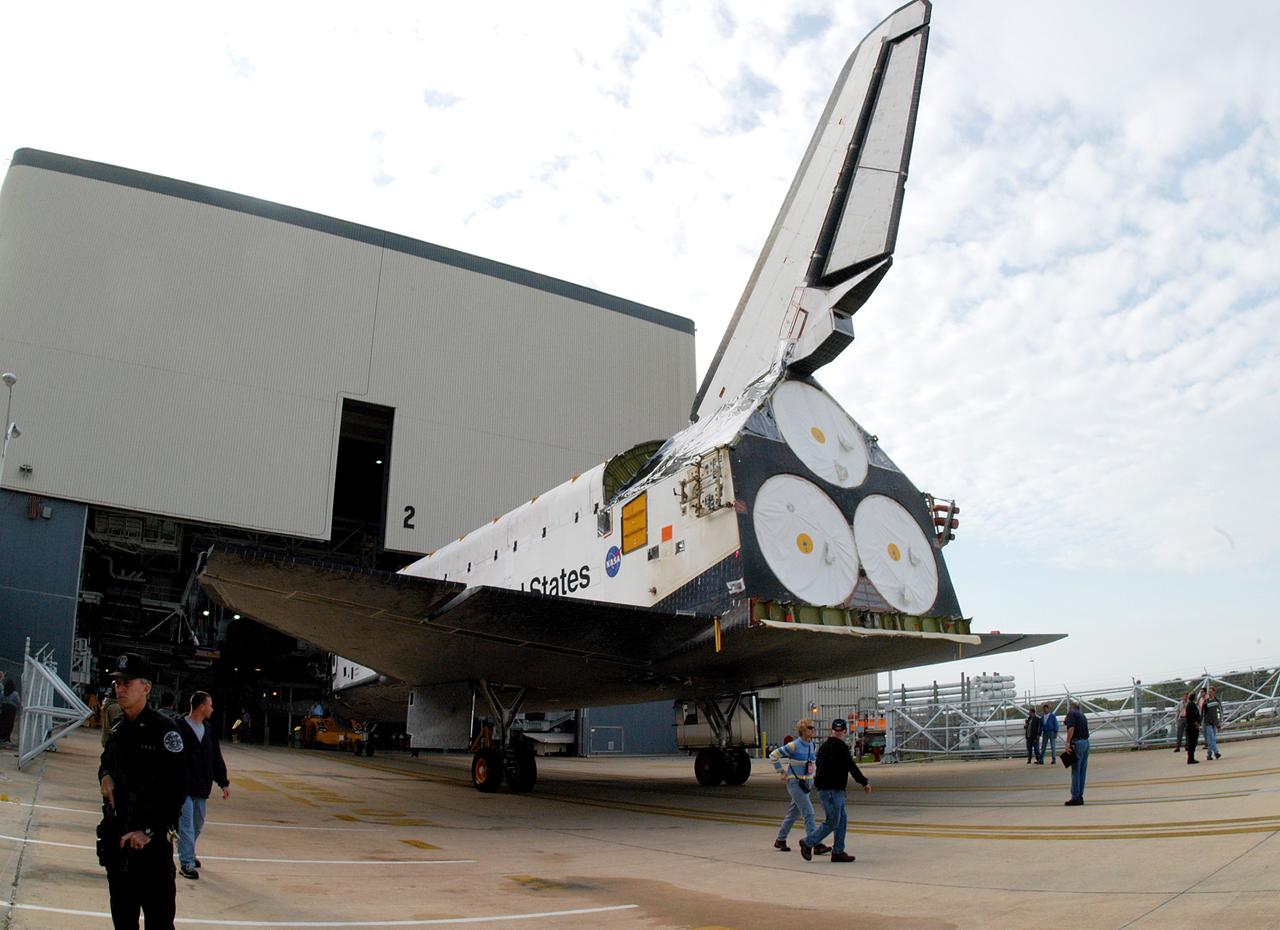
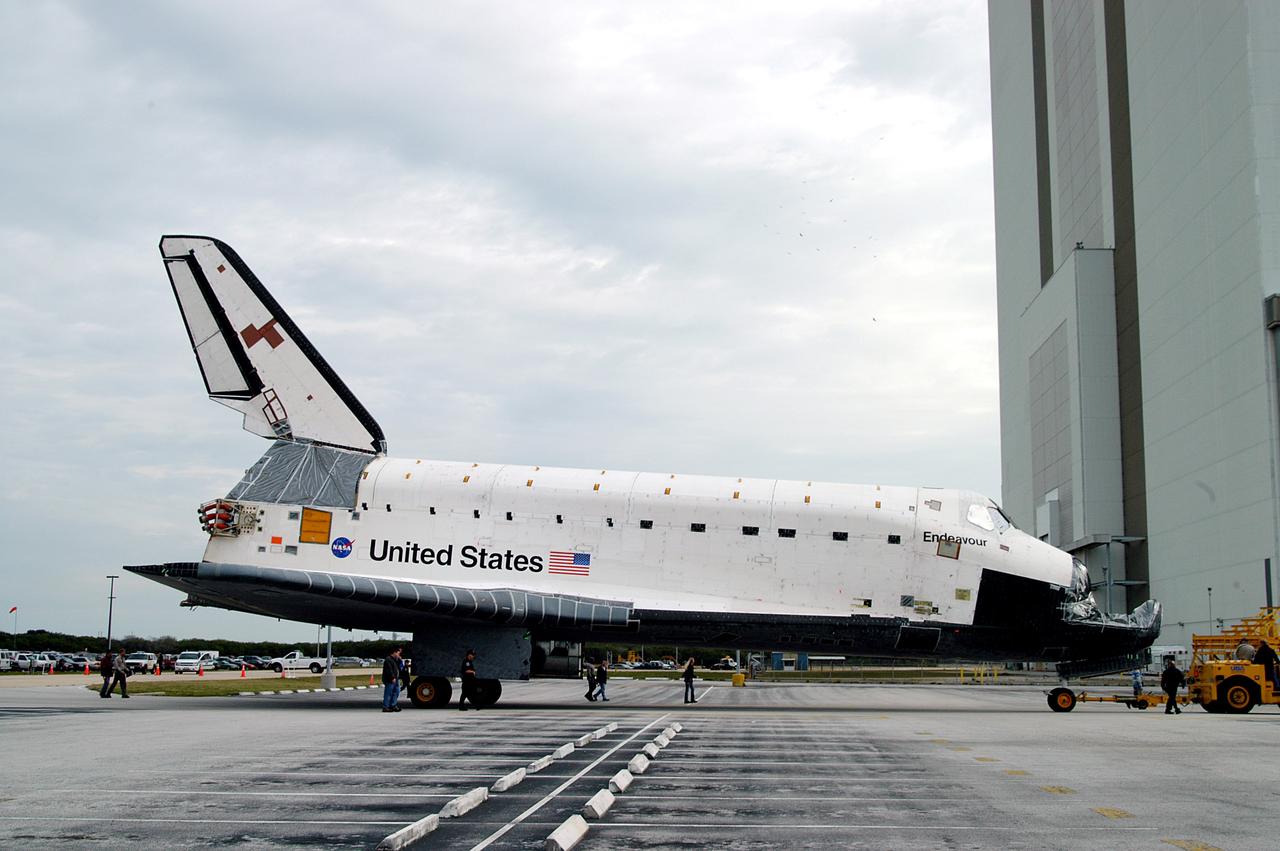
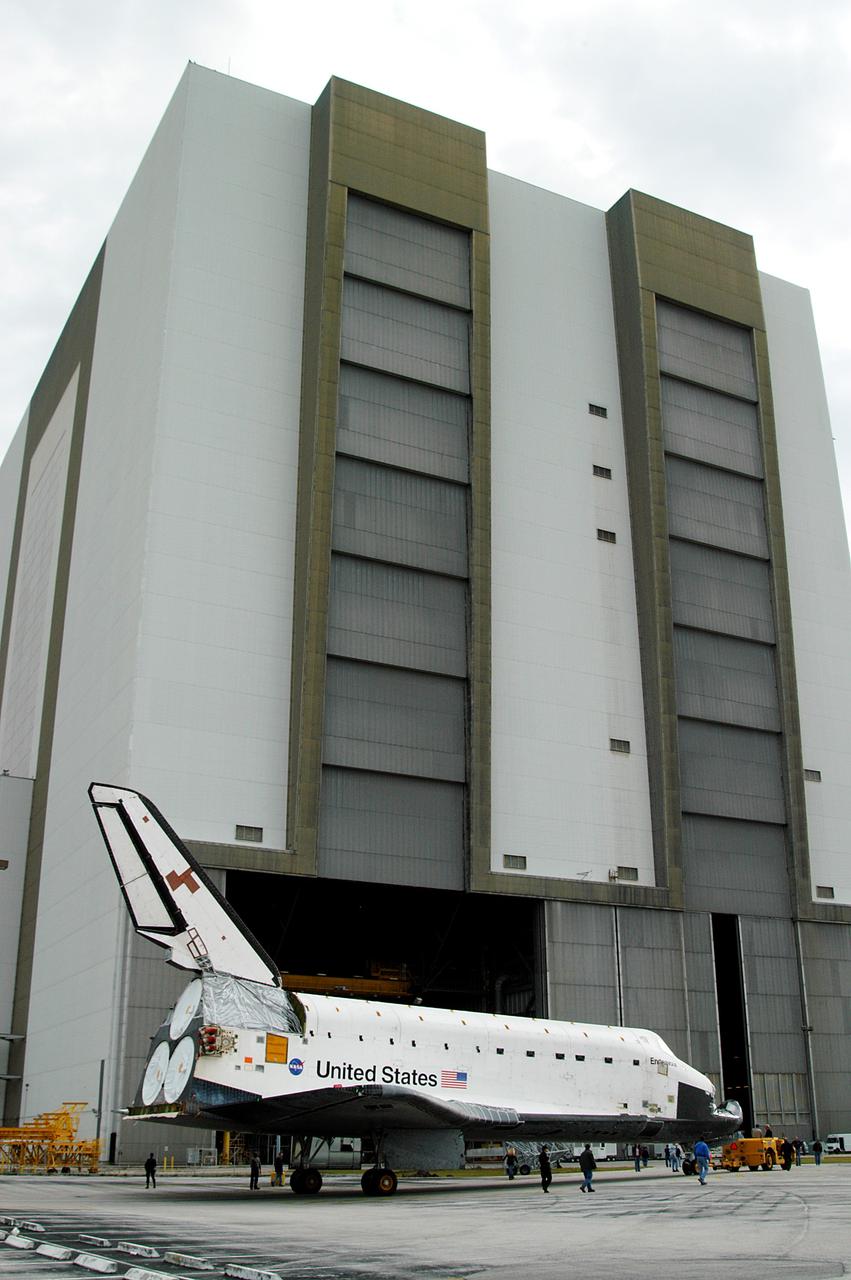
KENNEDY SPACE CENTER, FLA. -- Endeavour is towed in front of the Vehicle Assembly Building (VAB) where it is going for temporary storage.  The orbiter has been moved from the Orbiter Processing Facility (OPF) to allow work to be performed in the OPF that can only be accomplished while the bay is empty. Work scheduled in the OPF includes annual validation of the bay’s cranes, work platforms, lifting mechanisms and jack stands. Endeavour will remain in the VAB for approximately 12 days, then return to the OPF.
KENNEDY SPACE CENTER, FLA. -- Endeavour is towed in front of the Vehicle Assembly Building (VAB) where it is going for temporary storage. The orbiter has been moved from the Orbiter Processing Facility (OPF) to allow work to be performed in the OPF that can only be accomplished while the bay is empty. Work scheduled in the OPF includes annual validation of the bay’s cranes, work platforms, lifting mechanisms and jack stands. Endeavour will remain in the VAB for approximately 12 days, then return to the OPF.
KENNEDY SPACE CENTER, FLA. -- Endeavour backs out of the Orbiter Processing Facility for temporary transfer to the Vehicle Assembly Building. The move allows work to be performed in the OPF that can only be accomplished while the bay is empty. Work scheduled in the OPF includes annual validation of the bay’s cranes, work platforms, lifting mechanisms and jack stands. Endeavour will remain in the VAB for approximately 12 days, then return to the OPF.
KENNEDY SPACE CENTER, FLA. - In a brief ceremony in the Space Station Processing Facility, Chuck Hardison (left), Boeing senior truss manager, turns over the “key” for the starboard truss segment S3/S4 to Scott Gahring, ISS Vehicle Office manager (acting), Johnson Space Center.  The trusses are scheduled to be delivered to the International Space Station on mission STS-117.
KENNEDY SPACE CENTER, FLA. - In a brief ceremony in the Space Station Processing Facility, Chuck Hardison (left), Boeing senior truss manager, turns over the “key” for the starboard truss segment S3/S4 to Scott Gahring, ISS Vehicle Office manager (acting), Johnson Space Center. The trusses are scheduled to be delivered to the International Space Station on mission STS-117.
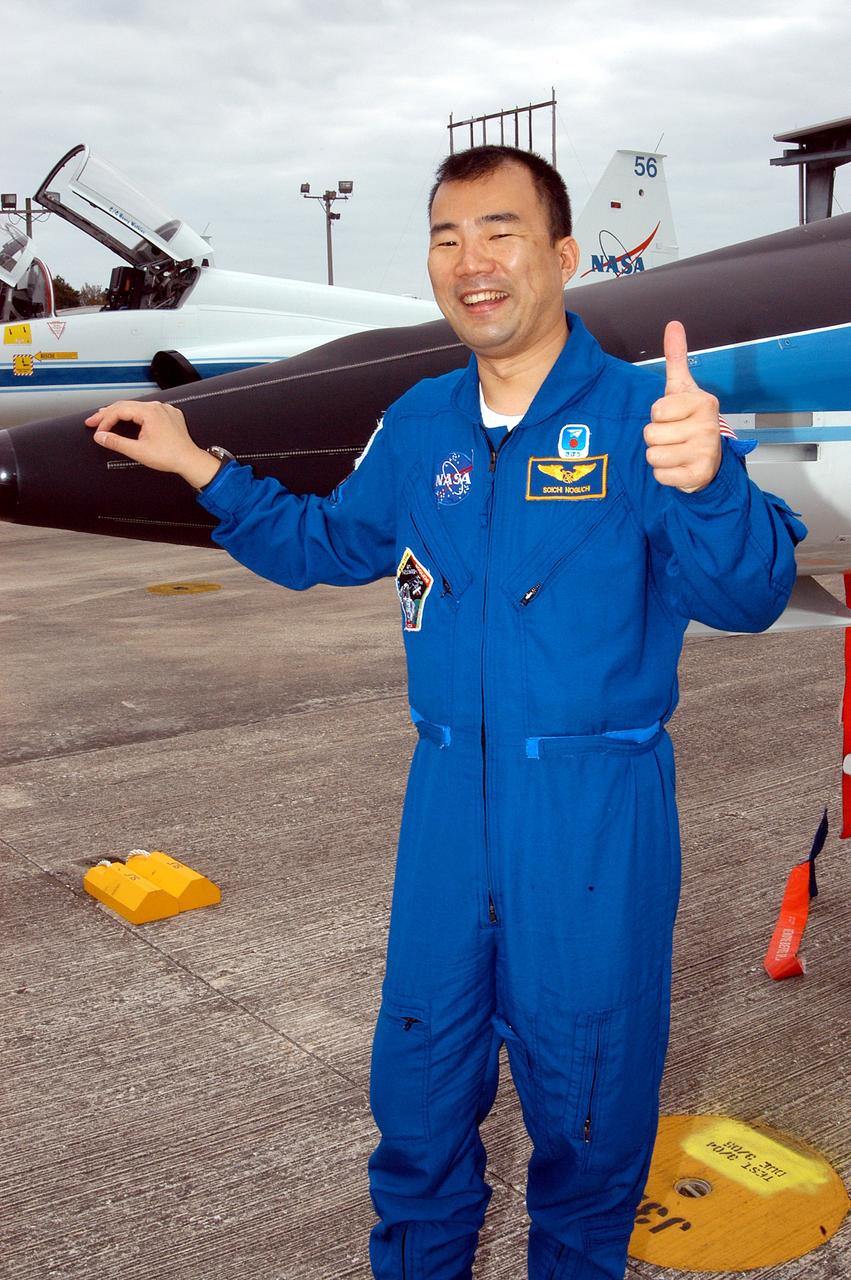
KENNEDY SPACE CENTER, FLA. - STS-114 Mission Specialist Soichi Noguchi is happy to be back at KSC after arriving aboard a T-38 jet aircraft.  He and other crew members are at the Center for familiarization activities with equipment.   The mission is Logistics Flight 1, scheduled to deliver the Multi-Purpose Logistics Module carrying supplies and equipment to the Space Station and the external stowage platform.
KENNEDY SPACE CENTER, FLA. - STS-114 Mission Specialist Soichi Noguchi is happy to be back at KSC after arriving aboard a T-38 jet aircraft. He and other crew members are at the Center for familiarization activities with equipment. The mission is Logistics Flight 1, scheduled to deliver the Multi-Purpose Logistics Module carrying supplies and equipment to the Space Station and the external stowage platform.
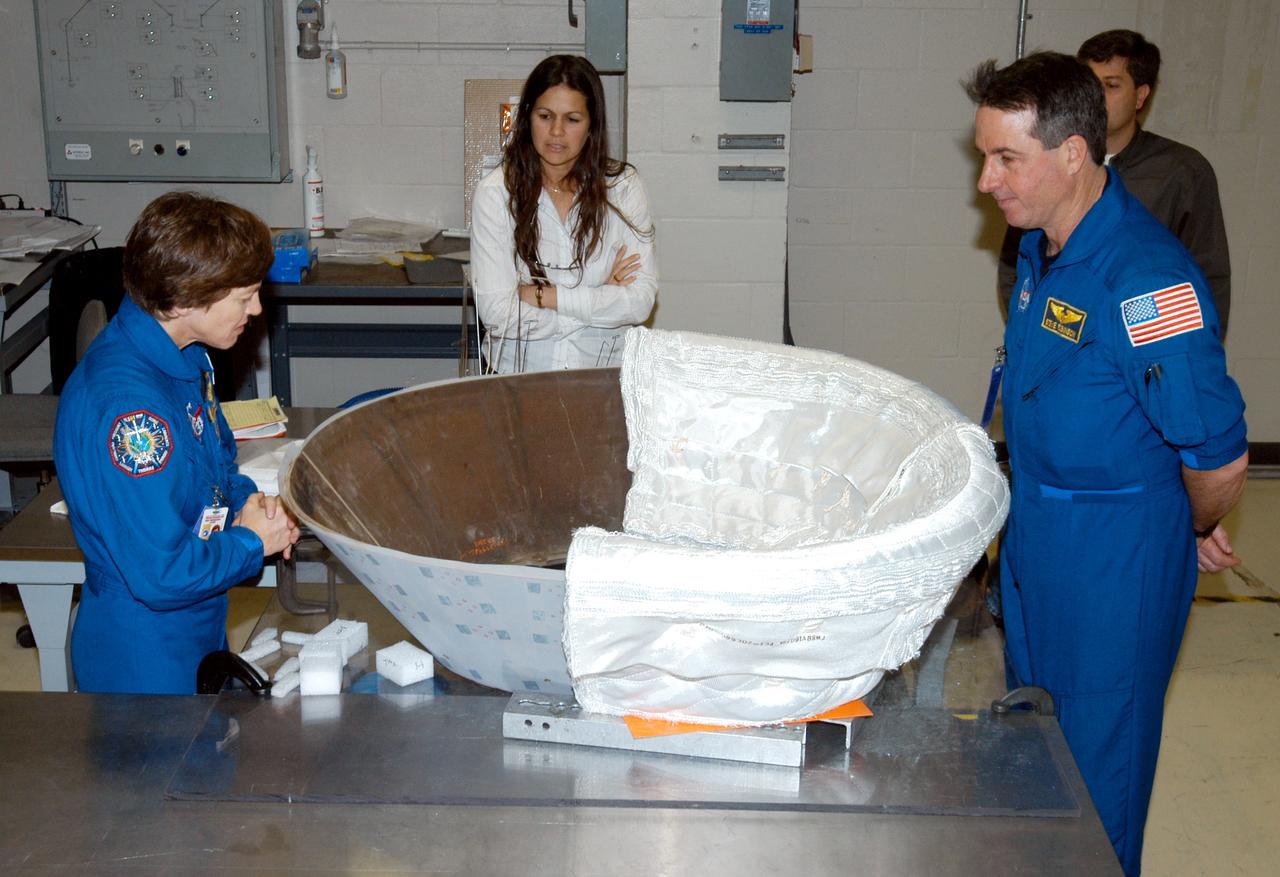
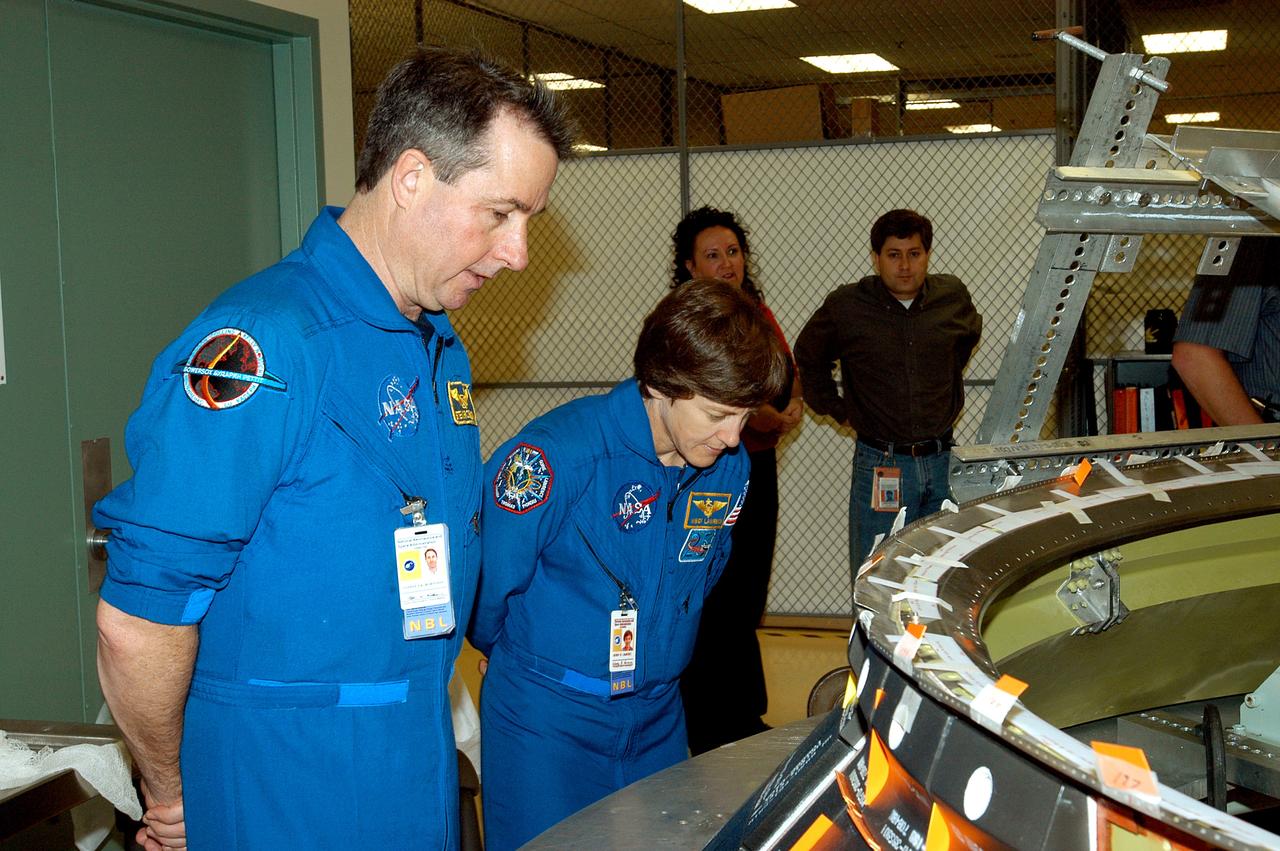
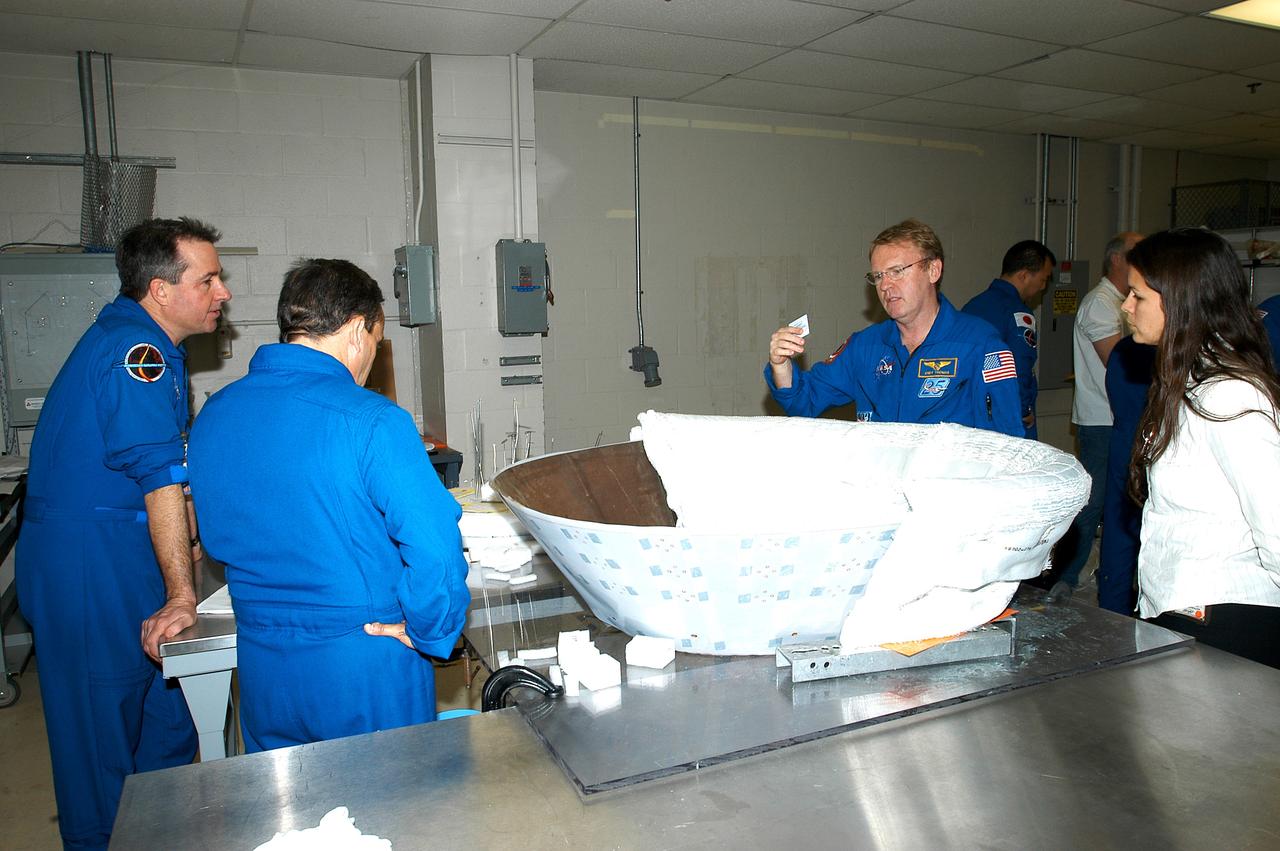
KENNEDY SPACE CENTER, FLA. - STS-114 Mission Specialists Wendy Lawrence (left) and Stephen Robinson (right) look at the insert for Discovery’s nose cap that is being fitted with thermal protection system insulation blankets.  The mission crew is spending time becoming familiar with Shuttle and mission equipment.  The mission is Logistics Flight 1, which is scheduled to deliver supplies and equipment plus the external stowage platform to the International Space Station.
KENNEDY SPACE CENTER, FLA. - STS-114 Mission Specialists Wendy Lawrence (left) and Stephen Robinson (right) look at the insert for Discovery’s nose cap that is being fitted with thermal protection system insulation blankets. The mission crew is spending time becoming familiar with Shuttle and mission equipment. The mission is Logistics Flight 1, which is scheduled to deliver supplies and equipment plus the external stowage platform to the International Space Station.
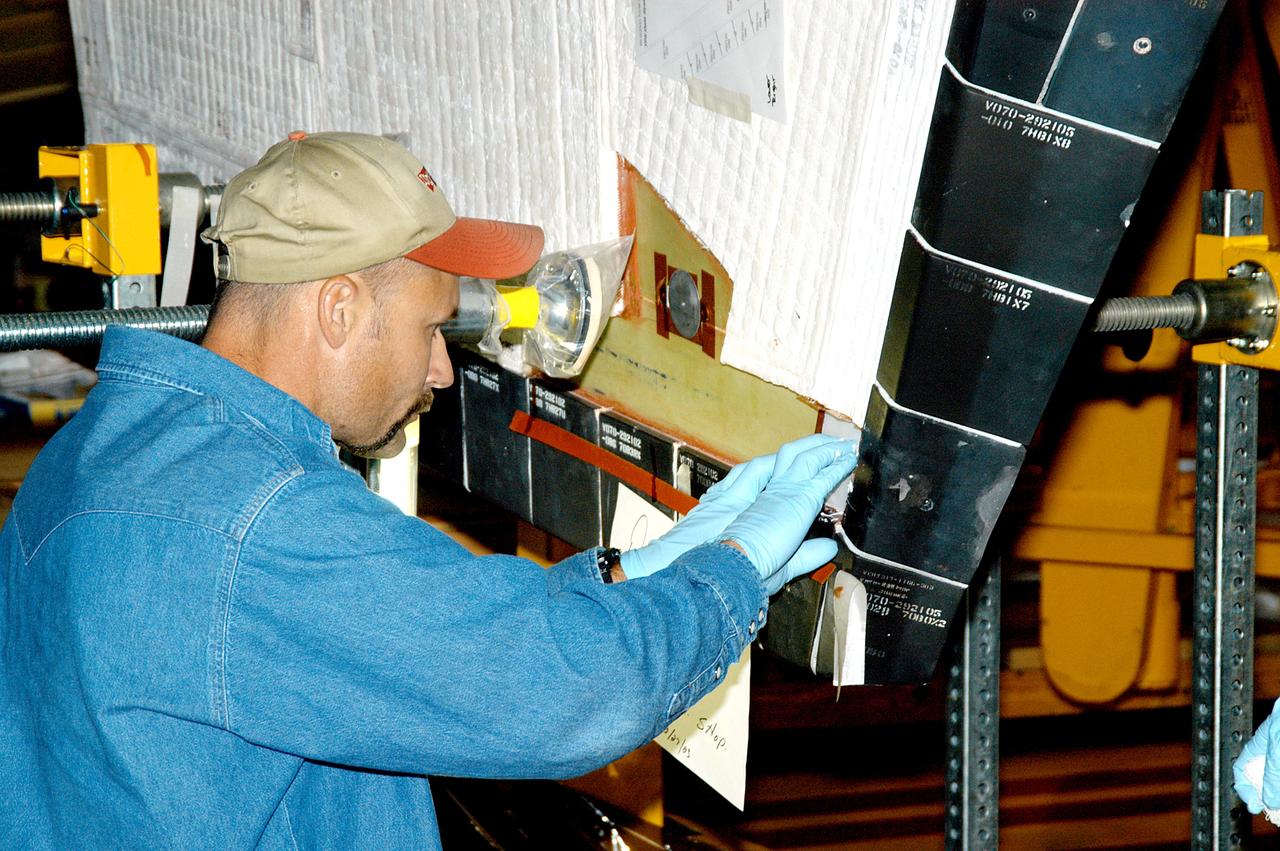
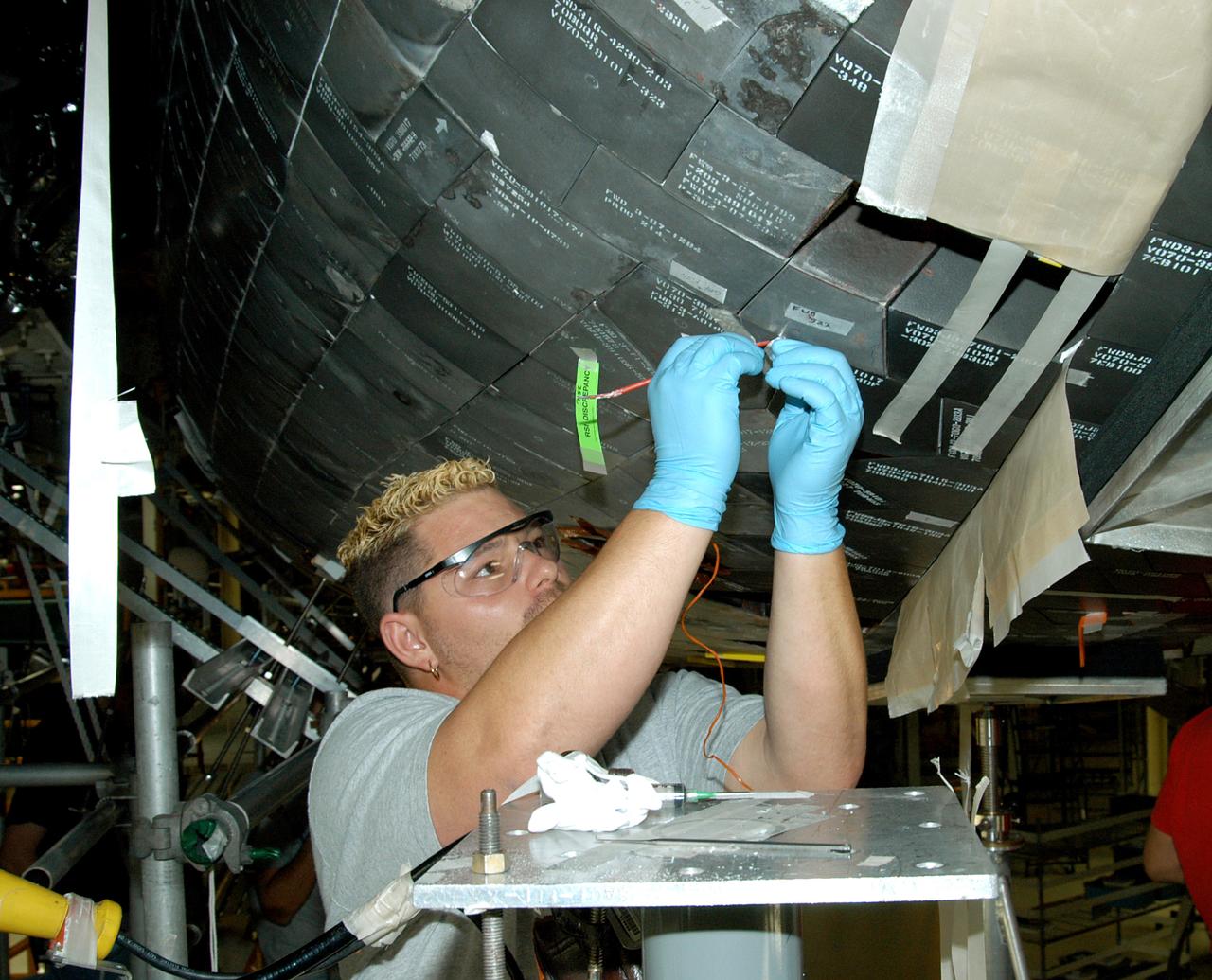
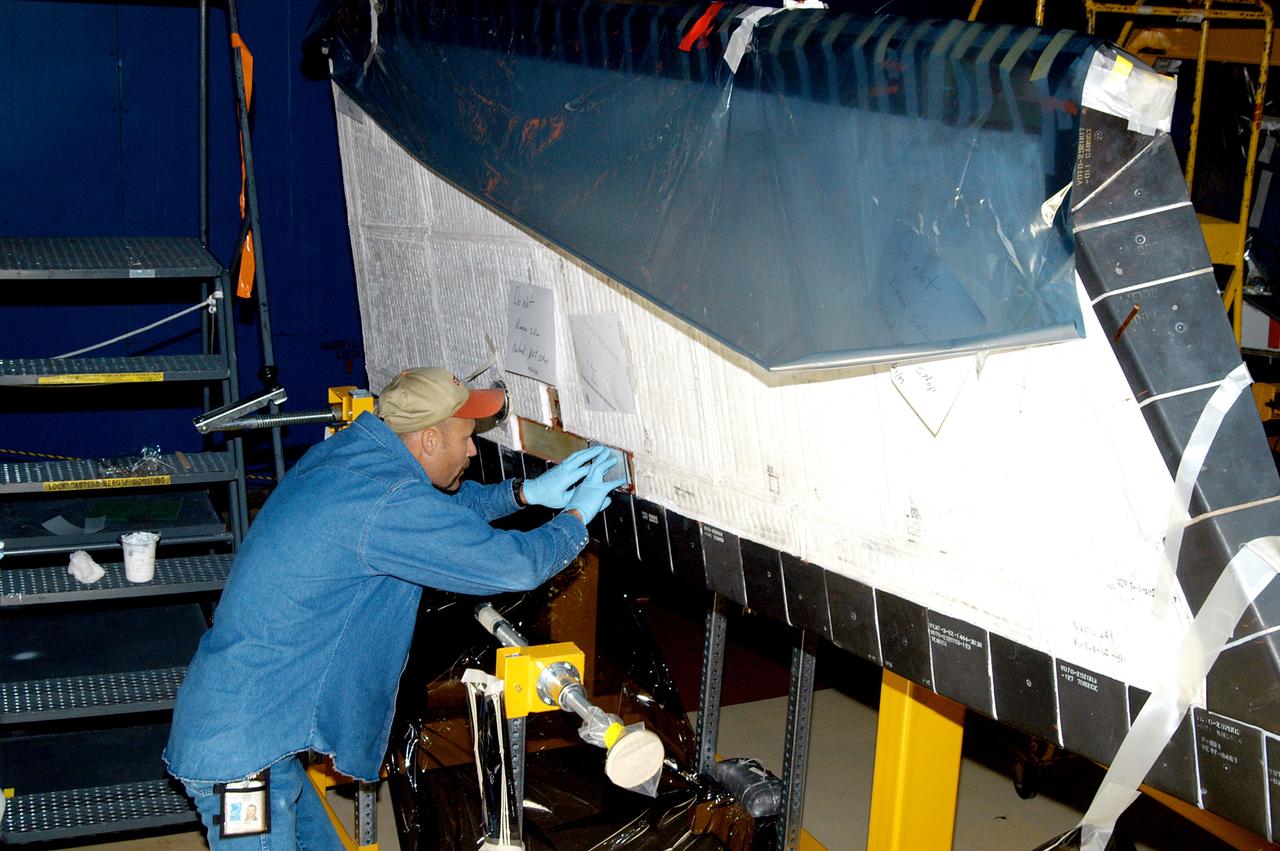
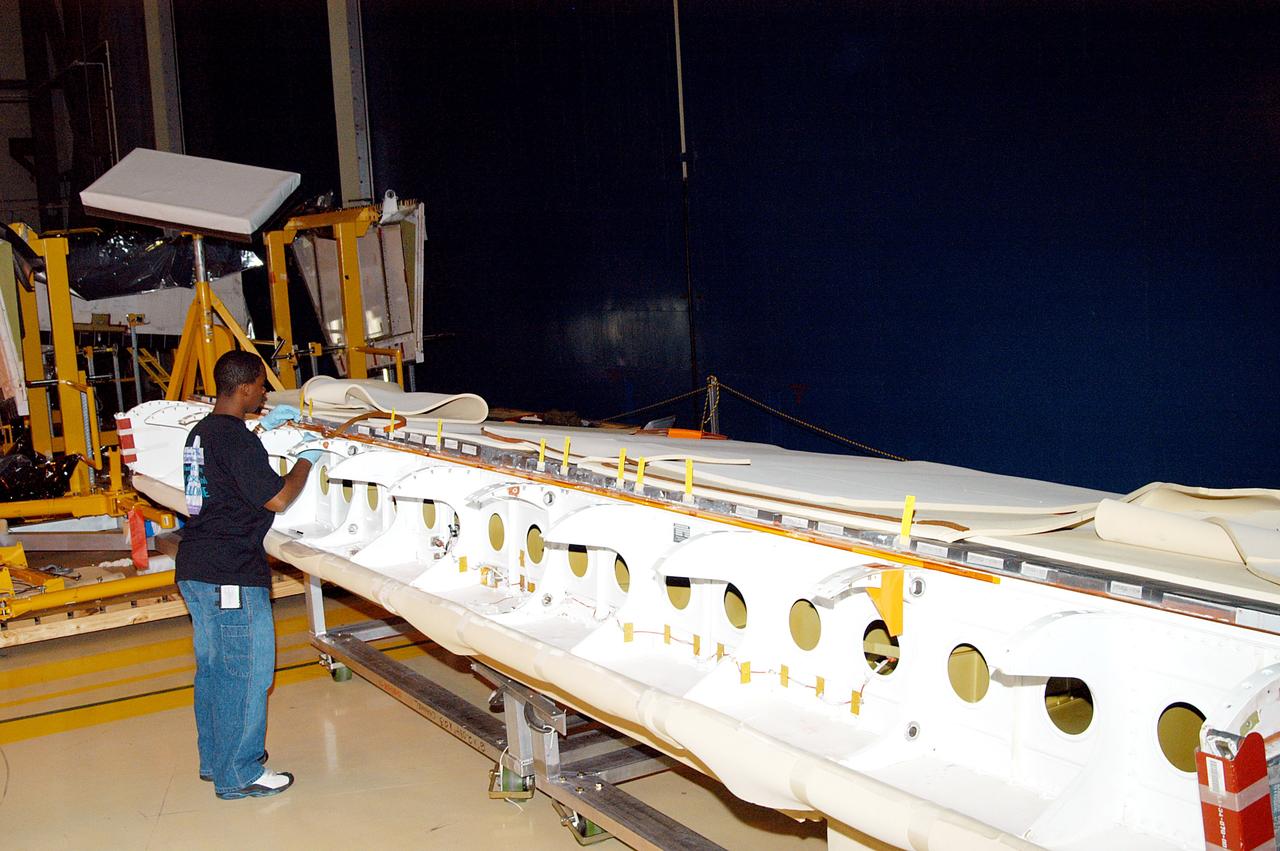
KENNEDY SPACE CENTER, FLA. -  In the Orbiter Processing Facility, KSC employee Chris Moore repairs tile on the forward area of the orbiter Discovery. The vehicle has undergone Orbiter Major Modifications in the past year, which includes tile check and repair. The tiles are part of the Orbiter Thermal Protection System, thermal shields to protect against temperatures as high as 3,000° Fahrenheit, which are produced during descent for landing. Discovery is scheduled to fly on mission STS-121 to the International Space Station.
KENNEDY SPACE CENTER, FLA. - In the Orbiter Processing Facility, KSC employee Chris Moore repairs tile on the forward area of the orbiter Discovery. The vehicle has undergone Orbiter Major Modifications in the past year, which includes tile check and repair. The tiles are part of the Orbiter Thermal Protection System, thermal shields to protect against temperatures as high as 3,000° Fahrenheit, which are produced during descent for landing. Discovery is scheduled to fly on mission STS-121 to the International Space Station.
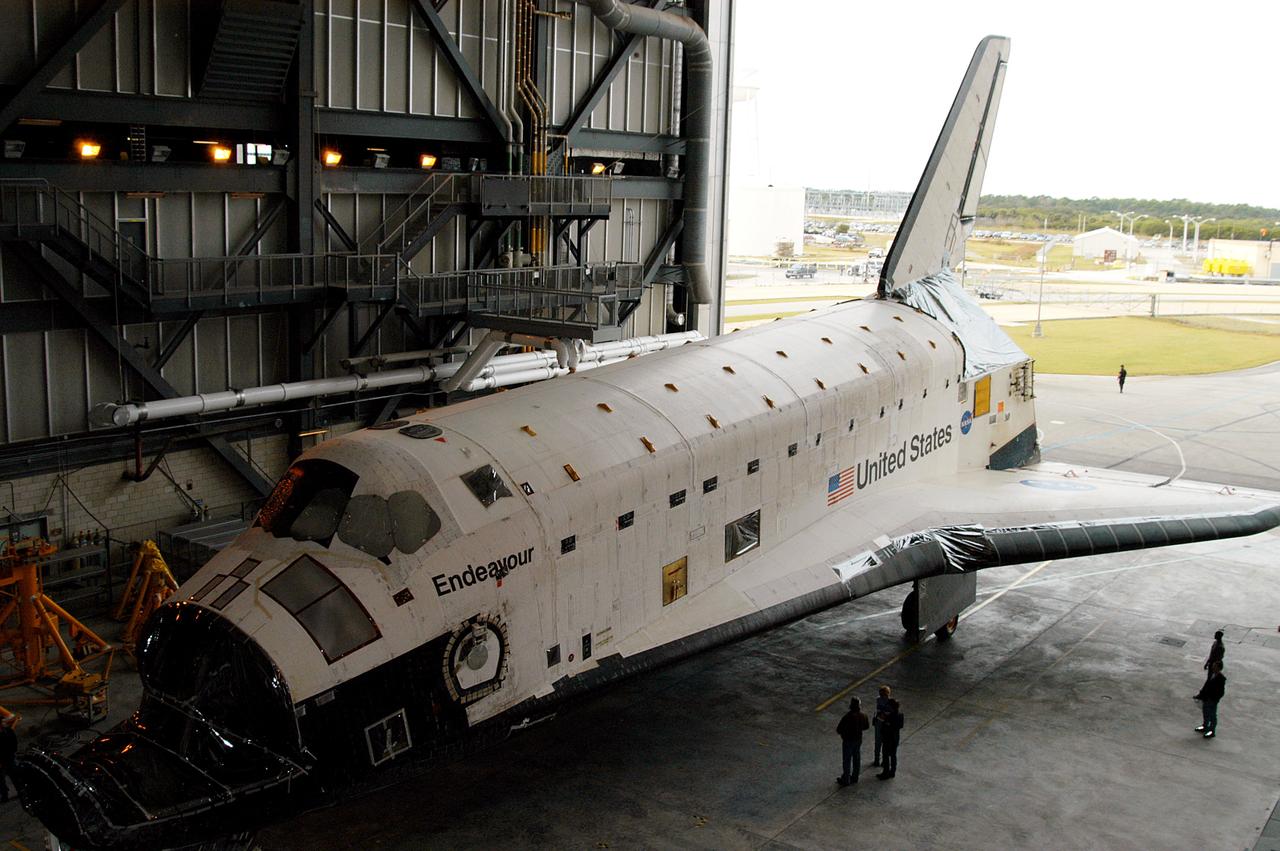
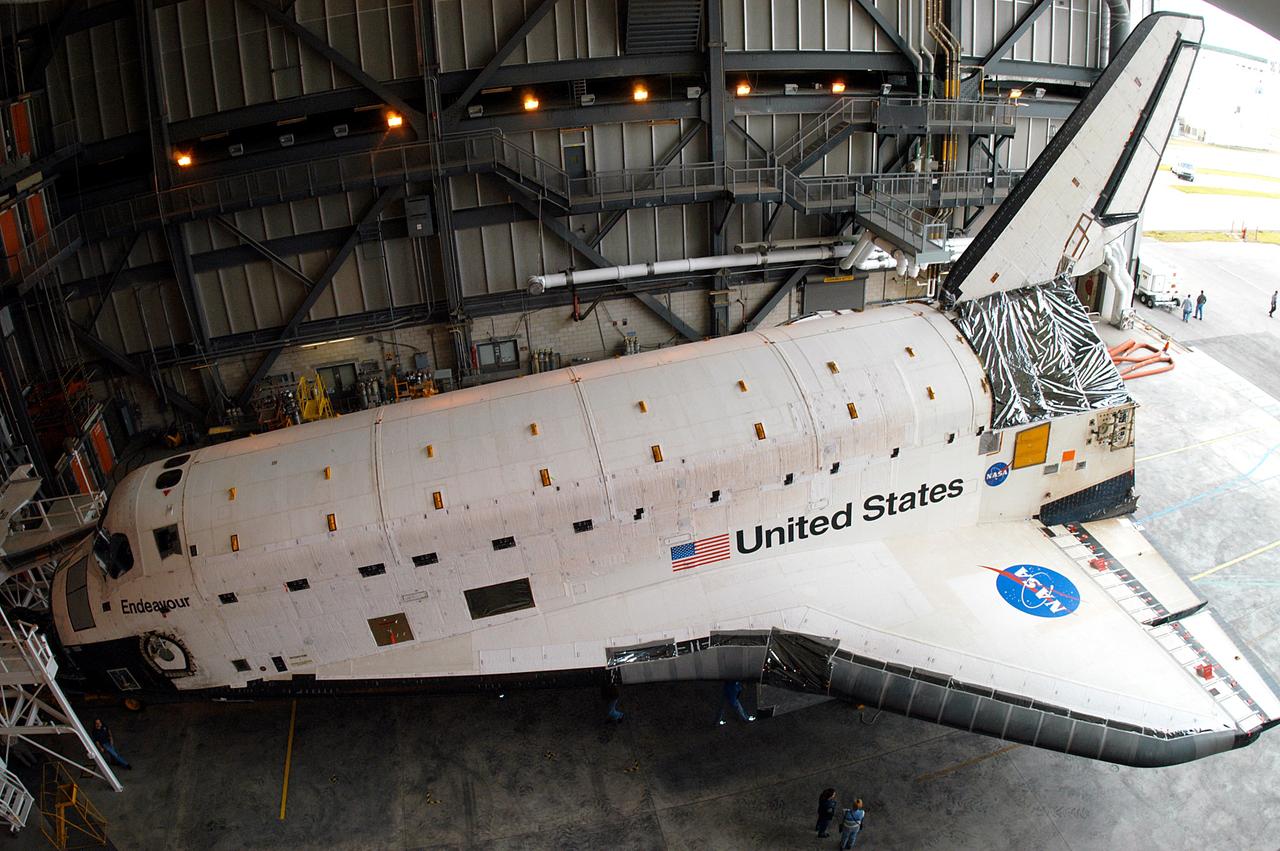
KENNEDY SPACE CENTER, FLA. -- Endeavour rolls into the Vehicle Assembly Building (VAB) for temporary storage.  The orbiter has been moved from the Orbiter Processing Facility (OPF) to allow work to be performed in the OPF that can only be accomplished while the bay is empty. Work scheduled in the OPF includes annual validation of the bay’s cranes, work platforms, lifting mechanisms and jack stands. Endeavour will remain in the VAB for approximately 12 days, then return to the OPF.
KENNEDY SPACE CENTER, FLA. -- Endeavour rolls into the Vehicle Assembly Building (VAB) for temporary storage. The orbiter has been moved from the Orbiter Processing Facility (OPF) to allow work to be performed in the OPF that can only be accomplished while the bay is empty. Work scheduled in the OPF includes annual validation of the bay’s cranes, work platforms, lifting mechanisms and jack stands. Endeavour will remain in the VAB for approximately 12 days, then return to the OPF.
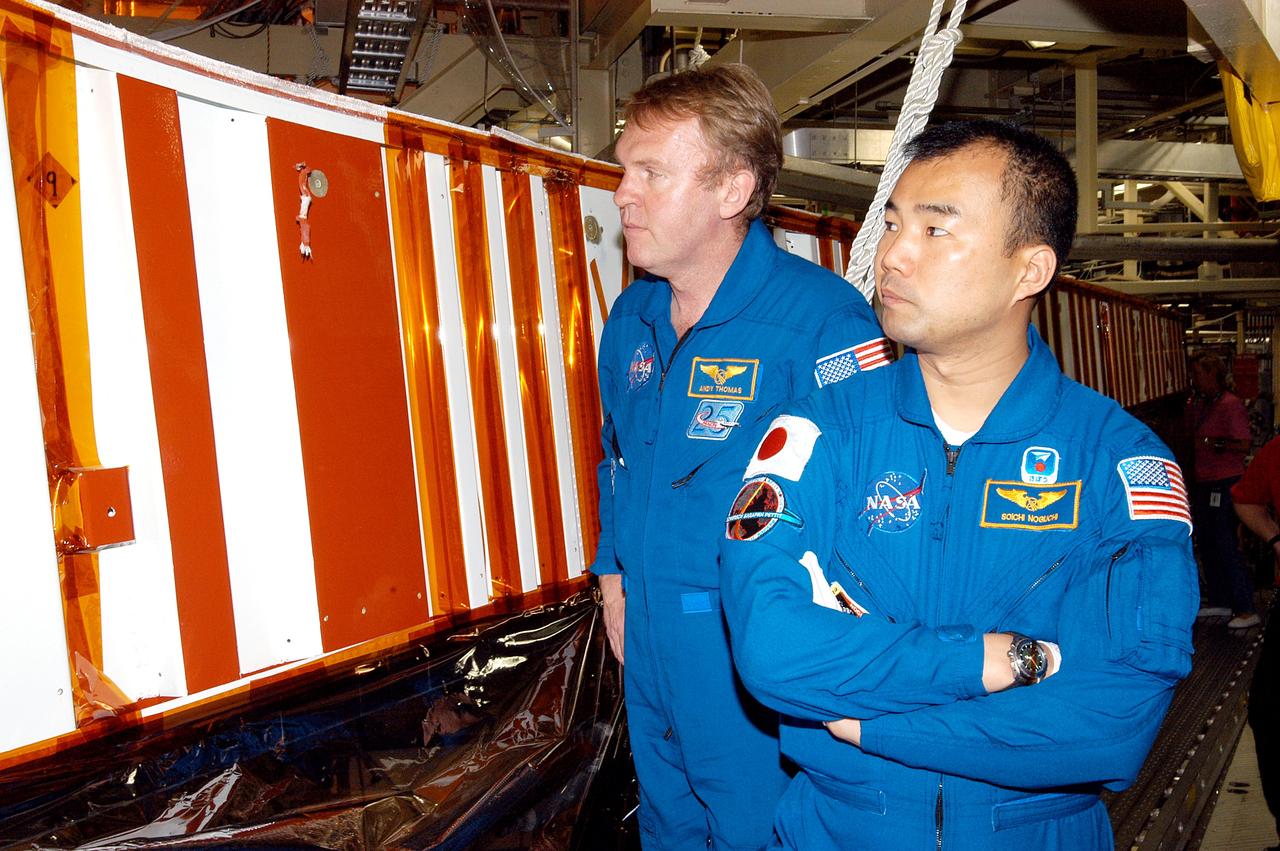
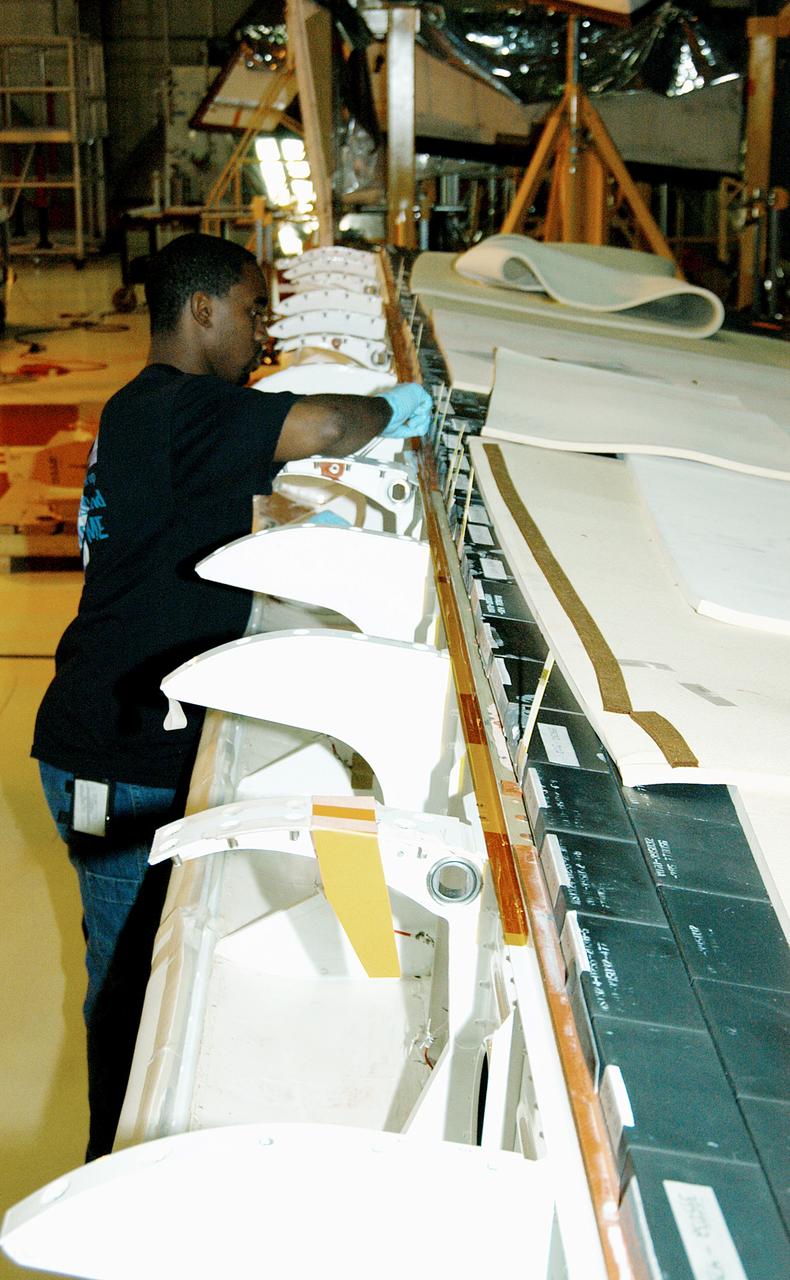
KENNEDY SPACE CENTER, FLA. - STS-114 Mission Specialists Andrew Thomas and Soichi Noguchi look at the leading edge of Discovery’s wing with RCC panels removed. Noguchi is with the Japanese Aerospace and Exploration Agency.   Crew members are at KSC becoming familiar with Shuttle and mission equipment. The mission is Logistics Flight 1, which is scheduled to deliver supplies and equipment plus the external stowage platform to the International Space Station.
KENNEDY SPACE CENTER, FLA. - STS-114 Mission Specialists Andrew Thomas and Soichi Noguchi look at the leading edge of Discovery’s wing with RCC panels removed. Noguchi is with the Japanese Aerospace and Exploration Agency. Crew members are at KSC becoming familiar with Shuttle and mission equipment. The mission is Logistics Flight 1, which is scheduled to deliver supplies and equipment plus the external stowage platform to the International Space Station.
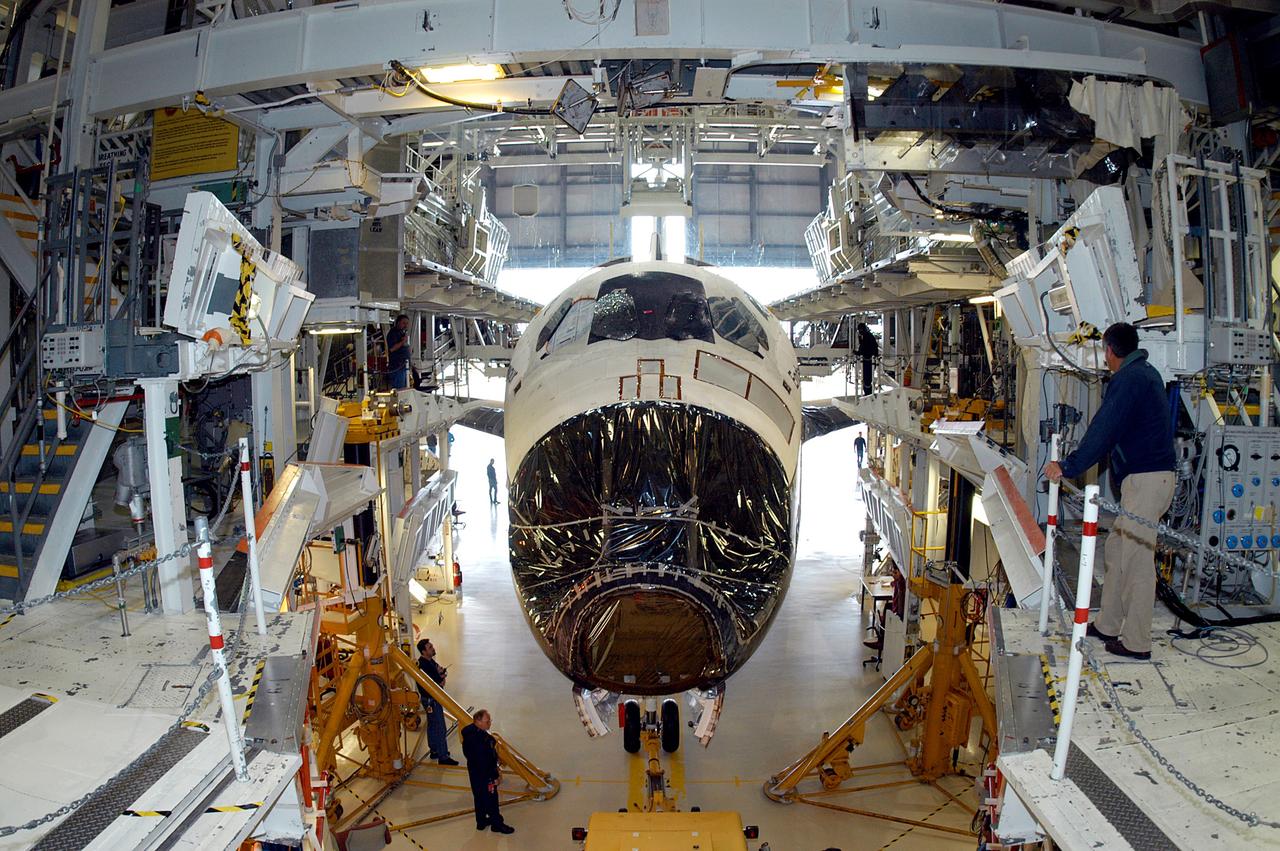
KENNEDY SPACE CENTER, FLA. -- Endeavour is ready to be rolled out of the Orbiter Processing Facility for temporary transfer to the Vehicle Assembly Building. The move allows work to be performed in the OPF that can only be accomplished while the bay is empty. Work scheduled in the OPF includes annual validation of the bay’s cranes, work platforms, lifting mechanisms and jack stands. Endeavour will remain in the VAB for approximately 12 days, then return to the OPF.
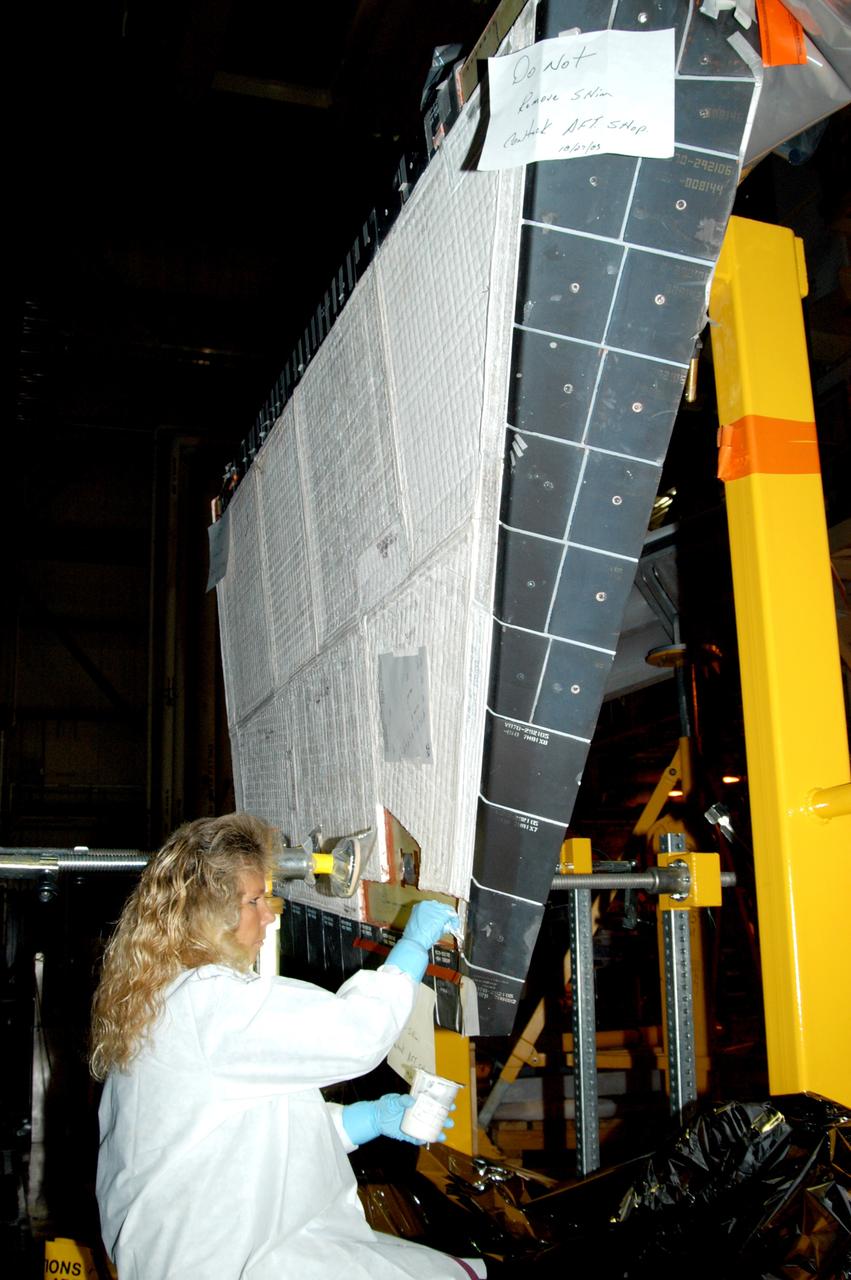
KENNEDY SPACE CENTER, FLA. -  In the Orbiter Processing Facility, KSC employee Nadine Phillips prepares an area on the orbiter Discovery for blanket installation.  The blankets are part of the Orbiter Thermal Protection System, thermal shields to protect against temperatures as high as 3,000° Fahrenheit, which are produced during descent for landing. Discovery is scheduled to fly on mission STS-121 to the International Space Station.
KENNEDY SPACE CENTER, FLA. - In the Orbiter Processing Facility, KSC employee Nadine Phillips prepares an area on the orbiter Discovery for blanket installation. The blankets are part of the Orbiter Thermal Protection System, thermal shields to protect against temperatures as high as 3,000° Fahrenheit, which are produced during descent for landing. Discovery is scheduled to fly on mission STS-121 to the International Space Station.
KENNEDY SPACE CENTER, FLA. -  In the Orbiter Processing Facility, KSC employee Joel Smith prepares an area on the orbiter Discovery for blanket installation.  The blankets are part of the Orbiter Thermal Protection System, thermal shields to protect against temperatures as high as 3,000° Fahrenheit, which are produced during descent for landing. Discovery is scheduled to fly on mission STS-121 to the International Space Station.
KENNEDY SPACE CENTER, FLA. - In the Orbiter Processing Facility, KSC employee Joel Smith prepares an area on the orbiter Discovery for blanket installation. The blankets are part of the Orbiter Thermal Protection System, thermal shields to protect against temperatures as high as 3,000° Fahrenheit, which are produced during descent for landing. Discovery is scheduled to fly on mission STS-121 to the International Space Station.
KENNEDY SPACE CENTER, FLA. -- Endeavour is towed toward the Vehicle Assembly Building for temporary storage.  The orbiter has been moved from the Orbiter Processing Facility (OPF) to allow work to be performed in the OPF that can only be accomplished while the bay is empty. Work scheduled in the OPF includes annual validation of the bay’s cranes, work platforms, lifting mechanisms and jack stands. Endeavour will remain in the VAB for approximately 12 days, then return to the OPF.
KENNEDY SPACE CENTER, FLA. -- Endeavour is towed toward the Vehicle Assembly Building for temporary storage. The orbiter has been moved from the Orbiter Processing Facility (OPF) to allow work to be performed in the OPF that can only be accomplished while the bay is empty. Work scheduled in the OPF includes annual validation of the bay’s cranes, work platforms, lifting mechanisms and jack stands. Endeavour will remain in the VAB for approximately 12 days, then return to the OPF.
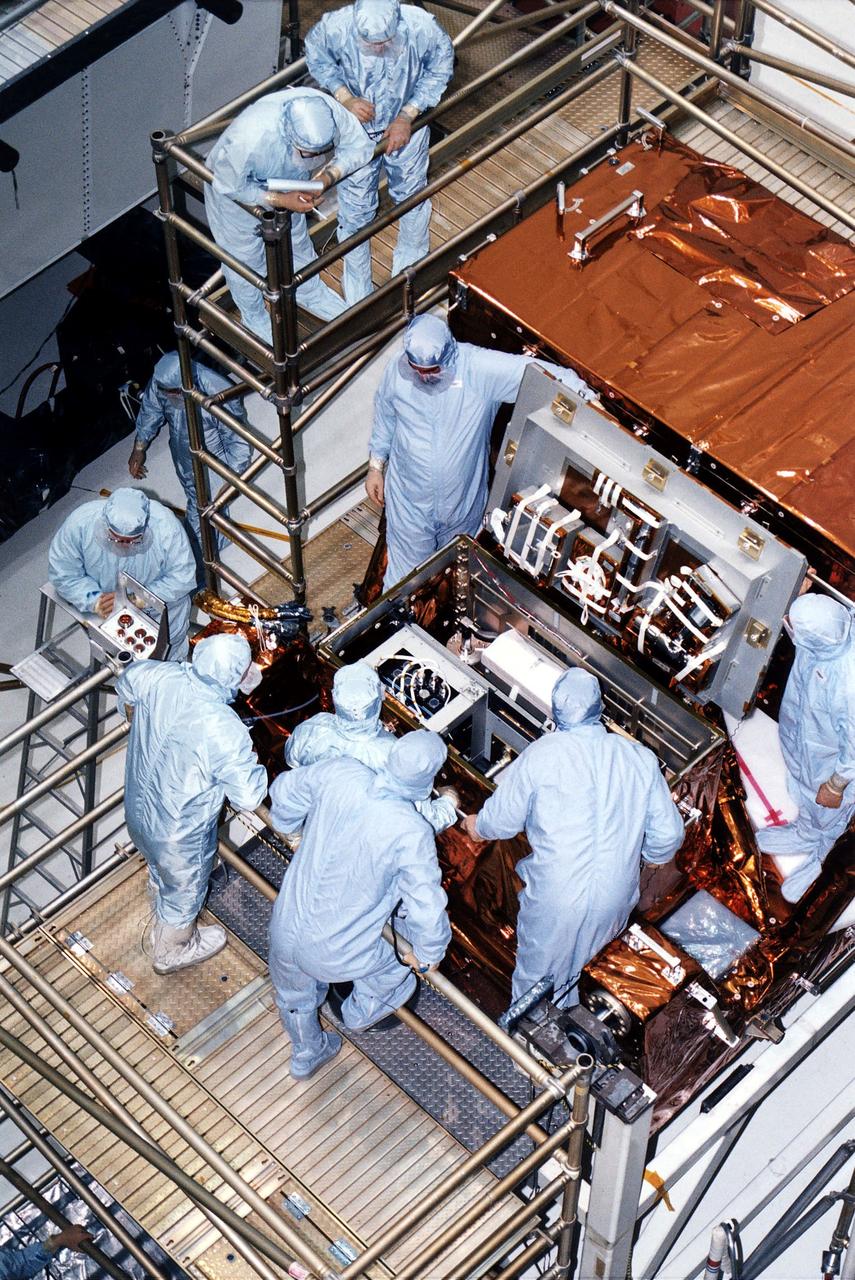
KENNEDY SPACE CENTER, FLA. -  STS-82 crew members and workers at KSC's Vertical Processing Facility look at hardware in the Multipurpose ORU (Orbital Replacement Unit) Protective Enclsoure, also called MOPE.  The crew is participating in the Crew Equipment Integration Test (CEIT).    Liftoff of STS-82, the second Hubble Space Telescope (HST) servicing mission, is scheduled Feb. 11 aboard Discovery with a crew of seven.
KENNEDY SPACE CENTER, FLA. - STS-82 crew members and workers at KSC's Vertical Processing Facility look at hardware in the Multipurpose ORU (Orbital Replacement Unit) Protective Enclsoure, also called MOPE. The crew is participating in the Crew Equipment Integration Test (CEIT). Liftoff of STS-82, the second Hubble Space Telescope (HST) servicing mission, is scheduled Feb. 11 aboard Discovery with a crew of seven.
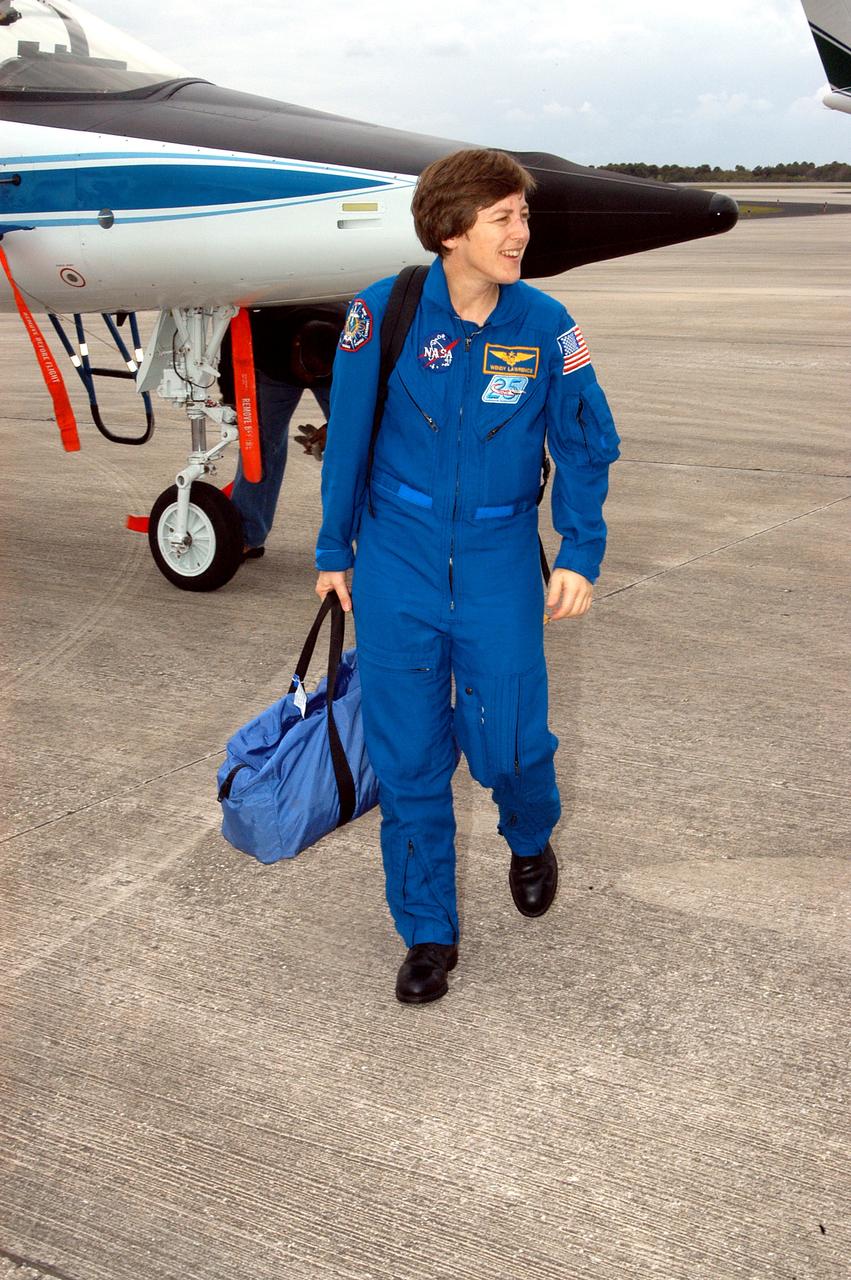
KENNEDY SPACE CENTER, FLA. - STS-114 Mission Specialist Wendy Lawrence is pleased to be back at KSC after arriving aboard a T-38 jet aircraft.  She and other crew members are at the Center for familiarization activities with equipment.   The mission is Logistics Flight 1, scheduled to deliver the Multi-Purpose Logistics Module carrying supplies and equipment to the Space Station and the external stowage platform.
KENNEDY SPACE CENTER, FLA. - STS-114 Mission Specialist Wendy Lawrence is pleased to be back at KSC after arriving aboard a T-38 jet aircraft. She and other crew members are at the Center for familiarization activities with equipment. The mission is Logistics Flight 1, scheduled to deliver the Multi-Purpose Logistics Module carrying supplies and equipment to the Space Station and the external stowage platform.
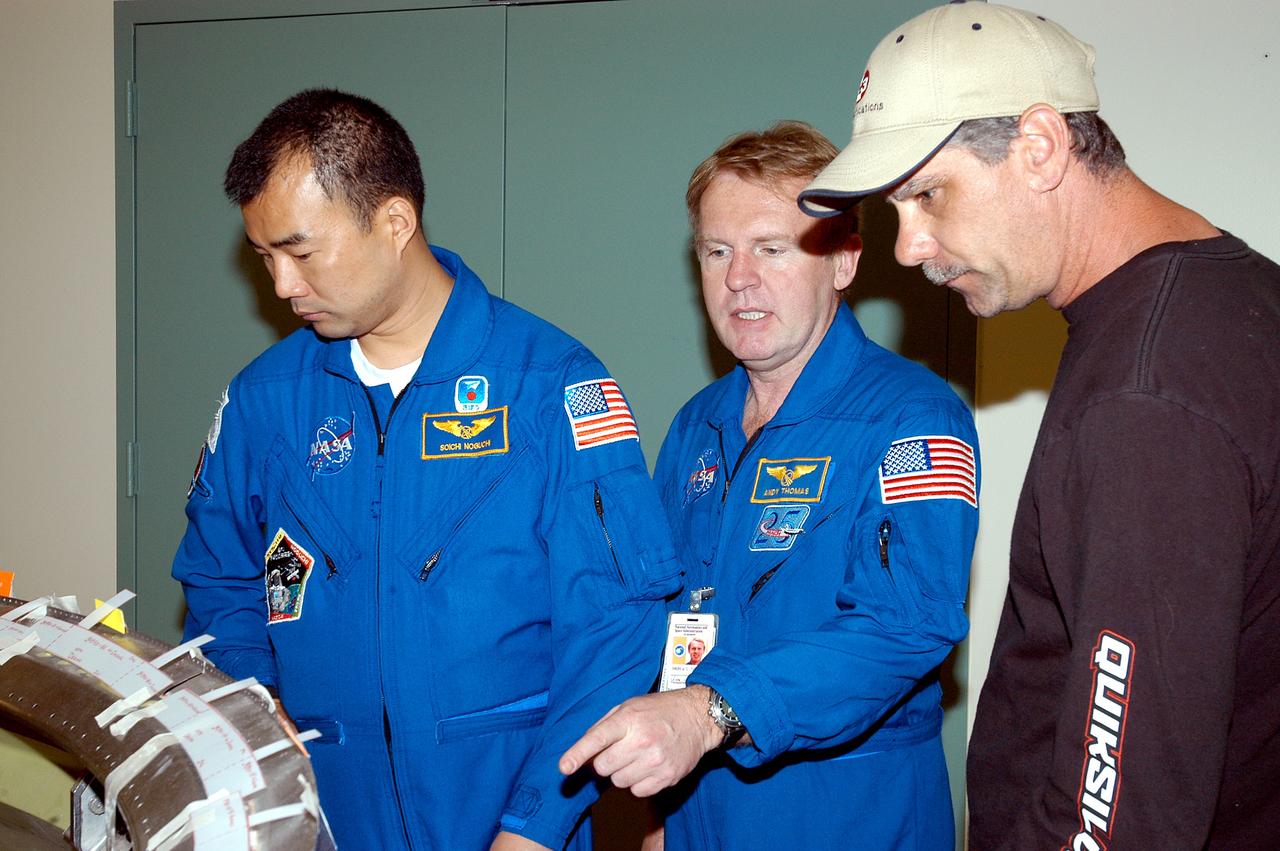
KENNEDY SPACE CENTER, FLA. -  Members of the STS-114 crew spend time becoming familiar with Shuttle and mission equipment.  Mission Specialists Soichi Noguchi (left) and Andrew Thomas (center) look at an engine eyelet, which serves as part of the thermal protection system on an orbiter.  Noguchi is with the Japanese Aerospace Exploration Agency (JAXA).  The mission is Logistics Flight 1, which is scheduled to deliver supplies and equipment and the external stowage platform to the International Space Station.
KENNEDY SPACE CENTER, FLA. - Members of the STS-114 crew spend time becoming familiar with Shuttle and mission equipment. Mission Specialists Soichi Noguchi (left) and Andrew Thomas (center) look at an engine eyelet, which serves as part of the thermal protection system on an orbiter. Noguchi is with the Japanese Aerospace Exploration Agency (JAXA). The mission is Logistics Flight 1, which is scheduled to deliver supplies and equipment and the external stowage platform to the International Space Station.
KENNEDY SPACE CENTER, FLA. -  In the Orbiter Processing Facility, KSC employee Joel Smith prepares an area on the orbiter Discovery for blanket installation.  The blankets are part of the Orbiter Thermal Protection System, thermal shields to protect against temperatures as high as 3,000° Fahrenheit, which are produced during descent for landing. Discovery is scheduled to fly on mission STS-121 to the International Space Station.
KENNEDY SPACE CENTER, FLA. - In the Orbiter Processing Facility, KSC employee Joel Smith prepares an area on the orbiter Discovery for blanket installation. The blankets are part of the Orbiter Thermal Protection System, thermal shields to protect against temperatures as high as 3,000° Fahrenheit, which are produced during descent for landing. Discovery is scheduled to fly on mission STS-121 to the International Space Station.
KENNEDY SPACE CENTER, FLA. -- Endeavour rolls into the Vehicle Assembly Building (VAB) for temporary storage.  The orbiter has been moved from the Orbiter Processing Facility (OPF) to allow work to be performed in the OPF that can only be accomplished while the bay is empty. Work scheduled in the OPF includes annual validation of the bay’s cranes, work platforms, lifting mechanisms and jack stands. Endeavour will remain in the VAB for approximately 12 days, then return to the OPF.
KENNEDY SPACE CENTER, FLA. -- Endeavour rolls into the Vehicle Assembly Building (VAB) for temporary storage. The orbiter has been moved from the Orbiter Processing Facility (OPF) to allow work to be performed in the OPF that can only be accomplished while the bay is empty. Work scheduled in the OPF includes annual validation of the bay’s cranes, work platforms, lifting mechanisms and jack stands. Endeavour will remain in the VAB for approximately 12 days, then return to the OPF.
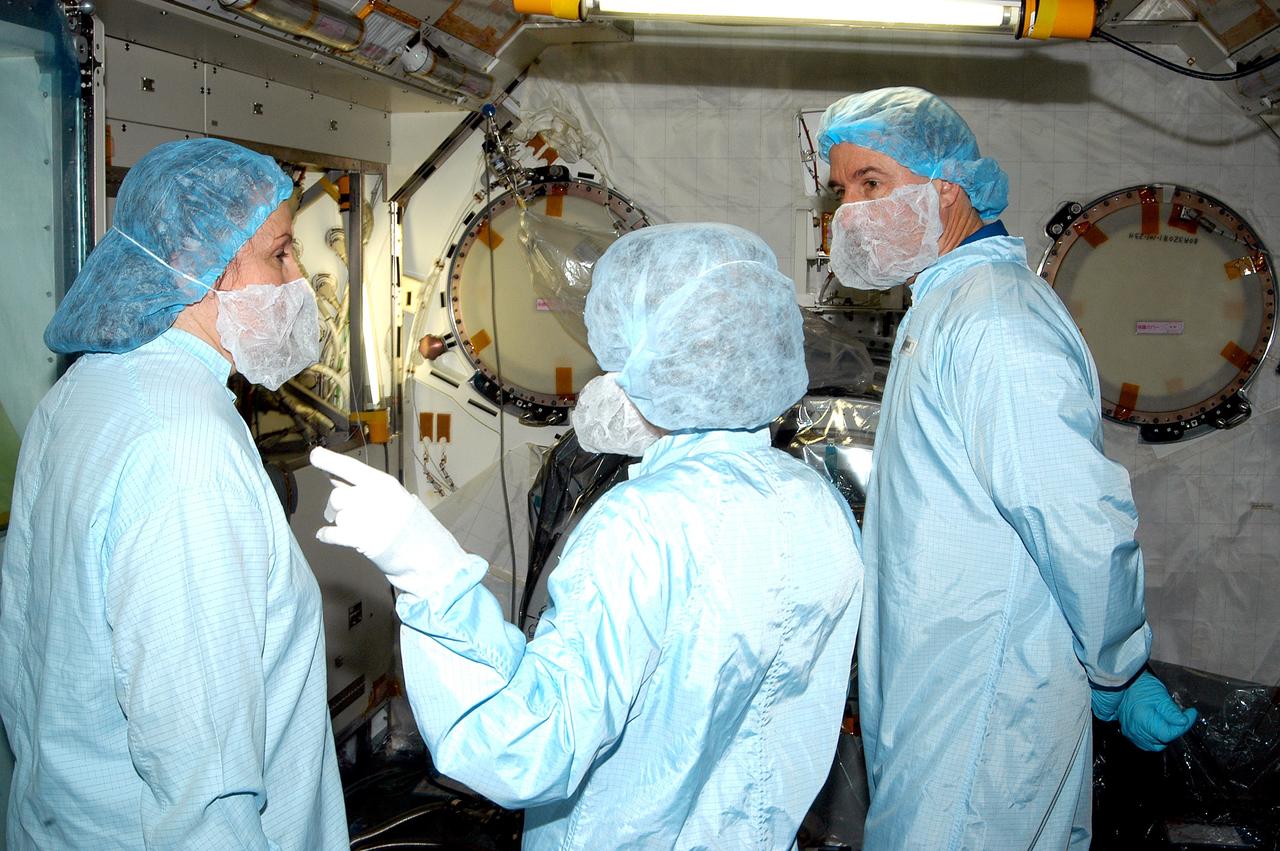
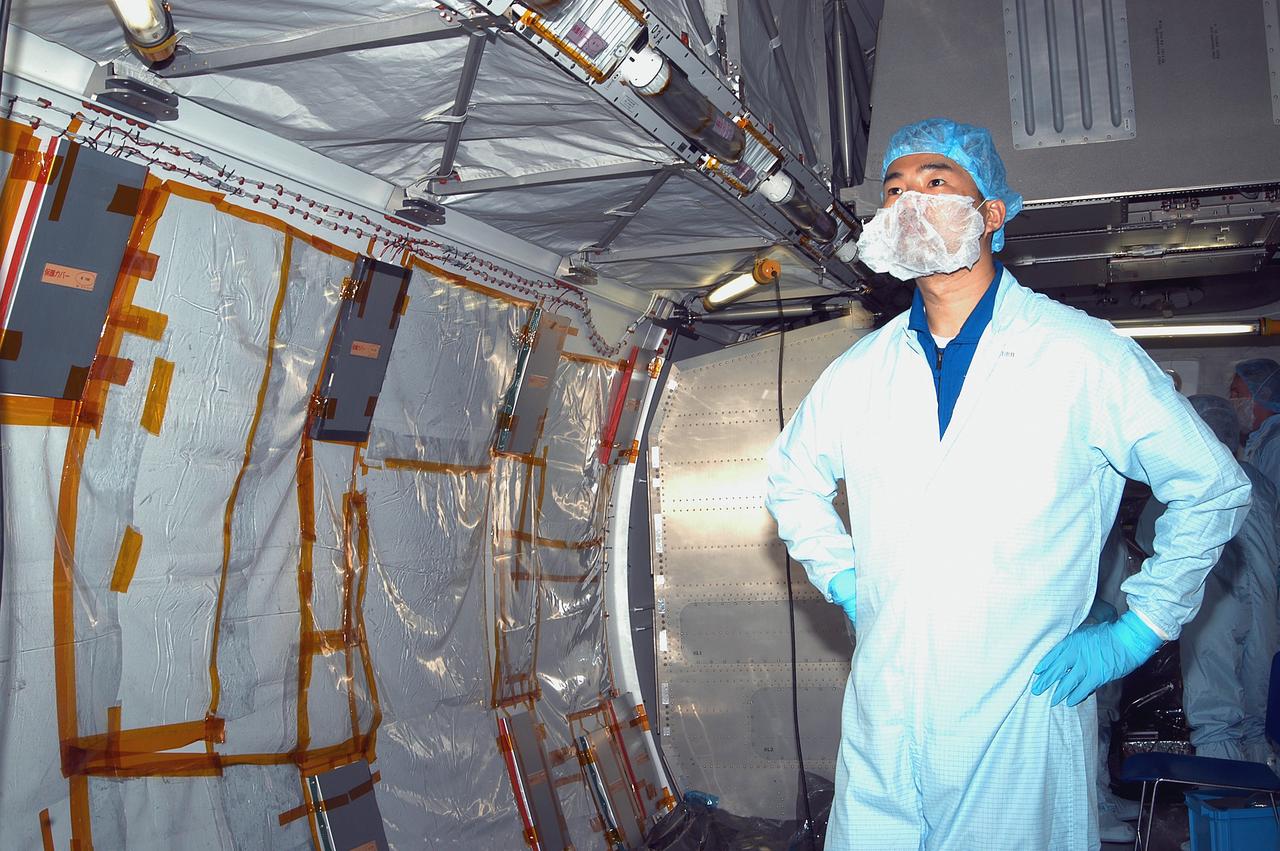
KENNEDY SPACE CENTER, FLA. - STS-114 Mission Specialist Soichi Noguchi, who is with the Japanese Aerospace and Exploration Agency, looks at the inside of the Japanese Experiment Module (JEM) in the Space Station Processing Facility.  He and other crew members are at KSC becoming familiar with Shuttle and mission equipment. The mission is Logistics Flight 1, which is scheduled to deliver supplies and equipment plus the external stowage platform to the International Space Station.
KENNEDY SPACE CENTER, FLA. - STS-114 Mission Specialist Soichi Noguchi, who is with the Japanese Aerospace and Exploration Agency, looks at the inside of the Japanese Experiment Module (JEM) in the Space Station Processing Facility. He and other crew members are at KSC becoming familiar with Shuttle and mission equipment. The mission is Logistics Flight 1, which is scheduled to deliver supplies and equipment plus the external stowage platform to the International Space Station.
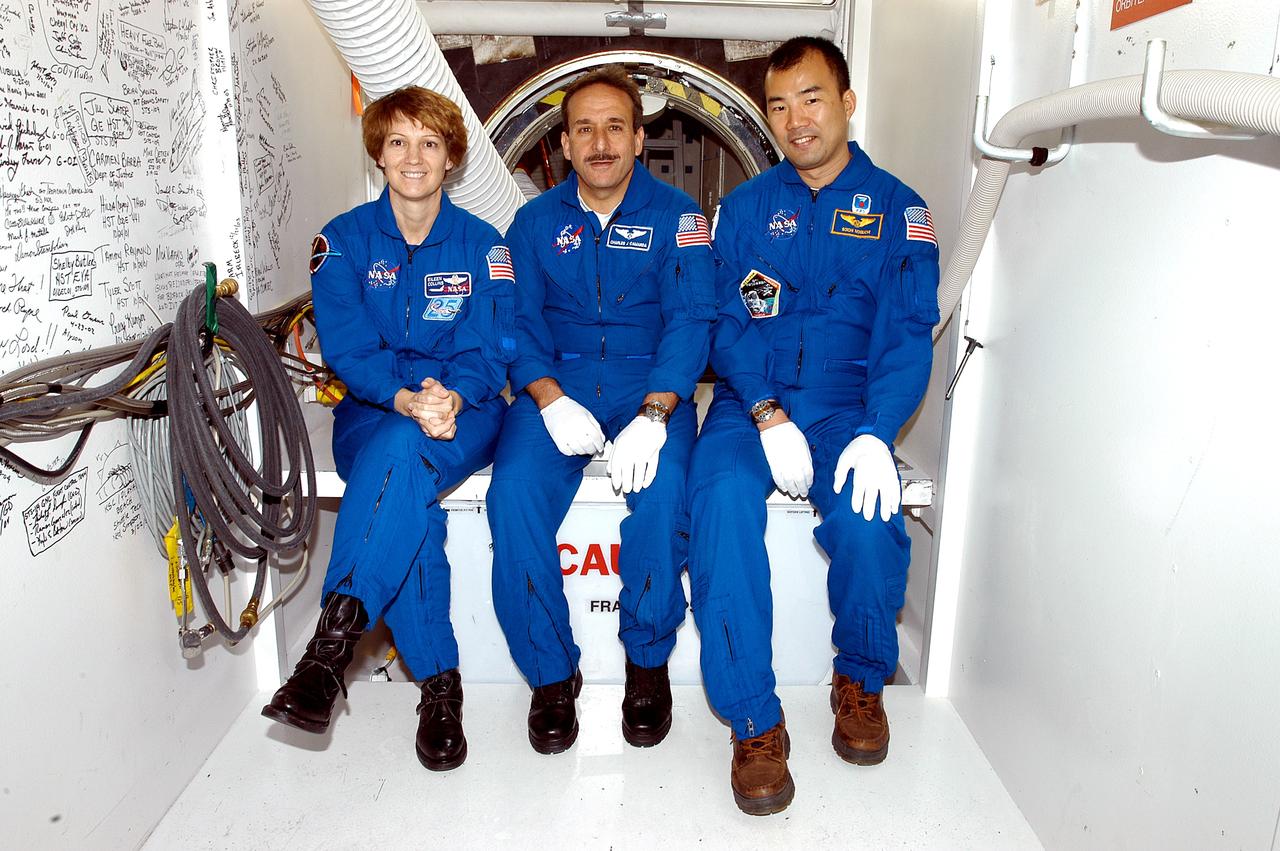
KENNEDY SPACE CENTER, FLA. - STS-114 Commander Eileen Collins and Mission Specialists Charles Camarda and Soichi Noguchi sit outside the crew hatch on the orbiter Discovery.  Noguchi is with the Japanese Aerospace and Exploration Agency.   They and other crew members are at KSC becoming familiar with Shuttle and mission equipment. The mission is Logistics Flight 1, which is scheduled to deliver supplies and equipment plus the external stowage platform to the International Space Station.
KENNEDY SPACE CENTER, FLA. - STS-114 Commander Eileen Collins and Mission Specialists Charles Camarda and Soichi Noguchi sit outside the crew hatch on the orbiter Discovery. Noguchi is with the Japanese Aerospace and Exploration Agency. They and other crew members are at KSC becoming familiar with Shuttle and mission equipment. The mission is Logistics Flight 1, which is scheduled to deliver supplies and equipment plus the external stowage platform to the International Space Station.
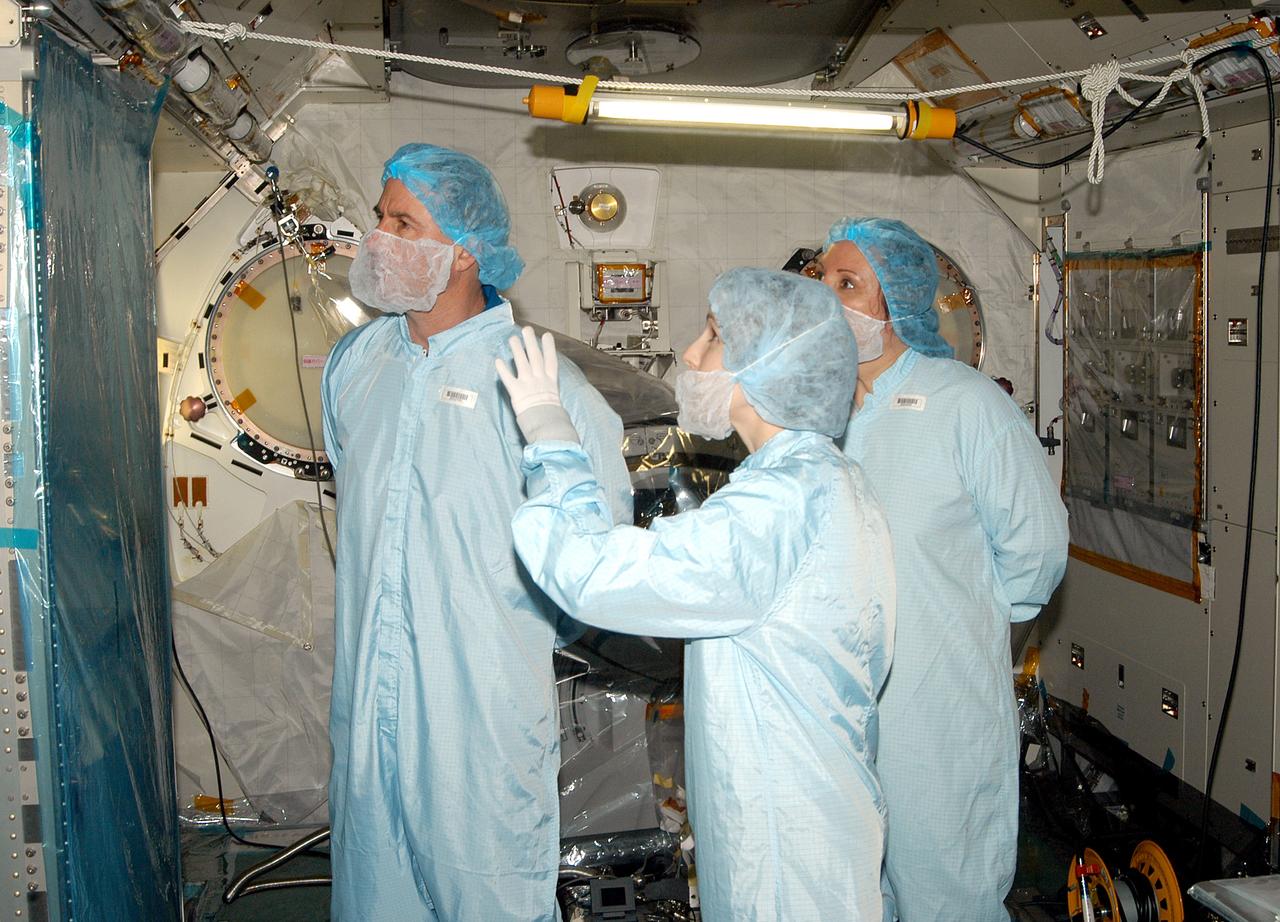
KENNEDY SPACE CENTER, FLA. - - In the Space Station Processing Facility, STS-114 Mission Specialist Stephen Robinson (left) learns about the Japanese Experiment Module (JEM) from Jennifer Goldsmith (center), with United Space Alliance at Johnson Space Center, and Louise Kleba (right), with USA at KSC.  Crew members are at KSC to become familiar with Shuttle and mission equipment. The mission is Logistics Flight 1, which is scheduled to deliver supplies and equipment plus the external stowage platform to the International Space Station.
KENNEDY SPACE CENTER, FLA. - - In the Space Station Processing Facility, STS-114 Mission Specialist Stephen Robinson (left) learns about the Japanese Experiment Module (JEM) from Jennifer Goldsmith (center), with United Space Alliance at Johnson Space Center, and Louise Kleba (right), with USA at KSC. Crew members are at KSC to become familiar with Shuttle and mission equipment. The mission is Logistics Flight 1, which is scheduled to deliver supplies and equipment plus the external stowage platform to the International Space Station.
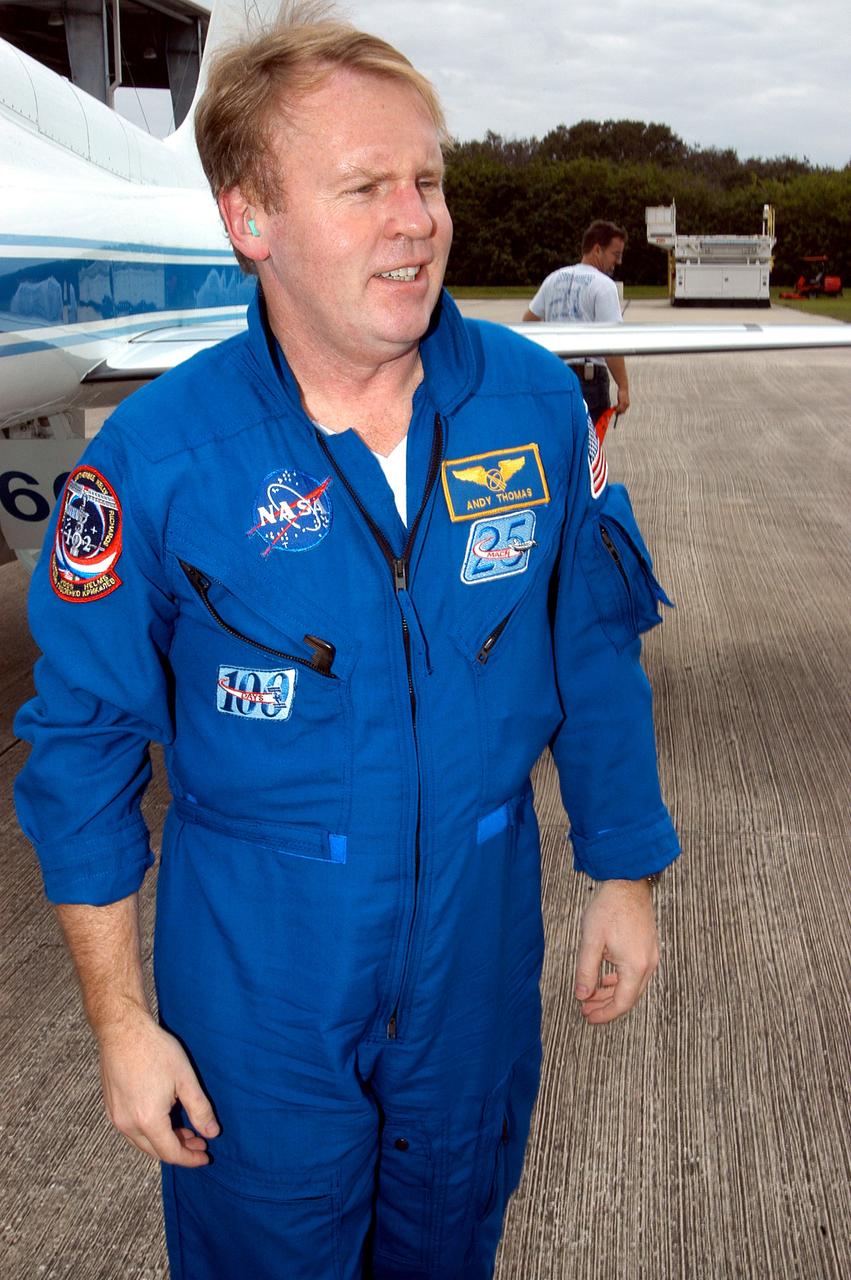
KENNEDY SPACE CENTER, FLA. - STS-114 Mission Specialist Andrew Thomas is pleased to be back at KSC after arriving aboard a T-38 jet aircraft.  He and other crew members are at the Center for familiarization activities with equipment.   The mission is Logistics Flight 1, scheduled to deliver to the Space Station the external stowage platform and the Multi-Purpose Logistics Module with supplies and equipment.
KENNEDY SPACE CENTER, FLA. - STS-114 Mission Specialist Andrew Thomas is pleased to be back at KSC after arriving aboard a T-38 jet aircraft. He and other crew members are at the Center for familiarization activities with equipment. The mission is Logistics Flight 1, scheduled to deliver to the Space Station the external stowage platform and the Multi-Purpose Logistics Module with supplies and equipment.
KENNEDY SPACE CENTER, FLA. -- Endeavour settles into  place inside the Vehicle Assembly Building (VAB) where it has been moved for temporary storage.  It left the Orbiter Processing Facility (OPF) to allow work to be performed in the OPF that can only be accomplished while the bay is empty. Work scheduled in the OPF includes annual validation of the bay’s cranes, work platforms, lifting mechanisms and jack stands. Endeavour will remain in the VAB for approximately 12 days, then return to the OPF.
KENNEDY SPACE CENTER, FLA. -- Endeavour settles into place inside the Vehicle Assembly Building (VAB) where it has been moved for temporary storage. It left the Orbiter Processing Facility (OPF) to allow work to be performed in the OPF that can only be accomplished while the bay is empty. Work scheduled in the OPF includes annual validation of the bay’s cranes, work platforms, lifting mechanisms and jack stands. Endeavour will remain in the VAB for approximately 12 days, then return to the OPF.
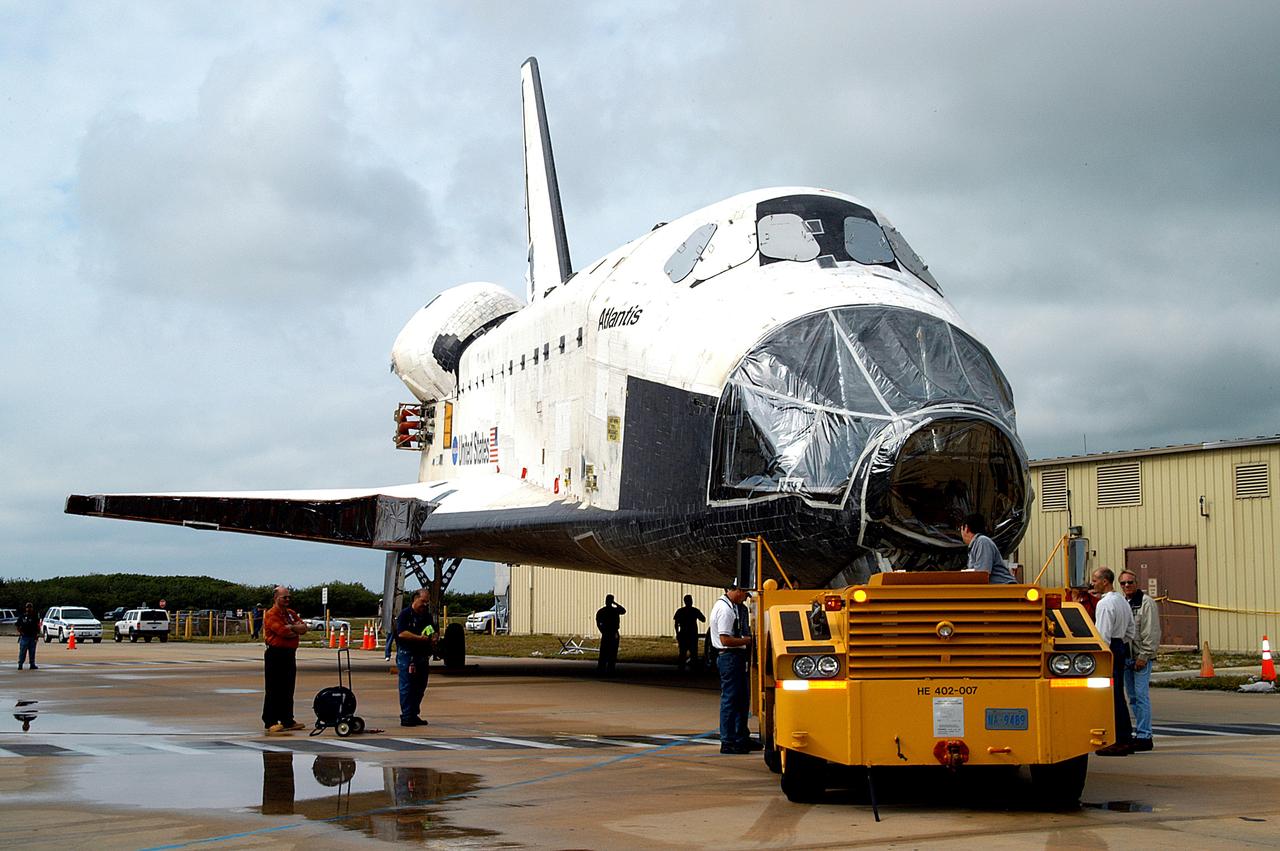
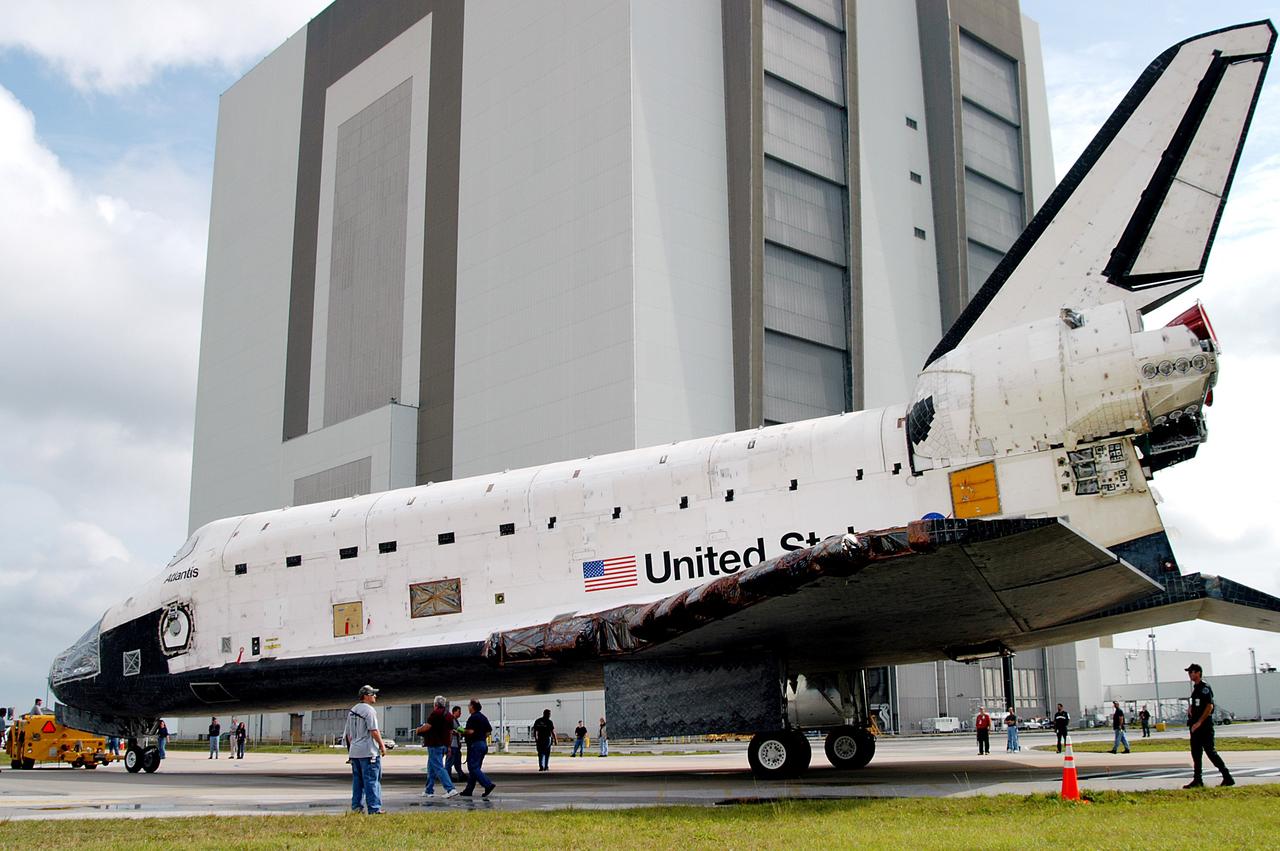
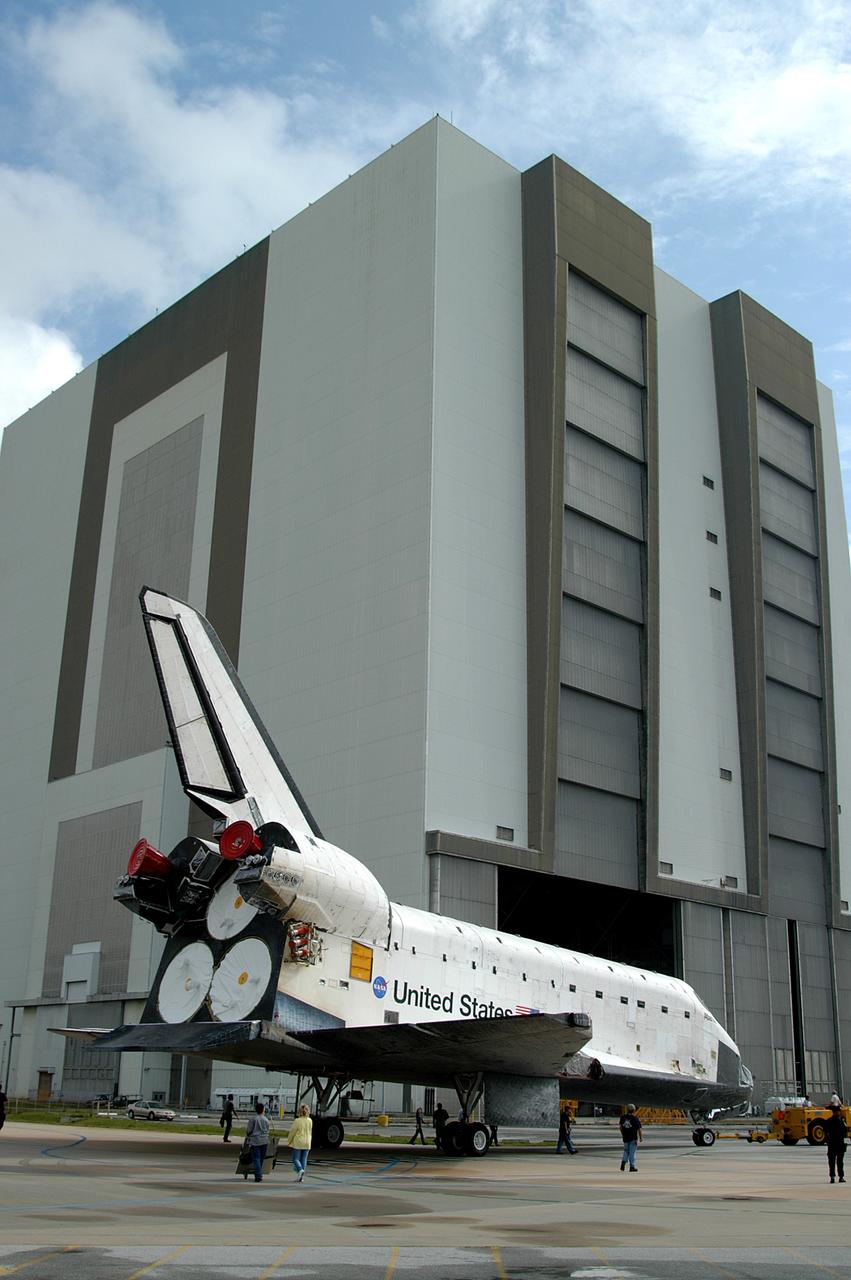
KENNEDY SPACE CENTER, FLA. - The Space Shuttle orbiter Atlantis approaches the Vehicle Assembly Building (VAB).  It is being towed from the Orbiter Processing Facility (OPF) to allow work to be performed in the bay that can only be accomplished while it is empty. Work scheduled in the processing facility includes annual validation of the bay's cranes, work platforms, lifting mechanisms, and jack stands. Atlantis will remain in the VAB for about 10 days, then return to the OPF as work resumes to prepare it for launch in September 2004 on the first return-to-flight mission, STS-114.
KENNEDY SPACE CENTER, FLA. - The Space Shuttle orbiter Atlantis approaches the Vehicle Assembly Building (VAB). It is being towed from the Orbiter Processing Facility (OPF) to allow work to be performed in the bay that can only be accomplished while it is empty. Work scheduled in the processing facility includes annual validation of the bay's cranes, work platforms, lifting mechanisms, and jack stands. Atlantis will remain in the VAB for about 10 days, then return to the OPF as work resumes to prepare it for launch in September 2004 on the first return-to-flight mission, STS-114.
KENNEDY SPACE CENTER, FLA. - The Space Shuttle orbiter Atlantis nears the Vehicle Assembly Building (VAB).  It is being towed from the Orbiter Processing Facility (OPF) to allow work to be performed in the bay that can only be accomplished while it is empty. Work scheduled in the processing facility includes annual validation of the bay's cranes, work platforms, lifting mechanisms, and jack stands. Atlantis will remain in the VAB for about 10 days, then return to the OPF as work resumes to prepare it for launch in September 2004 on the first return-to-flight mission, STS-114.
KENNEDY SPACE CENTER, FLA. - The Space Shuttle orbiter Atlantis nears the Vehicle Assembly Building (VAB). It is being towed from the Orbiter Processing Facility (OPF) to allow work to be performed in the bay that can only be accomplished while it is empty. Work scheduled in the processing facility includes annual validation of the bay's cranes, work platforms, lifting mechanisms, and jack stands. Atlantis will remain in the VAB for about 10 days, then return to the OPF as work resumes to prepare it for launch in September 2004 on the first return-to-flight mission, STS-114.
KENNEDY SPACE CENTER, FLA. -  Members of the STS-114 crew spend time in the Orbiter Processing Facility becoming familiar with Shuttle and mission equipment.  Mission Specialists Stephen Robinson (left) and Wendy Lawrence (right) look at an engine eyelet, which serves as part of the thermal protection system on an orbiter.  The STS-114 mission is Logistics Flight 1, which is scheduled to deliver supplies and equipment and the external stowage platform to the International Space Station.
KENNEDY SPACE CENTER, FLA. - Members of the STS-114 crew spend time in the Orbiter Processing Facility becoming familiar with Shuttle and mission equipment. Mission Specialists Stephen Robinson (left) and Wendy Lawrence (right) look at an engine eyelet, which serves as part of the thermal protection system on an orbiter. The STS-114 mission is Logistics Flight 1, which is scheduled to deliver supplies and equipment and the external stowage platform to the International Space Station.
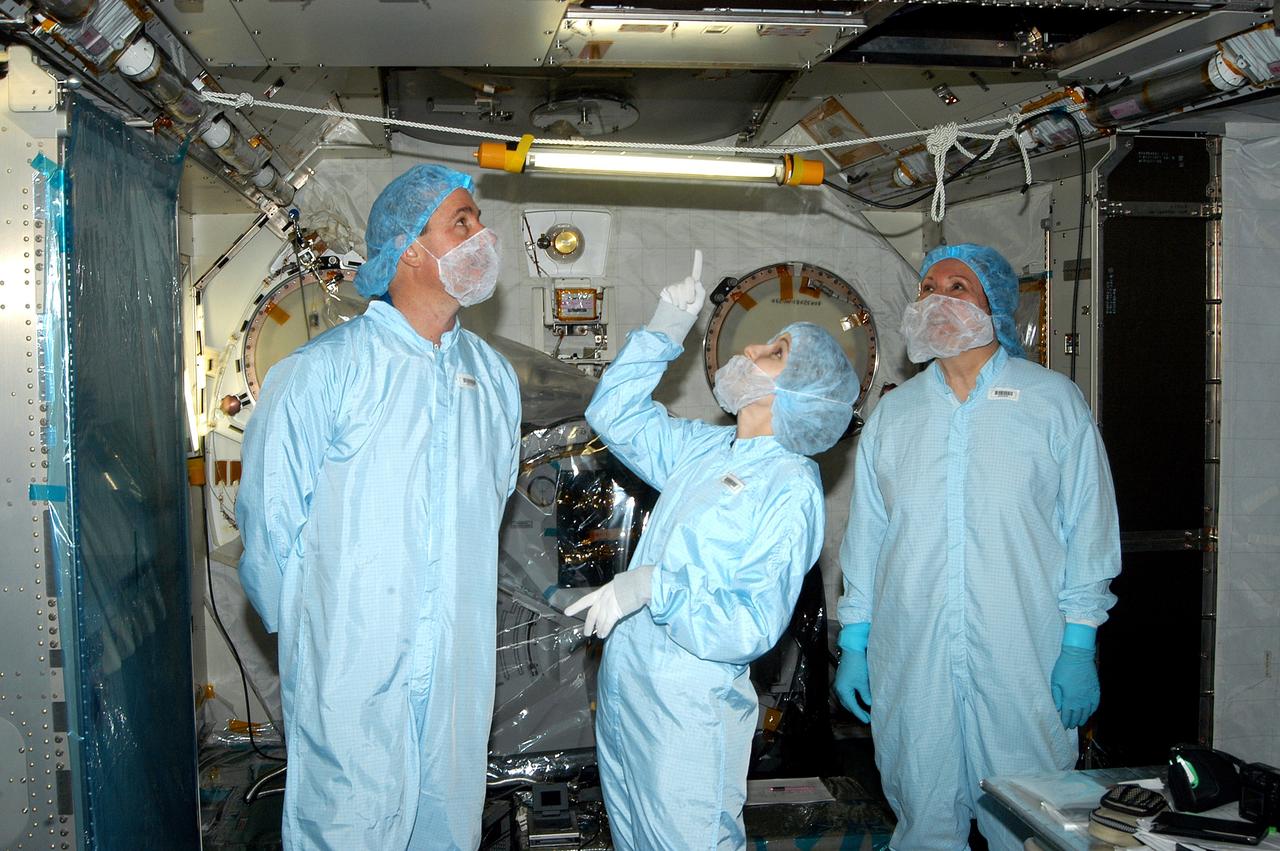
KENNEDY SPACE CENTER, FLA. - In the Space Station Processing Facility, STS-114 Mission Specialist Stephen Robinson (left) looks at an area overhead in the Japanese Experiment Module (JEM). In the center is Jennifer Goldsmith, with United Space Alliance at Johnson Space Center, and at right is Louise Kleba, with USA at KSC.  Crew members are at KSC becoming familiar with Shuttle and mission equipment. The mission is Logistics Flight 1, which is scheduled to deliver supplies and equipment plus the external stowage platform to the International Space Station.
KENNEDY SPACE CENTER, FLA. - In the Space Station Processing Facility, STS-114 Mission Specialist Stephen Robinson (left) looks at an area overhead in the Japanese Experiment Module (JEM). In the center is Jennifer Goldsmith, with United Space Alliance at Johnson Space Center, and at right is Louise Kleba, with USA at KSC. Crew members are at KSC becoming familiar with Shuttle and mission equipment. The mission is Logistics Flight 1, which is scheduled to deliver supplies and equipment plus the external stowage platform to the International Space Station.
KENNEDY SPACE CENTER, FLA. - Members of the STS-114 crew spend time becoming familiar with Shuttle and mission equipment.  From left are Mission Specialists Stephen Robinson, Charles Camarda and Andrew Thomas.  On the work stand is the insert for Discovery’s nose cap, which is being fitted with themal protection system insulation blankets.  The mission is Logistics Flight 1, which is scheduled to deliver supplies and equipment plus the external stowage platform to the International Space Station.
KENNEDY SPACE CENTER, FLA. - Members of the STS-114 crew spend time becoming familiar with Shuttle and mission equipment. From left are Mission Specialists Stephen Robinson, Charles Camarda and Andrew Thomas. On the work stand is the insert for Discovery’s nose cap, which is being fitted with themal protection system insulation blankets. The mission is Logistics Flight 1, which is scheduled to deliver supplies and equipment plus the external stowage platform to the International Space Station.
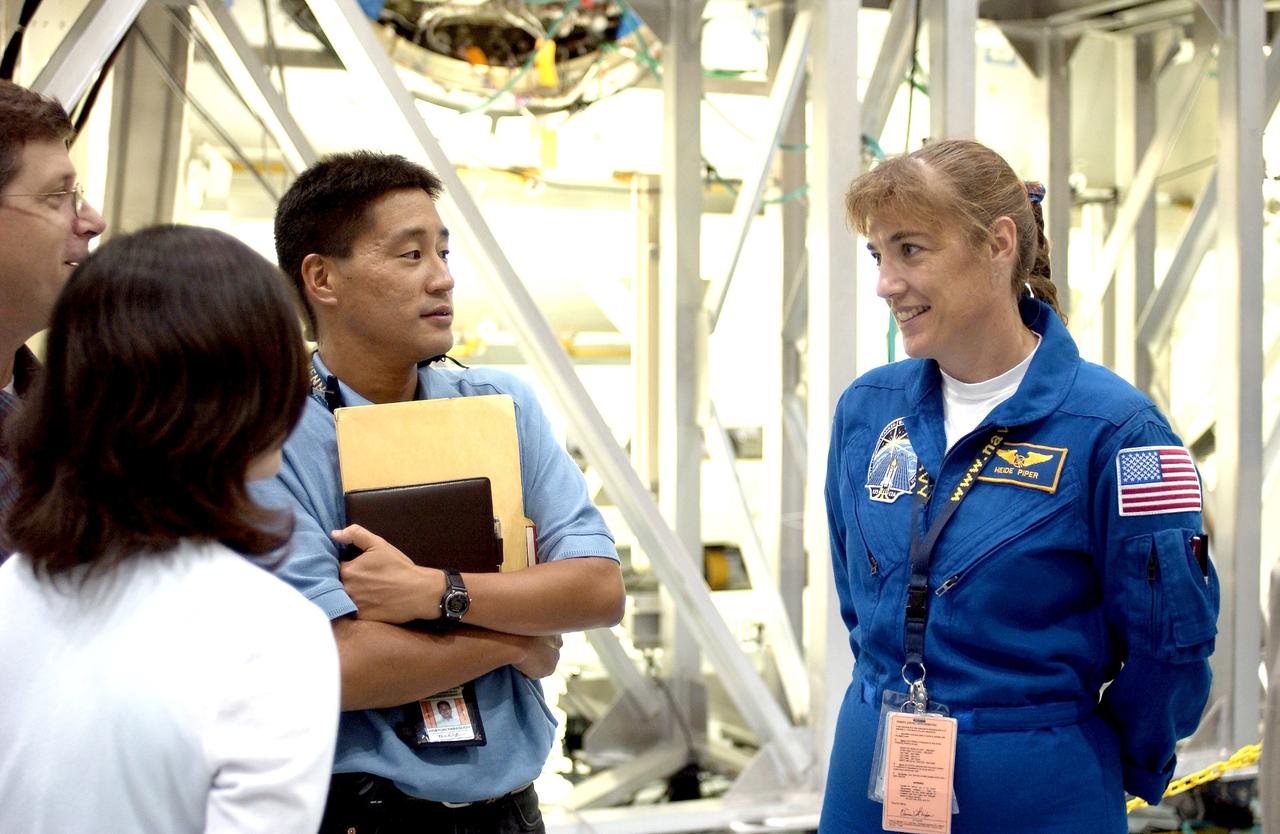
KENNEDY SPACE CENTER, FLA. -  STS-115 Mission Specialist Heidemarie Stefanyshyn-Piper talks to workers in the Space Station Processing Facility.  She and other crew members are at KSC for hardware familiarization.  The mission will deliver the second port truss segment, the P3/P4 Truss, to attach to the first port truss segment, the P1 Truss, as well as deploy solar array sets 2A and 4A..  The crew is scheduled to activate and check out the Solar Alpha Rotary Joint (SARJ) and deploy the P4 Truss radiator.
KENNEDY SPACE CENTER, FLA. - STS-115 Mission Specialist Heidemarie Stefanyshyn-Piper talks to workers in the Space Station Processing Facility. She and other crew members are at KSC for hardware familiarization. The mission will deliver the second port truss segment, the P3/P4 Truss, to attach to the first port truss segment, the P1 Truss, as well as deploy solar array sets 2A and 4A.. The crew is scheduled to activate and check out the Solar Alpha Rotary Joint (SARJ) and deploy the P4 Truss radiator.
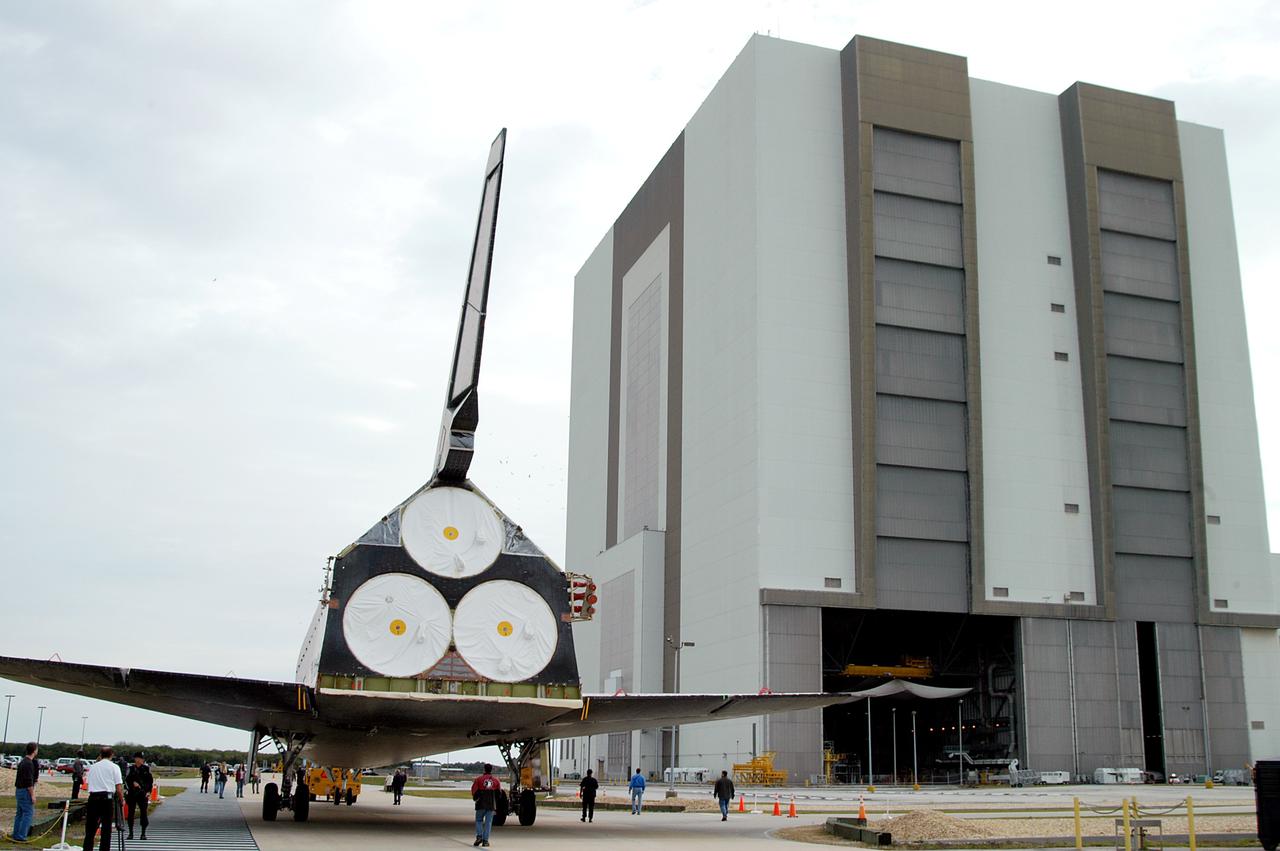
KENNEDY SPACE CENTER, FLA. -- Endeavour is towed in front of the Vehicle Assembly Building (VAB) where it is going for temporary storage.  The orbiter has been moved from the Orbiter Processing Facility (OPF) to allow work to be performed in the OPF that can only be accomplished while the bay is empty. Work scheduled in the OPF includes annual validation of the bay’s cranes, work platforms, lifting mechanisms and jack stands. Endeavour will remain in the VAB for approximately 12 days, then return to the OPF.
KENNEDY SPACE CENTER, FLA. -- Endeavour is towed in front of the Vehicle Assembly Building (VAB) where it is going for temporary storage. The orbiter has been moved from the Orbiter Processing Facility (OPF) to allow work to be performed in the OPF that can only be accomplished while the bay is empty. Work scheduled in the OPF includes annual validation of the bay’s cranes, work platforms, lifting mechanisms and jack stands. Endeavour will remain in the VAB for approximately 12 days, then return to the OPF.
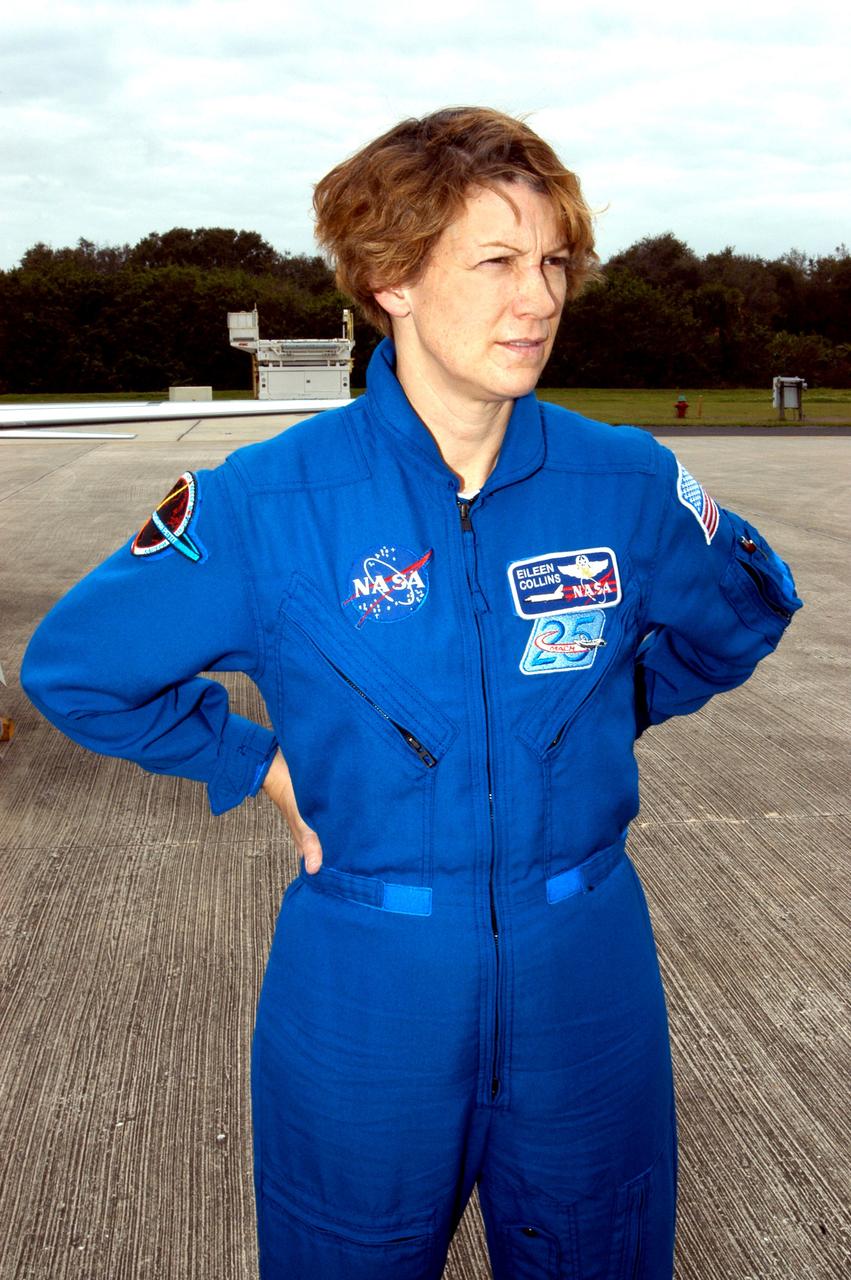
KENNEDY SPACE CENTER, FLA. - STS-114 Mission Commander Eileen Collins is pleased to be back at KSC after arriving aboard a T-38 jet aircraft.  She and other crew members are at the Center for familiarization activities with equipment.   The mission is Logistics Flight 1, scheduled to deliver to the Space Station the external stowage platform and the Multi-Purpose Logistics Module with supplies and equipment.
KENNEDY SPACE CENTER, FLA. - STS-114 Mission Commander Eileen Collins is pleased to be back at KSC after arriving aboard a T-38 jet aircraft. She and other crew members are at the Center for familiarization activities with equipment. The mission is Logistics Flight 1, scheduled to deliver to the Space Station the external stowage platform and the Multi-Purpose Logistics Module with supplies and equipment.
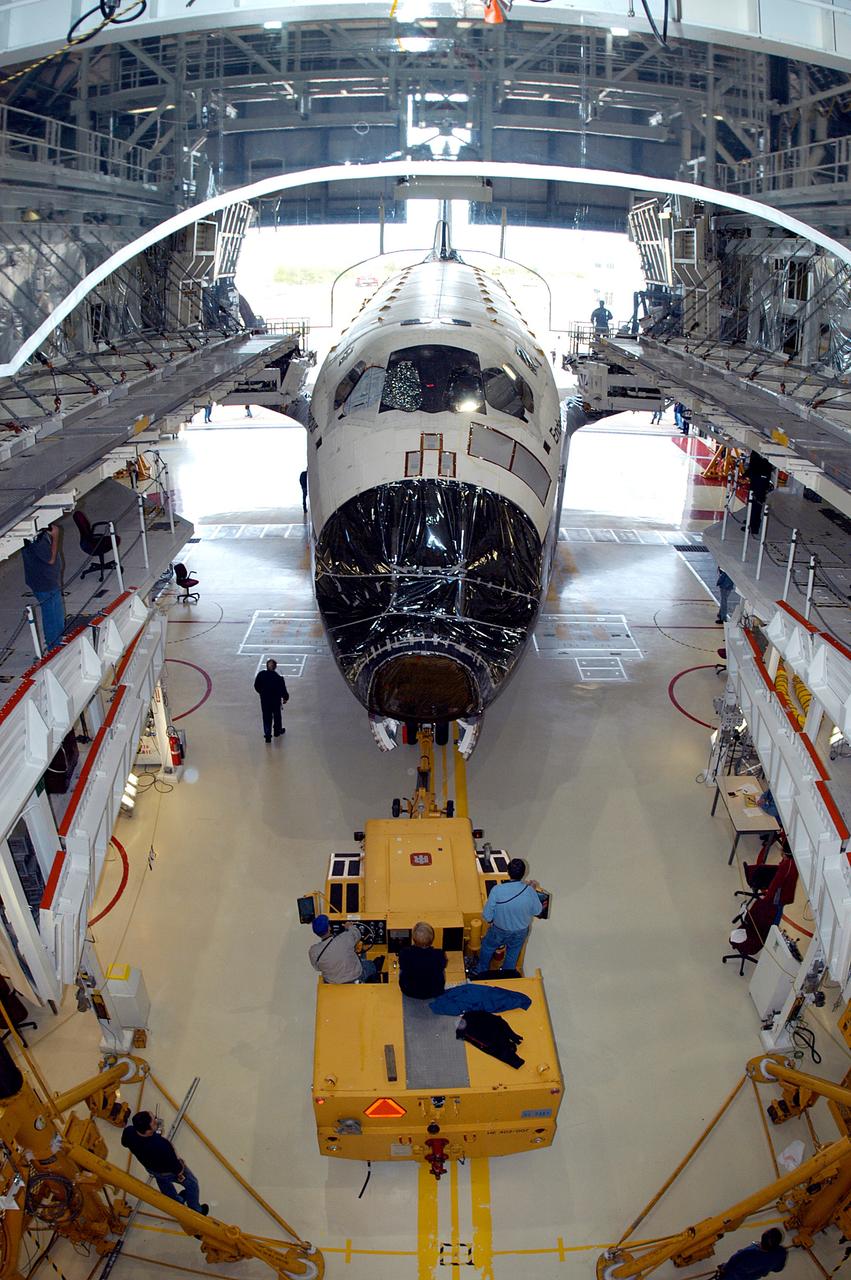
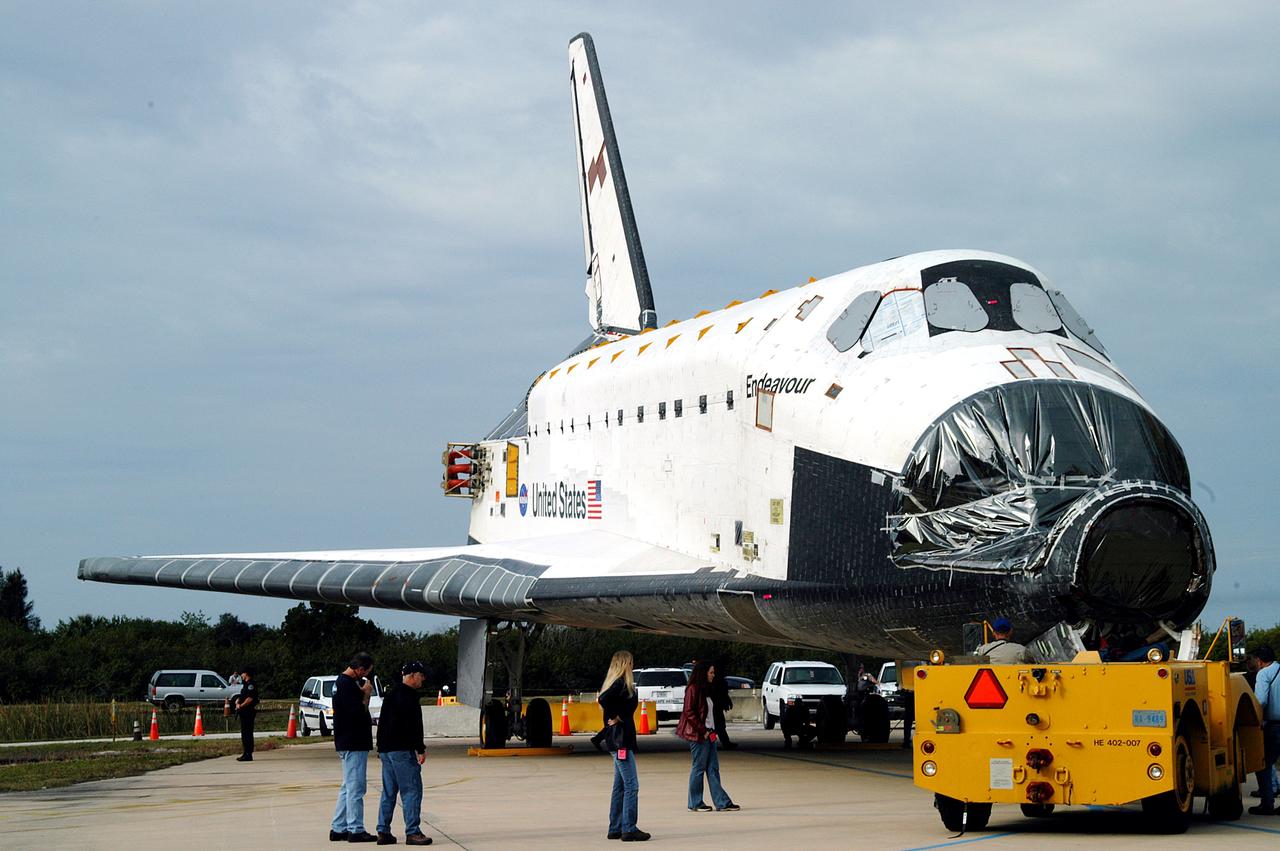
KENNEDY SPACE CENTER, FLA. -- After Endeavour’s rollout from inside the Orbiter Processing Facility, the transporter (foreground) prepares to tow it to the Vehicle Assembly Building for temporary transfer.  A protective cover surrounds the nose of Endeavour.  The move to the VAB allows work to be performed in the OPF that can only be accomplished while the bay is empty. Work scheduled in the OPF includes annual validation of the bay’s cranes, work platforms, lifting mechanisms and jack stands. Endeavour will remain in the VAB for approximately 12 days, then return to the OPF.
KENNEDY SPACE CENTER, FLA. -- After Endeavour’s rollout from inside the Orbiter Processing Facility, the transporter (foreground) prepares to tow it to the Vehicle Assembly Building for temporary transfer. A protective cover surrounds the nose of Endeavour. The move to the VAB allows work to be performed in the OPF that can only be accomplished while the bay is empty. Work scheduled in the OPF includes annual validation of the bay’s cranes, work platforms, lifting mechanisms and jack stands. Endeavour will remain in the VAB for approximately 12 days, then return to the OPF.
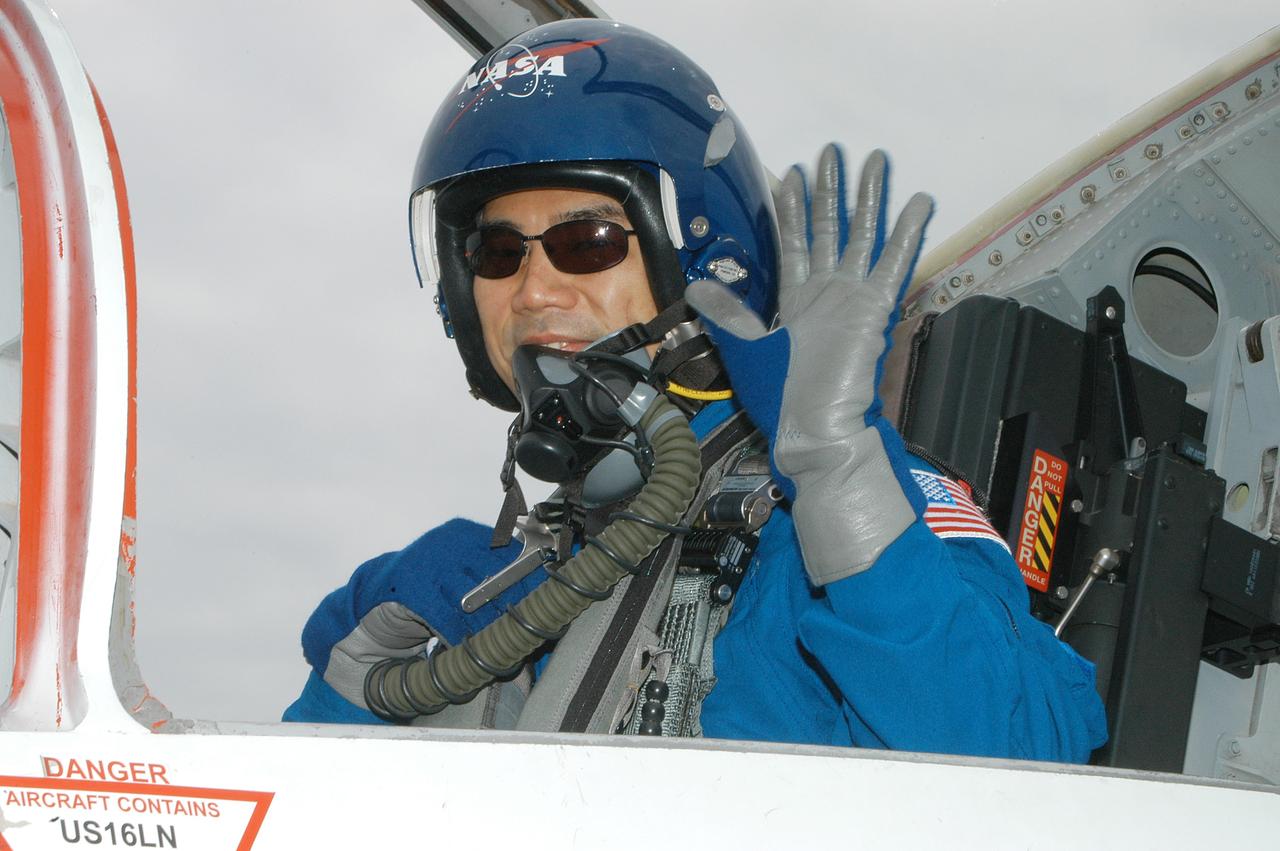
KENNEDY SPACE CENTER, FLA. - STS-114 Mission Specialist Soichi Noguchi arrives at KSC aboard a T-38 jet aircraft.  He and other crew members are at the Center for familiarization activities with equipment.   The mission is Logistics Flight 1, scheduled to deliver the Multi-Purpose Logistics Module carrying supplies and equipment to the Space Station and the external stowage platform.
KENNEDY SPACE CENTER, FLA. - STS-114 Mission Specialist Soichi Noguchi arrives at KSC aboard a T-38 jet aircraft. He and other crew members are at the Center for familiarization activities with equipment. The mission is Logistics Flight 1, scheduled to deliver the Multi-Purpose Logistics Module carrying supplies and equipment to the Space Station and the external stowage platform.
KENNEDY SPACE CENTER, FLA. -  STS-82 Mission Specialist Gregory J. Harbaugh, at top, inspects part of the Flight Support System during the Crew Equipment Integration Test (CEIT) at KSC's Vertical Processing Facility.  Harbaugh and the other six STS-82 crew members will conduct the second Hubble Space Telescope (HST) servicing mission aboard the Space Shuttle Discovery.  Harbaugh will be one of four spacewalkers.  Liftoff aboard Discovery is scheduled Feb. 11.
KENNEDY SPACE CENTER, FLA. - STS-82 Mission Specialist Gregory J. Harbaugh, at top, inspects part of the Flight Support System during the Crew Equipment Integration Test (CEIT) at KSC's Vertical Processing Facility. Harbaugh and the other six STS-82 crew members will conduct the second Hubble Space Telescope (HST) servicing mission aboard the Space Shuttle Discovery. Harbaugh will be one of four spacewalkers. Liftoff aboard Discovery is scheduled Feb. 11.
KENNEDY SPACE CENTER, FLA. -- Endeavour begins rolling out of the Orbiter Processing Facility for temporary transfer to the Vehicle Assembly Building. The move allows work to be performed in the OPF that can only be accomplished while the bay is empty. Work scheduled in the OPF includes annual validation of the bay’s cranes, work platforms, lifting mechanisms and jack stands. Endeavour will remain in the VAB for approximately 12 days, then return to the OPF.
KENNEDY SPACE CENTER, FLA. -  In the Orbiter Processing Facility, KSC employee Duane Williams prepares the blanket insulation to be installed on the body flap on orbiter Discovery.  The blankets are part of the Orbiter Thermal Protection System, thermal shields to protect against temperatures as high as 3,000° Fahrenheit, which are produced during descent for landing. Discovery is scheduled to fly on mission STS-121 to the International Space Station.
KENNEDY SPACE CENTER, FLA. - In the Orbiter Processing Facility, KSC employee Duane Williams prepares the blanket insulation to be installed on the body flap on orbiter Discovery. The blankets are part of the Orbiter Thermal Protection System, thermal shields to protect against temperatures as high as 3,000° Fahrenheit, which are produced during descent for landing. Discovery is scheduled to fly on mission STS-121 to the International Space Station.
KENNEDY SPACE CENTER, FLA. -  STS-82 crew members examine part of the Flight Support System during the Crew Equipment Integration Test (CEIT) in KSC's Vertical Processing Facility.  From left are Mission Specialists Steven L. Smith and Gregory J. Harbaugh and Payload Commander Mark C. Lee.  Liftoff of STS-82, the second Hubble Space Telescope (HST) servicing mission, is scheduled Feb. 11 aboard Discovery with a crew of seven.
KENNEDY SPACE CENTER, FLA. - STS-82 crew members examine part of the Flight Support System during the Crew Equipment Integration Test (CEIT) in KSC's Vertical Processing Facility. From left are Mission Specialists Steven L. Smith and Gregory J. Harbaugh and Payload Commander Mark C. Lee. Liftoff of STS-82, the second Hubble Space Telescope (HST) servicing mission, is scheduled Feb. 11 aboard Discovery with a crew of seven.
KENNEDY SPACE CENTER, FLA. -  In the Orbiter Processing Facility, KSC employee Duane Williams prepares the blanket insulation to be installed on the body flap on orbiter Discovery.  The blankets are part of the Orbiter Thermal Protection System, thermal shields to protect against temperatures as high as 3,000° Fahrenheit, which are produced during descent for landing. Discovery is scheduled to fly on mission STS-121 to the International Space Station.
KENNEDY SPACE CENTER, FLA. - In the Orbiter Processing Facility, KSC employee Duane Williams prepares the blanket insulation to be installed on the body flap on orbiter Discovery. The blankets are part of the Orbiter Thermal Protection System, thermal shields to protect against temperatures as high as 3,000° Fahrenheit, which are produced during descent for landing. Discovery is scheduled to fly on mission STS-121 to the International Space Station.
KENNEDY SPACE CENTER, FLA. - In the Space Station Processing Facility, STS-114 Mission Specialist Stephen Robinson (right) learns about the Japanese Experiment Module (JEM) from Louise Kleba (left), with United Space Alliance at KSC, and Jennifer Goldsmith (center), with USA at Johnson Space Center. Crew members are at KSC becoming familiar with Shuttle and mission equipment. The mission is Logistics Flight 1, which is scheduled to deliver supplies and equipment plus the external stowage platform to the International Space Station.
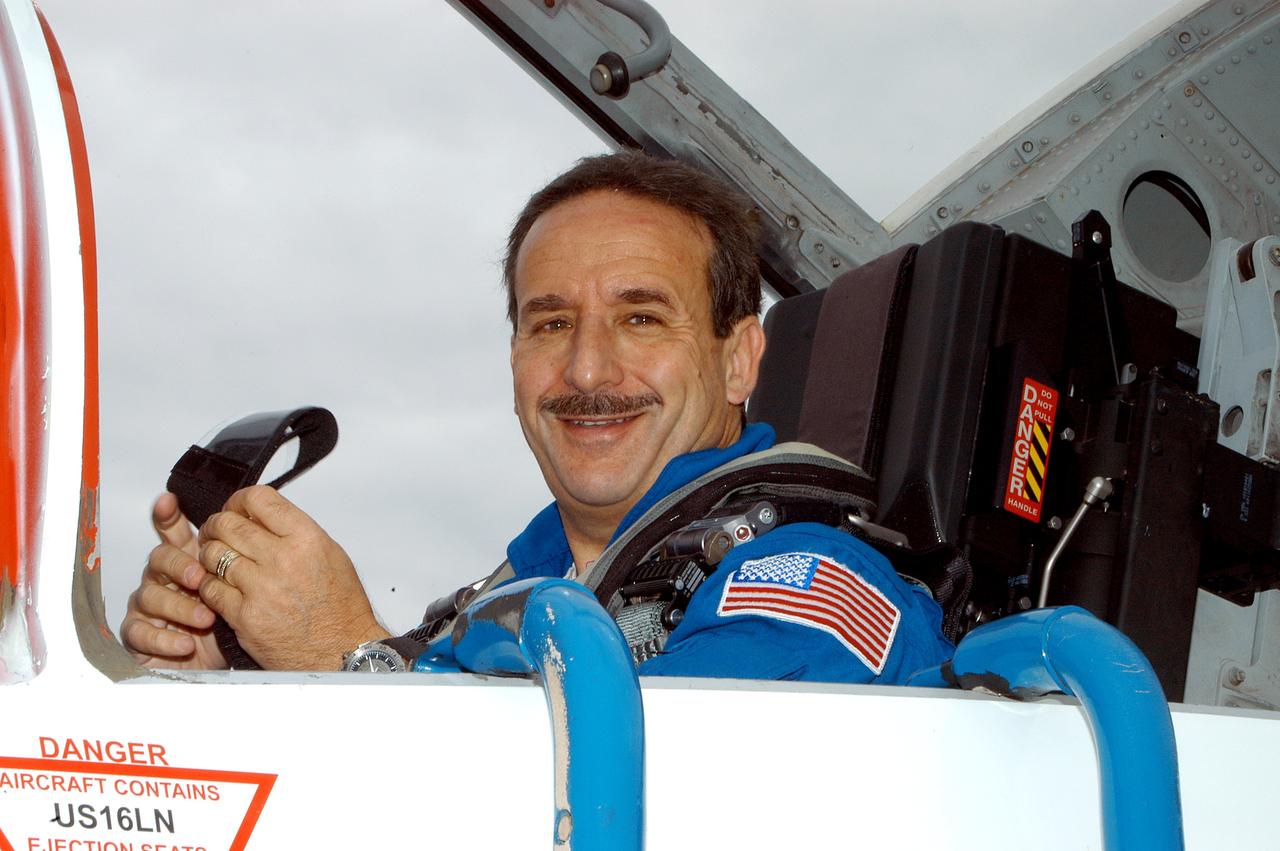
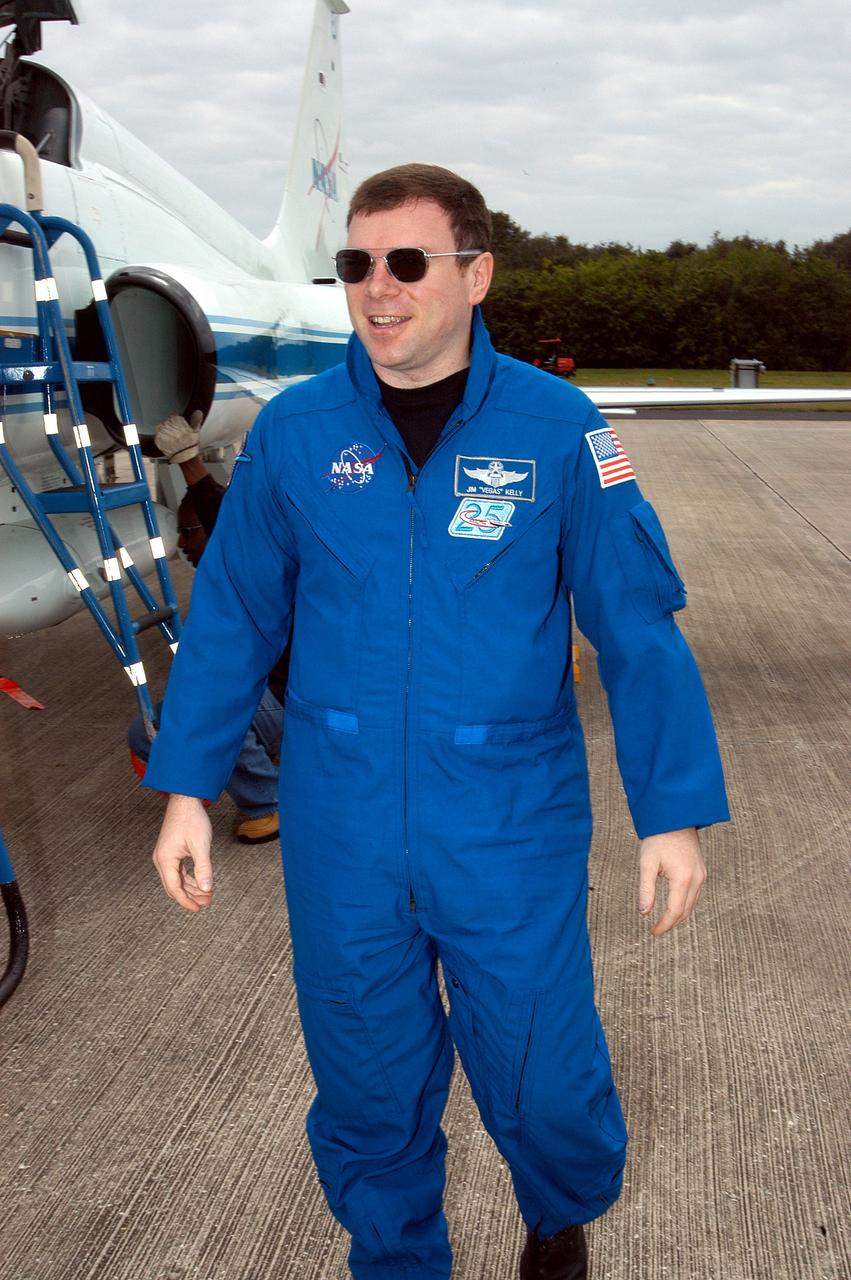
KENNEDY SPACE CENTER, FLA. - STS-114 Pilot Jim Kelly is pleased to be back at KSC after arriving aboard a T-38 jet aircraft.  He and other crew members are at the Center for familiarization activities with equipment.   The mission is Logistics Flight 1, scheduled to deliver the Multi-Purpose Logistics Module carrying supplies and equipment to the Space Station and the external stowage platform.
KENNEDY SPACE CENTER, FLA. - STS-114 Pilot Jim Kelly is pleased to be back at KSC after arriving aboard a T-38 jet aircraft. He and other crew members are at the Center for familiarization activities with equipment. The mission is Logistics Flight 1, scheduled to deliver the Multi-Purpose Logistics Module carrying supplies and equipment to the Space Station and the external stowage platform.
KENNEDY SPACE CENTER, FLA. - The Space Shuttle orbiter Atlantis is towed from the Orbiter Processing Facility (OPF) to the Vehicle Assembly Building (VAB). The move will allow work to be performed in the OPF that can only be accomplished while the bay is empty. Work scheduled in the processing facility includes annual validation of the bay's cranes, work platforms, lifting mechanisms, and jack stands. Atlantis will remain in the VAB for about 10 days, then return to the OPF as work resumes to prepare it for launch in September 2004 on the first return-to-flight mission, STS-114.
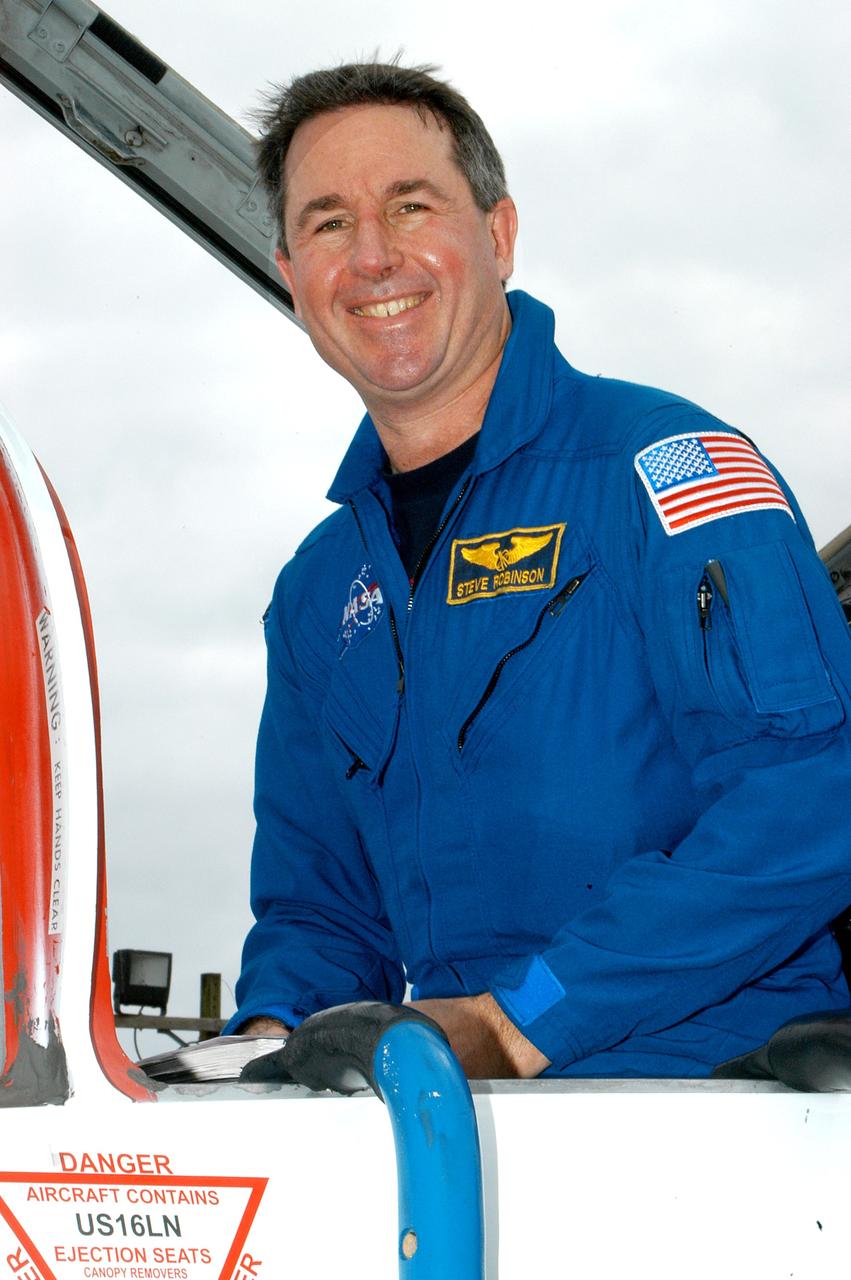
KENNEDY SPACE CENTER, FLA. - STS-114 Mission Specialist Stephen Robinson arrives at KSC aboard a T-38 jet aircraft.  He and other crew members are at the Center for familiarization activities with equipment.   The mission is Logistics Flight 1, scheduled to deliver the Multi-Purpose Logistics Module carrying supplies and equipment to the Space Station and the external stowage platform.
KENNEDY SPACE CENTER, FLA. - STS-114 Mission Specialist Stephen Robinson arrives at KSC aboard a T-38 jet aircraft. He and other crew members are at the Center for familiarization activities with equipment. The mission is Logistics Flight 1, scheduled to deliver the Multi-Purpose Logistics Module carrying supplies and equipment to the Space Station and the external stowage platform.