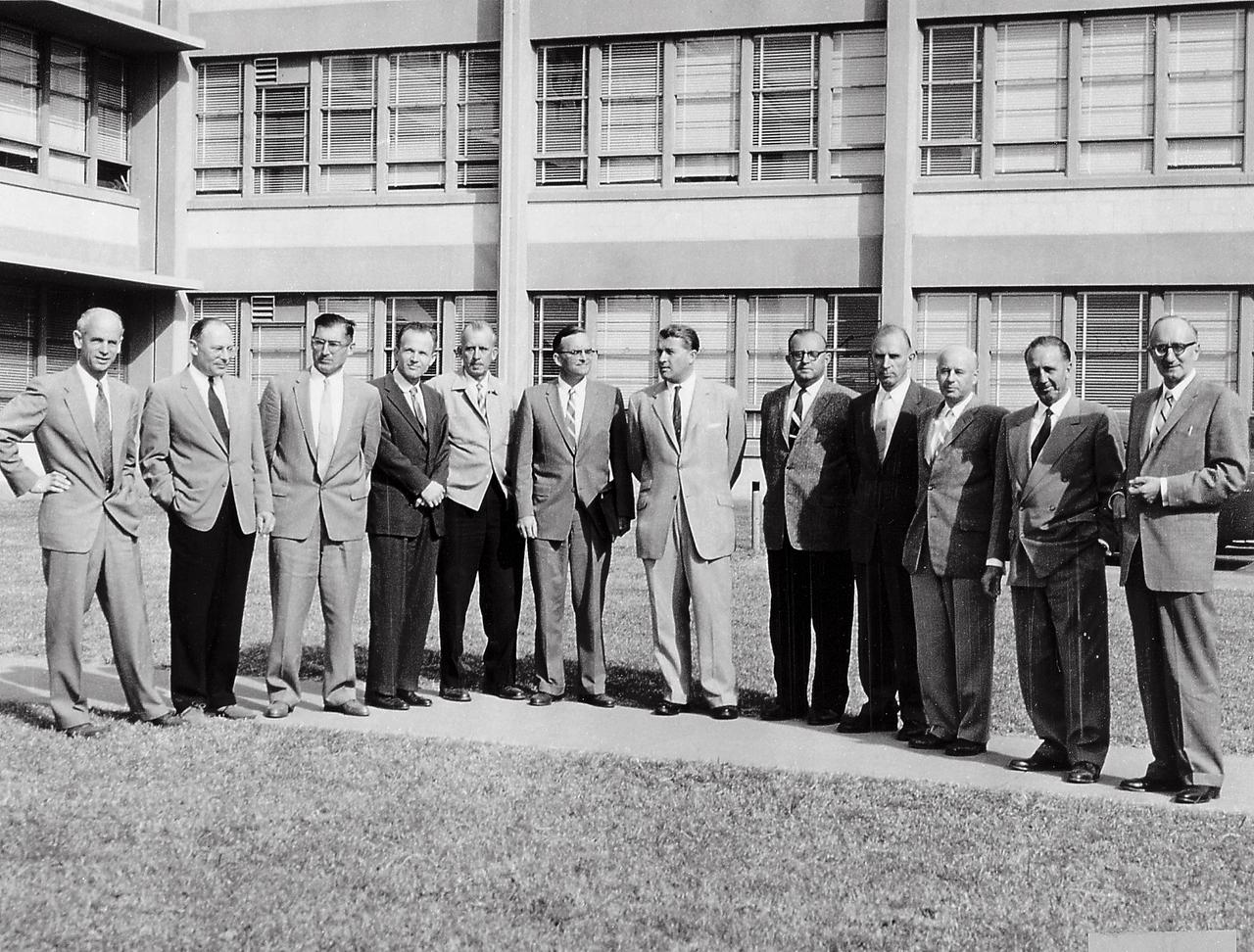
Twelve scientific specialists of the Peenemuende team at the front of Building 4488, Redstone Arsenal, Huntsville, Alabama. They led the Army's space efforts at ABMA before transfer of the team to National Aeronautic and Space Administration (NASA), George C. Marshall Space Flight Center (MSFC). (Left to right) Dr. Ernst Stuhlinger, Director, Research Projects Office; Dr. Helmut Hoelzer, Director, Computation Laboratory: Karl L. Heimburg, Director, Test Laboratory; Dr. Ernst Geissler, Director, Aeroballistics Laboratory; Erich W. Neubert, Director, Systems Analysis Reliability Laboratory; Dr. Walter Haeussermarn, Director, Guidance and Control Laboratory; Dr. Wernher von Braun, Director Development Operations Division; William A. Mrazek, Director, Structures and Mechanics Laboratory; Hans Hueter, Director, System Support Equipment Laboratory;Eberhard Rees, Deputy Director, Development Operations Division; Dr. Kurt Debus, Director Missile Firing Laboratory; Hans H. Maus, Director, Fabrication and Assembly Engineering Laboratory
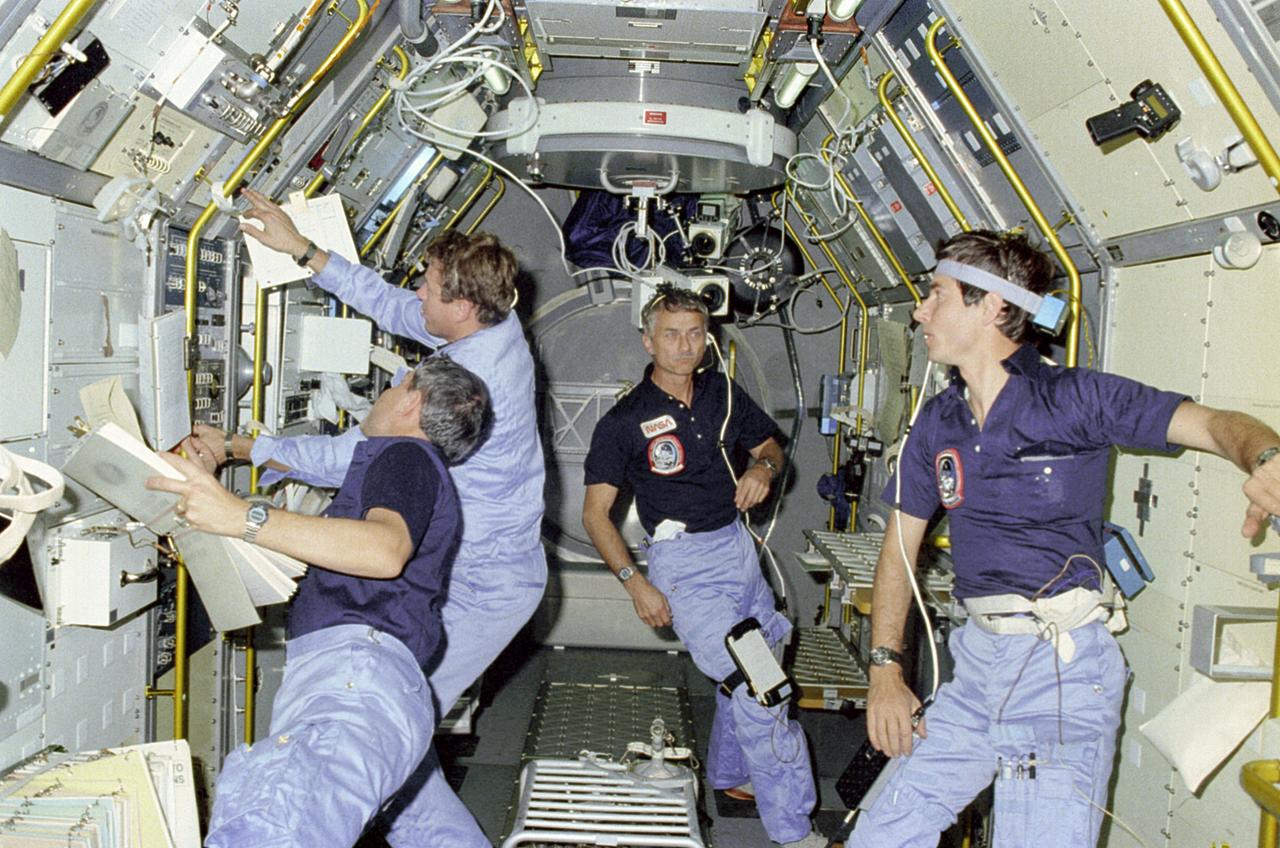
This photograph shows activities inside the science module during the Spacelab-1 (STS-9) mission. Left to right are Mission Specialist Robert Parker, Payload Specialist Byron Lichtenberg, Mission Specialist Owen Garriott, and Payload Specialist Ulf Merbold. The overall goal of the Spacelab-1 mission, the first mission of the Spacelab facility, were: (1) To verify the Spacelab system capability, (2) to obtain valuable scientific, applications, and technology data from a U.S./European multidisciplinary payload, and (3) to demonstrate the broad capability of Spacelab for scientific research. More than 70 experiments in 5 disciplines from 14 nations were conducted during the mission. The mission marked the the entry of non-astronaut persornel, called Payload Specialists, into space as working members of the crew. They are fellow scientists representing the international group of investigators using the mission. Mission Specialists are NASA astronauts who have broad scientific training. They operate various Orbiter-Spacelab systems, perform any required activity outside the spacecraft, and support investigations as needed. The Space Shuttle Orbiter Columbia that carried Spacelab-1 was operated by two other NASA astronauts serving as commander and pilot. The STS-9 mission, managed by the Marshall Space Flight Center, was launched on November 28, 1983.
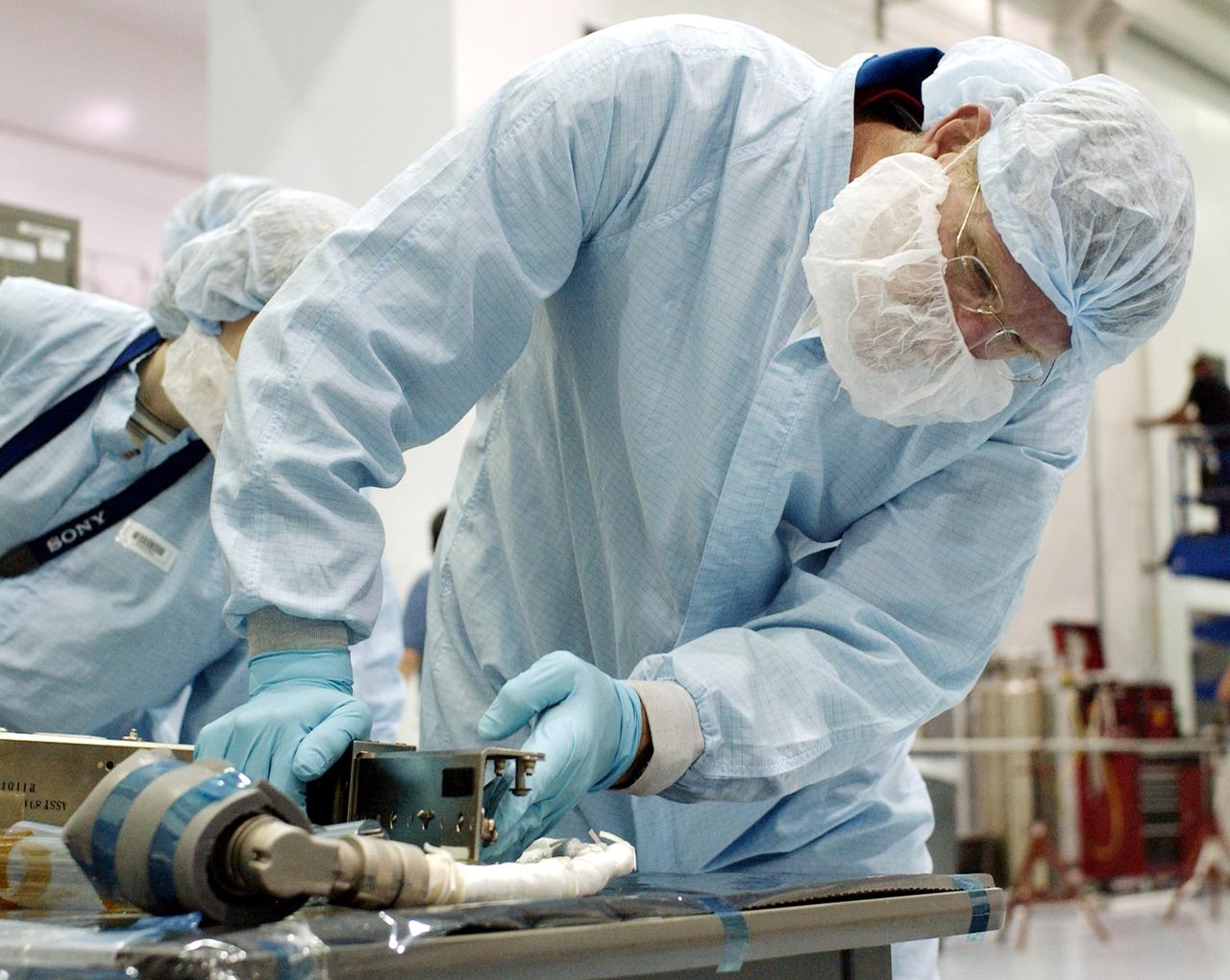
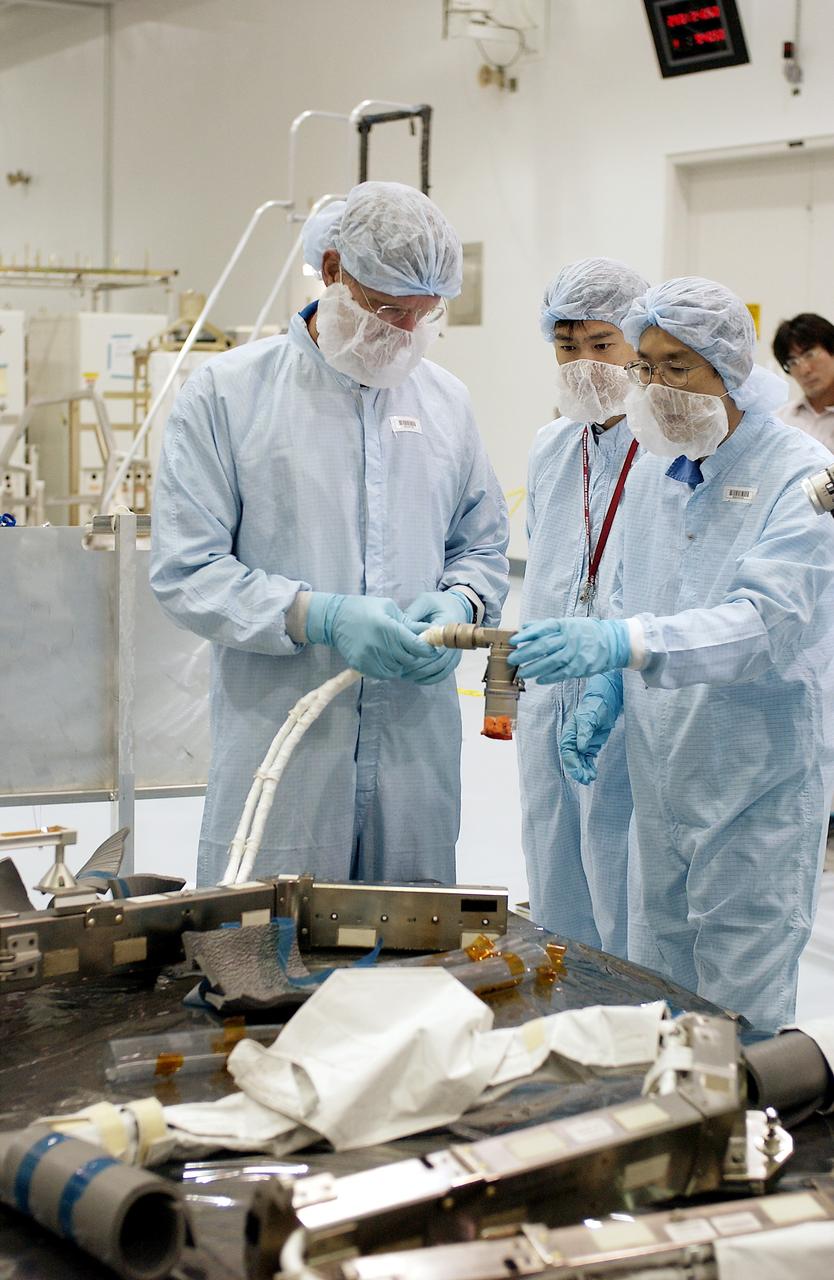
KENNEDY SPACE CENTER, FLA. - STS-115 Mission Specialist Joseph Tanner checks out a camera for the Japanese Experiment Module (JEM) in the Space Station Processing Facility. Known as Kibo, the JEM consists of six components: two research facilities -- the Pressurized Module and the Exposed Facility; a Logistics Module attached to each of them; a Remote Manipulator System; and an Inter-Orbit Communication System unit. Kibo also has a scientific airlock through which experiments are transferred and exposed to the external environment of space. The various components of JEM will be assembled in space over the course of three Space Shuttle missions. Equipment familiarization is a routine part of astronaut training and launch preparations.
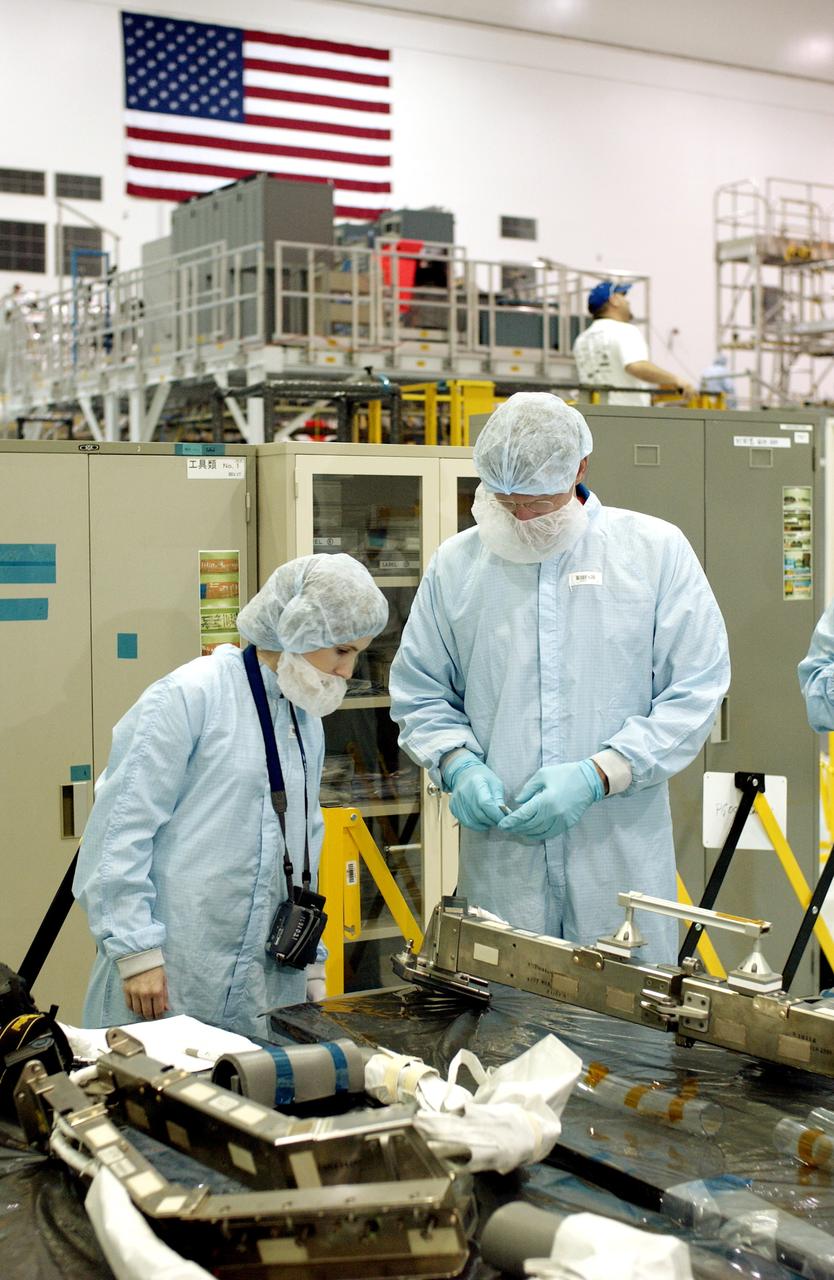
KENNEDY SPACE CENTER, FLA. - In the Space Station Processing Facility, STS-115 Mission Specialist Joseph Tanner (right) checks out a camera and cables for the Japanese Experiment Module (JEM). Known as Kibo, the JEM consists of six components: two research facilities - the Pressurized Module and the Exposed Facility; a Logistics Module attached to each of them; a Remote Manipulator System; and an Inter-Orbit Communication System unit. Kibo also has a scientific airlock through which experiments are transferred and exposed to the external environment of space. The various components of JEM will be assembled in space over the course of three Space Shuttle missions. Equipment familiarization is a routine part of astronaut training and launch preparations.

KENNEDY SPACE CENTER, FLA. - STS-115 Mission Specialist Joseph Tanner (second from right) checks out a camera and cables for the Japanese Experiment Module (JEM) in the Space Station Processing Facility. Known as Kibo, the JEM consists of six components: two research facilities - the Pressurized Module and the Exposed Facility; a Logistics Module attached to each of them; a Remote Manipulator System; and an Inter-Orbit Communication System unit. Kibo also has a scientific airlock through which experiments are transferred and exposed to the external environment of space. The various components of JEM will be assembled in space over the course of three Space Shuttle missions. Equipment familiarization is a routine part of astronaut training and launch preparations.
KENNEDY SPACE CENTER, FLA. - In the Space Station Processing Facility, STS-115 Mission Specialist Joseph Tanner (left) checks out a camera and cables to be used in the Japanese Experiment Module (JEM). Known as Kibo, the JEM consists of six components: two research facilities - the Pressurized Module and the Exposed Facility; a Logistics Module attached to each of them; a Remote Manipulator System; and an Inter-Orbit Communication System unit. Kibo also has a scientific airlock through which experiments are transferred and exposed to the external environment of space. The various components of JEM will be assembled in space over the course of three Space Shuttle missions. Equipment familiarization is a routine part of astronaut training and launch preparations.
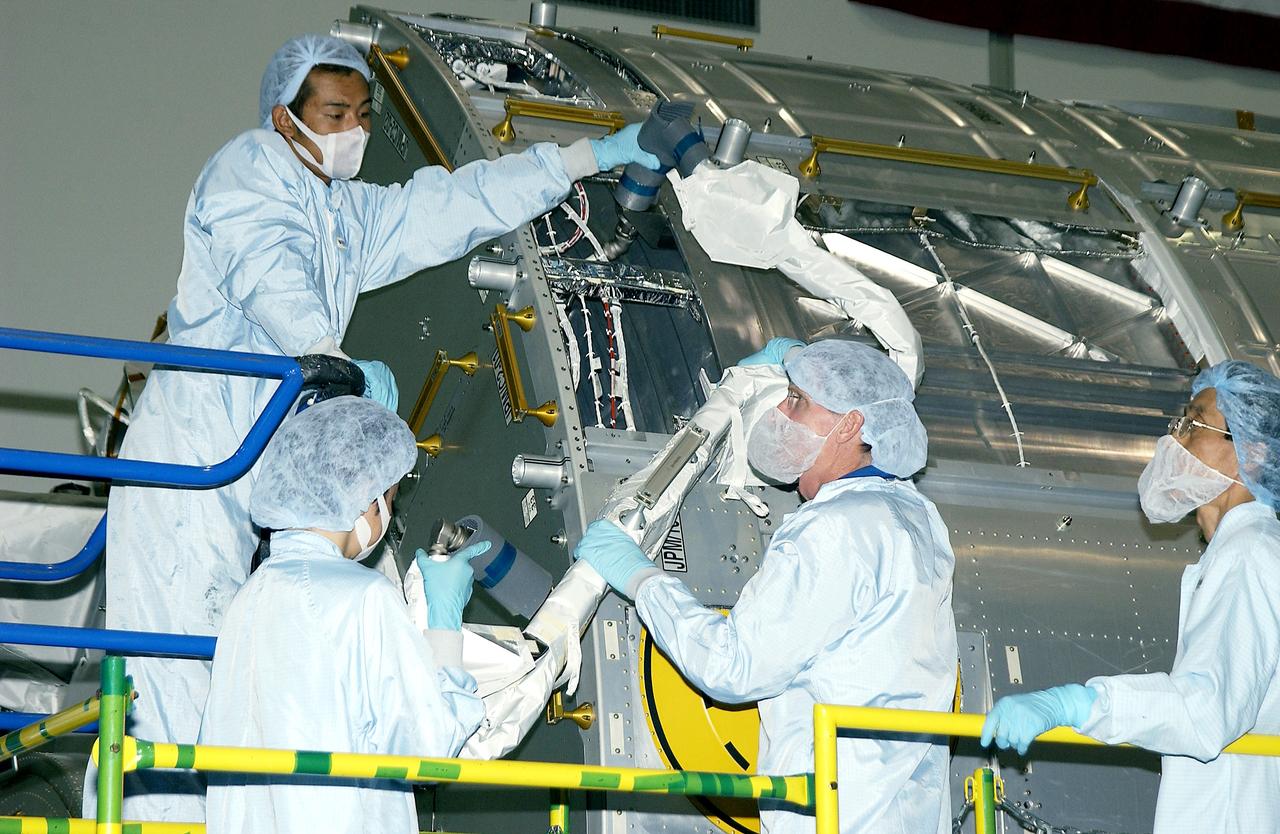
KENNEDY SPACE CENTER, FLA. - In the Space Station Processing Facility, STS-115 Mission Specialist Joseph Tanner (center, foreground) works with technicians to learn more about the Japanese Experiment Module (JEM), known as Kibo. The JEM consists of six components: two research facilities - the Pressurized Module and the Exposed Facility; a Logistics Module attached to each of them; a Remote Manipulator System; and an Inter-Orbit Communication System unit. Kibo also has a scientific airlock through which experiments are transferred and exposed to the external environment of space. The various components of JEM will be assembled in space over the course of three Space Shuttle missions. Equipment familiarization is a routine part of astronaut training and launch preparations.

KENNEDY SPACE CENTER, FLA. - In the Space Station Processing Facility, STS-115 Mission Specialist Joseph Tanner takes a closer look at the Japanese Experiment Module (JEM). Known as Kibo, the JEM consists of six components: two research facilities - the Pressurized Module and the Exposed Facility; a Logistics Module attached to each of them; a Remote Manipulator System; and an Inter-Orbit Communication System unit. Kibo also has a scientific airlock through which experiments are transferred and exposed to the external environment of space. The various components of JEM will be assembled in space over the course of three Space Shuttle missions. Equipment familiarization is a routine part of astronaut training and launch preparations.
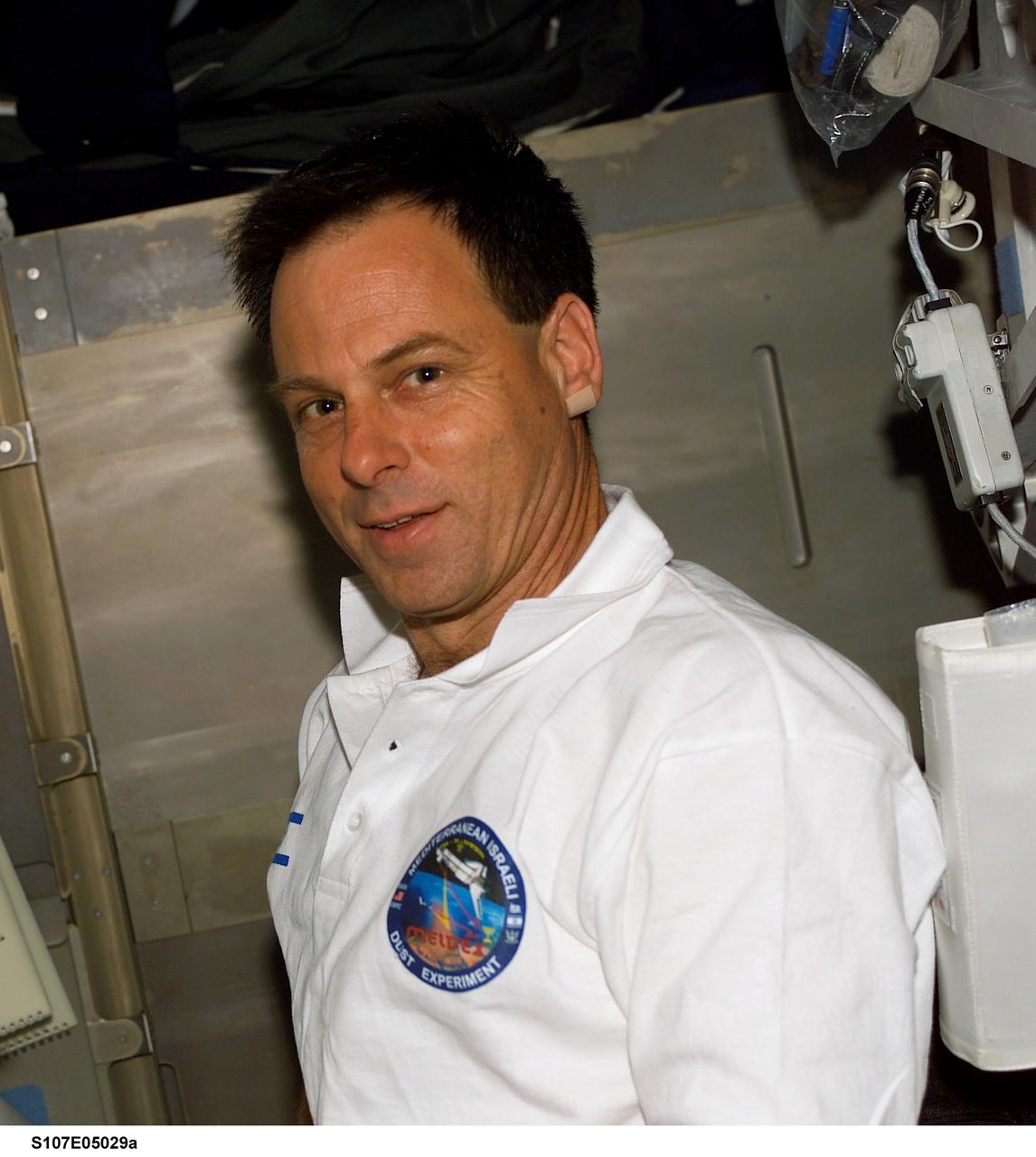
STS107-E-05029A (18 January 2003) --- Ilan Ramon, STS-107 payload specialist representing the Israeli Space Agency, joined his six crewmates in getting the Space Shuttle Columbia and its SPACEHAB Research Double Module ready for 16 days of scientific research.
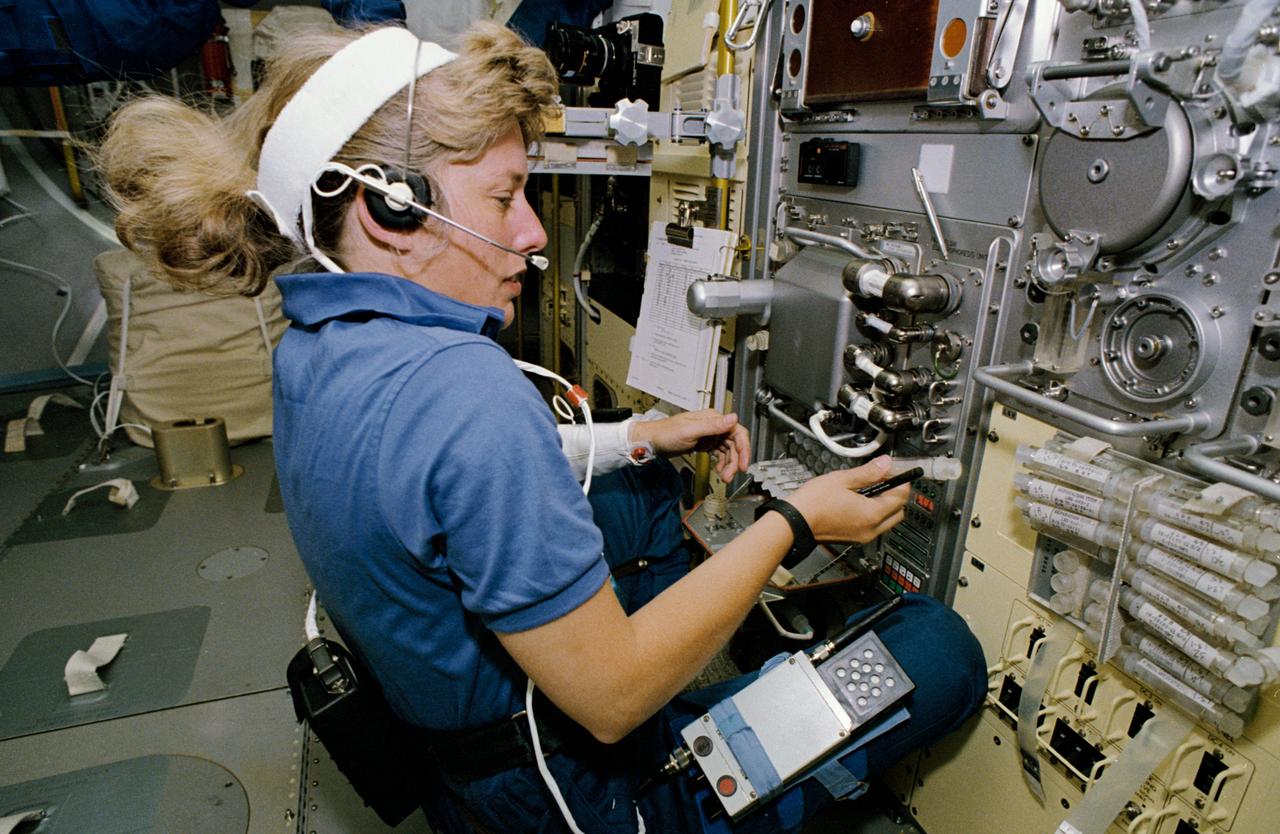
STS047-03-024 (12 - 20 Sept 1992) --- Astronaut N. Jan Davis, mission specialist, talks to ground controllers as she works with the Free Flow Electrophoresis Unit (FFEU) in the Science Module of the Earth-orbiting Space Shuttle Endeavour. Davis joined five other NASA astronauts and a Japanese payload specialist for eight days of scientific research onboard Endeavour.
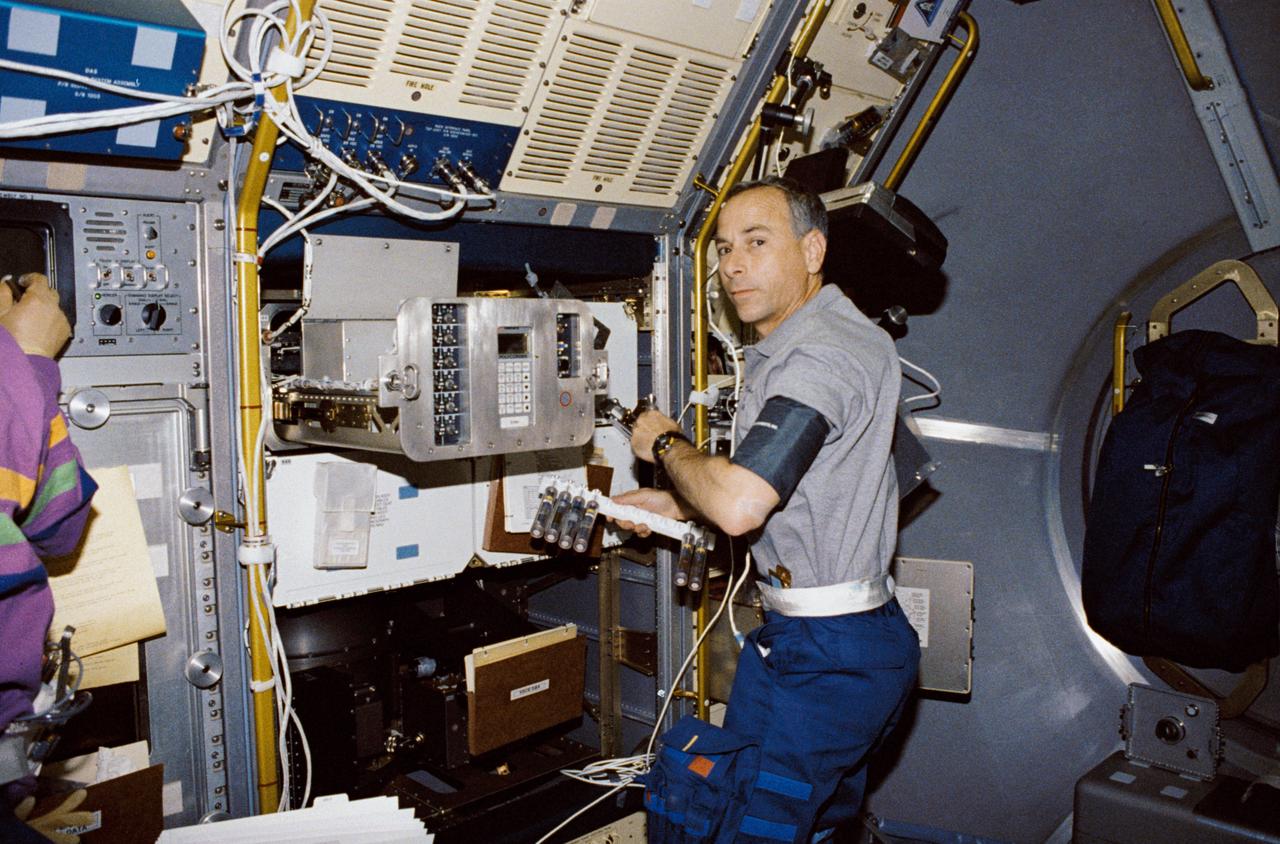
STS050-301-001 (25 June-9July 1992) --- Astronaut Carl J. Meade, mission specialist, works with the Generic Bioprocessing Apparatus in the science module aboard the Earth-orbiting Space Shuttle Columbia. Payload specialist Eugene H. Trinh is partially visible (left), monitoring an experiment in the Drop Physics Module (DPM). The two joined four other astronauts and a second scientist from the private sector for 14-days of scientific data-gathering.
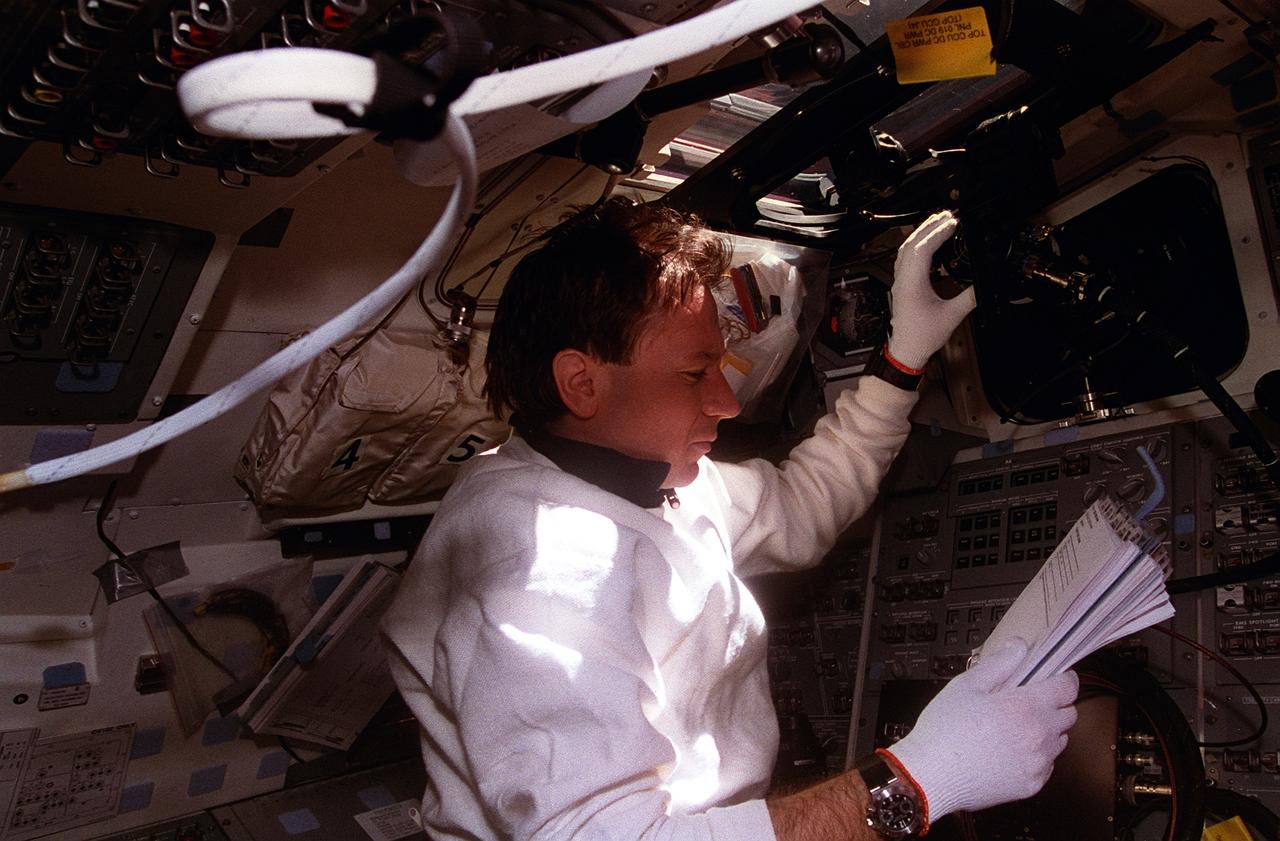
STS075-310-002 (22 Feb.-9 March 1996) --- Astronaut Maurizio Cheli, STS-75 mission specialist, works with the Tether Optical Phenomenon System (TOPS) on the flight deck of the Earth-orbiting Space Shuttle Columbia. Cheli, representing the European Space Agency (ESA), joined four other astronauts and an international payload specialists for 16 days of scientific research in Earth-orbit.
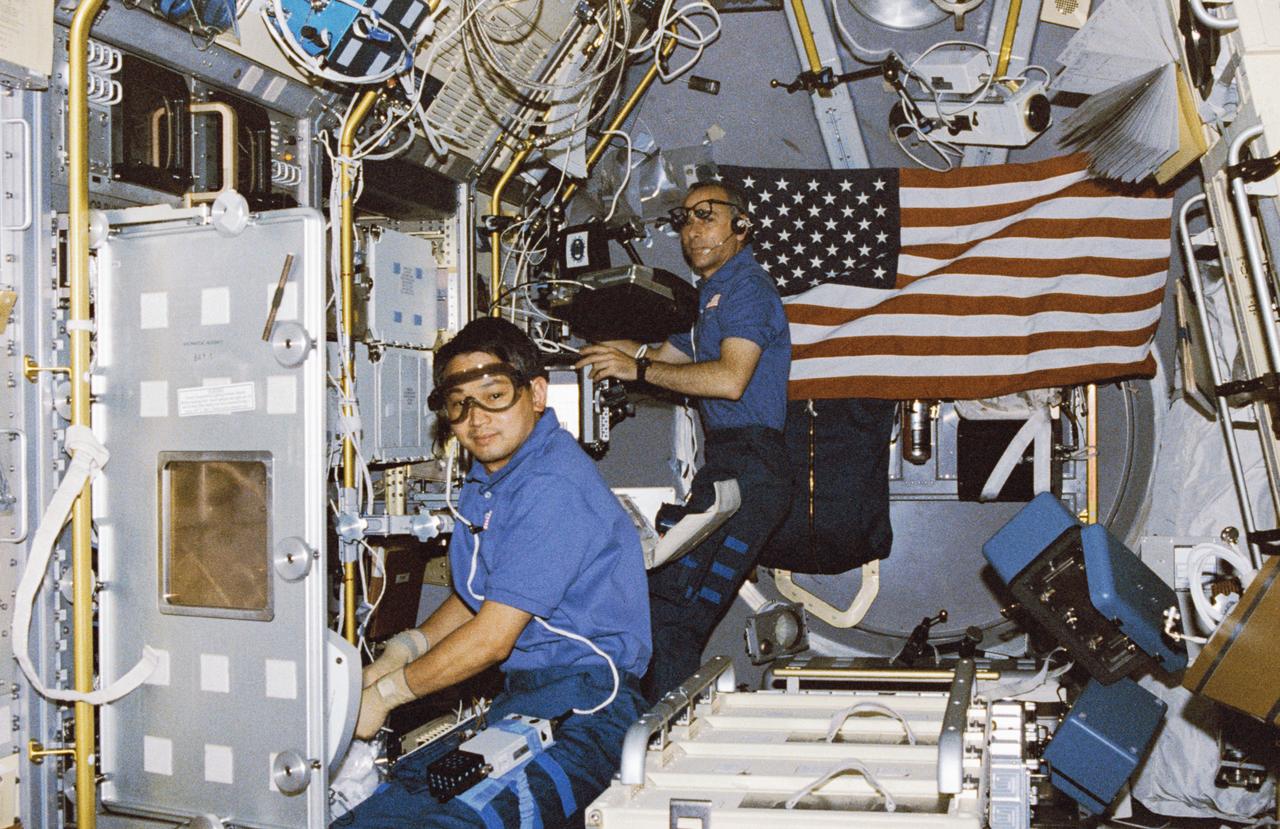
STS050-255-027 (25 June-9 July 1992) --- Payload specialist Eugene H. Trinh, left, and astronaut Carl J. Meade, mission specialist, go to work in the U.S. Microgravity Laboratory (USML-1) science module as the blue shift crew takes over from the red. Trinh is working with an experiment at the Drop Physics Module (DPM) and Meade prepares to monitor an experiment in the Glovebox. The two joined four other astronauts and a second scientist from the private sector for 14-days of scientific data-gathering.
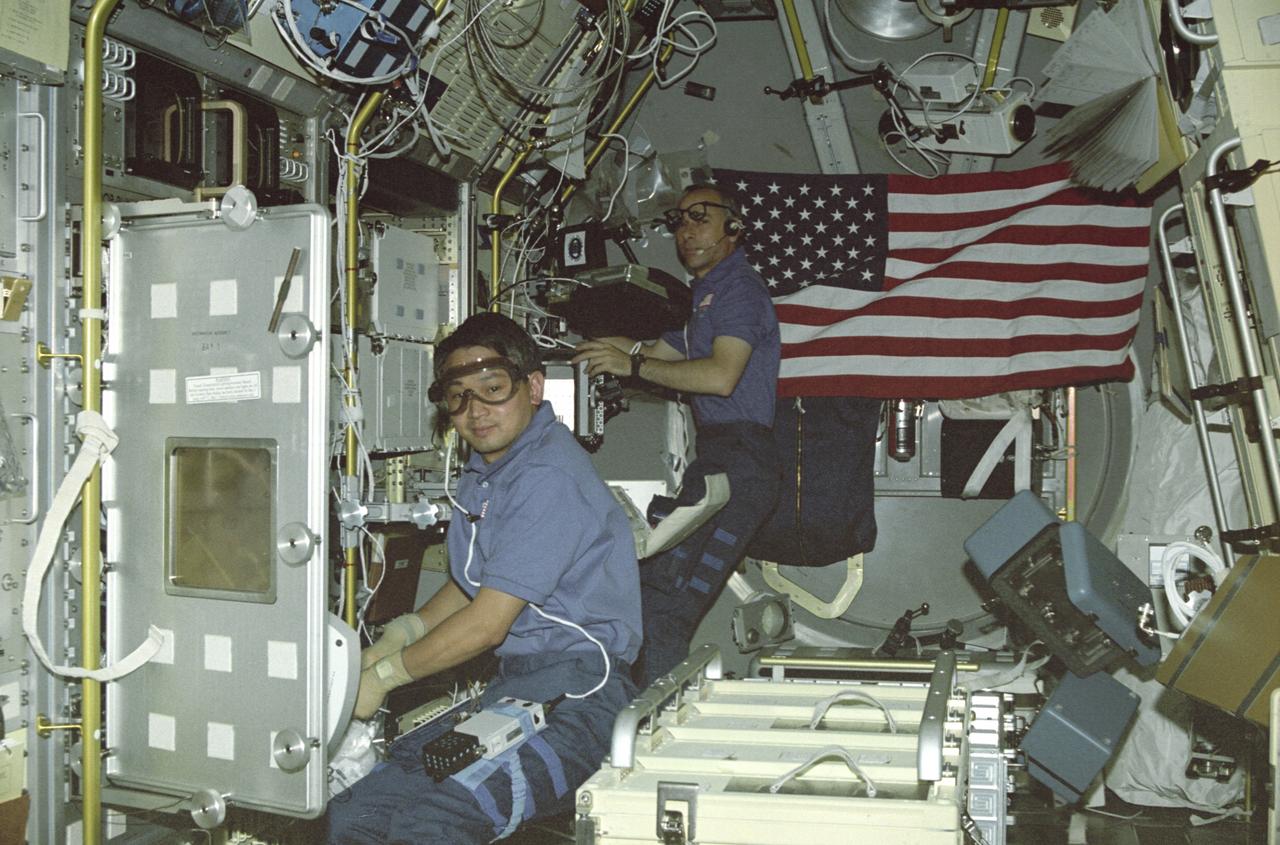
In this photograph, astronaut Eugene Trinh, a payload specialist for this mission, is working at the Drop Physics Module (DPM), and mission specialist Carl Meade is working on the experiment at the Glovebox inside the first United States Microgravity Laboratory (USML-1) Science Module. The USML-1 was one of NASA's missions dedicated to scientific investigations in a microgravity environment inside the Spacelab module. Investigations aboard the USML-1 included: materials science, fluid dynamics, biotechnology (crystal growth), and combustion science. The DPM is dedicated to the detailed study of the dynamics of fluid drops in microgravity. The Glovebox offers experimenters new capabilities and technologies in microgravity with a clean working space and minimizes contamination risks to both Spacelab and experiment samples. Payload specialists are professional scientists or engineers whose only assignment on a space flight is to carry out scientific and technological experiments. Their specific training for a space flight is usually limited to a short period of learning how to live and work in weightlessness. Mission Specialists are both professional scientists and career astronauts. Thus they are a link or bridge between the other crew members, and combine the functions of resident maintenance engineers, in-space counterparts of flight engineers in aircraft, and fully qualified scientists. The USML-1 flew aboard the STS-50 mission on June 1992, and was managed by the Marshall Space Flight Center.
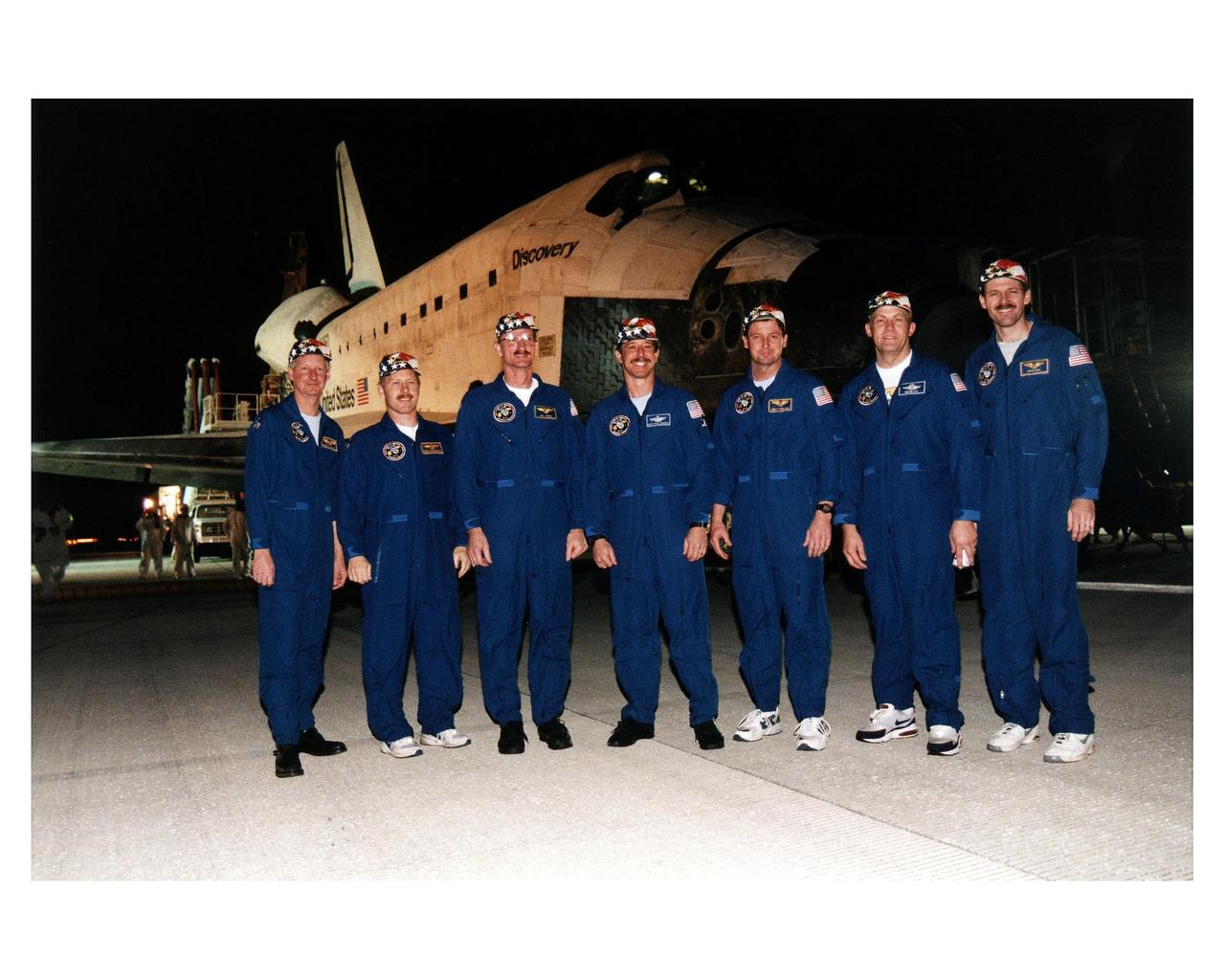
The STS-82 crew stands in front of the Space Shuttle Discovery after landing at KSC's Shuttle Landing Facility on Runway 15 to conclude a 10-day mission to service the orbiting Hubble Space Telescope (HST). Crew members are (from left to right) Mission Specialist Steven A. Hawley, Mission Commander Kenneth D. Bowersox, Mission Specialist Joseph R. "Joe" Tanner, Pilot Scott J. "Doc" Horowitz, Mission Specialist Gregory J. Harbaugh, Payload Commander Mark C. Lee and Mission Specialist Steven L. Smith. STS-82 is the ninth Shuttle nighttime landing, and the fourth nighttime landing at KSC. The seven-member crew performed a record-tying five back-to-back extravehicular activities (EVAs) or spacewalks to service the telescope, which has been in orbit for nearly seven years. Two new scientific instruments were installed, replacing two outdated instruments. Five spacewalks also were performed on the first servicing mission, STS-61, in December 1993. Only four spacewalks were scheduled for STS-82, but a fifth one was added during the flight to install several thermal blankets over some aging insulation covering three HST compartments containing key data processing, electronics and scientific instrument telemetry packages. STS-82 was the 82nd Space Shuttle flight and the second mission of 1997
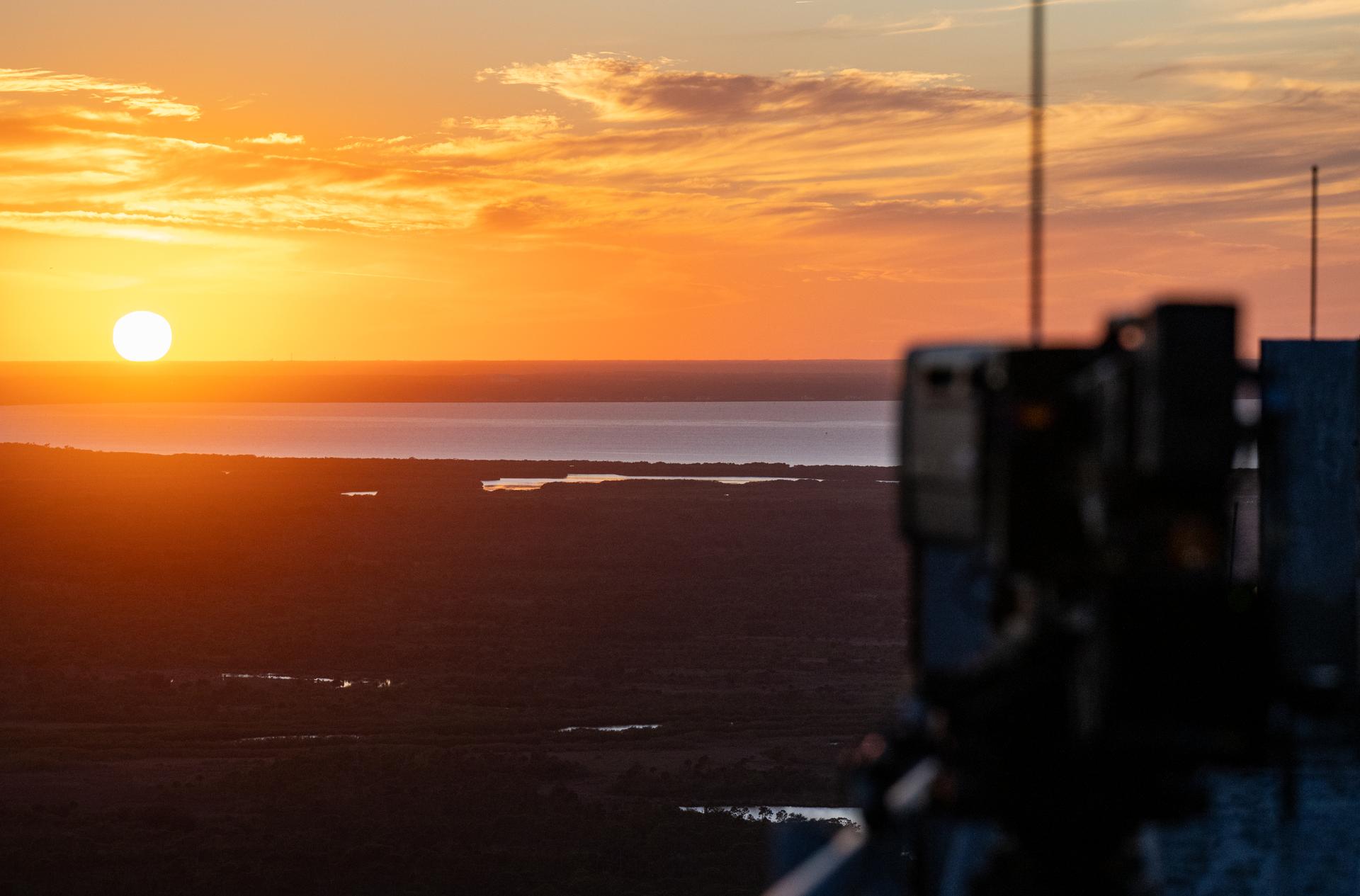
The sun sets as Artemis II crewmembers NASA astronauts Reid Wiseman, commander; Victor Glover, pilot; Christina Koch, mission specialist; and CSA (Canadian Space Agency) astronaut Jeremy Hansen, mission specialist participate in the Artemis II countdown demonstration test, Saturday, Dec. 20, 2025, at NASA’s Kennedy Space Center in Florida. For this operation, the Artemis II crew and launch teams are simulating the launch day timeline including suit-up, walkout, and spacecraft ingress and egress. Through the Artemis campaign, NASA will send astronauts to explore the Moon for scientific discovery, economic benefits, and to build the foundation for the first crewed missions to Mars, for the benefit of all. Photo Credit: (NASA/Keegan Barber)
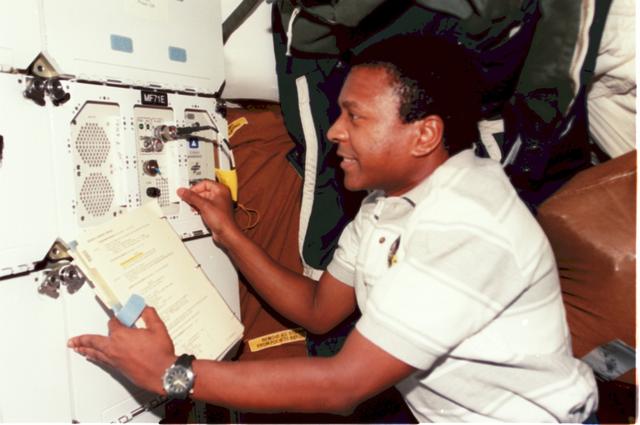
STS089-357-003 (22-31 Jan. 1998) --- Astronaut Michael P. Anderson, STS-89 mission specialist, works on Endeavour's middeck with the Closed Equilibrated Biological Aquatic System (CEBAS), an experiment developed by the German Space Agency (DLR). The CEBAS mini-module, a middeck habitat for aquatic organisms, enables scientists to conduct various gravity-related experiments in the areas of zoology, botany and developmental biology, as well as in interdisciplinary areas such as scientific research on artificial ecosystems. Photo credit: NASA
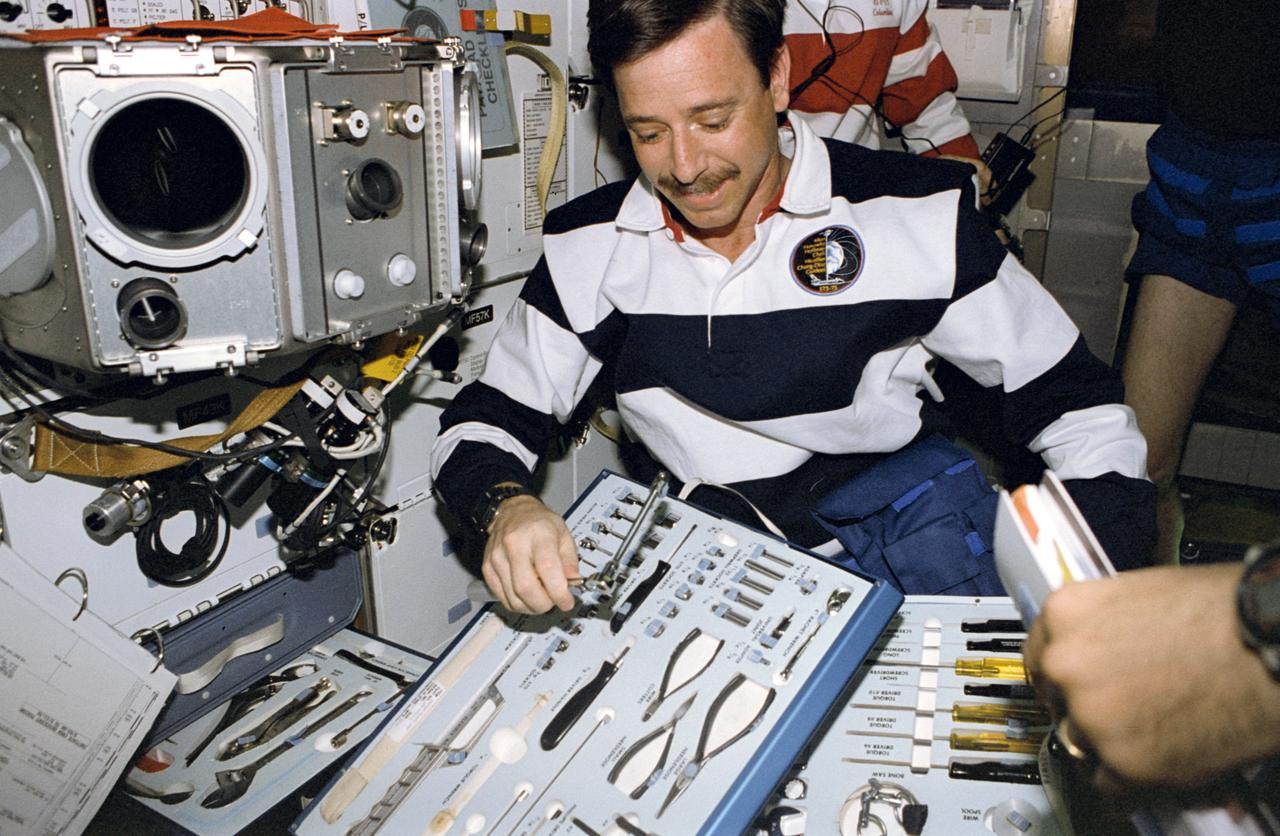
STS075-333-032 (22 Feb.- 9 March 1996) --- Astronaut Scott J. Horowitz, pilot, looks over tools he may use to perform an Inflight Maintenance (IFM) chore on the mid deck of the Earth-orbiting space shuttle Columbia. The glovebox facility is at upper left. Horowitz joined four other astronauts and an international payload specialist for 16 days of scientific research in Earth-orbit.
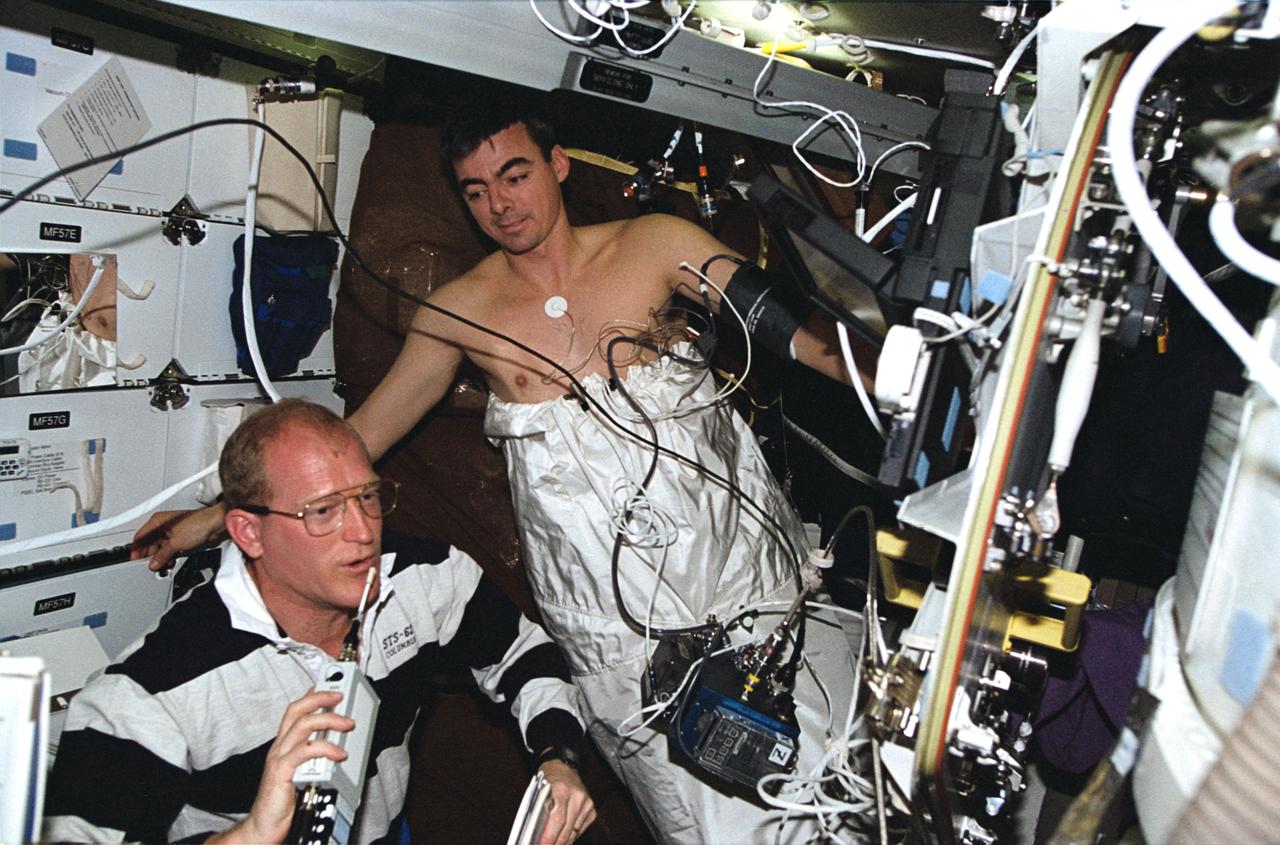
STS062-01-032 (4-14 March 1994) --- Astronaut Charles D. (Sam) Gemar, mission specialist, talks to ground controllers while assisting astronaut Andrew M. Allen with a "soak" in the Lower Body Negative Pressure (LBNP) apparatus on Columbia's middeck. The pair was joined by three other veteran NASA astronauts for 14-days of scientific research aboard the Space Shuttle Columbia in earth orbit.
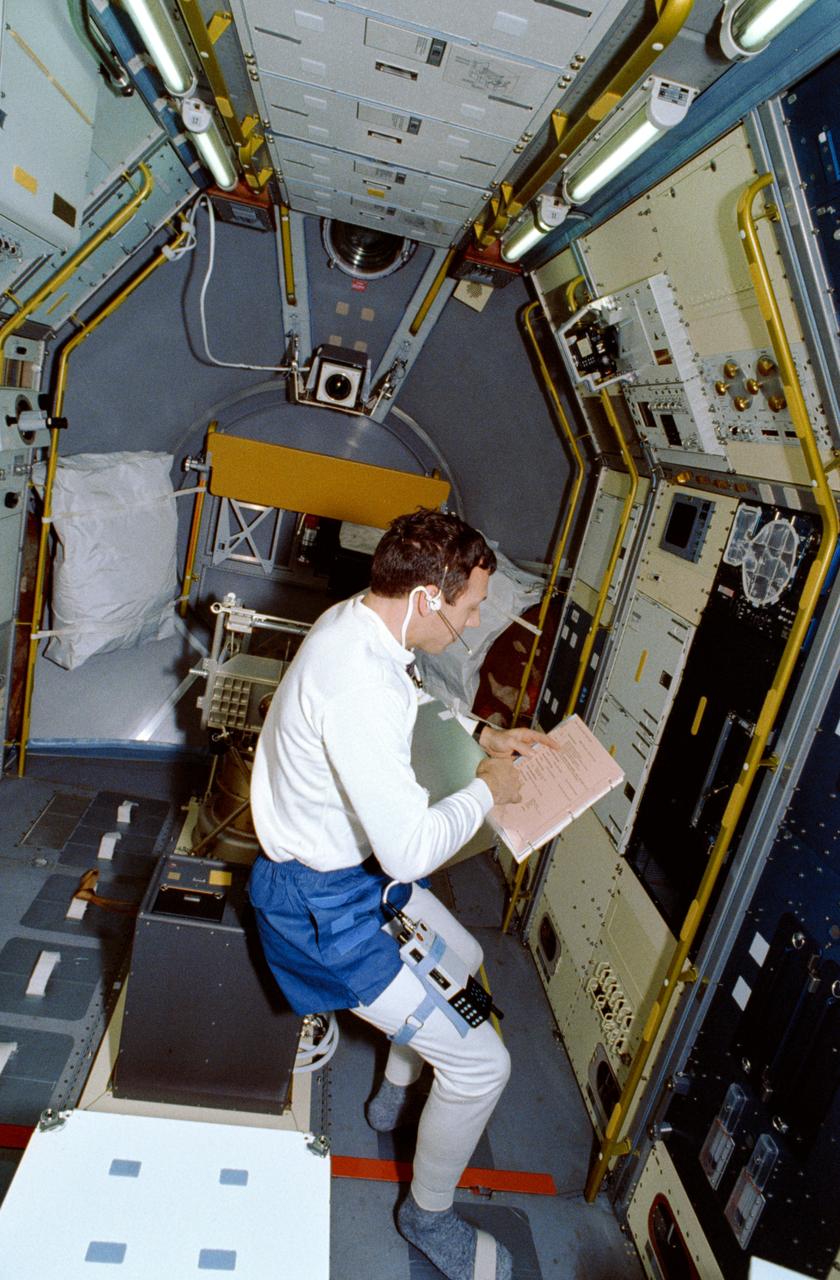
STS042-17-001 (22 Jan 1992) --- Astronaut David C. Hilmers, mission specialist, looks over a checklist at the Johnson Space Center refrigerator/freezer, in which perishable samples are stowed. The view gives an overall perspective of the science module -- heavily utilized for eight-days of scientific research supporting the International Microgravity Laboratory (IML-1) -- in Discovery's cargo bay.
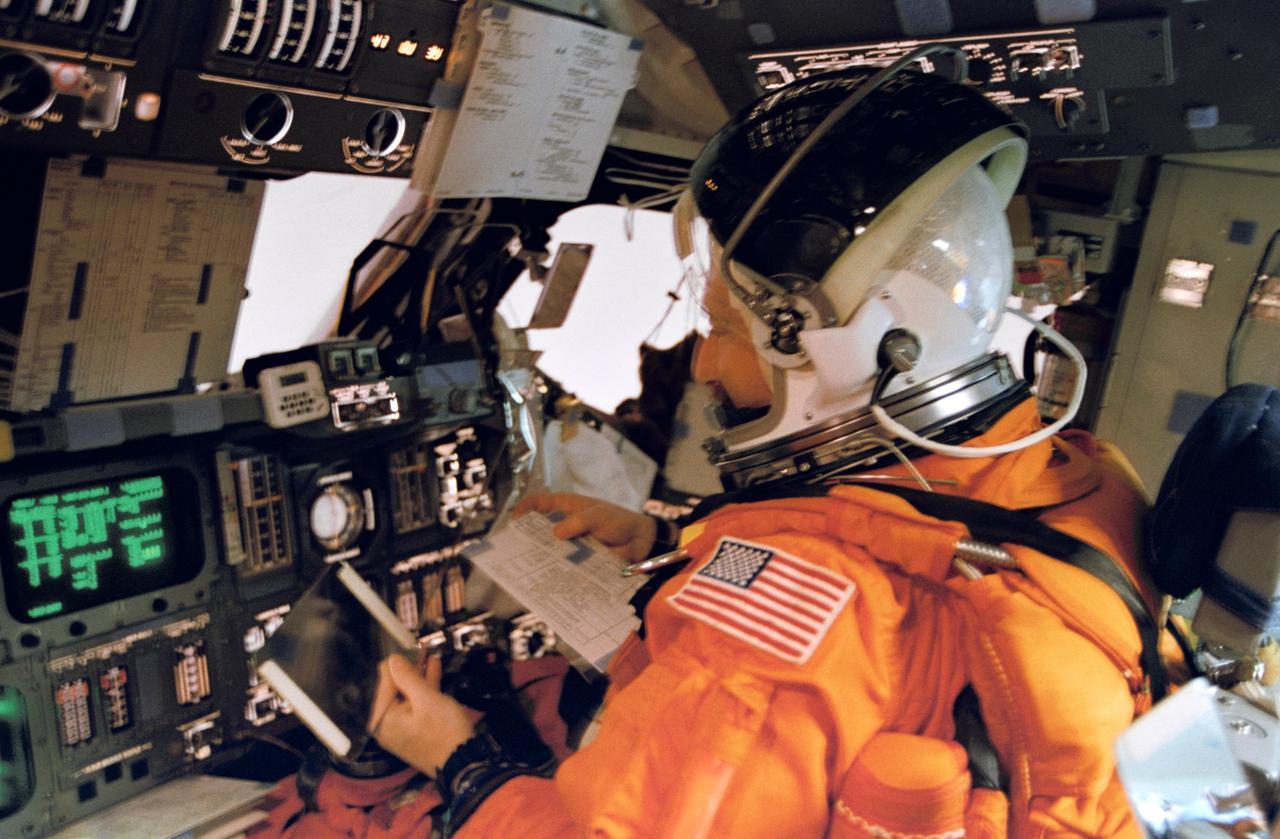
STS075-322-012 (9 March 1996) --- Seated at the pilot's station, astronaut Scott J. Horowitz uses a mirror to monitor the vertical stabilizer and the aft cargo bay area during the entry phase of the flight. Horowitz, pilot, joined four other astronauts and an international payload specialist for 16 days of scientific research in Earth-orbit.
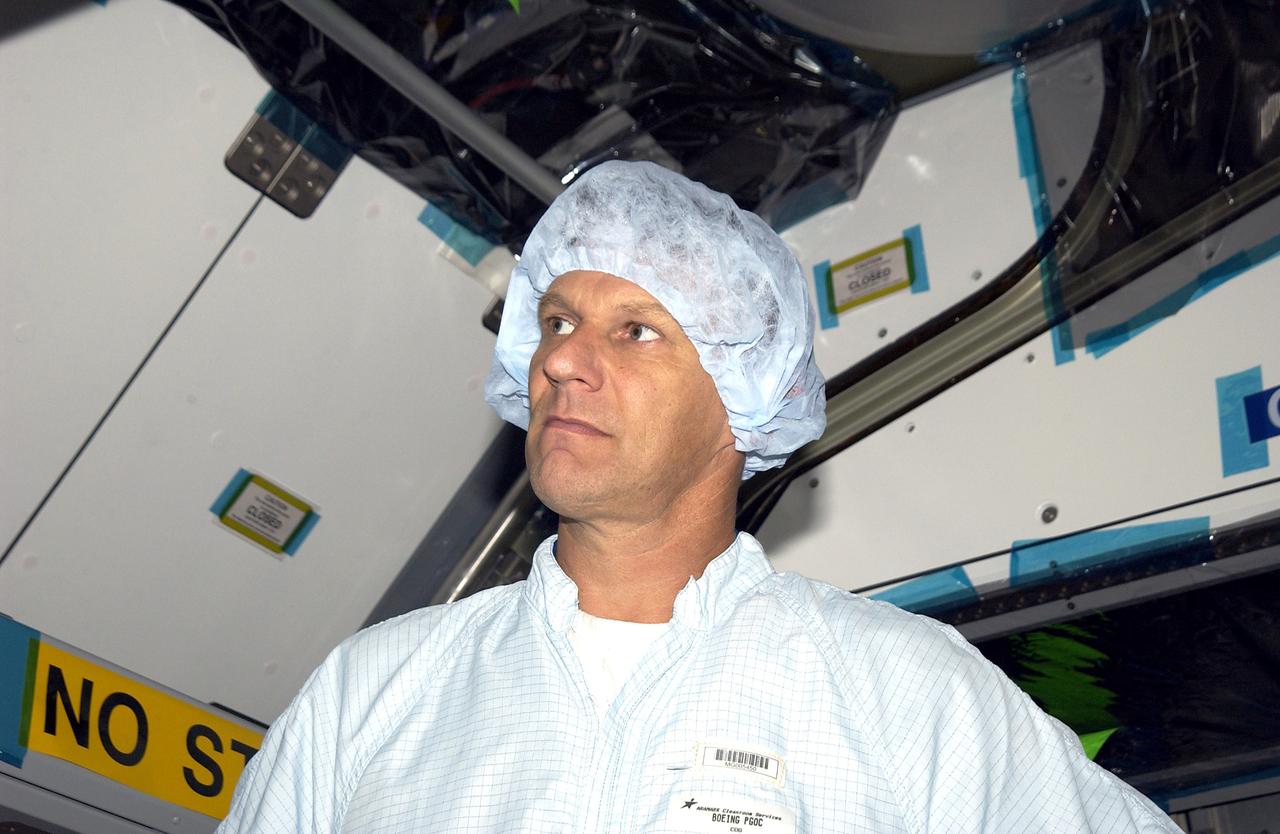
KENNEDY SPACE CENTER, FLA. - In the Space Station Processing Facility, STS-120 Mission Specialist Piers Sellers looks over the Japanese Experiment Module (JEM) Pressurized Module. Known as Kibo, the JEM consists of six components: two research facilities -- the Pressurized Module and Exposed Facility; a Logistics Module attached to each of them; a Remote Manipulator System; and an Inter-Orbit Communication System unit. Kibo also has a scientific airlock through which experiments are transferred and exposed to the external environment of space. The various components of JEM will be assembled in space over the course of three Space Shuttle missions. The STS-120 mission will deliver the second of three Station connecting modules, Node 2, which attaches to the end of U.S. Lab. It will provide attach locations for the Japanese laboratory, European laboratory, the Centrifuge Accommodation Module and later Multi-Purpose Logistics Modules. The addition of Node 2 will complete the U.S. core of the International Space Station.

KENNEDY SPACE CENTER, FLA. - STS-120 Mission Specialists Piers Sellers and Michael Foreman look at the Japanese Experiment Module (JEM) Pressurized Module located in the Space Station Processing Facility. Known as Kibo, the JEM consists of six components: two research facilities -- the Pressurized Module and Exposed Facility; a Logistics Module attached to each of them; a Remote Manipulator System; and an Inter-Orbit Communication System unit. Kibo also has a scientific airlock through which experiments are transferred and exposed to the external environment of space. The various components of JEM will be assembled in space over the course of three Space Shuttle missions. The STS-120 mission will deliver the second of three Station connecting modules, Node 2, which attaches to the end of U.S. Lab. It will provide attach locations for the JEM, European laboratory, the Centrifuge Accommodation Module and later Multi-Purpose Logistics Modules. The addition of Node 2 will complete the U.S. core of the International Space Station.
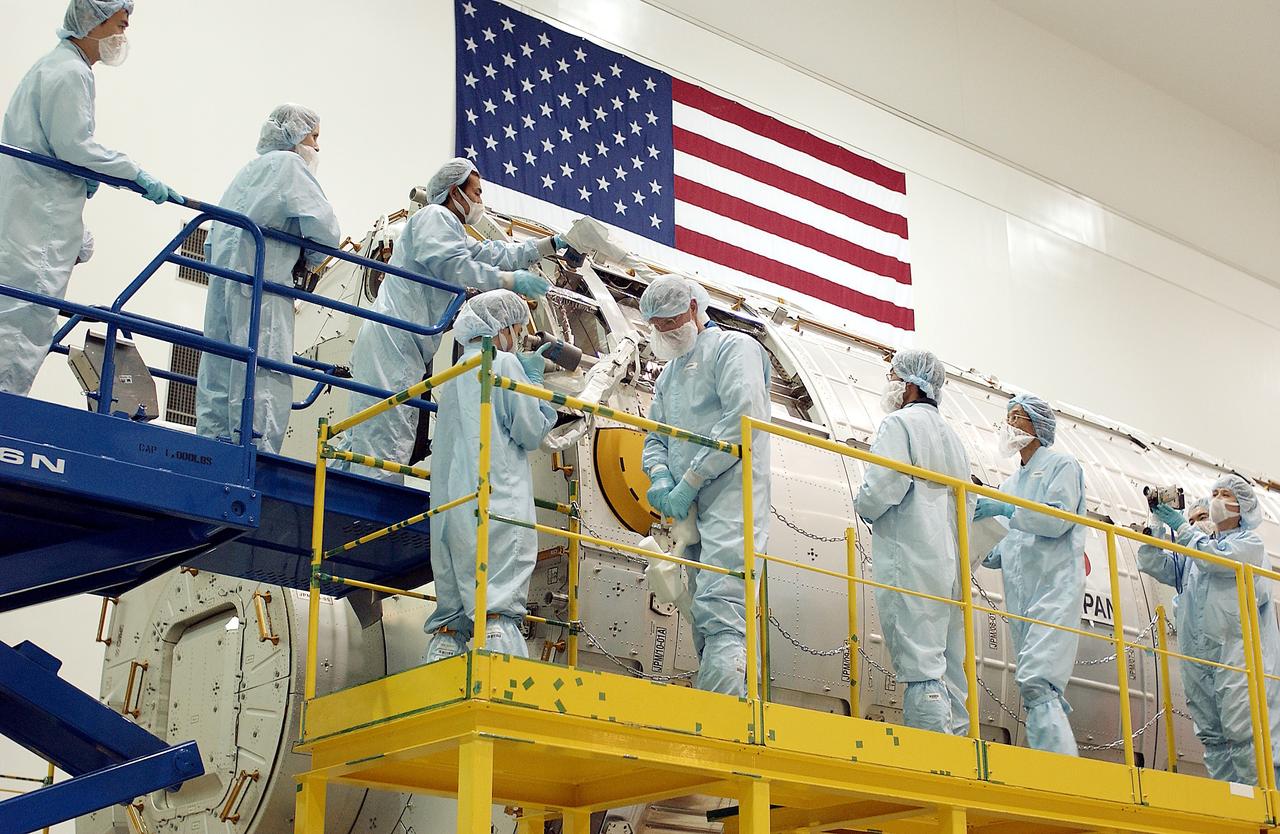
KENNEDY SPACE CENTER, FLA. - In the Space Station Processing Facility, STS-115 Mission Specialist Joseph Tanner (second from left, foreground) works with technicians to learn more about the Japanese Experiment Module (JEM), known as Kibo. The JEM consists of six components: two research facilities - the Pressurized Module and the Exposed Facility; a Logistics Module attached to each of them; a Remote Manipulator System; and an Inter-Orbit Communication System unit. Kibo also has a scientific airlock through which experiments are transferred and exposed to the external environment of space. The various components of JEM will be assembled in space over the course of three Space Shuttle missions. Equipment familiarization is a routine part of astronaut training and launch preparations.
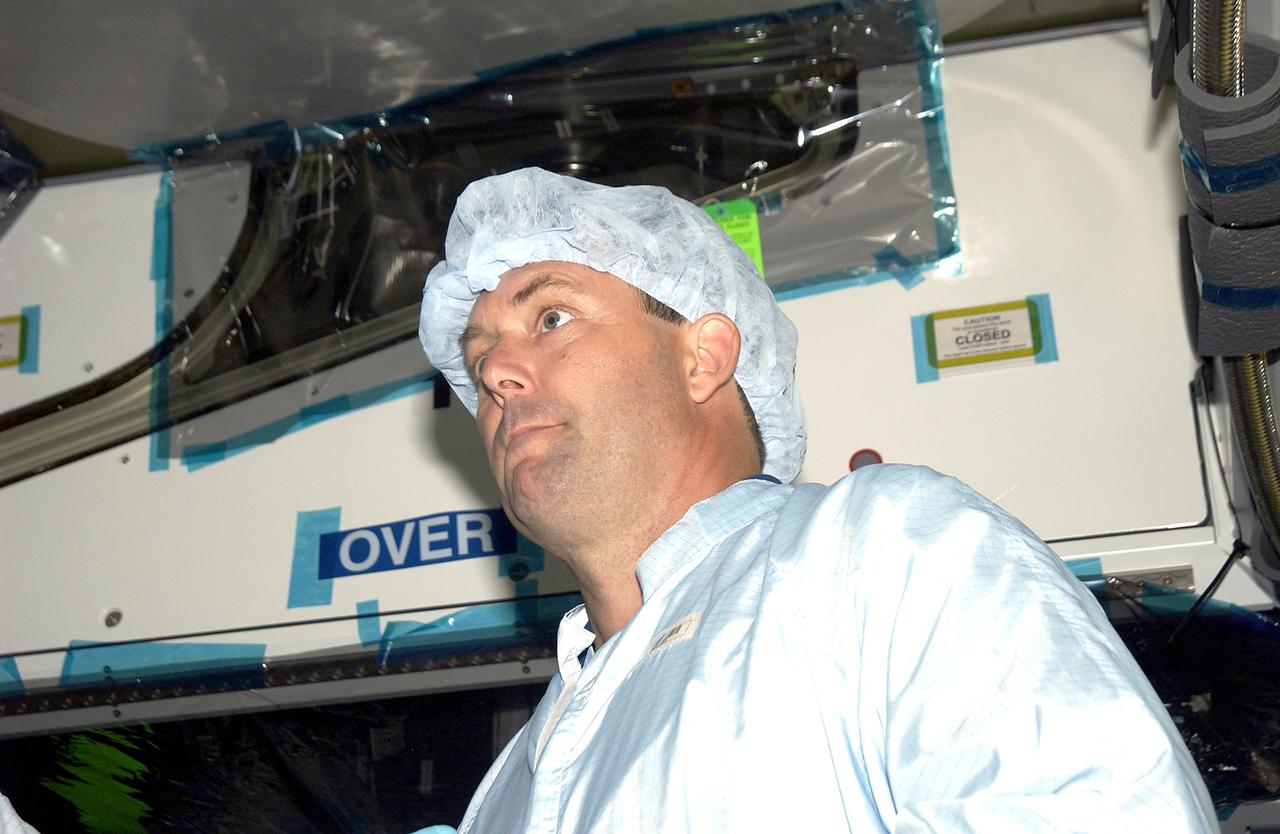
KENNEDY SPACE CENTER, FLA. - In the Space Station Processing Facility, STS-120 Mission Specialist Michael Foreman looks over the Japanese Experiment Module (JEM) Pressurized Module. Known as Kibo, the JEM consists of six components: two research facilities -- the Pressurized Module and Exposed Facility; a Logistics Module attached to each of them; a Remote Manipulator System; and an Inter-Orbit Communication System unit. Kibo also has a scientific airlock through which experiments are transferred and exposed to the external environment of space. The various components of JEM will be assembled in space over the course of three Space Shuttle missions. The STS-120 mission will deliver the second of three Station connecting modules, Node 2, which attaches to the end of U.S. Lab. It will provide attach locations for the Japanese laboratory, European laboratory, the Centrifuge Accommodation Module and later Multi-Purpose Logistics Modules. The addition of Node 2 will complete the U.S. core of the International Space Station.
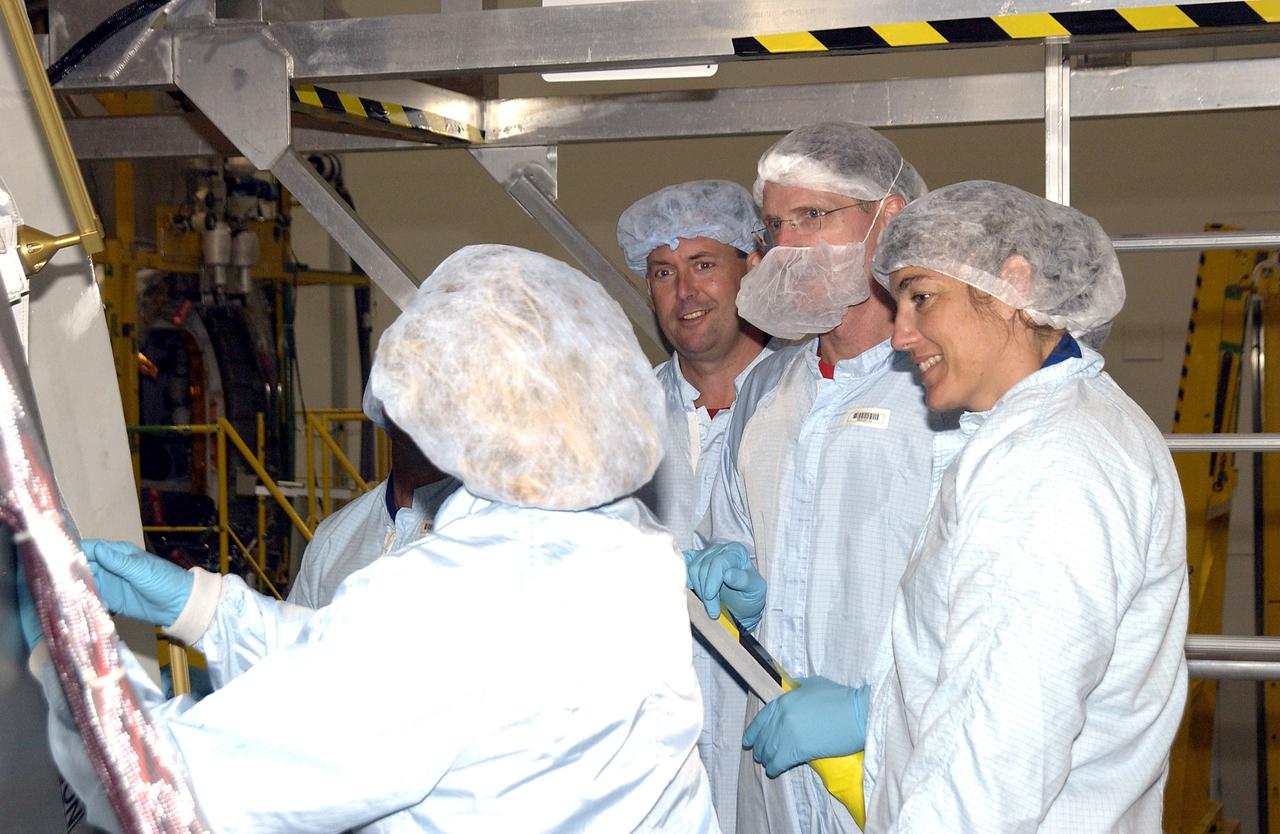
KENNEDY SPACE CENTER, FLA. - In the Space Station Processing Facility, STS-120 Mission Specialists Michael Foreman (third from right) and STS-115 Mission Specialists Joseph Tanner (second from right) and Heidemarie Stefanyshyn-Piper (right) look over the Japanese Experiment Module (JEM) Pressurized Module. Known as Kibo, the JEM consists of six components: two research facilities -- the Pressurized Module and Exposed Facility; a Logistics Module attached to each of them; a Remote Manipulator System; and an Inter-Orbit Communication System unit. Kibo also has a scientific airlock through which experiments are transferred and exposed to the external environment of space. The various components of JEM will be assembled in space over the course of three Space Shuttle missions. STS-115 will deliver the second port truss segment, the P3/P4 Truss, to attach to the first port truss segment, the P1 Truss, as well as deploy solar array sets 2A and 4A.. STS-120 will deliver the second of three Station connecting modules, Node 2, which attaches to the end of U.S. Lab. It will provide attach locations for the Japanese laboratory, European laboratory, the Centrifuge Accommodation Module and later Multi-Purpose Logistics Modules. The addition of Node 2 will complete the U.S. core of the International Space Station.
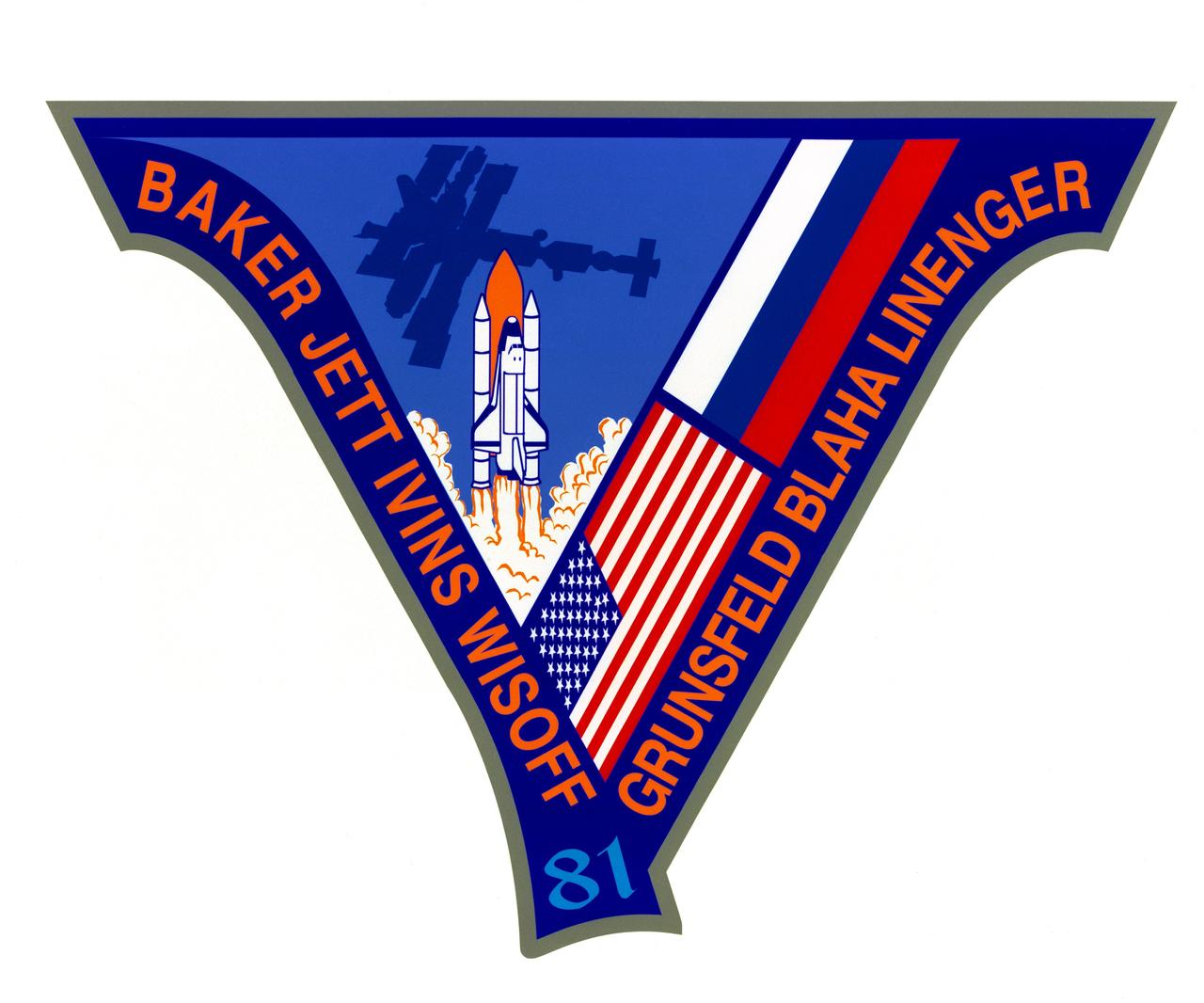
STS081-S-001 (June 1996) --- The STS-81 crew patch for the fifth Shuttle-Mir docking mission, is shaped to represent the Roman numeral V. The space shuttle Atlantis, OV-104, is launching toward a rendezvous with Russia?s Mir Space Station, silhouetted in the background. Atlantis and the STS-81 crew will spend several days docked to Mir during which time astronaut Jerry M. Linenger (NASA-Mir 4) will replace astronaut John E. Blaha (NASA-Mir 3) as the United States crew member onboard Mir. Scientific experiments and logistics will also be transferred between Atlantis and Mir. The United States and Russian flags are depicted along with the names of the shuttle crew members: Michael A. Baker, commander; Brent W. Jett, pilot; Peter J. K.(Jeff) Wisoff, mission specialist 1; John W. Grunsfeld, mission specialist 2; Marsha S. Ivins, mission specialist 3; Linenger; mission specialist 4; and Blaha, mission specialist 5. The NASA insignia design for space shuttle flights is reserved for use by the astronauts and for other official use as the NASA Administrator may authorize. Public availability has been approved only in the forms of illustrations by the various news media. When and if there is any change in this policy, which is not anticipated, the change will be publicly announced. Photo credit: NASA
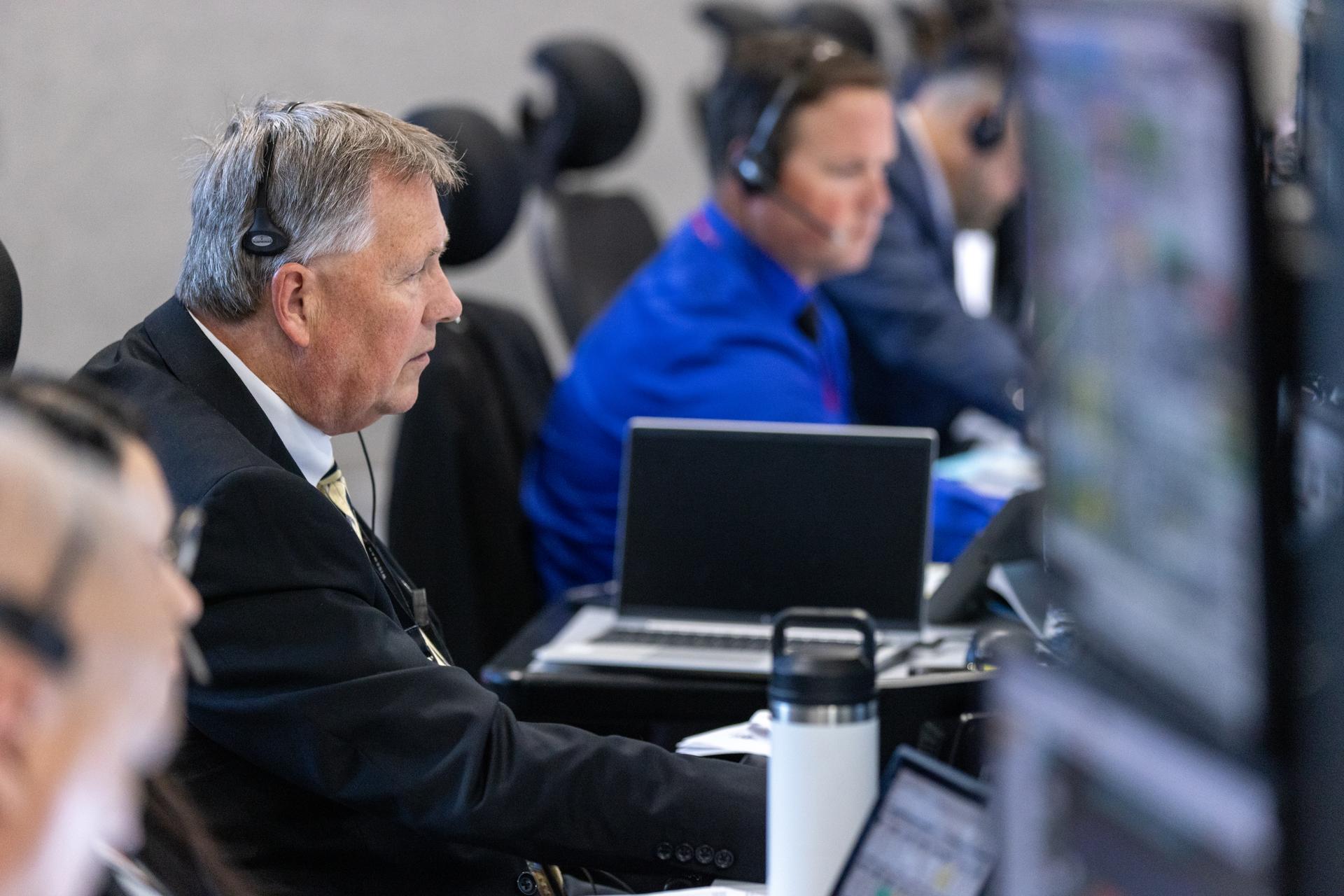
From left, Jeff Spaulding, senior NASA test director, and Wes Mosedale, NASA test director, monitor the progress of a countdown demonstration test with Artemis II crewmembers NASA astronauts Reid Wiseman, commander; Victor Glover, pilot; Christina Koch, mission specialist; and CSA (Canadian Space Agency) astronaut Jeremy Hansen, mission specialist onboard their Orion spacecraft from Firing Room 1 of the Rocco A. Petrone Launch Control Center, Saturday, Dec. 20, 2025, at NASA’s Kennedy Space Center in Florida. For this operation, the Artemis II crew and launch teams are simulating the launch day timeline including suit-up, walkout, and spacecraft ingress and egress. Through the Artemis campaign, NASA will send astronauts to explore the Moon for scientific discovery, economic benefits, and to build the foundation for the first crewed missions to Mars, for the benefit of all.
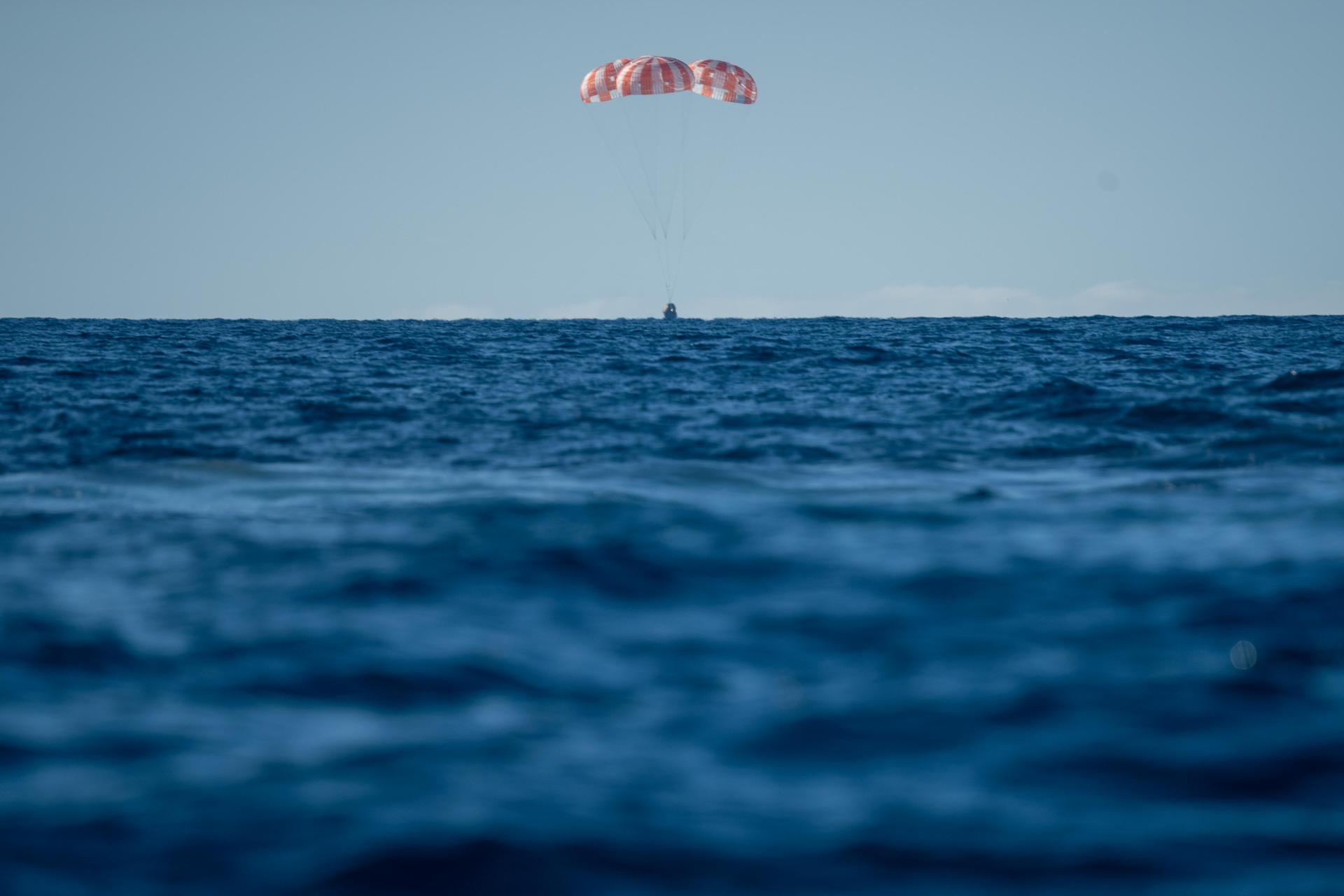
NASA's Orion spacecraft carrying Artemis II Commander Reid Wiseman, Pilot Victor Glover, and Mission Specialist Christina Koch from NASA, along with Mission Specialist Jeremy Hansen from the CSA (Canadian Space Agency), splashes down in the Pacific Ocean near San Diego, California, at 5:07 p.m. PDT, (8:07 p.m. EDT) on Friday, April 10, 2026. The Artemis II test flight launched on Wednesday, April 1, from NASA’s Kennedy Space Center in Florida to begin its 10-day journey around the Moon for scientific discovery, economic benefits, and to build on our foundation for the first crewed missions to Mars. NASA’s Landing and Recovery team and the U.S. military are coordinating efforts to extract the Artemis II crew from the Orion spacecraft.
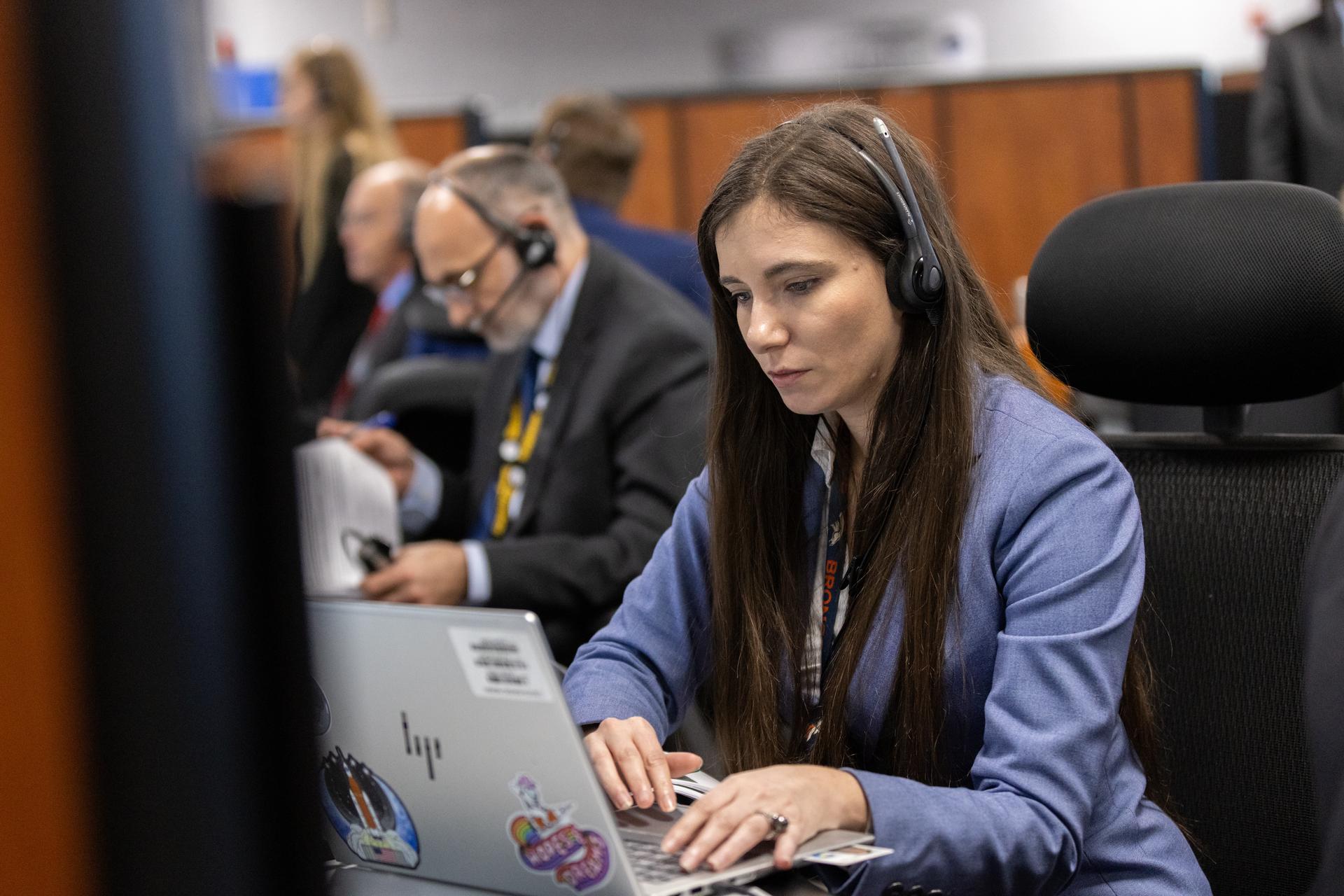
Teams monitor the progress of a countdown demonstration test with Artemis II crewmembers NASA astronauts Reid Wiseman, commander; Victor Glover, pilot; Christina Koch, mission specialist; and CSA (Canadian Space Agency) astronaut Jeremy Hansen, mission specialist onboard their Orion spacecraft from Firing Room 1 of the Rocco A. Petrone Launch Control Center, Saturday, Dec. 20, 2025, at NASA’s Kennedy Space Center in Florida. For this operation, the Artemis II crew and launch teams are simulating the launch day timeline including suit-up, walkout, and spacecraft ingress and egress. Through the Artemis campaign, NASA will send astronauts to explore the Moon for scientific discovery, economic benefits, and to build the foundation for the first crewed missions to Mars, for the benefit of all.
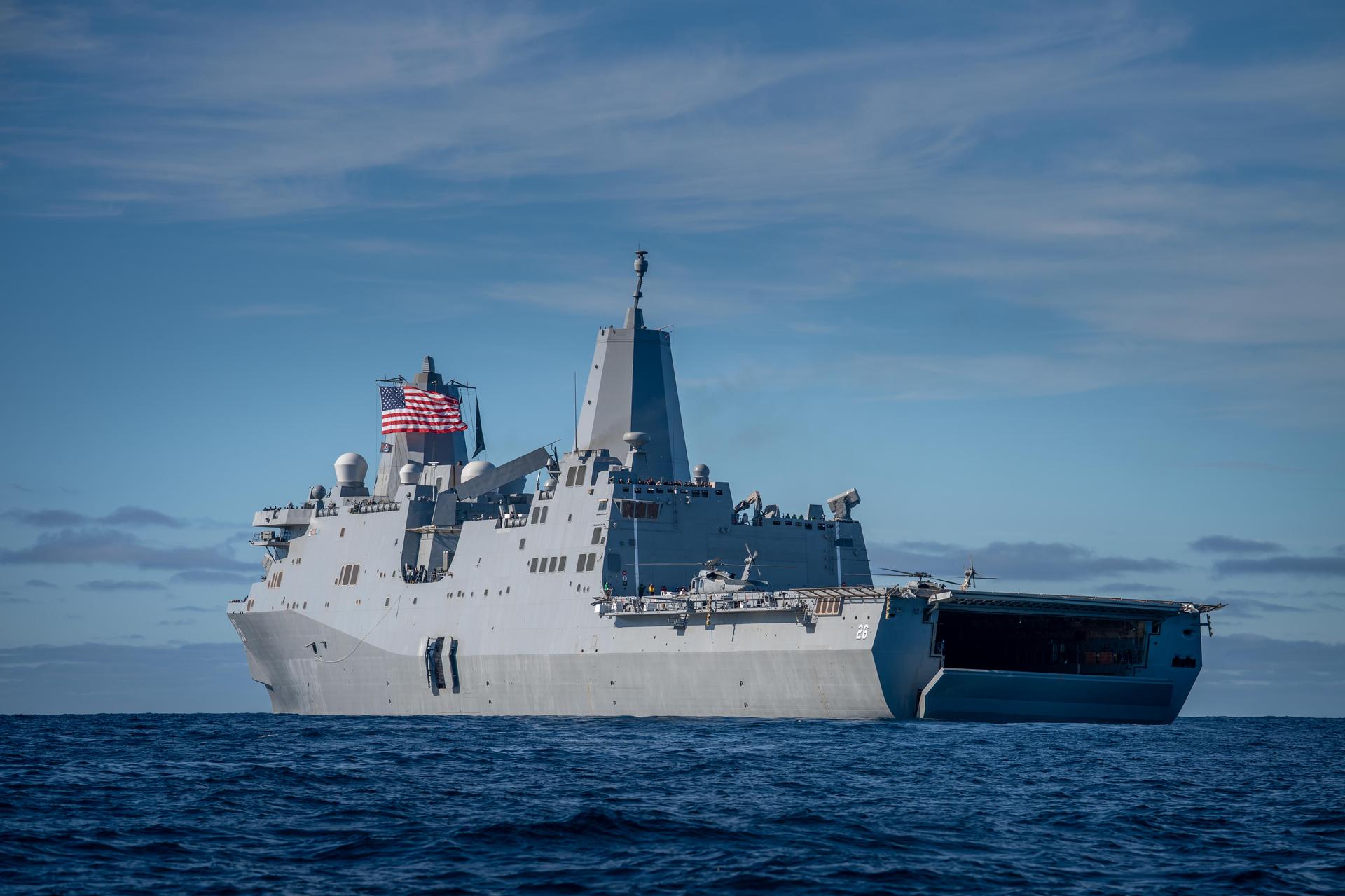
USS John P. Murtha approaches NASA's Orion spacecraft carrying Artemis II Commander Reid Wiseman, Pilot Victor Glover, and Mission Specialist Christina Koch from NASA, along with Mission Specialist Jeremy Hansen from the CSA (Canadian Space Agency), following splashdown in the Pacific Ocean near San Diego, California, at 5:07 p.m. PDT, (8:07 p.m. EDT) on Friday, April 10, 2026. The Artemis II test flight launched on Wednesday, April 1, from NASA’s Kennedy Space Center in Florida to begin its 10-day journey around the Moon for scientific discovery, economic benefits, and to build on our foundation for the first crewed missions to Mars. NASA’s Landing and Recovery team and the U.S. military are coordinating efforts to extract the Artemis II crew from the Orion spacecraft.

Teams monitor the progress of a Countdown Demonstration Test with Artemis II crewmembers NASA astronauts Reid Wiseman, commander; Victor Glover, pilot; Christina Koch, mission specialist; and CSA (Canadian Space Agency) astronaut Jeremy Hansen, mission specialist onboard their Orion spacecraft from Firing Room 2 of the Rocco A. Petrone Launch Control Center, Saturday, Dec. 20, 2025, at NASA’s Kennedy Space Center in Florida. For this operation, the Artemis II crew and launch teams are simulating the launch day timeline including suit-up, walkout, and spacecraft ingress and egress. Through the Artemis campaign, NASA will send astronauts to explore the Moon for scientific discovery, economic benefits, and to build the foundation for the first crewed missions to Mars, for the benefit of all. Photo Credit: (NASA/Aubrey Gemignani)
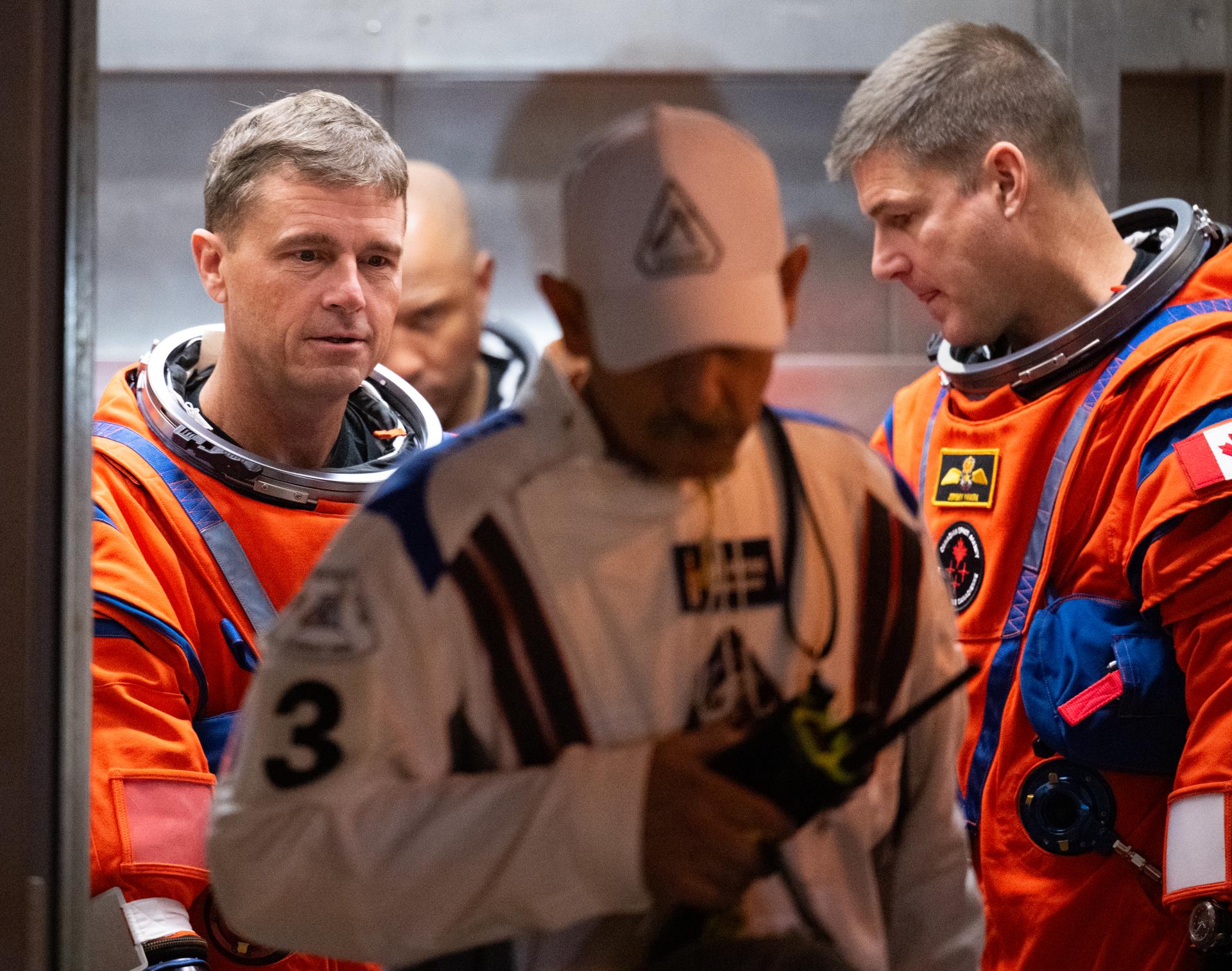
Artemis II crewmembers NASA astronauts Reid Wiseman, commander; and CSA (Canadian Space Agency) astronaut Jeremy Hansen, mission specialist are seen exit the elevator at the 275-foot level of the mobile launcher along with fellow crewmates NASA astronauts Victor Glover, pilot; and Christina Koch, mission specialist, as they prepare to board their Orion spacecraft atop NASA’s Space Launch System rocket during the Artemis II countdown demonstration test, Saturday, Dec. 20, 2025, inside the Vehicle Assembly Building at NASA’s Kennedy Space Center in Florida. For this operation, the Artemis II crew and launch teams are simulating the launch day timeline including suit-up, walkout, and spacecraft ingress and egress. Through the Artemis campaign, NASA will send astronauts to explore the Moon for scientific discovery, economic benefits, and to build the foundation for the first crewed missions to Mars, for the benefit of all. Photo Credit: (NASA/Joel Kowsky)
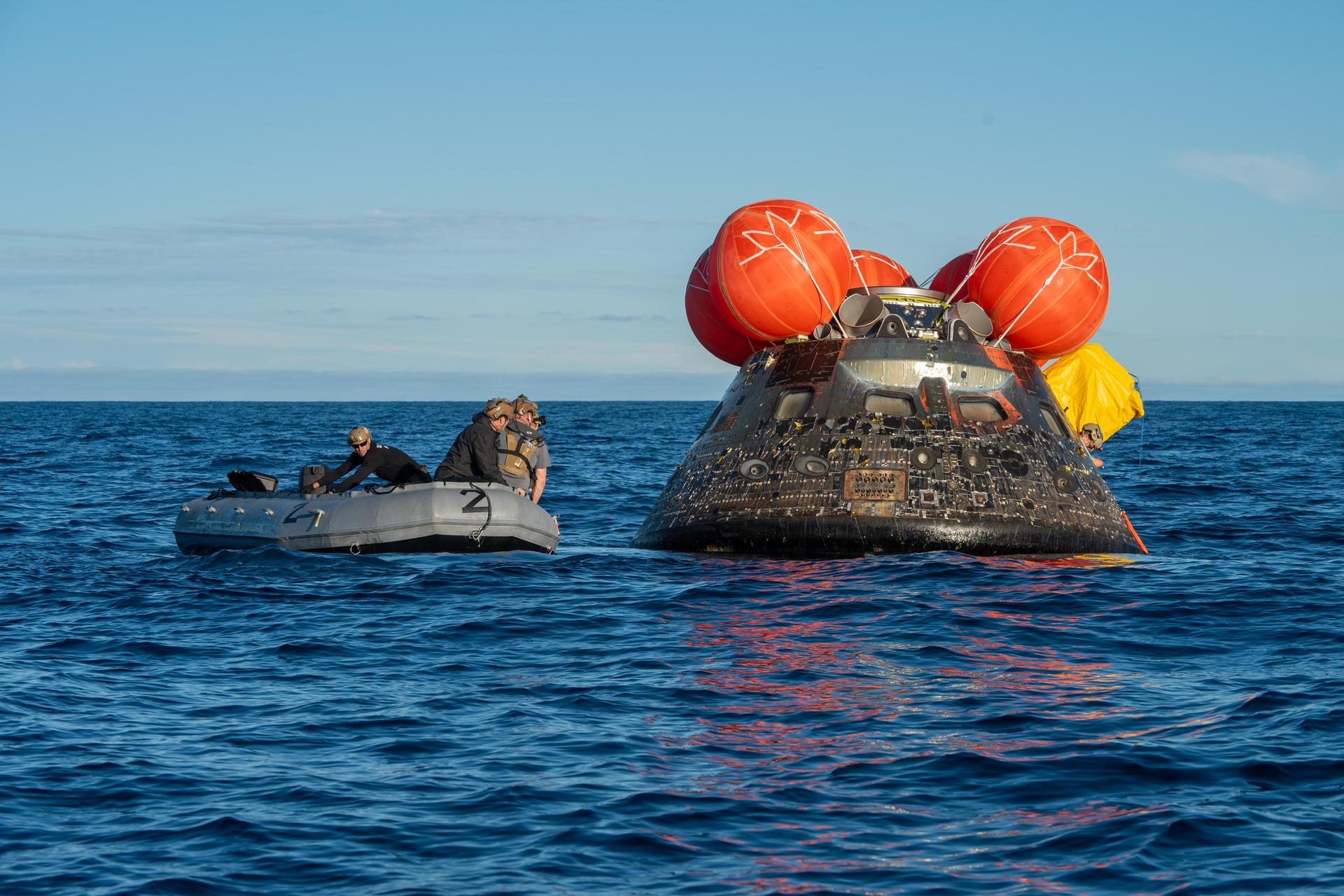
NASA’s Landing and Recovery team, along with U.S. Navy personnel aboard an inflatable raft approach NASA’s Orion spacecraft carrying Artemis II Commander Reid Wiseman, Pilot Victor Glover, and Mission Specialist Christina Koch from NASA, along with Mission Specialist Jeremy Hansen from the CSA (Canadian Space Agency), following splashdown in the Pacific Ocean near San Diego, California, at 5:07 p.m. PDT, (8:07 p.m. EDT) on Friday, April 10, 2026. The Artemis II test flight launched on Wednesday, April 1, from NASA’s Kennedy Space Center in Florida to begin its 10-day journey around the Moon for scientific discovery, economic benefits, and to build on our foundation for the first crewed missions to Mars. NASA’s Landing and Recovery team and the U.S. military are helping the Artemis II crew out of their Orion spacecraft.
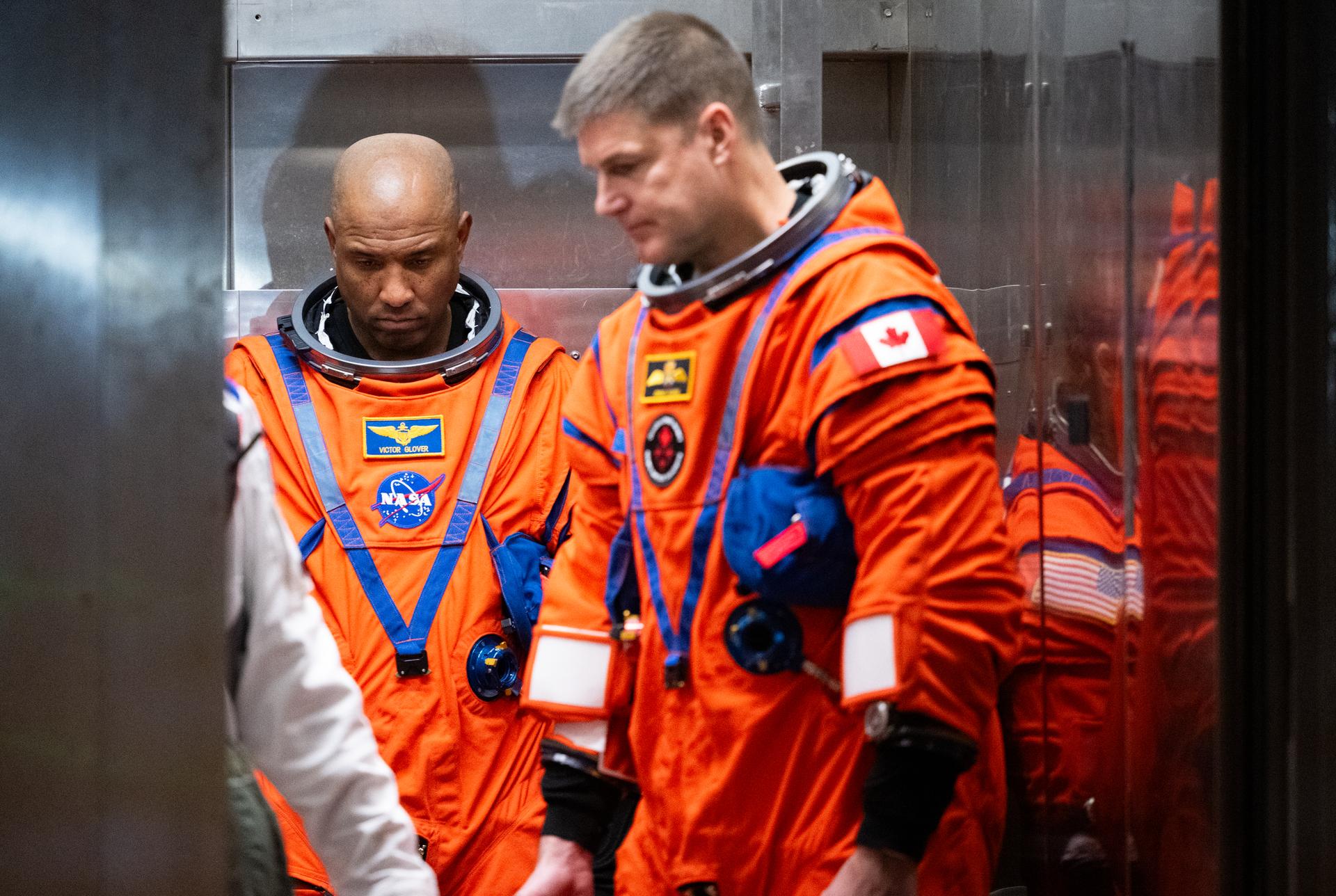
Artemis II crewmember NASA astronaut Victor Glover, pilot; left, and CSA (Canadian Space Agency) astronaut Jeremy Hansen, mission specialist; are seen in the elevator as they arrives with fellow crewmates NASA astronauts Reid Wiseman, commander; and Christina Koch, mission specialist; at the 275-foot level of the mobile launcher as they prepare to board their Orion spacecraft atop NASA’s Space Launch System rocket during the Artemis II countdown demonstration test, Saturday, Dec. 20, 2025, inside the Vehicle Assembly Building at NASA’s Kennedy Space Center in Florida. For this operation, the Artemis II crew and launch teams are simulating the launch day timeline including suit-up, walkout, and spacecraft ingress and egress. Through the Artemis campaign, NASA will send astronauts to explore the Moon for scientific discovery, economic benefits, and to build the foundation for the first crewed missions to Mars, for the benefit of all. Photo Credit: (NASA/Joel Kowsky)

Janet Petro, director of NASA's Kennedy Space Center, monitors the progress of a Countdown Demonstration Test with Artemis II crewmembers NASA astronauts Reid Wiseman, commander; Victor Glover, pilot; Christina Koch, mission specialist; and CSA (Canadian Space Agency) astronaut Jeremy Hansen, mission specialist onboard their Orion spacecraft from Firing Room 2 of the Rocco A. Petrone Launch Control Center, Saturday, Dec. 20, 2025, at NASA’s Kennedy Space Center in Florida. For this operation, the Artemis II crew and launch teams are simulating the launch day timeline including suit-up, walkout, and spacecraft ingress and egress. Through the Artemis campaign, NASA will send astronauts to explore the Moon for scientific discovery, economic benefits, and to build the foundation for the first crewed missions to Mars, for the benefit of all. Photo Credit: (NASA/Aubrey Gemignani)

STS-84 mission specialists and SPACEHAB workers participate in the Crew Equipment Integration Test (CEIT) inside the SPACEHAB Double Module, which will carry more than 6,000 pounds of scientific experiments and logistics to the Russian Space Station Mir. Standing at left is JeanFrancois Clervoy of the European Space Agency. Sitting on the floor, from left, are Edward Tsang Lu of NASA and Elena V. Kondakova of the Russian Space Agency. The test is being conducted at the SPACEHAB Payload Processing Facility in Cape Canaveral. STS-84 will be the sixth docking of the Space Shuttle with Mir. It also will be the third consecutive crew member exchange of U.S. astronauts aboard Mir. STS-84 Mission Specialist C. Michael Foale will replace astronaut Jerry M. Linenger on Mir. Linenger has been on Mir since the STS-81 mission in January. Foale is scheduled to remain on Mir about four months. STS-84 is targeted for a May 15 liftoff
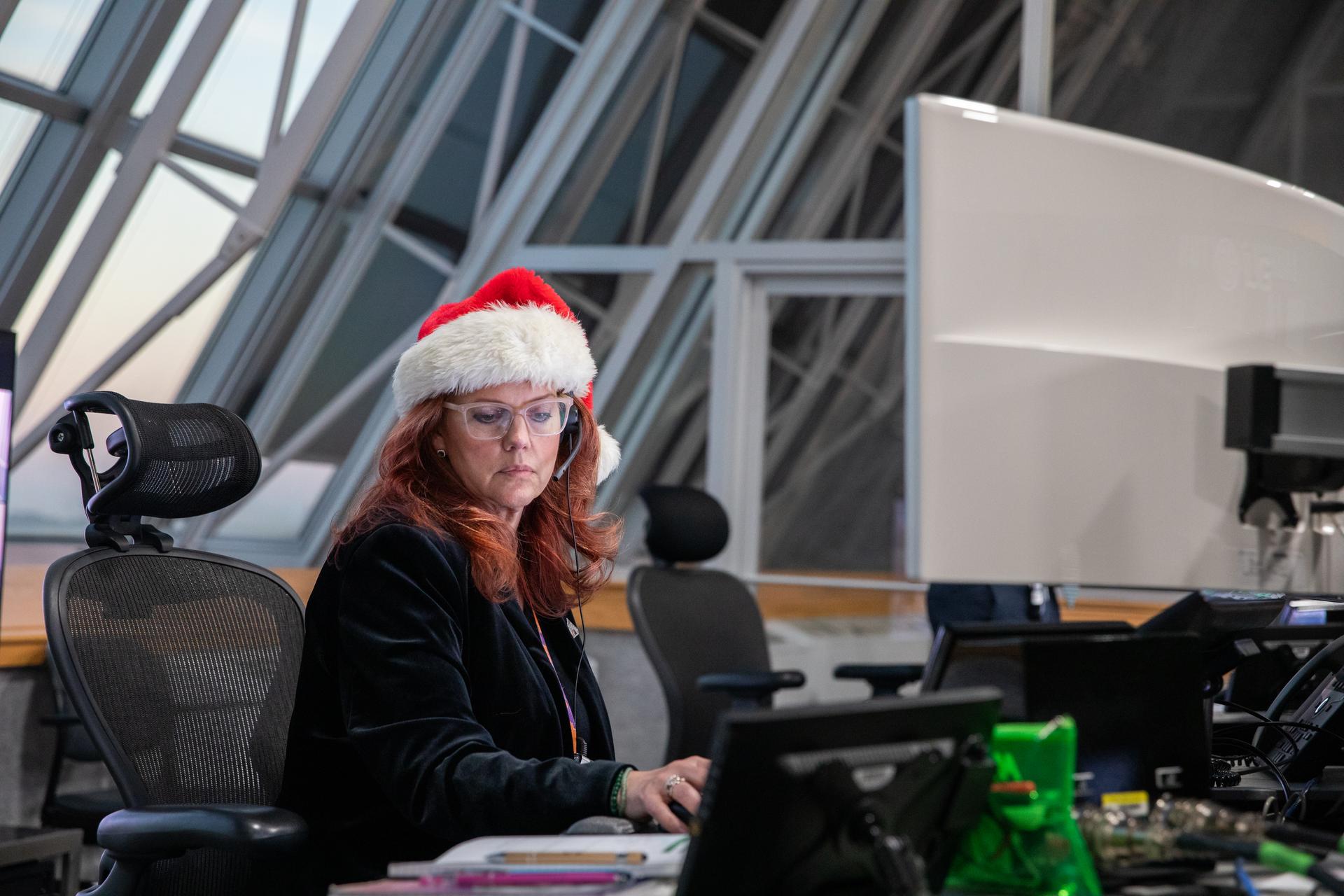
Charlie Blackwell-Thompson, Artemis launch director, monitors the progress of a countdown demonstration test with Artemis II crewmembers NASA astronauts Reid Wiseman, commander; Victor Glover, pilot; Christina Koch, mission specialist; and CSA (Canadian Space Agency) astronaut Jeremy Hansen, mission specialist onboard their Orion spacecraft from Firing Room 1 of the Rocco A. Petrone Launch Control Center, Saturday, Dec. 20, 2025, at NASA’s Kennedy Space Center in Florida. For this operation, the Artemis II crew and launch teams are simulating the launch day timeline including suit-up, walkout, and spacecraft ingress and egress. Through the Artemis campaign, NASA will send astronauts to explore the Moon for scientific discovery, economic benefits, and to build the foundation for the first crewed missions to Mars, for the benefit of all.
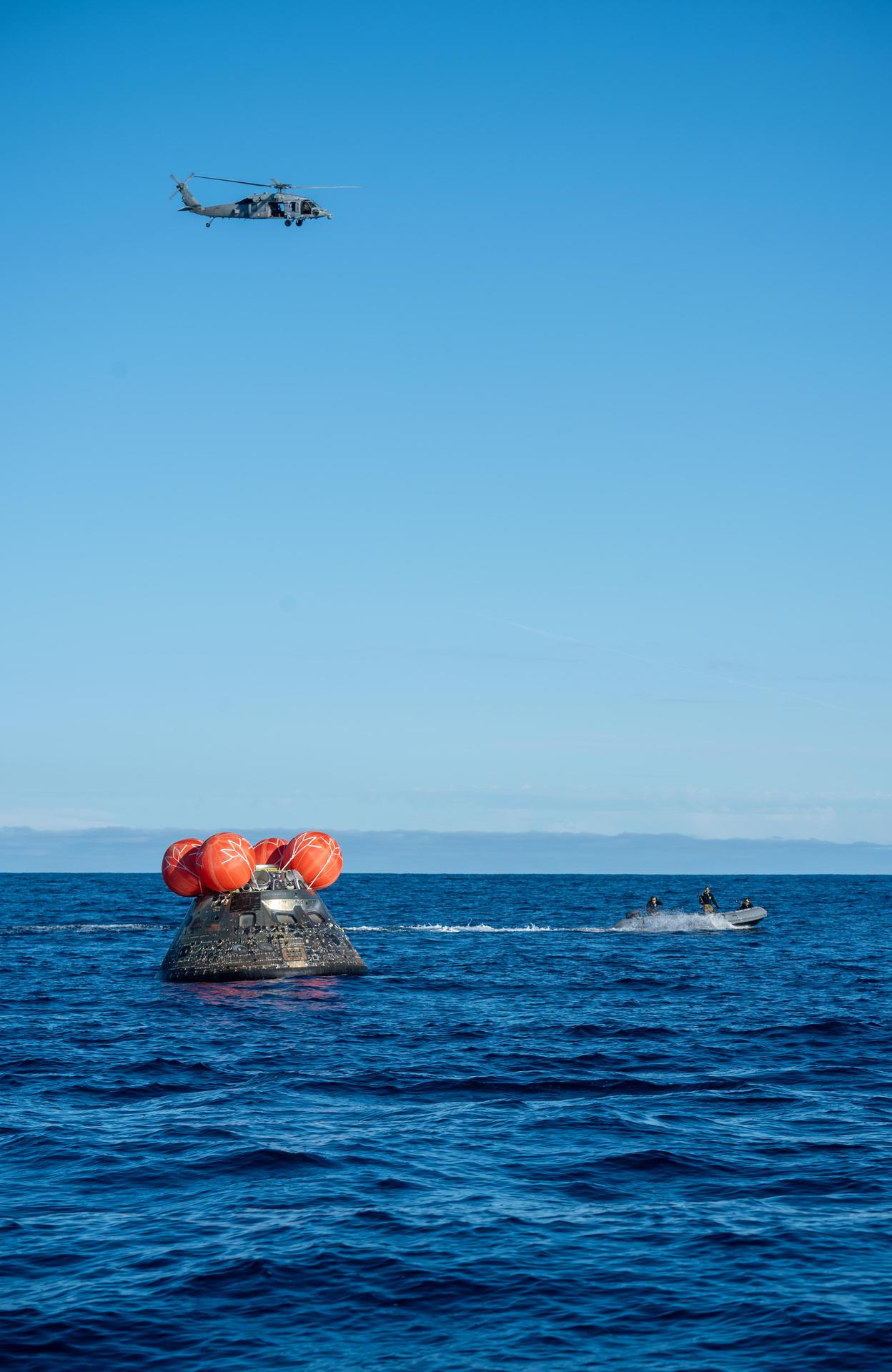
NASA's Orion spacecraft carrying Artemis II Commander Reid Wiseman, Pilot Victor Glover, and Mission Specialist Christina Koch from NASA, along with Mission Specialist Jeremy Hansen from the CSA (Canadian Space Agency), floats in the Pacific Ocean near San Diego, California, at 5:07 p.m. PDT, (8:07 p.m. EDT) on Friday, April 10, 2026. NASA’s Landing and Recovery team and U.S. Navy personnel aboard an inflatable raft and a H60-S Seahawk helicopter hovers above to communicate Orion’s location back to USS John P. Murtha to coordinate efforts to secure the spacecraft in the well deck of the ship. The Artemis II test flight launched on Wednesday, April 1, from NASA’s Kennedy Space Center in Florida to begin its 10-day journey around the Moon for scientific discovery, economic benefits, and to build on our foundation for the first crewed missions to Mars.

Personnel from NASA’s Artemis Landing and Recovery team and U.S. Navy aboard a H60-S Seahawk helicopter retrieve the Artemis II astronauts after splashing down in the Pacific Ocean following their 10-day journey around the Moon for scientific discovery, economic benefits, and to build on our foundation for the first crewed missions to Mars. NASA's Orion spacecraft carrying Artemis II Commander Reid Wiseman, Pilot Victor Glover, and Mission Specialist Christina Koch from NASA, along with Mission Specialist Jeremy Hansen from the CSA (Canadian Space Agency) successfully splashed down in the Pacific Ocean near San Diego, California, at 5:07 p.m. PDT, (8:07 p.m. EDT) on Friday, April 10, 2026.
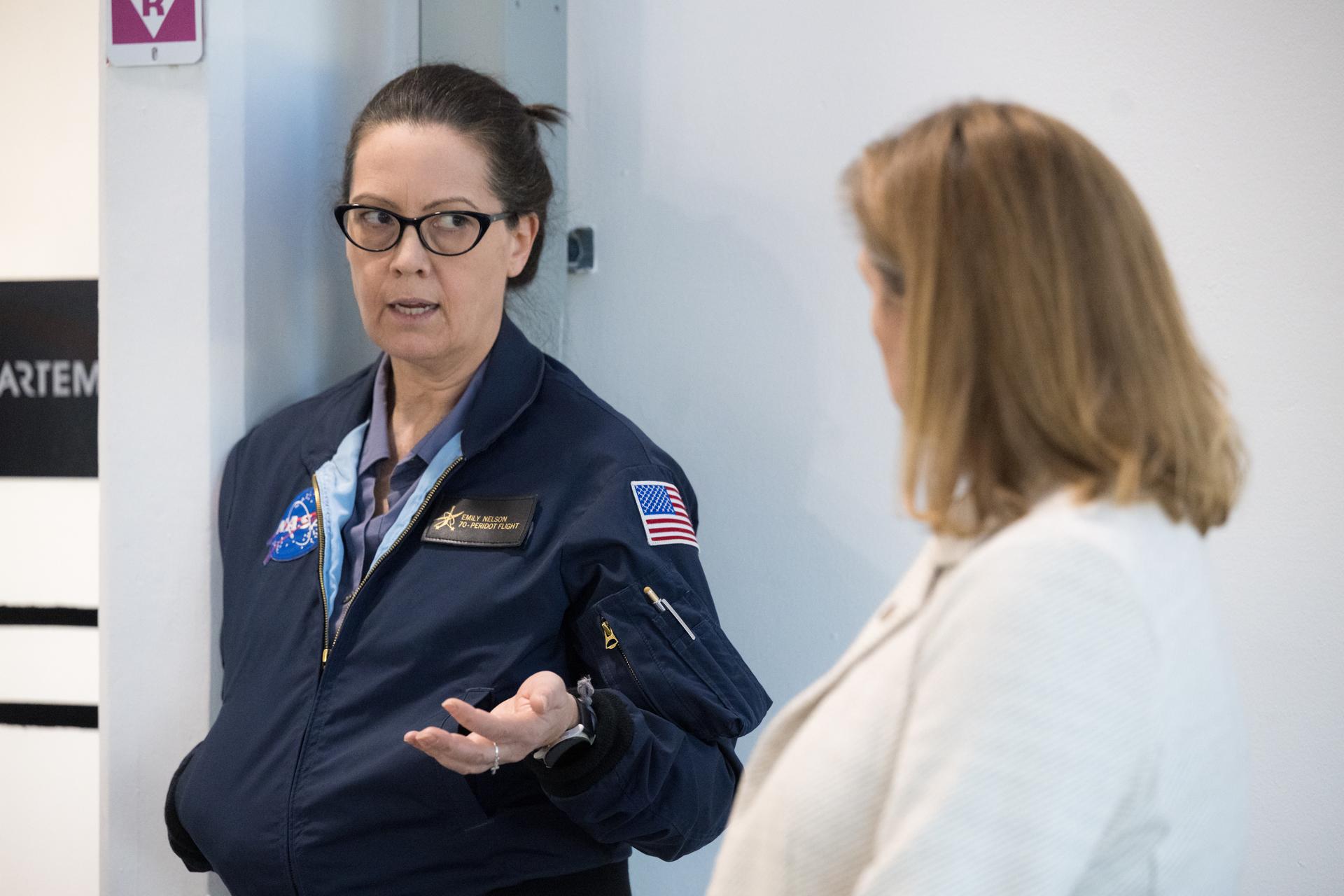
Emily Nelson, NASA's chief flight director, and Lori Glaze, acting associate administrator for NASA's Exploration Systems Development Mission Directorate, discuss the progress of a Countdown Demonstration Test with Artemis II crewmembers NASA astronauts Reid Wiseman, commander; Victor Glover, pilot; Christina Koch, mission specialist; and CSA (Canadian Space Agency) astronaut Jeremy Hansen, mission specialist onboard their Orion spacecraft from Firing Room 2 of the Rocco A. Petrone Launch Control Center, Saturday, Dec. 20, 2025, at NASA’s Kennedy Space Center in Florida. For this operation, the Artemis II crew and launch teams are simulating the launch day timeline including suit-up, walkout, and spacecraft ingress and egress. Through the Artemis campaign, NASA will send astronauts to explore the Moon for scientific discovery, economic benefits, and to build the foundation for the first crewed missions to Mars, for the benefit of all. Photo Credit: (NASA/Aubrey Gemignani)
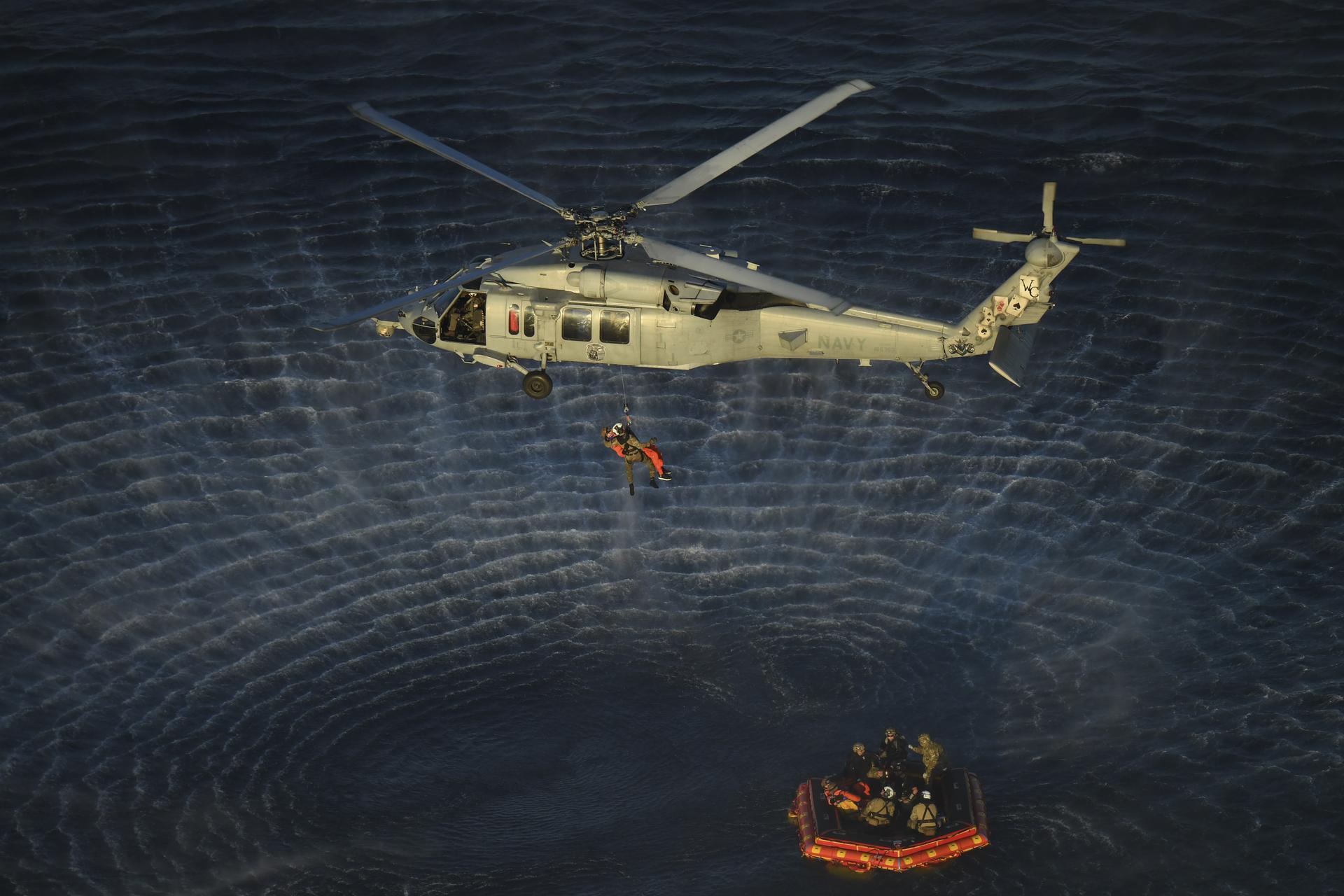
U.S. Navy divers and Artemis II astronauts aboard an inflatable raft are approached by helicopters and lifted away to the recovery ship after egressing NASA’s Orion spacecraft carrying Artemis II Commander Reid Wiseman, Pilot Victor Glover, and Mission Specialist Christina Koch from NASA, along with Mission Specialist Jeremy Hansen from the CSA (Canadian Space Agency), following splashdown in the Pacific Ocean near San Diego, California, at 5:07 p.m. PDT, (8:07 p.m. EDT) on Friday, April 10, 2026. The Artemis II test flight launched on Wednesday, April 1, from NASA’s Kennedy Space Center in Florida to begin its 10-day journey around the Moon for scientific discovery, economic benefits, and to build on our foundation for the first crewed missions to Mars. NASA’s Landing and Recovery team and the U.S. military are helping the Artemis II crew out of their Orion spacecraft.
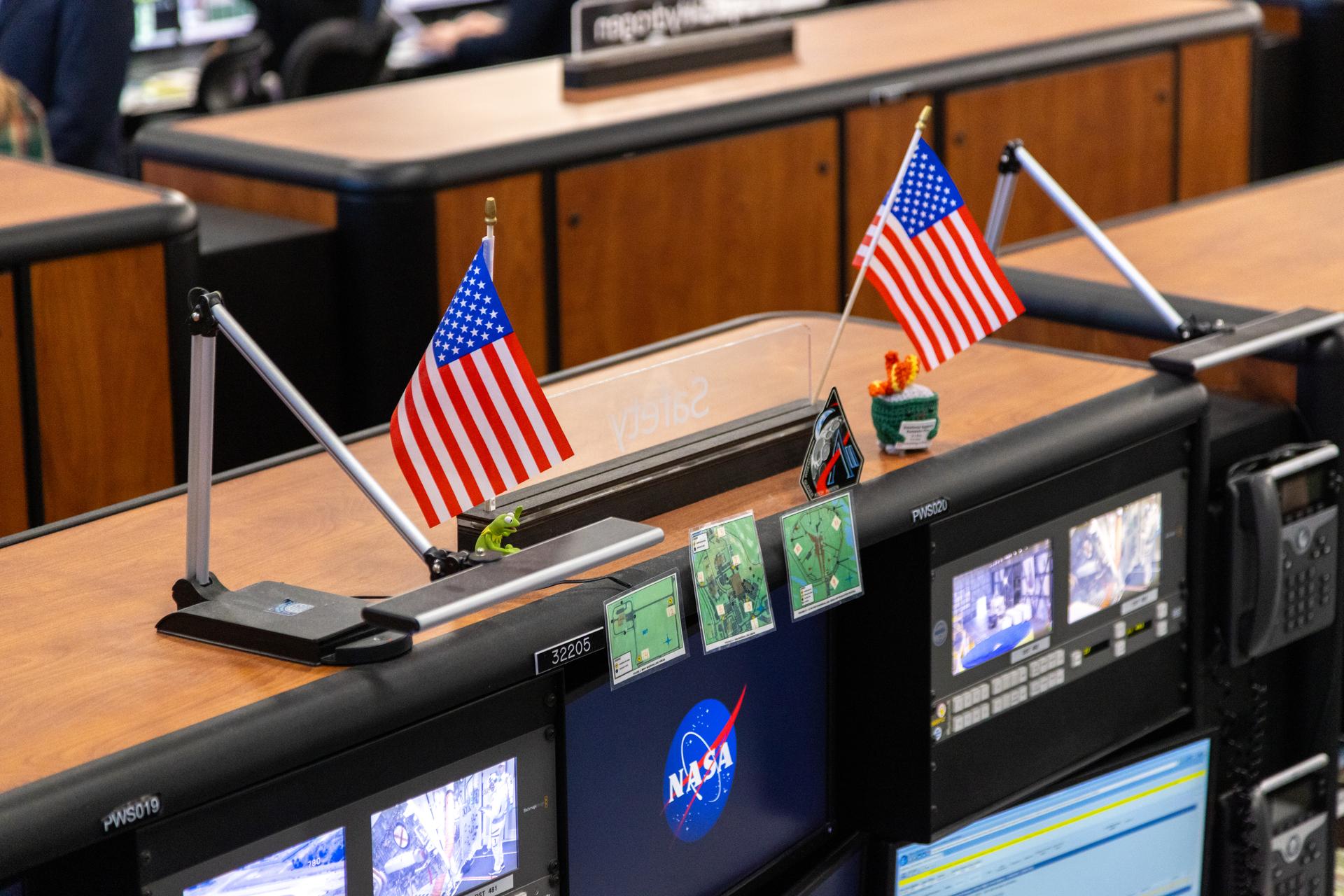
Teams monitor the progress of a countdown demonstration test with Artemis II crewmembers NASA astronauts Reid Wiseman, commander; Victor Glover, pilot; Christina Koch, mission specialist; and CSA (Canadian Space Agency) astronaut Jeremy Hansen, mission specialist onboard their Orion spacecraft from Firing Room 1 of the Rocco A. Petrone Launch Control Center, Saturday, Dec. 20, 2025, at NASA’s Kennedy Space Center in Florida. For this operation, the Artemis II crew and launch teams are simulating the launch day timeline including suit-up, walkout, and spacecraft ingress and egress. Through the Artemis campaign, NASA will send astronauts to explore the Moon for scientific discovery, economic benefits, and to build the foundation for the first crewed missions to Mars, for the benefit of all.

Personnel from NASA’s Artemis Landing and Recovery team and U.S. Navy aboard a H60-S Seahawk helicopter are lowered down to an inflatable raft, called the front porch, to retrieve the Artemis II astronauts after splashing down in the Pacific Ocean following their 10-day journey around the Moon for scientific discovery, economic benefits, and to build on our foundation for the first crewed missions to Mars. NASA's Orion spacecraft carrying Artemis II Commander Reid Wiseman, Pilot Victor Glover, and Mission Specialist Christina Koch from NASA, along with Mission Specialist Jeremy Hansen from the CSA (Canadian Space Agency) successfully splashed down in the Pacific Ocean near San Diego, California, at 5:07 p.m. PDT, (8:07 p.m. EDT) on Friday, April 10, 2026.
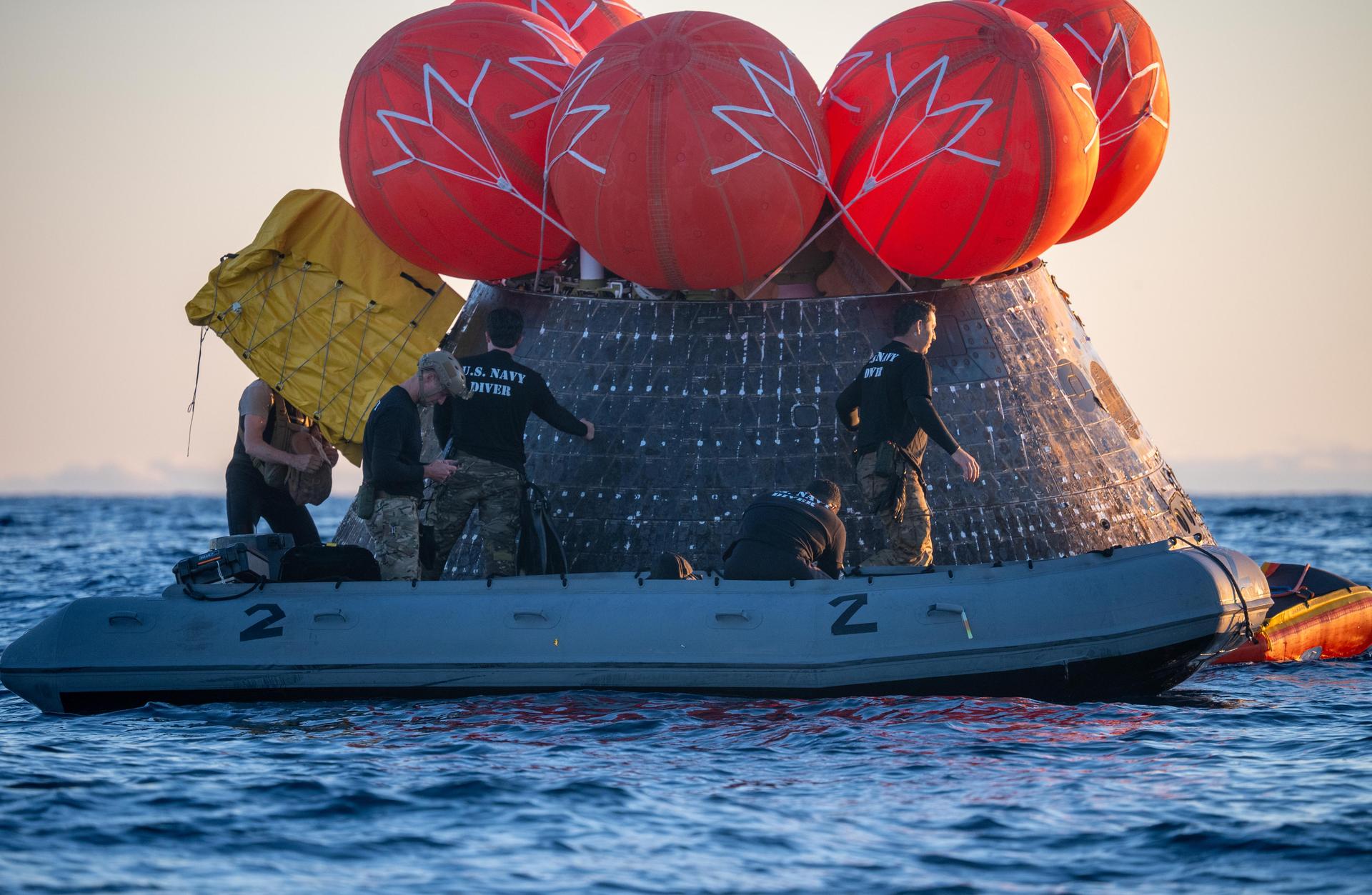
U.S. Navy personnel aboard an inflatable raft, called the front porch, help recover NASA's Orion spacecraft following its splashdown in the Pacific Ocean near San Diego, California, at 5:07 p.m. PDT, (8:07 p.m. EDT) on Friday, April 10, 2026, after the Artemis II test flight. The Artemis II mission carrying Artemis II Commander Reid Wiseman, Pilot Victor Glover, and Mission Specialist Christina Koch from NASA, along with Mission Specialist Jeremy Hansen from the CSA (Canadian Space Agency), launched on Wednesday, April 1, from NASA’s Kennedy Space Center in Florida to begin its 10-day journey around the Moon for scientific discovery, economic benefits, and to build on our foundation for the first crewed missions to Mars. NASA’s Landing and Recovery team and the U.S. Navy are coordinating efforts to secure Orion in the well deck of USS John P. Murtha.
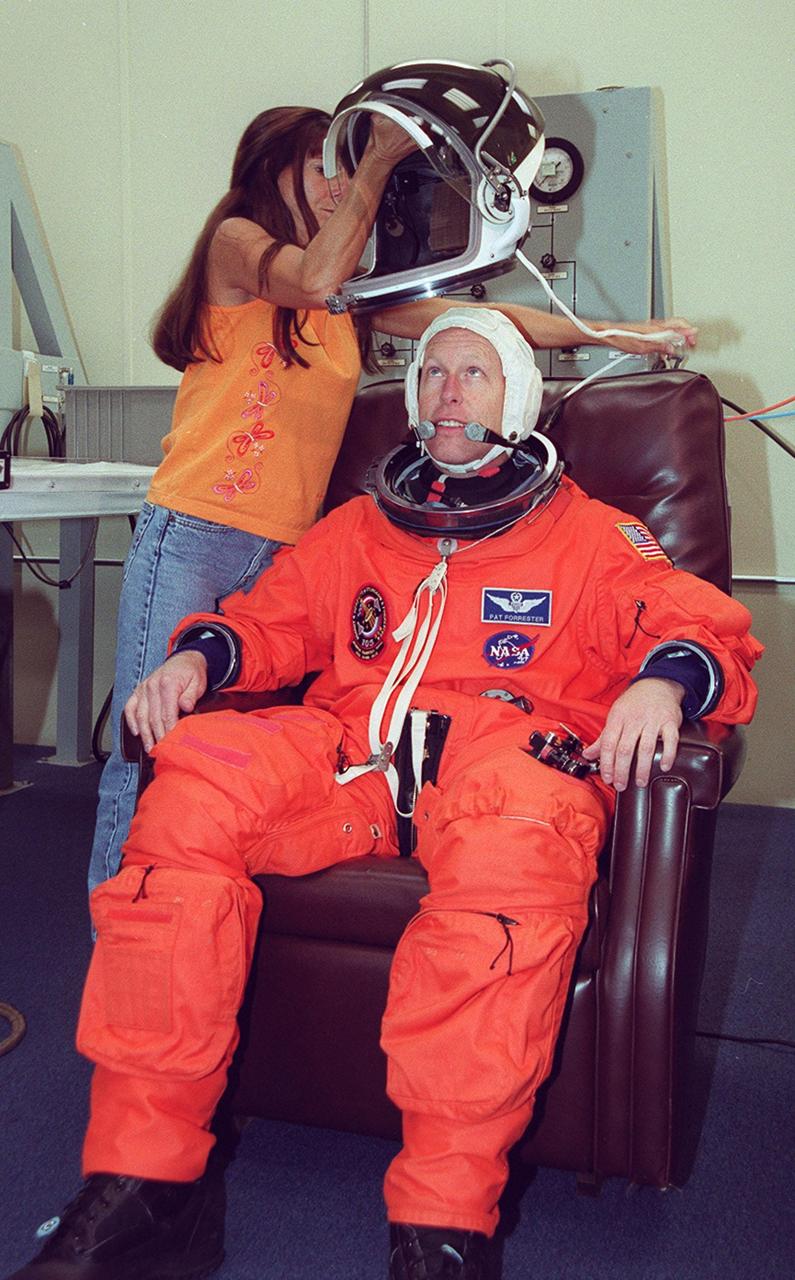
KENNEDY SPACE CENTER, Fla. -- STS-105 Mission Specialist Patrick Forrester waits to don his helmet during suit fit check as part of Terminal Countdown Demonstration Test activities. He and other crew members Commander Scott Horowitz, Pilot Rick Sturckow and Mission Specialist Daniel Barry are also taking part in the TCDT, which includes emergency egress training and a simulated launch countdown. Mission STS-105 will be transporting the Expedition Three crew - Commander Frank Culbertson and Vladimir Nikolaevich Dezhurov and Mikhail Tyurin, both with the Russian Aviation and Space Agency - several payloads and scientific experiments to the International Space Station aboard Space Shuttle Discovery. The current Expedition Two crew members on the Station will return to Earth on Discovery. Launch of Discovery is scheduled no earlier than Aug. 9, 2001
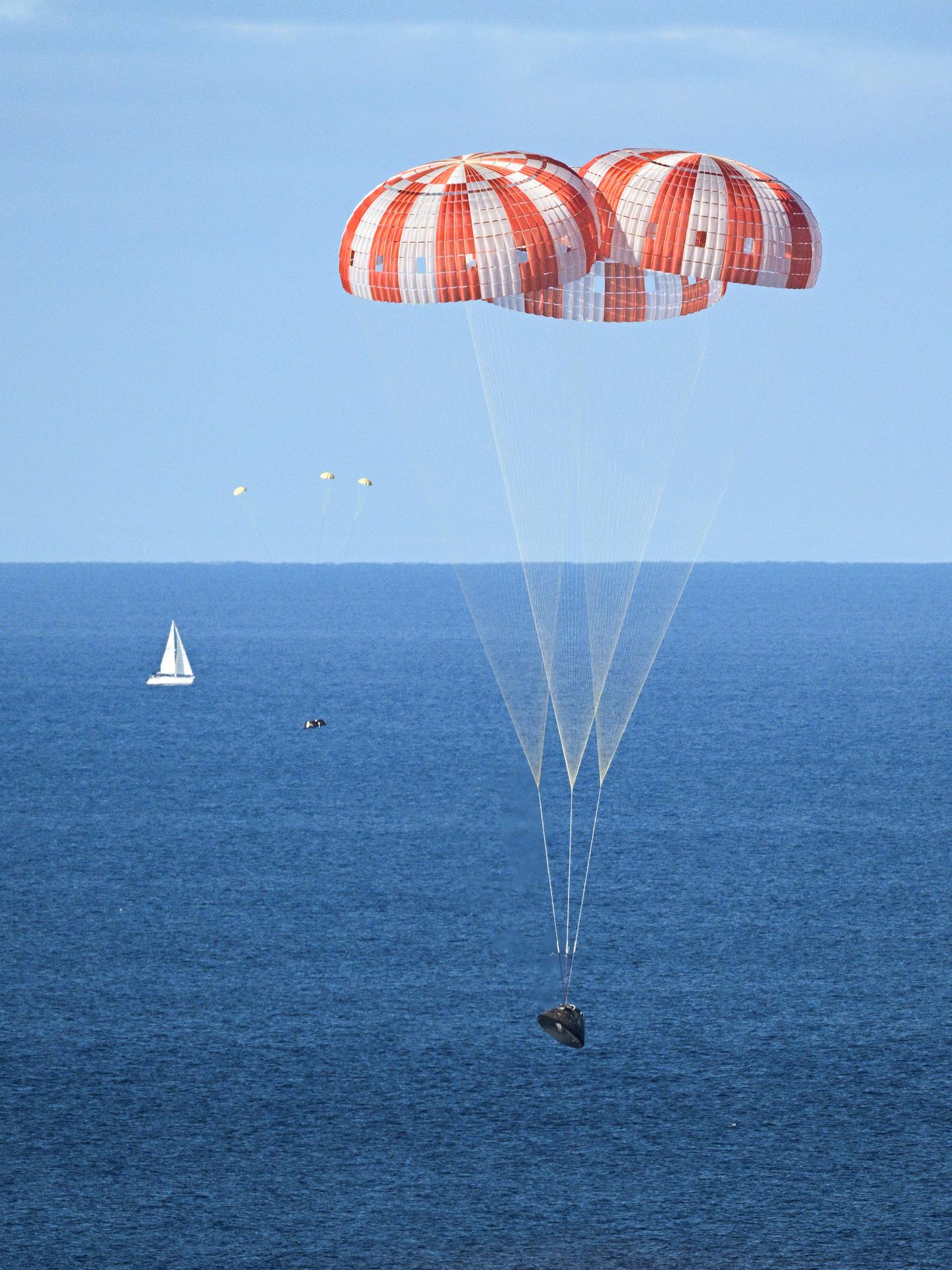
jsc2026e022246 (April 10, 2026) - NASA's Orion spacecraft carrying Artemis II Commander Reid Wiseman, Pilot Victor Glover, and Mission Specialist Christina Koch from NASA, along with Mission Specialist Jeremy Hansen from the CSA (Canadian Space Agency), splashes down in the Pacific Ocean near San Diego, California, at 5:07 p.m. PDT, (8:07 p.m. EDT) on Friday, April 10, 2026. The Artemis II test flight launched on Wednesday, April 1, from NASA’s Kennedy Space Center in Florida to begin its 10-day journey around the Moon for scientific discovery, economic benefits, and to build on our foundation for the first crewed missions to Mars. NASA’s Landing and Recovery team and the U.S. military are coordinating efforts to extract the Artemis II crew from the Orion spacecraft.
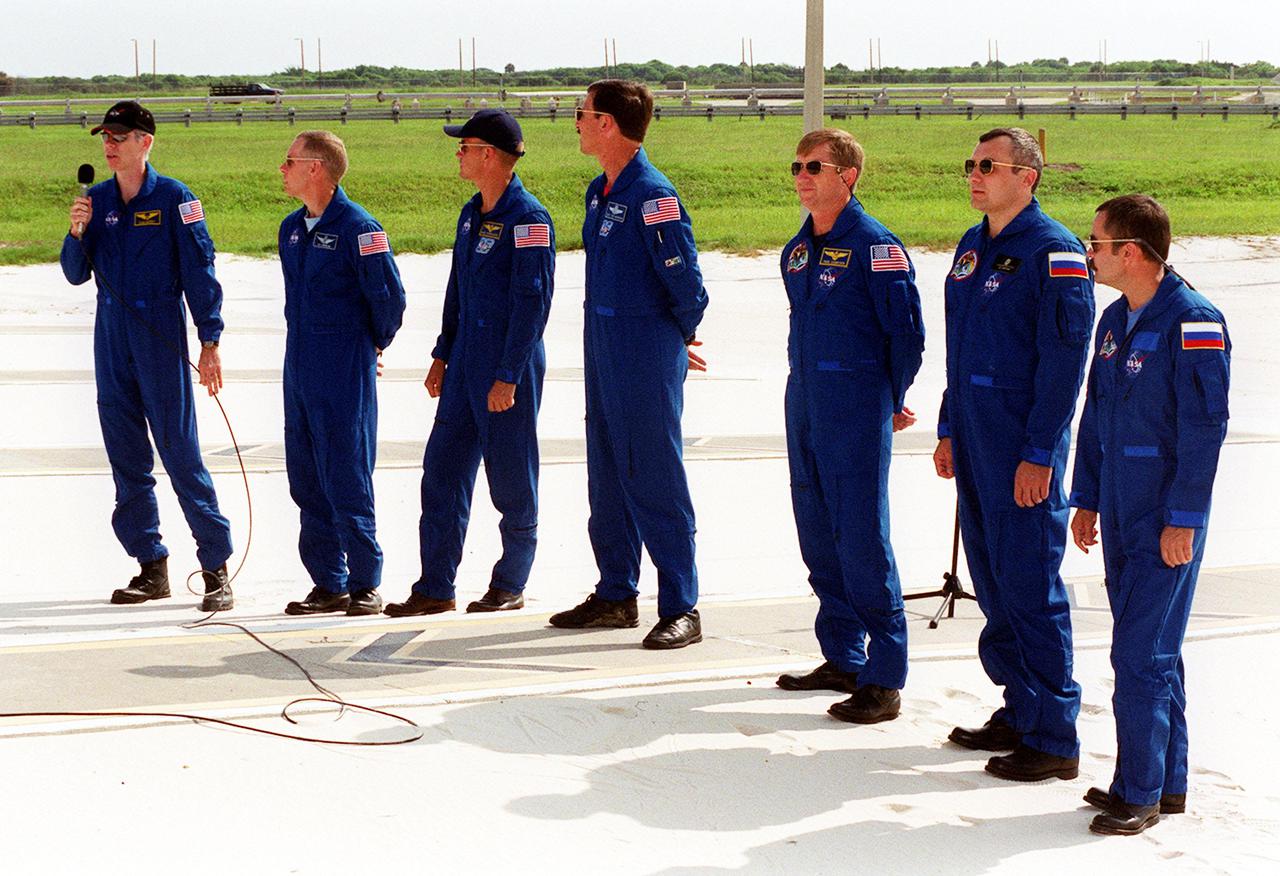
KENNEDY SPACE CENTER, Fla. -- At the slidewire landing site, Launch Pad 39A, STS-105 Mission Specialist Daniel Barry responds to a question during a media interview. With him are (left to right) Mission Specialist Patrick Forrester, Pilot Rick Sturckow and Commander Scott Horowitz; with the Expedition Three crew Commander Frank Culbertson and cosmonauts Vladimir Nikolaevich Dezhurov and Mikhail Tyurin, who are with the Russian Aviation and Space Agency. Both crews are at KSC to take part in Terminal Countdown Demonstration Test activities, which include emergency egress, a simulated launch countdown and familiarization with the payload. Mission STS-105 will be transporting the Expedition Three crew, several payloads and scientific experiments to the International Space Station aboard Discovery. The current Expedition Two crew members on the Station will return to Earth on Discovery. Launch of Discovery is scheduled no earlier than Aug. 9, 2001
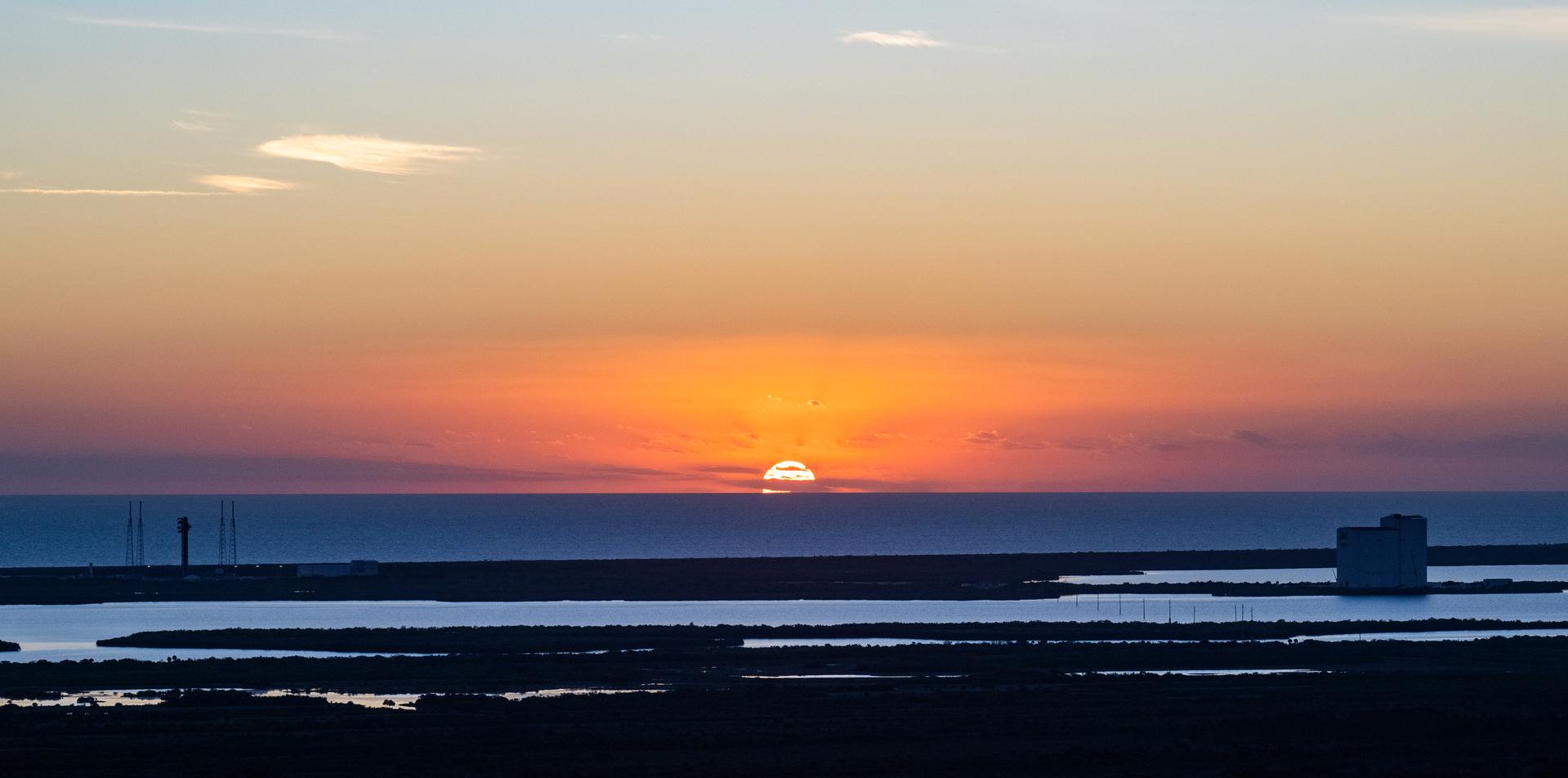
The sun rises shortly before Artemis II crewmembers NASA astronauts Reid Wiseman, commander; Victor Glover, pilot; Christina Koch, mission specialist; and CSA (Canadian Space Agency) astronaut Jeremy Hansen, mission specialist participate in the Artemis II countdown demonstration test, Saturday, Dec. 20, 2025, at NASA’s Kennedy Space Center in Florida. For this operation, the Artemis II crew and launch teams are simulating the launch day timeline including suit-up, walkout, and spacecraft ingress and egress. Through the Artemis campaign, NASA will send astronauts to explore the Moon for scientific discovery, economic benefits, and to build the foundation for the first crewed missions to Mars, for the benefit of all. Photo Credit: (NASA/Keegan Barber)
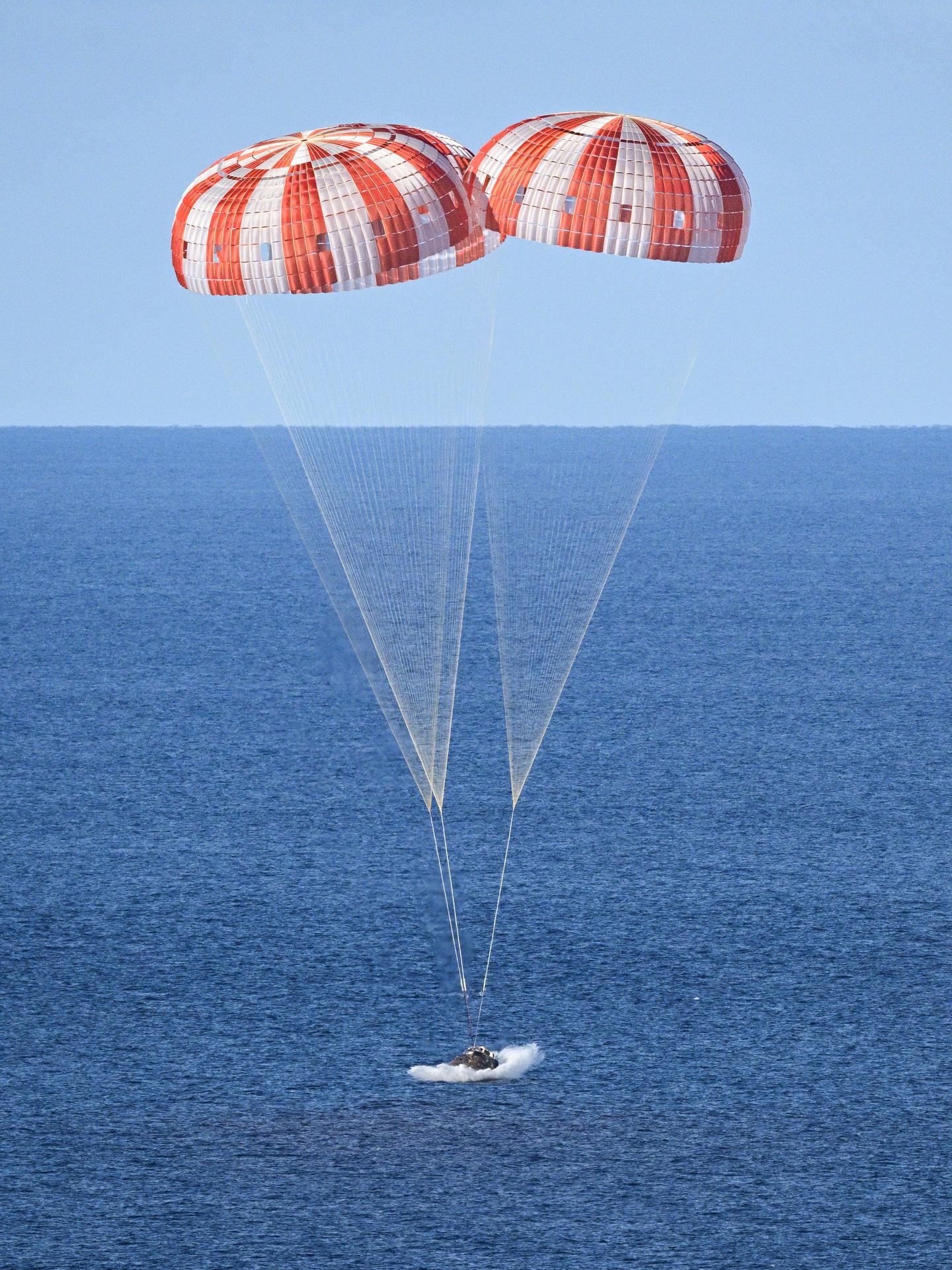
jsc2026e022247 (April 10, 2026) - NASA's Orion spacecraft carrying Artemis II Commander Reid Wiseman, Pilot Victor Glover, and Mission Specialist Christina Koch from NASA, along with Mission Specialist Jeremy Hansen from the CSA (Canadian Space Agency), splashes down in the Pacific Ocean near San Diego, California, at 5:07 p.m. PDT, (8:07 p.m. EDT) on Friday, April 10, 2026. The Artemis II test flight launched on Wednesday, April 1, from NASA’s Kennedy Space Center in Florida to begin its 10-day journey around the Moon for scientific discovery, economic benefits, and to build on our foundation for the first crewed missions to Mars. NASA’s Landing and Recovery team and the U.S. military are coordinating efforts to extract the Artemis II crew from the Orion spacecraft.
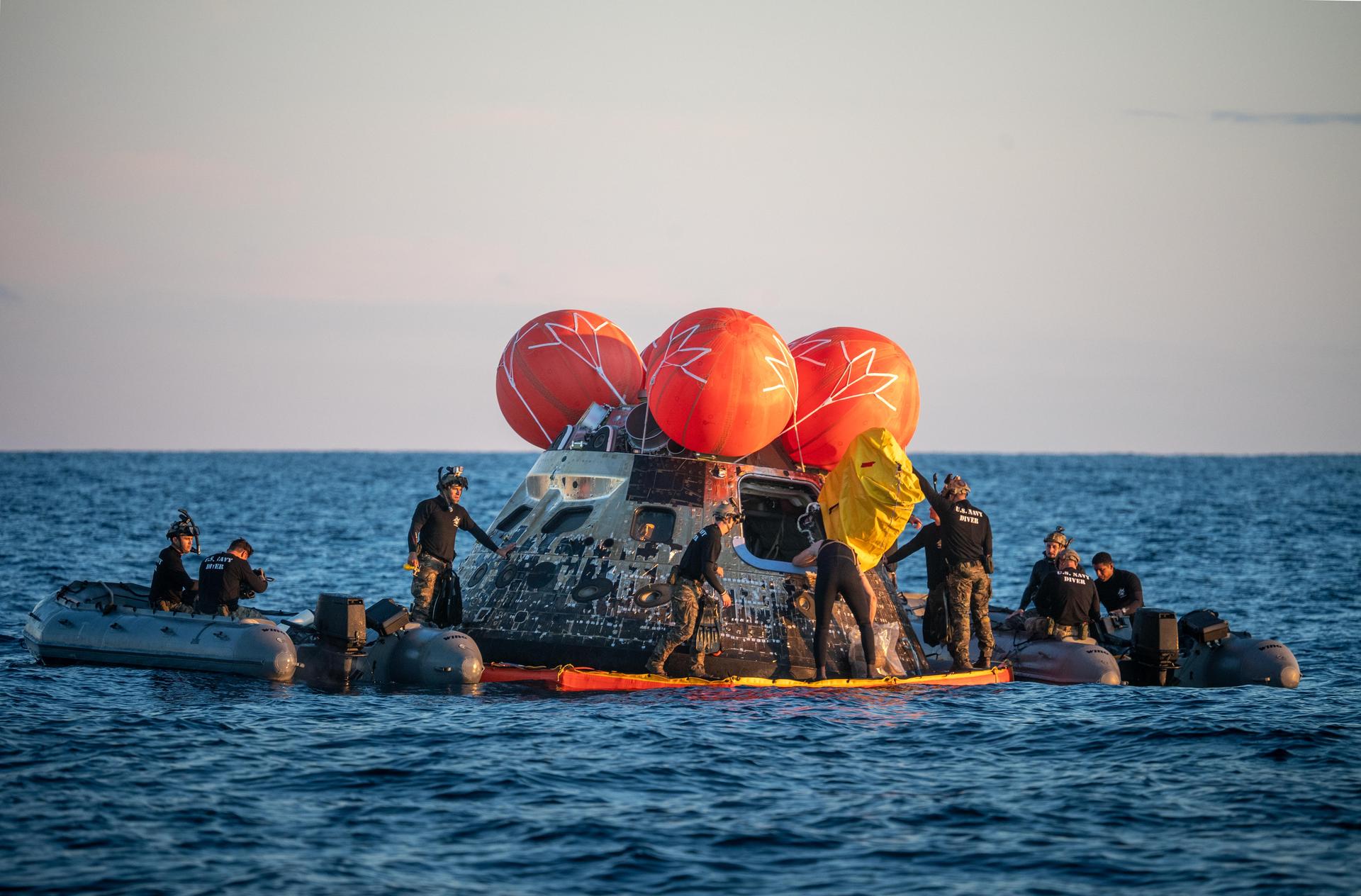
U.S. Navy personnel aboard an inflatable raft, called the front porch, help recover NASA's Orion spacecraft following its splashdown in the Pacific Ocean near San Diego, California, at 5:07 p.m. PDT, (8:07 p.m. EDT) on Friday, April 10, 2026, after the Artemis II test flight. The Artemis II mission carrying Artemis II Commander Reid Wiseman, Pilot Victor Glover, and Mission Specialist Christina Koch from NASA, along with Mission Specialist Jeremy Hansen from the CSA (Canadian Space Agency), launched on Wednesday, April 1, from NASA’s Kennedy Space Center in Florida to begin its 10-day journey around the Moon for scientific discovery, economic benefits, and to build on our foundation for the first crewed missions to Mars. NASA’s Landing and Recovery team and the U.S. Navy are coordinating efforts to secure Orion in the well deck of USS John P. Murtha.
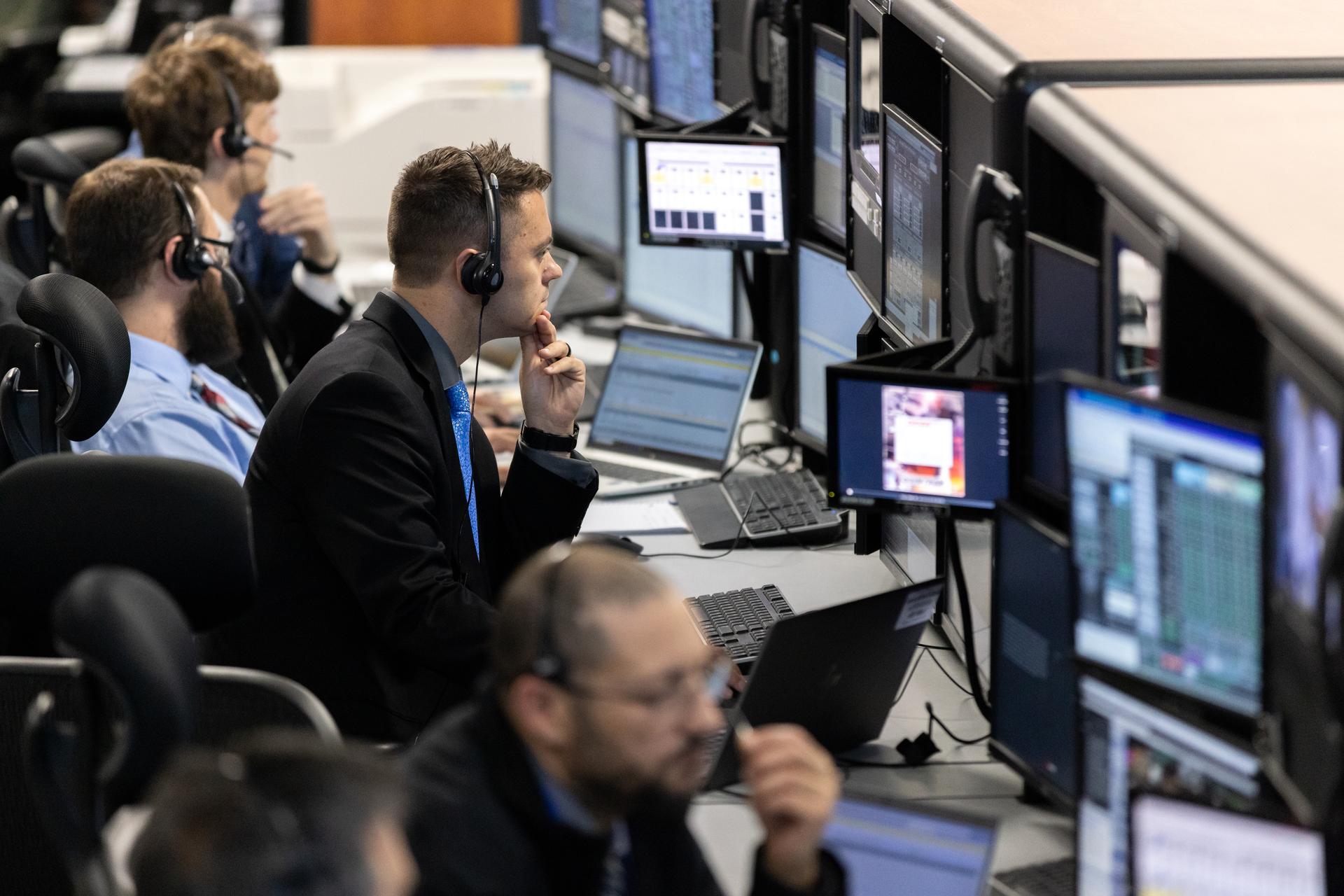
Teams monitor the progress of a countdown demonstration test with Artemis II crewmembers NASA astronauts Reid Wiseman, commander; Victor Glover, pilot; Christina Koch, mission specialist; and CSA (Canadian Space Agency) astronaut Jeremy Hansen, mission specialist onboard their Orion spacecraft from Firing Room 1 of the Rocco A. Petrone Launch Control Center, Saturday, Dec. 20, 2025, at NASA’s Kennedy Space Center in Florida. For this operation, the Artemis II crew and launch teams are simulating the launch day timeline including suit-up, walkout, and spacecraft ingress and egress. Through the Artemis campaign, NASA will send astronauts to explore the Moon for scientific discovery, economic benefits, and to build the foundation for the first crewed missions to Mars, for the benefit of all.
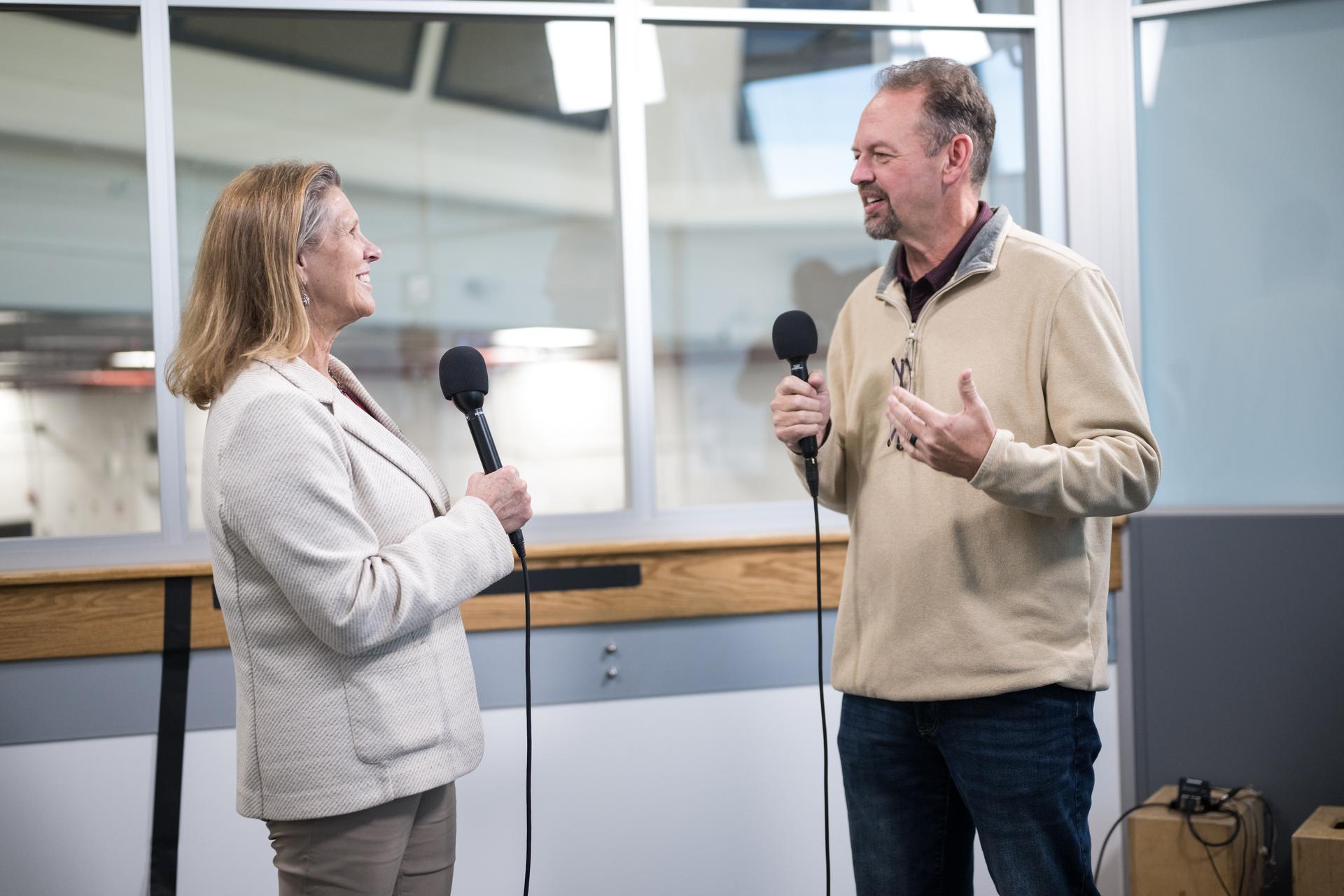
Lori Glaze, acting associate administrator for NASA's Exploration Systems Development Mission Directorate is interviewed by NASA public affairs officer Steven Siceloff during the Countdown Demonstration Test with Artemis II crewmembers NASA astronauts Reid Wiseman, commander; Victor Glover, pilot; Christina Koch, mission specialist; and CSA (Canadian Space Agency) astronaut Jeremy Hansen, mission specialist in Firing Room 2 of the Rocco A. Petrone Launch Control Center, Saturday, Dec. 20, 2025, at NASA’s Kennedy Space Center in Florida. For this operation, the Artemis II crew and launch teams are simulating the launch day timeline including suit-up, walkout, and spacecraft ingress and egress. Through the Artemis campaign, NASA will send astronauts to explore the Moon for scientific discovery, economic benefits, and to build the foundation for the first crewed missions to Mars, for the benefit of all. Photo Credit: (NASA/Aubrey Gemignani)
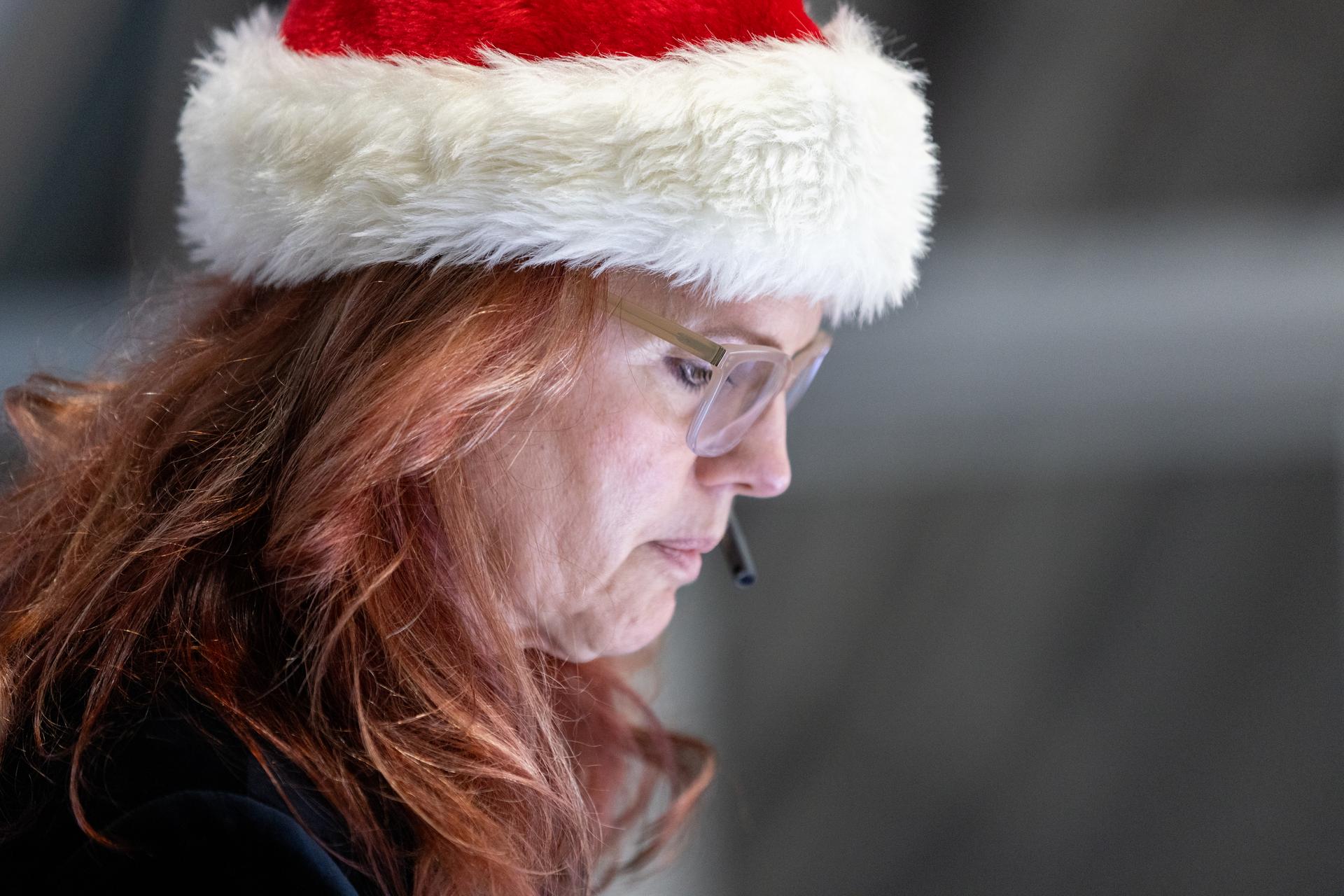
Charlie Blackwell-Thompson, Artemis launch director, monitors the progress of a countdown demonstration test with Artemis II crewmembers NASA astronauts Reid Wiseman, commander; Victor Glover, pilot; Christina Koch, mission specialist; and CSA (Canadian Space Agency) astronaut Jeremy Hansen, mission specialist onboard their Orion spacecraft from Firing Room 1 of the Rocco A. Petrone Launch Control Center, Saturday, Dec. 20, 2025, at NASA’s Kennedy Space Center in Florida. For this operation, the Artemis II crew and launch teams are simulating the launch day timeline including suit-up, walkout, and spacecraft ingress and egress. Through the Artemis campaign, NASA will send astronauts to explore the Moon for scientific discovery, economic benefits, and to build the foundation for the first crewed missions to Mars, for the benefit of all.
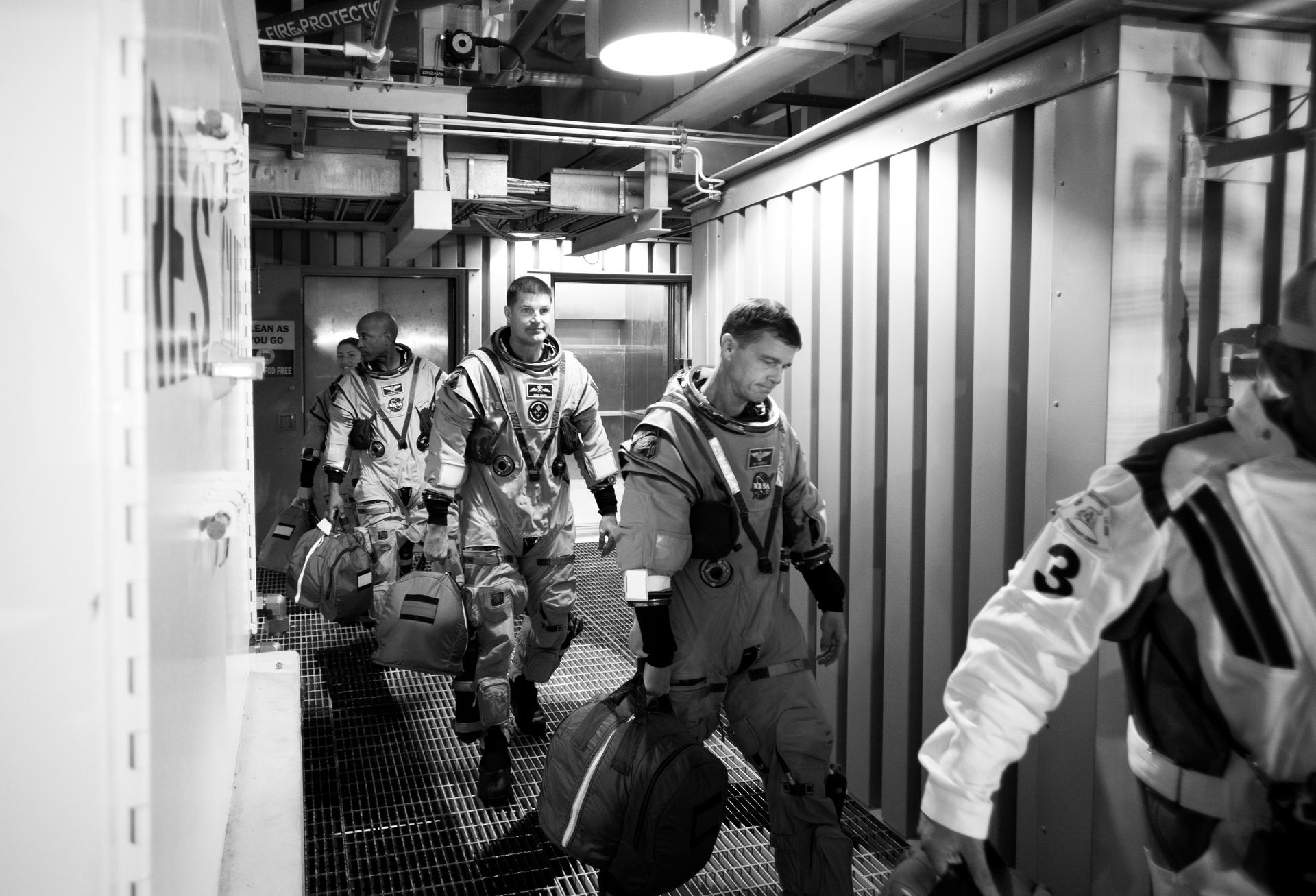
Artemis II crewmembers NASA astronauts Reid Wiseman, commander; Victor Glover, pilot; Christina Koch, mission specialist; and CSA (Canadian Space Agency) astronaut Jeremy Hansen, mission specialist; are led by Bill Owens of the Closeout Crew from the elevator at the 275-foot level of the mobile launcher to the crew access arm as they prepare to board their Orion spacecraft atop NASA’s Space Launch System rocket during the Artemis II countdown demonstration test, Saturday, Dec. 20, 2025, inside the Vehicle Assembly Building at NASA’s Kennedy Space Center in Florida. For this operation, the Artemis II crew and launch teams are simulating the launch day timeline including suit-up, walkout, and spacecraft ingress and egress. Through the Artemis campaign, NASA will send astronauts to explore the Moon for scientific discovery, economic benefits, and to build the foundation for the first crewed missions to Mars, for the benefit of all. Photo Credit: (NASA/Joel Kowsky)
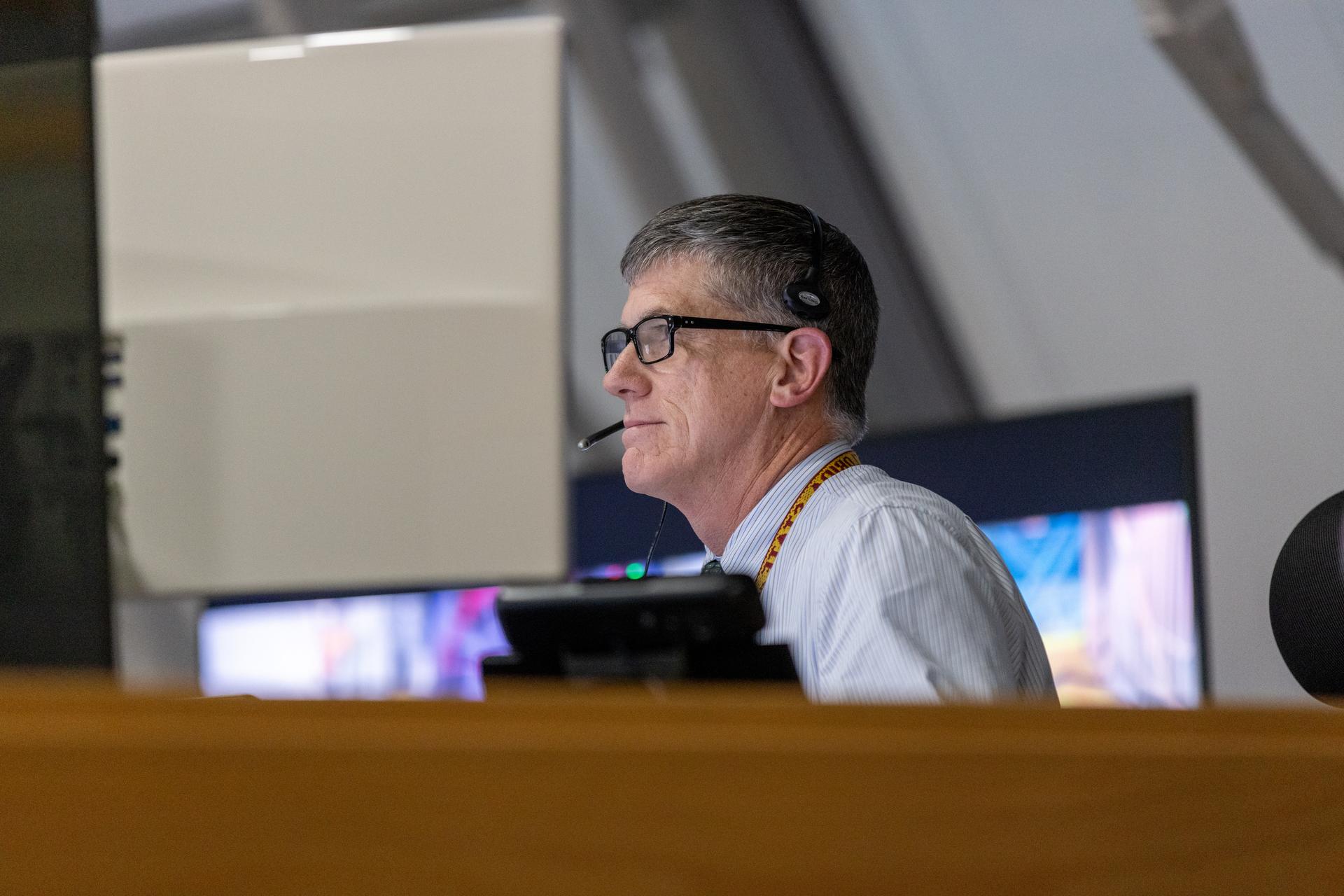
Jeremy Graeber, assistant launch director, monitors the progress of a countdown demonstration test with Artemis II crewmembers NASA astronauts Reid Wiseman, commander; Victor Glover, pilot; Christina Koch, mission specialist; and CSA (Canadian Space Agency) astronaut Jeremy Hansen, mission specialist onboard their Orion spacecraft from Firing Room 1 of the Rocco A. Petrone Launch Control Center, Saturday, Dec. 20, 2025, at NASA’s Kennedy Space Center in Florida. For this operation, the Artemis II crew and launch teams are simulating the launch day timeline including suit-up, walkout, and spacecraft ingress and egress. Through the Artemis campaign, NASA will send astronauts to explore the Moon for scientific discovery, economic benefits, and to build the foundation for the first crewed missions to Mars, for the benefit of all.
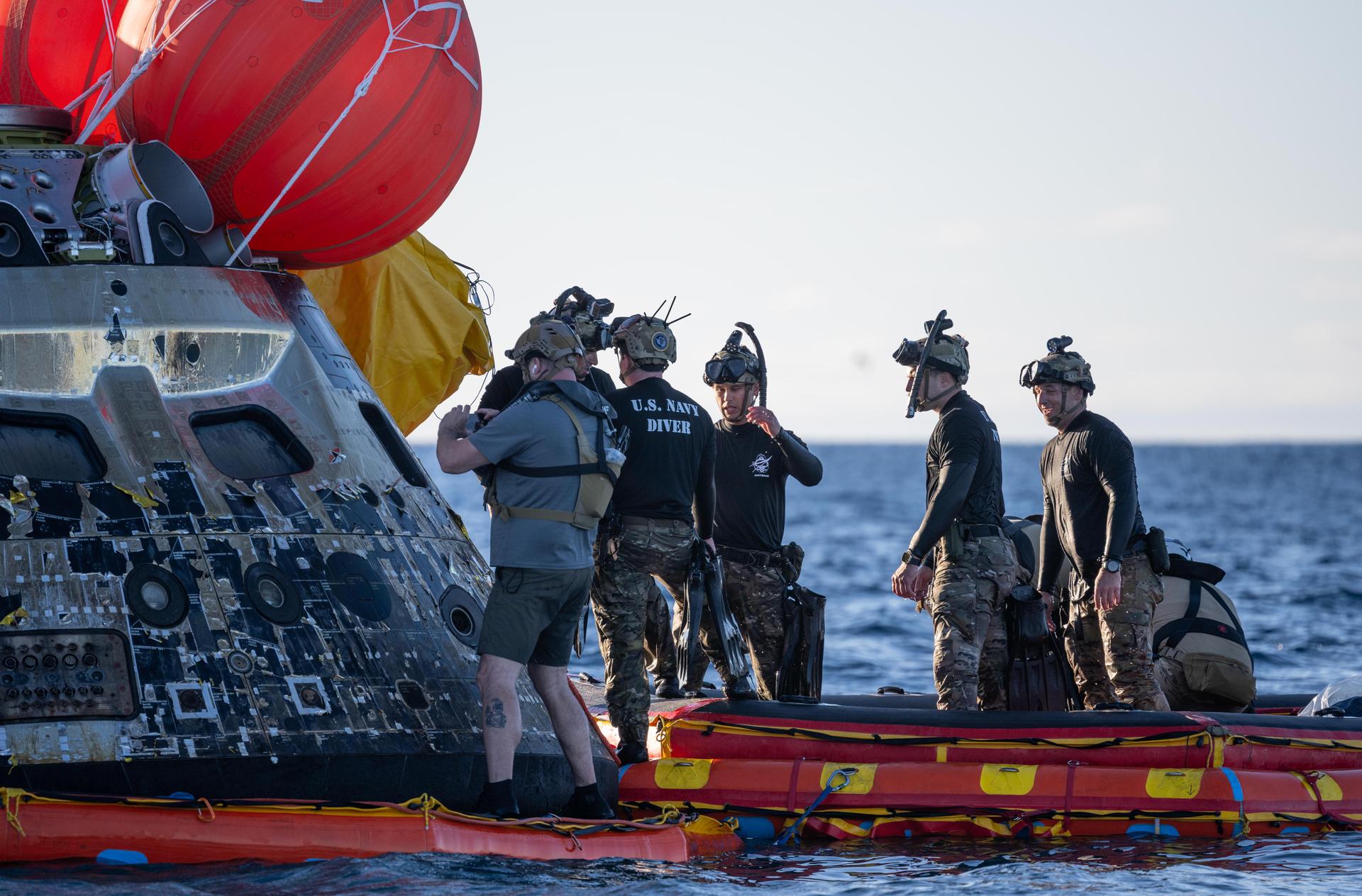
U.S. Navy personnel aboard an inflatable raft, called the front porch, help recover NASA's Orion spacecraft following its splashdown in the Pacific Ocean near San Diego, California, at 5:07 p.m. PDT, (8:07 p.m. EDT) on Friday, April 10, 2026, after the Artemis II test flight. The Artemis II mission carrying Artemis II Commander Reid Wiseman, Pilot Victor Glover, and Mission Specialist Christina Koch from NASA, along with Mission Specialist Jeremy Hansen from the CSA (Canadian Space Agency), launched on Wednesday, April 1, from NASA’s Kennedy Space Center in Florida to begin its 10-day journey around the Moon for scientific discovery, economic benefits, and to build on our foundation for the first crewed missions to Mars. NASA’s Landing and Recovery team and the U.S. Navy are coordinating efforts to secure Orion in the well deck of USS John P. Murtha.

Personnel from NASA’s Artemis Landing and Recovery team and U.S. Navy aboard a H60-S Seahawk helicopter retrieve the Artemis II astronauts after splashing down in the Pacific Ocean following their 10-day journey around the Moon for scientific discovery, economic benefits, and to build on our foundation for the first crewed missions to Mars. NASA's Orion spacecraft carrying Artemis II Commander Reid Wiseman, Pilot Victor Glover, and Mission Specialist Christina Koch from NASA, along with Mission Specialist Jeremy Hansen from the CSA (Canadian Space Agency) successfully splashed down in the Pacific Ocean near San Diego, California, at 5:07 p.m. PDT, (8:07 p.m. EDT) on Friday, April 10, 2026.
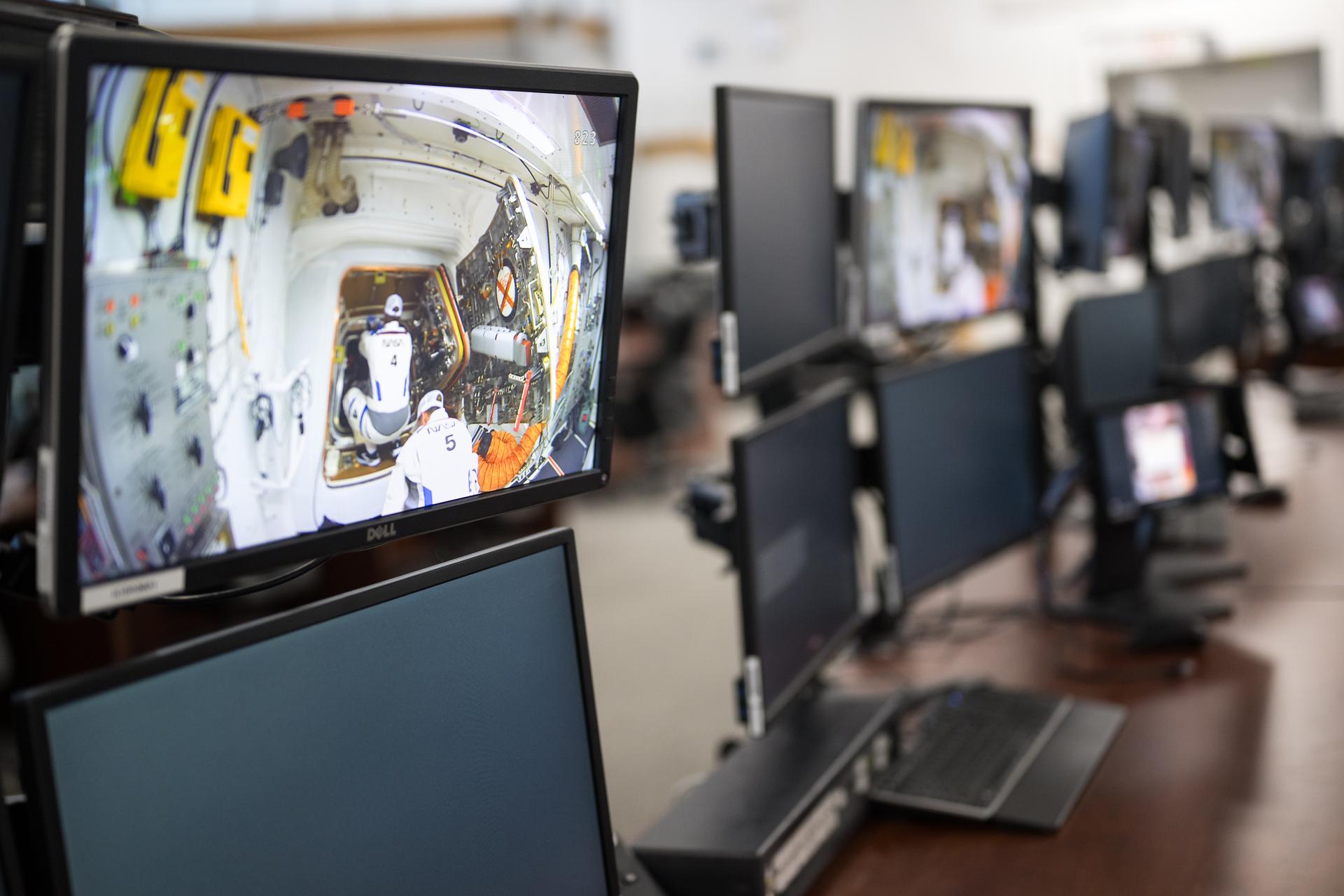
Teams monitor the progress of a Countdown Demonstration Test with Artemis II crewmembers NASA astronauts Reid Wiseman, commander; Victor Glover, pilot; Christina Koch, mission specialist; and CSA (Canadian Space Agency) astronaut Jeremy Hansen, mission specialist onboard their Orion spacecraft from Firing Room 2 of the Rocco A. Petrone Launch Control Center, Saturday, Dec. 20, 2025, at NASA’s Kennedy Space Center in Florida. For this operation, the Artemis II crew and launch teams are simulating the launch day timeline including suit-up, walkout, and spacecraft ingress and egress. Through the Artemis campaign, NASA will send astronauts to explore the Moon for scientific discovery, economic benefits, and to build the foundation for the first crewed missions to Mars, for the benefit of all. Photo Credit: (NASA/Aubrey Gemignani)
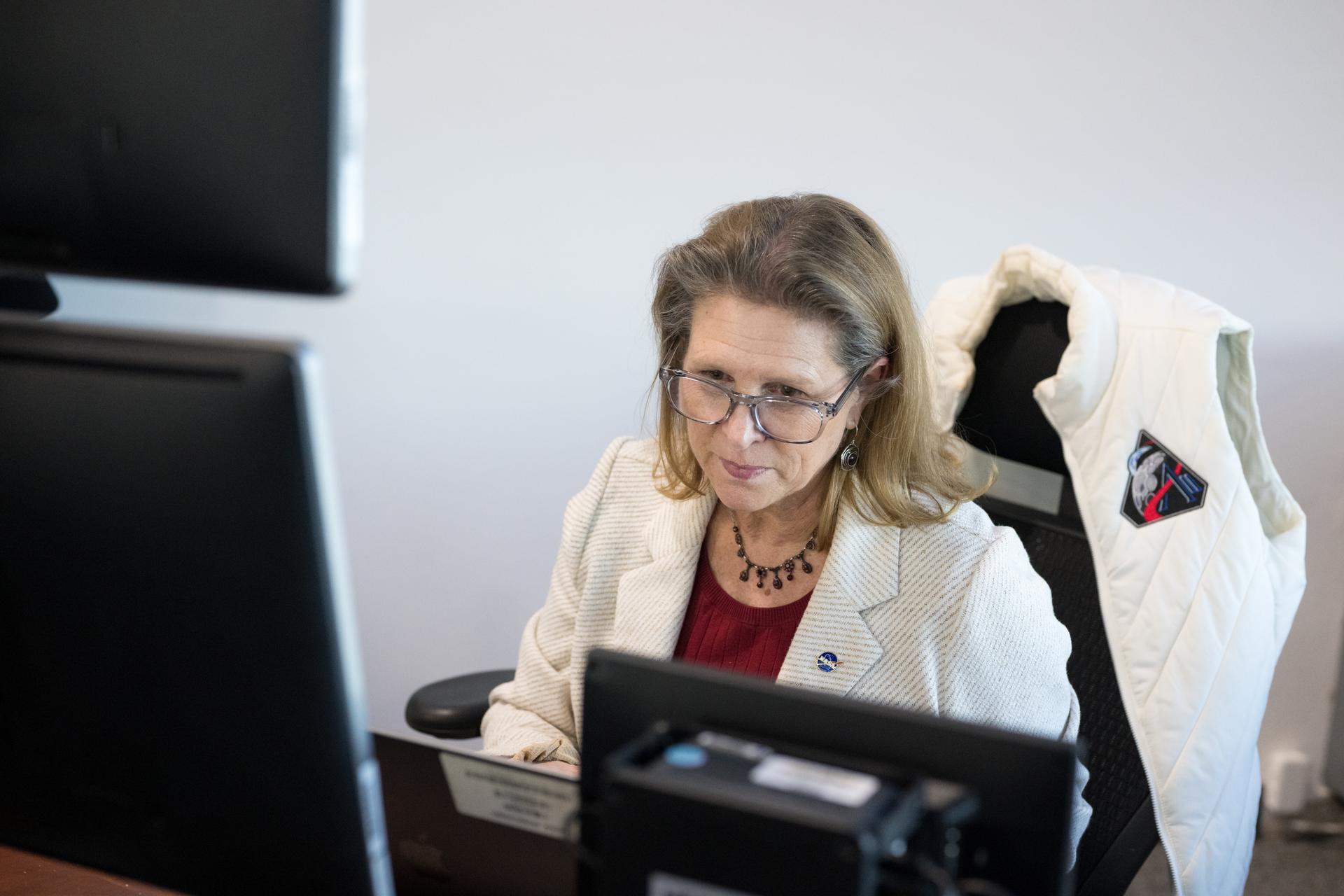
Lori Glaze, acting associate administrator for NASA's Exploration Systems Development Mission Directorate monitors the progress of a Countdown Demonstration Test with Artemis II crewmembers NASA astronauts Reid Wiseman, commander; Victor Glover, pilot; Christina Koch, mission specialist; and CSA (Canadian Space Agency) astronaut Jeremy Hansen, mission specialist onboard their Orion spacecraft from Firing Room 2 of the Rocco A. Petrone Launch Control Center, Saturday, Dec. 20, 2025, at NASA’s Kennedy Space Center in Florida. For this operation, the Artemis II crew and launch teams are simulating the launch day timeline including suit-up, walkout, and spacecraft ingress and egress. Through the Artemis campaign, NASA will send astronauts to explore the Moon for scientific discovery, economic benefits, and to build the foundation for the first crewed missions to Mars, for the benefit of all. Photo Credit: (NASA/Aubrey Gemignani)
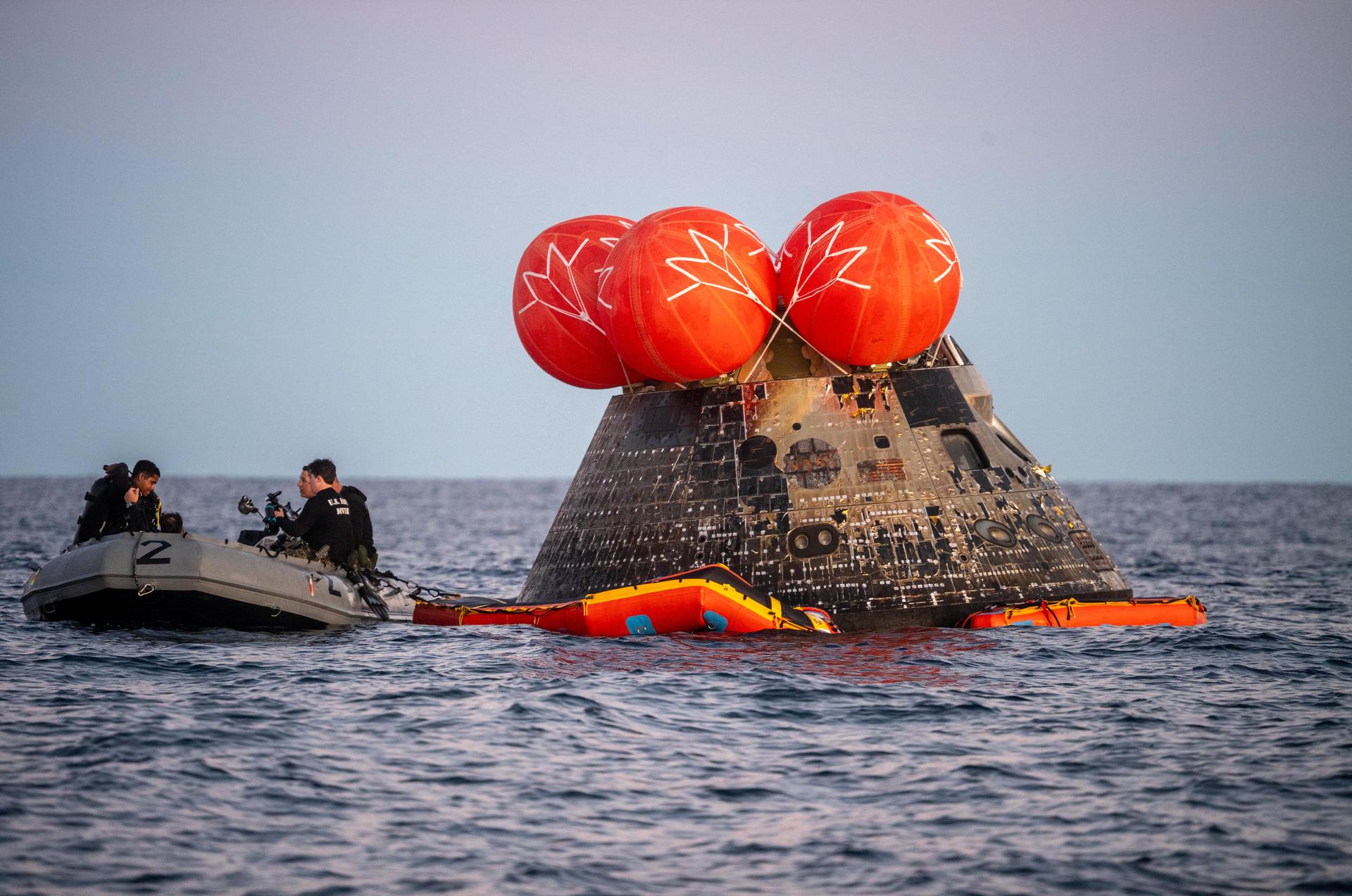
U.S. Navy personnel aboard an inflatable raft help recover NASA's Orion spacecraft following its splashdown in the Pacific Ocean near San Diego, California, at 5:07 p.m. PDT, (8:07 p.m. EDT) on Friday, April 10, 2026, after the Artemis II test flight. The Artemis II mission carrying Artemis II Commander Reid Wiseman, Pilot Victor Glover, and Mission Specialist Christina Koch from NASA, along with Mission Specialist Jeremy Hansen from the CSA (Canadian Space Agency), launched on Wednesday, April 1, from NASA’s Kennedy Space Center in Florida to begin its 10-day journey around the Moon for scientific discovery, economic benefits, and to build on our foundation for the first crewed missions to Mars. NASA’s Landing and Recovery team and the U.S. Navy are coordinating efforts to secure Orion in the well deck of USS John P. Murtha.

NASA’s Landing and Recovery team, along with U.S. Navy personnel aboard an inflatable raft approach NASA’s Orion spacecraft carrying Artemis II Commander Reid Wiseman, Pilot Victor Glover, and Mission Specialist Christina Koch from NASA, along with Mission Specialist Jeremy Hansen from the CSA (Canadian Space Agency), following splashdown in the Pacific Ocean near San Diego, California, at 5:07 p.m. PDT, (8:07 p.m. EDT) on Friday, April 10, 2026. The Artemis II test flight launched on Wednesday, April 1, from NASA’s Kennedy Space Center in Florida to begin its 10-day journey around the Moon for scientific discovery, economic benefits, and to build on our foundation for the first crewed missions to Mars. NASA’s Landing and Recovery team and the U.S. military are helping the Artemis II crew out of their Orion spacecraft.
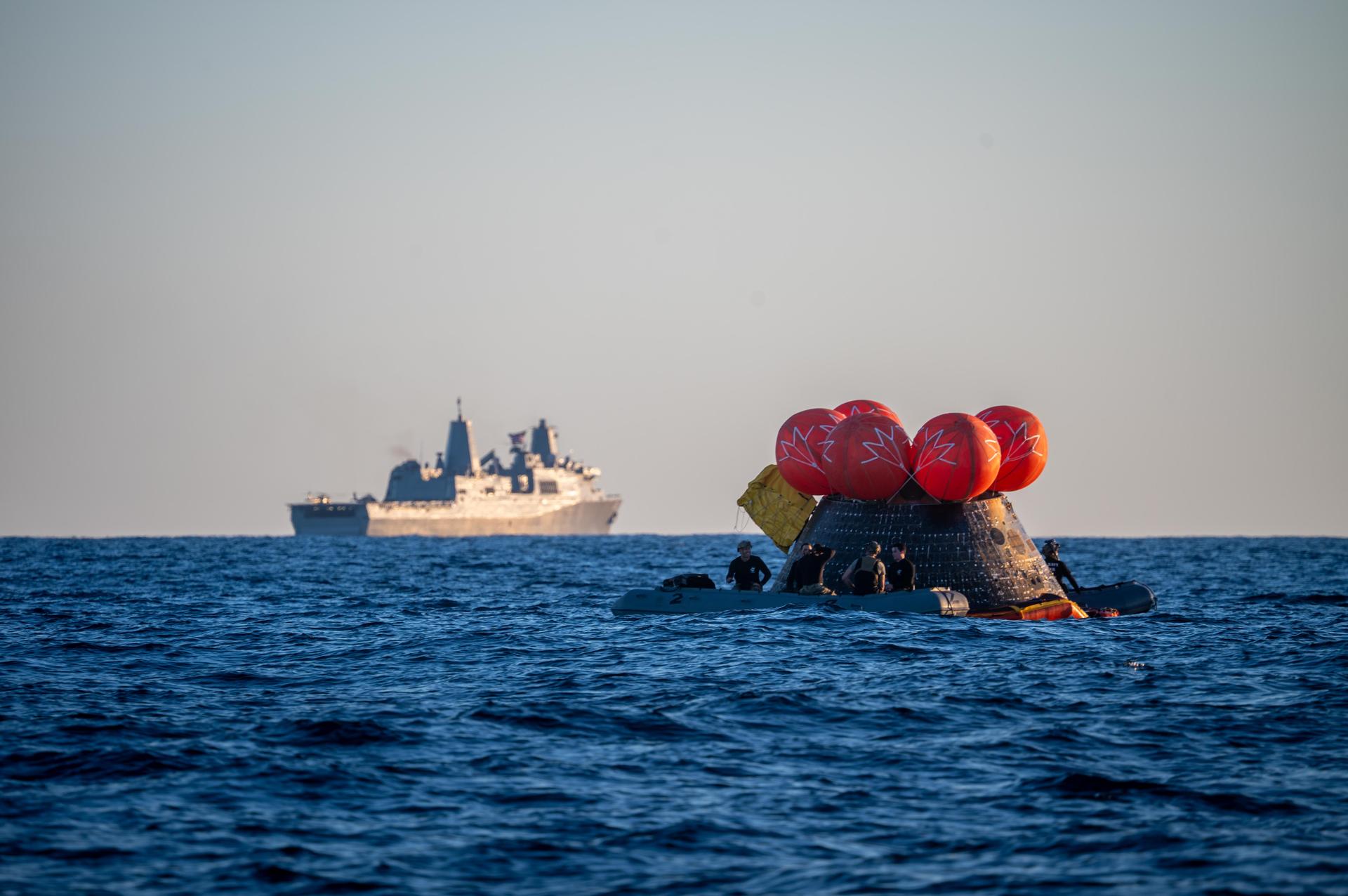
U.S. Navy personnel aboard an inflatable raft, called the front porch, help recover NASA's Orion spacecraft following its splashdown in the Pacific Ocean near San Diego, California, at 5:07 p.m. PDT, (8:07 p.m. EDT) on Friday, April 10, 2026, after the Artemis II test flight. The Artemis II mission carrying Artemis II Commander Reid Wiseman, Pilot Victor Glover, and Mission Specialist Christina Koch from NASA, along with Mission Specialist Jeremy Hansen from the CSA (Canadian Space Agency), launched on Wednesday, April 1, from NASA’s Kennedy Space Center in Florida to begin its 10-day journey around the Moon for scientific discovery, economic benefits, and to build on our foundation for the first crewed missions to Mars. NASA’s Landing and Recovery team and the U.S. Navy are coordinating efforts to secure Orion in the well deck of USS John P. Murtha.
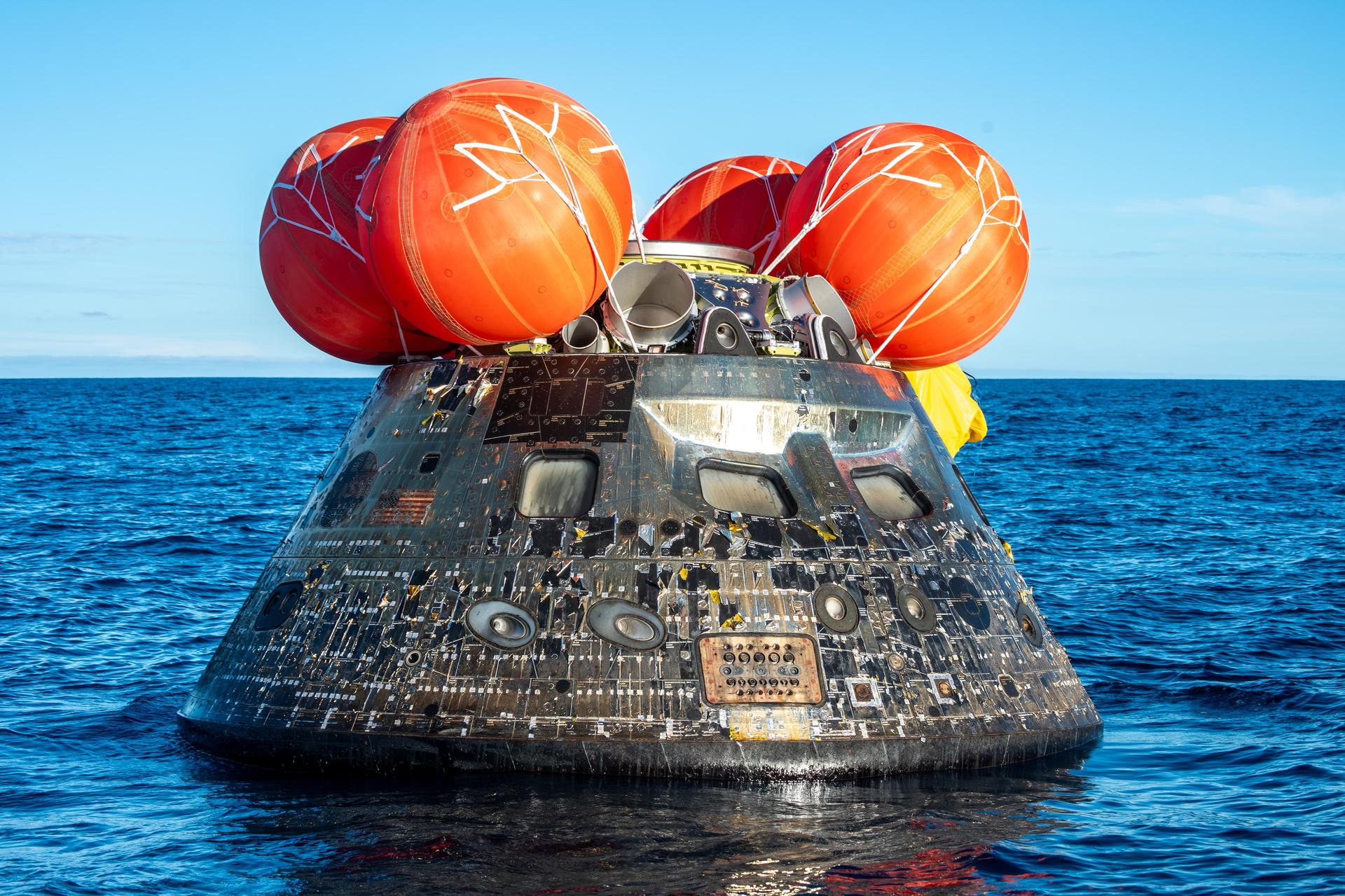
NASA's Orion spacecraft carrying Artemis II Commander Reid Wiseman, Pilot Victor Glover, and Mission Specialist Christina Koch from NASA, along with Mission Specialist Jeremy Hansen from the CSA (Canadian Space Agency), splashes down in the Pacific Ocean near San Diego, California, at 5:07 p.m. PDT, (8:07 p.m. EDT) on Friday, April 10, 2026. The Artemis II test flight launched on Wednesday, April 1, from NASA’s Kennedy Space Center in Florida to begin its 10-day journey around the Moon for scientific discovery, economic benefits, and to build on our foundation for the first crewed missions to Mars. NASA’s Landing and Recovery team and the U.S. military are coordinating efforts to extract the Artemis II crew from the Orion spacecraft.
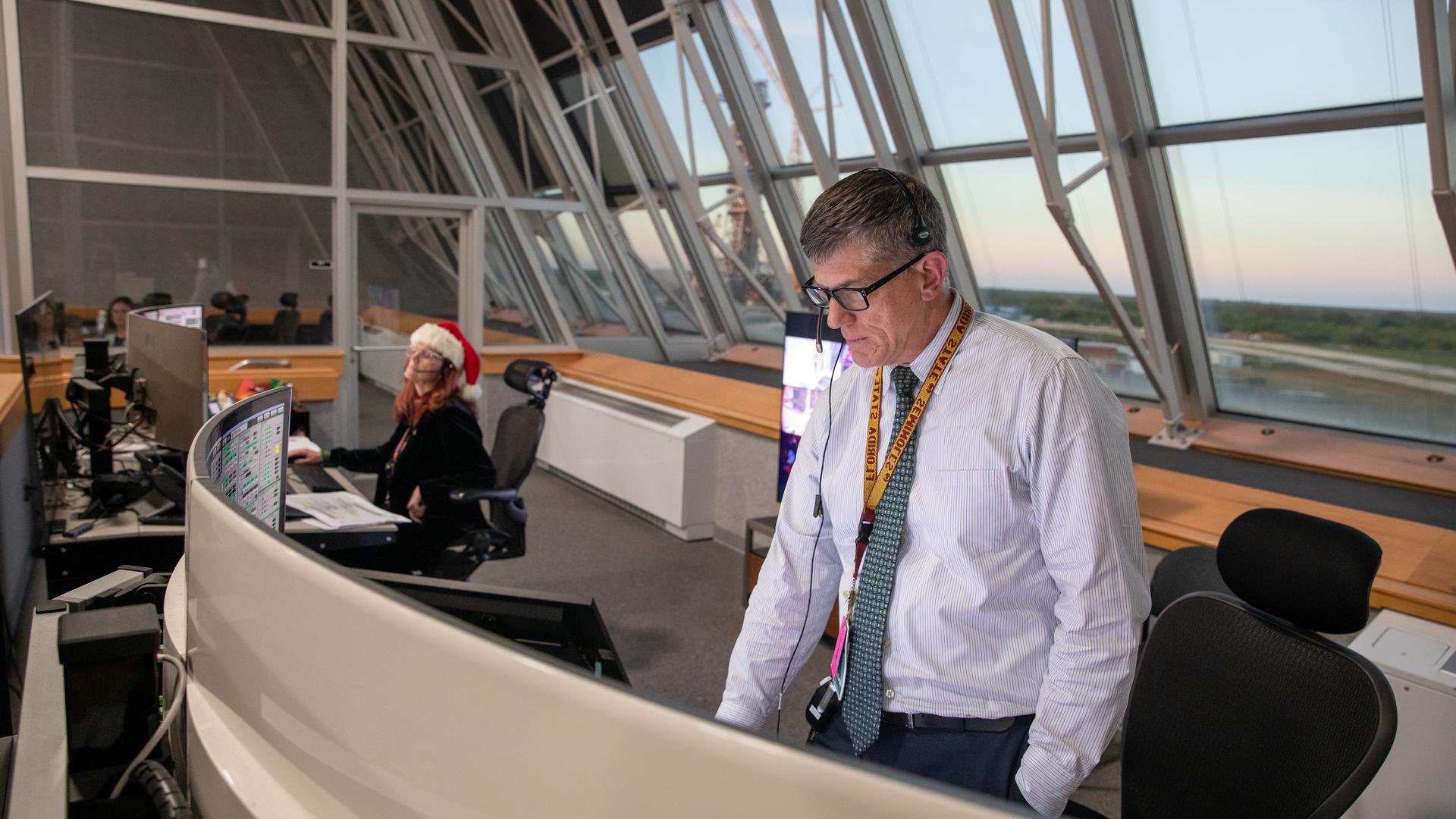
Jeremy Graeber, assistant launch director, monitors the progress of a countdown demonstration test with Artemis II crewmembers NASA astronauts Reid Wiseman, commander; Victor Glover, pilot; Christina Koch, mission specialist; and CSA (Canadian Space Agency) astronaut Jeremy Hansen, mission specialist onboard their Orion spacecraft from Firing Room 1 of the Rocco A. Petrone Launch Control Center, Saturday, Dec. 20, 2025, at NASA’s Kennedy Space Center in Florida. For this operation, the Artemis II crew and launch teams are simulating the launch day timeline including suit-up, walkout, and spacecraft ingress and egress. Through the Artemis campaign, NASA will send astronauts to explore the Moon for scientific discovery, economic benefits, and to build the foundation for the first crewed missions to Mars, for the benefit of all.
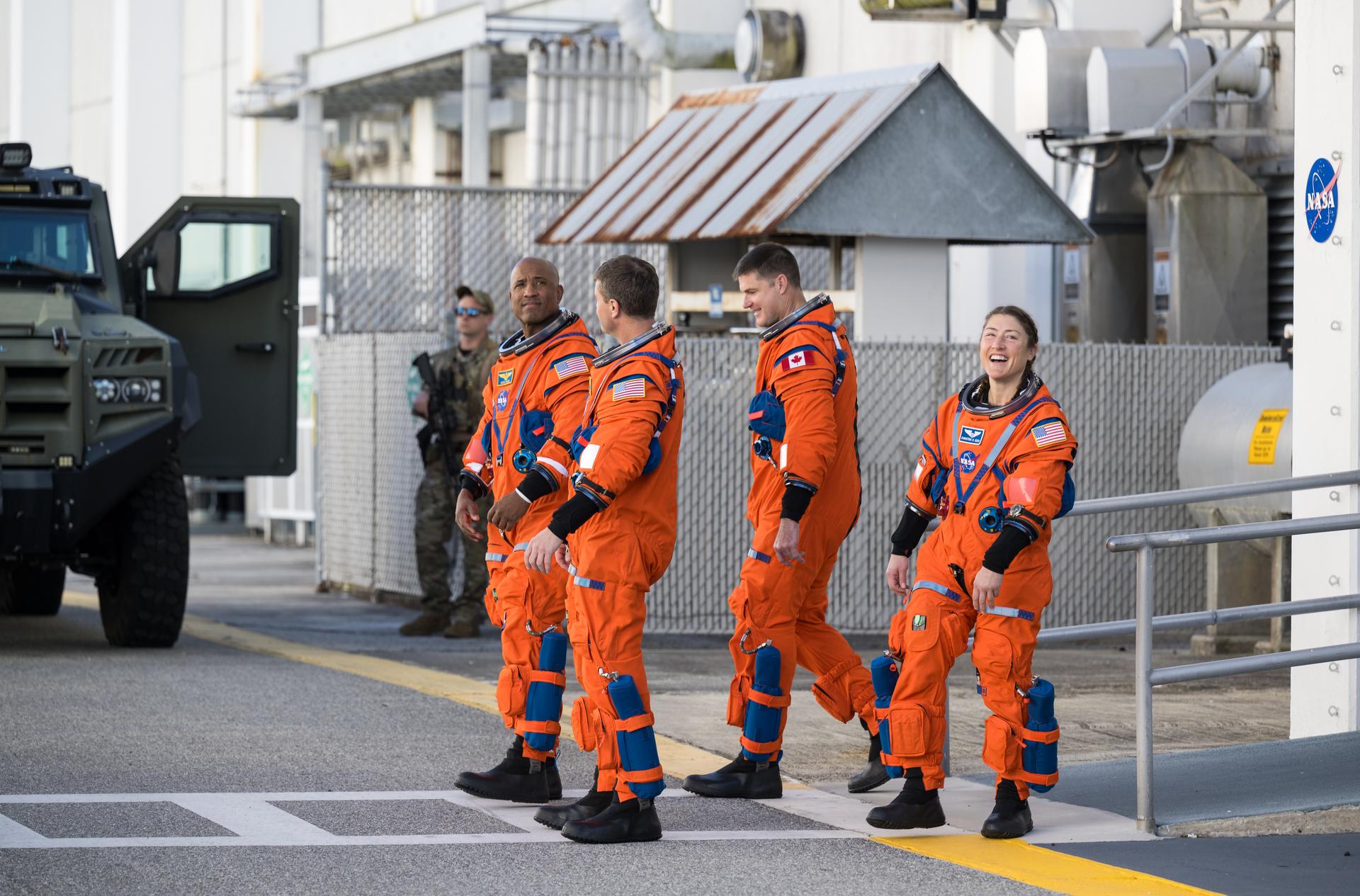
NASA astronauts Reid Wiseman, commander; Victor Glover, pilot; Christina Koch, mission specialist; and CSA (Canadian Space Agency) astronaut Jeremy Hansen, mission specialist are seen as they depart the Neil A. Armstrong Operations and Checkout Building to board their Orion spacecraft atop NASA’s Space Launch System rocket inside the Vehicle Assembly Building as part of the Artemis II countdown demonstration test, Saturday, Dec. 20, 2025, at NASA’s Kennedy Space Center in Florida. For this operation, the Artemis II crew and launch teams are simulating the launch day timeline including suit-up, walkout, and spacecraft ingress and egress. Through the Artemis campaign, NASA will send astronauts to explore the Moon for scientific discovery, economic benefits, and to build the foundation for the first crewed missions to Mars, for the benefit of all. Photo Credit: (NASA/Aubrey Gemignani)

Personnel from NASA’s Artemis Landing and Recovery team and U.S. Navy aboard a H60-S Seahawk helicopter retrieve the Artemis II astronauts after splashing down in the Pacific Ocean following their 10-day journey around the Moon for scientific discovery, economic benefits, and to build on our foundation for the first crewed missions to Mars. NASA's Orion spacecraft carrying Artemis II Commander Reid Wiseman, Pilot Victor Glover, and Mission Specialist Christina Koch from NASA, along with Mission Specialist Jeremy Hansen from the CSA (Canadian Space Agency) successfully splashed down in the Pacific Ocean near San Diego, California, at 5:07 p.m. PDT, (8:07 p.m. EDT) on Friday, April 10, 2026.
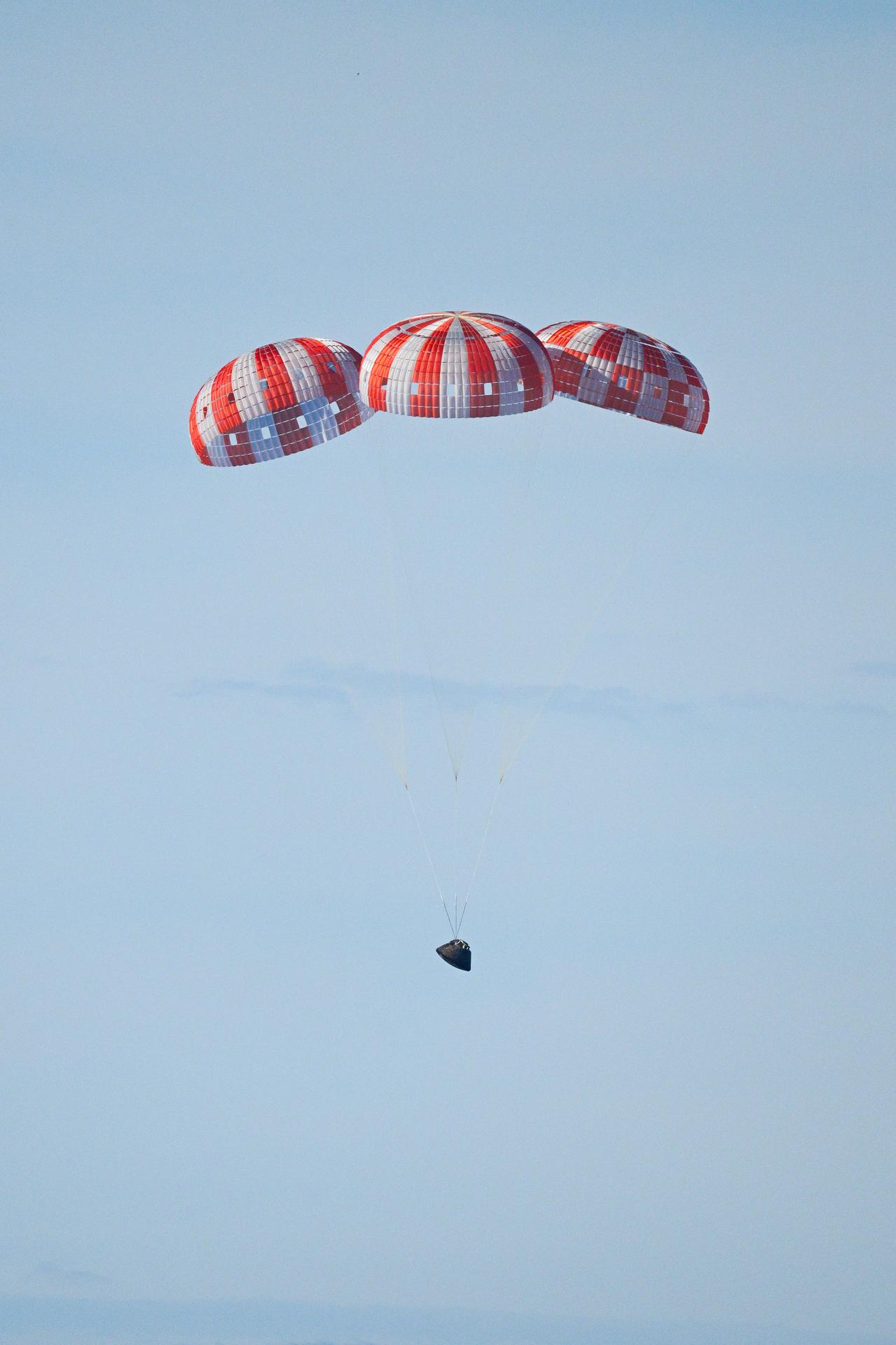
Parachutes secured to NASA’s Orion spacecraft deploy before splashdown in the Pacific Ocean near San Diego, California, on Friday, April 10, 2026, for the Artemis II test flight. The Artemis II mission carrying Artemis II Commander Reid Wiseman, Pilot Victor Glover, and Mission Specialist Christina Koch from NASA, along with Mission Specialist Jeremy Hansen from the CSA (Canadian Space Agency), launched on Wednesday, April 1, from NASA’s Kennedy Space Center in Florida to begin its 10-day journey around the Moon for scientific discovery, economic benefits, and to build on our foundation for the first crewed missions to Mars. NASA’s Landing and Recovery team and the U.S. military are coordinating efforts to extract the Artemis II crew from Orion.
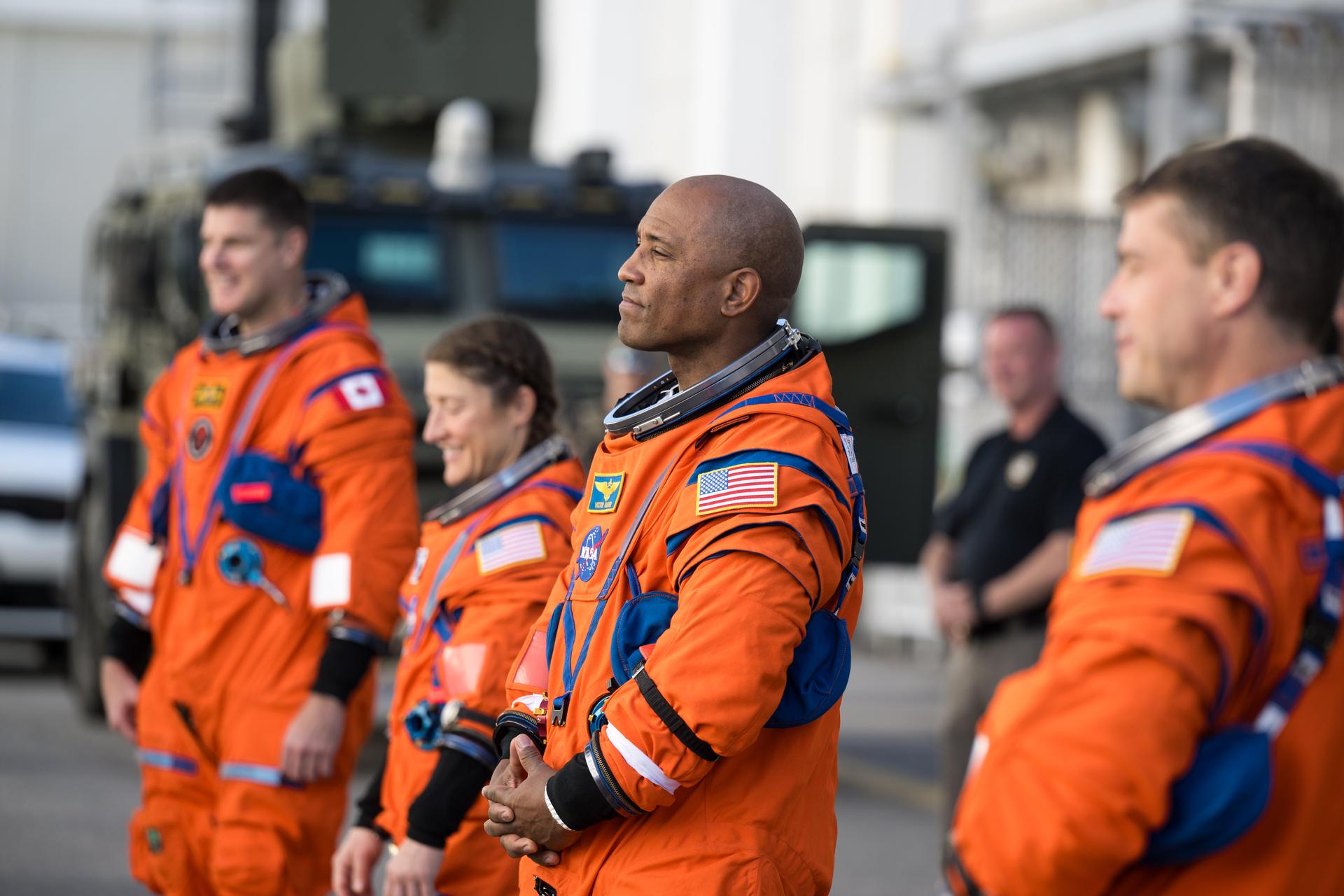
From right to left, NASA astronauts Reid Wiseman, commander; Victor Glover, pilot; Christina Koch, mission specialist; and CSA (Canadian Space Agency) astronaut Jeremy Hansen, mission specialist are seen as they depart the Neil A. Armstrong Operations and Checkout Building to board their Orion spacecraft atop NASA’s Space Launch System rocket inside the Vehicle Assembly Building as part of the Artemis II countdown demonstration test, Saturday, Dec. 20, 2025, at NASA’s Kennedy Space Center in Florida. For this operation, the Artemis II crew and launch teams are simulating the launch day timeline including suit-up, walkout, and spacecraft ingress and egress. Through the Artemis campaign, NASA will send astronauts to explore the Moon for scientific discovery, economic benefits, and to build the foundation for the first crewed missions to Mars, for the benefit of all. Photo Credit: (NASA/Aubrey Gemignani)
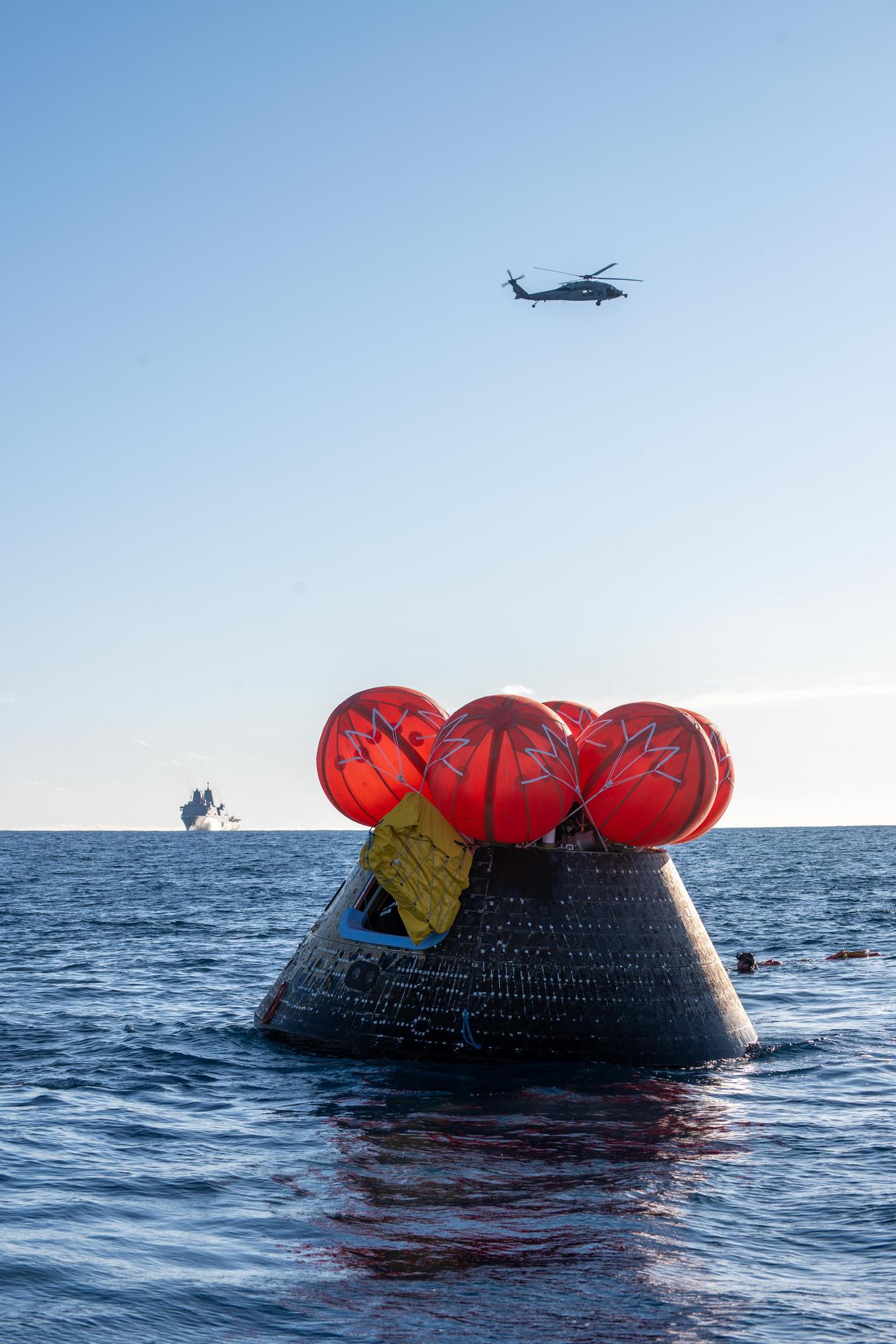
NASA's Orion spacecraft carrying Artemis II Commander Reid Wiseman, Pilot Victor Glover, and Mission Specialist Christina Koch from NASA, along with Mission Specialist Jeremy Hansen from the CSA (Canadian Space Agency), floats in the Pacific Ocean near San Diego, California, at 5:07 p.m. PDT, (8:07 p.m. EDT) on Friday, April 10, 2026. NASA’s Landing and Recovery team and U.S. Navy personnel aboard an inflatable raft, called the front porch, and a H60-S Seahawk helicopter hovers above to communicate Orion’s location back to USS John P. Murtha to coordinate efforts to secure the spacecraft in the well deck of the ship. The Artemis II test flight launched on Wednesday, April 1, from NASA’s Kennedy Space Center in Florida to begin its 10-day journey around the Moon for scientific discovery, economic benefits, and to build on our foundation for the first crewed missions to Mars.
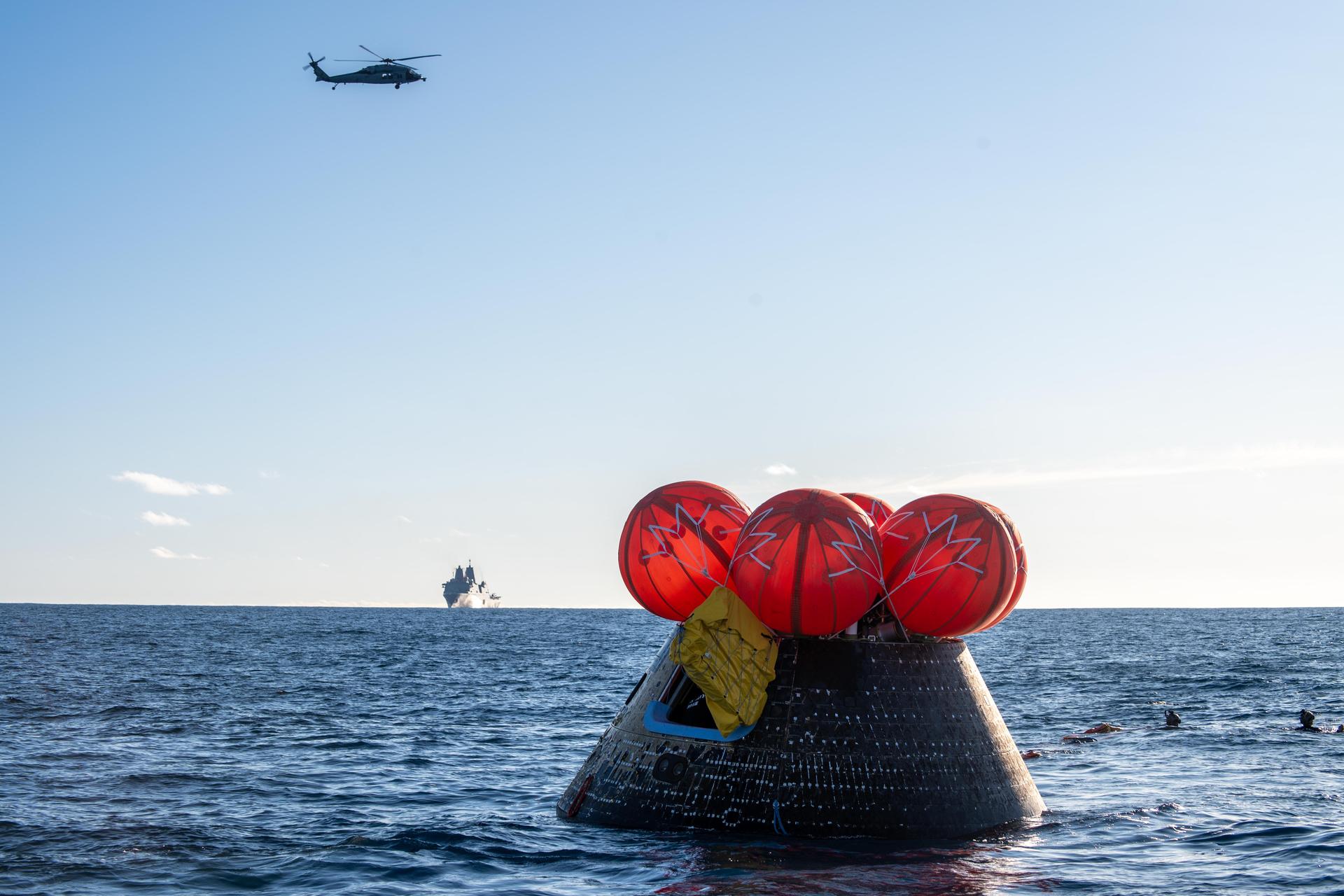
NASA's Orion spacecraft carrying Artemis II Commander Reid Wiseman, Pilot Victor Glover, and Mission Specialist Christina Koch from NASA, along with Mission Specialist Jeremy Hansen from the CSA (Canadian Space Agency), floats in the Pacific Ocean near San Diego, California, at 5:07 p.m. PDT, (8:07 p.m. EDT) on Friday, April 10, 2026. NASA’s Landing and Recovery team and U.S. Navy personnel aboard an inflatable raft, called the front porch, and a H60-S Seahawk helicopter hovers above to communicate Orion’s location back to USS John P. Murtha to coordinate efforts to secure the spacecraft in the well deck of the ship. The Artemis II test flight launched on Wednesday, April 1, from NASA’s Kennedy Space Center in Florida to begin its 10-day journey around the Moon for scientific discovery, economic benefits, and to build on our foundation for the first crewed missions to Mars.

U.S. Navy airmen and sailors military prepare on Tuesday, April 7, 2026, for the splashdown of NASA's Orion spacecraft carrying the Artemis II crew into the Pacific Ocean off the coast of San Diego, California scheduled for Friday, April 10. The Artemis II mission carrying Artemis II Commander Reid Wiseman, Pilot Victor Glover, and Mission Specialist Christina Koch from NASA, along with Mission Specialist Jeremy Hansen from the CSA (Canadian Space Agency), launched on Wednesday, April 1, from NASA’s Kennedy Space Center in Florida to begin its 10-day journey around the Moon for scientific discovery, economic benefits, and to build on our foundation for the first crewed missions to Mars.

U.S. Navy airmen and sailors military prepare on Tuesday, April 7, 2026, for the splashdown of NASA's Orion spacecraft carrying the Artemis II crew into the Pacific Ocean off the coast of San Diego, California scheduled for Friday, April 10. The Artemis II mission carrying Artemis II Commander Reid Wiseman, Pilot Victor Glover, and Mission Specialist Christina Koch from NASA, along with Mission Specialist Jeremy Hansen from the CSA (Canadian Space Agency), launched on Wednesday, April 1, from NASA’s Kennedy Space Center in Florida to begin its 10-day journey around the Moon for scientific discovery, economic benefits, and to build on our foundation for the first crewed missions to Mars.
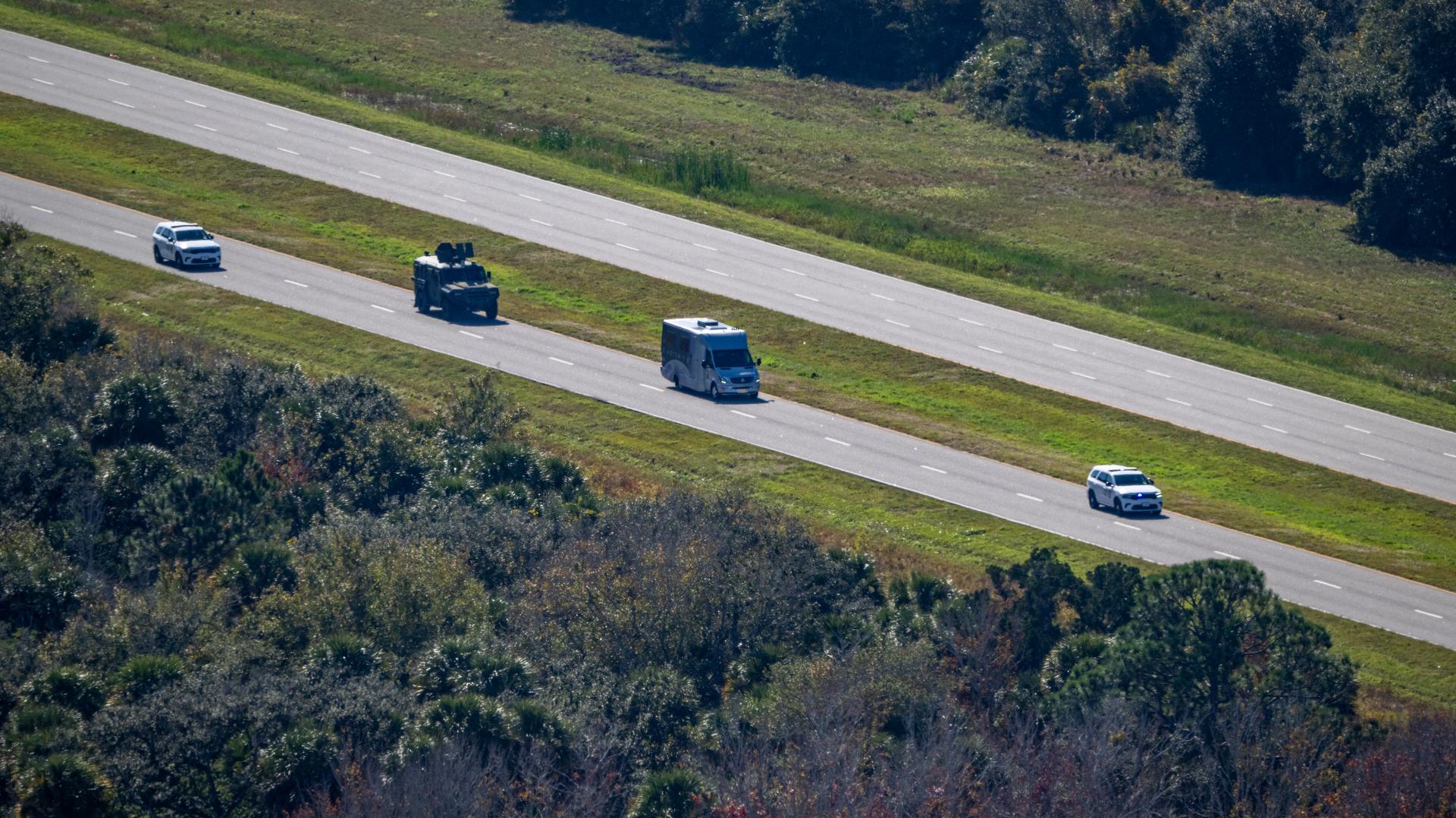
The astronaut transport vehicle carrying Artemis II crewmembers NASA astronauts Reid Wiseman, commander; Victor Glover, pilot; Christina Koch, mission specialist; and CSA (Canadian Space Agency) astronaut Jeremy Hansen, mission specialist is seen as it approaches the Vehicle Assembly Building during the Artemis II countdown demonstration test, Saturday, Dec. 20, 2025, at NASA’s Kennedy Space Center in Florida. For this operation, the Artemis II crew and launch teams are simulating the launch day timeline including suit-up, walkout, and spacecraft ingress and egress. Through the Artemis campaign, NASA will send astronauts to explore the Moon for scientific discovery, economic benefits, and to build the foundation for the first crewed missions to Mars, for the benefit of all. Photo Credit: (NASA/Keegan Barber)
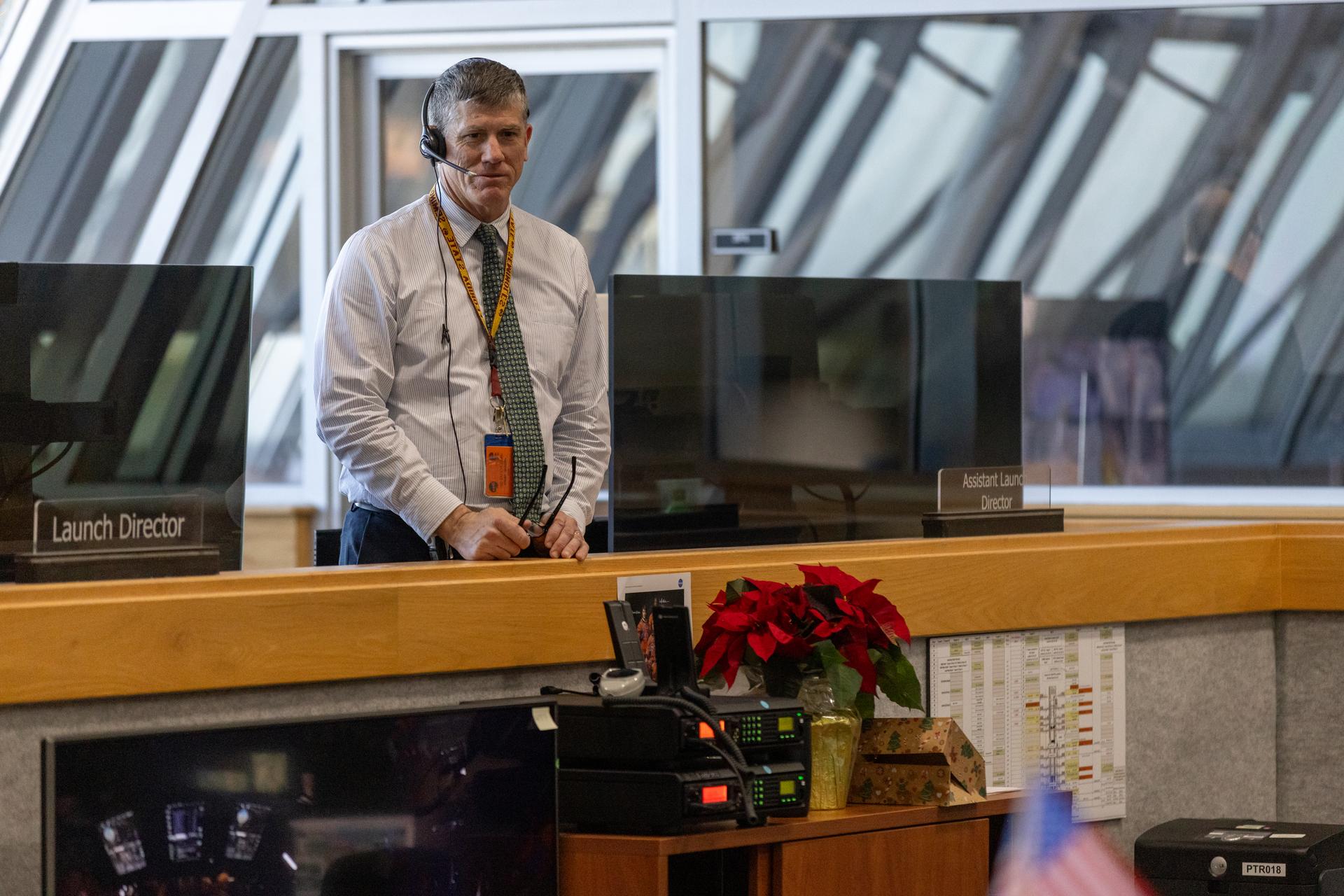
Jeremy Graeber, assistant launch director, monitors the progress of a countdown demonstration test with Artemis II crewmembers NASA astronauts Reid Wiseman, commander; Victor Glover, pilot; Christina Koch, mission specialist; and CSA (Canadian Space Agency) astronaut Jeremy Hansen, mission specialist onboard their Orion spacecraft from Firing Room 1 of the Rocco A. Petrone Launch Control Center, Saturday, Dec. 20, 2025, at NASA’s Kennedy Space Center in Florida. For this operation, the Artemis II crew and launch teams are simulating the launch day timeline including suit-up, walkout, and spacecraft ingress and egress. Through the Artemis campaign, NASA will send astronauts to explore the Moon for scientific discovery, economic benefits, and to build the foundation for the first crewed missions to Mars, for the benefit of all.
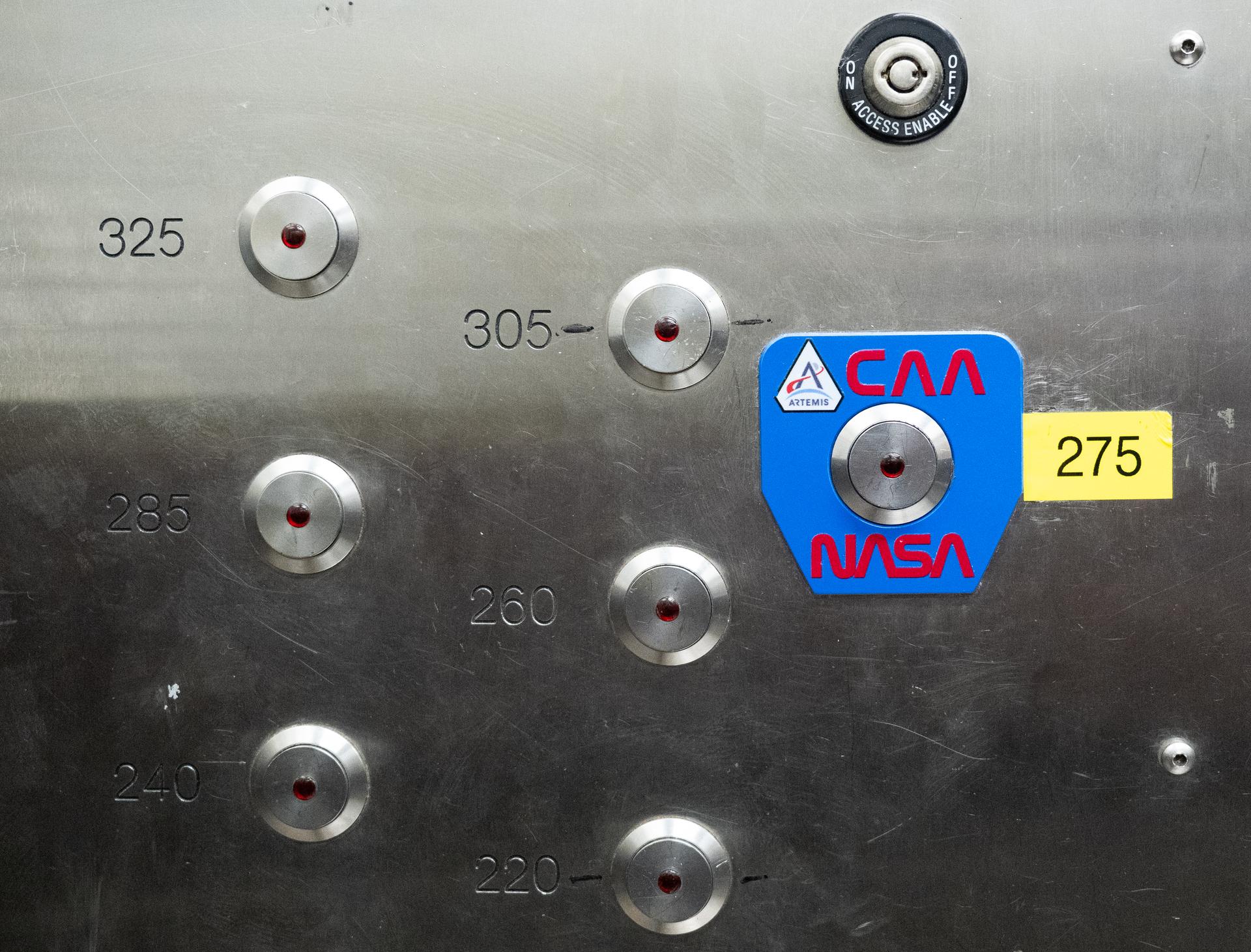
The elevator button for the 275-foot level of the mobile launcher is seen teams prepare for Artemis II crewmembers NASA astronauts Reid Wiseman, commander; Victor Glover, pilot; Christina Koch, mission specialist; and CSA (Canadian Space Agency) astronaut Jeremy Hansen, mission specialist; to arrive and board their Orion spacecraft atop NASA’s Space Launch System rocket during the Artemis II countdown demonstration test, Saturday, Dec. 20, 2025, inside the Vehicle Assembly Building at NASA’s Kennedy Space Center in Florida. For this operation, the Artemis II crew and launch teams are simulating the launch day timeline including suit-up, walkout, and spacecraft ingress and egress. Through the Artemis campaign, NASA will send astronauts to explore the Moon for scientific discovery, economic benefits, and to build the foundation for the first crewed missions to Mars, for the benefit of all. Photo Credit: (NASA/Joel Kowsky)
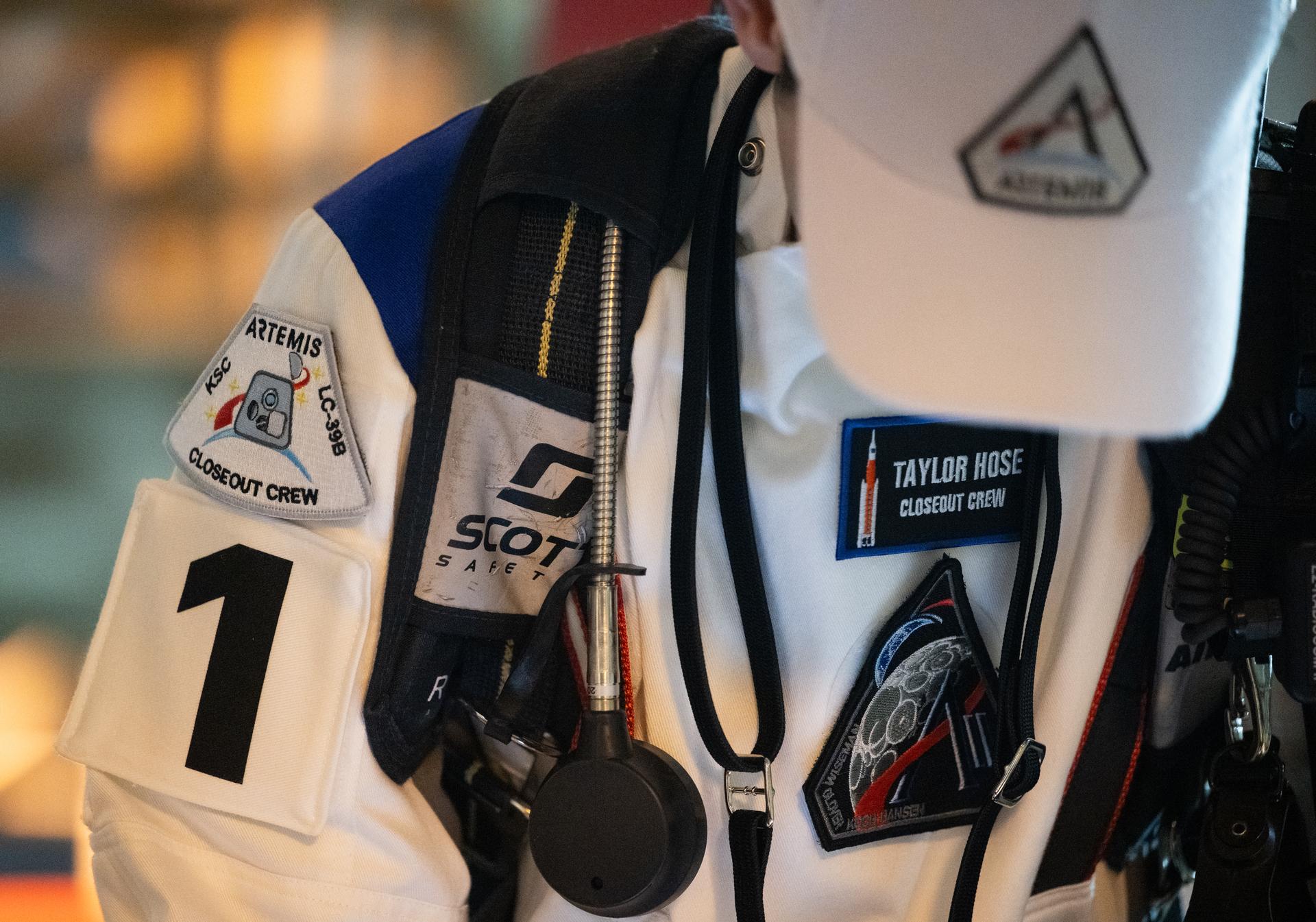
Taylor Hose, Closeout Crew lead, is seen as he prepares for the arrival of Artemis II crewmembers NASA astronauts Reid Wiseman, commander; Victor Glover, pilot; Christina Koch, mission specialist; and CSA (Canadian Space Agency) astronaut Jeremy Hansen, mission specialist; at the 275-foot level of the mobile launcher to board their Orion spacecraft atop NASA’s Space Launch System rocket during the Artemis II countdown demonstration test, Saturday, Dec. 20, 2025, inside the Vehicle Assembly Building at NASA’s Kennedy Space Center in Florida. For this operation, the Artemis II crew and launch teams are simulating the launch day timeline including suit-up, walkout, and spacecraft ingress and egress. Through the Artemis campaign, NASA will send astronauts to explore the Moon for scientific discovery, economic benefits, and to build the foundation for the first crewed missions to Mars, for the benefit of all. Photo Credit: (NASA/Joel Kowsky)
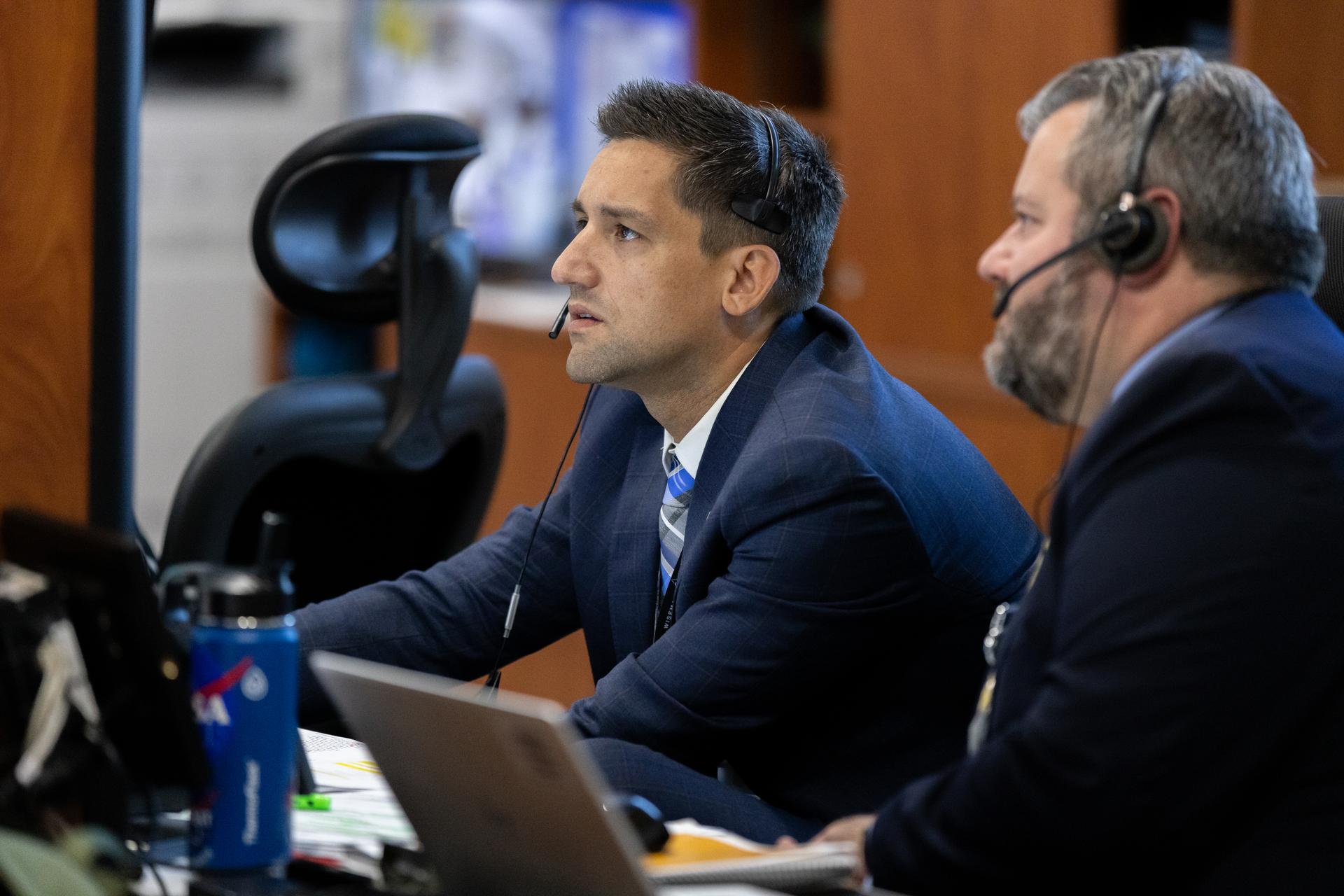
Dan Florez, NASA test director (second from right), monitors the progress of a countdown demonstration test with Artemis II crewmembers NASA astronauts Reid Wiseman, commander; Victor Glover, pilot; Christina Koch, mission specialist; and CSA (Canadian Space Agency) astronaut Jeremy Hansen, mission specialist onboard their Orion spacecraft from Firing Room 1 of the Rocco A. Petrone Launch Control Center, Saturday, Dec. 20, 2025, at NASA’s Kennedy Space Center in Florida. For this operation, the Artemis II crew and launch teams are simulating the launch day timeline including suit-up, walkout, and spacecraft ingress and egress. Through the Artemis campaign, NASA will send astronauts to explore the Moon for scientific discovery, economic benefits, and to build the foundation for the first crewed missions to Mars, for the benefit of all.
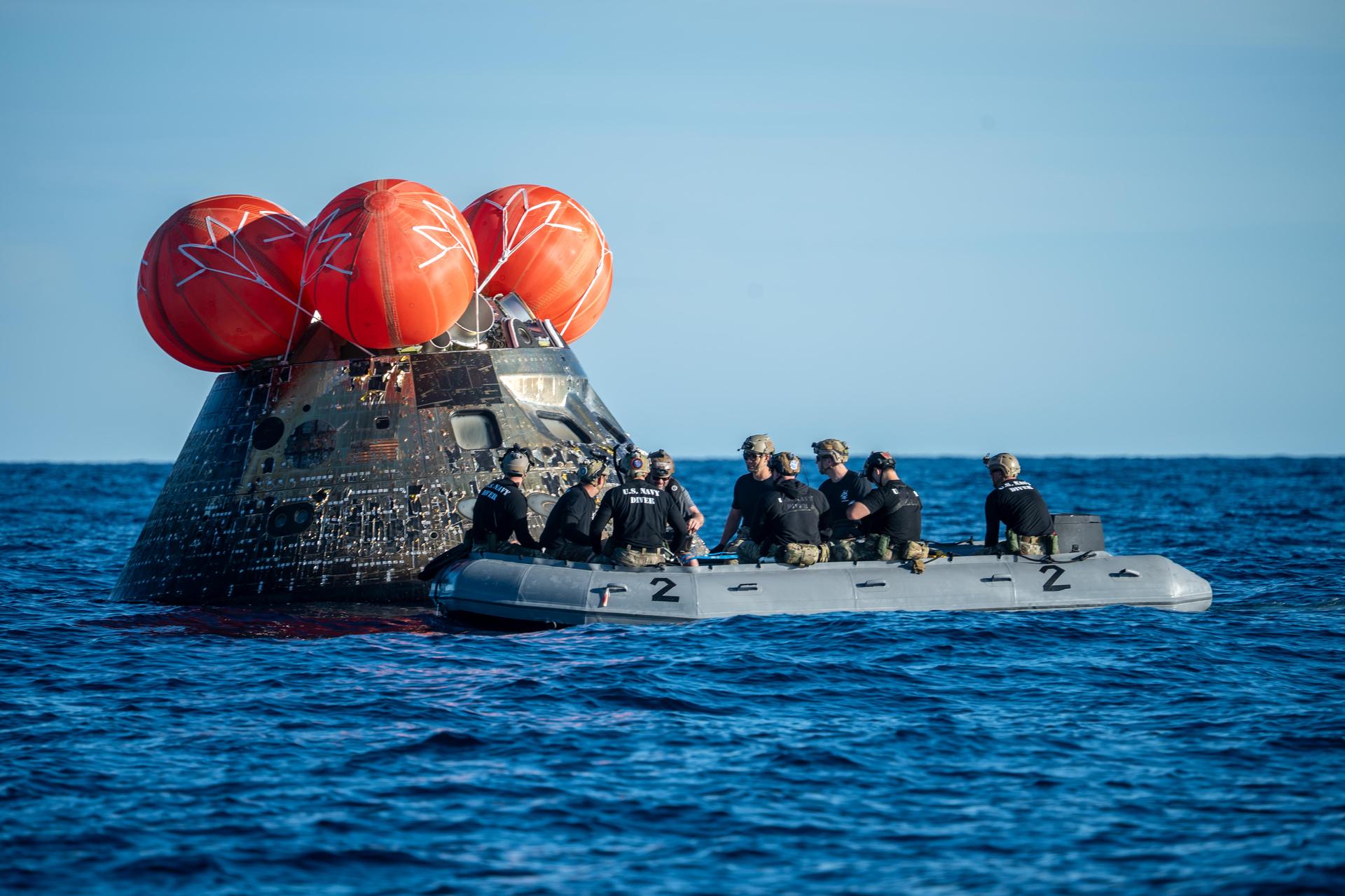
NASA’s Landing and Recovery team, along with U.S. Navy personnel aboard an inflatable raft approach NASA’s Orion spacecraft carrying Artemis II Commander Reid Wiseman, Pilot Victor Glover, and Mission Specialist Christina Koch from NASA, along with Mission Specialist Jeremy Hansen from the CSA (Canadian Space Agency), following splashdown in the Pacific Ocean near San Diego, California, at 5:07 p.m. PDT, (8:07 p.m. EDT) on Friday, April 10, 2026. The Artemis II test flight launched on Wednesday, April 1, from NASA’s Kennedy Space Center in Florida to begin its 10-day journey around the Moon for scientific discovery, economic benefits, and to build on our foundation for the first crewed missions to Mars. NASA’s Landing and Recovery team and the U.S. military are helping the Artemis II crew out of their Orion spacecraft.
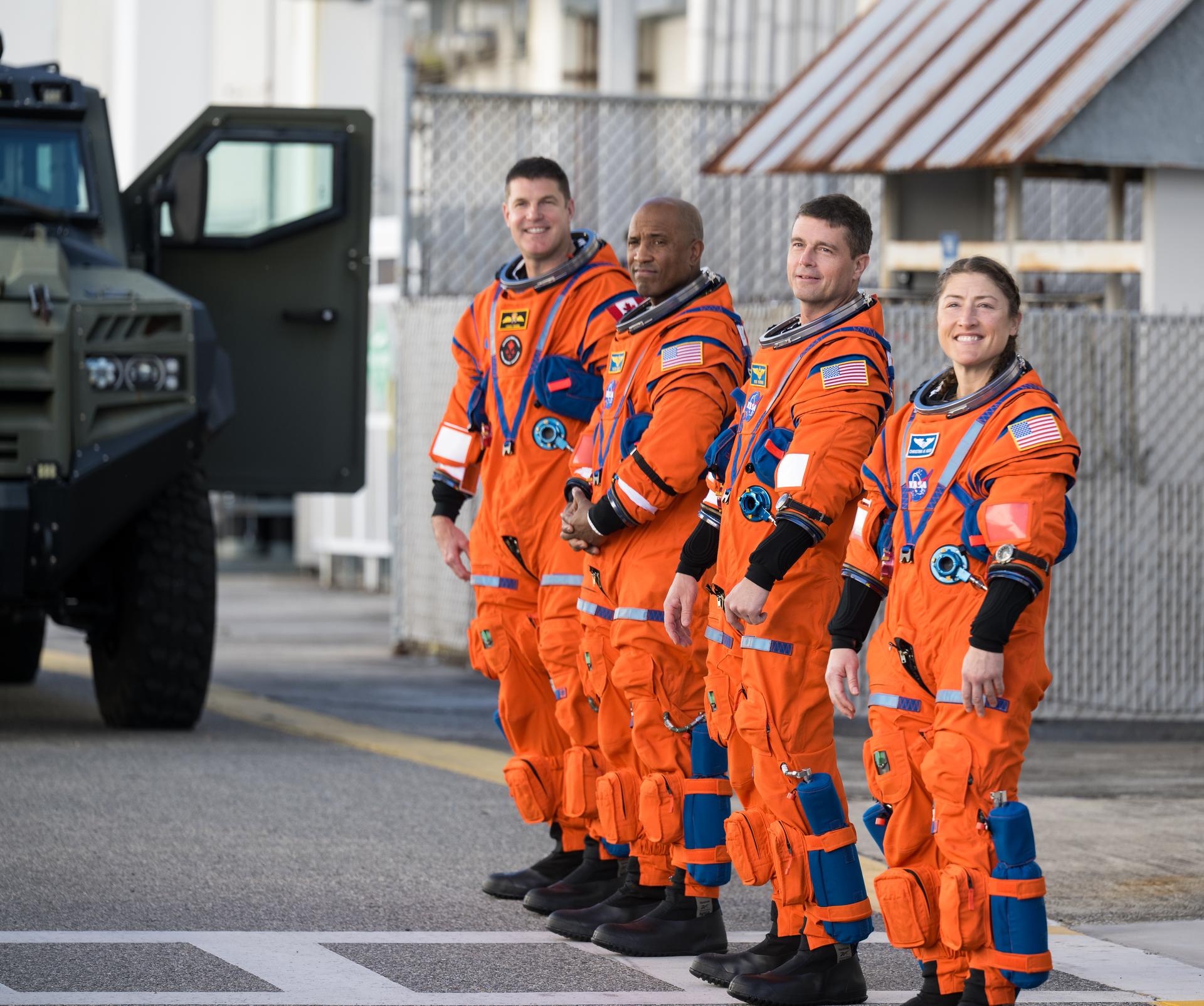
From right to left, NASA astronauts Christina Koch, mission specialist; Reid Wiseman, commander; Victor Glover, pilot; and CSA (Canadian Space Agency) astronaut Jeremy Hansen, mission specialist are seen as they depart the Neil A. Armstrong Operations and Checkout Building to board their Orion spacecraft atop NASA’s Space Launch System rocket inside the Vehicle Assembly Building as part of the Artemis II countdown demonstration test, Saturday, Dec. 20, 2025, at NASA’s Kennedy Space Center in Florida. For this operation, the Artemis II crew and launch teams are simulating the launch day timeline including suit-up, walkout, and spacecraft ingress and egress. Through the Artemis campaign, NASA will send astronauts to explore the Moon for scientific discovery, economic benefits, and to build the foundation for the first crewed missions to Mars, for the benefit of all. Photo Credit: (NASA/Aubrey Gemignani)
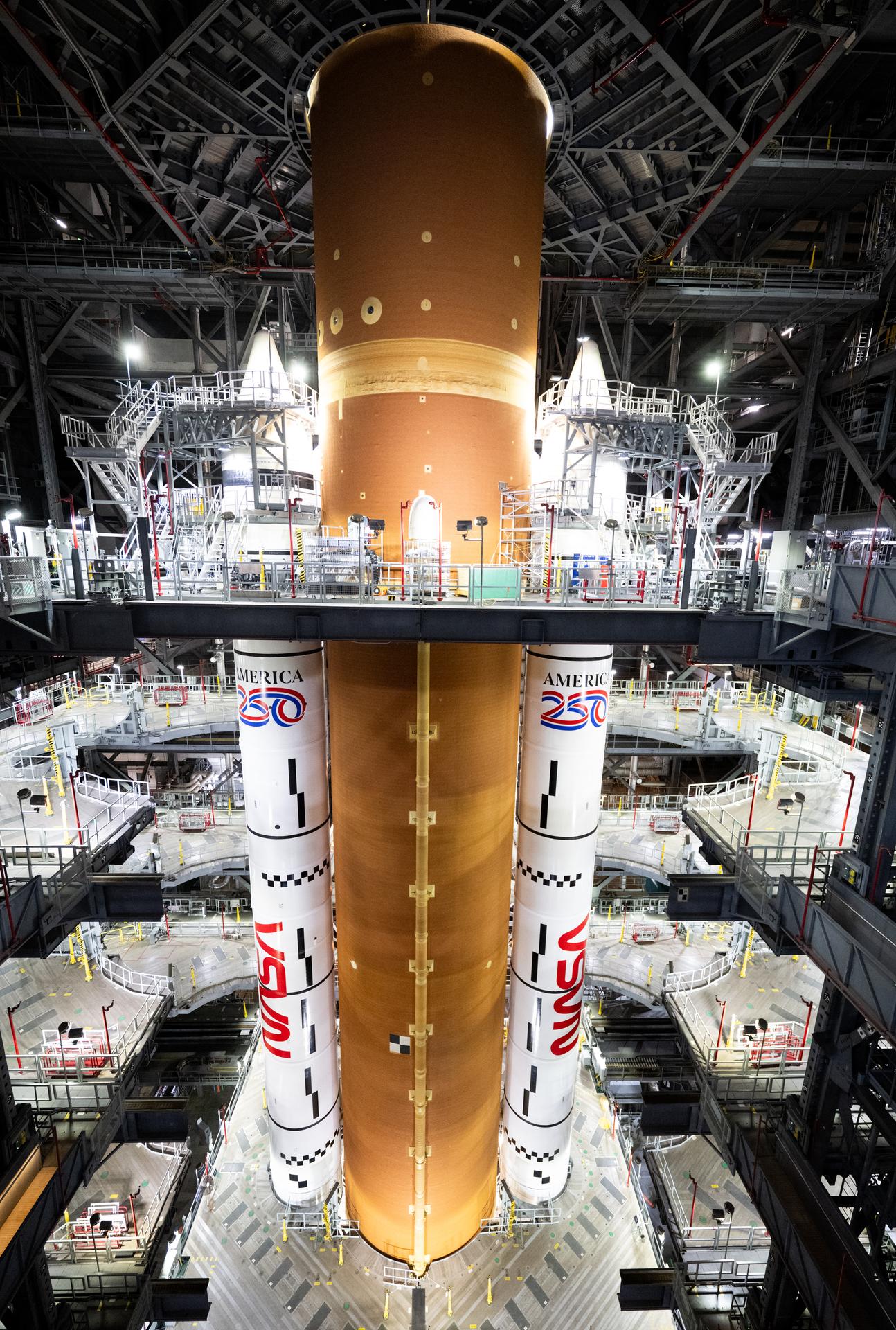
NASA’s Space Launch System rocket is seen inside high bay 3 of the Vehicle Assembly Building as teams await the arrival of Artemis II crewmembers NASA astronauts Reid Wiseman, commander; Victor Glover, pilot; Christina Koch, mission specialist; and CSA (Canadian Space Agency) astronaut Jeremy Hansen, mission specialist; to board their Orion spacecraft atop the rocket as part of the Artemis II countdown demonstration test, Saturday, Dec. 20, 2025, NASA’s Kennedy Space Center in Florida. For this operation, the Artemis II crew and launch teams are simulating the launch day timeline including suit-up, walkout, and spacecraft ingress and egress. Through the Artemis campaign, NASA will send astronauts to explore the Moon for scientific discovery, economic benefits, and to build the foundation for the first crewed missions to Mars, for the benefit of all. Photo Credit: (NASA/Joel Kowsky)
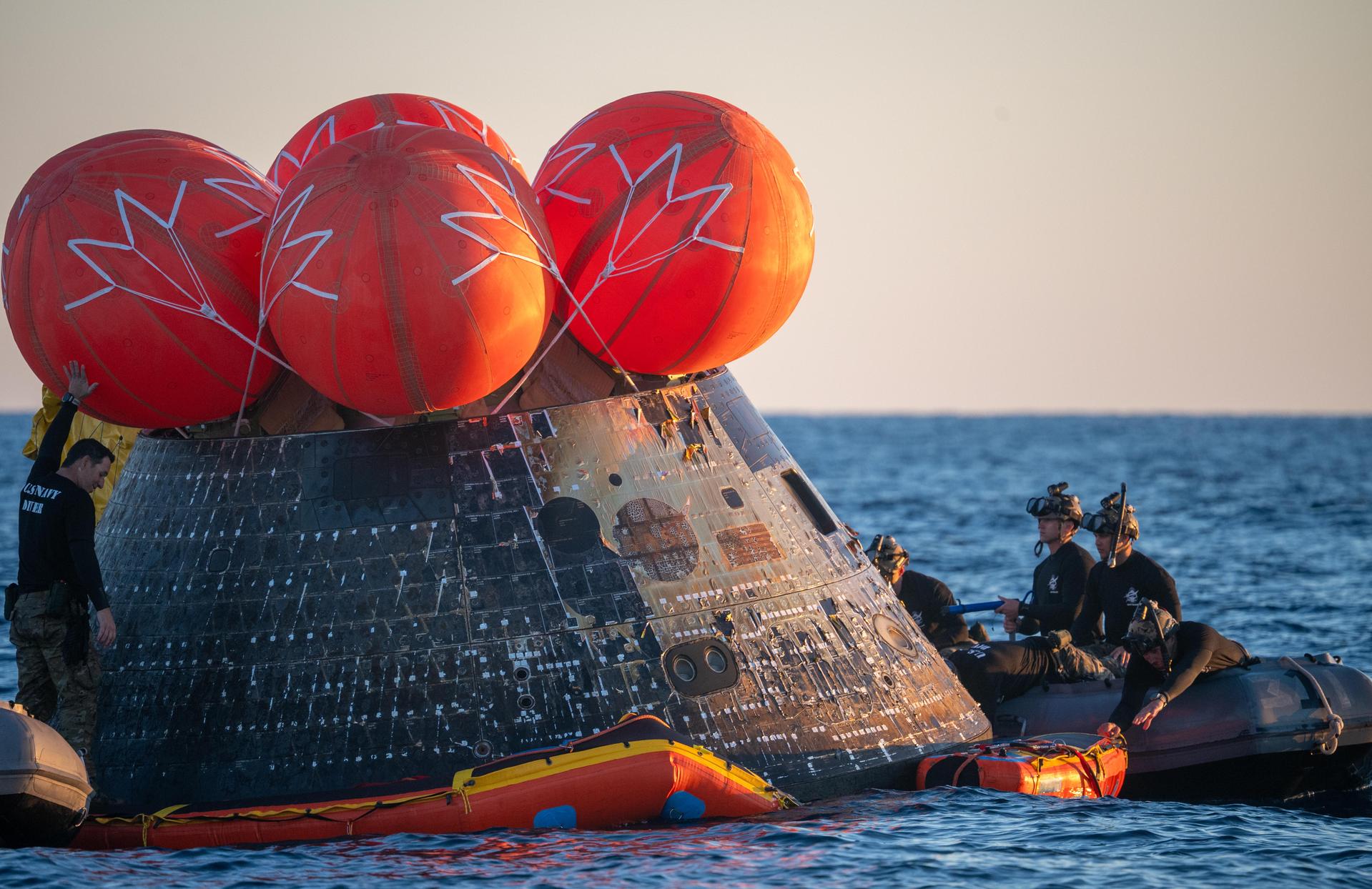
U.S. Navy personnel aboard an inflatable raft, called the front porch, help recover NASA's Orion spacecraft following its splashdown in the Pacific Ocean near San Diego, California, at 5:07 p.m. PDT, (8:07 p.m. EDT) on Friday, April 10, 2026, after the Artemis II test flight. The Artemis II mission carrying Artemis II Commander Reid Wiseman, Pilot Victor Glover, and Mission Specialist Christina Koch from NASA, along with Mission Specialist Jeremy Hansen from the CSA (Canadian Space Agency), launched on Wednesday, April 1, from NASA’s Kennedy Space Center in Florida to begin its 10-day journey around the Moon for scientific discovery, economic benefits, and to build on our foundation for the first crewed missions to Mars. NASA’s Landing and Recovery team and the U.S. Navy are coordinating efforts to secure Orion in the well deck of USS John P. Murtha.
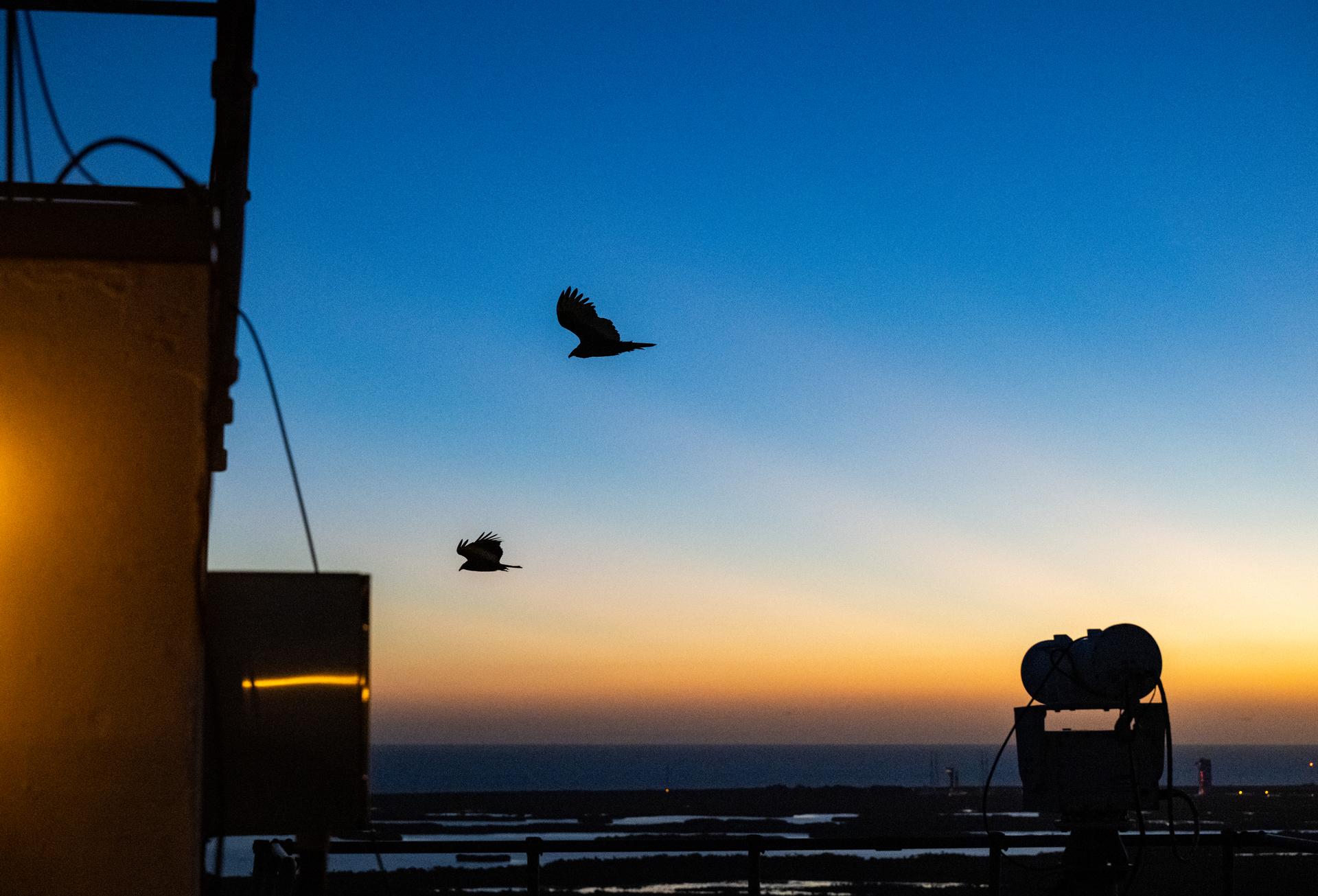
The sun rises shortly before Artemis II crewmembers NASA astronauts Reid Wiseman, commander; Victor Glover, pilot; Christina Koch, mission specialist; and CSA (Canadian Space Agency) astronaut Jeremy Hansen, mission specialist participate in the Artemis II countdown demonstration test, Saturday, Dec. 20, 2025, at NASA’s Kennedy Space Center in Florida. For this operation, the Artemis II crew and launch teams are simulating the launch day timeline including suit-up, walkout, and spacecraft ingress and egress. Through the Artemis campaign, NASA will send astronauts to explore the Moon for scientific discovery, economic benefits, and to build the foundation for the first crewed missions to Mars, for the benefit of all. Photo Credit: (NASA/Keegan Barber)
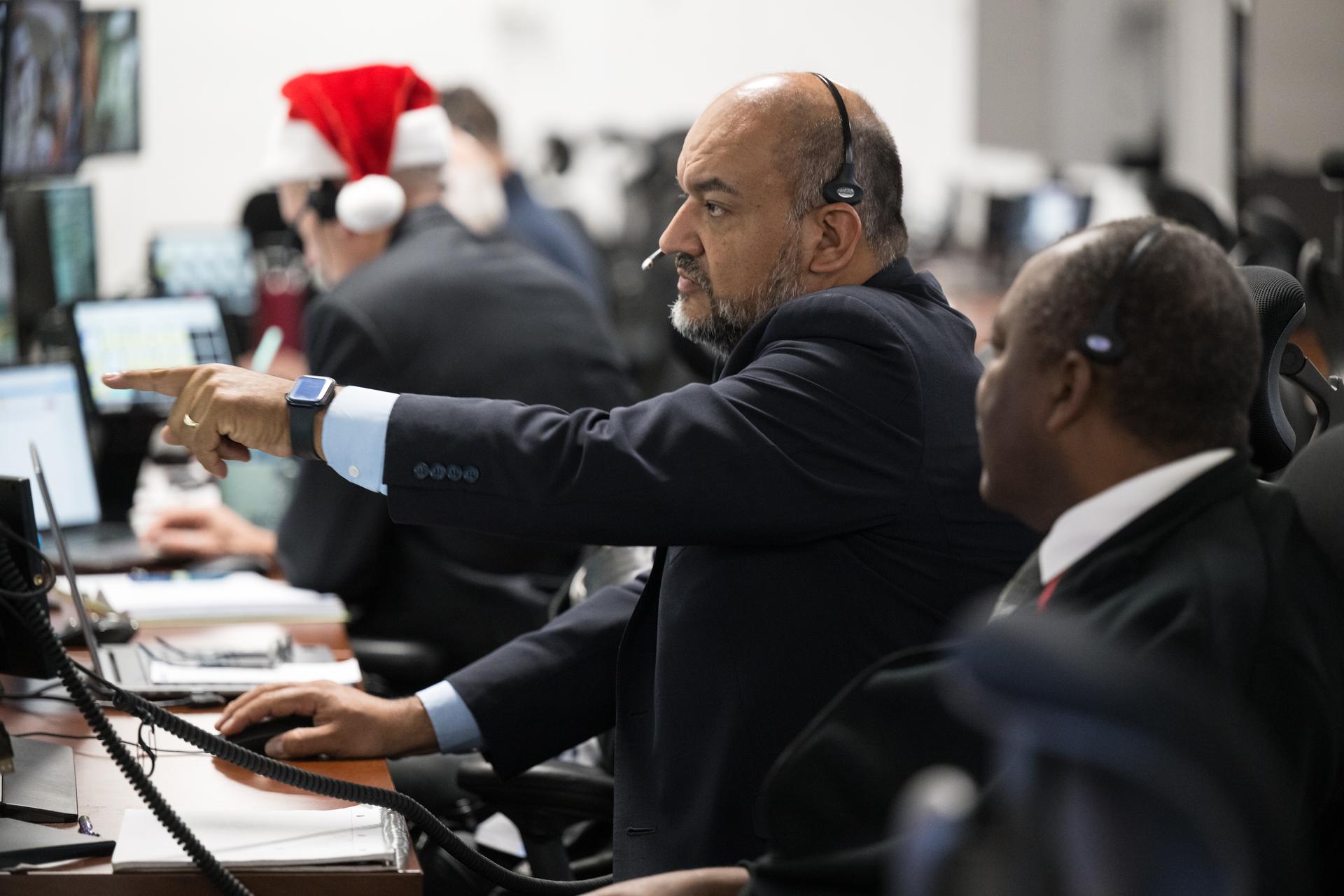
Teams monitor the progress of a Countdown Demonstration Test with Artemis II crewmembers NASA astronauts Reid Wiseman, commander; Victor Glover, pilot; Christina Koch, mission specialist; and CSA (Canadian Space Agency) astronaut Jeremy Hansen, mission specialist onboard their Orion spacecraft from Firing Room 2 of the Rocco A. Petrone Launch Control Center, Saturday, Dec. 20, 2025, at NASA’s Kennedy Space Center in Florida. For this operation, the Artemis II crew and launch teams are simulating the launch day timeline including suit-up, walkout, and spacecraft ingress and egress. Through the Artemis campaign, NASA will send astronauts to explore the Moon for scientific discovery, economic benefits, and to build the foundation for the first crewed missions to Mars, for the benefit of all. Photo Credit: (NASA/Aubrey Gemignani)

Members from NASA's Artemis Landing and Recovery team and U.S. Navy pose in front of a H60-S Seahawk helicopter while holding NASA's Artemis II mission patch aboard the USS John P. Murtha following the successful splashdown in the Pacific Ocean near San Diego, California, at 5:07 p.m. PDT, (8:07 p.m. EDT) on Friday, April 10, 2026. The Artemis II test flight, carrying Commander Reid Wiseman, Pilot Victor Glover, and Mission Specialist Christina Koch from NASA, along with Mission Specialist Jeremy Hansen from the CSA (Canadian Space Agency) launched on Wednesday, April 1, from NASA’s Kennedy Space Center in Florida to begin its 10-day journey around the Moon for scientific discovery, economic benefits, and to build on our foundation for the first crewed missions to Mars.
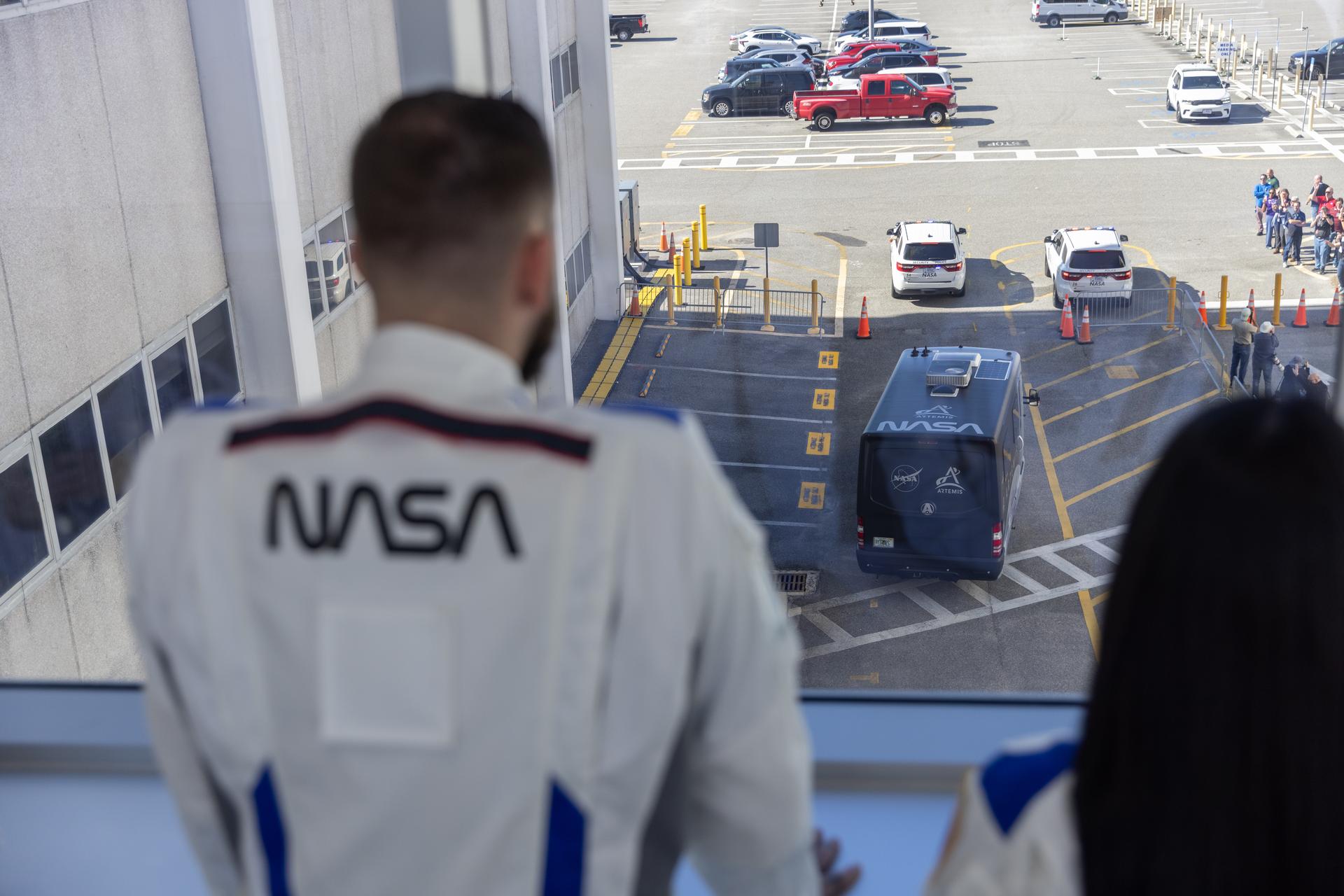
NASA astronauts Reid Wiseman, Artemis II commander, Victor Glover, Artemis II pilot, Christina Koch, Artemis II mission specialist and CSA (Canadian Space Agency) astronaut Jeremy Hansen, Artemis II mission specialist, depart the Neil A. Armstrong Operations and Checkout Building to travel to the Vehicle Assembly Building to board their Orion spacecraft atop NASA’s SLS (Space Launch System) rocket as part of the Artemis II Countdown Demonstration Test on Saturday, Dec. 20, 2025 at NASA’s Kennedy Space Center in Florida. For this operation, the Artemis II crew and launch team are simulating the launch day timeline including suit-up, walkout, and climbing in and out of the spacecraft. Through the Artemis campaign, NASA will send astronauts to explore the Moon for scientific discovery, economic benefits, and to build the foundation for the first crewed missions to Mars, for the benefit of all.
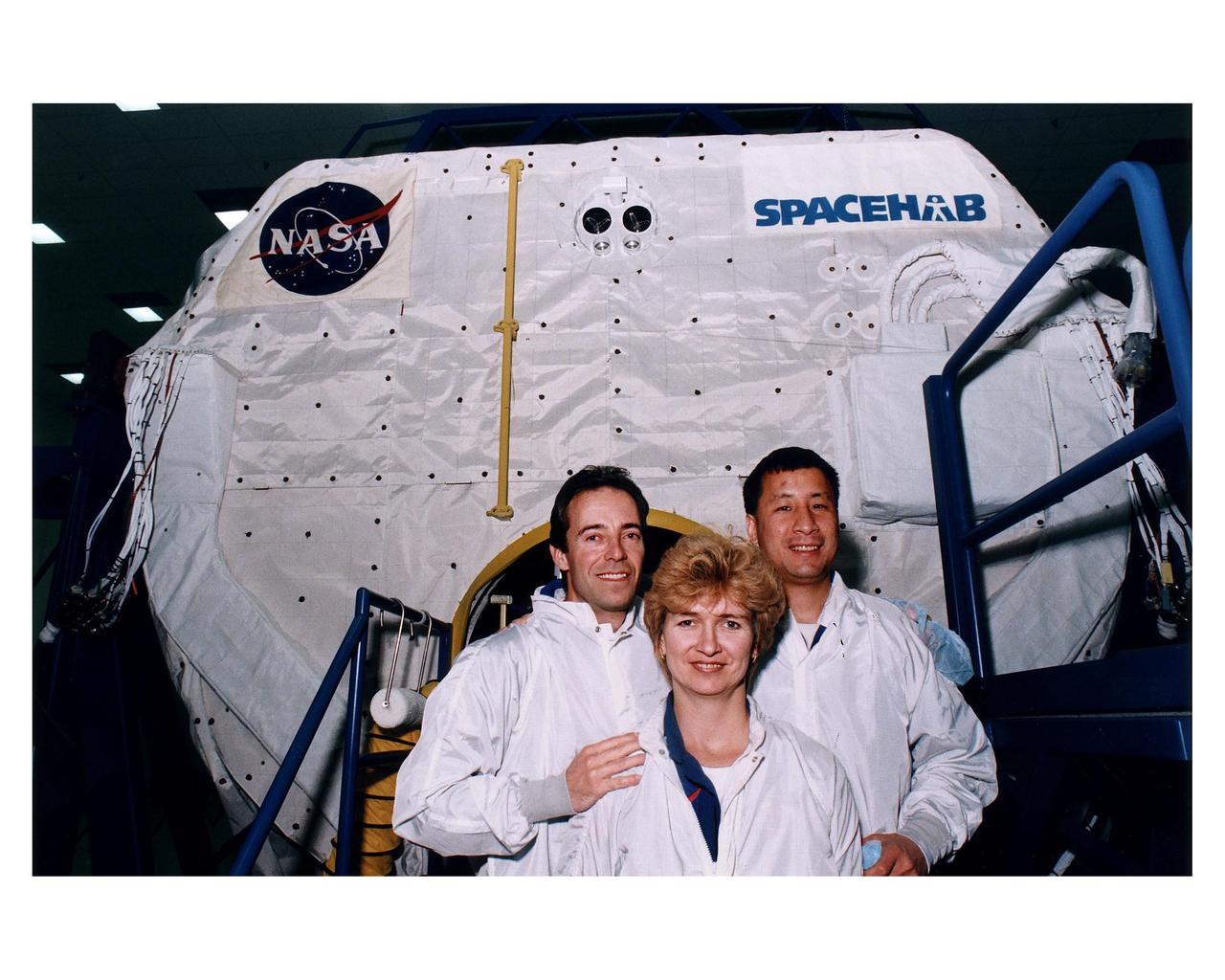
STS-84 crew members pose outside the SPACEHAB Double Module, which will carry more than 6,000 pounds of scientific experiments and logistics to the Russian Space Station Mir. From left, are Mission Specialists Jean-Francois Clervoy of the European Space Agency, Elena V. Kondakova of the Russian Space Agency, and Edward Tsang Lu of NASA. They are participating in the Crew Equipment Integration Test (CEIT) at the SPACEHAB Payload Processing Facility in Cape Canaveral. STS-84 will be the sixth docking of the Space Shuttle with Mir. It also will be the third consecutive crew member exchange of U.S. astronauts aboard Mir. STS-84 Mission Specialist C. Michael Foale will replace astronaut Jerry M. Linenger on Mir. Linenger has been on Mir since the STS-81 mission in January. Foale is scheduled to remain on Mir about four months. STS-84 is targeted for a May 15 liftoff
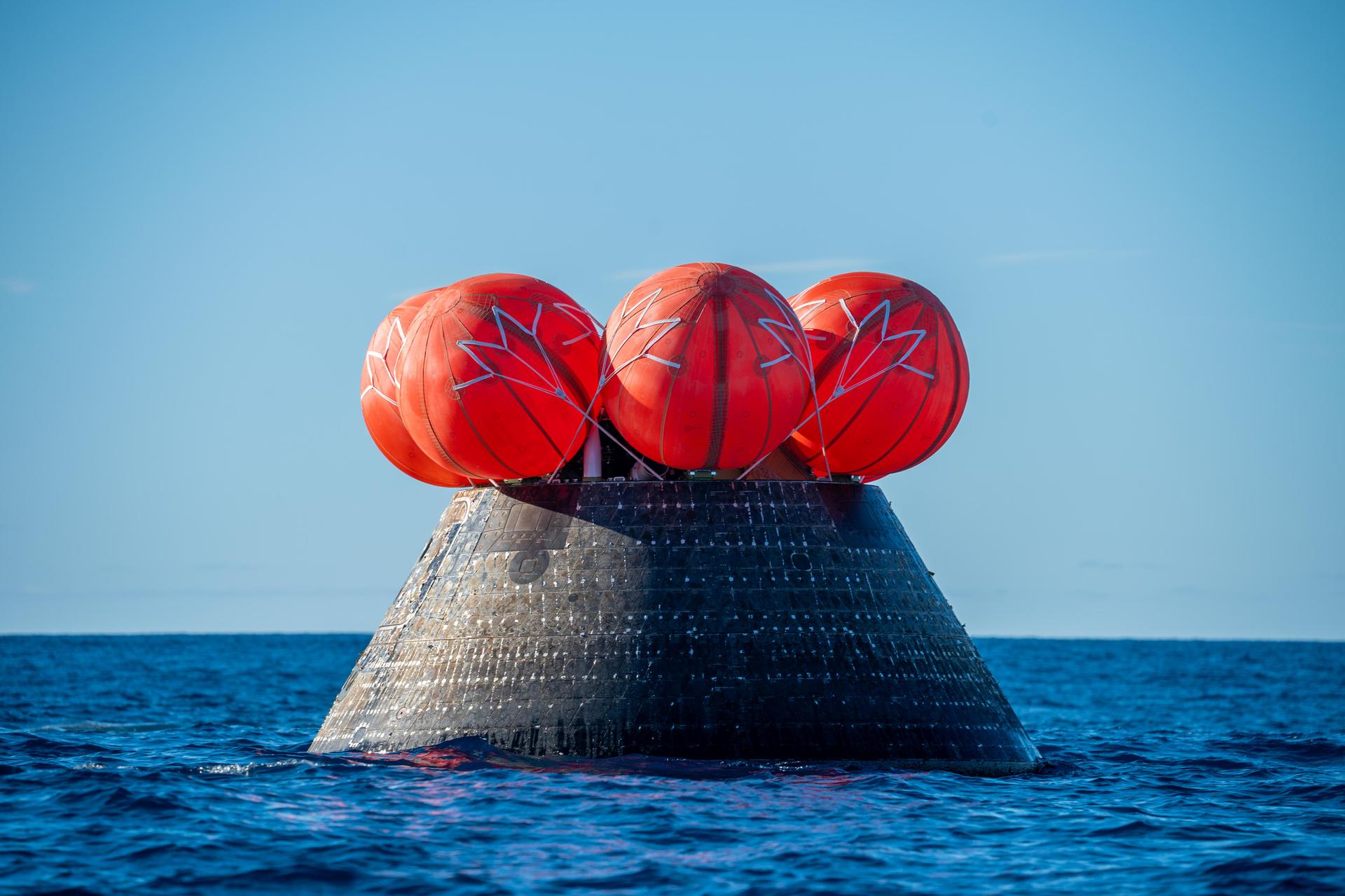
NASA's Orion spacecraft carrying Artemis II Commander Reid Wiseman, Pilot Victor Glover, and Mission Specialist Christina Koch from NASA, along with Mission Specialist Jeremy Hansen from the CSA (Canadian Space Agency), splashes down in the Pacific Ocean near San Diego, California, at 5:07 p.m. PDT, (8:07 p.m. EDT) on Friday, April 10, 2026. The Artemis II test flight launched on Wednesday, April 1, from NASA’s Kennedy Space Center in Florida to begin its 10-day journey around the Moon for scientific discovery, economic benefits, and to build on our foundation for the first crewed missions to Mars. NASA’s Landing and Recovery team and the U.S. military are coordinating efforts to extract the Artemis II crew from the Orion spacecraft.
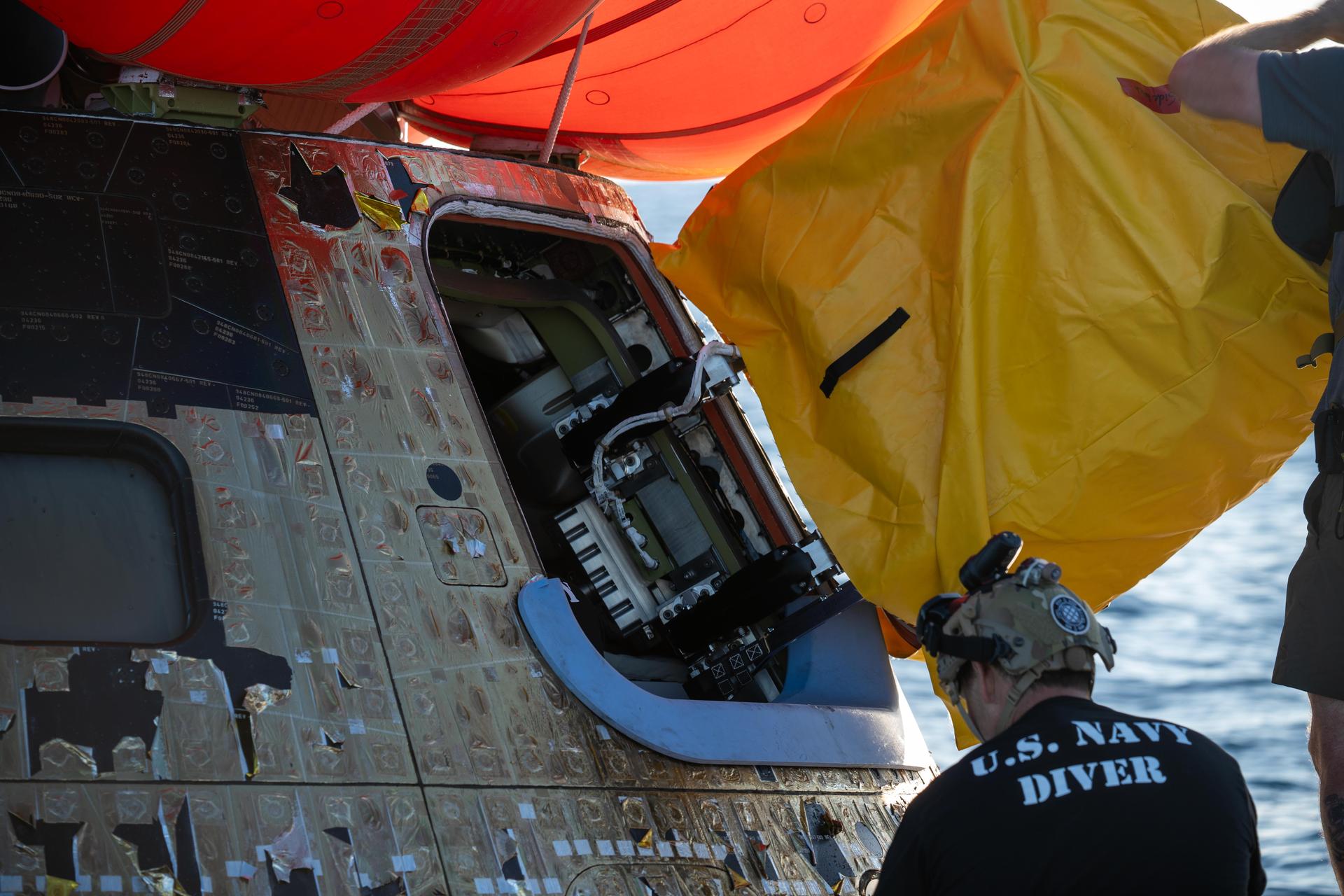
NASA’s Landing and Recovery team, along with U.S. Navy personnel aboard an inflatable raft approach NASA’s Orion spacecraft carrying Artemis II Commander Reid Wiseman, Pilot Victor Glover, and Mission Specialist Christina Koch from NASA, along with Mission Specialist Jeremy Hansen from the CSA (Canadian Space Agency), following splashdown in the Pacific Ocean near San Diego, California, at 5:07 p.m. PDT, (8:07 p.m. EDT) on Friday, April 10, 2026. The Artemis II test flight launched on Wednesday, April 1, from NASA’s Kennedy Space Center in Florida to begin its 10-day journey around the Moon for scientific discovery, economic benefits, and to build on our foundation for the first crewed missions to Mars. NASA’s Landing and Recovery team and the U.S. military are helping the Artemis II crew out of their Orion spacecraft.
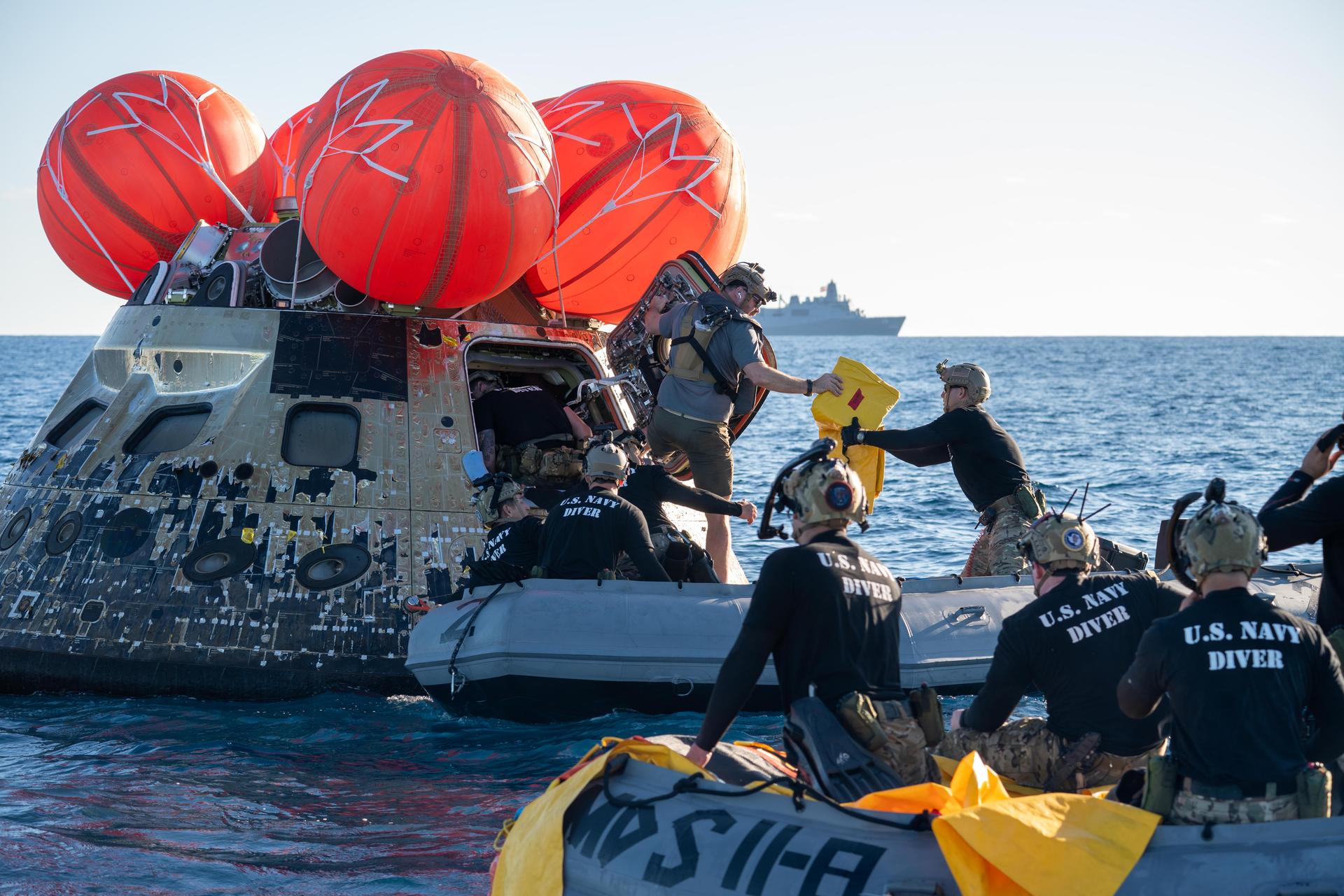
NASA’s Landing and Recovery team, along with U.S. Navy personnel aboard an inflatable raft approach NASA’s Orion spacecraft carrying Artemis II Commander Reid Wiseman, Pilot Victor Glover, and Mission Specialist Christina Koch from NASA, along with Mission Specialist Jeremy Hansen from the CSA (Canadian Space Agency), following splashdown in the Pacific Ocean near San Diego, California, at 5:07 p.m. PDT, (8:07 p.m. EDT) on Friday, April 10, 2026. The Artemis II test flight launched on Wednesday, April 1, from NASA’s Kennedy Space Center in Florida to begin its 10-day journey around the Moon for scientific discovery, economic benefits, and to build on our foundation for the first crewed missions to Mars. NASA’s Landing and Recovery team and the U.S. military are helping the Artemis II crew out of their Orion spacecraft.
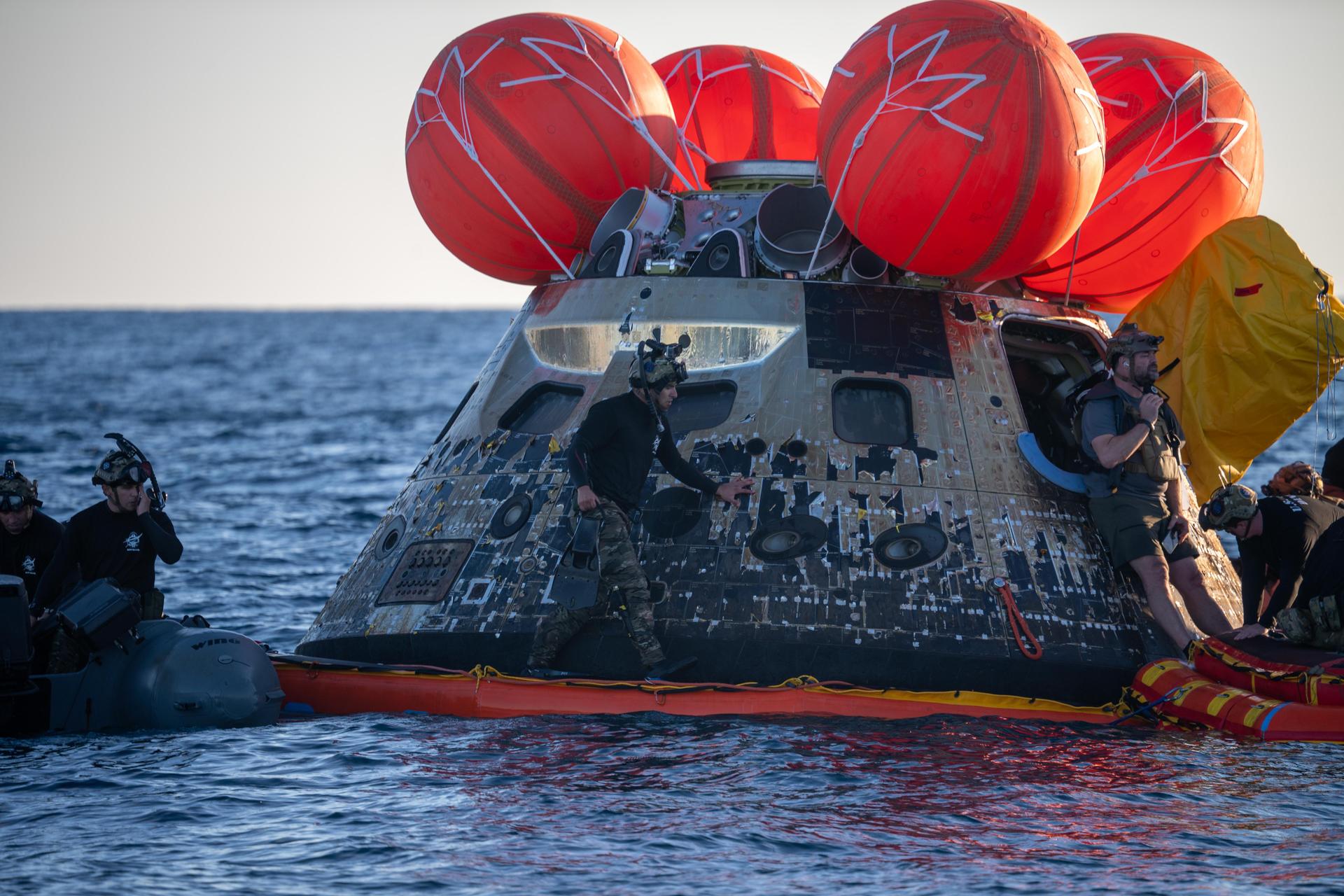
U.S. Navy personnel aboard an inflatable raft, called the front porch, help recover NASA's Orion spacecraft following its splashdown in the Pacific Ocean near San Diego, California, at 5:07 p.m. PDT, (8:07 p.m. EDT) on Friday, April 10, 2026, after the Artemis II test flight. The Artemis II mission carrying Artemis II Commander Reid Wiseman, Pilot Victor Glover, and Mission Specialist Christina Koch from NASA, along with Mission Specialist Jeremy Hansen from the CSA (Canadian Space Agency), launched on Wednesday, April 1, from NASA’s Kennedy Space Center in Florida to begin its 10-day journey around the Moon for scientific discovery, economic benefits, and to build on our foundation for the first crewed missions to Mars. NASA’s Landing and Recovery team and the U.S. Navy are coordinating efforts to secure Orion in the well deck of USS John P. Murtha.
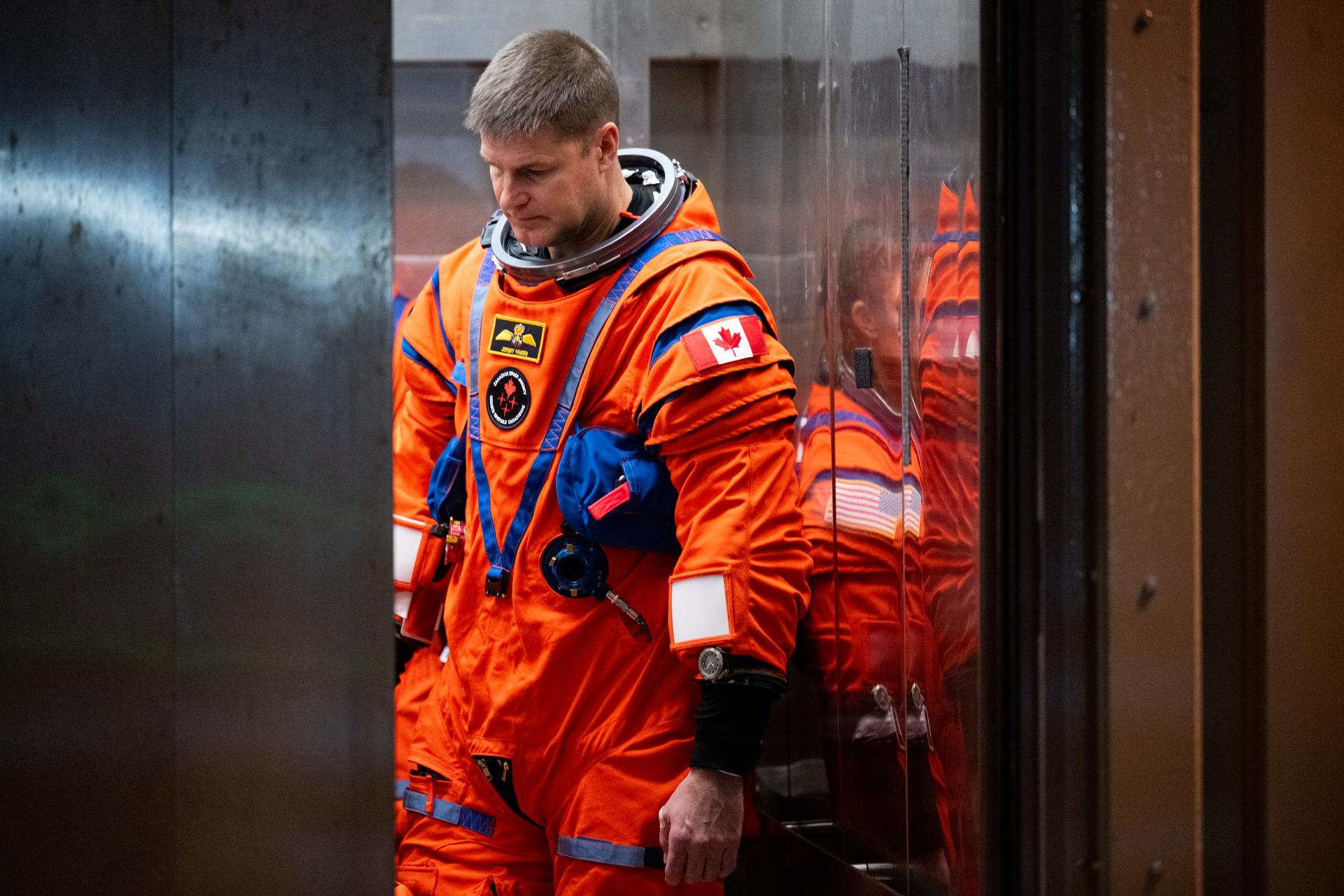
Artemis II crewmember CSA (Canadian Space Agency) astronaut Jeremy Hansen, mission specialist; is seen in the elevator as he arrives with fellow crewmates NASA astronauts Reid Wiseman, commander; Victor Glover, pilot; and Christina Koch, mission specialist; at the 275-foot level of the mobile launcher as they prepare to board their Orion spacecraft atop NASA’s Space Launch System rocket during the Artemis II countdown demonstration test, Saturday, Dec. 20, 2025, inside the Vehicle Assembly Building at NASA’s Kennedy Space Center in Florida. For this operation, the Artemis II crew and launch teams are simulating the launch day timeline including suit-up, walkout, and spacecraft ingress and egress. Through the Artemis campaign, NASA will send astronauts to explore the Moon for scientific discovery, economic benefits, and to build the foundation for the first crewed missions to Mars, for the benefit of all. Photo Credit: (NASA/Joel Kowsky)
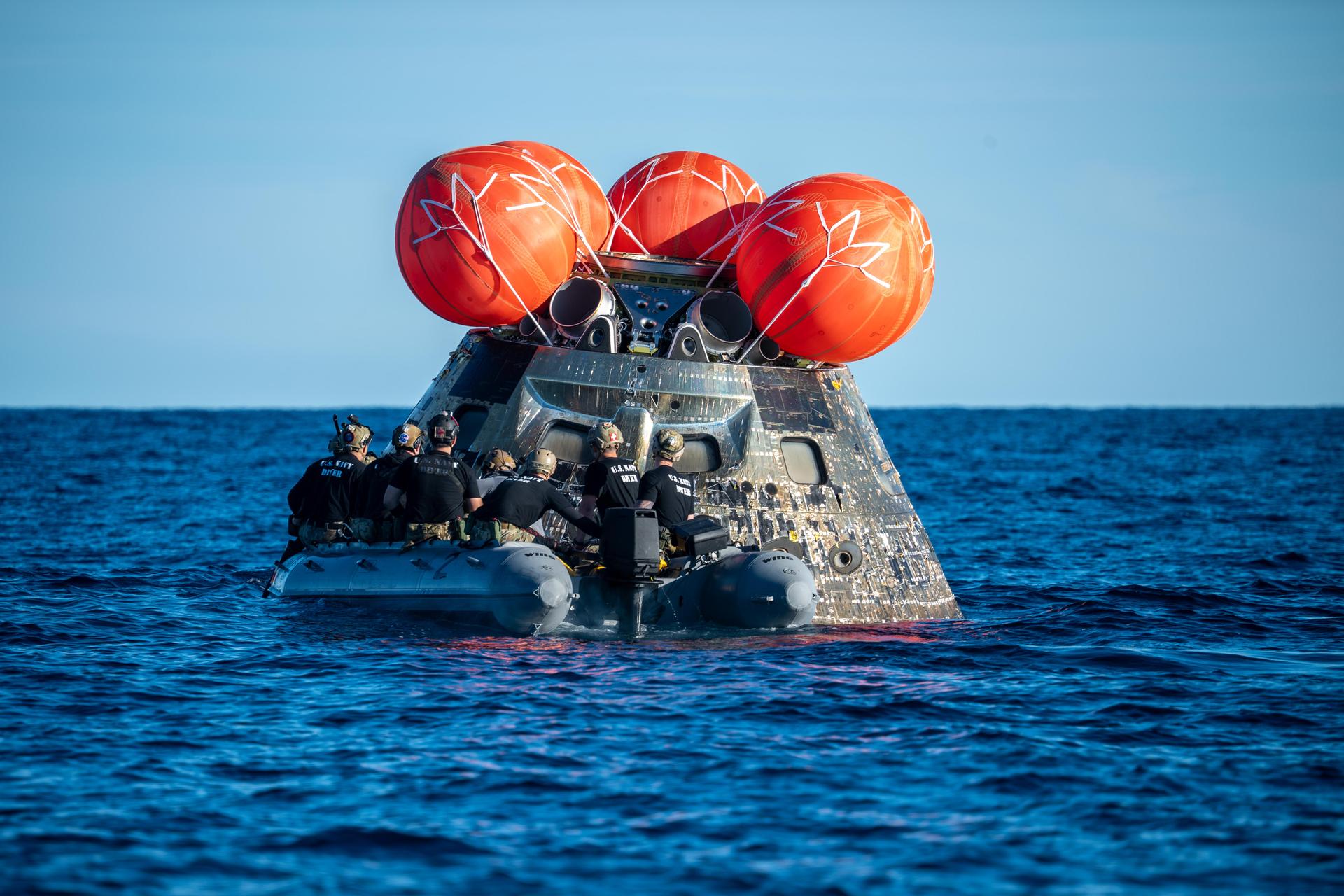
NASA’s Landing and Recovery team, along with U.S. Navy personnel aboard an inflatable raft approach NASA’s Orion spacecraft carrying Artemis II Commander Reid Wiseman, Pilot Victor Glover, and Mission Specialist Christina Koch from NASA, along with Mission Specialist Jeremy Hansen from the CSA (Canadian Space Agency), following splashdown in the Pacific Ocean near San Diego, California, at 5:07 p.m. PDT, (8:07 p.m. EDT) on Friday, April 10, 2026. The Artemis II test flight launched on Wednesday, April 1, from NASA’s Kennedy Space Center in Florida to begin its 10-day journey around the Moon for scientific discovery, economic benefits, and to build on our foundation for the first crewed missions to Mars. NASA’s Landing and Recovery team and the U.S. military are helping the Artemis II crew out of their Orion spacecraft.
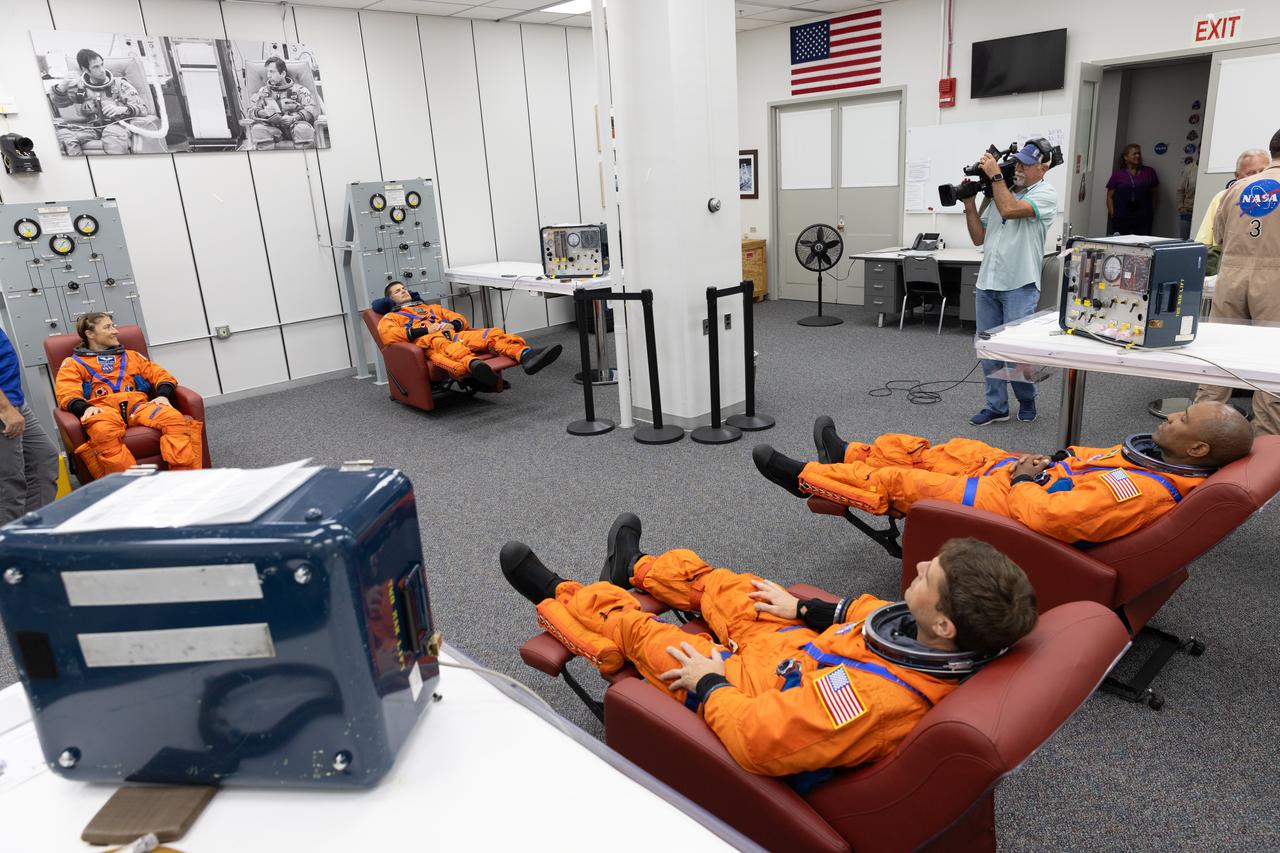
From left to right, NASA astronauts Christina Koch, Artemis II mission specialist; Reid Wiseman, Artemis II commander; Victor Glover, Artemis II pilot; and Artemis II mission specialist and CSA (Canadian Space Agency) astronaut Jeremy Hansen conduct suit-up operations inside the Neil A. Armstrong Operations and Checkout Building at NASA’s Kennedy Space Center in Florida on Monday, Aug. 11, 2025. During a two-day operation, the Artemis II team practiced night-run demonstrations of different launch day scenarios like suit-up operations, walk-out, and arriving at the launch pad for the Artemis II test flight. Through the Artemis campaign, NASA will send astronauts to explore the Moon for scientific discovery, economic benefits, and to build the foundation for the first crewed missions to Mars – for the benefit of all.
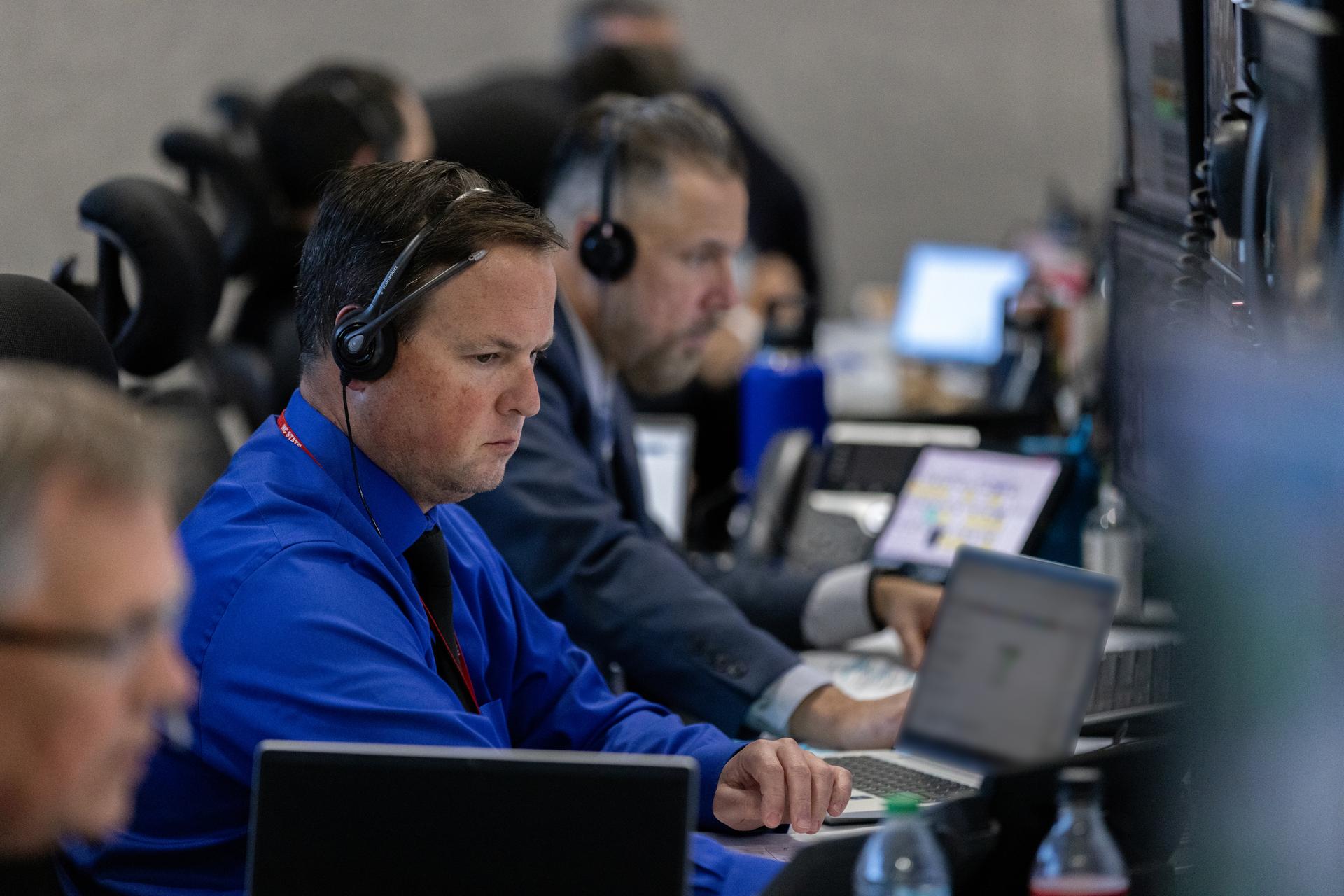
Wes Mosedale, NASA test director, monitors the progress of a countdown demonstration test with Artemis II crewmembers NASA astronauts Reid Wiseman, commander; Victor Glover, pilot; Christina Koch, mission specialist; and CSA (Canadian Space Agency) astronaut Jeremy Hansen, mission specialist onboard their Orion spacecraft from Firing Room 1 of the Rocco A. Petrone Launch Control Center, Saturday, Dec. 20, 2025, at NASA’s Kennedy Space Center in Florida. For this operation, the Artemis II crew and launch teams are simulating the launch day timeline including suit-up, walkout, and spacecraft ingress and egress. Through the Artemis campaign, NASA will send astronauts to explore the Moon for scientific discovery, economic benefits, and to build the foundation for the first crewed missions to Mars, for the benefit of all.
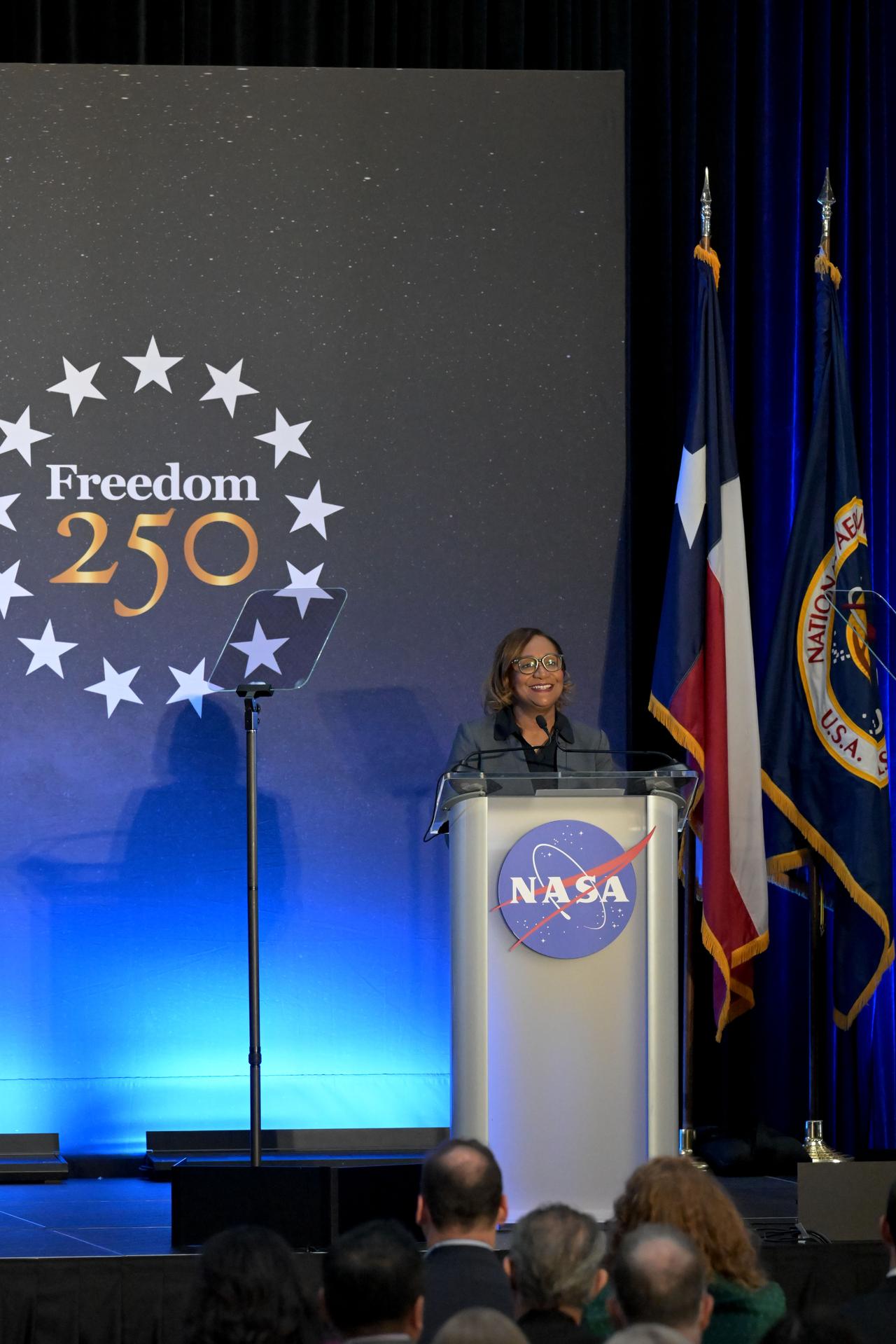
jsc2026e022313 (April 11, 2026) – NASA's Johnson Space Center Director Vanessa Wyche addresses a crowd of friends, family, and colleagues assembled for the return of the Artemis II crew at Ellington Airport near NASA’s Johnson Space Center in Houston on Saturday, April 11, 2026. The Artemis II test flight launched on Wednesday, April 1, from NASA’s Kennedy Space Center in Florida to begin its 10-day journey around the Moon for scientific discovery, economic benefits, and to build on our foundation for the first crewed missions to Mars. NASA's Orion spacecraft carrying Artemis II Commander Reid Wiseman, Pilot Victor Glover, and Mission Specialist Christina Koch from NASA, along with Mission Specialist Jeremy Hansen from the CSA (Canadian Space Agency), splashed down in the Pacific Ocean near San Diego, California, on Friday, April 10, 2026. Credit: NASA/Bill Stafford
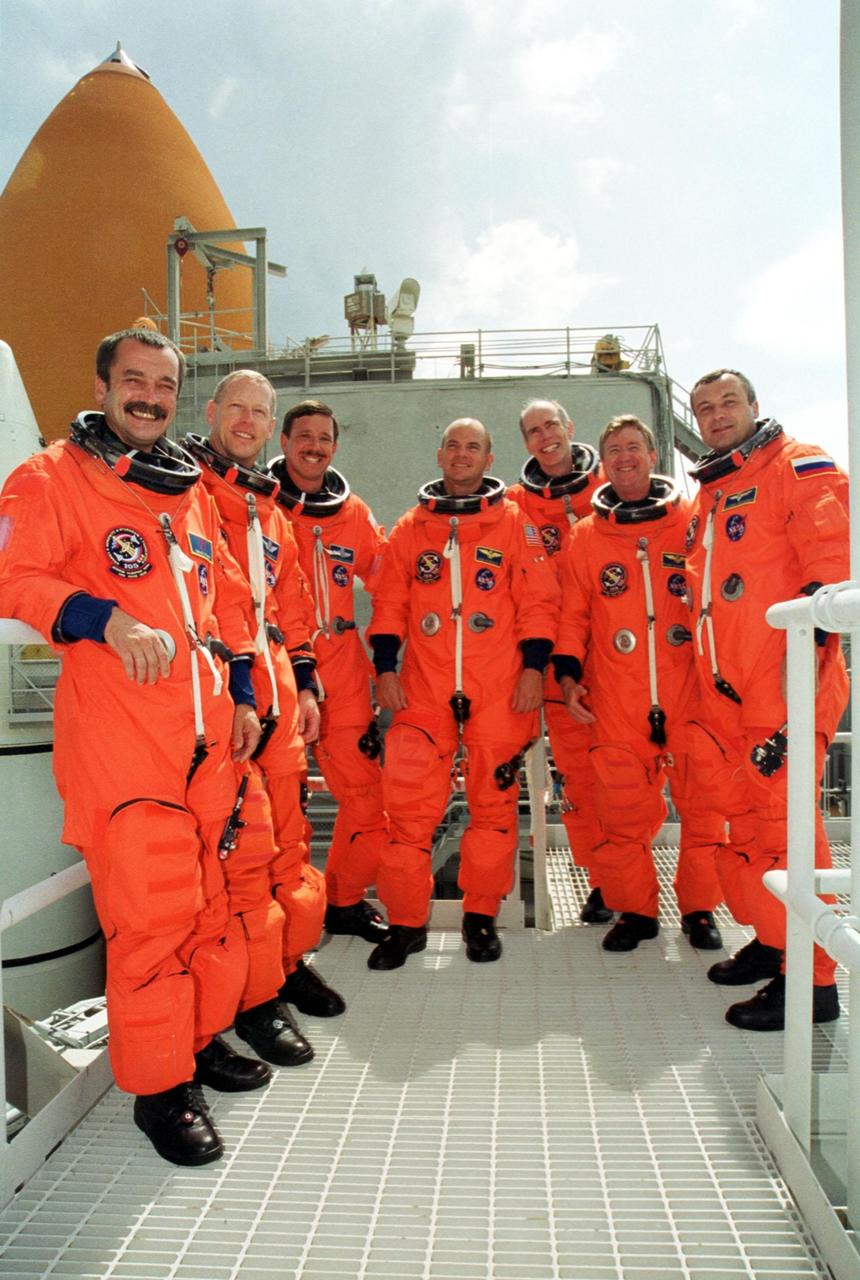
KENNEDY SPACE CENTER, Fla. -- The STS-105 and Expedition Three crews pose on the Fixed Service Structure at Launch Pad 39A. From left are cosmonaut Mikhail Tyurin, Mission Specialist Patrick Forrester, Commander Scott Horowitz, Pilot Rick Sturckow, Mission Specialist Daniel Barry, ISS Commander Frank Culbertson and cosmonaut Vladimir Nikolaevich Dezhurov. Both crews are at Kennedy Space Center participating in a Terminal Countdown Demonstration Test, a dress rehearsal for launch. The activities include emergency egress training, a simulated launch countdown and familiarization with the payload. Mission STS-105 will be transporting the Expedition Three crew, several payloads and scientific experiments to the International Space Station aboard Space Shuttle Discovery. The Expedition Two crew members currently on the Station will return to Earth on Discovery. The mission is scheduled to launch no earlier than Aug. 9, 2001

NASA's Orion spacecraft carrying Artemis II Commander Reid Wiseman, Pilot Victor Glover, and Mission Specialist Christina Koch from NASA, along with Mission Specialist Jeremy Hansen from the CSA (Canadian Space Agency), splashes down in the Pacific Ocean near San Diego, California, at 5:07 p.m. PDT, (8:07 p.m. EDT) on Friday, April 10, 2026. The Artemis II test flight launched on Wednesday, April 1, from NASA’s Kennedy Space Center in Florida to begin its 10-day journey around the Moon for scientific discovery, economic benefits, and to build on our foundation for the first crewed missions to Mars. NASA’s Landing and Recovery team and the U.S. military are coordinating efforts to extract the Artemis II crew from the Orion spacecraft.
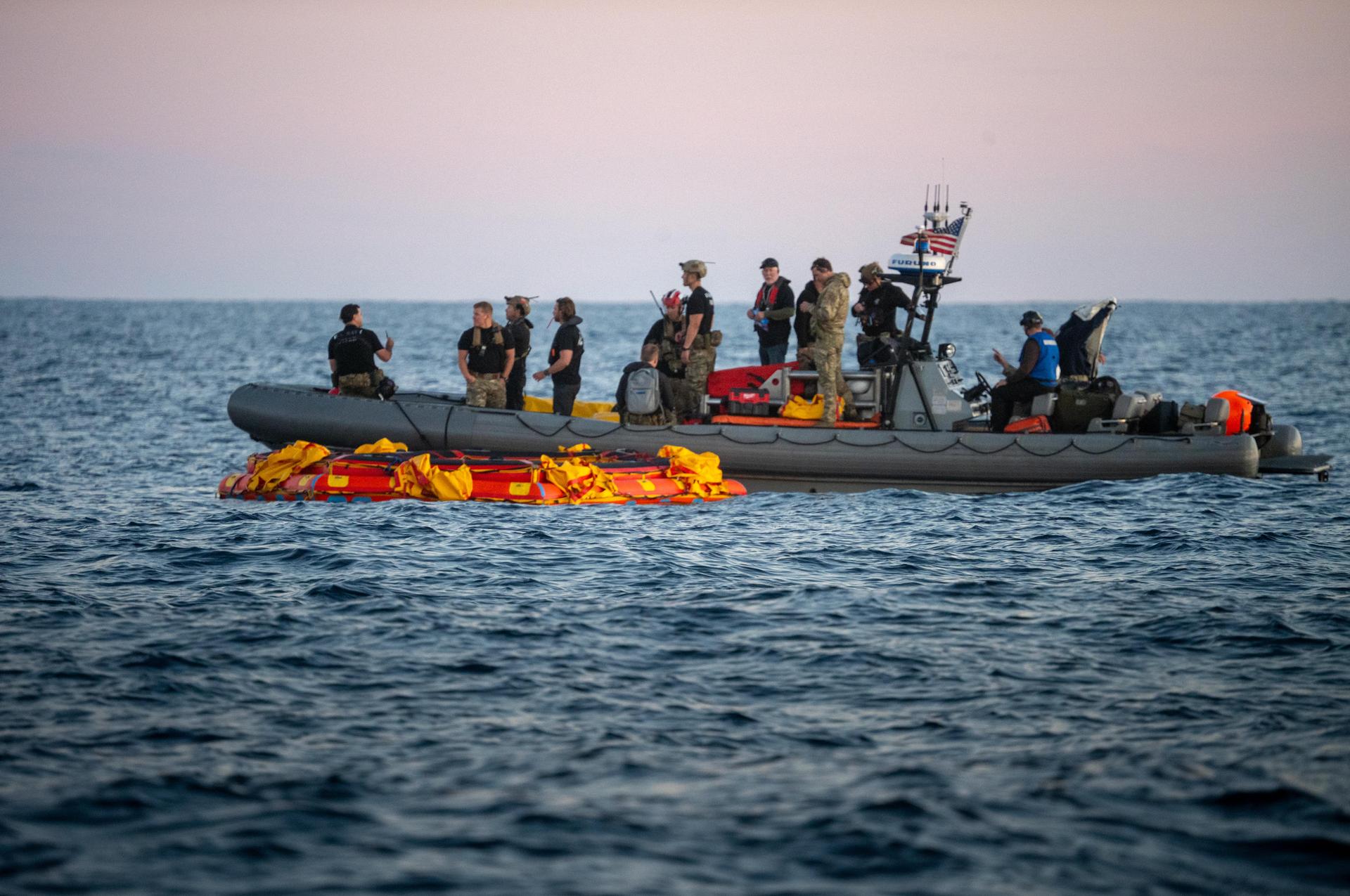
U.S. Navy personnel aboard an inflatable raft help recover NASA's Orion spacecraft following its splashdown in the Pacific Ocean near San Diego, California, at 5:07 p.m. PDT, (8:07 p.m. EDT) on Friday, April 10, 2026, after the Artemis II test flight. The Artemis II mission carrying Artemis II Commander Reid Wiseman, Pilot Victor Glover, and Mission Specialist Christina Koch from NASA, along with Mission Specialist Jeremy Hansen from the CSA (Canadian Space Agency), launched on Wednesday, April 1, from NASA’s Kennedy Space Center in Florida to begin its 10-day journey around the Moon for scientific discovery, economic benefits, and to build on our foundation for the first crewed missions to Mars. NASA’s Landing and Recovery team and the U.S. Navy are coordinating efforts to secure Orion in the well deck of USS John P. Murtha.
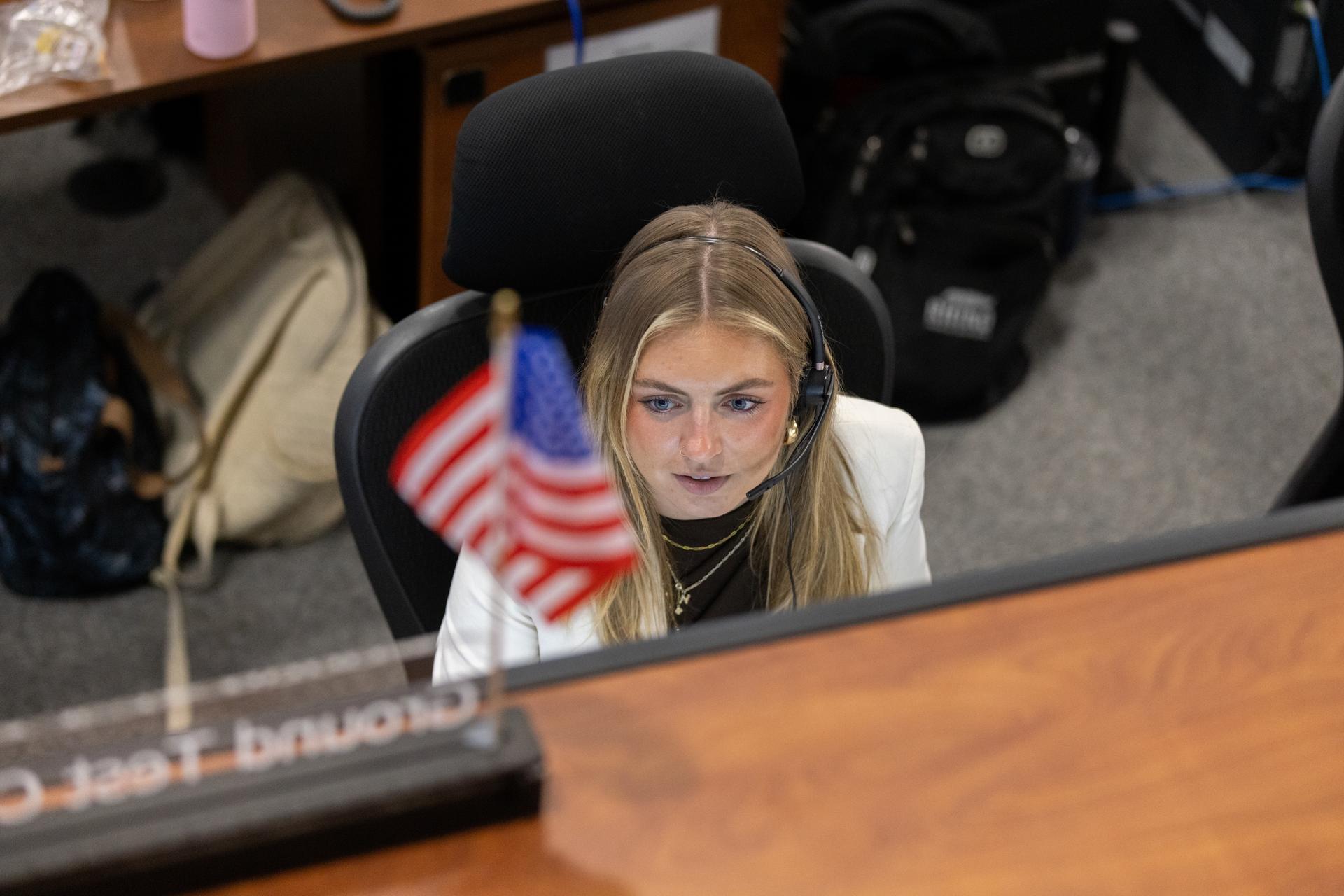
Teams monitor the progress of a countdown demonstration test with Artemis II crewmembers NASA astronauts Reid Wiseman, commander; Victor Glover, pilot; Christina Koch, mission specialist; and CSA (Canadian Space Agency) astronaut Jeremy Hansen, mission specialist onboard their Orion spacecraft from Firing Room 1 of the Rocco A. Petrone Launch Control Center, Saturday, Dec. 20, 2025, at NASA’s Kennedy Space Center in Florida. For this operation, the Artemis II crew and launch teams are simulating the launch day timeline including suit-up, walkout, and spacecraft ingress and egress. Through the Artemis campaign, NASA will send astronauts to explore the Moon for scientific discovery, economic benefits, and to build the foundation for the first crewed missions to Mars, for the benefit of all.