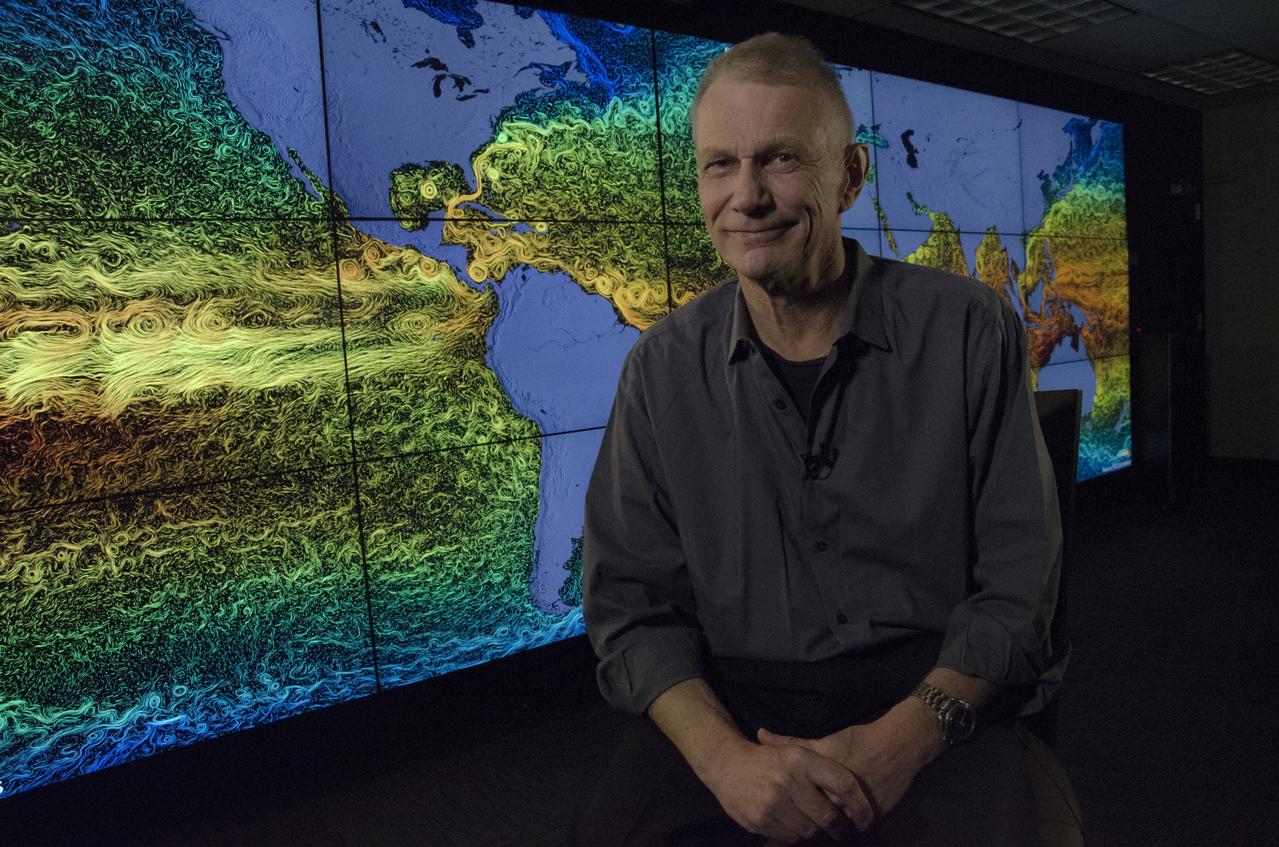
Piers Sellers is currently Deputy Director of the Sciences and Exploration Directorate and Acting Director of the Earth Sciences Division at NASA/GSFC. He was born and educated in the United Kingdom and moved to the U.S. in 1982 to carry out climate research at NASA/GSFC. From 1982 to 1996, he worked on global climate problems, particularly those involving interactions between the biosphere and the atmosphere, and was involved in constructing computer models of the global climate system, satellite data interpretation and conducting large-scale field experiments in the USA, Canada, Africa, and Brazil. He served as project scientist for the first large Earth Observing System platform, Terra, launched in 1998. He joined the NASA astronaut corps in 1996 and flew to the International Space Station (ISS) in 2002, 2006, and 2010, carrying out six spacewalks and working on ISS assembly tasks. He returned to Goddard Space Flight Center in June, 2011. Credit: NASA/Goddard/Rebecca Roth <b><a href="http://www.nasa.gov/audience/formedia/features/MP_Photo_Guidelines.html" rel="nofollow">NASA image use policy.</a></b> <b><a href="http://www.nasa.gov/centers/goddard/home/index.html" rel="nofollow">NASA Goddard Space Flight Center</a></b> enables NASA’s mission through four scientific endeavors: Earth Science, Heliophysics, Solar System Exploration, and Astrophysics. Goddard plays a leading role in NASA’s accomplishments by contributing compelling scientific knowledge to advance the Agency’s mission. <b>Follow us on <a href="http://twitter.com/NASAGoddardPix" rel="nofollow">Twitter</a></b> <b>Like us on <a href="http://www.facebook.com/pages/Greenbelt-MD/NASA-Goddard/395013845897?ref=tsd" rel="nofollow">Facebook</a></b> <b>Find us on <a href="http://instagrid.me/nasagoddard/?vm=grid" rel="nofollow">Instagram</a></b>
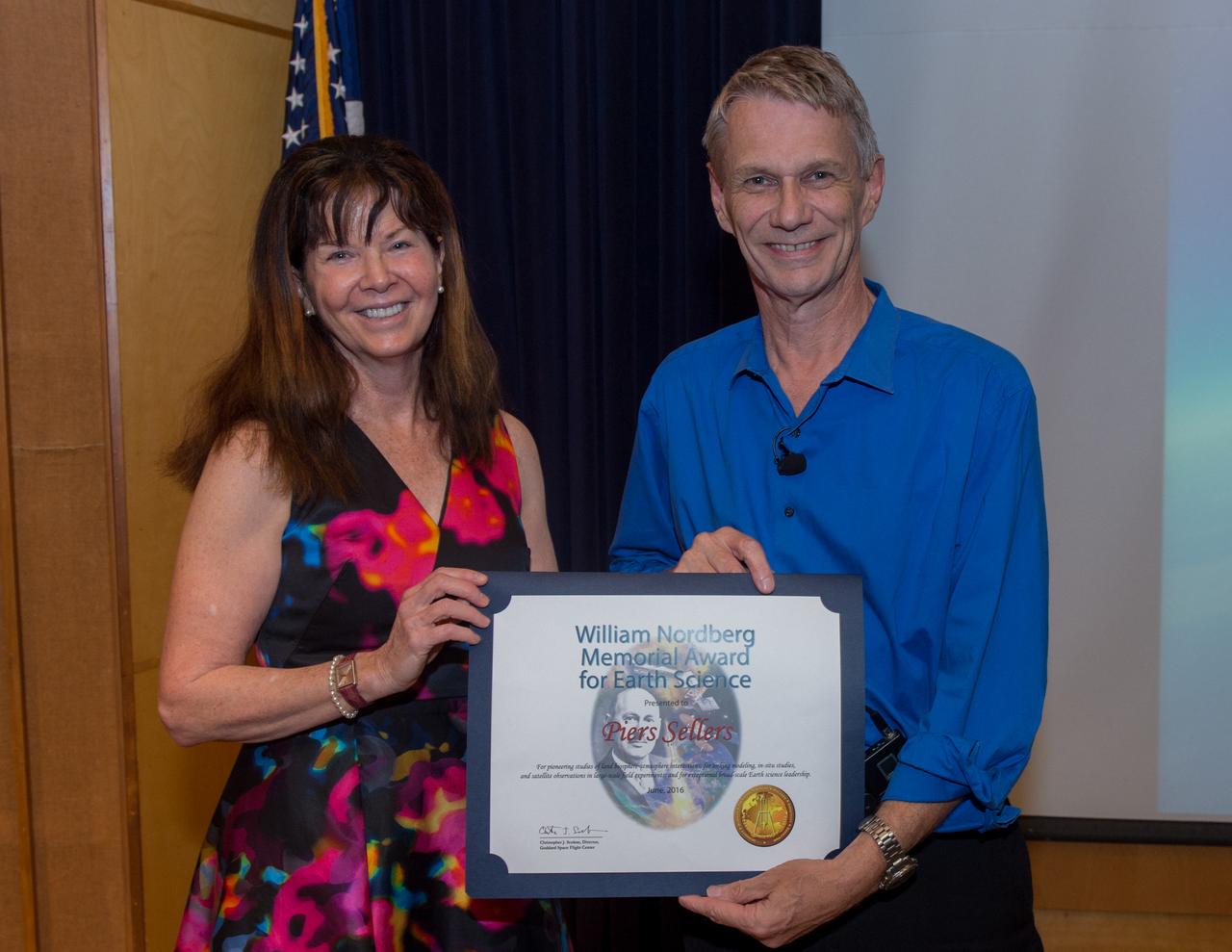
2016 William Nordberg Award and Lecture - Dr. Piers Sellers
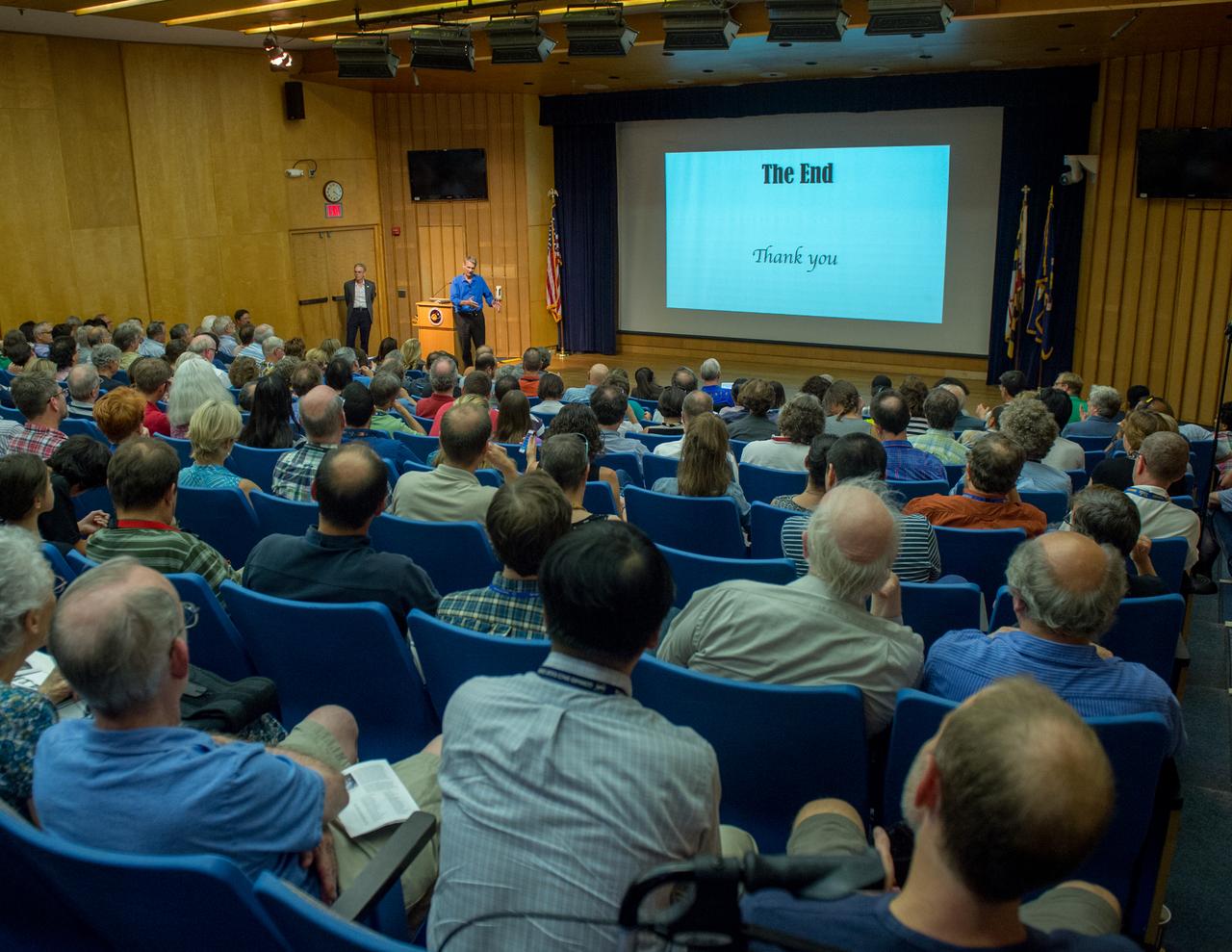
2016 William Nordberg Award and Lecture - Dr. Piers Sellers
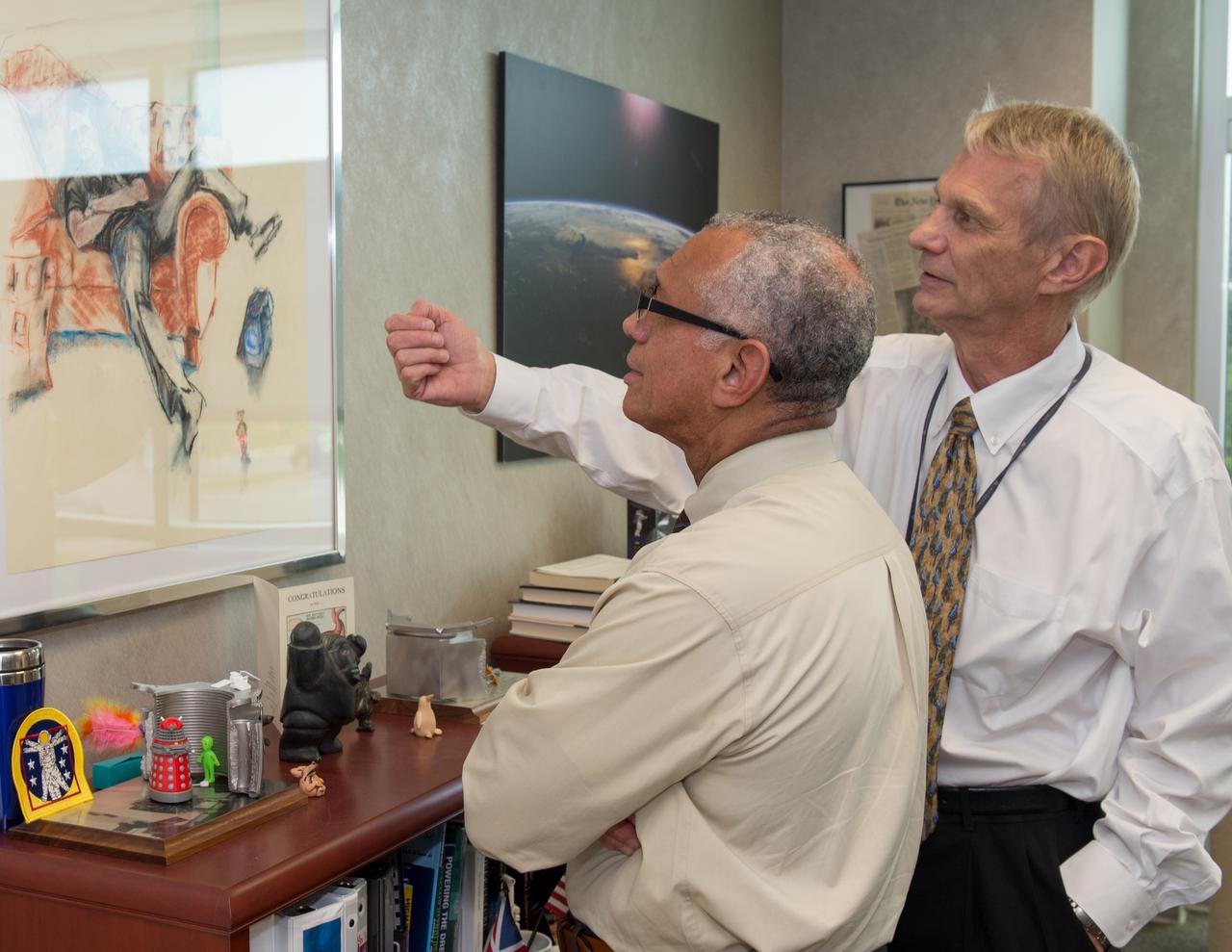
Distinguished Service Award ceremony for Dr. Piers Sellers. Deputy Director George Morrow
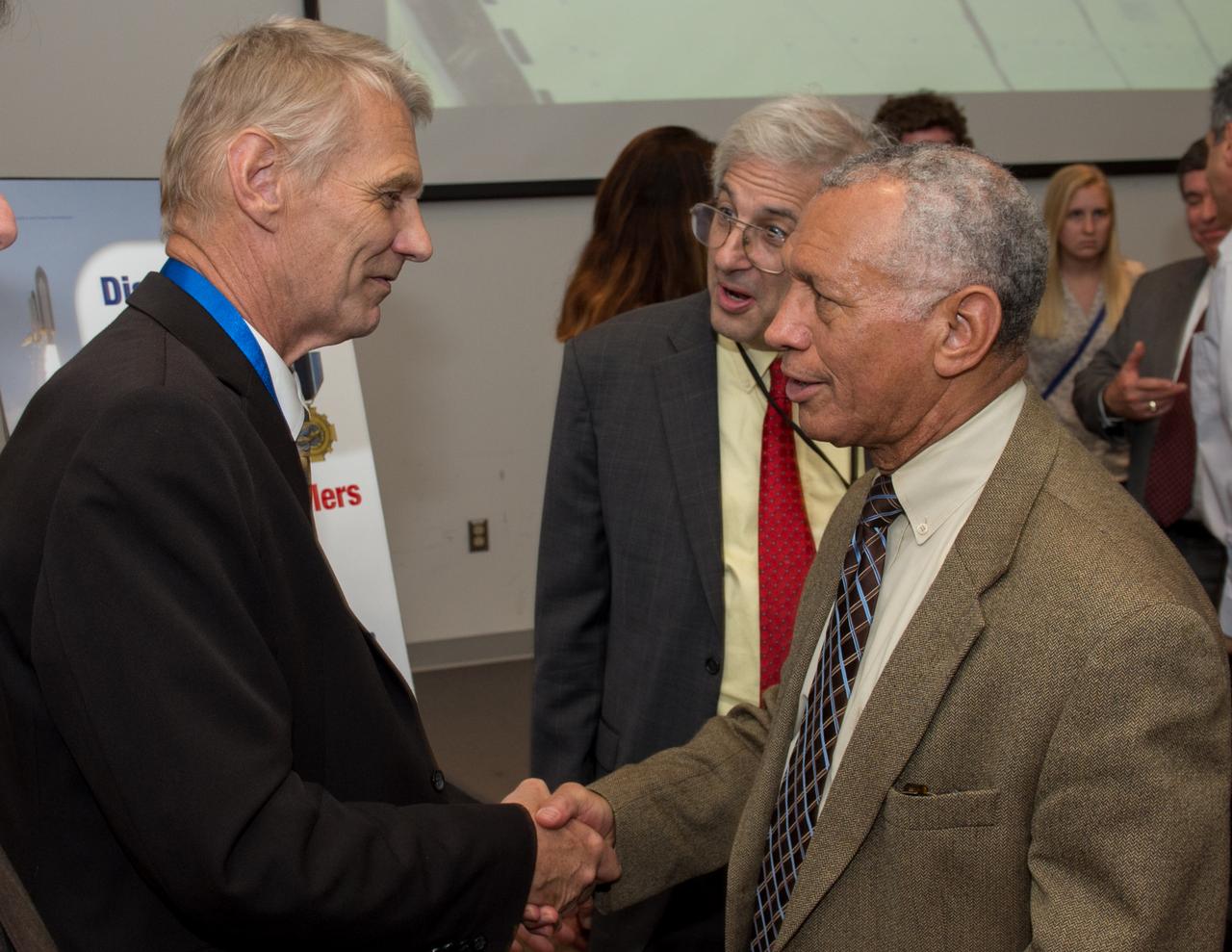
Distinguished Service Award ceremony for Dr. Piers Sellers. NASA Administrator Charlie Bolden
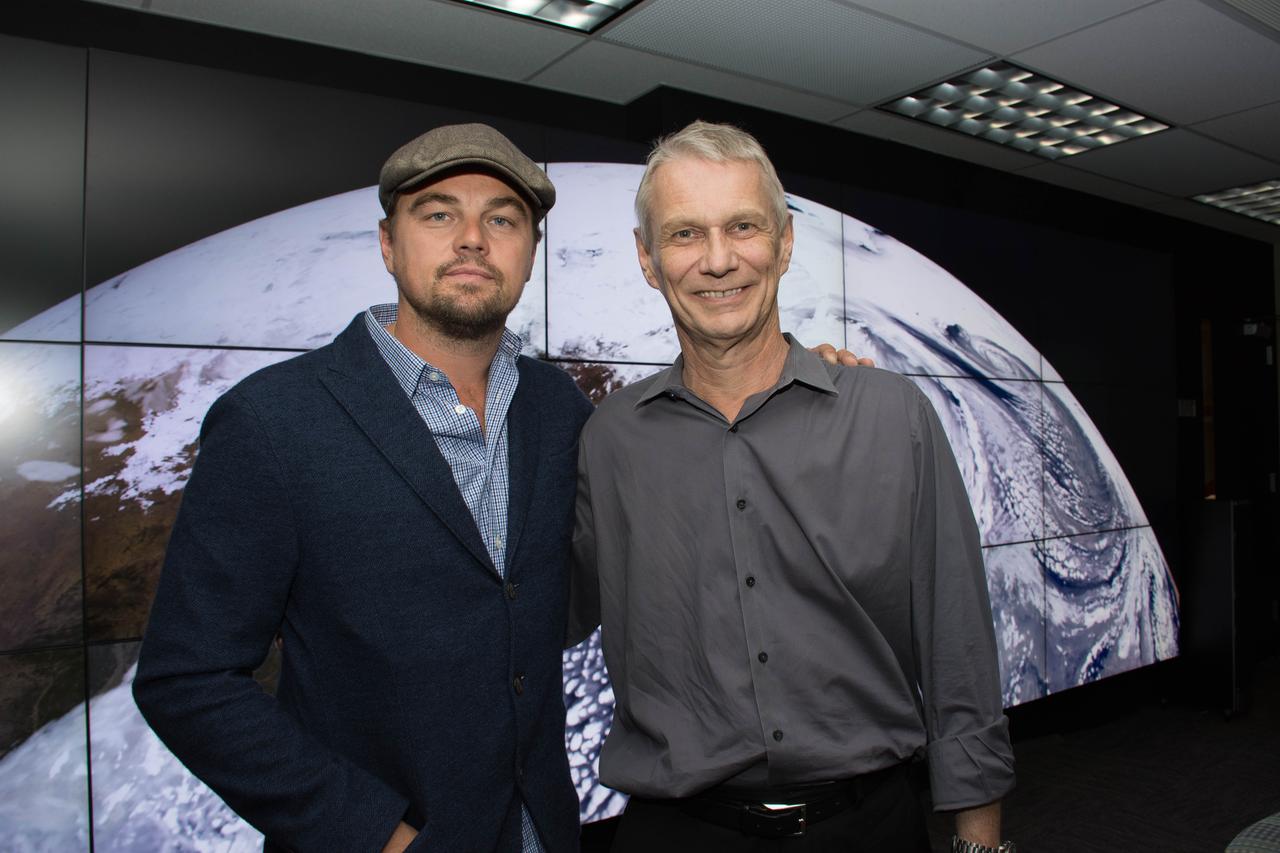
Academy Award®- winning actor and environmental activist Leonardo DiCaprio visited NASA’s Goddard Space Flight Center in Greenbelt, Maryland on Saturday, April 23, 2016. During his visit, Mr. DiCaprio interviewed Dr. Piers Sellers, an Earth scientist, former astronaut and current deputy director of Goddard’s Sciences and Exploration Directorate. The two discussed the different missions NASA has underway to study changes in the Earth’s atmosphere, water and land masses for a climate change documentary that Mr. DiCaprio has in production. Using a wall-size, high-definition display system that shows visual representations based on actual science data, Mr. DiCaprio and Dr. Sellers discussed data results from NASA’s fleet of satellites in Earth’s orbit. During his visit, Mr. DiCaprio also visited the facility holding NASA’s James Webb Space Telescope that is being developed as a large infrared telescope with a 6.5-meter primary mirror. The telescope will be launched on an Ariane 5 rocket from French Guiana in October of 2018, and will be a premier observatory of the next decade, serving thousands of astronomers worldwide. Credit: NASA/Goddard/Rebecca Roth <b><a href="http://www.nasa.gov/audience/formedia/features/MP_Photo_Guidelines.html" rel="nofollow">NASA image use policy.</a></b> <b><a href="http://www.nasa.gov/centers/goddard/home/index.html" rel="nofollow">NASA Goddard Space Flight Center</a></b> enables NASA’s mission through four scientific endeavors: Earth Science, Heliophysics, Solar System Exploration, and Astrophysics. Goddard plays a leading role in NASA’s accomplishments by contributing compelling scientific knowledge to advance the Agency’s mission. <b>Follow us on <a href="http://twitter.com/NASAGoddardPix" rel="nofollow">Twitter</a></b> <b>Like us on <a href="http://www.facebook.com/pages/Greenbelt-MD/NASA-Goddard/395013845897?ref=tsd" rel="nofollow">Facebook</a></b> <b>Find us on <a href="http://instagrid.me/nasagoddard/?vm=grid" rel="nofollow">Instagram</a></b>
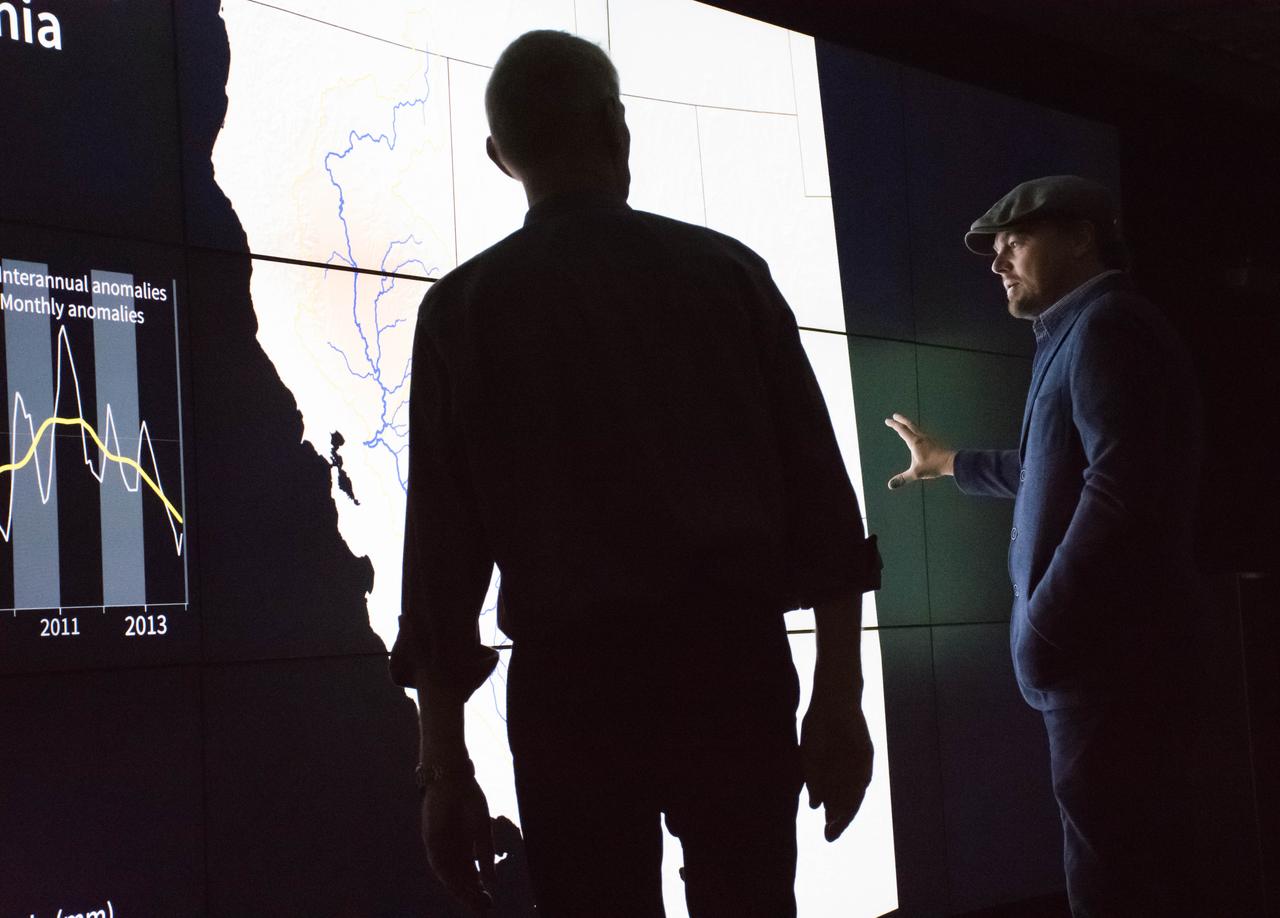
Academy Award®- winning actor and environmental activist Leonardo DiCaprio visited NASA’s Goddard Space Flight Center in Greenbelt, Maryland on Saturday, April 23, 2016. During his visit, Mr. DiCaprio interviewed Dr. Piers Sellers, an Earth scientist, former astronaut and current deputy director of Goddard’s Sciences and Exploration Directorate. The two discussed the different missions NASA has underway to study changes in the Earth’s atmosphere, water and land masses for a climate change documentary that Mr. DiCaprio has in production. Using a wall-size, high-definition display system that shows visual representations based on actual science data, Mr. DiCaprio and Dr. Sellers discussed data results from NASA’s fleet of satellites in Earth’s orbit. During his visit, Mr. DiCaprio also visited the facility holding NASA’s James Webb Space Telescope that is being developed as a large infrared telescope with a 6.5-meter primary mirror. The telescope will be launched on an Ariane 5 rocket from French Guiana in October of 2018, and will be a premier observatory of the next decade, serving thousands of astronomers worldwide. Credit: NASA/Goddard/Rebecca Roth <b><a href="http://www.nasa.gov/audience/formedia/features/MP_Photo_Guidelines.html" rel="nofollow">NASA image use policy.</a></b> <b><a href="http://www.nasa.gov/centers/goddard/home/index.html" rel="nofollow">NASA Goddard Space Flight Center</a></b> enables NASA’s mission through four scientific endeavors: Earth Science, Heliophysics, Solar System Exploration, and Astrophysics. Goddard plays a leading role in NASA’s accomplishments by contributing compelling scientific knowledge to advance the Agency’s mission. <b>Follow us on <a href="http://twitter.com/NASAGoddardPix" rel="nofollow">Twitter</a></b> <b>Like us on <a href="http://www.facebook.com/pages/Greenbelt-MD/NASA-Goddard/395013845897?ref=tsd" rel="nofollow">Facebook</a></b> <b>Find us on <a href="http://instagrid.me/nasagoddard/?vm=grid" rel="nofollow">Instagram</a></b>
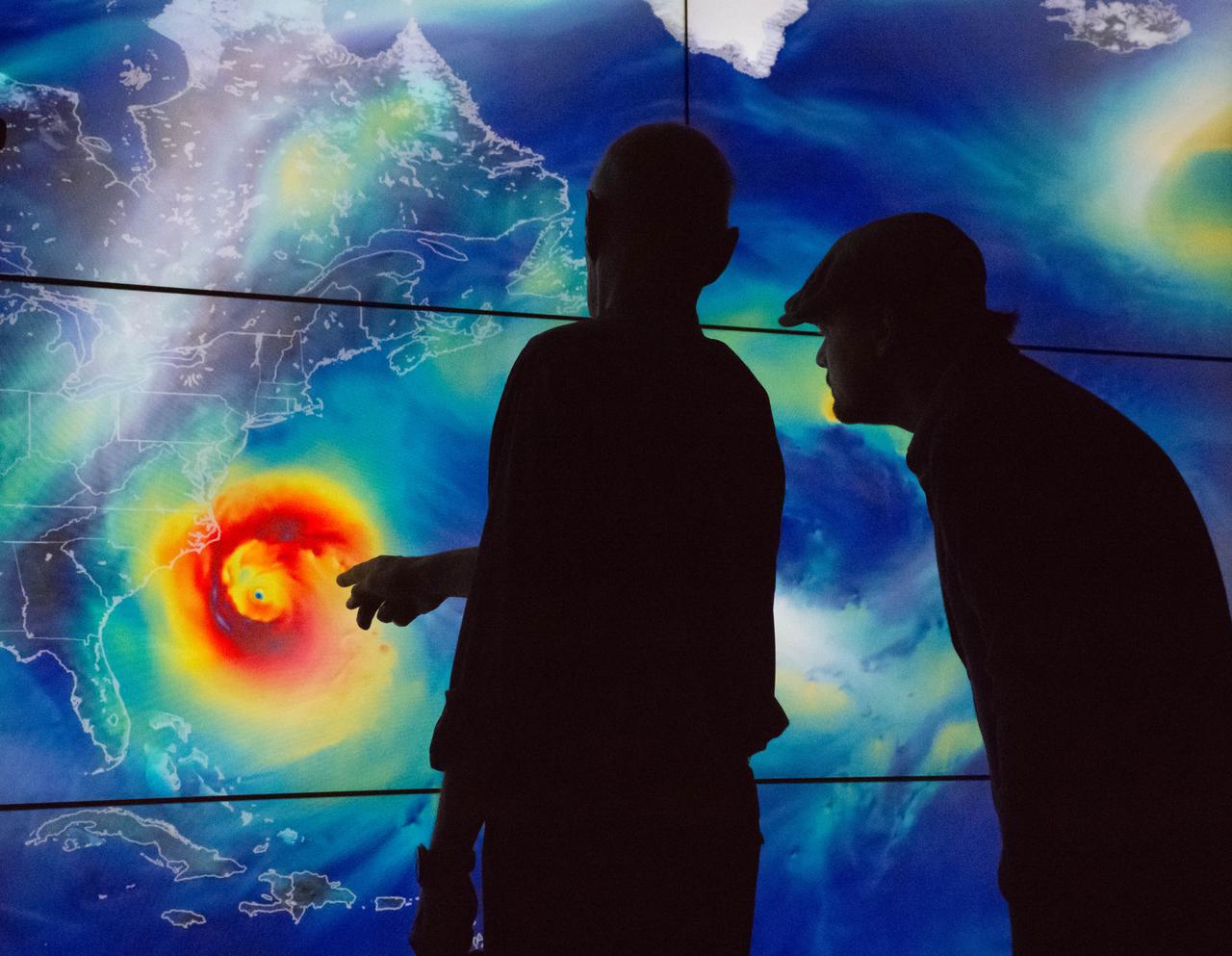
Academy Award®- winning actor and environmental activist Leonardo DiCaprio visited NASA’s Goddard Space Flight Center in Greenbelt, Maryland on Saturday, April 23, 2016. During his visit, Mr. DiCaprio interviewed Dr. Piers Sellers, an Earth scientist, former astronaut and current deputy director of Goddard’s Sciences and Exploration Directorate. The two discussed the different missions NASA has underway to study changes in the Earth’s atmosphere, water and land masses for a climate change documentary that Mr. DiCaprio has in production. Using a wall-size, high-definition display system that shows visual representations based on actual science data, Mr. DiCaprio and Dr. Sellers discussed data results from NASA’s fleet of satellites in Earth’s orbit. The visual shows Hurricane Sandy. The visual uses data from Goddard Earth Observing System Model, Version 5 (GEOS-5) to simulate surface wind speeds across the Atlantic during Sandy’s lifecycle. <a href="http://svs.gsfc.nasa.gov/cgi-bin/details.cgi?aid=30465" rel="nofollow">svs.gsfc.nasa.gov/cgi-bin/details.cgi?aid=30465</a> During his visit, Mr. DiCaprio also visited the facility holding NASA’s James Webb Space Telescope that is being developed as a large infrared telescope with a 6.5-meter primary mirror. The telescope will be launched on an Ariane 5 rocket from French Guiana in October of 2018, and will be a premier observatory of the next decade, serving thousands of astronomers worldwide. Credit: NASA/Goddard/Rebecca Roth <b><a href="http://www.nasa.gov/audience/formedia/features/MP_Photo_Guidelines.html" rel="nofollow">NASA image use policy.</a></b> <b><a href="http://www.nasa.gov/centers/goddard/home/index.html" rel="nofollow">NASA Goddard Space Flight Center</a></b> enables NASA’s mission through four scientific endeavors: Earth Science, Heliophysics, Solar System Exploration, and Astrophysics. Goddard plays a leading role in NASA’s accomplishments by contributing compelling scientific knowledge to advance the Agency’s mission. <b>Follow us on <a href="http://twitter.com/NASAGoddardPix" rel="nofollow">Twitter</a></b> <b>Like us on <a href="http://www.facebook.com/pages/Greenbelt-MD/NASA-Goddard/395013845897?ref=tsd" rel="nofollow">Facebook</a></b> <b>Find us on <a href="http://instagrid.me/nasagoddard/?vm=grid" rel="nofollow">Instagram</a></b>
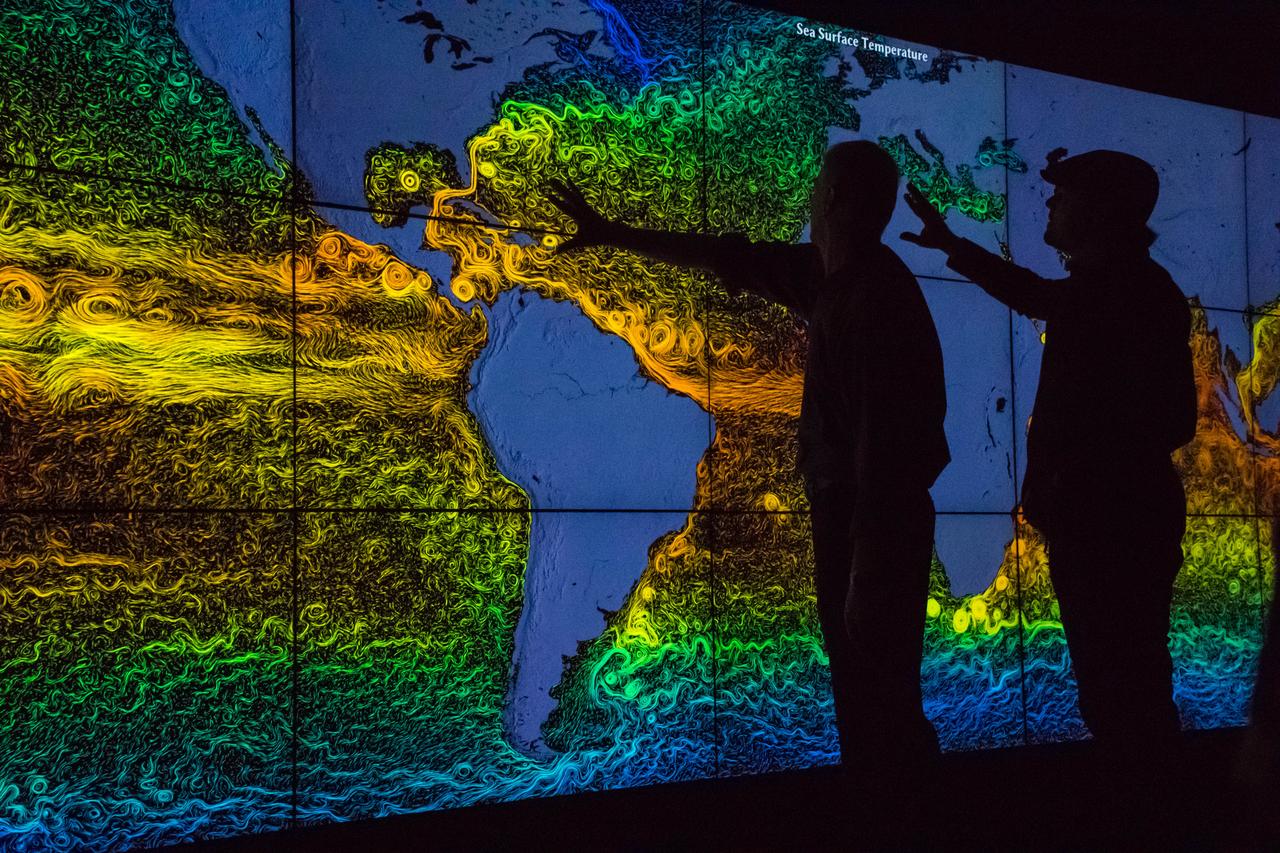
Academy Award®- winning actor and environmental activist Leonardo DiCaprio visited NASA’s Goddard Space Flight Center in Greenbelt, Maryland on Saturday, April 23, 2016. During his visit, Mr. DiCaprio interviewed Dr. Piers Sellers, an Earth scientist, former astronaut and current deputy director of Goddard’s Sciences and Exploration Directorate. The two discussed the different missions NASA has underway to study changes in the Earth’s atmosphere, water and land masses for a climate change documentary that Mr. DiCaprio has in production. Using a wall-size, high-definition display system that shows visual representations based on actual science data, Mr. DiCaprio and Dr. Sellers discussed data results from NASA’s fleet of satellites in Earth’s orbit. The background image showing global sea surface circulation colored by temperature where reds are warm areas (32 degrees Celsius) and blues are cold regions (0 degrees Celsius). The data used for this visual is a joint MIT/JPL project called Estimating the Circulation and Climate of the Ocean, Phase II (ECCO2). For more info on this visual, <a href="http://svs.gsfc.nasa.gov/cgi-bin/details.cgi?aid=3912" rel="nofollow">svs.gsfc.nasa.gov/cgi-bin/details.cgi?aid=3912</a> During his visit, Mr. DiCaprio also visited the facility holding NASA’s James Webb Space Telescope that is being developed as a large infrared telescope with a 6.5-meter primary mirror. The telescope will be launched on an Ariane 5 rocket from French Guiana in October of 2018, and will be a premier observatory of the next decade, serving thousands of astronomers worldwide. Credit: NASA/Goddard/Rebecca Roth <b><a href="http://www.nasa.gov/audience/formedia/features/MP_Photo_Guidelines.html" rel="nofollow">NASA image use policy.</a></b> <b><a href="http://www.nasa.gov/centers/goddard/home/index.html" rel="nofollow">NASA Goddard Space Flight Center</a></b> enables NASA’s mission through four scientific endeavors: Earth Science, Heliophysics, Solar System Exploration, and Astrophysics. Goddard plays a leading role in NASA’s accomplishments by contributing compelling scientific knowledge to advance the Agency’s mission. <b>Follow us on <a href="http://twitter.com/NASAGoddardPix" rel="nofollow">Twitter</a></b> <b>Like us on <a href="http://www.facebook.com/pages/Greenbelt-MD/NASA-Goddard/395013845897?ref=tsd" rel="nofollow">Facebook</a></b> <b>Find us on <a href="http://instagrid.me/nasagoddard/?vm=grid" rel="nofollow">Instagram</a></b>
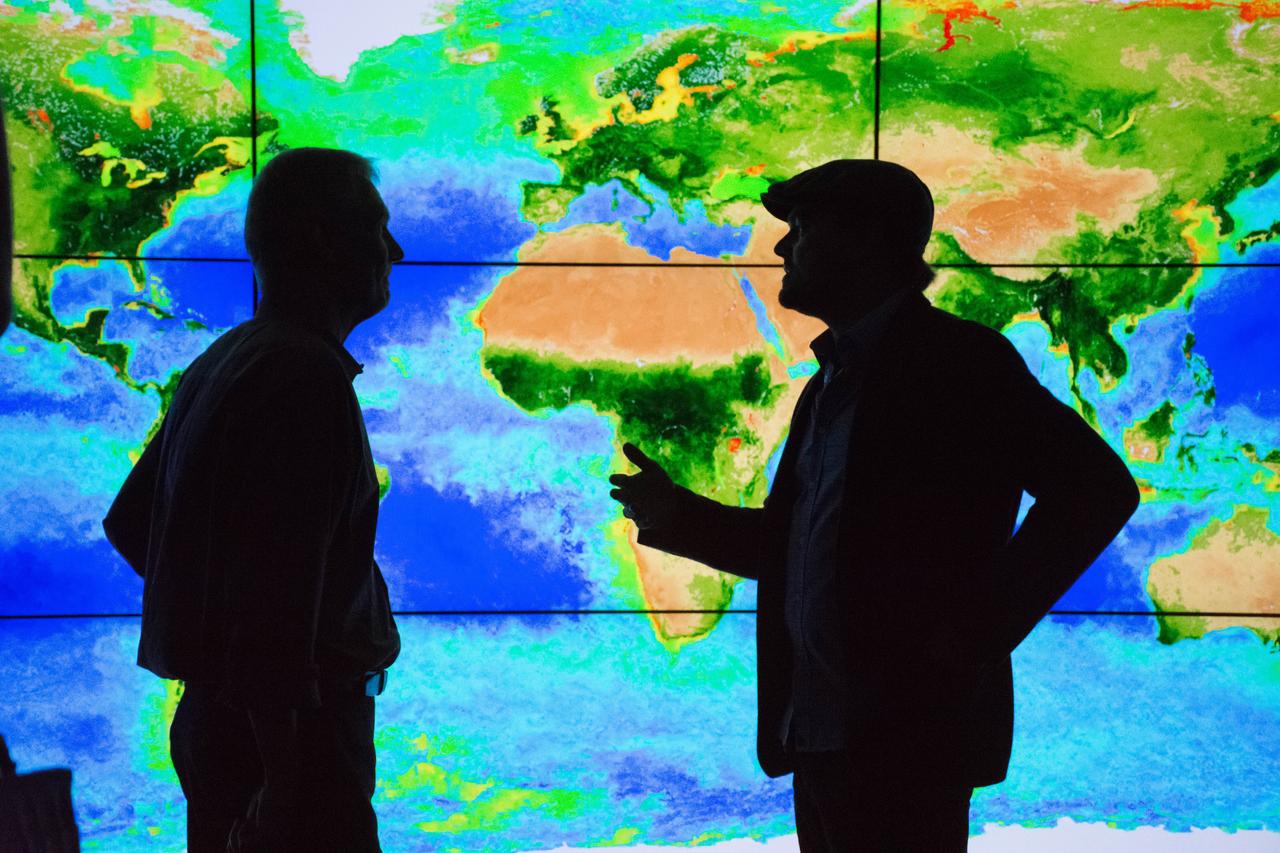
Academy Award®- winning actor and environmental activist Leonardo DiCaprio visited NASA’s Goddard Space Flight Center in Greenbelt, Maryland on Saturday, April 23, 2016. During his visit, Mr. DiCaprio interviewed Dr. Piers Sellers, an Earth scientist, former astronaut and current deputy director of Goddard’s Sciences and Exploration Directorate. The two discussed the different missions NASA has underway to study changes in the Earth’s atmosphere, water and land masses for a climate change documentary that Mr. DiCaprio has in production. Using a wall-size, high-definition display system that shows visual representations based on actual science data, Mr. DiCaprio and Dr. Sellers discussed data results from NASA’s fleet of satellites in Earth’s orbit. The background visual shows the biosphere with data from a NASA satellite instrument called the Sea-viewing Wide Field-of-View Sensor (SeaWiFS). <a href="http://svs.gsfc.nasa.gov/cgi-bin/details.cgi?aid=10704" rel="nofollow">svs.gsfc.nasa.gov/cgi-bin/details.cgi?aid=10704</a> During his visit, Mr. DiCaprio also visited the facility holding NASA’s James Webb Space Telescope that is being developed as a large infrared telescope with a 6.5-meter primary mirror. The telescope will be launched on an Ariane 5 rocket from French Guiana in October of 2018, and will be a premier observatory of the next decade, serving thousands of astronomers worldwide. Credit: NASA/Goddard/Rebecca Roth <b><a href="http://www.nasa.gov/audience/formedia/features/MP_Photo_Guidelines.html" rel="nofollow">NASA image use policy.</a></b> <b><a href="http://www.nasa.gov/centers/goddard/home/index.html" rel="nofollow">NASA Goddard Space Flight Center</a></b> enables NASA’s mission through four scientific endeavors: Earth Science, Heliophysics, Solar System Exploration, and Astrophysics. Goddard plays a leading role in NASA’s accomplishments by contributing compelling scientific knowledge to advance the Agency’s mission. <b>Follow us on <a href="http://twitter.com/NASAGoddardPix" rel="nofollow">Twitter</a></b> <b>Like us on <a href="http://www.facebook.com/pages/Greenbelt-MD/NASA-Goddard/395013845897?ref=tsd" rel="nofollow">Facebook</a></b> <b>Find us on <a href="http://instagrid.me/nasagoddard/?vm=grid" rel="nofollow">Instagram</a></b>
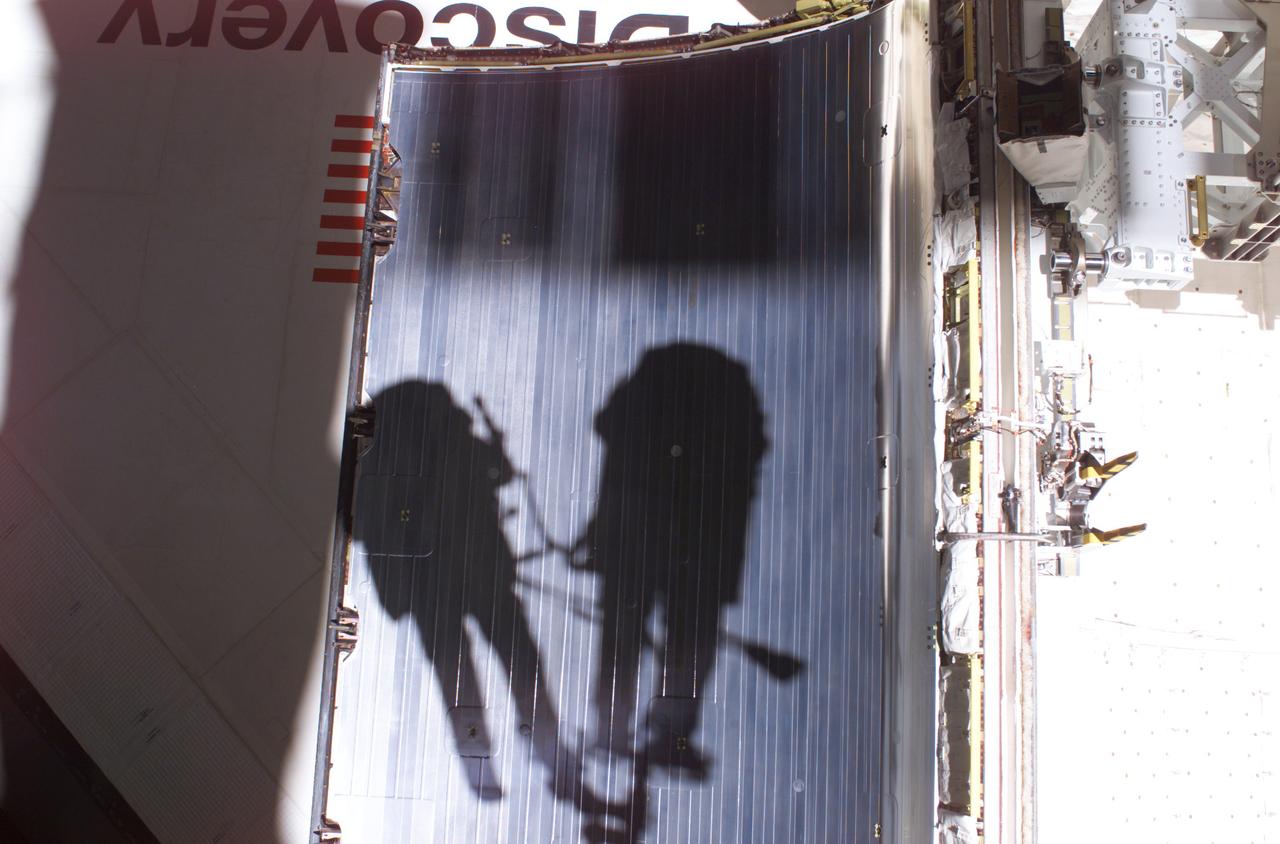
The shadows of astronauts Piers J. Sellers and Michael E. Fossum, STS-121 mission specialists, who are anchored to the Space Shuttle Discovery's Remote Manipulator System/Orbiter Boom Sensor System (RMS/OBSS) foot restraint, are visible against a shuttle's payload bay door during a session of extravehicular activity (EVA).
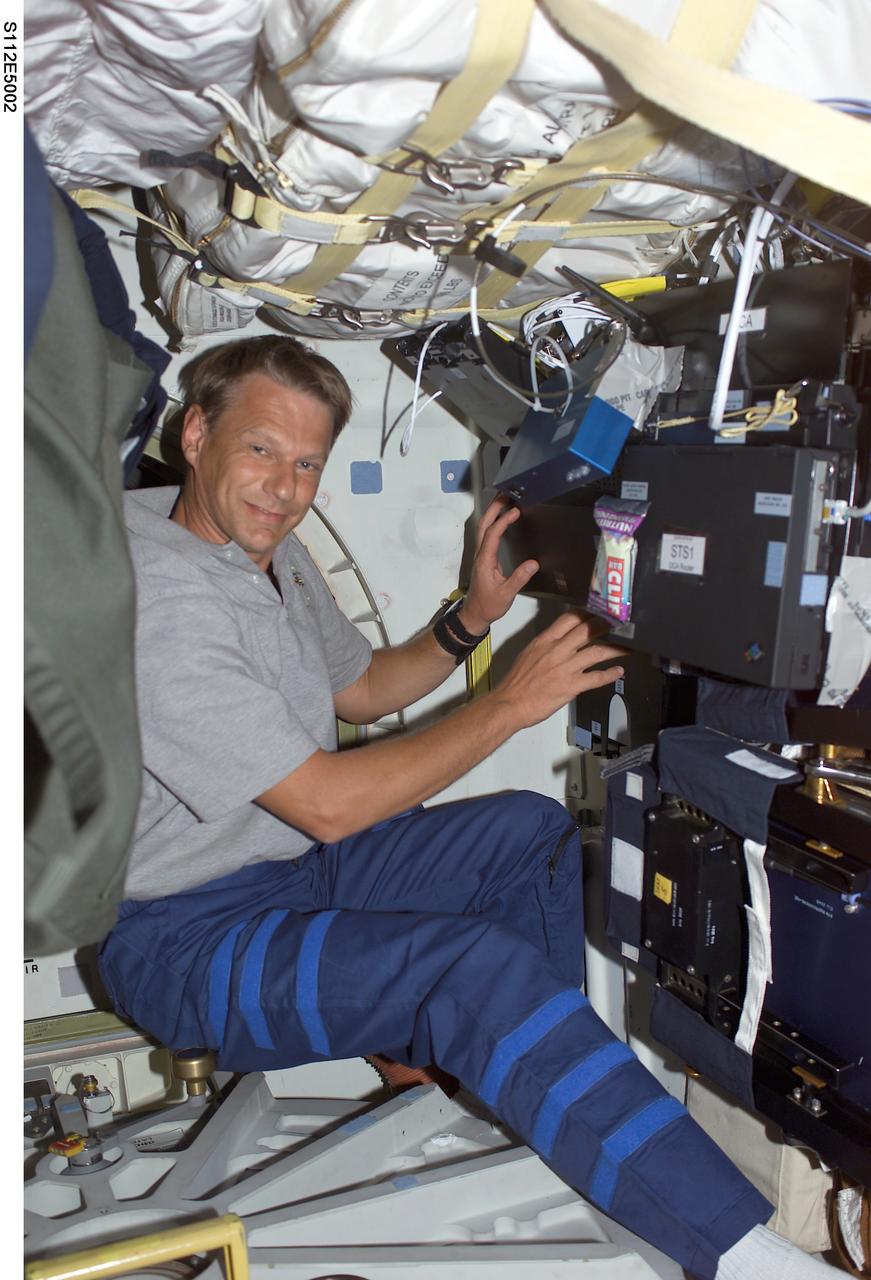
STS112-E-05002 (8 October 2002) --- Astronaut Piers J. Sellers, STS-112 mission specialist, is pictured on the middeck of the Space Shuttle Atlantis.
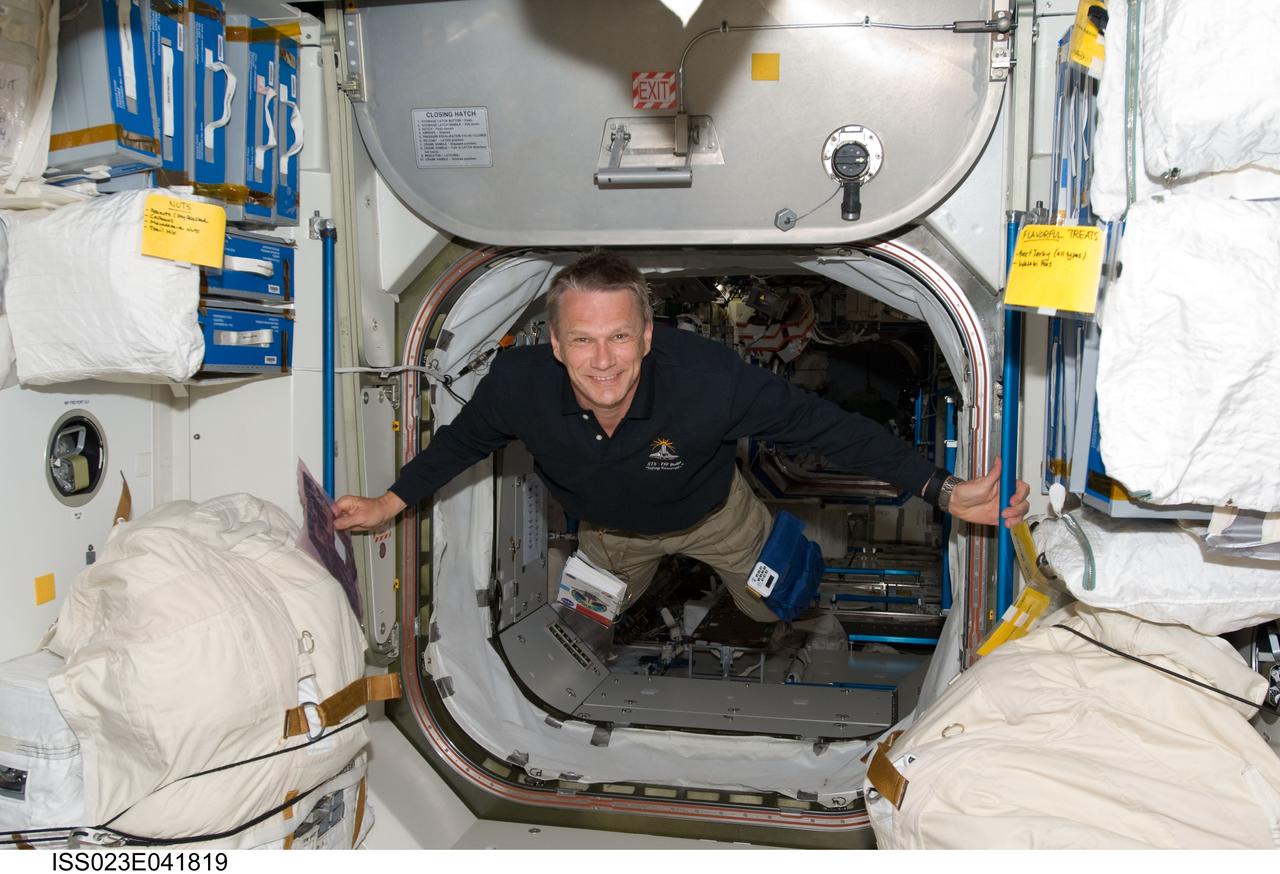
ISS023-E-041819 (16 May 2010) --- NASA astronaut Piers Sellers, STS-132 mission specialist, floats through a hatch on the International Space Station while space shuttle Atlantis remains docked with the station.
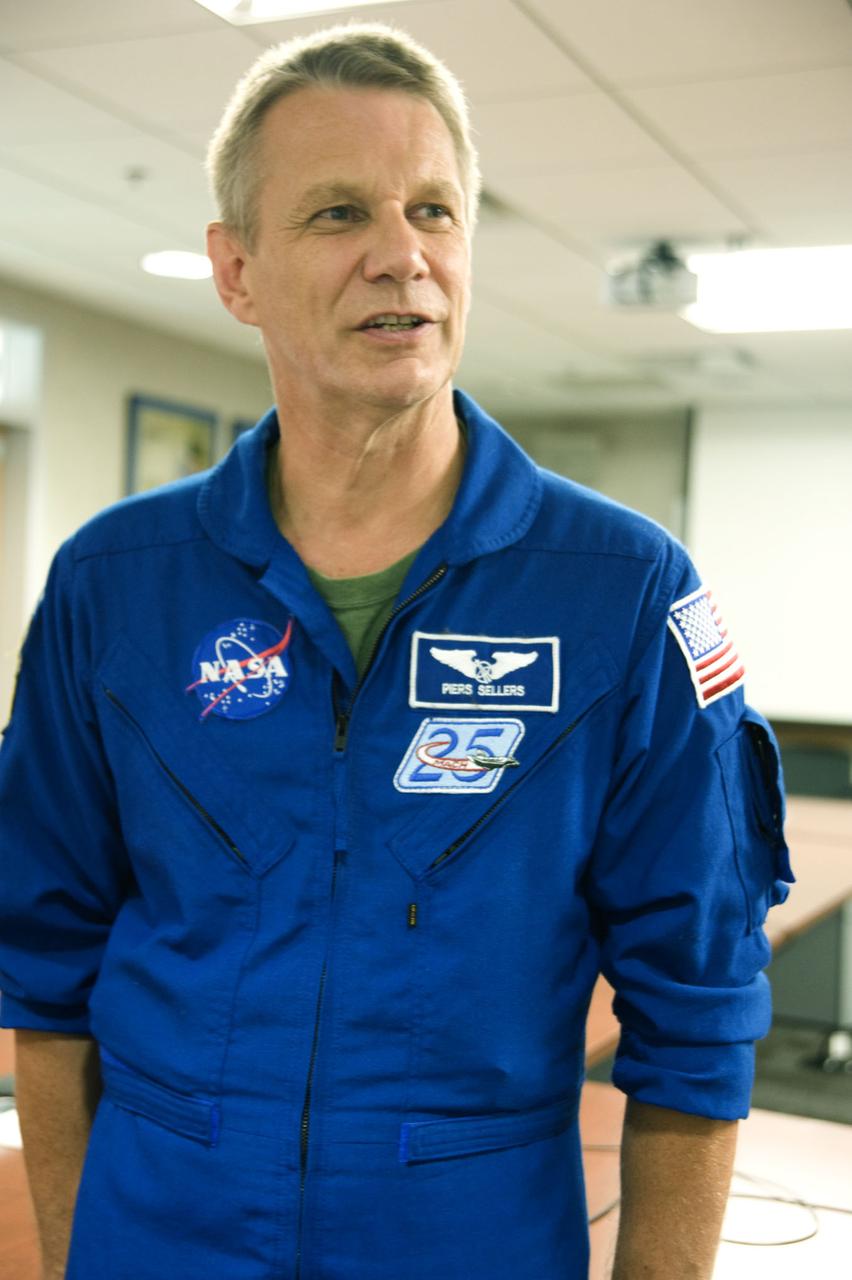
Astronaut Piers Sellers at NASA's Goddard Space Flight Center in Greenbelt, Md.
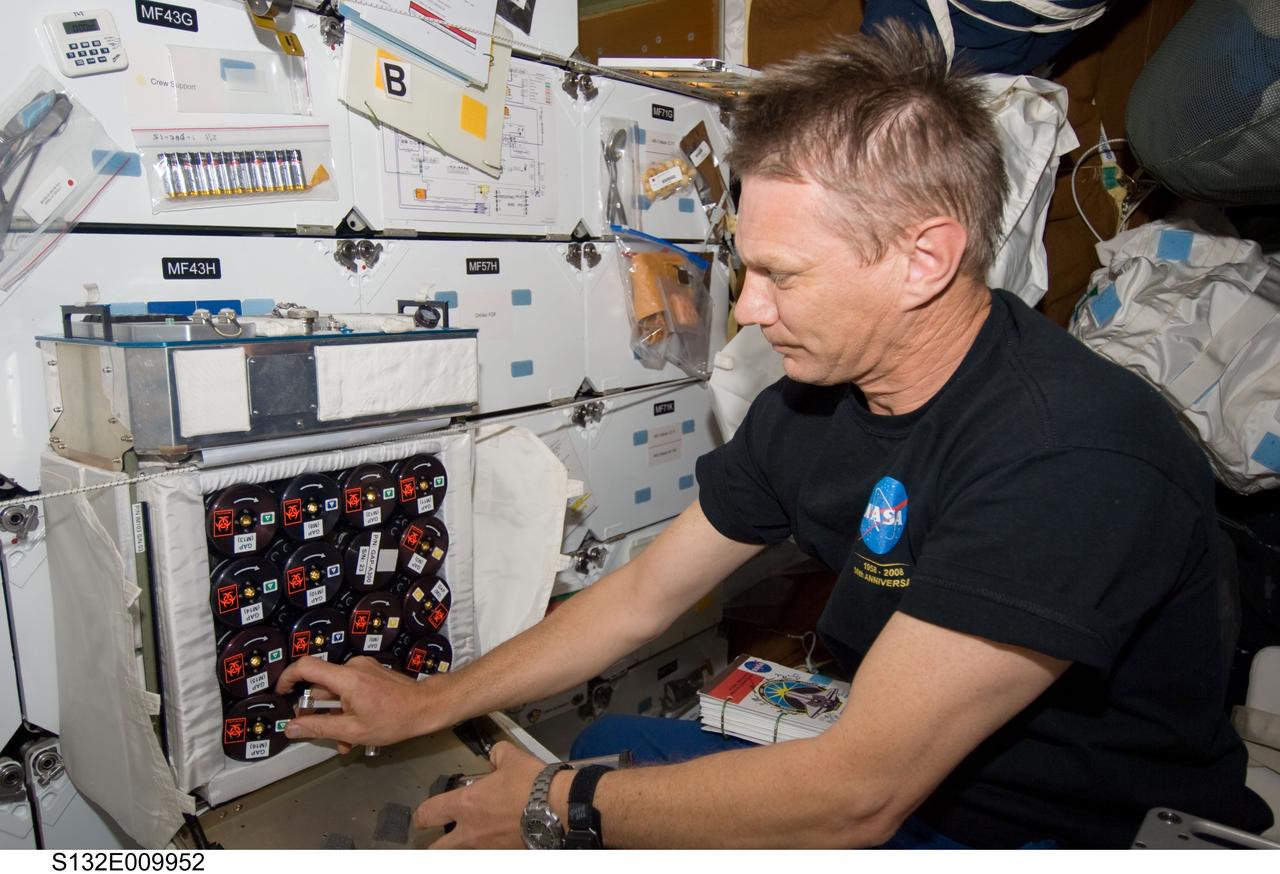
S132-E-009952 (22 May 2010) --- NASA astronaut Piers Sellers, STS-132 mission specialist, works with Group Activation Packs (GAP) on the middeck of space shuttle Atlantis while docked with the International Space Station.

STS112-E-05139 (11 October 2002) --- Astronaut Piers J. Sellers, STS-112 mission specialist, looks over a procedures checklist on the flight deck of the Space Shuttle Atlantis.
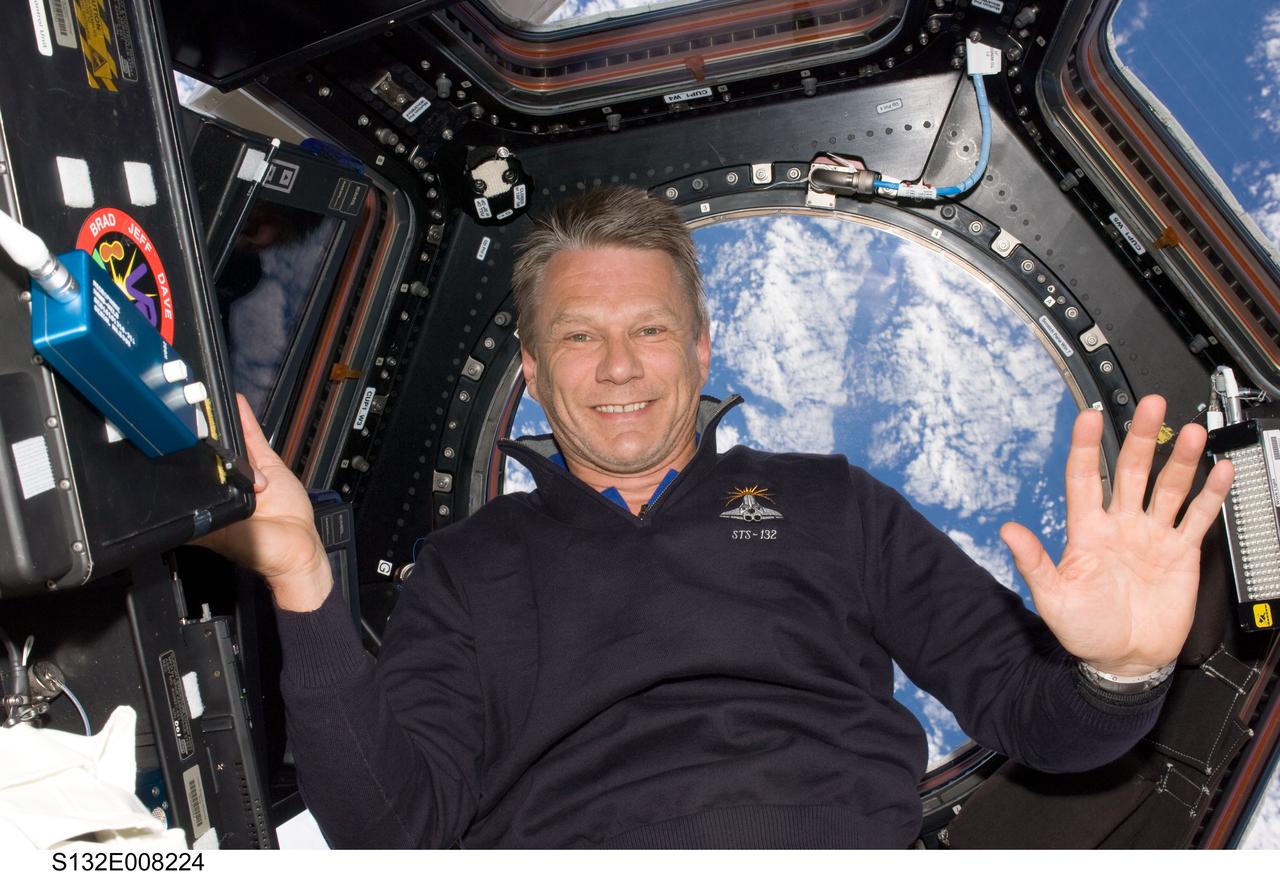
S132-E-008224 (19 May 2010) --- NASA astronaut Piers Sellers, STS-132 mission specialist, is pictured in the Cupola of the International Space Station while space shuttle Atlantis remains docked with the station.
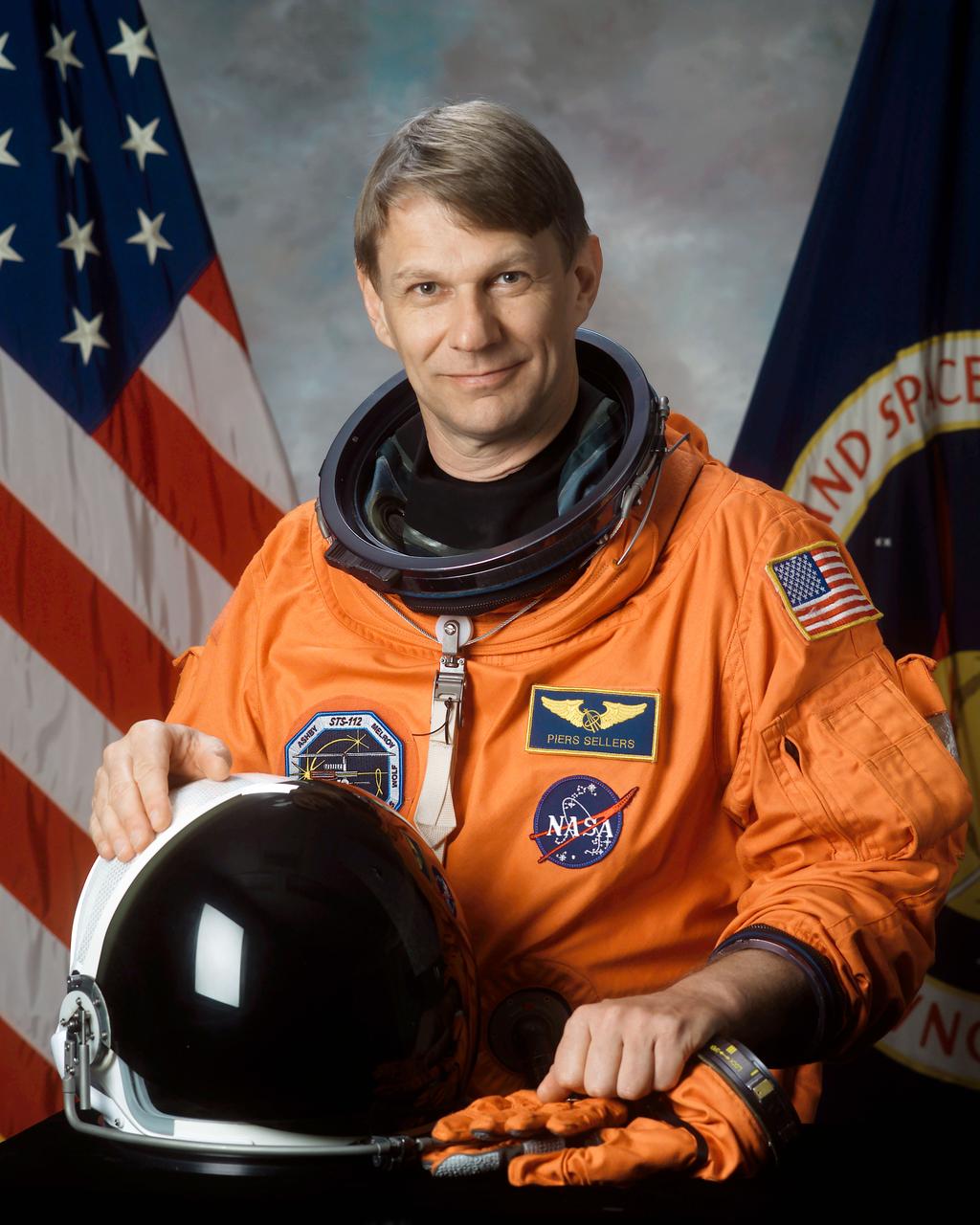
JSC2002-E-11030 (5 March 2002) --- Astronaut Piers J. Sellers, mission specialist
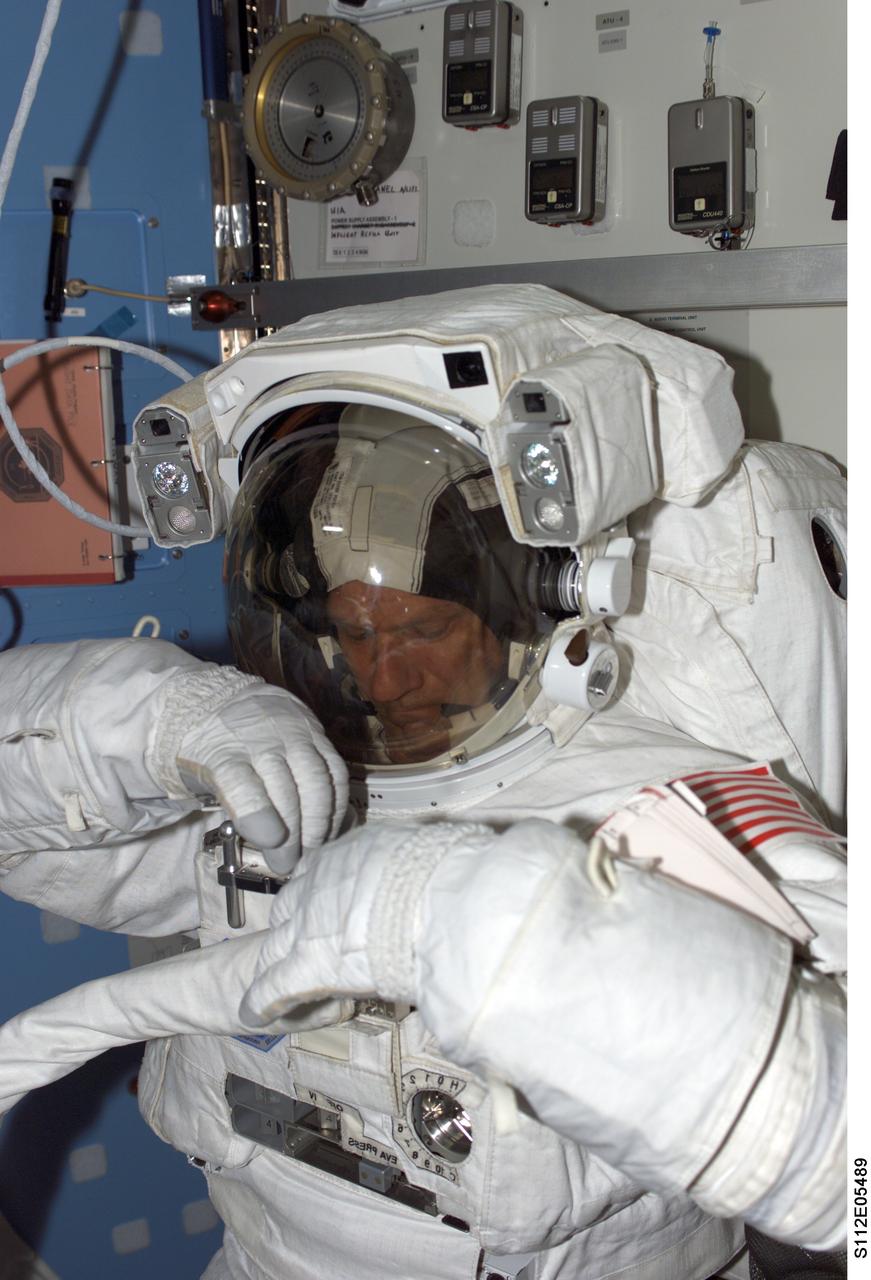
STS112-E-05489 (14 October 2002) --- Astronaut Piers J. Sellers, STS-112 mission specialist, attired in his Extravehicular Mobility Unit (EMU) space suit, is photographed in the Quest Airlock on the International Space Station (ISS) prior to the third scheduled session of extravehicular activity (EVA). Astronaut David A. Wolf (out of frame), mission specialist, joined Sellers on the spacewalk.
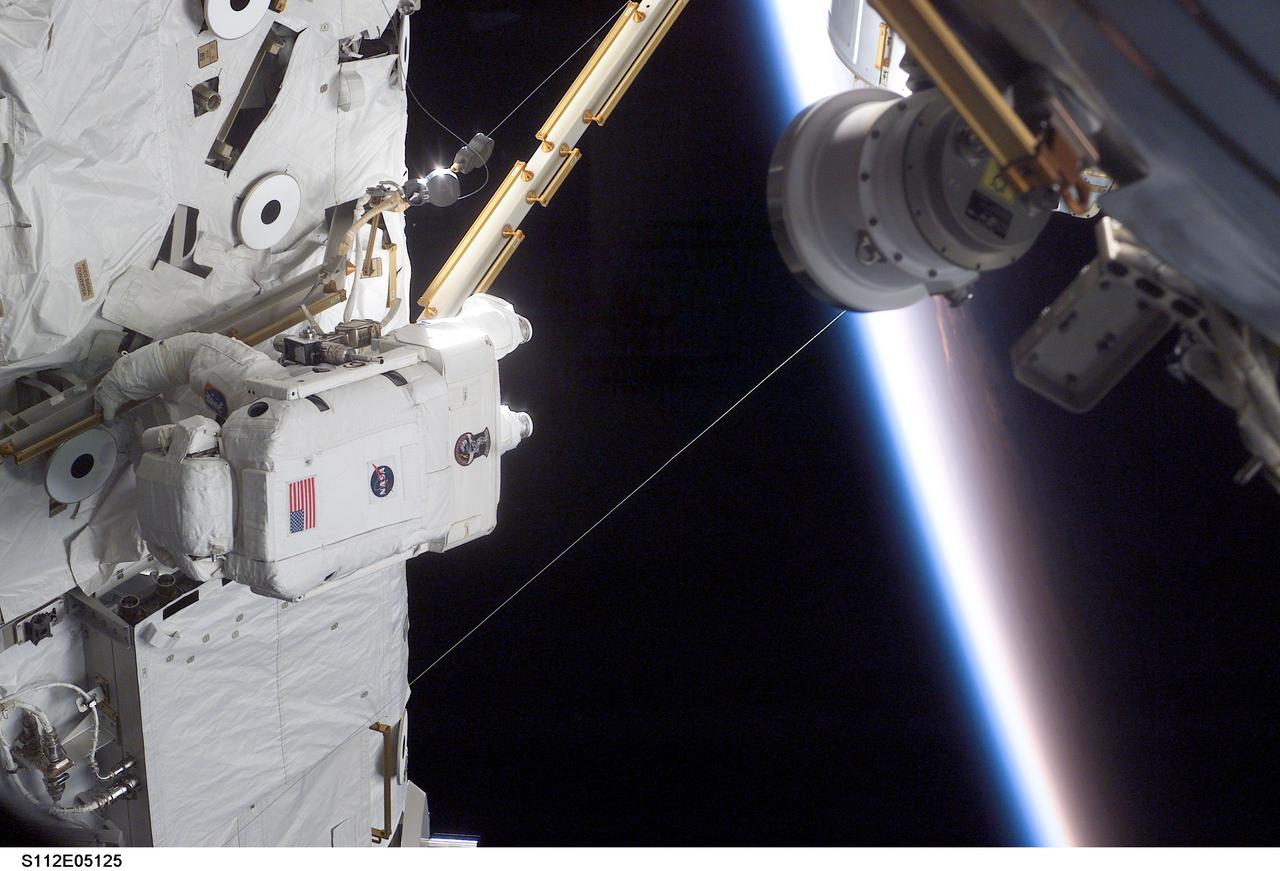
STS112-E-05125 (10 October 2002) --- Astronaut Piers J. Sellers, STS-112 mission specialist, works on the Starboard One (S1) Truss, newly installed on the International Space Station (ISS). Astronaut David A. Wolf (out of frame), mission specialist, worked in tandem with Sellers during the spacewalk. STS-112’s first session of extravehicular activity (EVA) lasted 7 hours and 1 minute.
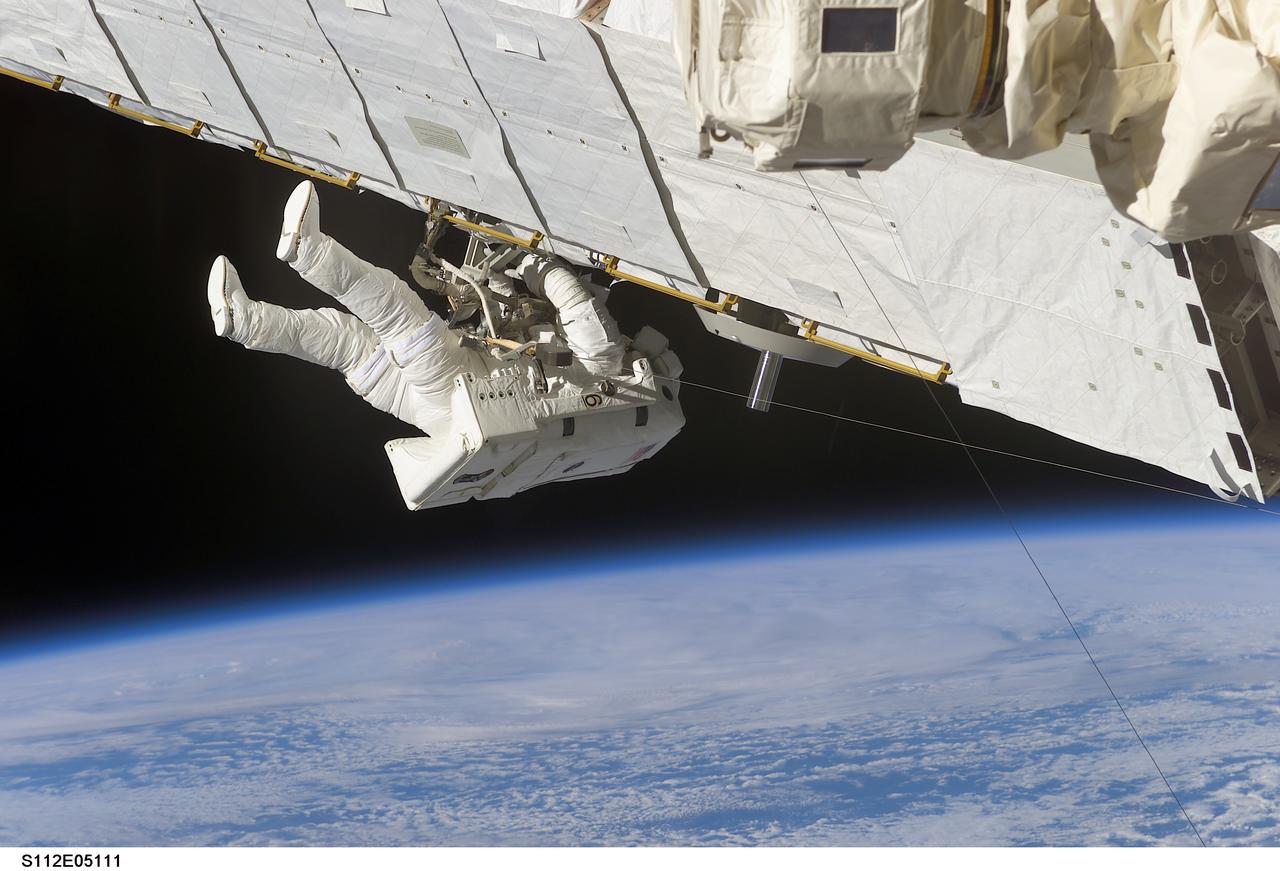
STS112-E-05111 (10 October 2002) --- Astronaut Piers J. Sellers, STS-112 mission specialist, works on the Starboard One (S1) Truss, newly installed on the International Space Station (ISS). Astronaut David A. Wolf (out of frame), mission specialist, worked in tandem with Sellers during the spacewalk. STS-112’s first session of extravehicular activity (EVA) lasted 7 hours and 1 minute.
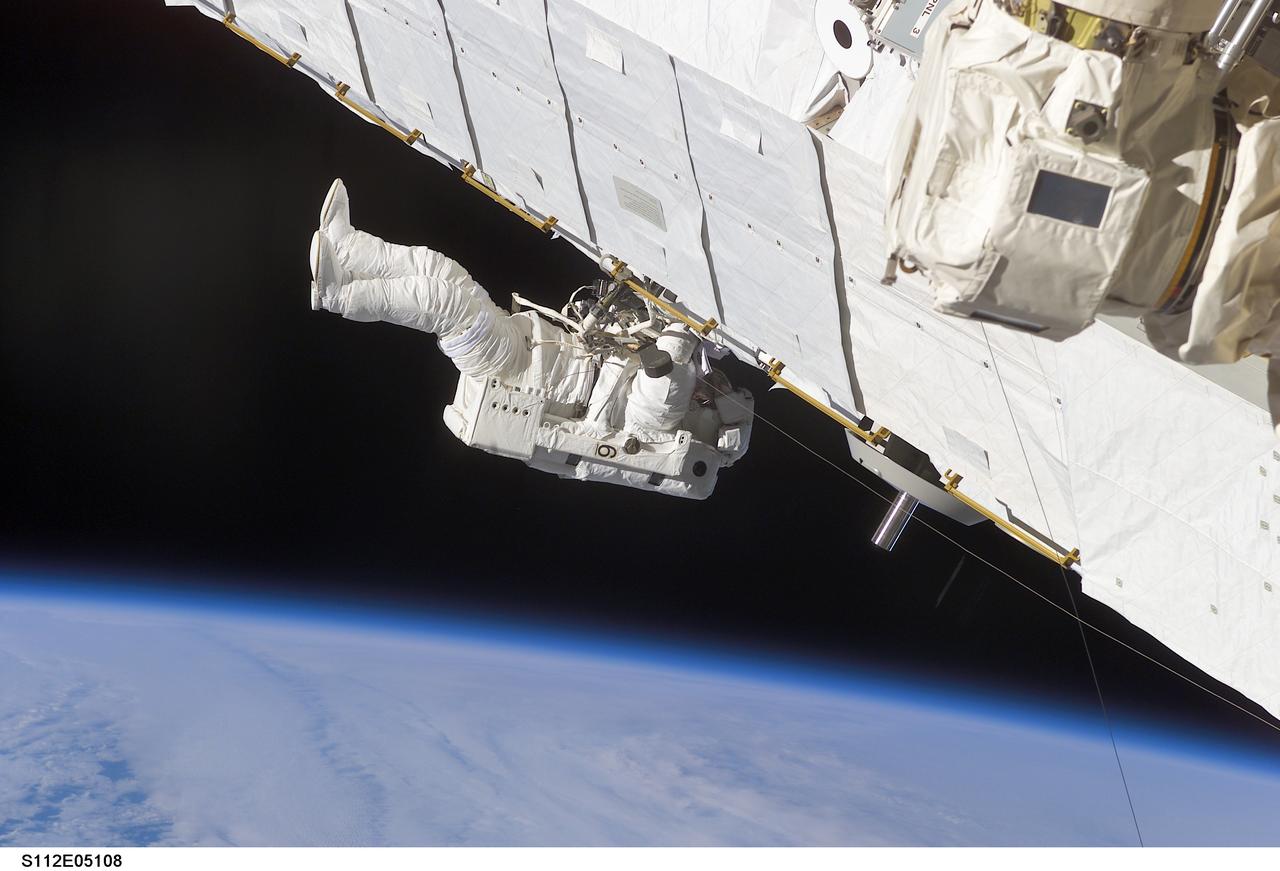
STS112-E-05108 (10 October 2002) --- Astronaut Piers J. Sellers, STS-112 mission specialist, works on the Starboard One (S1) Truss, newly installed on the International Space Station (ISS). Astronaut David A. Wolf (out of frame), mission specialist, worked in tandem with Sellers during the spacewalk. STS-112’s first session of extravehicular activity (EVA) lasted 7 hours and 1 minute.
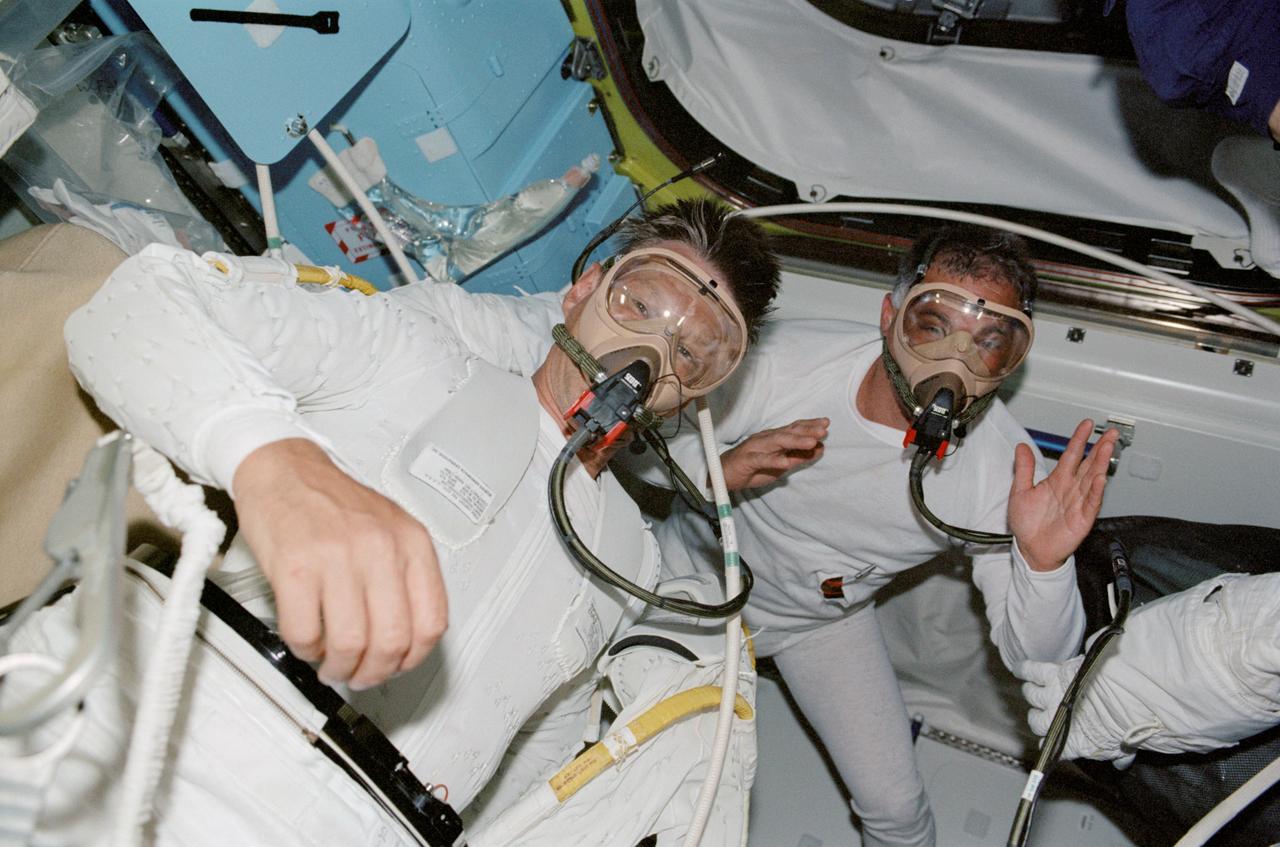
STS112-309-033 (10 October 2002) --- Astronauts Piers J. Sellers (left) and David A. Wolf, STS-112 mission specialists, are photographed in the midst of a pre-breathe exercise in preparation for the mission’s first session of extravehicular activity (EVA). Sellers and Wolf are attired in the liquid cooling and ventilation garment that complements the Extravehicular Mobility Unit (EMU) space suit.
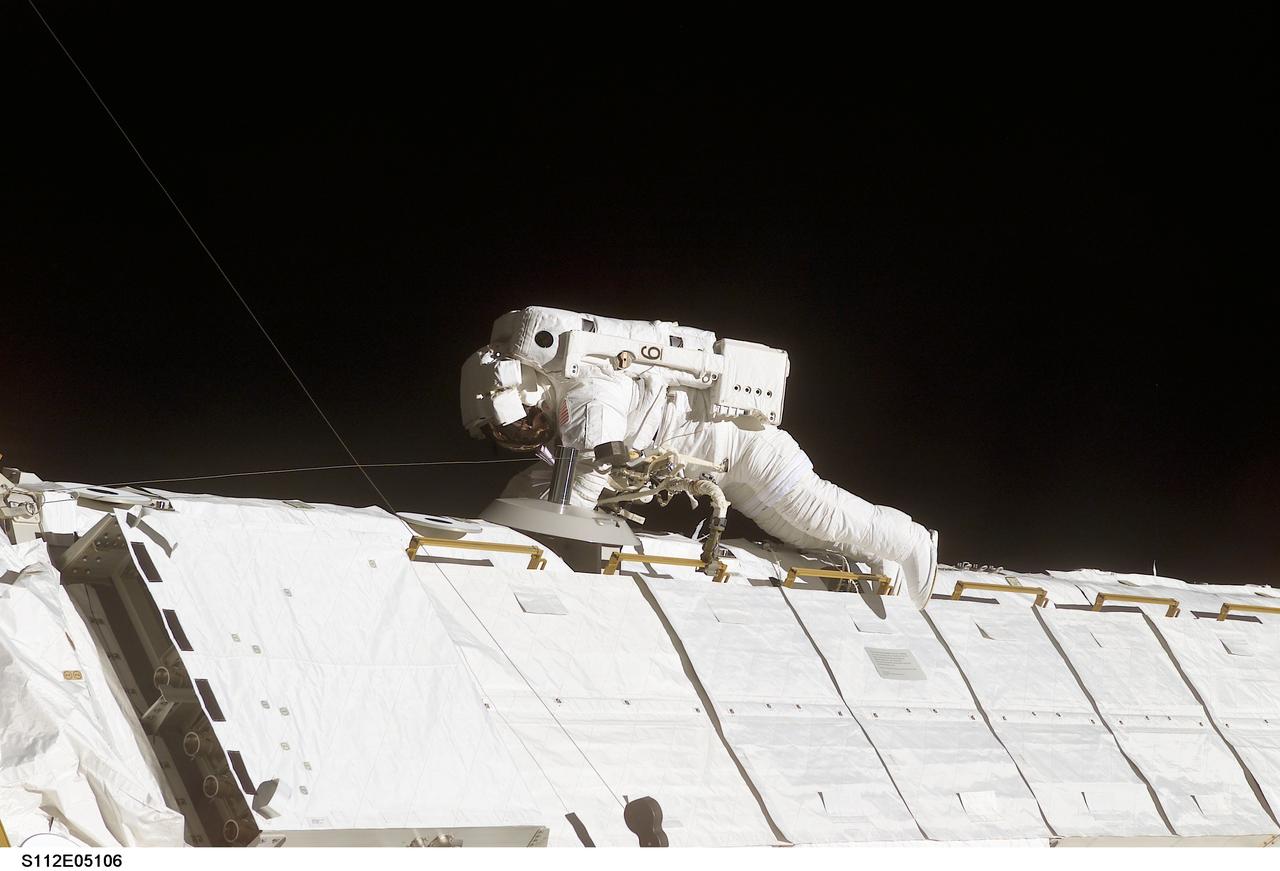
STS112-E-05106 (10 October 2002) --- Astronaut Piers J. Sellers, STS-112 mission specialist, works on the Starboard One (S1) Truss, newly installed on the International Space Station (ISS). Astronaut David A. Wolf (out of frame), mission specialist, worked in tandem with Sellers during the spacewalk. STS-112’s first session of extravehicular activity (EVA) lasted 7 hours and 1 minute.
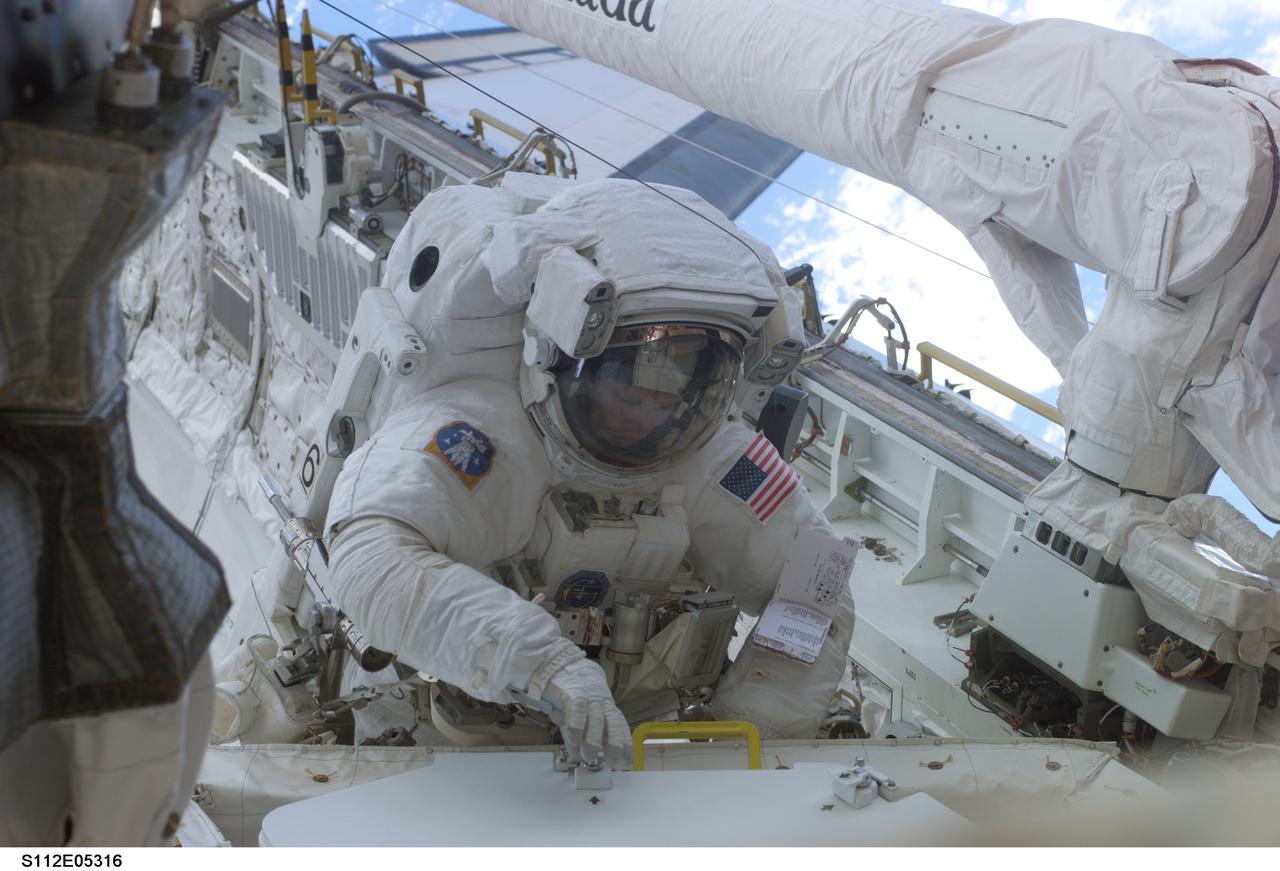
STS112-E-5316 (12 October 2002) --- Astronaut Piers J. Sellers. STS-112 mission specialist, prepares to fetch a spacewalking tool in the forward cargo bay of the Space Shuttle Atlantis. Sellers was in the midst of a six hour, four minute session of extravehicular activity (EVA) on which he was joined by astronaut David A. Wolf (out of frame).
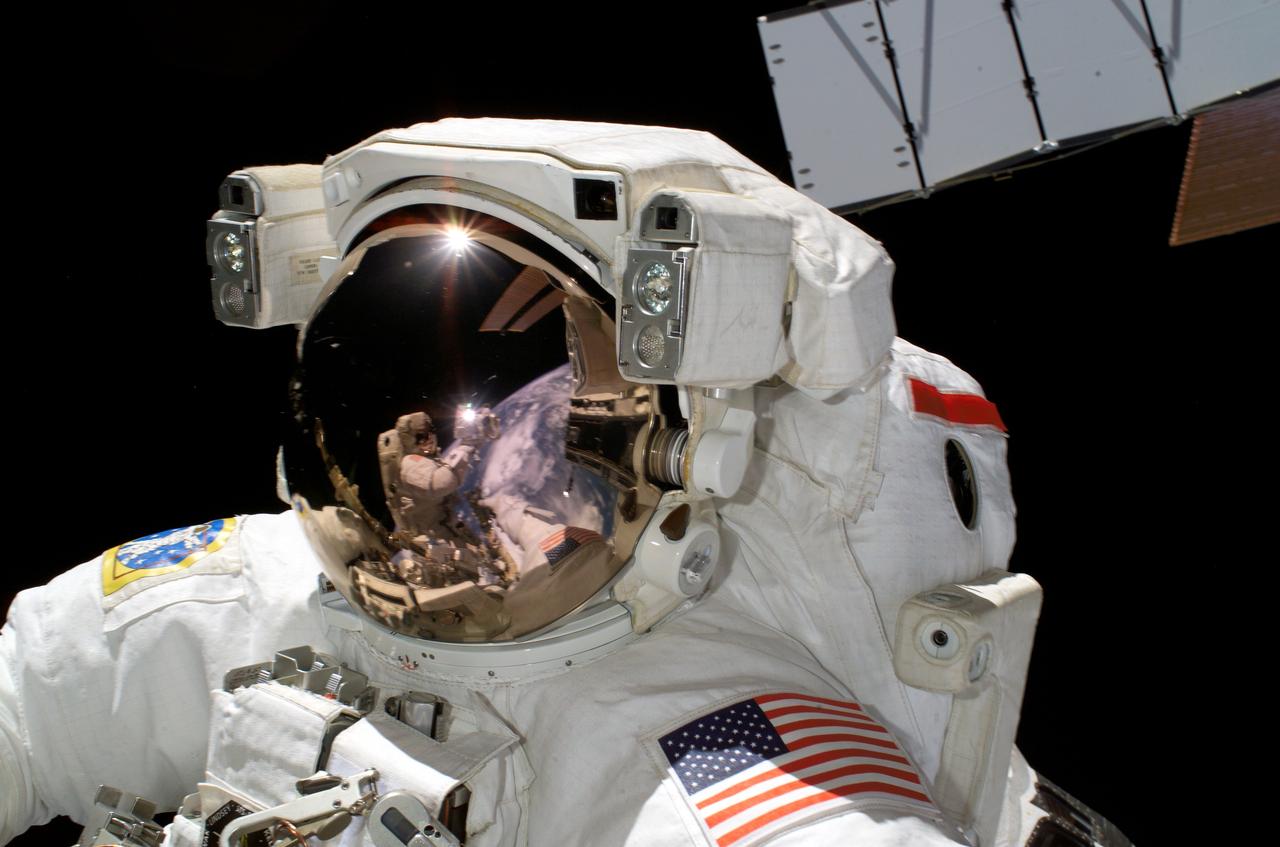
ISS013-E-49639 (8 July 2006) --- Astronaut Piers J. Sellers, STS-121 mission specialist, participates in the mission's first session of extravehicular activity (EVA) while Space Shuttle Discovery was docked with the International Space Station. Astronaut Michael E. Fossum, mission specialist, who was also on the spacewalk with Sellers and took this photo, appears as a small reflection in Seller's helmet visor. Earth's horizon and a portion of a station solar array are also visible in the reflection.
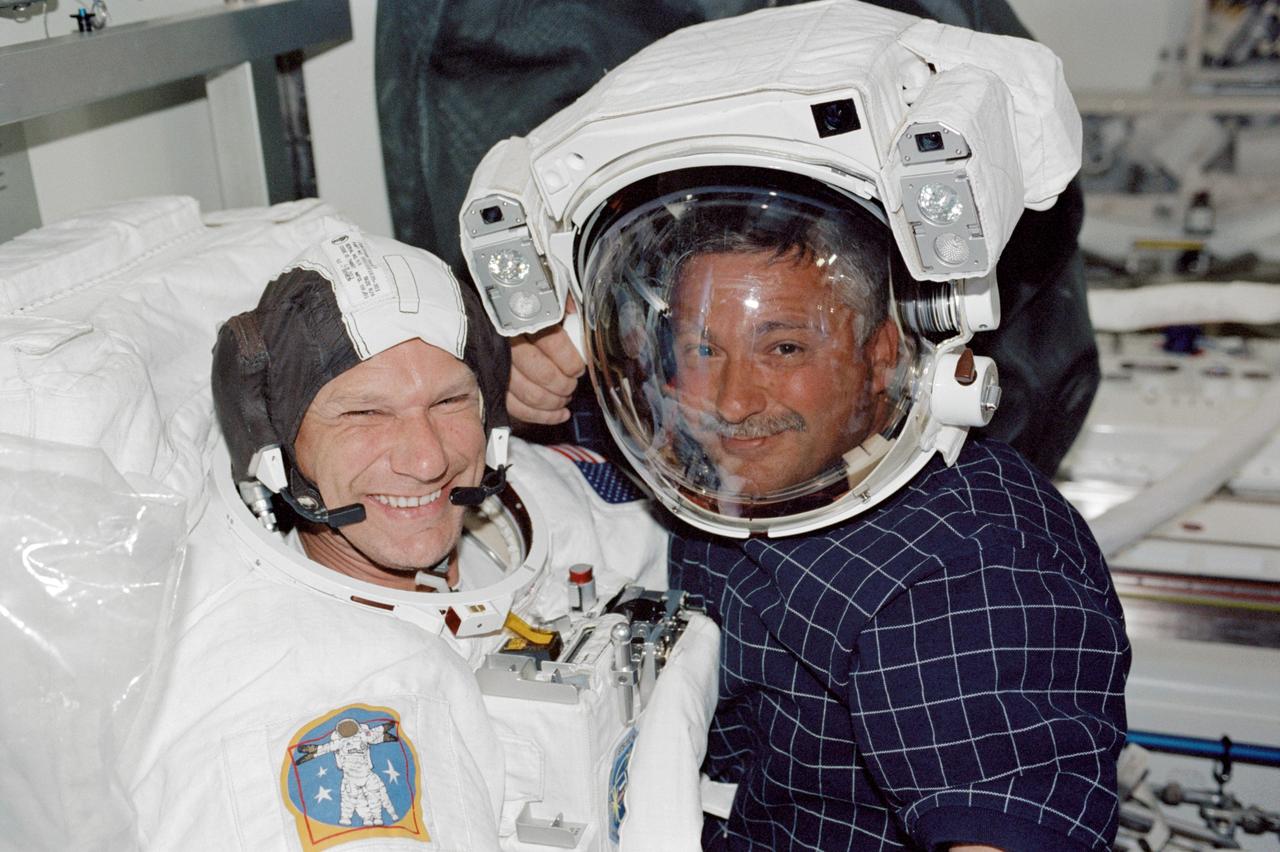
STS112-318-013 (14 October 2002) --- Astronaut Piers J. Sellers (left) and cosmonaut Fyodor N. Yurchikhin, both STS-112 mission specialists, enjoy a light moment in the Quest Airlock on the International Space Station (ISS). Sellers is wearing his Extravehicular Mobility Unit (EMU) space suit and Yurchikhin is wearing Sellers’ helmet. Yurchikhin represents Rosaviakosmos.
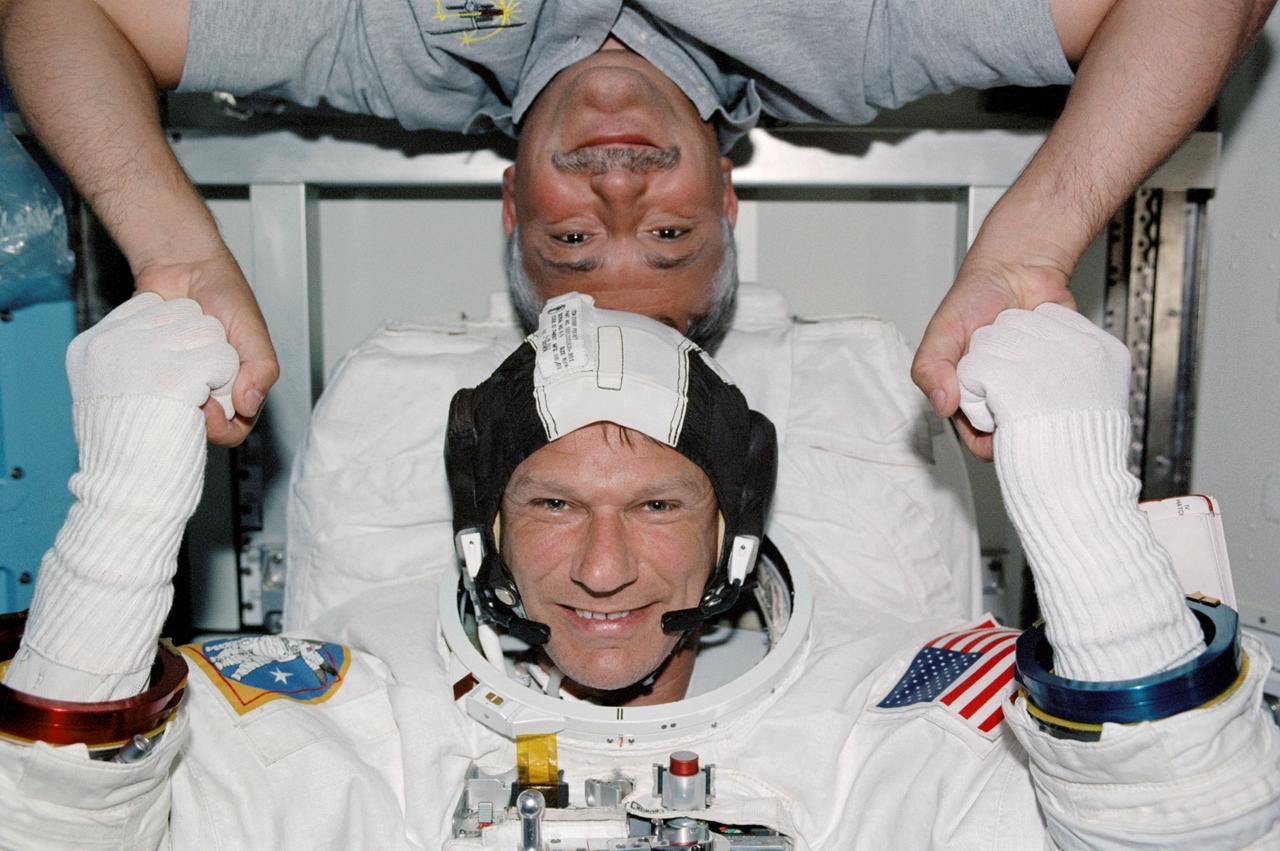
STS112-336-022 (12 October 2002) --- Astronaut Piers J. Sellers (bottom) and cosmonaut Fyodor N. Yurchikhin, both STS-112 mission specialists, pose for a 180-degree head-to-head photo in the Quest Airlock on the International Space Station (ISS). Sellers is attired in his Extravehicular Mobility Unit (EMU) spacesuit. Sellers and astronaut David A. Wolf (out of frame) were preparing to exit the station’s airlock for the mission’s second spacewalk. Yurchikhin represents Rosaviakosmos.
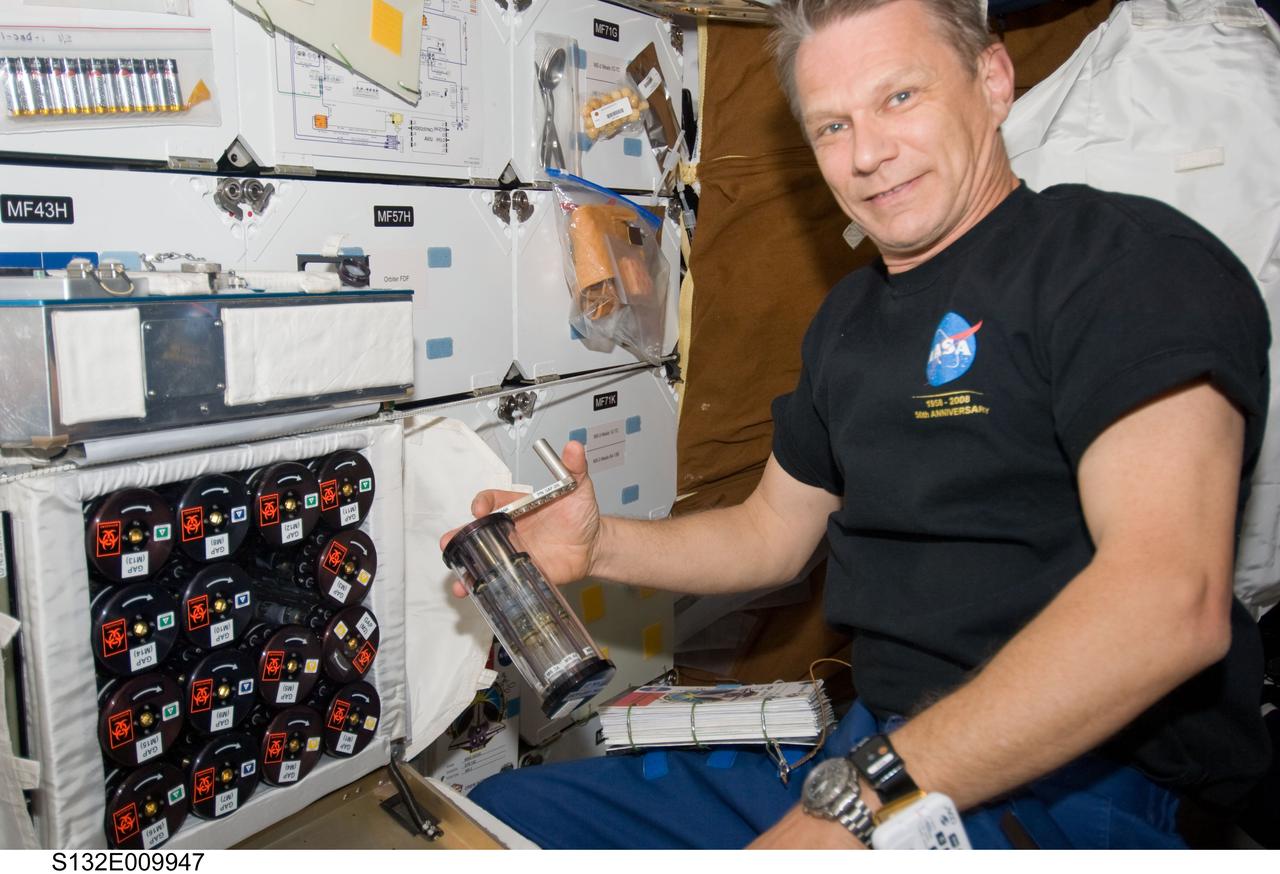
S132-E-009947 (22 May 2010) --- NASA astronaut Piers Sellers, STS-132 mission specialist, works with Group Activation Packs (GAP) on the middeck of space shuttle Atlantis while docked with the International Space Station.
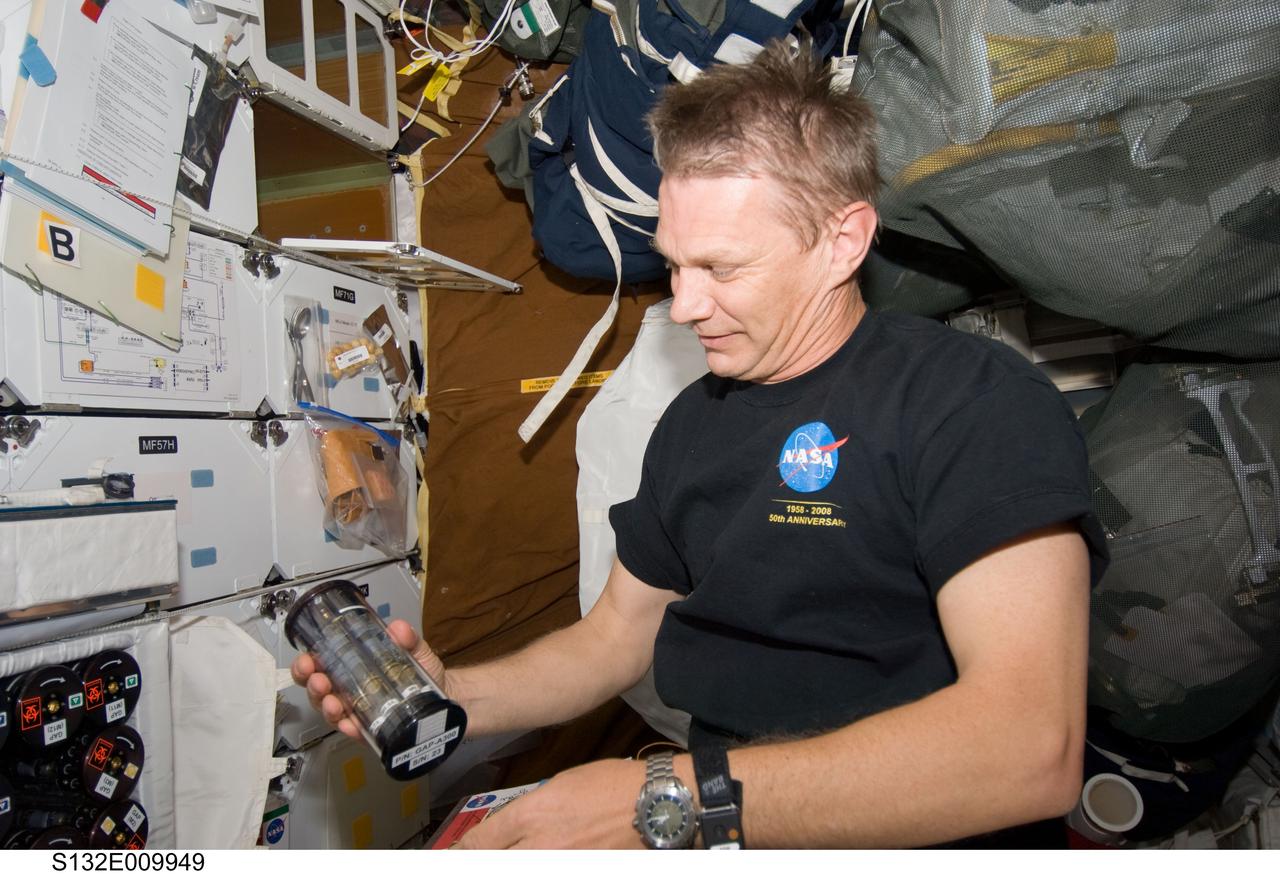
S132-E-009949 (22 May 2010) --- NASA astronaut Piers Sellers, STS-132 mission specialist, works with Group Activation Packs (GAP) on the middeck of space shuttle Atlantis while docked with the International Space Station.
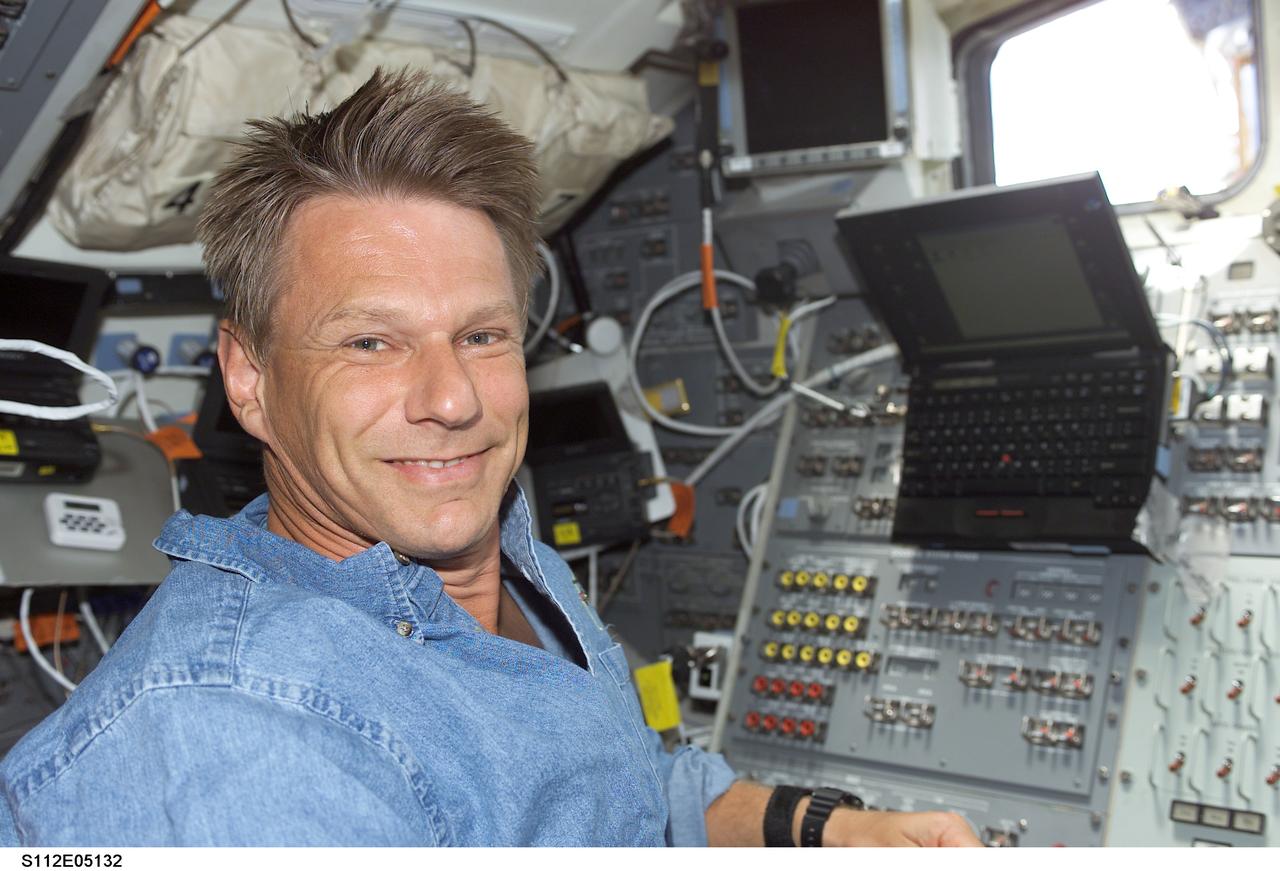
STS112-E-05132 (11 October 2002) --- Astronaut Piers J. Sellers, STS-112 mission specialist, is pictured on the aft flight deck of the Space Shuttle Atlantis.
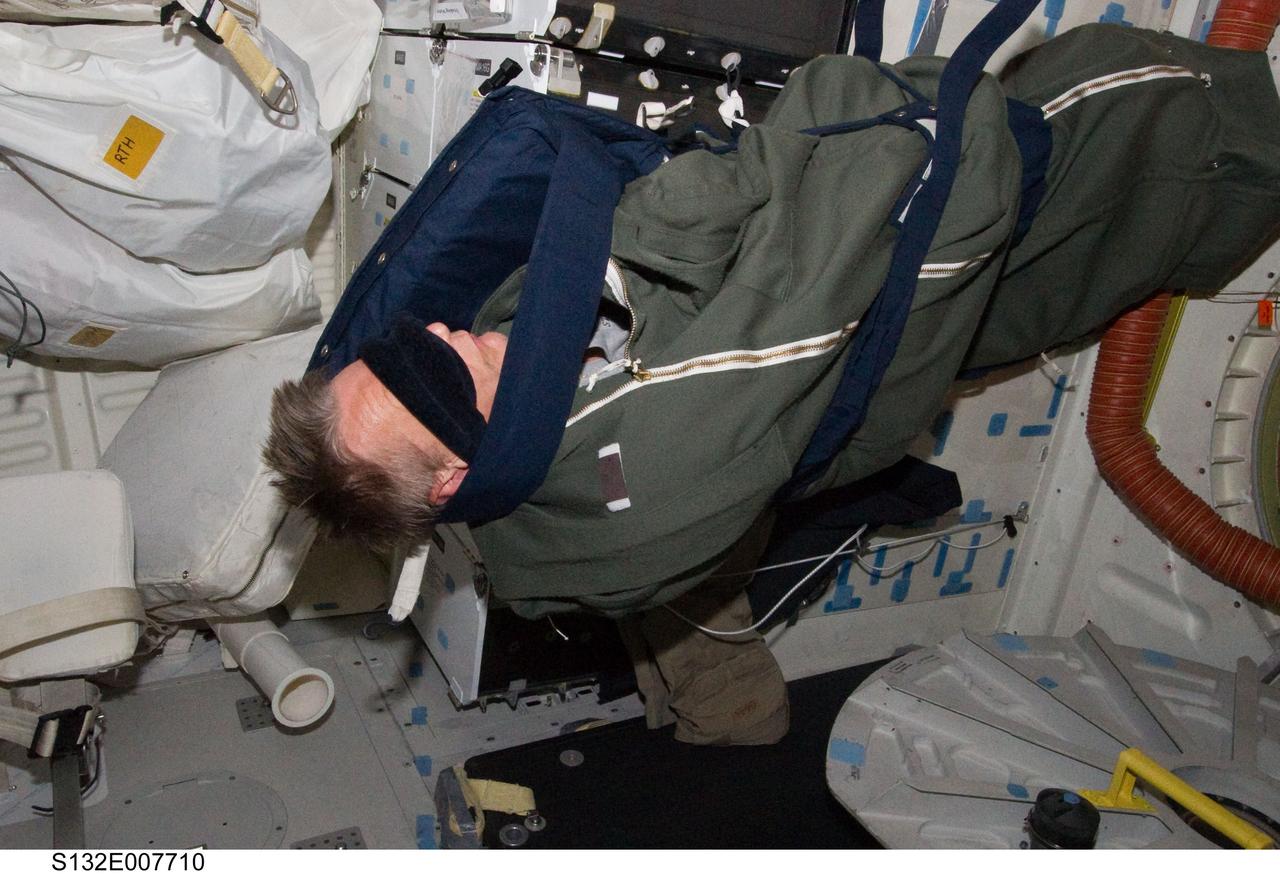
S132-E-007710 (17 May 2010) --- NASA astronaut Piers Sellers, STS-132 mission specialist, rests in his sleeping bag on the middeck of the space shuttle Atlantis while docked with the International Space Station.
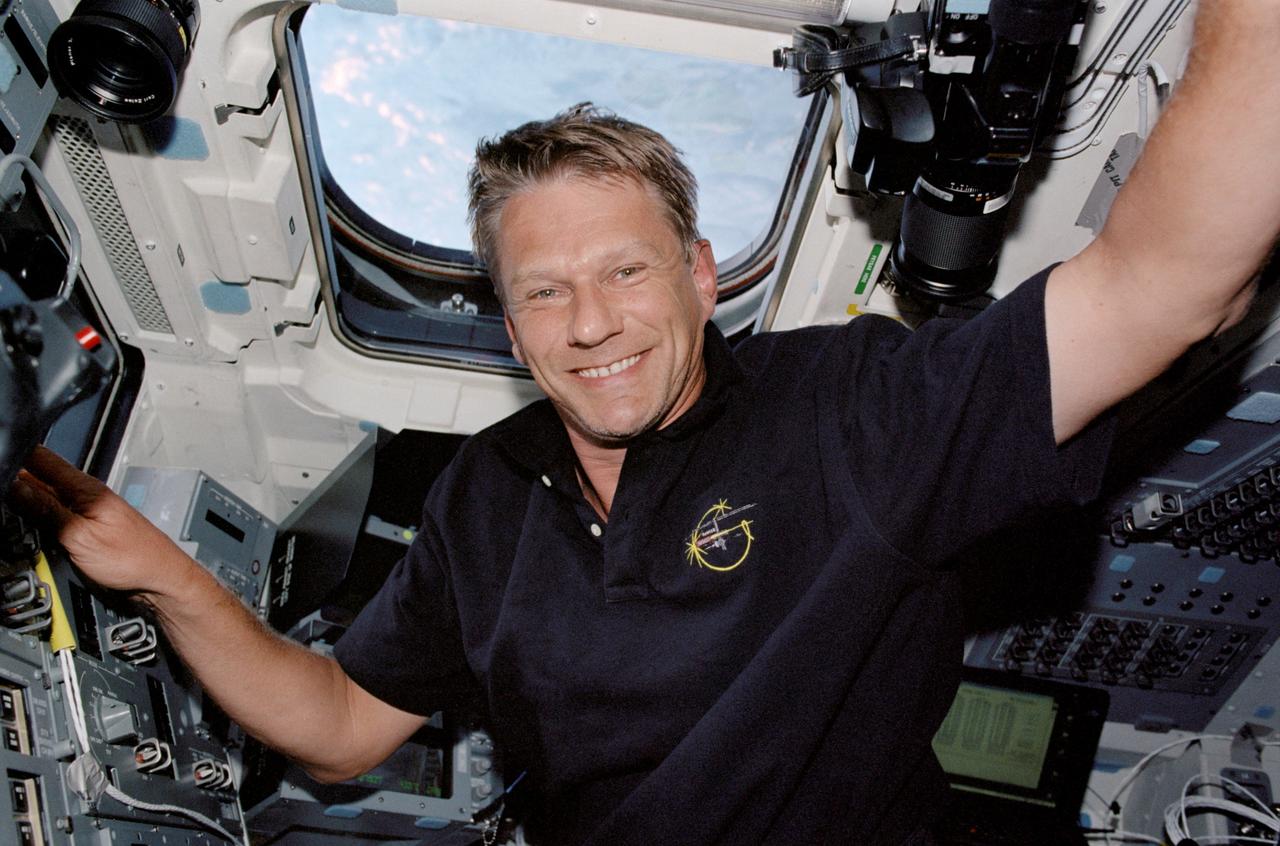
STS112-343-020 (7-18 October 2002) --- Astronaut Piers J. Sellers, STS-112 mission specialist, is pictured on the aft flight deck of the Space Shuttle Atlantis.
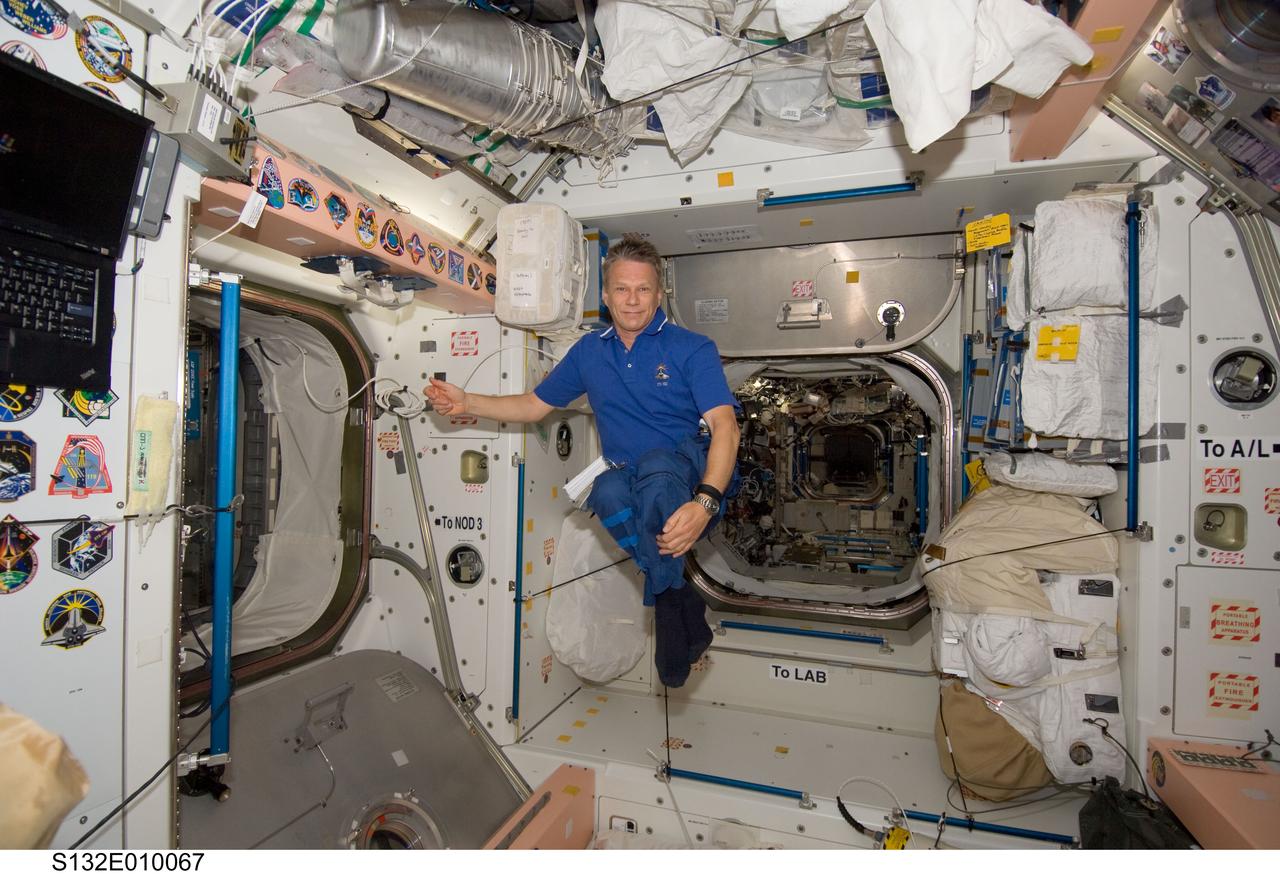
S132-E-010067 (23 May 2010) --- NASA astronaut Piers Sellers, STS-132 mission specialist, floats freely in the Unity node of the International Space Station while space shuttle Atlantis remains docked with the station.
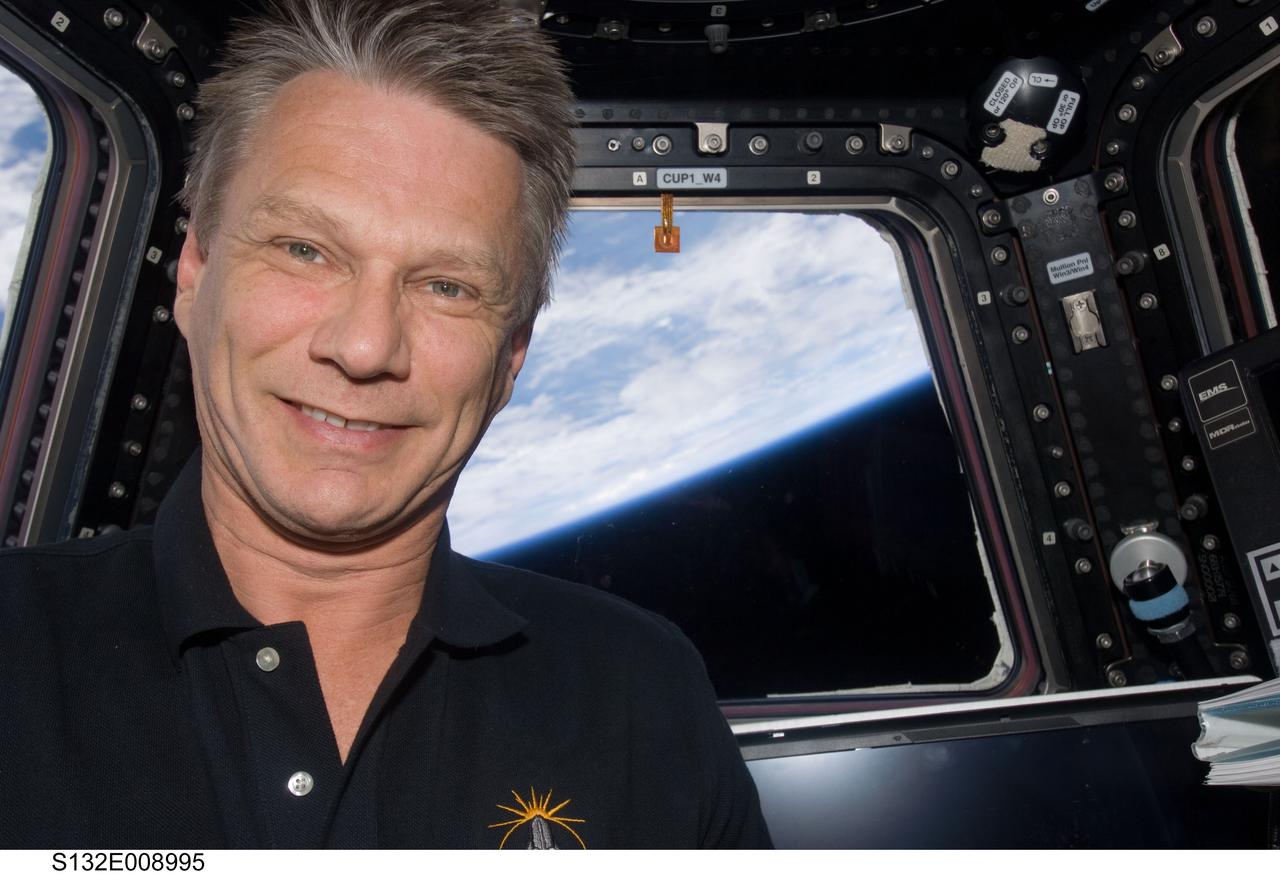
S132-E-008995 (21 May 2010) --- NASA astronaut Piers Sellers has been into space before the current STS-132 mission of space shuttle Atlantis. But this flight's visit to the International Space Station has afforded the mission specialist his first look at the Cupola and his first looks from the seven-windowed turret-like module on the orbital outpost. This photo was taken inside the Cupola while two of Sellers' crewmates were finishing STS-132's third and final session of extravehicular activity. Photo credit: NASA or National Aeronautics and Space Administration
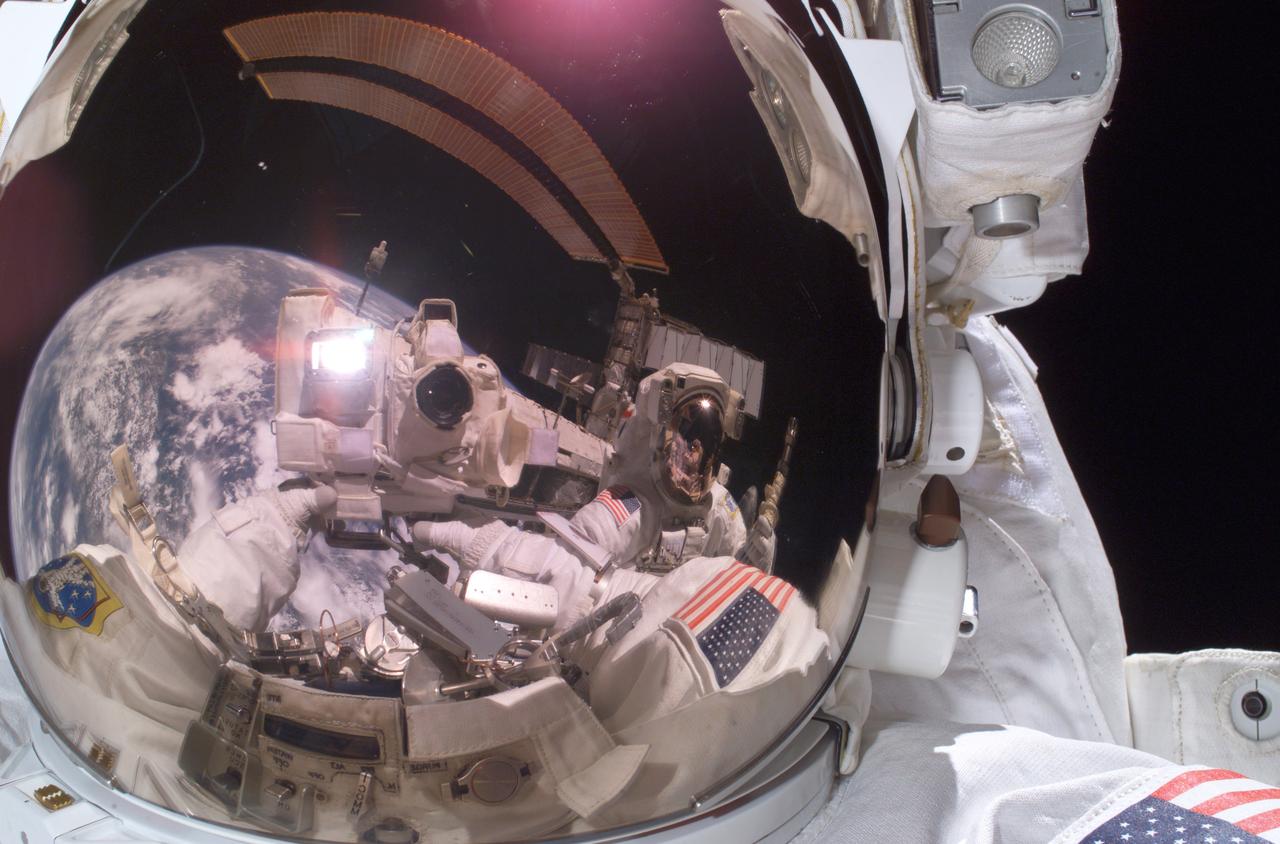
Astronaut Michael E. Fossum, STS-121 mission specialist, used a digital still camera to expose a photo of his helmet visor during a session of extravehicular activity (EVA) while Space Shuttle Discovery was docked with the International Space Station (ISS). Also visible in the visor reflections are fellow space walker Piers J. Sellers, mission specialist, Earth's horizon, and a station solar array. During its 12-day mission, this utilization and logistics flight delivered a multipurpose logistics module (MPLM) to the ISS with several thousand pounds of new supplies and experiments. In addition, some new orbital replacement units (ORUs) were delivered and stowed externally on the ISS on a special pallet. These ORUs are spares for critical machinery located on the outside of the ISS. During this mission the crew also carried out testing of Shuttle inspection and repair hardware, as well as evaluated operational techniques and concepts for conducting on-orbit inspection and repair.
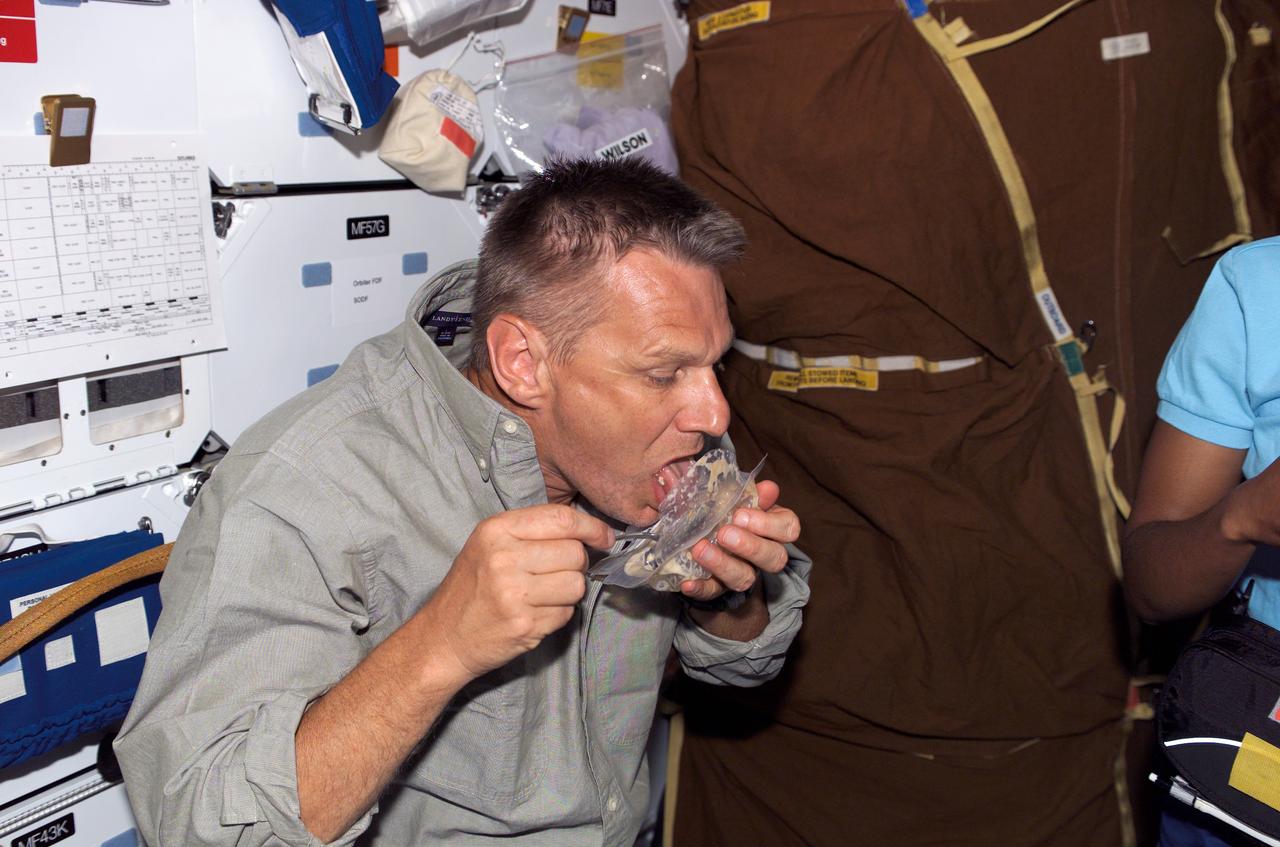
S121-E-05208 (5 July 2006) --- Astronaut Piers J. Sellers, STS-121 mission specialist, eats breakfast on the middeck of the Space Shuttle Discovery.
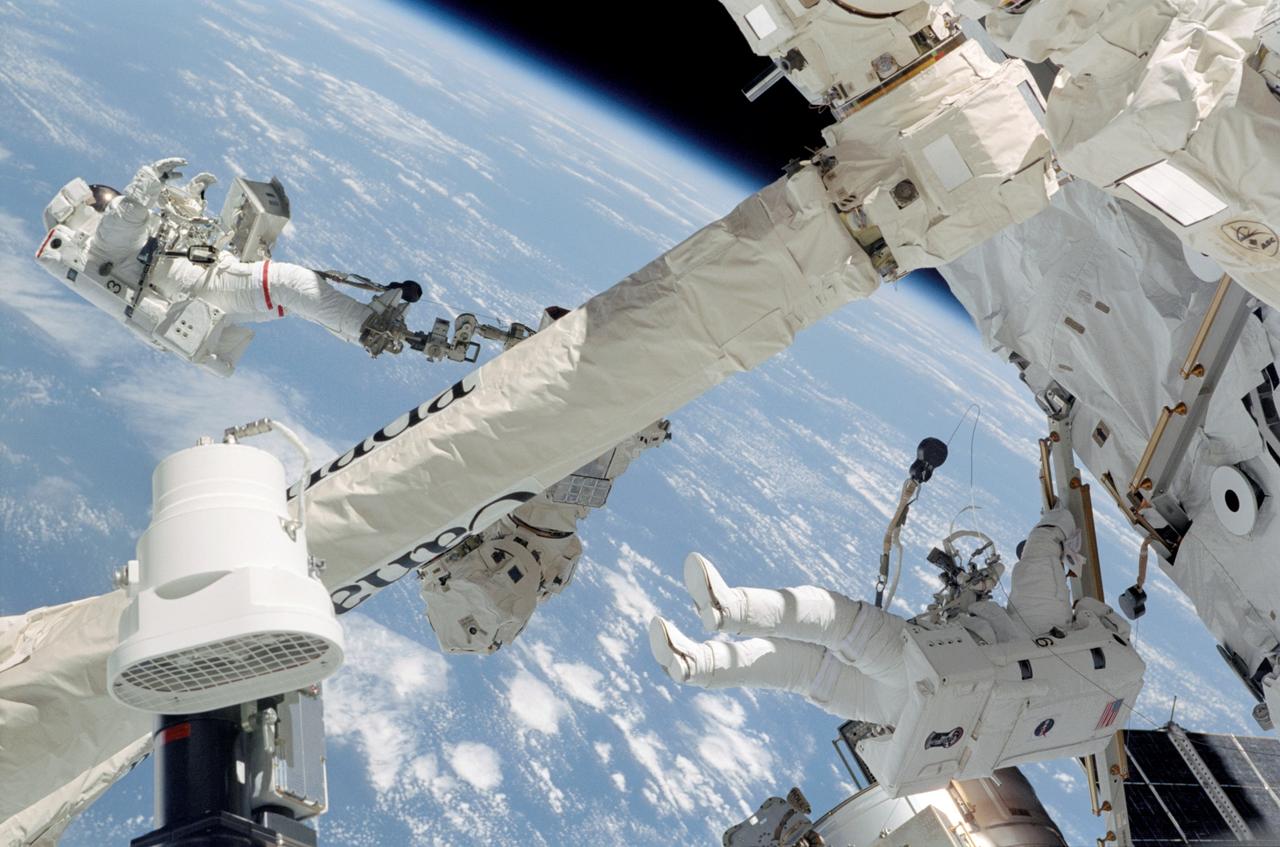
STS112-326-033 (12 October 2002) --- Astronauts David A. Wolf (left) and Piers J. Sellers, both STS-112 mission specialists, participate in the mission’s second session of extravehicular activity (EVA). Wolf is anchored to a foot restraint on the International Space Station’s (ISS) Canadarm2 while Sellers traverses along the airlock spur, a route used by spacewalkers to get from the Quest airlock on the station to the outpost's truss.
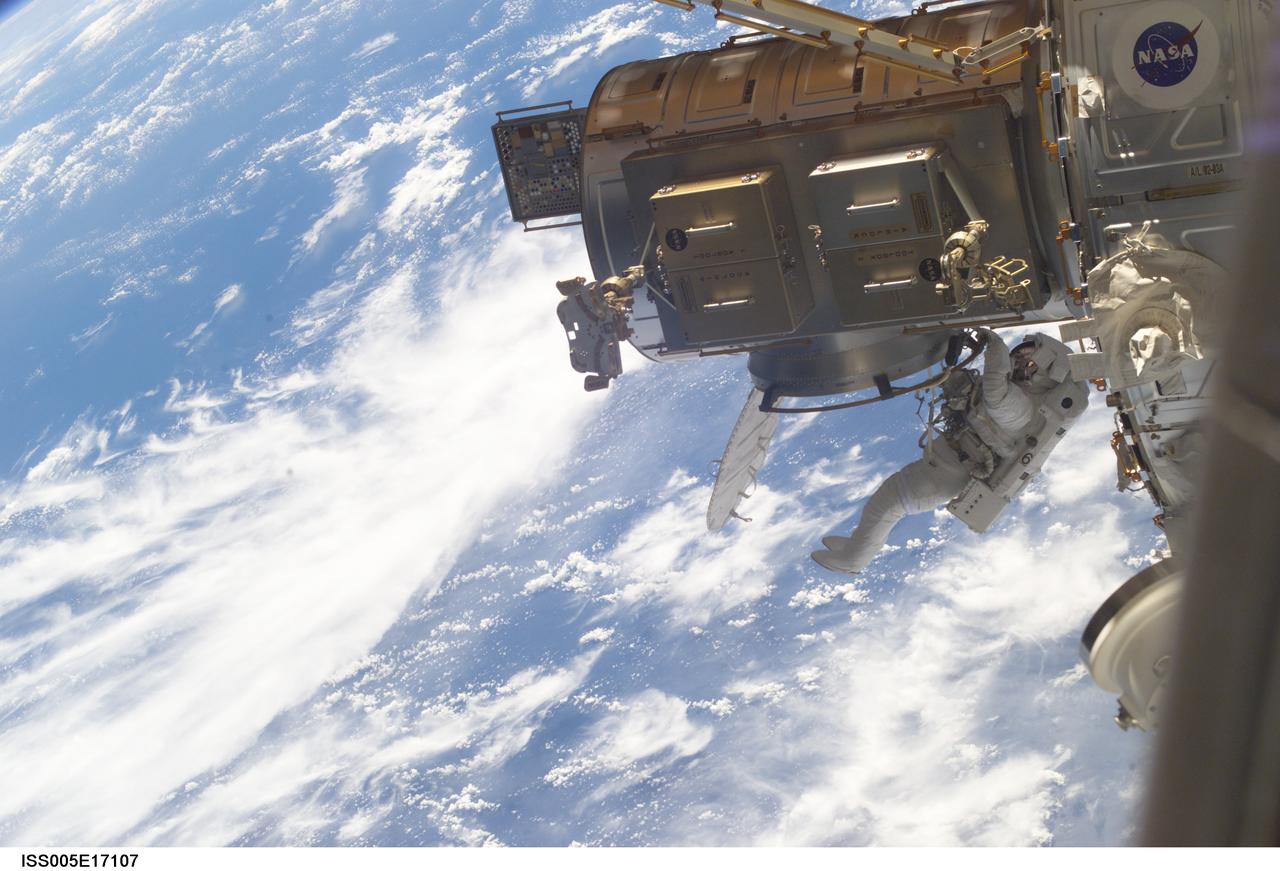
ISS005-E-17107 (10 October 2002) --- Astronaut Piers J. Sellers, STS-112 mission specialist, exits the Quest Airlock on the International Space Station (ISS) to begin the first scheduled session of extravehicular activity (EVA) for the STS-112 mission. Astronaut David A. Wolf (out of frame), mission specialist, joined Sellers on the spacewalk.
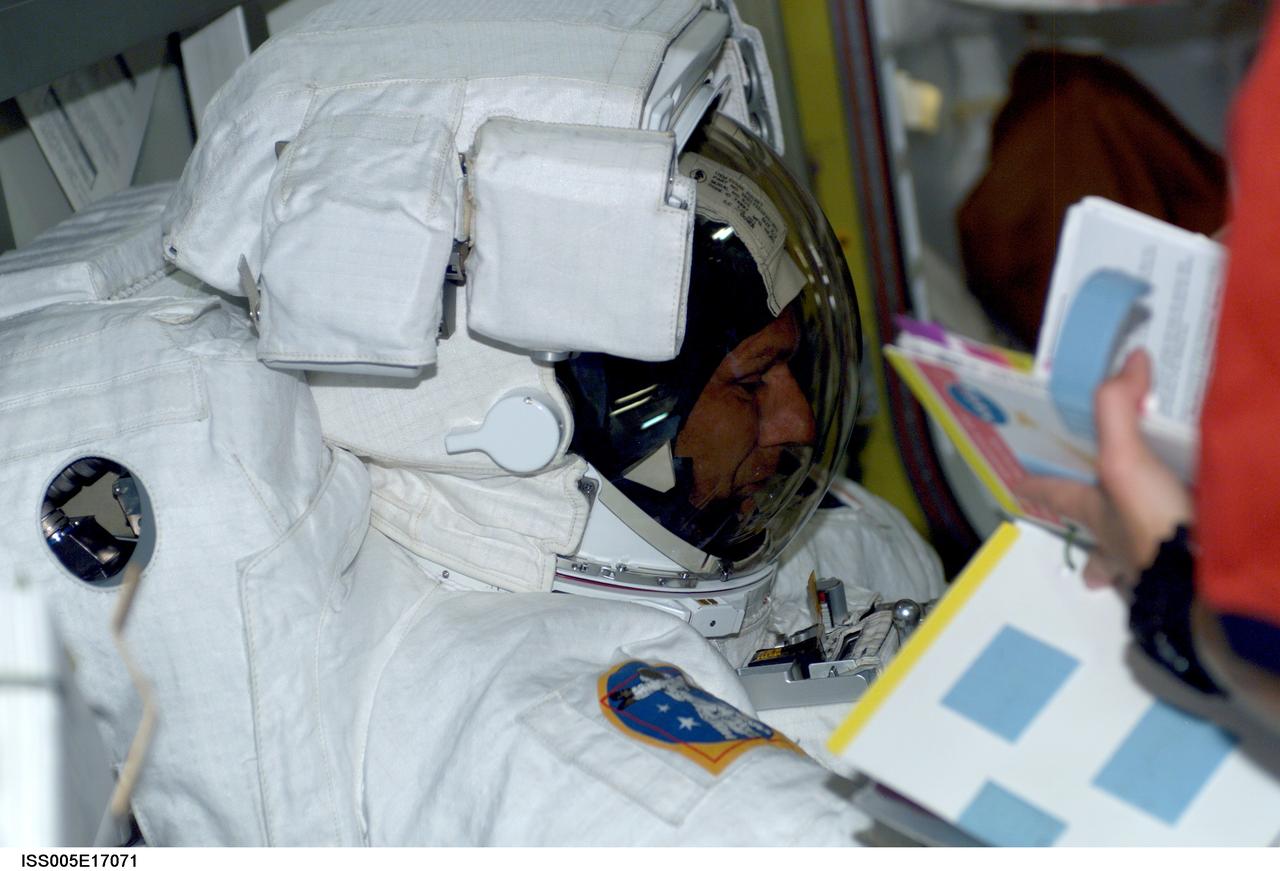
ISS005-E-17071 (10 October 2002) --- Astronaut Piers J. Sellers, STS-112 mission specialist, attired in his Extravehicular Mobility Unit (EMU) space suit, is photographed in the Quest Airlock on the International Space Station (ISS) prior to the first scheduled session of extravehicular activity (EVA). Astronaut David A. Wolf (out of frame), mission specialist, joined Sellers on the spacewalk.
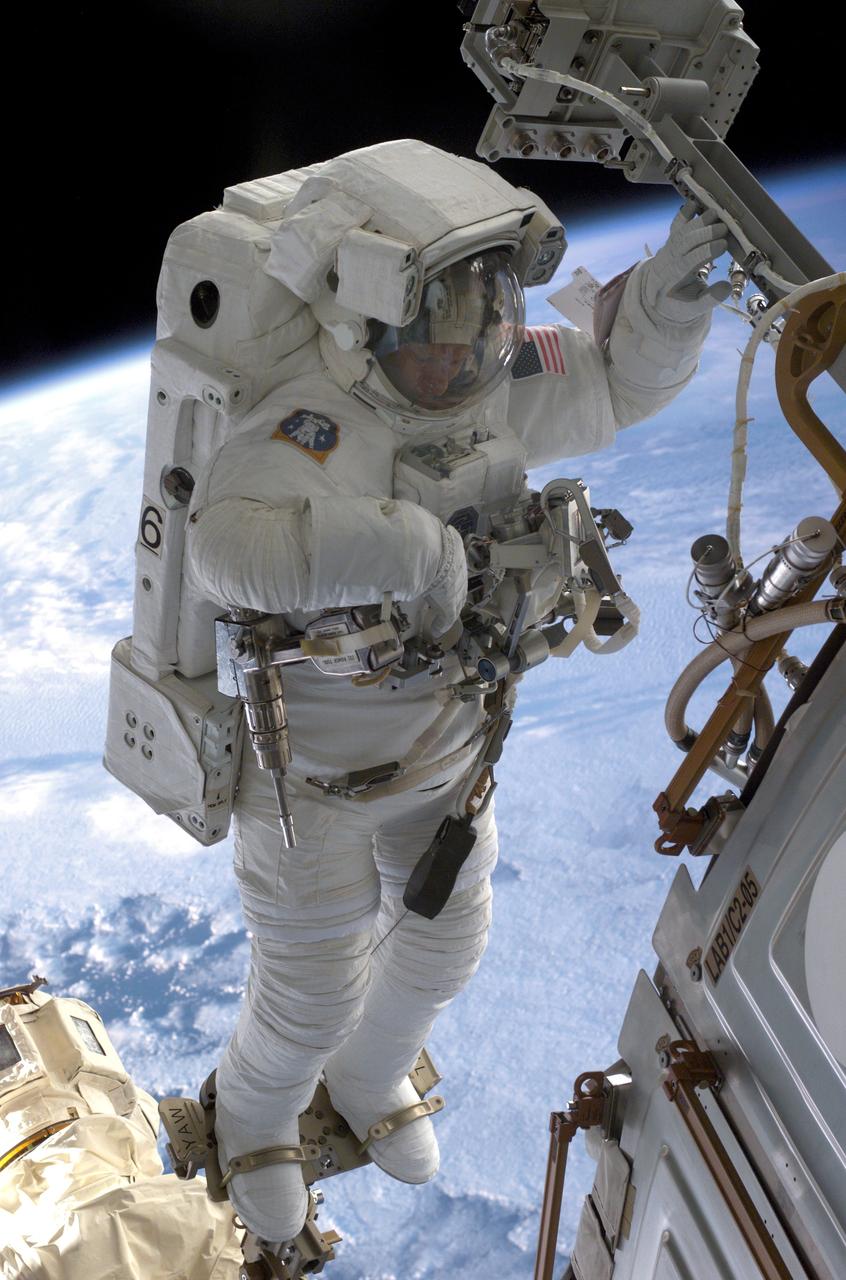
STS112-E-05311 (12 October 2002) --- Astronaut Piers J. Sellers uses both a handrail on the Destiny Laboratory and a foot restraint on the Space Station Remote Manipulator System or Canadarm2 to remain stationary while performing work at the end of the STS-112 mission's second spacewalk. A cloud-covered Earth provides the backdrop for the scene.
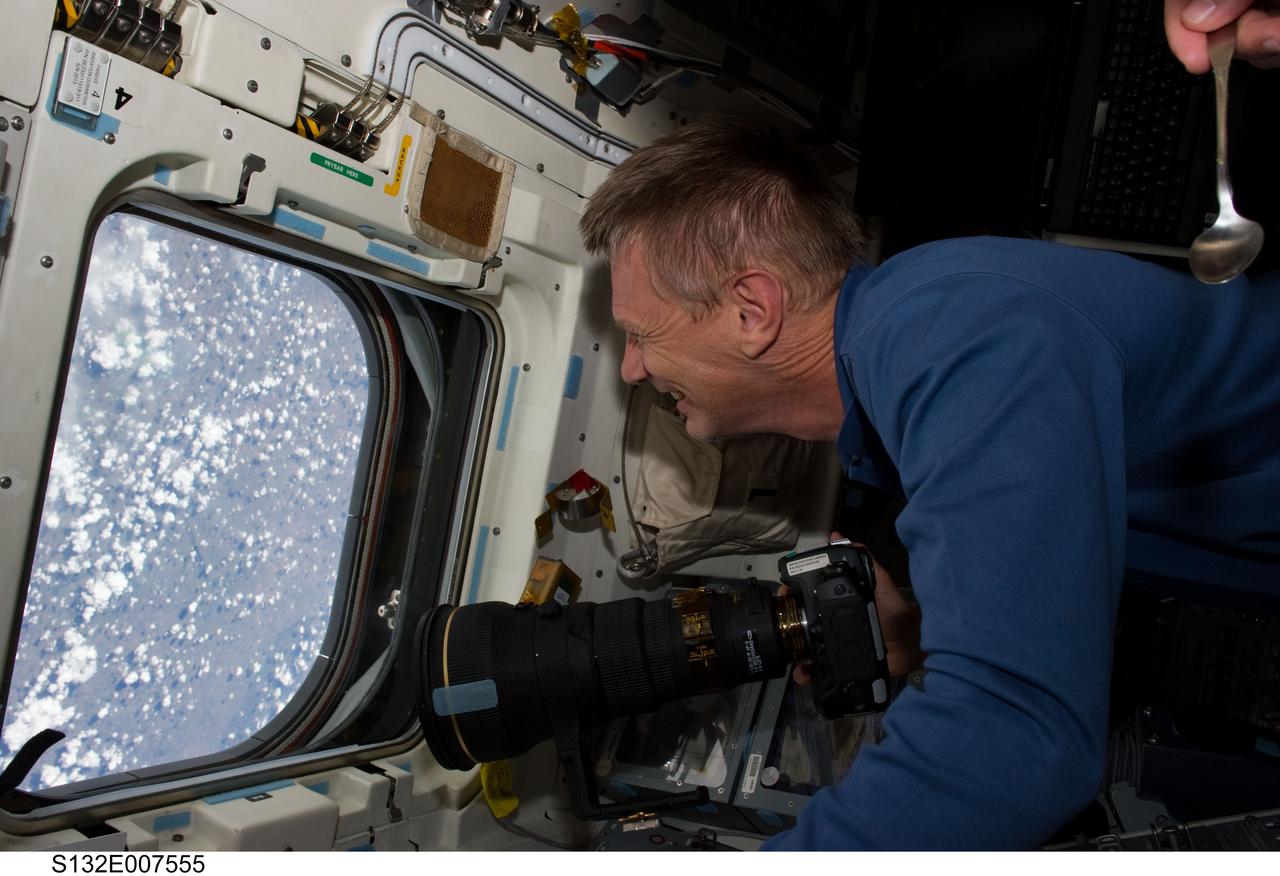
S132-E-007555 (15 May 2010) --- NASA astronaut Piers Sellers, STS-132 mission specialist, holds a still camera while looking through an overhead window on the aft flight deck of the Earth-orbiting space shuttle Atlantis during flight day two activities.
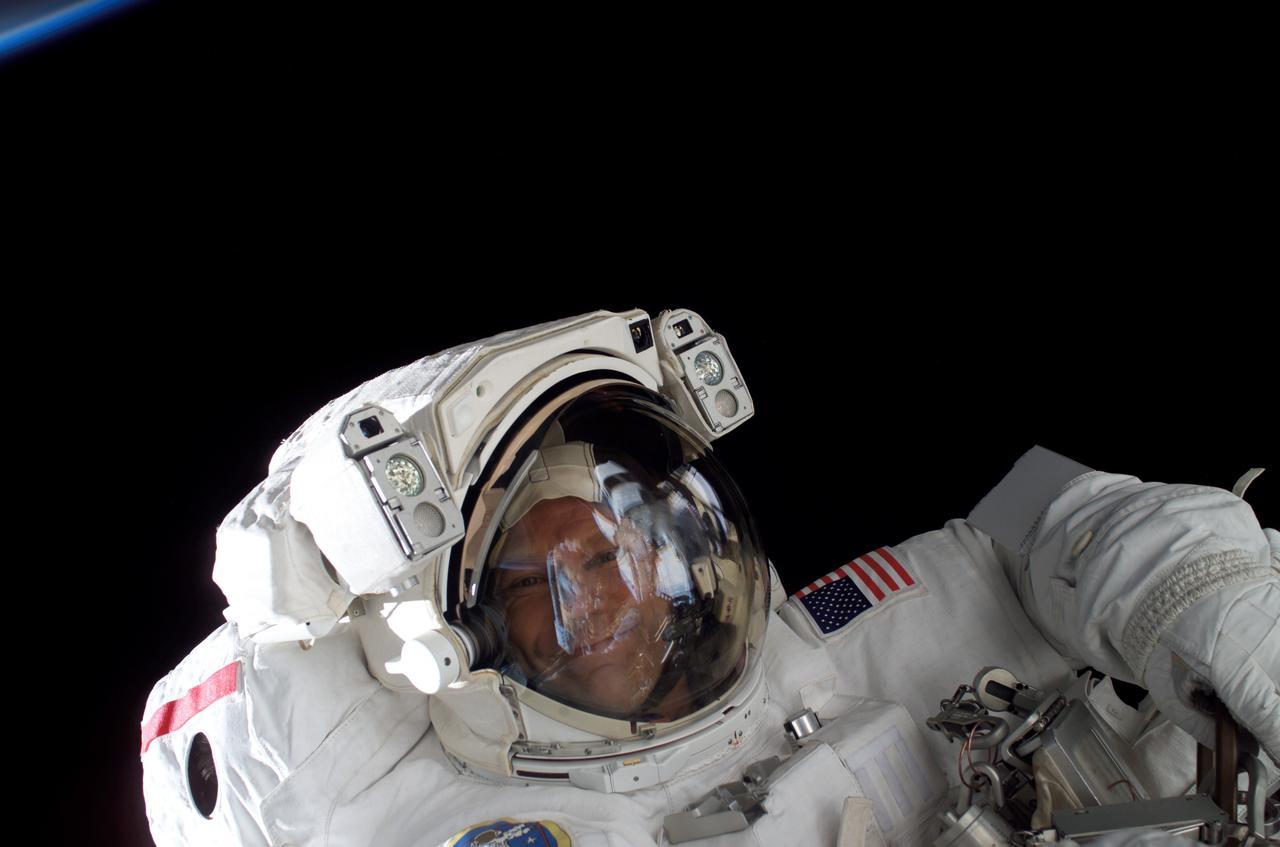
ISS013-E-49267 (8 July 2006) --- Astronaut Piers J. Sellers, STS-121 mission specialist, participates in the mission's first session of extravehicular activity (EVA) while the Space Shuttle Discovery was docked with the International Space Station.
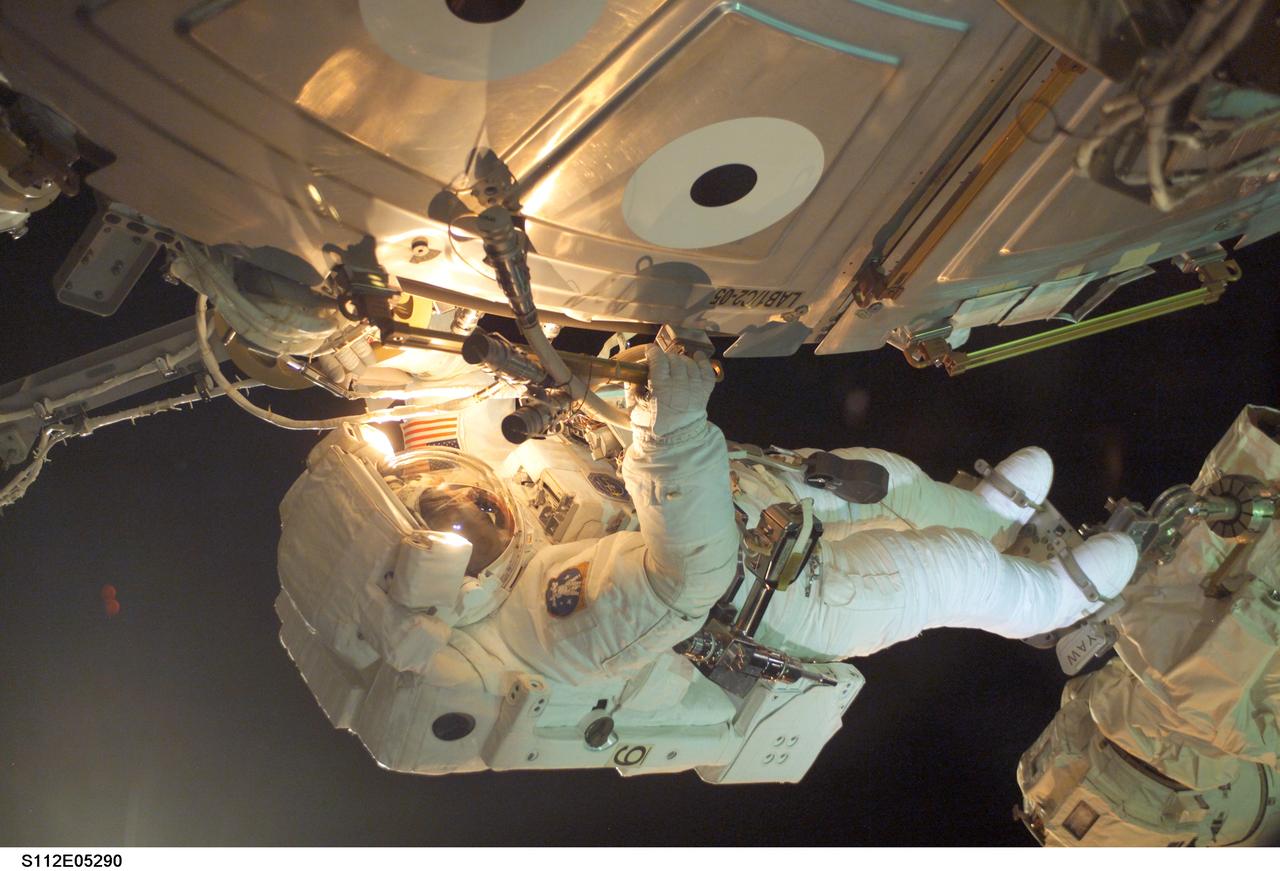
STS112-E-5290 (12 October 2002) --- With the aid of artificial lighting, astronaut Piers J. Sellers uses both a handrail on the Destiny Laboratory and a foot restraint on the Space Station Remote Manipulator System or Canadarm2 to remain stationary while performing work at the end of the STS-112 mission's second spacewalk.
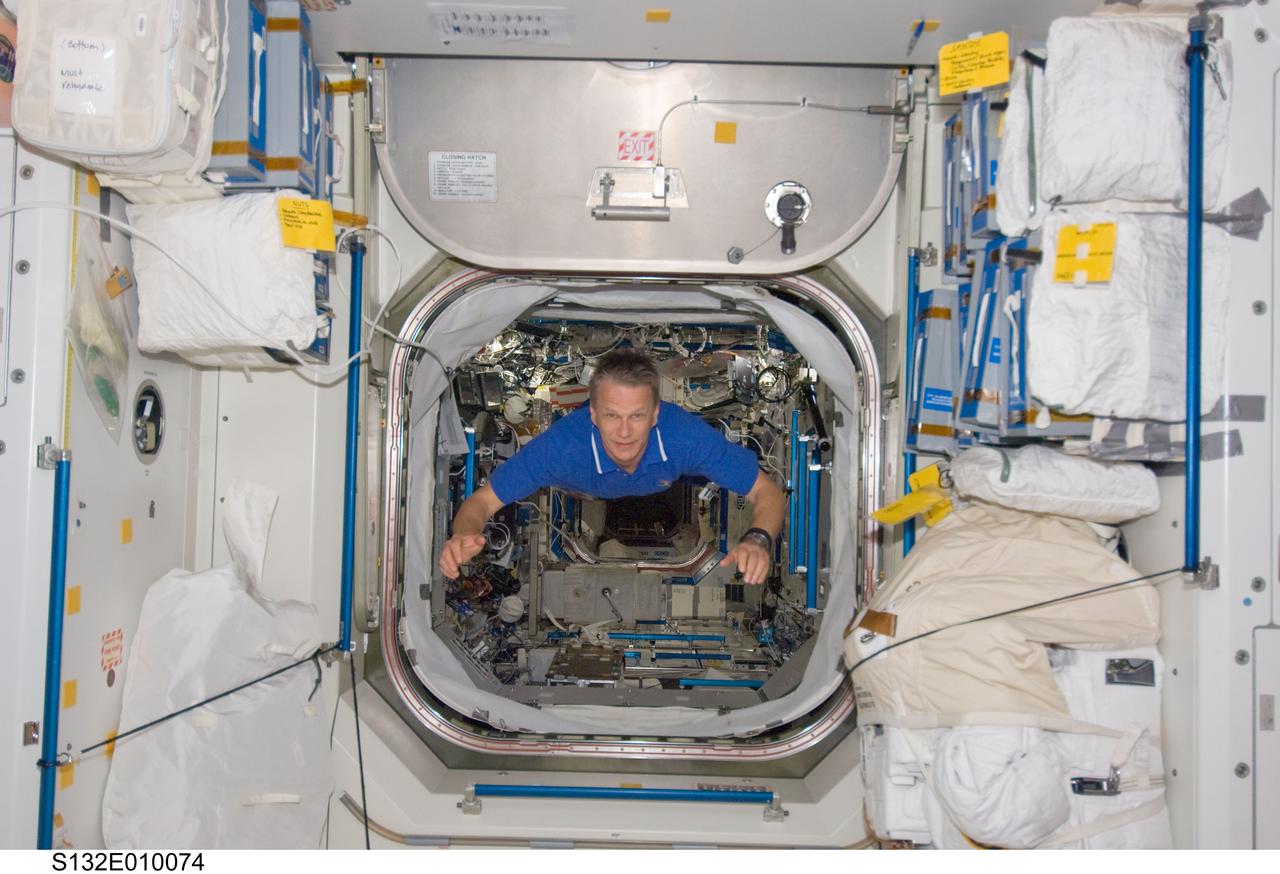
S132-E-010074 (23 May 2010) --- NASA astronaut Piers Sellers, STS-132 mission specialist, floats through a hatch into the Unity node of the International Space Station while space shuttle Atlantis remains docked with the station.
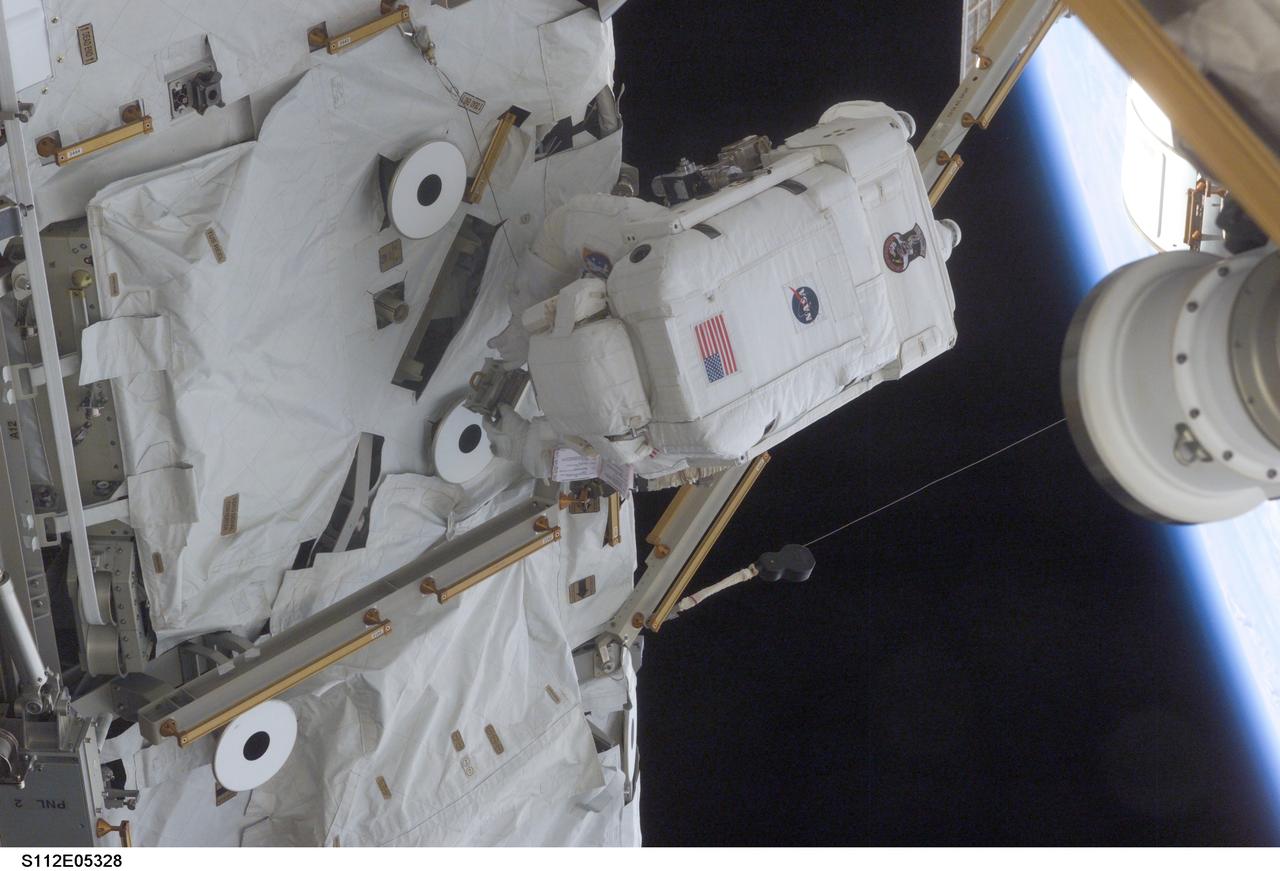
STS112-E-5328 (12 October 2002) --- Astronaut Piers J. Sellers, mission specialist, translates along the S0 (S-Zero) truss on the International Space Station (ISS) during the second of three scheduled STS-112 spacewalks.
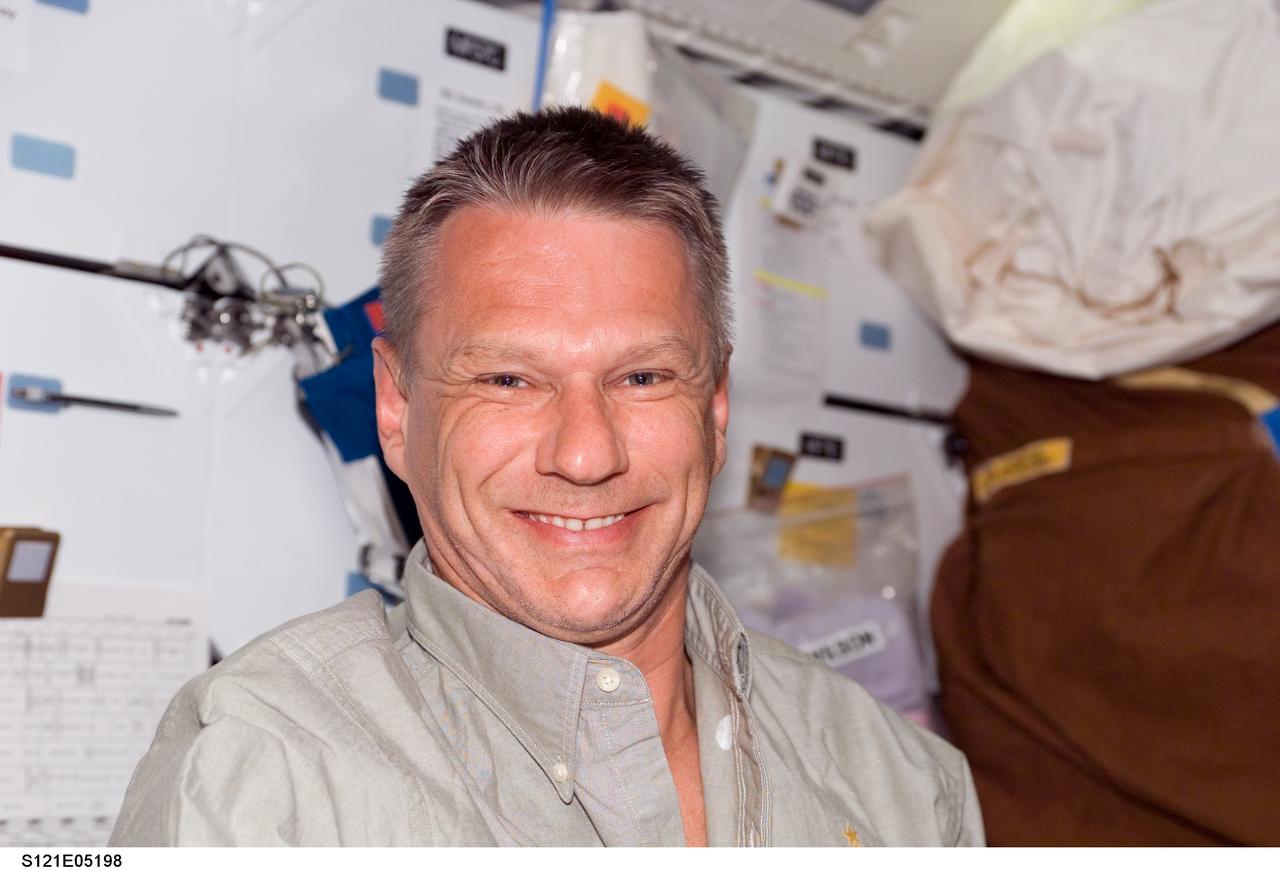
S121-E-05198 (5 July 2006) --- Astronaut Piers J. Sellers, STS-121 mission specialist, smiles for the camera as a crewmate photographs him on the middeck of the Space Shuttle Discovery. This was among the first group of digital still images showing the crewmembers onboard during their first full day in space.
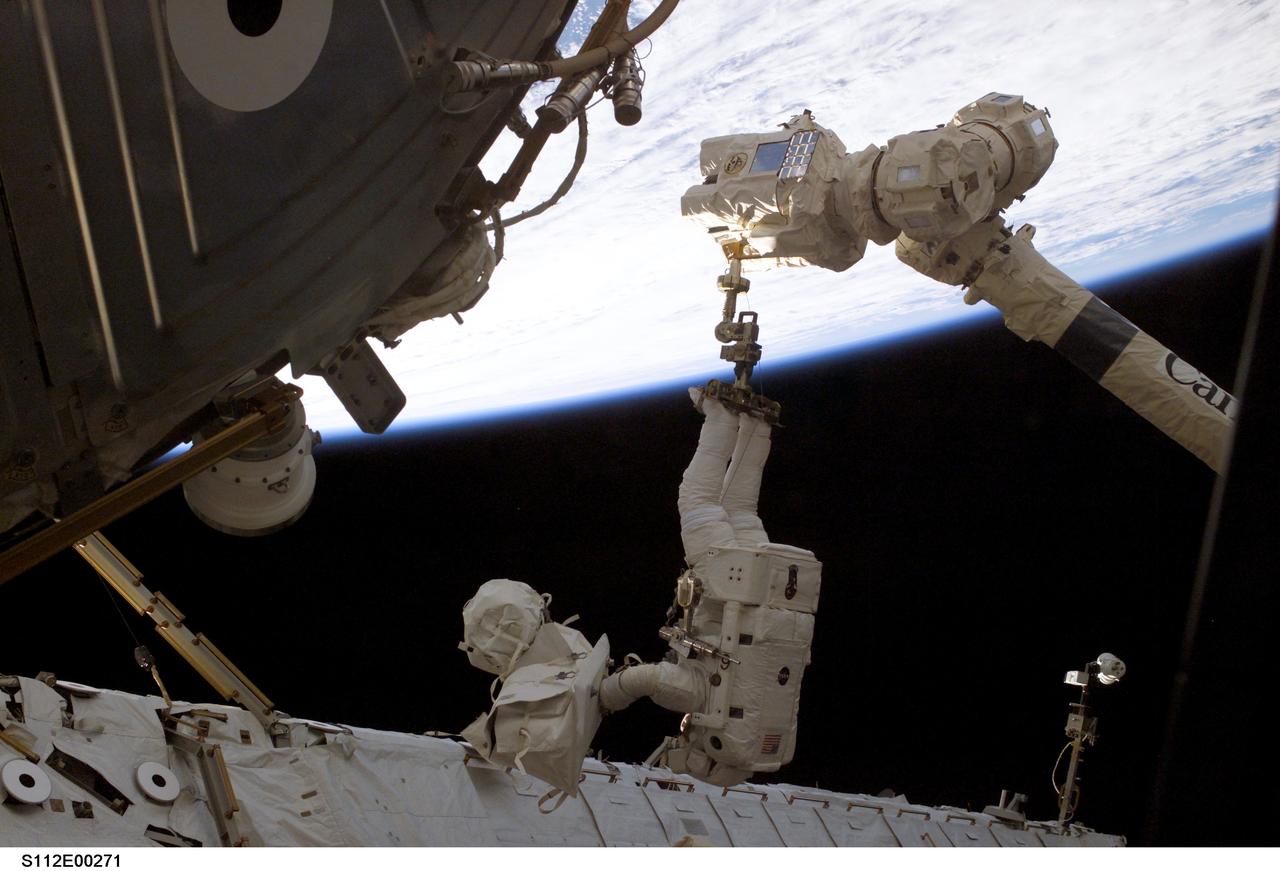
STS112-E-5271 (12 October 2002) --- Astronaut Piers J. Sellers, mission specialist, his feet anchored to a foot restraint on the Space Station Remote Manipulator System (SSRMS) or Canadarm2, participates in the six hour, four minute second spacewalk of the STS-112 mission.
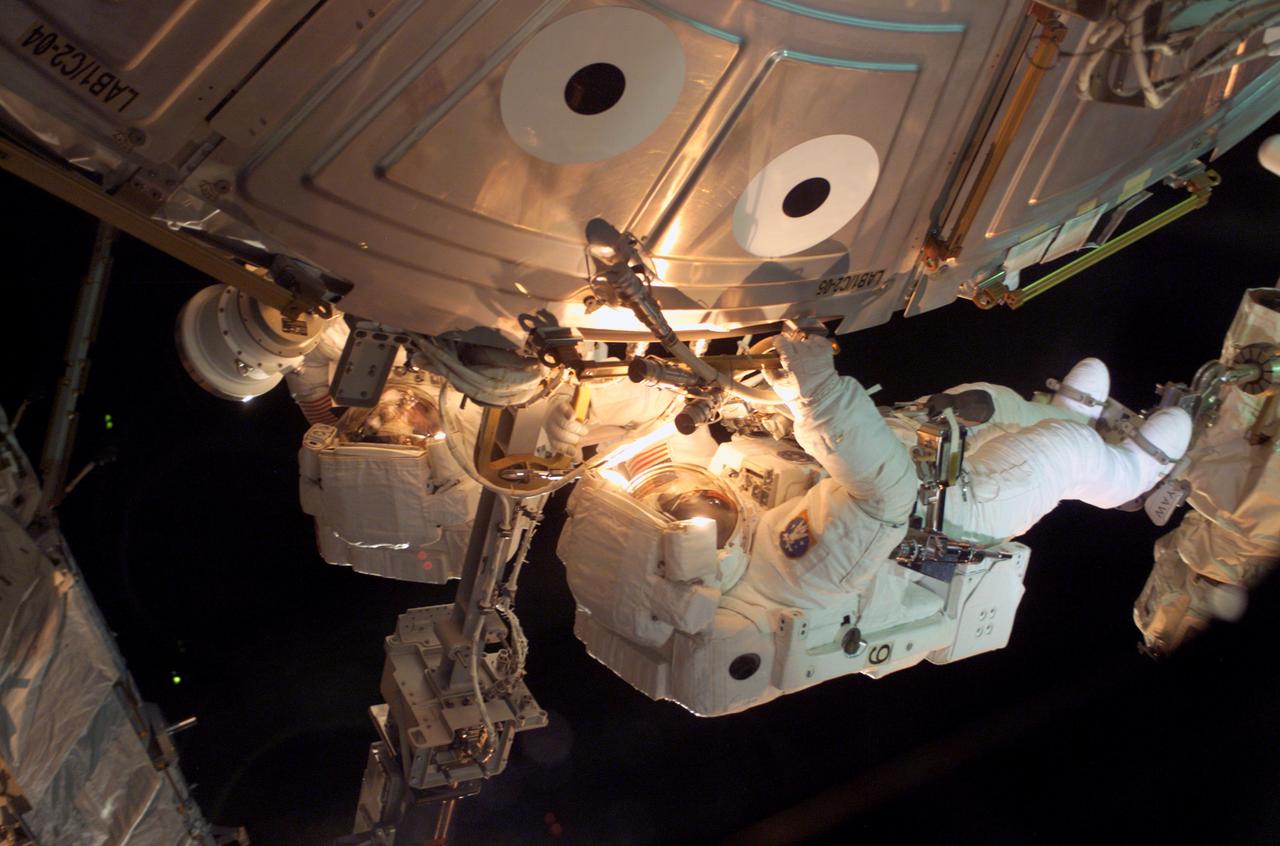
STS112-E-05295 (12 October 2002) --- Astronaut Piers J. Sellers uses both a handrail on the Destiny Laboratory and a foot restraint on the Space Station Remote Manipulator System or Canadarm2 to remain stationary while performing work at the end of the STS-112 mission's second spacewalk.
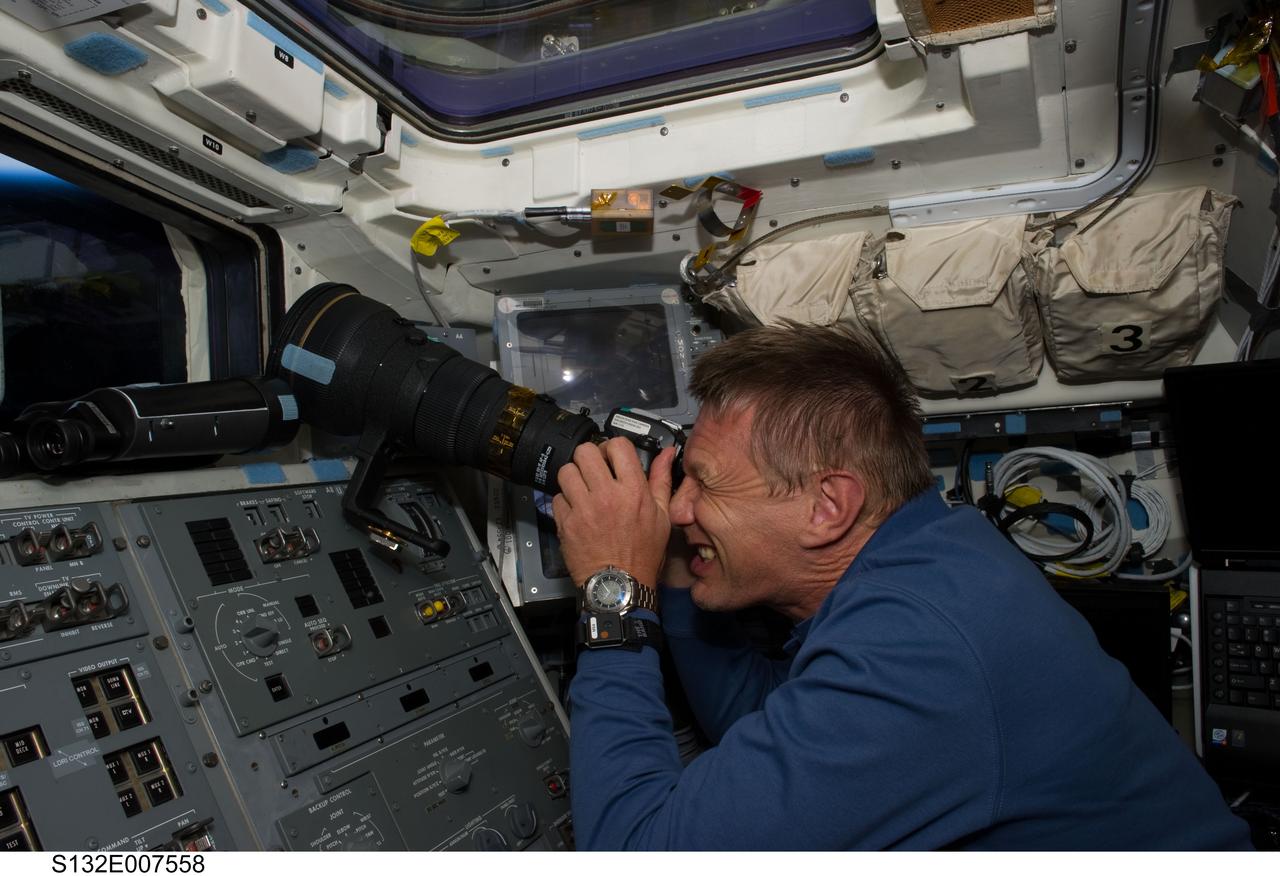
S132-E-007558 (15 May 2010) --- NASA astronaut Piers Sellers, STS-132 mission specialist, uses a still camera at a window on the aft flight deck of the Earth-orbiting space shuttle Atlantis during flight day two activities.
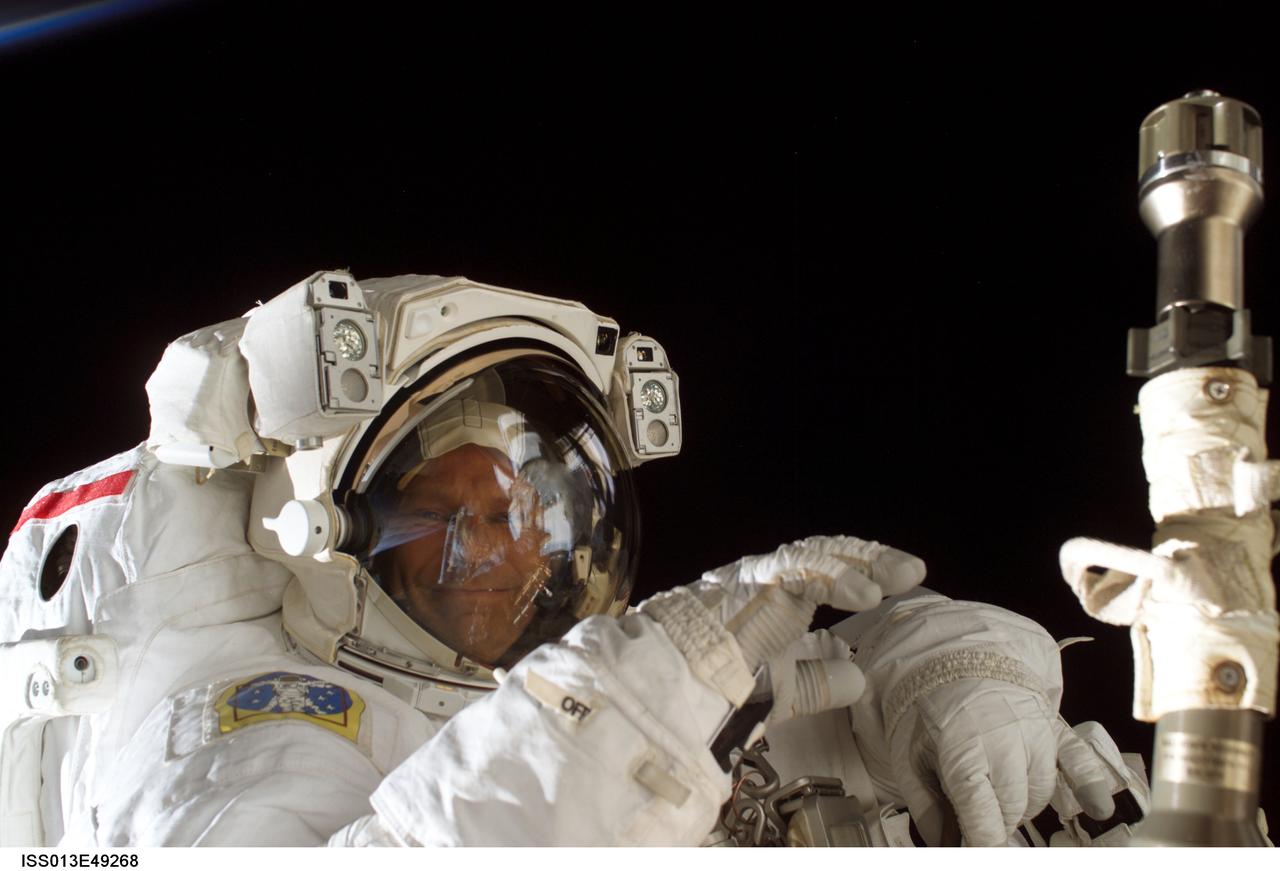
ISS013-E-49268 (8 July 2006) --- Astronaut Piers J. Sellers, STS-121 mission specialist, participates in the mission's first session of extravehicular activity (EVA) while the Space Shuttle Discovery was docked with the International Space Station.
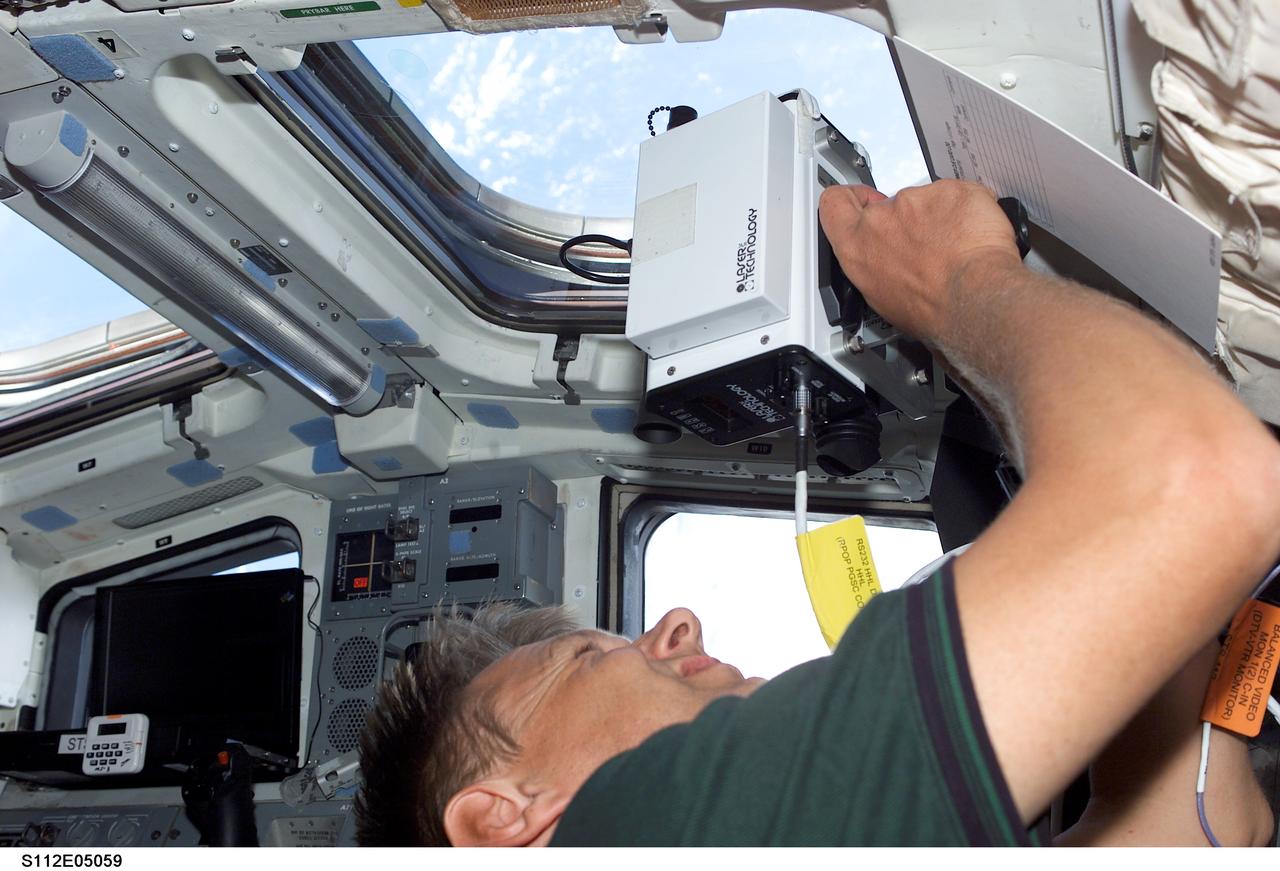
STS112-E-05059 (9 October 2002) --- Astronaut Piers J. Sellers, STS-112 mission specialist, uses a laser ranging device on the aft flight deck of the Space Shuttle Atlantis. This instrument is a regularly called-on tool during rendezvous operations with the International Space Station (ISS).
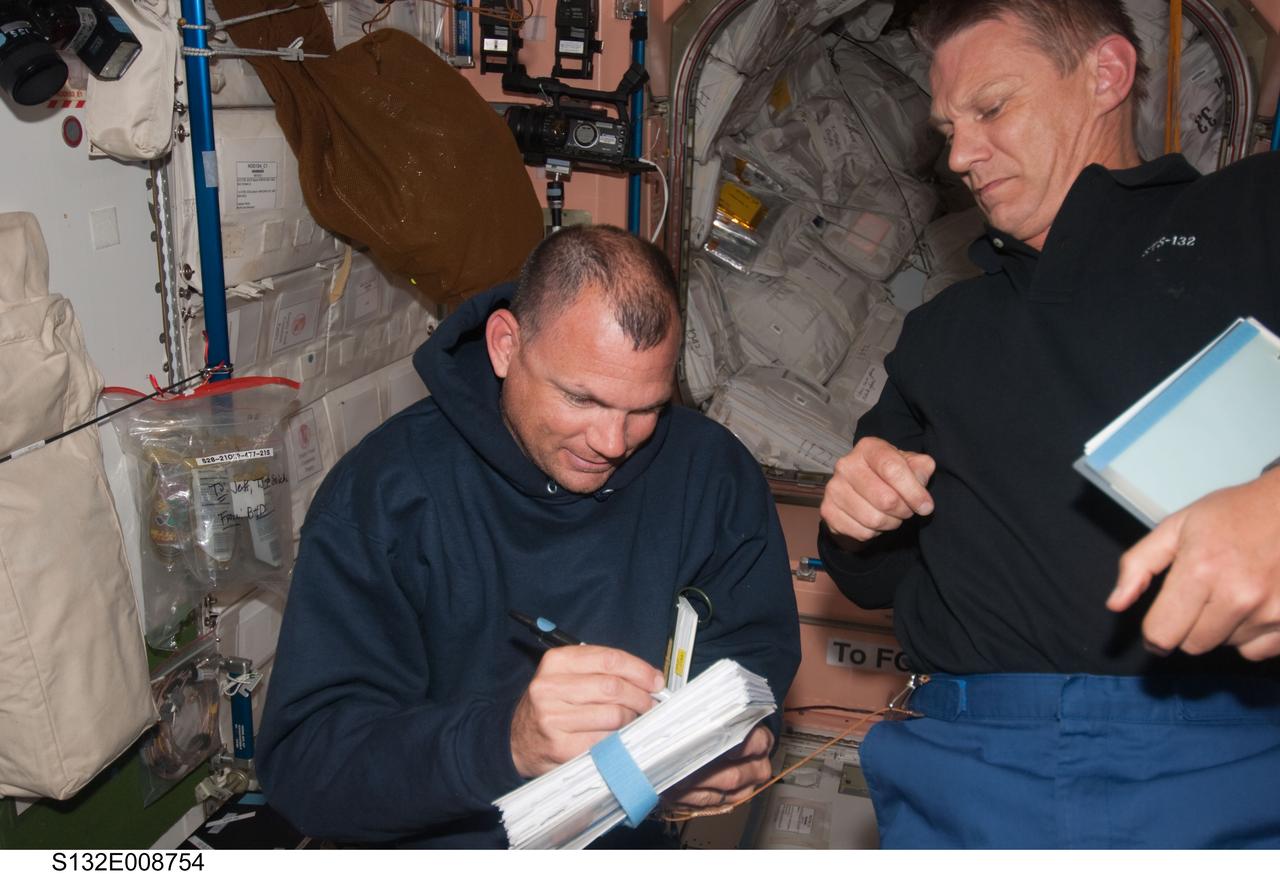
S132-E-008754 (20 May 2010) --- NASA astronauts Tony Antonelli (left), STS-132 pilot, and Piers Sellers, mission specialist, work in the Unity node of the International Space Station while space shuttle Atlantis remains docked with the station.

STS112-E-5291 (12 October 2002) --- Astronaut Piers J. Sellers uses both a handrail on the Destiny Laboratory and a foot restraint on the Space Station Remote Manipulator System or Canadarm2 to remain stationary while performing work at the end of the STS-112 mission's second spacewalk.
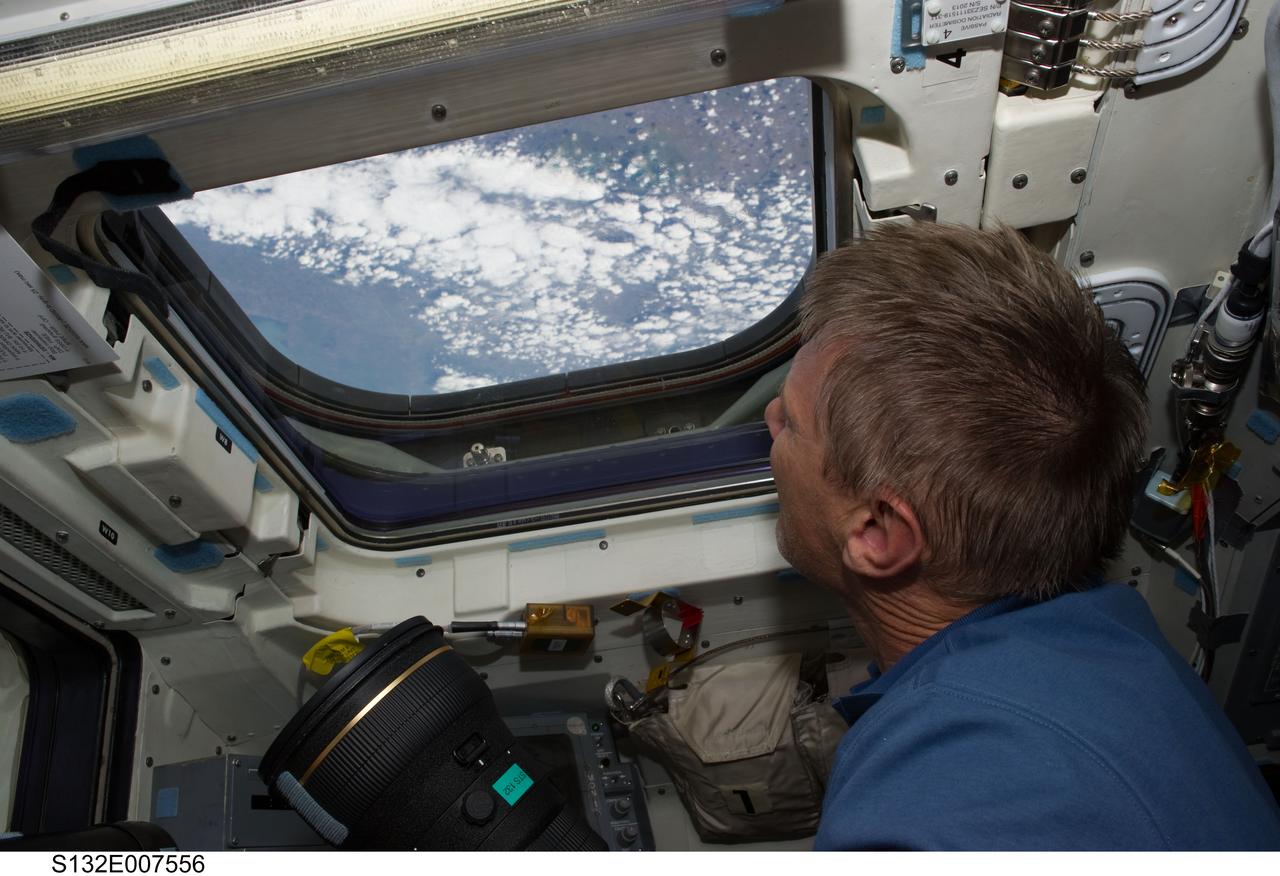
S132-E-007556 (15 May 2010) --- NASA astronaut Piers Sellers, STS-132 mission specialist, holds a still camera while looking through an overhead window on the aft flight deck of the Earth-orbiting space shuttle Atlantis during flight day two activities.

S121-E-06484 (13 July 2006) --- Astronaut Piers J. Sellers, STS-121 mission specialist, uses a computer near a hatch on the middeck of the Space Shuttle Discovery while docked with the International Space Station. A beverage container is at left, while a food container sits in Sellers' lap.
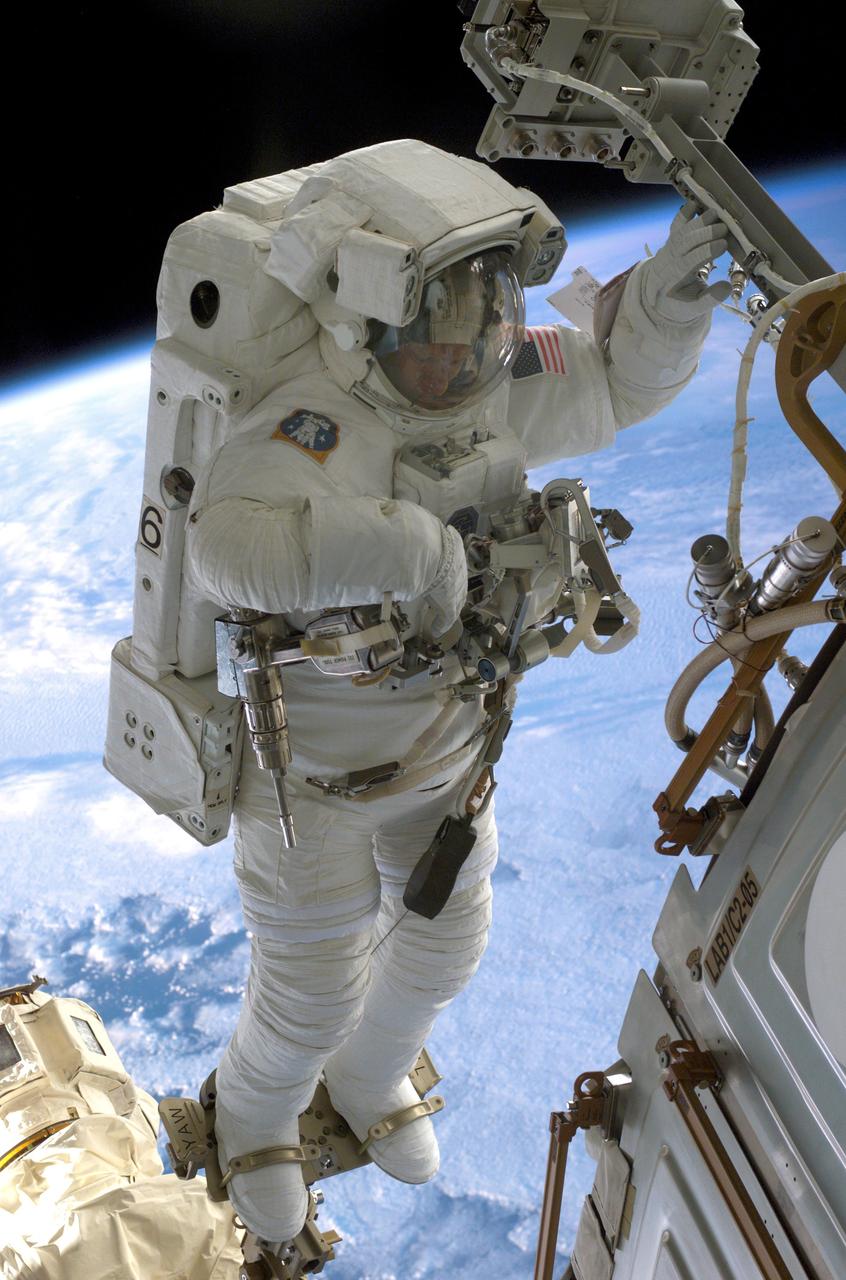
Launched October 7, 2002 aboard the Space Shuttle Orbiter Atlantis, the STS-112 mission lasted 11 days and performed three sessions of Extra Vehicular Activity (EVA). Its primary mission was to install the Starboard Side Integrated Truss Structure (S1) and Equipment Translation Aid (CETA) Cart to the International Space Station (ISS). The S1 truss provides structural support for the orbiting research facility's radiator panels, which use ammonia to cool the Station's complex power system. The S1 truss, attached to the S0 (S Zero) truss installed by the previous STS-110 mission, flows 637 pounds of anhydrous ammonia through three heat rejection radiators. The truss is 45-feet long, 15-feet wide, 10-feet tall, and weighs approximately 32,000 pounds. The CETA is the first of two human-powered carts that will ride along the International Space Station's railway providing a mobile work platform for future extravehicular activities by astronauts. In this photograph, Astronaut Piers J. Sellers uses both a handrail on the Destiny Laboratory and a foot restraint on the Space Station Remote Manipulator System or Canadarm2 to remain stationary while performing work at the end of the STS-112 mission's second space walk. A cloud-covered Earth provides the backdrop for the scene.
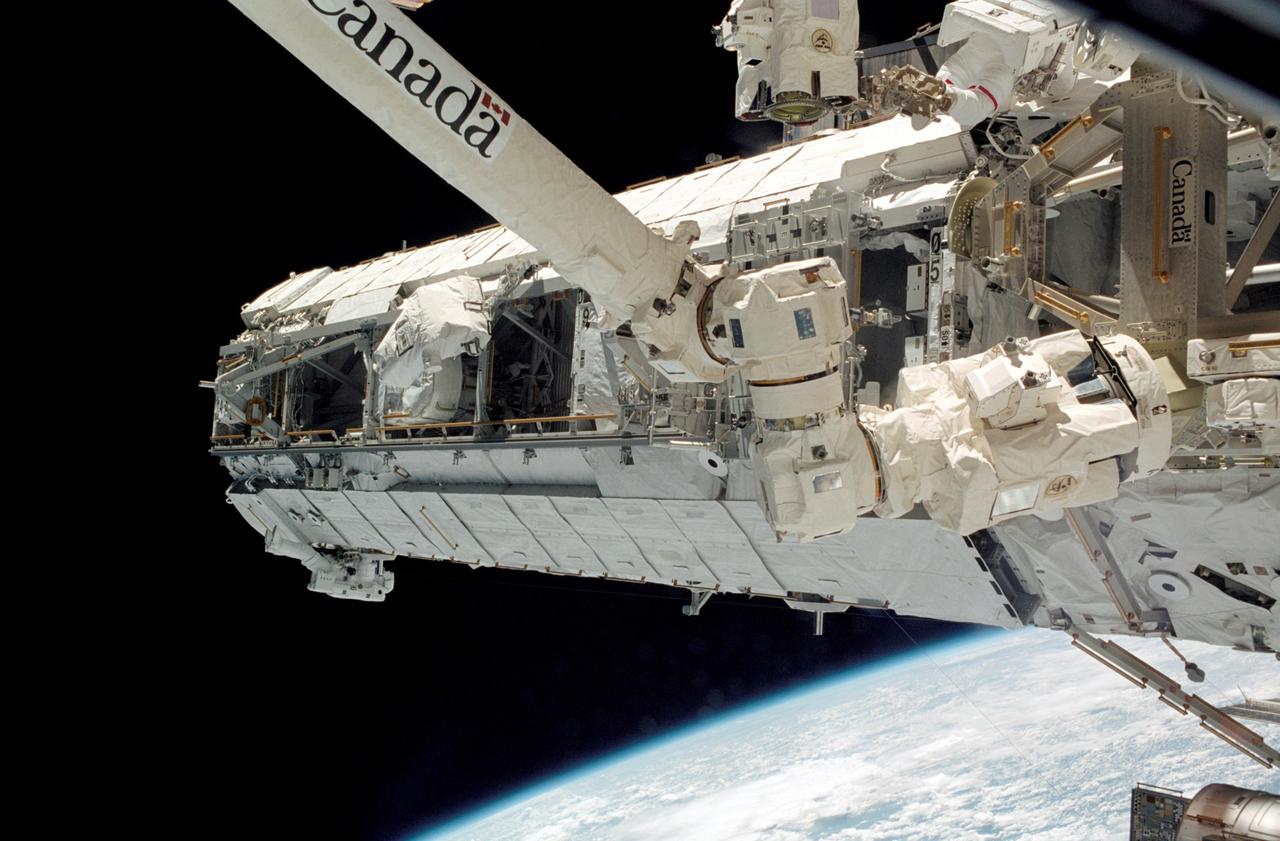
Launched October 7, 2002 aboard the Space Shuttle Orbiter Atlantis, the STS-112 mission lasted 11 days and performed three sessions of Extra Vehicular Activity (EVA). Its primary mission was to install the Starboard (S1) Integrated Truss Structure and Equipment Translation Aid (CETA) Cart to the International Space Station (ISS). The S1 truss provides structural support for the orbiting research facility's radiator panels, which use ammonia to cool the Station's complex power system. The S1 truss, attached to the S0 (S Zero) truss installed by the previous STS-110 mission, flows 637 pounds of anhydrous ammonia through three heat rejection radiators. The truss is 45-feet long, 15-feet wide, 10-feet tall, and weighs approximately 32,000 pounds. The CETA is the first of two human-powered carts that will ride along the International Space Station's railway providing a mobile work platform for future extravehicular activities by astronauts. This is a view of the newly installed S1 Truss as photographed during the mission's first scheduled EVA. The Station's Canadarm2 is in the foreground. Visible are astronauts Piers J. Sellers (lower left) and David A. Wolf (upper right), both STS-112 mission specialists.
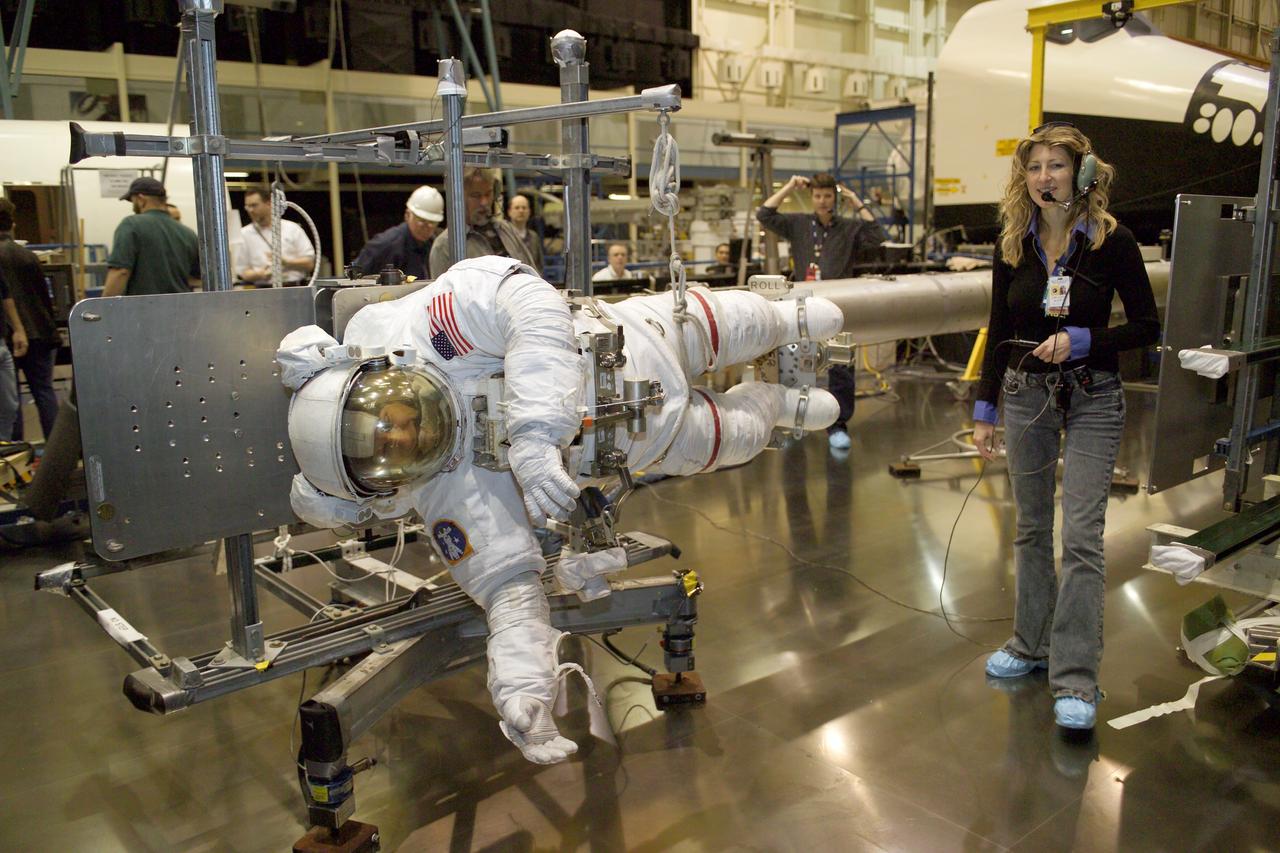
JSC2005-E-08196 (25 February 2005) --- Astronaut Piers J. Sellers, STS-121 mission specialist, wearing a training version of the Extravehicular Mobility Unit (EMU) space suit, participates in an extravehicular activity (EVA) simulation while anchored on the end of the training version of the space shuttle Remote Manipulator System (RMS) robotic arm in the Space Vehicle Mockup Facility at Johnson Space Center. The RMS has a 50-foot boom, called the Orbiter Boom Sensor System (OBSS), extension attached which would be used to reach underneath the orbiter to access tiles. Lora Bailey (right), Manager, JSC Engineering Tile Repair, assisted Sellers.
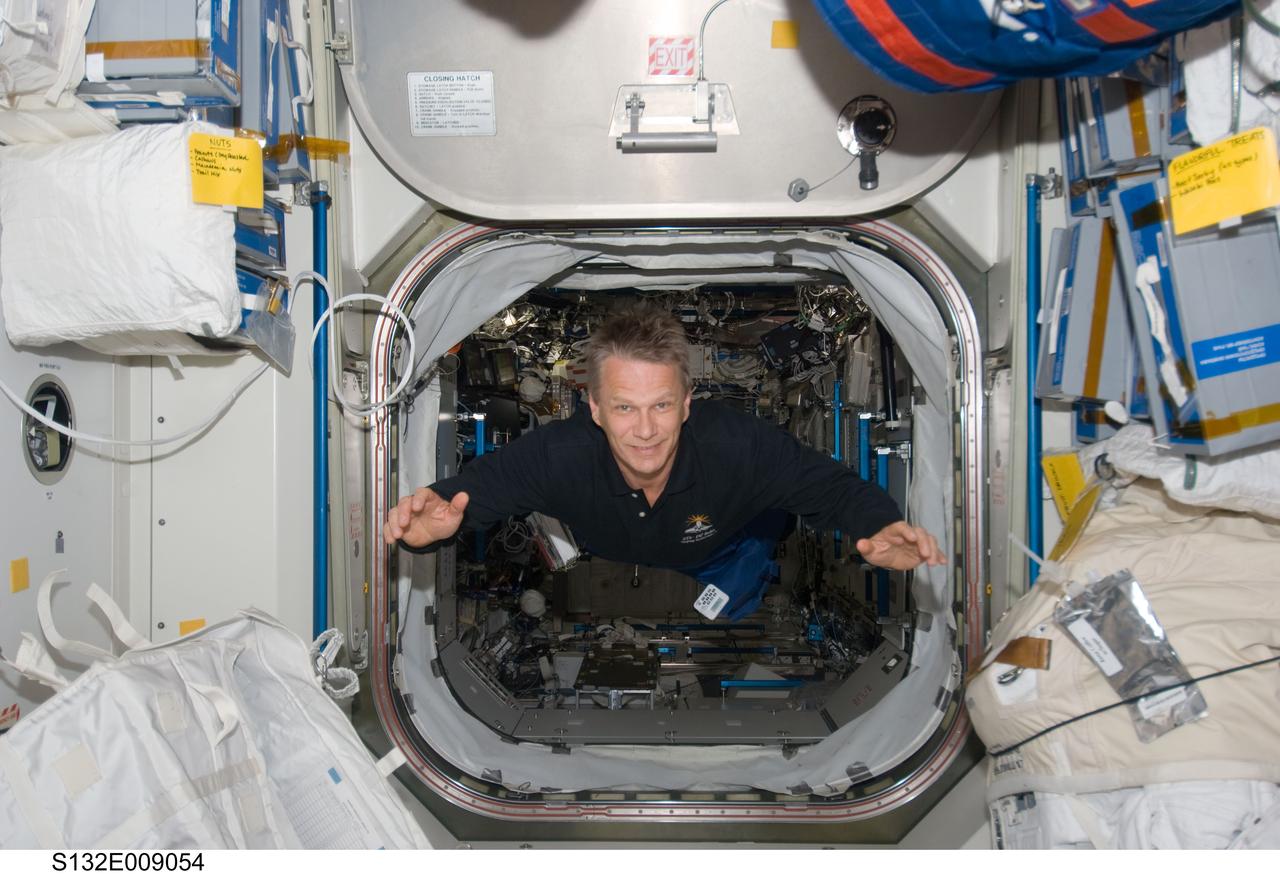
S132-E-009054 (21 May 2010) --- NASA astronaut Piers Sellers' "stroll" through the International Space Station on May 21 may be in celebration of the completion of three successful space walks on the orbital outpost, performed outside by three of his crewmates working in pairs on three separate days, and supported inside by the other ten astronauts and cosmonauts. Photo credit: NASA or National Aeronautics and Space Administration
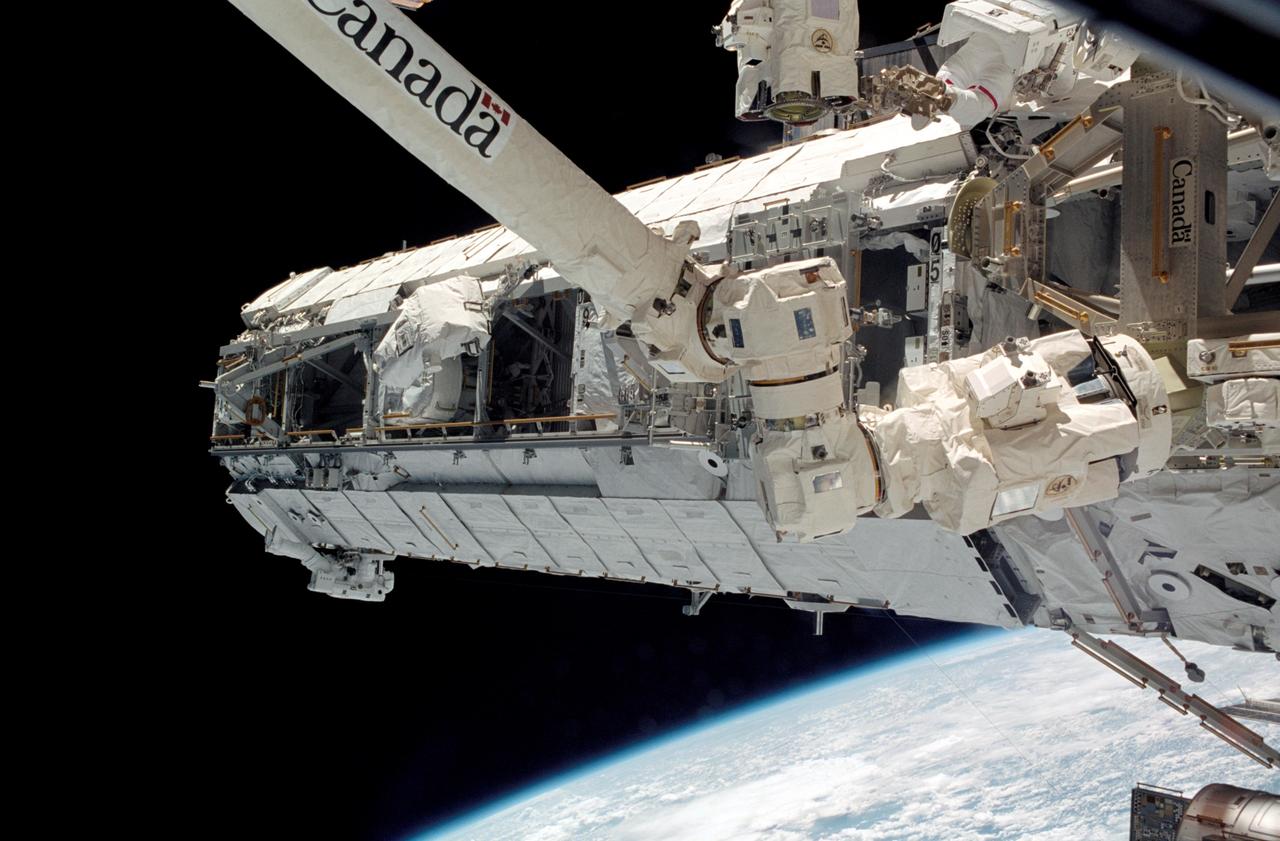
STS112-325-018 (10 October 2002) --- A view of the Starboard One (S1) Truss newly installed on the International Space Station (ISS) as photographed during the mission’s first scheduled session of extravehicular activity (EVA). The station’s Canadarm2 is in the foreground. Astronauts Piers J. Sellers (lower left) and David A. Wolf (upper right), both STS-112 mission specialists, are visible.
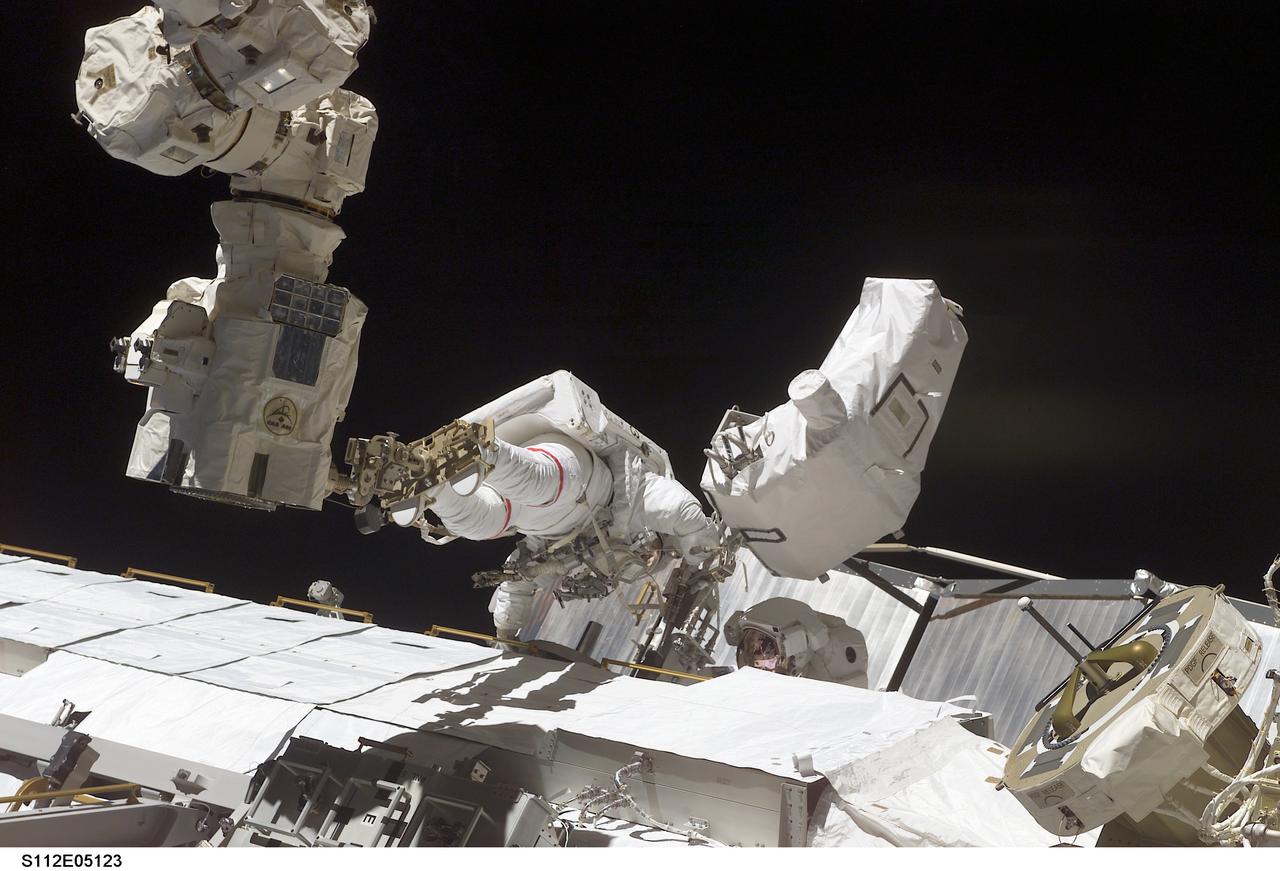
STS112-E-05123 (10 October 2002) --- Astronaut David A. Wolf, STS-112 mission specialist, anchored to the end of the Canadarm2, works on the Starboard One (S1) Truss, newly installed on the International Space Station (ISS). Astronaut Piers J. Sellers (partially obscured), mission specialist, worked in tandem with Wolf during the spacewalk. STS-112’s first session of extravehicular activity (EVA) lasted 7 hours and 1 minute.

STS-132 astronaut Piers Sellers, left, and Dr. John Mather are seen with a replica of Mather's Nobel Prize, Tuesday, July 27, 2010, at the Smithsonian National Air and Space Museum in Washington. Sellers returned the replica that is in the museum's collection and was flown aboard STS-132 Atlantis. The prize was won by Mather and University of California, Berkeley researcher George Smoot in 2006 for their work using the Cosmic Background Explorer Satellite to understand the big-bang theory of the universe. Photo Credit: (NASA/Paul E. Alers)
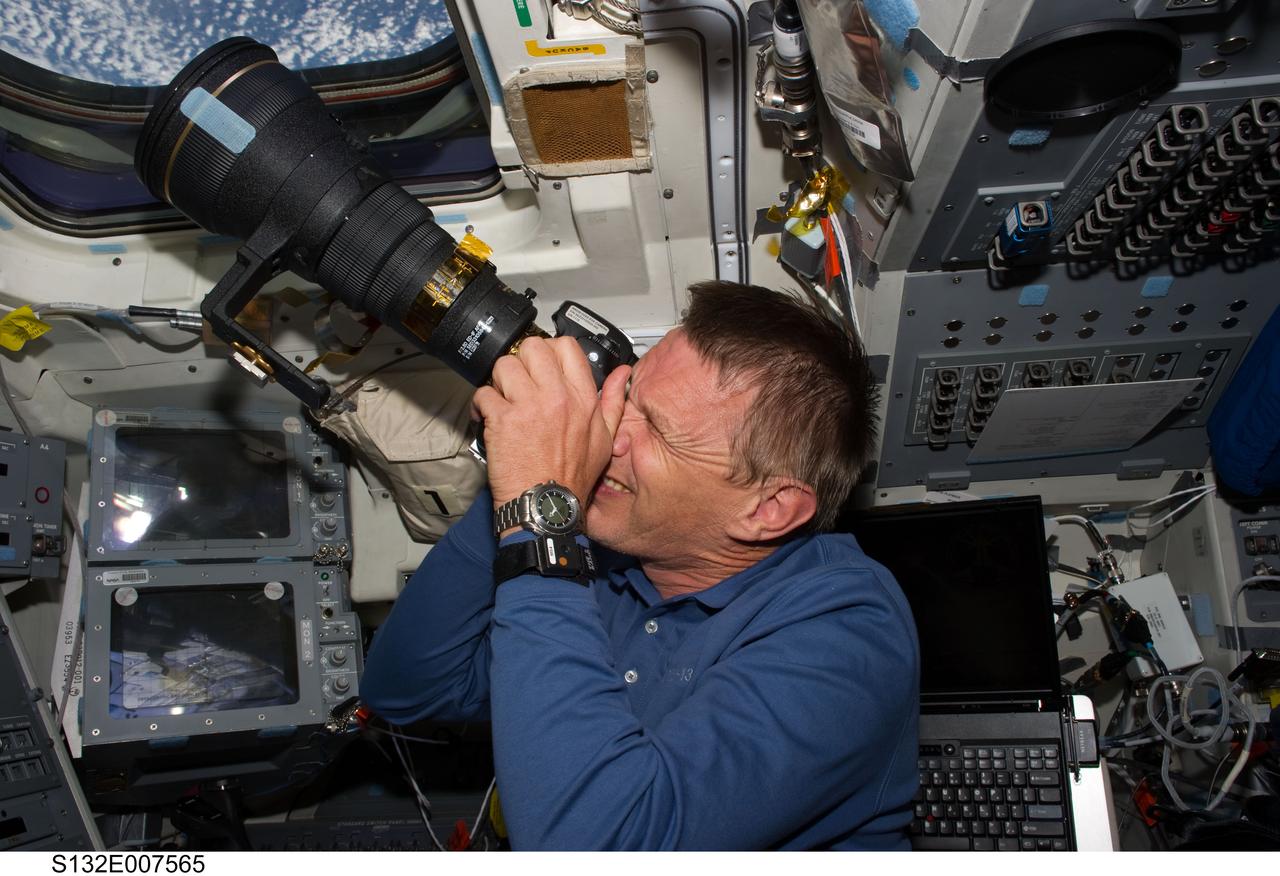
S132-E-007565 (15 May 2010) --- NASA astronaut Piers Sellers, STS-132 mission specialist, uses a still camera at an overhead window on the aft flight deck of the Earth-orbiting space shuttle Atlantis during flight day two activities.
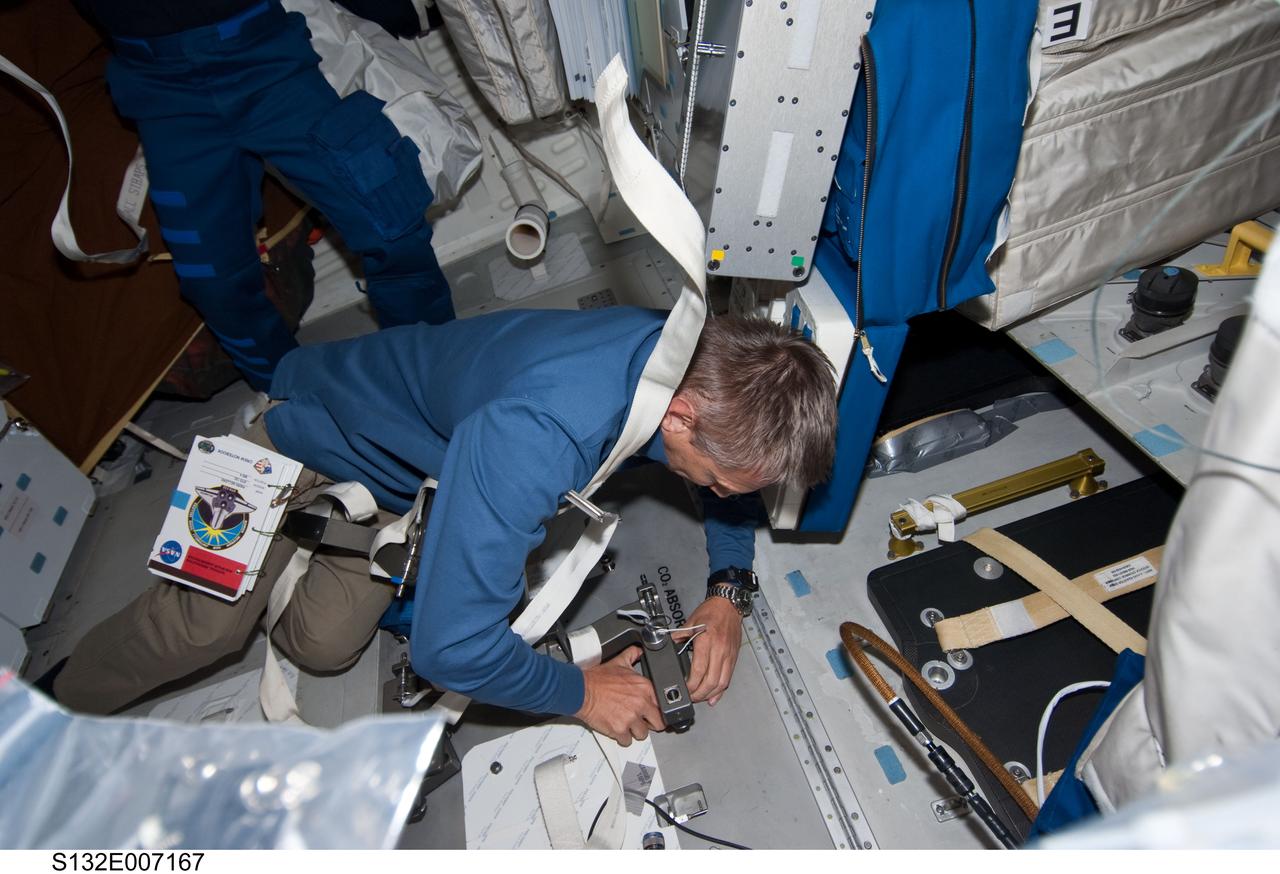
S132-E-007167 (15 May 2010) --- NASA astronaut Piers Sellers, STS-132 mission specialist, works at the Carbon Dioxide absorber panel door on the middeck of the Earth-orbiting space shuttle Atlantis during Flight Day 2 activities. Photo credit: NASA or National Aeronautics and Space Administration
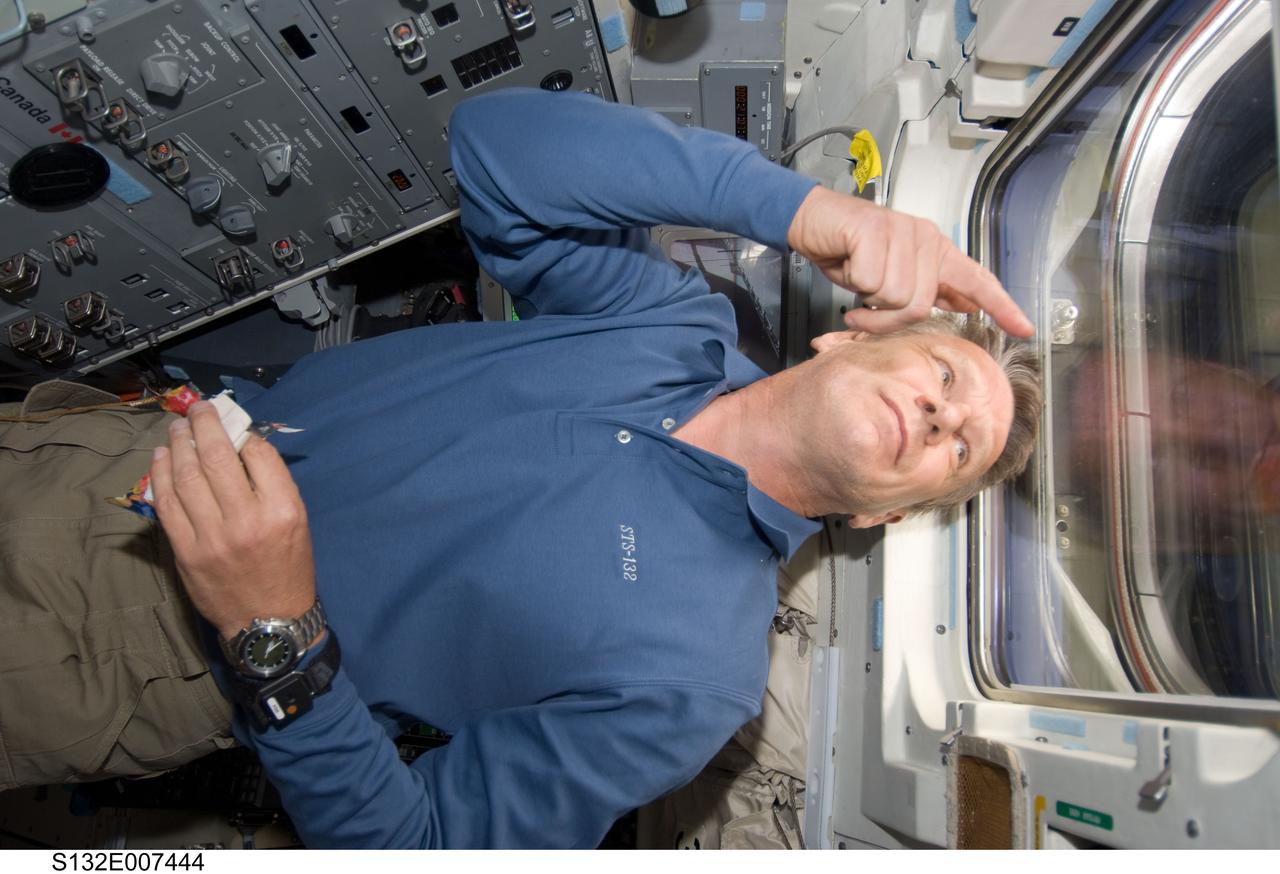
S132-E-007444 (15 May 2010) --- NASA astronaut Piers Sellers, STS-132 mission specialist, looks through an overhead window on the aft flight deck of the Earth-orbiting space shuttle Atlantis during flight day two activities.
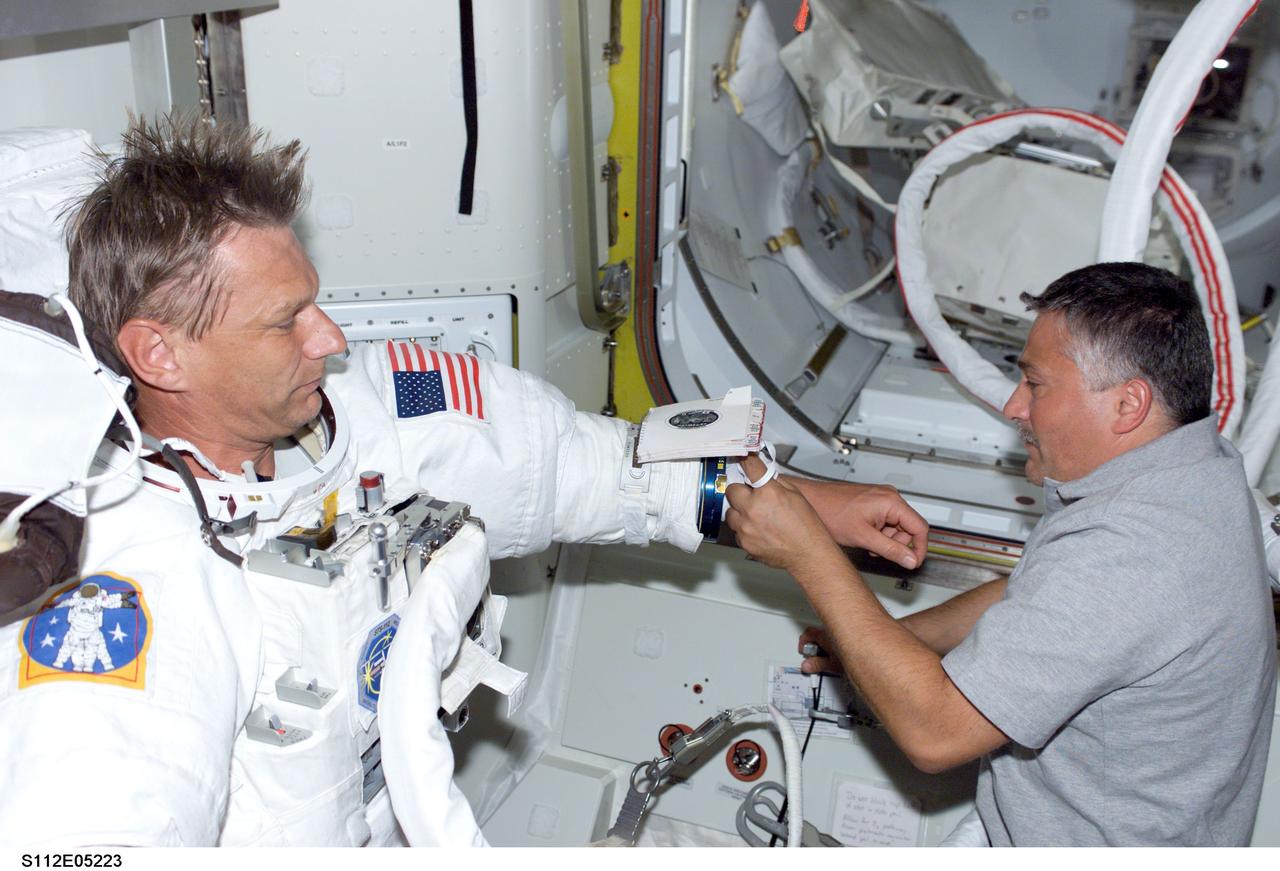
STS112-E-5223 (12 October 2002) --- Cosmonaut Fyodor Yurchikhin of Rosaviakosmos, STS-112 mission specialist, puts final touches on the extravehicular mobility unit (EMU) spacesuit of astronaut Piers J. Sellers prior to the mission's second spacewalk.
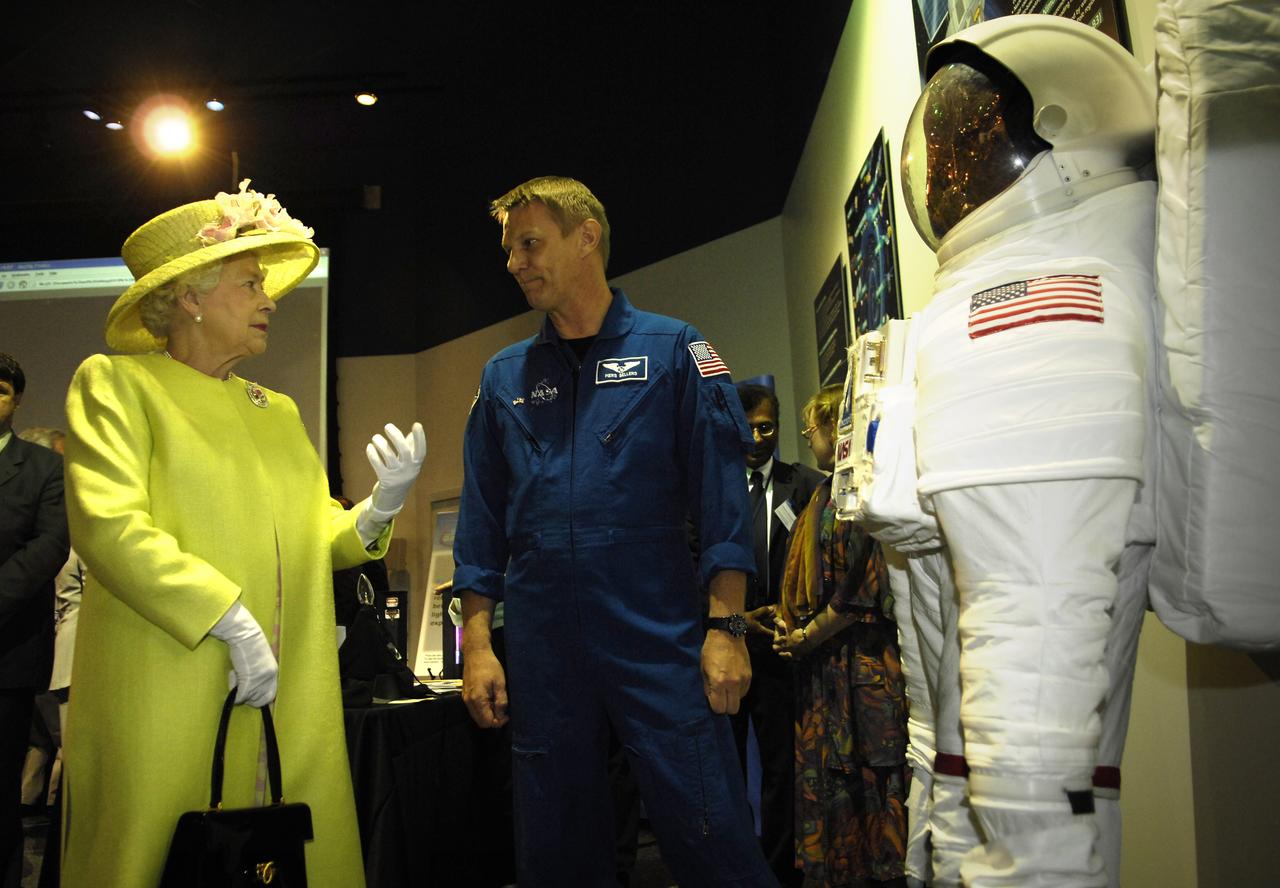
Queen Elizabeth II talks with NASA astronaut Piers Sellers at NASA's Goddard Spaceflight Center, Tuesday, May 8, 2007, in Greenbelt, Md. Queen Elizabeth II and her husband, Prince Philip, Duke of Edinburgh, visited the NASA Goddard Space Flight Center as one of the last stops on their six-day United States visit. Photo Credit: (NASA/Pat Izzo)
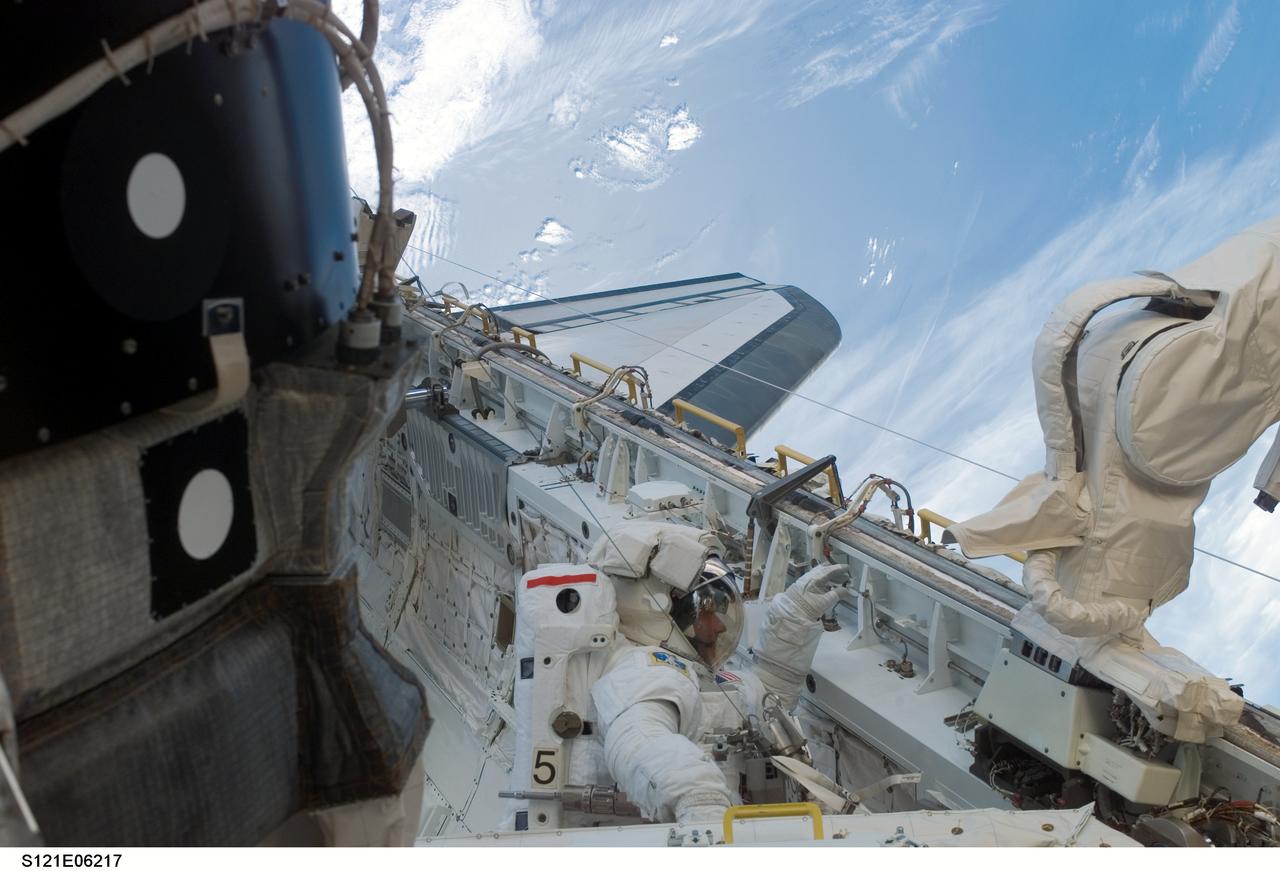
S121-E-06217 (10 July 2006) --- Astronaut Piers J. Sellers, STS-121 mission specialist, works in the Space Shuttle Discovery's cargo bay during the mission's second session of extravehicular activity (EVA). During today's six-hour 47-minute spacewalk, Sellers and astronaut Michael E. Fossum (out of frame), mission specialist, restored the International Space Station's Mobile Transporter rail car to full operation and delivered a spare pump module for the station's cooling system.
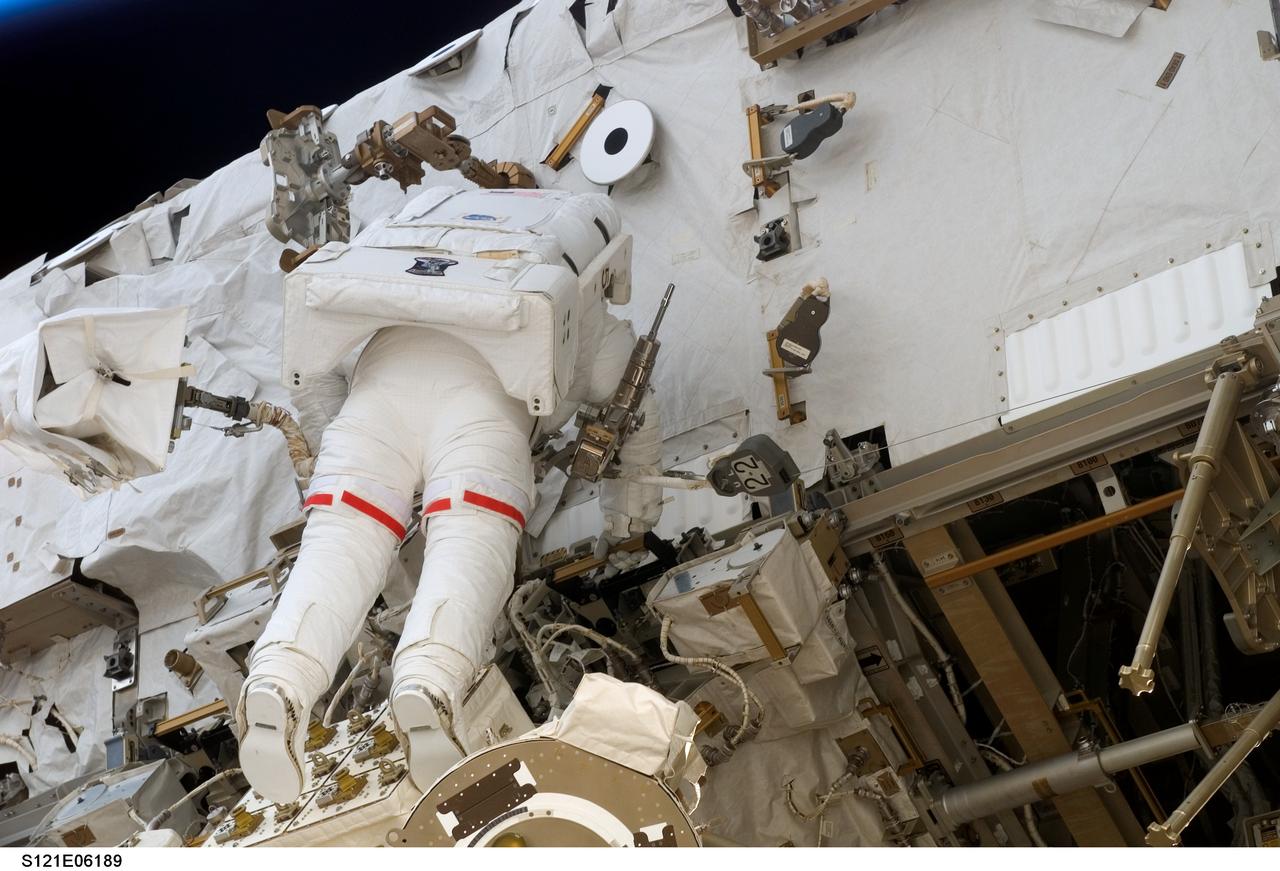
S121-E-06189 (10 July 2006) --- Astronaut Piers J. Sellers, STS-121 mission specialist, participates in the mission's second session of extravehicular activity (EVA). During today's six-hour 47-minute spacewalk, Sellers and astronaut Michael E. Fossum (out of frame), mission specialist, restored the International Space Station's Mobile Transporter rail car to full operation and delivered a spare pump module for the station's cooling system.
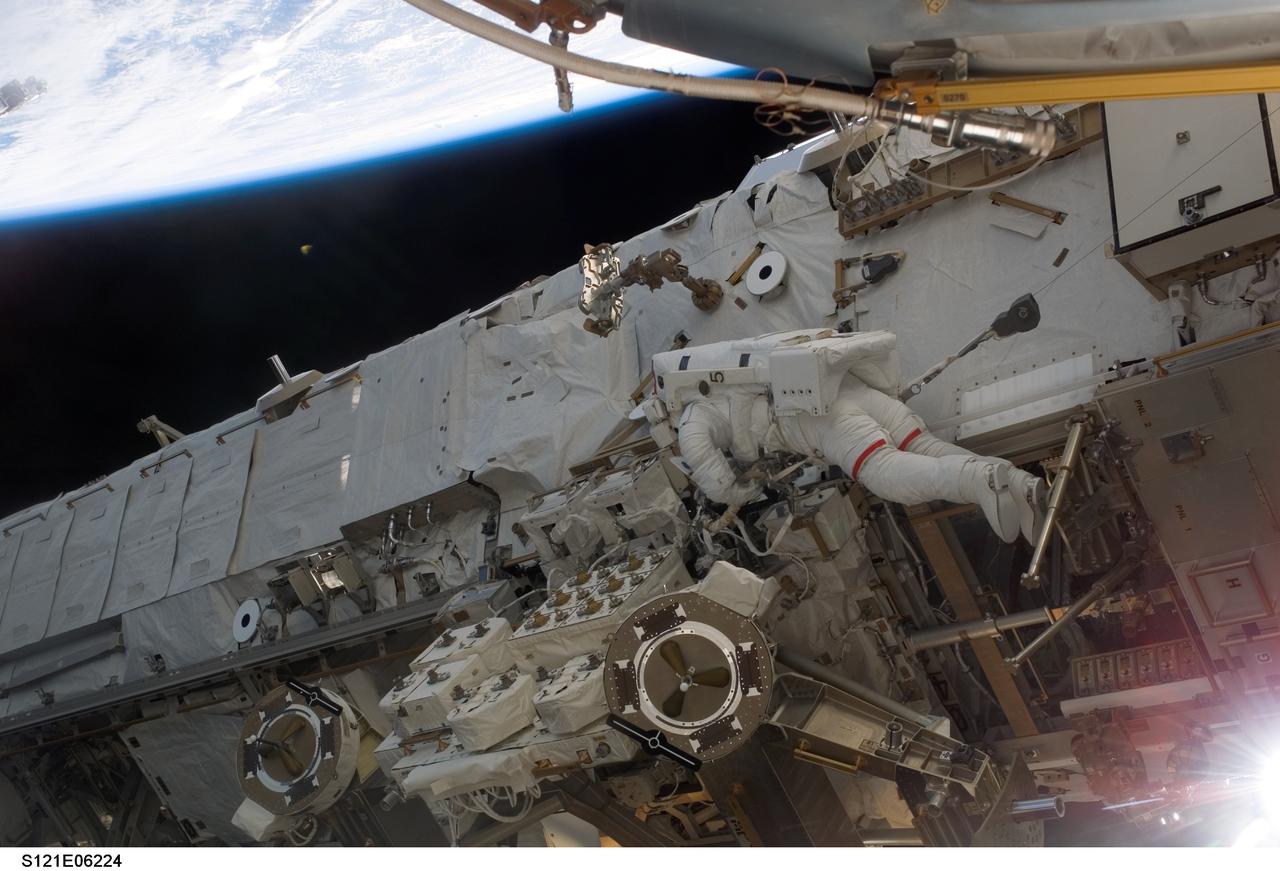
S121-E-06224 (10 July 2006) --- Astronaut Piers J. Sellers, STS-121 mission specialist, participates in the mission's second session of extravehicular activity (EVA). During today's six-hour 47-minute spacewalk, Sellers and astronaut Michael E. Fossum (out of frame), mission specialist, restored the International Space Station's Mobile Transporter rail car to full operation and delivered a spare pump module for the station's cooling system.
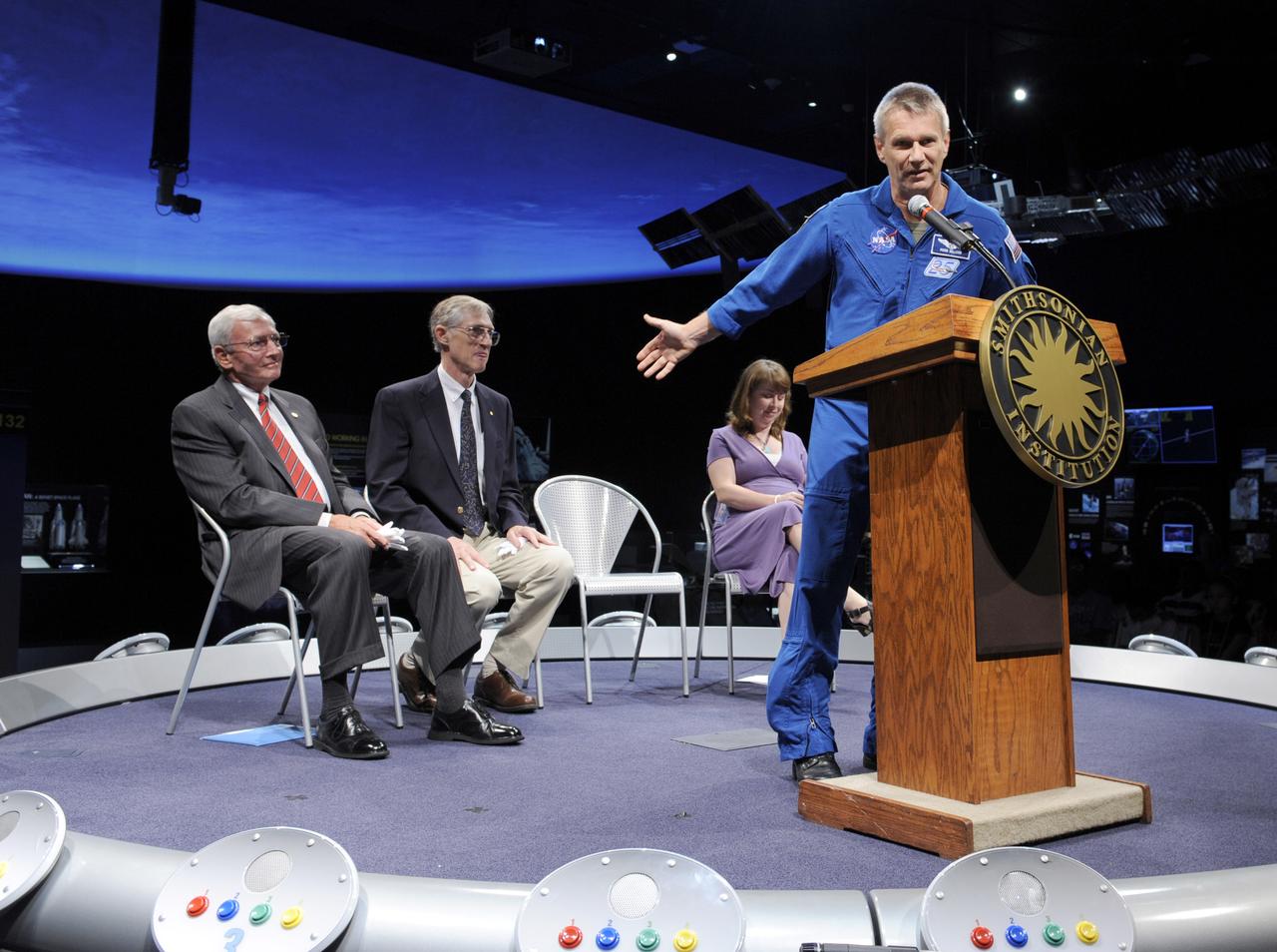
STS-132 astronaut Piers Sellers, at podium, acknowleges museum director Ret. Gen. John R. "Jack" Dailey, seated left, and NASA astrophycisist Dr. John Mather, center, during a presentation, Tuesday, July 27, 2010, at the Smithsonian National Air and Space Museum in Washington. Sellers returned a replica of the Nobel Prize that is in the museum's collection and was flown aboard STS-132 Atlantis. The prize was won by Mather and University of California, Berkeley researcher George Smoot in 2006 for their work using the Cosmic Background Explorer Satellite to understand the big-bang theory of the universe.Photo Credit: (NASA/Paul E. Alers)
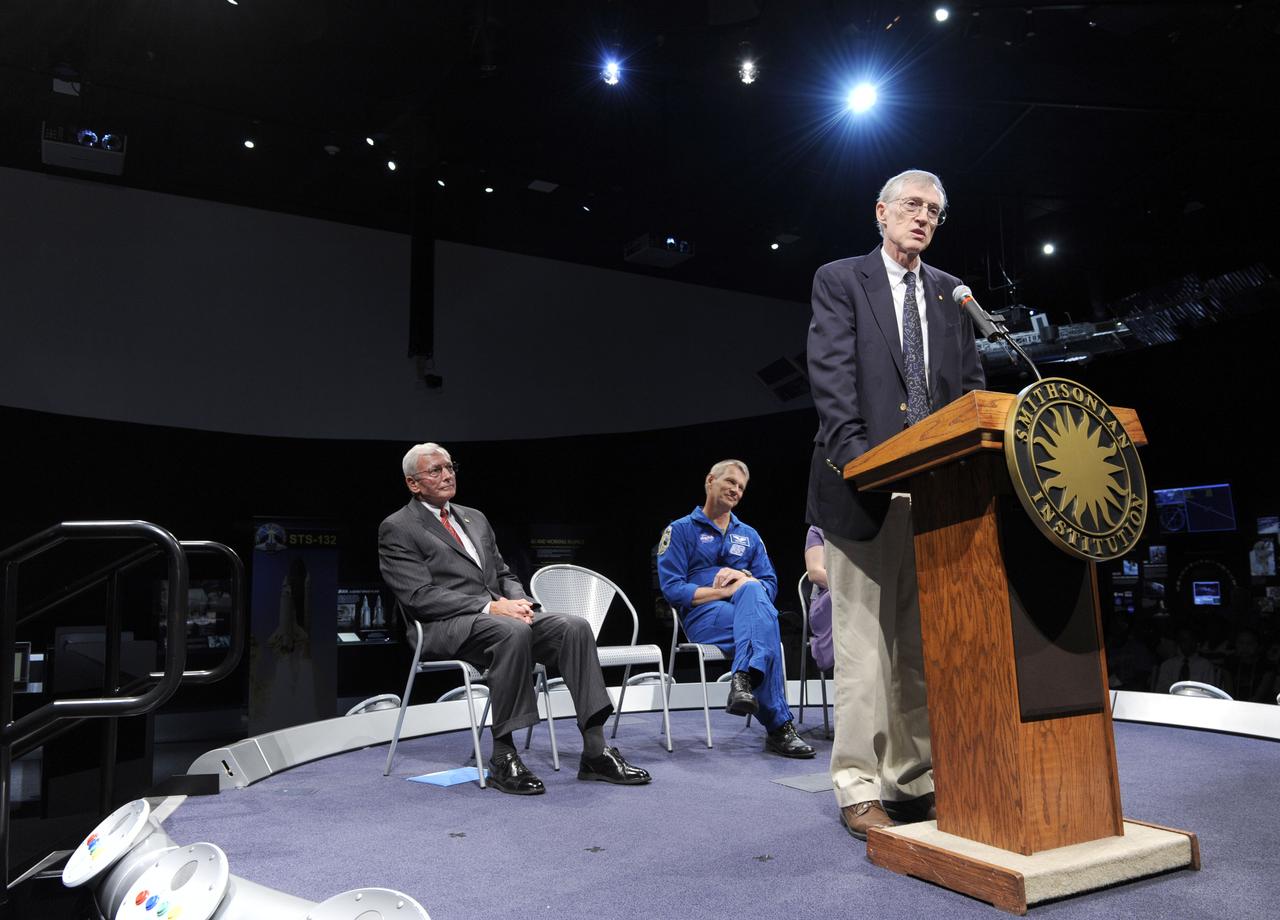
NASA Astrophycist Dr. John Mather, at podium, speaks Tuesday, July 27, 2010, at the Smithsonian National Air and Space Museum in Washington as museum director Gen. John R. "Jack" Dailey, U.S. Marine Corps ret. and STS-132 astronaut Piers Sellers look on. Sellers returned a replica of the Nobel Prize that is in the museum's collection and was flown aboard STS-132 Atlantis. The prize was won by Mather and University of California, Berkeley researcher George Smoot in 2006 for their work using the Cosmic Background Explorer Satellite to understand the big-bang theory of the universe.Photo Credit: (NASA/Paul E. Alers)
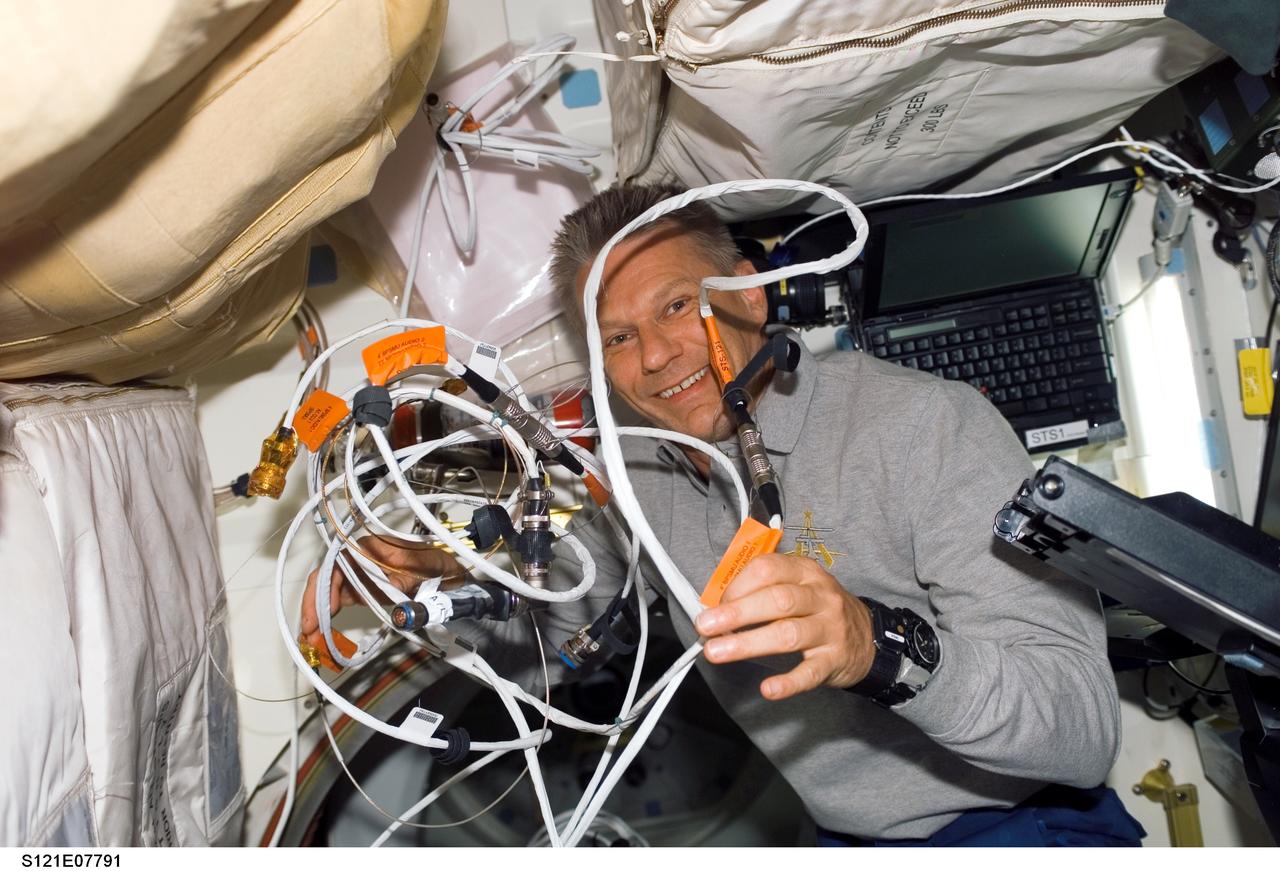
S121-E-07791 (15 July 2006) --- Astronaut Piers J. Sellers, STS-121 mission specialist, works with cables on the middeck of Space Shuttle Discovery as the shuttle crew prepares to undock from the International Space Station.
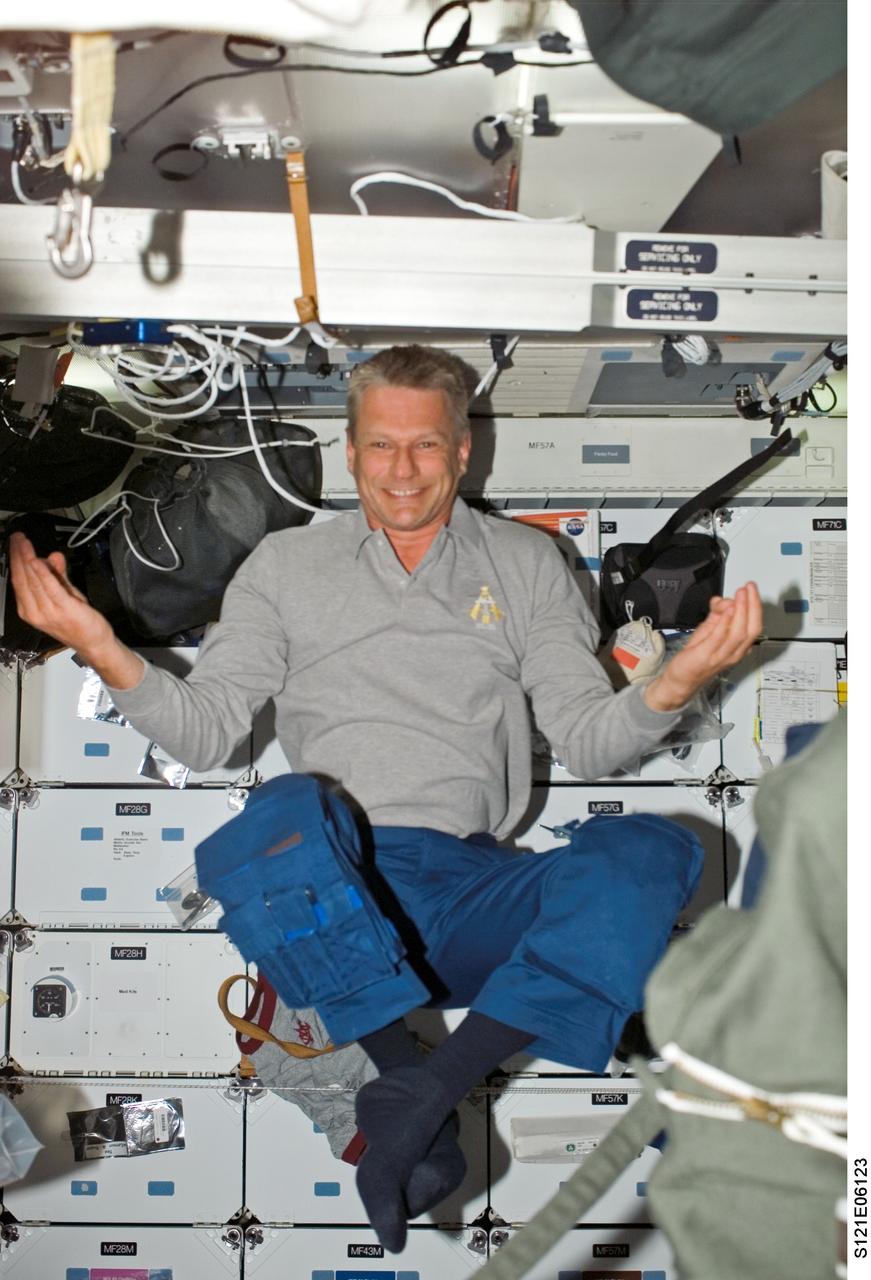
S121-E-06123 (8 July 2006) --- Astronaut Piers J. Sellers, STS-121 mission specialist, smiles for the camera as he floats on the middeck of the Space Shuttle Discovery while docked with the International Space Station.
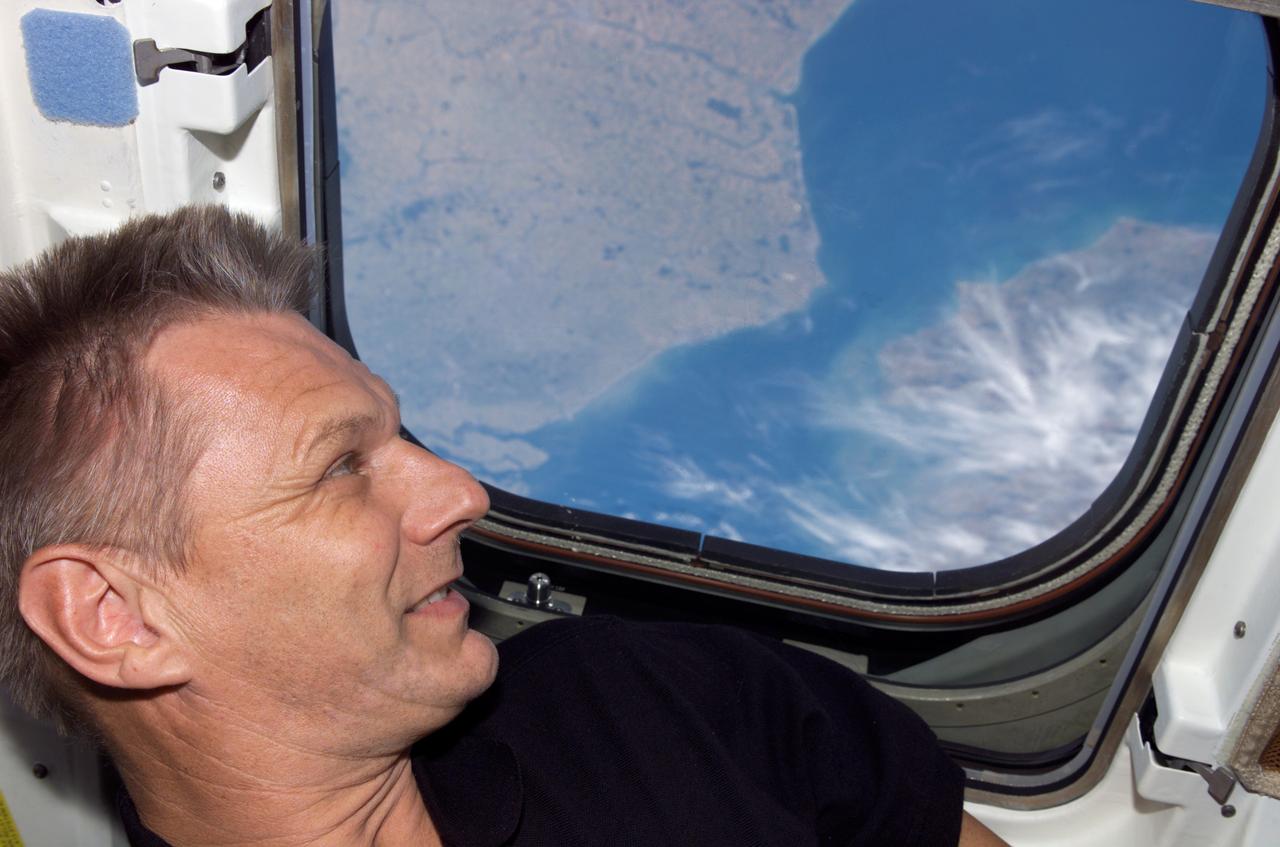
S121-E-08028 (16 July 2006) --- Astronaut Piers J. Sellers, STS-121 mission specialist, looks out a window on the aft flight deck of the Space Shuttle Discovery while docked with the International Space Station.
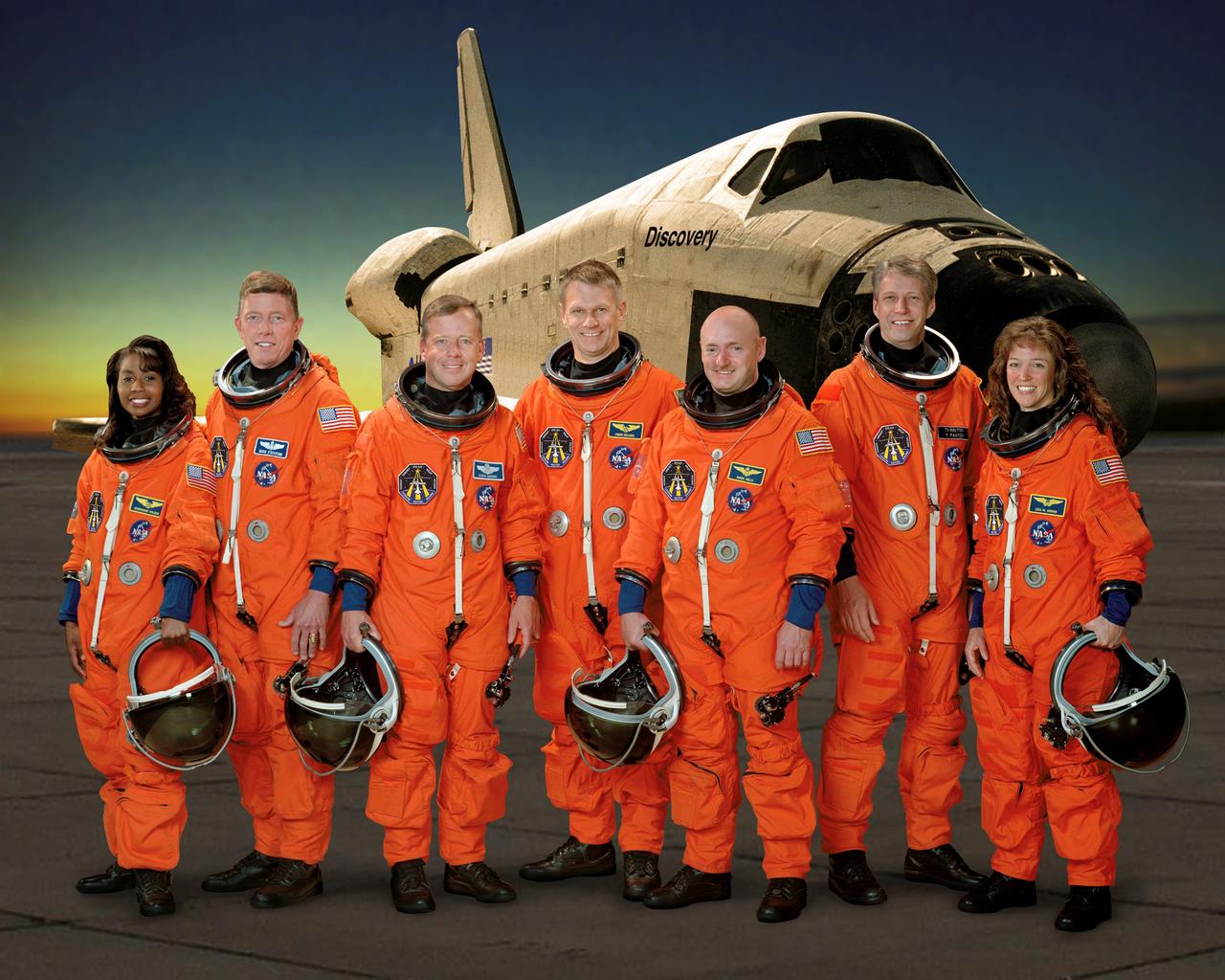
These seven astronauts take a break from training to pose for the STS-121 crew portrait. From the left are mission specialists Stephanie D. Wilson, and Michael E. Fossum, Commander Steven W. Lindsey, mission specialist Piers J. Sellers, pilot Mark E. Kelly; European Space Agency (ESA) astronaut and mission specialist Thomas Reiter of Germany; and mission specialist Lisa M. Nowak. The crew members are attired in training versions of their shuttle launch and entry suit. The crew, first ever to launch on Independence Day, tested new equipment and procedures to improve shuttle safety, as well as delivered supplies and made repairs to the space station.
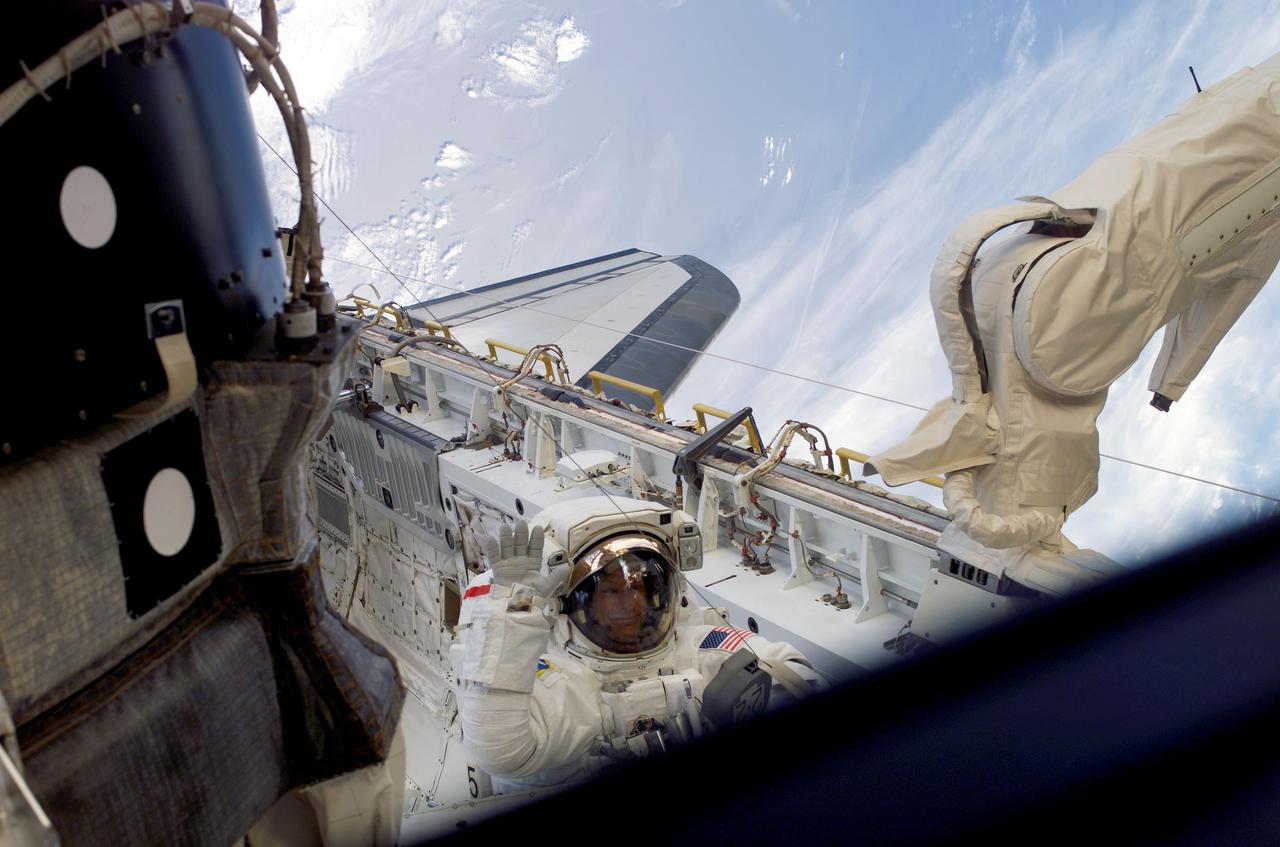
S121-E-06216 (10 July 2006) --- Astronaut Piers J. Sellers, STS-121 mission specialist, waves to a crewmate inside the Space Shuttle Discovery as he works in the shuttle's cargo bay during the mission's second session of extravehicular activity (EVA). During today's six-hour 47-minute spacewalk, Sellers and astronaut Michael E. Fossum (out of frame), mission specialist, restored the International Space Station's Mobile Transporter rail car to full operation and delivered a spare pump module for the station's cooling system.
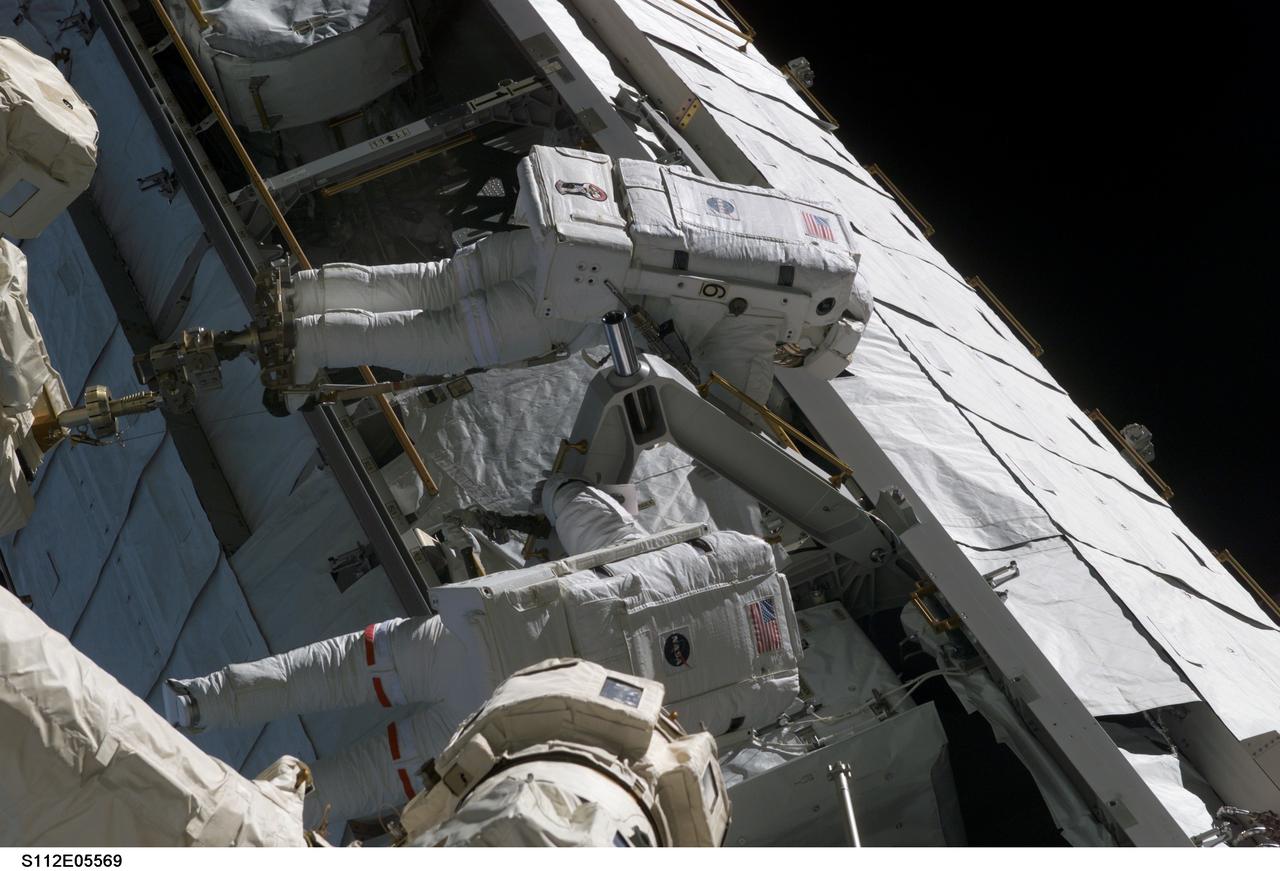
STS112-E-05569 (14 October 2002) --- Astronauts Piers J. Sellers (top) and David A. Wolf, STS-112 mission specialists, work on the newly installed Starboard One (S1) Truss during the third and final scheduled session of extravehicular activity (EVA) for the STS-112 mission. The spacewalk lasted 6 hours and 36 minutes.
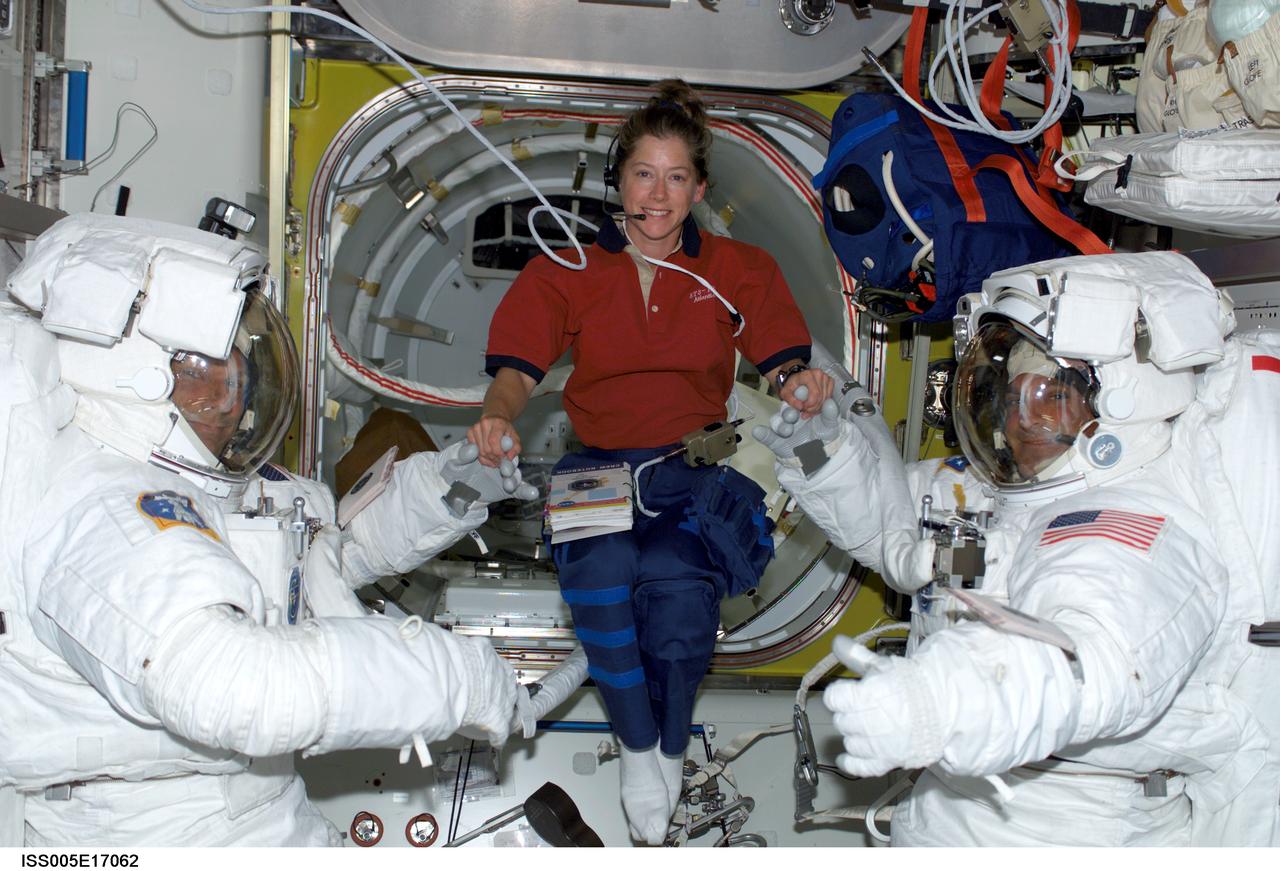
ISS005-E-17062 (10 October 2002) --- Astronauts Piers J. Sellers (left) and David A. Wolf, STS-112 mission specialists attired in their Extravehicular Mobility Unit (EMU) space suits, are photographed in the Quest Airlock on the International Space Station (ISS) prior to the first scheduled session of extravehicular activity (EVA). Astronaut Pamela A. Melroy, pilot, was visible in the center.
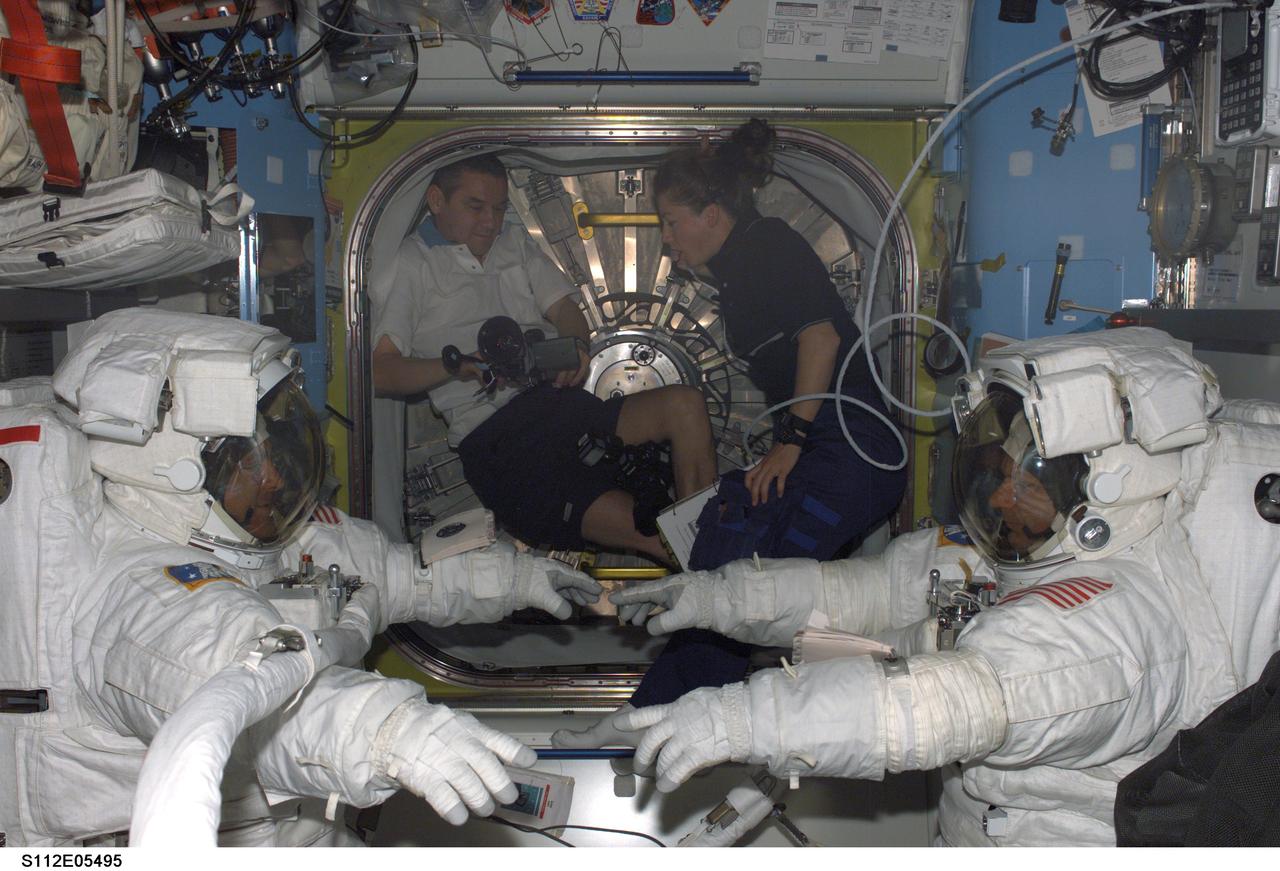
STS112-E-05495 (14 October 2002) --- Astronauts David A. Wolf (left) and Piers J. Sellers, STS-112 mission specialists attired in their Extravehicular Mobility Unit (EMU) space suits, are photographed in the Quest Airlock on the International Space Station (ISS) prior to the third scheduled session of extravehicular activity (EVA). Cosmonaut Valery G. Korzun (left), Expedition Five mission commander, and astronaut Pamela A. Melroy, STS-112 pilot, were visible in the background. Korzun represents Rosaviakosmos.
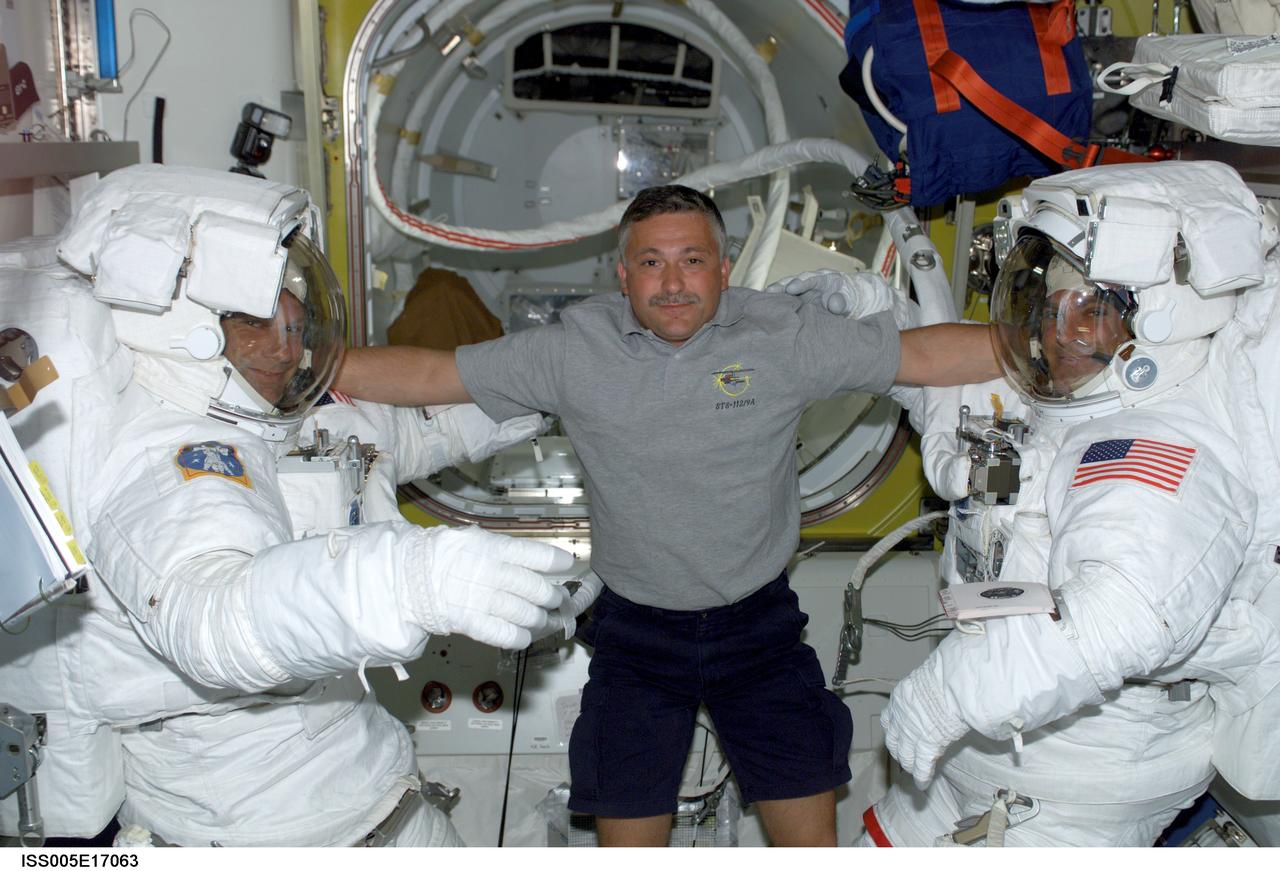
ISS005-E-17063 (10 October 2002) --- Astronauts Piers J. Sellers (left) and David A. Wolf, STS-112 mission specialists attired in their Extravehicular Mobility Unit (EMU) space suits, are photographed in the Quest Airlock on the International Space Station (ISS) prior to the first scheduled session of extravehicular activity (EVA). Cosmonaut Fyodor N. Yurchikhin, mission specialist representing Rosaviakosmos, was visible in the center.
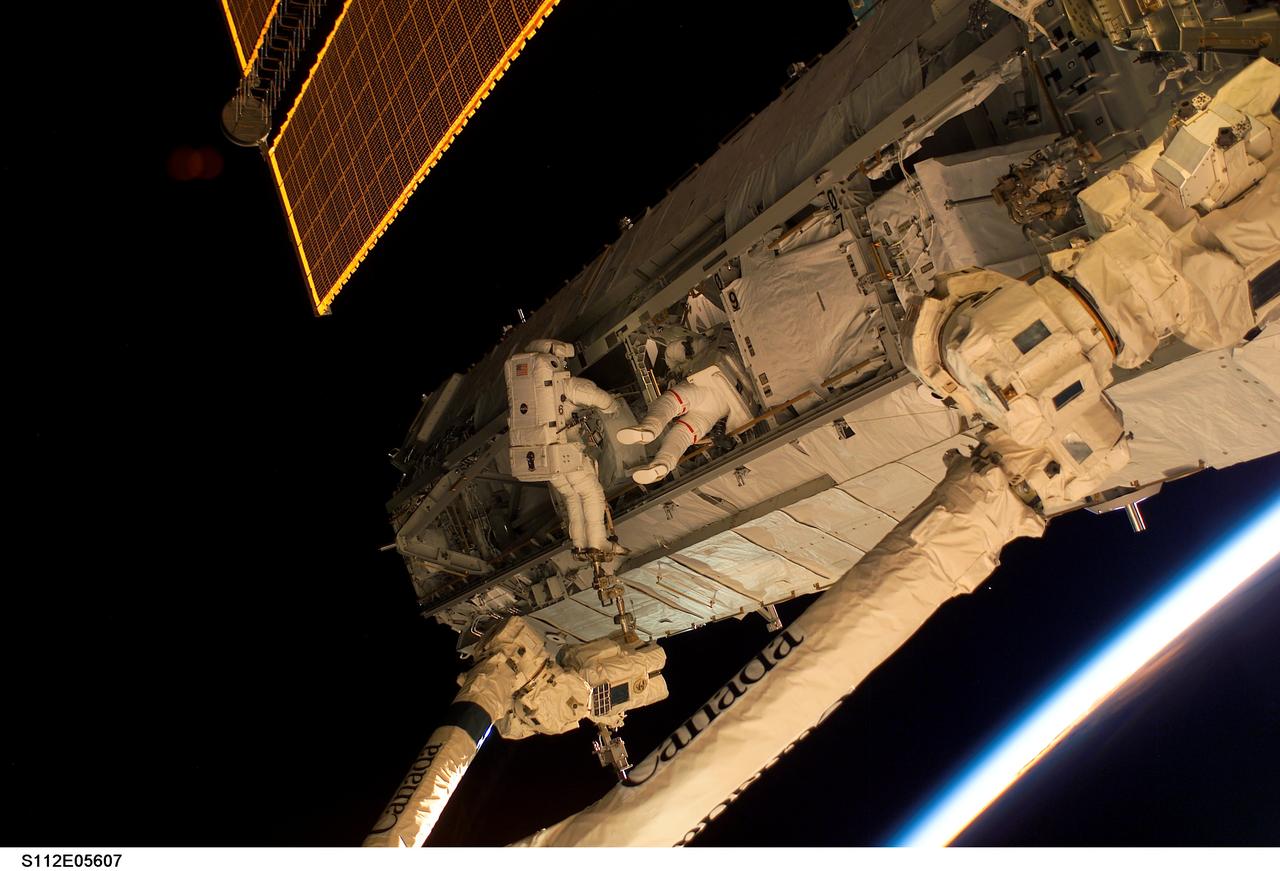
STS112-E-05607 (14 October 2002) --- Astronauts Piers J. Sellers (left) and David A. Wolf, STS-112 mission specialists, work on the newly installed Starboard One (S1) Truss during the third and final scheduled session of extravehicular activity (EVA) for the STS-112 mission. The spacewalk lasted 6 hours and 36 minutes. A thin slice of sunlight can be seen at Earth's horizon.
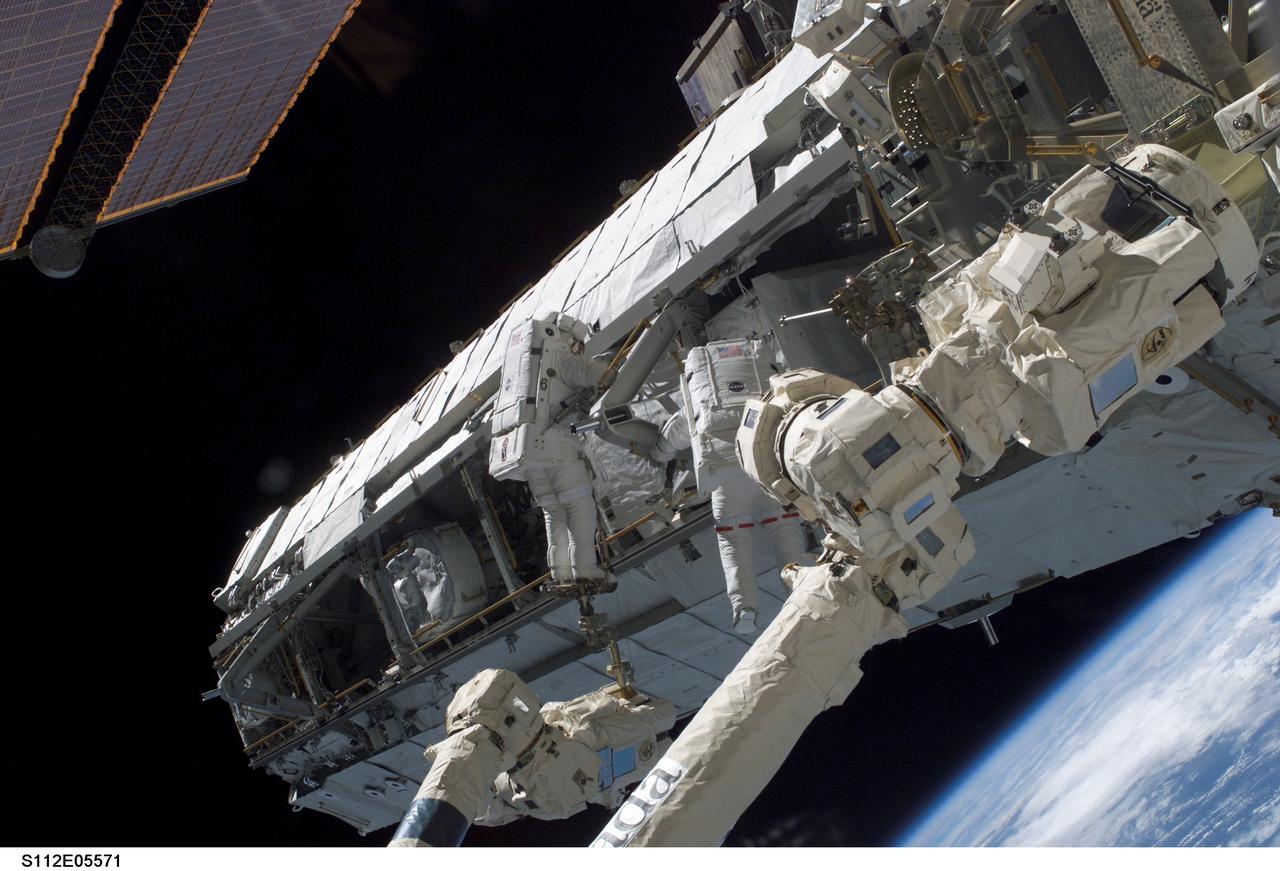
STS112-E-05571 (14 October 2002) --- Astronauts Piers J. Sellers (left) and David A. Wolf, STS-112 mission specialists, work on the newly installed Starboard One (S1) Truss during the third and final scheduled session of extravehicular activity (EVA) for the STS-112 mission. The spacewalk lasted 6 hours and 36 minutes.
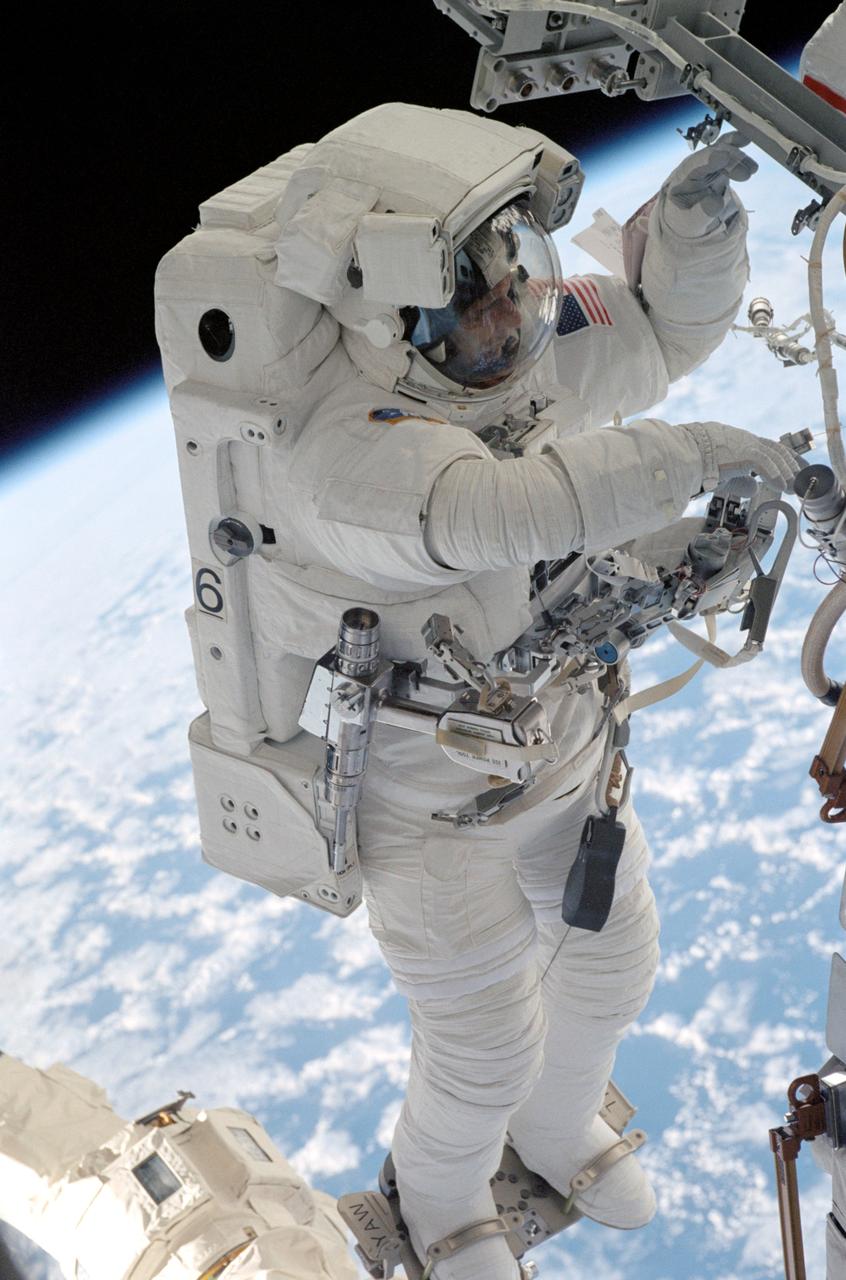
STS112-326-015 (12 October 2002) --- Astronaut Piers J. Sellers, STS-112 mission specialist, uses both a handrail on the Destiny Laboratory and a foot restraint on the Space Station Remote Manipulator System (SSRMS) or Canadarm2 to remain stationary while performing work at the end of the STS-112 mission's second spacewalk. A cloud-covered Earth provides the backdrop for the scene.
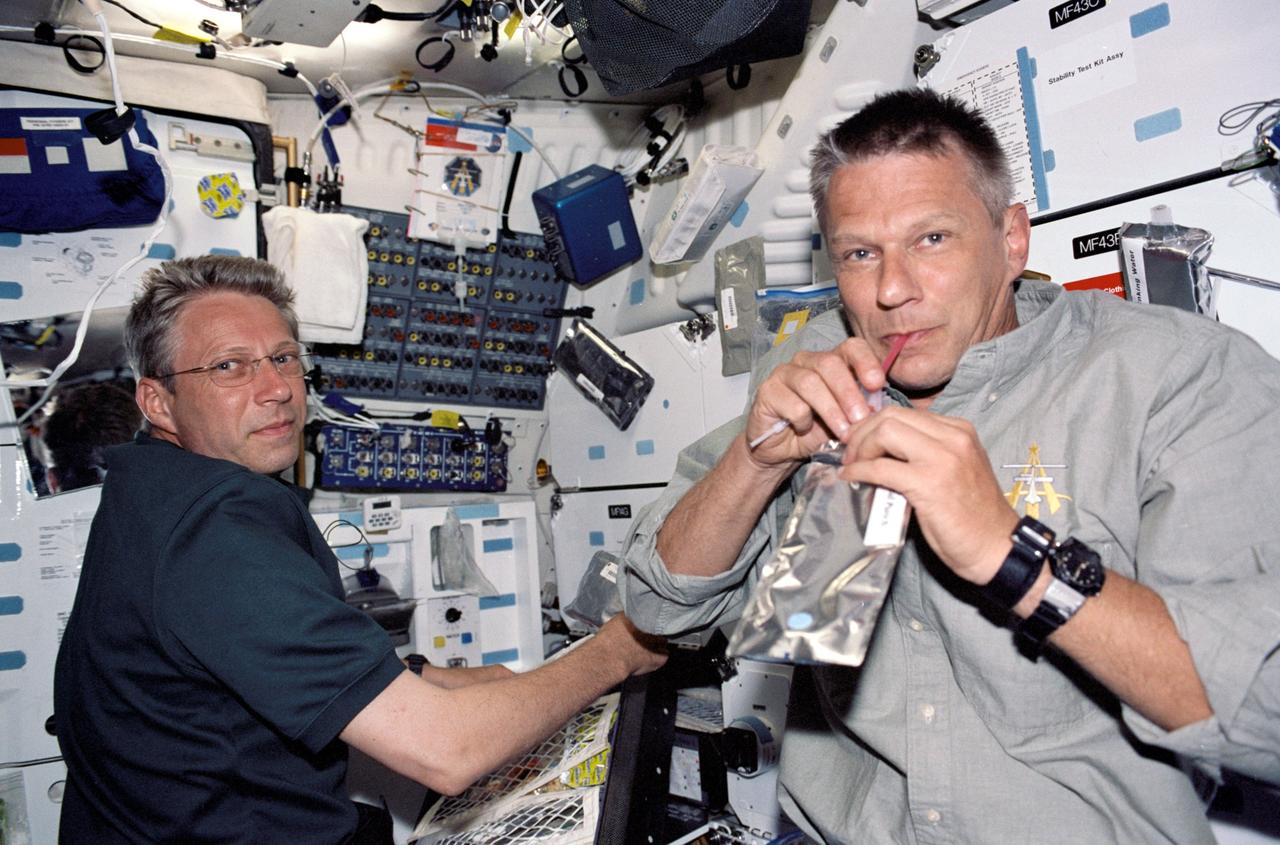
STS121-319-021 (4 - 17 July 2006) --- Astronauts Piers J. Sellers, right, and Thomas Reiter of the European Space Agency, share a meal on the flight deck of the Space Shuttle Discovery during the STS-121 mission. Reiter later joined the Expedition 13 crew aboard the International Space Station, where he'll be performing research and other tasks for the next six months.
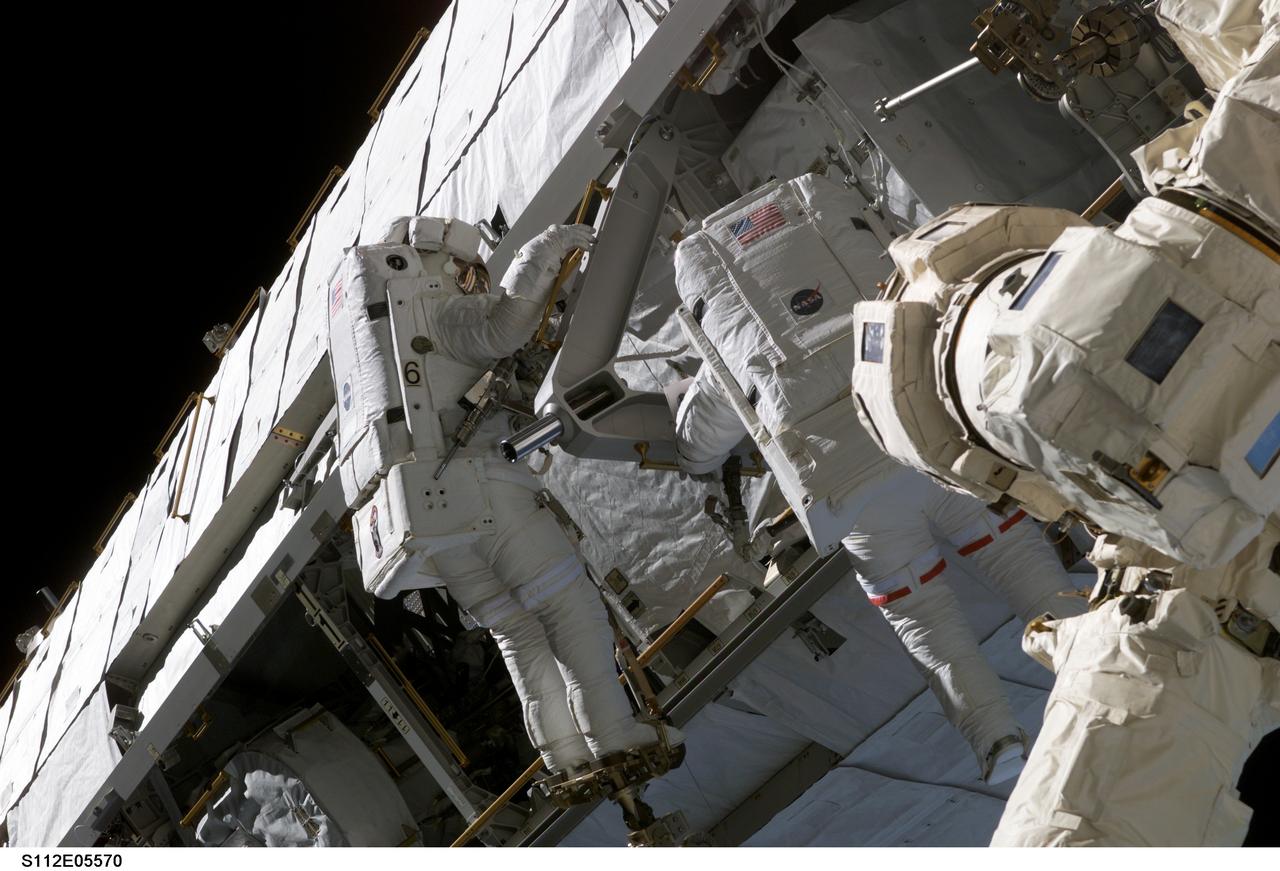
STS112-E-05570 (14 October 2002) --- Astronauts Piers J. Sellers (left) and David A. Wolf, STS-112 mission specialists, work on the newly installed Starboard One (S1) Truss during the third and final scheduled session of extravehicular activity (EVA) for the STS-112 mission. The spacewalk lasted 6 hours and 36 minutes.
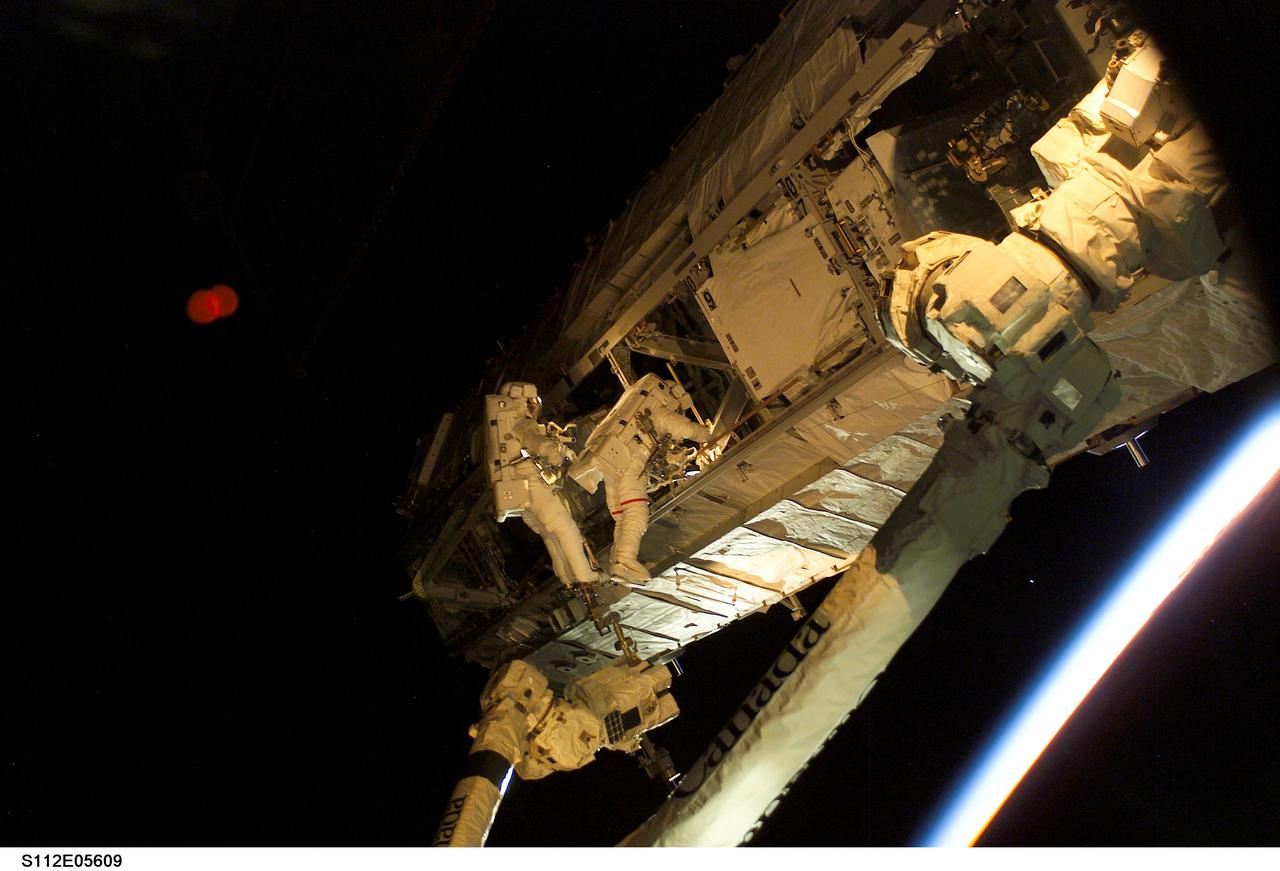
STS112-E-05609 (14 October 2002) --- Astronauts Piers J. Sellers (left) and David A. Wolf, STS-112 mission specialists, work on the newly installed Starboard One (S1) Truss during the third and final scheduled session of extravehicular activity (EVA) for the STS-112 mission. The spacewalk lasted 6 hours and 36 minutes. A thin slice of sunlight can be seen at Earth's horizon.
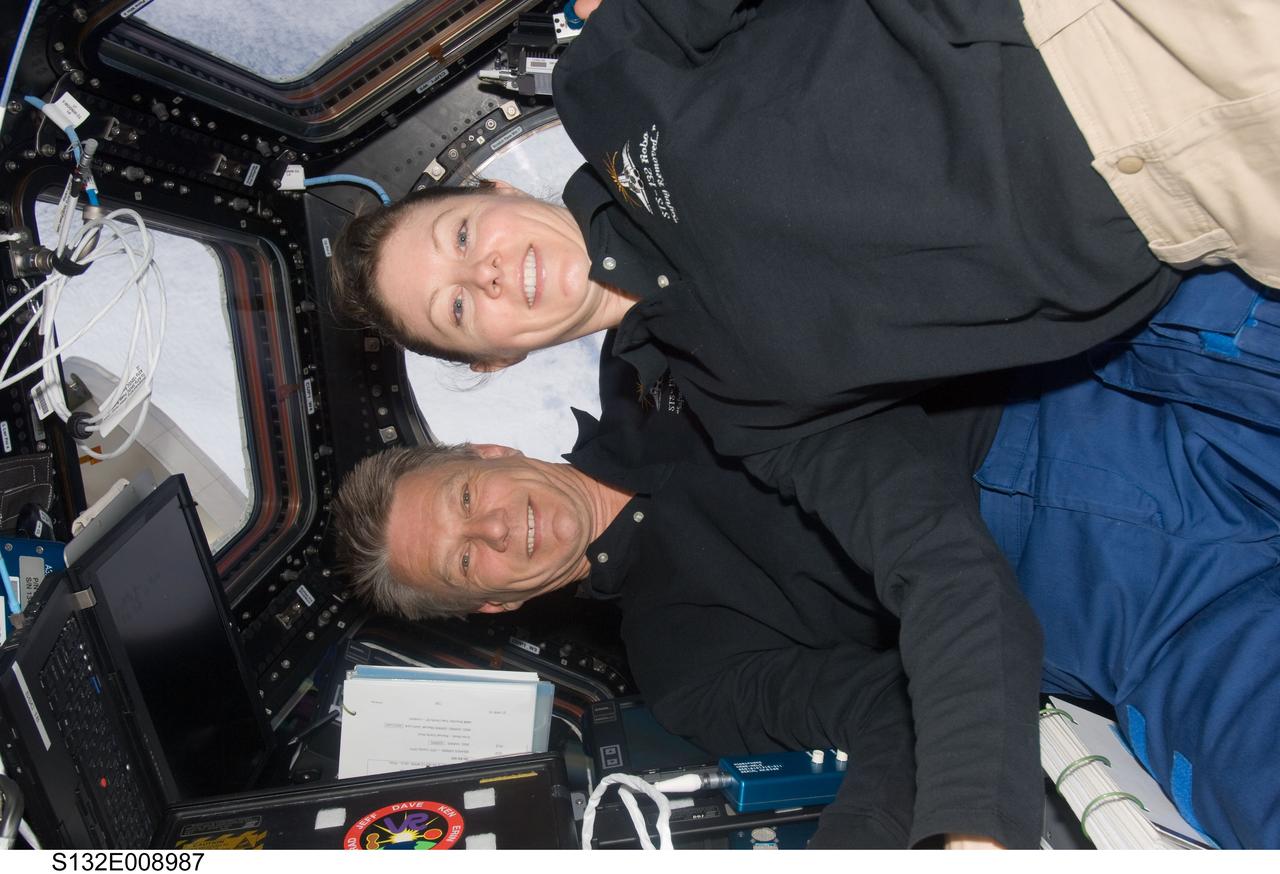
S132-E-008987 (21 May 2010) --- NASA astronaut Piers Sellers, seen here with space station crew member Tracy Caldwell Dyson, has been into space before the current STS-132 mission of space shuttle Atlantis. But this flight's visit to the International Space Station has afforded the mission specialist his first look at the Cupola and his first looks from the seven-windowed turret-like module on the orbital outpost. In the midst of a long stay on the orbital outpost, Caldwell Dyson has daily access to the relatively new module, which provides unique panoramic viewing of her exterior surroundings. This photo was taken while two astronauts were finishing STS-132's third and final session of extravehicular activity. Photo credit: NASA or National Aeronautics and Space Administration
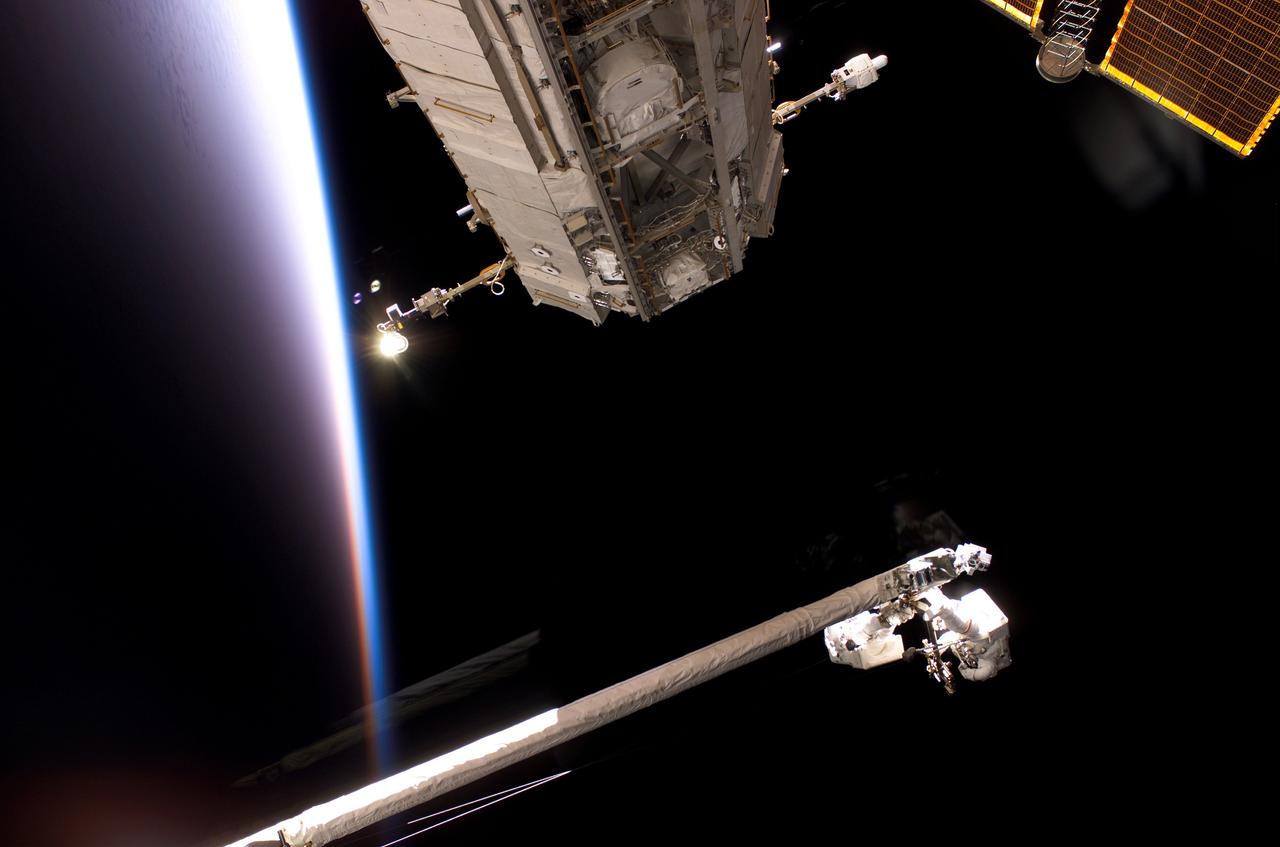
S121-E-06040 (8 July 2006) --- Astronauts Piers J. Sellers (red stripes) and Michael E. Fossum, STS-121 mission specialists, work in tandem on the shuttle's Remote Manipulator System/Orbiter Boom Sensor System (RMS/OBSS) during the mission's first scheduled session of extravehicular activity (EVA).
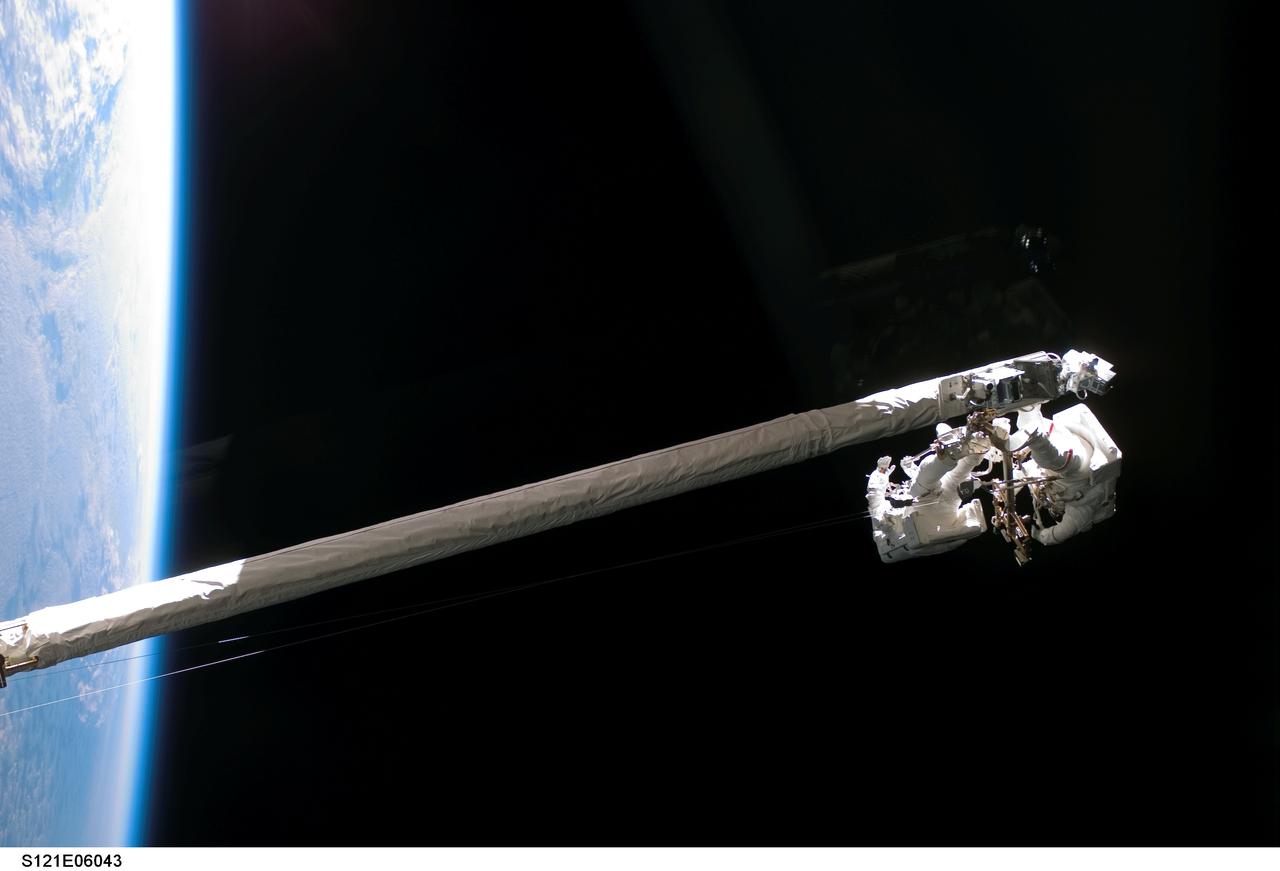
S121-E-06043 (8 July 2006) --- Astronauts Piers J. Sellers (red stripes) and Michael E. Fossum, STS-121 mission specialists, work in tandem on the shuttle's Remote Manipulator System/Orbiter Boom Sensor System (RMS/OBSS) during the mission's first scheduled session of extravehicular activity (EVA).
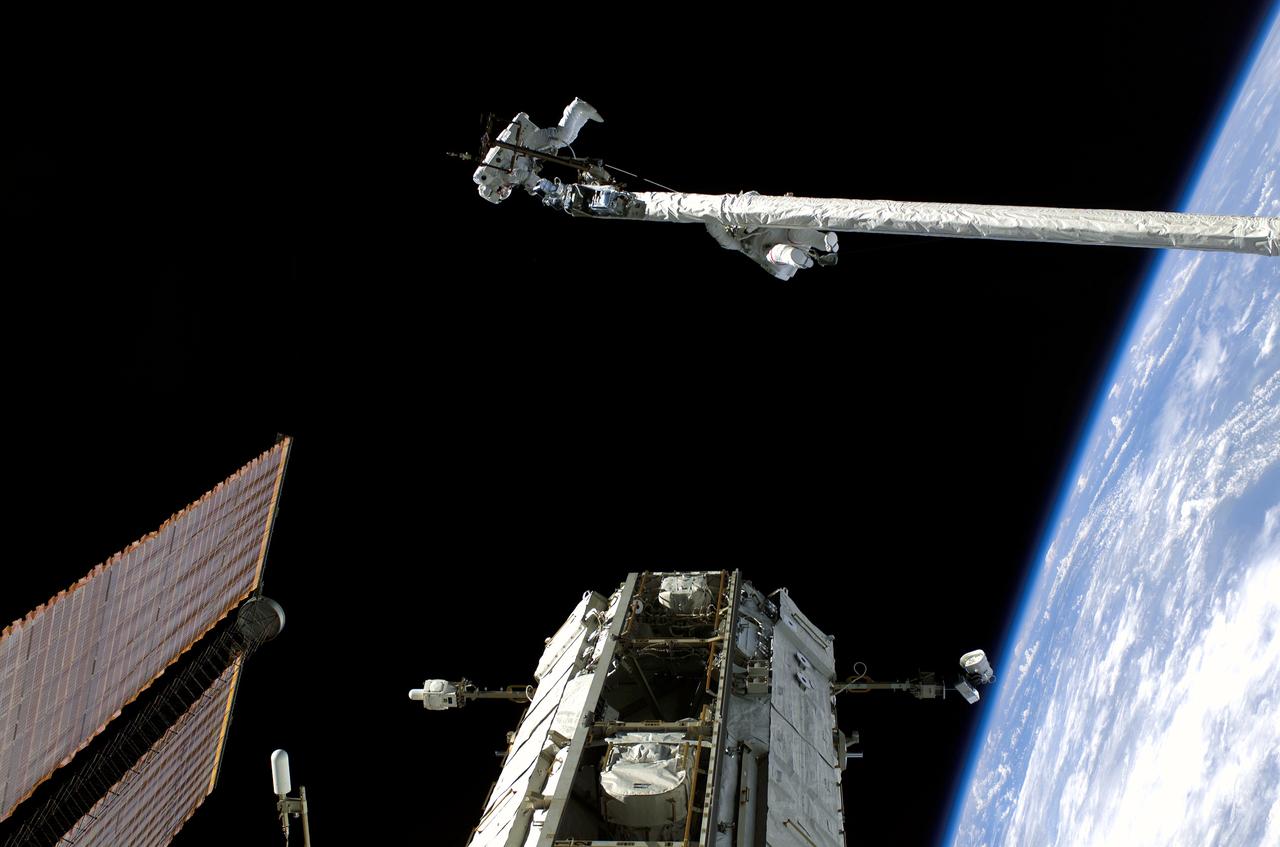
S121-E-06058 (8 July 2006) --- Astronauts Piers J. Sellers (red stripes) and Michael E. Fossum, STS-121 mission specialists, work in tandem on the shuttle's Remote Manipulator System/Orbiter Boom Sensor System (RMS/OBSS) during the mission's first scheduled session of extravehicular activity (EVA).
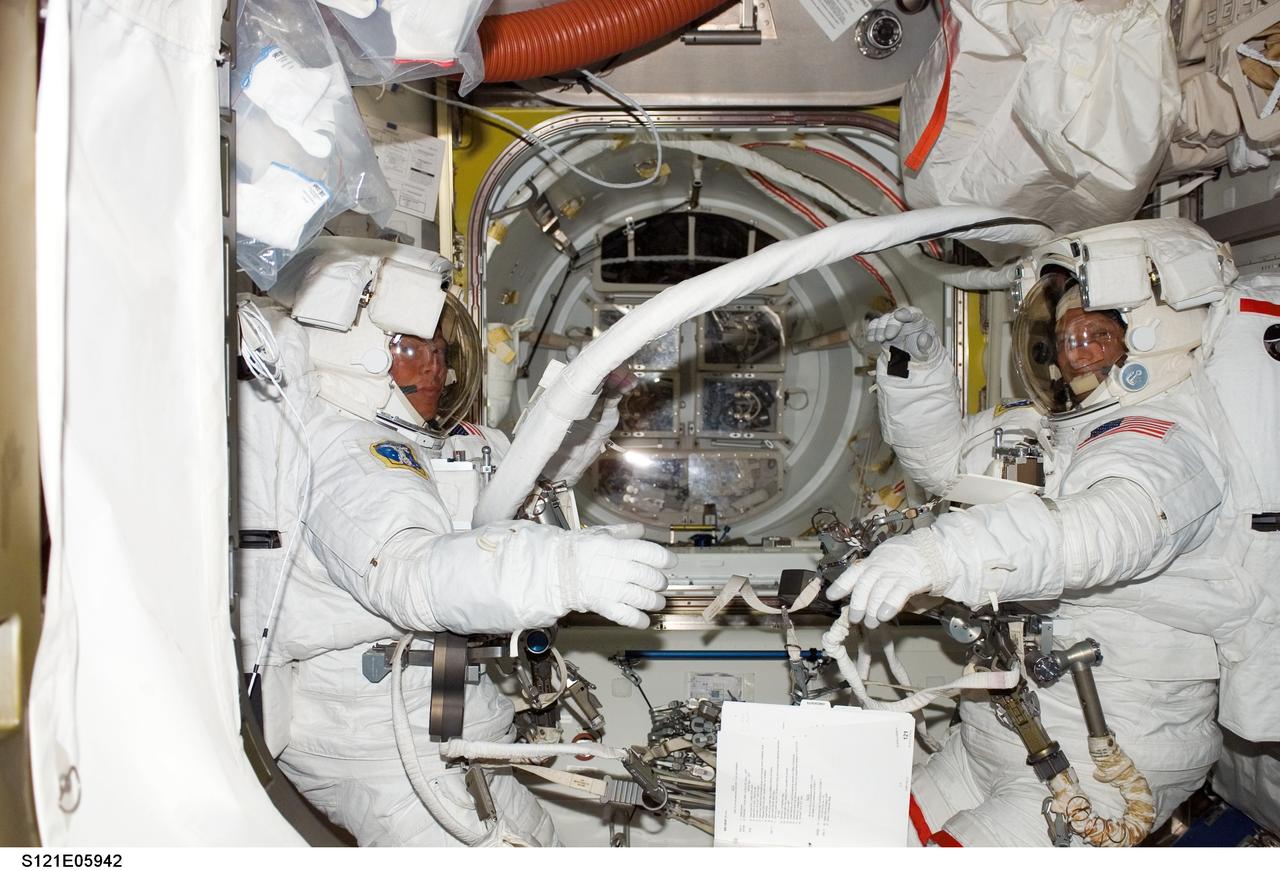
S121-E-05942 (8 July 2006) --- Astronauts Piers J. Sellers (right) and Michael E. Fossum, STS-121 mission specialists, attired in their Extravehicular Mobility Unit (EMU) spacesuits, prepare for the start of the first scheduled session of extravehicular activity (EVA) in the Quest Airlock of the International Space Station.
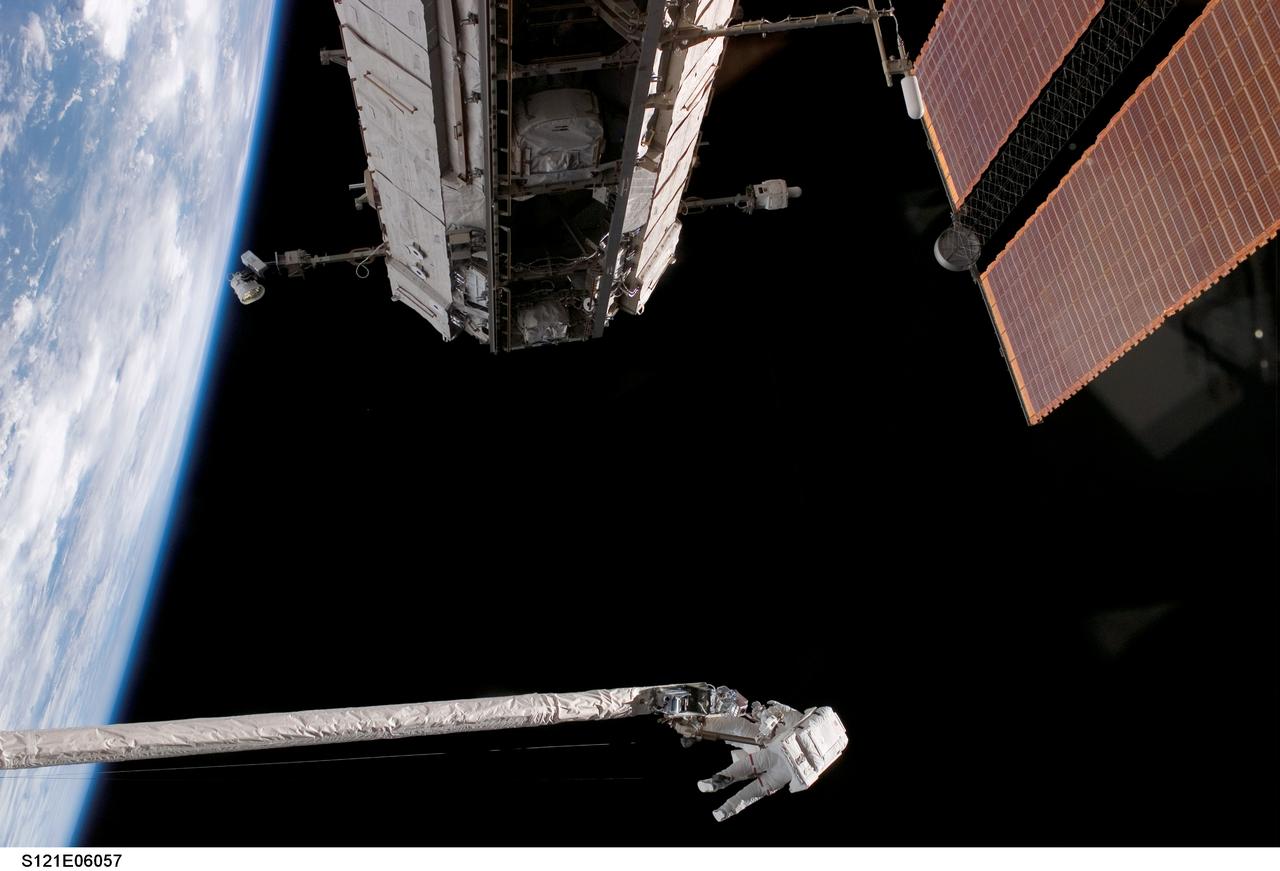
S121-E-06057 (8 July 2006) --- Astronauts Piers J. Sellers (red stripes) and Michael E. Fossum, STS-121 mission specialists, work in tandem on the shuttle's Remote Manipulator System/Orbiter Boom Sensor System (RMS/OBSS) during the mission's first scheduled session of extravehicular activity (EVA).
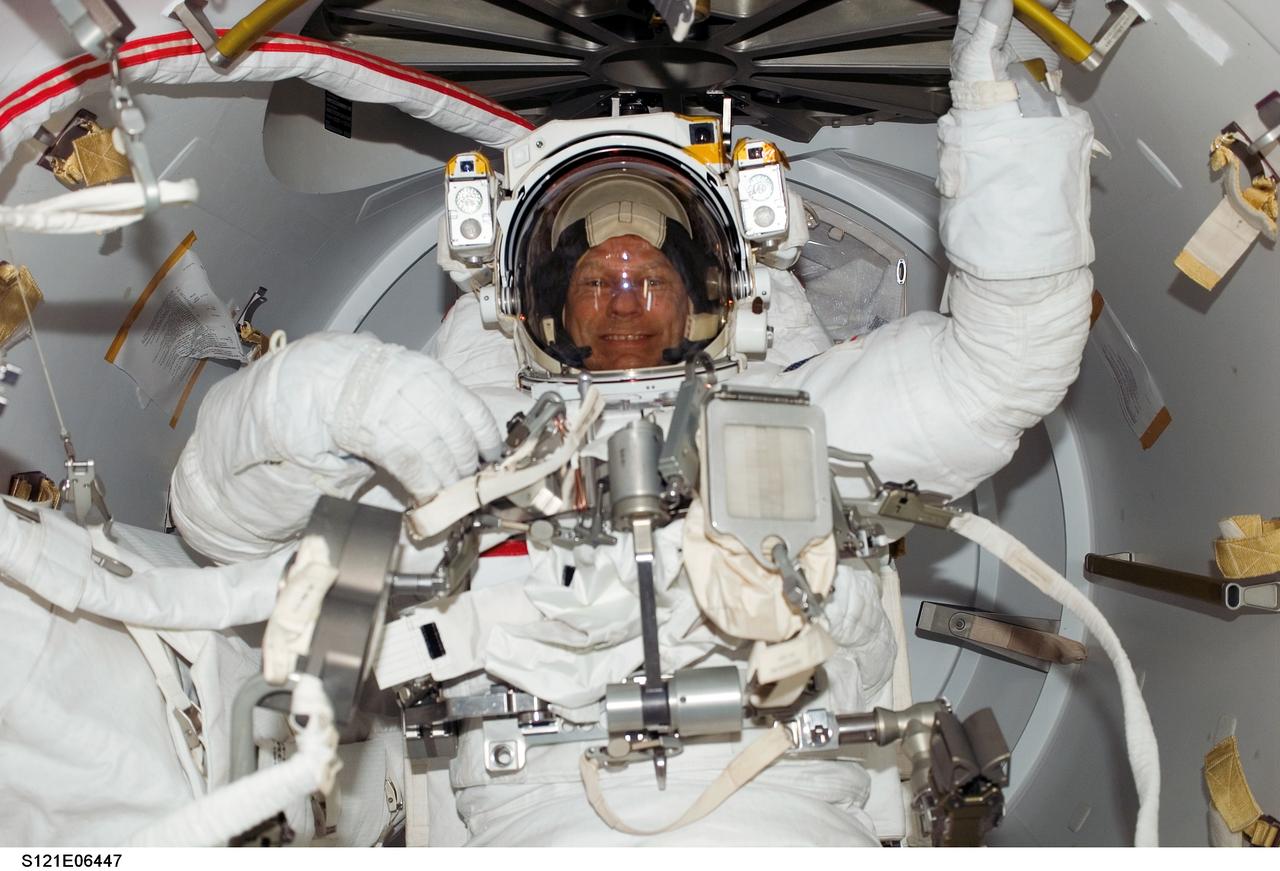
S121-E-06447 (12 July 2006) --- Astronaut Piers J. Sellers, STS-121 mission specialist, attired in his Extravehicular Mobility Unit (EMU) spacesuit, awaits the start of the mission's third session of extravehicular activity (EVA) in the Quest Airlock of the International Space Station.
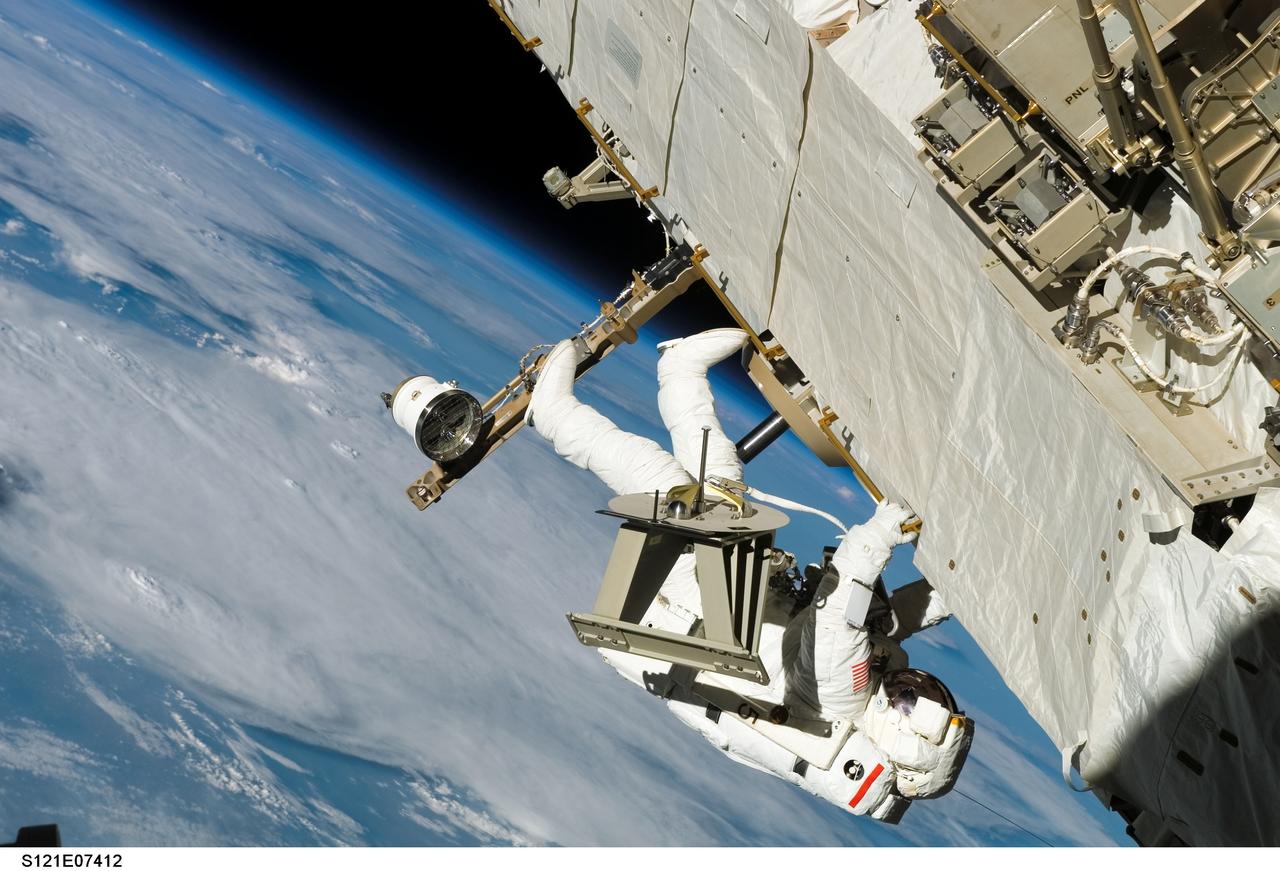
S121-E-07412 (12 July 2006) --- Astronaut Piers J. Sellers, STS-121 mission specialist, translates along a truss on the International Space Station during the mission's third and final session of extravehicular activity (EVA) while Space Shuttle Discovery was docked with the station.
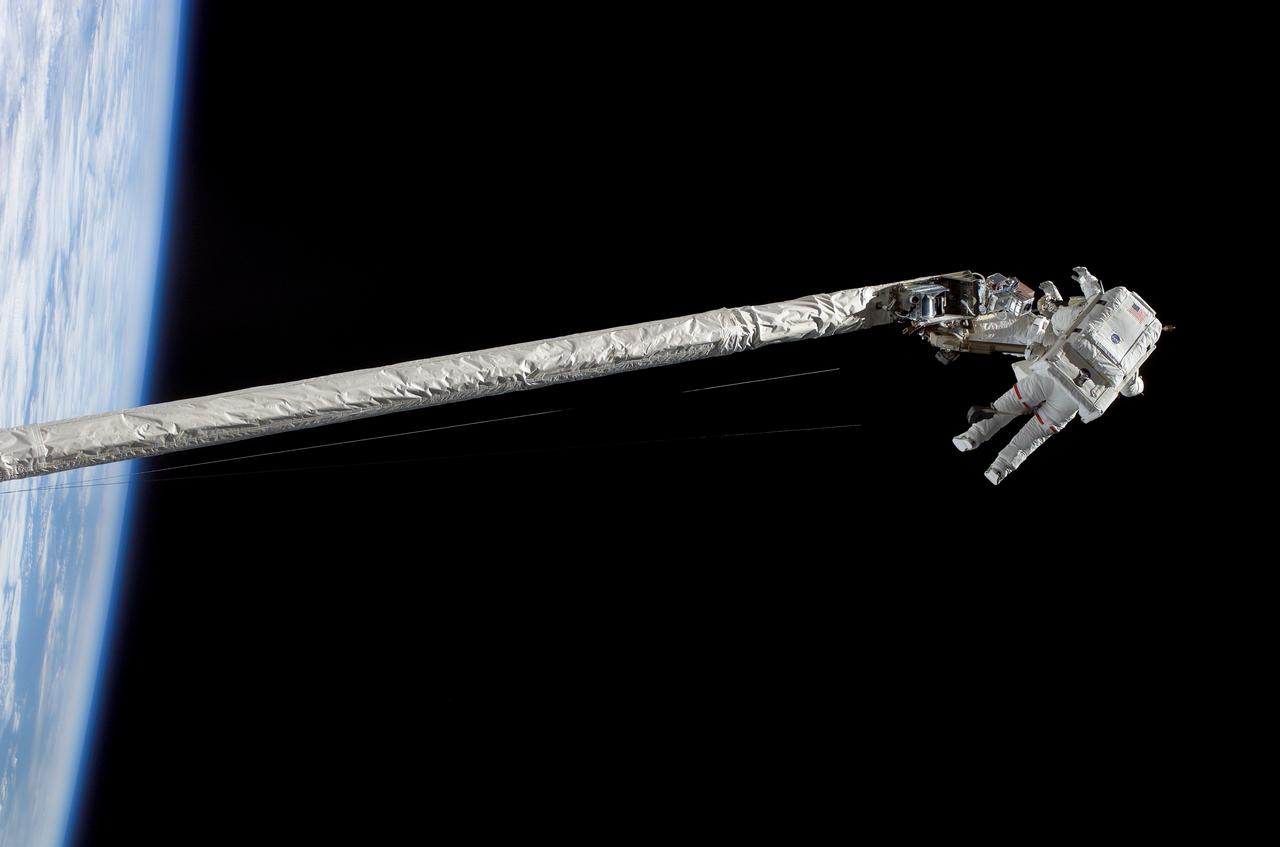
S121-E-06056 (8 July 2006) --- Astronauts Piers J. Sellers (red stripes) and Michael E. Fossum, STS-121 mission specialists, work in tandem on the shuttle's Remote Manipulator System/Orbiter Boom Sensor System (RMS/OBSS) during the mission's first scheduled session of extravehicular activity (EVA).

S121-E-06258 (9 July 2006) --- Astronauts Piers J. Sellers (left) and Michael E. Fossum, STS-121 mission specialists, discuss mission activities on the middeck of the Space Shuttle Discovery while docked with the International Space Station.
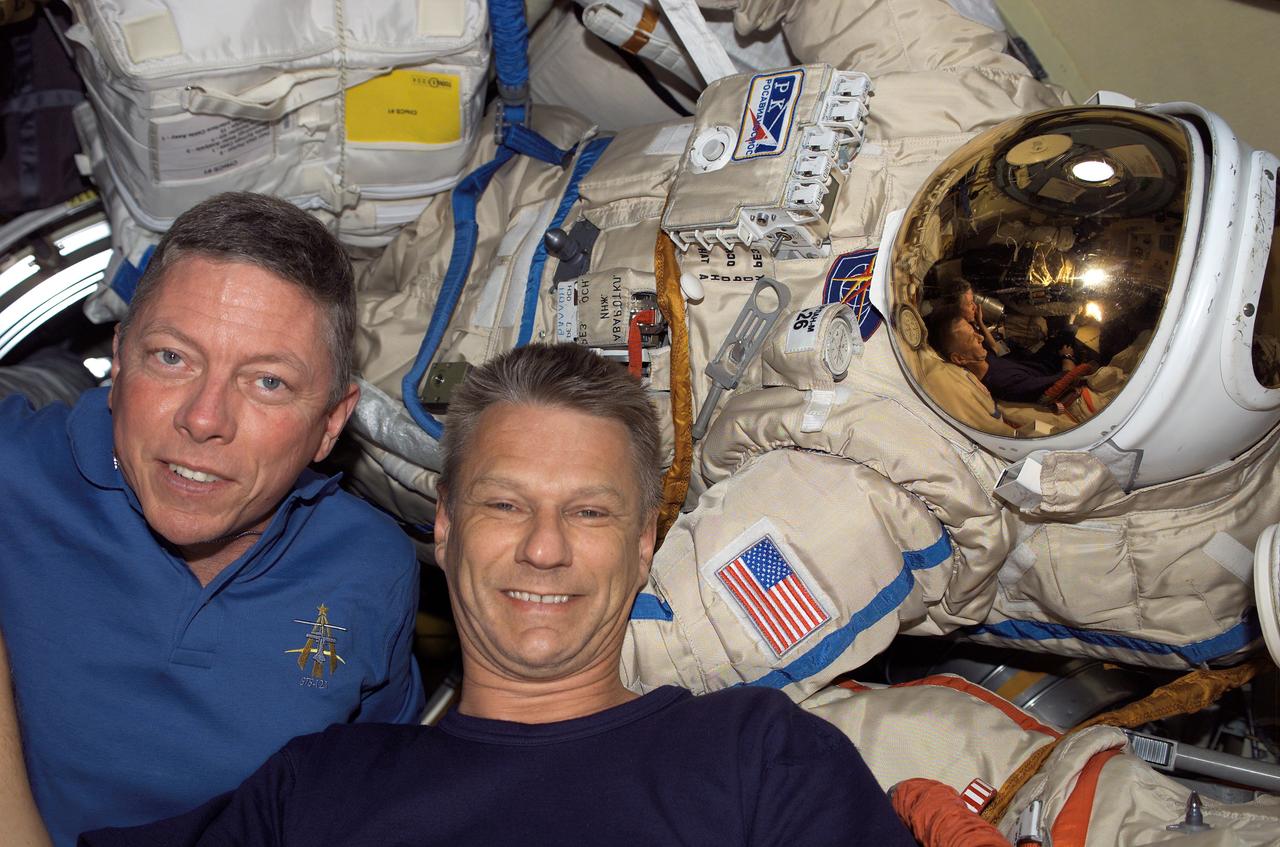
S121-E-06552 (13 July 2006) --- Astronauts Michael E. Fossum (left) and Piers J. Sellers, both STS-121 mission specialists, pose for a photo near a Russian Orlan space suit in the Pirs Docking Compartment of the International Space Station while Space Shuttle Discovery was docked with the station.
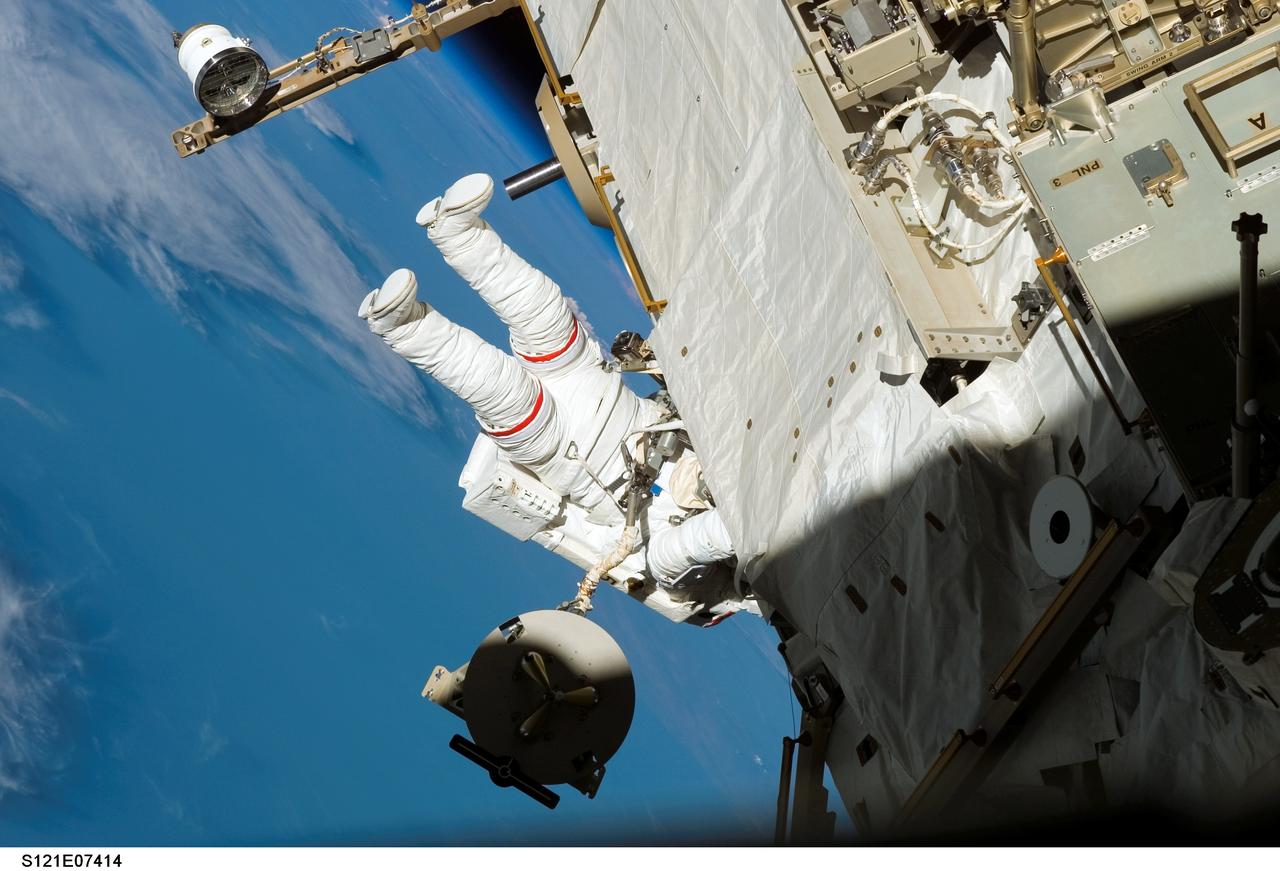
S121-E-07414 (12 July 2006) --- Astronaut Piers J. Sellers, STS-121 mission specialist, translates along a truss on the International Space Station during the mission's third and final session of extravehicular activity (EVA) while Space Shuttle Discovery was docked with the station.