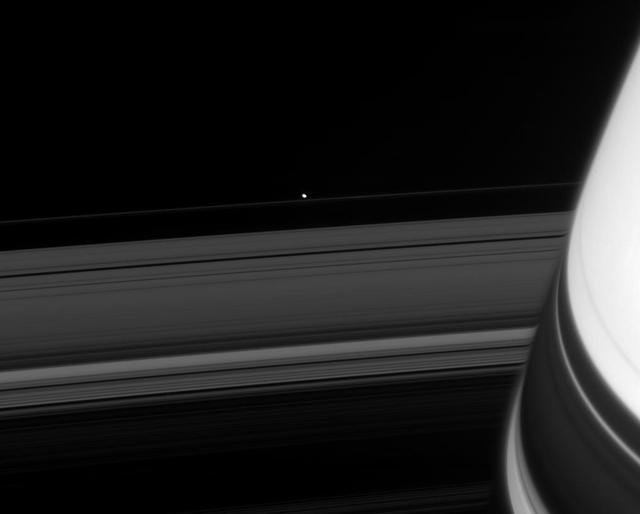
Spotting the Shepherd
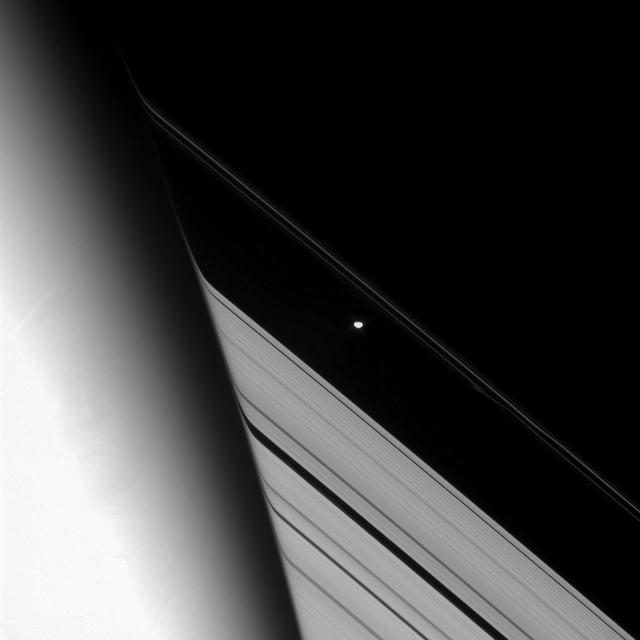
Tracking the Shepherd

The Shepherd and Saturn
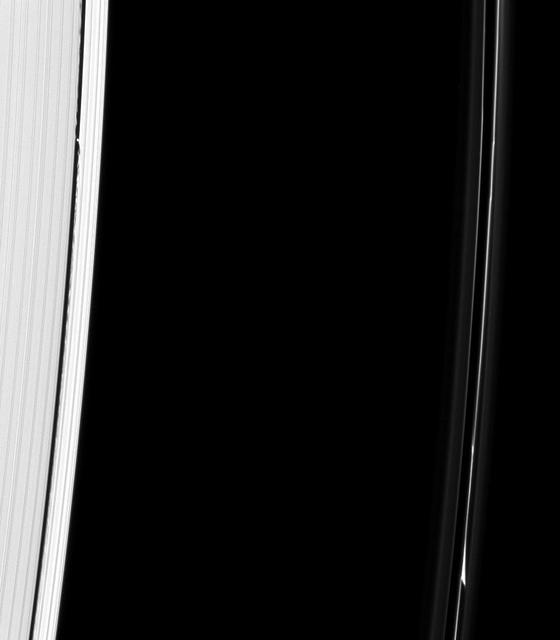
Fingerprints of the Shepherds
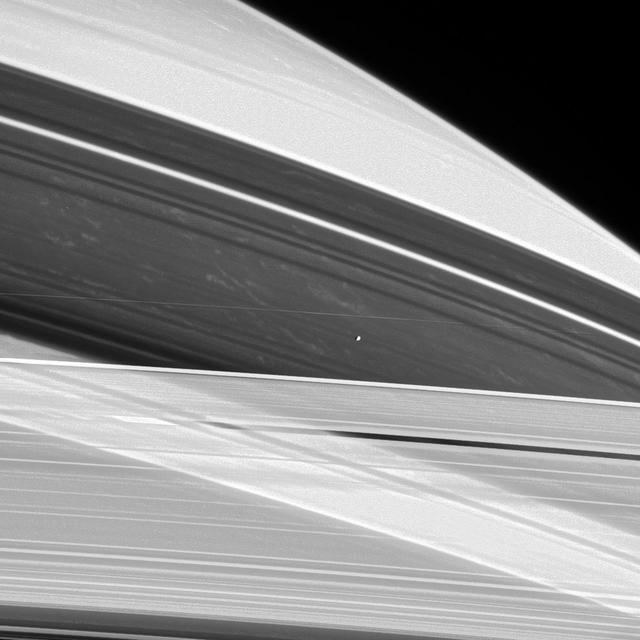
Shepherd of Ice
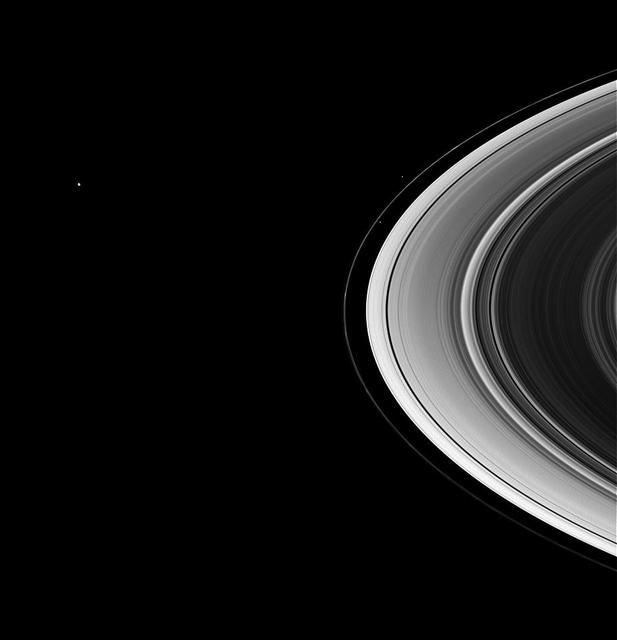
Mimas and the Shepherds
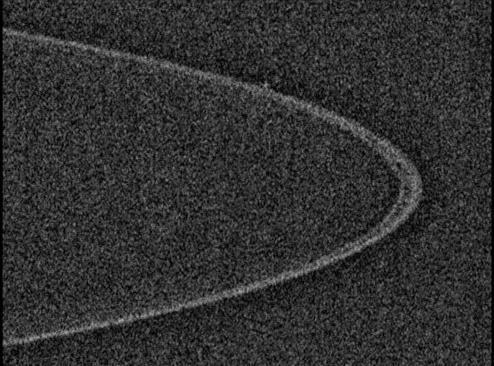
Shepherd Moons

Close to the Shepherd Moons
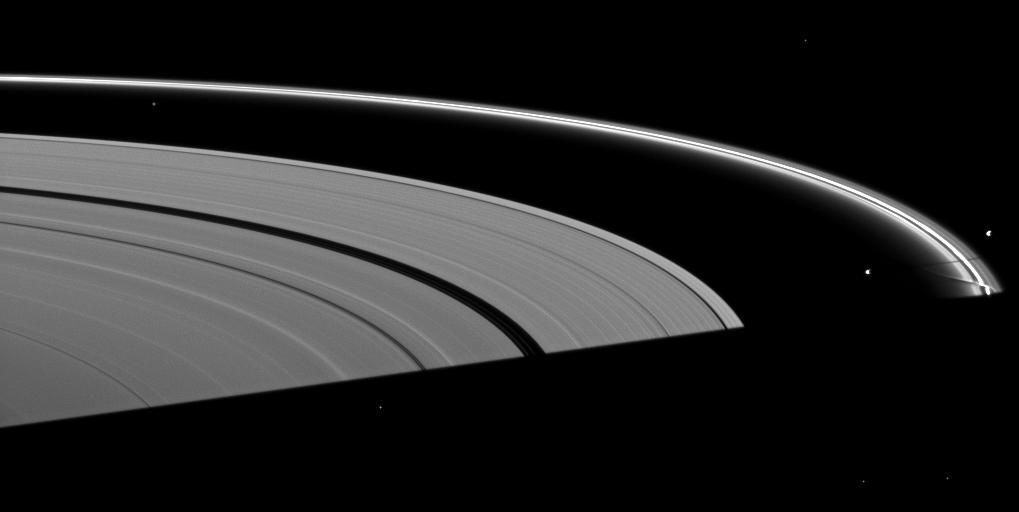
Shadow Between the Shepherds
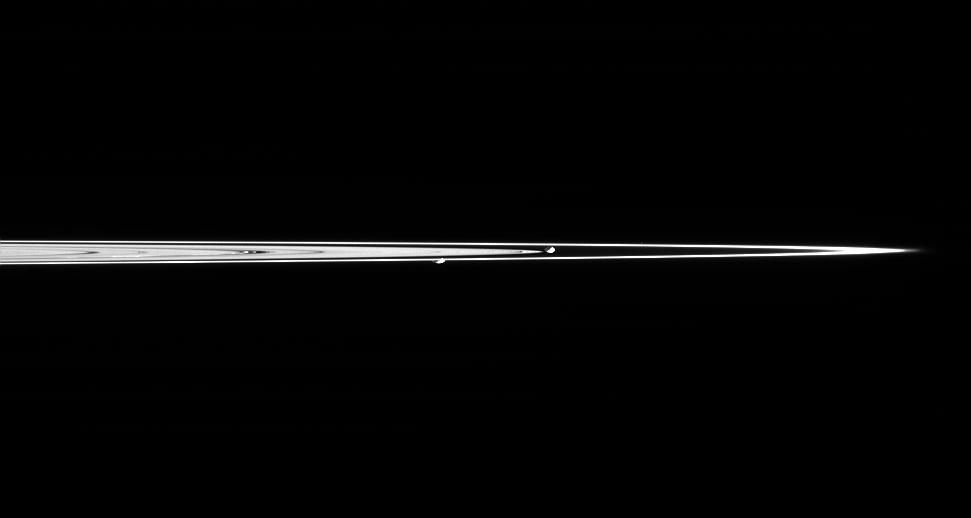
F Ring Shepherds
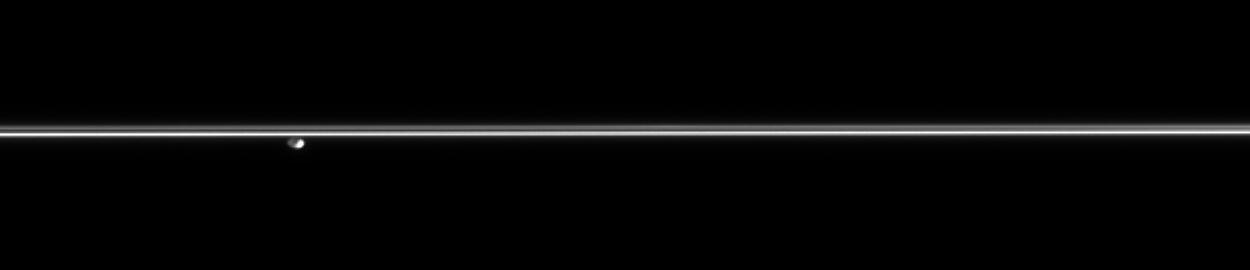
Gazing across the plains of Saturn icy rings, Cassini catches the F ring shepherd moon Pandora hovering in the distance
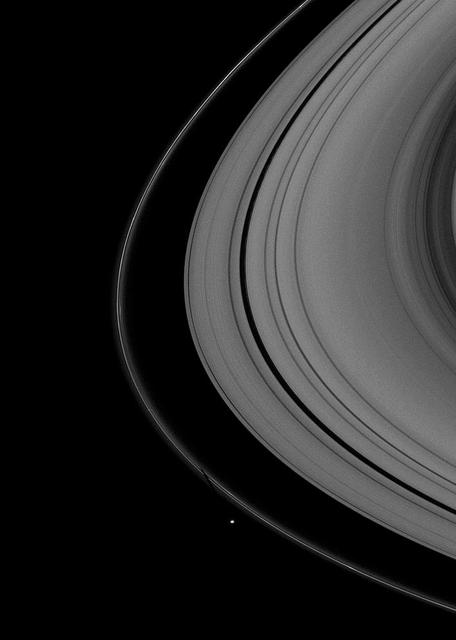
The shepherding moon Pandora, near the bottom of the image, casts a shadow on Saturn thin F ring as the planet nears its August 2009 equinox.
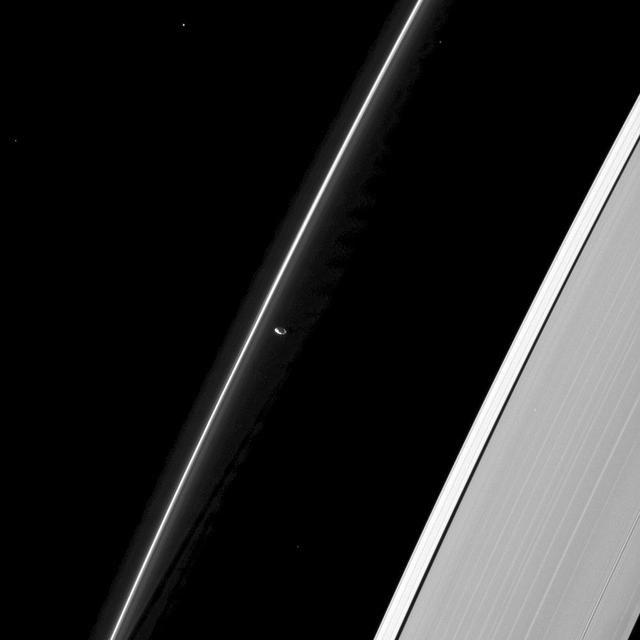
Like a shepherd guarding his sheep, Prometheus keeps a lonely watch over the F ring in this image captured by NASA Cassini spacecraft.
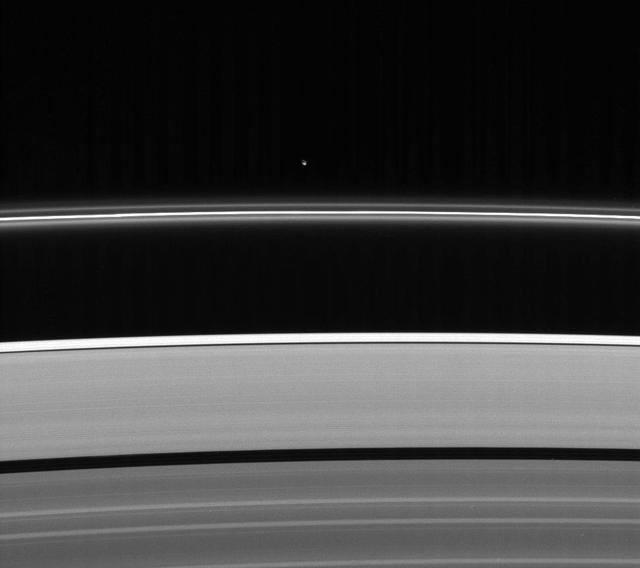
Less intrusive than her sibling shepherd moon, Pandora nonetheless provides a gravitational influence that helps confine and perturb the F ring shape
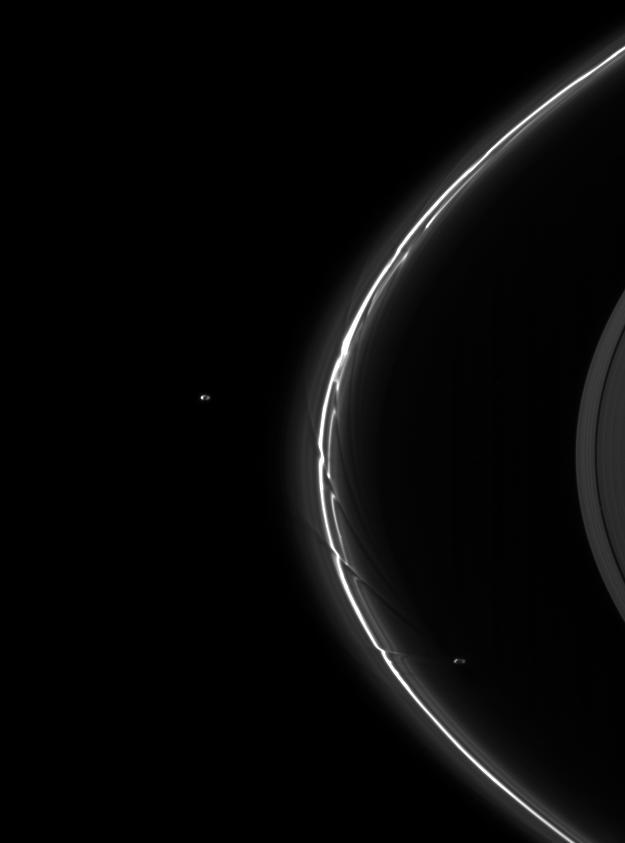
This image shows a pair of moons, Pandora and Prometheus, continuing their shepherding duties near Saturn thin F ring as seen by NASA Cassini spacecraft.
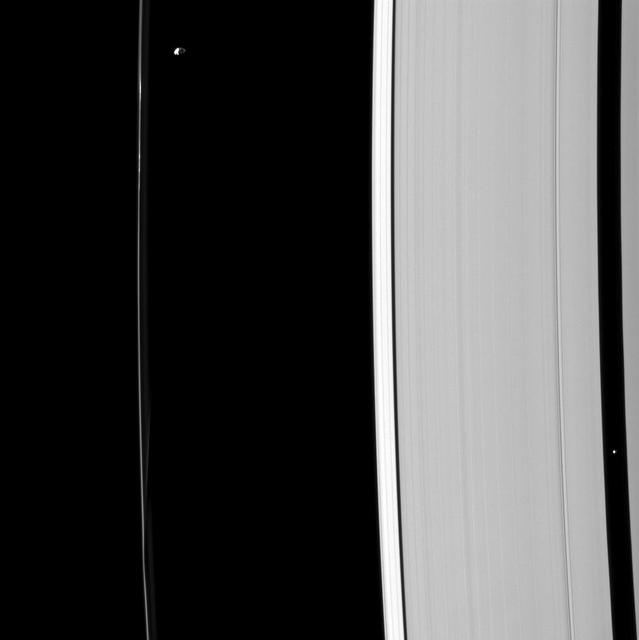
Although their gravitational effects on nearby ring material look quite different, Prometheus and Pan are both shepherd moons, holding back nearby ring edges in this image captured by NASA Cassini spacecraft.
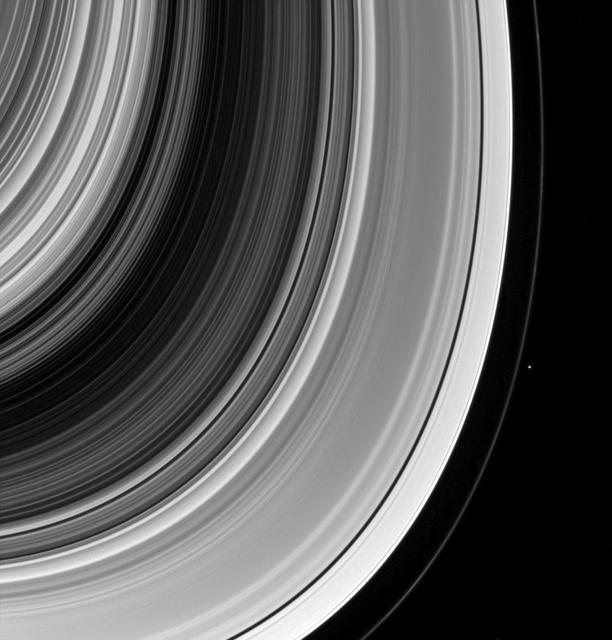
The F ring shepherd Pandora is captured here by NASA Cassini spacecraft along with other well-known examples of Saturn moons shaping the rings. From the narrow F ring, to the gaps in the A ring, to the Cassini Division, Saturn's rings are a masterpiece of gravitational sculpting by the moons. Pandora (50 miles, or 81 kilometers across), along with its fellow shepherd Prometheus (53 miles, or 86 kilometers across), helps confine the F ring and keep it from spreading. This view looks toward the unilluminated side of the rings from about 31 degrees below the ringplane. The image was taken in visible light with the Cassini spacecraft wide-angle camera on March 8, 2014. The view was obtained at a distance of approximately 533,000 miles (858,000 kilometers) from Saturn and at a Sun-Saturn-spacecraft, or phase, angle of 63 degrees. Image scale is 32 miles (51 kilometers) per pixel. http://photojournal.jpl.nasa.gov/catalog/PIA18271
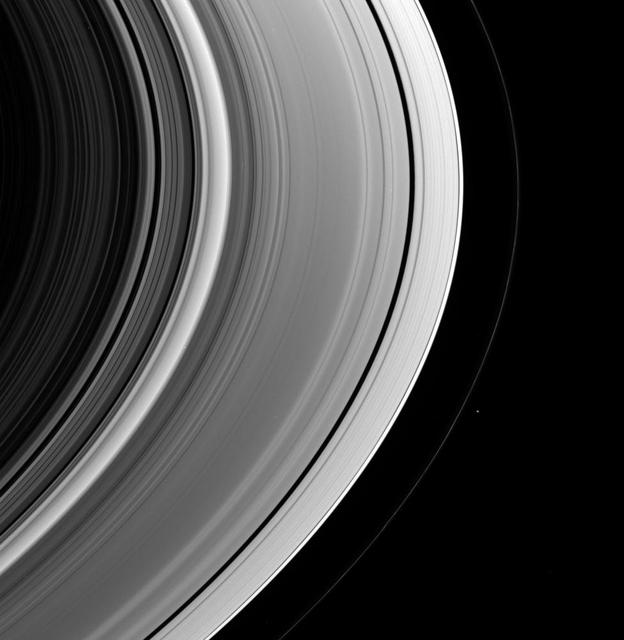
This view of the unlit side of Saturn rings captures the small shepherd moon Pandora as it swings around the outside of the F ring. The F ring displays a few discrete bright clumps here
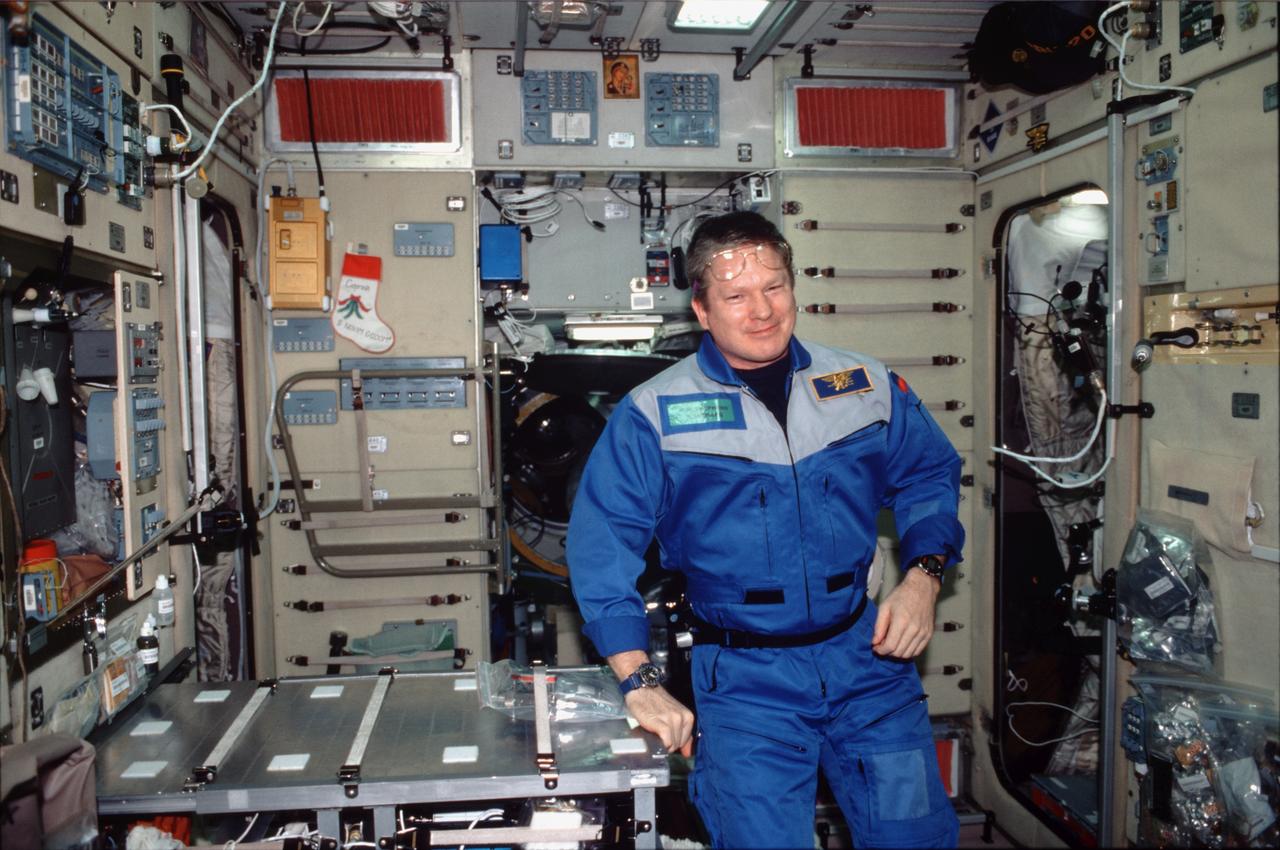
STS098-320-0017 (7-20 February 2001) --- Astronaut William M. (Bill) Shepherd, Expedition One commander, poses for a a photo at the ward room table while hosting members of the STS-98 crew (out of frame) onboard the International Space Station (ISS). Shepherd and two cosmonauts, onboard the outpost since early November 2000, will return to Earth with their third set of visitors (the STS-102 crew) in March of this year.
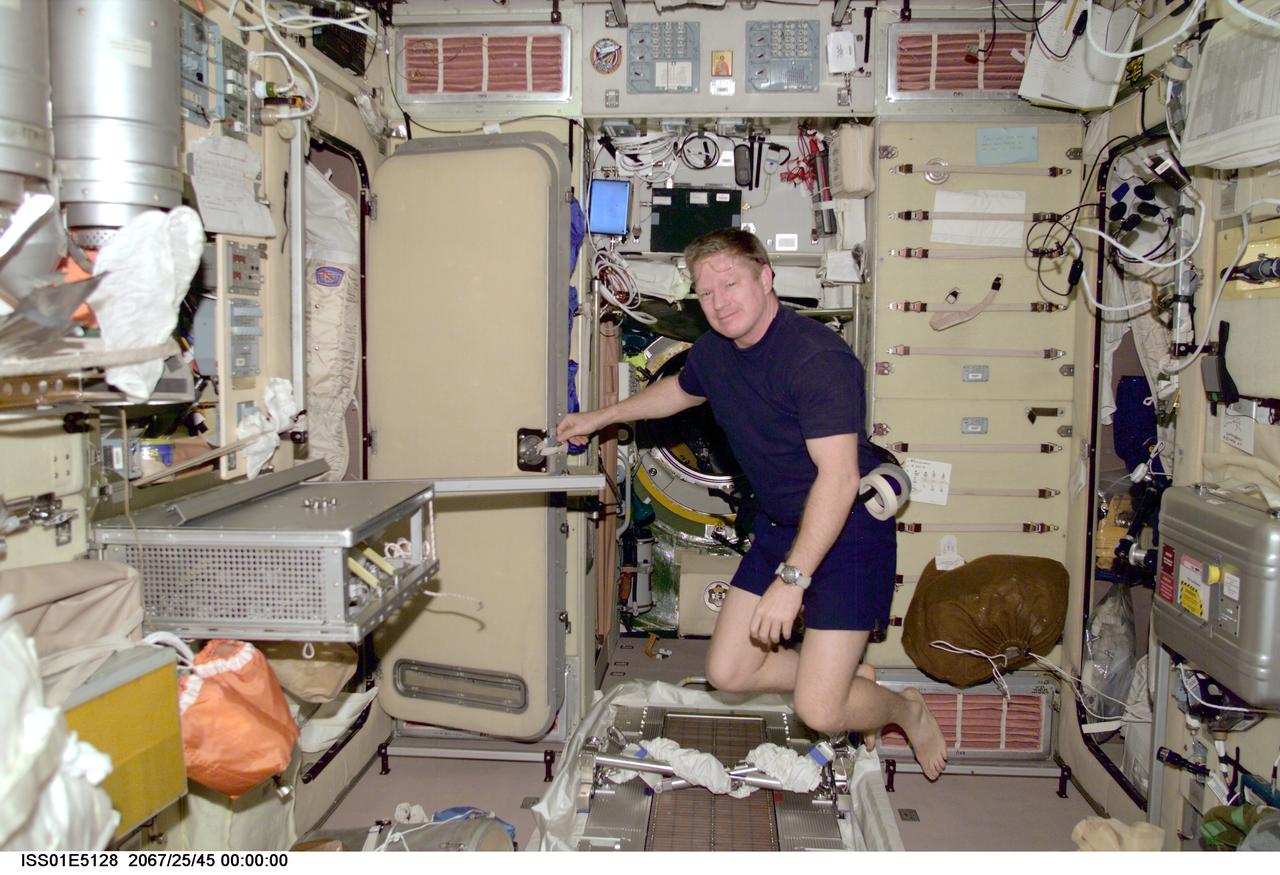
ISS01-E-5128 (December 2000) --- Astronaut William M. Shepherd, commander for the Expedition One mission, floats in the microgravity, shirt-sleeve environment of the International Space Station's Zvezda Service Module. Shepherd was taking a brief break from work to install various furnishings for the SM. The image was taken with a digital still camera and down linked from the station to ground controllers in Houston.
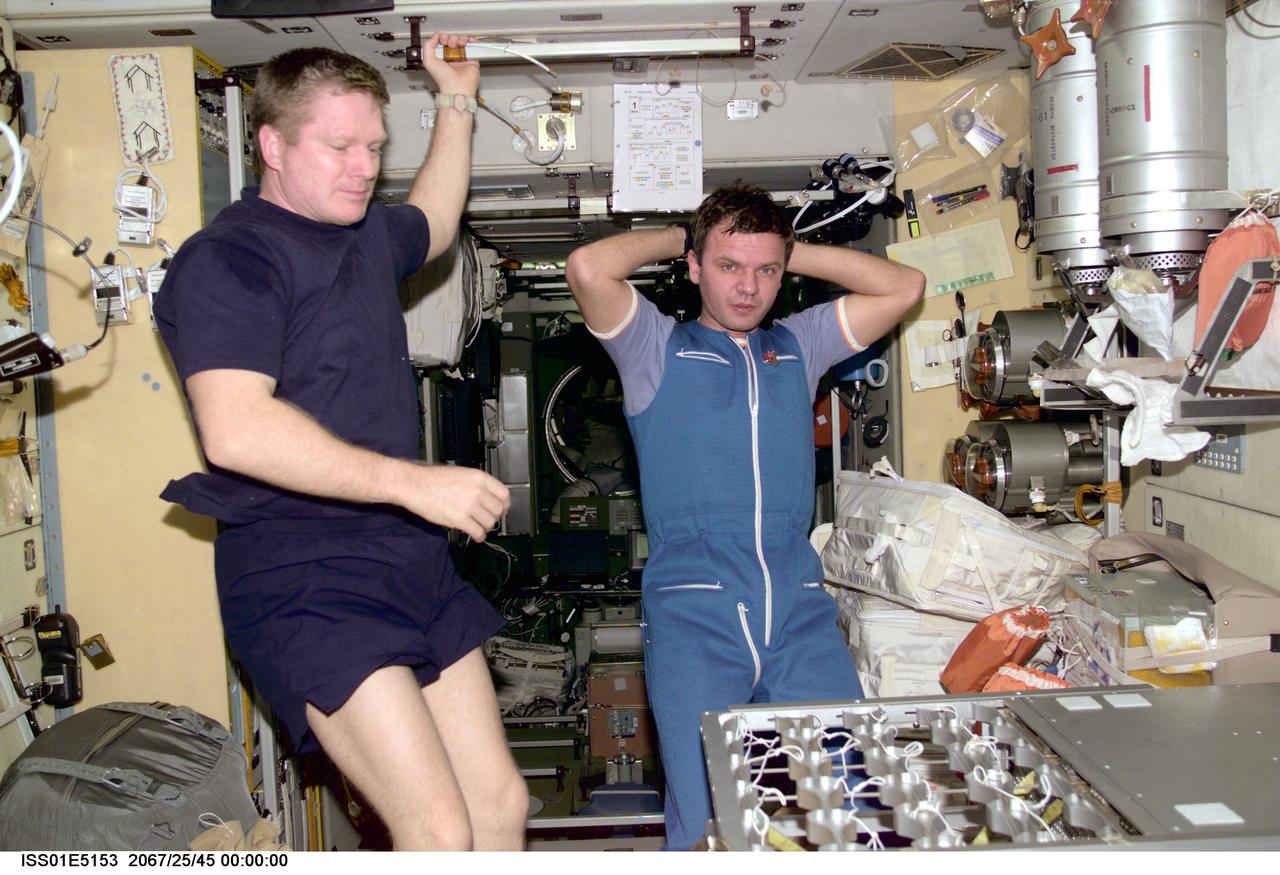
ISS01-E-5153 (December 2000) --- Astronaut William M. Shepherd, Expedition One commander, and cosmonaut Yuri P. Gidzenko, Soyuz commander, contemplate work they're doing on the food warmer for the Ward Room table aboard the International Space Station's Zvezda Service Module.
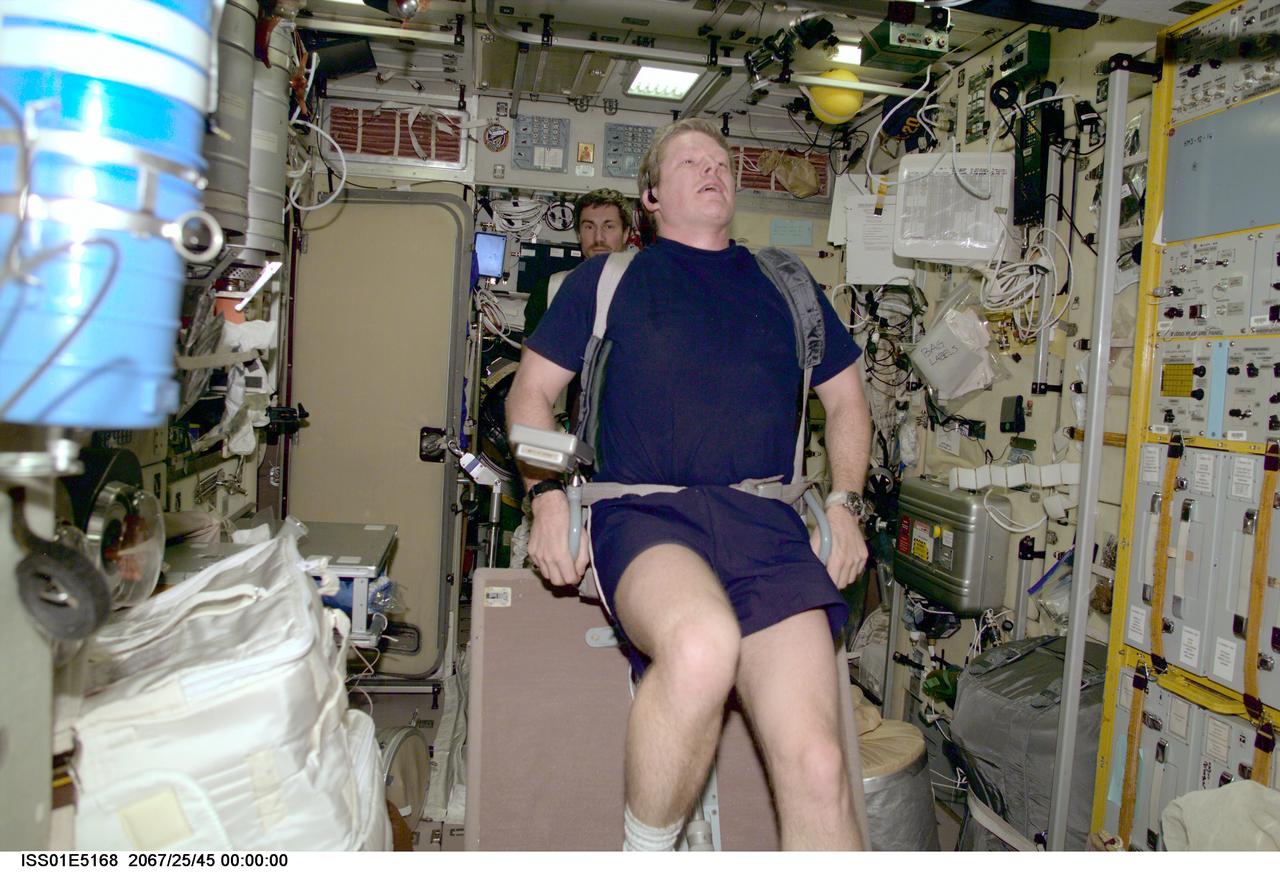
ISS01-E-5168 (December 2000) --- Astronaut William M. (Bill) Shepherd, Expedition One mission commander, works out on the ergometer device in the Zvezda Service Module onboard the Earth-orbiting International Space Station (ISS). Cosmonaut Sergei K. Krikalev, flight engineer, is in the background.

ISS01-E-5151 (December 2000) --- A medium close-up scene of astronaut William M. (Bill) Shepherd, Expedition One commander, as he performs installment work on the Zvezda Service Module aboard the Earth-orbiting International Space Station (ISS).
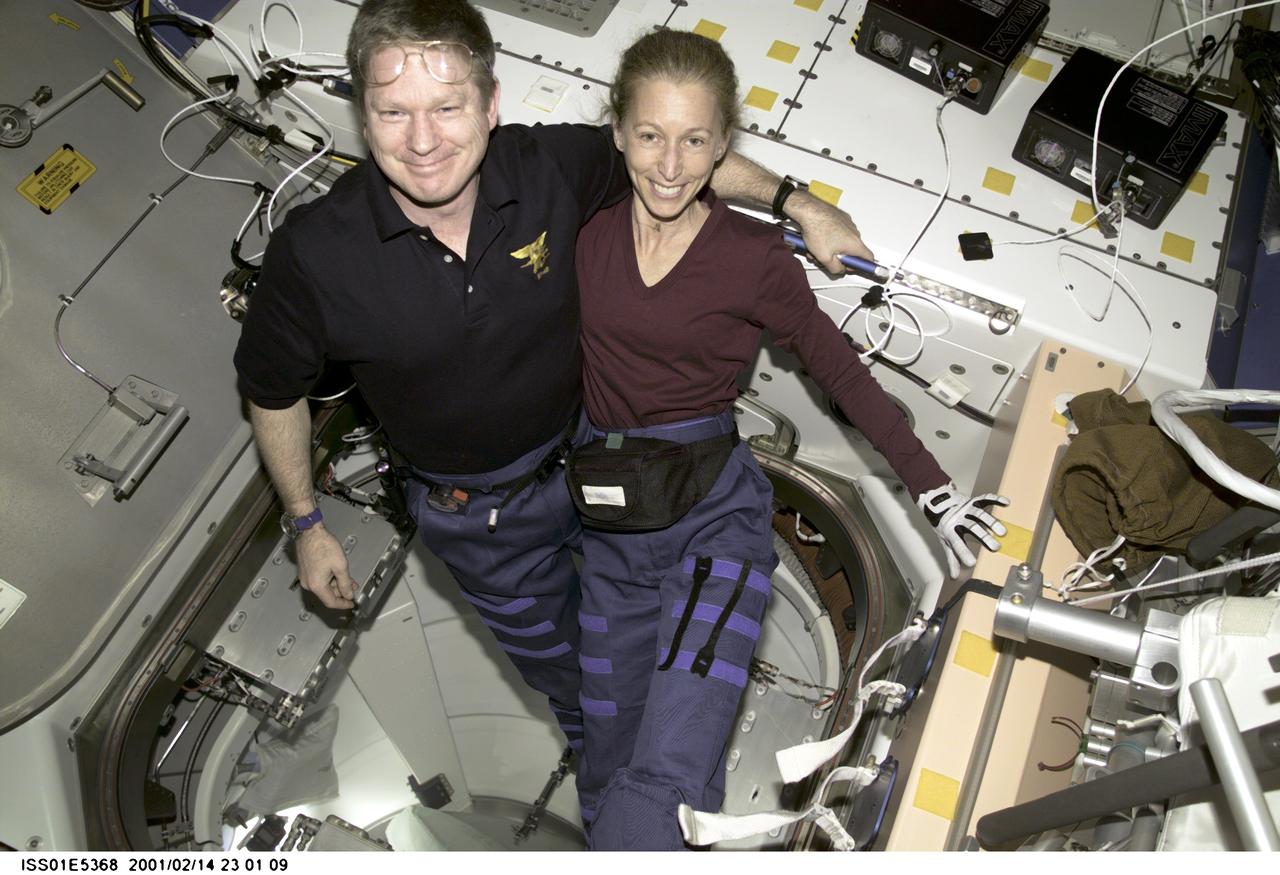
ISS01-E-5368 (14 February 2001) --- Onboard the new Destiny laboratory, Expedition One commander William M. (Bill) Shepherd, shares a brief break from a busy work agenda with astronaut Marsha S. Ivins, STS-98 mission specialist. The two are alumni of the tenth class of NASA astronaut candidates, having come aboard with 15 other trainees in the summer of 1984.
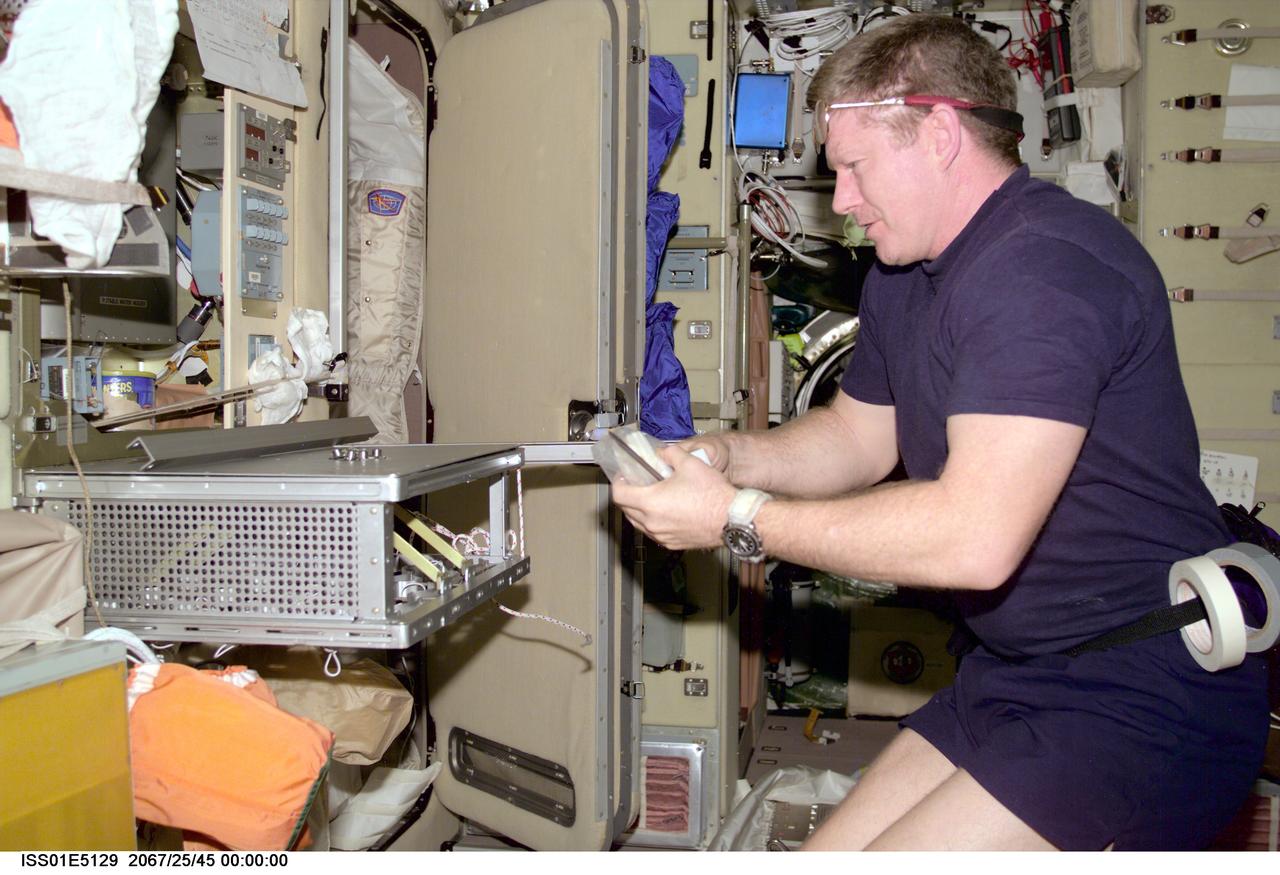
ISS01-E-5129 (December 2000) --- Astronaut William M. (Bill) Shepherd, Expedition One commander, works on the Ward Room table in the Zvezda Service Module aboard the International Space Station (ISS).
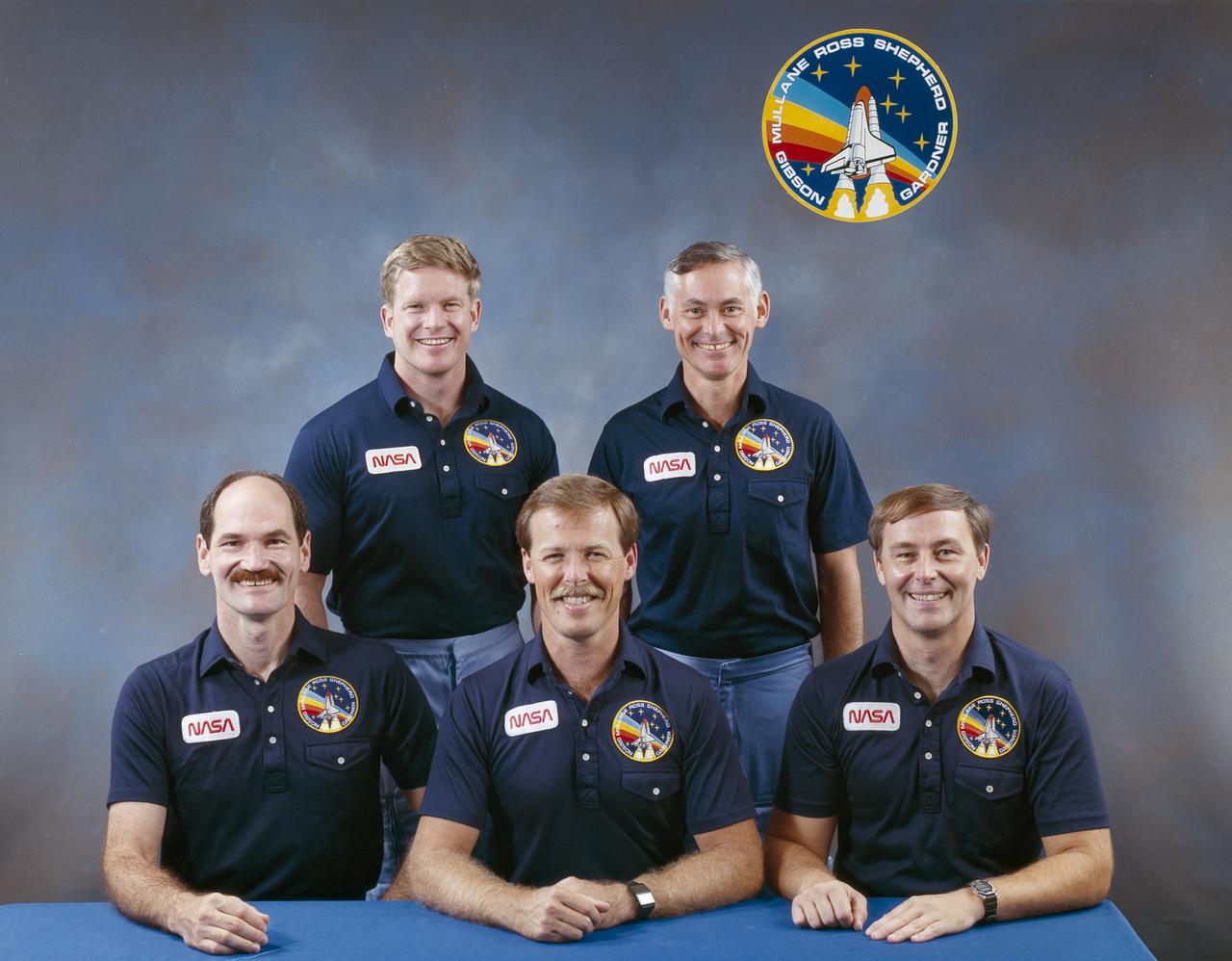
The STS-27 crew portrait features 5 astronauts. Seated, left to right, are Jerry L. Ross, mission specialist; Guy S. Gardner, pilot; and Robert L. Gibson, commander. On the back row, left to right, are mission specialists Richard M. Mullane, and William M. Shepherd. Launched aboard the Space Shuttle Atlantis on December 2, 1988 at 9:30:34 am (EST), the STS-27 mission was the third mission dedicated to the Department of Defense (DOD).
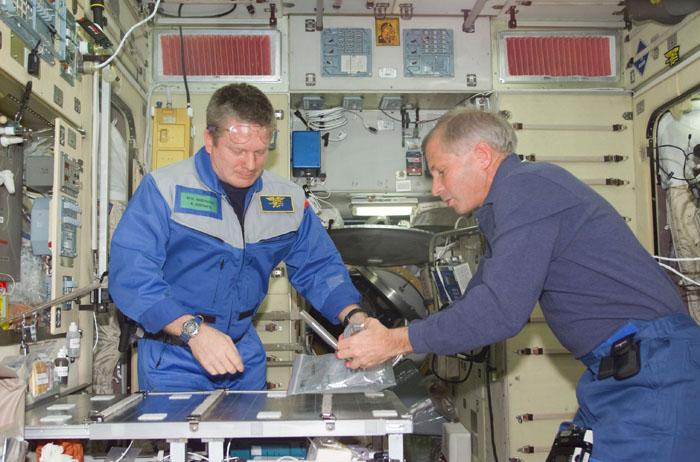
STS98-E-5062 (9 February 2001) --- The shuttle and station commanders are pictured at the "kitchen" table onboard the International Space Station in this digital still camera's view, recorded not long after the two crews reunited aboard the outpost. Astronaut William M. (Bill) Shepherd (left) is Expedition One commander and astronaut Kenneth D. Cockrell serves as mission commander for the five-member STS-98 crew.
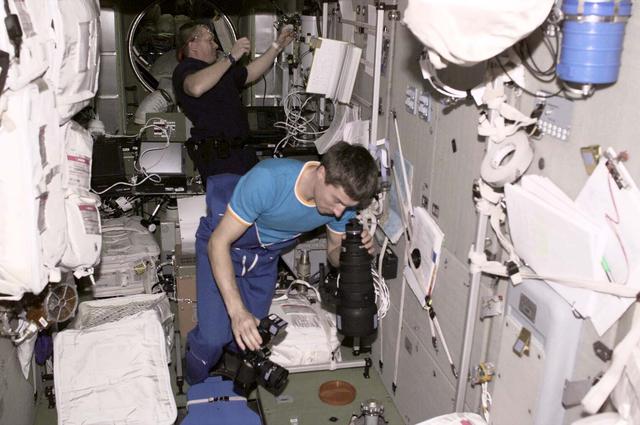
ISS01-E-5009 (November 2000) --- Cosmonaut Sergei K. Krikalev (foreground), flight engineer, works with cameras in the service module (Zvezda) on the International Space Station, while astronaut William M. (Bill) Shepherd, Expedition One commander, busily goes about chores in the background. The photograph was taken by cosmonaut Yuri P. Gidzenko, Soyuz commander, using an electronic still camera (ESC). This was one of the first still pictures to be downlinked from the station since the Expedition One crew boarded it earlier in the week.
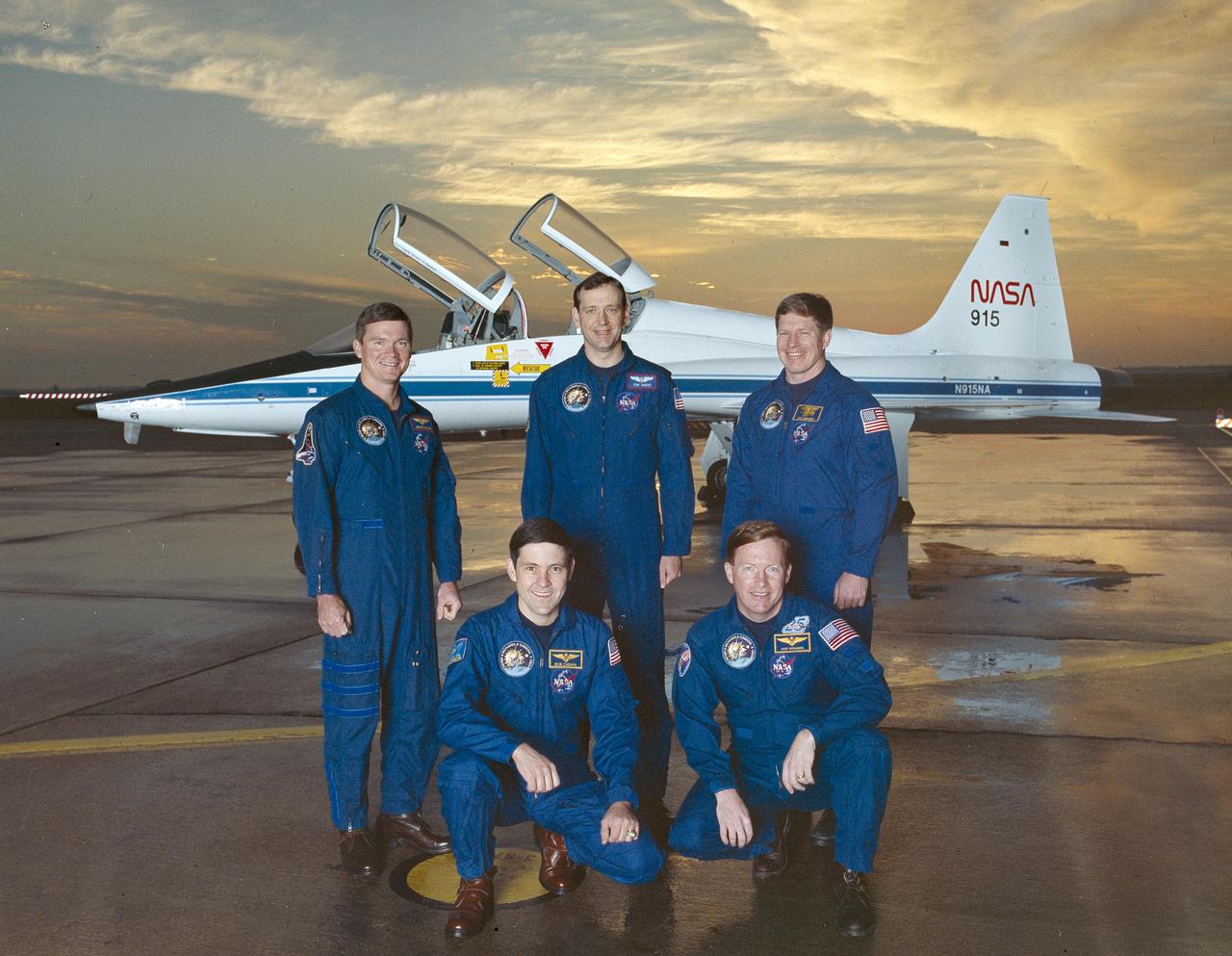
The 5 member crew of the STS-41 mission included (left to right): Bruce E. Melnick, mission specialist 2; Robert D. Cabana, pilot; Thomas D. Akers, mission specialist 3; Richard N. Richards, commander; and William M. Shepherd, mission specialist 1. Launched aboard the Space Shuttle Discovery on October 6, 1990 at 7:47:15 am (EDT), the primary payload for the mission was the ESA built Ulysses Space Craft made to explore the polar regions of the Sun. Other main payloads and experiments included the Shuttle Solar Backscatter Ultraviolet (SSBUV) experiment and the INTELSAT Solar Array Coupon (ISAC).
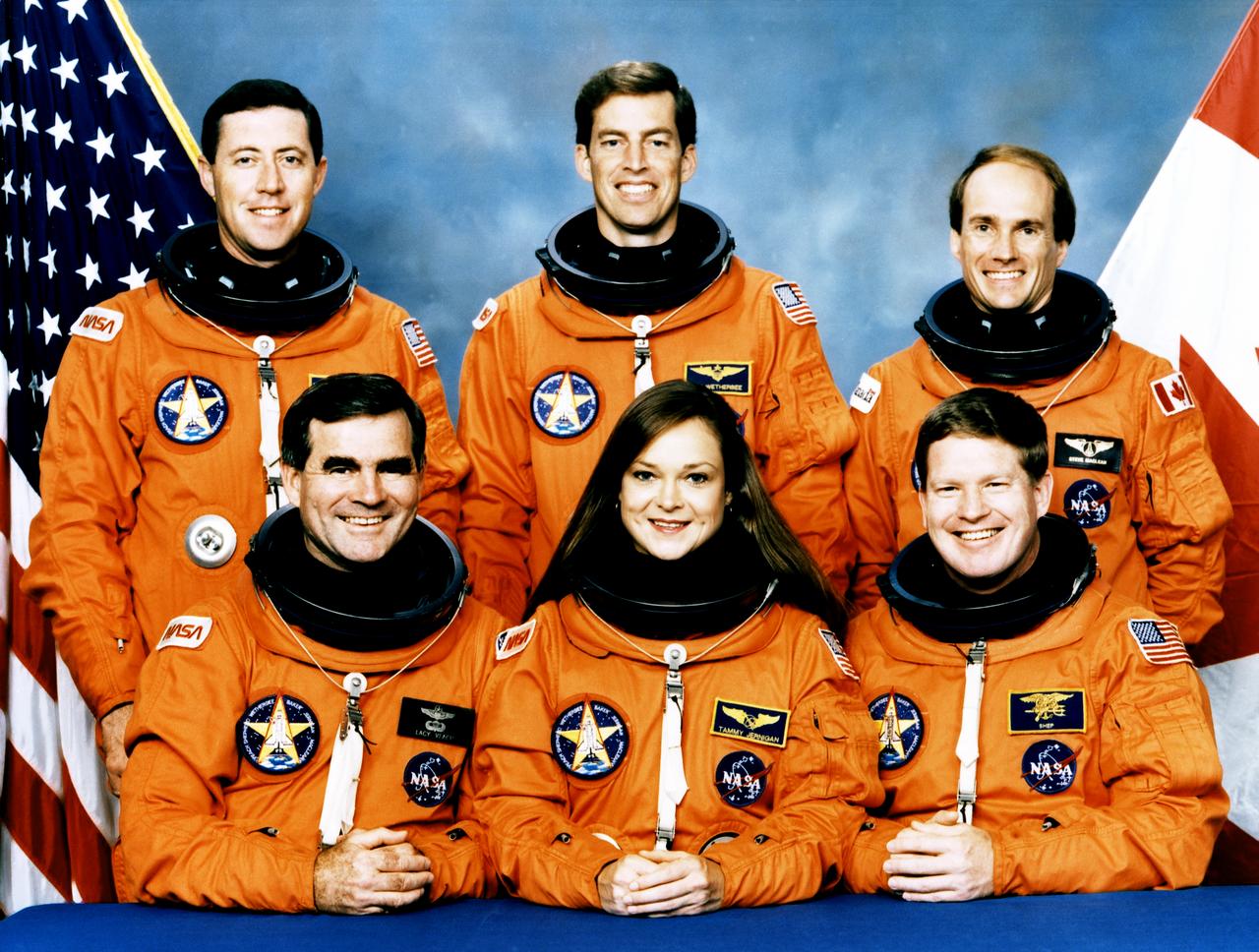
Five NASA astronauts and one Canadian payload specialist composed the STS-52 crew. Pictured on the back row, left to right, are Michael A. Baker, pilot; James B. Wetherbee, commander; and Steven G. Maclean, payload specialist. On the front row, left to right, are mission specialists Charles (Lacy) Veach, Tamara Jernigan, and William Shepherd. Launched aboard the Space Shuttle Columbia on October 22, 1992 at 1:09:39 p.m. (EDT), the crew’s primary objectives were the deployment of the Laser Geodynamic Satellite (LAGEOS II) and operation of the U.S. Microgravity Payload-1 (USMP-1).
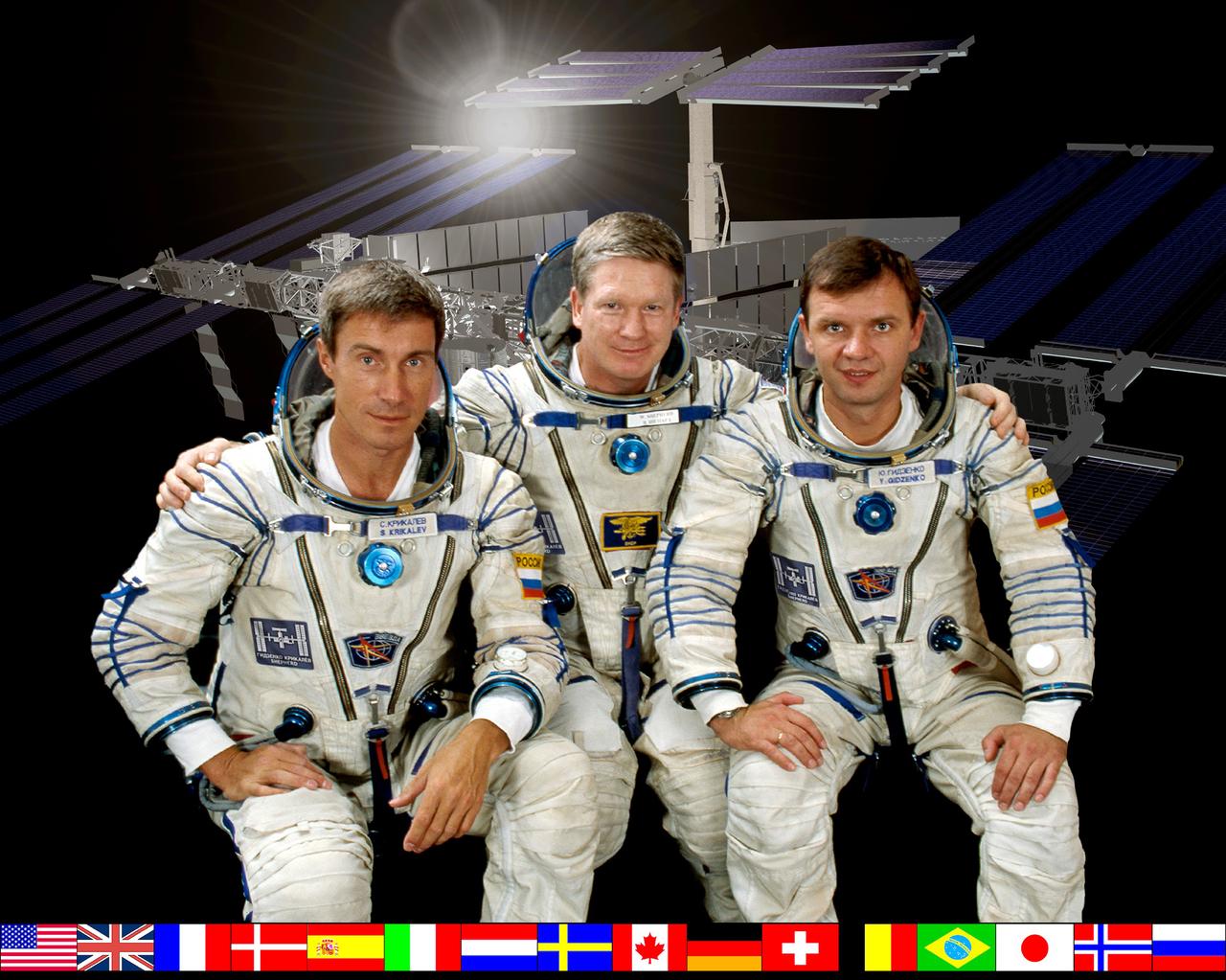
This is a crew portrait of the International Space Station (ISS) Expedition One. Left to right are flight engineer Sergei K. Krikalev, commander William M. (Bill) Shepherd, and Soyuz commander Yuri P. Gidzenko. They are wearing the Russian Sokol space suits. The Russian Soyuz rocket carrying the Expedition One crew was launched from the Baikonur Cosmodrome, Kazakhstan on October 31, 2000. The crew returned to the Kennedy Space Center on March 21, 2002 aboard the Space Shuttle Orbiter Discovery (STS-102 mission). The crew's duration on the ISS was 138 days. National flags representing all the international partners run along the bottom of the portrait.
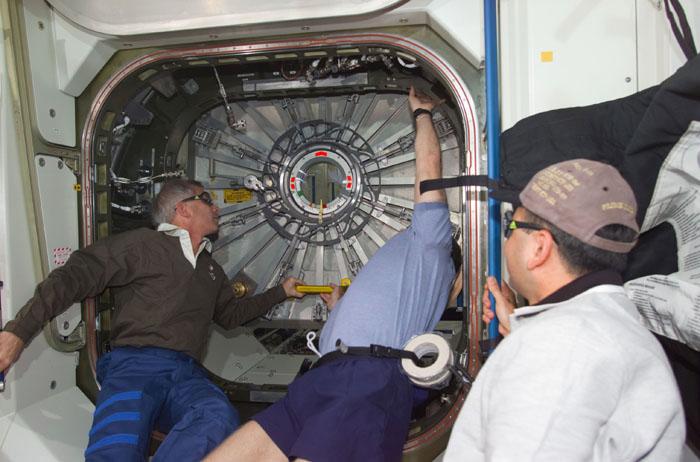
STS98-E-5131 (11 February 2001) --- The crews of Atlantis and the International Space Station open the Destiny laboratory on February 11 in this digital still camera view. From the left are astronauts Kenneth D. Cockrell, STS-98 commander; William M. (Bill) Shepherd, Expedition One commander; and Mark L. Polansky, STS-98 pilot. Later, the astronauts and cosmonauts spent the first full day of what are planned to be years of work ahead inside the orbiting science and command center. After Shepherd opened the Destiny hatch, he and Cockrell ventured inside at 8:38 a.m. (CST). As depicted in subsequent digital images in this series, members of both crews went to work quickly inside the new module, activating air systems, fire extinguishers, alarm systems, computers and internal communications. The crew also continued equipment transfers from the shuttle to the station.
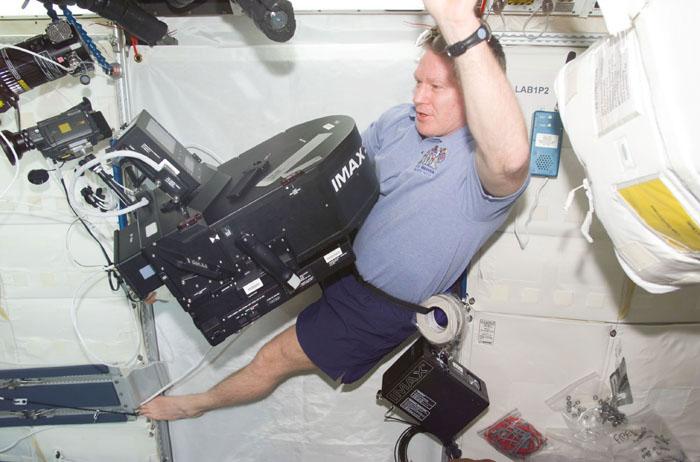
STS98-E-5164 (11 February 2001) --- Astronaut William M. (Bill) Shepherd documents activity onboard the newly attached Destiny laboratory using an IMAX motion picture camera. The crews of Atlantis and the International Space Station on February 11 opened the Destiny laboratory and spent the first full day of what are planned to be years of work ahead inside the orbiting science and command center. Shepherd opened the Destiny hatch, and he and Shuttle commander Kenneth D. Cockrell ventured inside at 8:38 a.m. (CST). Members of both crews went to work quickly inside the new module, activating air systems, fire extinguishers, alarm systems, computers and internal communications. The crew also continued equipment transfers from the shuttle to the station and filmed several scenes onboard the station using an IMAX camera. This scene was recorded with a digital still camera.

STS98-E-5143 (11 February 2001) --- Astronauts Marsha S. Ivins (from the left), STS-98 mission specialist, Kenneth D. Cockrell, STS-98 mission commander; and William M. Shepherd, Expedition One mission commander, discuss the organizational "game plan" onboard the newly opened Destiny laboratory on the International Space Station (ISS). After Shepherd opened the Destiny hatch, he and Cockrell ventured inside at 8:38 a.m. (CST), February 11, 2001. As depicted in subsequent digital images in this series, members of both crews went to work quickly inside the new module, activating air systems, fire extinguishers, alarm systems, computers and internal communications. The crew also took some photos and continued equipment transfers from the shuttle to the station.
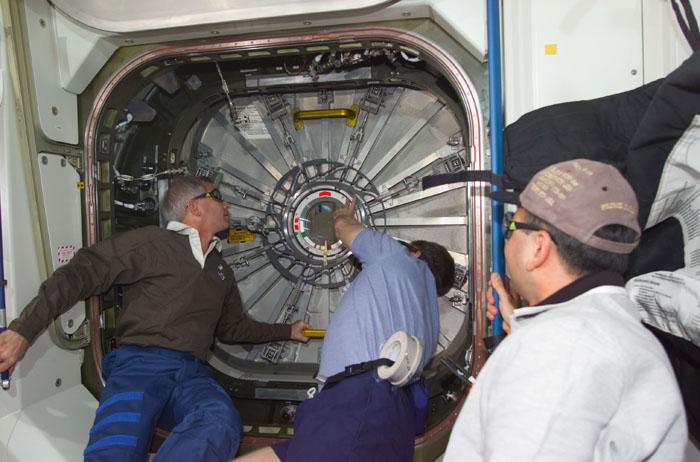
STS98-E-5130 (11 February 2001) --- The crews of Atlantis and the International Space Station open the Destiny laboratory on February 11 in this digital still camera view. From the left are astronauts Kenneth D. Cockrell, STS-98 commander; William M. (Bill) Shepherd, Expedition One commander; and Mark L. Polansky, STS-98 pilot. Later, the astronauts and cosmonauts spent the first full day of what are planned to be years of work ahead inside the orbiting science and command center. After Shepherd opened the Destiny hatch, he and Cockrell ventured inside at 8:38 a.m. (CST). As depicted in subsequent digital images in this series, members of both crews went to work quickly inside the new module, activating air systems, fire extinguishers, alarm systems, computers and internal communications. The crew also continued equipment transfers from the shuttle to the station.
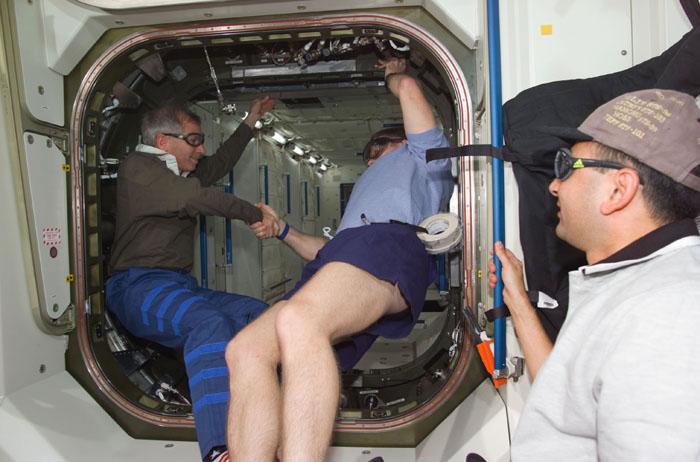
STS98-E-5133 (11 February 2001) --- The crew commanders of Atlantis and the International Space Station shake hands following the opening of the Destiny laboratory on February 11 in this digital still camera view. From the left are astronauts Kenneth D. Cockrell, STS-98 commander; William M. (Bill) Shepherd, Expedition One commander; and Mark L. Polansky, STS-98 pilot. Later, the astronauts and cosmonauts spent the first full day of what are planned to be years of work ahead inside the orbiting science and command center. After Shepherd opened the Destiny hatch, he and Cockrell ventured inside at 8:38 a.m. (CST). As depicted in subsequent digital images in this series, members of both crews went to work quickly inside the new module, activating air systems, fire extinguishers, alarm systems, computers and internal communications. The crew also continued equipment transfers from the shuttle to the station.
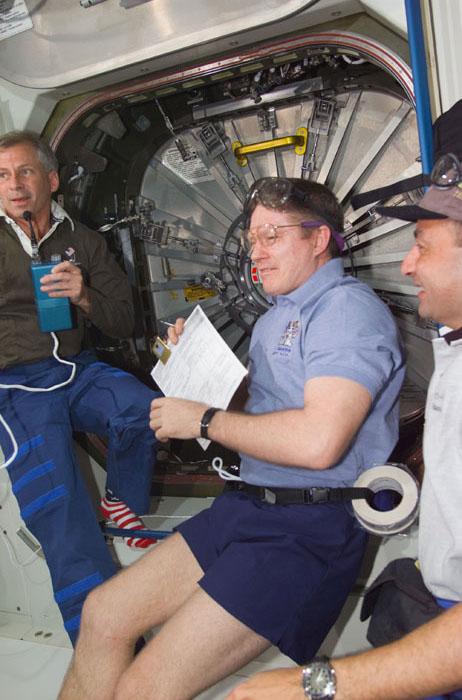
STS98-E-5127 (11 February 2001) --- Inside the Unity node, astronaut William M. (Bill) Shepherd (center), Expedition One commander, prepares to sign a document of receipt of the U.S. laboratory, called Destiny, as part of the International Space Station (ISS). Looking on are astronauts Kenneth D. Cockrell (left) and Mark L. Polansky, commander and pilot, respectively, for STS-98. The hatch to Destiny, not yet opened, is in the background. This scene was recorded with a digital still camera.
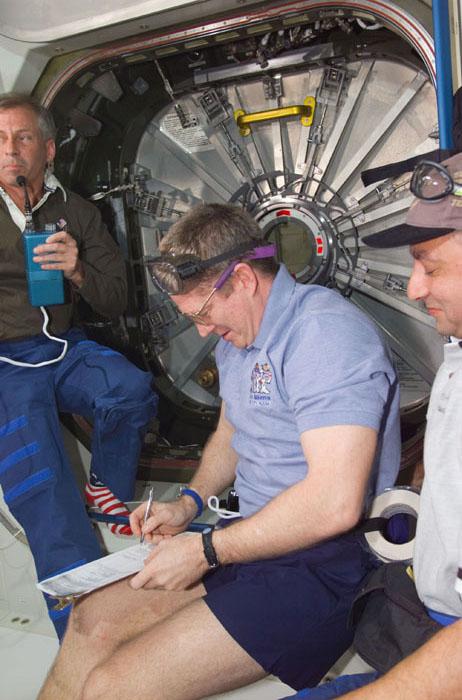
STS98-E-5125 (11 February 2001) --- Inside the Unity node, astronaut William M. (Bill) Shepherd (center), Expedition One commander, signs a document of receipt of the U.S. laboratory, called Destiny, as part of the International Space Station (ISS). Looking on are astronauts Kenneth D. Cockrell (left) and Mark L. Polansky, commander and pilot, respectively, for STS-98. The hatch to Destiny, not yet opened, is in the background. This scene was recorded with a digital still camera.
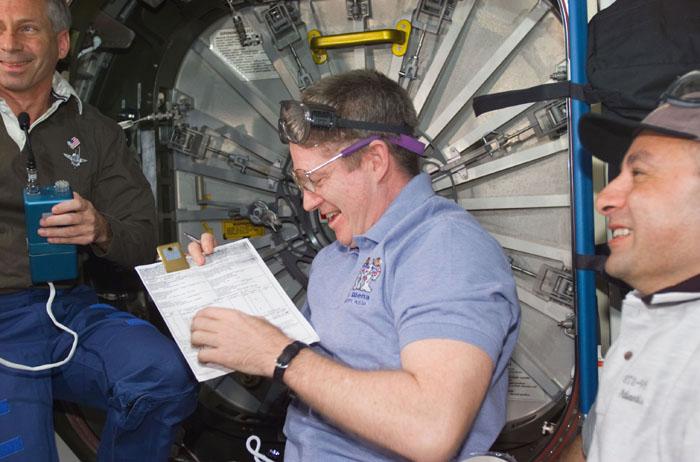
STS98-E-5129 (11 February 2001) --- Inside the Unity node, astronaut William M. (Bill) Shepherd (center), Expedition One commander, signs a document of receipt of the U.S. laboratory, called Destiny, as part of the International Space Station (ISS). Looking on are astronauts Kenneth D. Cockrell (left) and Mark L. Polansky, commander and pilot, respectively, for STS-98. The hatch to Destiny, not yet opened, is in the background. This scene was recorded with a digital still camera.
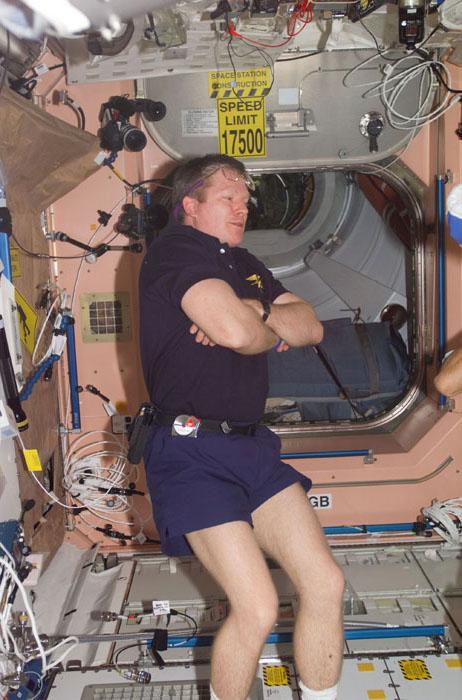
STS98-E-5287 (16 February 2001) --- Astronaut William M. (Bill) Shepherd, Expedition One commander, participates in a parting chat with some astronaut visitors (out of frame), about to conclude their time on the outpost. The scene was recorded with a digital still camera during farewells in the Unity node.
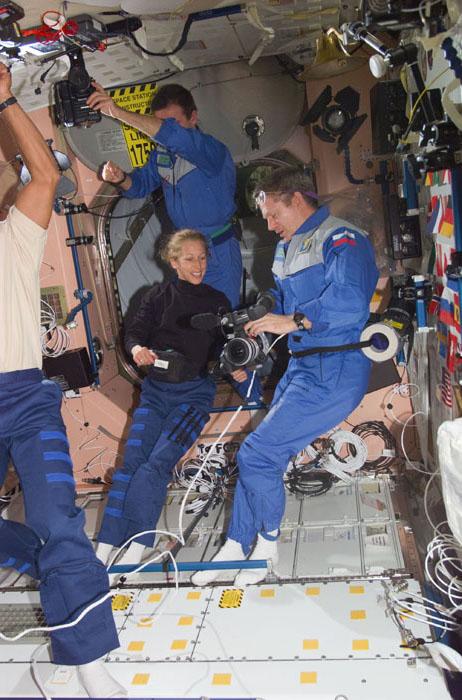
STS98-E-5049 (9 February 2001) --- Astronaut Marsha S. Ivins, STS-98 mission specialist, discusses camera gear with astronaut William M. (Bill) Shepherd, Expedition One mission commander, soon after the shuttle and station crews reunited onboard the outpost. This scene was recorded with a digital still camera.
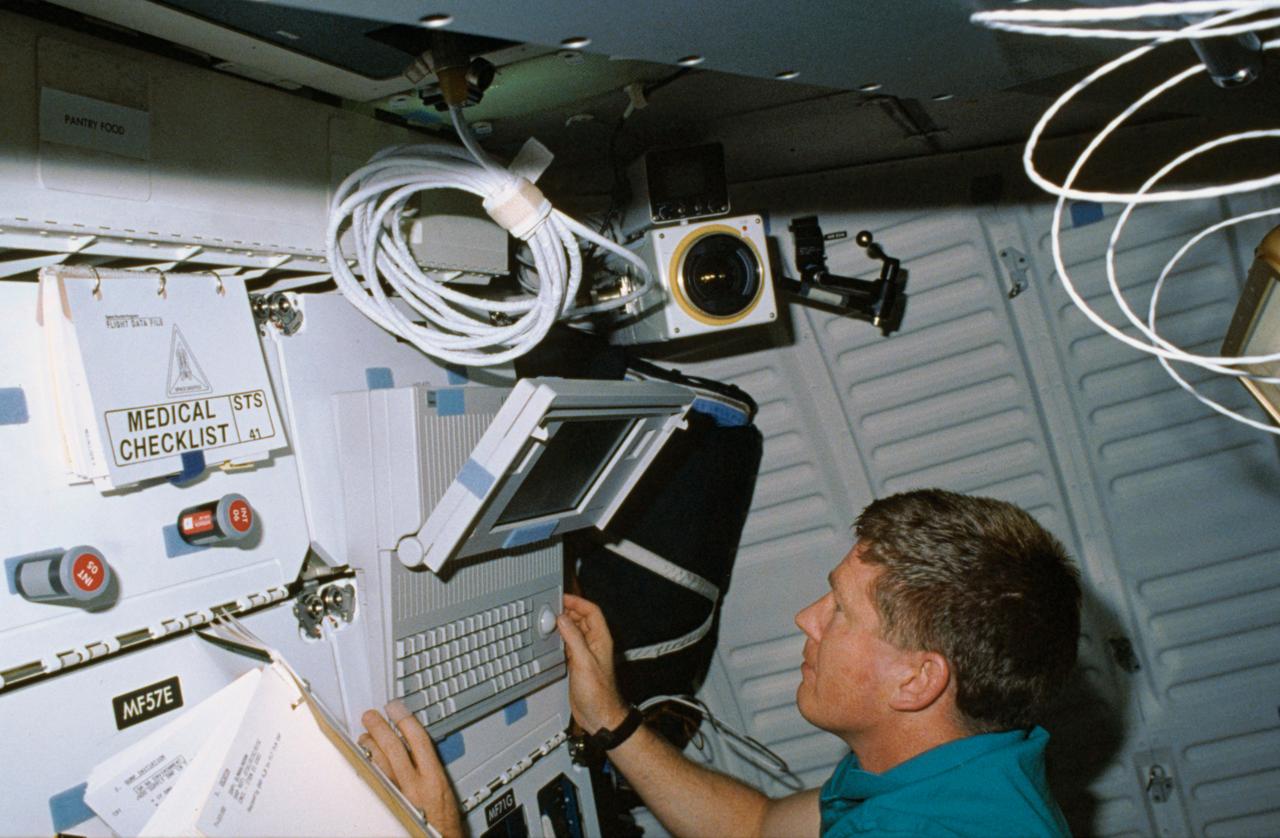
STS-41 Mission Specialist (MS) William M. Shepherd uses Detailed Test Objective (DTO) Space Station Cursor Control Device Evaluation MACINTOSH portable computer on the middeck of Discovery, Orbiter Vehicle (OV) 103. The computer is velcroed to forward lockers MF71C and MF71E. Surrounding Shepherd are checklists, the field sequential (FS) crew cabin camera, and a lighting fixture.
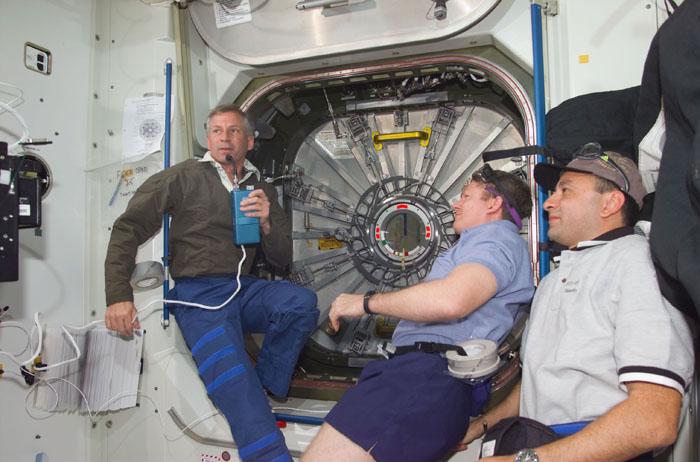
STS98-E-5123 (11 February 2001) --- This digital still camera shot shows STS-98 mission commander Kenneth D. Cockrell (from left), Expedition One commander William M. (Bill) Shepherd and STS-98 pilot Mark L. Polansky pausing at Unity's closed hatch to the newly attached Destiny laboratory. The crews of Atlantis and the International Space Station opened the laboratory shortly after this photo was made on Feb. 11; and the astronauts and cosmonauts spent the first full day of what are planned to be years of work ahead inside the orbiting science and command center. Shepherd opened the Destiny hatch, and he and shuttle commander Cockrell ventured inside at 8:38 a.m. (CST), Feb. 11. As depicted in subsequent digital images in this series, members of both crews went to work quickly inside the new module, activating air systems, fire extinguishers, alarm systems, computers and internal communications. The crew also continued equipment transfers from the shuttle to the station.
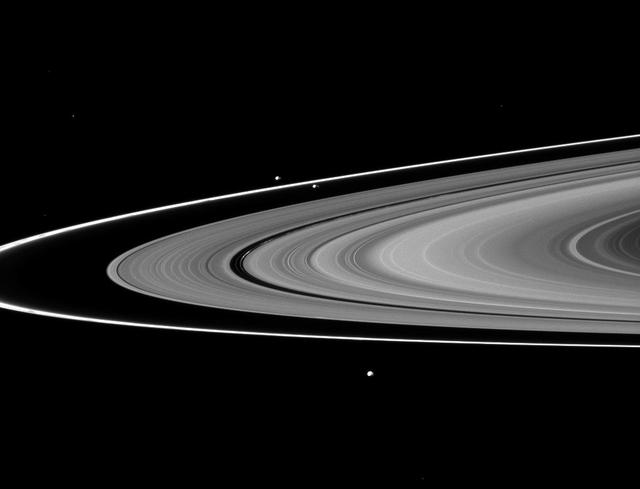
The F ring shepherds, Prometheus and Pandora, join Epimetheus in this image taken by NASA Cassini spacecraft of three of Saturn moons and the rings.
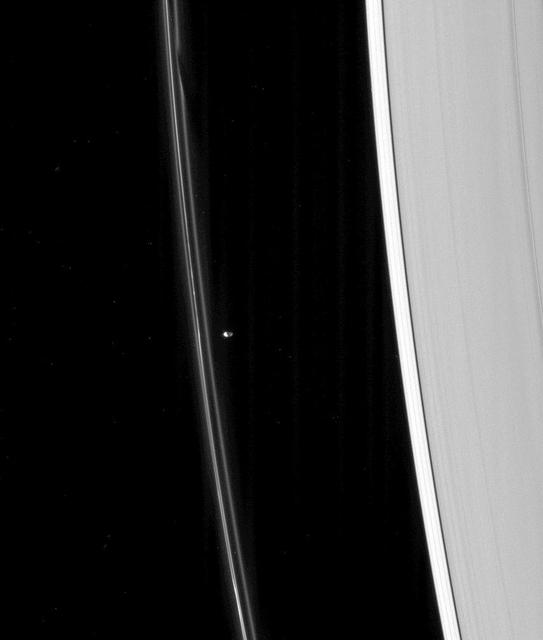
The shepherd moon Prometheus is lit partly by reflected light from Saturn as it lurks near the heavily perturbed F ring
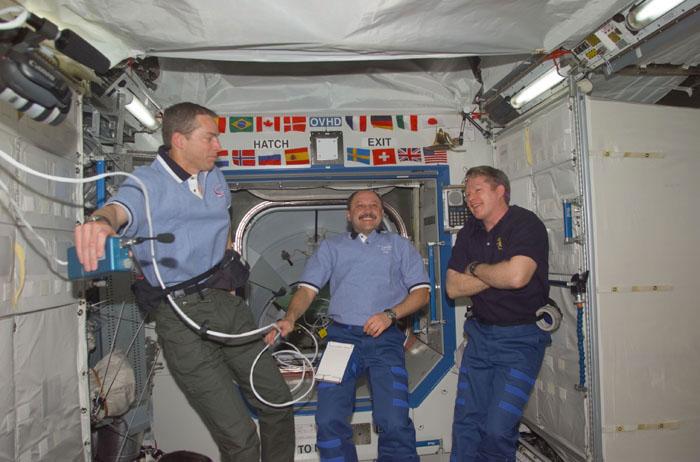
STS102-E-5094 (10 March 2001) --- Left to right, astronaut James D. Wetherbee, STS-102 commander; cosmonaut Yury V. Usachev, Expedition Two commander; and astronaut William M. (Bill) Shepherd, Expedition One commander, converse in the Destiny laboratory shortly after hatches were open following docking of the Space Shuttle Discovery and the International Space Station (ISS). The photograph was recorded with a digital still camera.
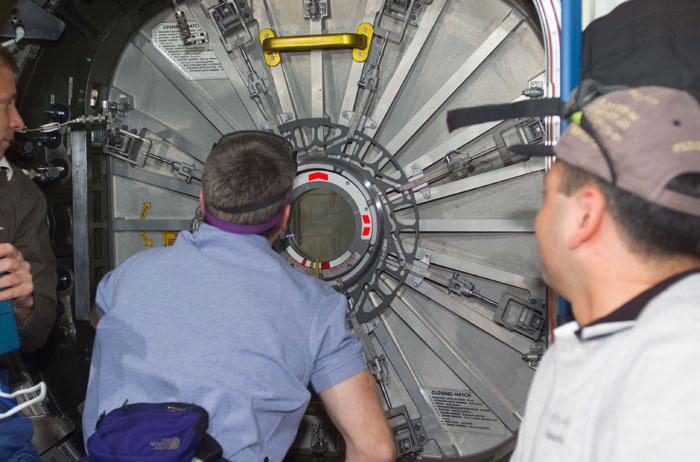
STS98-E-5120 (11 February 2001) --- This digital still camera shot shows Expedition One commander William M. (Bill) Shepherd looking through the portal on Unity's closed hatch to the newly attached Destiny laboratory. (Note: Astronauts Kenneth D. Cockrell and Mark L. Polansky appear at the left and right edges, respectively, but could possibly be cropped out in some views). The crews of Atlantis and the International Space Station opened the laboratory shortly after this photo was made on February 11; and the astronauts and cosmonauts spent the first full day of what are planned to be years of work ahead inside the orbiting science and command center. Shepherd opened the Destiny hatch, and he and shuttle commander Cockrell ventured inside at 8:38 a.m. (CST), Feb. 11. As depicted in subsequent digital images in this series, members of both crews went to work quickly inside the new module, activating air systems, fire extinguishers, alarm systems, computers and internal communications. The crew also continued equipment transfers from the shuttle to the station.
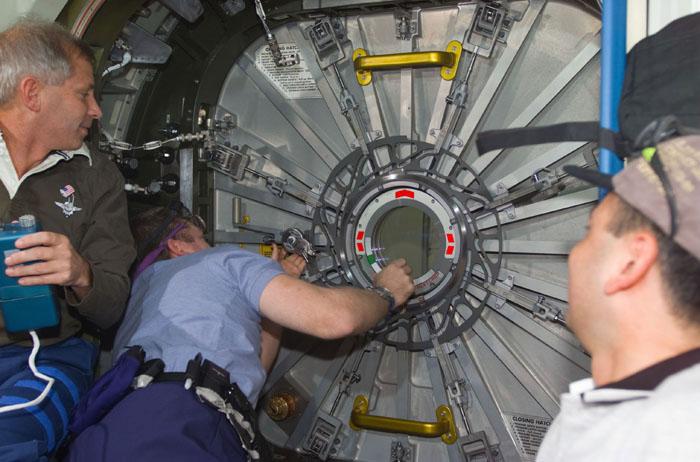
STS98-E-5121 (11 February 2001) --- This digital still camera shot shows Expedition One commander William M. (Bill) Shepherd looking through the observation port on Unity's closed hatch to the newly attached Destiny laboratory. Astronauts Kenneth D. Cockrell and Mark L. Polansky appear at the left and right edges, respectively. The crews of Atlantis and the International Space Station opened the laboratory shortly after this photo was made on Feb. 11, and the astronauts and cosmonauts spent the first full day of what are planned to be years of work ahead inside the orbiting science and command center. Shepherd opened the Destiny hatch, and he and shuttle commander Cockrell ventured inside at 8:38 a.m. (CST), Feb. 11. As depicted in subsequent digital images in this series, members of both crews went to work quickly inside the new module, activating air systems, fire extinguishers, alarm systems, computers and internal communications. The crew also continued equipment transfers from the shuttle to the station.
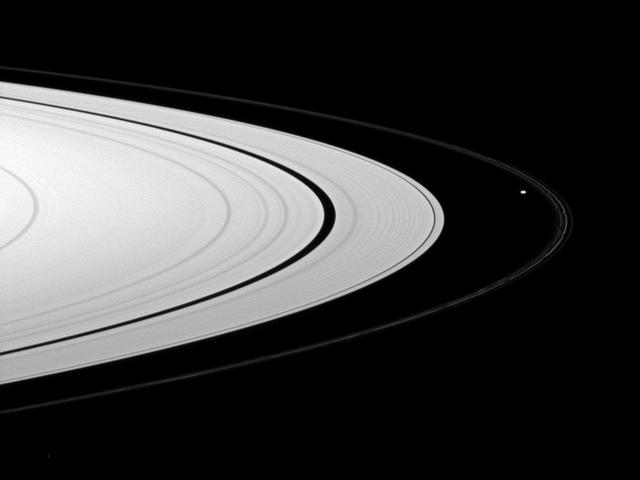
Saturn A ring appears bright compared to the thin F ring, which is shepherded by the moon Prometheus, in this view from NASA Cassini spacecraft.
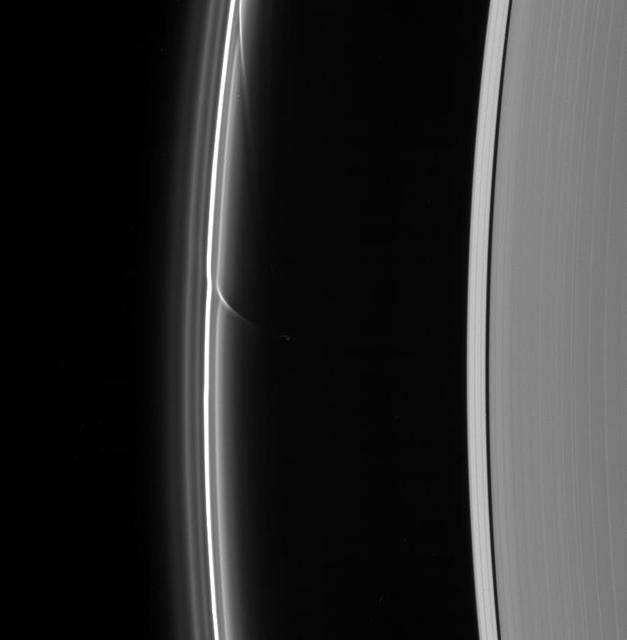
A shepherd moon can do more to define ring structures than just keep the flock of particles in line, as Cassini spacecraft images such as this have shown
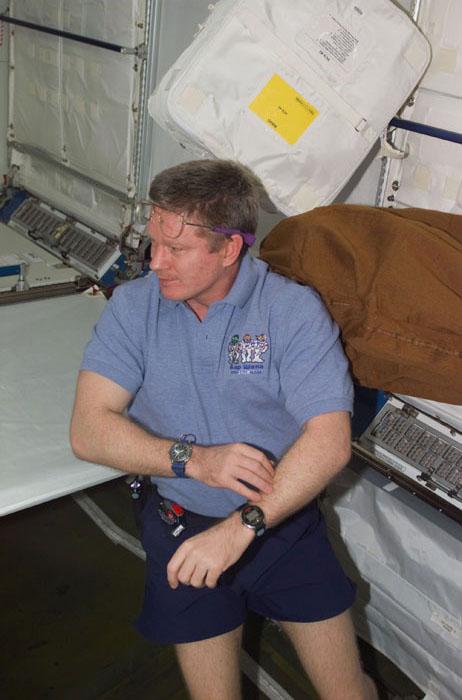
STS98-E-5160 (11 February 2001) --- Astronaut William M. (Bill) Shepherd, Expedition One commander, surveys the interior of the newly attached Destiny laboratory onboard the International Space Station (ISS). After the Destiny hatch was opened early in the day, members of both crews went to work quickly inside the new module, activating air systems, fire extinguishers, alarm systems, computers and internal communications. The crews also took some photos and continued equipment transfers from the shuttle to the station. The scene was taken with a digital still camera.
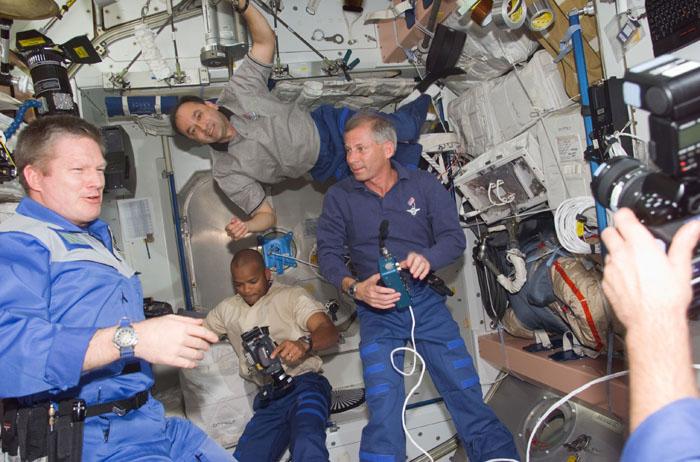
S98-E-5051 (9 February 2001) --- Astronaut William M. (Bill) Shepherd (left foreground), Expedition One commander, looks into the camera lens of a fellow crew member while three STS-98 visitors check out the International Space Station (ISS). Astronaut Kenneth D. Cockrell, STS-98 mission commander, is at right; astronaut Mark L. Polansky, pilot, floats above and behind the shuttle commander; and astronaut Robert L. Curbeam, mission specialist, inspects a camera at bottom center. This scene was recorded with a digital still camera.
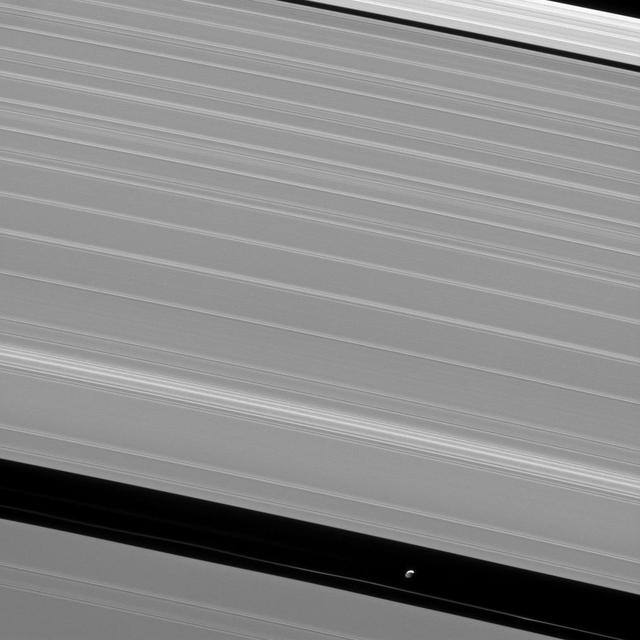
The shepherd moon Pan orbits Saturn in the Encke gap while the A ring surrounding the gap displays wave features created by interactions between the ring particles and Saturnian moons in this image from NASA Cassini spacecraft.
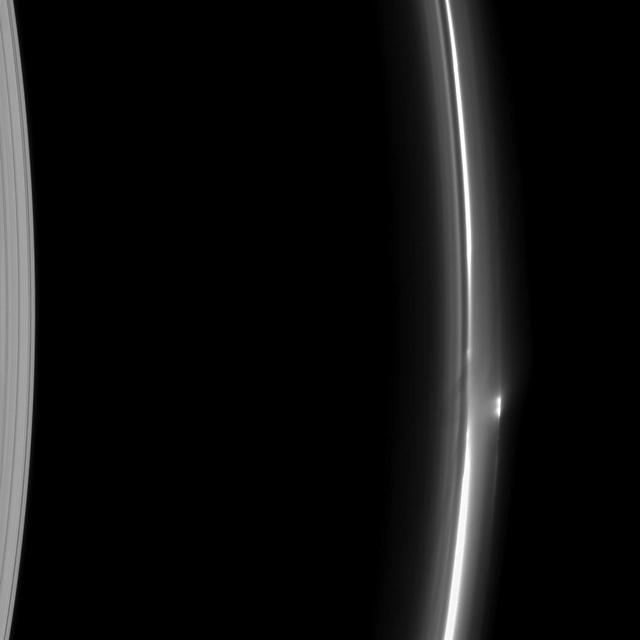
The rich dynamics of Saturn F ring are seen in this image taken by NASA Cassini spacecraft. Most of the features are believed to be due to the ring interactions with its shepherd moons or with small moonlets embedded within the ring itself.
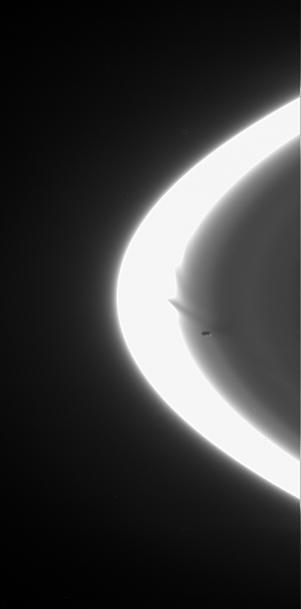
Prometheus zooms across the Cassini spacecraft field of view, attended by faint streamers and deep gores in the F ring. This movie sequence of five images shows the F ring shepherd moon shaping the ring inner edge
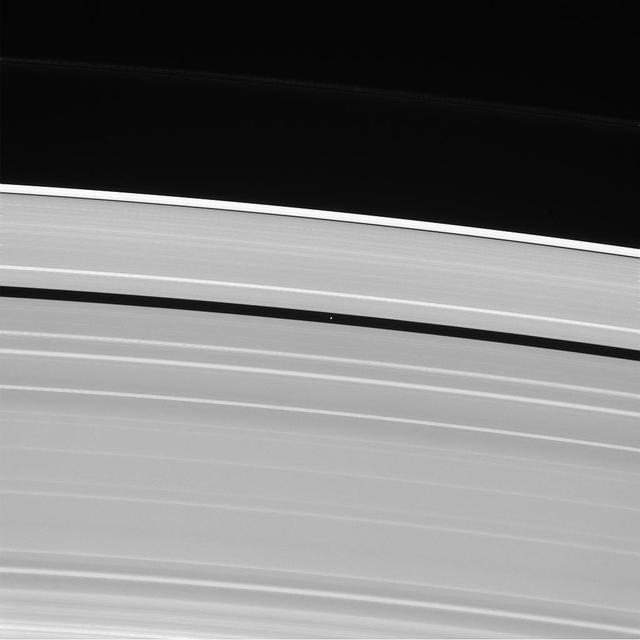
Saturn moon Pan, named for the Greek god of shepherds, rules over quite a different domain: the Encke gap in Saturn rings. This image is from NASA Cassini spacecraft.
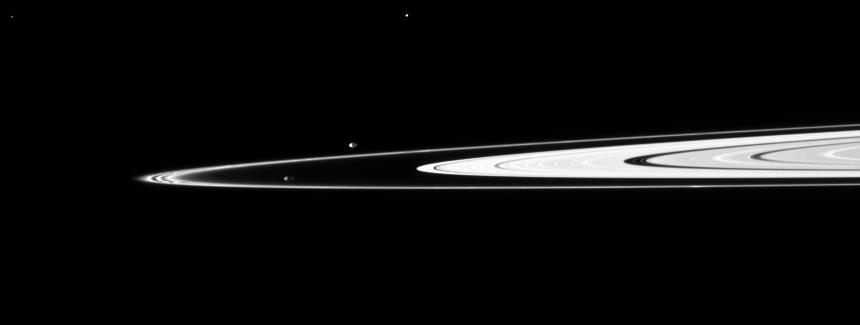
Pandora and Prometheus, the shepherding moons of the F ring, orbit inside and outside the thin ring. The elongated, potato-like shapes of the two moons are both visible in this image taken by NASA Cassini spacecraft.
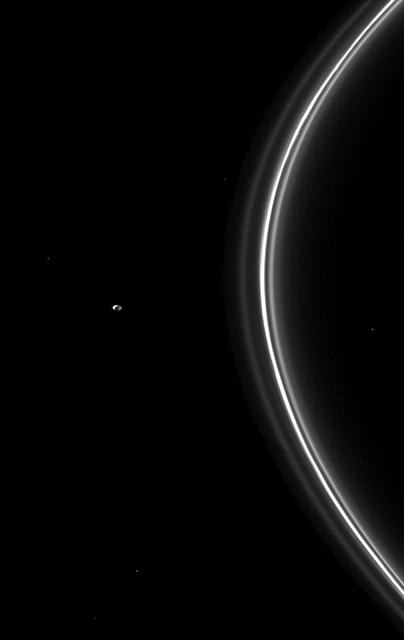
NASA Cassini spacecraft watches Pandora, one of the F ring two shepherding moons, orbiting beyond the thin ring; the small moon can be seen on the left of this image.
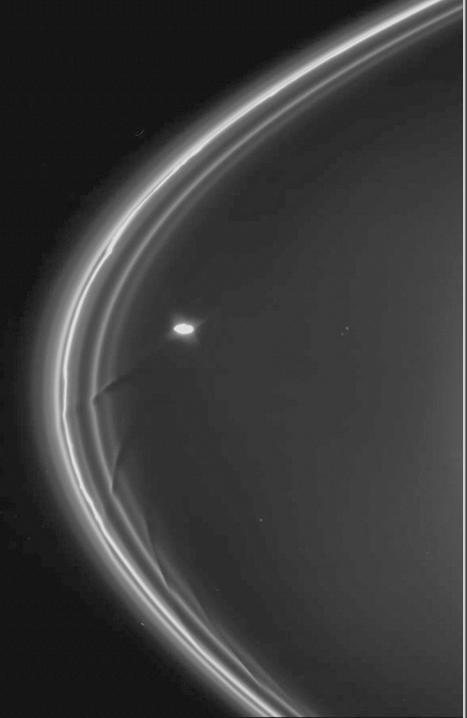
This image is from a simulation showing the changes to a portion of Saturn F ring as the shepherding moon Prometheus swings by it. The animation uses data obtained by the imaging cameras aboard NASA Cassini spacecraft.
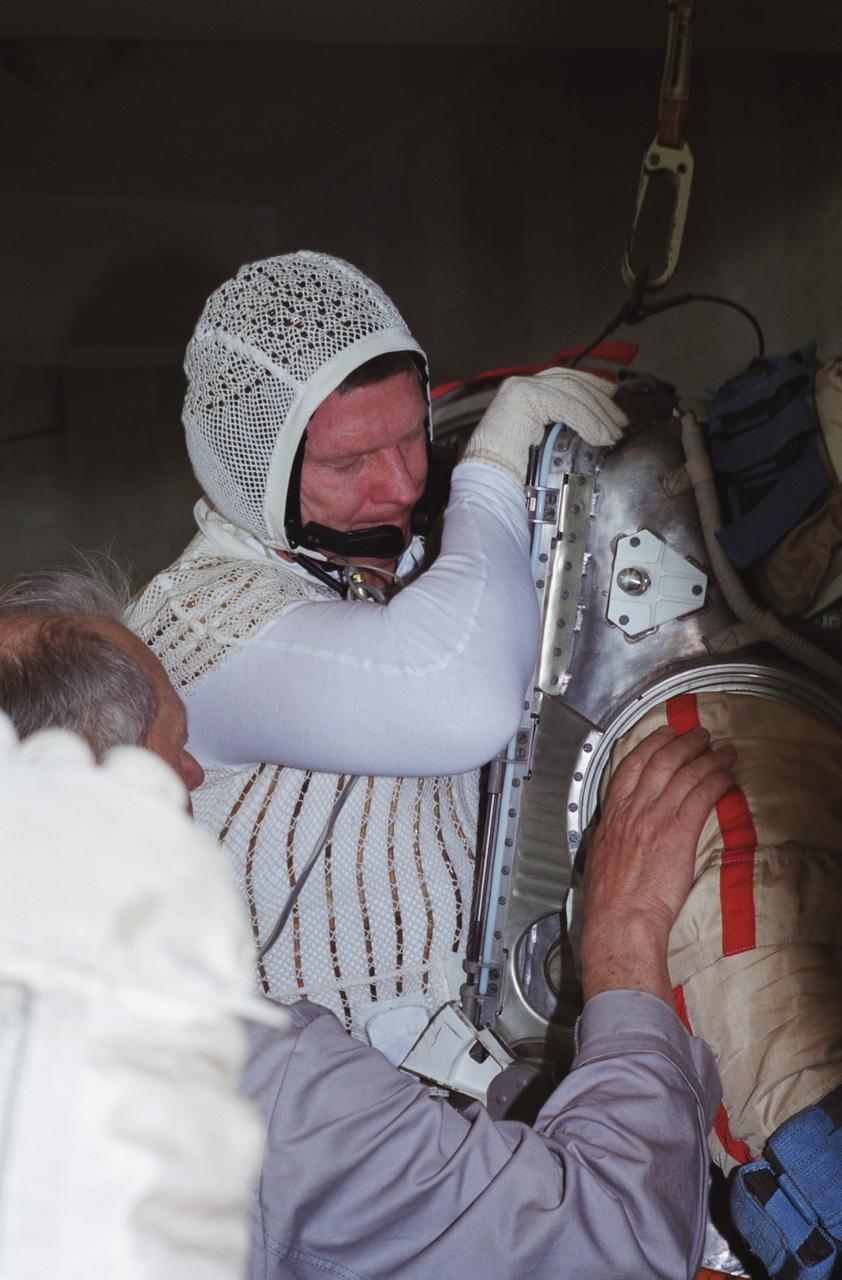
JSC2000-05371 (7 June 2000) --- Astronaut William Shepherd, mission commander for the Expedition One crew, is about to don an Orlan space suit. Shepherd was preparing to participate in an underwater spacewalk simulation in the Hydrolab facility at the Gagarin Cosmonaut Training Center in Russia. Shepherd was joined by cosmonaut Yuri Gidzenko (out of frame), Soyuz commander, in the underwater session.
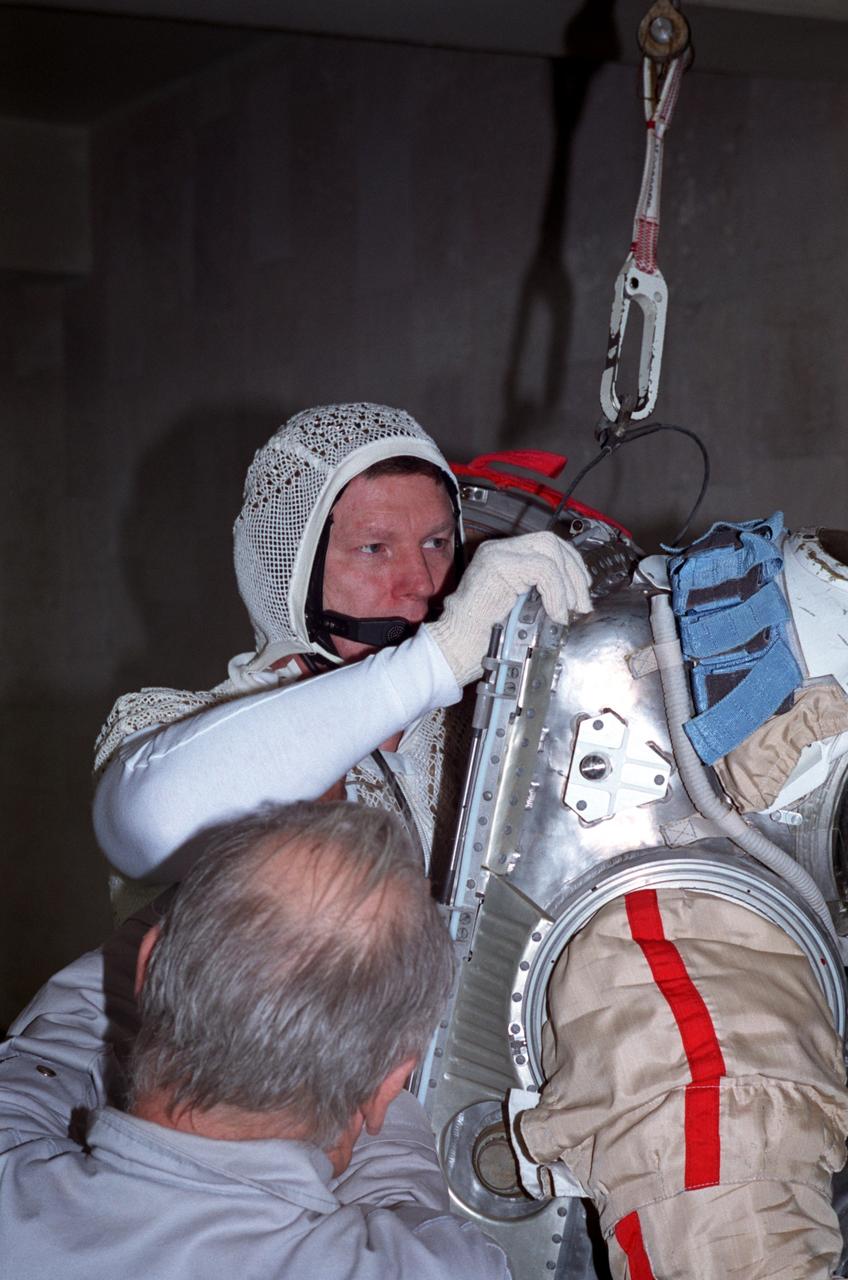
JSC2000-05369 (7 June 2000) --- Astronaut William Shepherd, mission commander for the Expedition One crew, is about to don an Orlan space suit. Shepherd was preparing to participate in an underwater simulation in the Hydrolab facility at the Gagarin Cosmonaut Training Center in Russia. Shepherd was joined by cosmonaut Yuri Gidzenko (out of frame), Soyuz commander, in the underwater session.
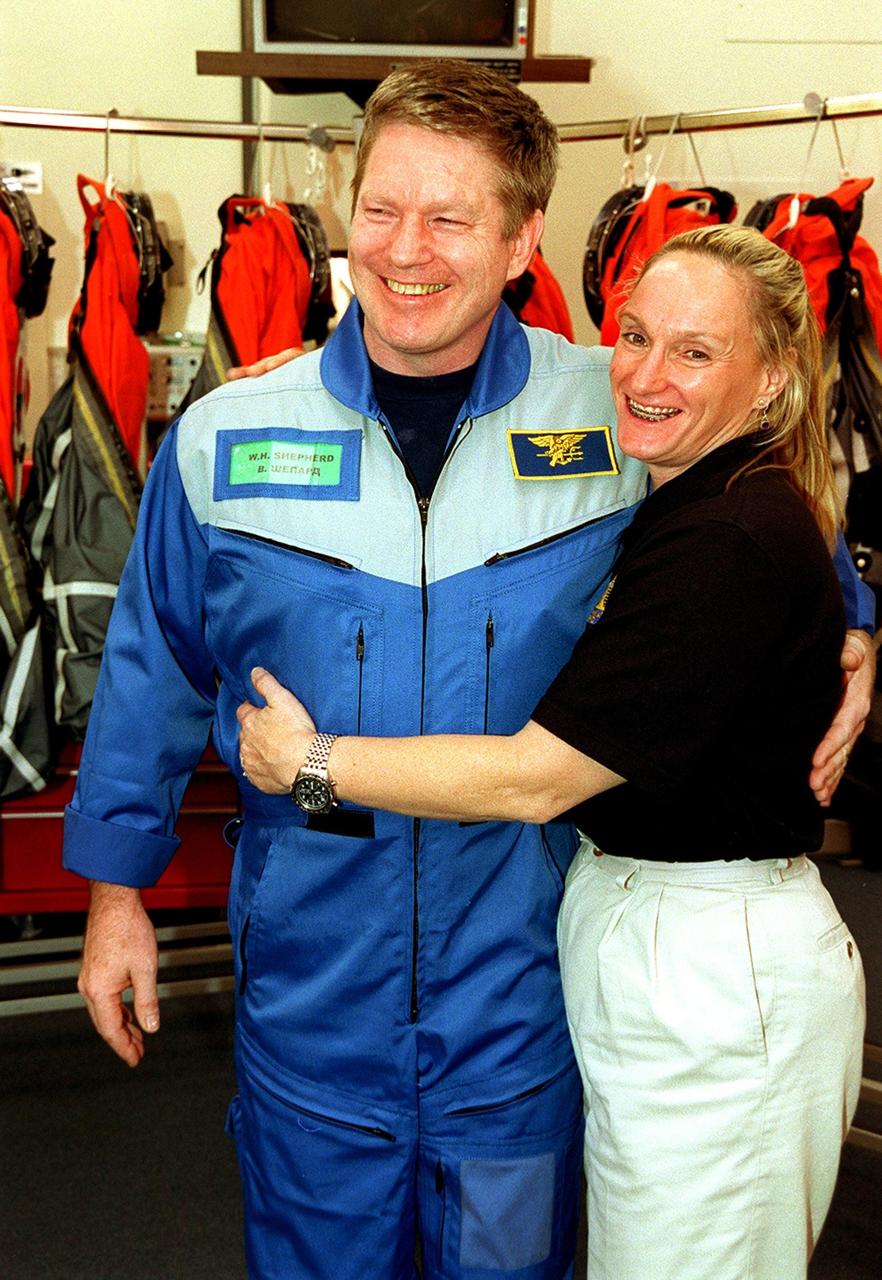
Following a post-landing interview about his stay as commander on the International Space Station and return to Earth, Bill Shepherd is joined by his wife. Shepherd and the rest of the Space Station’s first residential crew, Expedition One, returned aboard Discovery, ending mission STS-102. Part of the STS-102 mission was to take the Expedition Two crew to the Space Station and exchange crews. Shepherd handed over command to cosmonaut Yury Usachev, who will reside on the Station for the next four months with astronauts Susan Helms and James Voss
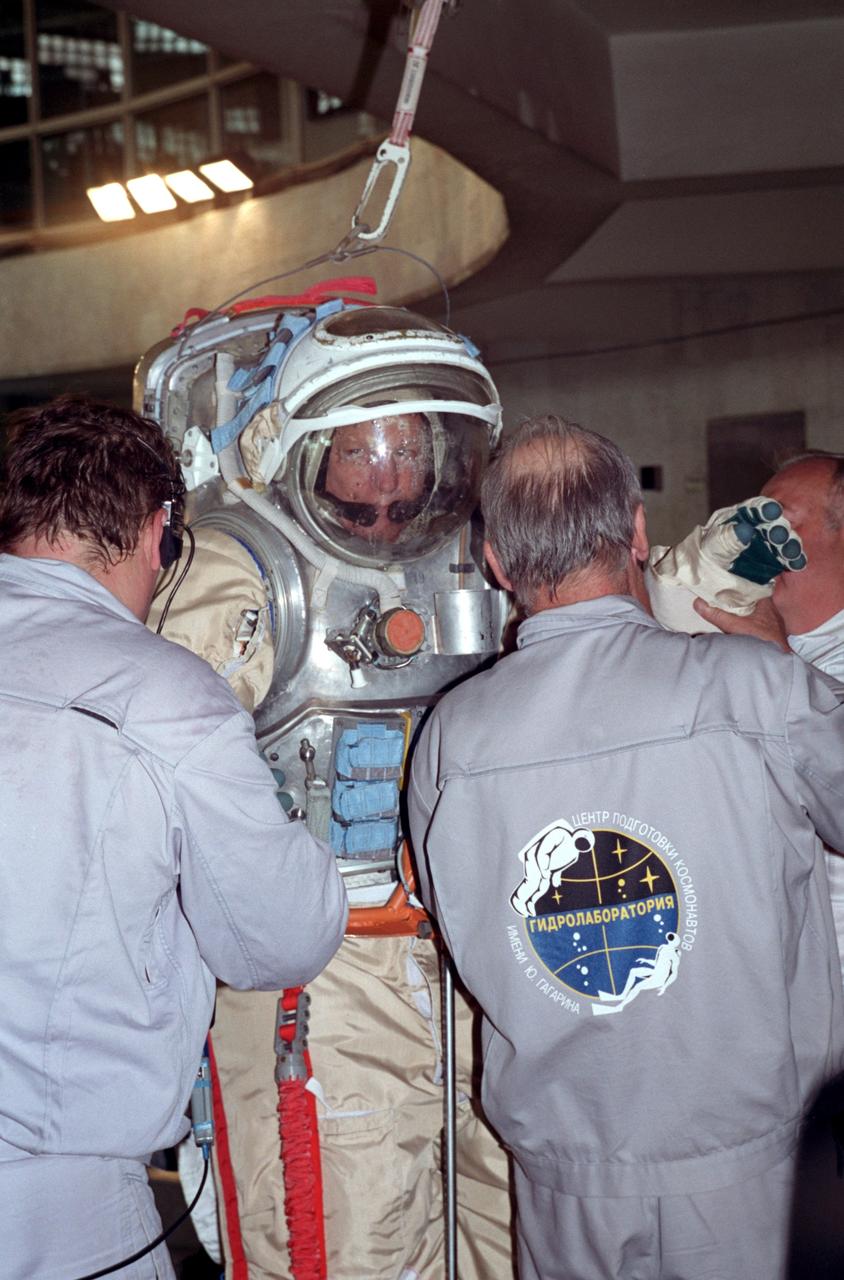
JSC2000-05370 (7 June 2000) --- With the aid of technicians, astronaut William Shepherd is about to complete the donning his Orlan space suit in order to participate in an underwater spacewalk simulation in the Hydrolab facility at the Gagarin Cosmonaut Training Center in Russia. Shepherd is mission commander for ISS Expedition One.
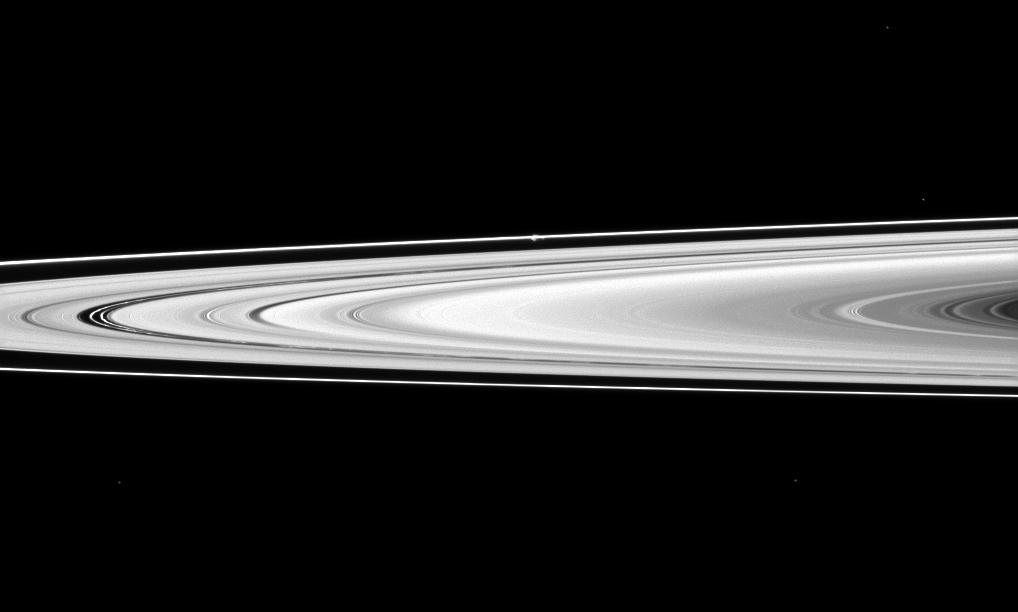
NASA Cassini spacecraft looks across Saturn rings and finds the moon Prometheus, a shepherd of the thin F ring. Prometheus looks like a small white bulge near the F ring -- the outermost ring seen here -- above the center of the image.
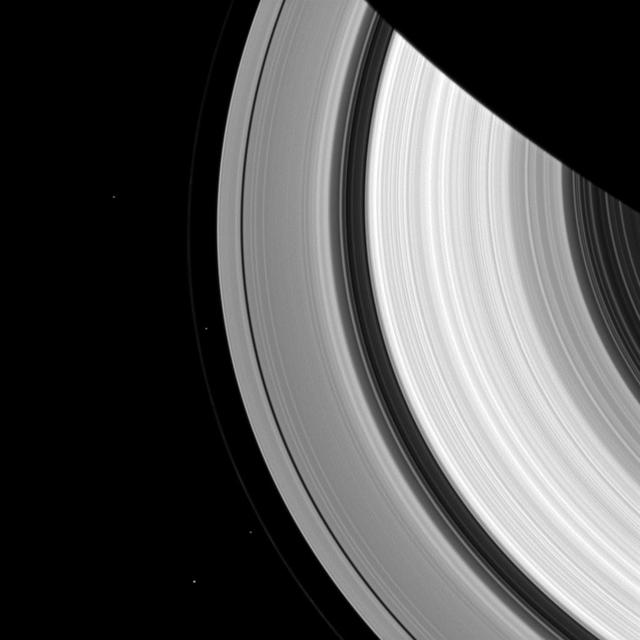
Two pairs of moons make a rare joint appearance. The F ring shepherd moons, Prometheus and Pandora, appear just inside and outside of the F ring the thin faint ring furthest from Saturn as seen by NASA Cassini spacecraft.
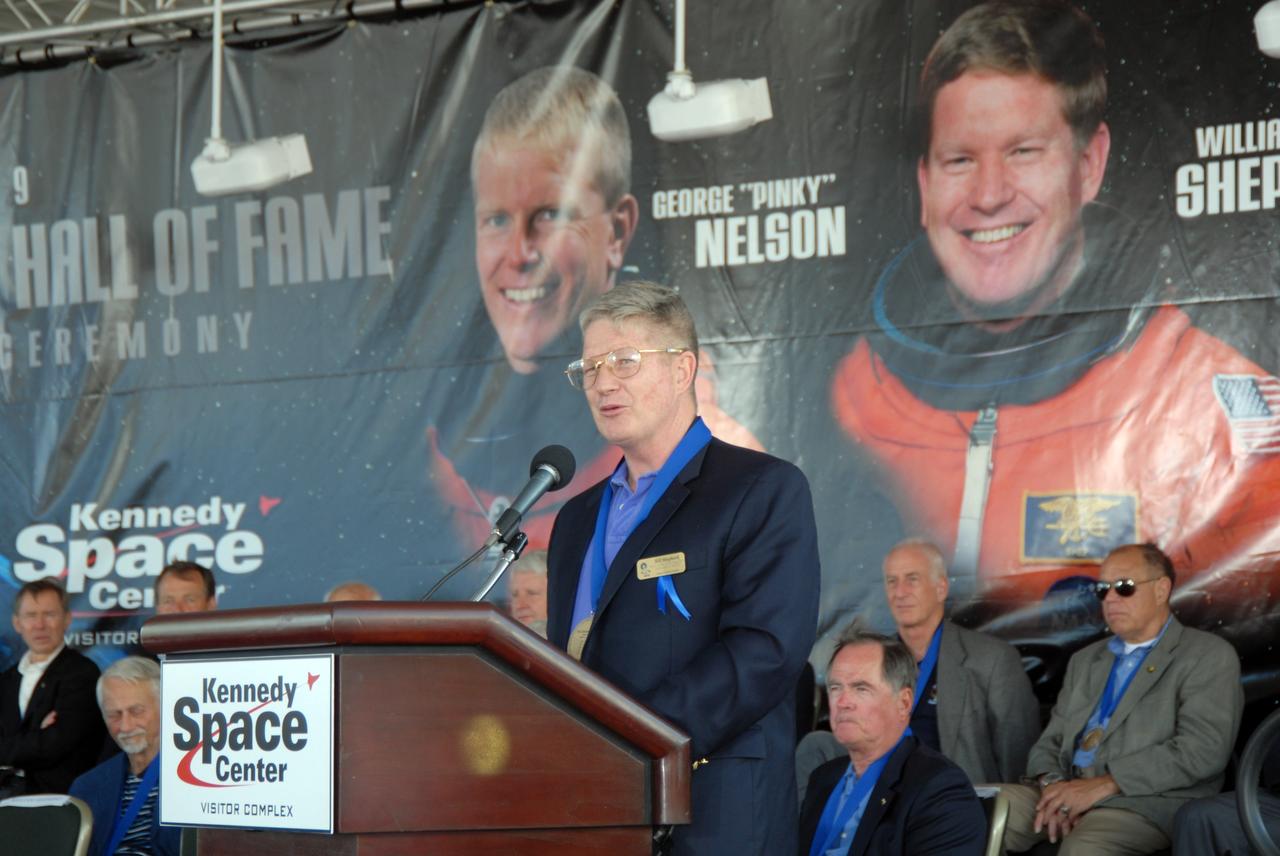
CAPE CANAVERAL, Fla. –– Astronaut William Shepherd addresses the spectators at the U.S. Astronaut Hall of Fame after his induction in the ceremony held at NASA's Kennedy Space Center Visitor Complex in Florida. Shepherd was commander of the first crew to live aboard the International Space Station. The ceremony took place May 2. More than 20 hall of fame astronauts attended, including Scott Carpenter, Walt Cunningham, Jim Lovell and Bob Crippen. Photo credit: NASA/Jim Grossmann
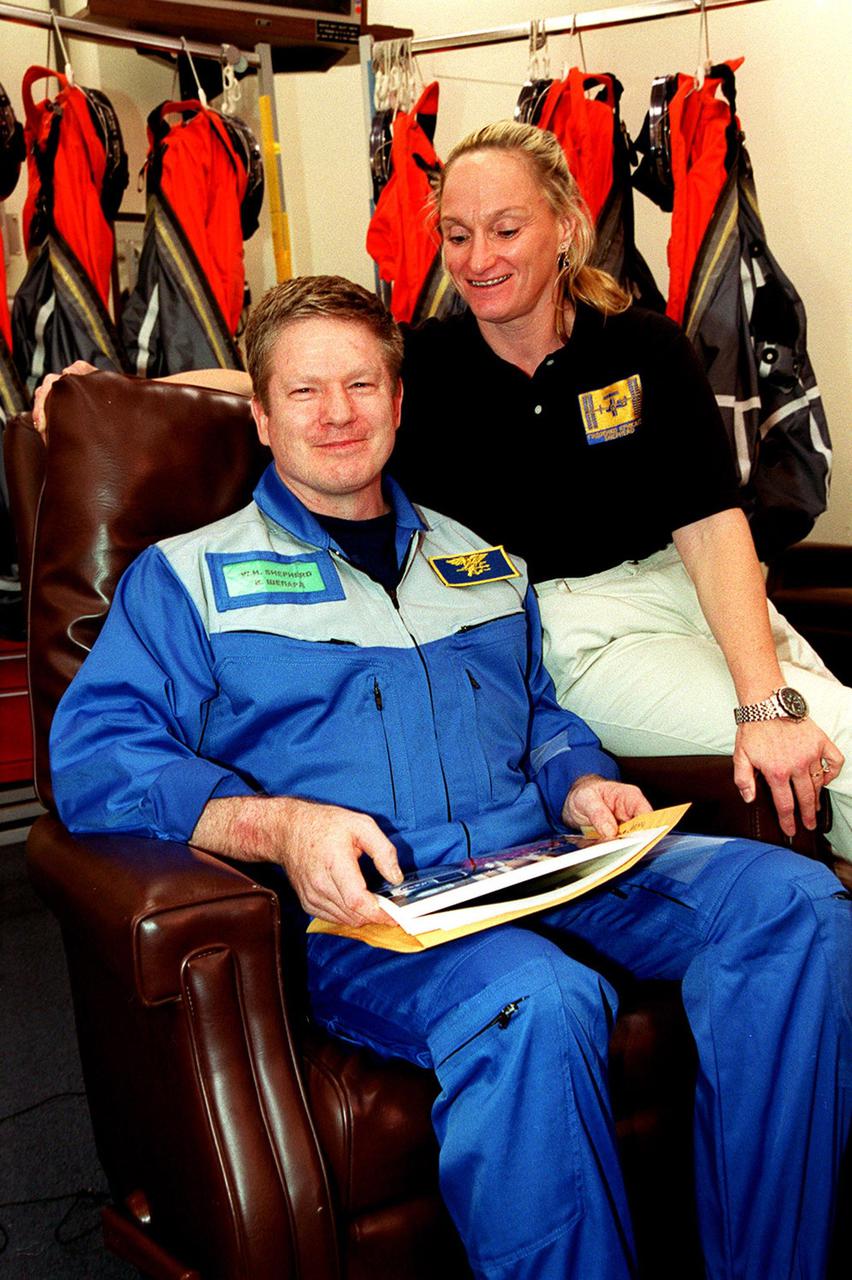
Bill Shepherd is joined by his wife following a post-landing interview in the Operations and Checkout Building about his stay as commander on the International Space Station and return to Earth aboard Discovery. Discovery returned from mission STS-102, landing at KSC March 21. Part of the STS-102 mission was to take the Expedition Two crew to the Space Station and exchange crews. Shepherd handed over command to cosmonaut Yury Usachev, who will reside on the Station for the next four months with astronauts Susan Helms and James Voss
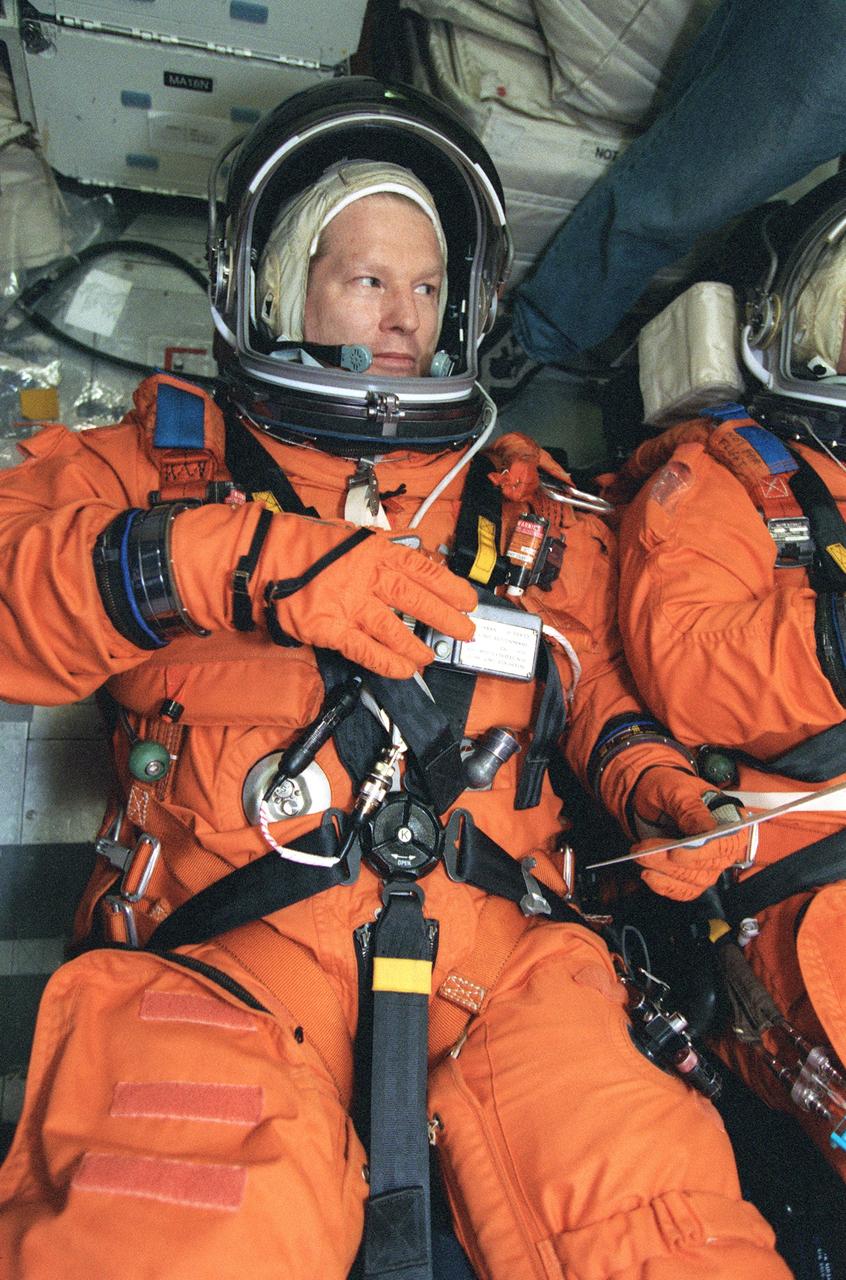
JSC2000-04075 (12 May 2000) --- Astronaut William Shepherd, Expedition One mission commander, lies on a couch on the mid deck of a Johnson Space Center trainer during a rehearsal of shuttle descent. Shepherd and his Expedition One crewmates will return from their stay aboard ISS in the Space Shuttle Discovery around mid February 2001.

Bill Shepherd looks at launch photos following a post-landing interview in the Operations and Checkout Building about his stay as commander on the International Space Station and return to Earth aboard Discovery. Discovery returned from mission STS-102, landing at KSC March 21. Part of the STS-102 mission was to take the Expedition Two crew to the Space Station and exchange crews. Shepherd handed over command to cosmonaut Yury Usachev, who will reside on the Station for the next four months with astronauts Susan Helms and James Voss

Bill Shepherd is joined by his wife following a post-landing interview in the Operations and Checkout Building about his stay as commander on the International Space Station and return to Earth aboard Discovery. Discovery returned from mission STS-102, landing at KSC March 21. Part of the STS-102 mission was to take the Expedition Two crew to the Space Station and exchange crews. Shepherd handed over command to cosmonaut Yury Usachev, who will reside on the Station for the next four months with astronauts Susan Helms and James Voss
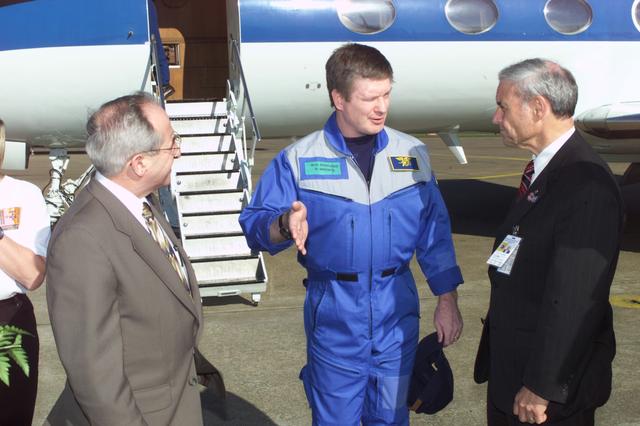
JSC2001-E-08302 (22 March 2001) --- Astronaut William M. (Bill) Shepherd (center) talks with Joseph Rothenberg (left), NASA Associate Administrator for Space Flight, and Roy S. Estess, Acting Director of the Johnson Space Center (JSC), following crew arrival at Ellington Field, near JSC. Shepherd on March 21 completed a lengthy stay in Earth orbit, having served as commander for the ISS Expedition One mission.
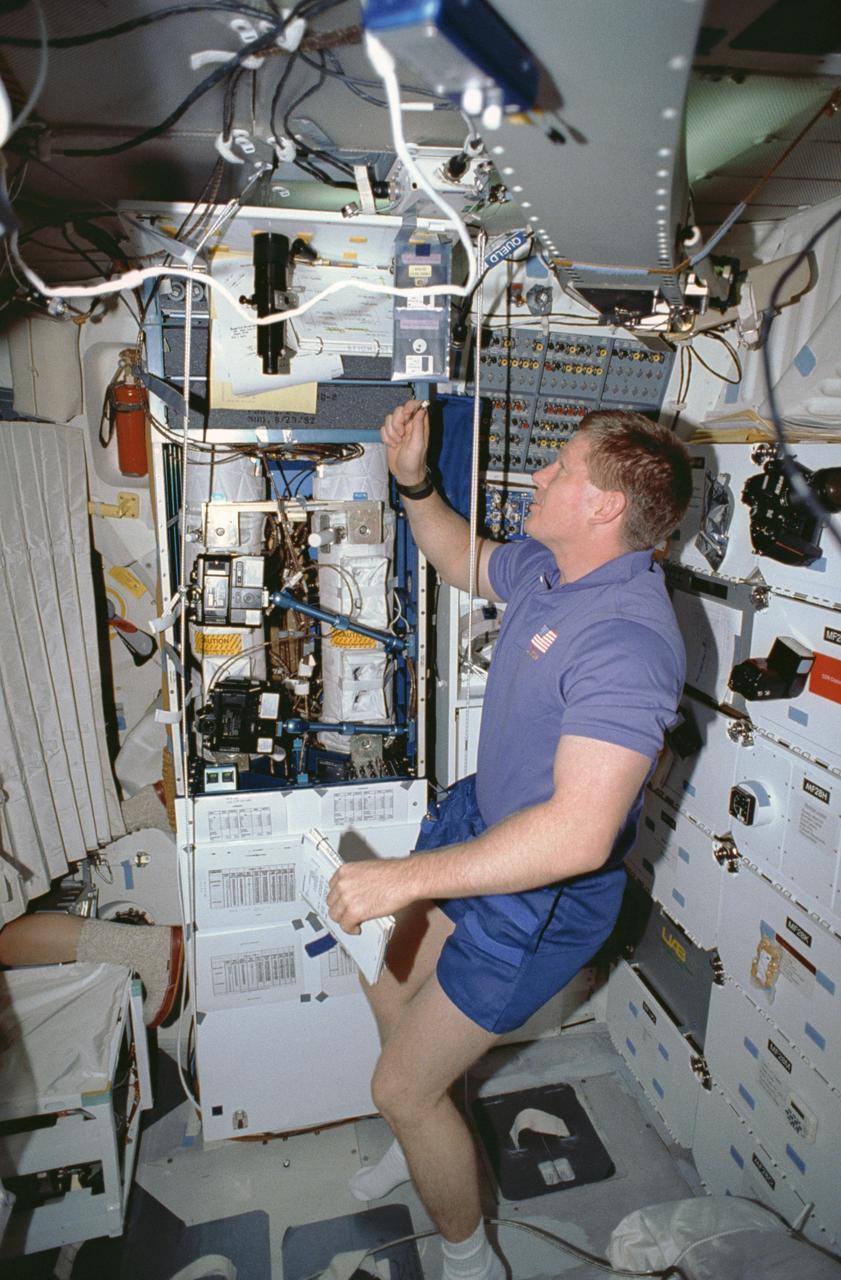
STS052-41-034 (22 Oct-1 Nov 1992) --- Astronaut William M. Shepherd, mission specialist, works with the Crystals by Vapor Transport Experiment (CVTE) on the middeck of the Space Shuttle Columbia. Shepherd joined four other NASA astronauts and a Canadian payload specialist for ten days in Earth orbit in support of the STS-52 mission.
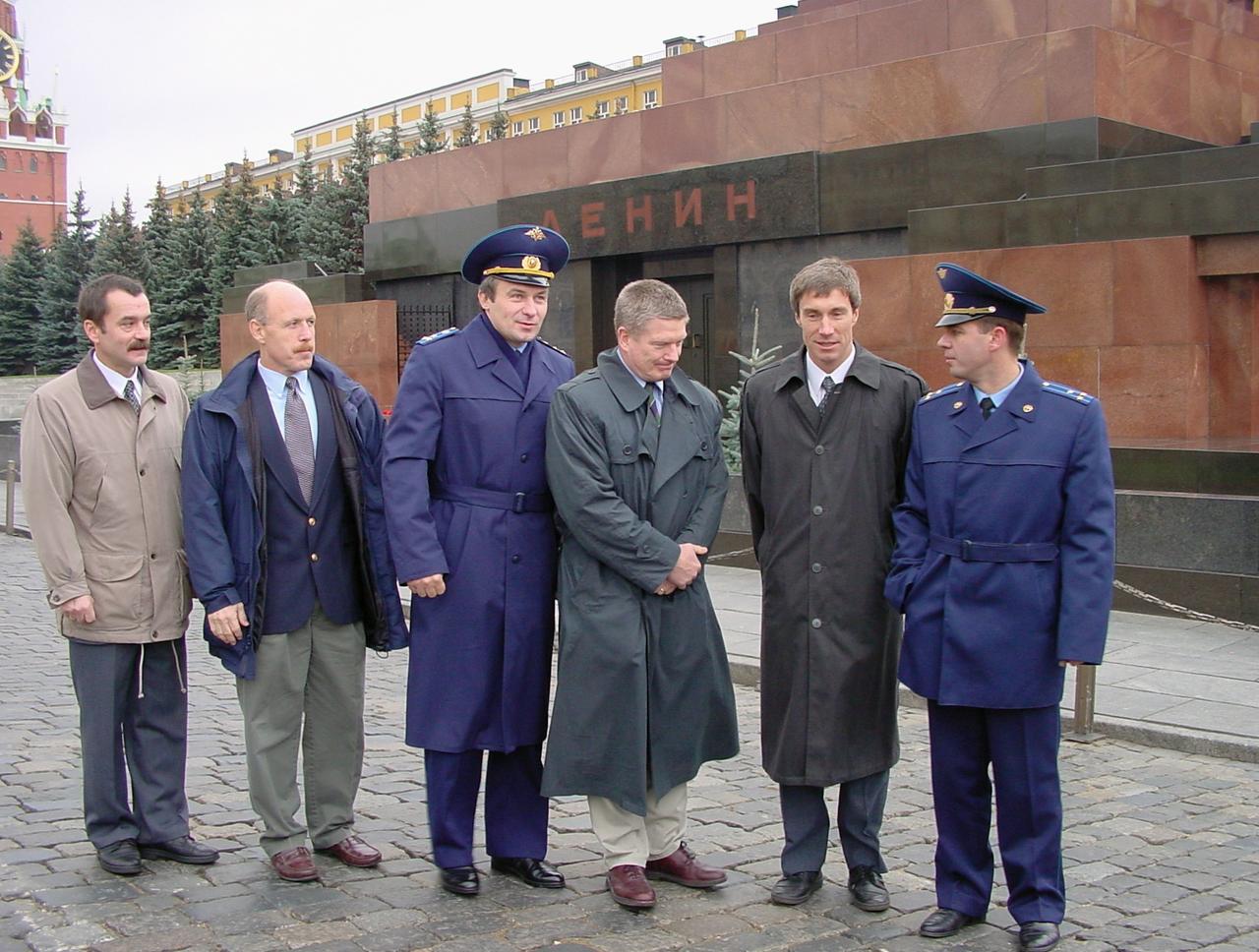
JSC2000-E-27076 (16 October 2000) --- Expedition One prime and backup crew members in Moscow. From left, cosmonaut Mikhail Turin, astronaut Kenneth D. Bowersox, cosmonaut Vladimir Dezhurov, astronaut William M. (Bill) Shepherd and cosmonauts Sergei Krikalev and Yuri P. Gidzenko. Shepherd is Expedition One prime crew commander; Gidzenko, prime crew Soyuz commander; and Krikalev, the prime crew's flight engineer. Bowersox, Turin and Dezhurov are backups.
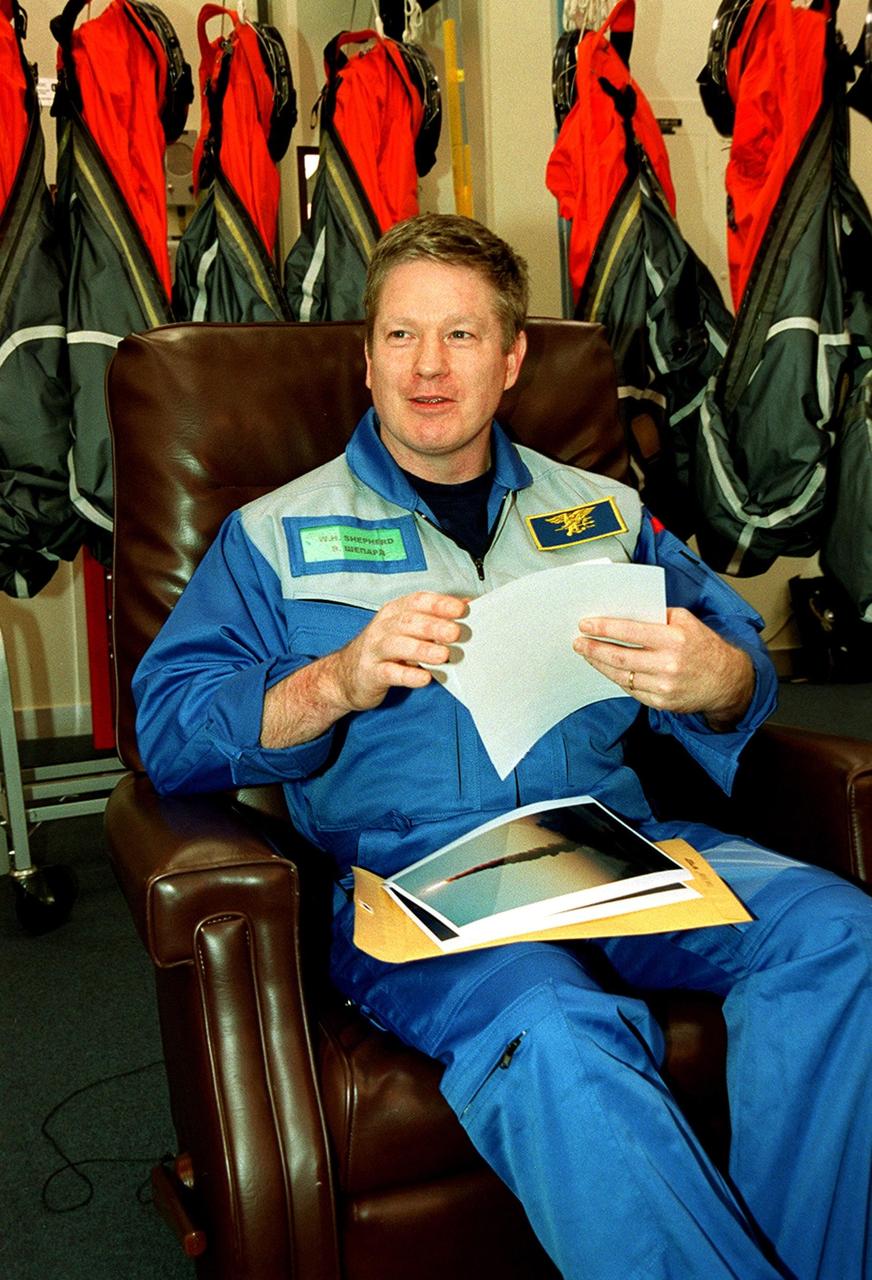
Bill Shepherd looks at launch photos following a post-landing interview in the Operations and Checkout Building about his stay as commander on the International Space Station and return to Earth aboard Discovery. Discovery returned from mission STS-102, landing at KSC March 21. Part of the STS-102 mission was to take the Expedition Two crew to the Space Station and exchange crews. Shepherd handed over command to cosmonaut Yury Usachev, who will reside on the Station for the next four months with astronauts Susan Helms and James Voss
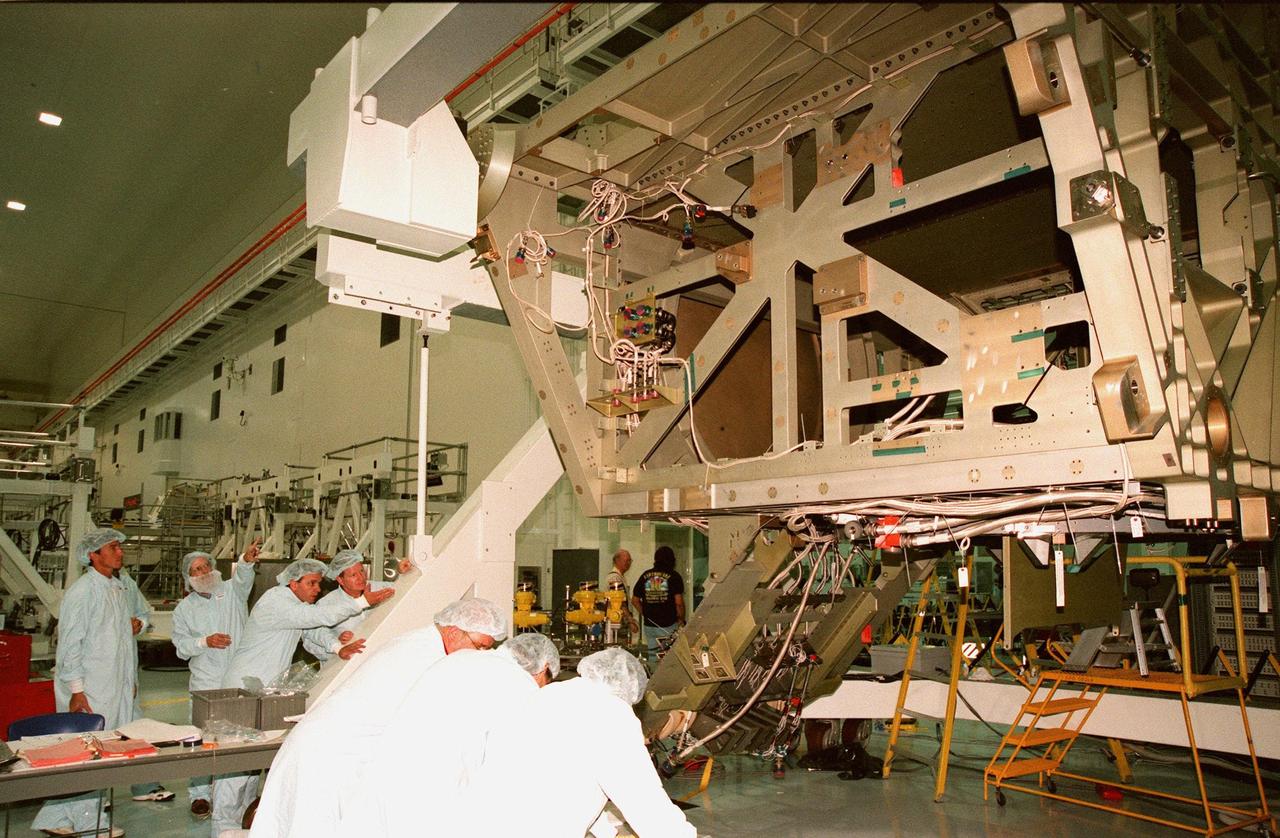
In the Space Station Processing Facility, STS-100 crew members cosmonauts Sergei Krikalev (left) and Yuri Gidzenko (third from left) plus astronaut Bill Shepherd look over the Z-1 truss along with Dave Moore, Vehicle Integration Test Team (second from left). The Z-1 truss will be used in conjunction with the International Space Station. Krikalev, Gidzenko and Shepherd are scheduled to be launched on a Russian Soyuz spacecraft from the Baikonur Cosmodrome in Kazahkstan in July 1999. Mission STS-100 will be bringing them down
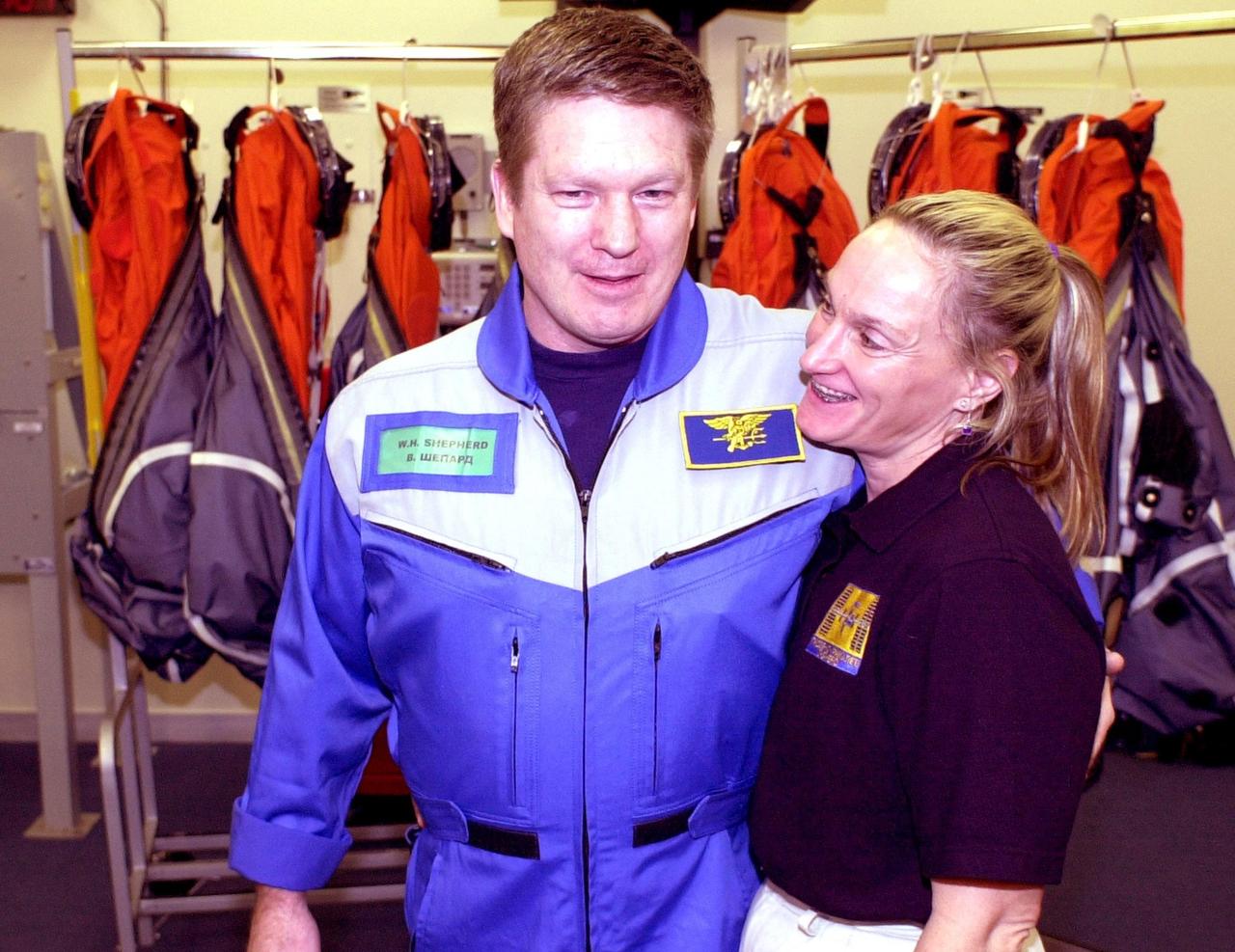
Following a post-landing interview in the Operations and Checkout Building about his stay as commander on the International Space Station and return to Earth aboard Discovery, Bill Shepherd joins his wife. Part of the STS-102 mission was to take the Expedition Two crew to the Space Station and exchange crews. Shepherd handed over command to cosmonaut Yury Usachev, who will reside on the Station for the next four months with astronauts Susan Helms and James Voss
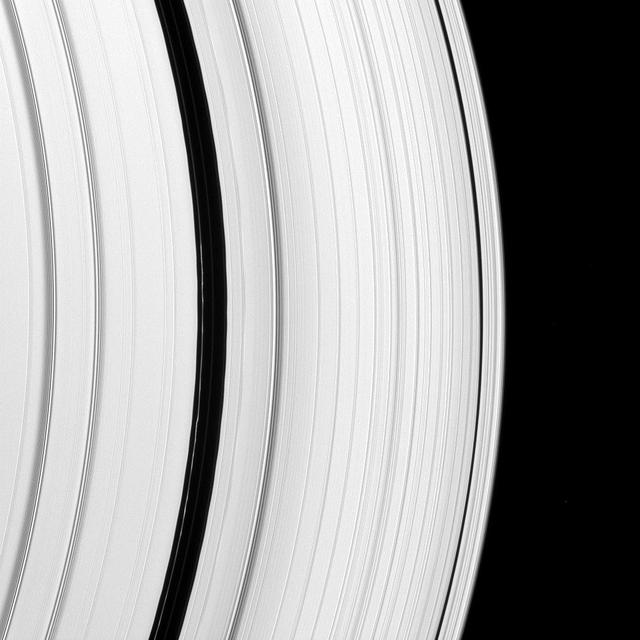
The Encke Gap moon, Pan, has left its mark on a scalloped ringlet of the Encke Gap. The moon creates these perturbations as it sweeps through the 325-kilometer 200-mile gap in the A ring
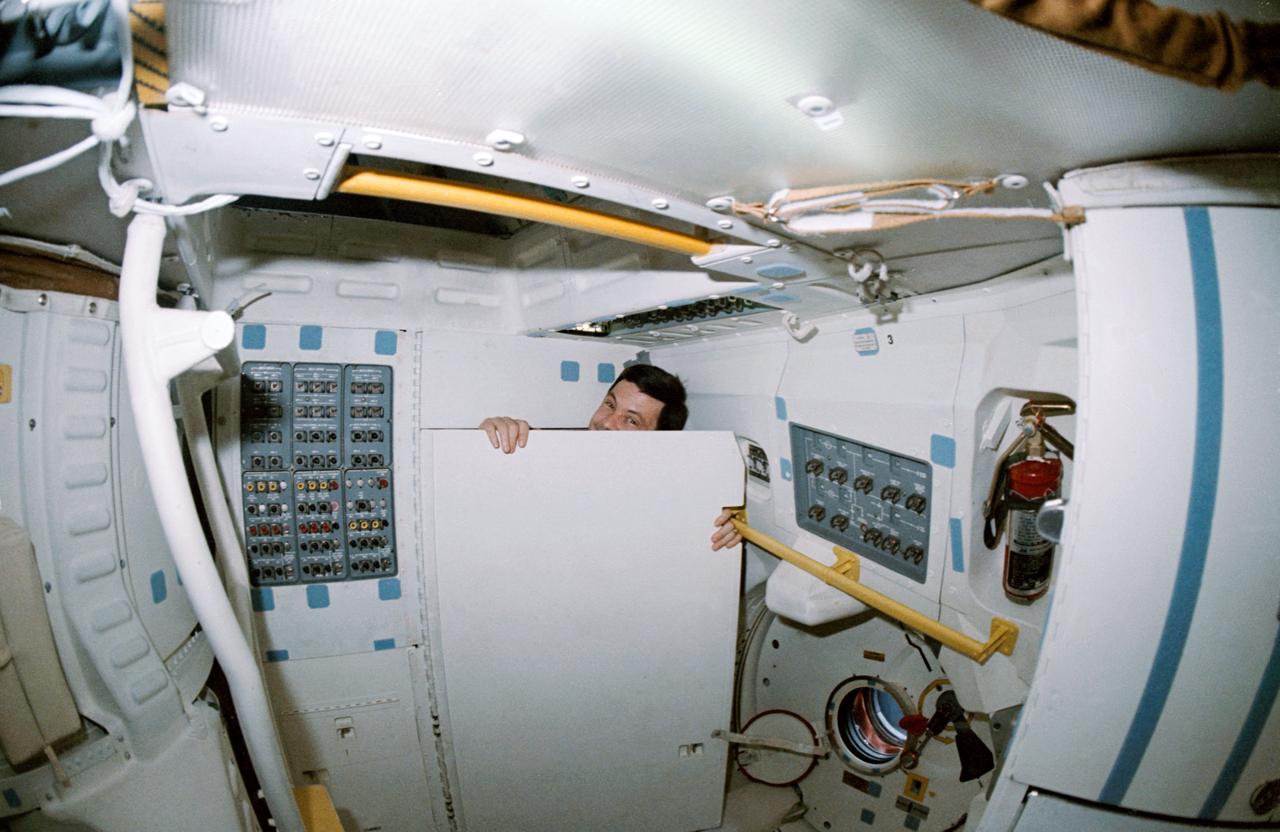
STS-41 crewmembers conduct Detailed Supplementary Objective (DSO) 0472 Intraocular Pressure on the middeck of Discovery, Orbiter Vehicle (OV) 103. Mission Specialist (MS) William M. Shepherd rests his head on the stowed treadmill while Pilot Robert D. Cabana, holding Shepherd's eye open, prepares to measure Shepherd's intraocular pressure using a tono pen (in his right hand). Objectives include: establishing a database of changes in intraocular pressures that can be used to evaluate crew health; validating ten degree head down bedrest as a model for cephalad fluid shifts in microgravity; facilitating the interpretation of data by providing a quantative measure of microgravity induced cephalad fluid shifts; and validating the tono pen as an effective tool for diagnostic and scientific data collection.
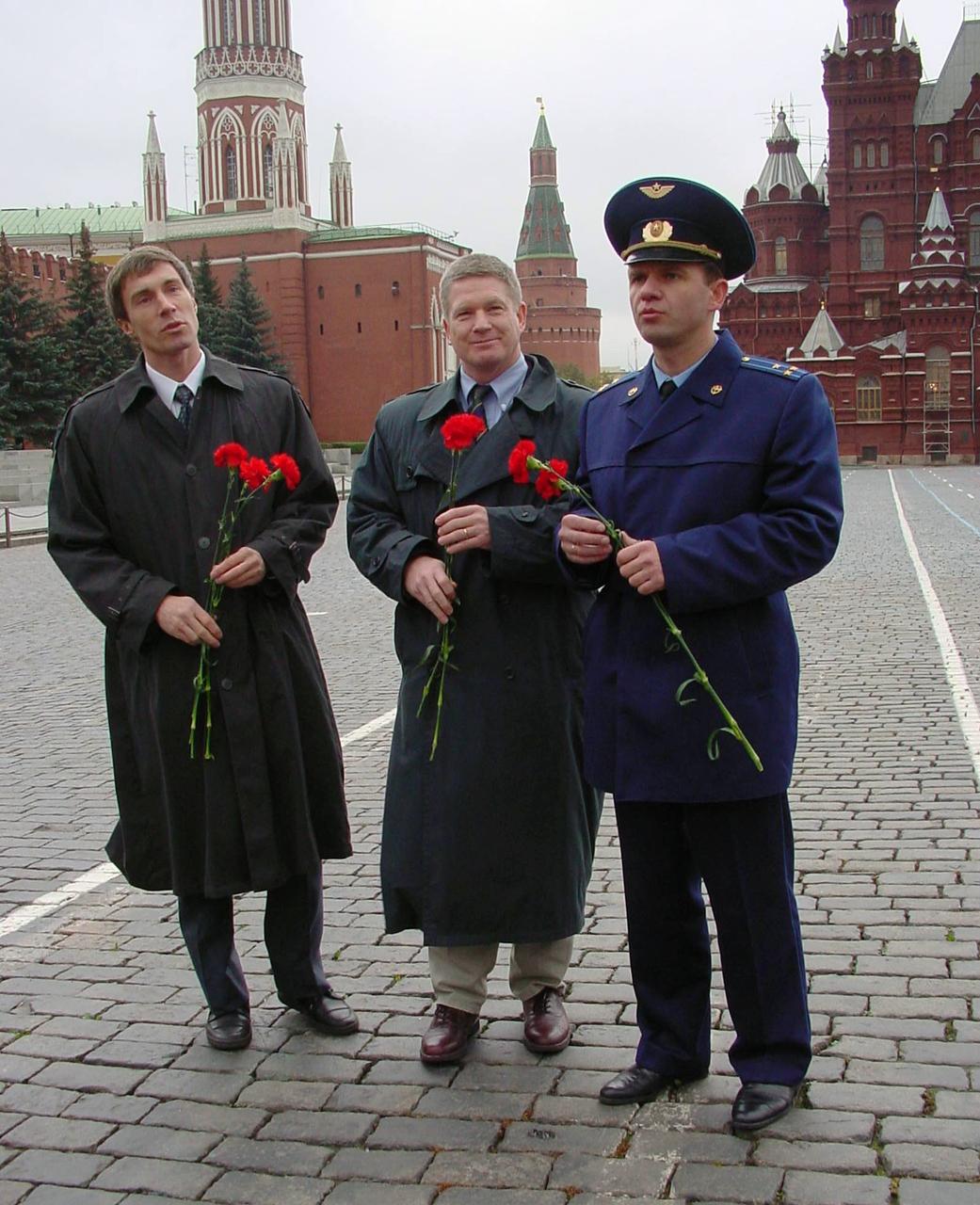
JSC2000-E-27075 (16 October 2000) --- Expedition One crew members in Moscow. From left, flight engineer Sergei Krikalev, expedition commander William (Bill) Shepherd and Soyuz pilot Yuri Gidzenko.
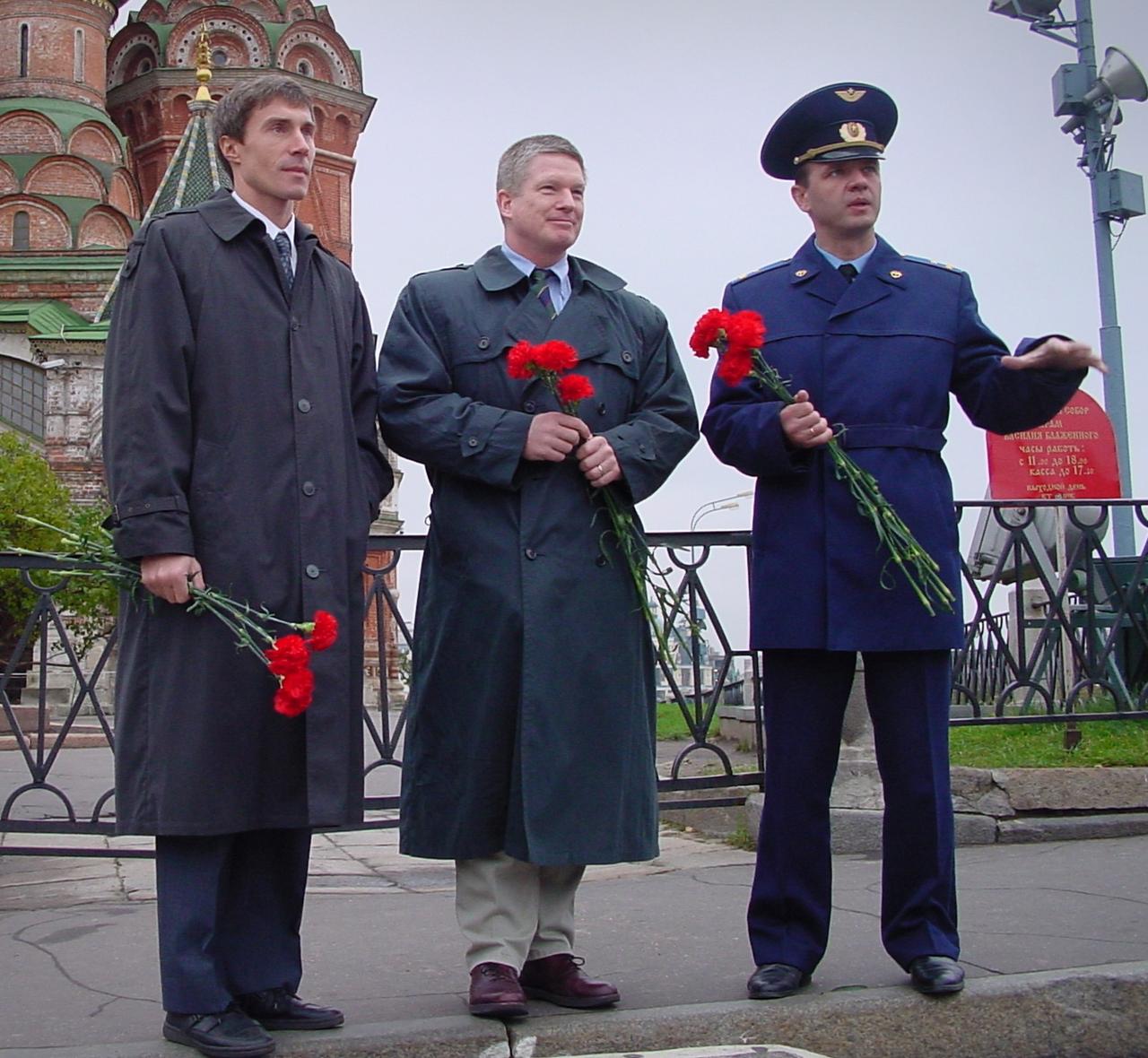
JSC2000-E-27078 (16 October 2000) --- Expedition One crew members in Moscow. From left, flight engineer Sergei Krikalev, expedition coammander William (Bill) Shepherd and Soyuz pilot Yuri Gidzenko.
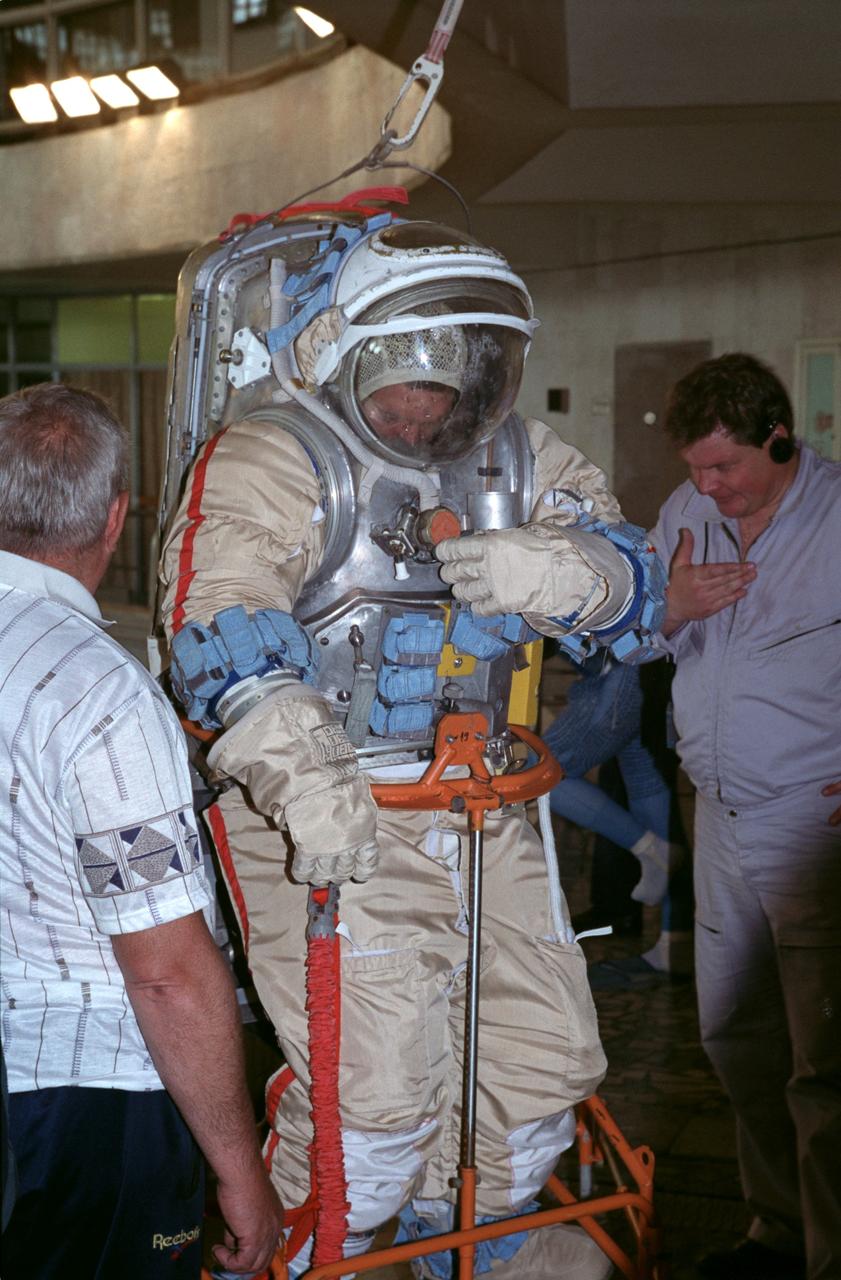
JSC2000-05372 (7 June 2000) --- Astronaut William Shepherd, mission commander for ISS Expedition One, is about to participate in an underwater spacewalk simulation in the Hydrolab facility at the Gagarin Cosmonaut Training Center in Russia.
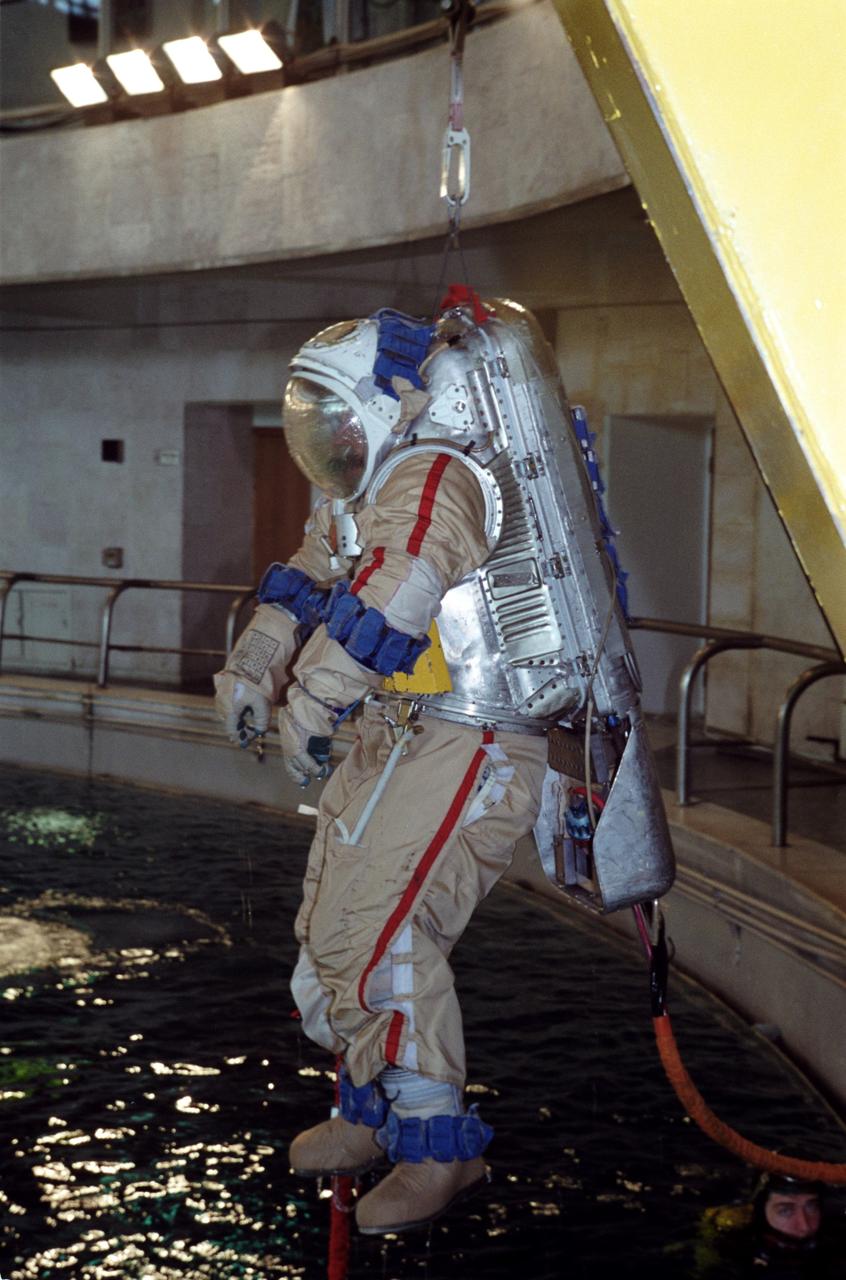
JSC2000-05374 (7 June 2000) --- Astronaut William Shepherd, mission commander for ISS Expedition One, participates in an underwater spacewalk simulation in the Hydrolab facility at the Gagarin Cosmonaut Training Center in Russia.
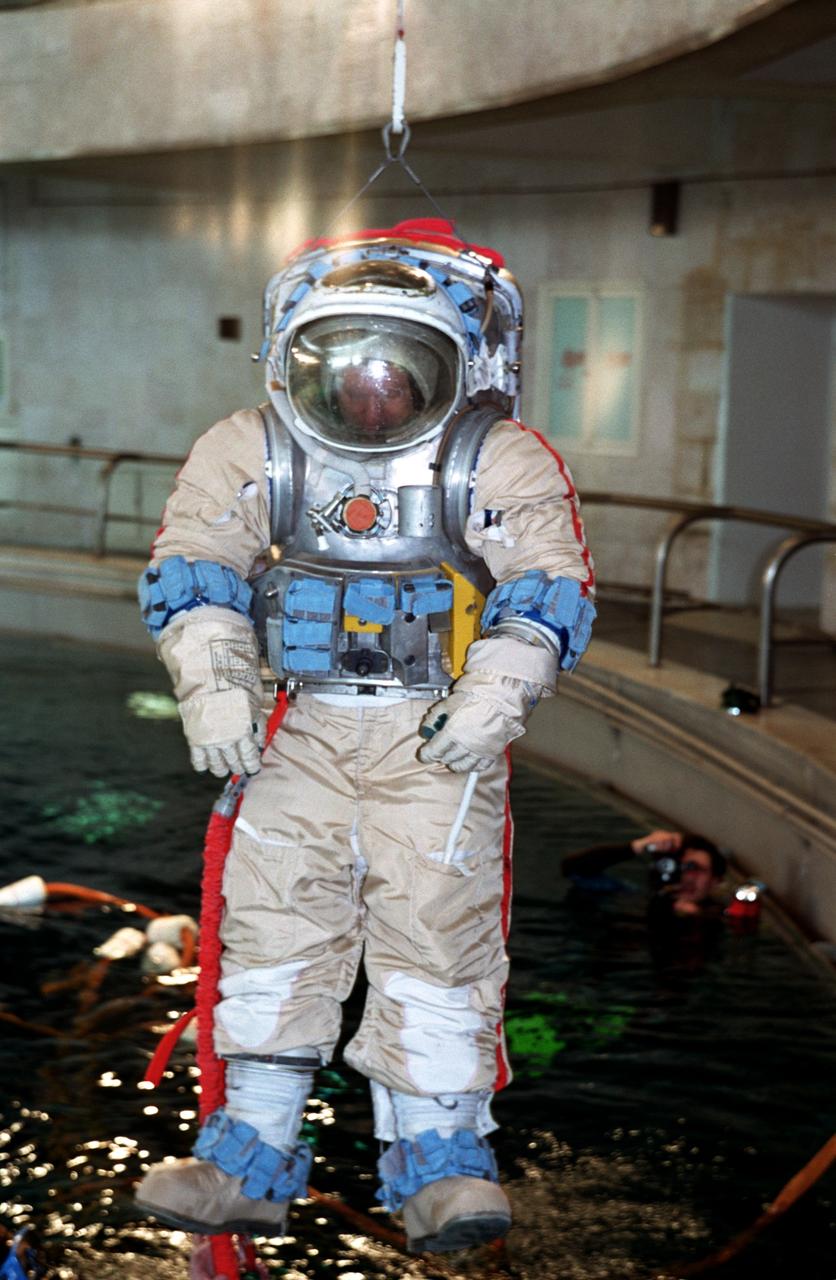
JSC2000-05373 (7 June 2000) --- Astronaut William Shepherd, mission commander for ISS Expedition One, participates in an underwater spacewalk simulation in the Hydrolab facility at the Gagarin Cosmonaut Training Center in Russia.
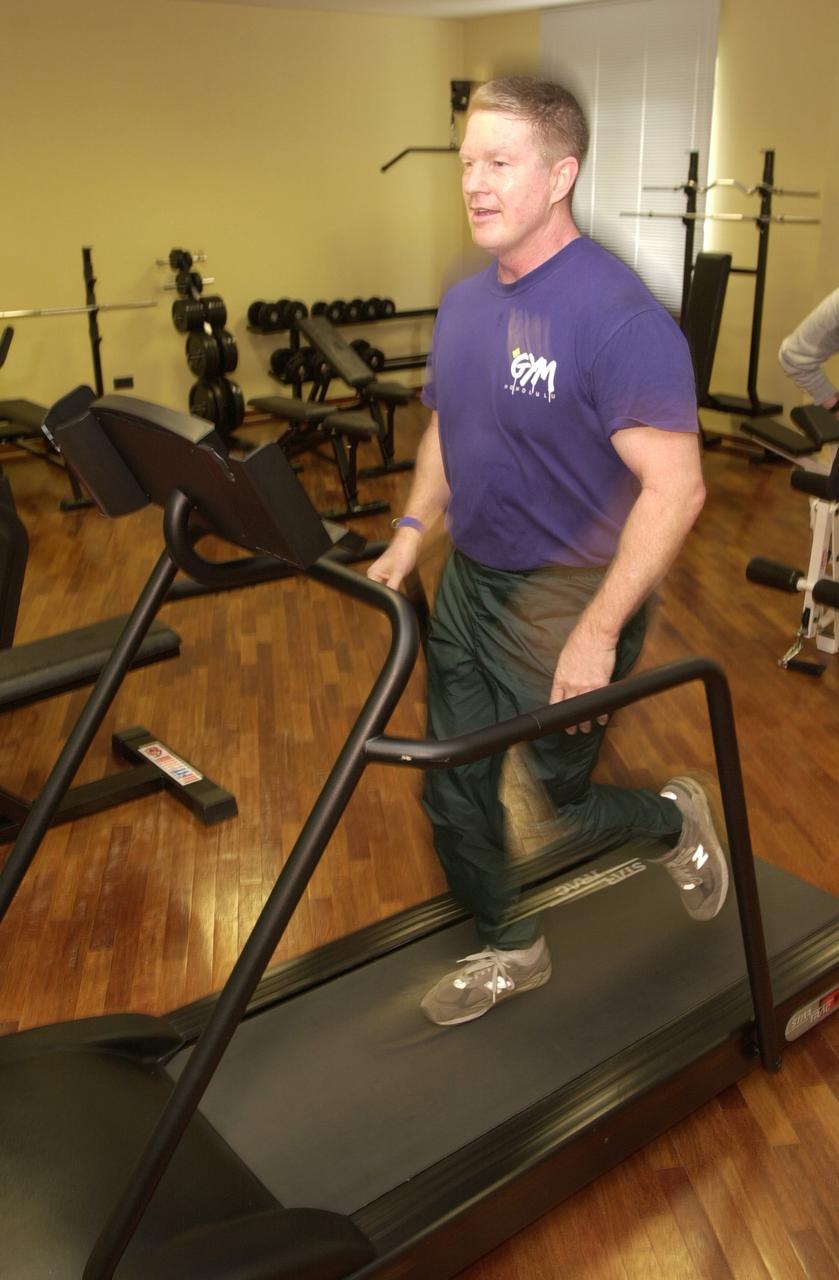
JSC2000-E-28205 (29 October 2000) --- Just two days away from his scheduled launch aboard a Soyuz spacecraft from Kazakhstan, astronaut William M. (Bill) Shepherd exercises on a treadmill device.
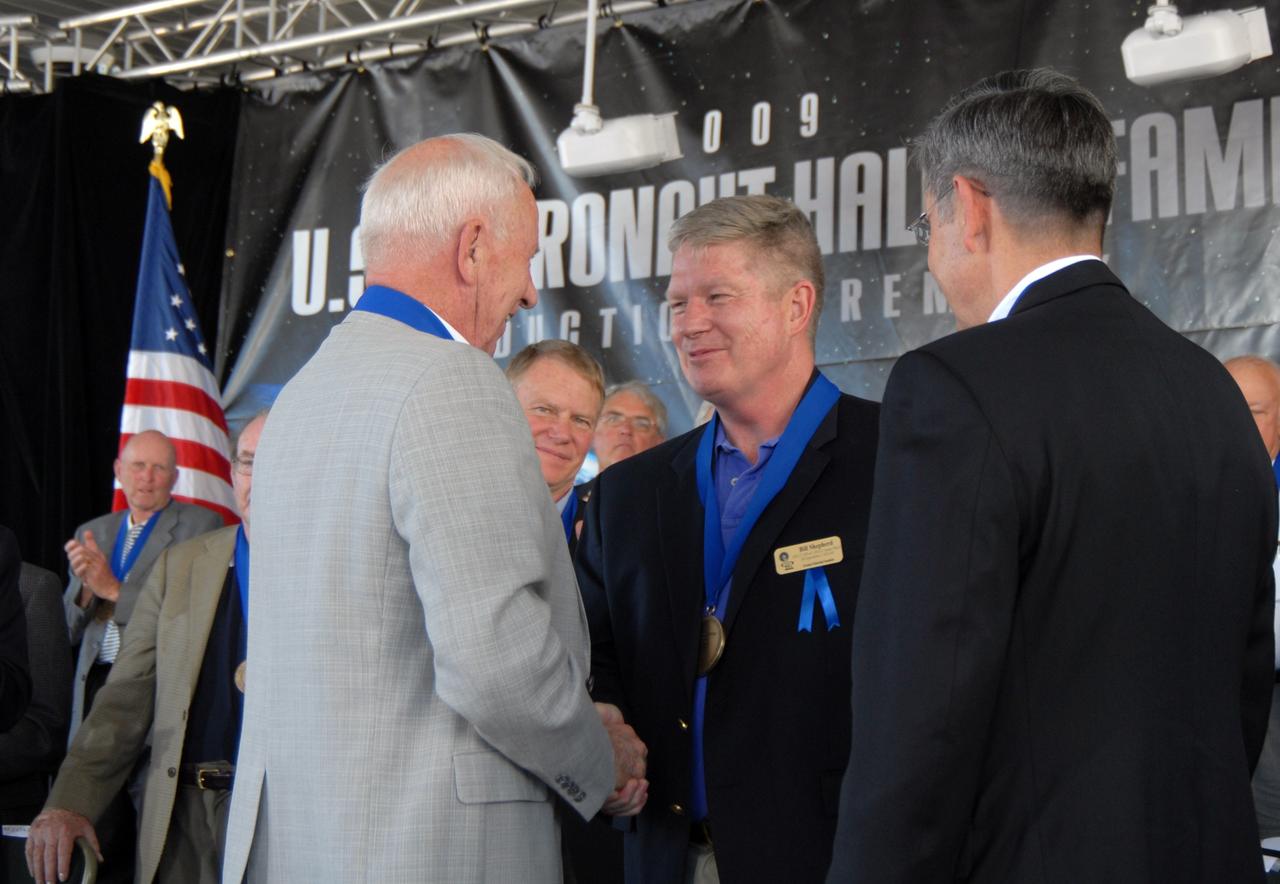
CAPE CANAVERAL, Fla. –– At left, U.S. Astronaut Hall of Fame member Al Worden congratulates astronaut William Shepherd (center) on his induction into the hall of fame during the ceremony held at NASA's Kennedy Space Center Visitor Complex in Florida. At right is Center Director Bob Cabana, who is a member of the hall of fame. Shepherd was commander of the first crew to live aboard the International Space Station. The ceremony took place May 2. More than 20 hall of fame astronauts attended, including Scott Carpenter, Walt Cunningham, Jim Lovell and Bob Crippen. Photo credit: NASA/Jim Grossmann
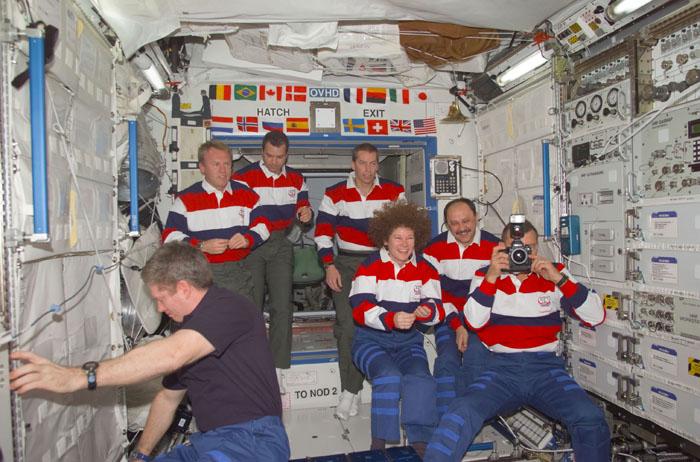
STS102-E-5227 (16 March 2001) --- Onboard the Destiny laboratory on the International Space Station (ISS), astronauts and cosmonauts convene in the midst of personnel changes on crew assignments. From the left are astronauts William M. (Bill) Shepherd, Andrew S.W. Thomas, Paul W. Richards, James D. Wetherbee and Susan J. Helms; along with cosmonaut Yury V. Usachev of Rosaviakosmos and astronaut James S. Voss. Though six here are wearing STS-102 attire, Helms, Voss and Usachev will be dressed in that of the Expedition Two crew shortly and Shepherd's suit will match those of the STS-102 crew members. The photo was taken with a digital still camera.
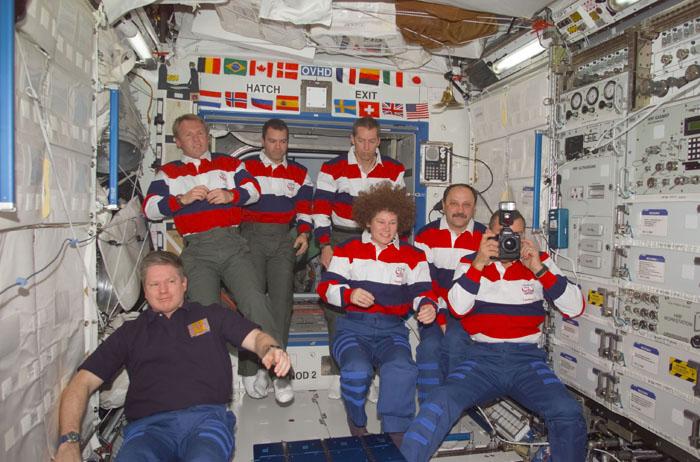
STS102-E-5228 (16 March 2001) --- Onboard the Destiny laboratory for the International Space Station (ISS), astronauts and cosmonauts convene in the midst of personnel changes on crew assignments. From the left are astronauts William M. (Bill) Shepherd, Andrew S.W. Thomas, Paul W. Richards, James D. Wetherbee and Susan J. Helms; along with cosmonaut Yury V. Usachev of Rosaviakosmos and astronaut James S. Voss. Though six here are wearing STS-102 attire, Helms, Voss and Usachev will be dressed in that of the Expedition Two crew shortly and Shepherd's suit will match those of the STS-102 crew members. The photo was taken with a digital still camera.
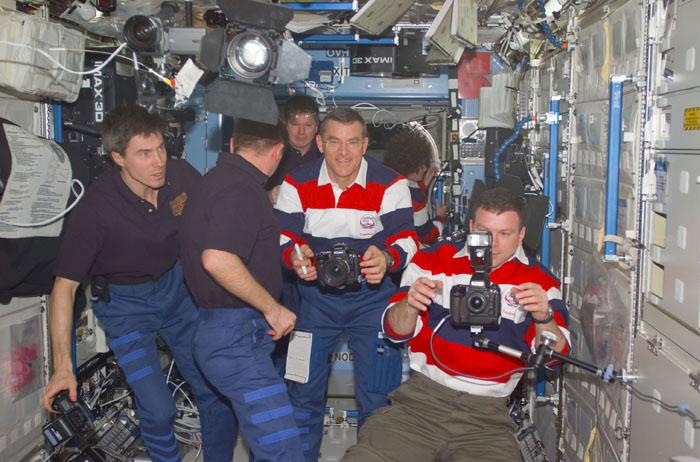
STS102-E-5223 (16 March 2001) --- Cameras are plentiful in this digital still camera's image of astronauts and cosmonauts on the International Space Station (ISS). From the left are cosmonauts Sergei K. Krikalev and Yuri P. Gidzenko of Rosaviakosmos; along with astronauts William M. (Bill) Shepherd, James S. Voss, Susan J. Helms (background) and James. M. Kelly. Shepherd, Gidzenko and Krikalev have been aboard the orbital outpost since early November 2000 and are just days away from return to Earth. Helms and Voss are about to begin a lengthy stay aboard the station as flight engineers. Kelly is pilot for the STS-102 crew.
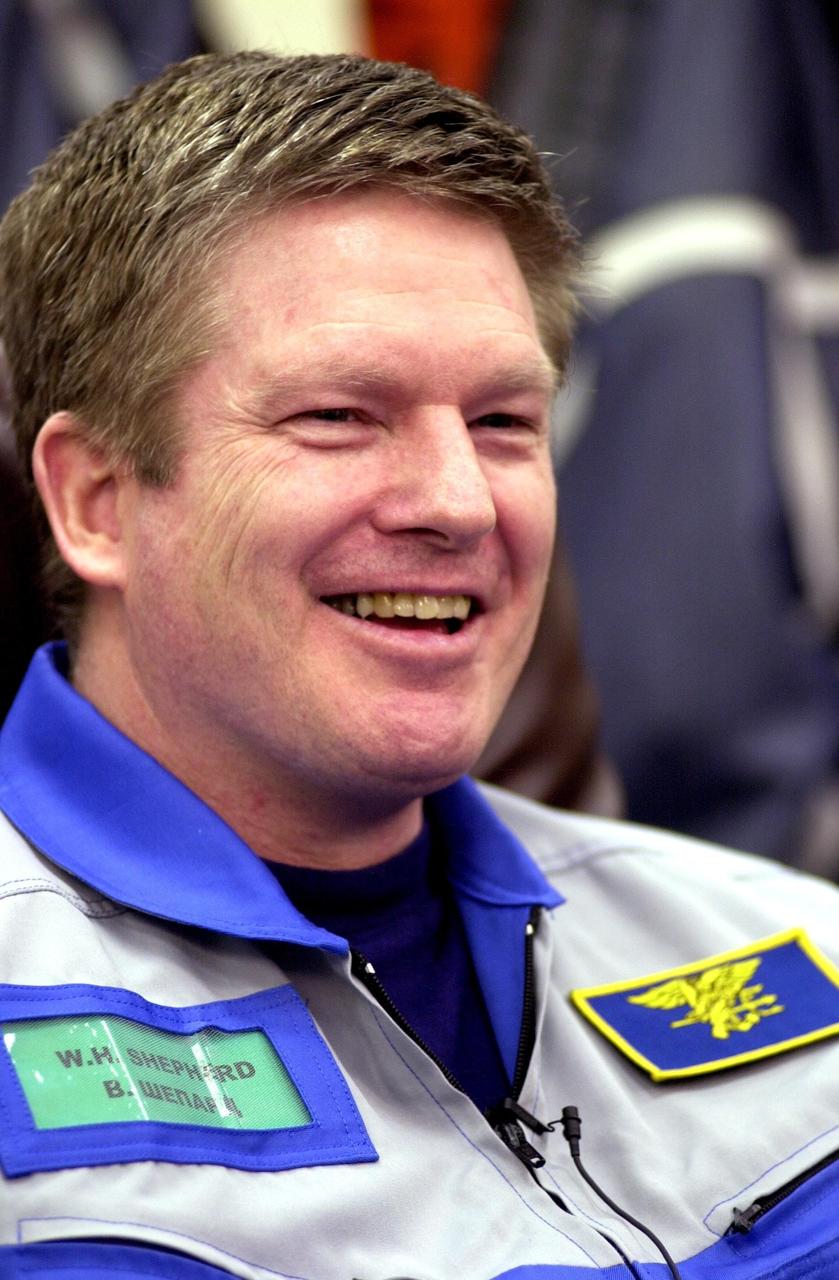
Bill Shepherd, commander of the International Space Station’s Expedition One crew who returned to Earth aboard Discovery, responds to a question during an interview. . The interview was held in the suitup room of the astronauts’ quarters in the Operations and Checkout Building upon the crew’s return after landing. Discovery returned from mission STS-102, landing at KSC March 21. Part of the STS-102 mission was to take the Expedition Two crew to the Space Station and exchange crews. Shepherd handed over command to cosmonaut Yury Usachev, who will reside on the Station for the next four months with astronauts Susan Helms and James Voss
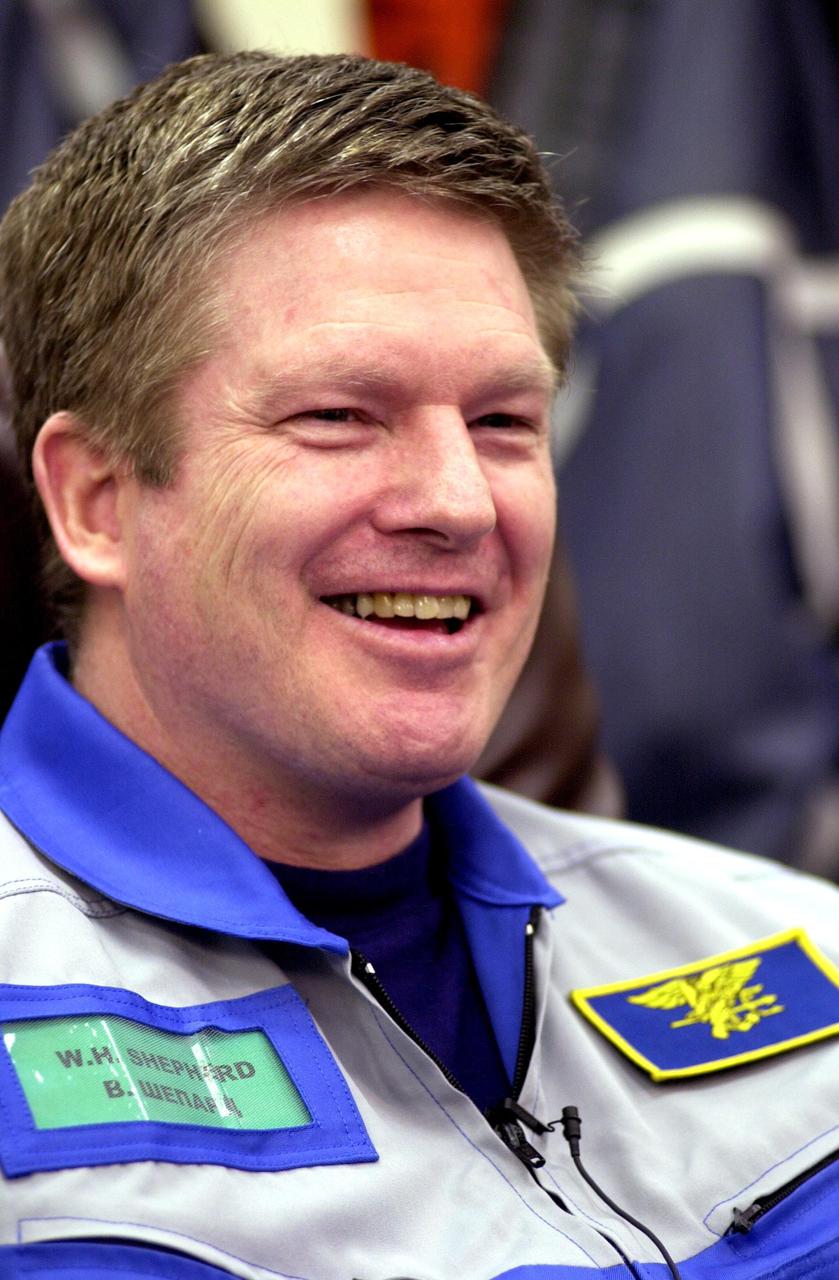
Bill Shepherd, commander of the International Space Station’s Expedition One crew who returned to Earth aboard Discovery, responds to a question during an interview. . The interview was held in the suitup room of the astronauts’ quarters in the Operations and Checkout Building upon the crew’s return after landing. Discovery returned from mission STS-102, landing at KSC March 21. Part of the STS-102 mission was to take the Expedition Two crew to the Space Station and exchange crews. Shepherd handed over command to cosmonaut Yury Usachev, who will reside on the Station for the next four months with astronauts Susan Helms and James Voss
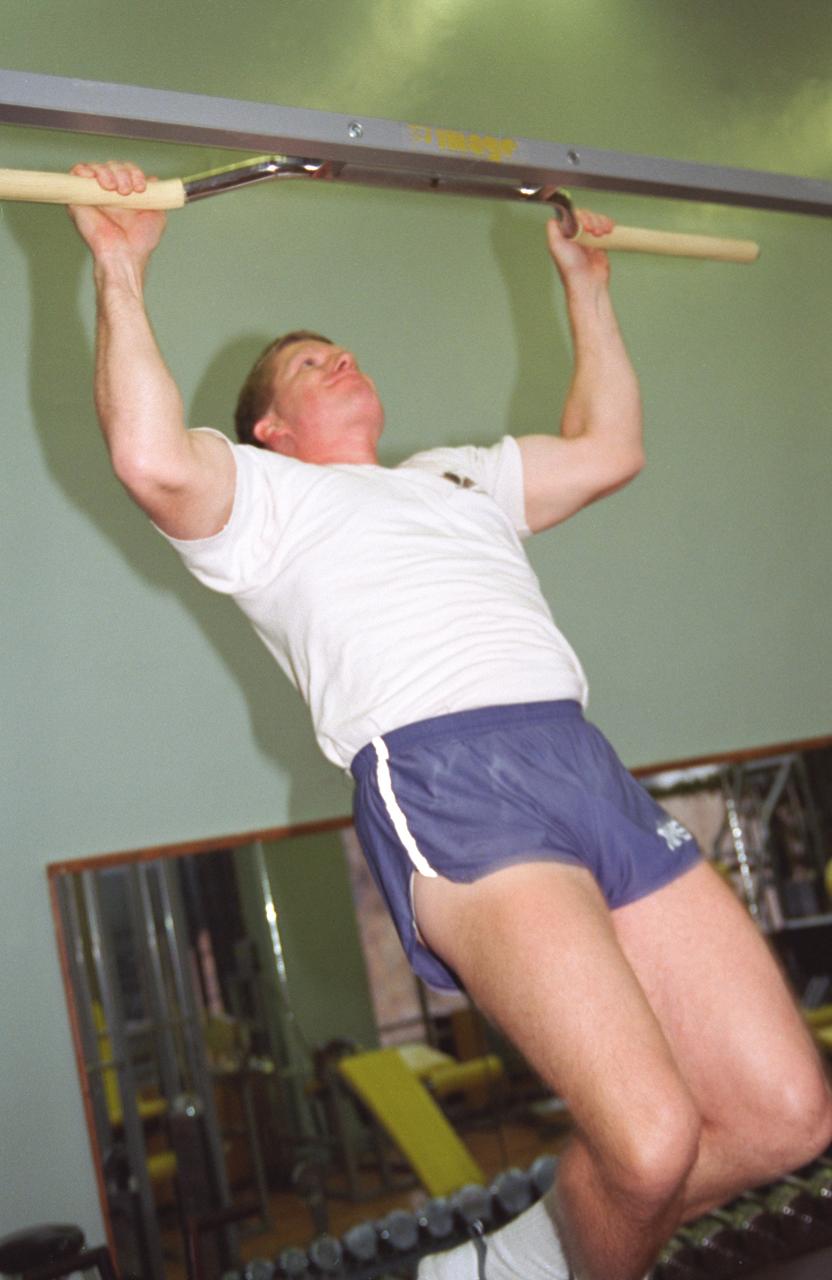
S96-17447 (October 1996) --- Astronaut William M. Shepherd, Expedition One commander, works out in a gymnasium at the Gagarin Cosmonaut Training Center in Russia. The crew has been in training for the mission since late 1996 with training segments held in both the United States and Russia.
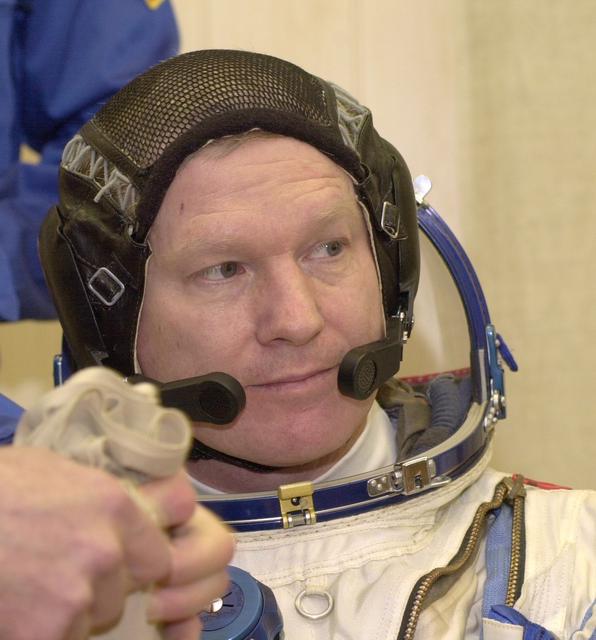
JSC2000-E-27083 (20 October 2000) --- Expedition 1 commander William M. (Bill) Shepherd gets help with his Sokol suit prior to a simulation at Baikonur. Out of frame are Soyuz pilot Yuri P. Gidzenko and flight engineer Sergei K. Krikalev.
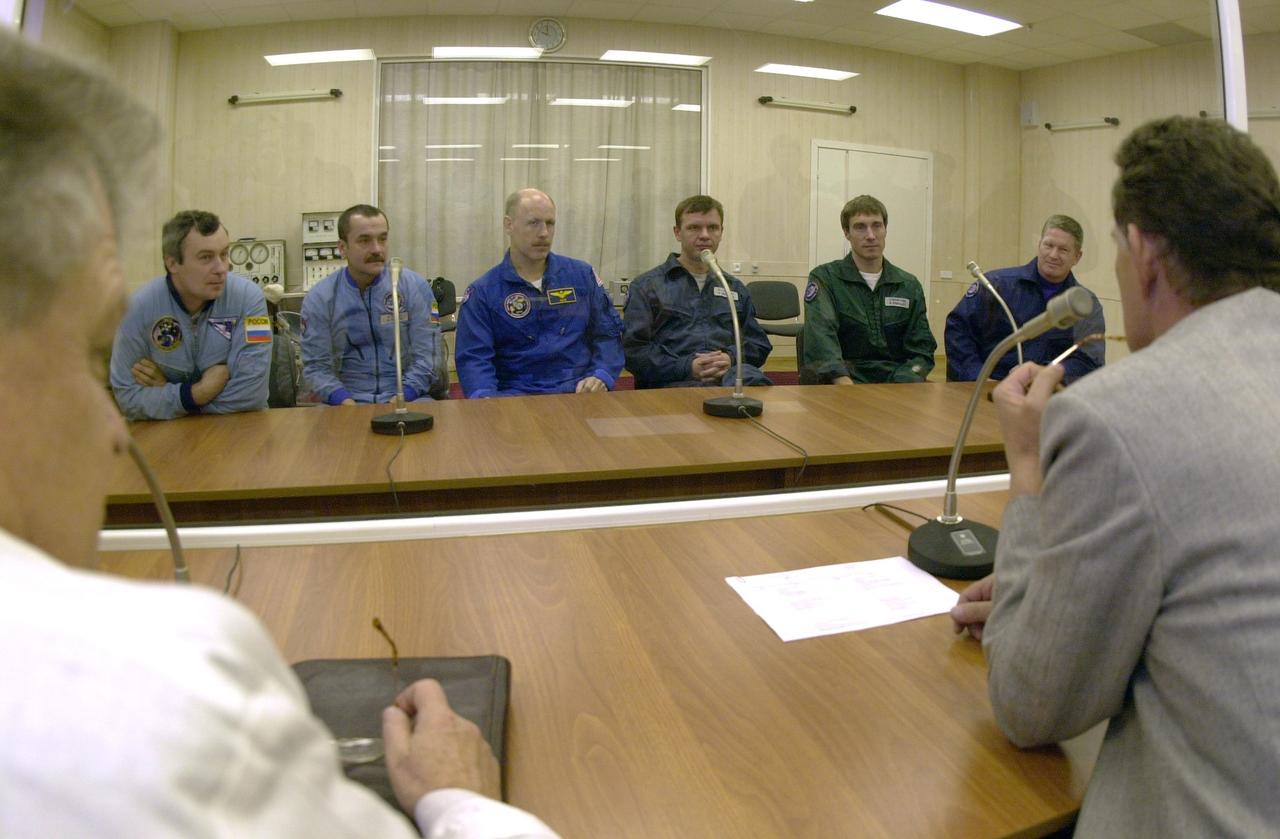
JSC2000-E-27080 (20 October 2000) --- In background, from left, Vladimir N. Dezhurov, Mikhail Turin, Kenneth D. Bowersox, Yuri P. Gidzenko, Sergei K. Krikalev and William M. (Bill) Shepherd, the backup and prime crew members for Expedition One, during conference prior to simulation at Baikonur complex in Kazakhstan.
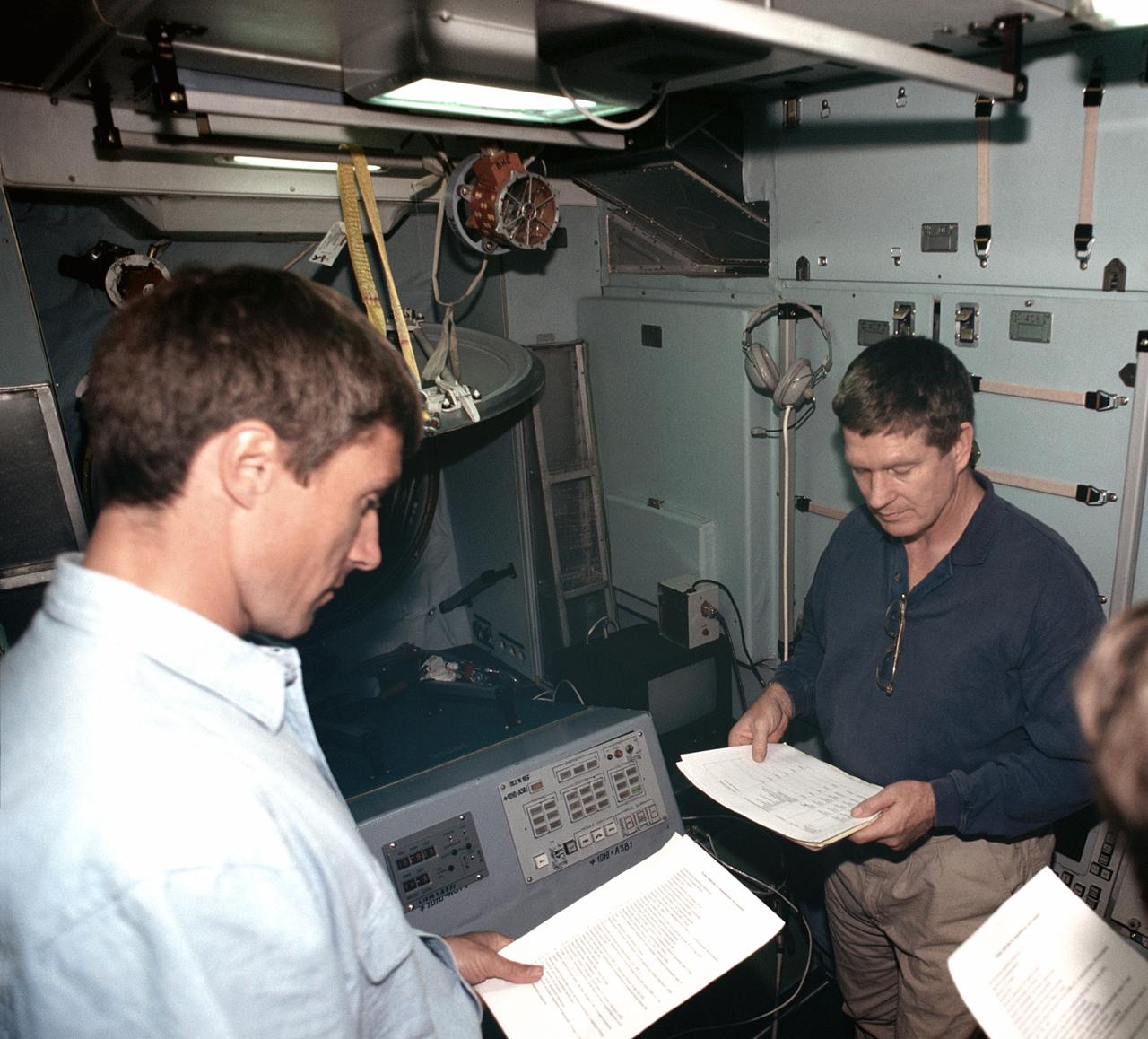
JSC2000-E-18634 (June 2000) --- Astronaut William Shepherd (right) mission commander for ISS Expedition One,and Sergei Krikalev, flight engineer, participate in a training session in a trainer/mockup of the Zvezda Service Module at the Gagarin Cosmonaut Training Center in Russia. Cosmonaut Yuri Gidzenko, Soyuz commander, is out of frame at right.
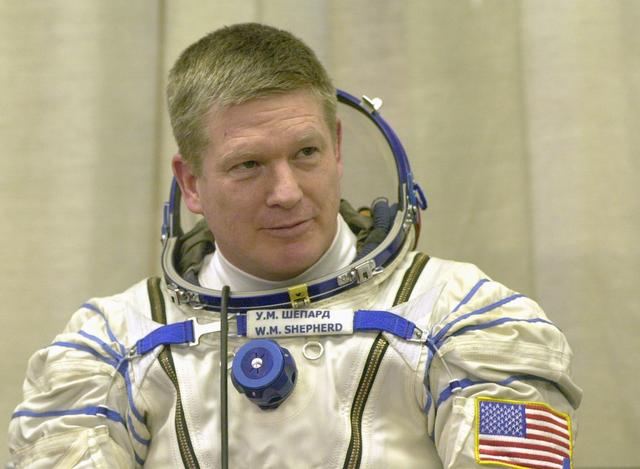
JSC2000-E-27086 (20 October 2000) --- Expedition 1 commander William M. (Bill) Shepherd, wearing a Sokol suit, awaits a seat check for the Soyuz spacecraft at Baikonur. Out of frame are Soyuz pilot Yuri P. Gidzenko and flight engineer Sergei K. Krikalev.
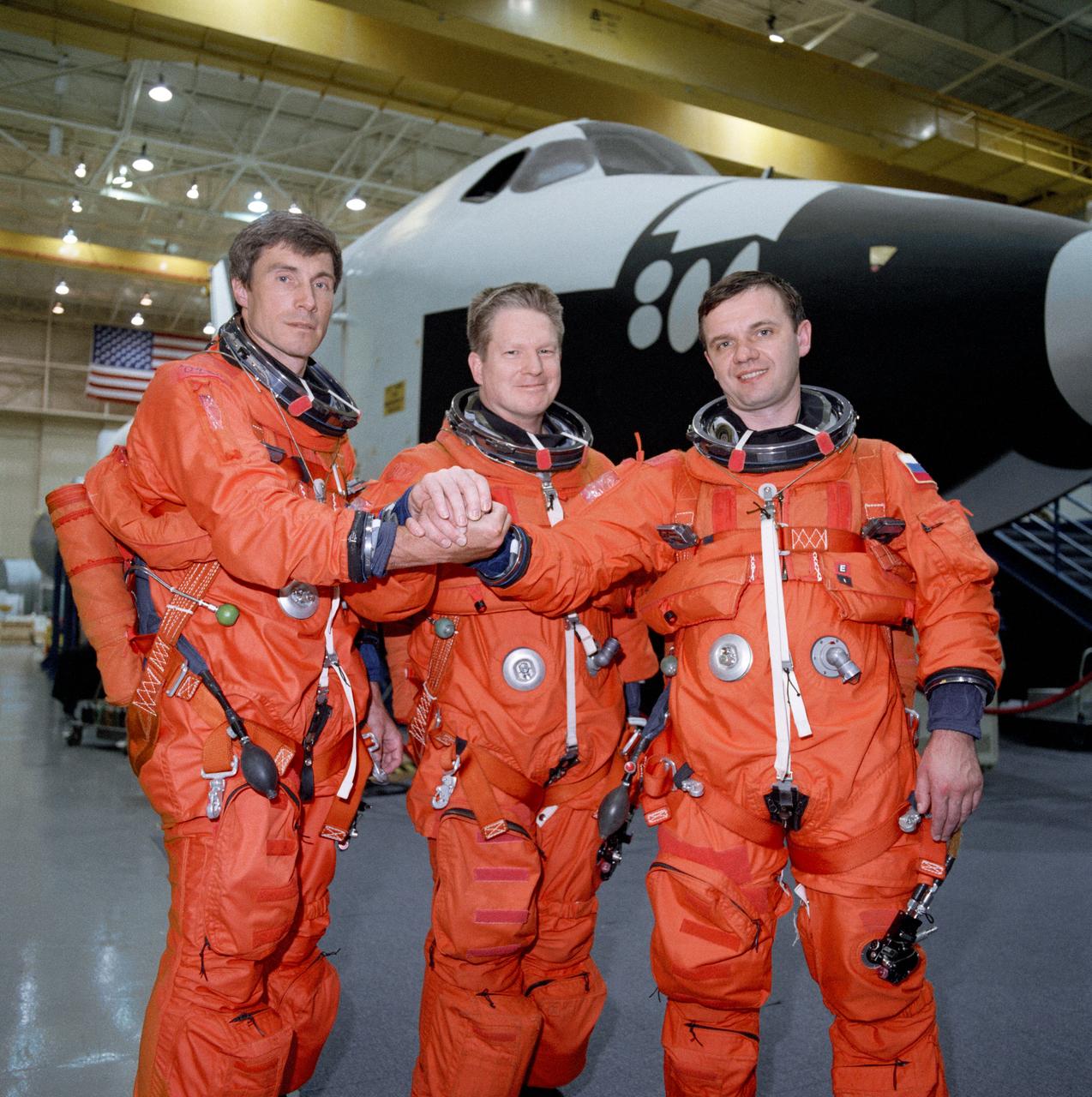
Photographic documentation showing the first crew of the ISS posing together in bldg. 9N during descent training, wearing orange Launch & Entry Suits (LES) and clasping right hands in a sign of unity. From left to right: Sergei Krikalev, William Shepherd and Yuri Gidzenko.
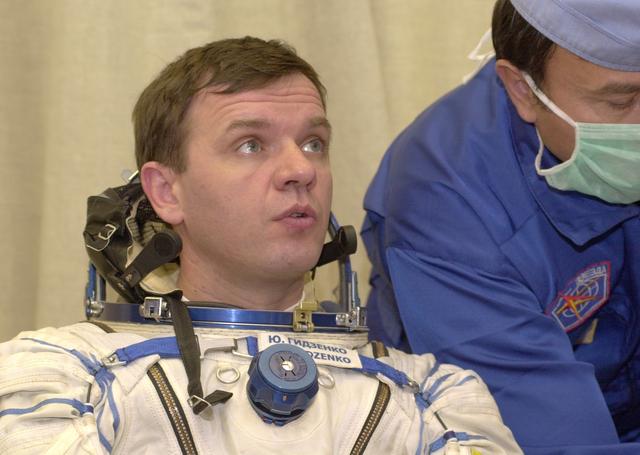
JSC2000-E-27084 (20 October 2000) --- Expedition 1 Soyuz commander Yuri P. Gidzenko, wearing a Sokol suit, gets help with his suit before entering the Soyuz spacecraft at Baikonur. Out of frame are Expedition 1 commander William M. (Bill) Shepherd and flight engineer Sergei K. Krikalev.
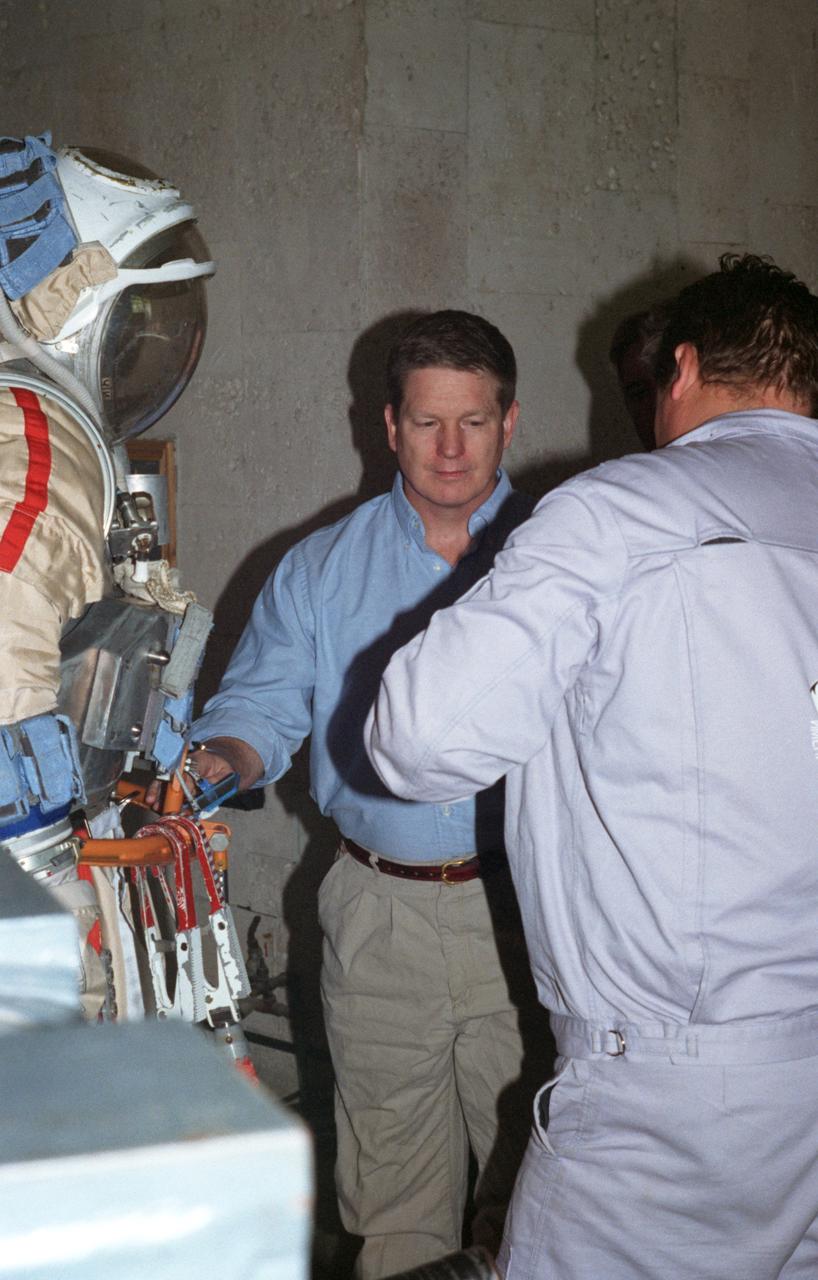
JSC2000-05376 (7 June 2000) --- Astronaut William Shepherd, mission commander for ISS Expedition One, is about to change from street clothes into an Orlan space suit in order to participate in an underwater spacewalk simulation in the Hydrolab facility at the Gagarin Cosmonaut Training Center in Russia.
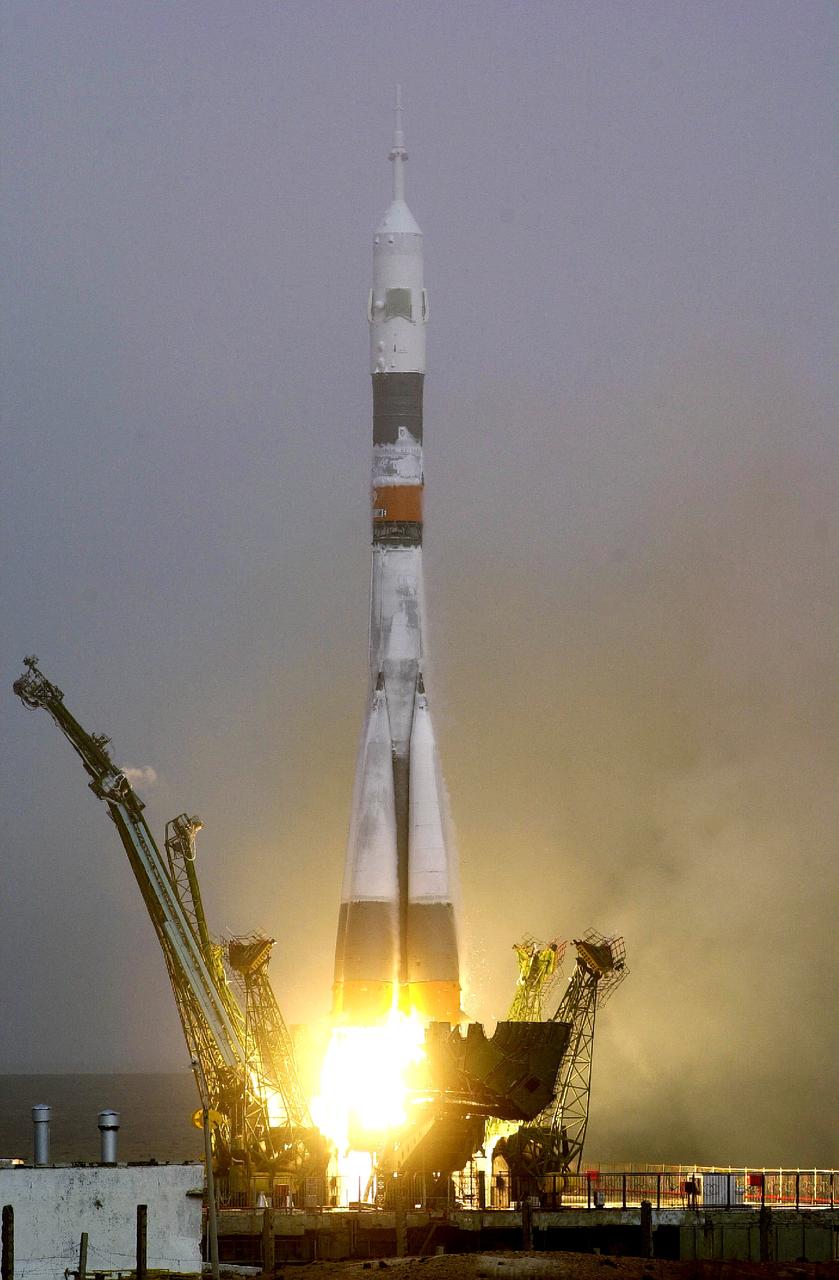
ISS01-S-006 (31 October 2000) --- A Soyuz spacecraft lifts off from the Baikonur Cosmodrome at 10:53 a.m. Kazakhstan time. Onboard were Expedition One commander William M. (Bill) Shepherd, Soyuz commander Yuri P. Gidzenko and Sergei K. Krikalev, flight engineer.
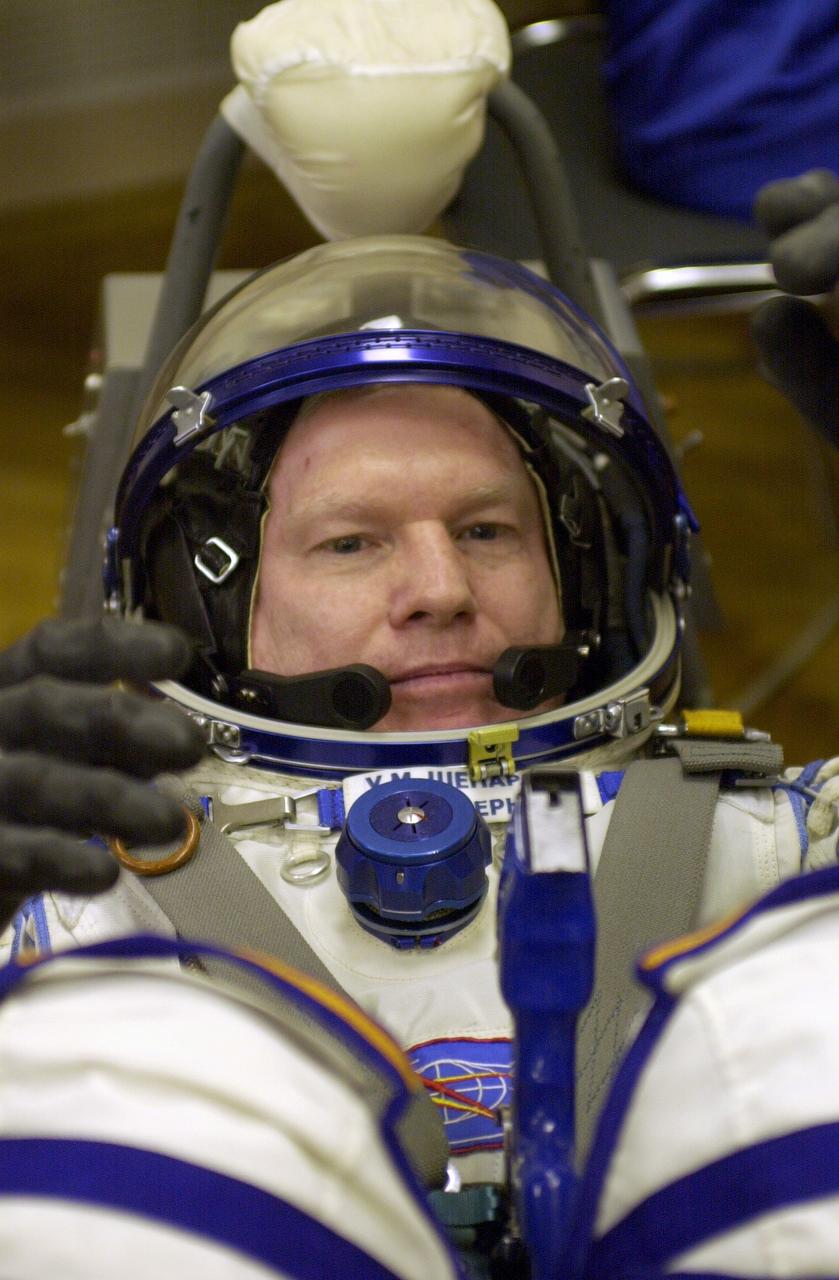
JSC2000-E-27088 (20 October 2000) --- Expedition 1 commander William M. (Bill) Shepherd, wearing a Sokol suit, secures his helmet during a suit-up "dry run" at Baikonur. Out of frame are Soyuz commander Yuri P. Gidzenko and flight engineer Sergei K. Krikalev.