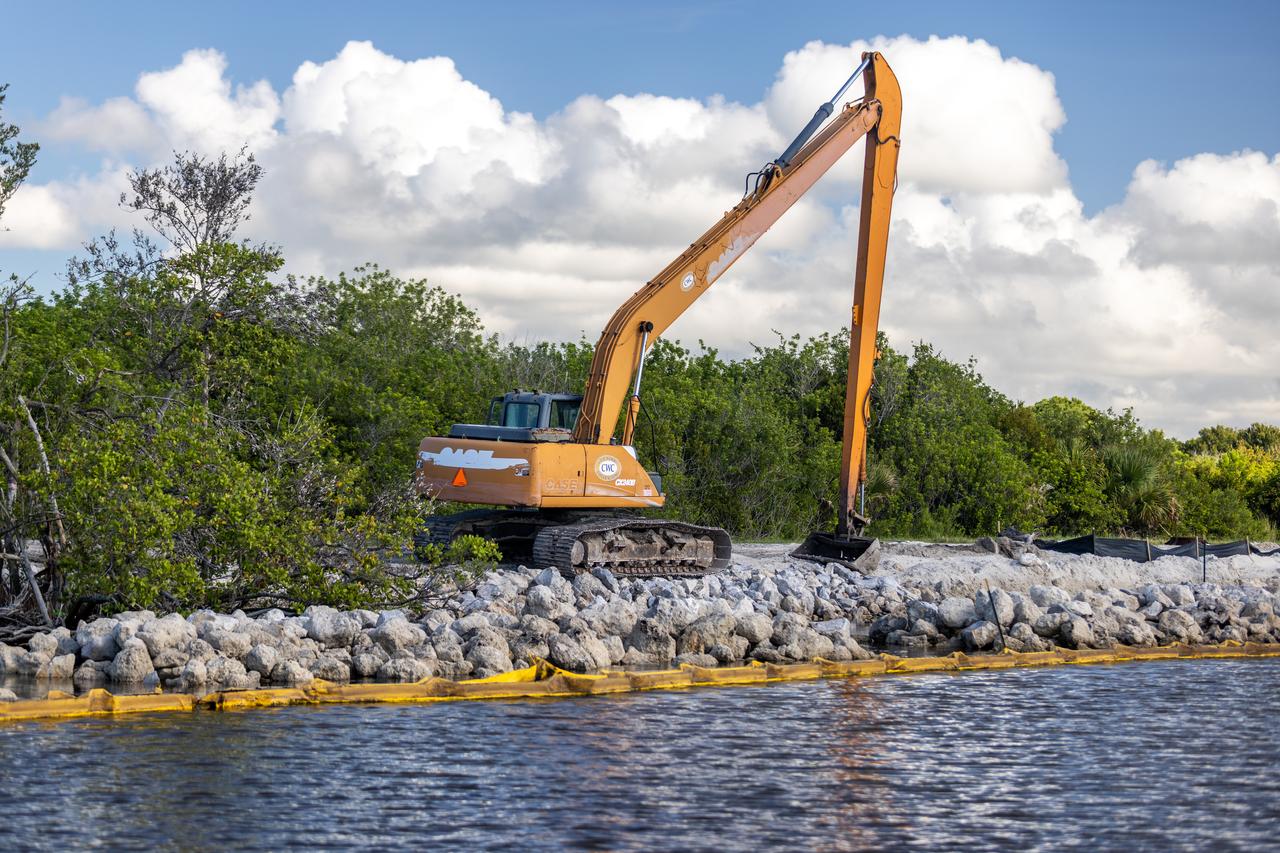
NASA Kennedy Space Center’s Spaceport Integration and Services organization is leading a restoration project at KARS Park on Hall Road in Merritt Island, Florida. As part of this project, a wavebreak is being created about 20 feet offshore to allow mangroves and other plants to propagate into the gap, providing protection for the shoreline.
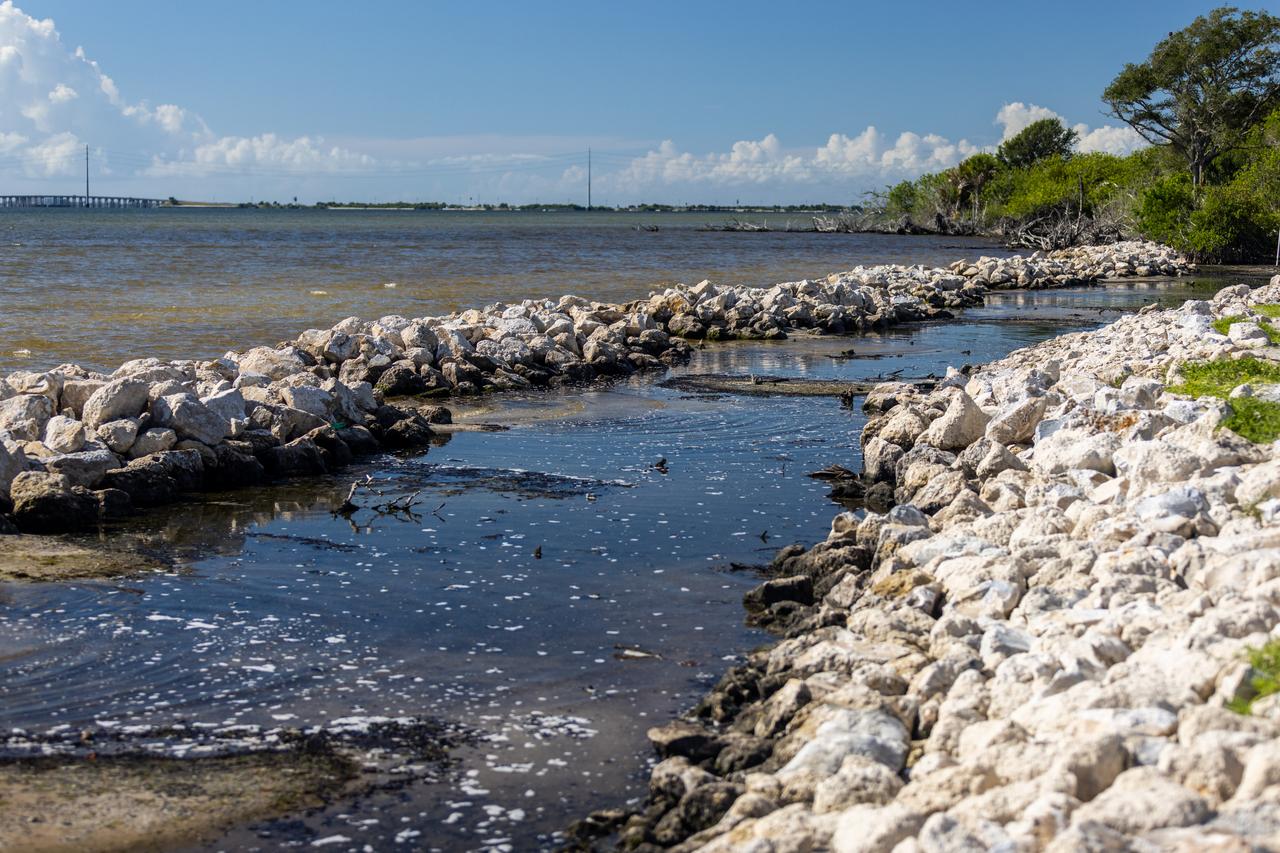
NASA Kennedy Space Center’s Spaceport Integration and Services organization is leading a restoration project at KARS Park on Hall Road in Merritt Island, Florida. As part of this project, a wavebreak is being created about 20 feet offshore to allow mangroves and other plants to propagate into the gap, providing protection for the shoreline.
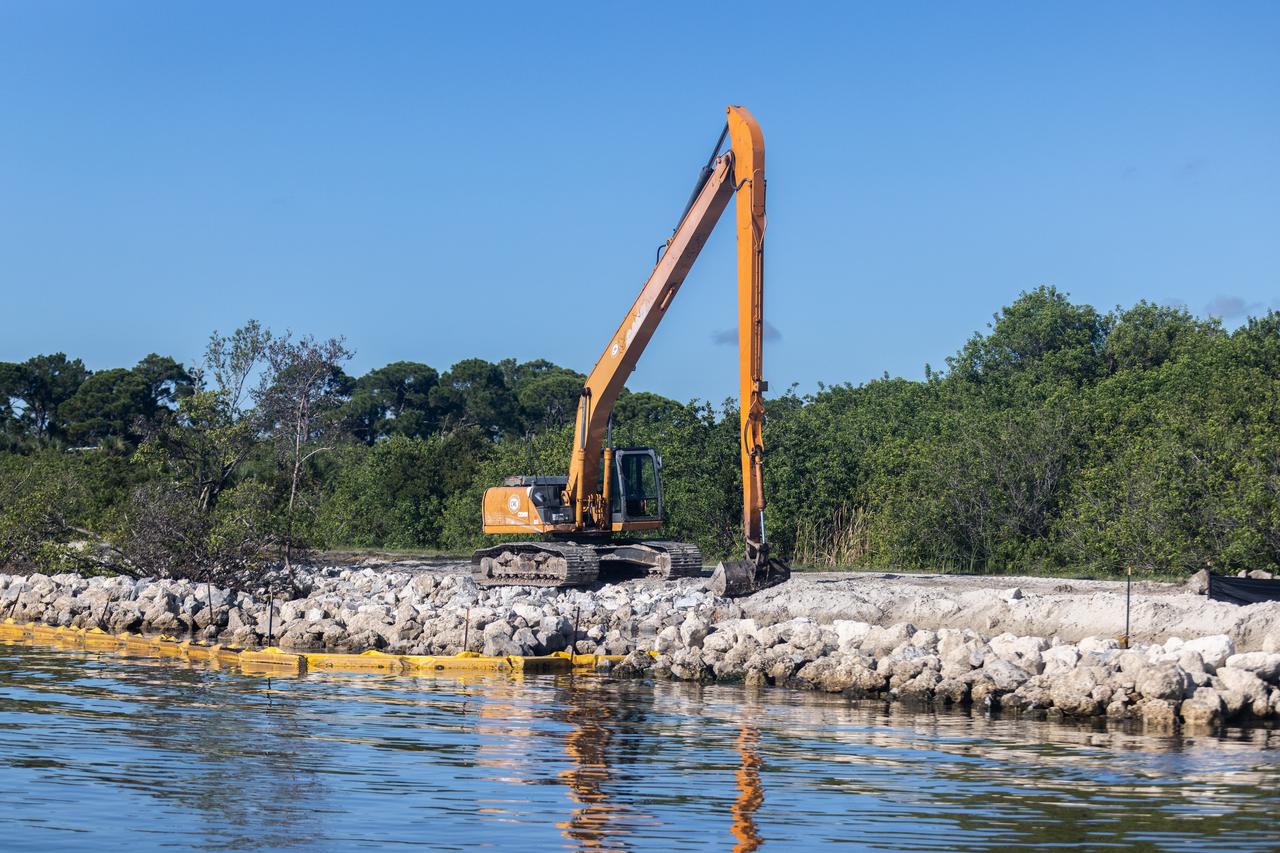
NASA Kennedy Space Center’s Spaceport Integration and Services organization is leading a restoration project at KARS Park on Hall Road in Merritt Island, Florida. As part of this project, a wavebreak is being created about 20 feet offshore to allow mangroves and other plants to propagate into the gap, providing protection for the shoreline.
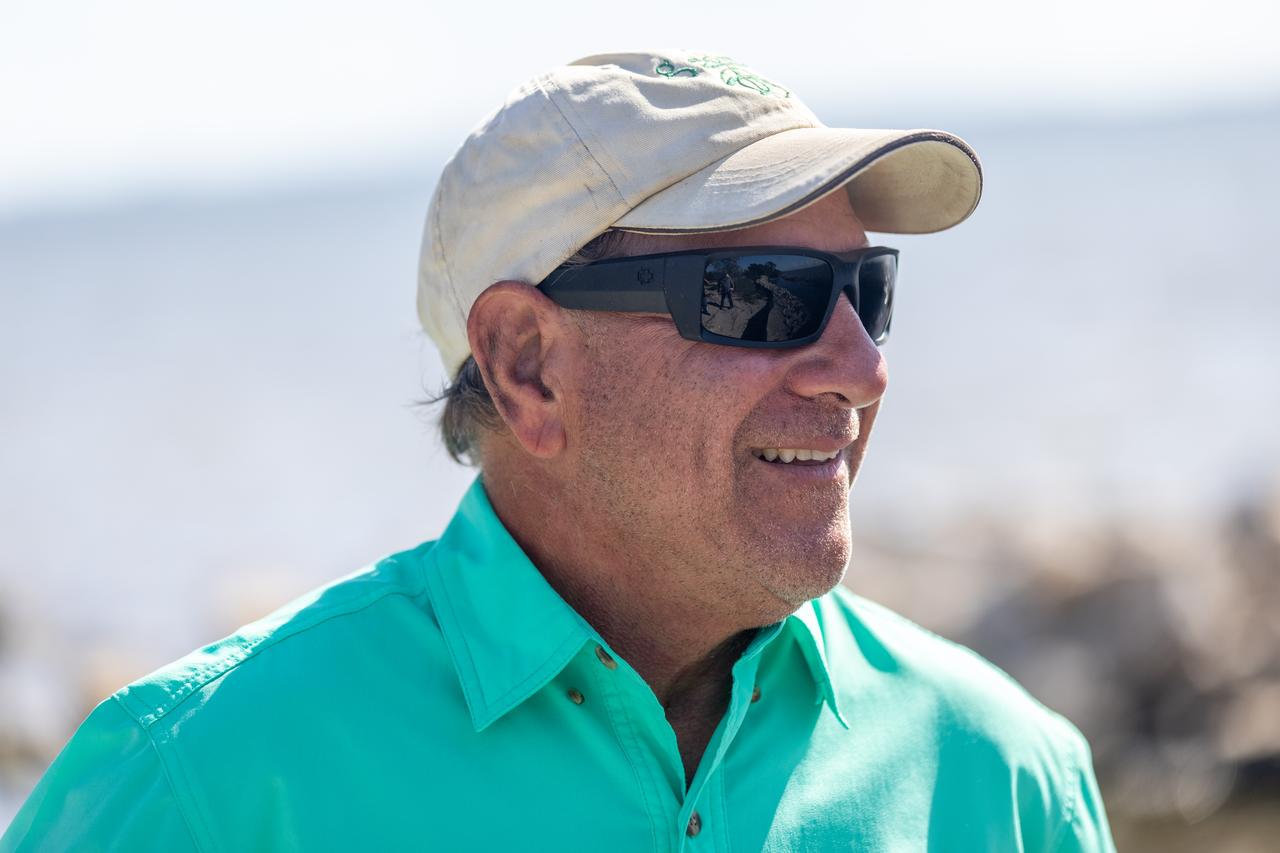
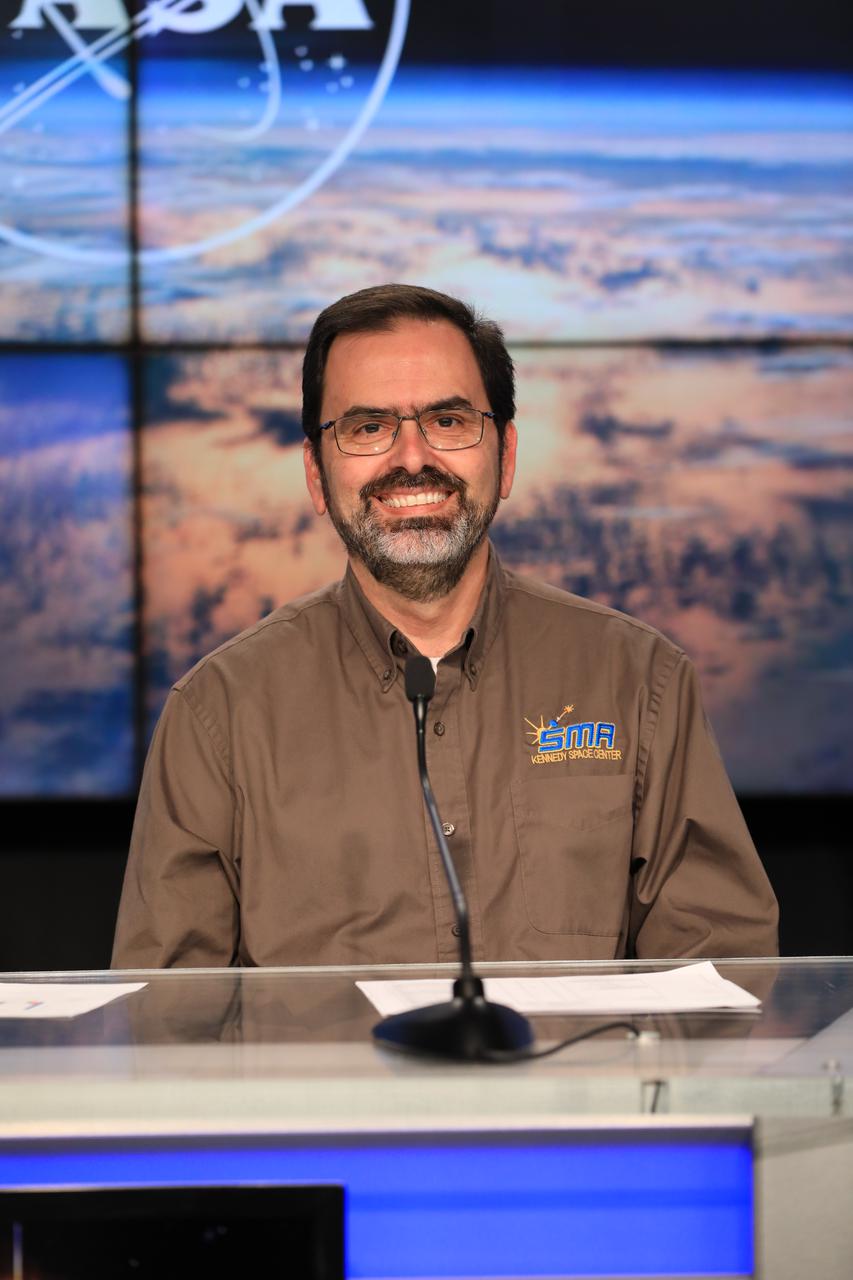
NASA Kennedy Space Center’s Spaceport Integration and Services organization is leading a restoration project at KARS Park on Hall Road in Merritt Island, Florida. As part of this project, a wavebreak is being created about 20 feet offshore to allow mangroves and other plants to propagate into the gap, providing protection for the shoreline. Shown here is Mark Mercadante, an environmental scientist at Kennedy.
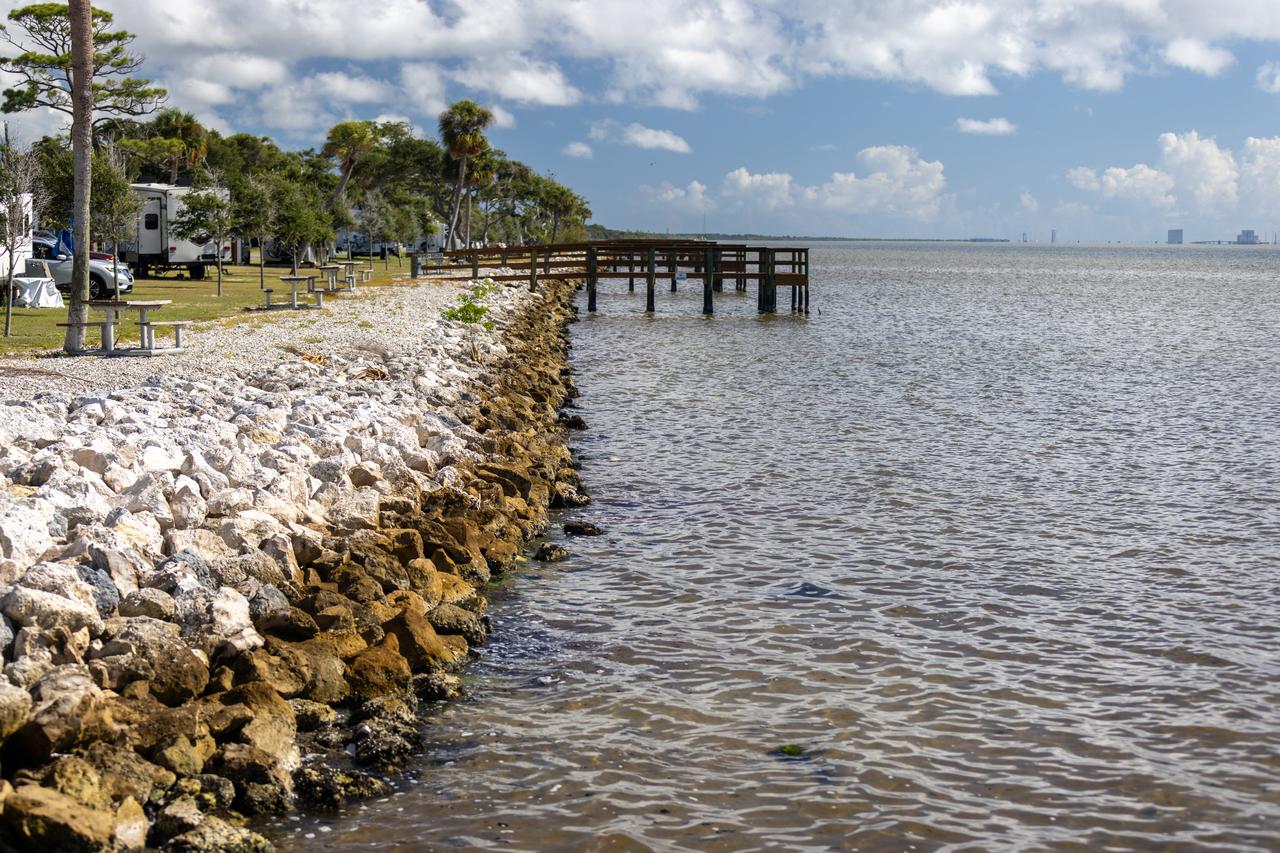
NASA Kennedy Space Center’s Spaceport Integration and Services organization is leading a restoration project at KARS Park on Hall Road in Merritt Island, Florida. As part of this project, a wavebreak is being created about 20 feet offshore to allow mangroves and other plants to propagate into the gap, providing protection for the shoreline. Shown here is the section of KARS park that was first completed during the project.
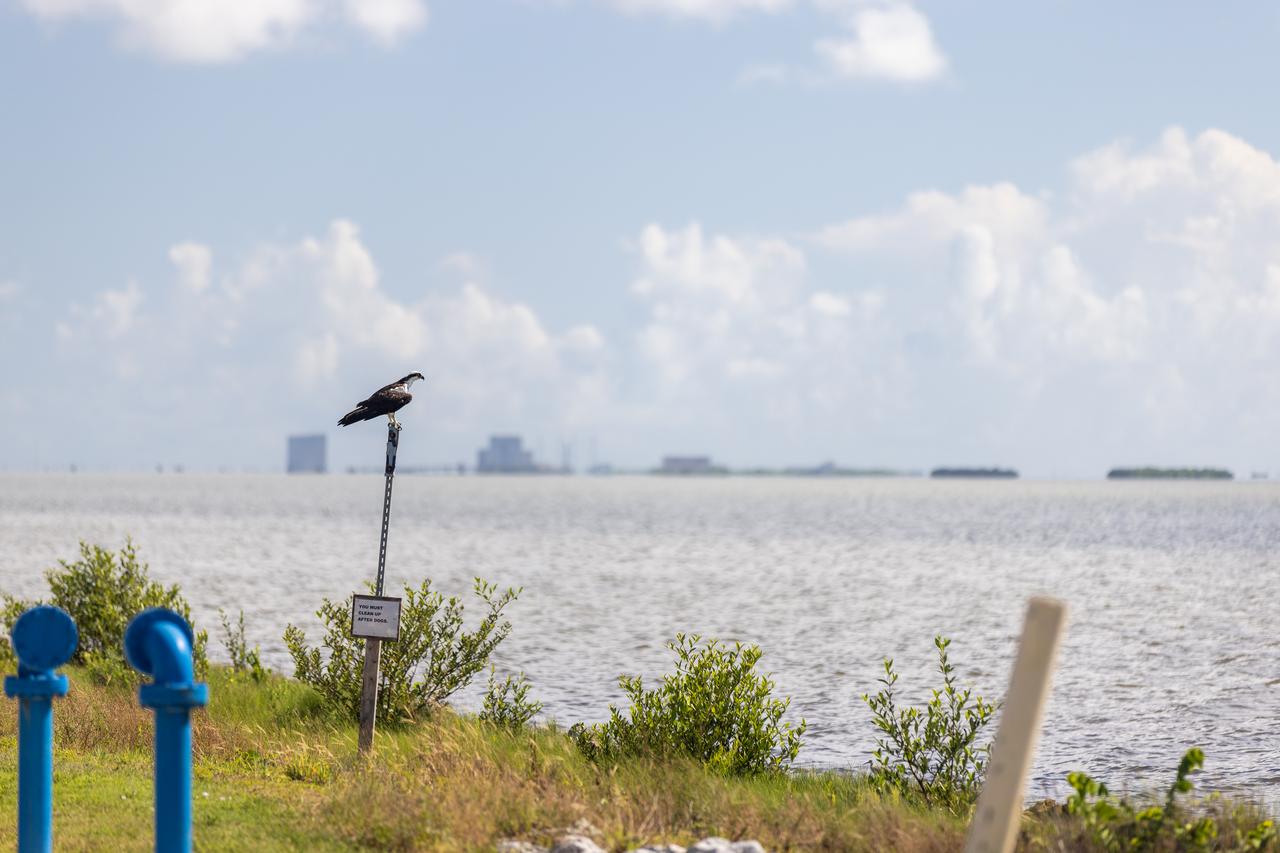
NASA Kennedy Space Center’s Spaceport Integration and Services organization is leading a restoration project at KARS Park on Hall Road in Merritt Island, Florida. As part of this project, a wavebreak is being created about 20 feet offshore to allow mangroves and other plants to propagate into the gap, providing protection for the shoreline. Shown here is an osprey overlooking the water.
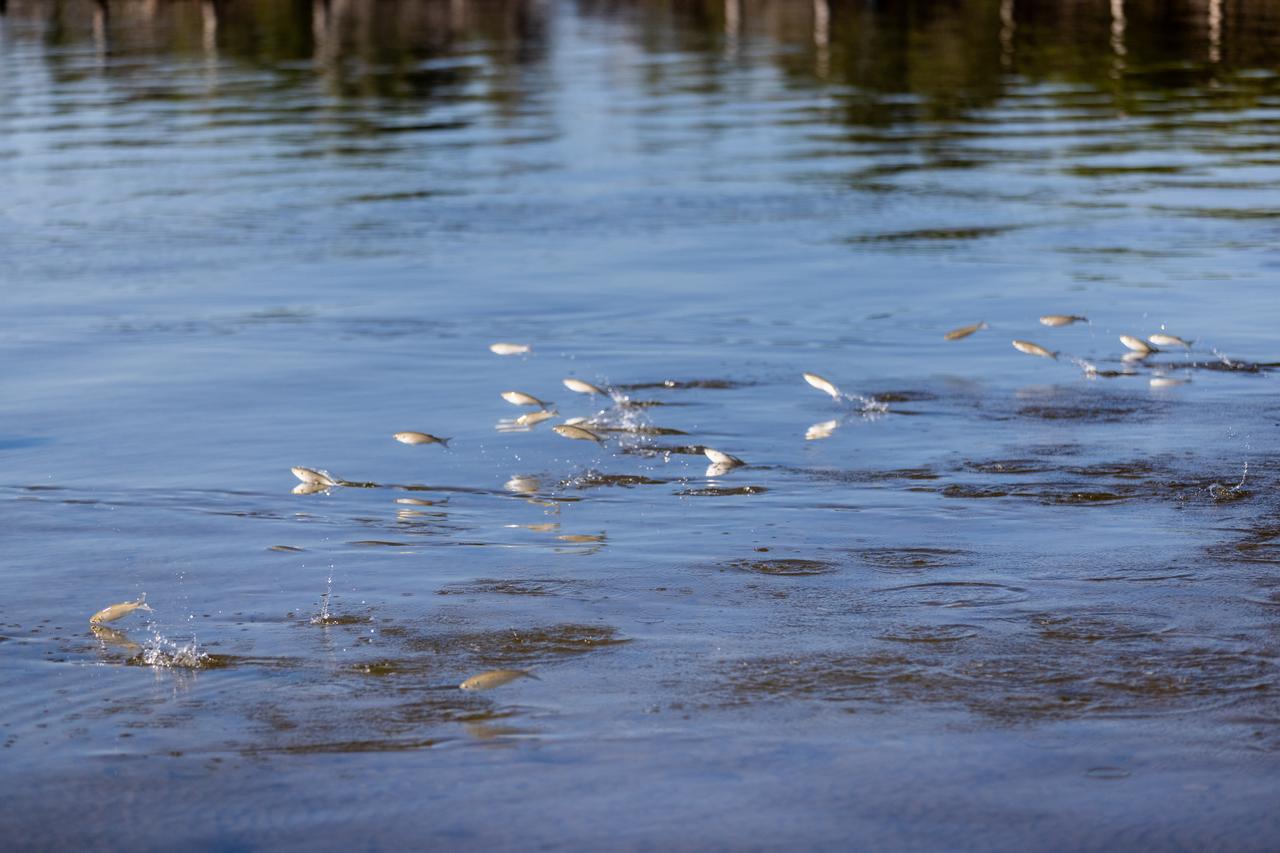
NASA Kennedy Space Center’s Spaceport Integration and Services organization is leading a restoration project at KARS Park on Hall Road in Merritt Island, Florida. As part of this project, a wavebreak is being created about 20 feet offshore to allow mangroves and other plants to propagate into the gap, providing protection for the shoreline. Shown here are mullet swimming at the location.
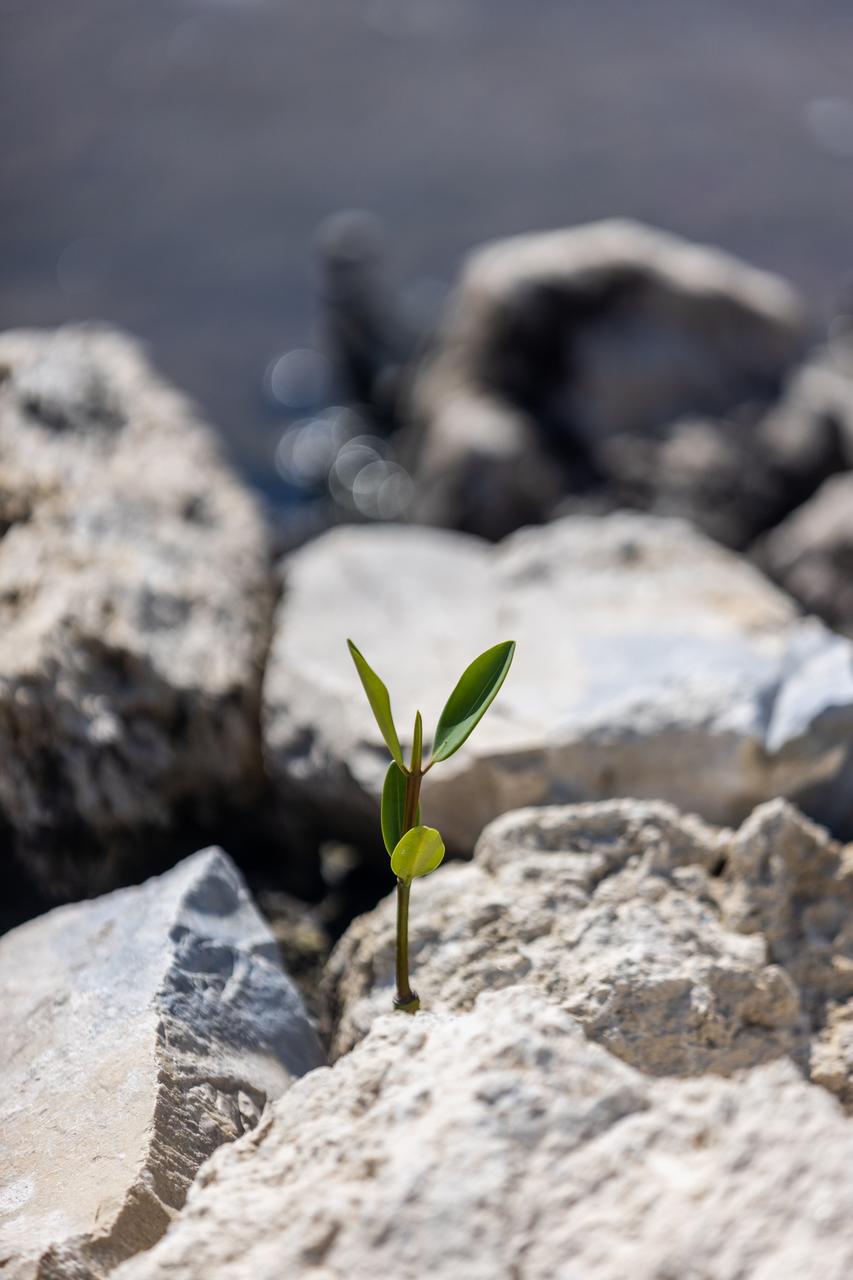
NASA Kennedy Space Center’s Spaceport Integration and Services organization is leading a restoration project at KARS Park on Hall Road in Merritt Island, Florida. As part of this project, a wavebreak is being created about 20 feet offshore to allow mangroves and other plants to propagate into the gap, providing protection for the shoreline. Shown in this photo is red mangrove starting to grow in the restoration area.
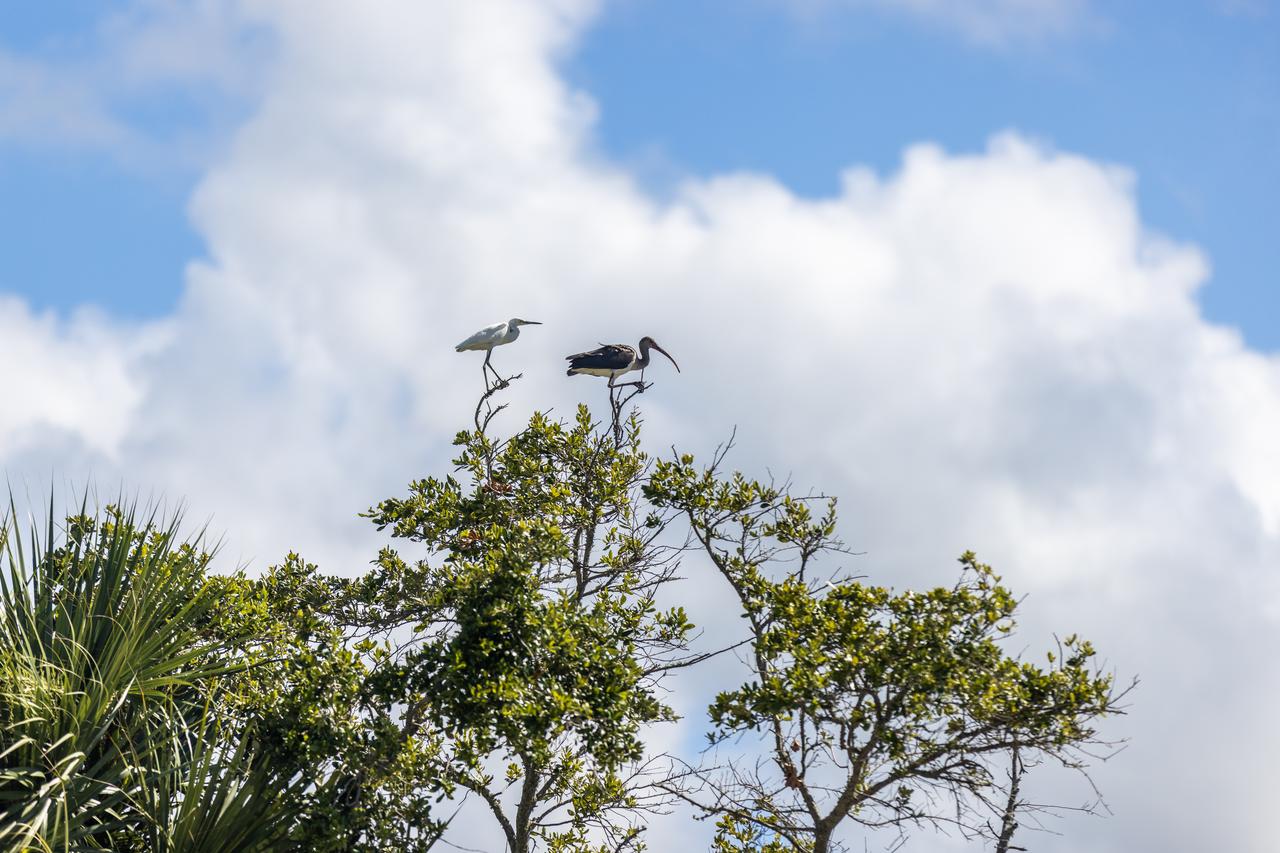
NASA Kennedy Space Center’s Spaceport Integration and Services organization is leading a restoration project at KARS Park on Hall Road in Merritt Island, Florida. As part of this project, a wavebreak is being created about 20 feet offshore to allow mangroves and other plants to propagate into the gap, providing protection for the shoreline. Show here in a tree are a snowy egret, left, and a limpkin.
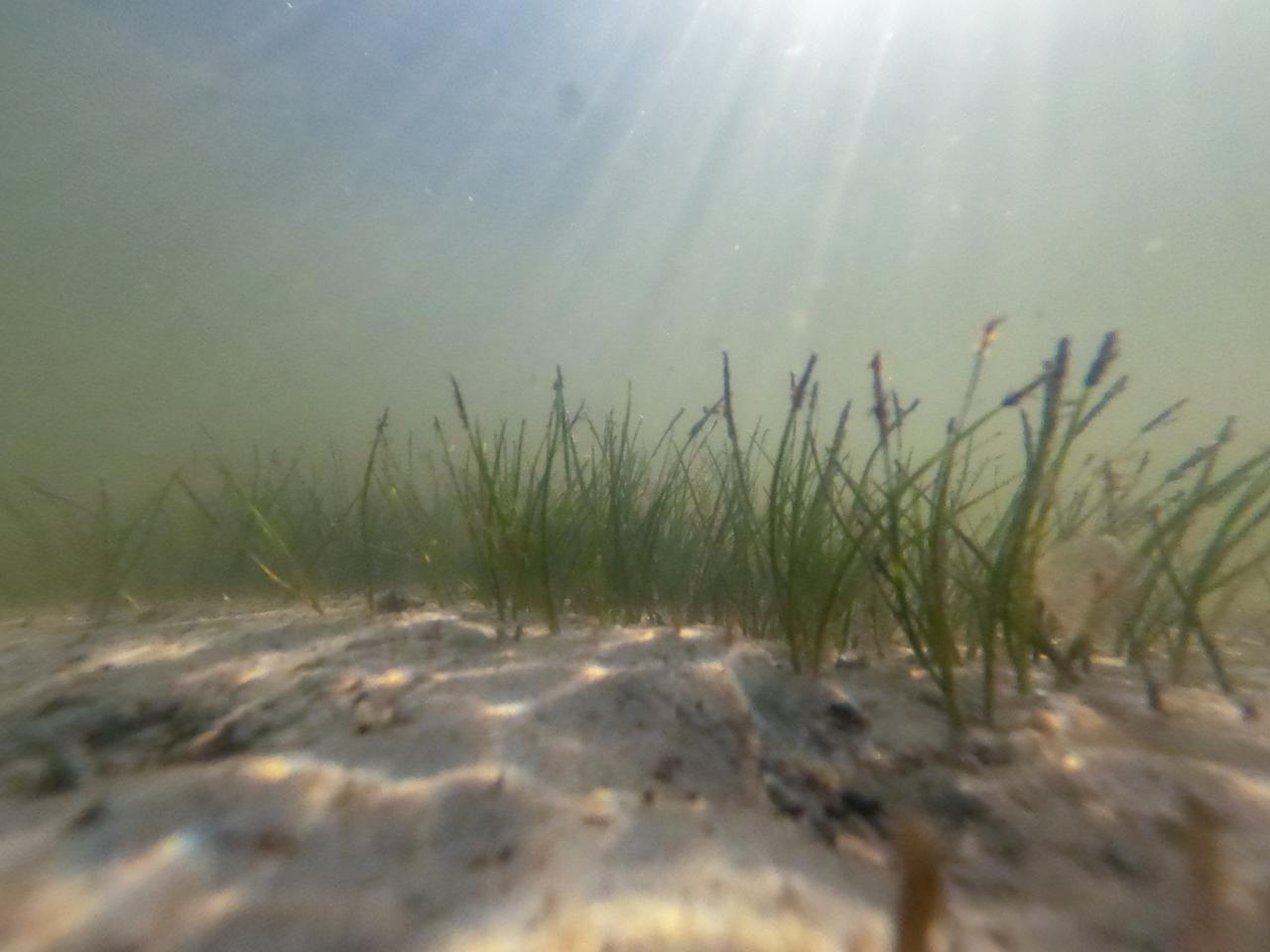
NASA Kennedy Space Center’s Spaceport Integration and Services organization is leading a restoration project at KARS Park on Hall Road in Merritt Island, Florida. As part of this project, a wavebreak is being created about 20 feet offshore to allow mangroves and other plants to propagate into the gap, providing protection for the shoreline. Shown here is shoalgrass taking hold in the restoration area.

Nancy Bray, director of Spaceport Integration and Services at NASA's Kennedy Space Center, left, is joined by Myrna Scott, center, and Dr. David Tipton, chief of Aerospace Medicine and Occupational Health, in cutting a ceremonial ribbon dedicating the Randal E. Scott Radiological Control Center at the Florida spaceport. Myrna Scott is the widow of Randy Scott, who was a professional health physicist of more than 40 years. He served as the Florida spaceport's Radiation Protection Officer for 14 years until his death June 17, 2016.

Nancy Bray, director of Spaceport Integration and Services at NASA's Kennedy Space Center, left, is joined by Myrna Scott, center, and Dr. David Tipton, chief of Aerospace Medicine and Occupational Health, in cutting a ceremonial ribbon dedicating the Randal E. Scott Radiological Control Center at the Florida spaceport. Myrna Scott is the widow of Randy Scott, who was a professional health physicist of more than 40 years. He served as the Florida spaceport's Radiation Protection Officer for 14 years until his death June 17, 2016.

Nancy Bray, director of Spaceport Integration and Services at NASA's Kennedy Space Center, left, is joined by Myrna Scott, center, and Dr. David Tipton, chief of Aerospace Medicine and Occupational Health, in cutting a ceremonial ribbon dedicating the Randal E. Scott Radiological Control Center at the Florida spaceport. Myrna Scott is the widow of Randy Scott, who was a professional health physicist of more than 40 years. He served as the Florida spaceport's Radiation Protection Officer for 14 years until his death June 17, 2016.
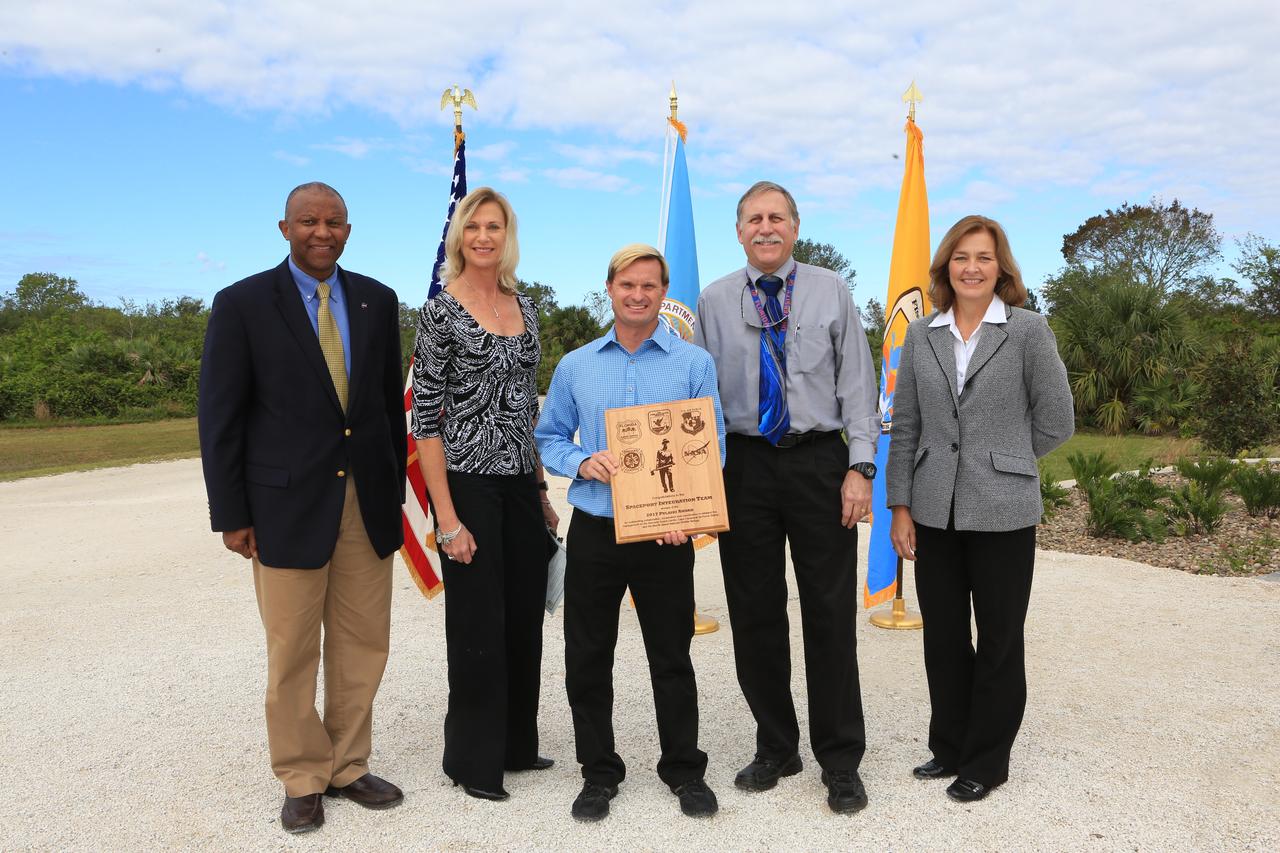
NASA's Kennedy Space Center Associate Director Kelvin Manning, left, and representatives from Kennedy's Spaceport Integration and Services pose for a portrait following a ceremony Nov. 1 on the Merritt Island National Wildlife Refuge in Florida. Next to Manning are, from left, Nancy Bray, director; William Heidtman, Spaceport Integrator; Dan Tweed, deputy director, Technical; and Jean Flowers, chief, Customer Services and Integration Branch. During the joint ceremony, the Spaceport Integration Team and its partners were presented with the prestigious 2017 Pulaski Award and a new memorial marker was dedicated. The multi-agency team includes representatives from NASA's Kennedy Space Center, Cape Canaveral Air Force Station's 45th Space Wing, the Merritt Island National Wildlife Refuge, as well as the Florida Forest Service and Brevard County Fire Rescue. The memorial marker honors two fallen firefighters, Scott Maness and Beau Sauselein, who died fighting a wildfire on space center property in 1981. Held outdoors, the ceremony was attended by 140 guests.
Director of Safety and Mission Assurance Ronnie Rodriguez participates in the Safety Starts With You Leadership Panel on Jan. 25, 2022, at NASA’s Kennedy Space Center in Florida. The panel discussion featured senior leaders from the spaceport addressing ways employees can focus on safely completing mission objectives in the new year. Other panelists included Kennedy Space Center Director Janet Petro, Director of Spaceport Integration and Services Nancy Bray, and Exploration Ground Systems Chief of Staff Sasha Sims.
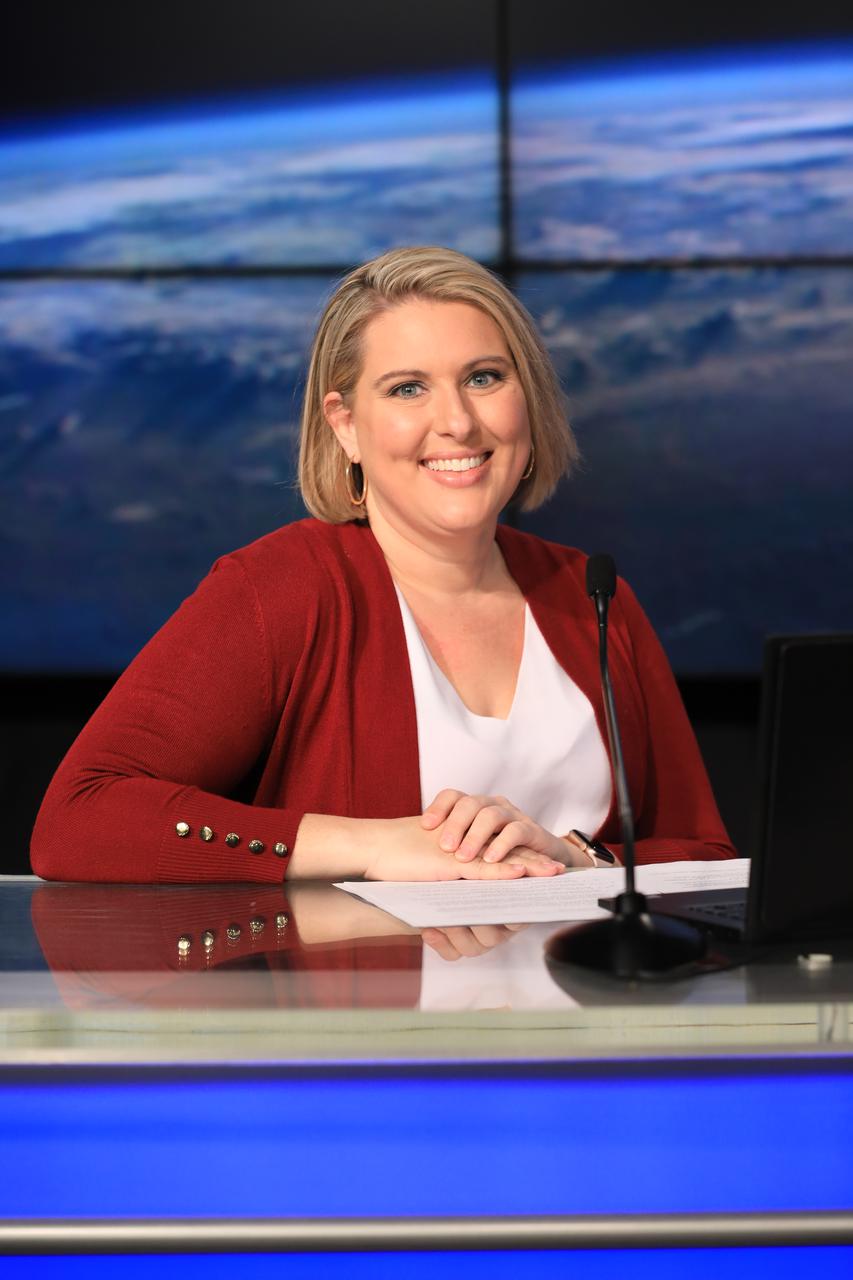
Leah Martin, NASA Communications, moderates the Safety Starts With You Leadership Panel on Jan. 25, 2022, at Kennedy Space Center in Florida. The panel discussion featured senior leaders from the spaceport addressing ways employees can focus on safely completing mission objectives in the new year. Panelists included Kennedy Space Center Director Janet Petro, Director of Safety and Mission Assurance Ronnie Rodriguez, Director of Spaceport Integration and Services Nancy Bray, and Exploration Ground Systems Chief of Staff Sasha Sims.
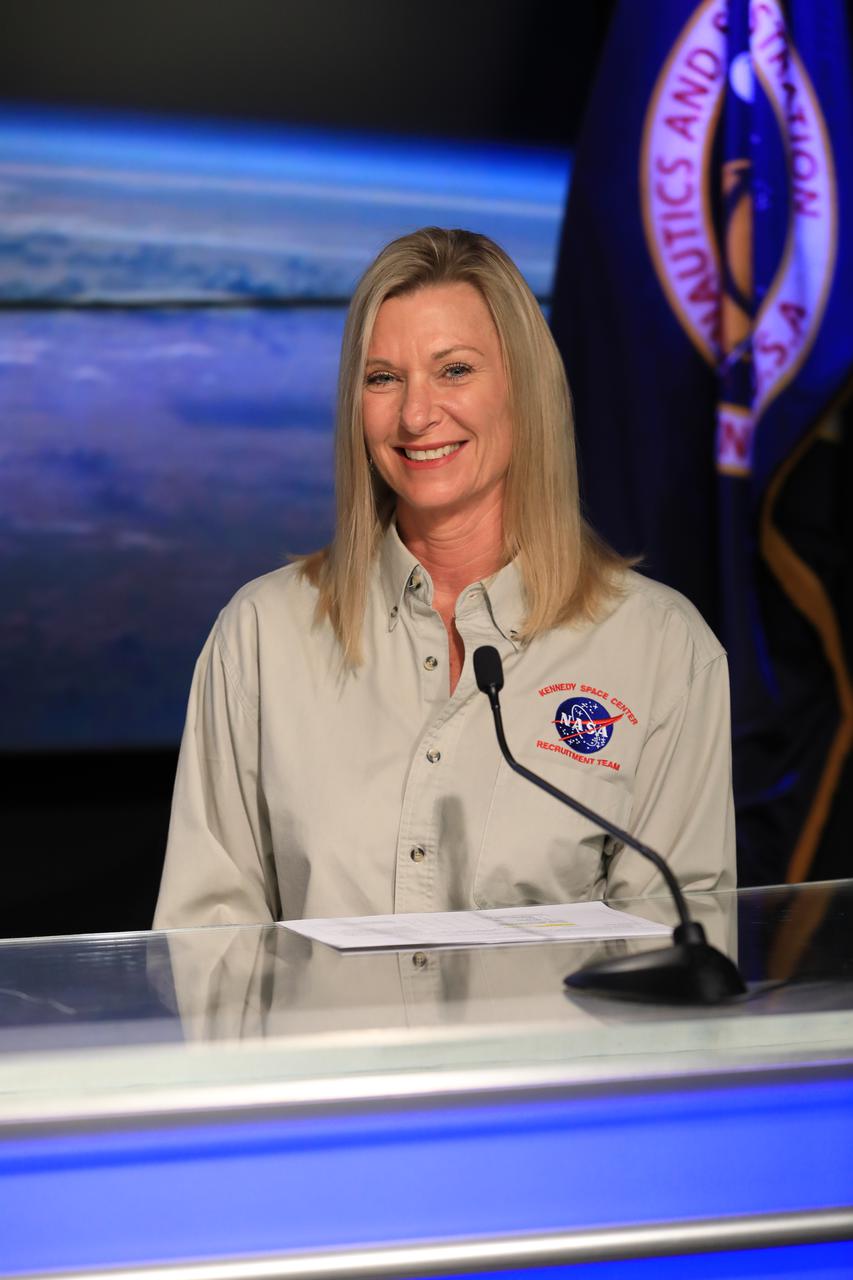
Director of Spaceport Integration and Services Nancy Bray participates in the Safety Starts With You Leadership Panel on Jan. 25, 2022, at NASA’s Kennedy Space Center in Florida. The panel discussion featured senior leaders from the spaceport addressing ways employees can focus on safely completing mission objectives in the new year. Other panelists included Kennedy Space Center Director Janet Petro, Director of KSC Safety and Mission Assurance Ronnie Rodriguez, and Exploration Ground Systems Chief of Staff Sasha Sims.
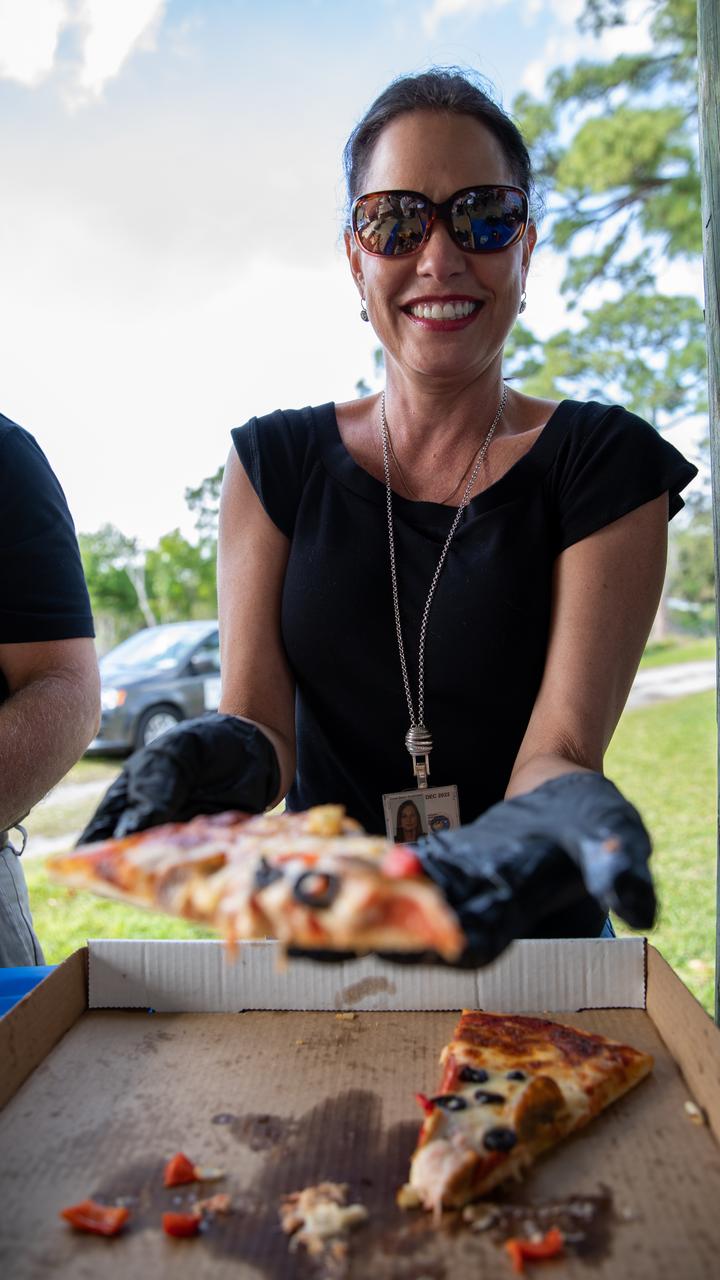
Maria Collura, deputy director of Spaceport Services and Integration at NASA’s Kennedy Space Center in Florida, is photographed serving pizza to Kennedy employees during a Safety and Health Days celebration at the spaceport’s KARS Park II on March 5, 2020. Taking place March 2 through March 6, Safety and Health Days provides Kennedy employees with a variety of presentations to attend – all of which focus on how to maintain a safe and healthy workforce.
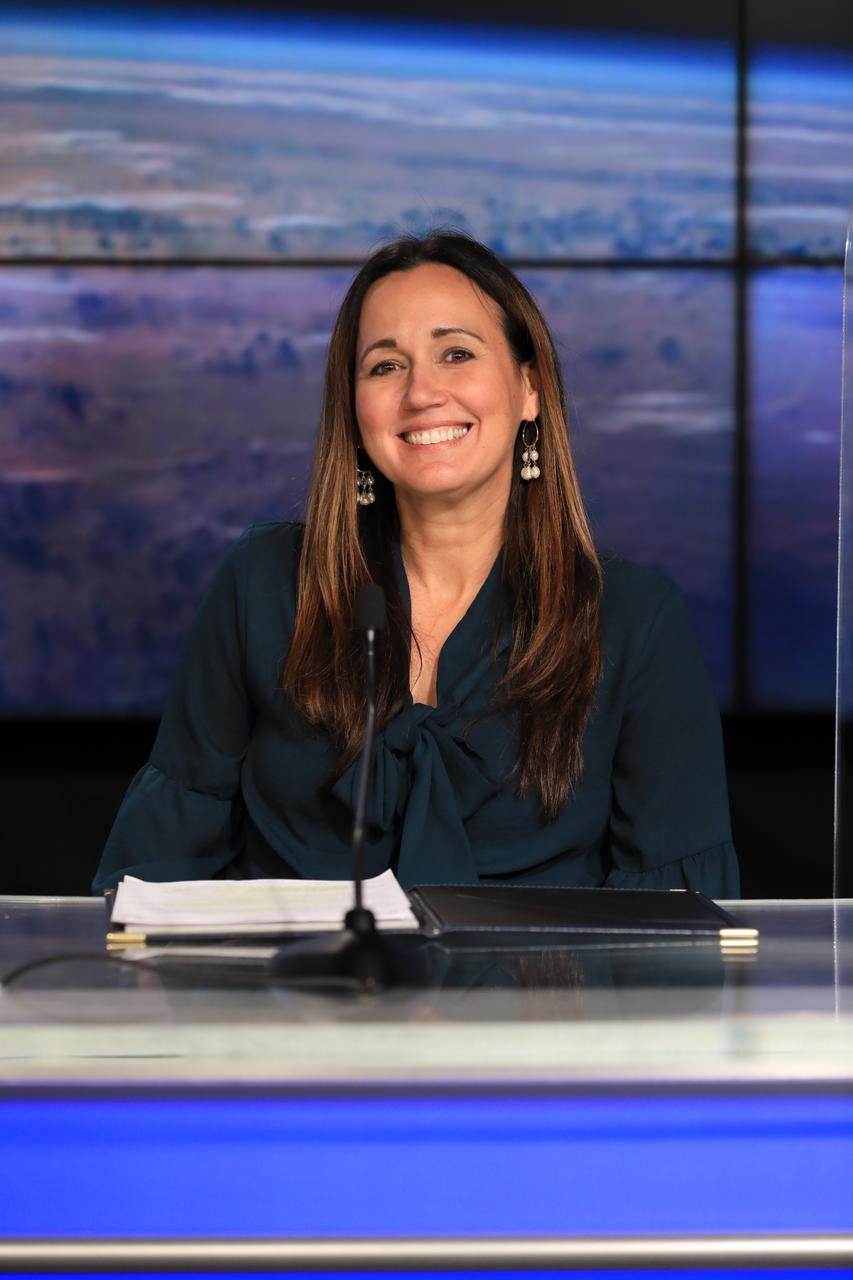
Exploration Ground Systems Chief of Staff Sasha Sims participates in the Safety Starts With You Leadership Panel on Jan. 25, 2022, at NASA’s Kennedy Space Center in Florida. The panel discussion featured senior leaders from the spaceport addressing ways employees can focus on safely completing mission objectives in the new year. Other panelists included Kennedy Space Center Director Janet Petro, Director of Safety and Mission Assurance Ronnie Rodriguez, and Director of Spaceport Integration and Services Nancy Bray.

Nancy Bray, director of Spaceport Integration and Services at NASA's Kennedy Space Center, speaks during ceremonies to name the Radiological Control Center in honor for Randy Scott. A professional health physicist of more than 40 years, Scott served as the Florida spaceport's Radiation Protection Officer for 14 years until his death June 17, 2016.
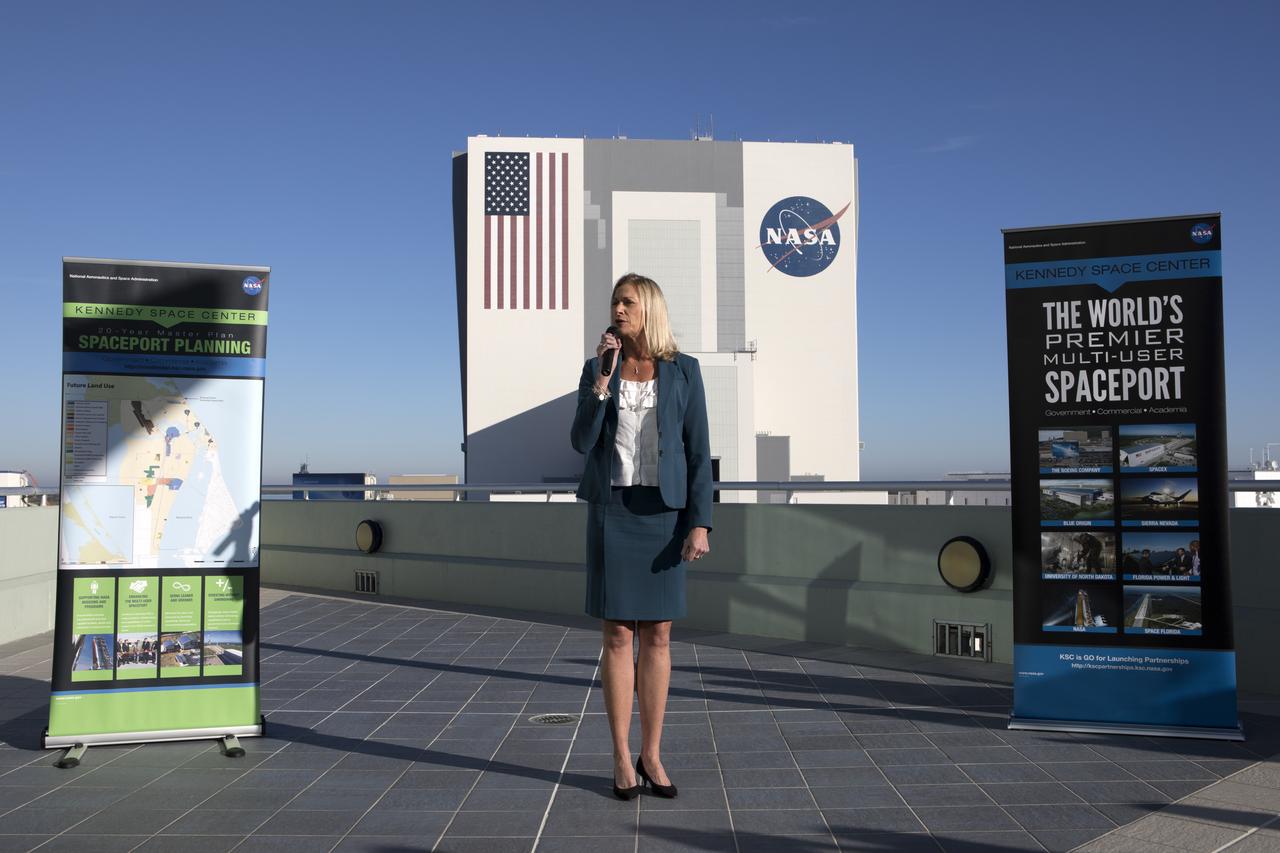
Nancy Bray, director of Spaceport Integration and Services at NASA's Kennedy Space Center, speaks to members of the news media on the balcony of Operations Support Building II describing the site's transition from a primarily government-only facility to a premier, multi-user spaceport. In the background is the Vehicle Assembly Building (VAB). Modifications were recently completed in the VAB where new work platforms were installed to support processing of NASA's Space Launch System rocket designed to send the Orion spacecraft on missions beyond low-Earth orbit.
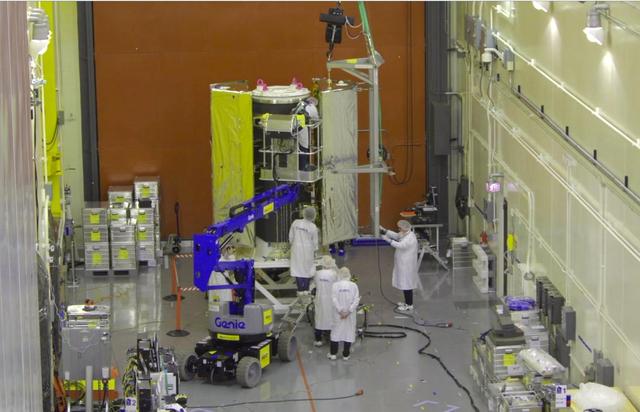
At the Harris Spaceport Systems facility at Vandenberg Air Force Base in California, the twin GRACE-FO satellites are integrated with the multi-satellite dispenser structure that will be used to deploy the satellites during launch on the SpaceX Falcon 9 launch vehicle. https://photojournal.jpl.nasa.gov/catalog/PIA22442
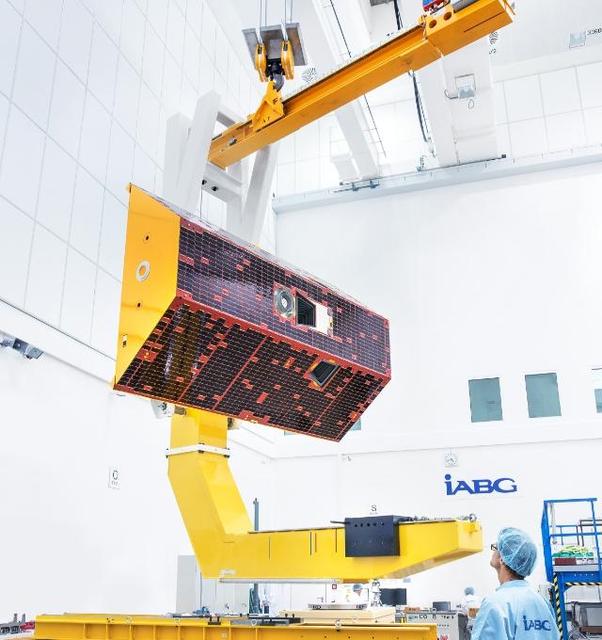
At the Harris Spaceport Systems facility at Vandenberg Air Force Base in California, the twin GRACE-FO satellites are integrated with the multi-satellite dispenser structure that will be used to deploy the satellites during launch on the SpaceX Falcon 9 launch vehicle. https://photojournal.jpl.nasa.gov/catalog/PIA22444
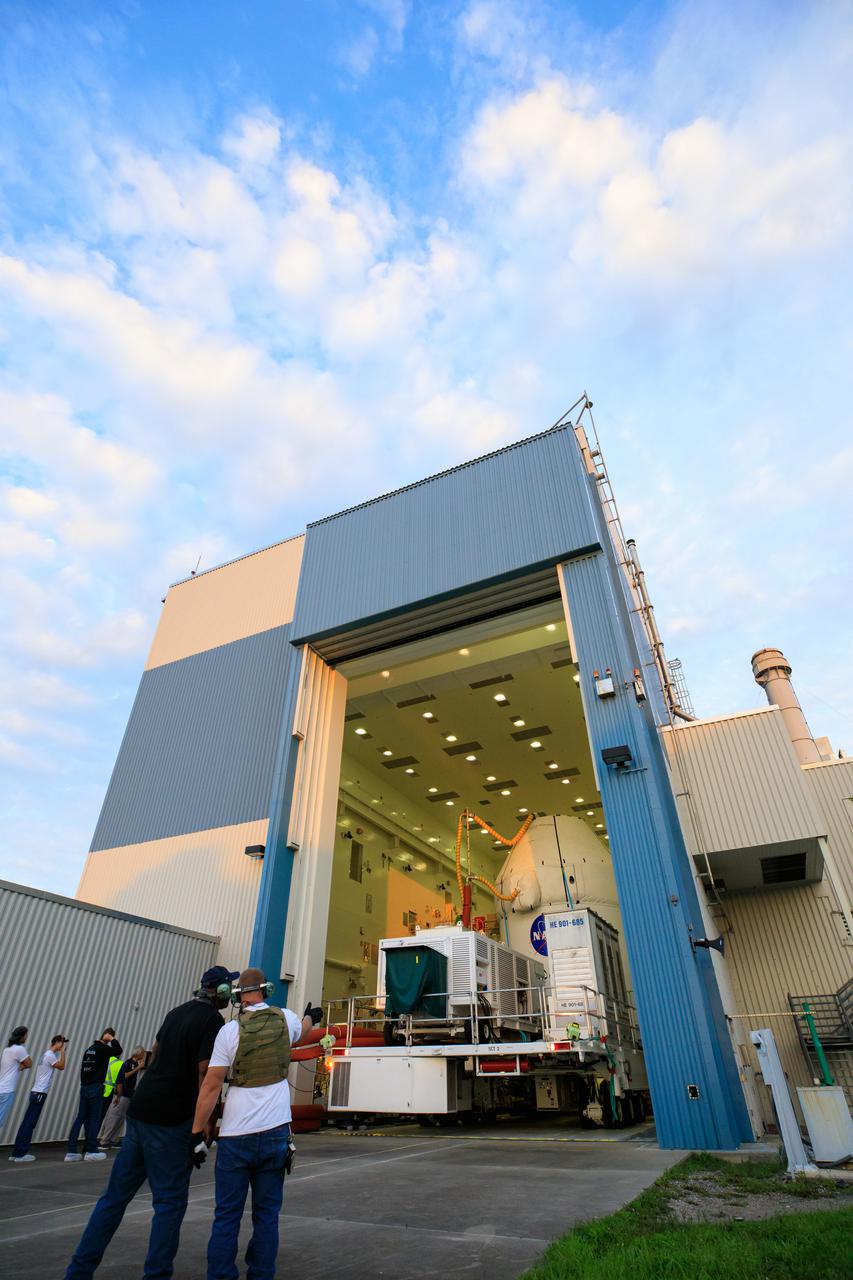
After recently completing fueling and servicing checks, the Orion spacecraft for the Artemis I mission departs from Kennedy Space Center’s Multi-Payload Processing on July 10, 2021. It is being transported to the Florida spaceport’s Launch Abort System Facility, where teams with Exploration Ground Systems and contractor Jacobs will integrate components of the launch abort system onto the spacecraft. Launching later this year, Artemis I will be a test of the Orion spacecraft and SLS rocket as an integrated system ahead of crewed flights to the Moon.
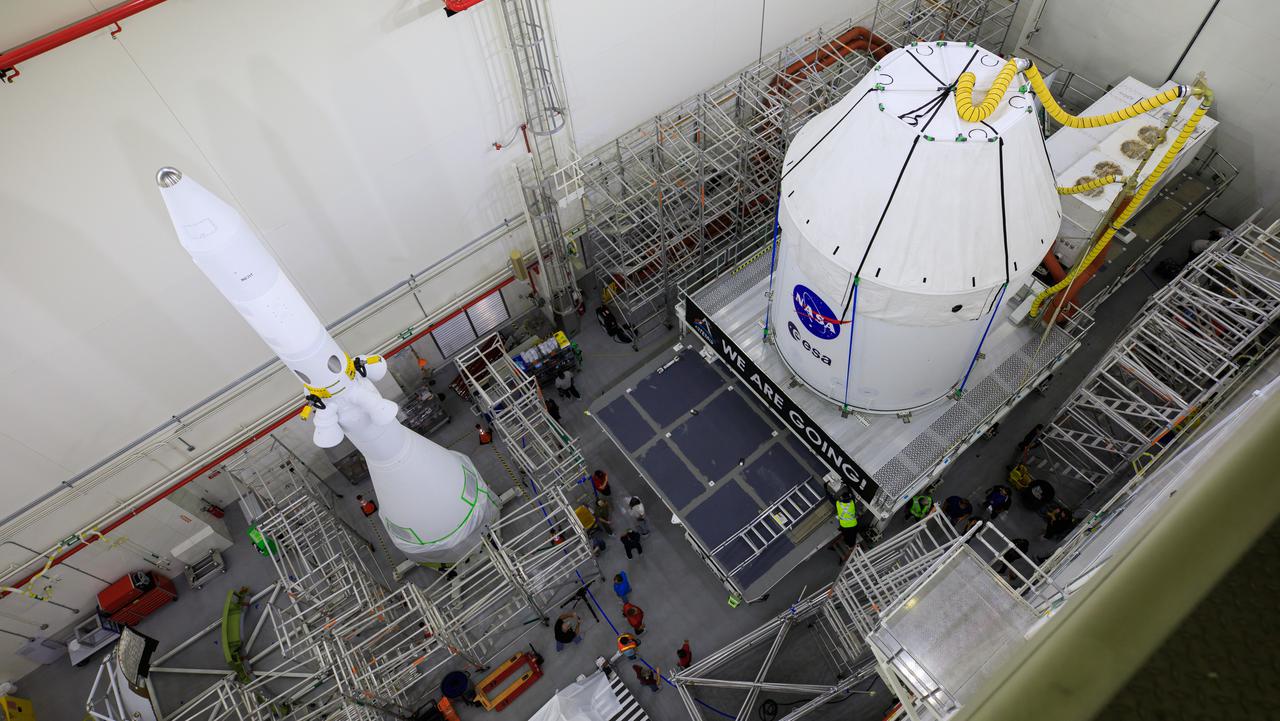
The Orion spacecraft for the Artemis I mission arrives at Kennedy Space Center’s Launch Abort System facility on July 10, 2021, after being transported from the Florida spaceport’s Multi-Payload Processing Facility earlier in the day. Teams with Exploration Ground Systems and contractor Jacobs will integrate components of the launch abort system onto the spacecraft. Launching later this year, Artemis I will be a test of the Orion spacecraft and SLS rocket as an integrated system ahead of crewed flights to the Moon.
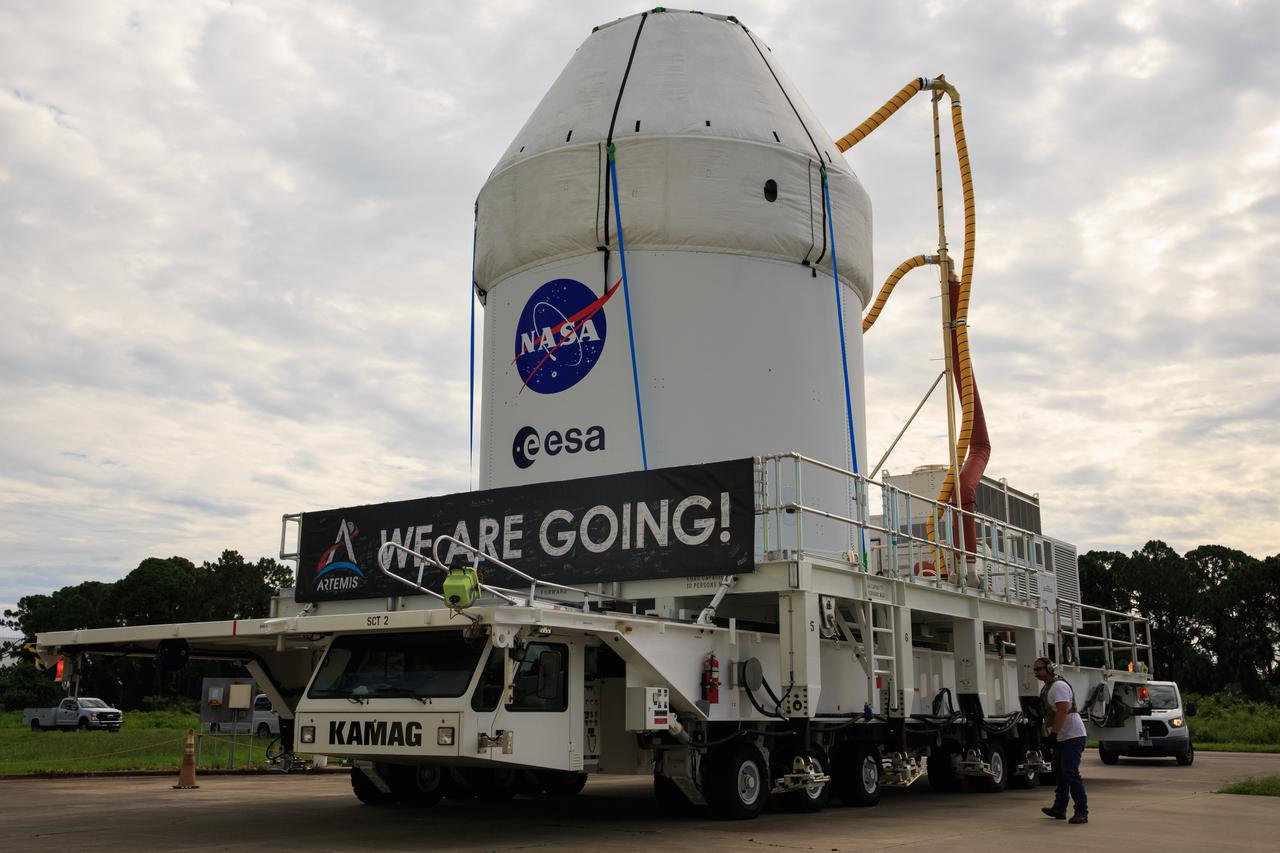
The Orion spacecraft for the Artemis I mission is transported from Kennedy Space Center’s Multi-Payload Processing Facility to the Florida spaceport’s Launch Abort System Facility on July 10, 2021. Teams with Exploration Ground Systems and contractor Jacobs will integrate components of the launch abort system onto the spacecraft. Launching later this year, Artemis I will be a test of the Orion spacecraft and SLS rocket as an integrated system ahead of crewed flights to the Moon.
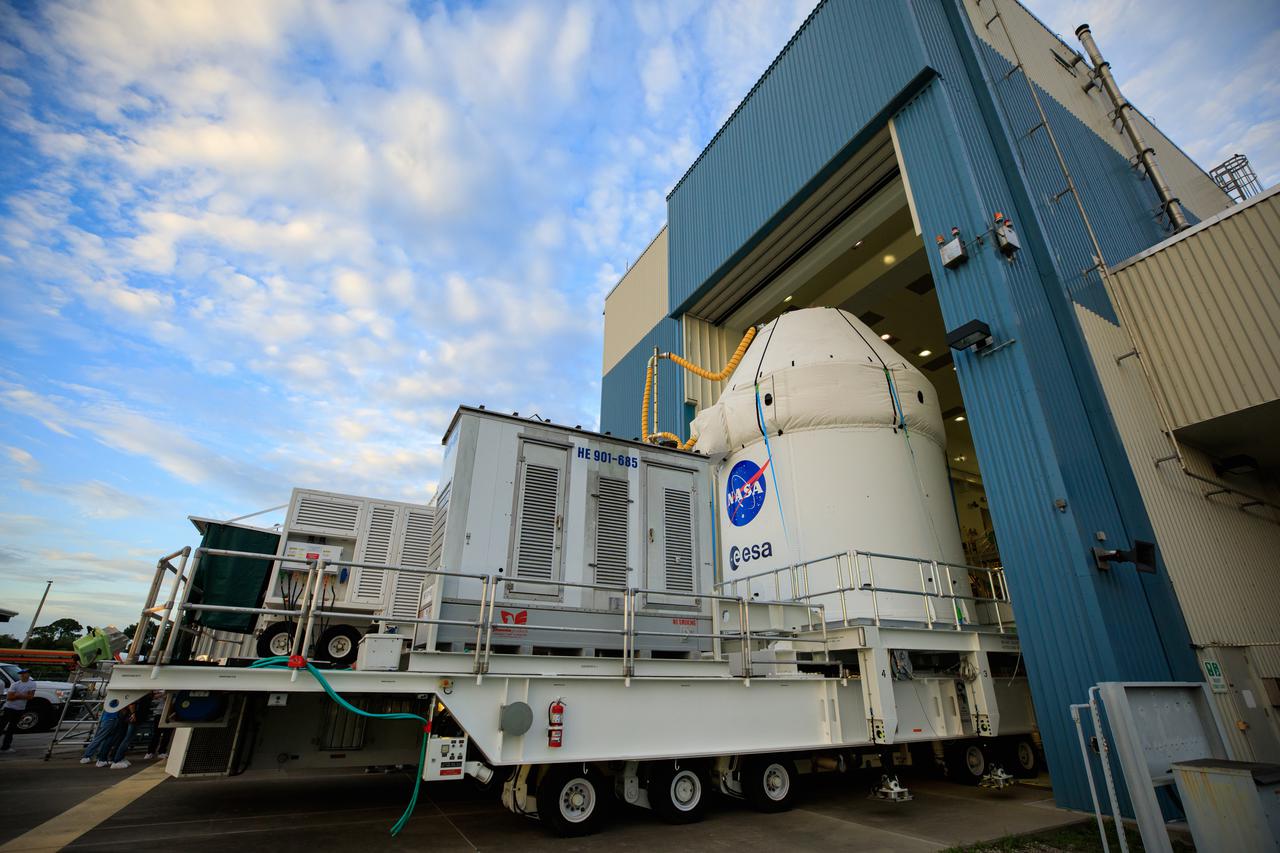
After recently completing fueling and servicing checks, the Orion spacecraft for the Artemis I mission departs from Kennedy Space Center’s Multi-Payload Processing on July 10, 2021. It is being transported to the Florida spaceport’s Launch Abort System Facility, where teams with Exploration Ground Systems and contractor Jacobs will integrate components of the launch abort system onto the spacecraft. Launching later this year, Artemis I will be a test of the Orion spacecraft and SLS rocket as an integrated system ahead of crewed flights to the Moon.
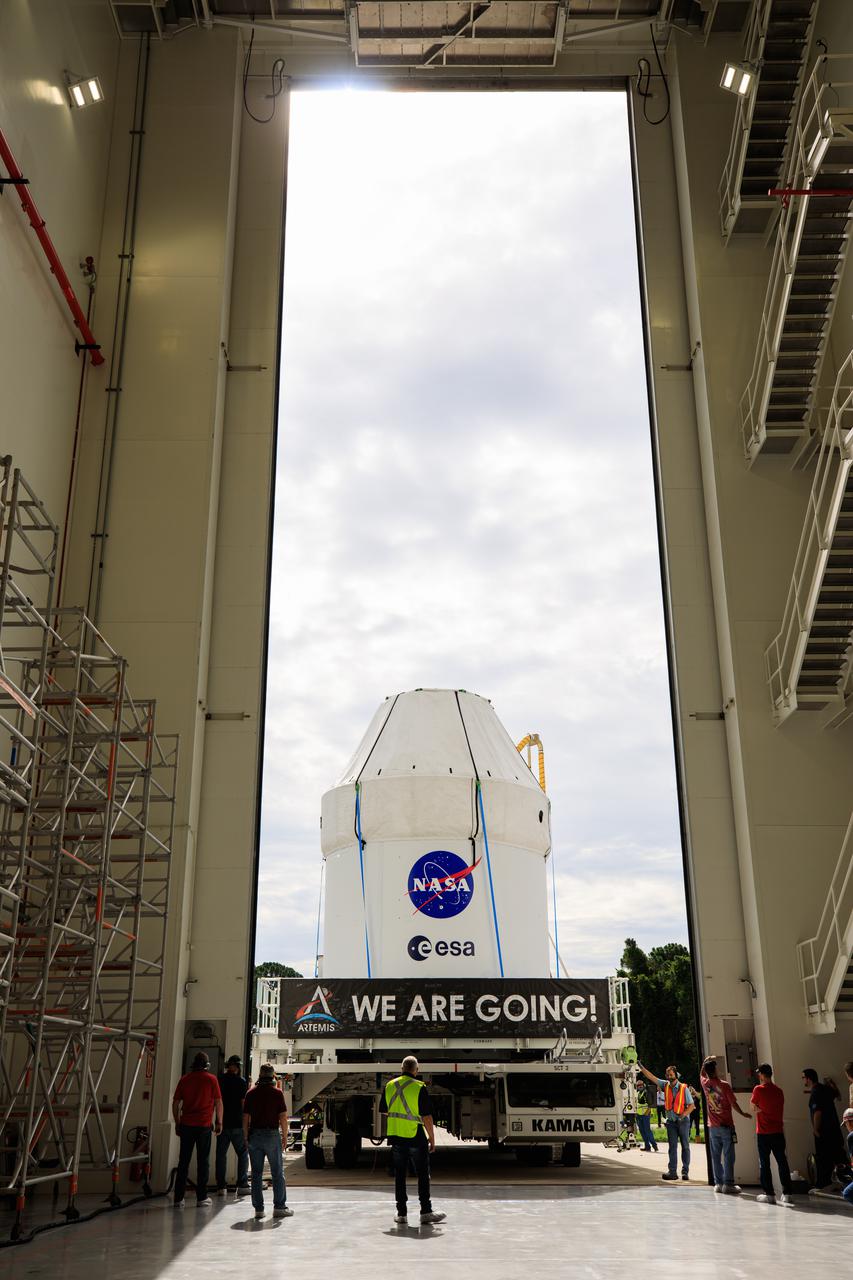
The Orion spacecraft for the Artemis I mission arrives at Kennedy Space Center’s Launch Abort System facility on July 10, 2021, after being transported from the Florida spaceport’s Multi-Payload Processing Facility earlier in the day. Teams with Exploration Ground Systems and contractor Jacobs will integrate components of the launch abort system onto the spacecraft. Launching later this year, Artemis I will be a test of the Orion spacecraft and SLS rocket as an integrated system ahead of crewed flights to the Moon.
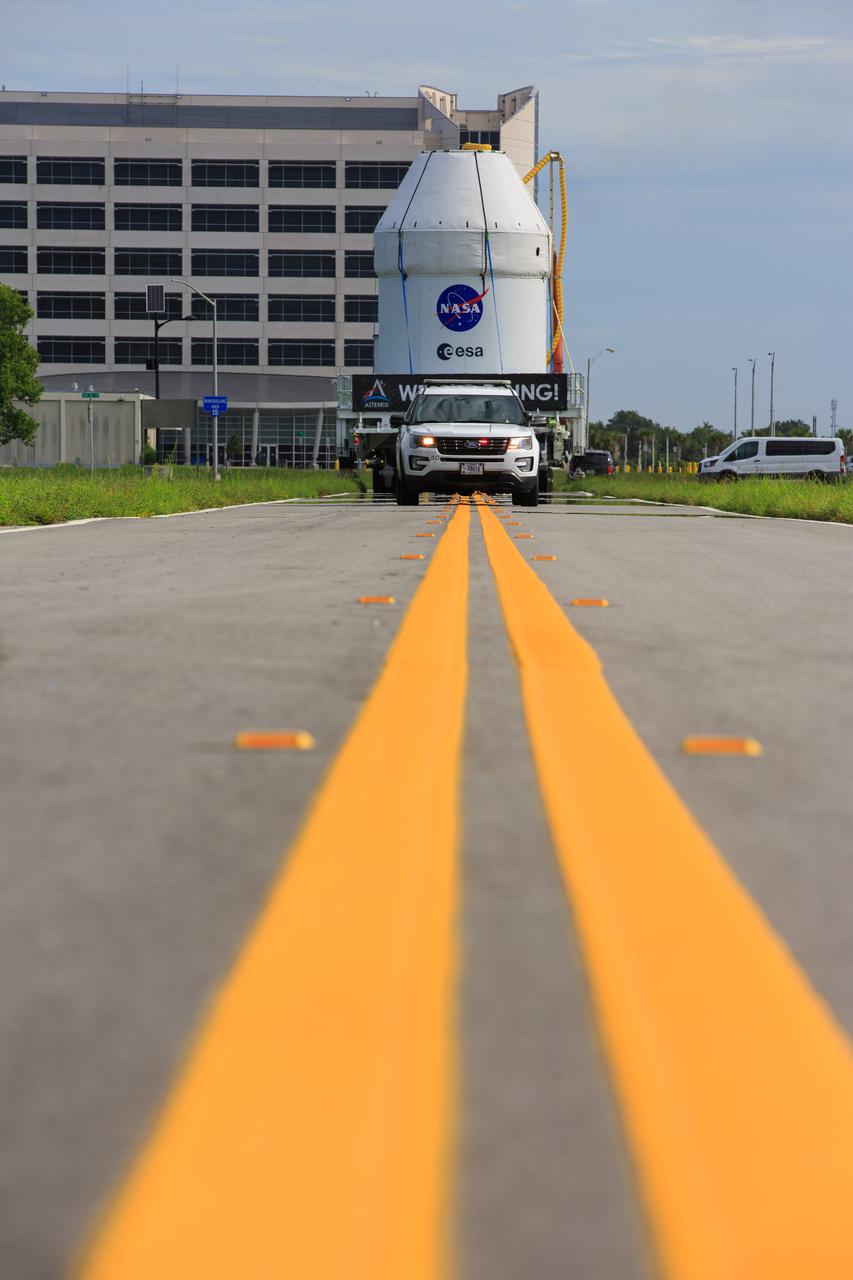
The Orion spacecraft for the Artemis I mission is transported from Kennedy Space Center’s Multi-Payload Processing Facility to the Florida spaceport’s Launch Abort System Facility on July 10, 2021. Teams with Exploration Ground Systems and contractor Jacobs will integrate components of the launch abort system onto the spacecraft. Launching later this year, Artemis I will be a test of the Orion spacecraft and SLS rocket as an integrated system ahead of crewed flights to the Moon.
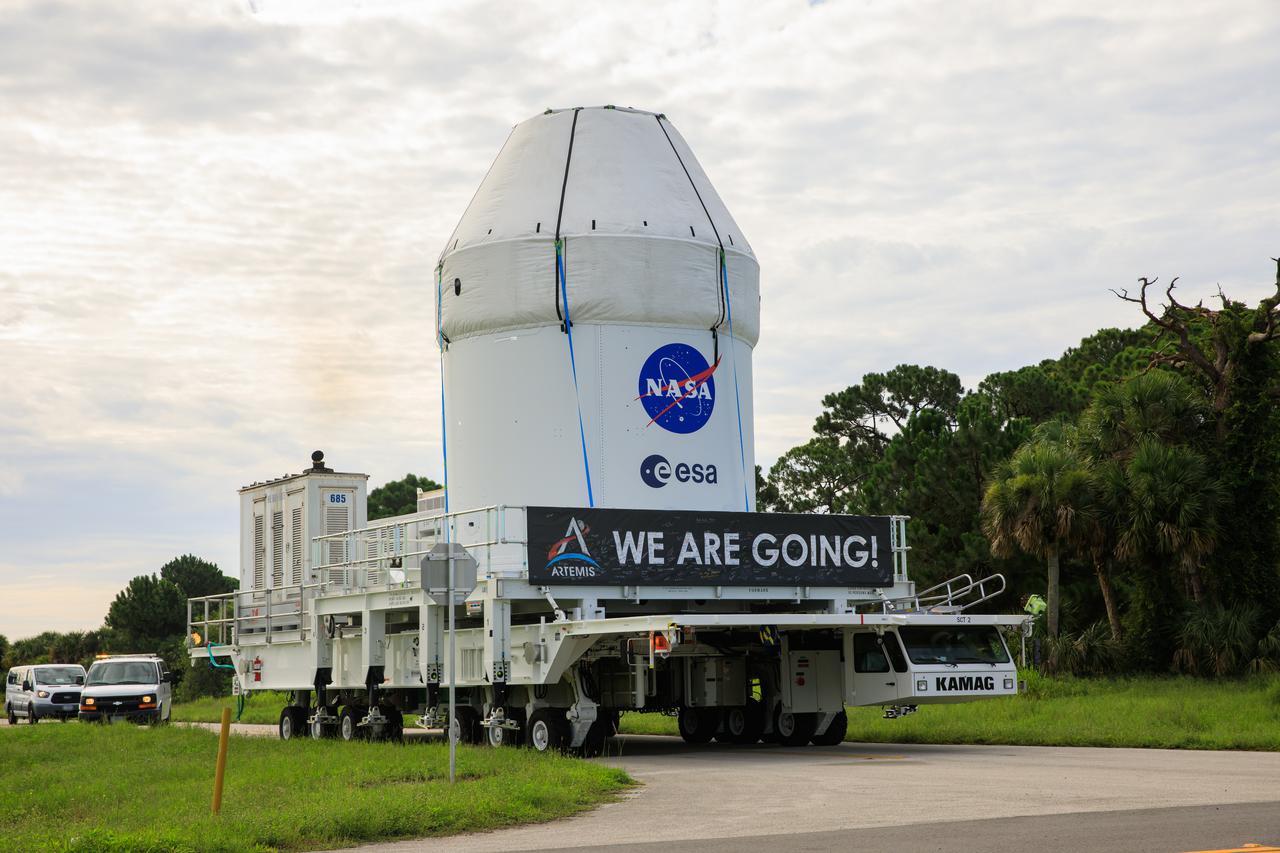
The Orion spacecraft for the Artemis I mission is transported from Kennedy Space Center’s Multi-Payload Processing Facility to the Florida spaceport’s Launch Abort System Facility on July 10, 2021. Teams with Exploration Ground Systems and contractor Jacobs will integrate components of the launch abort system onto the spacecraft. Launching later this year, Artemis I will be a test of the Orion spacecraft and SLS rocket as an integrated system ahead of crewed flights to the Moon.
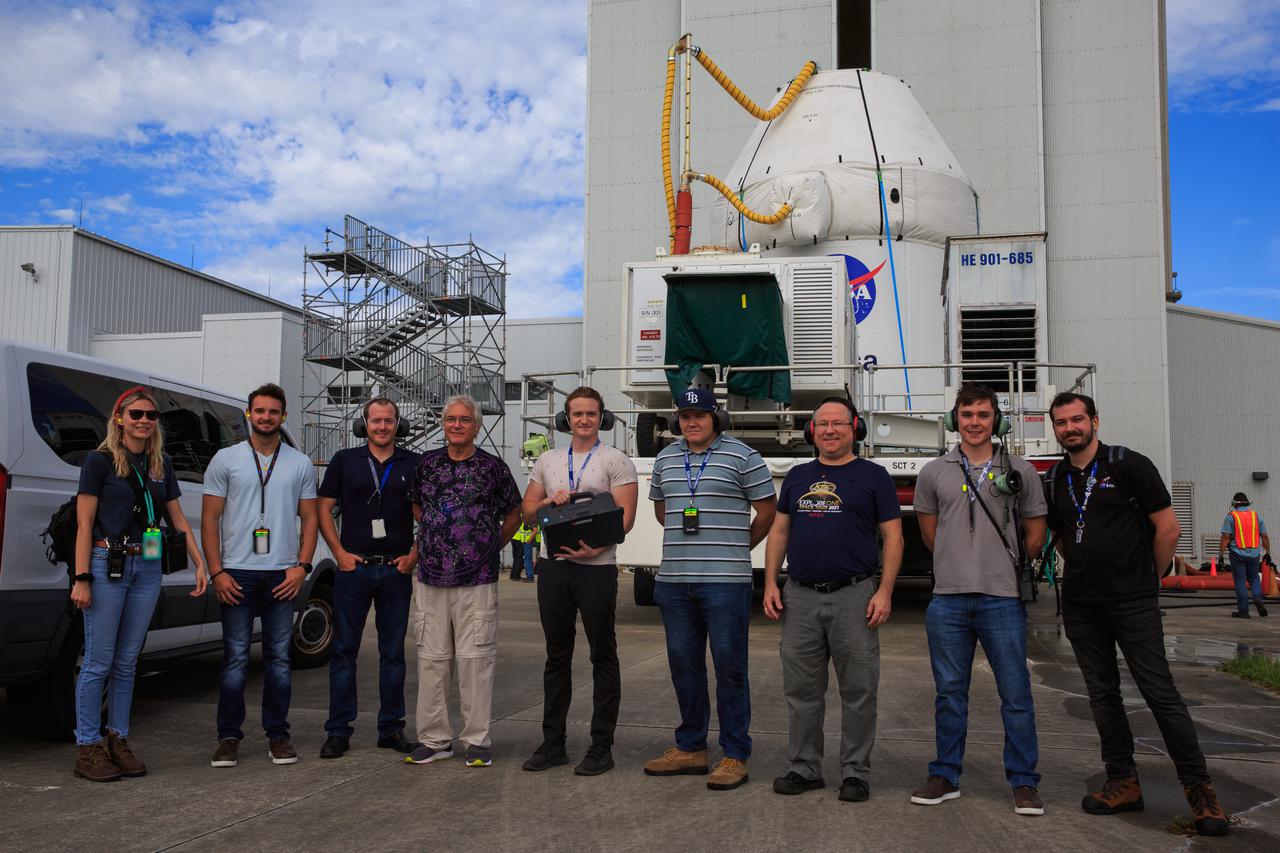
Teams from Kennedy’s Exploration Ground Systems and contractor Jacobs pose as the Orion spacecraft for the Artemis I mission is transported to the Florida spaceport’s Launch Abort System Facility on July 10, 2021. They will integrate components of the launch abort system onto the spacecraft. Launching later this year, Artemis I will be a test of the Orion spacecraft and SLS rocket as an integrated system ahead of crewed flights to the Moon.
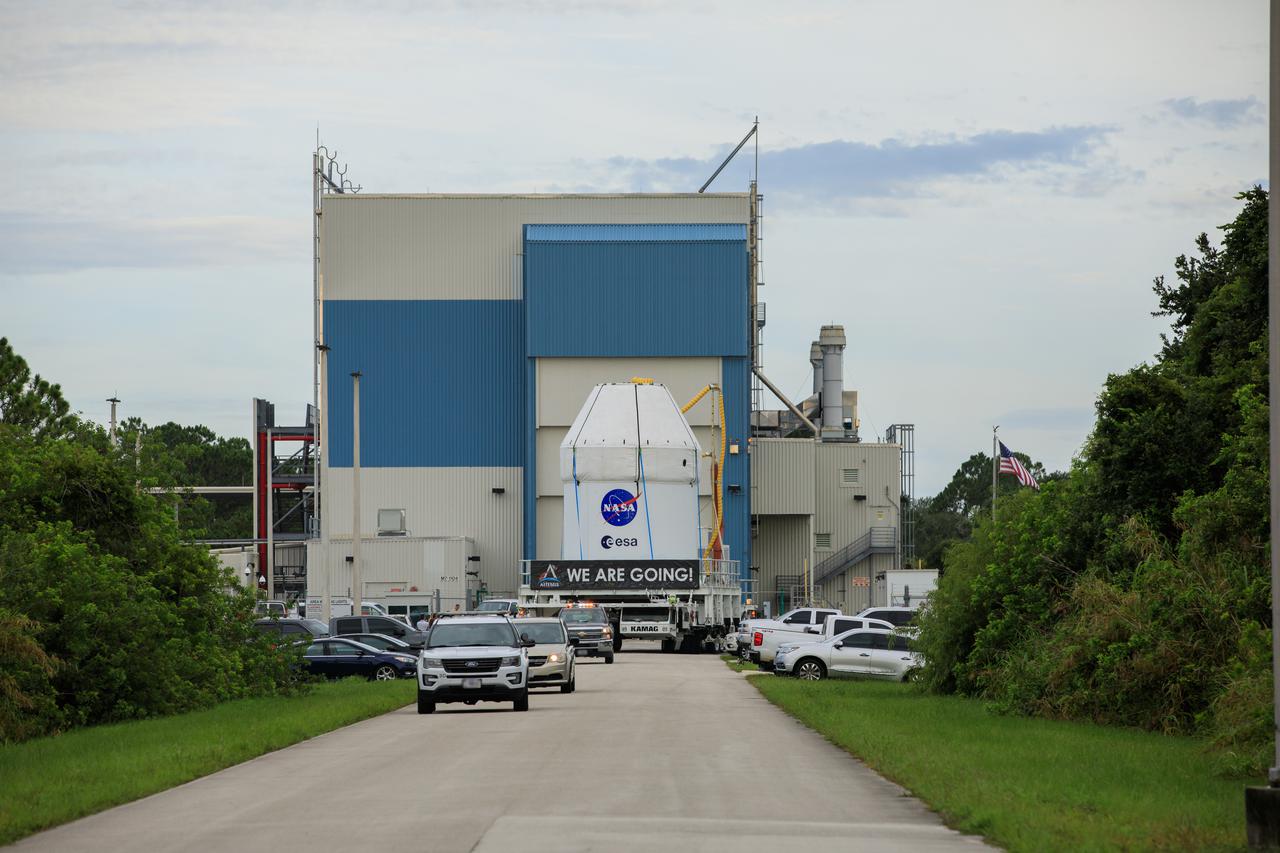
After recently completing fueling and servicing checks, the Orion spacecraft for the Artemis I mission departs Kennedy Space Center’s Multi-Payload Processing on July 10, 2021. The capsule is being transported to the Florida spaceport’s Launch Abort System Facility, where teams with Exploration Ground Systems and contractor Jacobs will integrate components of the launch abort system onto the spacecraft. Launching later this year, Artemis I will be a test of the Orion spacecraft and SLS rocket as an integrated system ahead of crewed flights to the Moon.
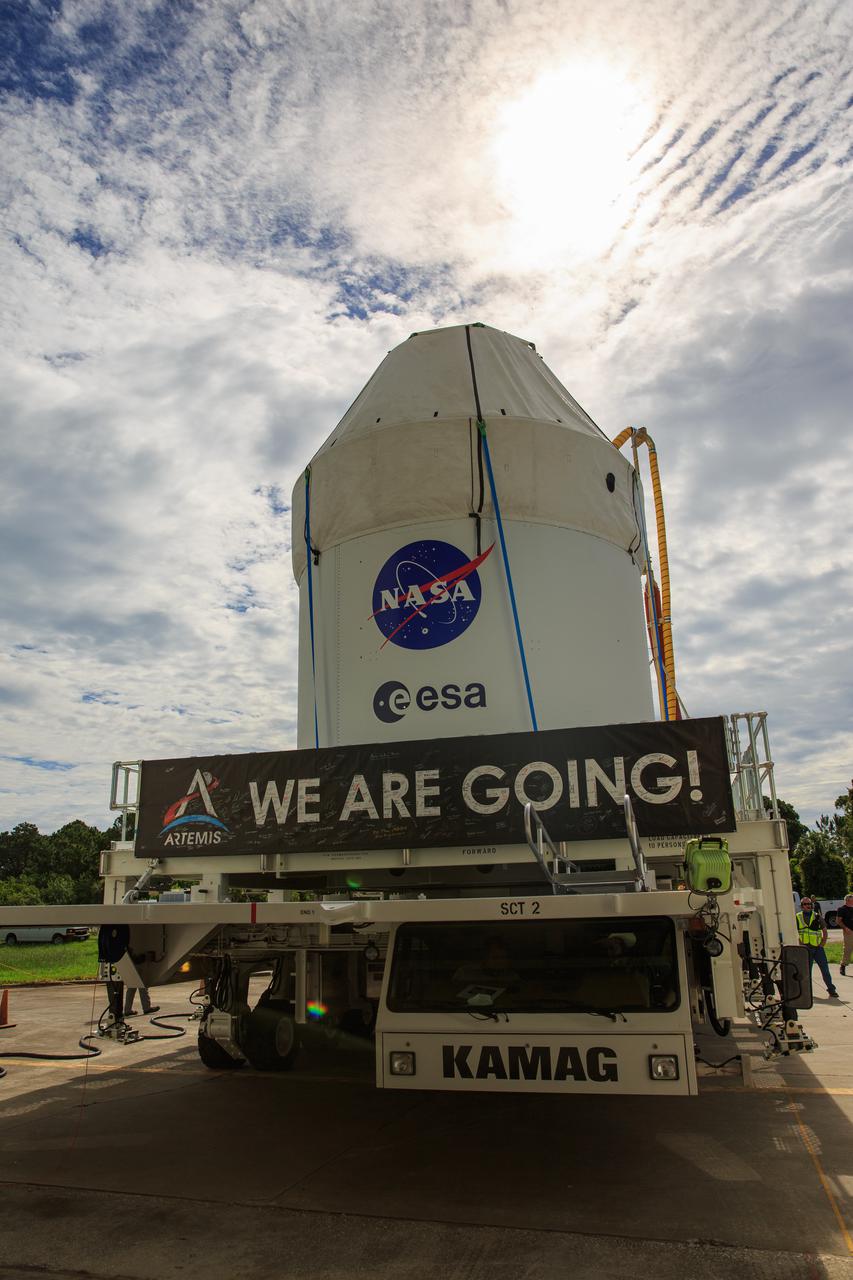
The Orion spacecraft for the Artemis I mission is transported from Kennedy Space Center’s Multi-Payload Processing Facility to the Florida spaceport’s Launch Abort System Facility on July 10, 2021. Teams with Exploration Ground Systems and contractor Jacobs will integrate components of the launch abort system onto the spacecraft. Launching later this year, Artemis I will be a test of the Orion spacecraft and SLS rocket as an integrated system ahead of crewed flights to the Moon.
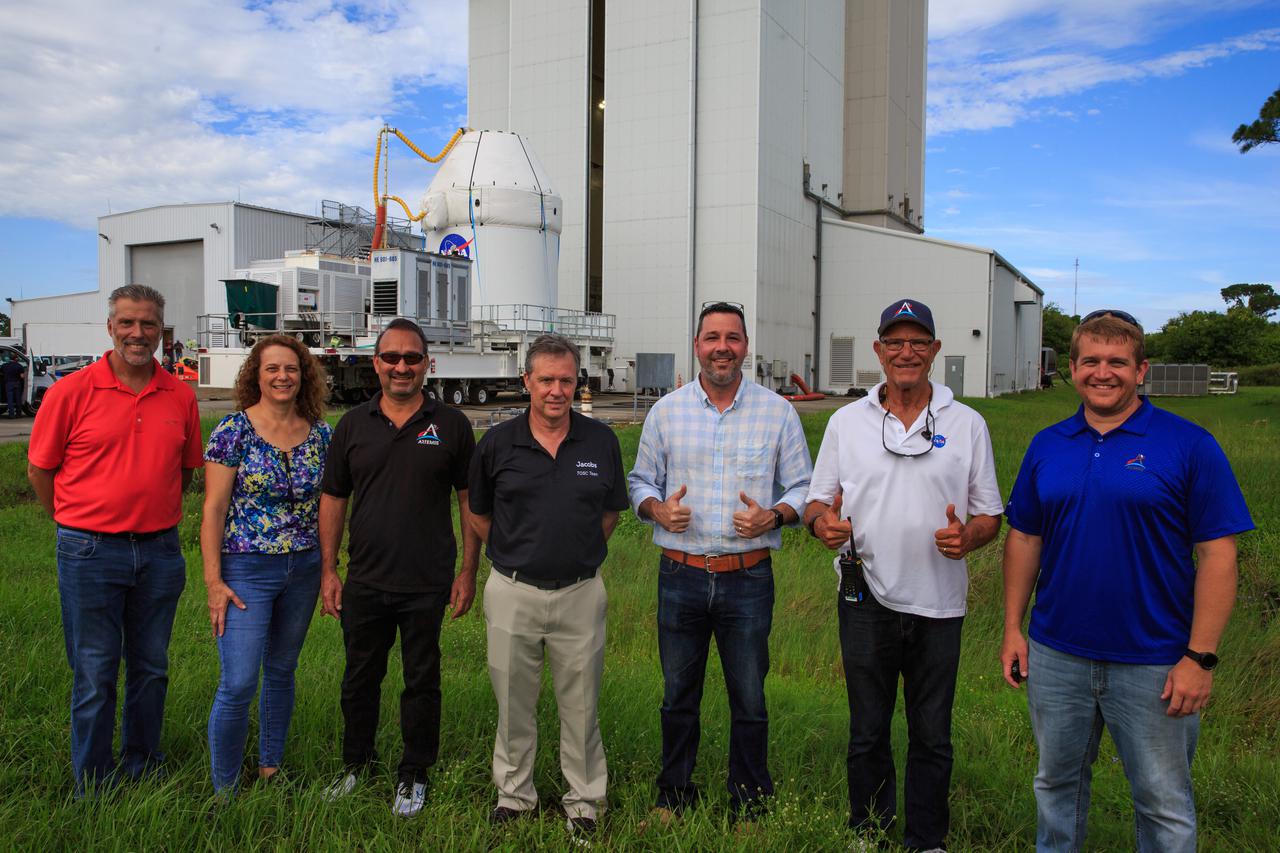
Teams from Kennedy’s Exploration Ground Systems and contractor Jacobs pose as the Orion spacecraft for the Artemis I mission is transported to the Florida spaceport’s Launch Abort System Facility on July 10, 2021. They will integrate components of the launch abort system onto the spacecraft. Launching later this year, Artemis I will be a test of the Orion spacecraft and SLS rocket as an integrated system ahead of crewed flights to the Moon.
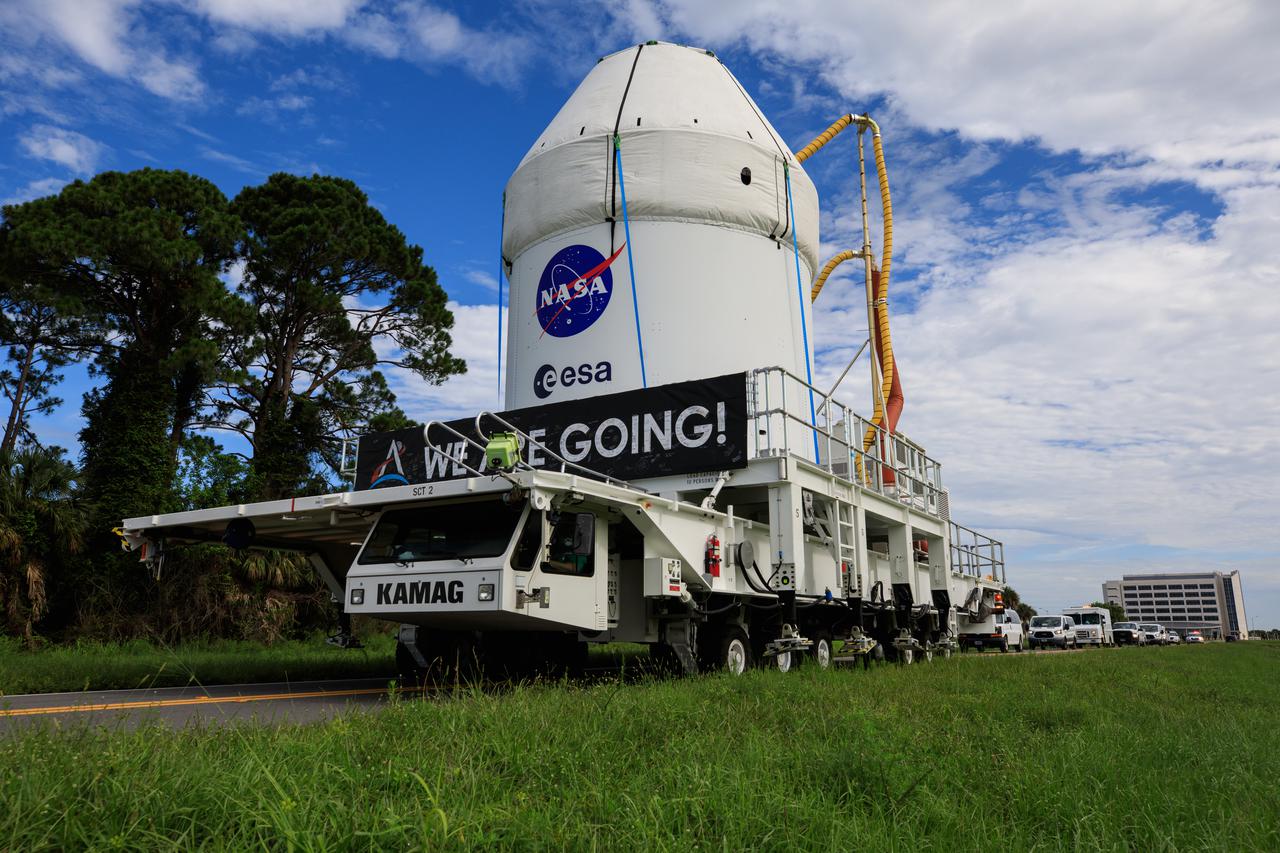
The Orion spacecraft for the Artemis I mission is transported from Kennedy Space Center’s Multi-Payload Processing Facility to the Florida spaceport’s Launch Abort System Facility on July 10, 2021. Teams with Exploration Ground Systems and contractor Jacobs will integrate components of the launch abort system onto the spacecraft. Launching later this year, Artemis I will be a test of the Orion spacecraft and SLS rocket as an integrated system ahead of crewed flights to the Moon.
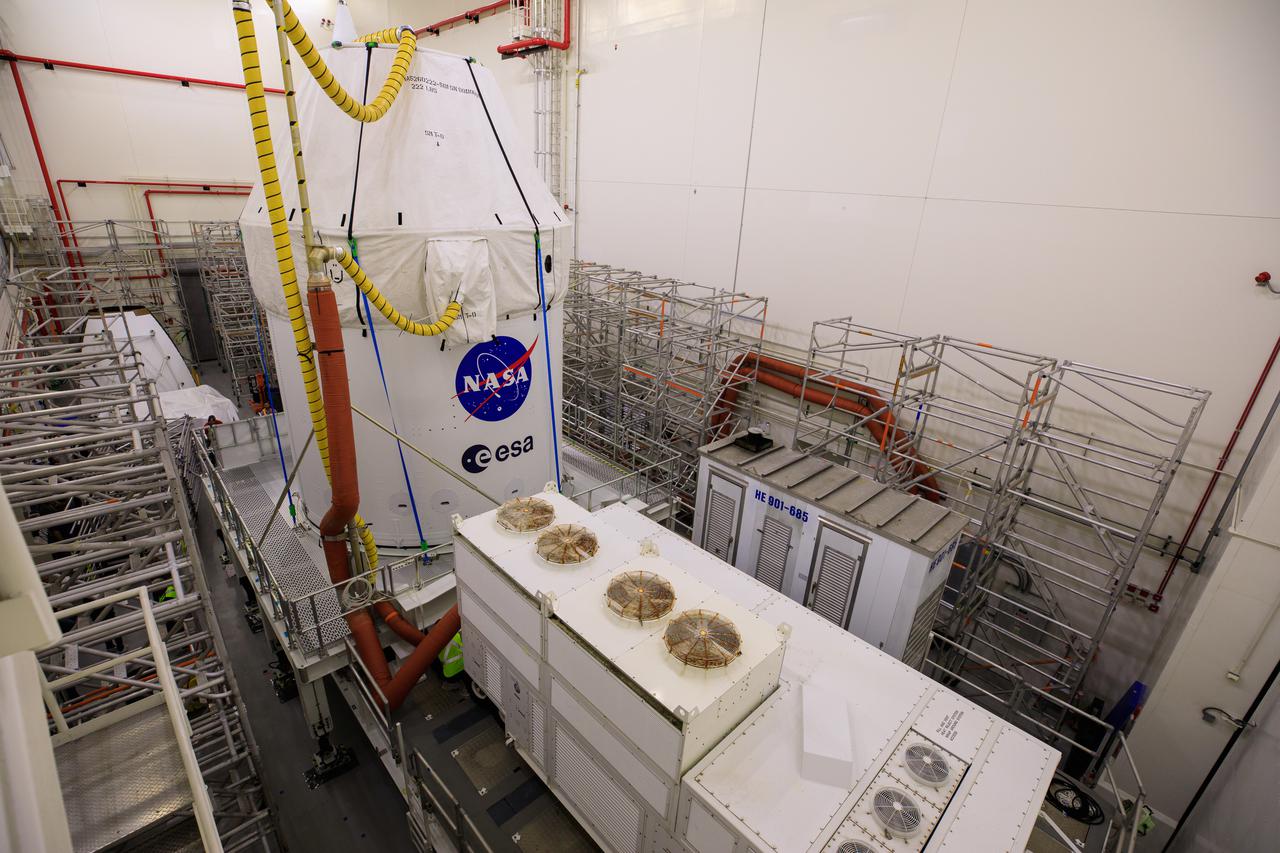
The Orion spacecraft for the Artemis I mission arrives at Kennedy Space Center’s Launch Abort System facility on July 10, 2021, after being transported from the Florida spaceport’s Multi-Payload Processing Facility earlier in the day. Teams with Exploration Ground Systems and contractor Jacobs will integrate components of the launch abort system onto the spacecraft. Launching later this year, Artemis I will be a test of the Orion spacecraft and SLS rocket as an integrated system ahead of crewed flights to the Moon.
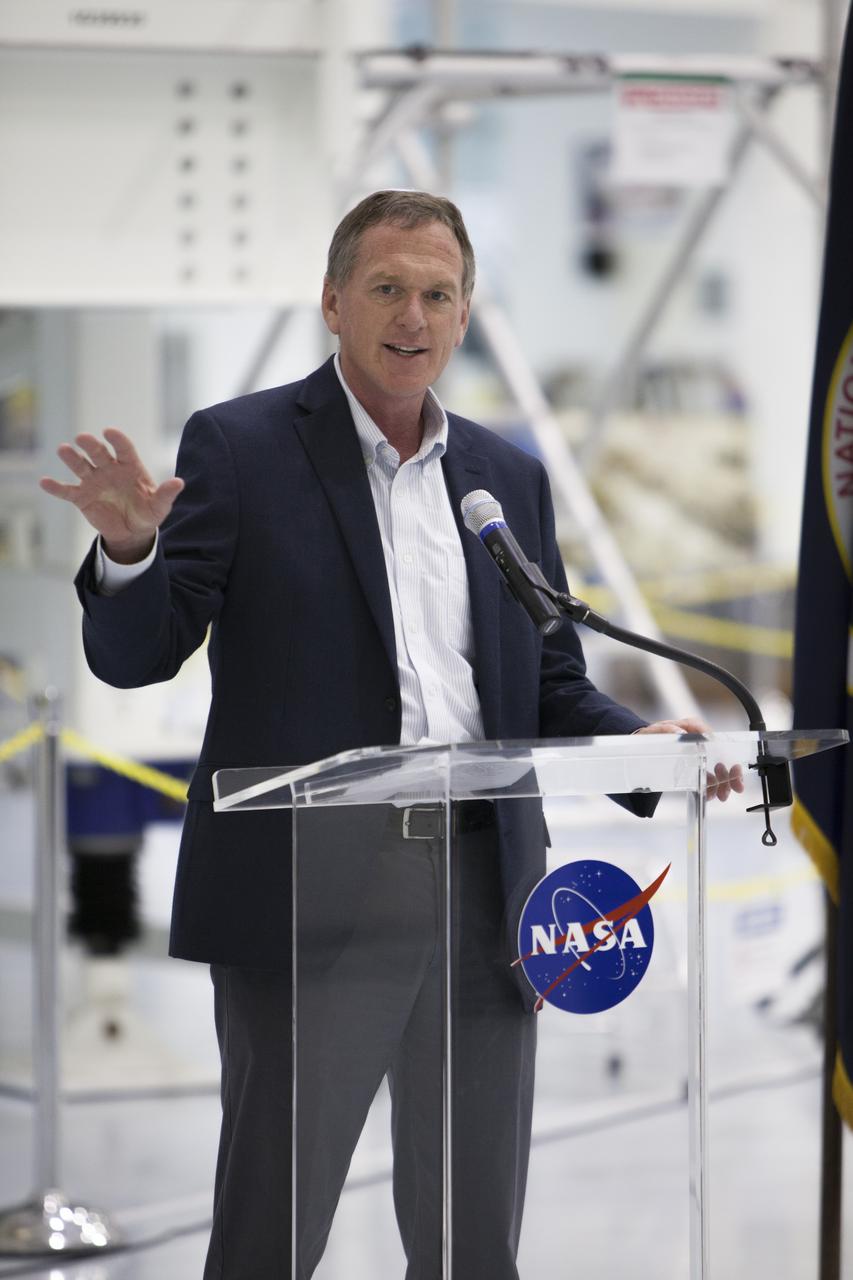
Mike Bolger, Ground Systems Development and Operations Program manager at NASA's Kennedy Space Center, speaks to guests during a ceremony in the high bay of the Space Station Processing Facility. The event marked the milestone of the Space Launch System rocket's Interim Cryogenic Propulsion Stage (ICPS) being turned over from NASA's Spacecraft/Payload Integration and Evolution organization to the spaceport's Ground Systems Development and Operations directorate. The ICPS is the first integrated piece of flight hardware to arrive in preparation for the uncrewed Exploration Mission-1.
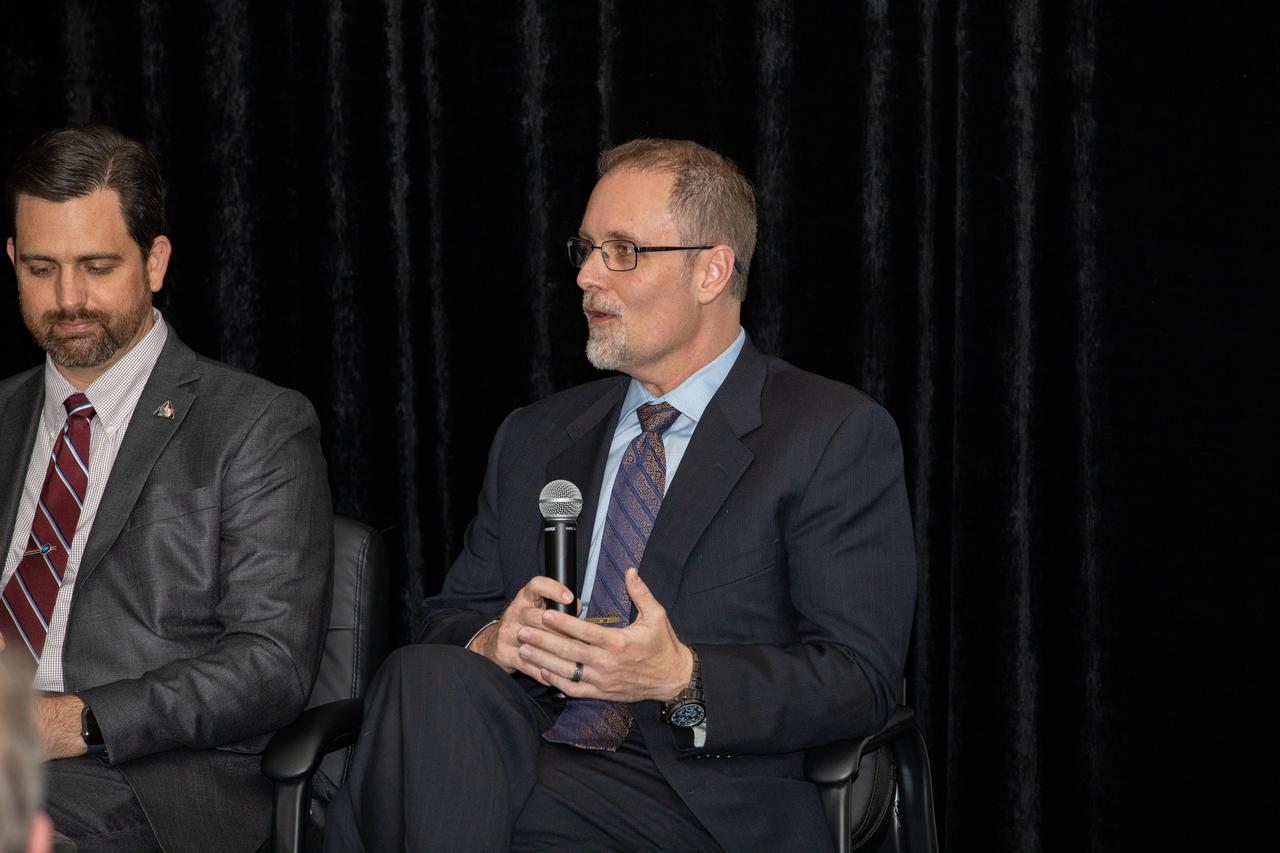
Phil Meade, at right, associate director, Spaceport Integration and Services, participates in a panel discussion during a Community Leaders Update hosted by NASA Kennedy Space Center on Feb. 18, 2020, at the Kennedy Space Center Visitor Complex. At left is Jeremy Parsons, deputy manager, Exploration Ground Systems. Center Director Bob Cabana moderated a panel discussion featuring senior leaders from Exploration Ground Systems, Spaceport Integration and Services, Exploration Research and Technology Programs, Gateway Logistics Element, and Center Planning and Development. Attendees included community leaders, business executives, partners, educators and government leaders. After the presentation, guests had the opportunity to ask questions and visit displays from the programs and some of the commercial partners.
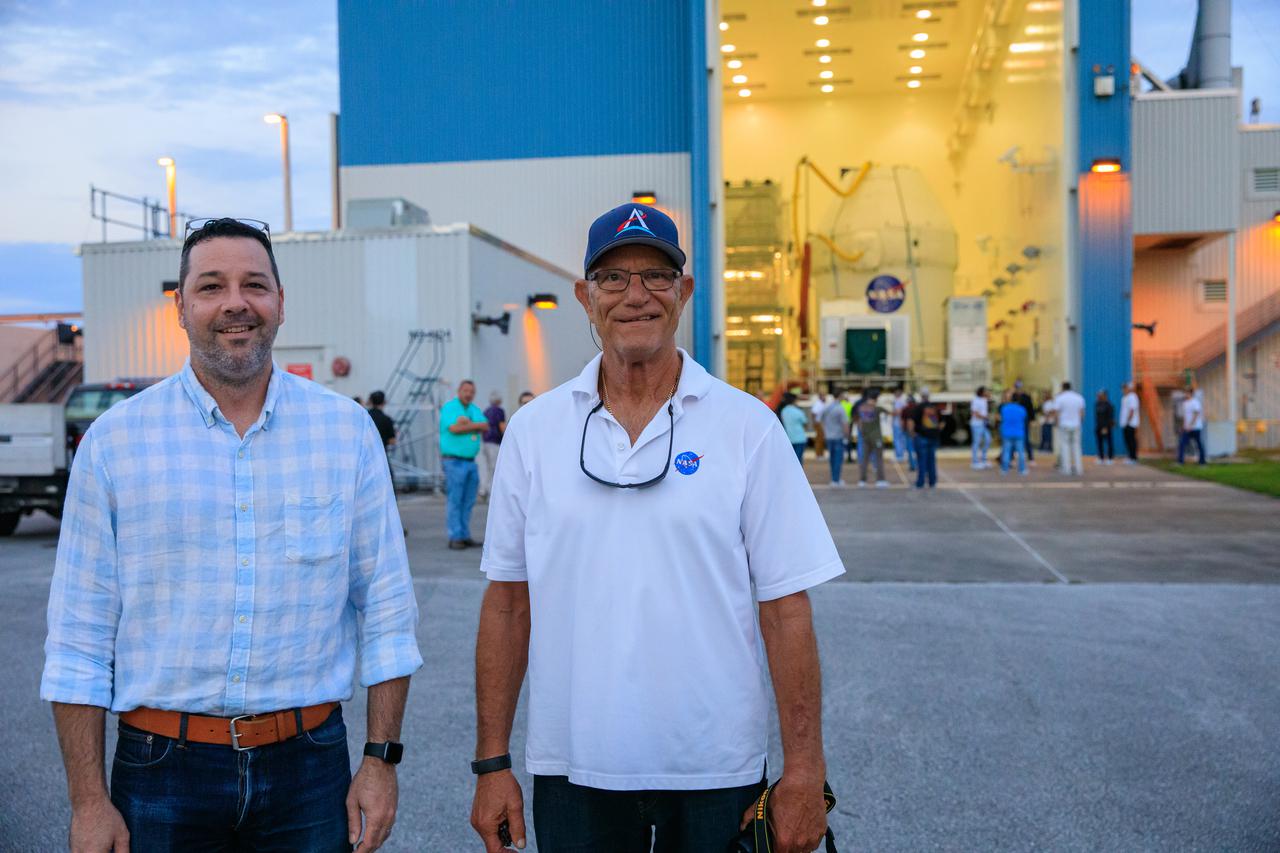
Mike Collins, NASA Operations manager for Spacecraft Offline Operations, left, and Skip Williams, operations manager for the Multi-Payload Processing Facility (MPPF) spacecraft offline element integration team, stand in front of the Orion spacecraft for the Artemis I mission, as the capsule moves out from Kennedy Space Center’s MFFP on July 10, 2021. Orion is being transported to the Florida spaceport’s Launch Abort System Facility, where teams with Exploration Ground Systems and contractor Jacobs will integrate components of the launch abort system onto the spacecraft. Launching later this year, Artemis I will be a test of the Orion spacecraft and SLS rocket as an integrated system ahead of crewed flights to the Moon.
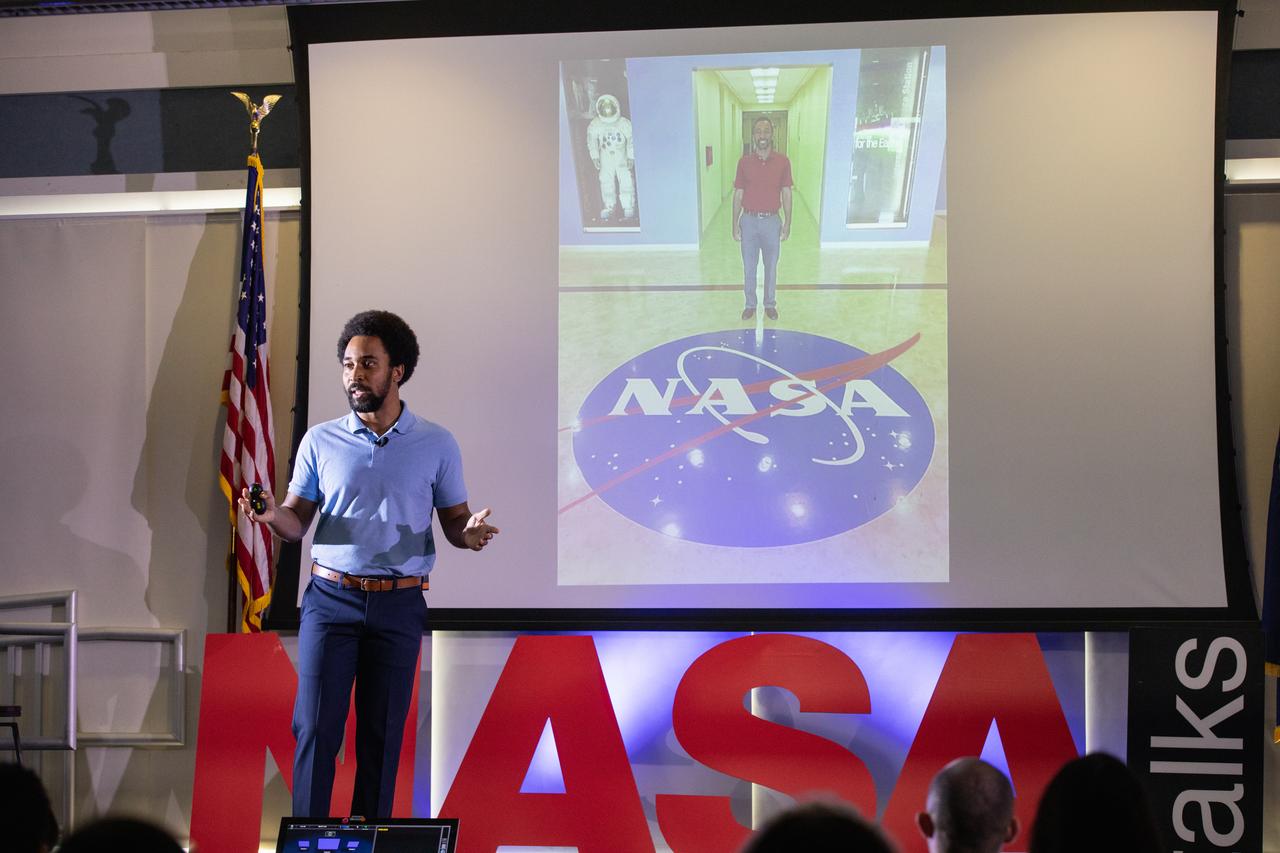
Kennedy Space Center’s Phillip Hargrove addresses co-workers inside the Florida spaceport’s Kennedy Learning Institute on Sept. 26, 2019, during the first in a series of five TED Talk-style informational sessions. Sponsored by Kennedy’s Launching Leaders and Leadership for the Future, NASAtalks focuses on the topic of intentional careers and aims to provide employees with tools and knowledge that can be utilized for career growth. The theme of this first session was innovation, and additional speakers included Kennedy employees Andy Phan and Brittney Mott, with a skill-building section on career planning by Nancy Bray, director of Spaceport Integration and Services.
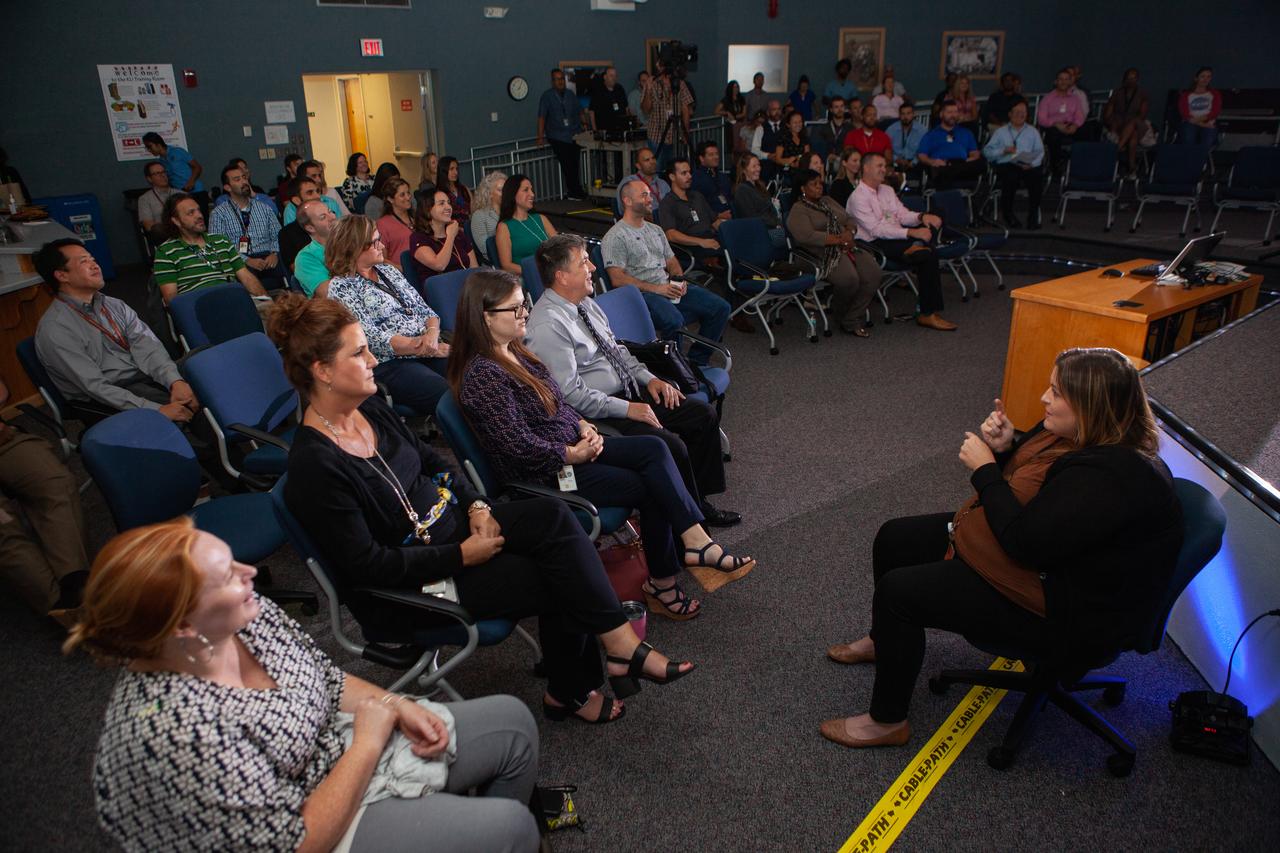
Kennedy Space Center employees attend the first in a series of five TED Talk-style informational sessions on Sept. 26, 2019, inside the Florida spaceport’s Kennedy Learning Institute. Sponsored by Kennedy’s Launching Leaders and Leadership for the Future, NASAtalks focuses on the topic of intentional careers and aims to provide employees with tools and knowledge that can be utilized for career growth. The theme of this first session was innovation, and speakers included Kennedy employees Phillip Hargrove, Andy Phan and Brittney Mott, with a skill-building section on career planning by Nancy Bray, director of Spaceport Integration and Services.
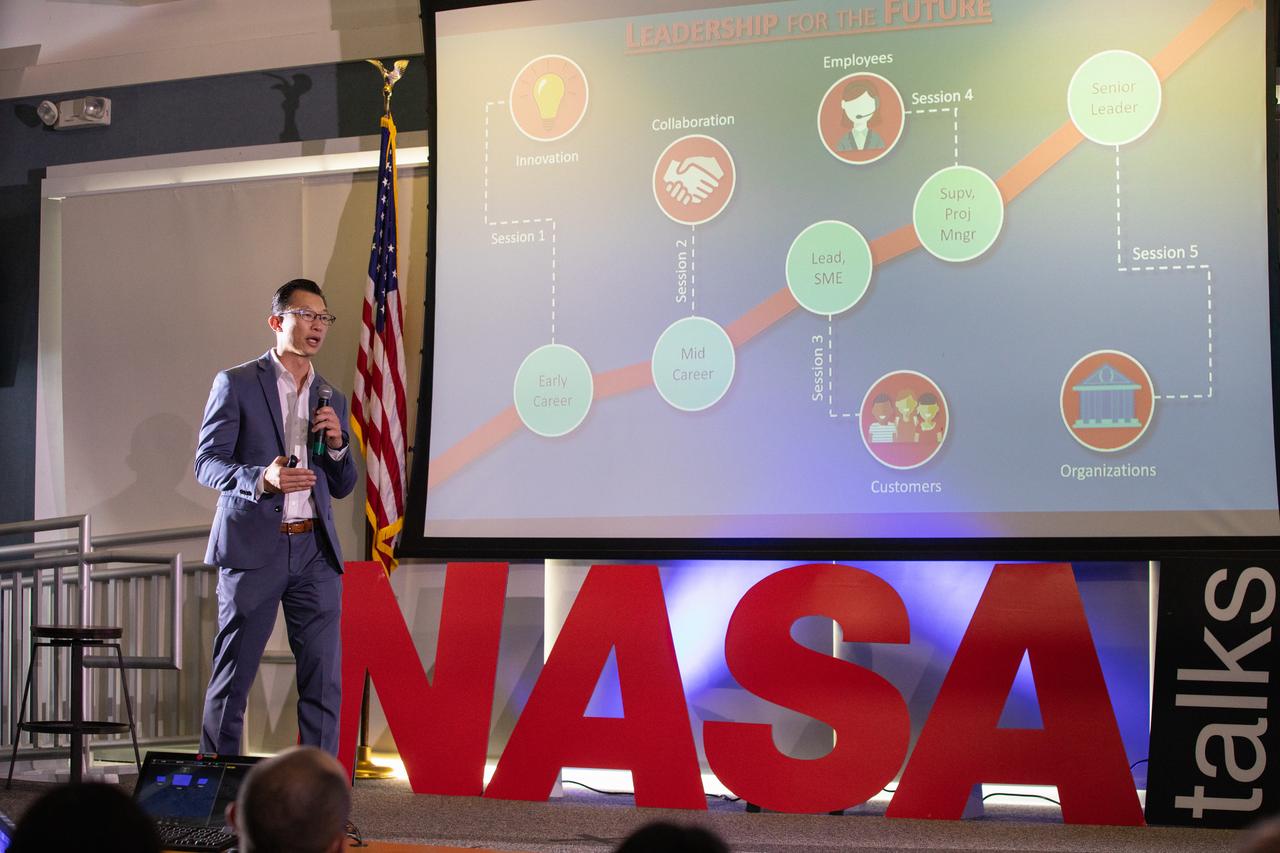
Kennedy Space Center’s Johnny Nguyen addresses co-workers inside the Florida spaceport’s Kennedy Learning Institute on Sept. 26, 2019, during the first in a series of five TED Talk-style informational sessions. Sponsored by Kennedy’s Launching Leaders and Leadership for the Future, NASAtalks focuses on the topic of intentional careers and aims to provide employees with tools and knowledge that can be utilized for career growth. The theme of this first session was innovation, and speakers included Kennedy employees Phillip Hargrove, Andy Phan and Brittney Mott, with a skill-building section on career planning by Nancy Bray, director of Spaceport Integration and Services.
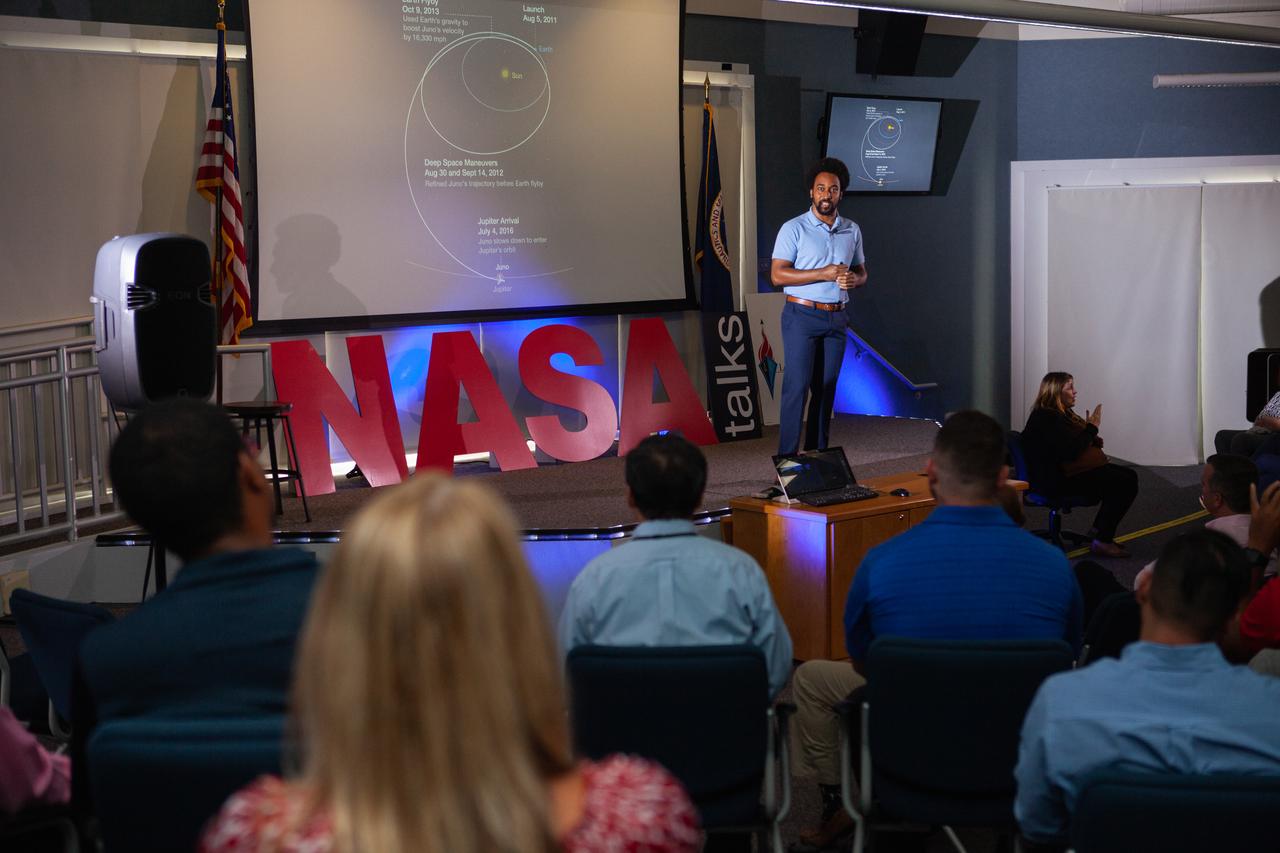
Kennedy Space Center’s Phillip Hargrove addresses co-workers inside the Florida spaceport’s Kennedy Learning Institute on Sept. 26, 2019, during the first in a series of five TED Talk-style informational sessions. Sponsored by Kennedy’s Launching Leaders and Leadership for the Future, NASAtalks focuses on the topic of intentional careers and aims to provide employees with tools and knowledge that can be utilized for career growth. The theme of this first session was innovation, and additional speakers included Kennedy employees Andy Phan and Brittney Mott, with a skill-building section on career planning by Nancy Bray, director of Spaceport Integration and Services.
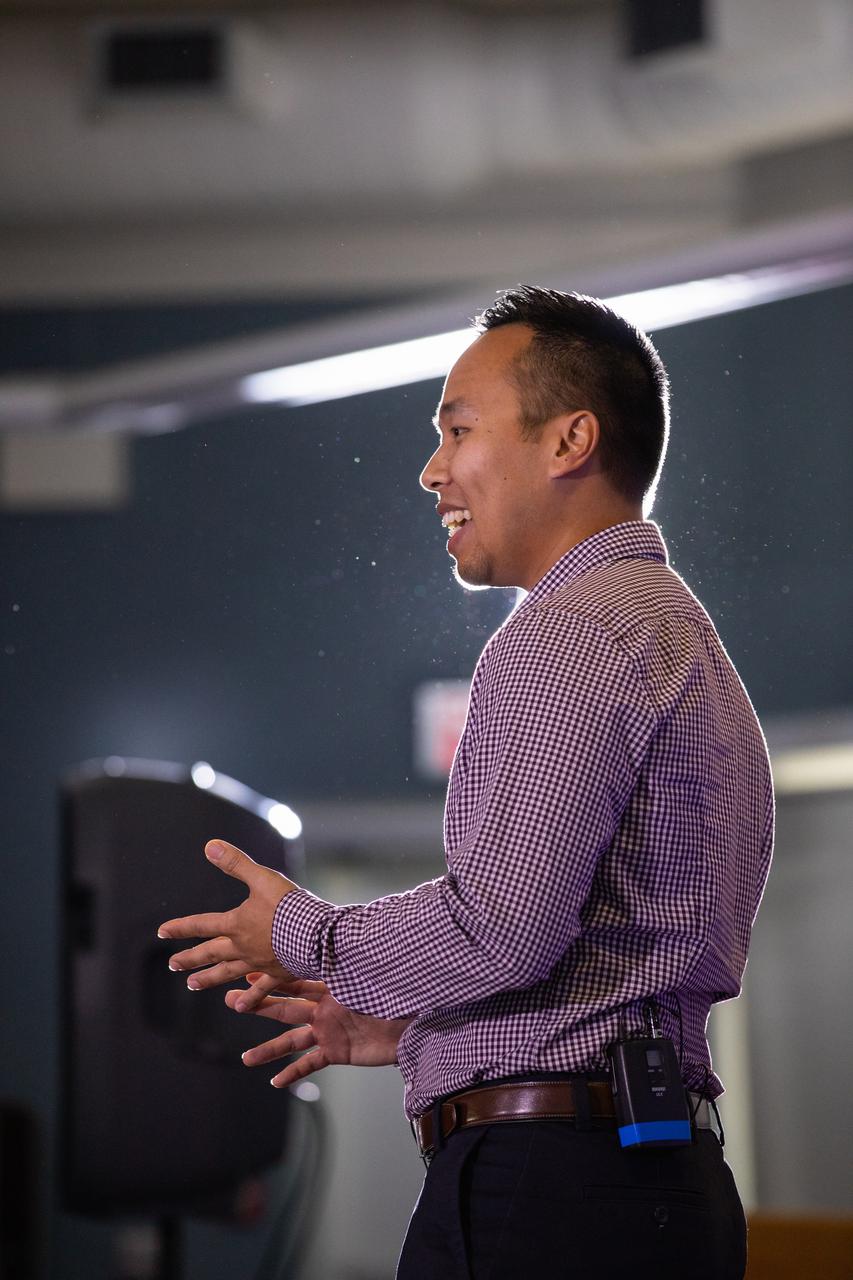
Kennedy Space Center’s Andy Phan speaks at the first in a series of five TED Talk-style informational sessions on Sept. 26, 2019, in the Florida spaceport’s Kennedy Learning Institute. Sponsored by Kennedy’s Launching Leaders and Leadership for the Future, NASAtalks focuses on the topic of intentional careers and aims to provide employees with tools and knowledge that can be utilized for career growth. The theme of this first session was innovation, and additional speakers included Kennedy employees Phillip Hargrove and Brittney Mott, with a skill-building section on career planning by Nancy Bray, director of Spaceport Integration and Services.
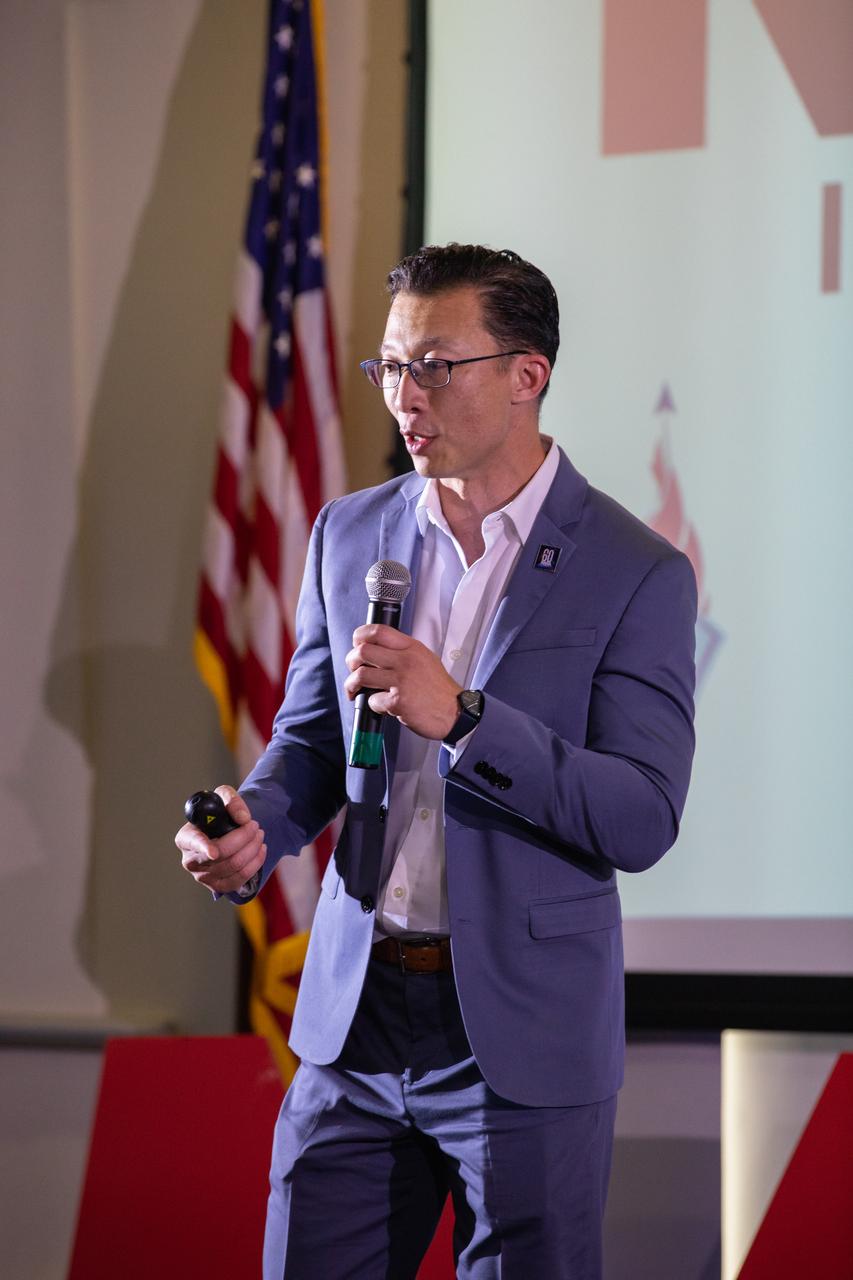
Kennedy Space Center’s Johnny Nguyen introduces event speakers for the first in a series of five TED Talk-style informational sessions on Sept. 26, 2019, inside the Florida spaceport’s Kennedy Learning Institute. Sponsored by Kennedy’s Launching Leaders and Leadership for the Future, NASAtalks focuses on the topic of intentional careers and aims to provide employees with tools and knowledge that can be utilized for career growth. The theme of this first session was innovation, and speakers included Kennedy employees Phillip Hargrove, Andy Phan and Brittney Mott, with a skill-building section on career planning by Nancy Bray, director of Spaceport Integration and Services.
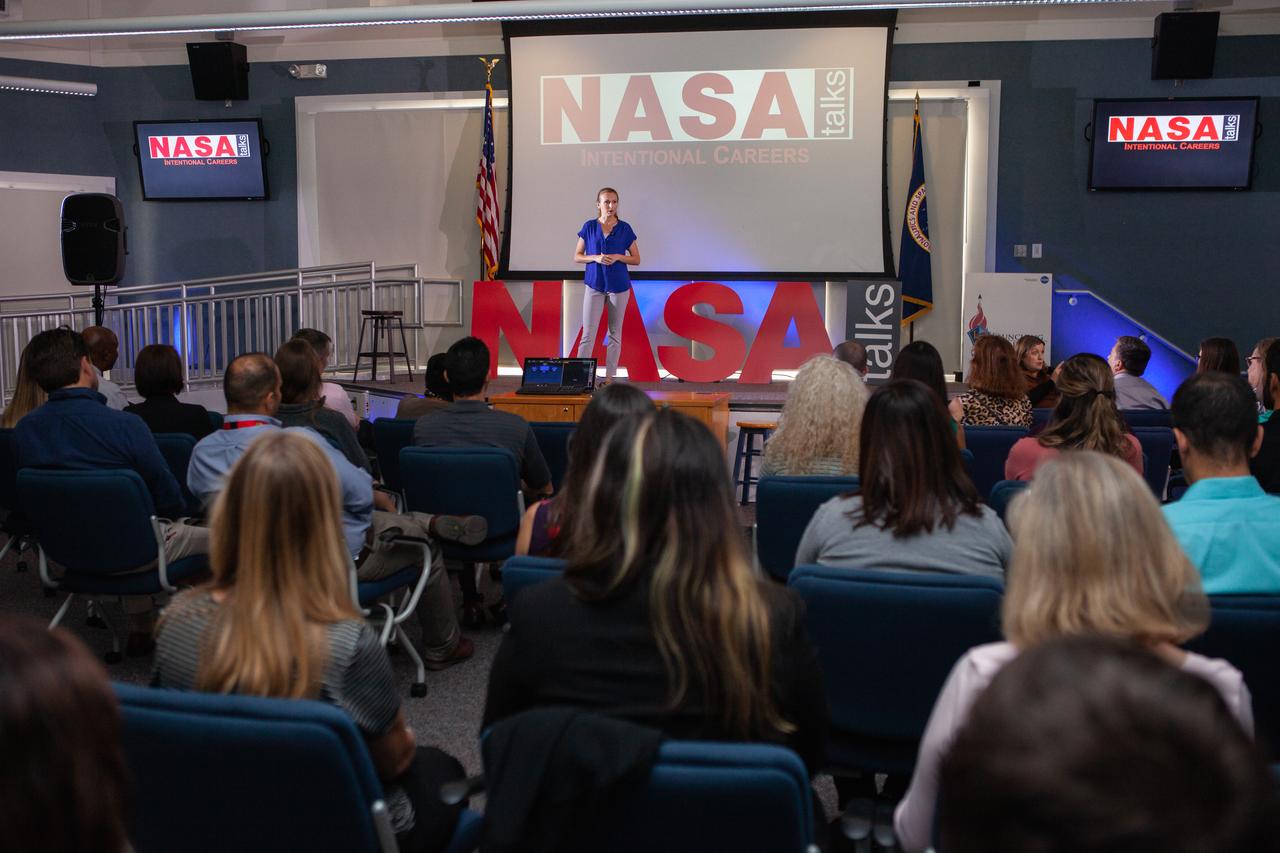
Kennedy Space Center’s Brittany Mott addresses co-workers inside the Florida spaceport’s Kennedy Learning Institute on Sept. 26, 2019, during the first in a series of five TED Talk-style informational sessions. Sponsored by Kennedy’s Launching Leaders and Leadership for the Future, NASAtalks focuses on the topic of intentional careers and aims to provide employees with tools and knowledge that can be utilized for career growth. The theme of this first session was innovation, and additional speakers included Kennedy employees Phillip Hargrove and Andy Phan, with a skill-building section on career planning by Nancy Bray, director of Spaceport Integration and Services.
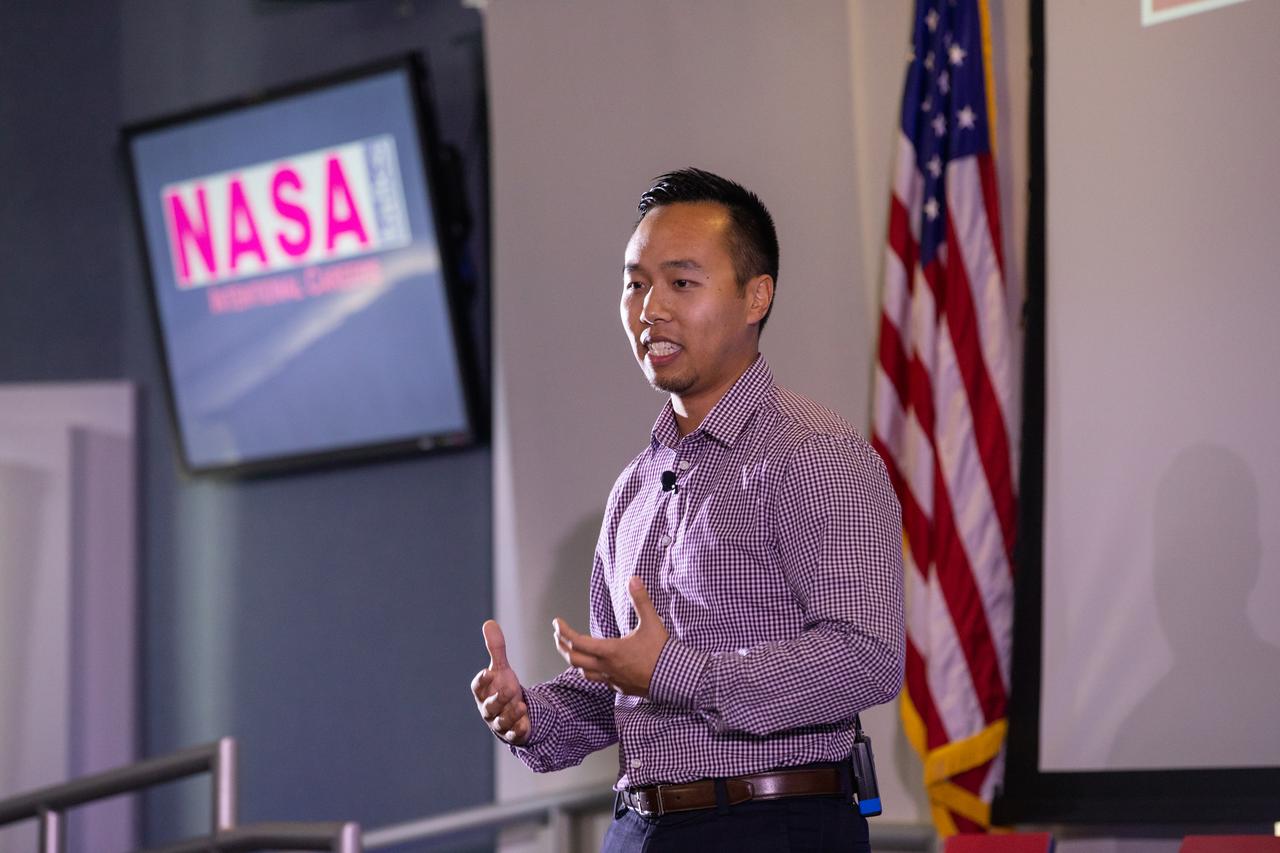
Kennedy Space Center’s Andy Phan speaks at the first in a series of five TED Talk-style informational sessions on Sept. 26, 2019, in the Florida spaceport’s Kennedy Learning Institute. Sponsored by Kennedy’s Launching Leaders and Leadership for the Future, NASAtalks focuses on the topic of intentional careers and aims to provide employees with tools and knowledge that can be utilized for career growth. The theme of this first session was innovation, and additional speakers included Kennedy employees Phillip Hargrove and Brittney Mott, with a skill-building section on career planning by Nancy Bray, director of Spaceport Integration and Services.
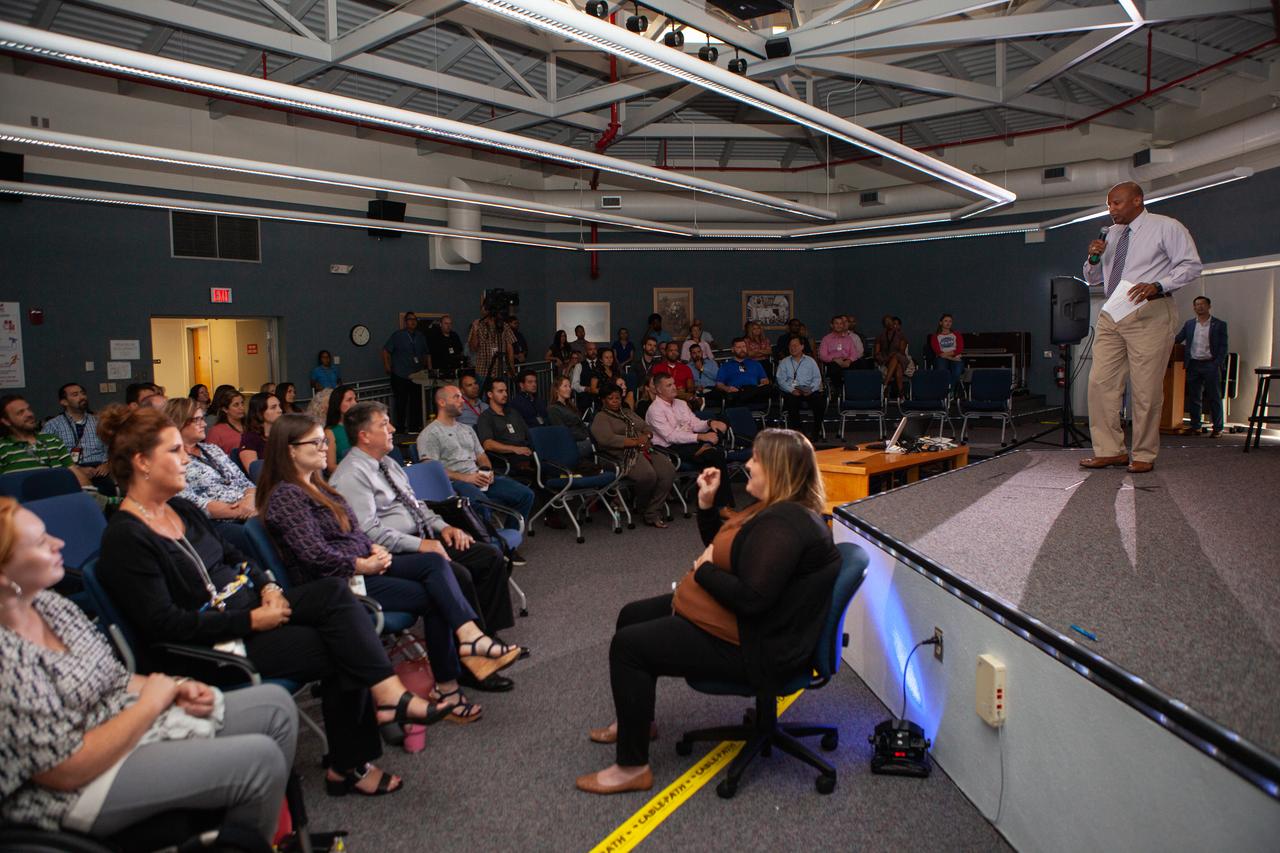
Kennedy Space Center Associate Director, Technical, Kelvin Manning addresses Kennedy employees inside the Florida spaceport’s Kennedy Learning Institute on Sept. 26, 2019, during the first in a series of five TED Talk-style informational sessions. Sponsored by Kennedy’s Launching Leaders and Leadership for the Future, NASAtalks focuses on the topic of intentional careers and aims to provide employees with tools and knowledge that can be utilized for career growth. The theme of this first session was innovation, and speakers included Kennedy employees Phillip Hargrove, Andy Phan and Brittney Mott, with a skill-building section on career planning by Nancy Bray, director of Spaceport Integration and Services.
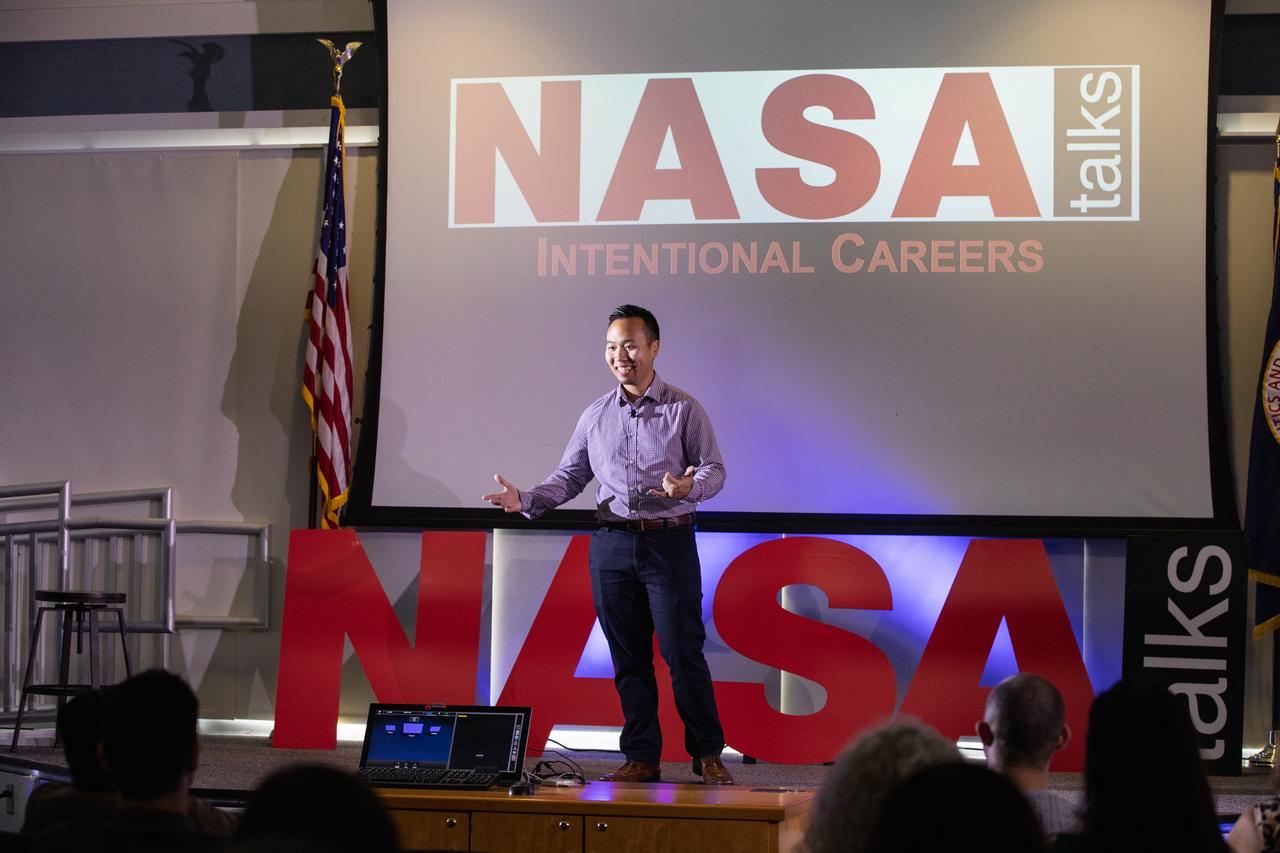
Kennedy Space Center’s Andy Phan addresses co-workers inside the Florida spaceport’s Kennedy Learning Institute on Sept. 26, 2019, during the first in a series of five TED Talk-style informational sessions. Sponsored by Kennedy’s Launching Leaders and Leadership for the Future, NASAtalks focuses on the topic of intentional careers and aims to provide employees with tools and knowledge that can be utilized for career growth. The theme of this first session was innovation, and additional speakers included Kennedy employees Phillip Hargrove and Brittney Mott, with a skill-building section on career planning by Nancy Bray, director of Spaceport Integration and Services.
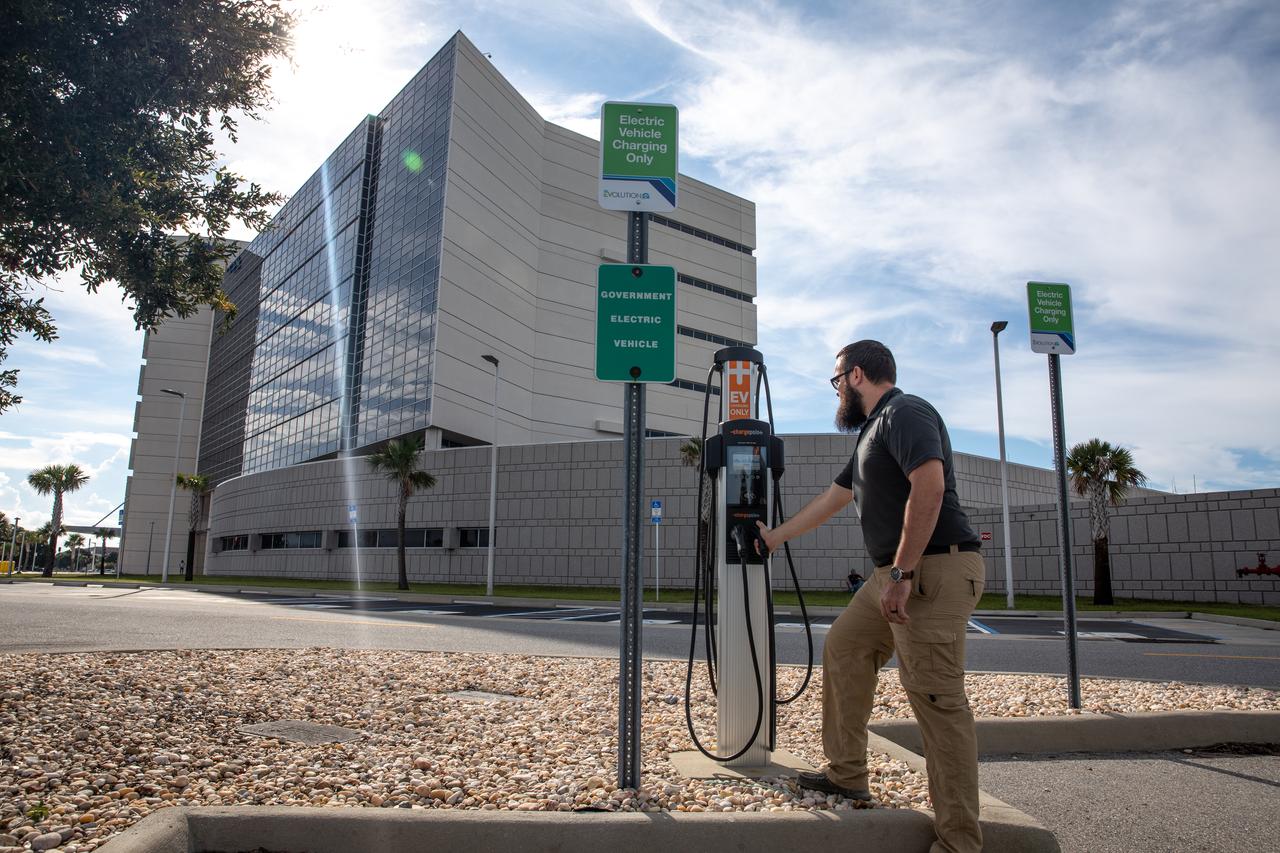
Spencer Davis, a NASA Traffic Management specialist in the Spaceport Integration Directorate at NASA’s Kennedy Space Center in Florida, stands near a newly installed electric vehicle (EV) charging station near the Central Campus Headquarters Building at Kennedy on Sept. 14, 2022. Part of a partnership between Kennedy and Florida Power & Light (FPL) to bring 23 EV charging stations to the spaceport, the ChargePoint CT4000, Level 2 chargers are capable of charging electric vehicles at a rate of 15-30 miles of range per hour. This partnership was set up under FPL’s EV program and provides a charging infrastructure that includes a simple way for businesses and employees to pay for usage.
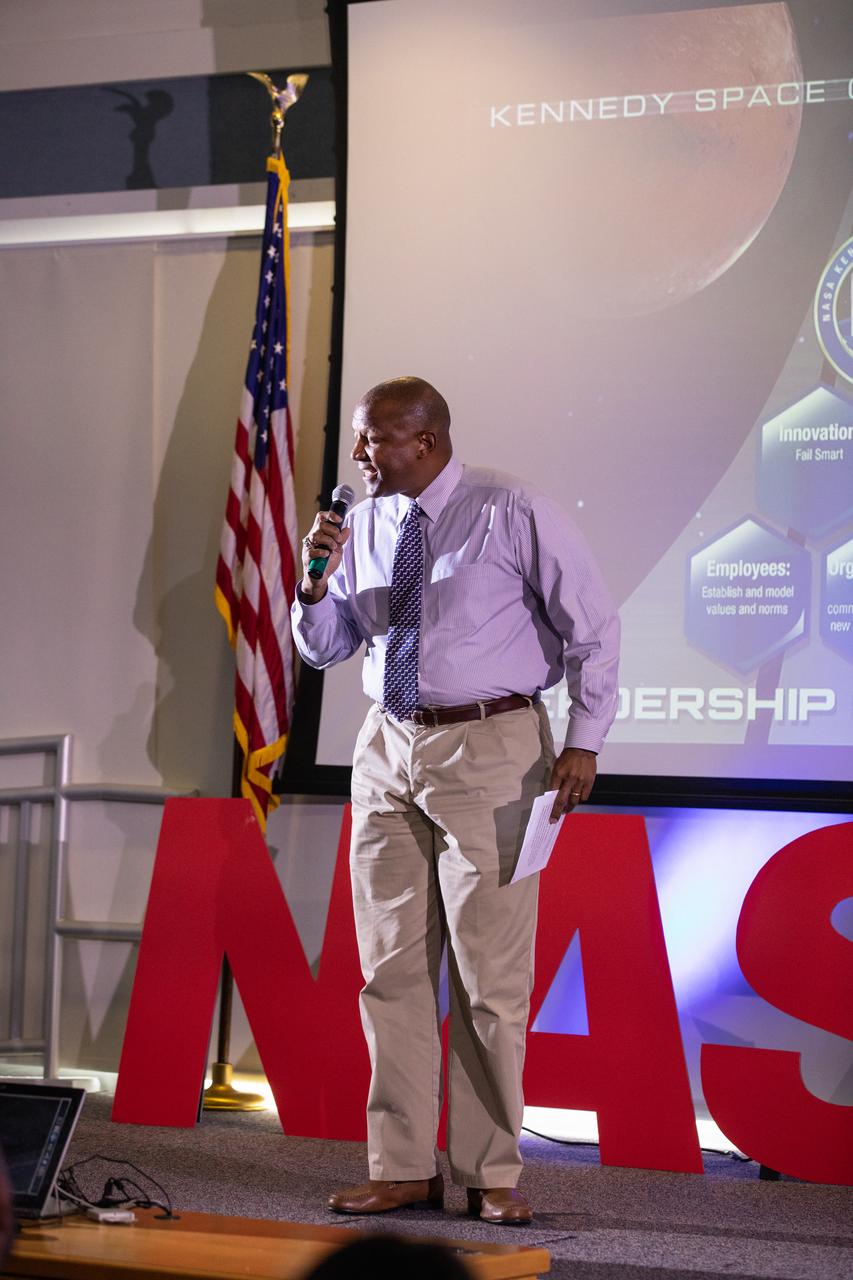
Kennedy Space Center Associate Director, Technical, Kelvin Manning addresses Kennedy employees inside the Florida spaceport’s Kennedy Learning Institute on Sept. 26, 2019, during the first in a series of five TED Talk-style informational sessions. Sponsored by Kennedy’s Launching Leaders and Leadership for the Future, NASAtalks focuses on the topic of intentional careers and aims to provide employees with tools and knowledge that can be utilized for career growth. The theme of this first session was innovation, and speakers included Kennedy employees Phillip Hargrove, Andy Phan and Brittney Mott, with a skill-building section on career planning by Nancy Bray, director of Spaceport Integration and Services.
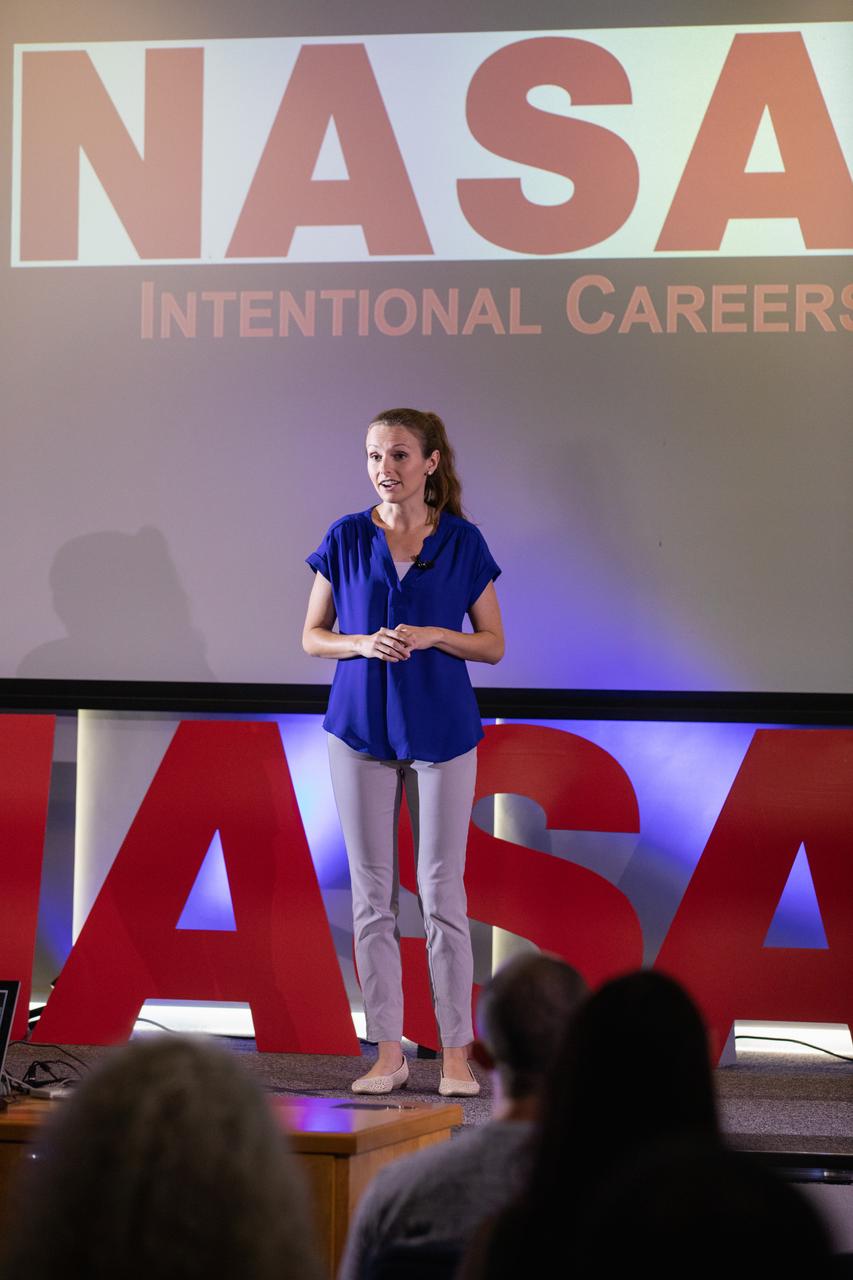
Kennedy Space Center’s Brittany Mott addresses co-workers inside the Florida spaceport’s Kennedy Learning Institute on Sept. 26, 2019, during the first in a series of five TED Talk-style informational sessions. Sponsored by Kennedy’s Launching Leaders and Leadership for the Future, NASAtalks focuses on the topic of intentional careers and aims to provide employees with tools and knowledge that can be utilized for career growth. The theme of this first session was innovation, and additional speakers included Kennedy employees Phillip Hargrove and Andy Phan, with a skill-building section on career planning by Nancy Bray, director of Spaceport Integration and Services.
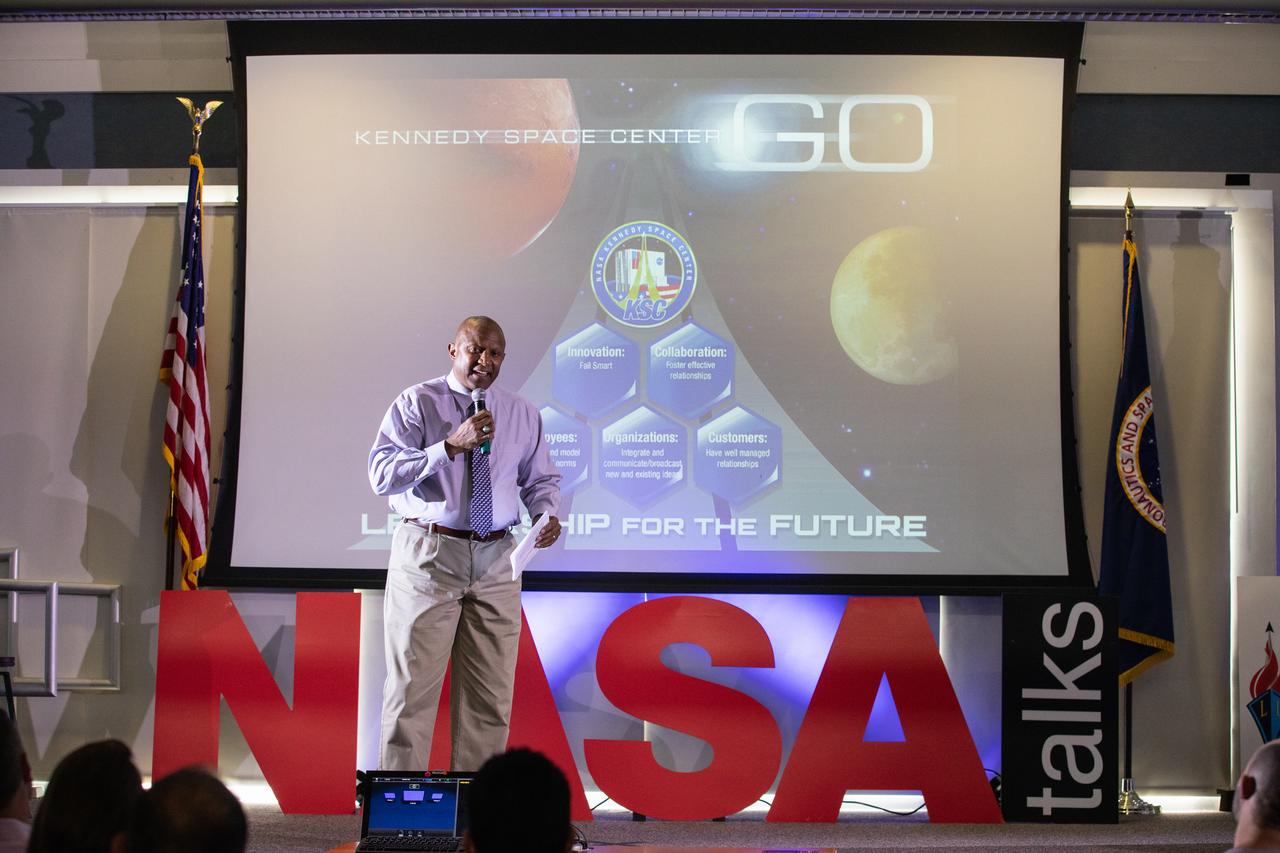
Kennedy Space Center Associate Director, Technical, Kelvin Manning addresses Kennedy employees inside the Florida spaceport’s Kennedy Learning Institute on Sept. 26, 2019, during the first in a series of five TED Talk-style informational sessions. Sponsored by Kennedy’s Launching Leaders and Leadership for the Future, NASAtalks focuses on the topic of intentional careers and aims to provide employees with tools and knowledge that can be utilized for career growth. The theme of this first session was innovation, and speakers included Kennedy employees Phillip Hargrove, Andy Phan and Brittney Mott, with a skill-building section on career planning by Nancy Bray, director of Spaceport Integration and Services.
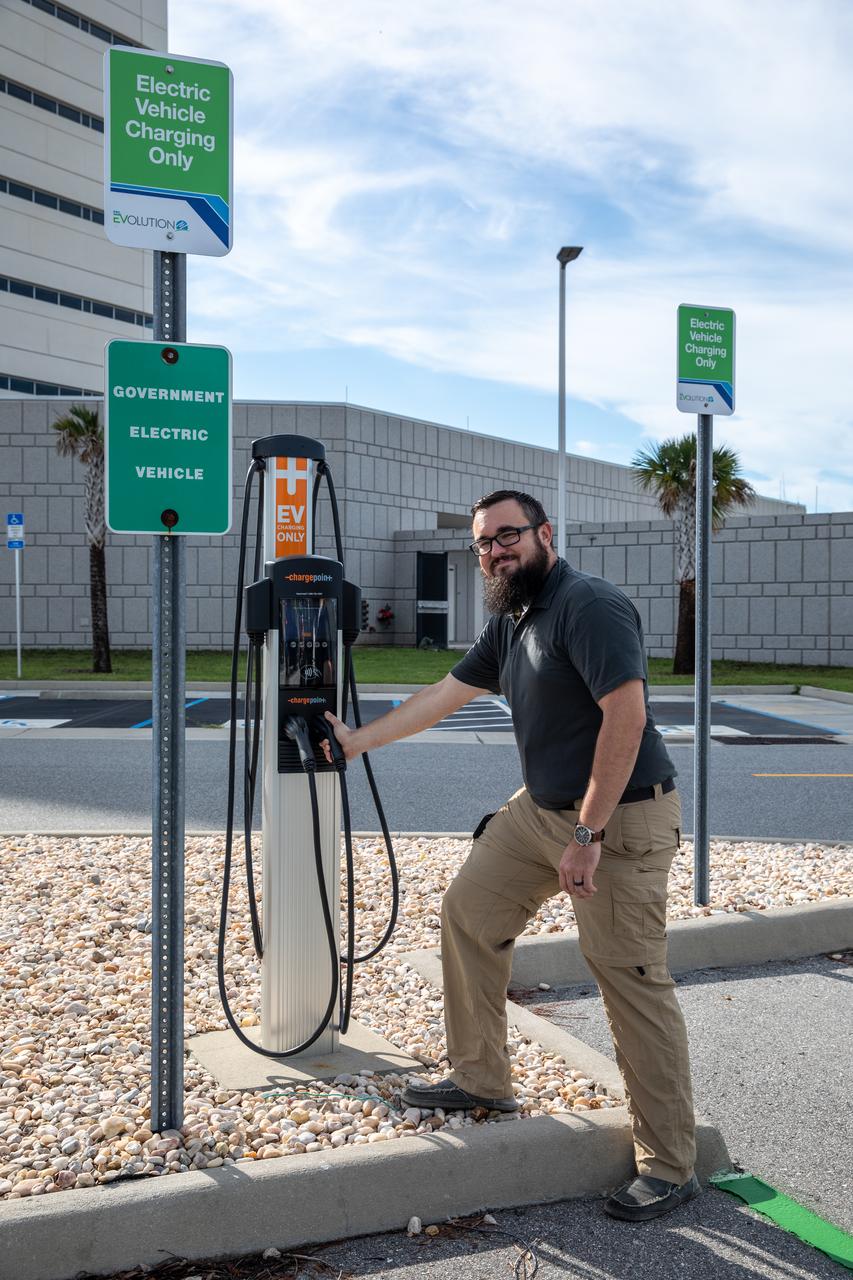
Spencer Davis, a NASA Traffic Management specialist in the Spaceport Integration Directorate at NASA’s Kennedy Space Center in Florida, stands near a newly installed electric vehicle (EV) charging station near the Central Campus Headquarters Building at Kennedy on Sept. 14, 2022. Part of a partnership between Kennedy and Florida Power & Light (FPL) to bring 23 EV charging stations to the spaceport, the ChargePoint CT4000, Level 2 chargers are capable of charging electric vehicles at a rate of 15-30 miles of range per hour. This partnership was set up under FPL’s EV program and provides a charging infrastructure that includes a simple way for businesses and employees to pay for usage.
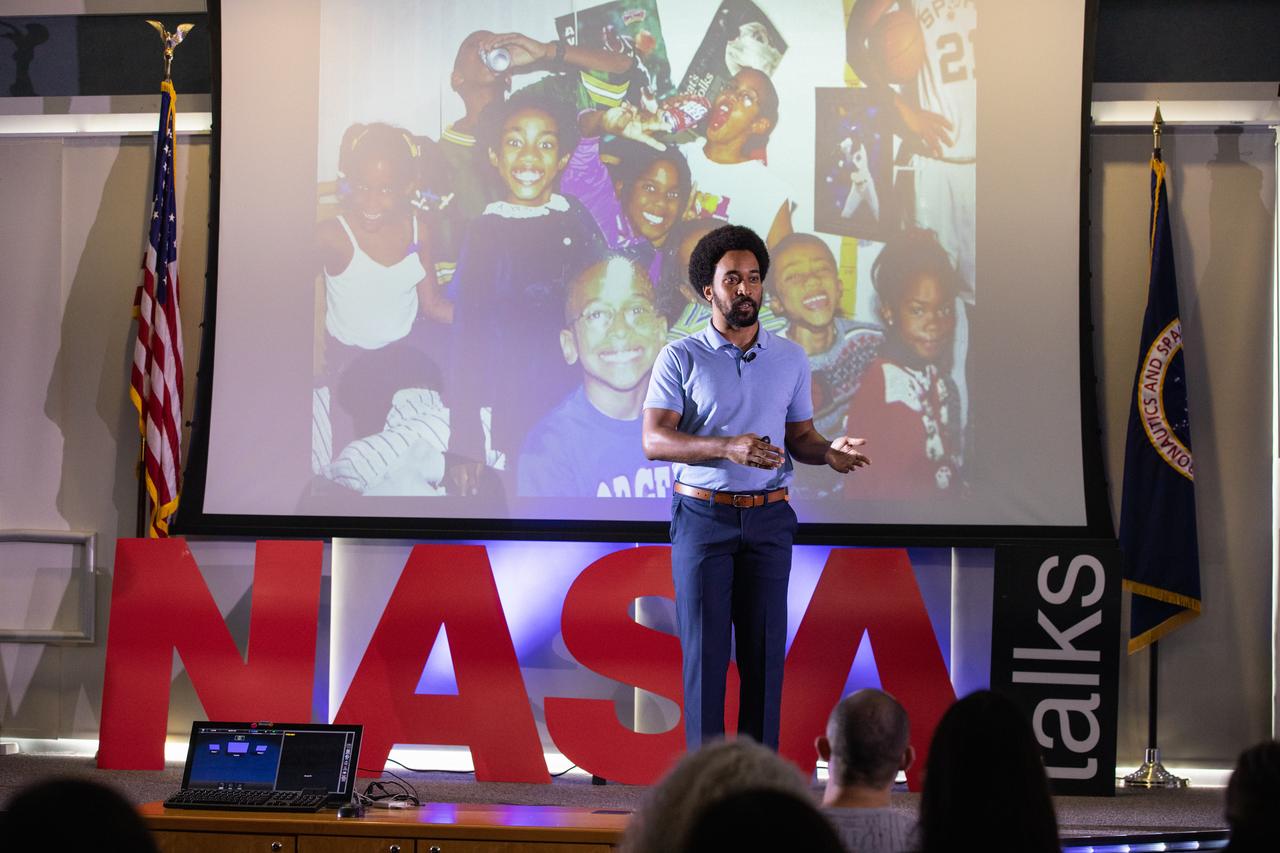
Kennedy Space Center’s Phillip Hargrove addresses co-workers inside the Florida spaceport’s Kennedy Learning Institute on Sept. 26, 2019, during the first in a series of five TED Talk-style informational sessions. Sponsored by Kennedy’s Launching Leaders and Leadership for the Future, NASAtalks focuses on the topic of intentional careers and aims to provide employees with tools and knowledge that can be utilized for career growth. The theme of this first session was innovation, and additional speakers included Kennedy employees Andy Phan and Brittney Mott, with a skill-building section on career planning by Nancy Bray, director of Spaceport Integration and Services.
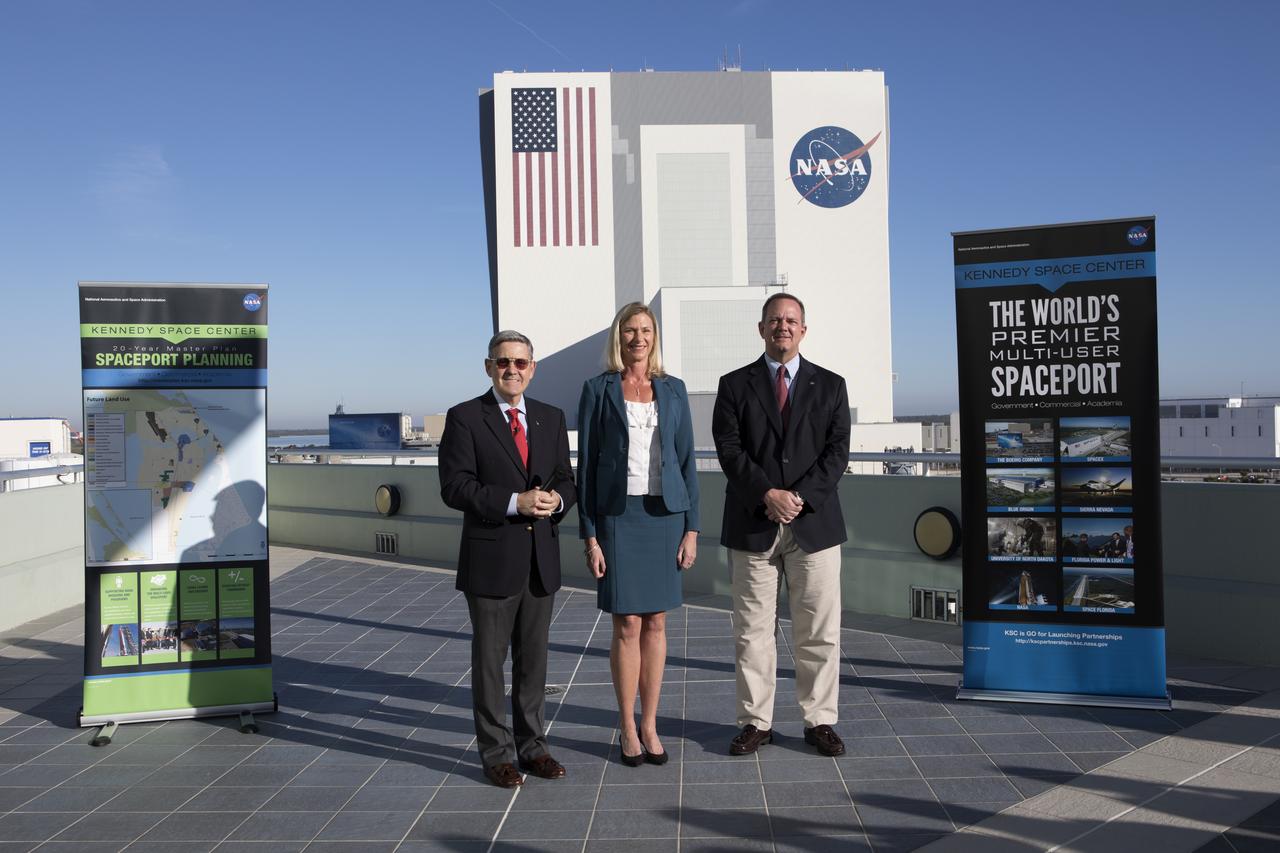
Kennedy Space Center Director Bob Cabana, left, was joined by Nancy Bray, director of Spaceport Integration and Services, center, and Tom Engler, director of Center Planning and Development in briefing members of the news media on the balcony of Operations Support Building II. They described Kennedy's transition from a primarily government-only facility to a premier, multi-user spaceport. In the background is the Vehicle Assembly Building (VAB). Modifications were recently completed in the VAB where new work platforms were installed to support processing of NASA's Space Launch System rocket designed to send the Orion spacecraft on missions beyond low-Earth orbit.
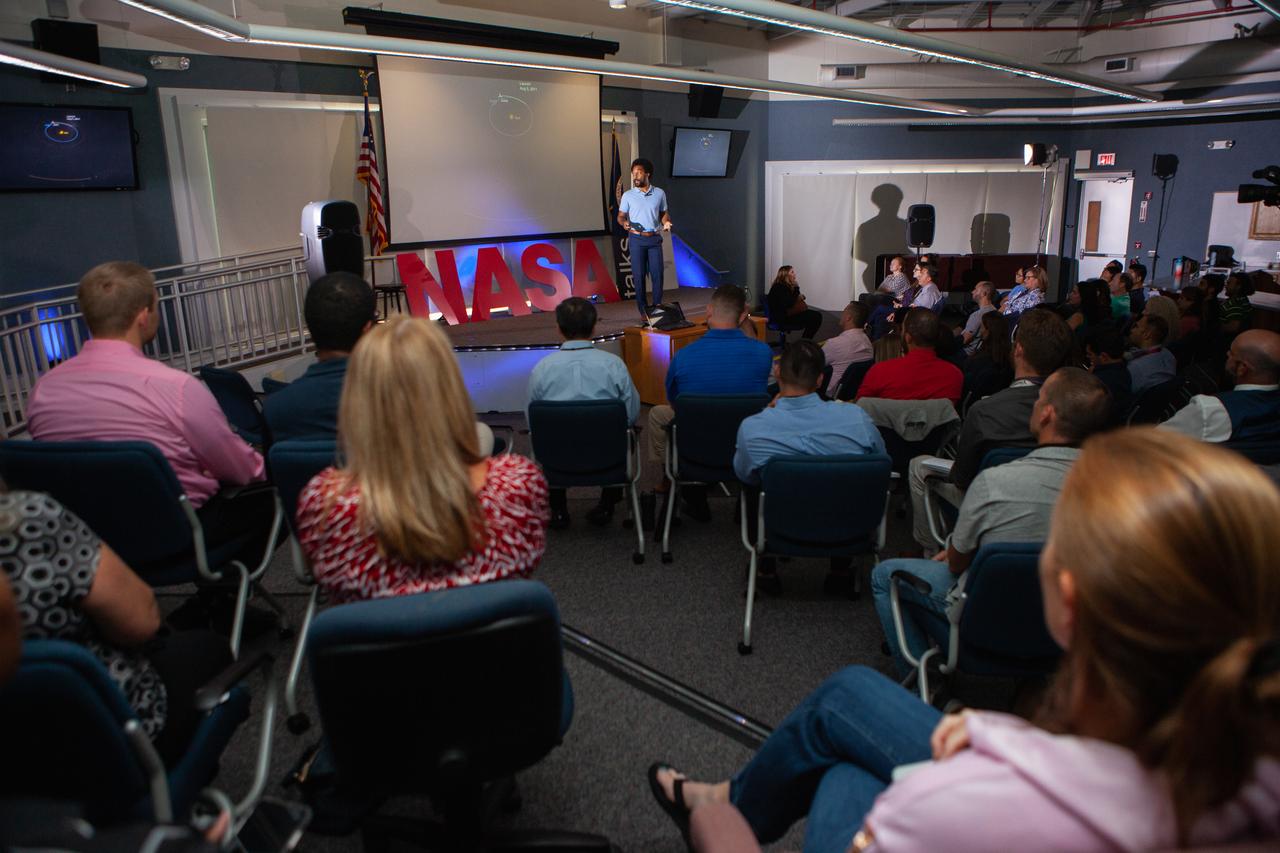
Kennedy Space Center’s Phillip Hargrove addresses co-workers inside the Florida spaceport’s Kennedy Learning Institute on Sept. 26, 2019, during the first in a series of five TED Talk-style informational sessions. Sponsored by Kennedy’s Launching Leaders and Leadership for the Future, NASAtalks focuses on the topic of intentional careers and aims to provide employees with tools and knowledge that can be utilized for career growth. The theme of this first session was innovation, and additional speakers included Kennedy employees Andy Phan and Brittney Mott, with a skill-building section on career planning by Nancy Bray, director of Spaceport Integration and Services.
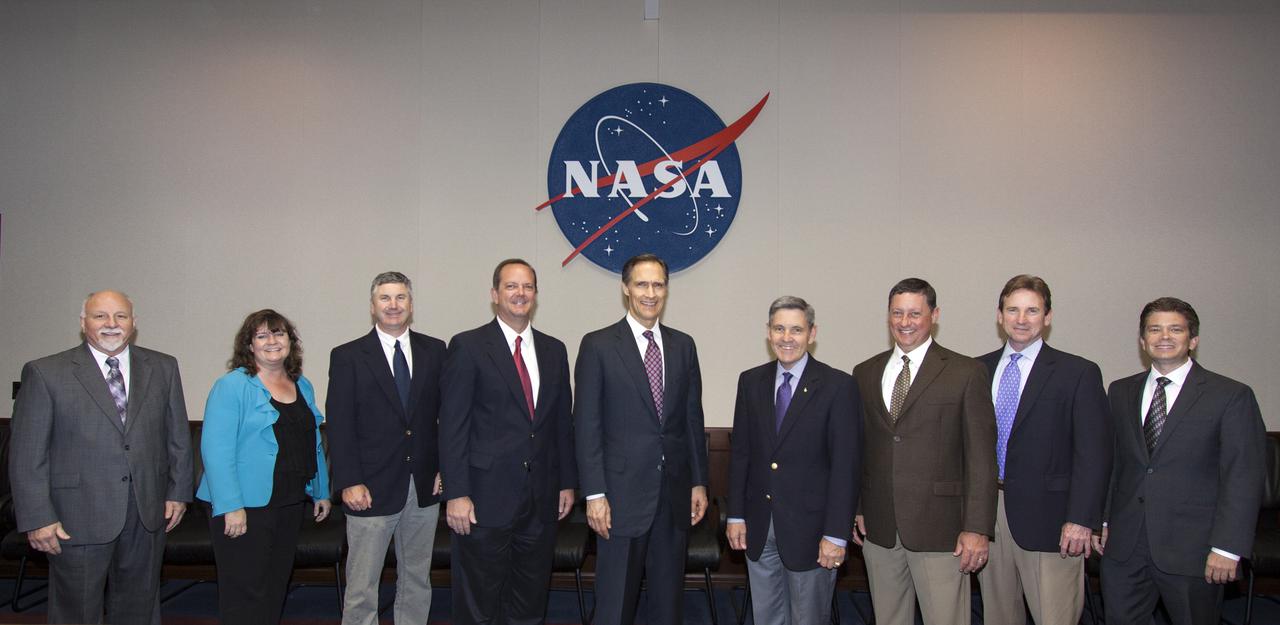
CAPE CANAVERAL, Fla. -- Kennedy Space Center Director Bob Cabana, met with representatives of PaR Systems Inc. NASA recently established a partnership agreement with PaR to operate of the Hangar N facility and its nondestructive testing equipment. Participating were, from the left, Cliff Hausmann, Technical Integration manager in NASA's Program Control and Integration Office, Amy Houts-Gilfriche, Partnership Development manager in NASA's Center Planning and Development Directorate, Scott Colloredo of NASA's Systems Engineering and Integration Division, Tom Engler, deputy director of Center Planning and Development, Brian Behm, president of the Robotics Division of PaR Systems, Tony Corak, manager, of Non-destructive Testing Services for PaR Systems, Dale Ketcham of Space Florida, and Robert Salonen, director of Business Development for the Economic Development Commission of Florida's Space Coast. As the spaceport transitions from a historically government-only launch facility to a multiuser spaceport for both federal and commercial customers, partnerships with other organizations will be a key element in that effort. Hangar N is located at Cape Canaveral Air Force Station adjacent to Kennedy. The facility's unique inventory of nondestructive test and evaluation NDE equipment and the capability for current and future mission spaceflight support was an asset NASA wanted to retain. Photo credit: NASA_Jim Grossmann
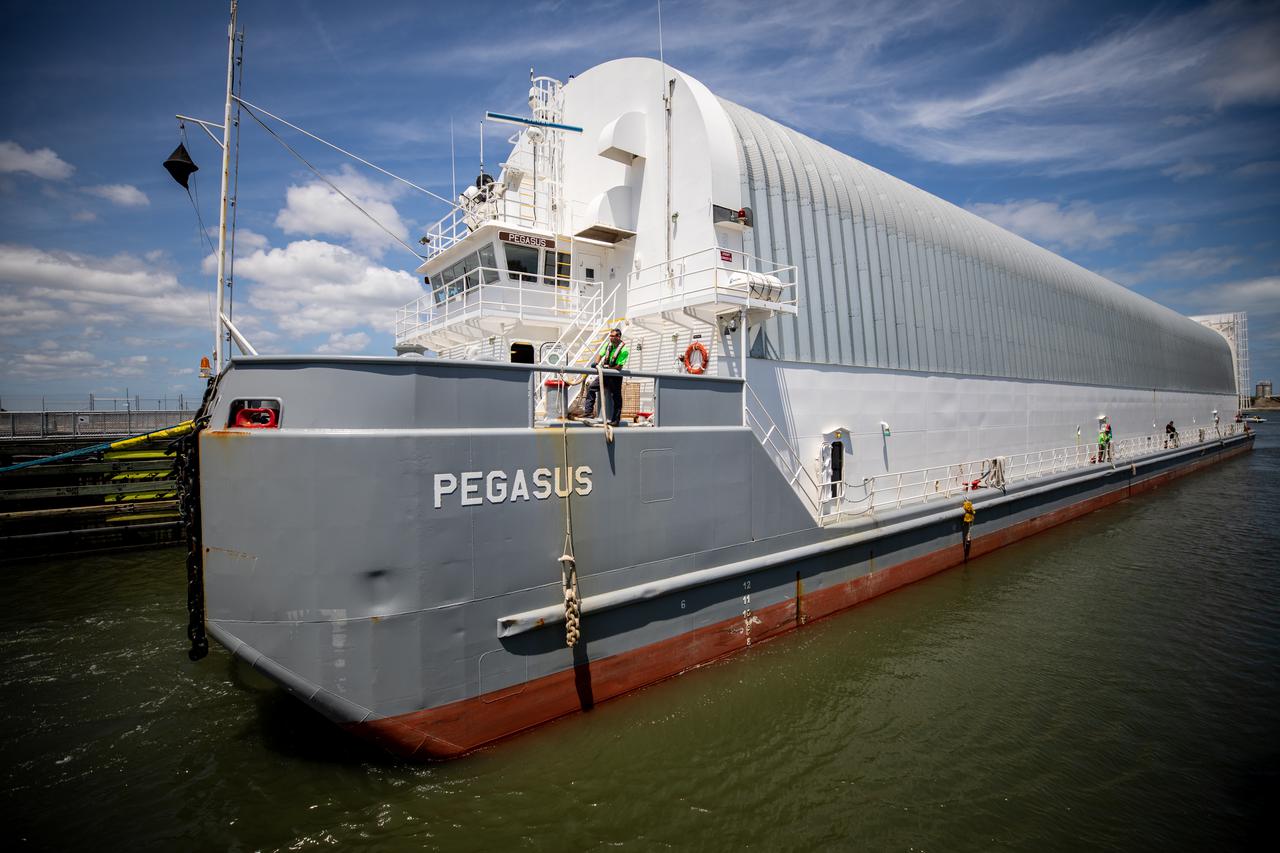
The Pegasus barge, carrying the mighty Space Launch System (SLS) core stage, arrives at NASA’s Kennedy Space Center in Florida on April 27, 2021, after journeying from the agency’s Stennis Space Center in Mississippi. The core stage is the final piece of Artemis hardware to arrive at the spaceport and will be offloaded and moved to Kennedy’s Vehicle Assembly Building, where it will be prepared for integration atop the mobile launcher with the completed stack of solid rocket boosters ahead of the Artemis I launch. The first in a series of increasingly complex missions, Artemis I will test SLS and Orion as an integrated system prior to crewed flights to the Moon.
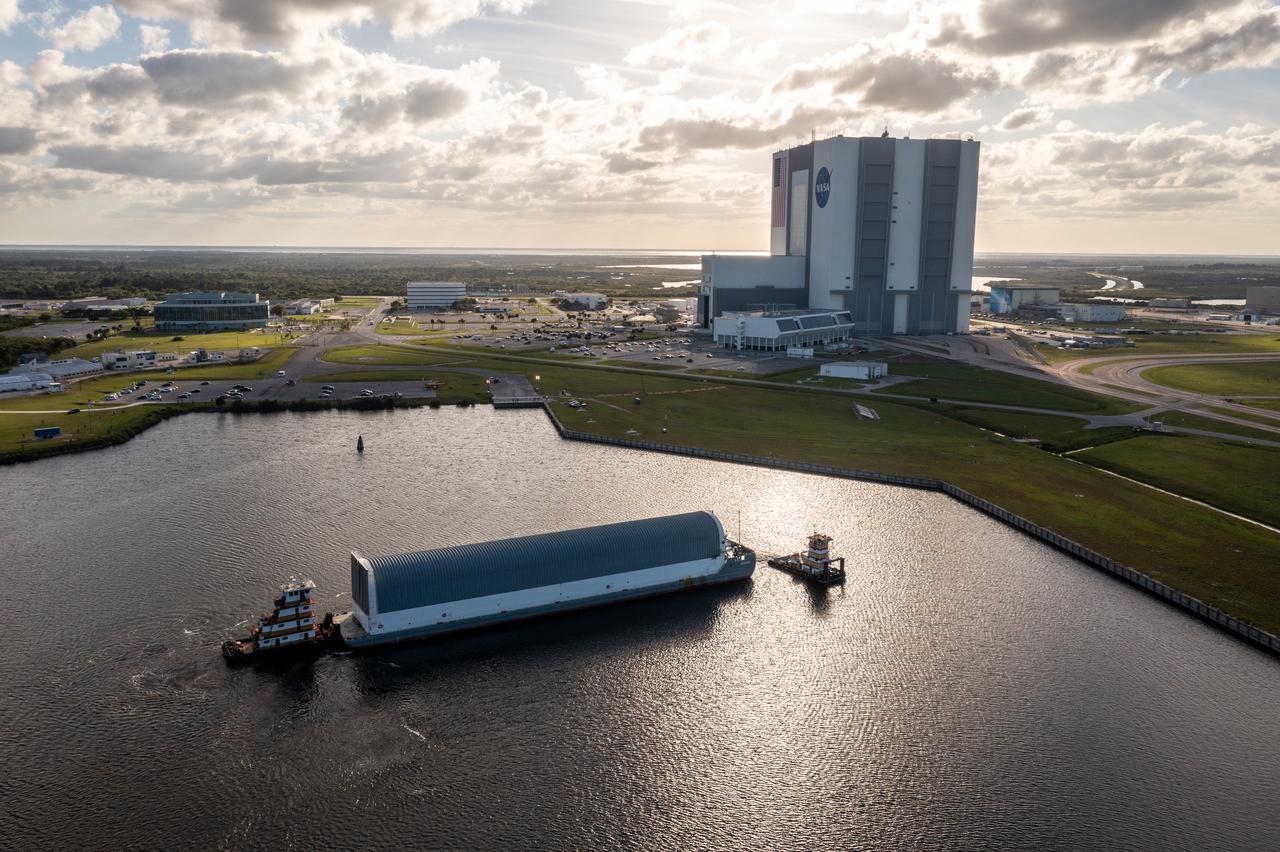
The Pegasus barge, carrying the mighty Space Launch System (SLS) core stage, passes through Port Canaveral on its way to NASA’s Kennedy Space Center in Florida on April 27, 2021, after journeying from the agency’s Stennis Space Center in Mississippi. The core stage is the final piece of Artemis hardware to arrive at the spaceport and will be offloaded and moved to Kennedy’s Vehicle Assembly Building, where it will be prepared for integration atop the mobile launcher with the completed stack of solid rocket boosters ahead of the Artemis I launch. The first in a series of increasingly complex missions, Artemis I will test SLS and Orion as an integrated system prior to crewed flights to the Moon.
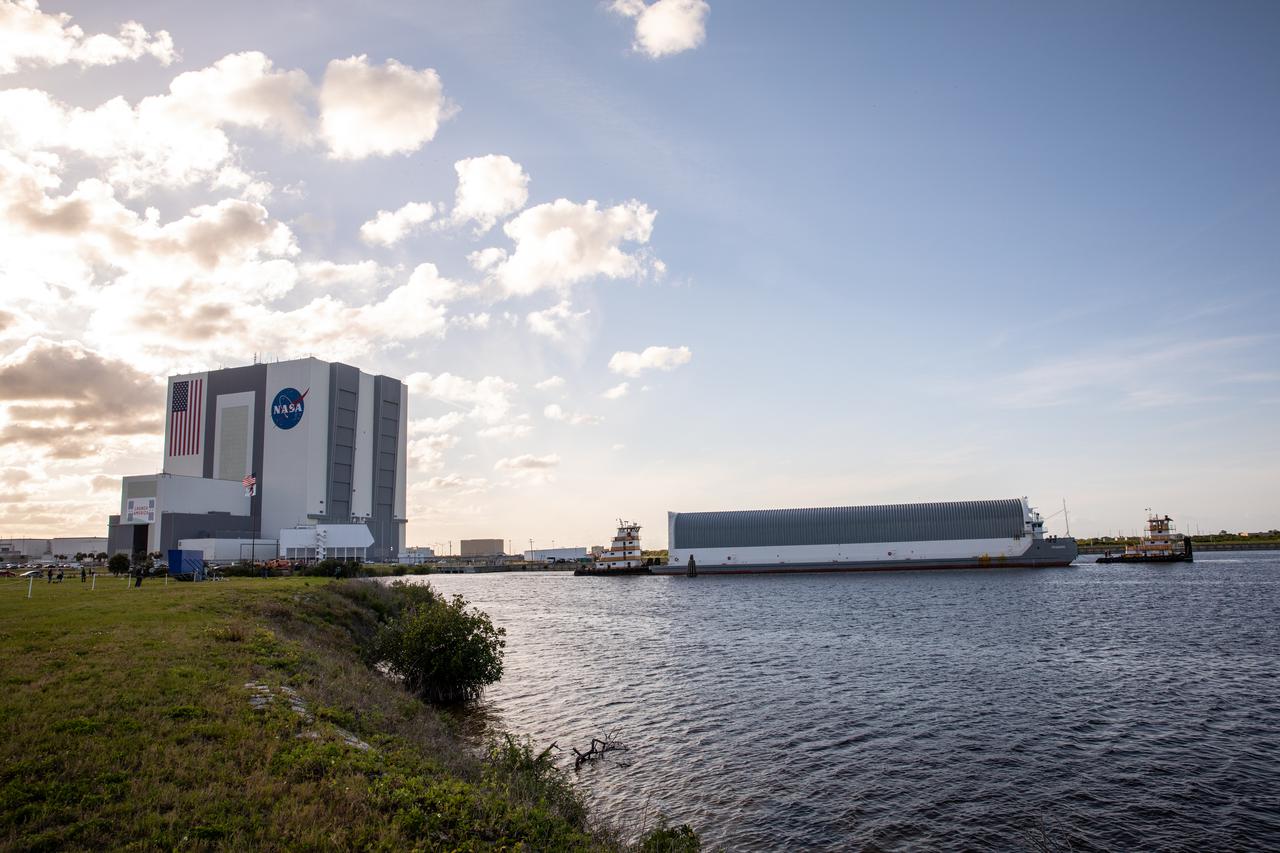
After its journey from NASA’s Stennis Space Center in Mississippi aboard the Pegasus barge, the mighty Space Launch System (SLS) core stage arrives at the agency’s Kennedy Space Center in Florida on April 27, 2021. The core stage is the final piece of Artemis hardware to arrive at the spaceport and will be offloaded and moved to Kennedy’s Vehicle Assembly Building, where it will be prepared for integration atop the mobile launcher with the completed stack of solid rocket boosters ahead of the Artemis I launch. The first in a series of increasingly complex missions, Artemis I will test SLS and Orion as an integrated system prior to crewed flights to the Moon.
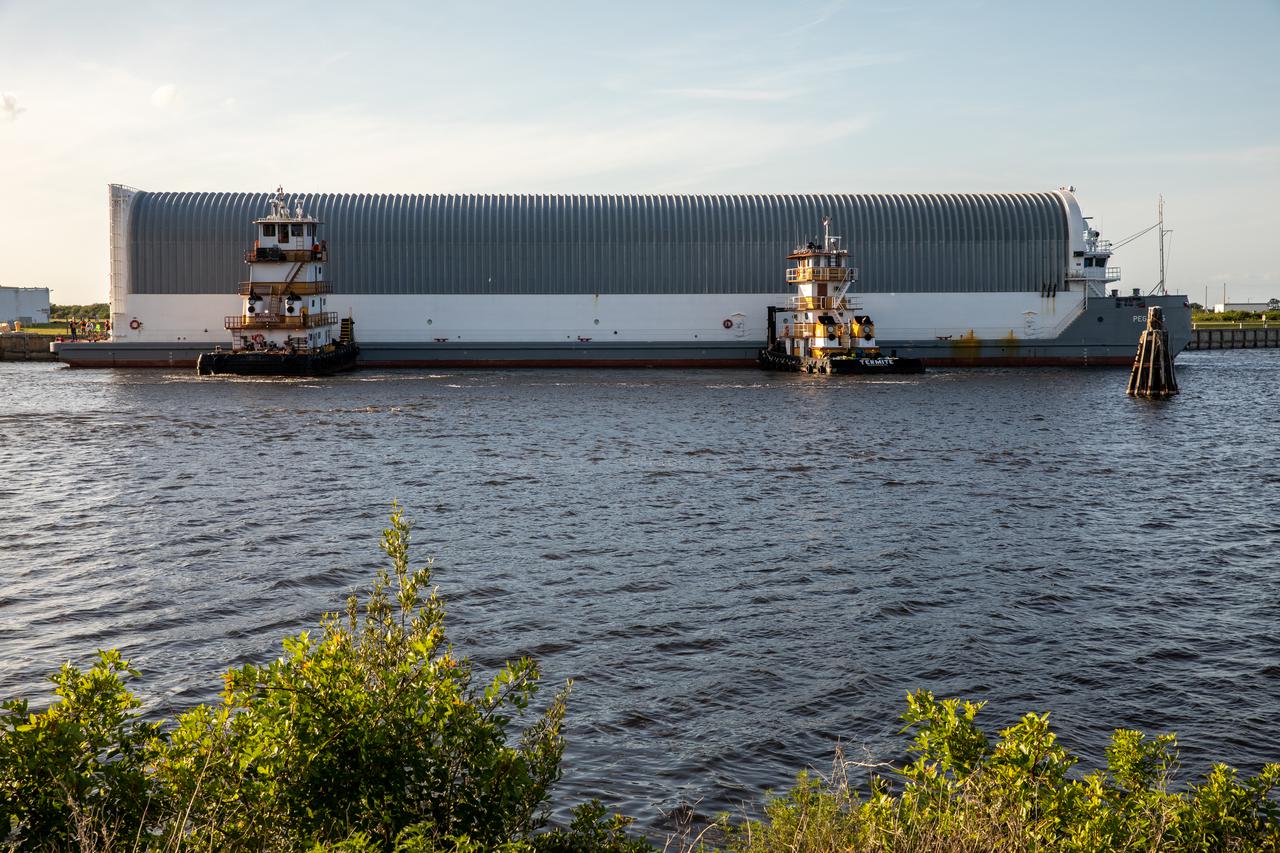
The Pegasus barge, carrying the mighty Space Launch System (SLS) core stage, arrives at NASA’s Kennedy Space Center in Florida on April 27, 2021, after journeying from the agency’s Stennis Space Center in Mississippi. The core stage is the final piece of Artemis hardware to arrive at the spaceport and will be offloaded and moved to Kennedy’s Vehicle Assembly Building, where it will be prepared for integration atop the mobile launcher with the completed stack of solid rocket boosters ahead of the Artemis I launch. The first in a series of increasingly complex missions, Artemis I will test SLS and Orion as an integrated system prior to crewed flights to the Moon.
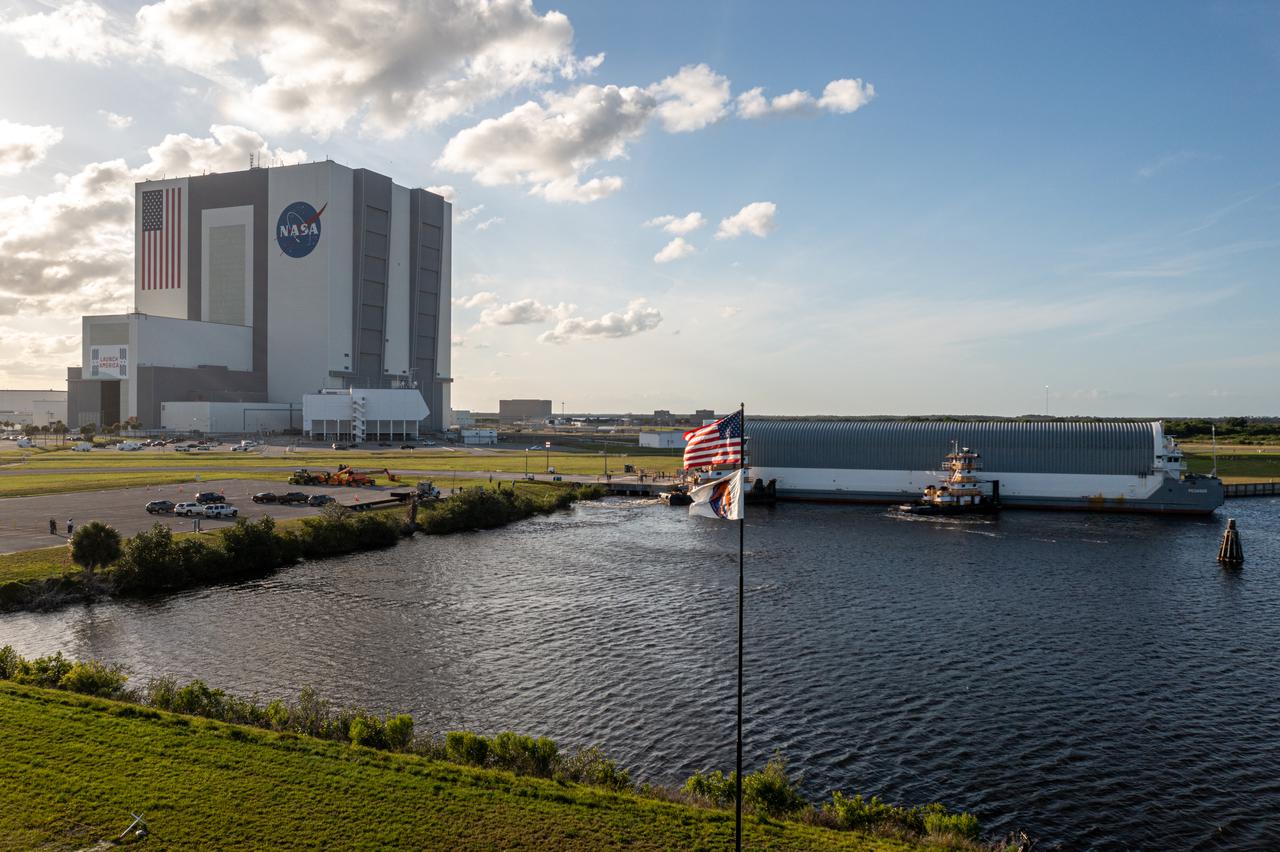
After its journey from NASA’s Stennis Space Center in Mississippi aboard the Pegasus barge, the mighty Space Launch System (SLS) core stage arrives at the agency’s Kennedy Space Center in Florida on April 27, 2021. The core stage is the final piece of Artemis hardware to arrive at the spaceport and will be offloaded and moved to Kennedy’s Vehicle Assembly Building, where it will be prepared for integration atop the mobile launcher with the completed stack of solid rocket boosters ahead of the Artemis I launch. The first in a series of increasingly complex missions, Artemis I will test SLS and Orion as an integrated system prior to crewed flights to the Moon.
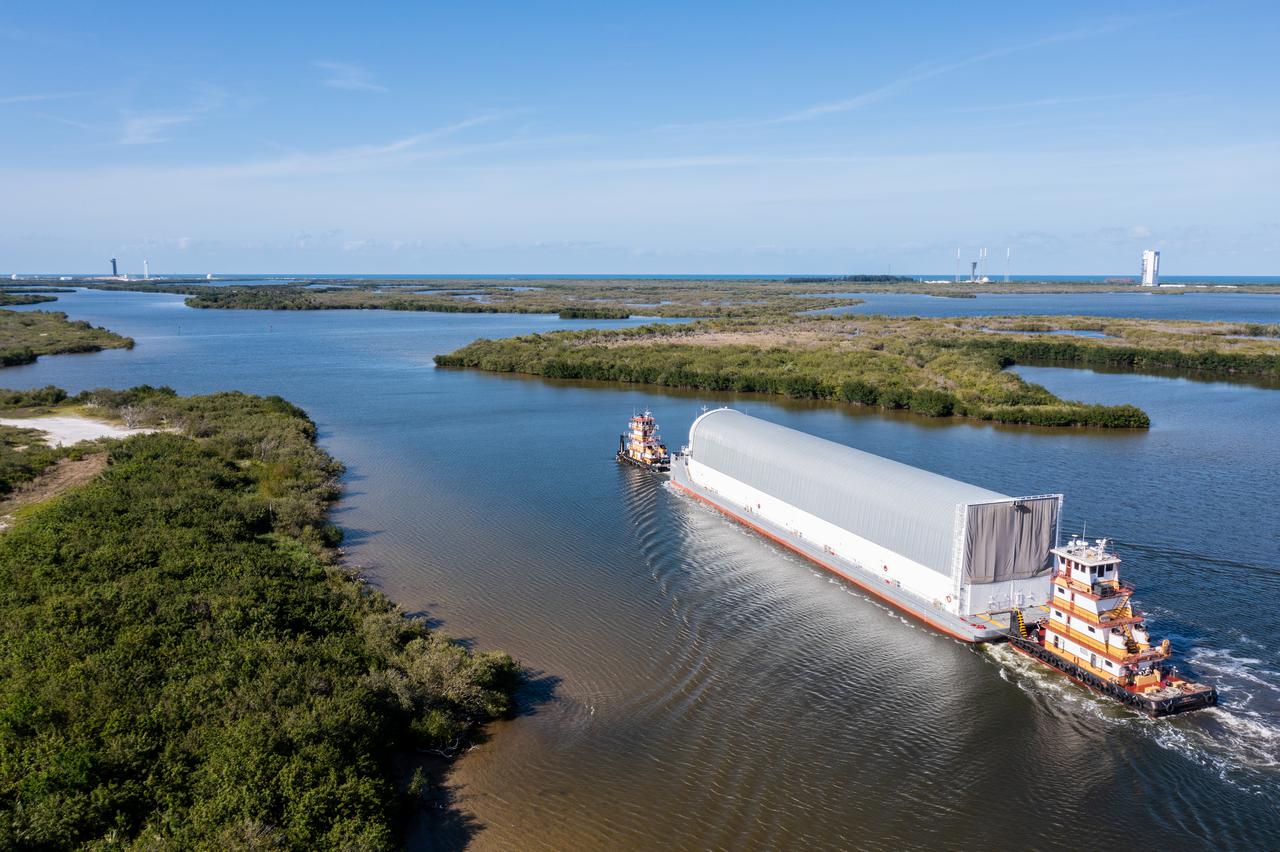
The Pegasus barge, carrying the mighty Space Launch System (SLS) core stage, arrives at NASA’s Kennedy Space Center in Florida on April 27, 2021, after journeying from the agency’s Stennis Space Center in Mississippi. The core stage is the final piece of Artemis hardware to arrive at the spaceport and will be offloaded and moved to Kennedy’s Vehicle Assembly Building, where it will be prepared for integration atop the mobile launcher with the completed stack of solid rocket boosters ahead of the Artemis I launch. The first in a series of increasingly complex missions, Artemis I will test SLS and Orion as an integrated system prior to crewed flights to the Moon.
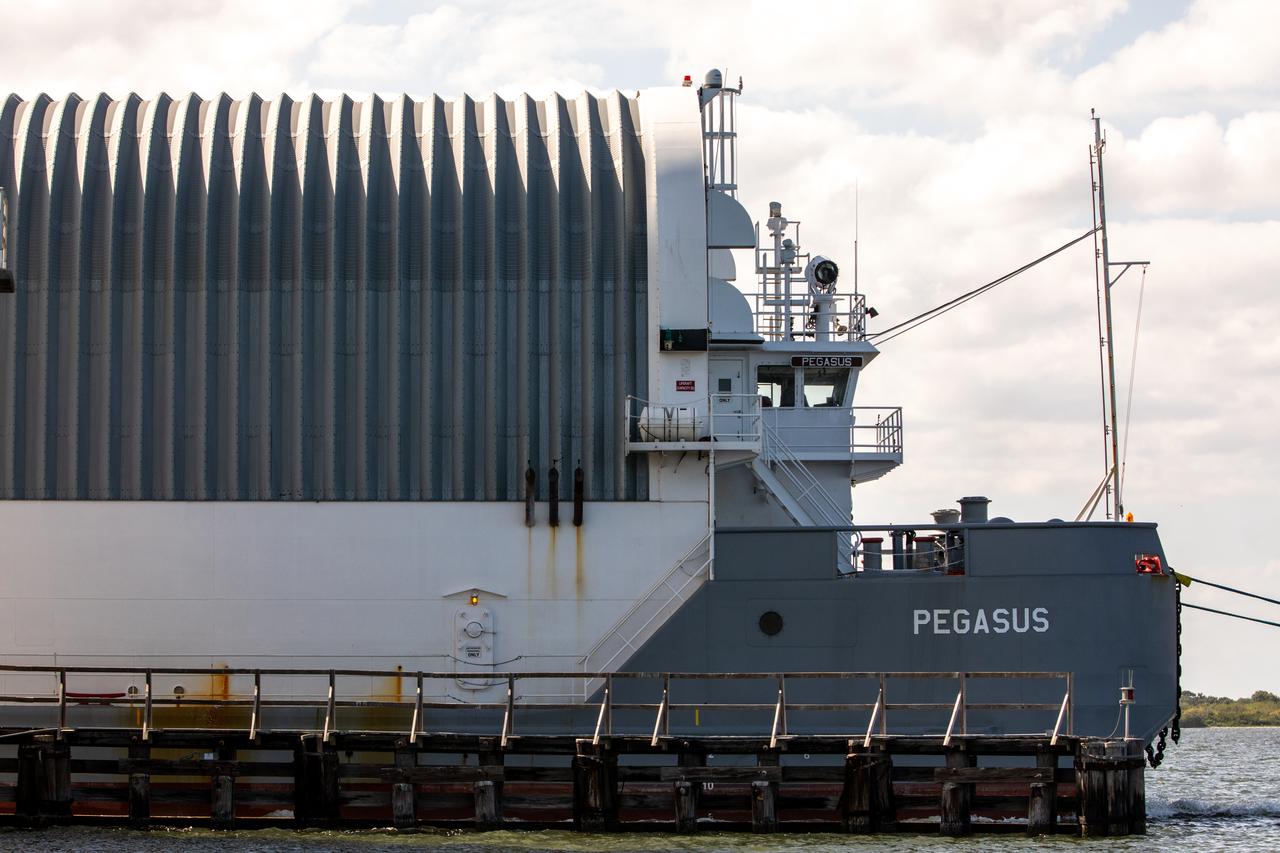
The Pegasus barge, carrying the mighty Space Launch System (SLS) core stage, arrives at NASA’s Kennedy Space Center in Florida on April 27, 2021, after journeying from the agency’s Stennis Space Center in Mississippi. The core stage is the final piece of Artemis hardware to arrive at the spaceport and will be offloaded and moved to Kennedy’s Vehicle Assembly Building, where it will be prepared for integration atop the mobile launcher with the completed stack of solid rocket boosters ahead of the Artemis I launch. The first in a series of increasingly complex missions, Artemis I will test SLS and Orion as an integrated system prior to crewed flights to the Moon.
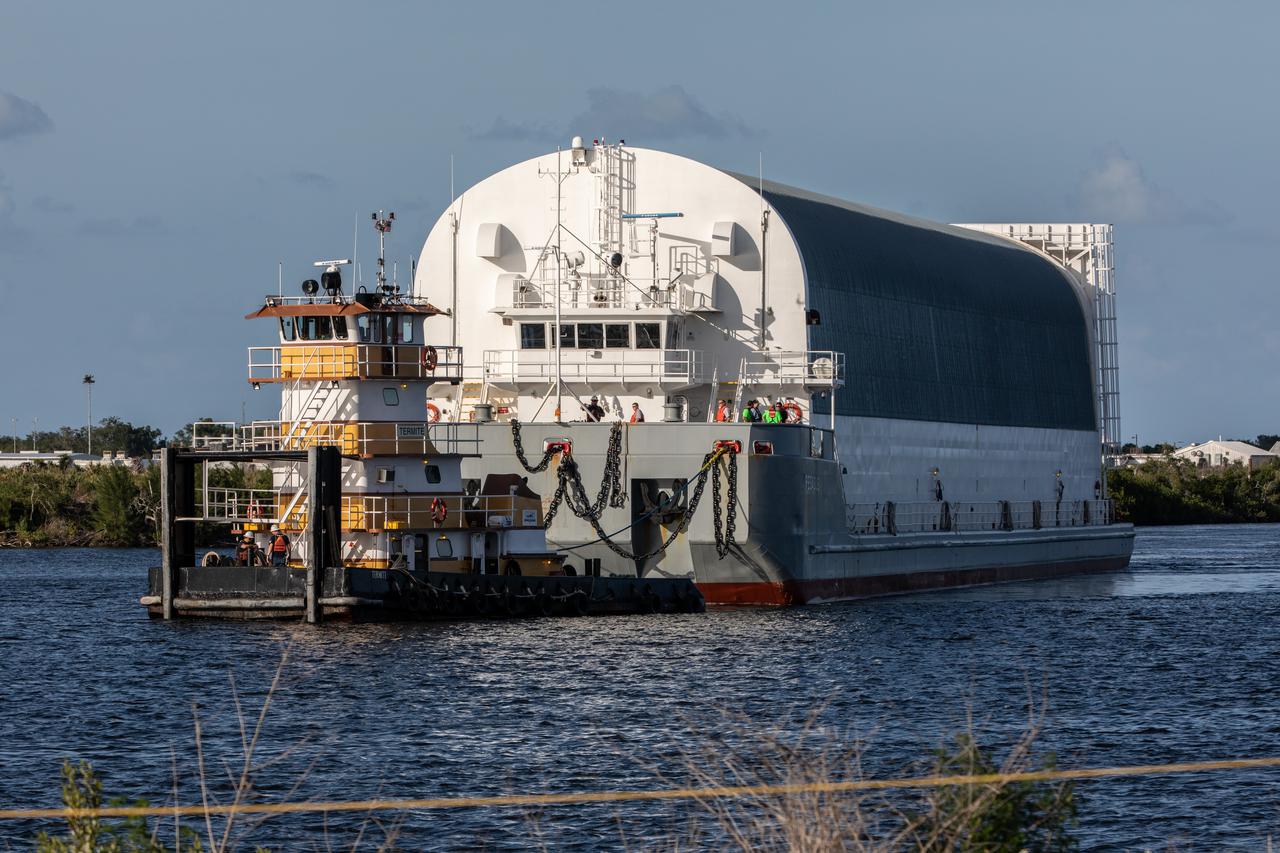
The Pegasus barge, carrying the mighty Space Launch System (SLS) core stage, arrives at NASA’s Kennedy Space Center in Florida on April 27, 2021, after journeying from the agency’s Stennis Space Center in Mississippi. The core stage is the final piece of Artemis hardware to arrive at the spaceport and will be offloaded and moved to Kennedy’s Vehicle Assembly Building, where it will be prepared for integration atop the mobile launcher with the completed stack of solid rocket boosters ahead of the Artemis I launch. The first in a series of increasingly complex missions, Artemis I will test SLS and Orion as an integrated system prior to crewed flights to the Moon.
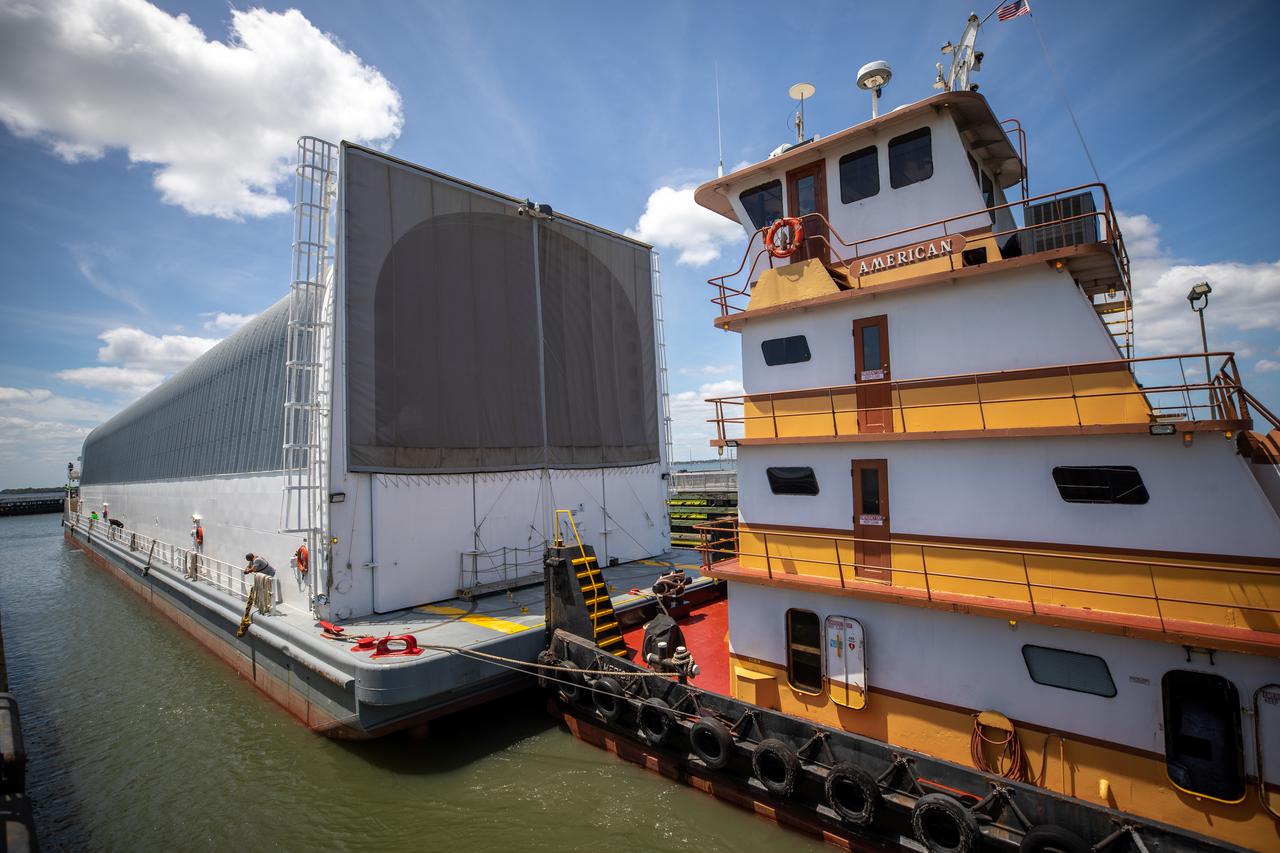
The Pegasus barge, carrying the mighty Space Launch System (SLS) core stage, passes through Port Canaveral on its way to NASA’s Kennedy Space Center in Florida on April 27, 2021, after journeying from the agency’s Stennis Space Center in Mississippi. The core stage is the final piece of Artemis hardware to arrive at the spaceport and will be offloaded and moved to Kennedy’s Vehicle Assembly Building, where it will be prepared for integration atop the mobile launcher with the completed stack of solid rocket boosters ahead of the Artemis I launch. The first in a series of increasingly complex missions, Artemis I will test SLS and Orion as an integrated system prior to crewed flights to the Moon.
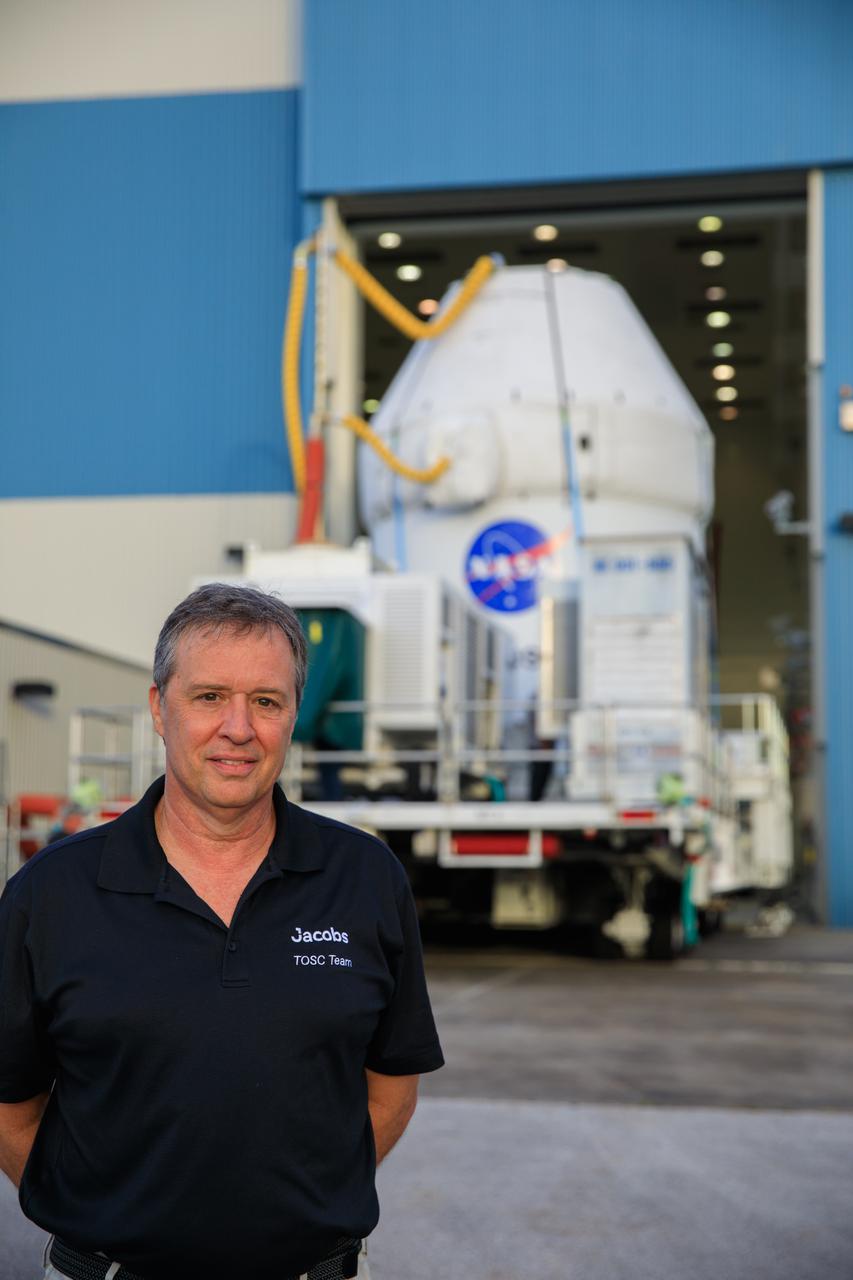
Nick Kindred, Jacobs flow manager, stands in front of the Orion spacecraft for the Artemis I mission, as the capsule moves out from Kennedy Space Center’s Multi-Payload Processing Facility on July 10, 2021. Orion is being transported to the Florida spaceport’s Launch Abort System Facility, where teams with Exploration Ground Systems and contractor Jacobs will integrate components of the launch abort system onto the spacecraft. Launching later this year, Artemis I will be a test of the Orion spacecraft and SLS rocket as an integrated system ahead of crewed flights to the Moon.

A Kennedy Space Center employee participates in the first joint integrated launch countdown simulation for Artemis I inside the Florida spaceport’s Launch Control Center on July 8, 2021. The training exercise involved engineers from Kennedy, Marshall Space Flight Center in Alabama, and Johnson Space Center in Houston coming together to rehearse all aspects of the launch countdown, from cryogenic loading – filling tanks in the Space Launch System (SLS) rocket’s core stage with liquid hydrogen and liquid oxygen – to liftoff. These simulations will help certify that the launch team is ready for Artemis I – the first test flight of SLS and Orion as an integrated system prior to crewed flights to the Moon.
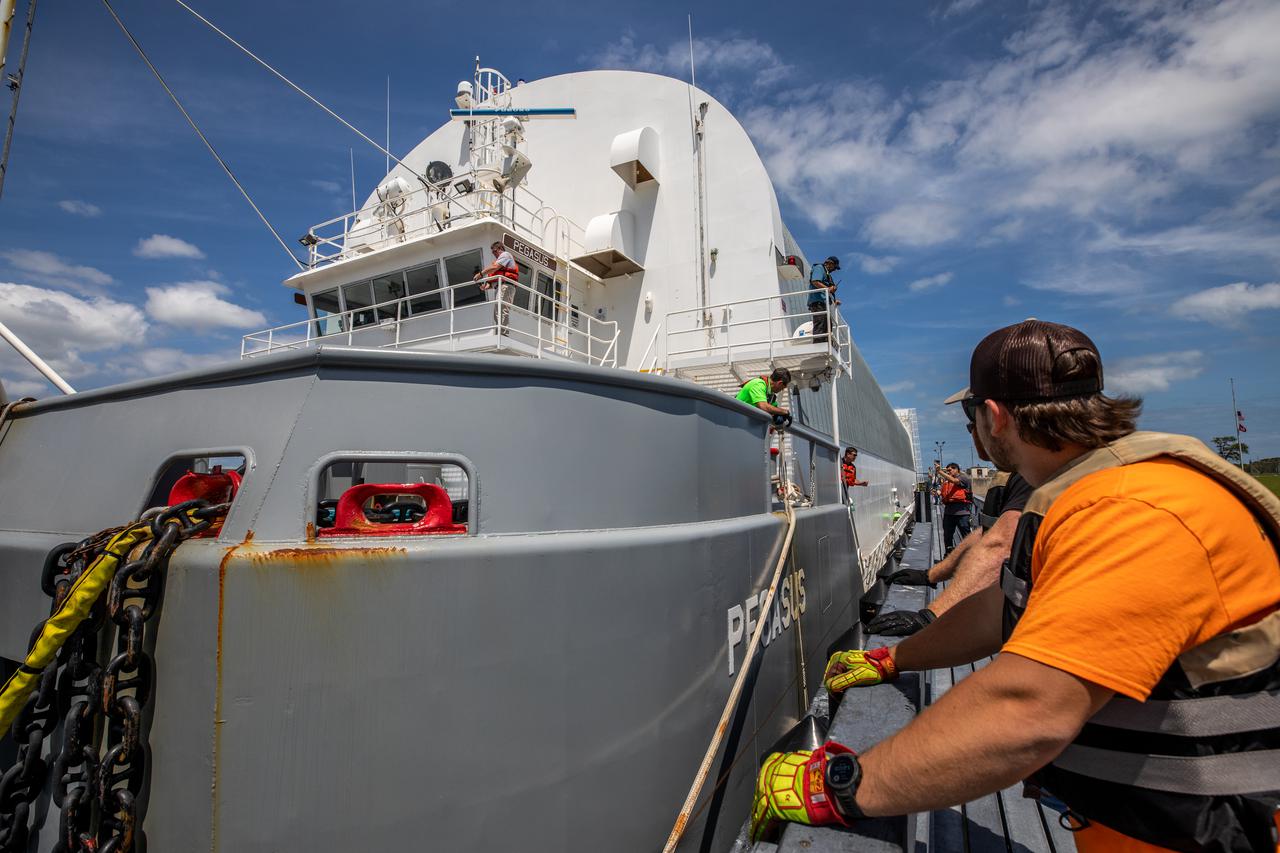
After its journey from NASA’s Stennis Space Center in Mississippi aboard the Pegasus barge, the mighty Space Launch System (SLS) core stage passes through Port Canaveral on its way to the agency’s Kennedy Space Center in Florida on April 27, 2021. The core stage is the final piece of Artemis hardware to arrive at the spaceport and will be offloaded and moved to Kennedy’s Vehicle Assembly Building, where it will be prepared for integration atop the mobile launcher with the completed stack of solid rocket boosters ahead of the Artemis I launch. The first in a series of increasingly complex missions, Artemis I will test SLS and Orion as an integrated system prior to crewed flights to the Moon.
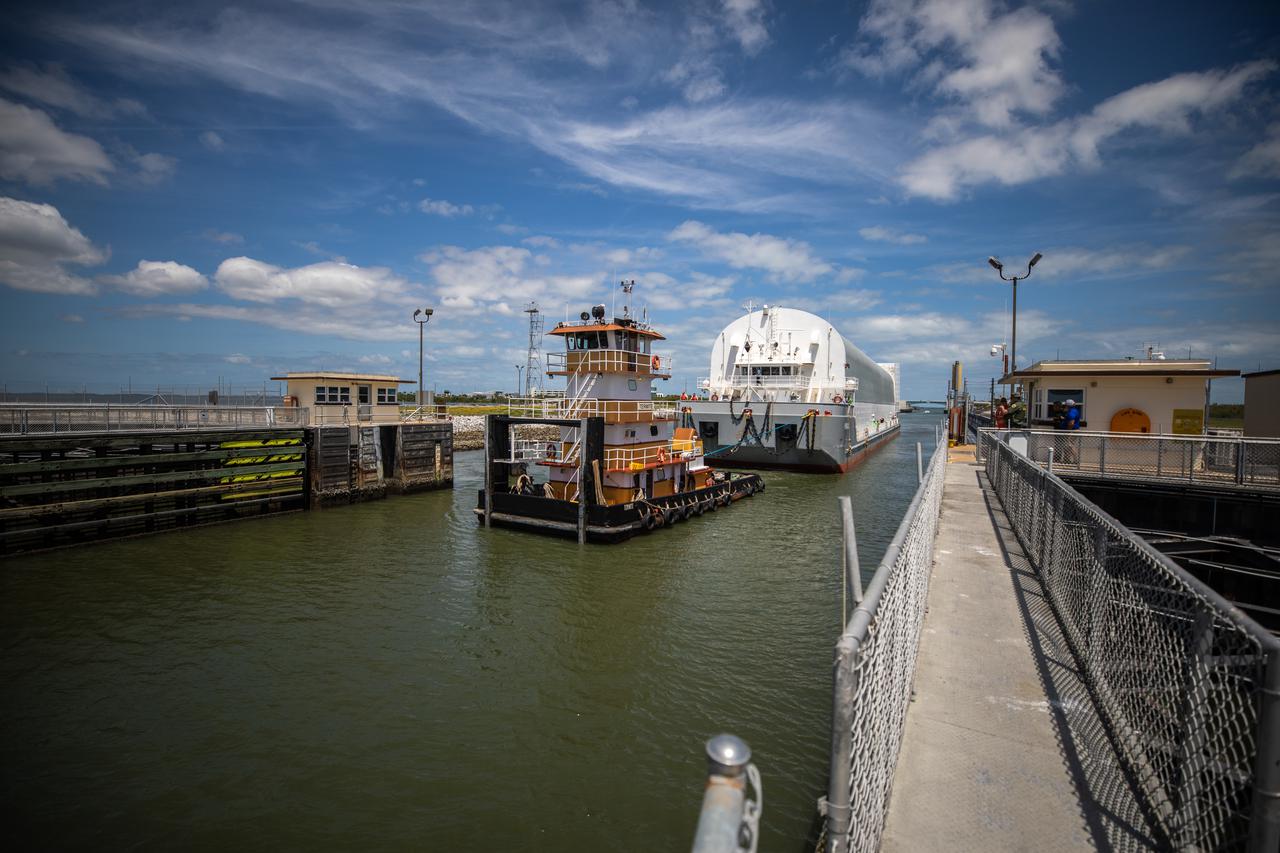
After its journey from NASA’s Stennis Space Center in Mississippi aboard the Pegasus barge, the mighty Space Launch System (SLS) core stage passes through Port Canaveral on its way to the agency’s Kennedy Space Center in Florida on April 27, 2021. The core stage is the final piece of Artemis hardware to arrive at the spaceport and will be offloaded and moved to Kennedy’s Vehicle Assembly Building, where it will be prepared for integration atop the mobile launcher with the completed stack of solid rocket boosters ahead of the Artemis I launch. The first in a series of increasingly complex missions, Artemis I will test SLS and Orion as an integrated system prior to crewed flights to the Moon.
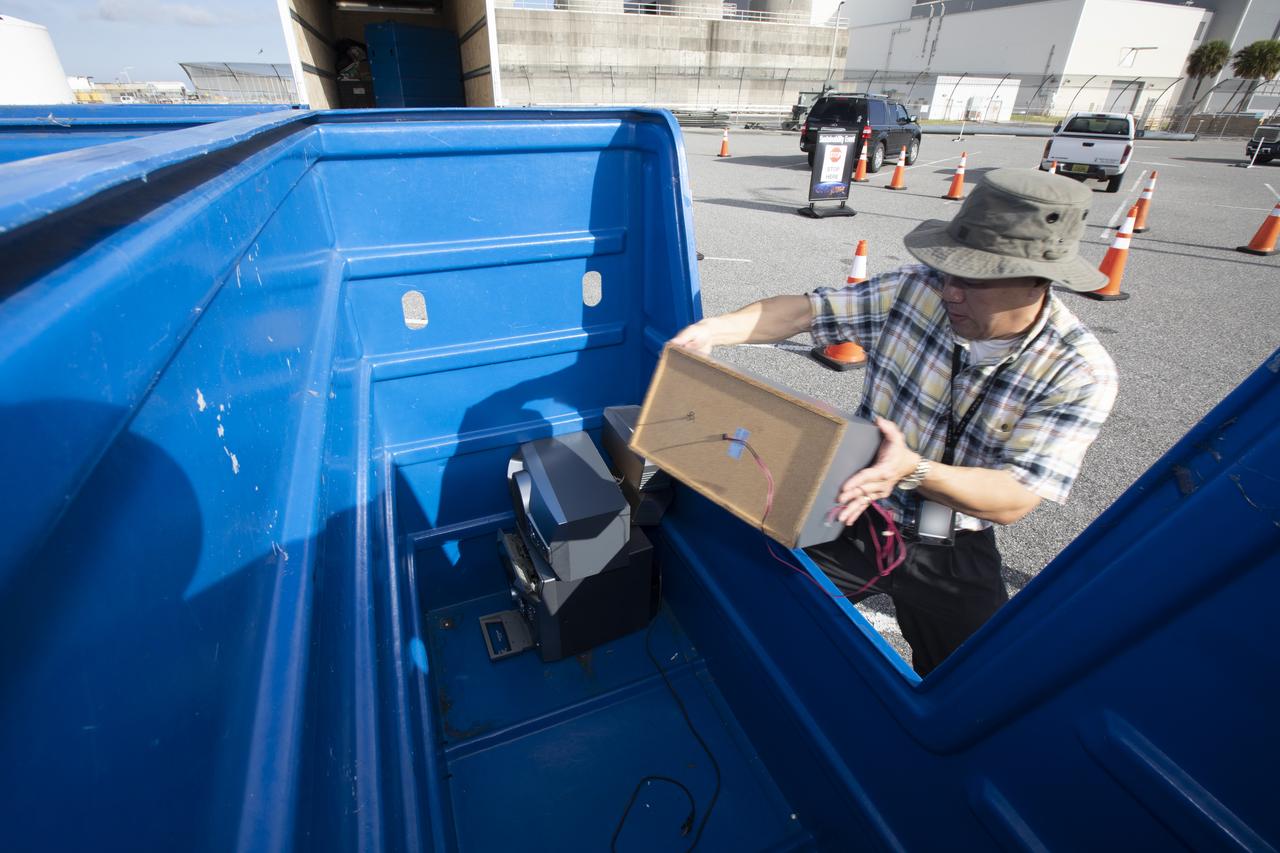
In the parking lot of the Vehicle Assembly Building at NASA's Kennedy Space Center in Florida, employees turn in used household material for recycling as part of America Recycles Day (ARD). The annual event is a nationally recognized initiative dedicated to promoting recycling in the United States. This year, KSC is partnered with Goodwill Industries and several other local organizations to receive donation material from employees such as gently used household items, personal electronic waste, greeting cards and serviceable eyeglasses.
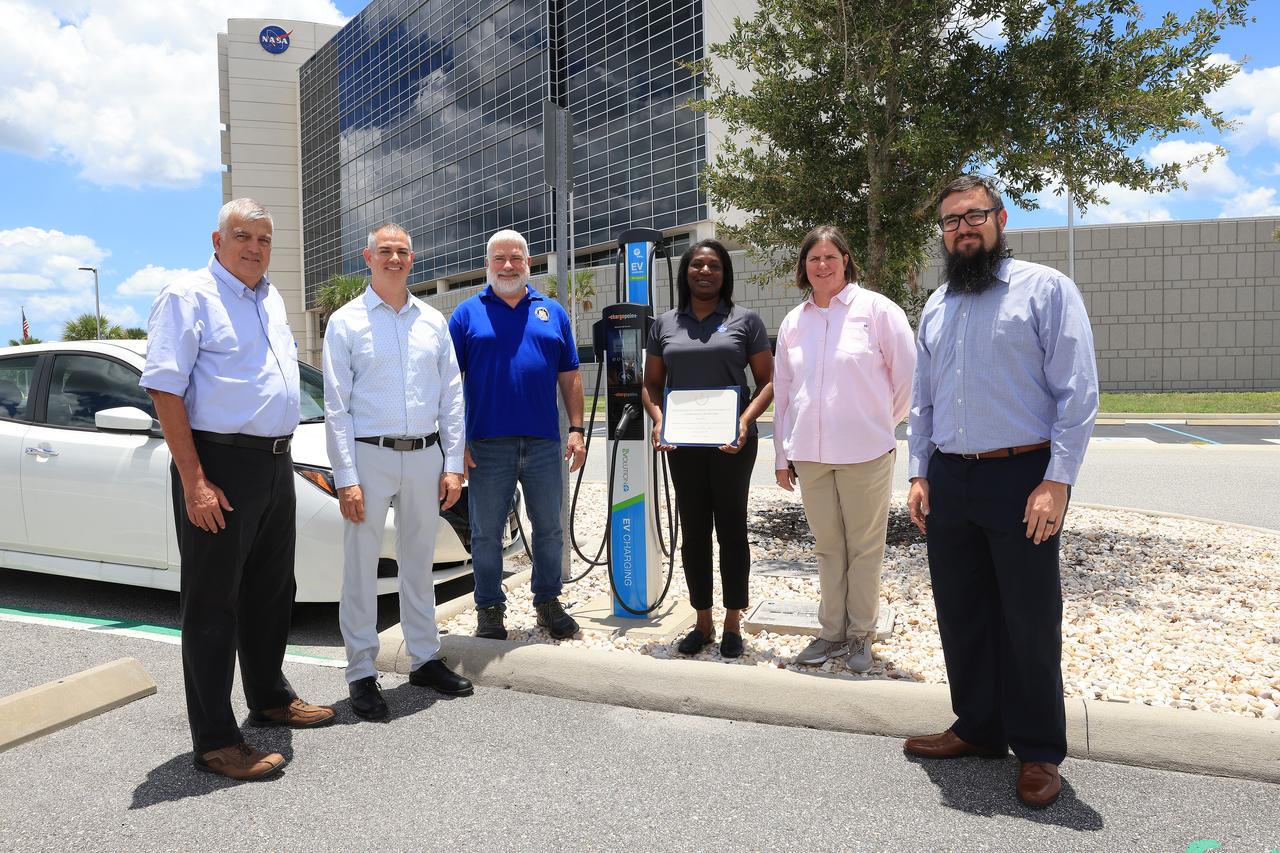
Six of the seven members of the NASA Kennedy Space Center team recognized by the White House on Tuesday, June 25, 2024, during the Presidential Federal Sustainability Awards stand next to an electric vehicle (EV) charging station in front of Kennedy's Central Campus Headquarters Building. Those members are, from left to right, center services division chief Gustavo Diaz, partnership development office chief Matthew Jimenez, then branch chief Gerald “Jay” Green, sustainability lead Lashanda Battle, transportation officer Melissa Coleman, and then transportation specialist Spencer Davis. This EV station is one of 28 installed on center through a partnership with local utility provider Florida Power & Light, allowing up to 56 electric vehicles to be charged at the same time. An additional 31 EV stations are planned at Kennedy by fall 2024, increasing the center's vehicle charging capacity by up to 118 vehicles simultaneously once they're operational.
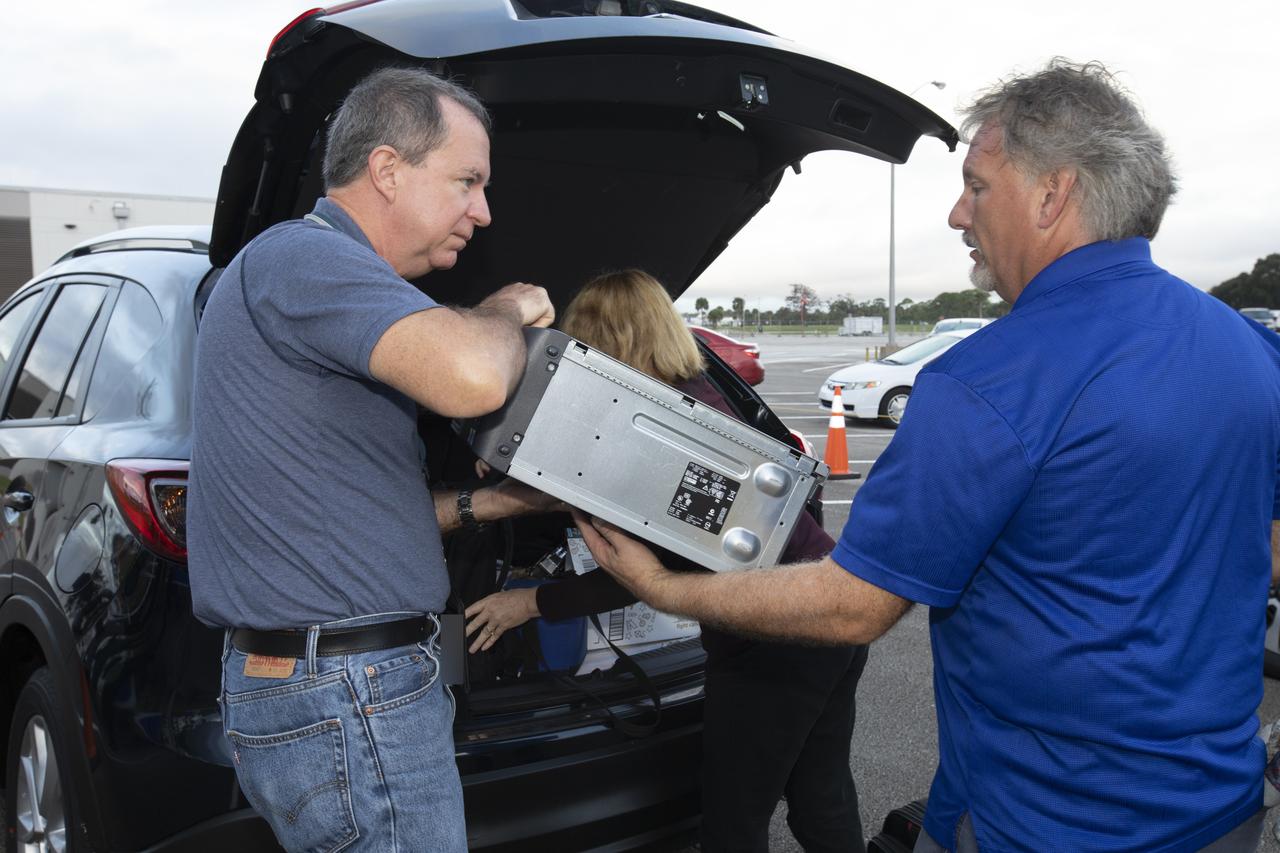
In the parking lot of the Vehicle Assembly Building at NASA's Kennedy Space Center in Florida, employees turn in used household material for recycling as part of America Recycles Day (ARD). The annual event is a nationally recognized initiative dedicated to promoting recycling in the United States. This year, KSC is partnered with Goodwill Industries and several other local organizations to receive donation material from employees such as gently used household items, personal electronic waste, greeting cards and serviceable eyeglasses.
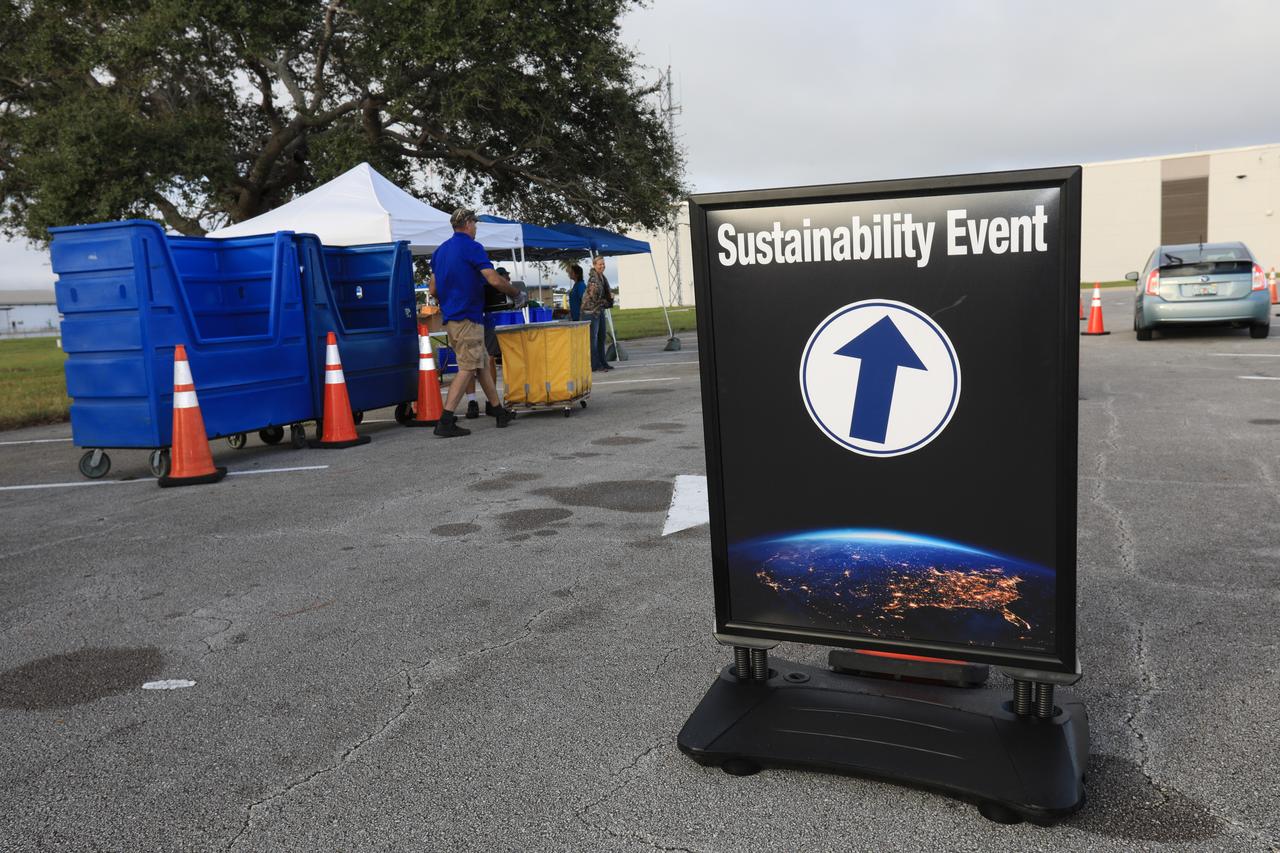
In the parking lot of the Data Center at NASA's Kennedy Space Center in Florida, employees turn in used household material for recycling as part of America Recycles Day (ARD) led by the center's Sustainability organization. The annual event is a nationally recognized initiative dedicated to promoting recycling in the United States. This year, KSC is partnered with Goodwill Industries and several other local organizations to receive donation material from employees such as gently used household items, personal electronic waste, greeting cards and serviceable eyeglasses.
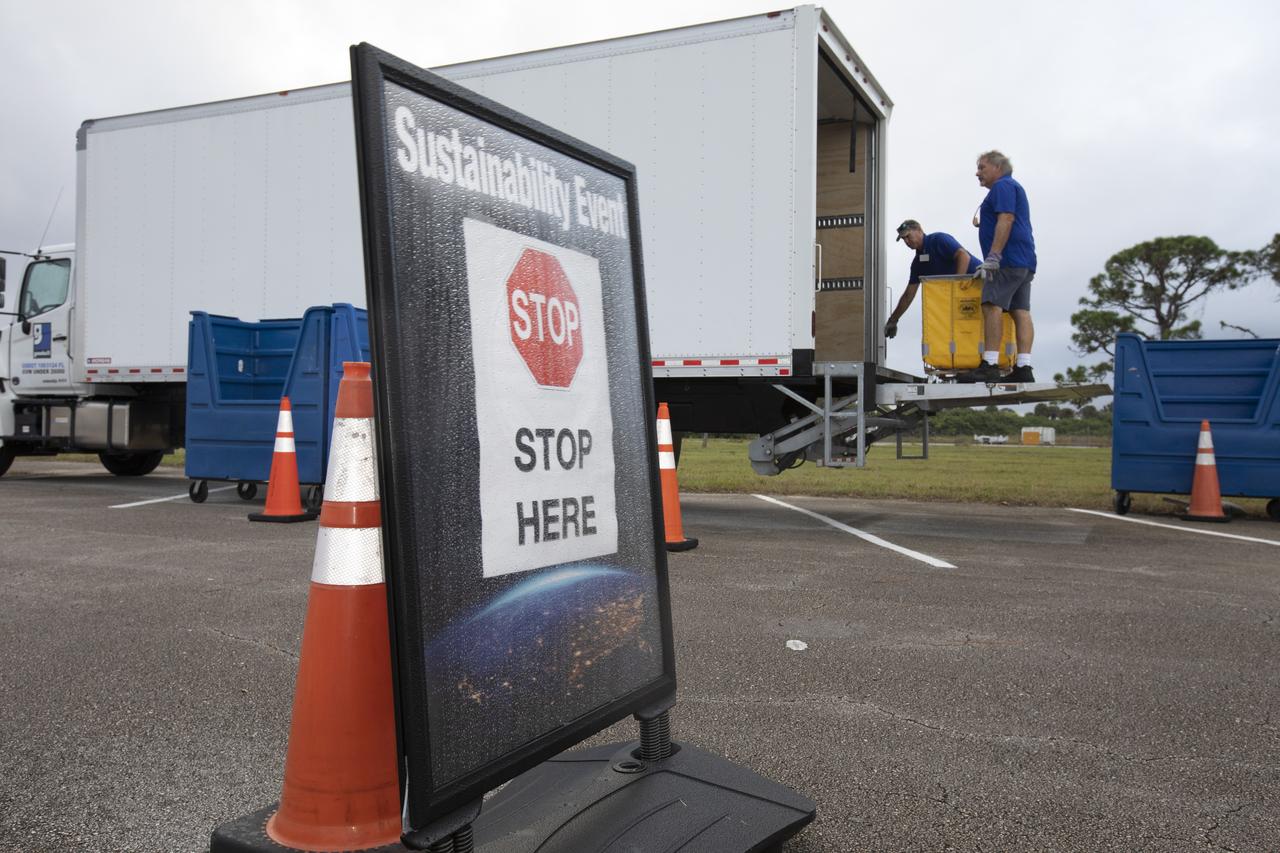
In the parking lot of the Vehicle Assembly Building at NASA's Kennedy Space Center in Florida, employees turn in used household material for recycling as part of America Recycles Day (ARD). The annual event is a nationally recognized initiative dedicated to promoting recycling in the United States. This year, KSC is partnered with Goodwill Industries and several other local organizations to receive donation material from employees such as gently used household items, personal electronic waste, greeting cards and serviceable eyeglasses.
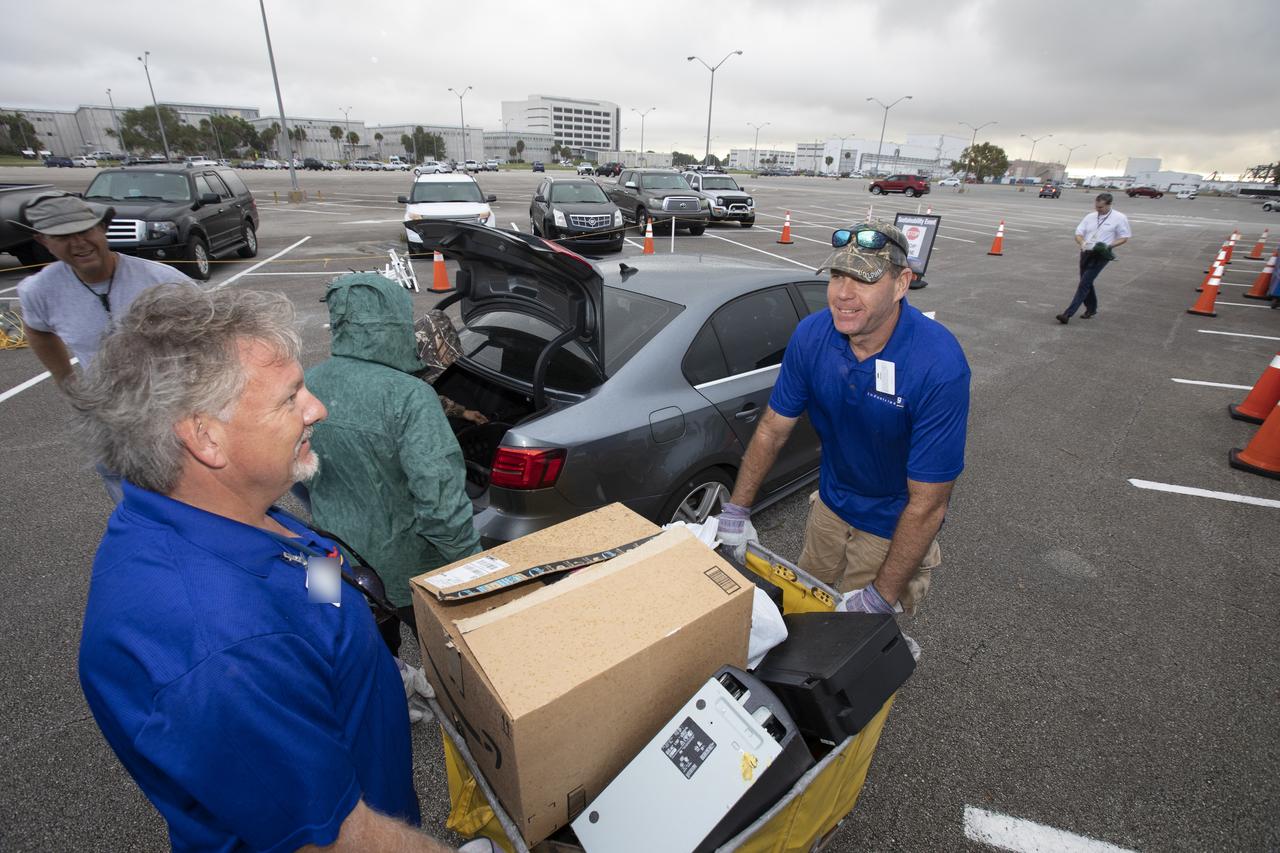
In the parking lot of the Vehicle Assembly Building at NASA's Kennedy Space Center in Florida, employees turn in used household material for recycling as part of America Recycles Day (ARD). The annual event is a nationally recognized initiative dedicated to promoting recycling in the United States. This year, KSC is partnered with Goodwill Industries and several other local organizations to receive donation material from employees such as gently used household items, personal electronic waste, greeting cards and serviceable eyeglasses.
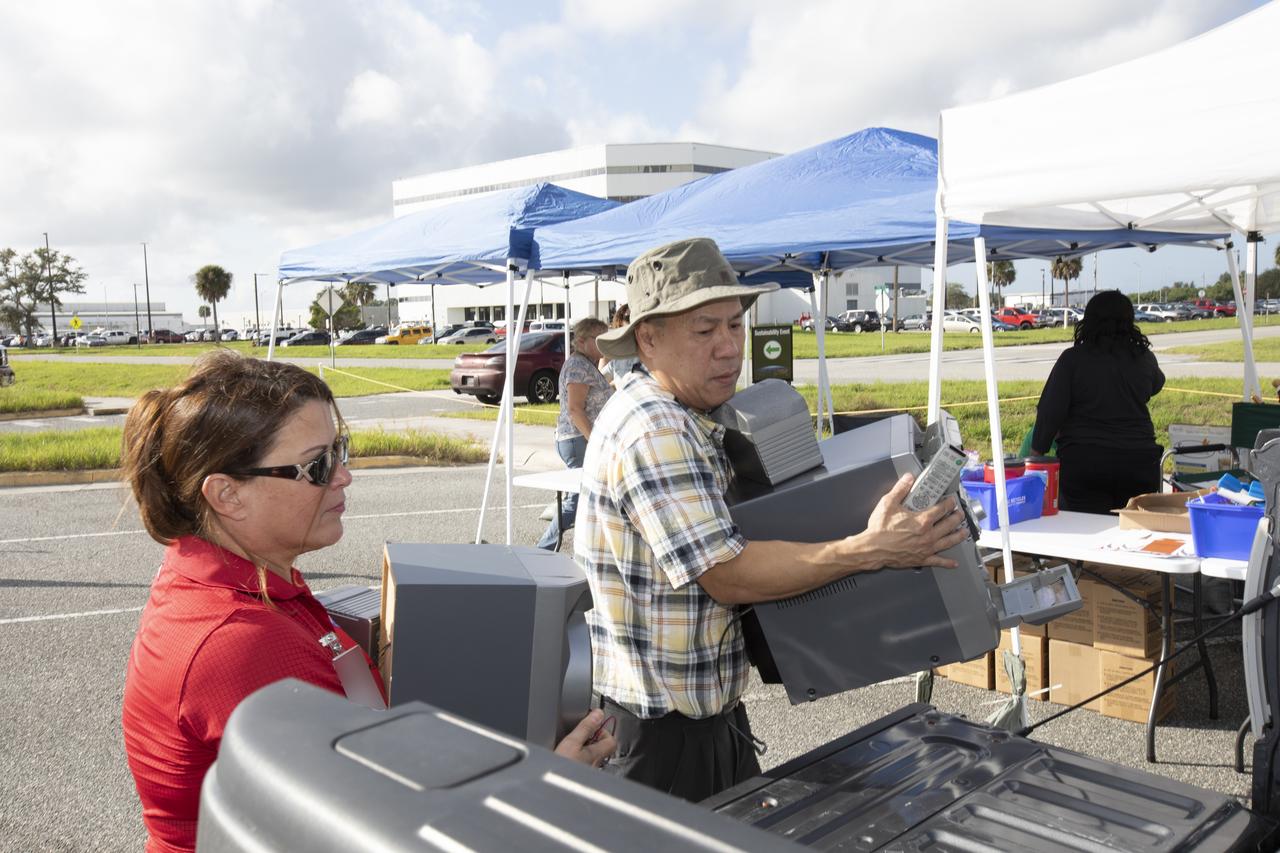
In the parking lot of the Vehicle Assembly Building at NASA's Kennedy Space Center in Florida, employees turn in used household material for recycling as part of America Recycles Day (ARD). The annual event is a nationally recognized initiative dedicated to promoting recycling in the United States. This year, KSC is partnered with Goodwill Industries and several other local organizations to receive donation material from employees such as gently used household items, personal electronic waste, greeting cards and serviceable eyeglasses.
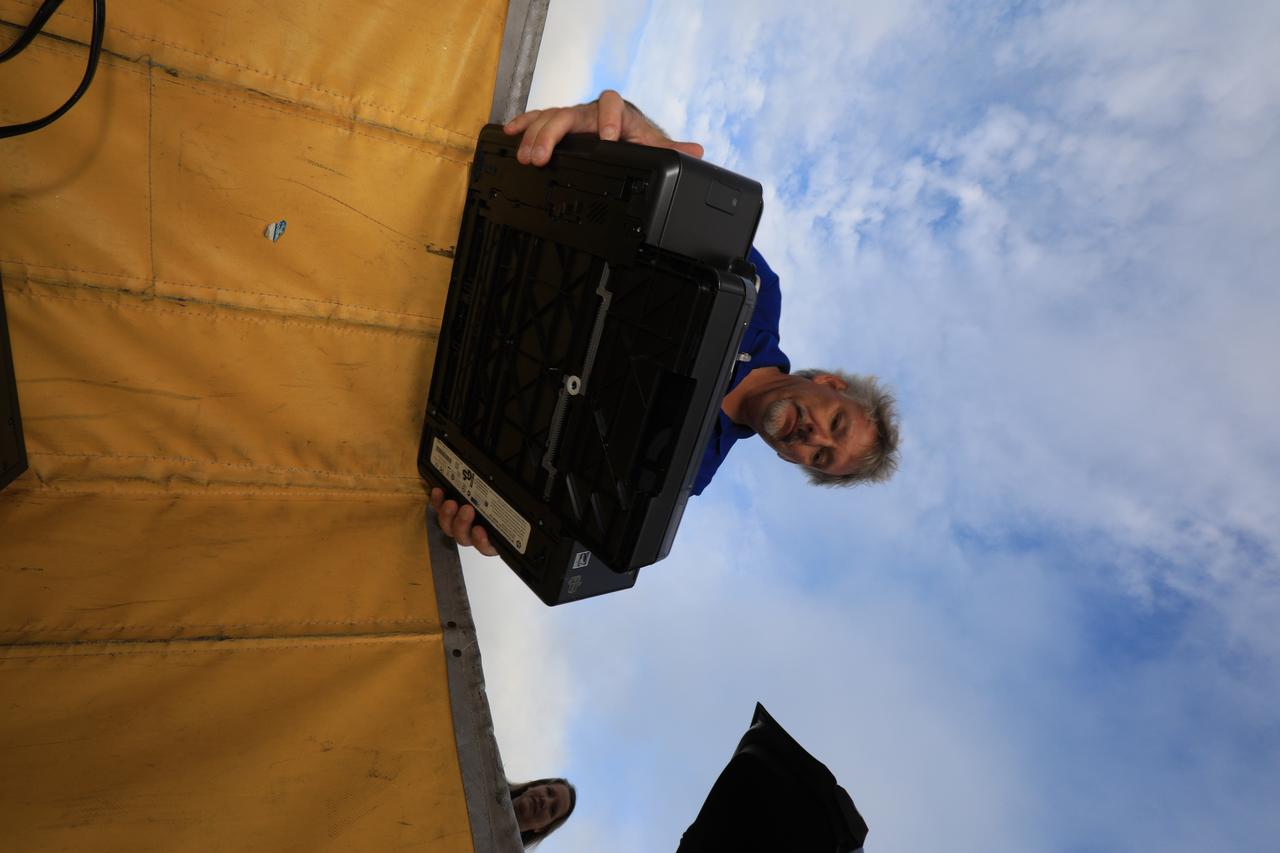
In the parking lot of the Vehicle Assembly Building at NASA's Kennedy Space Center in Florida, employees turn in used household material for recycling as part of America Recycles Day (ARD). The annual event is a nationally recognized initiative dedicated to promoting recycling in the United States. This year, KSC is partnered with Goodwill Industries and several other local organizations to receive donation material from employees such as gently used household items, personal electronic waste, greeting cards and serviceable eyeglasses.
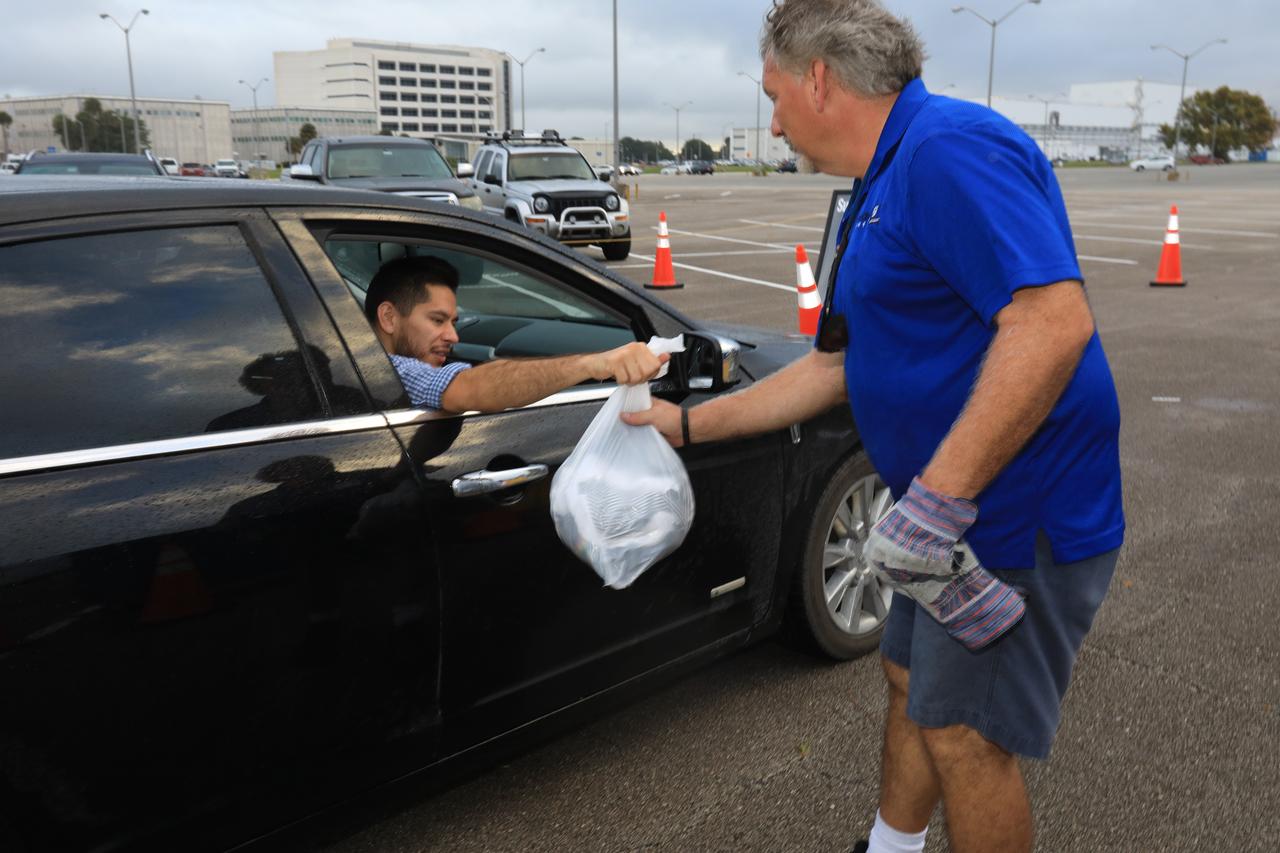
In the parking lot of the Vehicle Assembly Building at NASA's Kennedy Space Center in Florida, employees turn in used household material for recycling as part of America Recycles Day (ARD). The annual event is a nationally recognized initiative dedicated to promoting recycling in the United States. This year, KSC is partnered with Goodwill Industries and several other local organizations to receive donation material from employees such as gently used household items, personal electronic waste, greeting cards and serviceable eyeglasses.
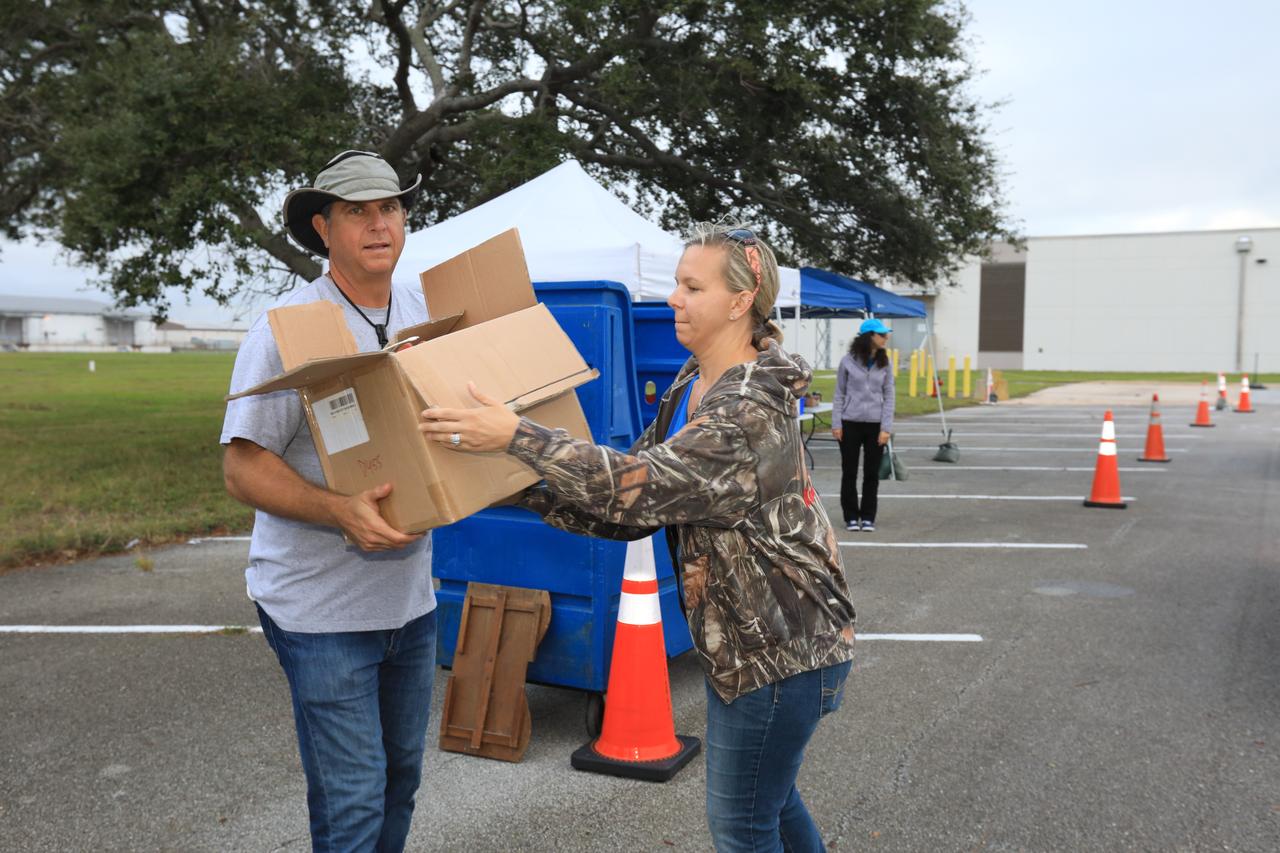
In the parking lot of the Vehicle Assembly Building at NASA's Kennedy Space Center in Florida, employees turn in used household material for recycling as part of America Recycles Day (ARD). The annual event is a nationally recognized initiative dedicated to promoting recycling in the United States. This year, KSC is partnered with Goodwill Industries and several other local organizations to receive donation material from employees such as gently used household items, personal electronic waste, greeting cards and serviceable eyeglasses.
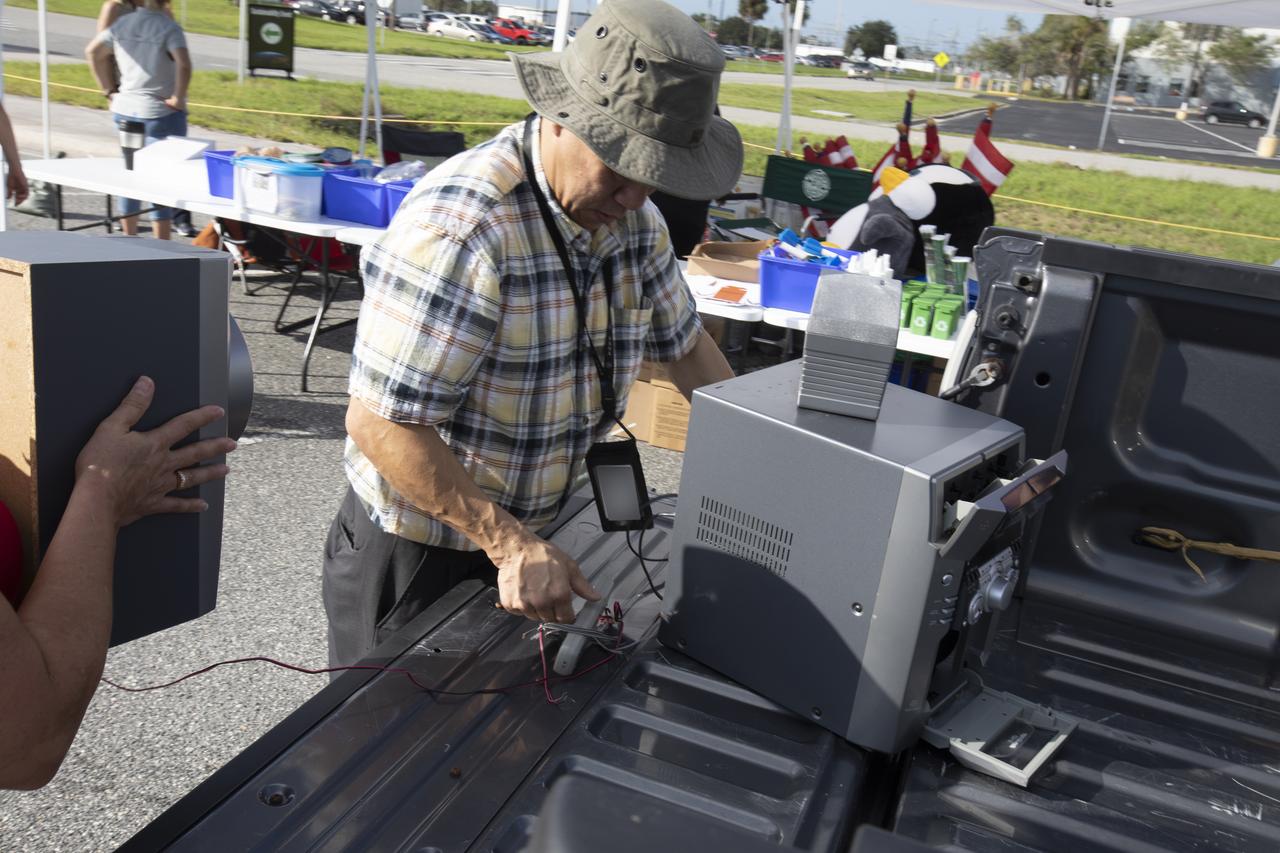
In the parking lot of the Vehicle Assembly Building at NASA's Kennedy Space Center in Florida, employees turn in used household material for recycling as part of America Recycles Day (ARD). The annual event is a nationally recognized initiative dedicated to promoting recycling in the United States. This year, KSC is partnered with Goodwill Industries and several other local organizations to receive donation material from employees such as gently used household items, personal electronic waste, greeting cards and serviceable eyeglasses.
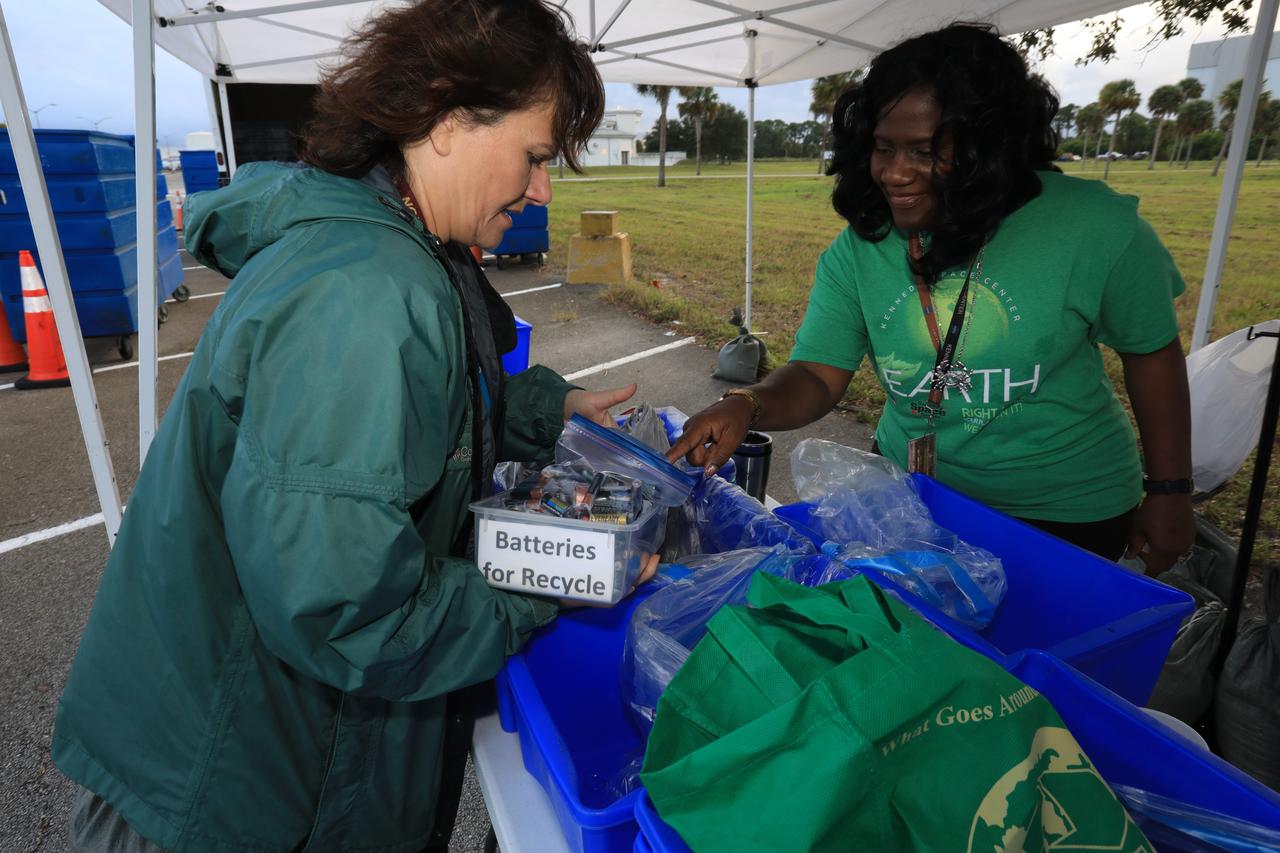
In the parking lot of the Vehicle Assembly Building at NASA's Kennedy Space Center in Florida, employees turn in used household material for recycling as part of America Recycles Day (ARD). The annual event is a nationally recognized initiative dedicated to promoting recycling in the United States. This year, KSC is partnered with Goodwill Industries and several other local organizations to receive donation material from employees such as gently used household items, personal electronic waste, greeting cards and serviceable eyeglasses.
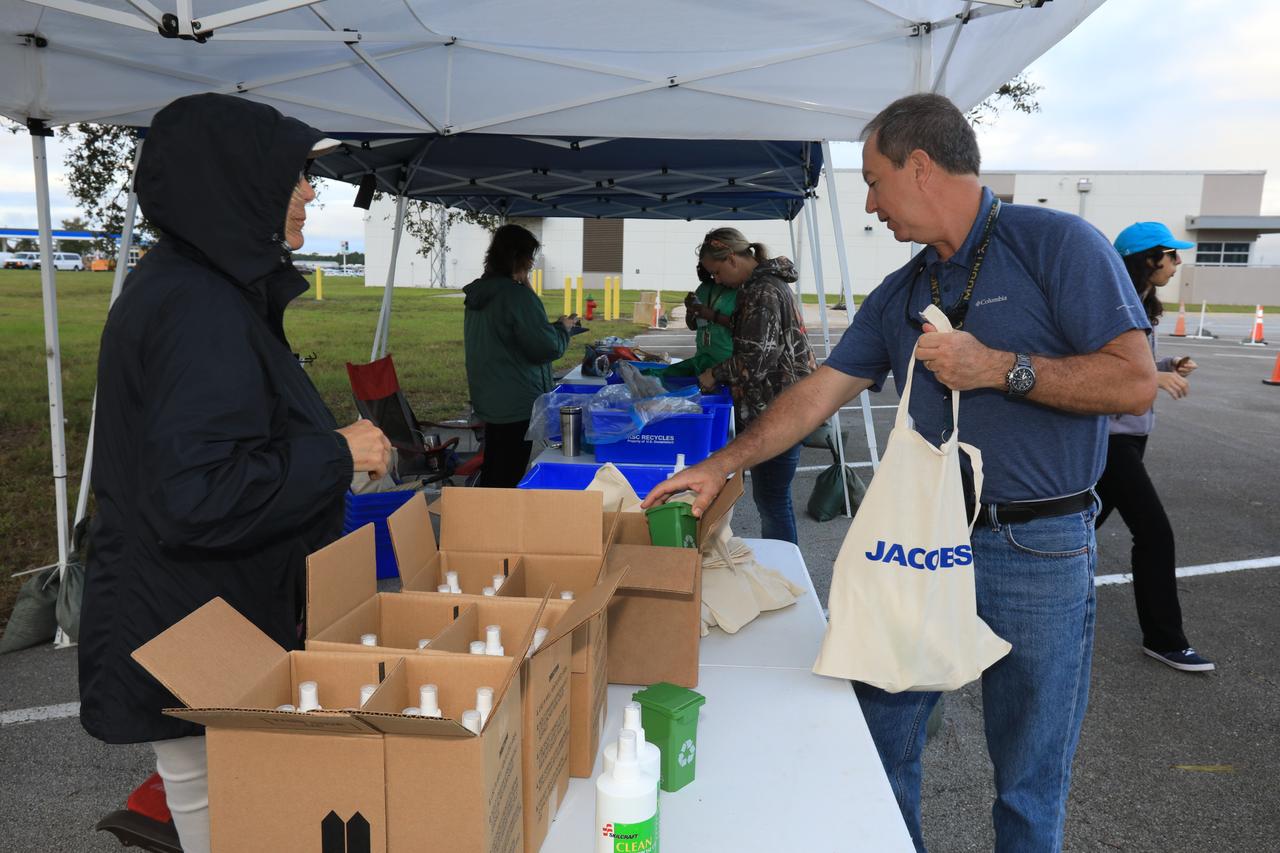
In the parking lot of the Vehicle Assembly Building at NASA's Kennedy Space Center in Florida, employees turn in used household material for recycling as part of America Recycles Day (ARD). The annual event is a nationally recognized initiative dedicated to promoting recycling in the United States. This year, KSC is partnered with Goodwill Industries and several other local organizations to receive donation material from employees such as gently used household items, personal electronic waste, greeting cards and serviceable eyeglasses.

Teams from NASA’s Kennedy Space Center in Florida, the Fish and Wildlife Services, and the National Park Service cleared debris along the shoreline near the Beach House on Friday, May 8, 2026, to make the journey a little easier for mother turtles coming ashore to lay their eggs during nesting season now through October. NASA Kennedy is home to four nesting sea turtles: Loggerhead, Green, Leatherback, and occasionally the Kemp’s ridley turtles.

Teams from NASA’s Kennedy Space Center in Florida, the Fish and Wildlife Services, and the National Park Service cleared debris along the shoreline near the Beach House on Friday, May 8, 2026, to make the journey a little easier for mother turtles coming ashore to lay their eggs during nesting season now through October. NASA Kennedy is home to four nesting sea turtles: Loggerhead, Green, Leatherback, and occasionally the Kemp’s ridley turtles.

Teams from NASA’s Kennedy Space Center in Florida, the Fish and Wildlife Services, and the National Park Service cleared debris along the shoreline near the Beach House on Friday, May 8, 2026, to make the journey a little easier for mother turtles coming ashore to lay their eggs during nesting season now through October. NASA Kennedy is home to four nesting sea turtles: Loggerhead, Green, Leatherback, and occasionally the Kemp’s ridley turtles.

Teams from NASA’s Kennedy Space Center in Florida, the Fish and Wildlife Services, and the National Park Service cleared debris along the shoreline near the Beach House on Friday, May 8, 2026, to make the journey a little easier for mother turtles coming ashore to lay their eggs during nesting season now through October. NASA Kennedy is home to four nesting sea turtles: Loggerhead, Green, Leatherback, and occasionally the Kemp’s ridley turtles.
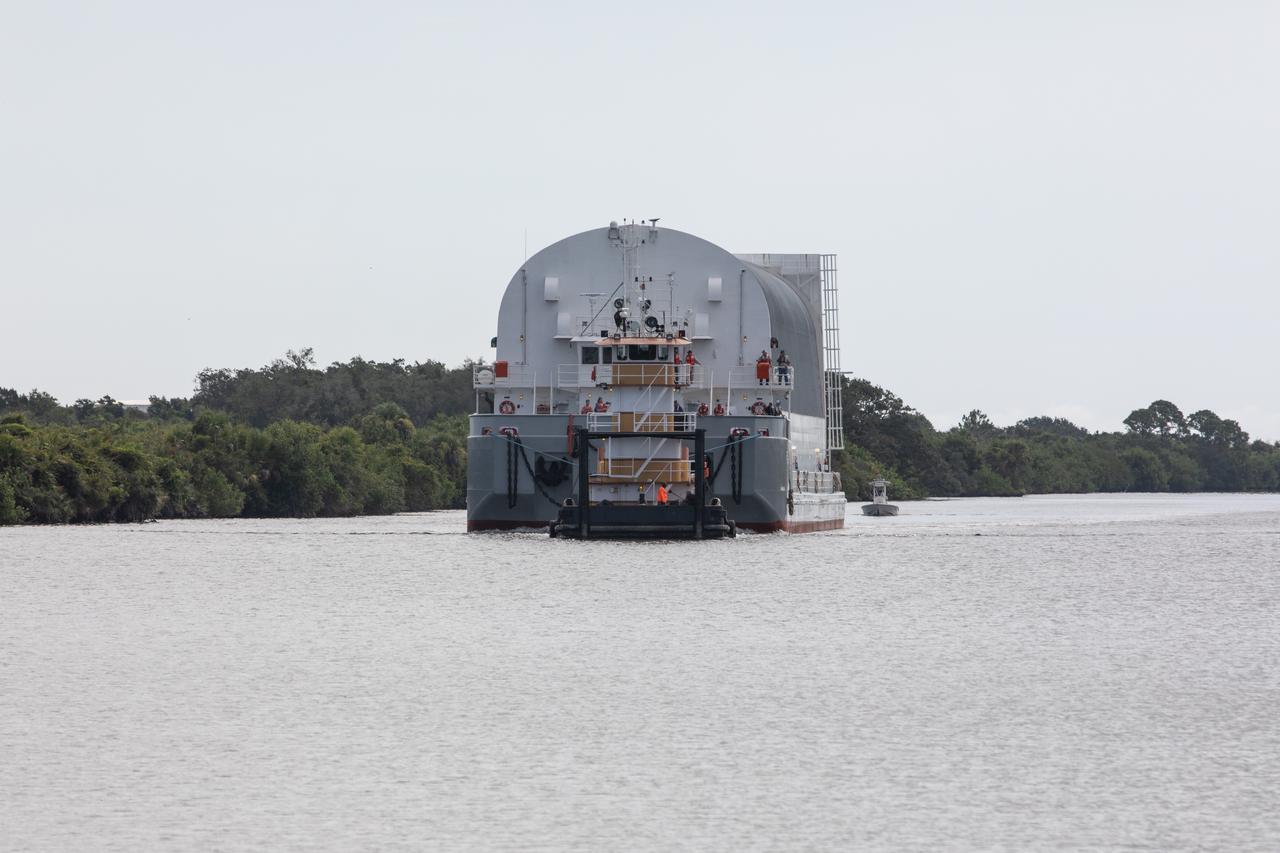
Behind the iconic countdown clock at NASA’s Kennedy Space Center in Florida, the agency’s Pegasus barge completes its 900-mile journey from NASA’s Michoud Assembly Facility in New Orleans carrying the powerful SLS (Space Launch System) core stage on Tuesday, July 23, 2024. Teams with NASA's Exploration Ground Systems (EGS) will offload the rocket stage and transfer it to the spaceport’s Vehicle Assembly Building to prepare it for integration atop the mobile launcher ahead of the Artemis II launch.
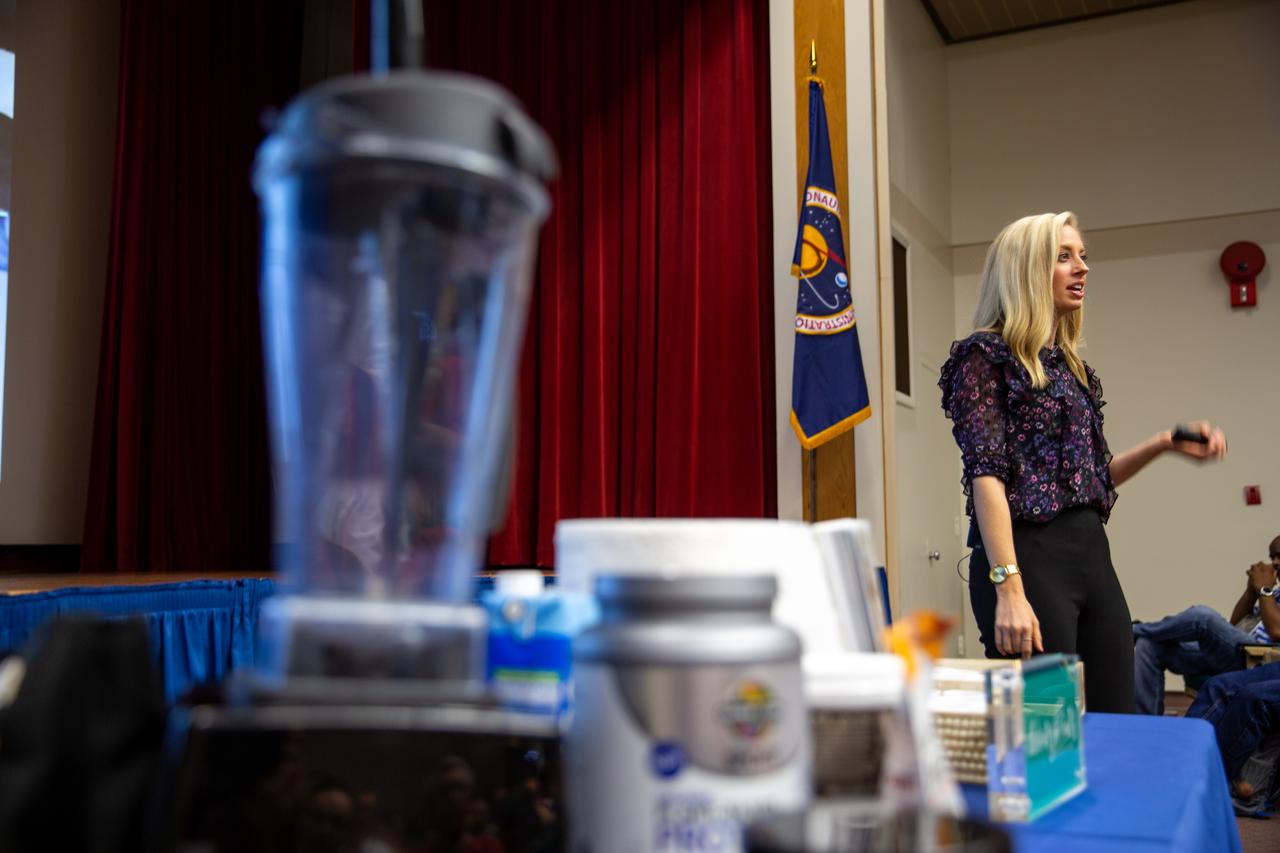
Carly Paige, an integrative nutrition health coach and chef, speaks to Kennedy Space Center employees inside the Florida spaceport’s Training Auditorium on March 5, 2020, during the center’s annual Safety and Health Days. Taking place March 2 through March 6, Safety and Health Days provides Kennedy employees with a variety of presentations to attend – all of which focus on how to maintain a safe and healthy workforce. Paige’s presentation included information on simple swaps that can be made to incorporate healthier habits on a daily basis.

NASA’s mobile launcher 1 atop the spaceport’s crawler is transported inside the agency’s Vehicle Assembly Building at Kennedy Space Center in Florida ahead of integration of the Artemis II Moon rocket on Friday, Oct. 4, 2024. The mobile launcher will be used to assemble, process, and launch NASA’s SLS (Space Launch Systems) and Orion spacecraft to the Moon and beyond.
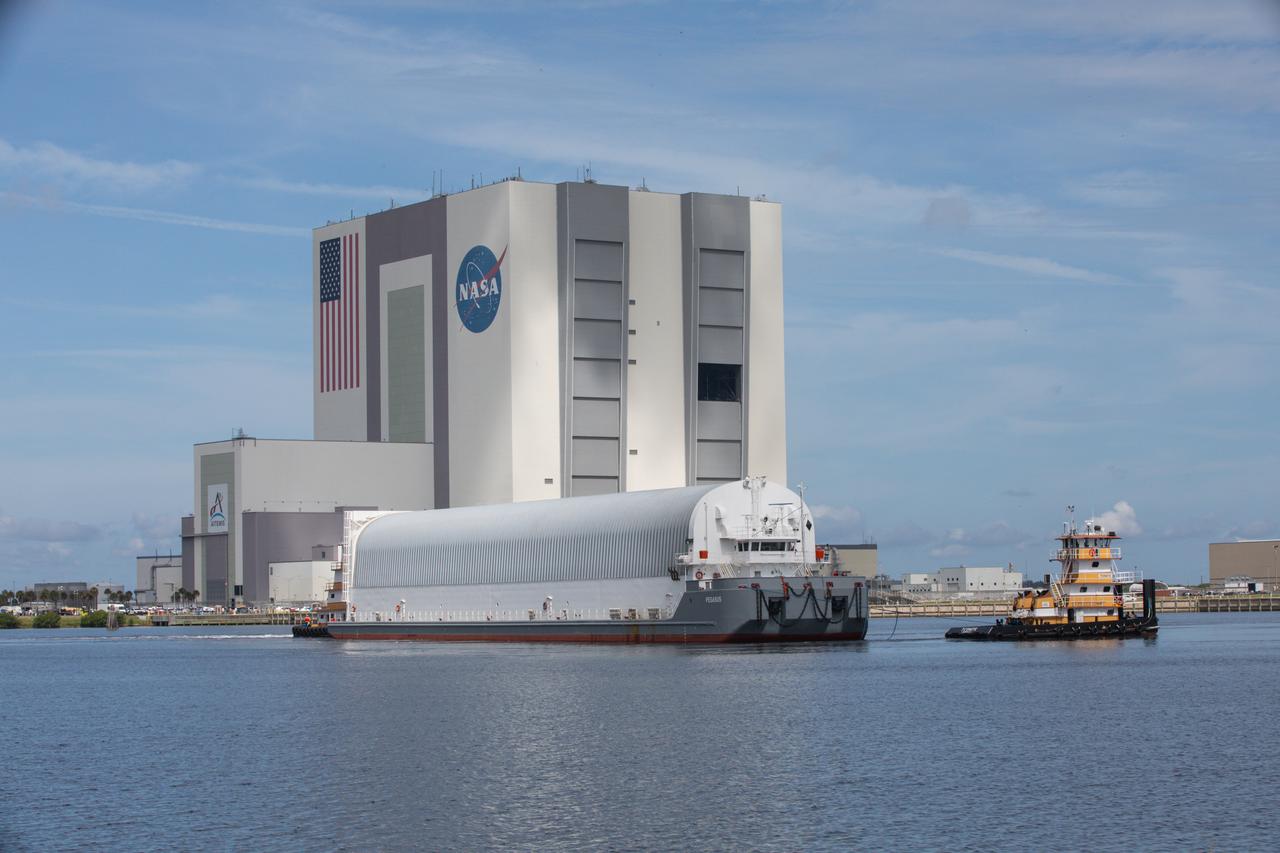
NASA’s Pegasus barge, carrying the agency’s massive SLS (Space Launch System) core stage, arrives at NASA’s Kennedy Space Center Complex 39 turn basin wharf in Florida on Tuesday, July 23, 2024, after journeying from the agency’s Michoud Assembly Facility in New Orleans. The core stage is the next piece of Artemis hardware to arrive at the spaceport and will be offloaded and moved to NASA Kennedy’s Vehicle Assembly Building, where it will be prepared for integration ahead of the Artemis II launch.

NASA’s Pegasus barge, carrying the agency’s massive SLS (Space Launch System) core stage, arrives at NASA’s Kennedy Space Center Complex 39 turn basin wharf in Florida on Tuesday, July 23, 2024, after journeying from the agency’s Michoud Assembly Facility in New Orleans. The core stage is the next piece of Artemis hardware to arrive at the spaceport and will be offloaded and moved to NASA Kennedy’s Vehicle Assembly Building, where it will be prepared for integration ahead of the Artemis II launch.
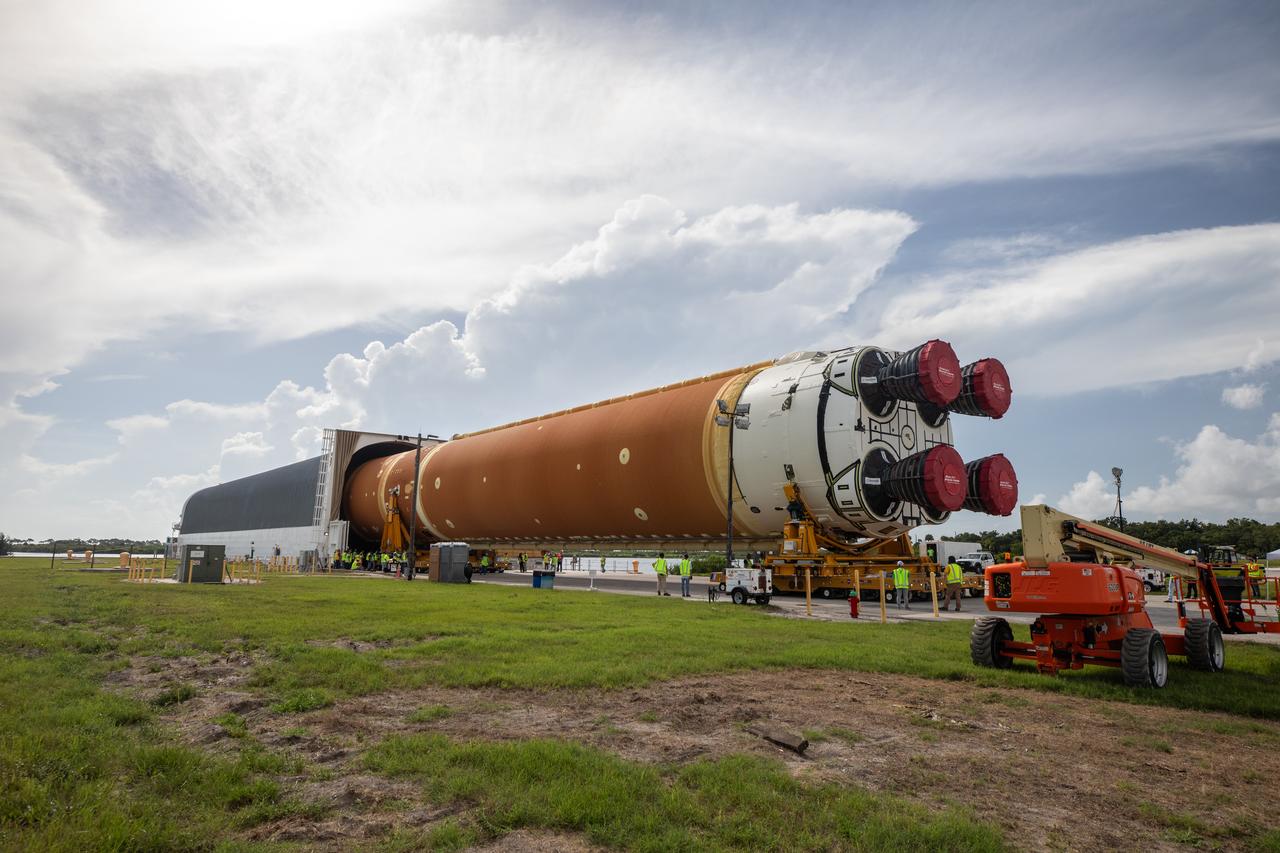
NASA’s massive 212-foot long SLS (Space Launch System) core stage is offloaded from the agency’s Pegasus Barge on Wednesday, July 24 2024, after arriving at NASA’s Kennedy Space Center in Florida. Teams with Exploration Ground Systems (EGS) will transfer the rocket stage to the spaceport’s Vehicle Assembly Building to prepare it for integration atop the mobile launcher ahead of the Artemis II launch.
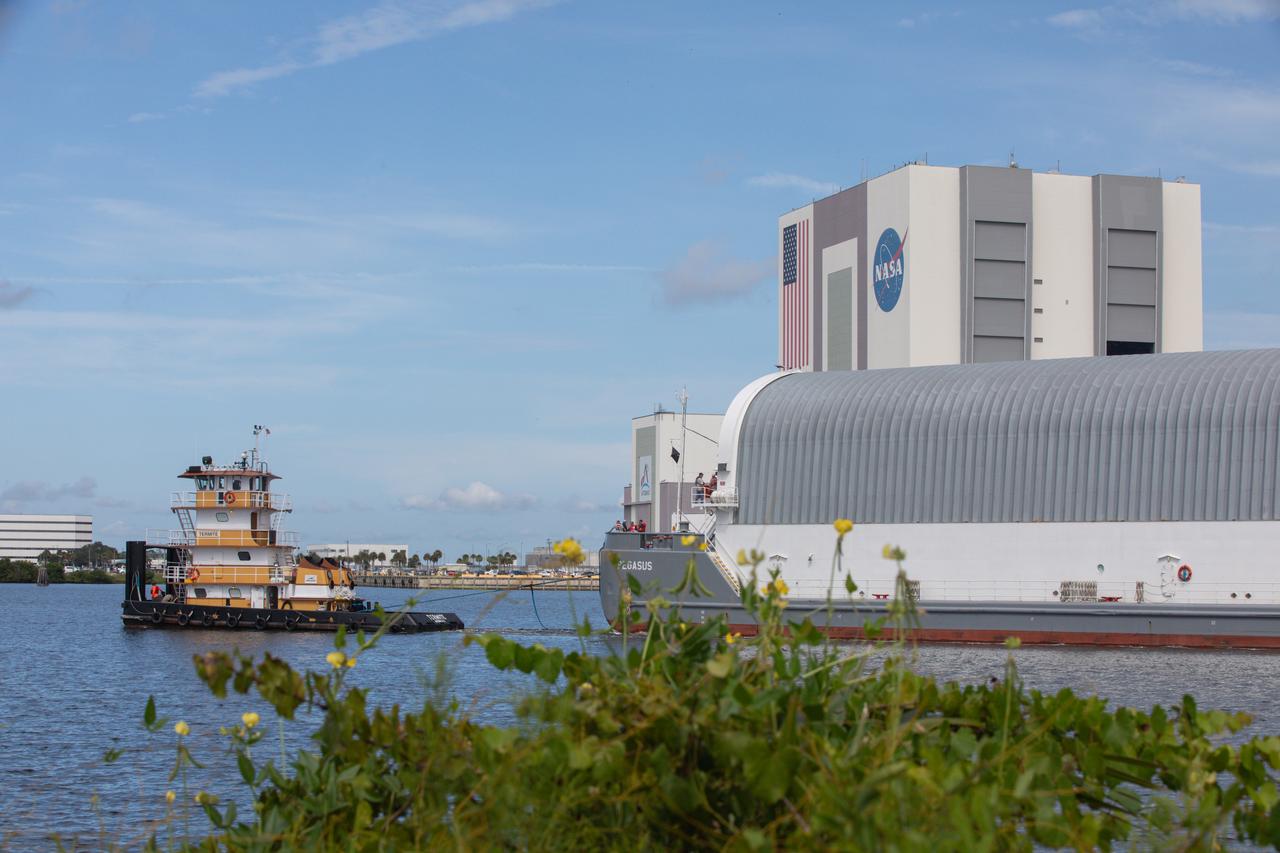
NASA’s Pegasus barge, carrying the agency’s massive SLS (Space Launch System) core stage, arrives at NASA’s Kennedy Space Center Complex 39 turn basin wharf in Florida on Tuesday, July 23, 2024, after journeying from the agency’s Michoud Assembly Facility in New Orleans. The core stage is the next piece of Artemis hardware to arrive at the spaceport and will be offloaded and moved to NASA Kennedy’s Vehicle Assembly Building, where it will be prepared for integration ahead of the Artemis II launch.
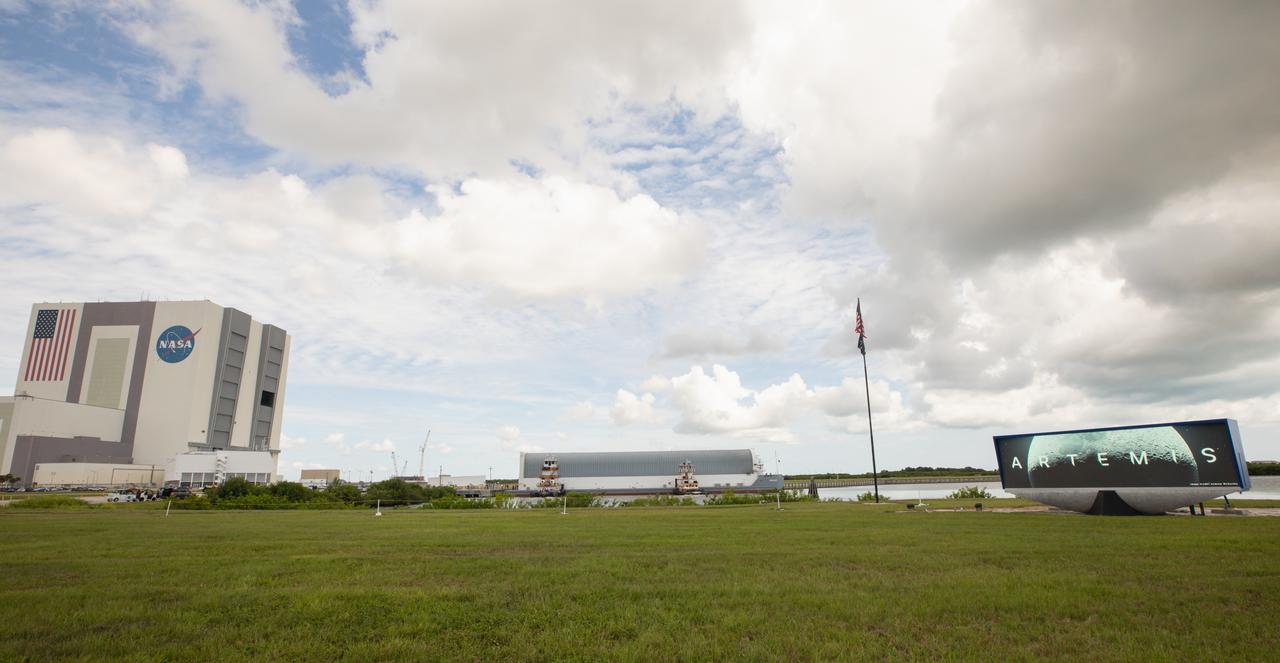
NASA’s Pegasus barge, carrying the agency’s massive SLS (Space Launch System) core stage, arrives at NASA’s Kennedy Space Center Complex 39 turn basin wharf in Florida on Tuesday, July 23, 2024, after journeying from the agency’s Michoud Assembly Facility in New Orleans. The core stage is the next piece of Artemis hardware to arrive at the spaceport and will be offloaded and moved to NASA Kennedy’s Vehicle Assembly Building, where it will be prepared for integration ahead of the Artemis II launch.
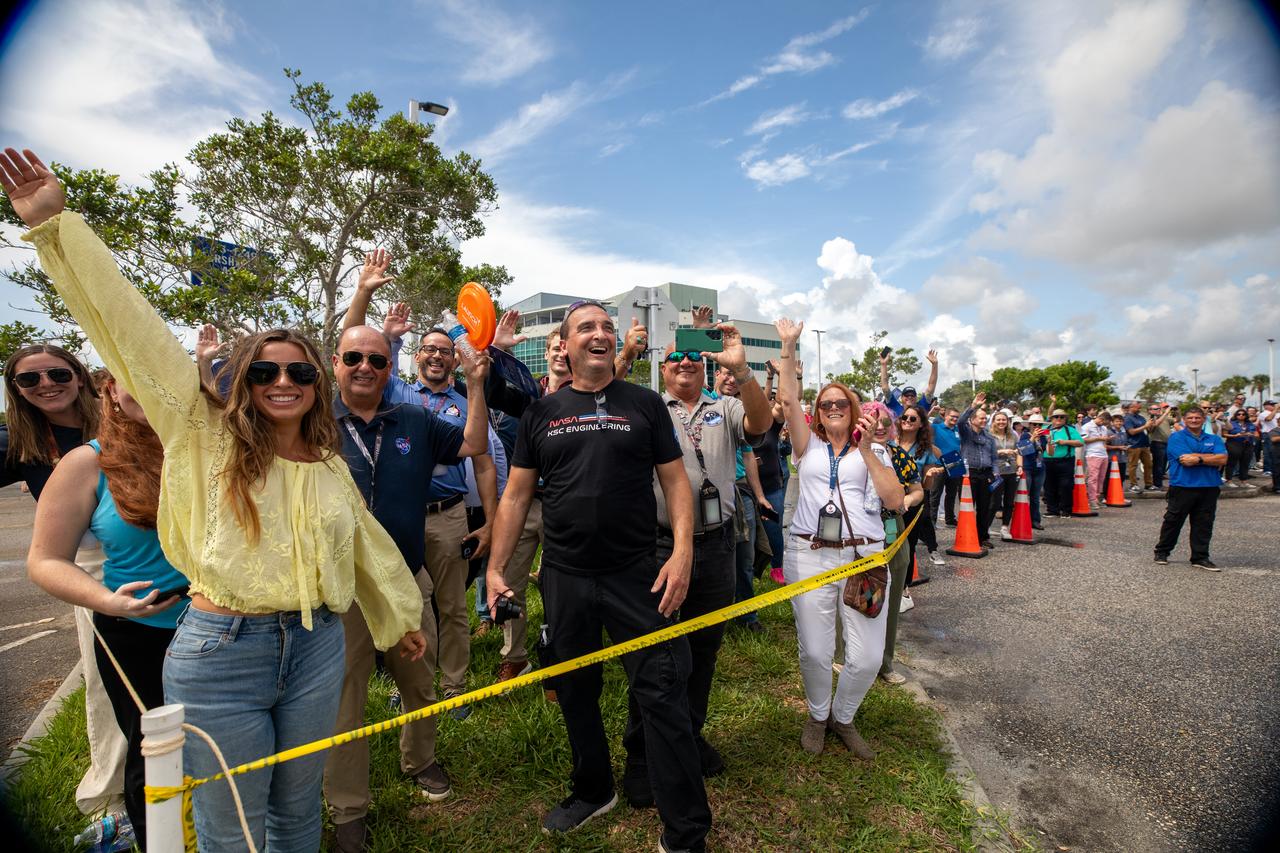
Employees from NASA’s Kennedy Space Center in Florida watch as teams with Exploration Ground Systems (EGS) transport the agency’s powerful SLS (Space Launch System) core stage to the spaceport’s Vehicle Assembly Building on Wednesday, July 24, 2024. The 212-foot-long rocket stage completed its journey from NASA’s Michoud Assembly Facility in New Orleans aboard the Pegasus barge the previous day. Once inside, SLS will be prepared for integration atop the mobile launcher ahead of the Artemis II launch.
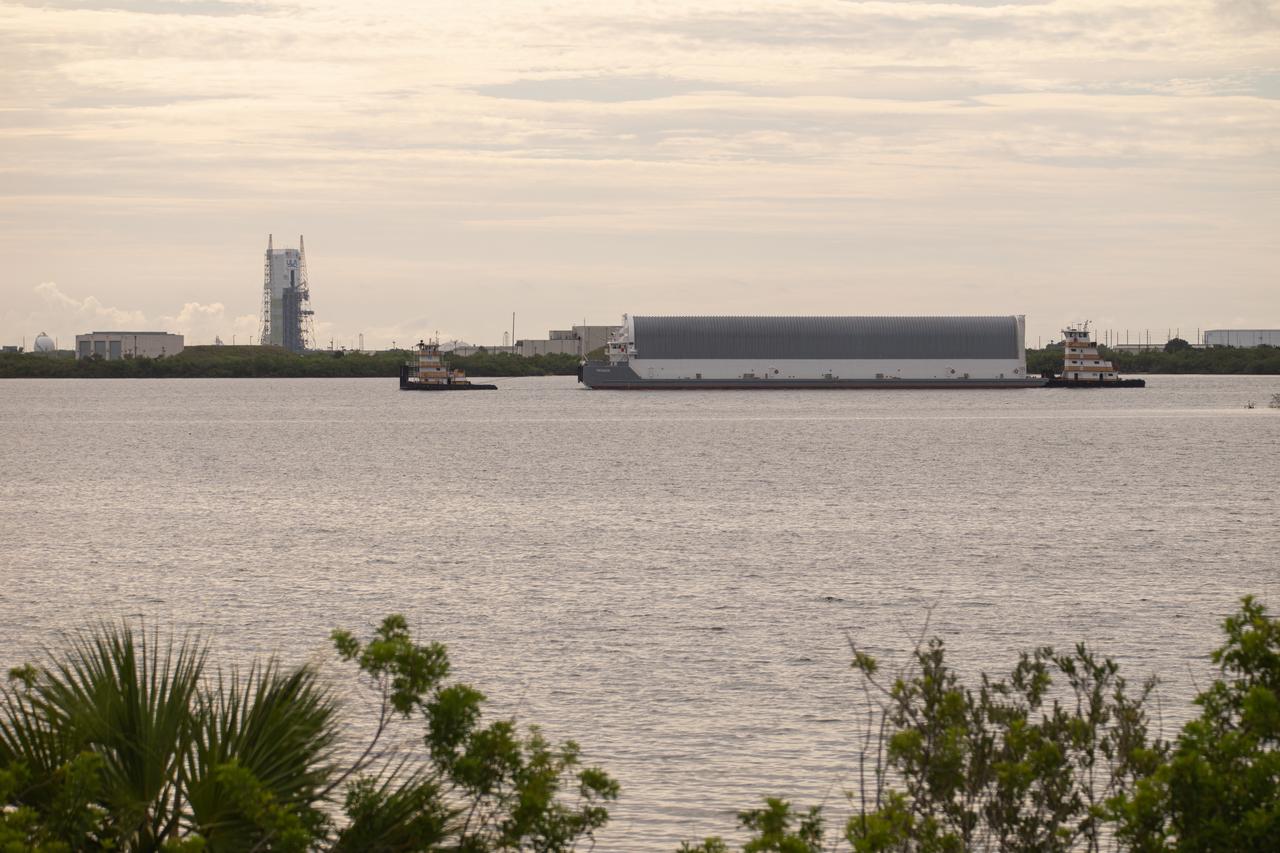
NASA’s Pegasus barge, carrying the agency’s massive SLS (Space Launch System) core stage, arrives at NASA’s Kennedy Space Center Complex 39 turn basin wharf in Florida on Tuesday, July 23, 2024, after journeying from the agency’s Michoud Assembly Facility in New Orleans. The core stage is the next piece of Artemis hardware to arrive at the spaceport and will be offloaded and moved to NASA Kennedy’s Vehicle Assembly Building, where it will be prepared for integration ahead of the Artemis II launch.
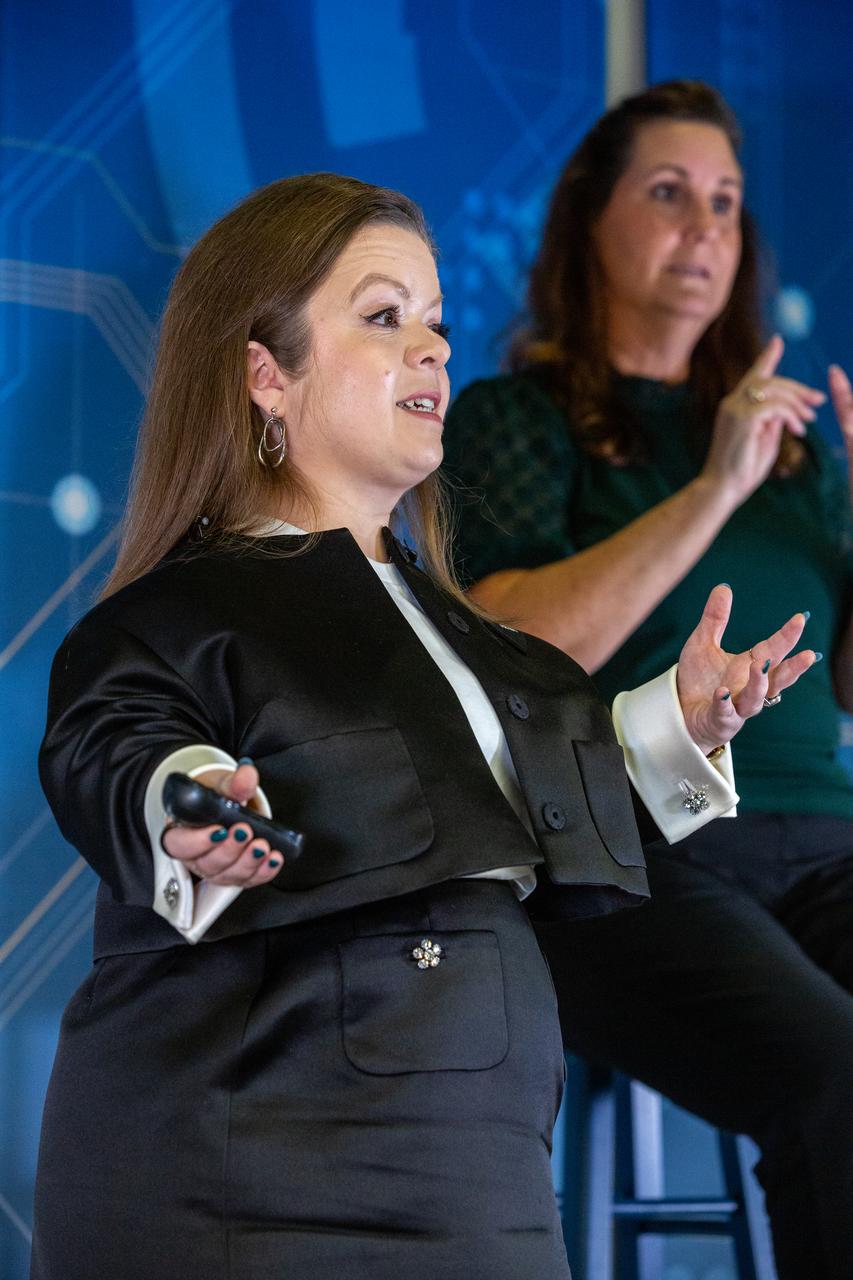
Guest speaker Sinead Burke, from Ireland, gave a presentation on “Breaking the Mould – A Lesson in Equity,” to Kennedy Space Center employees on Nov. 30, 2022, and to employees at other NASA centers via live stream on YouTube. The event was sponsored by the center’s Disability Awareness and Action Working Group (DAAWG) and the Spaceport Integration Directorate. Burke, who is an advocate for the inclusion of all, amplifies the voices who are often not considered.
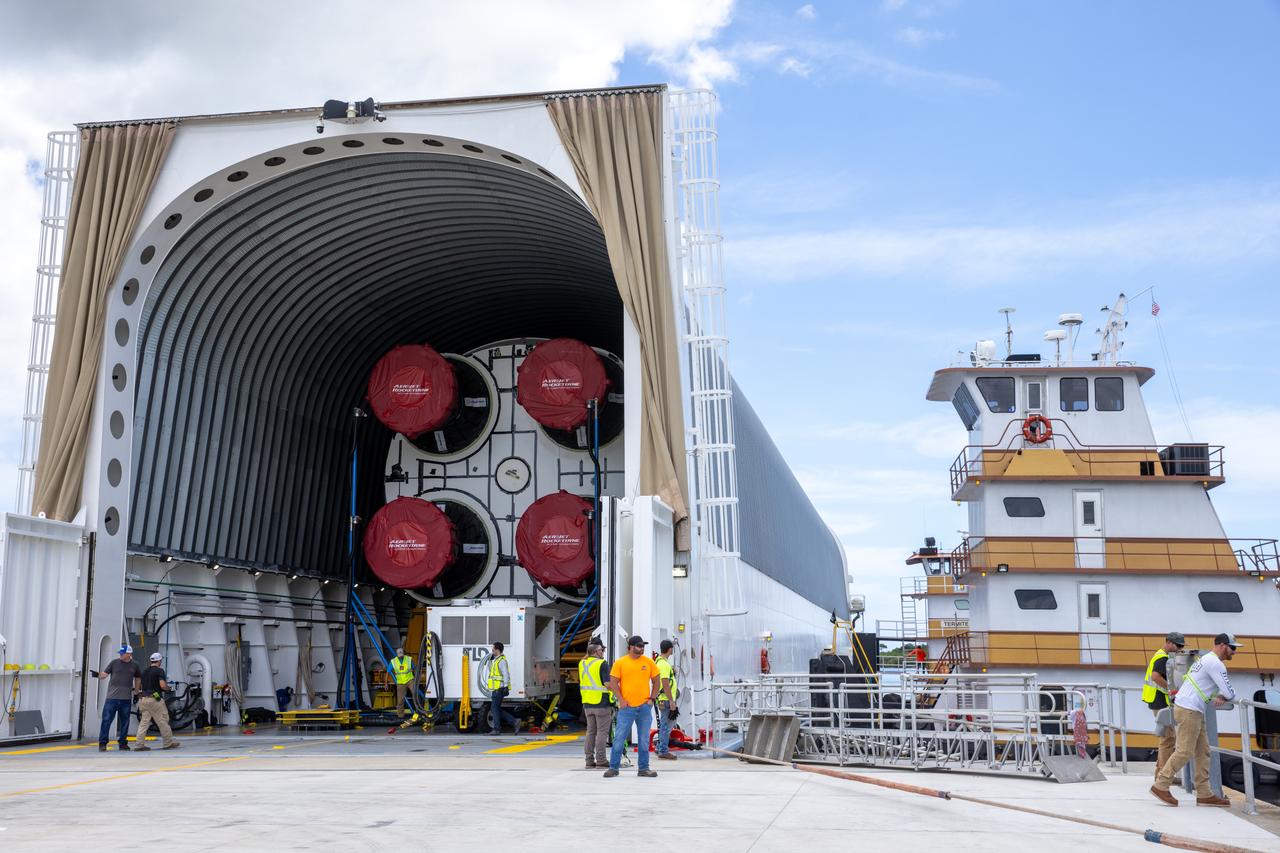
NASA’s Pegasus barge, carrying the agency’s massive SLS (Space Launch System) core stage, arrives at NASA’s Kennedy Space Center Complex 39 turn basin wharf in Florida on Tuesday, July 23, 2024, after journeying from the agency’s Michoud Assembly Facility in New Orleans. The core stage is the next piece of Artemis hardware to arrive at the spaceport and will be offloaded and moved to NASA Kennedy’s Vehicle Assembly Building, where it will be prepared for integration ahead of the Artemis II launch.