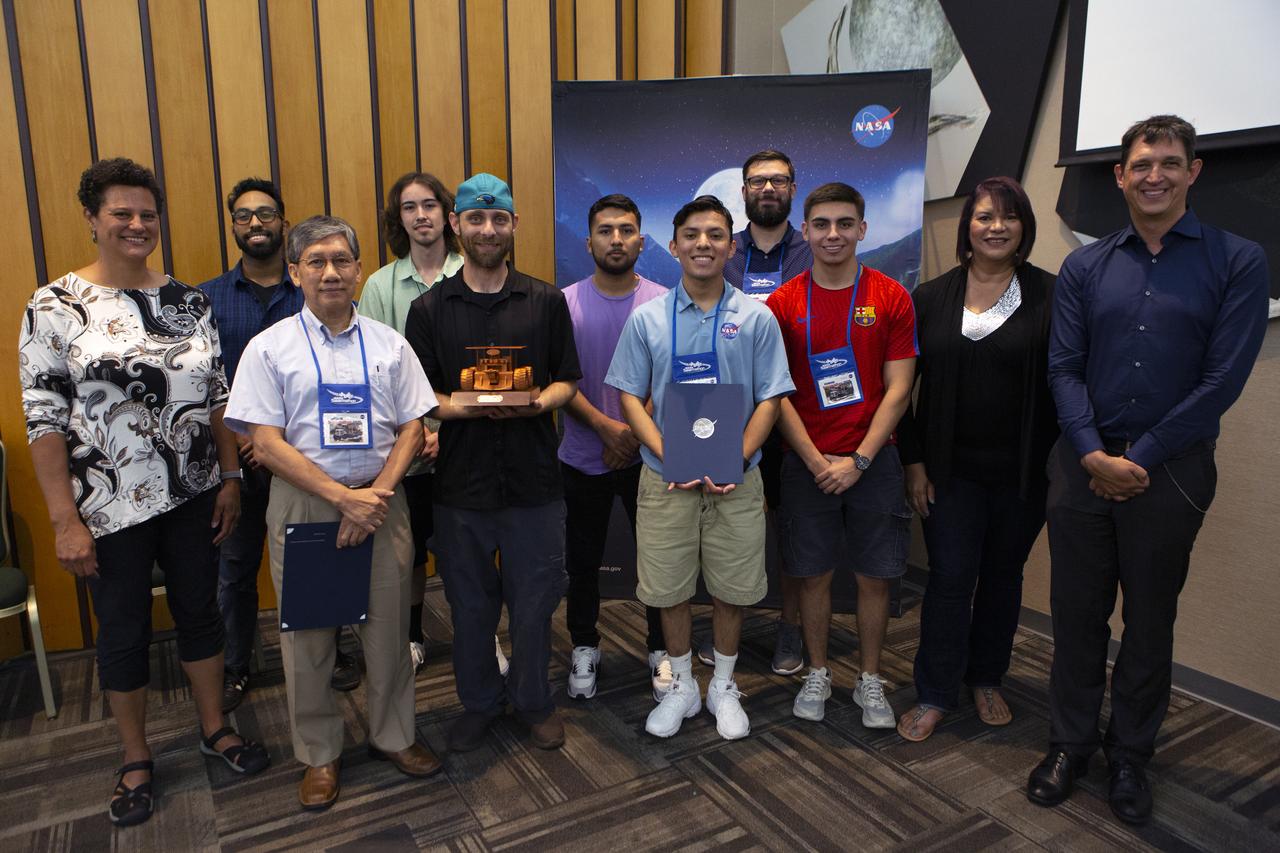
The Swarmathon team from the University of Houston Clearlake and San Jacinto College received the Mission to Mars award for their achievements in the NASA Swarmathon University Challenge for 2019. They are at the Kennedy Space Center Visitor Complex on June 12, 2019. Students and mentors from some of the Swarmathon teams were at Kennedy to participate in a student/mentor panel, hear from speakers, get a behind-the-scenes tour of Kennedy Space Center, dine with an astronaut and receive awards. During Swarmathon University Challenge IV, students developed algorithms for robotic swarms that are robust and adaptable like the foraging strategies of ant colonies. The fourth and final Swarmathon challenge was a combined virtual and physical competition.
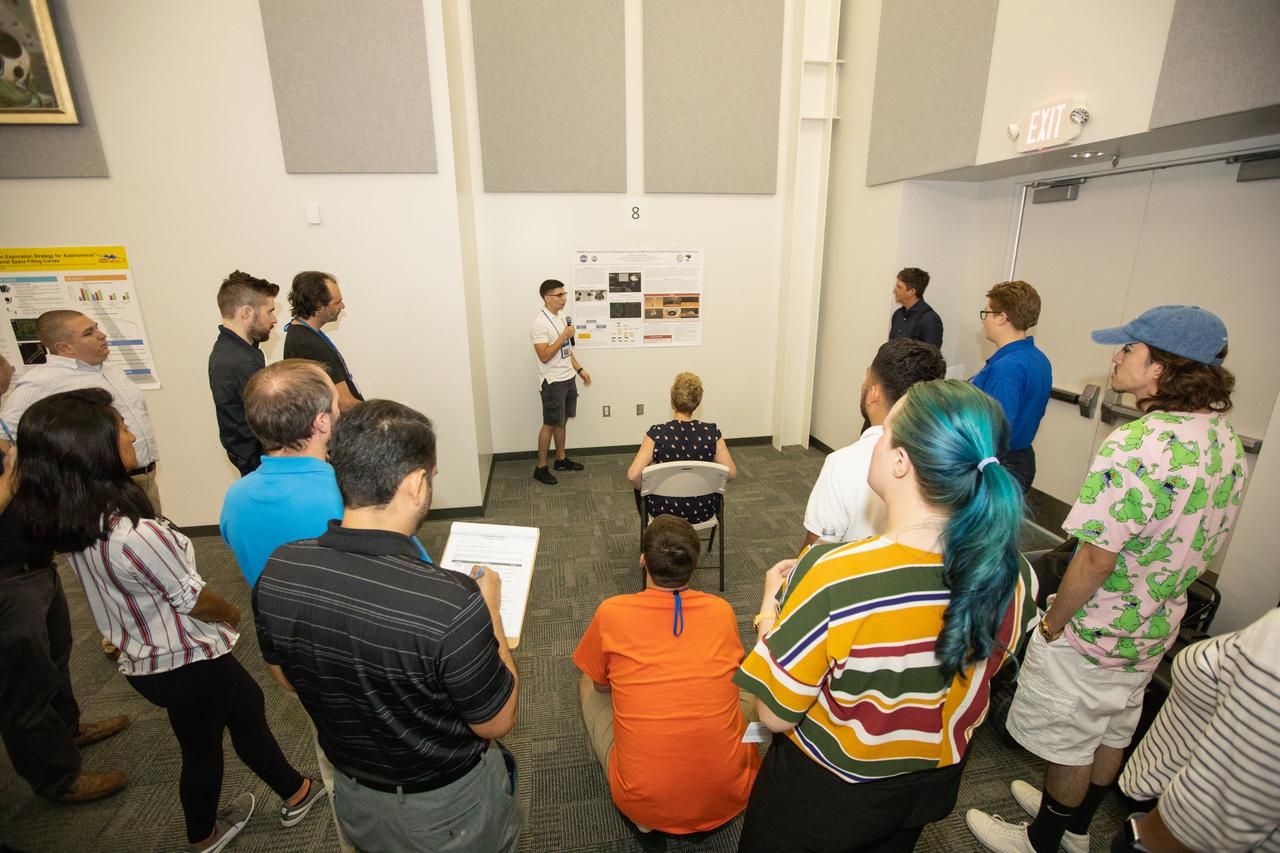
A Swarmathon University Competition 2019 team presents their poster to a panel of judges at the Kennedy Space Center Visitor Complex in Florida on June 11, 2019. Swarmathon students and their mentors were at Kennedy to participate in a student/mentor panel, hear from speakers, get a behind-the-scenes tour of Kennedy Space Center, dine with an astronaut and receive awards during an awards ceremony. During Swarmathon University Challenge IV, students developed algorithms for robotic swarms that are robust and adaptable like the foraging strategies of ant colonies. The fourth and final Swarmathon was a combined virtual and physical competition, hosted by UNM.
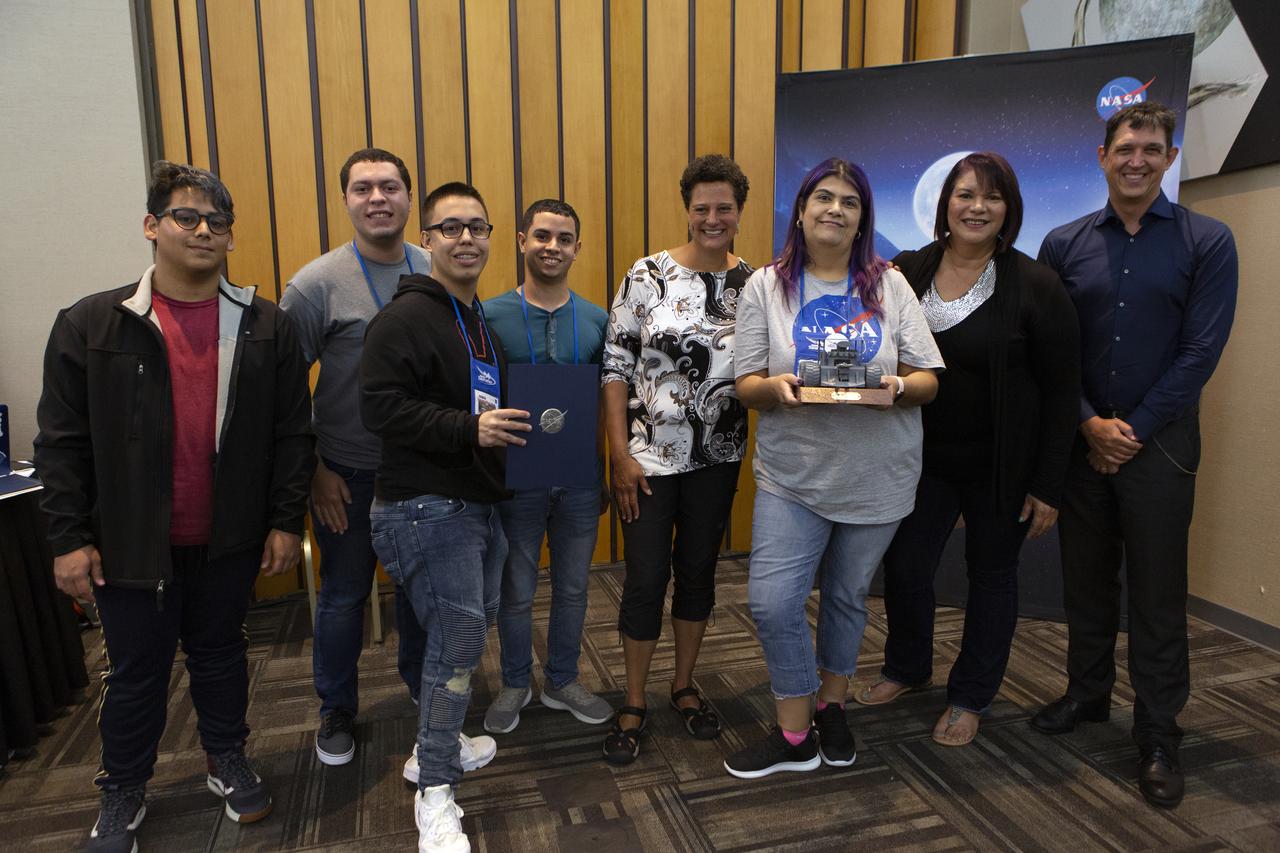
The Swarmathon team from the University of Puerto Rico at Arecibo received the Best Poster Award during the awards ceremony for NASA’s Swarmathon University Challenge IV, at the Kennedy Space Center Visitor Complex in Florida on June 12, 2019. Students and mentors from some of the Swarmathon teams were at Kennedy to participate in a student/mentor panel, hear from speakers, get a behind-the-scenes tour of Kennedy Space Center, dine with an astronaut and receive awards. For the challenge, university students developed algorithms for robotic swarms that are robust and adaptable like the foraging strategies of ant colonies. The fourth and final Swarmathon challenge was a combined virtual and physical competition. Fourth from right is Melanie Moses, a professor of computer science at the University of New Mexico, the host location for Swarmathon. Second from right is Theresa Martinez, engagement manager of the Minority University Research and Education Program, managed at Kennedy.
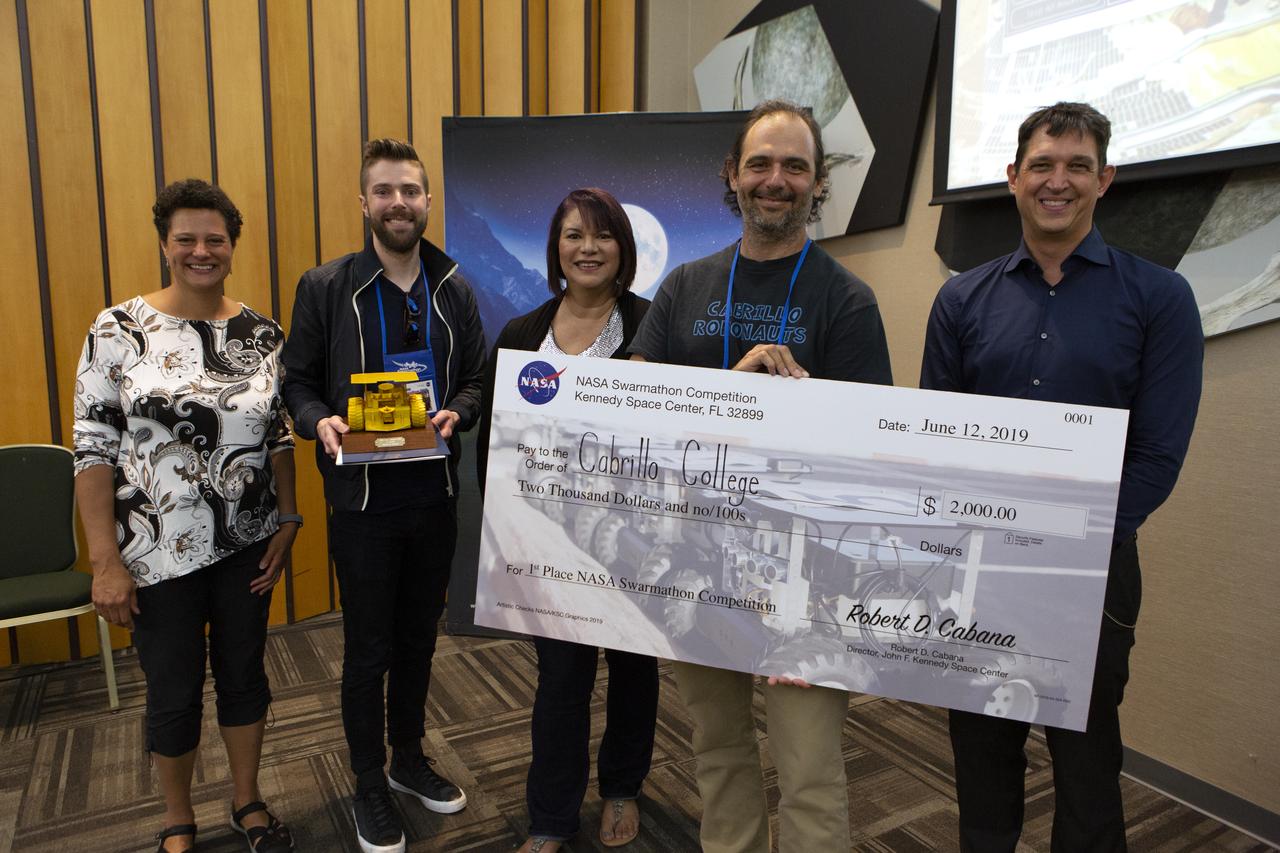
The Swarmathon team from Cabrillo College received first place in NASA’s Swarmathon University Challenge IV, during a ceremony at the Kennedy Space Center Visitor Complex in Florida on June 12, 2019. Students and mentors from some of the Swarmathon teams were at Kennedy to participate in a student/mentor panel, hear from speakers, get a behind-the-scenes tour of Kennedy Space Center, dine with an astronaut and receive awards. For the challenge, university students developed algorithms for robotic swarms that are robust and adaptable like the foraging strategies of ant colonies. The fourth and final Swarmathon challenge was a combined virtual and physical competition. At far right is Melanie Moses, a professor of computer science at the University of New Mexico, the host location for Swarmathon. Third from left is Theresa Martinez, engagement manager of the Minority University Research and Education Program, managed at Kennedy.
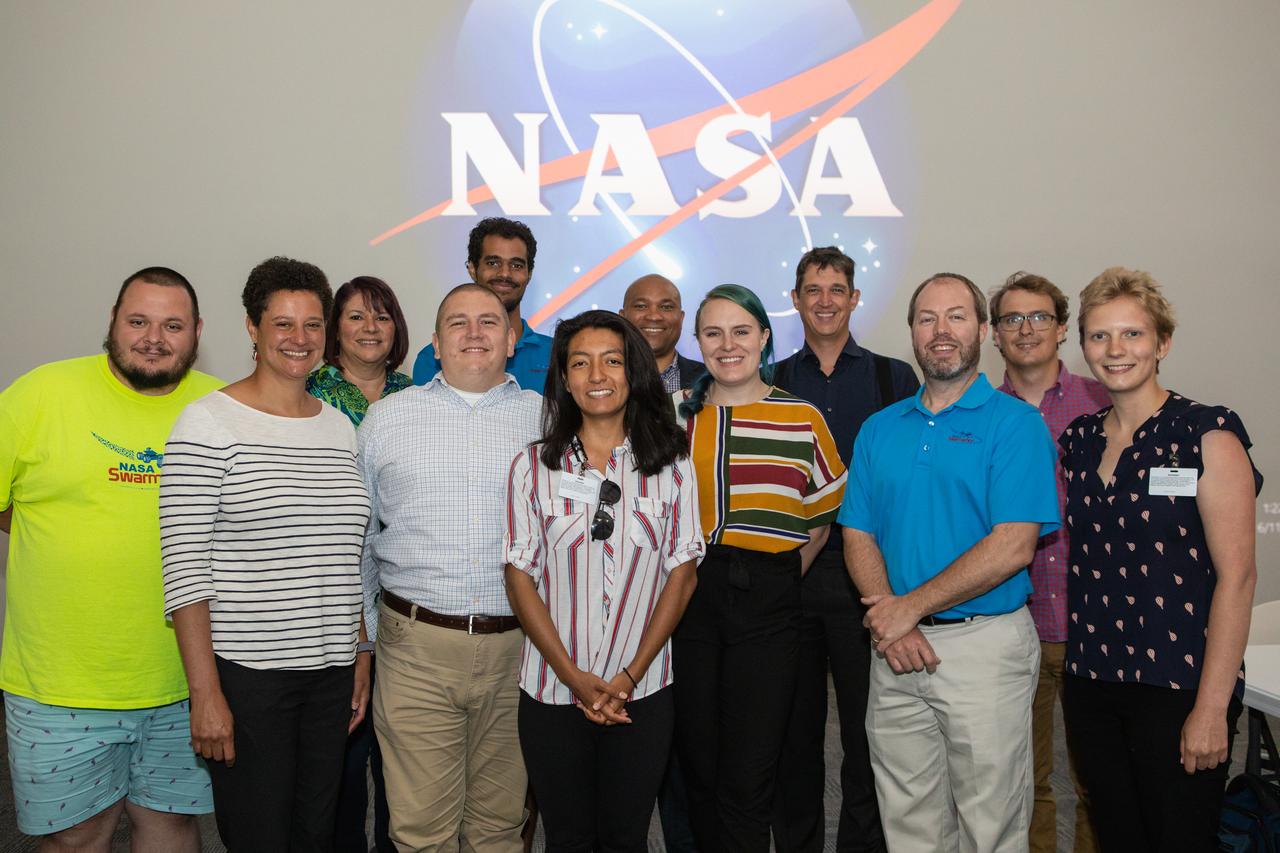
The University of New Mexico (UNM) faculty and students who administer the Swarmathon University Competition 2019 gather for a group photo on June 11, 2019 at the Kennedy Space Center Visitor Complex in Florida. Melanie Moses, faculty lead for Swarmathon and a professor of computer science at UNM, is second from left. Behind her is Theresa Martinez, Minority University Research and Education Program (MUREP) Science, Technology, Education and Math (STEM) engagement manager, at Kennedy Space Center. Swarmathon University Competition students and their mentors were at Kennedy to participate in a student/mentor panel, hear from speakers, get a behind-the-scenes tour of Kennedy Space Center, dine with an astronaut and receive awards. During Swarmathon University Challenge IV, students developed algorithms for robotic swarms that are robust and adaptable like the foraging strategies of ant colonies. The fourth and final Swarmathon was a combined virtual and physical competition, hosted by UNM.
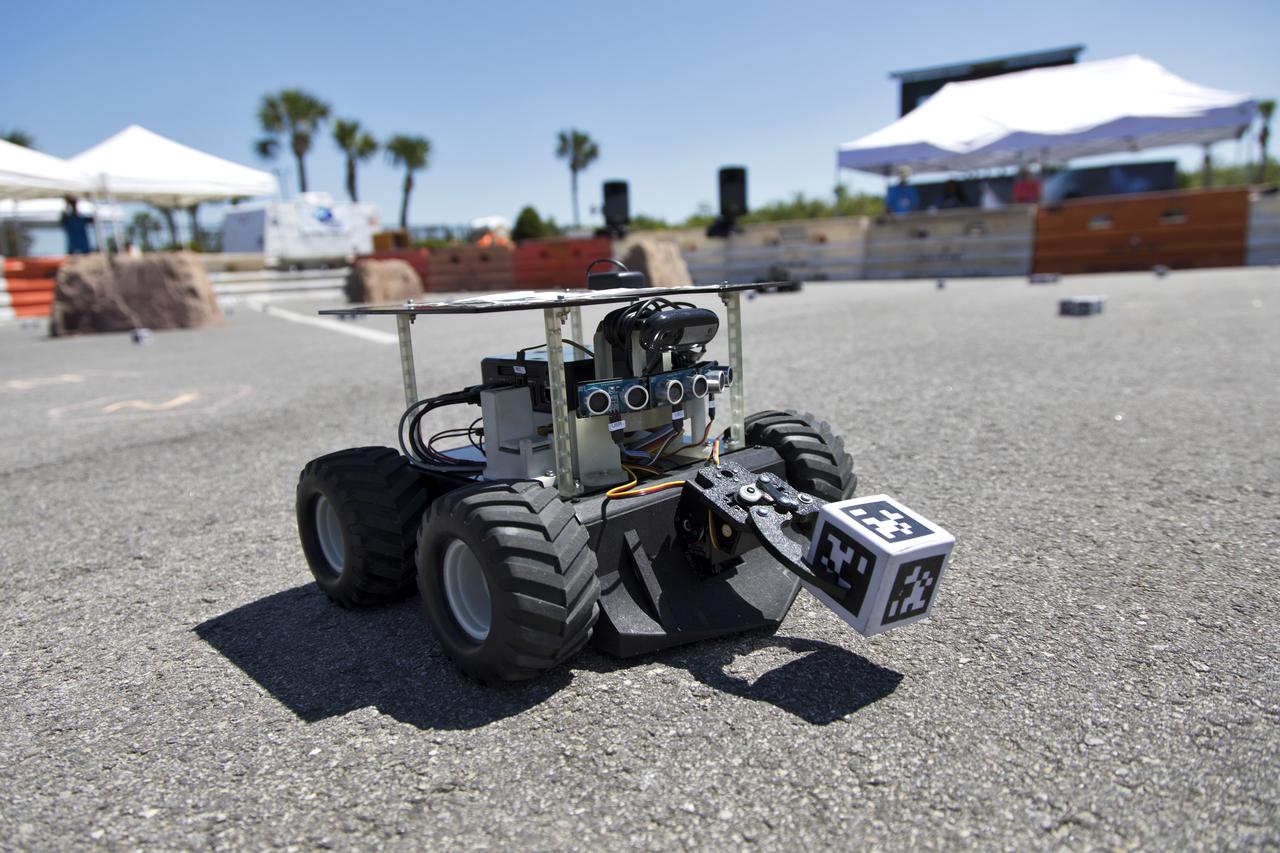
In the Swarmathon competition at the Kennedy Space Center Visitor Complex, students were asked to develop computer code for the small robots, programming them to look for "resources" in the form of AprilTag cubes, similar to barcodes. Teams developed search algorithms for the Swarmies to operate autonomously, communicating and interacting as a collective swarm similar to ants foraging for food. In the spaceport's third annual Swarmathon, 23 teams represented 24 minority serving universities and community colleges were invited to develop software code to operate these innovative robots known as "Swarmies" to help find resources when astronauts explore distant locations, such as the Moon or Mars.
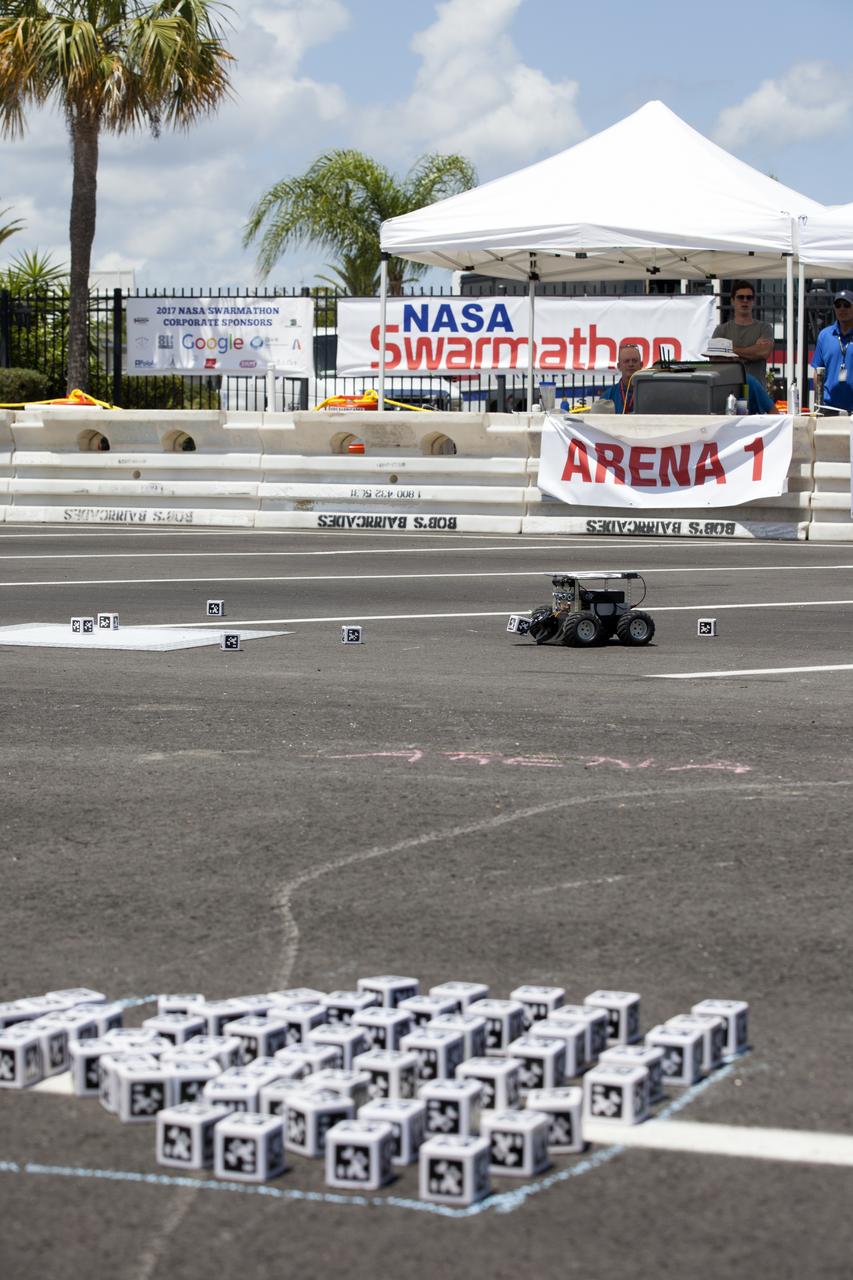
In the Swarmathon competition at the Kennedy Space Center Visitor Complex, students were asked to develop computer code for the small robots, programming them to look for "resources" in the form of AprilTag cubes, similar to barcodes. Teams developed search algorithms for the Swarmies to operate autonomously, communicating and interacting as a collective swarm similar to ants foraging for food. In the spaceport's second annual Swarmathon, 20 teams representing 22 minority serving universities and community colleges were invited to develop software code to operate these innovative robots known as "Swarmies" to help find resources when astronauts explore distant locations, such as the moon or Mars.
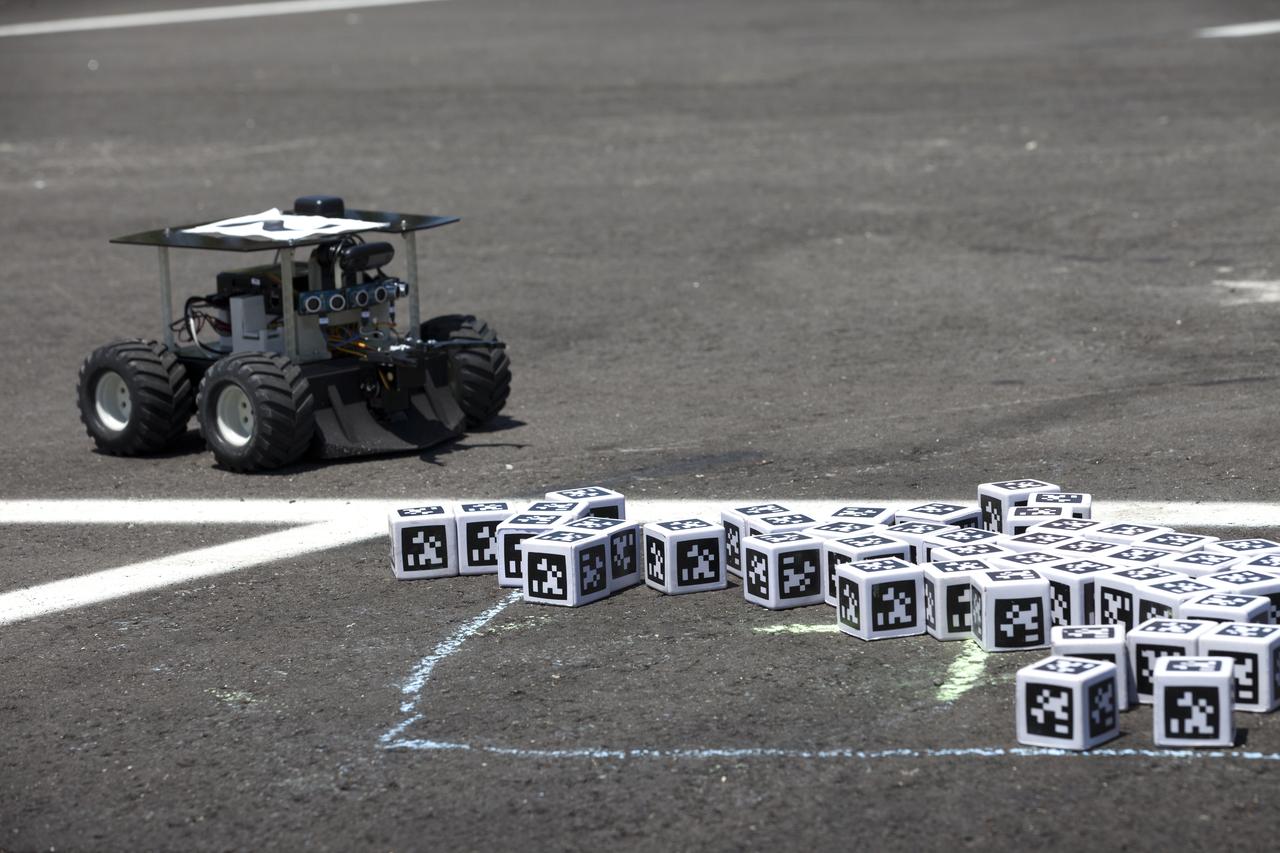
In the Swarmathon competition at the Kennedy Space Center Visitor Complex, students were asked to develop computer code for the small robots, programming them to look for "resources" in the form of AprilTag cubes, similar to barcodes. Teams developed search algorithms for the Swarmies to operate autonomously, communicating and interacting as a collective swarm similar to ants foraging for food. In the spaceport's second annual Swarmathon, 20 teams representing 22 minority serving universities and community colleges were invited to develop software code to operate these innovative robots known as "Swarmies" to help find resources when astronauts explore distant locations, such as the moon or Mars.
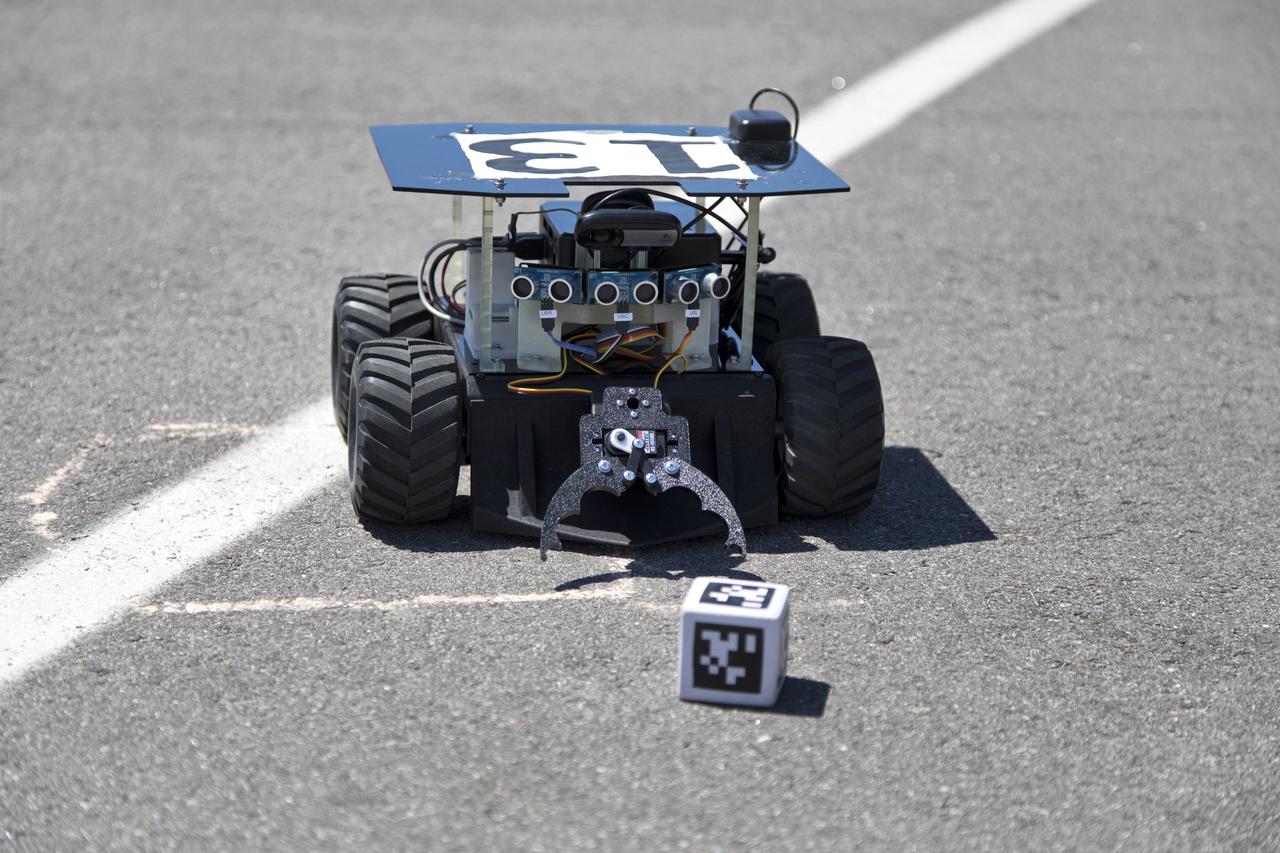
In the Swarmathon competition at the Kennedy Space Center Visitor Complex, students were asked to develop computer code for the small robots, programming them to look for "resources" in the form of AprilTag cubes, similar to barcodes. Teams developed search algorithms for the Swarmies to operate autonomously, communicating and interacting as a collective swarm similar to ants foraging for food. In the spaceport's third annual Swarmathon, 23 teams represented 24 minority serving universities and community colleges were invited to develop software code to operate these innovative robots known as "Swarmies" to help find resources when astronauts explore distant locations, such as the Moon or Mars.
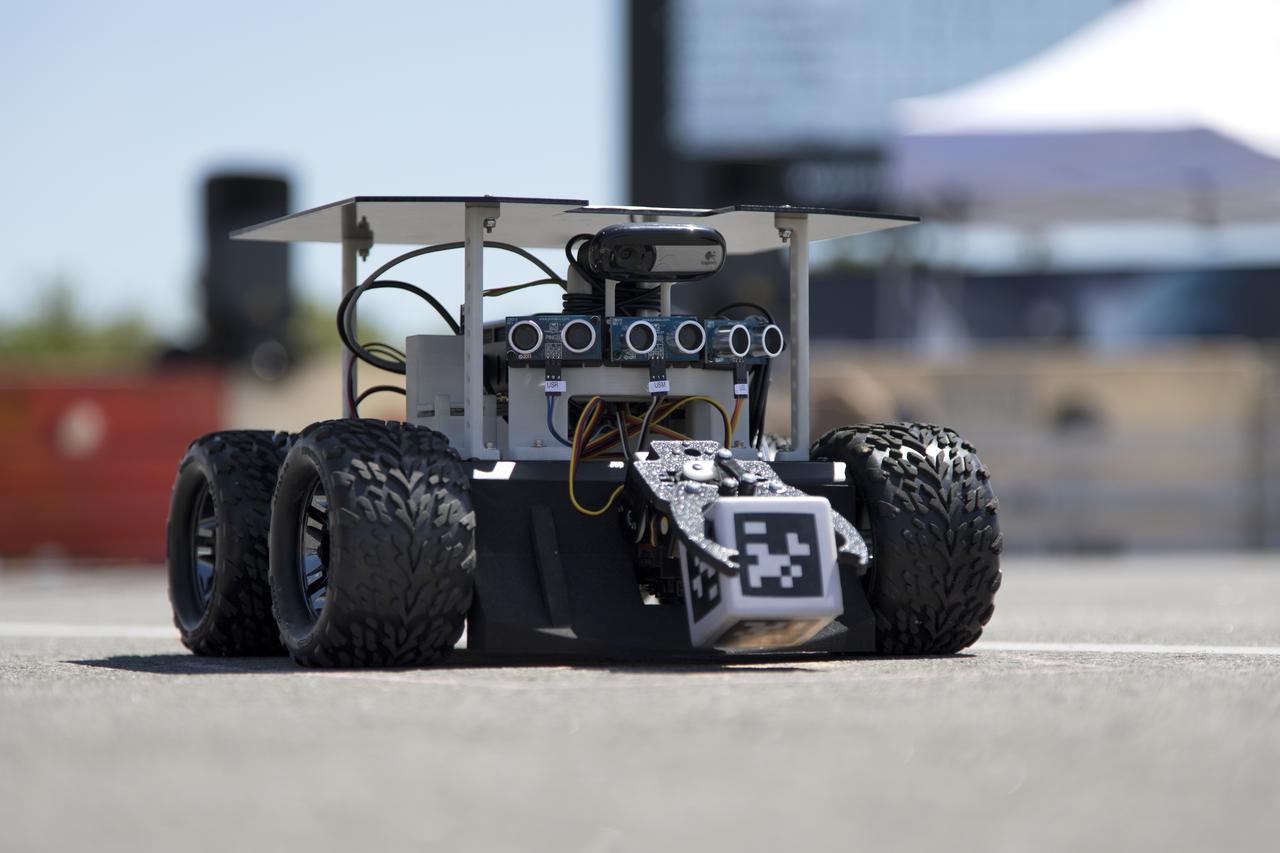
In the Swarmathon competition at the Kennedy Space Center Visitor Complex, students were asked to develop computer code for the small robots, programming them to look for "resources" in the form of AprilTag cubes, similar to barcodes. Teams developed search algorithms for the Swarmies to operate autonomously, communicating and interacting as a collective swarm similar to ants foraging for food. In the spaceport's third annual Swarmathon, 23 teams represented 24 minority serving universities and community colleges were invited to develop software code to operate these innovative robots known as "Swarmies" to help find resources when astronauts explore distant locations, such as the Moon or Mars.
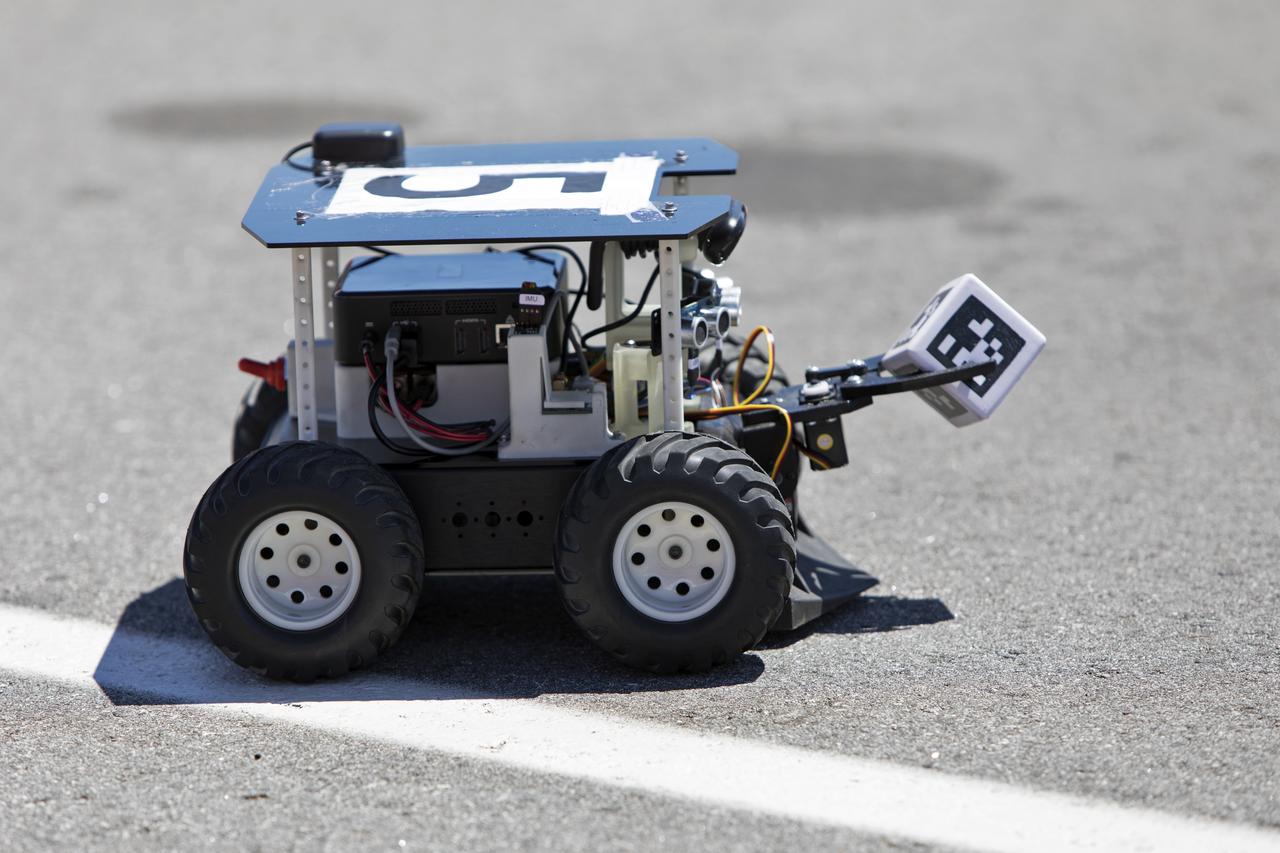
In the Swarmathon competition at the Kennedy Space Center Visitor Complex, students were asked to develop computer code for the small robots, programming them to look for "resources" in the form of AprilTag cubes, similar to barcodes. Teams developed search algorithms for the Swarmies to operate autonomously, communicating and interacting as a collective swarm similar to ants foraging for food. In the spaceport's third annual Swarmathon, 23 teams represented 24 minority serving universities and community colleges were invited to develop software code to operate these innovative robots known as "Swarmies" to help find resources when astronauts explore distant locations, such as the Moon or Mars.
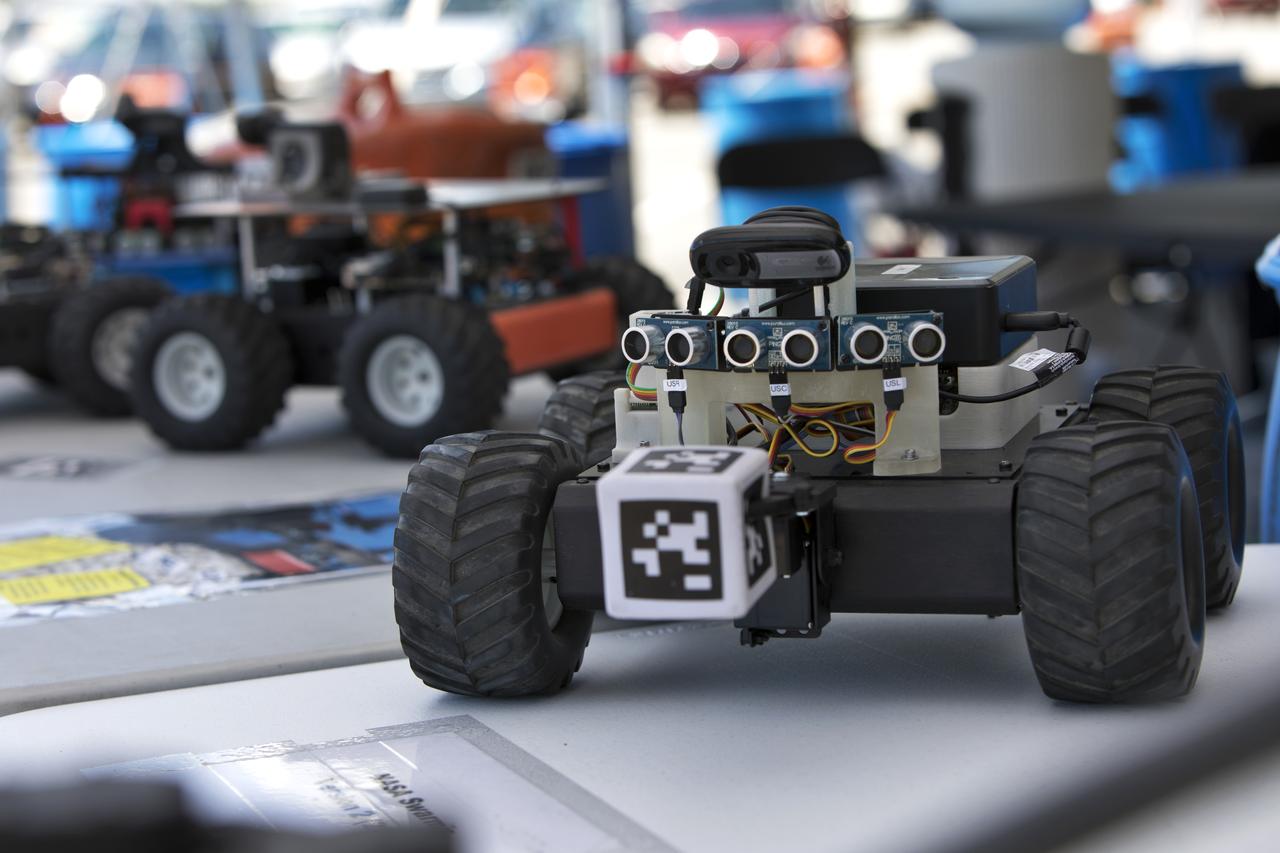
In the Swarmathon competition at the Kennedy Space Center Visitor Complex, students were asked to develop computer code for the small robots, programming them to look for "resources" in the form of AprilTag cubes, similar to barcodes. Teams developed search algorithms for the Swarmies to operate autonomously, communicating and interacting as a collective swarm similar to ants foraging for food. In the spaceport's third annual Swarmathon, 23 teams represented 24 minority serving universities and community colleges were invited to develop software code to operate these innovative robots known as "Swarmies" to help find resources when astronauts explore distant locations, such as the Moon or Mars.
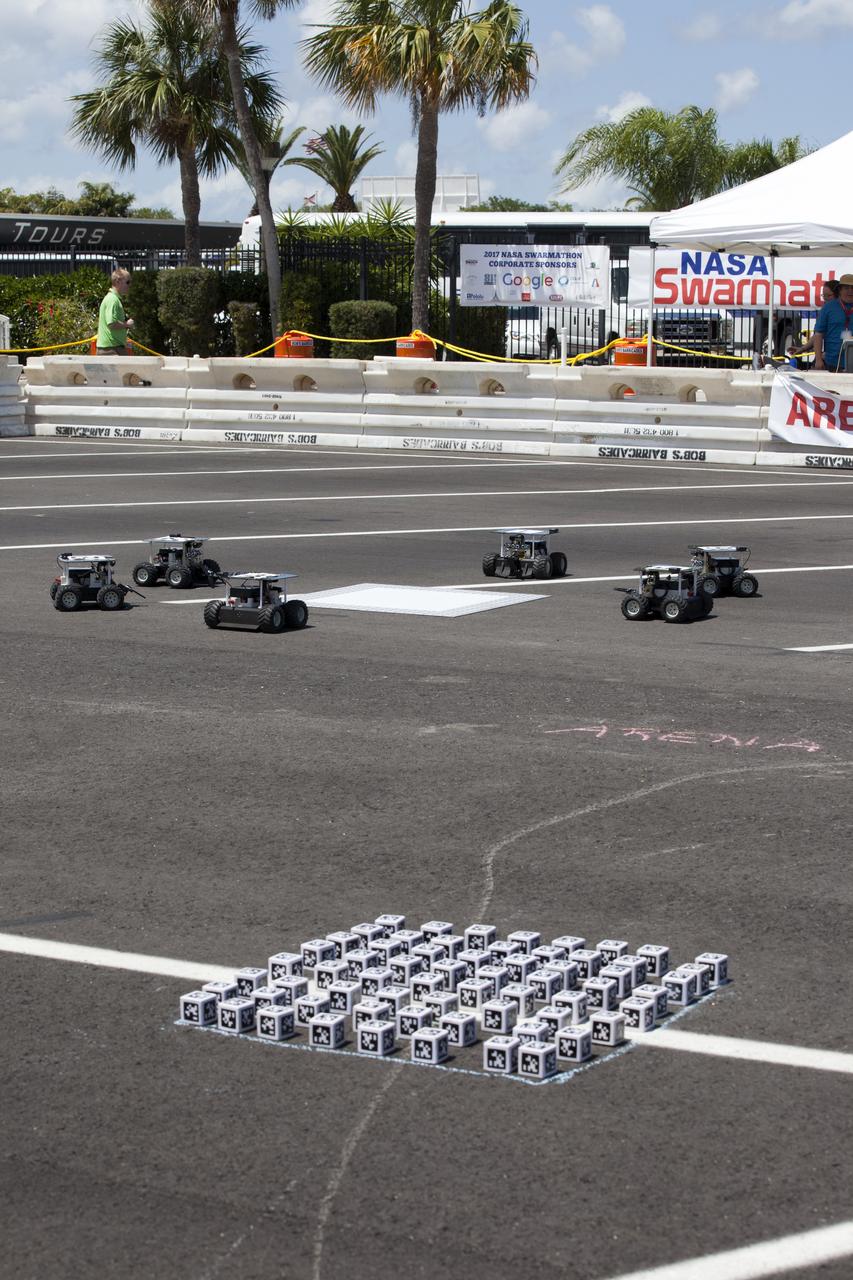
In the Swarmathon competition at the Kennedy Space Center Visitor Complex, students were asked to develop computer code for the small robots, programming them to look for "resources" in the form of AprilTag cubes, similar to barcodes. Teams developed search algorithms for the Swarmies to operate autonomously, communicating and interacting as a collective swarm similar to ants foraging for food. In the spaceport's second annual Swarmathon, 20 teams representing 22 minority serving universities and community colleges were invited to develop software code to operate these innovative robots known as "Swarmies" to help find resources when astronauts explore distant locations, such as the moon or Mars.
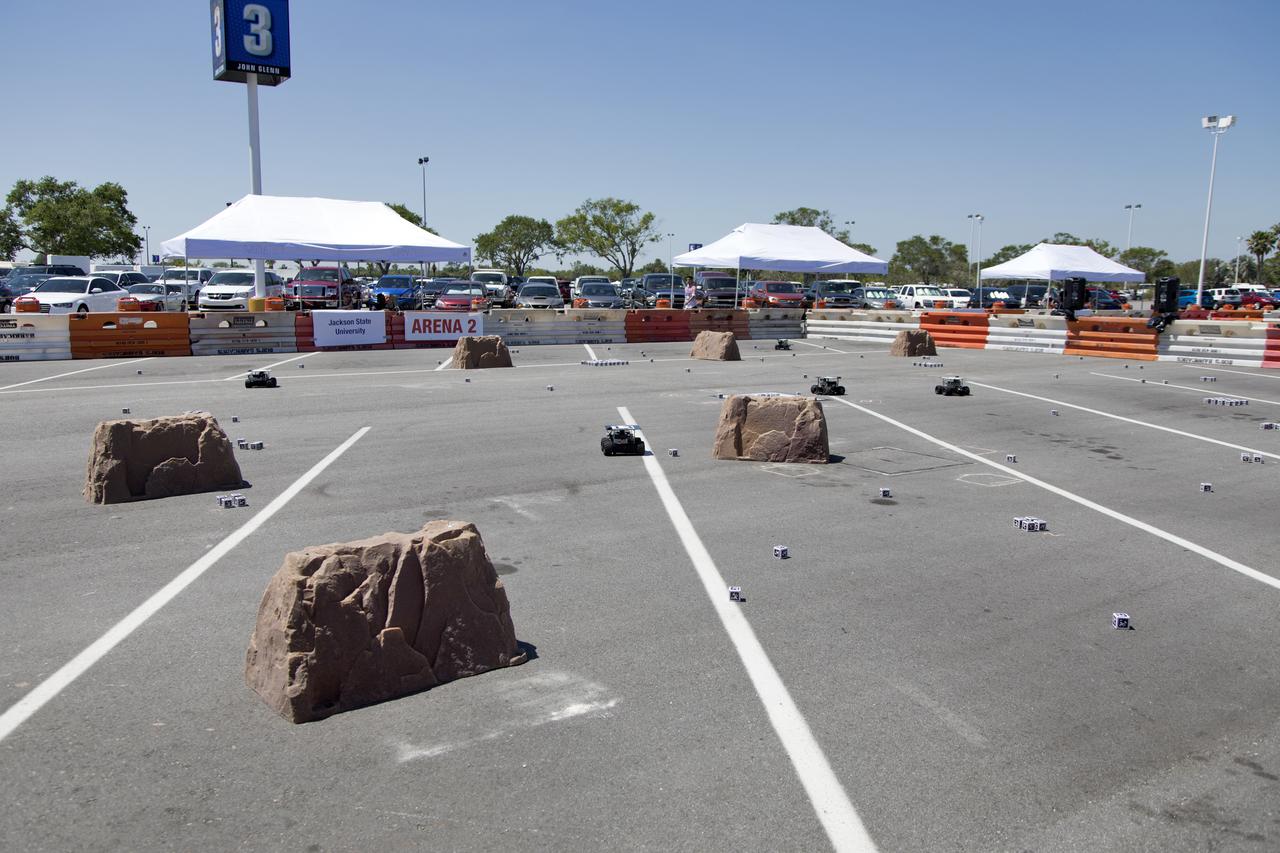
In the Swarmathon competition at the Kennedy Space Center Visitor Complex, students were asked to develop computer code for the small robots, programming them to look for "resources" in the form of AprilTag cubes, similar to barcodes. To add to the challenge, obstacles in the form of simulated rocks were placed in the completion arena. Teams developed search algorithms for the Swarmies to operate autonomously, communicating and interacting as a collective swarm similar to ants foraging for food. In the spaceport's third annual Swarmathon, 23 teams represented 24 minority serving universities and community colleges were invited to develop software code to operate these innovative robots known as "Swarmies" to help find resources when astronauts explore distant locations, such as the Moon or Mars.
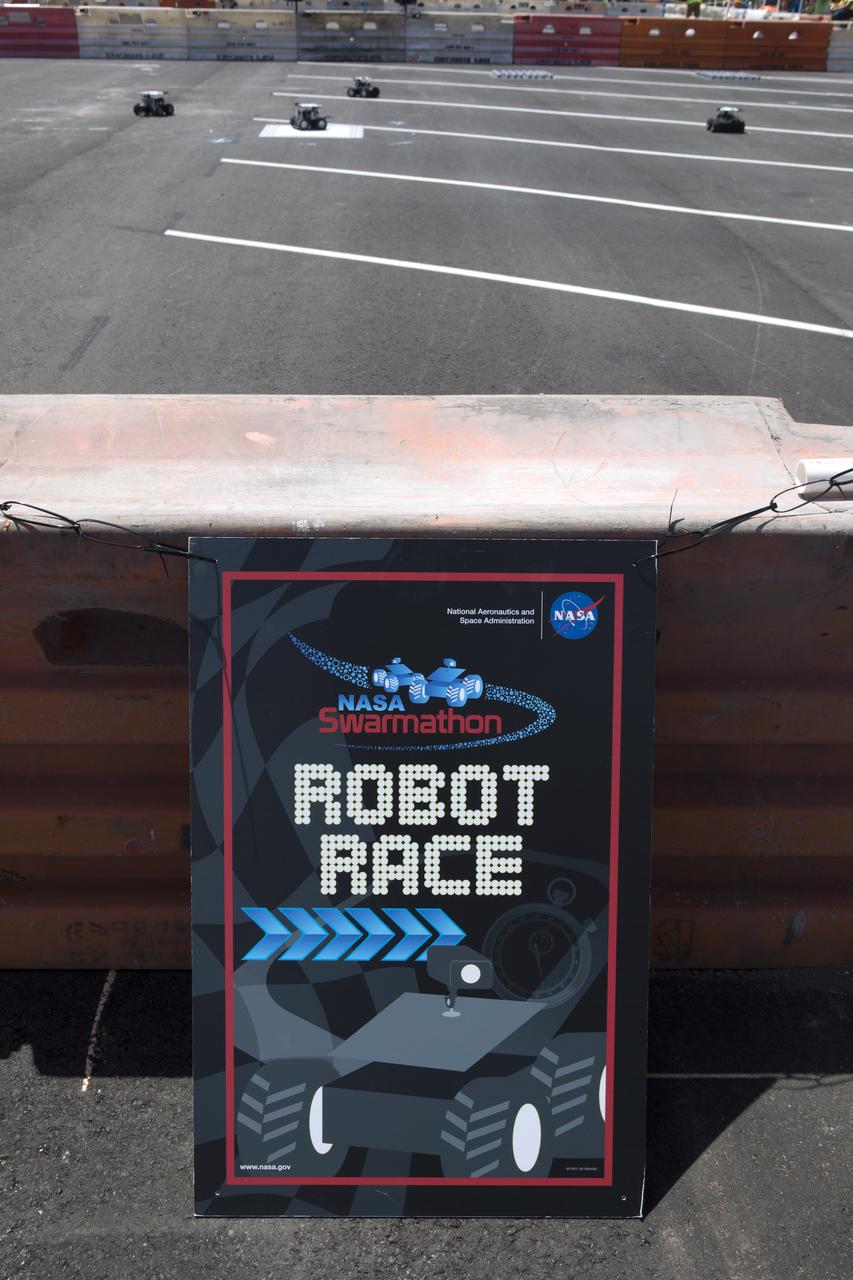
A sign at the Kennedy Space Center Visitor Complex announces the second annual Swarmathon competition. Students were asked to develop computer code for the small robots, programming them to look for "resources" in the form of cubes with AprilTags, similar to barcodes. Teams developed search algorithms for the Swarmies to operate autonomously, communicating and interacting as a collective swarm similar to ants foraging for food. In the spaceport's second annual Swarmathon, 20 teams representing 22 minority serving universities and community colleges were invited to develop software code to operate these innovative robots known as "Swarmies" to help find resources when astronauts explore distant locations, such as the moon or Mars.
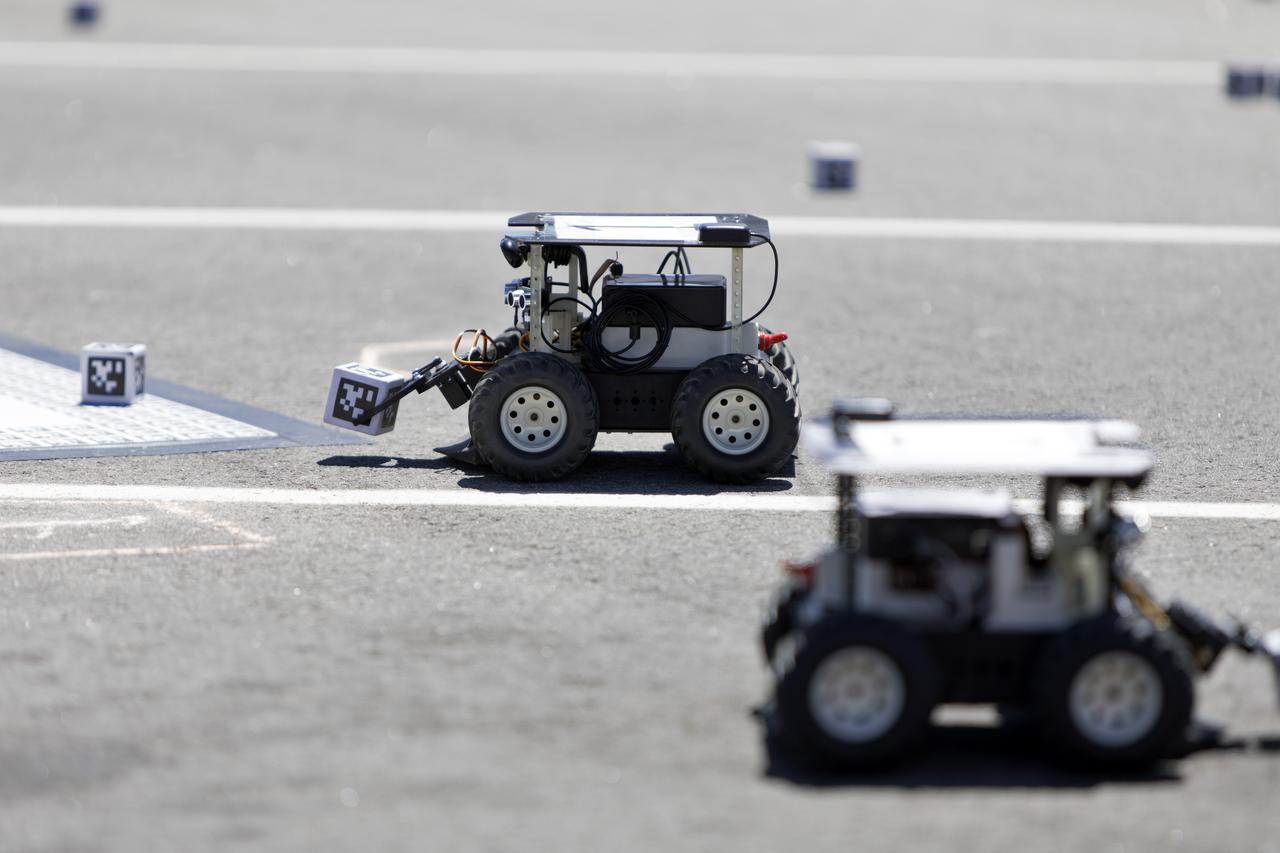
In the Swarmathon competition at the Kennedy Space Center Visitor Complex, students were asked to develop computer code for the small robots, programming them to look for "resources" in the form of AprilTag cubes, similar to barcodes. Teams developed search algorithms for the Swarmies to operate autonomously, communicating and interacting as a collective swarm similar to ants foraging for food. In the spaceport's third annual Swarmathon, 23 teams represented 24 minority serving universities and community colleges were invited to develop software code to operate these innovative robots known as "Swarmies" to help find resources when astronauts explore distant locations, such as the Moon or Mars.
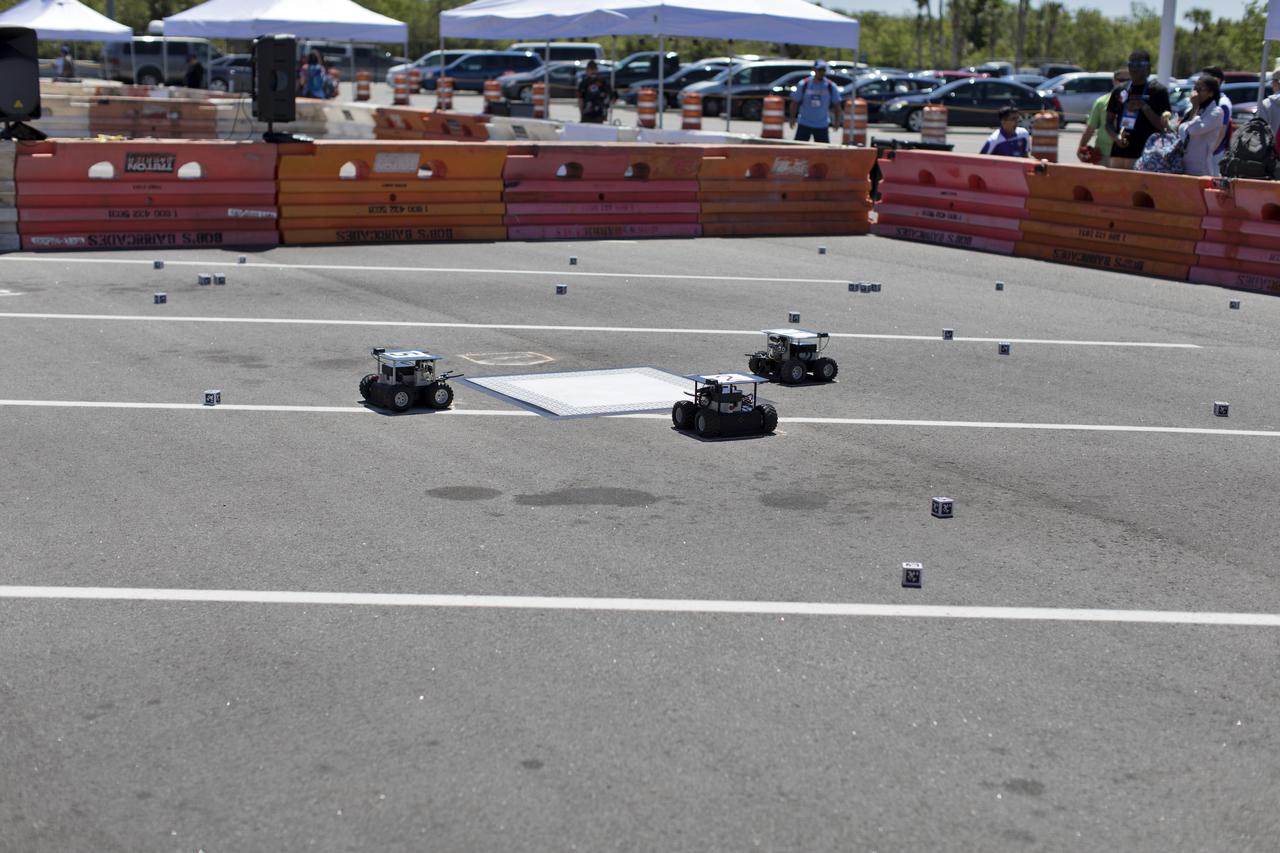
In the Swarmathon competition at the Kennedy Space Center Visitor Complex, students were asked to develop computer code for the small robots, programming them to look for "resources" in the form of AprilTag cubes, similar to barcodes. Teams developed search algorithms for the Swarmies to operate autonomously, communicating and interacting as a collective swarm similar to ants foraging for food. In the spaceport's third annual Swarmathon, 23 teams represented 24 minority serving universities and community colleges were invited to develop software code to operate these innovative robots known as "Swarmies" to help find resources when astronauts explore distant locations, such as the Moon or Mars.
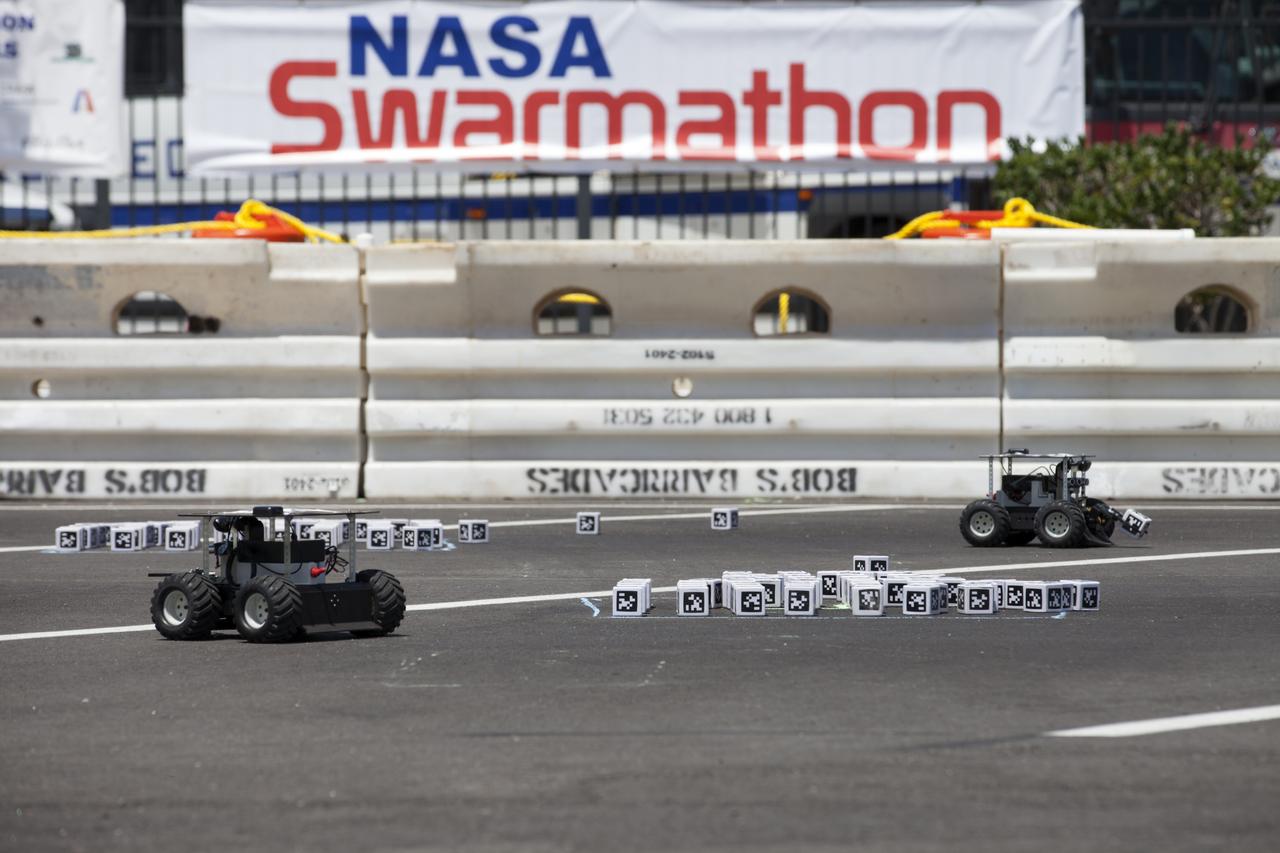
In the Swarmathon competition at the Kennedy Space Center Visitor Complex, students were asked to develop computer code for the small robots, programming them to look for "resources" in the form of AprilTag cubes, similar to barcodes. Teams developed search algorithms for the Swarmies to operate autonomously, communicating and interacting as a collective swarm similar to ants foraging for food. In the spaceport's second annual Swarmathon, 20 teams representing 22 minority serving universities and community colleges were invited to develop software code to operate these innovative robots known as "Swarmies" to help find resources when astronauts explore distant locations, such as the moon or Mars.
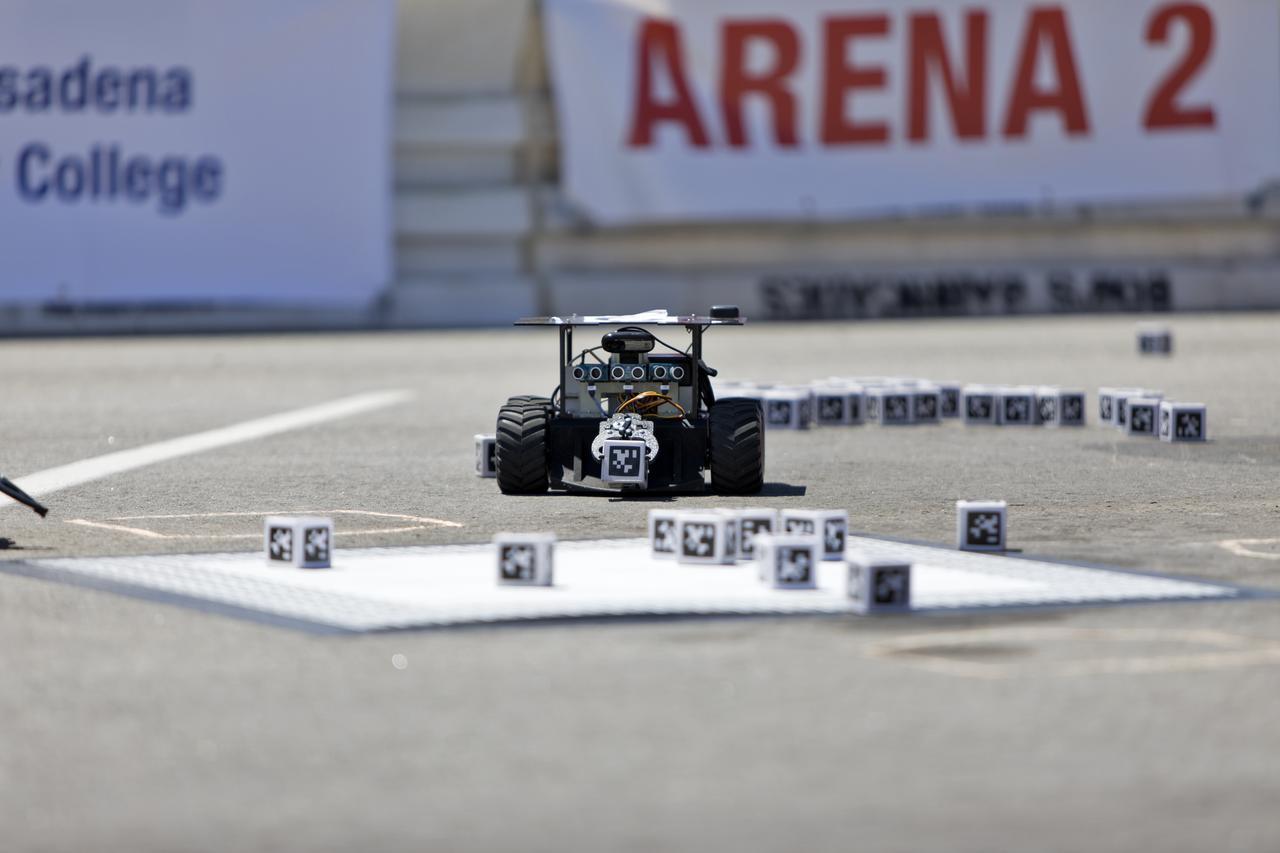
In the Swarmathon competition at the Kennedy Space Center Visitor Complex, students were asked to develop computer code for the small robots, programming them to look for "resources" in the form of AprilTag cubes, similar to barcodes. Teams developed search algorithms for the Swarmies to operate autonomously, communicating and interacting as a collective swarm similar to ants foraging for food. In the spaceport's third annual Swarmathon, 23 teams represented 24 minority serving universities and community colleges were invited to develop software code to operate these innovative robots known as "Swarmies" to help find resources when astronauts explore distant locations, such as the Moon or Mars.
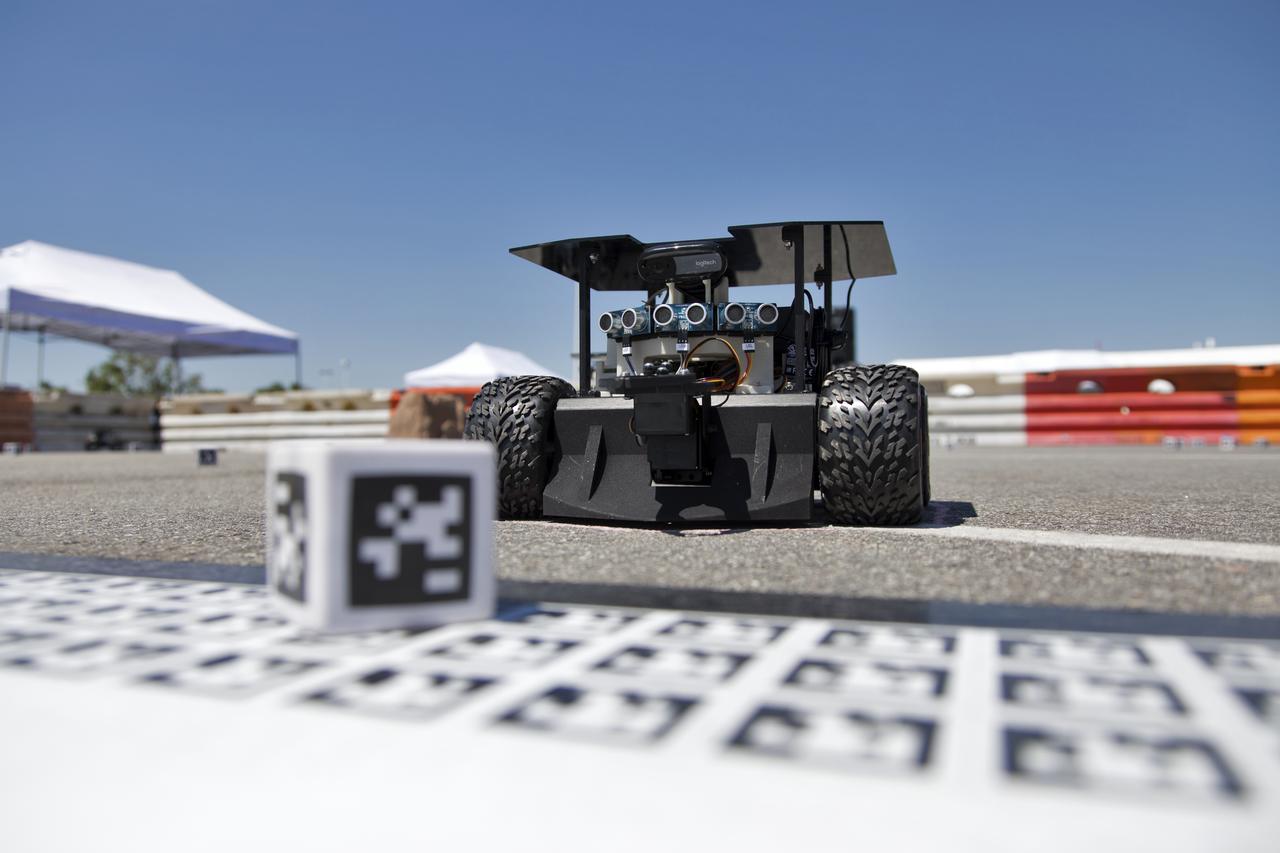
In the Swarmathon competition at the Kennedy Space Center Visitor Complex, students were asked to develop computer code for the small robots, programming them to look for "resources" in the form of AprilTag cubes, similar to barcodes. Teams developed search algorithms for the Swarmies to operate autonomously, communicating and interacting as a collective swarm similar to ants foraging for food. In the spaceport's third annual Swarmathon, 23 teams represented 24 minority serving universities and community colleges were invited to develop software code to operate these innovative robots known as "Swarmies" to help find resources when astronauts explore distant locations, such as the Moon or Mars.

Students from Montgomery College in Rockville in Maryland, follow the progress of their Swarmie robots during the Swarmathon competition at the Kennedy Space Center Visitor Complex. Students were asked to develop computer code for the small robots, programming them to look for "resources" in the form of AprilTag cubes, similar to barcodes. Teams developed search algorithms for the Swarmies to operate autonomously, communicating and interacting as a collective swarm similar to ants foraging for food. In the spaceport's third annual Swarmathon, 23 teams represented 24 minority serving universities and community colleges were invited to develop software code to operate these innovative robots known as "Swarmies" to help find resources when astronauts explore distant locations, such as the Moon or Mars.
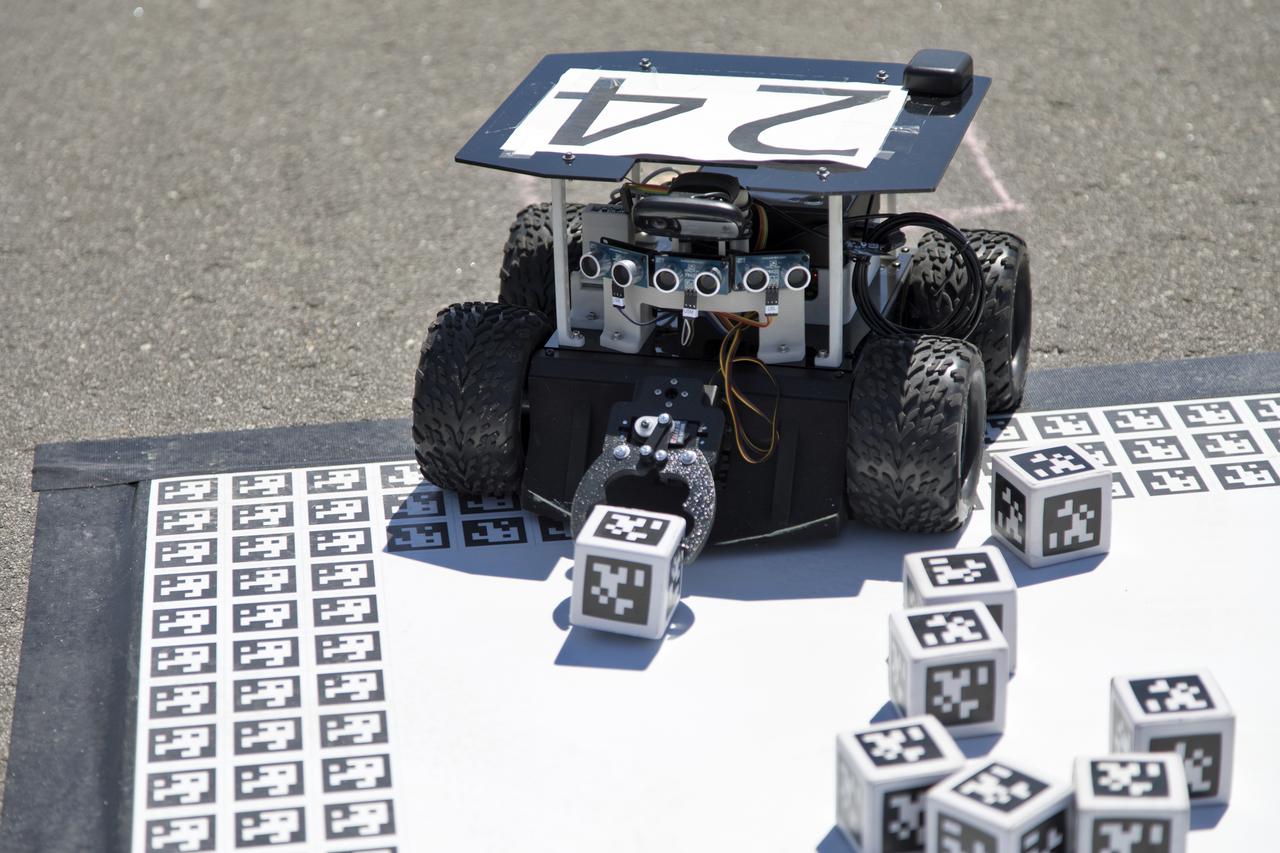
In the Swarmathon competition at the Kennedy Space Center Visitor Complex, students were asked to develop computer code for the small robots, programming them to look for "resources" in the form of AprilTag cubes, similar to barcodes. Teams developed search algorithms for the Swarmies to operate autonomously, communicating and interacting as a collective swarm similar to ants foraging for food. In the spaceport's third annual Swarmathon, 23 teams represented 24 minority serving universities and community colleges were invited to develop software code to operate these innovative robots known as "Swarmies" to help find resources when astronauts explore distant locations, such as the Moon or Mars.
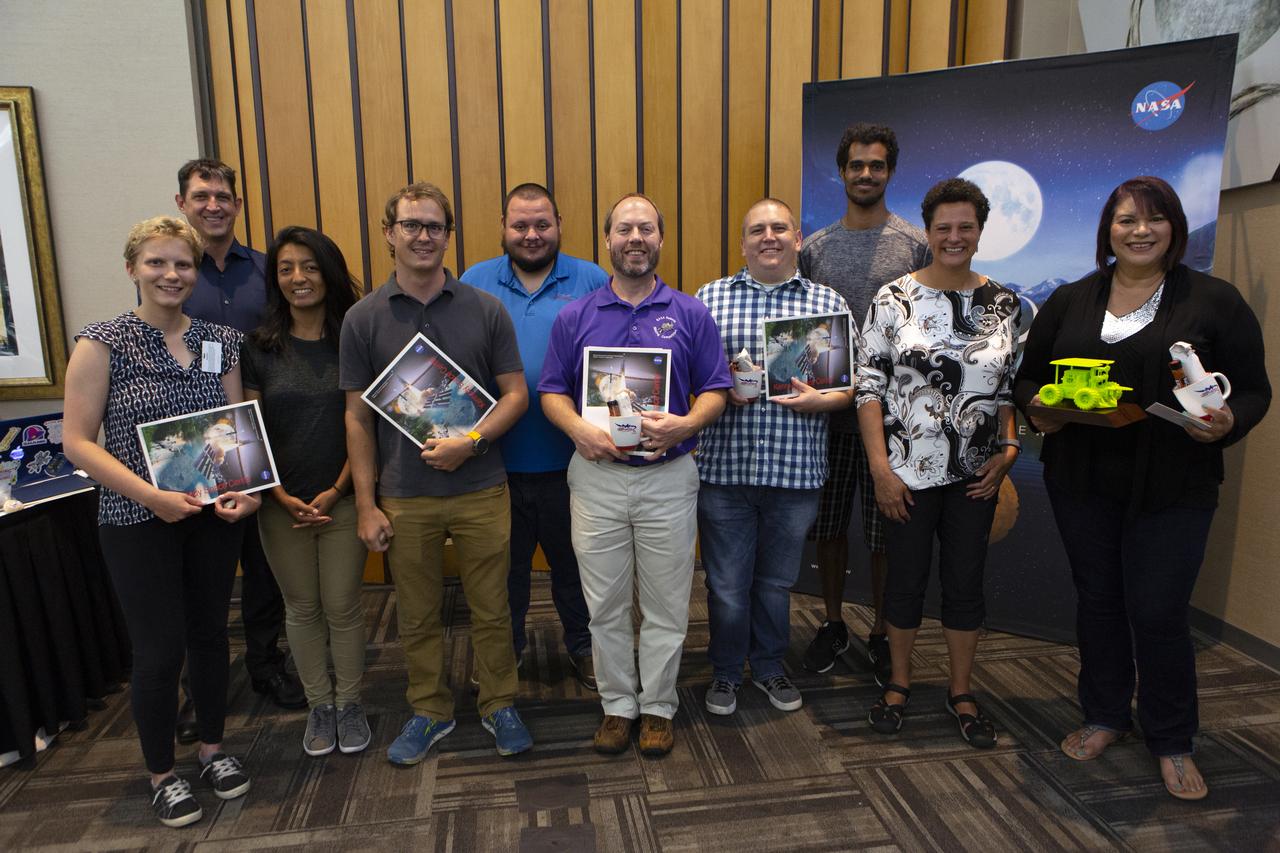
During an awards ceremony on June 12, 2019 at the Kennedy Space Center Visitor Complex in Florida, mentors and volunteers from Kennedy received certificates of recognition for the NASA Swarmathon 2019 University Challenge. Second from right is Melanie Moses, a professor of computer science at the Swarmathon host location, University of New Mexico. At far right is Theresa Martinez, engagement manager of the Minority University Research and Education Program, managed at Kennedy. University students and their mentors were at Kennedy to participate in a student/mentor panel, hear from speakers, get a behind-the-scenes tour of Kennedy Space Center, dine with an astronaut and receive awards. During Swarmathon University Challenge IV, students developed algorithms for robotic swarms that are robust and adaptable like the foraging strategies of ant colonies. The fourth and final Swarmathon was a combined virtual and physical competition.
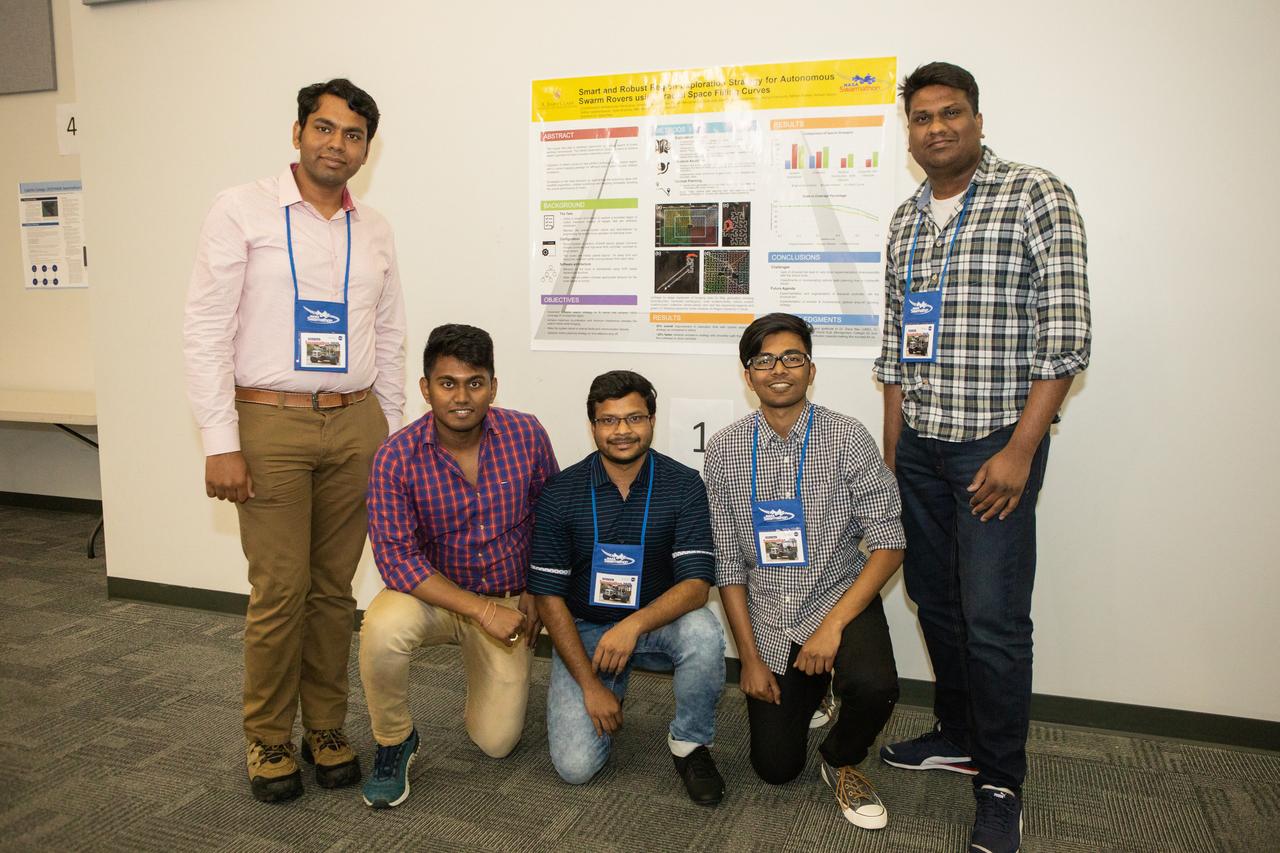
The Swarmathon University Competition 2019 team members from the University of Maryland participate in activities at the Kennedy Space Center Visitor Complex in Florida on June 11, 2019. They are standing in front of a poster they created for the poster competition portion of Swarmathon. The University of New Mexico was the host for the physical competition held in May 2019. The student teams were at Kennedy to participate in a student/mentor panel, hear from speakers, get a behind-the-scenes tour of Kennedy Space Center, dine with an astronaut and receive awards during an awards ceremony. During Swarmathon University Challenge IV, students developed algorithms for robotic swarms that are robust and adaptable like the foraging strategies of ant colonies. The fourth and final Swarmathon was a combined virtual and physical competition.
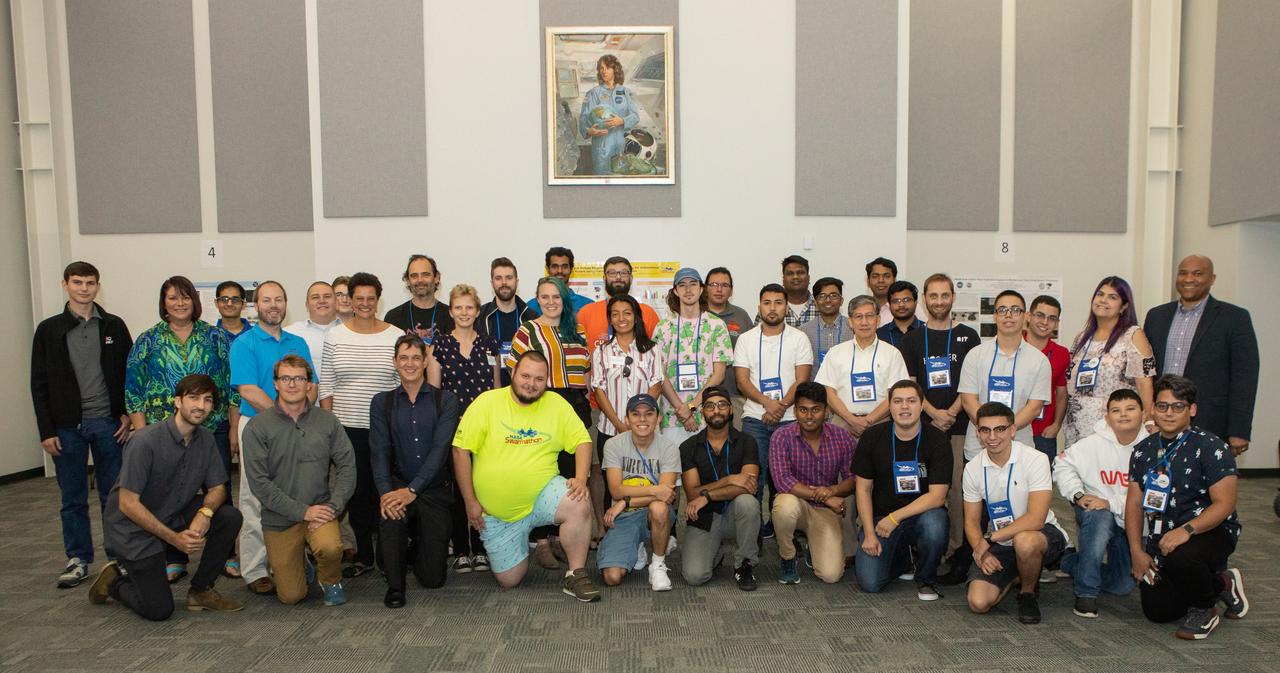
Swarmathon University Competition 2019 organizers, mentors, guest speakers and student teams gather for a group photo on June 11, 2019 at the Kennedy Space Center Visitor Complex in Florida. The University of New Mexico was the host for the physical competition held in May 2019. The student teams were at Kennedy to participate in a student/mentor panel, hear from speakers, get a behind-the-scenes tour of Kennedy Space Center, dine with an astronaut and receive awards during an awards ceremony. During Swarmathon University Challenge IV, students developed algorithms for robotic swarms that are robust and adaptable like the foraging strategies of ant colonies. The fourth and final Swarmathon was a combined virtual and physical competition.
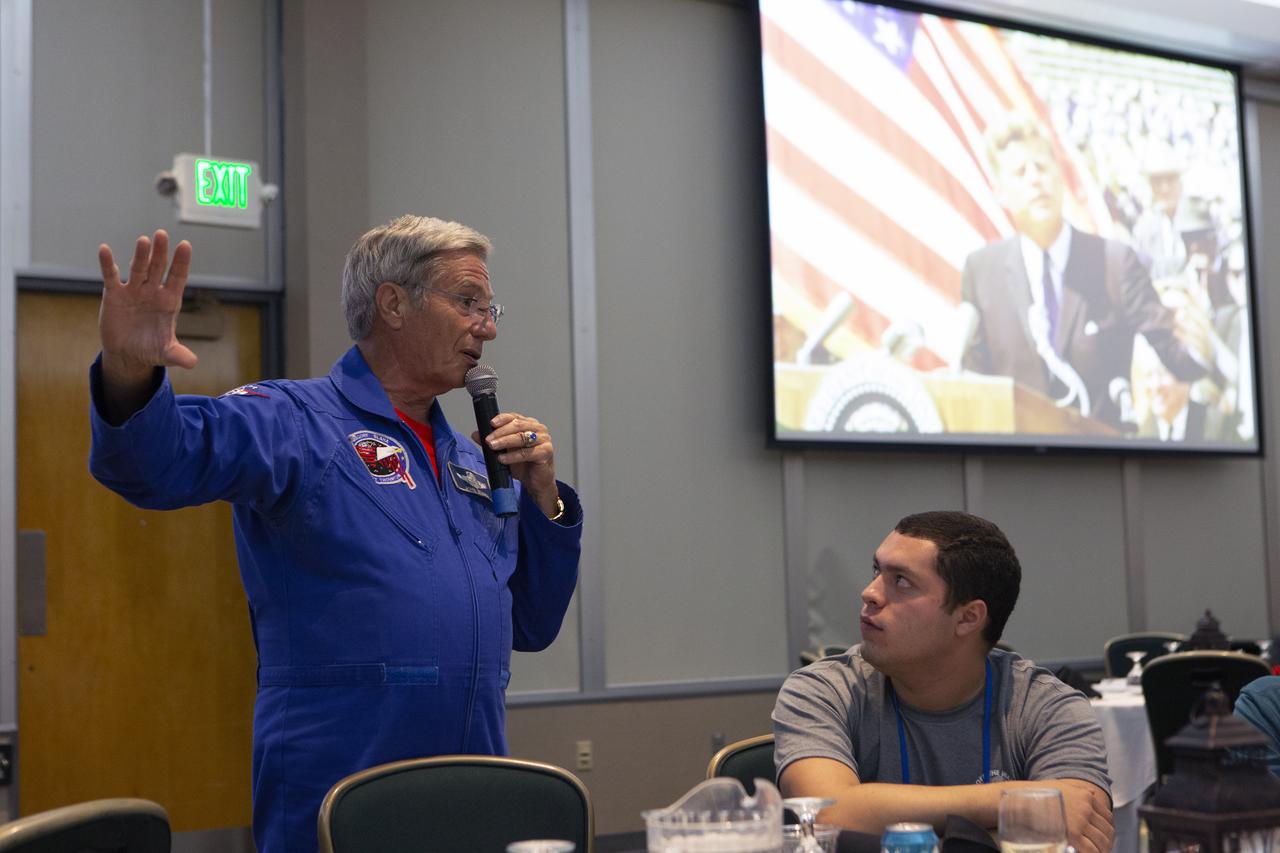
Retired NASA astronaut John Blaha talks to Swarmathon University Challenge students and their mentors during a Dine with an Astronaut event at the Kennedy Space Center Visitor Complex in Florida on June 12, 2019. Students and mentors from some of the Swarmathon teams were at Kennedy to participate in a student/mentor panel, hear from speakers, get a behind-the-scenes tour of Kennedy Space Center, dine with an astronaut and receive awards. For the challenge, university students developed algorithms for robotic swarms that are robust and adaptable like the foraging strategies of ant colonies. The fourth and final Swarmathon challenge was a combined virtual and physical competition hosted by the University of New Mexico.
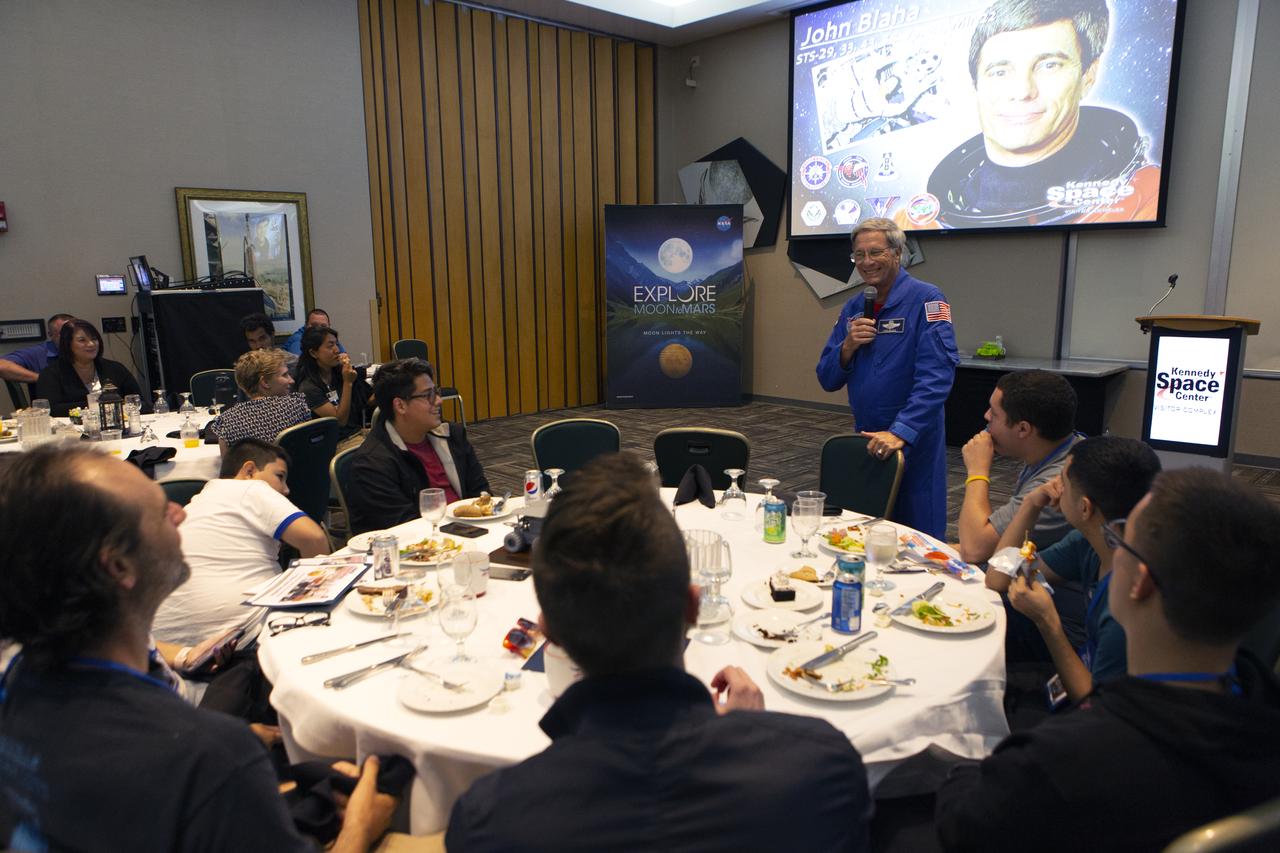
Retired NASA astronaut John Blaha talks to Swarmathon University Challenge students and their mentors during a Dine with an Astronaut event at the Kennedy Space Center Visitor Complex in Florida on June 12, 2019. Students and mentors from some of the Swarmathon teams were at Kennedy to participate in a student/mentor panel, hear from speakers, get a behind-the-scenes tour of Kennedy Space Center, dine with an astronaut and receive awards. For the challenge, university students developed algorithms for robotic swarms that are robust and adaptable like the foraging strategies of ant colonies. The fourth and final Swarmathon challenge was a combined virtual and physical competition hosted by the University of New Mexico.
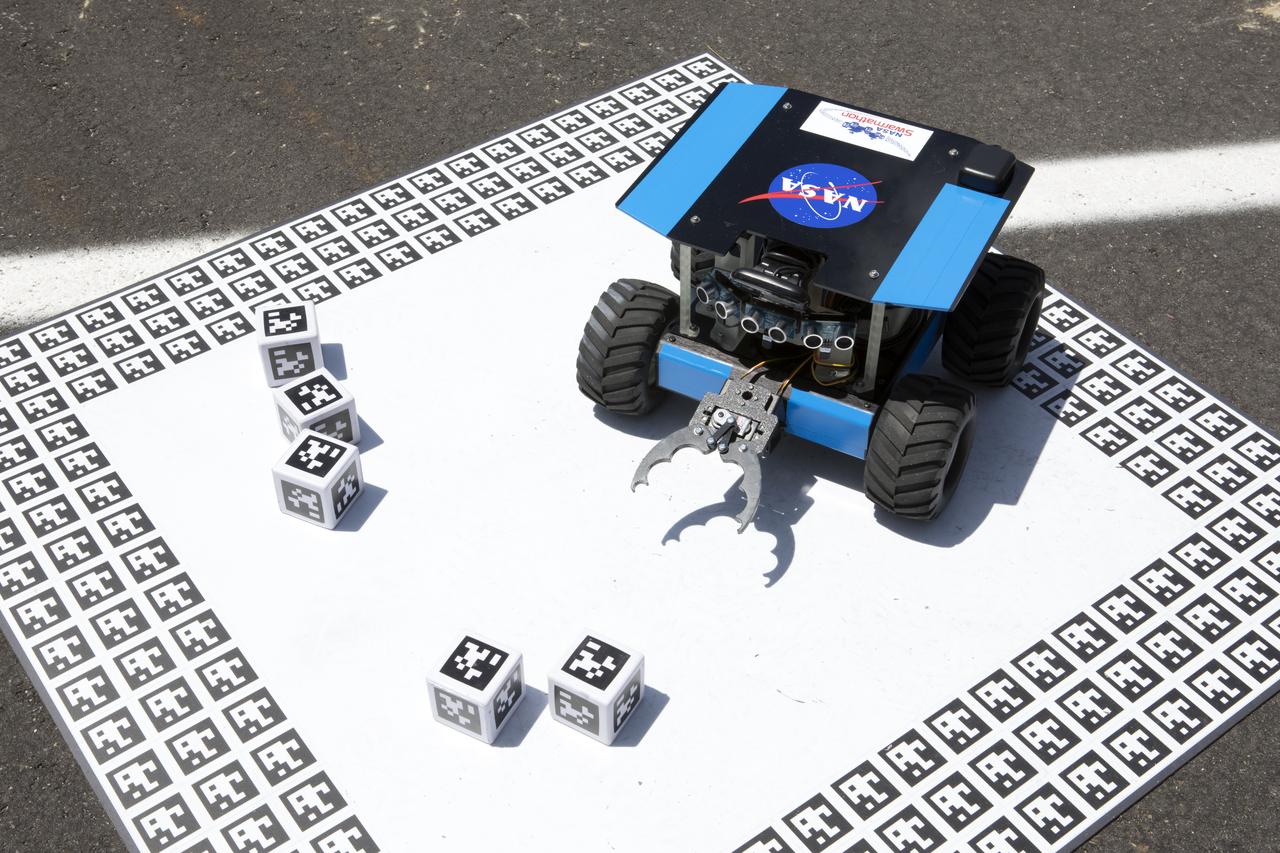
A cube identified with an AprilTag, similar to a barcode, is delivered to a "home" square in the middle of a competition arena during the Swarmathon competition. At the Kennedy Space Center Visitor Complex, student teams developed search algorithms for the Swarmies to operate autonomously, communicating and interacting as a collective swarm similar to ants foraging for food.
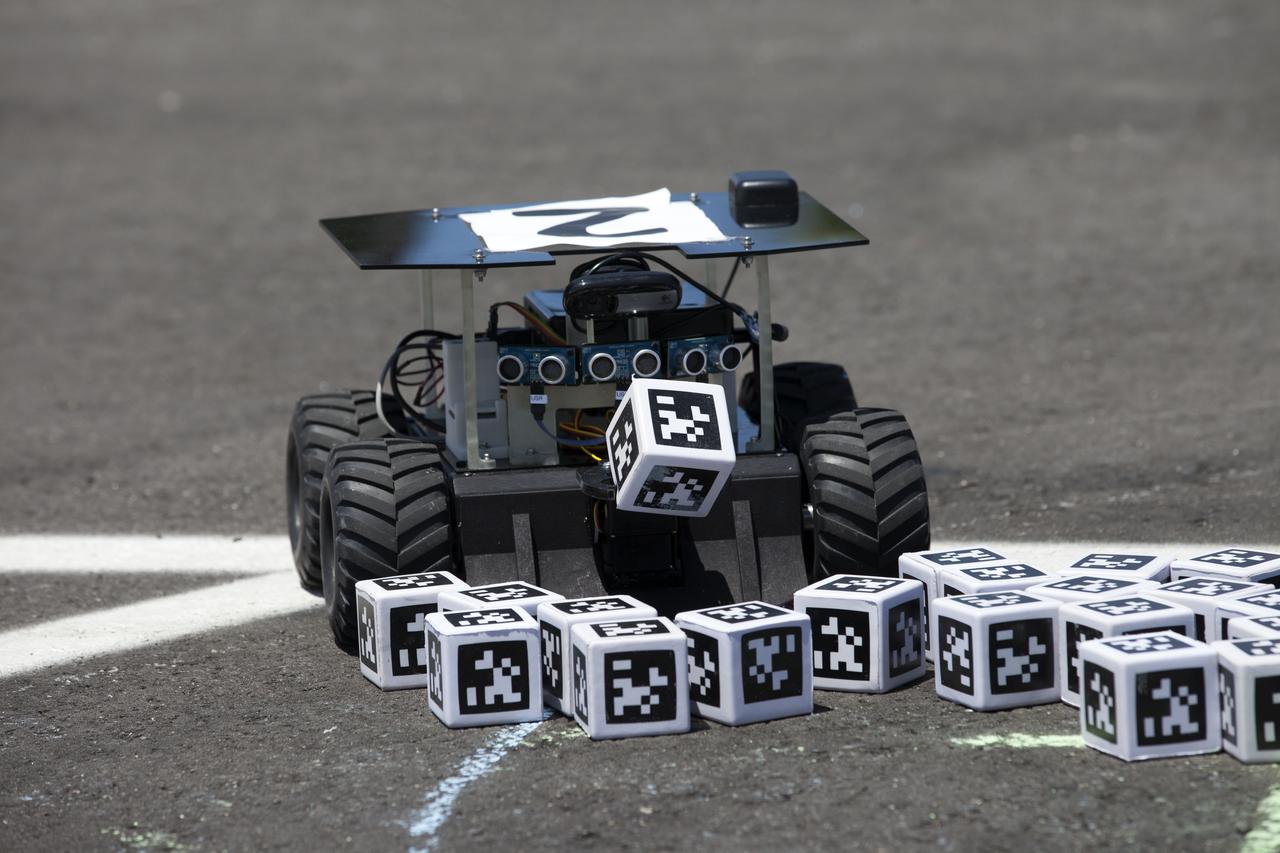
A Swarmie robot finds a "resource" cube marked with an AprilTag, similar to a barcode. In the Swarmathon competition at the Kennedy Space Center Visitor Complex, students were asked to develop computer code for the small robots, programming them to look for "resources" in the form of cubes with AprilTags.
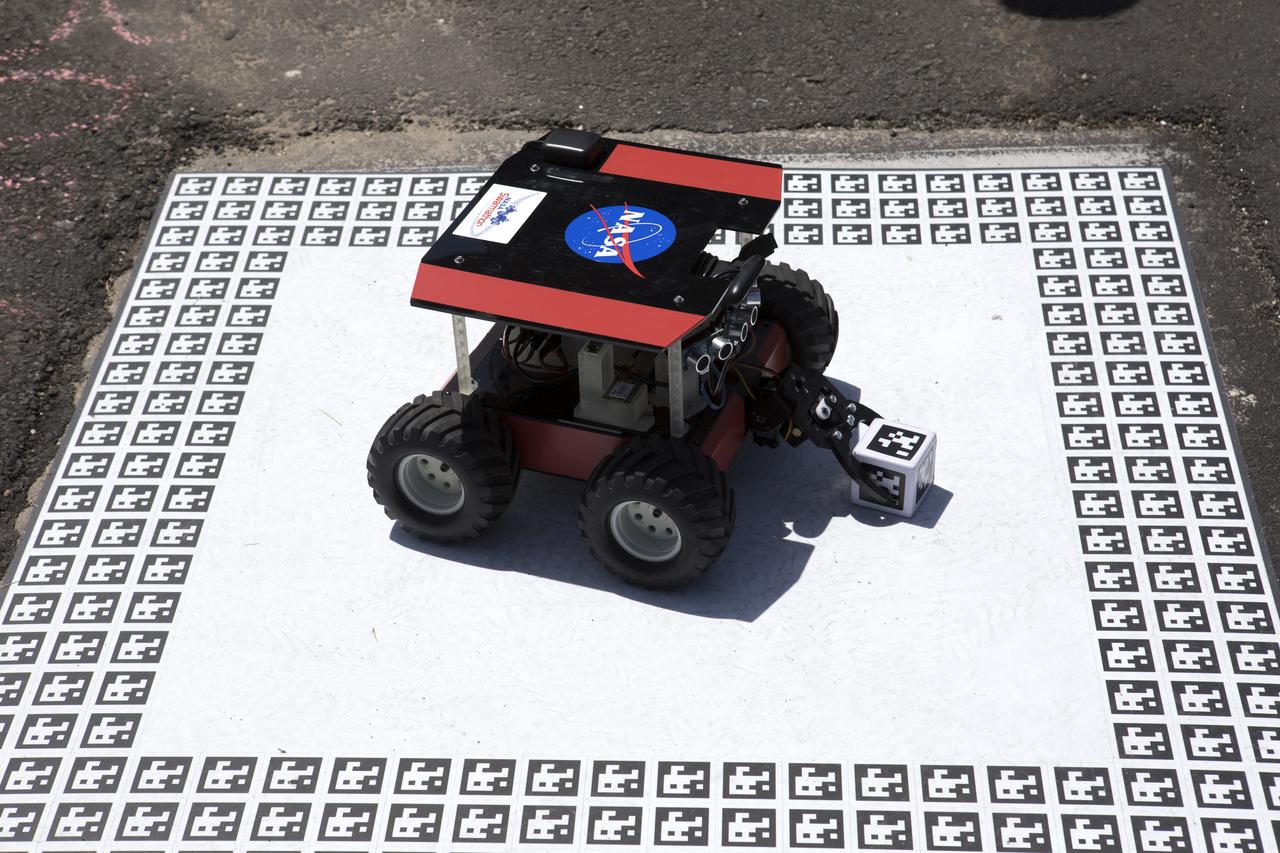
A cube identified with an AprilTag, similar to a barcode, is delivered to a "home" square in the middle of a competition arena during the Swarmathon competition. At the Kennedy Space Center Visitor Complex, student teams developed search algorithms for the Swarmies to operate autonomously, communicating and interacting as a collective swarm similar to ants foraging for food.
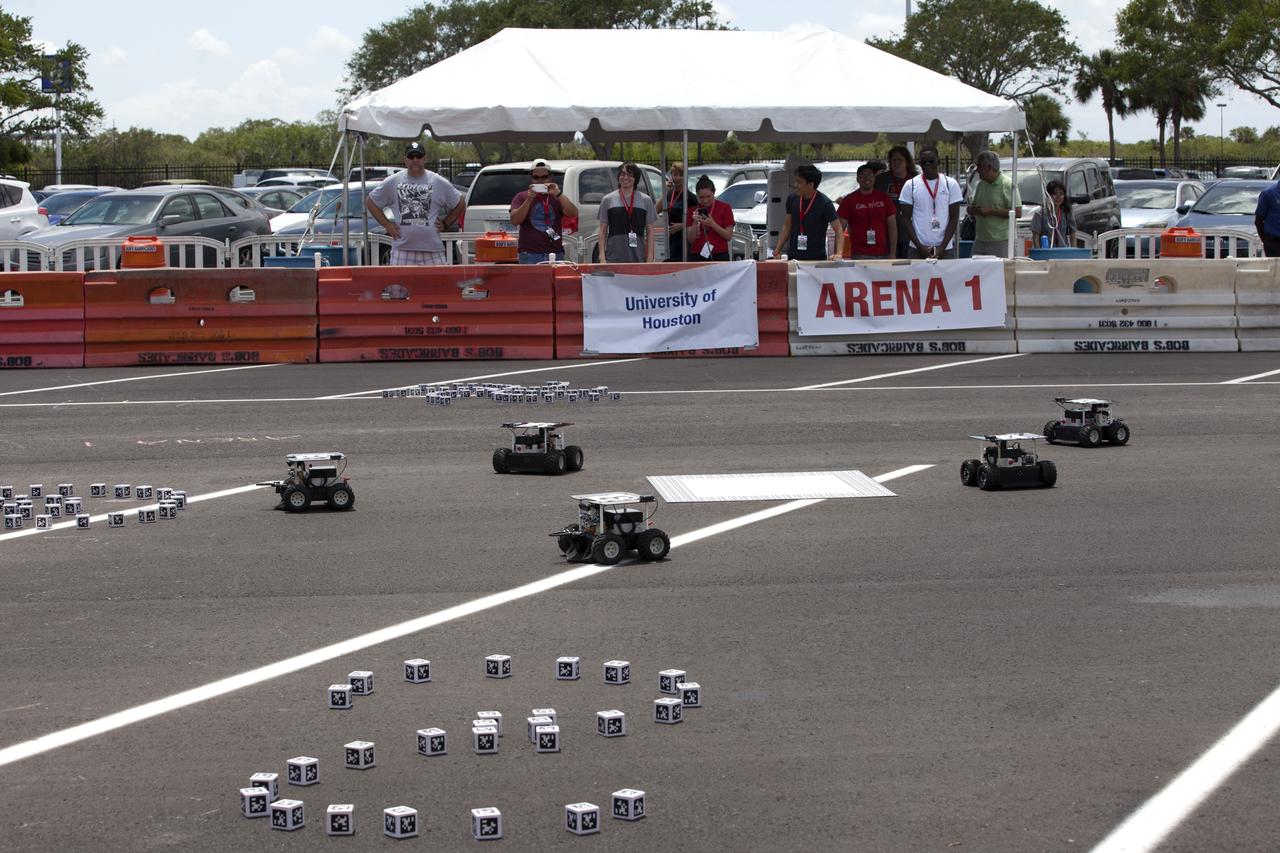
In the Swarmathon competition at the Kennedy Space Center Visitor Complex, students were asked to develop computer code for the small robots, programming them to look for "resources" in the form of cubes with AprilTags, similar to barcodes. Teams developed search algorithms for innovative robots known as "Swarmies" to operate autonomously, communicating and interacting as a collective swarm similar to ants foraging for food. In the spaceport's second annual Swarmathon, 20 teams representing 22 minority serving universities and community colleges were invited to participate. Similar robots could help find resources when astronauts explore distant locations, such as the moon or Mars.
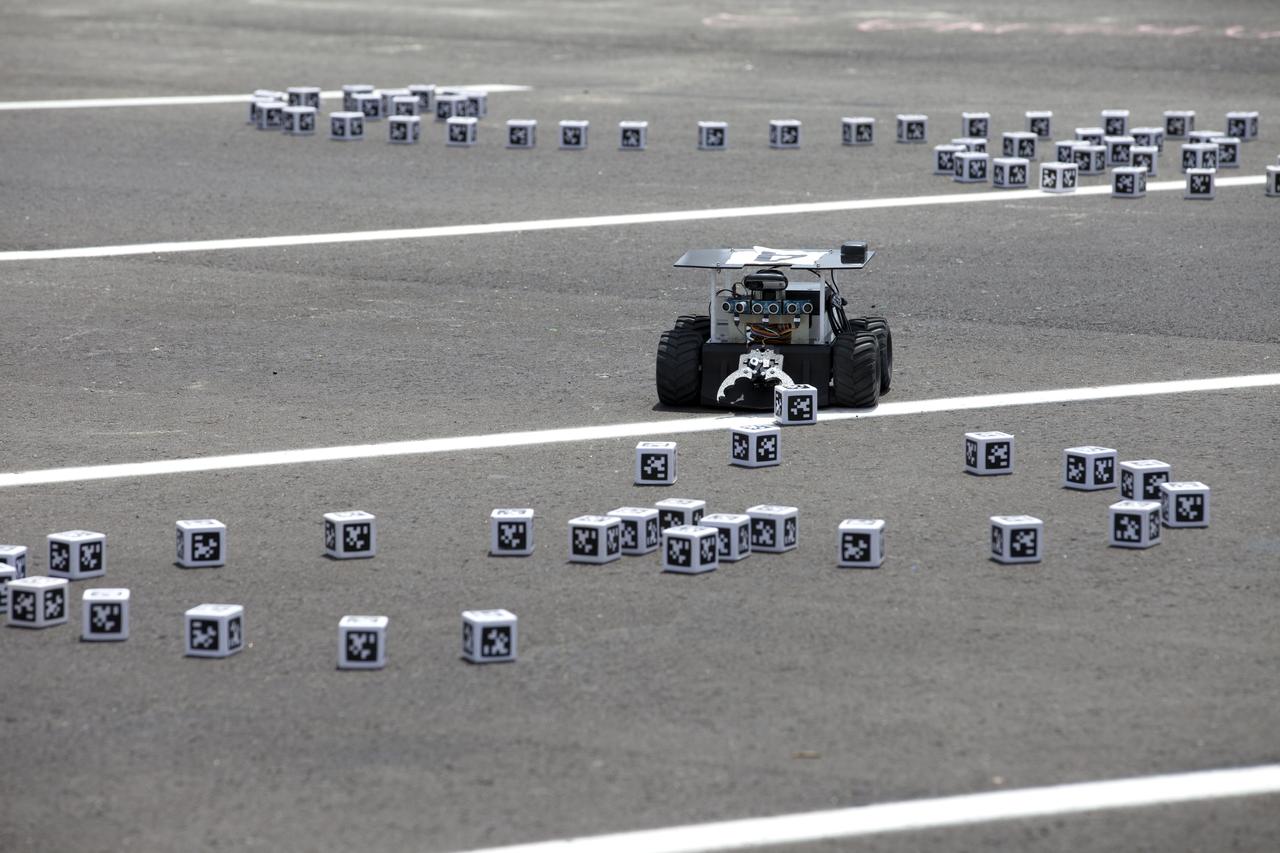
In the Swarmathon competition at the Kennedy Space Center Visitor Complex, students were asked to develop computer code for the small robots, programming them to look for "resources" in the form of cubes with AprilTags, similar to barcodes. Teams developed search algorithms for innovative robots known as "Swarmies" to operate autonomously, communicating and interacting as a collective swarm similar to ants foraging for food. In the spaceport's second annual Swarmathon, 20 teams representing 22 minority serving universities and community colleges were invited to participate. Similar robots could help find resources when astronauts explore distant locations, such as the moon or Mars.
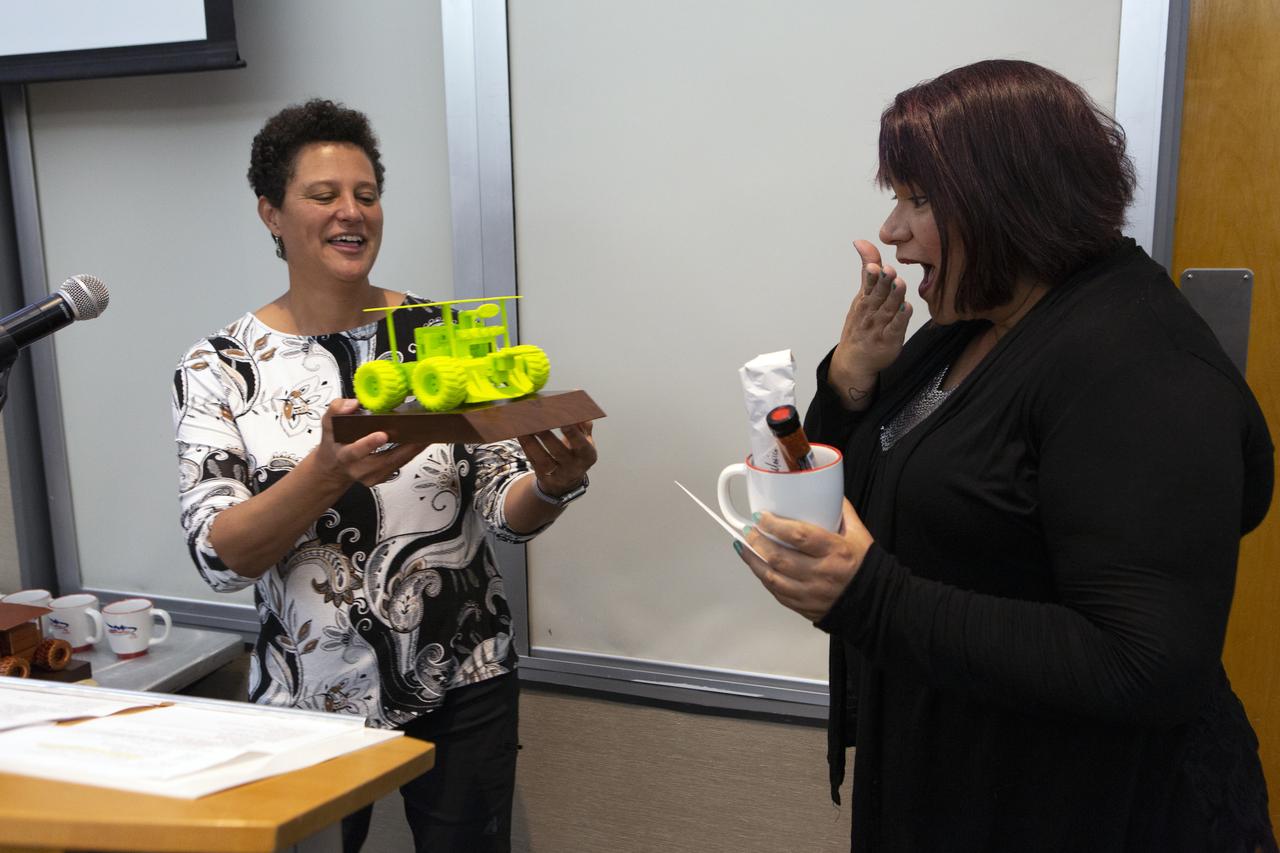
Melanie Moses, a professor of computer science at the University of New Mexico, presents a small replica of a Swarmie robot to Theresa Martinez, engagement manager of the Minority University Research and Education Program, during an awards ceremony at the Kennedy Space Center Visitor Complex in Florida on June 12, 2019. Swarmathon University Competition students and their mentors were at Kennedy to participate in a student/mentor panel, hear from speakers, get a behind-the-scenes tour of Kennedy Space Center, dine with an astronaut and receive awards. During Swarmathon University Challenge IV, students developed algorithms for robotic swarms that are robust and adaptable like the foraging strategies of ant colonies. The fourth and final Swarmathon was a combined virtual and physical competition, hosted by the University of New Mexico.
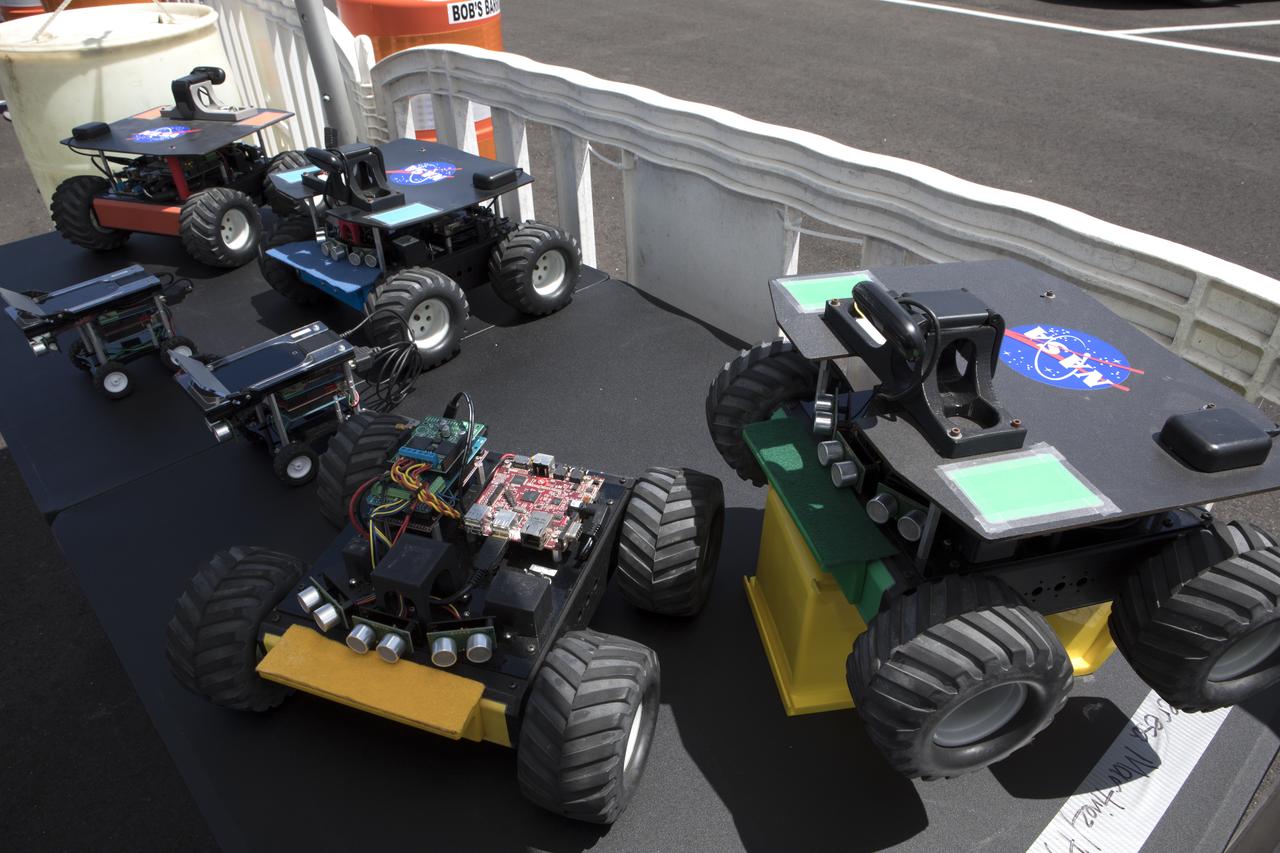
A display at the Kennedy Space Center Visitor Complex describes the purpose of Swarmies. Computer scientists are developing these robots focusing not so much on the hardware, but the software. In the spaceport's annual Swarmathon, students from 12 colleges and universities across the nation were invited to develop software code to operate Swarmies to help find resources when astronauts explore distant planets, such as Mars.
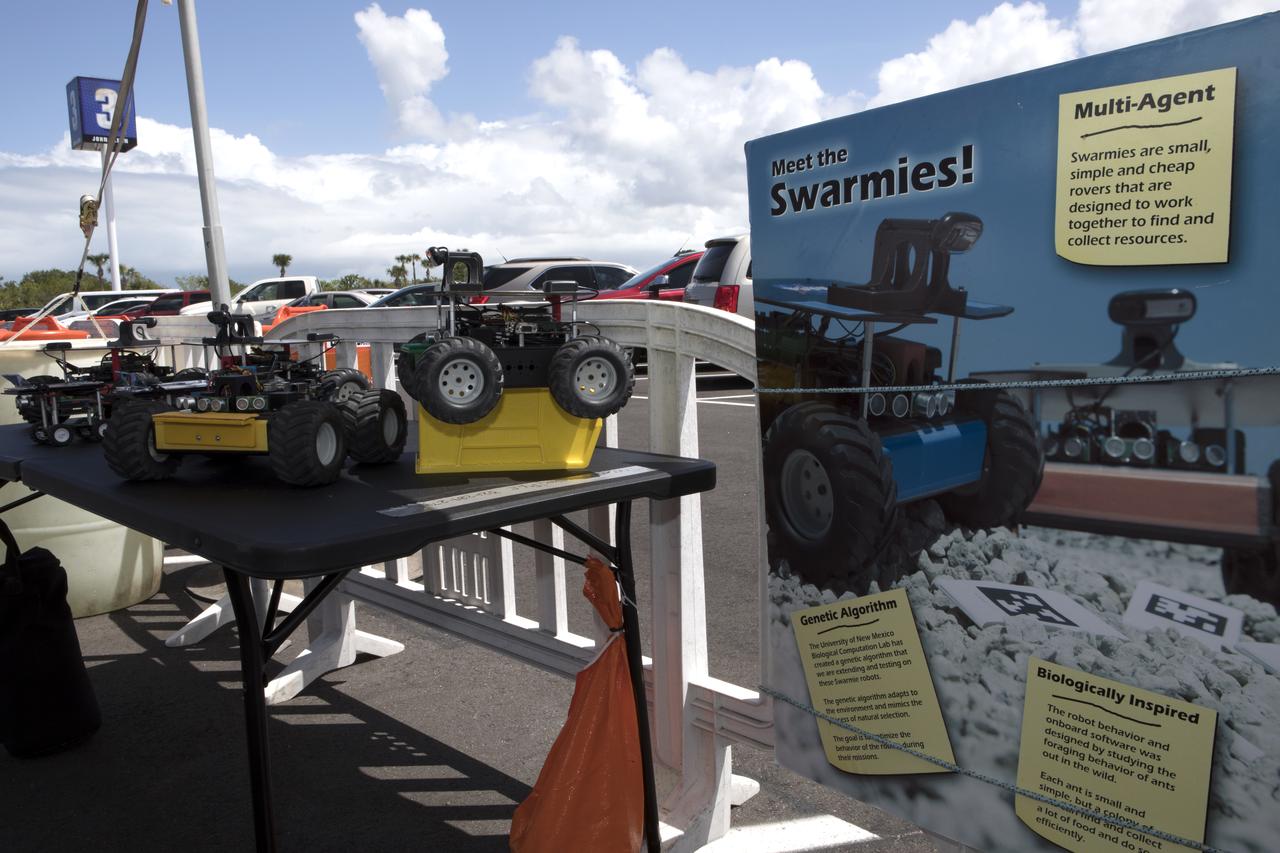
A display at the Kennedy Space Center Visitor Complex describes the purpose of Swarmies. Computer scientists are developing these robots focusing not so much on the hardware, but the software. In the spaceport's annual Swarmathon, students from 12 colleges and universities across the nation were invited to develop software code to operate Swarmies to help find resources when astronauts explore distant planets, such as Mars.
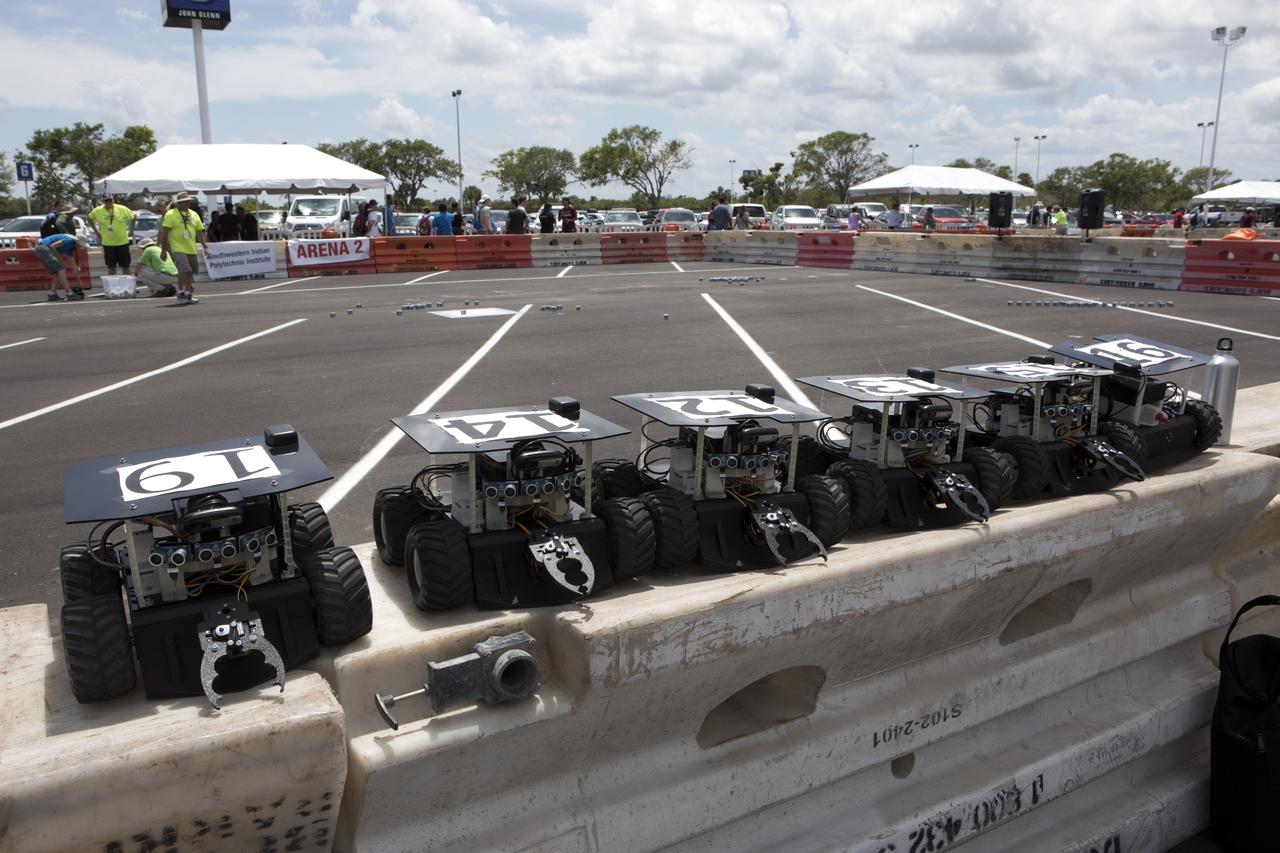
In the Swarmathon competition at the Kennedy Space Center Visitor Complex, students were asked to develop computer code for the small robots, programming them to look for "resources" in the form of cubes with AprilTags, similar to barcodes. Teams developed search algorithms for the Swarmies to operate autonomously, communicating and interacting as a collective swarm similar to ants foraging for food.
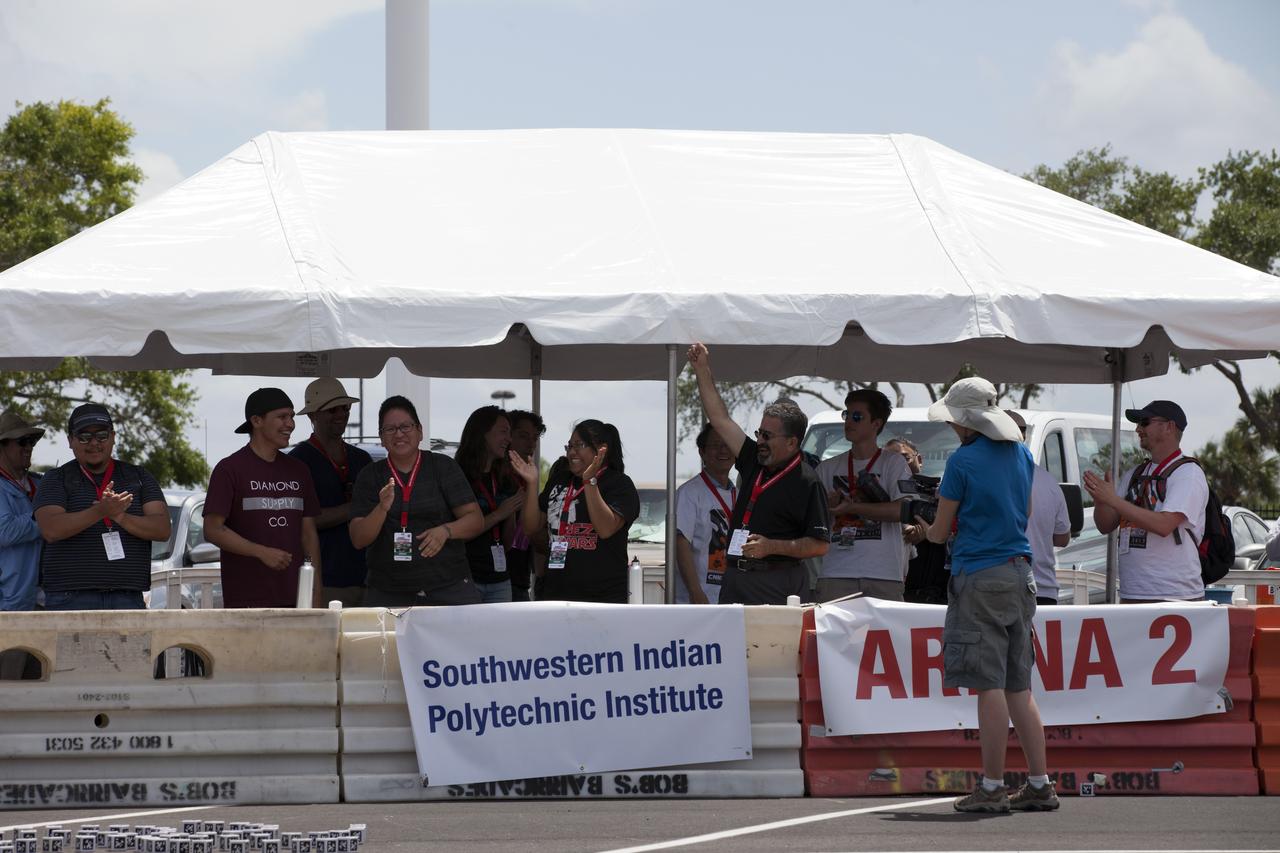
Students from Southwestern Indian Polytechnic Institute in Albuquerque, New Mexico, celebrate having captured first place and a $5,000 cash prize in the 2017 Swarmathon. The event at the Kennedy Space Center Visitor Complex may lead to developing technology that could revolutionize space exploration by more effectively and efficiently locating hidden resources while astronauts explore distant destinations.
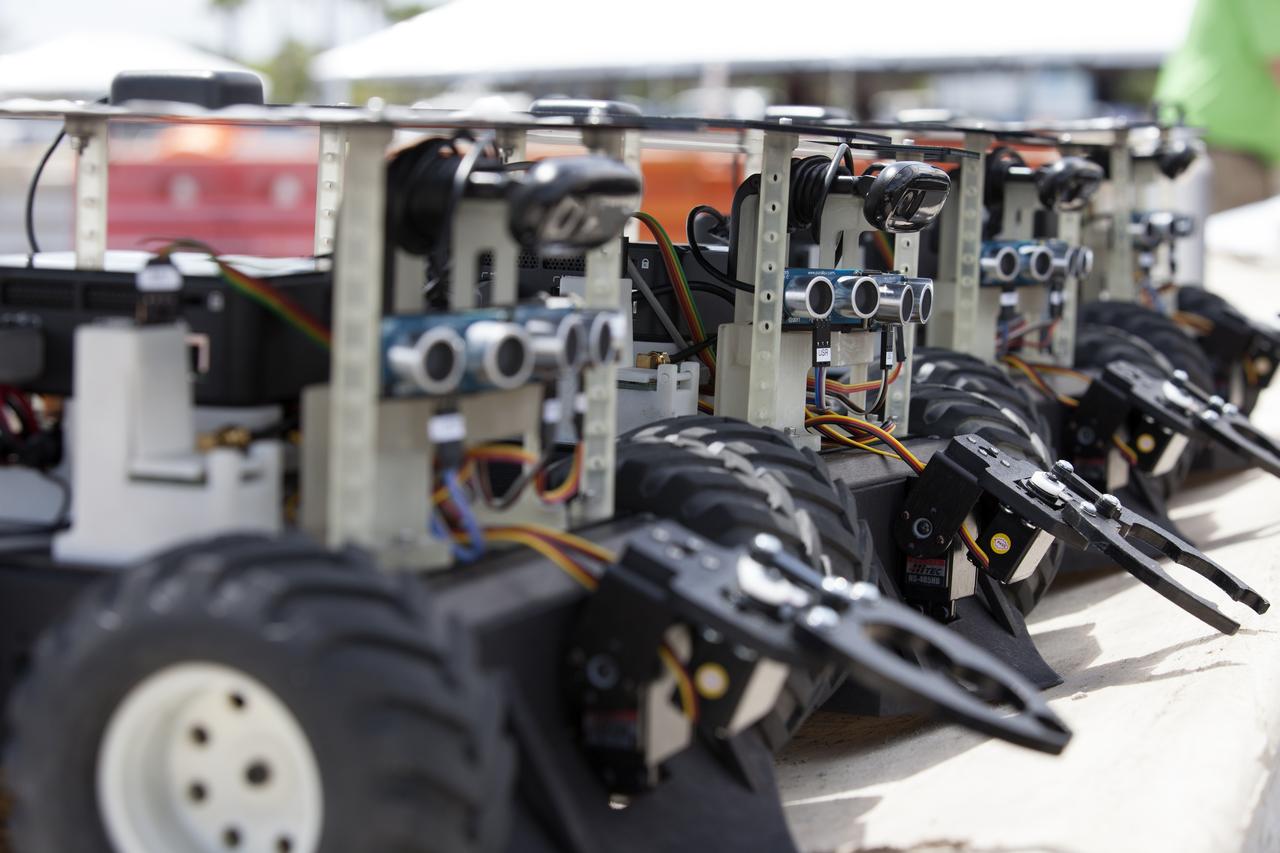
This close-up shows Swarmie robots that were programmed with computer code by college and university students. During the Swarmathon competition at the Kennedy Space Center Visitor Complex, the small robots looked for "resources" in the form of cubes with AprilTags, similar to barcodes. Similar robots could help find resources when astronauts explore distant locations, such as the moon or Mars.
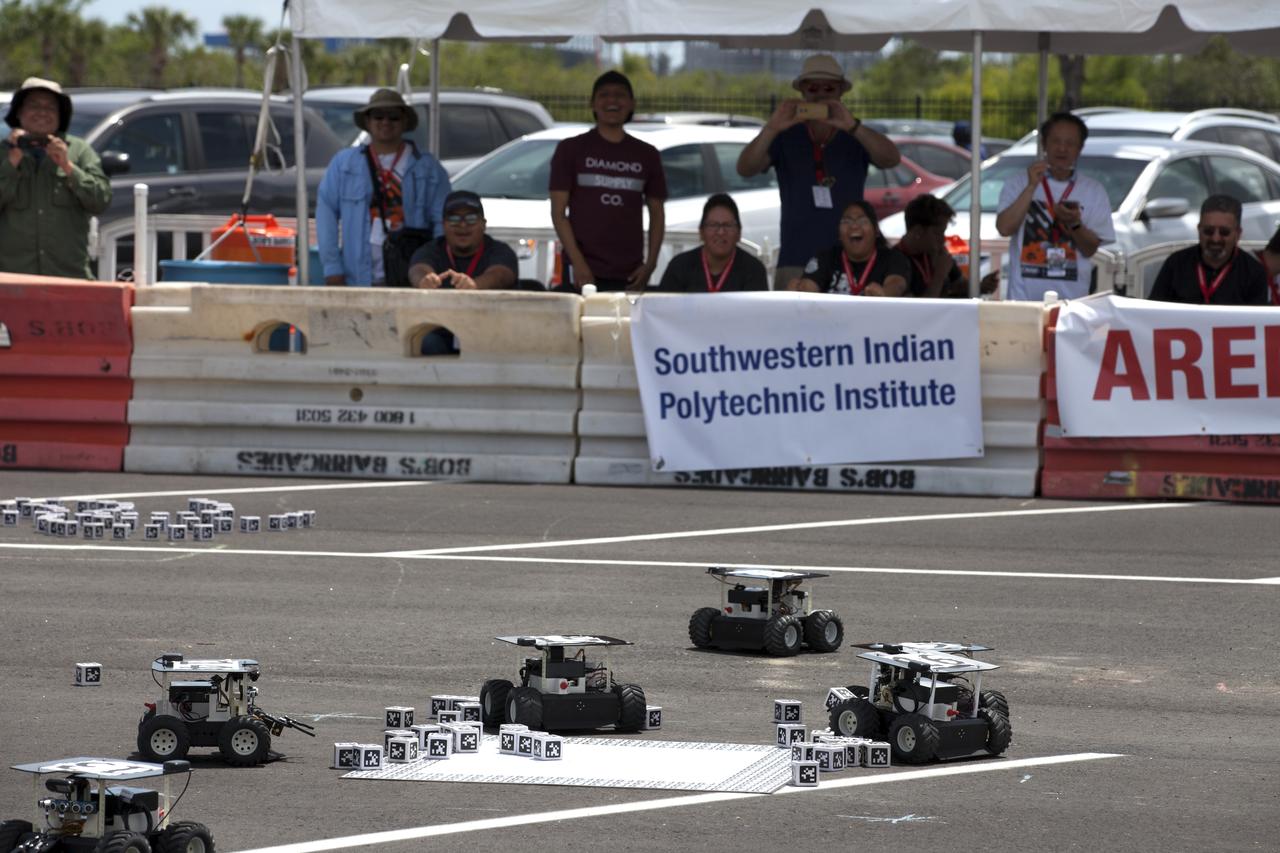
During the final round of the Swarmathon competition at the Kennedy Space Center Visitor Complex, Students from Southwestern Indian Polytechnic Institute (SIPI) in Albuquerque, New Mexico, watch their robots as they look for cubes identified by their AprilTags, similar to a barcodes. The Swarmies were programed to deliver the cubes to a "home" square in the middle of a competition arena. SIPI captured first place in the competition winning a $5,000 cash prize.
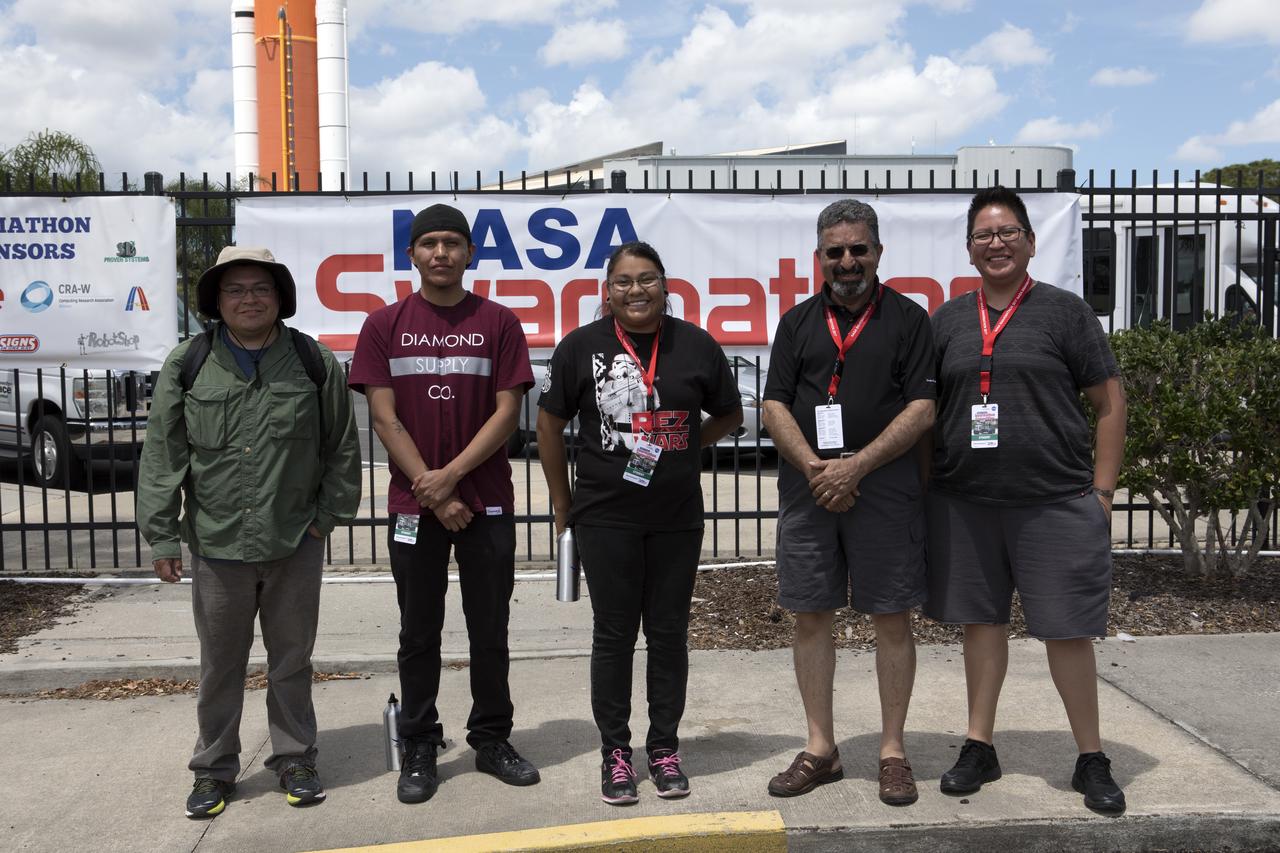
In the second annual Swarmathon competition at NASA's Kennedy Space Center in Florida, students were asked to develop computer code for the small robots called "Swarmies." The students programmed the robots to look for "resources" in the form of cubes with AprilTags, similar to barcodes. A team from Southwestern Indian Polytechnic Institute (SIPI) in Albuquerque, New Mexico, captured first place and a $5,000 cash prize. SIPI team members, from the left, are: students Emery Sutherland, Ty Shurley, Christian Martinez, SIPI engineering professor Dr. Nader Vadiee who was the team's faculty advisor, and student Schulte Cooke.
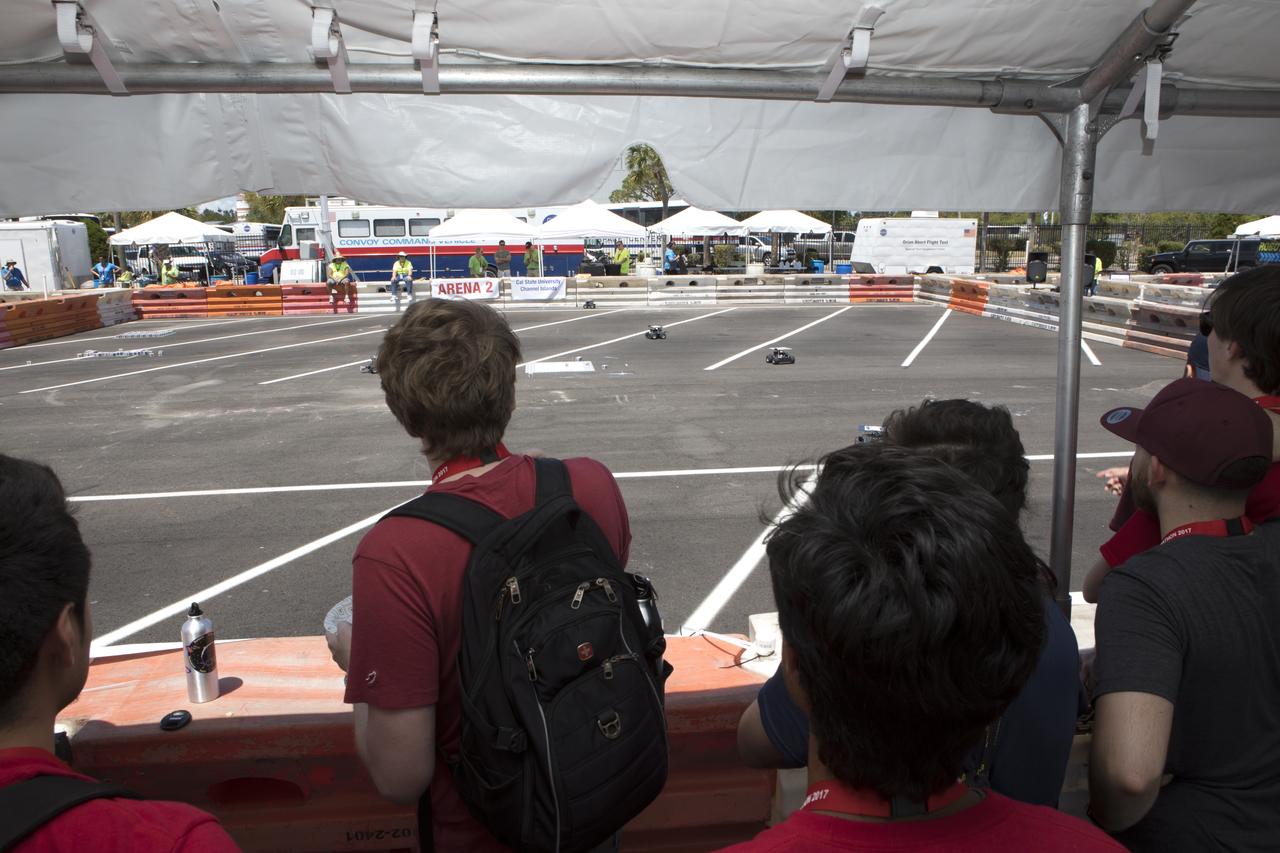
At the Kennedy Space Center Visitor Complex, students monitor progress as their Swarmie robots as they search for "resources." The goal is for the robots to pick up cubes with AprilTags, which are similar to bar codes. The Swarmies then move the cubes to a white square in the center of the completion arena. The small, four-wheeled robots are designed to effectively and efficiently locate hidden resources while astronauts explore distant destinations such as the moon or Mars.
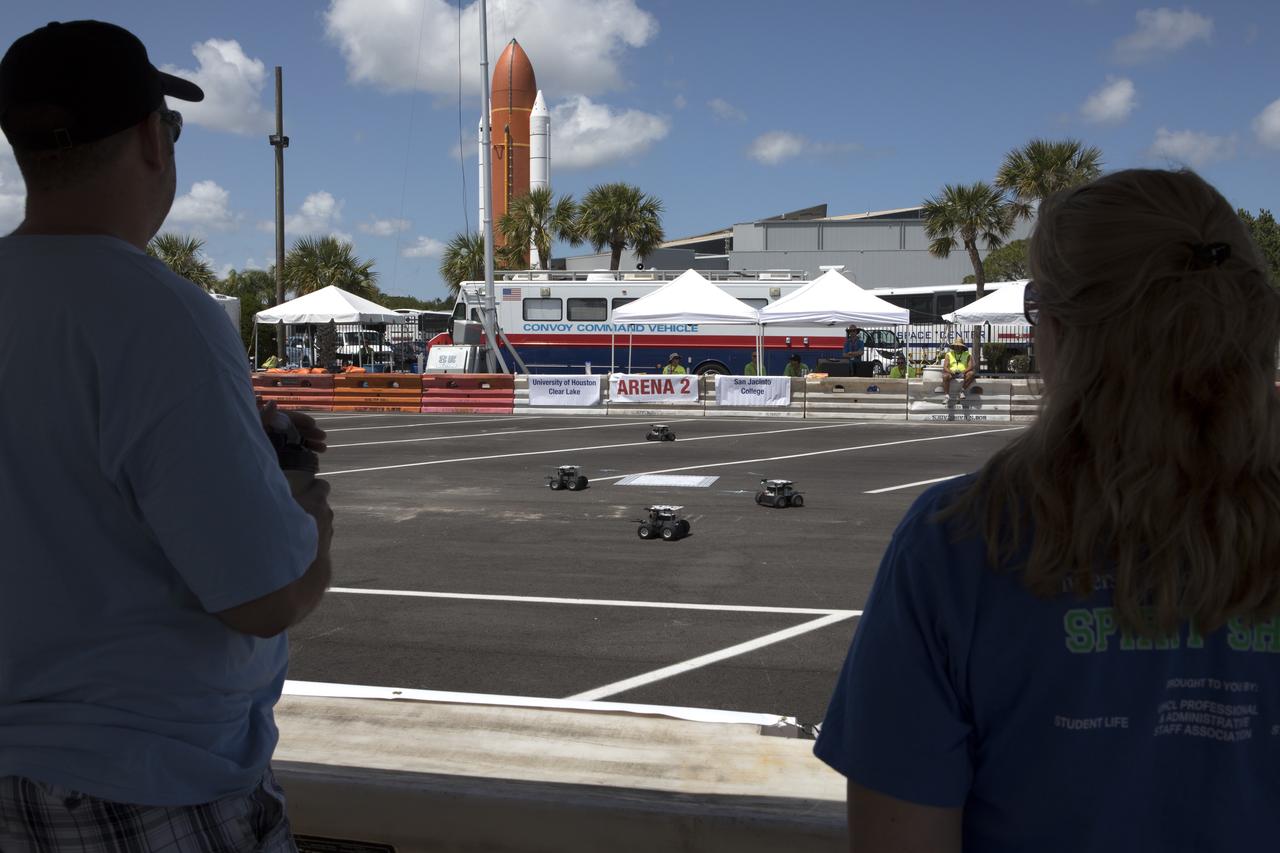
At the Kennedy Space Center Visitor Complex, students monitor progress as their Swarmie robots as they search for "resources." The goal is for the robots to pick up cubes with AprilTags, which are similar to bar codes. The Swarmies then move the cubes to a white square in the center of the completion arena. The small, four-wheeled robots are designed to effectively and efficiently locate hidden resources while astronauts explore distant destinations such as the moon or Mars.