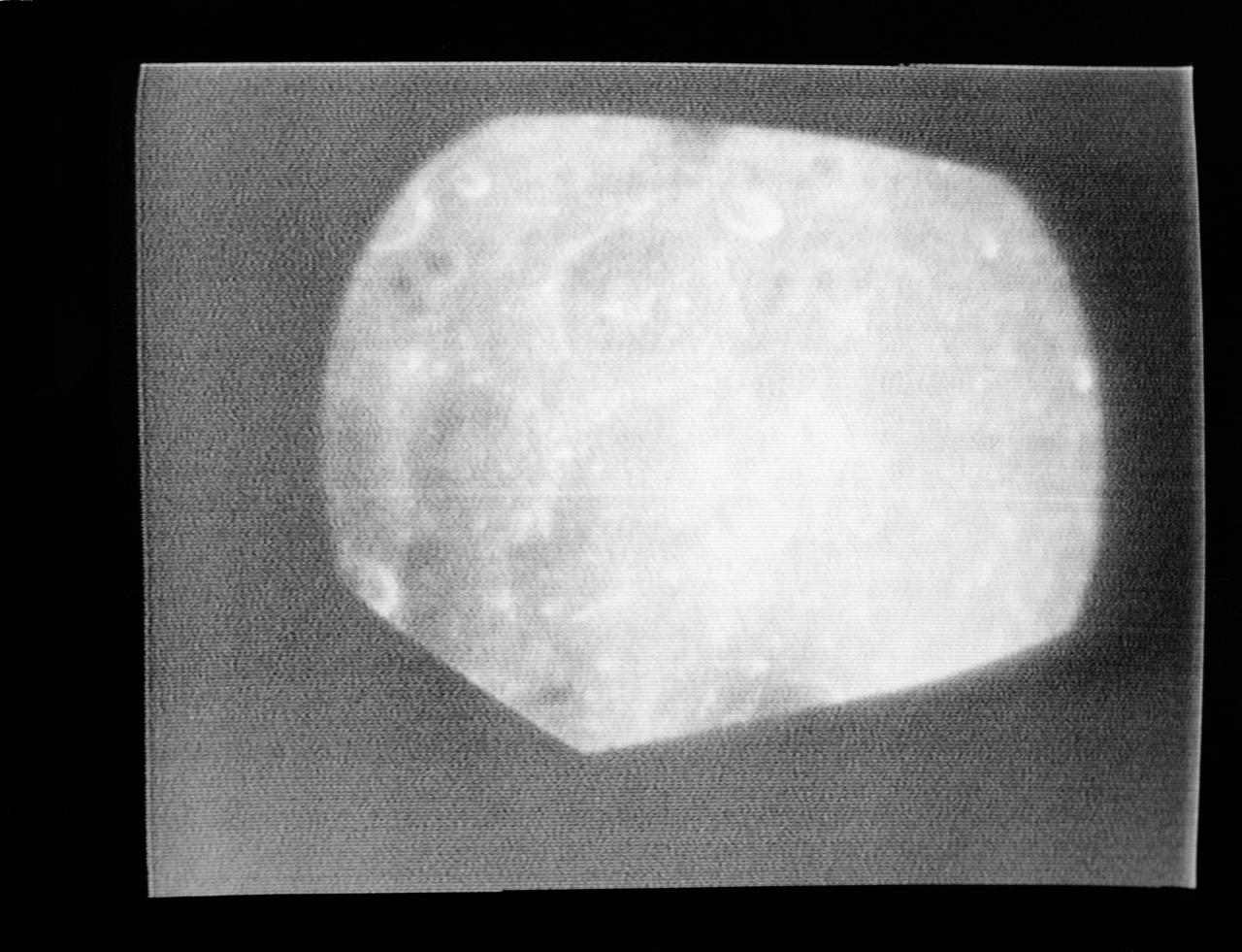
S68-55816 (24 Dec. 1968) --- This is how the surface of the moon looked from an altitude of approximately 60 miles as photographed by a television camera aboard the Apollo 8 spacecraft. This is Apollo 8's third live television transmission back to Earth. At the time this picture was made, the Apollo 8 spacecraft, with astronauts Frank Borman, James A. Lovell Jr., and William A. Anders aboard, was making its second revolution of the moon.

S73-34172 (August 1973) --- Scientist-astronaut Owen K. Garriott, Skylab 3 science pilot, watches a drink container spinning and tumbling in zero-gravity during a science demonstration television transmission from the Skylab space station in Earth orbit. Garriott is in the Orbital Workshop (OWS). Photo credit: NASA
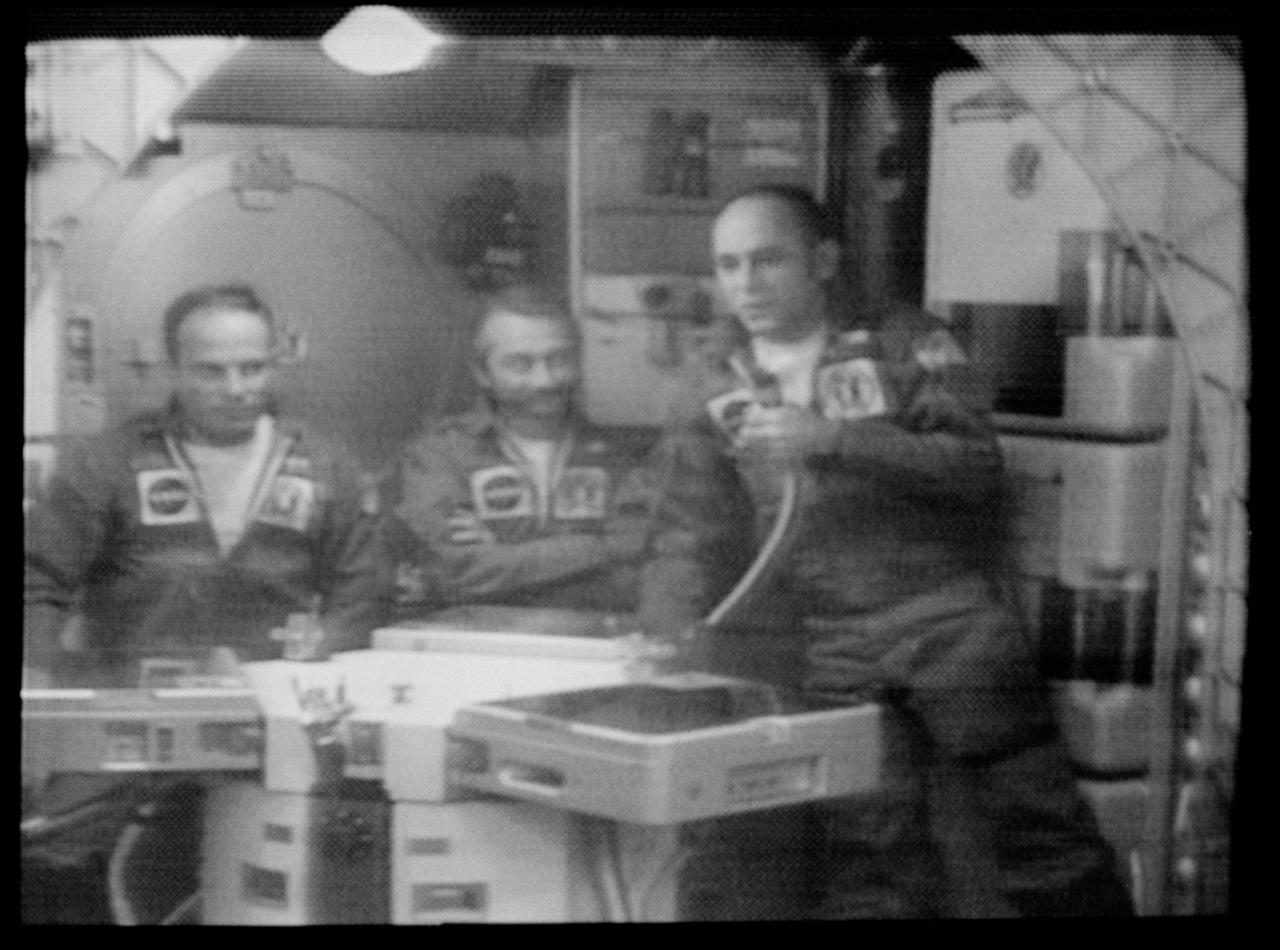
S73-34339 (21 Sept. 1973) --- Astronaut Alan L. Bean, right, Skylab 3 commander, answers a question during the Sept. 21, 1973 press conference from the Skylab space station in Earth orbit. This is a black and white reproduction taken from a television transmission made by a TV camera aboard the Skylab space station. Scientist-astronaut Owen K. Garriott, center, science pilot; and astronaut Jack R. Lousma, left, pilot, await queries from newsmen on the ground to be sent up by scientist-astronaut Story Musgrave, CAPCOM for this shift of Skylab 3. Photo credit: NASA
S73-34207 (28 Aug. 1973) --- Astronaut Alan L. Bean, Skylab 3 commander, flies the M509 astronaut Maneuvering Equipment, as seen in this photographic reproduction taken from a television transmission made by a color television camera in the Orbital Workshop (OWS) of the Skylab space station in Earth orbit. Bean is strapped into the back-mounted, hand-controlled Automatically Stabilized Maneuvering Unit (ASMU). The M509 exercise was in the forward dome area of the OWS. The dome area is about 22 feet in diameter and 19 feet from top to bottom. Photo credit: NASA
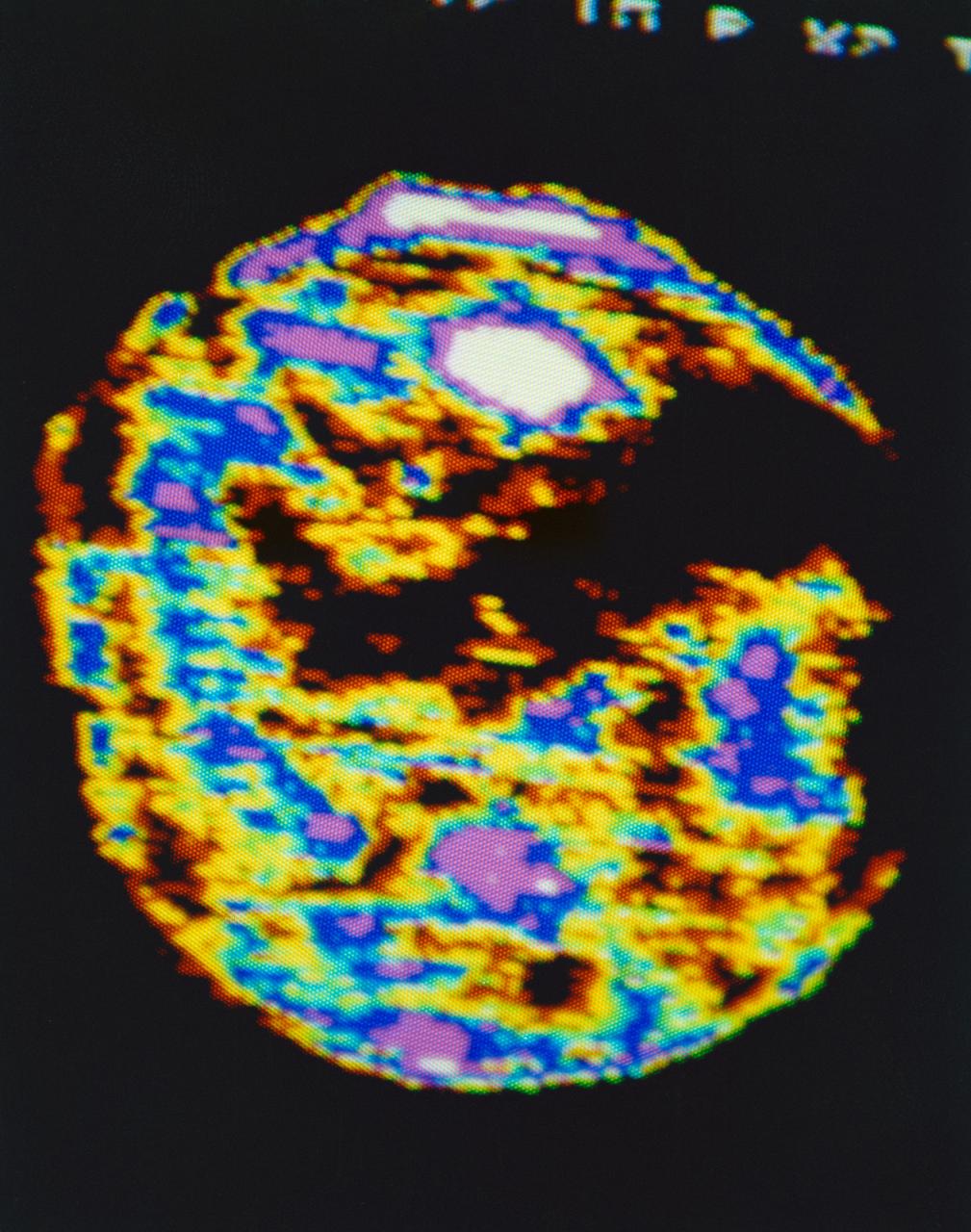
S73-32883 (20 Aug. 1973) --- This false color isophote, processed from an Aug. 20, 1973 television transmission of Apollo Telescope Mount (ATM) experiments from Skylab 3, dramatically reveals a significant change in the coronal hole as compared to the previous day. Solar rotation accounts for the new location of the coronal hole. Photo credit: NASA
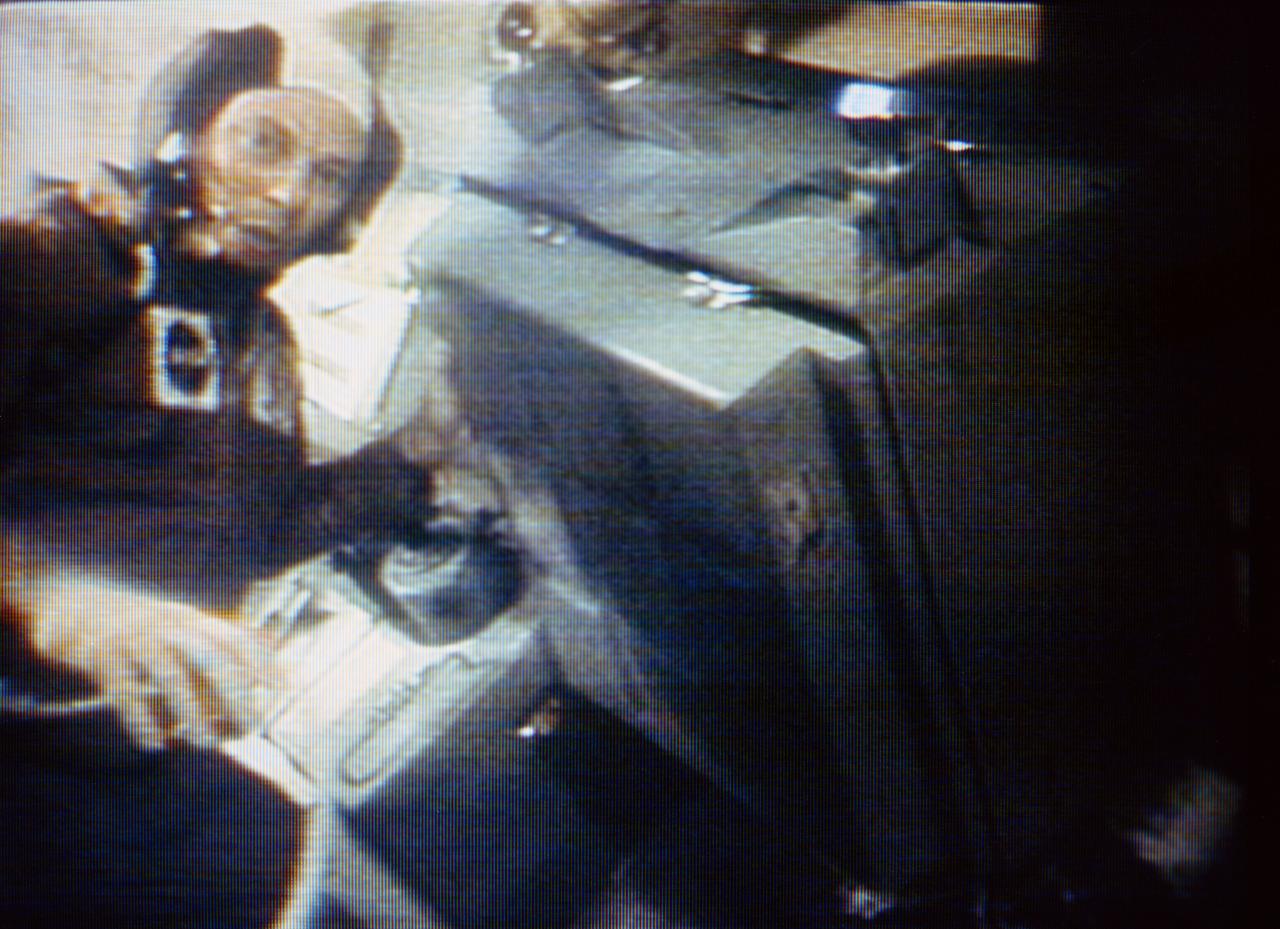
S73-34181 (July-September 1973) --- Astronaut Jack R. Lousma, Skylab 3 pilot, works at the S190A multispectral camera experiment in the Multiple Docking Adapter (MDA), seen from a color television transmission made by a TV camera aboard the Skylab space station cluster in Earth orbit. Lousma later used a small brush to clean the six lenses of the multispectral camera. Photo credit: NASA
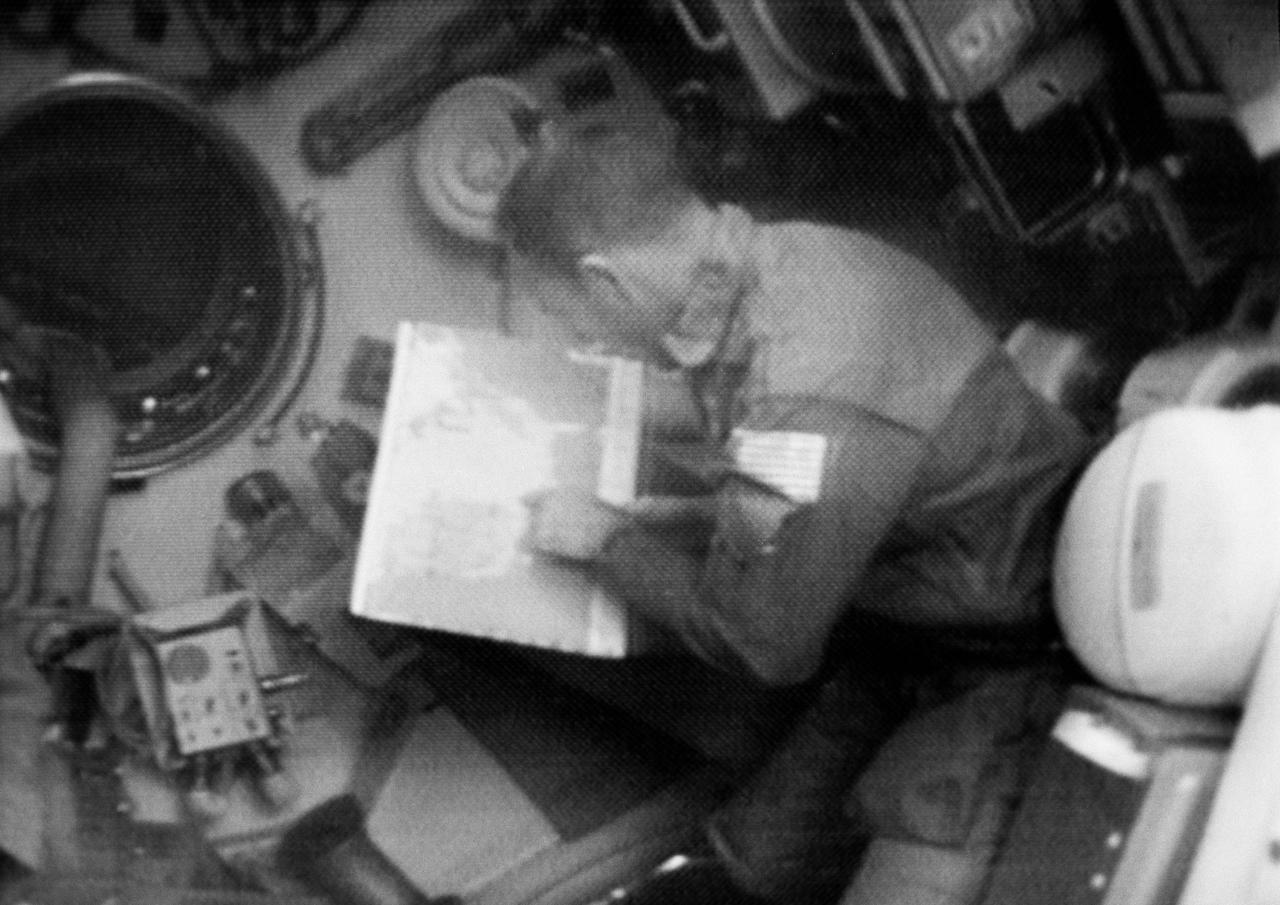
S73-31845 (3 Aug. 1973) --- Astronaut Jack R. Lousma, Skylab 3 pilot, studies a map of the U.S. during a Skylab EREP pass across the United States, as seen in this photographic reproduction taken from a television transmission made by a color TV camera aboard the Skylab space station in Earth orbit. EREP is an acronym for Earth Resources Experiments Package. Photo credit: NASA
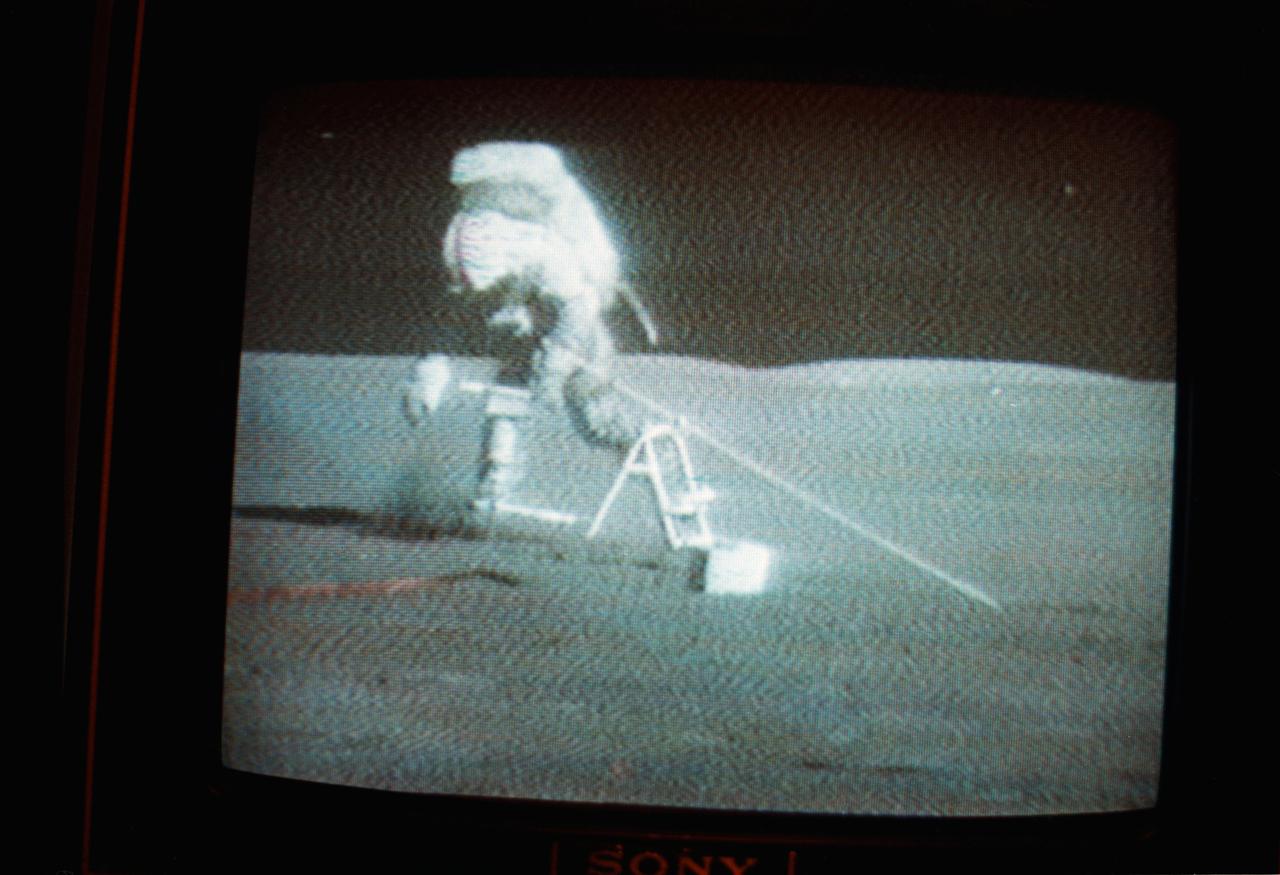
S71-41501 (1 Aug. 1971) --- Astronaut David R. Scott, Apollo 15 commander, is seen carrying the Apollo Lunar Surface Drill (ALSD) during the second lunar surface extravehicular activity (EVA) in this black and white reproduction taken from a color transmission made by the RCA color television camera mounted on the Lunar Roving Vehicle (LRV). This transmission was the fourth made during the mission.

S71-20784 (5 Feb. 1971) --- Astronaut Alan B. Shepard Jr., Apollo 14 commander, can be seen preparing to swing at a golf ball during a television transmission near the close of the second Extravehicular Activity (EVA-2) at the Apollo 14 Fra Mauro landing site. Shepard is using a real golf ball and an actual six iron, attached to the end of the handle for the contingency sample return. Astronaut Edgar D. Mitchell, lunar module pilot, looks on. Also visible in the picture is the erectable S-Band antenna (left foreground). Astronaut Stuart A. Roosa, command module pilot, remained with the Command and Service Modules (CSM) in lunar orbit, while Shepard and Mitchell descended in the Lunar Module (LM) to explore the moon. Photo credit: NASA or National Aeronautics and Space Administration
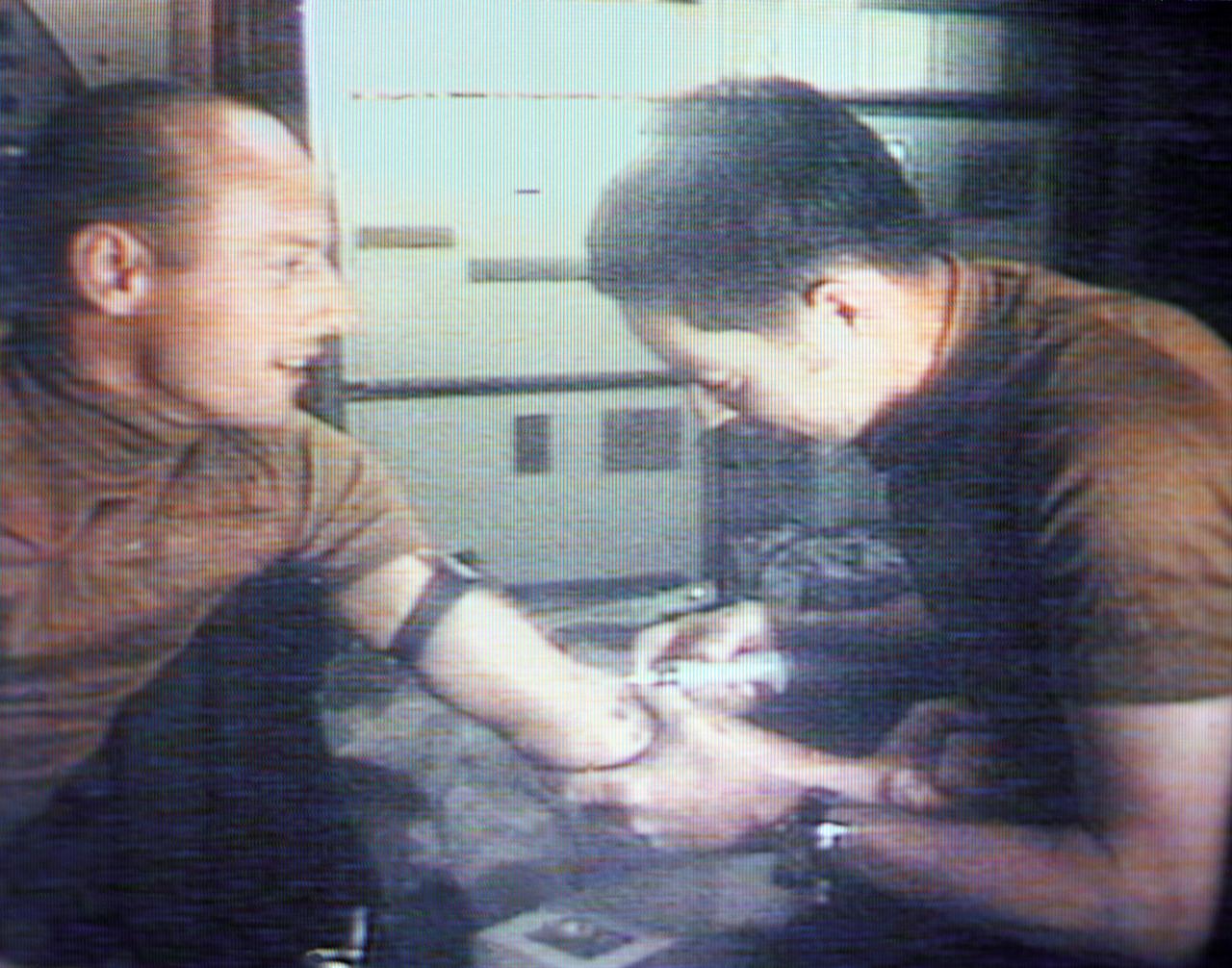
S73-27509 (6 June 1973) --- Scientist-astronaut Joseph P. Kerwin (right), Skylab 2 science pilot and a doctor of medicine, takes a blood sample from astronaut Charles Conrad Jr., Skylab 2 commander, as seen in this reproduction taken from a color television transmission made by a TV camera aboard the Skylab 1 and 2 space station cluster in Earth orbit. The blood sampling was part of the Skylab Hematology and Immunology Experiment M110 series. Photo credit: NASA
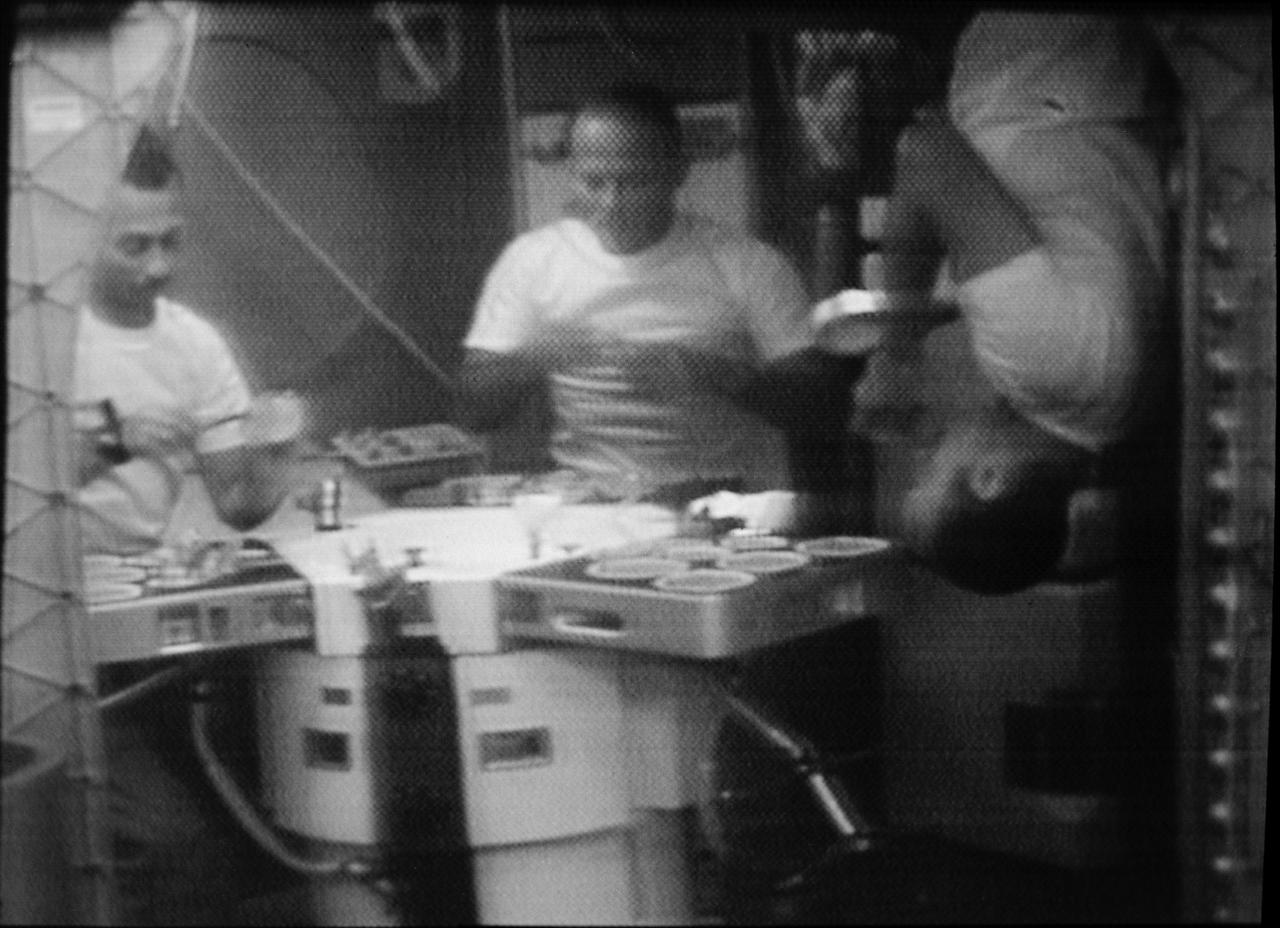
S73-31705 (1 Aug. 1973) --- The three Skylab 3 crewmen are shown eating in the Orbital Workshop (OWS) wardroom of the Skylab space station in Earth orbit, in this photographic reproduction taken from a television transmission made by a color TV camera aboard the OWS. Astronaut Alan L. Bean (right), commander, illustrates eating under zero-gravity conditions upsidedown. The two other crewmen are scientist-astronaut Owen K. Garriott (left), science pilot; and astronaut Jack R. Lousma, pilot. Photo credit: NASA
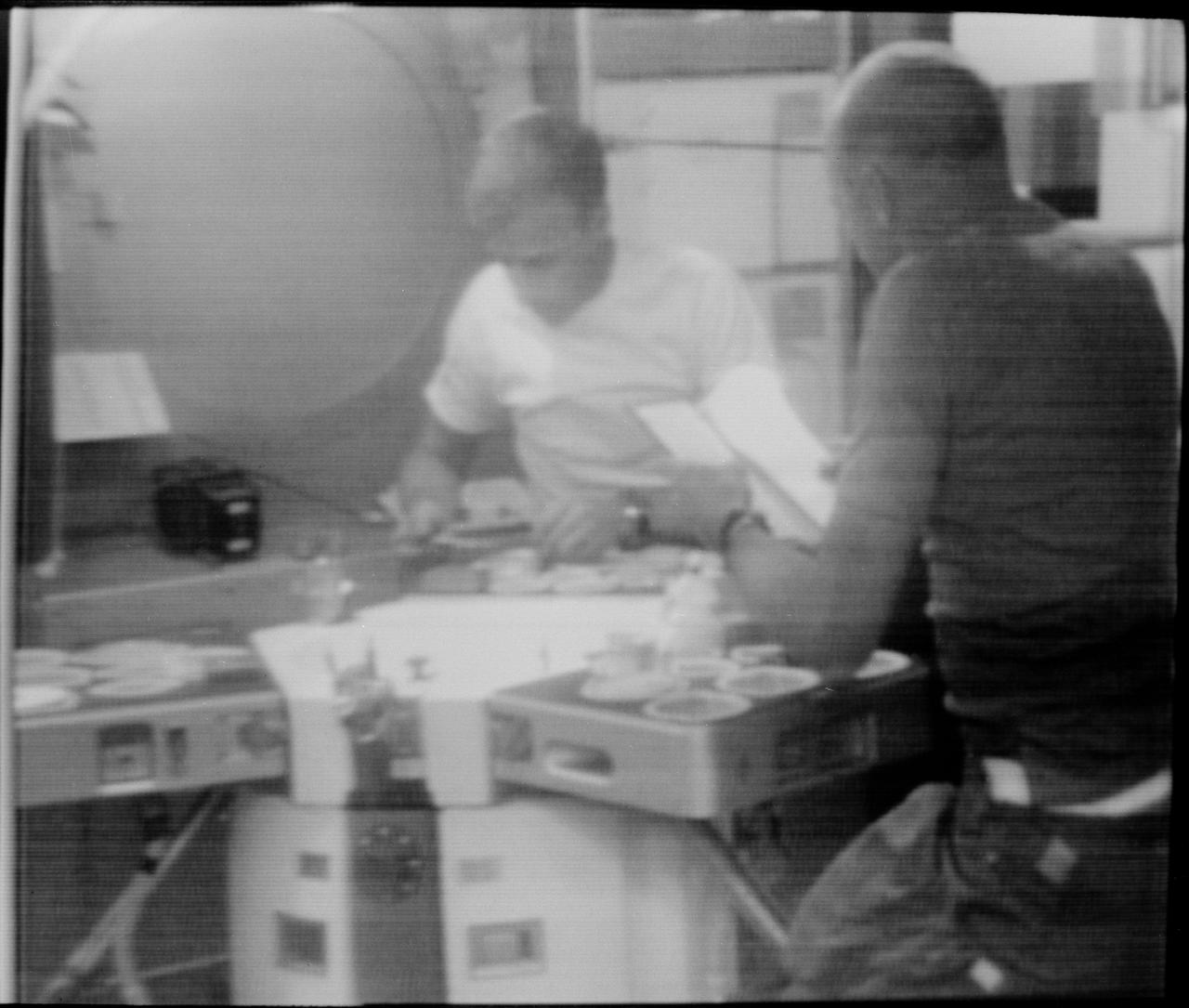
S73-27081 (30 May 1973) --- Two of the three Skylab 2 astronauts are seen in the wardroom of the crew quarters of the Orbital Workshop of the Skylab 1 space station cluster in Earth orbit in this reproduction taken from a television transmission made by a TV camera aboard the space station. They are preparing to eat a meal. Astronaut Charles Conrad Jr., commander, is in the right foreground. In the background is astronaut Paul J. Weitz, pilot. Photo credit: NASA
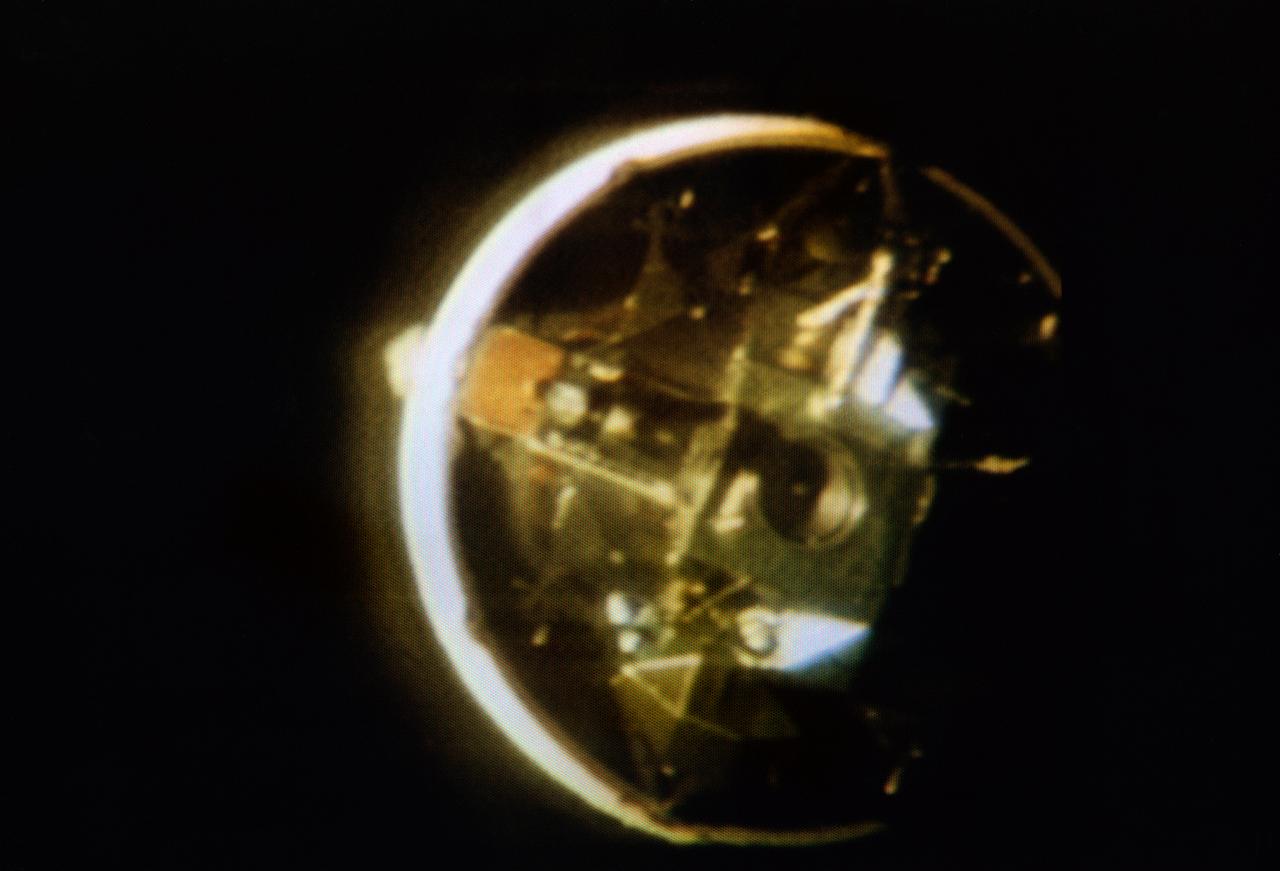
S69-33994 (18 May 1969) --- The Apollo 10 Lunar Module, still attached to the Saturn IVB stage, is seen in this color reproduction taken from the first television transmission made by the color television camera aboard the Apollo 10 spacecraft. This picture was made following CSM/LM-S-IVB separation, and prior to LM extraction from the S-IVB. The Command and Service Modules were making the docking approach to the LM/S-IVB. The circular object is the docking drogue assembly on the LM. Aboard the Command Module were astronauts Thomas P. Stafford, commander; John W. Young, command module pilot; and Eugene A. Cernan, lunar module pilot.
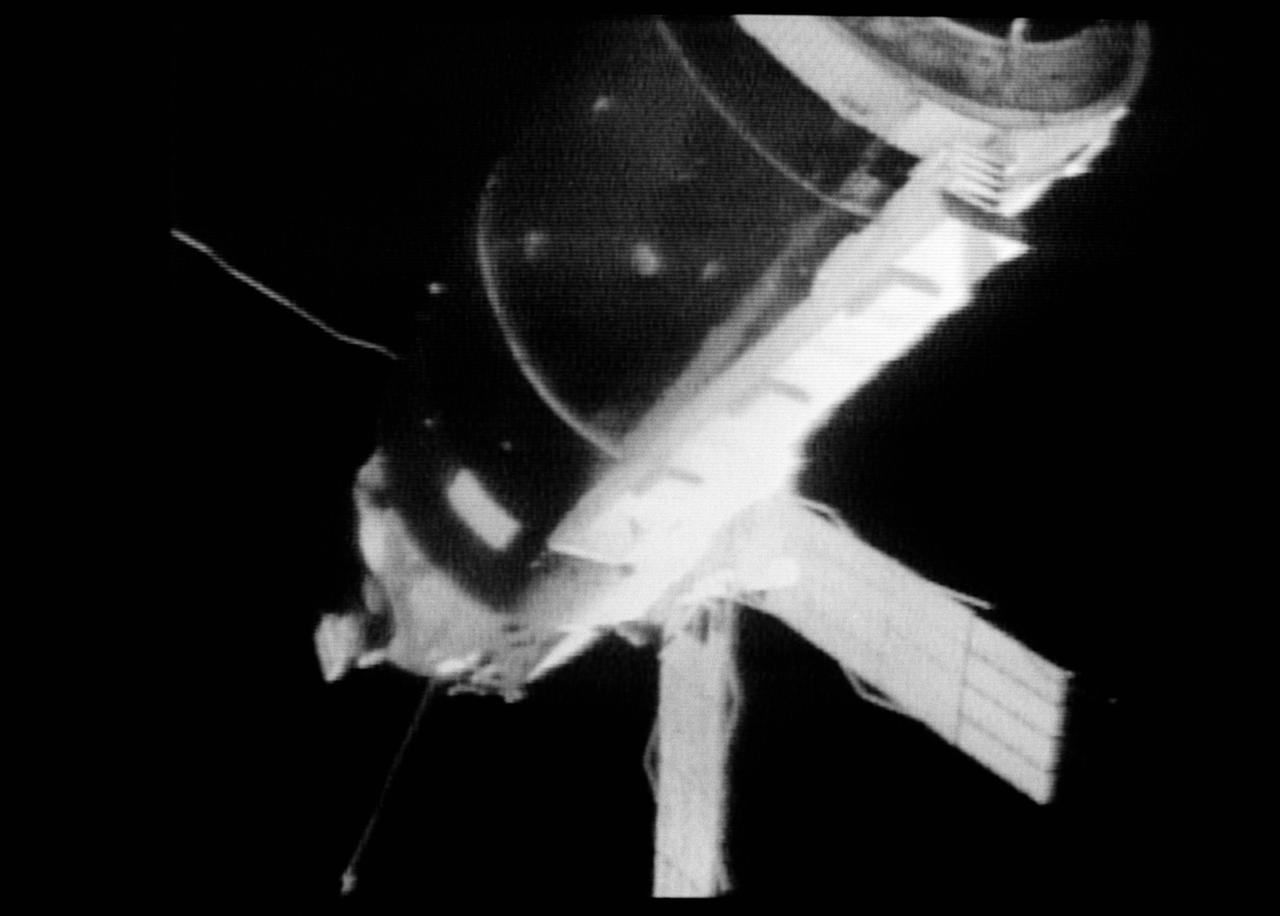
S73-27182 (25 May 1973) --- A close-up view of the Skylab 1 space station cluster can be seen in this reproduction taken from a color television transmission made by a TV camera aboard the Skylab 2 Command Module during its "fly around" inspection of the cluster. This view has been enhanced. At left center the damaged solar array system wing on the Orbital Workshop (OWS) appears to be partly folded. In their preliminary inspection the crewmen noted that portions of the micrometeoroid shield had slid back underneath the OWS solar wing. Solar panels on the Apollo Telescope Mount extend out at the top center. Photo credit: NASA
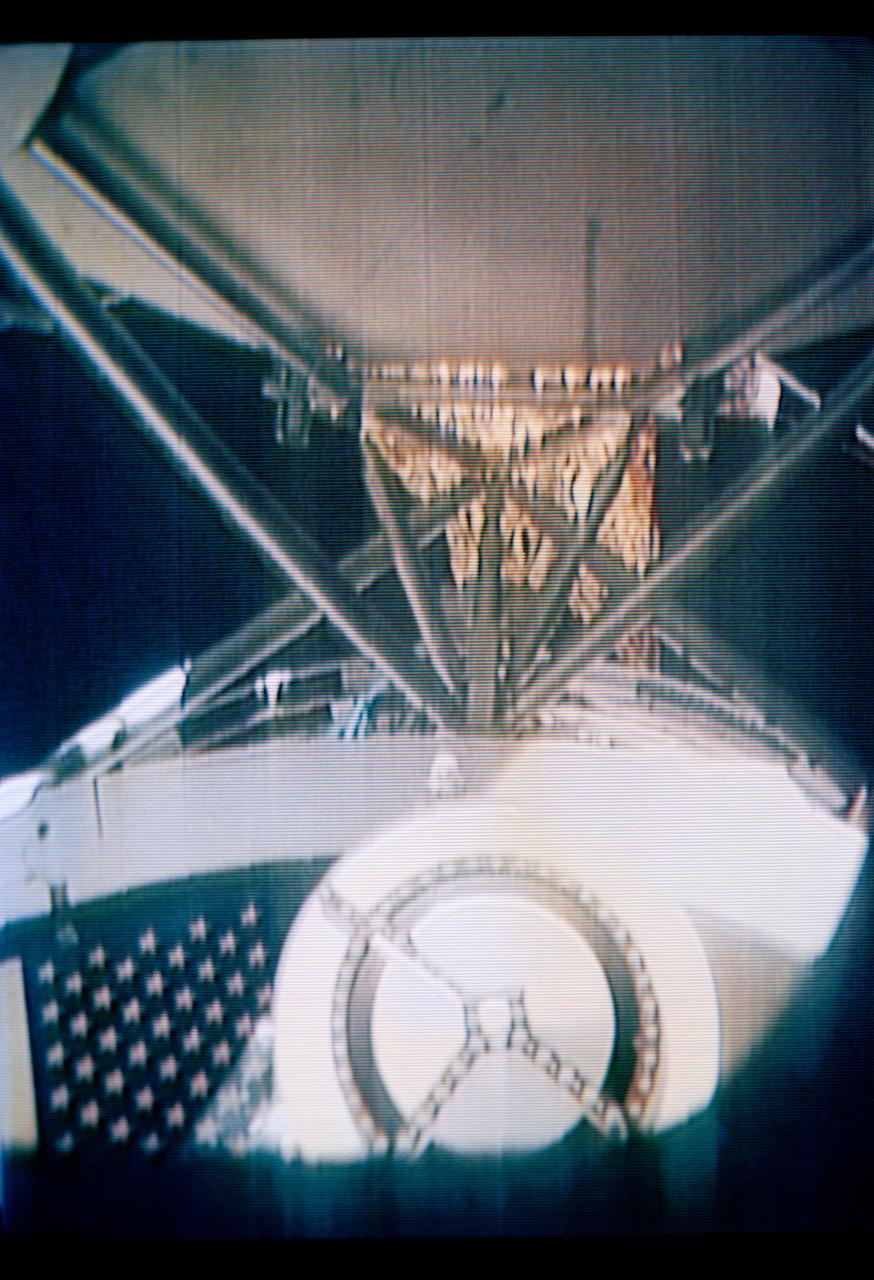
S73-26773 (26 May 1973) --- The deployment of the ?parasol? solar shield, a sunshade to help cool the overheated Orbital Workshop of the Skylab 1 space station cluster in Earth orbit, can be seen in the reproduction taken from a color television transmission made by a TV camera aboard the space station. The camera is in the Command Module; and the view is looking through the truss of the Apollo Telescope Mount. The sunshade is only partially deployed in this picture. The solar shield was pushed up through the OWS solar scientific airlock. The canopy of the ?parasol? measures 24 feet by 22 feet. Photo credit: NASA
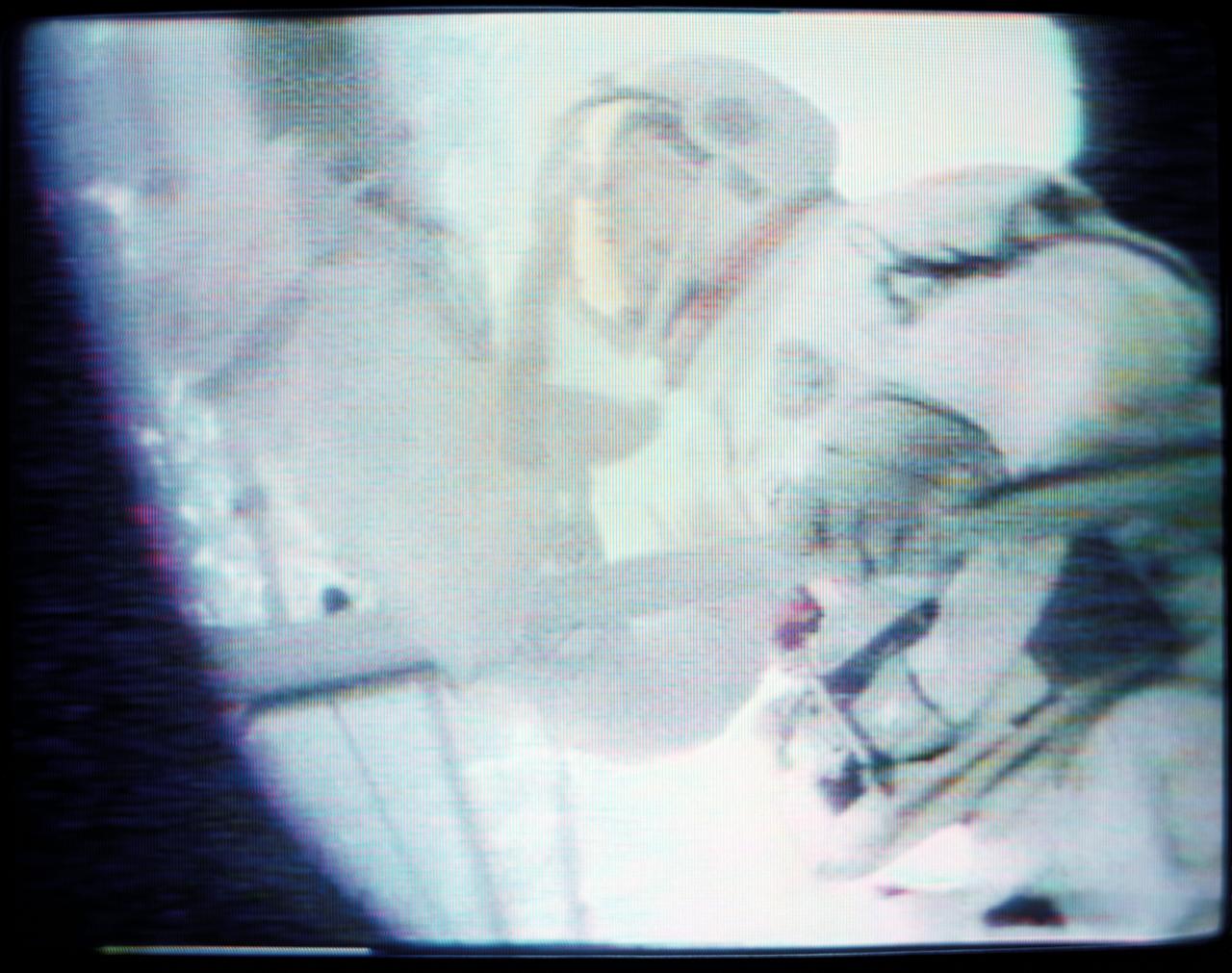
S73-27562 (June 1973) --- Scientist-astronaut Joseph P. Kerwin, Skylab 2 science pilot, performs extravehicular activity (EVA) at the Skylab 1 and 2 space station cluster in Earth orbit, as seen in this reproduction taken from a color television transmission made by a TV camera aboard the station. Kerwin is just outside the Airlock Module. Kerwin assisted astronaut Charles Conrad Jr., Skylab 2 commander, during the successful EVA attempt to free the stuck solar array system wing on the Orbital Workshop. Photo credit: NASA
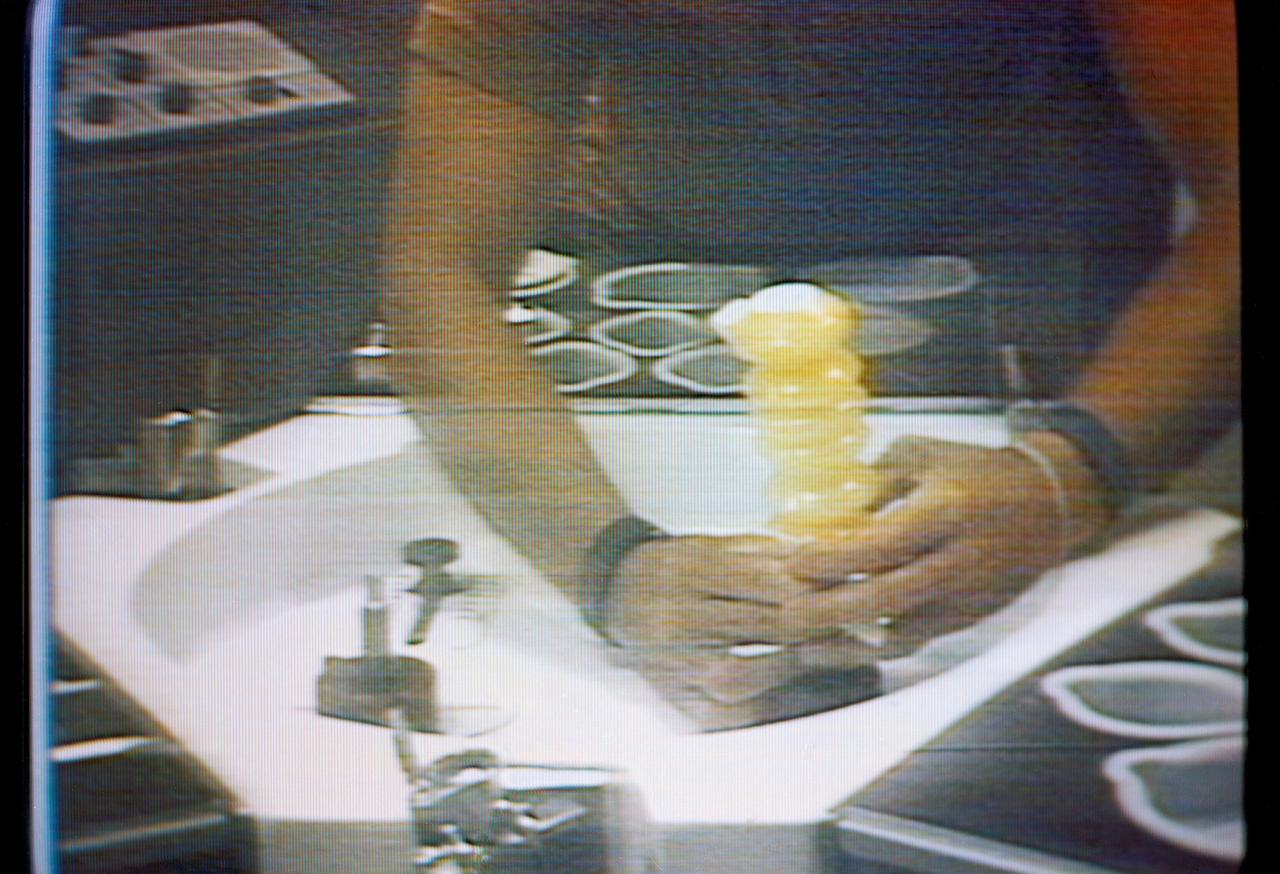
S73-27078 (30 May 1973) --- An accordian-style beverage dispenser filled with orange juice is held by astronaut Charles Conrad Jr., Skylab 2 commander, in this close-up view which is a reproduction taken from a color television transmission made by a TV camera aboard the Skylab 1 & 2 space station cluster in Earth orbit. Conrad (head and face not in view) is seated at the wardroom table in the crew quarters of the Orbital Workshop. The dispenser contained beverage crystals, and Conrad has just added the prescribed amount of water to make the orange drink. Photo credit: NASA
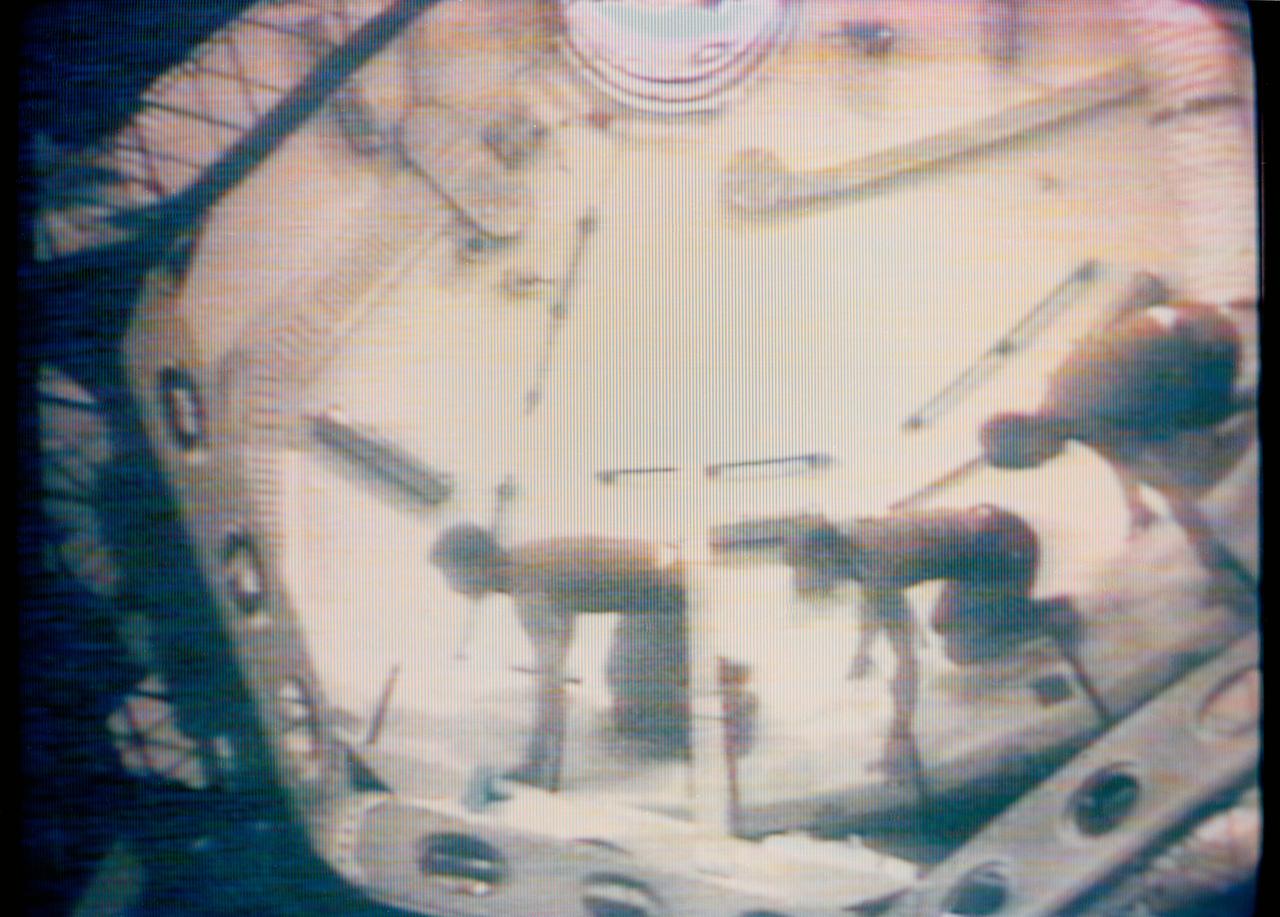
S73-27262 (1 June 1973) --- The three Skylab 2 crewmen give a demonstration on the effects of weightlessness in the Orbital Workshop of the Skylab 1 and 2 space station cluster in Earth orbit, as seen in this reproduction taken from a color television transmission made by a TV camera aboard the space station. Astronauts Charles Conrad Jr., Joseph P. Kerwin and Paul J. Weitz are crouched in a fast-start stance to race around the dome area of the OWS forward compartment. The astronauts had ease of motion and good maneuverability in the zero-gravity of space. Photo credit: NASA
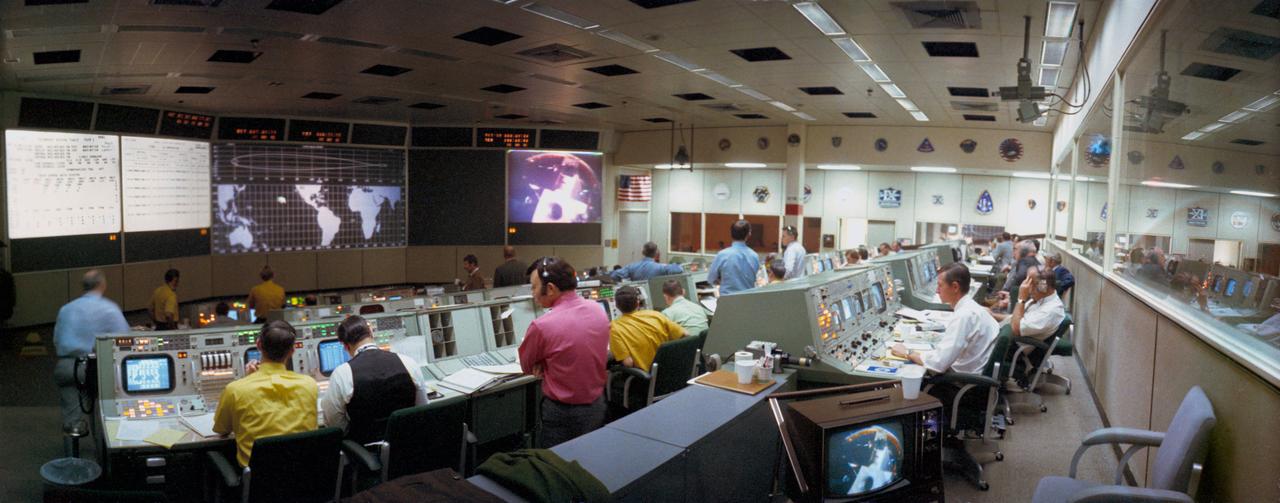
S71-17122 (31 Jan. 1971) --- A wide angle overall view of the Mission Operations Control Room (MOCR) in the Mission Control Center at the Manned spacecraft Center. This view was photographed during the first color television transmission from the Apollo 14 Command Module. Projected on the large screen at the right front of the MOCR is a view of the Apollo 14 Lunar Module, still attached to the Saturn IVB stage. The Command and Service Modules were approaching the LM/S-IVB during transposition and docking maneuvers.
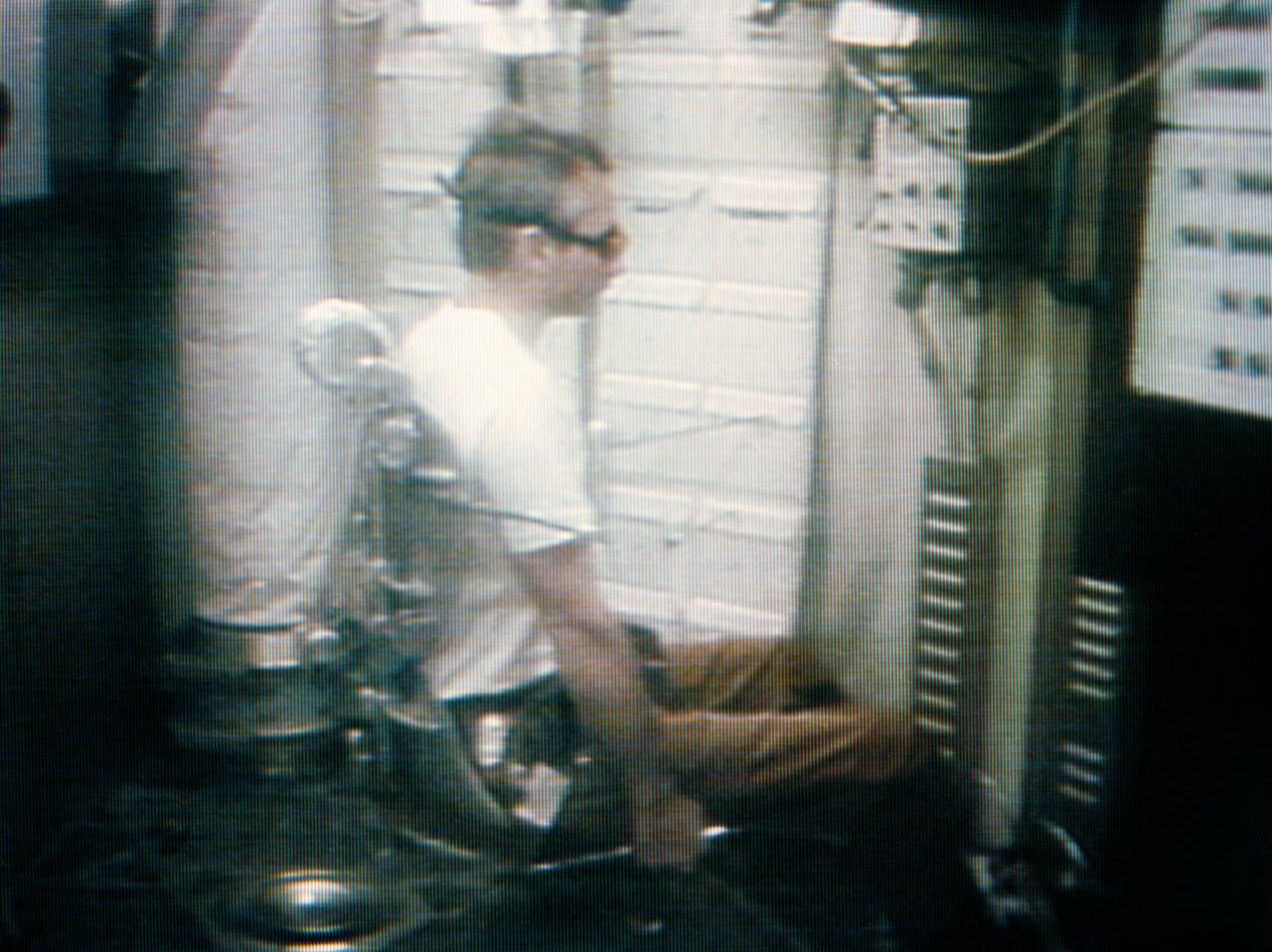
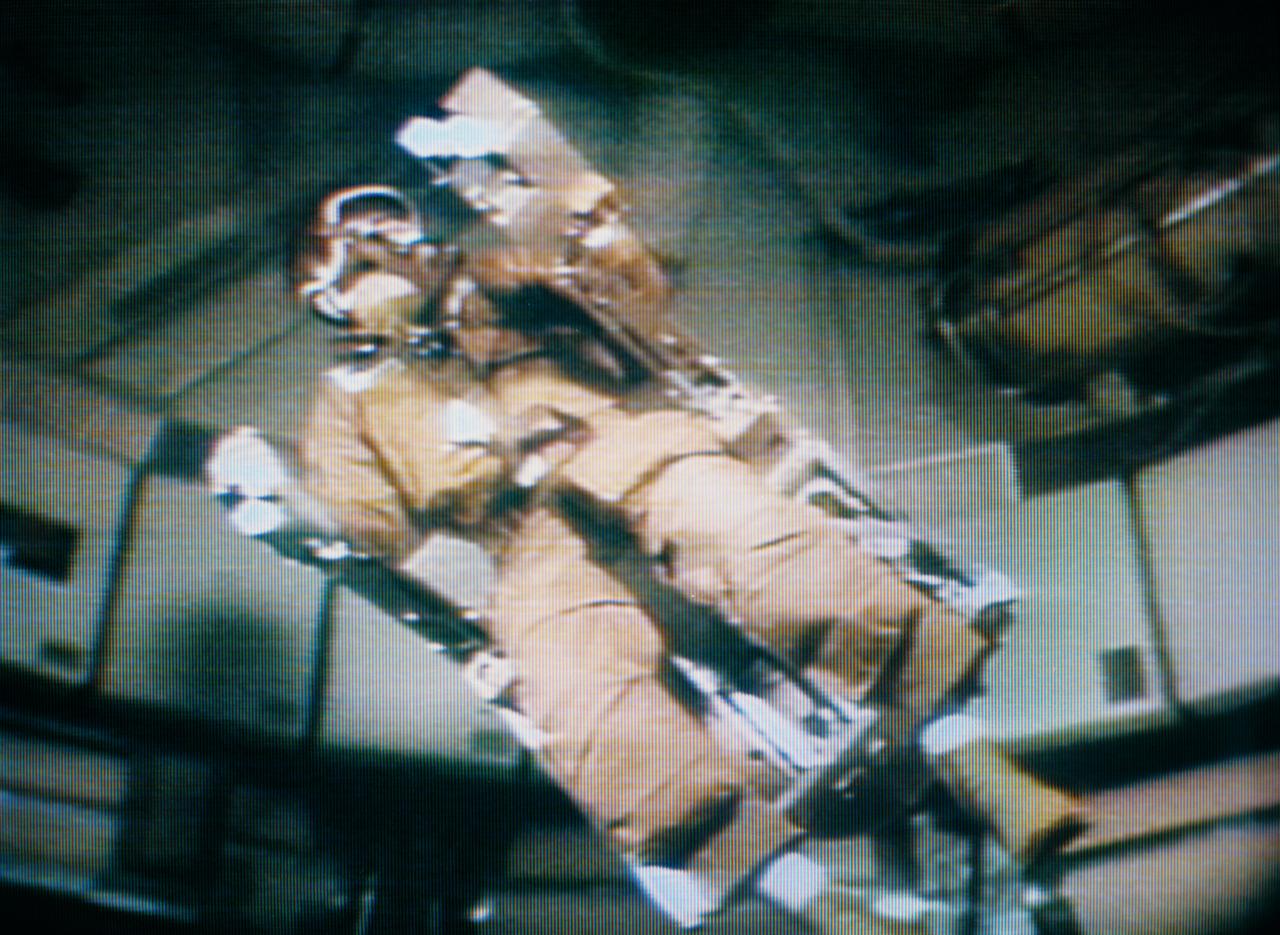
S73-34171 (9 Aug. 1973) --- Scientist-astronaut Owen K. Garriott, Skylab 3 science pilot, serves as test subject for the Skylab ?Human Vestibular Function? M131 Experiment, as seen in this photographic reproduction taken from a television transmission made by a color TV camera aboard the Skylab space station in Earth orbit. The objectives of the Skylab M131 experiment are to obtain data pertinent to establishing the validity of measurements of specific behavioral/physiological responses influenced by vestibular activity under one-g and zero-g conditions; to determine man?s adaptability to unusual vestibular conditions and predict habitability of future spacecraft conditions involving reduced gravity and Coriollis forces; and to measure the accuracy and variability in man?s judgment of spatial coordinates based on atypical gravity receptor cues and inadequate visual cures. Dr. Garriott is seated in the experiment?s litter chair which can rotate the test subject at predetermined rotational velocity or programmed acceleration/decelerational profile. Photo credit: NASA
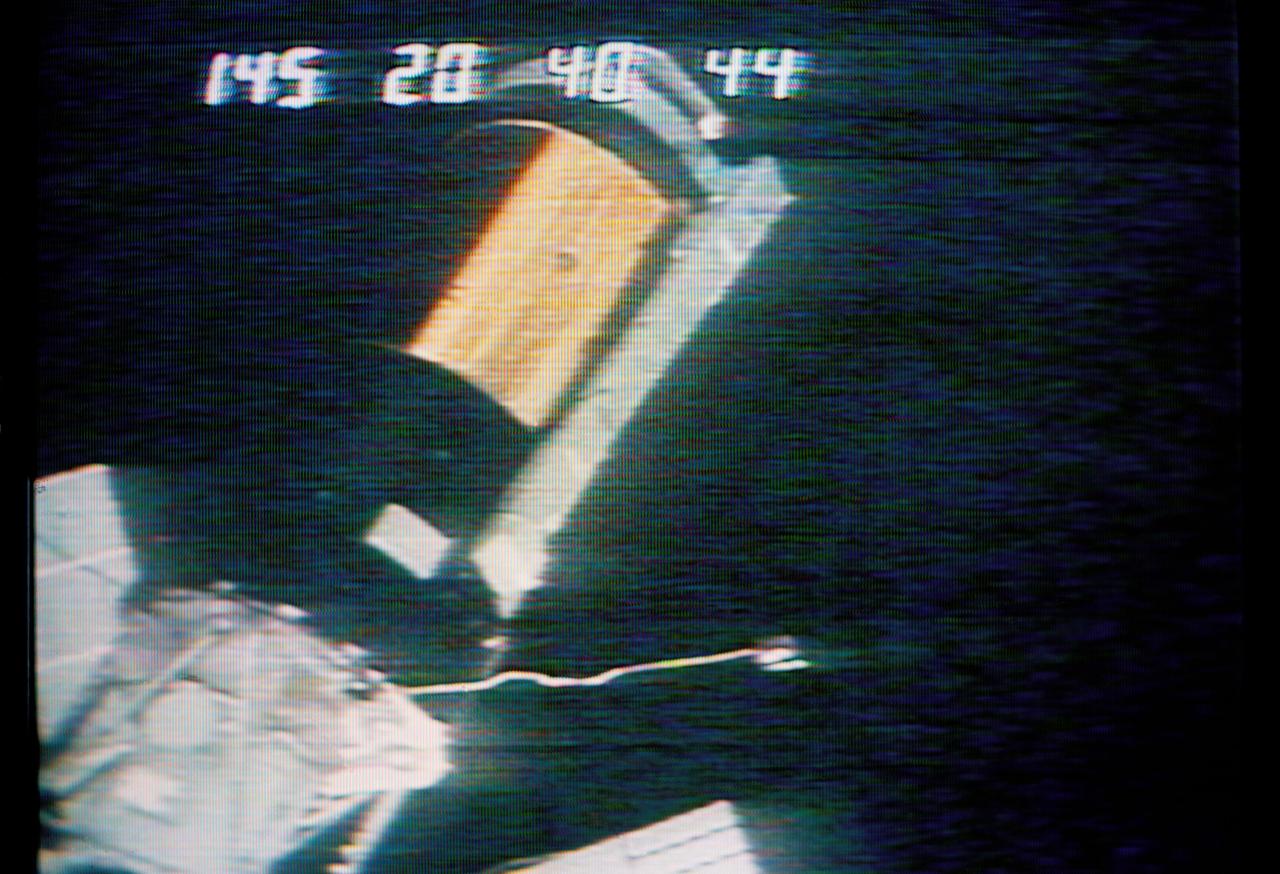
S73-26738 (25 May 1973) --- A close-up view of the Skylab 1 space station cluster can be seen in this reproduction taken from a color television transmission made by a TV camera aboard the Skylab 2 Command Module during its ?fly-around? inspection of the cluster. The numbers across the top of the picture indicate the Skylab 1 ground lapse time. Note the missing portion of the micrometeoroid shield on the Orbital Workshop. The shield area was reported to be solid gold by the Skylab 2 crewmen. A cable appears to be wrapped around the damaged OWS solar array system wing. The crewmen reported that the other OWS solar panel was completely gone, with only tubes and wiring sticking out. One of the discone antennas extends out form the Airlock Module. The Multiple Docking Adapter is in the lower left corner of the picture. A portion of a solar panel on the Apollo Telescope Mount is visible at the bottom and at the left edge. In their ?fly around? inspection the crewmen noted that portions of the micrometeoroid shield had slid back underneath the OWS solar wing. Photo credit: NASA
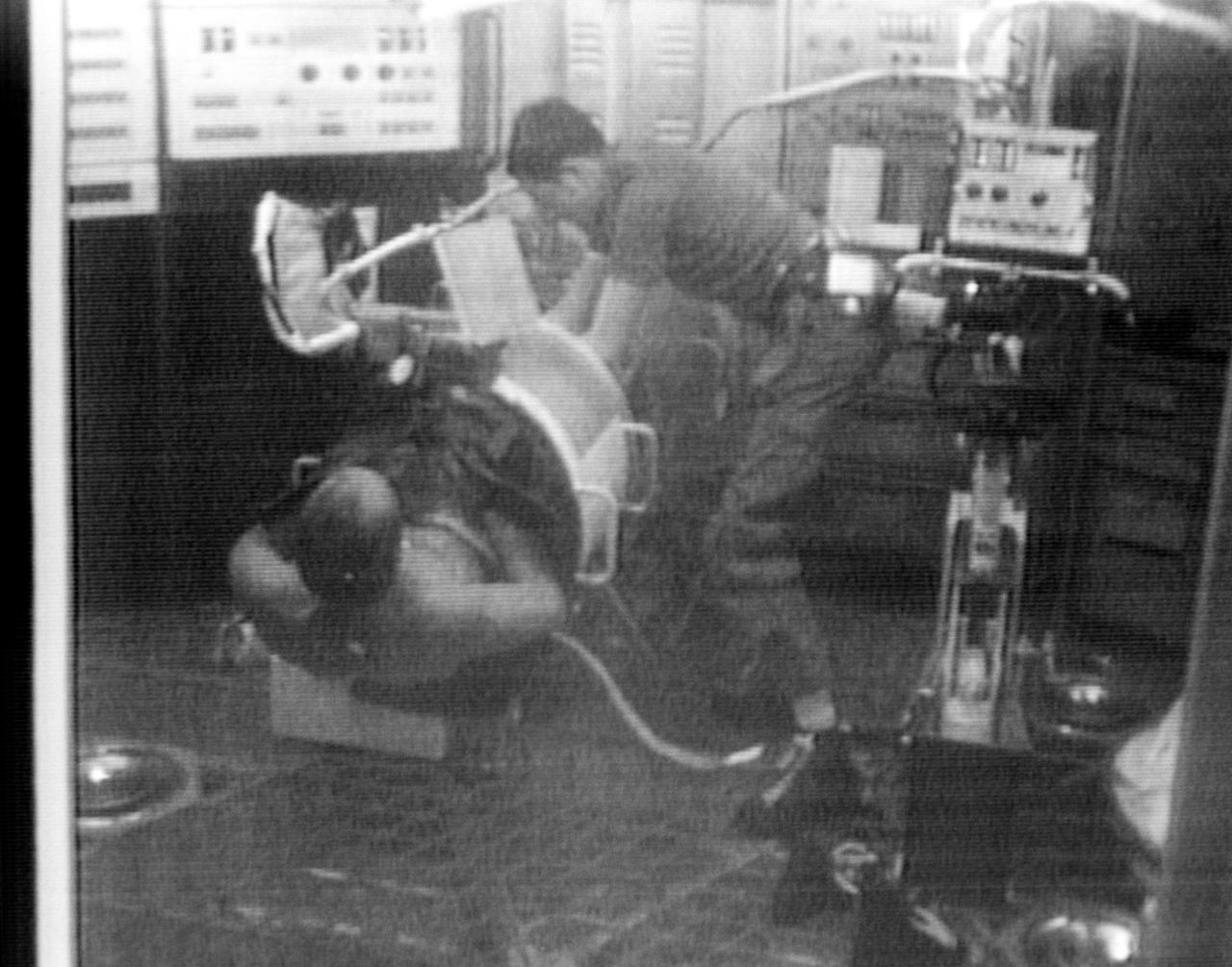
S73-27707 (9 June 1973) --- Astronaut Charles Conrad Jr., Skylab 2 commander, serves as test subject for the Lower Body Negative Pressure (MO92) Experiment, as seen in this reproduction taken from a color television transmission made by a TV camera aboard the Skylab 1/2 space station cluster in Earth orbit. Scientist-astronaut Joseph P. Kerwin, Skylab 2 science pilot, assists Conrad into the LBNP device. Kerwin served as monitor for the experiment. The purpose of the MO92 experiment is to provide information concerning the time course of cardiovascular adaptation during flight, and to provide inflight data for predicting the degree of orthostatic intolerance and impairment of physical capacity to be expected upon return to Earth environment. The data collected in support of MO92 blood pressure, heart rate, body temperature, vectorcardiogram, LBNPD pressure, leg volume changes, and body weight. Photo credit: NASA
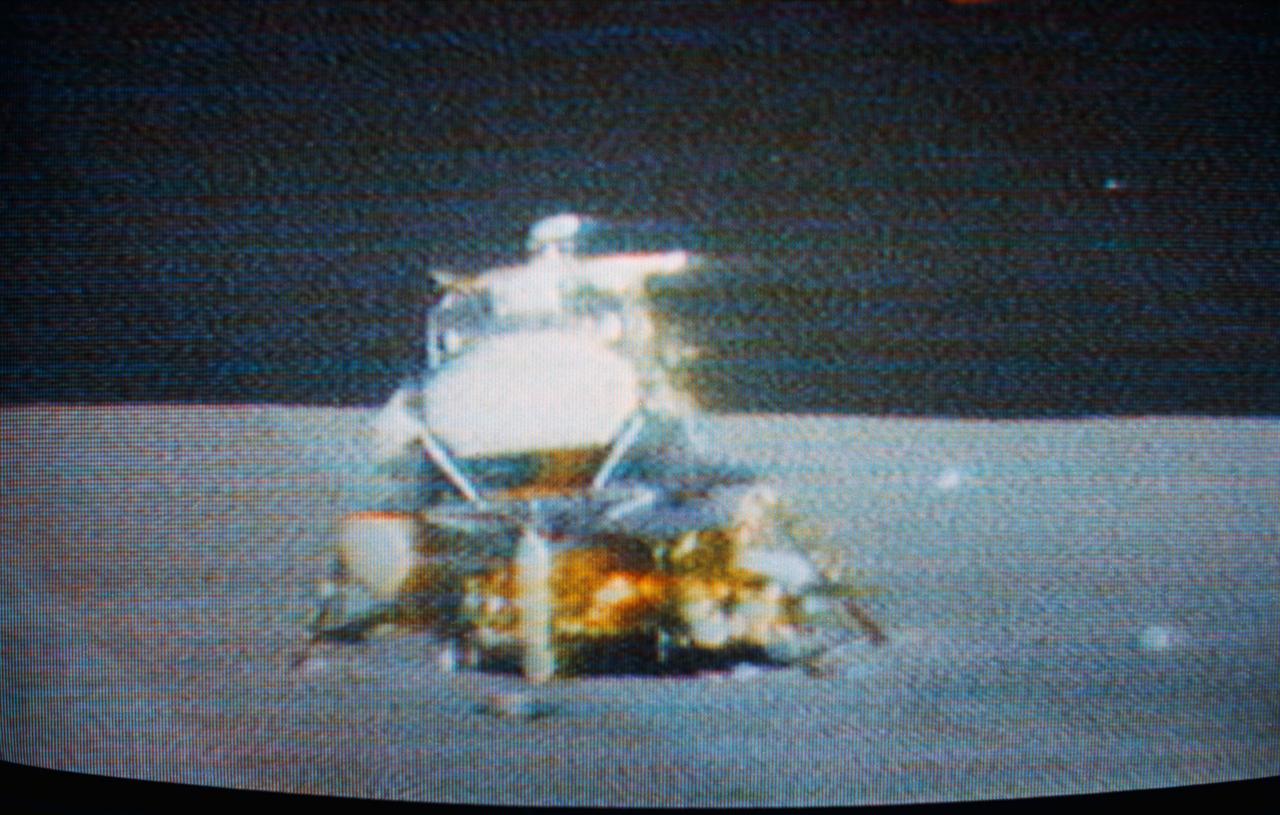
S71-41511 (2 Aug. 1971) --- The Apollo 15 Lunar Module (LM) "Falcon" is seen only seconds before ascent stage liftoff in this color reproduction taken from a transmission made by the RCA color television camera mounted on the Lunar Roving Vehicle (LRV). The LRV was parked about 300 feet east of the LM. The LRV-mounted TV camera, remotely controlled from the Mission Control Center (MCC), made it possible for people on Earth to watch the LM's launch from the moon. The LM liftoff was at 171:37 ground elapsed time. The "Falcon" ascent stage, with astronauts David R. Scott, commander; and James B. Irwin, lunar module pilot, aboard, returned from the lunar surface to rejoin the Command and Service Modules (CSM) orbiting the moon. Astronaut Alfred M. Worden, command module pilot, remained with the CSM in lunar orbit while Scott and Irwin explored the moon. The LM descent stage is used as a launching platform and remains behind on the moon. This is part one of a four-part sequence.
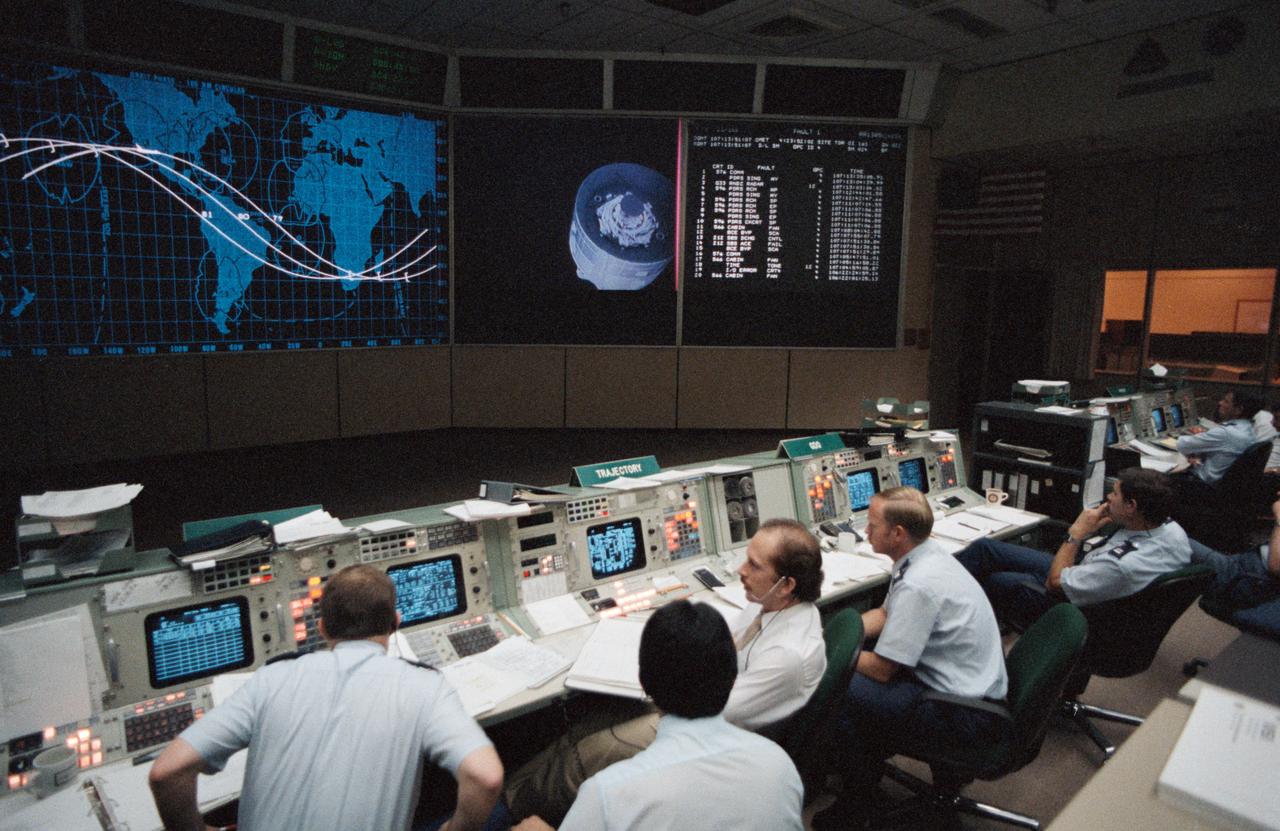
Flight controllers in the JSC mission control center watch television transmissions of Discovery's rendezvous activities with the Syncom-IV (LEASAT) satellite and follow new data on their individual consoles.
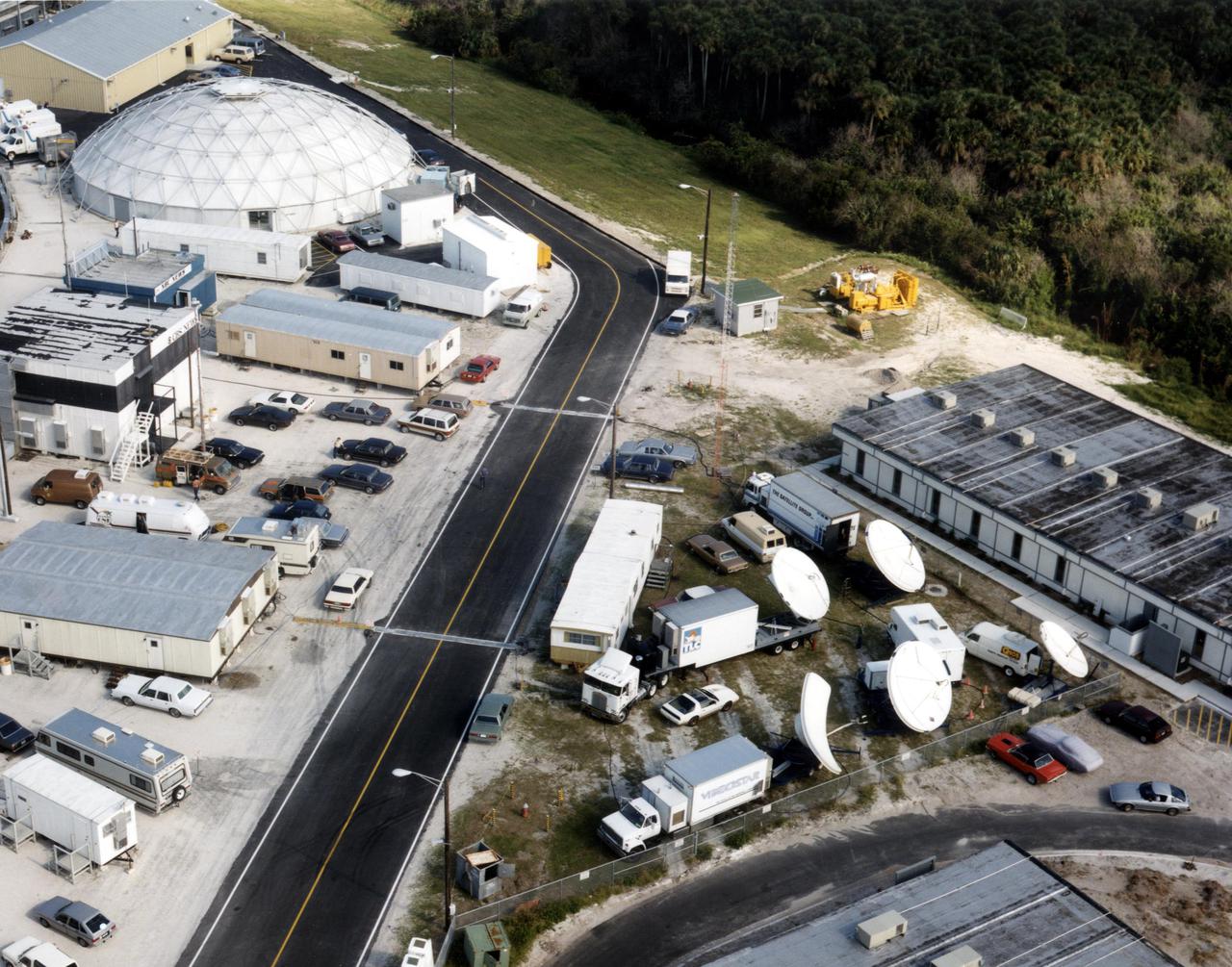
KENNEDY SPACE CENTER, FLA. -- This aerial view of Press Site Complex 39 during the launch activities for Mission 41G shows the satellite dishes in place for television and radio network transmissions.
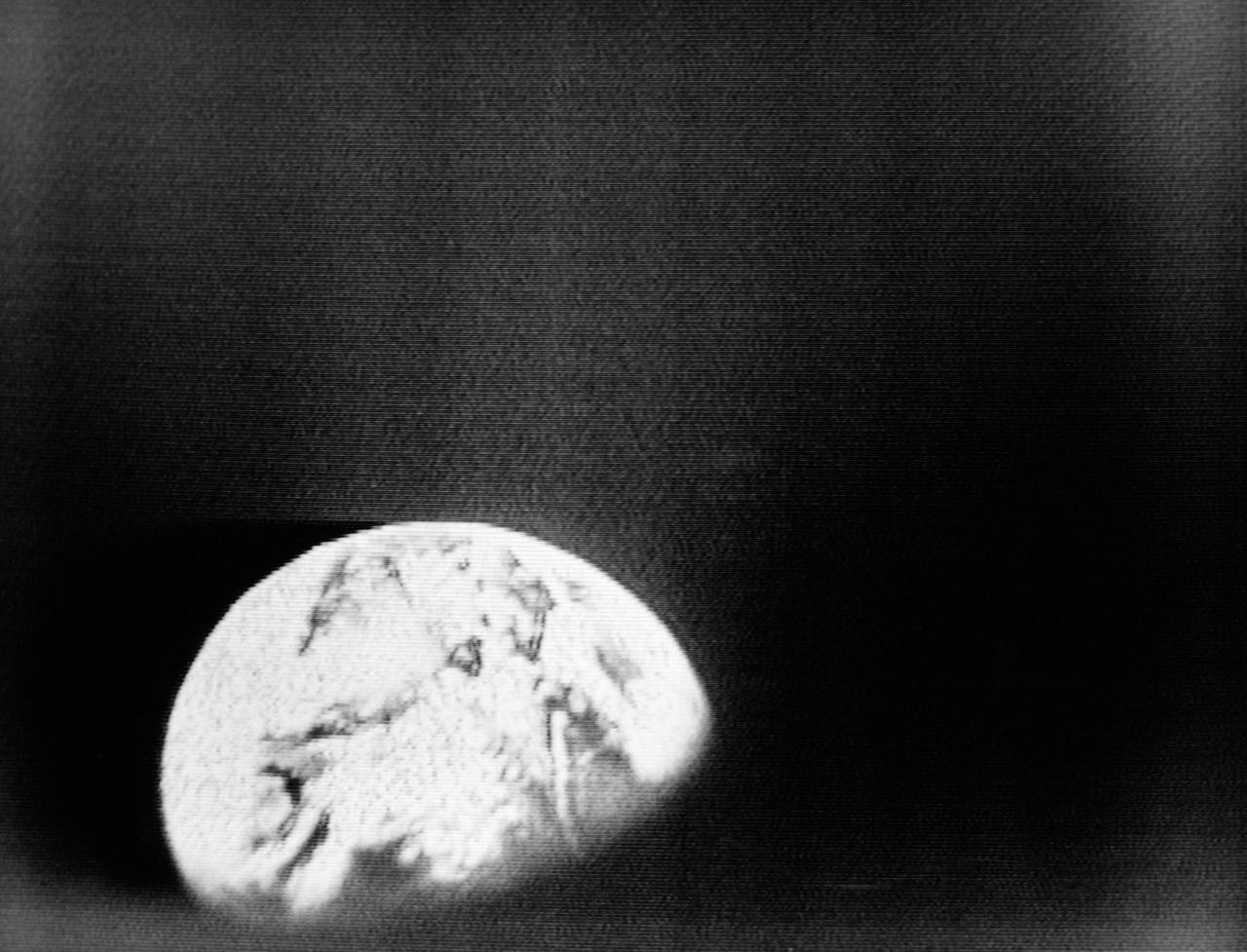
S68-55808 (23 Dec. 1968) --- This spectacular view of Earth was transmitted back from space during the second live television transmission from the Apollo 8 spacecraft on the third day of its journey toward the moon. This view is looking through a spacecraft window. At the time of this TV transmission (at 2 p.m. CST), Apollo 8 was traveling on its trans-lunar course at about 3,254 feet per second, and was some 176,533 miles from Earth.
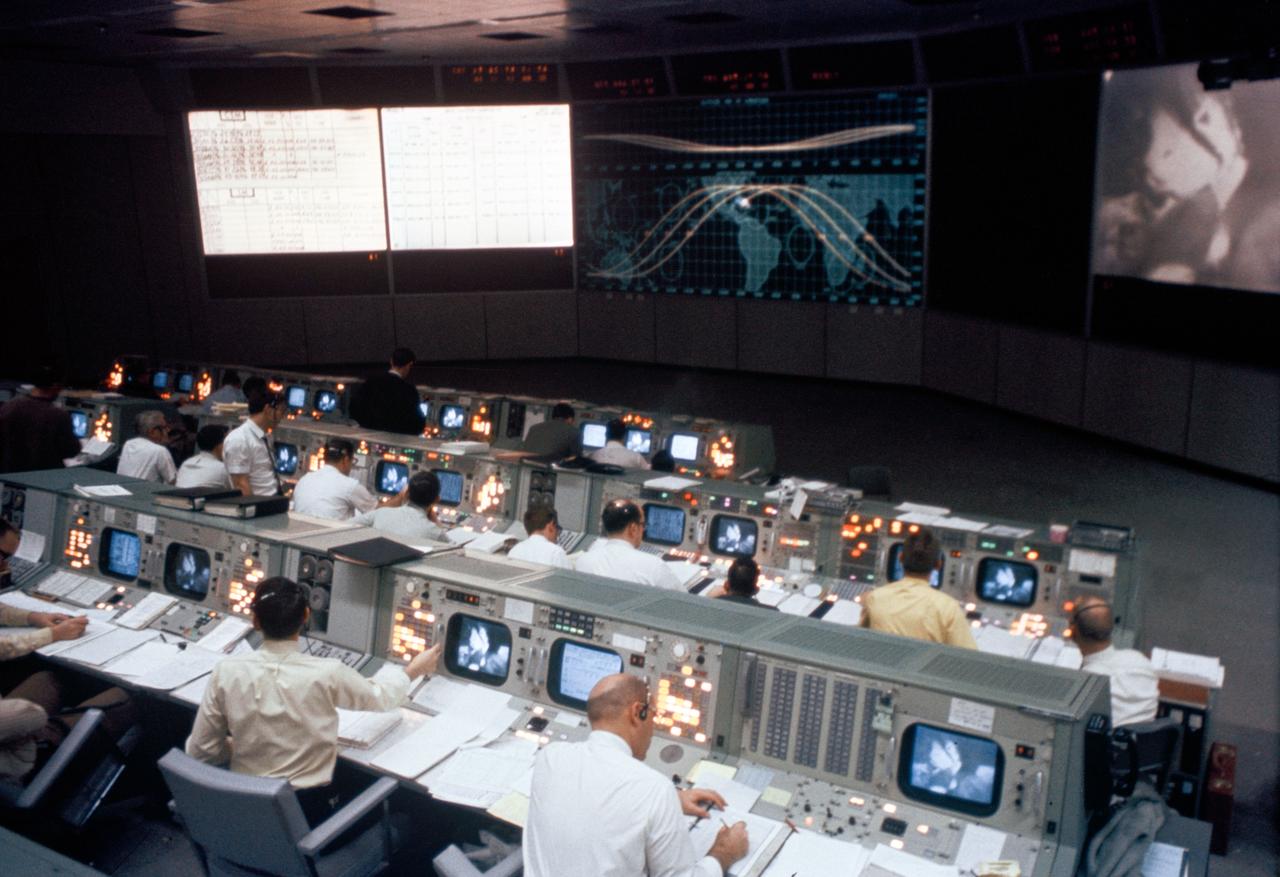
S69-26301 (March 1969) --- Overall view of the Mission Operations Control Room in the Mission Control Center, Building 30, during the Apollo 9 Earth-orbital mission. When this photograph was taken a live television transmission was being received from Apollo 9 as it orbited Earth.
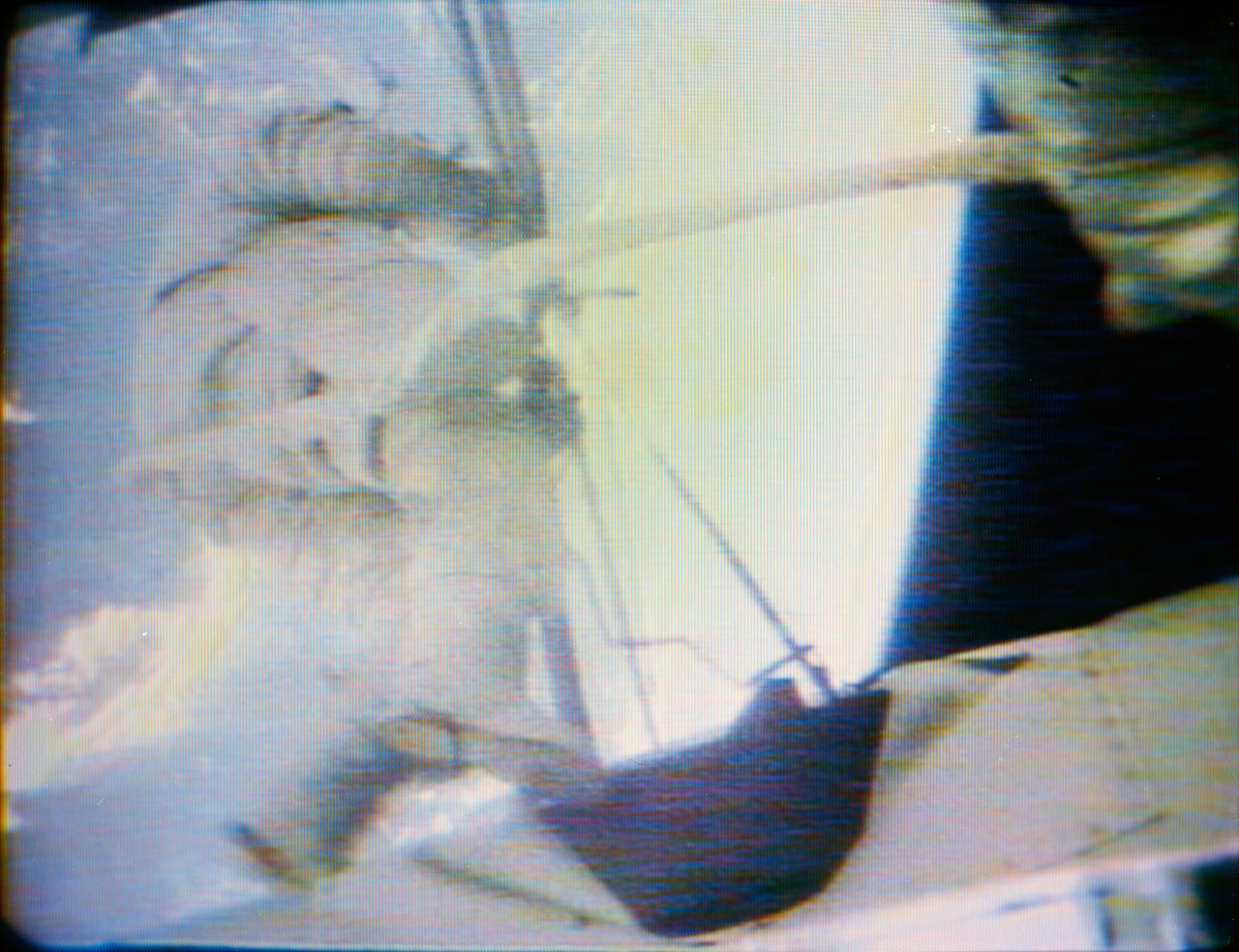
S73-27734 (11 June 1973) --- Skylab 2 astronaut performs extravehicular activity (EVA) at the Skylab 1 and 2 space station cluster in Earth orbit, as seen in this reproduction taken from a color television transmission made by a TV camera aboard the station. Kerwin is just outside the Airlock Module. Photo credit: NASA
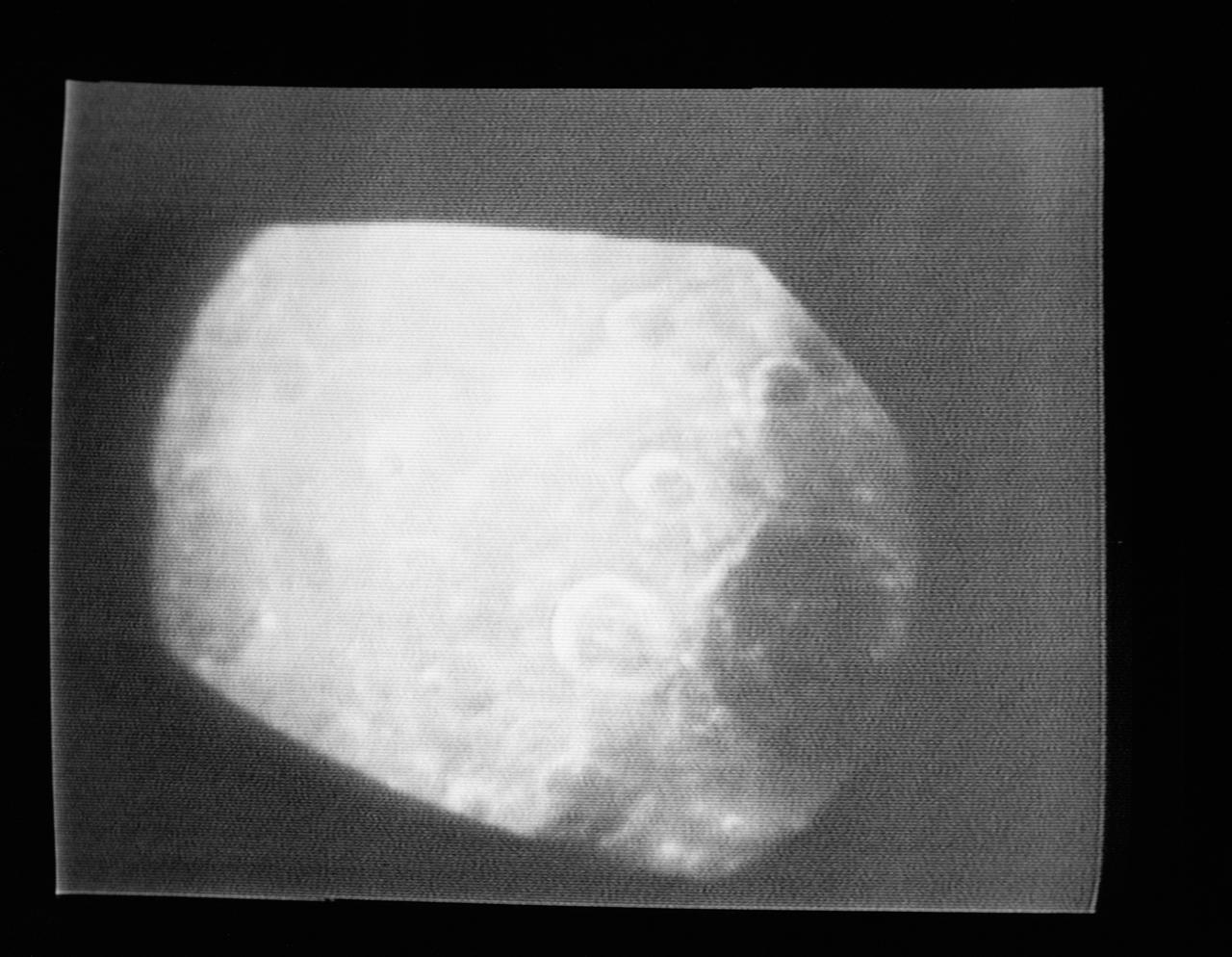
S68-55815 (24 Dec. 1968) --- This is how the surface of the moon looked from an altitude of approximately 60 miles as photographed by a television camera onboard the Apollo 8 spacecraft. This is Apollo 8's third live television transmission back to Earth. At the time this picture was made, the Apollo 8 spacecraft, with astronauts Frank Borman, James A. Lovell Jr., and William A. Anders aboard, was making its second revolution of the moon.
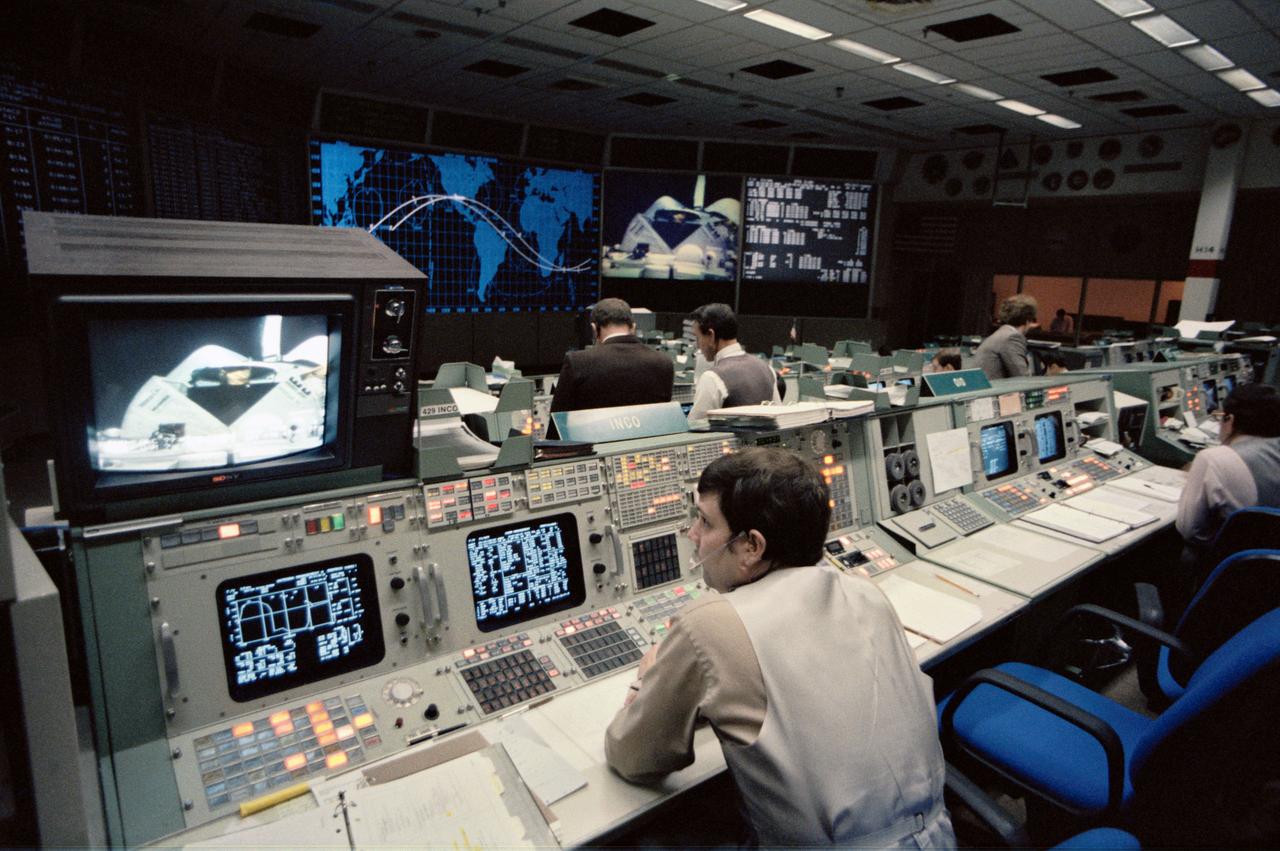
S84-26332 (3 Feb 1984) --- Robert E. Castle, integrated communications officer (INCO), plays an important role in the first television transmission from the Earth-orbiting Space Shuttle Challenger. Castle, at a console in the Johnson Space Center?s mission operations control room (MOCR) in the mission control center, is responsible for ground controlled television from the orbiter on his shift. Here, the Westar VI satellite is seen in the cargo bay just after opening of the payload bay doors.
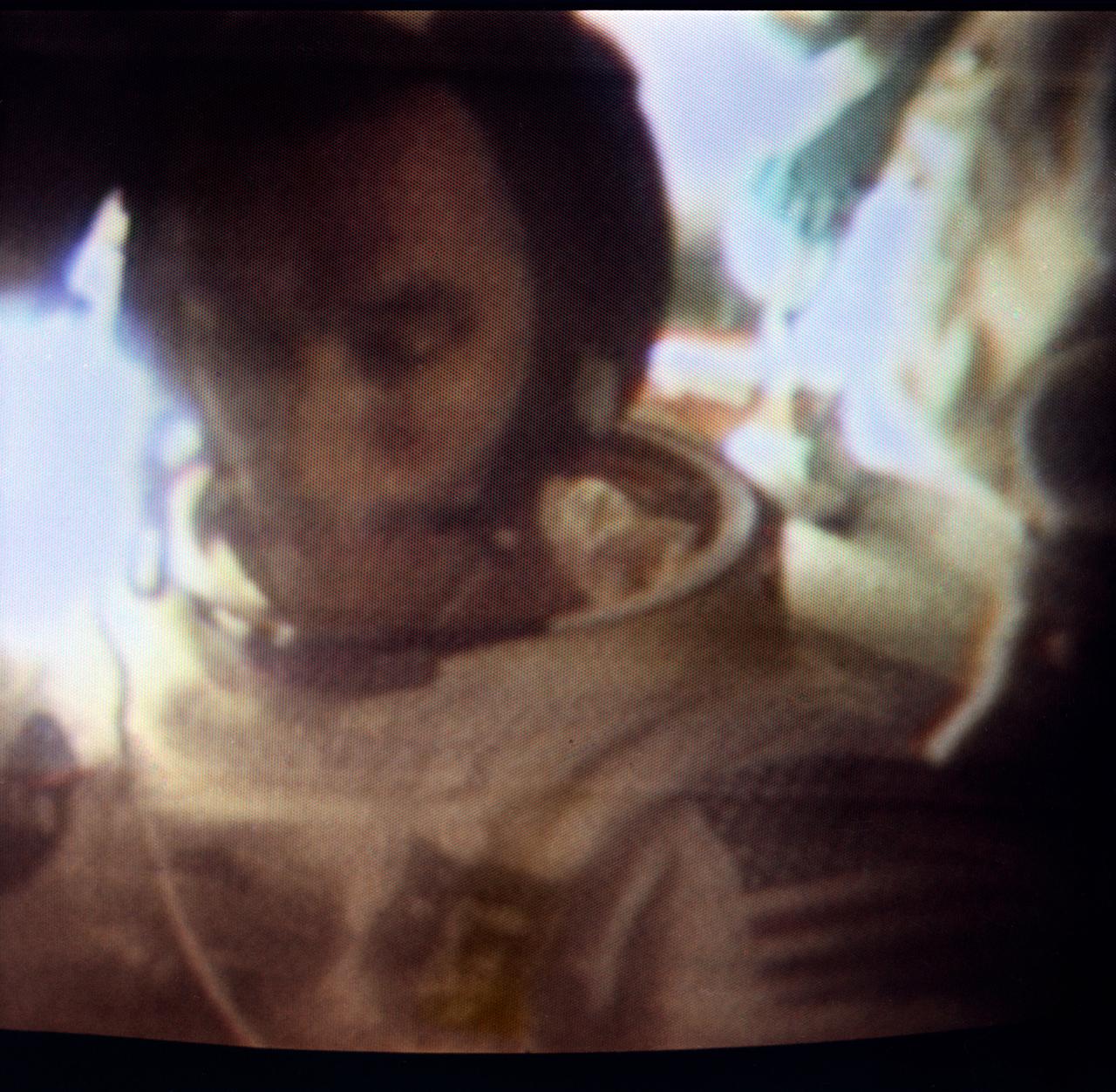
S69-33997 (18 May 1969) --- Astronauts Eugene A. Cernan, Apollo 10 lunar module pilot, is seen in this color reproduction taken from the third television transmission made by the color television camera aboard the Apollo 10 spacecraft. When this picture was made the Apollo 10 spacecraft was on a trans-lunar course, and was already about 36,000 nautical miles from Earth. Also, aboard Apollo 10 were astronauts Thomas P. Stafford, commander; and John W. Young, command module pilot.
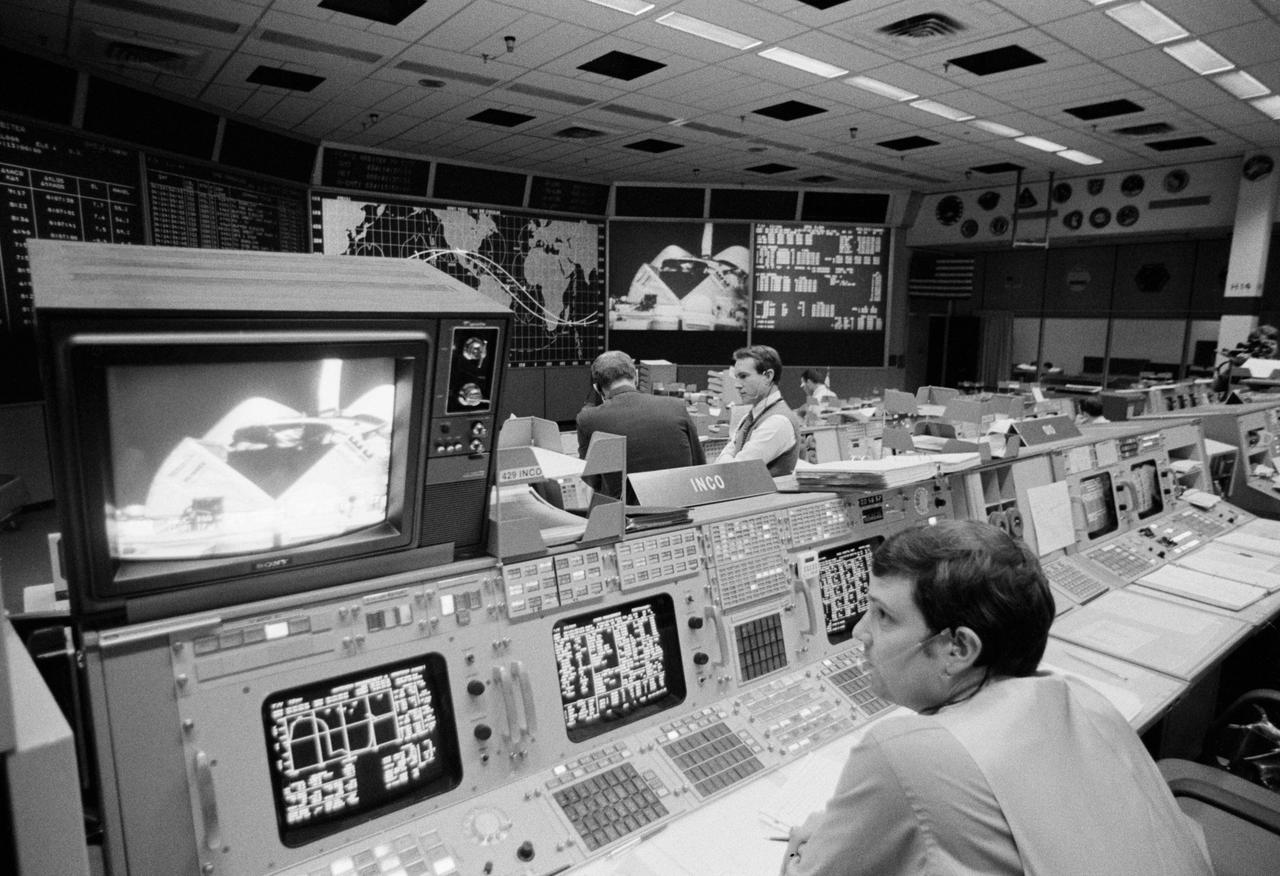
S84-26297 (3 Feb 1984) --- Robert E. Castle, Integrated Communications Officer (INCO), plays an important role in the first television transmission from the Earth-orbiting Space Shuttle Challenger. Castle, at a console in the Johnson Space Center's (JSC) Mission Operations Control Room (MOCR) in the Mission Control Center (MCC), is responsible for ground controlled television from the Orbiter on his shift. Here, the Westar VI satellite is seen in the cargo bay just after opening of the payload bay doors.
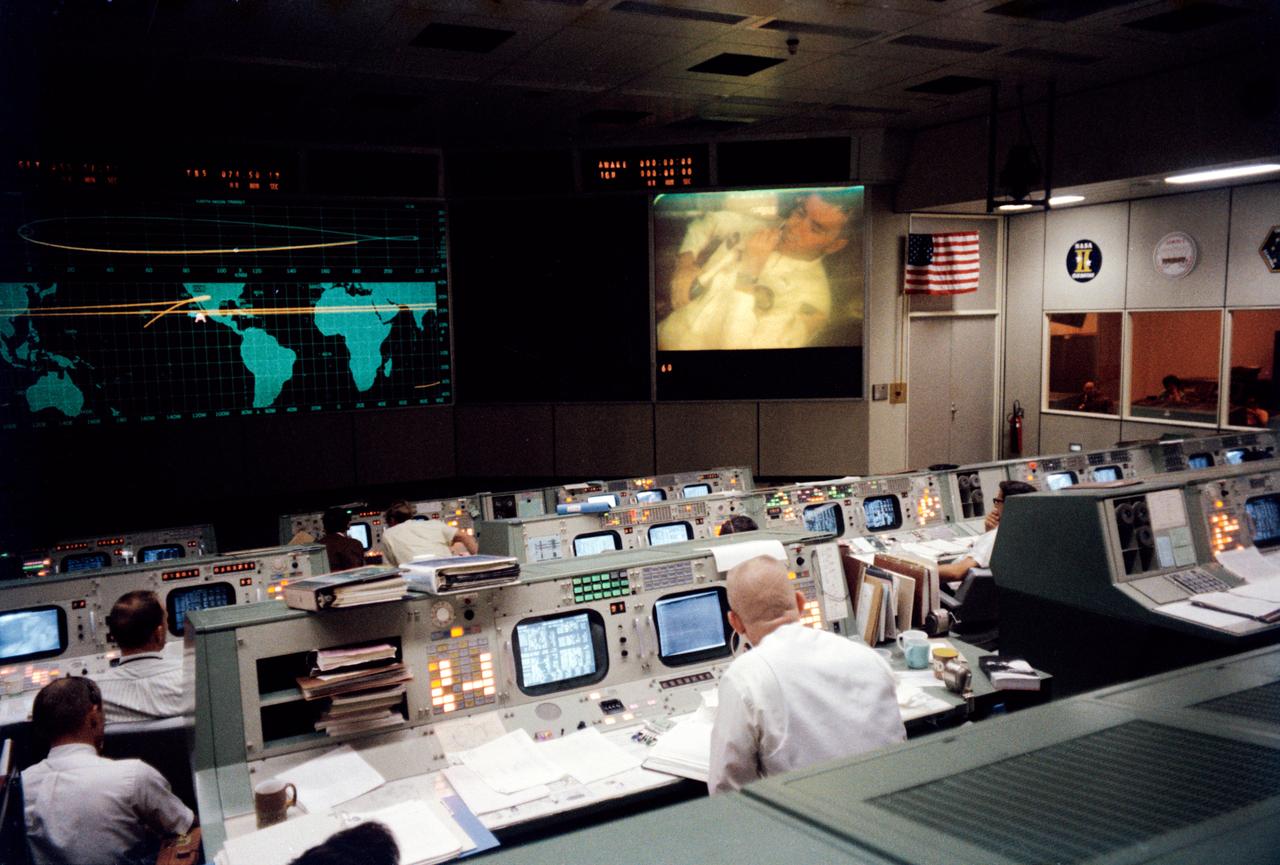
S70-35139 (13 April 1970) --- Overall view of the Mission Operations Control Room (MOCR) in the Mission Control Center (MCC) at Manned Spacecraft Center (MSC), during the fourth television transmission from the Apollo 13 mission in space. Eugene F. Kranz (foreground, back to camera), one of four Apollo 13 flight directors, views the large screen at front of MOCR, astronaut Fred W. Haise Jr., lunar module pilot, is seen on the screen. The fourth TV transmission from the Apollo 13 mission was on the evening of April 13, 1970.
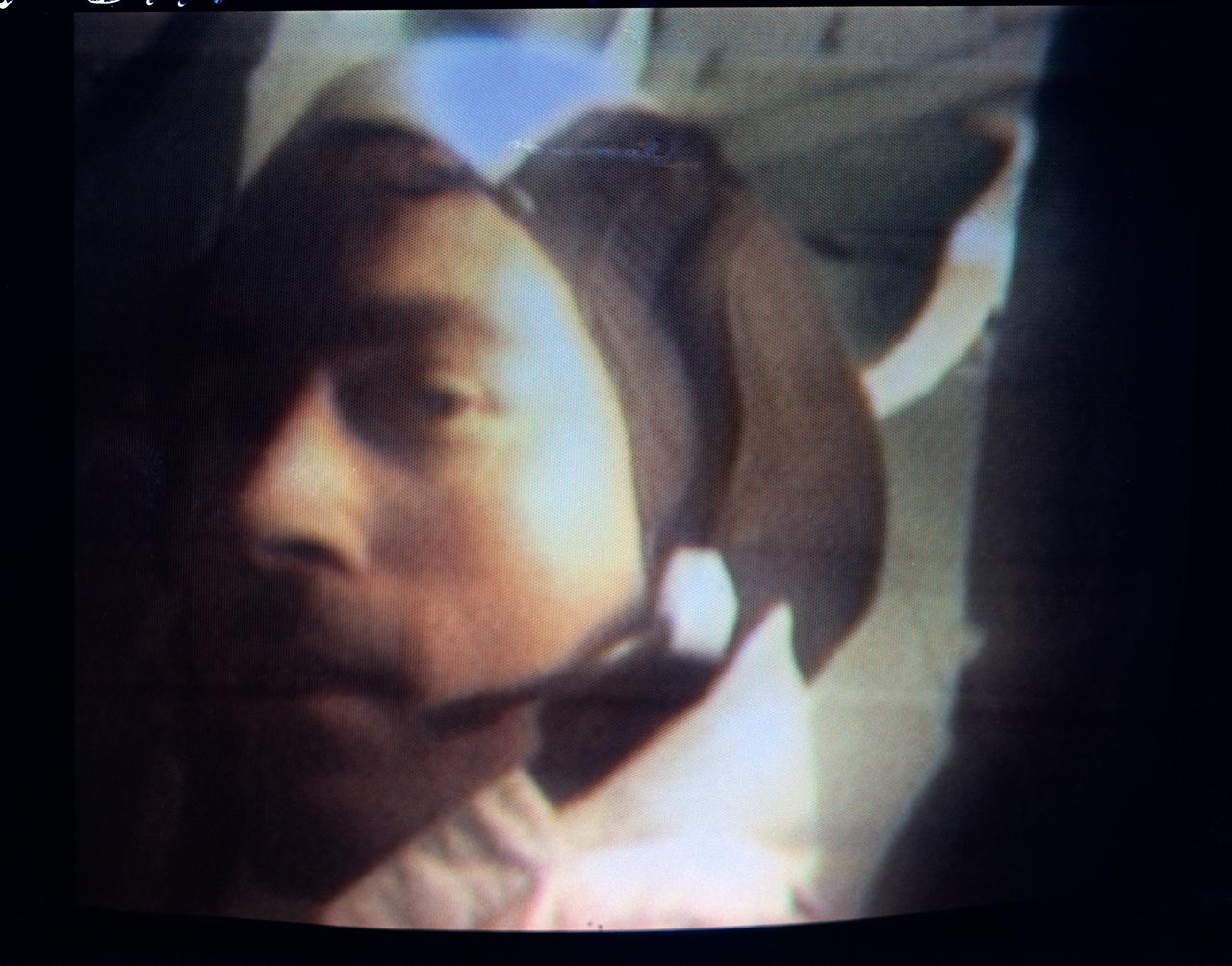
S69-33998 (18 May 1969) --- A close-up view of the face of astronaut John W. Young, Apollo 10 command module pilot, is seen in this color reproduction taken from the third television transmission made by the color television camera aboard the Apollo 10 spacecraft. When this picture was made the Apollo 10 spacecraft was on a trans-lunar course, and was already about 36,000 nautical miles from Earth. Also, aboard Apollo 10 were astronauts Thomas P. Stafford, commander; and Eugene A. Cernan, lunar module pilot.
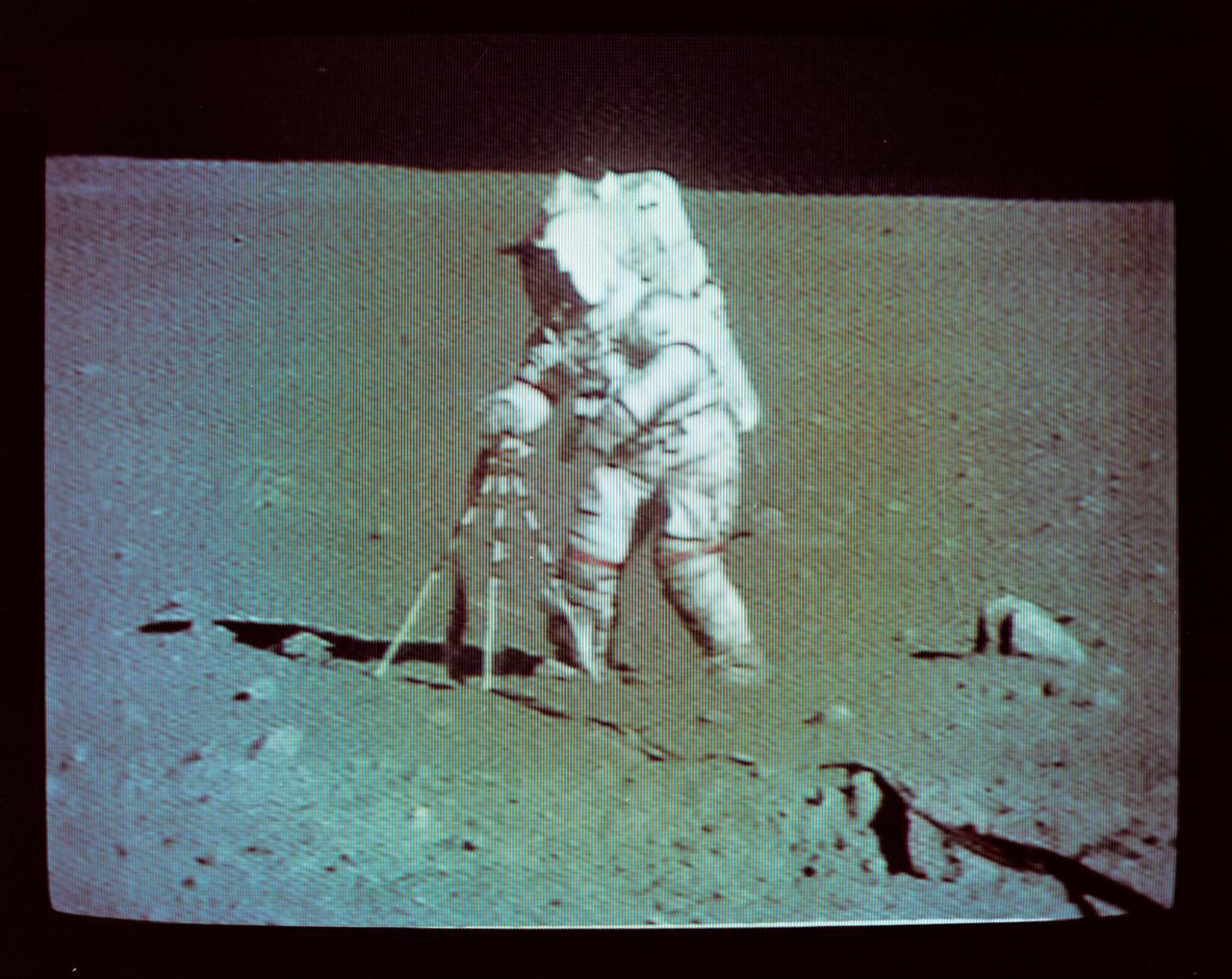
S72-35610 (21 April 1972) --- Astronaut John W. Young, commander of the Apollo 16 lunar landing mission, deploys the lunar Portable Magnetometer during the first Apollo 16 extravehicular activity (EVA) on the moon, as seen in this reproduction taken from a color television transmission made by the color television camera mounted on the Lunar Roving Vehicle (LRV). While astronaut Thomas K. Mattingly II, command module pilot, remained with the Command and Service Modules in lunar orbit, astronauts Young and Charles M. Duke Jr., lunar module pilot, descended in the Lunar Module to explore the Descartes landing site.
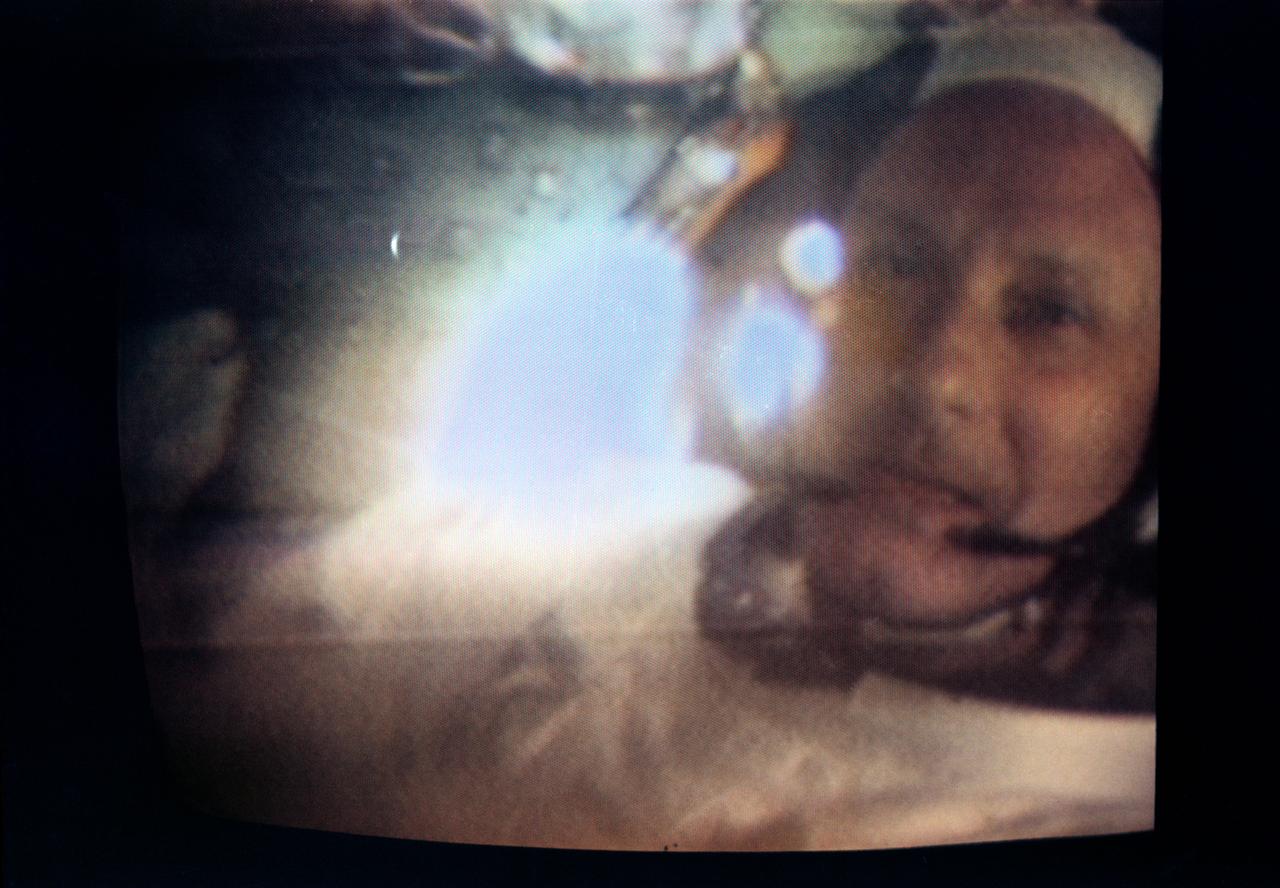
S69-33999 (18 May 1969) --- A close-up view of the face of astronaut, Thomas P. Stafford, Apollo 10 commander, is seen in this color reproduction taken from the third television transmission made by the color television camera aboard the Apollo 10 spacecraft. When this picture was made the Apollo 10 spacecraft was on a trans-lunar course, and was already about 36,000 nautical miles from Earth. Also, aboard Apollo 10 were astronauts John W. Young, command module pilot, and Eugene A. Cernan, lunar module pilot.
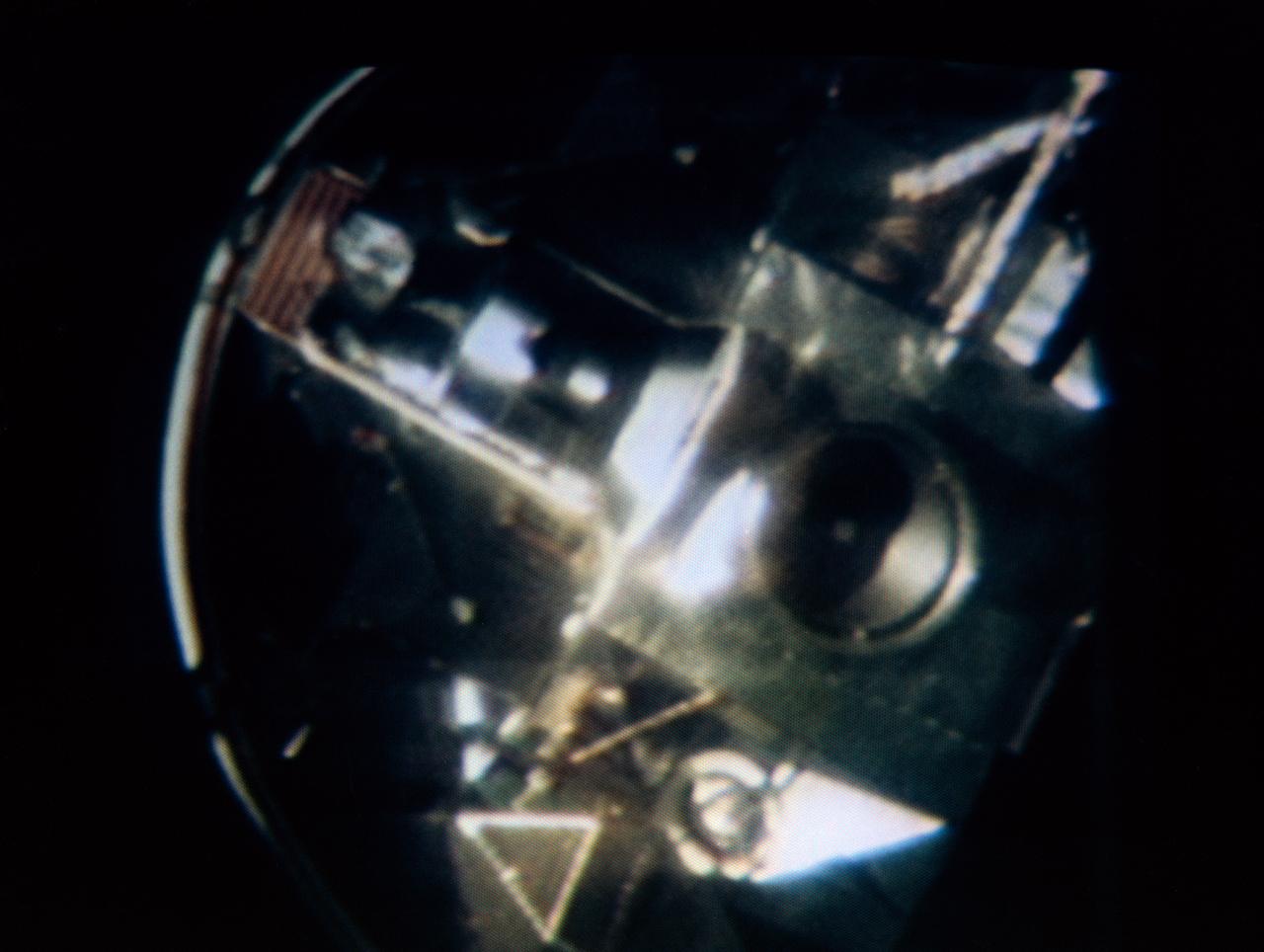
S69-33993 (18 May 1969) --- The Apollo 10 Lunar Module, still attached to the Saturn IVB stage, is seen in this color reproduction taken from the first television transmission made by the color television camera aboard the Apollo 10 spacecraft. This picture was made following CSM/LM-S-IVB separation, and prior to LM extraction from the S-IVB. The Command and Service Modules were making the docking approach to the LM/S-IVB. The circular object is the docking drogue assembly on the LM. Aboard the Command Module were astronauts Thomas P. Stafford, commander; John W. Young, command module pilot; and Eugene A. Cernan, lunar module pilot.
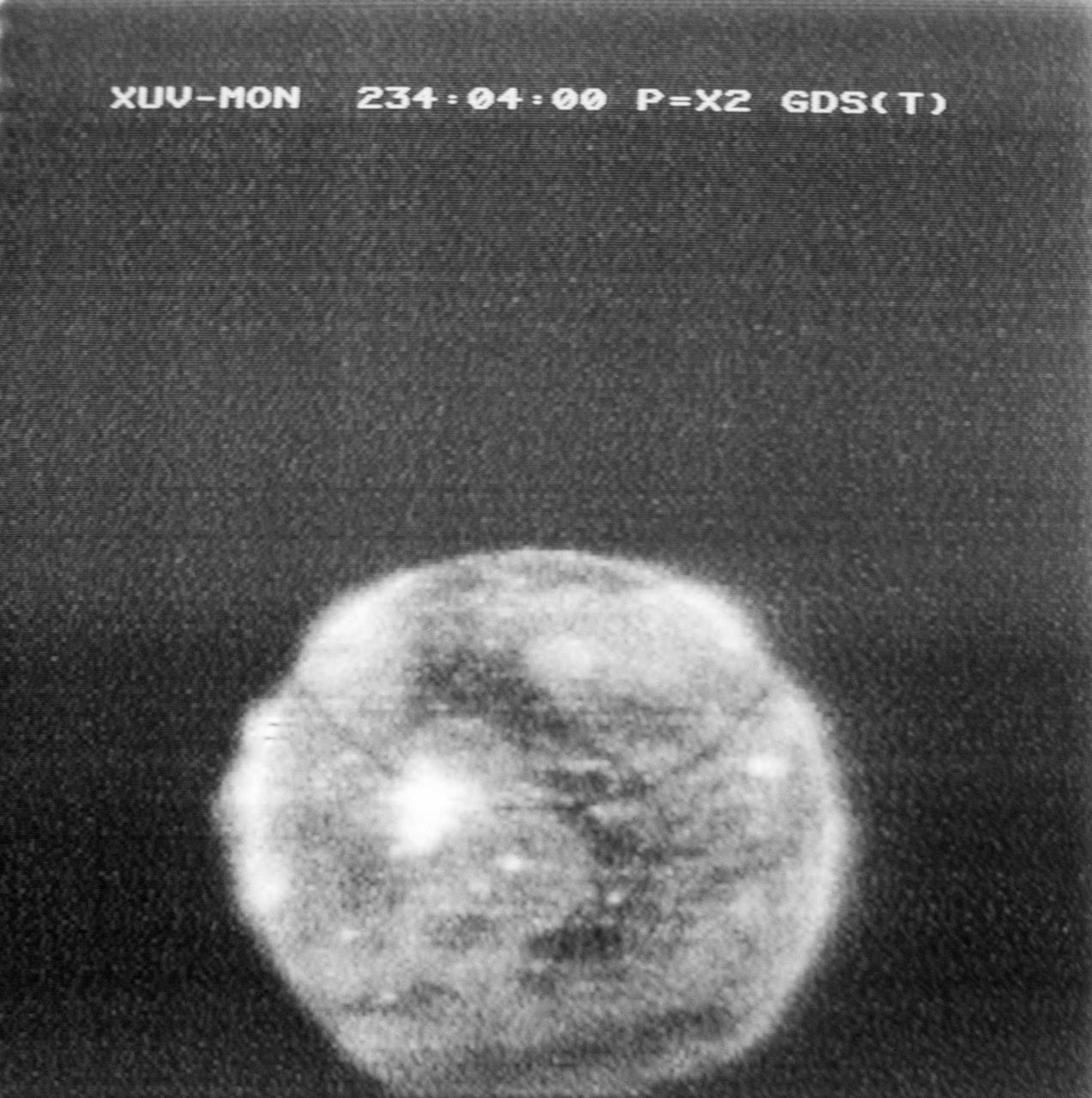
S73-32867 (21 Aug. 1973) --- The solar sphere viewed through the Skylab solar physics experiment (S082) Extreme Ultraviolet Spectroheliographis seen in this photographic reproduction taken from a color television transmission made by a TV camera aboard the Skylab space station in Earth orbit. The solar chromosphere and lower corona are much hotter than the surface of the sun characterized by the white light emissions. This image was recorded during the huge solar prominence which occurred on Aug. 21, 1973. Photo credit: NASA

S73-26794 (26 May 1973) --- Two of the three Skylab 2 astronauts are seen in the wardroom of the crew quarters of the Orbital Workshop of the Skylab 1 space station cluster in Earth orbit in this reproduction taken from a color television transmission made by a TV camera aboard the space station. They are preparing a meal. Astronaut Charles Conrad Jr., commander, is in the right foreground. In the background is scientist-astronaut Joseph P. Kerwin, science pilot. Photo credit: NASA
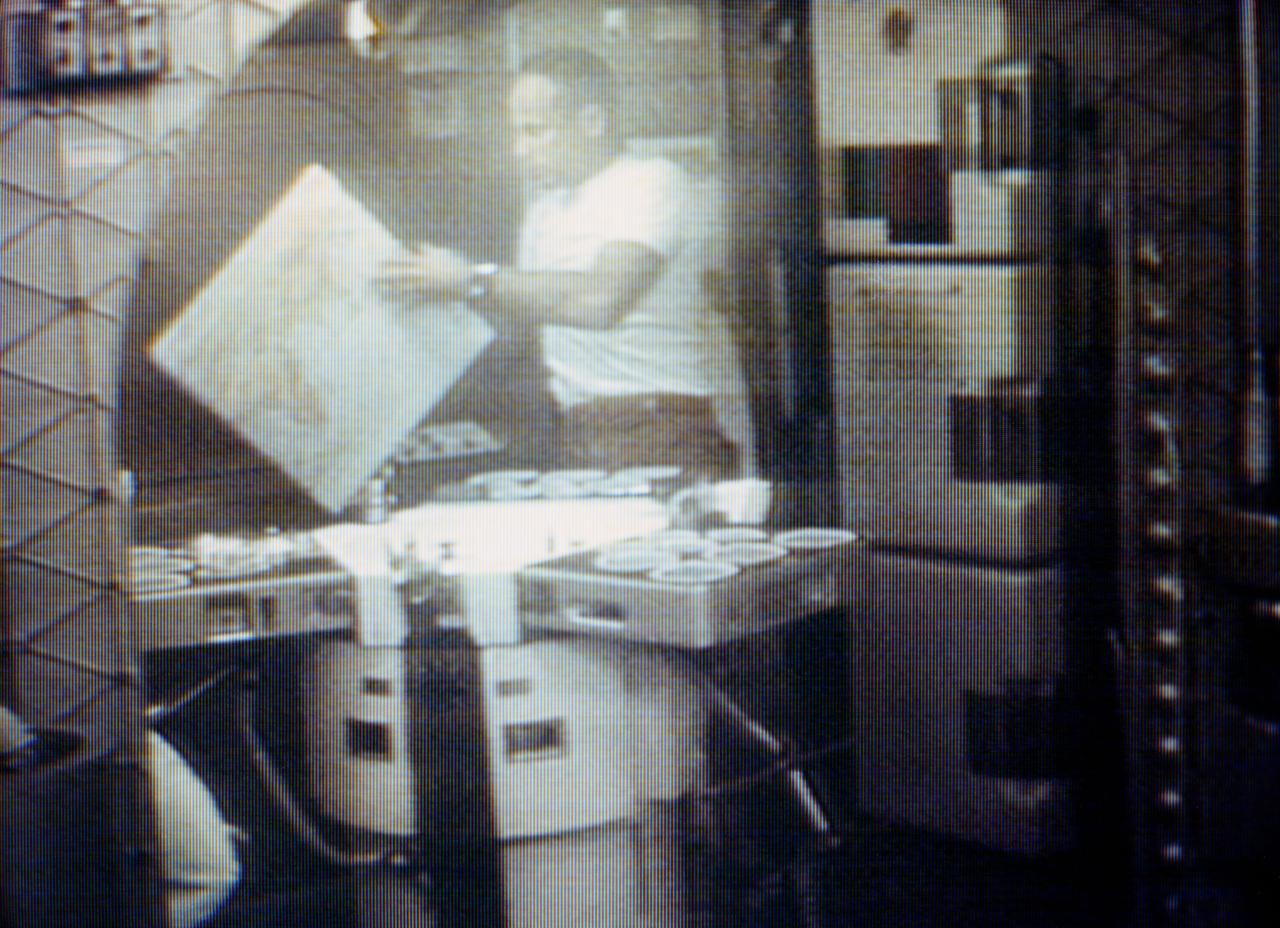
S73-34193 (1 Aug. 1973) --- Astronaut Jack R. Lousma, Skylab 3 pilot, looks at a map of Earth at the food table in the ward room of the Orbital Workshop (OWS). In this photographic reproduction taken from a television transmission made by a color TV camera aboard the Skylab space station cluster in Earth orbit. Photo credit: NASA

S68-50713 (14 Oct. 1968) --- Astronauts Walter M. Schirra Jr. (on right), mission commander; and Donn F. Eisele, command module pilot; are seen in the first live television transmission from space. Schirra is holding a sign which reads, "Keep those cards and letters coming in, folks!" Out of view at left is astronaut Walter Cunningham, lunar module pilot.
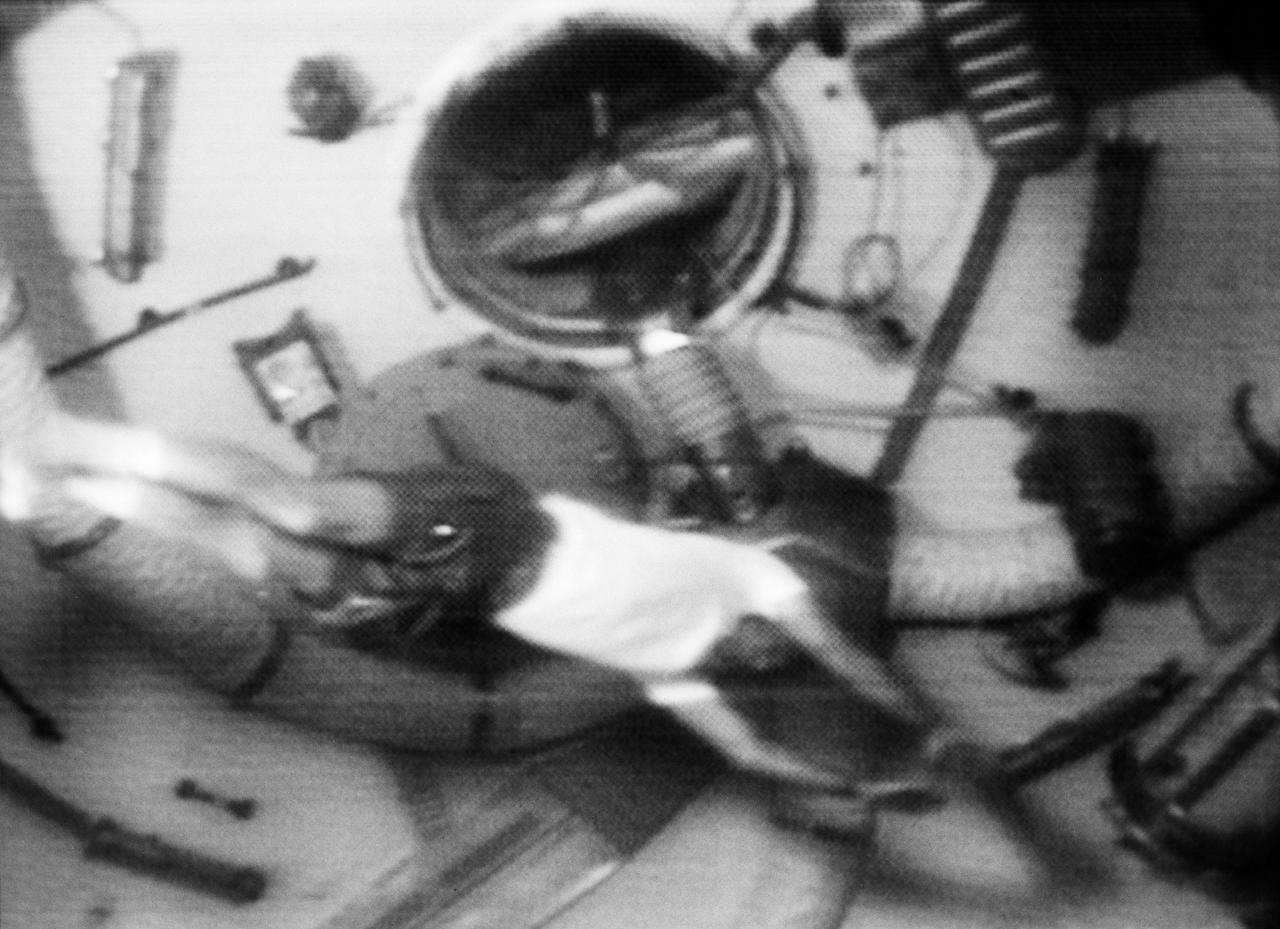
S73-32632 (19 Aug. 1973) --- Astronaut Alan L. Bean, Skylab 3 commander, performs acrobatics and simulated gymnastics in the dome area of the Orbital Workshop in this photographic reproduction taken from a television transmission made by a color TV camera aboard the Skylab space station in Earth orbit. Bean appears to be floating in a diving position. Photo credit: NASA
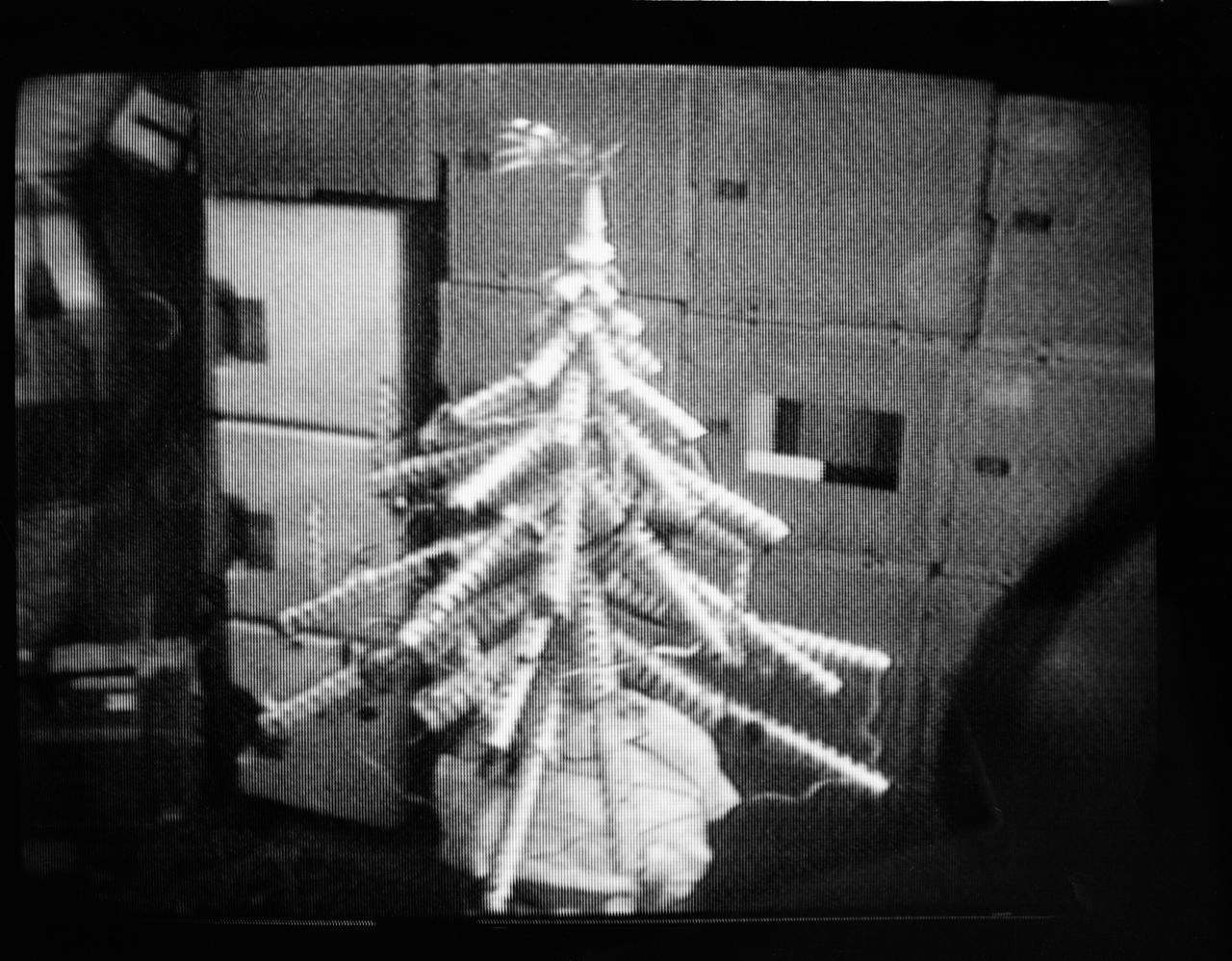
S73-38687 (24 Dec. 1973) --- This "Christmas tree" was created by the three crewmen of the third manned Skylab mission (Skylab 4) aboard the space station in Earth orbit. Food cans were used to fashion the tree. This photograph was made from a television transmission made from a video tape recording on Dec. 24, 1973. Photo credit: NASA
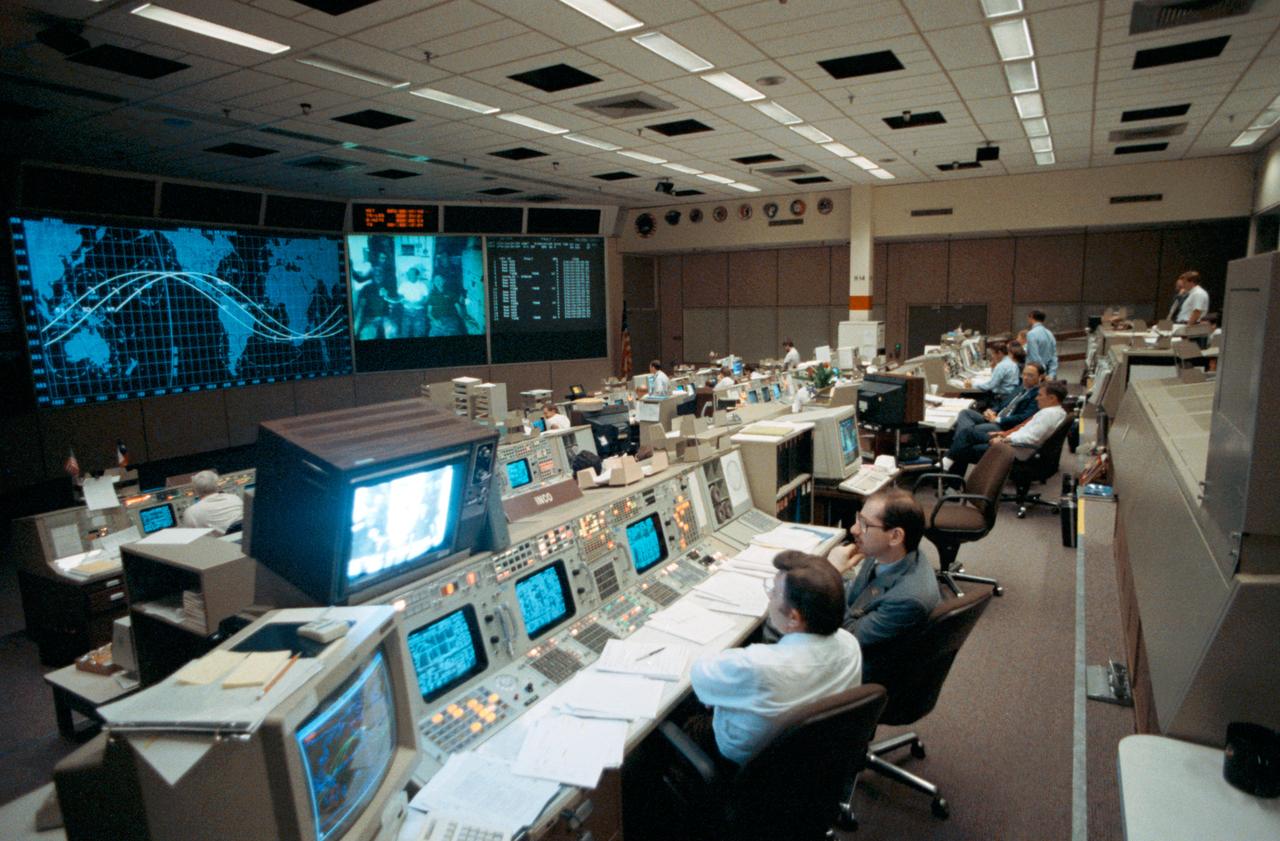
Flight controllers in JSC's Mission Control Center (MCC) Bldg 30 flight control room (FCR) listen to a presentation by STS-26 crewmembers on the fourth day of Discovery's, Orbiter Vehicle (OV) 103's, orbital mission. Instrumentation and Communications Officers (INCOs) Harold Black (left foreground) and John F. Muratore and other controllers view a television (TV) transmission of the crew on a screen in front of the FCR as each member relates some inner feelings while paying tribute to the 51L Challenger crew.
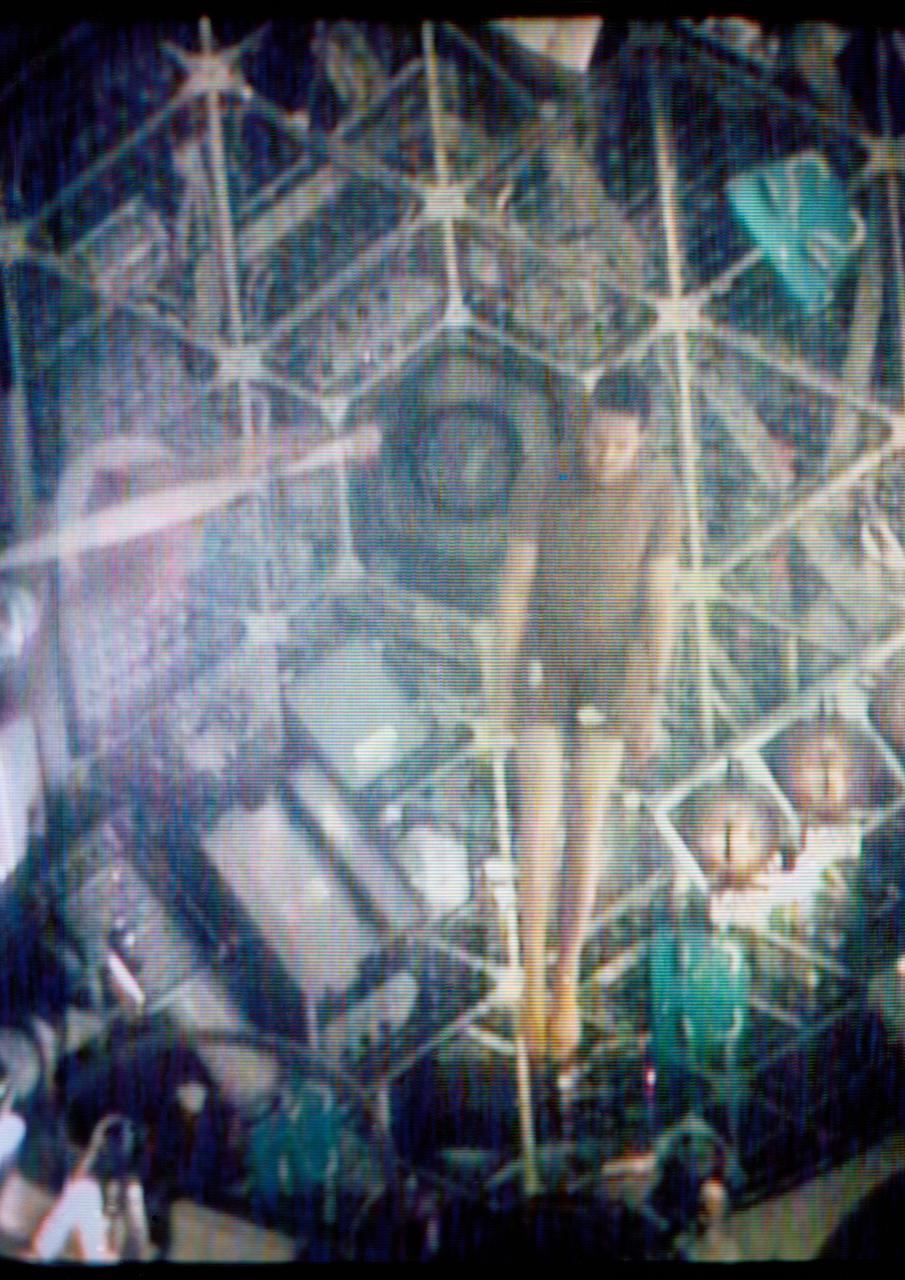
S73-27260 (1 June 1973) --- Two of the three Skylab 2 crewmen demonstrate weightlessness in the forward compartment of the Orbital Workshop of the Skylab 1 & 2 space station cluster in Earth orbit, as seen in this reproduction taken from a color television transmission made by a TV camera aboard the space station. Scientist-astronaut Joseph P. Kerwin, science pilot, floats with his body extended. Kerwin is steadied by astronaut Charles Conrad Jr., commander. The crewmen performed exercises while floating. Photo credit: NASA
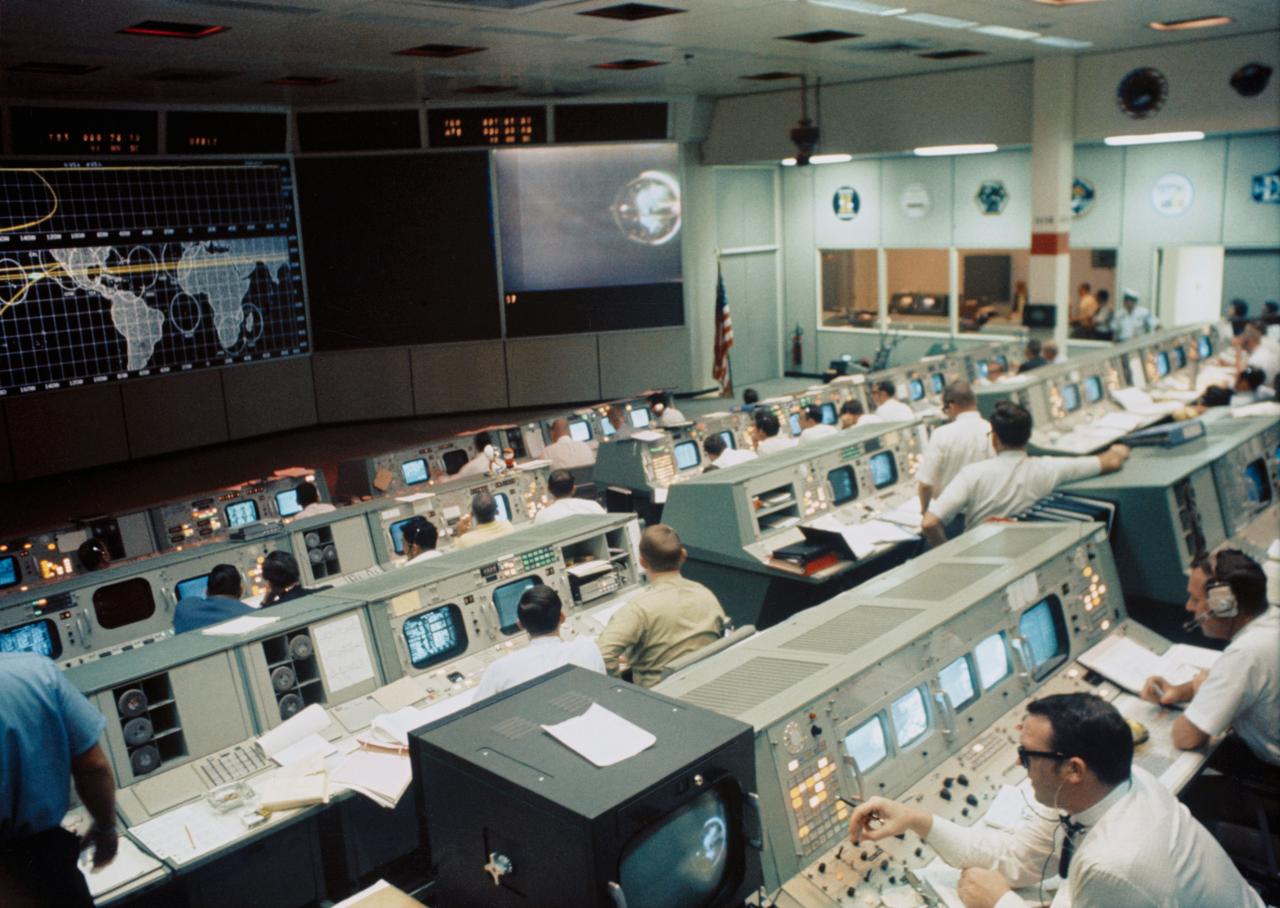
S69-34316 (18 May 1969) --- Overall view of the Mission Operations Control Room in the Mission Control Center, Building 30, on the first day of the Apollo 10 lunar orbit mission. A color television transmission was being received from Apollo 10. This picture was made following Command and Service Module/Lunar Module/Saturn IVB (CSM/LM-S-IVB) separation and prior to LM extraction from the S-IVB. The CSM were making the docking approach to the LM/S-IVB.
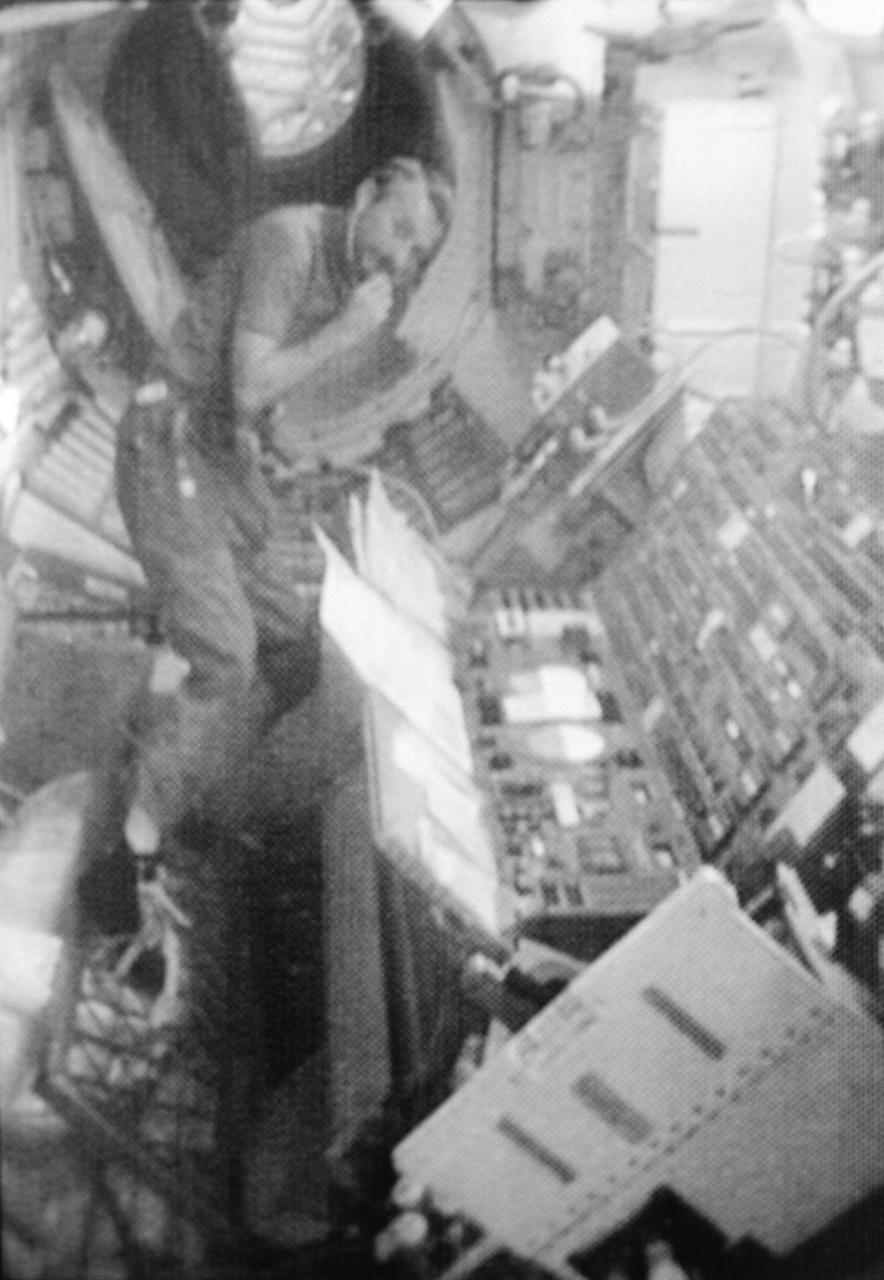
S73-31973 (August 1973) --- Scientist-astronaut Owen K. Garriott, Skylab 3 science pilot, looks at a map of Earth at the food table in the ward room of the Orbital Workshop (OWS). In this photographic reproduction taken from a television transmission made by a color TV camera aboard the Skylab space station cluster in Earth orbit. Photo credit: NASA
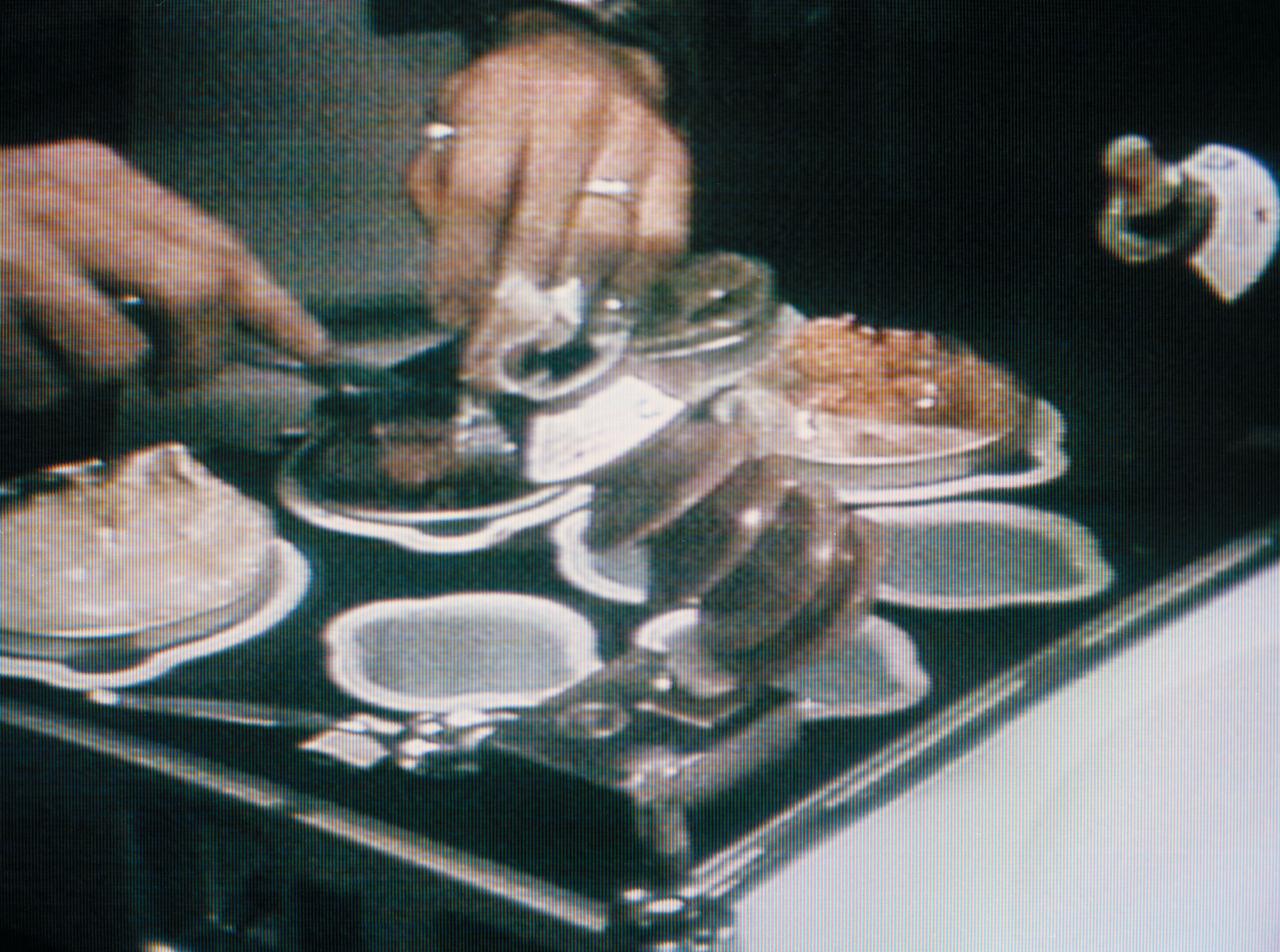
S73-34198 (1 Aug. 1973) --- A close-up view of the hands of astronaut Jack R. Lousma, Skylab 3 pilot, using a silverware utensil to gather food at the food station, in this photographic reproduction taken from a television transmission made by a color TV camera aboard the Skylab space station in Earth orbit. Astronaut Alan L. Bean, commander, had just zoomed the TV camera in for this close-up of the food tray following a series of wide shots of Lousma at the food station. Photo credit: NASA
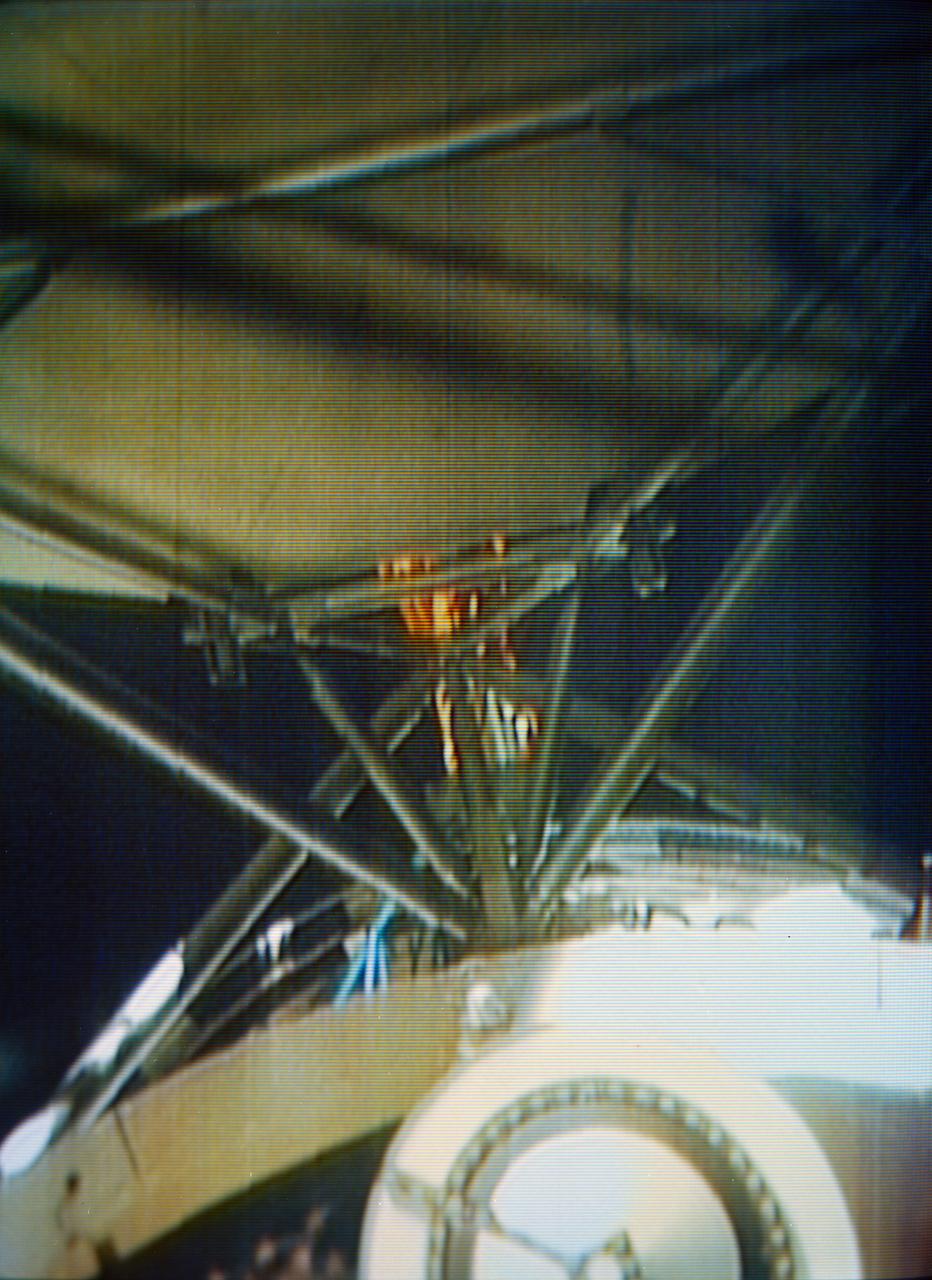
S73-26775 (26 May 1973) --- The deployment of the "parasol" solar shield, a sunshade to help cool the overheated Orbital Workshop of the Skylab 1 space station cluster in Earth orbit, can be seen in the reproduction taken from a color television transmission made by a TV camera aboard the space station. The camera is in the Command Module; and the view is looking through the truss of the Apollo Telescope Mount. The sunshade is only partially deployed in this picture. Photo credit: NASA
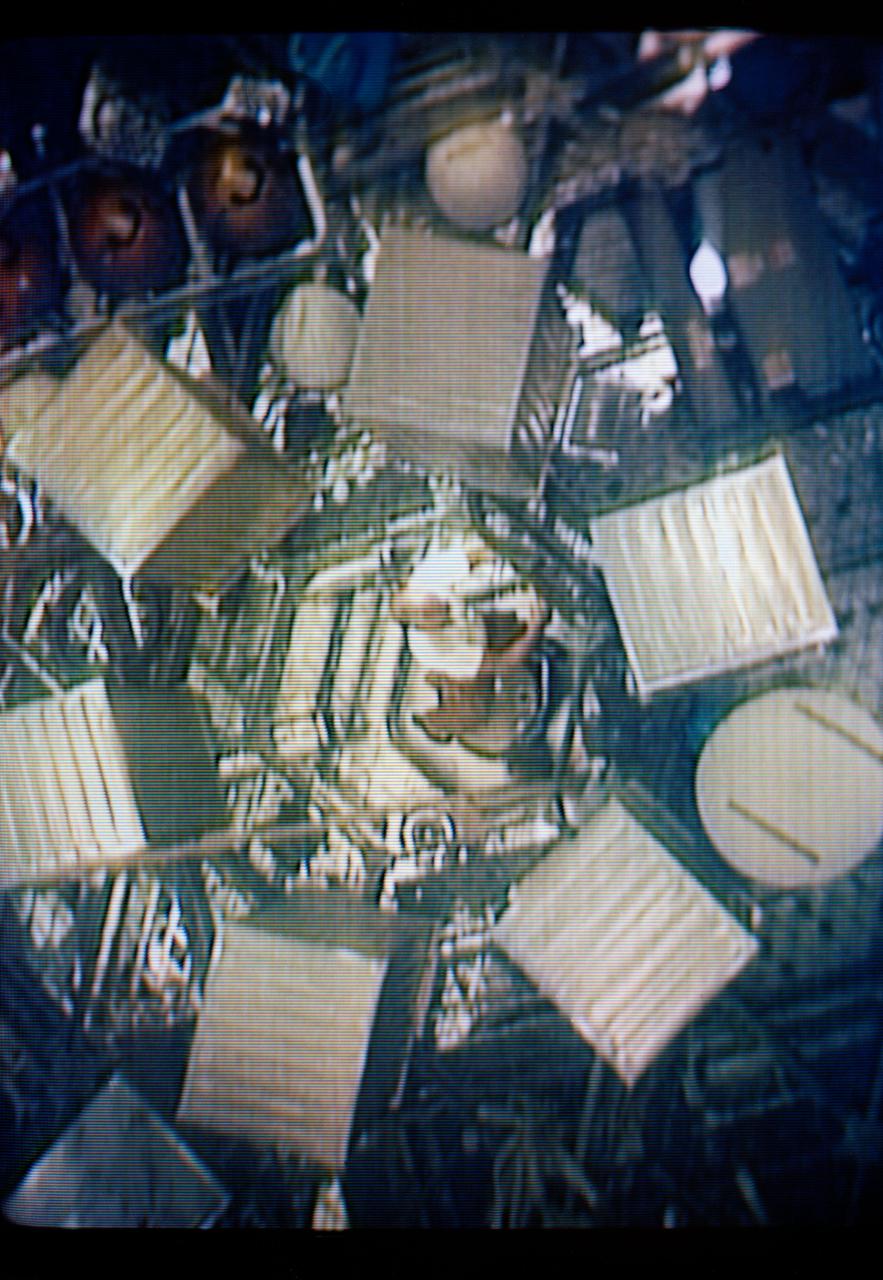
S73-26776 (26 May 1973) --- An interior view of the Orbital Workshop of the Skylab 1 space station cluster in Earth orbit can be seen in this reproduction taken from a color television transmission made by a TV camera aboard the space station. Astronaut Charles Conrad Jr., Skylab 2 commander, is floating up through the hatch. Food lockers are in the foreground. Photo credit: NASA
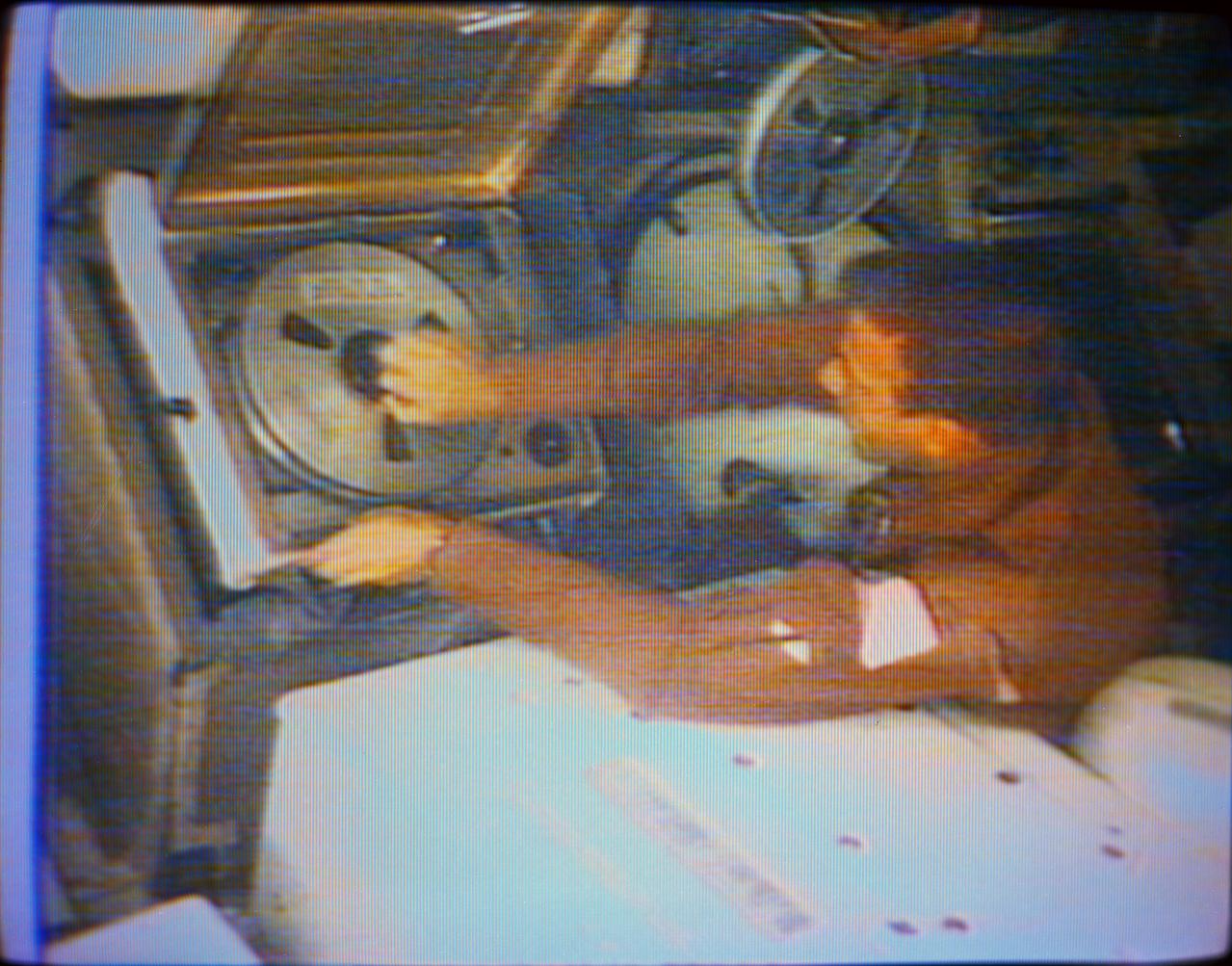
S73-27467 (5 June 1973) --- An overhead view of astronaut Paul J. Weitz, Skylab 2 pilot, at the video tape recorder in the Orbital Workshop of the Skylab 1 and 2 space station cluster in Earth orbit. Weitz is changing the tape in the recorder and storing the used data tape. This photograph was reproduced from a color television transmission made on June 5, 1973. Photo credit: NASA
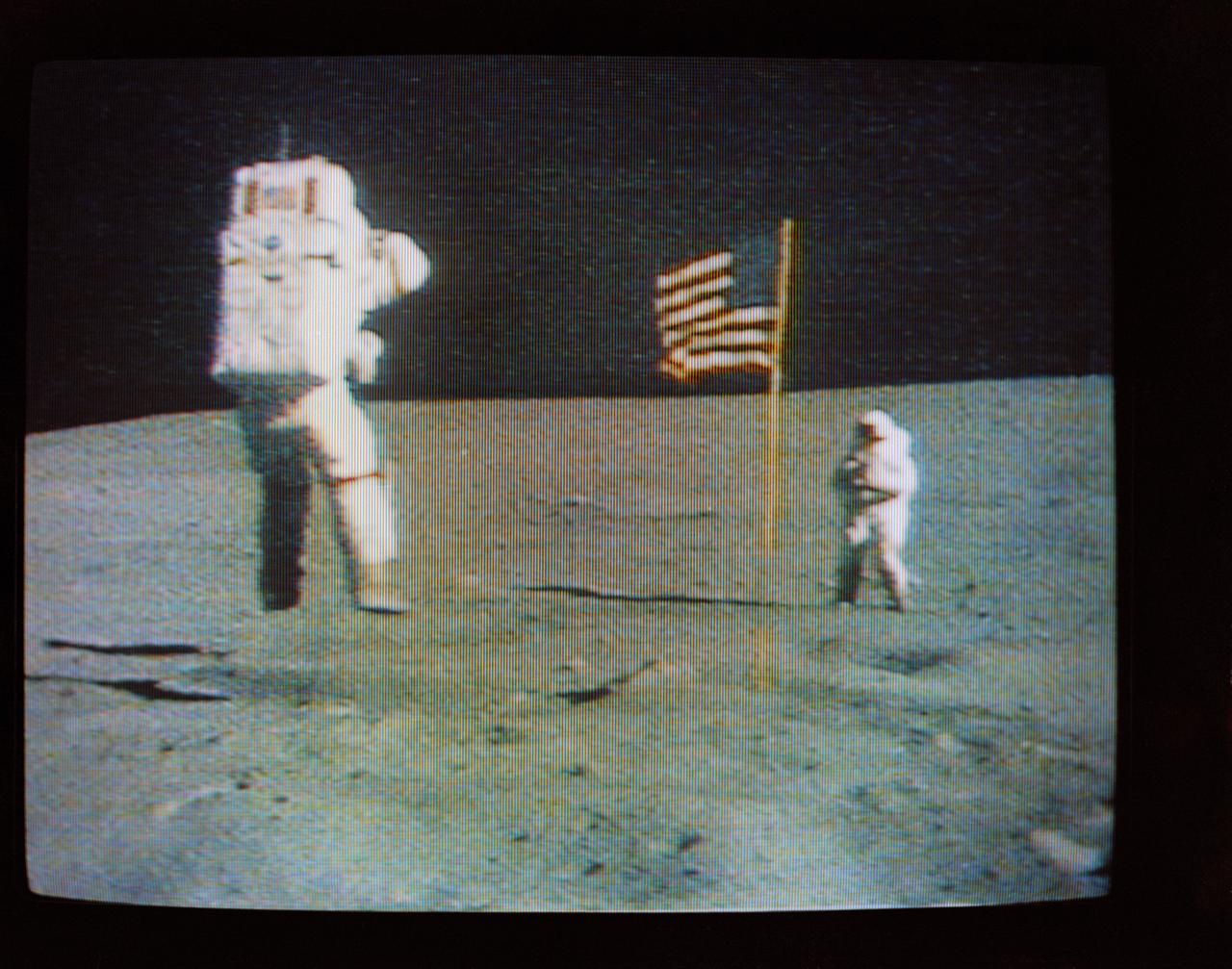
S72-35611 (21 April 1972) --- Astronaut John W. Young, commander of the Apollo 16 lunar landing mission, leaps from the lunar surface as he salutes the U.S. flag, during the first Apollo 16 extravehicular activity (EVA) on the moon, as seen in this reproduction taken from a color television transmission made by the color television camera mounted on the Lunar Roving Vehicle (LRV). Astronaut Charles M. Duke Jr., lunar module pilot, is standing in the background. While astronauts Young and Duke descended in the Apollo 16 Lunar Module (LM) "Orion" to explore the Descartes highlands landing site on the moon, astronaut Thomas K. Mattingly II, command module pilot, remained with the Command and Service Modules (CSM) "Casper" in lunar orbit.
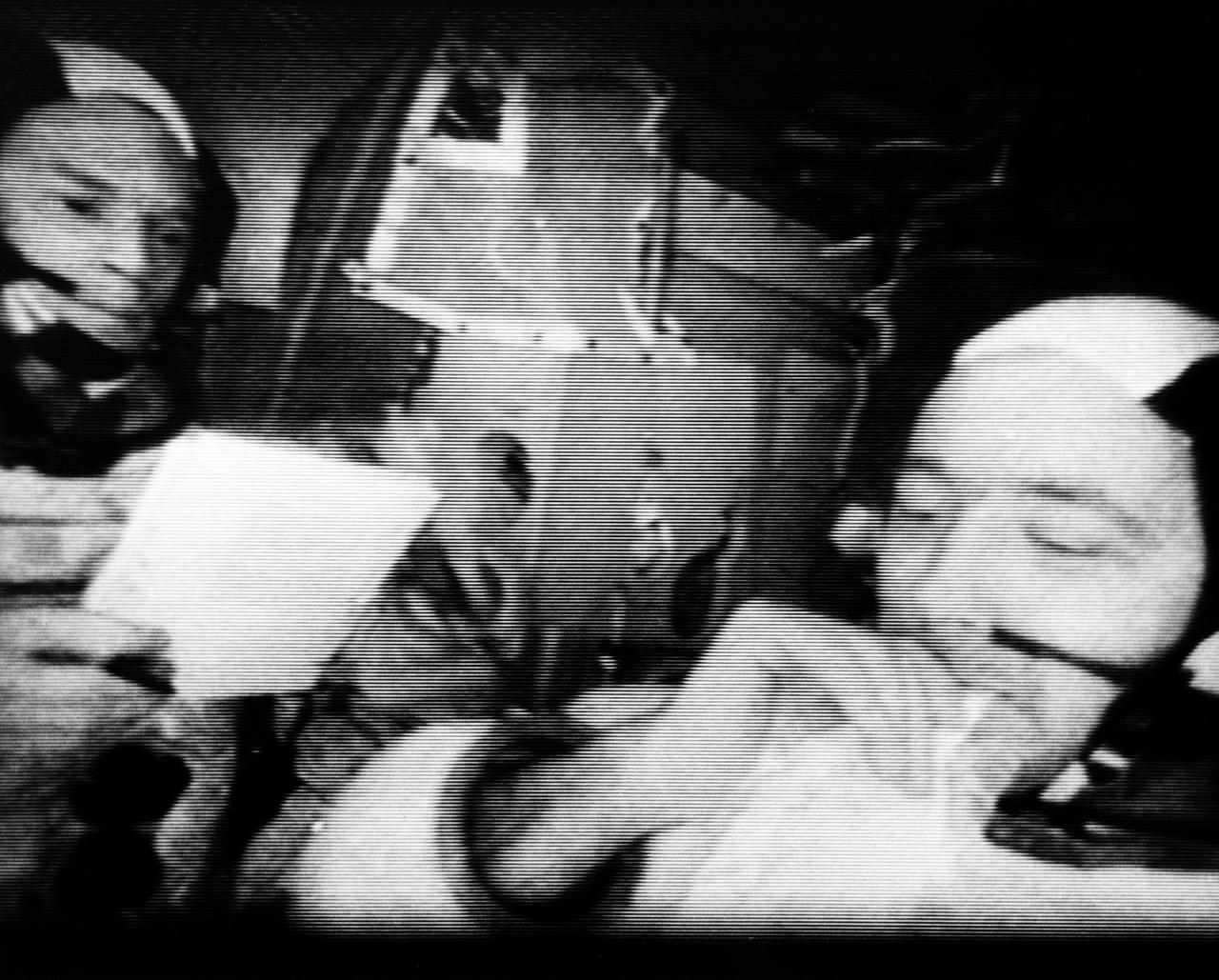
S69-26698 (March 1969) --- A photograph from a live television transmission from Apollo 9. This view shows the interior of the Lunar Module "Spider." Astronaut James A. McDivitt, Apollo 9 commander, is in right foreground. In left background is astronaut Russell L. Schweickart, lunar module pilot. At this moment Apollo 9 was orbiting Earth with the Command Module docked nose-to-nose with the Lunar Module. Astronaut David R. Scott, command module pilot, remained at the controls in the Command Module "Gumdrop" while the other two astronauts checked out the Lunar Module.
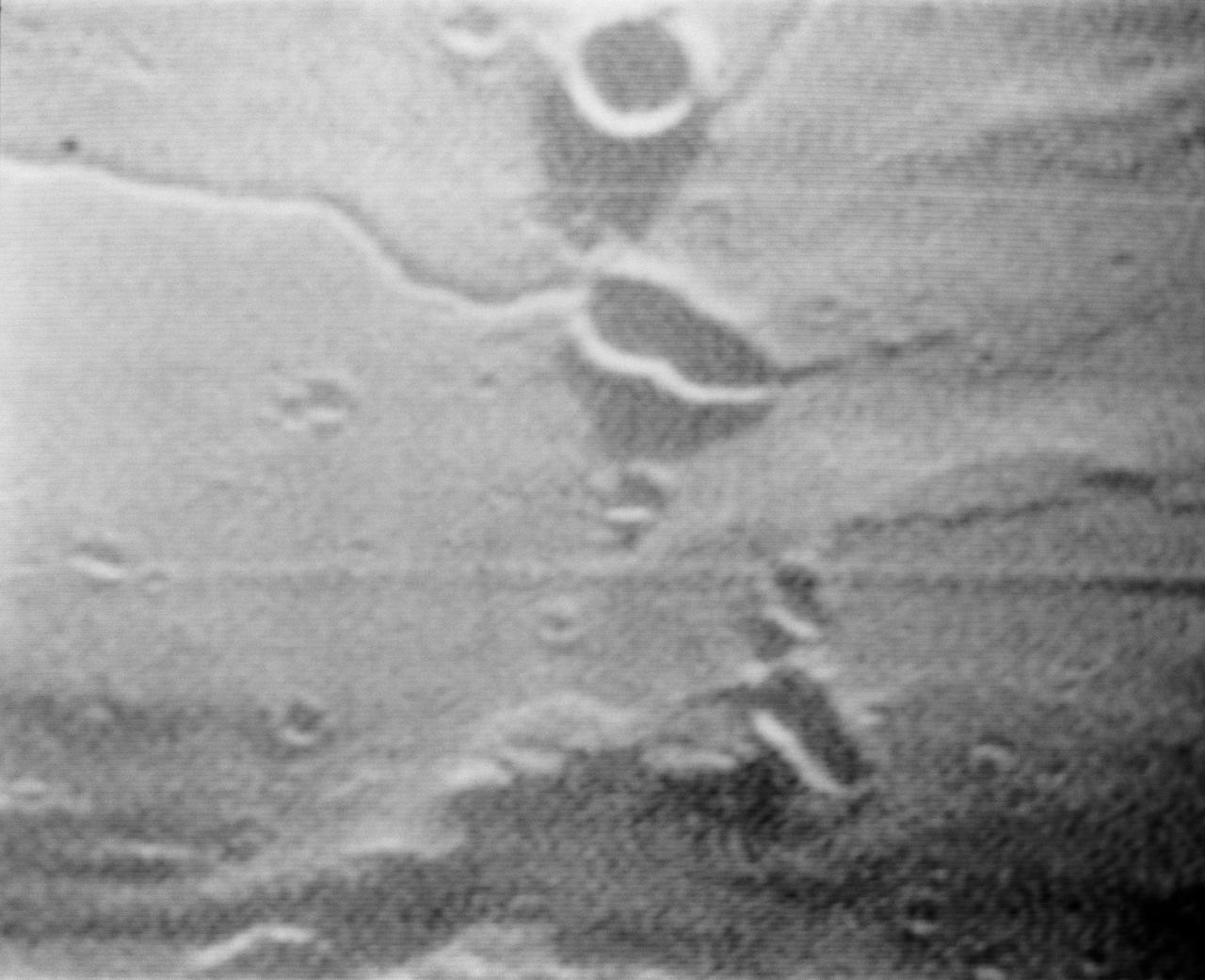
S69-39541 (19 July 1969) --- A near vertical view of Diamondback Rille is seen in this color reproduction taken from the fourth color television transmission from the Apollo 11 spacecraft, during its second revolution of the moon. The center of the picture is located at about 26.9 degrees east longitude and 1.2 degrees north latitude. This area is just east of the Apollo Landing Site 2. The crew of the Apollo 11 lunar landing mission is astronauts Neil A. Armstrong, commander; Michael Collins, command module pilot; and Edwin E. Aldrin Jr., lunar module pilot.
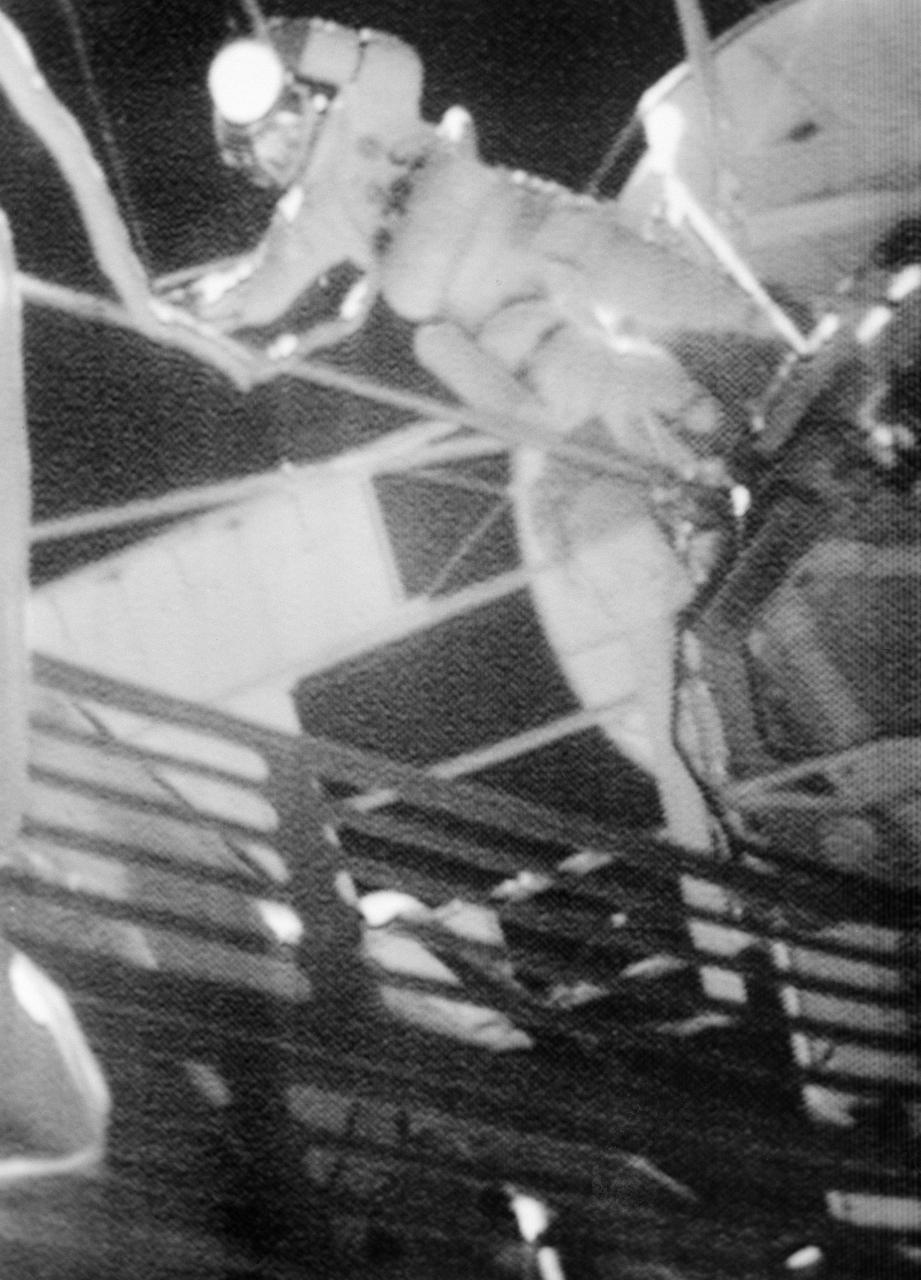
S73-31976 (5 Aug. 1973) --- Astronaut Jack R. Lousma, Skylab 3 pilot, is seen outside the Skylab space station in Earth orbit during the Aug. 5, 1973 Skylab 3 extravehicular activity (EVA) in this photographic reproduction taken from a television transmission made by a color TV camera aboard the space station. Scientist-astronaut Owen K. Garriott, Skylab 3 science pilot, participated in the EVA with Lousma. During the EVA the two crewmen deployed the twin pole solar shield to help shade the Orbital Workshop. Photo credit: NASA
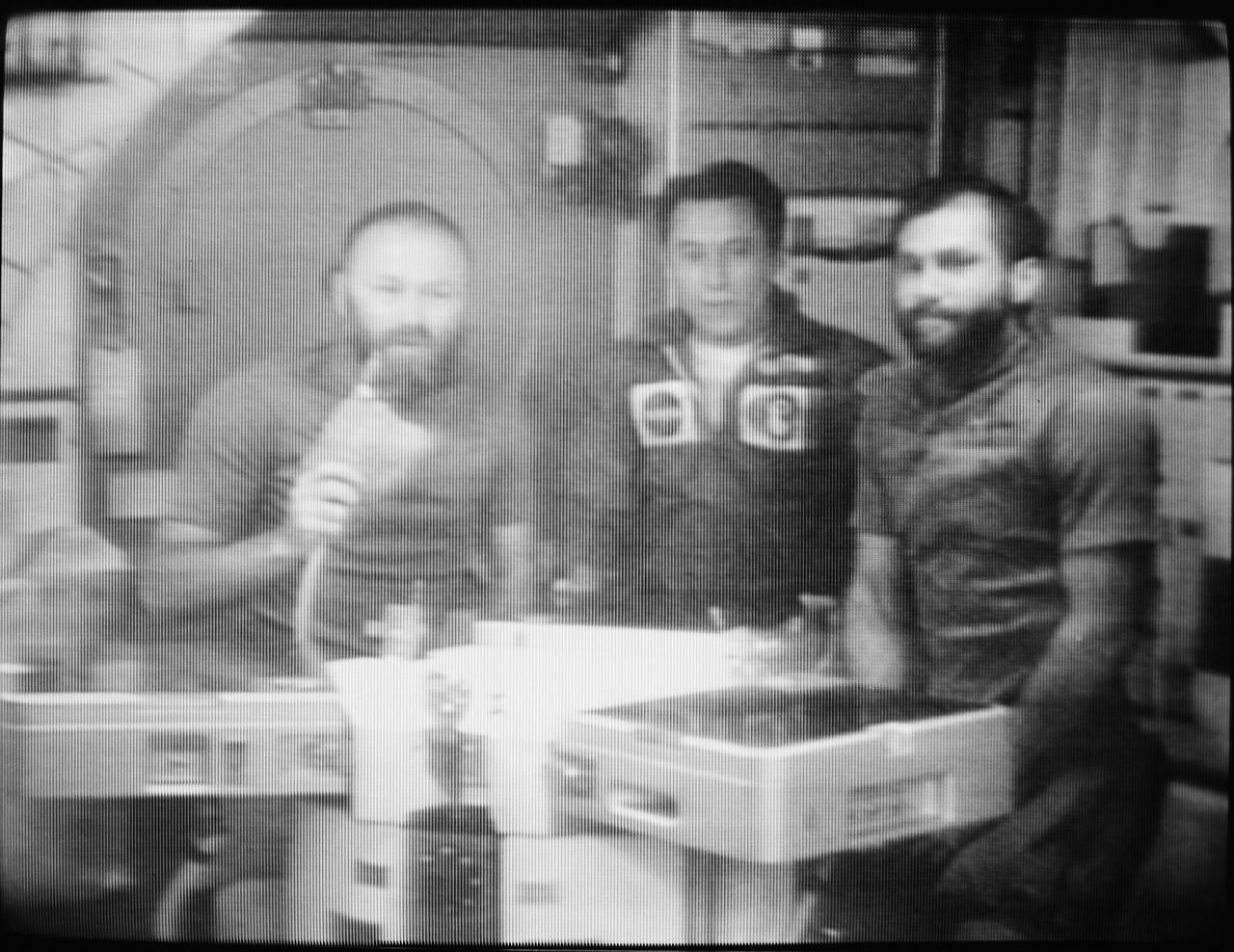
S73-38962 (28 Dec. 1973) --- The three members of the Skylab 4 crew confer via television communication with Dr. Lubos Kohoutek, discoverer of the Comet Kohoutek. This picture of the three astronauts was reproduced from a TV transmission made by a TV camera aboard the space station in Earth orbit. They are, left to right, Gerald P. Carr, commander; Edward G. Gibson, science pilot; and William R. Pogue, pilot. They are seated in the crew quarters wardroom of the Orbital Workshop. Professor Kohoutek, who is employed at the Hamburg Observatory in West Germany, was visiting the Johnson Space Center in Houston when he conferred with the Skylab 4 crewmen. Photo credit: NASA

S72-55167 (12 Dec. 1972) --- The two moon-exploring Apollo 17 crew men are seen facing the TV camera during the second extravehicular activity (EVA) at the Taurus -Littrow landing site, in this black and white reproduction taken from a color television transmission made by the color TV camera mounted on the Lunar Roving Vehicle (LRV). They are astronauts Eugene A Cernan, on left , commander, and scientist-astronaut Harrison H. Schmitt, lunar module pilot. Astronaut Ronald E. Evans, command module pilot, remained with the Apollo 17 Command and Service Modules (CSM) in lunar orbit.
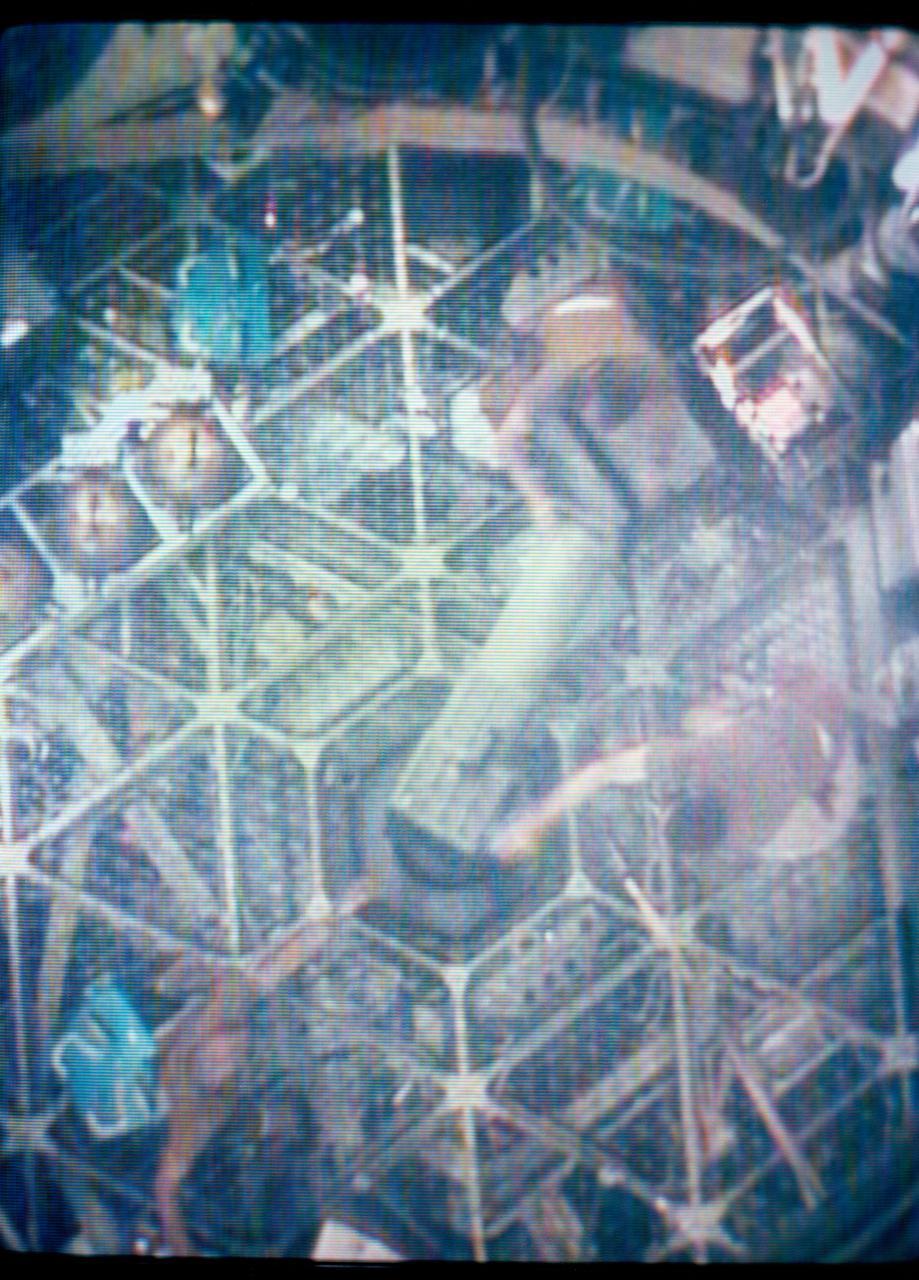
S73-27730 (June 1973) --- The Skylab 2 crewmen, astronauts Charles Conrad Jr., Joseph P. Kerwin and Paul J. Weitz, move the S183 Ultraviolet Panorama astrophysics experiment equipment under zero-gravity conditions in space in the foreground compartment of the Orbital Workshop of the Skylab 1 & 2 space station in Earth orbit, as seen in this reproduction taken from a color television transmission made by a TV camera aboard the space station. The S183 equipment includes the S183 spectrograph, the S019 mirror assembly, and a Maurer camera. Photo credit: NASA
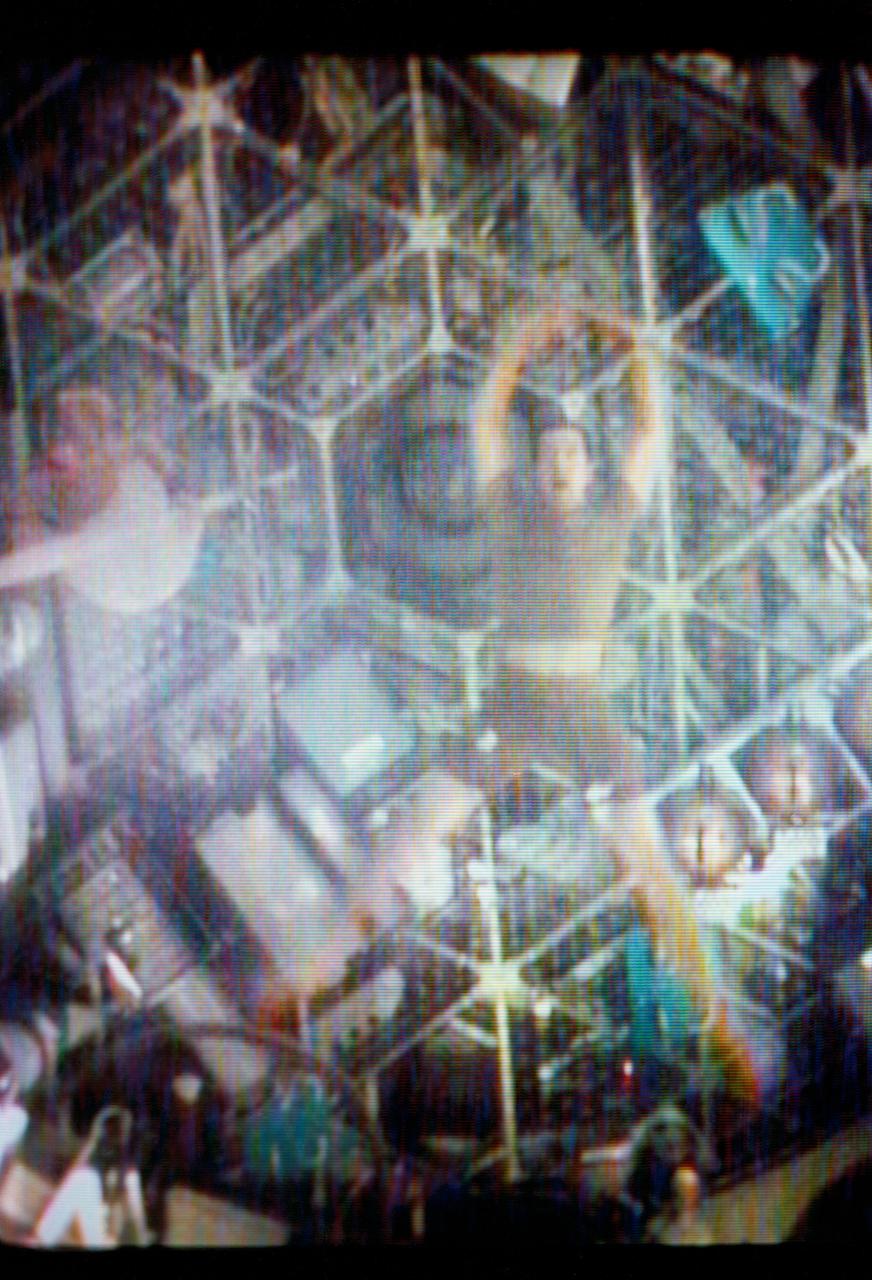
S73-27729 (1 June 1973) --- Scientist-astronaut Joseph P. Kerwin, Skylab 2 science pilot, floats with his body outstretched as he demonstrates weightlessness in the forward compartment of the Orbital Workshop of the Skylab 1 & 2 space station cluster in Earth orbit, as seen in this reproduction taken from a color television transmission made by a TV camera aboard the space station. Astronaut Charles Conrad Jr., Skylab 2 commander, is visible on Kerwin's right. The Skylab 2 crewmen performed exercises while floating. Photo credit: NASA

S83-34270 (18 June 1983) --- Astronaut C. Gordon Fullerton supplies helpful consultation for Edward I. Fendell (seated) at the Integrated Communications System (INCO) console in the Mission Operations Control Room (MOCR) of the Johnson Space Center's (JSC) Mission Control Center (MCC). Fendell had control over the TV systems during a brief television transmission that featured the opening of the payload bay doors and the revealing of the cargo in the space shuttle Challenger's 18-meter (60-feet) long payload bay. The door-opening was the first of a series of many TV sessions planned for this six-day flight. Photo credit: NASA
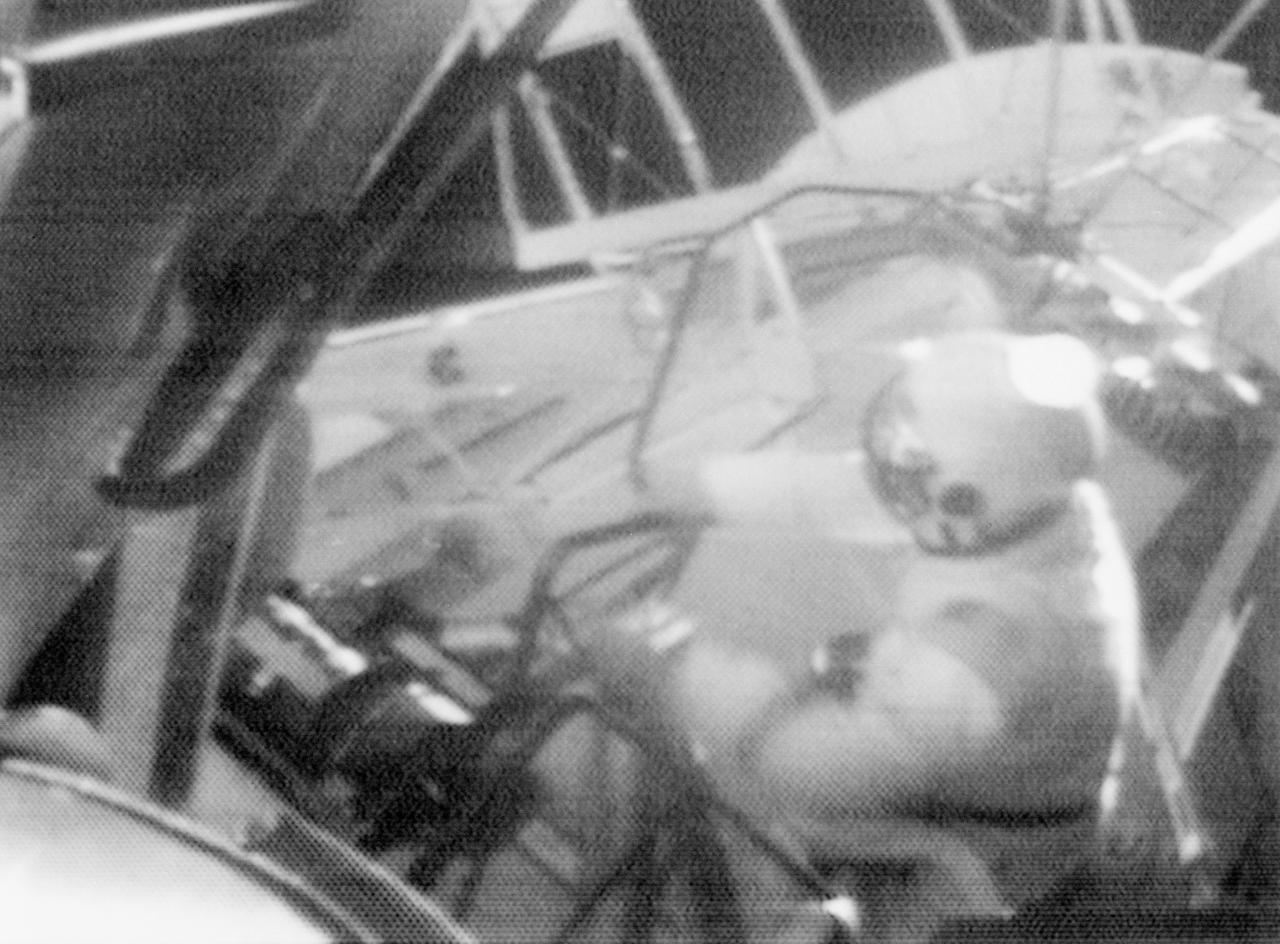
S73-33161 (24 Aug. 1973) --- Astronaut Jack R. Lousma, Skylab 3 pilot, hooks up a 23-foot, two-inch connecting cable for the rate gyro six pack during extravehicular activity (EVA) on Aug. 24, 1973, as seen in this photographic reproduction taken from a color television transmission made by a TV camera aboard the Skylab space station in Earth orbit. The rate gyros were mounted inside the Multiple Docking Adapter opposite the Apollo Telescope Mount control and display console. Photo credit: NASA
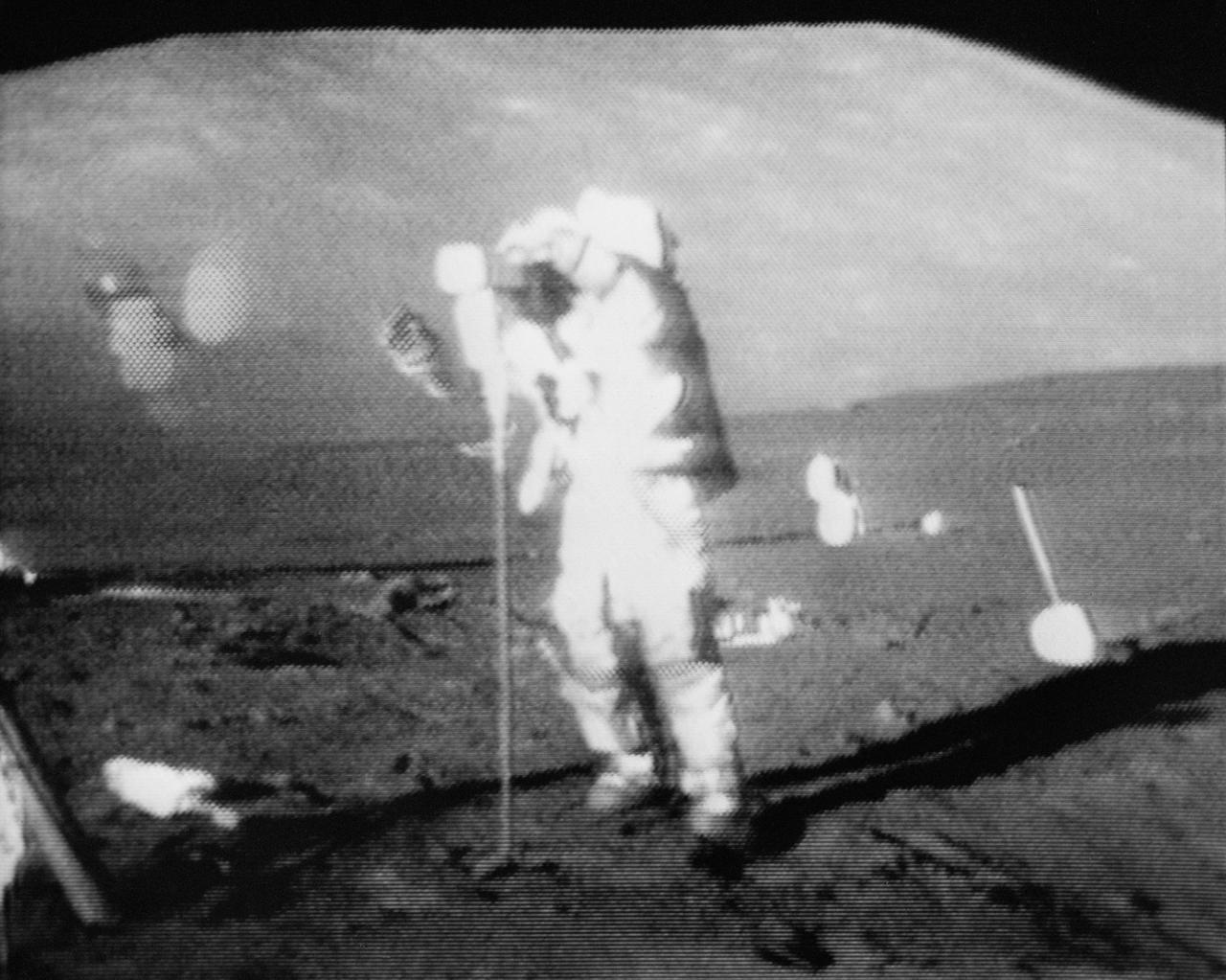
S72-55064 (11 Dec. 1972) --- Astronaut Eugene A. Cernan operates the Apollo Lunar Surface Drill during the first Apollo 17 extravehicular activity (EVA) at the Taurus-Littrow landing site, in this black and white reproduction taken from a color television transmission made by the RCA color TV camera mounted on the Lunar Roving Vehicle. Cernan is the commander of the Apollo 17 lunar landing mission. Astronaut Ronald E. Evans, command module pilot, remained with the Apollo 17 Command and Service Modules in lunar orbit while astronaut Cernan and scientist-astronaut Harrison H. Schmitt, lunar module pilot, descended in the Lunar Module to explore the moon.

S72-55066 (11 Dec. 1972) --- Scientist-astronaut Harrison H. Schmitt chips samples from a large boulder during the first Apollo 17 extravehicular activity (EVA) at the Taurus-Littrow landing site, in this black and white reproduction taken from a color television transmission made by the color RCA TV camera mounted on the Lunar Roving Vehicle. Schmitt is the lunar module pilot of the Apollo 17 lunar landing mission. Astronaut Ronald E. Evans, command module pilot, remained with the Apollo 17 Command and Service Modules in lunar orbit while astronauts Schmitt and Eugene A. Cernan, commander, descended in the Lunar Module to explore the moon.
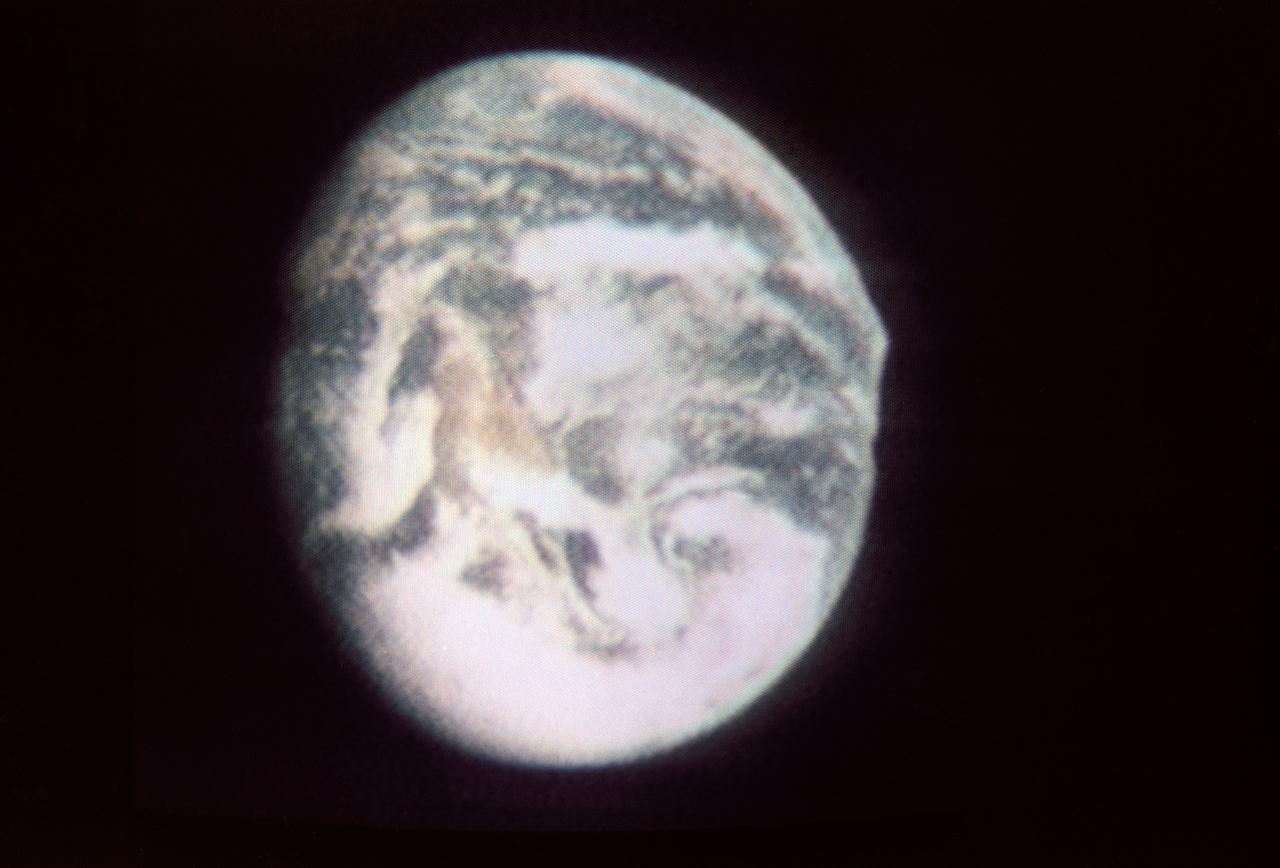
S69-33995 (18 May 1969) --- A cloud-covered Earth from about 12,800 nautical miles away is seen in this color reproduction taken from the second TV transmission made by the color television camera on board the Apollo 10 spacecraft. The United States and Mexico are located at right center. The more cloud-free area is the western and southwestern part of the U.S. and northern Mexico. Clouds cover the eastern half of the U.S. Aboard the Apollo 10 spacecraft on its trans-lunar course toward the moon were astronauts Thomas P. Stafford, commander; John W. Young, command module pilot; and Eugene A. Cernan, lunar module pilot.

S72-55298 (13 Dec. 1972) --- The two moon-exploring Apollo 17 crewmen are seen walking beside a large boulder during the third extravehicular activity (EVA) at the Taurus-Littrow landing site. They are scientist-astronaut Harrison H. Schmitt (in front), lunar module pilot; and astronaut Eugene A. Cernan, commander. This black and white reproduction was taken from a color television transmission made by the color RCA TV camera mounted on the Lunar Roving Vehicle. Astronaut Ronald E. Evans, command module pilot, remained with the Command and Service Modules in lunar orbit.
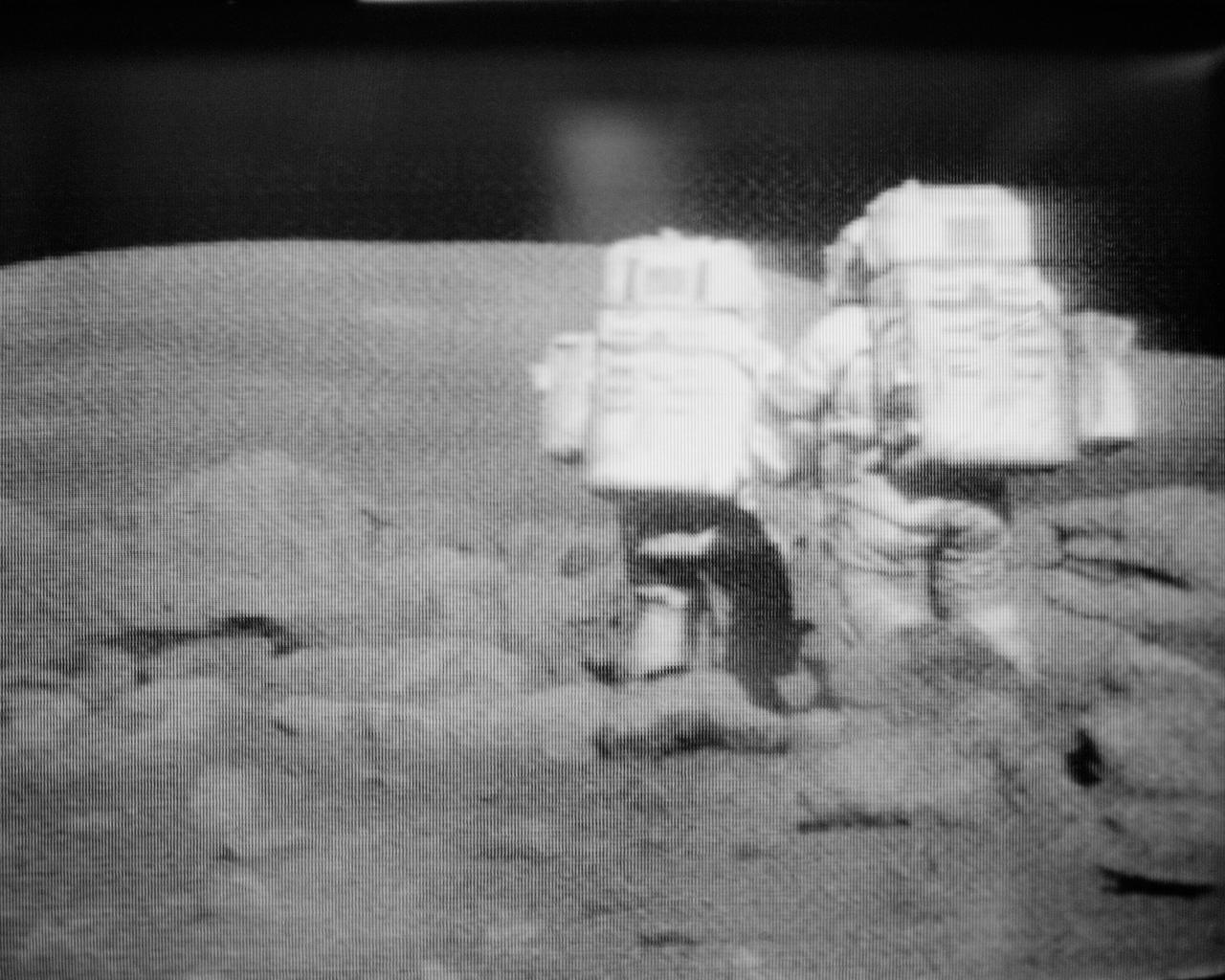
S72-55168 (12 Dec. 1972) --- Astronaut Eugene A. Cernan (on left) and scientist-astronaut Harrison H. Schmitt walk through a field of small boulders during the second Apollo 17 extravehicular activity (EVA) at the Taurus-Littrow landing site, as seen in this black and white reproduction taken from a color television transmission made by the color RCA TV camera mounted on the Lunar Roving Vehicle. Cernan is the Apollo 17 commander; and Schmitt is the lunar module pilot. Astronaut Ronald E. Evans, command module pilot, remained with the Command and Service Modules in lunar orbit. (Their backs are toward the camera)
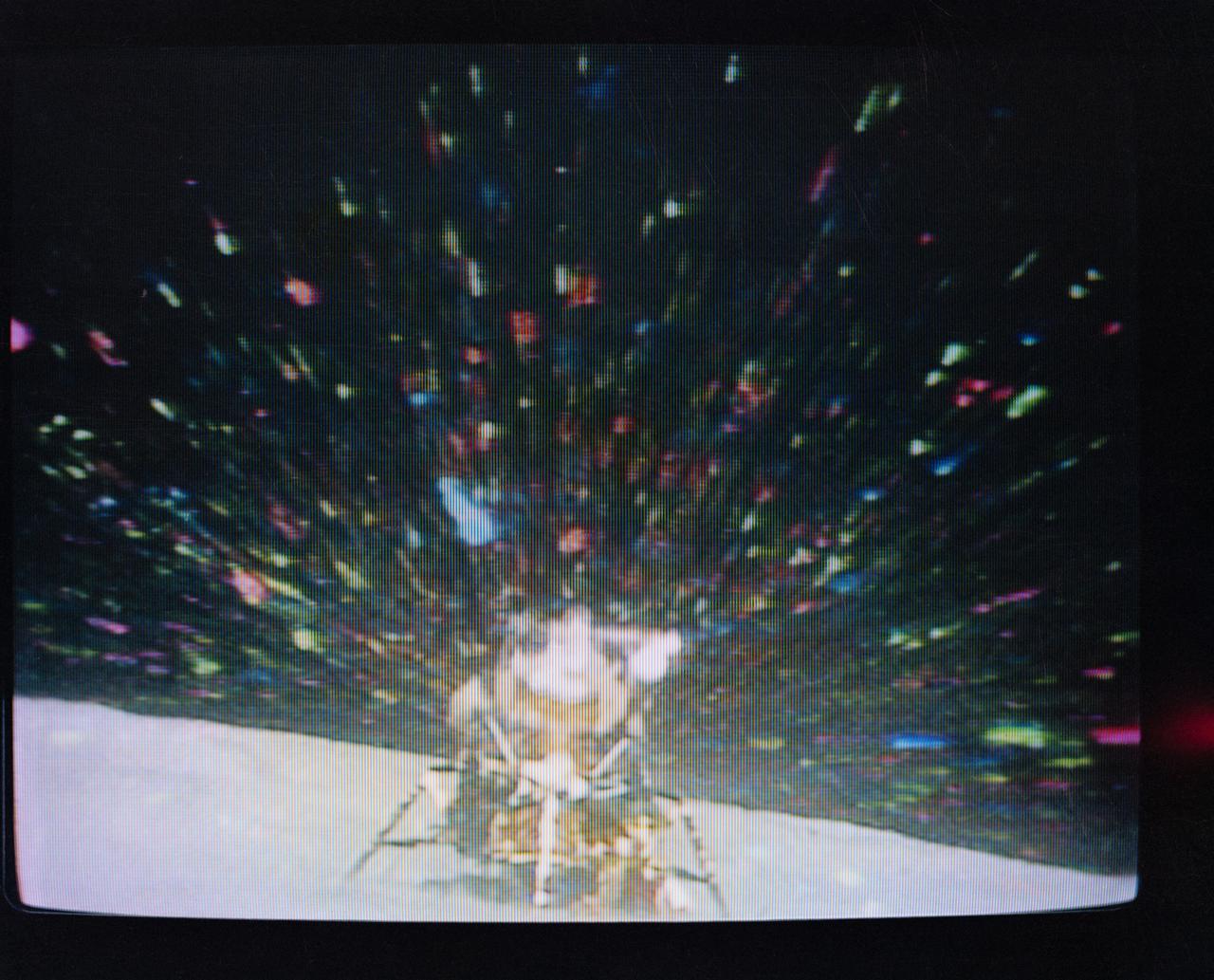
S72-35613 (22 April 1972) --- The Apollo 16 Lunar Module (LM) "Orion" in early lunar liftoff phase is featured in this lunar scene at the Descartes landing site. The still picture is a reproduction taken from a color television transmission made by a TV camera mounted on the Lunar Roving Vehicle (LRV). While astronauts John W. Young, commander; and Charles M. Duke Jr., lunar module pilot; descended in the Apollo 16 LM to explore the Descartes highlands landing site on the moon, astronaut Thomas K. Mattingly II, command module pilot, remained with the Command and Service Modules (CSM) "Casper" in lunar orbit.
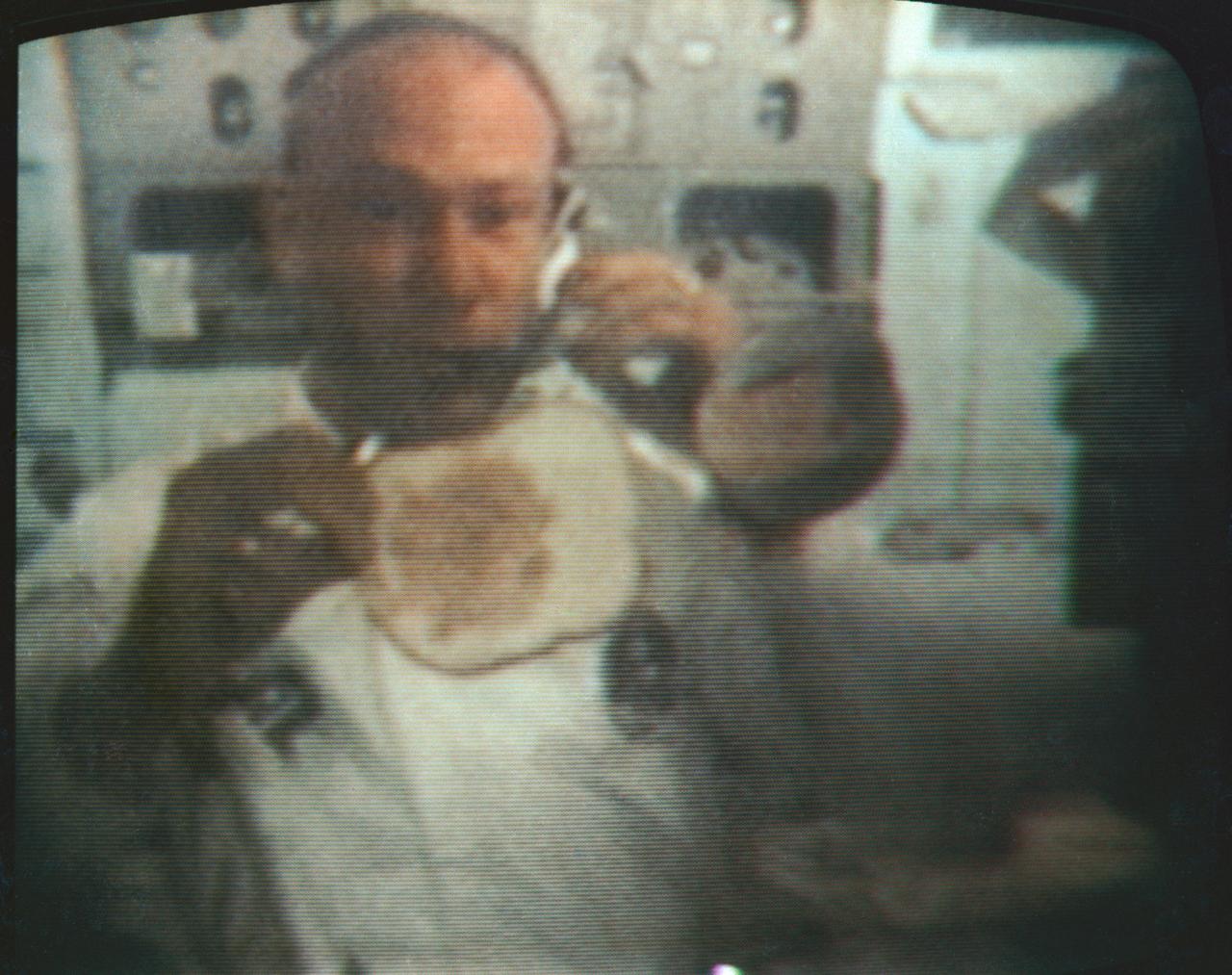
S69-39724 (22 July 1969) --- Astronaut Edwin E. Aldrin Jr., Apollo 11 lunar module pilot, performs for his Earth-bound television audience, in this color reproduction taken from a TV transmission, from the Apollo 11 spacecraft during its trans-Earth journey home from the moon. Aldrin illustrates how to make a sandwich under zero-gravity conditions. When this picture was made, Apollo 11 was approximately 137,000 nautical miles from Earth, traveling at a speed of about 4,300 feet per second. Also, aboard the spacecraft were astronauts Neil A. Armstrong, commander; and Michael Collins, command module pilot.
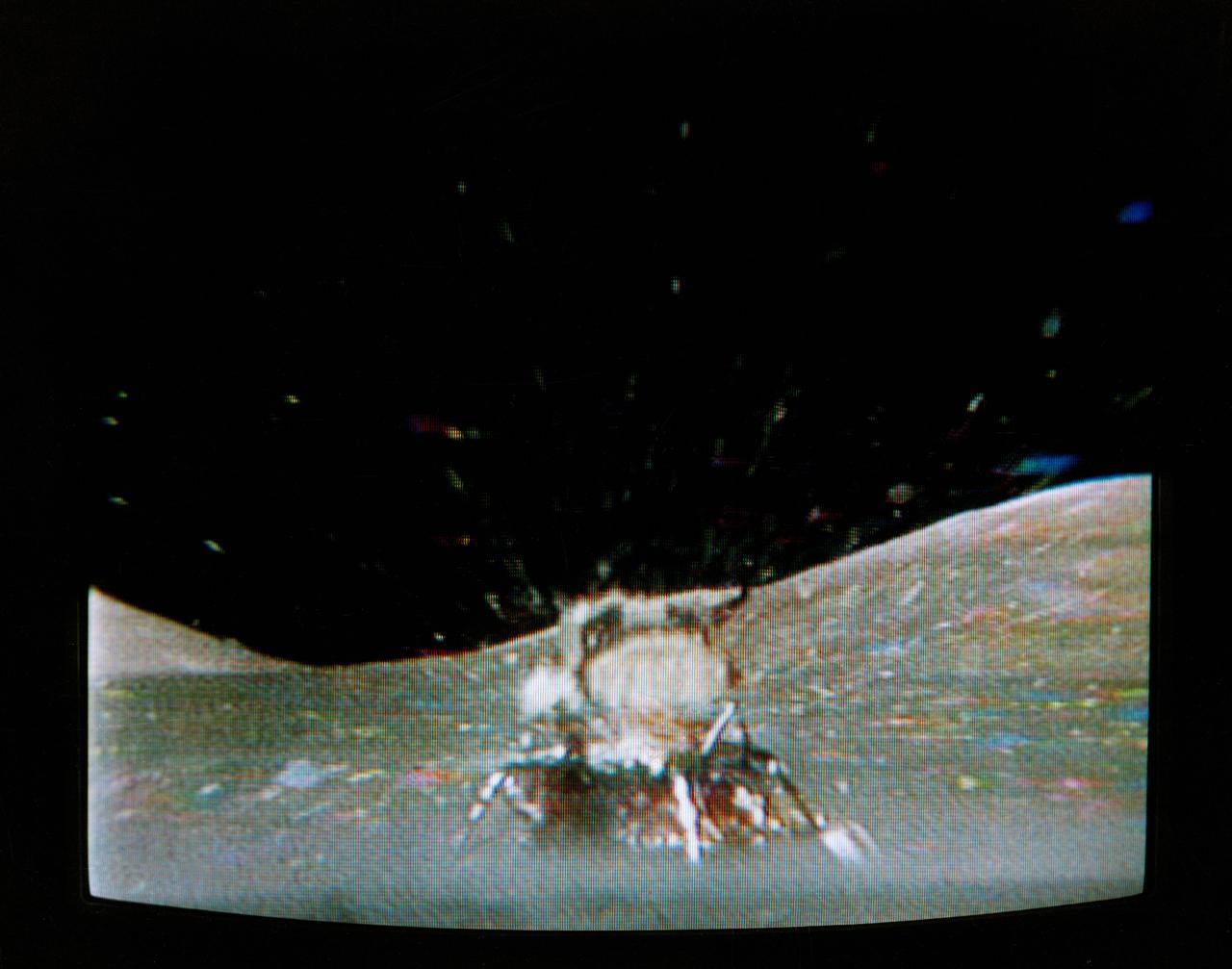
The Apollo 17 Lunar Module (LM) "Challenger" ascent stage leaves the Taurus-Littrow landing site as it makes its spectacular liftoff from the lunar surface, as seen in this reproduction taken from a color television transmission made by the color RCA TV camera mounted on the Lunar Roving Vehicle (LRV). The LRV-mounted TV camera, remotely controlled from the Mission Control Center (MCC) in Houston, made it possible for people on Earth to watch the fantastic event. The LM liftoff was at 188:01:36 ground elapsed time, 4:54:36 p.m. (CST), Thursday, December 14, 1972.
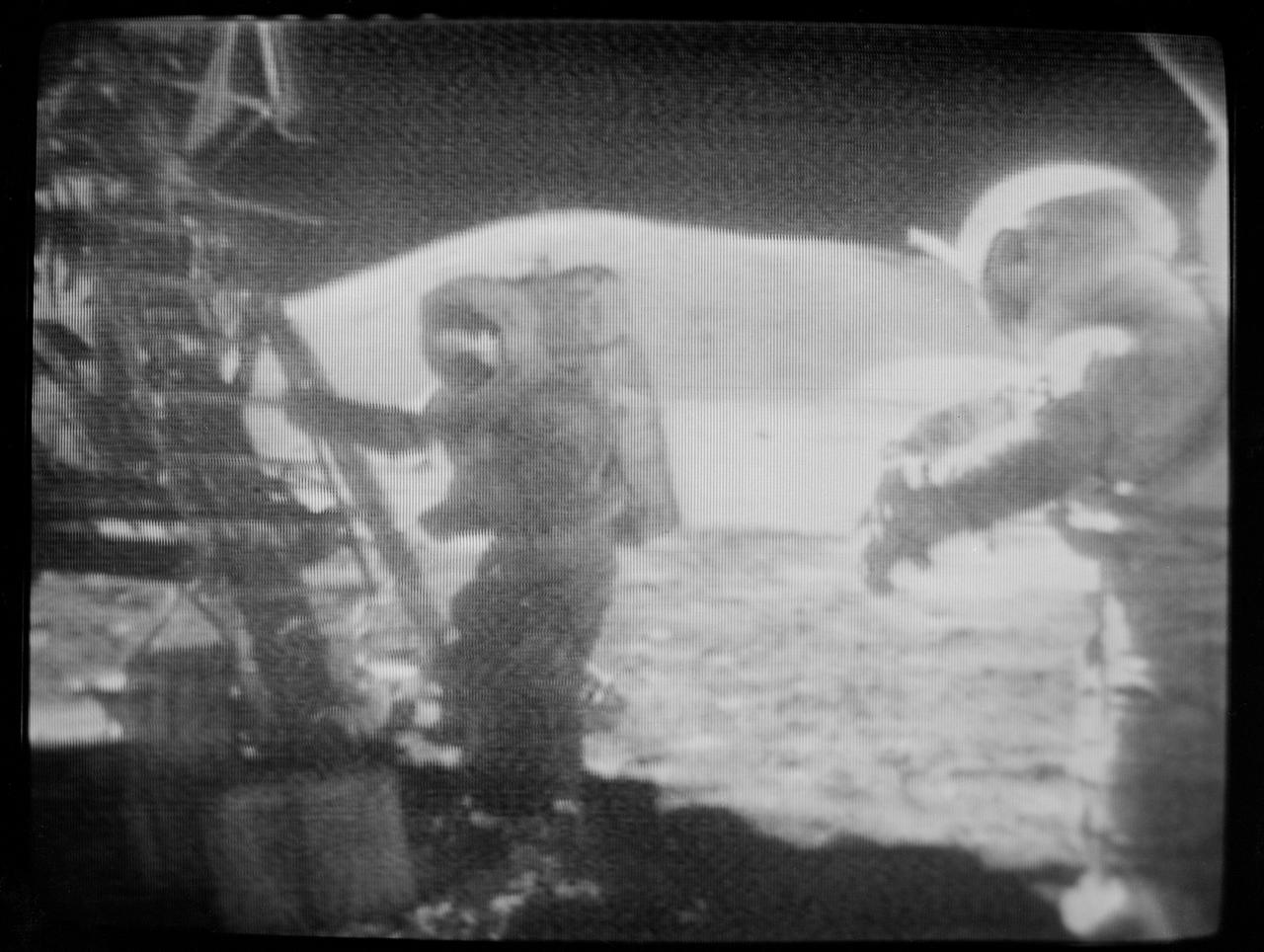
S72-55299 (13 Dec. 1972) --- Scientist-astronaut Harrison H. Schmitt, Apollo 17 lunar module pilot, starts back up the ladder of the Lunar Module "Challenger" at the close of the third extravehicular activity (EVA) at the Taurus-Littrow landing site, in this black and white reproduction taken from a color television transmission made by the color RCA TV camera mounted on the Lunar Roving Vehicle. On the right is astronaut Eugene A. Cernan, commander, who ingressed the LM a few minutes later. Astronaut Ronald E. Evans, command module pilot, remained with the Apollo 17 Command and Service Modules in lunar orbit.
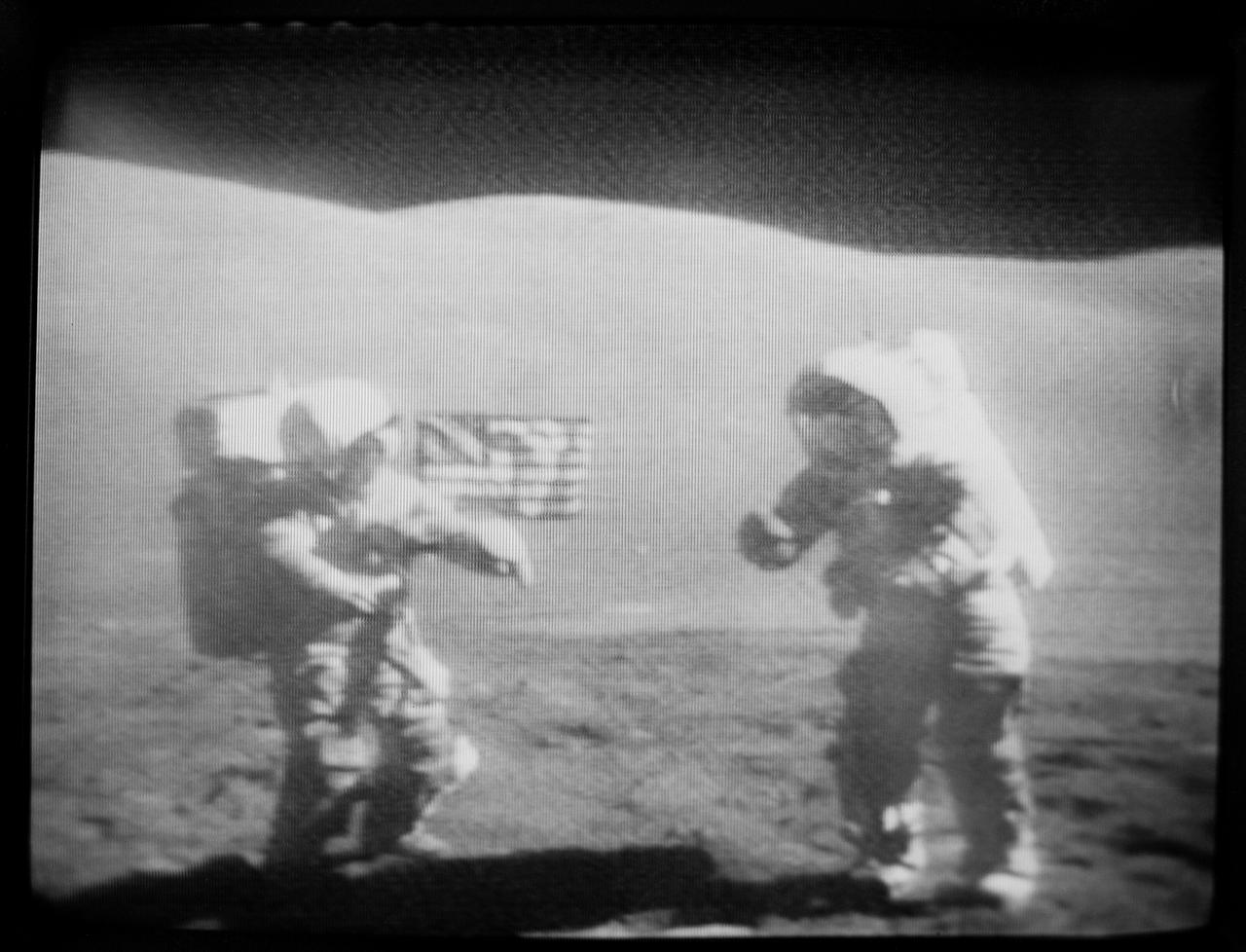
S72-55300 (13 Dec. 1972) --- The two moon-exploring Apollo 17 crewmen are seen standing near the deployed U.S. flag during the third extravehicular activity (EVA) at the Taurus-Littrow landing site, in this black and white reproduction made from a color television transmission made by the color RCA TV camera mounted on the Lunar Roving Vehicle. They are astronaut Eugene A. Cernan (on left), commander; and scientist-astronaut Harrison H. Schmitt, lunar module pilot. Astronaut Ronald E. Evans, command module pilot, remained with the Apollo 17 Command and Service Modules in lunar orbit.
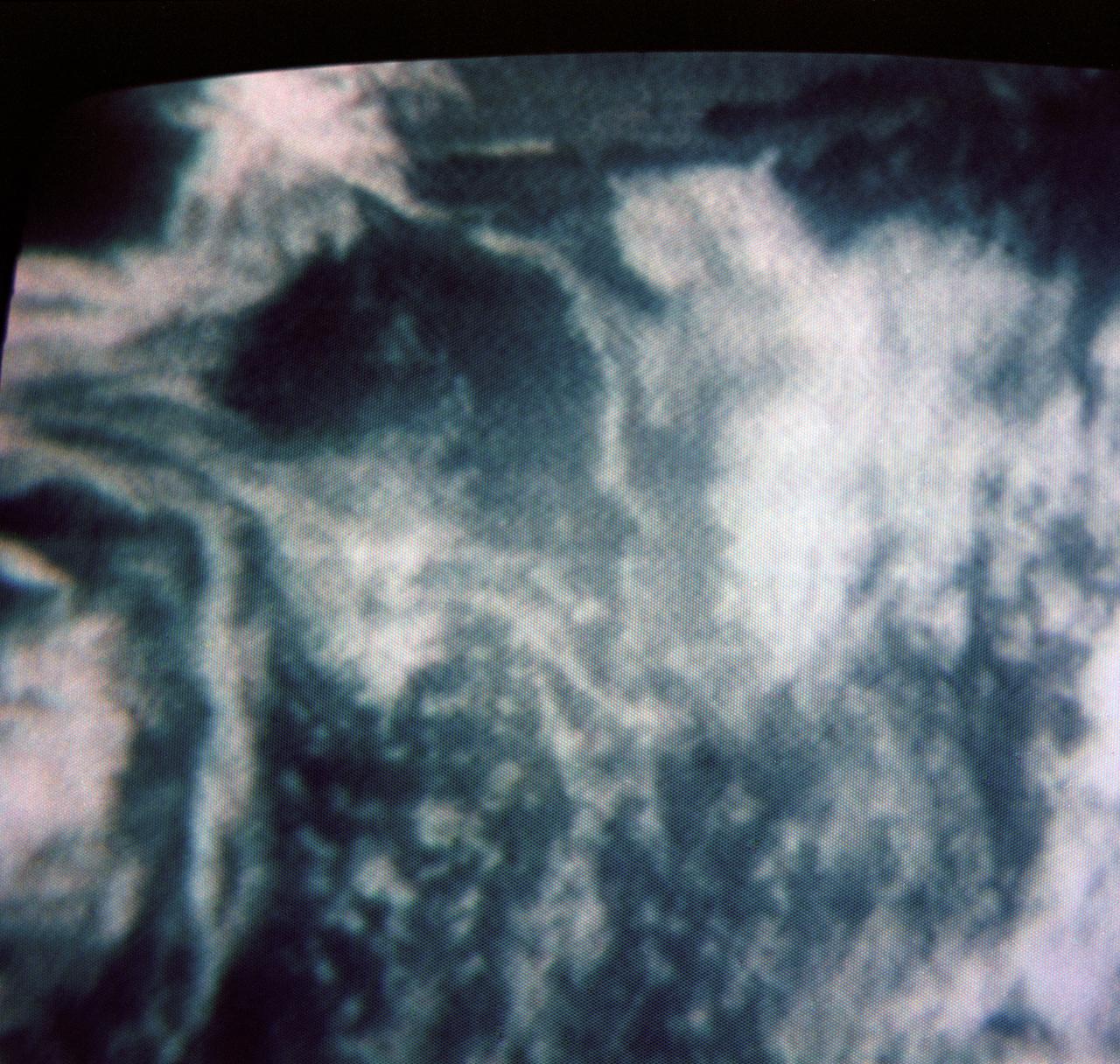
S69-33996 (18 May 1969) --- A cloud-covered Pacific Ocean, and the western part of the United States and Mexico, from about 12,800 nautical miles away are seen in this color reproduction taken from the second TV transmission made by the color television camera aboard the Apollo 10 spacecraft. The camera's zoom lens was used to get this view. The Pacific Ocean covers four-fifths of the picture. On the right is the land mass of North America. This view of the western coast extends from the southern tip of Baja California, Mexico, northward to British Columbia. Mexico, California, Nevada, and Arizona have few clouds; but Washington and Oregon are heavily cloud-covered.
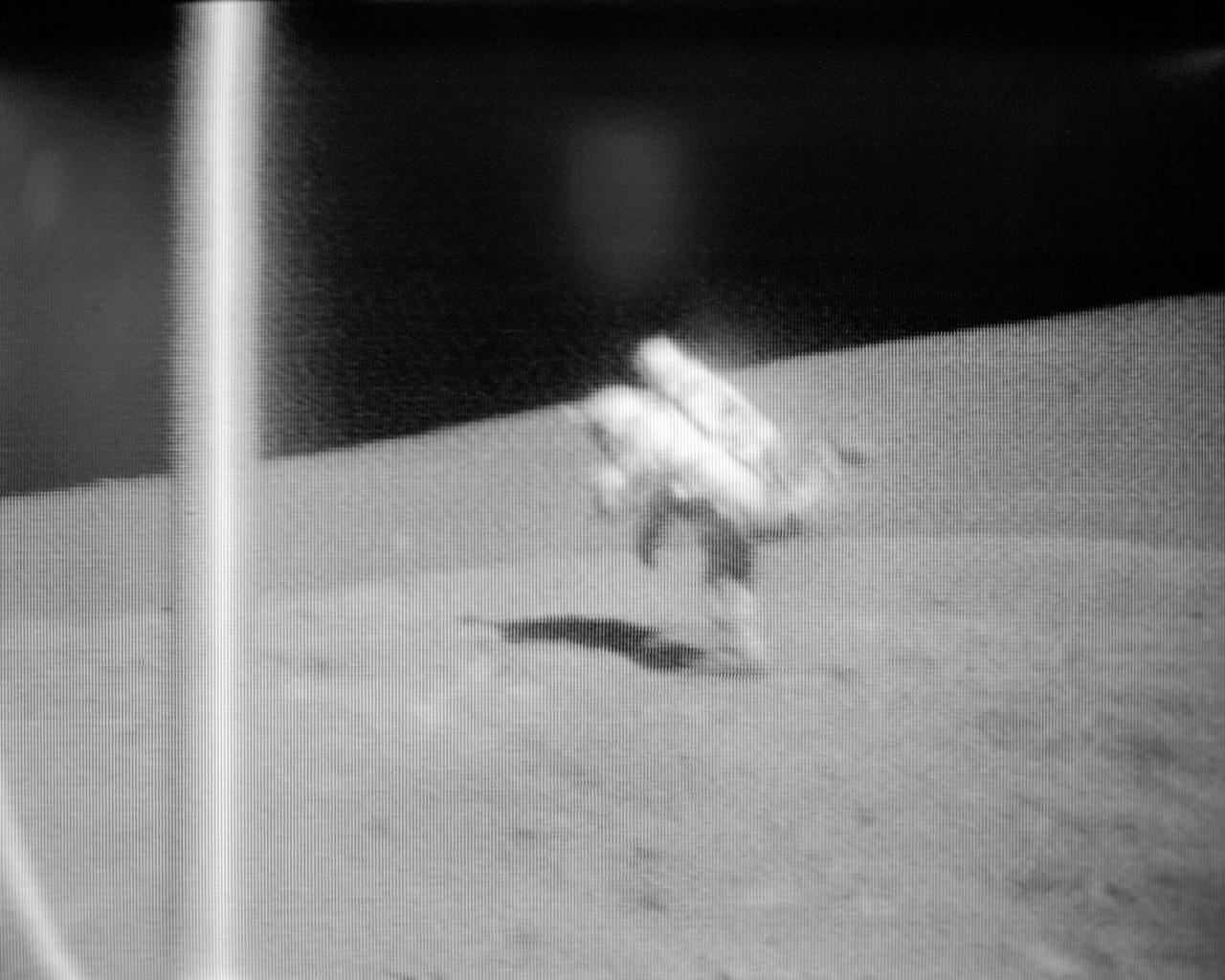
S72-55166 (12 Dec. 1972) --- Scientist-astronaut Harrison H. Schmitt loses his balance and heads for a fall during the second Apollo 17 extravehicular activity (EVA) at the Taurus-Littrow landing site, as seen in this black and white reproduction taken from a color television transmission made by the color RCA TV camera mounted on the Lunar Roving Vehicle. Schmitt is lunar module pilot of the Apollo 17 lunar landing mission. Astronaut Ronald E. Evans, command module pilot, remained with Apollo 17 Command and Service Modules in lunar orbit while astronauts Schmitt and Eugene A. Cernan, commander, descended in the Lunar Module "Challenger" to explore the moon.
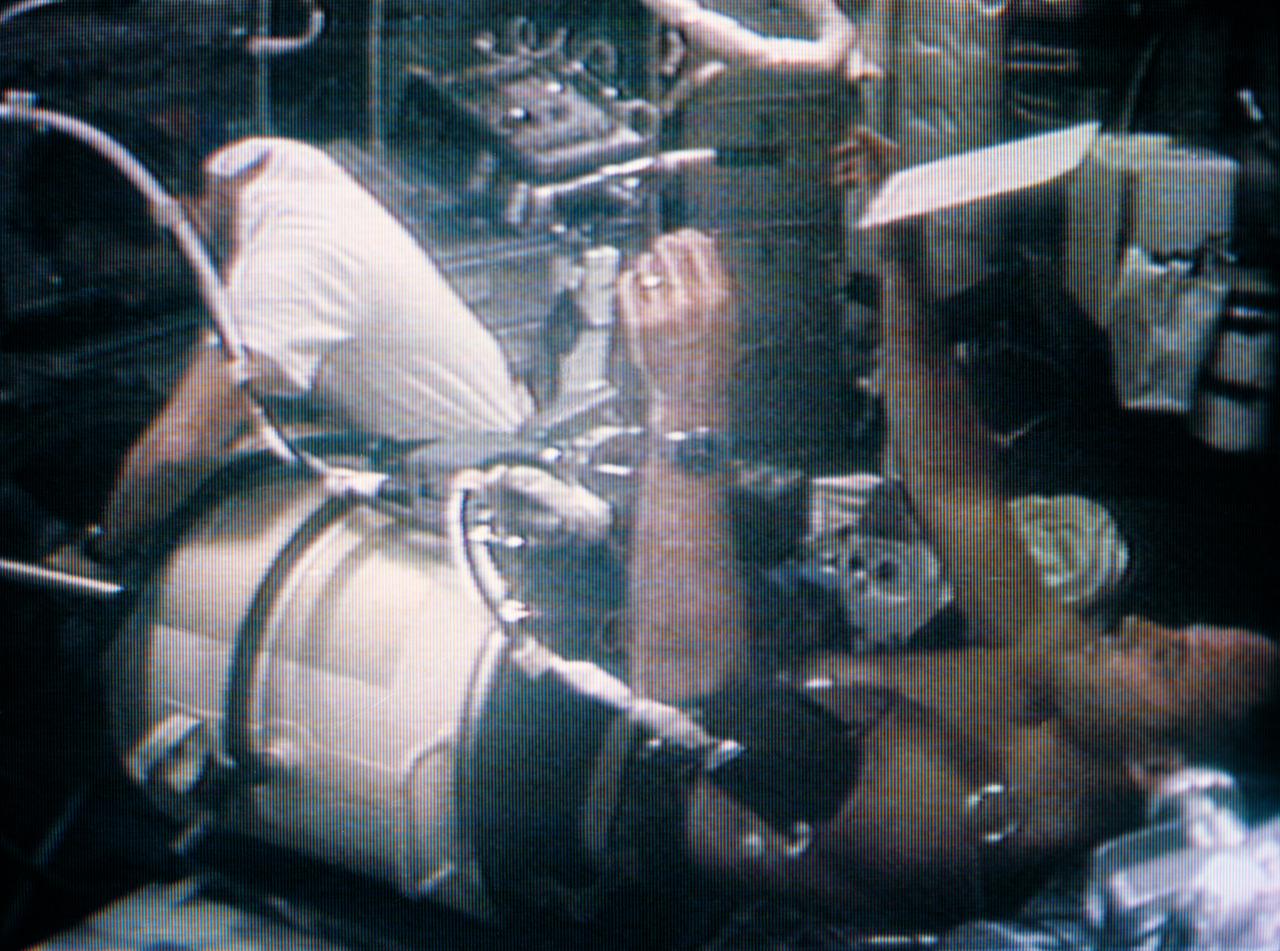
S73-34180 (7 Aug. 1973) --- A medium close-up view of astronaut Jack R. Lousma, Skylab 3 pilot, in the Lower Body Negative Pressure Device (LBNPD), as astronaut Alan L. Bean, commander, works around the leg band area. This portion of the LBNPD MO-92 experiment was televised on Aug. 7, 1973. The LBNPD experiment is to provide information concerning the time course of cardiovascular adaptation during flight, and to provide in-flight data for predicting the degree of orthostatic intolerence and impairment of physical capacity to be expected upon returning to Earth environment. The bicycle ergometer is in the background, partially visible behind Bean. Photo credit: NASA
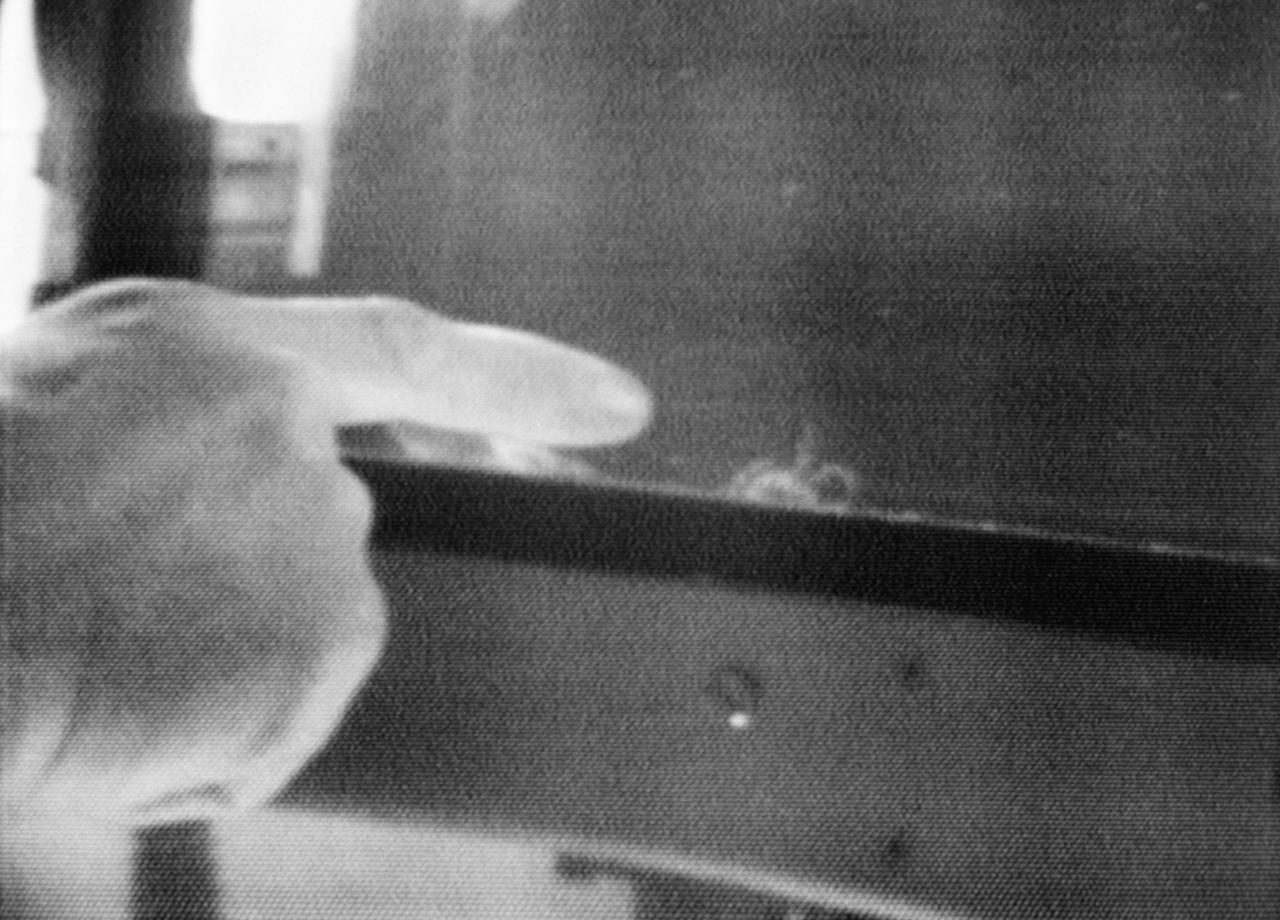
S73-33164 (27 Aug. 1973) --- A close-up view of Anita, one of the two common cross spiders “Araneus diadematus” aboard Skylab, is seen in this photographic reproduction of a color television transmission made by a TV camera aboard the Skylab space station in Earth orbit. A finger of one of the Skylab 3 crewmen points to Anita. The two spiders are housed in an enclosure onto which a motion picture and still camera are attached to record the spider’s attempt to build a web in the zero-gravity of space. The spider experiment (ED52) is one of 25 experiments selected by NASA for Skylab from more than 3,400 experiment proposals submitted by high school students throughout the nation. ED52 was submitted by 17-year old Judith S. Miles of Lexington, Mass. Photo credit: NASA
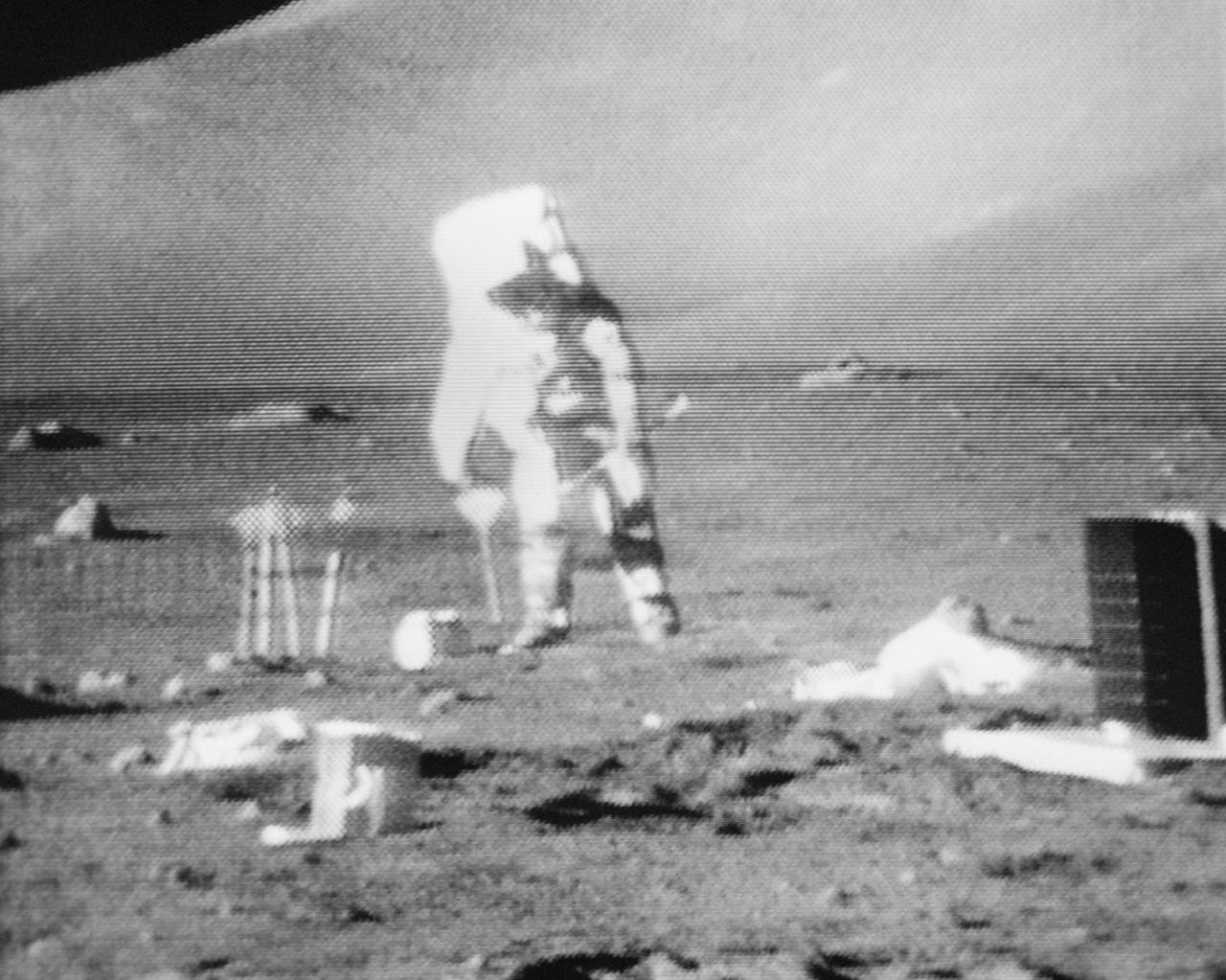
S72-55065 (11 Dec. 1972) --- Scientist-astronaut Harrison H. Schmitt is seen anchoring the geophone module with a flag during the first Apollo 17 extravehicular activity (EVA) at the Taurus-Littrow landing site, in the black and white reproduction taken from a color television transmission made by the color RCA TV camera mounted on the Lunar Roving Vehicle. Schmitt is the lunar module mounted on the Lunar Roving Vehicle. Schmitt is the lunar module pilot of the Apollo 17 lunar landing mission. Astronaut Ronald E. Evans, command module pilot, remained with the Apollo 17 Command and Service Modules in lunar orbit while astronauts Schmitt and Eugene A. Cernan, commander, descended in the Lunar Module to explore the moon. The geophone module is part of the Lunar Seismic Profiling Experiment (S-203), a component of the Apollo Lunar Surface Experiments Package (ALSEP). Other ALSEP components are visible in the picture.
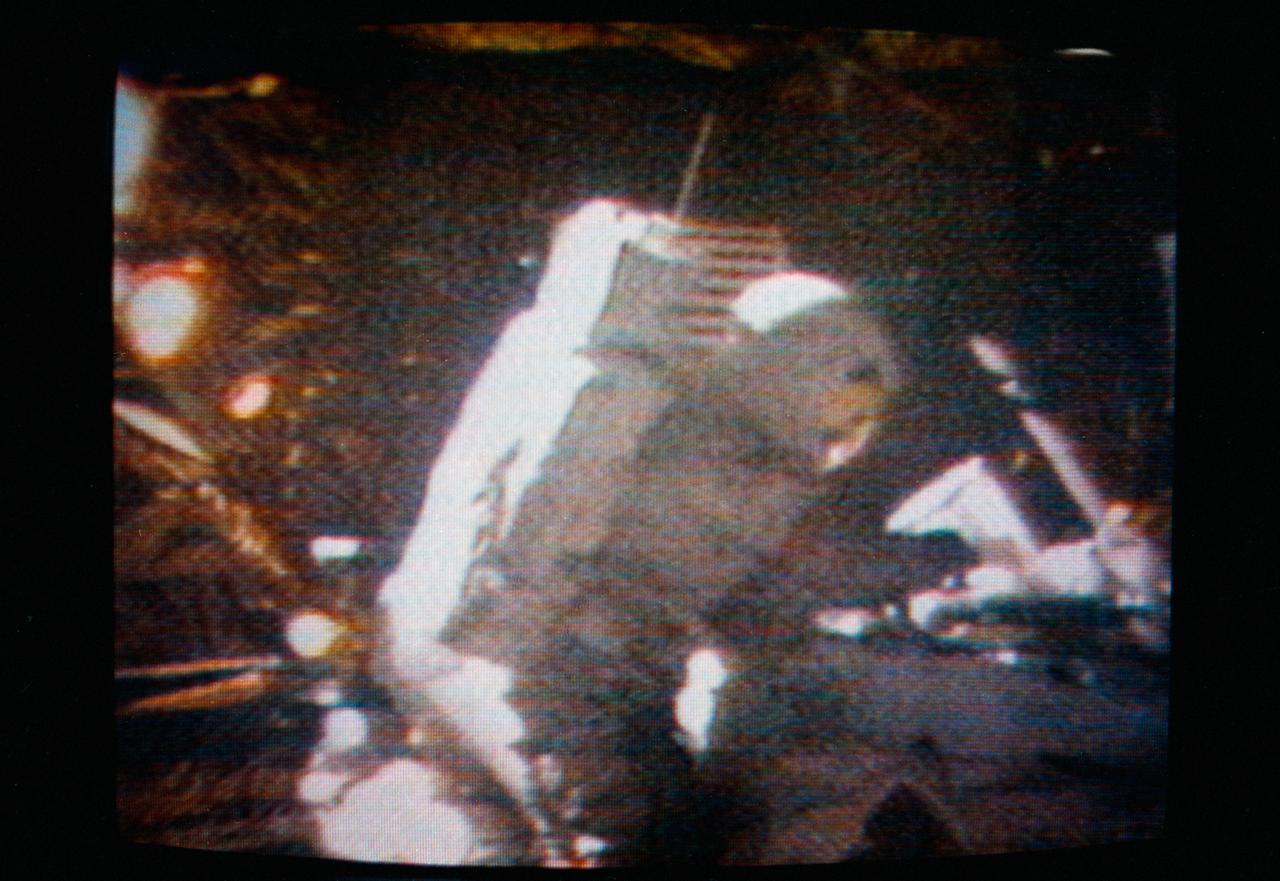
S71-43785 (2 Aug. 1971) --- Astronaut David R. Scott, Apollo 15 commander, performs the act of cancelling the first Apollo 15 commemorative postage stamp on the moon, as seen in this color reproduction taken from a transmission made by the RCA color television camera mounted on the Lunar Roving Vehicle. Scott holds a stamp cancellation device in his right hand. The new commemorative postage stamp heralds: "United States in Space -- A Decade of Achievement." The U.S. Postal Service chose artist Robert McCall of Paradise Valley, Arizona, to design the new U.S. eight-cent stamp. The stamp cancellation occurred toward the end of the third and final lunar surface extravehicular activity by astronauts Scott and James B. Irwin, lunar module pilot.
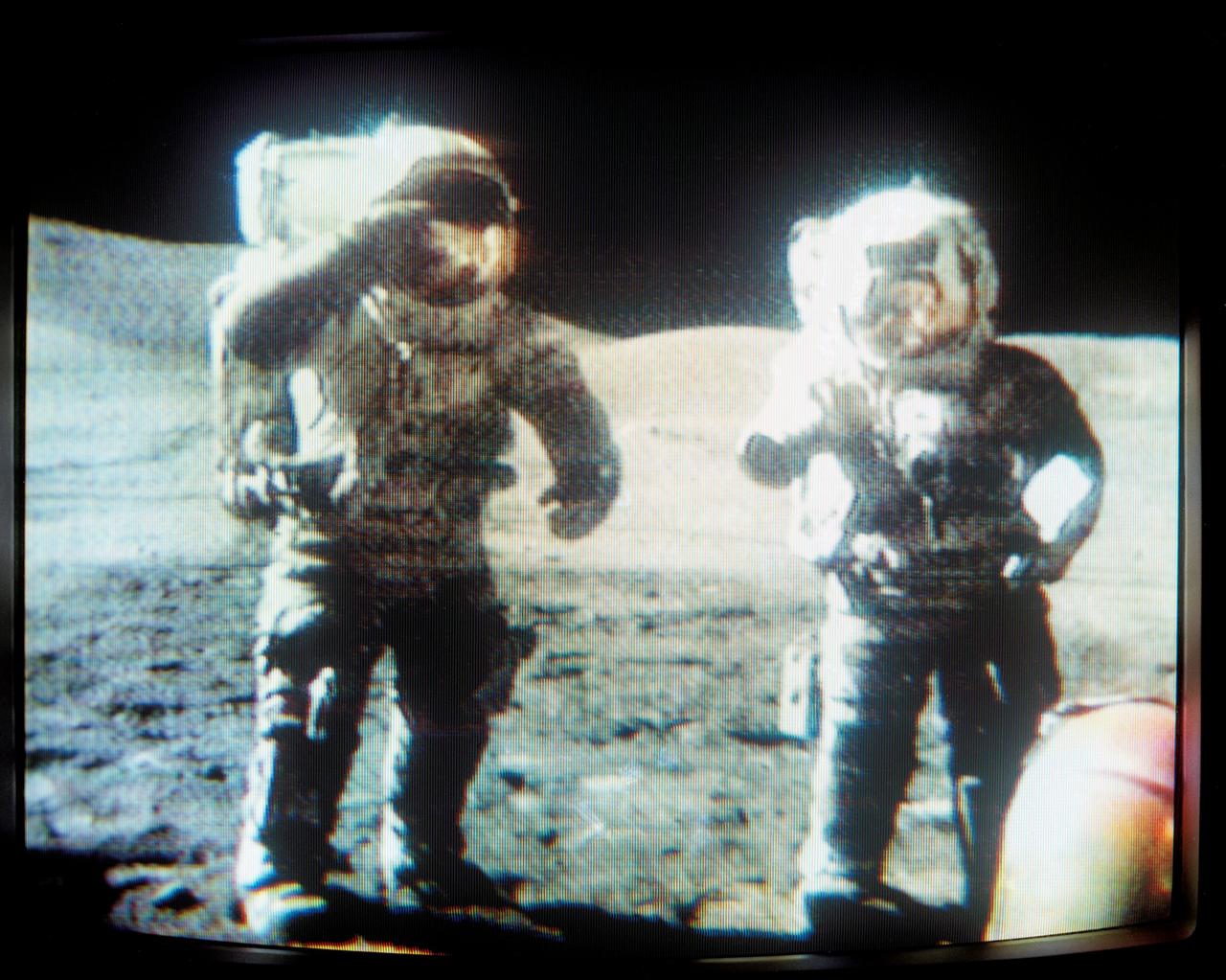
S72-55420 (13 Dec. 1972) --- Astronauts Eugene A. Cernan (on left) and Harrison H. Schmitt pay their respects and send their best wishes to the members of the International Youth Science Tour, who were visiting the Manned Spacecraft Center, in brief ceremonies near the close of the third Apollo 17 extravehicular activity (EVA) at the Taurus-Littrow landing site. This picture is a reproduction taken from a color television transmission made by the color RCA TV camera mounted on the lunar roving vehicle. Noting that they had collected a very significant rock composed of many fragments, Schmitt said, "A portion of a rock will be sent to a representative agency or museum in each of the countries represented by the young people in Houston today..." The more than 70 foreign students were in the U.S. visiting space research and science centers. In his closing remarks to the students Cernan remarked, "We salute you, promise of the future."
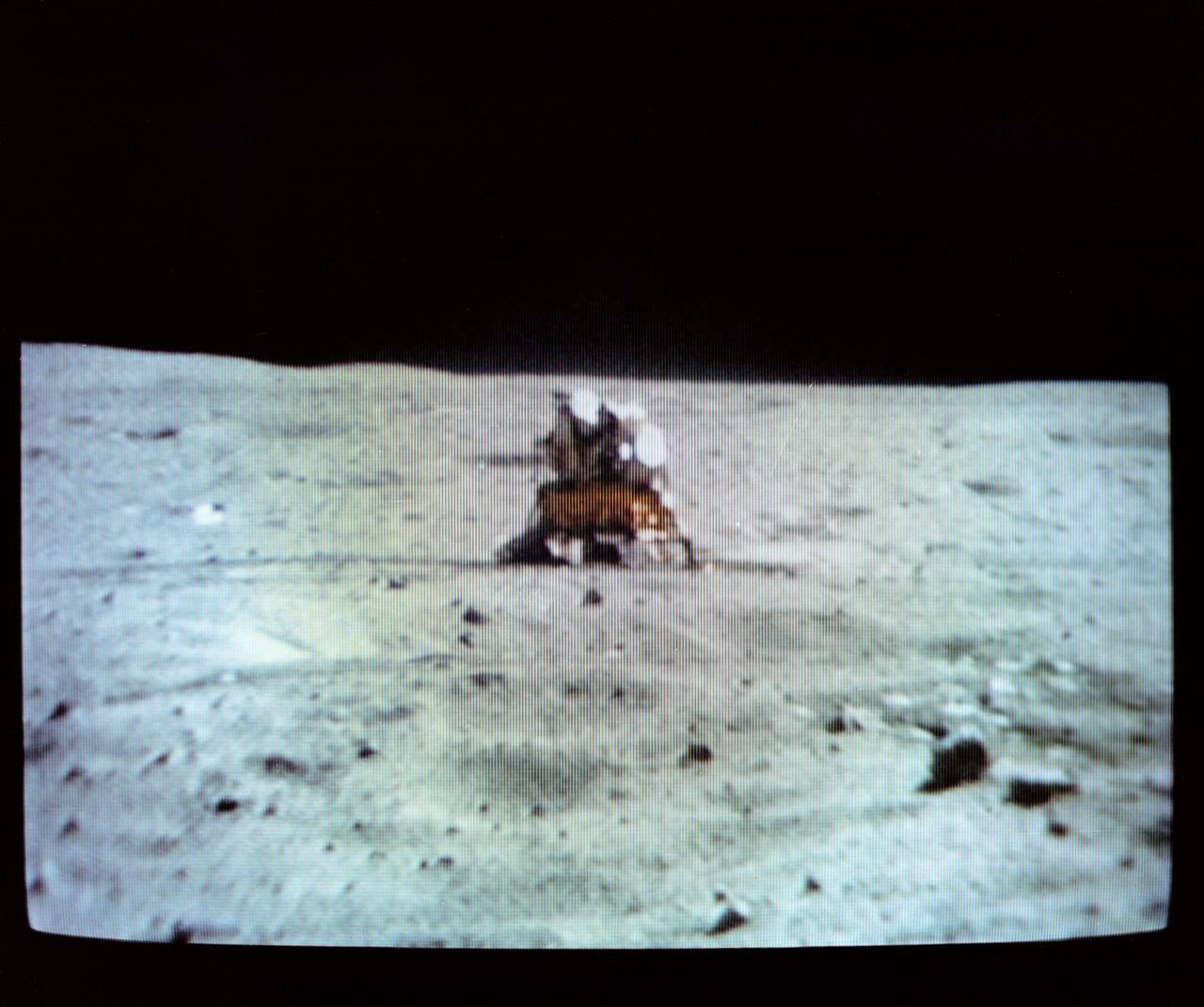
S72-35612 (22 April 1972) --- The Apollo 16 Lunar Module (LM) "Orion" dominates the lunar scene at the Descartes landing site, as seen in the reproduction taken from a color television transmission made by the TV camera mounted on the Lunar Roving Vehicle (LRV). Astronauts John W. Young, commander; and Charles M. Duke Jr., lunar module pilot; descended in the Apollo 16 LM to explore the Descartes highlands landing site on the moon. Astronaut Thomas K. Mattingly II, command module pilot, remained with the Command and Service Modules (CSM) "Casper" in lunar orbit. Note U.S. flag deployed on the left. This picture was made during the second Apollo 16 extravehicular activity (EVA).
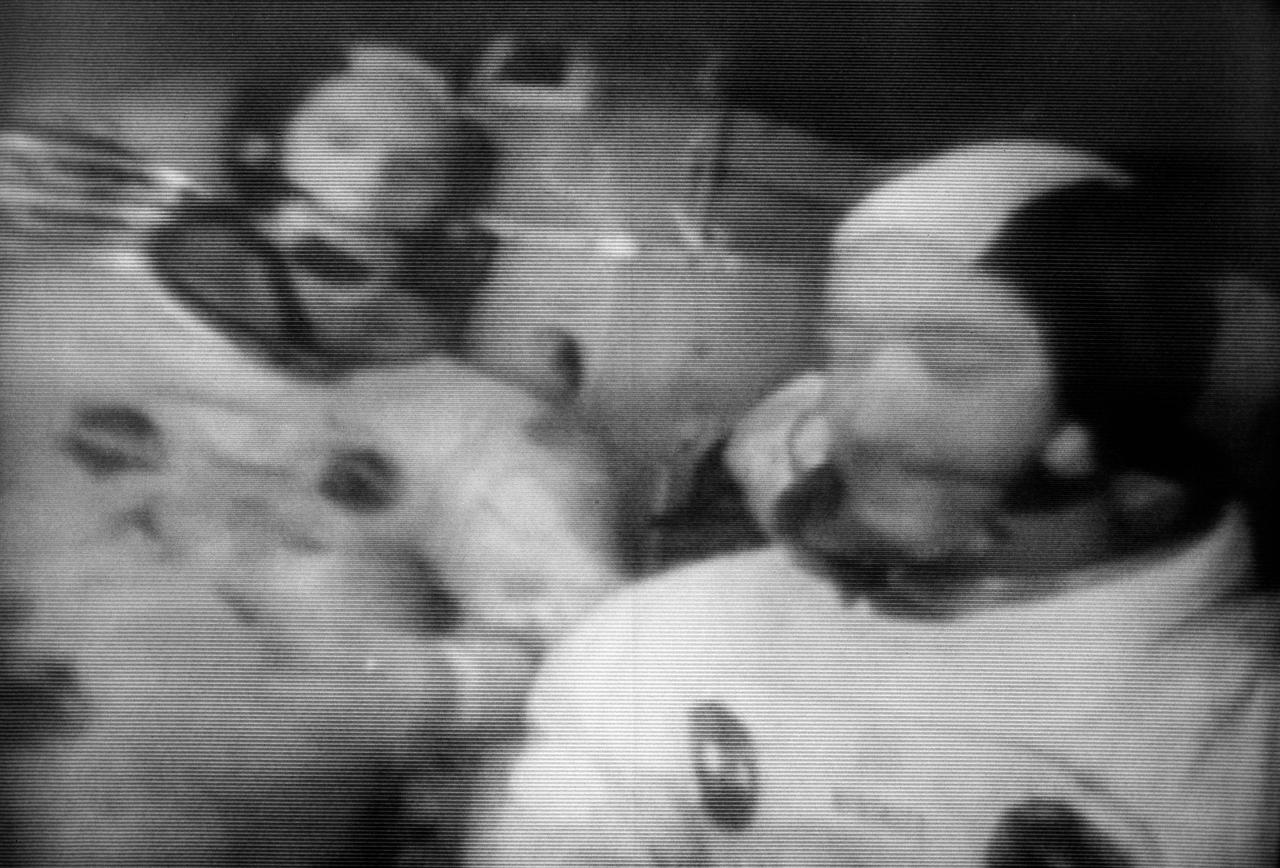
S69-26148 (6 March 1969) --- This photograph from the second live television transmission from Apollo 9 was made early Thursday afternoon on the fourth day in space. Though of poor quality, this view shows the interior of the Lunar Module "Spider" with astronauts James A. McDivitt (foreground) and Russell L. Schweickart at their crew stations. McDivitt is the Apollo 9 commander; and Schweickart is the lunar module pilot. At this moment Apollo 9 was orbiting Earth with the Command and Service Modules docked nose-to-nose with the Lunar Module. Astronaut David R. Scott, command module pilot, remained at the controls in the Command Module "Gumdrop" while the other two astronauts checked out the Lunar Module. McDivitt and Schweickart moved into the Lunar Module from the Command Module by way of the docking tunnel.

S69-39532 (18 July 1969) --- The face of astronaut Edwin E. Aldrin Jr., lunar module pilot of Apollo 11 lunar landing mission, is seen in this color reproduction, taken from the third television transmission, from the Apollo 11 spacecraft during its trans-lunar journey toward the moon. Aldrin is inside the Lunar Module (LM). In the background are some the LM's controls and displays. A LM window is on the right. The LM was still docked nose to nose with the Command and Service Modules (CSM). Apollo 11 was approximately 176,000 nautical miles from Earth, and traveling at a speed of about 3,200 feet per second when this photograph was taken. Also, in the LM with Aldrin was astronaut Neil A. Armstrong, Apollo 11 commander. Astronaut Michael Collins, command module pilot, remained in the Command Module (CM).
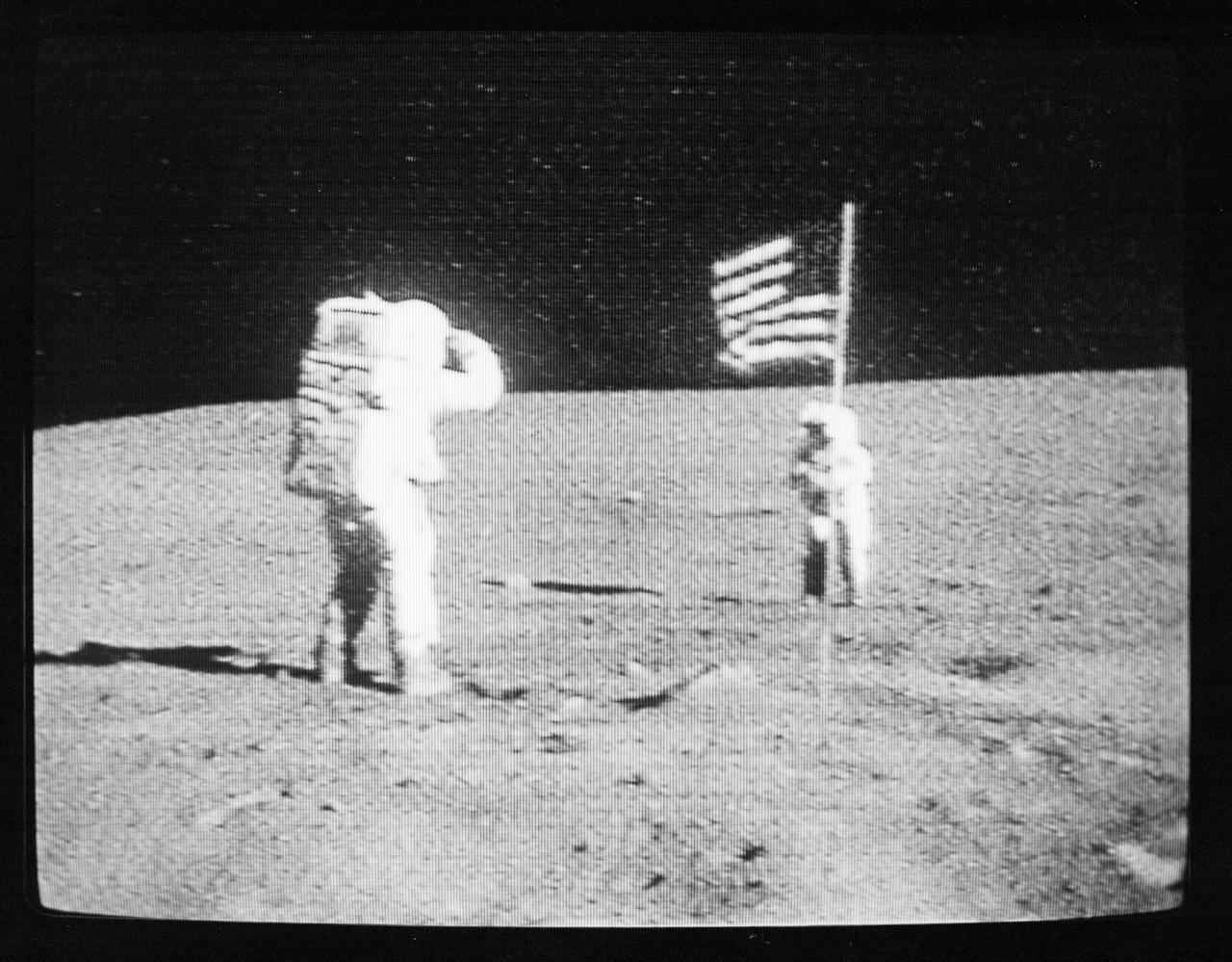
S72-35595 (21 April 1972) --- Astronaut Charles M. Duke Jr., lunar module pilot, salutes the United States flag during the first Apollo 16 extravehicular activity (EVA) on the moon, as seen in this black & white reproduction taken from a color television transmission made by the color TV camera mounted on the Lunar Roving Vehicle (LRV). Astronaut John W. Young, commander of the Apollo 16 lunar landing mission, stands beside the flag. While astronauts Young and Duke descended in the Apollo 16 Lunar Module (LM) "Orion" to explore the Descartes highlands landing site on the moon, astronaut Thomas K. Mattingly II, command module pilot, remained with the Command and Service Modules (CSM) "Casper" in lunar orbit.
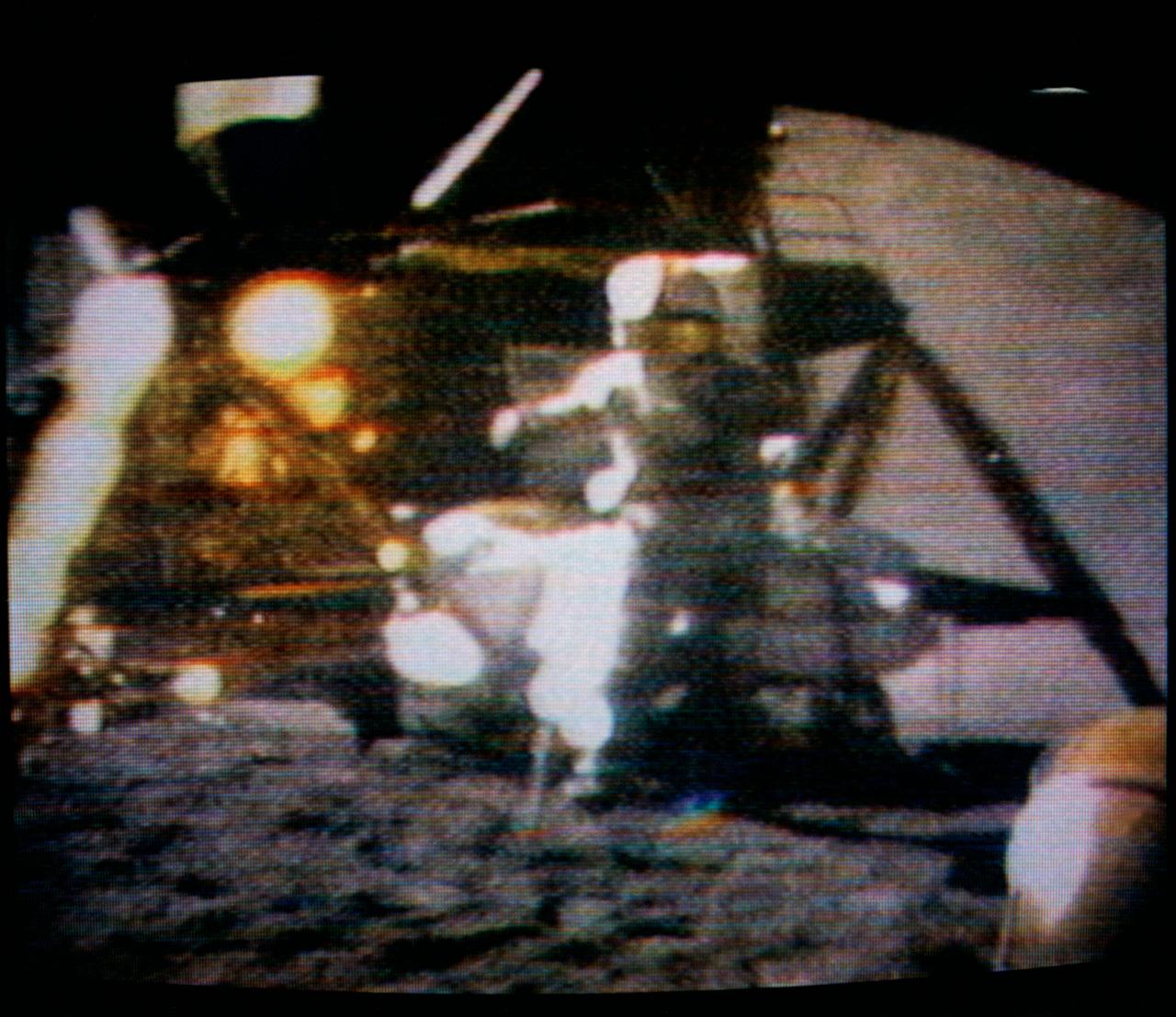
S71-43788 (2 Aug. 1971) --- Astronaut David R. Scott, Apollo 15 commander, watches a geological hammer and a feather hit the lunar surface simultaneously in a test of Galileo's law of motion concerning falling bodies, as seen in this color reproduction taken from a transmission made by the RCA color television camera mounted on the Lunar Roving Vehicle (LRV). Scott released the hammer from his right hand and the feather from his left at the same instant. Galileo (1564-1642) was the great Italian astronomer and physicist. This experiment occurred toward the end of the third and final lunar surface extravehicular activity (EVA) by astronauts Scott and James B. Irwin, lunar module pilot. While Scott and Irwin descended in the Lunar Module (LM) to explore the moon, astronaut Alfred M. Worden, command module pilot, remained in the Command and Service Modules (CSM) in lunar orbit.

S69-26149 (6 March 1969) --- Astronaut James A. McDivitt, Apollo 9 commander, is seen inside the Lunar Module "Spider" drinking from a hand water dispenser in this photograph from the second live television transmission from Apollo 9. Astronaut Russell L. Schweickart, lunar module pilot, is in the left background. The telecast was made early Thursday afternoon on the fourth day in space. At this moment Apollo 9 was orbiting Earth with the Command and Service Modules docked nose-to-nose with the Lunar Module. Astronaut David R. Scott, command module pilot, remained at the controls in the Command Module "Gumdrop" while the other two astronauts checked out the Lunar Module. McDivitt and Schweickart moved into the Lunar Module from the Command Module by way of the docking tunnel.
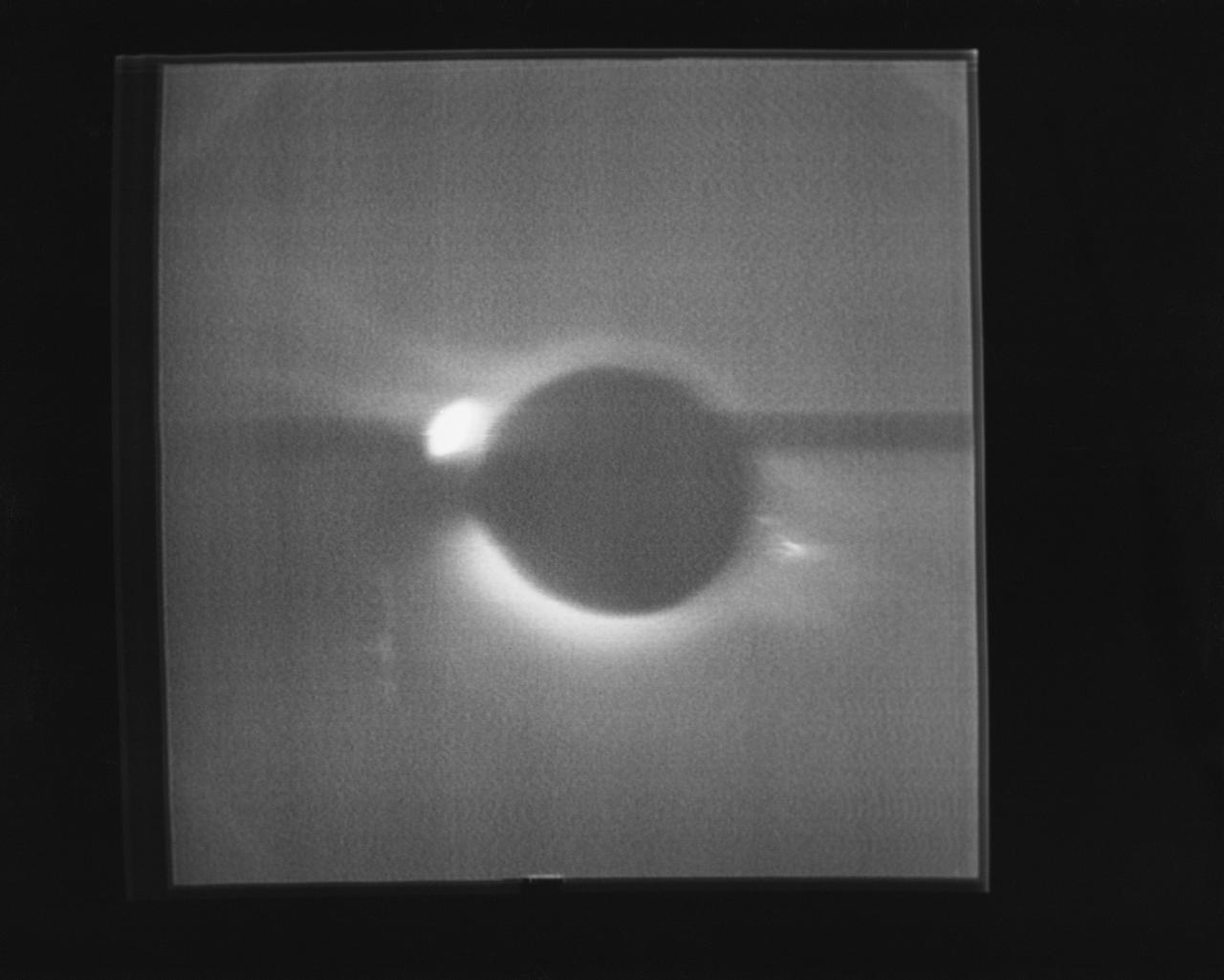
S74-15697 (17 Jan. 1974) --- The solar corona and a solar prominence as seen through the White Light Coronograph, Skylab Experiment S052, on Jan. 17, 1974. This view was reproduced from a television transmission made by a TV camera aboard the Skylab space station in Earth orbit. The bright spot is a burn in the vidicon. The solar corona is the halo around the sun which is normally visible only at the time of solar eclipse by the moon. The Skylab coronography uses an externally-mounted disk system which occults the brilliant solar surface while allowing the fainter radiation of the corona to enter an annulus and be photographed. A mirror system allows either TV viewing of the corona or photographic recording of the image. Photo credit: NASA
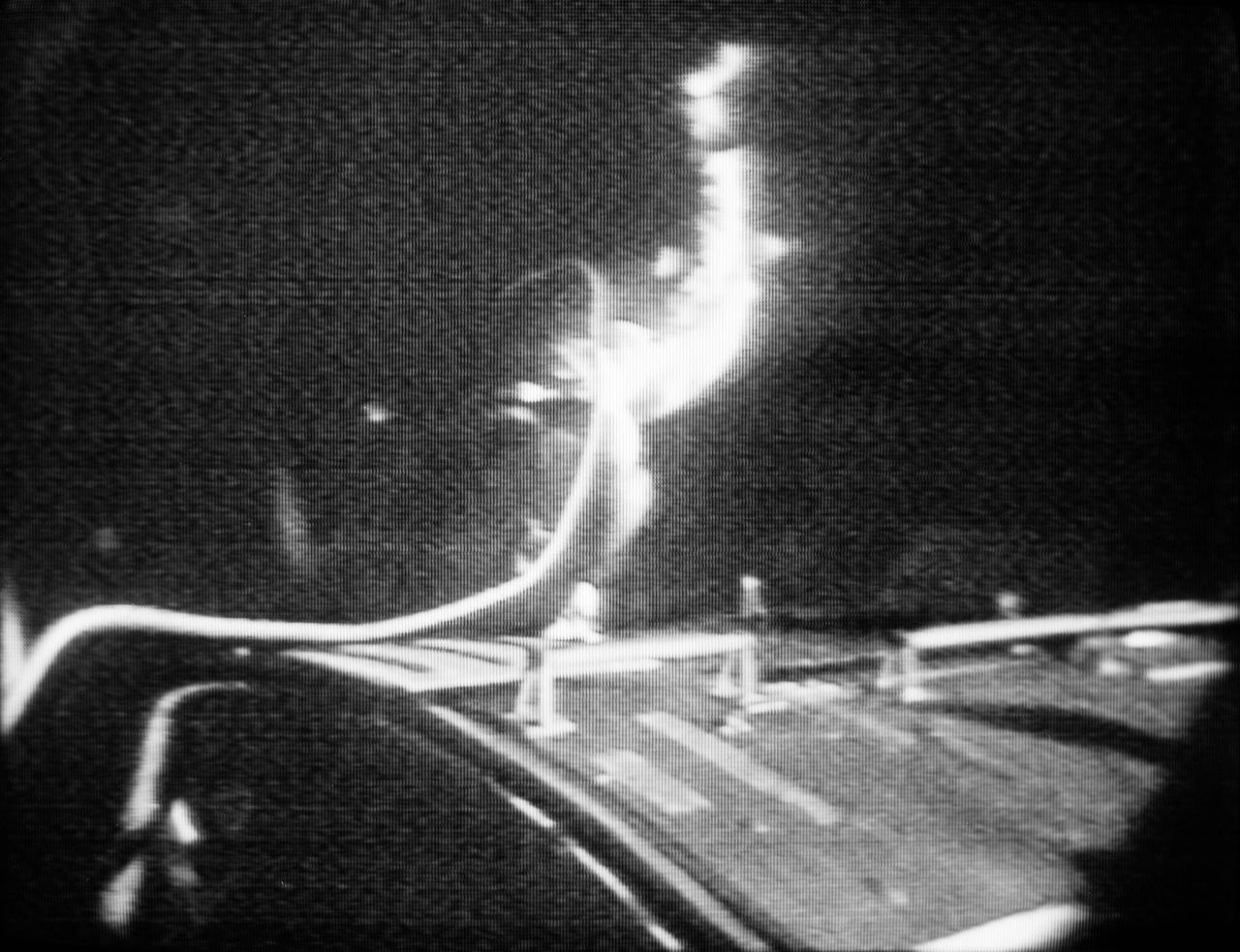
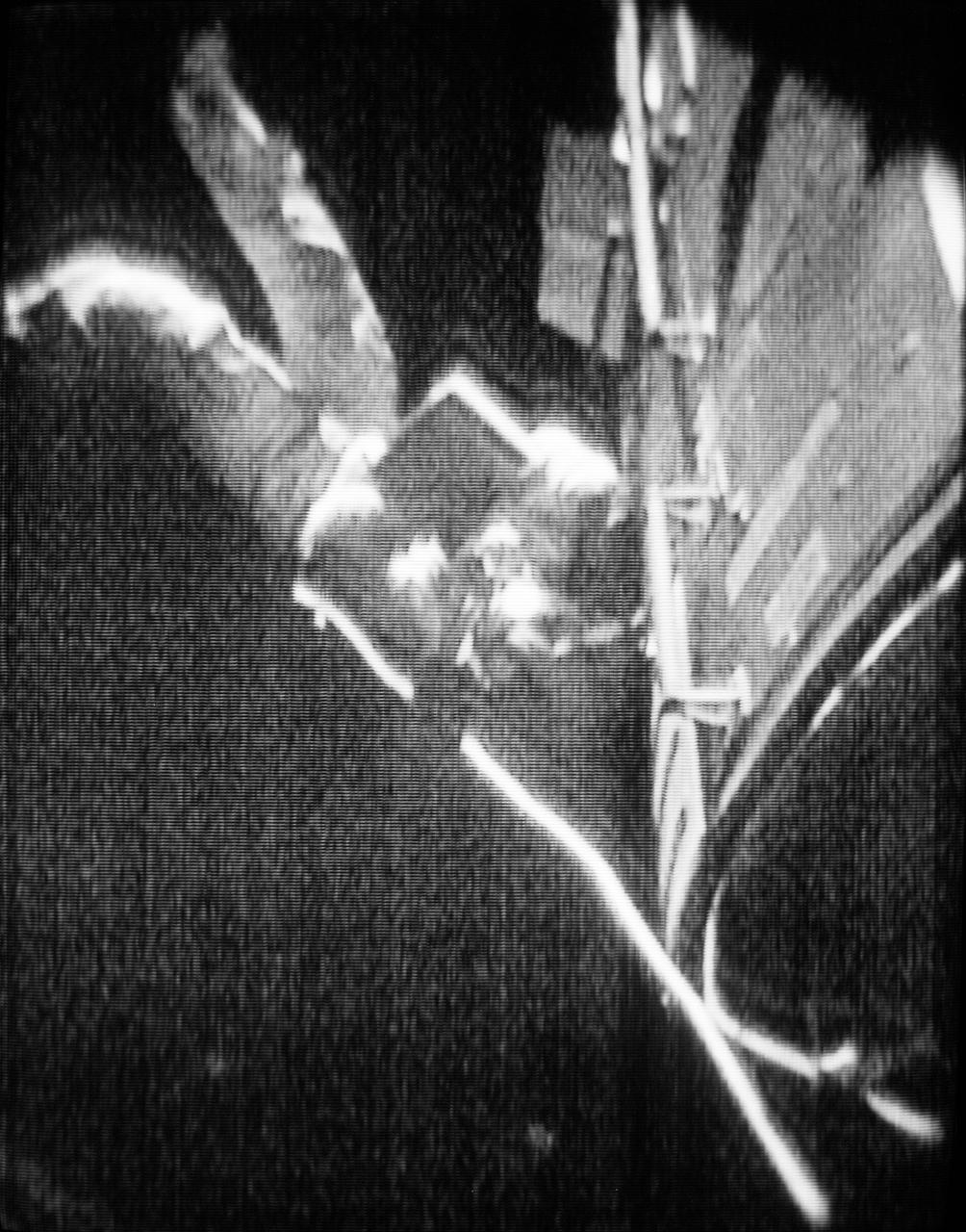
S72-35900 (25 April 1972) --- Astronaut Thomas K. (Ken) Mattingly II, command module pilot of the Apollo 16 lunar landing mission, floats in space outside the spacecraft during his trans-Earth extravehicular activity (EVA), as seen in this reproduction taken from a color television transmission made by a color TV camera mounted on the Command Module (CM) hatch. Mattingly used hand-holds and a foot restraint to hold himself in position, and he was secured to the spacecraft by an umbilical tether line. During his EVA, Mattingly made an inspection of the Service Module's (SM) Scientific Instrument Module (SIM) bay, and retrieved film cassettes from the Panoramic Camera and the Mapping Camera. The trans-Earth EVA occurred at ground elapsed time of 242:55, and 2:49 p.m. (CST), Tuesday, April 25, 1972.
S72-35901 (25 April 1972) --- Astronaut Thomas K. (Ken) Mattingly II, command module pilot of the Apollo 16 lunar landing mission, floats in space outside the spacecraft during his trans-Earth extravehicular activity (EVA), as seen in this reproduction taken from a color television transmission made by a color TV camera mounted on the Command Module (CM) hatch. Mattingly used hand-holds and a foot restraint to hold himself in position, and he was secured to the spacecraft by an umbilical tether line. During his EVA, Mattingly made an inspection of the Service Module's (SM) Scientific Instrument Module (SIM) bay, and retrieved film cassettes from the Panoramic Camera and the Mapping Camera. The trans-Earth EVA occurred at ground elapsed time of 242:55, and 2:49 p.m. (CST), Tuesday, April 25, 1972.
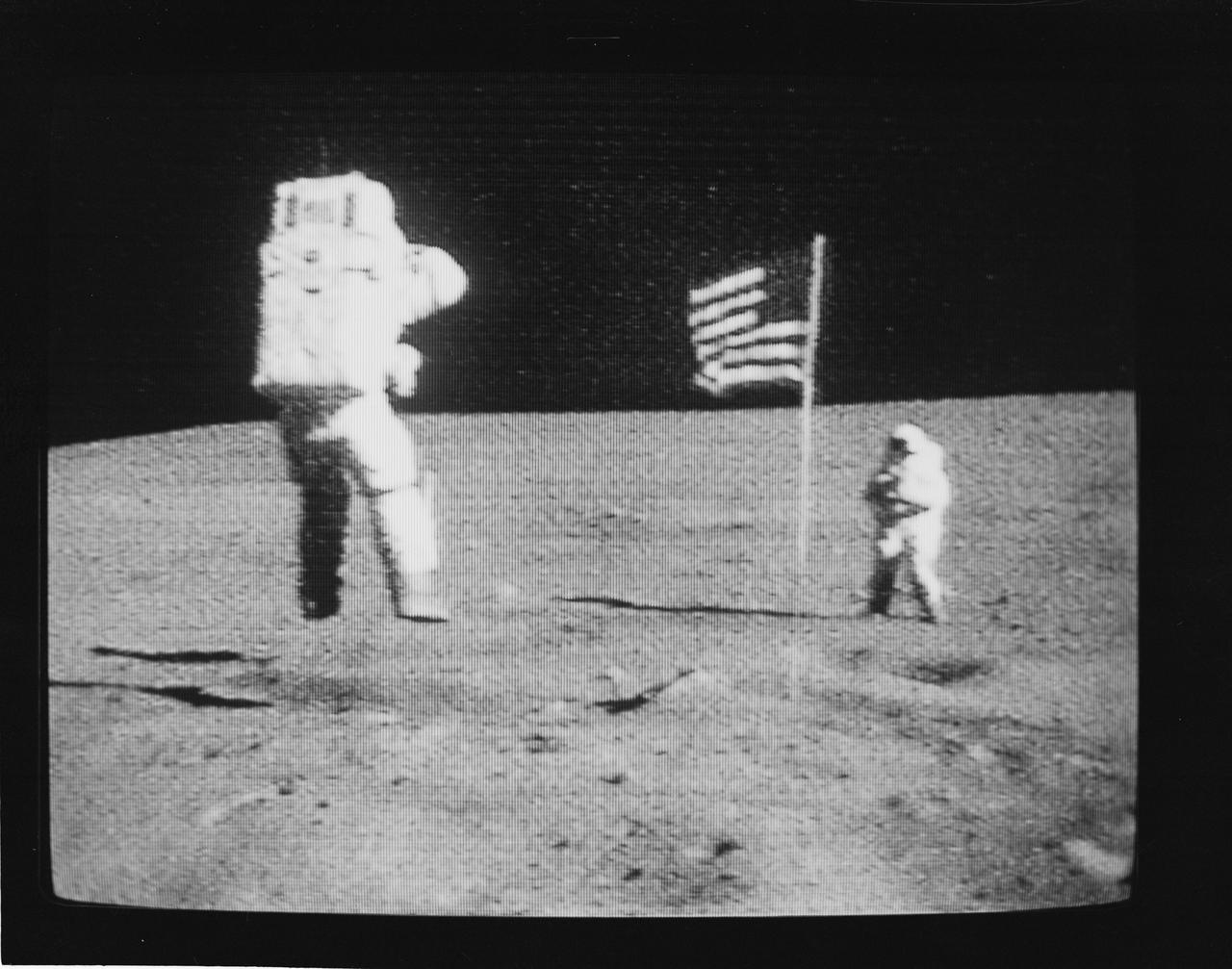
S72-35594 (21 April 1972) --- Astronaut John W. Young, commander of the Apollo 16 lunar landing mission, leaps from the lunar surface as he salutes the United States flag during the first Apollo 16 extravehicular activity (EVA) on the moon, as seen in this black & white reproduction taken from a color television transmission made by the color TV camera mounted on the Lunar Roving Vehicle (LRV). Astronaut Charles M. Duke Jr., lunar module pilot, stands beside the flag. While astronauts Young and Duke descended in the Apollo 16 Lunar Module (LM) "Orion" to explore the Descartes highlands landing site on the moon, astronaut Thomas K. Mattingly II, command module pilot, remained with the Command and Service Modules (CSM) "Casper" in lunar orbit.

S74-17306 (5 Dec. 1973) --- Scientist-astronaut Edward G. Gibson, Skylab 4 science pilot, stands at the Apollo Telescope Mount (ATM) console in the Multiple Docking Adapter (MDA) of the Skylab space station cluster in Earth orbit. This picture was taken with a hand-held 35mm Nikon camera. The ATM console was one of the busiest areas of the space station during the 84-day third manned Skylab mission, as Comet Kohoutek and solar activity were closely followed by the ATM and monitored by the crewmen from the ATM console. As Gibson demonstrated during a television transmission on Dec. 5, 1973, the ATM console controls several instruments on the solar telescope. Joining Gibson for the record-setting Skylab 4 mission were astronauts Gerald P. Carr, commander, and William R. Pogue, pilot. Photo credit: NASA
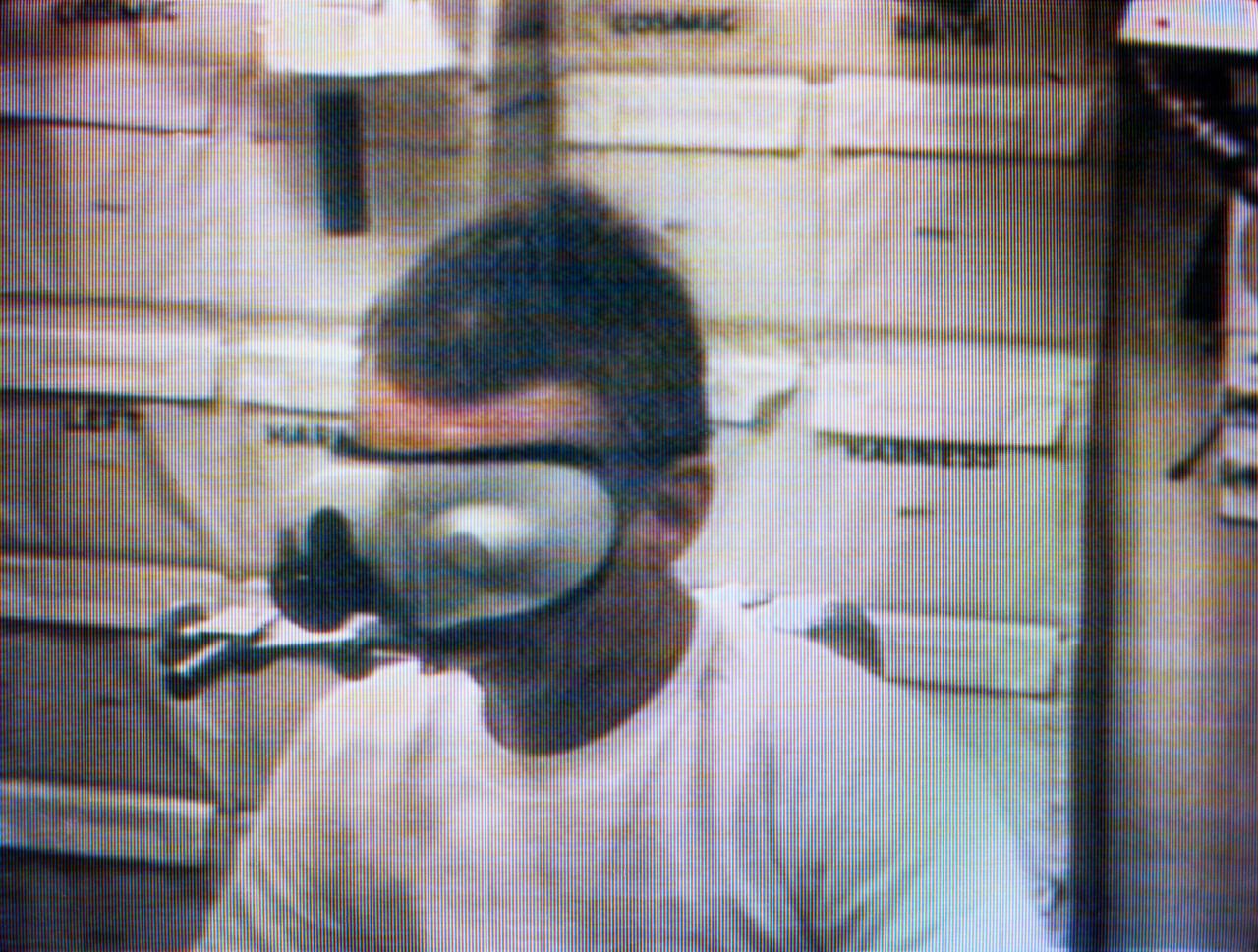
S73-32113 (9 Aug. 1973) --- Scientist-astronaut Owen K. Garriott, Skylab 3 science pilot, serves as test subject for the Skylab ?Human Vestibular Function? M131 Experiment, as seen in this photographic reproduction taken from a television transmission made by a color TV camera aboard the Skylab space station in Earth orbit. The objectives of the Skylab M131 experiment are to obtain data pertinent to establishing the validity of measurements of specific behavioral/physiological responses influenced by vestibular activity under one-g and zero-g conditions; to determine man?s adaptability to unusual vestibular conditions and predict habitability of future spacecraft conditions involving reduced gravity and Coriollis forces; and to measure the accuracy and variability in man?s judgment of spatial coordinates based on atypical gravity receptor cues and inadequate visual cues. Photo credit: NASA

A Mod-1 2000-kilowatt wind turbine designed by National Aeronautics and Space Administration (NASA) Lewis Research Center and constructed in Boone, North Carolina. The wind turbine program was a joint program between NASA and the Energy Research and Development Administration (ERDA) during the 1970s to develop less expensive forms of energy. NASA Lewis was assigned the responsibility of developing large horizontal-axis wind turbines. The program included a series of increasingly powerful wind turbines, designated: Mod-0A, Mod-1, WTS-4, and Mod-5. The program’s first device was a Mod-0 100-kilowatt wind turbine test bed at NASA’s Plum Brook Station. There were four Mod-0A 200-kilowatt turbines built in New Mexico, Hawaii, Puerto Rico, and Rhode Island. The 2000-kilowatt wind turbine in North Carolina, seen here, was the only Mod-1 machine constructed. The two-bladed, 200-foot diameter device was built in May 1979 and began operation that September. The Mod-1 turbine performed exceedingly well and was fully integrated into the local power grid. NASA researchers also used the North Carolina device to study its effect on noise and television transmission.
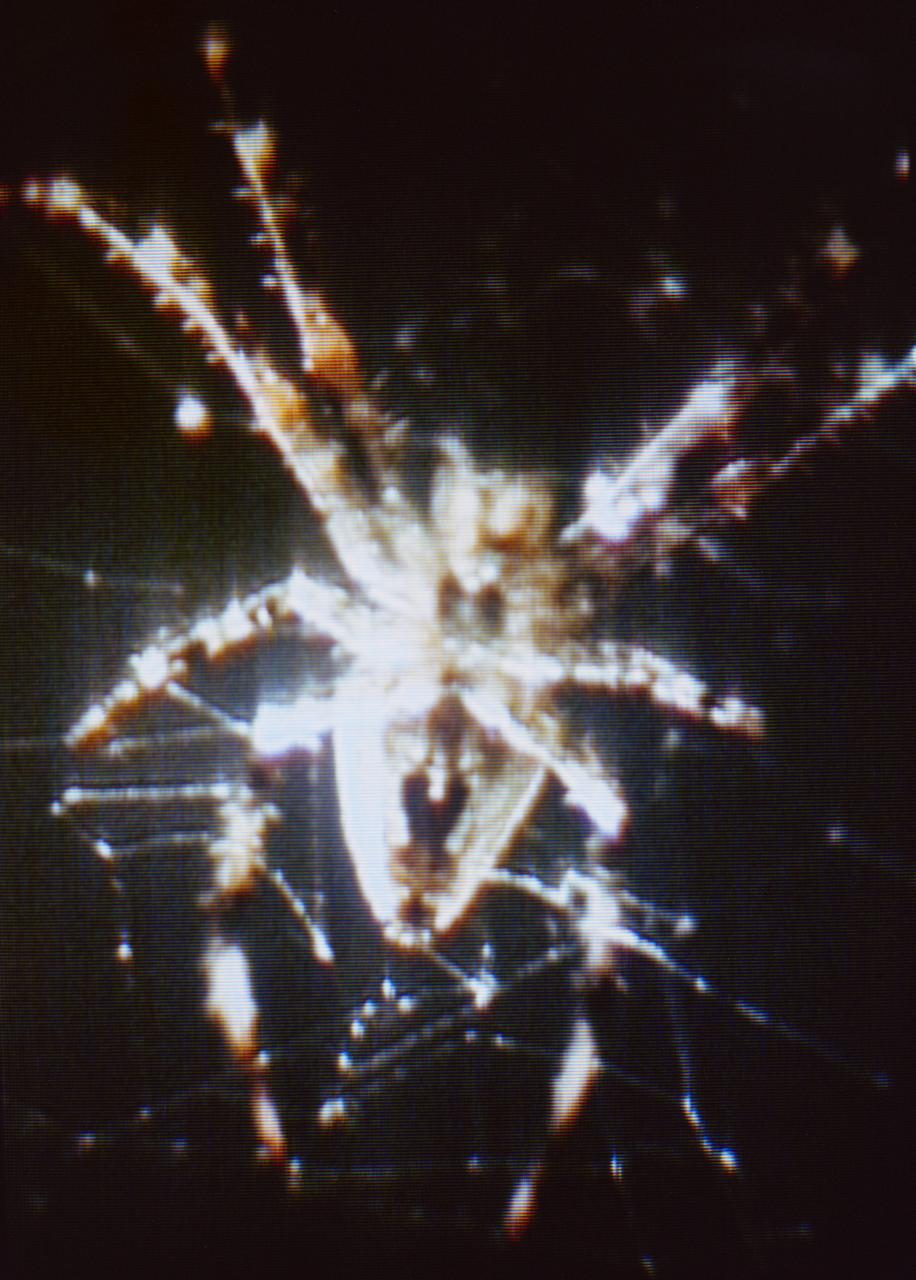
S73-34206 (8 Aug. 1973) --- A closeup view of Arabella, one of two Skylab 3 common cross spiders ?Araneus diadematus,? and the web it had spun in the zero-gravity of space aboard the Skylab space station cluster in Earth orbit. This is a photographic reproduction made a color television transmission aboard Skylab. During the 59-day Skylab 3 mission the two spiders, Arabella and Anita, were housed in an enclosure onto which a motion picture camera and a still camera were attached to record the spiders? attempts to build a web in the weightless environment. The spider experiment (ED52) was one of 25 experiments selected for Skylab by NASA from more than 3,400 experiment proposals submitted by 17-year-old Judith S. Miles of Lexington, Massachusetts. Anita died during the last week of the mission. THIS PHOTOGRAPH IS A GOVERNMENT PUBLICATION ?NOT SUBJECT TO COPYRIGHT. It may not be used to state or imply the endorsement by NASA or by any NASA employee of a commercial product, process or service, or used in any way that might mislead. Accordingly, it is requested that if this photograph is used in advertising and other commercial promotions, layout and copy be submitted to NASA prior to release. Photo credit: NASA
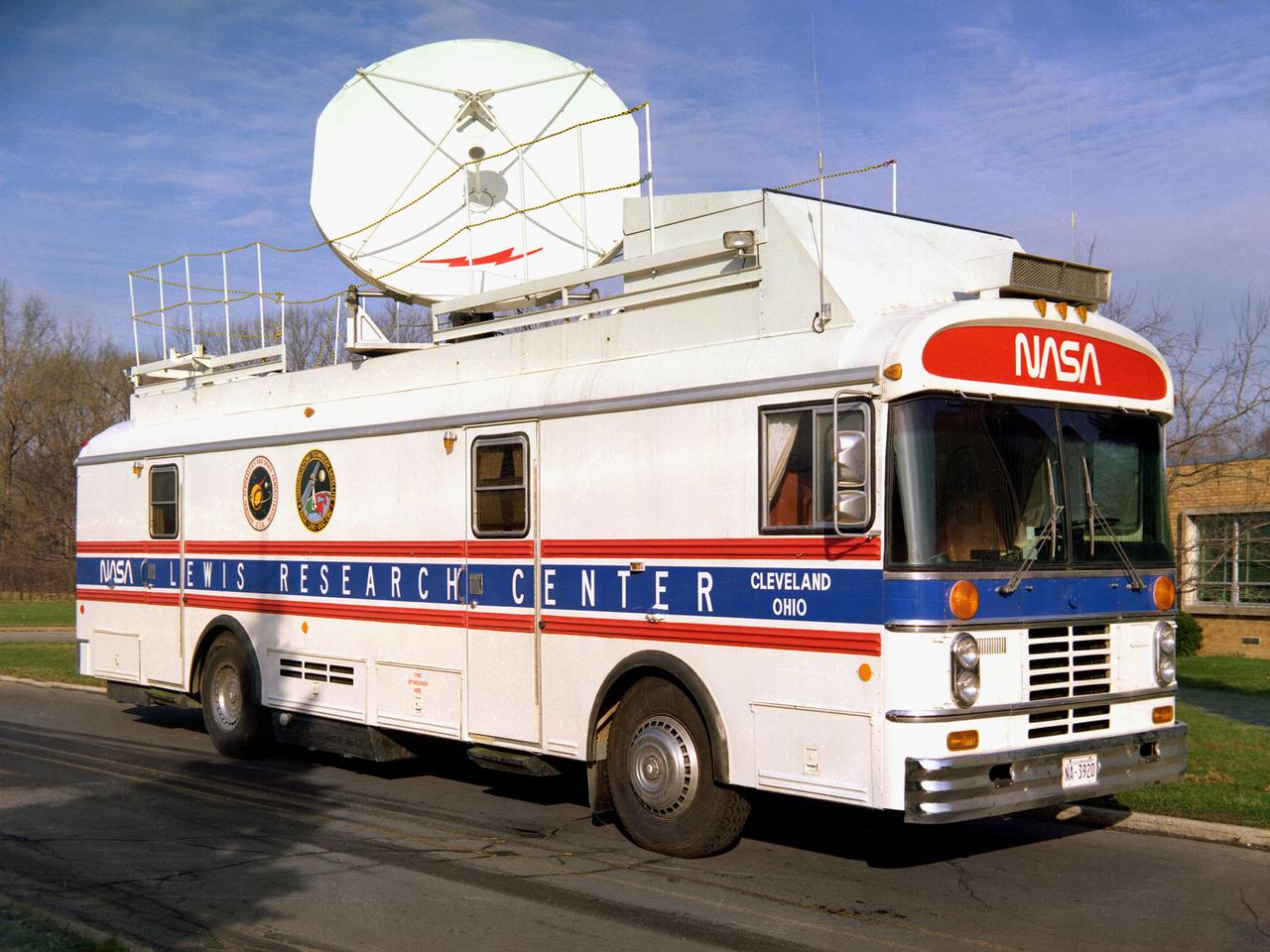
This vehicle served as a mobile terminal for the Communications Technology Satellite. The Communications Technology Satellite was an experimental communications satellite launched in January 1976 by the National Aeronautics and Space Administration (NASA) and the Canadian Department of Communications. The satellite operated in a new frequency band reserved for broadcast satellites with transmitting power levels that were 10 to 20 times higher than those of contemporary satellites. Throughout 1977 and 1978 NASA allowed qualified groups to utilize the satellite from one of the three ground-based transmission centers. NASA’s Lewis Research Center in Cleveland, Ohio was NASA’s lead center on the project. Lewis was responsible for the control and coordination of all US experiments on the satellite. The center housed the satellite’s main control center which included eight parabolic reflector antennae ranging from 2 to 15 feet in diameter. Many of the satellite’s components had been tested in simulated space conditions at Lewis. The Lewis-designed vehicle seen here served as a field unit for transmitting and receiving wideband signals and narrowband voice. The vehicle permitted live television interviews, recording equipment, and cameras. An 8-foot diameter parabolic reflector was mounted on the roof. The interior of the vehicle had workstations, monitors, transmitting equipment, and a lounge area.
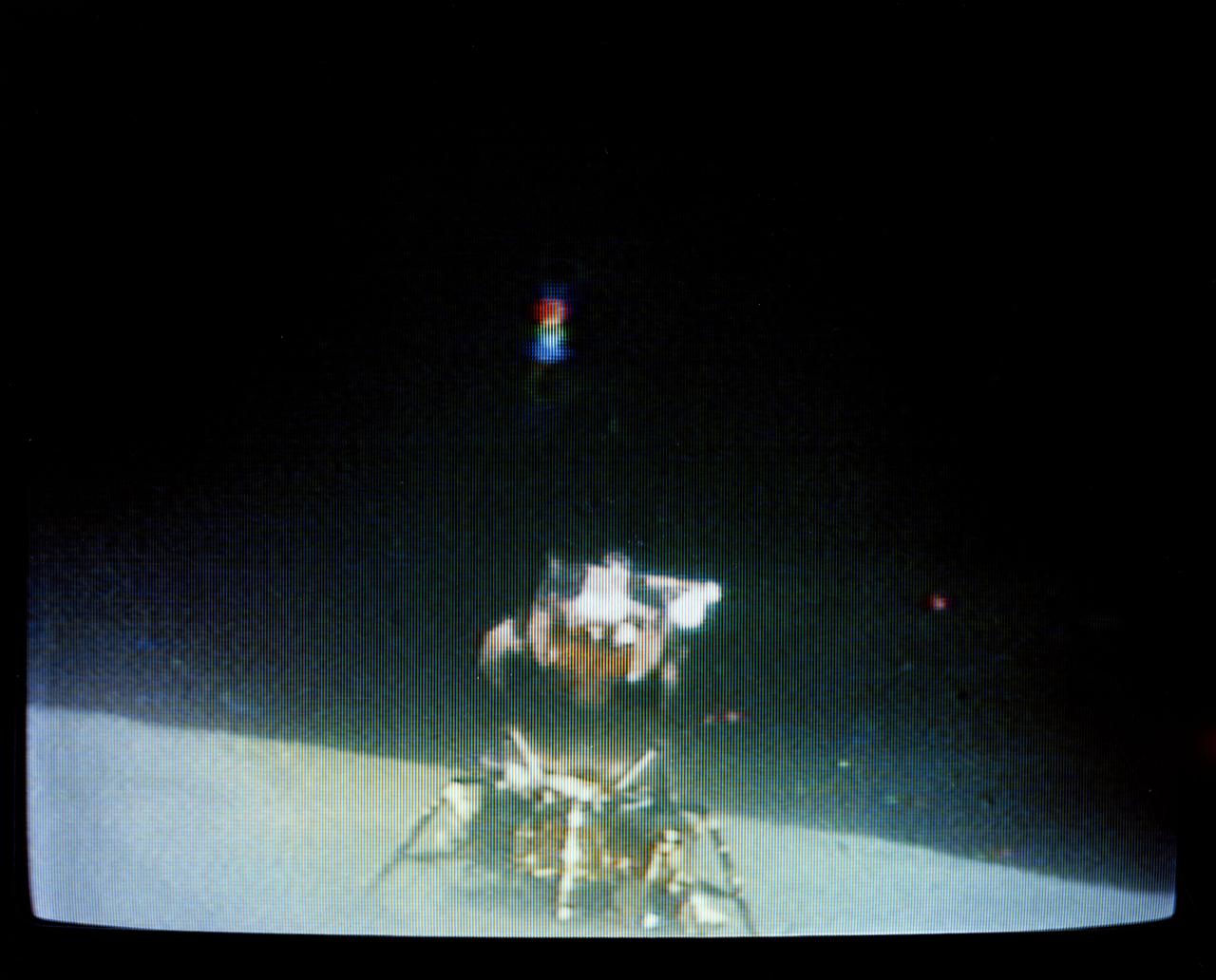
S72-35614 (23 April 1972) --- The Apollo 16 Lunar Module "Orion" ascent stage makes its liftoff from the lunar surface in this reproduction taken from a color television transmission made by the RCA color TV camera mounted on the Lunar Roving Vehicle (LRV). Remotely controlled from NASA's Mission Control Center (MCC) in Houston, the LRV-mounted camera made it possible for persons on Earth to watch the LM's launch from the moon. Liftoff occurred at 175:44 ground elapsed time, 7:26 p.m. (CST), April 23, 1972. The "Orion" ascent stage, with astronauts John W. Young and Charles M. Duke Jr. aboard, returned from the lunar surface to rejoin the Command and Service Modules (CSM) orbiting the moon. Astronaut Thomas K. (Ken) Mattingly II remained with the CSM in lunar orbit while Young and Duke descended in the LM to explore the Descartes landing site. The LM descent stage is used as a launching platform and remains behind on the moon.
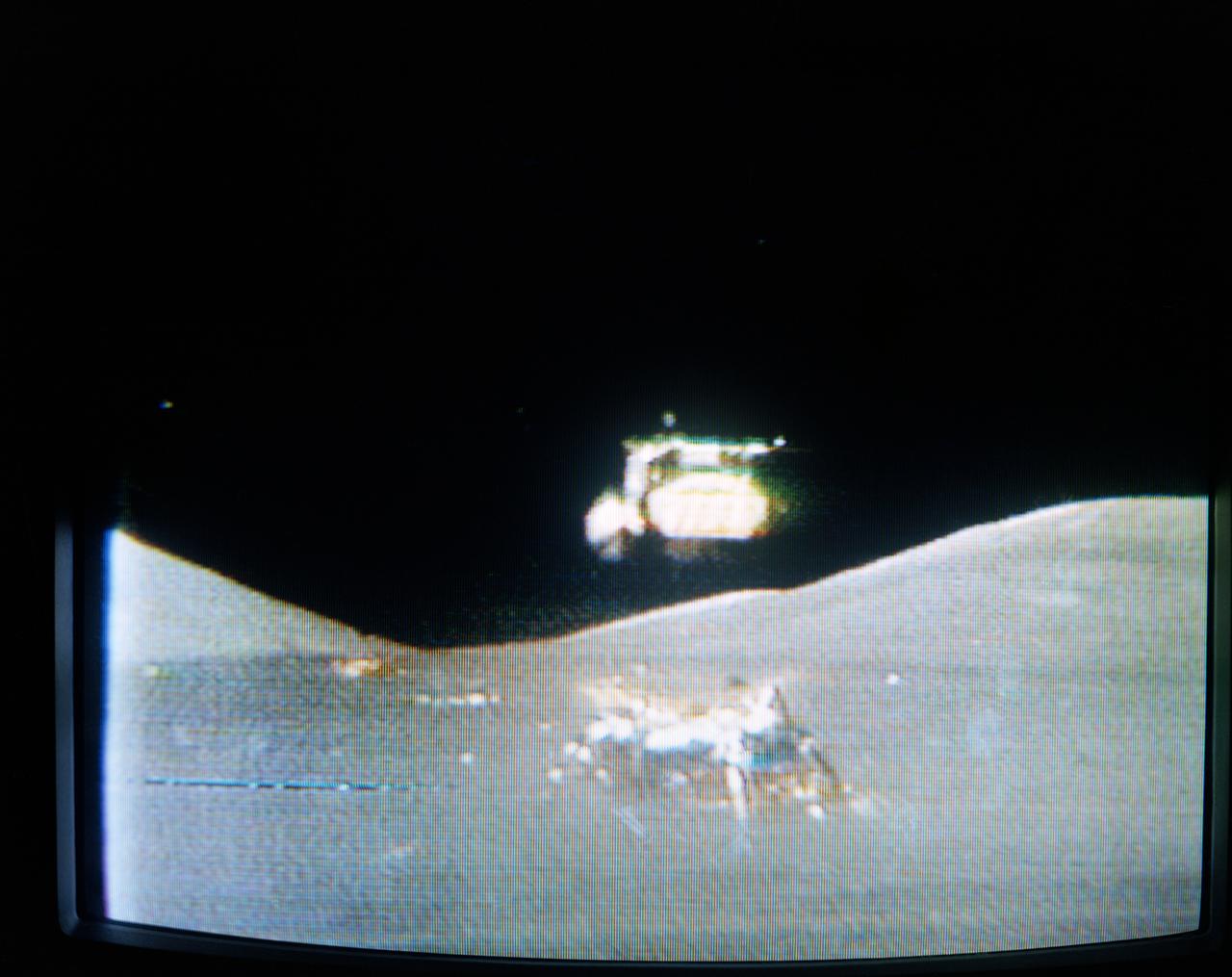
S72-55421 (14 Dec. 1972) --- The Apollo 17 Lunar Module (LM) "Challenger" ascent stage leaves the Taurus-Littrow landing site as it makes its spectacular liftoff from the lunar surface, as seen in this reproduction taken from a color television transmission made by the color RCA TV camera mounted on the Lunar Roving Vehicle (LRV). The LRV-mounted TV camera, remotely controlled from the Mission Control Center (MCC) in Houston, made it possible for people on Earth to watch the fantastic event. The LM liftoff was at 188:01:36 ground elapsed time, 4:54:36 p.m. (CST), Thursday, Dec. 14, 1972. The LM ascent stage, with astronauts Eugene A. Cernan and Harrison H. Schmitt aboard, returned from the lunar surface to rejoin the Command and Service Modules (CSM) orbiting the moon. Astronaut Ronald E. Evans remained with the CSM in lunar orbit while Cernan and Schmitt explored the moon. The LM descent stage is used as a launching platform and remains behind on the moon. Here, the two stages have completely separated and the ascent stage is headed skyward.