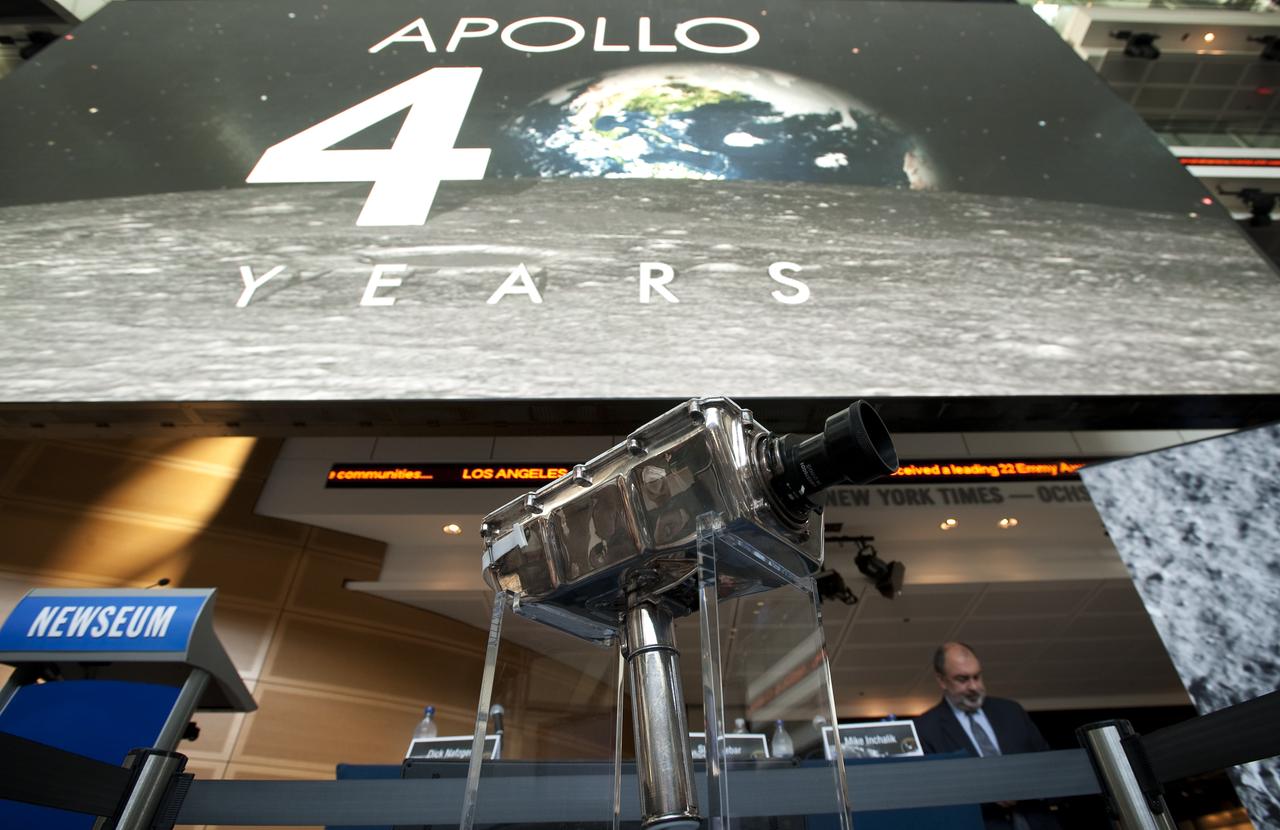
An Apollo TV camera from the National Electronic Museum in Baltimore, Maryland is on display for NASA's briefing to release restored Apollo 11 moonwalk footage at the Newseum, Thursday, July 16, 2009, in Washington, DC. Photo Credit: (NASA/Bill Ingalls)
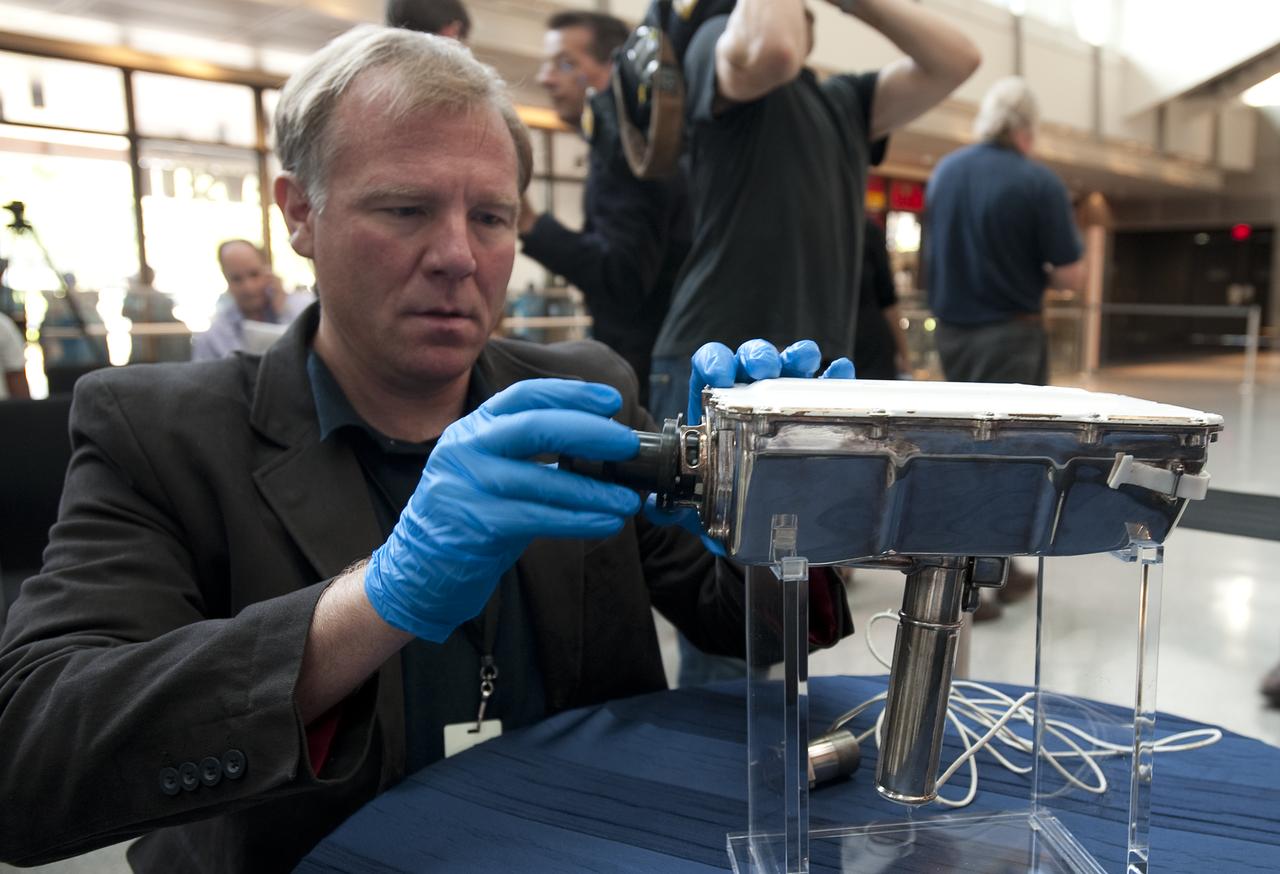
Mike Simons, Director of the National Electronic Museum in Baltimore, Maryland assembles an Apollo TV camera for display prior to NASA's briefing to release restored Apollo 11 moonwalk footage at the Newseum, Thursday, July 16, 2009, in Washington, DC. Photo Credit: (NASA/Bill Ingalls)
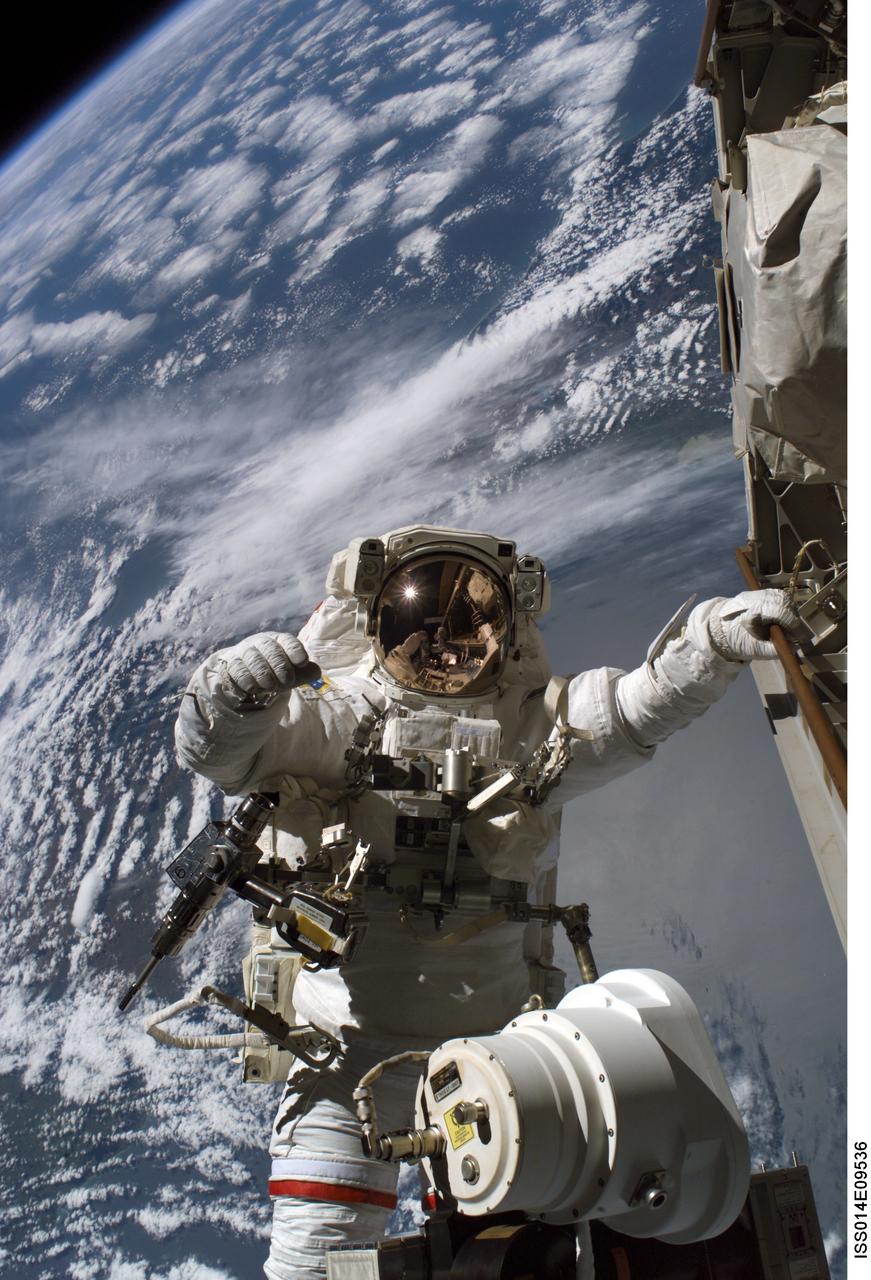
ISS014-E-09536 (12 Dec. 2006) --- Astronaut Robert L. Curbeam, Jr., STS-116 mission specialist, prepares to replace a faulty TV camera on the exterior of the International Space Station during the mission's first of three planned sessions of extravehicular activity (EVA). Astronaut Christer Fuglesang (out of frame), mission specialist representing the European Space Agency (ESA), also participated in the 6-hour, 36-minute spacewalk.
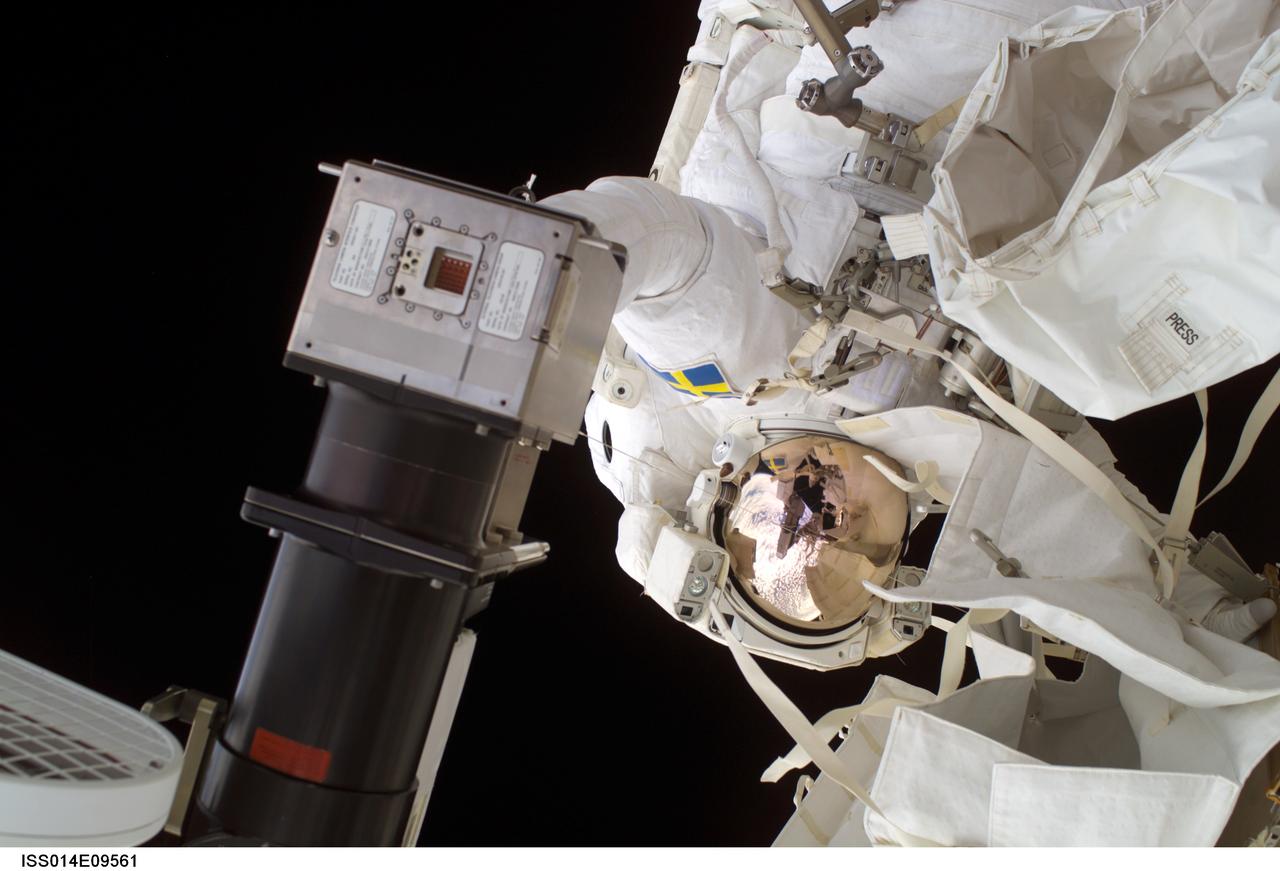
ISS014-E-09561 (12 Dec. 2006) --- European Space Agency (ESA) astronaut Christer Fuglesang, STS-116 mission specialist, replaces a faulty TV camera on the exterior of the International Space Station during the mission's first of three planned sessions of extravehicular activity (EVA). Astronaut Robert L. Curbeam, Jr. (out of frame), mission specialist, also participated in the 6-hour, 36-minute spacewalk.
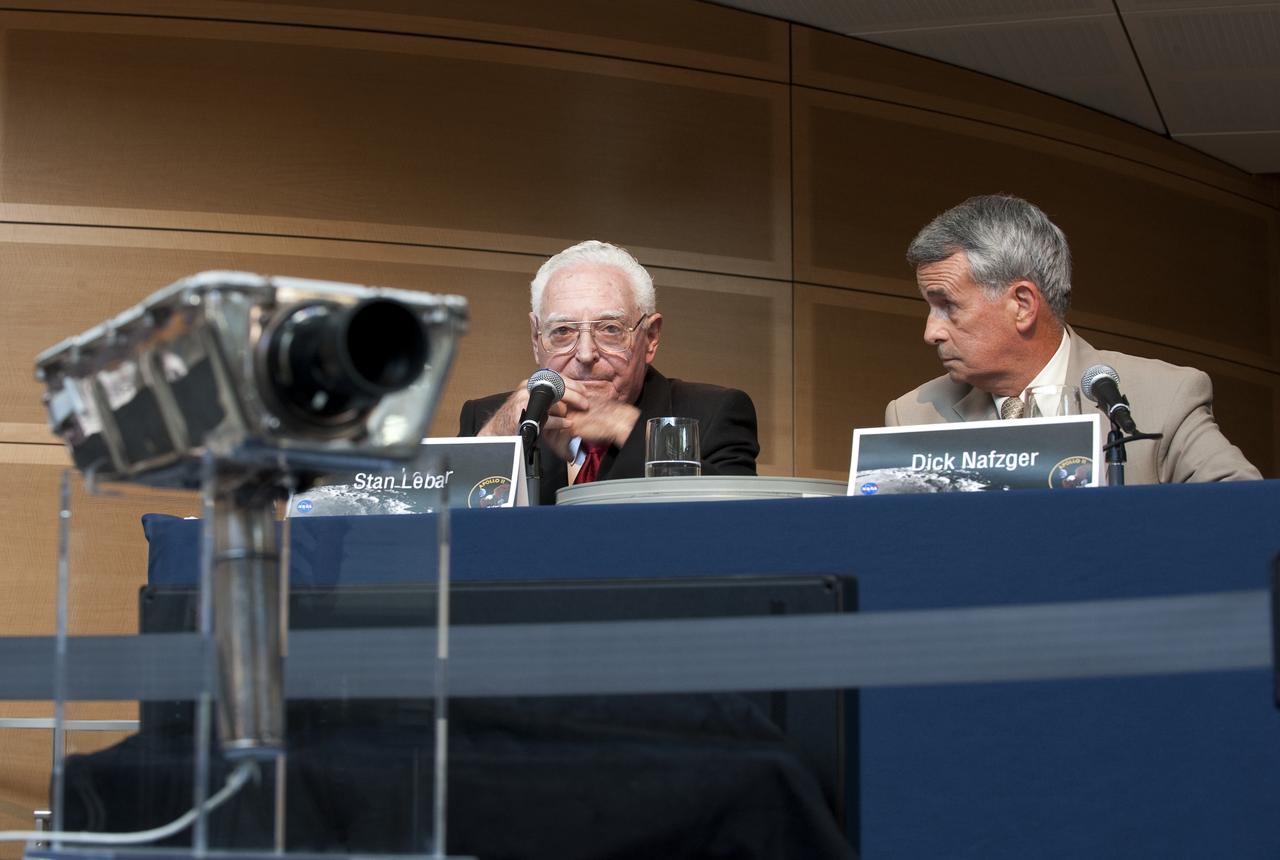
Stan Lebar, former Westinghouse Electric program manager, left, talks about the Apollo era TV cameras such as the one on display in the foreground as Richard Nafzger, team lead and Goddard engineer, listens at NASA's briefing where restored Apollo 11 moonwalk footage was revealed for the first time at the Newseum, Thursday, July 16, 2009, in Washington, DC. Photo Credit: (NASA/Bill Ingalls)
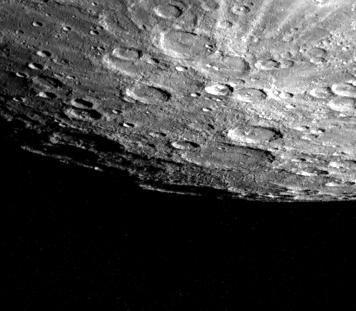
Mercury south pole was photographed by one of NASA Mariner 10 TV cameras; the pole is located inside the large crater on Mercury limb lower center.
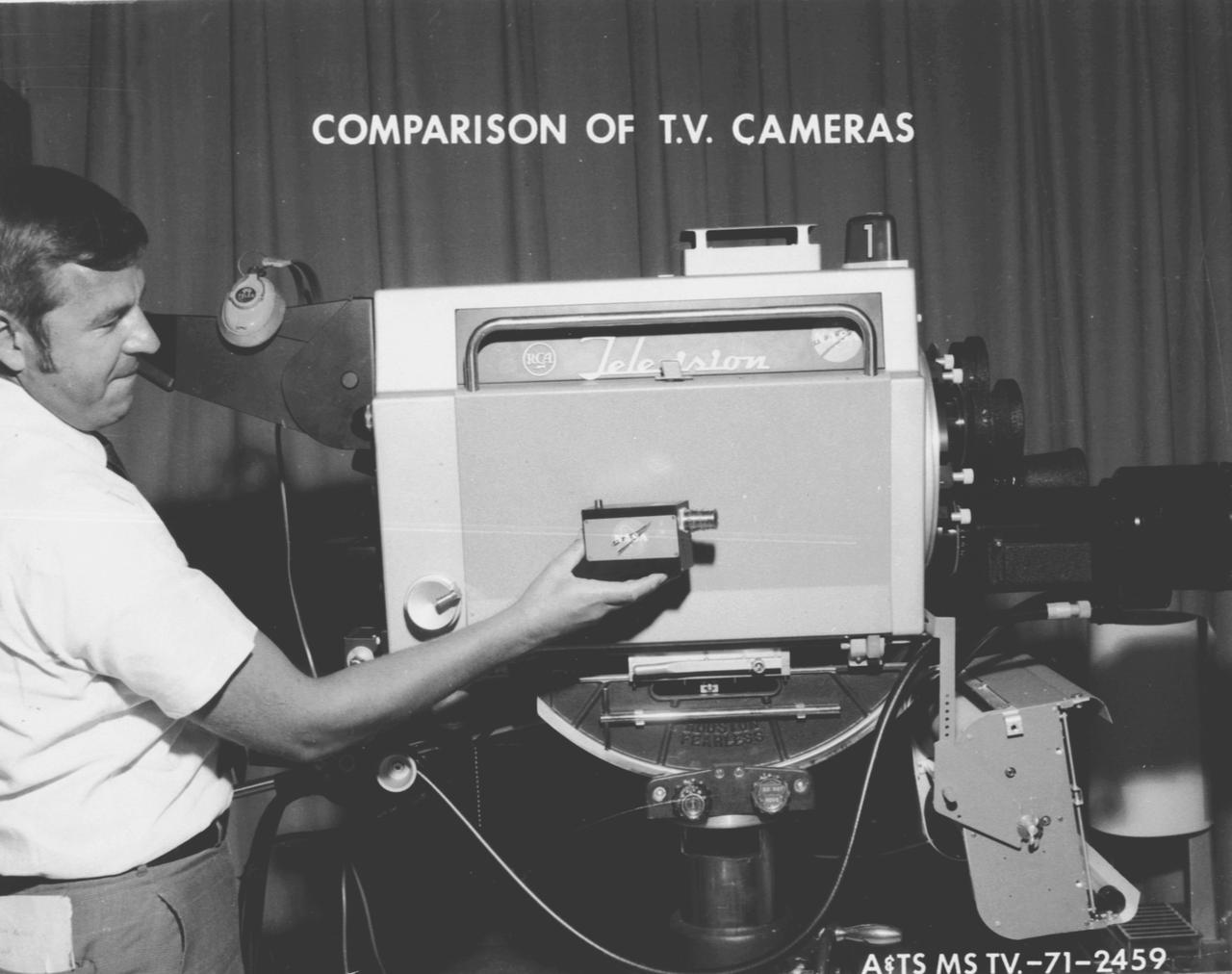
Originally devised to observe Saturn stage separation during Apollo flights, Marshall Space Flight Center's Miniature Television Camera, measuring only 4 x 3 x 1 1/2 inches, quickly made its way to the commercial telecommunications market.
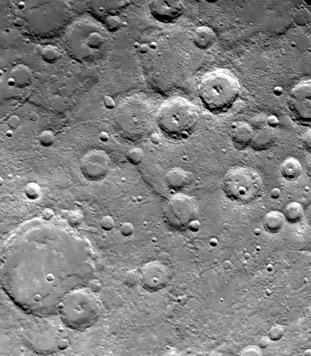
One of NASA Mariner 10 two TV cameras took this picture of a densely cratered region of Mercury on Sept. 21, 1974, 80 minutes prior to the spacecraft second close encounter with the planet.

As NASA Mariner 10 approached Mercury at nearly seven miles per second on March 29, 1974, its TV camera took this picture from an altitude of 35,000 kilometers 21,700 miles The picture shows a heavily-cratered surface with many low hills
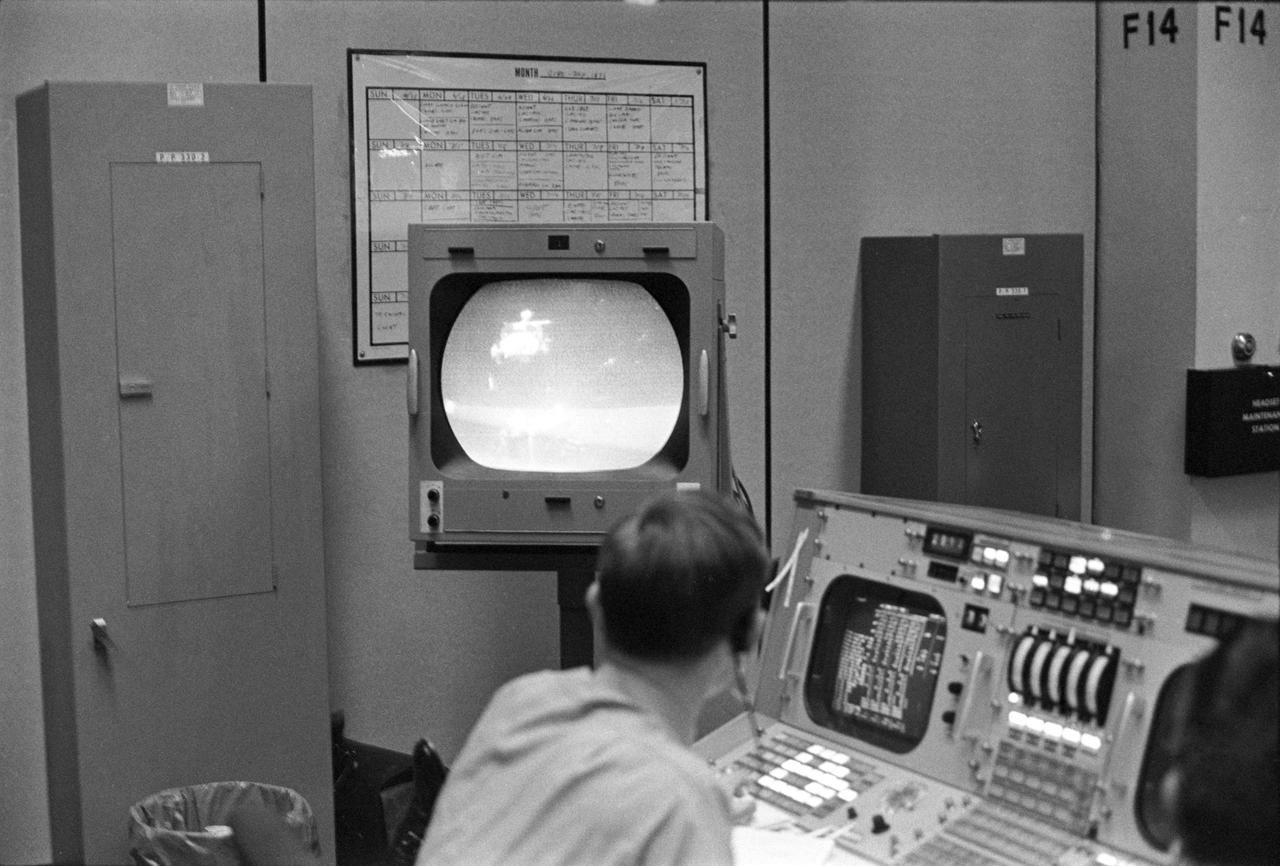
View of a photograph of the television (TV) monitor in the MCC showing a picture being transmitted from the color TV camera mounted on the parked Lunar Roving Vehicle (LRV) at the Hadley-Apennine Landing Site showing the liftoff of the Apollo 15 Lunar Module (LM) Ascent Stage from the Lunar surface. MSC, Houston, TX
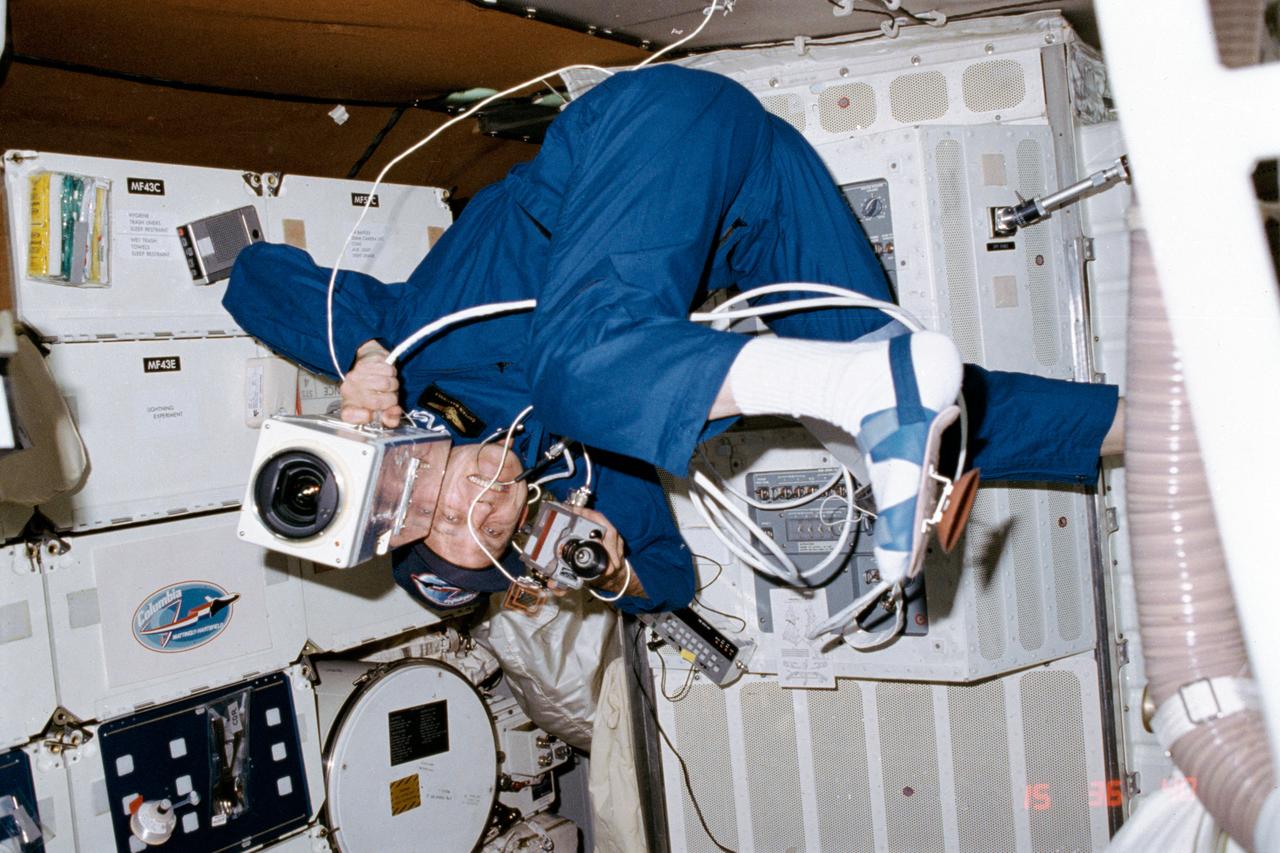
STS004-23-131 (27 June-4 July 1982) ---Astronaut Thomas K. Mattingly II, STS-4 commander, floats in the middeck area of the Earth-orbiting space shuttle Columbia. He handles two cameras at one time. In the commander’s right hand is a 16mm data acquisition camera (DAC), and in his left hand is a TV camera. Note the suction-cup equipped footwear which Mattingly revealed to the world via TV on one of his popular “cook’s tours” from crewmate Henry W. Hartsfield, pilot, operated a 35mm camera to expose this frame. Photo credit: NASA
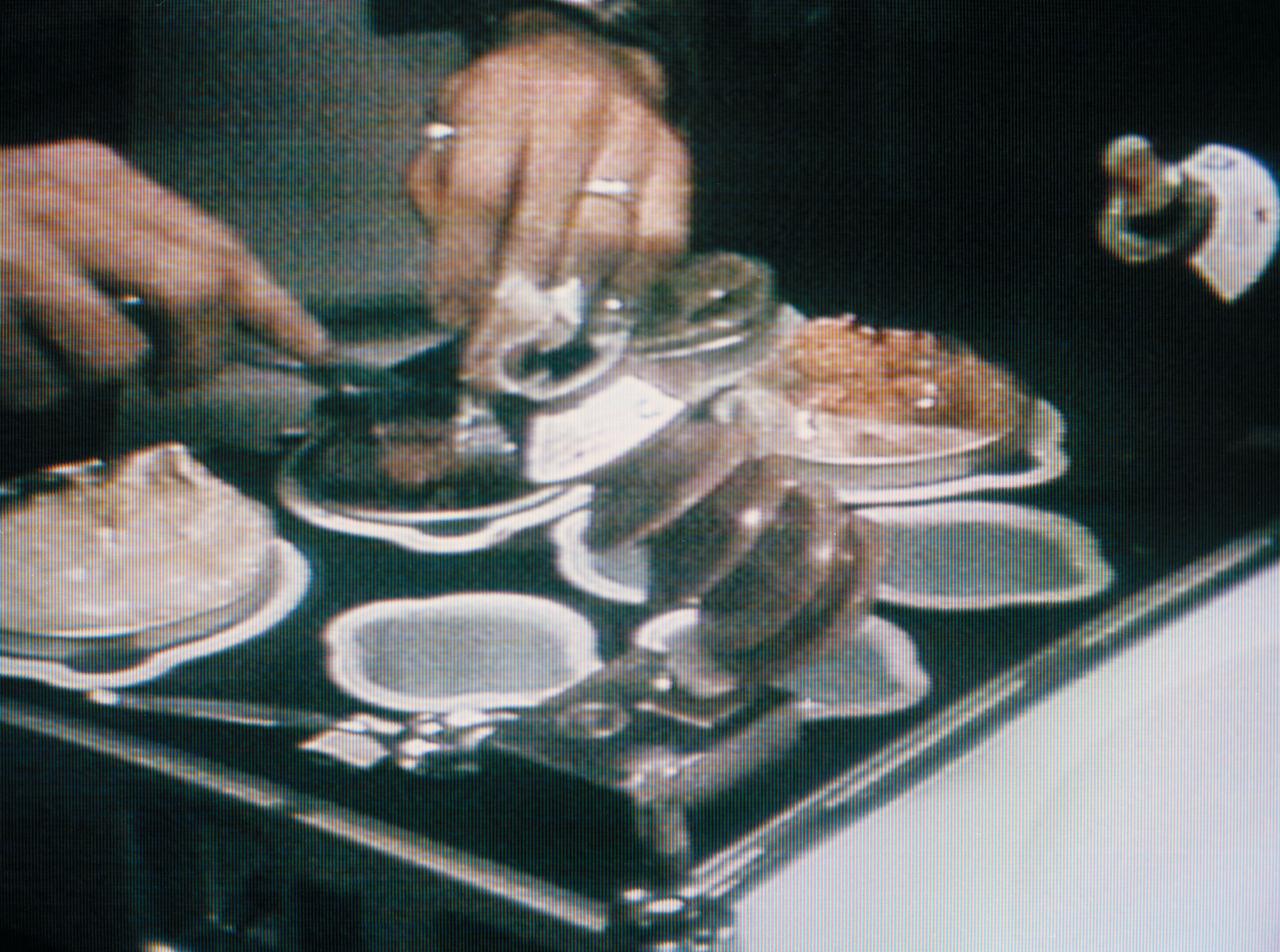
S73-34198 (1 Aug. 1973) --- A close-up view of the hands of astronaut Jack R. Lousma, Skylab 3 pilot, using a silverware utensil to gather food at the food station, in this photographic reproduction taken from a television transmission made by a color TV camera aboard the Skylab space station in Earth orbit. Astronaut Alan L. Bean, commander, had just zoomed the TV camera in for this close-up of the food tray following a series of wide shots of Lousma at the food station. Photo credit: NASA
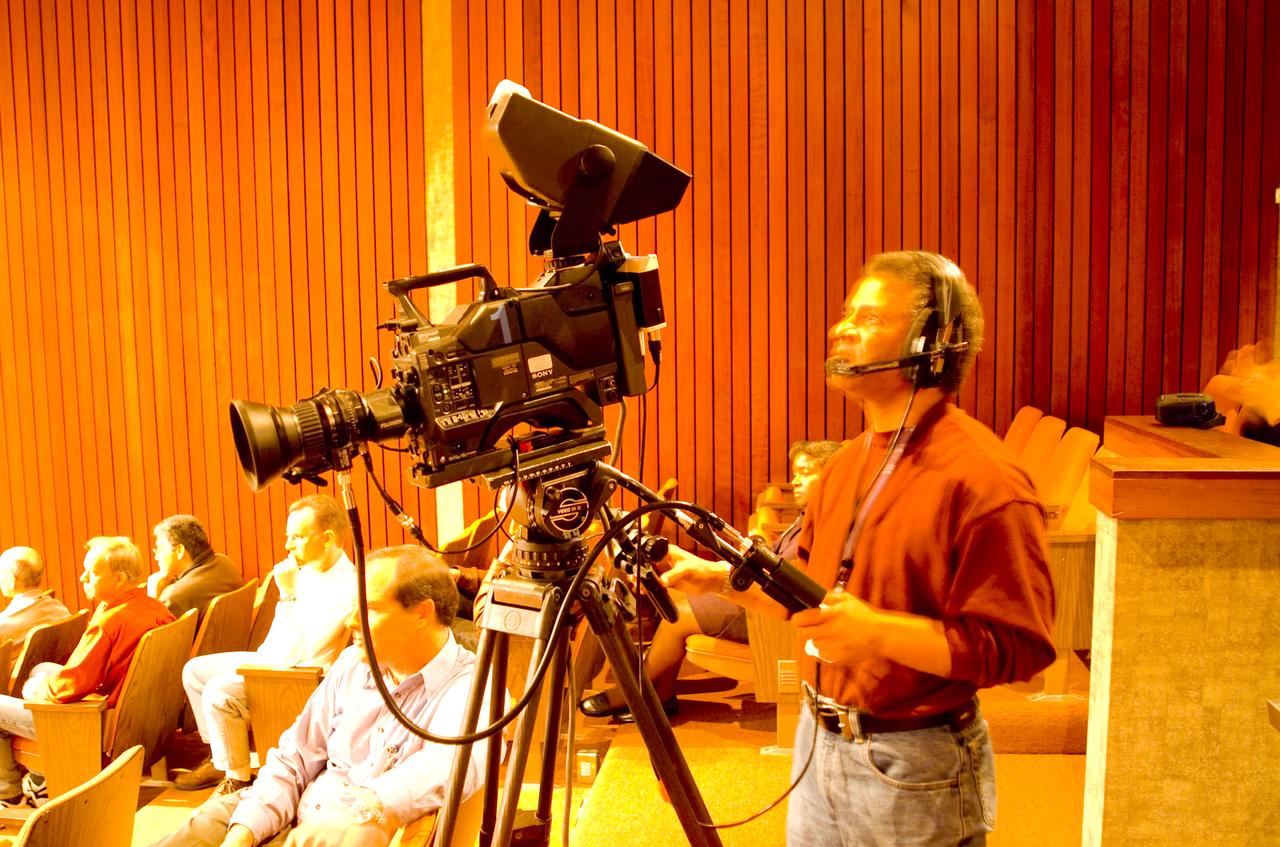
Sun-Earth Day WEBCAST - NASA TV; Host Paul Mortfield, Astronomer Stanford Solar Center and visiting students from San Francisco Bay Area Schools Paul Langston, Videographer operates camera
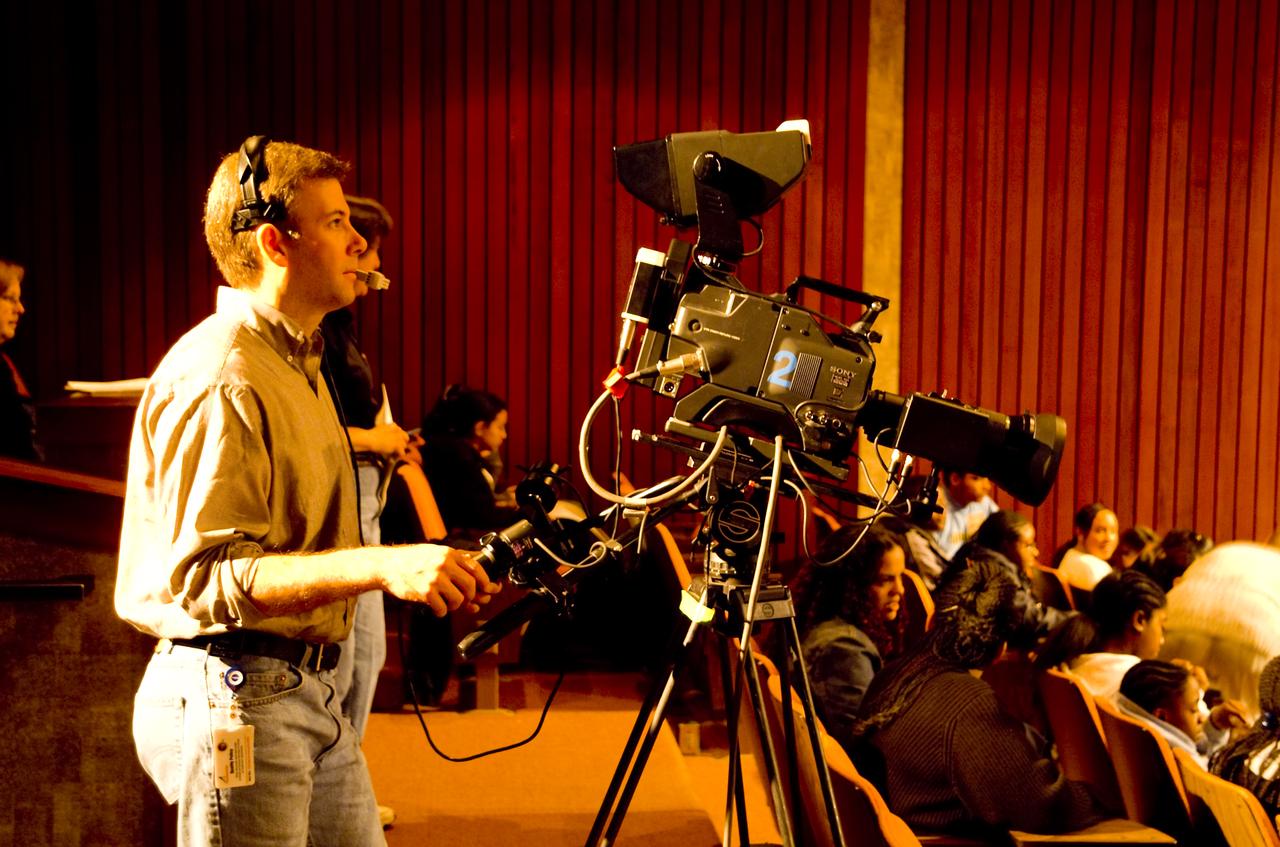
Sun-Earth Day WEBCAST - NASA TV; Host Paul Mortfield, Astronomer Stanford Solar Center and visiting students from San Francisco Bay Area Schools David Maurantonio, Videographer operates camera
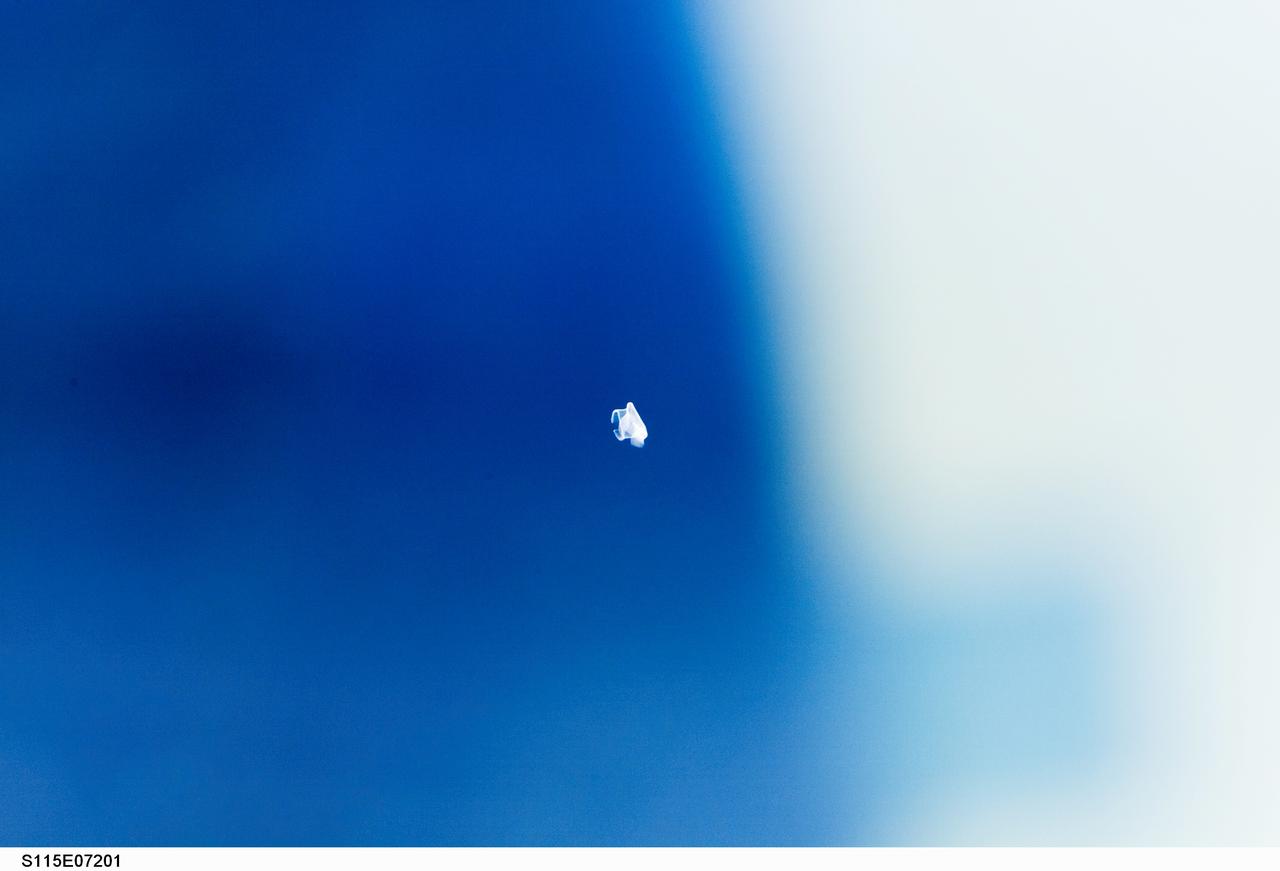
S115-E-07201 (19 Sept. 2006) --- This picture of unidentified possible small debris was recorded with a digital still camera by astronaut Daniel Burbank onboard the Space Shuttle Atlantis around 11 a.m. (CDT) today. Engineers do not believe this to be the same object seen in video taken by shuttle TV cameras earlier in the day.
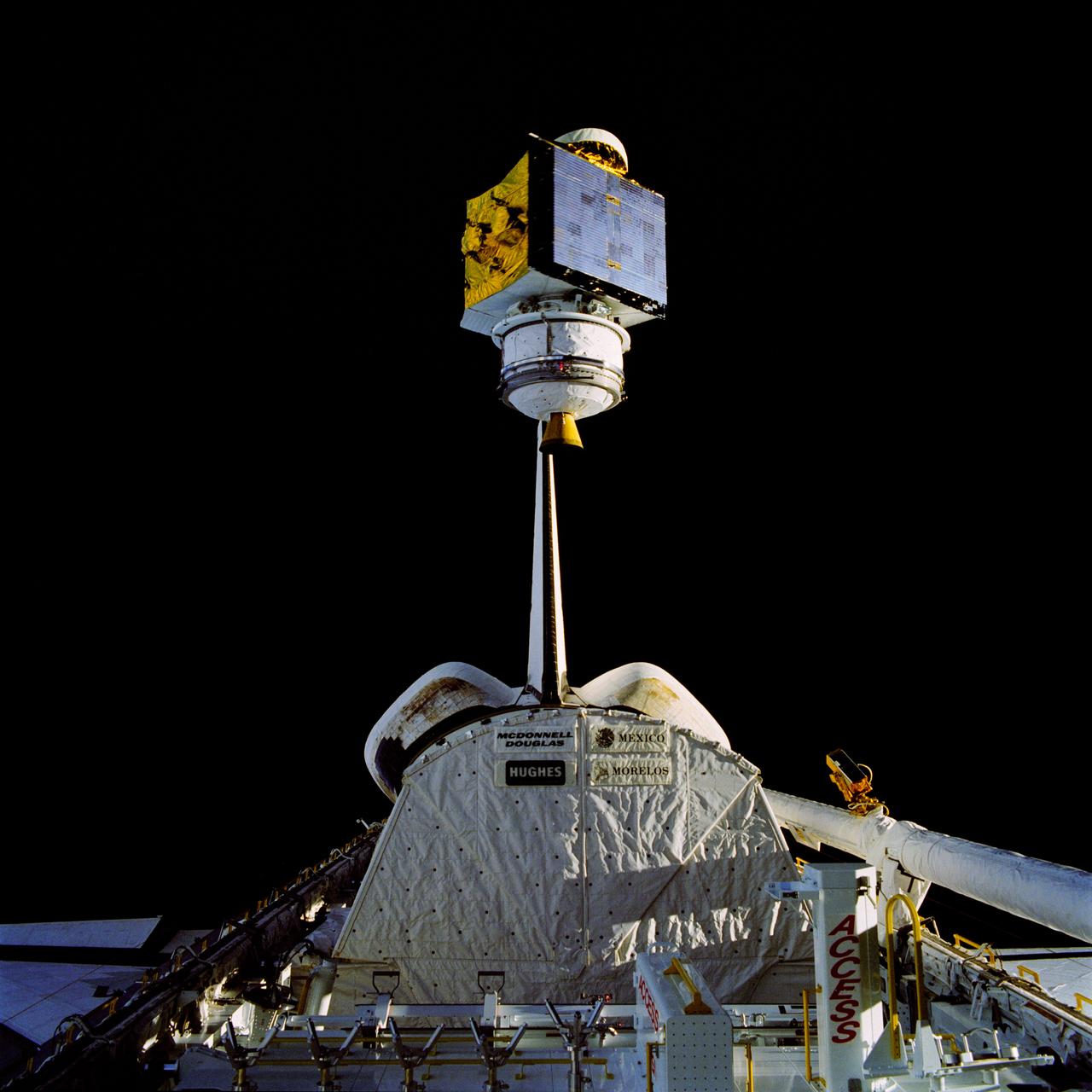
61B-38-36W (28 Nov 1985) --- The 4,144-pound RCA Satcom K-2 communications satellite is photographed as it spins from the cargo bay of the Earth-orbiting Atlantis. A TV camera at right records the deployment for a later playback to Earth. This frame was photographed with a handheld Hasselblad camera inside the spacecraft.

S72-55167 (12 Dec. 1972) --- The two moon-exploring Apollo 17 crew men are seen facing the TV camera during the second extravehicular activity (EVA) at the Taurus -Littrow landing site, in this black and white reproduction taken from a color television transmission made by the color TV camera mounted on the Lunar Roving Vehicle (LRV). They are astronauts Eugene A Cernan, on left , commander, and scientist-astronaut Harrison H. Schmitt, lunar module pilot. Astronaut Ronald E. Evans, command module pilot, remained with the Apollo 17 Command and Service Modules (CSM) in lunar orbit.
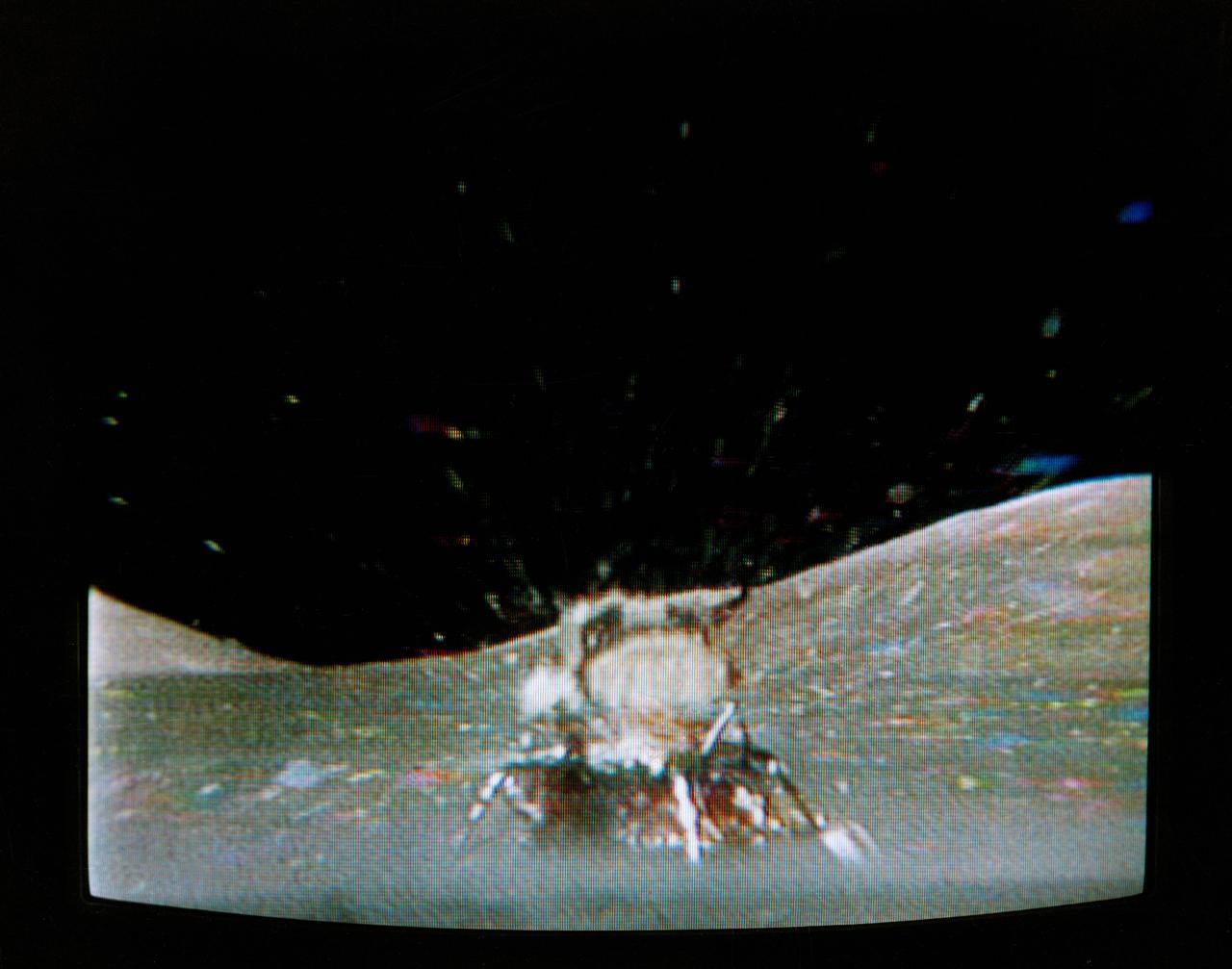
The Apollo 17 Lunar Module (LM) "Challenger" ascent stage leaves the Taurus-Littrow landing site as it makes its spectacular liftoff from the lunar surface, as seen in this reproduction taken from a color television transmission made by the color RCA TV camera mounted on the Lunar Roving Vehicle (LRV). The LRV-mounted TV camera, remotely controlled from the Mission Control Center (MCC) in Houston, made it possible for people on Earth to watch the fantastic event. The LM liftoff was at 188:01:36 ground elapsed time, 4:54:36 p.m. (CST), Thursday, December 14, 1972.
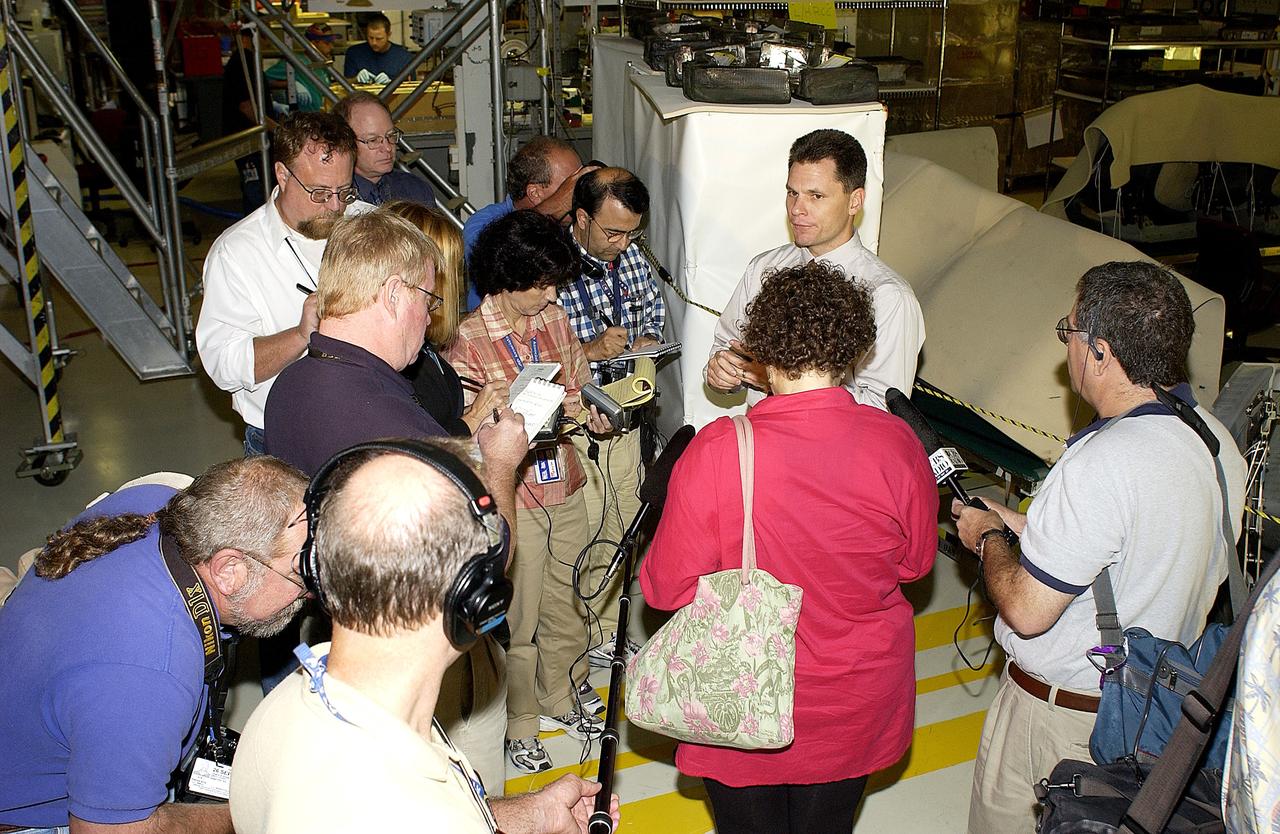
KENNEDY SPACE CENTER, FLA. - NASA Vehicle Manager Scott Thurston (facing camera) talks to the media in the Orbiter Processing Facility. The media was invited to see the orbiter Atlantis as it is being prepared for Return to Flight. Both local and national reporters representing print and TV networks were able to see work in progress on Atlantis, including the reinstallation of the Reinforced Carbon-Carbon panels on the orbiter’s wing leading edge; wiring inspections; and checks of the engines in the Orbital Maneuvering System.
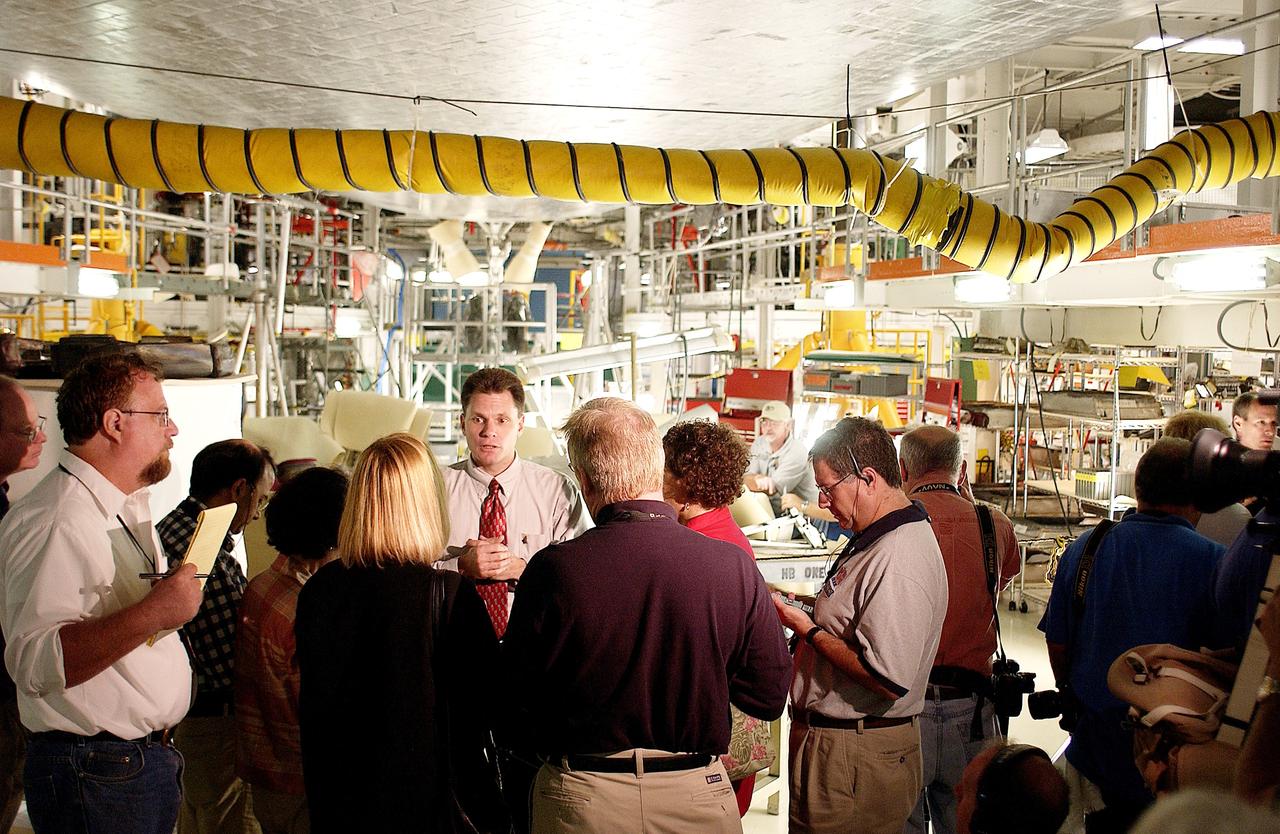
KENNEDY SPACE CENTER, FLA. - NASA Vehicle Manager Scott Thurston (facing camera) talks to the media in the Orbiter Processing Facility. The media was invited to see the orbiter Atlantis as it is being prepared for Return to Flight. Both local and national reporters representing print and TV networks were able to see work in progress on Atlantis, including the reinstallation of the Reinforced Carbon-Carbon panels on the orbiter’s wing leading edge; wiring inspections; and checks of the engines in the Orbital Maneuvering System.
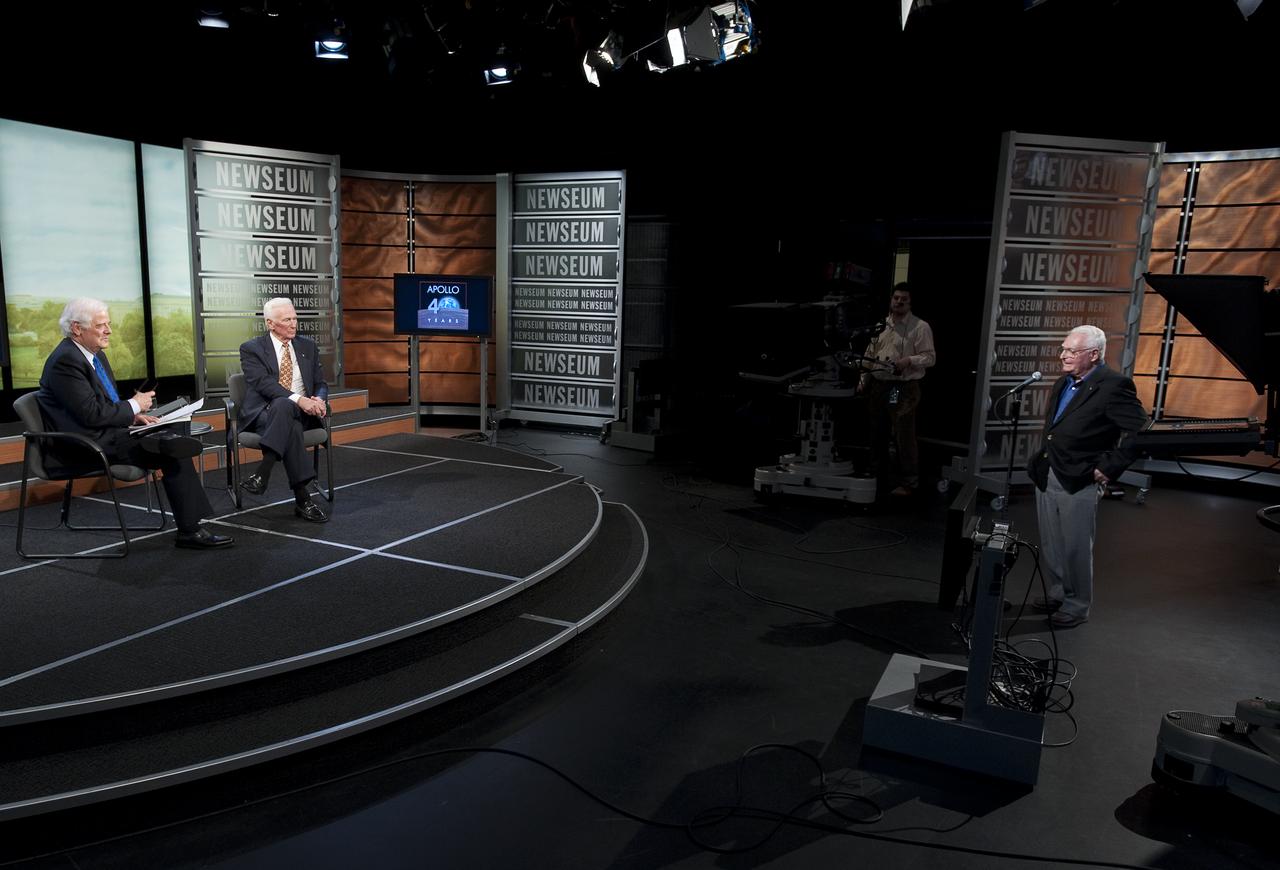
NASA Apollo 10 Astronaut Gene Cernan, on stage, right, and the Newseum's distinguished journalist-in-residence, Nick Clooney, on stage, left, talk with a Stan LeBar, Program Manager of the Apollo TV Lunar Camera who helped see that Apollo 10 was the first mission to broadcast in color from the moon during a Newseum TV program celebrating the 40th anniversary of Apollo 10, Monday, May 18, 2009, in Washington. Photo Credit (NASA/Bill Ingalls)
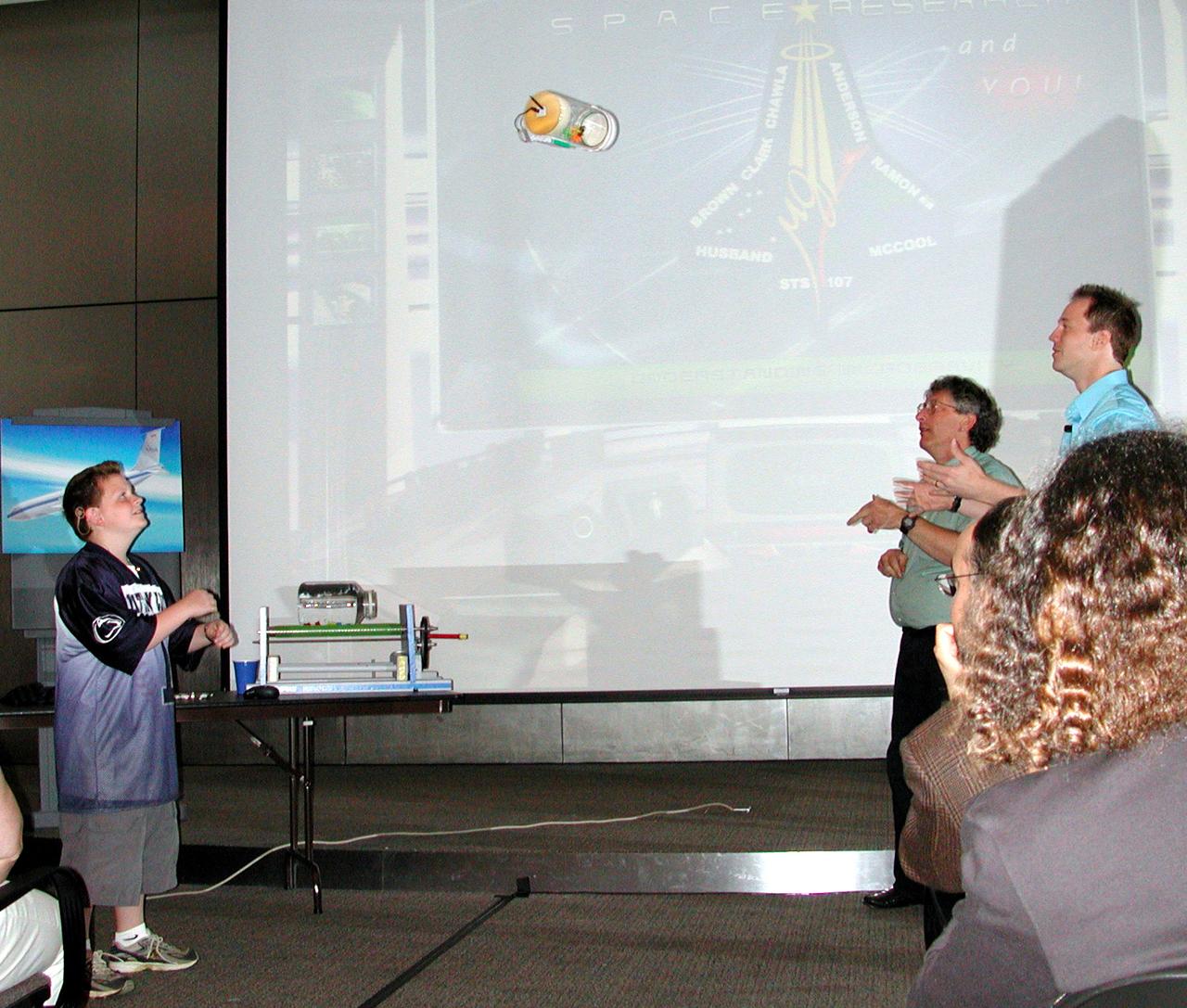
A student gets ready to catch a plastic tube carrying a small fluid bottle and a wireless video camera. As it arced through the air, the container was in free-fall -- just like astronauts in space -- and the TV camera broadcast images of how the fluid behaved. The activity was part of the Space Research and You education event held by NASA's Office of Biological and Physical Research on June 25, 2002, in Arlington, VA, to highlight the research that will be conducted on STS-107. (Digital camera image; no film original.
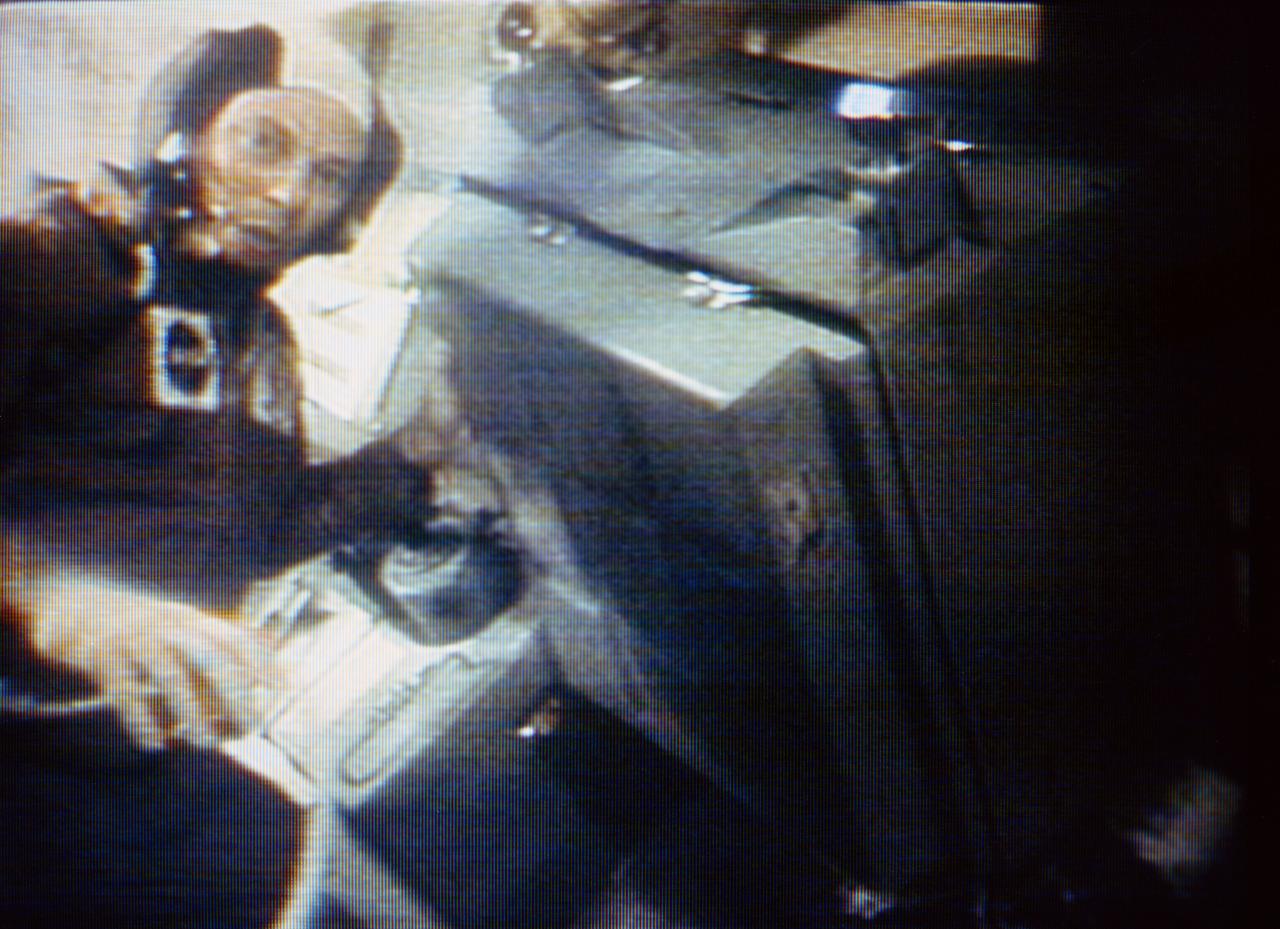
S73-34181 (July-September 1973) --- Astronaut Jack R. Lousma, Skylab 3 pilot, works at the S190A multispectral camera experiment in the Multiple Docking Adapter (MDA), seen from a color television transmission made by a TV camera aboard the Skylab space station cluster in Earth orbit. Lousma later used a small brush to clean the six lenses of the multispectral camera. Photo credit: NASA

41D-12-020 (6 Sept 1984) --- Astronaut Judith A. Resnik, mission specialist, anchors herself on the flight deck (out of frame) to take a peek at mid-deck activity aboard the Earth-orbiting Space Shuttle Discovery. Among the many stationary and portable cameras onboard the flight are (left to right) TV camera, a data acquisition motion picture camera and the IMAX.
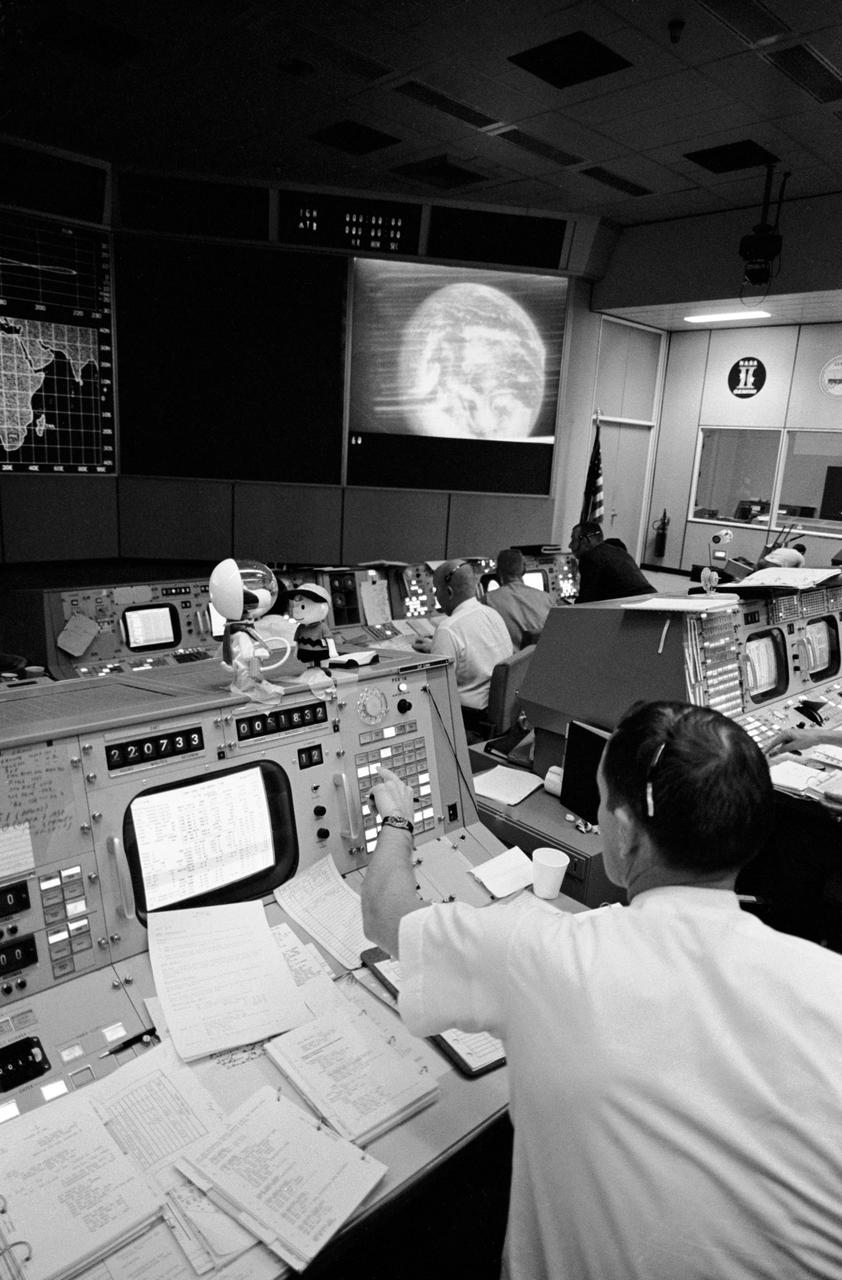
S69-34040 (18 May 1969) --- Partial view of activity in the Mission Operations Control Room in the Mission Control Center, Building 30, on the first day of the Apollo 10 lunar orbit mission. The television monitor shows a picture of Earth made during the second telecast from the Apollo 10's color TV camera.
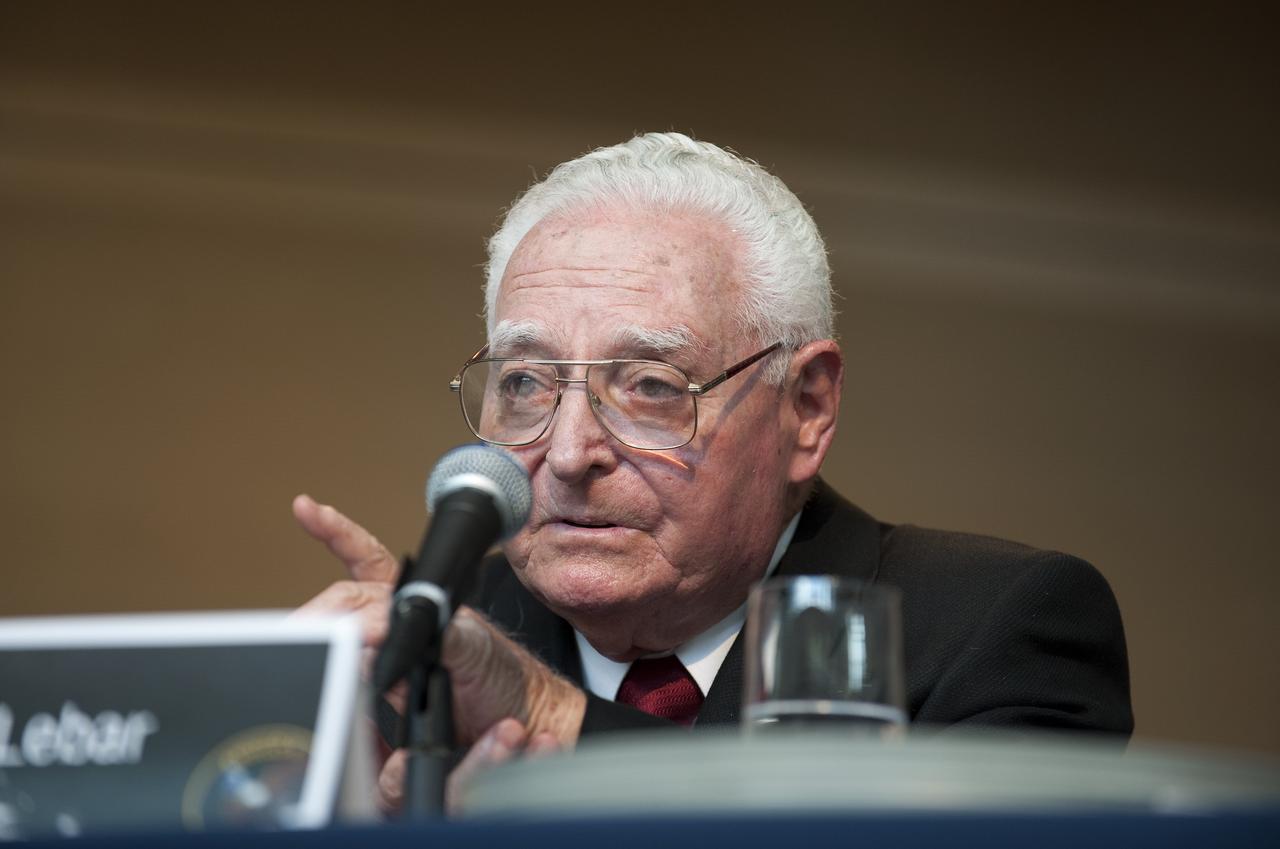
Stan Lebar, former Westinghouse Electric program manager, talks about the Apollo era TV cameras during NASA's briefing where restored Apollo 11 moonwalk footage was revealed for the first time at the Newseum, Thursday, July 16, 2009, in Washington, DC. Photo Credit: (NASA/Bill Ingalls)
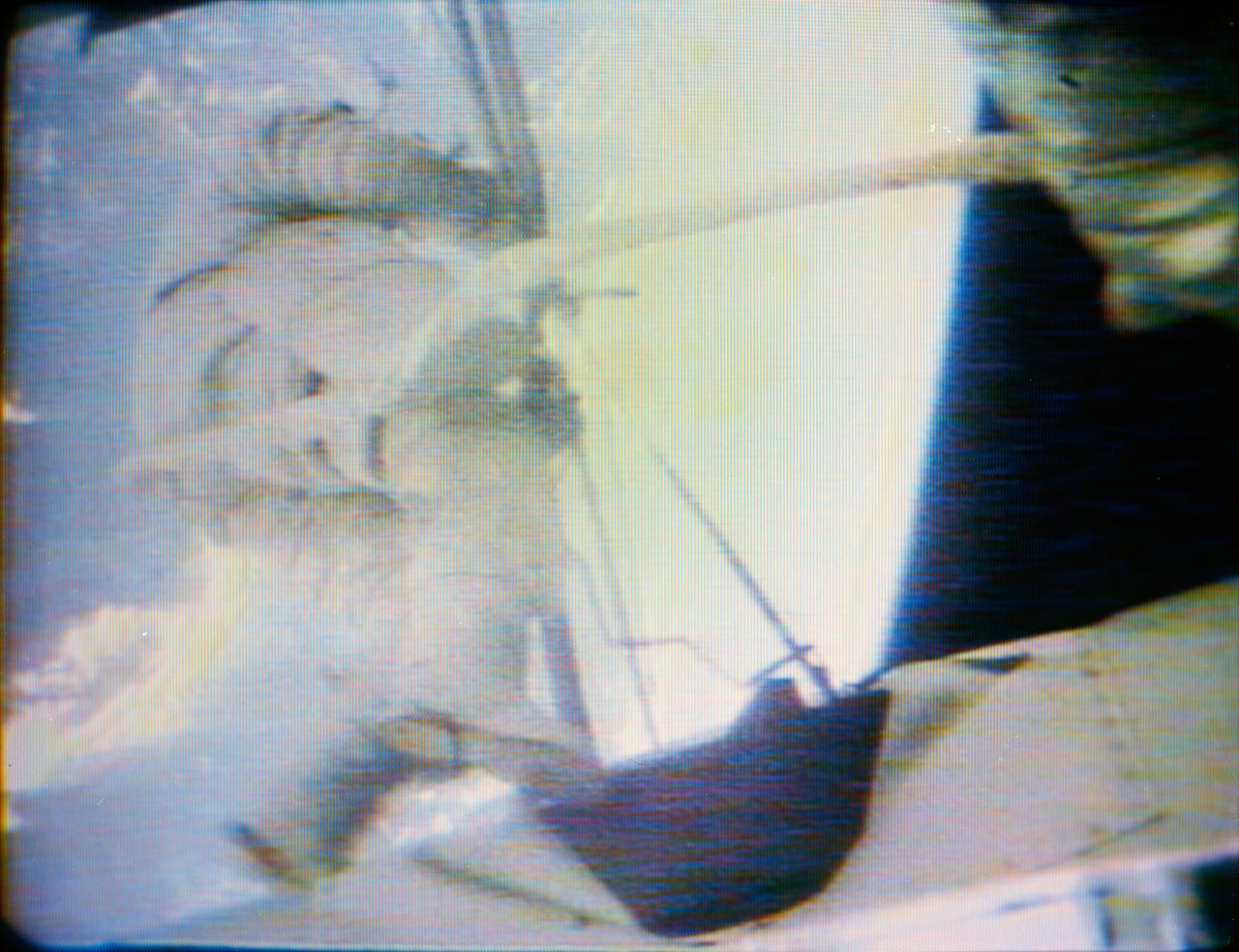
S73-27734 (11 June 1973) --- Skylab 2 astronaut performs extravehicular activity (EVA) at the Skylab 1 and 2 space station cluster in Earth orbit, as seen in this reproduction taken from a color television transmission made by a TV camera aboard the station. Kerwin is just outside the Airlock Module. Photo credit: NASA
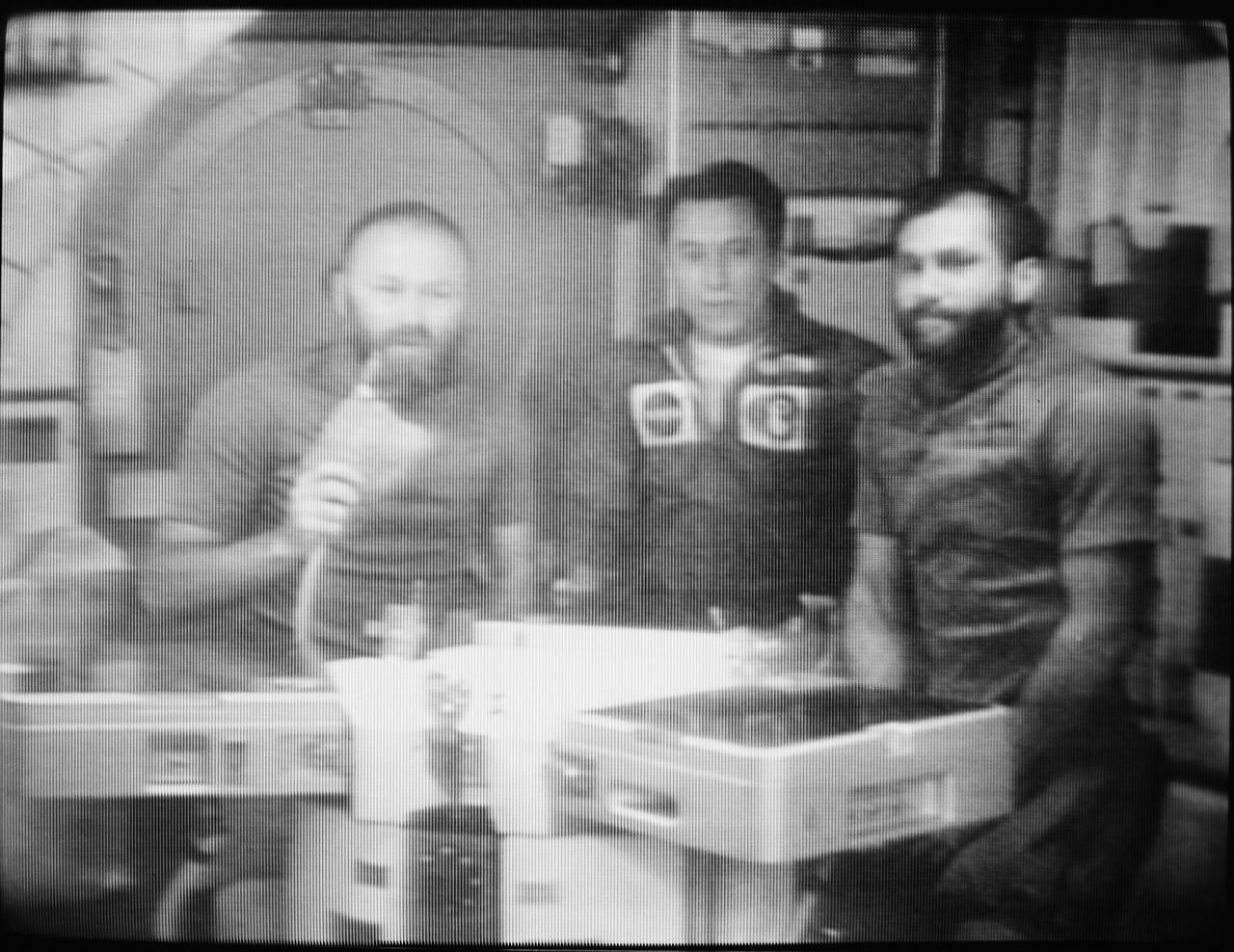
S73-38962 (28 Dec. 1973) --- The three members of the Skylab 4 crew confer via television communication with Dr. Lubos Kohoutek, discoverer of the Comet Kohoutek. This picture of the three astronauts was reproduced from a TV transmission made by a TV camera aboard the space station in Earth orbit. They are, left to right, Gerald P. Carr, commander; Edward G. Gibson, science pilot; and William R. Pogue, pilot. They are seated in the crew quarters wardroom of the Orbital Workshop. Professor Kohoutek, who is employed at the Hamburg Observatory in West Germany, was visiting the Johnson Space Center in Houston when he conferred with the Skylab 4 crewmen. Photo credit: NASA
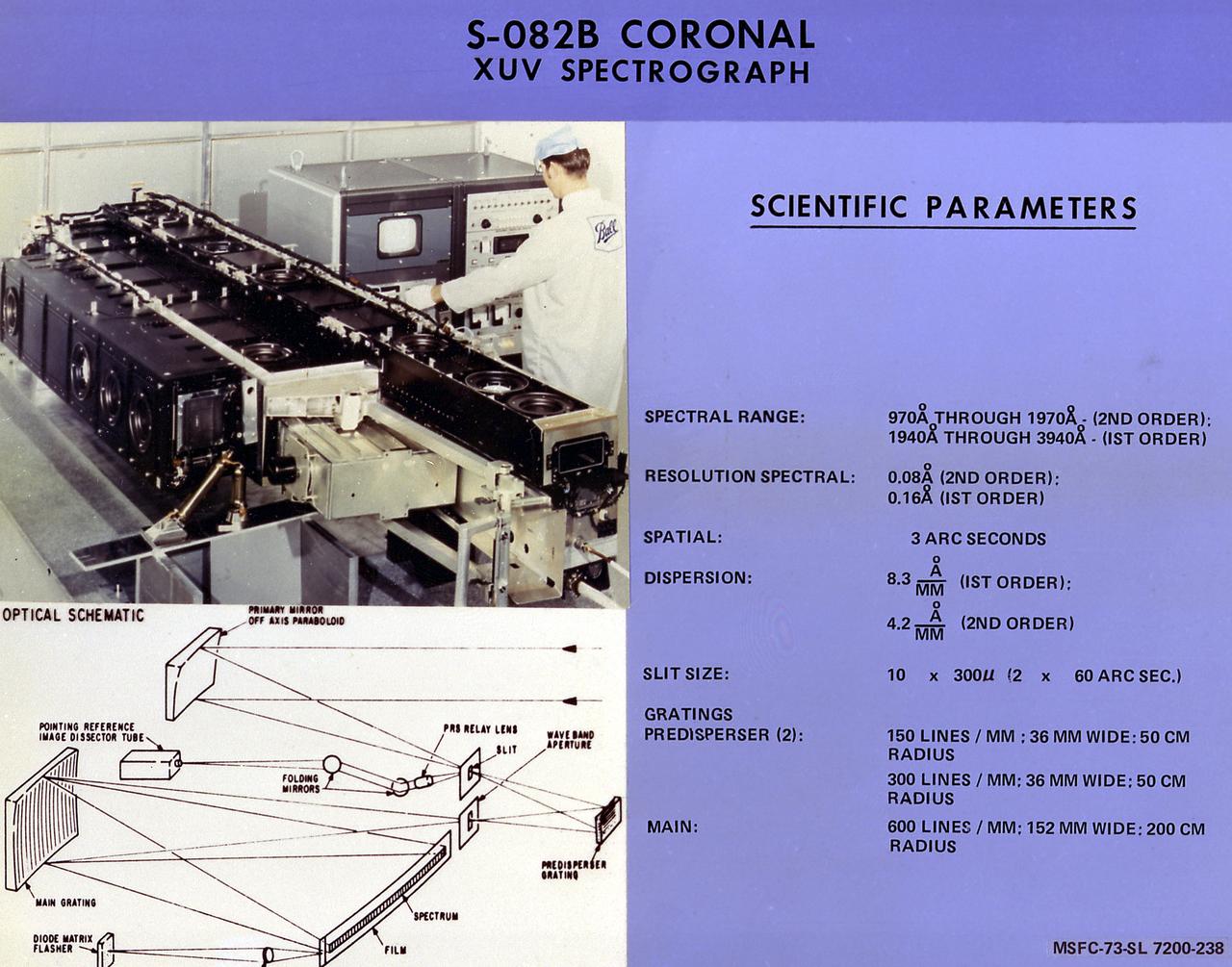
This 1973 chart details Skylab's Ultraviolet (UV) Spectrograph, an Apollo Telescope Mount instrument. Its telescope, with camera and TV capability, photographed the Sun in selected ultraviolet wavelengths. The spectrograph was used to record the spectrum of UV emissions, such as flares or filaments, from a small individual feature on the solar disc. Real-time TV was used by the crew to monitor performance of the telescope, transmit to the ground and record. The exposed films were retrieved by astronaut extravehicular activities. The Marshall Space Flight Center had program management responsibility for the development of the Skylab hardware and experiments.
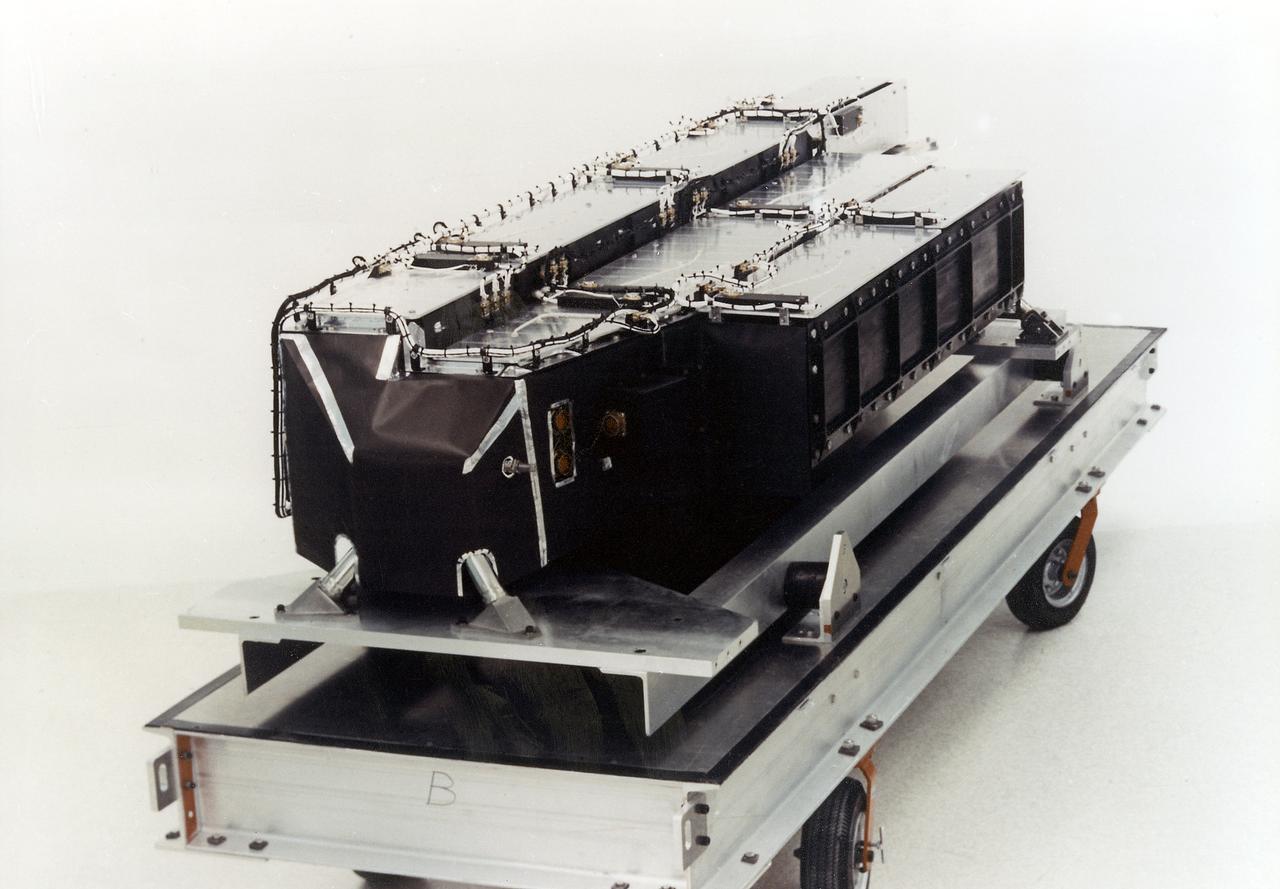
This 1970 photograph shows the Skylab's Ultraviolet (UV) Spectrograph, an Apollo Telescope Mount instrument. Its telescope, with camera and TV capability, photographed the Sun in selected ultraviolet wavelengths. The spectrograph was used to record the spectrum of UV emissions, such as flares or filaments, from a small individual feature on the solar disc. Real-time TV was used by the crew to monitor the performance of the telescope, transmit to the ground, and record. The exposed films were retrieved by astronaut extravehicular activities. The Marshall Space Flight Center had program management responsibility for the development of the Skylab hardware and experiments.
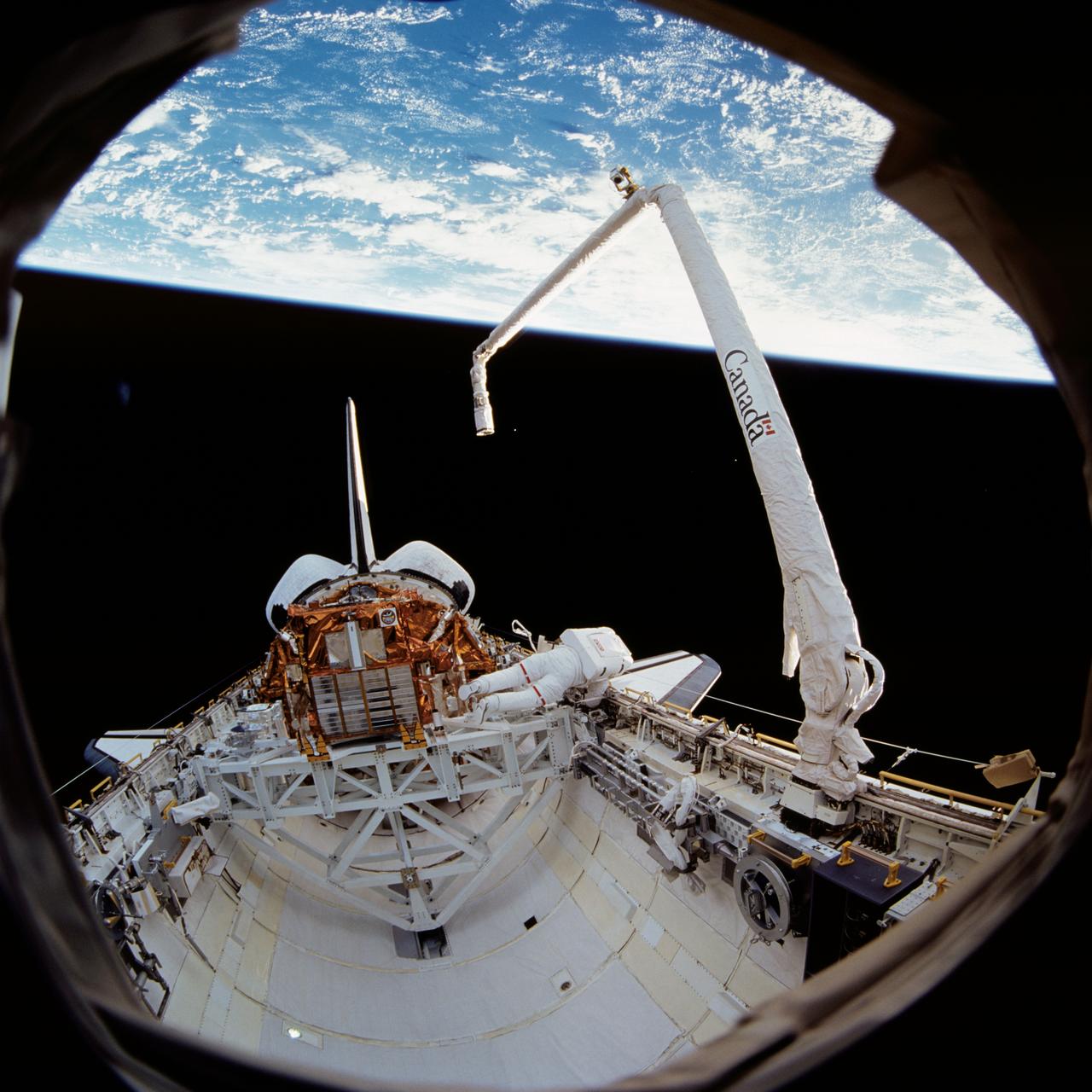
STS072-722-041 (17 Jan. 1996) --- Astronaut Winston E. Scott traverses the portside of the Space Shuttle Endeavour's cargo bay during the second of two Extravehicular Activities (EVA) to demonstrate space station assembly techniques. A 30mm lens on a 70mm handheld camera gives a "fish-eye" effect to the scene. Both the Japanese Space Flyer Unit (SFU) and the Office of Aeronautics and Space Technology (OAST) Flyer satellite are in their stowed positions. TV cameras on the Remote Manipulator System (RMS) provided live coverage of the activity.
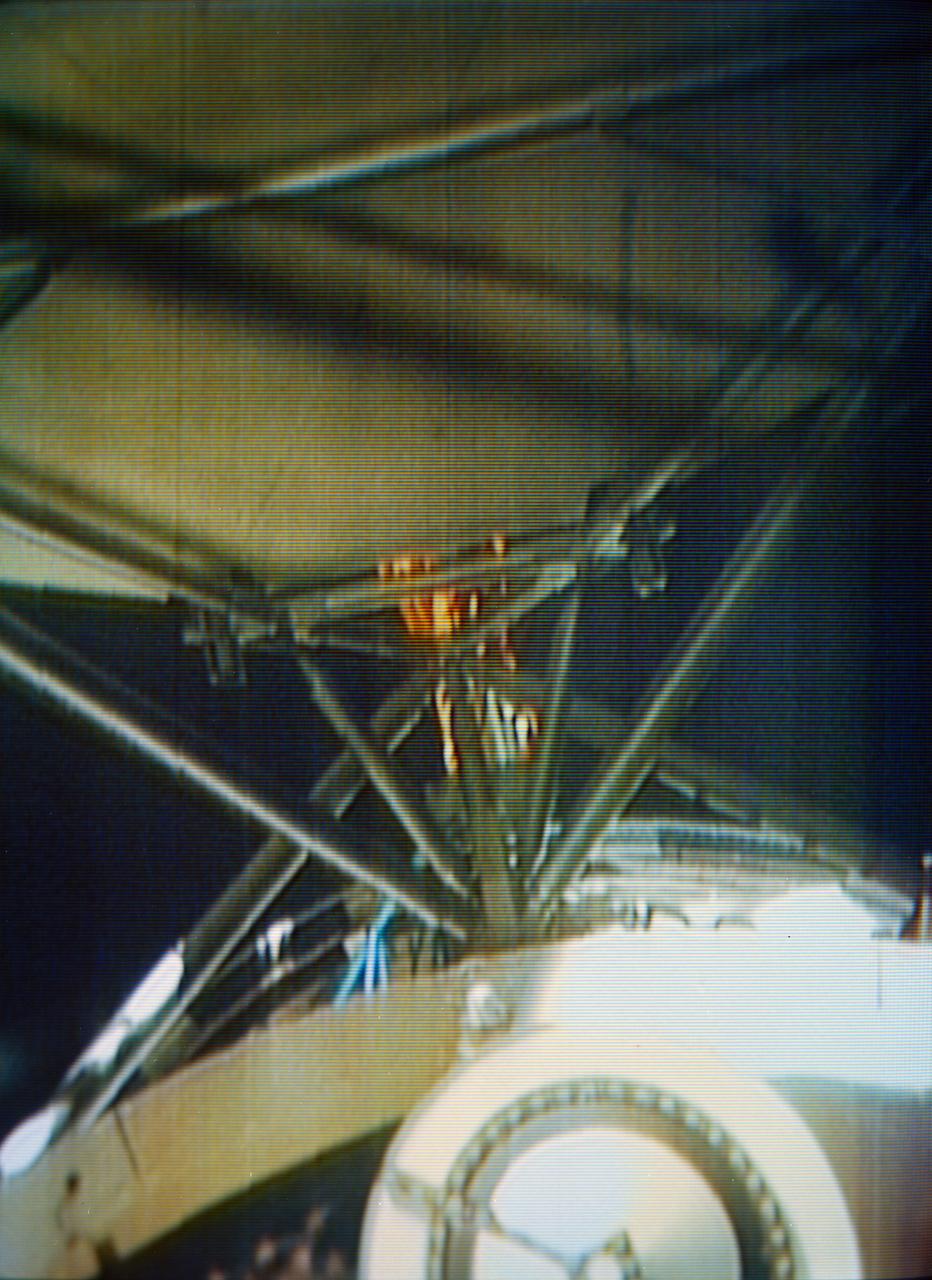
S73-26775 (26 May 1973) --- The deployment of the "parasol" solar shield, a sunshade to help cool the overheated Orbital Workshop of the Skylab 1 space station cluster in Earth orbit, can be seen in the reproduction taken from a color television transmission made by a TV camera aboard the space station. The camera is in the Command Module; and the view is looking through the truss of the Apollo Telescope Mount. The sunshade is only partially deployed in this picture. Photo credit: NASA
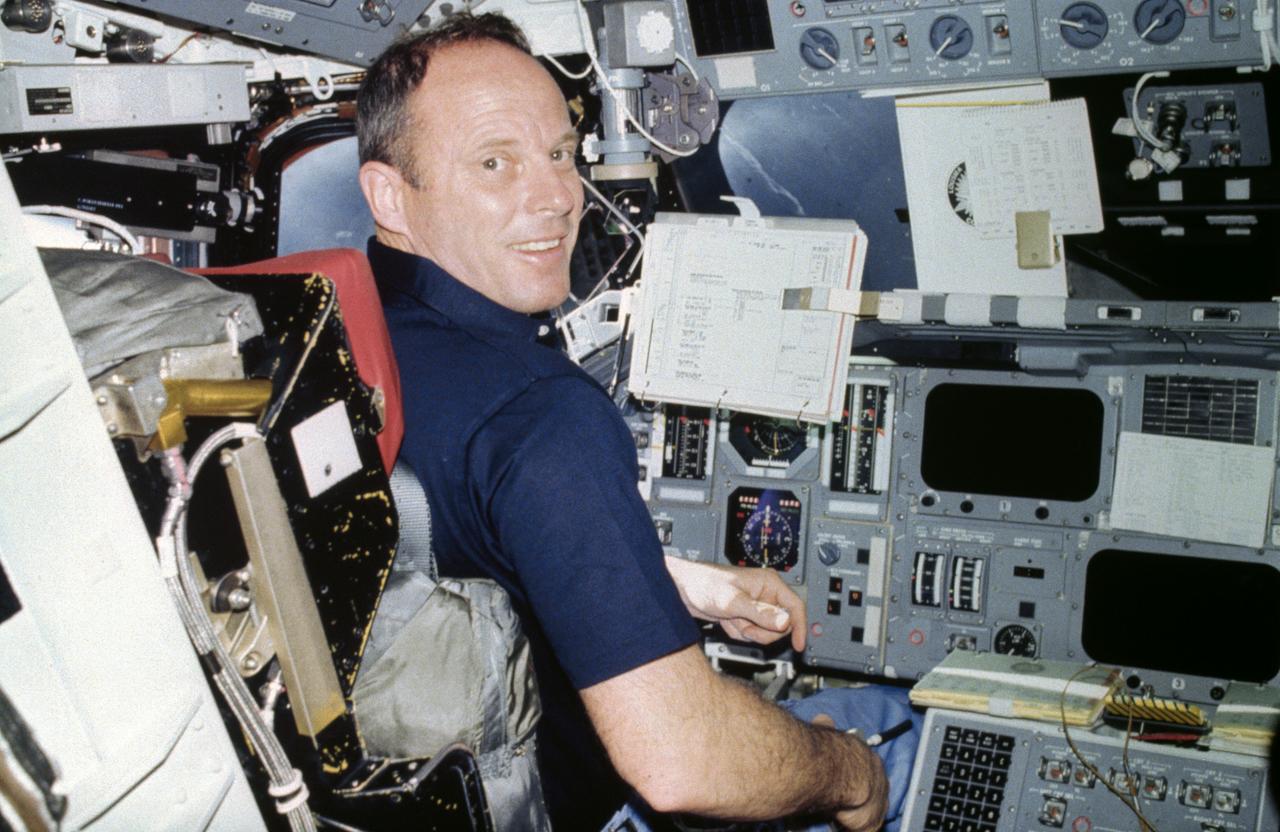
S82-28907 (March 1982) --- Astronaut Jack R. Lousma turns toward astronaut C. Gordon Fullerton and smiles into the lens of the 35mm camera Fullerton used to expose this frame onboard the busy Earth-orbiting space shuttle Columbia. Lousma is at the commander's station of the forward flight deck on the Columbia. His front window view is of Earth below (note river upper right center). Lousma is wearing the trouser and shirt of a three-piece (jacket temporarily not worn) constant-wear garment. Except for entry and launch phases, shuttle crews wear the CWG throughout their awake hours. A data acquisition camera (DAC) is at upper left, along with a TV camera. Photo credit: NASA
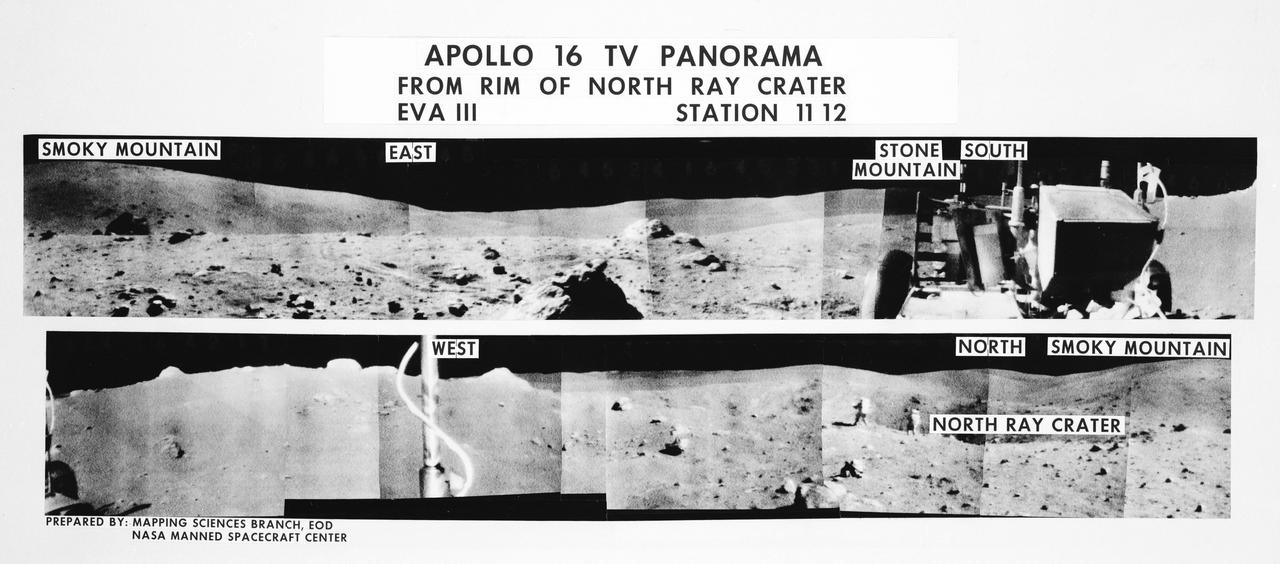
S72-35971 (21 April 1972) --- A 360-degree field of view of the Apollo 16 Descartes landing site area composed of individual scenes taken from color transmission made by the color RCA TV camera mounted on the Lunar Roving Vehicle (LRV). This panorama was made while the LRV was parked at the rim of North Ray Crater (Stations 11 & 12) during the third Apollo 16 lunar surface extravehicular activity (EVA) by astronauts John W. Young and Charles M. Duke Jr. The overlay identifies the directions and the key lunar terrain features. The camera panned across the rear portion of the LRV in its 360-degree sweep. Note Young and Duke walking along the edge of the crater in one of the scenes. The TV camera was remotely controlled from a console in the Mission Control Center (MCC). Astronauts Young, commander; and Duke, lunar module pilot; descended in the Apollo 16 Lunar Module (LM) "Orion" to explore the Descartes highlands landing site on the moon. Astronaut Thomas K. Mattingly II, command module pilot, remained with the Command and Service Modules (CSM) "Casper" in lunar orbit.
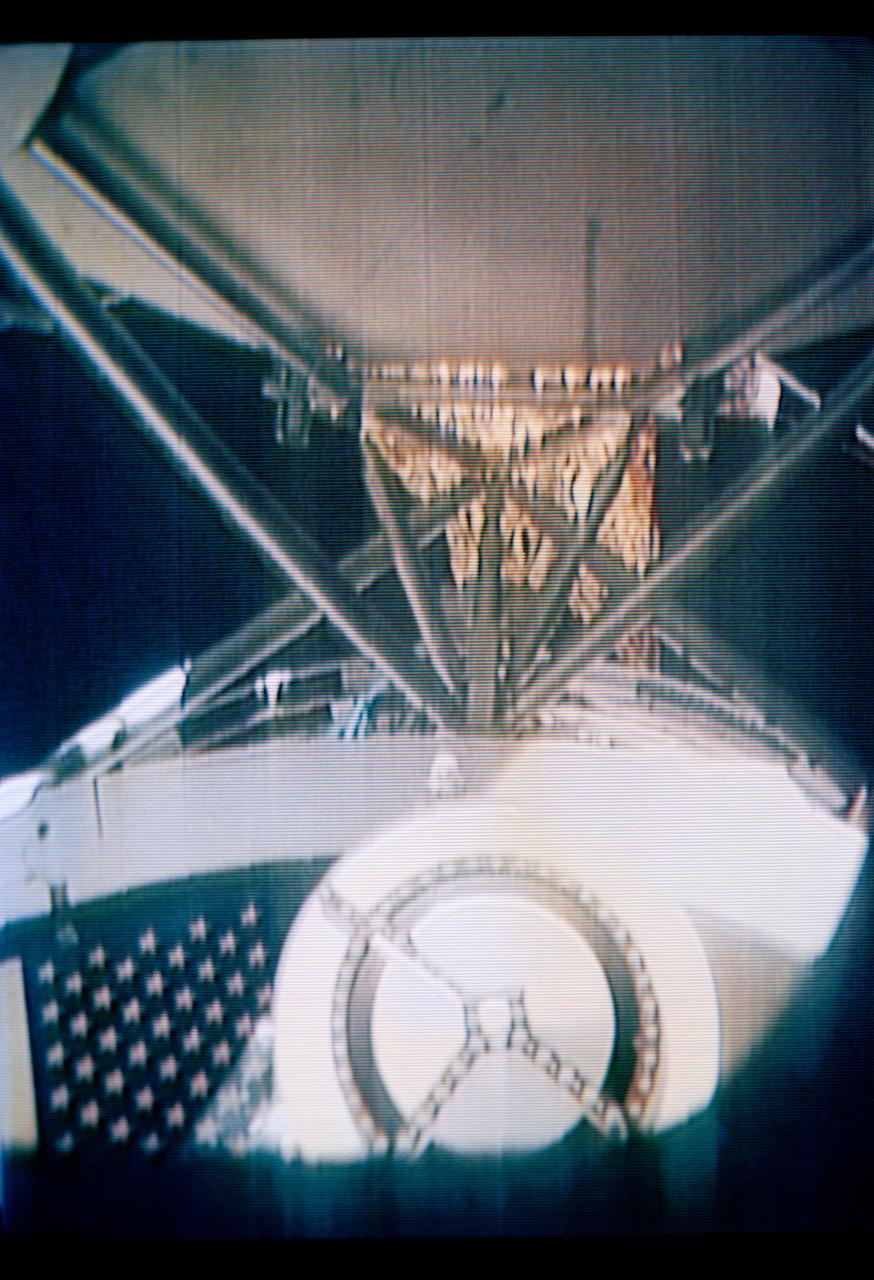
S73-26773 (26 May 1973) --- The deployment of the ?parasol? solar shield, a sunshade to help cool the overheated Orbital Workshop of the Skylab 1 space station cluster in Earth orbit, can be seen in the reproduction taken from a color television transmission made by a TV camera aboard the space station. The camera is in the Command Module; and the view is looking through the truss of the Apollo Telescope Mount. The sunshade is only partially deployed in this picture. The solar shield was pushed up through the OWS solar scientific airlock. The canopy of the ?parasol? measures 24 feet by 22 feet. Photo credit: NASA
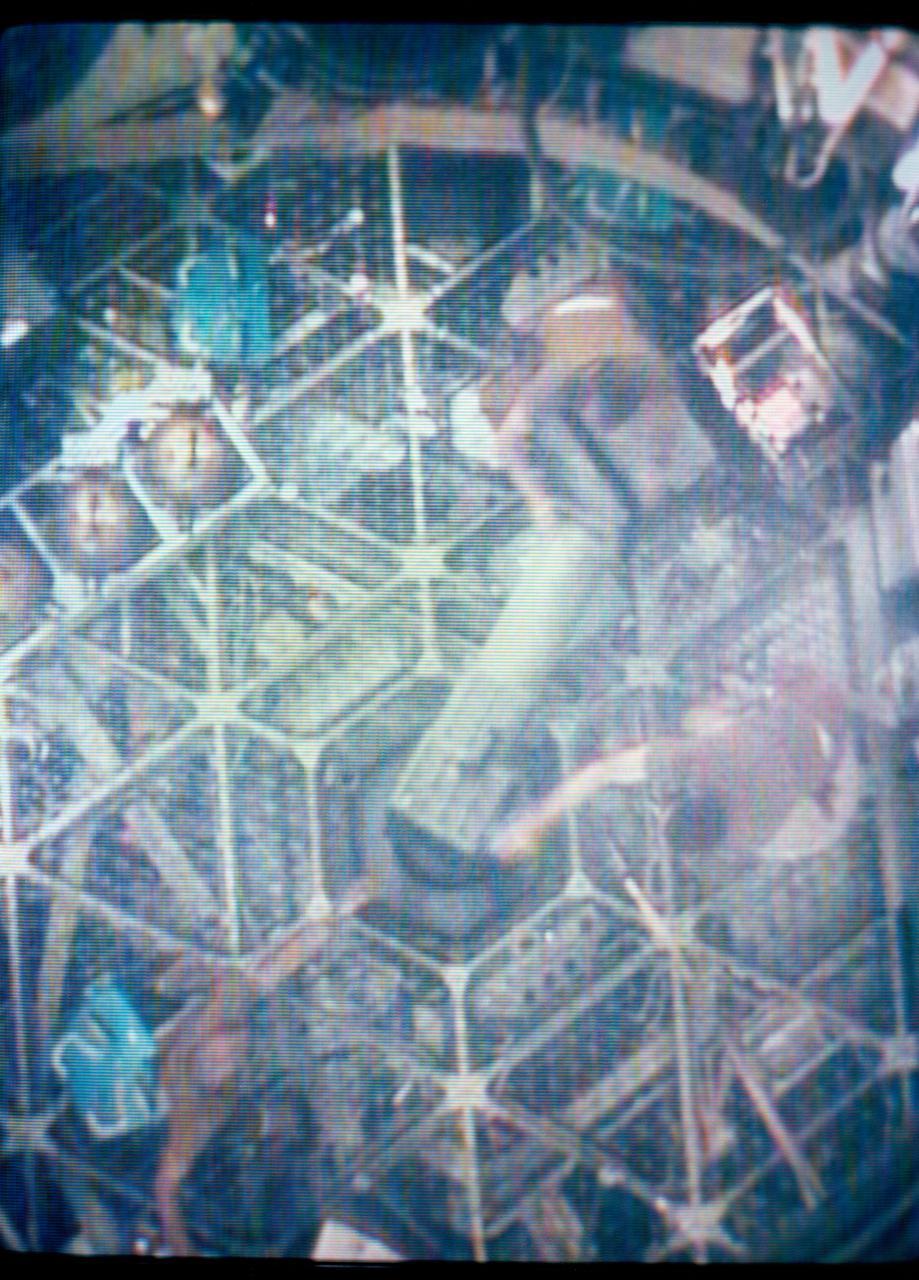
S73-27730 (June 1973) --- The Skylab 2 crewmen, astronauts Charles Conrad Jr., Joseph P. Kerwin and Paul J. Weitz, move the S183 Ultraviolet Panorama astrophysics experiment equipment under zero-gravity conditions in space in the foreground compartment of the Orbital Workshop of the Skylab 1 & 2 space station in Earth orbit, as seen in this reproduction taken from a color television transmission made by a TV camera aboard the space station. The S183 equipment includes the S183 spectrograph, the S019 mirror assembly, and a Maurer camera. Photo credit: NASA
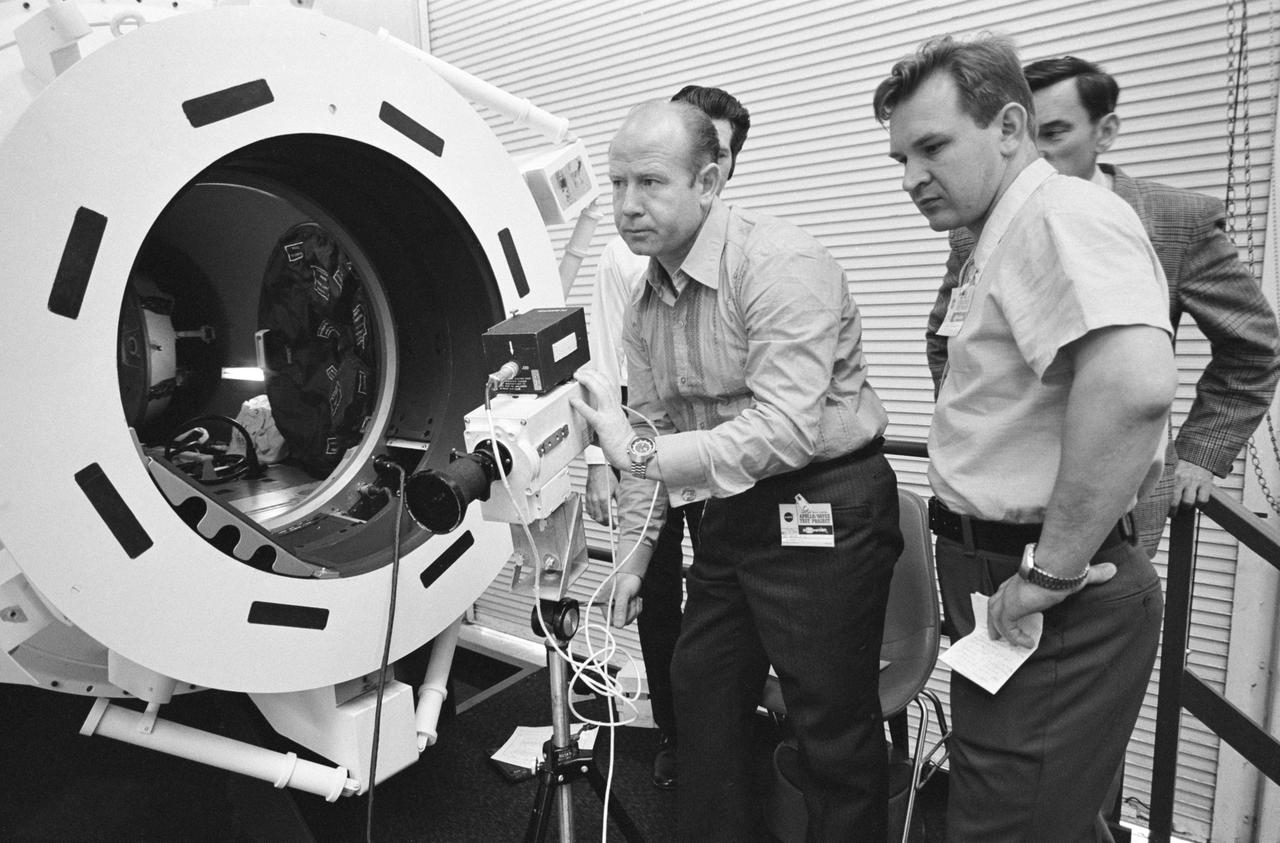
S74-20794 (23 April 1974) --- Cosmonaut Aleksey A. Leonov (center), commander of the Soviet crew of the joint U.S.-USSR Apollo-Soyuz Test Project mission, goes through familiarization training with a television camera during ASTP activity at the Johnson Space Center. Cosmonaut Valeriy N. Kubasov (right), engineer on Leonov?s crew, is looking on. An ASTP docking module mock-up is on the left. Interpreter K.S. Samofal is behind Kubasov. David Brooks, with JSC?s Crew Procedures Division, is in the left background. This phase of the ASTP communications training was conducted in JSC?s Building 35. The equipment being used in the picture is an early design of the Westinghouse TV camera.
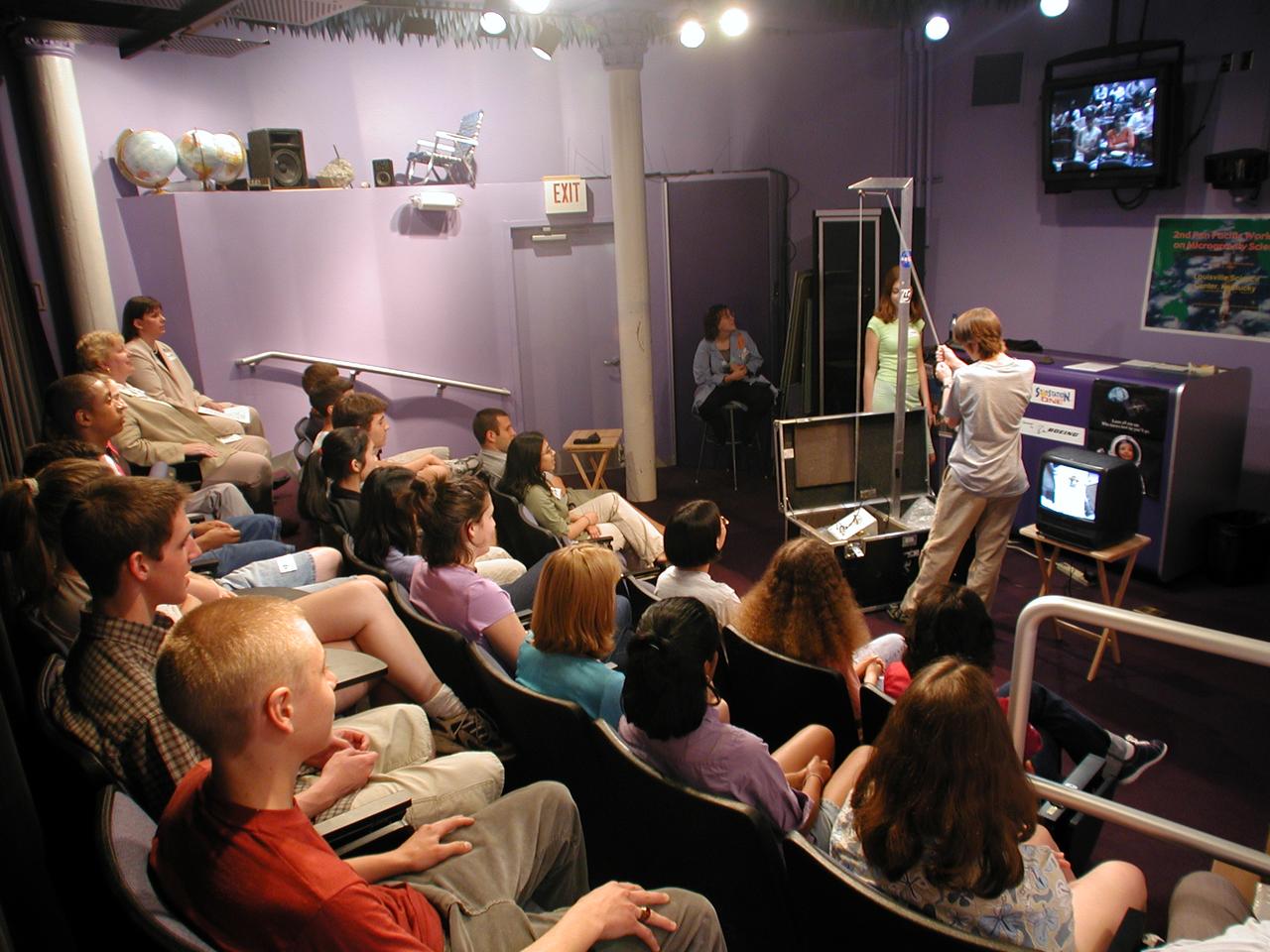
John Henson (grade 12) and Suzi Bryce (grade 10) from DuPont Manual High School in Louisville, Kentucky, conduct a drop with NASA's Microgravity Demonstrator. A camera and a TV/VCR unit let students play back recordings of how different physical devices behave differently during freefall as compared to 1-g. The activity was part of the education outreach segment of the Pan-Pacific Basin Workshop on Microgravity Sciences held in Pasadena, California. The event originated at the California Science Center in Los Angeles. The DuPont Manual students patched in to the event through the distance learning lab at the Louisville Science Center. This image is from a digital still camera; higher resolution is not available.
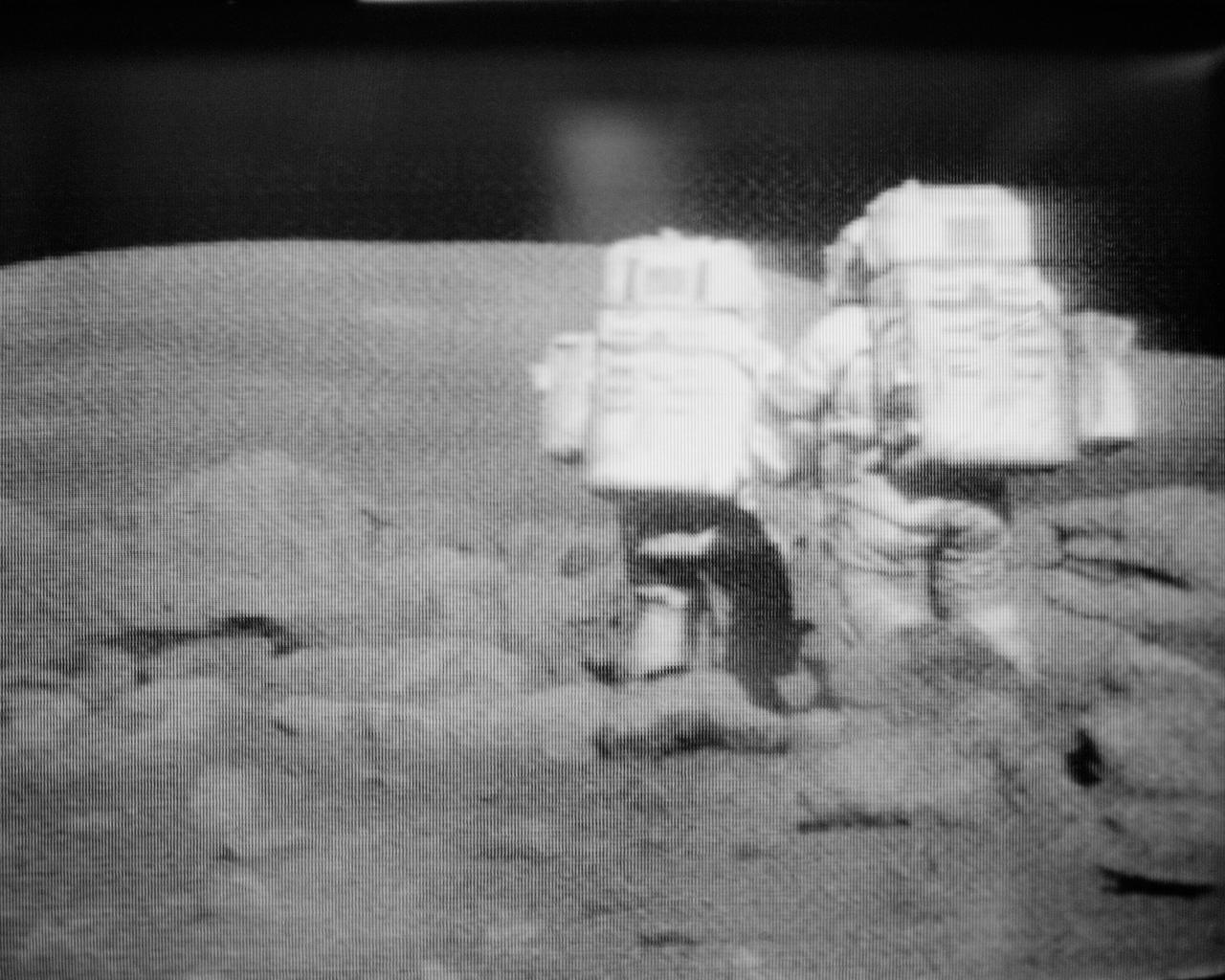
S72-55168 (12 Dec. 1972) --- Astronaut Eugene A. Cernan (on left) and scientist-astronaut Harrison H. Schmitt walk through a field of small boulders during the second Apollo 17 extravehicular activity (EVA) at the Taurus-Littrow landing site, as seen in this black and white reproduction taken from a color television transmission made by the color RCA TV camera mounted on the Lunar Roving Vehicle. Cernan is the Apollo 17 commander; and Schmitt is the lunar module pilot. Astronaut Ronald E. Evans, command module pilot, remained with the Command and Service Modules in lunar orbit. (Their backs are toward the camera)
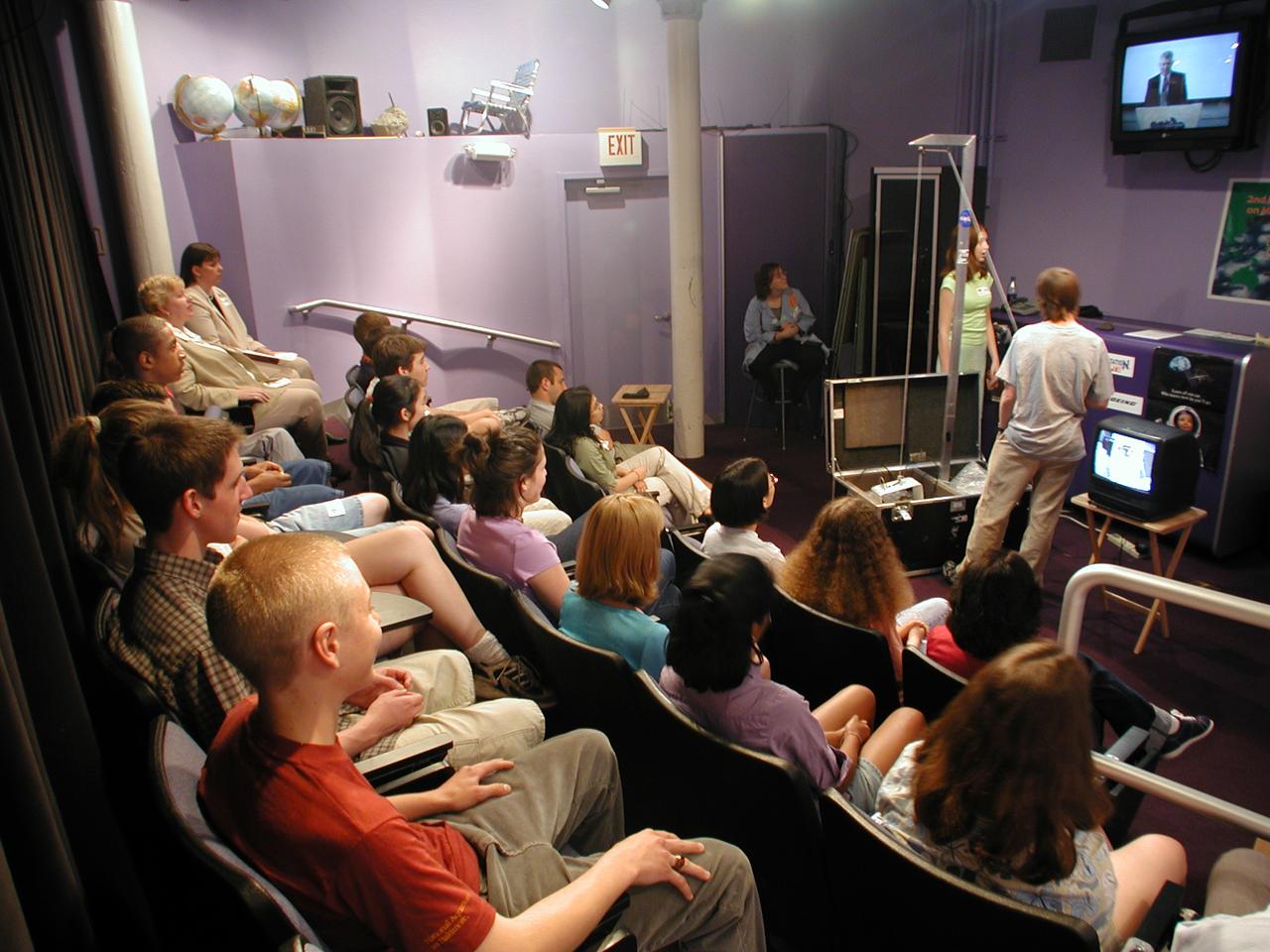
John Henson (grade 12) and Suzi Bryce (grade 10) conducted the drop from DuPont Manual High School in Louisville, Kentucky, conduct a drop with NASA's Microgravity Demonstrator. A camera and a TV/VCR unit let students play back recordings of how different physical devices behave differently during freefall as compared to 1-g. The activity was part of the education outreach segment of the Pan-Pacific Basin Workshop on Microgravity Sciences held in Pasadena, California. The event originated at the California Science Center in Los Angeles. The DuPont Manual students patched in to the event through the distance learning lab at the Louisville Science Center. This image is from a digital still camera; higher resolution is not available.
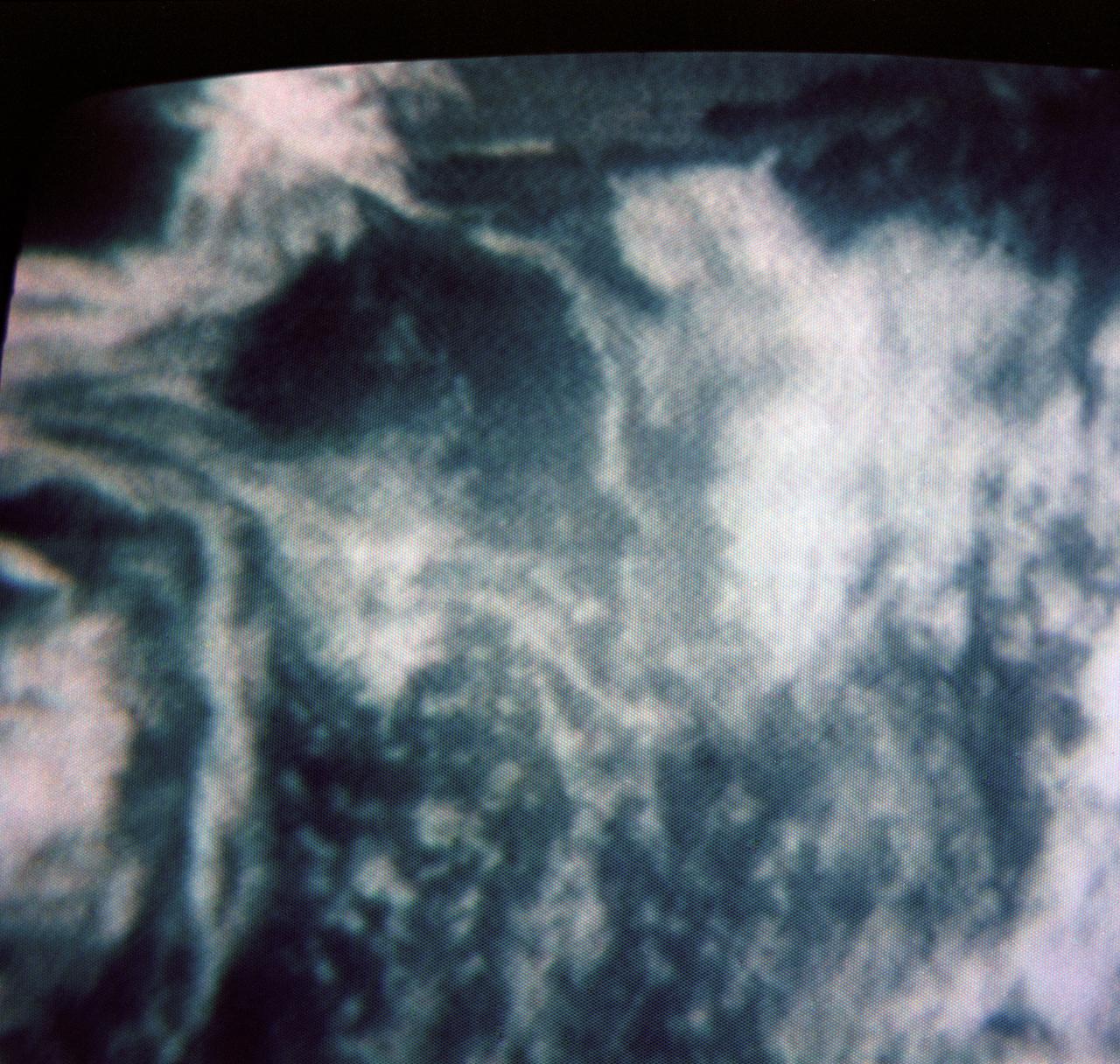
S69-33996 (18 May 1969) --- A cloud-covered Pacific Ocean, and the western part of the United States and Mexico, from about 12,800 nautical miles away are seen in this color reproduction taken from the second TV transmission made by the color television camera aboard the Apollo 10 spacecraft. The camera's zoom lens was used to get this view. The Pacific Ocean covers four-fifths of the picture. On the right is the land mass of North America. This view of the western coast extends from the southern tip of Baja California, Mexico, northward to British Columbia. Mexico, California, Nevada, and Arizona have few clouds; but Washington and Oregon are heavily cloud-covered.
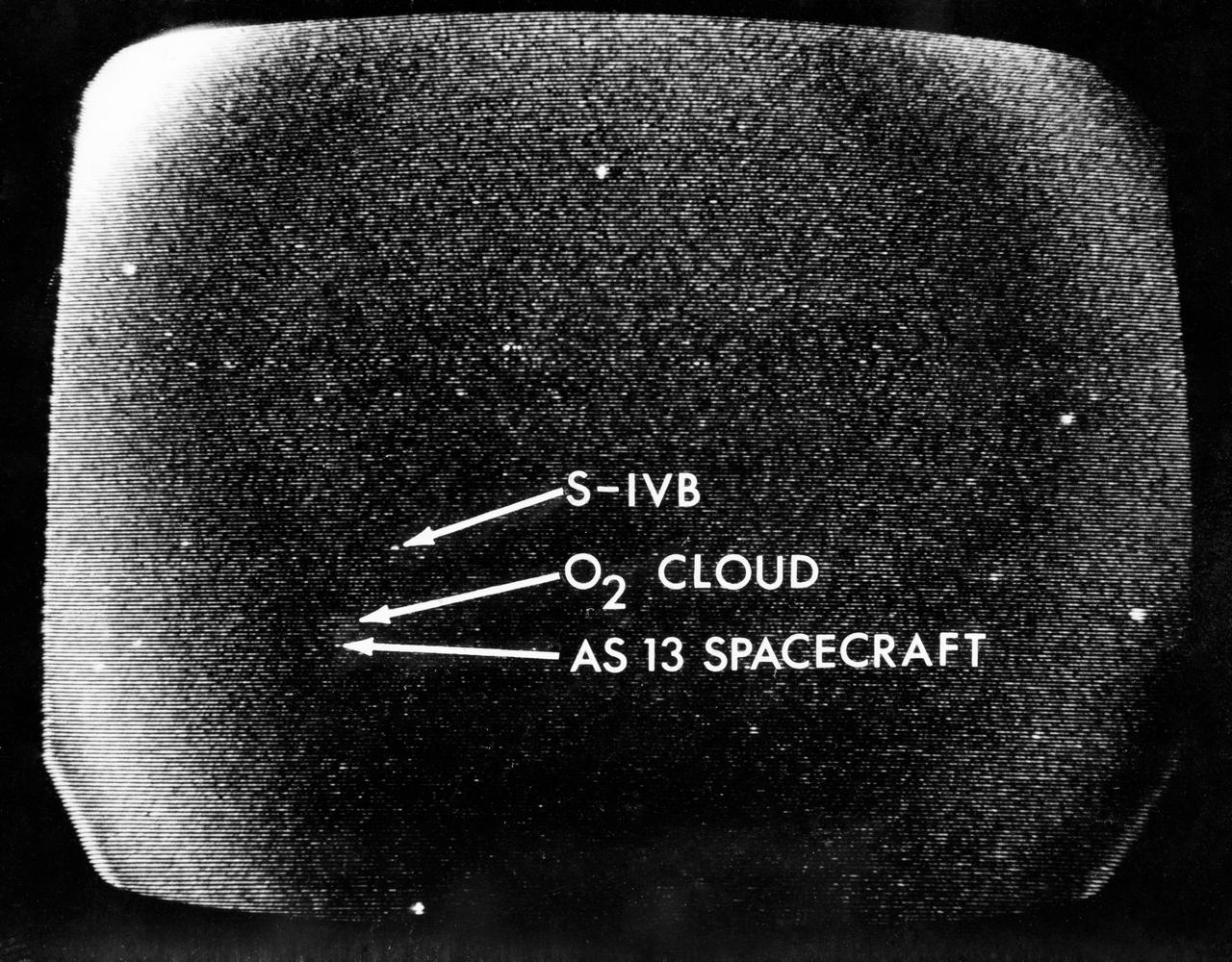
S70-34857 (13 April 1970) --- A telescopic photograph showing the Apollo 13 spacecraft in trans-lunar trajectory in the distant sky. Arrows point to the spacecraft, to the oxygen cloud, and to the expended Saturn V third stage. Apollo 13 was tracked at the Manned Spacecraft Center (MSC) using a 16 inch Schmidt-Cassegrain telescope with an IO television camera with an S-20 type IO tube, mounted in place of the eyepiece. The TV camera information is stored first on a data disc and played back on a viewing monitor from which this photograph was taken.
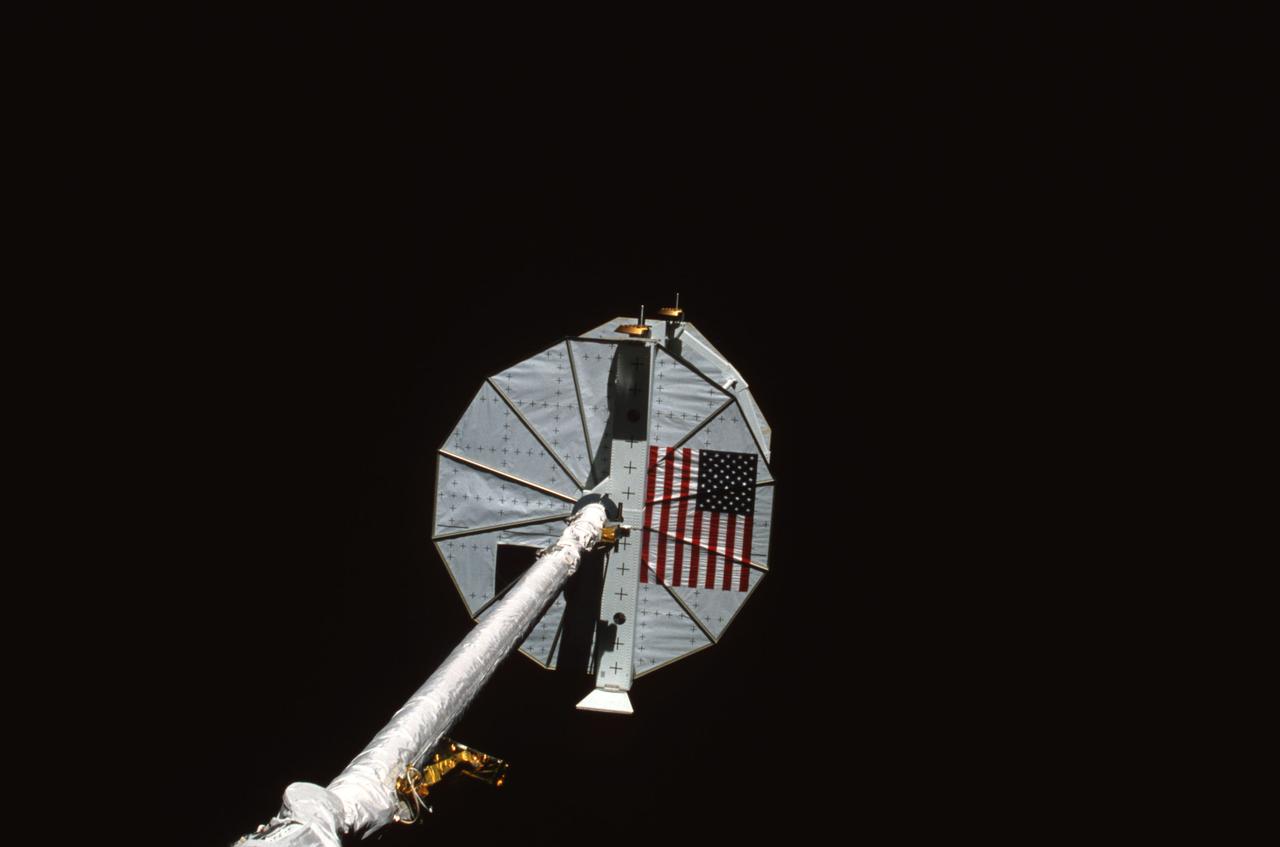
STS008-07-149 (2 Sept 1983) --- Many hours were spent, by its crew members, running tests with the Payload Flight Test Article (PFTA) and the Remote Manipulator System (RMS). The bar-bell shaped test device and the arm stand out brilliantly against the darkness of space. The two TV cameras on the "wrist" and "elbow" of the Canadian-built robot arm provided some close-up scenes of the variegated testing with the PFTA. This frame was exposed with a 35mm camera aimed through the windows on the flight deck of the Earth-orbiting Space Shuttle Challenger.
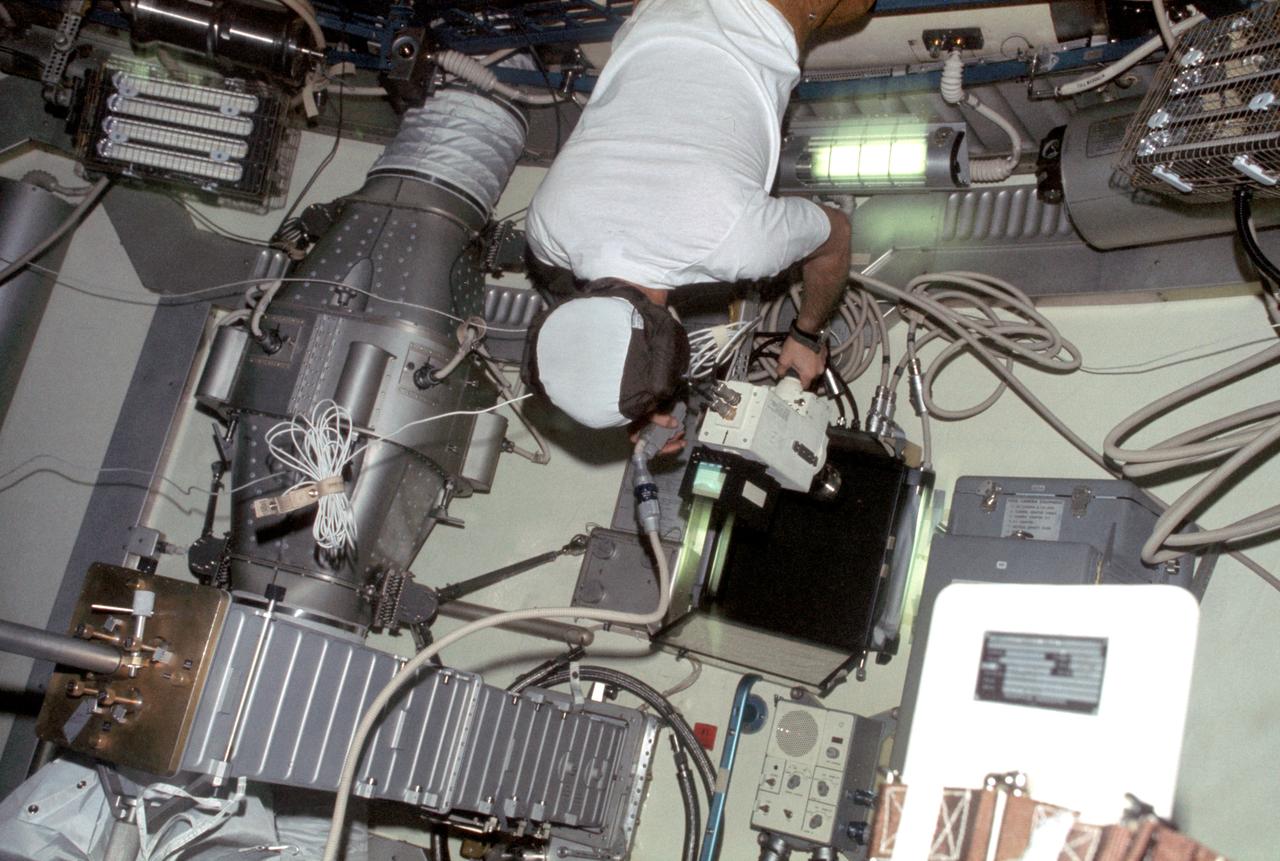
SL3-109-1345 (August 1973) --- View of scientist-astronaut Owen K. Garriott, Skylab 3 science pilot, taking TV footage of Arabella and Anita, the two Skylab 3 common cross spiders "aranous diadematus," aboard the Skylab space station cluster in Earth orbit. During the 59-day Skylab 3 mission the two spiders Arabella and Anita, were housed in an enclosure onto which a motion picture and still camera were attached to record the spiders' attempts to build a web in the weightless environment. Note the automatic data acquisition camera (DAC) about 3.5 feet to Garriott's right (about waist level). Photo credit: NASA
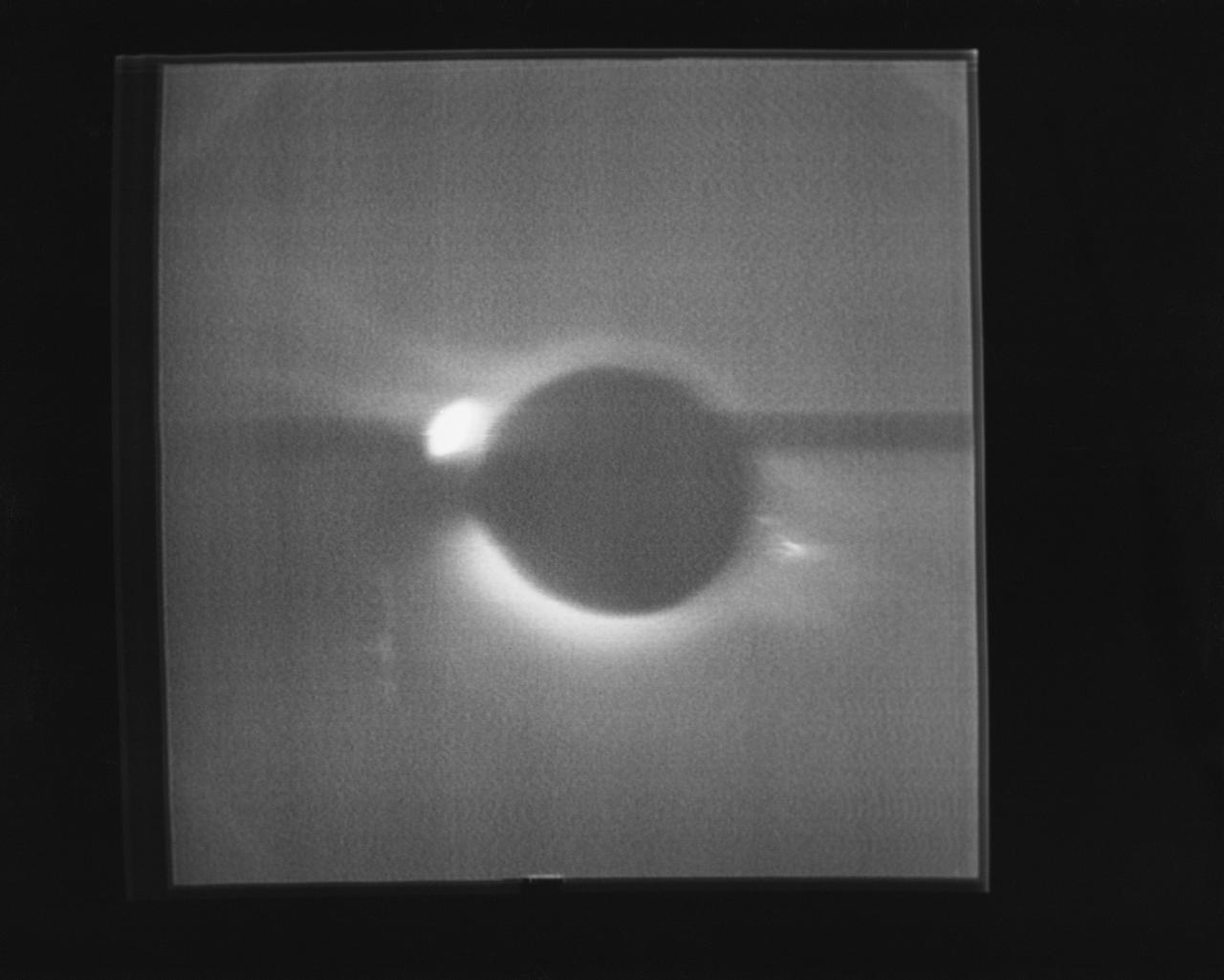
S74-15697 (17 Jan. 1974) --- The solar corona and a solar prominence as seen through the White Light Coronograph, Skylab Experiment S052, on Jan. 17, 1974. This view was reproduced from a television transmission made by a TV camera aboard the Skylab space station in Earth orbit. The bright spot is a burn in the vidicon. The solar corona is the halo around the sun which is normally visible only at the time of solar eclipse by the moon. The Skylab coronography uses an externally-mounted disk system which occults the brilliant solar surface while allowing the fainter radiation of the corona to enter an annulus and be photographed. A mirror system allows either TV viewing of the corona or photographic recording of the image. Photo credit: NASA
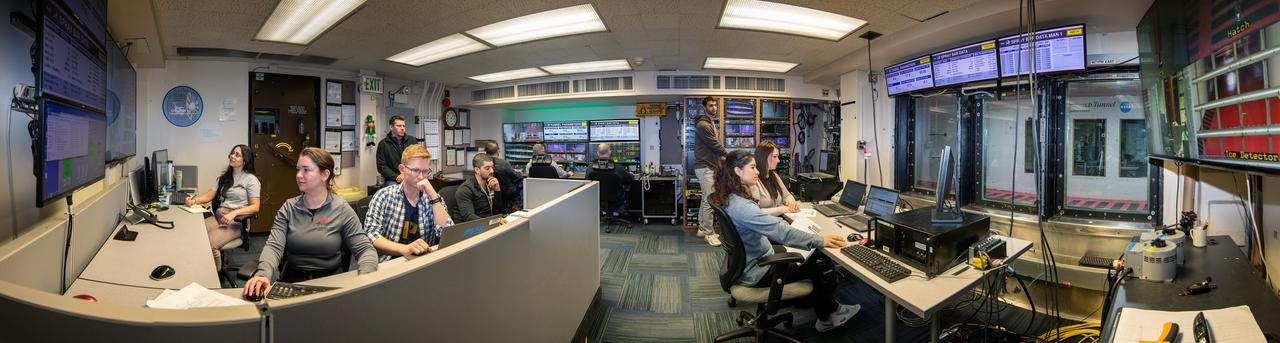
Panorama of the IRT engineering and ice cloud calibration team in the control room. Shown on the left are the data and system engineers. In the center with their backs to the camera are the wind tunnel operators who control the wind speed and super cooled water flow. In the center right of the photo is the video recording system and the test engineers. On the right side the test section can be see though the wind and the TV screen shows the pray bars that create the icing cloud.

ISS041E074458 (10/15/2014) --- NASA Flight Engineers Reid Wiseman and Barry Wilmore ventured out to the starboard truss of the International Space Station to remove and replace a power regulator known as a sequential shunt unit, which failed back in mid-May. The two spacewalkers also moved TV and camera equipment in preparation for the relocation of the Leonardo Permanent Multipurpose Module to accommodate the installation of new docking adapters for future commercial crew vehicles.

S73-26794 (26 May 1973) --- Two of the three Skylab 2 astronauts are seen in the wardroom of the crew quarters of the Orbital Workshop of the Skylab 1 space station cluster in Earth orbit in this reproduction taken from a color television transmission made by a TV camera aboard the space station. They are preparing a meal. Astronaut Charles Conrad Jr., commander, is in the right foreground. In the background is scientist-astronaut Joseph P. Kerwin, science pilot. Photo credit: NASA
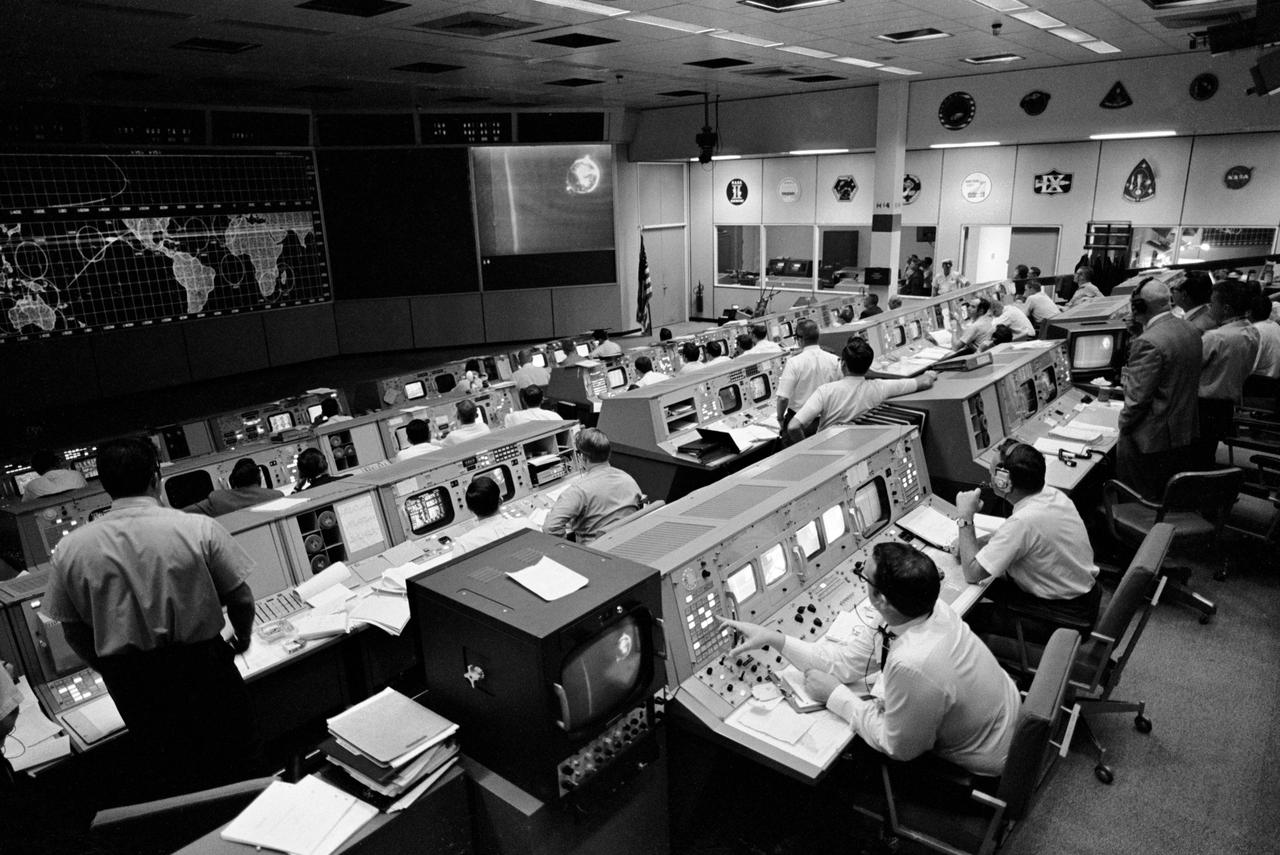
S69-34039 (18 May 1969) --- Overall view of activity in the Mission Operations Control Room in the Mission Control Center, Building 30, on the first day of the Apollo 10 lunar orbit mission. This picture was taken following CSM/LM-S-IVB separation, and prior to LM extraction from the S-IVB. The telecast from the Apollo 10's color TV camera shows the LM still attached to the S-IVB. The CSM is making the docking approach to the LM/S-IVB.
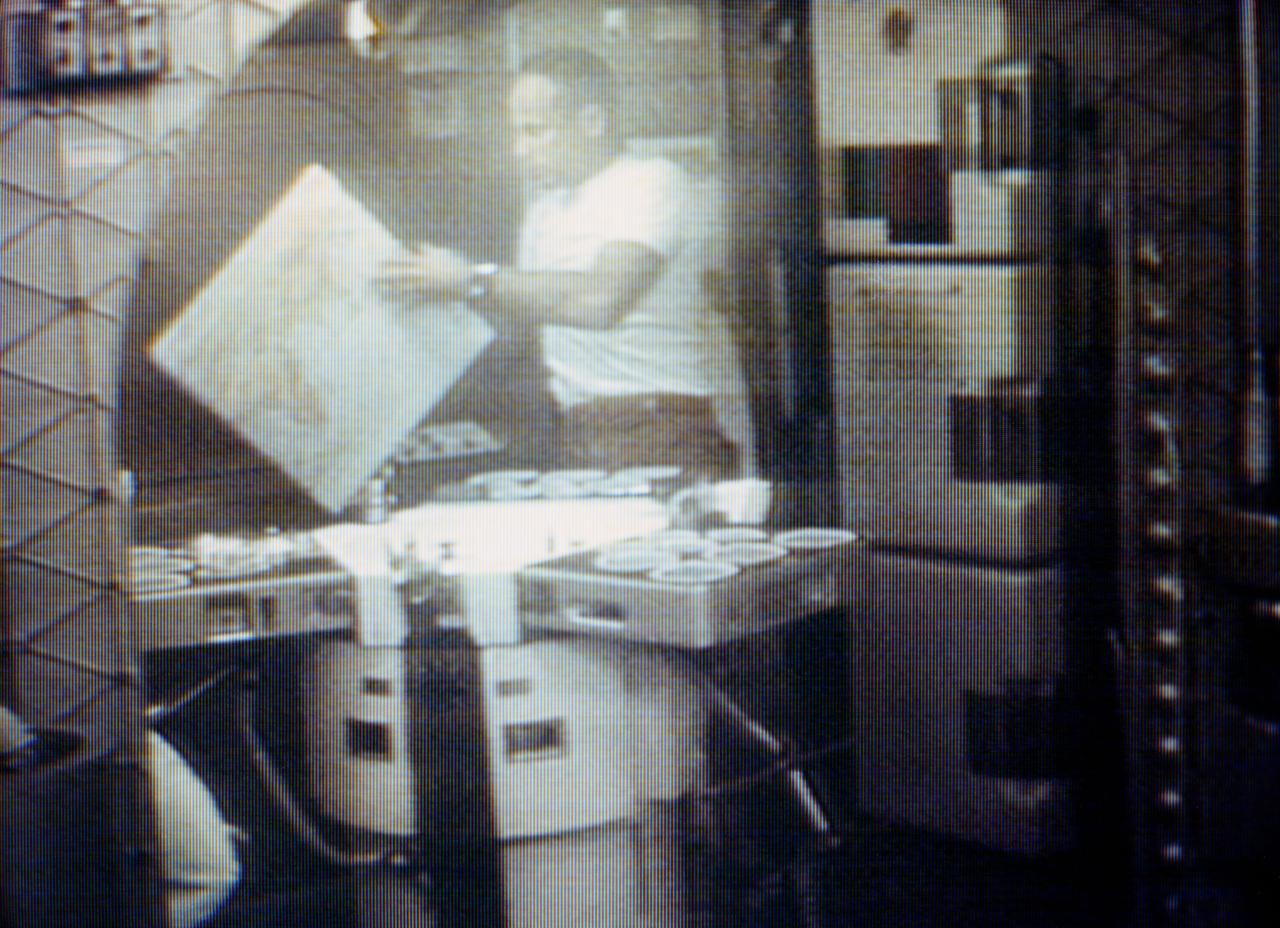
S73-34193 (1 Aug. 1973) --- Astronaut Jack R. Lousma, Skylab 3 pilot, looks at a map of Earth at the food table in the ward room of the Orbital Workshop (OWS). In this photographic reproduction taken from a television transmission made by a color TV camera aboard the Skylab space station cluster in Earth orbit. Photo credit: NASA
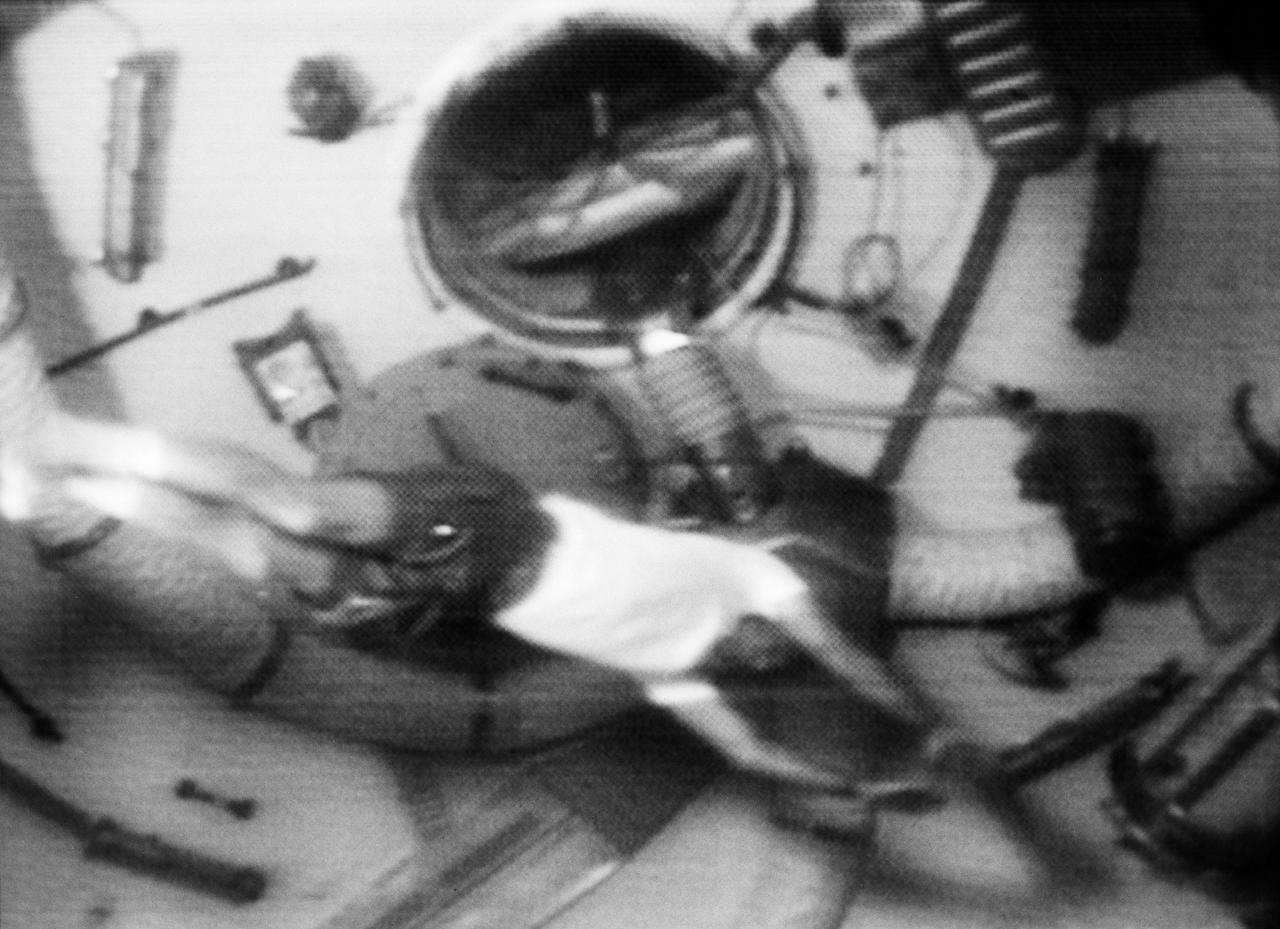
S73-32632 (19 Aug. 1973) --- Astronaut Alan L. Bean, Skylab 3 commander, performs acrobatics and simulated gymnastics in the dome area of the Orbital Workshop in this photographic reproduction taken from a television transmission made by a color TV camera aboard the Skylab space station in Earth orbit. Bean appears to be floating in a diving position. Photo credit: NASA

ISS014-E-09531 (12 Dec. 2006) --- Astronaut Robert L. Curbeam, Jr., STS-116 mission specialist, prepares to replace a faulty TV camera on the exterior of the International Space Station during the mission's first of three planned sessions of extravehicular activity (EVA). Astronaut Christer Fuglesang (out of frame), mission specialist representing the European Space Agency (ESA), also participated in the 6-hour, 36-minute spacewalk.
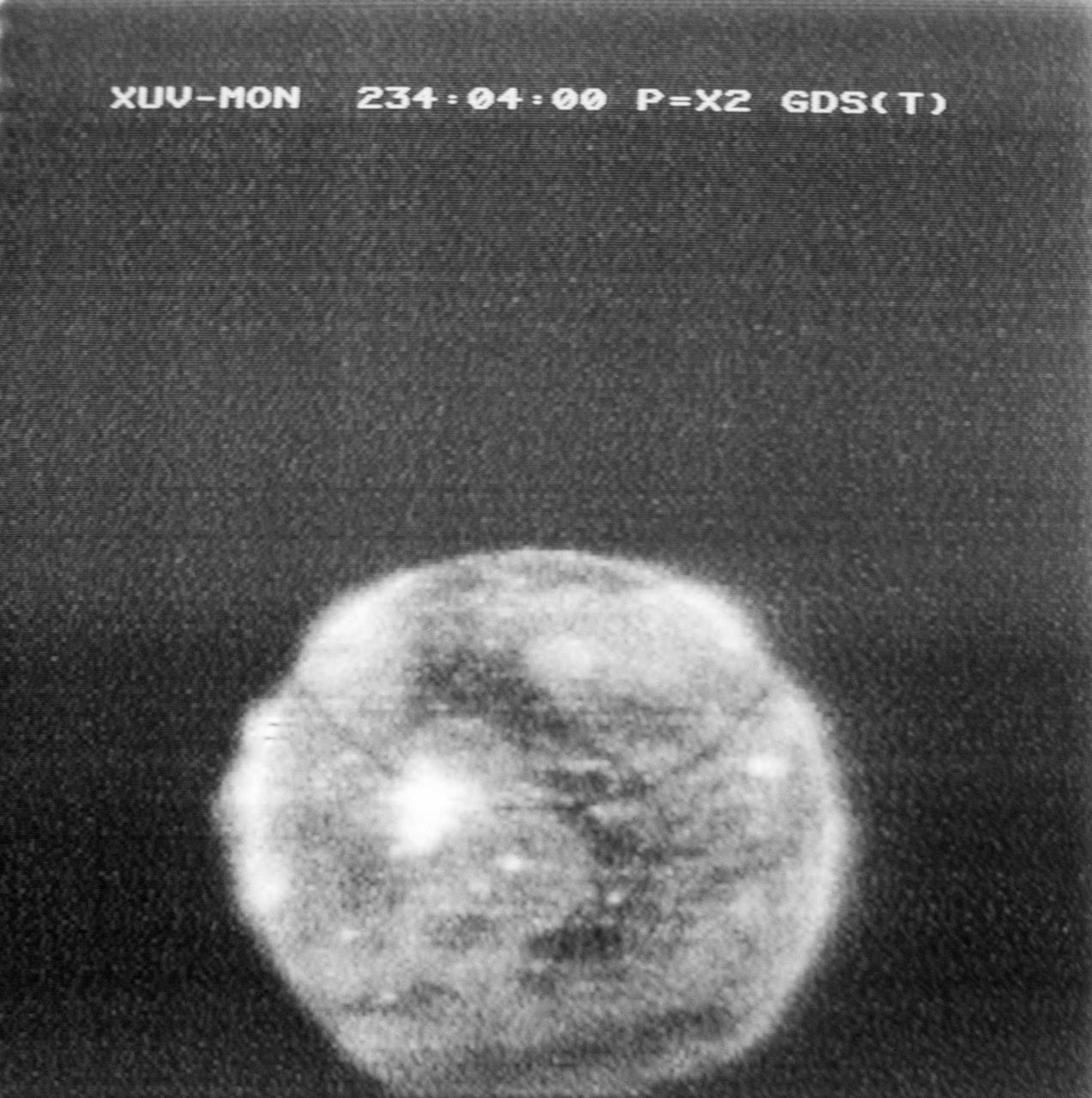
S73-32867 (21 Aug. 1973) --- The solar sphere viewed through the Skylab solar physics experiment (S082) Extreme Ultraviolet Spectroheliographis seen in this photographic reproduction taken from a color television transmission made by a TV camera aboard the Skylab space station in Earth orbit. The solar chromosphere and lower corona are much hotter than the surface of the sun characterized by the white light emissions. This image was recorded during the huge solar prominence which occurred on Aug. 21, 1973. Photo credit: NASA
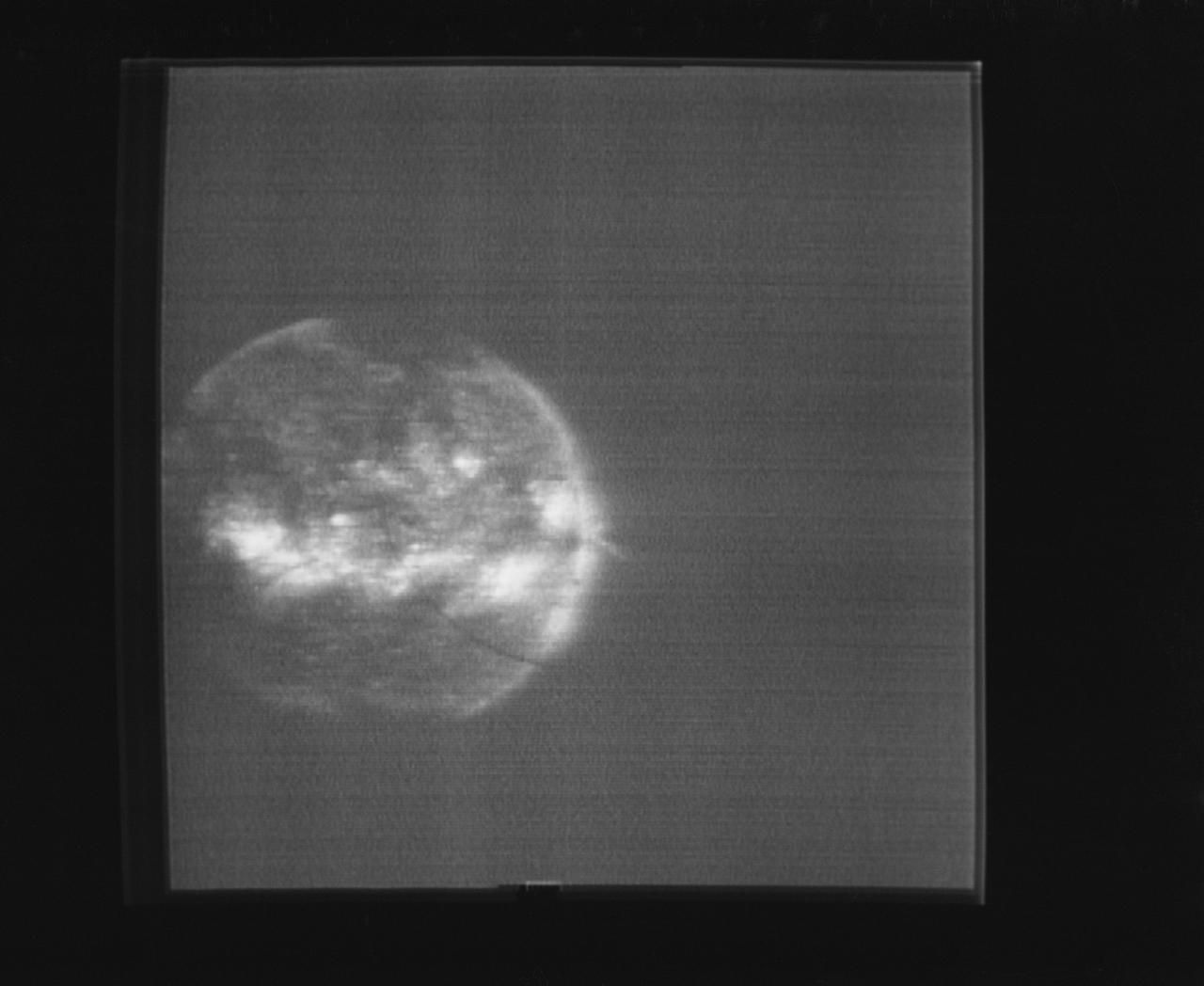
S74-15696 (1974) --- The solar disk photographed through the Skylab S082 Ultraviolet Spectrograph/Heliograph can be seen in this reproduction taken from a television tranmission made by a TV camera aboard the Skylab space station in Earth orbit. The S082 experiment is located in the Apollo Telescope Mount. This spectroheliogram shows specific emission features greatly enhanced over photographs of the solar disk in white light. Photo credit: NASA
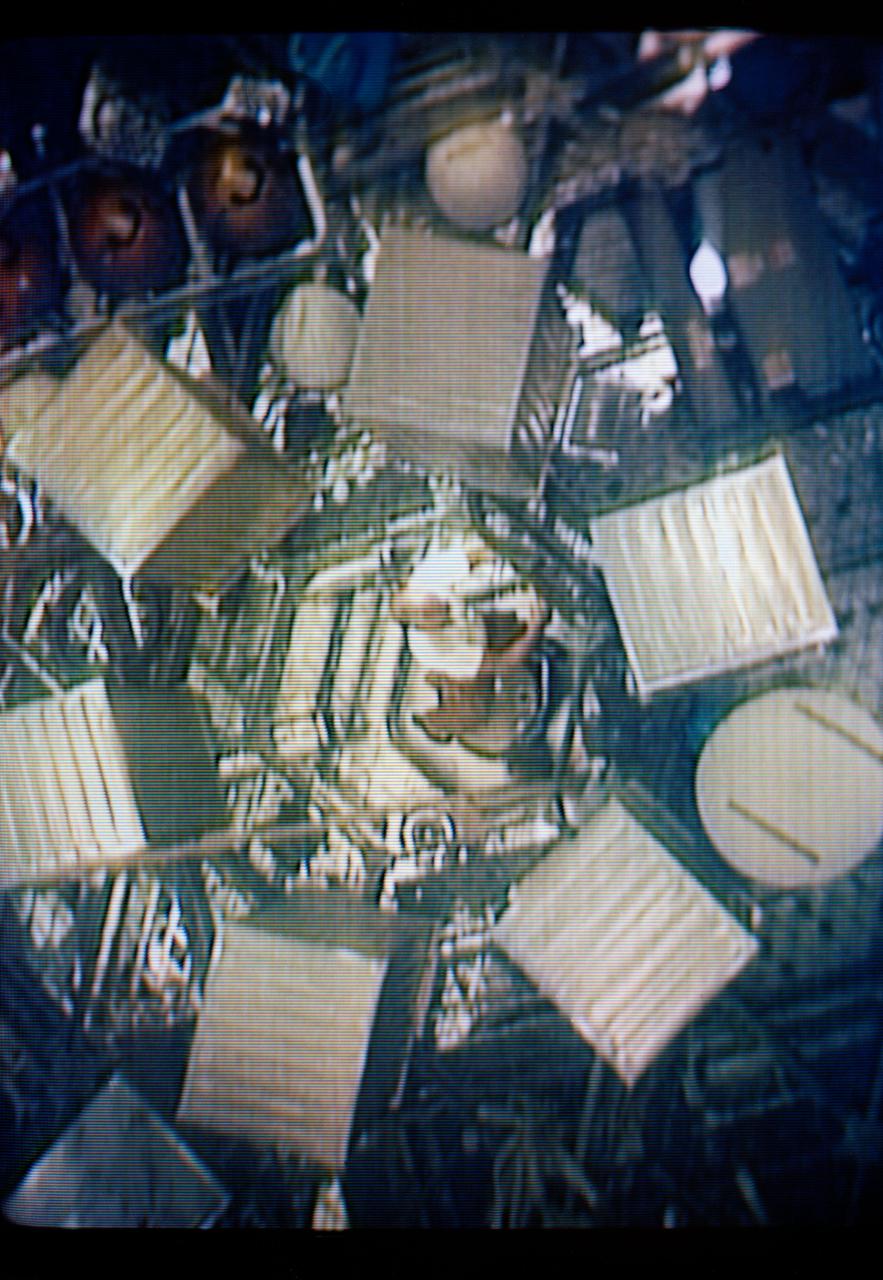
S73-26776 (26 May 1973) --- An interior view of the Orbital Workshop of the Skylab 1 space station cluster in Earth orbit can be seen in this reproduction taken from a color television transmission made by a TV camera aboard the space station. Astronaut Charles Conrad Jr., Skylab 2 commander, is floating up through the hatch. Food lockers are in the foreground. Photo credit: NASA
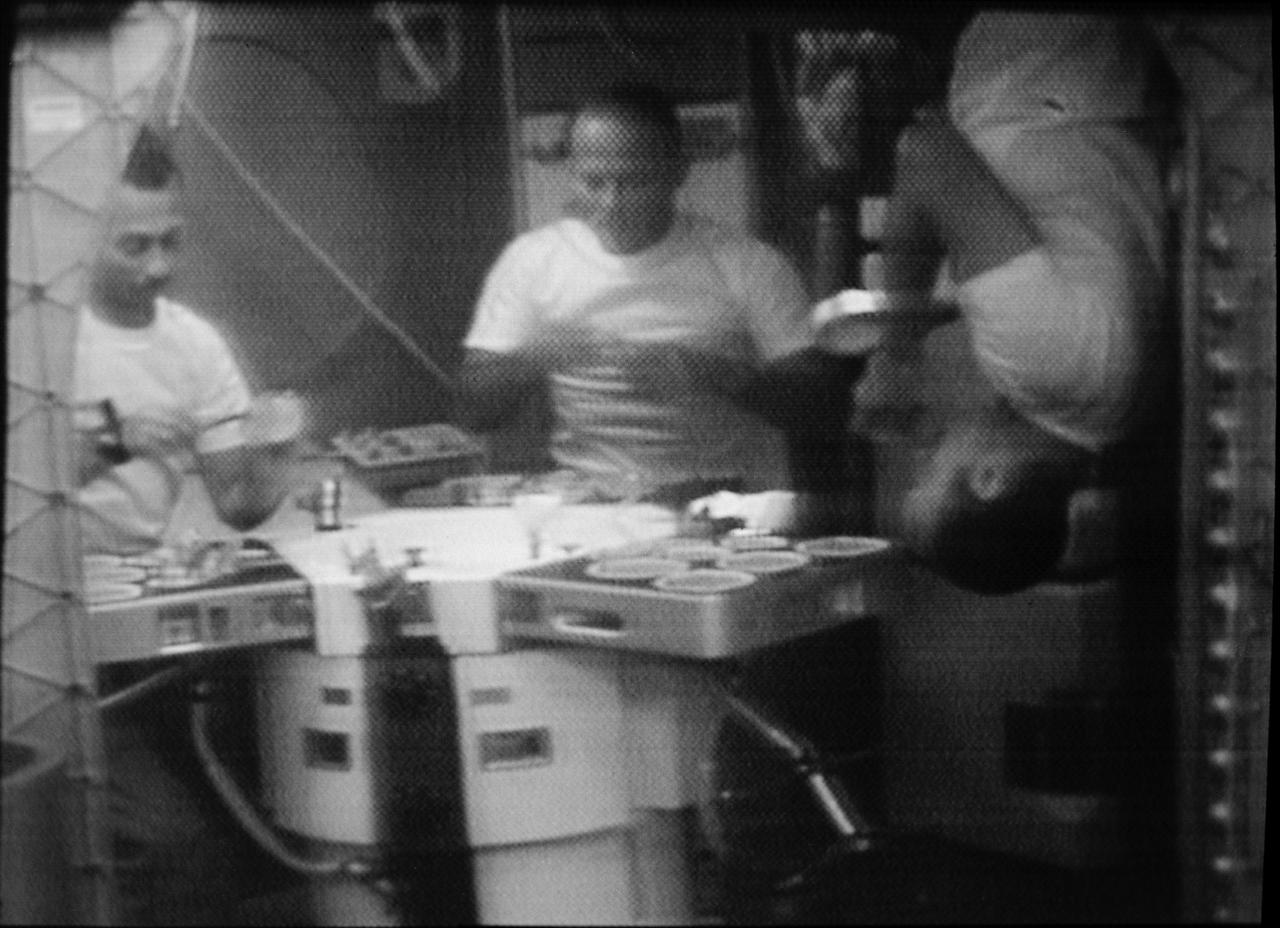
S73-31705 (1 Aug. 1973) --- The three Skylab 3 crewmen are shown eating in the Orbital Workshop (OWS) wardroom of the Skylab space station in Earth orbit, in this photographic reproduction taken from a television transmission made by a color TV camera aboard the OWS. Astronaut Alan L. Bean (right), commander, illustrates eating under zero-gravity conditions upsidedown. The two other crewmen are scientist-astronaut Owen K. Garriott (left), science pilot; and astronaut Jack R. Lousma, pilot. Photo credit: NASA
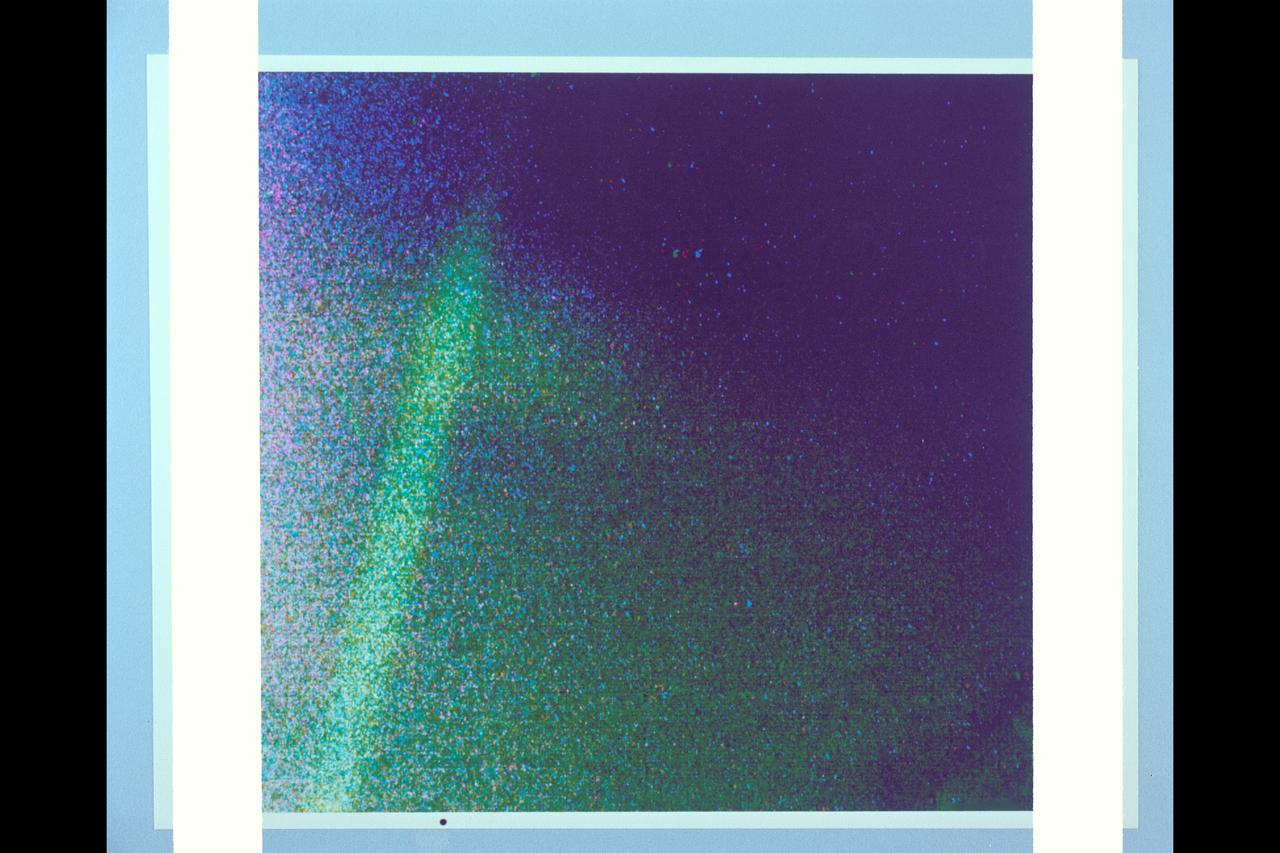
P-21763 C Range: 1,400,000 kilometers (870,000 miles) Jupiter's thin ring of particles was photographed by Voyager 2's telescope-equipped TV camera through three color filters to provide this color representation. During the three long exposures the spacecraft drifted, smearing out the ring image. The linear feature just above the ring is a star trail. True color of the ring cannot be deduced from this photo.
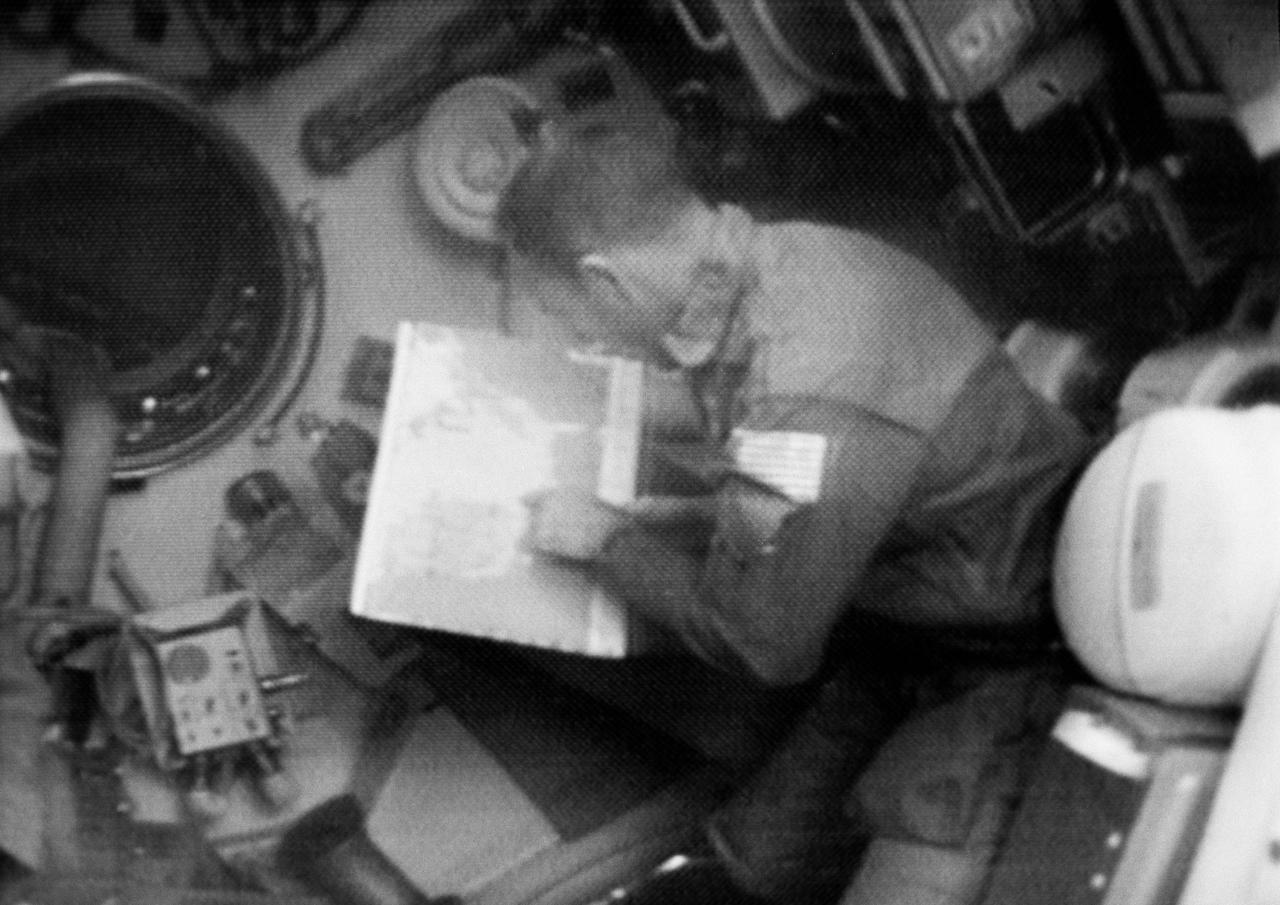
S73-31845 (3 Aug. 1973) --- Astronaut Jack R. Lousma, Skylab 3 pilot, studies a map of the U.S. during a Skylab EREP pass across the United States, as seen in this photographic reproduction taken from a television transmission made by a color TV camera aboard the Skylab space station in Earth orbit. EREP is an acronym for Earth Resources Experiments Package. Photo credit: NASA
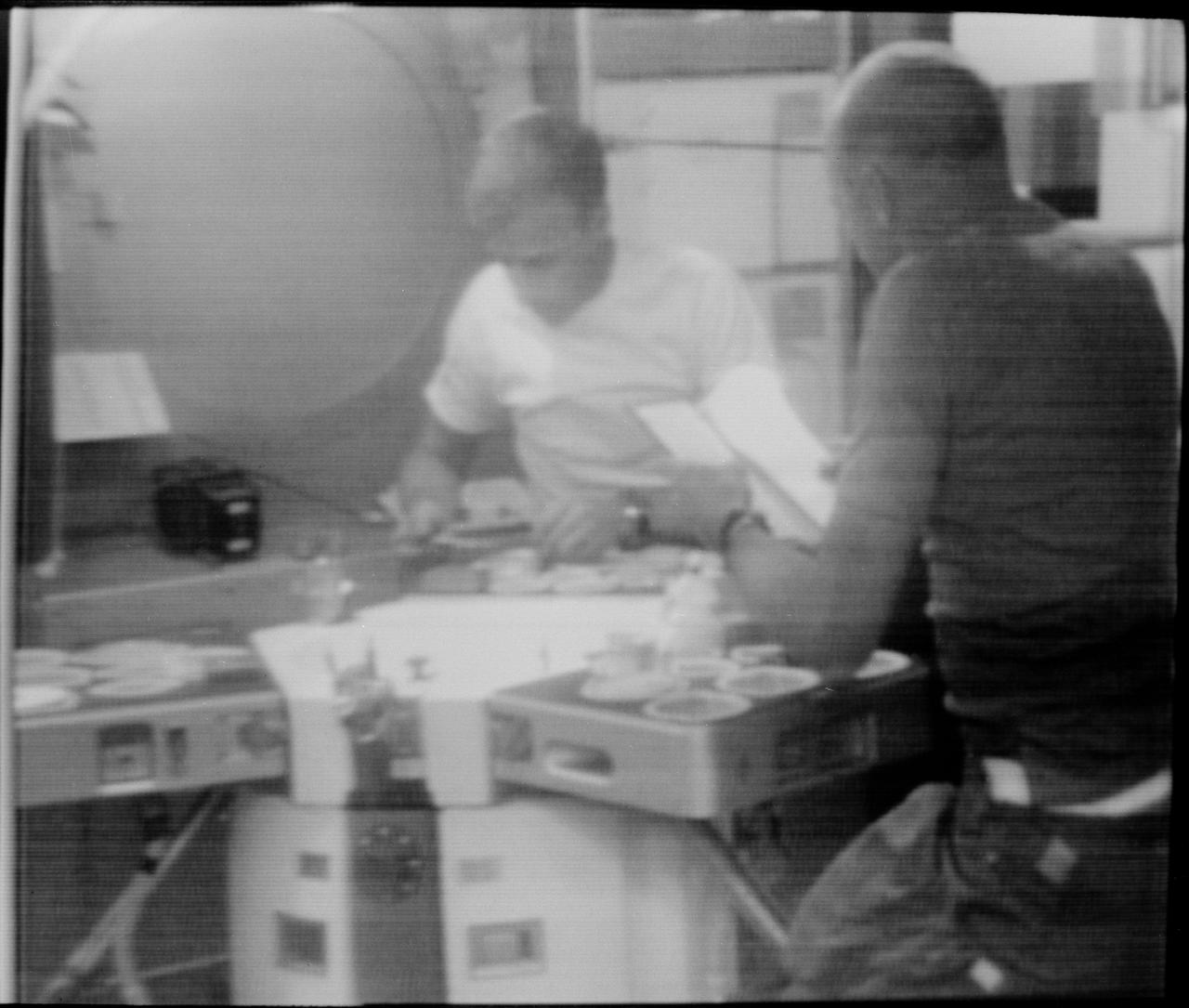
S73-27081 (30 May 1973) --- Two of the three Skylab 2 astronauts are seen in the wardroom of the crew quarters of the Orbital Workshop of the Skylab 1 space station cluster in Earth orbit in this reproduction taken from a television transmission made by a TV camera aboard the space station. They are preparing to eat a meal. Astronaut Charles Conrad Jr., commander, is in the right foreground. In the background is astronaut Paul J. Weitz, pilot. Photo credit: NASA
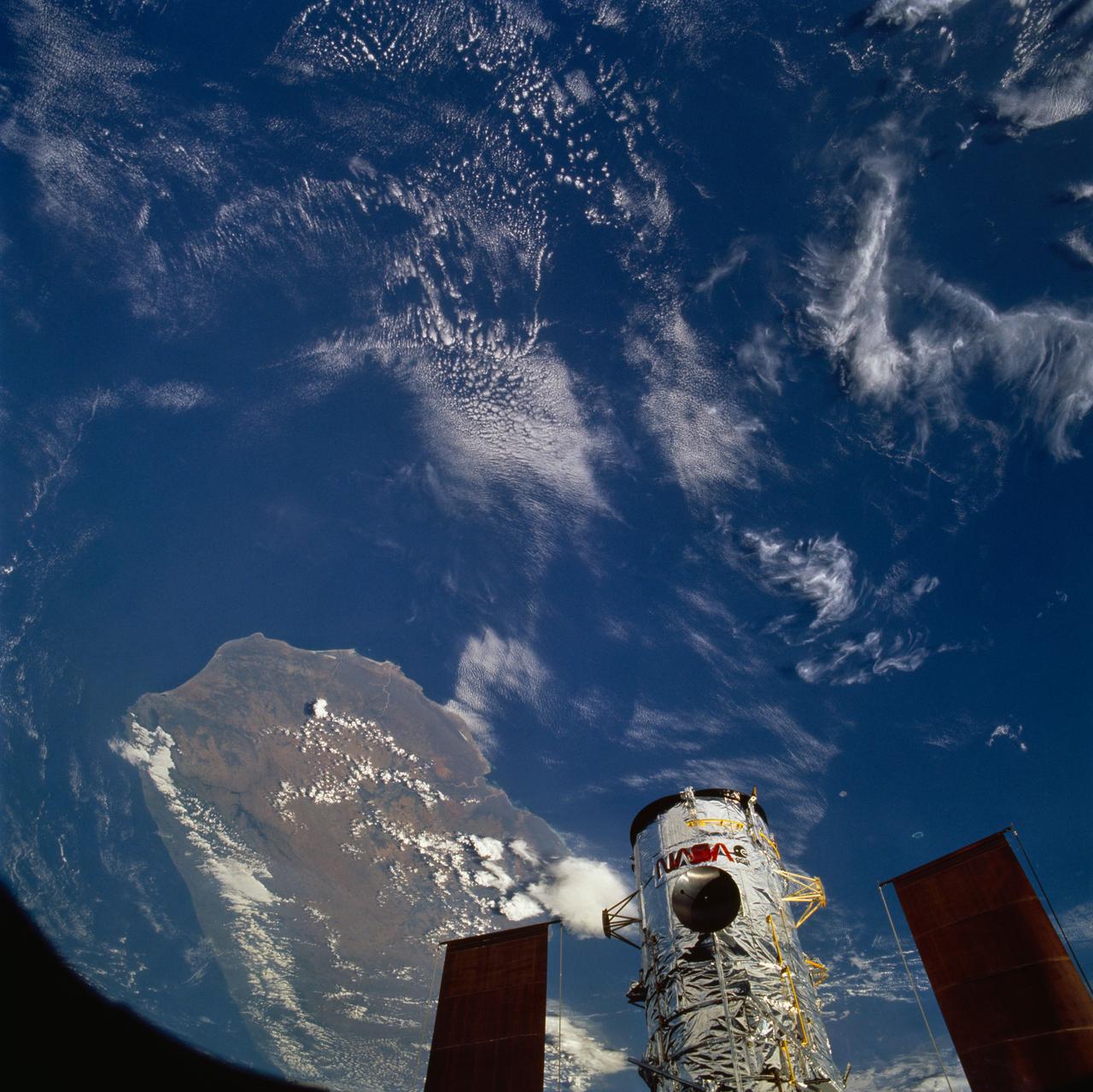
STS061-79-086 (4 Dec 1993) --- The Hubble Space Telescope (HST), backdropped over Madagascar, is berthed in the Space Shuttle Endeavour's cargo bay following its capture by the STS-61 astronauts. The crew used TV cameras to survey the spacecraft before sending out four astronauts on five separate sessions of extravehicular activity (EVA) to perform a variety of servicing tasks.
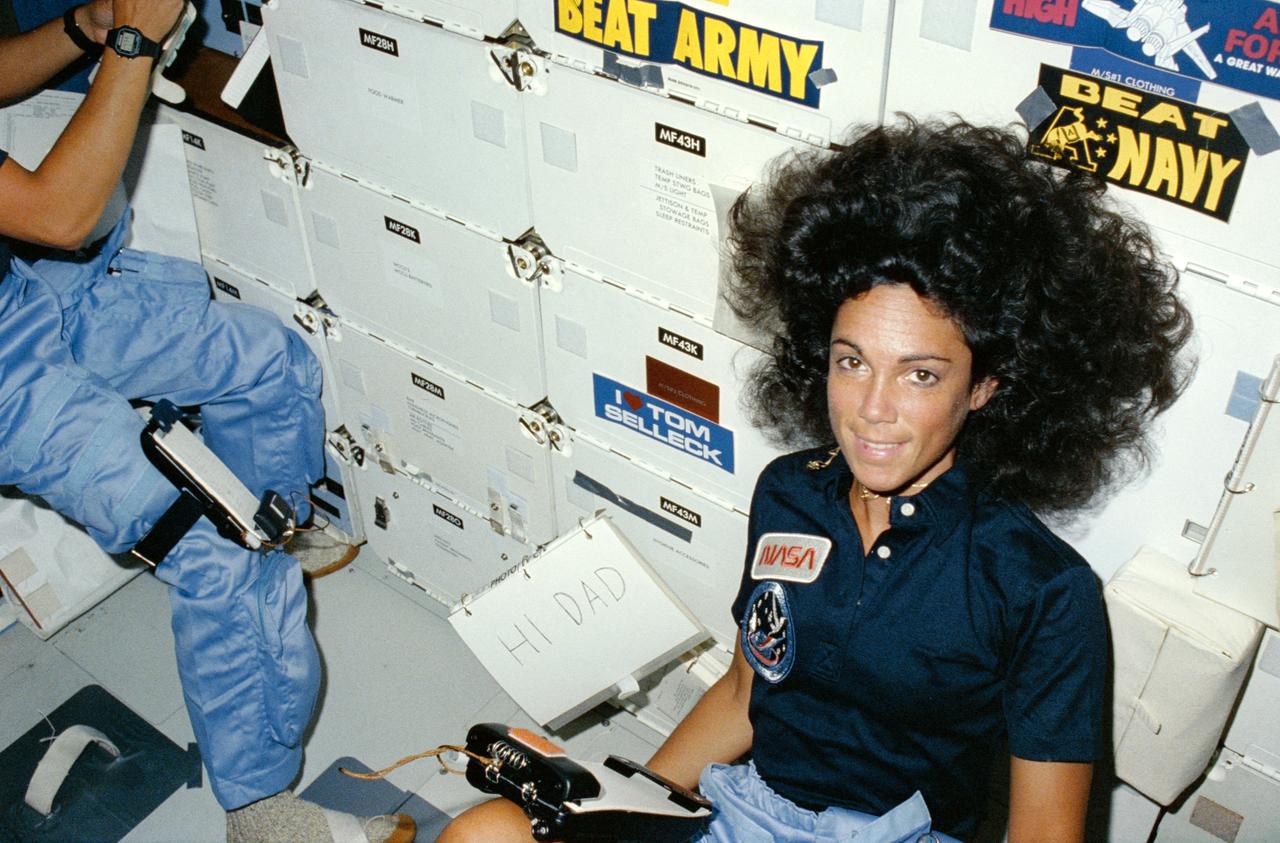
41D-13-025 (30 Aug 1984) --- Astronaut Judith A. Resnik, one of three mission specialists, positions herself on the floor of the Space Shuttle Discovery's mid-deck to note some items on a clipboard pad. Nearby, Charles D. Walker, payload specialist (partially out of frame at left), anchors himself with a foot restraint while working at a stowage locker. Between the two is a sign fashioned by Dr. Resnik and held up to a nearby TV camera during early STS-41D downlinked television. This is a 35mm frame.
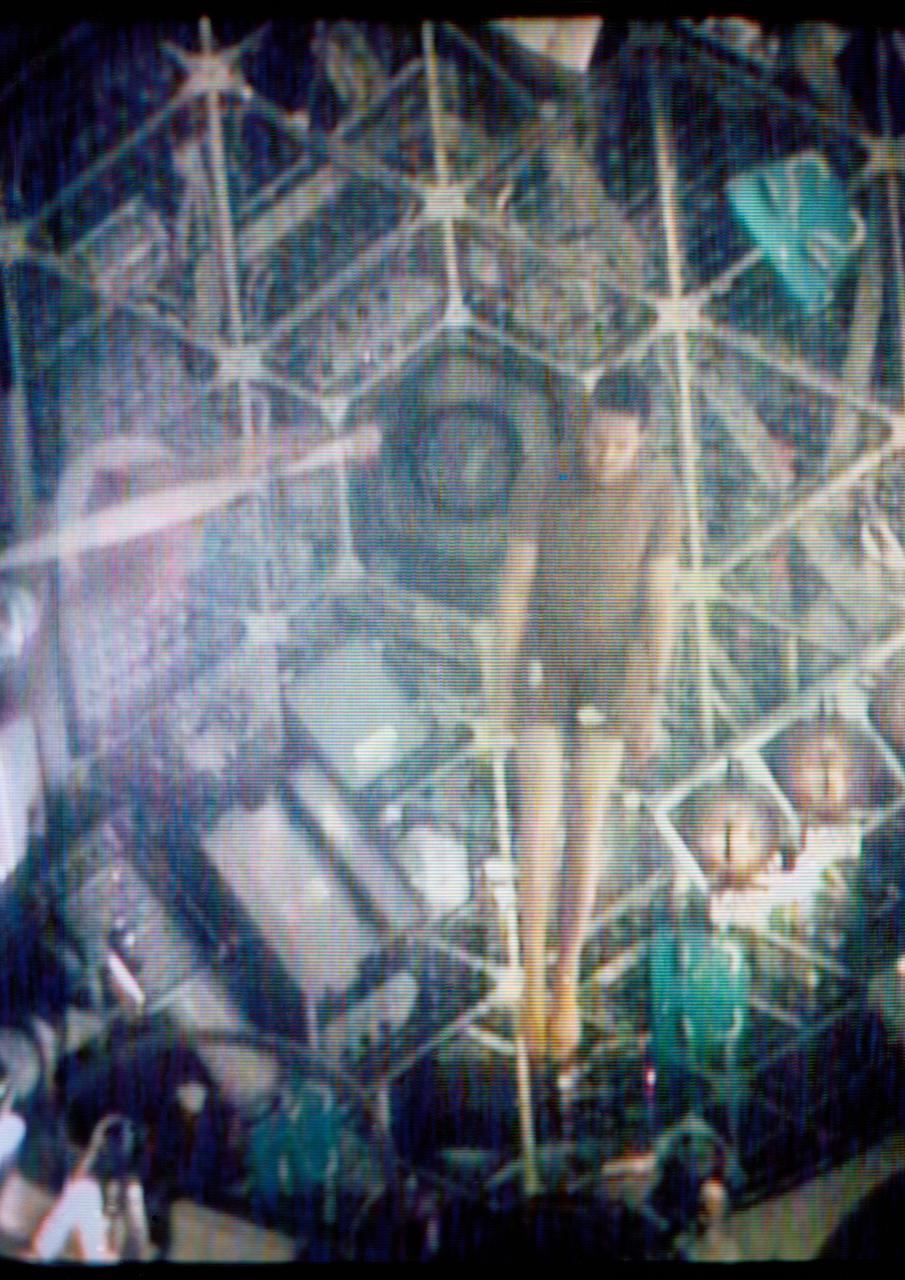
S73-27260 (1 June 1973) --- Two of the three Skylab 2 crewmen demonstrate weightlessness in the forward compartment of the Orbital Workshop of the Skylab 1 & 2 space station cluster in Earth orbit, as seen in this reproduction taken from a color television transmission made by a TV camera aboard the space station. Scientist-astronaut Joseph P. Kerwin, science pilot, floats with his body extended. Kerwin is steadied by astronaut Charles Conrad Jr., commander. The crewmen performed exercises while floating. Photo credit: NASA
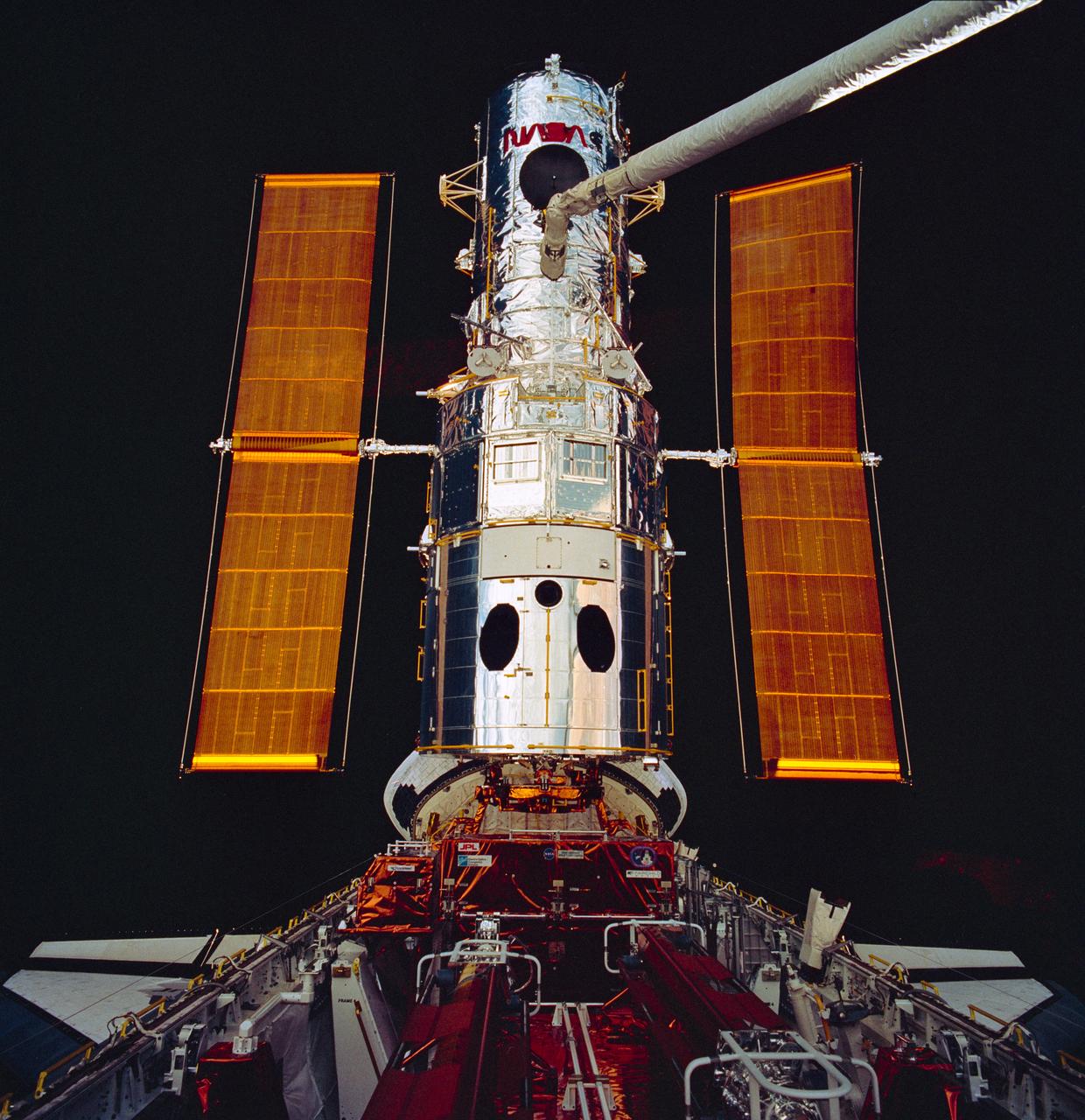
STS061-79-072 (4 Dec 1993) --- The Hubble Space Telescope (HST) is backdropped against the blackness of space in this 70mm frame recorded during a video survey of the spacecraft following the telescope's recent berthing in the Space Shuttle Endeavour's cargo bay. European Space Agency (ESA) scientist Claude Nicollier controlled the Remote Manipulator System (RMS) arm slowly so that mounted TV cameras could show flight controllers the various areas on the telescope.

This 1970 photograph shows the flight unit for Skylab's White Light Coronagraph, an Apollo Telescope Mount (ATM) facility that photographed the solar corona in the visible light spectrum. A TV camera in the instrument provided real-time pictures of the occulted Sun to the astronauts at the control console and also transmitted the images to the ground. The Marshall Space Flight Center had program management responsibility for the development of Skylab hardware and experiments.
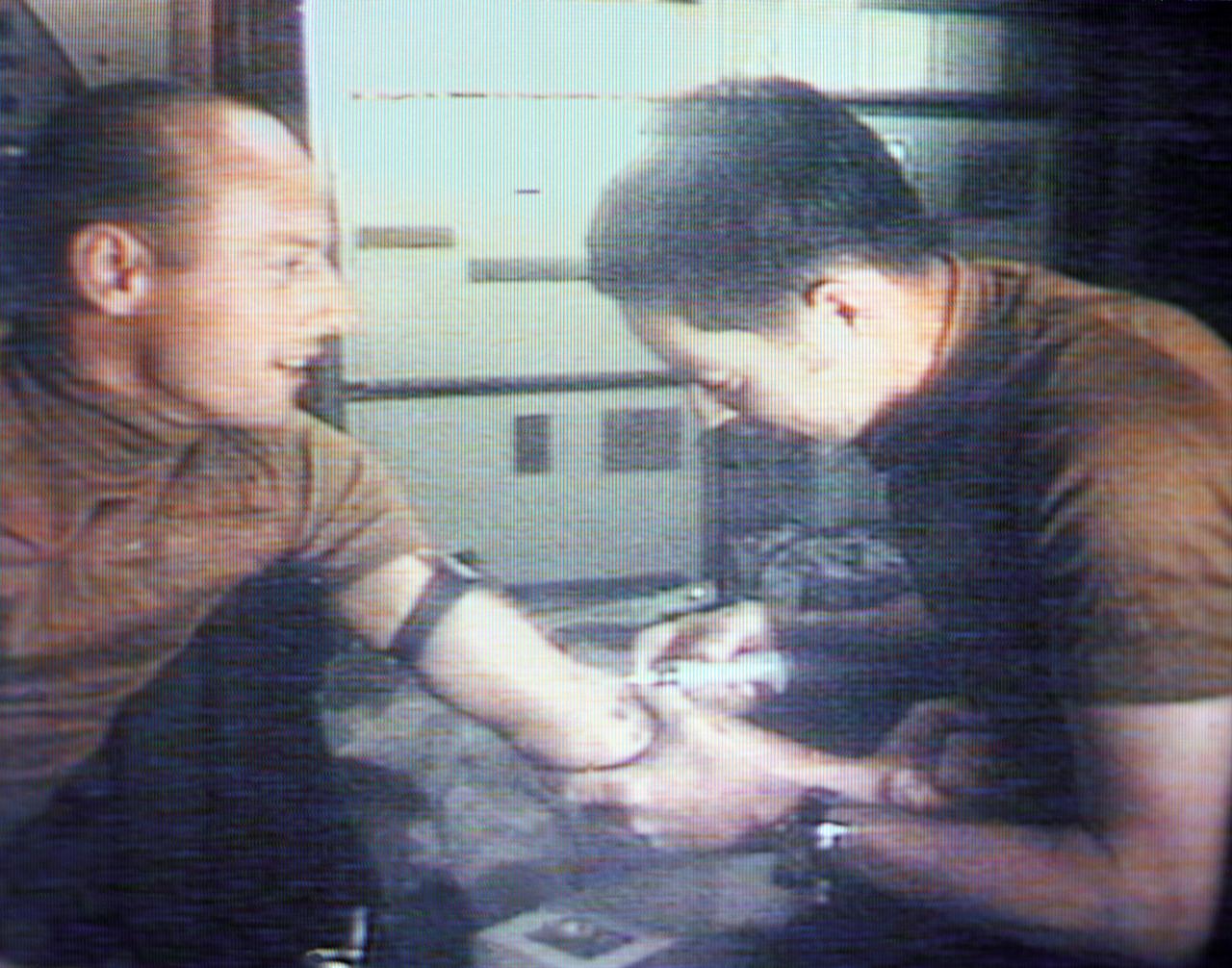
S73-27509 (6 June 1973) --- Scientist-astronaut Joseph P. Kerwin (right), Skylab 2 science pilot and a doctor of medicine, takes a blood sample from astronaut Charles Conrad Jr., Skylab 2 commander, as seen in this reproduction taken from a color television transmission made by a TV camera aboard the Skylab 1 and 2 space station cluster in Earth orbit. The blood sampling was part of the Skylab Hematology and Immunology Experiment M110 series. Photo credit: NASA
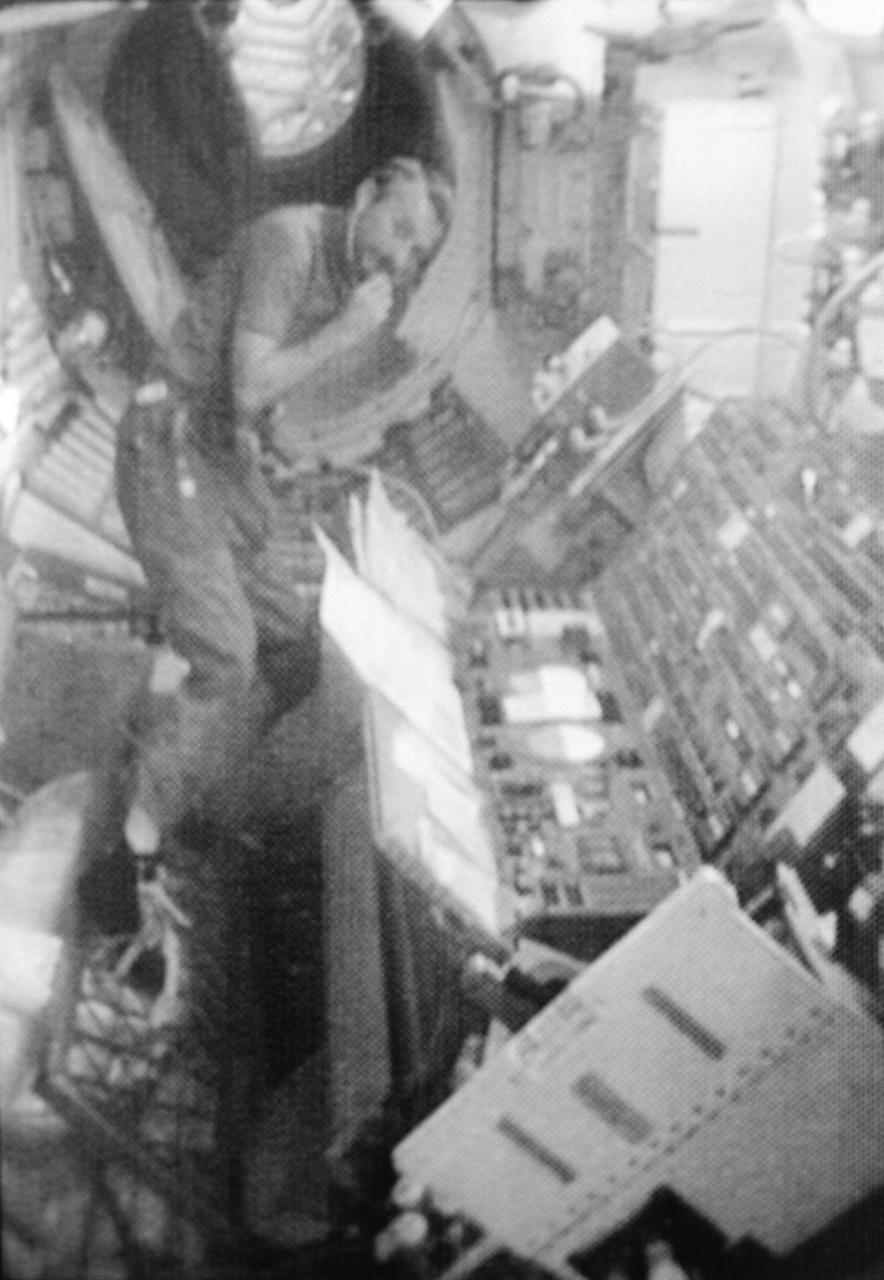
S73-31973 (August 1973) --- Scientist-astronaut Owen K. Garriott, Skylab 3 science pilot, looks at a map of Earth at the food table in the ward room of the Orbital Workshop (OWS). In this photographic reproduction taken from a television transmission made by a color TV camera aboard the Skylab space station cluster in Earth orbit. Photo credit: NASA
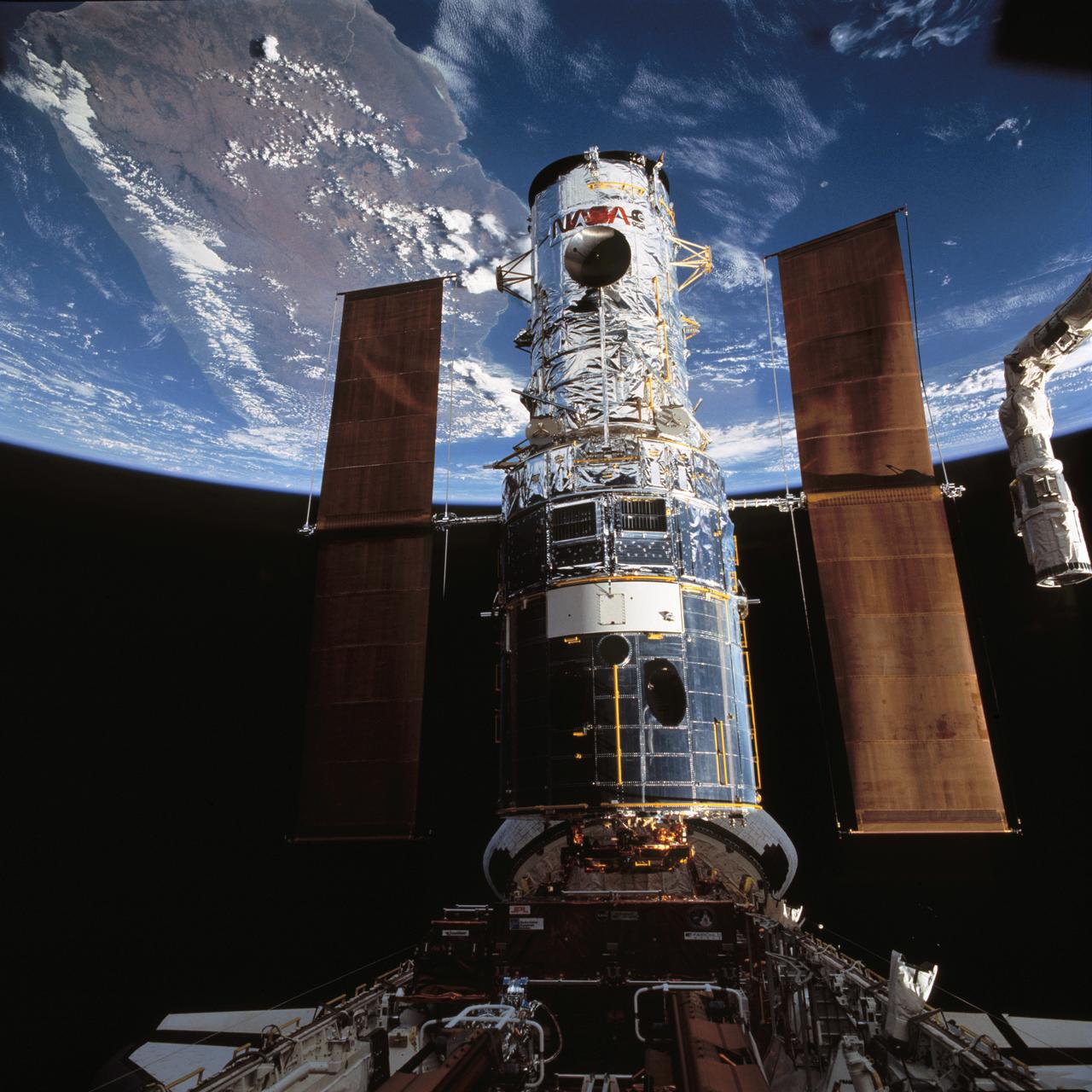
STS061-79-087 (4 Dec. 1993) --- The Hubble Space Telescope (HST), backdropped over Madagascar, is berthed in the space shuttle Endeavour's cargo bay following its capture by the STS-61 astronauts. The crew used TV cameras to survey the spacecraft before sending out four astronauts on five separate sessions of extravehicular activity (EVA) to perform a variety of servicing tasks. Photo credit: NASA
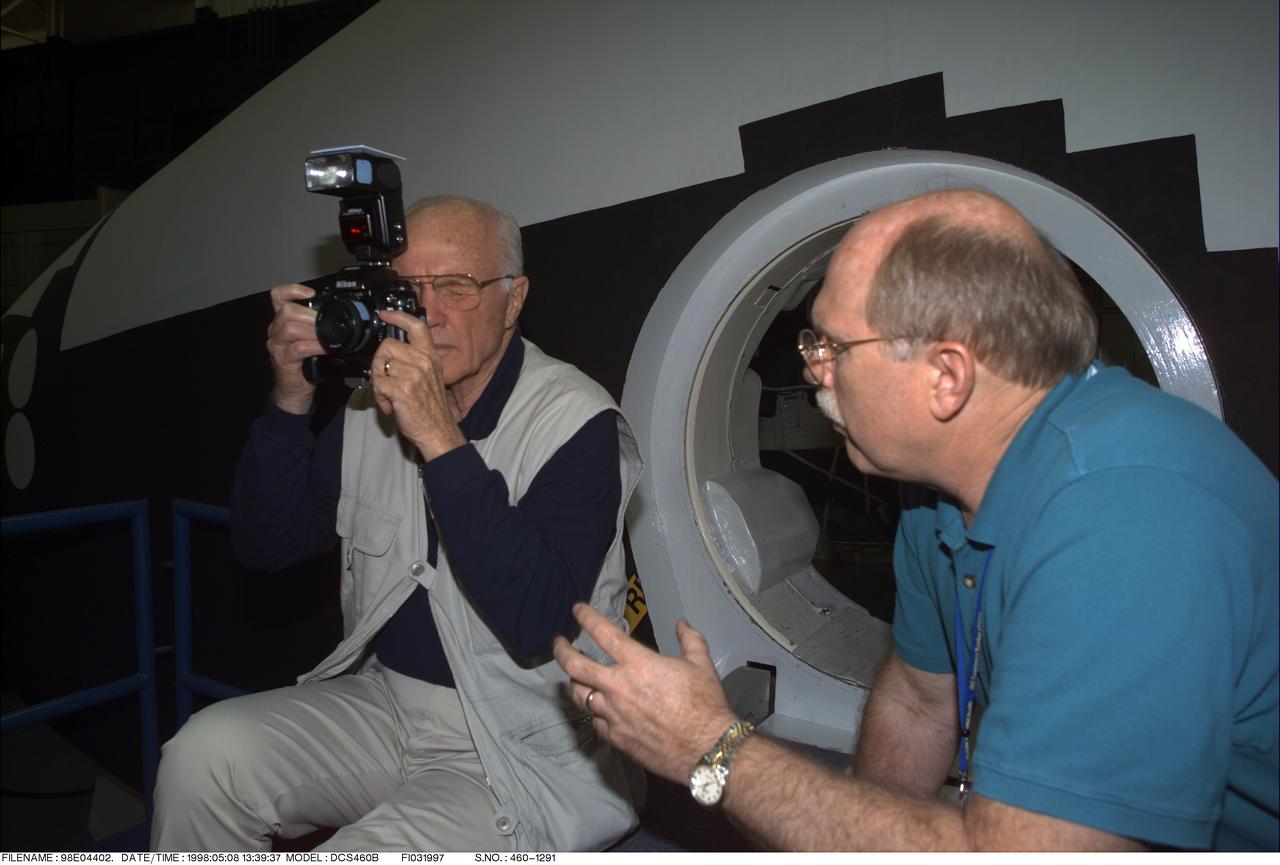
98-E-04402 (8 May 1998) --- Photo/TV instructor Donald Carico, right, goes over some fine points of using a 35mm camera with U.S. Sen. John H. Glenn Jr., (D.-Ohio). Glenn, who made America's first orbital flight over 36 years ago, is in Houston to train for his assignment as a payload specialist aboard the Space Shuttle Discovery later this year.
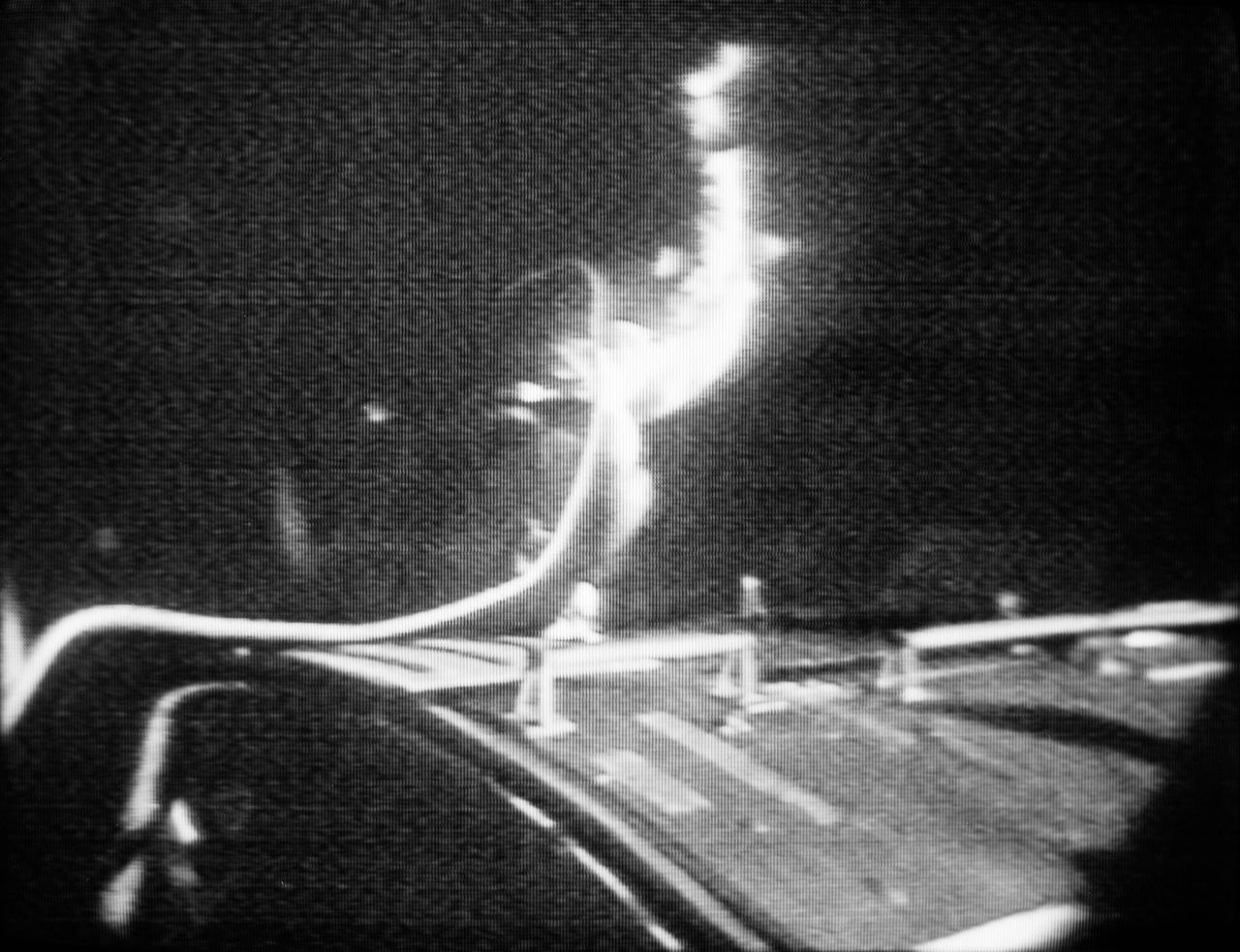
S72-35900 (25 April 1972) --- Astronaut Thomas K. (Ken) Mattingly II, command module pilot of the Apollo 16 lunar landing mission, floats in space outside the spacecraft during his trans-Earth extravehicular activity (EVA), as seen in this reproduction taken from a color television transmission made by a color TV camera mounted on the Command Module (CM) hatch. Mattingly used hand-holds and a foot restraint to hold himself in position, and he was secured to the spacecraft by an umbilical tether line. During his EVA, Mattingly made an inspection of the Service Module's (SM) Scientific Instrument Module (SIM) bay, and retrieved film cassettes from the Panoramic Camera and the Mapping Camera. The trans-Earth EVA occurred at ground elapsed time of 242:55, and 2:49 p.m. (CST), Tuesday, April 25, 1972.
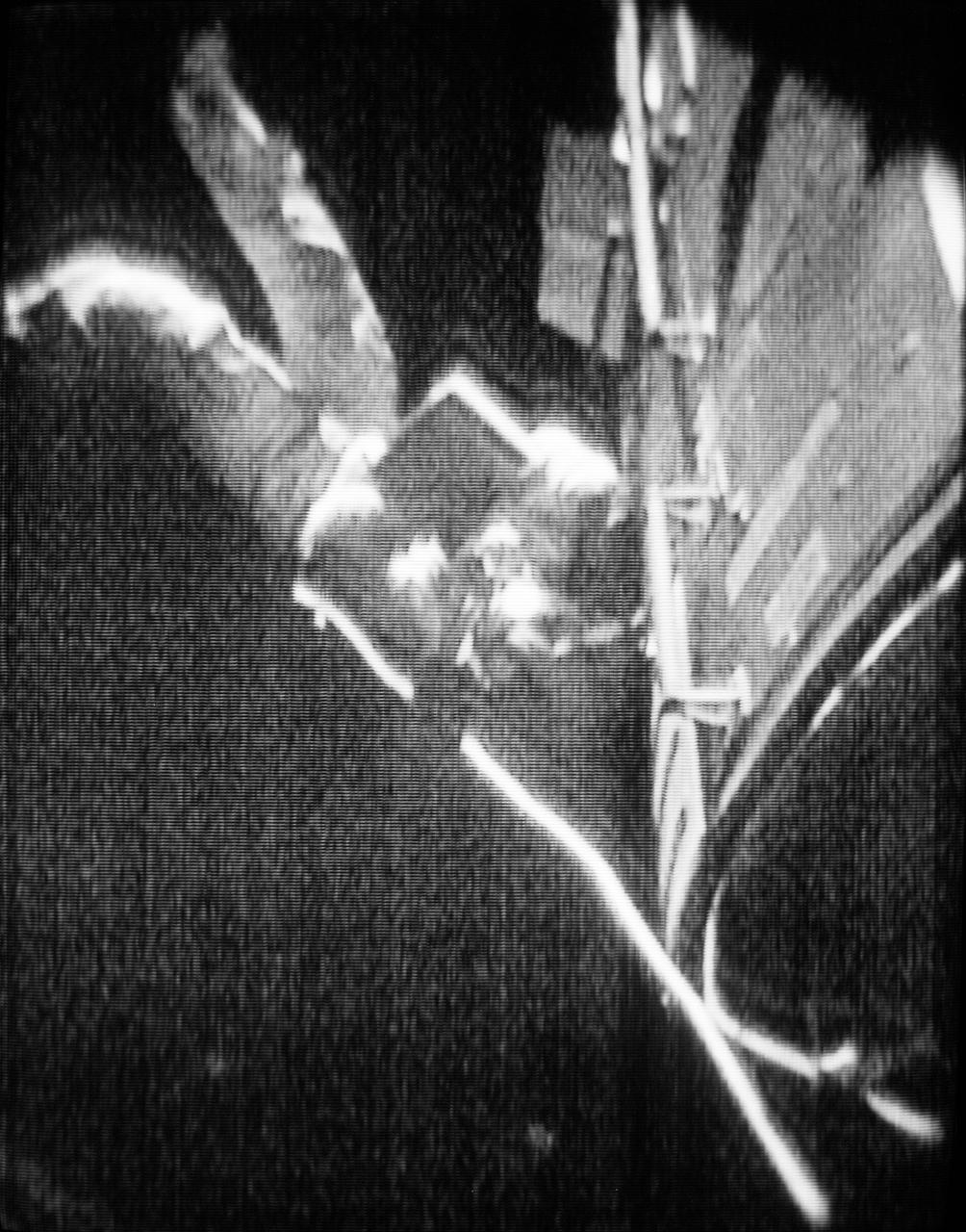
S72-35901 (25 April 1972) --- Astronaut Thomas K. (Ken) Mattingly II, command module pilot of the Apollo 16 lunar landing mission, floats in space outside the spacecraft during his trans-Earth extravehicular activity (EVA), as seen in this reproduction taken from a color television transmission made by a color TV camera mounted on the Command Module (CM) hatch. Mattingly used hand-holds and a foot restraint to hold himself in position, and he was secured to the spacecraft by an umbilical tether line. During his EVA, Mattingly made an inspection of the Service Module's (SM) Scientific Instrument Module (SIM) bay, and retrieved film cassettes from the Panoramic Camera and the Mapping Camera. The trans-Earth EVA occurred at ground elapsed time of 242:55, and 2:49 p.m. (CST), Tuesday, April 25, 1972.
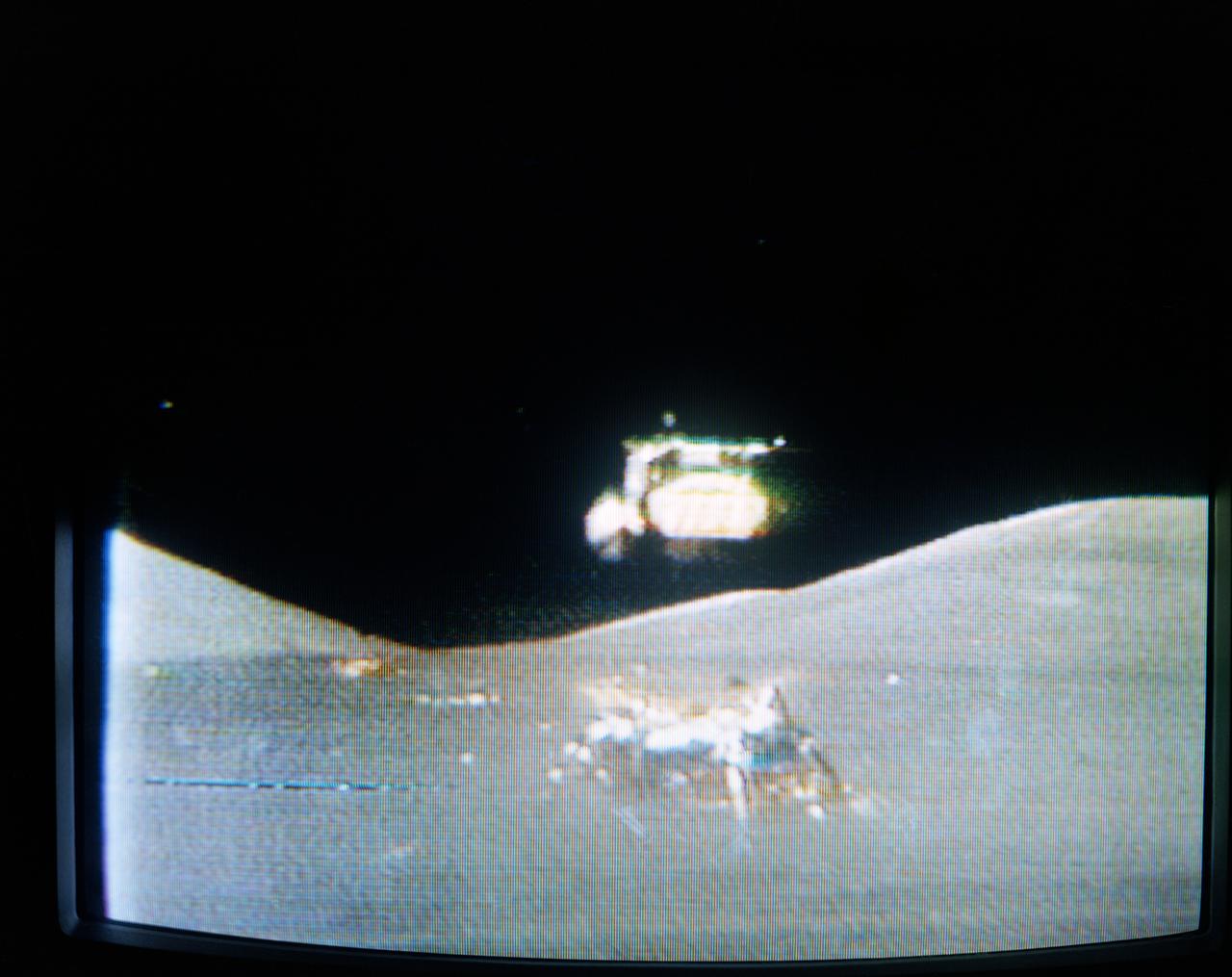
S72-55421 (14 Dec. 1972) --- The Apollo 17 Lunar Module (LM) "Challenger" ascent stage leaves the Taurus-Littrow landing site as it makes its spectacular liftoff from the lunar surface, as seen in this reproduction taken from a color television transmission made by the color RCA TV camera mounted on the Lunar Roving Vehicle (LRV). The LRV-mounted TV camera, remotely controlled from the Mission Control Center (MCC) in Houston, made it possible for people on Earth to watch the fantastic event. The LM liftoff was at 188:01:36 ground elapsed time, 4:54:36 p.m. (CST), Thursday, Dec. 14, 1972. The LM ascent stage, with astronauts Eugene A. Cernan and Harrison H. Schmitt aboard, returned from the lunar surface to rejoin the Command and Service Modules (CSM) orbiting the moon. Astronaut Ronald E. Evans remained with the CSM in lunar orbit while Cernan and Schmitt explored the moon. The LM descent stage is used as a launching platform and remains behind on the moon. Here, the two stages have completely separated and the ascent stage is headed skyward.
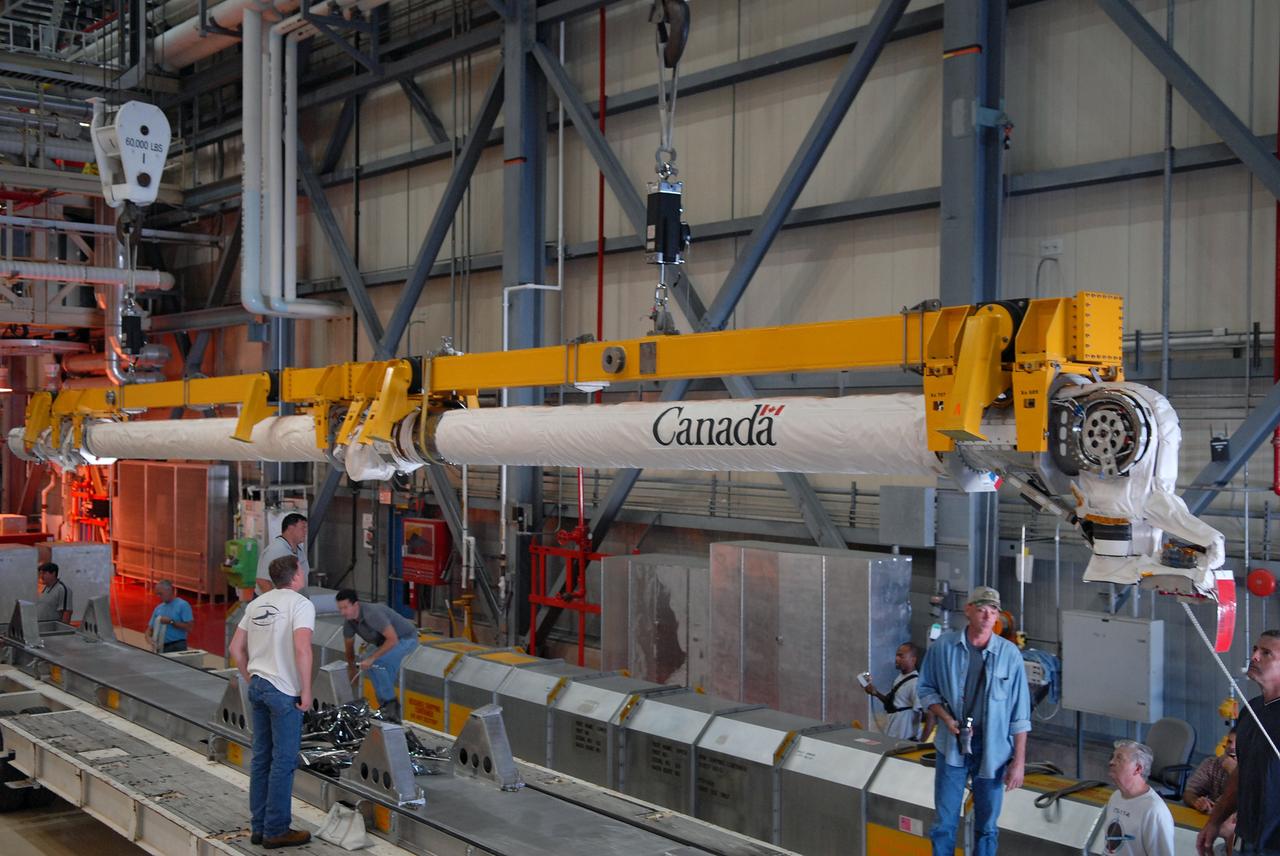
CAPE CANAVERAL, Fla. – In Orbiter Processing Facility bay 3 at NASA's Kennedy Space Center in Florida, the remote manipulator system, or RMS, removed from space shuttle Discovery is lowered toward a storage platform. The RMS is used to grab, or grapple, the payload as well as retrieve, repair and deploy satellites; provide a mobile extension ladder for spacewalking crewmembers; and be used as an inspection aid to allow flight crew members to view the orbiter’s or payload’s surfaces through a TV camera on the arm. Discovery is targeted to launch Aug. 6 on the STS-128 mission. Photo credit: NASA/Jack Pfaller
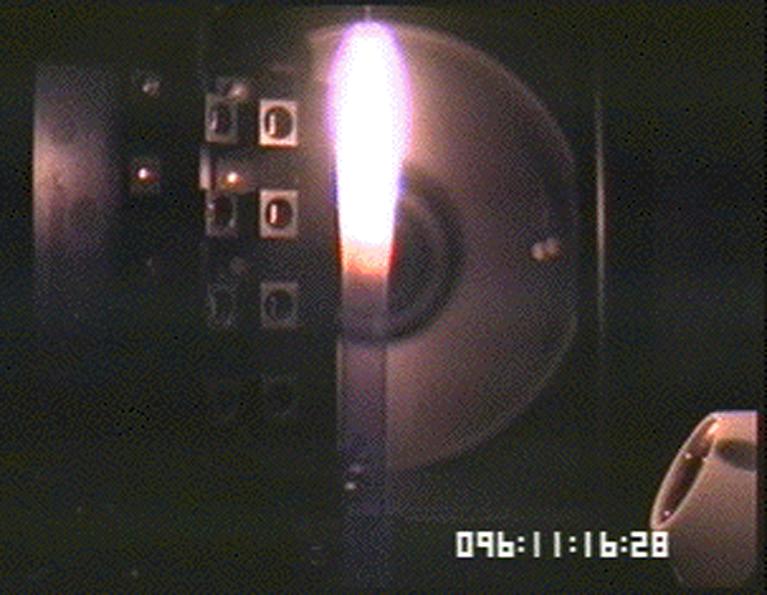
The Laminar Soot Processes (LSP) experiment under way during the Microgravity Sciences Lab-1 mission in 1997. LSP-2 will fly in the STS-107 Research 1 mission in 2001. The principal investigator is Dr. Gerard Faeth of the University of Michigan. LSP uses a small jet burner, similar to a classroom butane lighter, that produces flames up to 60 mm (2.3 in) long. Measurements include color TV cameras and a temperature sensor, and laser images whose darkness indicates the quantity of soot produced in the flame. Glenn Research in Cleveland, OH, manages the project.
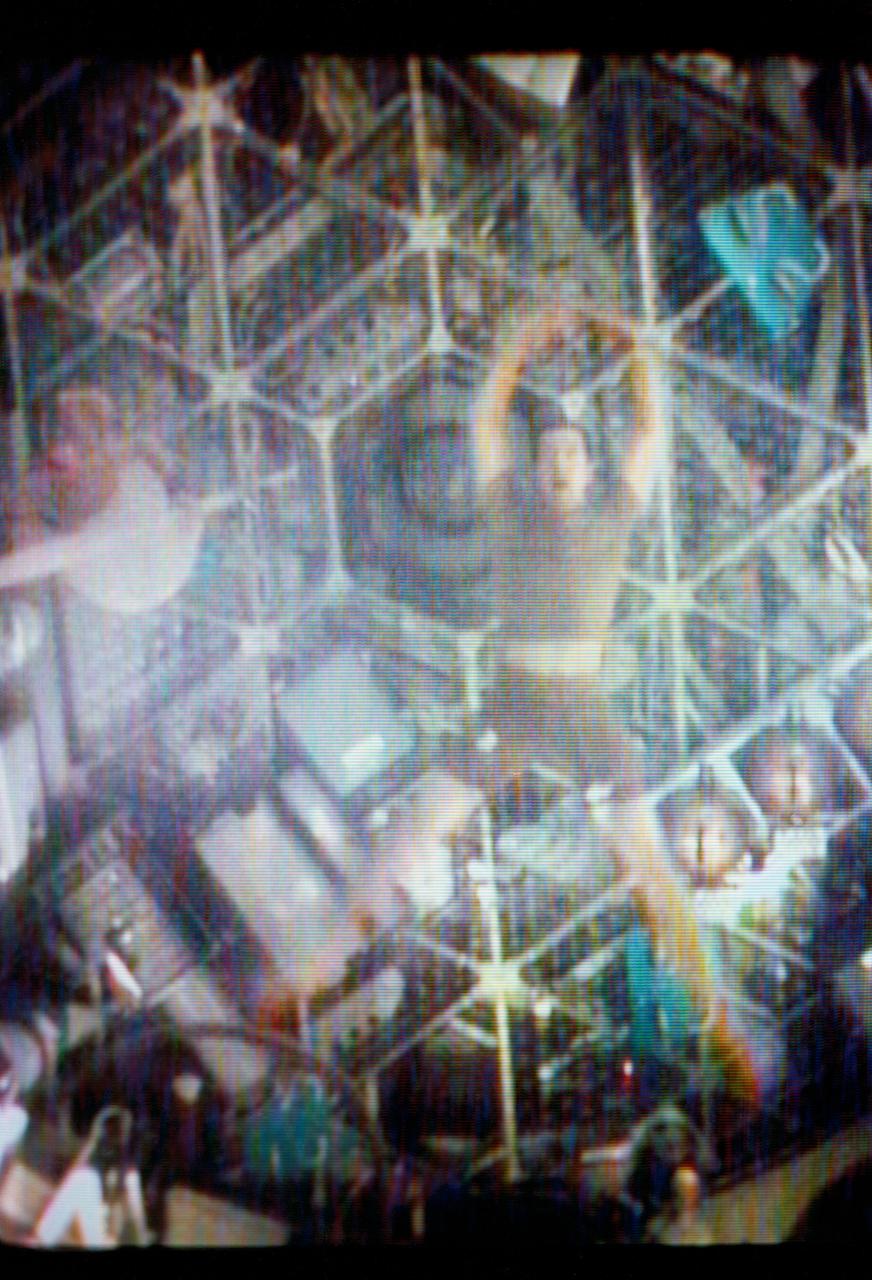
S73-27729 (1 June 1973) --- Scientist-astronaut Joseph P. Kerwin, Skylab 2 science pilot, floats with his body outstretched as he demonstrates weightlessness in the forward compartment of the Orbital Workshop of the Skylab 1 & 2 space station cluster in Earth orbit, as seen in this reproduction taken from a color television transmission made by a TV camera aboard the space station. Astronaut Charles Conrad Jr., Skylab 2 commander, is visible on Kerwin's right. The Skylab 2 crewmen performed exercises while floating. Photo credit: NASA
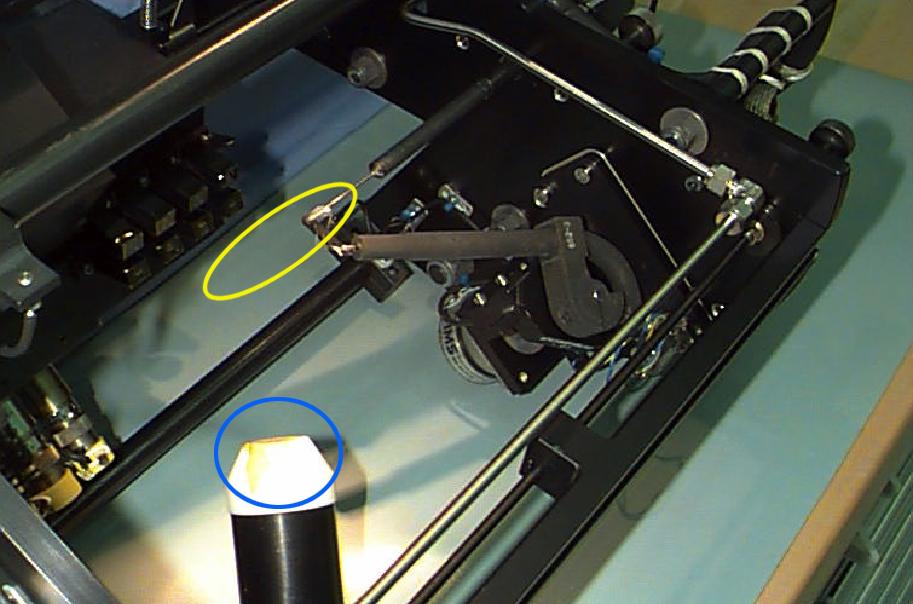
Interior of the Equipment Module for the Laminar Soot Processes (LSP-2) experiment that fly in the STS-107 Research 1 mission in 2002 (LSP-1 flew on Microgravity Sciences Lab-1 mission in 1997). The principal investigator is Dr. Gerard Faeth of the University of Michigan. LSP uses a small jet burner (yellow ellipse), similar to a classroom butane lighter, that produces flames up to 60 mm (2.3 in) long. Measurements include color TV cameras and a radiometer or heat sensor (blue circle), and laser images whose darkness indicates the quantity of soot produced in the flame. Glenn Research in Cleveland, OH, manages the project.
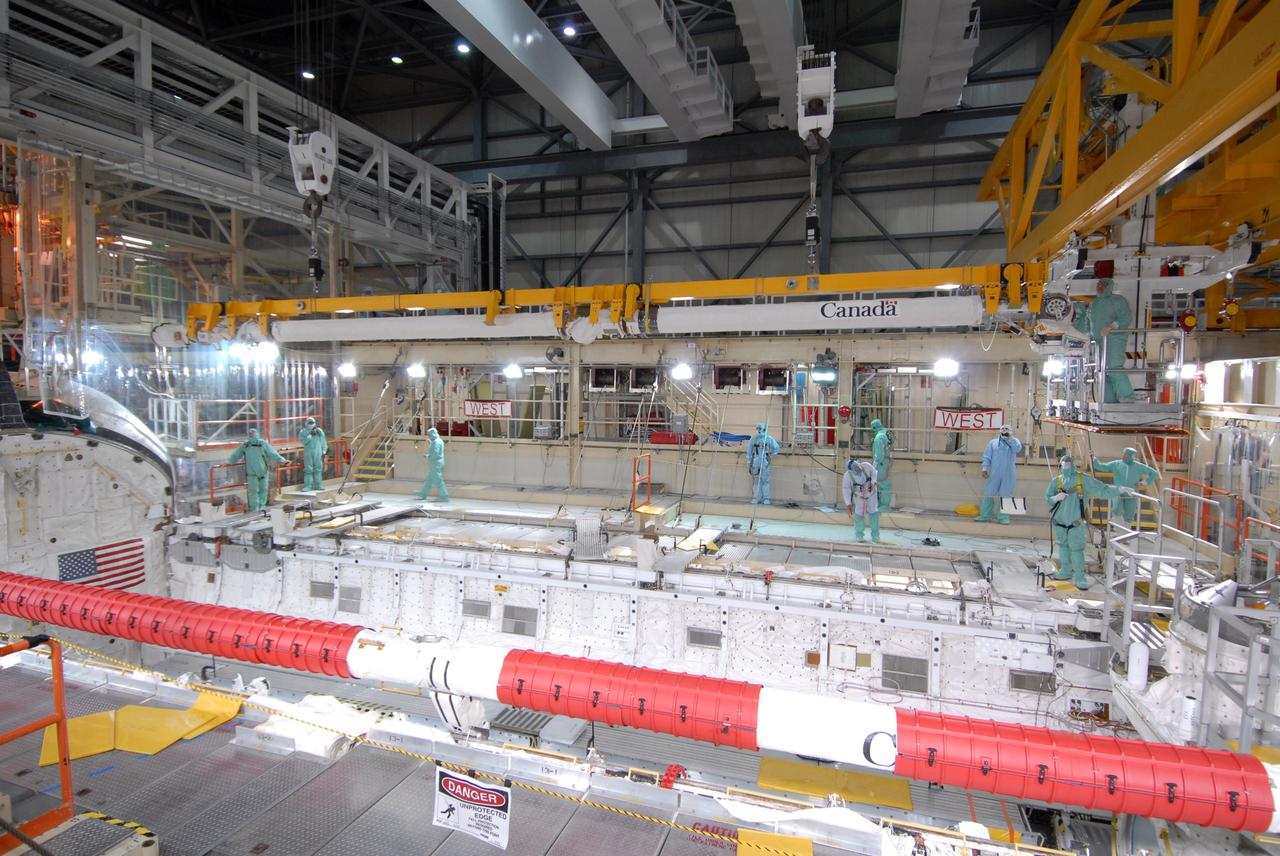
CAPE CANAVERAL, Fla. – In Orbiter Processing Facility bay 3 at NASA's Kennedy Space Center in Florida, the remote manipulator system, or RMS, arm is lifted away from the payload bay of space shuttle Discovery. The RMS is used to grab, or grapple, the payload as well as retrieve, repair and deploy satellites; provide a mobile extension ladder for spacewalking crewmembers; and be used as an inspection aid to allow flight crew members to view the orbiter’s or payload’s surfaces through a TV camera on the arm. Discovery is targeted to launch Aug. 6 on the STS-128 mission. Photo credit: NASA/Jack Pfaller
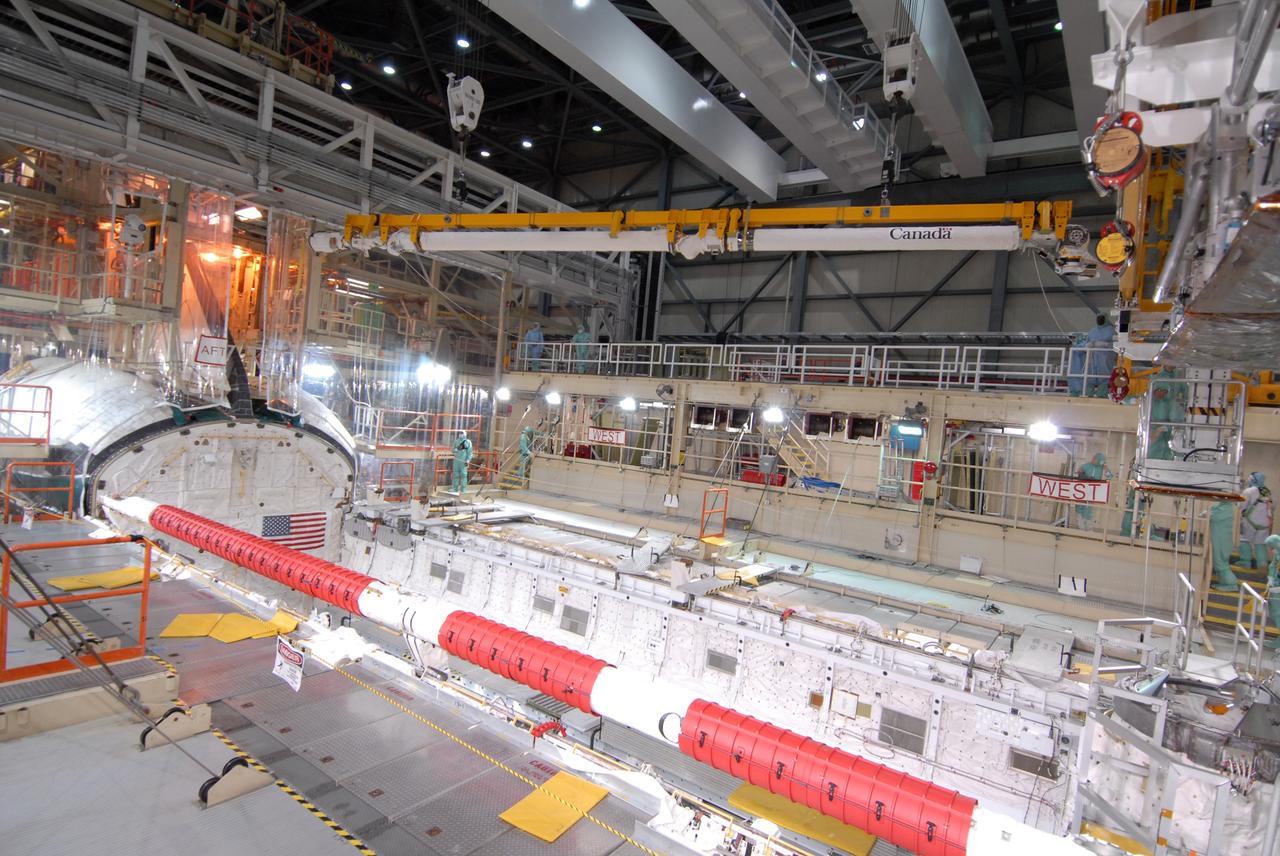
CAPE CANAVERAL, Fla. – In Orbiter Processing Facility bay 3 at NASA's Kennedy Space Center in Florida, the remote manipulator system, or RMS, arm is lifted out of space shuttle Discovery's payload bay. The RMS is used to grab, or grapple, the payload as well as retrieve, repair and deploy satellites; provide a mobile extension ladder for spacewalking crewmembers; and be used as an inspection aid to allow flight crew members to view the orbiter’s or payload’s surfaces through a TV camera on the arm. Discovery is targeted to launch Aug. 6 on the STS-128 mission. Photo credit: NASA/Jack Pfaller
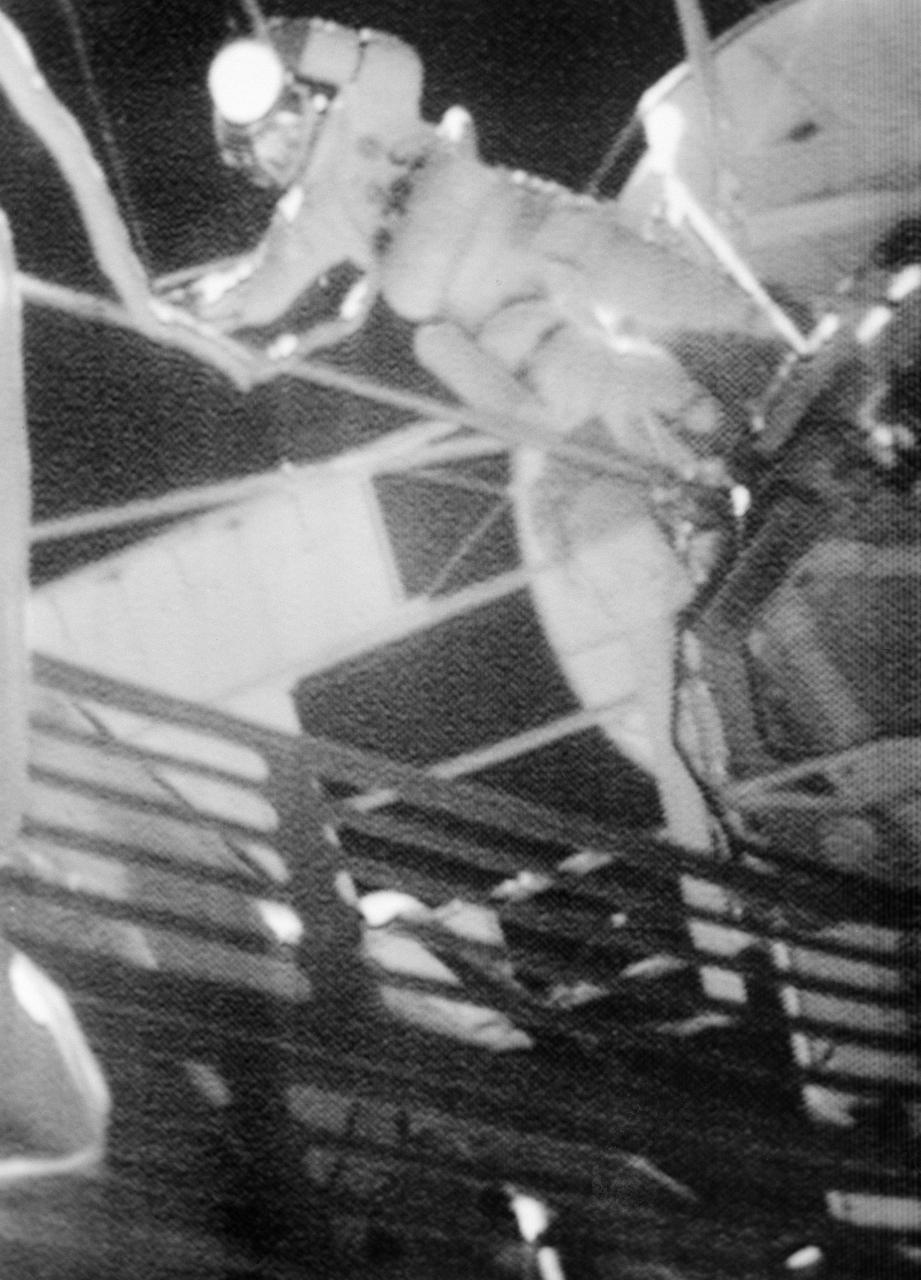
S73-31976 (5 Aug. 1973) --- Astronaut Jack R. Lousma, Skylab 3 pilot, is seen outside the Skylab space station in Earth orbit during the Aug. 5, 1973 Skylab 3 extravehicular activity (EVA) in this photographic reproduction taken from a television transmission made by a color TV camera aboard the space station. Scientist-astronaut Owen K. Garriott, Skylab 3 science pilot, participated in the EVA with Lousma. During the EVA the two crewmen deployed the twin pole solar shield to help shade the Orbital Workshop. Photo credit: NASA
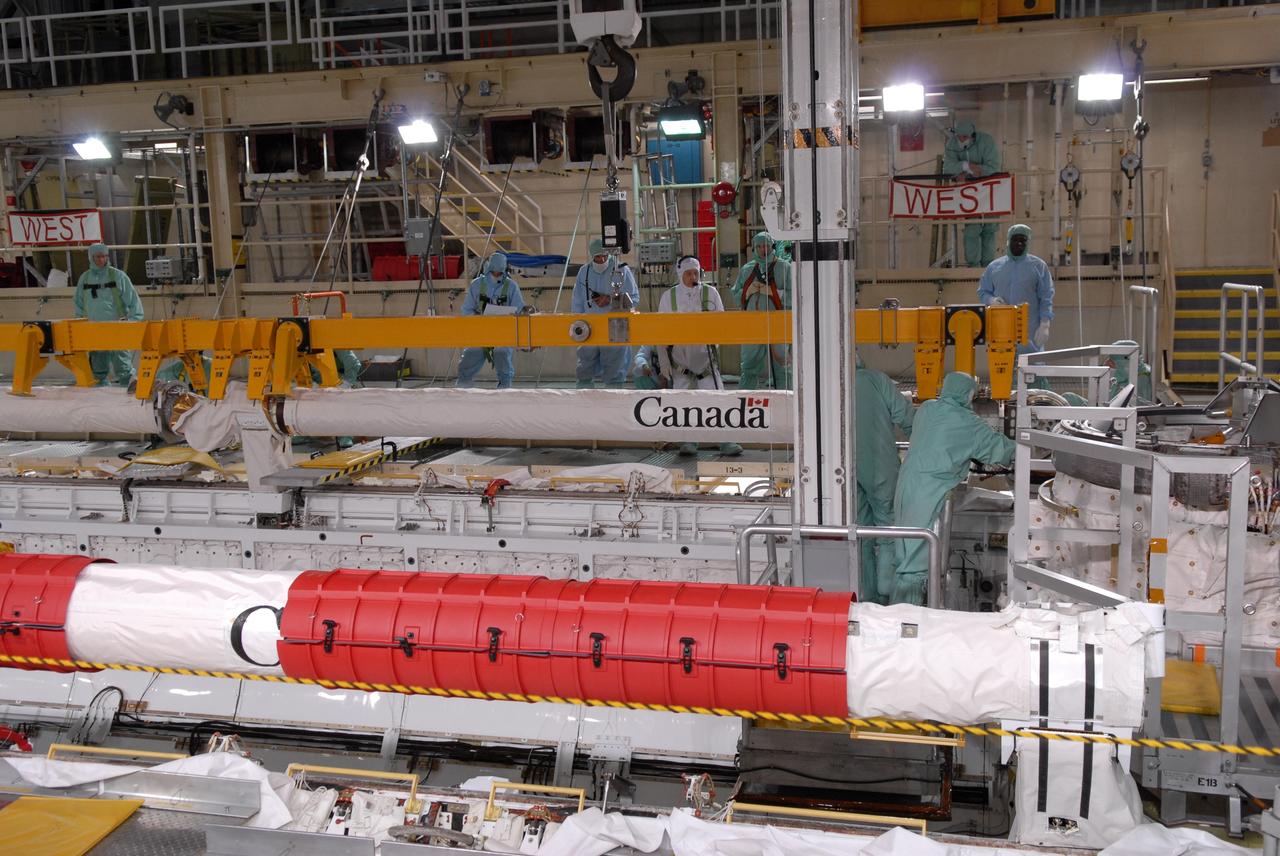
CAPE CANAVERAL, Fla. – In Orbiter Processing Facility bay 3 at NASA's Kennedy Space Center in Florida, technicians prepare to remove the remote manipulator system, or RMS, arm in the payload bay of space shuttle Discovery. The RMS is used to grab, or grapple, the payload as well as retrieve, repair and deploy satellites; provide a mobile extension ladder for spacewalking crewmembers; and be used as an inspection aid to allow flight crew members to view the orbiter’s or payload’s surfaces through a TV camera on the arm. Discovery is targeted to launch Aug. 6 on the STS-128 mission. Photo credit: NASA/Jack Pfaller
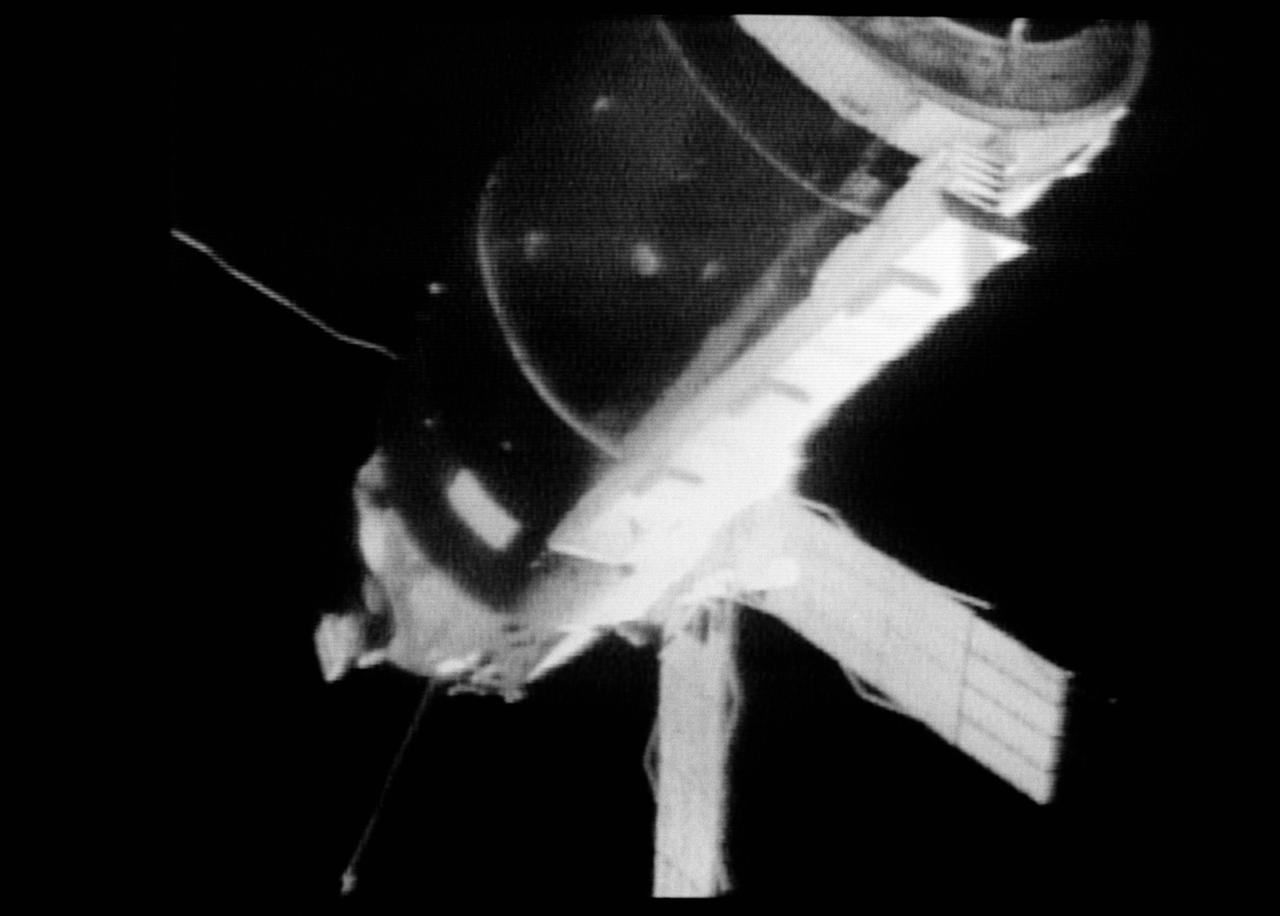
S73-27182 (25 May 1973) --- A close-up view of the Skylab 1 space station cluster can be seen in this reproduction taken from a color television transmission made by a TV camera aboard the Skylab 2 Command Module during its "fly around" inspection of the cluster. This view has been enhanced. At left center the damaged solar array system wing on the Orbital Workshop (OWS) appears to be partly folded. In their preliminary inspection the crewmen noted that portions of the micrometeoroid shield had slid back underneath the OWS solar wing. Solar panels on the Apollo Telescope Mount extend out at the top center. Photo credit: NASA
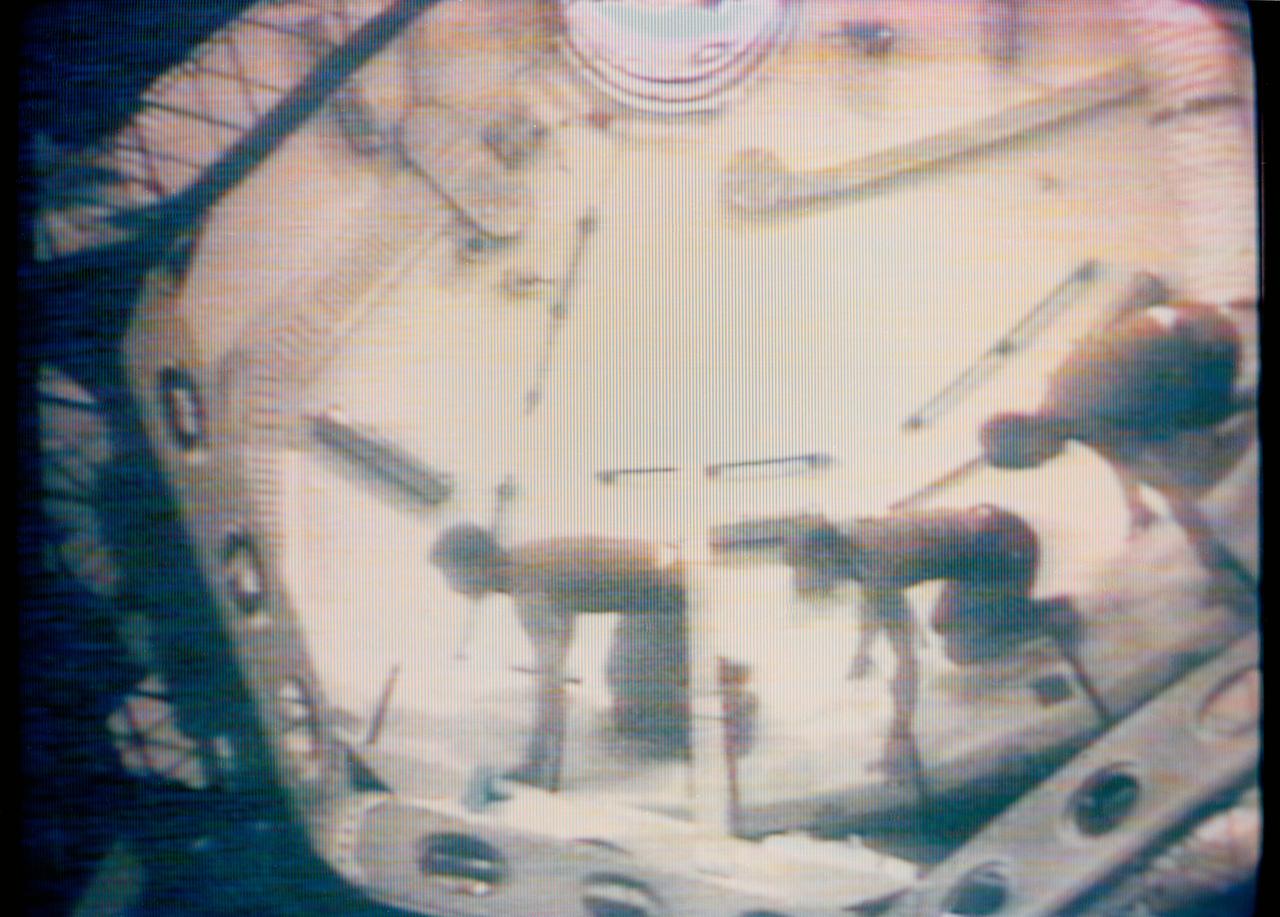
S73-27262 (1 June 1973) --- The three Skylab 2 crewmen give a demonstration on the effects of weightlessness in the Orbital Workshop of the Skylab 1 and 2 space station cluster in Earth orbit, as seen in this reproduction taken from a color television transmission made by a TV camera aboard the space station. Astronauts Charles Conrad Jr., Joseph P. Kerwin and Paul J. Weitz are crouched in a fast-start stance to race around the dome area of the OWS forward compartment. The astronauts had ease of motion and good maneuverability in the zero-gravity of space. Photo credit: NASA
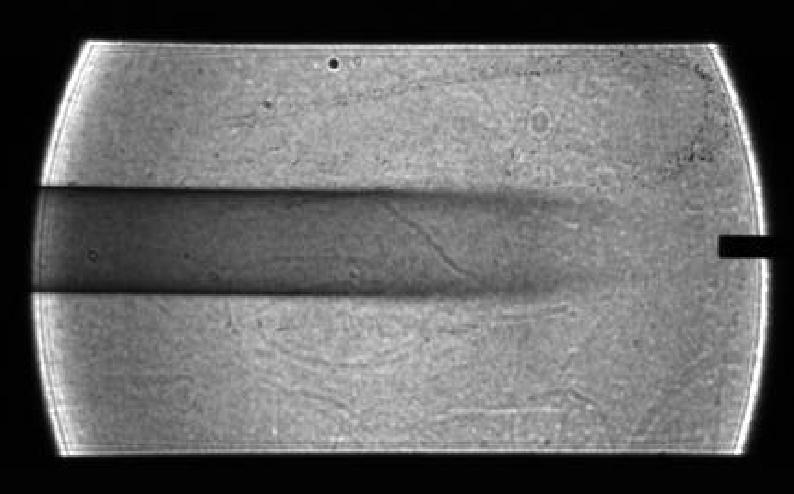
Image of soot (smoke) plume made for the Laminar Soot Processes (LSP) experiment during the Microgravity Sciences Lab-1 mission in 1997. LSP-2 will fly in the STS-107 Research 1 mission in 2002. The principal investigator is Dr. Gerard Faeth of the University of Michigan. LSP uses a small jet burner, similar to a classroom butane lighter, that produces flames up to 60 mm (2.3 in) long. Measurements include color TV cameras and a temperature sensor, and laser images whose darkness indicates the quantity of soot produced in the flame. Glenn Research in Cleveland, OH, manages the project.
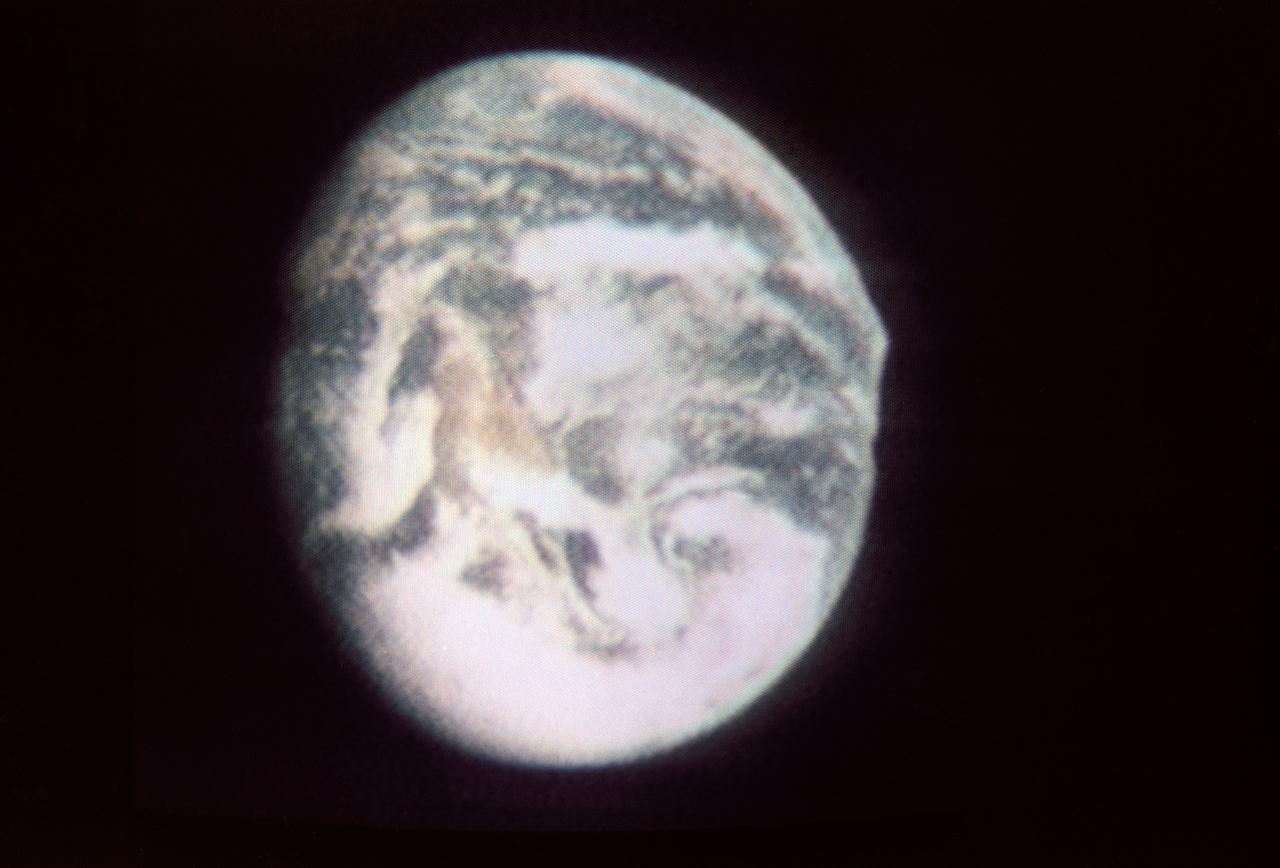
S69-33995 (18 May 1969) --- A cloud-covered Earth from about 12,800 nautical miles away is seen in this color reproduction taken from the second TV transmission made by the color television camera on board the Apollo 10 spacecraft. The United States and Mexico are located at right center. The more cloud-free area is the western and southwestern part of the U.S. and northern Mexico. Clouds cover the eastern half of the U.S. Aboard the Apollo 10 spacecraft on its trans-lunar course toward the moon were astronauts Thomas P. Stafford, commander; John W. Young, command module pilot; and Eugene A. Cernan, lunar module pilot.

S72-55298 (13 Dec. 1972) --- The two moon-exploring Apollo 17 crewmen are seen walking beside a large boulder during the third extravehicular activity (EVA) at the Taurus-Littrow landing site. They are scientist-astronaut Harrison H. Schmitt (in front), lunar module pilot; and astronaut Eugene A. Cernan, commander. This black and white reproduction was taken from a color television transmission made by the color RCA TV camera mounted on the Lunar Roving Vehicle. Astronaut Ronald E. Evans, command module pilot, remained with the Command and Service Modules in lunar orbit.
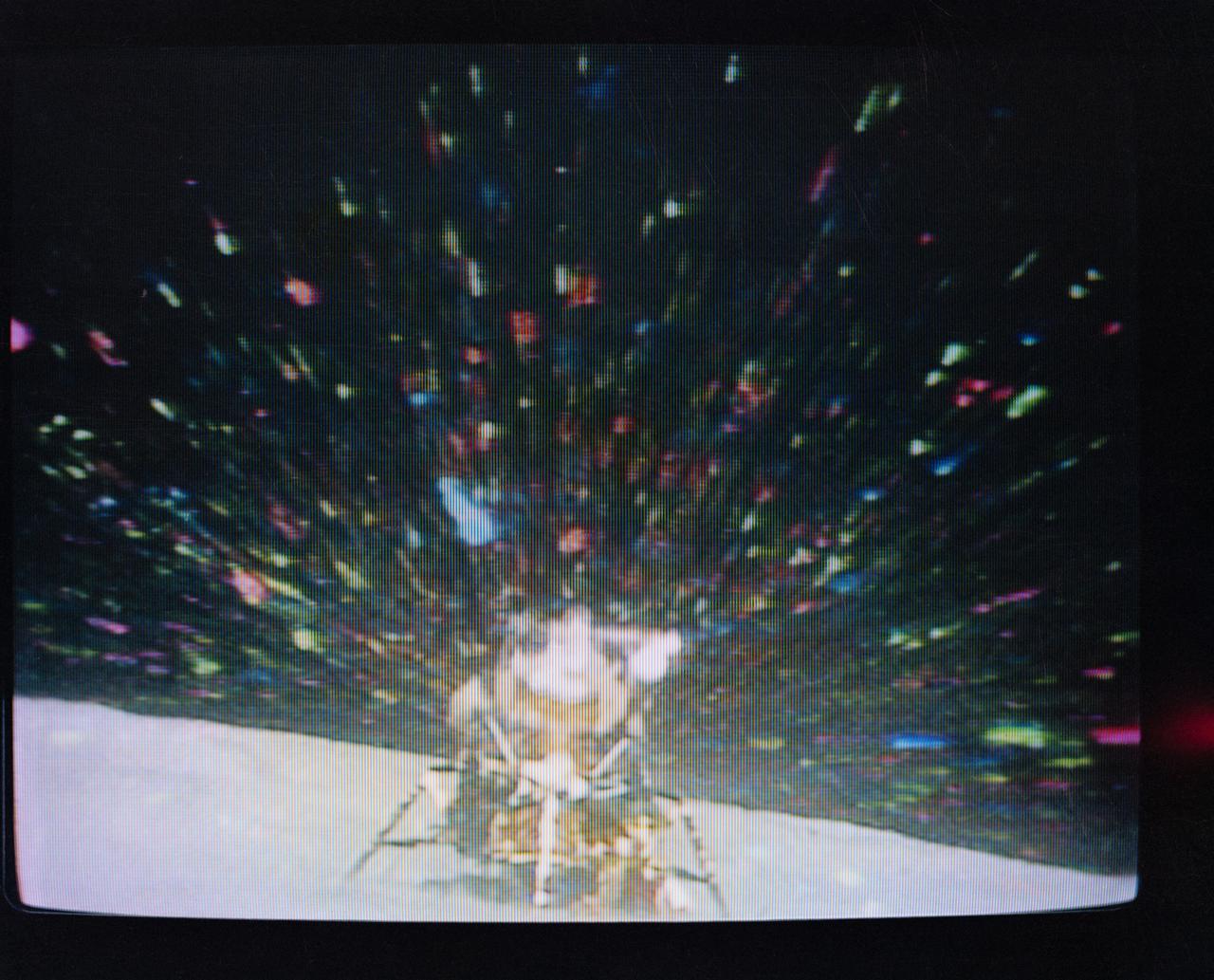
S72-35613 (22 April 1972) --- The Apollo 16 Lunar Module (LM) "Orion" in early lunar liftoff phase is featured in this lunar scene at the Descartes landing site. The still picture is a reproduction taken from a color television transmission made by a TV camera mounted on the Lunar Roving Vehicle (LRV). While astronauts John W. Young, commander; and Charles M. Duke Jr., lunar module pilot; descended in the Apollo 16 LM to explore the Descartes highlands landing site on the moon, astronaut Thomas K. Mattingly II, command module pilot, remained with the Command and Service Modules (CSM) "Casper" in lunar orbit.
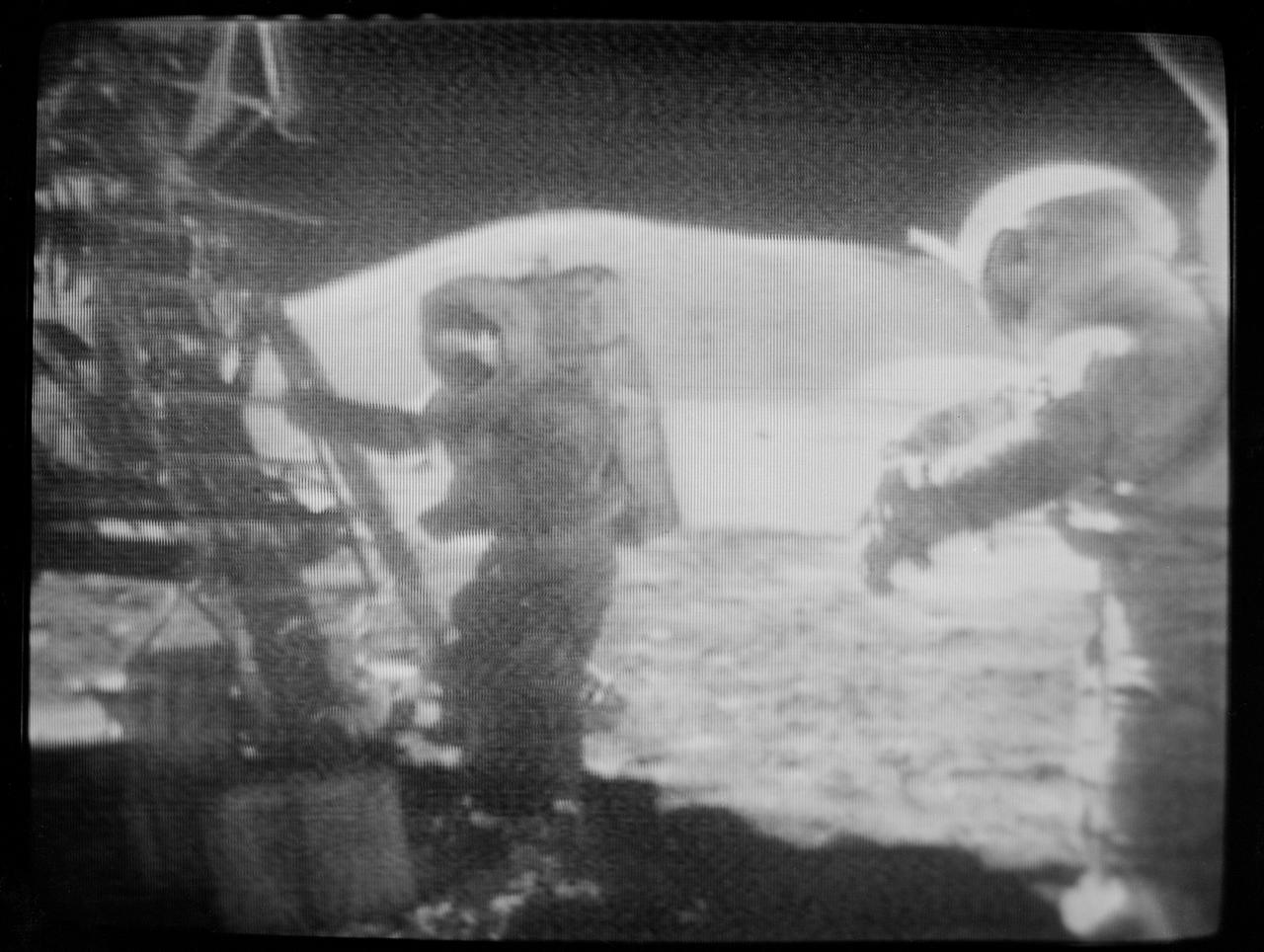
S72-55299 (13 Dec. 1972) --- Scientist-astronaut Harrison H. Schmitt, Apollo 17 lunar module pilot, starts back up the ladder of the Lunar Module "Challenger" at the close of the third extravehicular activity (EVA) at the Taurus-Littrow landing site, in this black and white reproduction taken from a color television transmission made by the color RCA TV camera mounted on the Lunar Roving Vehicle. On the right is astronaut Eugene A. Cernan, commander, who ingressed the LM a few minutes later. Astronaut Ronald E. Evans, command module pilot, remained with the Apollo 17 Command and Service Modules in lunar orbit.
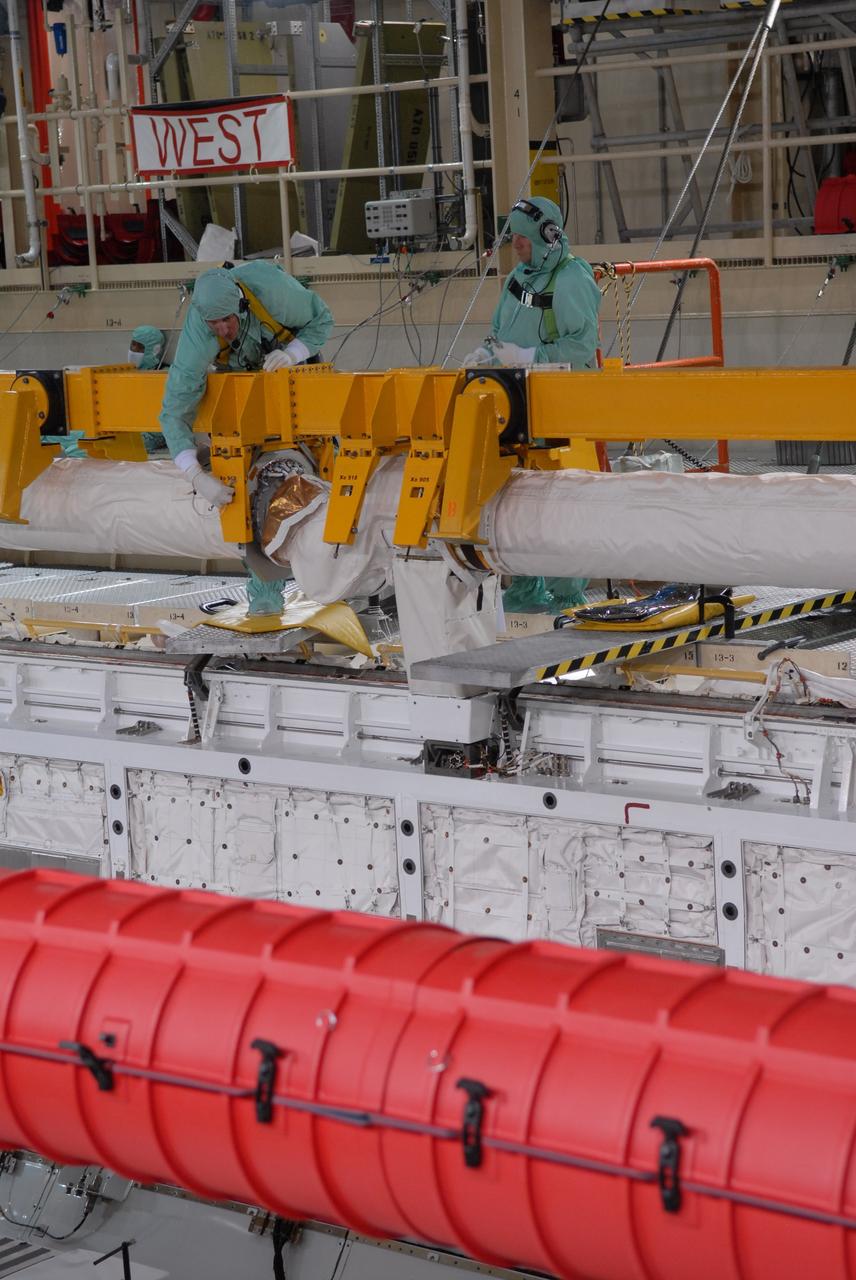
CAPE CANAVERAL, Fla. – In Orbiter Processing Facility bay 3 at NASA's Kennedy Space Center in Florida, technicians prepare to remove remote manipulator system, or RMS, arm in the payload bay of space shuttle Discovery. The RMS is used to grab, or grapple, the payload as well as retrieve, repair and deploy satellites; provide a mobile extension ladder for spacewalking crewmembers; and be used as an inspection aid to allow flight crew members to view the orbiter’s or payload’s surfaces through a TV camera on the arm. Discovery is targeted to launch Aug. 6 on the STS-128 mission. Photo credit: NASA/Jack Pfaller
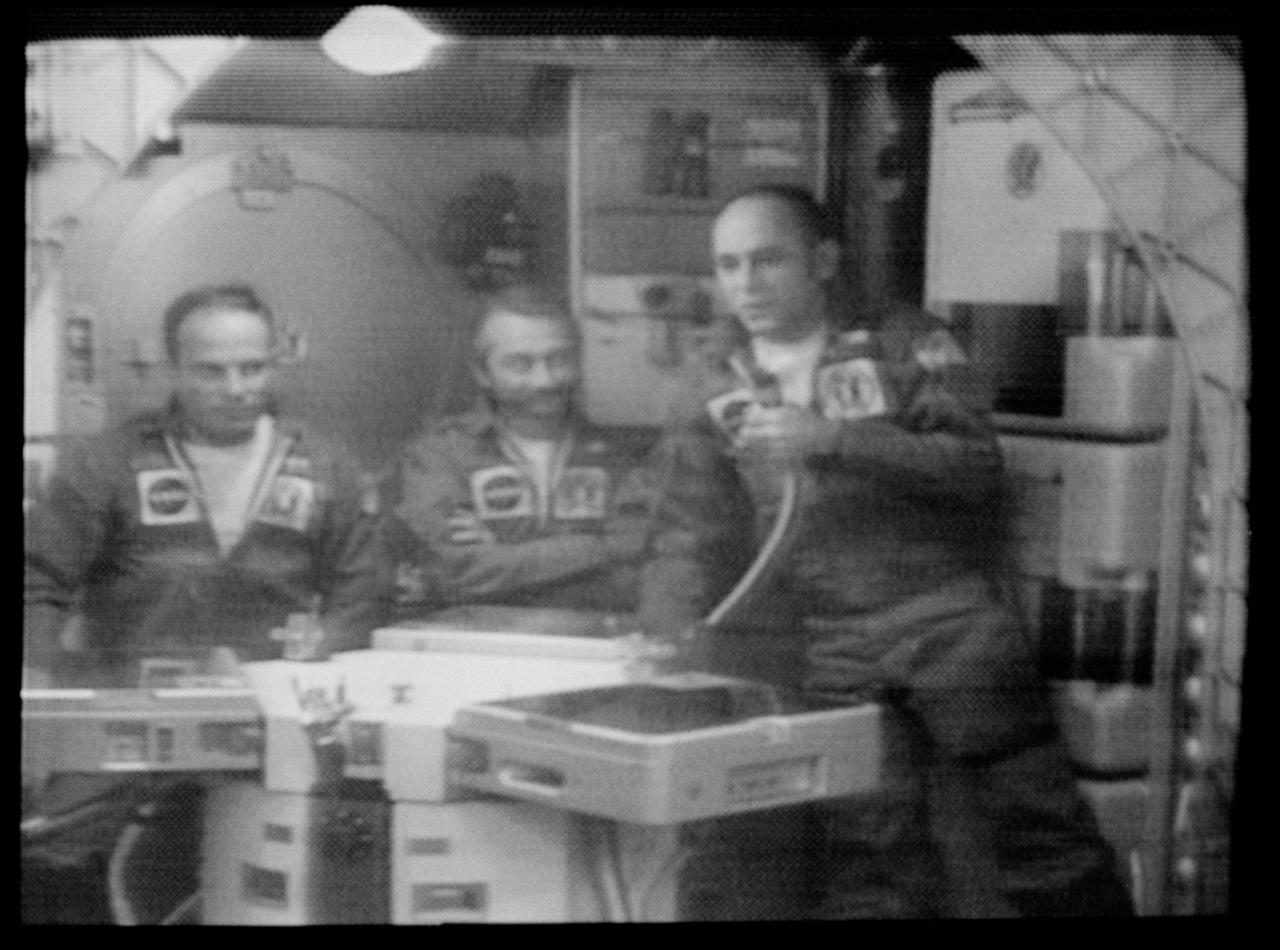
S73-34339 (21 Sept. 1973) --- Astronaut Alan L. Bean, right, Skylab 3 commander, answers a question during the Sept. 21, 1973 press conference from the Skylab space station in Earth orbit. This is a black and white reproduction taken from a television transmission made by a TV camera aboard the Skylab space station. Scientist-astronaut Owen K. Garriott, center, science pilot; and astronaut Jack R. Lousma, left, pilot, await queries from newsmen on the ground to be sent up by scientist-astronaut Story Musgrave, CAPCOM for this shift of Skylab 3. Photo credit: NASA
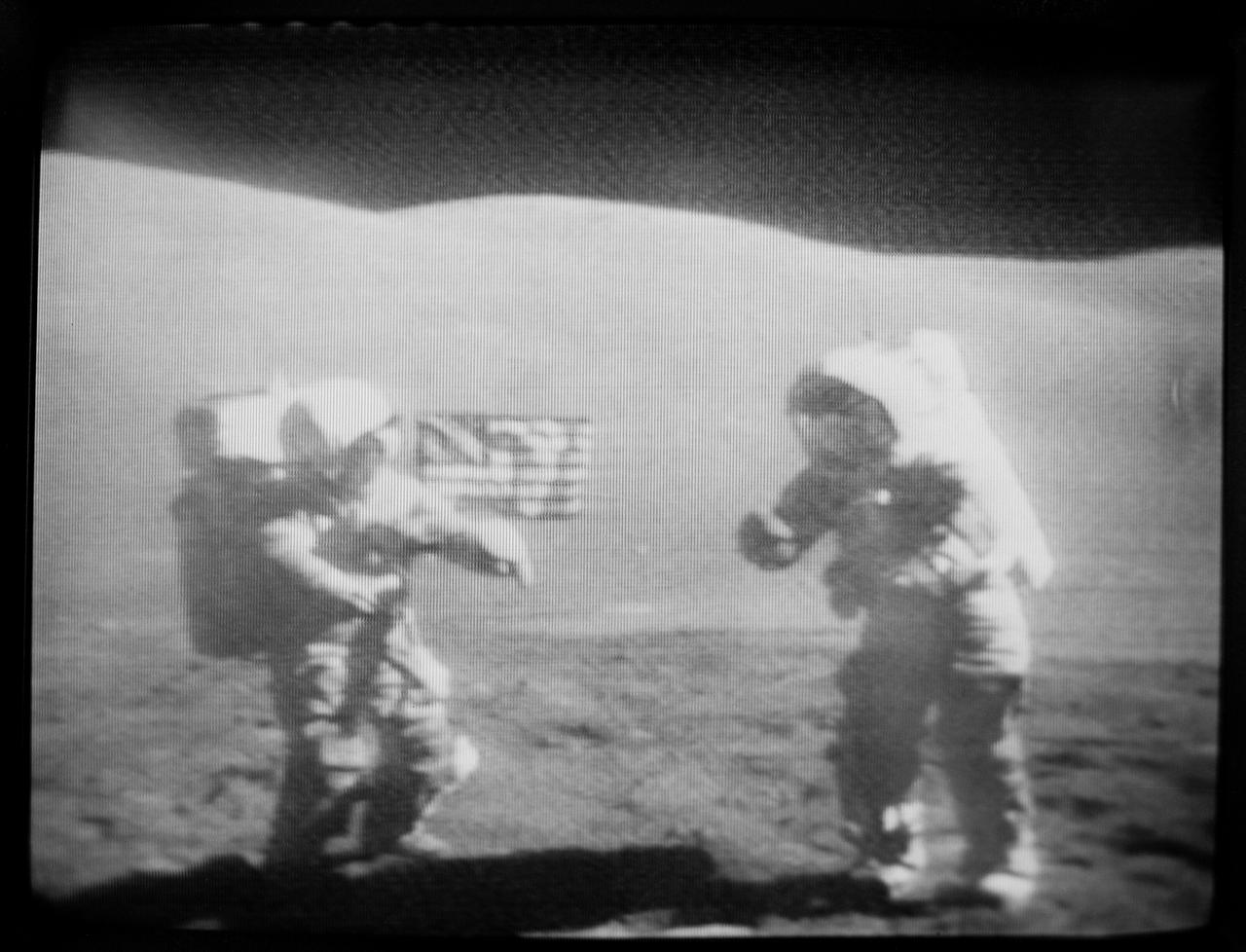
S72-55300 (13 Dec. 1972) --- The two moon-exploring Apollo 17 crewmen are seen standing near the deployed U.S. flag during the third extravehicular activity (EVA) at the Taurus-Littrow landing site, in this black and white reproduction made from a color television transmission made by the color RCA TV camera mounted on the Lunar Roving Vehicle. They are astronaut Eugene A. Cernan (on left), commander; and scientist-astronaut Harrison H. Schmitt, lunar module pilot. Astronaut Ronald E. Evans, command module pilot, remained with the Apollo 17 Command and Service Modules in lunar orbit.
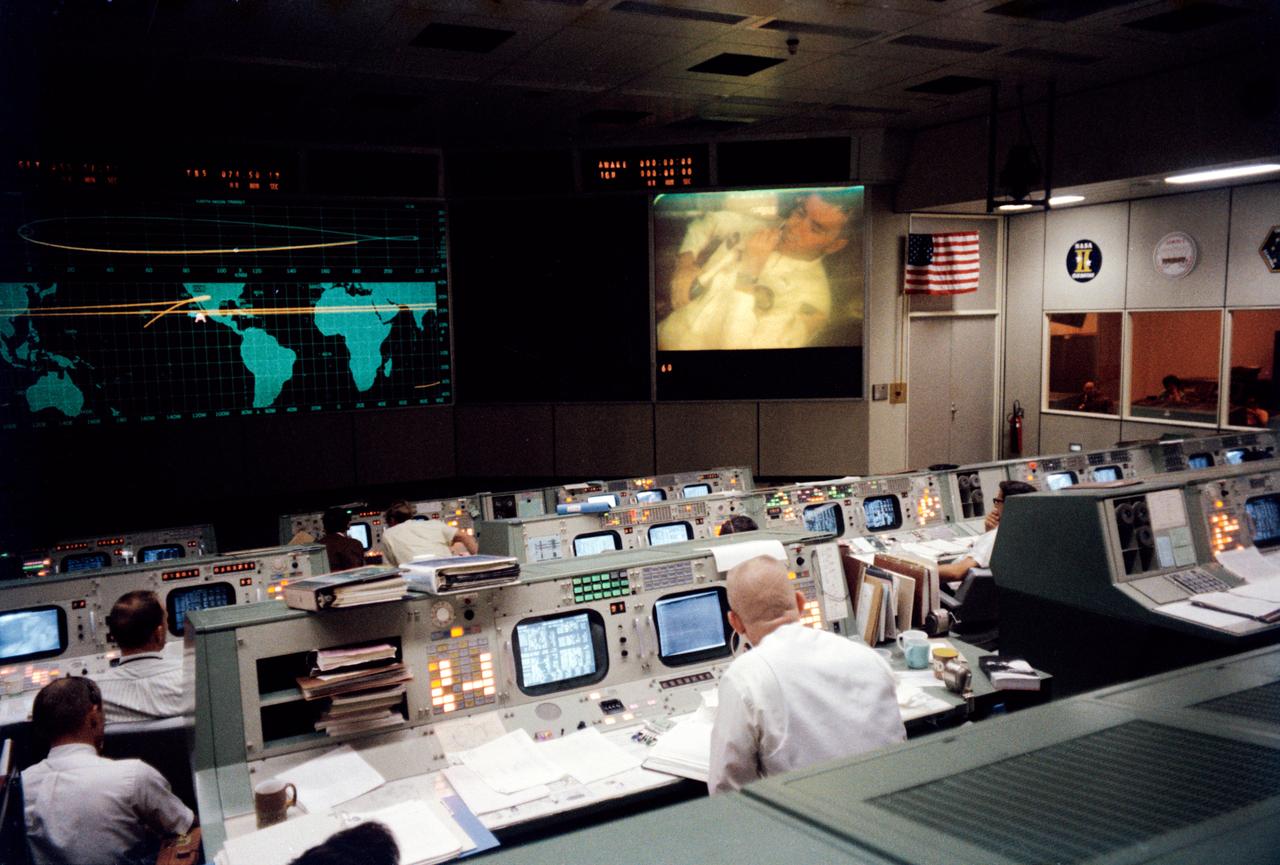
S70-35139 (13 April 1970) --- Overall view of the Mission Operations Control Room (MOCR) in the Mission Control Center (MCC) at Manned Spacecraft Center (MSC), during the fourth television transmission from the Apollo 13 mission in space. Eugene F. Kranz (foreground, back to camera), one of four Apollo 13 flight directors, views the large screen at front of MOCR, astronaut Fred W. Haise Jr., lunar module pilot, is seen on the screen. The fourth TV transmission from the Apollo 13 mission was on the evening of April 13, 1970.
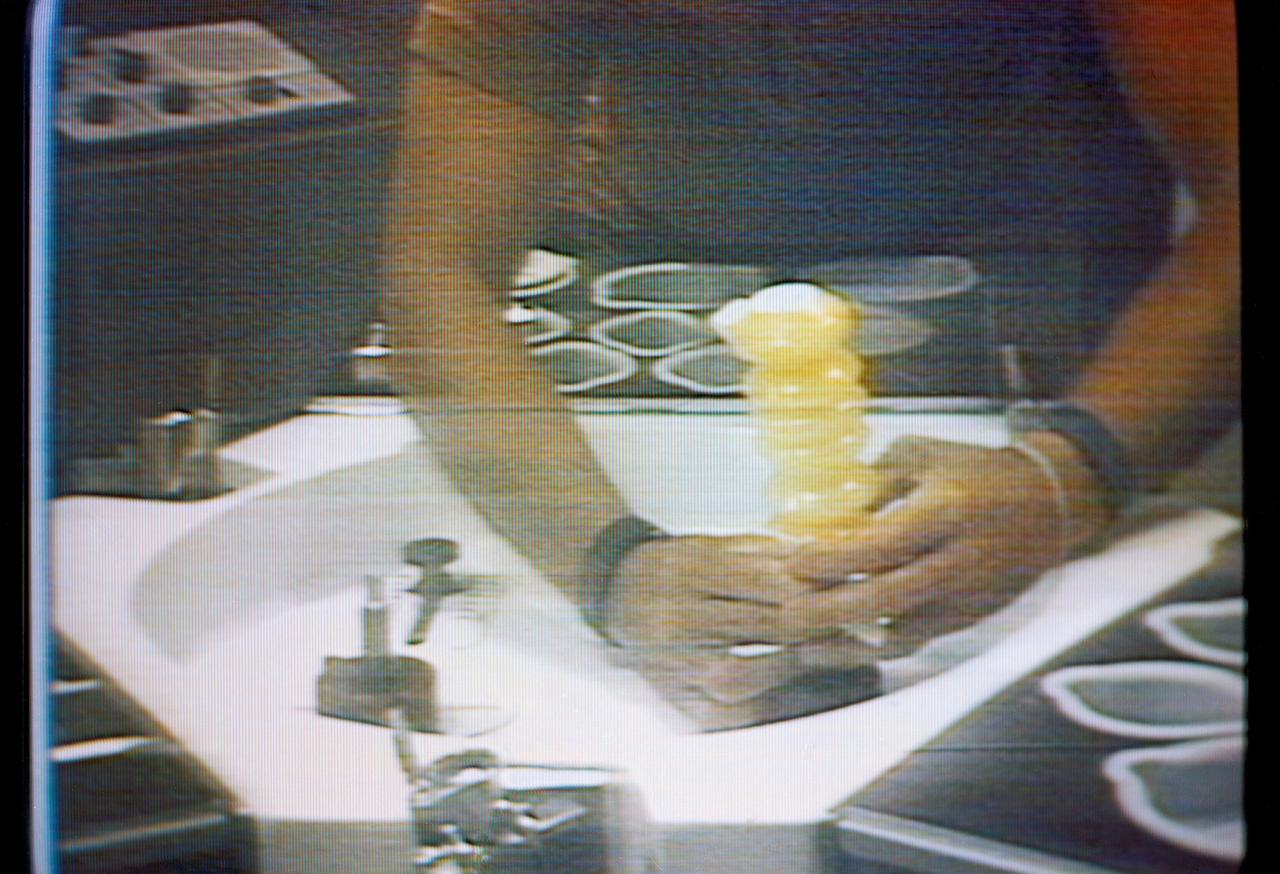
S73-27078 (30 May 1973) --- An accordian-style beverage dispenser filled with orange juice is held by astronaut Charles Conrad Jr., Skylab 2 commander, in this close-up view which is a reproduction taken from a color television transmission made by a TV camera aboard the Skylab 1 & 2 space station cluster in Earth orbit. Conrad (head and face not in view) is seated at the wardroom table in the crew quarters of the Orbital Workshop. The dispenser contained beverage crystals, and Conrad has just added the prescribed amount of water to make the orange drink. Photo credit: NASA
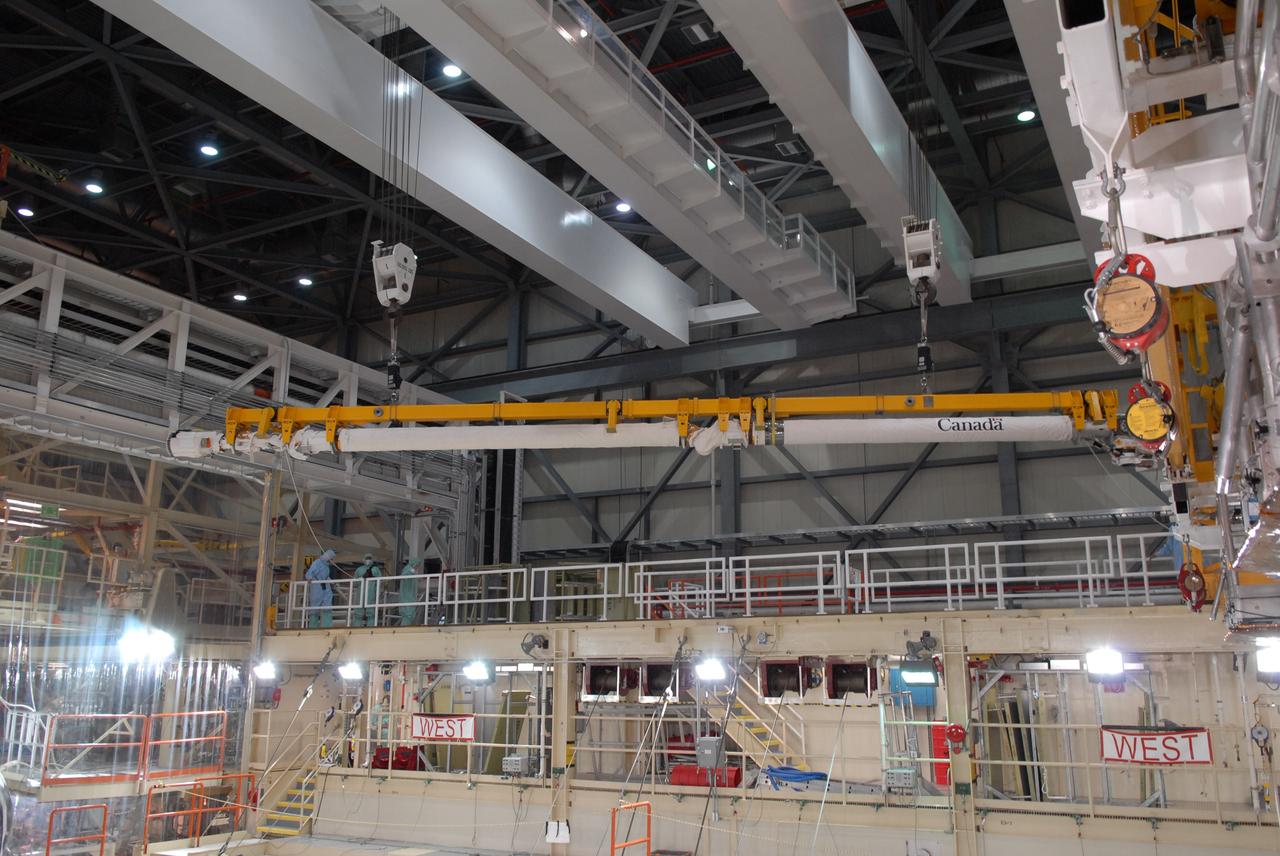
CAPE CANAVERAL, Fla. – In Orbiter Processing Facility bay 3 at NASA's Kennedy Space Center in Florida, the remote manipulator system, or RMS, arm is lifted away from space shuttle Discovery's payload bay. The RMS is used to grab, or grapple, the payload as well as retrieve, repair and deploy satellites; provide a mobile extension ladder for spacewalking crewmembers; and be used as an inspection aid to allow flight crew members to view the orbiter’s or payload’s surfaces through a TV camera on the arm. Discovery is targeted to launch Aug. 6 on the STS-128 mission. Photo credit: NASA/Jack Pfaller
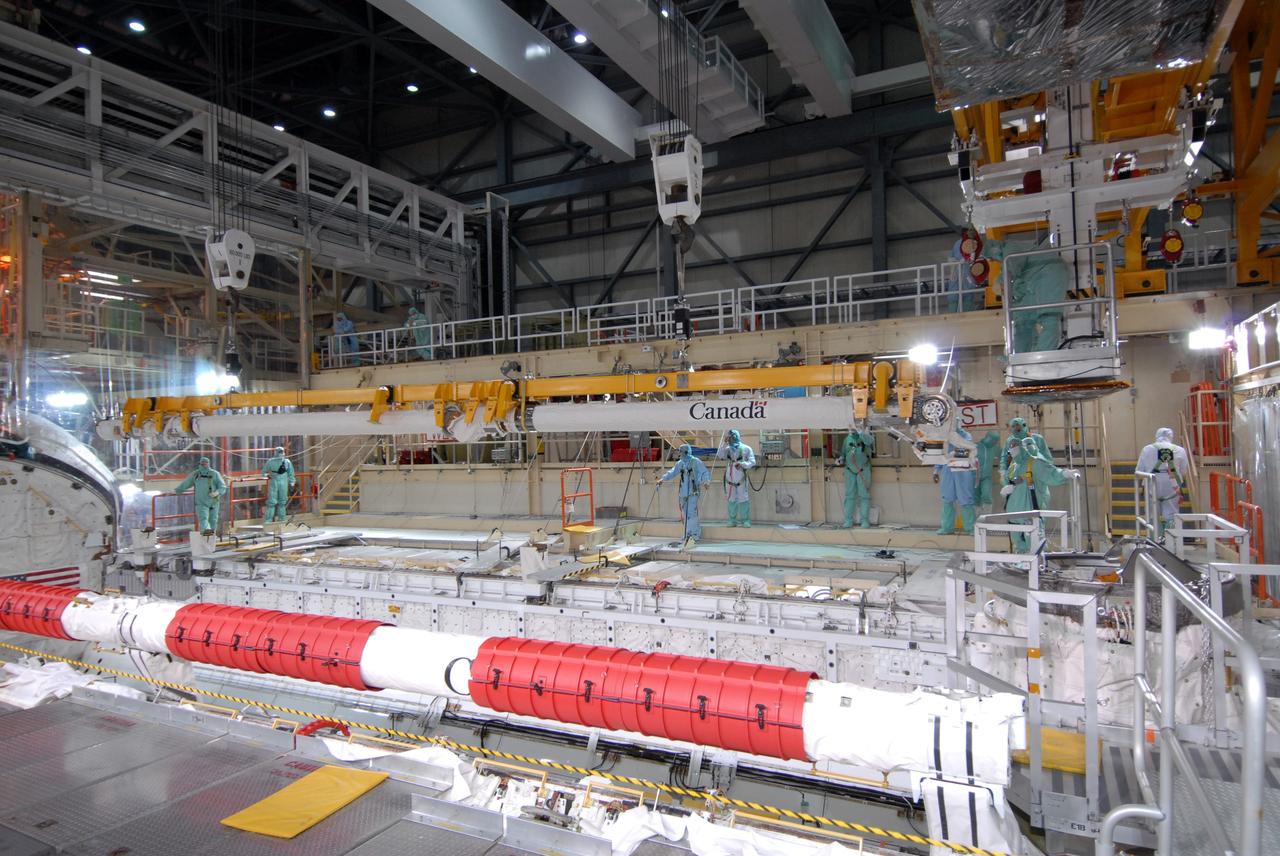
CAPE CANAVERAL, Fla. – In Orbiter Processing Facility bay 3 at NASA's Kennedy Space Center in Florida, the remote manipulator system, or RMS, arm is moved out of the payload bay of space shuttle Discovery. The RMS is used to grab, or grapple, the payload as well as retrieve, repair and deploy satellites; provide a mobile extension ladder for spacewalking crewmembers; and be used as an inspection aid to allow flight crew members to view the orbiter’s or payload’s surfaces through a TV camera on the arm. Discovery is targeted to launch Aug. 6 on the STS-128 mission. Photo credit: NASA/Jack Pfaller
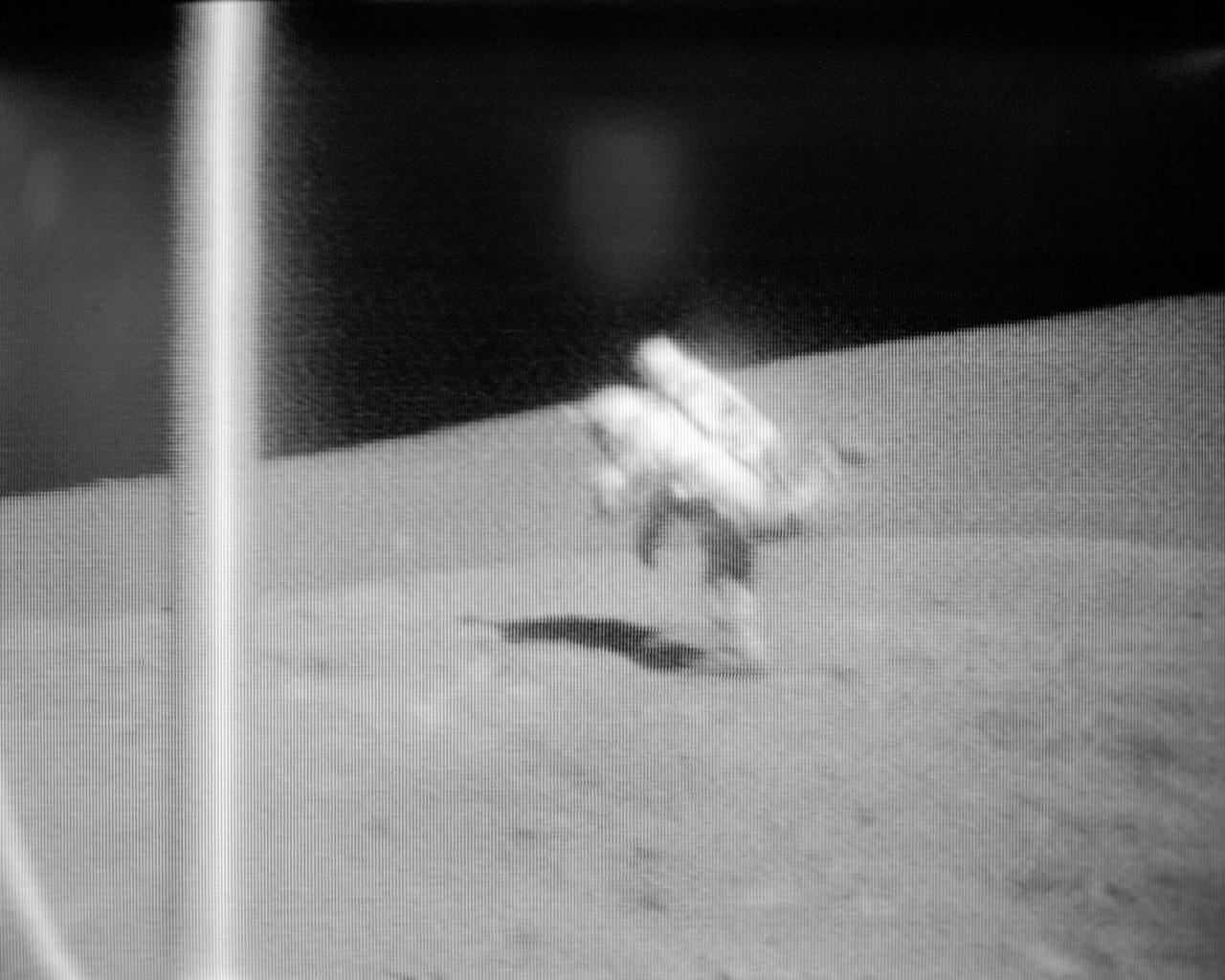
S72-55166 (12 Dec. 1972) --- Scientist-astronaut Harrison H. Schmitt loses his balance and heads for a fall during the second Apollo 17 extravehicular activity (EVA) at the Taurus-Littrow landing site, as seen in this black and white reproduction taken from a color television transmission made by the color RCA TV camera mounted on the Lunar Roving Vehicle. Schmitt is lunar module pilot of the Apollo 17 lunar landing mission. Astronaut Ronald E. Evans, command module pilot, remained with Apollo 17 Command and Service Modules in lunar orbit while astronauts Schmitt and Eugene A. Cernan, commander, descended in the Lunar Module "Challenger" to explore the moon.
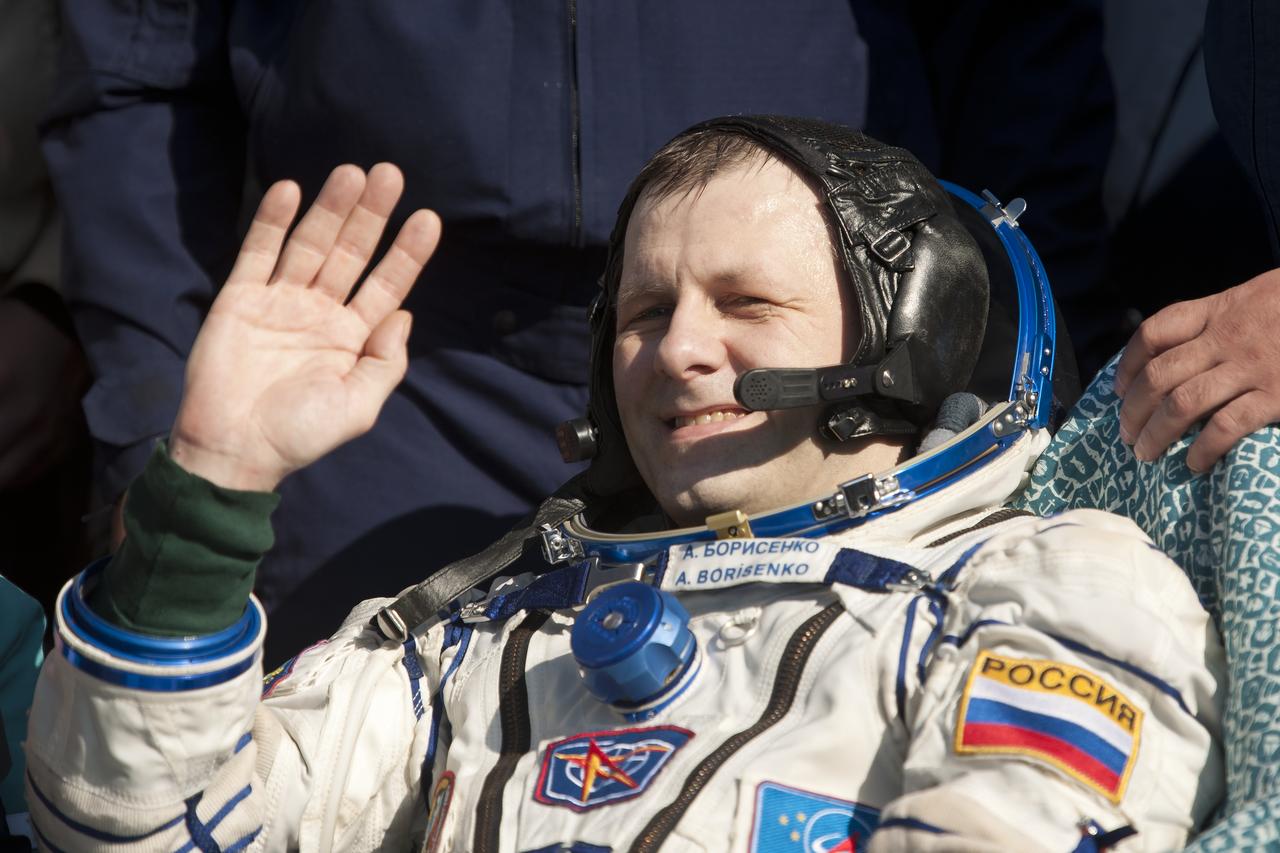
Expedition 28 Commander Andrey Borisenko waves hello to the TV cameras outside the Soyuz TMA-21 Capsule just minutes after he and Expedition 28 Flight Engineers Alexander Samokutyaev, and Ron Garan landed in a remote area outside the town of Zhezkazgan, Kazakhstan, on Friday, Sept. 16, 2011. NASA Astronaut Garan, Russian Cosmonauts Borisenko and Samokutyaev are returning from more than five months onboard the International Space Station where they served as members of the Expedition 27 and 28 crews. Photo Credit: (NASA/Bill Ingalls)

ISS041E074402 (10/15/2014) --- The mirror like visor of US Astronaut Reid Wiseman reflects US Astronaut Barry Wilmore during their spacewalk Oct. 15, 2014 outside the International Space Station. Both Flight Engineers are in the process of making repairs which include removing and replacing a power regulator known as a sequential shunt unit, which failed back in mid-May. The two spacewalkers also moved TV and camera equipment in preparation for the relocation of the Leonardo Permanent Multipurpose Module to accommodate the installation of new docking adapters for future commercial crew vehicles.
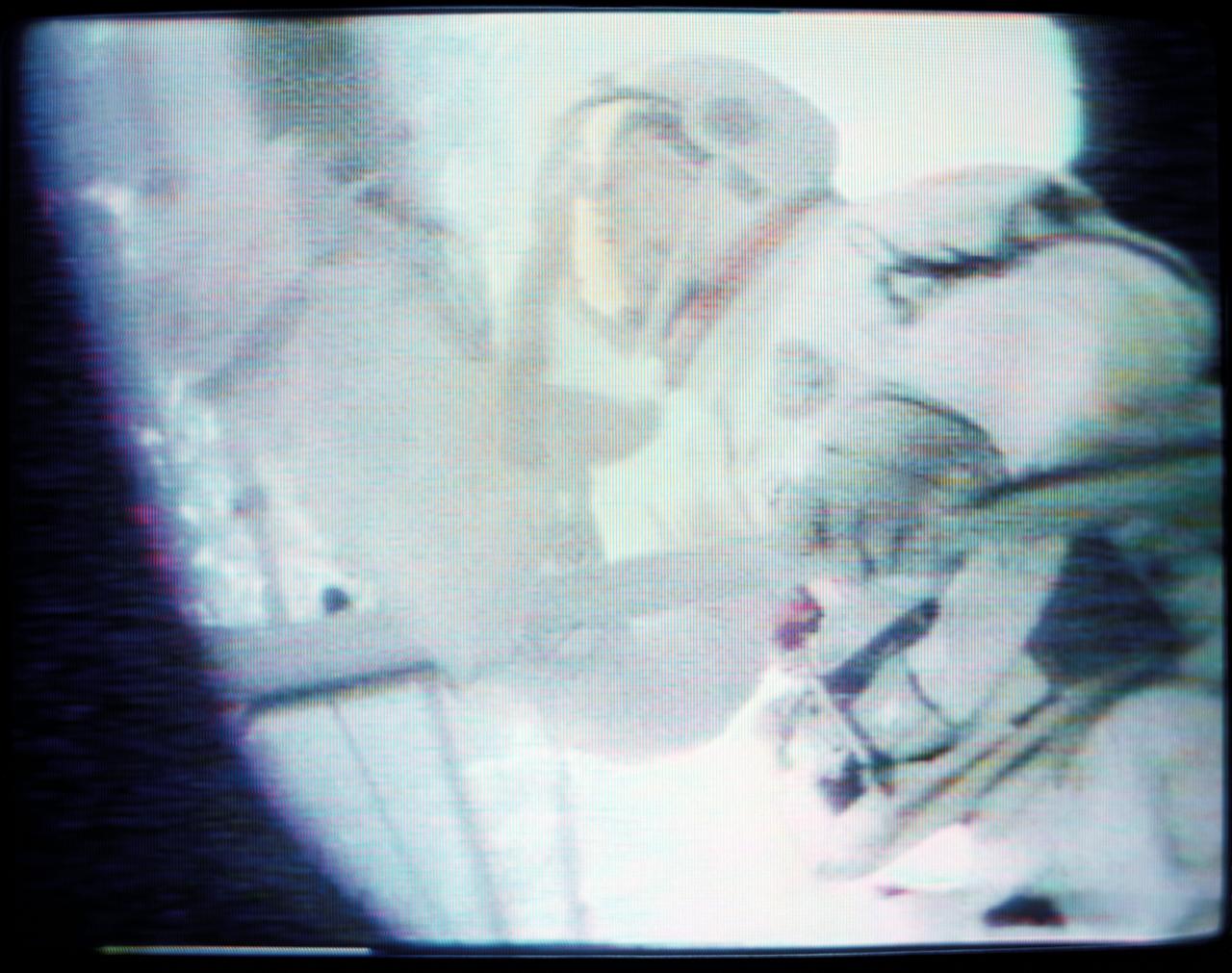
S73-27562 (June 1973) --- Scientist-astronaut Joseph P. Kerwin, Skylab 2 science pilot, performs extravehicular activity (EVA) at the Skylab 1 and 2 space station cluster in Earth orbit, as seen in this reproduction taken from a color television transmission made by a TV camera aboard the station. Kerwin is just outside the Airlock Module. Kerwin assisted astronaut Charles Conrad Jr., Skylab 2 commander, during the successful EVA attempt to free the stuck solar array system wing on the Orbital Workshop. Photo credit: NASA
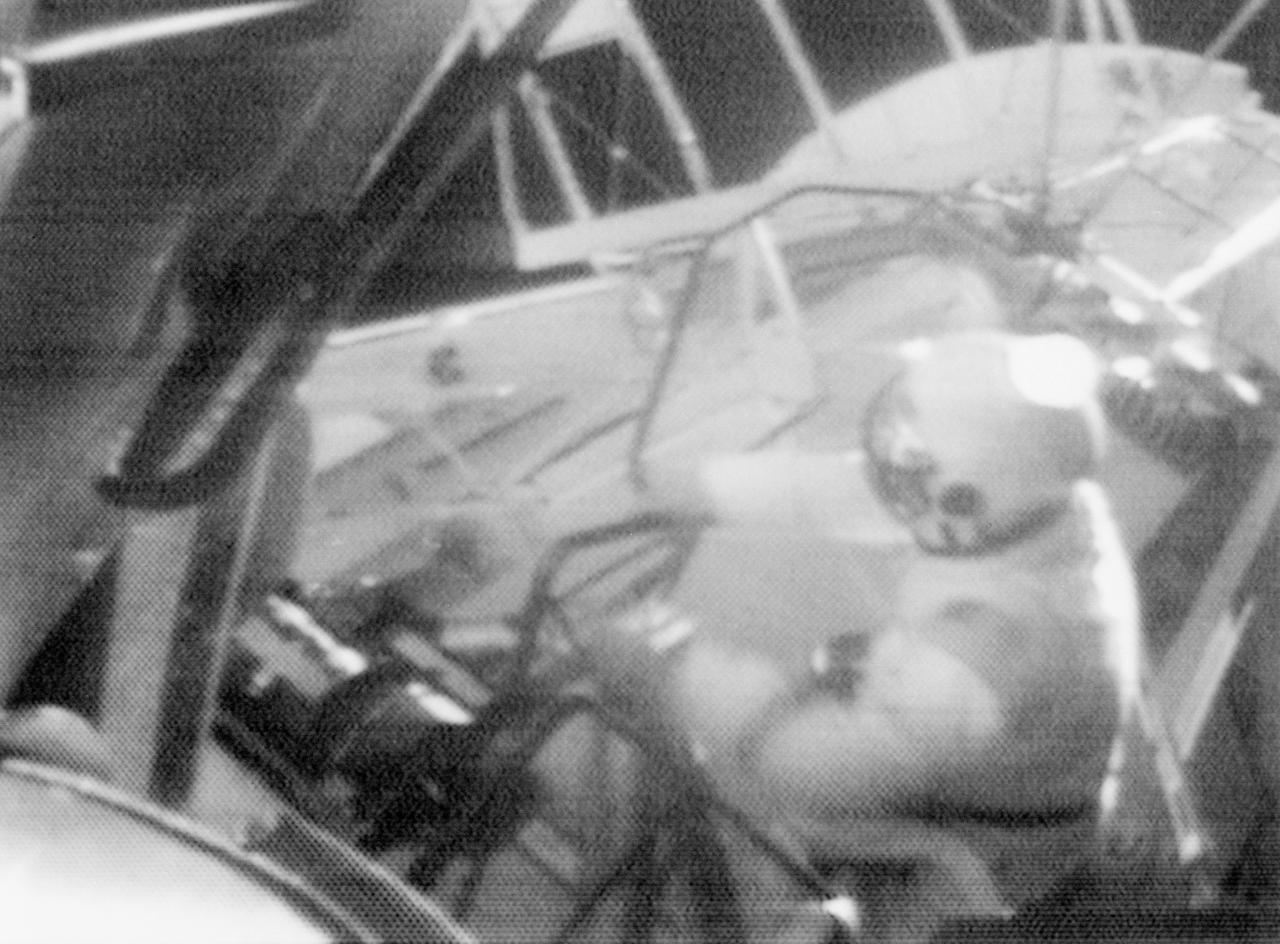
S73-33161 (24 Aug. 1973) --- Astronaut Jack R. Lousma, Skylab 3 pilot, hooks up a 23-foot, two-inch connecting cable for the rate gyro six pack during extravehicular activity (EVA) on Aug. 24, 1973, as seen in this photographic reproduction taken from a color television transmission made by a TV camera aboard the Skylab space station in Earth orbit. The rate gyros were mounted inside the Multiple Docking Adapter opposite the Apollo Telescope Mount control and display console. Photo credit: NASA

S72-55066 (11 Dec. 1972) --- Scientist-astronaut Harrison H. Schmitt chips samples from a large boulder during the first Apollo 17 extravehicular activity (EVA) at the Taurus-Littrow landing site, in this black and white reproduction taken from a color television transmission made by the color RCA TV camera mounted on the Lunar Roving Vehicle. Schmitt is the lunar module pilot of the Apollo 17 lunar landing mission. Astronaut Ronald E. Evans, command module pilot, remained with the Apollo 17 Command and Service Modules in lunar orbit while astronauts Schmitt and Eugene A. Cernan, commander, descended in the Lunar Module to explore the moon.
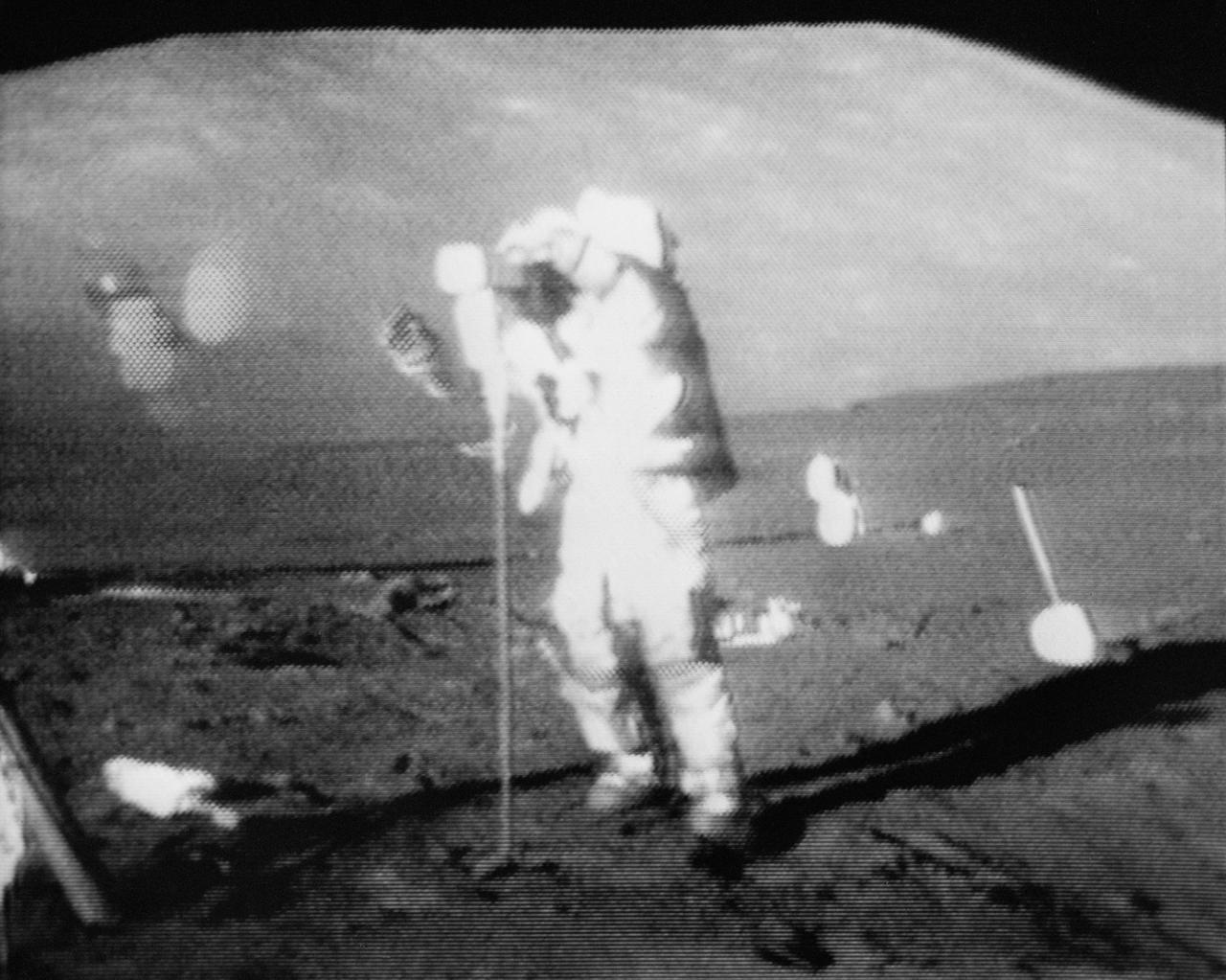
S72-55064 (11 Dec. 1972) --- Astronaut Eugene A. Cernan operates the Apollo Lunar Surface Drill during the first Apollo 17 extravehicular activity (EVA) at the Taurus-Littrow landing site, in this black and white reproduction taken from a color television transmission made by the RCA color TV camera mounted on the Lunar Roving Vehicle. Cernan is the commander of the Apollo 17 lunar landing mission. Astronaut Ronald E. Evans, command module pilot, remained with the Apollo 17 Command and Service Modules in lunar orbit while astronaut Cernan and scientist-astronaut Harrison H. Schmitt, lunar module pilot, descended in the Lunar Module to explore the moon.