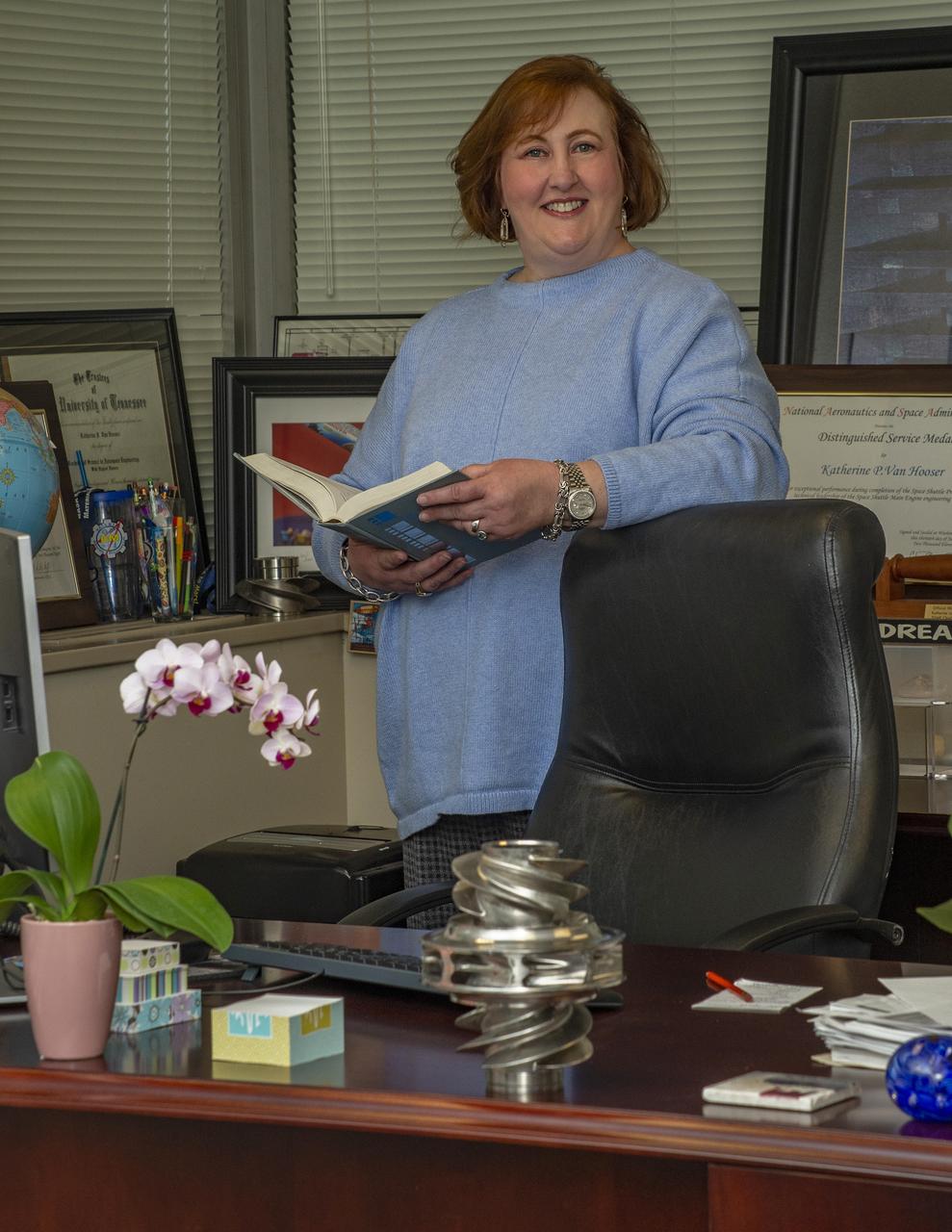
Katherine Van Hooser, MSFC Chief Engineer, in her office, for Marshall Star “Take 5” series.

JSC2014-E-079812 (5 Sept. 2014) --- Accompanied by his wife and daughters at the Gagarin Cosmonaut Training Center in Star City, Russia, Expedition 41 Flight Engineer Barry Wilmore of NASA takes a walk through the Gagarin Museum Sept. 5. Wilmore, Alexander Samokutyaev of the Russian Federal Space Agency (Roscosmos) and Elena Serova of Roscosmos are scheduled to launch from the Baikonur Cosmodrome in Kazakhstan on Sept. 26, Kazakh time, in their Soyuz TMA-14M spacecraft for a 5 ? month mission on the International Space Station. Serova will become the fourth Russian woman to fly in space and the first Russian woman to conduct a long duration mission on the station. Photo credit: NASA/Stephanie Stoll
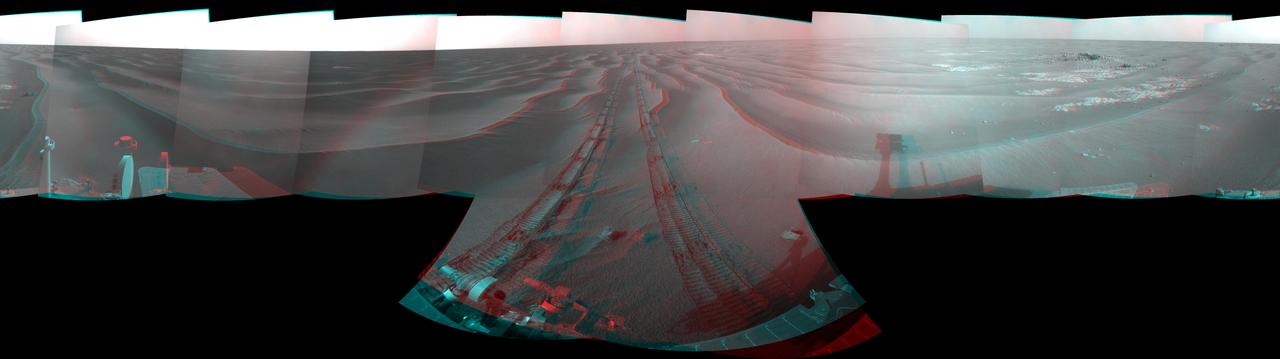
NASA Mars Exploration Rover Opportunity used its navigation camera to take the images combined into this stereo 180-degree view on March 5, 2009. 3D glasses are necessary to view this image.
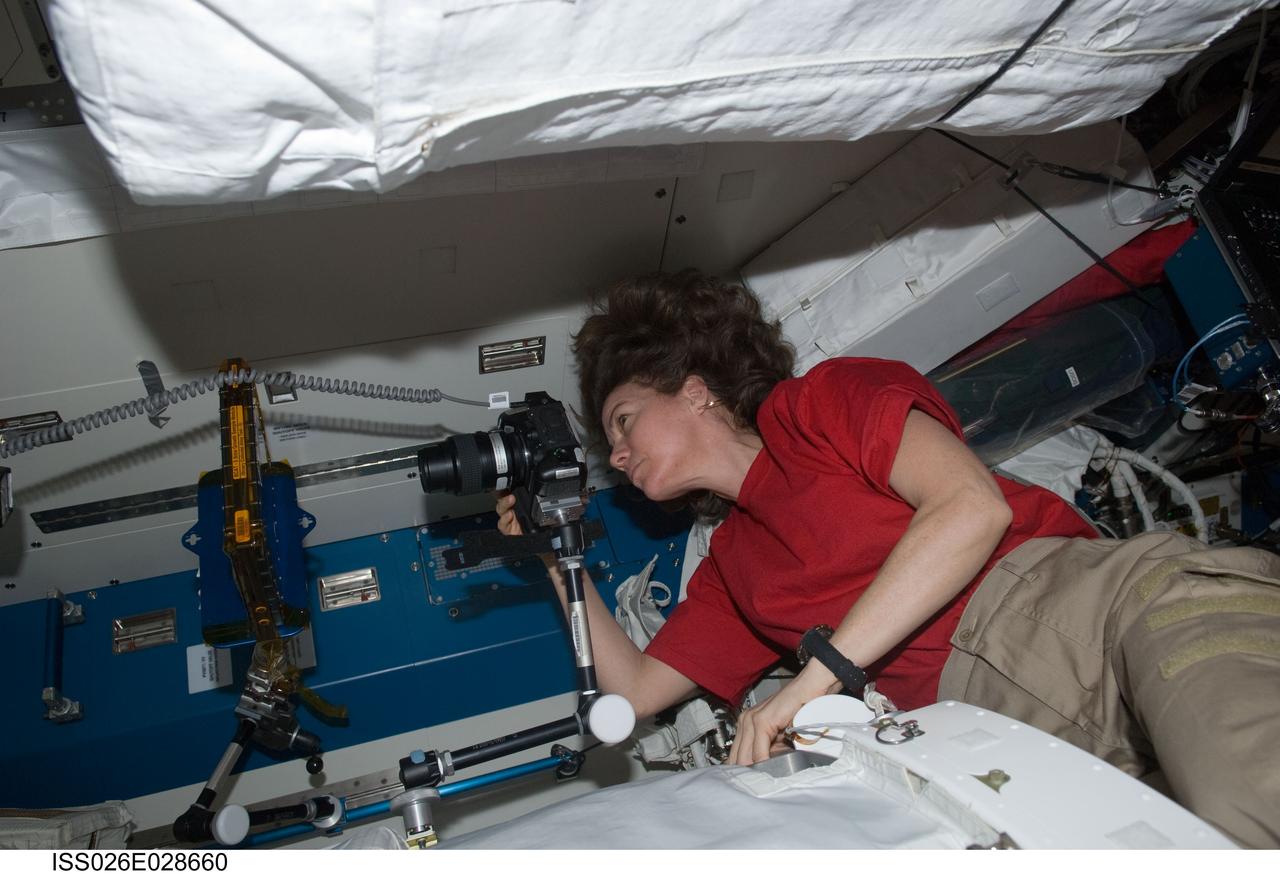
ISS026-E-028660 (23 Feb. 2011) --- NASA astronaut Catherine (Cady) Coleman, Expedition 26 flight engineer, uses a digital still camera to photograph the Binary Colloidal Alloy Test-5 (BCAT-5) payload setup in the Kibo laboratory of the International Space Station.
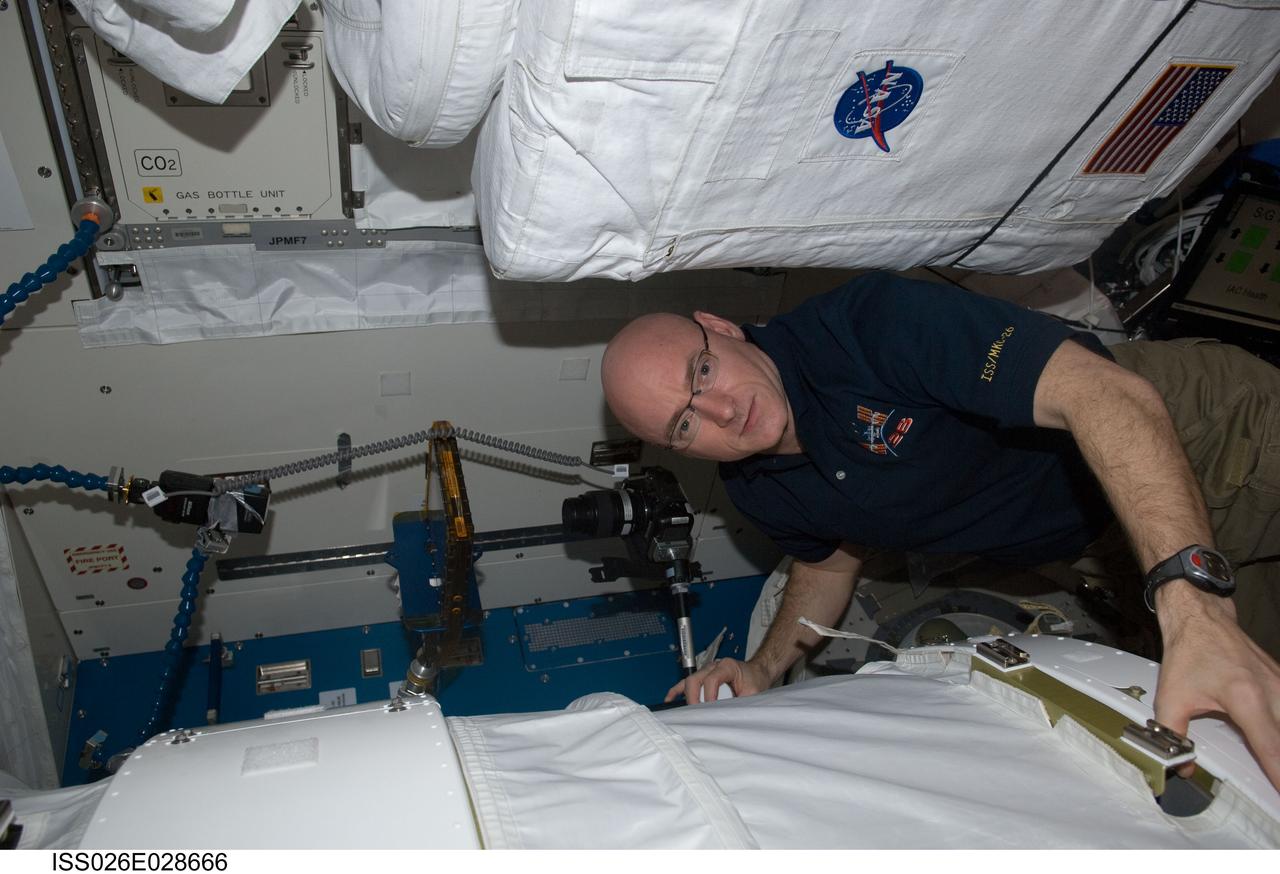
ISS026-E-028666 (23 Feb. 2011) --- NASA astronaut Scott Kelly, Expedition 26 commander, uses a digital still camera to photograph the Binary Colloidal Alloy Test-5 (BCAT-5) payload setup in the Kibo laboratory of the International Space Station.
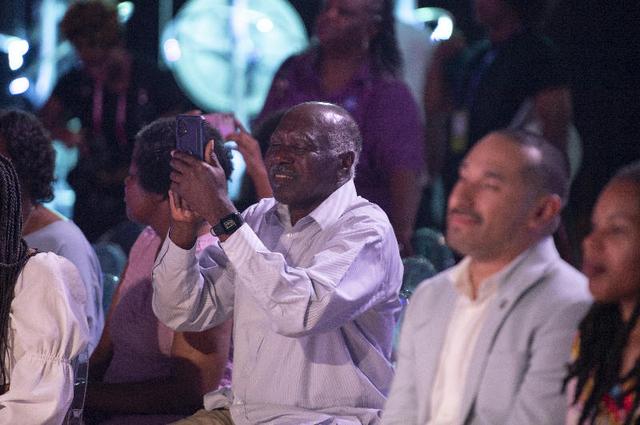
An audience member takes a photo as NASA representatives participate in a Take Up Space (Literally) panel conversation during the 30th annual ESSENCE Fest in New Orleans on July 5.
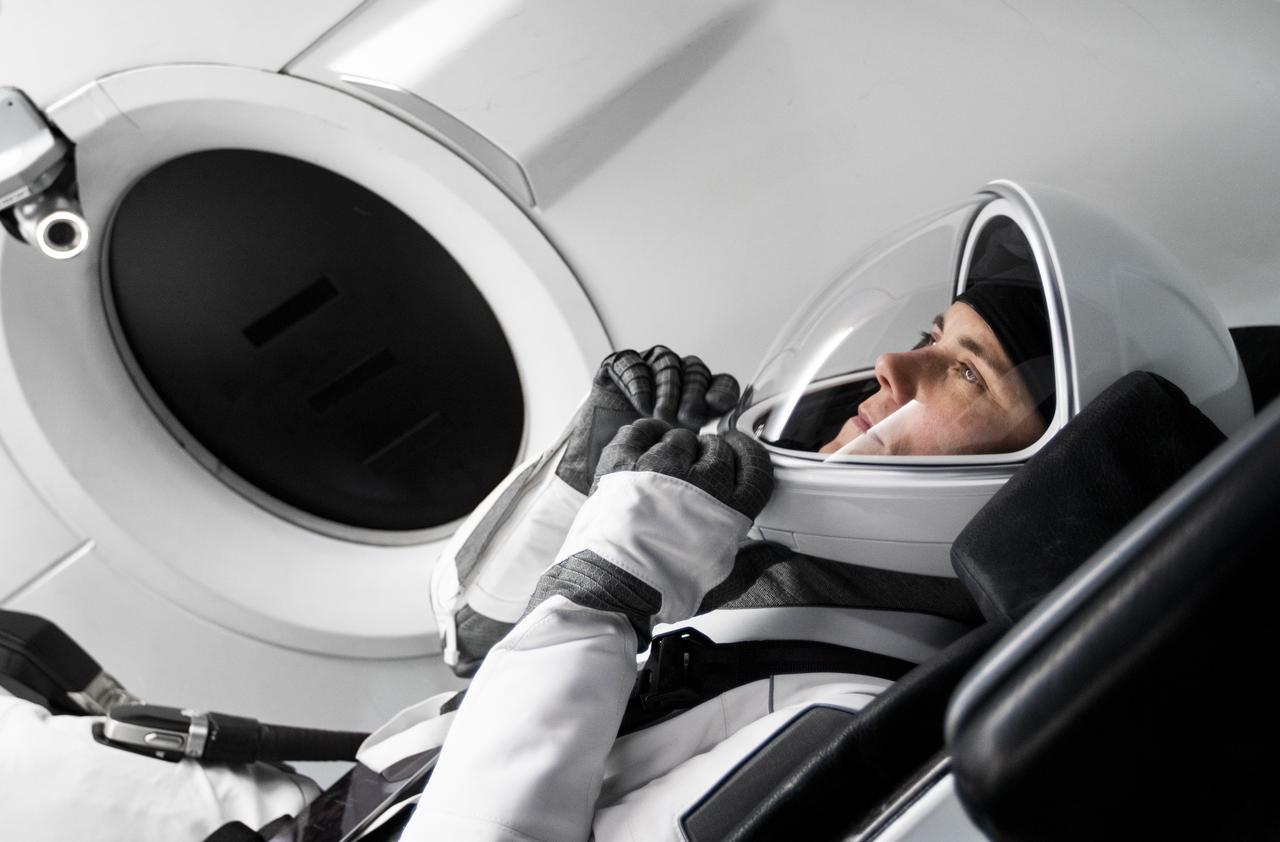
Cosmonaut Anna Kikina sits in a mockup of the spacecraft that will take NASA's SpaceX Crew-5 mission to the International Space Station during a training at SpaceX in Hawthorne, Claifornia.
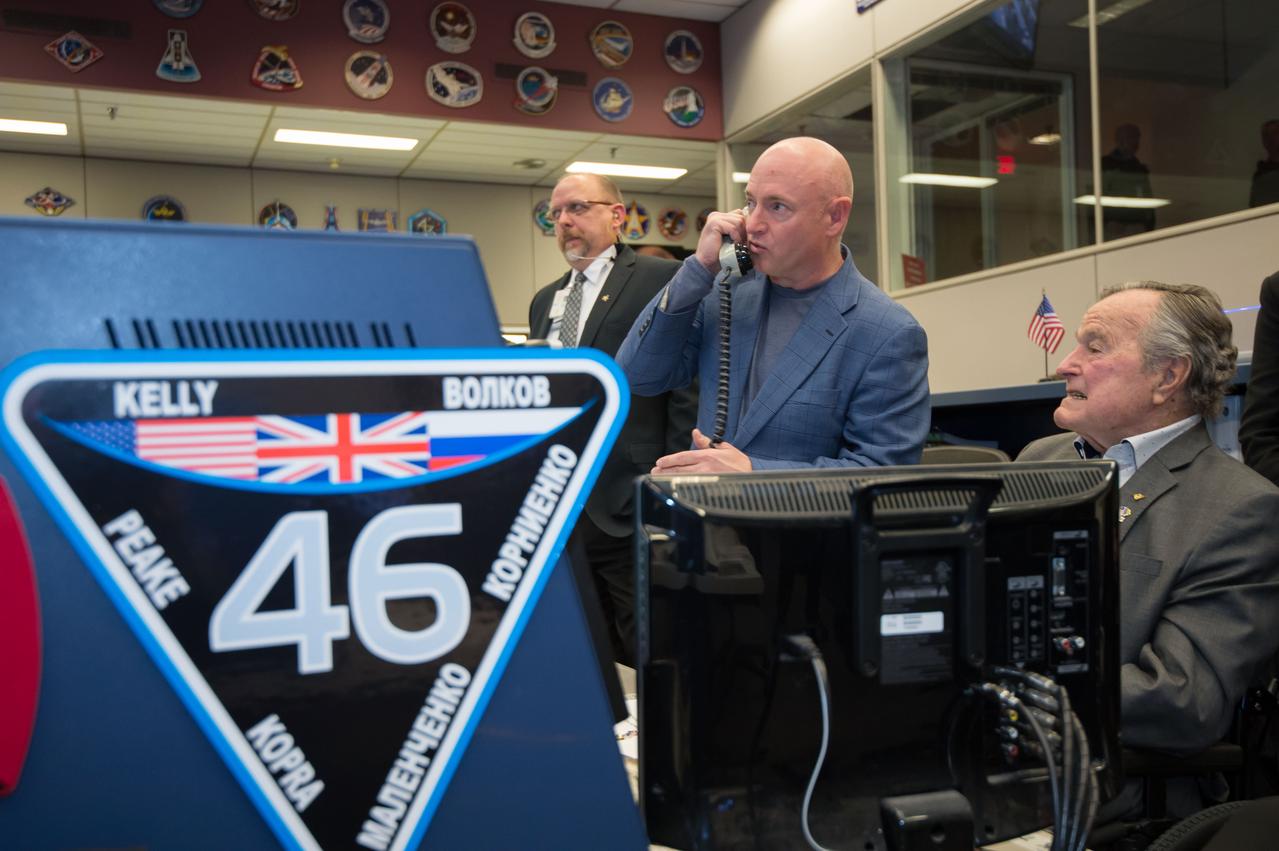
Former President George H.W. Bush paid a visit to NASA's Johnson Space Center to speak with Expedition 46 Commander Scott Kelly and Flight Engineer Tim Kopra and take a tour of the Space Vehicle Mockup Facility. Kelly’s twin brother, Mark Kelly and his wife, former Congresswoman Gabrielle Giffords were also present. Photo Date: February 5, 2016. Location: Building 30 - ISS Flight Control Room. Photographer: Robert Markowitz
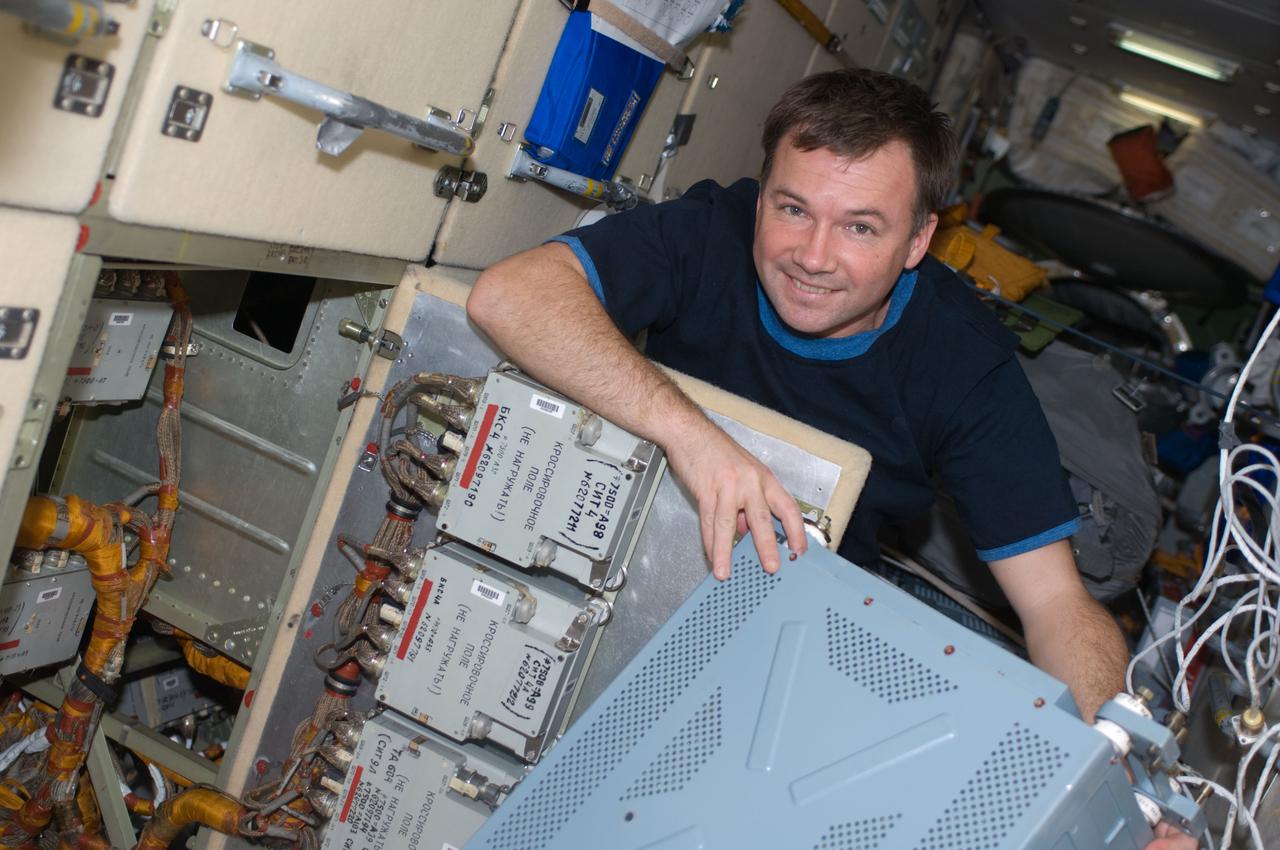
ISS018-E-007623 (5 Nov. 2008) --- Cosmonaut Yury Lonchakov, Expedition 18 flight engineer, takes a moment for a photo while performing in-flight maintenance on the Komparus A3 System in the Zarya module of the International Space Station.
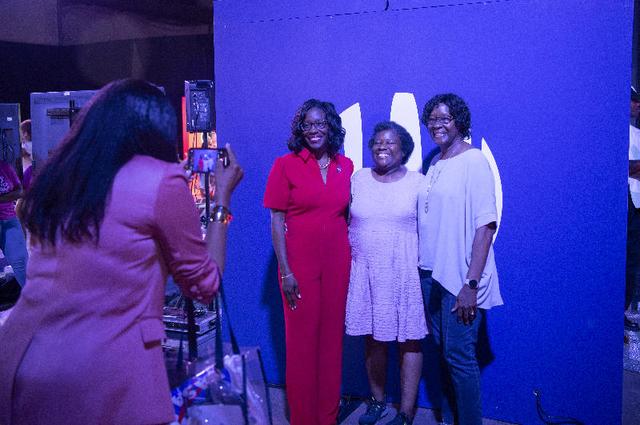
NASA Assistant Deputy Associate Administrator for the Moon to Mars Program Office Lakiesha Hawkins, left, takes a picture with attendees of the 30th annual ESSENCE Fest in New Orleans on July 5.

NASA’s B200 taking off for an eight-hour science flight on March 5. Located on the center of the aircraft’s fuselage is the DopplerScatt radar instrument, developed by NASA’s Jet Propulsion Laboratory in California.
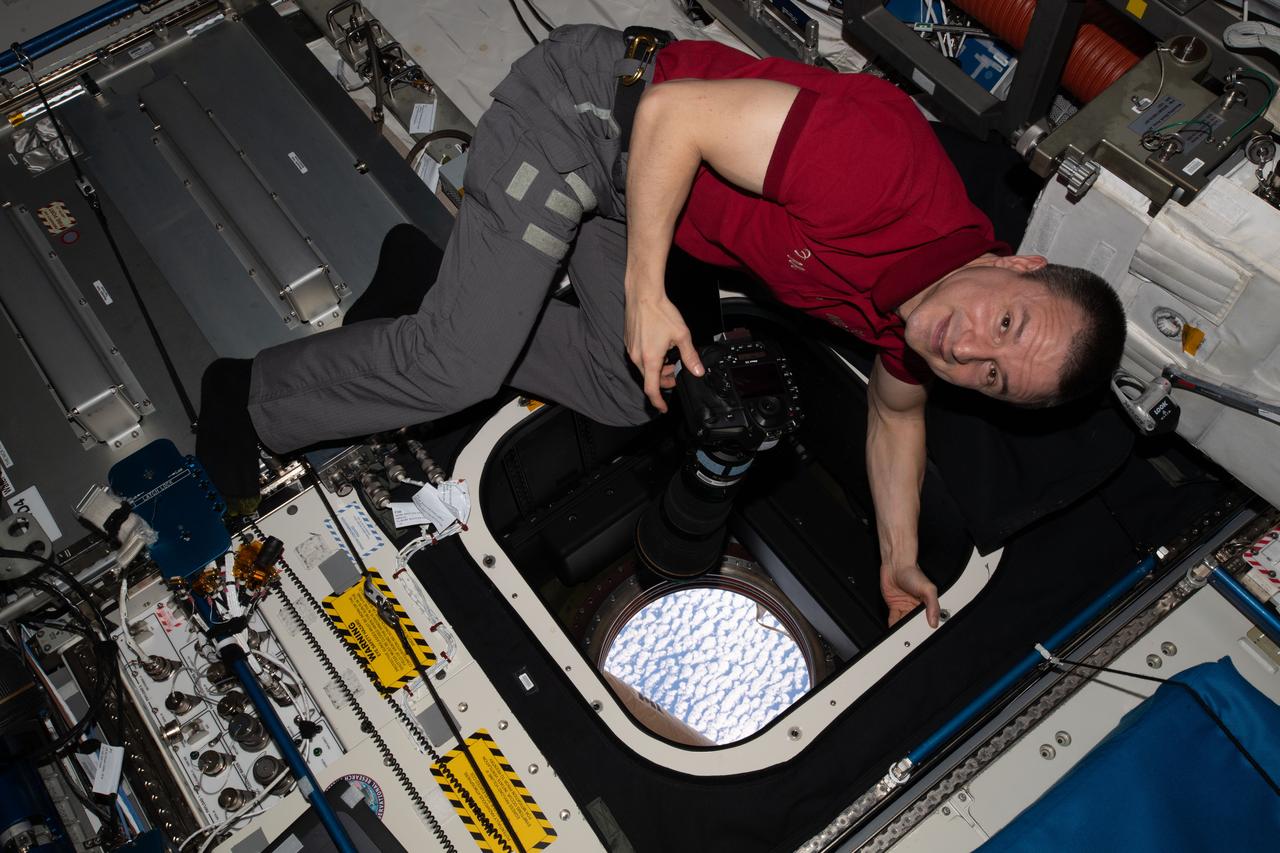
iss062e081076 (March 5, 2020) --- NASA astronaut and Expedition 62 Flight Engineer Andrew Morgan takes photographs of the Earth from the Window Observation Research Facility inside NASA's Destiny laboratory module.
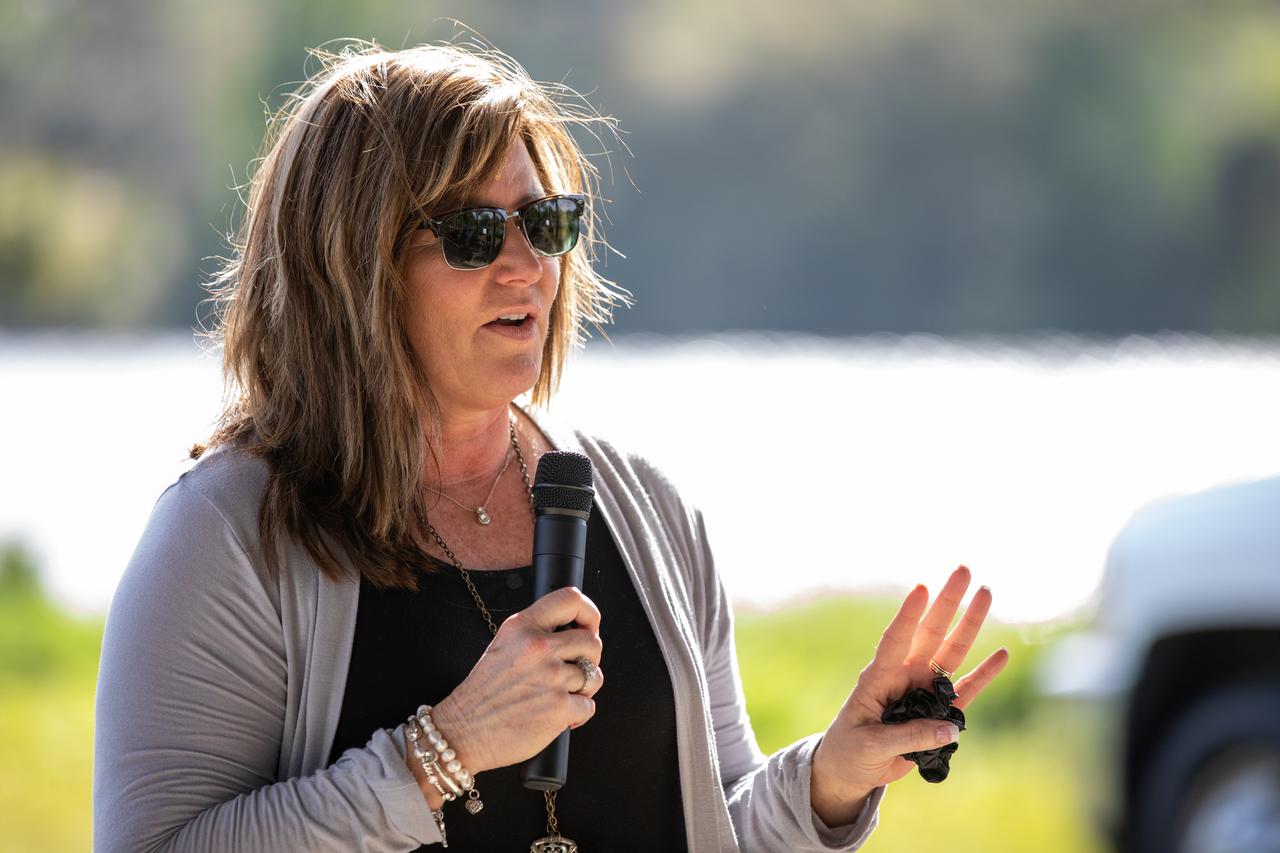
Jennifer Kunz, director of Safety and Mission Assurance at NASA’s Kennedy Space Center in Florida, speaks to Kennedy employees during a Safety and Health Days celebration on March 5, 2020. Taking place March 2 through March 6, Safety and Health Days provides Kennedy employees with a variety of presentations to attend – all of which focus on how to maintain a safe and healthy workforce. The celebration on March 5 took place at the spaceport’s KARS Park II and was open for all employees to attend.
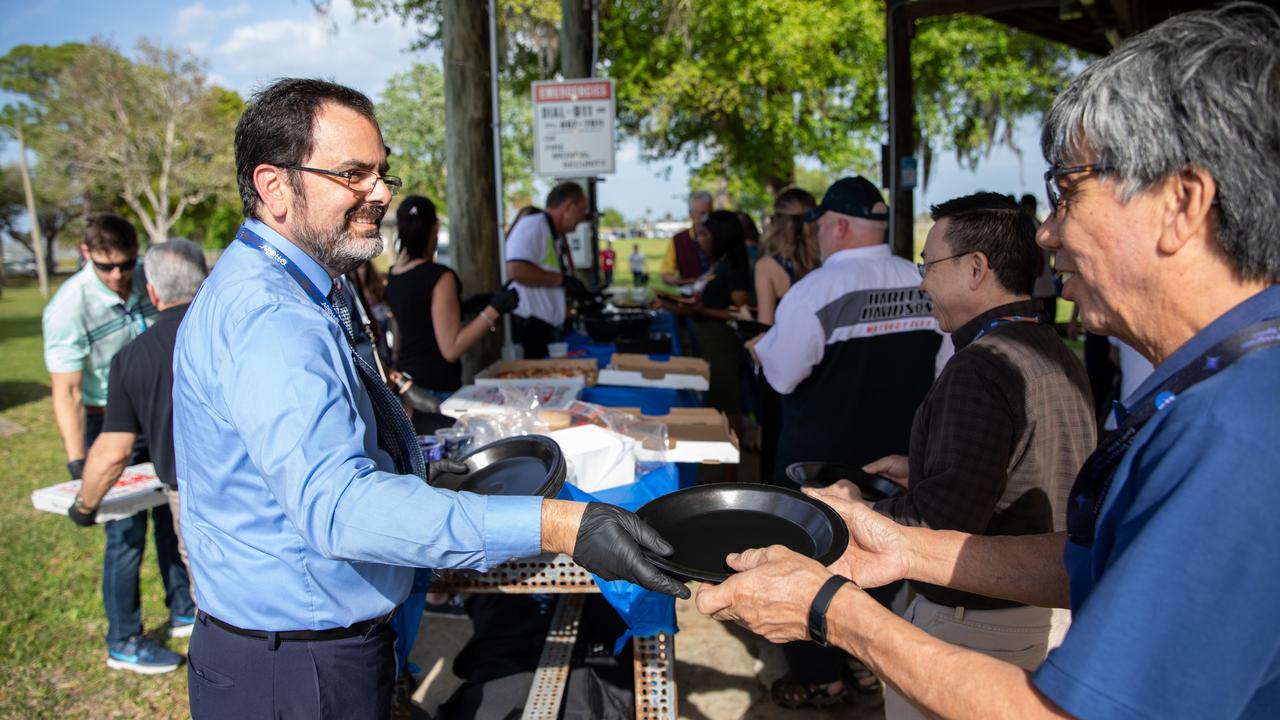
Ronnie Rodriguez, left, deputy director of Safety and Mission Assurance at NASA’s Kennedy Space Center in Florida, serves food to Kennedy employees during a Safety and Health Days celebration on March 5, 2020. Taking place March 2 through March 6, Safety and Health Days provides Kennedy employees with a variety of presentations to attend – all of which focus on how to maintain a safe and healthy workforce. The celebration on March 5 took place at the spaceport’s KARS Park II and was open for all employees to attend.
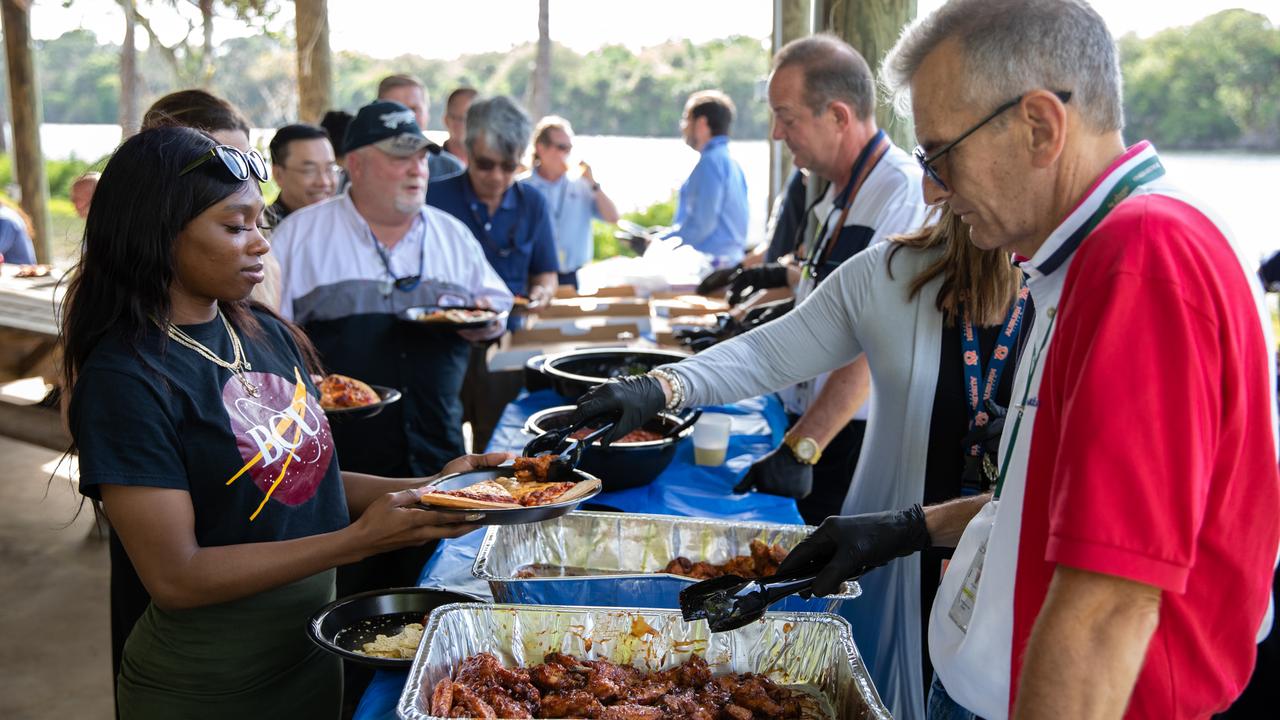
Managers at NASA’s Kennedy Space Center in Florida serve food to Kennedy employees during a Safety and Health Days celebration on March 5, 2020. Taking place March 2 through March 6, Safety and Health Days provides Kennedy employees with a variety of presentations to attend – all of which focus on how to maintain a safe and healthy workforce. The celebration on March 5 took place at the spaceport’s KARS Park II and was open for all employees to attend.
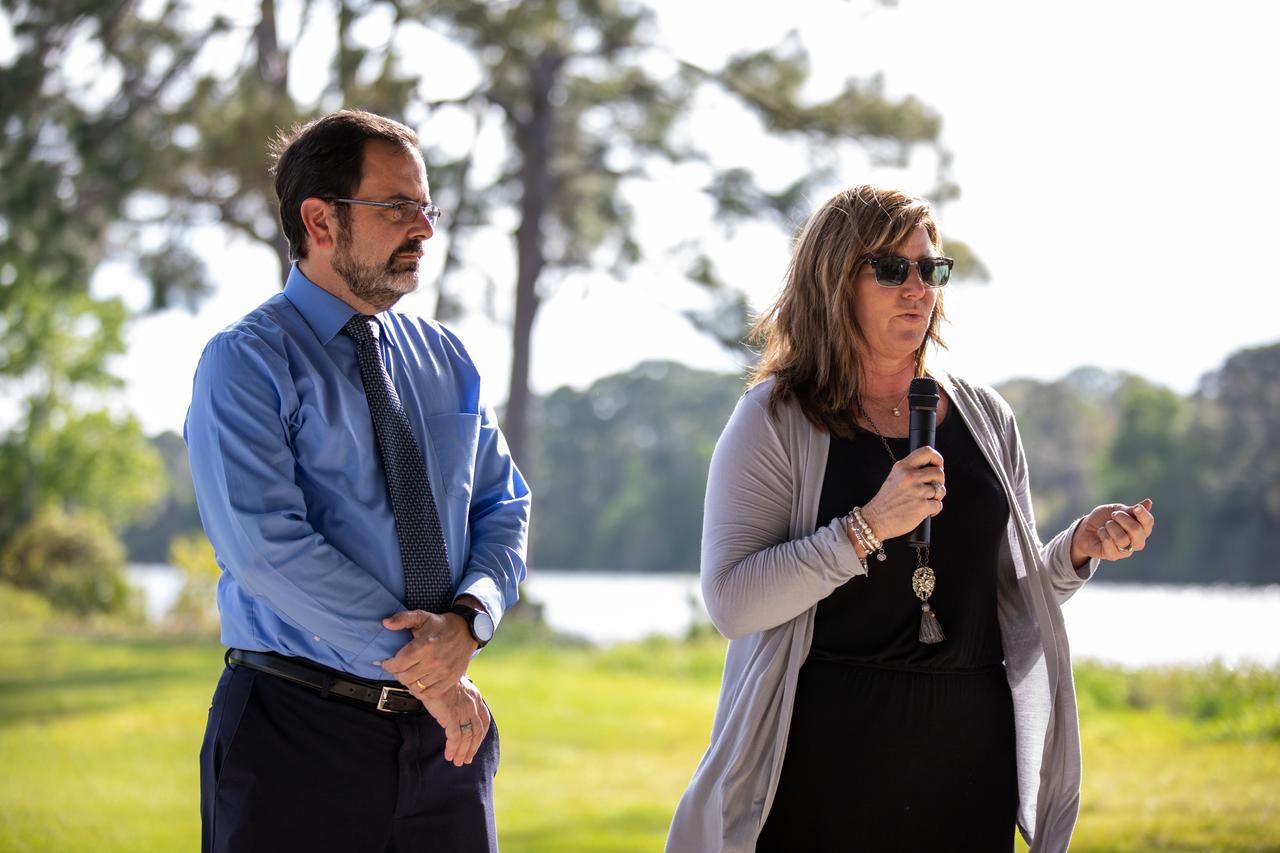
Deputy Director Ronnie Rodriguez, left, and Director Jennifer Kunz of Safety and Mission Assurance at NASA’s Kennedy Space Center in Florida, speak to Kennedy employees during a Safety and Health Days celebration on March 5, 2020. Taking place March 2 through March 6, Safety and Health Days provides Kennedy employees with a variety of presentations to attend – all of which focus on how to maintain a safe and healthy workforce. The celebration on March 5 took place at the spaceport’s KARS Park II and was open for all employees to attend.
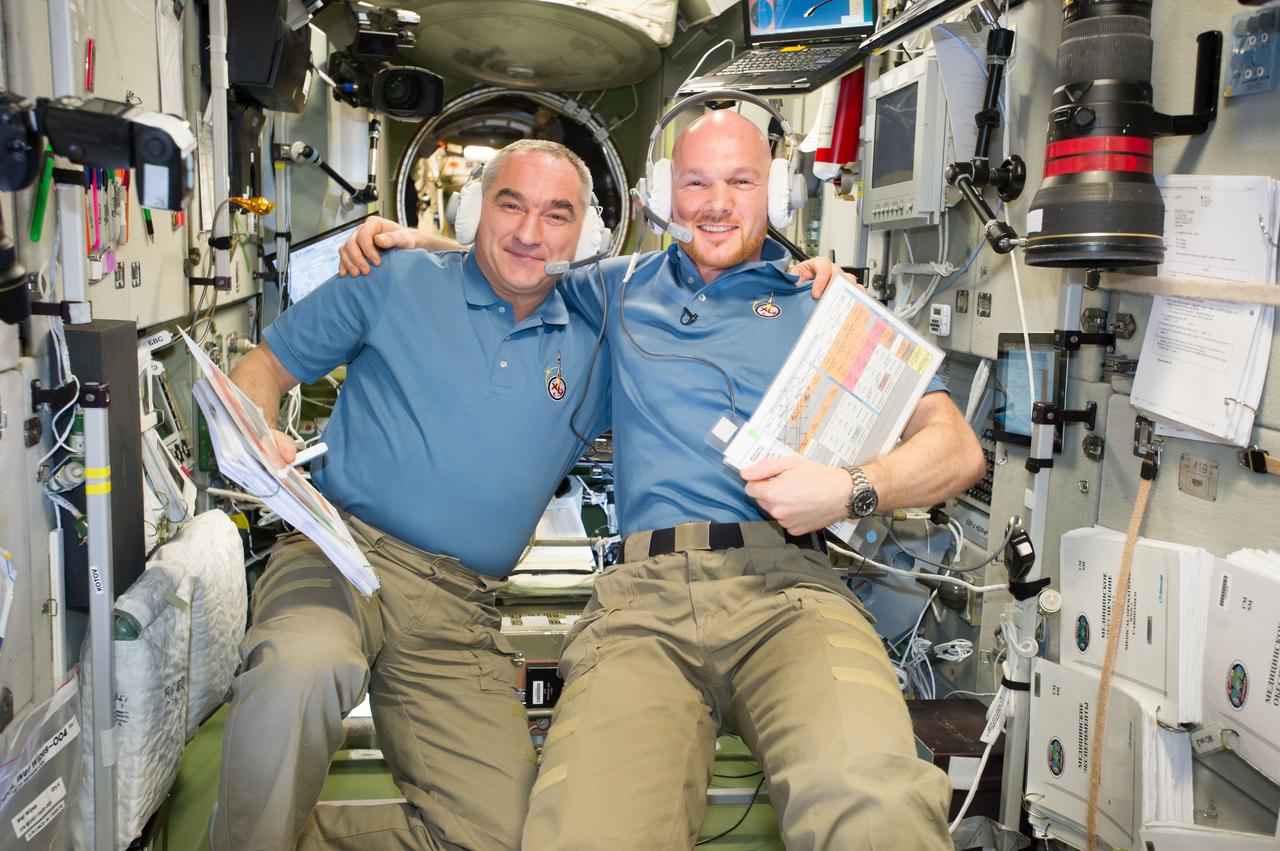
ISS040-E-091673 (12 Aug. 2014) --- In the Zvezda Service Module, European Space Agency astronaut Alexander Gerst (right) and Russian cosmonaut Alexander Skvortsov, both Expedition 40 flight engineers, take a brief moment for a photo during the approach and docking operations of ESA's "Georges Lemaitre" Automated Transfer Vehicle-5 (ATV-5) to the International Space Station.
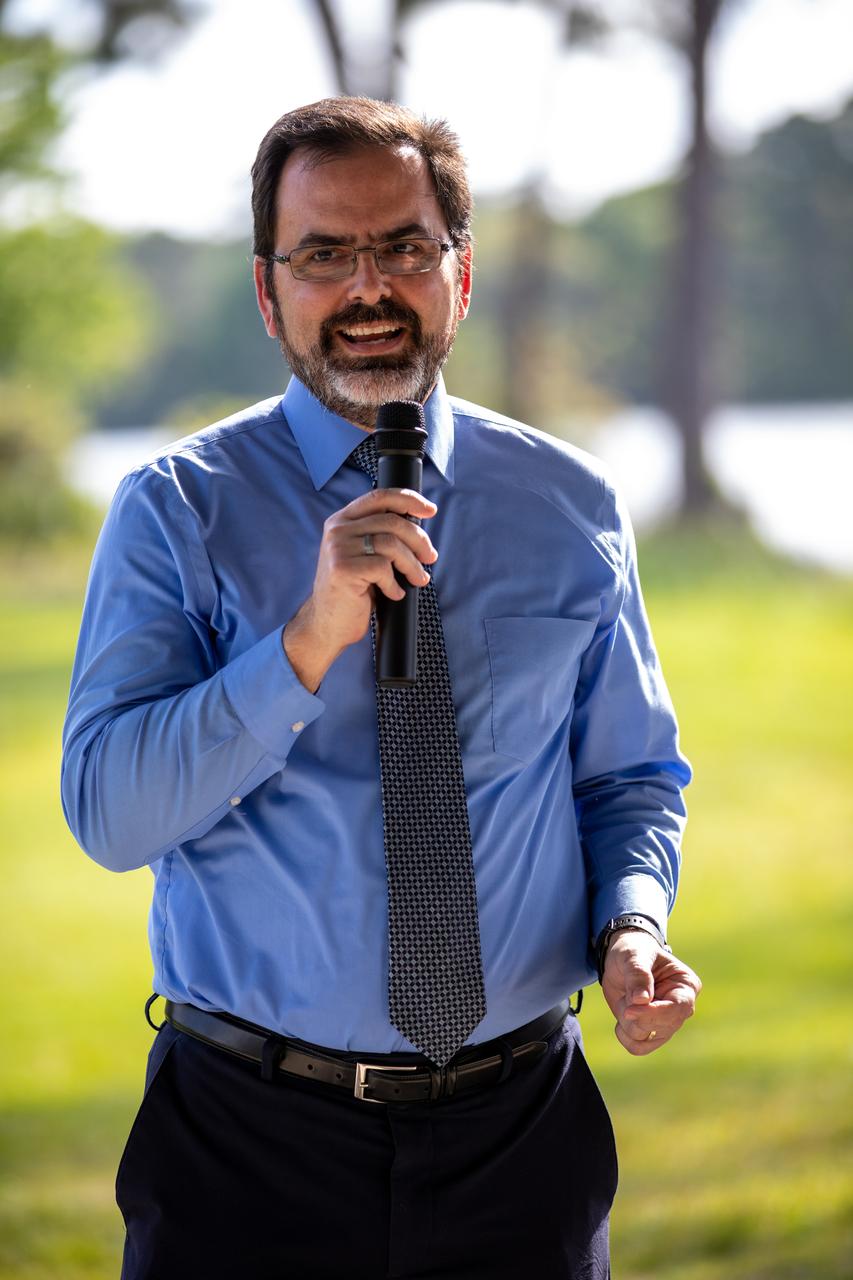
Ronnie Rodriguez, deputy director of Safety and Mission Assurance at NASA’s Kennedy Space Center in Florida, speaks to Kennedy employees during a Safety and Health Days celebration on March 5, 2020. Taking place March 2 through March 6, Safety and Health Days provides Kennedy employees with a variety of presentations to attend – all of which focus on how to maintain a safe and healthy workforce. The celebration on March 5 took place at the spaceport’s KARS Park II and was open for all employees to attend.
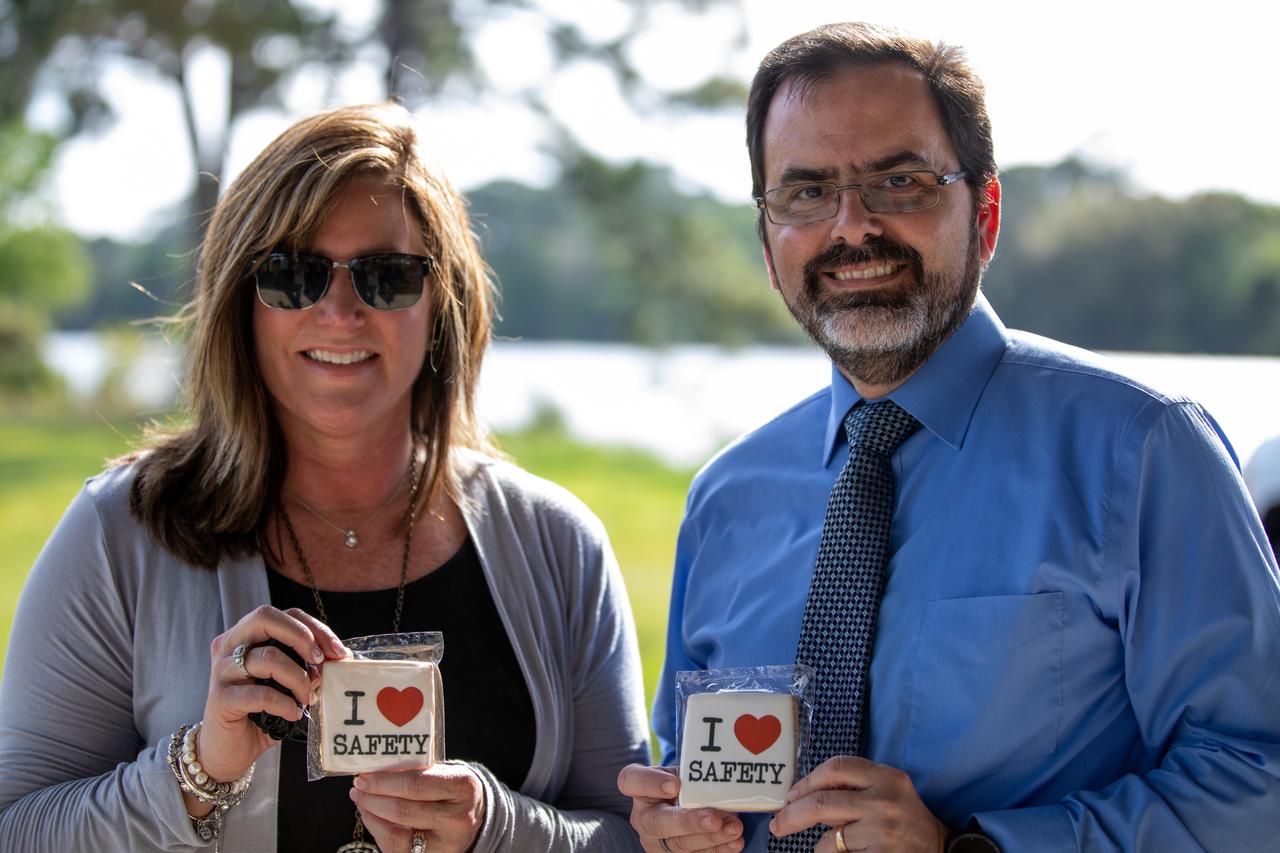
Jennifer Kunz, left, director, and Ronnie Rodriguez, deputy director of Safety and Mission Assurance at NASA’s Kennedy Space Center in Florida, are photographed at a Safety and Health Days celebration on March 5, 2020. Taking place March 2 through March 6, Safety and Health Days provides Kennedy employees with a variety of presentations to attend – all of which focus on how to maintain a safe and healthy workforce. The celebration on March 5 took place at the spaceport’s KARS Park II and was open for all employees to attend.
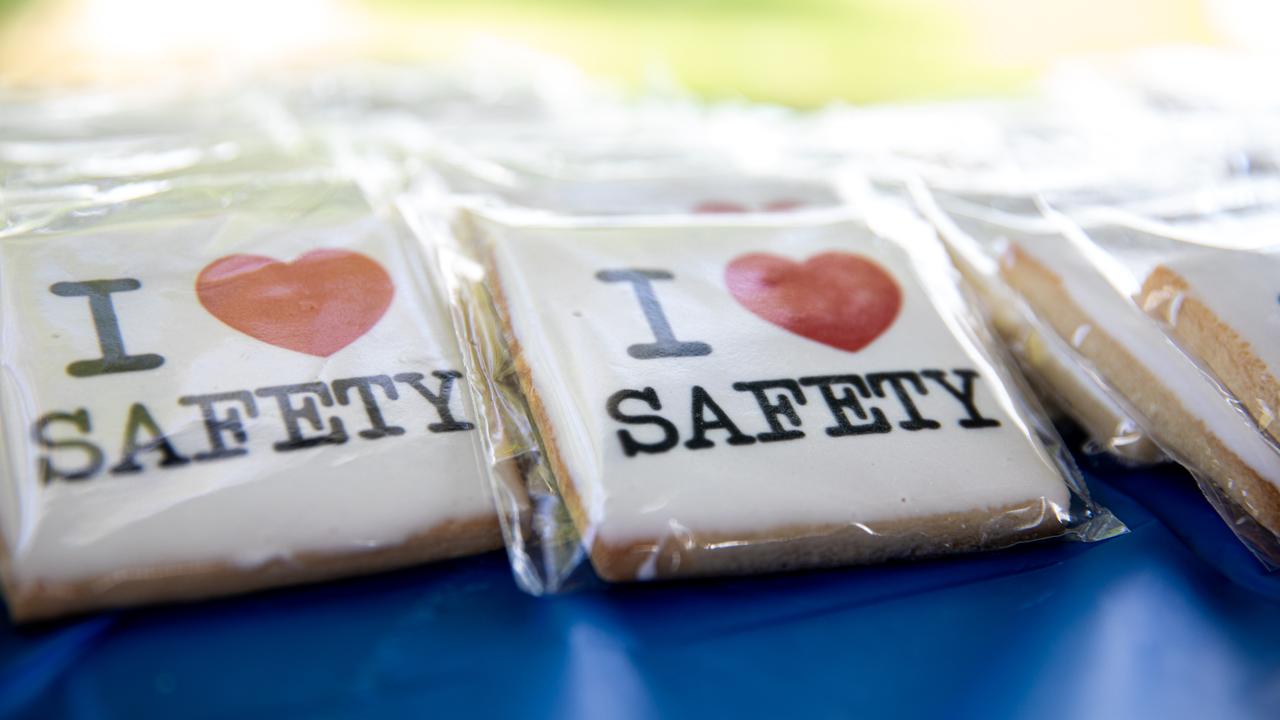
“I Love Safety” cookies are photographed at a Safety and Health Days celebration at Kennedy Space Center’s KARS Park II on March 5, 2020. Taking place March 2 through March 6, Safety and Health Days provides Kennedy employees with a variety of presentations to attend – all of which focus on how to maintain a safe and healthy workforce. The celebration on March 5 was open for all employees to attend.
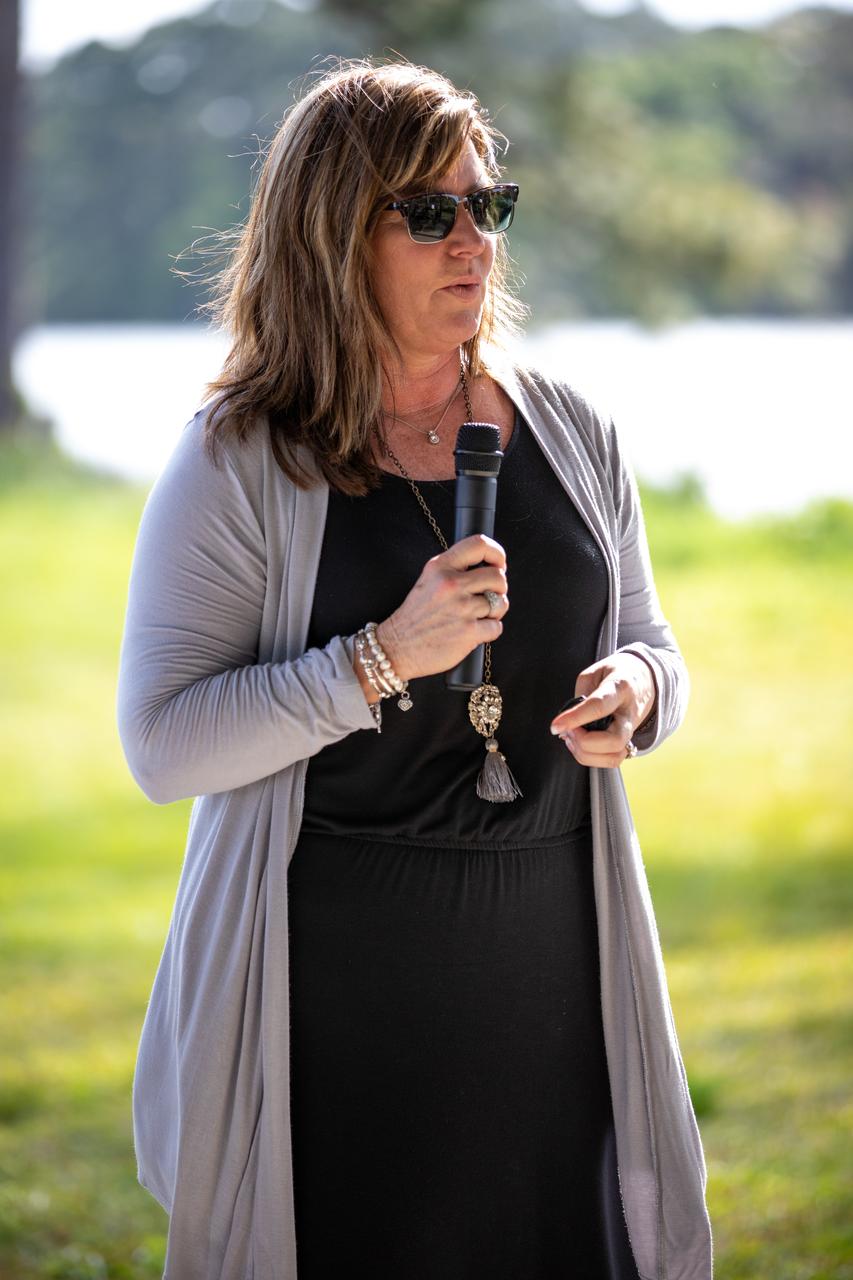
Jennifer Kunz, director of Safety and Mission Assurance at NASA’s Kennedy Space Center in Florida, speaks to Kennedy employees during a Safety and Health Days celebration on March 5, 2020. Taking place March 2 through March 6, Safety and Health Days provides Kennedy employees with a variety of presentations to attend – all of which focus on how to maintain a safe and healthy workforce. The celebration on March 5 took place at the spaceport’s KARS Park II and was open for all employees to attend.
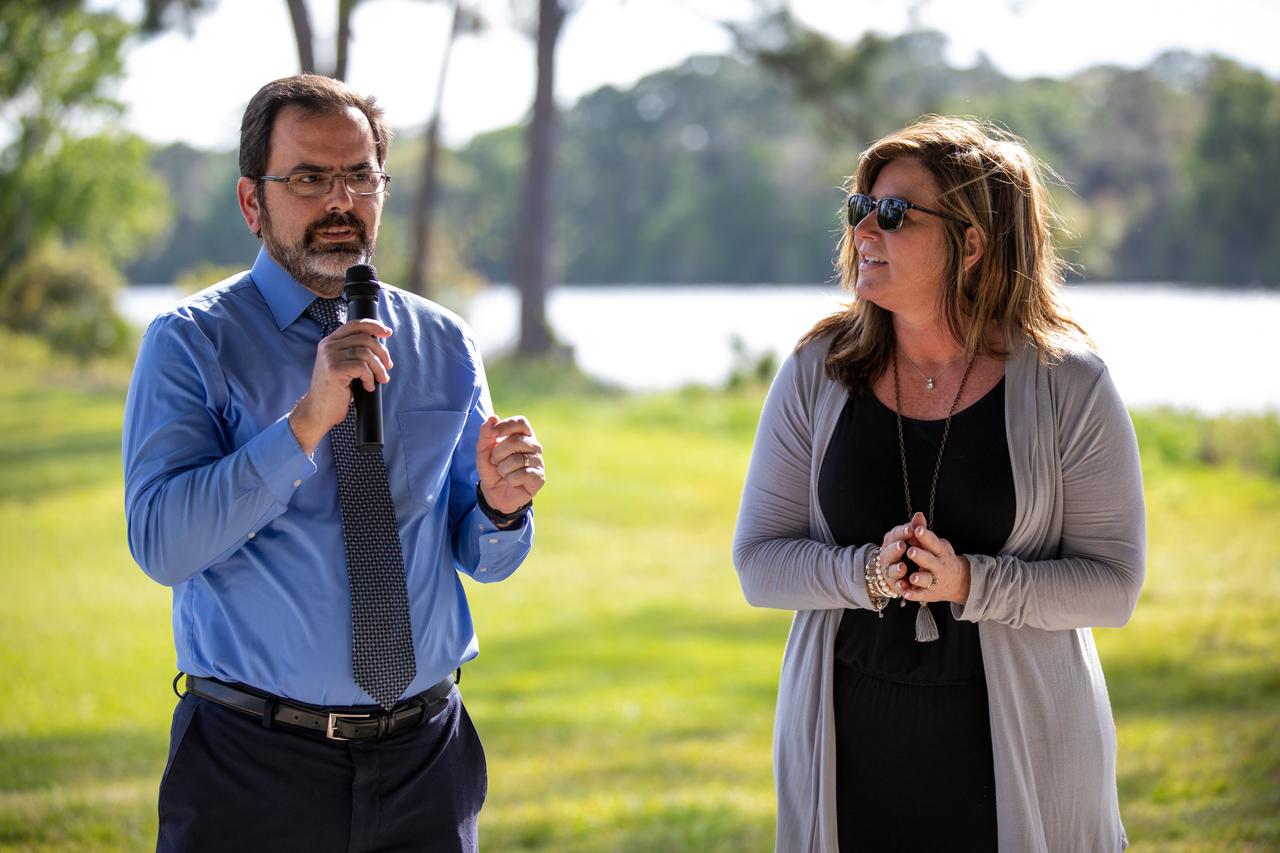
Deputy Director Ronnie Rodriguez, left, and Director Jennifer Kunz of Safety and Mission Assurance at NASA’s Kennedy Space Center in Florida, speak to Kennedy employees during a Safety and Health Days celebration on March 5, 2020. Taking place March 2 through March 6, Safety and Health Days provides Kennedy employees with a variety of presentations to attend – all of which focus on how to maintain a safe and healthy workforce. The celebration on March 5 took place at the spaceport’s KARS Park II and was open for all employees to attend.
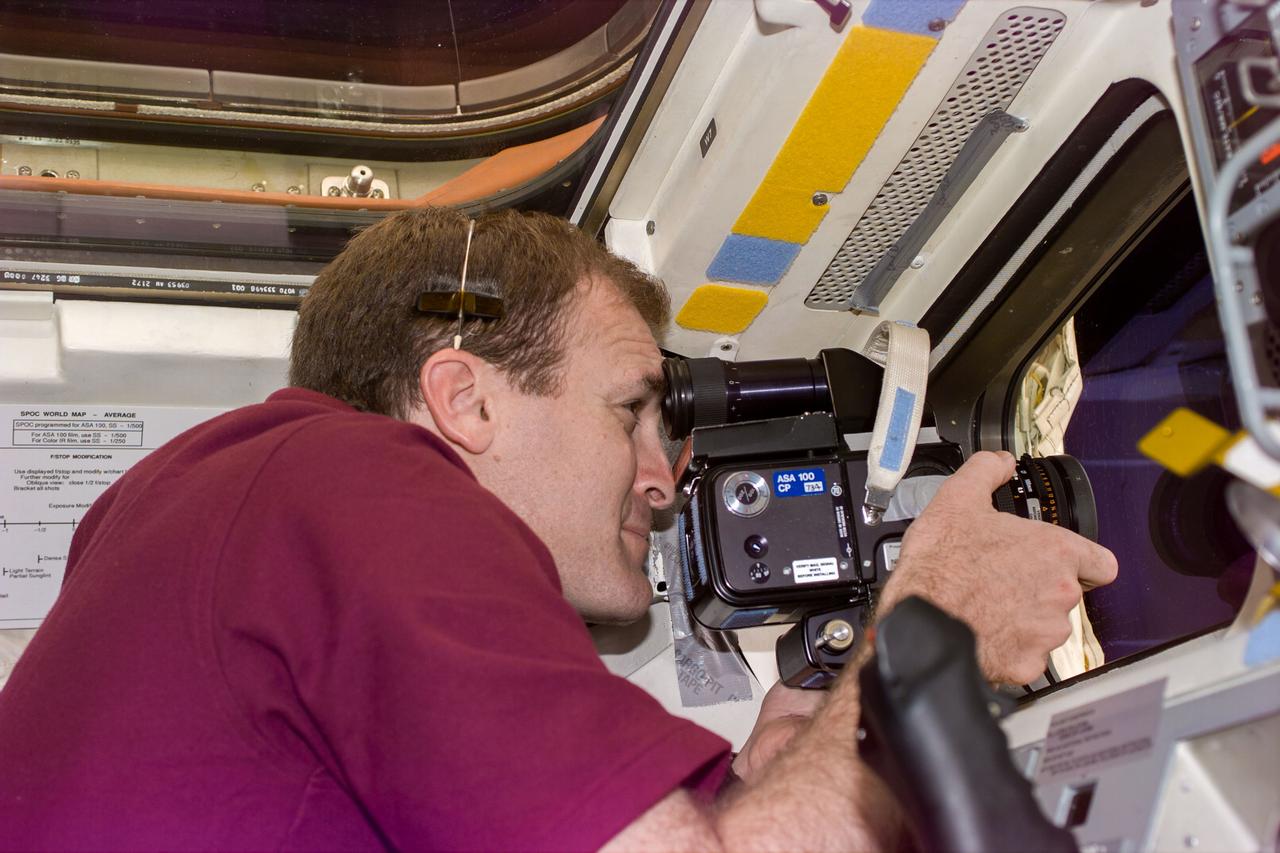
S94-E-5003 (5 July 1997) --- Astronaut James D. Halsell, Jr. , mission commander, positioned on the Space Shuttle Columbia's aft flight deck, takes a picture of the Spacelab Module, several feet away in Columbia's cargo bay.
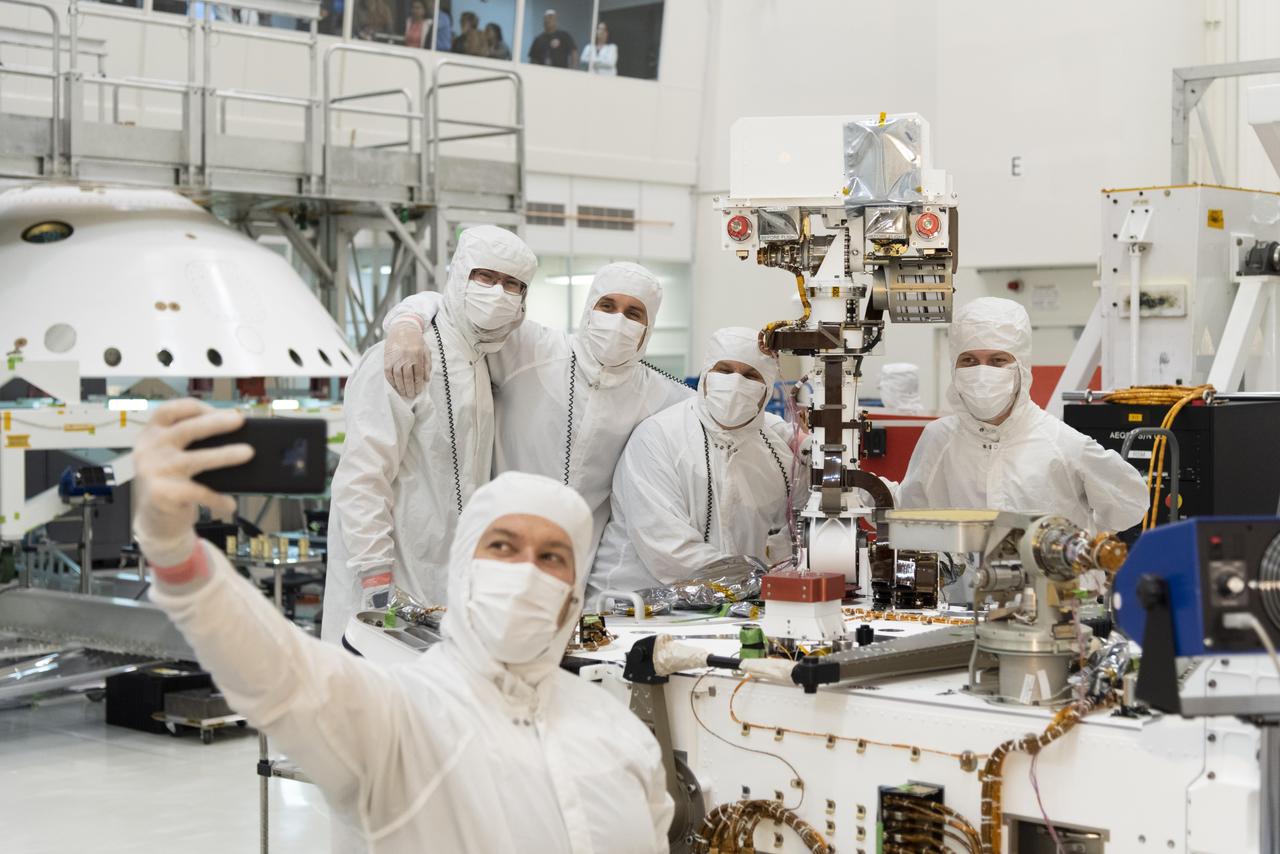
Members of NASA's Mars 2020 project take a moment after attaching the remote sensing mast to the Mars 2020 rover. The image was taken on June 5, 2019, in the Spacecraft Assembly Facility's High Bay 1 clean room at NASA's Jet Propulsion Laboratory in Pasadena, California. https://photojournal.jpl.nasa.gov/catalog/PIA23267
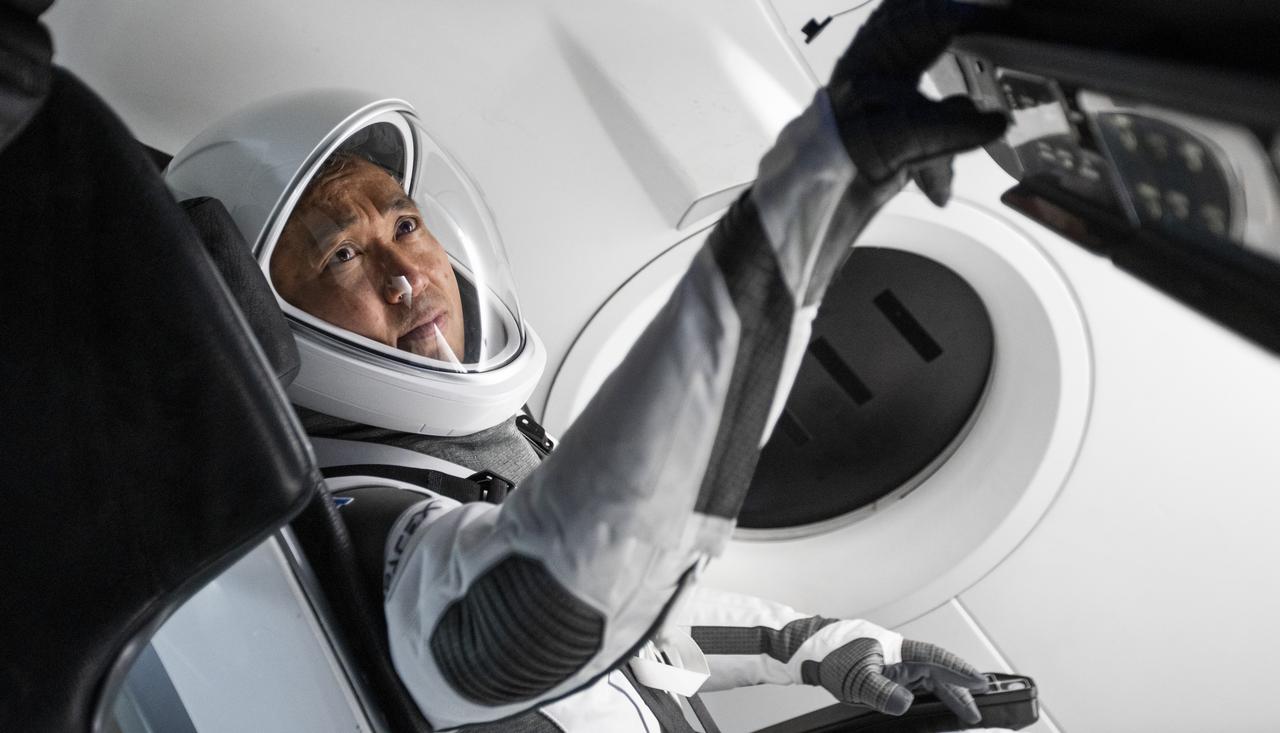
JAXA astronaut Koichi Wakata wears a SpaceX launch and entry suit while becoming familiar with the Crew Dragon spacecraft that will take Wakata and his crewmates to the International Space Station as part of NASA's SpaceX Crew-5 mission to the International Space Station.
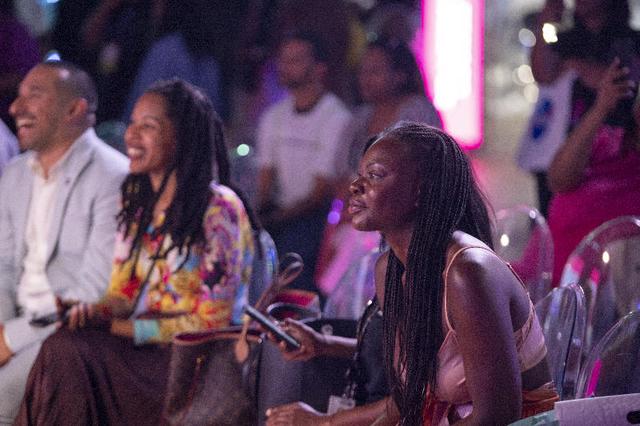
The audience for a Take Up Space (Literally) presentation at the 30th annual ESSENCE Fest in New Orleans on July 5 listens to a conversation with NASA representatives about Black women in the aerospace industry and diversity in science, technology, engineering, and mathematics (STEM).
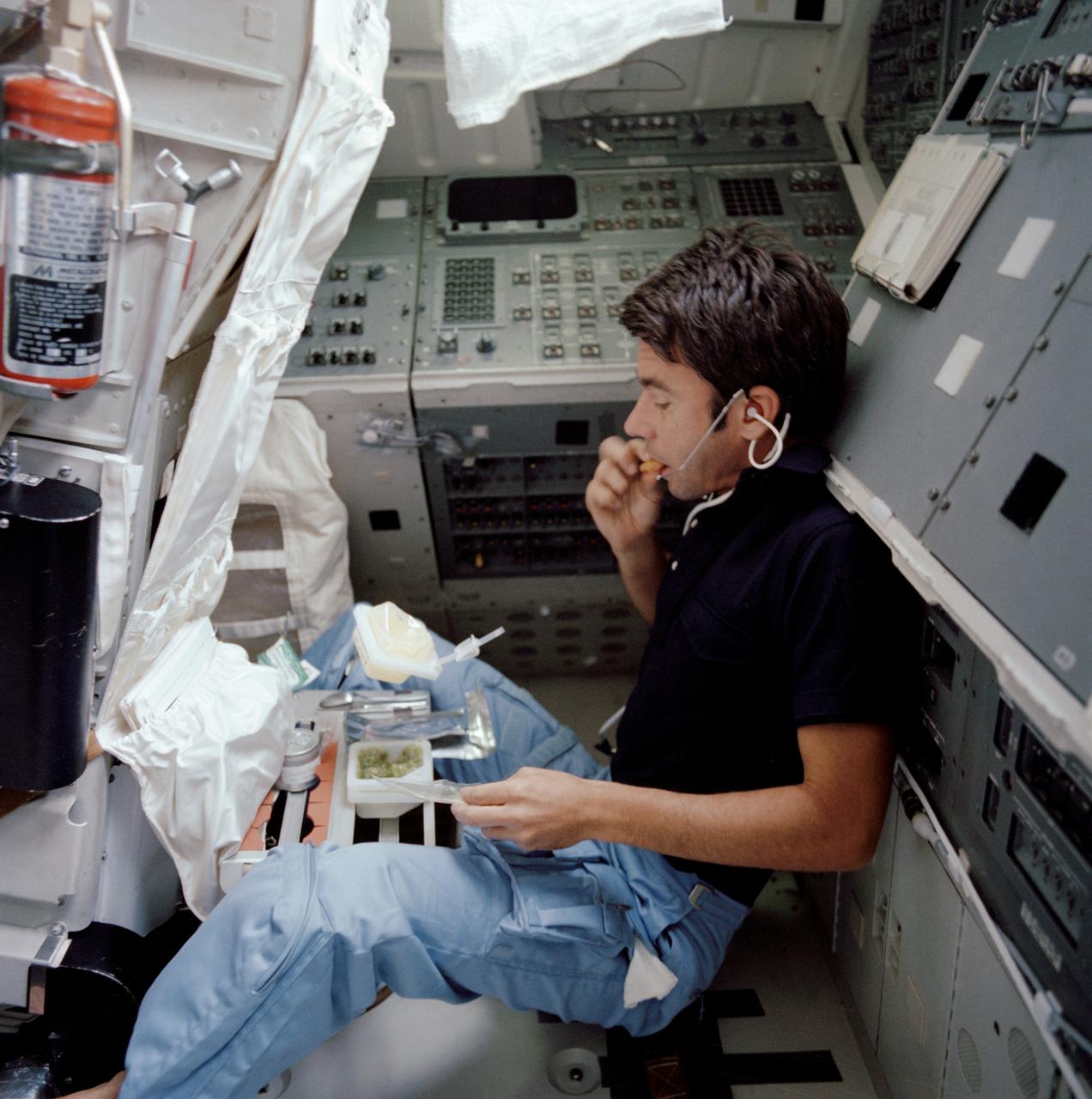
STS005-45-1821 (11-16 Nov. 1982) --- Astronaut William B. Lenoir, STS-5 mission specialist, takes a break to eat his meal on the space shuttle Columbia. Wet trash stowage bags float freely around him and a fire extinguisher hangs on the wall in front of him. Photo credit: NASA
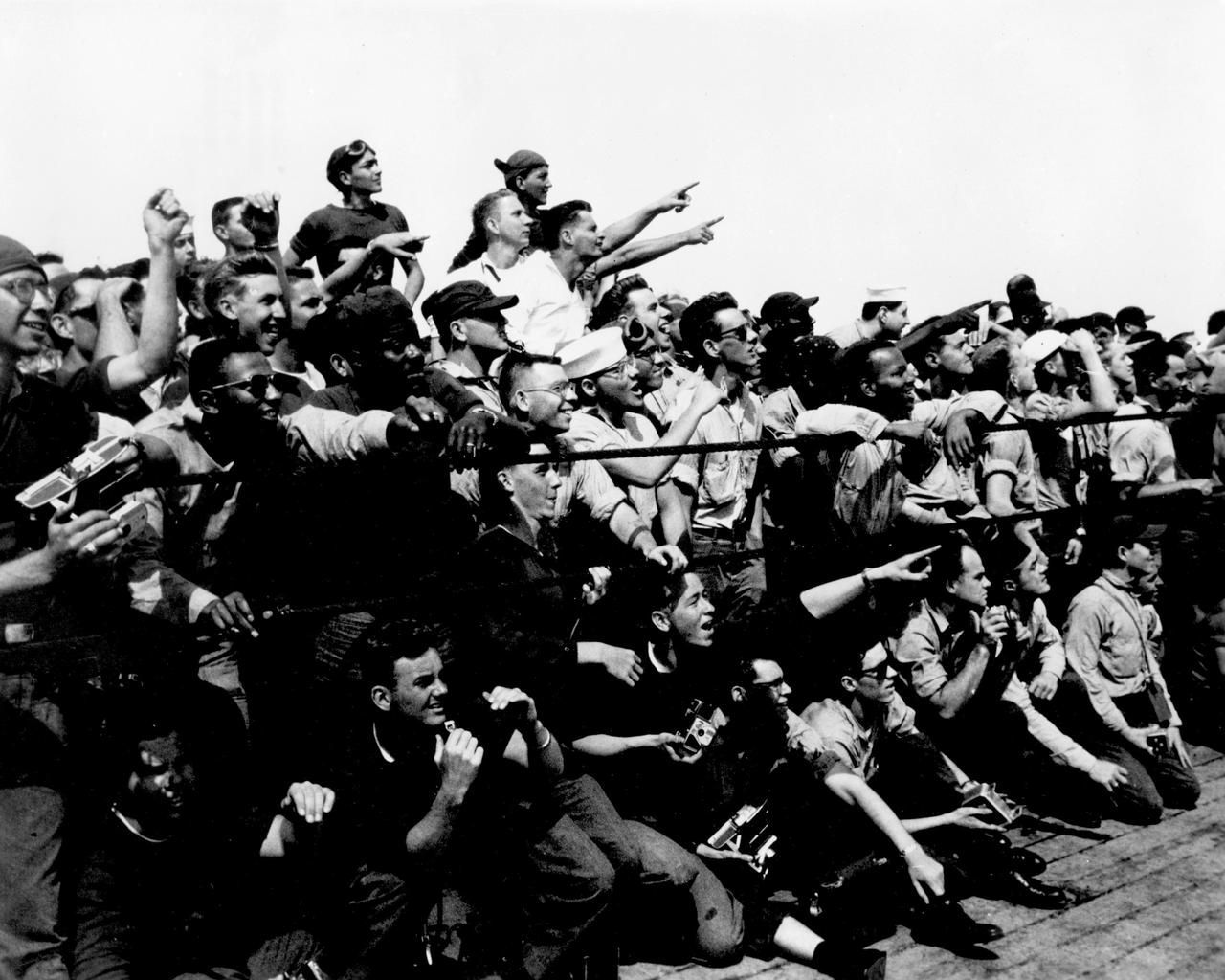
JSC2007-E-046479 (5 May 1961) --- Crew members of the U.S. Navy Carrier Champlain cheer and take pictures of the arrival of the first Project Mercury pilot to fly a suborbital flight, astronaut Alan B. Shepard Jr. Original photo number was 61-MR3-106. Photo credit: NASA
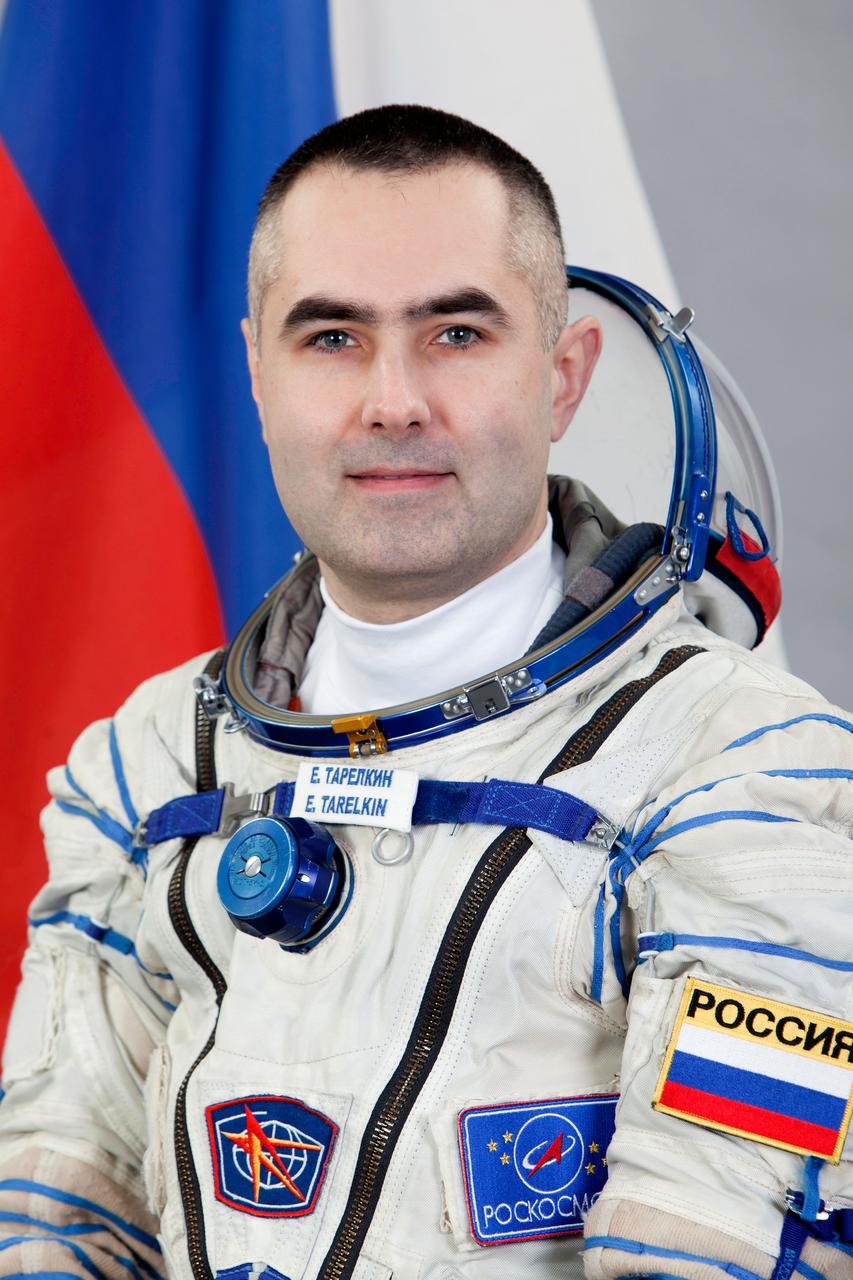
JSC2012-E-042063 (5 March 2012) --- Russian cosmonaut Evgeny Tarelkin, Expedition 31 backup crew member, attired in a Russian Sokol launch and entry suit, takes a break from training in Star City, Russia to pose for a portrait. Photo credit: Gagarin Cosmonaut Training Center
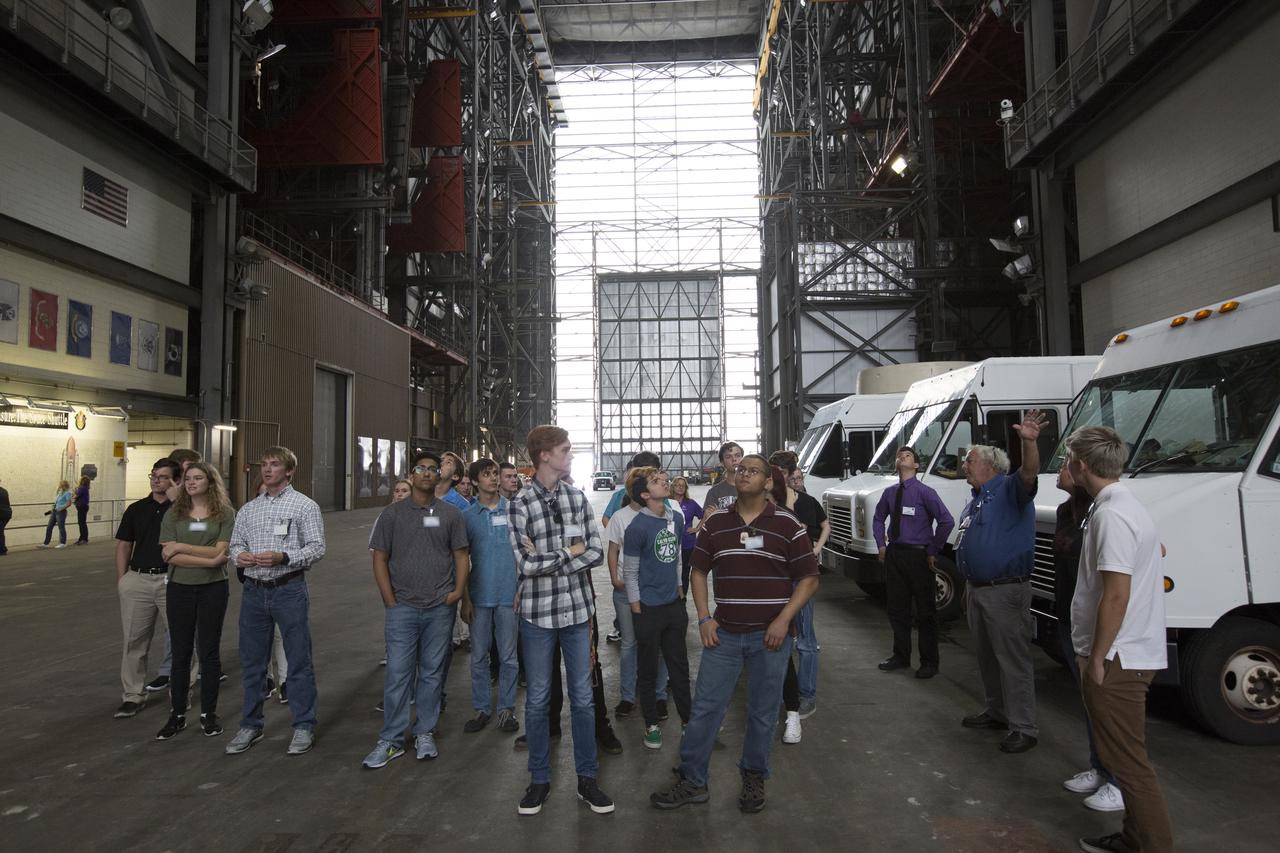
About 40 Brevard County high school seniors take in the enormity of the Vehicle Assembly Building during Brevard Top Scholars Day on May 5. Kennedy's Office of Education coordinated the event that featured a special behind-the-scenes tour of Kennedy, including prototype shops, cryogenic labs and the Launch Control Center firing rooms.
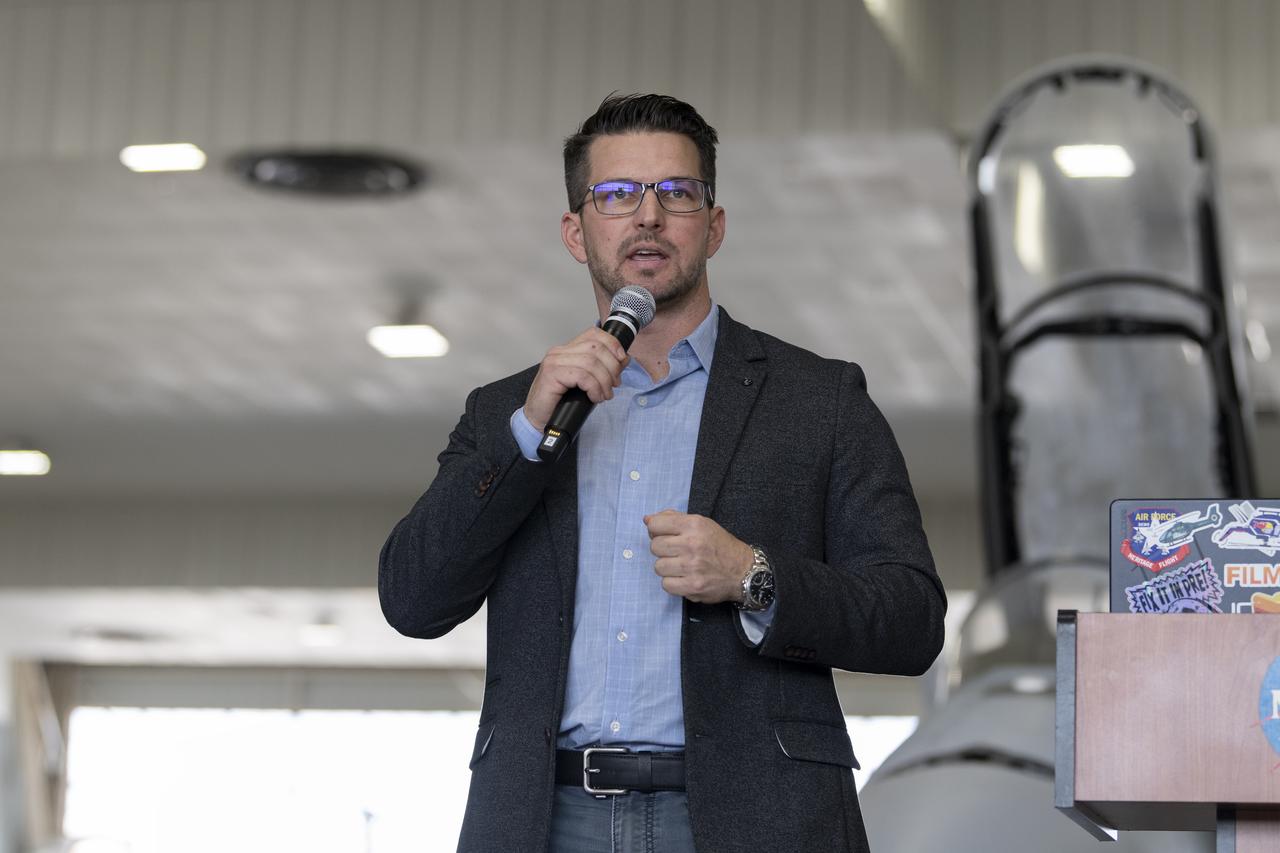
Aerial coordinator and test pilot Kevin LaRosa II describes what it takes to safely plan and document breathtaking footage of aircraft at a presentation at NASA’s Armstrong Flight Research Center in Edwards, California. He has a long list of film credits, including “Ironman”; “Avengers”; “Transformer 5”; “Top Gun: Maverick”; and “Devotion”.
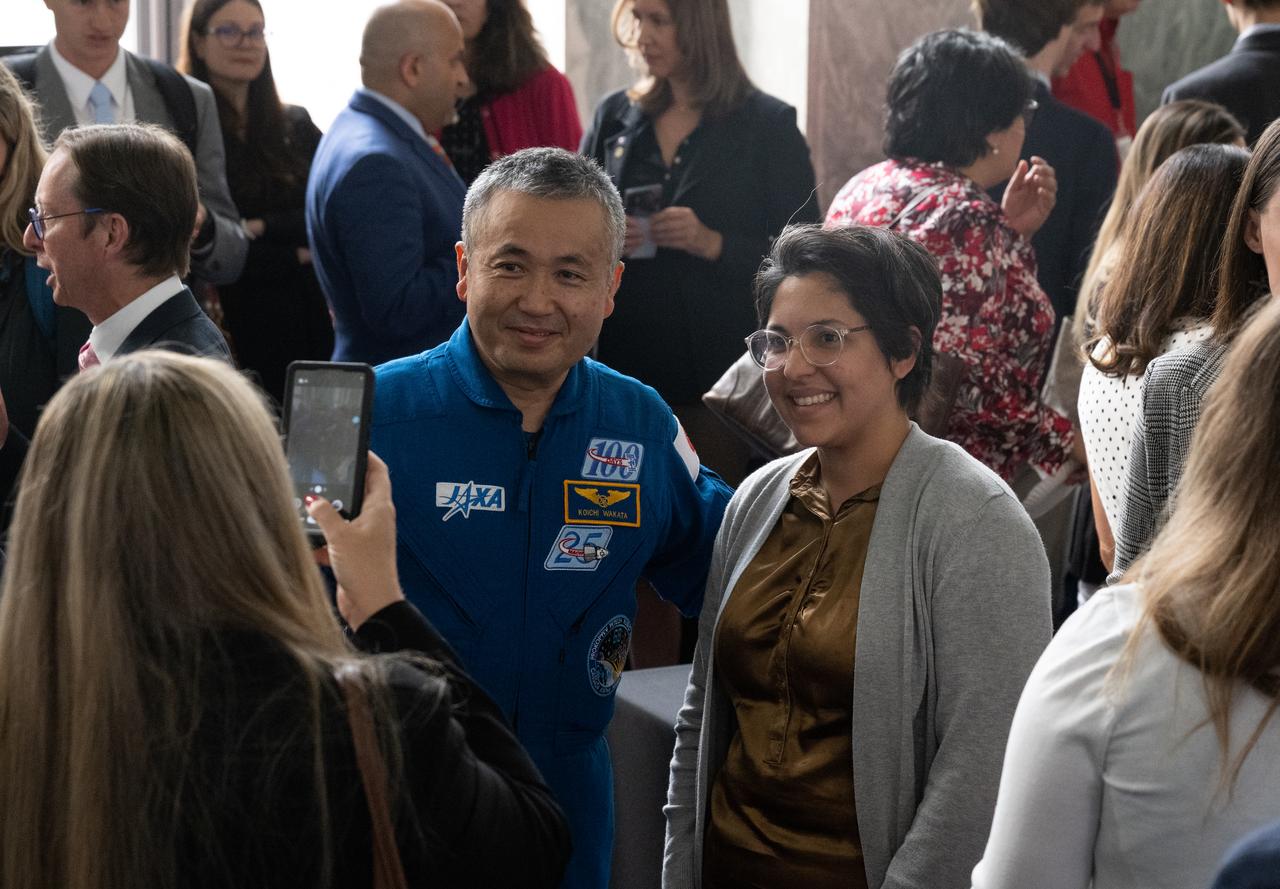
NASA’s SpaceX Crew-5 astronaut Koichi Wakata of the Japan Aerospace Exploration Agency (JAXA) takes a picture with an attendee during NASA’s Science Day on the Hill event, Wednesday, June 7, 2023, at the Rayburn House Office Building in Washington. Photo Credit: (NASA/Joel Kowsky)
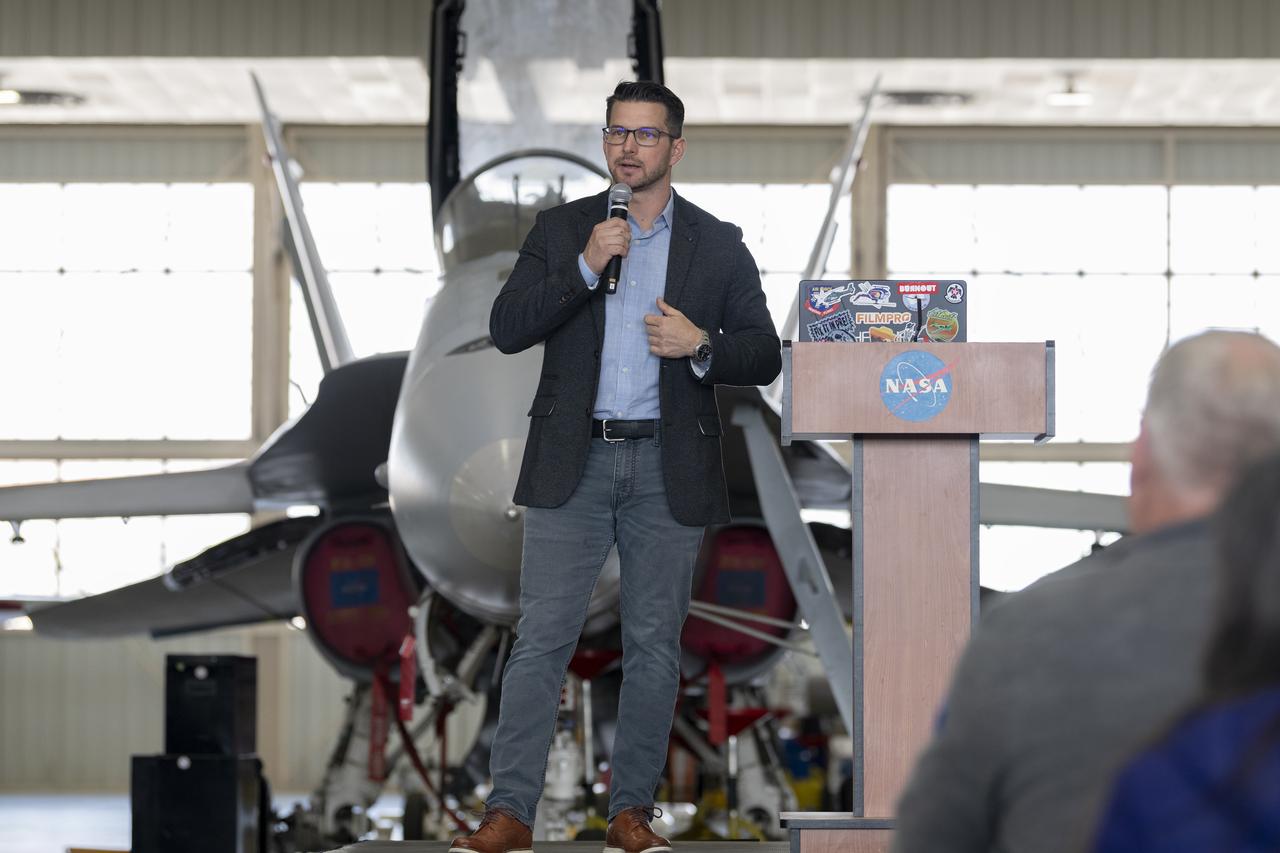
Aerial coordinator and test pilot Kevin LaRosa II describes what it takes to safely plan and document breathtaking footage of aircraft at a presentation at NASA’s Armstrong Flight Research Center in Edwards, California. He has a long list of film credits, including “Ironman”; “Avengers”; “Transformer 5”; “Top Gun: Maverick”; and “Devotion”.
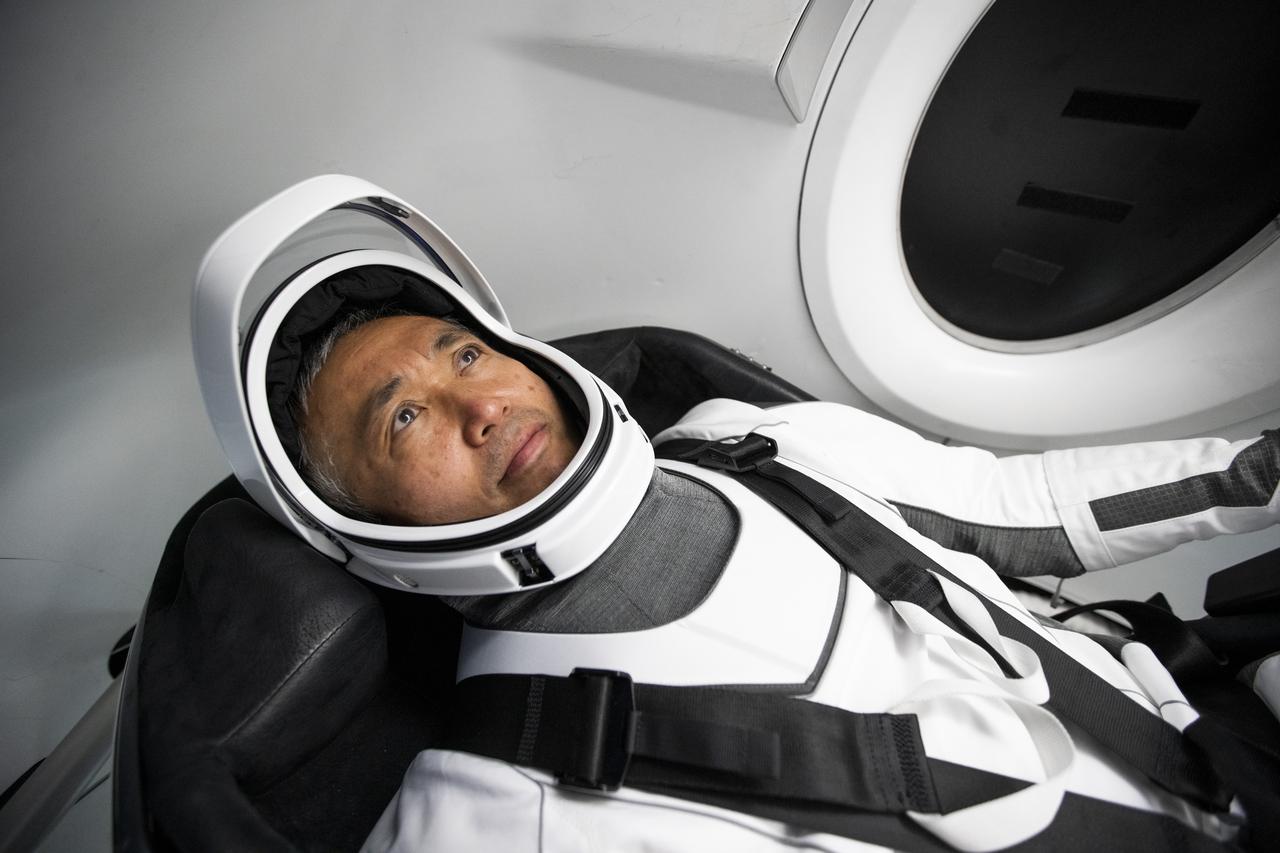
JAXA astronaut Koichi Wakata wears a SpaceX launch and entry suit while becoming familiar with the Crew Dragon spacecraft that will take Wakata and his crewmates to the International Space Station as part of NASA's SpaceX Crew-5 mission to the International Space Station.
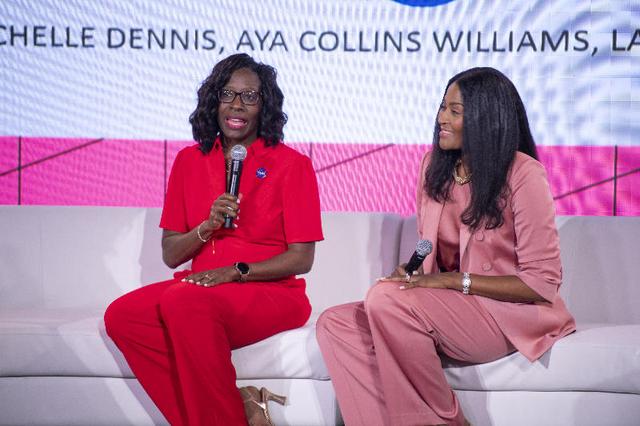
NASA Assistant Deputy Associate Administrator for the Moon to Mars Program Office Lakiesha Hawkins, left, and NASA Director of Engagement Aya Collins are shown at the Take Up Space (Literally) panel conversation during the 30th annual ESSENCE Fest in New Orleans on July 5.

NASA Assistant Deputy Associate Administrator for the Moon to Mars Program Office Lakiesha Hawkins, left, and NASA Director of Engagement Aya Collins, right, talk about opportunities with NASA at the Take Up Space (Literally) panel conversation during the ESSENCE Fest event in New Orleans on July 5.
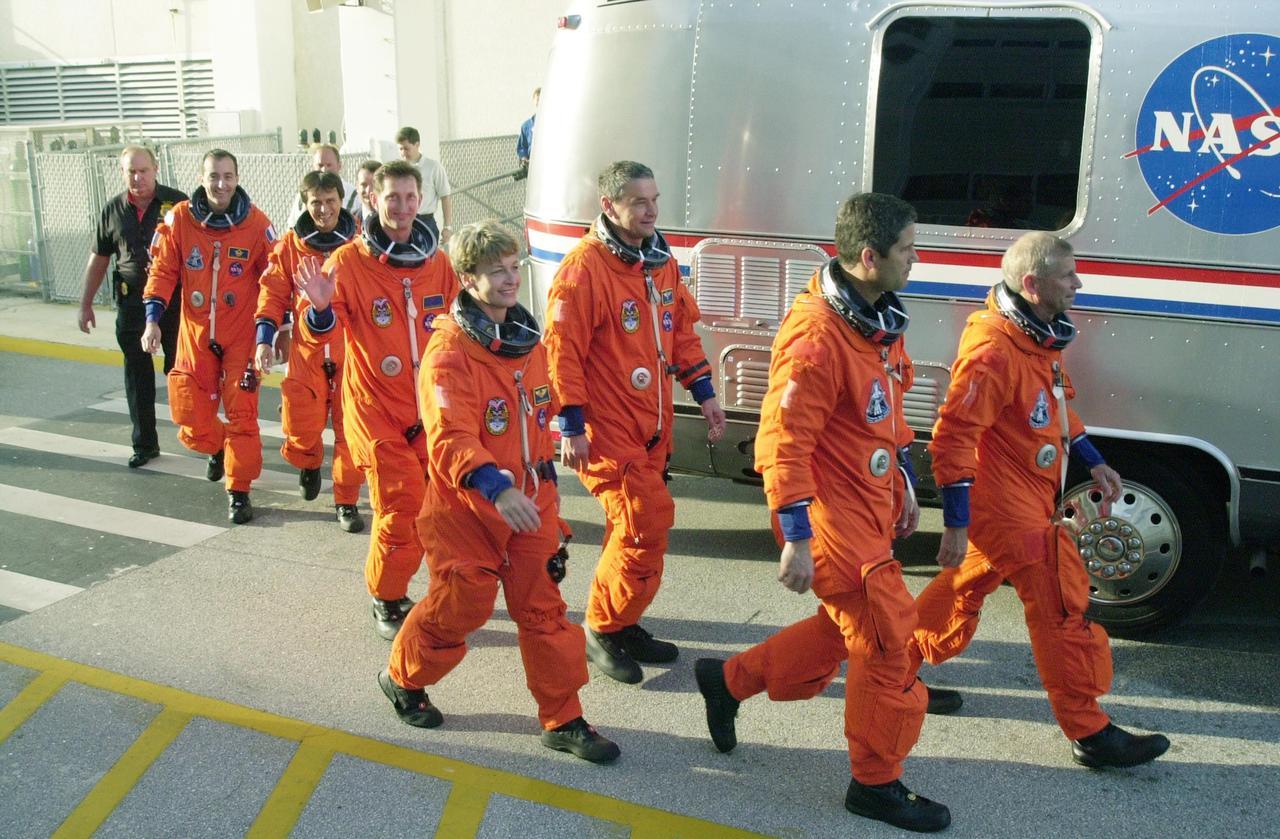
KENNEDY SPACE CENTER, FLA. -- The STS-111 crew and Expedition 5 walk eagerly to the Astrovan that will take them to Launch Pad 39A for a simulated countdown. From left are Mission Specialists Philippe Perrin and Franklin Chang-Diaz; the Expedition 5 crew, Sergei Treschev, Peggy Whitson and Valeri Korzun; Pilot Paul Lockhart; and Commander Kenneth Cockrell. The simulation is part of STS-111 Terminal Countdown Demonstration Test activities for the crew and Expedition 5. The payload on the mission to the International Space Station includes the Mobile Base System (MBS), an Orbital Replacement Unit and Multi-Purpose Logistics Module Leonardo. The MBS will be installed on the Mobile Transporter to complete the Canadian Mobile Servicing System, or MSS, enabling Canadarm 2 to "inchworm" from the U.S. Lab Destiny to the MSS and travel along the truss to work sites. The Expedition 5 crew is traveling on Endeavour to replace the Expedition 4 crew on the Station. Launch of Endeavour is scheduled for May 30, 2002
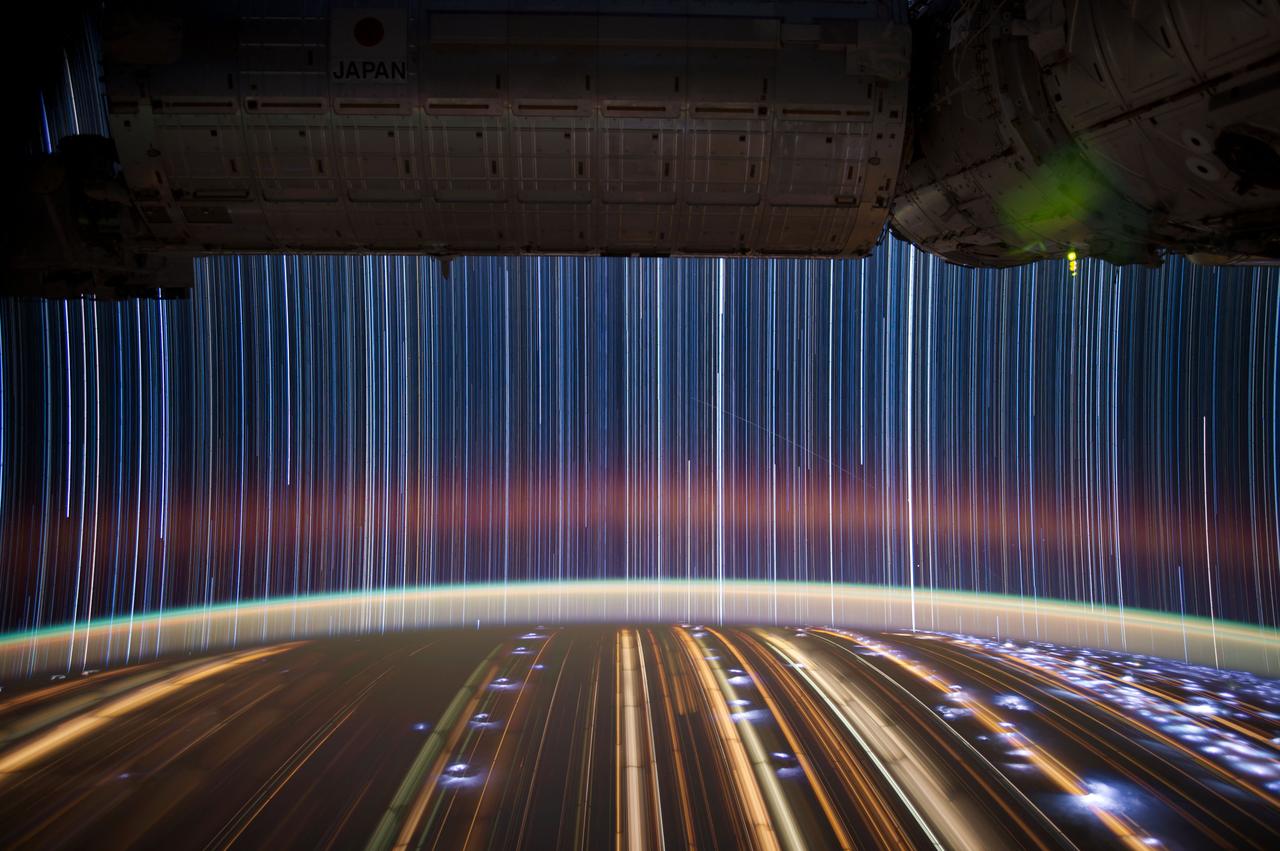
jsc2012e039800_alt (5 March 2012) --- This is a composite of a series of images photographed from a mounted camera on the Earth-orbiting International Space Station, from approximately 240 miles above Earth. Expedition 31 Flight Engineer Don Pettit relayed some information about photographic techniques used to achieve the images: "My star trail images are made by taking a time exposure of about 10 to 15 minutes. However, with modern digital cameras, 30 seconds is about the longest exposure possible, due to electronic detector noise effectively snowing out the image. To achieve the longer exposures I do what many amateur astronomers do. I take multiple 30-second exposures, then
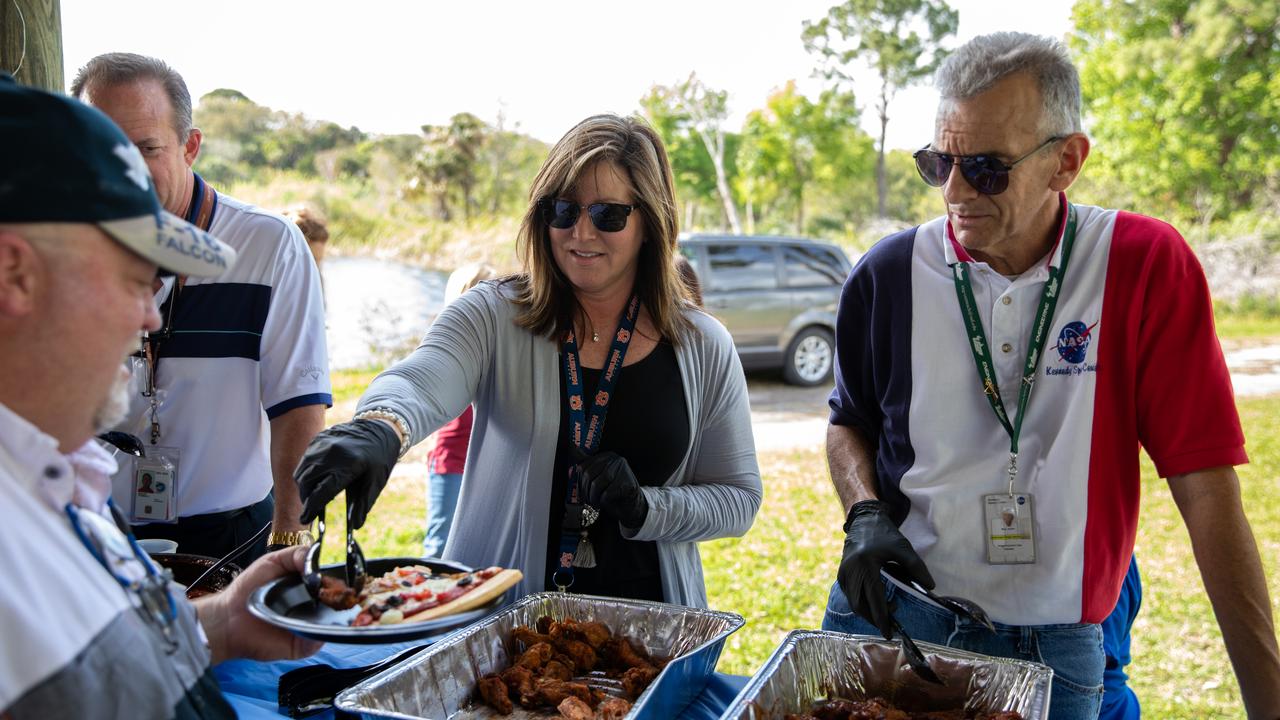
Jennifer Kunz, center, director of Safety and Mission Assurance, and Bob Mott, right, chief of the Commercial Systems Division in the Engineering Directorate at NASA’s Kennedy Space Center in Florida, serve food to Kennedy employees during a Safety and Health Days celebration on March 5, 2020. Taking place March 2 through March 6, Safety and Health Days provides Kennedy employees with a variety of presentations to attend – all of which focus on how to maintain a safe and healthy workforce. The celebration on March 5 took place at the Florida spaceport’s KARS Park II and was open for all employees to attend.
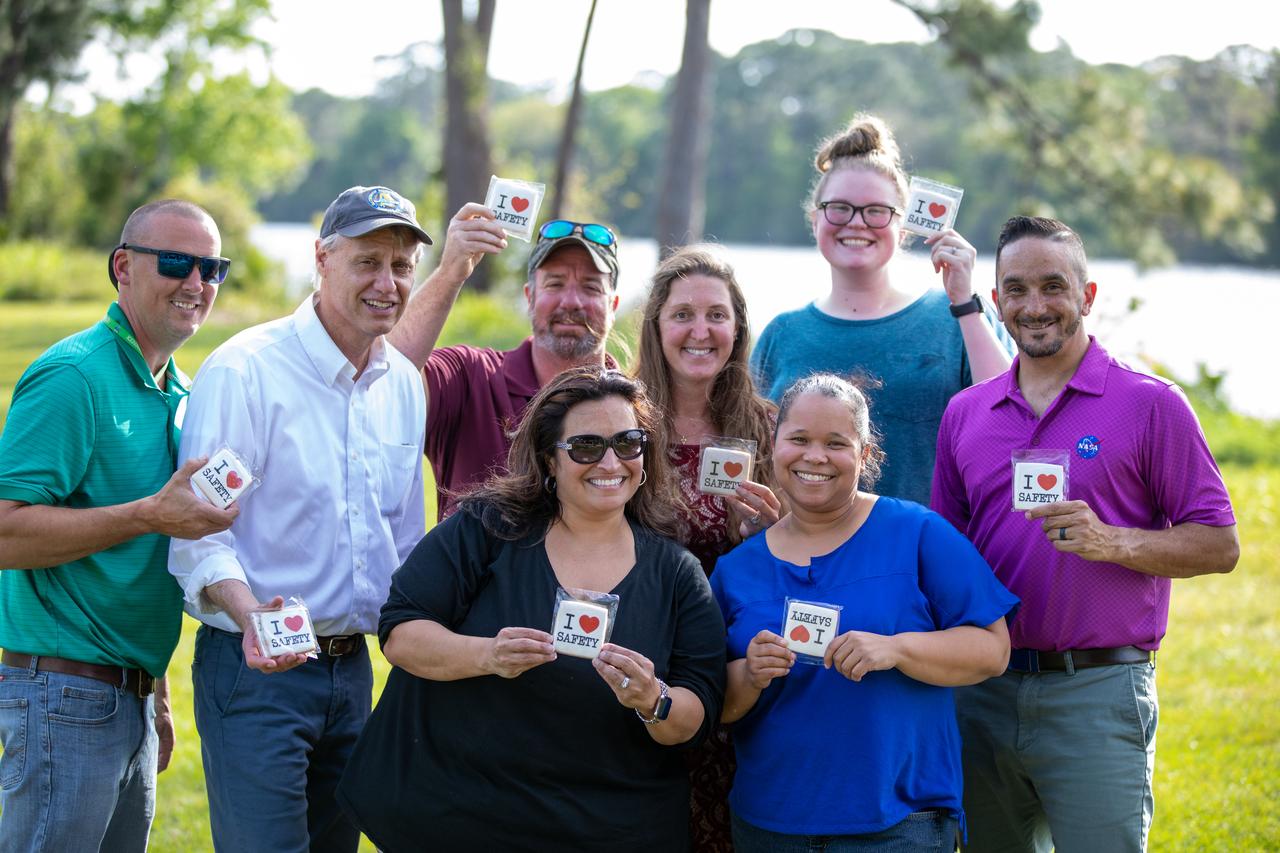
NASA Kennedy Space Center employees are photographed during a Safety and Health Days celebration at the Florida spaceport’s KARS Park II on March 5, 2020. Front row from left are Michele Richtmeyer and Heidi Harden, and back row from left are Phil Falk, Chris Berg, Marcus Chancery, Amber Philman-Blair, Larrin Moody and Dustin Cammack. Taking place March 2 through March 6, Safety and Health Days provides Kennedy employees with a variety of presentations to attend – all of which focus on how to maintain a safe and healthy workforce. The celebration on March 5 took place at the spaceport’s KARS Park II and was open for all employees to attend.
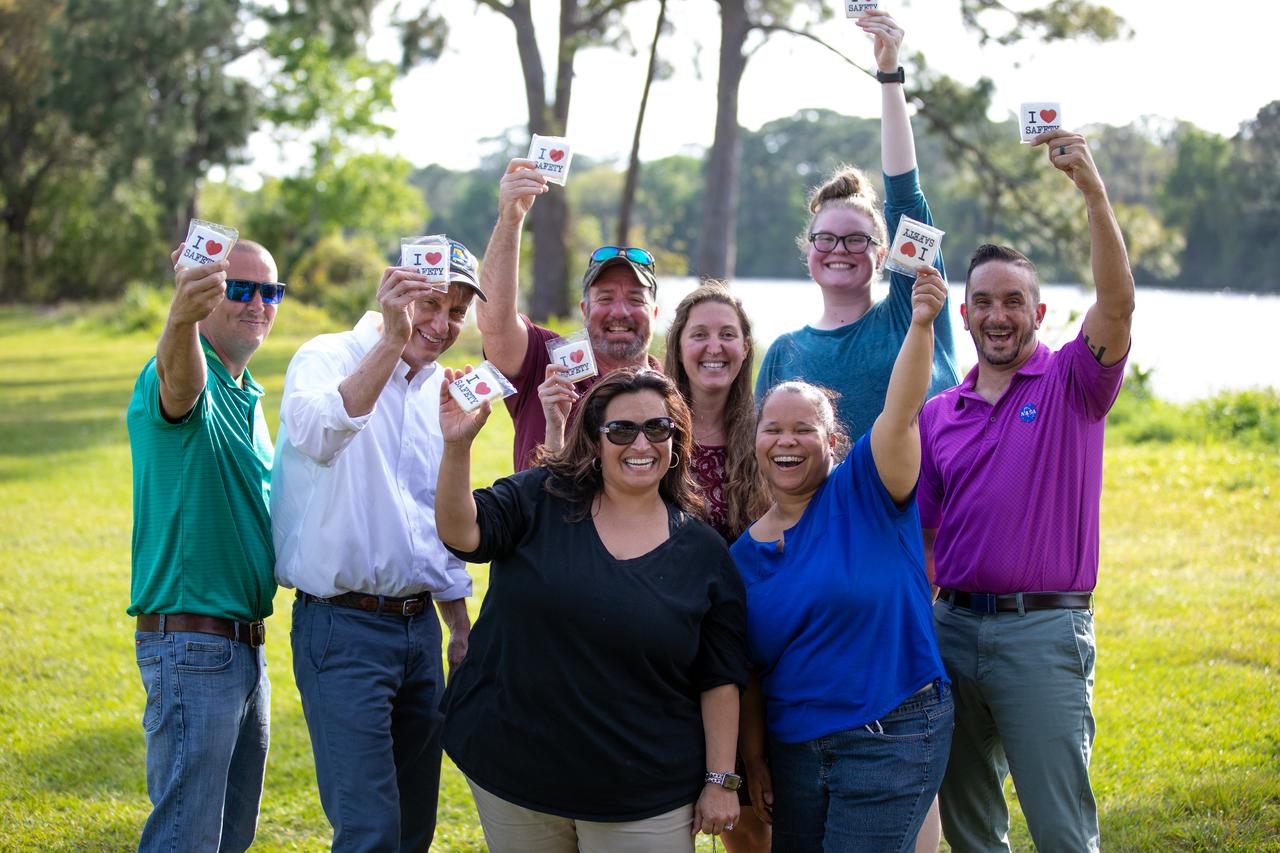
NASA Kennedy Space Center employees are photographed during a Safety and Health Days celebration at the Florida spaceport’s KARS Park II on March 5, 2020. Front row from left are Michele Richtmeyer and Heidi Harden, and back row from left are Phil Falk, Chris Berg, Marcus Chancery, Amber Philman-Blair, Larrin Moody and Dustin Cammack. Taking place March 2 through March 6, Safety and Health Days provides Kennedy employees with a variety of presentations to attend – all of which focus on how to maintain a safe and healthy workforce. The celebration on March 5 took place at the spaceport’s KARS Park II and was open for all employees to attend.
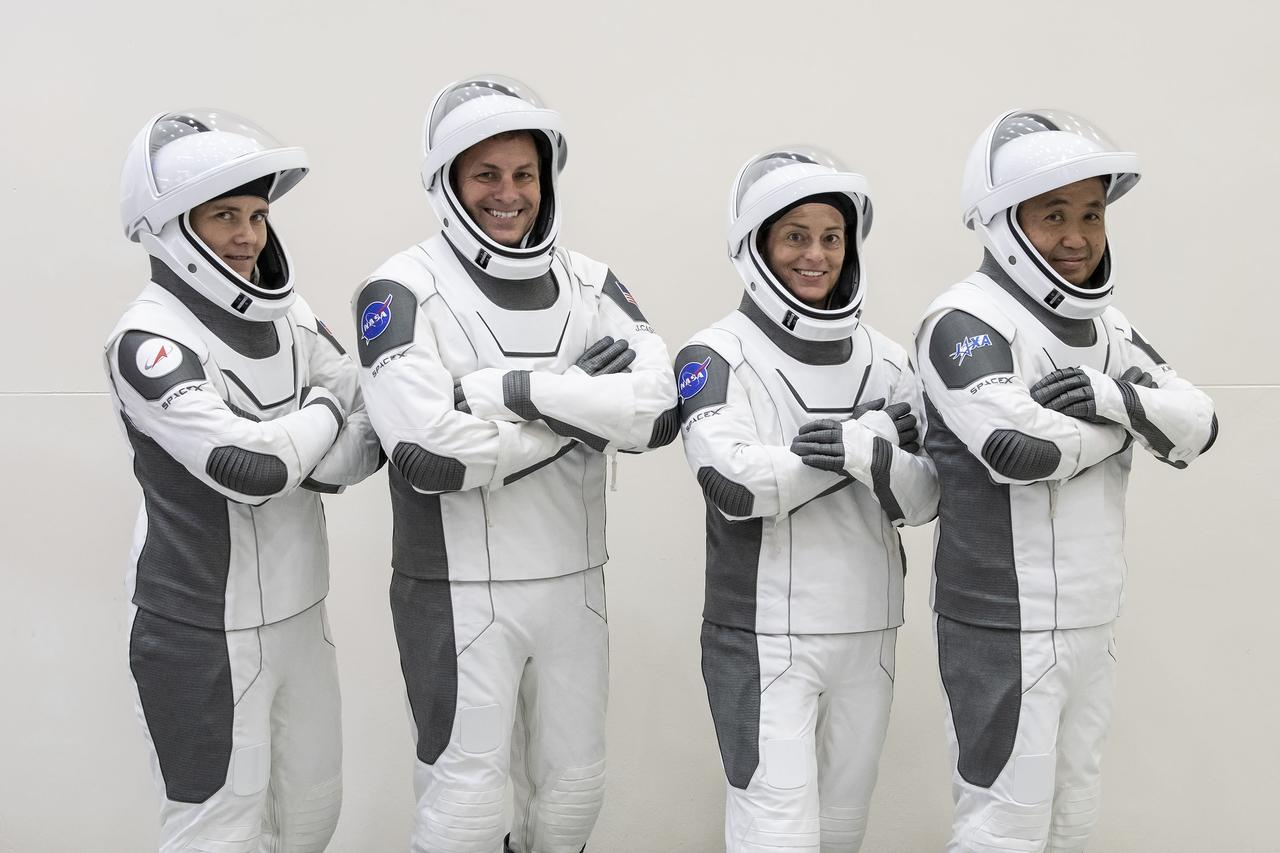
SpaceX Crew-5 astronauts take a break during a crew equipment interface test (CEIT) at SpaceX headquarters in Hawthorne, California, on Aug. 13, 2022. From left are Anna Kikina, mission specialist; Josh Cassada, pilot; Nicole Mann, spacecraft commander; and Koichi Wakata, mission specialist with JAXA (Japan Aerospace Exploration Agency). During the CEIT, the astronauts practiced launch and docking in a high-fidelity simulator of SpaceX’s Dragon capsule. Each astronaut suited up and practiced getting into position inside the capsule. NASA’s SpaceX Crew-5 will be the fifth crew rotation mission of the company’s human space transportation system and its sixth flight with astronauts to the International Space Station for the agency’s Commercial Crew Program. Crew-5 will launch on the Falcon 9 rocket from Launch Complex 39A at NASA’s Kennedy Space Center in Florida no earlier than Sept. 29, 2022.
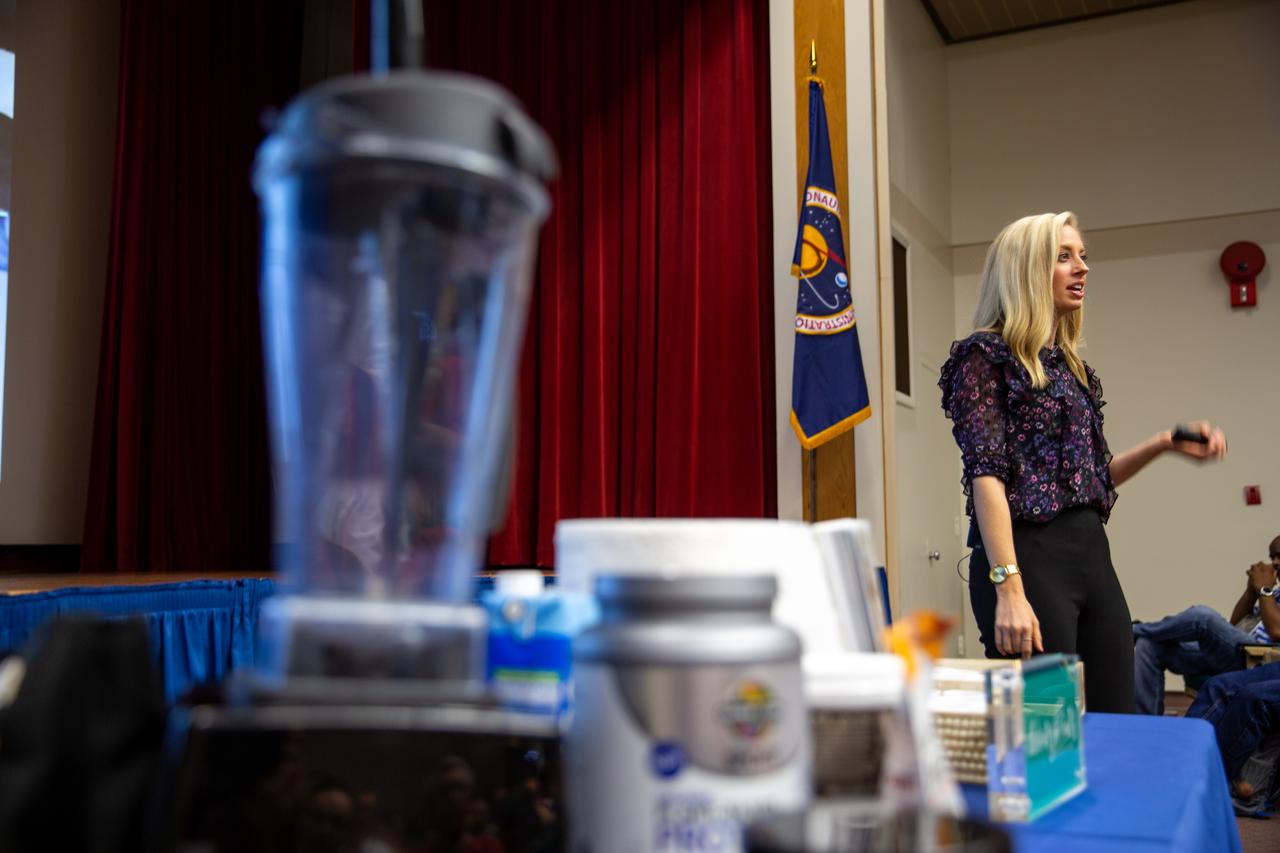
Carly Paige, an integrative nutrition health coach and chef, speaks to Kennedy Space Center employees inside the Florida spaceport’s Training Auditorium on March 5, 2020, during the center’s annual Safety and Health Days. Taking place March 2 through March 6, Safety and Health Days provides Kennedy employees with a variety of presentations to attend – all of which focus on how to maintain a safe and healthy workforce. Paige’s presentation included information on simple swaps that can be made to incorporate healthier habits on a daily basis.
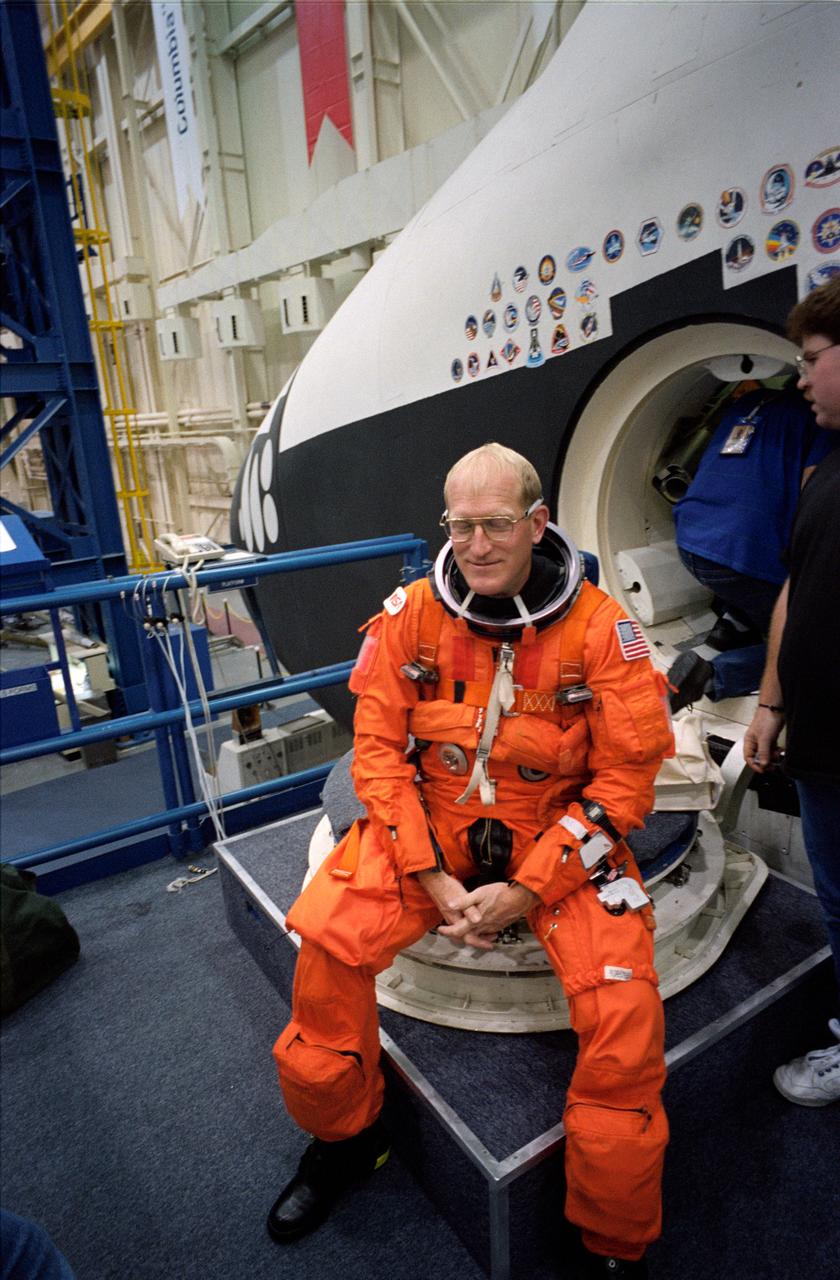
S93-48462 (5 Nov. 1993) --- Astronaut Charles D. (Sam) Gemar, wearing a partial pressure launch and entry suit (LES), takes a break during a training exercise at the Johnson Space Center (JSC). The mission specialist and four crew mates rehearsed emergency egress procedures using the escape pole device in the trainer's hatchway (near right center frame).
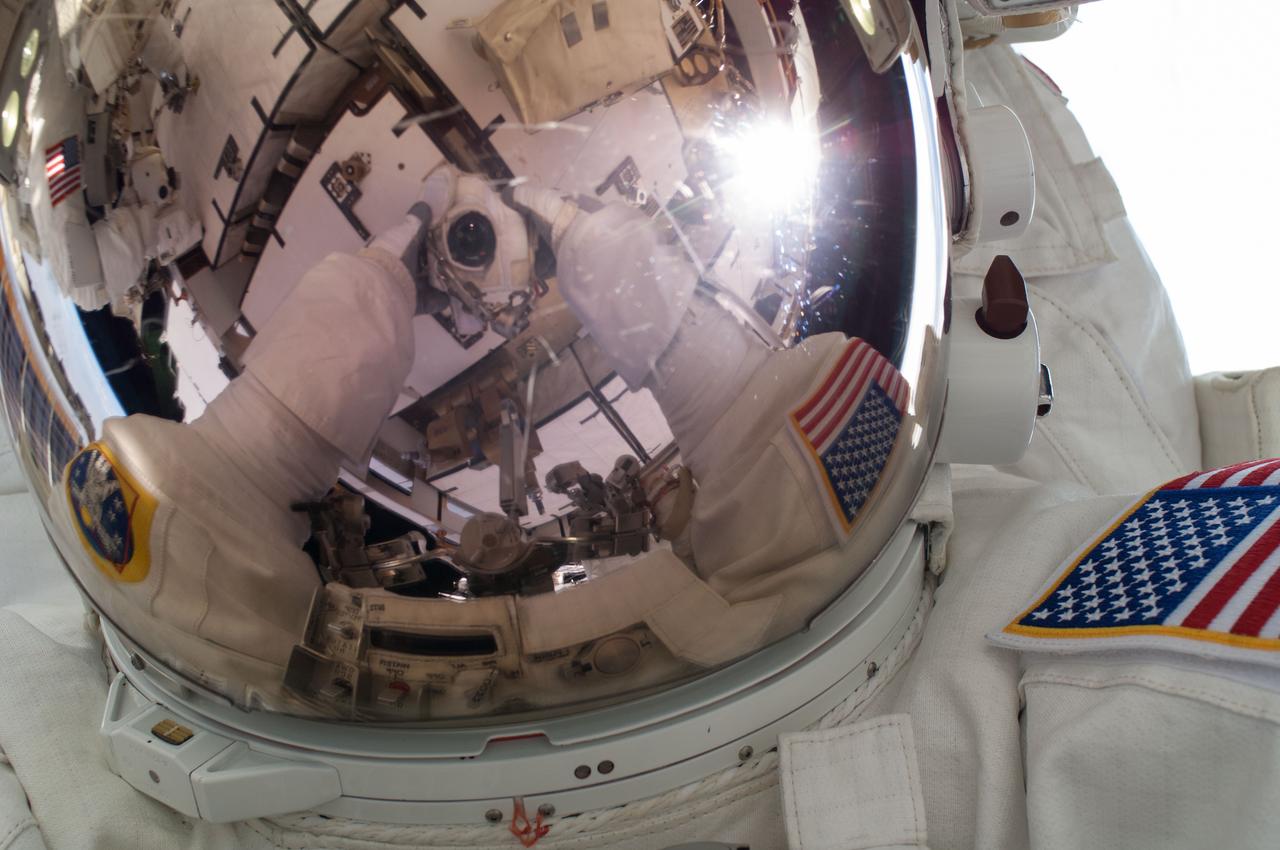
ISS035-E-037002 (11 May 2013) --- Expedition 35 Flight Engineers Chris Cassidy takes a self portrait, as he and Tom Marshburn (seen partially in Cassidy's helmet visor) accomplished a space walk on May 11 to inspect and replace a pump controller box on the International Space Station?s far port truss (P6) leaking ammonia coolant. The two NASA astronauts began the 5-hour, 30-minute space walk at 8:44 a.m. and completed it at 2:14 p.m. EDT.
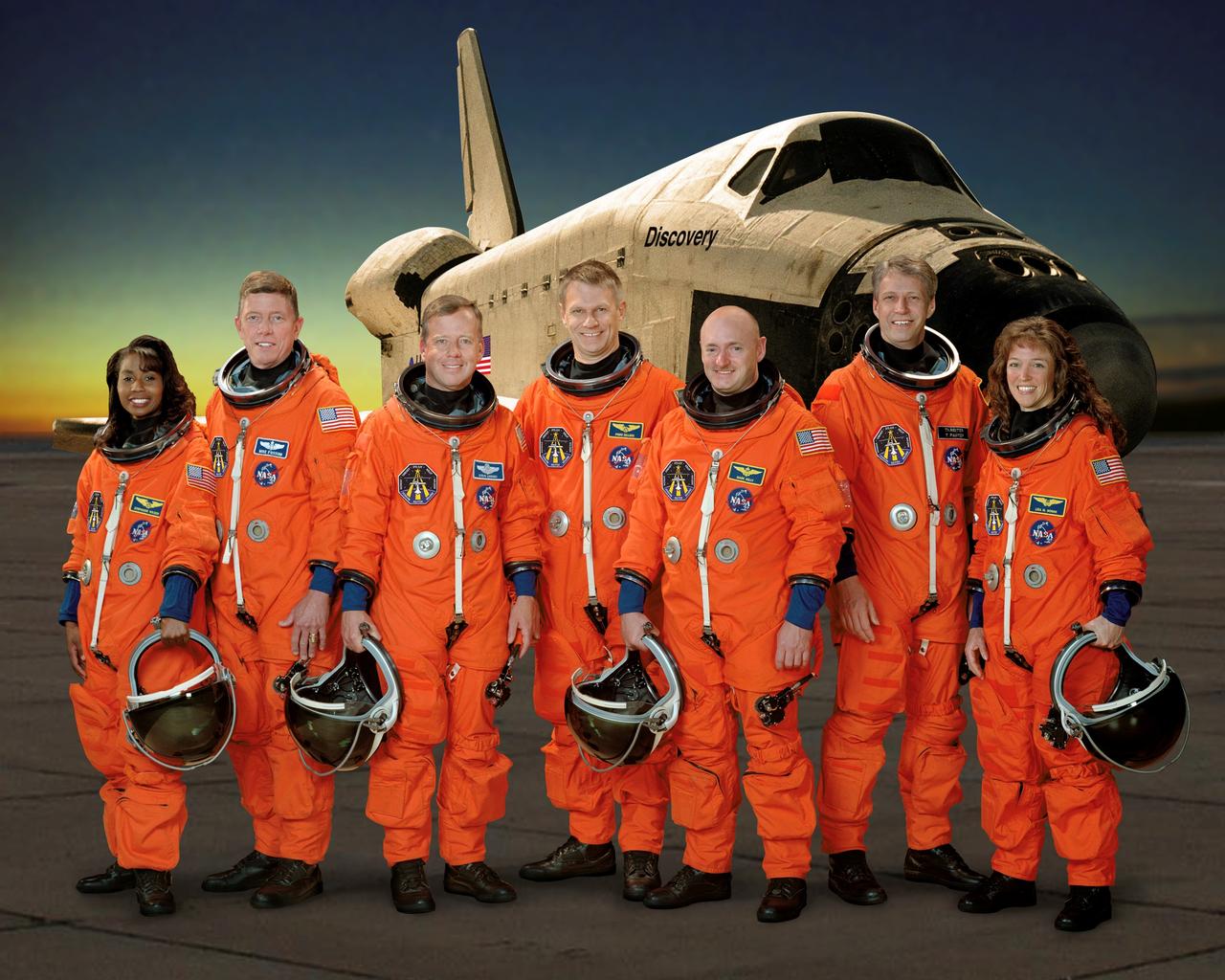
STS121-S-002 (5 April 2006) --- These seven astronauts take a break from training to pose for the STS-121 crew portrait. From the left are astronauts Stephanie D. Wilson, Michael E. Fossum, both mission specialists; Steven W. Lindsey, commander; Piers J. Sellers, mission specialist; Mark E. Kelly, pilot; European Space Agency (ESA) astronaut Thomas Reiter of Germany; and Lisa M. Nowak, both mission specialists. The crewmembers are attired in training versions of their shuttle launch and entry suit.
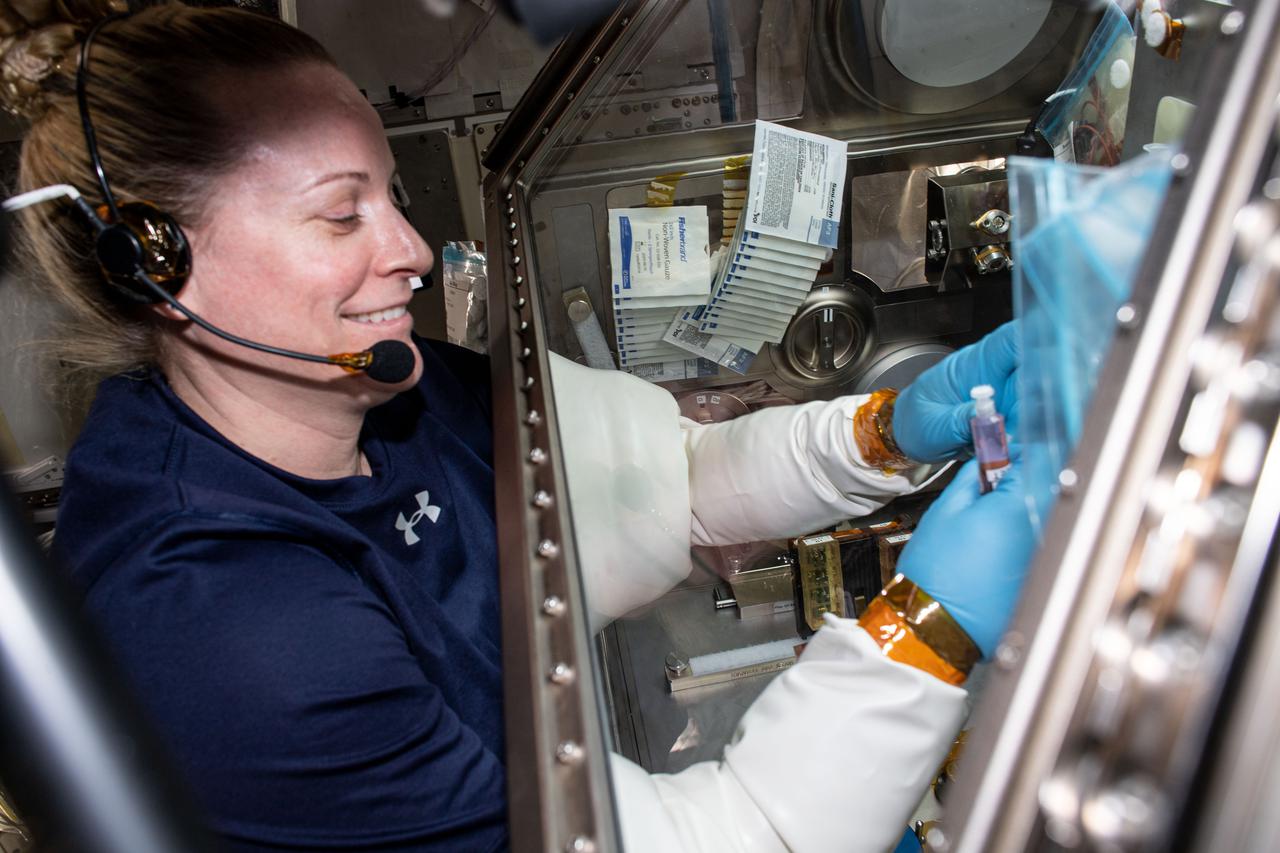
iss064e020036 (Jan. 5, 2021) --- Expedition 64 Flight Engineer and NASA astronaut Kate Rubins explores the space-caused aging and weakening of heart muscles that astronauts experience for the Cardinal Heart study. The experiment uses engineered heart tissue samples and is taking place inside the Life Sciences Glovebox located in the Japanese Kibo laboratory module.

jsc2021e033554 (5/12/2021) --- A prefliight view of Ice Cubes #9 - Project Maleth. The Maltese Biocube, based on ICE Cubes platform by Space Applications Services, that will take samples to the International Space Station in a historic first for the country. The investigation studies Diabetes Mellitus Type 2 and Diabetic Foot Ulcers (DFU) using genetics and space biosciences is new and innovative research. Image credit: DOI: Ministry for Foreign and European Affairs, Malta
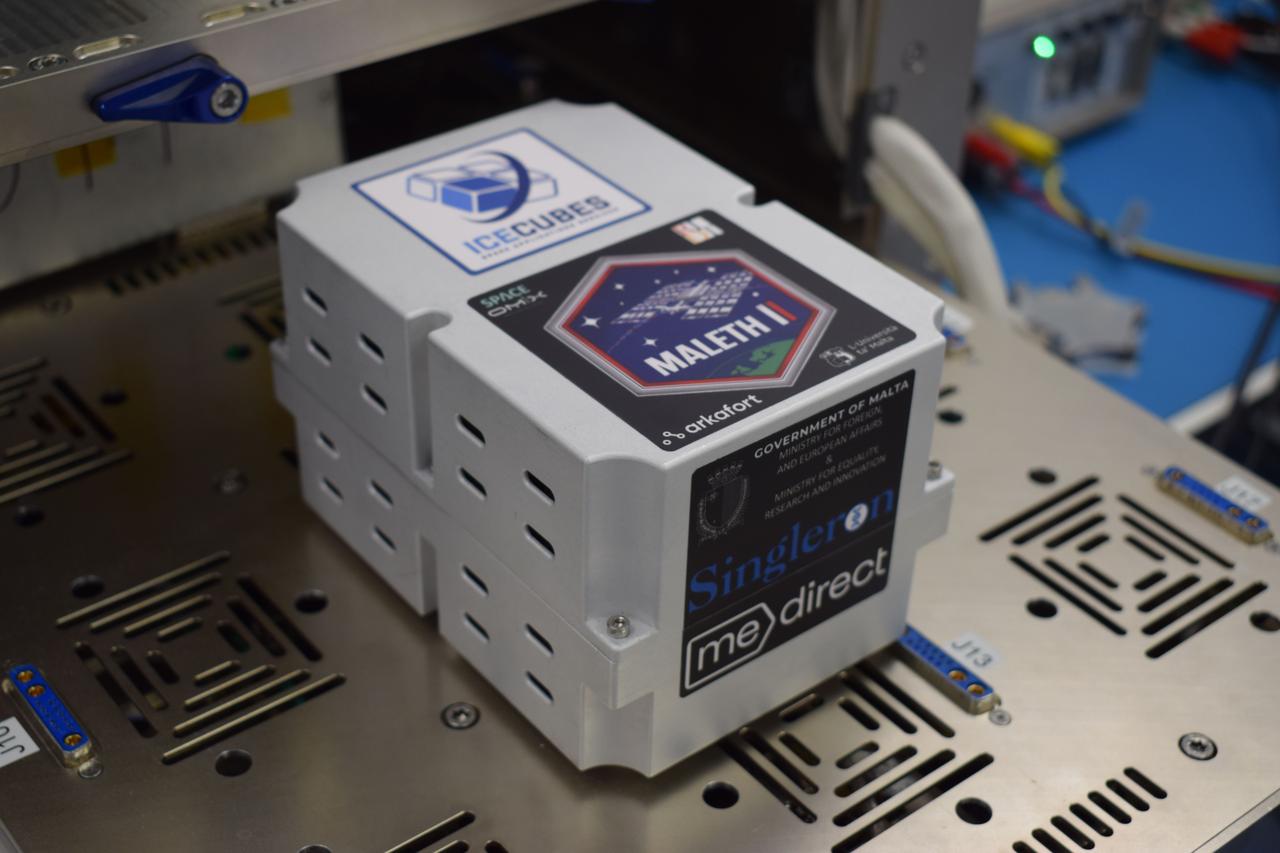
jsc2022e057890 (5/12/2022) --- MALETH II Biocube, based on the ICE Cubes platform by Space Applications Services, that takes Malta’s second space mission samples to the International Space Station. This is part of the Follow-up Study of Human Skin Tissue Microbiome Studies and Yeast Cells in Space (Ice Cubes #9.2 – Maleth 2) investigation. Image courtesy of Glenn Sciortino, Arkafort Ltd.

JOHNSON SPACE CENTER, HOUSTON, Texas -- (JSC-STS107-5-002) -- The seven STS-107 crew members take a break from their training regimen to pose for the traditional crew portrait. Seated in front are astronauts Rick D. Husband (left), mission commander, and William C. McCool, pilot. Standing are (from left) astronauts David M. Brown, Laurel B. Clark, Kalpana Chawla and Michael P. Anderson, all mission specialists; and Ilan Ramon, payload specialist representing the Israeli Space Agency.
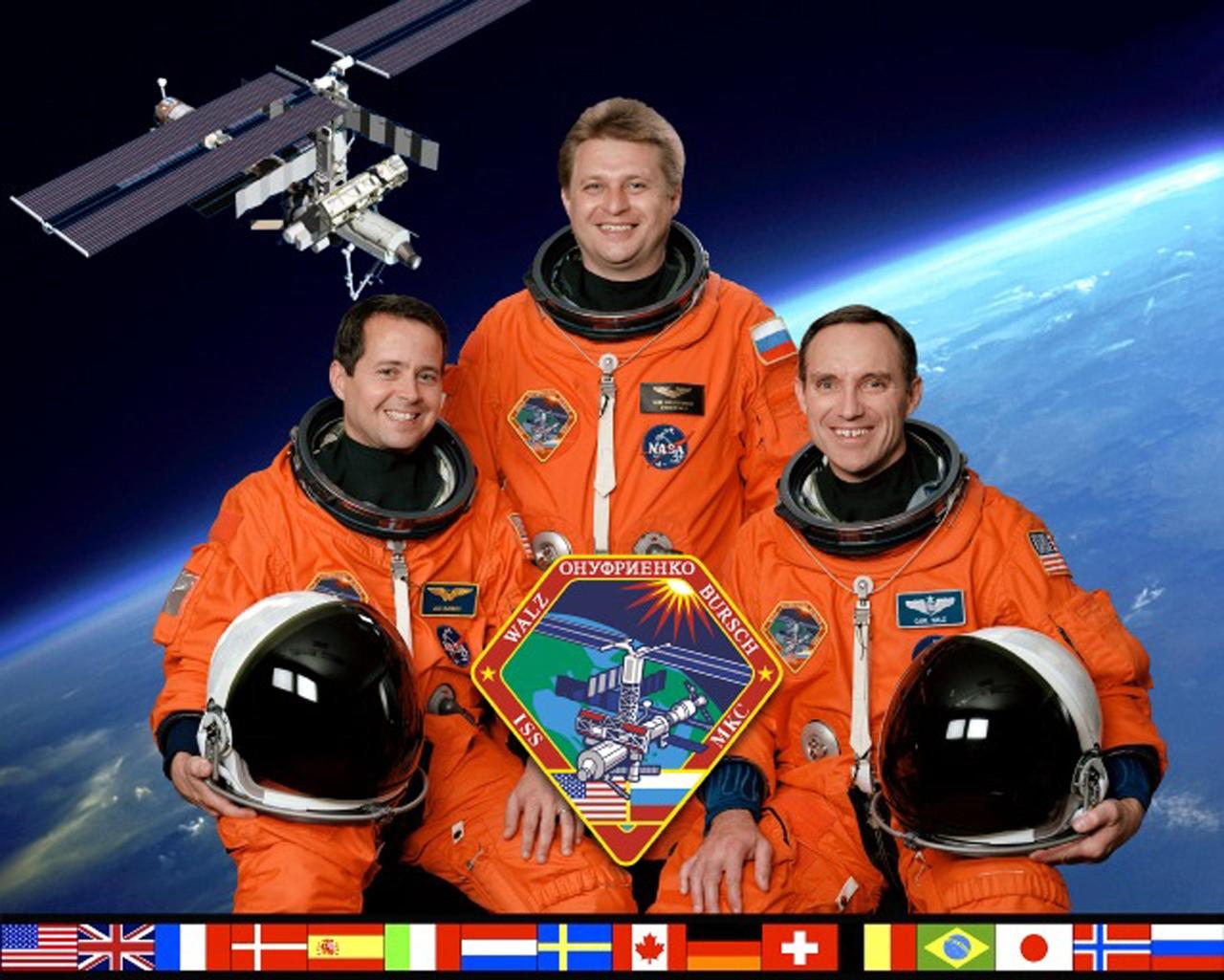
JOHNSON SPACE CENTER, HOUSTON, TEXAS -- EXPEDITION FOUR CREW PORTRAIT -- (ISS04-5-002) -- Expedition Four crew members take a break from training for their scheduled upcoming stay aboard the International Space Station (ISS) to pose for the traditional pre-flight crew portrait. Cosmonaut Yuri I. Onufrienko (standing at center), mission commander, is flanked by astronauts Daniel W. Bursch (left) and Carl E. Walz, both flight engineers. The national flags of the International Partners are at the bottom of the portrait
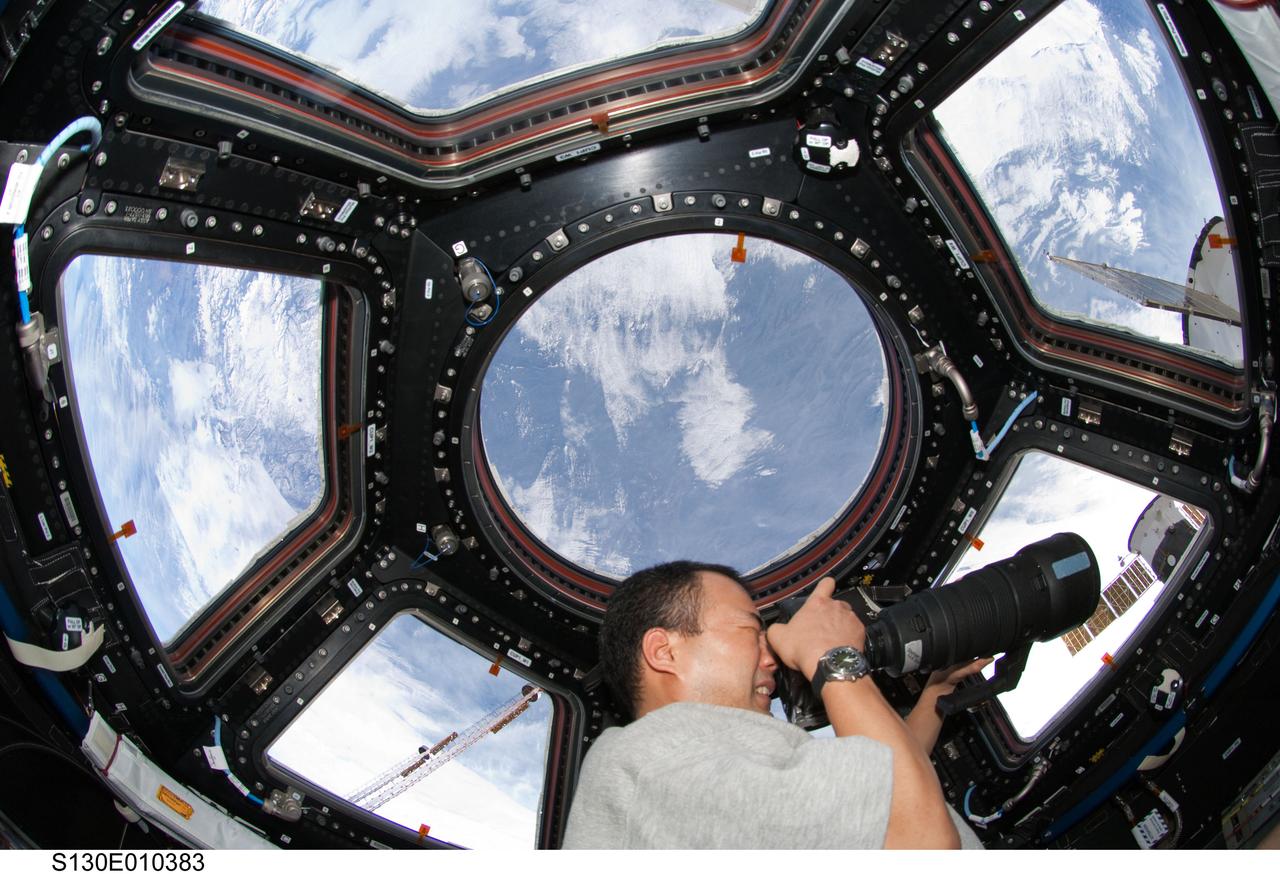
S130-E-010383 (19 Feb. 2010) --- Expedition 22 flight engineer Soichi Noguchi, Japan Aerospace Exploration Agency (JAXA) astronaut, takes photos through Window 5 in the Cupola aboard the International Space Station during Expedition 22 joint operations with the visiting STS-130 astronauts. One of the shuttle astronauts took this picture. Since the camera sports a large lens for this exercise, Noguchi is more than likely focusing in on a geographic site on Earth, as part of an ongoing Earth observations program. Photo credit: NASA

At the Cosmonaut Hotel crew quarters in Baikonur, Kazakhstan, Expedition 35-36 Flight Engineer Chris Cassidy of NASA plays a game of billiards March 21 as he takes a break from training for his launch to the International Space Station with crewmates Pavel Vinogradov and Alexander Misurkin March 29, Kazakh time, in their Soyuz TMA-08M spacecraft from the Baikonur Cosmodrome. The three crewmembers will spend 5 ½ months on the orbital laboratory. NASA/Victor Zelentsov

In the Cosmonaut Hotel crew quarters in Baikonur, Kazakhstan, Koichi Wakata of the Japan Aerospace Exploration Agency takes a turn at the billiards table May 22 as he, Mikhail Tyurin and Rick Mastracchio of NASA serve as backups to prime Expedition 36/37 crewmembers Karen Nyberg of NASA, Luca Parmitano of the European Space Agency and Fyodor Yurchikhin, who are preparing for their launch May 29, Kazakh time, in the Soyuz TMA-09M spacecraft to begin a 5 ½ month mission on the International Space Station. NASA/Victor Zelentsov
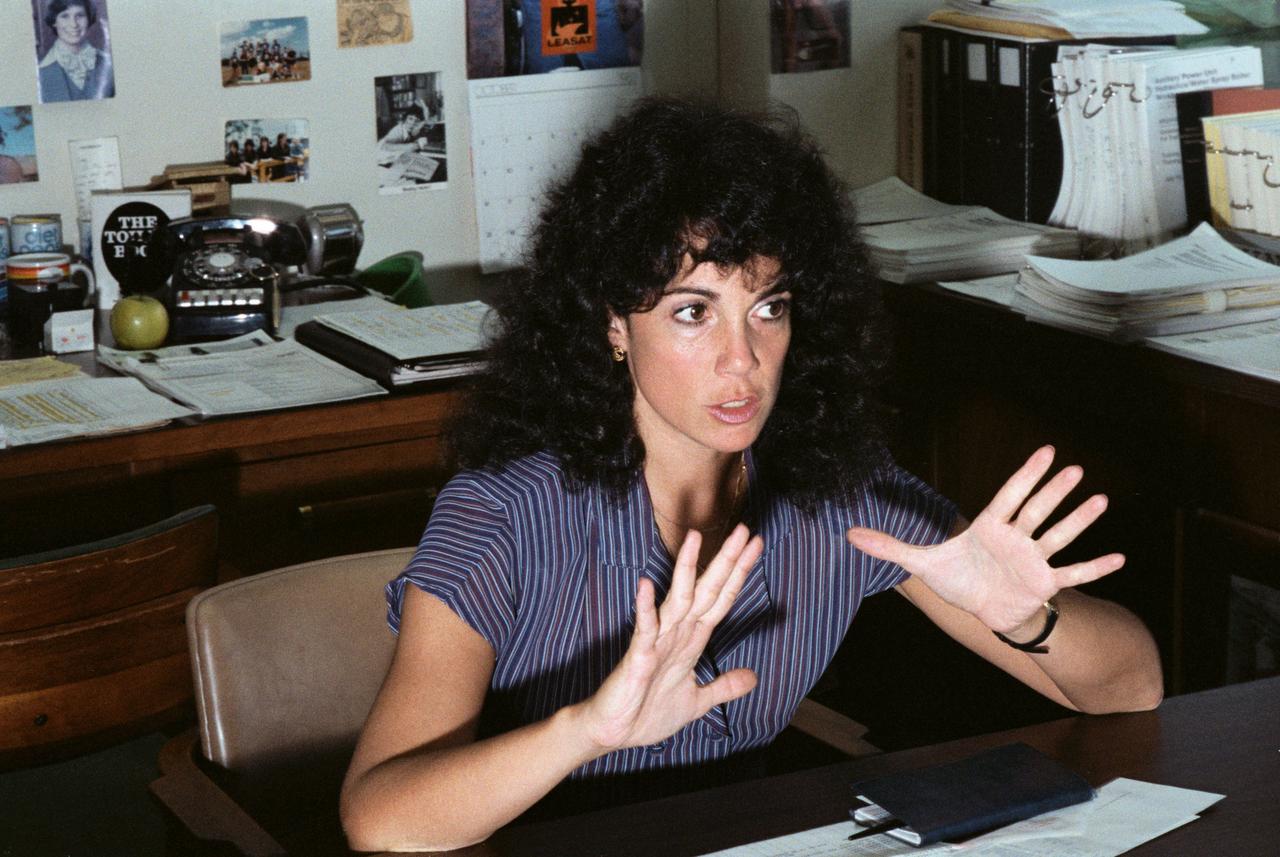
S85-40171 (5 Sept. 1985) --- Astronaut Judith A. Resnik, in her office, at the Johnson Space Center (JSC). Resnik is taking a break from training for her upcoming space mission. EDITOR’S NOTE: The STS-51L crew members lost their lives in the space shuttle Challenger accident moments after launch on Jan. 28, 1986 from the Kennedy Space Center (KSC). Photo credit: NASA
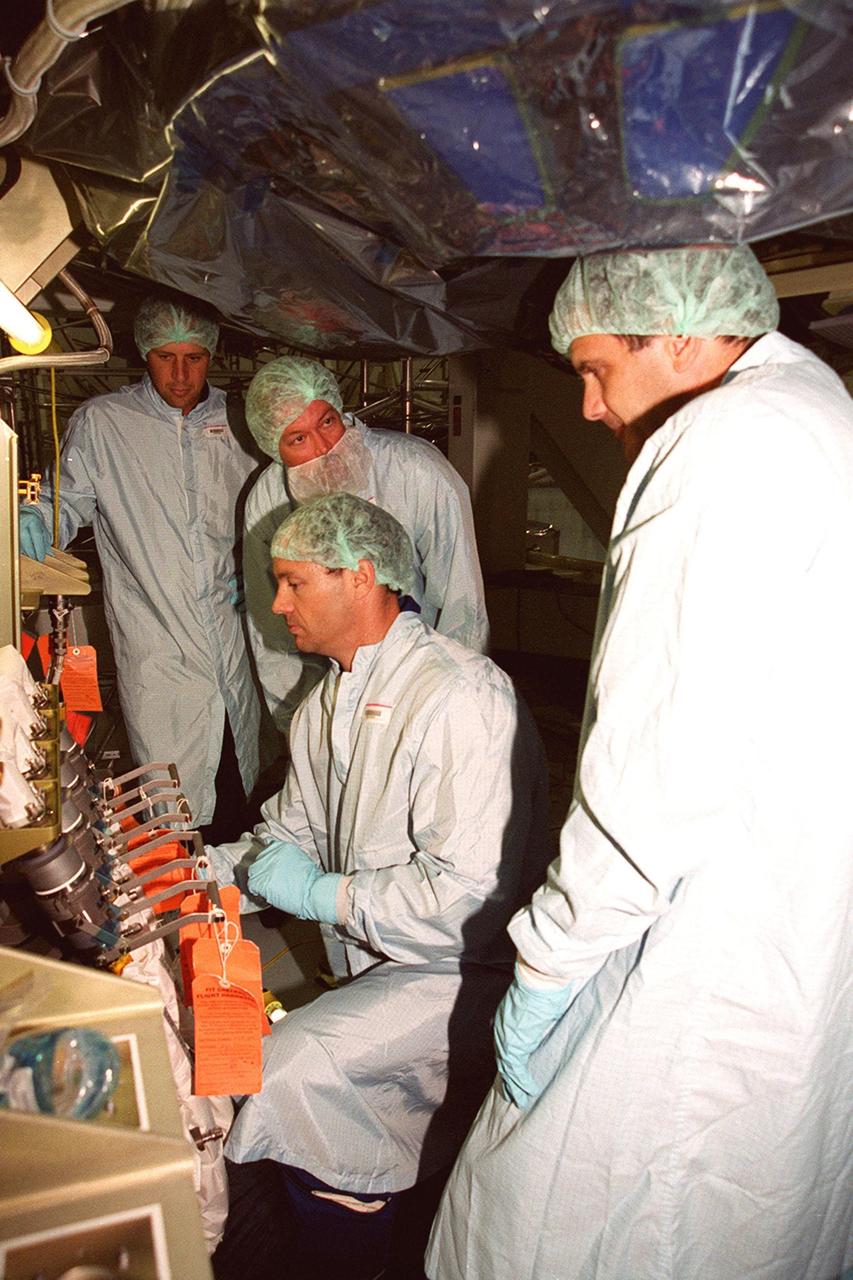
STS-92 Mission Specialists Michael Lopez-Alegria (center) and Jeff Wisoff (right) check out the Integrated Truss Structure Z1, a component of the International Space Station and payload on their mission. They and other crew members are taking part in Crew Equipment Interface Test (CEIT) activities while at KSC. The Z1 truss is an early exterior framework to allow the first U.S. solar arrays on a future flight to be temporarily installed on Unity for early power. STS-92 is scheduled to launch Oct. 5 from launch Pad 39A
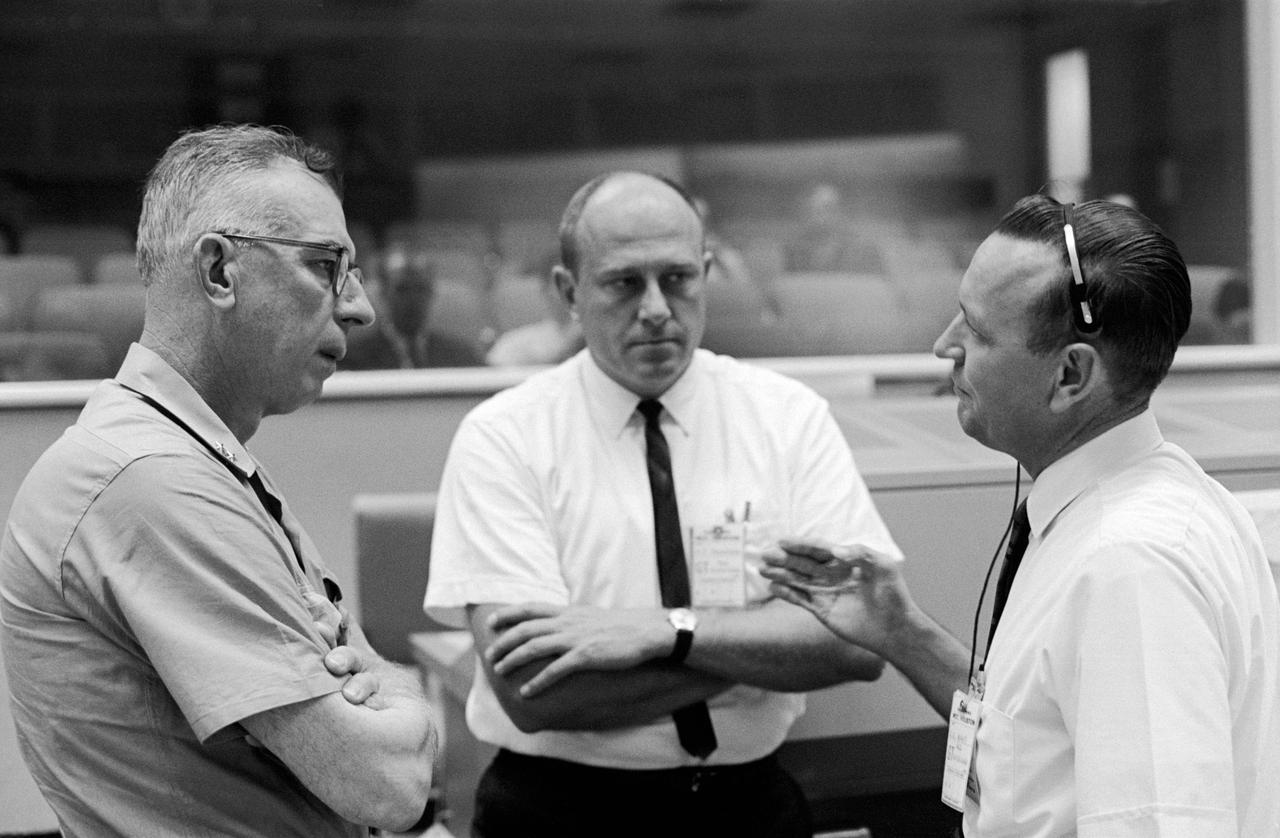
S65-28734 (24 Aug. 1965) --- Rear Admiral W.C. Abhau (left), who will take over command of Task Force 140 for Gemini-6, is shown in the Mission Control Center being briefed on recovery operations for Gemini by Robert F. Thompson (center), NASA recovery coordinator; and Christopher C. Kraft Jr., flight director for Gemini-5.
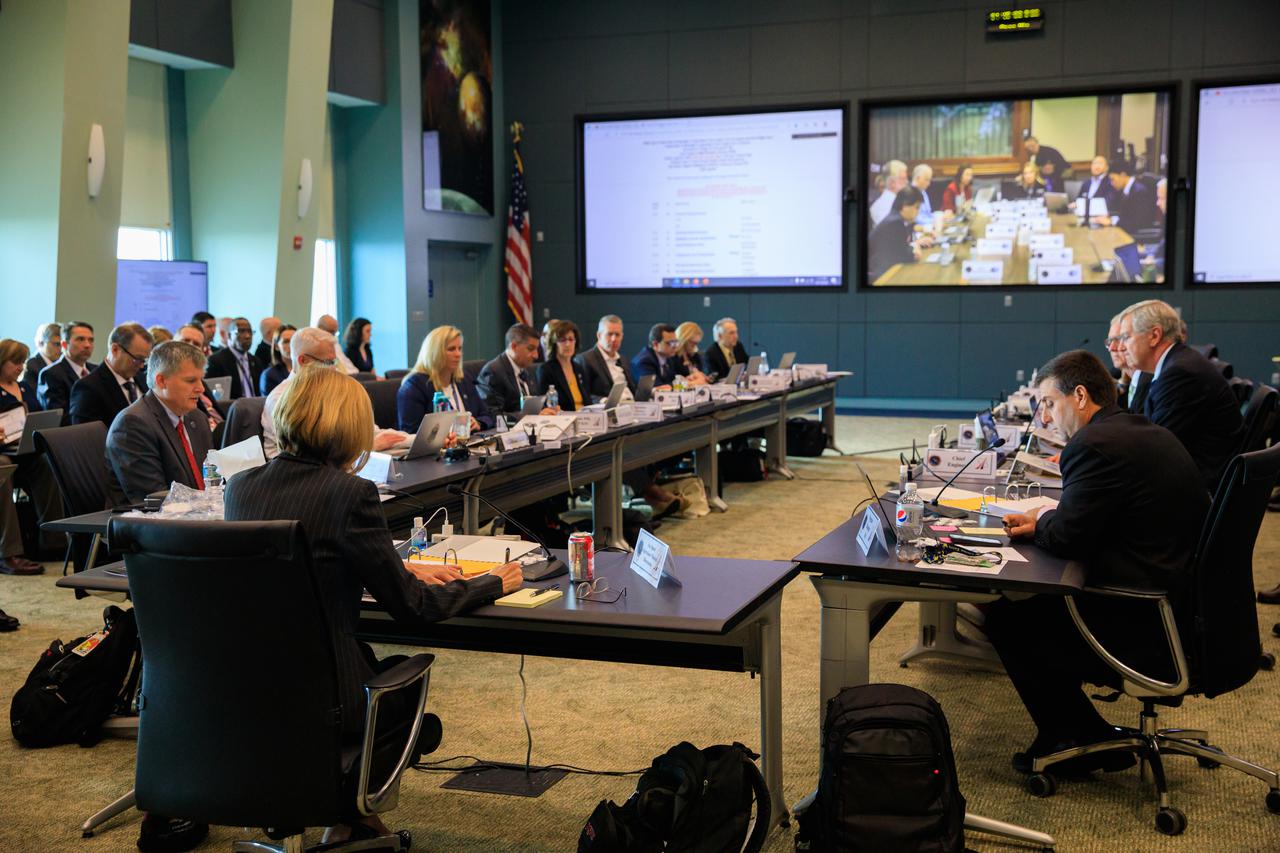
NASA’s SpaceX Crew-4 Flight Readiness Review takes place at Kennedy Space Center on April 15, 2022. The mission is targeted to launch from the Florida Spaceport’s Launch Complex 39A on April 23, 2022, at 5:26 a.m. EDT. NASA astronauts Kjell Lindgren, Bob Hines, and Jessica Watkins, and ESA (European Space Agency) astronaut Samantha Cristoforetti will fly to the station aboard SpaceX’s Crew Dragon, powered by the company’s Falcon 9 rocket.
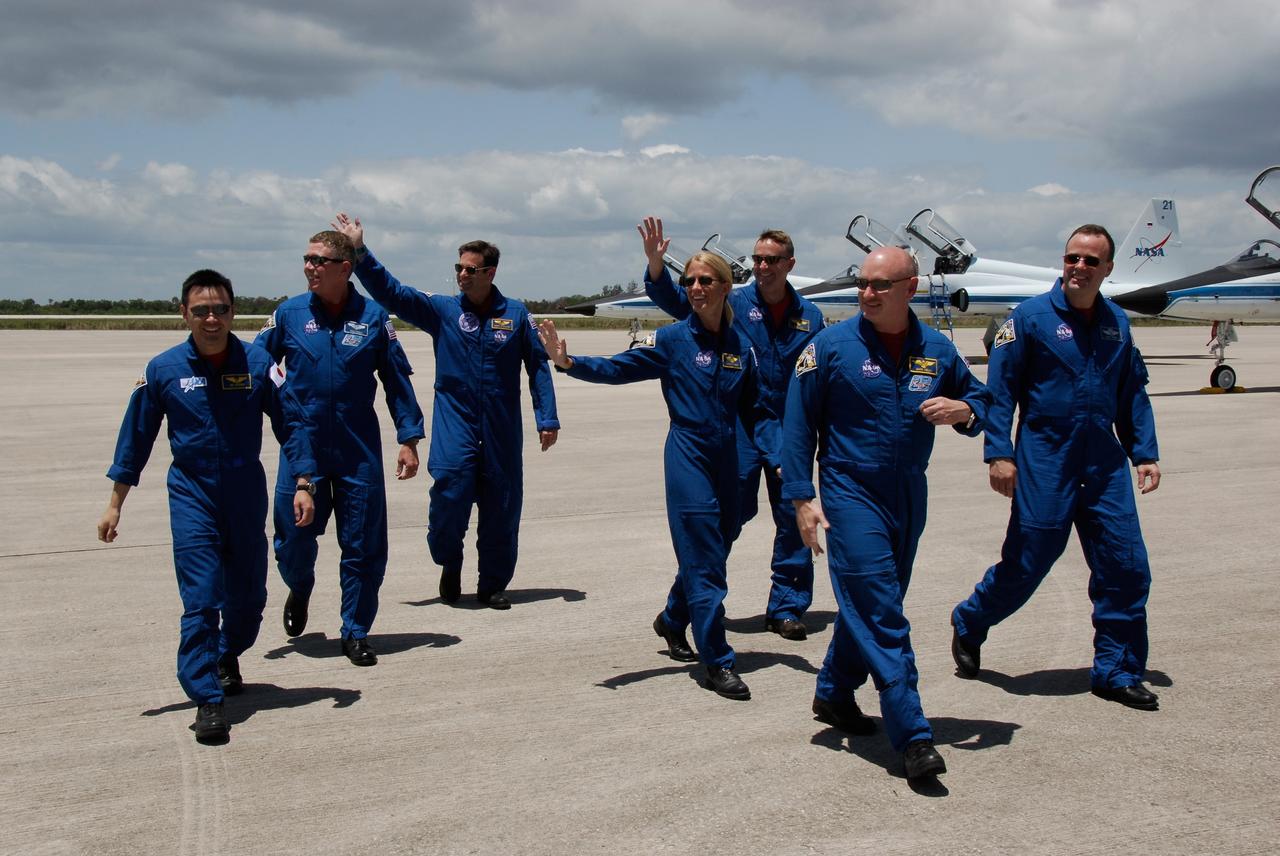
CAPE CANAVERAL, Fla. -- After greeting the media on their arrival on the Shuttle Landing Facility at NASA's Kennedy Space Center, the crew members of space shuttle Discovery's STS-124 mission wave and head for the van that will take them to crew quarters in the Operations and Checkout Building. They will be preparing for launch scheduled for 5:02 p.m. May 31. On the STS-124 mission, the crew of seven will deliver and install the Japanese Experiment Module – Pressurized Module and Japanese Remote Manipulator System. Photo credit: NASA/Kim Shiflett
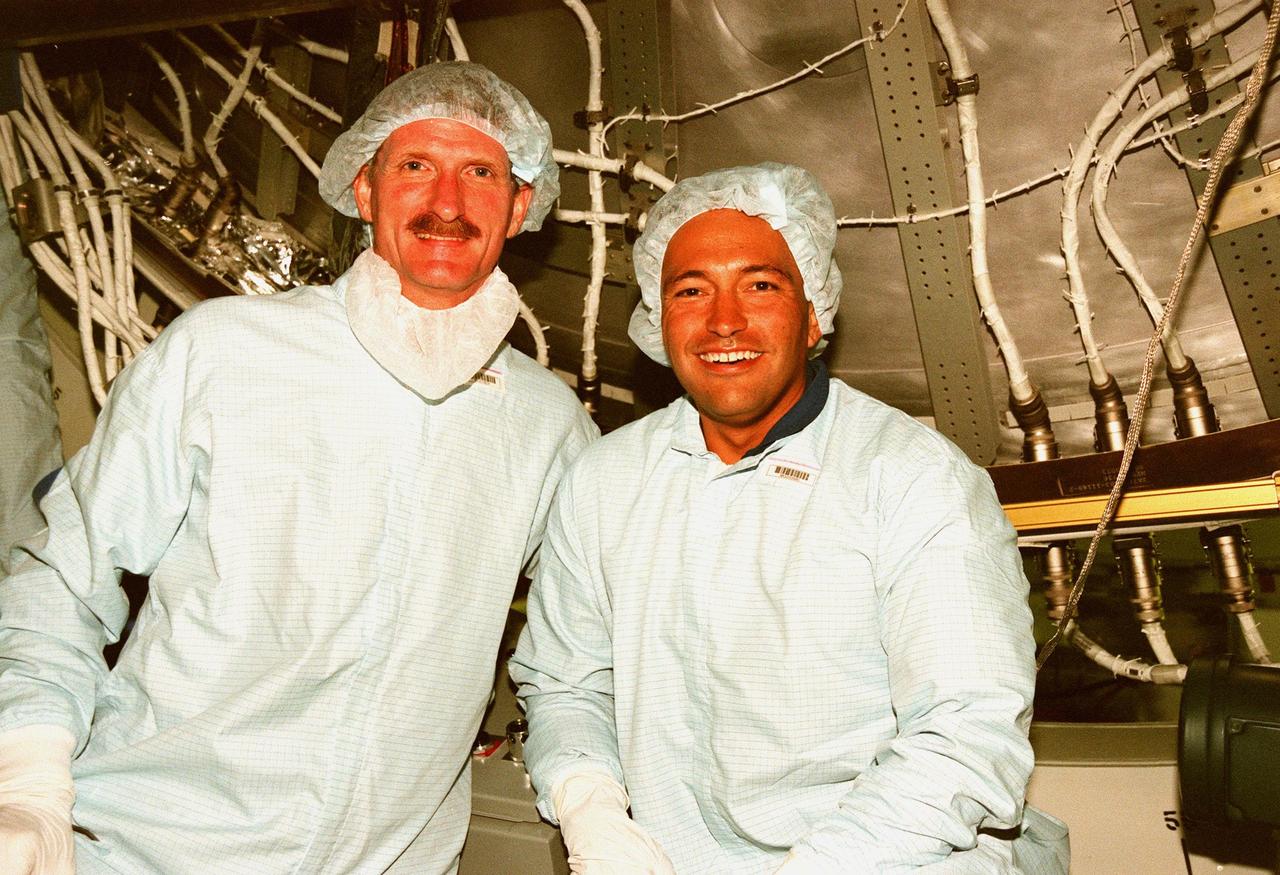
Inside the Space Station Processing Facility, STS-97 Mission Specialists Joseph R. Tanner and Carlos I. Noriega take a break from equipment check for the International Space Station . STS-97, the fourth ISS flight, is targeted to launch on Aug. 5, 1999. It is scheduled to carry integrated truss structure P6, photovoltaic module and radiators
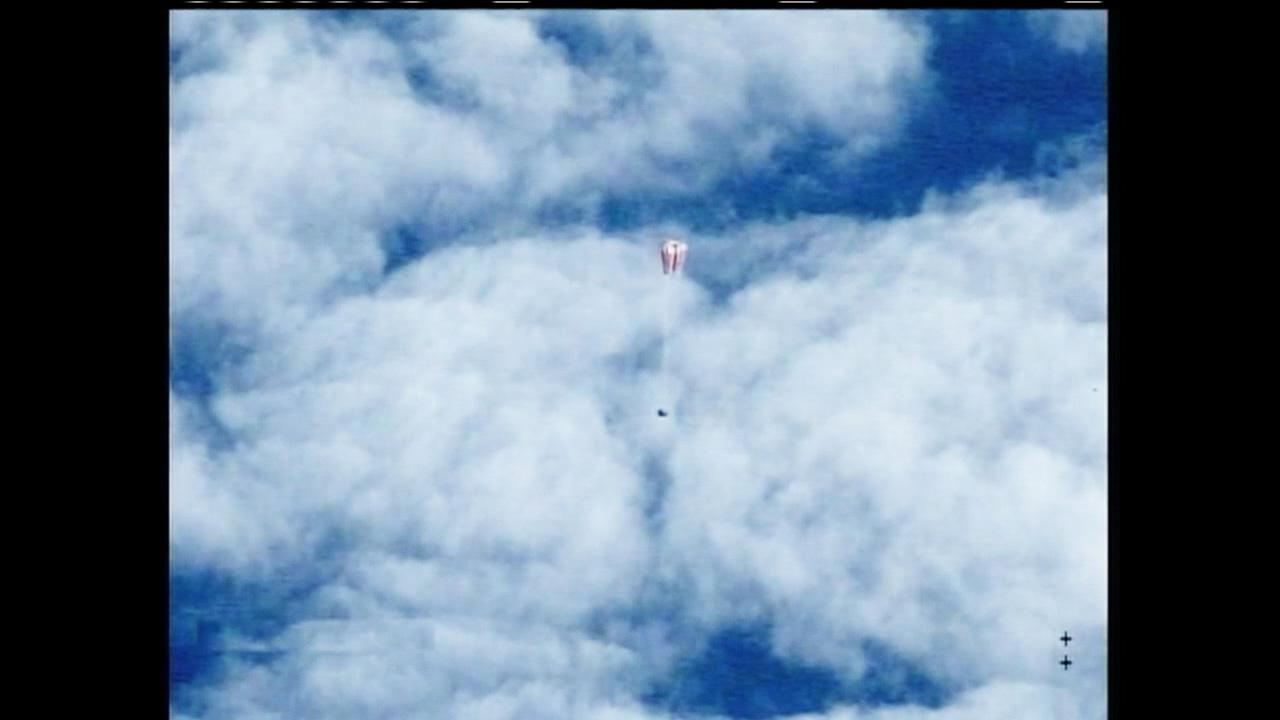
Following more than four hours in Earth orbit, NASA's Orion spacecraft is seen from an unpiloted aircraft as it descends under three massive red and white main parachutes after Exploration Flight Test-1 (EFT-1) on Dec. 5, 2014. Splashdown in the Pacific Ocean will take place at less than 20 mph. It will be recovered by the USS Anchorage, a landing platform-dock, or LPD, ship. Part of Batch image transfer from Flickr.
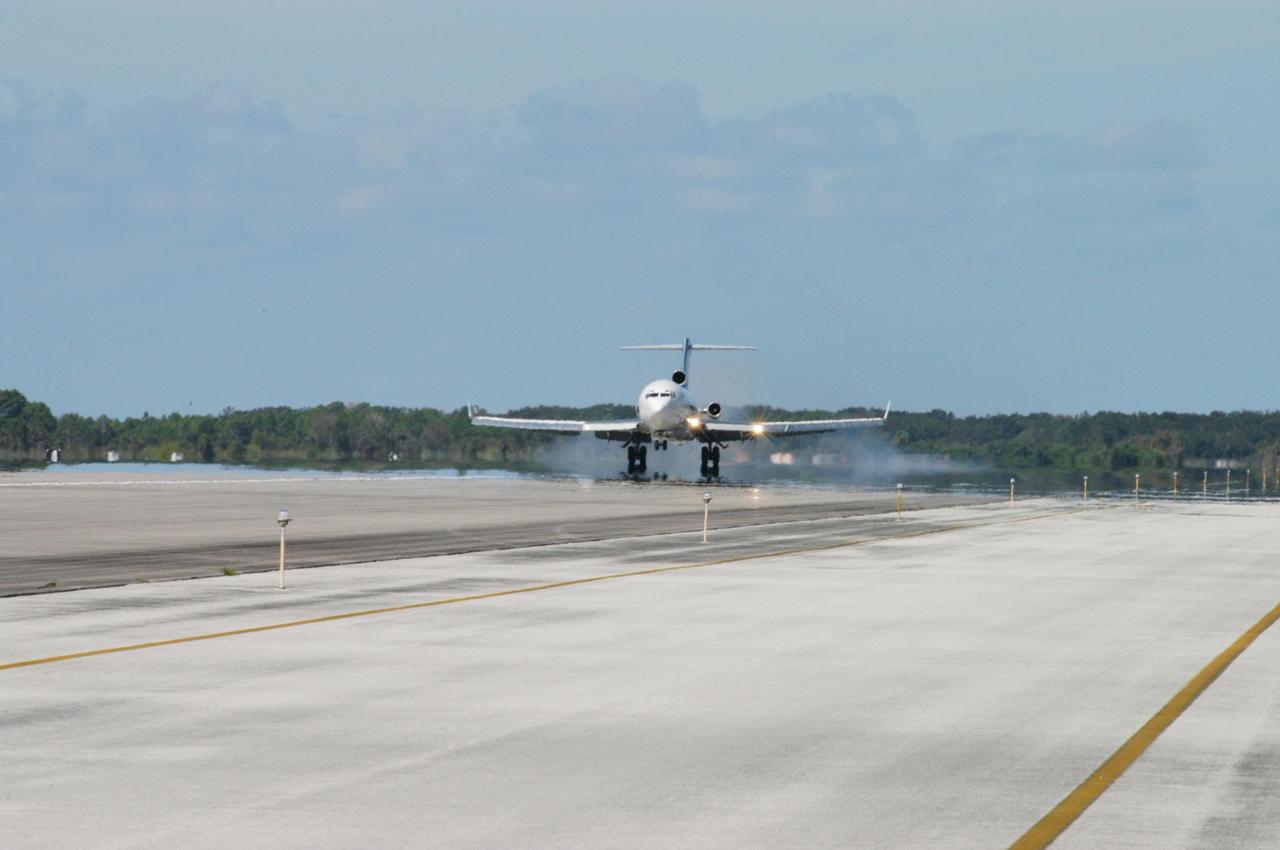
KENNEDY SPACE CENTER, FLA. - The Boeing 727-200 aircraft used for weightless flights by Zero Gravity Corporation, known as ZERO-G, of Fort Lauderdale, Fla., lands after taking a group of passengers for demonstration. NASA and ZERO-G demonstrated Nov. 5 the expanded access to and use of the space shuttle's runway and landing facility at Kennedy Space Center for non-NASA activities. This group of passengers, called "Flyers," were predominantly teachers who performed simple microgravity experiments they can share with their students back in the classroom.
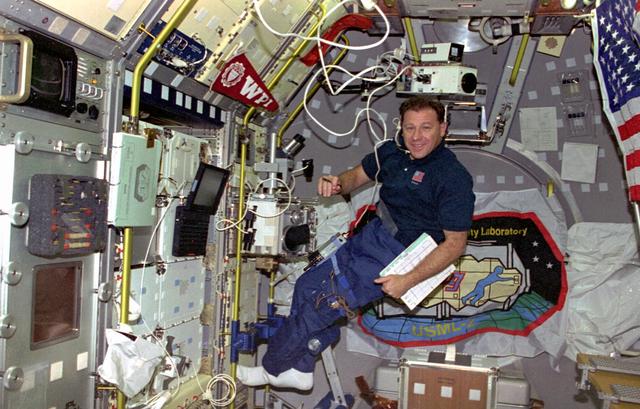
STS073-106-001 (20 October-5 November 1995) --- Payload specialist Albert Sacco Jr. takes direction from a crew mate out of frame onboard the United States Microgravity Laboratory (USML-2) science module in the cargo bay of the Space Shuttle Columbia. Sacco was about to check out an experiment in a glovebox, which represented one of the busier areas during the 16-day USML-2 flight.
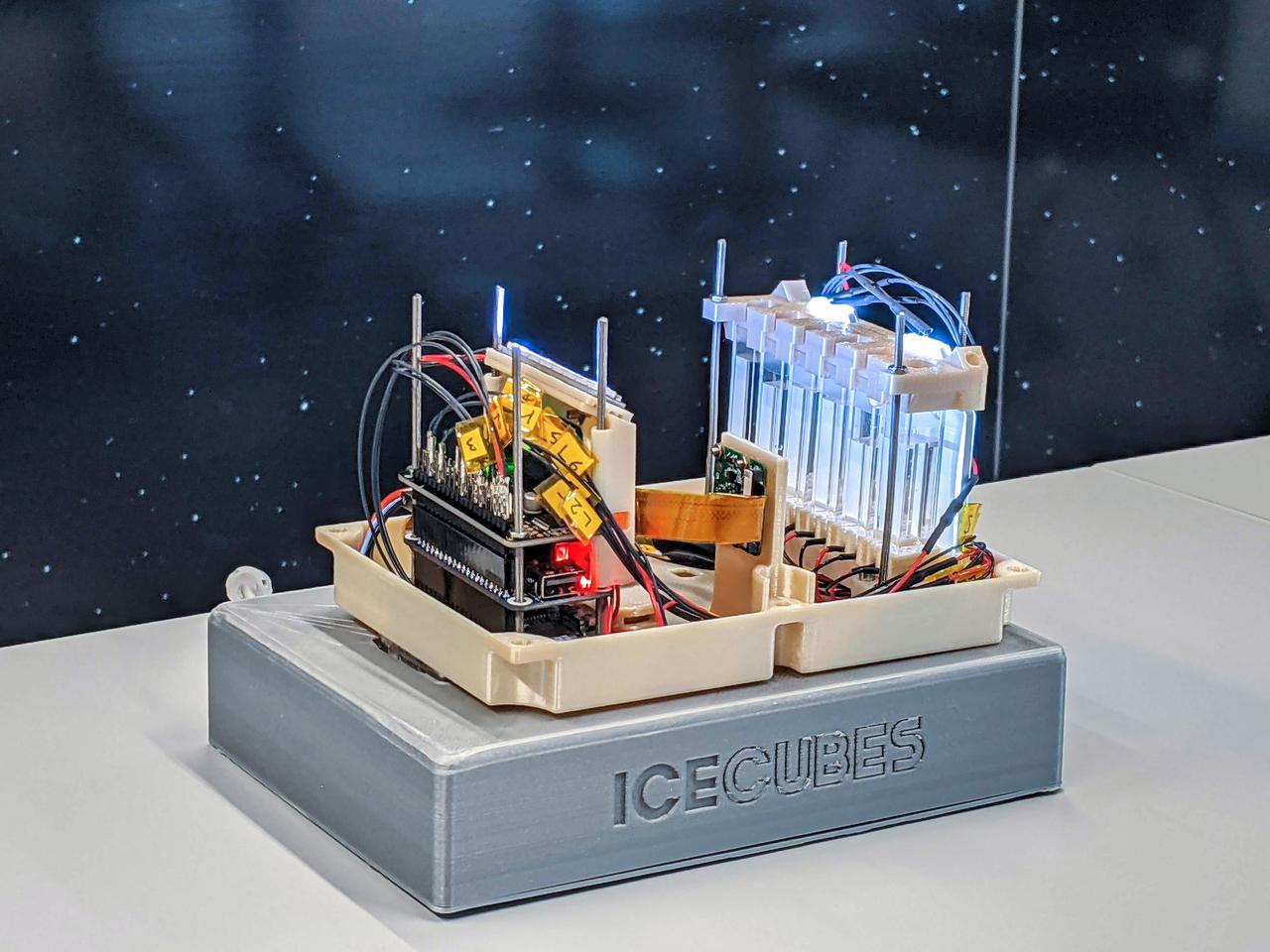
jsc2021e033555 (5/12/2021) --- A prefliight view of Ice Cubes #9 - Project Maleth. The Maltese Biocube, based on ICE Cubes platform by Space Applications Services, that will take samples to the International Space Station in a historic first for the country. The investigation studies Diabetes Mellitus Type 2 and Diabetic Foot Ulcers (DFU) using genetics and space biosciences is new and innovative research. Image credit: DOI: Ministry for Foreign and European Affairs, Malta
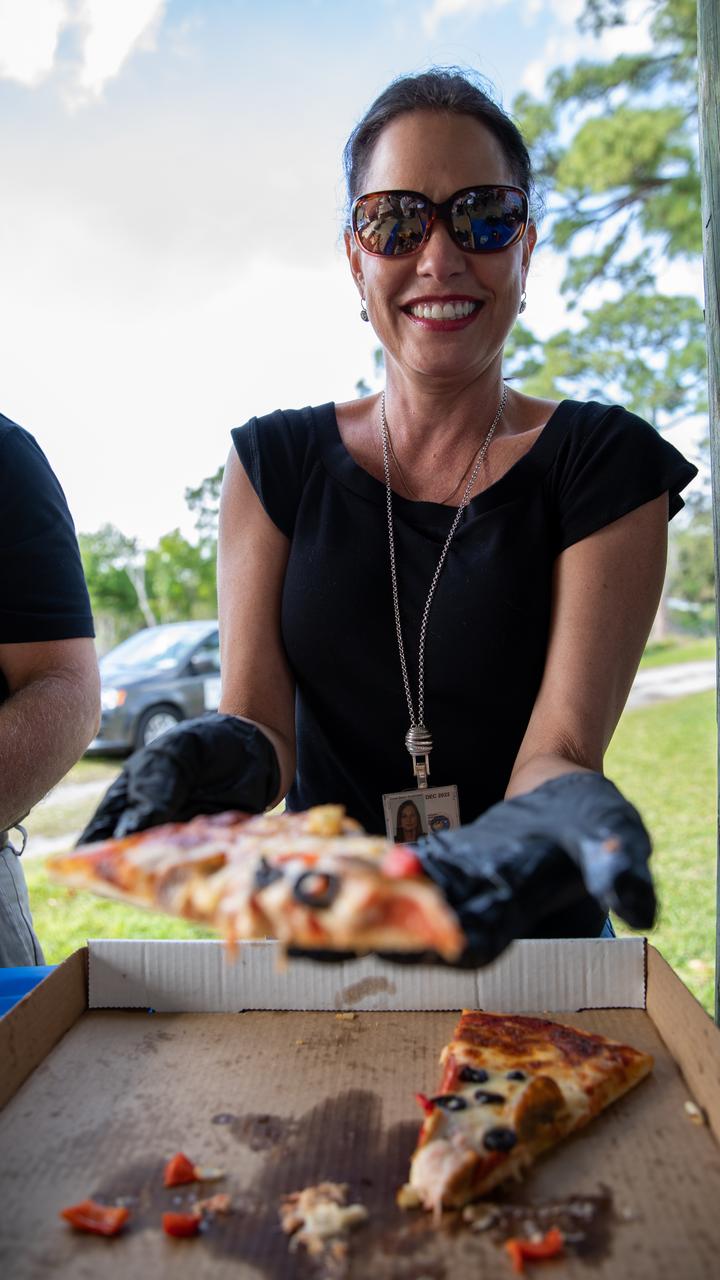
Maria Collura, deputy director of Spaceport Services and Integration at NASA’s Kennedy Space Center in Florida, is photographed serving pizza to Kennedy employees during a Safety and Health Days celebration at the spaceport’s KARS Park II on March 5, 2020. Taking place March 2 through March 6, Safety and Health Days provides Kennedy employees with a variety of presentations to attend – all of which focus on how to maintain a safe and healthy workforce.
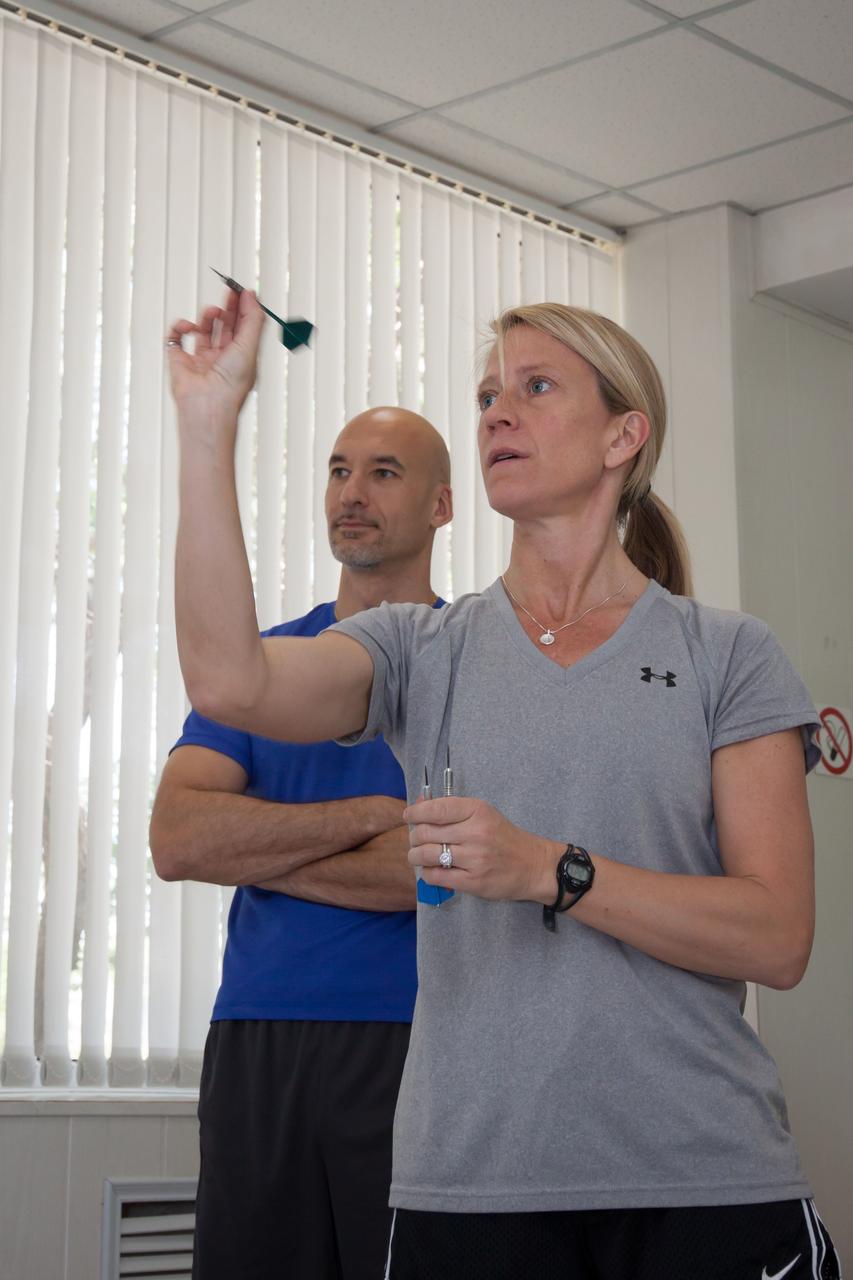
In the Cosmonaut Hotel crew quarters in Baikonur, Kazakhstan, Expedition 36/37 Flight Engineer Karen Nyberg of NASA takes a turn at a game of darts May 22 as Flight Engineer Luca Parmitano of the European Space Agency (background) looks on. Nyberg, Parmitano and Soyuz Commander Fyodor Yurchikhin are preparing for launch May 29, Kazakh time, in the Soyuz TMA-09M spacecraft to begin a 5 ½ month mission on the International Space Station. NASA/Victor Zelentsov
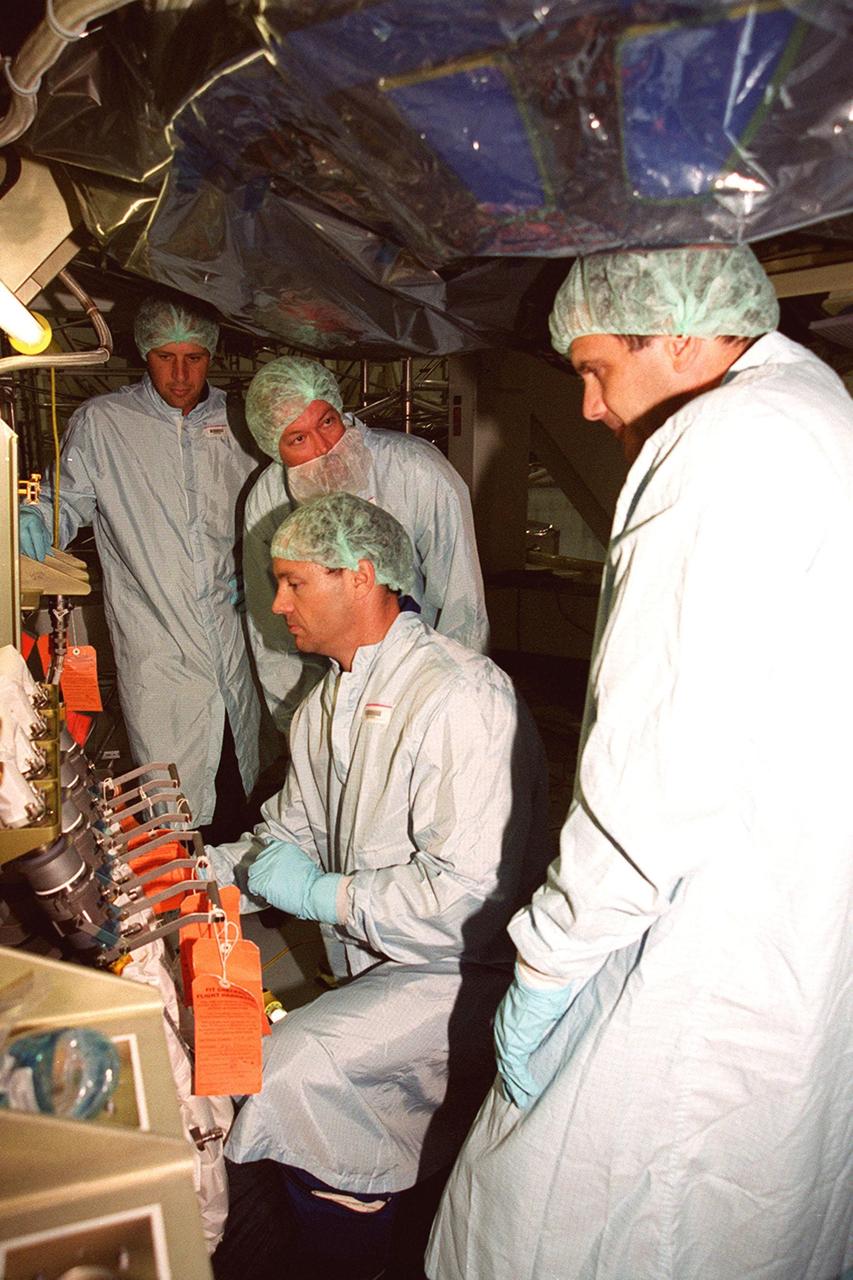
STS-92 Mission Specialists Michael Lopez-Alegria (center) and Jeff Wisoff (right) check out the Integrated Truss Structure Z1, a component of the International Space Station and payload on their mission. They and other crew members are taking part in Crew Equipment Interface Test (CEIT) activities while at KSC. The Z1 truss is an early exterior framework to allow the first U.S. solar arrays on a future flight to be temporarily installed on Unity for early power. STS-92 is scheduled to launch Oct. 5 from launch Pad 39A
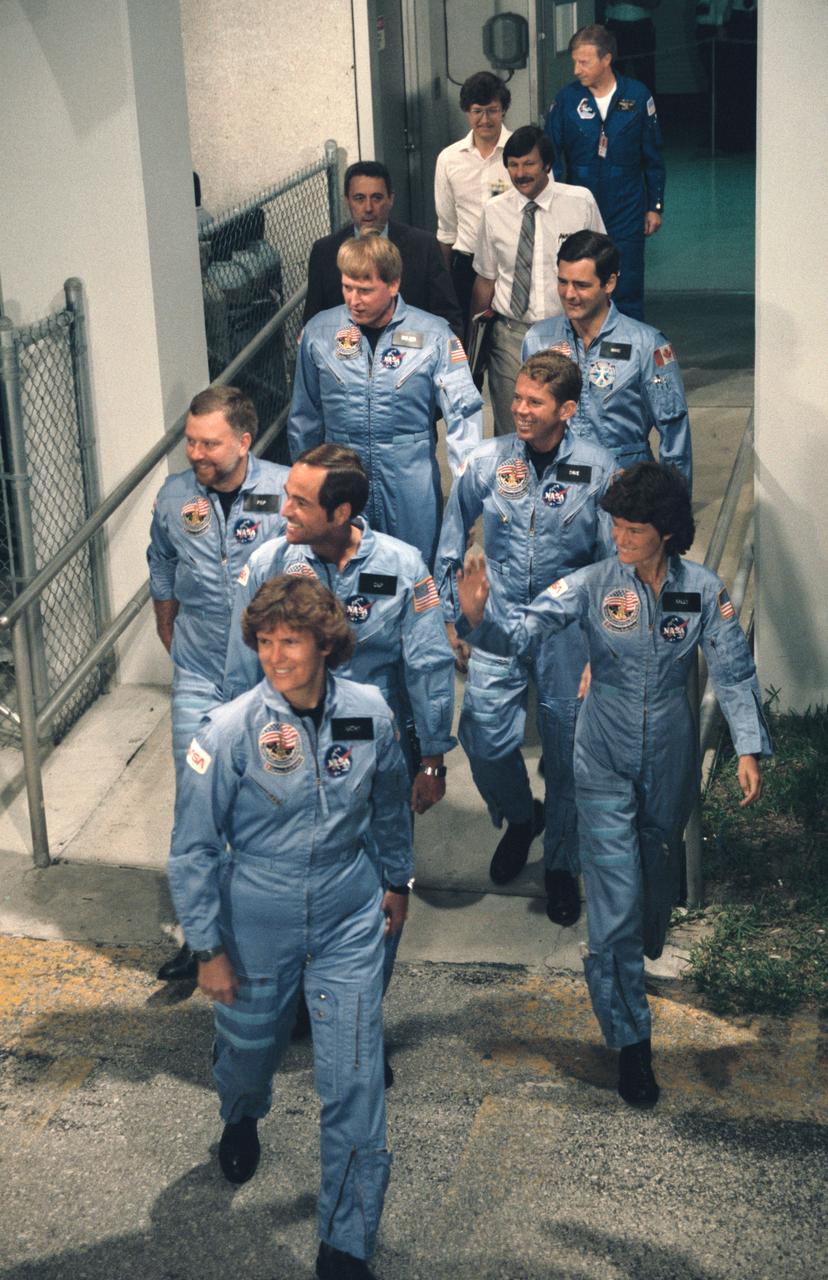
41G-90081 / S17-90081 (5 Oct 1984) --- The seven member crew leaves the Operations and Checkout Building (OCB) to take a van ride to the launch pad. Leading the way is Kathryn D. Sullivan followed in file by Robert L. Crippen, Paul D. Scully-Power and Jon A. McBride. On the right side are Sally K. Ride, David C. Leestma and Marc Garneau. Trailing the crew are George W. S. Abbey, Richard Nygren, Paul Bulver, and Paul J. Weitz.
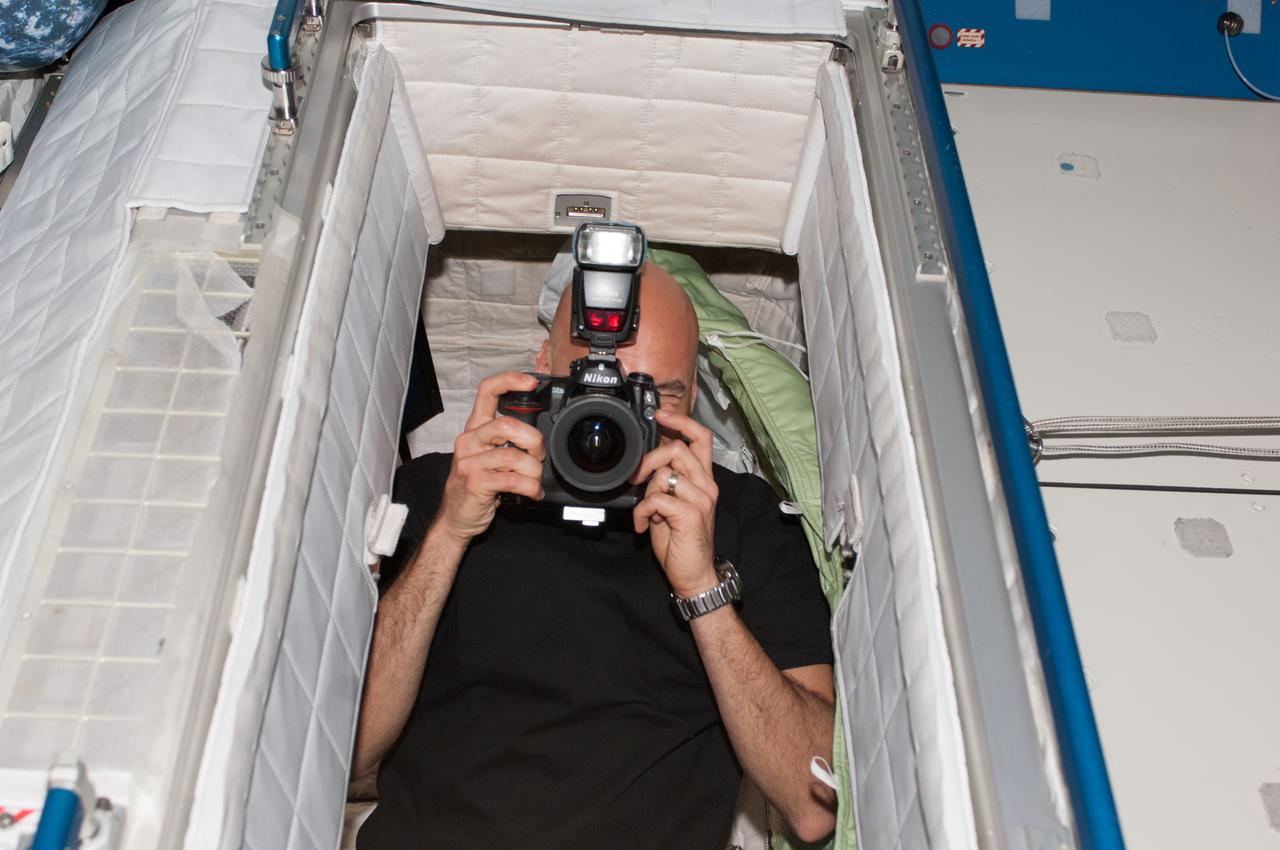
ISS036-E-005320 (29 May 2013) --- Having just come aboard the International Space Station, European Space Agency astronaut Luca Parmitano, Expedition 36 flight engineer, takes some interior pictures in the Harmony node. He later added a large lens and took some out-the-window scenes after moving to the Cupola aboard the orbital outpost. He is beginning a scheduled 5 1/2 month stay aboard the space station.
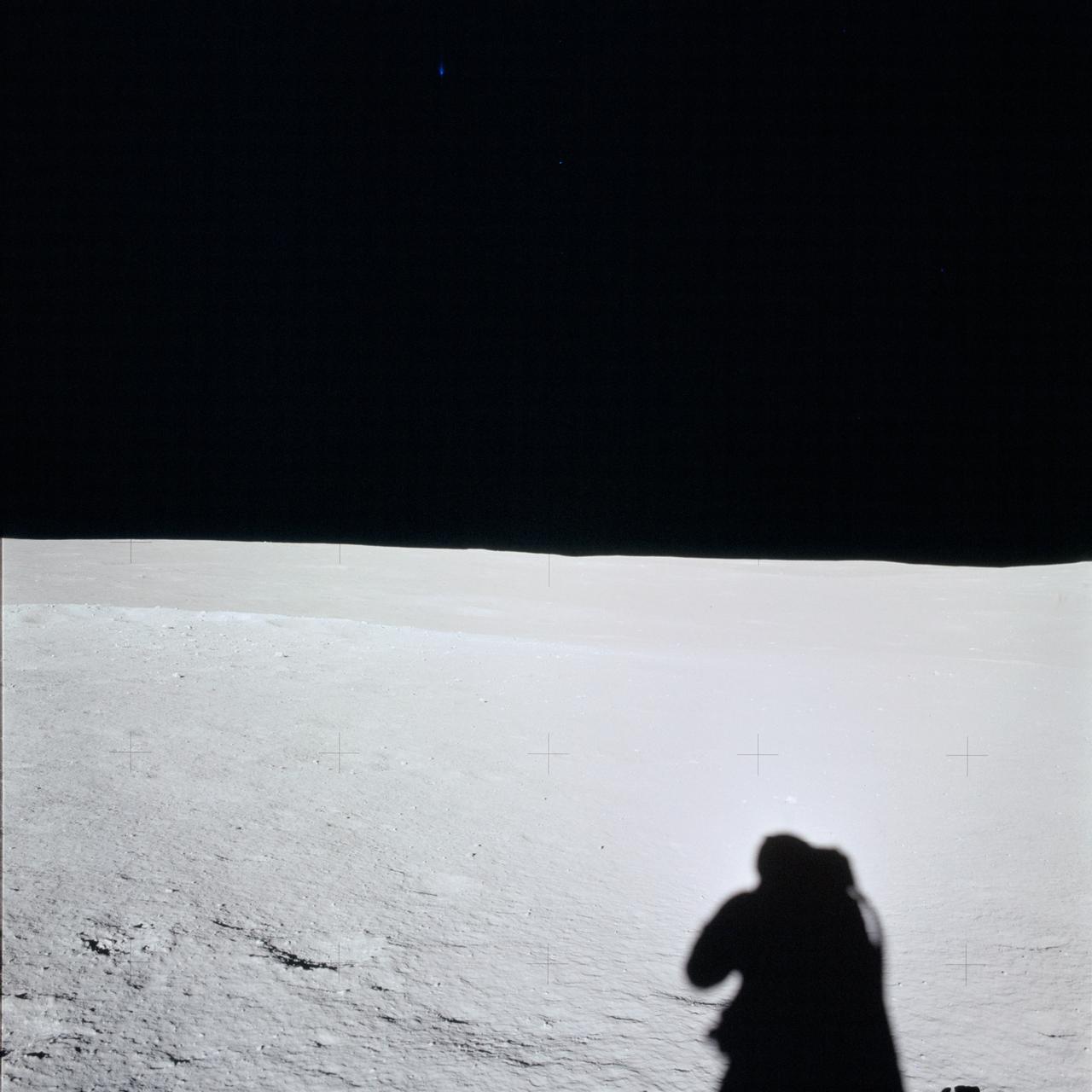
AS14-66-9293 (5 Feb. 1971) --- A portion of the Fra Mauro landing site as photographed by one of the Apollo 14 astronauts, standing slightly southwest of the Lunar Module (LM), during the early minutes of their first extravehicular activity (EVA) on the moon. The shadow of the astronaut taking the picture is at lower right. Photographs numbered AS14-66-9271 through AS14-66-9293 comprise a 360 degree panoramic view.
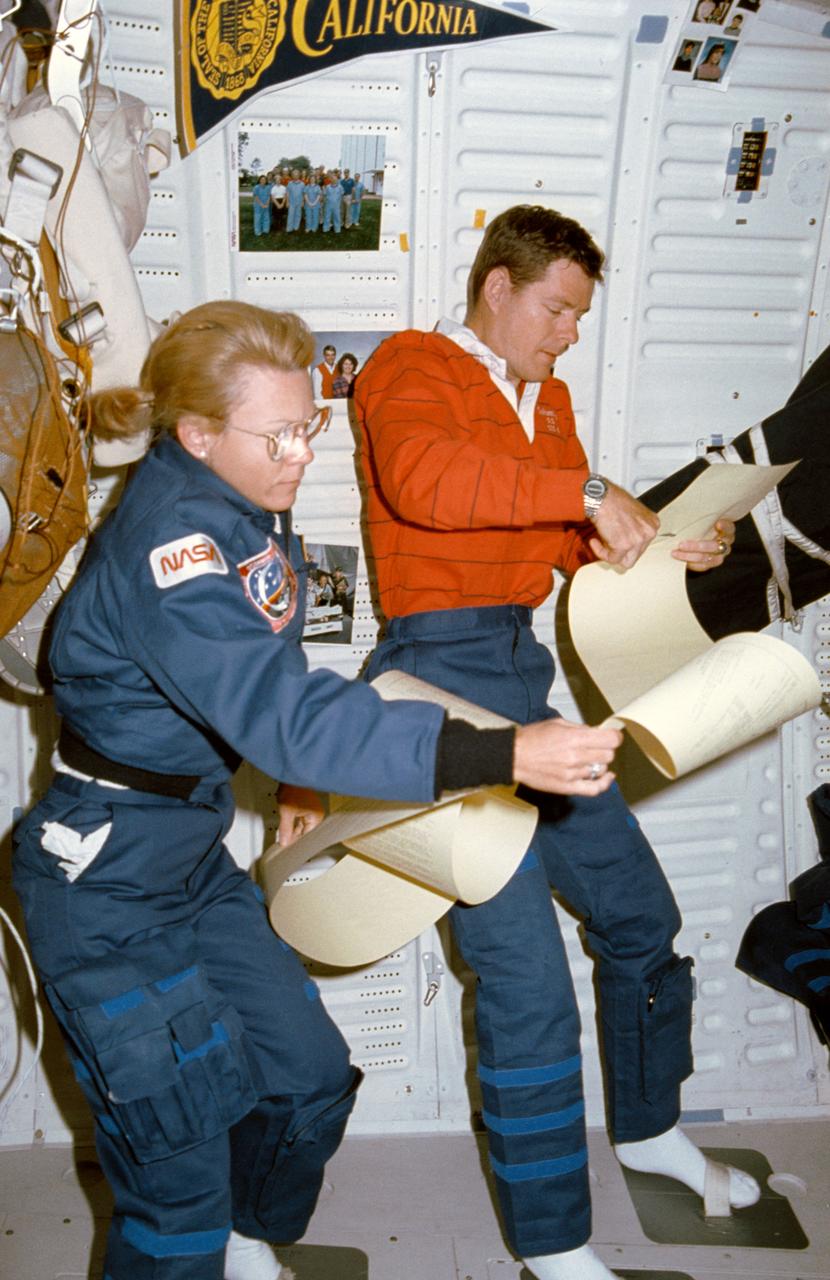
STS040-17-003 (5-14 June 1991) --- Astronauts Rhea Seddon and Bryan D. O'Connor share a 15 ft. length of teleprinter messages aboard Columbia. During the nine-day Spacelab Life Sciences (SLS-1) mission, the STS-40 crewmembers received a large volume of similar print-outs from ground controllers. Using foot restraints, the two obviously expect their perusing to take awhile. This middeck scene was photographed with a 35mm camera.
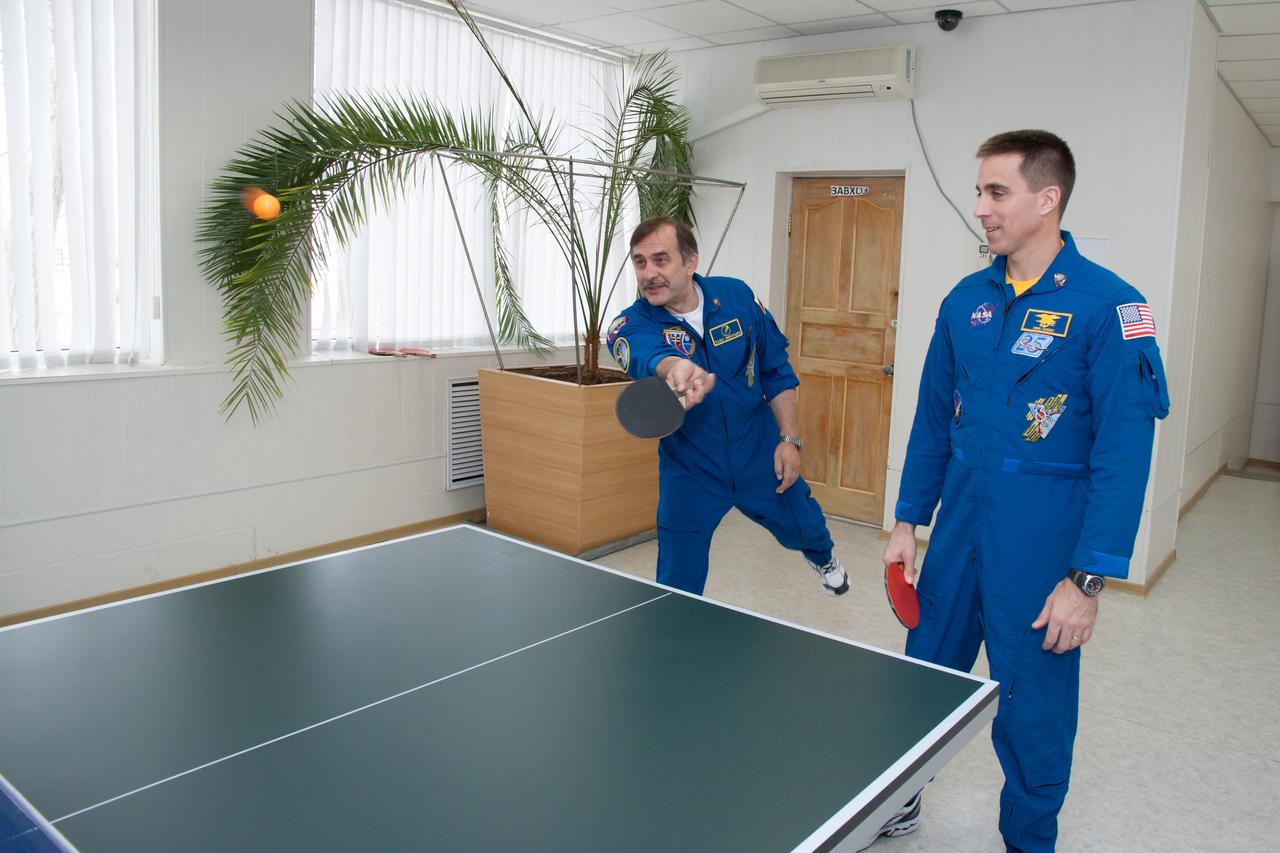
At their Cosmonaut Hotel crew quarters in Baikonur, Kazakhstan, Expedition 35-36 Soyuz Commander Pavel Vinogradov (left) takes a turn at ping-pong March 21 as he and NASA Flight Engineer Chris Cassidy relax for a few minutes while preparing for their launch to the International Space Station with crewmate Alexander Misurkin March 29, Kazakh time, in their Soyuz TMA-08M spacecraft from the Baikonur Cosmodrome. The three crewmembers will spend 5 ½ months on the orbital laboratory. NASA/Victor Zelentsov
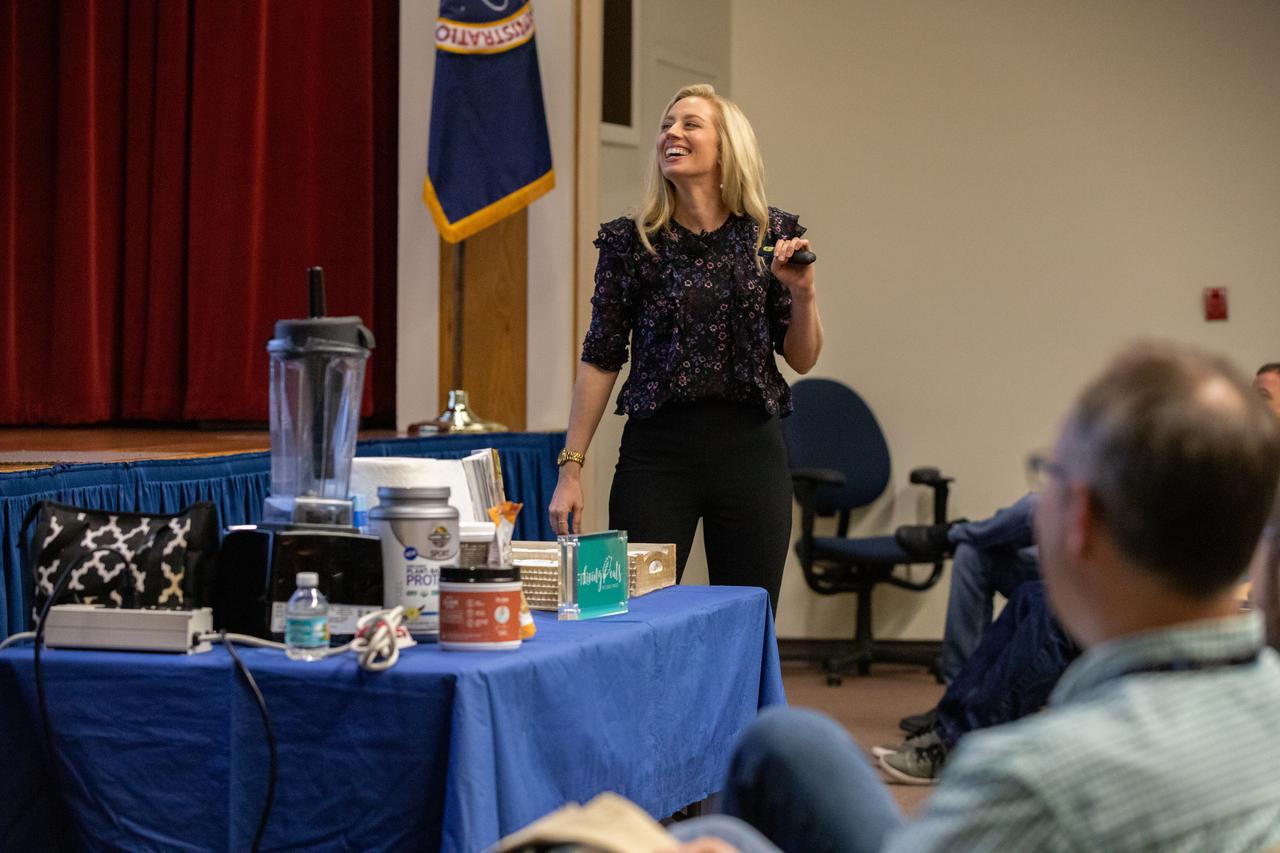
Carly Paige, an integrative nutrition health coach and chef, speaks to Kennedy Space Center employees inside the Florida spaceport’s Training Auditorium on March 5, 2020, during the center’s annual Safety and Health Days. Taking place March 2 through March 6, Safety and Health Days provides Kennedy employees with a variety of presentations to attend – all of which focus on how to maintain a safe and healthy workforce. Paige’s presentation included information on simple swaps that can be made to incorporate healthier habits on a daily basis.
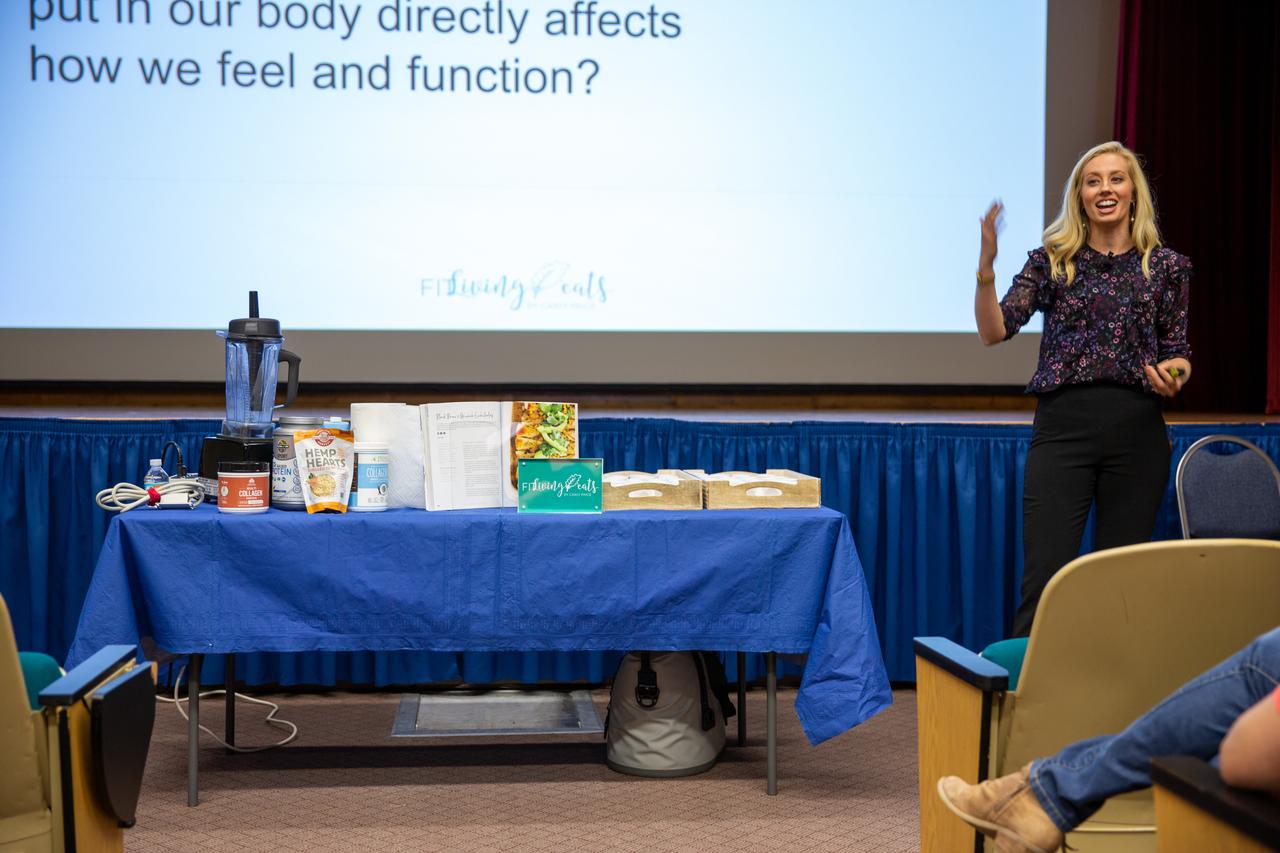
Carly Paige, an integrative nutrition health coach and chef, speaks to Kennedy Space Center employees inside the Florida spaceport’s Training Auditorium on March 5, 2020, during the center’s annual Safety and Health Days. Taking place March 2 through March 6, Safety and Health Days provides Kennedy employees with a variety of presentations to attend – all of which focus on how to maintain a safe and healthy workforce. Paige’s presentation included information on simple swaps that can be made to incorporate healthier habits on a daily basis.
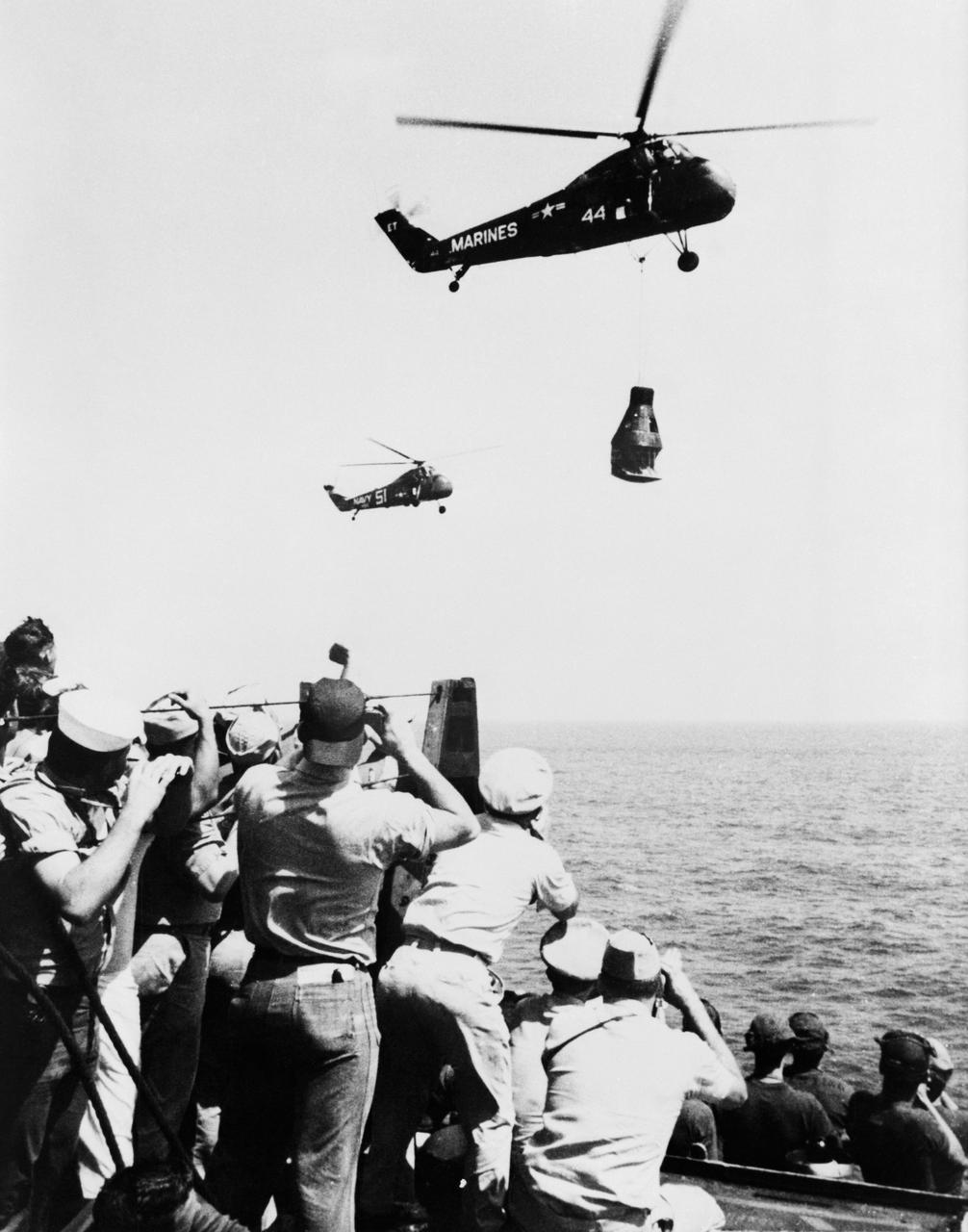
S61-02711 (5 May 1961) --- Crew members of the U.S. Navy Carrier Champlain cheer and take pictures of the arrival of the first Project Mercury pilot to fly a suborbital flight, astronaut Alan B. Shepard Jr. Two helicopters are approaching the ship, one carrying the astronaut and the other the Mercury-Redstone 3 (MR-3) capsule. Photo credit: NASA or National Aeronautics and Space Administration
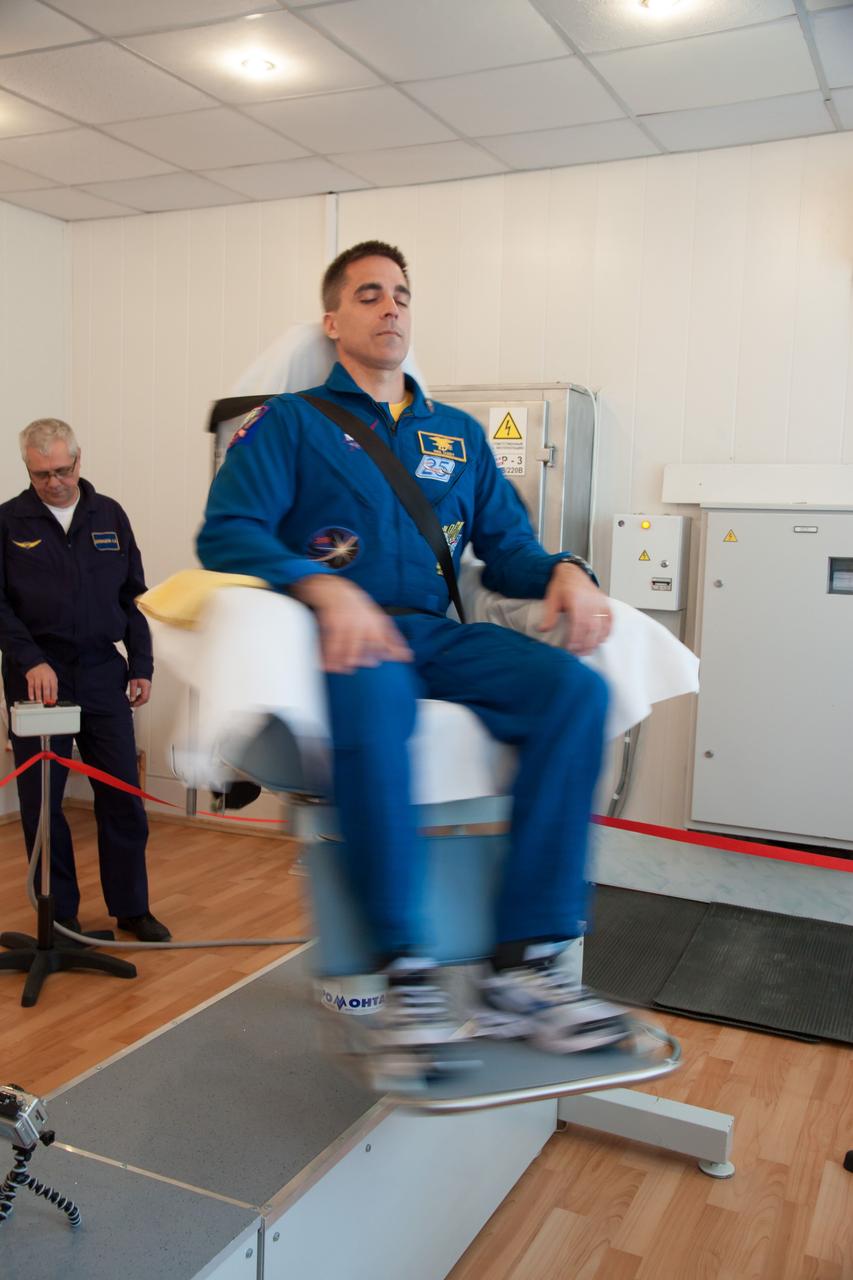
At the Cosmonaut Hotel crew quarters in Baikonur, Kazakhstan, Expedition 35-36 Chris Cassidy of NASA takes a turn in a spinning chair March 21 as he trains for launch to the International Space Station with his crewmates, Soyuz Commander Pavel Vinogradov and Alexander Misurkin March 29, Kazakh time, in their Soyuz TMA-08M spacecraft from the Baikonur Cosmodrome. The three crewmembers will spend 5 ½ months on the orbital laboratory. NASA/Victor Zelentsov
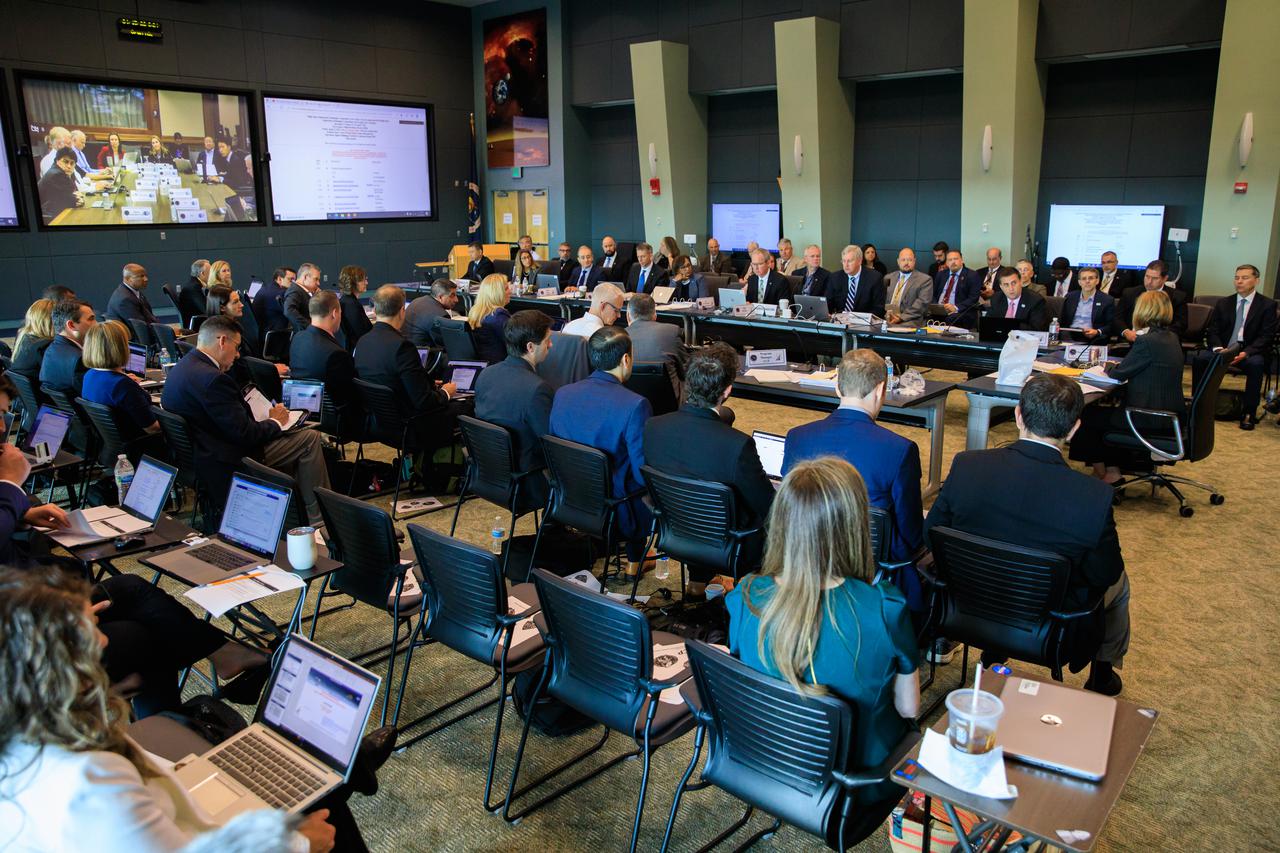
NASA’s SpaceX Crew-4 Flight Readiness Review takes place at Kennedy Space Center on April 15, 2022. The mission is targeted to launch from the Florida Spaceport’s Launch Complex 39A on April 23, 2022, at 5:26 a.m. EDT. NASA astronauts Kjell Lindgren, Bob Hines, and Jessica Watkins, and ESA (European Space Agency) astronaut Samantha Cristoforetti will fly to the station aboard SpaceX’s Crew Dragon, powered by the company’s Falcon 9 rocket.
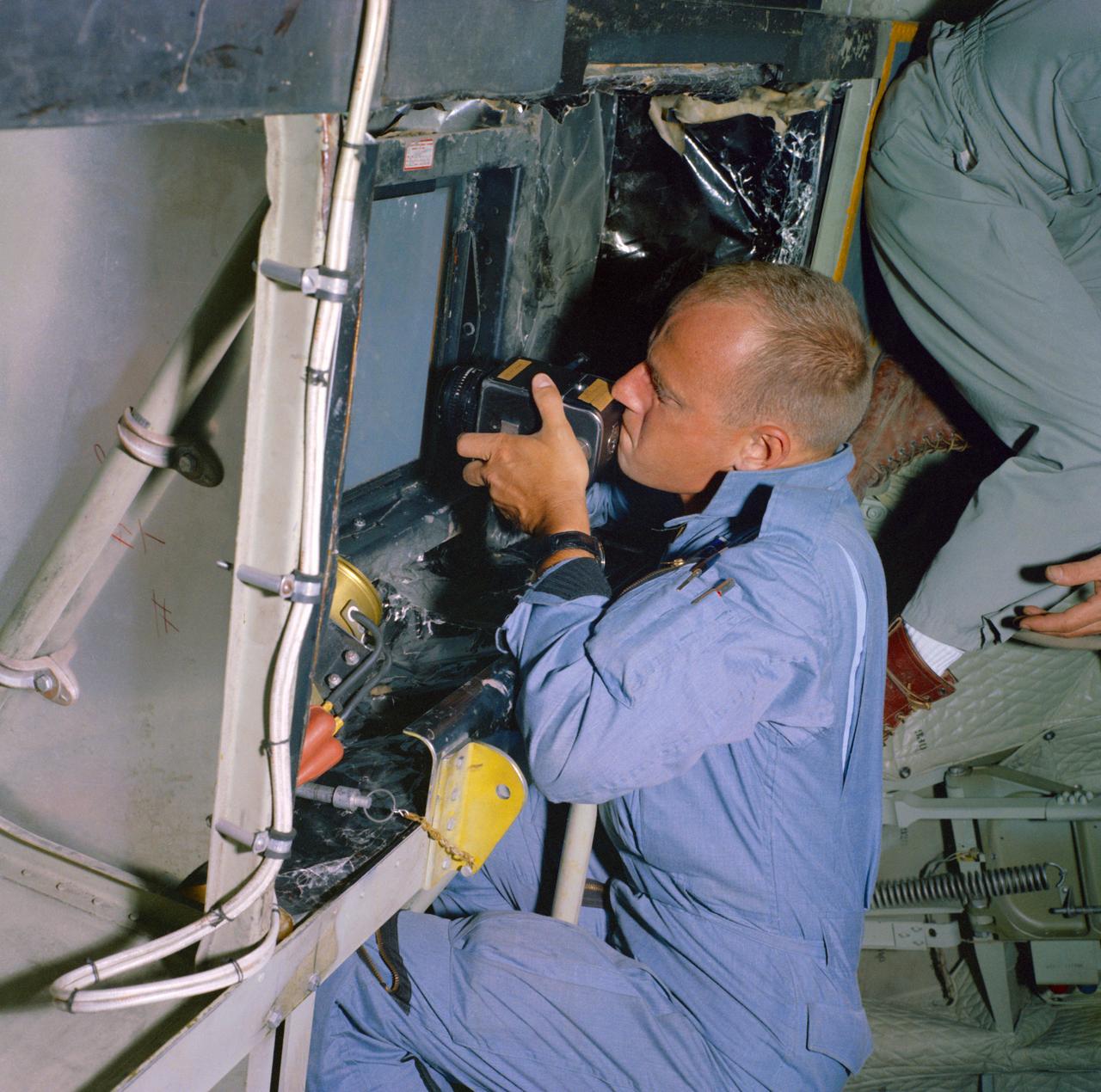
S65-35589 (18 June 1965) --- Astronaut Charles Conrad Jr., pilot for the prime crew on the Gemini-5 spaceflight, takes pictures of predetermined land areas during visual acuity experiments over Laredo, Texas. The experiments will aid in learning to identify known terrestrial features under controlled conditions. Knowledge gained from these experiments will have later application for space pilots identifying terrestrial features from space.
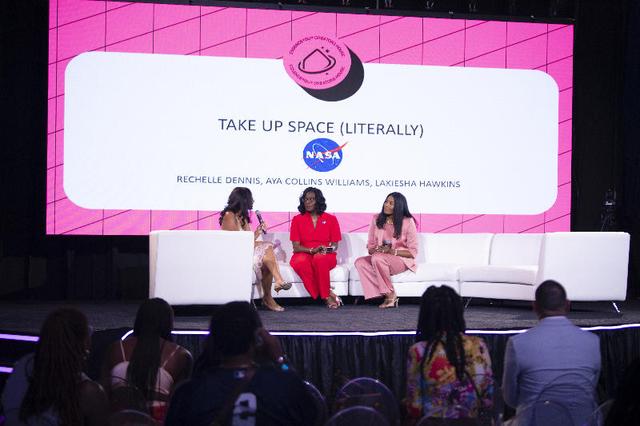
Girls United co-founder Rechelle Dennis, left, moderates a conversation with NASA Assistant Deputy Associate Administrator for the Moon to Mars Program Office Lakiesha Hawkins, center, and NASA Director of Engagement Aya Collins at the Take Up Space (Literally) panel presentation during the 30th annual ESSENCE Fest in New Orleans on July 5.
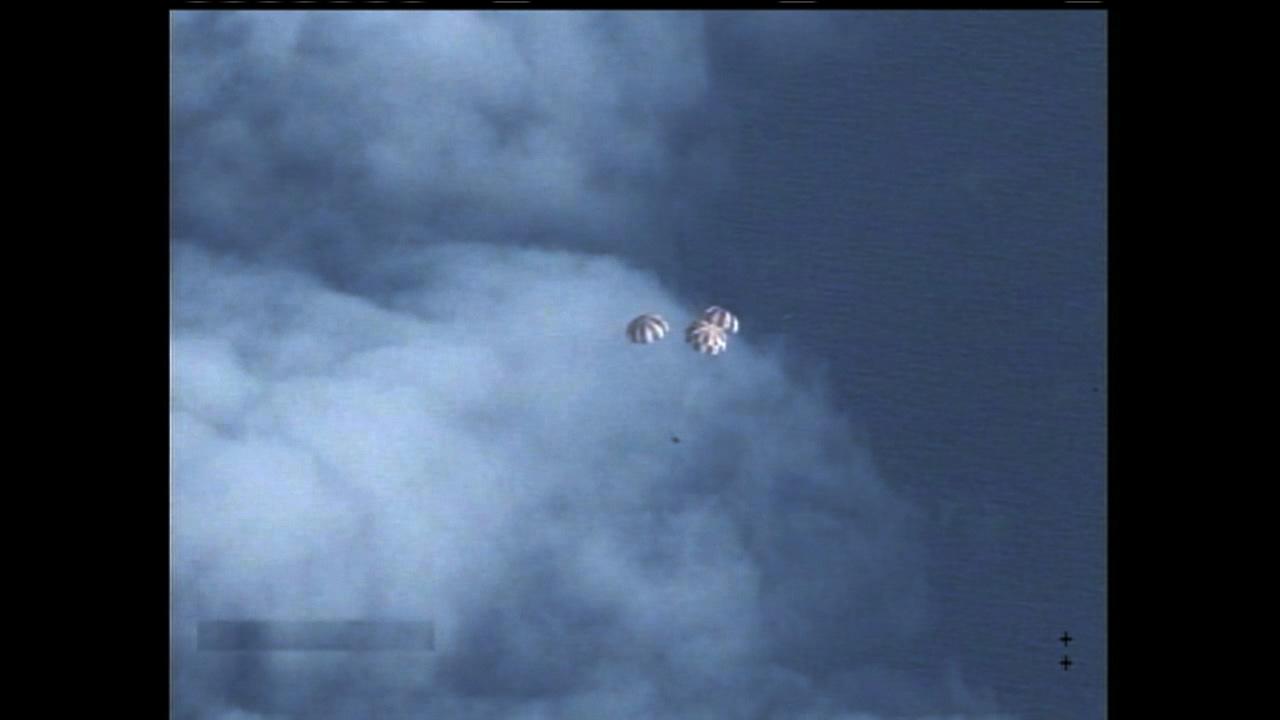
Following more than four hours in Earth orbit, NASA's Orion spacecraft is seen from an unpiloted aircraft as it descends under three massive red and white main parachutes after Exploration Flight Test-1 (EFT-1) on Dec. 5, 2014. Splashdown in the Pacific Ocean will take place at less than 20 mph. It will be recovered by the USS Anchorage, a landing platform-dock, or LPD, ship. Part of Batch image transfer from Flickr.
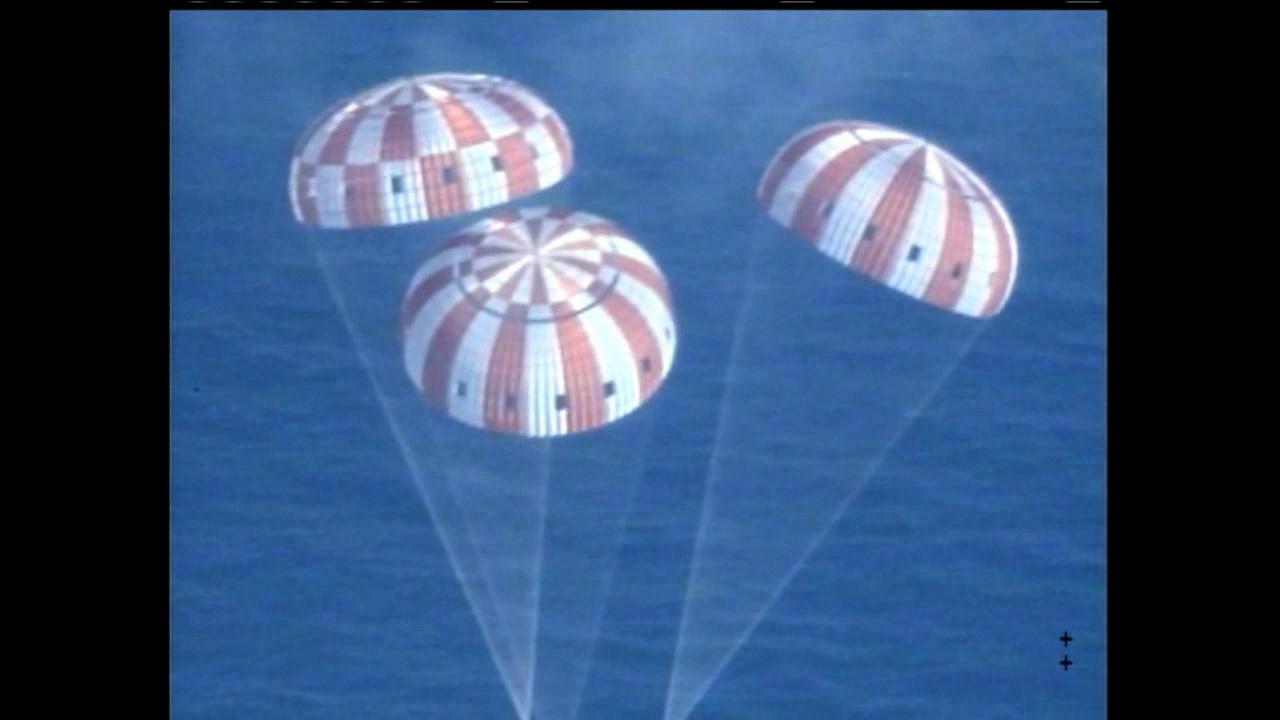
Following more than four hours in Earth orbit, NASA's Orion spacecraft is seen from an unpiloted aircraft as it descends under three massive red and white main parachutes after Exploration Flight Test-1 (EFT-1) on Dec. 5, 2014. Splashdown in the Pacific Ocean will take place at less than 20 mph. It will be recovered by the USS Anchorage, a landing platform-dock, or LPD, ship. Part of Batch image transfer from Flickr.
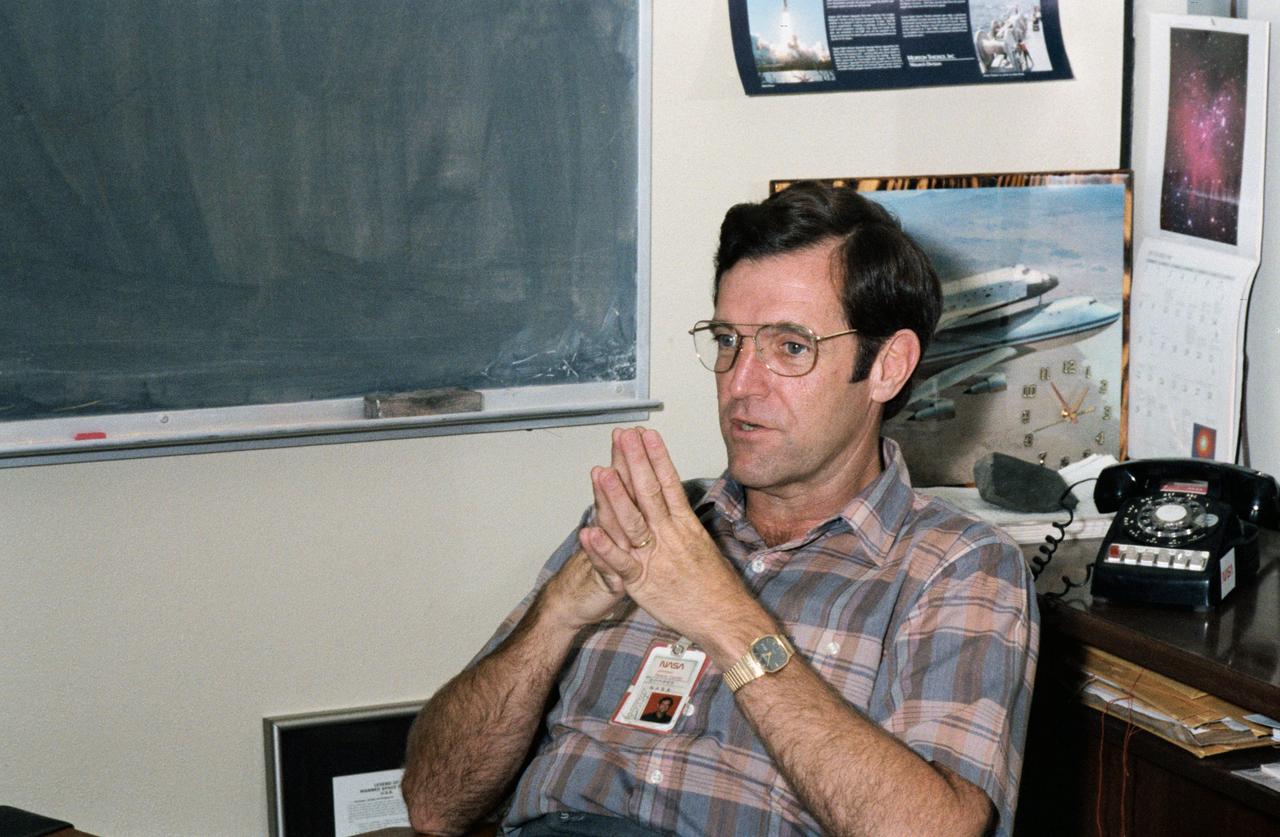
S85-40173 (5 Sept. 1985) --- In Johnson Space Center’s (JSC) Astronaut Office, astronaut F. Richard (Dick) Scobee, STS-51L mission commander, takes a break from training for his upcoming space mission. EDITOR’S NOTE: The STS-51L crew members lost their lives in the space shuttle Challenger accident moments after launch on Jan. 28, 1986 from the Kennedy Space Center (KSC). Photo credit: NASA
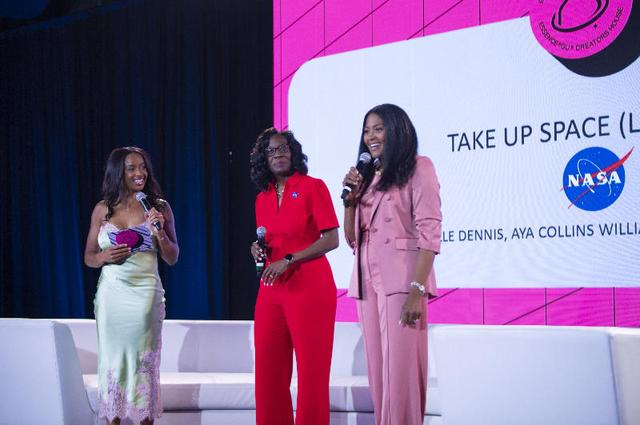
Girls United co-founder Rechelle Dennis, left, introduces NASA Assistant Deputy Associate Administrator for the Moon to Mars Program Office Lakiesha Hawkins, center, and NASA Director of Engagement Aya Collins, right, for a Take Up Space (Literally) panel conversation during the 30th annual ESSENCE Fest event in New Orleans on July 5.
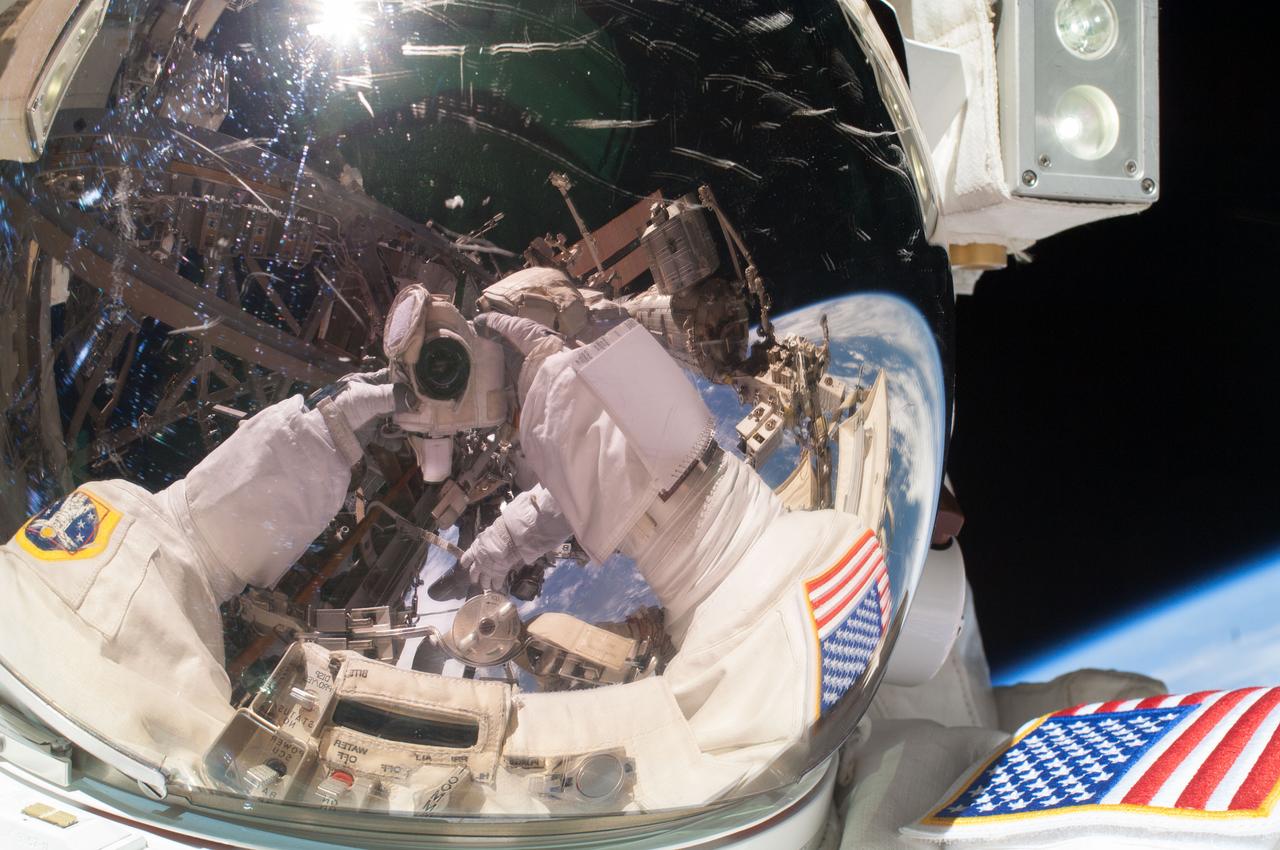
ISS035-E-037044 (11 May 2013) --- Expedition 35 Flight Engineers Chris Cassidy takes a self portrait, as he and Tom Marshburn (seen partially in Cassidy's helmet visor) accomplished a space walk on May 11 to inspect and replace a pump controller box on the International Space Station?s far port truss (P6) leaking ammonia coolant. The two NASA astronauts began the 5-hour, 30-minute space walk at 8:44 a.m. and completed it at 2:14 p.m. EDT.
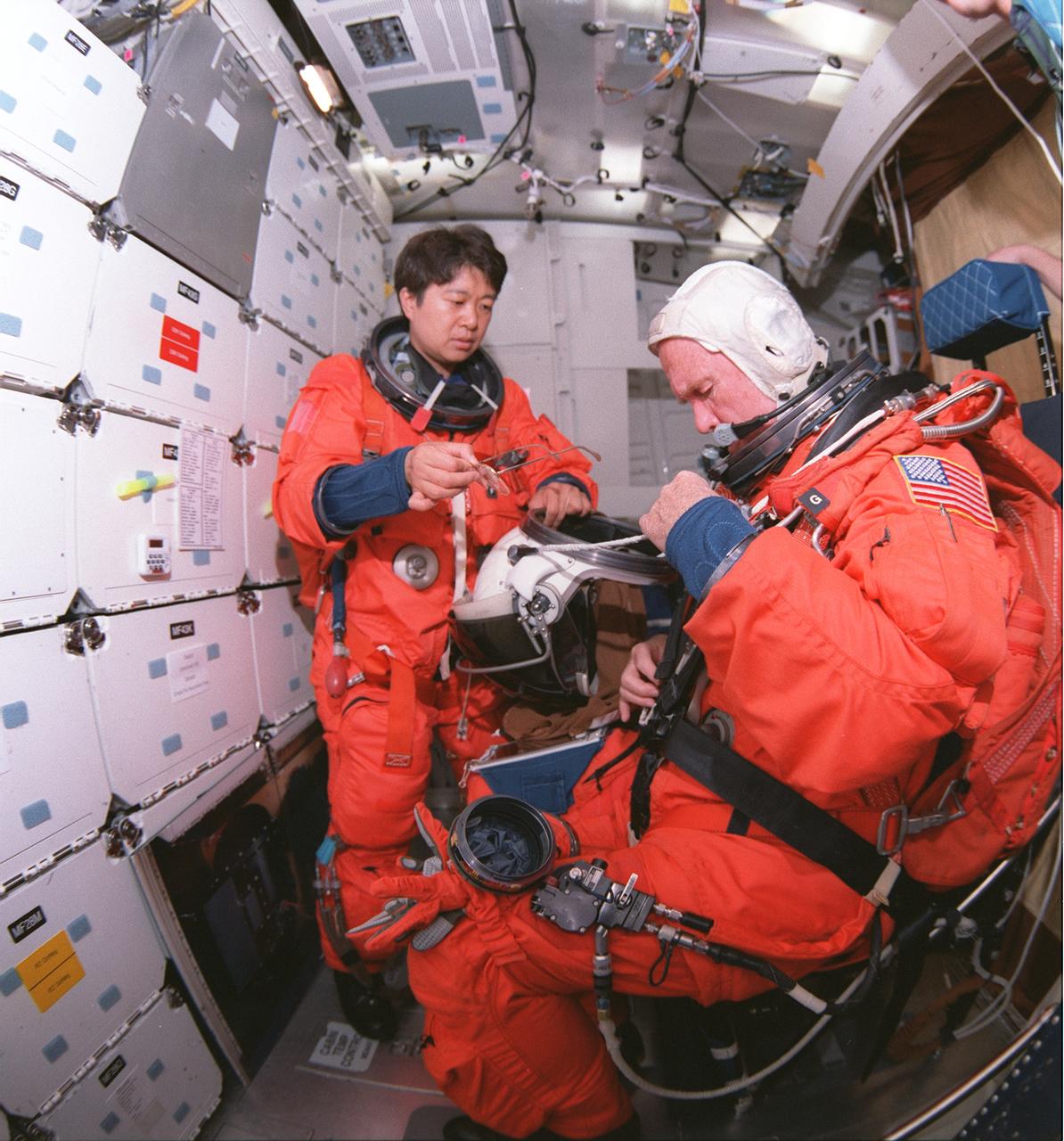
S98-07970 (5 June 1998) --- The two payload specialists in training for the STS-95 mission aboard the Space Shuttle Discovery prepare to take their assigned launch and entry seats on the mid deck of one of the shutte training mockups in JSC's systems integration facility. Wearing training versions of the shuttle partial pressure launch and entry suits, the two were joined by the other five STS-95 crew members for the training session, one of many planned in preparation for the scheduled October launch aboard Discovery.
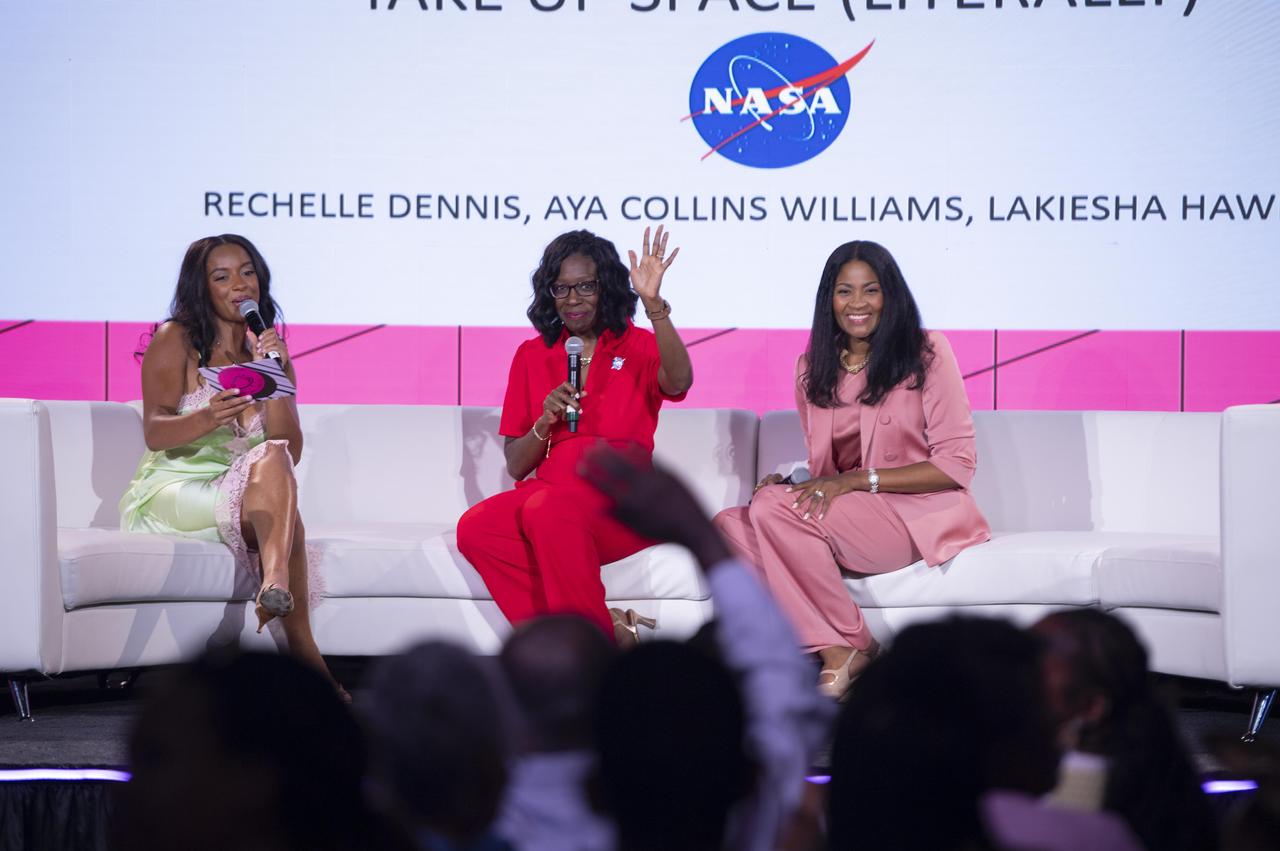
Girls United co-founder Rechelle Dennis, left, continues a conversation about how to become a shining star in the face of adversity with NASA Assistant Deputy Associate Administrator for the Moon to Mars Program Office Lakiesha Hawkins, center, and NASA Director of Engagement Aya Collins at the Take Up Space (Literally) panel conversation during the 30th annual ESSENCE Fest in New Orleans on July 5.
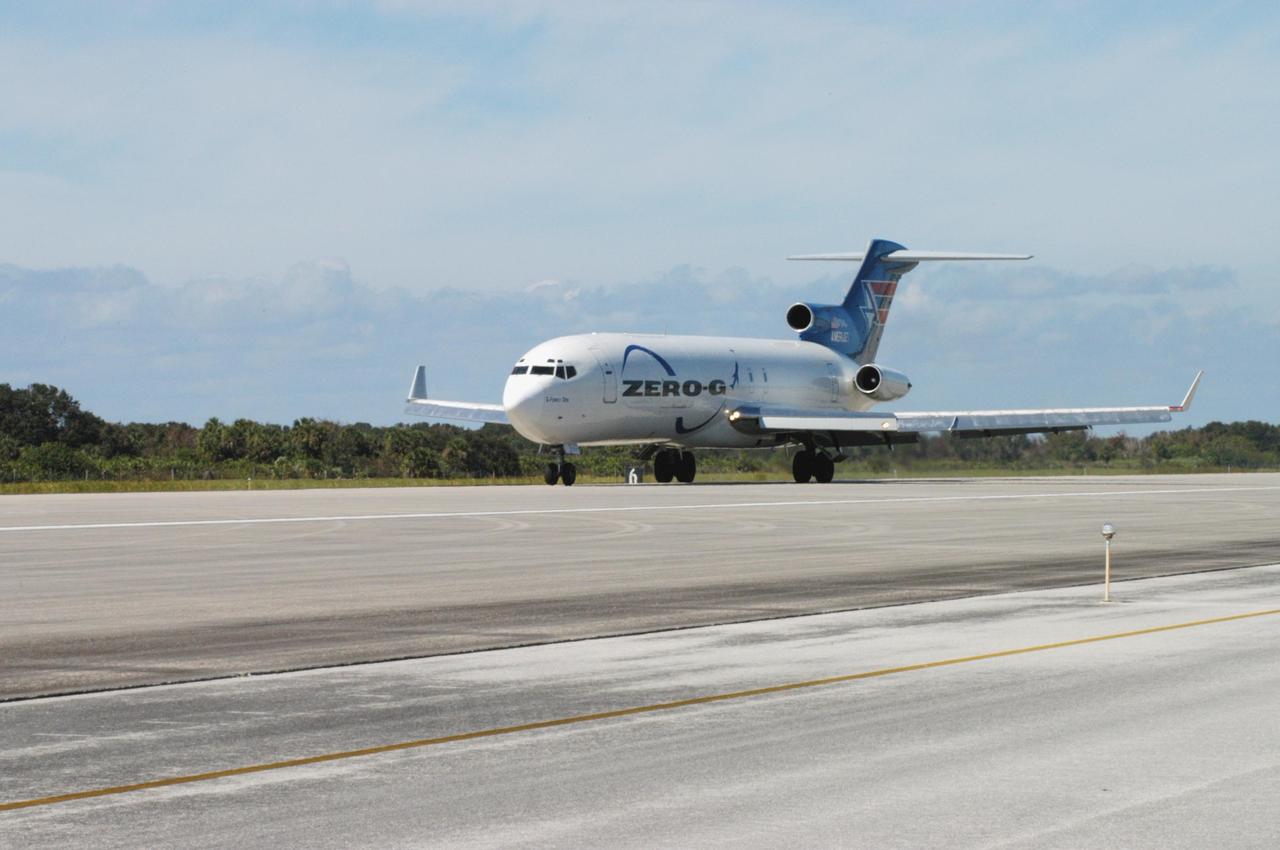
KENNEDY SPACE CENTER, FLA. - The Boeing 727-200 aircraft used for weightless flights by Zero Gravity Corporation, known as ZERO-G, of Fort Lauderdale, Fla., lands after taking a group of passengers for demonstration. NASA and ZERO-G demonstrated Nov. 5 the expanded access to and use of the space shuttle's runway and landing facility at Kennedy Space Center for non-NASA activities. This group of passengers, called "Flyers," were predominantly teachers who performed simple microgravity experiments they can share with their students back in the classroom.
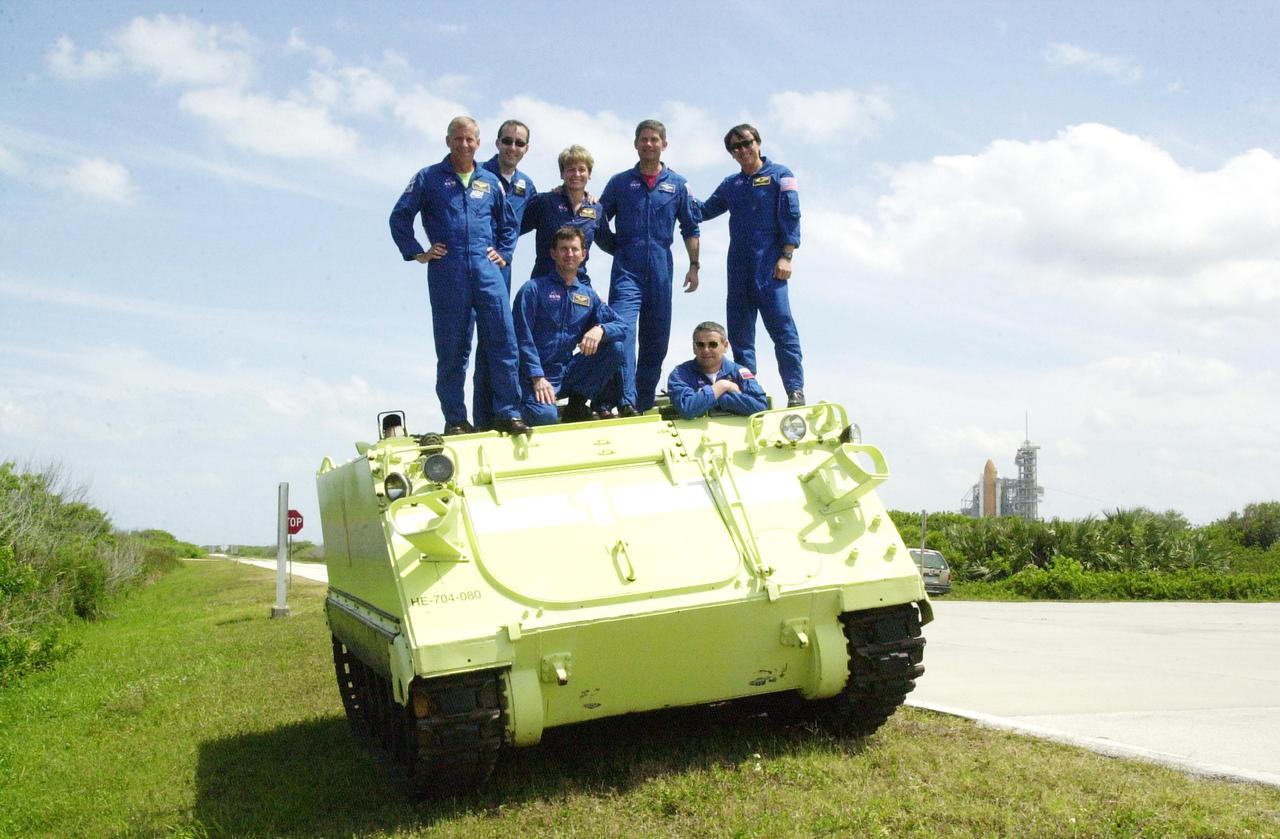
KENNEDY SPACE CENTER, FLA. - The STS-111 and Expedition 5 crews pose on top of the M-113 armored personnel carrier they practiced driving during emergency egress training at the pad. Standing, left to right, are Mission Commander Kenneth Cockrell, Mission Specialist Philippe Perrin, Expedition 5 member Peggy Whitson, Pilot Paul Lockhart and Mission Specialist Franklin Chang-Diaz; in front are Expedition 5 members Sergei Treschev (left) and Commander Valeri Korzun (right). The crews are taking part in Terminal Countdown Demonstration Test activities at KSC, which include a simulated launch countdown. Expedition 5 will travel to the International Space Station on mission STS-111 as the replacement crew for Expedition 4, who will return to Earth aboard Endeavour. Known as Utilization Flight -2, the mission includes attaching a Canadian-built mobile base system to the International Space Station that will enable the Canadarm2 robotic arm to move along a railway on the Station's truss to build and maintain the outpost. The crew will also replace a faulty wrist/roll joint on the Canadarm2 as well as unload almost three tons of experiments and supplies from the Italian-built Multi-Purpose Logistics Module Leonardo. Launch of Space Shuttle Endeavour on mission STS-111 is scheduled for May 30, 2002
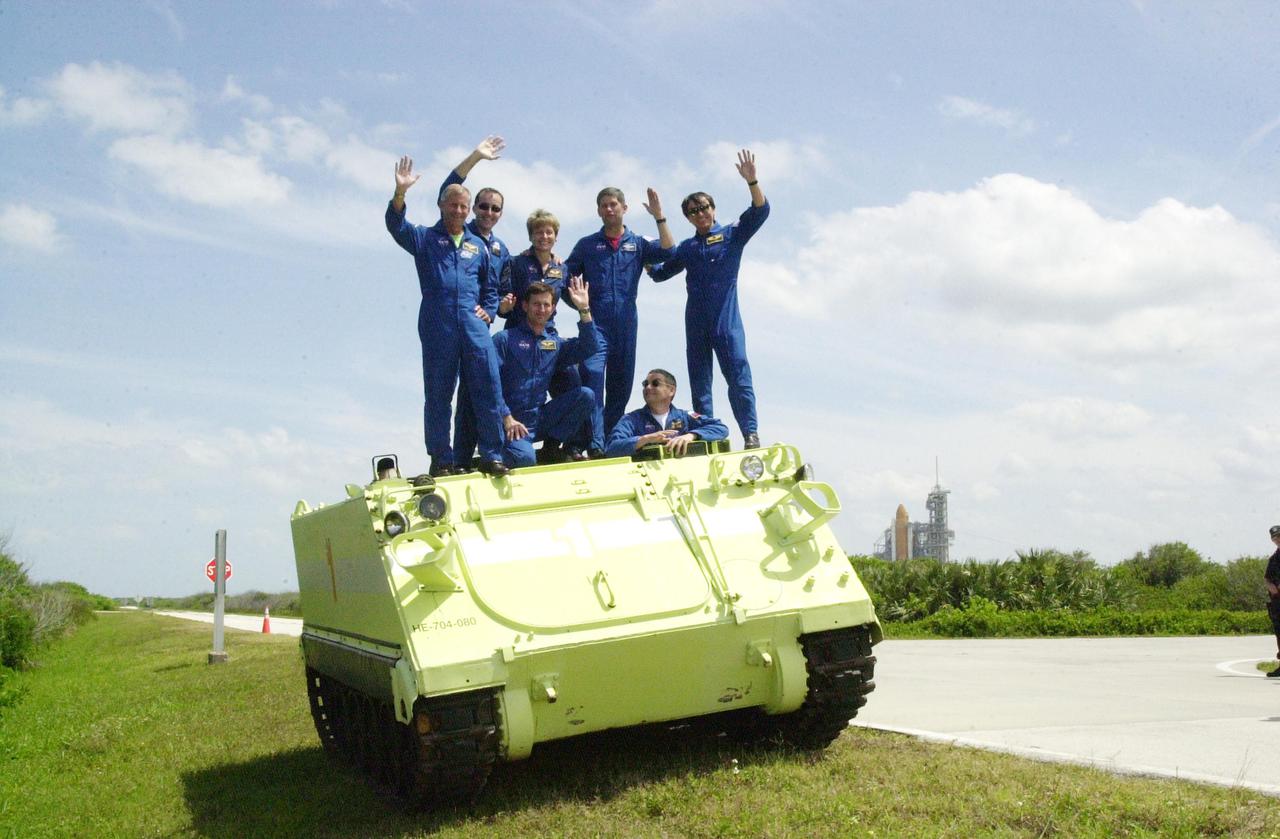
KENNEDY SPACE CENTER, FLA. -- Gathered on top of the M-113 armored personnel carrier they practiced driving during emergency egress training at the pad , the STS-11 and Expedition 5 crews wave at the camera. Standing, left to right, are Mission Commander Kenneth Cockrell, Mission Specialist Philippe Perrin, Expedition 5 member Peggy Whitson, Pilot Paul Lockhart and Mission Specialist Franklin Chang-Diaz; in front are Expedition 5 members Sergei Treschev (left) and Commander Valeri Korzun (right). The crews are taking part in Terminal Countdown Demonstration Test activities at KSC, which include a simulated launch countdown. Expedition 5 will travel to the International Space Station on mission STS-111 as the replacement crew for Expedition 4, who will return to Earth aboard Endeavour. Known as Utilization Flight -2, the mission includes attaching a Canadian-built mobile base system to the International Space Station that will enable the Canadarm2 robotic arm to move along a railway on the Station's truss to build and maintain the outpost. The crew will also replace a faulty wrist_roll joint on the Canadarm2 as well as unload almost three tons of experiments and supplies from the Italian-built Multi-Purpose Logistics Module Leonardo. Launch of Space Shuttle Endeavour on mission STS-111 is scheduled for May 30, 2002
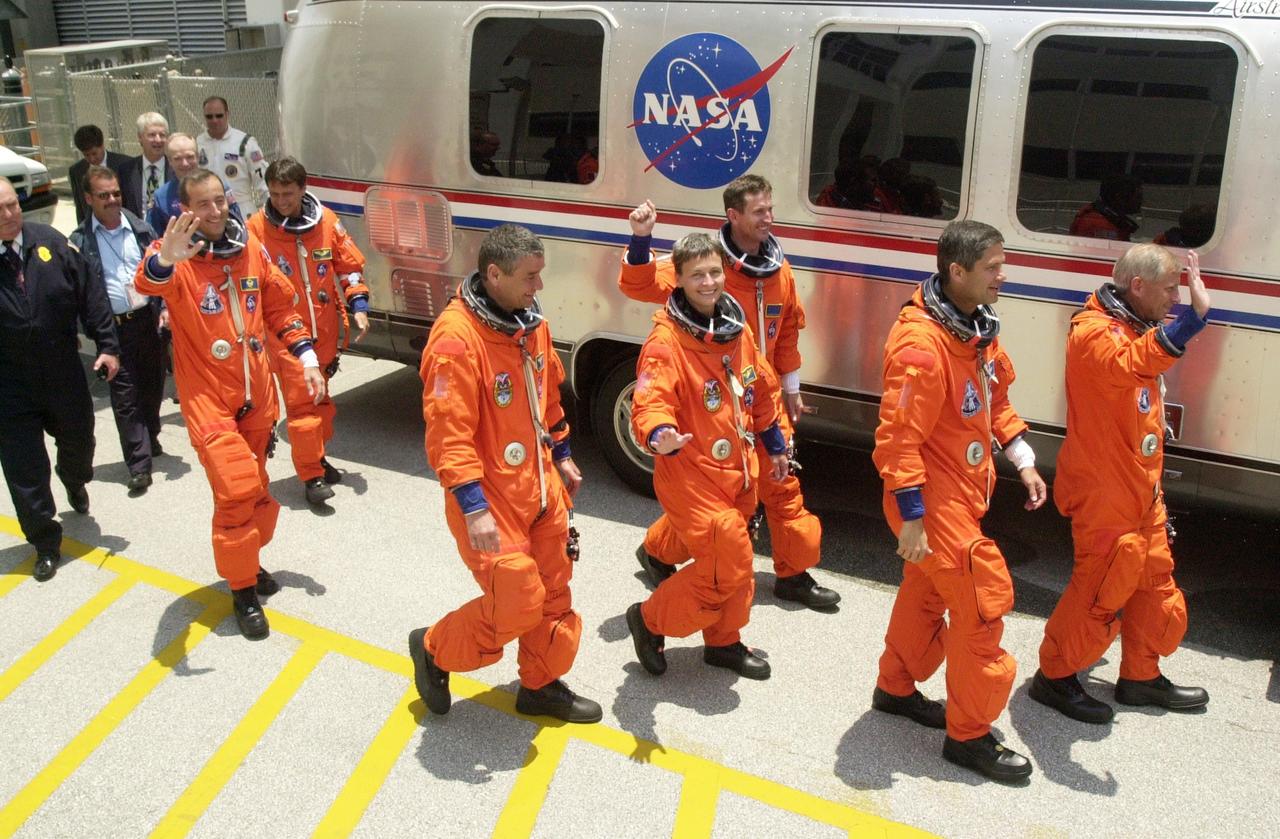
KENNEDY SPACE CENTER, FLA. -- The STS-111 and Expedition 5 crews head for the Astrovan to take them to Launch Pad 39A and the second launch attempt aboard Space Shuttle Endeavour. From left to right, front to back, are Mission Specialists Philippe Perrin (CNES) and Franklin Chang-Diaz; Expedition 5 Commander Valeri Korzun, astronaut Peggy Whitson and cosmonaut Sergei Treschev; Pilot Paul Lockhart and Commander Kenneth Cockrell. This mission marks the 14th Shuttle flight to the Space Station and the third Shuttle mission this year. Mission STS-111 is the 18th flight of Endeavour and the 110th flight overall in NASA's Space Shuttle program. On mission STS-111, astronauts will deliver the Leonardo Multi-Purpose Logistics Module, the Mobile Base System (MBS), and the Expedition Five crew to the Space Station. During the seven days Endeavour will be docked to the Station, three spacewalks will be performed dedicated to installing MBS and the replacement wrist-roll joint on the Station's Canadarm2 robotic arm. Endeavour will also carry the Expedition 5 crew, who will replace Expedition 4 on board the Station. Expedition 4 crew members will return to Earth with the STS-111 crew. Liftoff is scheduled for 5:22 p.m. EDT from Launch Pad 39A
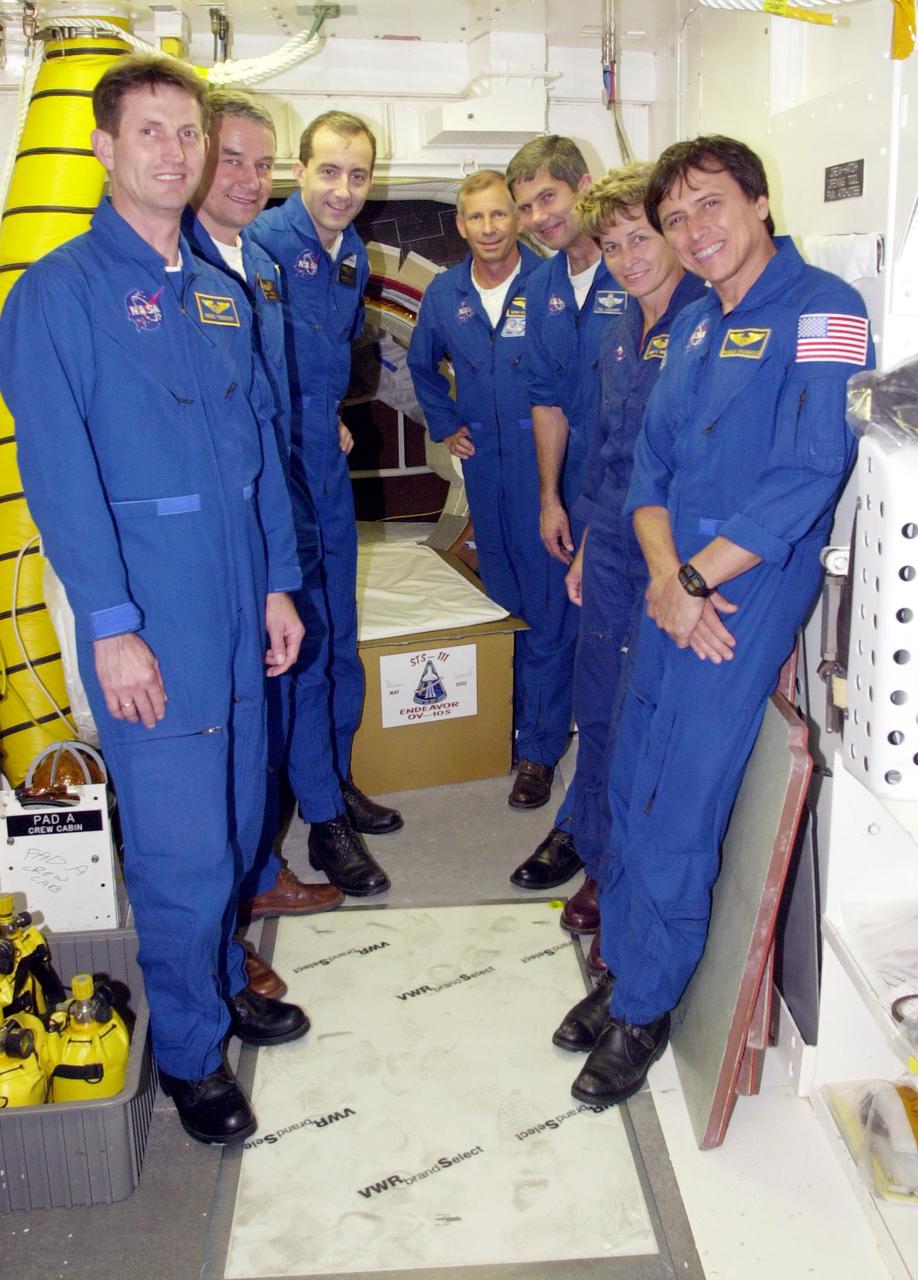
KENNEDY SPACE CENTER, FLA. -- In the White Room, Launch Pad 39A, the STS-111 and Expedition 5 crews pose in front of the entry into Space Shuttle Endeavour. From left are Expedition 5 crew member Sergei Treschev and Commander Valeri Korzun, with the Russian Space Agency; STS-111 Mission Specialist Philippe Perrin, with the French Space Agency; Commander Kenneth Cockrell and Pilot Paul Lockhart; Expedition 5 crew member Peggy Whitson; and Mission Specialist Franklin Chang-Diaz. The crews are taking part in Terminal Countdown Demonstration Test activities at the pad, which include emergency egress training and a simulated launch countdown. The mission is Utilization Flight 2, carrying supplies and equipment to the International Space Station, the Mobile Base System, which will be installed on the Mobile Transporter to complete the Canadian Mobile Servicing System, or MSS, and a replacement wrist_roll joint for Canadarm 2. The mechanical arm will then have the capability to 'inchworm' from the U.S. Lab Destiny to the MSS and travel along the truss to work sites. Expedition 5 will travel to the Station on Endeavour as the replacement crew for Expedition 4, who will return to Earth aboard the orbiter. Launch is scheduled for May 30, 2002
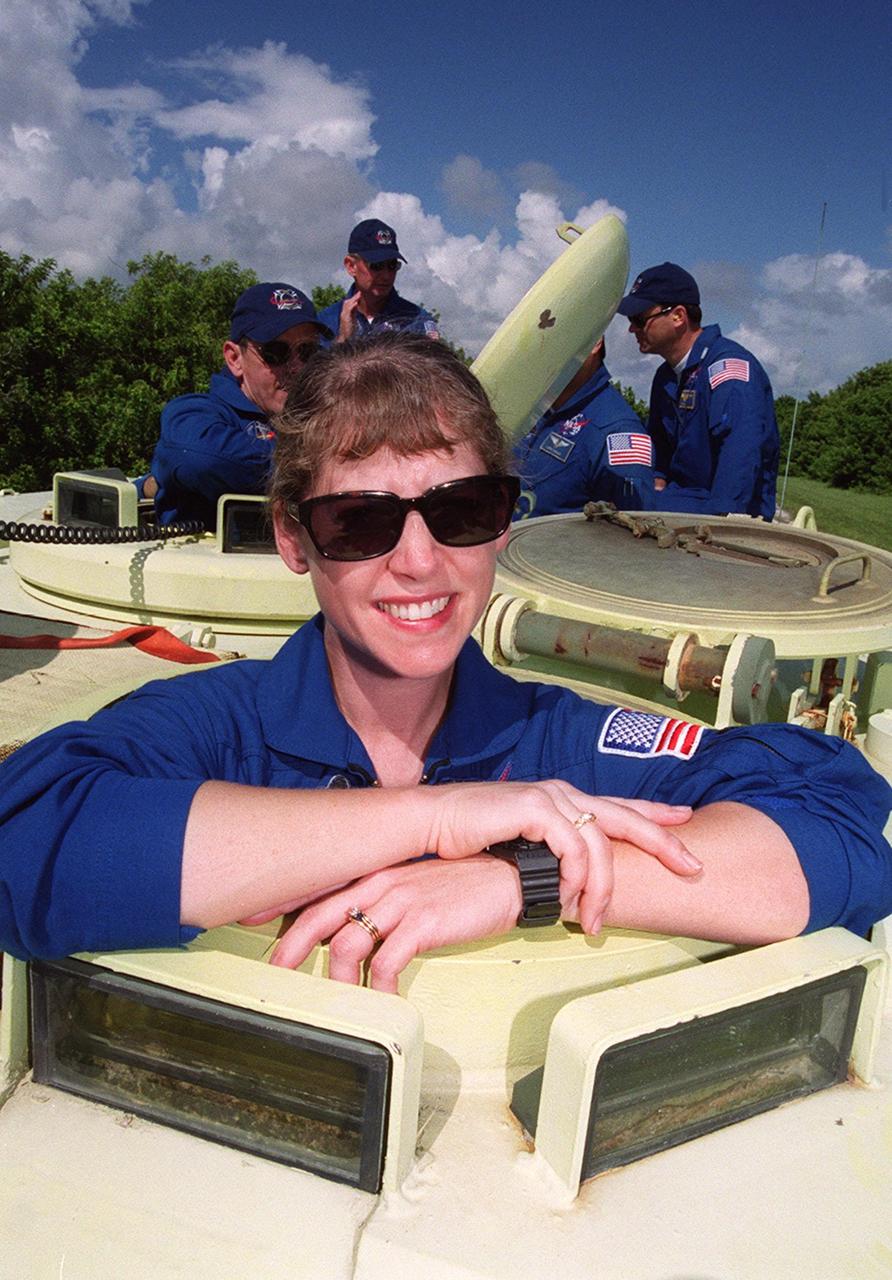
STS-92 Pilot Pam Melroy is ready to take her turn driving the M-113, part of emergency egress training during Terminal Countdown Demonstration Test (TCDT) activities. Behind her, waiting to take their turn, are (left to right) Mission Specialist Jeff Wisoff, Commander Brian Duffy, and Mission Specialists Bill McArthur and Michael Lopez-Alegria. The tracked vehicle could be used by the crew in the event of an emergency at the pad during which the crew must make a quick exit from the area. The TCDT also provides simulated countdown exercises and opportunities to inspect the mission payloads in the orbiter’s payload bay. STS-92 is scheduled to launch Oct. 5 at 9:30 p.m. EDT on the fifth flight to the International Space Station. It will carry two elements of the Space Station, the Integrated Truss Structure Z1 and the third Pressurized Mating Adapter. The mission is also the 100th flight in the Shuttle program
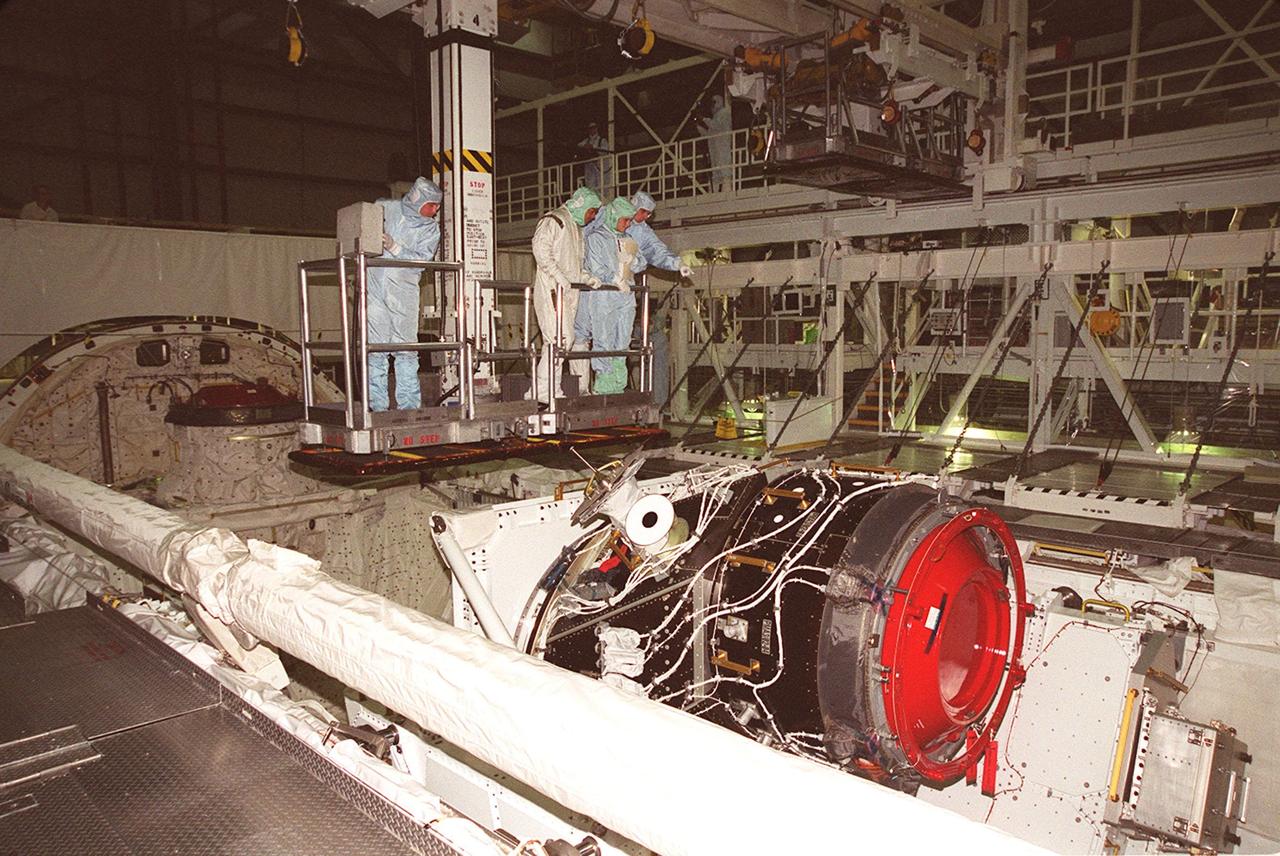
KENNEDY SPACE CENTER, FLA. -- In Orbiter Processing Facility bay 1, members of the STS-92 crew take part in Crew Equipment Interface Test (CEIT) activities. Being lowered into the payload bay of Discovery for a closer look at the payload are Mission Specialists Leroy Chiao (second from left) and Bill McArthur (far right), accompanied by Boeing workers. In the foreground is the Pressurized Mating Adapter-3 (PMA-3). Other crew members taking part in the CEIT are Commander Brian Duffy, Pilot Pam Melroy, and Mission Specialists Koichi Wakata, Jeff Wisoff and Michael Lopez-Alegria. STS-92 is scheduled to launch Oct. 5 on Shuttle Discovery from Launch Pad 39A on the fifth flight to the International Space Station. Discovery will carry the Integrated Truss Structure (ITS) Z1, the PMA-3, Ku-band Communications System, and Control Moment Gyros (CMGs)
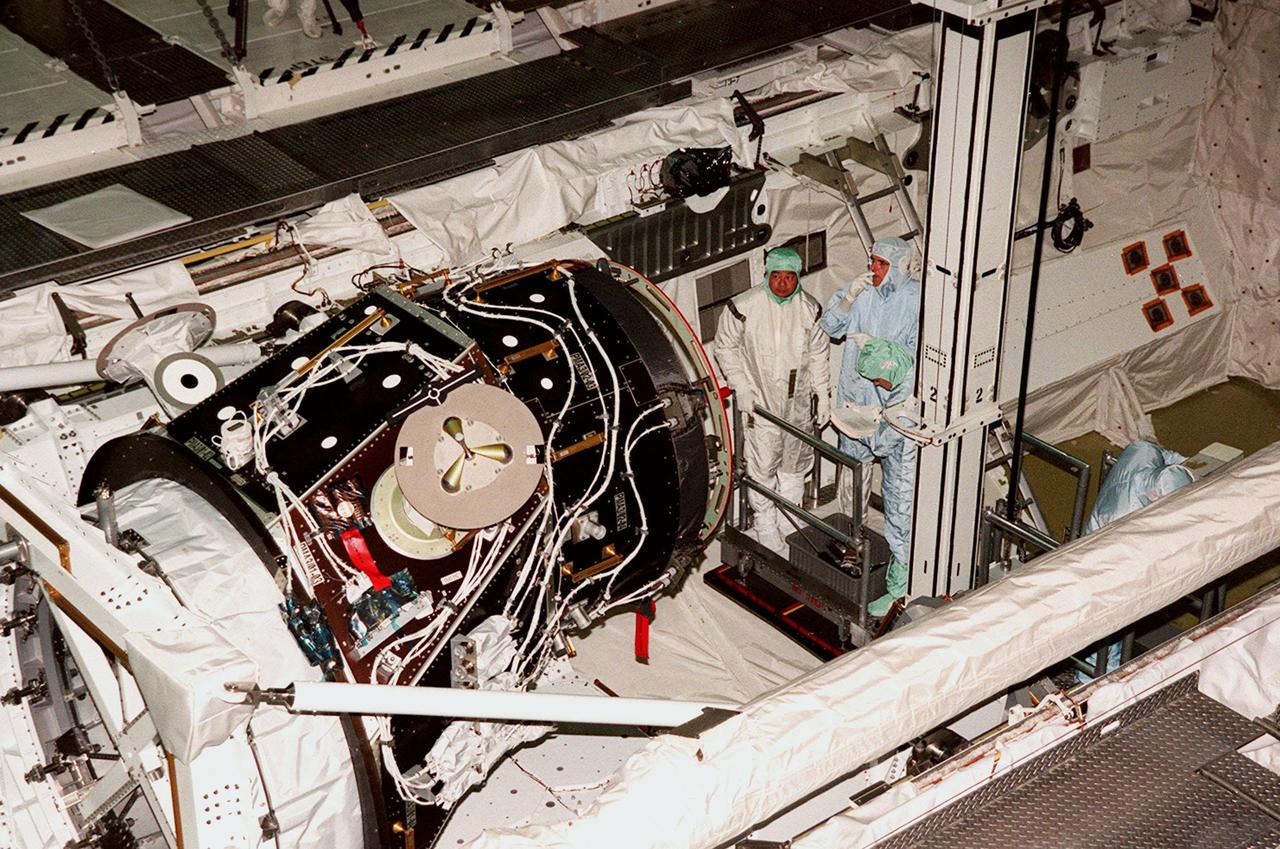
KENNEDY SPACE CENTER, FLA. -- On a platform inside the payload bay of Discovery, STS-92 Mission Specialists Leroy Chiao and Bill McArthur take a close look at Pressurized Mating Adapter-3 (PMA-3). They and other crew members Commander Brian Duffy, Pilot Pam Melroy and Mission Specialists Koichi Wakata, Jeff Wisoff, and Michael Lopez-Alegria are at KSC to take part in Crew Equipment Interface Test activities. Discovery is in the Orbiter Processing Facility bay 1. STS-92 is scheduled to launch Oct. 5 on Shuttle Discovery from Launch Pad 39A on the fifth flight to the International Space Station. Discovery will carry the Integrated Truss Structure (ITS) Z1, the PMA-3, Ku-band Communications System, and Control Moment Gyros (CMGs)
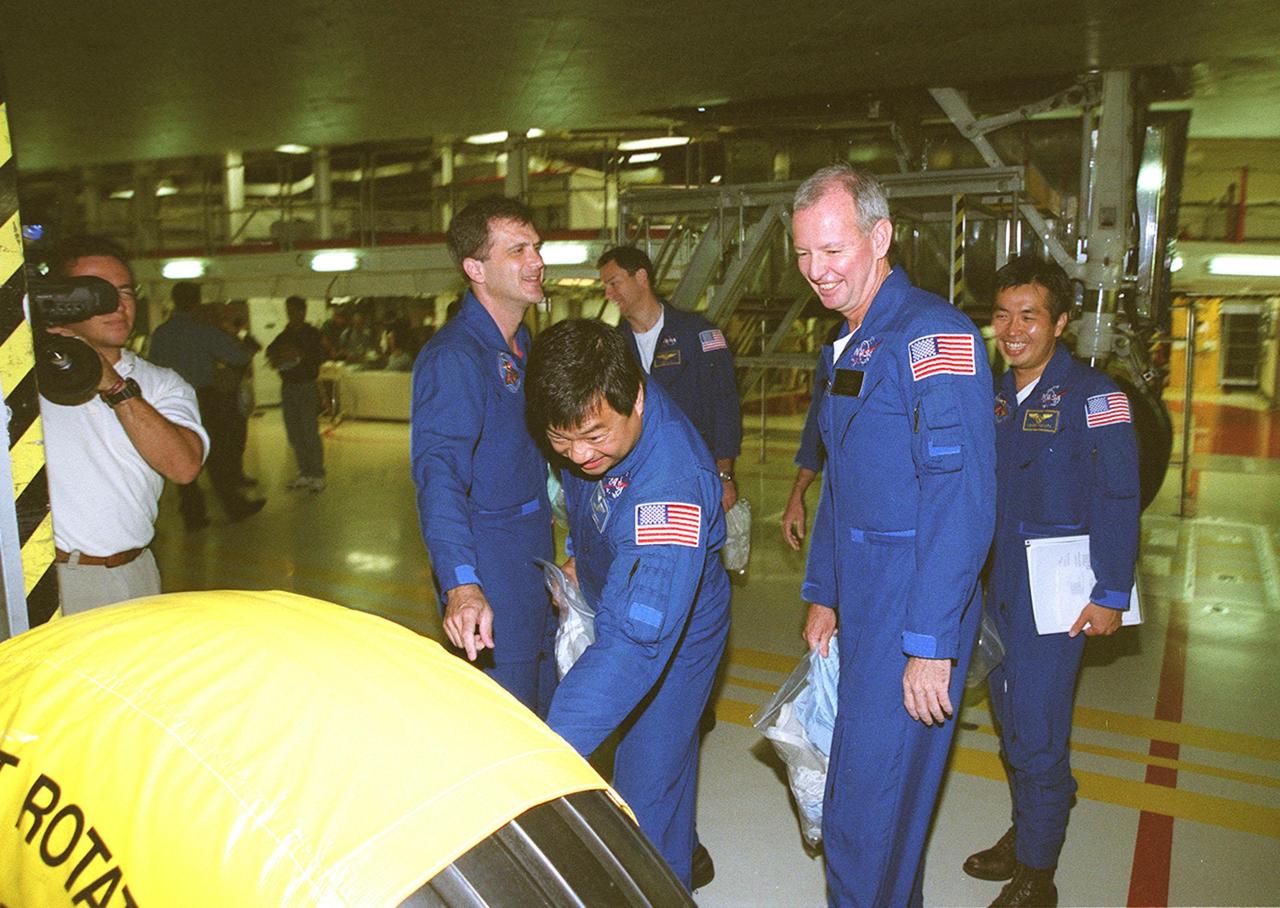
KENNEDY SPACE CENTER, FLA. -- Members of the STS-92 crew look over a tire on the landing gear of orbiter Discovery in the Orbiter Processing Facility bay 1. From left to right are Mission Specialists Jeff Wisoff (pointing) and Leroy Chiao, Commander Brian Duffy and Mission Specialist Koichi Wakata, who is with the Japanese space agency. Standing behind them is Mission Specialist Michael Lopez-Alegria. The crew is at KSC to take part in Crew Equipment Interface Test activities. Others taking part are Pilot Pam Melroy and Mission Specialist Bill McArthur. STS-92 is scheduled to launch Oct. 5 on Shuttle Discovery from Launch Pad 39A on the fifth flight to the International Space Station. Discovery will carry the Integrated Truss Structure (ITS) Z1, Pressurized Mating Adapter 3 (PMA-3), Ku-band Communications System, and Control Moment Gyros (CMGs)
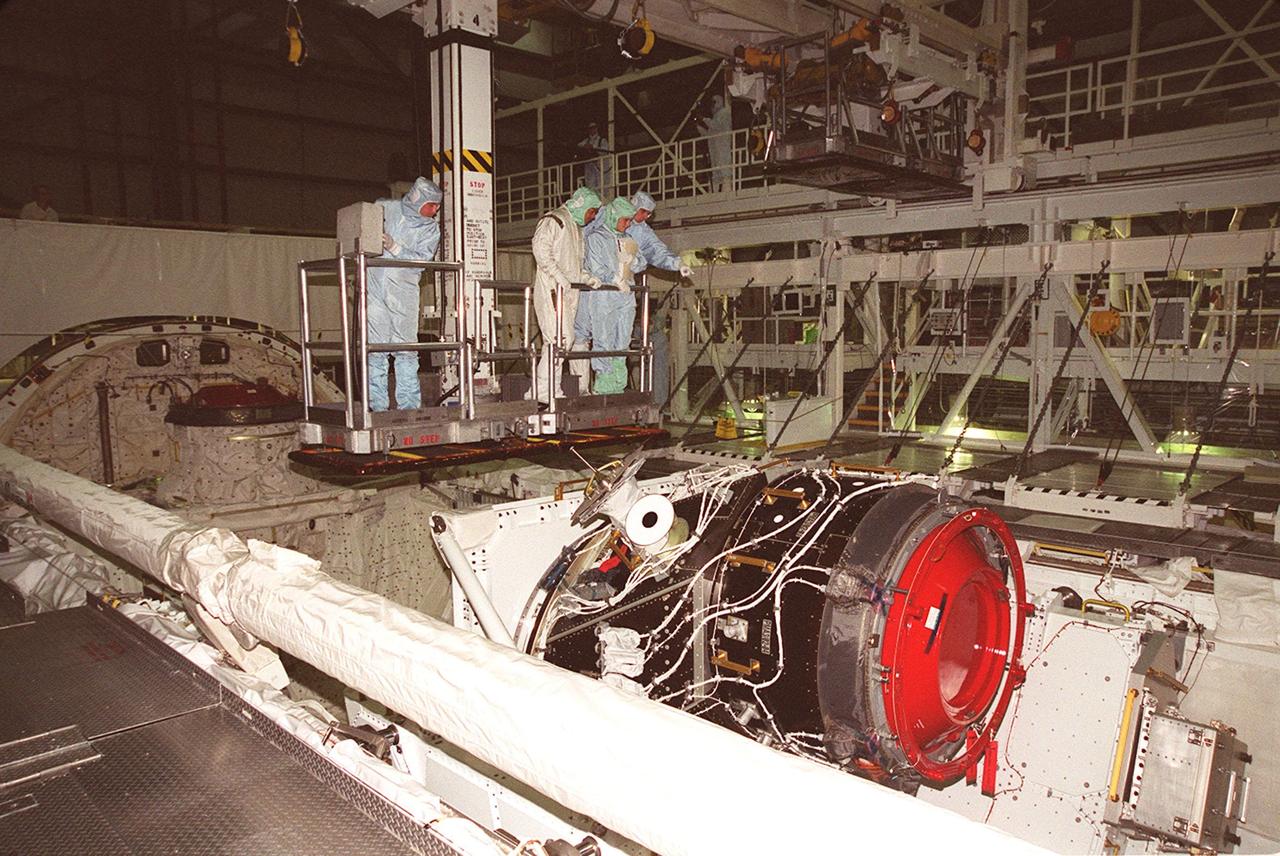
KENNEDY SPACE CENTER, FLA. -- In Orbiter Processing Facility bay 1, members of the STS-92 crew take part in Crew Equipment Interface Test (CEIT) activities. Being lowered into the payload bay of Discovery for a closer look at the payload are Mission Specialists Leroy Chiao (second from left) and Bill McArthur (far right), accompanied by Boeing workers. In the foreground is the Pressurized Mating Adapter-3 (PMA-3). Other crew members taking part in the CEIT are Commander Brian Duffy, Pilot Pam Melroy, and Mission Specialists Koichi Wakata, Jeff Wisoff and Michael Lopez-Alegria. STS-92 is scheduled to launch Oct. 5 on Shuttle Discovery from Launch Pad 39A on the fifth flight to the International Space Station. Discovery will carry the Integrated Truss Structure (ITS) Z1, the PMA-3, Ku-band Communications System, and Control Moment Gyros (CMGs)

KENNEDY SPACE CENTER, FLA. -- Members of the STS-92 crew look over a tire on the landing gear of orbiter Discovery in the Orbiter Processing Facility bay 1. From left to right are Mission Specialists Jeff Wisoff (pointing) and Leroy Chiao, Commander Brian Duffy and Mission Specialist Koichi Wakata, who is with the Japanese space agency. Standing behind them is Mission Specialist Michael Lopez-Alegria. The crew is at KSC to take part in Crew Equipment Interface Test activities. Others taking part are Pilot Pam Melroy and Mission Specialist Bill McArthur. STS-92 is scheduled to launch Oct. 5 on Shuttle Discovery from Launch Pad 39A on the fifth flight to the International Space Station. Discovery will carry the Integrated Truss Structure (ITS) Z1, Pressurized Mating Adapter 3 (PMA-3), Ku-band Communications System, and Control Moment Gyros (CMGs)
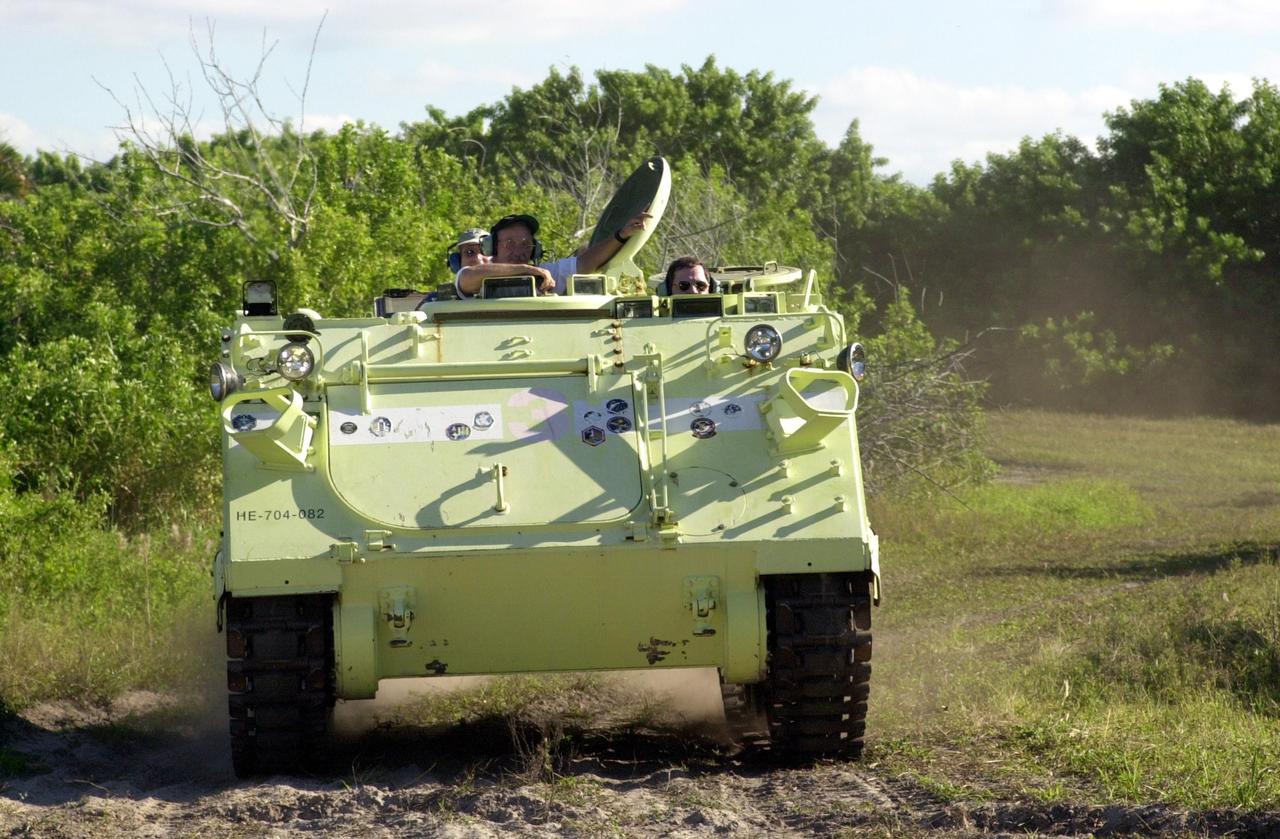
KENNEDY SPACE CENTER, FLA. -- Expedition 6 crew member Nikolai Budarin takes his turn driving an M-113 armored personnel carrier during emergency egress training at the pad. The crew is preparing for the mission aboard Space Shuttle Endeavour, which is scheduled to launch Nov. 10, by taking part in Terminal Countdown Demonstration Test activities. The TCDT includes a simulated launch countdown.. The Expedition 6 crew will travel on Space Shuttle Endeavour to the International Space Station to replace Expedition 5, returning to Earth after 4 months. The primary payloads on mission STS-113 are the first port truss segment, P1, and the Crew and Equipment Translation Aid (CETA) Cart B. Once delivered, the P1 truss will remain stowed until flight 12A.1 in 2003 when it will be attached to the central truss segment, S0, on the Space Station. Launch is scheduled for Nov. 10, 2002.
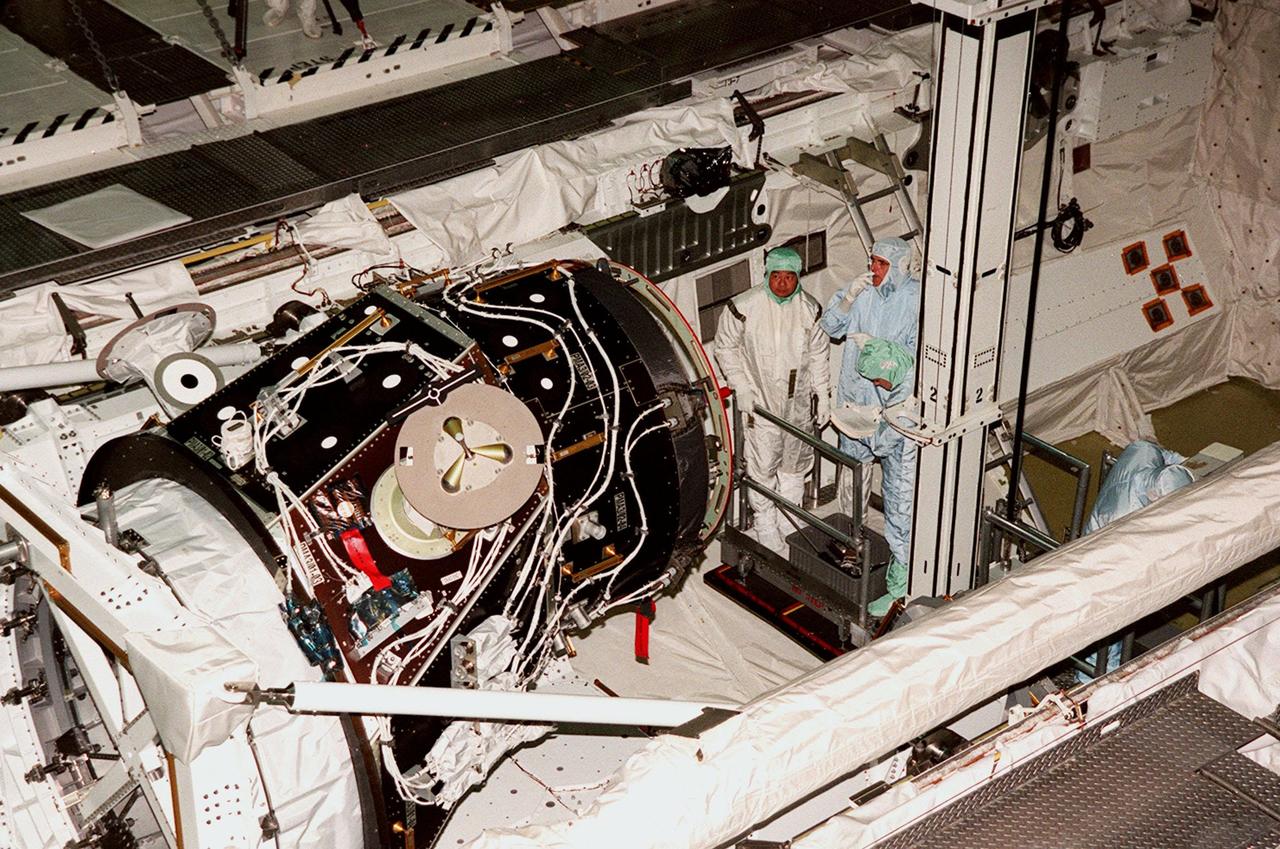
KENNEDY SPACE CENTER, FLA. -- On a platform inside the payload bay of Discovery, STS-92 Mission Specialists Leroy Chiao and Bill McArthur take a close look at Pressurized Mating Adapter-3 (PMA-3). They and other crew members Commander Brian Duffy, Pilot Pam Melroy and Mission Specialists Koichi Wakata, Jeff Wisoff, and Michael Lopez-Alegria are at KSC to take part in Crew Equipment Interface Test activities. Discovery is in the Orbiter Processing Facility bay 1. STS-92 is scheduled to launch Oct. 5 on Shuttle Discovery from Launch Pad 39A on the fifth flight to the International Space Station. Discovery will carry the Integrated Truss Structure (ITS) Z1, the PMA-3, Ku-band Communications System, and Control Moment Gyros (CMGs)
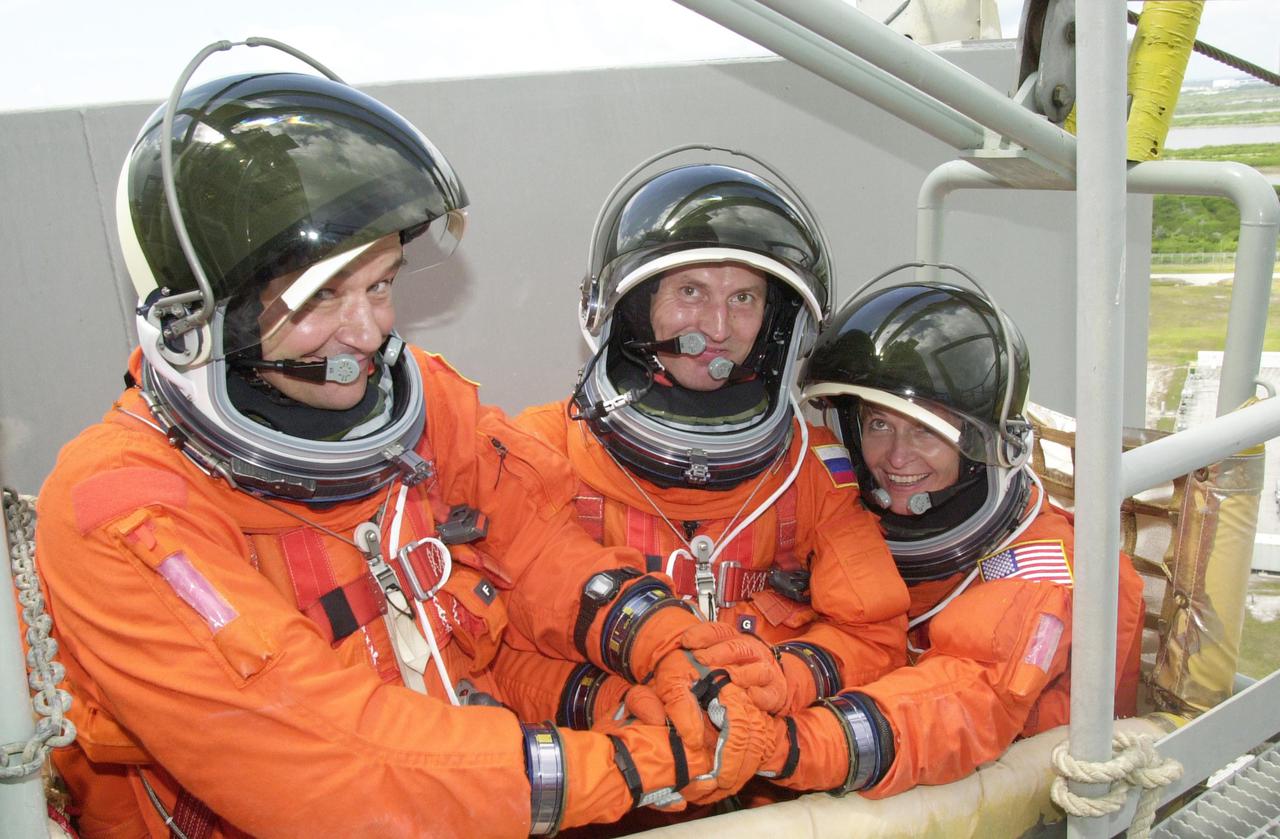
KENNEDY SPACE CENTER, FLA. - The Expedition 5 crew - Commander Valeri Korzun (left), Sergei Treschev (center) and Peggy Whitson (right) - are in the slidewire basket and ready to exit the Fixed Service Structure on Launch Pad 39A. They and the STS-111 crew are taking part in Terminal Countdown Demonstration Test activities, which include emergency egress training and a simulated launch countdown. Mission STS-111 is Utilization Flight 2, carrying equipment and supplies in the Multi-Purpose Logistics Module Leonardo to the International Space Station, plus the Mobile Base System (MBA) and an Orbital Replacement Unit. The MBS will be installed on the Mobile Transporter to complete the Canadian Mobile Servicing System, or MSS, enabling Canadarm 2 to 'inchworm' from the U.S. Lab Destiny to the MSS and travel along the truss to work sites. The Expedition 5 crew is traveling on Endeavour to replace the Expedition 4 crew on the Station. Launch of Endeavour is scheduled for May 30, 2002