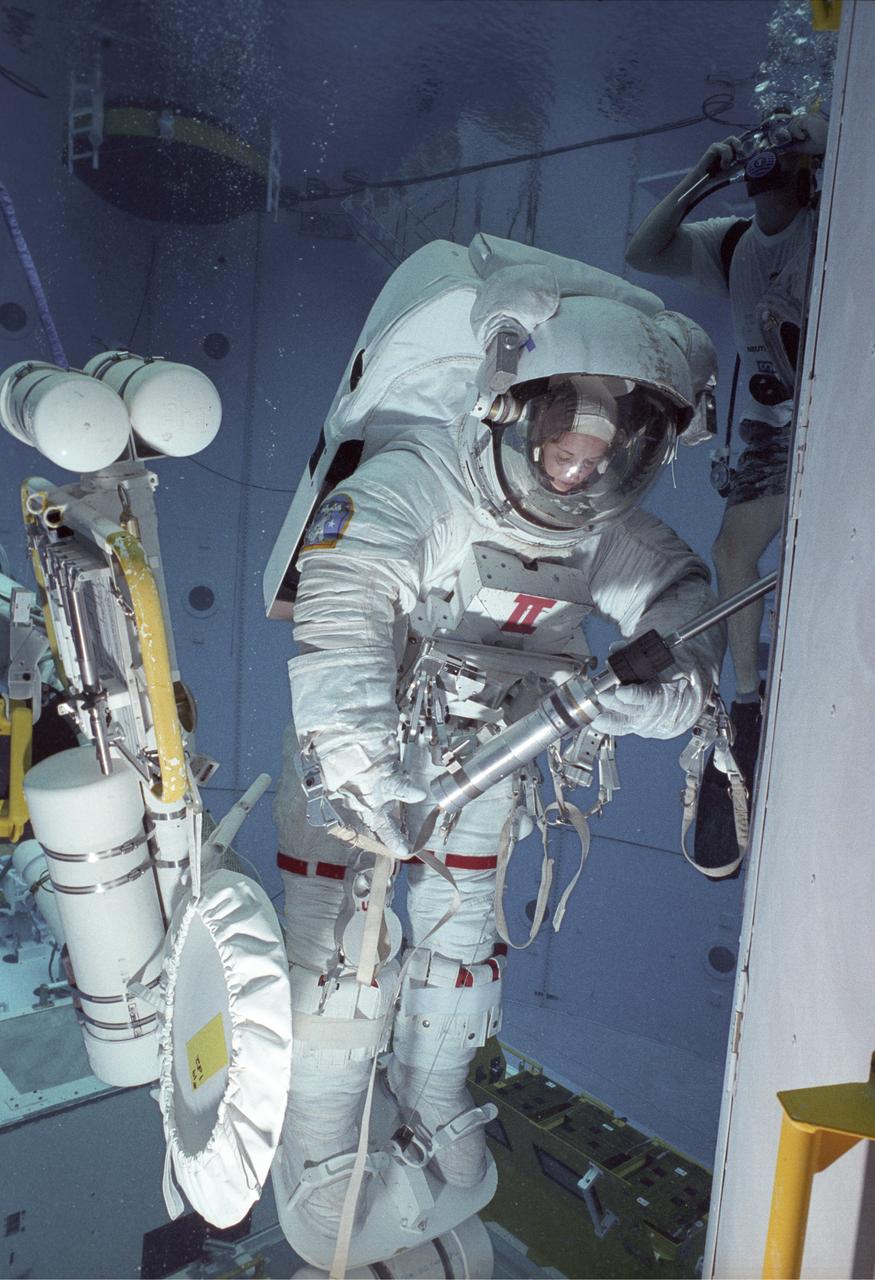
This close-up of astronaut and mission specialist Kathryn Thornton was captured under water in the Marshall Space Flight Center (MSFC) Neural Buoyancy Simulator (NBS) where she is participating in a training session for the STS-61 mission. The NBS provided the weightless environment encountered in space needed for testing and the practices of Extravehicular Activities (EVA). Launched on December 2, 1993 aboard the Space Shuttle Orbiter Endeavor, STS-61 was the first Hubble Space Telescope (HST) serving mission. During the 2nd EVA of the mission, Thornton, along with astronaut and mission specialist Thomas Akers, performed the task of replacing the solar arrays. The EVA lasted 6 hours and 35 minutes.
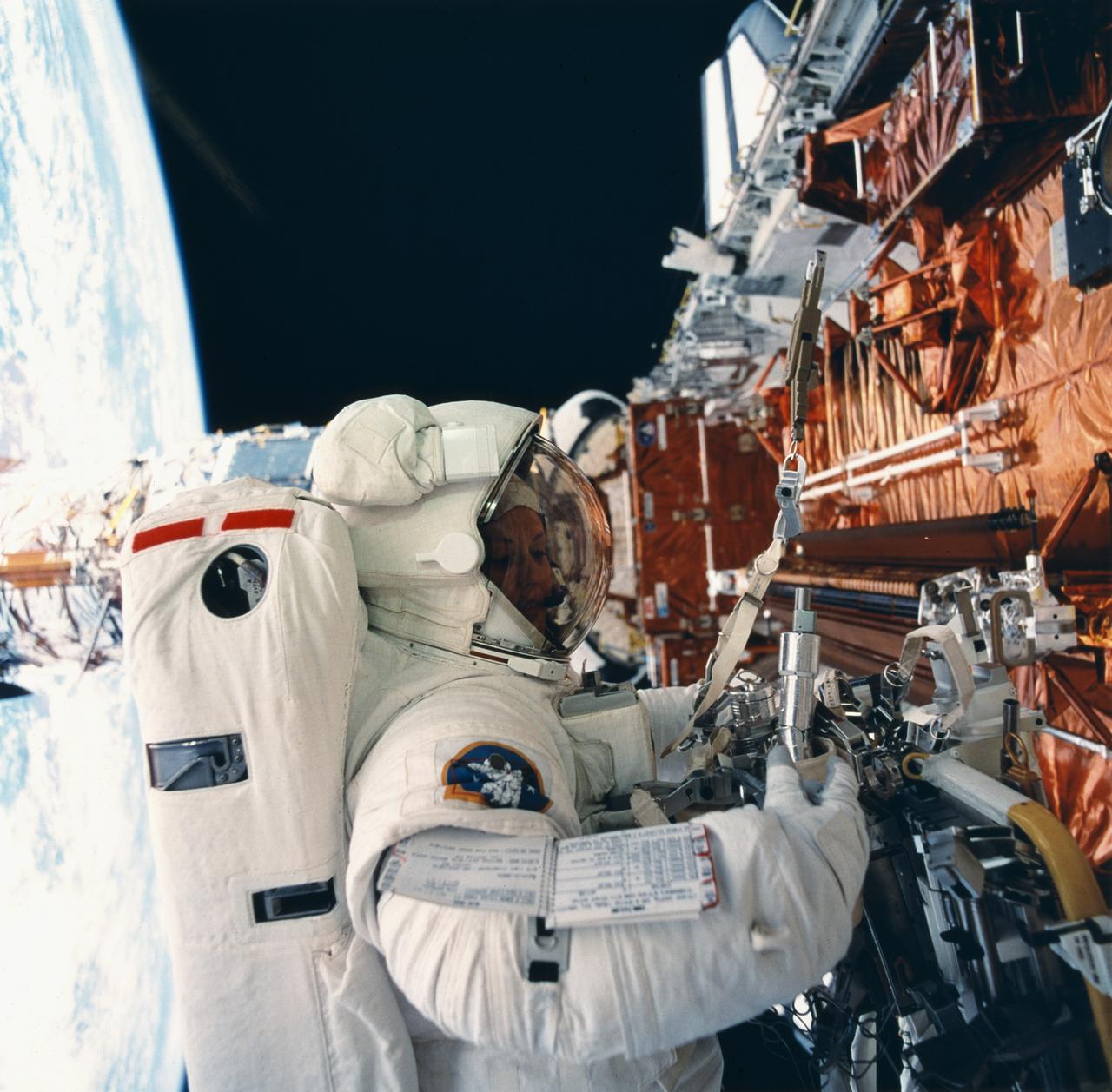
This STS-61 onboard photo depicts Astronaut and mission specialist Kathryn Thornton performing the 2nd extra-vehicular activity (EVA) of the STS-61 mission. Thornton, along with astronaut and mission specialist Thomas Akers (out of frame), performed the task of replacing the solar arrays. The EVA lasted 6 hours and 35 minutes. Launched December 1, 1993 aboard the Space Shuttle Orbiter Endeavor, the STS-61 mission was solely dedicated to servicing the HST.
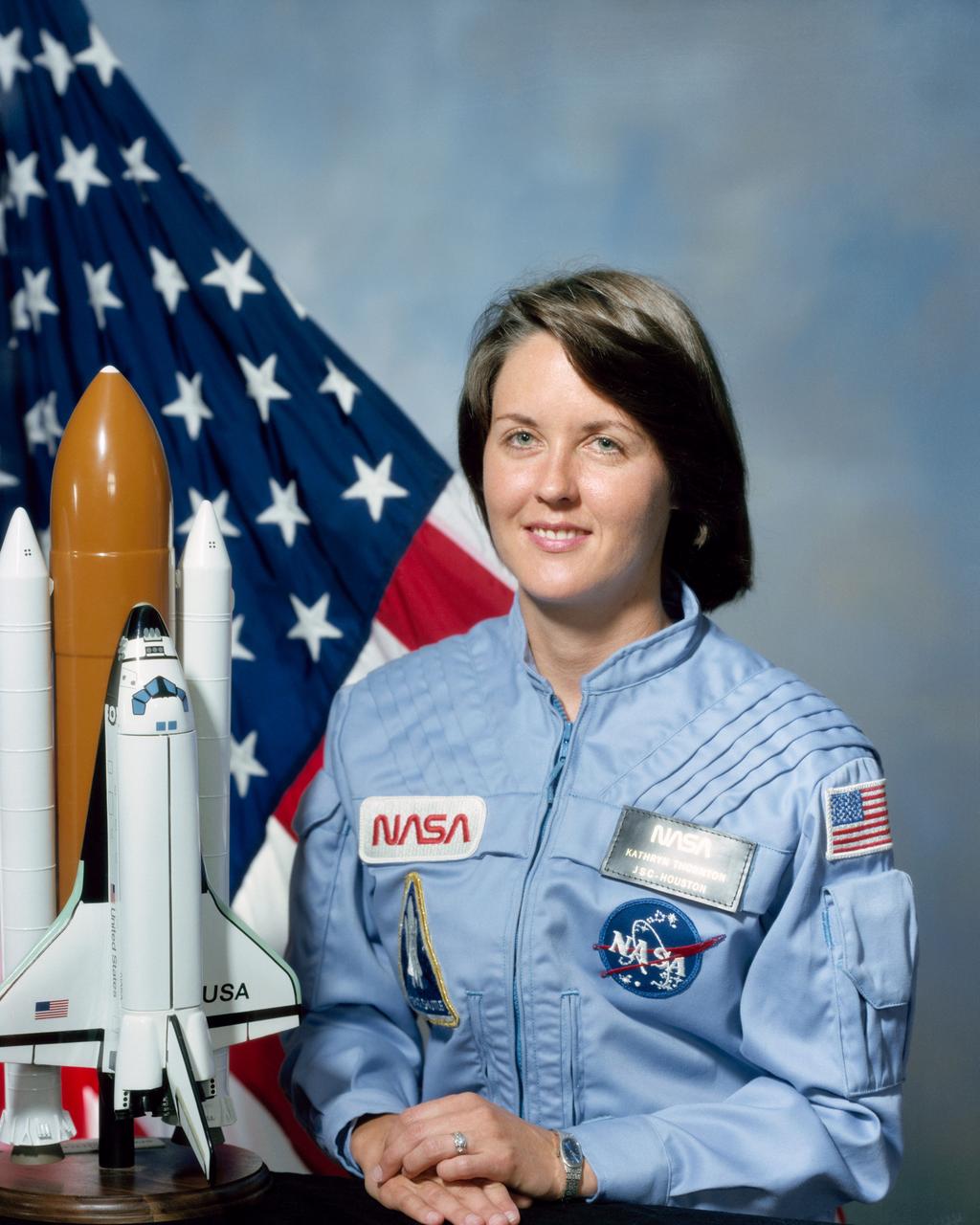
S84-40237 (July 1984) --- Astronaut Kathryn C. Thornton, Astronaut Candidate Group 11.
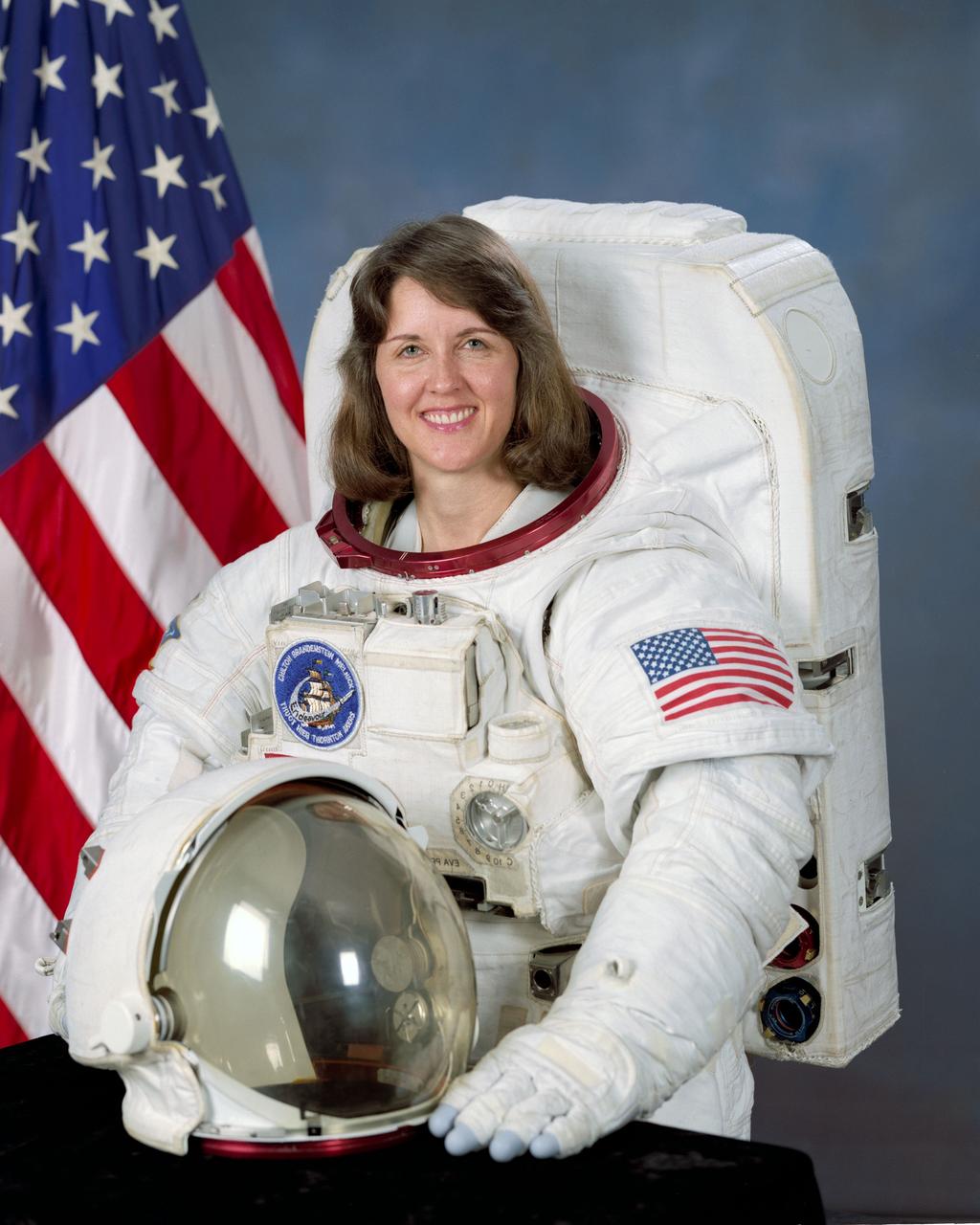
S92-42897 (7 August 1992) --- Astronaut Kathryn C. Thornton, mission specialist
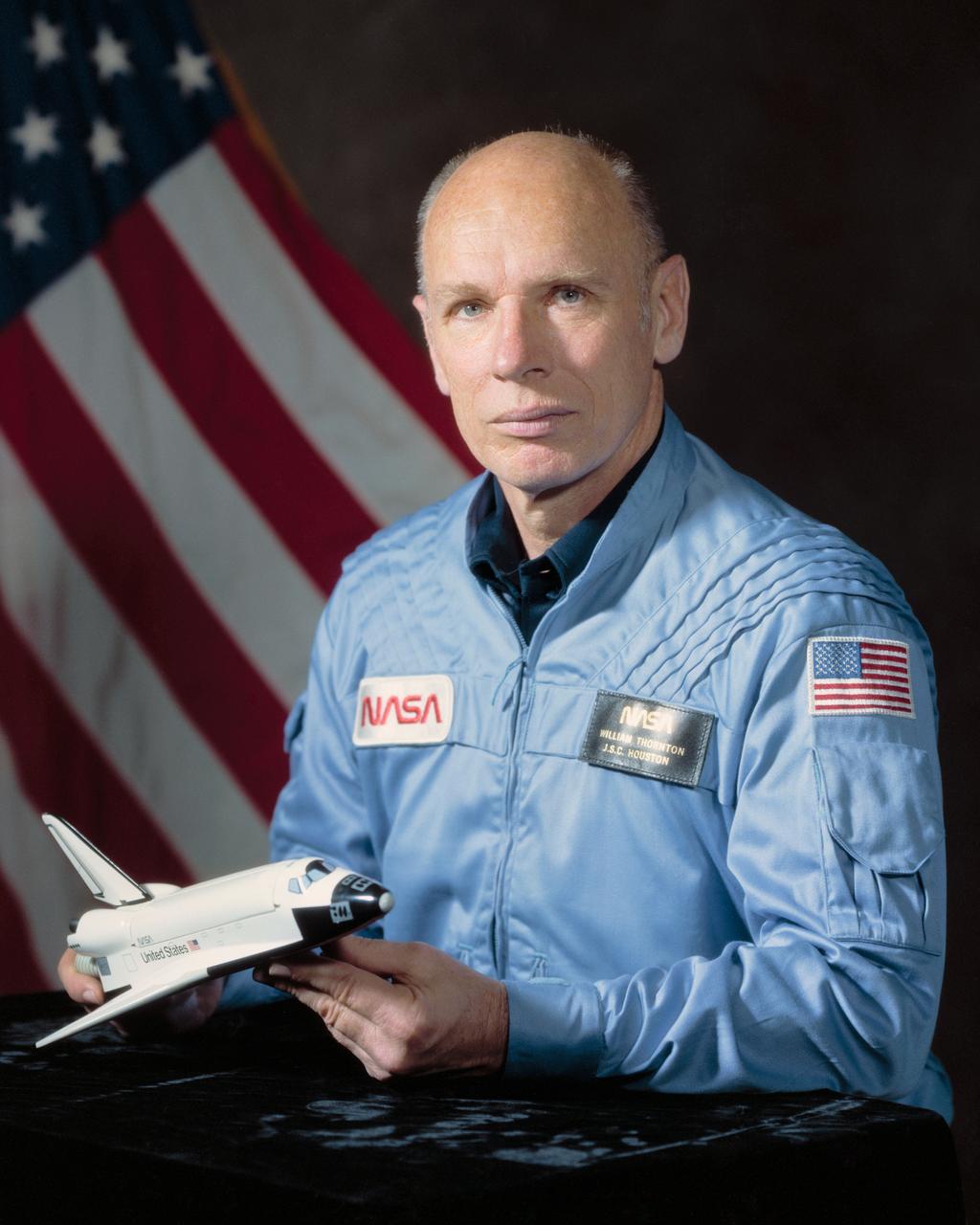
S81-29033 (1981) --- Astronaut William E. Thornton, MD.
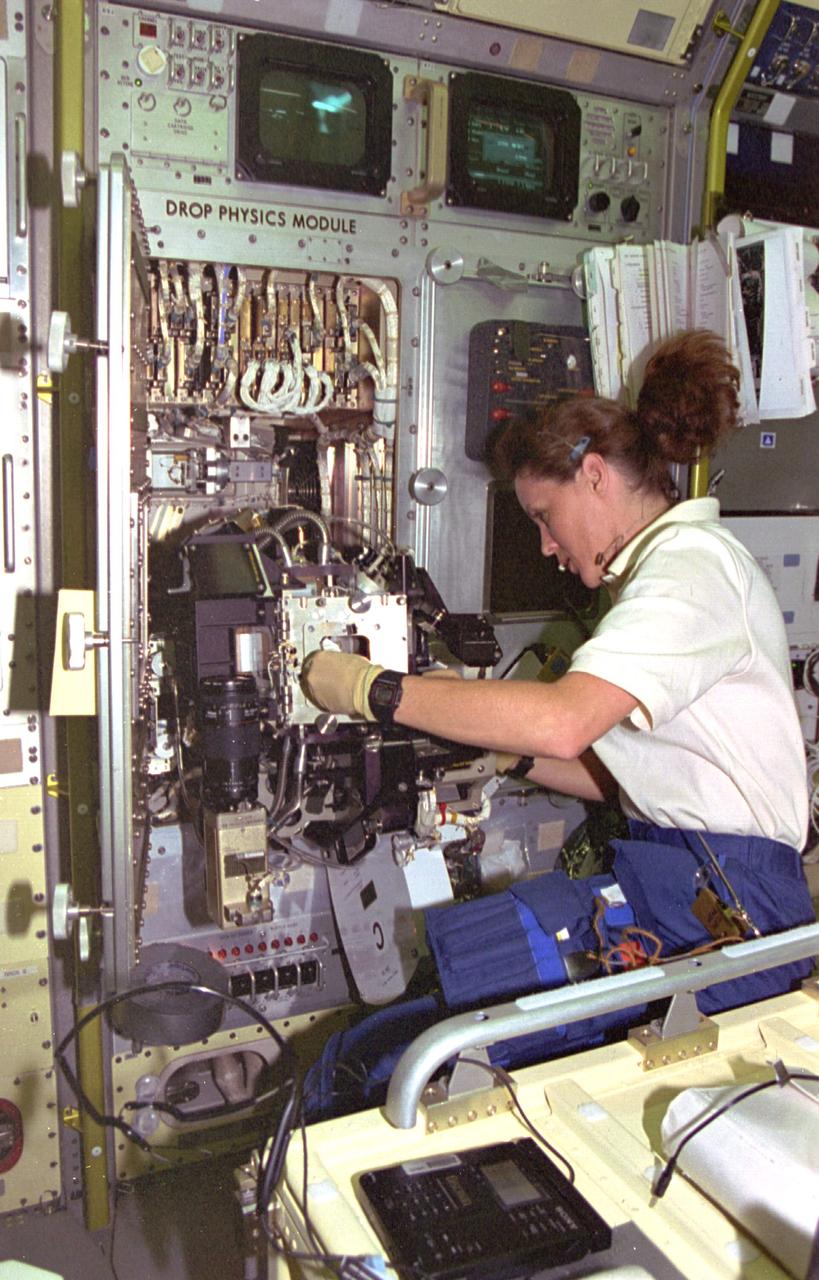
STS073-143-026 (20 October-5 November 1995) --- Astronaut Kathryn C. Thornton, STS-73 payload commander for the United States Microgravity Laboratory (USML-2), explores the inner workings of the Drop Physics Module (DPM). Thornton was joined by four other NASA astronauts and two guest researchers for almost 16 days of research aboard the Space Shuttle Columbia in Earth-orbit.
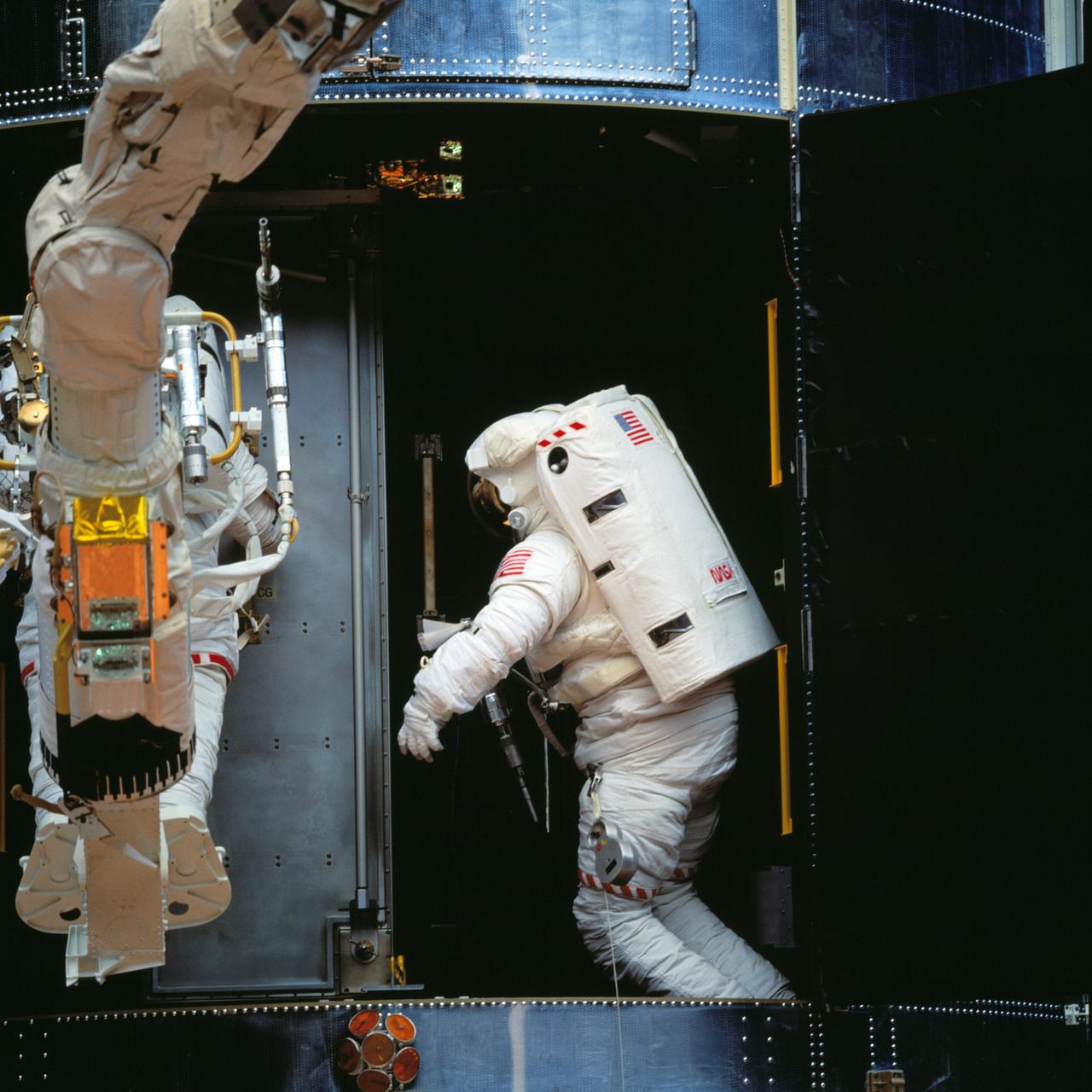
STS061-94-059 (8 Dec. 1993) --- Astronaut Thomas D. Akers maneuvers inside the bay which will house the Corrective Optics Space Telescope Axial Replacement (COSTAR) while assisting astronaut Kathryn C. Thornton with the installation of the 640-pound instrument. Thornton, anchored on the end of the Remote Manipulator System (RMS) arm, is partially visible as she prepares to install the COSTAR.
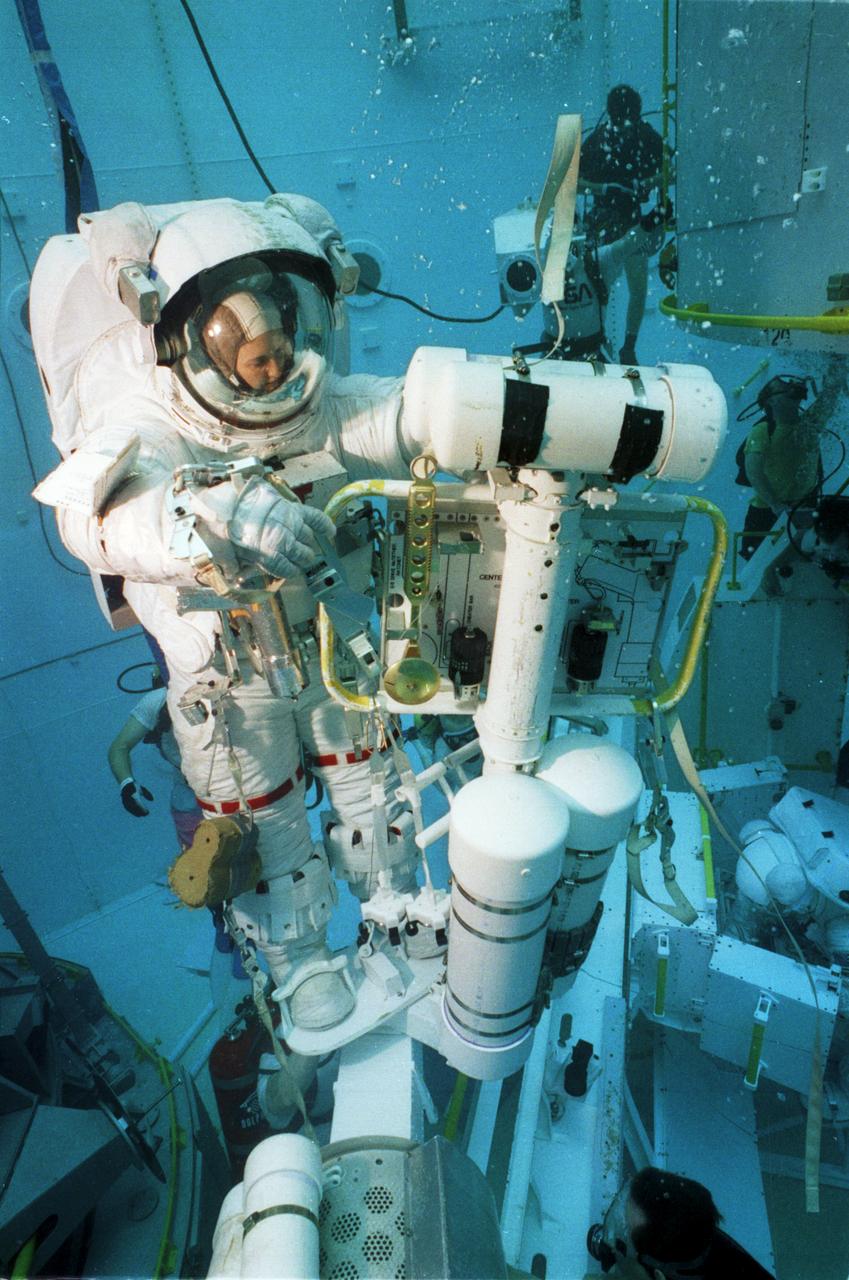
This close-up of astronaut and mission specialist, Kathryn Thornton, was captured under water in the Marshall Space Flight Center (MSFC) Neural Buoyancy Simulator (NBS) where she is participating in a training session for the STS-61 mission. The NBS provided the weightless environment encountered in space needed for testing and the practices of Extravehicular Activities (EVA). Launched on December 2, 1993 aboard the Space Shuttle Orbiter Endeavor, STS-61 was the first Hubble Space Telescope (HST) serving mission. During the 2nd EVA of the mission, Thornton, along with astronaut and mission specialist Thomas Akers, performed the task of replacing the solar arrays. The EVA lasted 6 hours and 35 minutes.
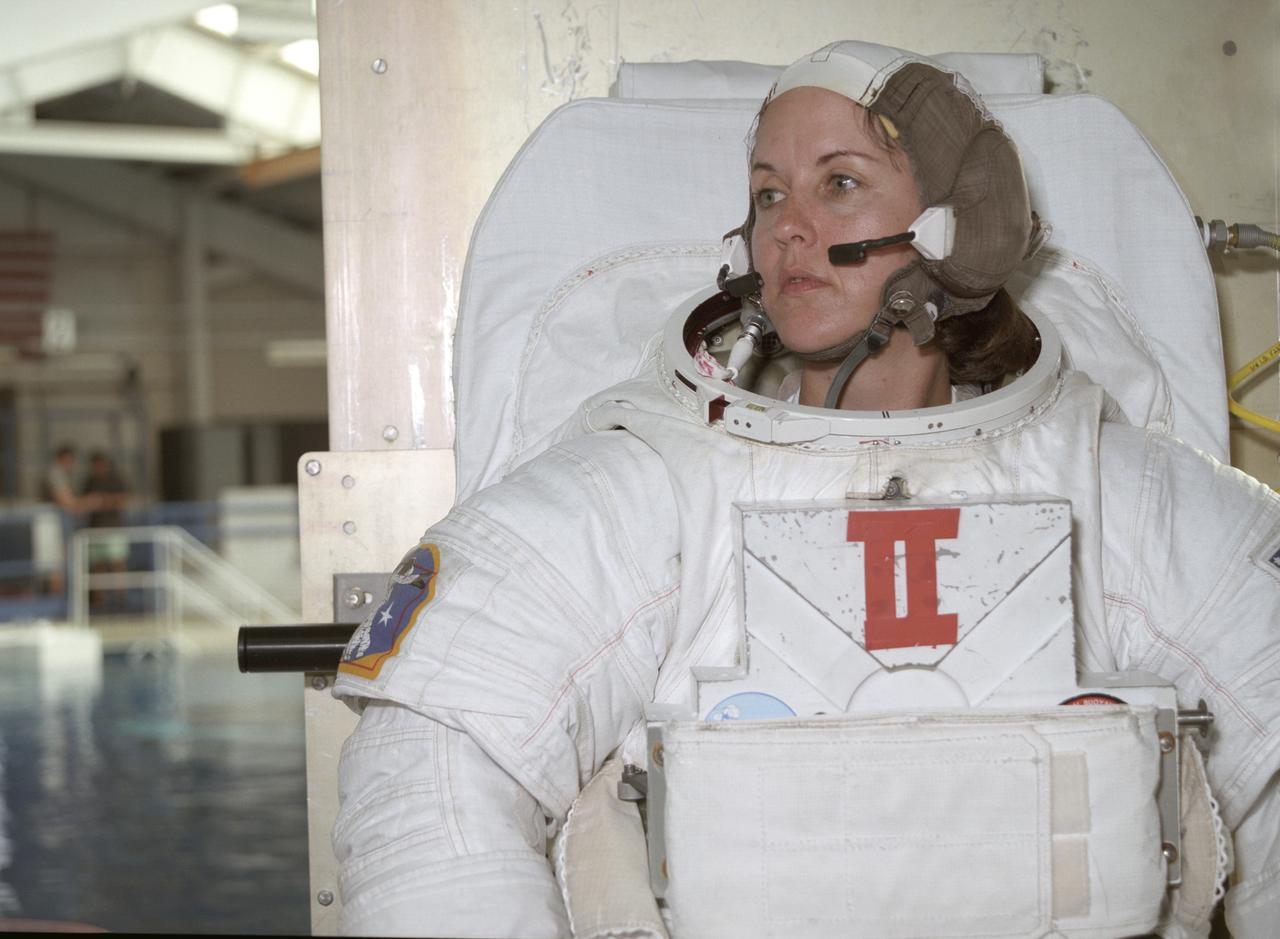
This close-up of astronaut and mission specialist Kathryn Thornton readies herself for submersion into the water in the Marshall Space Flight Center (MSFC) Neutral Buoyancy Simulator (NBS) where she is participating in a training session for the STS-61 mission. The NBS provided the weightless environment encountered in space needed for testing and the practices of Extravehicular Activities (EVA). Launched on December 2, 1993 aboard the Space Shuttle Orbiter Endeavor, STS-61 was the first Hubble Space Telescope (HST) serving mission. During the 2nd EVA of the mission, Thornton, along with astronaut and mission specialist Thomas Akers, performed the task of replacing the solar arrays. The EVA lasted 6 hours and 35 minutes.
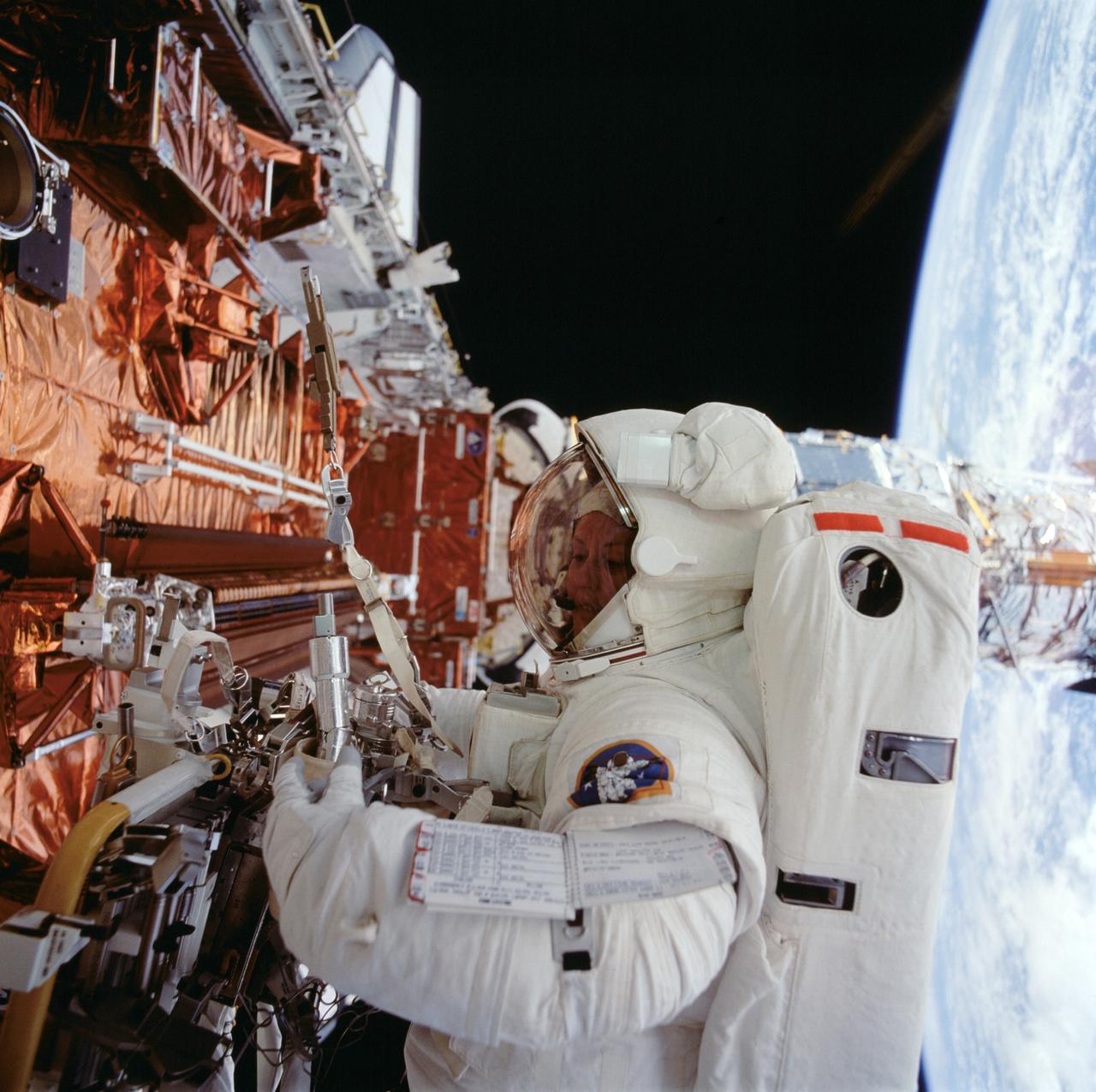
STS061-098-000K (8 Dec. 1993) --- Astronaut Kathryn C. Thornton works with equipment associated with servicing chores on the Hubble Space Telescope (HST) during the fourth extravehicular activity (EVA) on the eleven-day mission.
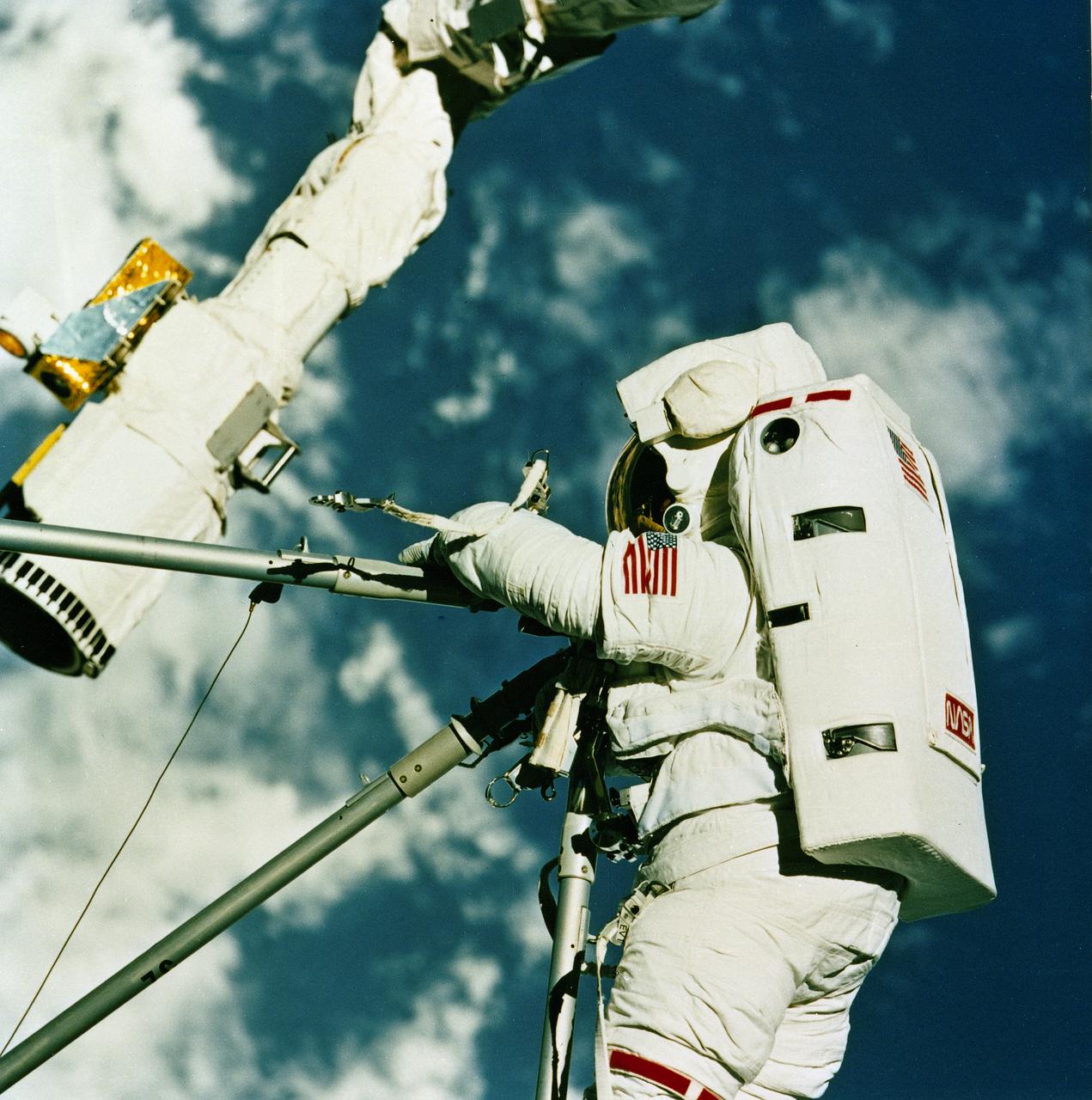
STS-49, the first flight of the Space Shuttle Orbiter Endeavour, lifted off from launch pad 39B on May 7, 1992 at 6:40 pm CDT. The STS-49 mission was the first U.S. orbital flight to feature 4 extravehicular activities (EVAs), and the first flight to involve 3 crew members working simultaneously outside of the spacecraft. The primary objective was the capture and redeployment of the INTELSAT VI (F-3) which was stranded in an unusable orbit since its launch aboard the Titan rocket in March 1990. In this STS-49 onboard photo, Astronaut Kathryn Thornton joins three struts together during her Extra Vehicular Activity (EVA).
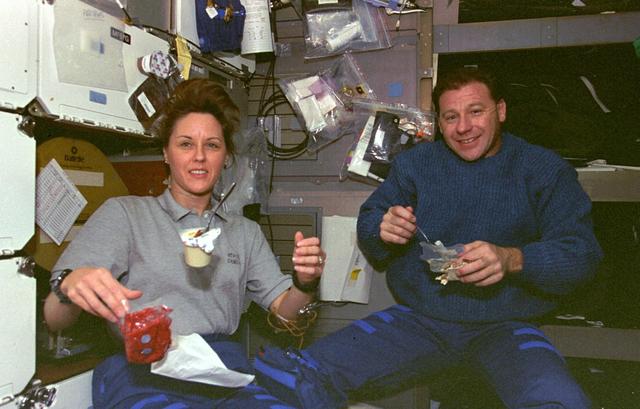
STS073-356-024 (20 October - 5 November 1995) --- Payload specialist Albert Sacco Jr. joins astronaut Kathryn C. Thornton, payload commander, for mealtime on the middeck of the Earth-orbiting Space Shuttle Columbia. Thornton is about to open a packet of strawberries, while a can of vanilla pudding floats before her. Sacco is about to grab a spoonful of rice pilaf while holding a peanut butter and jelly sandwich on a tortilla. The two were joined by five other crewmembers in support of 16-days' in-space research in support of the United States Microgravity Laboratory (USML-2) mission.
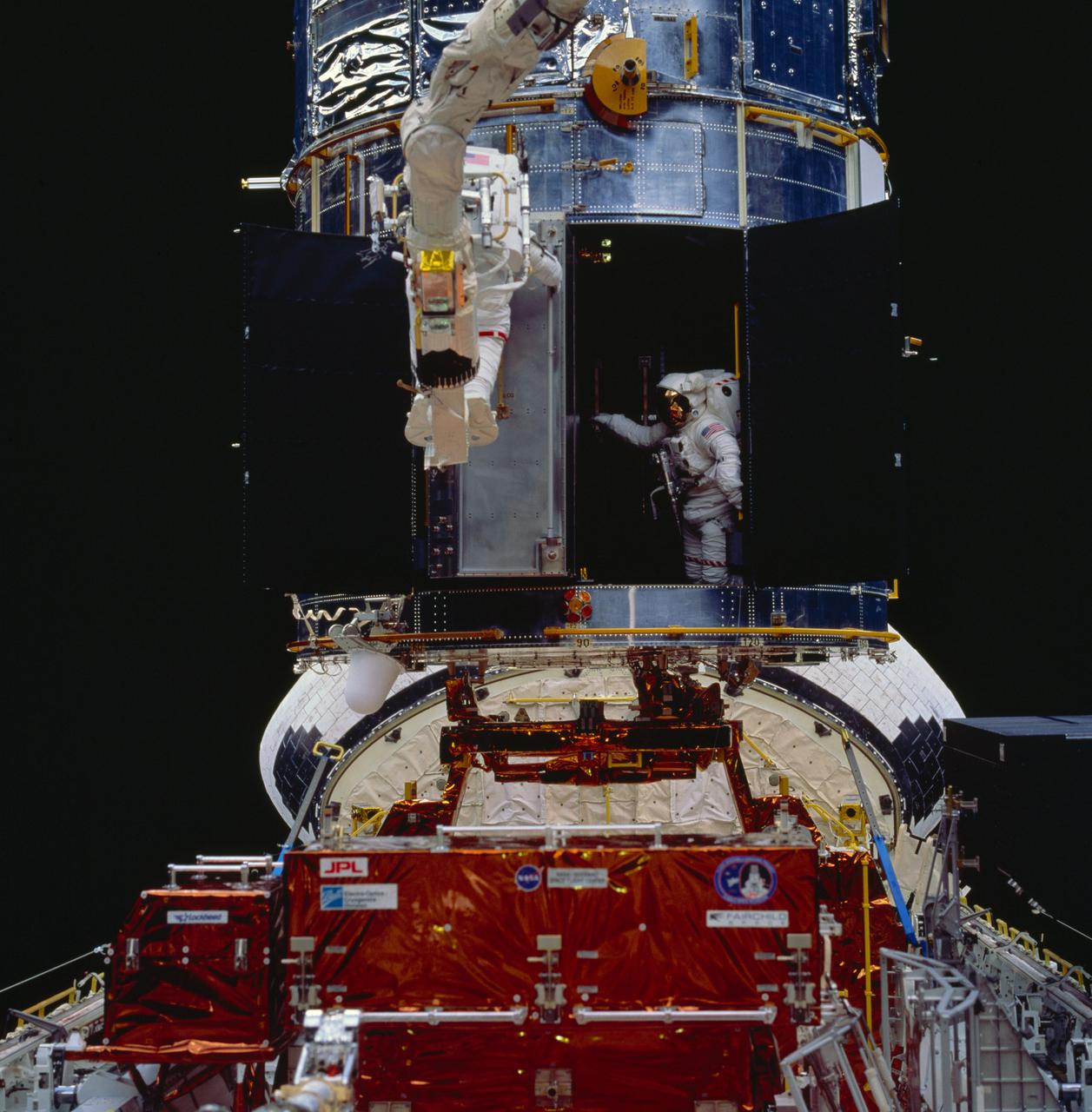
STS061-94-050 (8 Dec 1993) --- Astronaut Thomas D. Akers maneuvers inside the bay which will house the Corrective Optics Space Telescope Axial Replacement (COSTAR) while assisting astronaut Kathryn C. Thornton with the installation of the 640-pound instrument. Thornton, anchored on the end of the Remote Manipulator System (RMS) arm, is partially visible as she prepares to install the COSTAR, during their extravehicular activity (EVA).
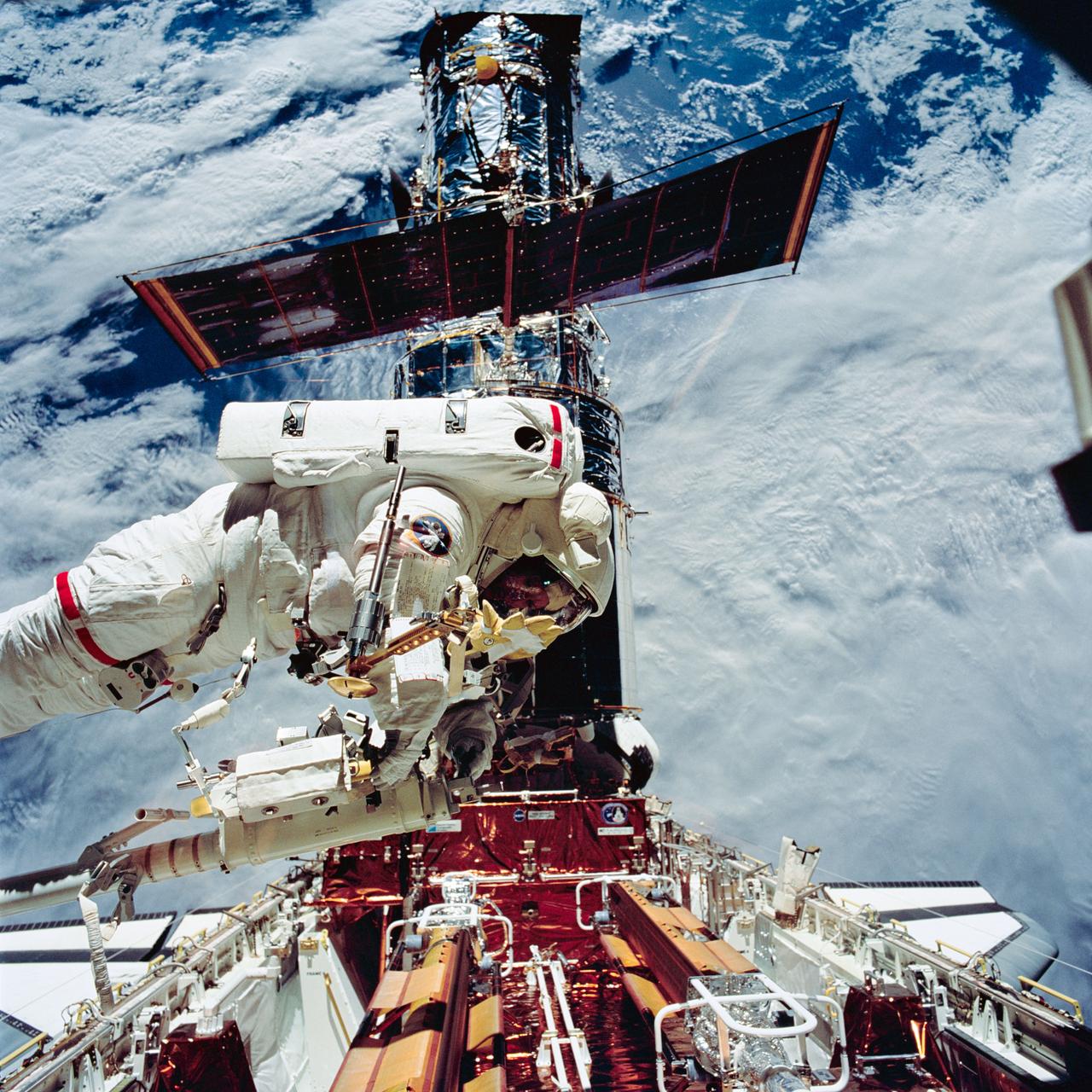
STS061-95-028 (6 Dec 1993) --- Astronaut Kathryn C. Thornton, on the end of the Space Shuttle Endeavour's Remote Manipulator System (RMS) arm, hovers over equipment associated with servicing chores on the Hubble Space Telescope (HST) during the second extravehicular activity (EVA) on the eleven-day mission. Astronauts Thornton and Thomas D. Akers changed out the solar array panels during this EVA.
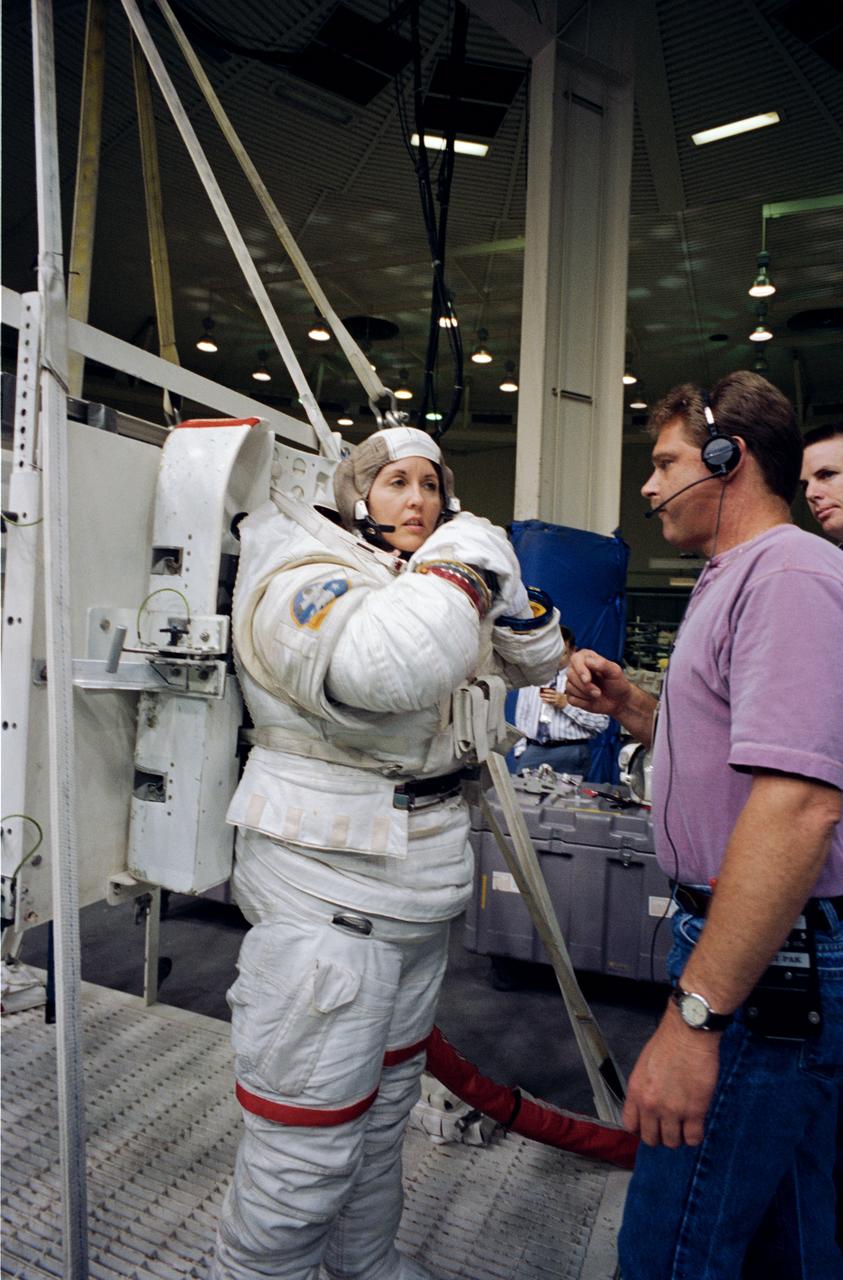
S95-08375 (August 1995) --- Astronaut Kathryn C. Thornton, payload commander for the U.S. Microgravity Laboratory (USML-2) mission, prepares to go underwater in the Johnson Space Center?s (JSC) Weightless Environment Training Facility (WET-F) pool. Thornton was about to rehearse contingency space walk tasks; there is no Extravehicular Activity (EVA) planned for the STS-73 mission.
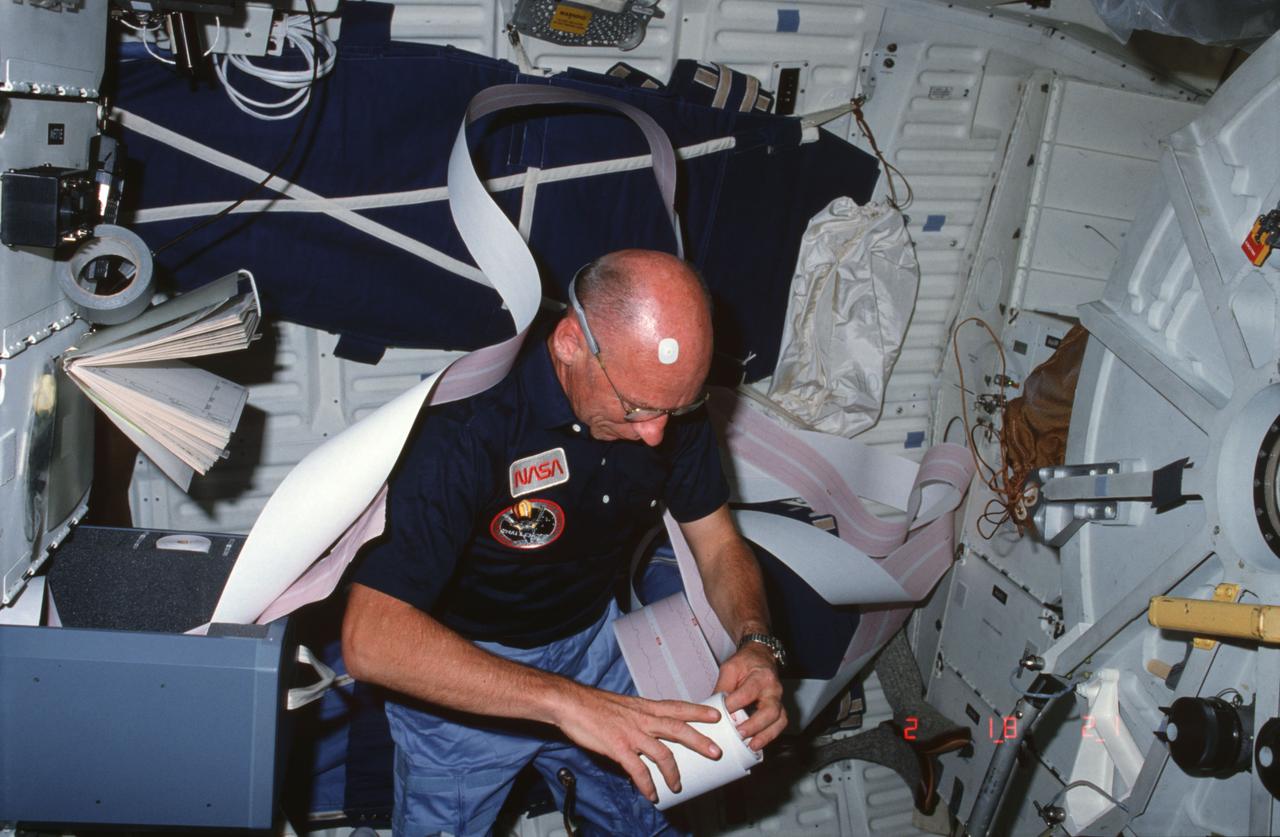
STS008-14-378 (30 Aug-5 Sept 1983) --- Astronaut William E. Thornton, a very busy mission specialist conducting a great deal of bio-medical experimentation, checks a prolific roll of data in the mid deck of the Earth-orbiting Space Shuttle Challenger. The electrode on Dr. Thornton’s forehead indicates that his four crewmates were not his only test subjects during the extensive test on this six-day flight.
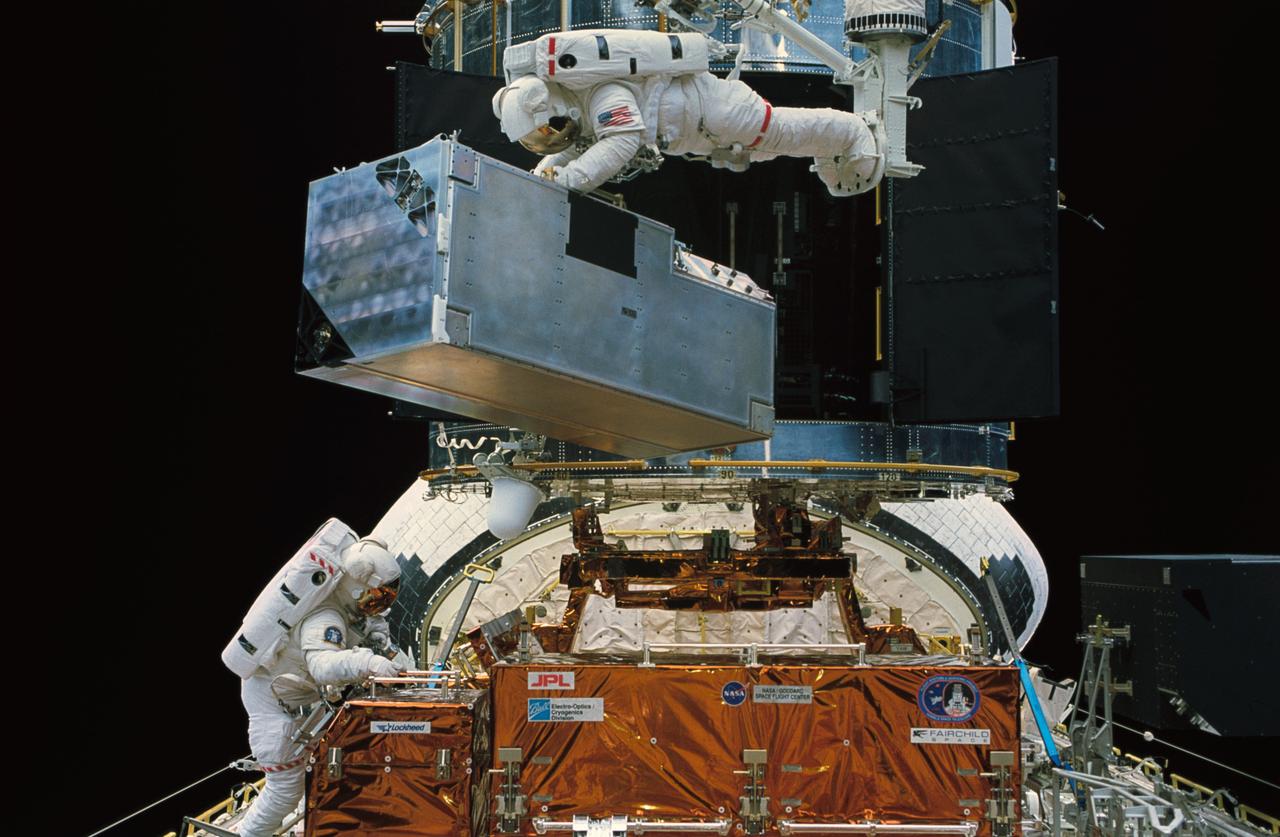
STS061-47-014 (8 Dec 1993) --- Astronaut Kathryn C. Thornton lifts the Corrective Optics Space Telescope Axial Replacement (COSTAR) prior to its installation on the Hubble Space Telescope (HST). Thornton is anchored to a foot restraint on the end of the Remote Manipulator System (RMS) arm. Astronaut Thomas D. Akers, who assisted in the COSTAR installation, is at lower left.
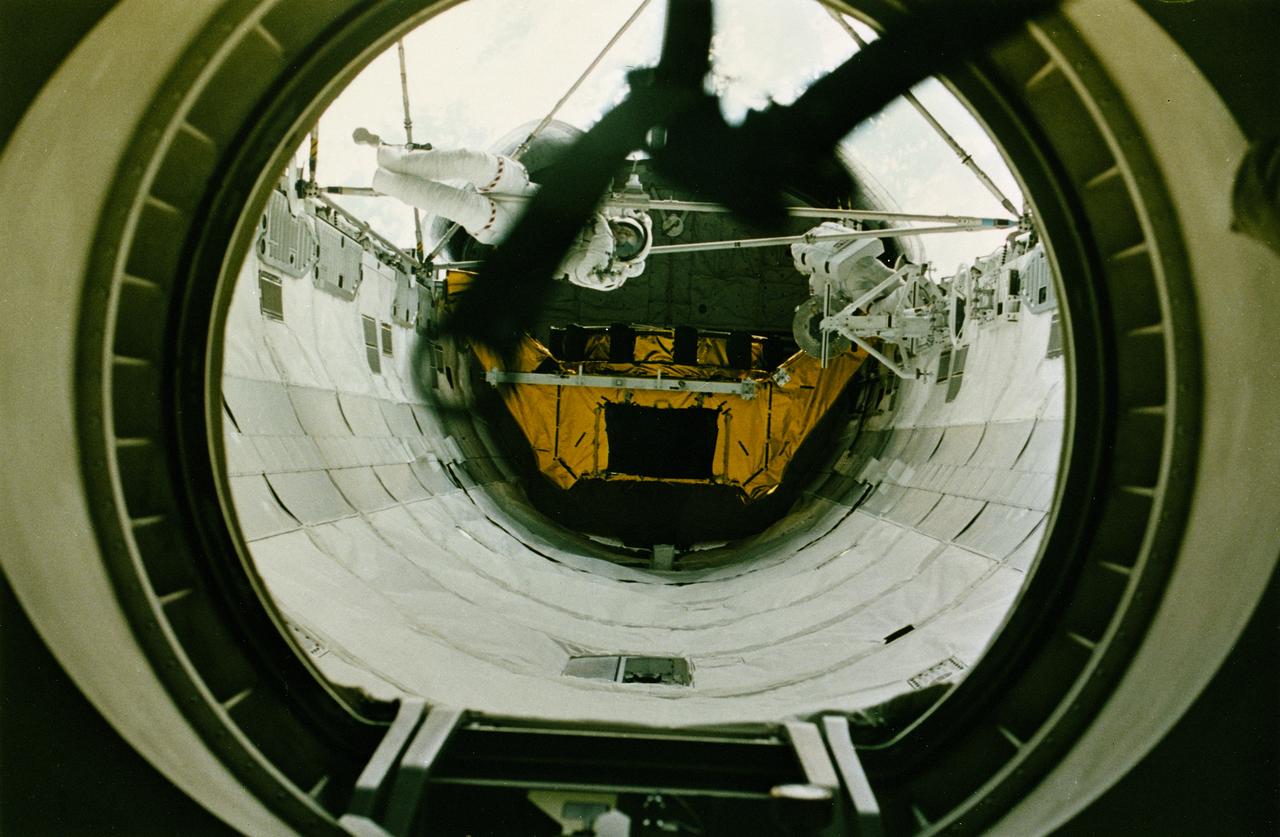
STS-49, the first flight of the Space Shuttle Orbiter Endeavour, lifted off from launch pad 39B on May 7, 1992 at 6:40 pm CDT. The STS-49 mission was the first U.S. orbital flight to feature 4 extravehicular activities (EVAs), and the first flight to involve 3 crew members working simultaneously outside of the spacecraft. The primary objective was the capture and redeployment of the INTELSAT VI (F-3), a communication satellite for the International Telecommunication Satellite organization, which was stranded in an unusable orbit since its launch aboard the Titan rocket in March 1990. A view through Endeavour’s busy airlock reveals astronauts Thomas Akers and Kathryn Thornton.
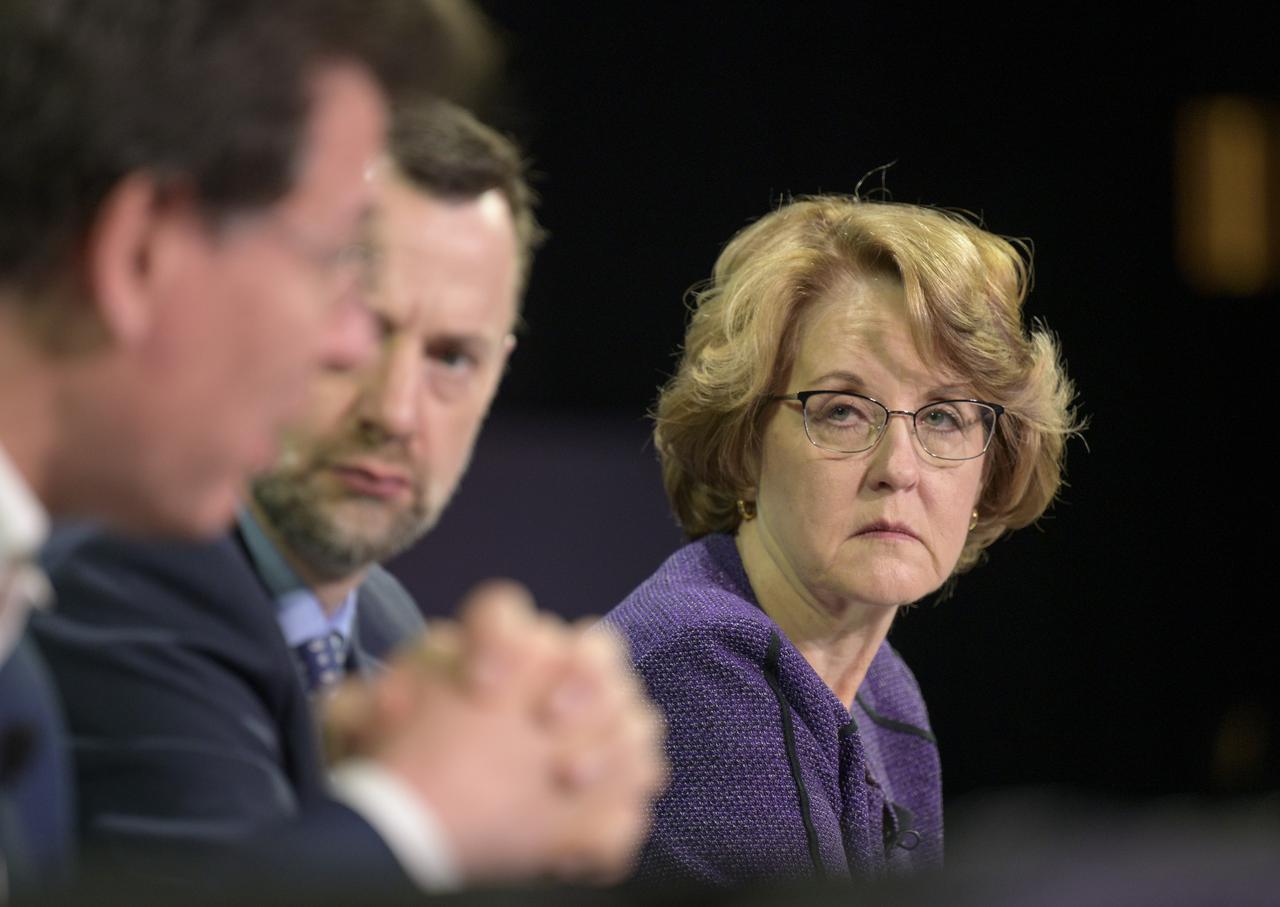
Dr. Kathryn C. Thornton, Chairwoman, Space Foundation, moderates a Heads of Agency panel during the 37th Space Symposium, Wednesday, April 6, 2022, in Colorado Springs, Colorado. Photo Credit: (NASA/Bill Ingalls)
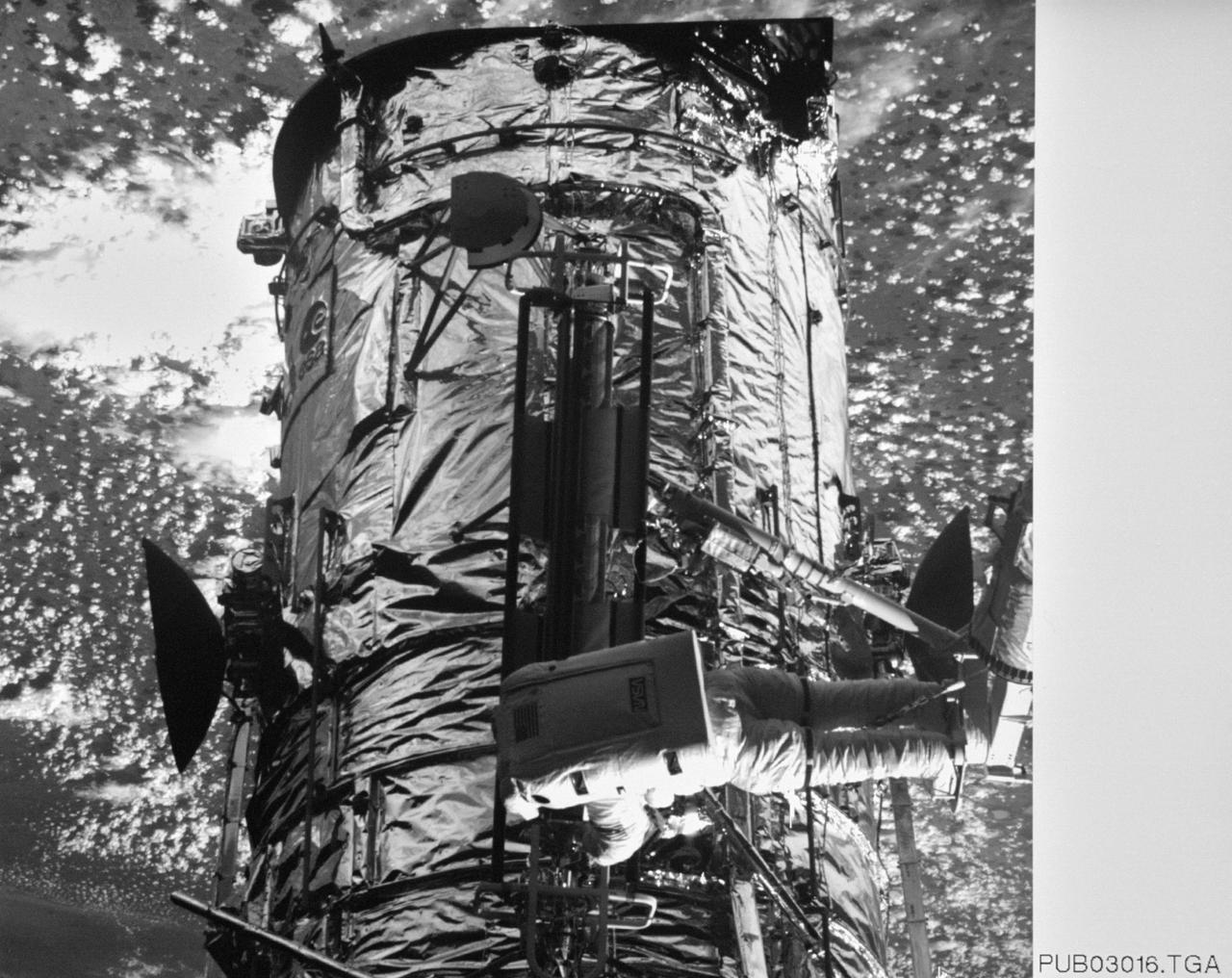
S61-E-011 (5 Dec 1993) --- This view of astronaut Kathryn C. Thornton working on the Hubble Space Telescope (HST) was photographed with an Electronic Still Camera (ESC), and down linked to ground controllers soon afterward. Thornton, anchored to the end of the Remote Manipulator System (RMS) arm, is installing the +V2 Solar Array Panel as a replacement for the original one removed earlier. Electronic still photography is a relatively new technology which provides the means for a handheld camera to electronically capture and digitize an image with resolution approaching film quality. The electronic still camera has flown as an experiment on several other shuttle missions.
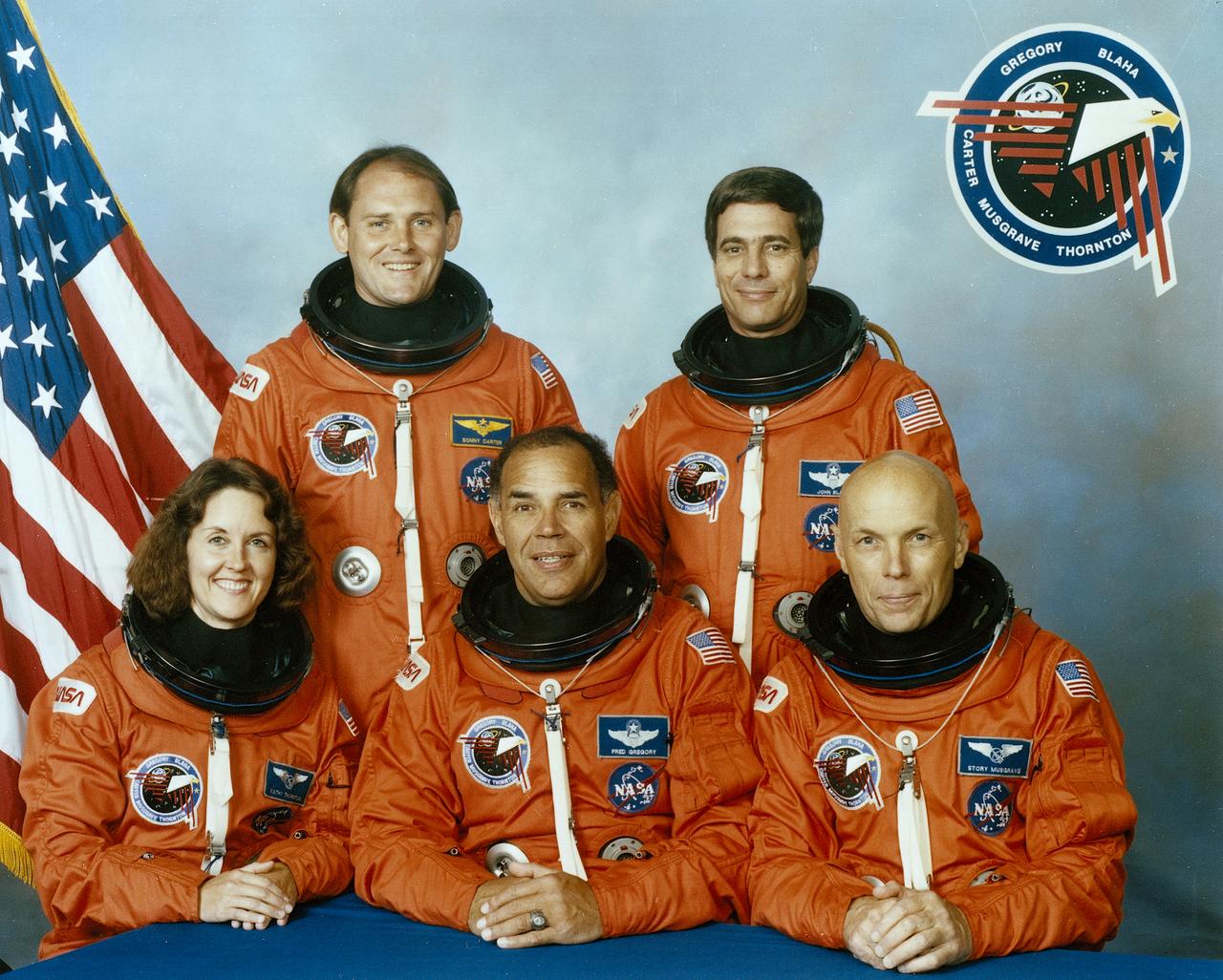
On November 22, 1989, at 7:23:30pm (EST), 5 astronauts were launched into space aboard the Space Shuttle Orbiter Discovery for the 5th Department of Defense mission, STS-33. Photographed from left to right are Kathryn C. Thornton, mission specialist 3; Manley L. (Sonny) Carter, mission specialist 2; Frederick D. Gregory, commander; John E. Blaha, pilot; and F. Story Musgrave, mission specialist 1.
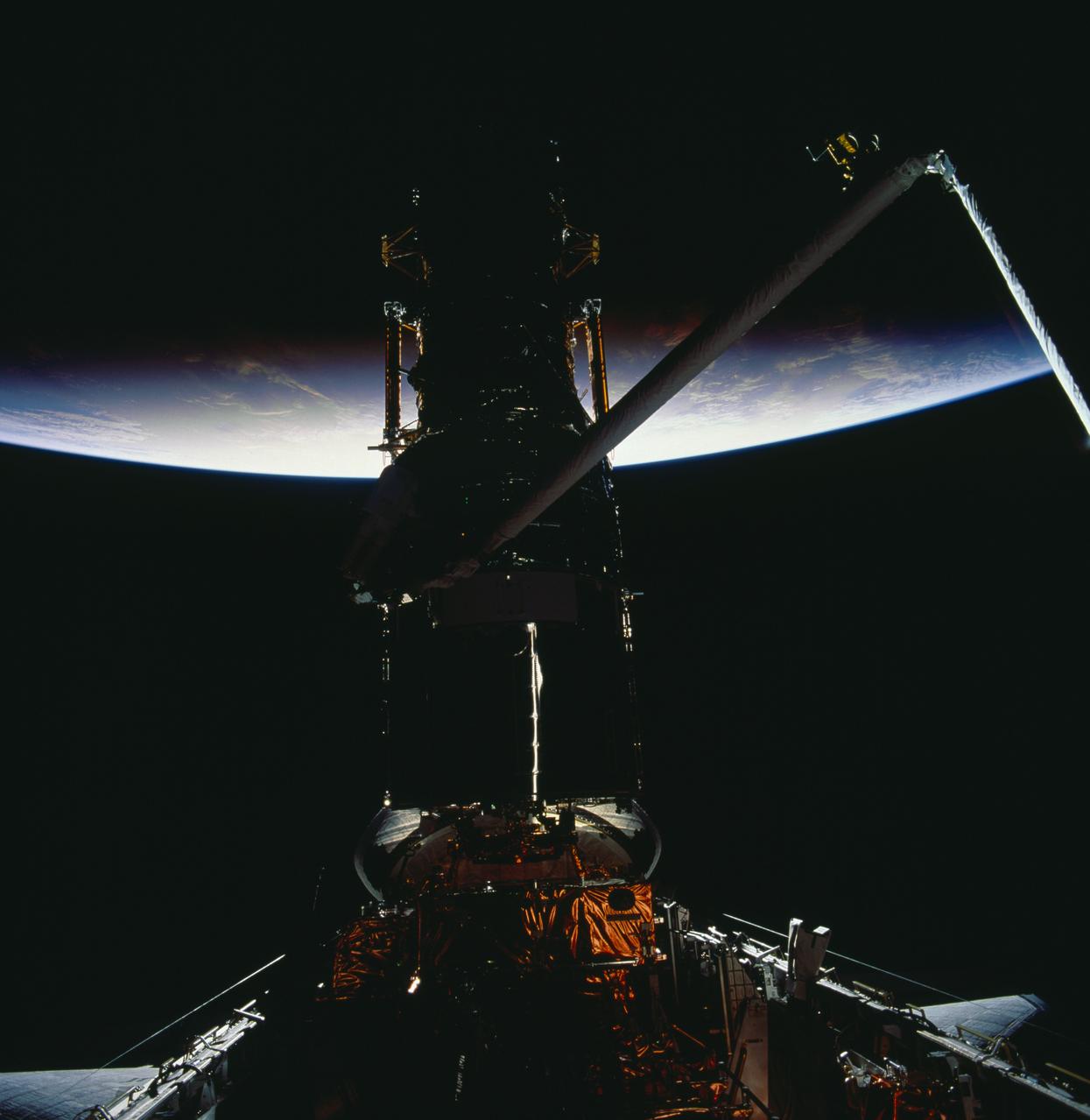
STS061-98-0AR (8 Dec 1993) --- Earth is partially illuminated but the Hubble Space Telescope (HST) and the Space Shuttle Endeavour are still mostly in darkness, in this 70mm frame photographed during the fourth of five space walks. Astronaut Kathryn C. Thornton, barely visible above left center in the frame, works to install the Corrective Optics Space Telescope Axial Replacement (COSTAR).
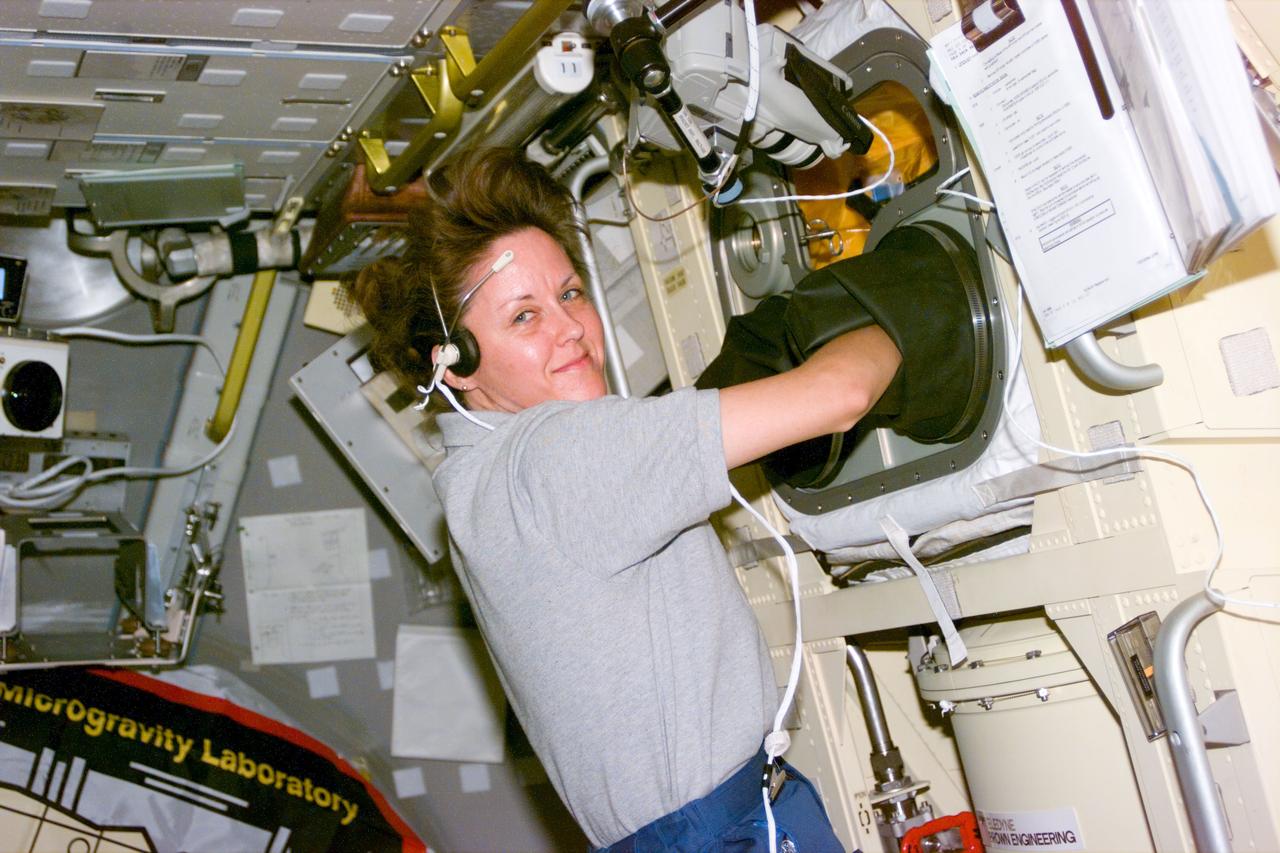
STS073-E-5246 (3 Nov. 1995) --- Astronaut Kathryn C. Thornton, STS-73 payload commander, works in the Glovebox of the science module supporting the U.S. Microgravity Laboratory (USML-2) mission. Five NASA astronauts and two payload specialists are in the last few days of a scheduled 16-day mission. This frame was exposed with the Electronic Still Camera (ESC).
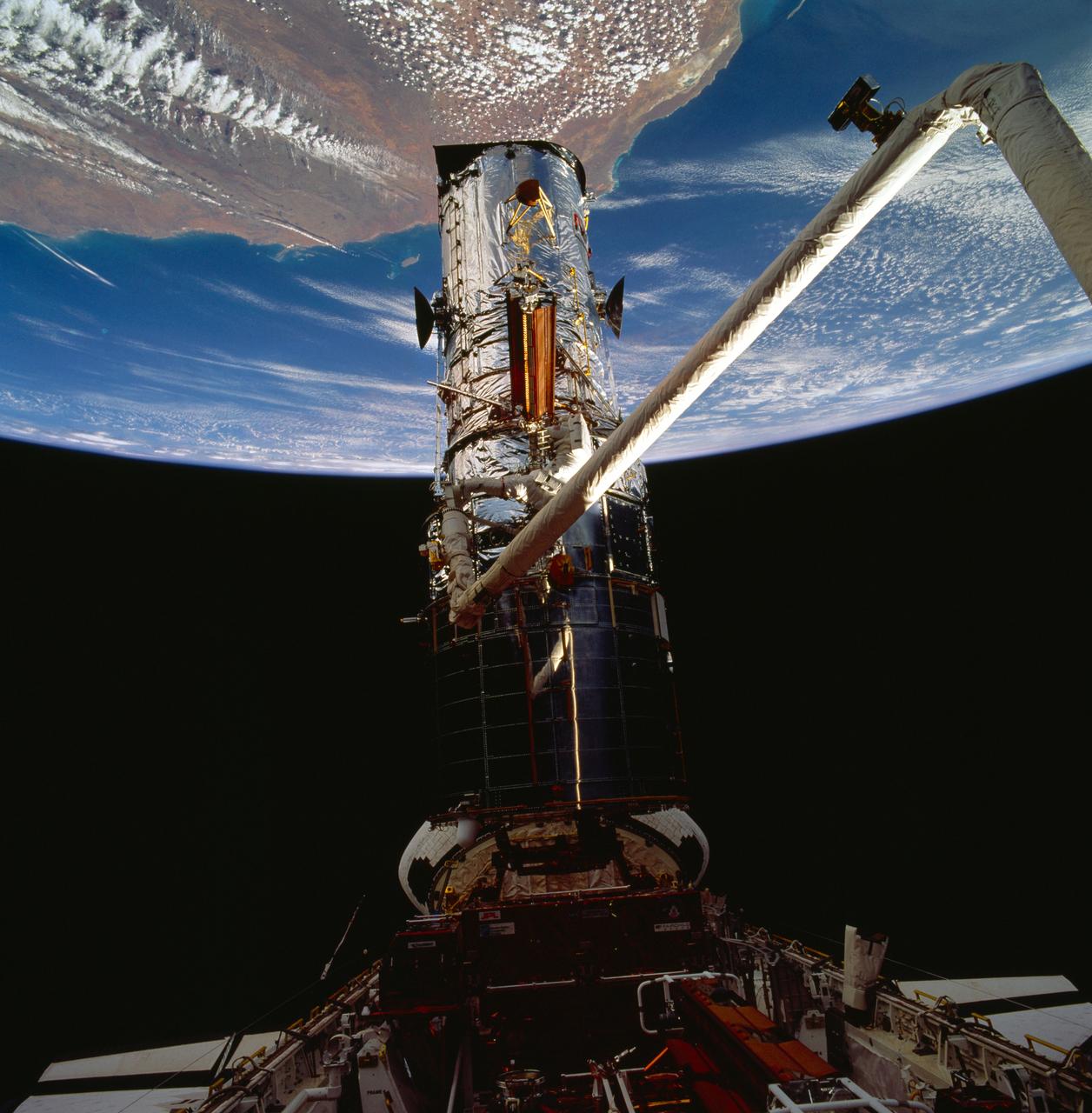
STS061-95-075 (6 Dec 1993) --- Astronauts Kathryn C. Thornton and Thomas D. Akers work to remove one of the solar arrays on the Hubble Space Telescope (HST) on the second of five extravehicular activity?s (EVA). The two space walkers later replaced both solar array panels. Part of Australia is in the background.

STS008-18-468 (30 Aug-5 Sept 1983) --- Astronaut William E. Thornton, right conducts an audiometry test on Astronaut Dale A. Gardner in the mid deck of the Earth-orbiting Space Shuttle Challenger. Both men are mission specialists for the reusable spacecraft’s second five-person crew. This frame was shot with a 35mm camera.

S61-E-012 (5 Dec 1993) --- This view of astronauts Kathryn C. Thornton (top) and Thomas D. Akers working on the Hubble Space Telescope (HST) was photographed with an Electronic Still Camera (ESC), and down linked to ground controllers soon afterward. Thornton, anchored to the end of the Remote Manipulator System (RMS) arm, is teaming with Akers to install the +V2 Solar Array Panel as a replacement for the original one removed earlier. Akers uses tethers and a foot restraint to remain in position for the task. Electronic still photography is a relatively new technology which provides the means for a handheld camera to electronically capture and digitize an image with resolution approaching film quality. The electronic still camera has flown as an experiment on several other shuttle missions.

S61-E-014 (5 Dec 1993) --- This view of astronauts Kathryn C. Thornton (bottom) and Thomas D. Akers working on the Hubble Space Telescope (HST) was photographed with an Electronic Still Camera (ESC), and down linked to ground controllers soon afterward. Thornton, anchored to the end of the Remote Manipulator System (RMS) arm, is teaming with Akers to install the +V2 Solar Array Panel as a replacement for the original one removed earlier. Akers uses tethers and a foot restraint to remain in position for the task. Electronic still photography is a relatively new technology which provides the means for a handheld camera to electronically capture and digitize an image with resolution approaching film quality. The electronic still camera has flown as an experiment on several other shuttle missions.
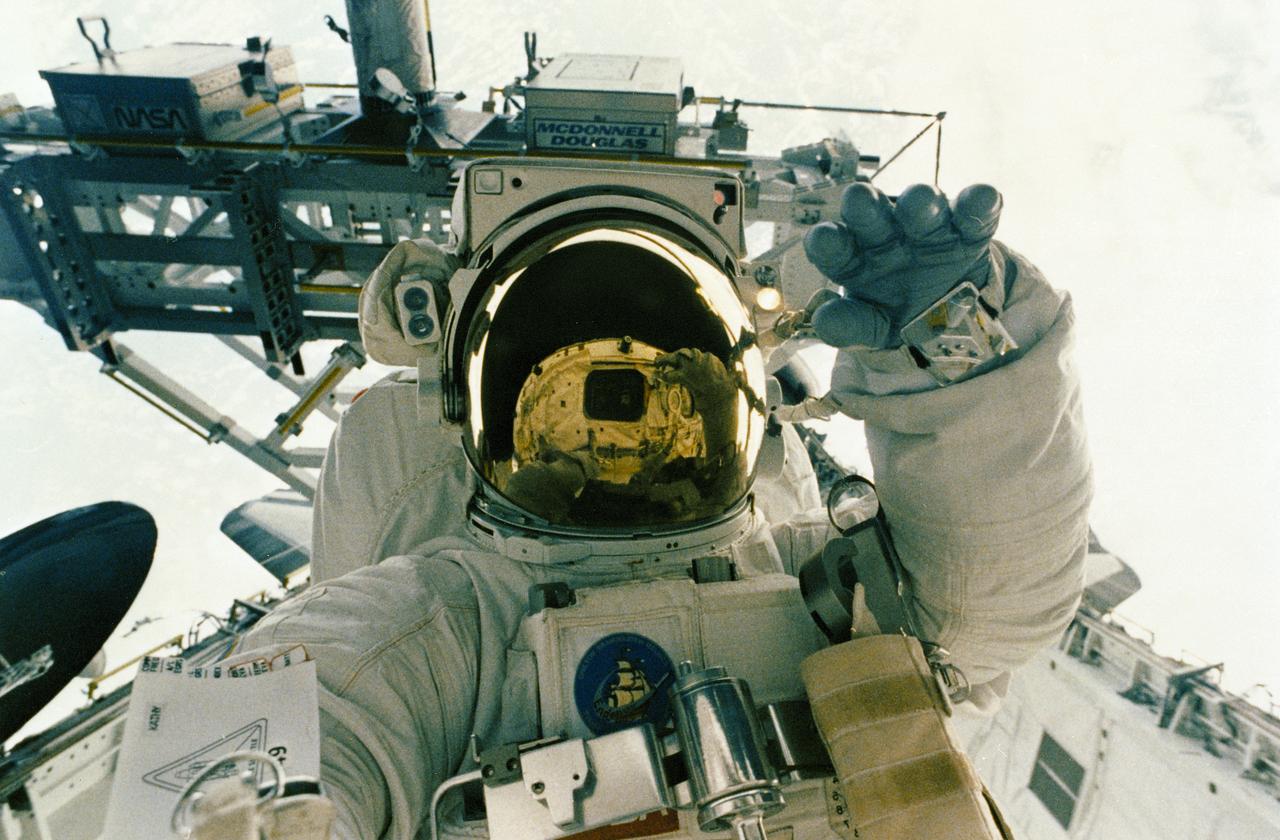
STS-49, the first flight of the Space Shuttle Orbiter Endeavour, lifted off from launch pad 39B on May 7, 1992 at 6:40 pm CDT. The STS-49 mission was the first U.S. orbital flight to feature 4 extravehicular activities (EVAs), and the first flight to involve 3 crew members working simultaneously outside of the spacecraft. The primary objective was the capture and redeployment of the INTELSAT VI (F-3), a communication satellite for the International Telecommunication Satellite organization, which was stranded in an unusable orbit since its launch aboard the Titan rocket in March 1990. In this onboard photo, astronaut Kathryn Thornton is working on the Assembly of Station by EVA Methods (ASEM) in the cargo bay.
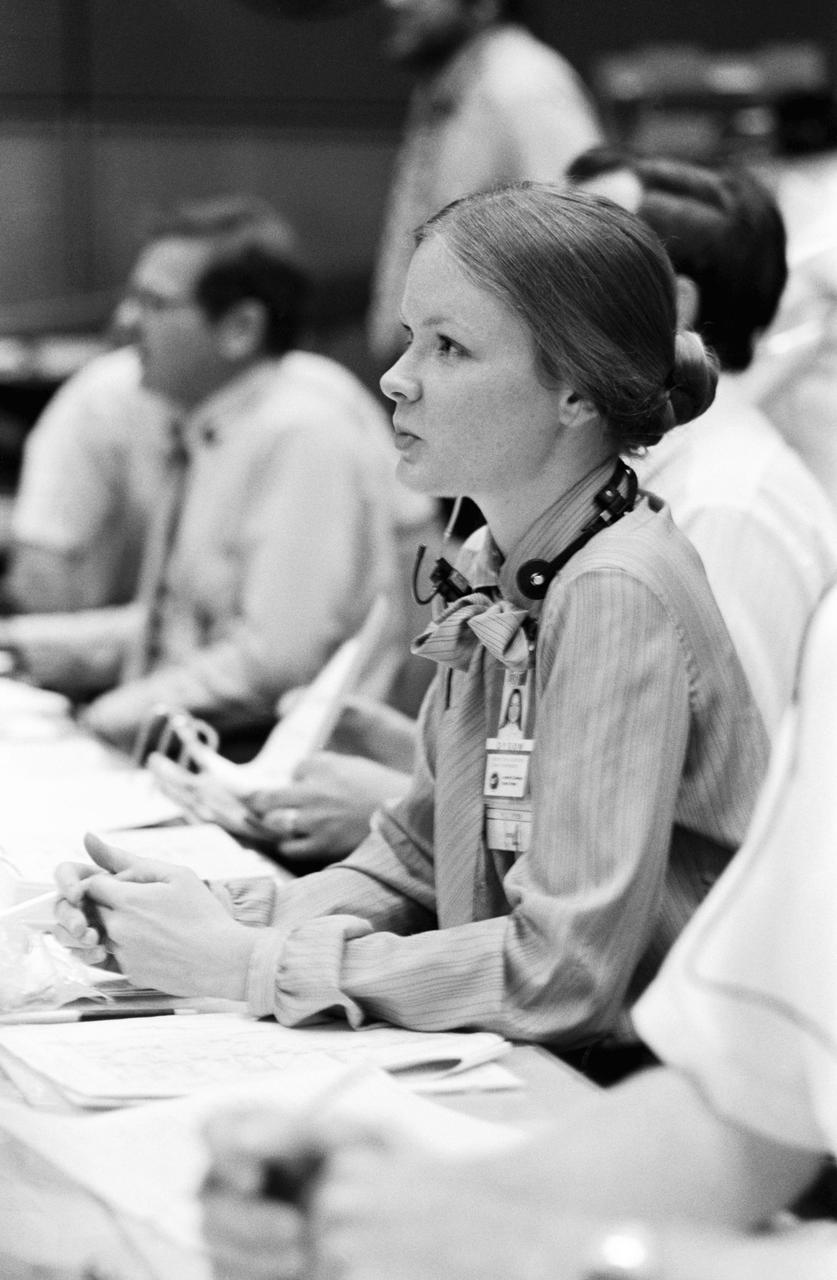
MOCR activities at the Guidance Console and Ms. Thornton E. Dyson during Day-4 of the STS-4 Mission. 1. STS-4 - INFLIGHT JSC, HOUSTON, TX Also see: S82-36160
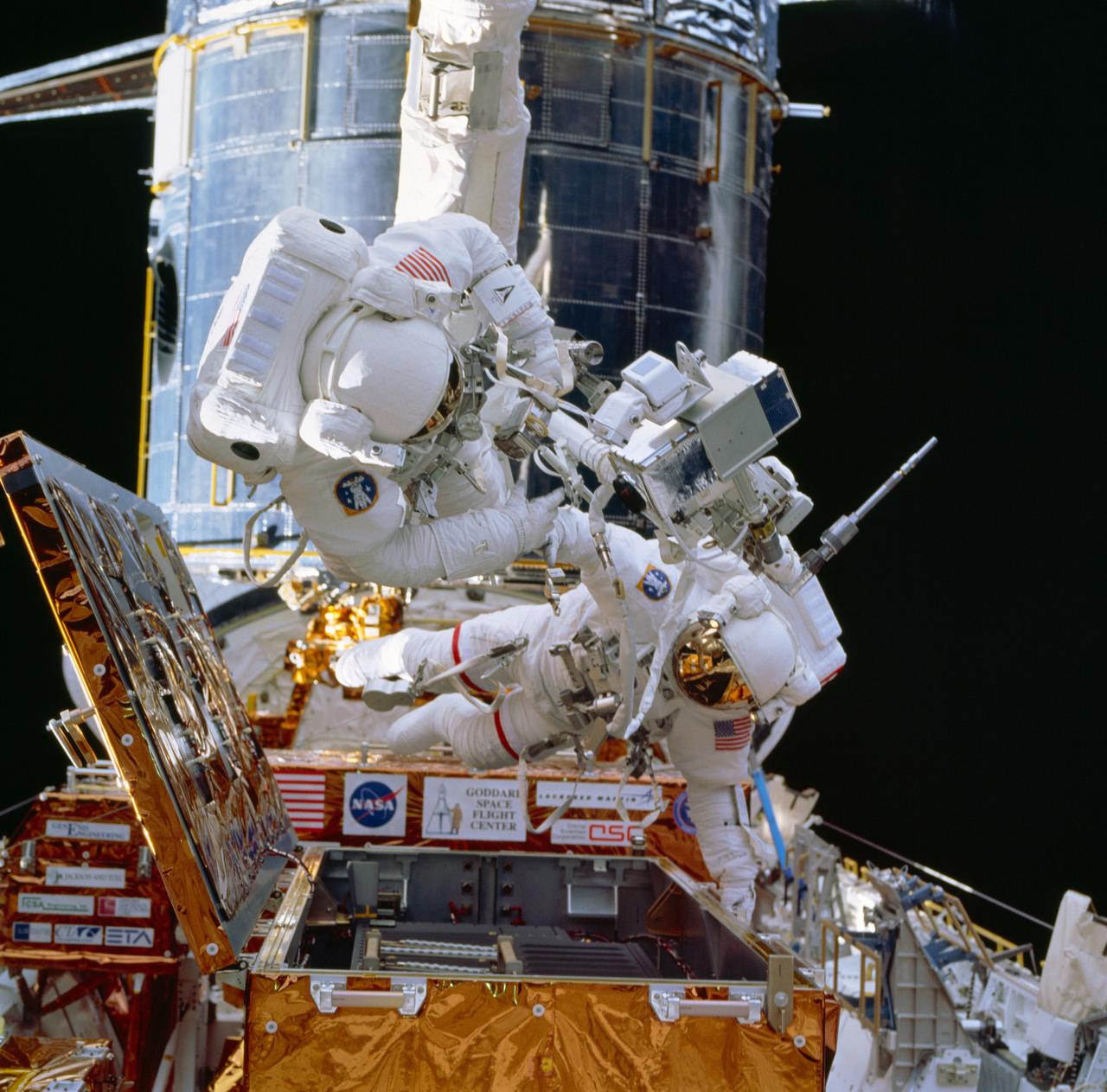
STS049-81-093 (14 May 1992) --- Astronaut Kathryn C. Thornton joins three struts together, as fourth period of extravehicular activity (EVA) proceeds in the Space Shuttle Endeavour's cargo bay. The purpose of the final EVA on this nine-day mission was the evaluation of Assembly of Station by EVA Methods (ASEM). Clouds over the ocean share the background with part of Endeavour's Remote Manipulator System (RMS). The scene was recorded on 70mm film from the Space Shuttle's flight deck. Astronaut Thomas D. Akers (out of frame) joined Thornton on the 7 1/2 hour EVA.
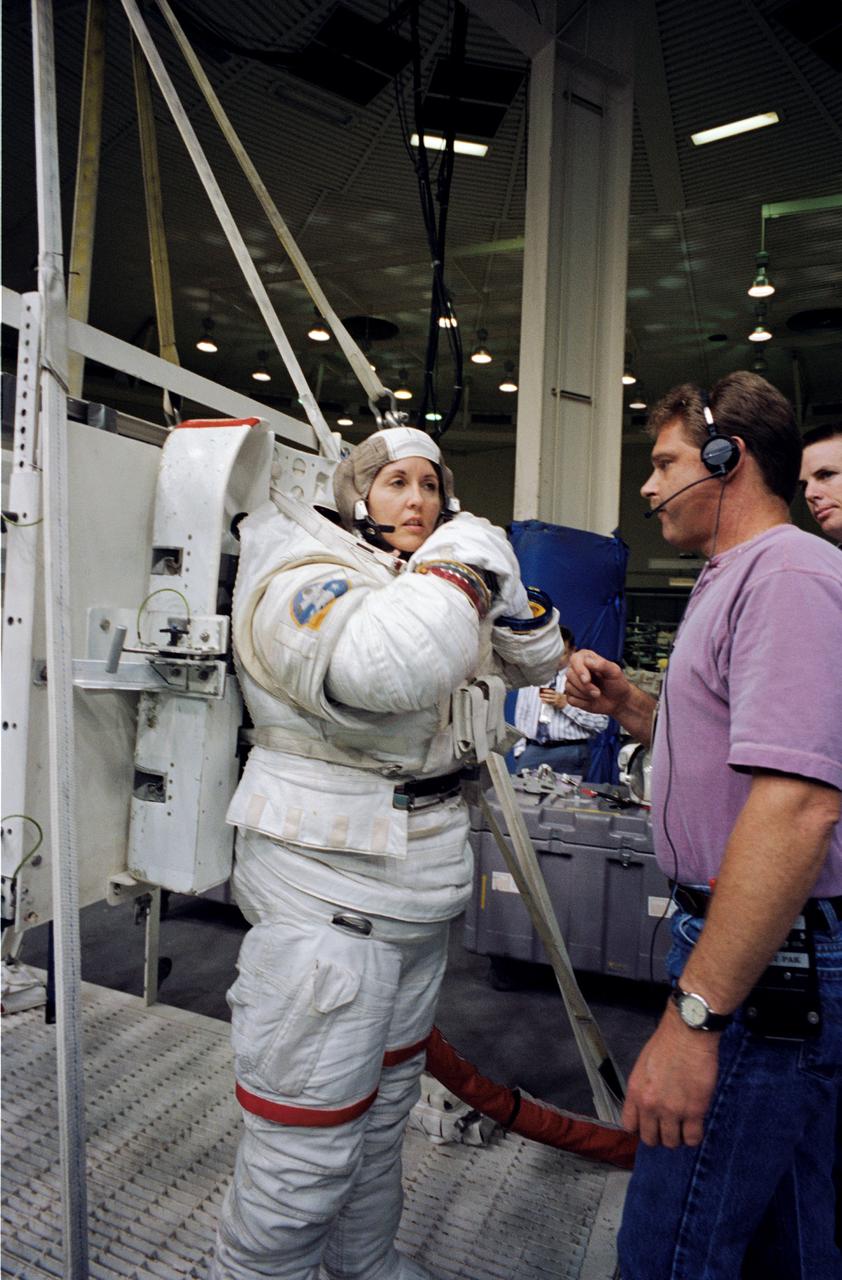
Astronaut Kathryn Thornton, payload commander for the STS-73 mission, attired in a high fidelity training version of the Extravehicular Mobility Unit (EMU) space suit, prepares to go underwater in the Johnson Space Center’s (JSC) Weightless Environment Training Facility (WET-F). The STS-73 mission was the second flight of the United States Microgravity Laboratory (USML-2), managed by scientists and engineers from the Marshall Space Flight Center.
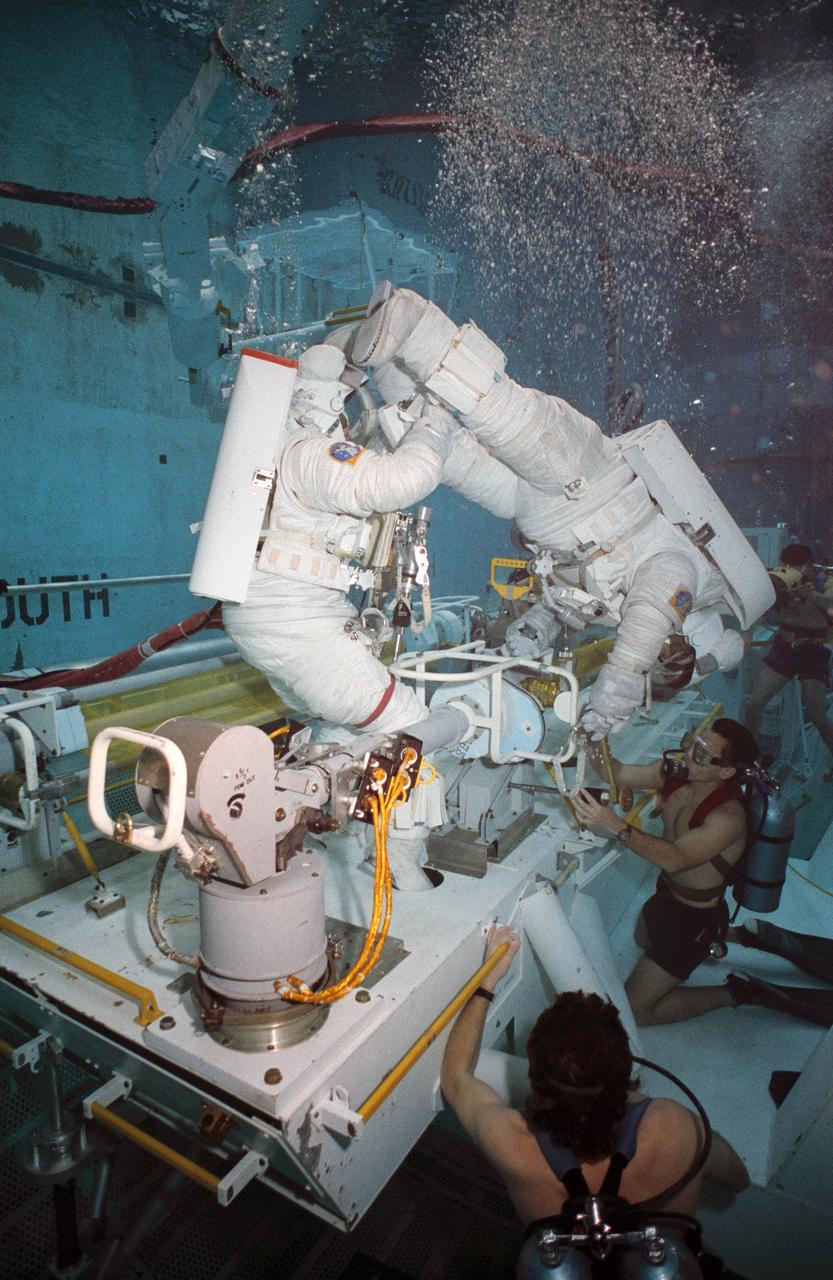
S93-30238 (5 Mar 1993) --- Wearing training versions of Space Shuttle Extravehicular Mobility Units (EMU), astronauts Thomas D. Akers (red stripe) and Kathryn C. Thornton use the spacious pool of the Johnson Space Center's (JSC) Weightless Environment Training Facility (WET-F) to rehearse for the Hubble Space Telescope (HST) repair mission. They are working with a full scale mockup of a solar array fixture.
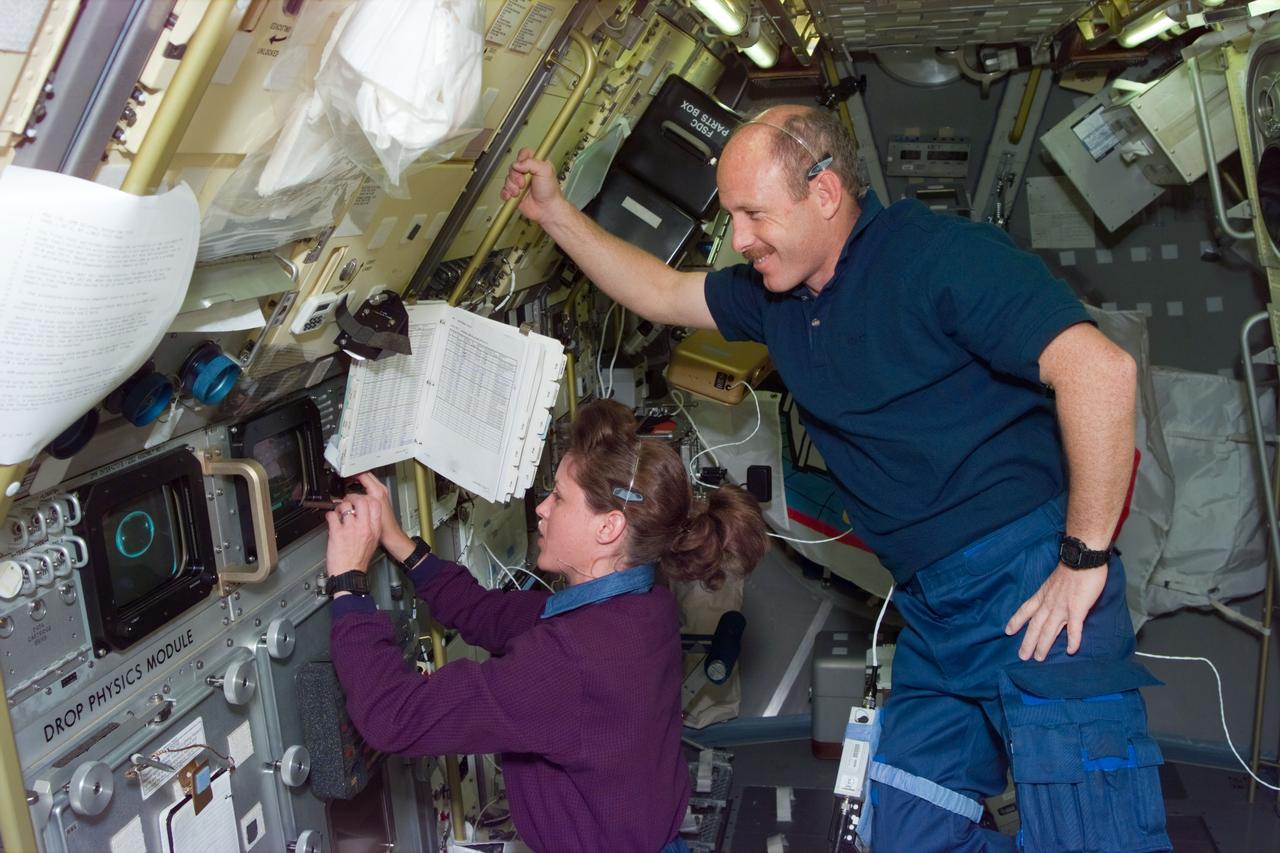
STS073-E-5311 (3 Nov. 1995) --- Astronaut Kathryn C. Thornton, STS-73 payload commander, works at the Drop Physics Module (DPM) on the portside of the science module supporting the U.S. Microgravity Laboratory (USML-2). Astronaut Kenneth D. Bowersox, mission commander, looks on. Five NASA astronauts and two payload specialists are in the last few days of a scheduled 16-day mission. This frame was exposed with the Electronic Still Camera (ESC).
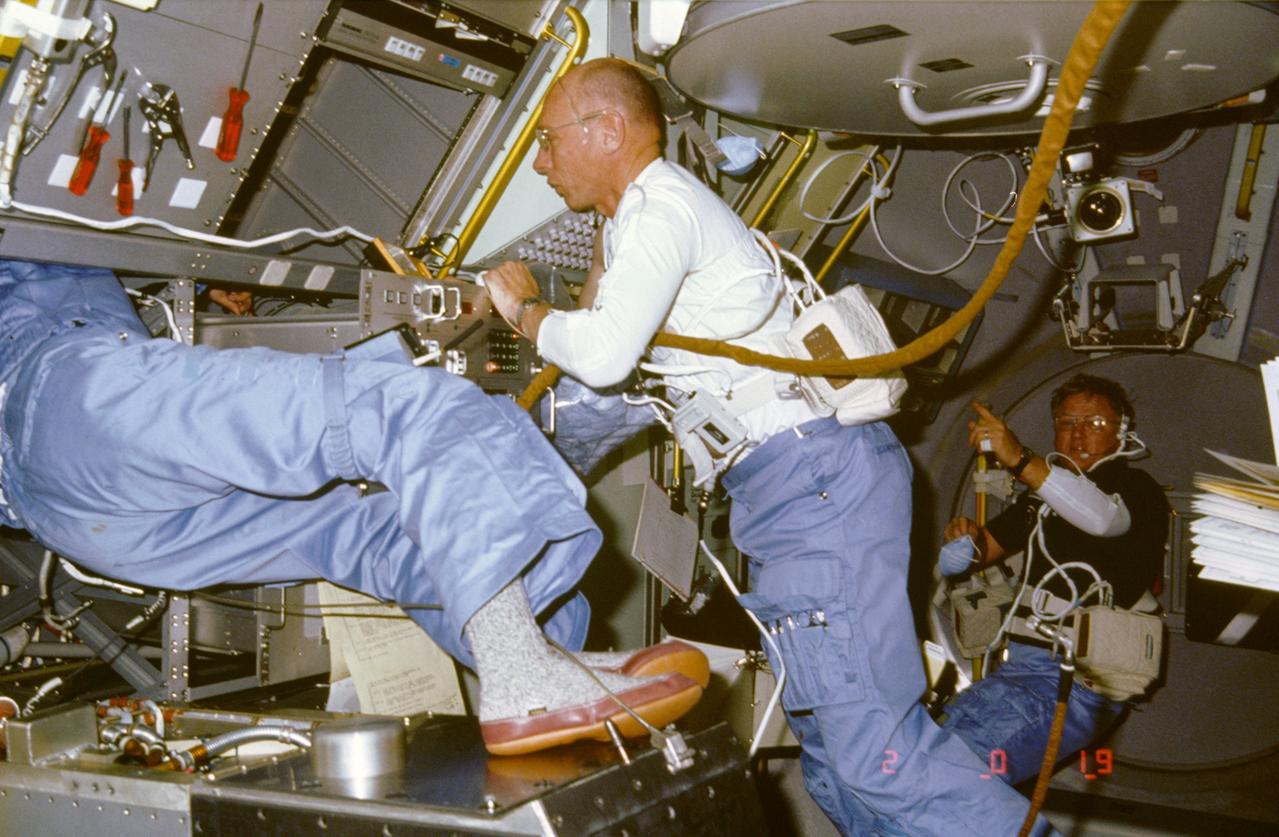
51B-03-037 (29 April-6 May 1985) --- Astronaut William E. Thornton (center frame), mission specialist, lends a helping hand to payload specialist Taylor G. Wang (partially visible at left) involved in serious repair work on the Drop Dynamics Module (DDM), an experiment of which he is principal investigator. The troubleshooting paid off and Dr. Wang later resumed studies with drop dynamics. Astronaut Don L. Lind, mission specialist, is in the background.
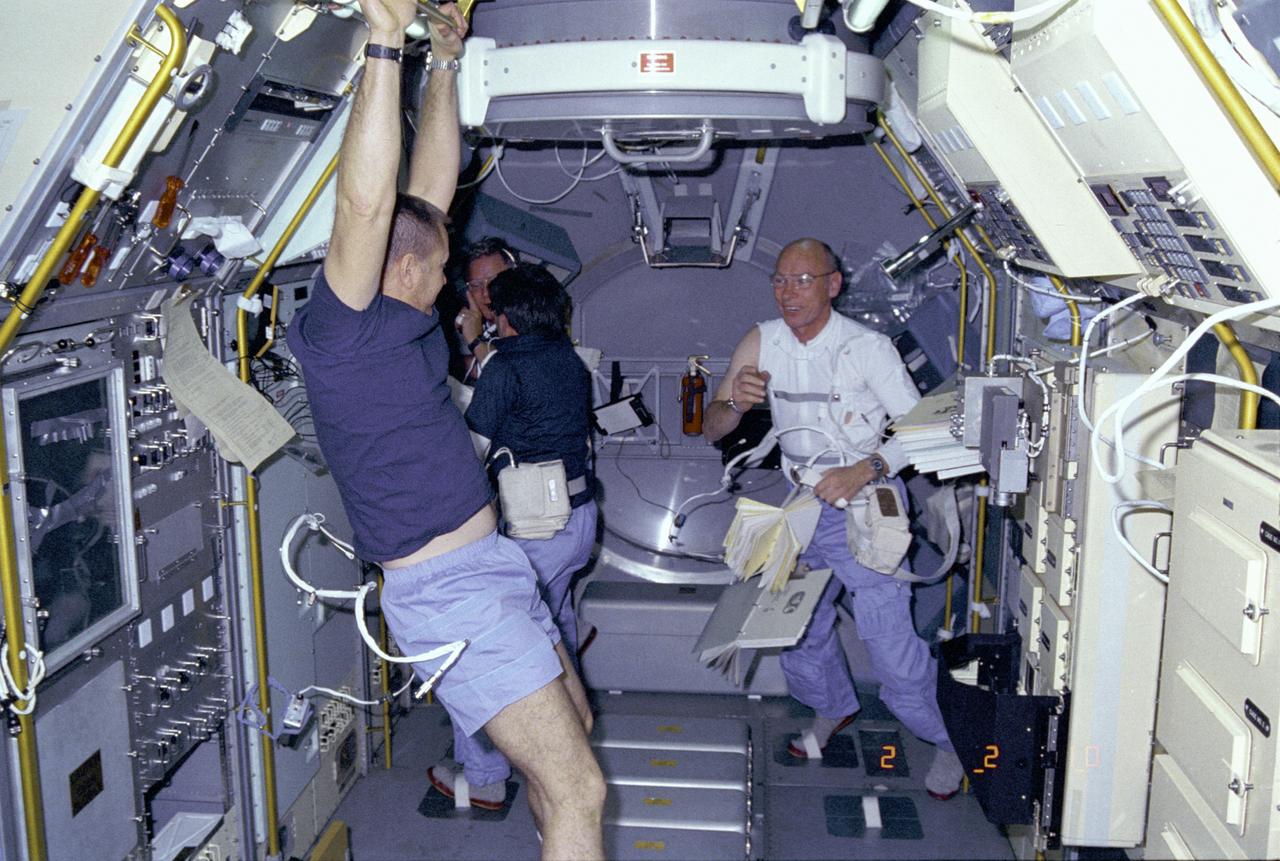
Activities inside the laboratory module during the Spacelab-3 mission are shown in this photograph. Left to right are astronauts Robert Overmyer, Commander of the mission; Don Lind, Mission Specialist; Lodewijk van den Berg, Payload Specialist; and William Thornton, Mission Specialist. The primary purpose of the Spacelab-3 mission was to conduct materials science experiments in a stable low-gravity environment. In addition, the crew did research in life sciences, fluid mechanics, atmospheric science, and astronomy. Spacelab-3 was equipped with several new minilabs, special facilities that would be used repeatedly on future flights. Two elaborate crystal growth furnaces, a life support and housing facility for small animals, and two types of apparatus for the study of fluids were evaluated on their inaugural flight. Spacelab-3 (STS-51B) was launched aboard the Space Shuttle Challenger on April 29, 1985. The Marshall Space Flight Center had managing responsibilities of the mission.
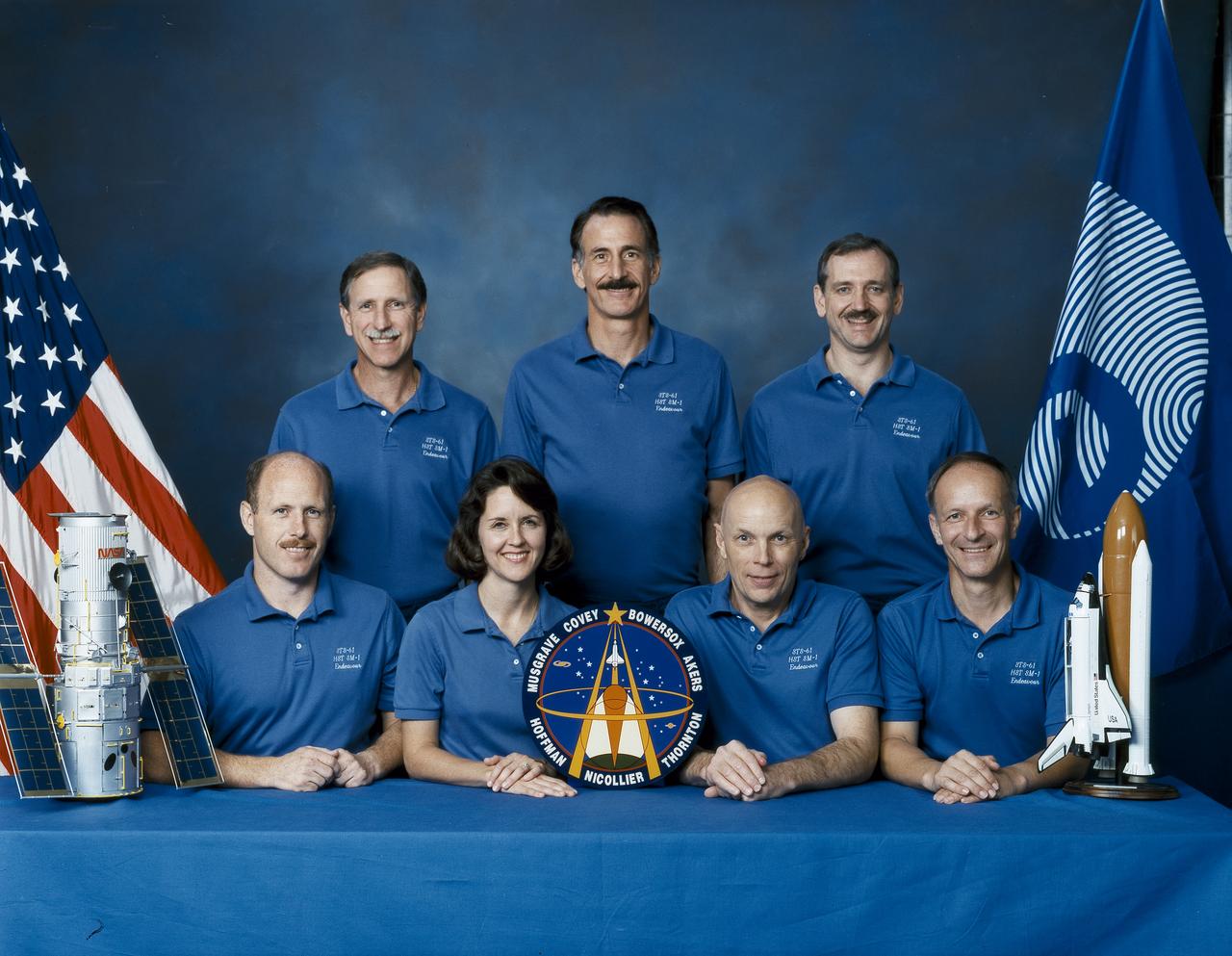
Astronauts included in the STS-61 crew portrait include (standing in rear left to right) Richard O. Covey, commander; and mission specialists Jeffrey A. Hoffman, and Thomas D. Akers. Seated left to right are Kenneth D. Bowersox, pilot; Kathryn C. Thornton, mission specialist; F. Story Musgrave, payload commander; and Claude Nicollier, mission specialist. Launched aboard the Space Shuttle Endeavor on December 2, 1993 at 4:27:00 am (EST), the STS-61 mission was the first Hubble Space Telescope (HST) servicing mission, and the last mission of 1993.
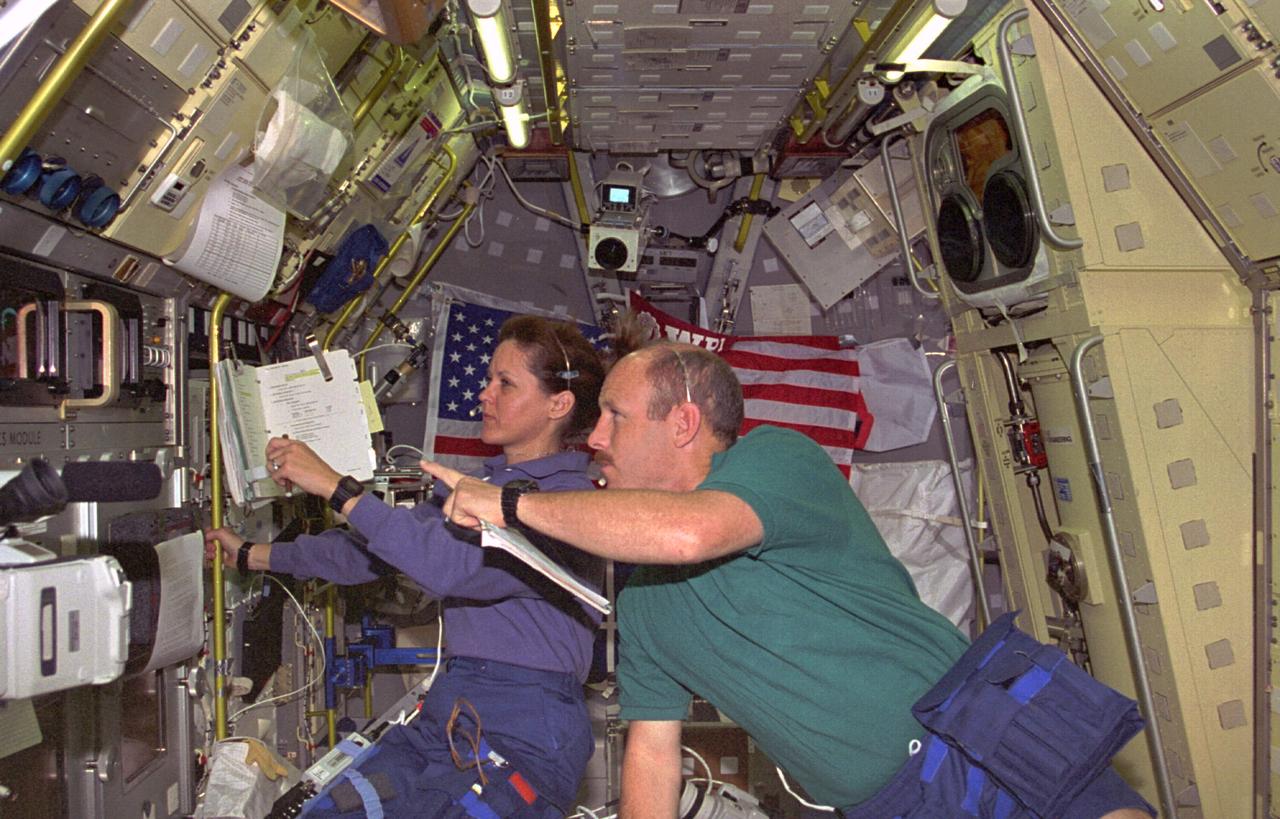
STS073-229-014 (20 October - 5 November 1995) --- Astronauts Kathryn C. Thornton, STS-73 payload commander, and Kenneth D. Bowersox, mission commander, observe a liquid drop's activity at the Drop Physics Module (DPM) in the science module aboard the Earth-orbiting Space Shuttle Columbia. The drop is partially visible at the center of the left edge of the frame. The two were joined by three other NASA astronauts and two guest researchers for almost 16-days of in-orbit research in support of the U.S. Microgravity Laboratory (USML-2) mission.
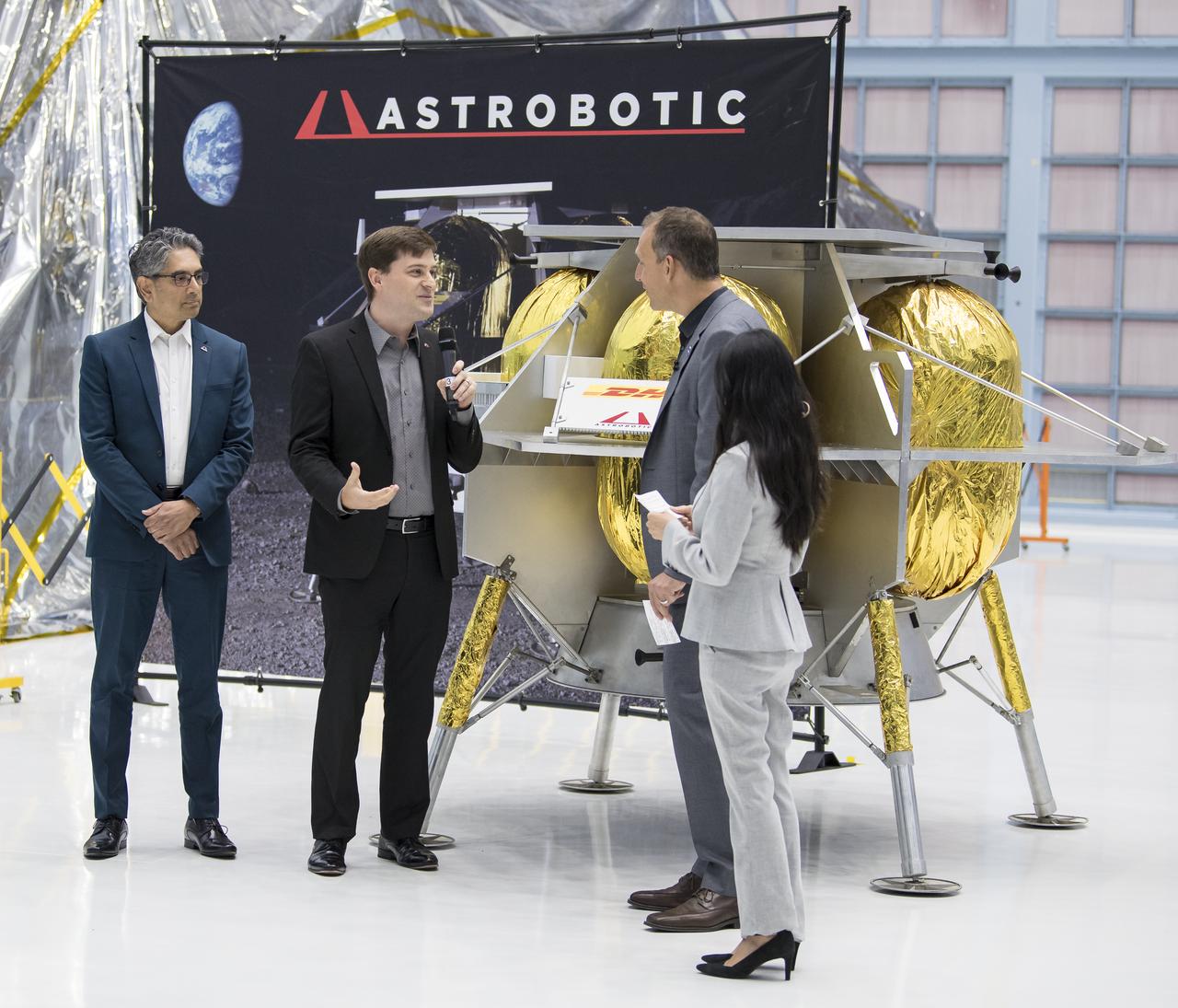
NASA Associate Administrator, Science Mission Directorate, Thomas Zurbuchen, second from right, speaks to Astrobotic CEO, John Thornton, second from left, and Astrobotic Mission Director, Sharad Bhaskaran, left, about their lunar lander, Friday, May 31, 2019, at Goddard Space Flight Center in Md. Astrobotic, Intuitive Machines, and Orbit Beyond have been selected to provide the first lunar landers for the Artemis program's lunar surface exploration. Photo credit: (NASA/Aubrey Gemignani)
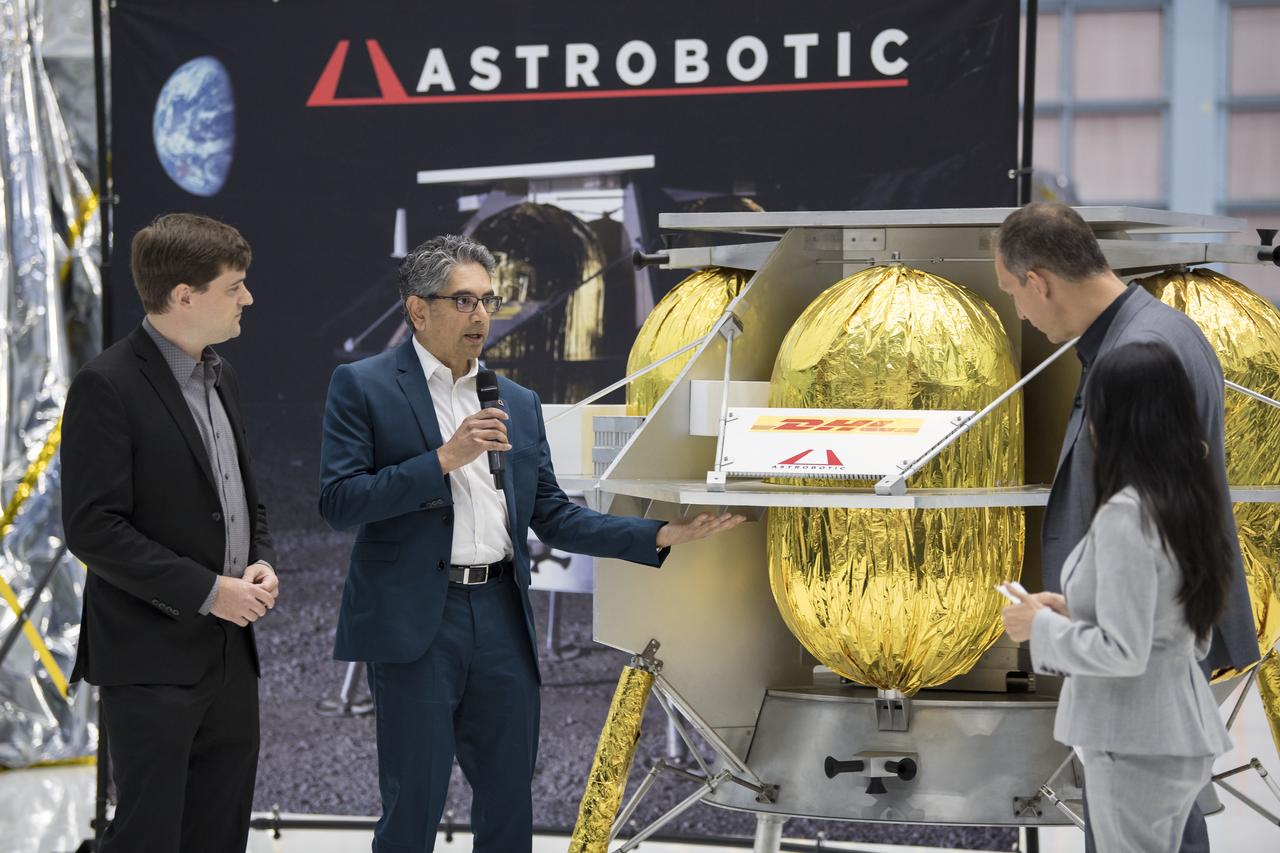
NASA Associate Administrator, Science Mission Directorate, Thomas Zurbuchen, second from right, speaks to Astrobotic CEO, John Thornton, left, and Astrobotic Mission Director, Sharad Bhaskaran, second from left, about their lunar lander, Friday, May 31, 2019, at Goddard Space Flight Center in Md. Astrobotic, Intuitive Machines, and Orbit Beyond have been selected to provide the first lunar landers for the Artemis program's lunar surface exploration. Photo credit: (NASA/Aubrey Gemignani)
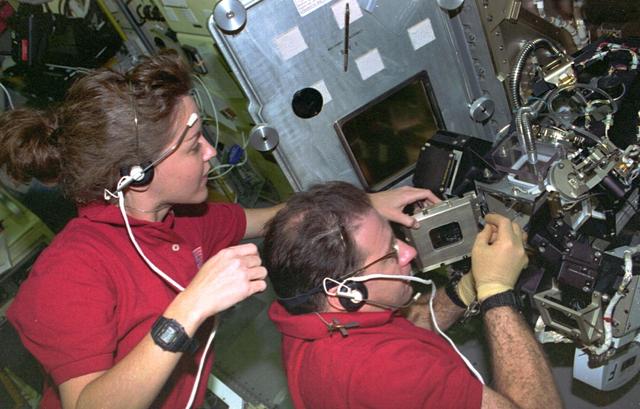
STS073-108-005 (20 October-5 November 1995) --- Two members of the crew perform an in-flight maintenance on the Drop Physics Module (DPM) in the science module aboard the Earth-orbiting Space Shuttle Columbia. Payload commander Kathryn C. Thornton and payload specialist Albert Sacco Jr. were part of a seven-member crew that spent 16 full days in space in support of the United States Microgravity Laboratory (USML-2) mission.
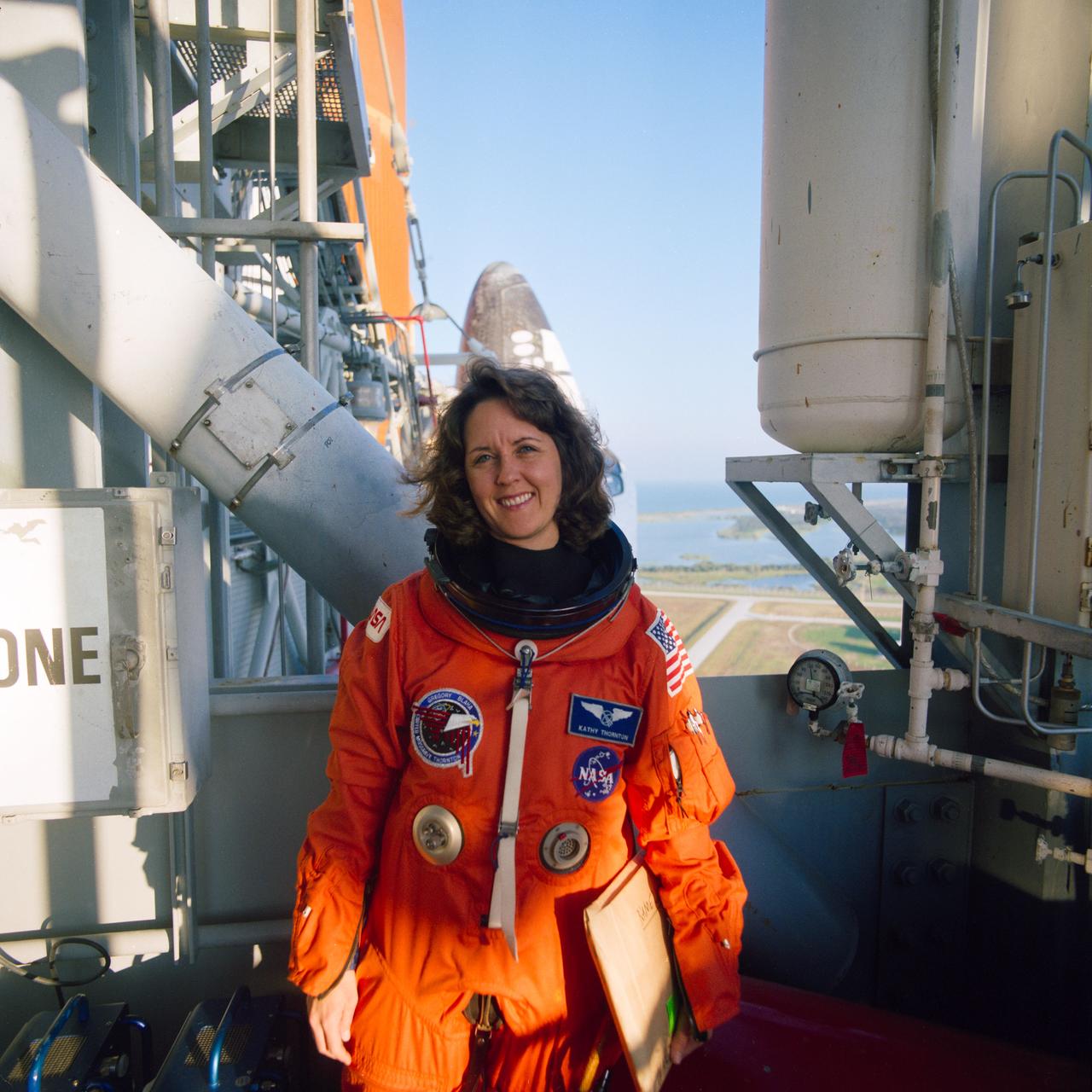
STS-33 Mission Specialist (MS) Kathryn C. Thornton, wearing launch and entry suit (LES) and holding file folder, poses in front of Discovery, Orbiter Vehicle (OV) 103, at the 195 ft level elevator entrance at Kennedy Space Center (KSC) Launch Complex (LC) Pad 39B. Visible in the background is the catwalk to OV-103's side hatch and the Atlantic Ocean.

STS073-E-5003 (23 Oct. 1995) --- Astronaut Kathryn C. Thornton, STS-73 payload commander, works at the Drop Physics Module (DPM) on the portside of the science module aboard the Space Shuttle Columbia in Earth orbit. Payload specialist Albert Sacco Jr. conducts an experiment at the Glovebox. This frame was exposed with the color Electronic Still Camera (ESC) assigned to the 16-day United States Microgravity Laboratory (USML-2) mission.
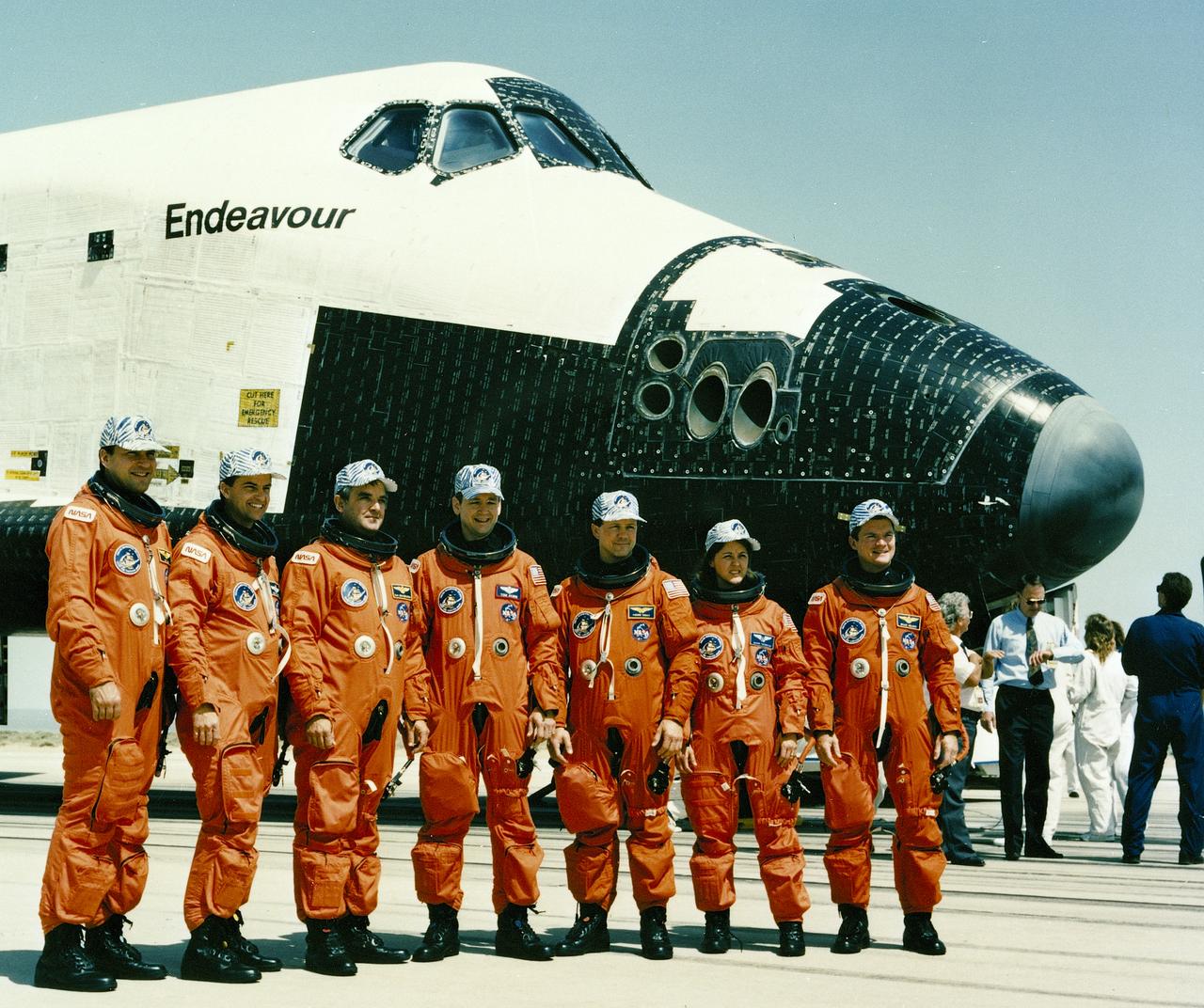
The STS-49 crew members pose near Endeavour after landing. Pictured left to right are: Richard J. Hieb, mission specialist; Kevin P. Chiltin, pilot; Daniel C. Brandenstein, commander; and mission specialists Thomas D. Akers, Pierre J. Thuot, Kathryn C. Thornton, and Bruce E. Melnick. Launched on May 7, 1992 at 7:40:00 pm (EDT), the crew of seven was the first to fly aboard the Space Shuttle Endeavor. The mission was the first US orbital flight to feature 4 extravehicular activities (EVAs), and the first flight to involve 3 crew members simultaneously working outside of the spacecraft. The primary objective was the capture and redeployment of the INTELSAT VI (F-3) which was stranded in an unusable orbit since its launch aboard the Titan rocket in March 1990.

These five astronauts and two United States Microgravity Laboratory (USML) payload specialists pause from a rigid training schedule for the STS-73 crew portrait. On the front row, left to right, are Albert Sacco Jr., payload specialist; Kent V. Rominger, pilot; and Michael E. Lopez-Alegria, mission specialist. On the back row are, left to right, Catherine G. Coleman, mission specialist; Kenneth D. Bowersox, commander; Fred W. Leslie, payload specialist; and Kathryn C. Thornton, payload commander. The STS-073 crew launched aboard the Space Shuttle Columbia on October 20, 1995 at 9:53:00.069 am (EDT). The mission served as the second flight of the Microgravity Laboratory (USML-2).
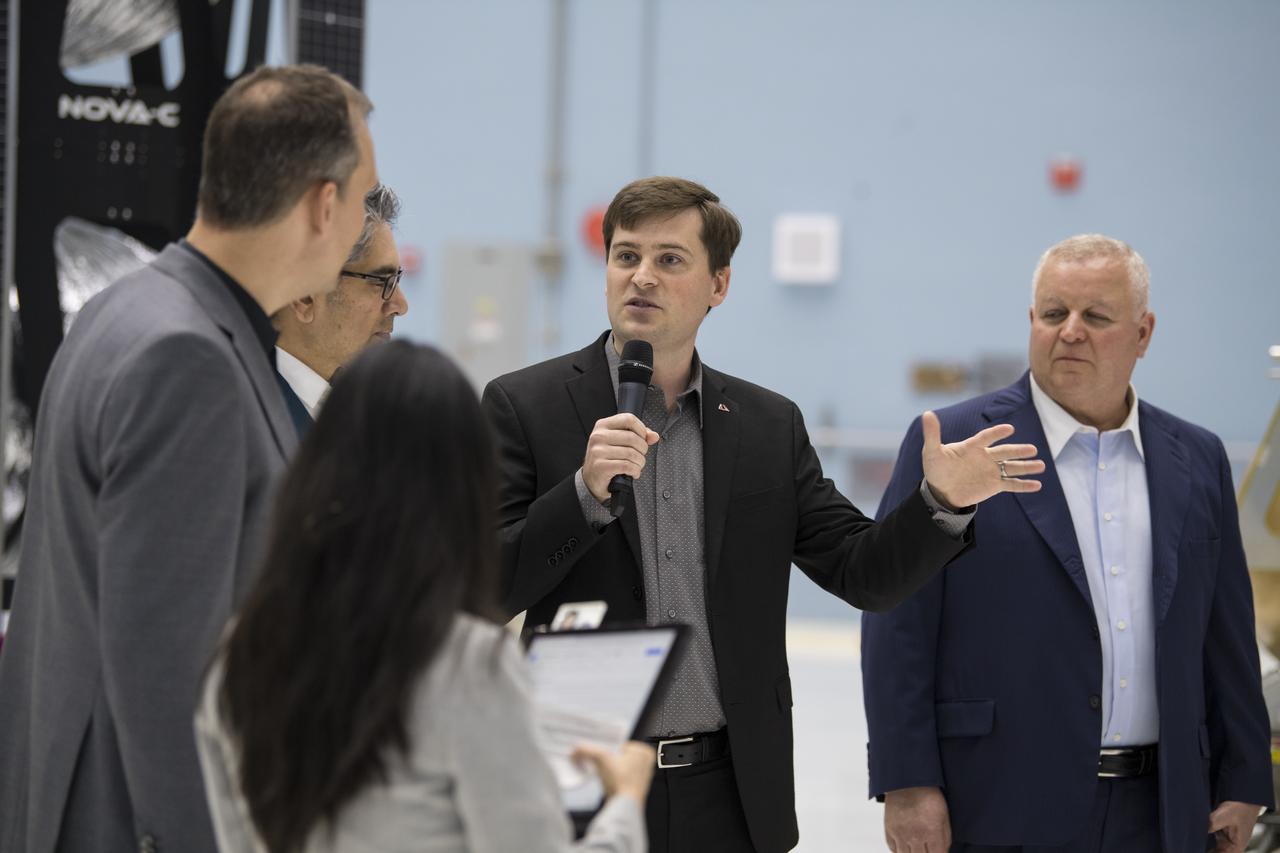
Astrobotic CEO, John Thornton, second from right, speaks about their lunar lander, Friday, May 31, 2019, at Goddard Space Flight Center in Md. Astrobotic, Intuitive Machines, and Orbit Beyond have been selected to provide the first lunar landers for the Artemis program's lunar surface exploration. Photo credit: (NASA/Aubrey Gemignani)
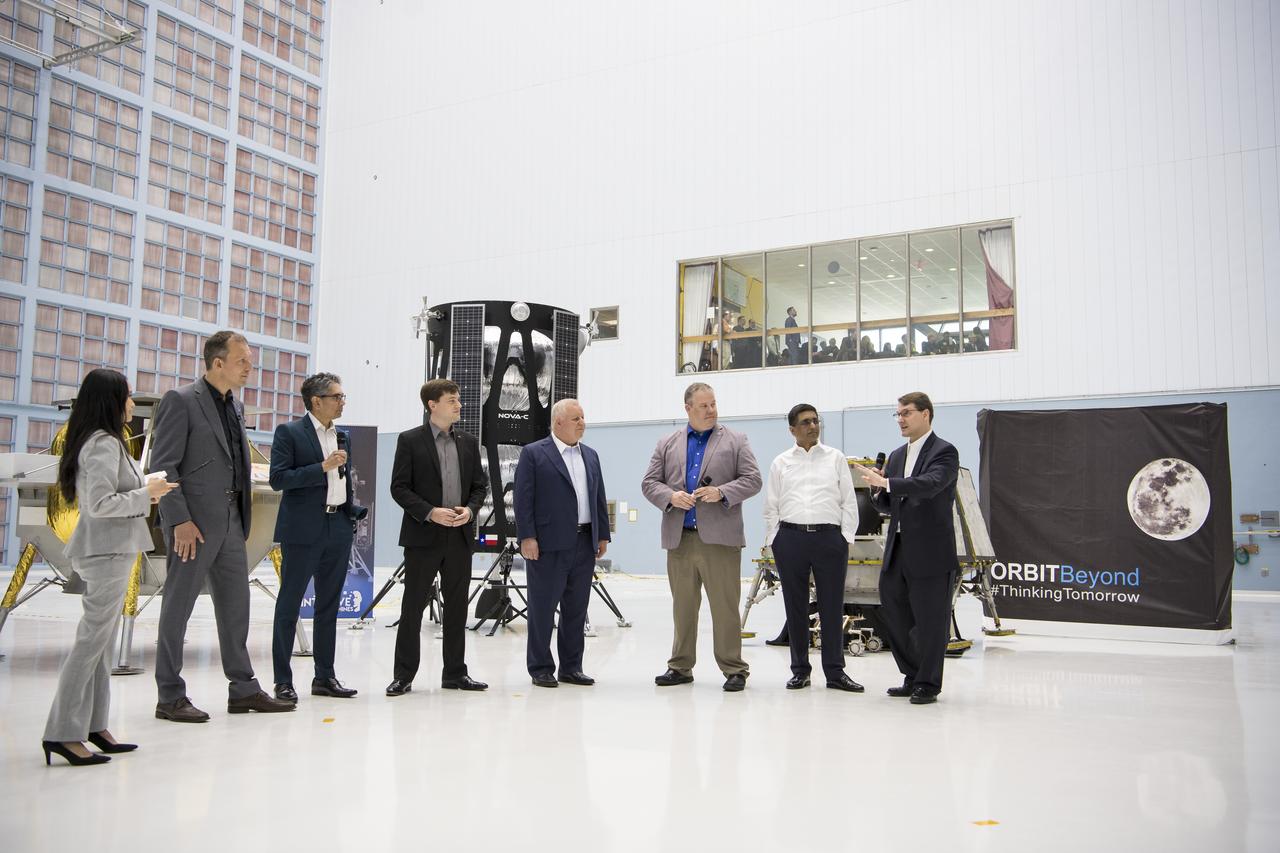
Chief Science Officer, OrbitBeyond, Jon Morse speaks about their lunar lander with, from left to right, NASA Press Officer, Felicia Chou; NASA Associate Administrator, Science Mission Directorate, Thomas Zurbuchen; Astrobotic Mission Director, Sharad Bhaskaran; Astrobotic CEO, John Thornton; Chairman of the Board of Intuitive Machines, Kam Ghaffarian; VP of Research and Development of Intuitive Machines, Tim Crain; President and CEO of OrbitBeyond, Siba Padhi, Friday, May 31, 2019, at Goddard Space Flight Center in Md. Astrobotic, Intuitive Machines, and OrbitBeyond have been selected to provide the first lunar landers for the Artemis program's lunar surface exploration. Photo credit: (NASA/Aubrey Gemignani)
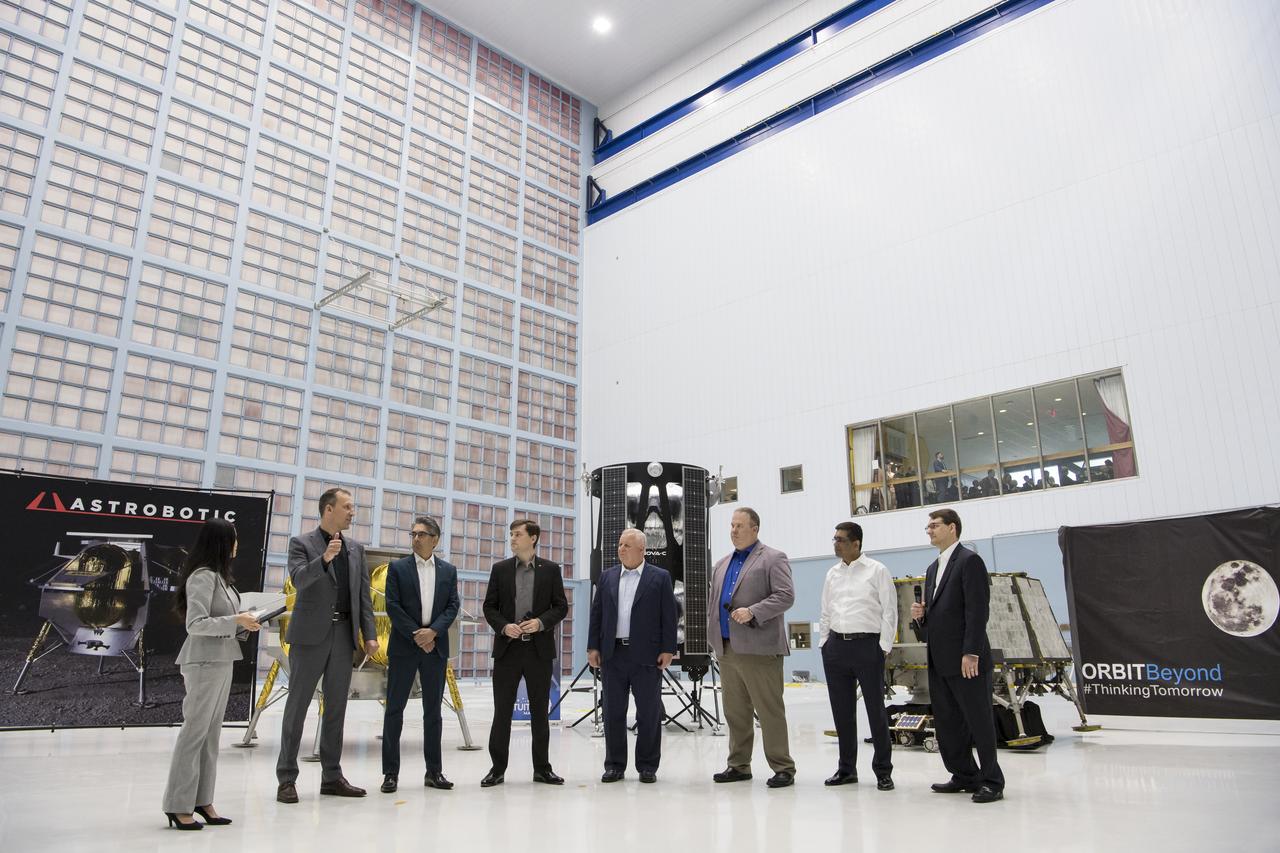
From left to right, NASA Press Officer, Felicia Chou; NASA Associate Administrator, Science Mission Directorate, Thomas Zurbuchen; Astrobotic Mission Director, Sharad Bhaskaran; Astrobotic CEO, John Thornton; Chairman of the Board of Intuitive Machines, Kam Ghaffarian; VP of Research and Development of Intuitive Machines, Tim Crain; President and CEO of OrbitBeyond, Siba Padhi; and Chief Science Officer, OrbitBeyond, Jon Morse talk about their lunar landers, Friday, May 31, 2019, at Goddard Space Flight Center in Md. Astrobotic, Intuitive Machines, and OrbitBeyond have been selected to provide the first lunar landers for the Artemis program's lunar surface exploration. Photo credit: (NASA/Aubrey Gemignani)
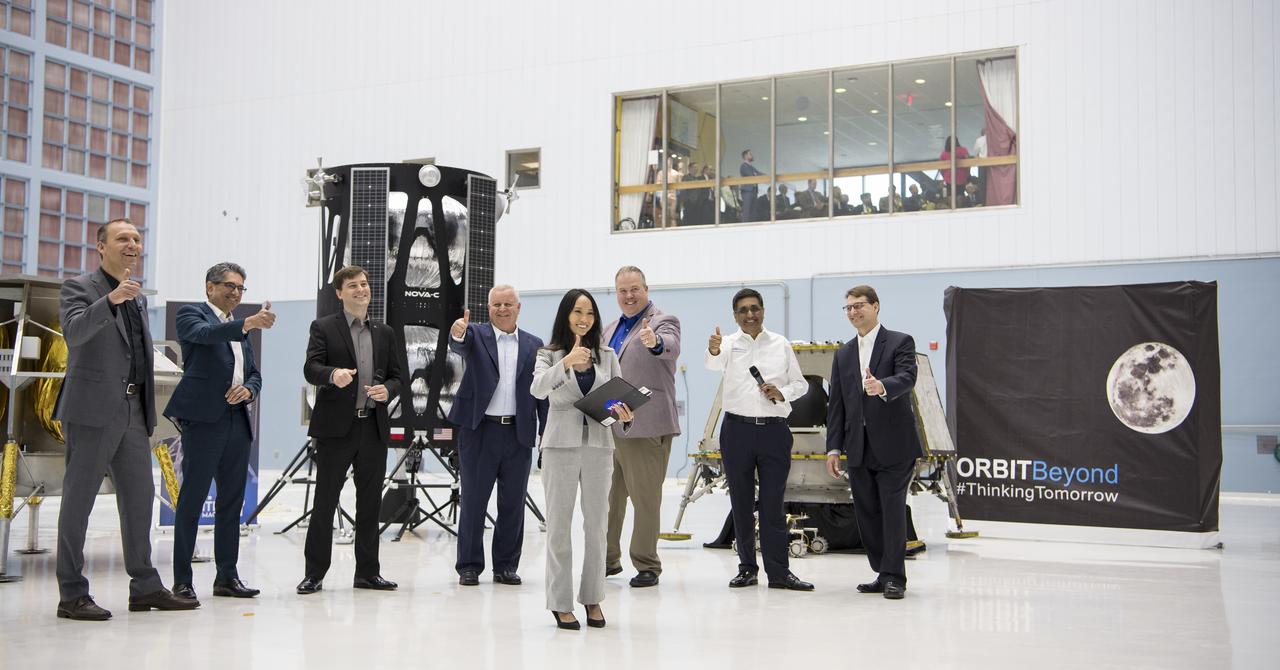
From left to right, NASA Associate Administrator, Science Mission Directorate, Thomas Zurbuchen; Astrobotic Mission Director, Sharad Bhaskaran; Astrobotic CEO, John Thornton; Chairman of the Board of Intuitive Machines, Kam Ghaffarian; VP of Research and Development of Intuitive Machines, Tim Crain; President and CEO of OrbitBeyond, Siba Padhi; Chief Science Officer, OrbitBeyond, Jon Morse; and NASA Press Officer, Felicia Chou, front center, put their thumbs up at the conclusion of an event announcing the companies that will provide the first lunar landers for the Artemis program's lunar surface exploration, Friday, May 31, 2019, at Goddard Space Flight Center in Md. Photo credit: (NASA/Aubrey Gemignani)
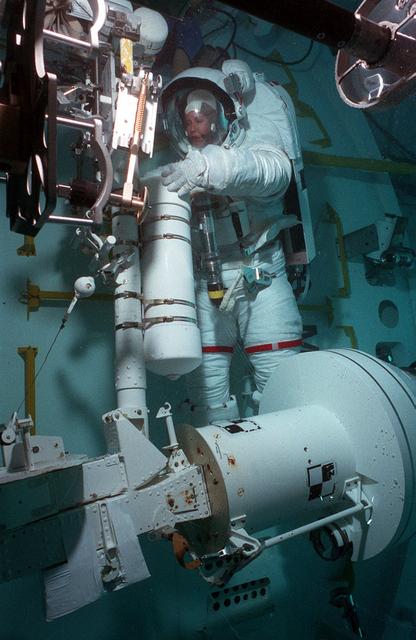
Astronaut Kathy Thornton conducts Hubble Space Telescope training in Marshall's Neutral Buoyancy Simulator (NBS).
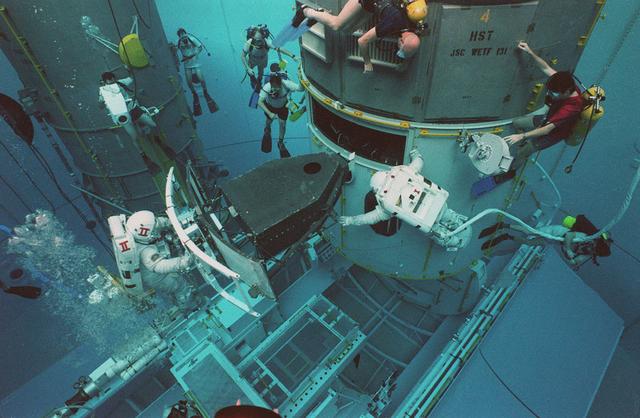
Astronauts Kathy Thornton and Tom Akers practice installing the Wide Field Planetary camera into the Hubble Space Telescope at Marshall's Neutral Buoyancy Simulator (NBS).
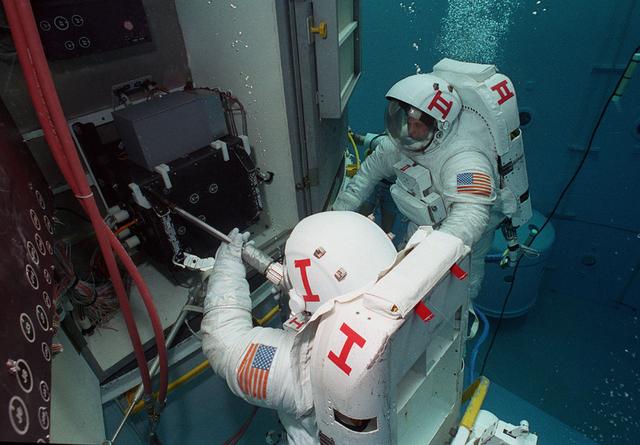
Astronauts Kathy Thornton and Tom Akers practice installing the Wide Field Planetary camera into the Hubble Space Telescope at Marshall's Neutral Buoyancy Simulator (NBS).
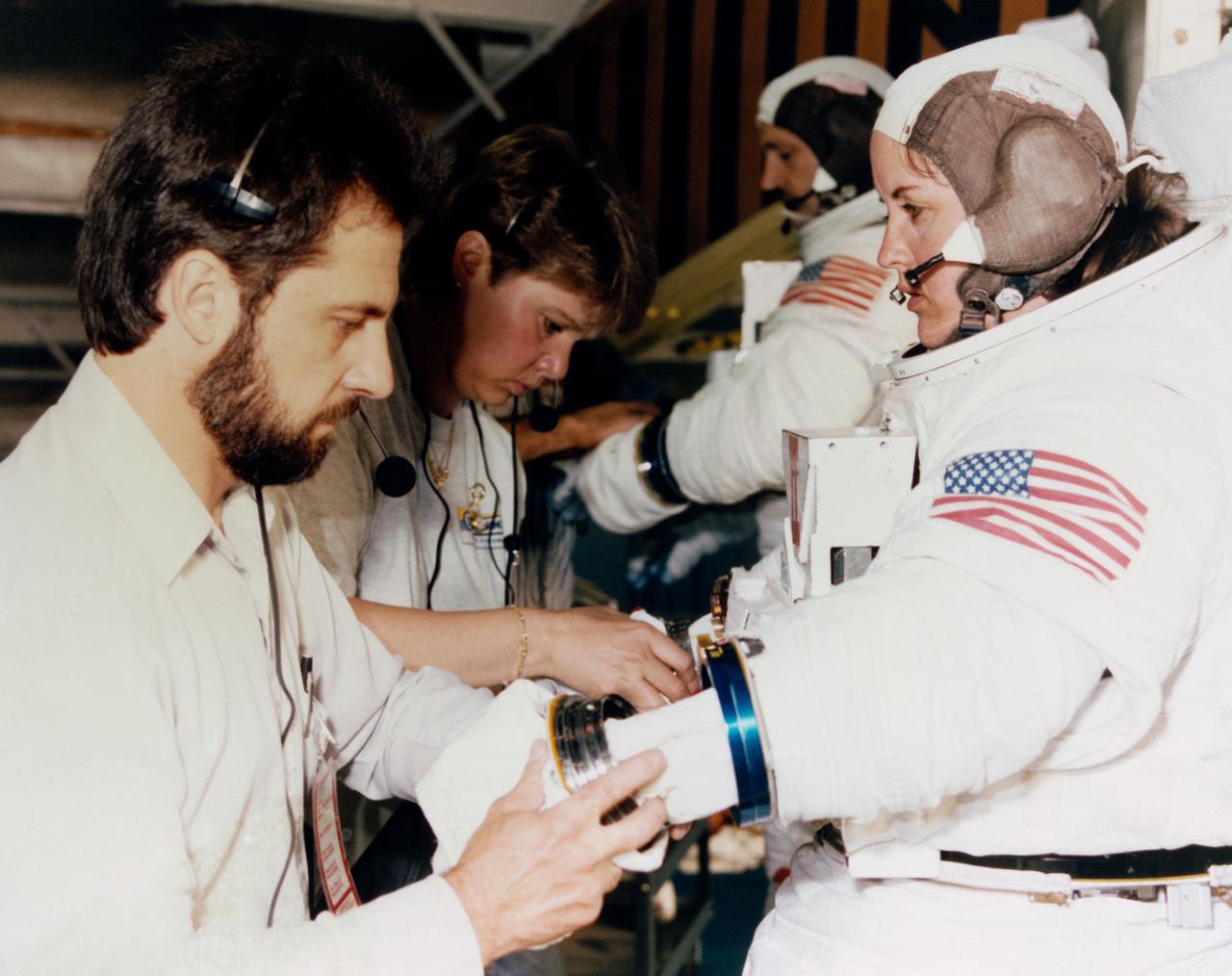
Astronaut Thomas D. Akers gets assistance in donning a training version of the Shuttle extravehicular mobility unit (EMU) space suit prior to a training session in the Neutral Buoyancy Simulator at Marshall Space Flight Center (MSFC) (39735); Astronaut Kathryn C. Thornton (foreground) and Thomas Akers, STS-61 mission specialists scheduled for extravehicular activity (EVA) duty, prepare for an underwater rehearsal session. Thornton recieves assistance from a technician in donning her EMU gloves (39736).
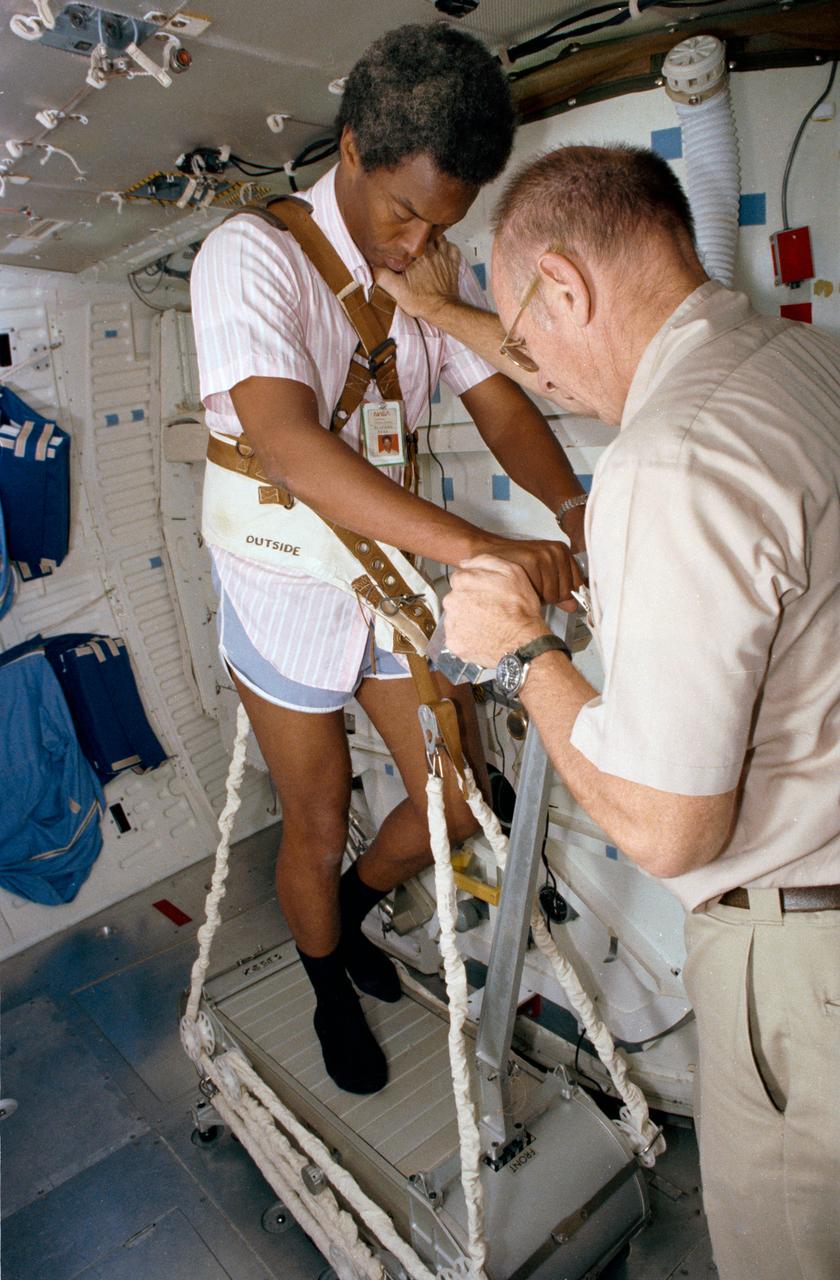
S83-37627 (26 July 1983) --- Dr. William E. Thornton, right, and Guion S. Bluford both mission specialists for STS-8, demonstrate an on-orbit experiment in the Johnson Space Center?s one-g trainer for the Shuttle orbiter. The treadmill device was designed by Dr. Thornton and has been used on previous spaceflights. The third Challenger mission has been scheduled for late August and early September of this year. This photograph was taken by Otis Imboden.
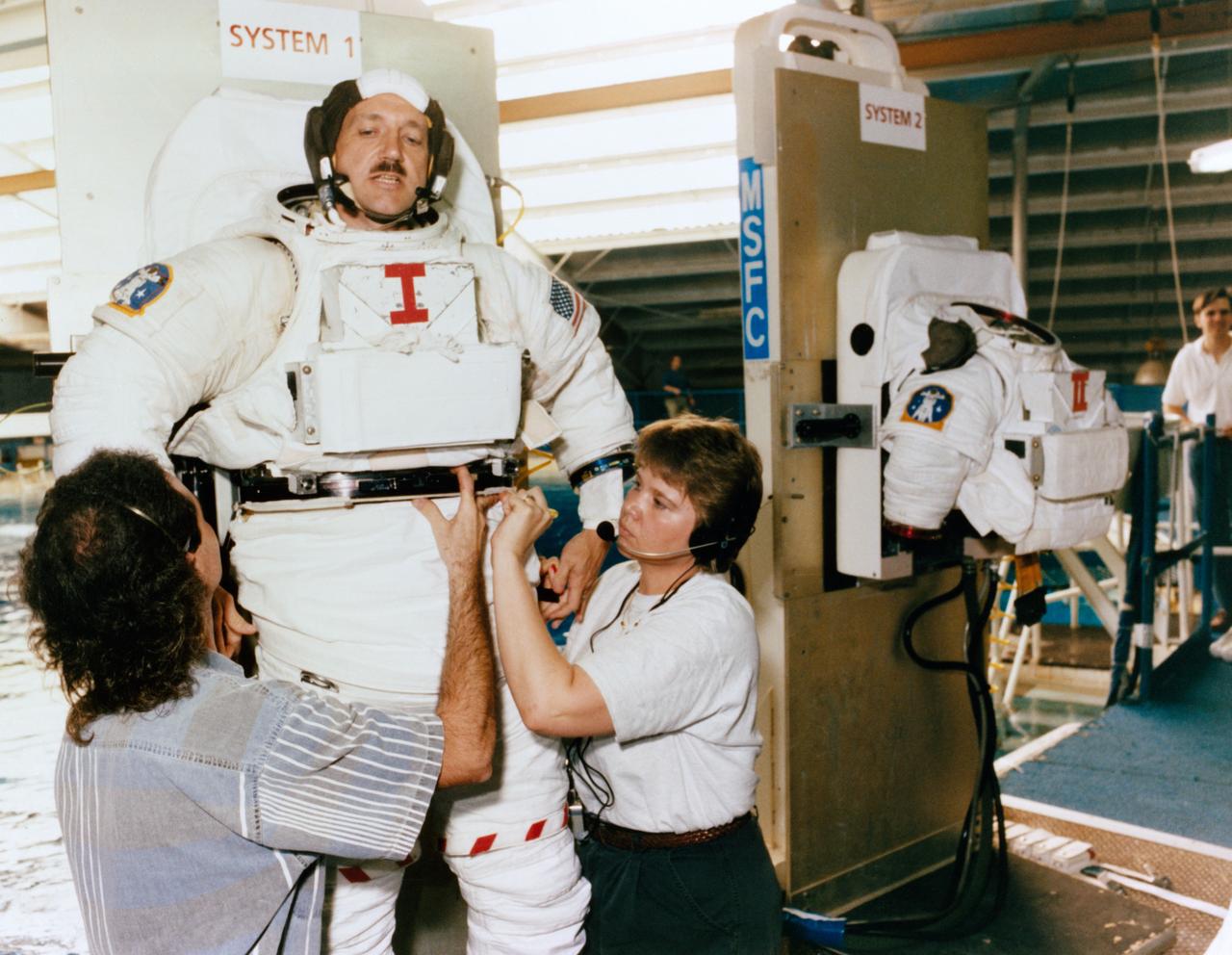
Astronaut Thomas D. Akers gets assistance in donning a training version of the Shuttle extravehicular mobility unit (EMU) space suit prior to a training session in the Neutral Buoyancy Simulator at Marshall Space Flight Center (MSFC) (39735); Astronaut Kathryn C. Thornton (foreground) and Thomas Akers, STS-61 mission specialists scheduled for extravehicular activity (EVA) duty, prepare for an underwater rehearsal session. Thornton recieves assistance from a technician in donning her EMU gloves (39736).
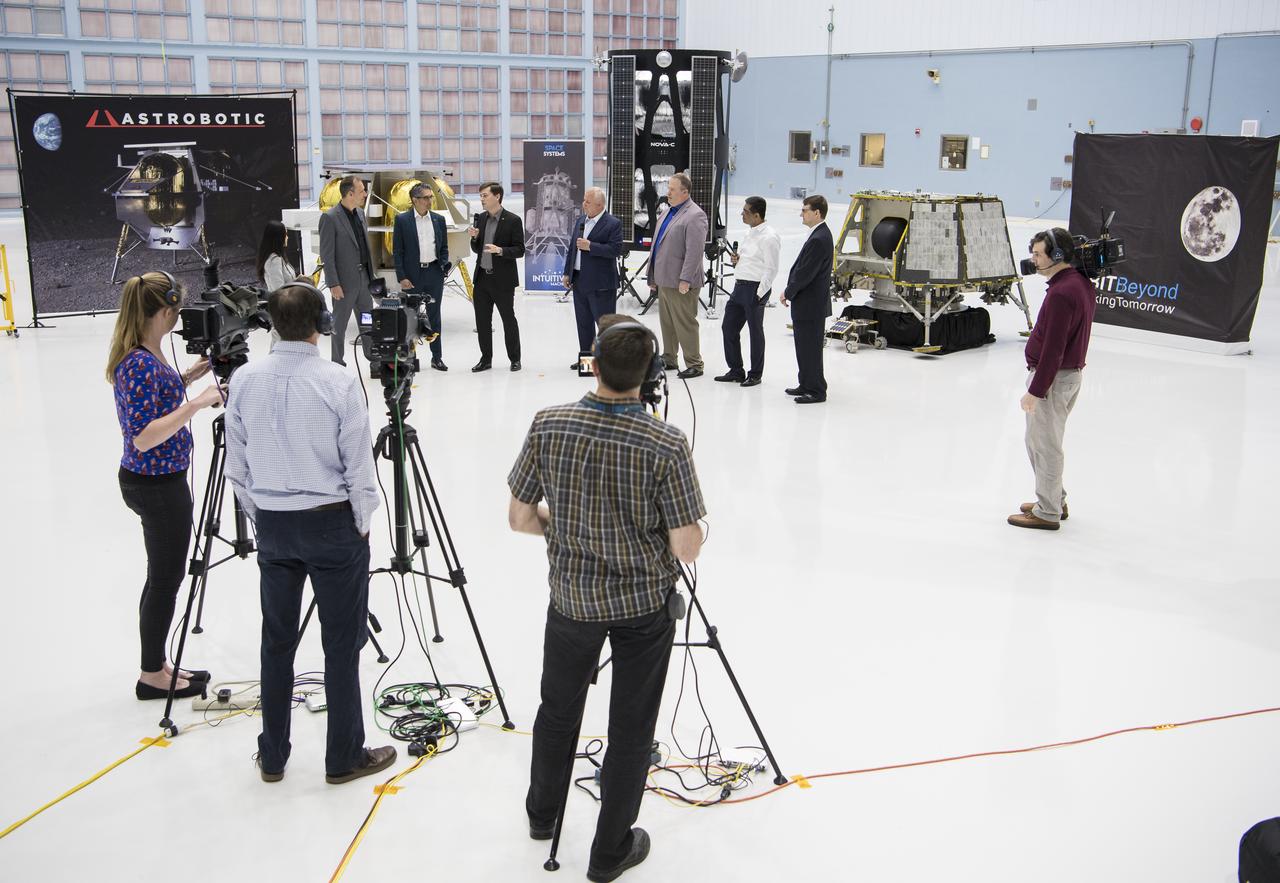
Astrobotic CEO, John Thornton, fourth from left, speaks about their lunar lander with, from left to right, NASA Press Officer, Felicia Chou; NASA Associate Administrator, Science Mission Directorate, Thomas Zurbuchen; Astrobotic Mission Director, Sharad Bhaskaran; Chairman of the Board of Intuitive Machines, Kam Ghaffarian; VP of Research and Development of Intuitive Machines, Tim Crain; President and CEO of OrbitBeyond, Siba Padhi; and Chief Science Officer, OrbitBeyond, Jon Morse, Friday, May 31, 2019, at Goddard Space Flight Center in Md. Astrobotic, Intuitive Machines, and OrbitBeyond have been selected to provide the first lunar landers for the Artemis program's lunar surface exploration. Photo credit: (NASA/Aubrey Gemignani)
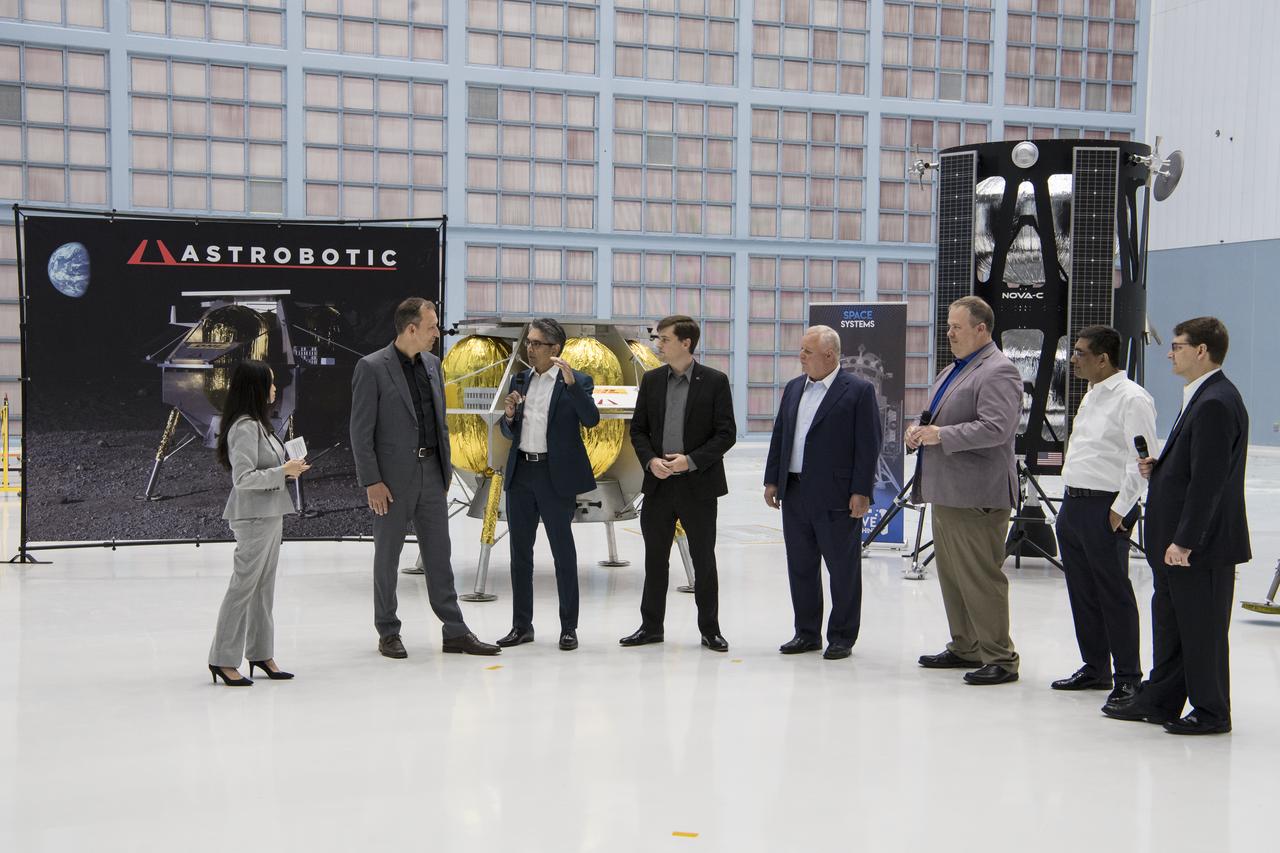
Astrobotic Mission Director, Sharad Bhaskaran , third from left, speaks about their lunar lander with, from left to right, NASA Press Officer, Felicia Chou; NASA Associate Administrator, Science Mission Directorate, Thomas Zurbuchen; Astrobotic CEO, John Thornton; Chairman of the Board of Intuitive Machines, Kam Ghaffarian; VP of Research and Development of Intuitive Machines, Tim Crain; President and CEO of OrbitBeyond, Siba Padhi; and Chief Science Officer, OrbitBeyond, Jon Morse, Friday, May 31, 2019, at Goddard Space Flight Center in Md. Astrobotic, Intuitive Machines, and OrbitBeyond have been selected to provide the first lunar landers for the Artemis program's lunar surface exploration. Photo credit: (NASA/Aubrey Gemignani)
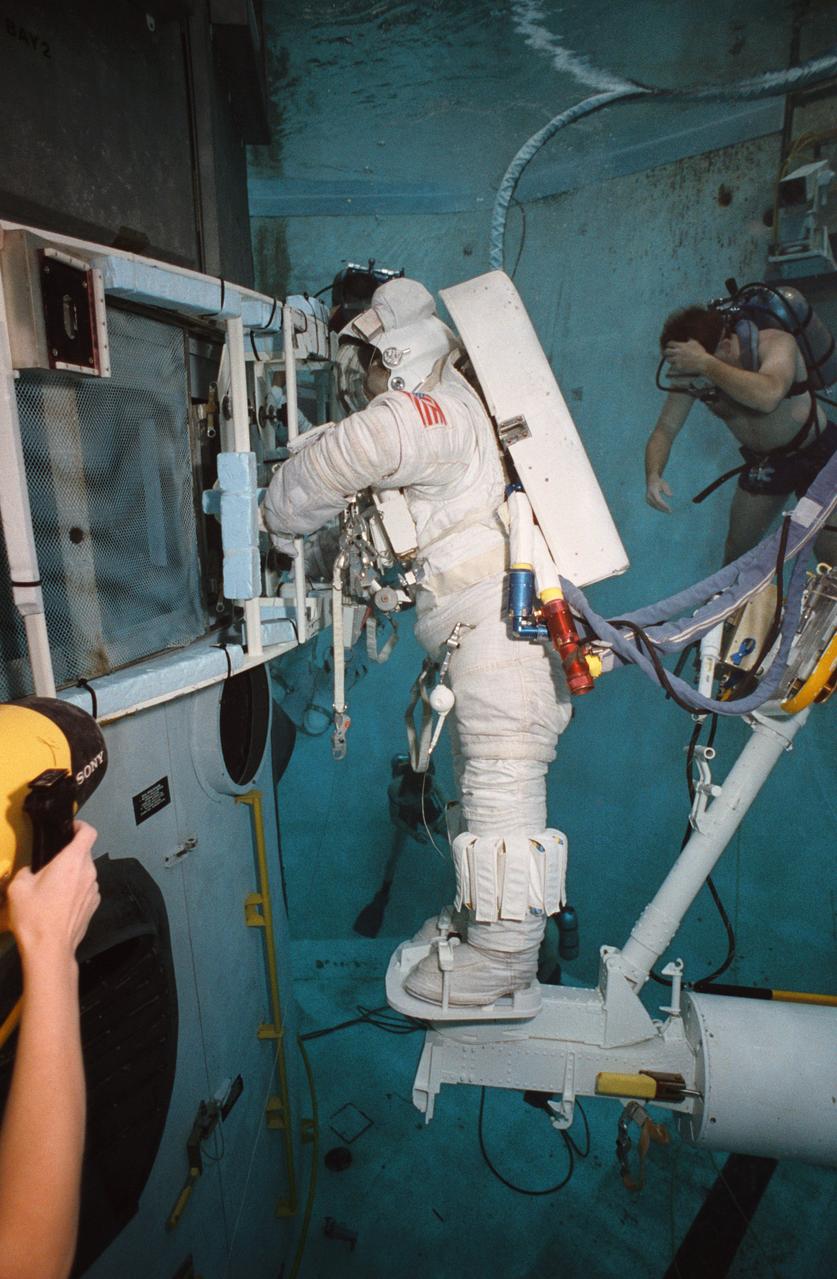
S93-33101 (5 Apr 1993) --- Wearing a training version of Space Shuttle Extravehicular Mobility Unit (EMU), astronaut Kathryn C. Thornton uses the giant pool of the Johnson Space Center's (JSC) Weightless Environment Training Facility (WET-F) to rehearse for the Hubble Space Telescope (HST) repair mission. Standing on a mobile foot restraint connected to the Shuttle's robot arm, Thornton grasps a large structure which attaches to the Wide Field/Planetary Camera (WF/PC). The current WF/PC on the HST will be replaced with WF/PC-2. Out of frame is astronaut Thomas D. Akers, who will join Thornton in STS-61 EVA. A SCUBA-equipped diver can be seen in the background. A number of divers are on hand for all training sessions in the WET-F. A total of five extravehicular activity (EVA) sessions will be conducted during the scheduled December mission of the Endeavour.
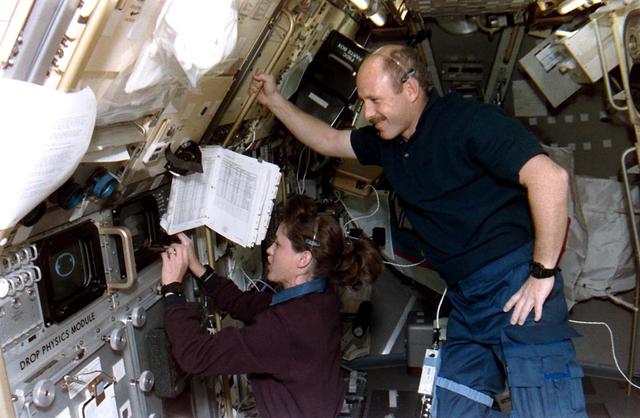
Astronaut Kathryn C. Thornton, payload commander, works at the Drop Physics Module (DPM) on the portside of the science module supporting the U.S. Microgravity Laboratory (USML-2). Astronaut Kerneth D. Bowersox, mission commander, looks on.
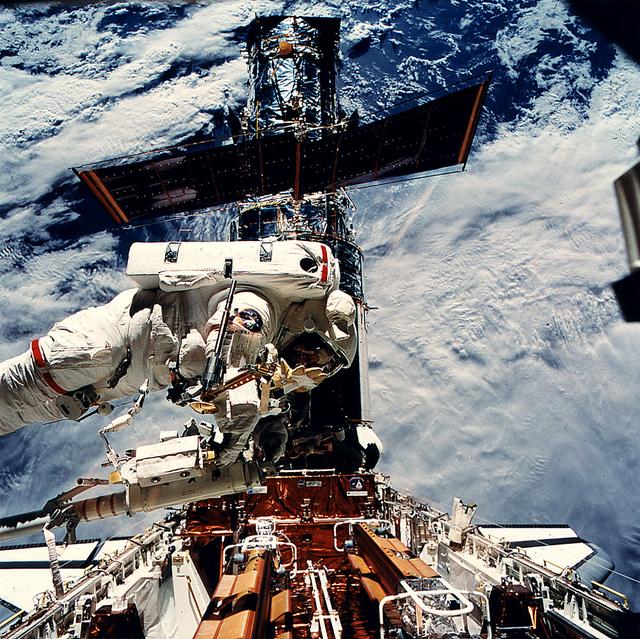
Extra vehicular activity - Astronaut Kathy Thornton on the end of orbiter Endeavour's remote manipulator system arm, hovers over equipment associated with servicing chores on the Hubble Space Telescope (HST).
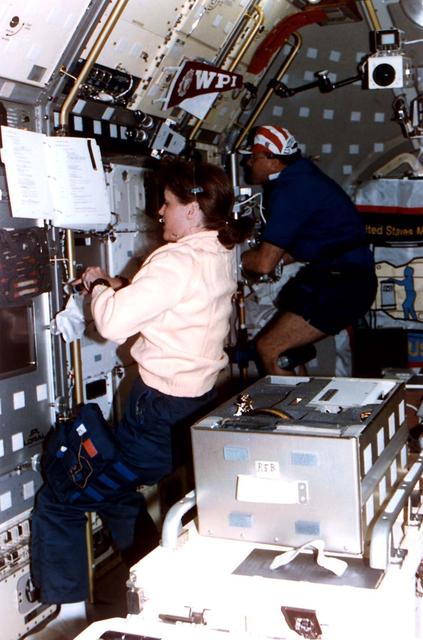
Astronaut Kathryn C. Thornton, payload commander for STS-73, works at the drop physics module (DPM) on the portside of the science module aboard the Space Shuttle Columbia in Earth orbit.
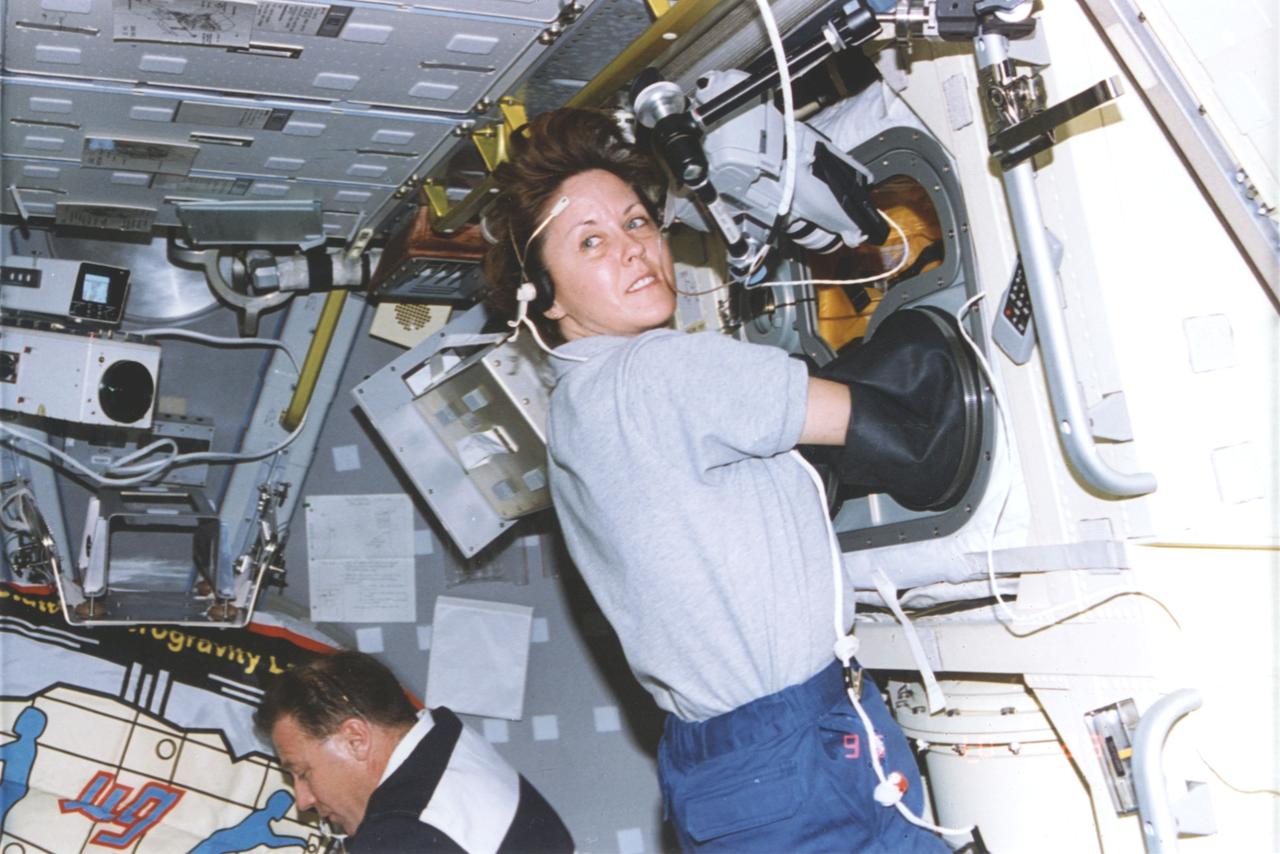
Onboard STS-73, USML-2: Mission Specialist, Payload Commander, Kathryn Thorton with (CGF) Crystal Growth Furnace
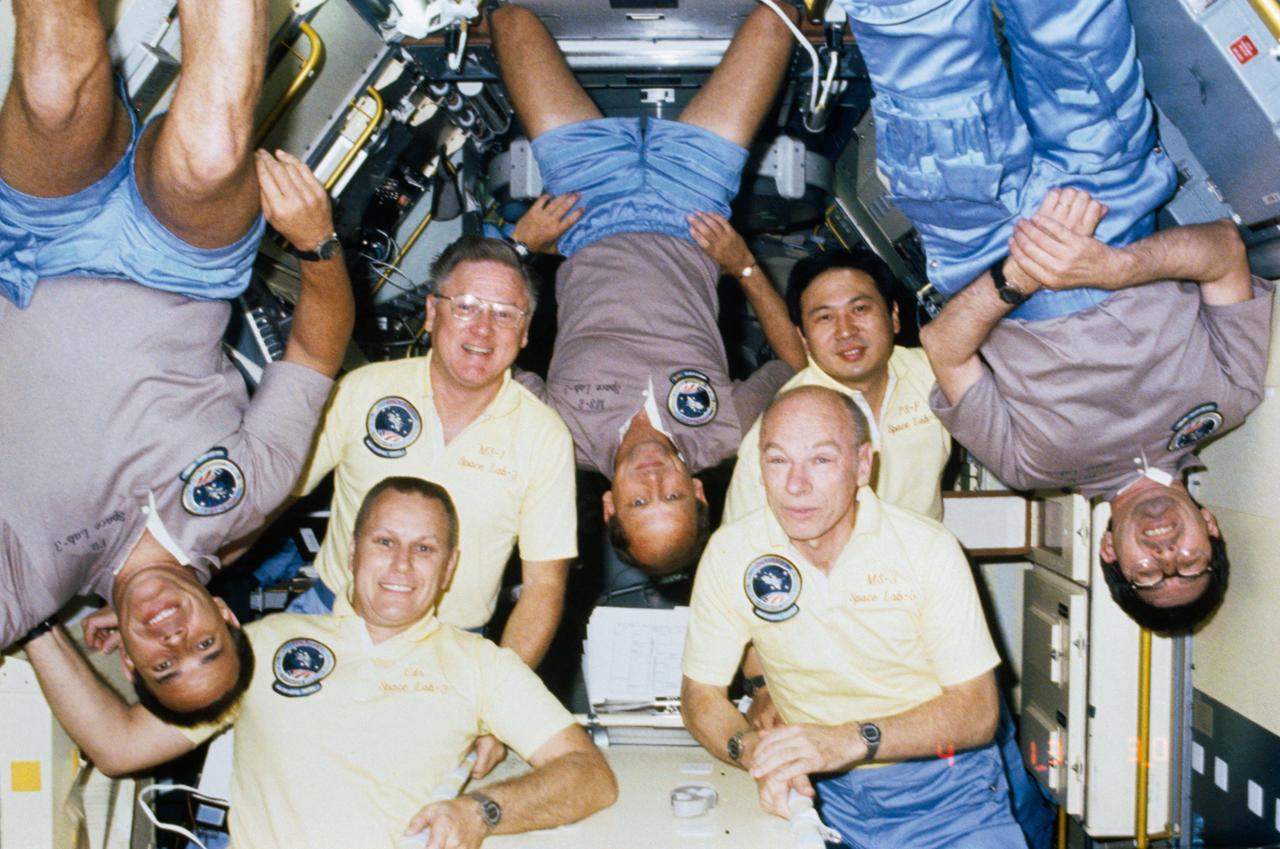
51B-101-025 (29 April-6 May 1985) --- A new twist to the traditional on-orbit group portrait was added by the 51-B/Spacelab 3 crewmembers. Note the Gold T-shirts of ?Gold? team members Robert F. Overmyer (bottom left), Don L. Lind (behind Overmyer), William E. Thornton (bottom right) and Taylor G. Wang (behind Thornton). Posting ?upside down? are ?silver? team members (L-R) Frederick D. Gregory, Norman E. Thagard and Lodewijk van den Berg. The seven are in the Long Science Module for Spacelab 3 in the cargo bay of the earth-orbiting Space Shuttle Challenger.
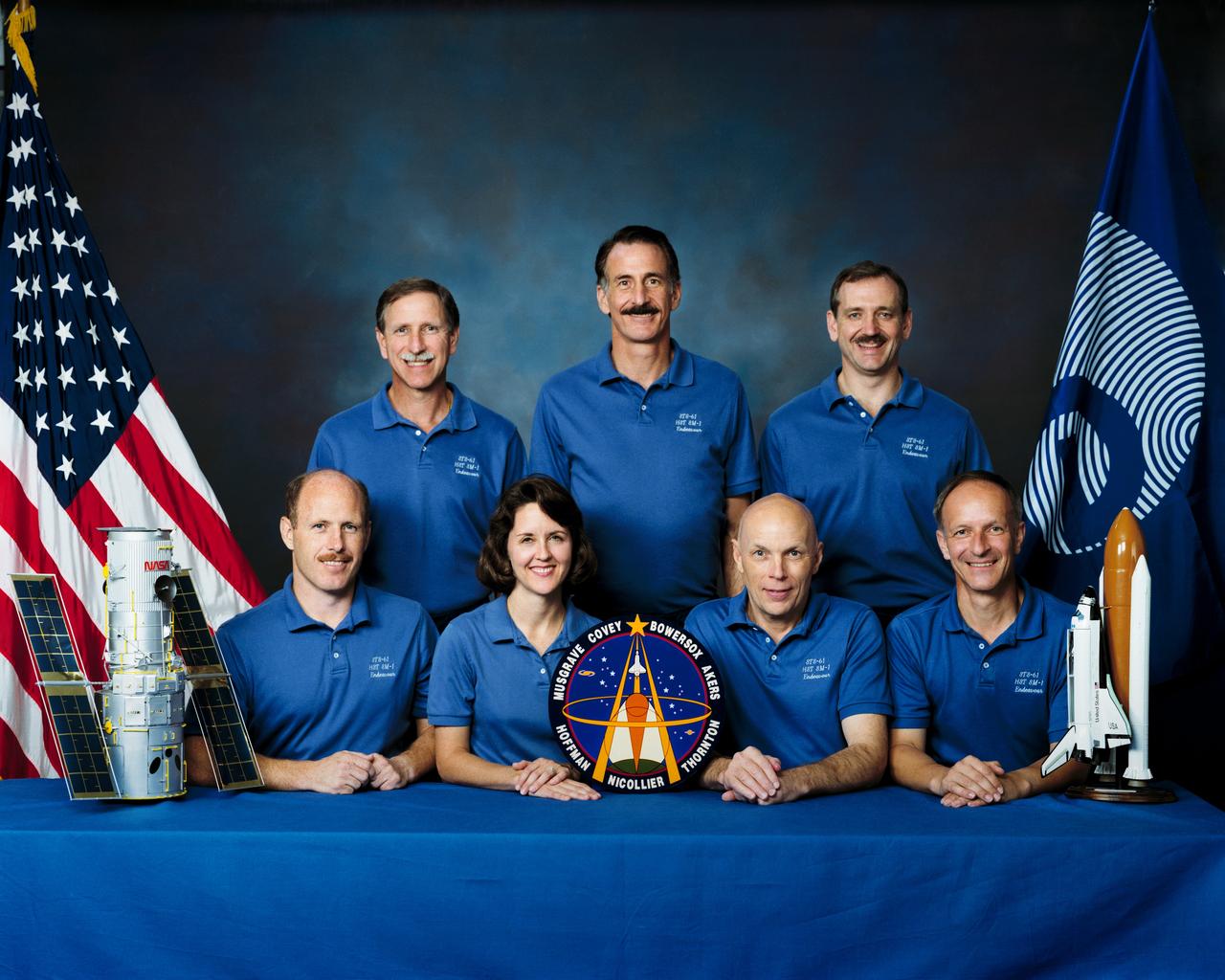
STS061-S-002 (1 Oct. 1993) --- These seven NASA astronauts are currently in training for the Hubble Space Telescope (HST) servicing mission, scheduled for later this year. Astronaut Richard O. Covey, mission commander, is standing at left, with astronaut Kenneth D. Bowersox, pilot, seated at left. The five mission specialists for the mission are (left to right, seated) astronauts Kathryn C. Thornton and F. Story Musgrave, and the European Space Agency (ESA) astronaut Claude Nicollier; and (left to right, standing), astronauts Jeffrey A. Hoffman and Thomas D. Akers. Musgrave, Akers, Thornton and Hoffman are all assigned to participate in five total sessions of extravehicular activity (EVA) for the servicing tasks.
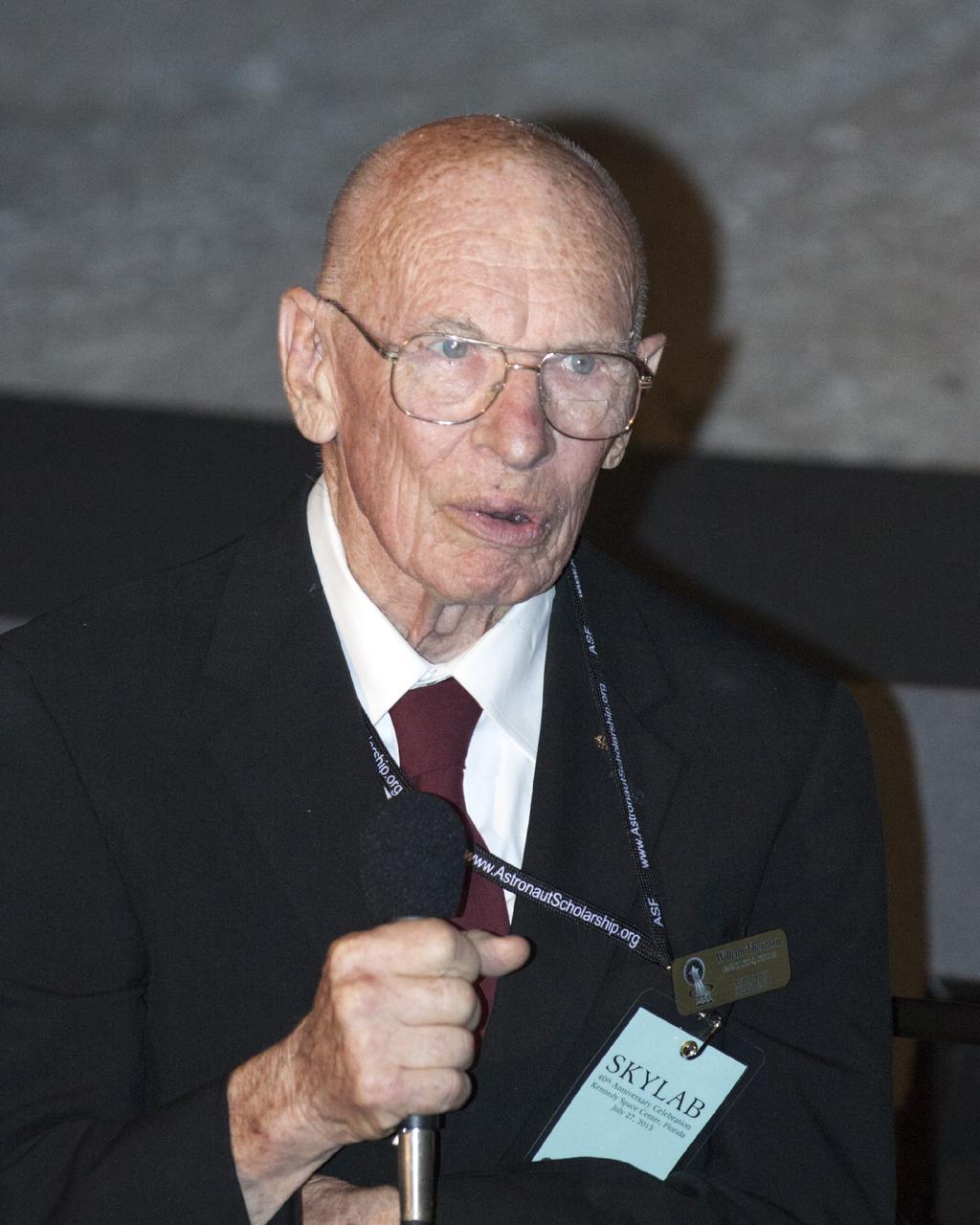
CAPE CANAVERAL, Fla. – At the Kennedy Space Center's Apollo/Saturn V Center, former NASA astronaut William Thornton speaks to guests at the Astronaut Scholarship Foundation's event celebrating the 40th anniversary of Skylab. Thornton, along with astronauts Robert Crippen and Karol Bobko, took part in a 56-day activity during 1972 called SMEAT -- Skylab Medical Experiment Altitude Test -- that preceded the launch of Skylab and helped NASA evaluate equipment and procedures proposed for the long-duration Skylab missions. Thornton went on to fly missions during the Space Shuttle Program. The gala commemorating the 40th anniversary of Skylab included six of the nine astronauts who flew missions to America's first space station. The orbiting laboratory was launched unpiloted from Kennedy on May 14, 1973. Between May 25, 1973 and Feb. 8, 1974, crews of three spent 28, 59 and 84 days living and working in low-Earth orbit aboard the station. For more information, visit http://www.nasa.gov/mission_pages/skylab/ Photo credit: NASA/Kim Shiflett
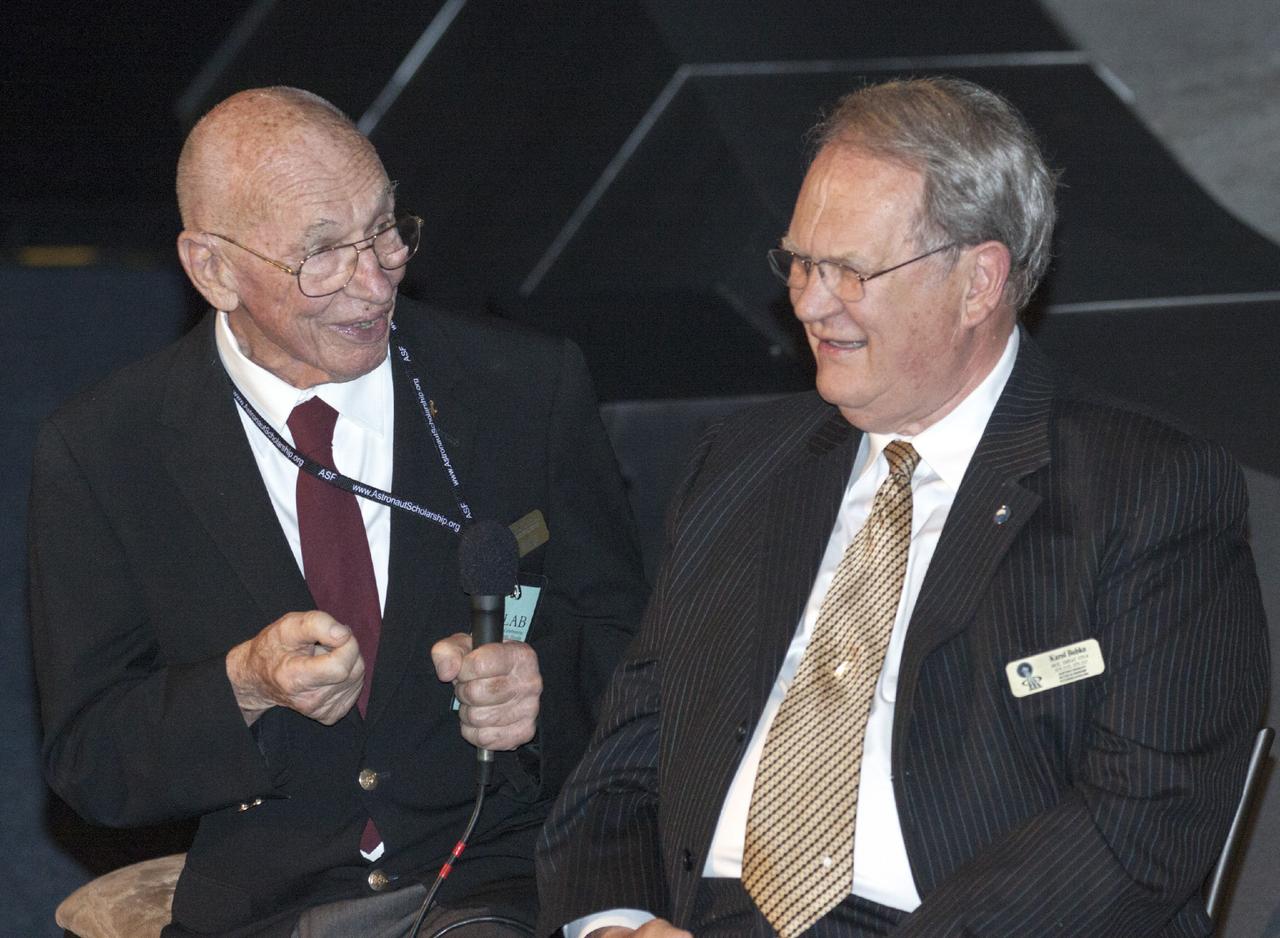
CAPE CANAVERAL, Fla. – At the Kennedy Space Center's Apollo/Saturn V Center, former NASA astronauts William Thornton, left, and Karol Bobko recall experiences during the Astronaut Scholarship Foundation's event celebrating the 40th anniversary of Skylab. Along with astronaut Robert Crippen, Thornton, and Bobko, took part in a 56-day activity during 1972 called SMEAT -- Skylab Medical Experiment Altitude Test -- that preceded the launch of Skylab and helped NASA evaluate equipment and procedures proposed for the long-duration Skylab missions. Thornton and Bobko went on to fly missions during the Space Shuttle Program. The gala commemorating the 40th anniversary of Skylab included six of the nine astronauts who flew missions to America's first space station. The orbiting laboratory was launched unpiloted from Kennedy on May 14, 1973. Between May 25, 1973 and Feb. 8, 1974, crews of three spent 28, 59 and 84 days living and working in low-Earth orbit aboard the station. For more information, visit http://www.nasa.gov/mission_pages/skylab/ Photo credit: NASA/Kim Shiflett
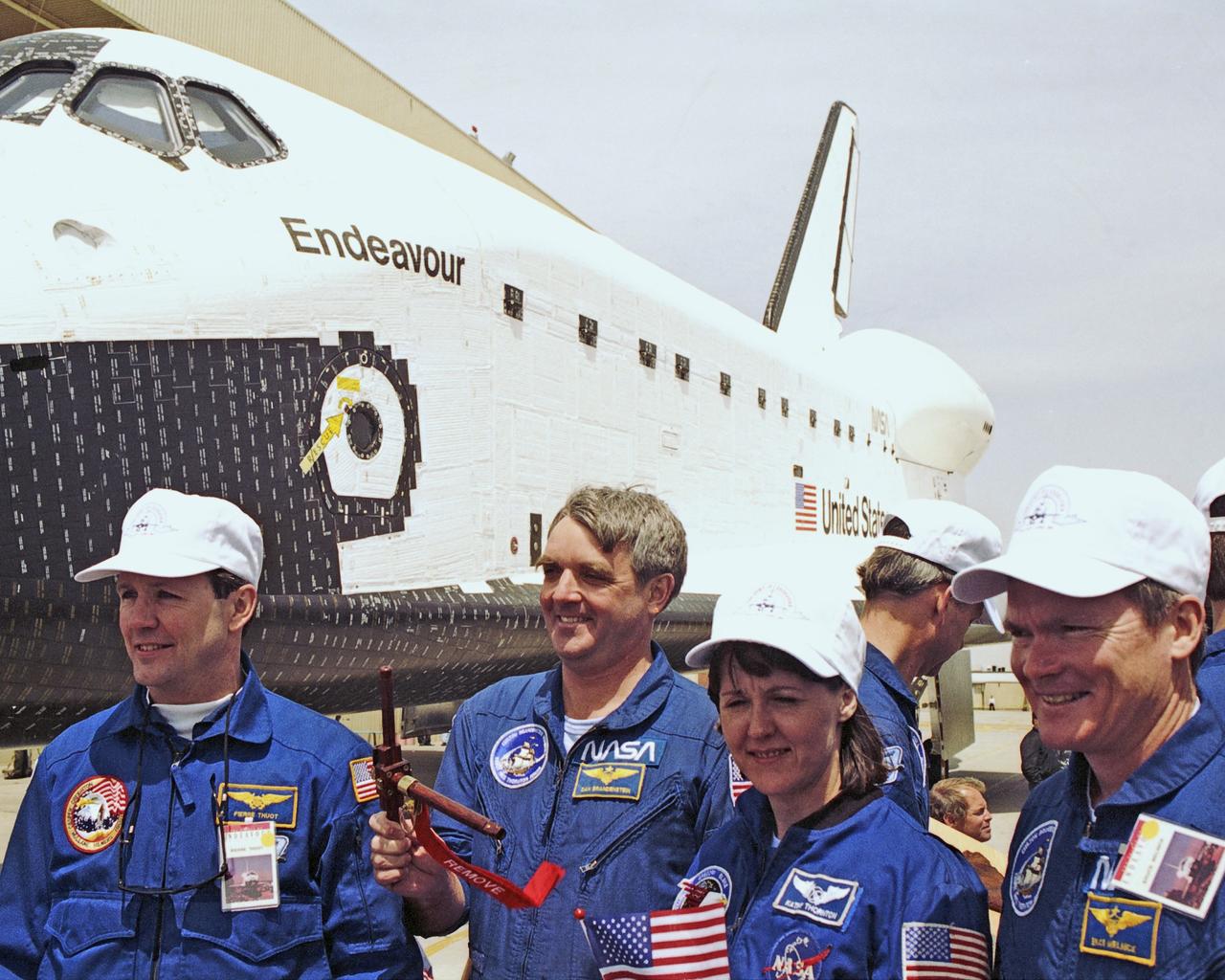
Chief astronaut Daniel Brandenstein second from left, and astronauts Pierre Thuot left, Kathryn Thornton, and Bruce Melnick are on hand for a proud moment in the history of manned spaceflight: the debut of the newest space shuttle orbiter, Endeavour, at Palmdale, Calif. Photo credit: NASA
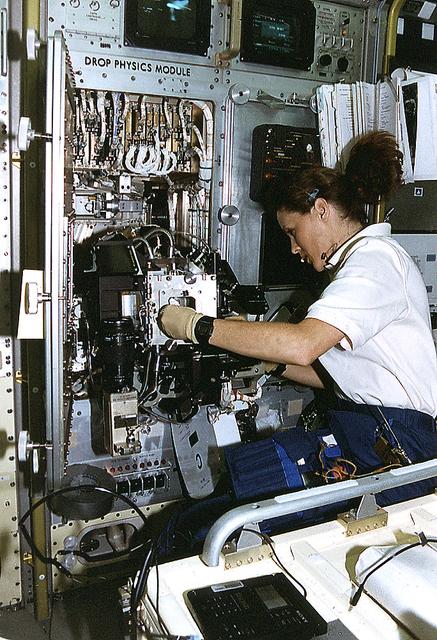
Onboard Space Shuttle Columbia (STS-73) Payload Commander Kathryn Thornton works with the Drop Physics Module (DPM) in the United States Microgravity Laboratory 2 (USML-2) Spacelab Science Module cleaning the experiment chamber of the DPM.
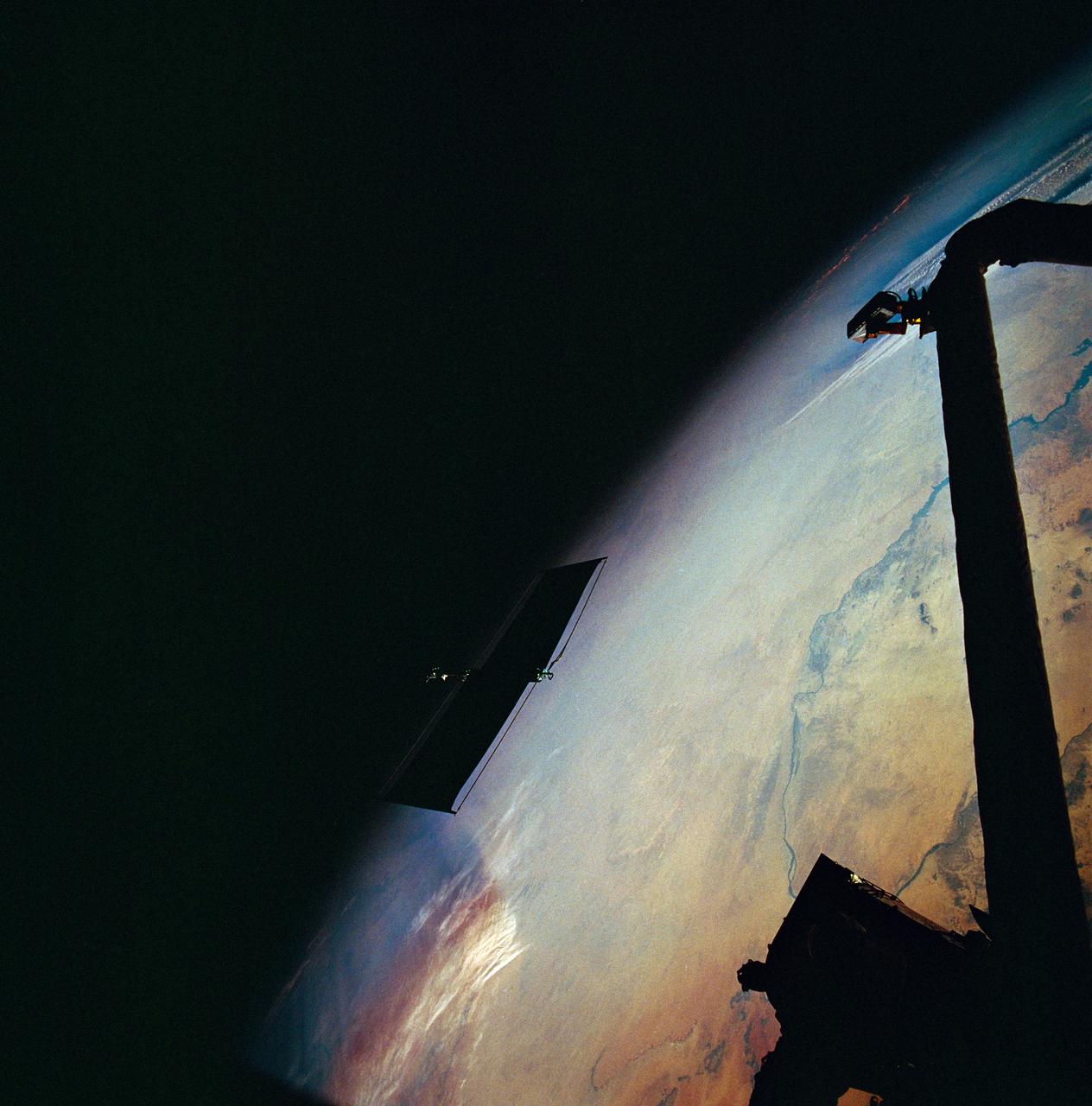
STS061-95-031 (6 Dec 1993) --- The damaged solar array panel removed from the Hubble Space Telescope (HST) is backdropped over northern Sudan. Astronaut Kathryn C. Thornton, just out of frame at top right, watched the panel after releasing it moments earlier.
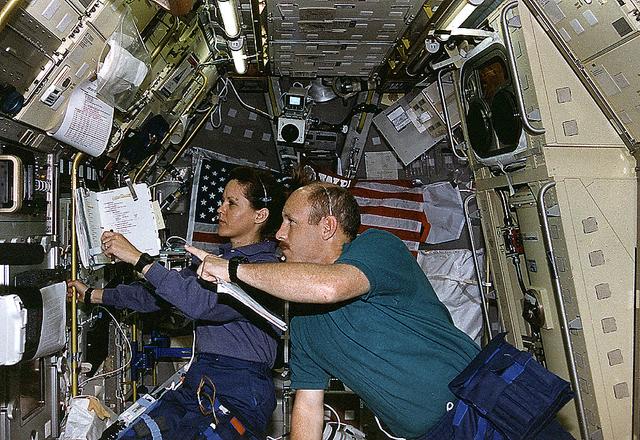
Onboard Space Shuttle Columbia (STS-73) Payload Commander Kathryn Thornton and Commander Ken Bowersox discuss the Drop Physics Module (DPM) experiment in the United States Microgravity Laboratory 2 (USML-2) spacelab science module.
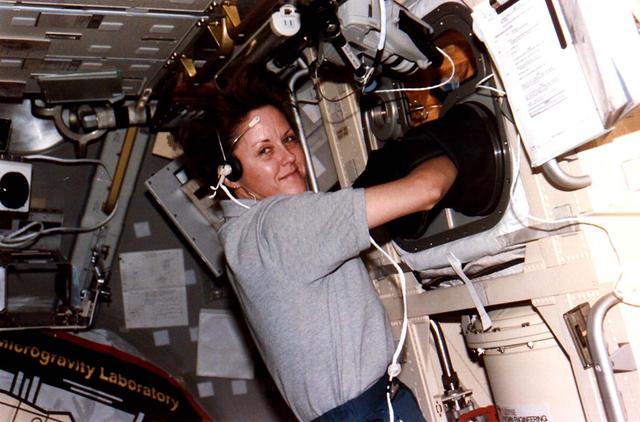
Astronaut Kathryn C. Thornton, payload commander, works in the glovebox of the science module supporting the U.S. Microgravity Laboratory (USML-2) mission. Five NASA astronauts and two payload specialists are in the last few days of a scheduled 16 day mission.
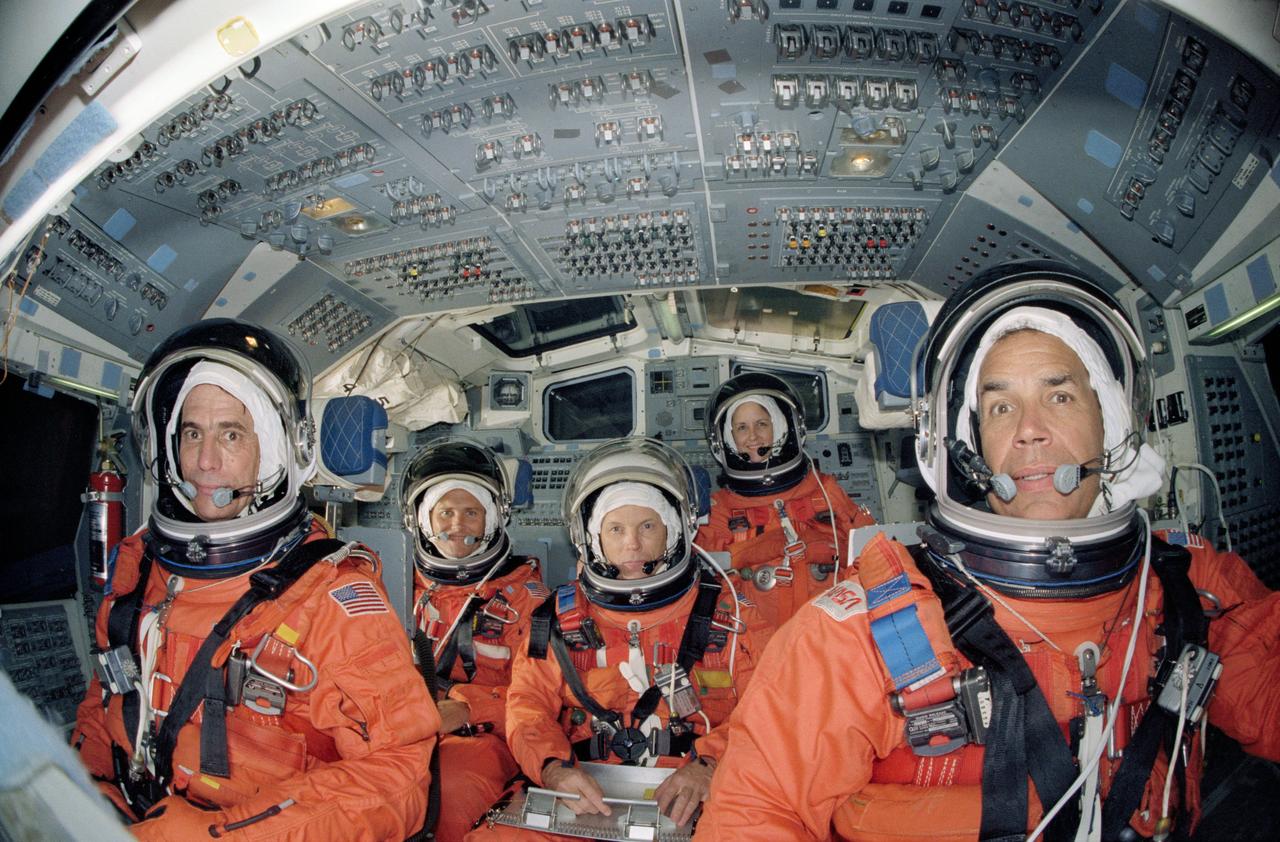
STS-33 Discovery, Orbiter Vehicle (OV) 103, crewmembers, wearing orange launch and entry suits (LESs) and launch and entry helmets (LEHs), are seated in their launch and entry positions on crew compartment trainer (CCT) flight deck during a training exercise in JSC Mockup and Integration Laboratory (MAIL) Bldg 9A. Commander Frederick D. Gregory (far right) is stationed at forward flight deck commanders controls, Pilot John E. Blaha (far left) at the pilots controls and on aft flight deck are mission specialists Manley L. Carter, Jr (left), MS F. Story Musgrave (center, holding clipboard), and MS Kathryn C. Thornton (standing). Overhead forward control panels are visible above the astronauts and aft flight deck onorbit station control panels and windows are visible in the background. Thornton is on the flight deck for this photo but during launch and entry will be seated on the middeck.
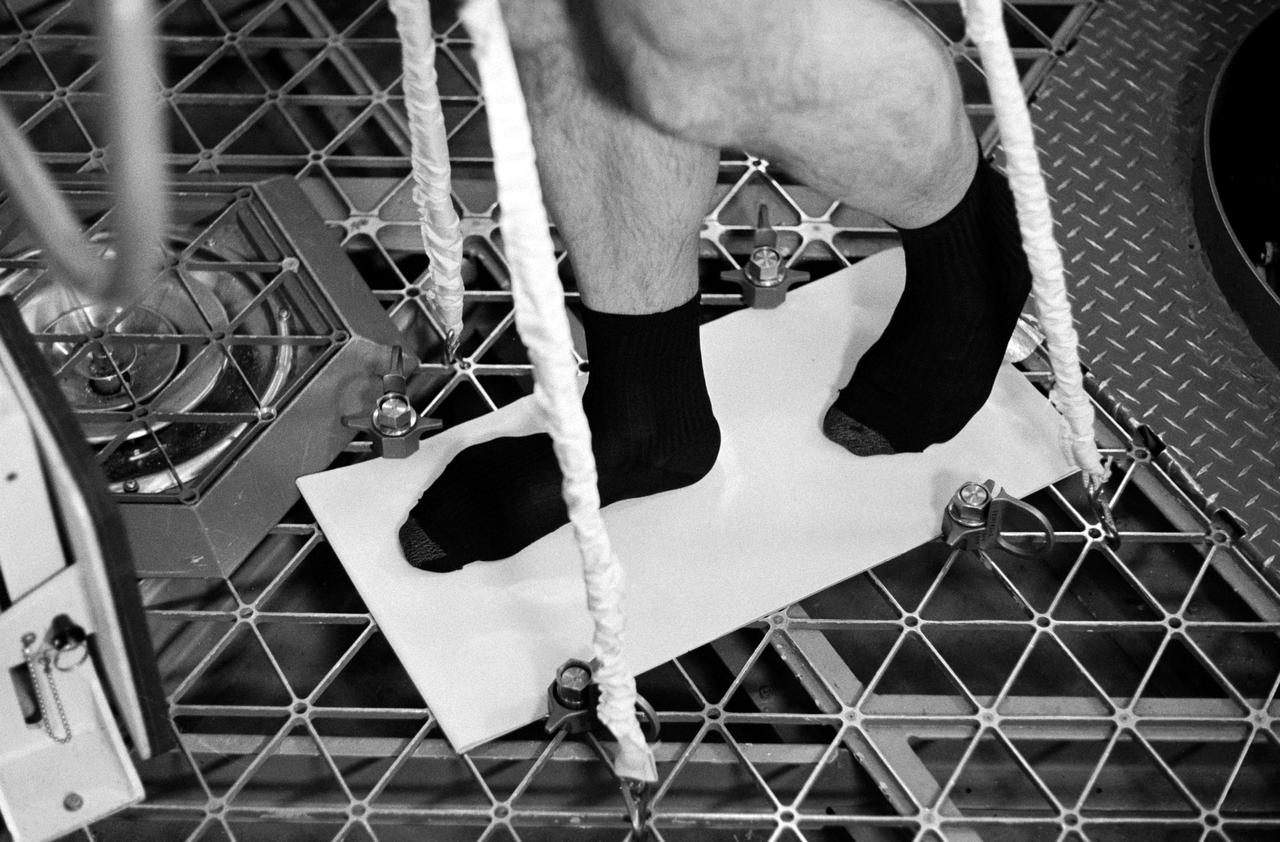
S73-33858 (November 1973) --- A close-up view of the feet of scientist-astronaut William E. Thornton as he demonstrates the use of a treadmill-like exercise device which was developed for maintaining the leg and back muscles of the Skylab 4 crewman. Thornton is in the Skylab Orbital Workshop simulator in Building 5 at the Johnson Space Center. The Skylab 2 and Skylab 3 astronauts had no exercise device onboard capable of adequately maintaining their leg and back muscles. The treadmill device consists of a Teflon-coated aluminum plate or sheet bolted to the floor of the Skylab Orbital Workshop. The crewmen will wear the bicycle ergometer harness while exercising. Bungee cords attached to the floor and to the harness will supply the downward pressure or force for the back and leg muscles. The astronaut's feet will slide over the Teflon-coated plate as he "marches in place." Photo credit: NASA
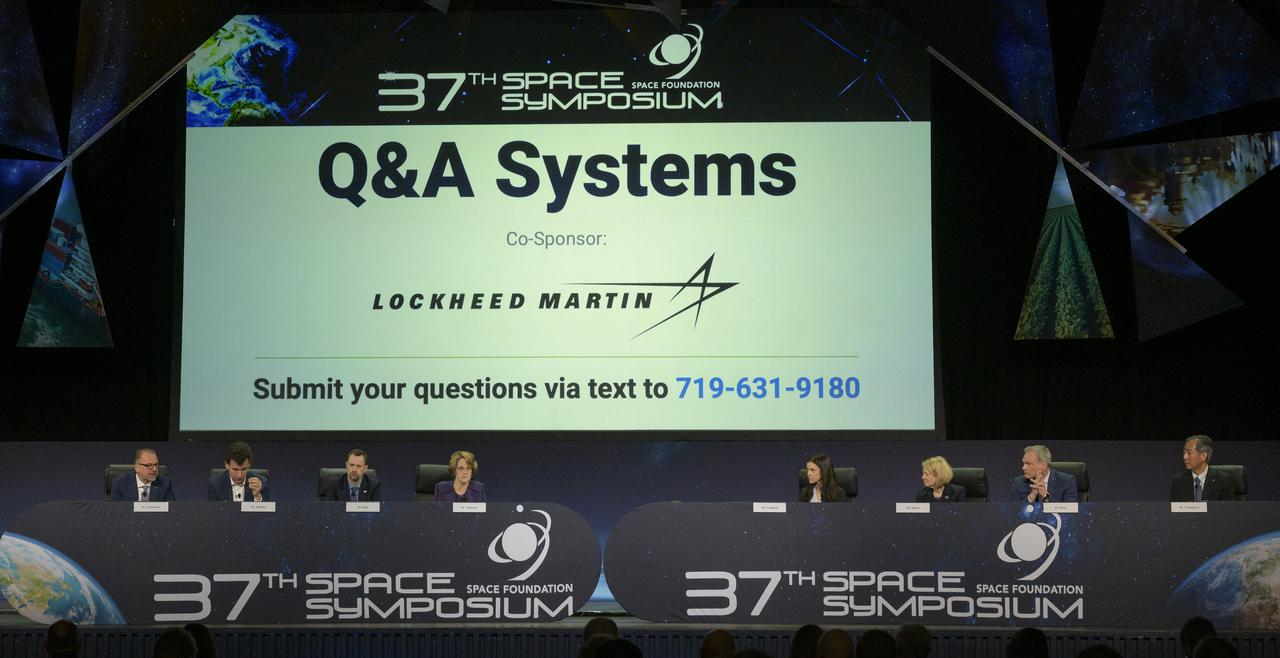
Heads of Agency participate in a panel discussion, from left, Dr. Josef Aschbacher, Director General, European Space Agency (ESA); Dr. Philippe Baptiste, President, French Space Agency (CNES); Dr. Paul Bate, Chief Executive Officer UK Space Agency (UKSA); moderator Dr. Kathryn C. Thornton, Chairwoman, Space Foundation; Lisa Campbell, President, Canadian Space Agency (CSA); NASA Deputy Administrator Pam Melroy; Dr. Walther Pelzer, Executive Board Member and Head of the German Space Agency at the German Aerospace Center (DLR); and Dr. Hiroshi Yamakawa, President, Japan Aerospace Exploration Agency (JAXA), right, during the 37th Space Symposium, Wednesday, April 6, 2022, in Colorado Springs, Colorado. Photo Credit: (NASA/Bill Ingalls)

NASA Administrator Jim Bridenstine, left, and NASA Associate Administrator for the Science Mission Directorate Thomas Zurbuchen, right, pose for a photograph with the representatives of the nine U.S. companies that are eligible to bid on NASA delivery services to the lunar surface through Commercial Lunar Payload Services (CLPS) contracts, Thursday, Nov. 29, 2018 at NASA Headquarters in Washington. The representatives of the companies are: Steve Altemus, President and CEO of Intuitive Machines; 2nd from left, Sean Mahoney, CEO, Masten Space Systems Inc; Eric Salwan, Director of Commercial Business Development, Firefly Aerospace; Jennifer Jensen, Vice President, National Security & Space, Draper; Joe Landon, VP of Advanced Programs, Commercial Civil Space, Lockheed Martin Space; Steve Bailey, Deep Space Systems Inc; Daven Maharaj, Chief Operating Officer, Moon Express Inc; John Thornton, CEO, Astrobotic Technology Inc; and Jeff Patton, Chief Engineering Advisor, Orbit Beyond Inc, 2nd from right. Photo Credit: (NASA/Bill Ingalls)
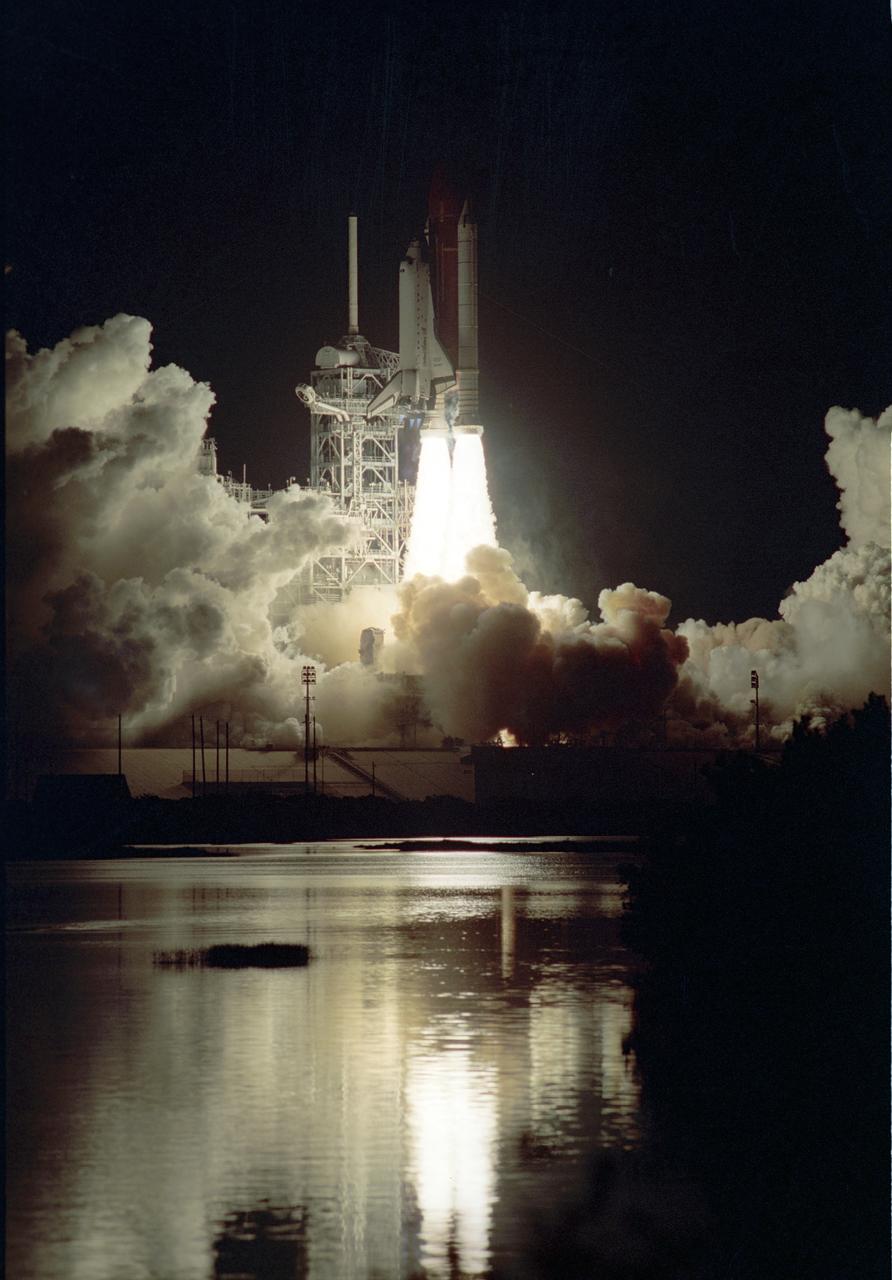
On November 22, 1989, at 7:23:30pm (EST), five astronauts were launched into space aboard the Space Shuttle Orbiter Discovery for the 5th Department of Defense (DOD) mission, STS-33. Crew members included Frederick D. Gregory, commander; John E. Blaha, pilot; and mission specialists Kathryn C. Thornton, Manley L. (Sonny) Carter, and F. Story Musgrave.
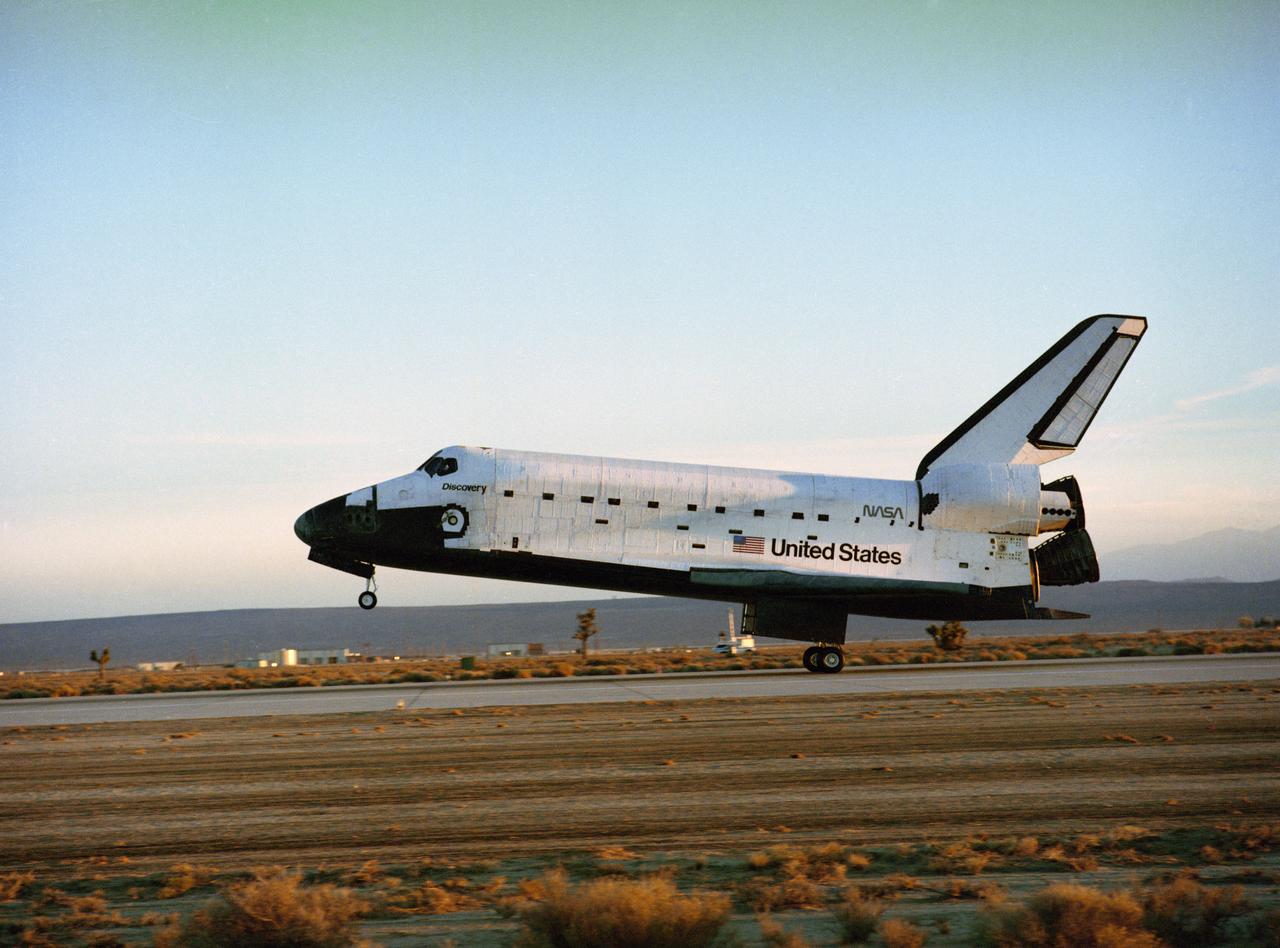
STS033-S-010 (27 Nov 1989) --- The Space Shuttle Discovery, with a crew of five astronauts aboard, touches down on a runway at Edwards Air Force Base in southern California. The landing occurred at 16:31:02 p.m. (PST), Nov. 27, 1989. Onboard Discovery for the DOD-devoted mission were astronauts Frederick D. Gregory, John E. Blaha, Kathryn C. Thornton, F. Story Musgrave and Manley L. Carter.
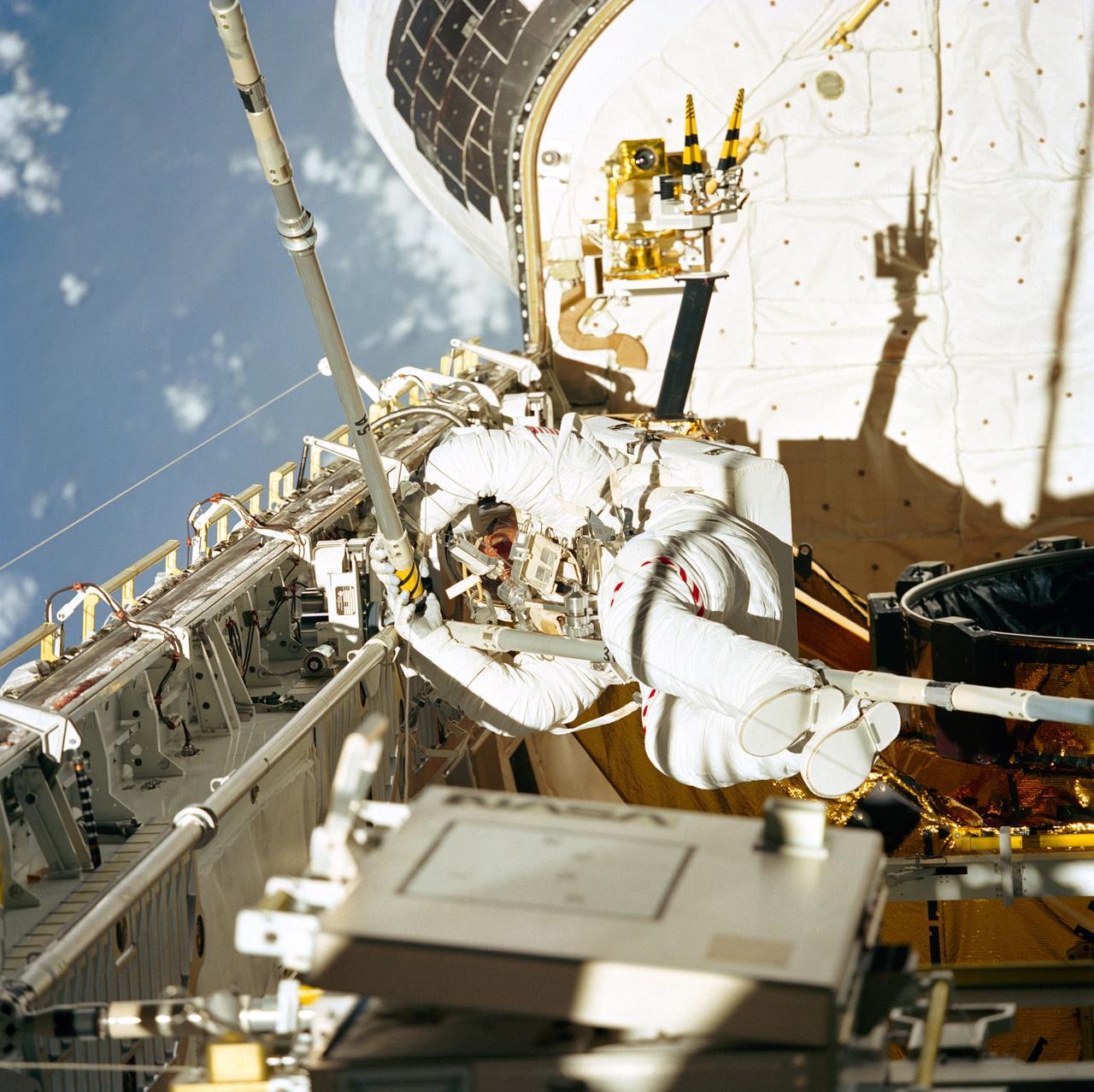
STS049-77-023 (14 May 1992) --- Astronaut Thomas D. Akers joins three struts together, as fourth period of extravehicular activity (EVA) proceeds in the Space Shuttle Endeavour's cargo bay. The purpose of the final EVA on this nine-day mission was the evaluation of Assembly of Station by EVA Methods (ASEM). The scene was recorded on 70mm film by a fellow crew member in the Space Shuttle's cabin. Astronaut Kathryn C. Thornton (out of frame) joined Akers on the 7 1/2 hour EVA.
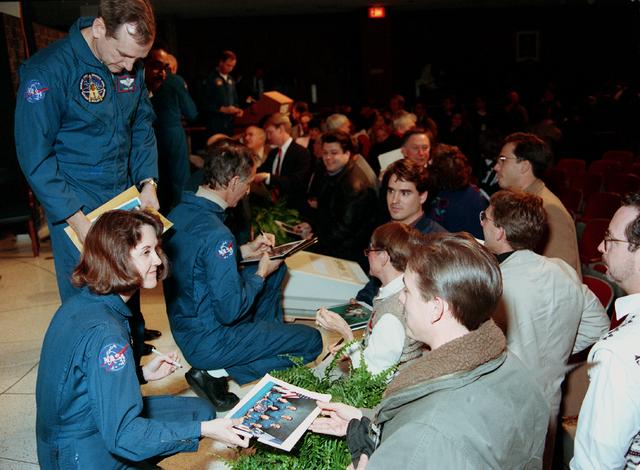
STS-61 astronauts Kathryn Thornton, Jeffrey Hoffman and Thomas Akers (standing) sign autographs in Marshall Space Flight Center's Morris Auditorium, January 19, 1994. Space Shuttle crews traditionally visited NASA field centers following each mission to present mission highlights and recognize employees who made contributions to the Shuttle program. Many of the techniques used during the STS-61 Hubble Space Telescope Servicing mission were rehearsed at the Center's Neutral Buoyancy Simulator.
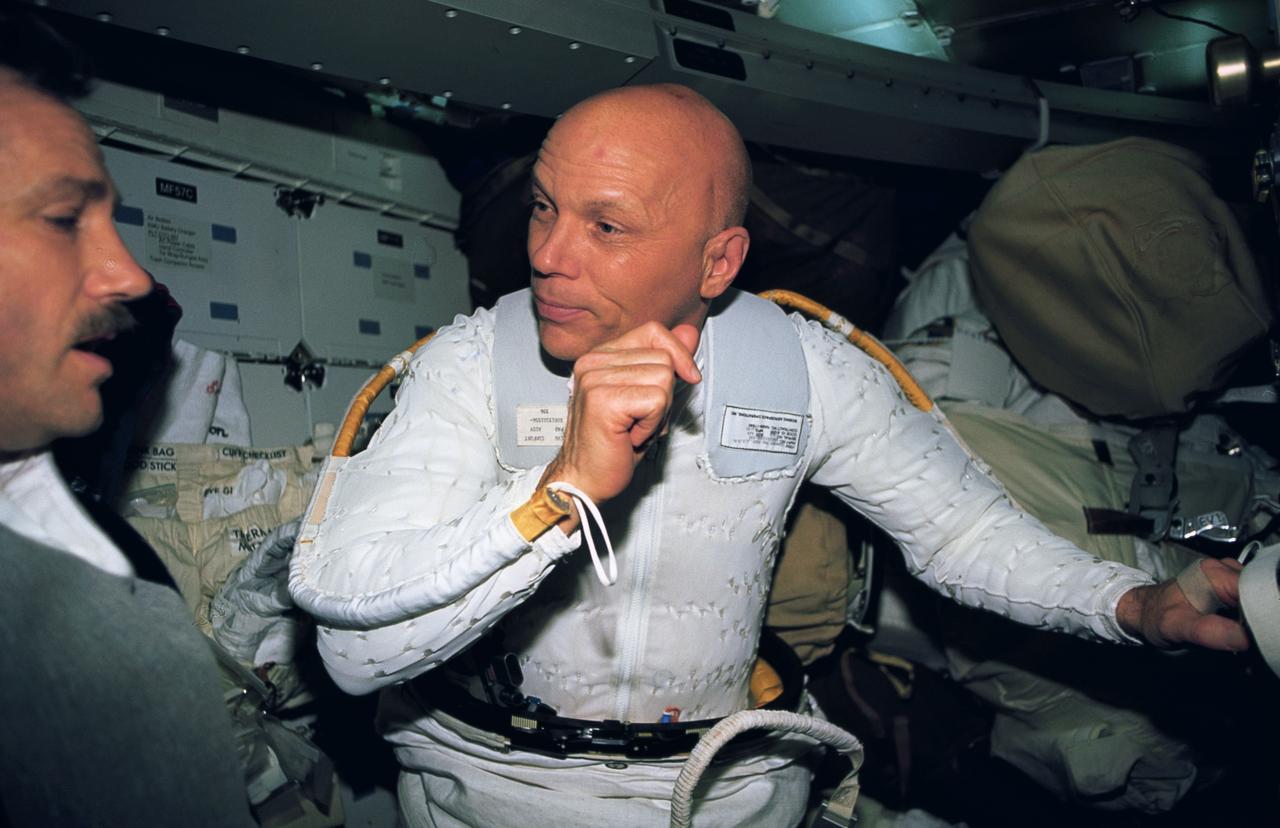
STS061-38-014 (9 Dec 1993) --- Astronaut F. Story Musgrave gets assistance from astronaut Thomas D. Akers while suiting up for the final space walk on the eleven-day, Hubble Space Telescope (HST) servicing mission. Musgrave joined astronaut Jeffrey A. Hoffman (out of frame) on three space walks, while Akers teamed with astronaut Kathryn D. Thornton for two.
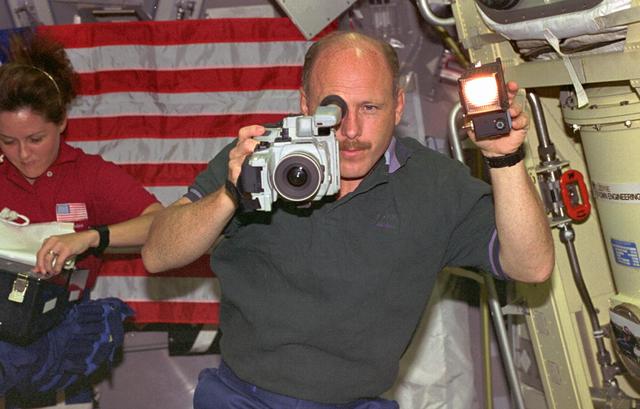
STS073-230-014 (20 October - 5 November 1995) --- Astronaut Kenneth D. Bowersox, STS-73 mission commander, uses a camcorder to record United States Microgravity Laboratory 2 (USML-2) activities onboard the Space Shuttle Columbia. Nearby, astronaut Kathryn C. Thornton, payload commander, prepares to open a supply chest to support one of many science experiments conducted by the seven-member crew during the 16-day USML-2 flight.
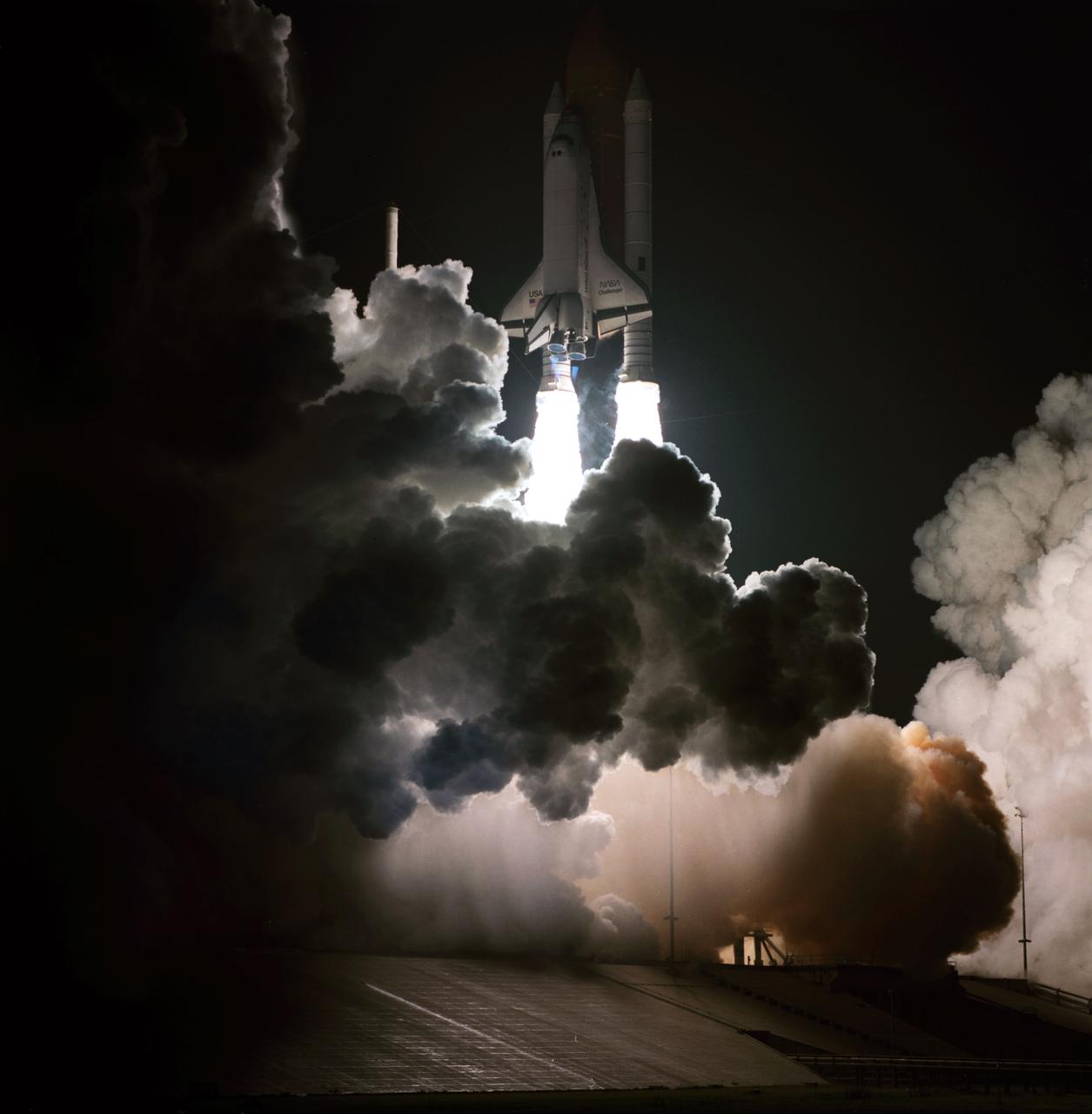
S83-39513 (30 Aug. 1983) --- NASA's eighth space shuttle launch lights up the Florida sky at 2:32 a.m. (EDT), Aug. 30, 1983. The Challenger's third flight is the first to have its beginnings in darkness. Five astronauts and an assortment of experiments are aboard the reusable vehicle. Crew members are astronauts Richard H. Truly, STS-8 commander; Daniel C. Brandenstein, pilot; and Dale A. Gardner, Guion S. Bluford and William E. Thornton, all mission specialists. Photo credit: NASA
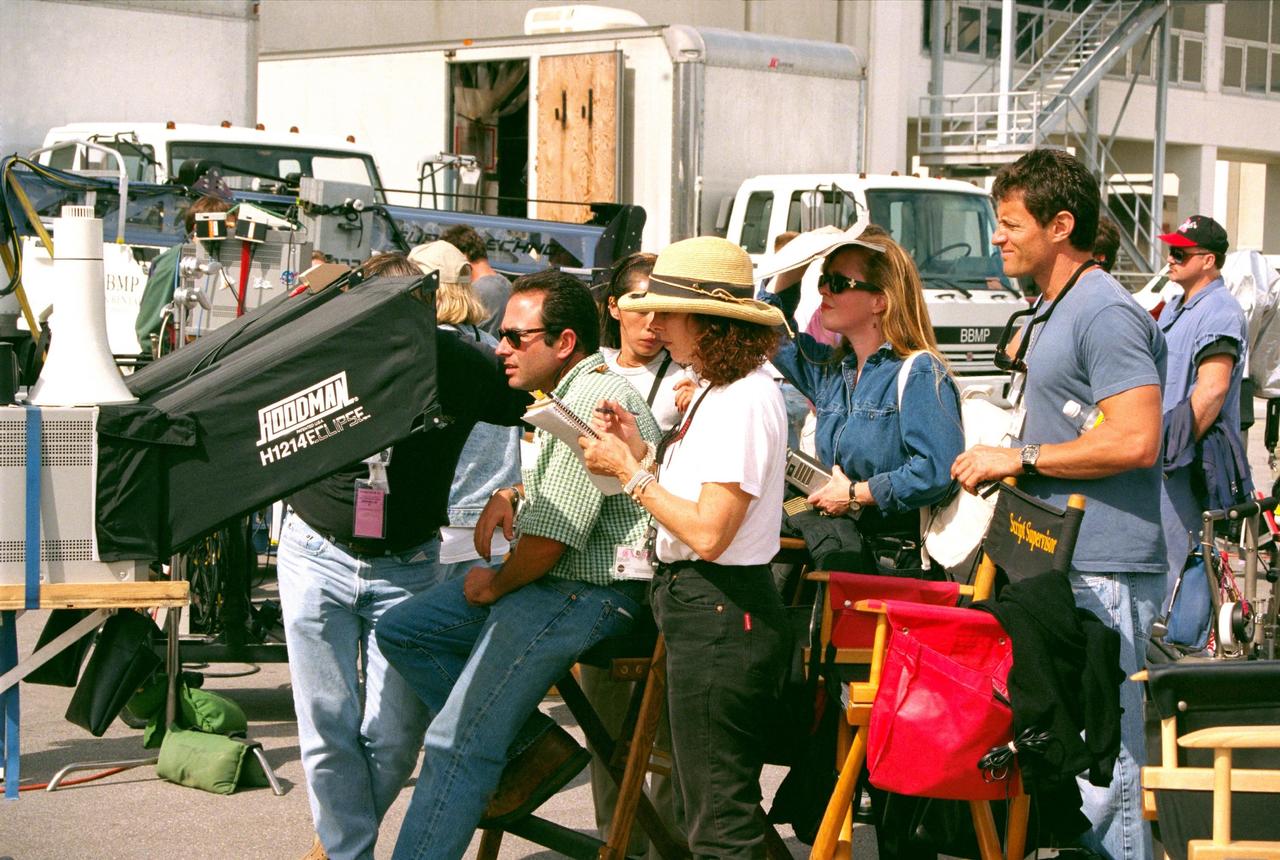
KENNEDY SPACE CENTER, FLA. -- Scheduled for release in the summer of 1998, the major motion picture "Armageddon," starring Bruce Willis and Billy Bob Thornton, was filmed on location at Kennedy Space Center in October and November 1997. The Touchstone Pictures movie, directed by Michael Bay, is about an asteroid on a collision course with Earth, threatening to strike our planet and threaten all life on it.

STS049-S-002 (16 Jan. 1992) --- These seven NASA astronauts are currently training for the first flight of the Space Shuttle Endeavour, seen in the background. Daniel C. Brandenstein, center, is mission commander; and Kevin P. Chilton, third from right, is pilot. Mission specialists are, left to right, Kathryn C. Thornton, Bruce E. Melnick, Pierre J. Thout, Thomas D. Akers and Richard J. Hieb.
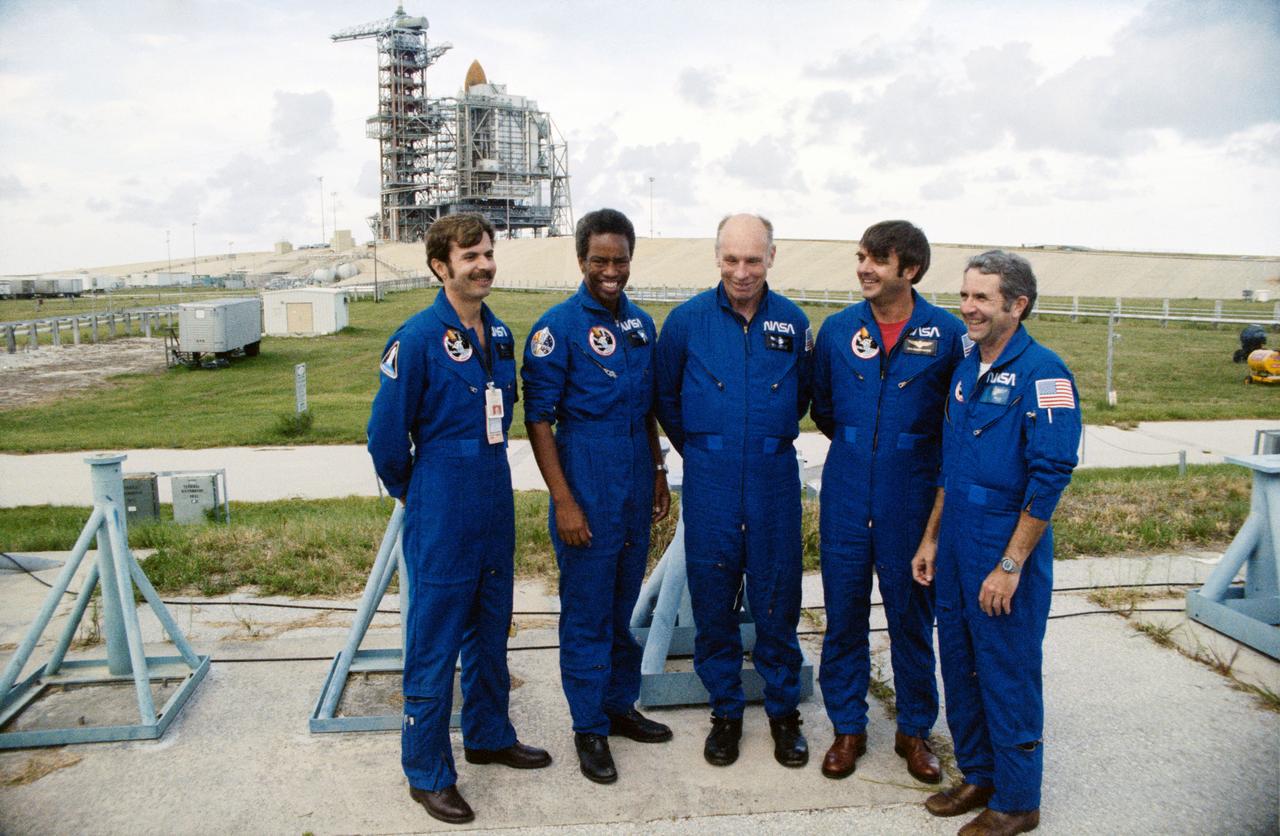
S83-38479 (16 Aug 1983) --- STS-8 crew poses at pad 39A at Kennedy Space Center (KSC) during a session with the news media. From left to right are Astronauts Dale A. Gardner, Guion S. Bluford, and Dr. William E. Thornton, all mission specialists; Daniel C. Brandenstein, pilot; and Richard F. Truly, crew commander.

STS049-S-269 (16 May 1992) --- The seven crewmembers of STS-49 pose near Endeavour for a post-flight shot soon after getting their feet on terra firma following nine days in Earth orbit. Left to right are astronauts Richard J. Hieb, Kevin P. Chilton, Daniel C. Brandenstein, Thomas D. Akers, Pierre J. Thuot, Kathryn C. Thornton and Bruce E. Melnick. Brandenstein was mission commander; Chilton, pilot; and the others, mission specialists.
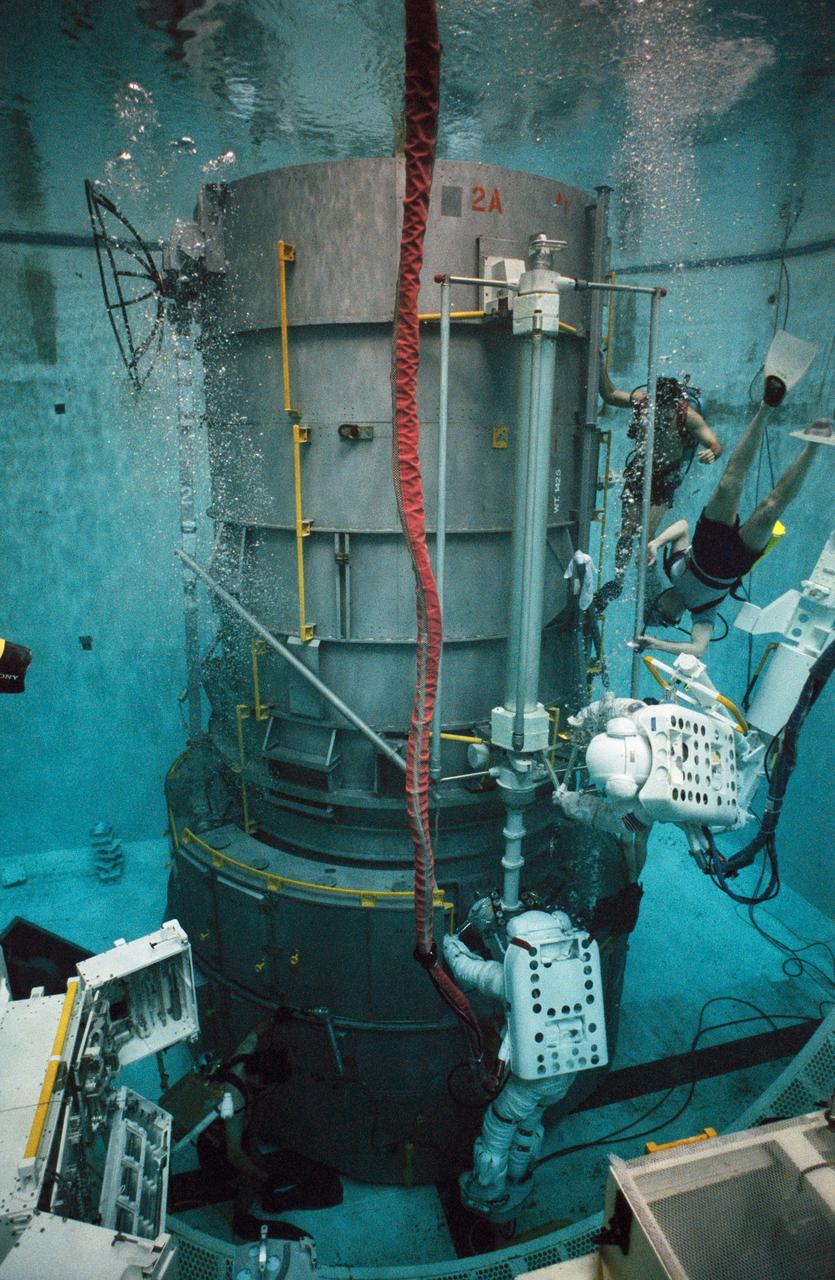
S93-30237 (5 Mar 1993) --- Wearing training versions of Space Shuttle Extravehicular Mobility Units (EMU), astronauts Thomas D. Akers (red stripe) and Kathryn C. Thornton use the spacious pool of the Johnson Space Center's (JSC) Weightless Environment Training Facility (WET-F) to rehearse for the Hubble Space Telescope (HST) servicing mission. They are working with part of a full-scale mockup of HST.
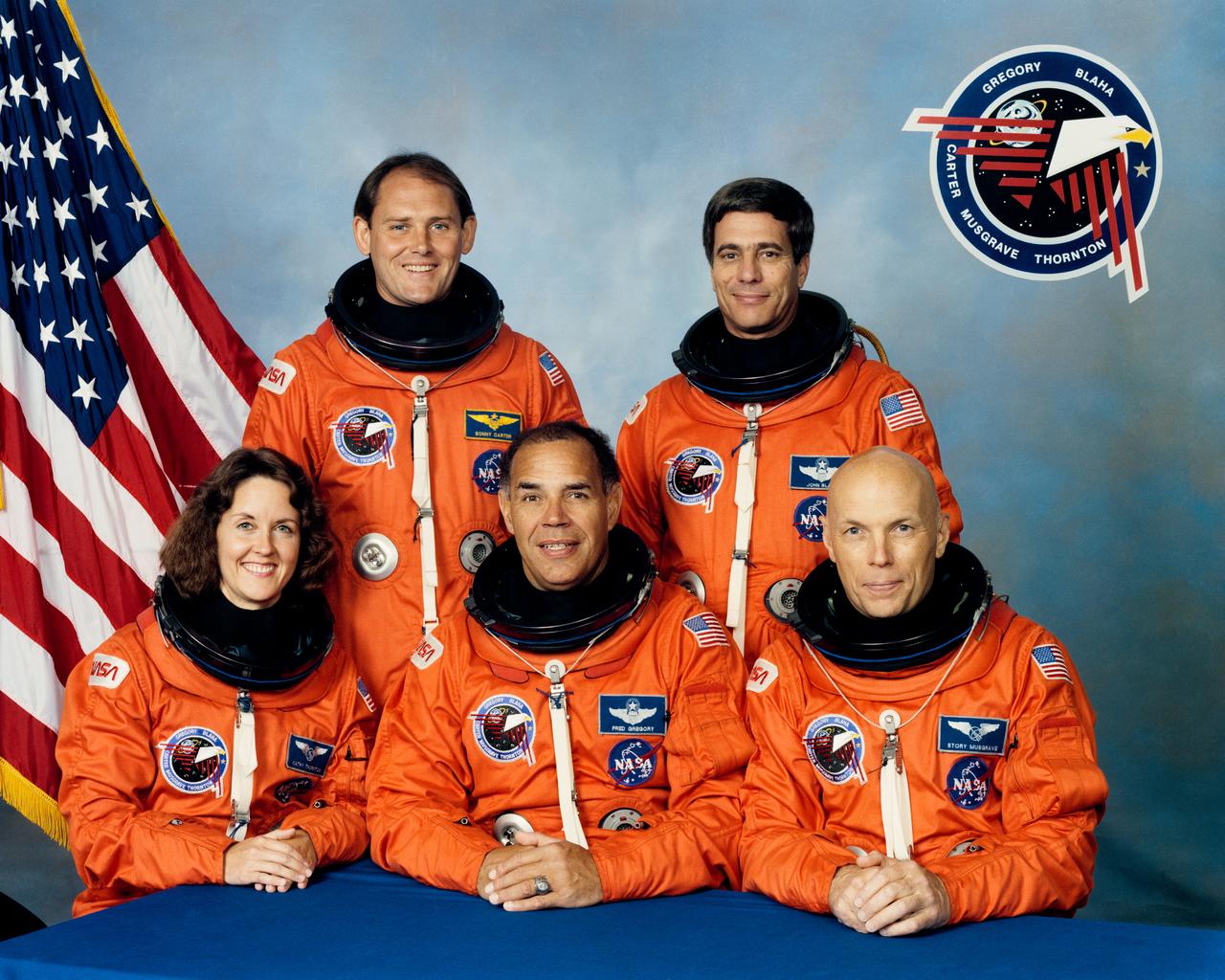
S89-45737 (19 September 1989) --- Official STS-33 crew portrait. These five astronauts will be aboard the space shuttle Discovery for a scheduled November 1989 mission for the Department of Defense (DOD). Frederick D. Gregory (center, front) is mission commander. He is flanked by Kathryn C. Thornton and F. Story Musgrave, mission specialists. At rear are Manley L. Carter, Jr., mission specialist, and John E. Blaha, pilot.
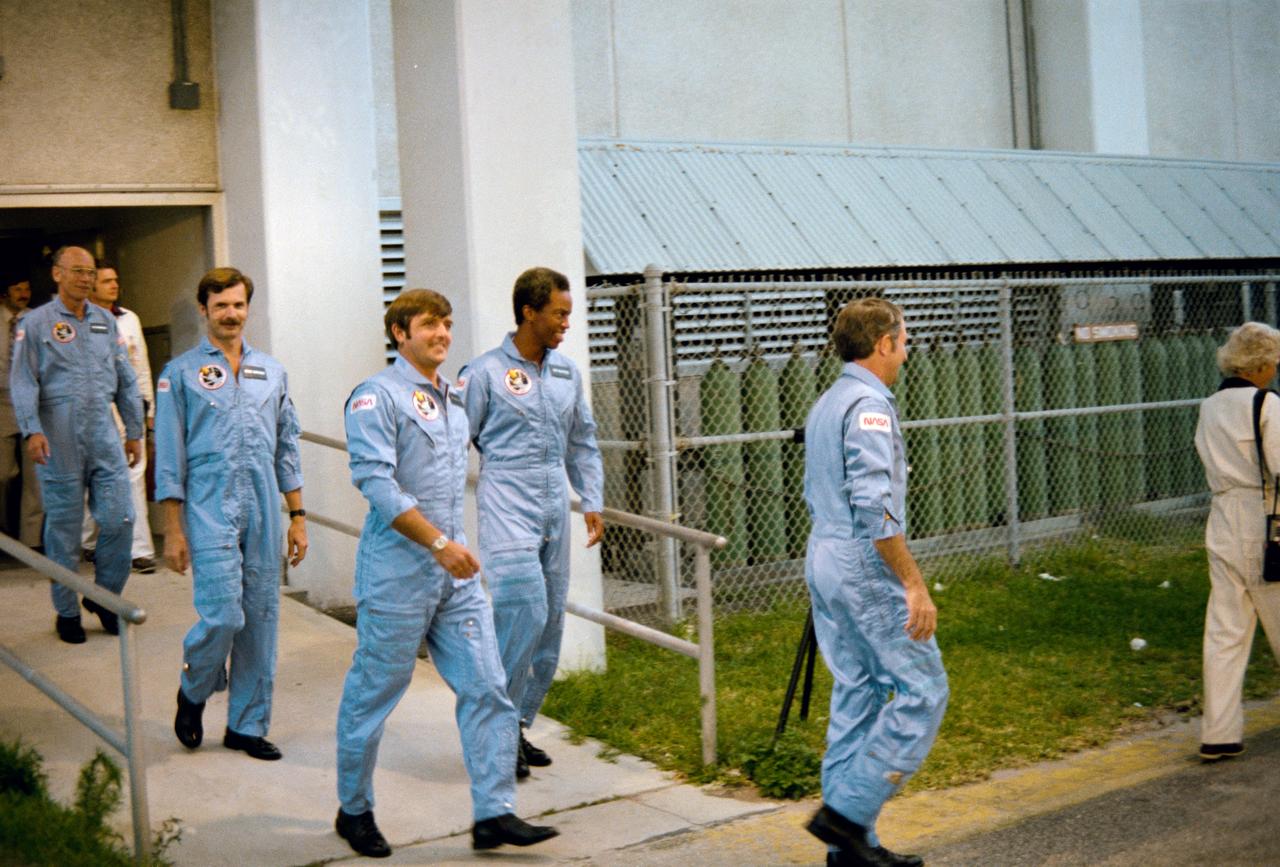
S83-39237 (6 Aug 1983) --- The five astronaut crewmembers of NASA?s STS-8 mission leave the operations and checkout building at the Kennedy Space during a rehearsal for their August 30 launch at KSC?s launch complex 39. They are, from the right, Astronauts Richard H. Truly, commander; Daniel C. Brandenstein, pilot; and Guion S. Bluford, Dale A. Gardner and William E. Thornton, all mission specialists.
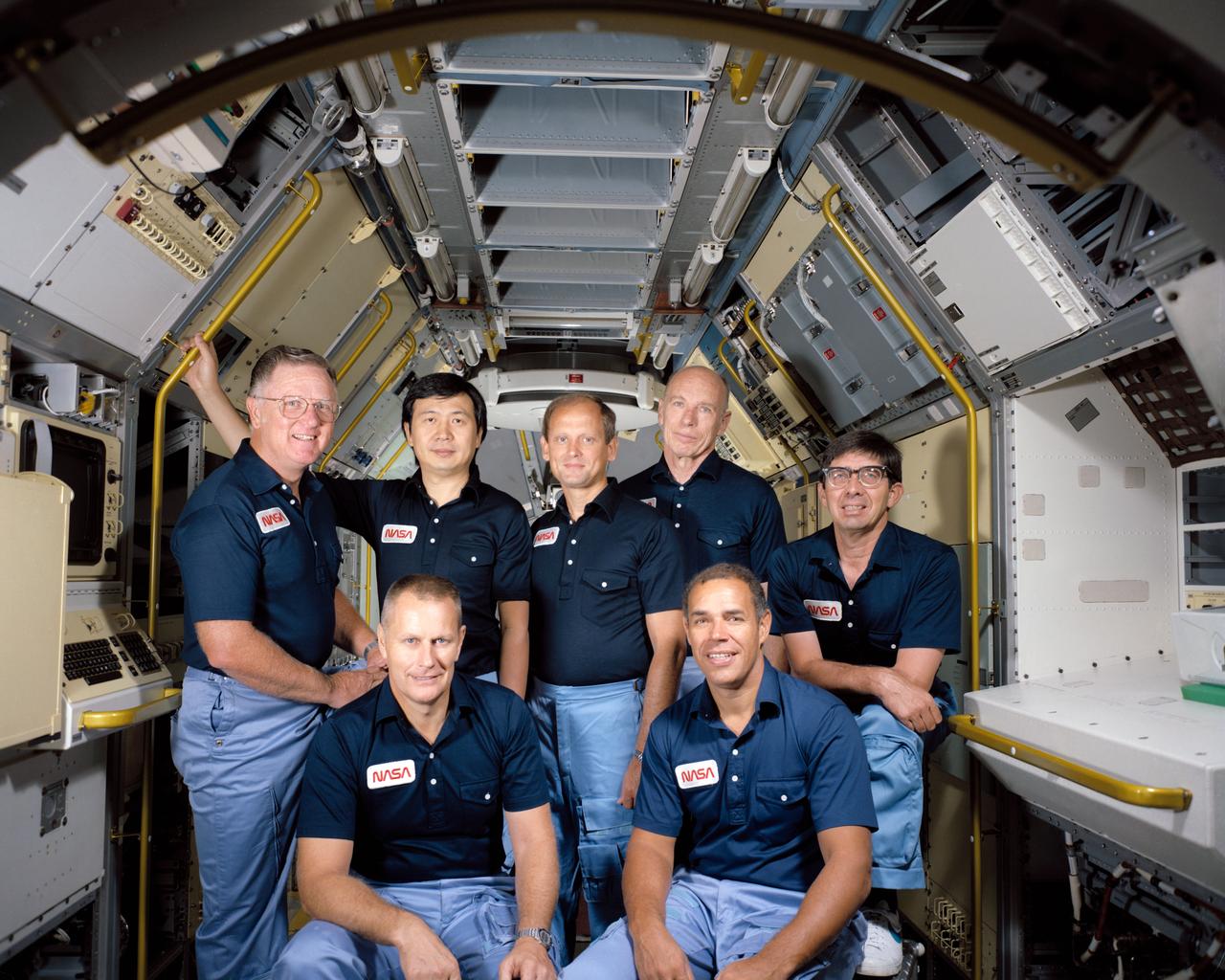
S84-43852 (November 1984) --- These seven men have been training for NASA’s Spacelab 3/STS-51B mission scheduled for launch in late April 1985. On the front row are astronauts Robert F. Overmyer (left), commander; and Frederick D. Gregory, pilot. On the back row, left to right, are Don L. Lind, mission specialist; Taylor G. Wang, payload specialist; Norman E. Thagard and William E. Thornton, both mission specialists; and Lodewijk van den Berg, payload specialist.
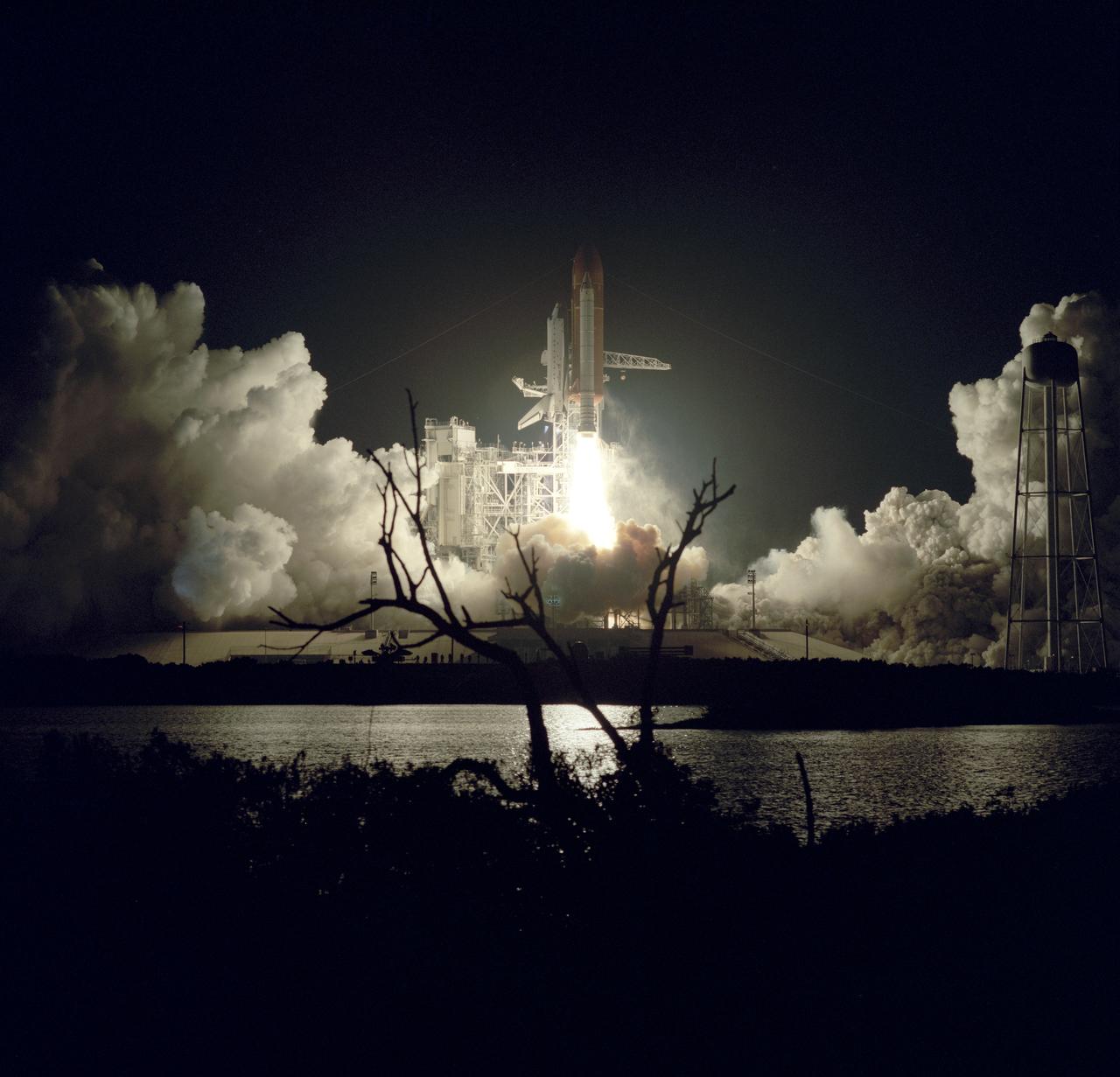
On November 22, 1989, at 7:23:30pm (EST), five astronauts were launched into space aboard the Space Shuttle Orbiter Discovery for the 5th Department of Defense (DOD) mission, STS-33. Crew members included Frederick D. Gregory, commander; John E. Blaha, pilot; and mission specialists Kathryn C. Thornton, Manley L. (Sonny) Carter, and F. Story Musgrave.
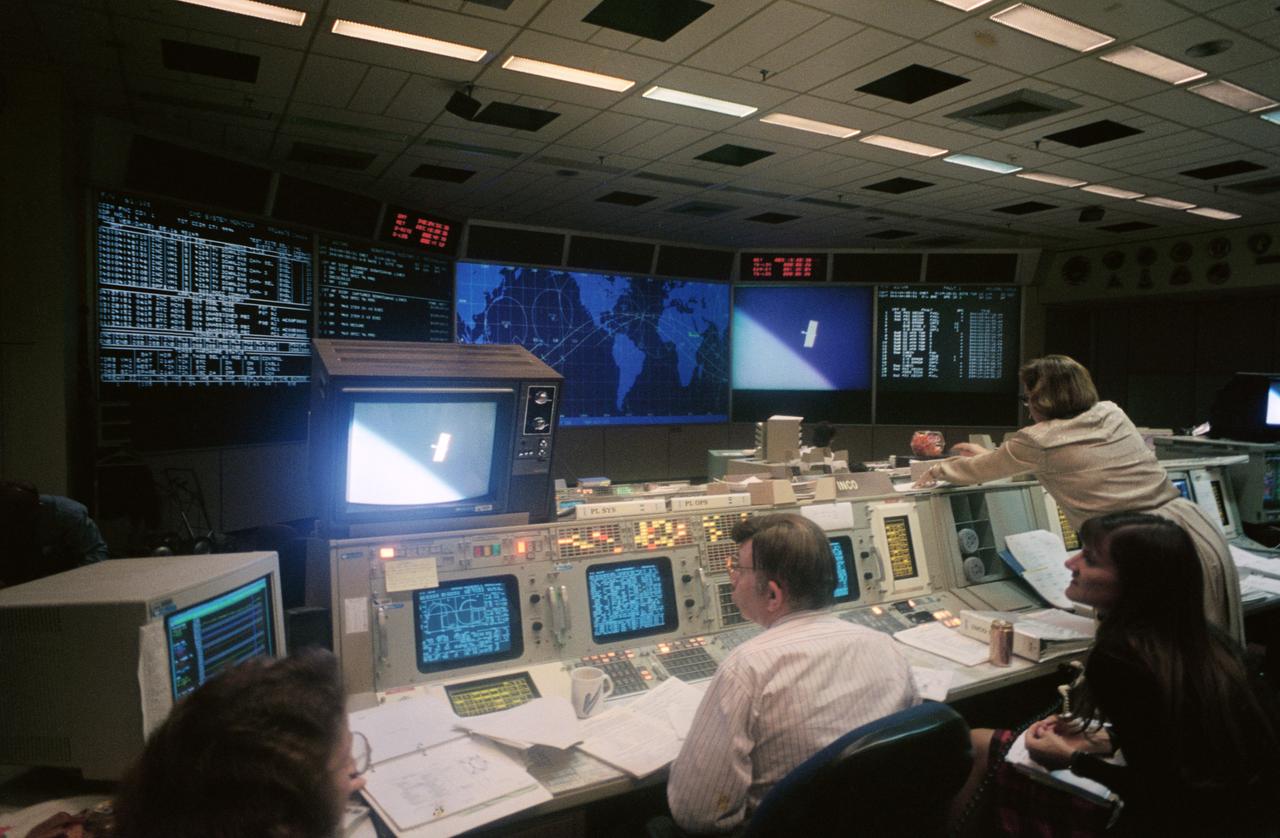
Harry Black, at the Integrated Communications Officer's console in the Mission Control Center (MCC), monitors the second extravehicular activity (EVA-2) of the STS-61 Hubble Space Telescope (HST) servicing mission. Others pictured, left to right, are Judy Alexander, Kathy Morrison and Linda Thomas. Note monitor scene of one of HST's original solar array panels floating in space moments after being tossed away by Astronaut Kathryn C. Thornton.
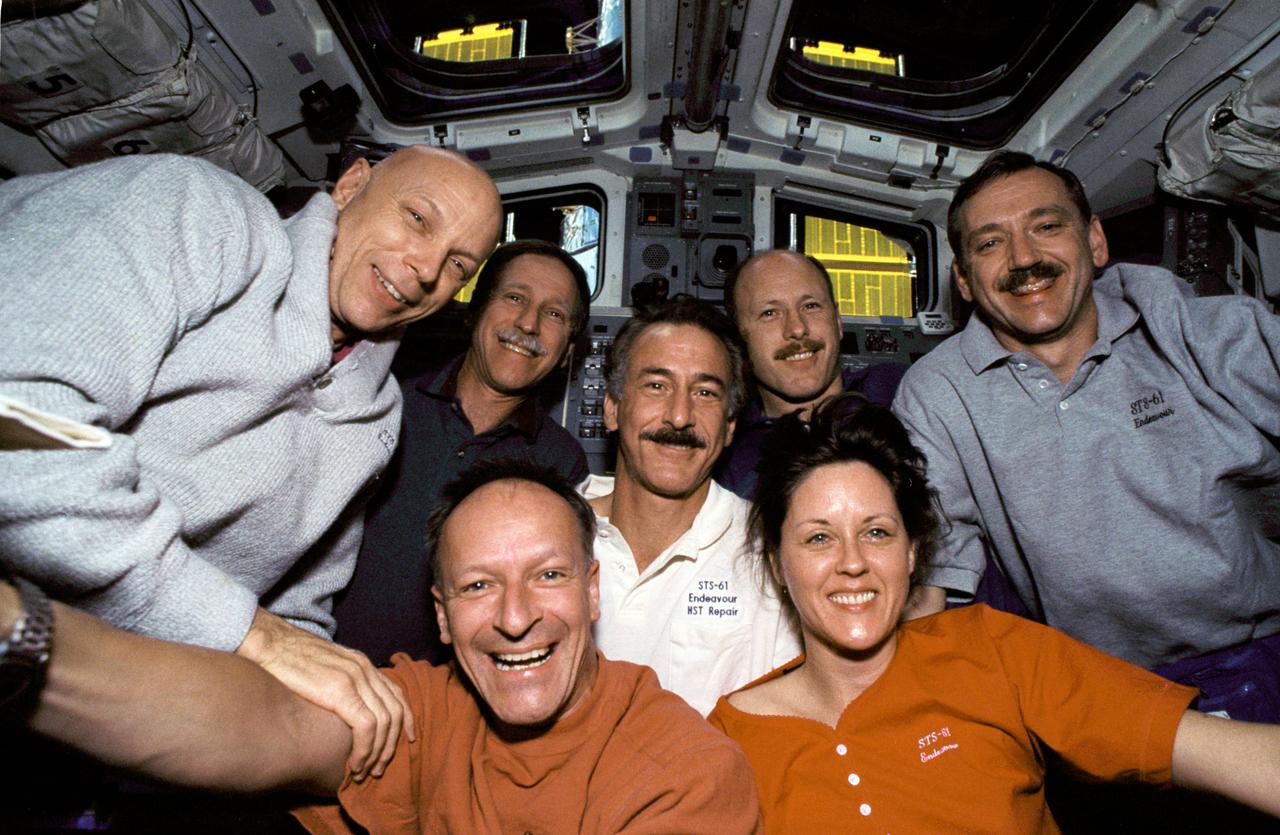
STS061-05-031 (2-13 Dec 1993) --- With the Hubble Space Telescope (HST) berthed in Endeavour's cargo bay, crew members for the STS-61 mission pause for a crew portrait on the flight deck. Left to right are F. Story Musgrave, Richard O. Covey, Claude Nicollier, Jeffrey A. Hoffman, Kenneth D. Bowersox, Kathryn C. Thornton and Thomas D. Akers.
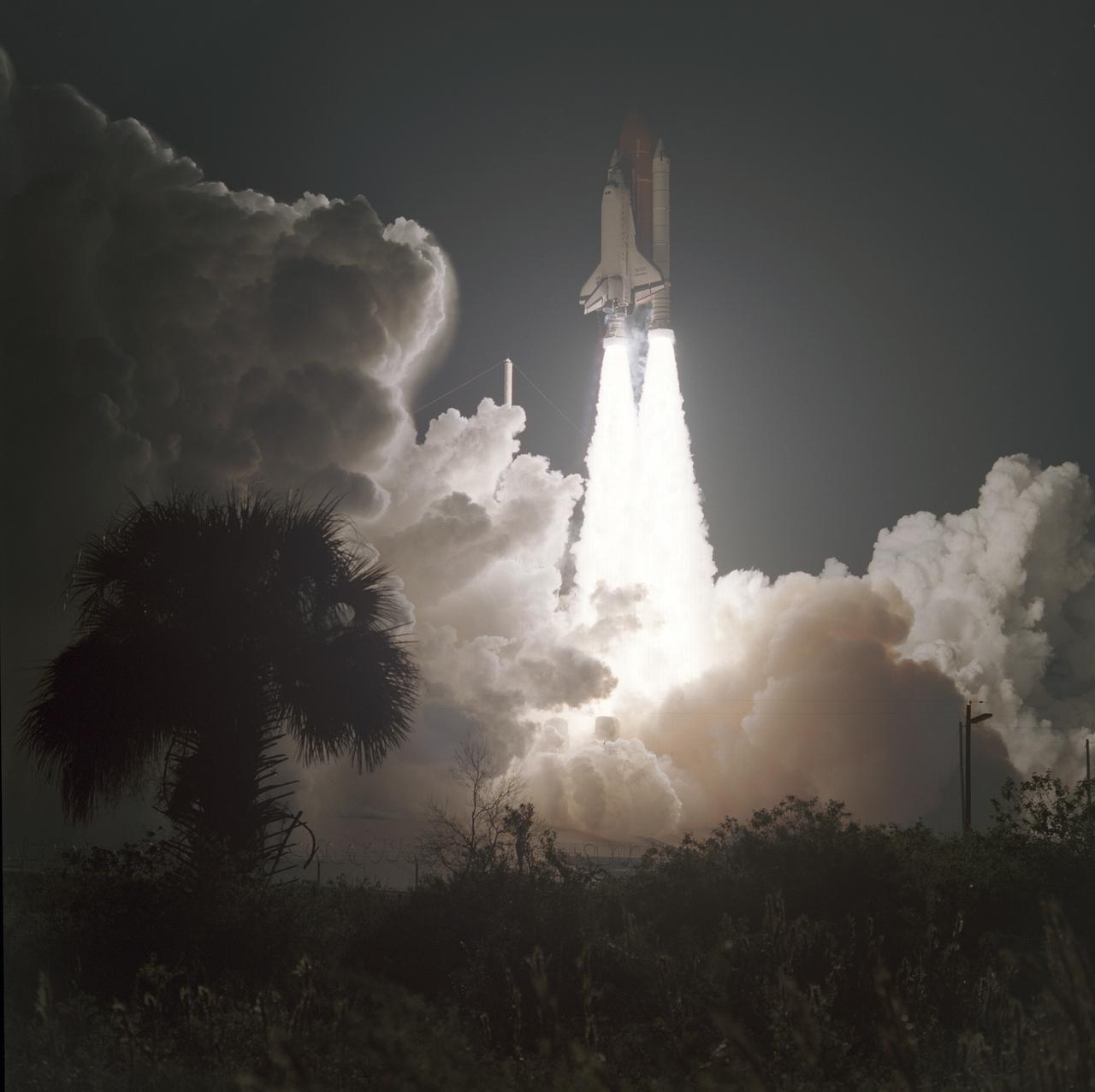
On November 22, 1989, at 7:23:30pm (EST), five astronauts were launched into space aboard the Space Shuttle Orbiter Discovery for the 5th Department of Defense (DOD) mission, STS-33. Crew members included Frederick D. Gregory, commander; John E. Blaha, pilot; and mission specialists Kathryn C. Thornton, Manley L. (Sonny) Carter, and F. Story Musgrave.
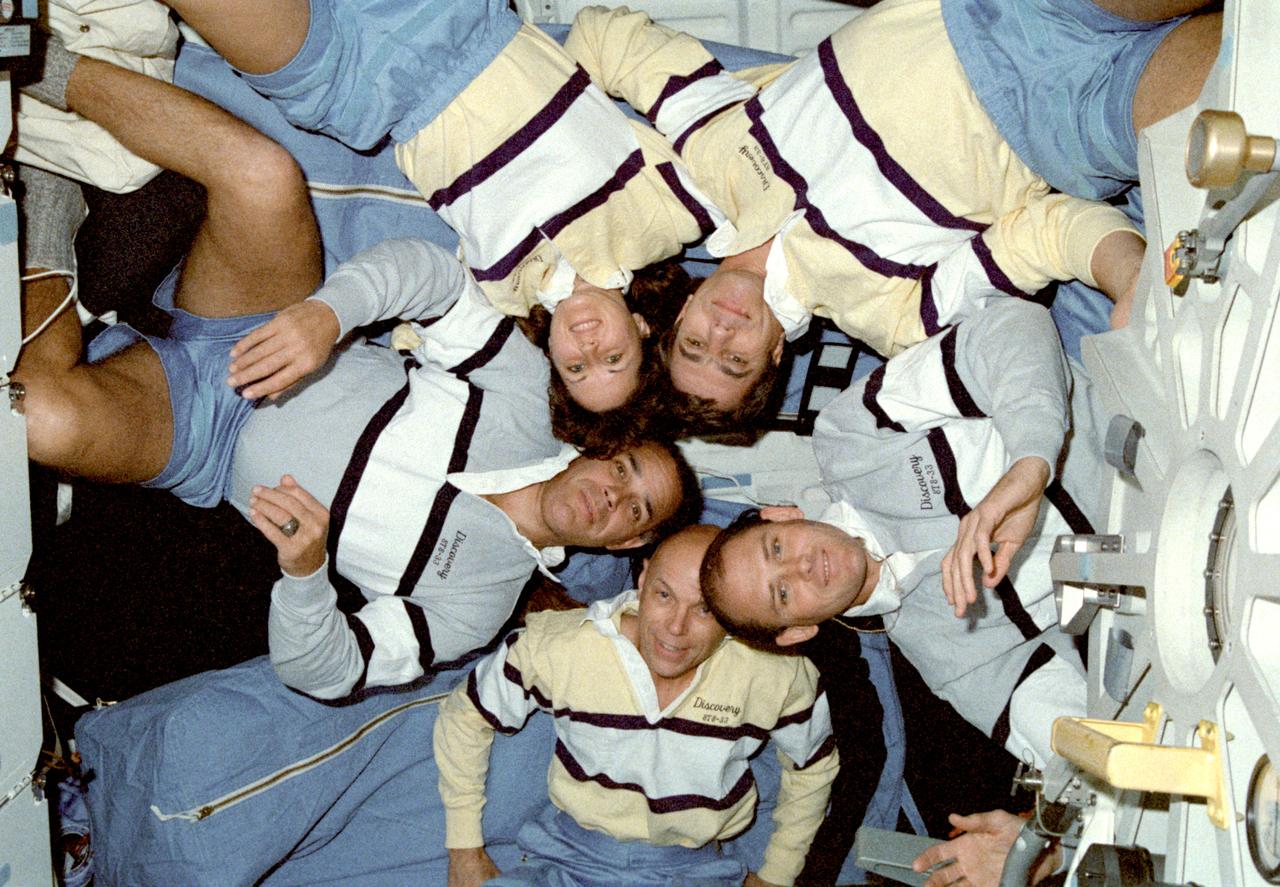
STS033-22-035 (22-27 Nov. 1989) --- STS-33 crewmembers, wearing mission polo shirts, pose on the middeck of the Space Shuttle Discovery for an in-flight crew portrait. Clockwise (starting at left) are astronauts Frederick D. Gregory, commander; Kathryn C. Thornton, mission specialist; John E. Blaha, pilot; Manley L. (Sonny) Carter Jr., and F. Story Musgrave, mission specialists.
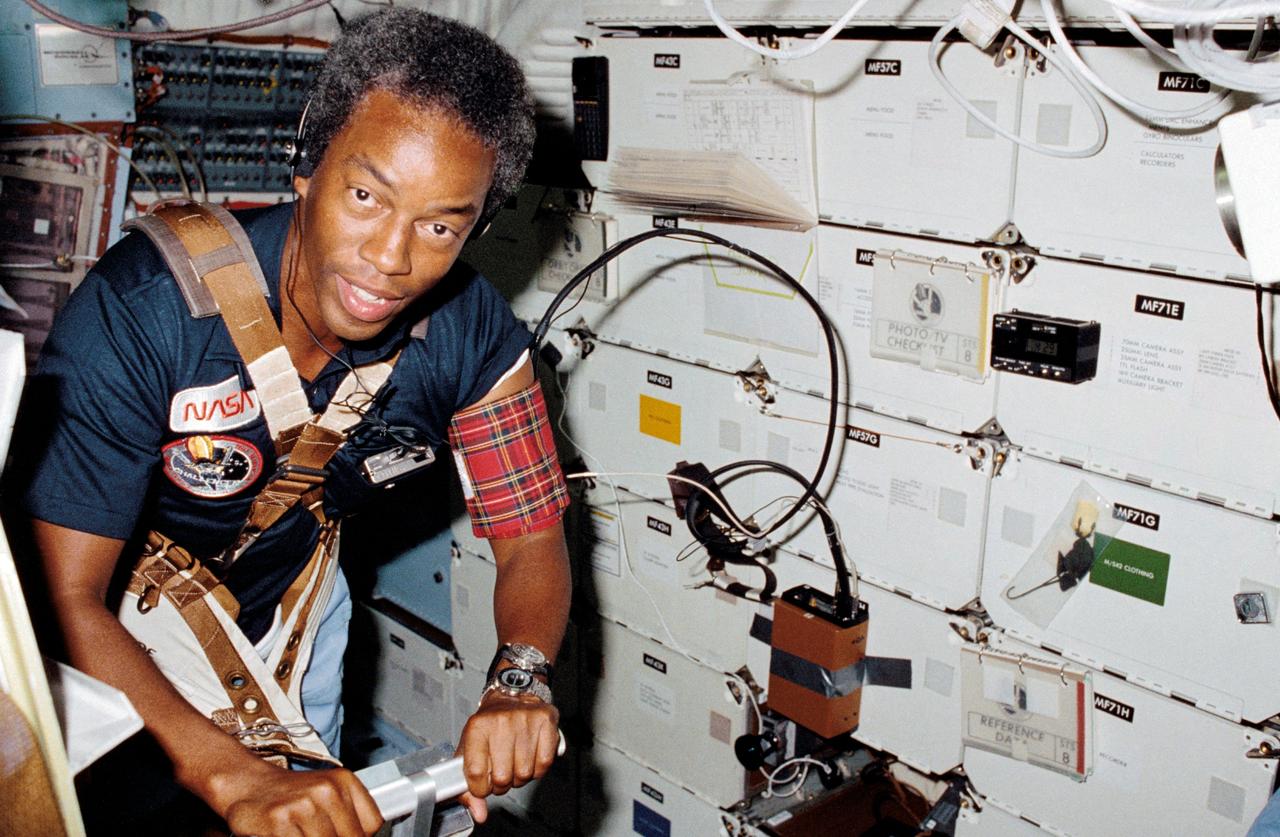
STS008-13-0361 (30 Aug.-5 Sept. 1983) --- Astronaut Guion S. Bluford, STS-8 mission specialist, assists Dr. William E. Thornton (out of frame) with a medical test that requires use of the treadmill exercising device designed for spaceflight by the STS-8 medical doctor. This frame was shot with a 35mm camera. Photo credit: NASA
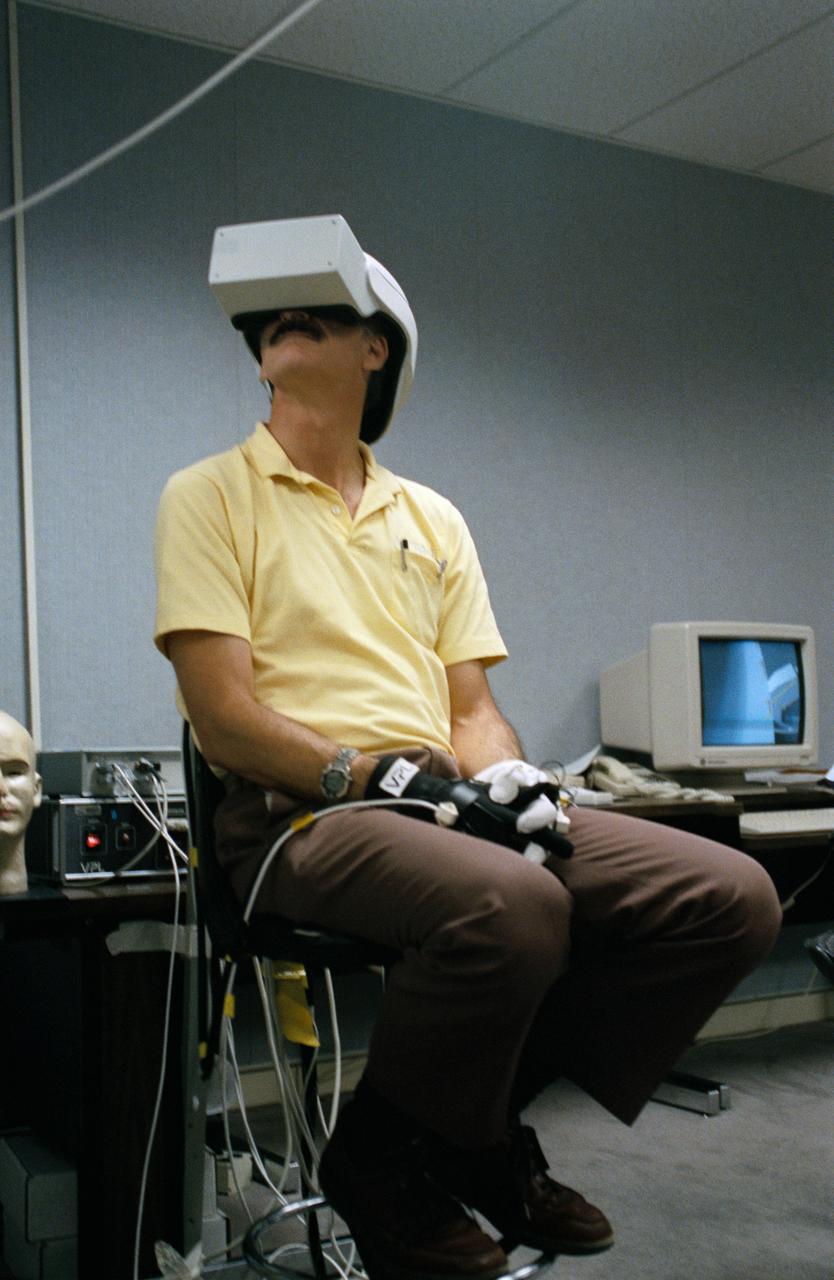
Astronaut Jeffrey A. Hoffman, one of four crewmembers for STS-61 that will conduct scheduled spacewalks during the flight, wears a special helmet and gloves designed to assist in proper positioning near the telescope while on the end of the robot arm. Crewmembers are utilizing a new virtual reality training aid which assists in refining positioning patterns for Space Shuttle Endeavour's Remote Manipulator System (RMS) (36890); Astronaut Claude Nicollier looks at a computer display of the Shuttle's robot arm movements as Thomas D. Akers and Kathryn C. Thornton, mission specialists look on. Nicollier will be responsible for maneuvering the astronauts while they stand in a foot restraint on the end of the RMS arm (36891,36894); Hoffman wears a special helmet and gloves designed to assist in proper positioning near the telescope while on the end of the robot arm (35892); Nicollier looks at a computer display of the Shuttle's robot arm movements as Akers looks on (36893); While (l-r) Astronauts Kenneth Bowersox, Kathryn Thornton, Richard O. Covey and Thomas D. Akers watch, Nicollier moves the Robot arm to desired locations in the Shuttle's payload bay using the Virtual Reality program (36895); Bowersox takes his turn maneuvering the RMS while mission specialist Hoffman, wearing the Virtual Reality helmet, follows his own progress on the end of the robot arm. Crewmembers participating during the training session are (l-r) Astronauts Akers, Hoffman, Bowersox, Nicollier, Covey, and Thornton. In the background, David Homan, an engineer in the JSC Engineering Directorate's Automation and Robotics Division, looks on (36896).
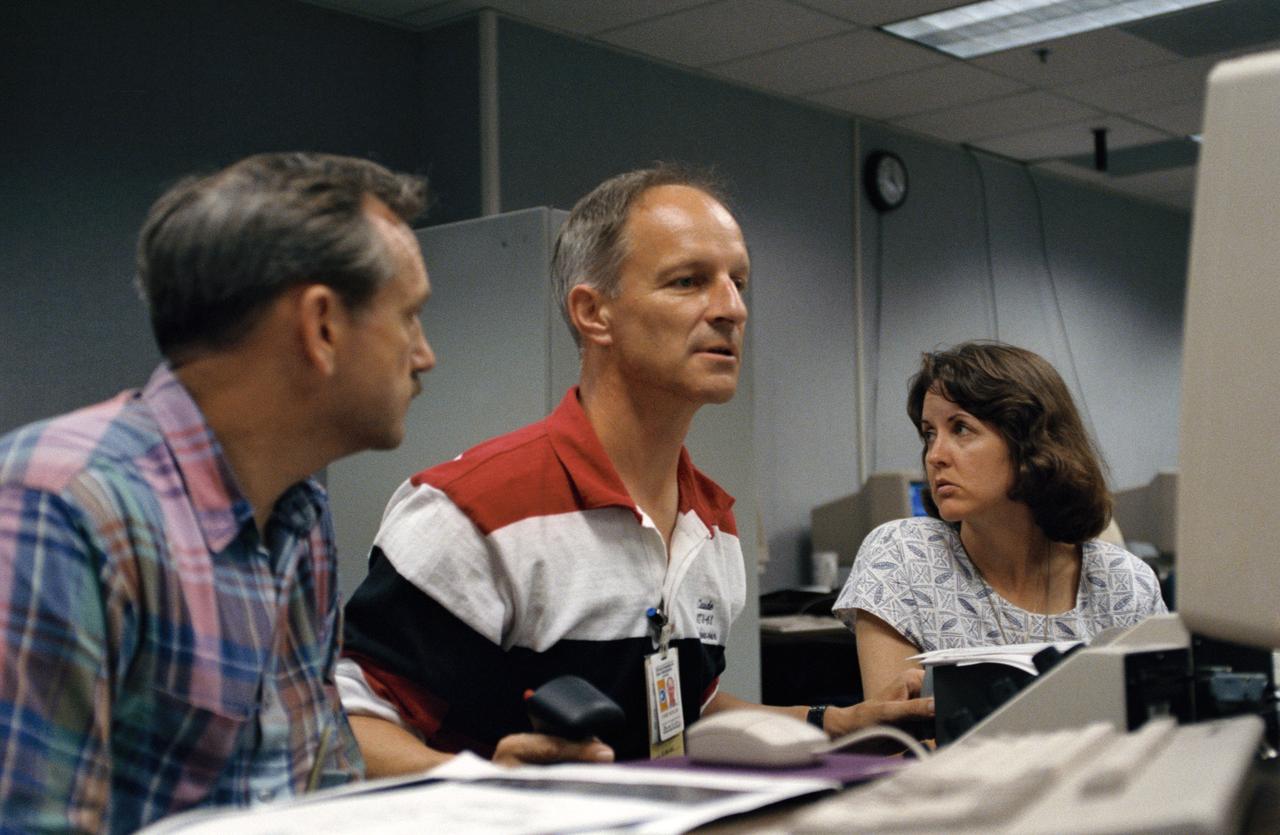
Astronaut Jeffrey A. Hoffman, one of four crewmembers for STS-61 that will conduct scheduled spacewalks during the flight, wears a special helmet and gloves designed to assist in proper positioning near the telescope while on the end of the robot arm. Crewmembers are utilizing a new virtual reality training aid which assists in refining positioning patterns for Space Shuttle Endeavour's Remote Manipulator System (RMS) (36890); Astronaut Claude Nicollier looks at a computer display of the Shuttle's robot arm movements as Thomas D. Akers and Kathryn C. Thornton, mission specialists look on. Nicollier will be responsible for maneuvering the astronauts while they stand in a foot restraint on the end of the RMS arm (36891,36894); Hoffman wears a special helmet and gloves designed to assist in proper positioning near the telescope while on the end of the robot arm (35892); Nicollier looks at a computer display of the Shuttle's robot arm movements as Akers looks on (36893); While (l-r) Astronauts Kenneth Bowersox, Kathryn Thornton, Richard O. Covey and Thomas D. Akers watch, Nicollier moves the Robot arm to desired locations in the Shuttle's payload bay using the Virtual Reality program (36895); Bowersox takes his turn maneuvering the RMS while mission specialist Hoffman, wearing the Virtual Reality helmet, follows his own progress on the end of the robot arm. Crewmembers participating during the training session are (l-r) Astronauts Akers, Hoffman, Bowersox, Nicollier, Covey, and Thornton. In the background, David Homan, an engineer in the JSC Engineering Directorate's Automation and Robotics Division, looks on (36896).
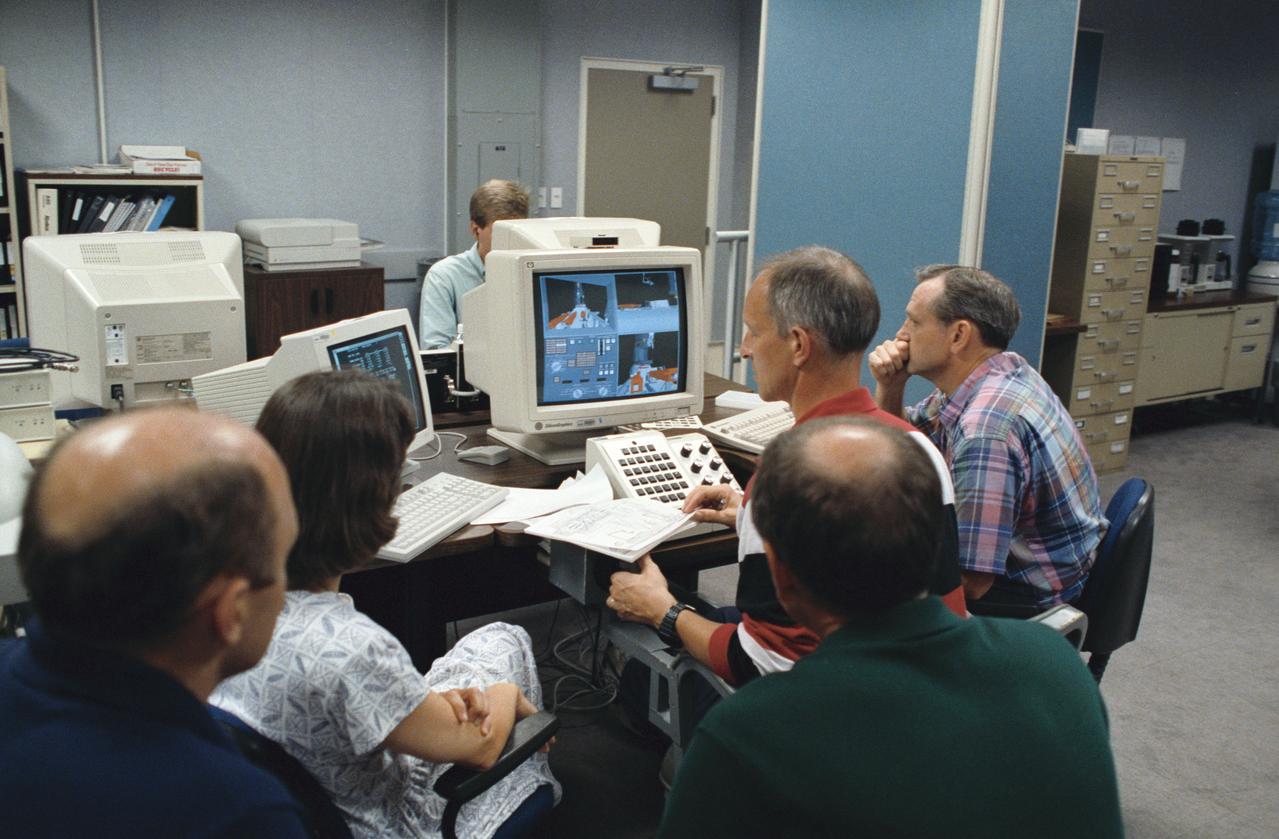
Astronaut Jeffrey A. Hoffman, one of four crewmembers for STS-61 that will conduct scheduled spacewalks during the flight, wears a special helmet and gloves designed to assist in proper positioning near the telescope while on the end of the robot arm. Crewmembers are utilizing a new virtual reality training aid which assists in refining positioning patterns for Space Shuttle Endeavour's Remote Manipulator System (RMS) (36890); Astronaut Claude Nicollier looks at a computer display of the Shuttle's robot arm movements as Thomas D. Akers and Kathryn C. Thornton, mission specialists look on. Nicollier will be responsible for maneuvering the astronauts while they stand in a foot restraint on the end of the RMS arm (36891,36894); Hoffman wears a special helmet and gloves designed to assist in proper positioning near the telescope while on the end of the robot arm (35892); Nicollier looks at a computer display of the Shuttle's robot arm movements as Akers looks on (36893); While (l-r) Astronauts Kenneth Bowersox, Kathryn Thornton, Richard O. Covey and Thomas D. Akers watch, Nicollier moves the Robot arm to desired locations in the Shuttle's payload bay using the Virtual Reality program (36895); Bowersox takes his turn maneuvering the RMS while mission specialist Hoffman, wearing the Virtual Reality helmet, follows his own progress on the end of the robot arm. Crewmembers participating during the training session are (l-r) Astronauts Akers, Hoffman, Bowersox, Nicollier, Covey, and Thornton. In the background, David Homan, an engineer in the JSC Engineering Directorate's Automation and Robotics Division, looks on (36896).
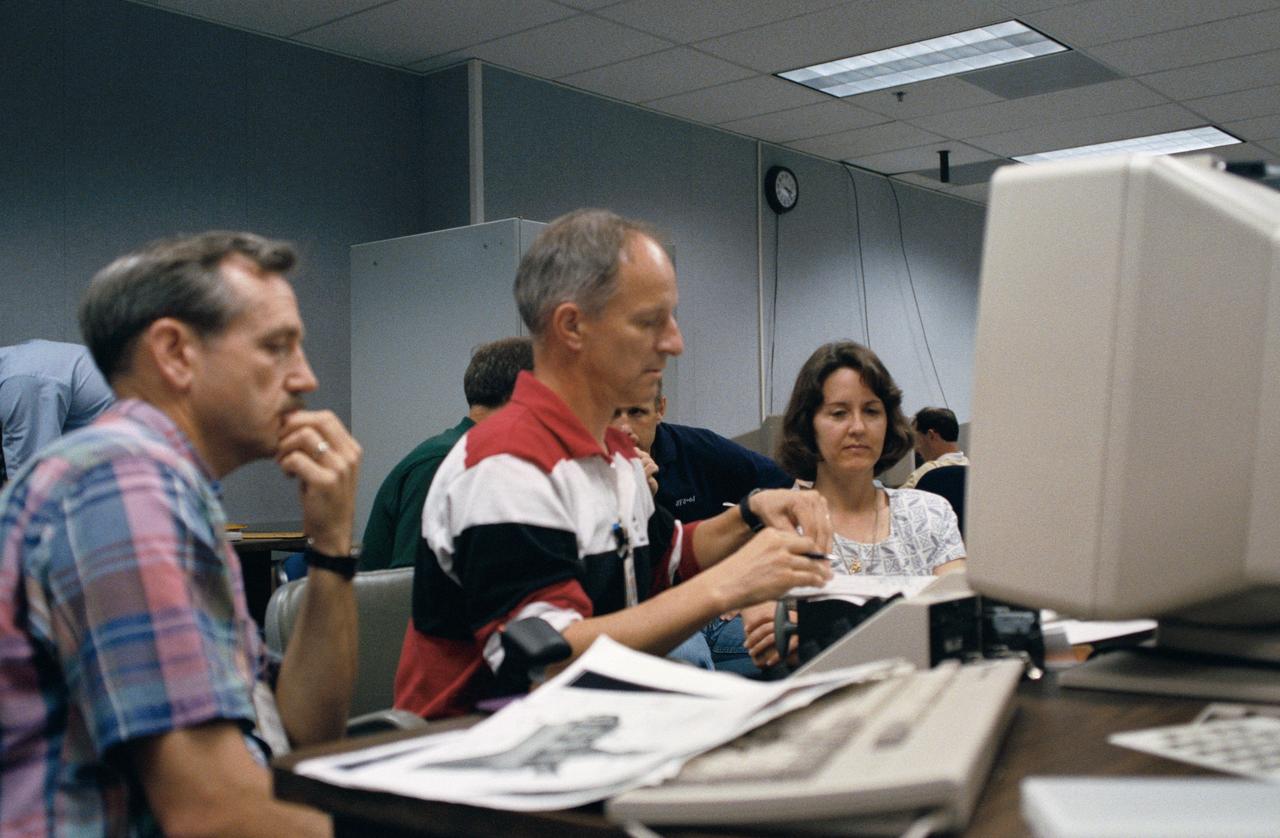
Astronaut Jeffrey A. Hoffman, one of four crewmembers for STS-61 that will conduct scheduled spacewalks during the flight, wears a special helmet and gloves designed to assist in proper positioning near the telescope while on the end of the robot arm. Crewmembers are utilizing a new virtual reality training aid which assists in refining positioning patterns for Space Shuttle Endeavour's Remote Manipulator System (RMS) (36890); Astronaut Claude Nicollier looks at a computer display of the Shuttle's robot arm movements as Thomas D. Akers and Kathryn C. Thornton, mission specialists look on. Nicollier will be responsible for maneuvering the astronauts while they stand in a foot restraint on the end of the RMS arm (36891,36894); Hoffman wears a special helmet and gloves designed to assist in proper positioning near the telescope while on the end of the robot arm (35892); Nicollier looks at a computer display of the Shuttle's robot arm movements as Akers looks on (36893); While (l-r) Astronauts Kenneth Bowersox, Kathryn Thornton, Richard O. Covey and Thomas D. Akers watch, Nicollier moves the Robot arm to desired locations in the Shuttle's payload bay using the Virtual Reality program (36895); Bowersox takes his turn maneuvering the RMS while mission specialist Hoffman, wearing the Virtual Reality helmet, follows his own progress on the end of the robot arm. Crewmembers participating during the training session are (l-r) Astronauts Akers, Hoffman, Bowersox, Nicollier, Covey, and Thornton. In the background, David Homan, an engineer in the JSC Engineering Directorate's Automation and Robotics Division, looks on (36896).
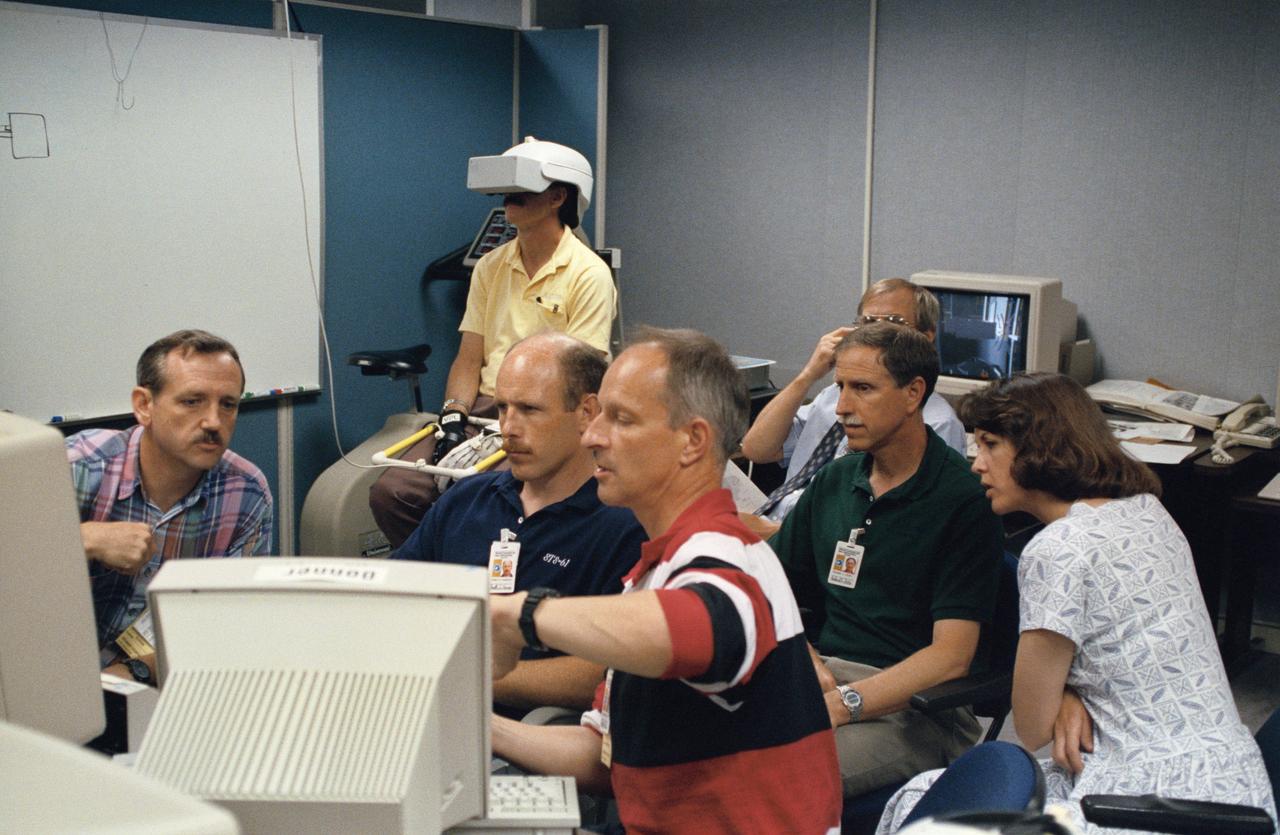
Astronaut Jeffrey A. Hoffman, one of four crewmembers for STS-61 that will conduct scheduled spacewalks during the flight, wears a special helmet and gloves designed to assist in proper positioning near the telescope while on the end of the robot arm. Crewmembers are utilizing a new virtual reality training aid which assists in refining positioning patterns for Space Shuttle Endeavour's Remote Manipulator System (RMS) (36890); Astronaut Claude Nicollier looks at a computer display of the Shuttle's robot arm movements as Thomas D. Akers and Kathryn C. Thornton, mission specialists look on. Nicollier will be responsible for maneuvering the astronauts while they stand in a foot restraint on the end of the RMS arm (36891,36894); Hoffman wears a special helmet and gloves designed to assist in proper positioning near the telescope while on the end of the robot arm (35892); Nicollier looks at a computer display of the Shuttle's robot arm movements as Akers looks on (36893); While (l-r) Astronauts Kenneth Bowersox, Kathryn Thornton, Richard O. Covey and Thomas D. Akers watch, Nicollier moves the Robot arm to desired locations in the Shuttle's payload bay using the Virtual Reality program (36895); Bowersox takes his turn maneuvering the RMS while mission specialist Hoffman, wearing the Virtual Reality helmet, follows his own progress on the end of the robot arm. Crewmembers participating during the training session are (l-r) Astronauts Akers, Hoffman, Bowersox, Nicollier, Covey, and Thornton. In the background, David Homan, an engineer in the JSC Engineering Directorate's Automation and Robotics Division, looks on (36896).