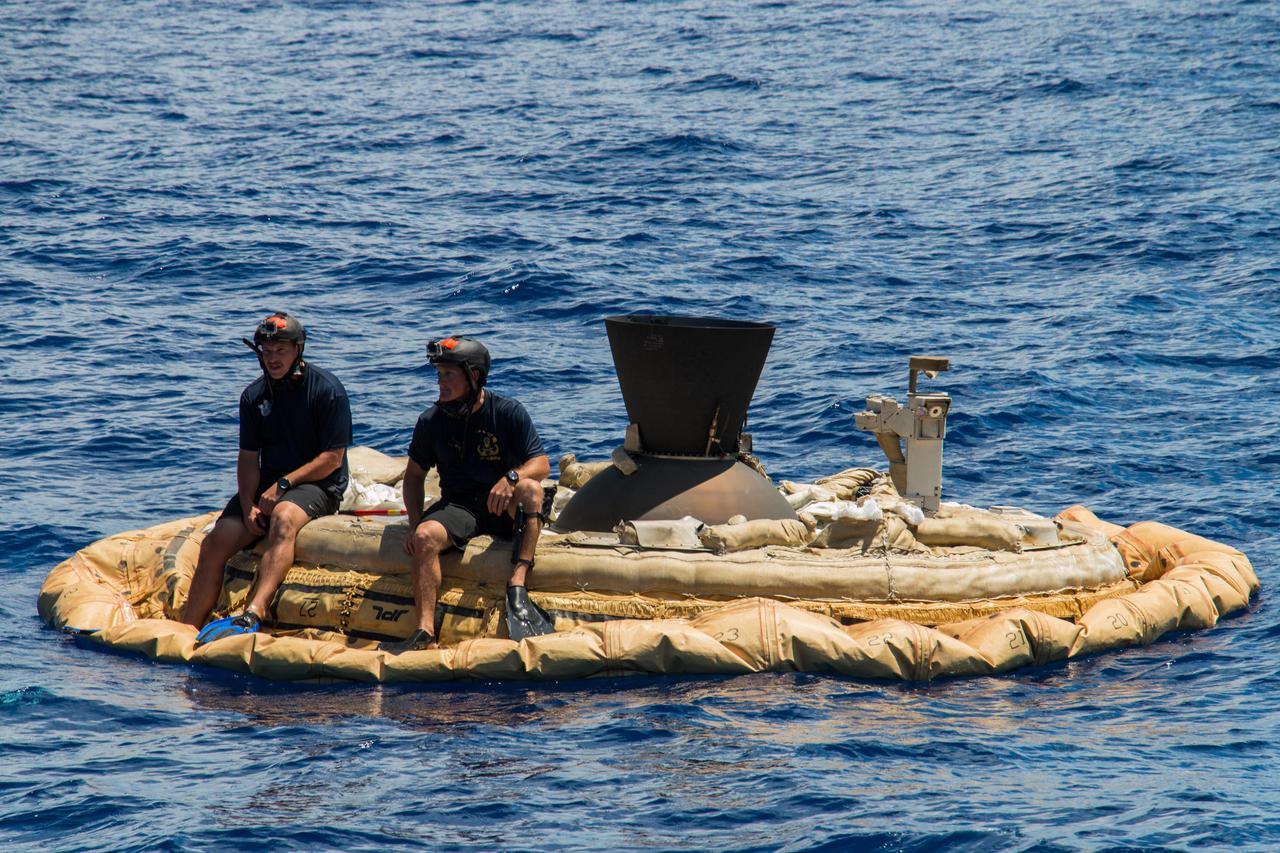
Two members of the Navy Explosive Ordinance Disposal team perch on the test vehicle used in the first flight of NASA Low-density Supersonic Decelerator project.
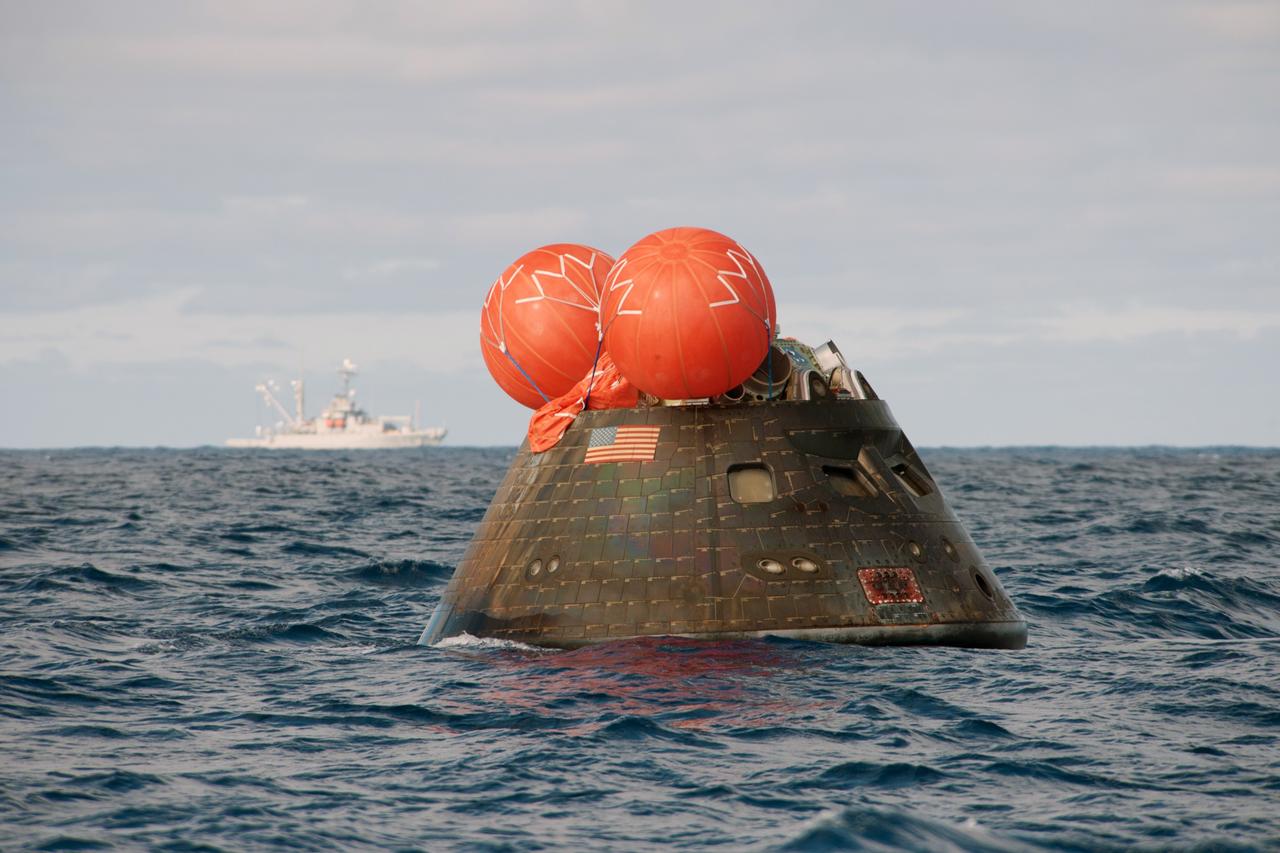
SAN DIEGO, Calif. -- NASA's Orion spacecraft floats in the Pacific Ocean after splashdown from its first flight test in Earth orbit. In the background is the USNS Salvor. This U.S. Navy salvage ship was there as a backup in case it was needed. NASA, the U.S. Navy and Lockheed Martin are coordinating efforts to recover Orion and secure the spacecraft in the well deck of the USS Anchorage. Orion completed a two-orbit, four-and-a-half hour mission, to test systems critical to crew safety, including the launch abort system, the heat shield and the parachute system. The Ground Systems Development and Operations Program is leading the recovery efforts. For more information, visit www.nasa.gov/orion Photo credit: NASA/Tony Gray
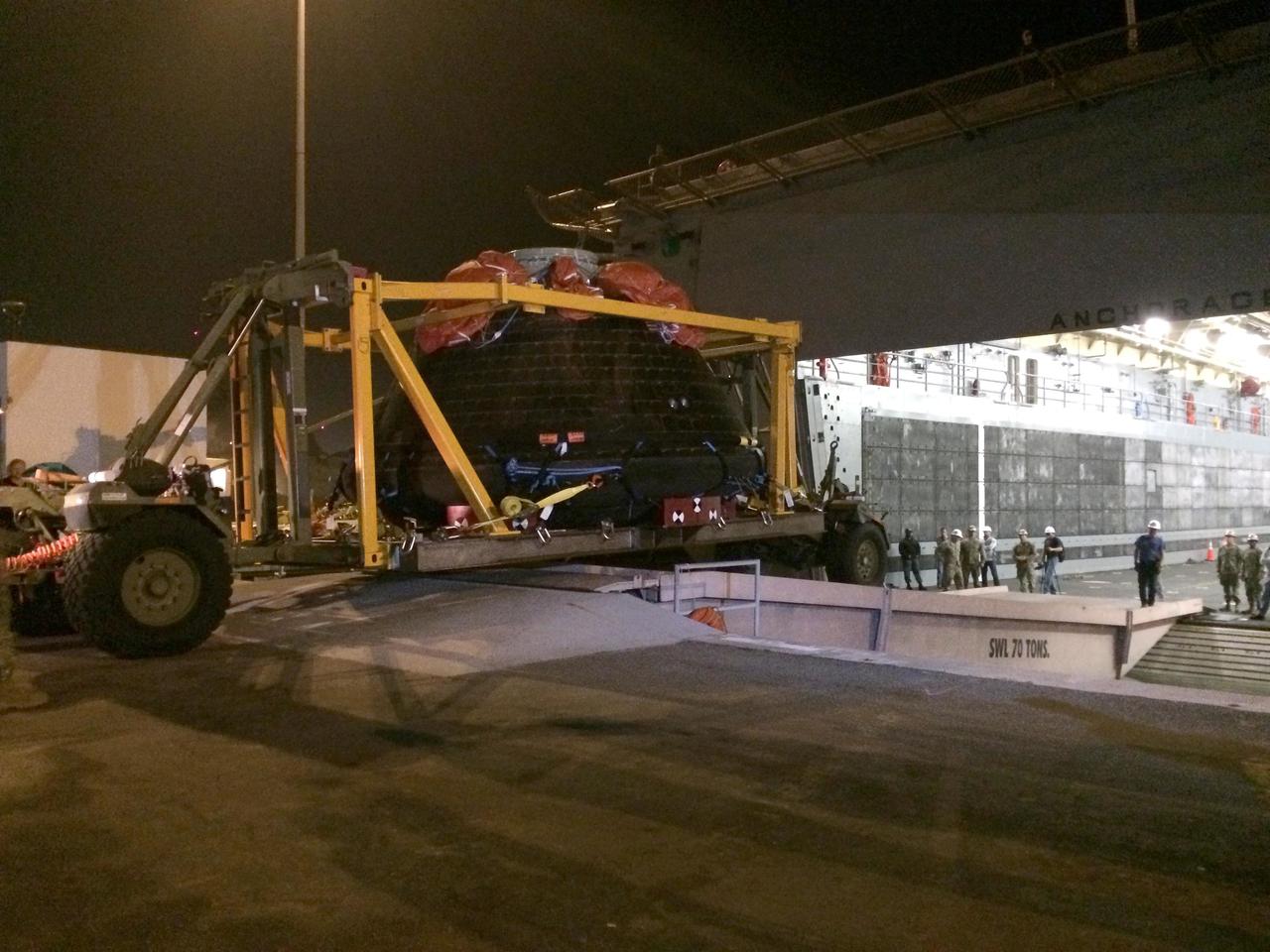
SAN DIEGO, Calif. -- At Naval Base San Diego in California, NASA's Orion spacecraft is being offloaded from the well deck of the USS Anchorage. Orion has been secured in its crew module recovery cradle and will be prepared for return to Kennedy Space Center in Florida. After lifting off at 7:05 a.m. EST on Dec. 5 atop a Delta IV Heavy rocket from Space Launch Complex 37 at Cape Canaveral Air Force Station in Florida, Orion completed a two-orbit, four-and-a-half hour mission to test systems critical to crew safety, including the launch abort system, the heat shield and the parachute system. NASA, the U.S. Navy and Lockheed Martin coordinated efforts to recover Orion after splashdown in the Pacific Ocean. The Ground Systems Development and Operations Program led the recovery efforts. For more information, visit www.nasa.gov/orion Photo credit: NASA/Amber Philman
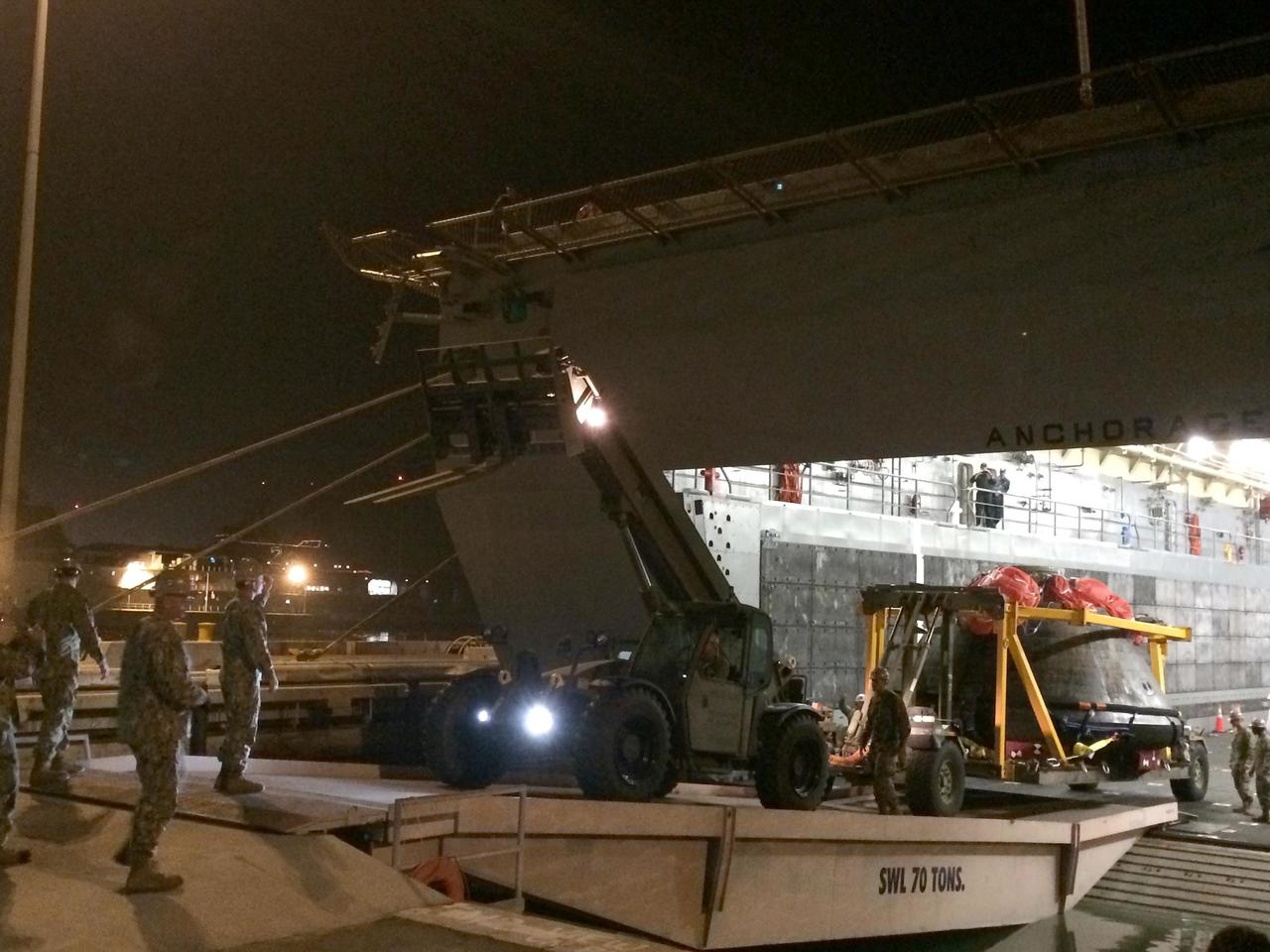
SAN DIEGO, Calif. -- At Naval Base San Diego in California, NASA's Orion spacecraft is being offloaded from the well deck of the USS Anchorage. Orion has been secured in its crew module recovery cradle and will be prepared for return to Kennedy Space Center in Florida. After lifting off at 7:05 a.m. EST on Dec. 5 atop a Delta IV Heavy rocket from Space Launch Complex 37 at Cape Canaveral Air Force Station in Florida, Orion completed a two-orbit, four-and-a-half hour mission to test systems critical to crew safety, including the launch abort system, the heat shield and the parachute system. NASA, the U.S. Navy and Lockheed Martin coordinated efforts to recover Orion after splashdown in the Pacific Ocean. The Ground Systems Development and Operations Program led the recovery efforts. For more information, visit www.nasa.gov/orion Photo credit: NASA/Amber Philman
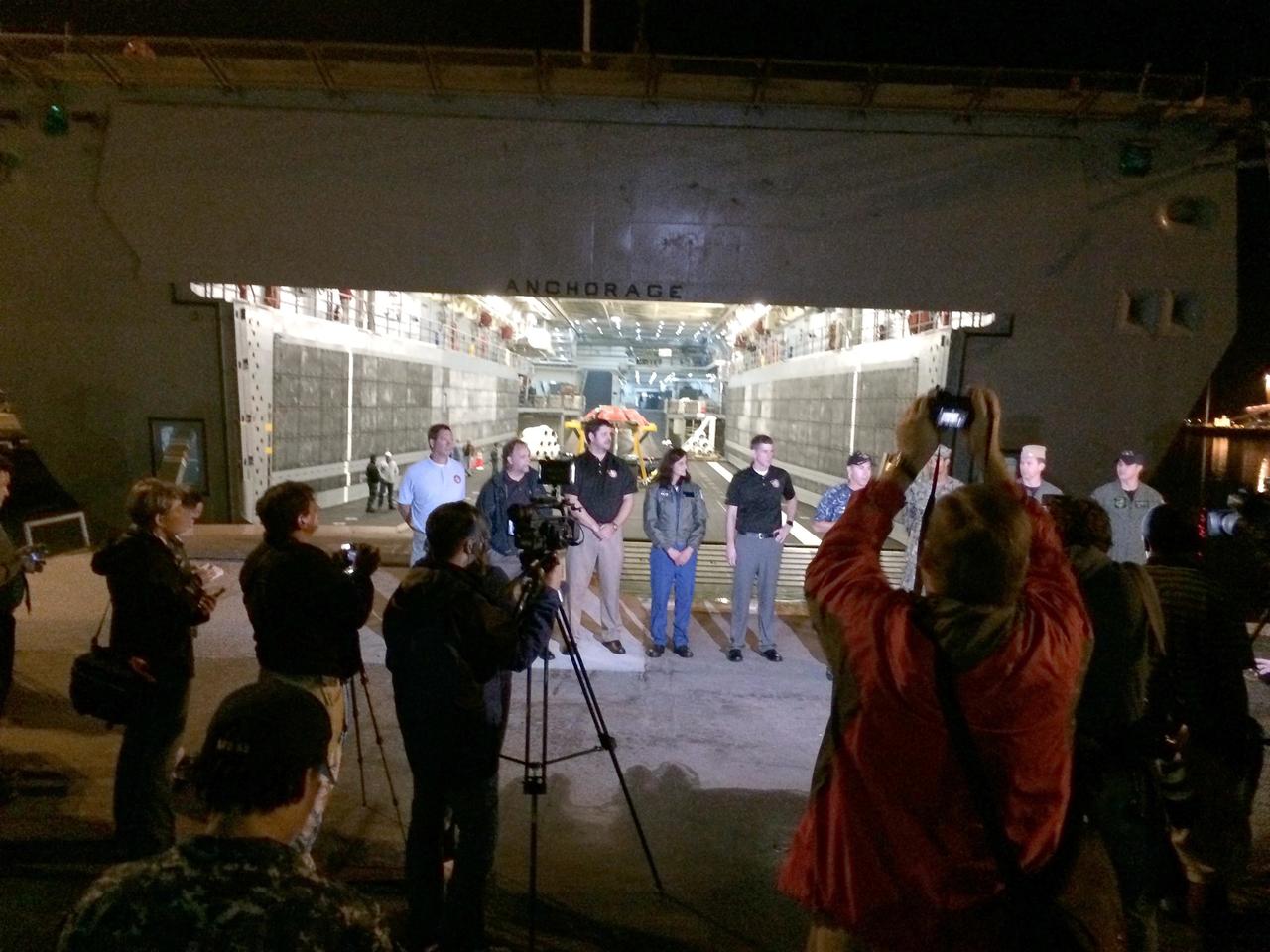
SAN DIEGO, Calif. -- At Naval Base San Diego in California, members of the news media view NASA's Orion spacecraft in the well deck of the USS Anchorage before it is offloaded and prepared for return to Kennedy Space Center in Florida. Speaking to the media are NASA and U.S. Navy officials. After lifting off at 7:05 a.m. EST on Dec. 5 atop a Delta IV Heavy rocket from Space Launch Complex 37 at Cape Canaveral Air Force Station in Florida, Orion completed a two-orbit, four-and-a-half hour mission to test systems critical to crew safety, including the launch abort system, the heat shield and the parachute system. NASA, the U.S. Navy and Lockheed Martin coordinated efforts to recover Orion after splashdown in the Pacific Ocean. The GSDO Program led the recovery efforts. For more information, visit www.nasa.gov/orion Photo credit: NASA/Amber Philman
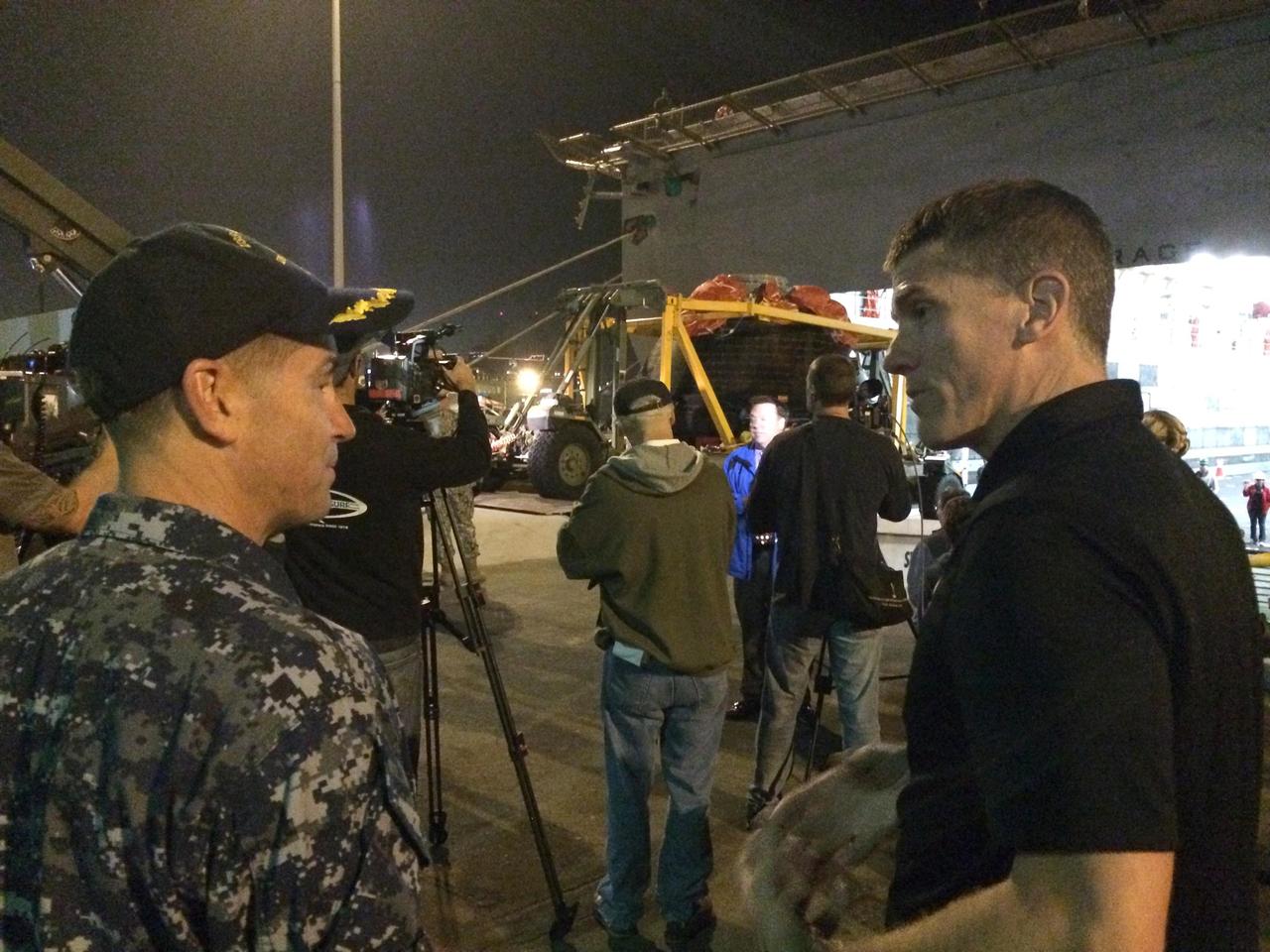
SAN DIEGO, Calif. -- At Naval Base San Diego in California, NASA Recovery Director Jeremy Graeber, right, talks to the commanding officer of the USS Anchorage as members of the news media prepare for viewing of NASA's Orion spacecraft being offloaded from the well deck of the ship. Orion has been secured in its crew module recovery cradle and will be prepared for return to Kennedy Space Center in Florida. After lifting off at 7:05 a.m. EST on Dec. 5 atop a Delta IV Heavy rocket from Space Launch Complex 37 at Cape Canaveral Air Force Station in Florida, Orion completed a two-orbit, four-and-a-half hour mission to test systems critical to crew safety, including the launch abort system, the heat shield and the parachute system. NASA, the U.S. Navy and Lockheed Martin coordinated efforts to recover Orion after splashdown in the Pacific Ocean. The Ground Systems Development and Operations Program is led the recovery efforts. For more information, visit www.nasa.gov/orion Photo credit: NASA/Amber Philman
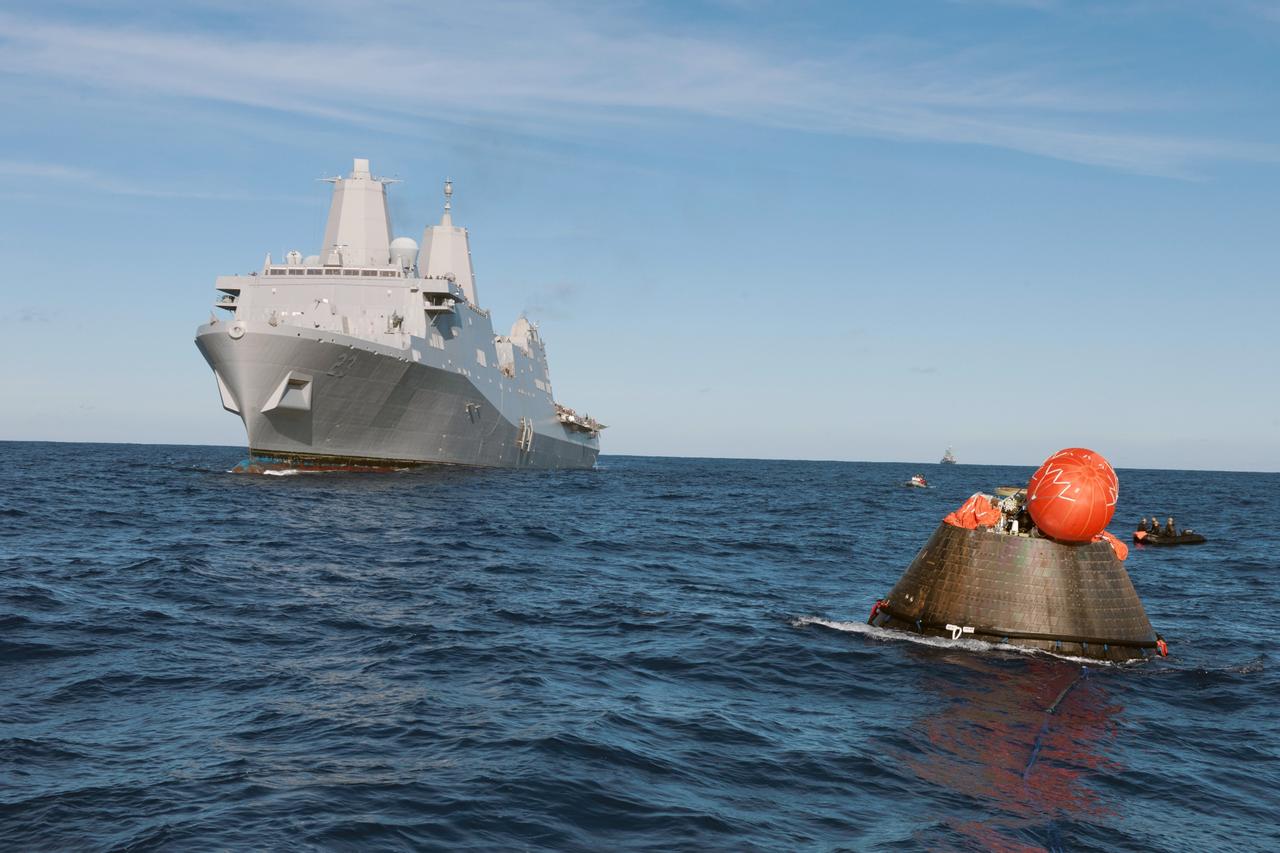
SAN DIEGO, Calif. -- NASA's Orion spacecraft floats in the Pacific Ocean after splashdown from its first flight test in Earth orbit. The USS Anchorage is nearby. NASA, the U.S. Navy and Lockheed Martin are coordinating efforts to recover Orion and secure the spacecraft in the well deck of the USS Anchorage. Orion completed a two-orbit, four-and-a-half hour mission, to test systems critical to crew safety, including the launch abort system, the heat shield and the parachute system. The Ground Systems Development and Operations Program is leading the recovery efforts. For more information, visit www.nasa.gov/orion Photo credit: NASA/Tony Gray
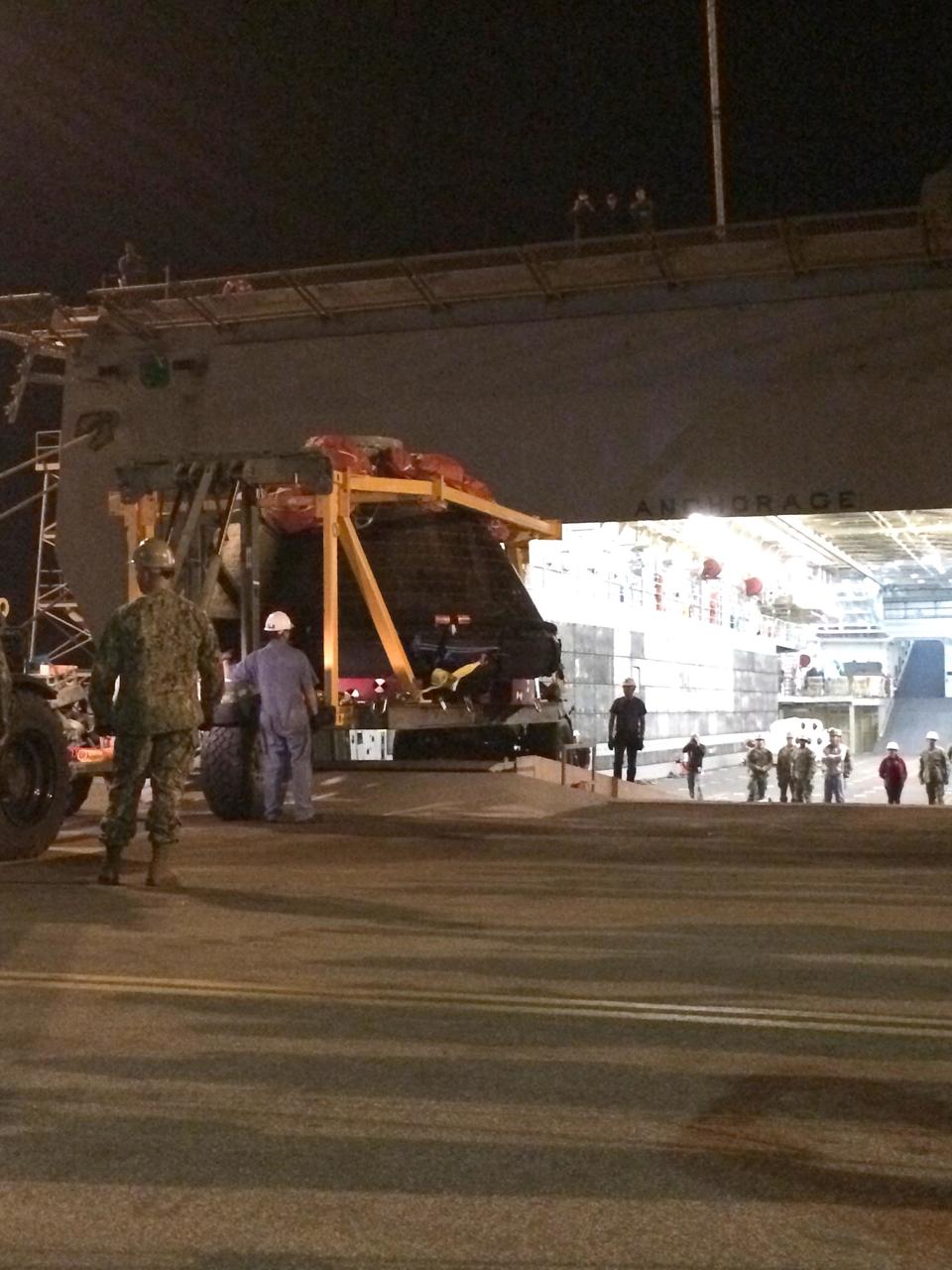
SAN DIEGO, Calif. -- At Naval Base San Diego in California, NASA's Orion spacecraft is being offloaded from the well deck of the USS Anchorage. Orion has been secured in its crew module recovery cradle and will be prepared for return to Kennedy Space Center in Florida. After lifting off at 7:05 a.m. EST on Dec. 5 atop a Delta IV Heavy rocket from Space Launch Complex 37 at Cape Canaveral Air Force Station in Florida, Orion completed a two-orbit, four-and-a-half hour mission to test systems critical to crew safety, including the launch abort system, the heat shield and the parachute system. NASA, the U.S. Navy and Lockheed Martin coordinated efforts to recover Orion after splashdown in the Pacific Ocean. The Ground Systems Development and Operations Program is led the recovery efforts. For more information, visit www.nasa.gov/orion Photo credit: NASA/Amber Philman
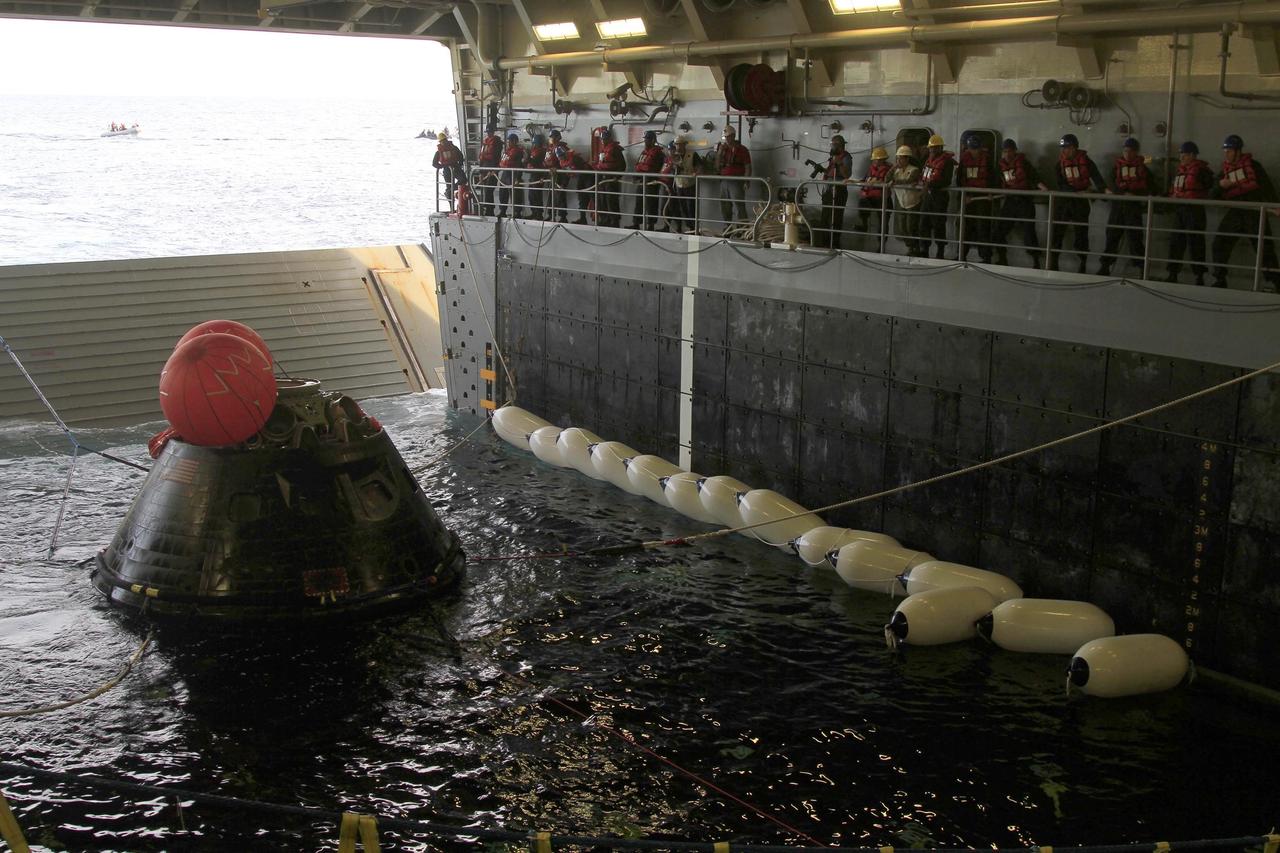
SAN DIEGO, Calif. -- NASA's Orion spacecraft is secured with tether lines inside the flooded well deck of the USS Anchorage in the Pacific Ocean about 600 miles off the coast of San Diego, California. After lifting off at 7:05 a.m. EST atop a Delta IV Heavy rocket from Space Launch Complex 37 at Cape Canaveral Air Force Station in Florida, Orion completed a two-orbit, four-and-a-half hour mission to test systems critical to crew safety, including the launch abort system, the heat shield and the parachute system. NASA, the U.S. Navy and Lockheed Martin coordinated efforts to recover Orion after splashdown. The Ground Systems Development and Operations Program is leading the recovery efforts. For more information, visit www.nasa.gov/orion Photo credit: NASA/Cory Huston
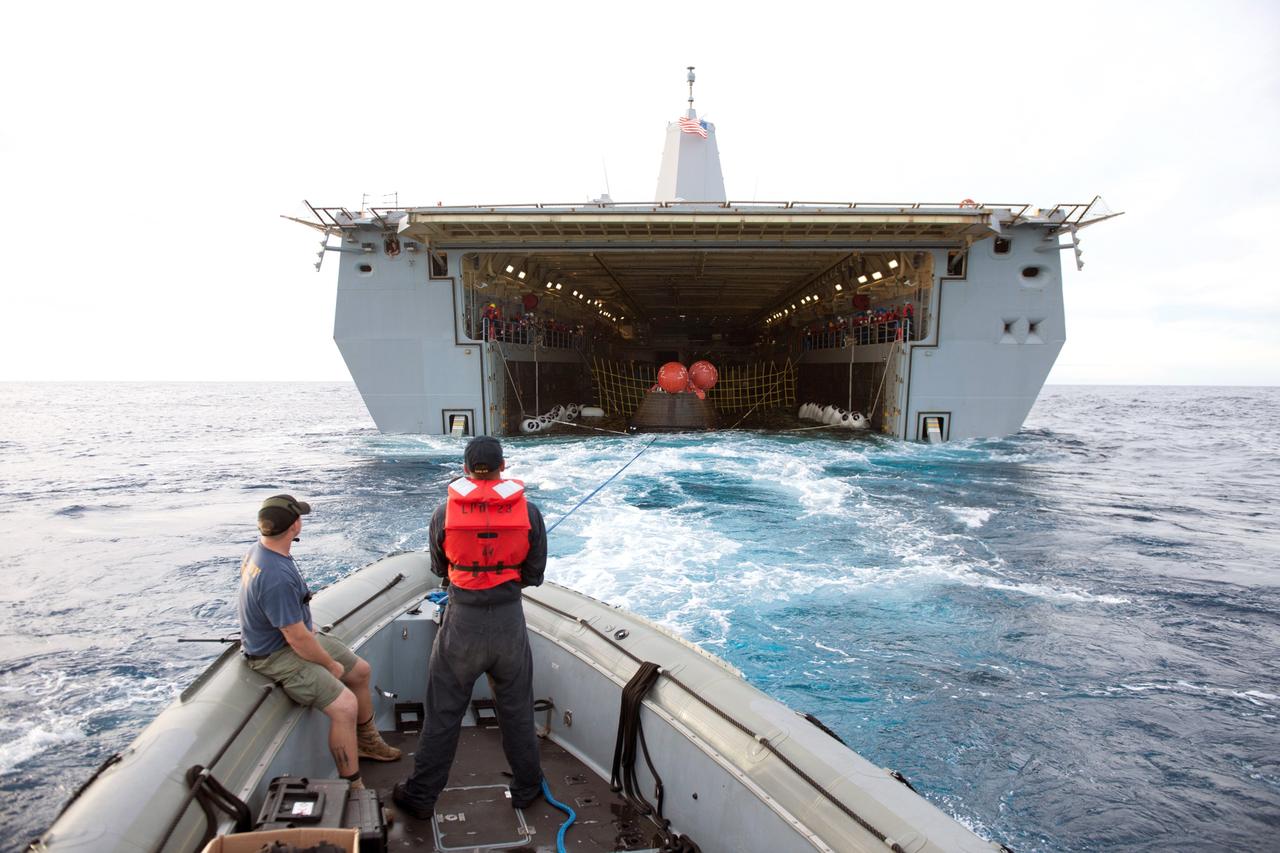
SAN DIEGO, Calif. -- U.S. Navy personnel aboard a rigid hull inflatable boat help recover NASA's Orion spacecraft following its splashdown in the Pacific Ocean after its first flight test in Earth orbit. Orion is towed into the flooded well deck of the USS Anchorage. NASA, the U.S. Navy and Lockheed Martin coordinated efforts to recover Orion, the forward bay cover and main parachutes. Orion completed a two-orbit, four-and-a-half hour mission, to test systems critical to crew safety, including the launch abort system, the heat shield and the parachute system. The Ground Systems Development and Operations Program is leading the recovery efforts. For more information, visit www.nasa.gov/orion Photo credit: NASA/Tony Gray
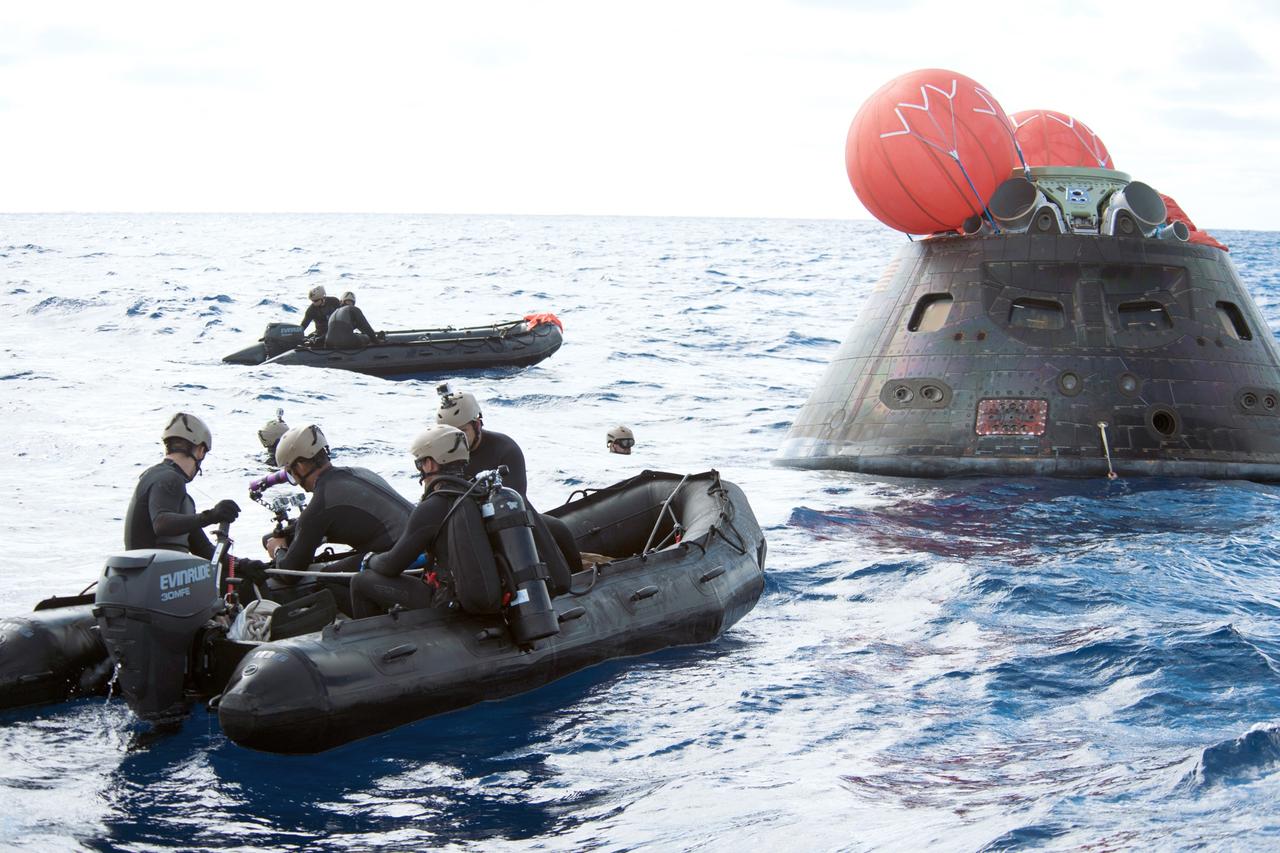
SAN DIEGO, Calif. -- NASA's Orion spacecraft splashed down in the Pacific Ocean after its first flight test atop a Delta IV Heavy rocket from Space Launch Complex 37 at Cape Canaveral Air Force Station in Florida. U.S. Navy divers in Zodiac boats prepare to recover Orion and tow her in to the well deck of the USS Anchorage. NASA's Orion spacecraft completed a two-orbit, four-and-a-half hour mission to test systems critical to crew safety, including the launch abort system, the heat shield and the parachute system. The Ground Systems Development and Operations Program is leading the recovery efforts. For more information, visit www.nasa.gov/orion Photo credit: Courtesy of U.S. Navy
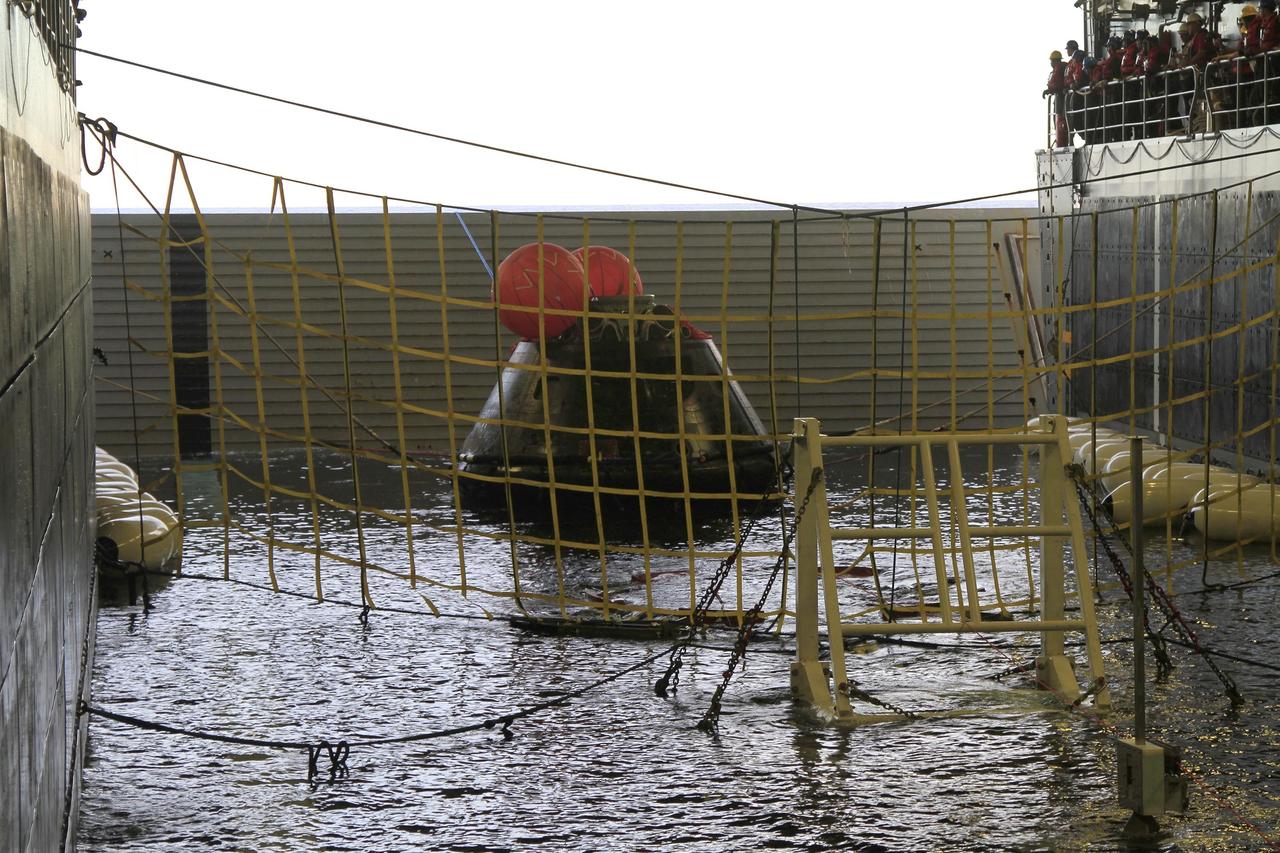
SAN DIEGO, Calif. -- NASA's Orion spacecraft has been recovered inside the flooded well deck of the USS Anchorage in the Pacific Ocean about 600 miles off the coast of San Diego, California. After lifting off at 7:05 a.m. EST atop a Delta IV Heavy rocket from Space Launch Complex 37 at Cape Canaveral Air Force Station in Florida, Orion completed a two-orbit, four-and-a-half hour mission to test systems critical to crew safety, including the launch abort system, the heat shield and the parachute system. NASA, the U.S. Navy and Lockheed Martin coordinated efforts to recover Orion after splashdown. The Ground Systems Development and Operations Program is leading the recovery efforts. For more information, visit www.nasa.gov/orion Photo credit: NASA/Cory Huston
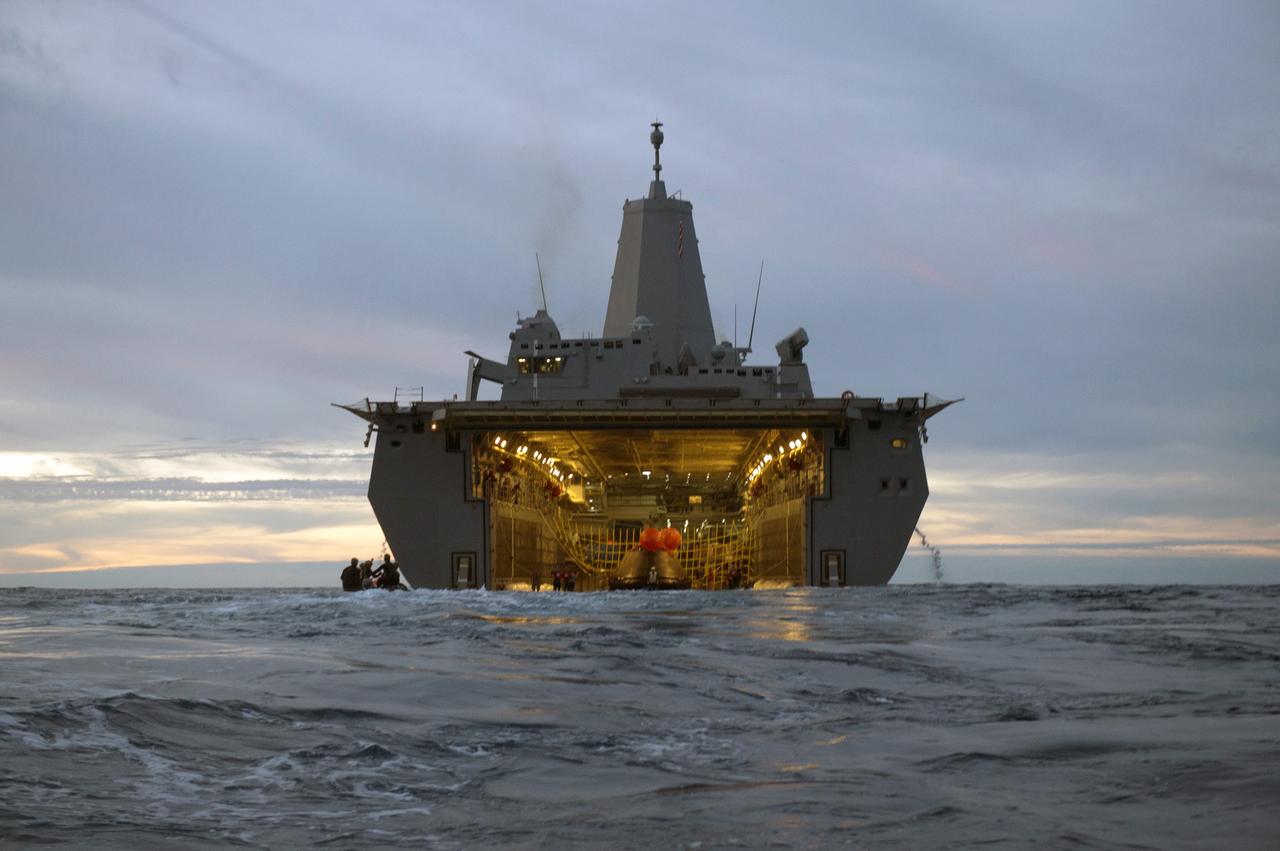
SAN DIEGO, Calif. -- The Orion crew module is recovered after splashdown in the Pacific Ocean about 600 miles off the coast of San Diego, California. NASA, the U.S. Navy and Lockheed Martin coordinated efforts to recover Orion and secure the spacecraft inside the well deck of the USS Anchorage. After lifting off at 7:05 a.m. EST atop a Delta IV Heavy rocket from Space Launch Complex 37 at Cape Canaveral Air Force Station in Florida, NASA's Orion spacecraft completed a two-orbit, four-and-a-half hour mission to test systems critical to crew safety, including the launch abort system, the heat shield and the parachute system. The Ground Systems Development and Operations Program is leading the recovery efforts. For more information, visit www.nasa.gov/orion Photo credit: Courtesy of U.S. Navy
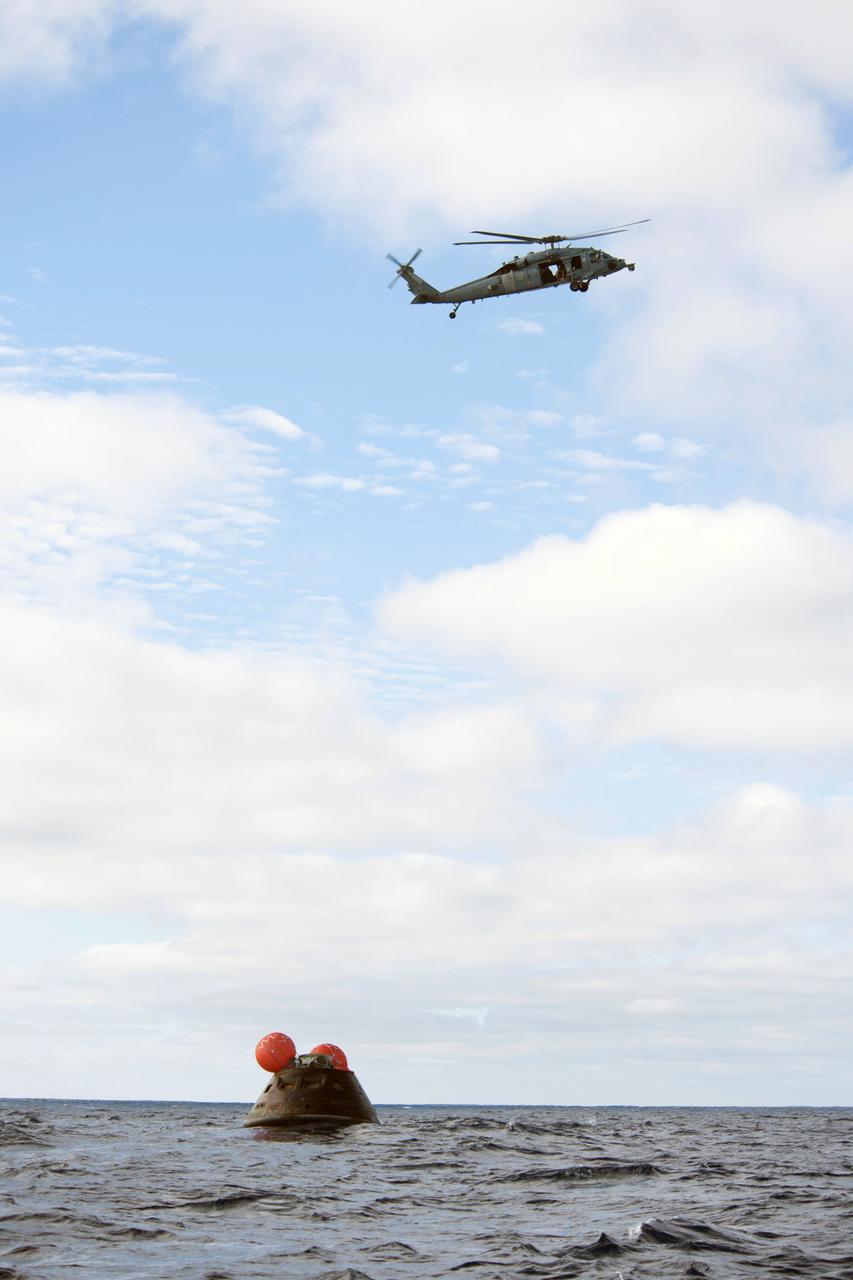
SAN DIEGO, Calif. -- NASA's Orion spacecraft floats in the Pacific Ocean after splashdown from its first flight test in Earth orbit. An H60-S Seahawk helicopter hovers above to communicate the spacecraft's location back to the USS Anchorage. NASA, the U.S. Navy and Lockheed Martin are coordinating efforts to recover Orion and secure the spacecraft in the well deck of the USS Anchorage. Orion completed a two-orbit, four-and-a-half hour mission, to test systems critical to crew safety, including the launch abort system, the heat shield and the parachute system. The Ground Systems Development and Operations Program is leading the recovery efforts. For more information, visit www.nasa.gov/orion Photo credit: NASA/Tony Gray
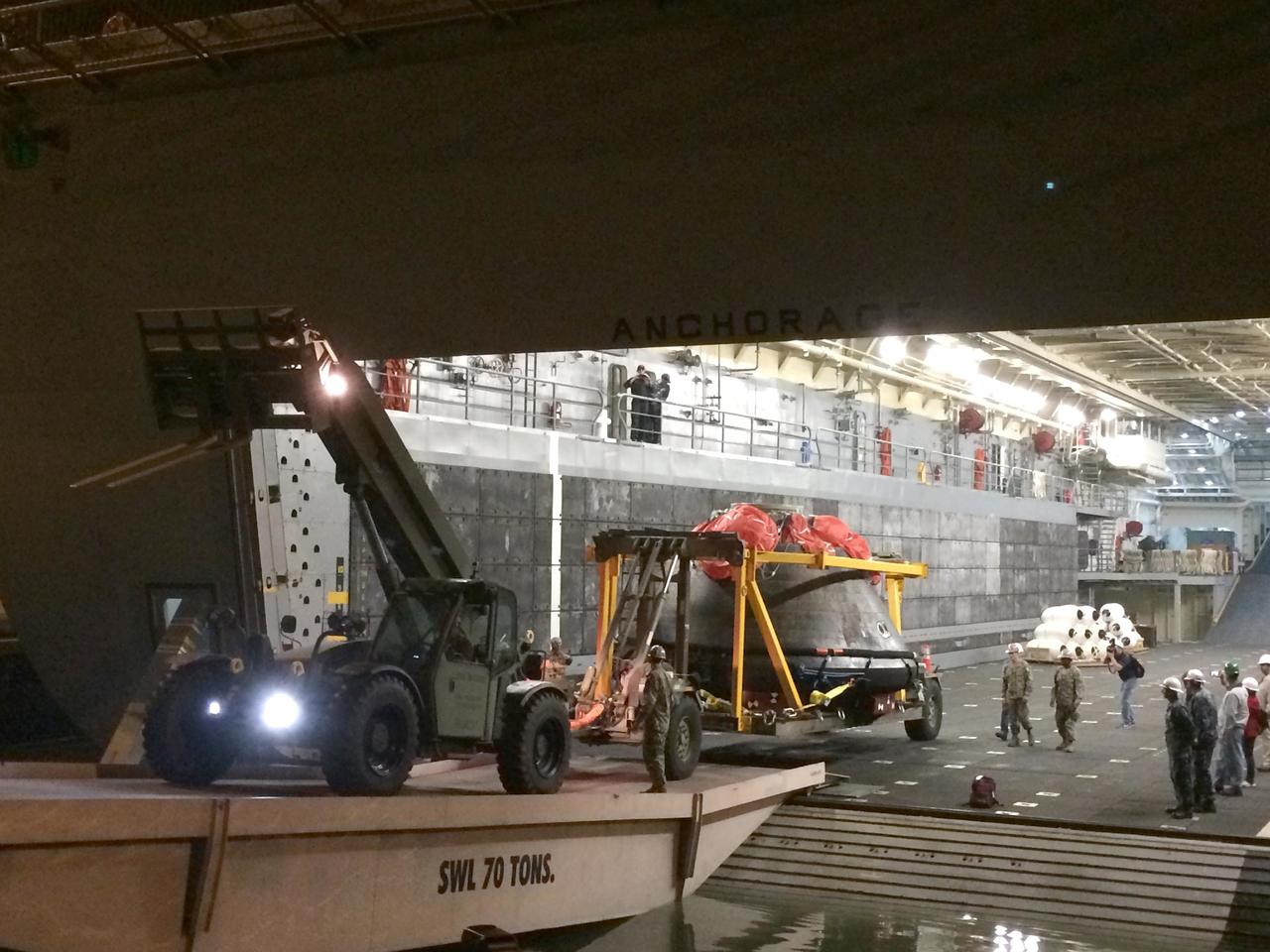
SAN DIEGO, Calif. -- At Naval Base San Diego in California, NASA's Orion spacecraft is being offloaded from the well deck of the USS Anchorage. Orion has been secured in its crew module recovery cradle and will be prepared for return to Kennedy Space Center in Florida. After lifting off at 7:05 a.m. EST on Dec. 5 atop a Delta IV Heavy rocket from Space Launch Complex 37 at Cape Canaveral Air Force Station in Florida, Orion completed a two-orbit, four-and-a-half hour mission to test systems critical to crew safety, including the launch abort system, the heat shield and the parachute system. NASA, the U.S. Navy and Lockheed Martin coordinated efforts to recover Orion after splashdown in the Pacific Ocean. The Ground Systems Development and Operations Program led the recovery efforts. For more information, visit www.nasa.gov/orion Photo credit: NASA/Amber Philman
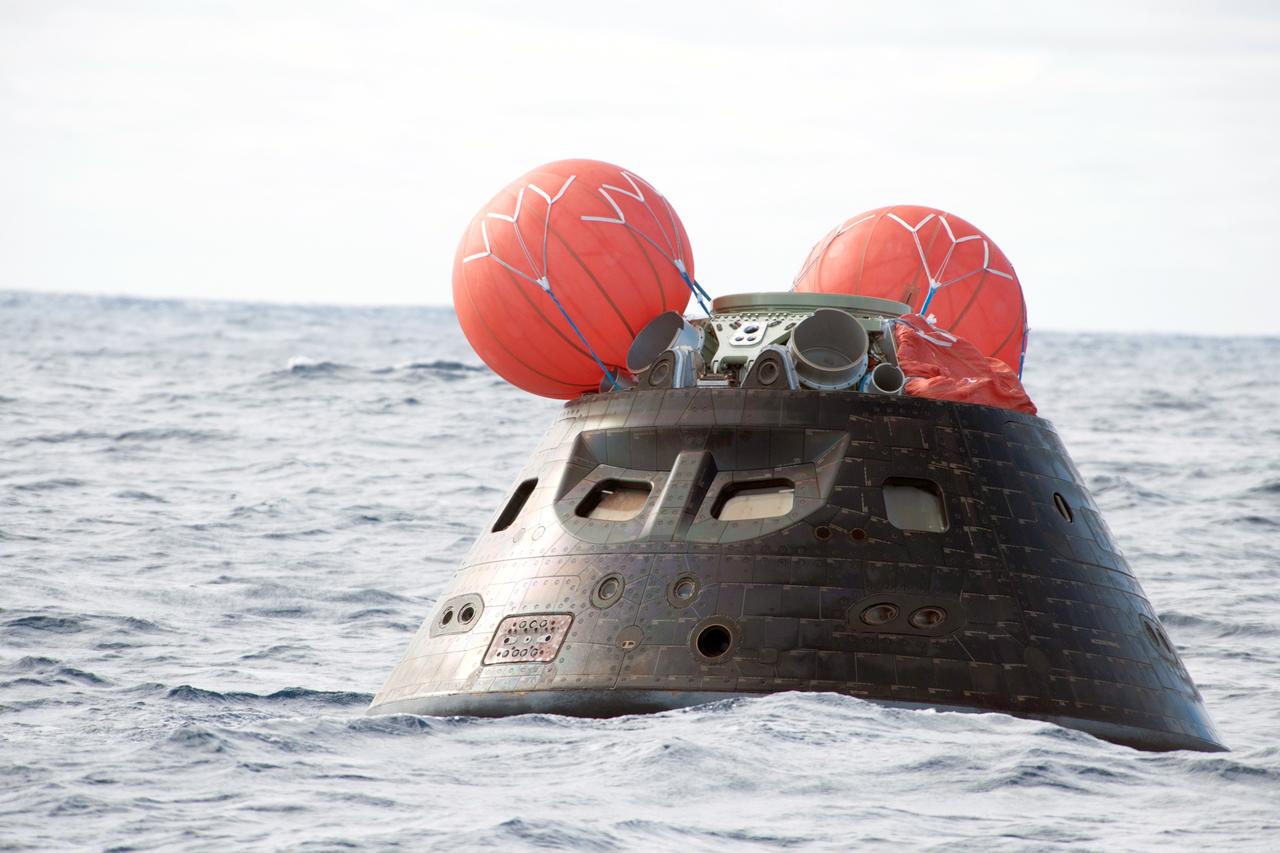
SAN DIEGO, Calif. -- NASA's Orion spacecraft floats in the Pacific Ocean after splashdown from its first flight test in Earth orbit. The spacecraft completed a two-orbit, four-and-a-half-hour mission in Earth orbit. NASA, the U.S. Navy and Lockheed Martin are coordinating efforts to recover Orion, the forward bay cover and main parachutes. Orion will be towed in and secure in the well deck of the nearby USS Anchorage. Orion's mission tested systems critical to crew safety, including the launch abort system, the heat shield and the parachute system. The Ground Systems Development and Operations Program is leading the recovery efforts. For more information, visit www.nasa.gov/orion Photo credit: NASA/Tony Gray
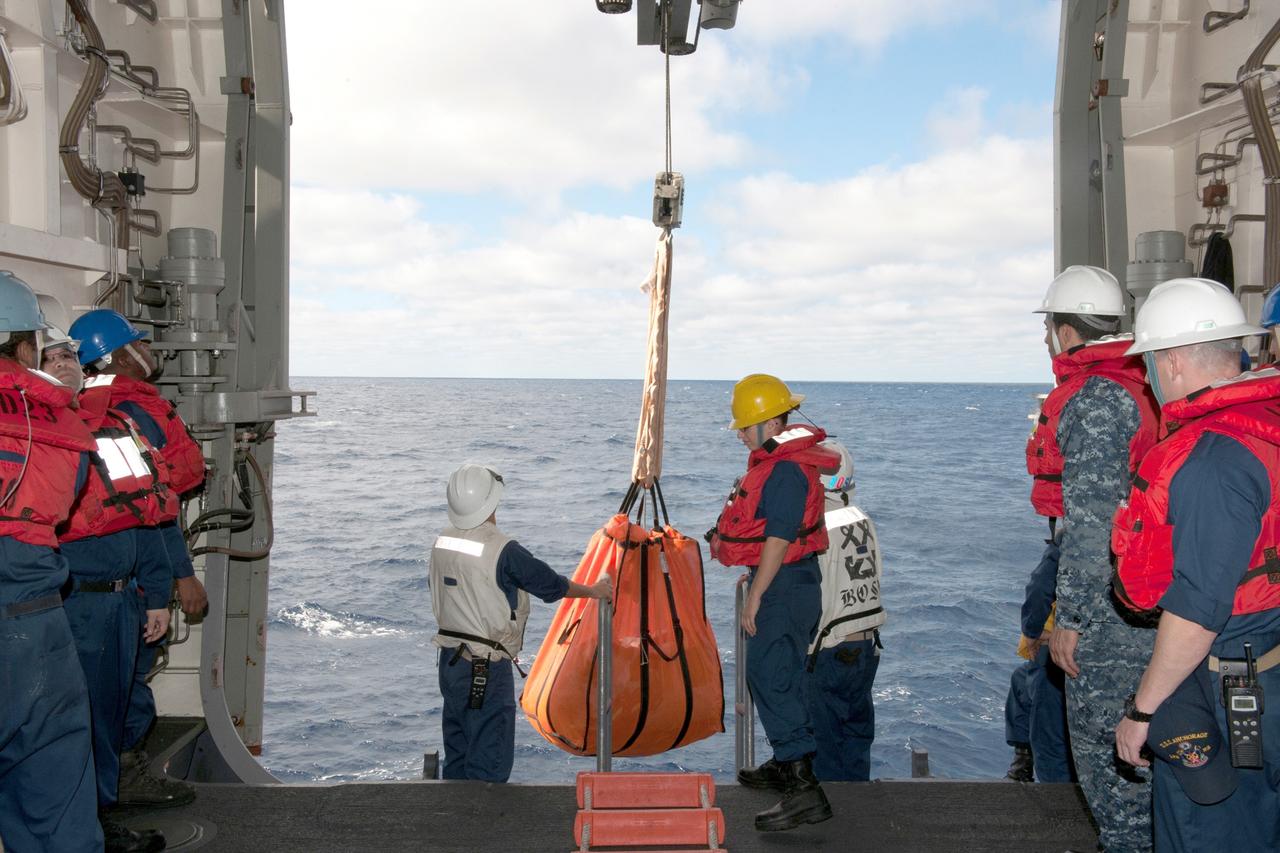
SAN DIEGO, Calif. -- U.S. Navy personnel aboard the USS Anchorage prepare for recovery of NASA's Orion spacecraft from the Pacific Ocean about 600 miles off the coast of San Diego, California. Orion splashed down after its first flight test in Earth orbit. NASA, the U.S. Navy and Lockheed Martin are coordinating efforts to recover Orion and secure the spacecraft in the well deck of the USS Anchorage. Orion completed a two-orbit, four-and-a-half hour mission, to test systems critical to crew safety, including the launch abort system, the heat shield and the parachute system. The Ground Systems Development and Operations Program is leading the recovery efforts. For more information, visit www.nasa.gov/orion Photo credit: NASA/Kenny Allen
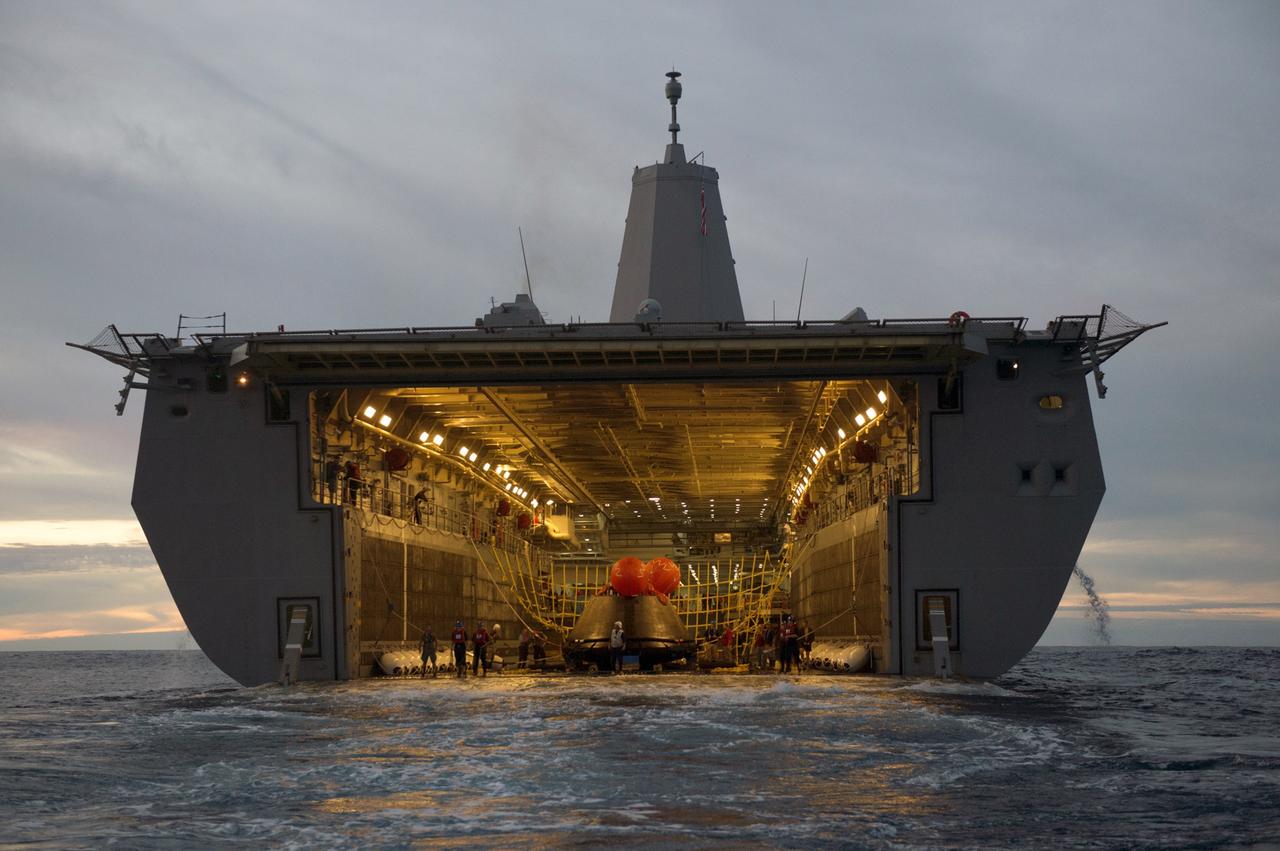
SAN DIEGO, Calif. -- The Orion crew module is recovered after splashdown in the Pacific Ocean about 600 miles off the coast of San Diego, California. NASA, the U.S. Navy and Lockheed Martin coordinated efforts to recover Orion and secure the spacecraft inside the well deck of the USS Anchorage. After lifting off at 7:05 a.m. EST atop a Delta IV Heavy rocket from Space Launch Complex 37 at Cape Canaveral Air Force Station in Florida, NASA's Orion spacecraft completed a two-orbit, four-and-a-half hour mission to test systems critical to crew safety, including the launch abort system, the heat shield and the parachute system. The Ground Systems Development and Operations Program is leading the recovery efforts. For more information, visit www.nasa.gov/orion Photo credit: Courtesy of U.S. Navy
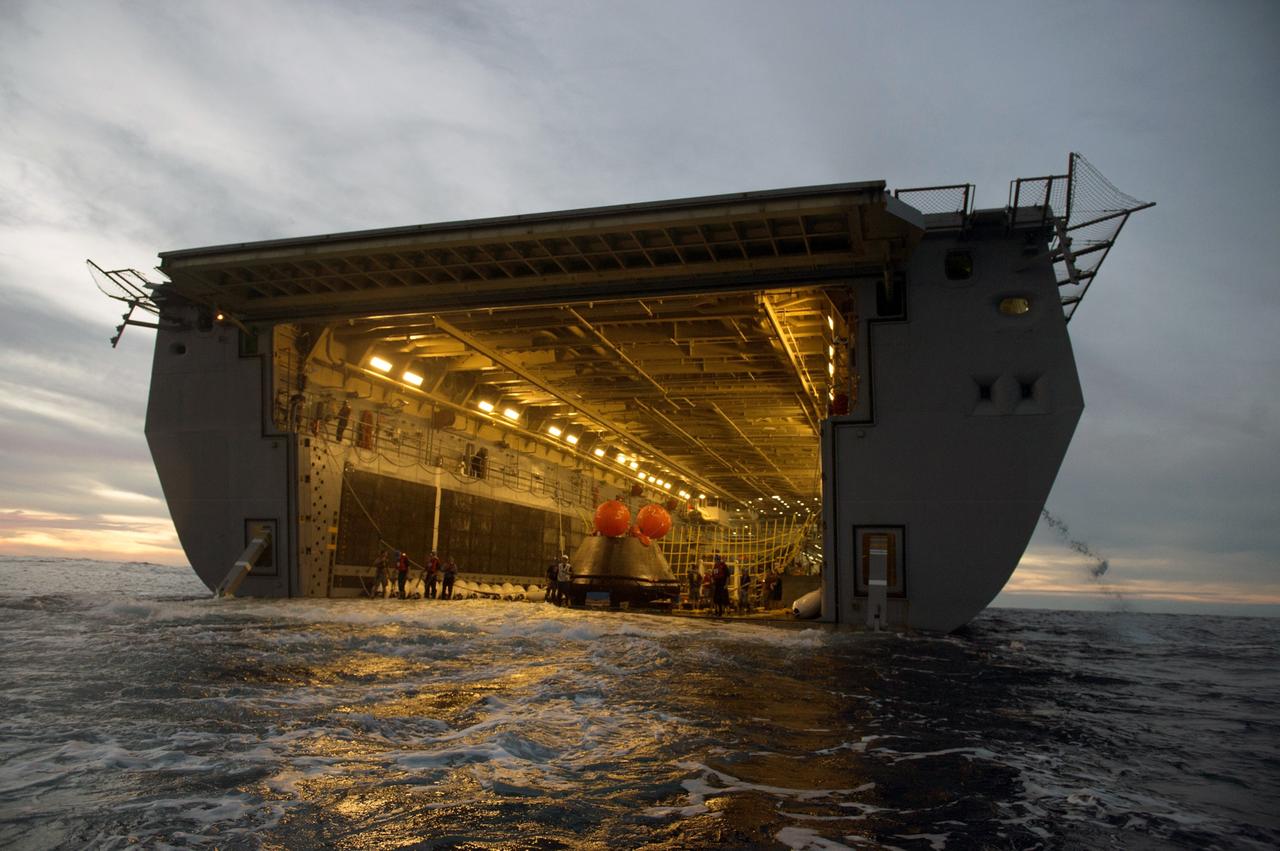
SAN DIEGO, Calif. -- The Orion crew module is recovered after splashdown in the Pacific Ocean about 600 miles off the coast of San Diego, California. NASA, the U.S. Navy and Lockheed Martin coordinated efforts to recover Orion and secure the spacecraft inside the well deck of the USS Anchorage. After lifting off at 7:05 a.m. EST atop a Delta IV Heavy rocket from Space Launch Complex 37 at Cape Canaveral Air Force Station in Florida, NASA's Orion spacecraft completed a two-orbit, four-and-a-half hour mission to test systems critical to crew safety, including the launch abort system, the heat shield and the parachute system. The Ground Systems Development and Operations Program is leading the recovery efforts. For more information, visit www.nasa.gov/orion Photo credit: Courtesy of U.S. Navy
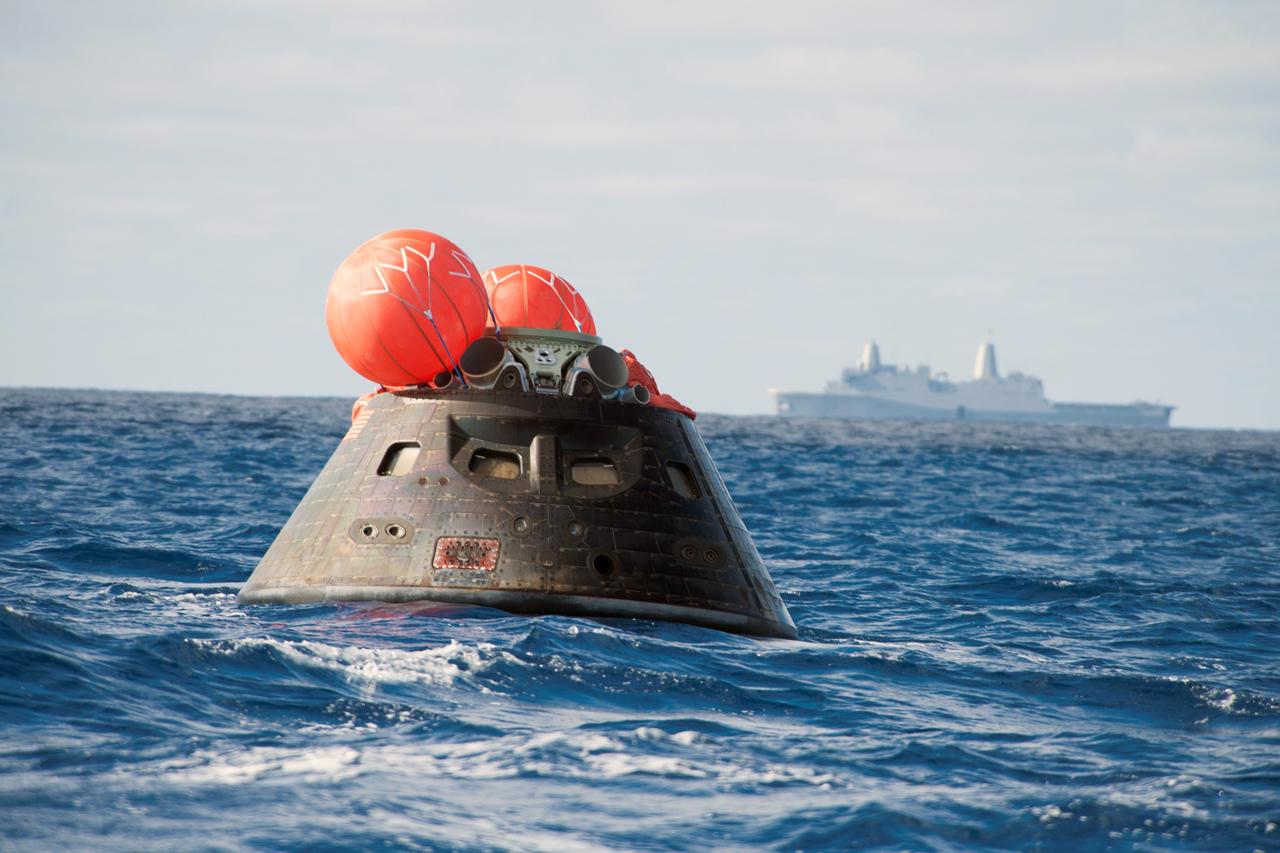
SAN DIEGO, Calif. -- NASA's Orion spacecraft floats in the Pacific Ocean after splashdown from its first flight test in Earth orbit. The USS Anchorage is in the background. NASA, the U.S. Navy and Lockheed Martin are coordinating efforts to recover Orion and secure the spacecraft in the well deck of the USS Anchorage. Orion completed a two-orbit, four-and-a-half hour mission, to test systems critical to crew safety, including the launch abort system, the heat shield and the parachute system. The Ground Systems Development and Operations Program is leading the recovery efforts. For more information, visit www.nasa.gov/orion Photo credit: NASA/Tony Gray
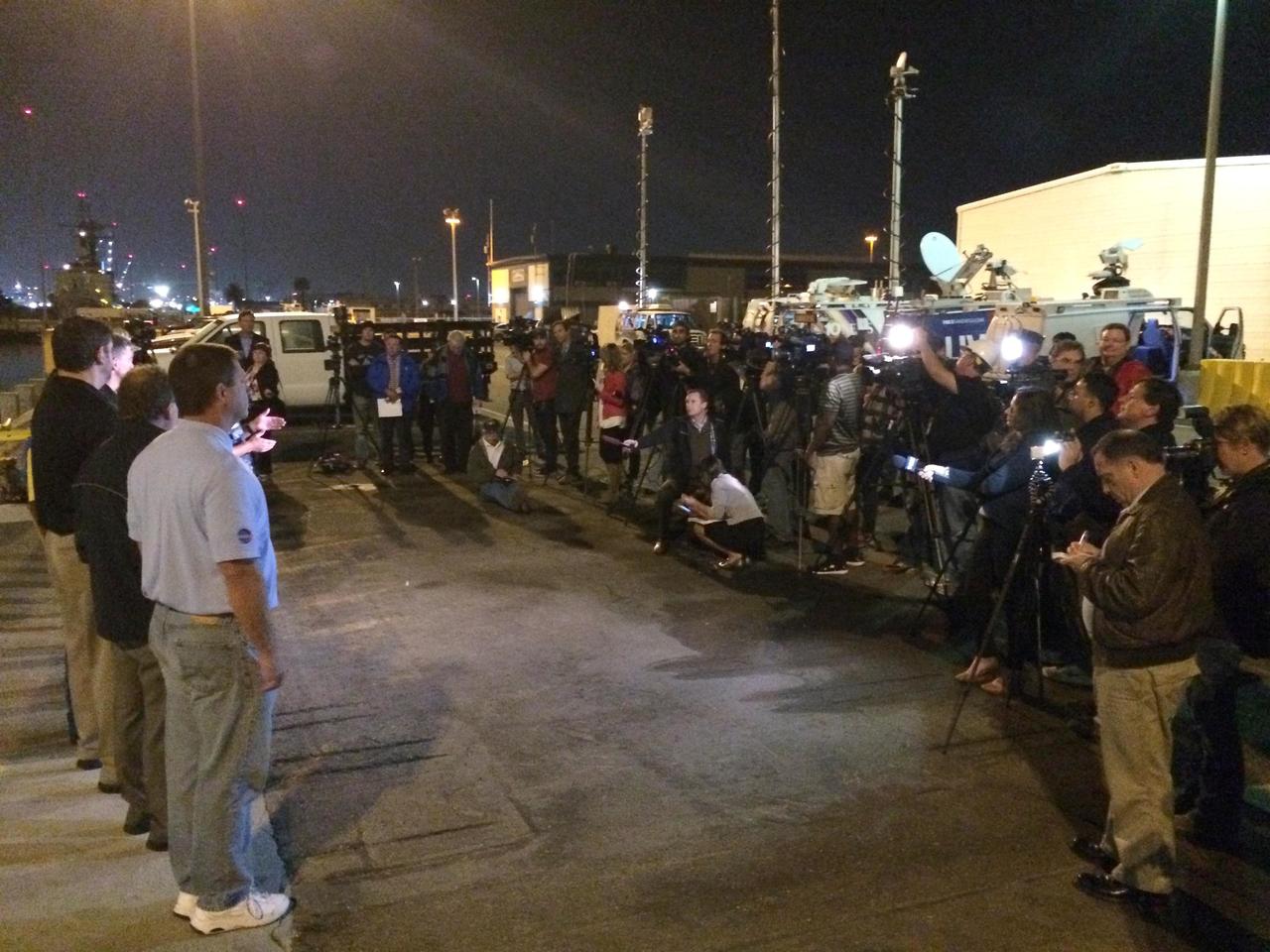
SAN DIEGO, Calif. -- At Naval Base San Diego in California, members of the news media wait to view NASA's Orion spacecraft in the well deck of the USS Anchorage before it is offloaded and prepared for return to Kennedy Space Center in Florida. After lifting off at 7:05 a.m. EST on Dec. 5, atop a Delta IV Heavy rocket from Space Launch Complex 37 at Cape Canaveral Air Force Station in Florida, Orion completed a two-orbit, four-and-a-half hour mission to test systems critical to crew safety, including the launch abort system, the heat shield and the parachute system. NASA, the U.S. Navy and Lockheed Martin coordinated efforts to recover Orion after splashdown in the Pacific Ocean. The Ground Systems Development and Operations Program led the recovery efforts. For more information, visit www.nasa.gov/orion Photo credit: NASA/Amber Philman
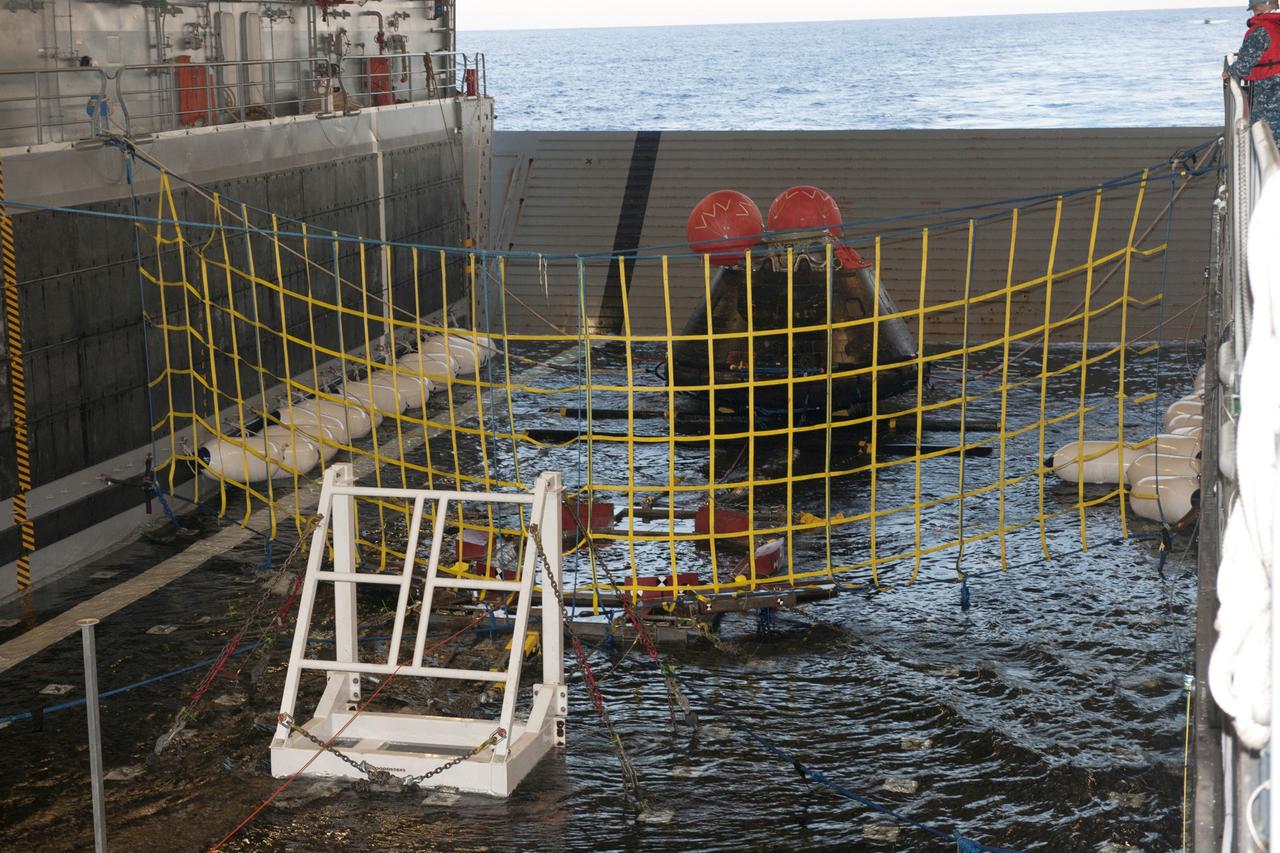
SAN DIEGO, Calif. -- NASA's Orion spacecraft is on rubber bumpers in the flooded well deck of the USS Anchorage in the Pacific Ocean about 600 miles off the coast of San Diego, California. Orion splashed down after its first flight test in Earth orbit. NASA, the U.S. Navy and Lockheed Martin are coordinating efforts to recover Orion and secure the spacecraft in the well deck of the USS Anchorage. Orion completed a two-orbit, four-and-a-half hour mission, to test systems critical to crew safety, including the launch abort system, the heat shield and the parachute system. The Ground Systems Development and Operations Program is leading the recovery efforts. For more information, visit www.nasa.gov/orion Photo credit: NASA/Kenny Allen
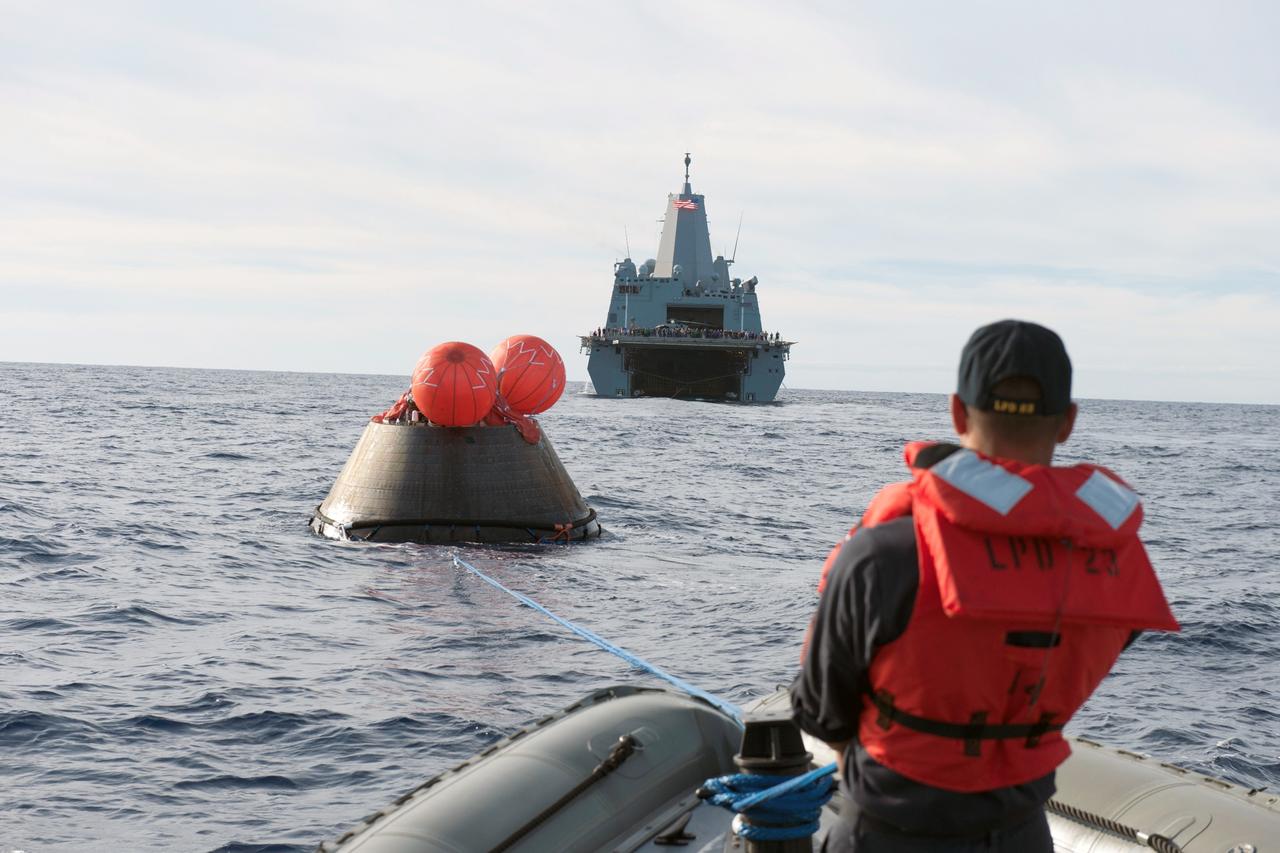
SAN DIEGO, Calif. -- U.S. Navy personnel aboard a rigid hull inflatable boat help recover NASA's Orion spacecraft following its splashdown in the Pacific Ocean after its first flight test in Earth orbit. The USS Anchorage is in the background. NASA, the U.S. Navy and Lockheed Martin are coordinating efforts to recover Orion and secure the spacecraft in the well deck of the USS Anchorage. Orion completed a two-orbit, four-and-a-half hour mission, to test systems critical to crew safety, including the launch abort system, the heat shield and the parachute system. The Ground Systems Development and Operations Program is leading the recovery efforts. For more information, visit www.nasa.gov/orion Photo credit: NASA/Tony Gray
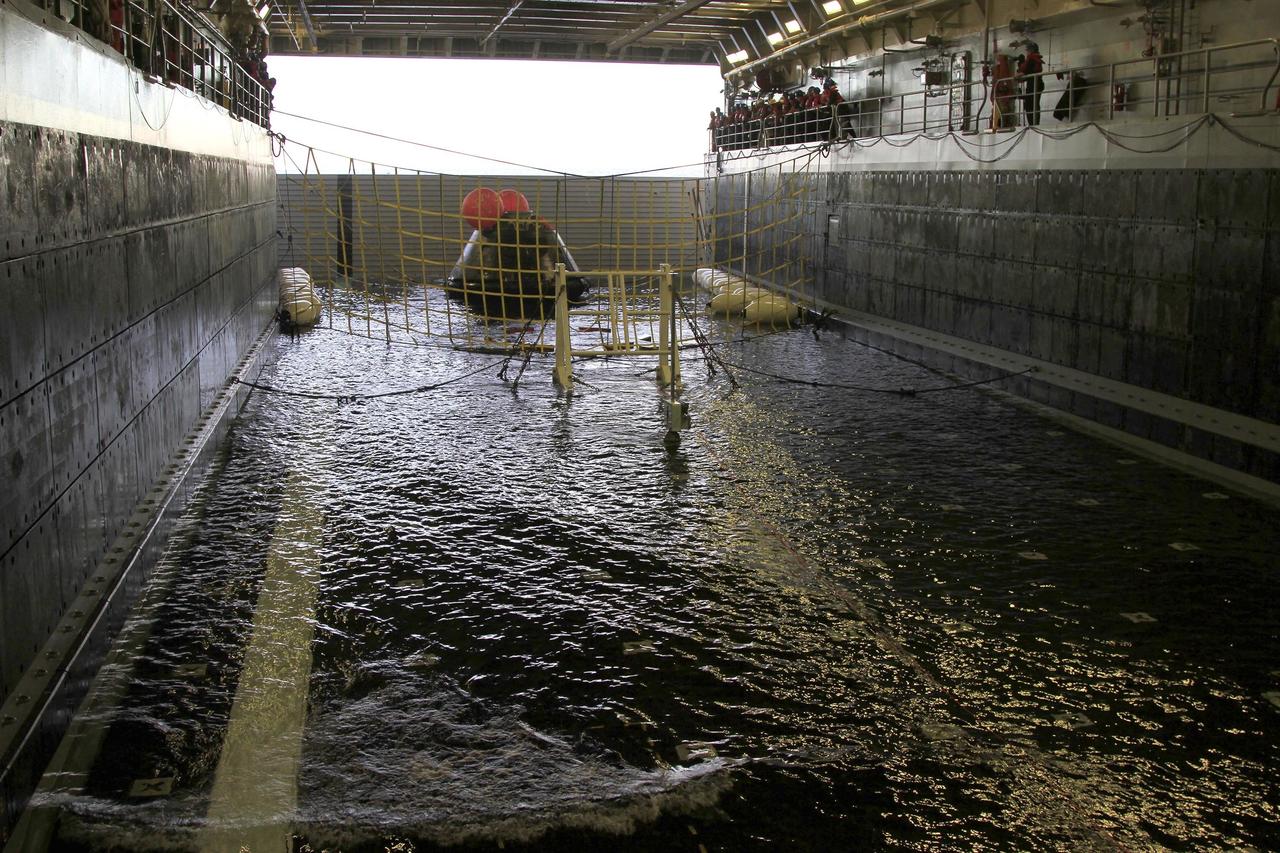
SAN DIEGO, Calif. -- After splashdown, NASA's Orion spacecraft has been recovered and is positioned on rubber "speed bumps" inside the flooded well deck of the USS Anchorage in the Pacific Ocean about 600 miles off the coast of San Diego, California. After lifting off at 7:05 a.m. EST atop a Delta IV Heavy rocket from Space Launch Complex 37 at Cape Canaveral Air Force Station in Florida, Orion completed a two-orbit, four-and-a-half hour mission to test systems critical to crew safety, including the launch abort system, the heat shield and the parachute system. NASA, the U.S. Navy and Lockheed Martin coordinated efforts to recover Orion after splashdown. The Ground Systems Development and Operations Program is leading the recovery efforts. For more information, visit www.nasa.gov/orion Photo credit: NASA/Cory Huston
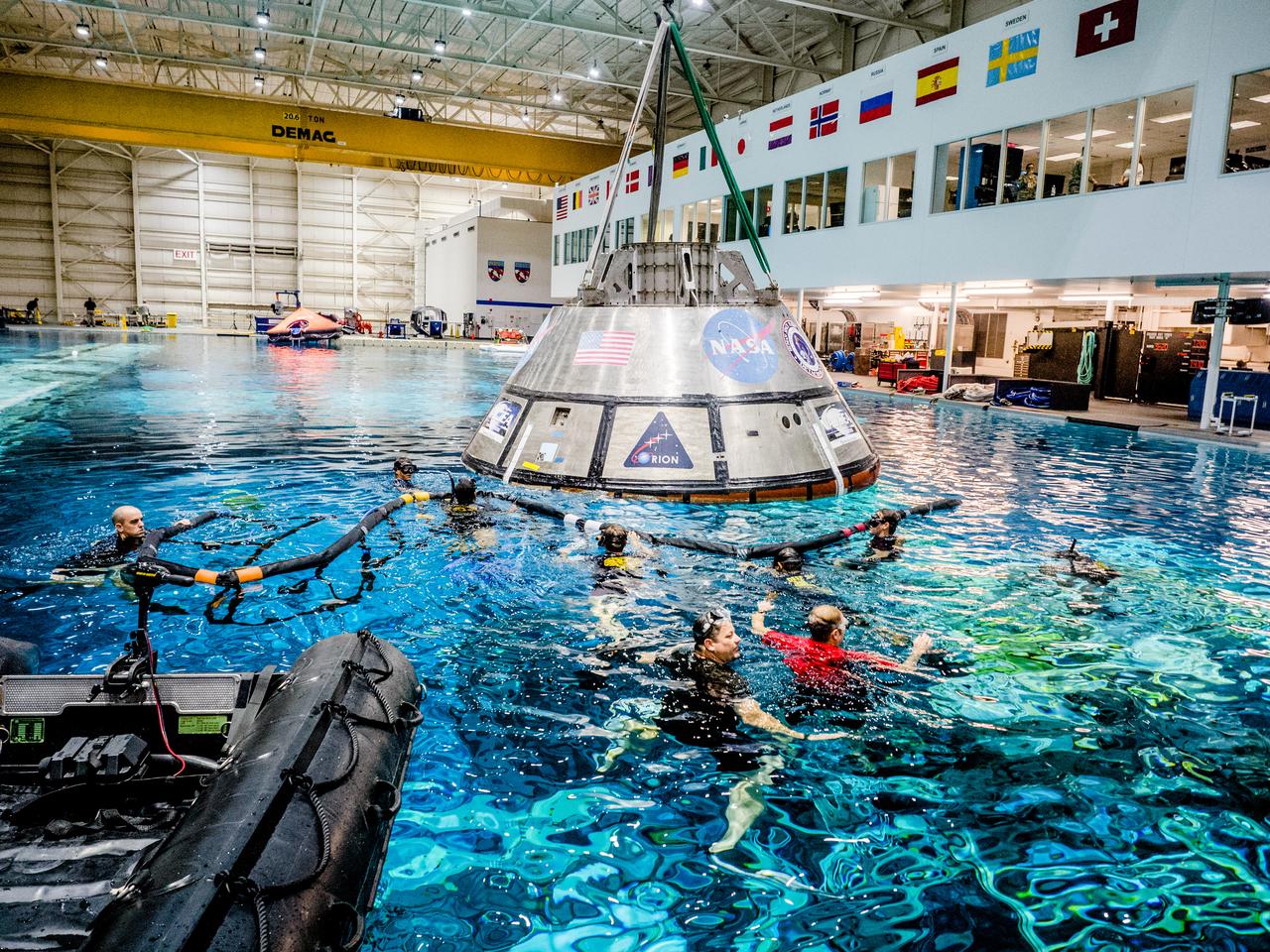
A group of U.S. Navy divers, Air Force pararescumen and Coast Guard rescue swimmers practice Orion underway recovery techniques this week in the Neutral Buoyancy Laboratory (NBL) at NASA’s Johnson Space Center in Houston on Sept. 21, 2016, to prepare for the first test flight of an uncrewed Orion spacecraft with the agency’s Space Launch System rocket during Artemis I. Part of Batch image transfer from Flickr.
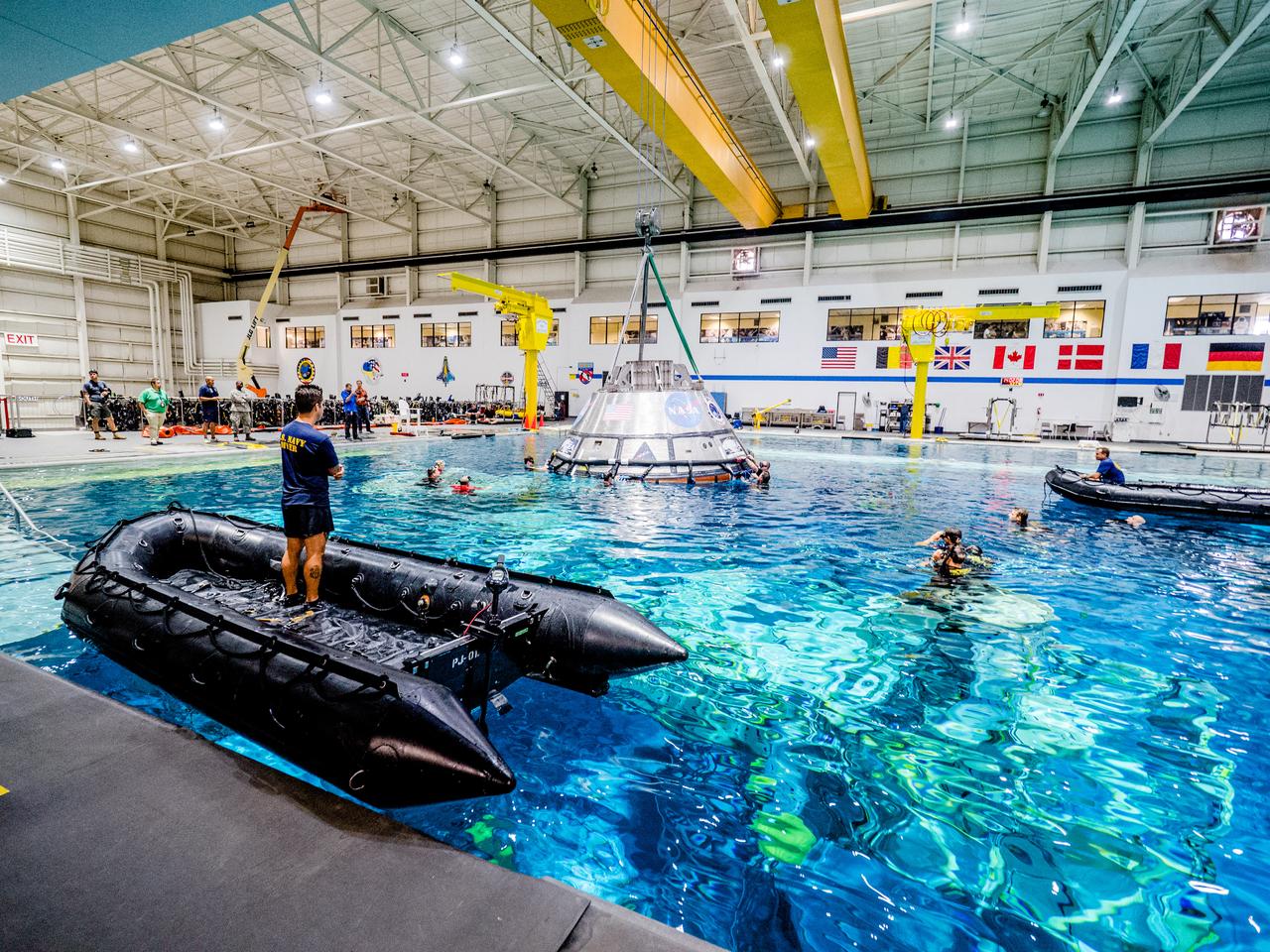
A group of U.S. Navy divers, Air Force pararescumen and Coast Guard rescue swimmers practice Orion underway recovery techniques this week in the Neutral Buoyancy Laboratory (NBL) at NASA’s Johnson Space Center in Houston on Sept. 21, 2016, to prepare for the first test flight of an uncrewed Orion spacecraft with the agency’s Space Launch System rocket during Artemis I.Part of Batch image transfer from Flickr.
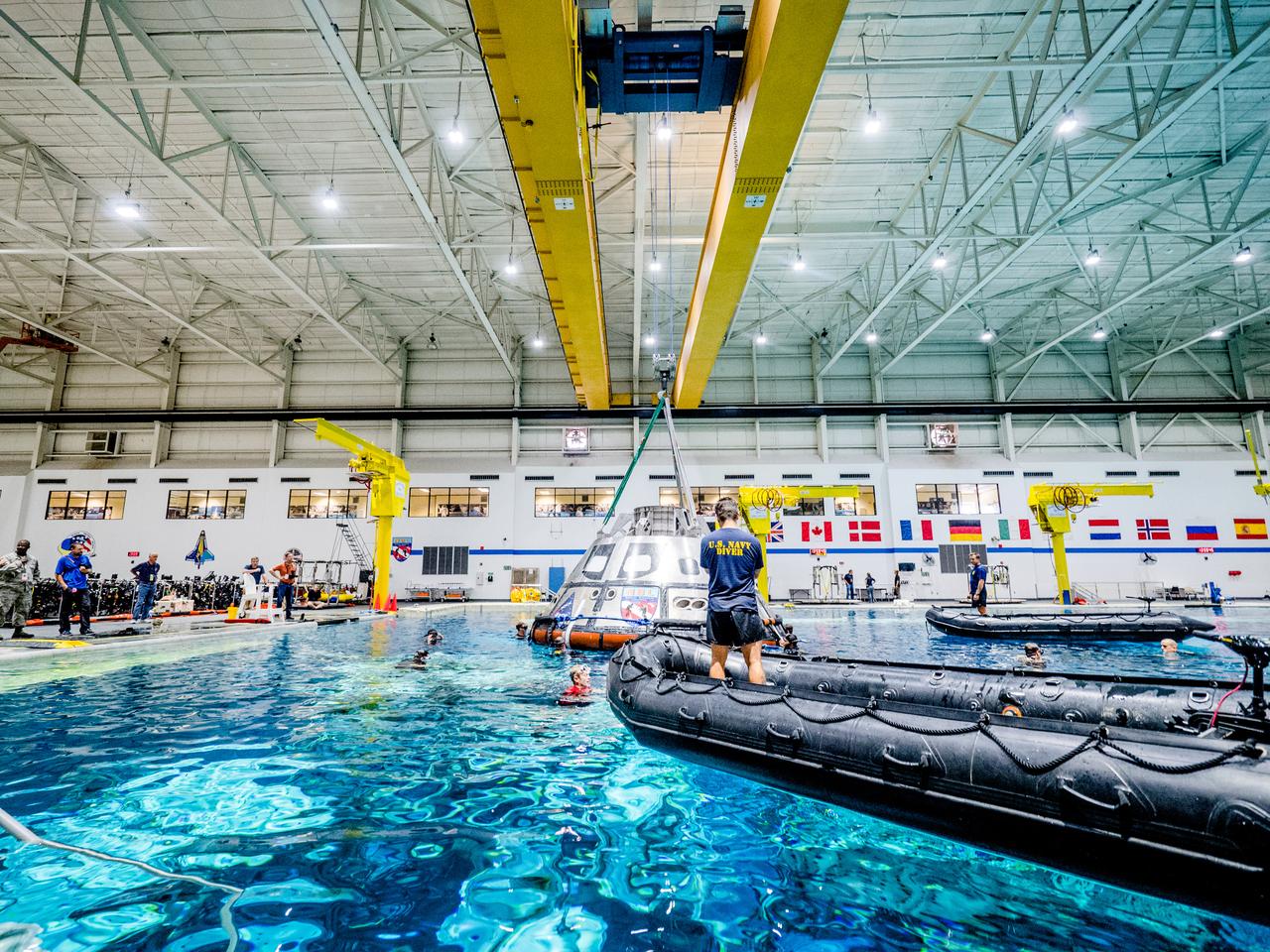
A group of U.S. Navy divers, Air Force pararescumen and Coast Guard rescue swimmers practice Orion underway recovery techniques this week in the Neutral Buoyancy Laboratory (NBL) at NASA’s Johnson Space Center in Houston on Sept. 21, 2016, to prepare for the first test flight of an uncrewed Orion spacecraft with the agency’s Space Launch System rocket during Artemis I. Part of Batch images transfer from Flickr.
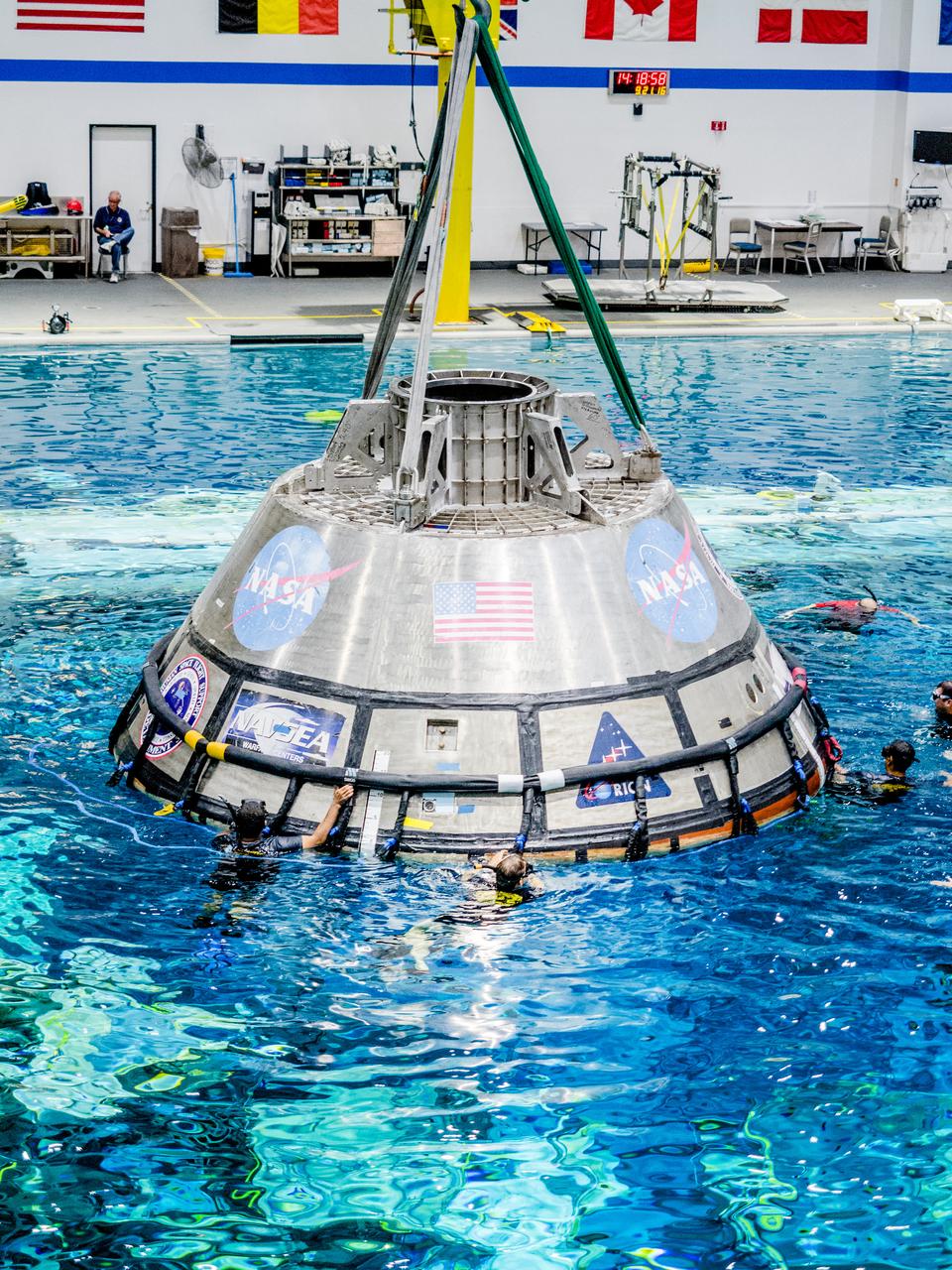
A group of U.S. Navy divers, Air Force pararescumen and Coast Guard rescue swimmers practice Orion underway recovery techniques this week in the Neutral Buoyancy Laboratory (NBL) at NASA’s Johnson Space Center in Houston on Sept. 21, 2016, to prepare for the first test flight of an uncrewed Orion spacecraft with the agency’s Space Launch System rocket during Artemis I.
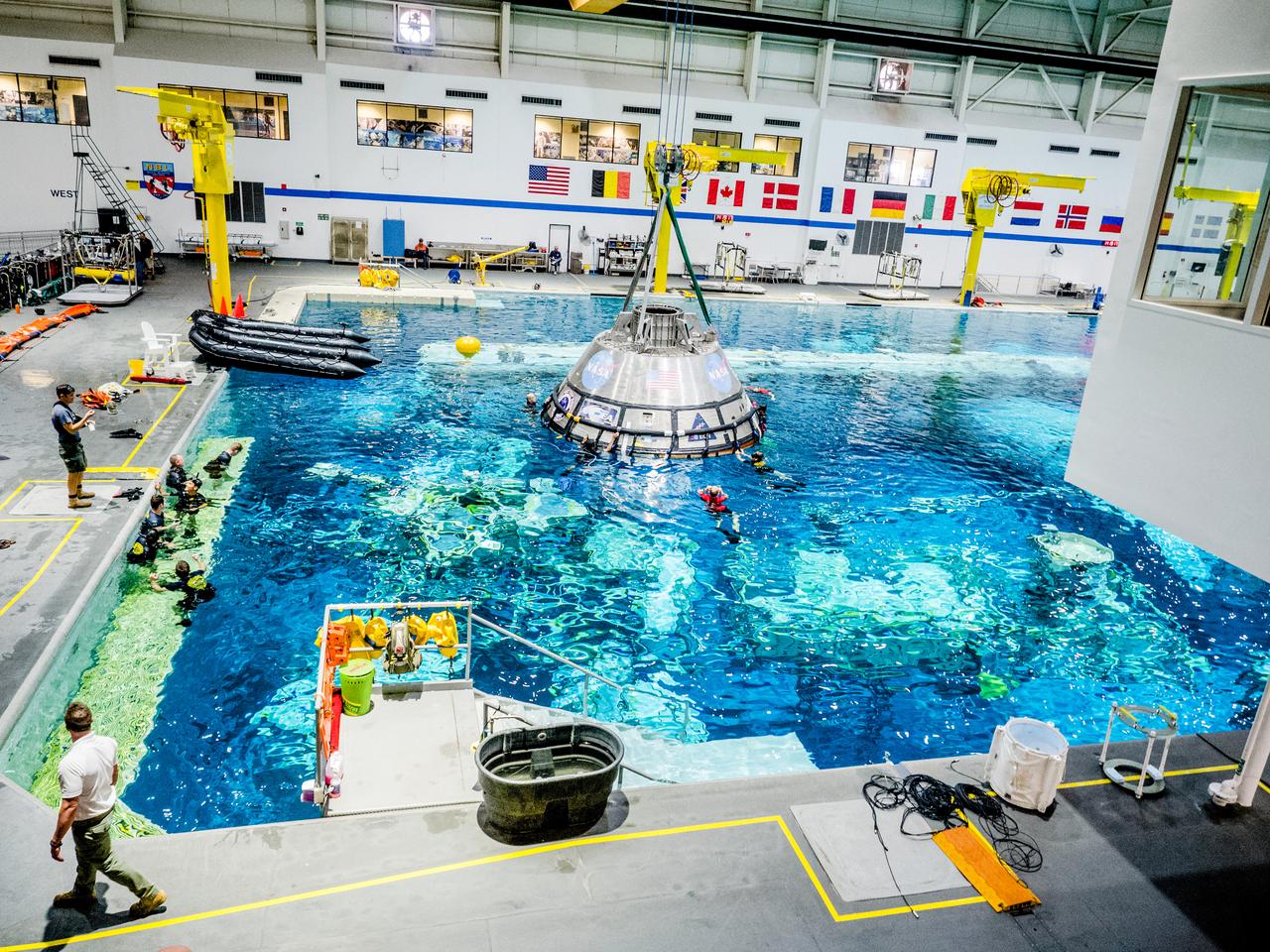
A group of U.S. Navy divers, Air Force pararescumen and Coast Guard rescue swimmers practice Orion underway recovery techniques this week in the Neutral Buoyancy Laboratory (NBL) at NASA’s Johnson Space Center in Houston on Sept. 21, 2016, to prepare for the first test flight of an uncrewed Orion spacecraft with the agency’s Space Launch System rocket during Artemis I. Part of Batch images transfer from Flickr.
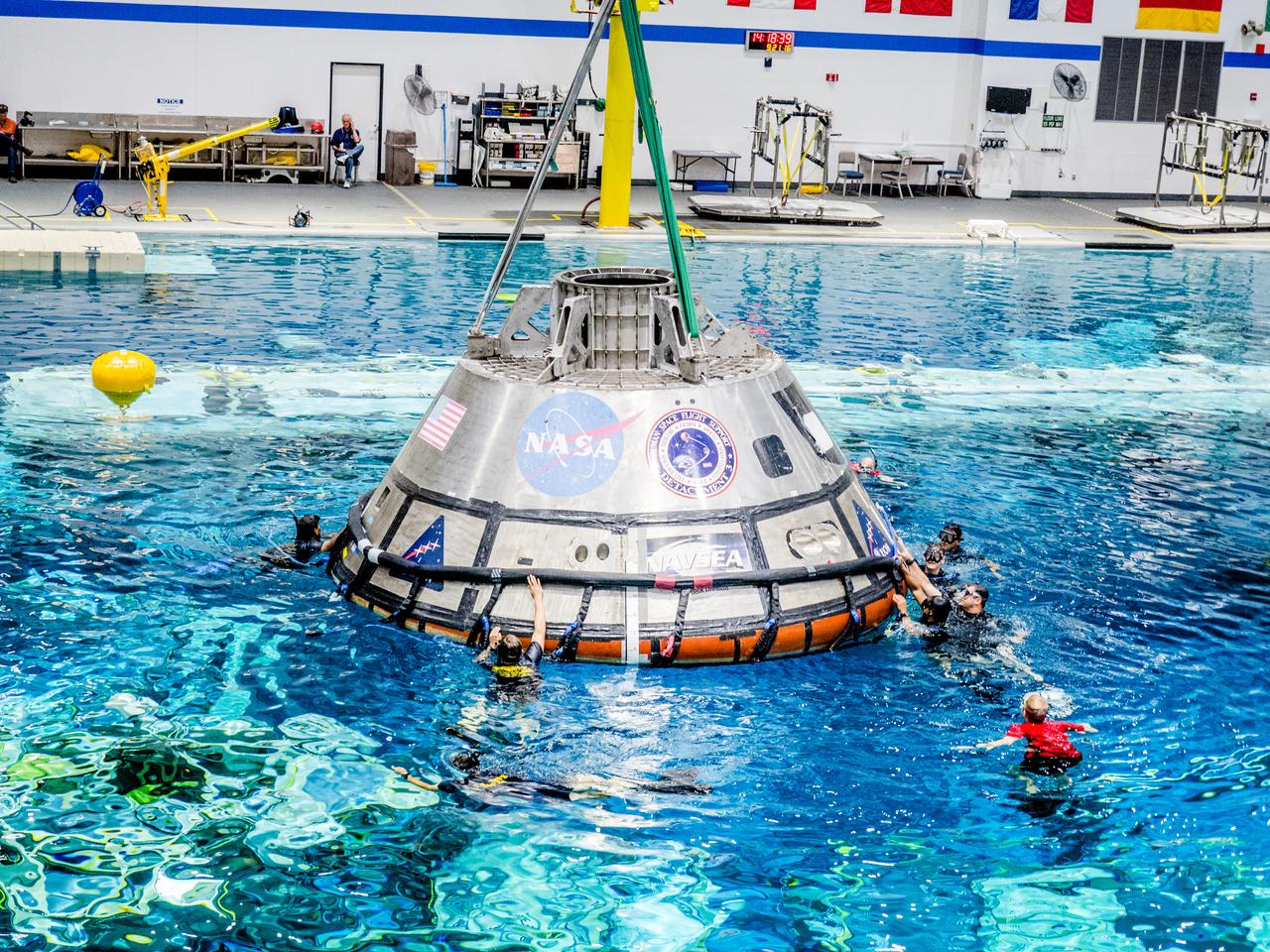
A group of U.S. Navy divers, Air Force pararescumen and Coast Guard rescue swimmers practice Orion underway recovery techniques this week in the Neutral Buoyancy Laboratory (NBL) at NASA’s Johnson Space Center in Houston on Sept. 21, 2016, to prepare for the first test flight of an uncrewed Orion spacecraft with the agency’s Space Launch System rocket during Artemis I. Part of Batch images transfer from Flickr.
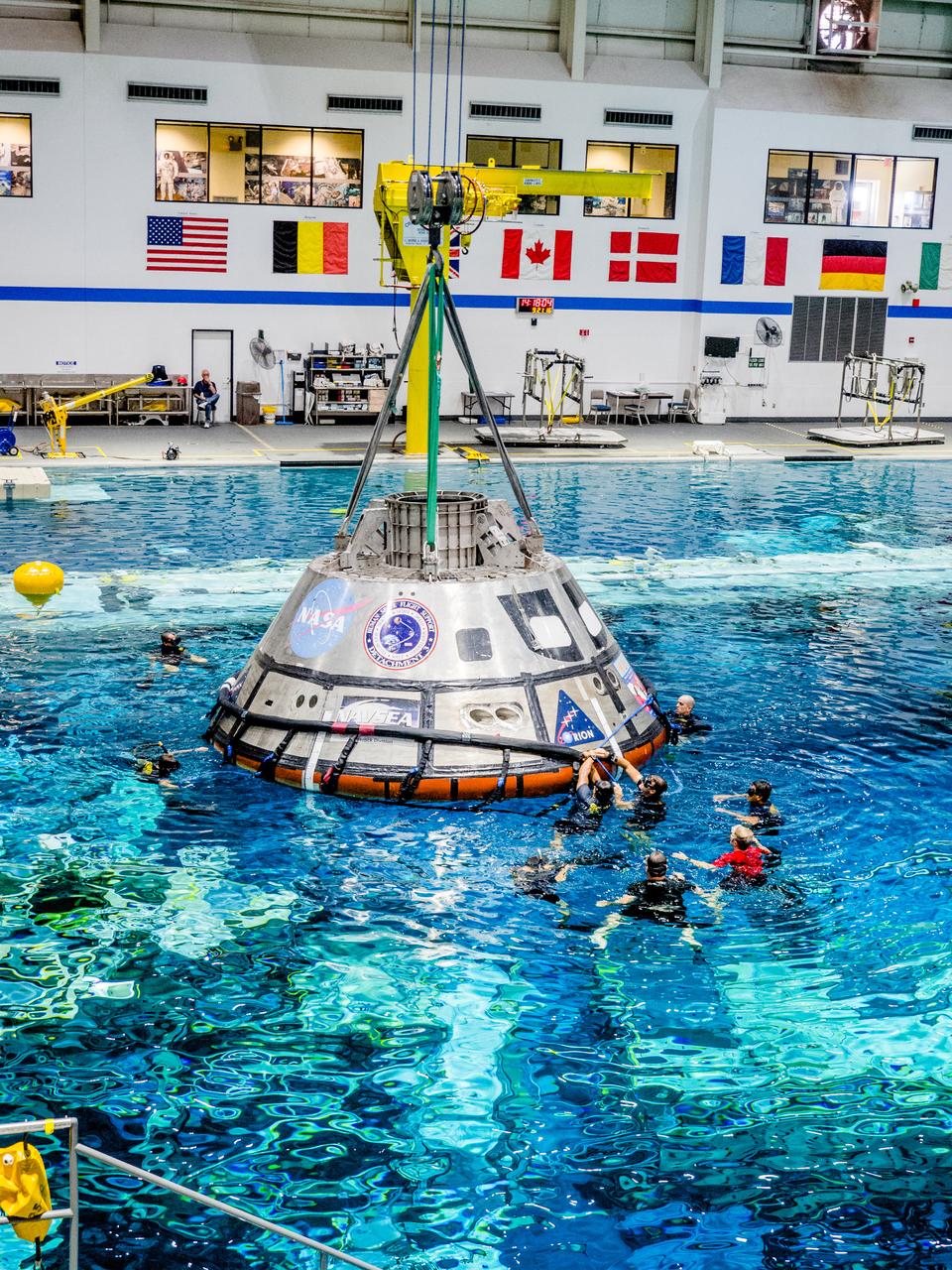
A group of U.S. Navy divers, Air Force pararescumen and Coast Guard rescue swimmers practice Orion underway recovery techniques this week in the Neutral Buoyancy Laboratory (NBL) at NASA’s Johnson Space Center in Houston on Sept. 21, 2016, to prepare for the first test flight of an uncrewed Orion spacecraft with the agency’s Space Launch System rocket during Artemis I. Part of Batch image transfer from Flickr.
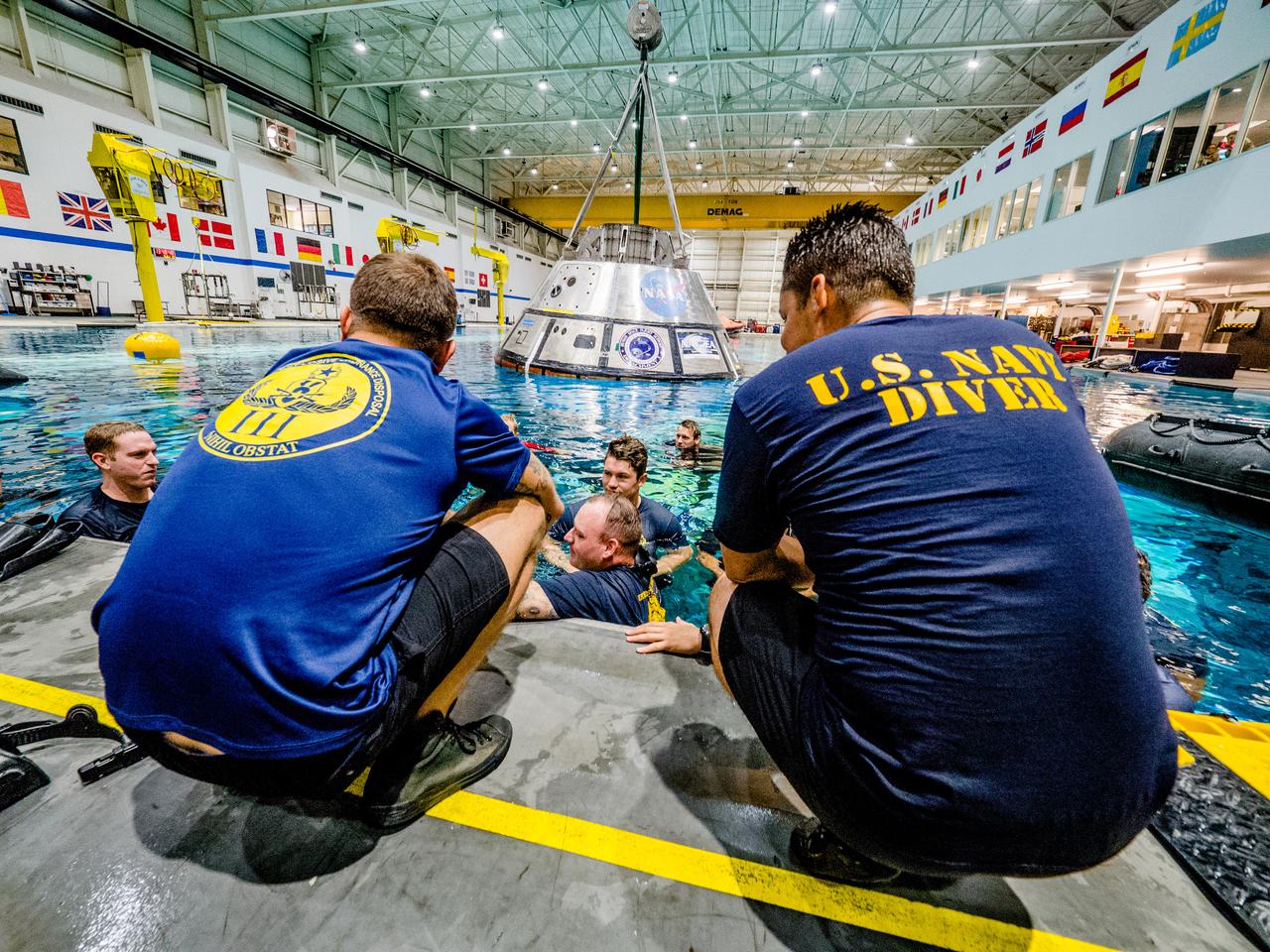
A group of U.S. Navy divers, Air Force pararescumen and Coast Guard rescue swimmers practice Orion underway recovery techniques this week in the Neutral Buoyancy Laboratory (NBL) at NASA’s Johnson Space Center in Houston on Sept. 21, 2016, to prepare for the first test flight of an uncrewed Orion spacecraft with the agency’s Space Launch System rocket during Artemis I. Part of Batch images transfer from Flickr.
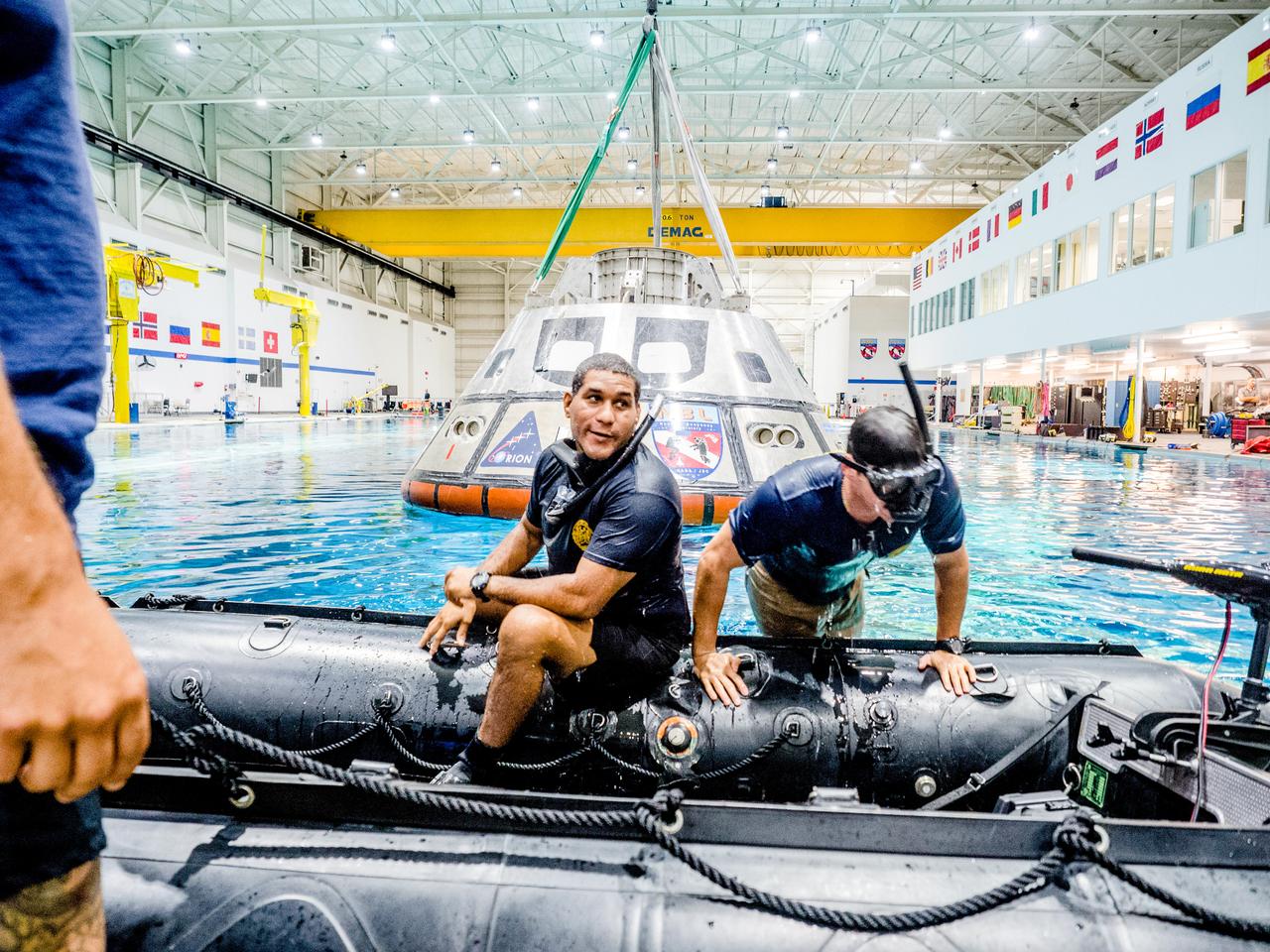
A group of U.S. Navy divers, Air Force pararescumen and Coast Guard rescue swimmers practice Orion underway recovery techniques this week in the Neutral Buoyancy Laboratory (NBL) at NASA’s Johnson Space Center in Houston on Sept. 21, 2016, to prepare for the first test flight of an uncrewed Orion spacecraft with the agency’s Space Launch System rocket during Artemis I. Part of Batch image transfer from Flickr.
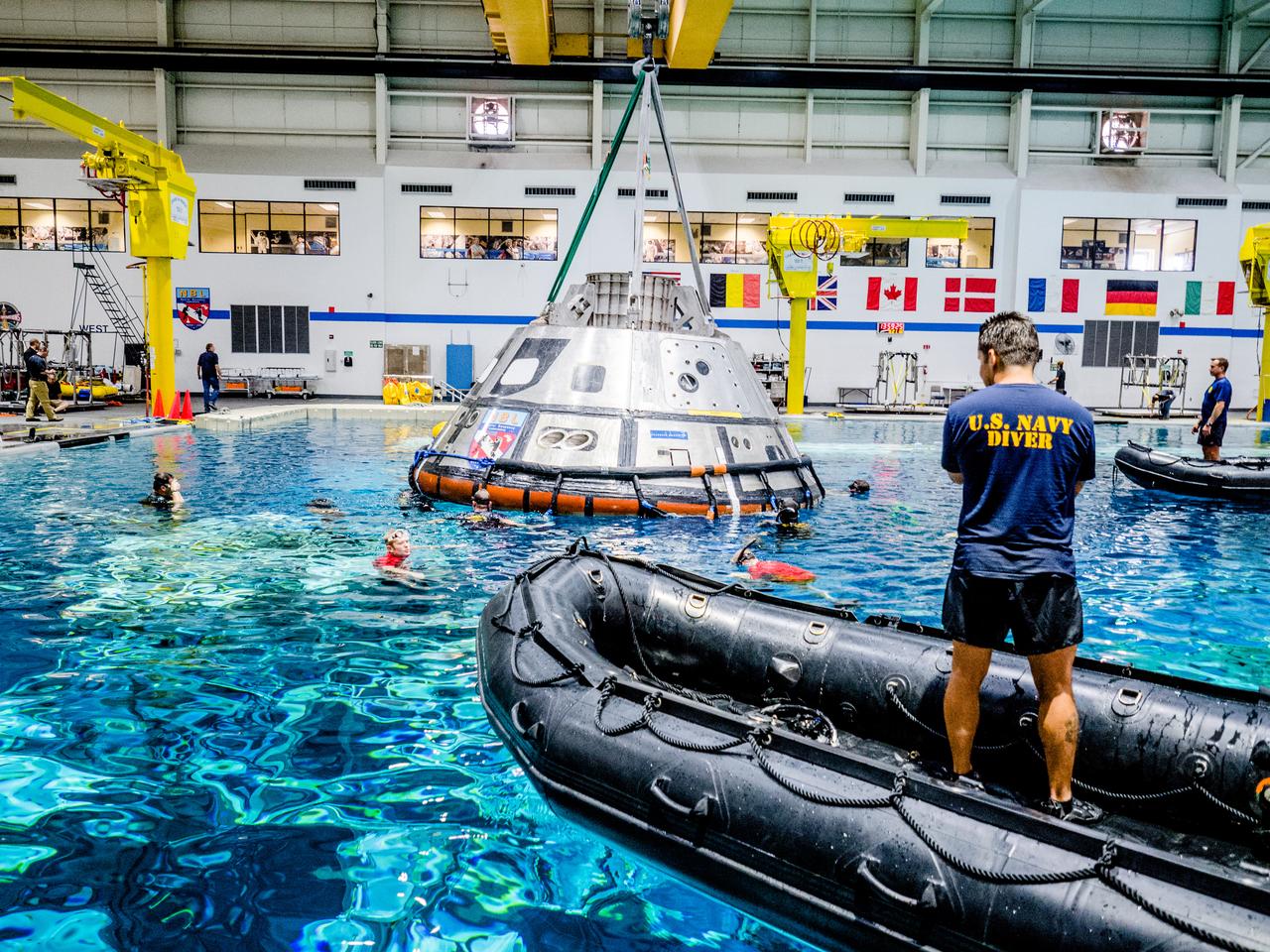
A group of U.S. Navy divers, Air Force pararescumen and Coast Guard rescue swimmers practice Orion underway recovery techniques this week in the Neutral Buoyancy Laboratory (NBL) at NASA’s Johnson Space Center in Houston on Sept. 21, 2016, to prepare for the first test flight of an uncrewed Orion spacecraft with the agency’s Space Launch System rocket during Artemis I.Part of Batch image transfer from Flickr.
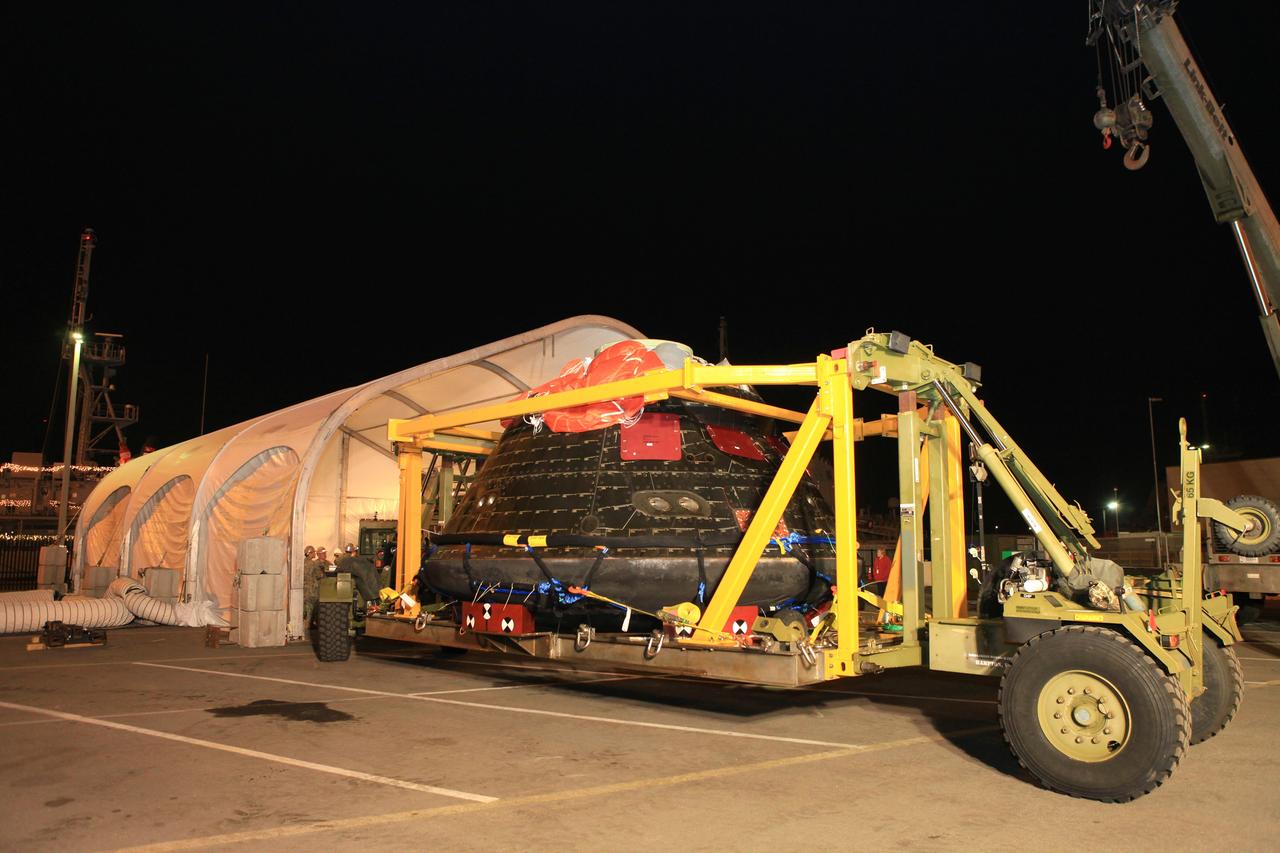
SAN DIEGO, Calif. -- The Orion crew module has been transported to the Mole Pier at Naval Base San Diego in California where it will be prepared for return to NASA's Kennedy Space Center in Florida. Orion was secured on its crew module recovery cradle in the well deck of the USS Anchorage after it was recovered from the Pacific Ocean. After lifting off at 7:05 a.m. EST on Dec. 5, atop a Delta IV Heavy rocket from Space Launch Complex 37 at Cape Canaveral Air Force Station in Florida, Orion completed a two-orbit, four-and-a-half hour mission to test systems critical to crew safety, including the launch abort system, the heat shield and the parachute system. NASA, the U.S. Navy and Lockheed Martin coordinated efforts to recover Orion after splashdown in the Pacific Ocean. The Ground Systems Development and Operations Program led the recovery efforts. For more information, visit www.nasa.gov/orion Photo credit: NASA/Cory Huston
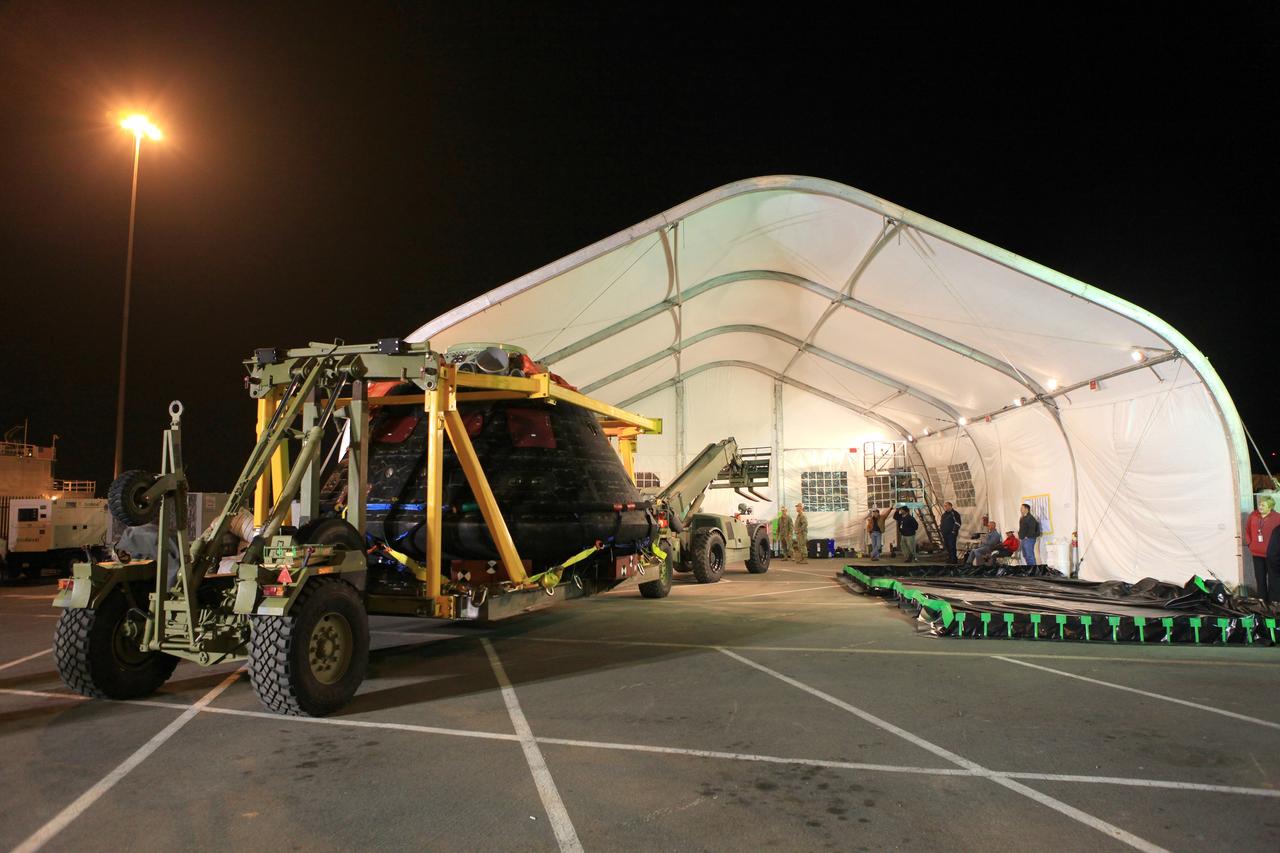
SAN DIEGO, Calif. -- The Orion crew module is being moved into a covered structure at the Mole Pier at Naval Base San Diego in California where it will be prepared for return to NASA's Kennedy Space Center in Florida. Orion was secured on its crew module recovery cradle in the well deck of the USS Anchorage after it was recovered from the Pacific Ocean. After lifting off at 7:05 a.m. EST on Dec. 5, atop a Delta IV Heavy rocket from Space Launch Complex 37 at Cape Canaveral Air Force Station in Florida, Orion completed a two-orbit, four-and-a-half hour mission to test systems critical to crew safety, including the launch abort system, the heat shield and the parachute system. NASA, the U.S. Navy and Lockheed Martin coordinated efforts to recover Orion after splashdown in the Pacific Ocean. The Ground Systems Development and Operations Program led the recovery efforts. For more information, visit www.nasa.gov/orion Photo credit: NASA/Cory Huston
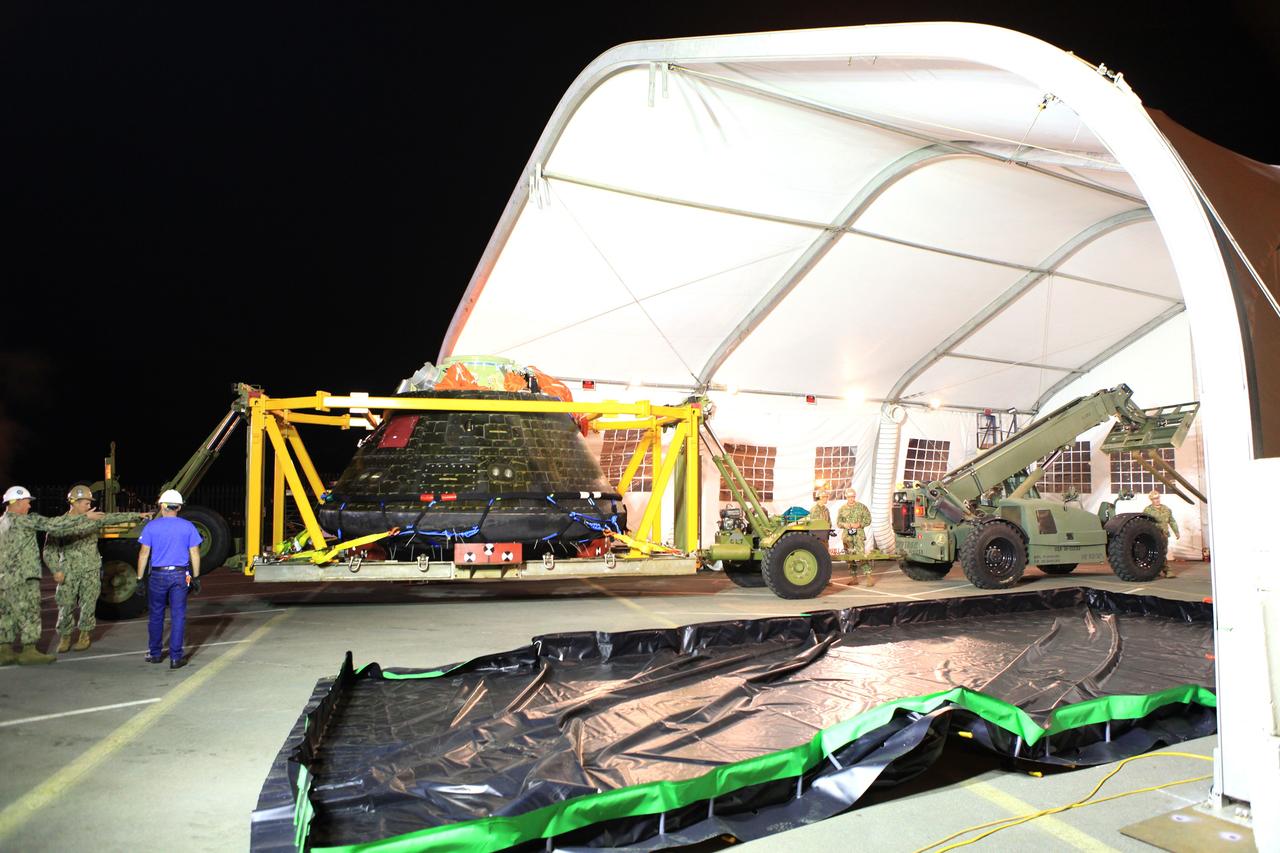
SAN DIEGO, Calif. -- The Orion crew module is being moved into a covered structure at the Mole Pier at Naval Base San Diego in California where it will be prepared for return to NASA's Kennedy Space Center in Florida. Orion was secured on its crew module recovery cradle in the well deck of the USS Anchorage after it was recovered from the Pacific Ocean. After lifting off at 7:05 a.m. EST on Dec. 5, atop a Delta IV Heavy rocket from Space Launch Complex 37 at Cape Canaveral Air Force Station in Florida, Orion completed a two-orbit, four-and-a-half hour mission to test systems critical to crew safety, including the launch abort system, the heat shield and the parachute system. NASA, the U.S. Navy and Lockheed Martin coordinated efforts to recover Orion after splashdown in the Pacific Ocean. The Ground Systems Development and Operations Program led the recovery efforts. For more information, visit www.nasa.gov/orion Photo credit: NASA/Cory Huston
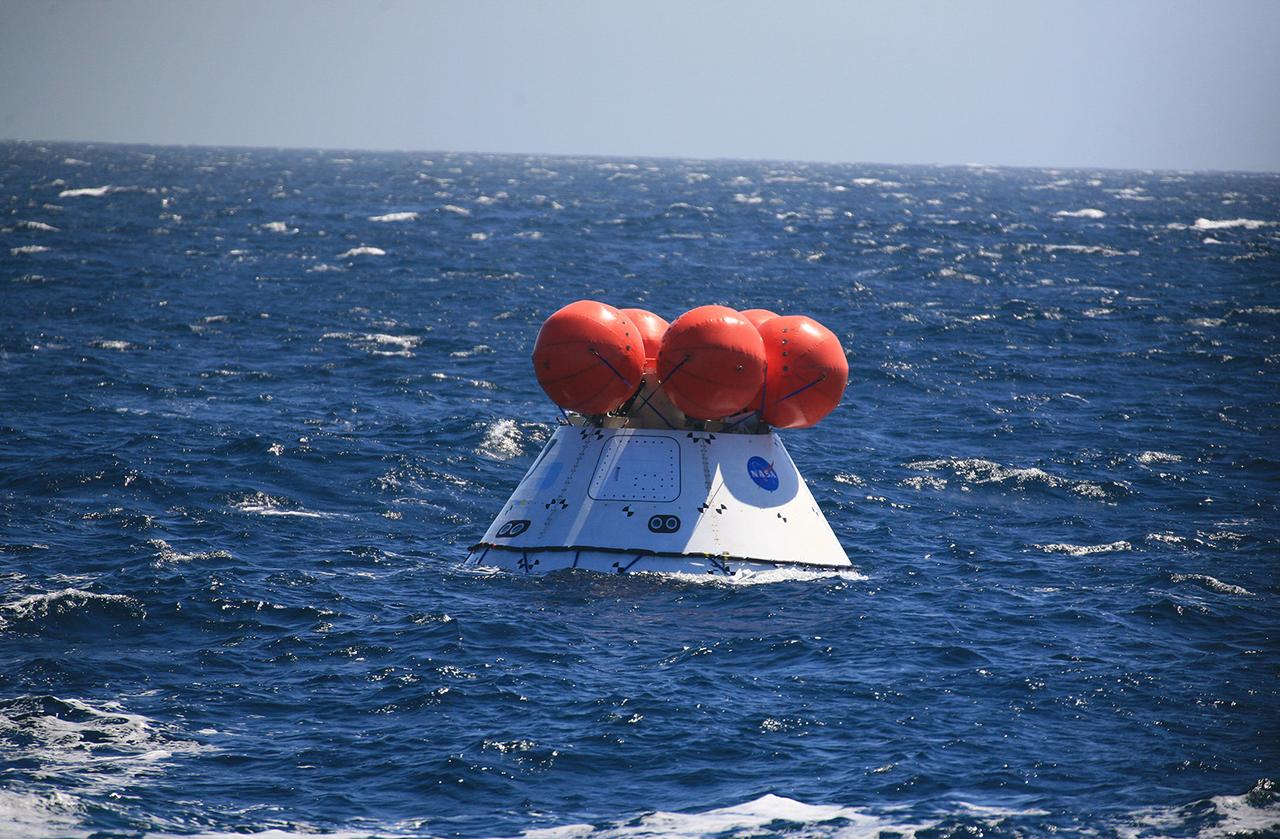
A test version of Orion floats in the Pacific Ocean, ready to be recovered by NASA and the US Navy on Sept. 17, 2014. The combined NASA/Navy team is testing tools and techniques that will be used to retrieve Orion when it splashes down following Exploration Flight Test-1 (EFT-1). Part of Batch image transfer from Flickr.
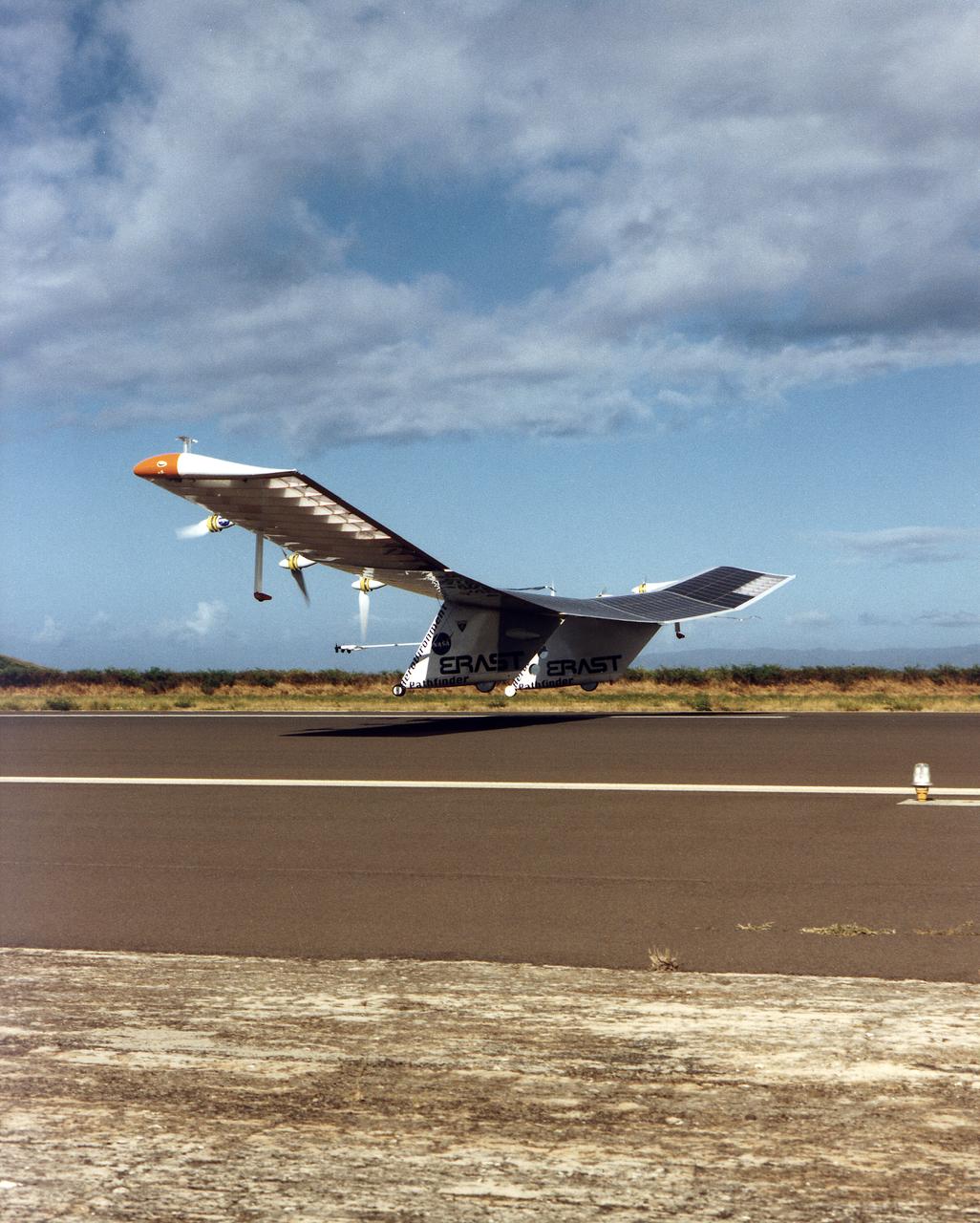
The Pathfinder aircraft has set a new unofficial world record for high-altitude flight of over 71,500 feet for solar-powered aircraft at the U.S. Navy's Pacific Missile Range Facility, Kauai, Hawaii. Pathfinder was designed and manufactured by AeroVironment, Inc, of Simi Valley, California, and was operated by the firm under a jointly sponsored research agreement with NASA's Dryden Flight Research Center, Edwards, California. Pathfinder's record-breaking flight occurred July 7, 1997. The aircraft took off at 11:34 a.m. PDT, passed its previous record altitude of 67,350 feet at about 5:45 p.m. and then reached its new record altitude at 7 p.m. The mission ended with a perfect nighttime landing at 2:05 a.m. PDT July 8. The new record is the highest altitude ever attained by a propellor-driven aircraft. Before Pathfinder, the altitude record for propellor-driven aircraft was 67,028 feet, set by the experimental Boeing Condor remotely piloted aircraft.
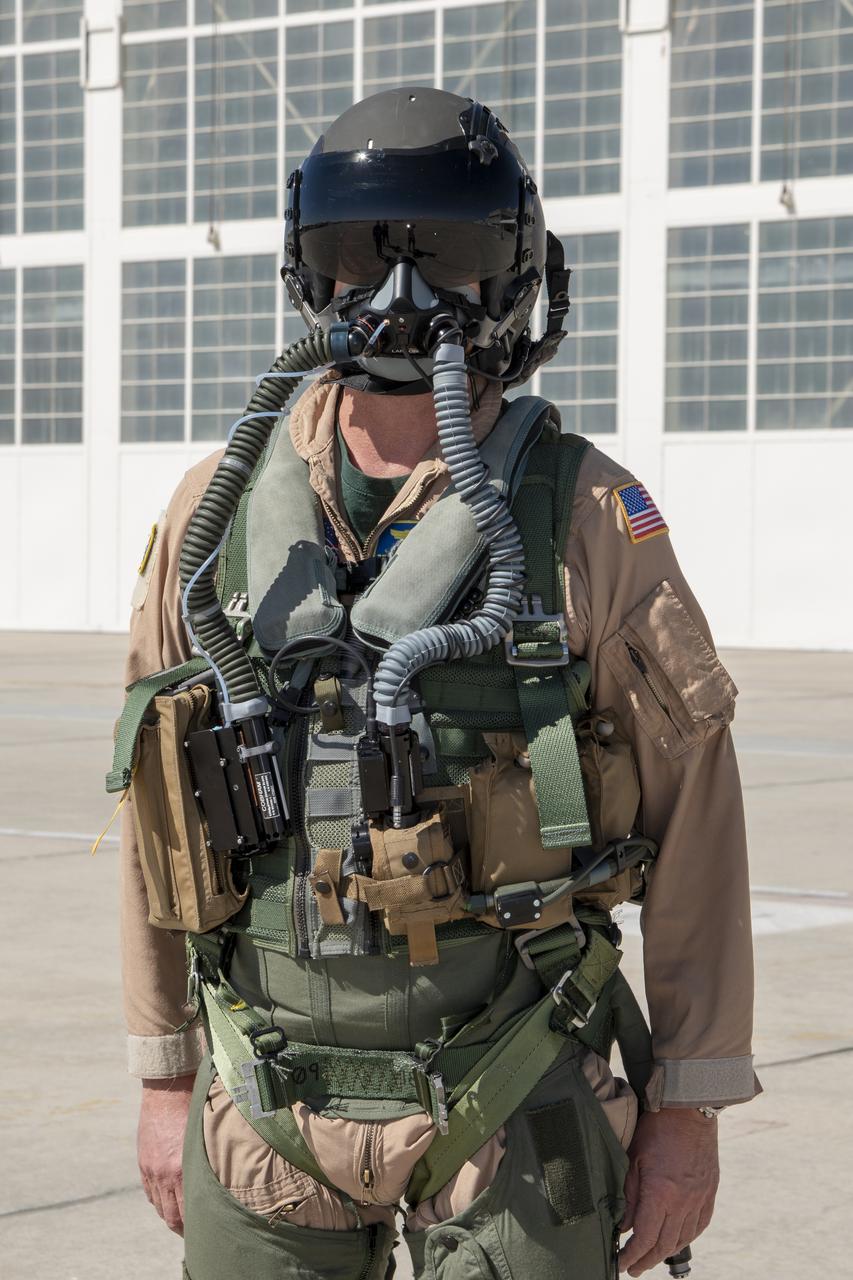
NASA Pilot Nils Larson wears a U.S. Navy harness configuration to show the integrated parachute harness and the built-in survival vest. The Navy configuration is bulkier and weighs more than the U.S. Air Force harness. Both configurations are being used in the Pilot Breathing Assessment program at NASA’s Armstrong Flight Research Center in California.
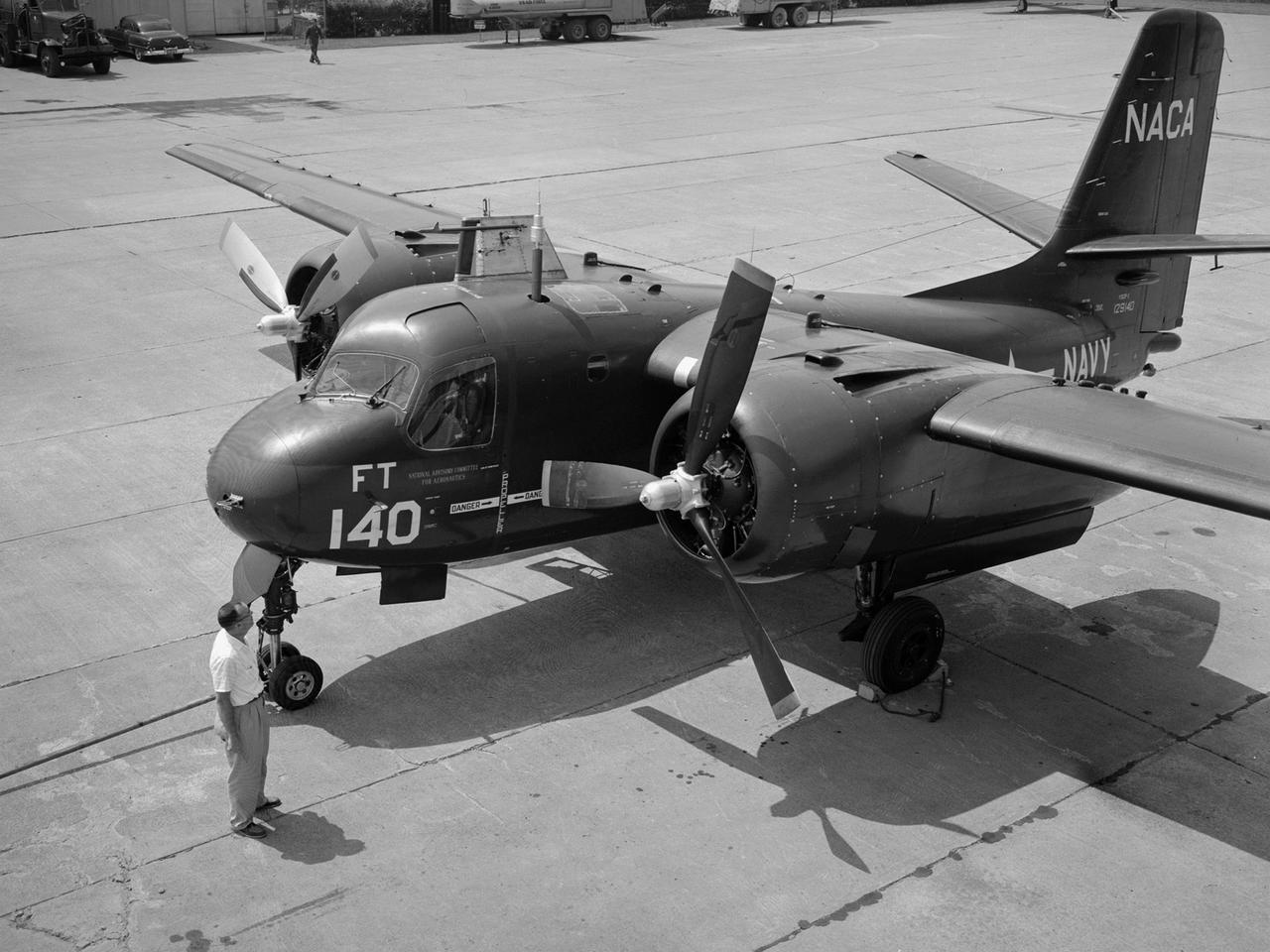
The NACA’s Lewis Flight Propulsion Laboratory acquired the Grumman S2F-1 Tracker from the Navy in 1955 to study icing instrumentation. Lewis’s icing research program was winding down at the time. The use of jet engines was increasing thus reducing the threat of ice accumulation. Nonetheless Lewis continued research on the instrumentation used to detect icing conditions. The S2F-1 Tracker was a carrier-based submarine hunter for the Navy. Grumman developed the Tracker as a successor to its Korean War-era Guardian patrol aircraft. Prototypes first flew in late 1952 and battle-ready versions entered Naval service in early 1954. The Navy utilized the Trackers to protect fleets from attack.

Recovery team members use a crane to lift a test version of Orion off the deck of the Navy's USS Salvor on Sept. 13, 2014. A combined NASA and U.S. Navy team practiced recovery techniques off the coast of California over the course of the next week -- first with the crane, as seen here, then using the USS Anchorage's well deck -- in preparation for Exploration Flight Test-1 (EFT-1). Part of Batch image transfer from Flickr.
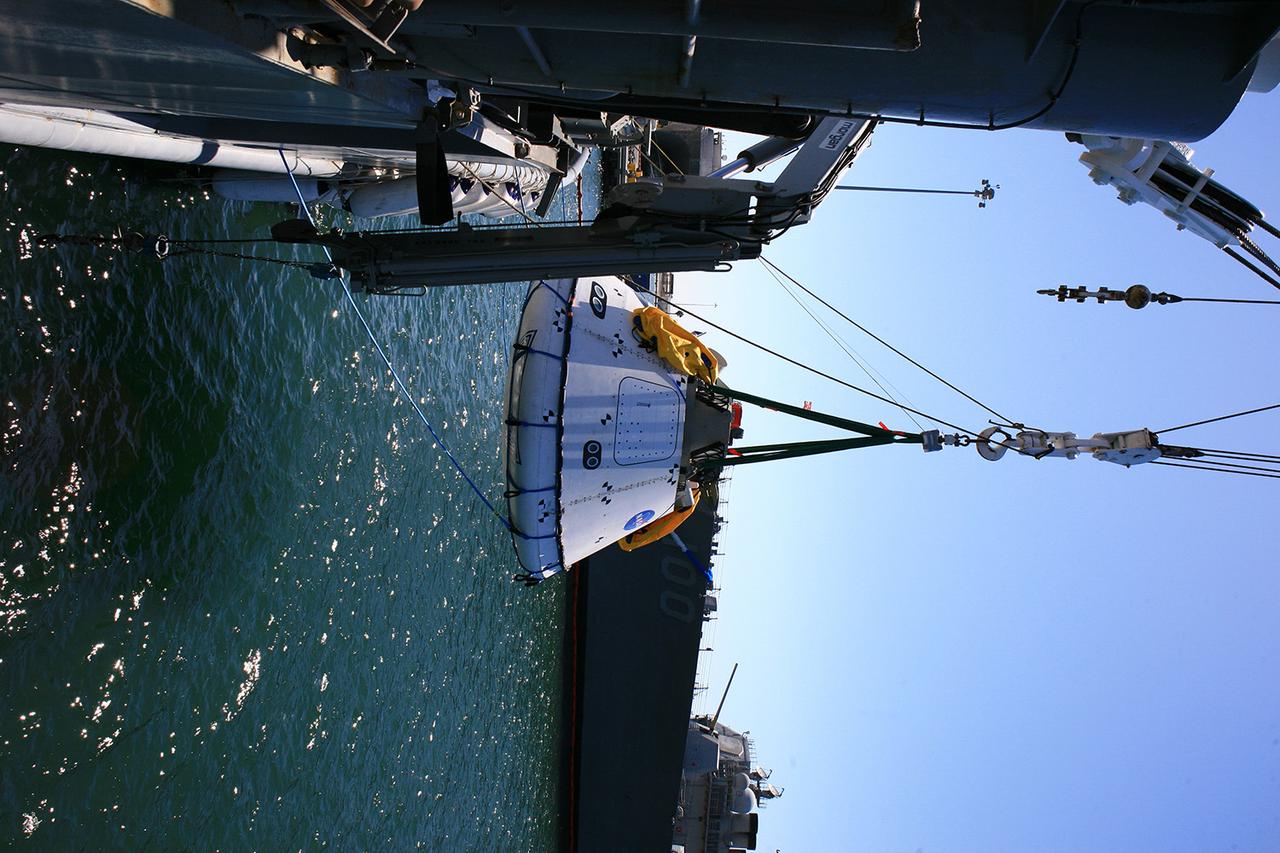
A test version of Orion is recovered from the Pacific Ocean using a crane on board the Navy's USS Salvor during tests on Sept. 12, 2014. A combined NASA and U.S. Navy team practiced recovery techniques off the coast of California over the course of the next week -- first with the crane, as seen here, then using the USS Anchorage's well deck -- in preparation for Exploration Flight Test-1 (EFT-1). Part of Batch image transfer from Flickr.
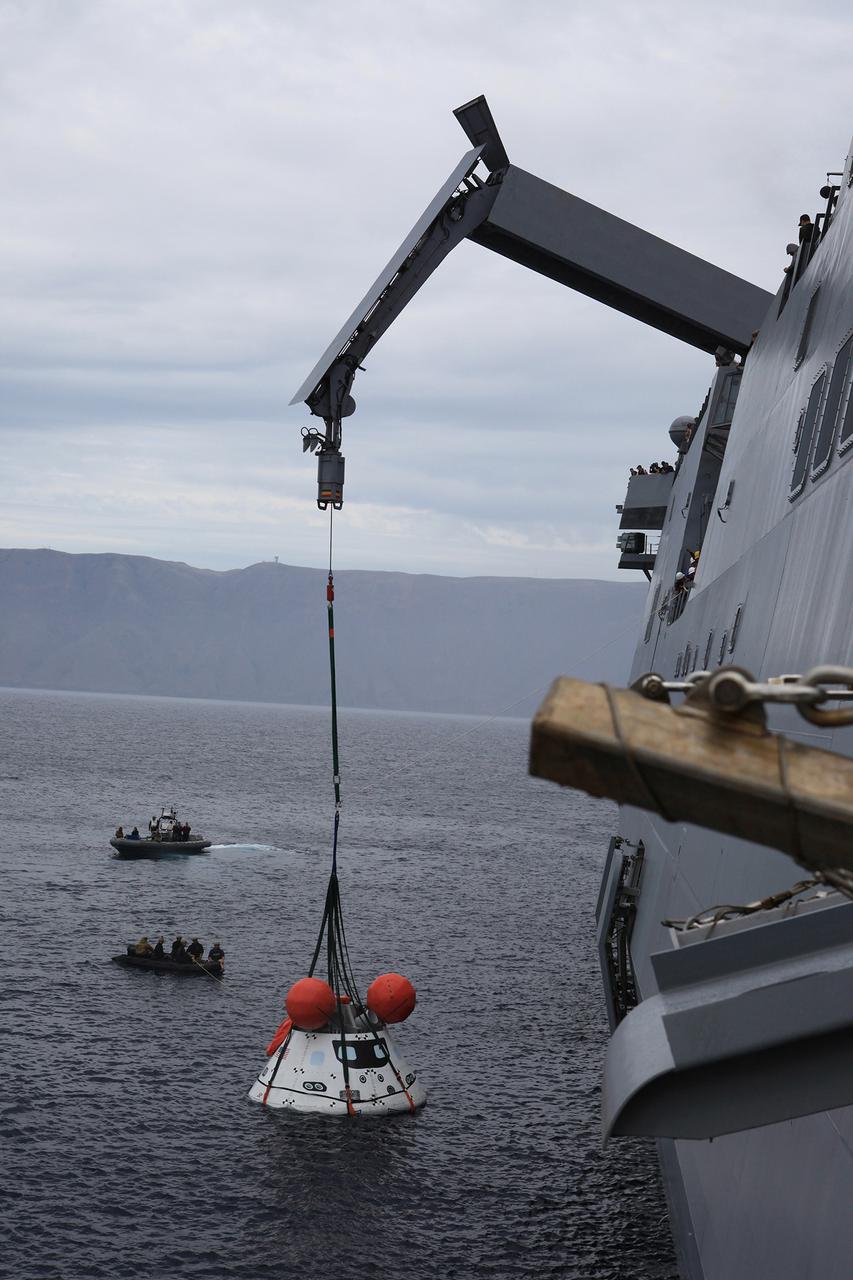
The NASA and US Navy recovery crews practice lifting the Orion boilerplate test article out of the water using a crane on the USS Anchorage on Aug. 3, 2014. NASA and U.S. Navy practiced recovery techniques off the coast of California, in preparation for Exploration Flight Test-1 (EFT-1). Part of Batch image transfer from Flickr.
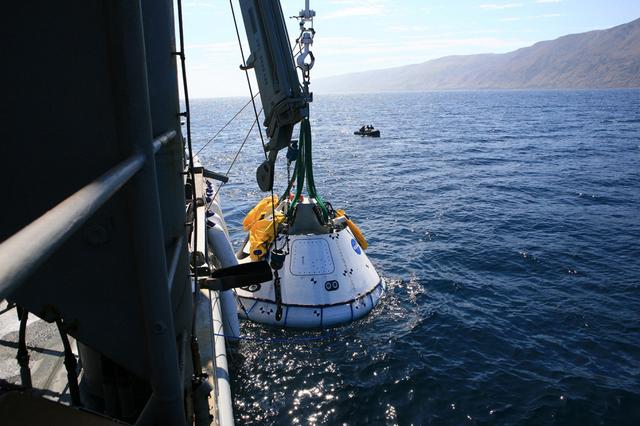
Recovery team members lower a test version of Orion into the Pacific Ocean using a crane on board the Navy's USS Salvor on Sept. 13, 2014. A combined NASA and U.S. Navy team practiced recovery techniques off the coast of California over the course of the next week -- first with the crane, as seen here, then using the USS Anchorage's well deck -- in preparation for Exploration Flight Test-1 (EFT-1). Part of Batch image transfer from Flickr.
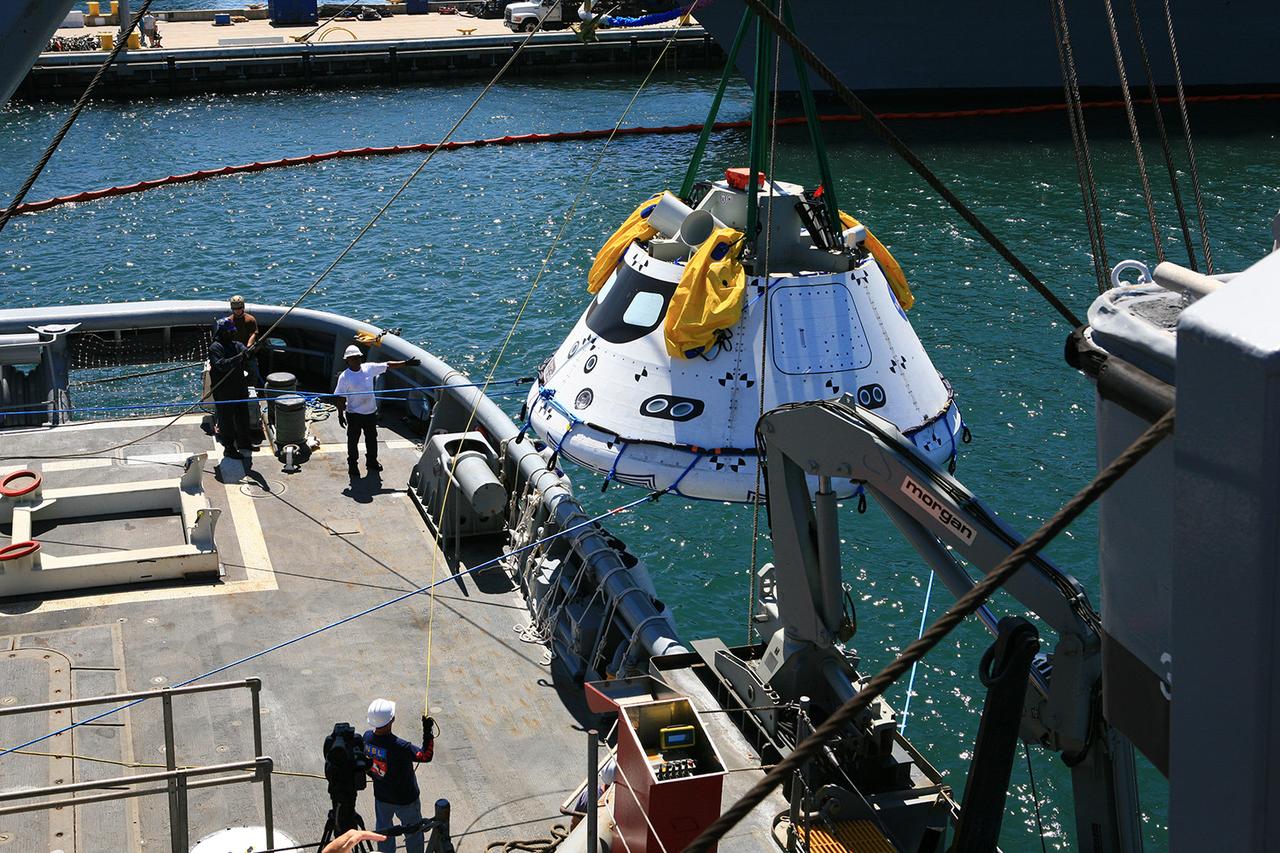
A test version of Orion is recovered from the Pacific Ocean using a crane on board the Navy's USS Salvor during tests on Sept. 12, 2014. A combined NASA and U.S. Navy team practiced recovery techniques off the coast of California over the course of the next week -- first with the crane, as seen here, then using the USS Anchorage's well deck -- in preparation for Exploration Flight Test-1 (EFT-1). Part of Batch image transfer from Flickr.
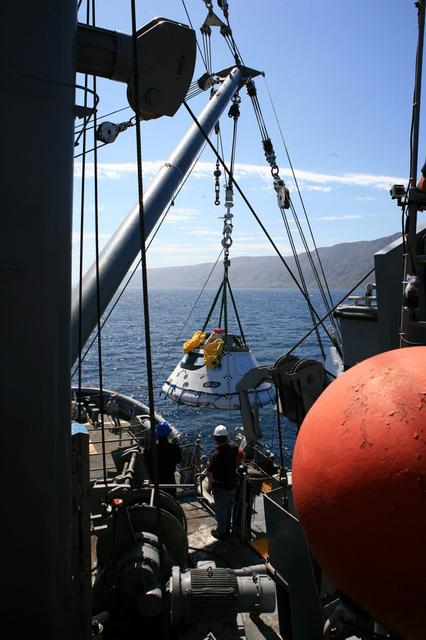
Recovery team members use a crane to lift a test version of Orion off the deck of the Navy's USS Salvor on Sept. 13, 2014. A combined NASA and U.S. Navy team practiced recovery techniques off the coast of California over the course of the next week -- first with the crane, as seen here, then using the USS Anchorage's well deck -- in preparation for Exploration Flight Test-1 (EFT-1). Part of Batch image transfer from Flickr.
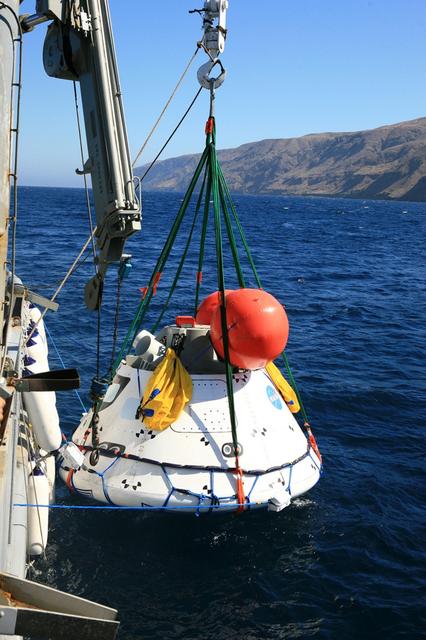
Recovery team members retrieve a test version of Orion from the Pacific Ocean using a crane on the Navy's USS Salvor on Sept. 13, 2014. A combined NASA and U.S. Navy team practiced recovery techniques off the coast of California over the course of the the week -- first with the Salvor's crane, then using the USS Anchorage's well deck -- in preparation for Exploration Flight Test-1 (EFT-1). Part of Batch image transfer from Flickr.
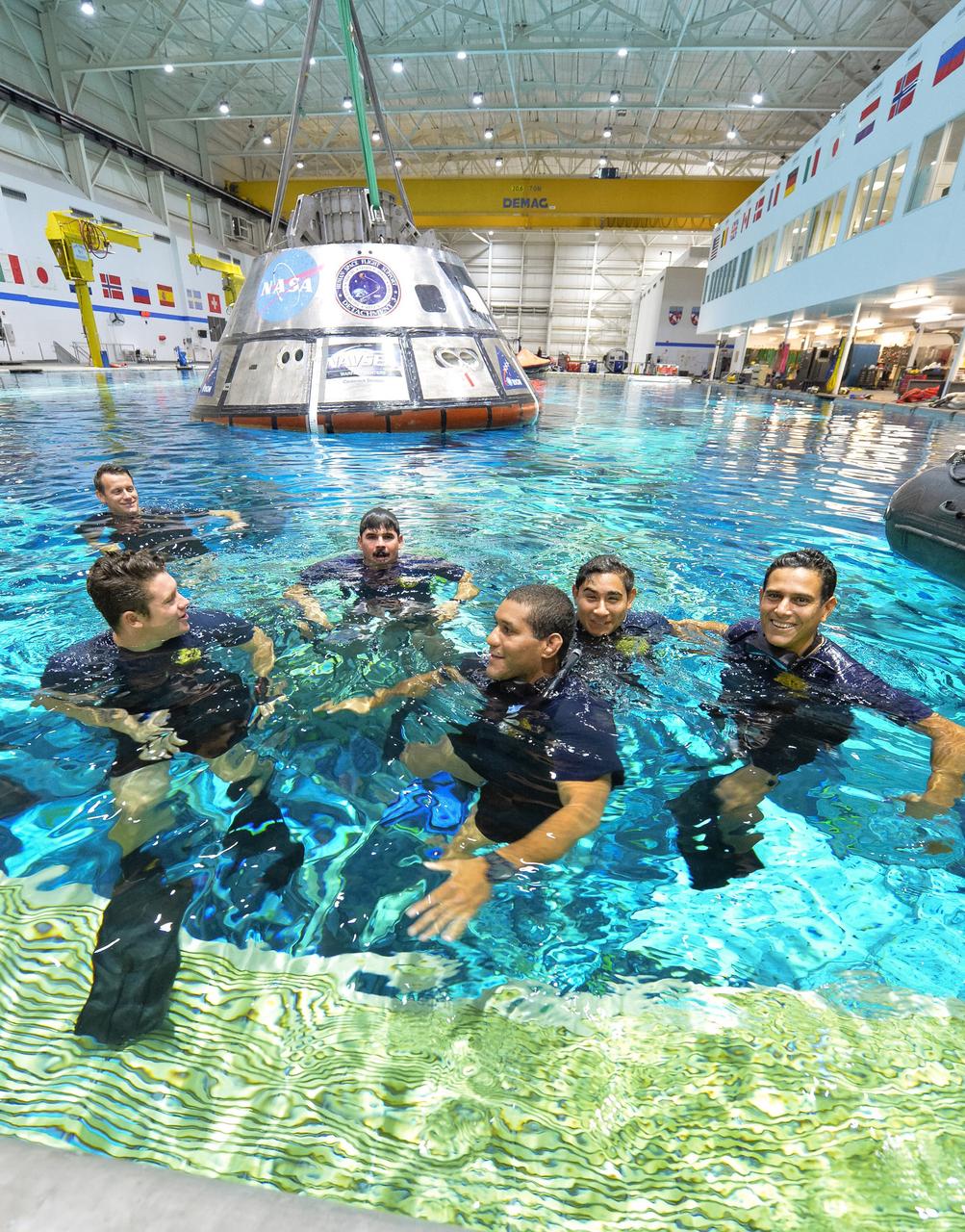
U.S. Navy divers are training in the Neutral Buoyancy Laboratory at NASA’s Johnson Space Center in Houston. Navy divers, Air Force pararescuemen and Coast Guard rescue swimmers practice Orion underway recovery techniques using a test version of the Orion spacecraft. Training will help the team prepare for Underway Recovery Test 5 for Exploration Mission 1 aboard the USS San Diego in the Pacific Ocean off the coast of California in October. The Ground Systems Development and Operations Program, along with the U.S. Navy and Lockheed Martin, are preparing the recovery team, hardware and operations to support EM-1 recovery.
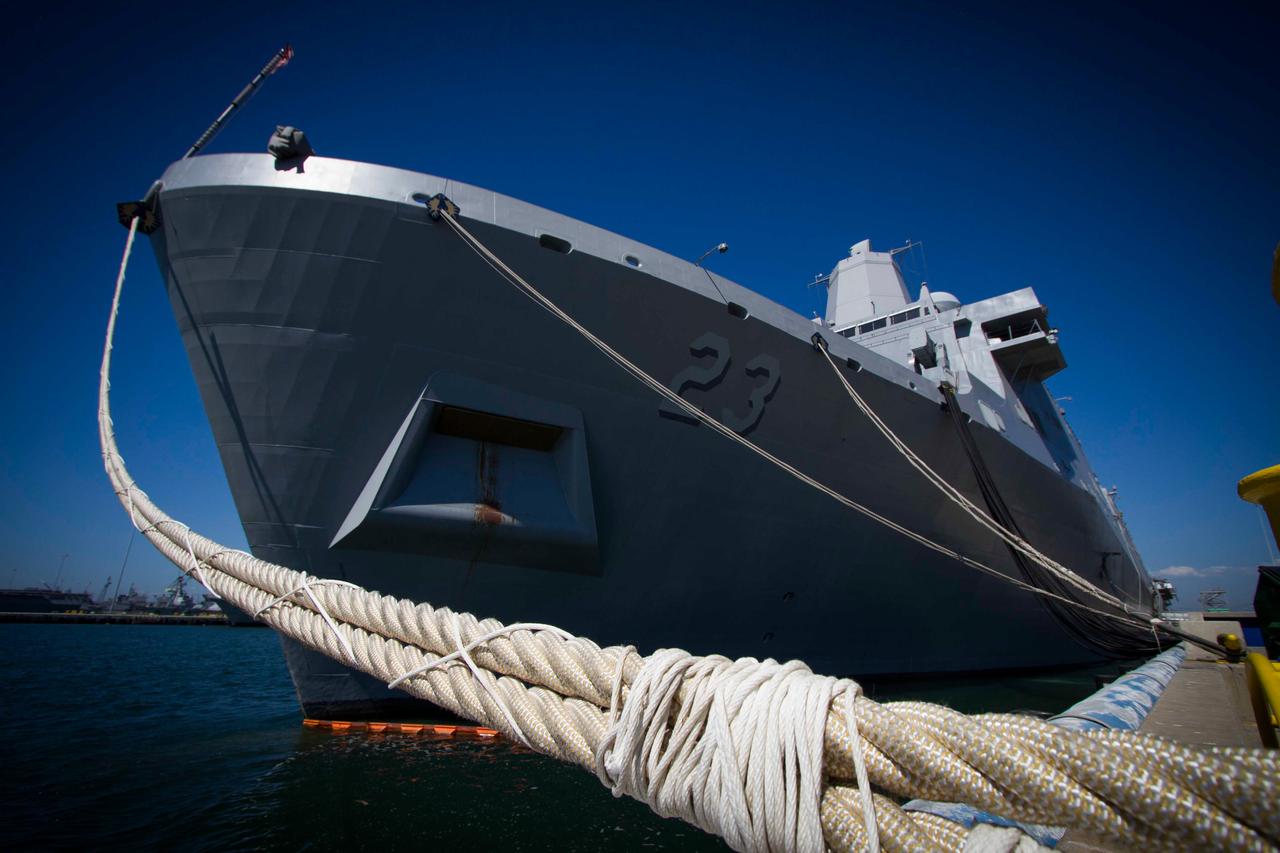
The Navy's USS Anchorage is used to test Orion recovery tools and techniques in the Pacific Ocean off the coast of San Diego on Sept. 12, 2014. Part of Batch image transfer from Flickr.
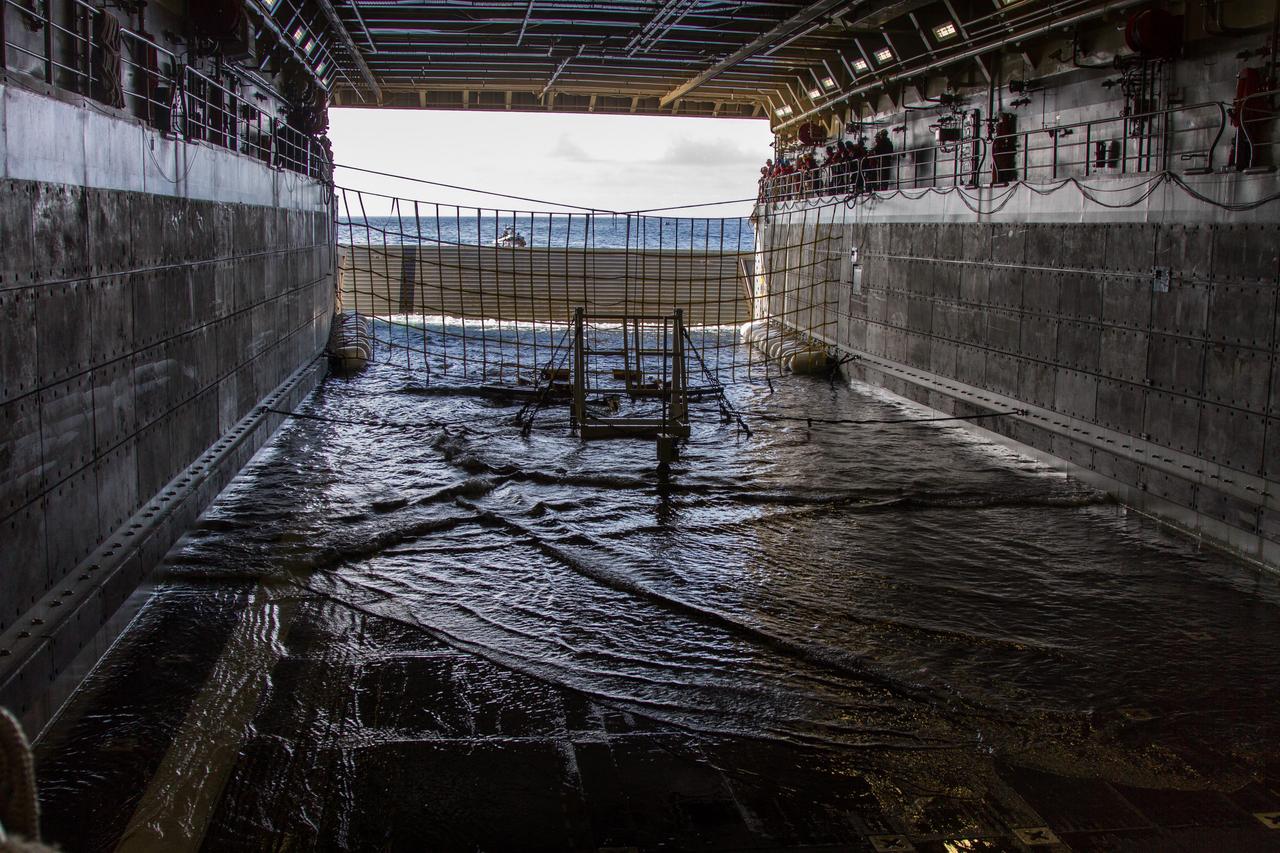
The US Navy and NASA recovery teams are on station off the cost of California on Dec. 3, 2014 and ready to recover Orion after Exploration Flight Test-1 (EFT-1) landing.
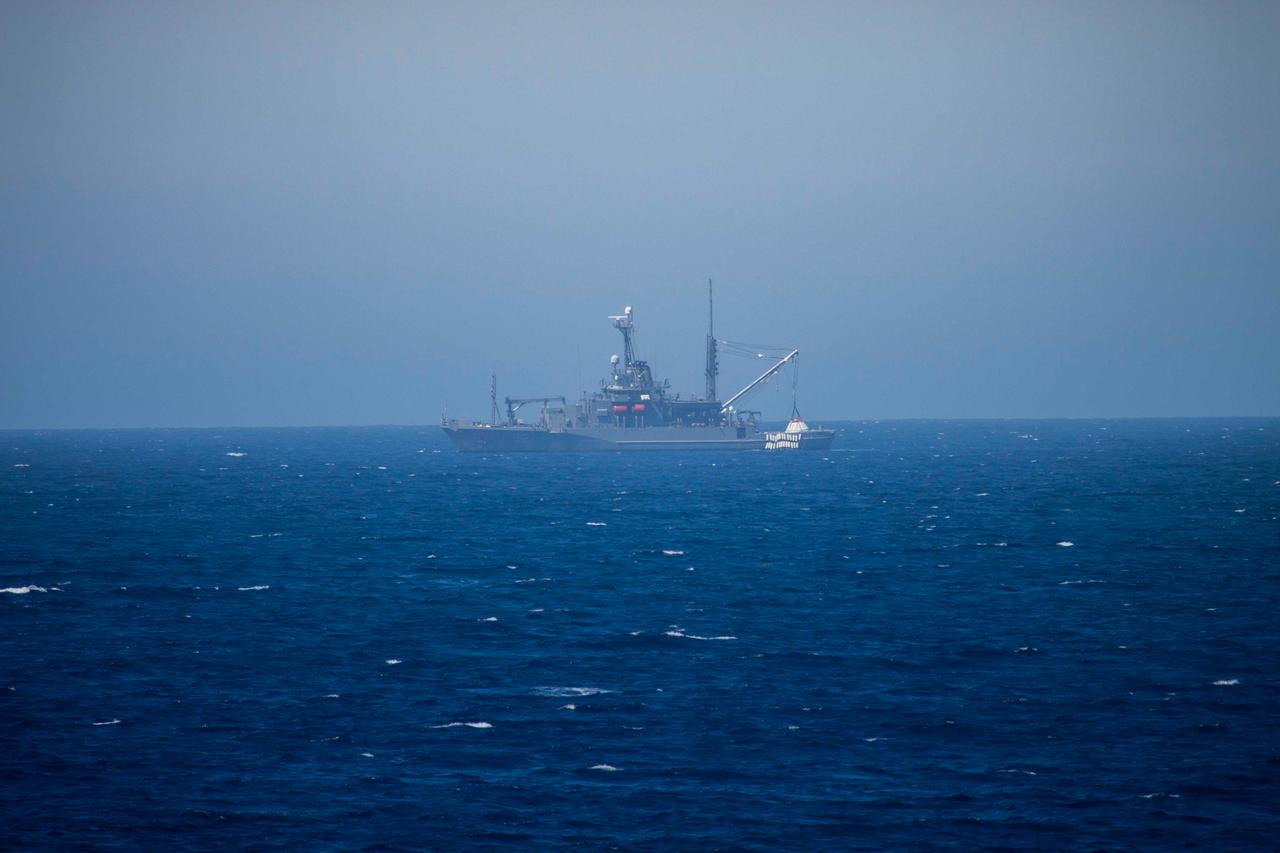
NASA and Navy personnel on board the Salvor used the ship's crane to test recovery techniques on Sept. 15, 2014, prior to Exploration Flight Test-1 (EFT-1). Part of Batch image transfer from Flickr.
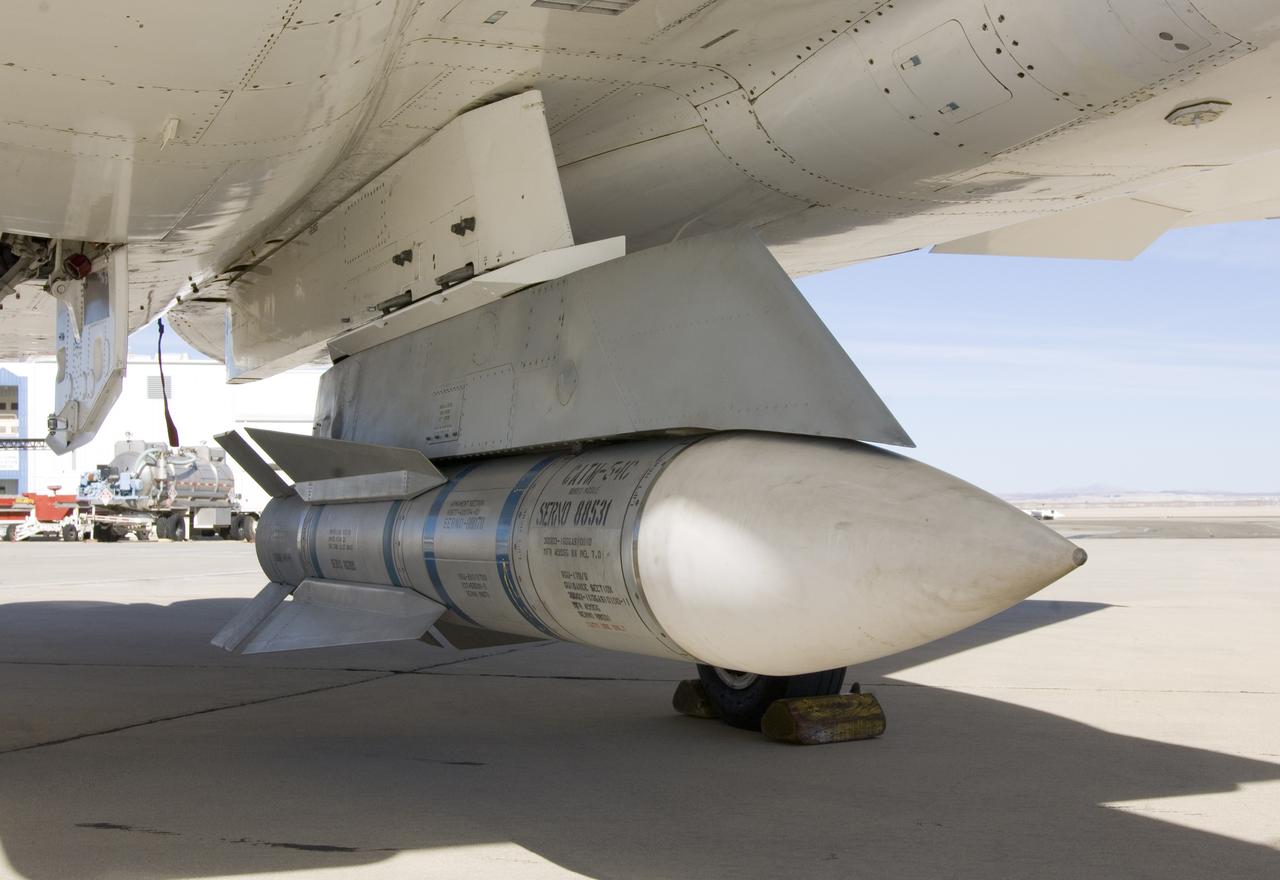
Surplus Navy Phoenix missiles like this one mounted on the centerline pylon of NASA's F-15B research aircraft may be used to acquire hypersonic flight test data.
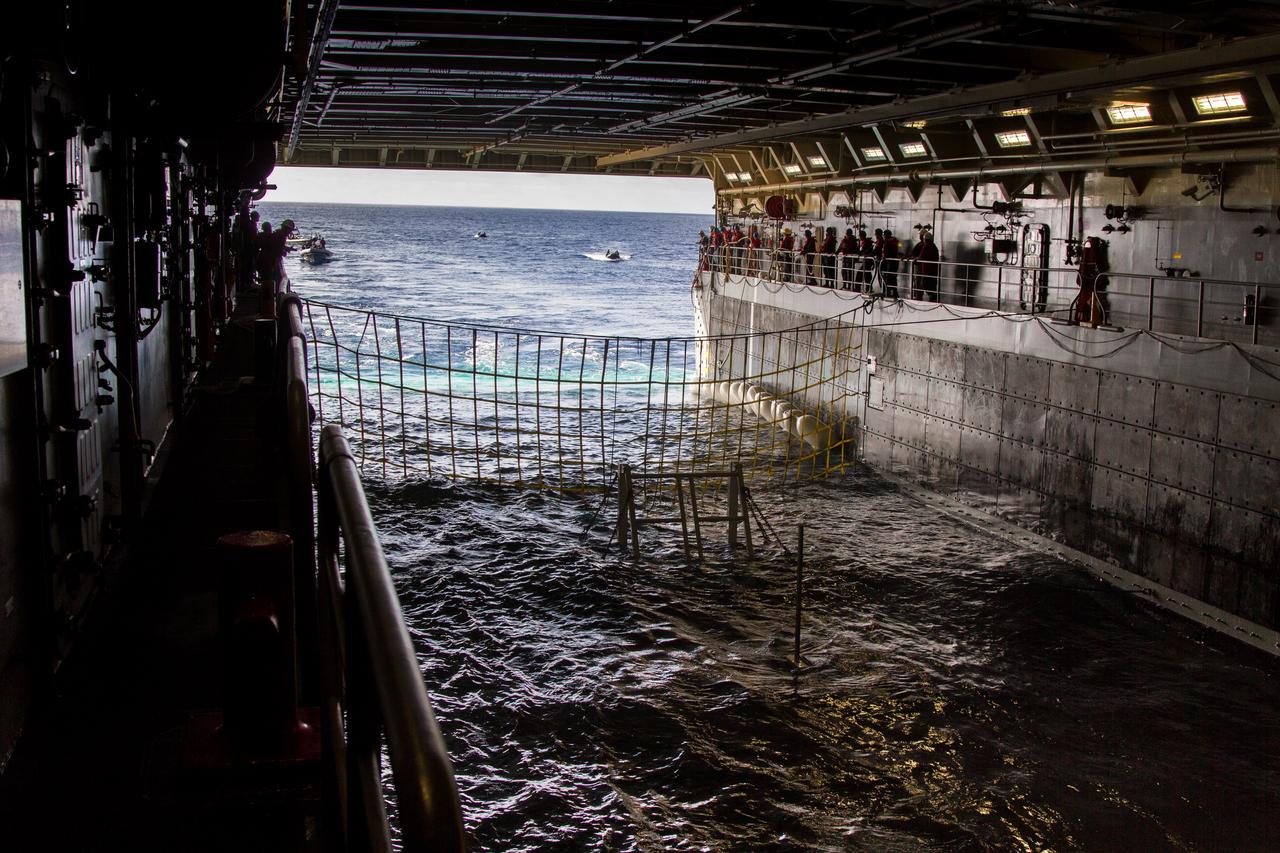
The US Navy and NASA recovery teams are on station off the cost of California on Dec. 3, 2014 and ready to recover Orion after Exploration Flight Test-1 (EFT-1) landing.
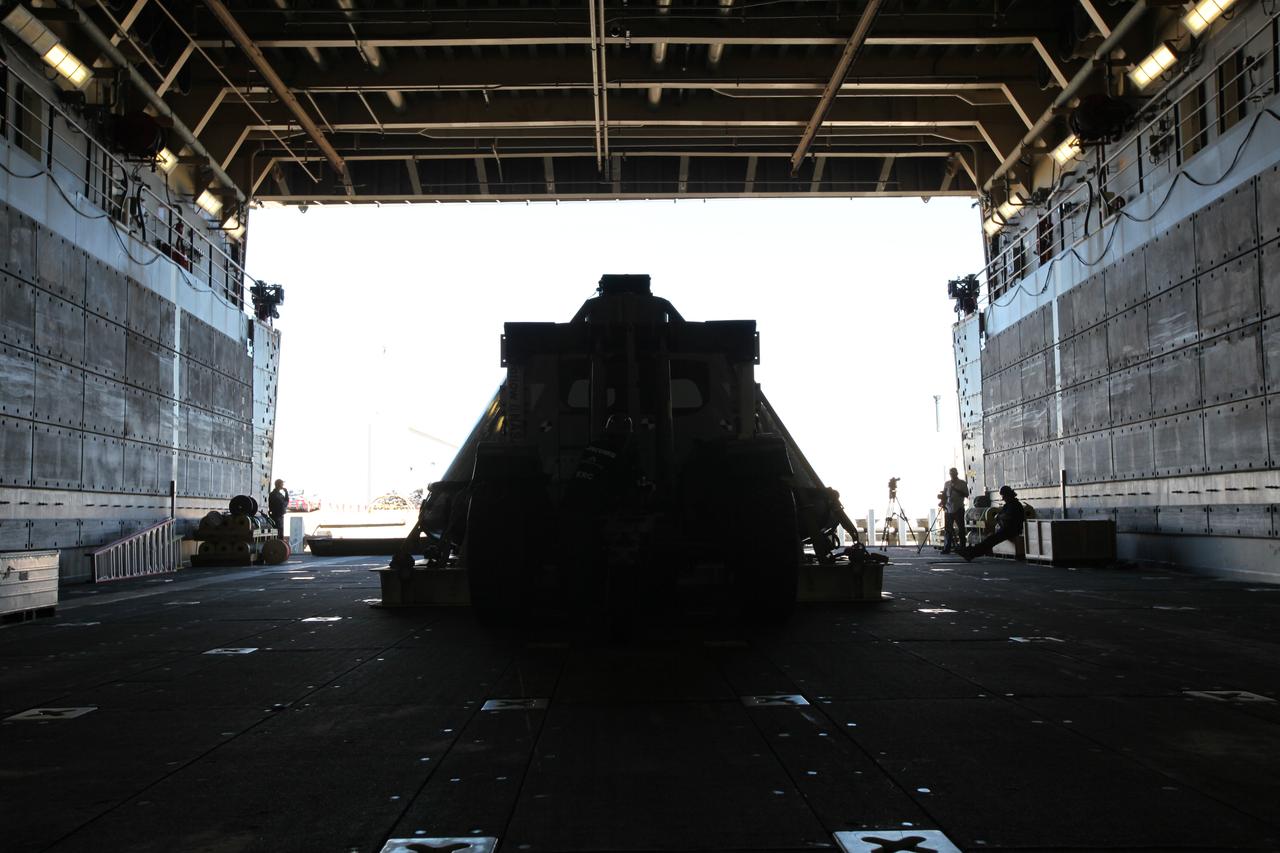
A contract of light and shadow. The test version of the Orion crew module has been transported into the well deck of the USS San Diego at Naval Base San Diego in California, as viewed from inside the ship. NASA, Orion manufacturer Lockheed Martin and the U.S. Navy will head out to sea with the Orion test spacecraft aboard for Underway Recovery Test 5 (URT-5) in the Pacific Ocean off the coast of California. During URT-5, the team will demonstrate and evaluate the recovery processes, procedures, hardware and personnel necessary for recovery of Orion on its return from a deep space mission. Orion is the exploration spacecraft designed to carry astronauts to destinations not yet explored by humans, including an asteroid and NASA Journey to Mars. It will have emergency abort capability, sustain the crew during space travel and provide safe re-entry from deep space return velocities. Orion is scheduled to launch atop NASA’s Space Launch System rocket in 2018. For more information, visit http://www.nasa.gov/orion.
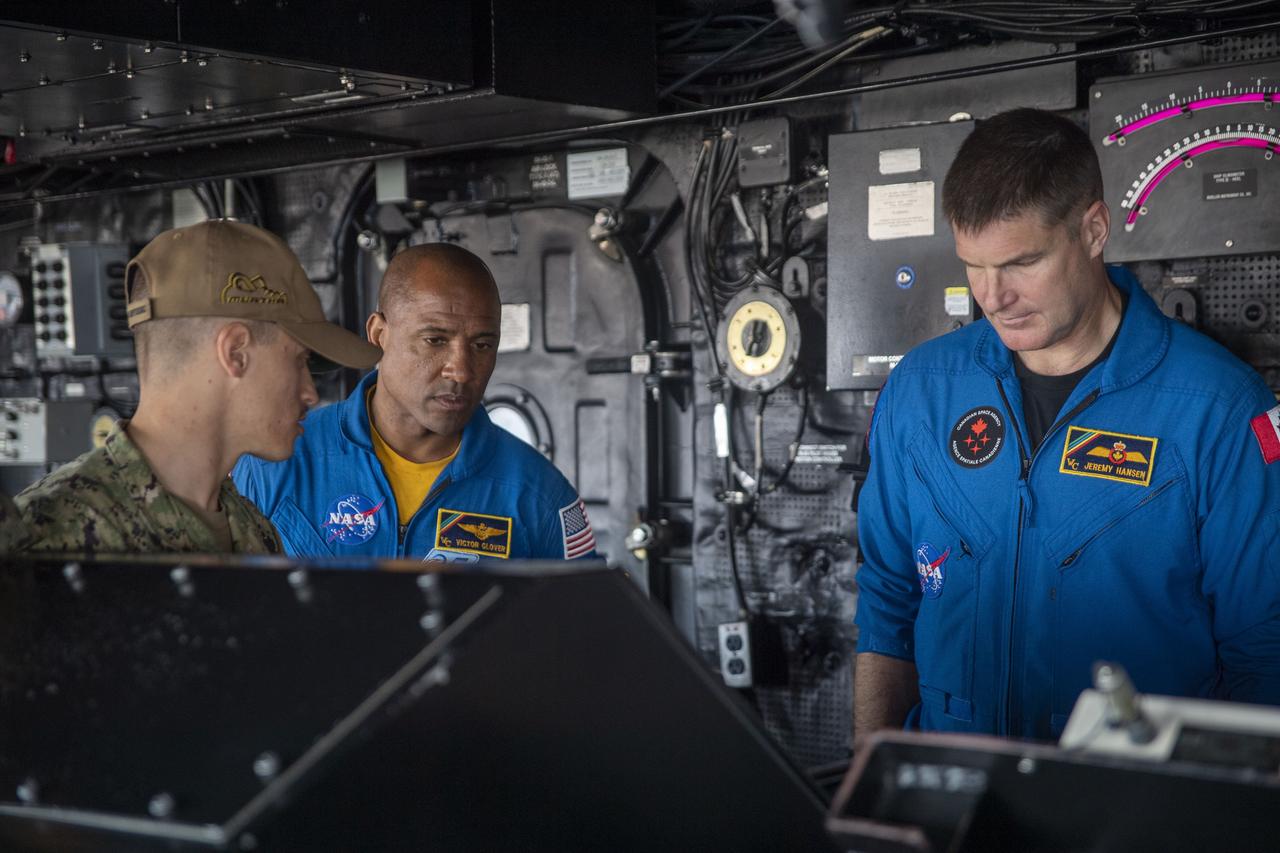
L.t. j.g Thomas Lampognana, left, explains amphibious transport dock ship USS John P. Murtha’s (LPD 26) helm control console to NASA Astronaut U.S. Navy Capt. Victor Glover and Canadian Space Agency Astronaut Jeremy Hansen, July 19, 2023. The helm is used as the primary steering for the ship underway. In preparation for NASA's Artemis II crewed mission, which will send four astronauts in Orion beyond the Moon, NASA and the U.S. Navy will conduct a series of tests to demonstrate and evaluate the processes, procedures, and hardware used in recovery operations for crewed lunar missions. The U.S. Navy has many unique capabilities that make it an ideal partner to support NASA, including its amphibious capabilities with the ability to embark helicopters, launch and recover small boats, three-dimensional air search radar and advanced medical facilities.
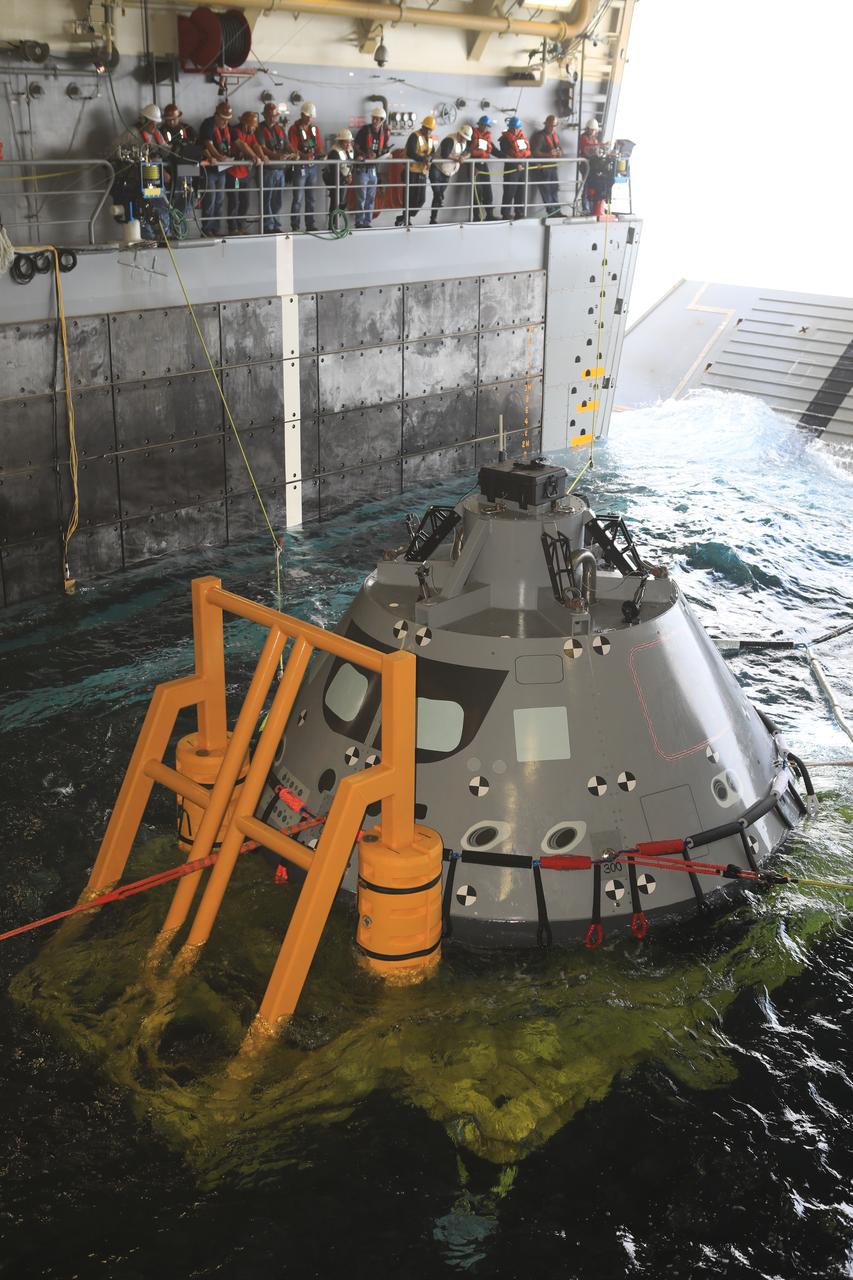
The Exploration Ground Systems (EGS) recovery team, along with the U.S. Navy, practice keeping an Orion test article under control in the well deck of a U.S. Navy ship as part of Underway Recovery Test-7 (URT-7) on Oct. 30, 2018, in the Pacific Ocean. EGS and the U.S. Navy will use a test version of the Orion crew module, several rigid hull inflatable boats and support equipment to verify and validate processes, procedures, hardware and personnel during recovery of Orion in open waters. The testing is one in a series of tests to verify and validate procedures and hardware that will be used to recover the Orion spacecraft after it splashes down in the Pacific Ocean following deep space exploration missions. Orion will have emergency abort capability, sustain the crew during space travel and provide safe re-entry from deep space return velocities.
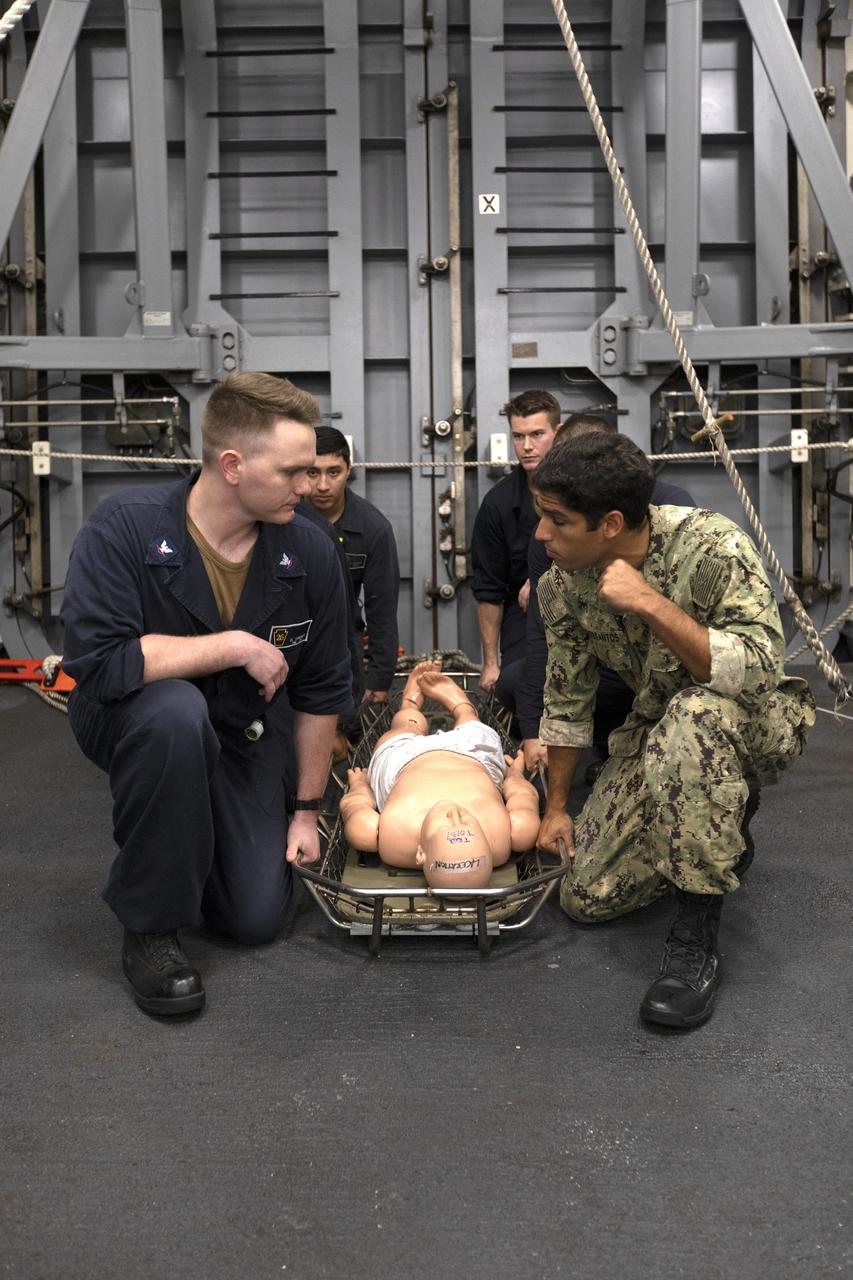
U.S. Navy recovery team members practice bringing an astronaut aboard the USS John P. Murtha, using a dummy, during Underway Recovery Test-7 (URT-7) on Nov. 5, 2018. NASA's Recovery Team, along with the U.S. Navy, are practicing recovery of a test version of the Orion in the Pacific Ocean. URT-7 is one in a series of tests to verify and validate procedures and hardware that will be used to recover the Orion spacecraft after it splashes down in the Pacific Ocean following deep space exploration missions. Orion will have emergency abort capability, sustain the crew during space travel and provide safe re-entry from deep space return velocities.
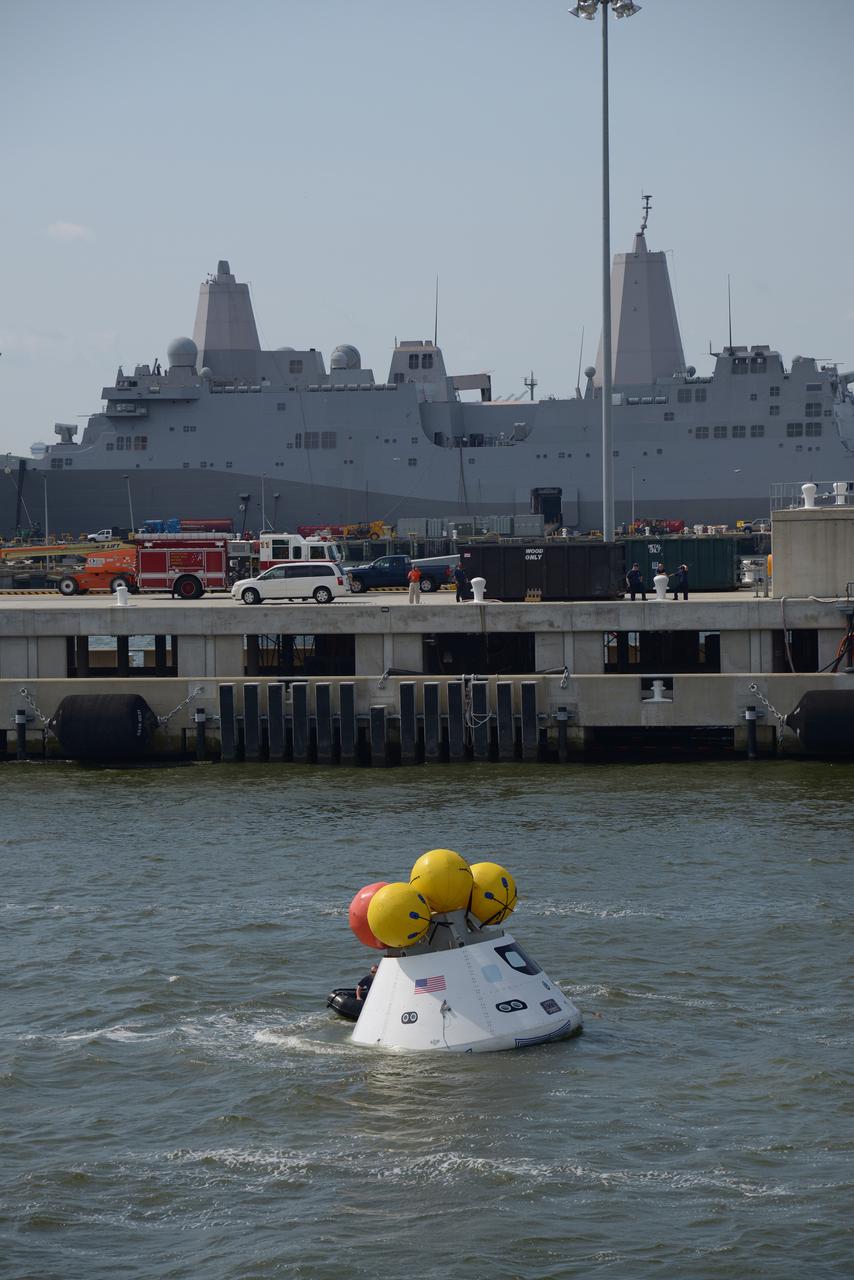
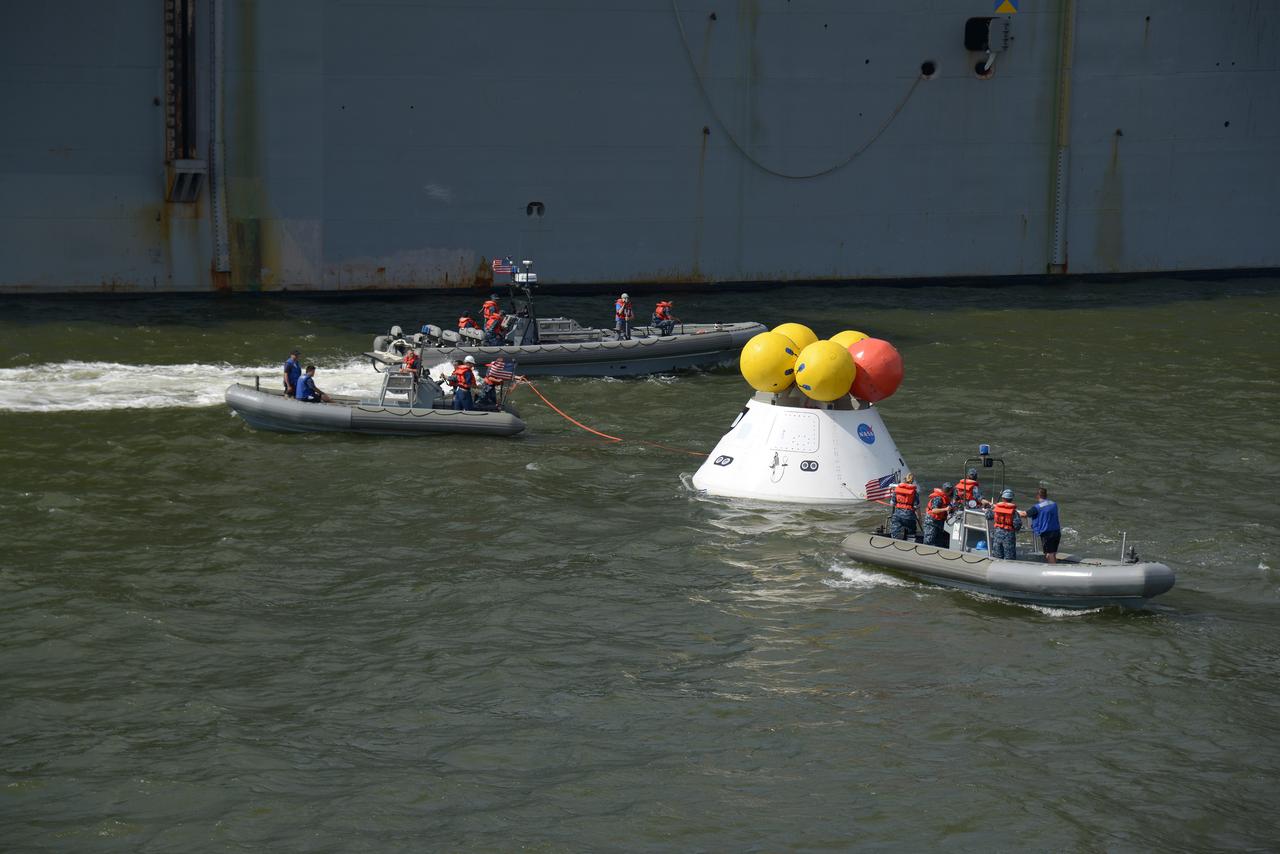
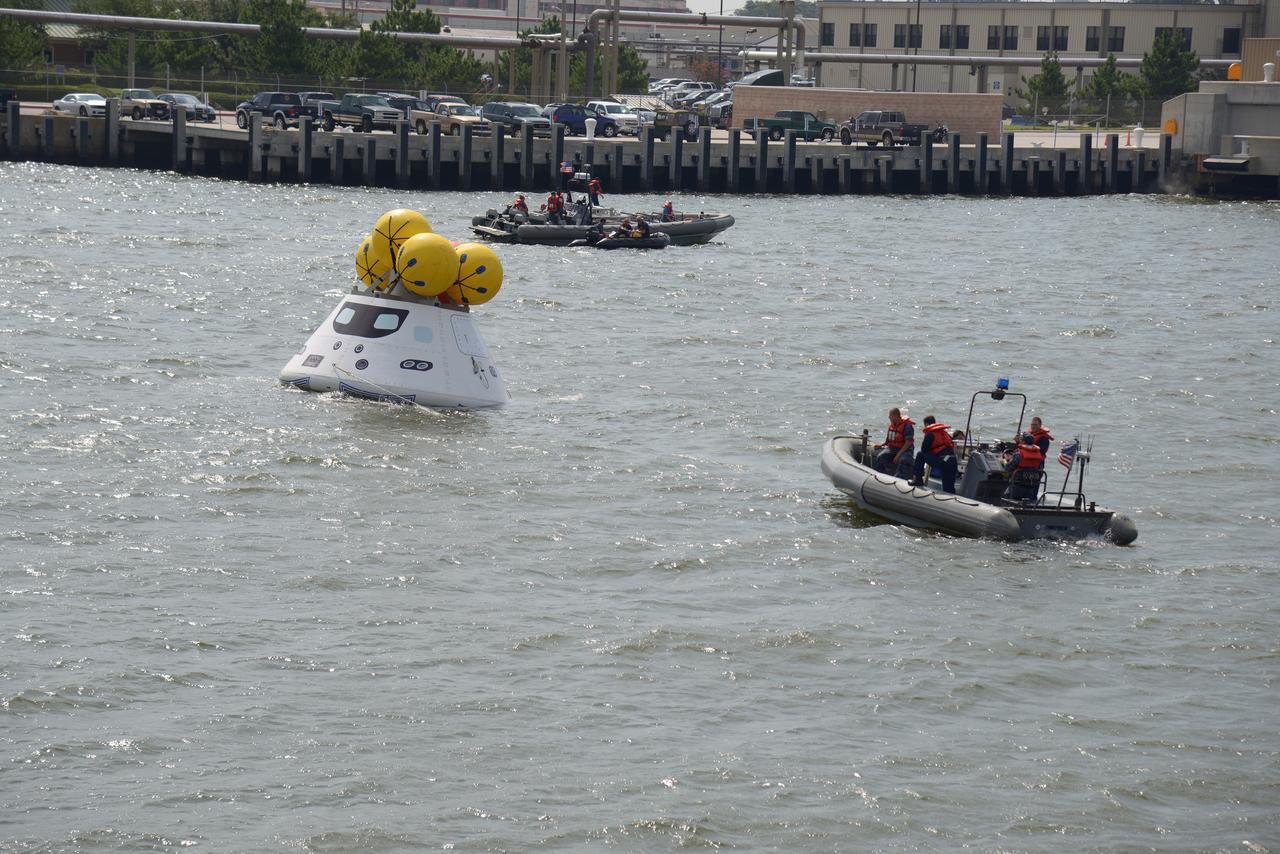
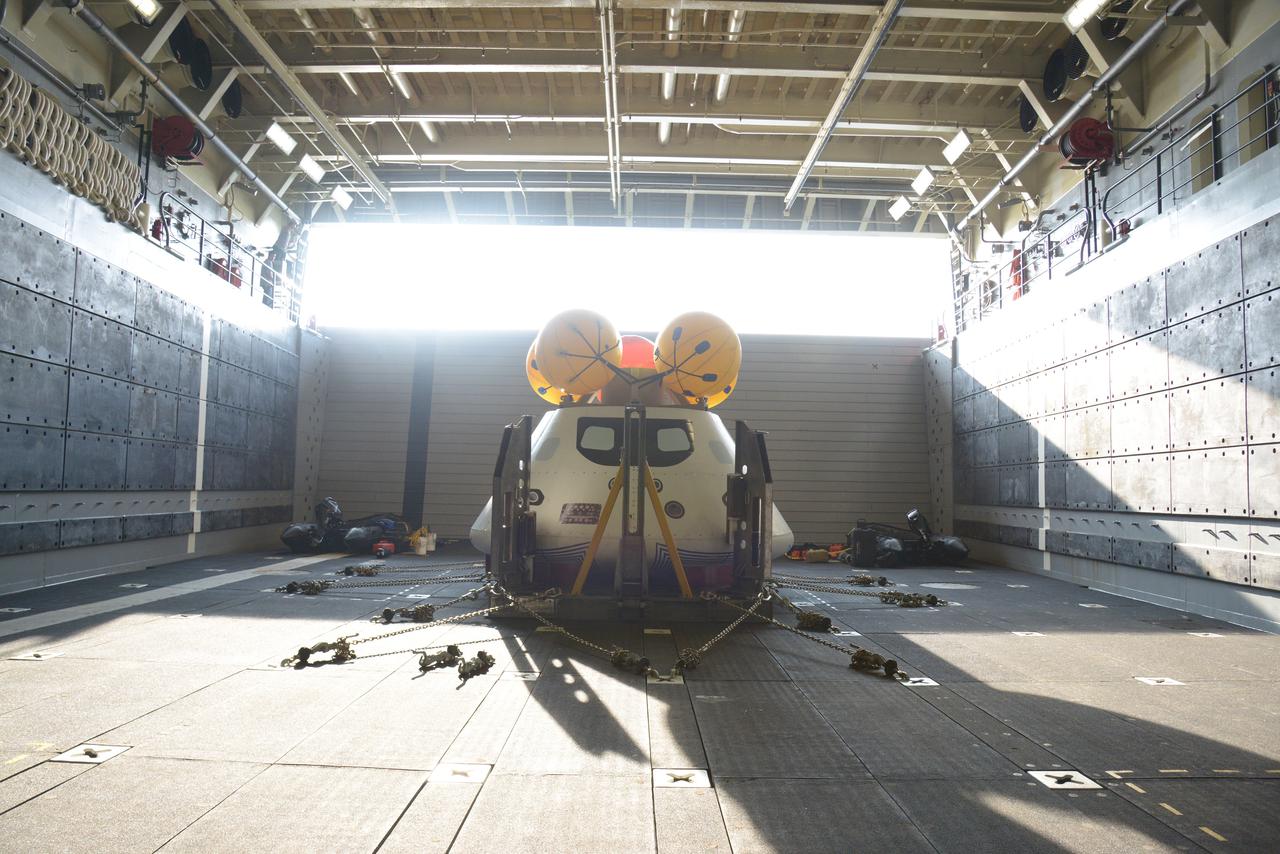
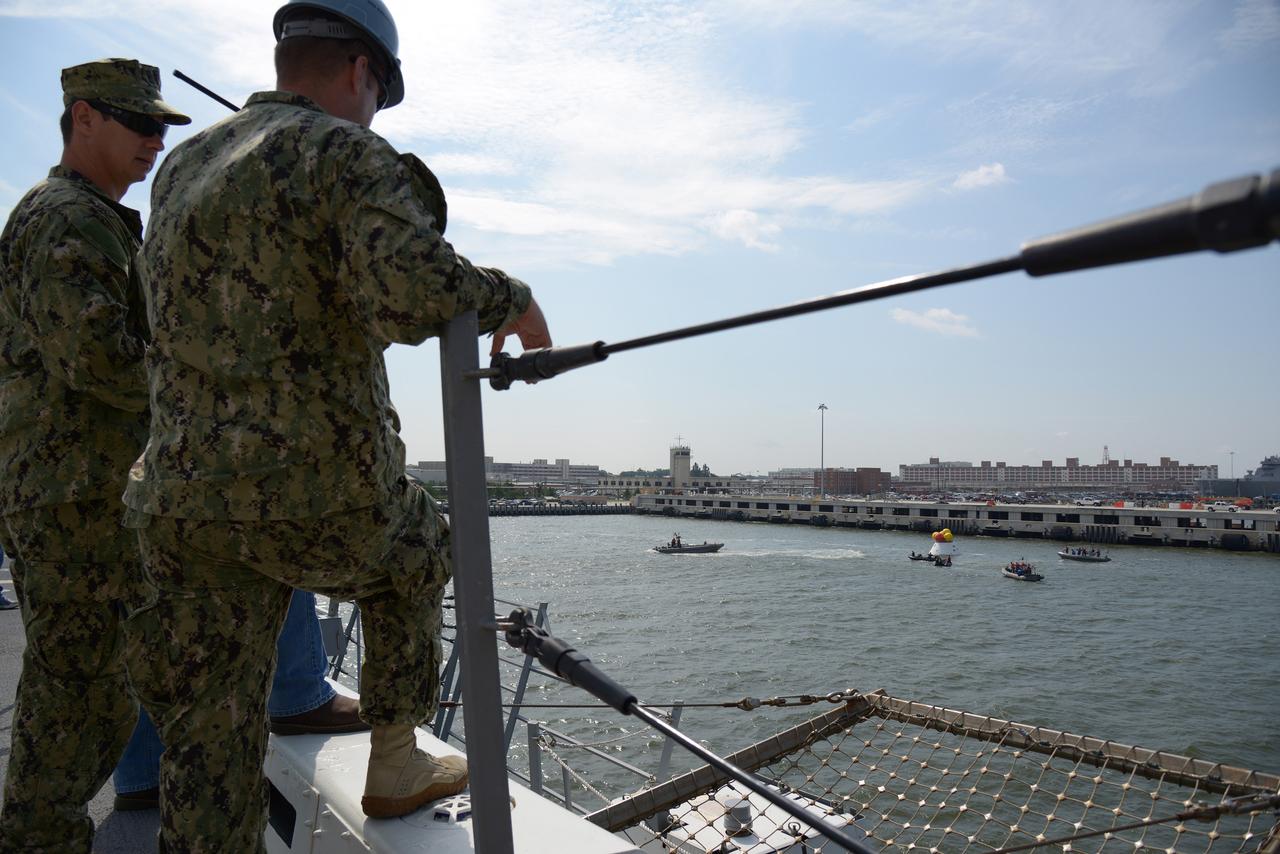
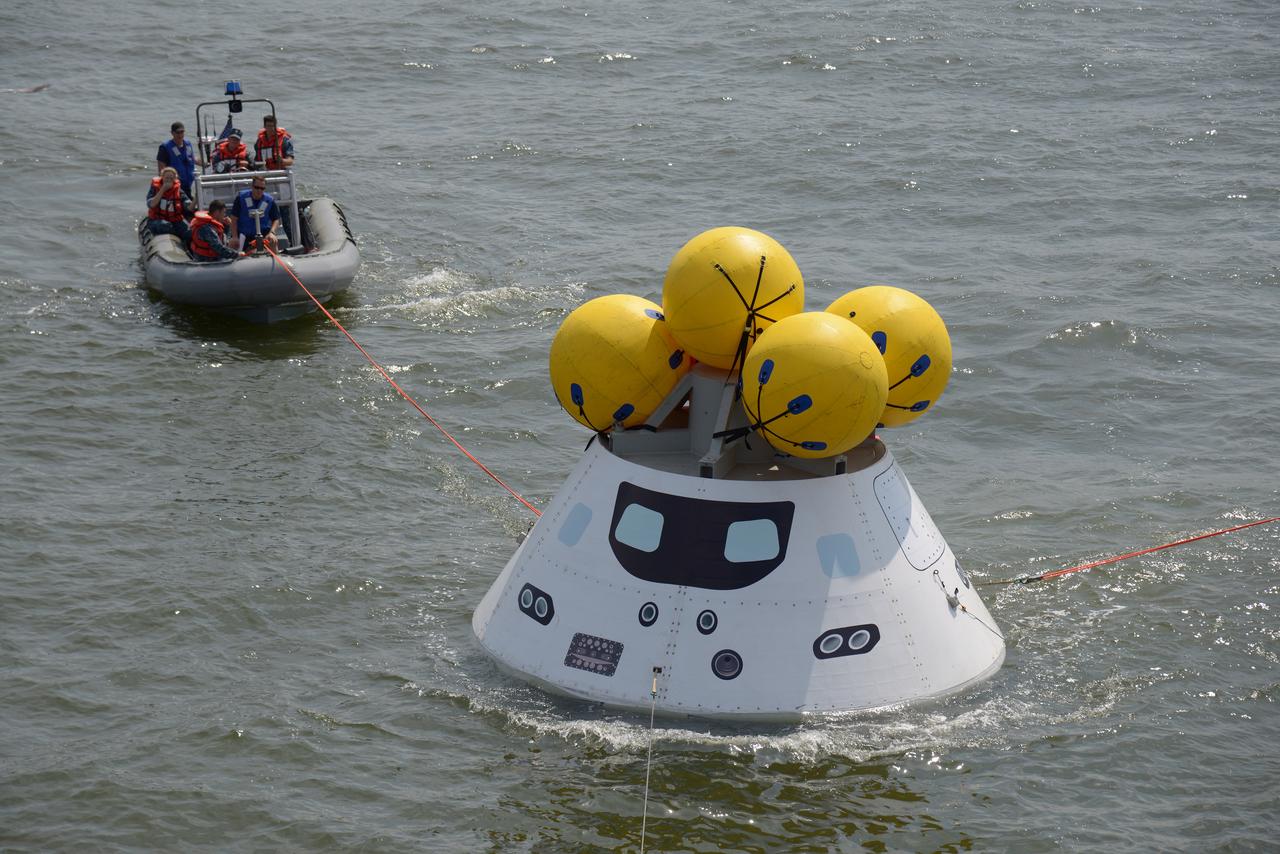
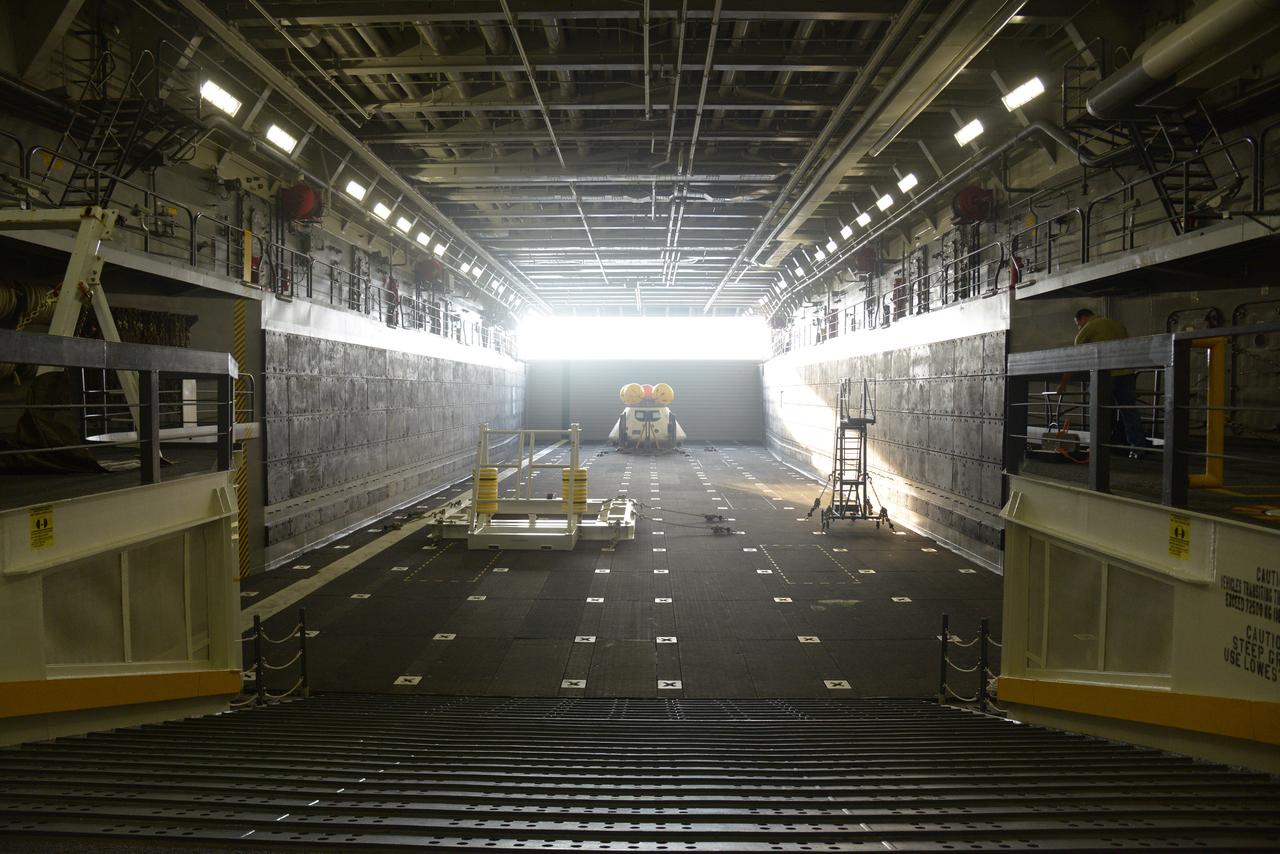
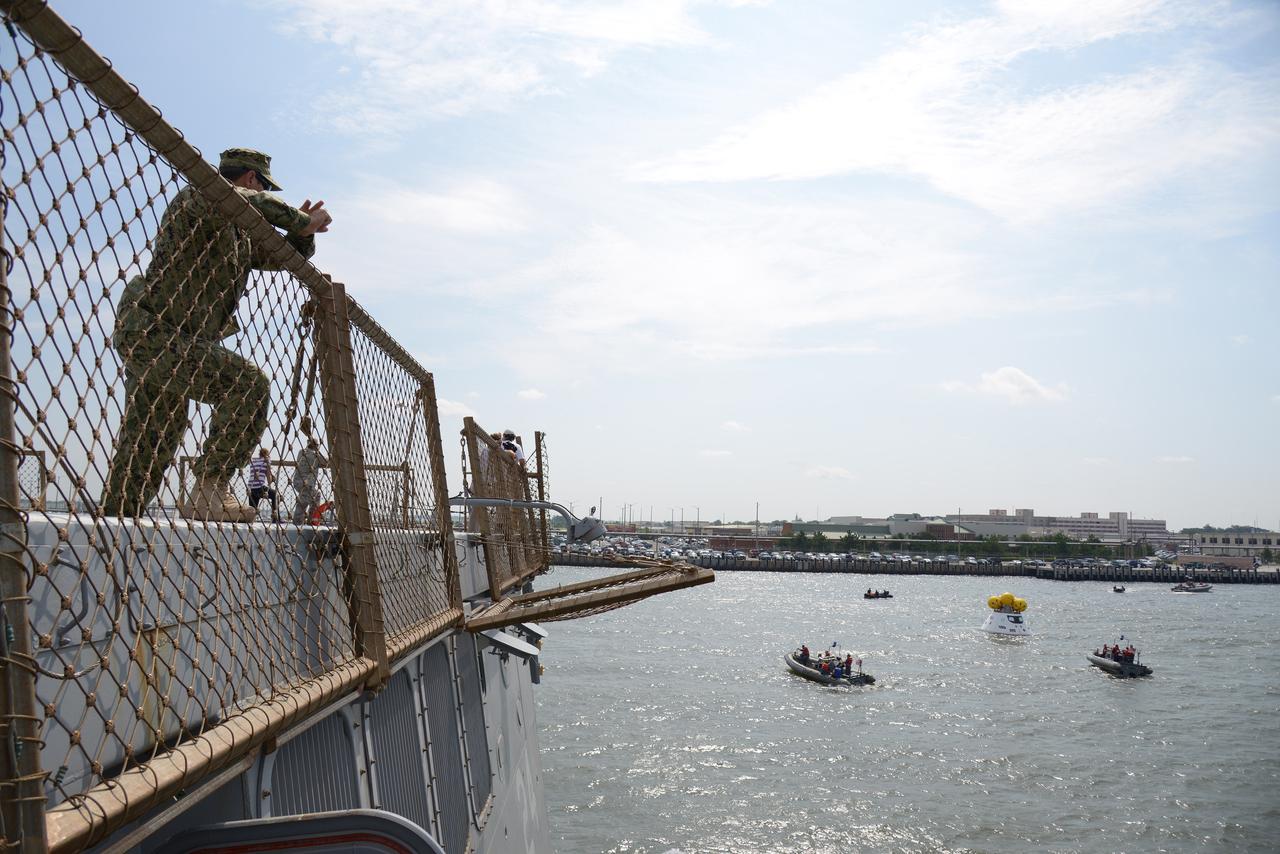
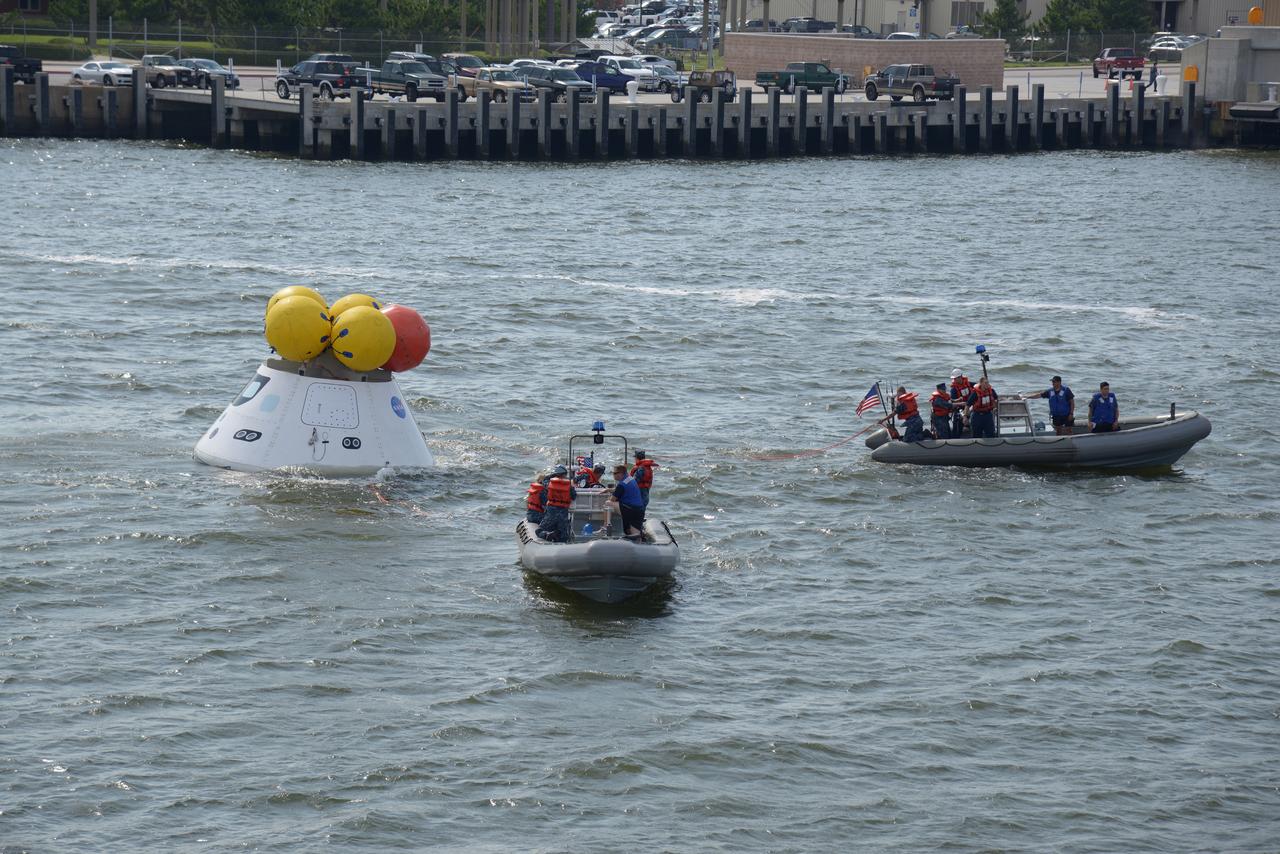
The Orion test capsule undergoes stationary recovery testing in Norfolk, VA on Aug. 13, 2013. NASA and the U.S Navy led the tests using the USS Arlington...The stationary recovery tests allow the teams to demonstrate and evaluate the recovery processes, the hardware and the test personnel in a controlled environment. ..During the test, the U.S Navy Dive Team checked the capsule for hazards while sailors from the USS Arlington approached the capsule in inflatable boats, and towed it back to the ship’s flooded well deck. Part of Batch image transfer from Flickr.
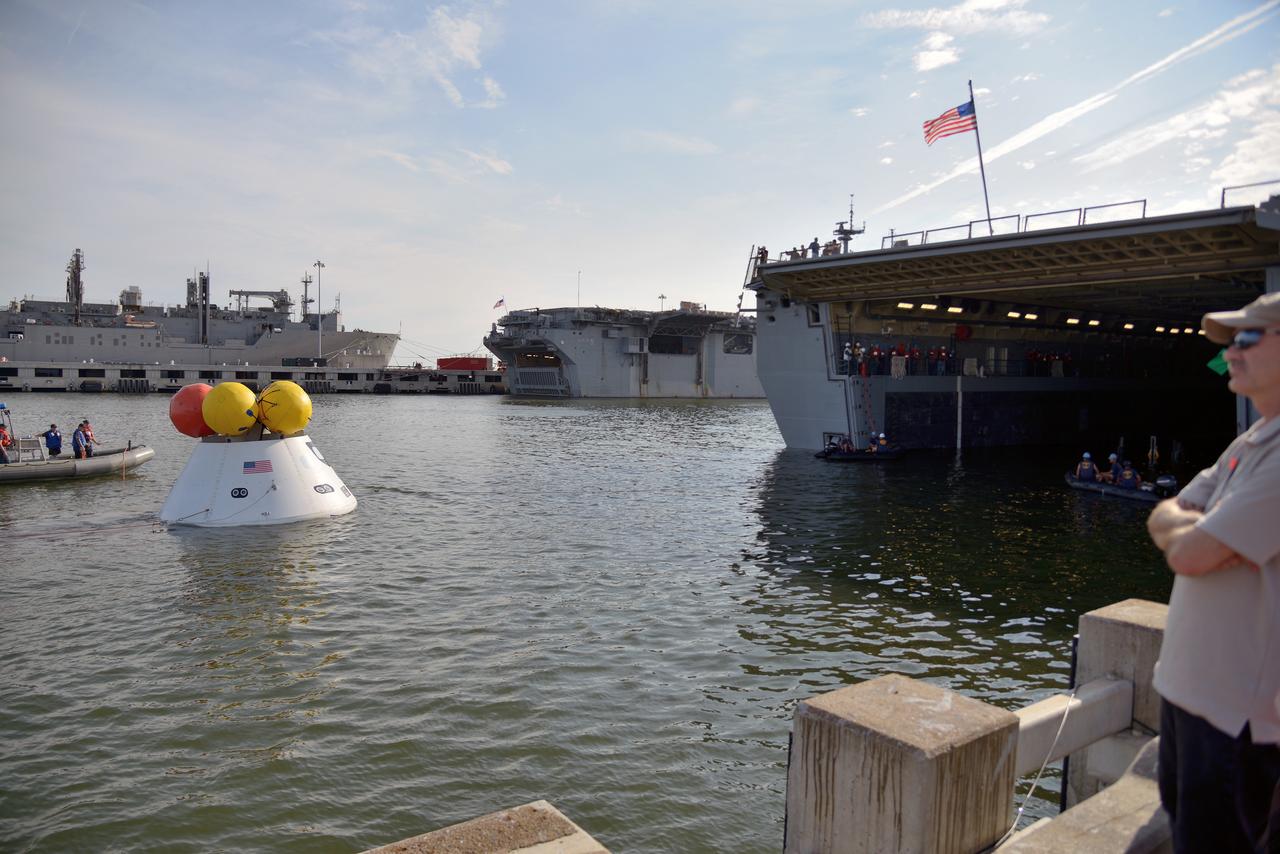
The Orion test capsule undergoes stationary recovery testing in Norfolk, VA on Aug. 13, 2013. NASA and the U.S Navy led the tests using the USS Arlington...The stationary recovery tests allow the teams to demonstrate and evaluate the recovery processes, the hardware and the test personnel in a controlled environment. ..During the test, the U.S Navy Dive Team checked the capsule for hazards while sailors from the USS Arlington approached the capsule in inflatable boats, and towed it back to the ship’s flooded well deck. Part of Batch image transfer from Flickr.
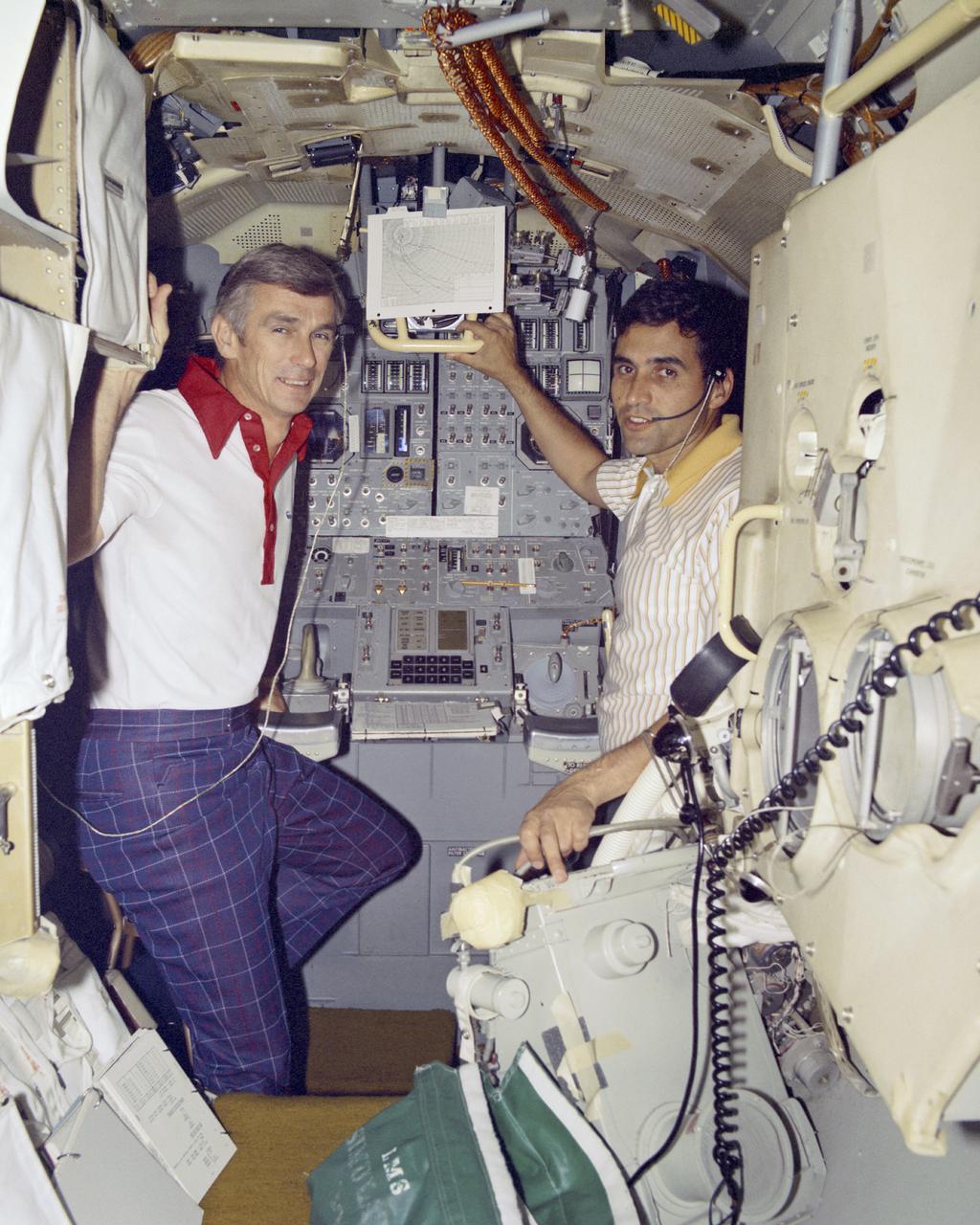
Apollo 17 Mission Commander Eugene A Cernan, a Navy Captain, and Lunar Module Pilot Dr. Harrison H. Schmitt, civilian scientist-astronaut, at right, familiarize themselves with equipment used in the Lunar Module in which they will descend to the lunar surface during December. Cernan and Dr. Schmitt are undergoing pre-launch training in the lunar Module Simulator at the Flight Crew Training Building at the Space Center. Navy Commander Ronald E. Evans, Command Module Pilot, will accompany Cernan and Schmitt on the mission.
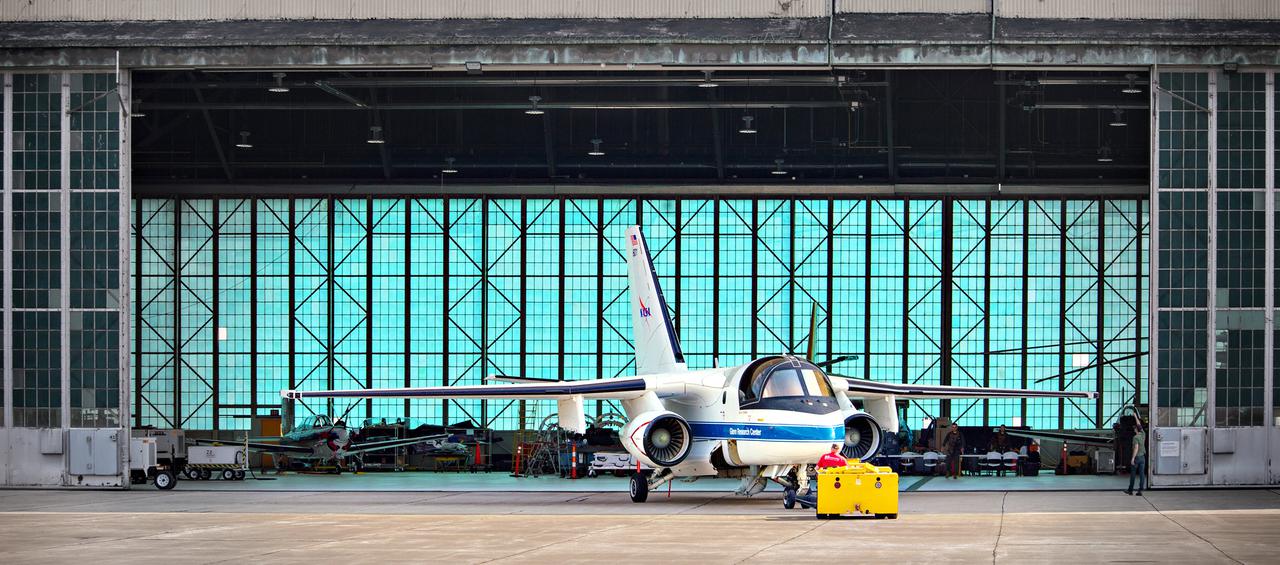
The Lockheed Viking S-3B aircraft is being pulled out of the hangar at Glenn Research Center in preparation for its departure and retirement from service. This former NAVY aircraft was the last such aircraft still flying. It has gone to a museum on the west coast. After leaving service with the NAVY, it came to GRC to be used in aircraft icing experiments. The swept wings made it suitable for such research as opposed to the straight wings on GRG’s other icing research aircraft, the De Havilland Twin Otter.
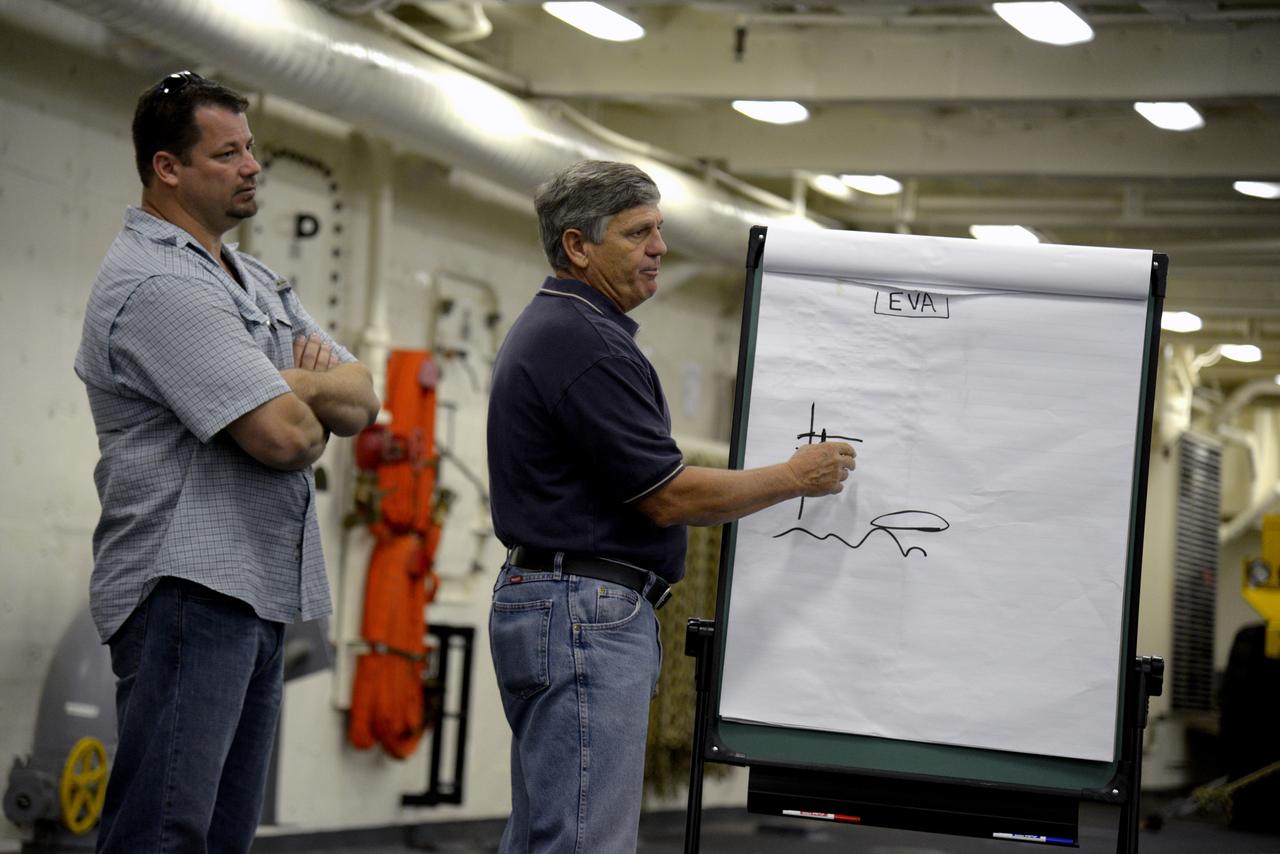
The Orion test capsule undergoes stationary recovery testing in Norfolk, VA on Aug. 13, 2013. NASA and the U.S Navy led the tests using the USS Arlington...The stationary recovery tests allow the teams to demonstrate and evaluate the recovery processes, the hardware and the test personnel in a controlled environment. ..During the test, the U.S Navy Dive Team checked the capsule for hazards while sailors from the USS Arlington approached the capsule in inflatable boats, and towed it back to the ship’s flooded well deck. Part of Batch image transfer from Flickr.
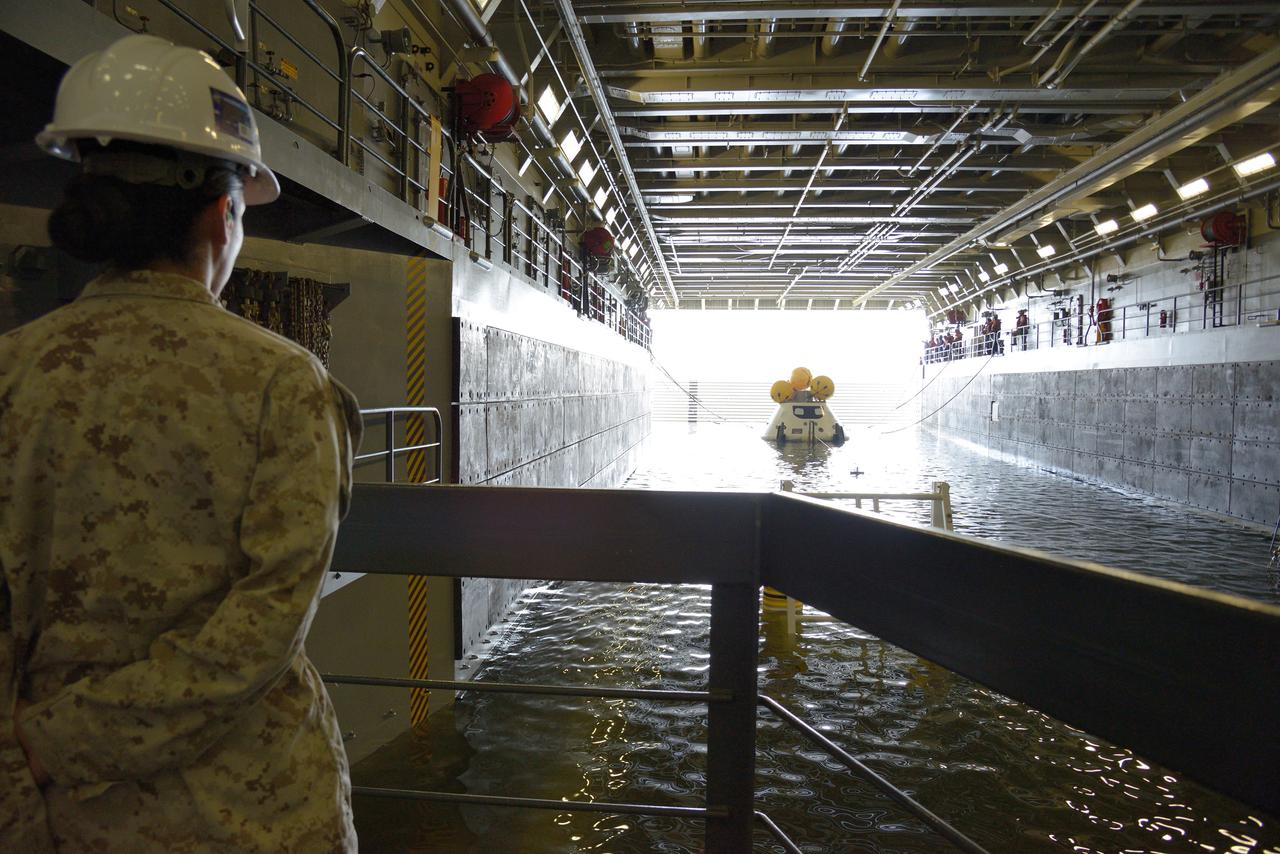
The Orion test capsule undergoes stationary recovery testing in Norfolk, VA on Aug. 13, 2013. NASA and the U.S Navy led the tests using the USS Arlington...The stationary recovery tests allow the teams to demonstrate and evaluate the recovery processes, the hardware and the test personnel in a controlled environment. ..During the test, the U.S Navy Dive Team checked the capsule for hazards while sailors from the USS Arlington approached the capsule in inflatable boats, and towed it back to the ship’s flooded well deck. Part of Batch image transfer from Flickr.
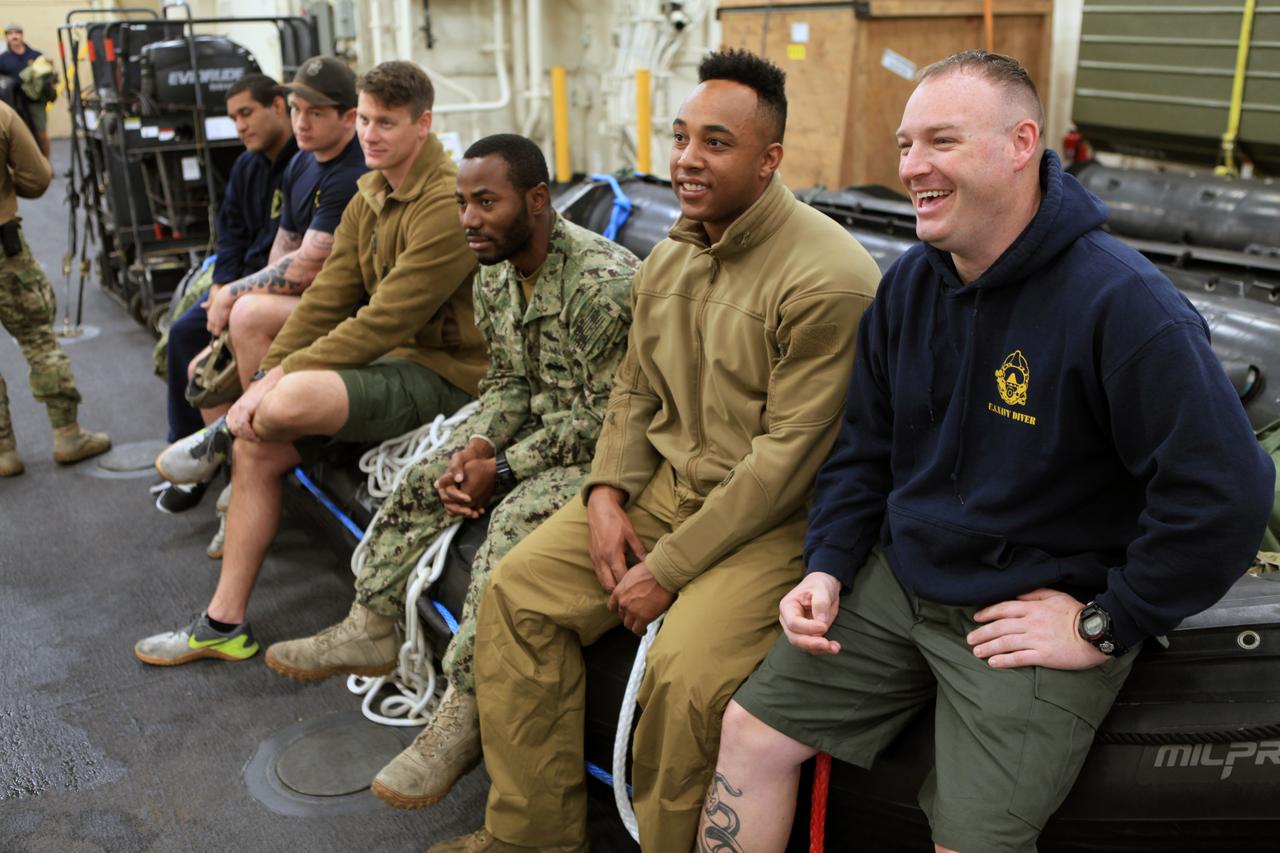
Navy diver Michael Tuft (far right) and his team wait to be called for their part in Underway Recovery Test 6 aboard the USS Anchorage. The divers will be the first people astronauts aboard the Orion spacecraft see when they splash down in the Pacific Ocean after Exploration Mission-2. The testing with the NASA Recovery Team and the U.S. Navy will provide important data that is being used to improve recovery procedures and hardware ahead of Orion's next flight, Exploration Mission-1, when it splashes down in the Pacific Ocean.
The Orion test capsule undergoes stationary recovery testing in Norfolk, VA on Aug. 13, 2013. NASA and the U.S Navy led the tests using the USS Arlington...The stationary recovery tests allow the teams to demonstrate and evaluate the recovery processes, the hardware and the test personnel in a controlled environment. ..During the test, the U.S Navy Dive Team checked the capsule for hazards while sailors from the USS Arlington approached the capsule in inflatable boats, and towed it back to the ship’s flooded well deck. Part of Batch image transfer from Flickr.
The Orion test capsule undergoes stationary recovery testing in Norfolk, VA on Aug. 13, 2013. NASA and the U.S Navy led the tests using the USS Arlington...The stationary recovery tests allow the teams to demonstrate and evaluate the recovery processes, the hardware and the test personnel in a controlled environment. ..During the test, the U.S Navy Dive Team checked the capsule for hazards while sailors from the USS Arlington approached the capsule in inflatable boats, and towed it back to the ship’s flooded well deck. Part of Batch image transfer from Flickr.
The Orion test capsule undergoes stationary recovery testing in Norfolk, VA on Aug. 13, 2013. NASA and the U.S Navy led the tests using the USS Arlington...The stationary recovery tests allow the teams to demonstrate and evaluate the recovery processes, the hardware and the test personnel in a controlled environment. ..During the test, the U.S Navy Dive Team checked the capsule for hazards while sailors from the USS Arlington approached the capsule in inflatable boats, and towed it back to the ship’s flooded well deck. Part of Batch image transfer from Flickr.
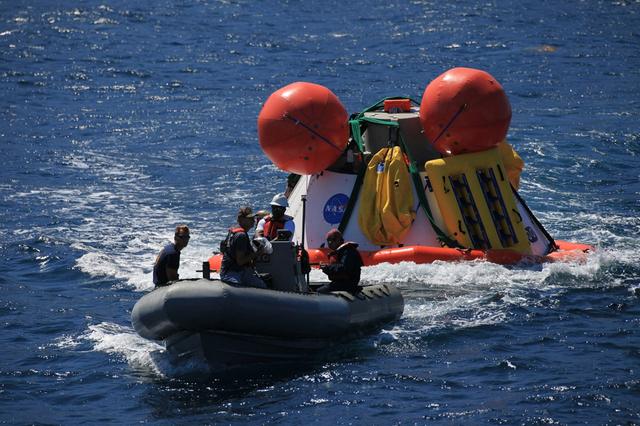
Recovery team members move away from a test version of Orion ready to be recovered from the Pacific Ocean on Sept. 13, 2014. A combined NASA and U.S. Navy team practiced recovery techniques off the coast of California over the course of the the week -- first with a crane on board the Navy's USS Salvor, then using the USS Anchorage's well deck -- in preparation for Exploration Flight Test-1 (EFT-1). Part of Batch image transfer from Flickr.
The Orion test capsule undergoes stationary recovery testing in Norfolk, VA on Aug. 13, 2013. NASA and the U.S Navy led the tests using the USS Arlington...The stationary recovery tests allow the teams to demonstrate and evaluate the recovery processes, the hardware and the test personnel in a controlled environment. ..During the test, the U.S Navy Dive Team checked the capsule for hazards while sailors from the USS Arlington approached the capsule in inflatable boats, and towed it back to the ship’s flooded well deck. Part of Batch image transfer from Flickr.
The Orion test capsule undergoes stationary recovery testing in Norfolk, VA on Aug. 13, 2013. NASA and the U.S Navy led the tests using the USS Arlington...The stationary recovery tests allow the teams to demonstrate and evaluate the recovery processes, the hardware and the test personnel in a controlled environment. ..During the test, the U.S Navy Dive Team checked the capsule for hazards while sailors from the USS Arlington approached the capsule in inflatable boats, and towed it back to the ship’s flooded well deck. Part of Batch image transfer from Flickr.
The Orion test capsule undergoes stationary recovery testing in Norfolk, VA on Aug. 13, 2013. NASA and the U.S Navy led the tests using the USS Arlington...The stationary recovery tests allow the teams to demonstrate and evaluate the recovery processes, the hardware and the test personnel in a controlled environment. ..During the test, the U.S Navy Dive Team checked the capsule for hazards while sailors from the USS Arlington approached the capsule in inflatable boats, and towed it back to the ship’s flooded well deck. Part of Batch image transfer from Flickr.
The Orion test capsule undergoes stationary recovery testing in Norfolk, VA on Aug. 13, 2013. NASA and the U.S Navy led the tests using the USS Arlington...The stationary recovery tests allow the teams to demonstrate and evaluate the recovery processes, the hardware and the test personnel in a controlled environment. ..During the test, the U.S Navy Dive Team checked the capsule for hazards while sailors from the USS Arlington approached the capsule in inflatable boats, and towed it back to the ship’s flooded well deck. Part of Batch image transfer from Flickr.
The Orion test capsule undergoes stationary recovery testing in Norfolk, VA on Aug. 13, 2013. NASA and the U.S Navy led the tests using the USS Arlington...The stationary recovery tests allow the teams to demonstrate and evaluate the recovery processes, the hardware and the test personnel in a controlled environment. ..During the test, the U.S Navy Dive Team checked the capsule for hazards while sailors from the USS Arlington approached the capsule in inflatable boats, and towed it back to the ship’s flooded well deck. Part of Batch image transfer from Flickr.
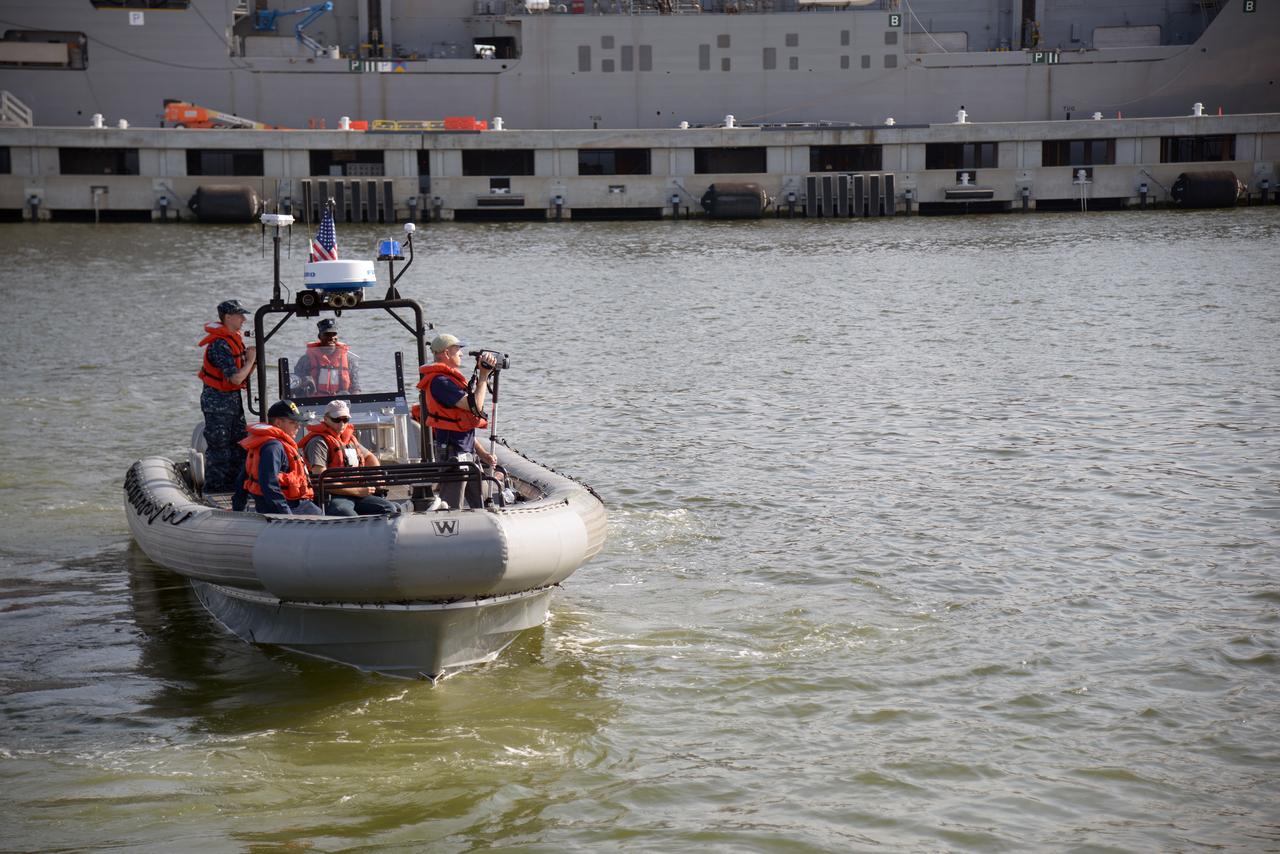
The Orion test capsule undergoes stationary recovery testing in Norfolk, VA on Aug. 13, 2013. NASA and the U.S Navy led the tests using the USS Arlington...The stationary recovery tests allow the teams to demonstrate and evaluate the recovery processes, the hardware and the test personnel in a controlled environment. ..During the test, the U.S Navy Dive Team checked the capsule for hazards while sailors from the USS Arlington approached the capsule in inflatable boats, and towed it back to the ship’s flooded well deck. Part of Batch image transfer from Flickr.

The Orion test capsule undergoes stationary recovery testing in Norfolk, VA on Aug. 13, 2013. NASA and the U.S Navy led the tests using the USS Arlington...The stationary recovery tests allow the teams to demonstrate and evaluate the recovery processes, the hardware and the test personnel in a controlled environment. ..During the test, the U.S Navy Dive Team checked the capsule for hazards while sailors from the USS Arlington approached the capsule in inflatable boats, and towed it back to the ship’s flooded well deck. Part of Batch image transfer from Flickr.
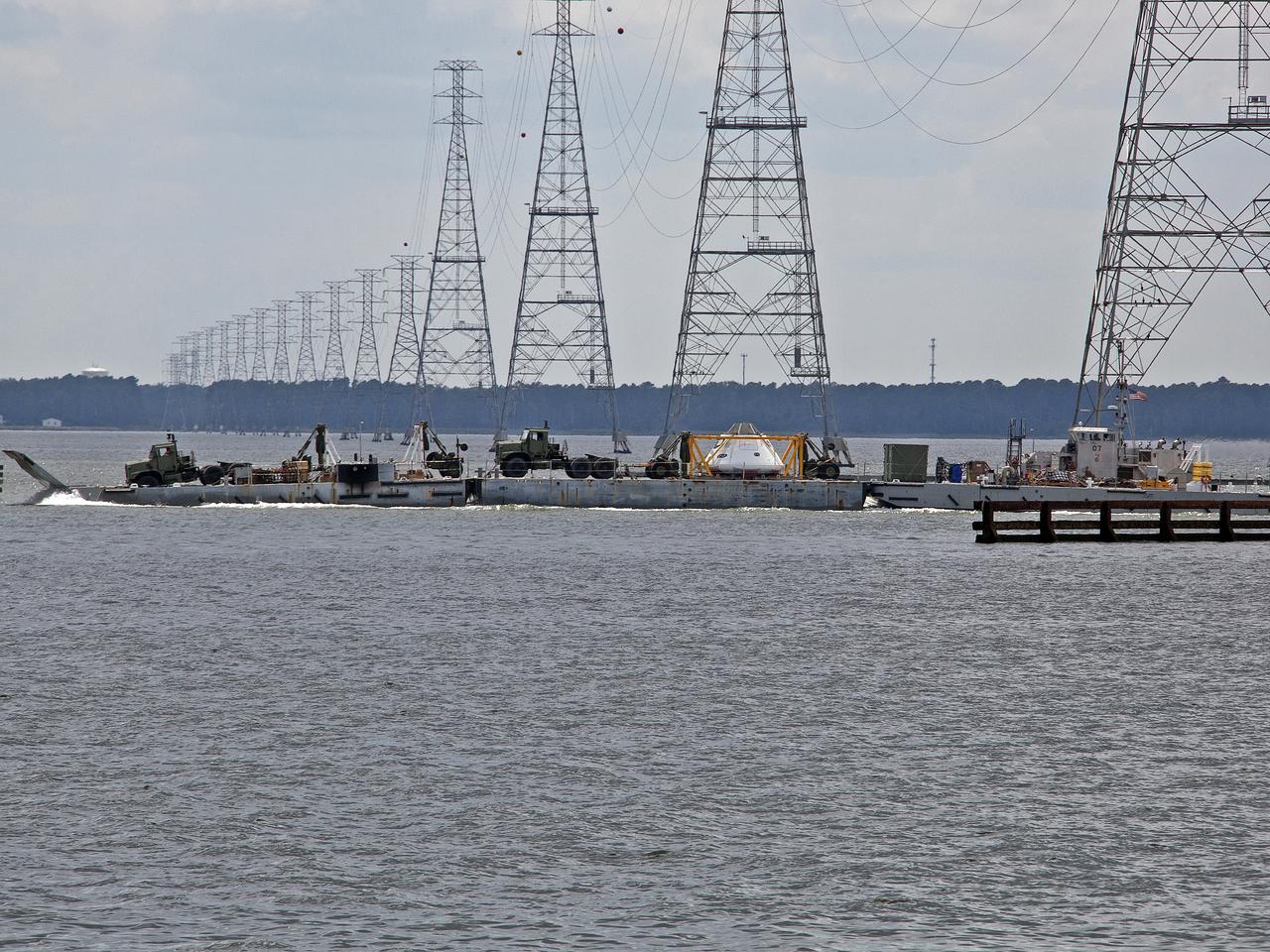
The Orion Test Capsule and a number of other items used in the capsule recovery at being transported down the James River on a Navy INLS "Improved Navy Lighterage System" from Fort Eustis from where it was loaded. Its liquid route will take them to Little Creek Amphibious Base in Norfolk, where it will stay until scheduled recovery test will be performed.
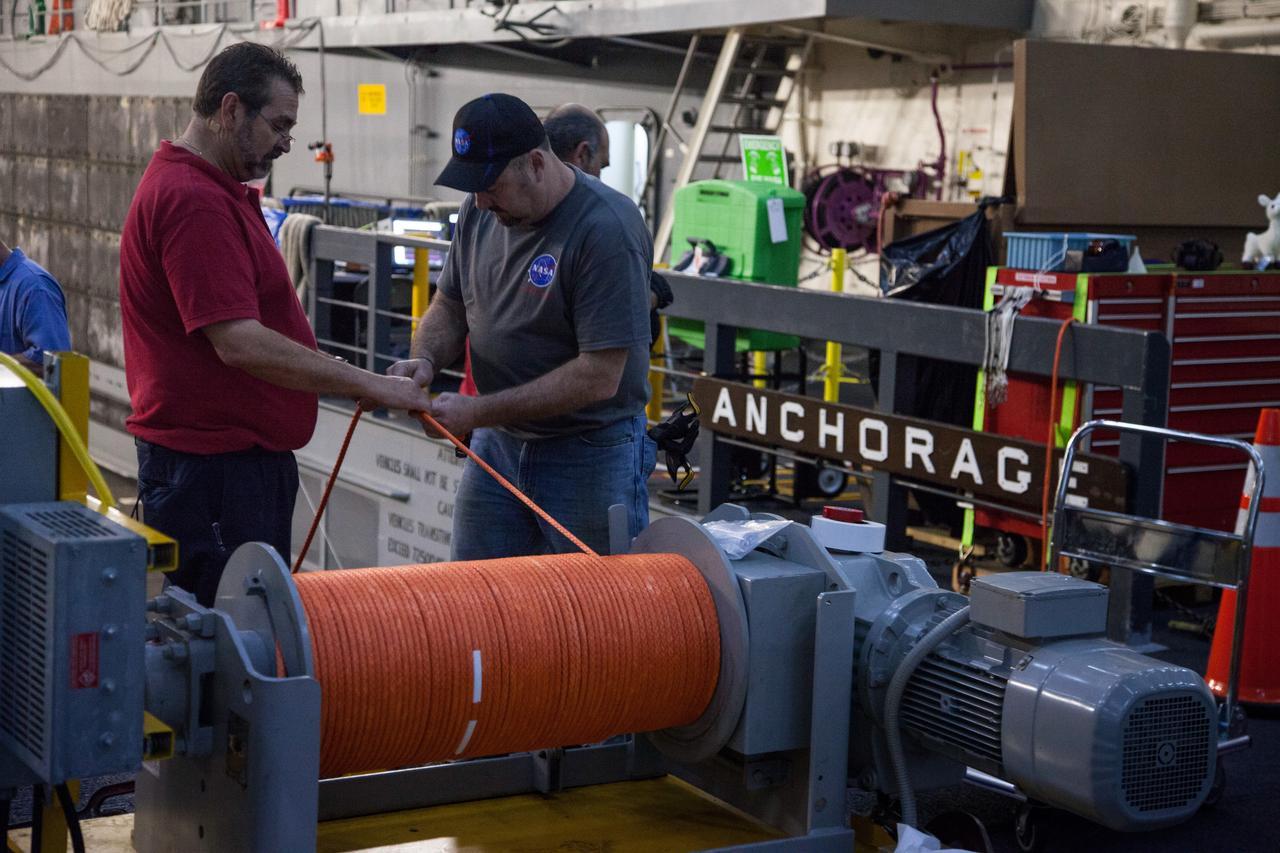
Orion recovery team members make preparations for Orion's splashdown inside the well deck of the U.S. Navy's USS Anchorage on Dec. 2, 2014. A combined NASA/Navy team will tow Orion into the Anchorage's flooded well deck using the orange line after the spacecraft lands in the Pacific Ocean following Exploration Flight Test-1 (EFT-1) on Dec. 4. Part of Batch image transfer from Flickr.
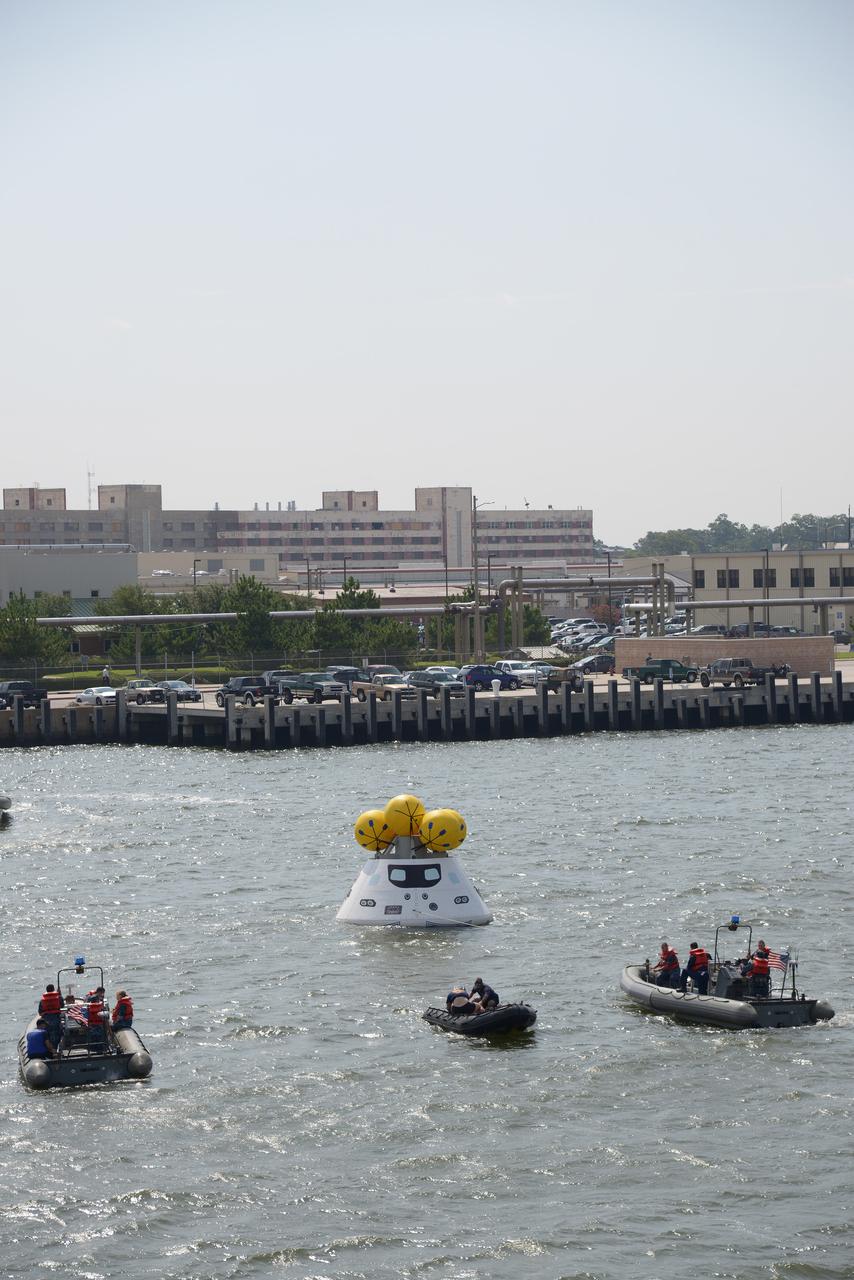
The Orion test capsule undergoes stationary recovery testing in Norfolk, VA on Aug. 13, 2013. NASA and the U.S Navy led the tests using the USS Arlington...The stationary recovery tests allow the teams to demonstrate and evaluate the recovery processes, the hardware and the test personnel in a controlled environment. ..During the test, the U.S Navy Dive Team checked the capsule for hazards while sailors from the USS Arlington approached the capsule in inflatable boats, and towed it back to the ship’s flooded well deck. Part of Batch image transfer from Flickr.
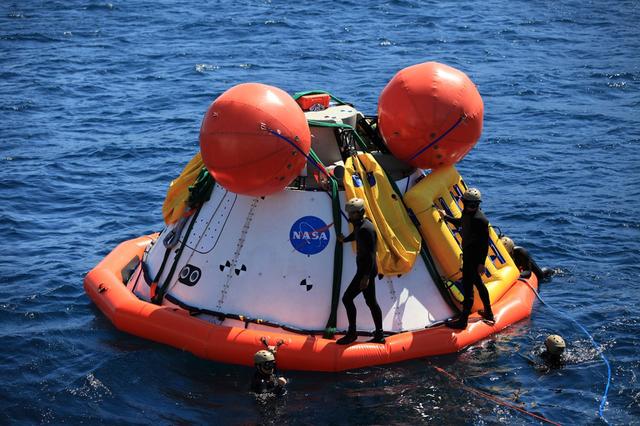
Recovery team members work on a test version of Orion in the Pacific Ocean on Sept. 13, 2014. A combined NASA and U.S. Navy team practiced recovery techniques off the coast of California over the course of the the week -- first with a crane on board the Navy's USS Salvor, then using the USS Anchorage's well deck -- in preparation for Exploration Flight Test-1 (EFT-1). Part of Batch image transfer from Flickr.
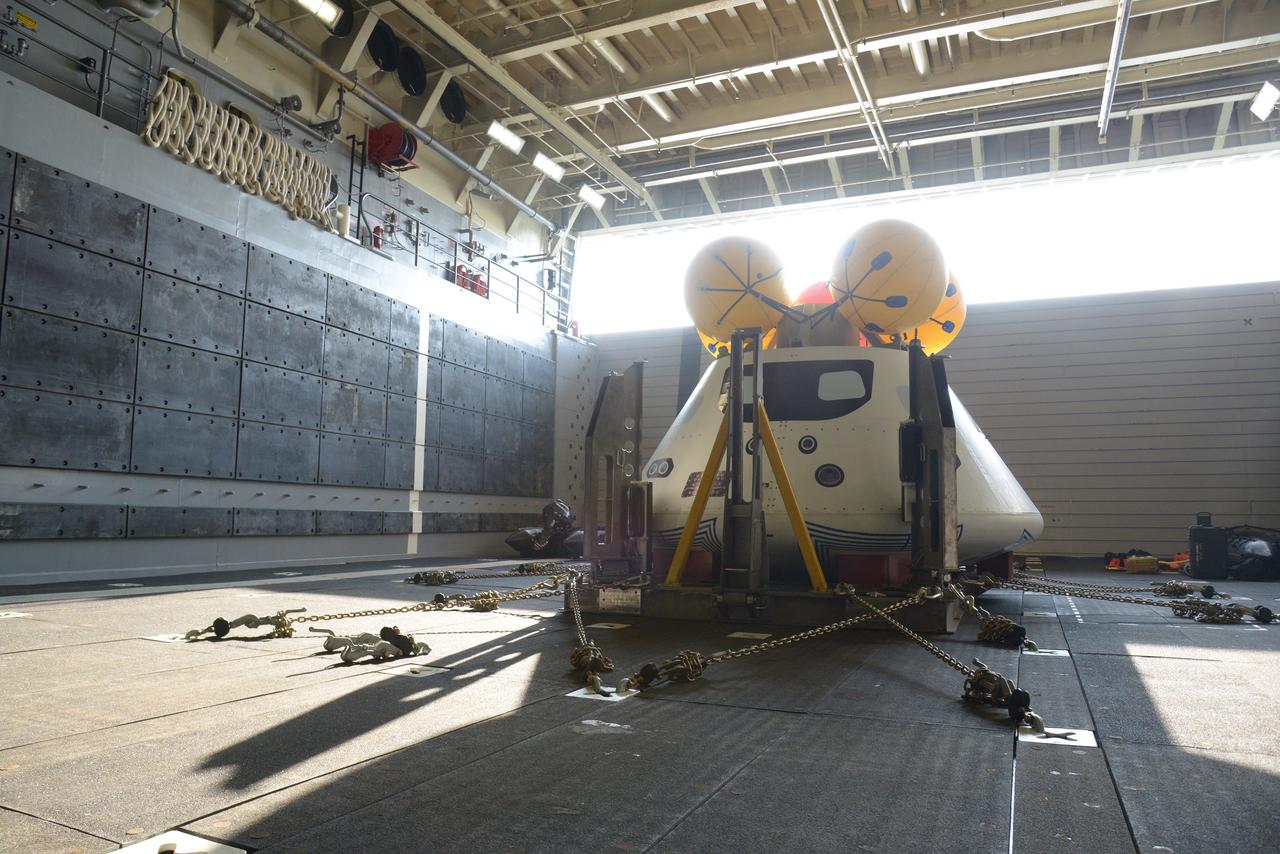
The Orion test capsule undergoes stationary recovery testing in Norfolk, VA on Aug. 13, 2013. NASA and the U.S Navy led the tests using the USS Arlington...The stationary recovery tests allow the teams to demonstrate and evaluate the recovery processes, the hardware and the test personnel in a controlled environment. ..During the test, the U.S Navy Dive Team checked the capsule for hazards while sailors from the USS Arlington approached the capsule in inflatable boats, and towed it back to the ship’s flooded well deck. Part of Batch image transfer from Flickr.
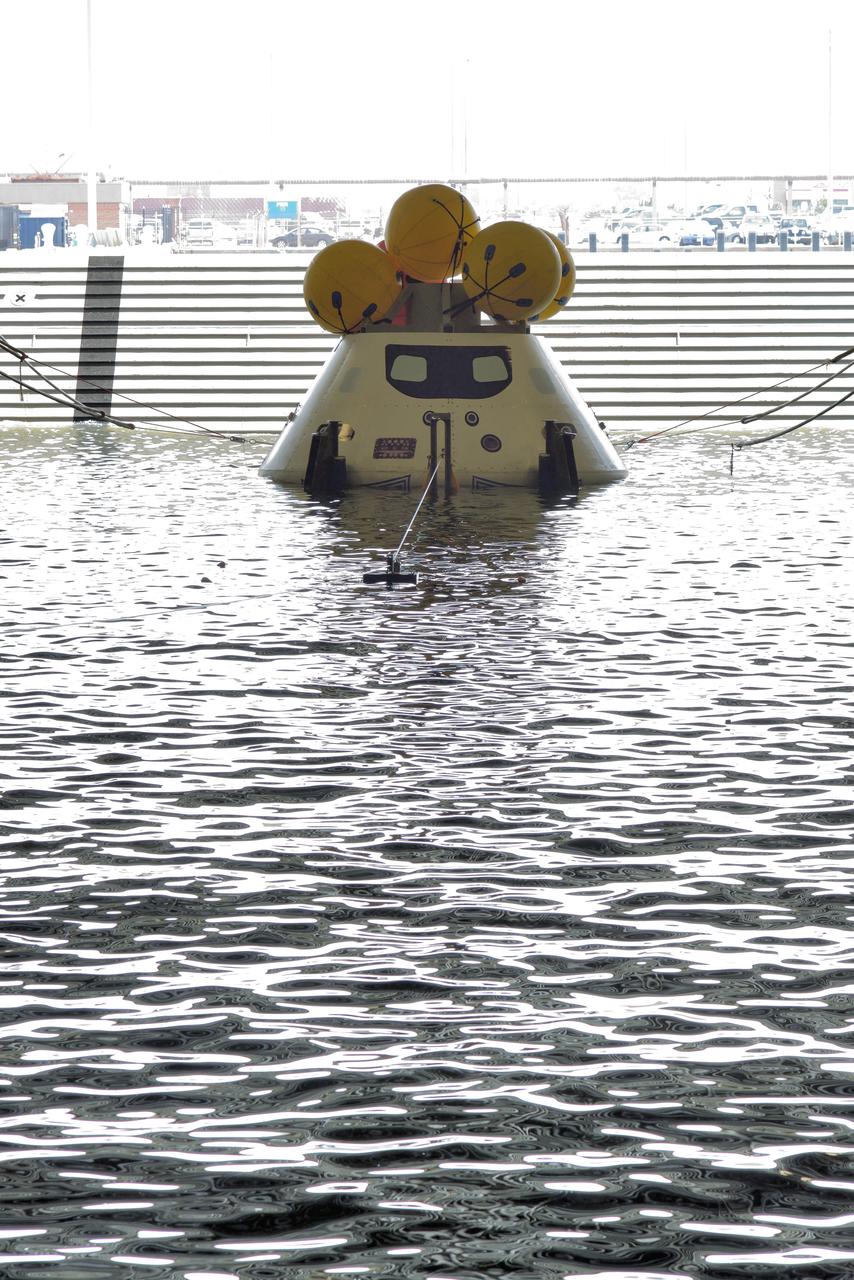
The Orion test capsule undergoes stationary recovery testing in Norfolk, VA on Aug. 13, 2013. NASA and the U.S Navy led the tests using the USS Arlington...The stationary recovery tests allow the teams to demonstrate and evaluate the recovery processes, the hardware and the test personnel in a controlled environment. ..During the test, the U.S Navy Dive Team checked the capsule for hazards while sailors from the USS Arlington approached the capsule in inflatable boats, and towed it back to the ship’s flooded well deck. Part of Batch image transfer from Flickr.
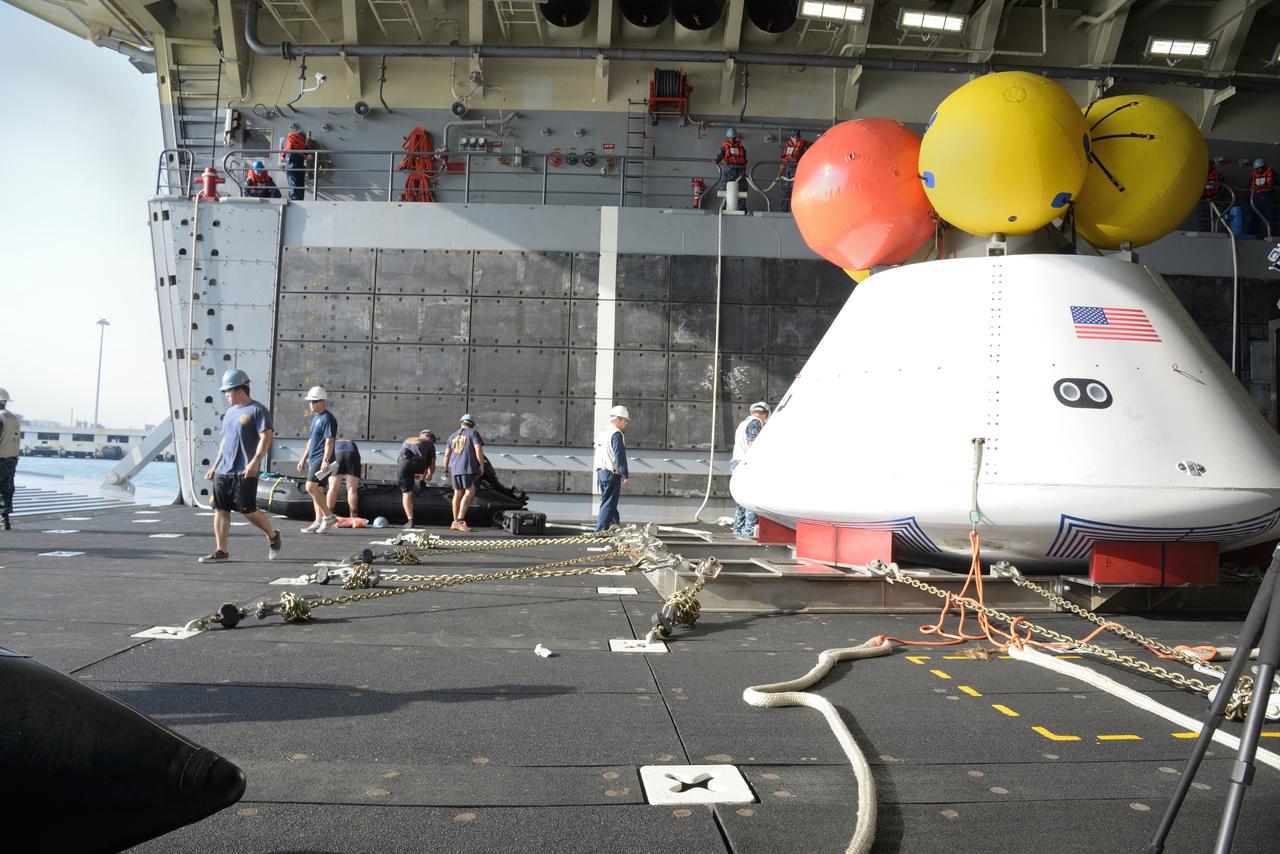
The Orion test capsule undergoes stationary recovery testing in Norfolk, VA on Aug. 13, 2013. NASA and the U.S Navy led the tests using the USS Arlington...The stationary recovery tests allow the teams to demonstrate and evaluate the recovery processes, the hardware and the test personnel in a controlled environment. ..During the test, the U.S Navy Dive Team checked the capsule for hazards while sailors from the USS Arlington approached the capsule in inflatable boats, and towed it back to the ship’s flooded well deck. Part of Batch image transfer from Flickr.
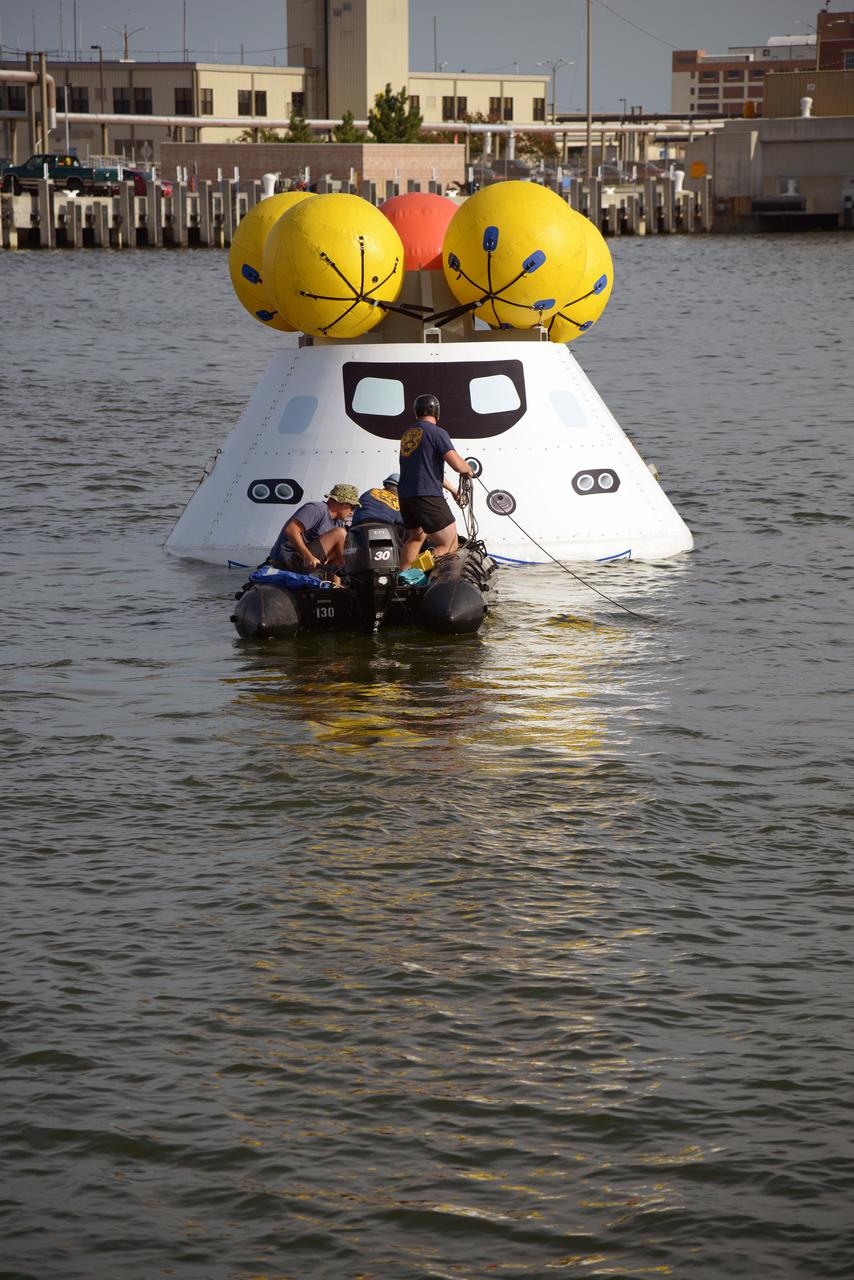
The Orion test capsule undergoes stationary recovery testing in Norfolk, VA on Aug. 13, 2013. NASA and the U.S Navy led the tests using the USS Arlington...The stationary recovery tests allow the teams to demonstrate and evaluate the recovery processes, the hardware and the test personnel in a controlled environment. ..During the test, the U.S Navy Dive Team checked the capsule for hazards while sailors from the USS Arlington approached the capsule in inflatable boats, and towed it back to the ship’s flooded well deck. Part of Batch image transfer from Flickr.
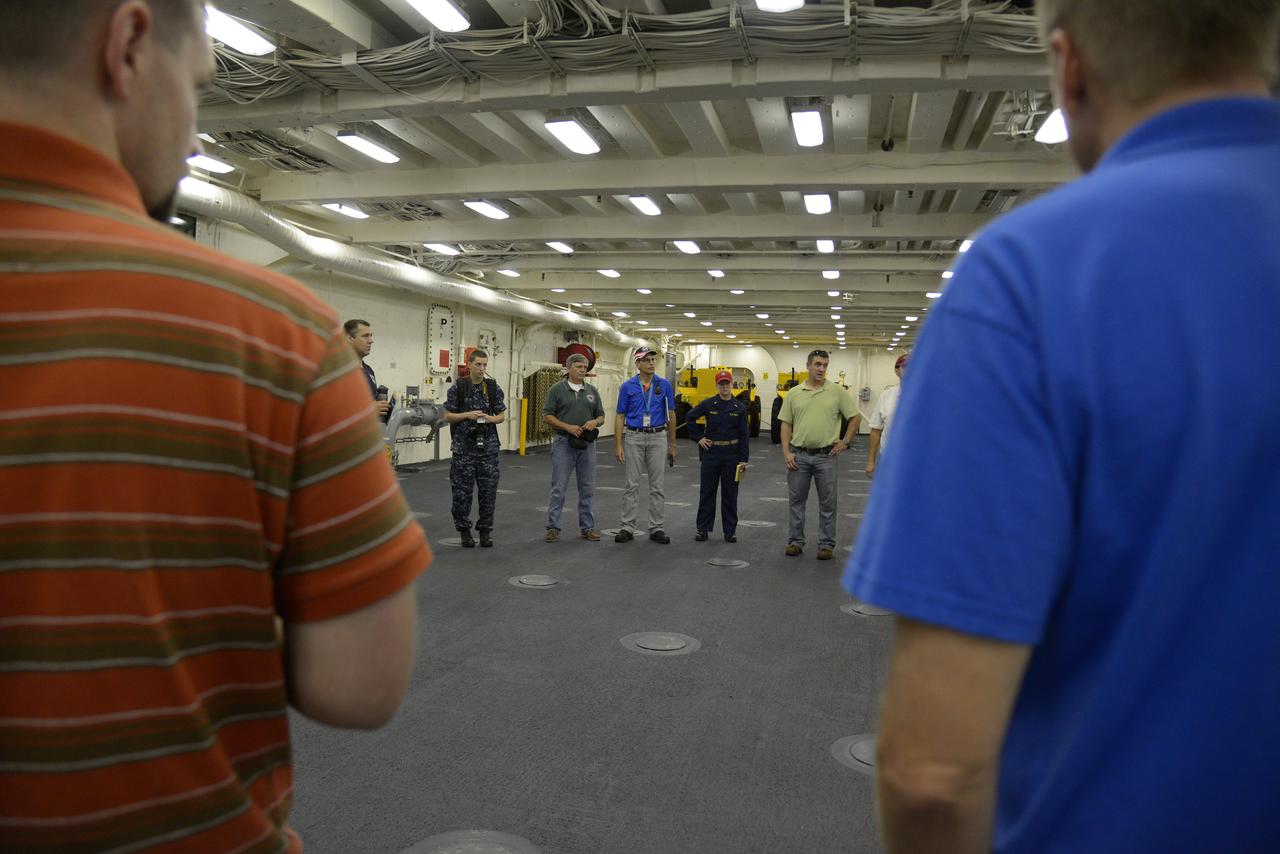
The Orion test capsule undergoes stationary recovery testing in Norfolk, VA on Aug. 13, 2013. NASA and the U.S Navy led the tests using the USS Arlington...The stationary recovery tests allow the teams to demonstrate and evaluate the recovery processes, the hardware and the test personnel in a controlled environment. ..During the test, the U.S Navy Dive Team checked the capsule for hazards while sailors from the USS Arlington approached the capsule in inflatable boats, and towed it back to the ship’s flooded well deck. Part of Batch image transfer from Flickr.
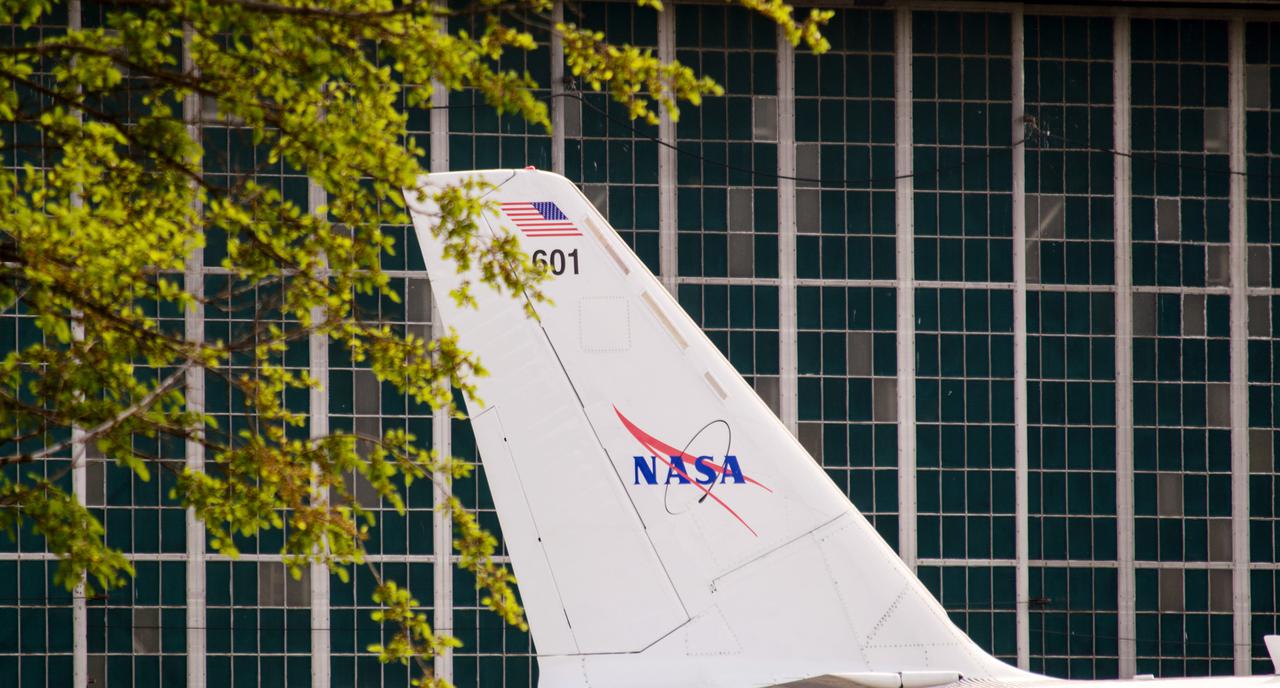
The Lockheed Viking S-3B aircraft was parked for re-fulling out near the hangar at Glenn Research Center in preparation for its departure and retirement from service. This former NAVY aircraft was the last such aircraft still flying. It has gone to a museum on the west coast. After leaving service with the NAVY, it came to GRC to be used in aircraft icing experiments. Tree branches frame the tail of this old war bird in front of the glass windows of the hangar door.
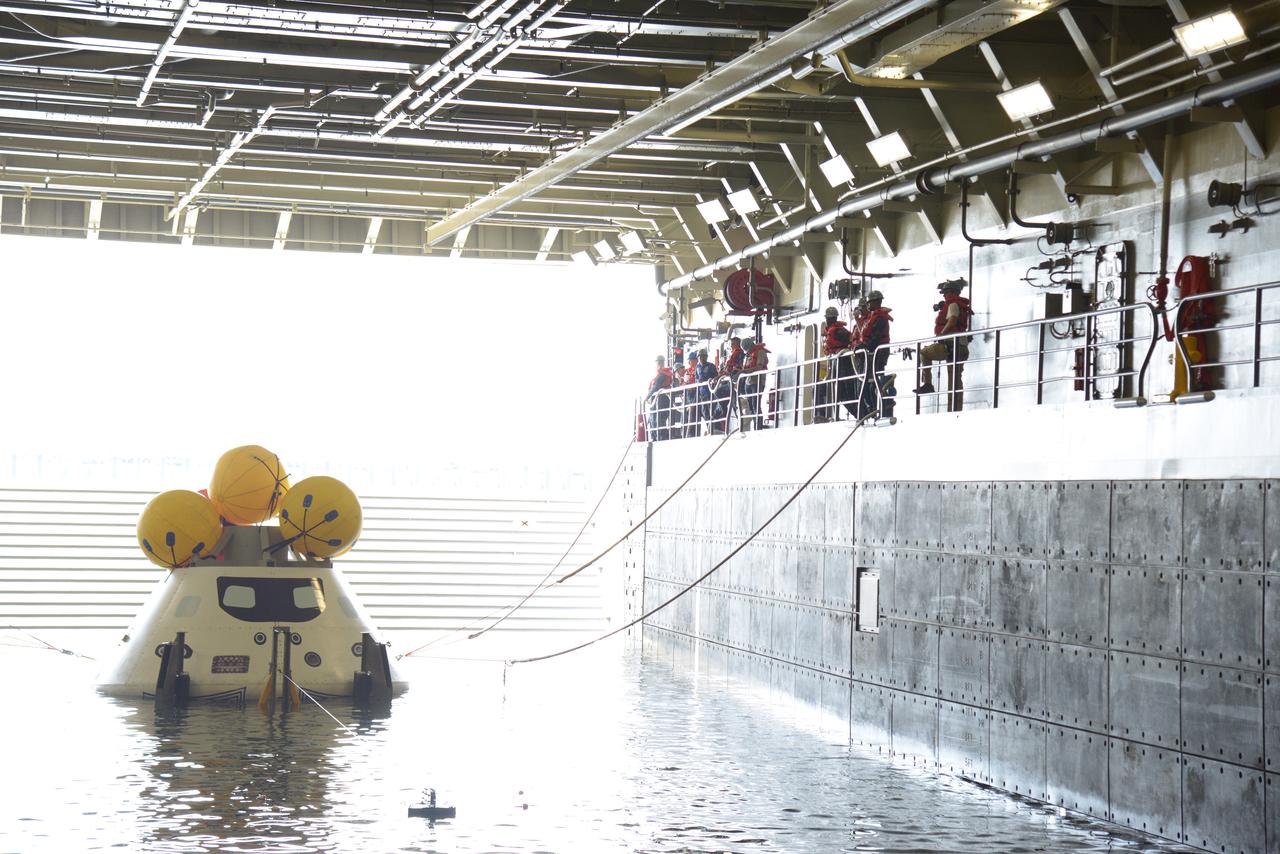
The Orion test capsule undergoes stationary recovery testing in Norfolk, VA on Aug. 13, 2013. NASA and the U.S Navy led the tests using the USS Arlington...The stationary recovery tests allow the teams to demonstrate and evaluate the recovery processes, the hardware and the test personnel in a controlled environment. ..During the test, the U.S Navy Dive Team checked the capsule for hazards while sailors from the USS Arlington approached the capsule in inflatable boats, and towed it back to the ship’s flooded well deck. Part of Batch image transfer from Flickr.
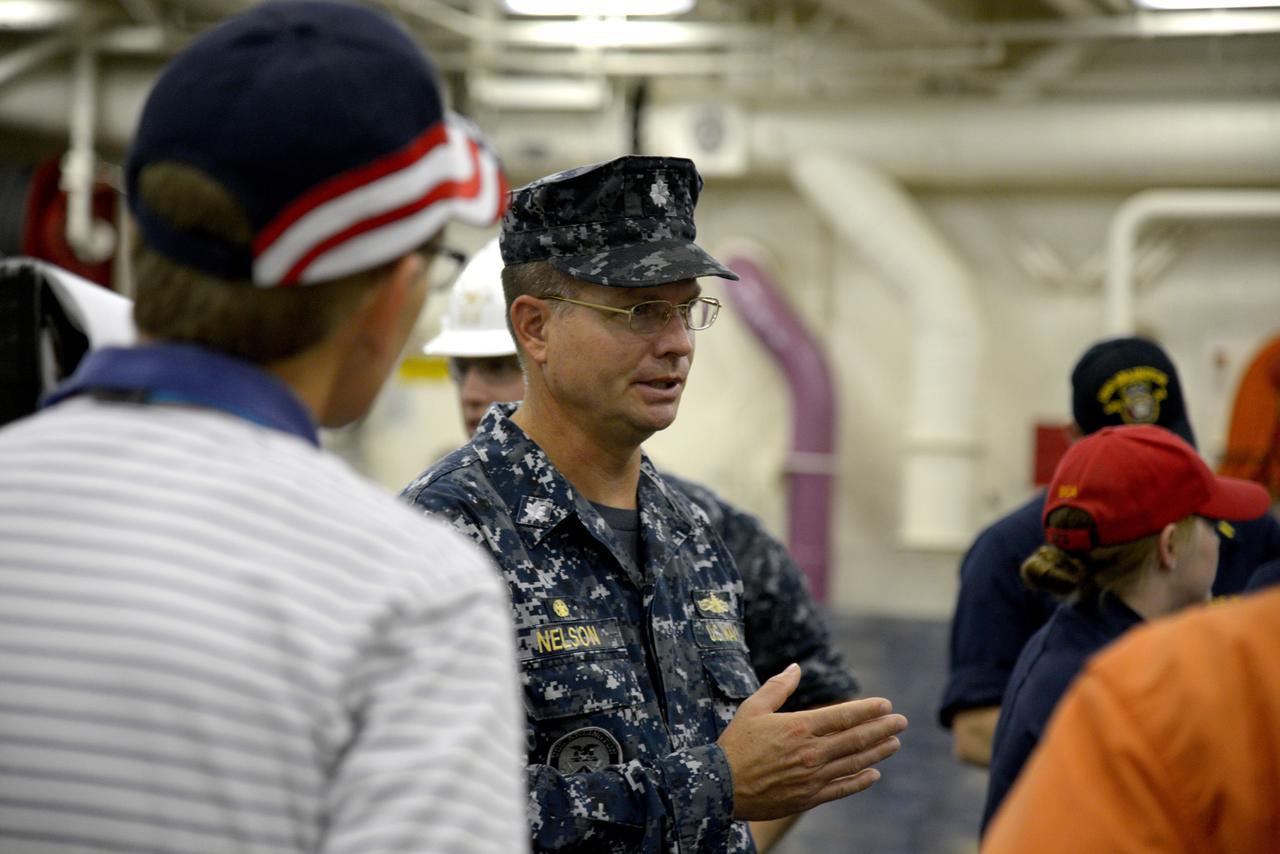
The Orion test capsule undergoes stationary recovery testing in Norfolk, VA on Aug. 13, 2013. NASA and the U.S Navy led the tests using the USS Arlington...The stationary recovery tests allow the teams to demonstrate and evaluate the recovery processes, the hardware and the test personnel in a controlled environment. ..During the test, the U.S Navy Dive Team checked the capsule for hazards while sailors from the USS Arlington approached the capsule in inflatable boats, and towed it back to the ship’s flooded well deck. Part of Batch image transfer from Flickr.
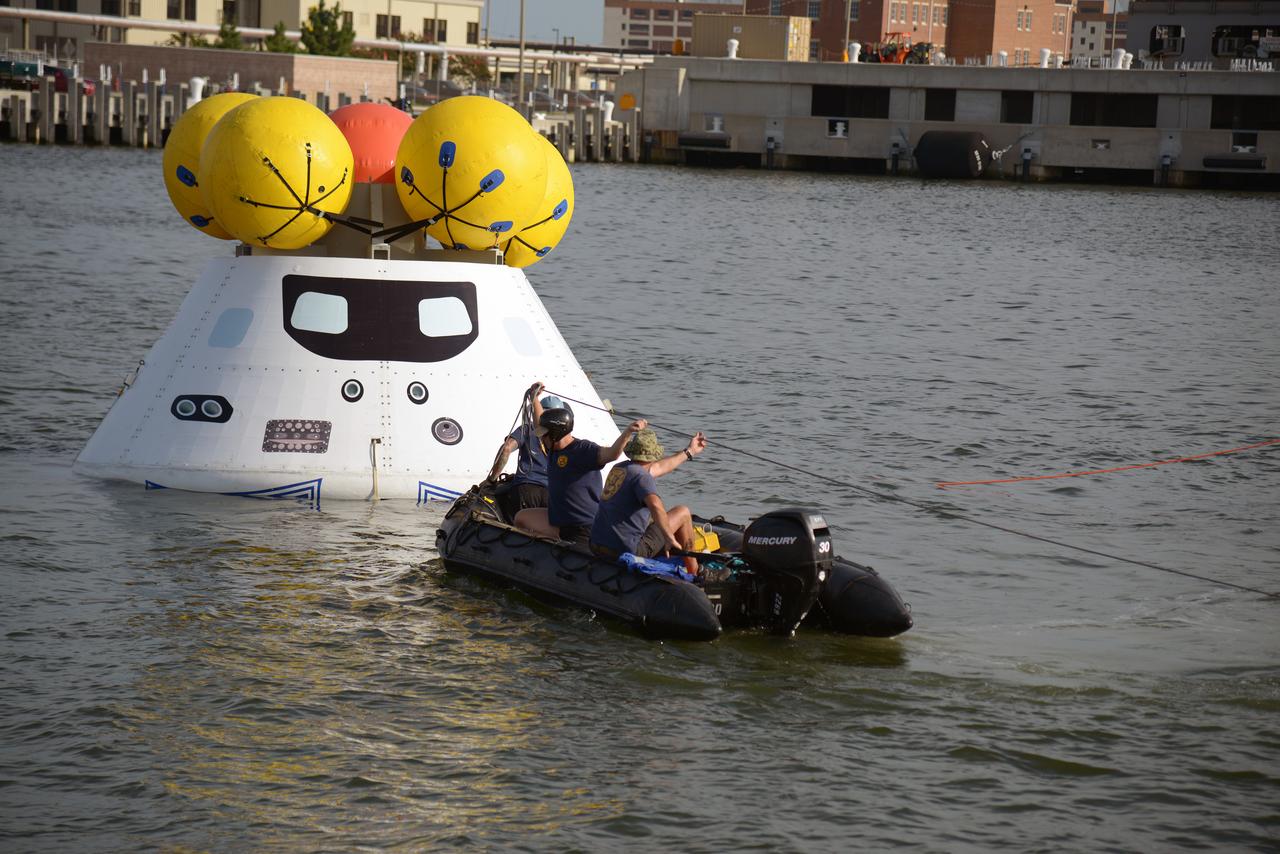
The Orion test capsule undergoes stationary recovery testing in Norfolk, VA on Aug. 13, 2013. NASA and the U.S Navy led the tests using the USS Arlington...The stationary recovery tests allow the teams to demonstrate and evaluate the recovery processes, the hardware and the test personnel in a controlled environment. ..During the test, the U.S Navy Dive Team checked the capsule for hazards while sailors from the USS Arlington approached the capsule in inflatable boats, and towed it back to the ship’s flooded well deck. Part of Batch image transfer from Flickr.
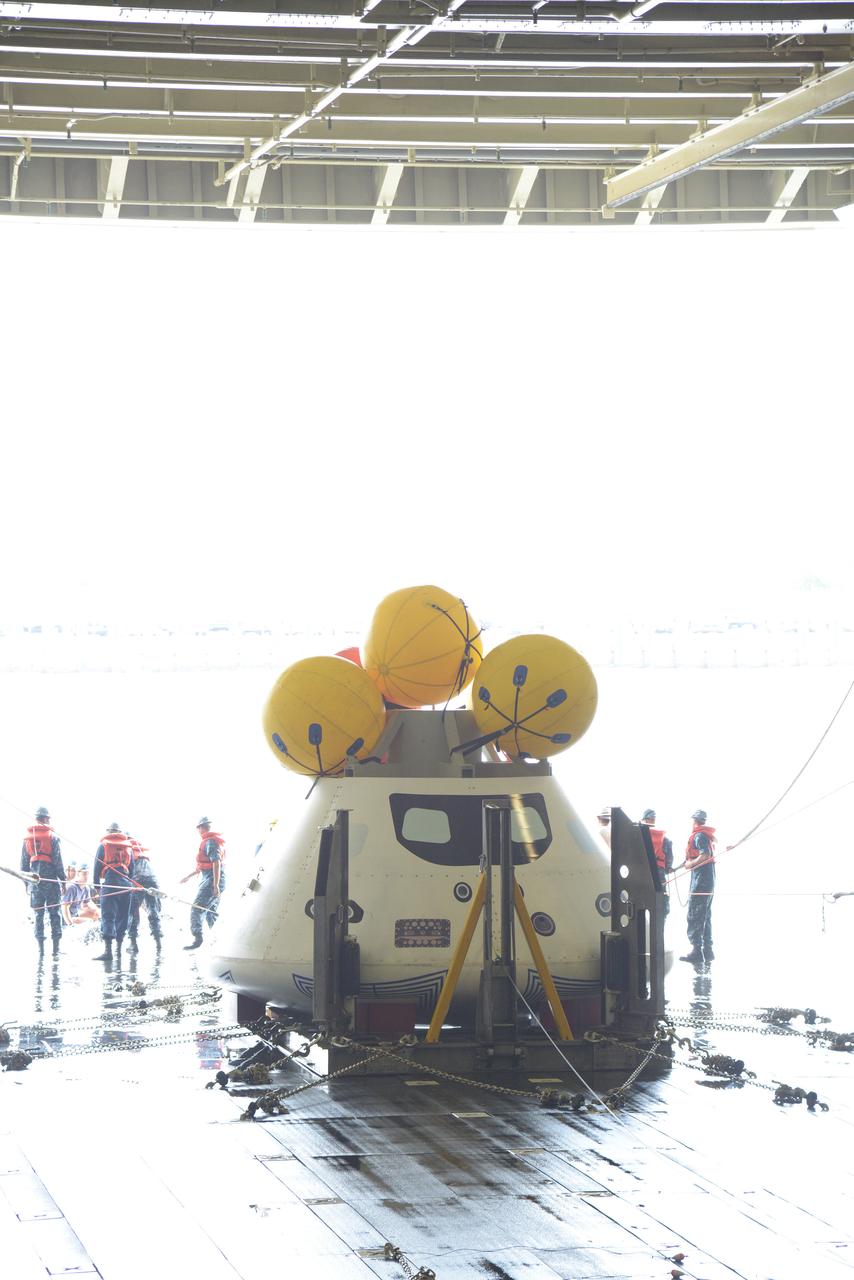
The Orion test capsule undergoes stationary recovery testing in Norfolk, VA on Aug. 13, 2013. NASA and the U.S Navy led the tests using the USS Arlington...The stationary recovery tests allow the teams to demonstrate and evaluate the recovery processes, the hardware and the test personnel in a controlled environment. ..During the test, the U.S Navy Dive Team checked the capsule for hazards while sailors from the USS Arlington approached the capsule in inflatable boats, and towed it back to the ship’s flooded well deck. Part of Batch image transfer from Flickr.
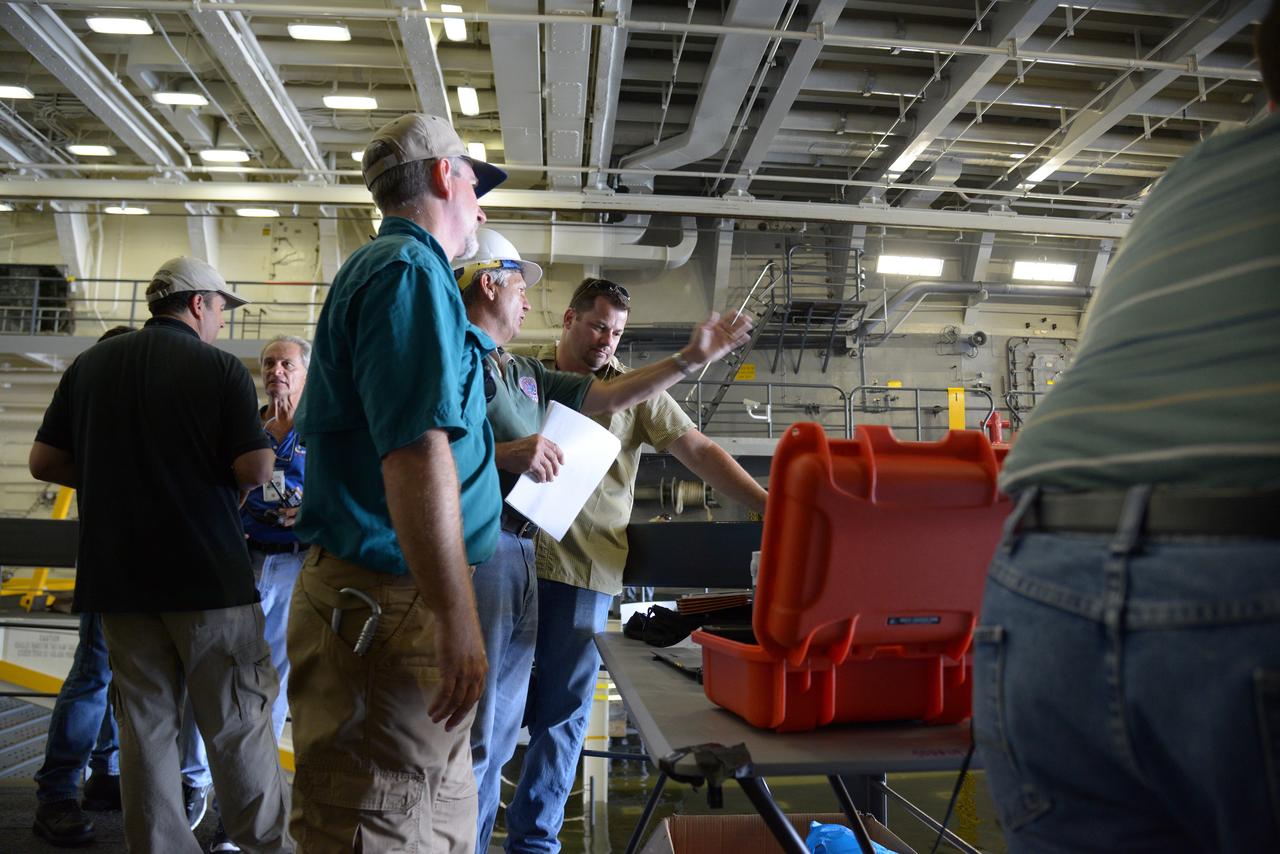
The Orion test capsule undergoes stationary recovery testing in Norfolk, VA on Aug. 13, 2013. NASA and the U.S Navy led the tests using the USS Arlington...The stationary recovery tests allow the teams to demonstrate and evaluate the recovery processes, the hardware and the test personnel in a controlled environment. ..During the test, the U.S Navy Dive Team checked the capsule for hazards while sailors from the USS Arlington approached the capsule in inflatable boats, and towed it back to the ship’s flooded well deck. Part of Batch image transfer from Flickr.
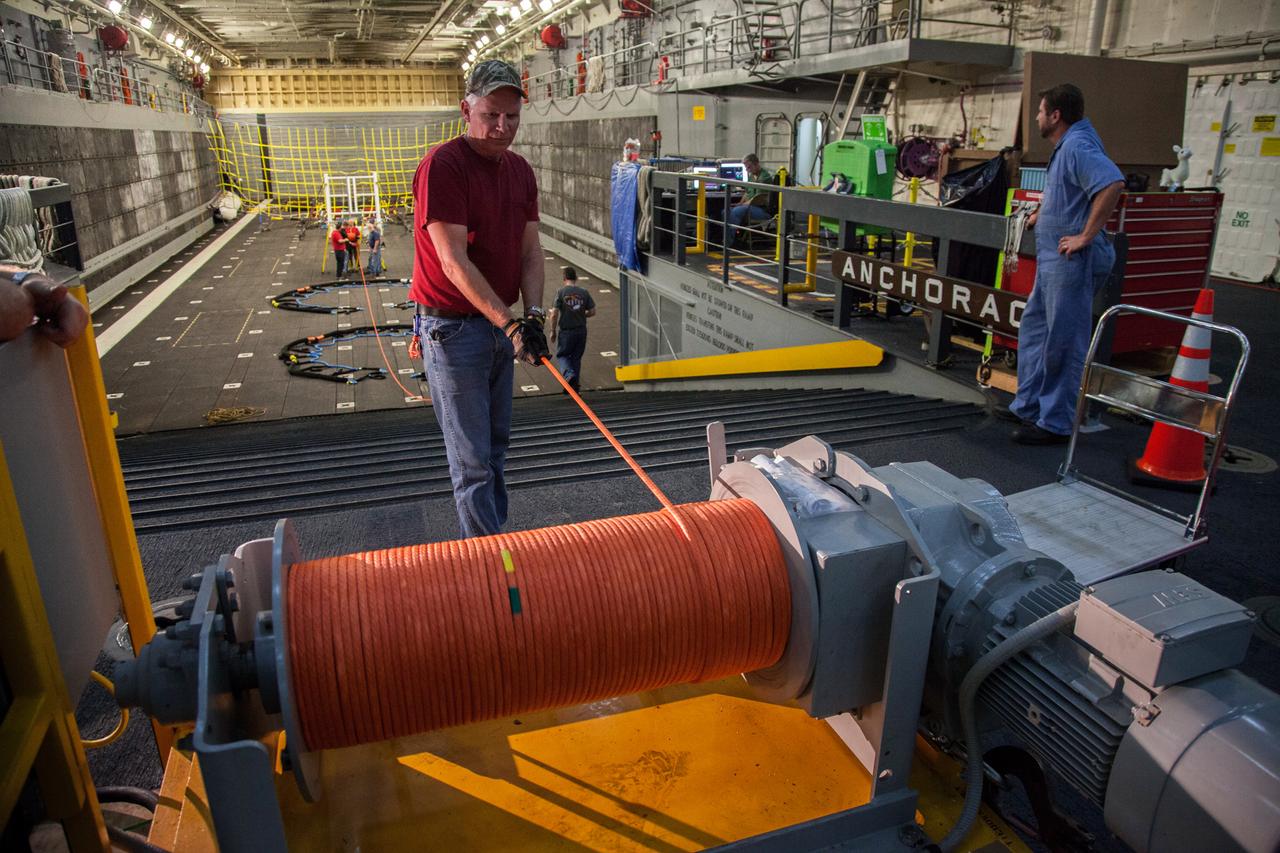
Orion recovery team members make preparations for Orion's splashdown inside the well deck of the U.S. Navy's USS Anchorage Dec. 2, 2014. A combined NASA/Navy team will tow Orion into the Anchorage's flooded well deck using the orange line after the spacecraft lands in the Pacific Ocean following Exploration Flight Test-1 (EFT-1) on Dec. 4. Part of Batch image transfer from Flickr.
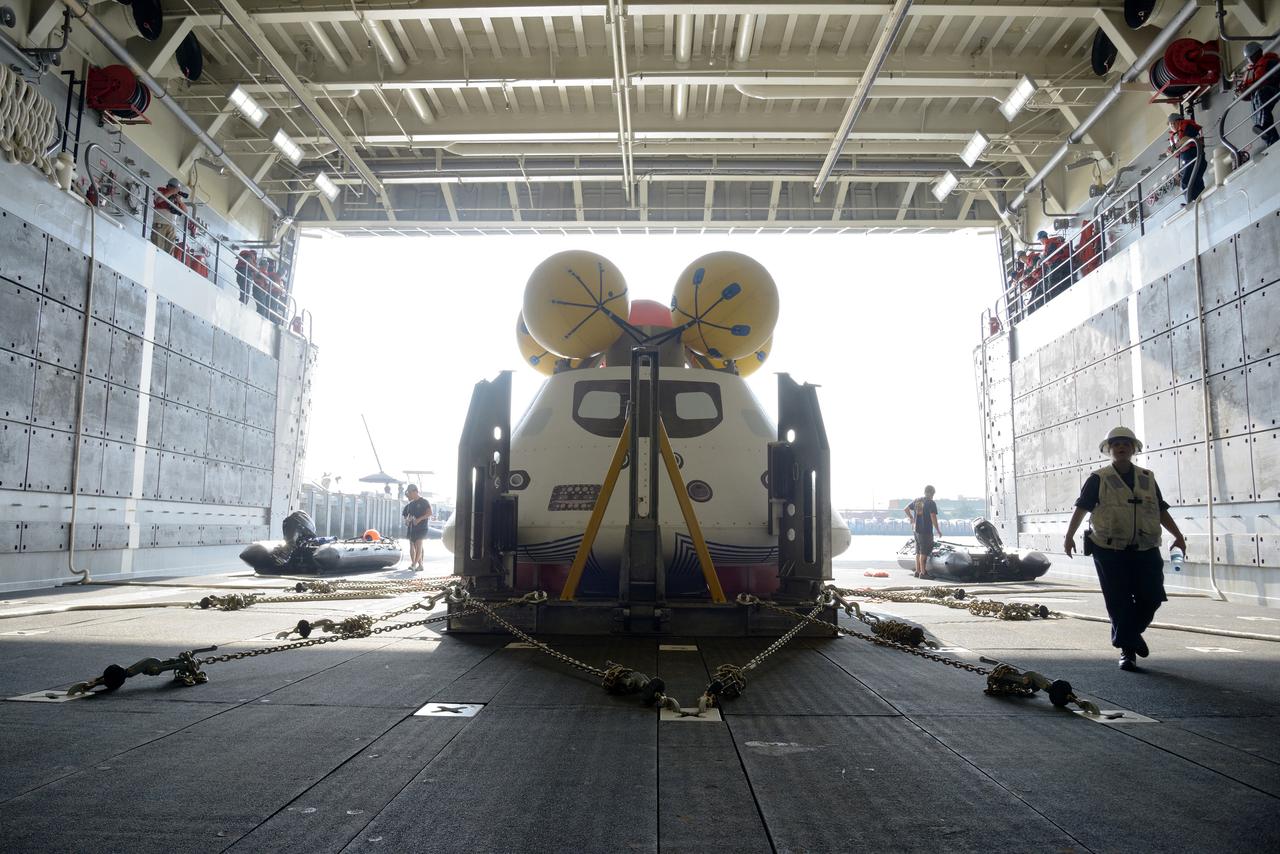
The Orion test capsule undergoes stationary recovery testing in Norfolk, VA on Aug. 13, 2013. NASA and the U.S Navy led the tests using the USS Arlington...The stationary recovery tests allow the teams to demonstrate and evaluate the recovery processes, the hardware and the test personnel in a controlled environment. ..During the test, the U.S Navy Dive Team checked the capsule for hazards while sailors from the USS Arlington approached the capsule in inflatable boats, and towed it back to the ship’s flooded well deck. Part of Batch image transfer from Flickr.
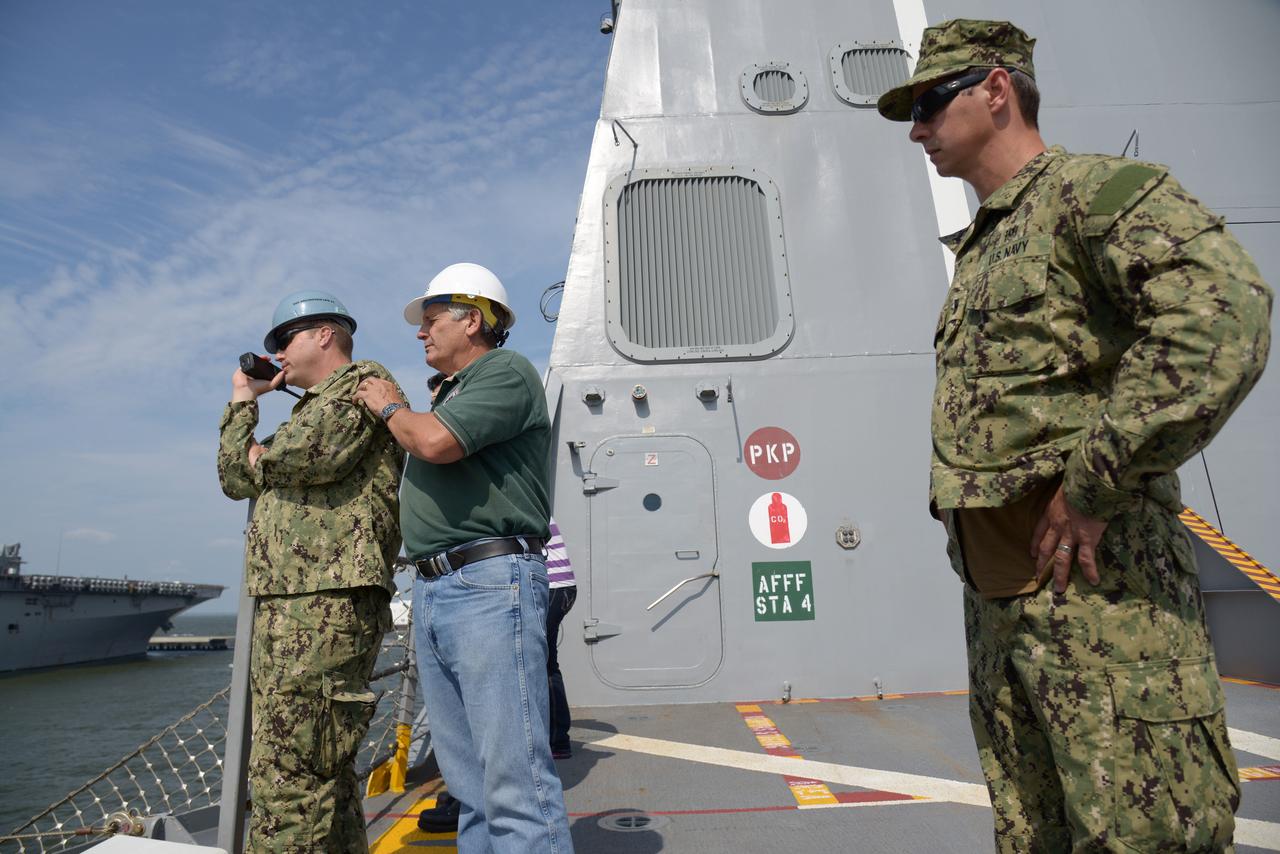
The Orion test capsule undergoes stationary recovery testing in Norfolk, VA on Aug. 13, 2013. NASA and the U.S Navy led the tests using the USS Arlington...The stationary recovery tests allow the teams to demonstrate and evaluate the recovery processes, the hardware and the test personnel in a controlled environment. ..During the test, the U.S Navy Dive Team checked the capsule for hazards while sailors from the USS Arlington approached the capsule in inflatable boats, and towed it back to the ship’s flooded well deck. Part of Batch image transfer from Flickr.
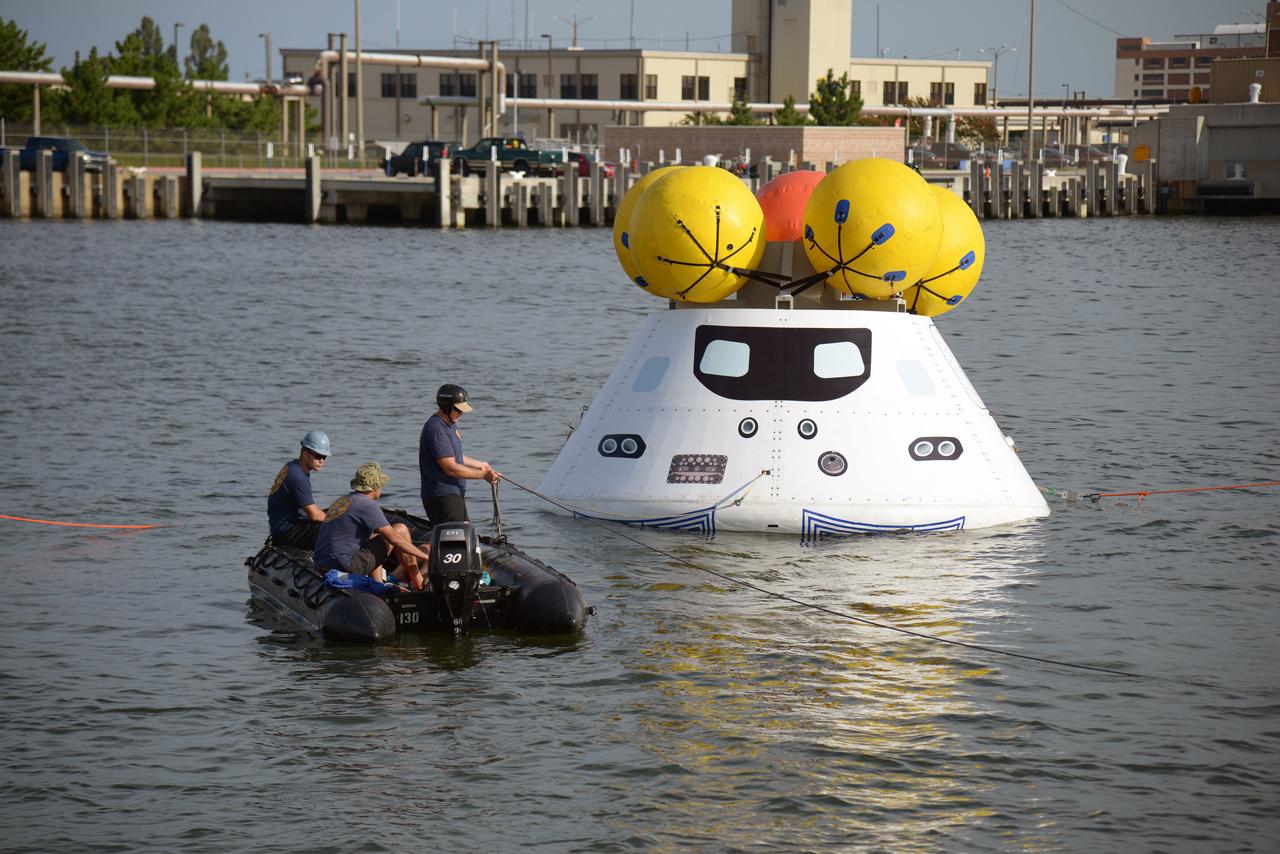
The Orion test capsule undergoes stationary recovery testing in Norfolk, VA on Aug. 13, 2013. NASA and the U.S Navy led the tests using the USS Arlington...The stationary recovery tests allow the teams to demonstrate and evaluate the recovery processes, the hardware and the test personnel in a controlled environment. ..During the test, the U.S Navy Dive Team checked the capsule for hazards while sailors from the USS Arlington approached the capsule in inflatable boats, and towed it back to the ship’s flooded well deck. Part of Batch image transfer from Flickr.
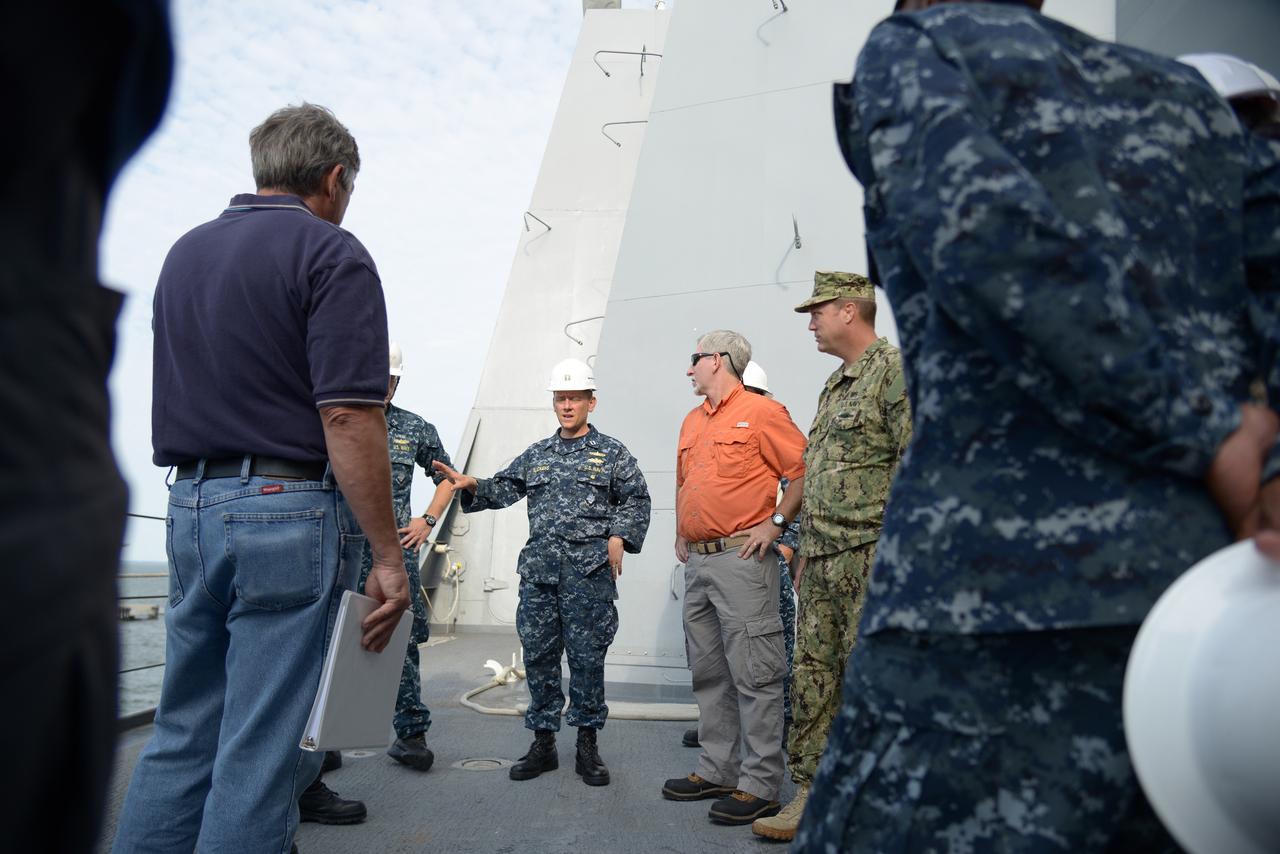
The Orion test capsule undergoes stationary recovery testing in Norfolk, VA on Aug. 13, 2013. NASA and the U.S Navy led the tests using the USS Arlington...The stationary recovery tests allow the teams to demonstrate and evaluate the recovery processes, the hardware and the test personnel in a controlled environment. ..During the test, the U.S Navy Dive Team checked the capsule for hazards while sailors from the USS Arlington approached the capsule in inflatable boats, and towed it back to the ship’s flooded well deck. Part of Batch image transfer from Flickr.
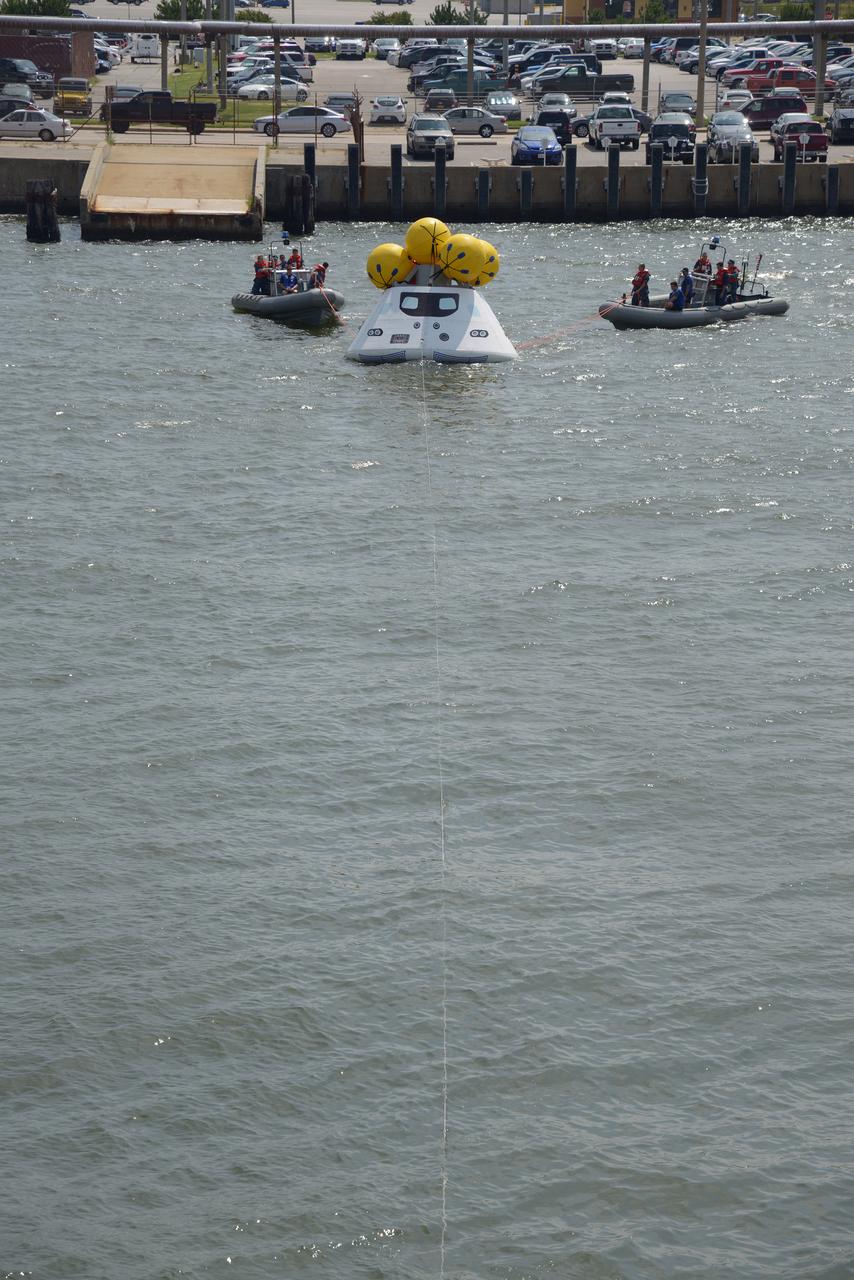
The Orion test capsule undergoes stationary recovery testing in Norfolk, VA on Aug. 13, 2013. NASA and the U.S Navy led the tests using the USS Arlington...The stationary recovery tests allow the teams to demonstrate and evaluate the recovery processes, the hardware and the test personnel in a controlled environment. ..During the test, the U.S Navy Dive Team checked the capsule for hazards while sailors from the USS Arlington approached the capsule in inflatable boats, and towed it back to the ship’s flooded well deck. Part of Batch image transfer from Flickr.
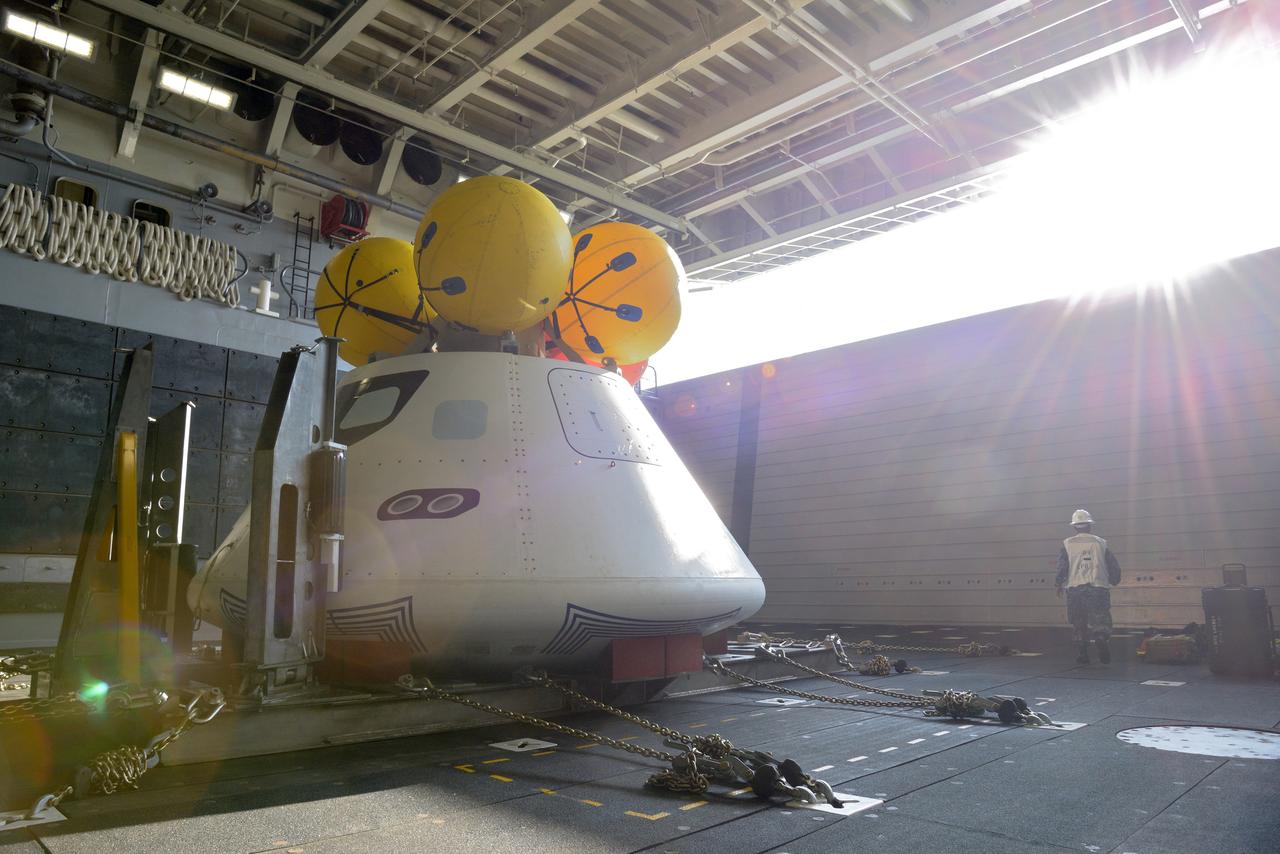
The Orion test capsule undergoes stationary recovery testing in Norfolk, VA on Aug. 13, 2013. NASA and the U.S Navy led the tests using the USS Arlington...The stationary recovery tests allow the teams to demonstrate and evaluate the recovery processes, the hardware and the test personnel in a controlled environment. ..During the test, the U.S Navy Dive Team checked the capsule for hazards while sailors from the USS Arlington approached the capsule in inflatable boats, and towed it back to the ship’s flooded well deck. Part of Batch image transfer from Flickr.
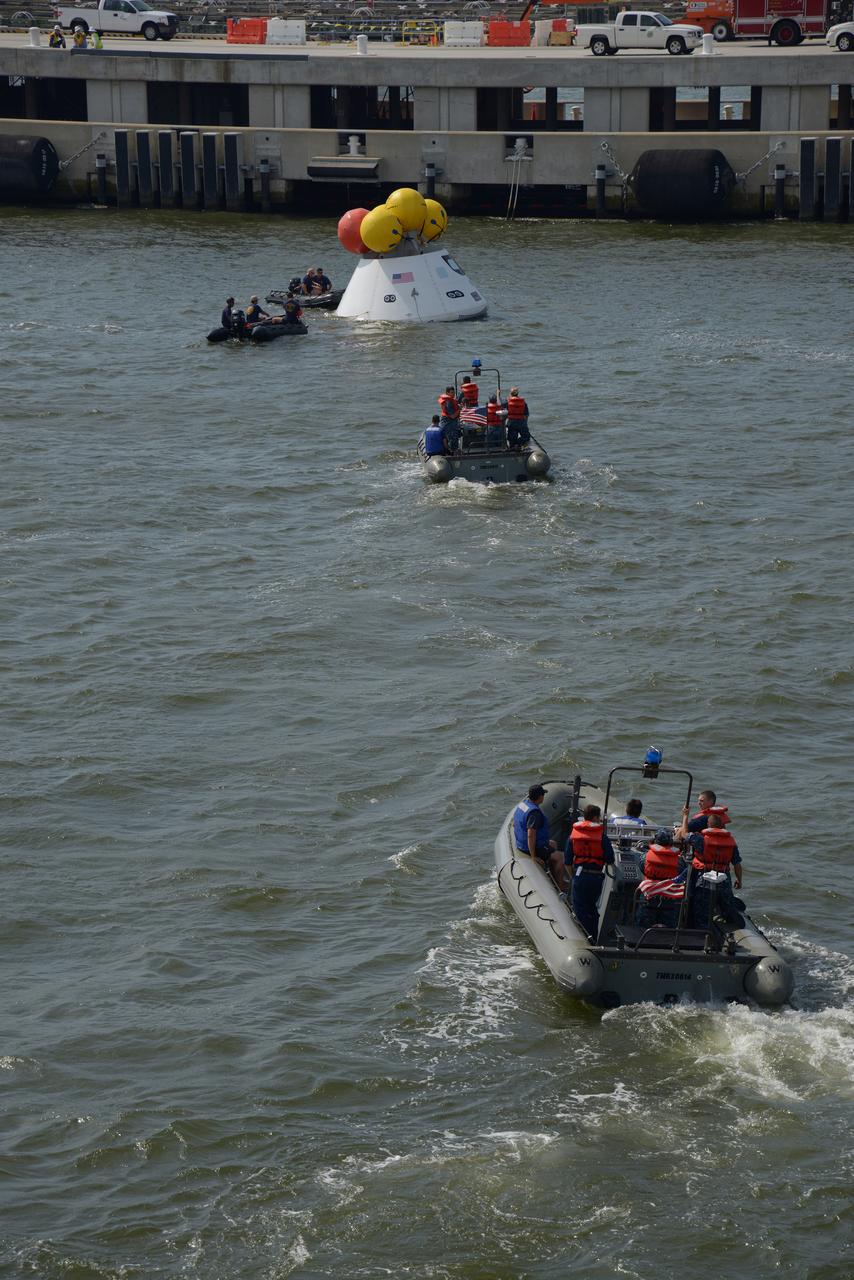
The Orion test capsule undergoes stationary recovery testing in Norfolk, VA on Aug. 13, 2013. NASA and the U.S Navy led the tests using the USS Arlington...The stationary recovery tests allow the teams to demonstrate and evaluate the recovery processes, the hardware and the test personnel in a controlled environment. ..During the test, the U.S Navy Dive Team checked the capsule for hazards while sailors from the USS Arlington approached the capsule in inflatable boats, and towed it back to the ship’s flooded well deck. Part of Batch image transfer from Flickr.
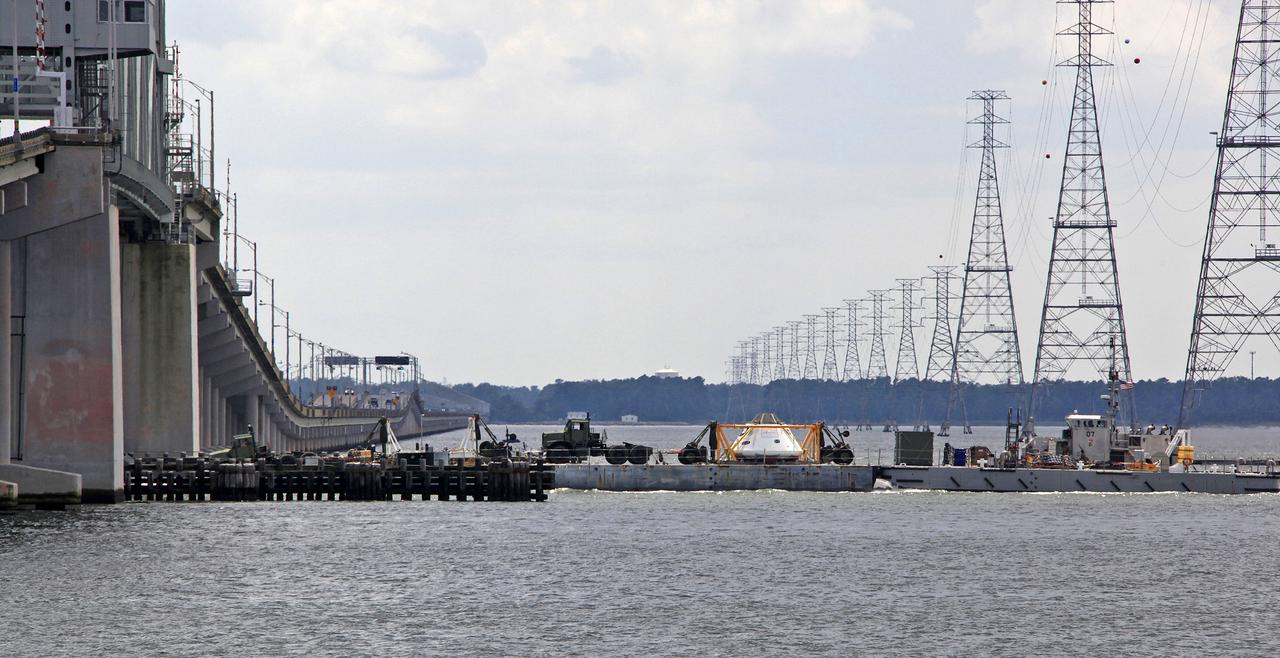
The Orion Test Capsule and a number of other items used in the capsule recovery at being transported down the James River on a Navy INLS "Improved Navy Lighterage System" from Fort Eustis from where it was loaded. Its liquid route will take them to Little Creek Amphibious Base in Norfolk, where it will stay until scheduled recovery test will be performed.