
Larry DeLucas operating USML-1 Glovebox
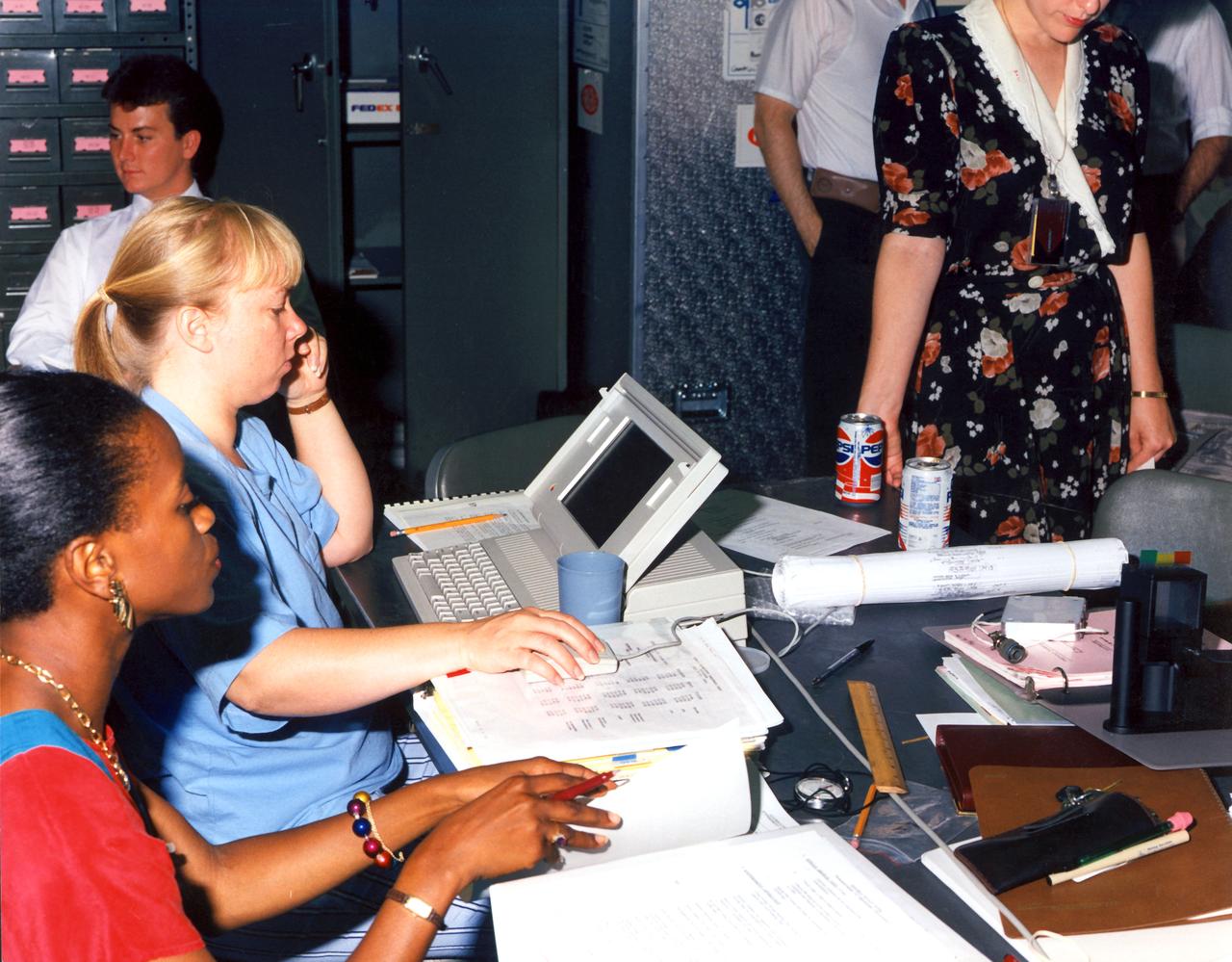
Experiment sequence test on USML-1 Glovebox equipment and test investigator group.
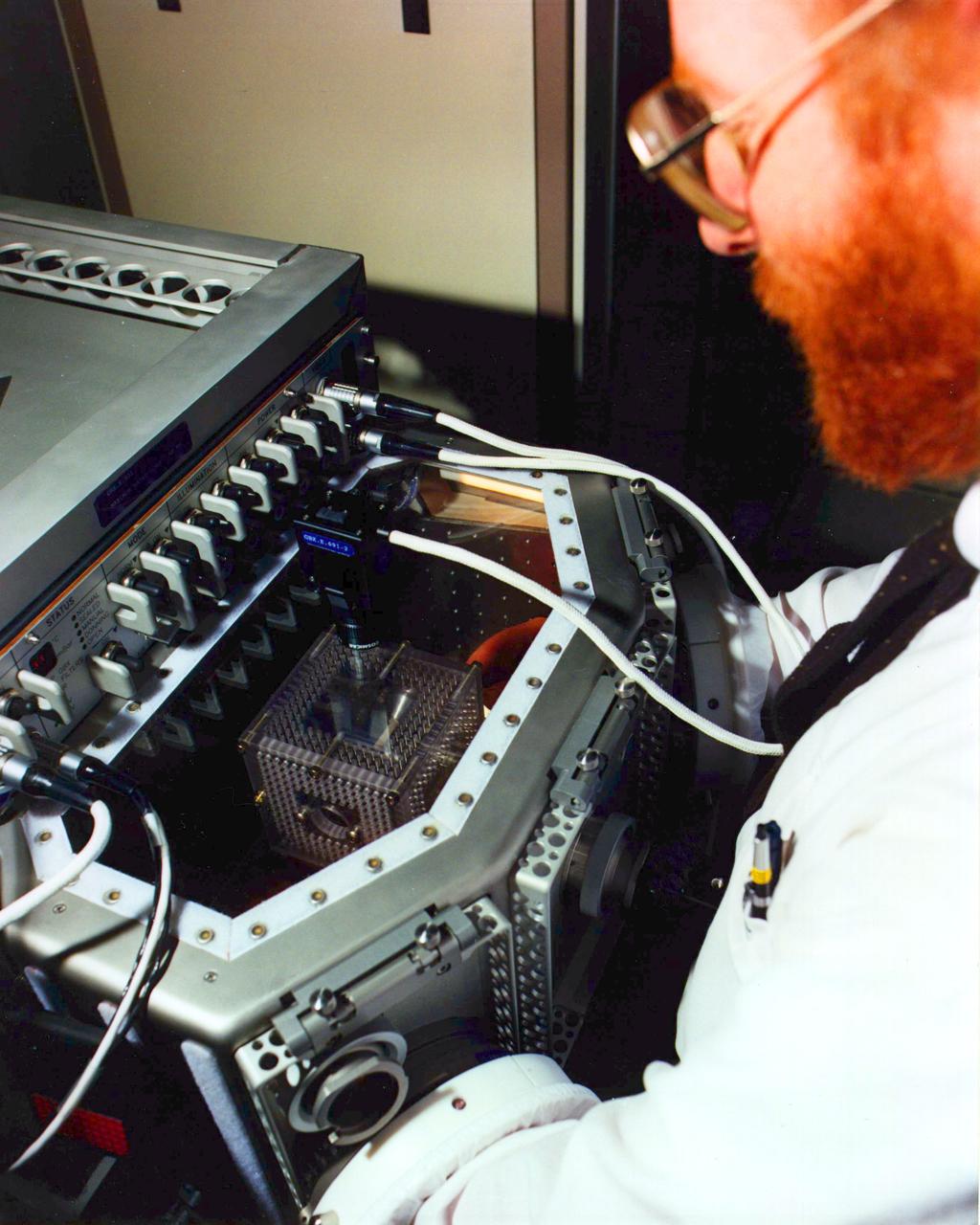
USML-1, Howard Ross working with the Glovebox Module
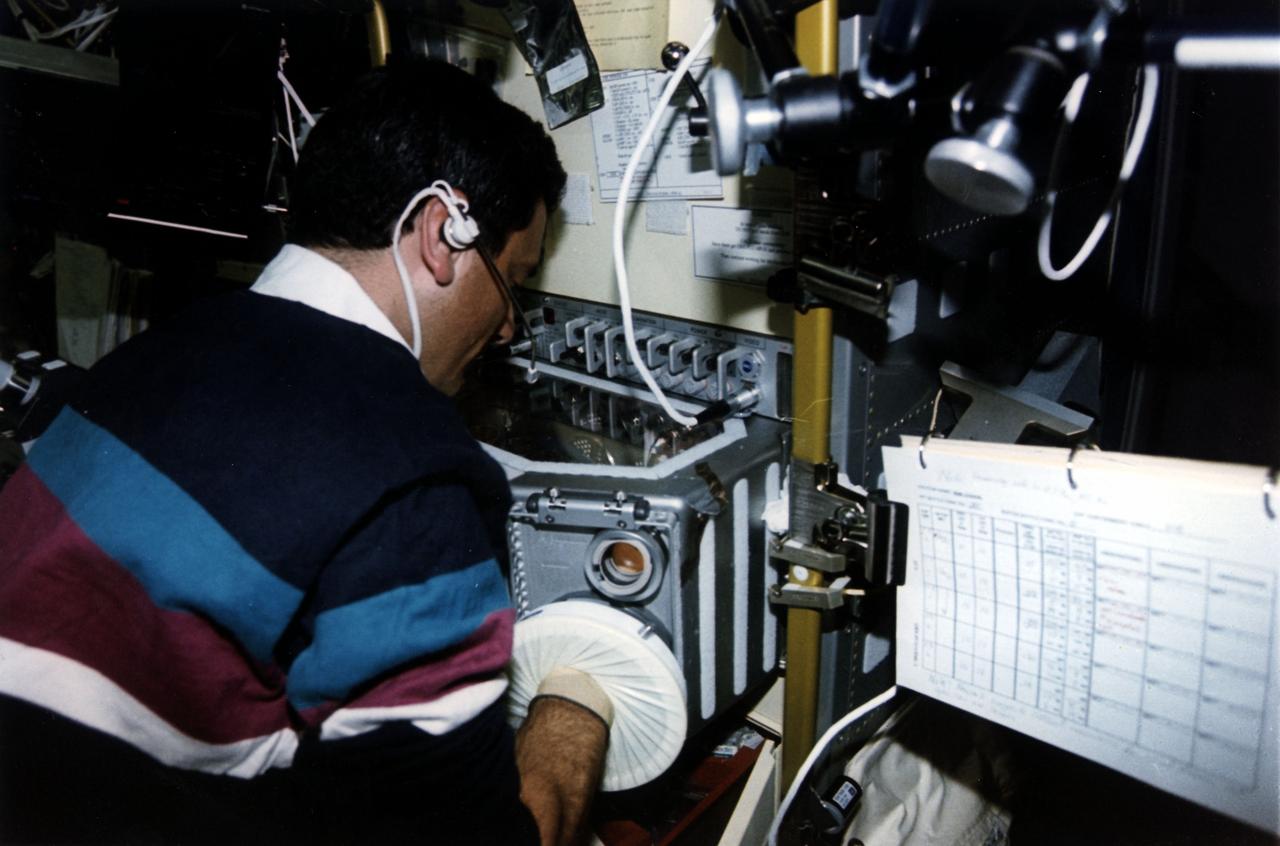
Dr. Larry DeLucas operating the USML-1 Glovebox (GBX) during the USML-1 (STS-50) mission. Dr. DeLucas was a Payload Specialist during the USML-1 mission and is Associate Director of the Center for Macromolecular Crystallography at The University of Alabama at Birmingham.
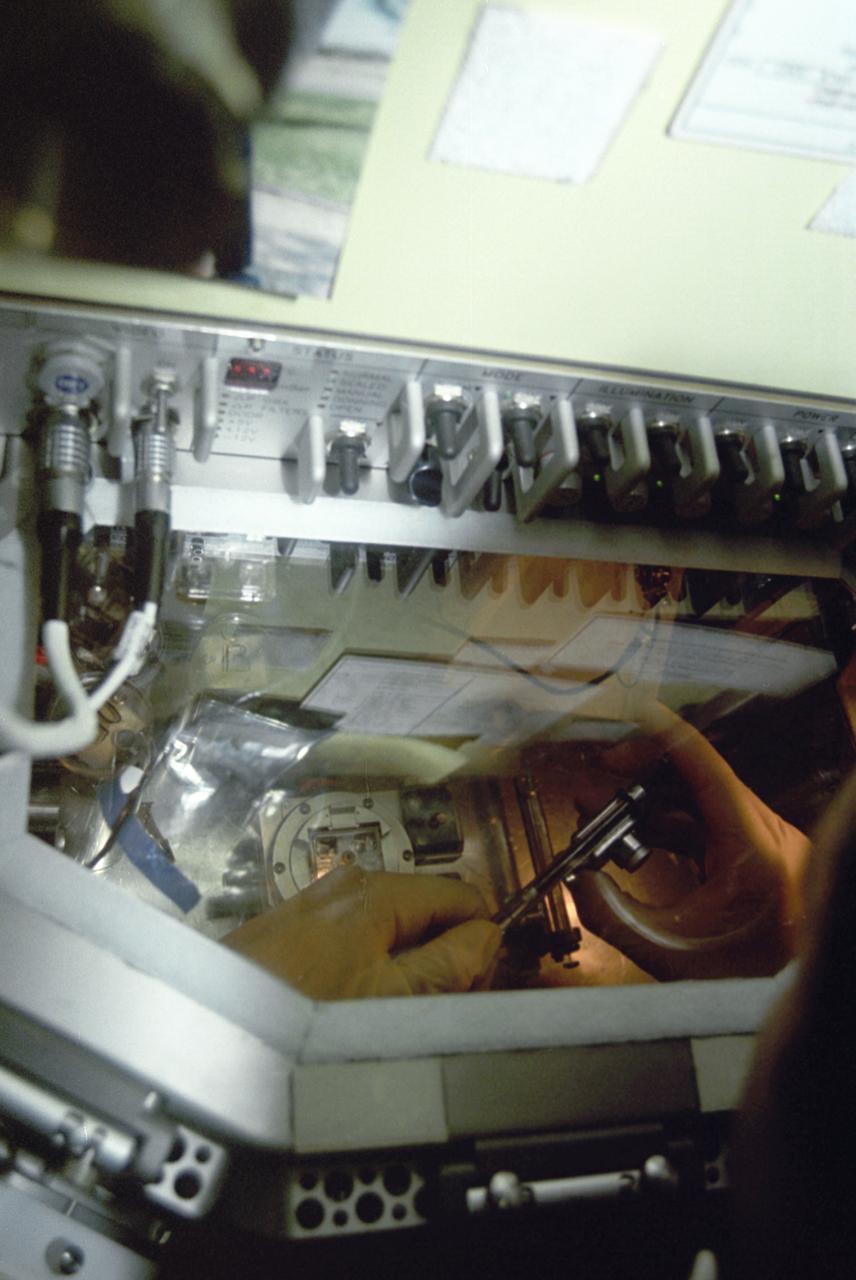
The first United States Microgravity Laboratory (USML-1) provided scientific research in materials science, fluid dynamics, biotechnology, and combustion science in a weightless environment inside the Spacelab module. This photograph is a close-up view of the Glovebox in operation during the mission. The Spacelab Glovebox, provided by the European Space Agency, offers experimenters new capabilities to test and develop science procedures and technologies in microgravity. It enables crewmembers to handle, transfer, and otherwise manipulate materials in ways that are impractical in the open Spacelab. The facility is equipped with three doors: a central port through which experiments are placed in the Glovebox and two glovedoors on both sides with an attachment for gloves or adjustable cuffs and adapters for cameras. The Glovebox has an enclosed compartment that offers a clean working space and minimizes the contamination risks to both Spacelab and experiment samples. Although fluid containment and ease of cleanup are major benefits provided by the facility, it can also contain powders and bioparticles; toxic, irritating, or potentially infectious materials; and other debris produced during experiment operations. The facility is equipped with photographic/video capabilities and permits mounting a microscope. For the USML-1 mission, the Glovebox experiments fell into four basic categories: fluid dynamics, combustion science, crystal growth, and technology demonstration. The USML-1 flew aboard the STS-50 mission in June 1992.
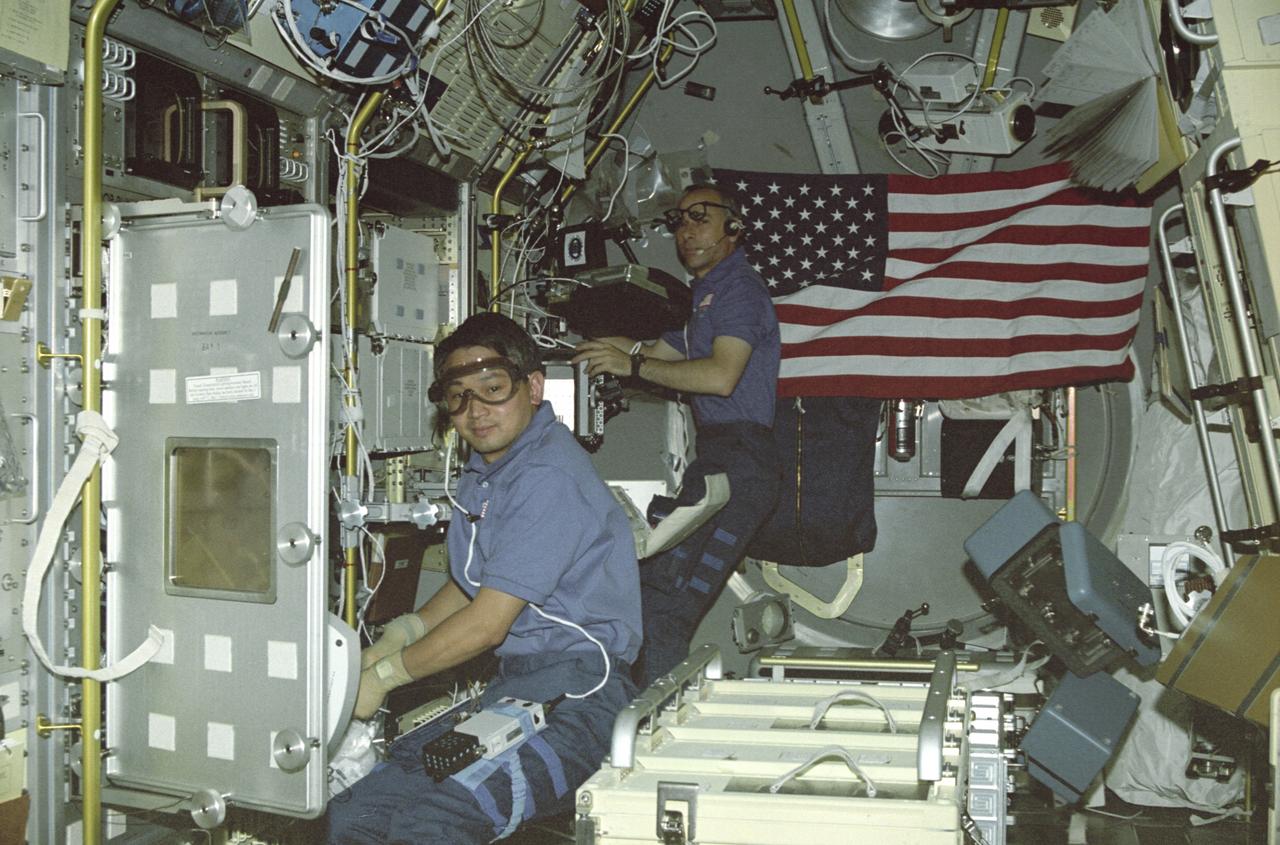
In this photograph, astronaut Eugene Trinh, a payload specialist for this mission, is working at the Drop Physics Module (DPM), and mission specialist Carl Meade is working on the experiment at the Glovebox inside the first United States Microgravity Laboratory (USML-1) Science Module. The USML-1 was one of NASA's missions dedicated to scientific investigations in a microgravity environment inside the Spacelab module. Investigations aboard the USML-1 included: materials science, fluid dynamics, biotechnology (crystal growth), and combustion science. The DPM is dedicated to the detailed study of the dynamics of fluid drops in microgravity. The Glovebox offers experimenters new capabilities and technologies in microgravity with a clean working space and minimizes contamination risks to both Spacelab and experiment samples. Payload specialists are professional scientists or engineers whose only assignment on a space flight is to carry out scientific and technological experiments. Their specific training for a space flight is usually limited to a short period of learning how to live and work in weightlessness. Mission Specialists are both professional scientists and career astronauts. Thus they are a link or bridge between the other crew members, and combine the functions of resident maintenance engineers, in-space counterparts of flight engineers in aircraft, and fully qualified scientists. The USML-1 flew aboard the STS-50 mission on June 1992, and was managed by the Marshall Space Flight Center.
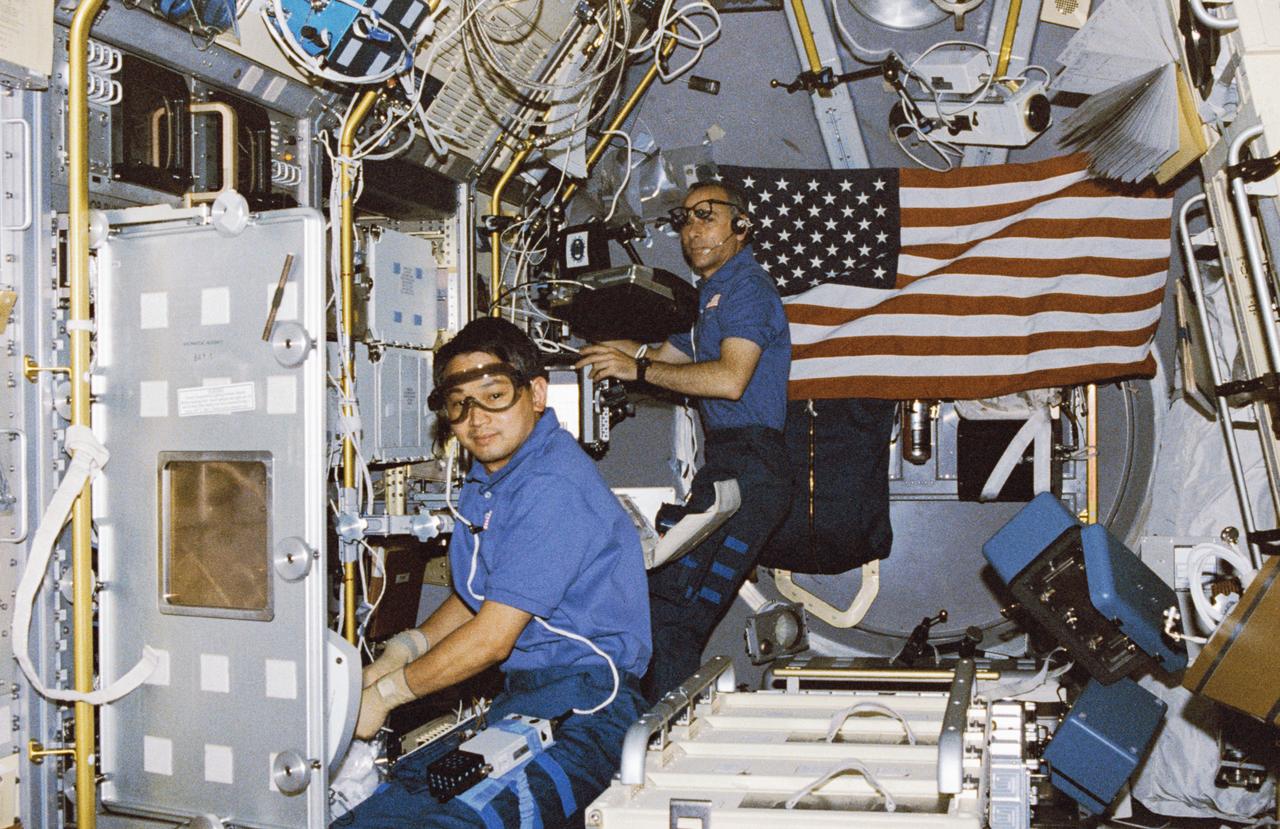
STS050-255-027 (25 June-9 July 1992) --- Payload specialist Eugene H. Trinh, left, and astronaut Carl J. Meade, mission specialist, go to work in the U.S. Microgravity Laboratory (USML-1) science module as the blue shift crew takes over from the red. Trinh is working with an experiment at the Drop Physics Module (DPM) and Meade prepares to monitor an experiment in the Glovebox. The two joined four other astronauts and a second scientist from the private sector for 14-days of scientific data-gathering.
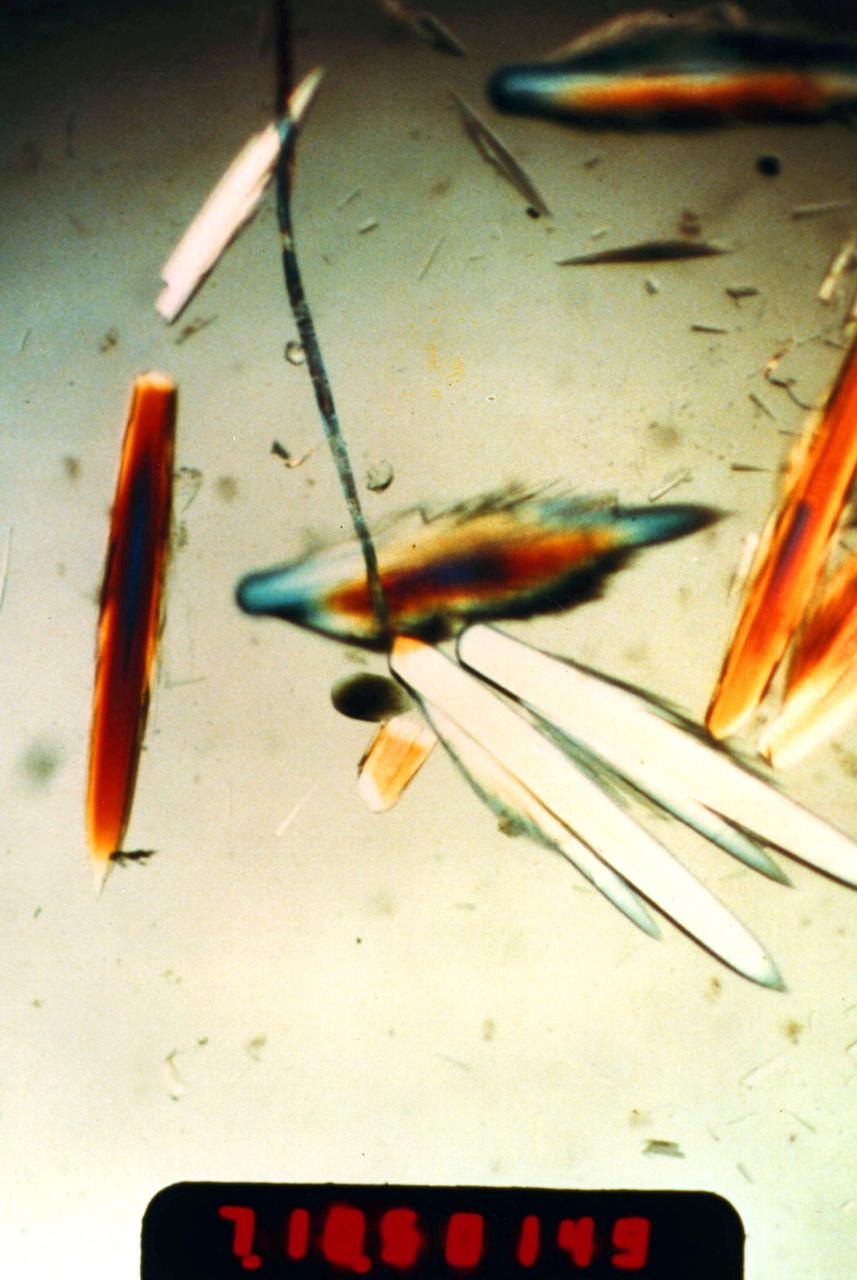
Horse Serum Albumin crystals grown during the USML-1 (STS-50) mission's Protein Crystal Growth Glovebox Experiment. These crystals were grown using a vapor diffusion technique at 22 degrees C. The crystals were allowed to grow for nine days while in orbit. Crystals of 1.0 mm in length were produced. The most abundant blood serum protein, regulates blood pressure and transports ions, metabolites, and therapeutic drugs. Principal Investigator was Edward Meehan.
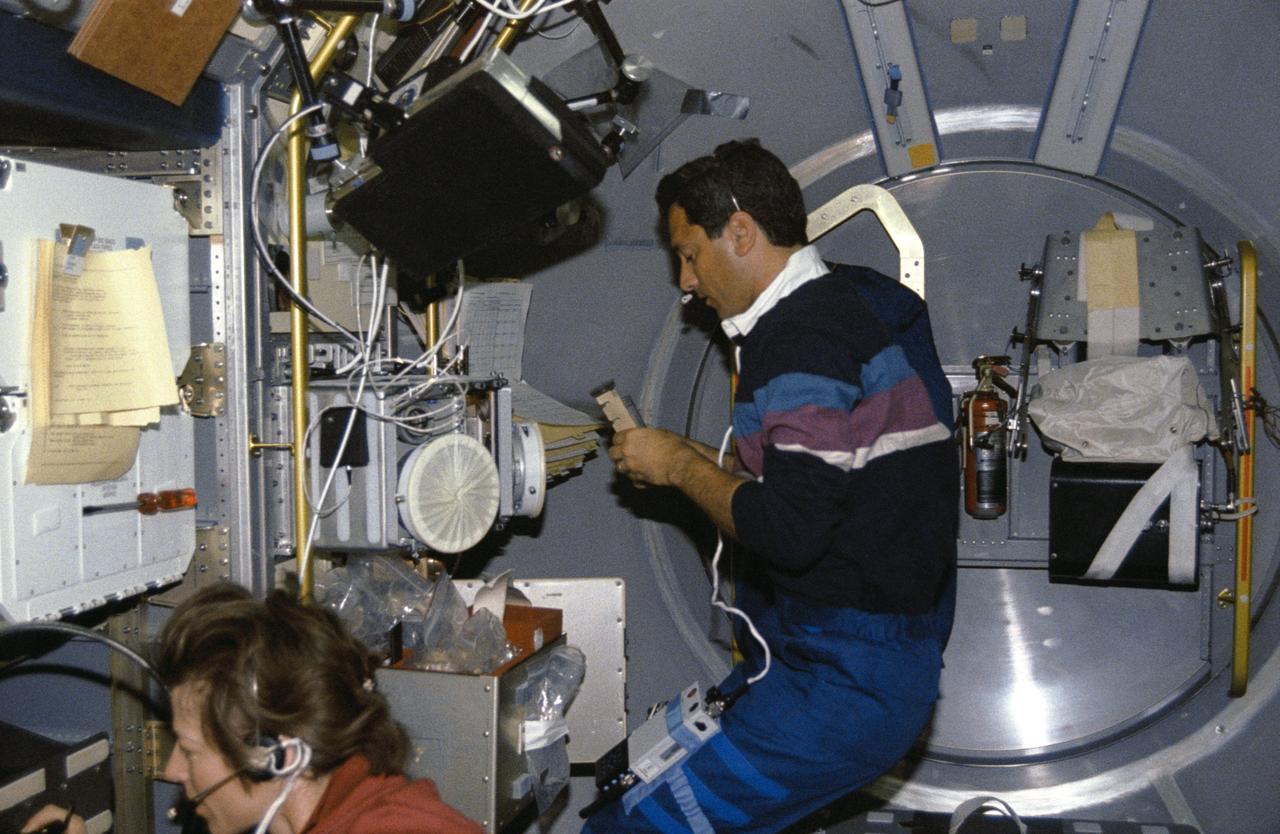
STS050-254-007 (25 June-9 July 1992) --- Lawrence J. DeLucas, payload specialist, handles a Protein Crystal Growth (PCG) sample at the multipurpose glovebox aboard the Earth-orbiting Space Shuttle Columbia. Astronaut Bonnie J. Dunbar, payload commander, communicates with ground controllers about the Solid Surface Combustion Experiment (SSCE), one of the United States Microgravity Laboratory 1’s (USML-1) three experiments on Rack 10. Five other crew members joined the pair for a record-setting 14-days of scientific data gathering.
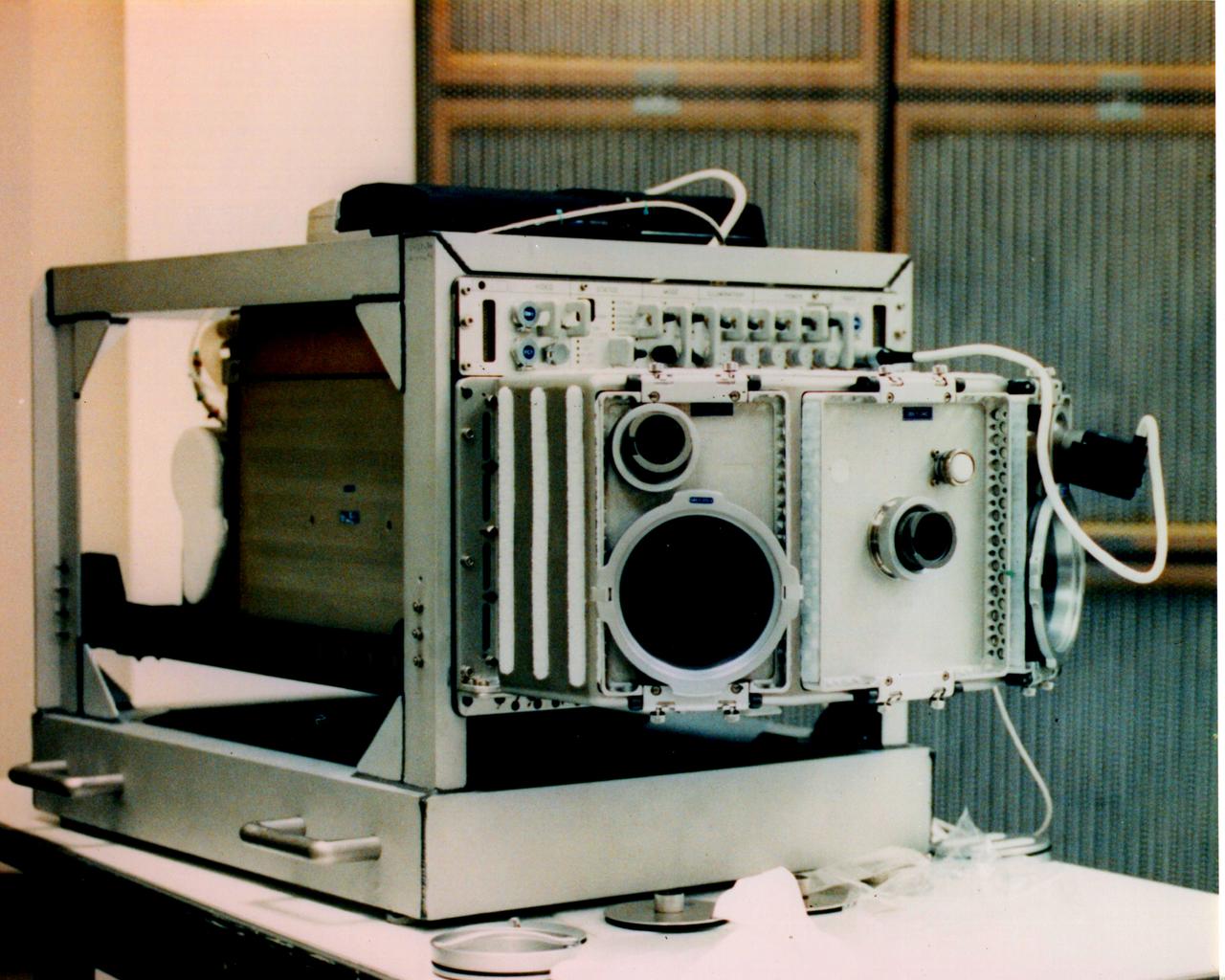
The USML-1 Glovebox (GBX) is a multi-user facility supporting 16 experiments in fluid dynamics, combustion sciences, crystal growth, and technology demonstration. The GBX has an enclosed working space which minimizes the contamination risks to both Spacelab and experiment samples. The GBX supports four charge-coupled device (CCD) cameras (two of which may be operated simultaneously) with three black-and-white and three color camera CCD heads available. The GBX also has a backlight panel, a 35 mm camera, and a stereomicroscope that offers high-magnification viewing of experiment samples. Video data can also be downlinked in real-time. The GBX also provides electrical power for experiment hardware, a time-temperature display, and cleaning supplies.
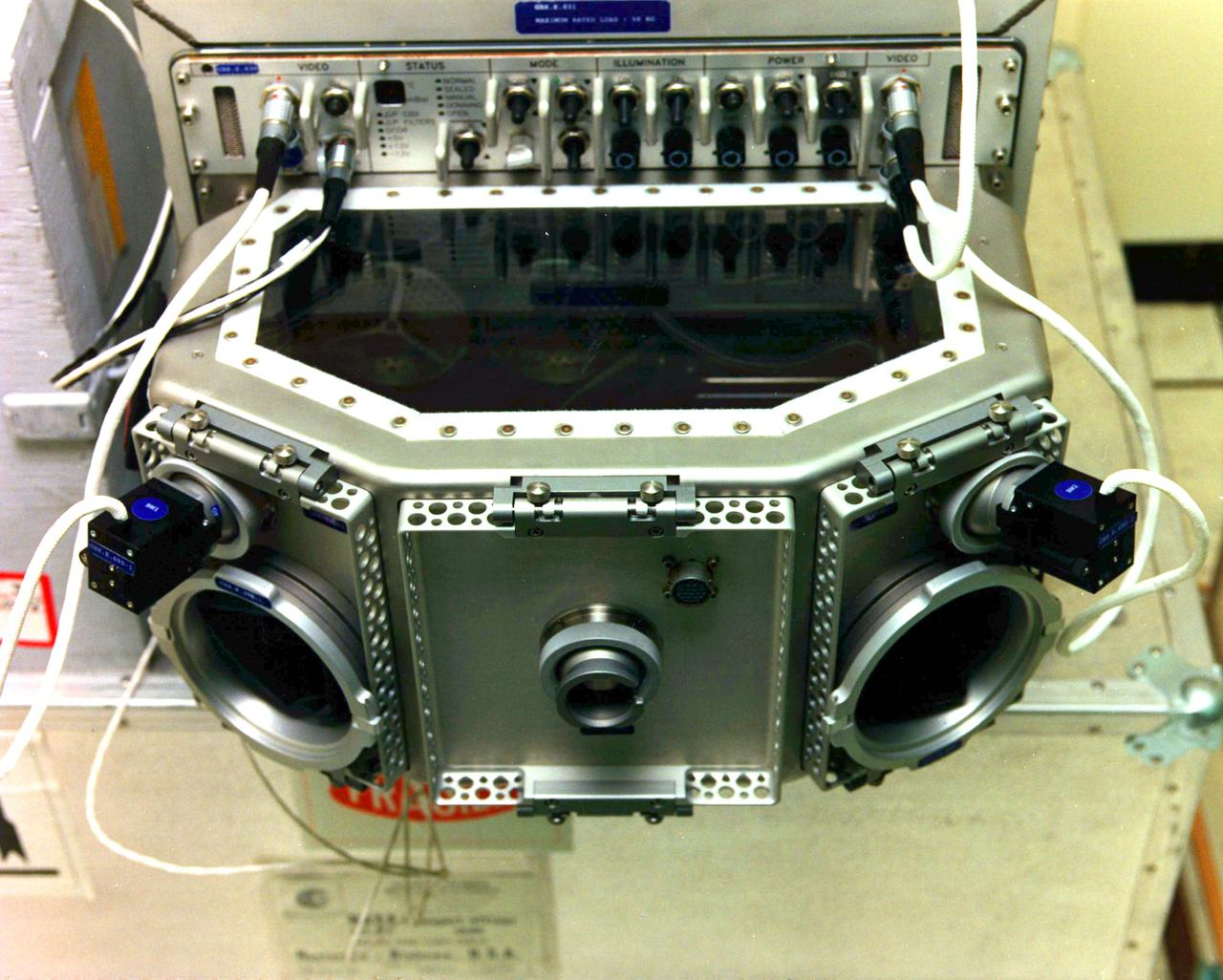
The USML-1 Glovebox (GBX) is a multi-user facility supporting 16 experiments in fluid dynamics, combustion sciences, crystal growth, and technology demonstration. The GBX has an enclosed working space which minimizes the contamination risks to both Spacelab and experiment samples. The GBX supports four charge-coupled device (CCD) cameras (two of which may be operated simultaneously) with three black-and-white and three color camera CCD heads available. The GBX also has a backlight panel, a 35 mm camera, and a stereomicroscope that offers high-magnification viewing of experiment samples. Video data can also be downlinked in real-time. The GBX also provides electrical power for experiment hardware, a time-temperature display, and cleaning supplies.