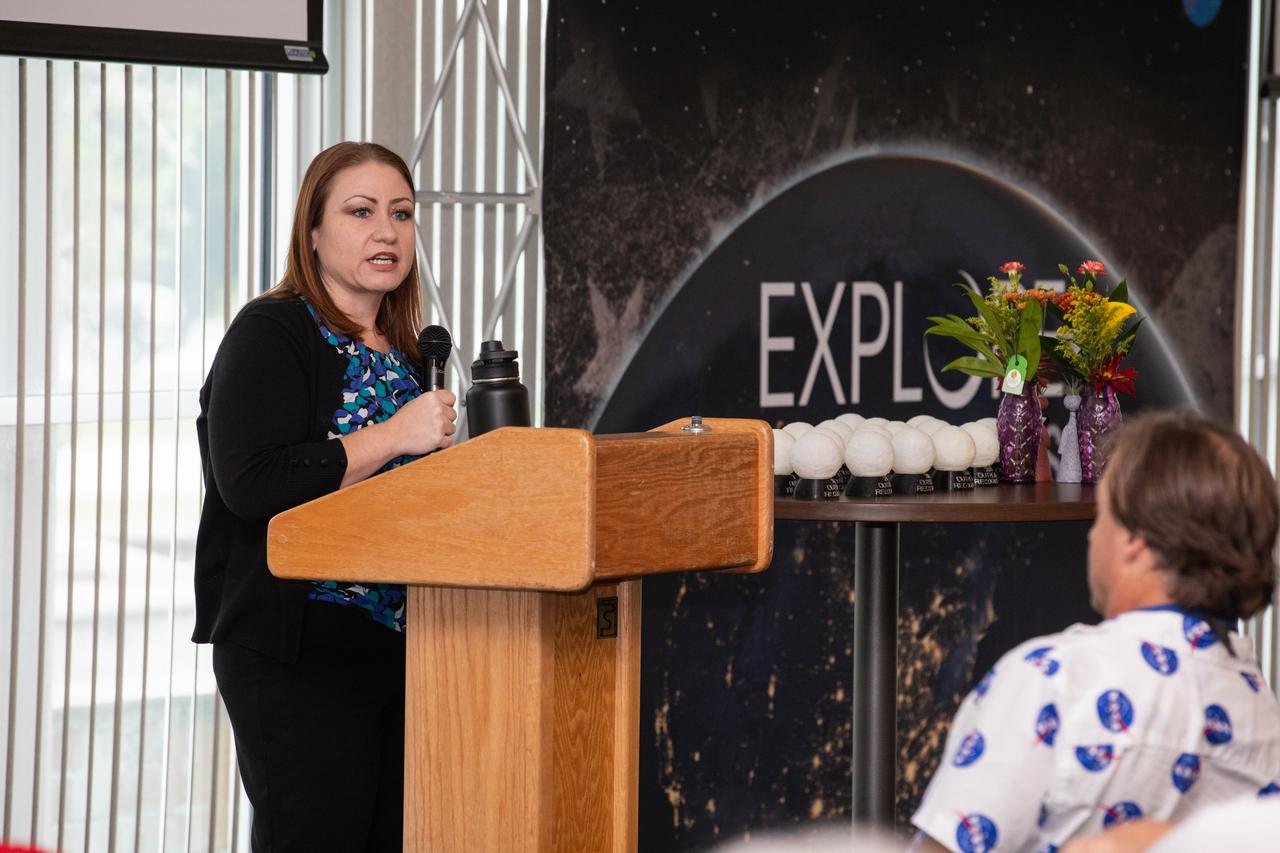
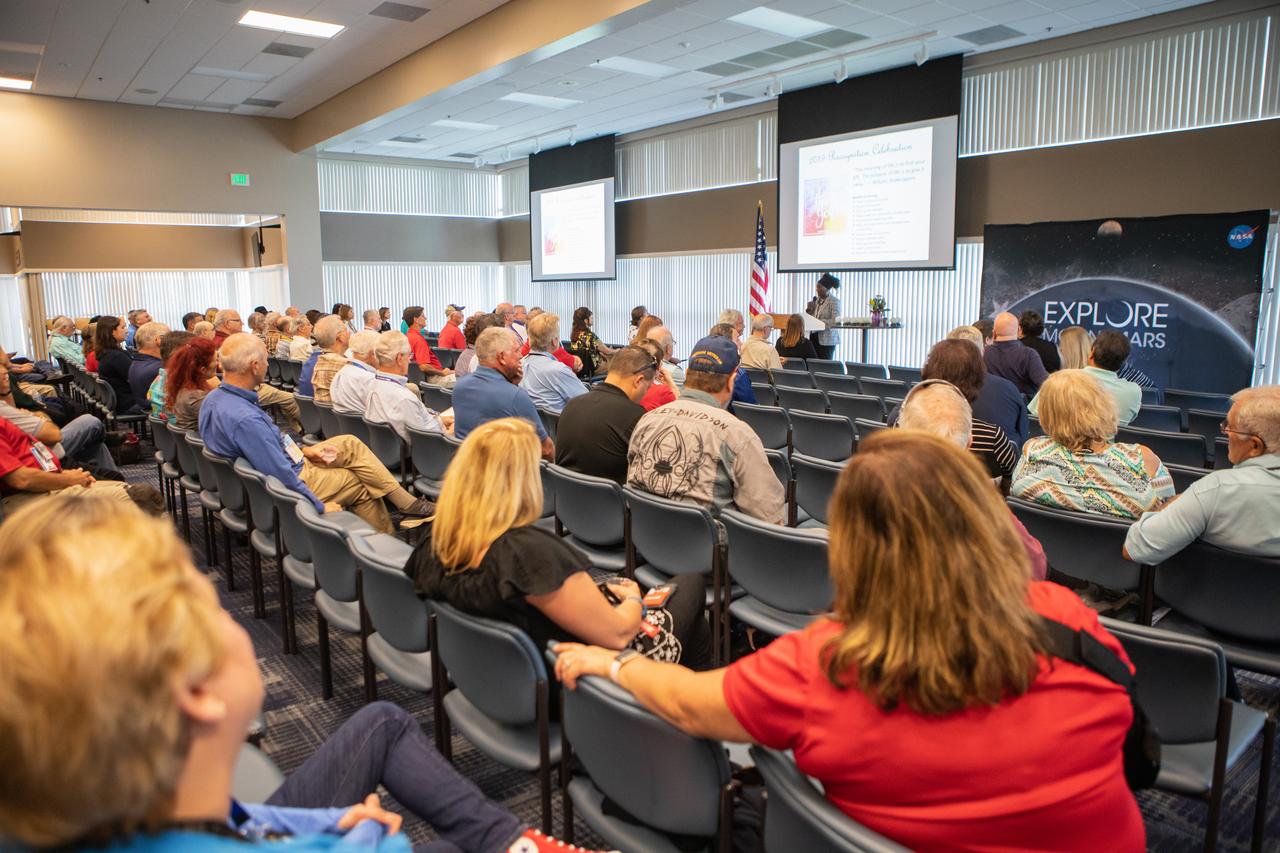
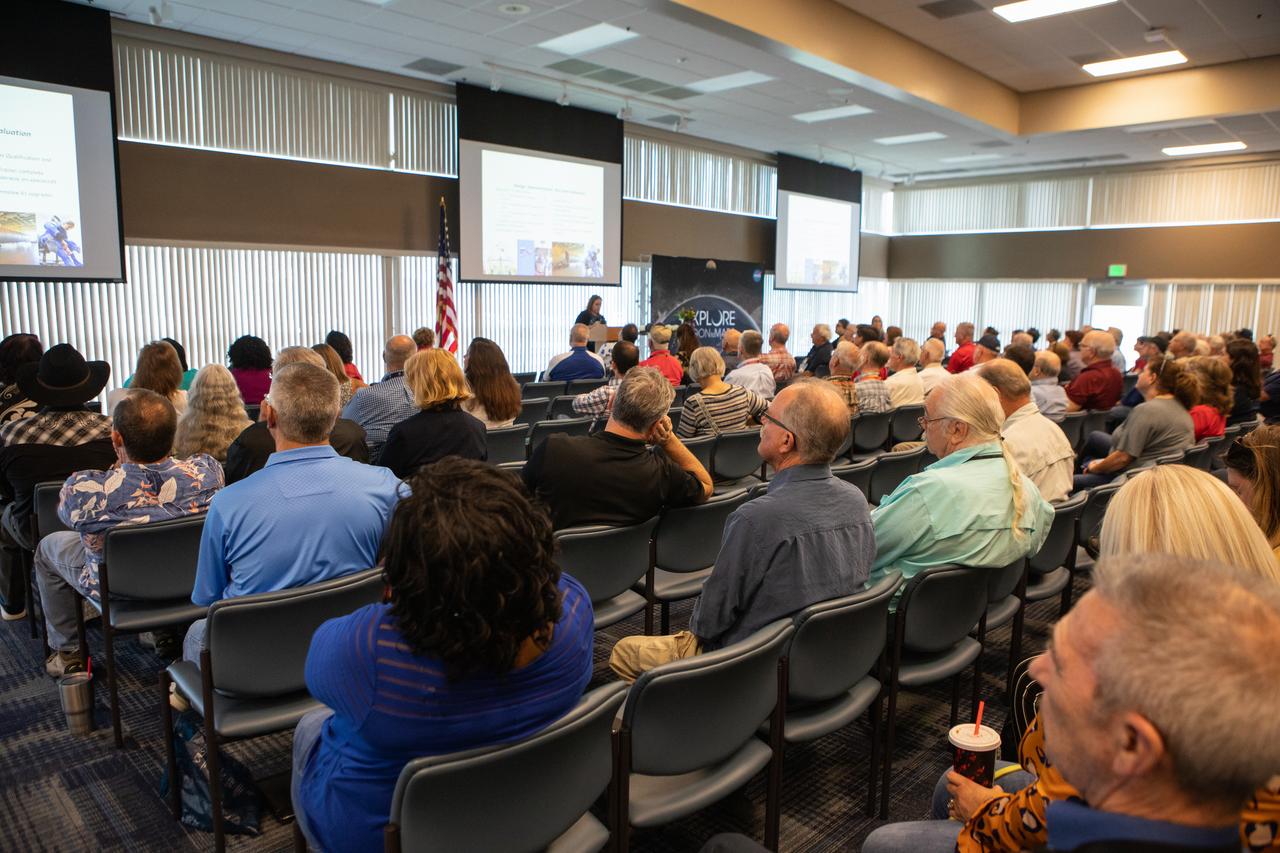
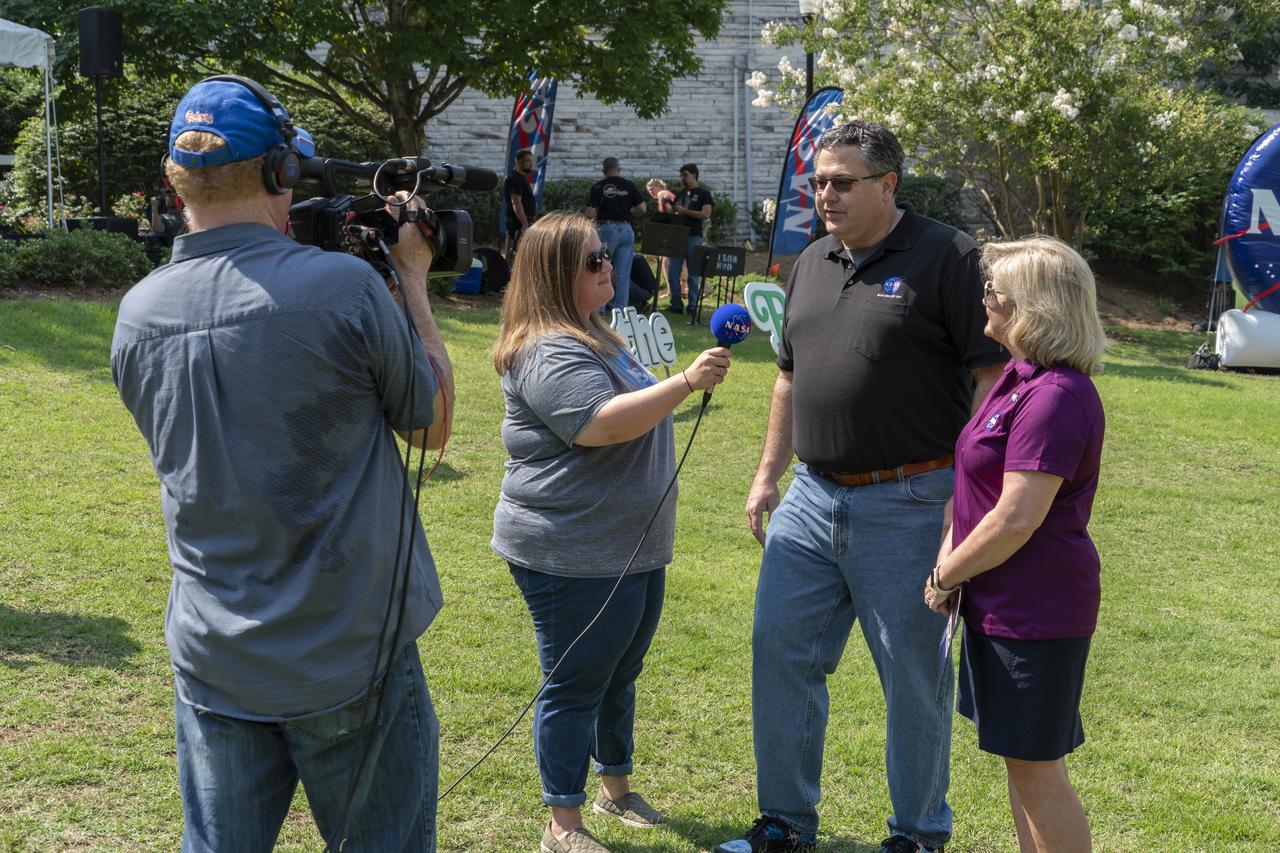
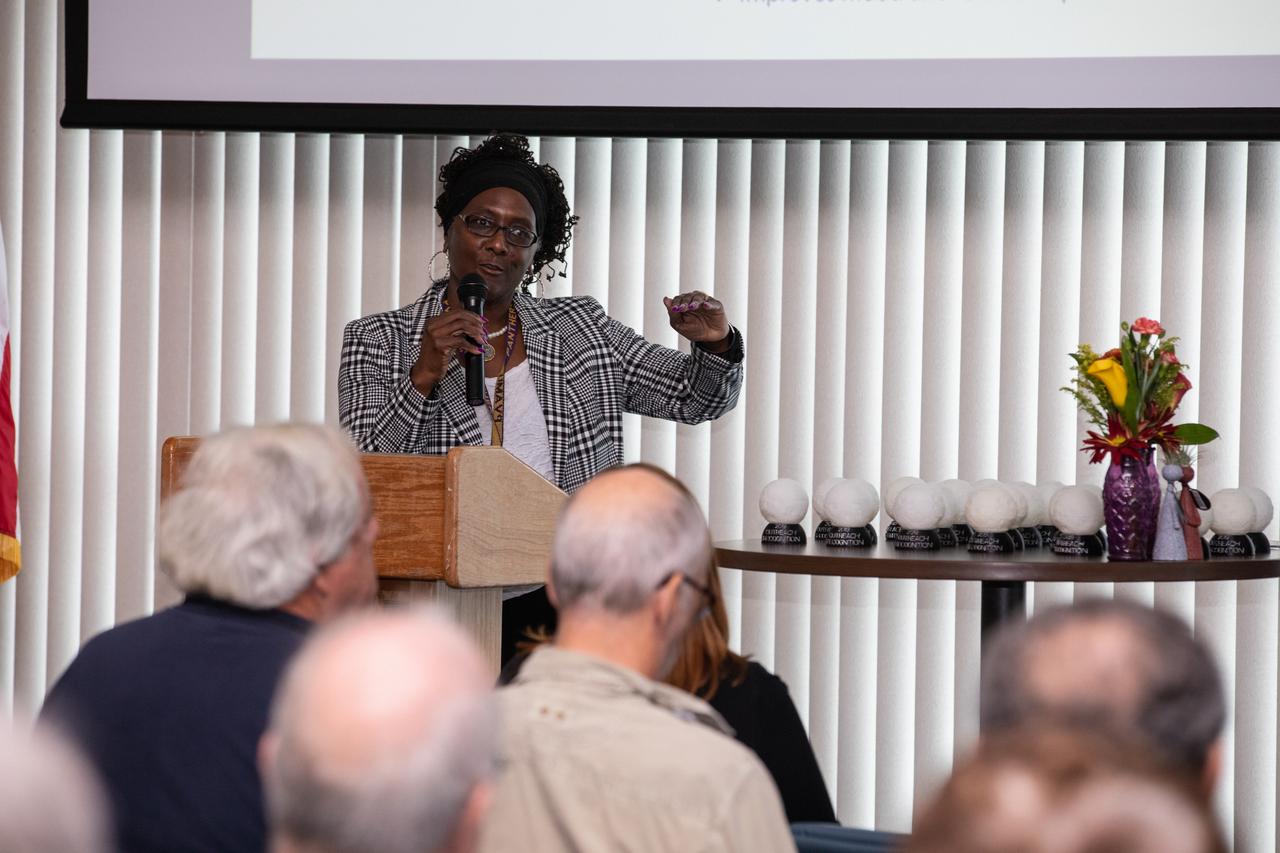
Hortense Diggs, director of the Communication and Public Engagement directorate at NASA’s Kennedy Space Center in Florida, relays her appreciation and thanks to volunteers and docents during an appreciation event on Nov. 1, 2019. The event honored the efforts of NASA retirees, current civil servant and contractor employees, and docents for their tireless efforts and volunteer hours spent sharing the NASA story with the public and members of the media.
Nspire Volunteer & Docent Appreciation
Hortense Diggs, director of the Communication and Public Engagement directorate at NASA’s Kennedy Space Center in Florida, relays her appreciation and thanks to volunteers and docents during an appreciation event on Nov. 1, 2019. The event honored the efforts of NASA retirees, current civil servant and contractor employees, and docents for their tireless efforts and volunteer hours spent sharing the NASA story with the public and members of the media.
Nspire Volunteer & Docent Appreciation
Crystal Jones, Ground and Mission Operations lead for SpaceX in the Commercial Crew Program, speaks to volunteers and docents during an appreciation event at NASA’s Kennedy Space Center in Florida on Nov. 1, 2019. The appreciation event, hosted by the center’s Communication and Public Engagement directorate, honored the efforts of NASA retirees, current civil servant and contractor employees, and docents for their tireless efforts and volunteer hours spent sharing the NASA story with the public and members of the media.
Nspire Volunteer & Docent Appreciation
Crystal Jones, Ground and Mission Operations lead for SpaceX in the Commercial Crew Program, speaks to volunteers and docents during an appreciation event at NASA’s Kennedy Space Center in Florida on Nov. 1, 2019. The appreciation event, hosted by the center’s Communication and Public Engagement directorate, honored the efforts of NASA retirees, current civil servant and contractor employees, and docents for their tireless efforts and volunteer hours spent sharing the NASA story with the public and members of the media.
Nspire Volunteer & Docent Appreciation
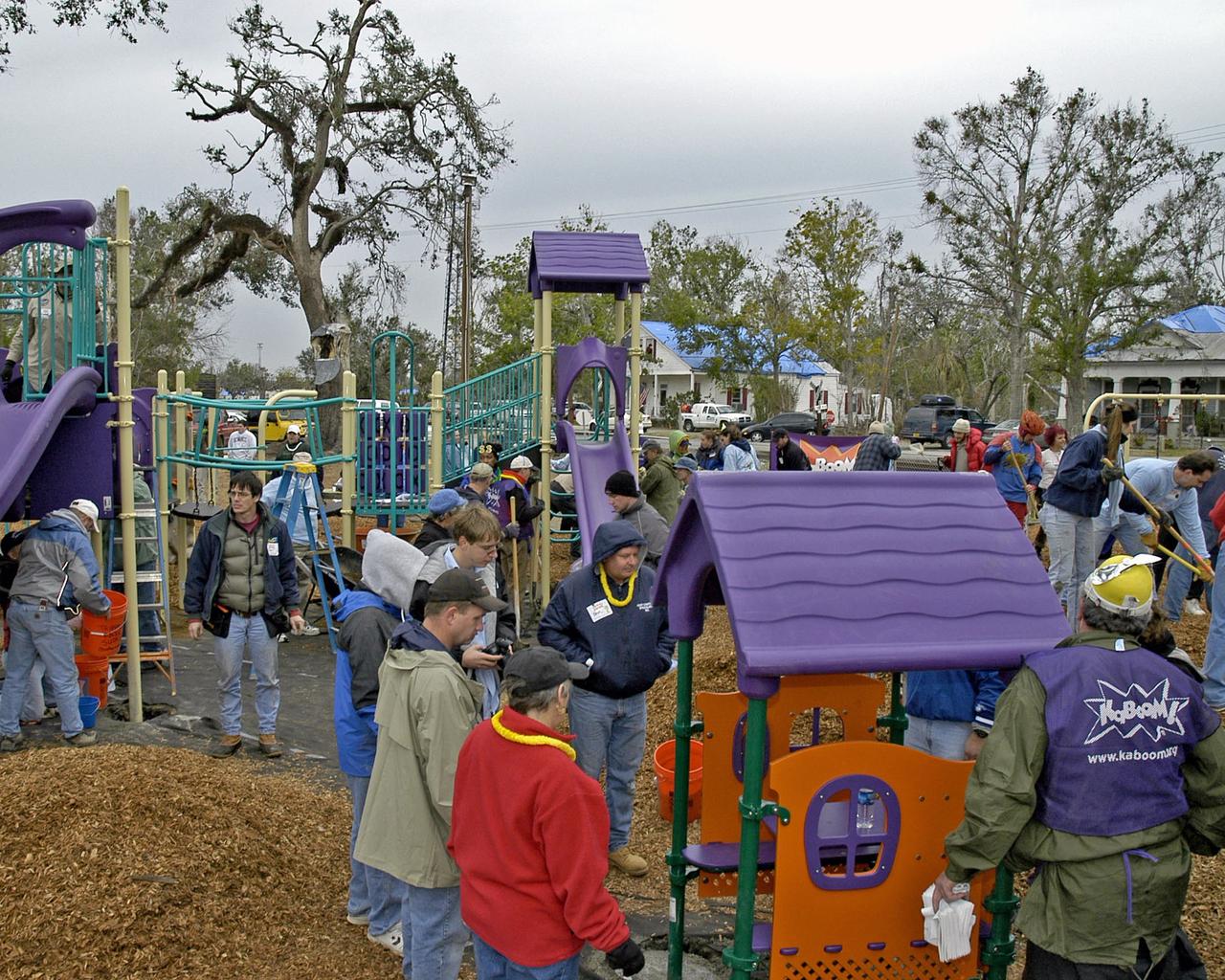
More than 650 volunteers - many of them employees at NASA's Stennis Space Center - weathered rain and cold to transform Bay St. Louis' old City Park into a playground Dec. 17. Volunteers assembled and erected a slide, swing set, jungle gym, sand box and planter benches in an eight-hour time frame. The playground was the first new structure built in the town devastated by Hurricane Katrina and the first on the Gulf Coast after the storm. The project was financed and led by nonprofit organization KaBOOM!, whose vision is to create a great place to play within walking distance of every child in America.
Volunteers build Bay St. Louis playground
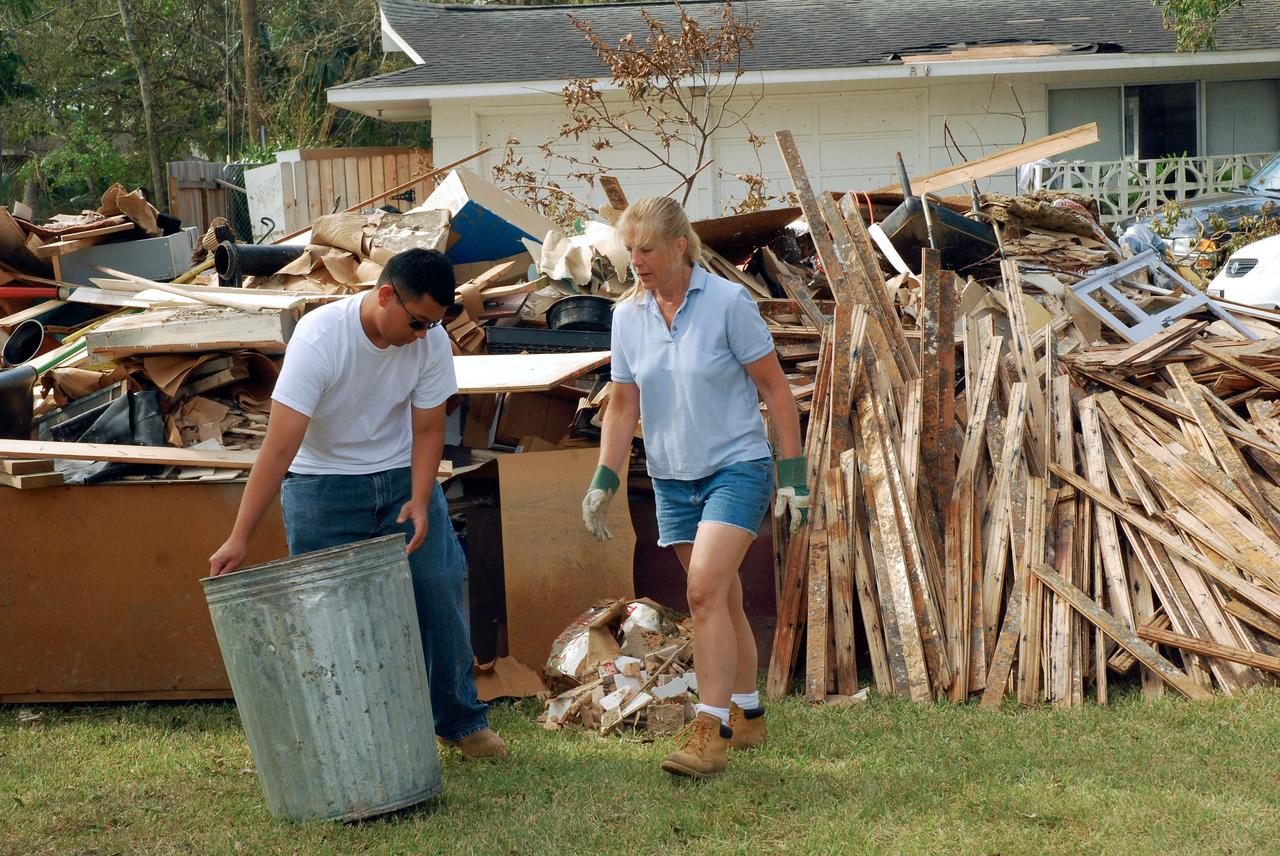
Hurricane IKE Recovery Efforts - MOD Volunteers  Location: Clear LAke Area  Subject: MOD Volunteers assist fellow employees at their homes during the recovery from hurricane IKE.  Photographer: Tom Murray (USA Photographer)
Hurricane IKE Recovery Efforts - MOD Volunteers
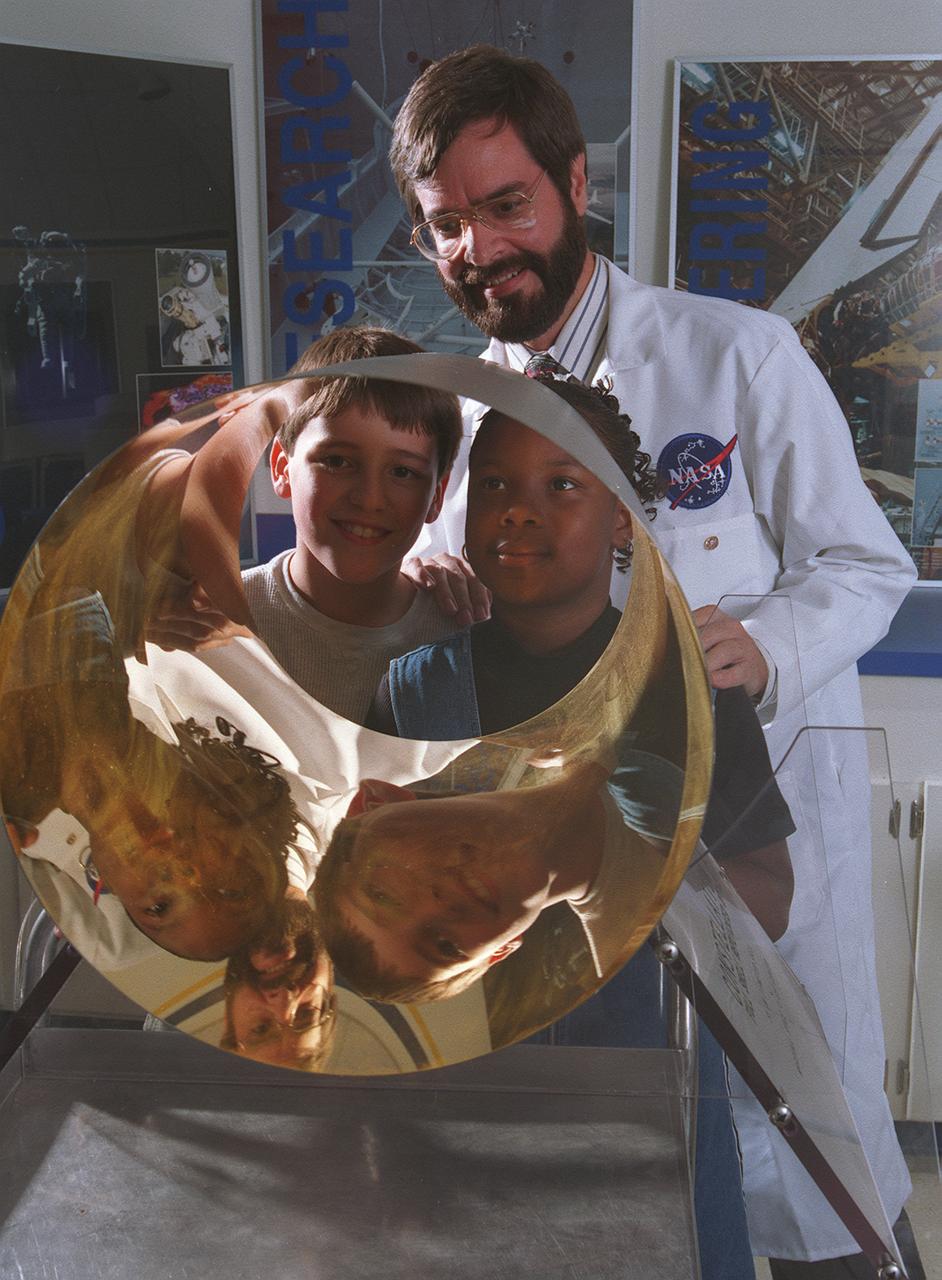
Through Marshall Space Flight Center (MSFC) Education Department, over 400 MSFC employees have volunteered to support educational program during regular work hours. Project LASER (Learning About Science, Engineering, and Research) provides support for mentor/tutor requests, education tours, classroom presentations, and curriculum development. This program is available to teachers and students living within commuting distance of the NASA/MSFC in Huntsville, Alabama (approximately 50-miles radius). This image depicts students viewing their reflections in an x-ray mirror with Marshall optic engineer Vince Huegele at the Discovery Laboratory, which is an onsite MSFC laboratory facility that provides hands-on educational workshop sessions for teachers and students learning activities.
Around Marshall
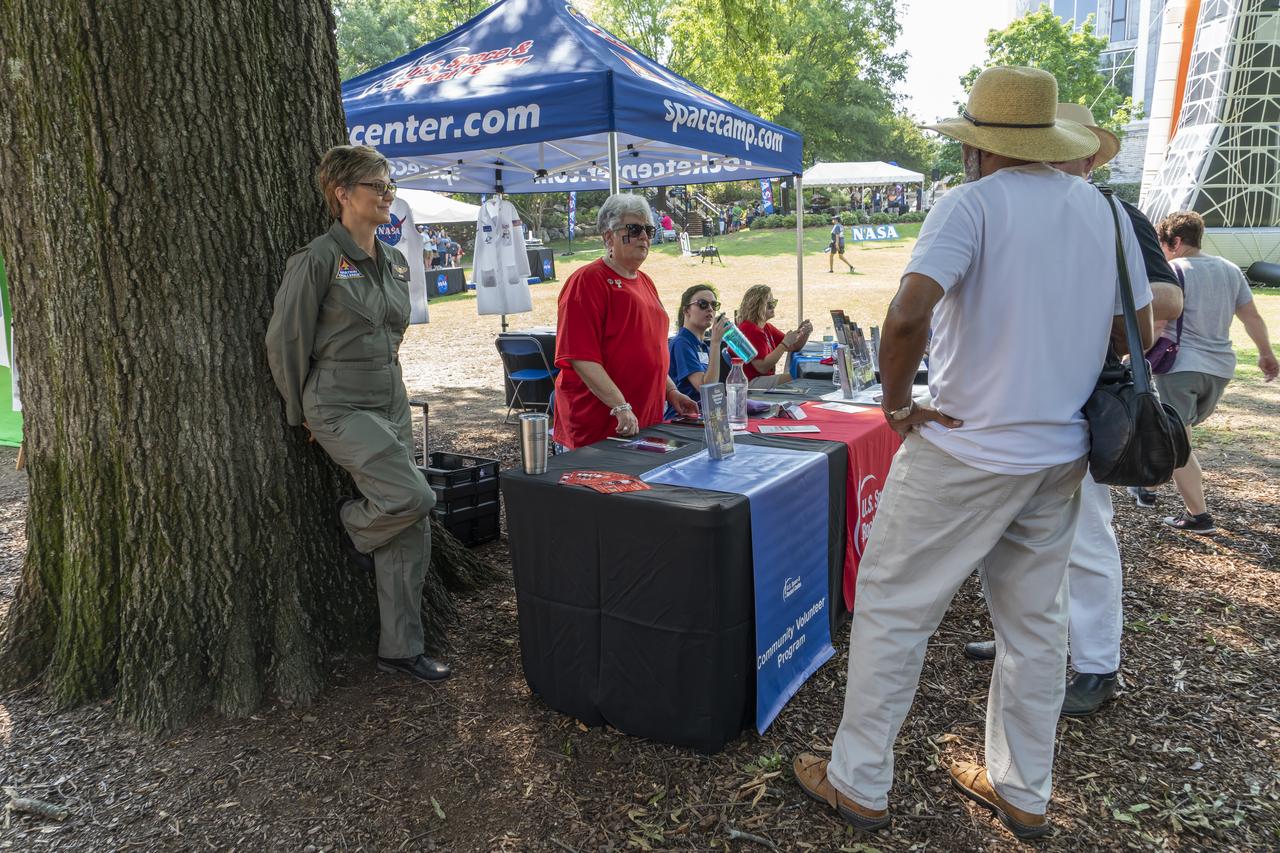
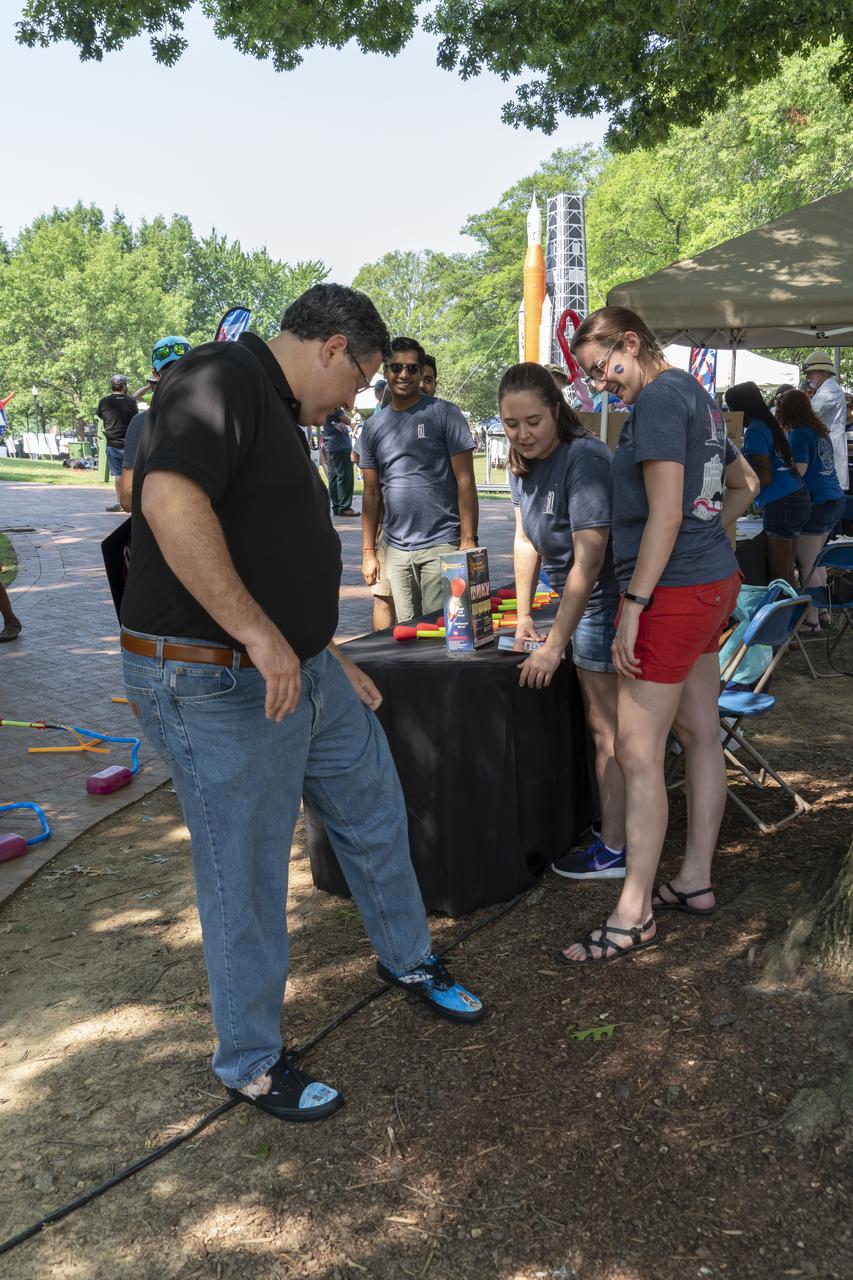
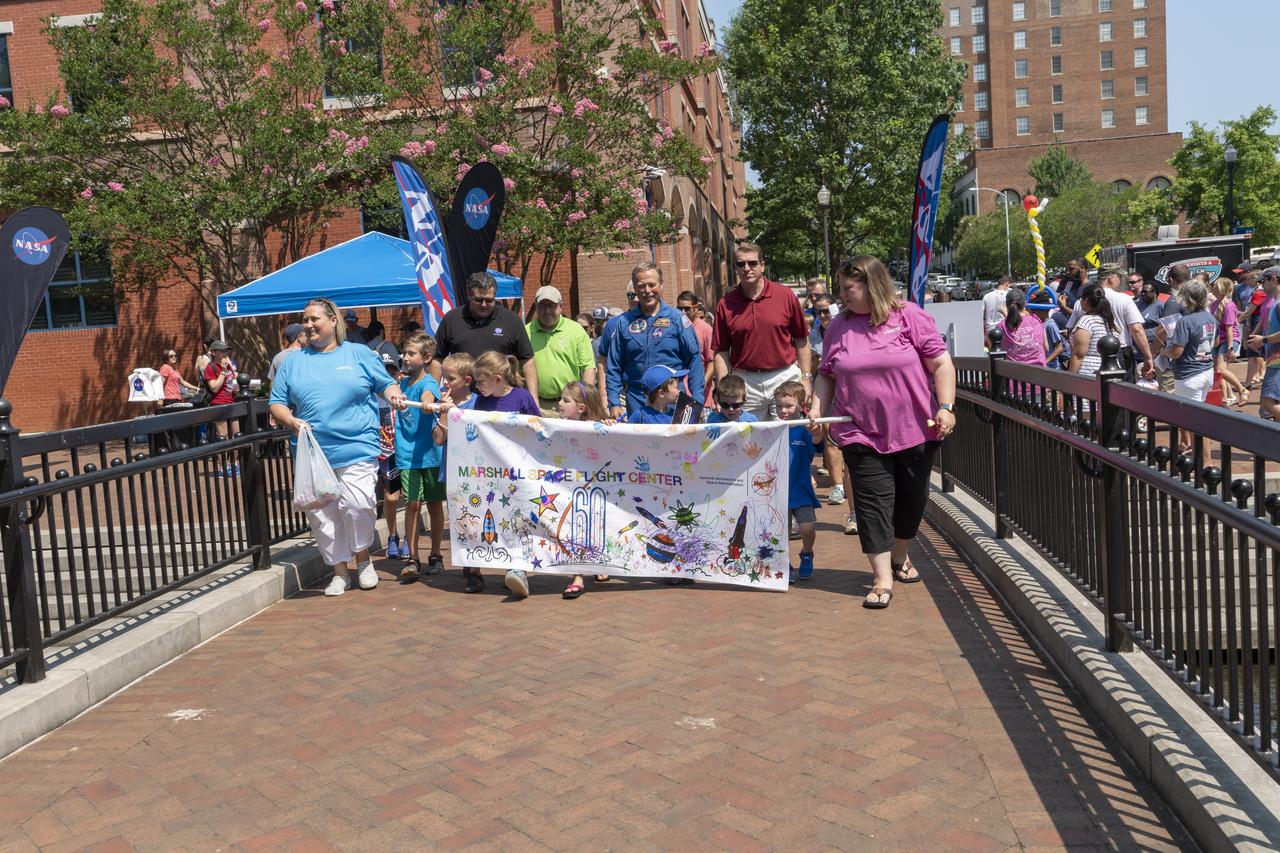
NASA's Marshall Space Flight Center showcased it's various projects for the public in Huntsville, Alabama's Big Spring Park. Exhibits were displayed by all of the various directorates of the Center with employee volunteers explaining all aspects of their projects. Adding to the festivities was the attendance of retired NASA astronaut Robert "Hoot" Gibson. U.S. Space and Rocket Center volunteers greet visitors to NASA in the Park.
2018 NASA in the Park Celebration
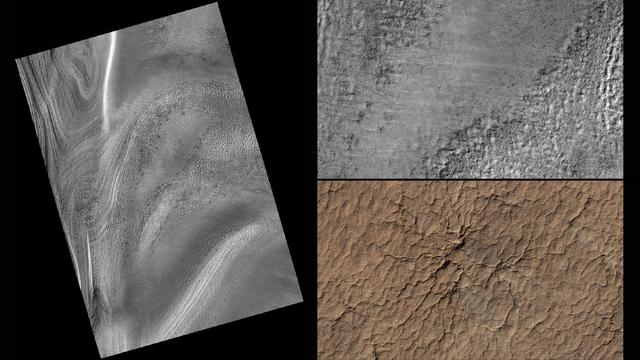
This series of images from NASA's Mars Reconnaissance Orbiter successively zooms into "spider" features -- or channels carved in the surface in radial patterns -- in the south polar region of Mars. In a new citizen-science project, volunteers will identify features like these using wide-scale images from the orbiter. Their input will then help mission planners decide where to point the orbiter's high-resolution camera for more detailed views of interesting terrain.  Volunteers will start with images from the orbiter's Context Camera (CTX), which provides wide views of the Red Planet. The first two images in this series are from CTX; the top right image zooms into a portion of the image at left. The top right image highlights the geological spider features, which are carved into the terrain in the Martian spring when dry ice turns to gas. By identifying unusual features like these, volunteers will help the mission team choose targets for the orbiter's High Resolution Imaging Science Experiment (HiRISE) camera, which can reveal more detail than any other camera ever put into orbit around Mars. The final image is this series (bottom right) shows a HiRISE close-up of one of the spider features.  http://photojournal.jpl.nasa.gov/catalog/PIA19823
Volunteers Help Decide Where to Point Mars Camera
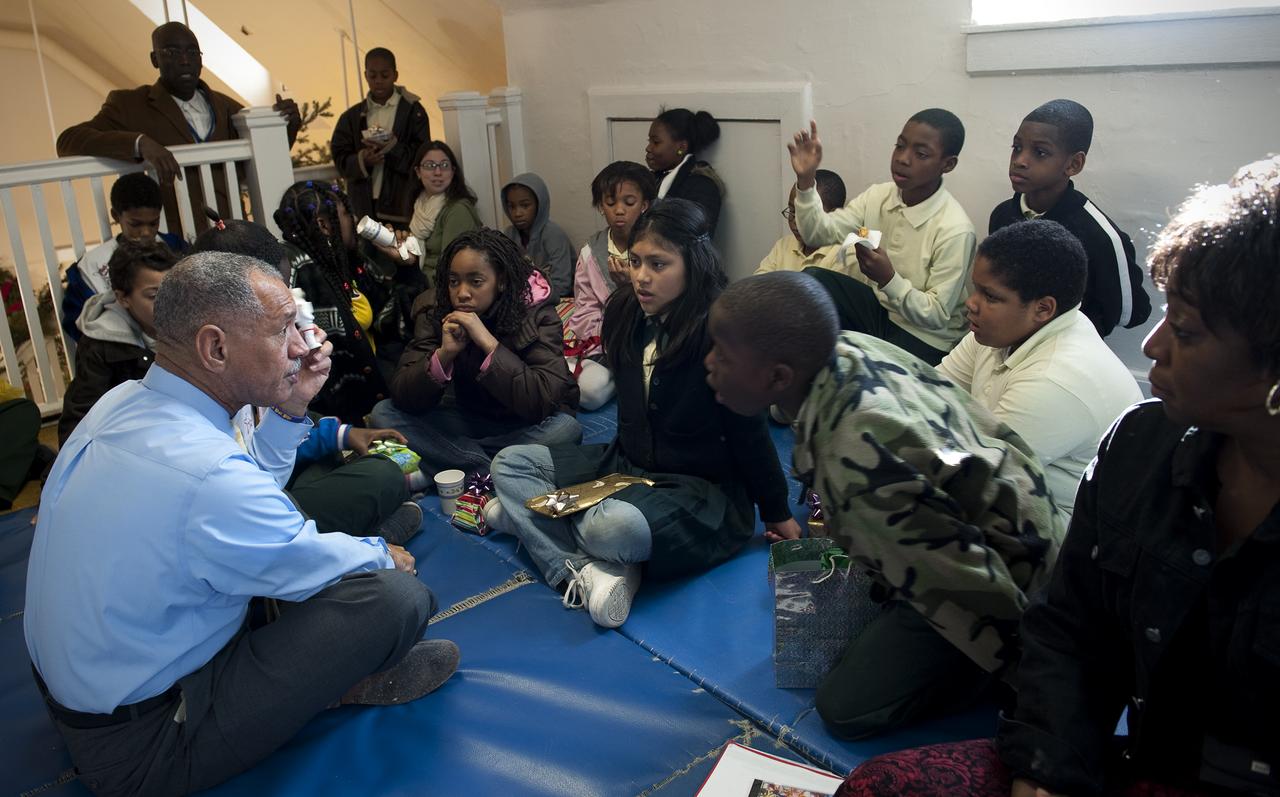
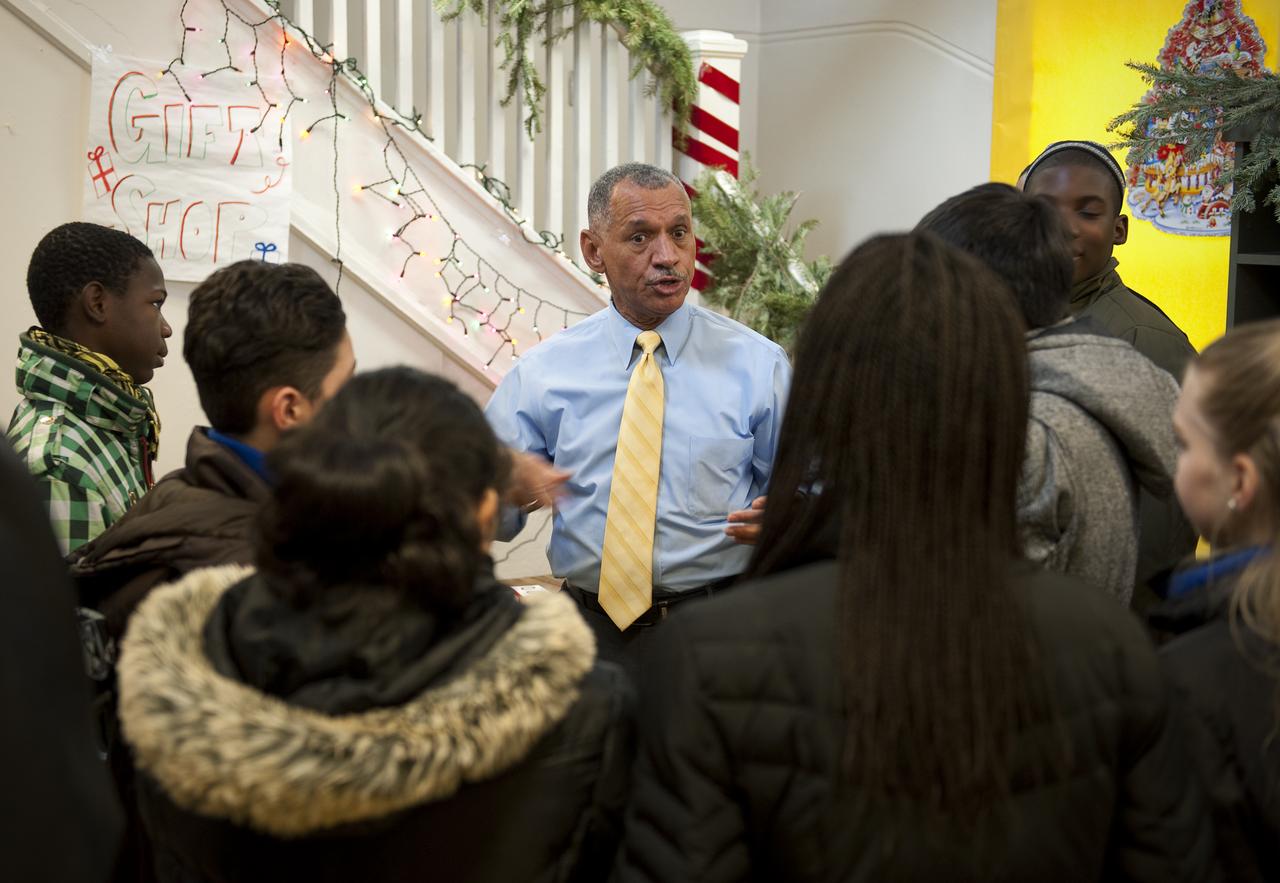
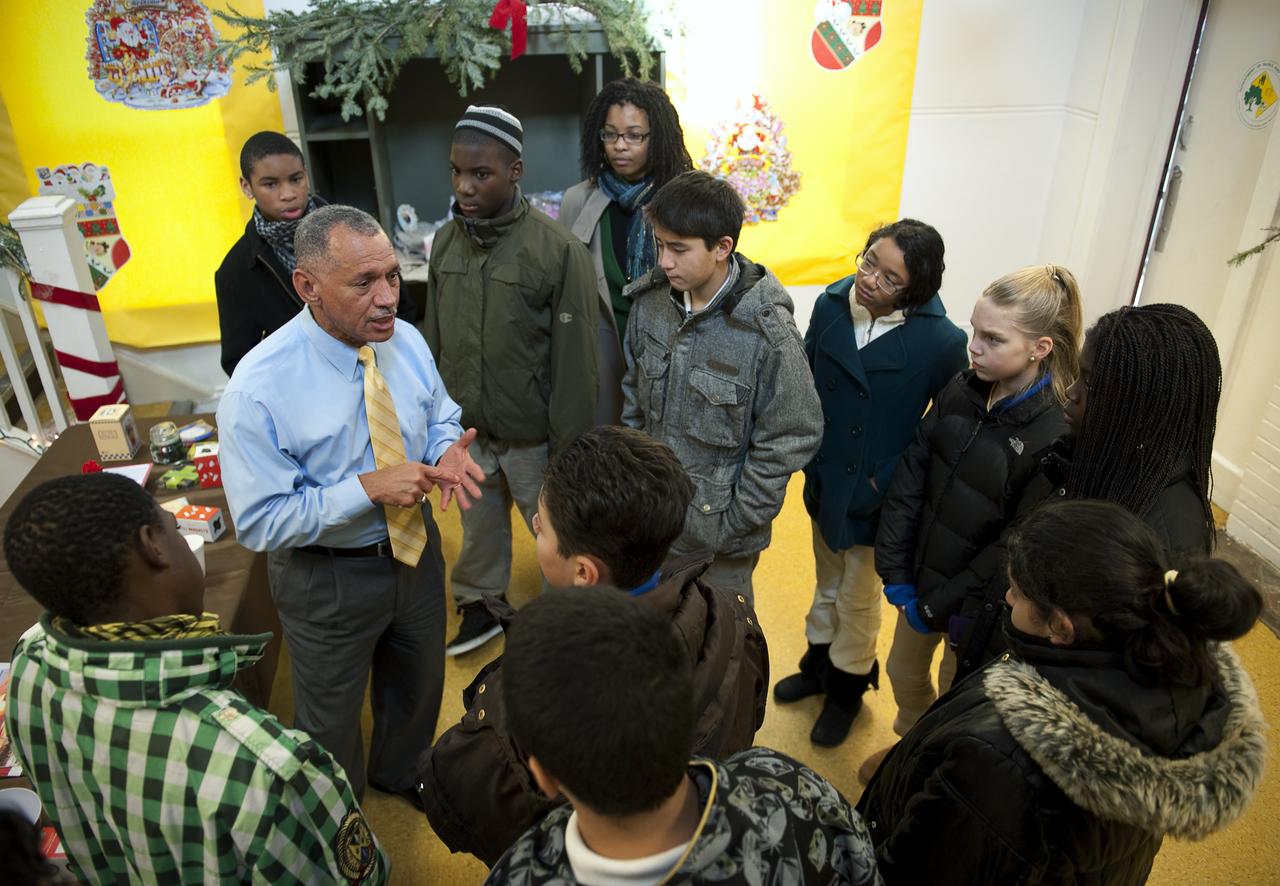
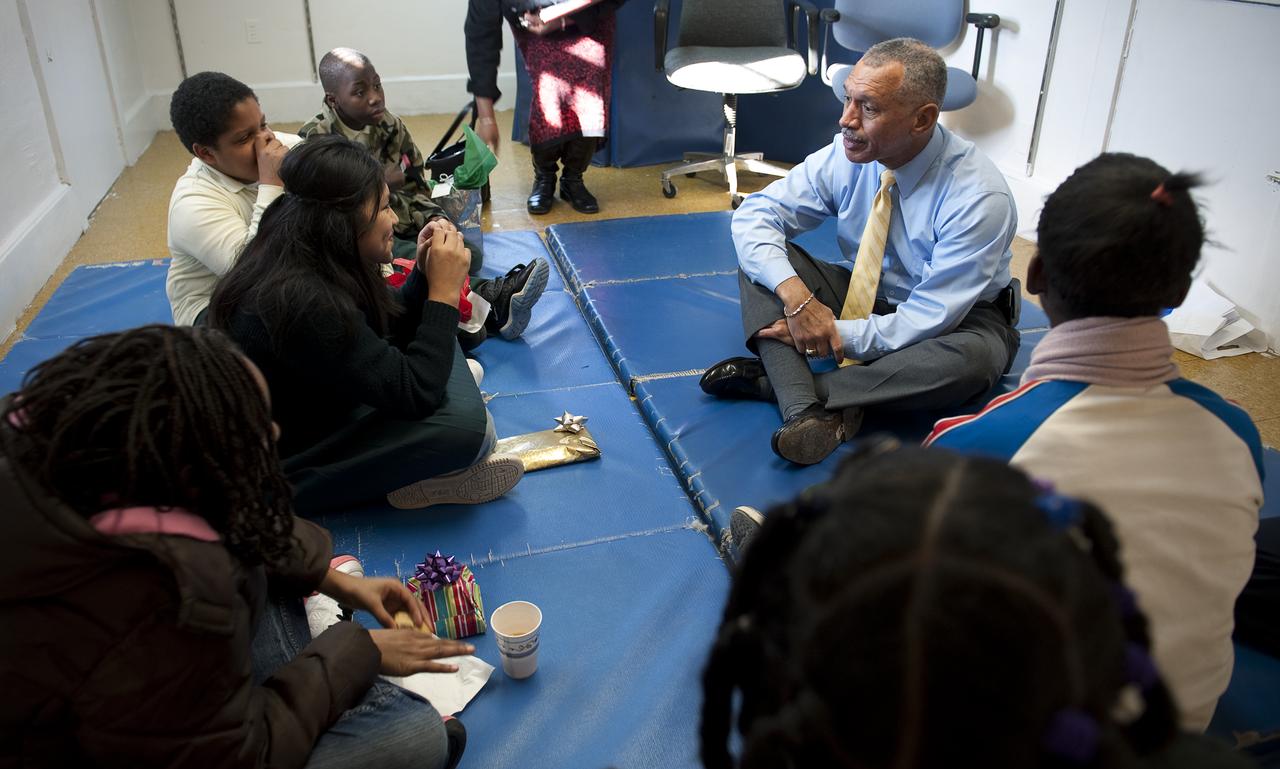
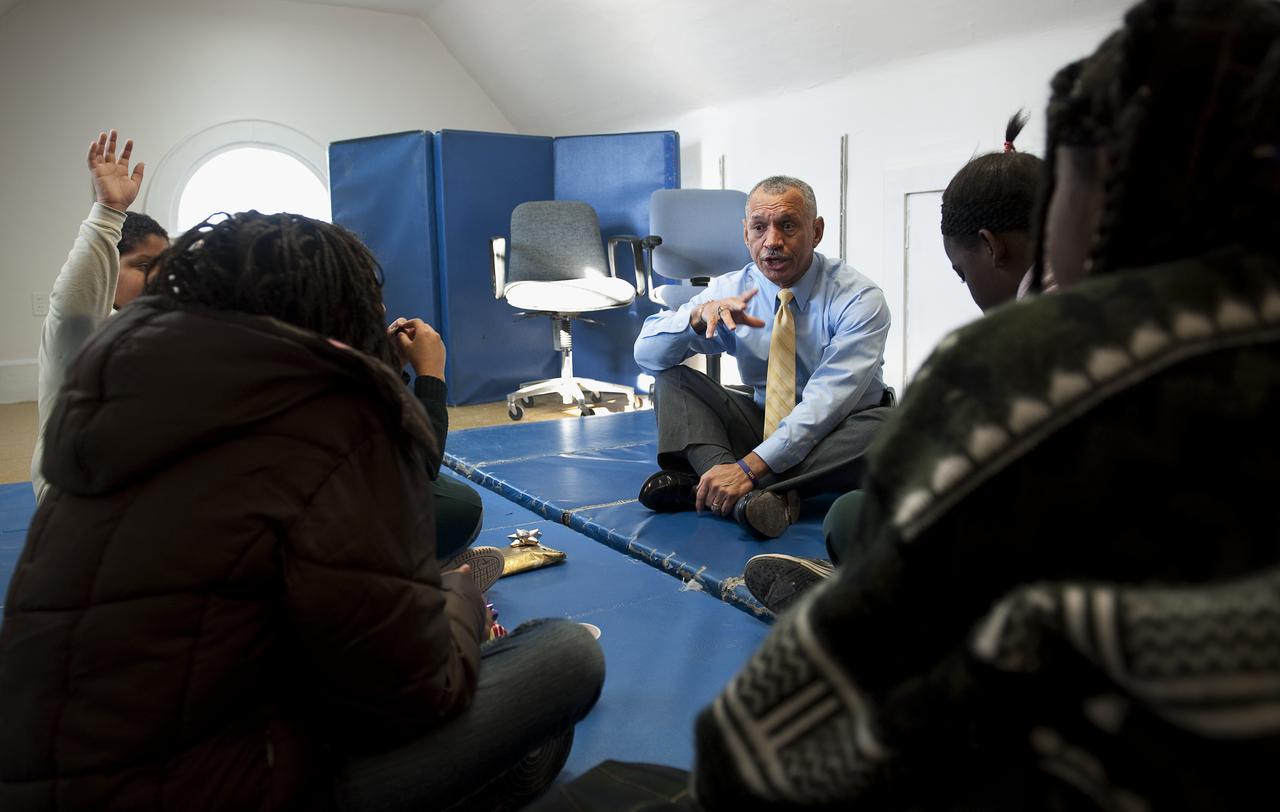
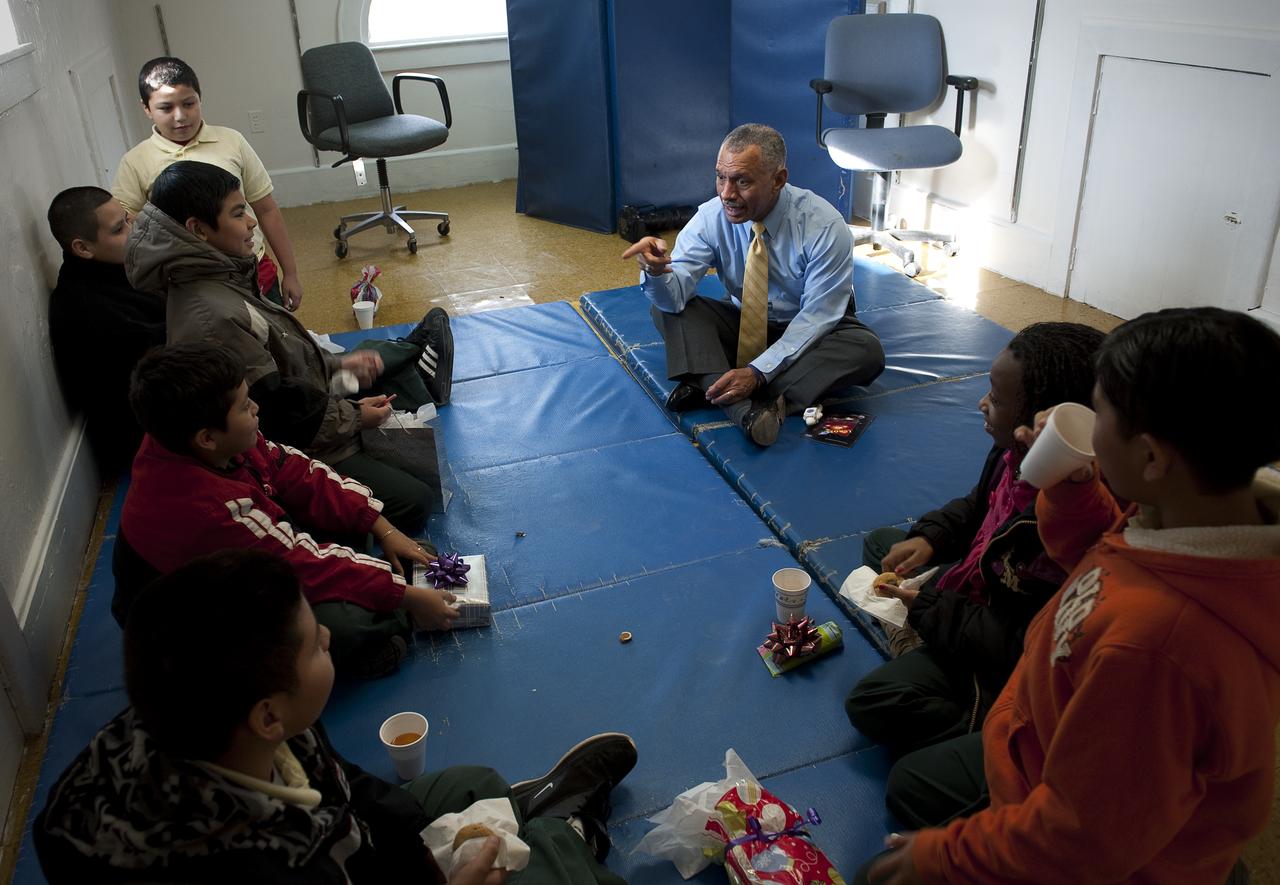
NASA Administrator Charles Bolden spent time volunteering with DC Cares at the Park View Recreation Center in Washington, DC for their Santa's Workshop program, Monday, Dec. 14, 2009.  Mr. Bolden spoke with students about his experience as a former NASA astronaut and current NASA Administrator, encouraging them to study math and science and to stay in school.  Photo Credit:  (NASA/Bill Ingalls)
NASA Administrator Bolden Volunteers with the DC Cares Program
NASA Administrator Charles Bolden spent time volunteering with DC Cares at the Park View Recreation Center in Washington, DC for their Santa's Workshop program, Monday, Dec. 14, 2009.  Mr. Bolden spoke with students about his experience as a former NASA astronaut and current NASA Administrator, encouraging them to study math and science and to stay in school.  Photo Credit:  (NASA/Bill Ingalls)
NASA Administrator Bolden Volunteers with the DC Cares Program
NASA Administrator Charles Bolden spent time volunteering with DC Cares at the Park View Recreation Center in Washington, DC for their Santa's Workshop program, Monday, Dec. 14, 2009.  Mr. Bolden spoke with students about his experience as a former NASA astronaut and current NASA Administrator, encouraging them to study math and science and to stay in school.  Photo Credit:  (NASA/Bill Ingalls)
NASA Administrator Bolden Volunteers with the DC Cares Program
NASA Administrator Charles Bolden spent time volunteering with DC Cares at the Park View Recreation Center in Washington, DC for their Santa's Workshop program, Monday, Dec. 14, 2009.  Mr. Bolden spoke with students about his experience as a former NASA astronaut and current NASA Administrator, encouraging them to study math and science and to stay in school.  Photo Credit:  (NASA/Bill Ingalls)
NASA Administrator Bolden Volunteers with the DC Cares Program
NASA Administrator Charles Bolden spent time volunteering with DC Cares at the Park View Recreation Center in Washington, DC for their Santa's Workshop program, Monday, Dec. 14, 2009.  Mr. Bolden spoke with students about his experience as a former NASA astronaut and current NASA Administrator, encouraging them to study math and science and to stay in school.  Photo Credit:  (NASA/Bill Ingalls)
NASA Administrator Bolden Volunteers with the DC Cares Program
NASA Administrator Charles Bolden spent time volunteering with DC Cares at the Park View Recreation Center in Washington, DC for their Santa's Workshop program, Monday, Dec. 14, 2009.  Mr. Bolden spoke with students about his experience as a former NASA astronaut and current NASA Administrator, encouraging them to study math and science and to stay in school.  Photo Credit:  (NASA/Bill Ingalls)
NASA Administrator Bolden Volunteers with the DC Cares Program
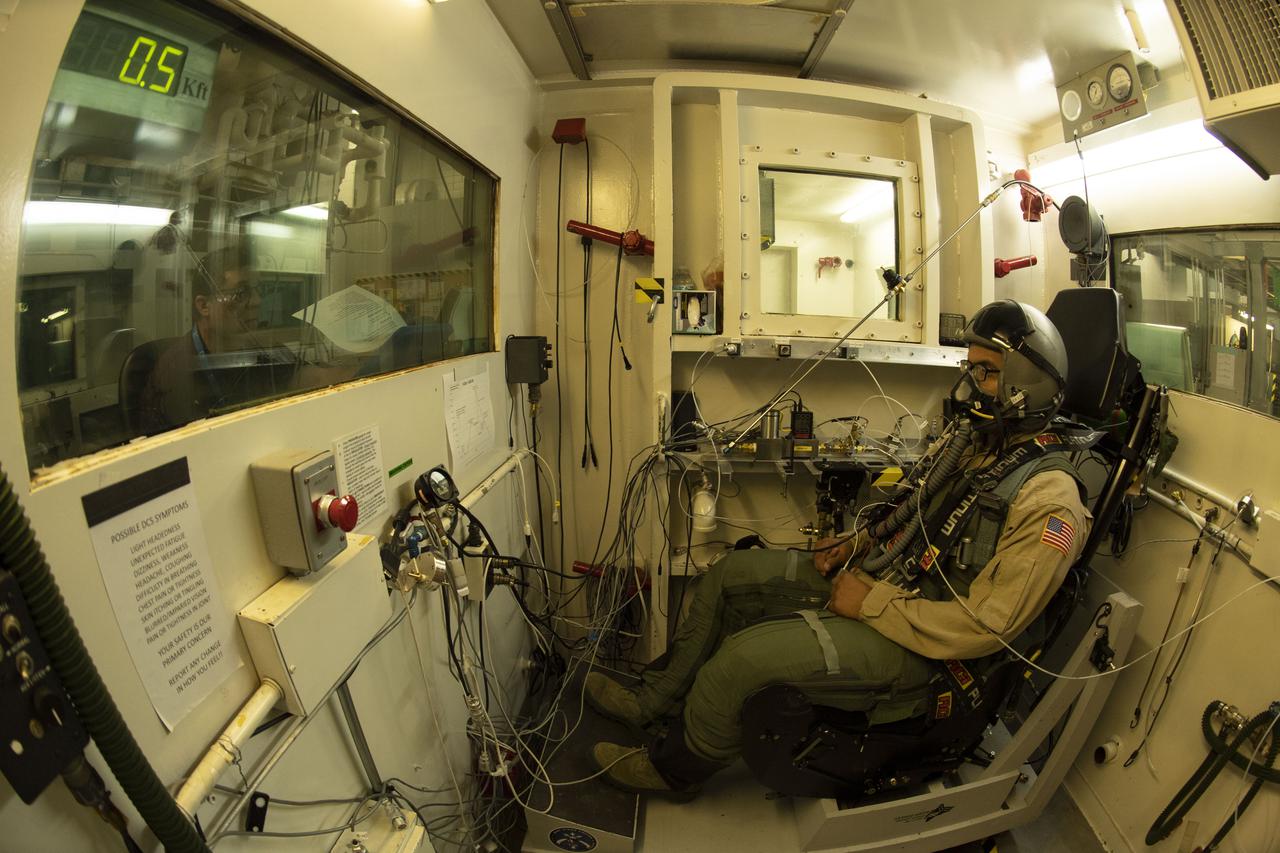
The test director runs through a check list as a military test volunteer prepares to undergo a rapid decompression test.
WJS_8700
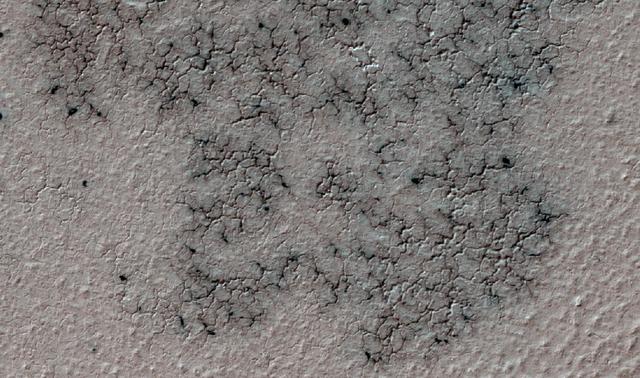
This image shows spidery channels eroded into Martian ground. It is an example from high-resolution observation of more than 20 places that were chosen in 2016 on the basis of about 10,000 volunteers' examination of lower-resolution images of larger areas near Mars' south pole.  These sharper looks use the High Resolution Imaging Science Experiment (HiRISE) camera on NASA's Mars Reconnaissance Orbiter. The volunteers, through the Planet Four: Terrains website, categorize surface features in images from the same orbiter's Context Camera (CTX).  This image is a portion of HiRISE observation ESP_047487_1005, taken on Sept. 12, 2016, of a site at 79.4 degrees south latitude, 18.8 degrees east longitude. The ground area shown is about half a mile (0.8 kilometer) wide.  This terrain type, called spiders or "araneiform" (from the Latin word for spiders), appears in some areas of far-southern Mars that are covered by sheets of frozen carbon dioxide ("dry ice") during the winter. When the slab ice thaws from the underneath side in the spring, carbon dioxide gas trapped beneath the ice builds pressure until it rushes toward a fissure or vent where it bursts out. The venting gas carries dust and sand that it picks up as it carves these channels.  At this location, the spiders are surrounded by ground called "basketball terrain" because of its texture.  http://photojournal.jpl.nasa.gov/catalog/PIA21126
Martian 'Spiders' in Sharper Look, Thanks to Volunteers
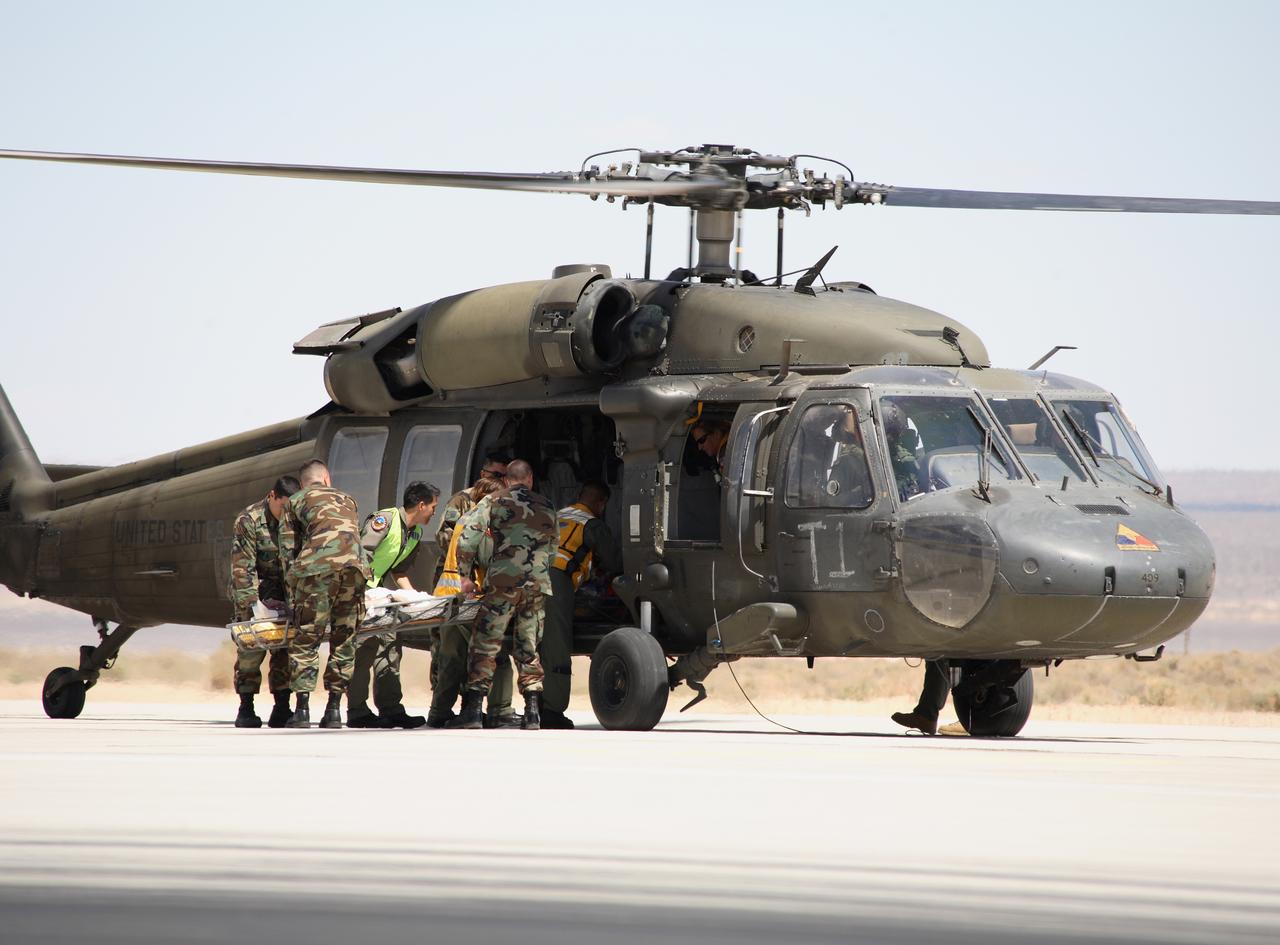
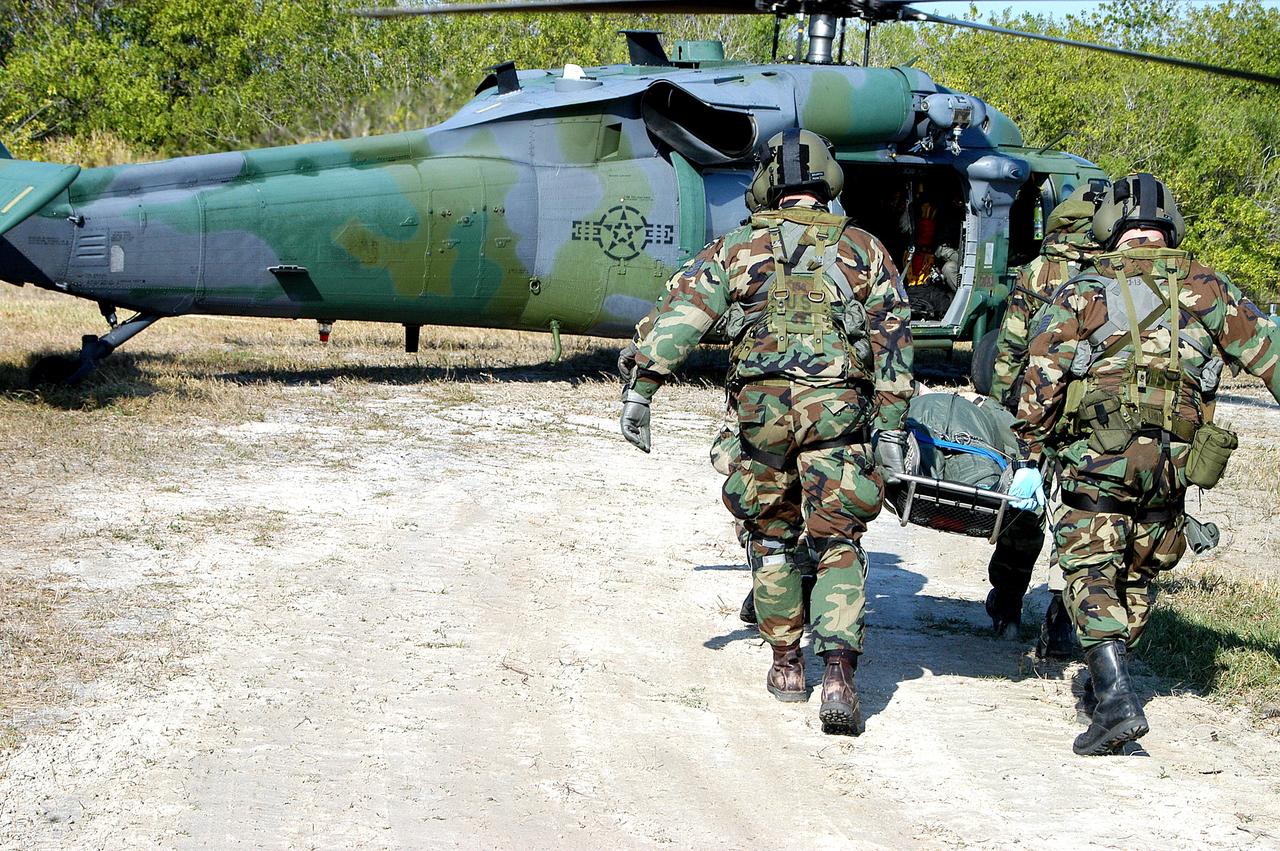
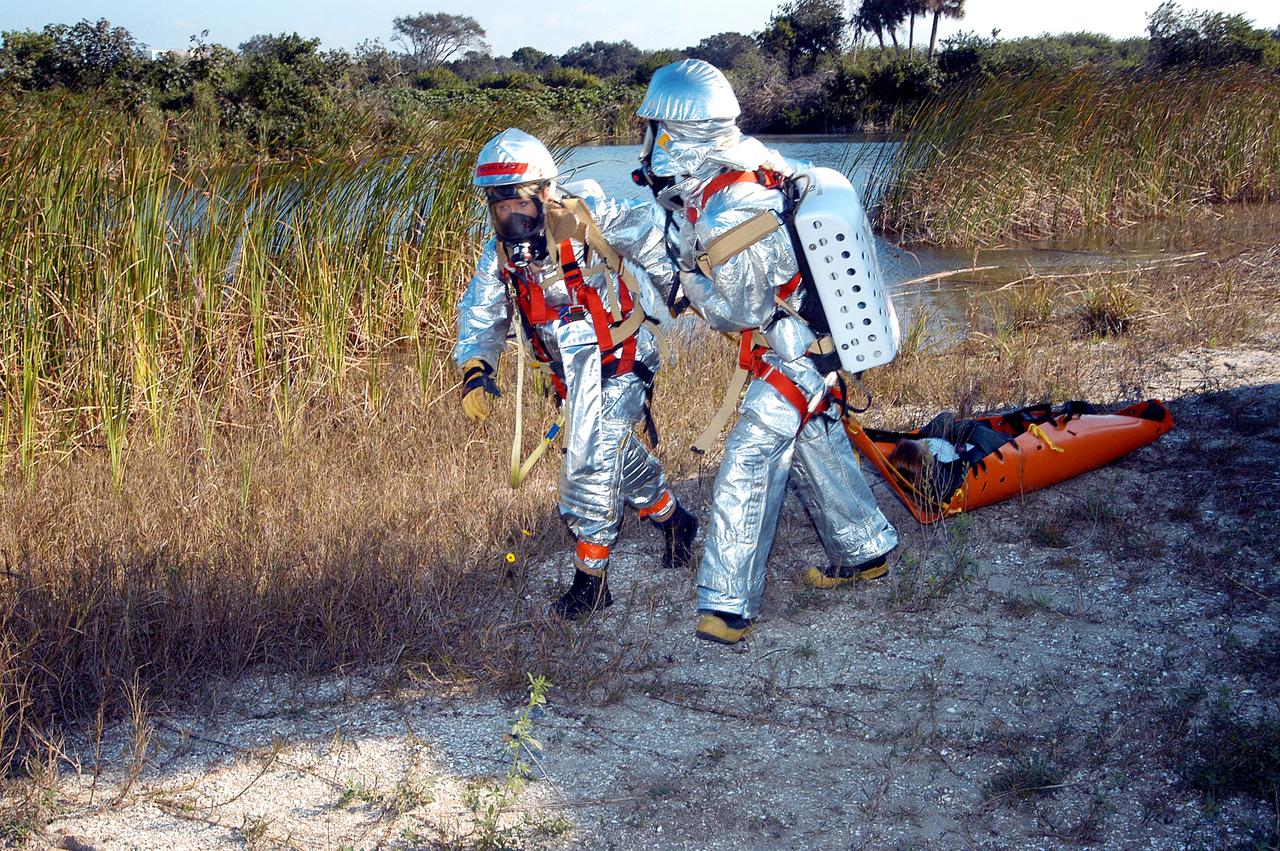
Air Force rescue team members load the volunteer "injured astronaut" on a stretcher into a Blackhawk helicopter for evacuation to a hospital during the exercise. (USAF photo # 070505-F-1287F-166)
Air Force rescue team members load the volunteer "injured astronaut" on a stretcher into a helicopter for evacuation to a hospital during the exercise
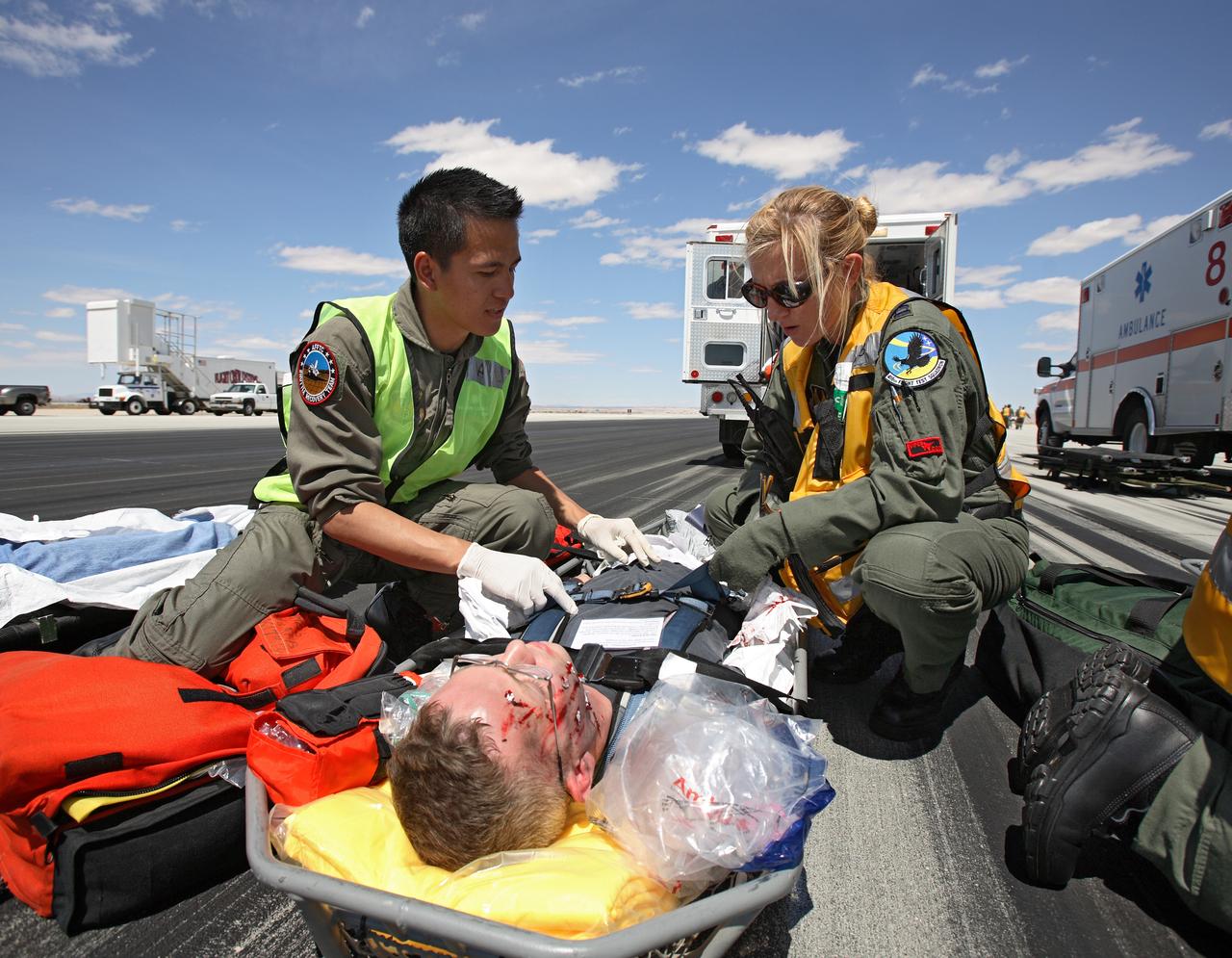
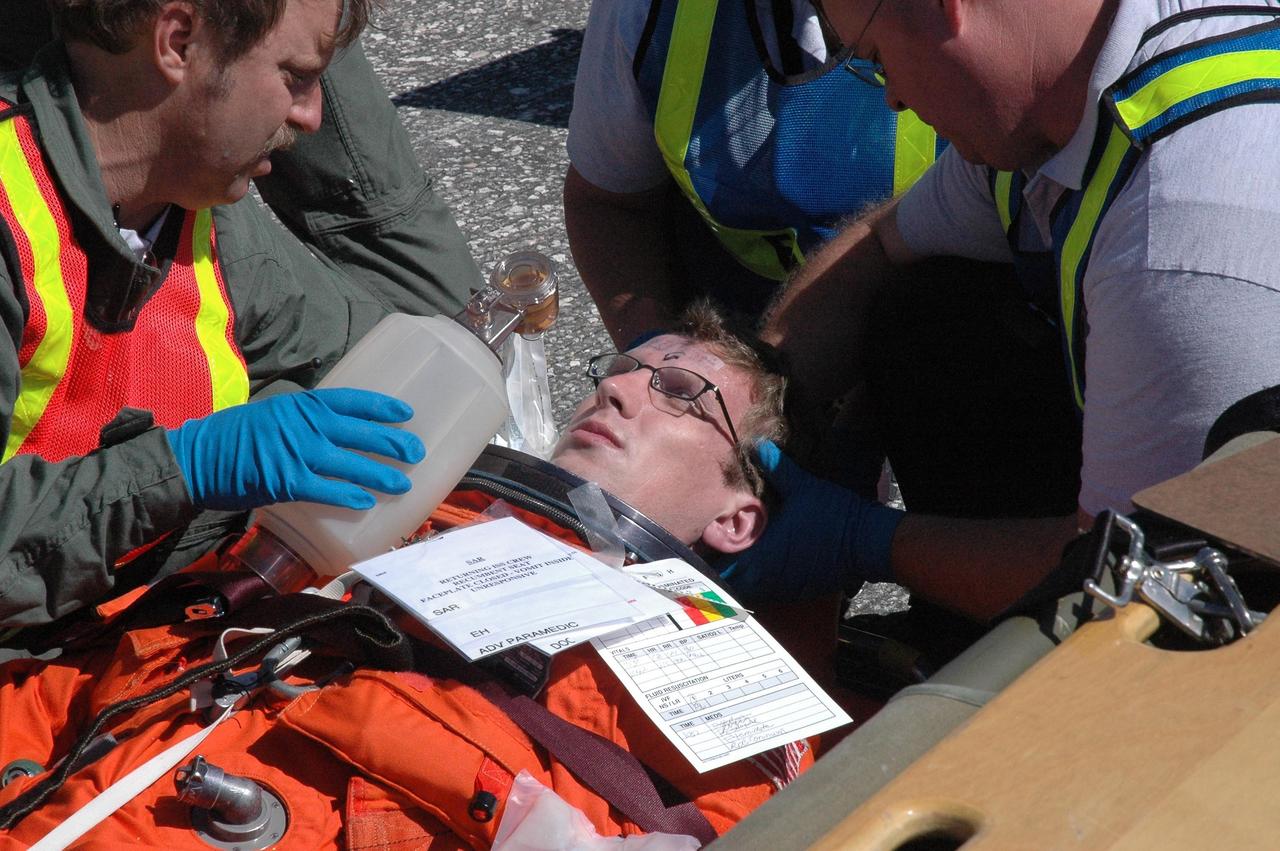
Complete with makeup to simulate facial injuries, a volunteer "astronaut" is tended to by aeromedical rescue staff after evacuation from the shuttle mockup. (USAF photo # 070505-F-1287F-145)
Complete with makeup to simulate facial injuries, a volunteer "astronaut" is tended to by aeromedical rescue staff after evacuation from the shuttle mockup
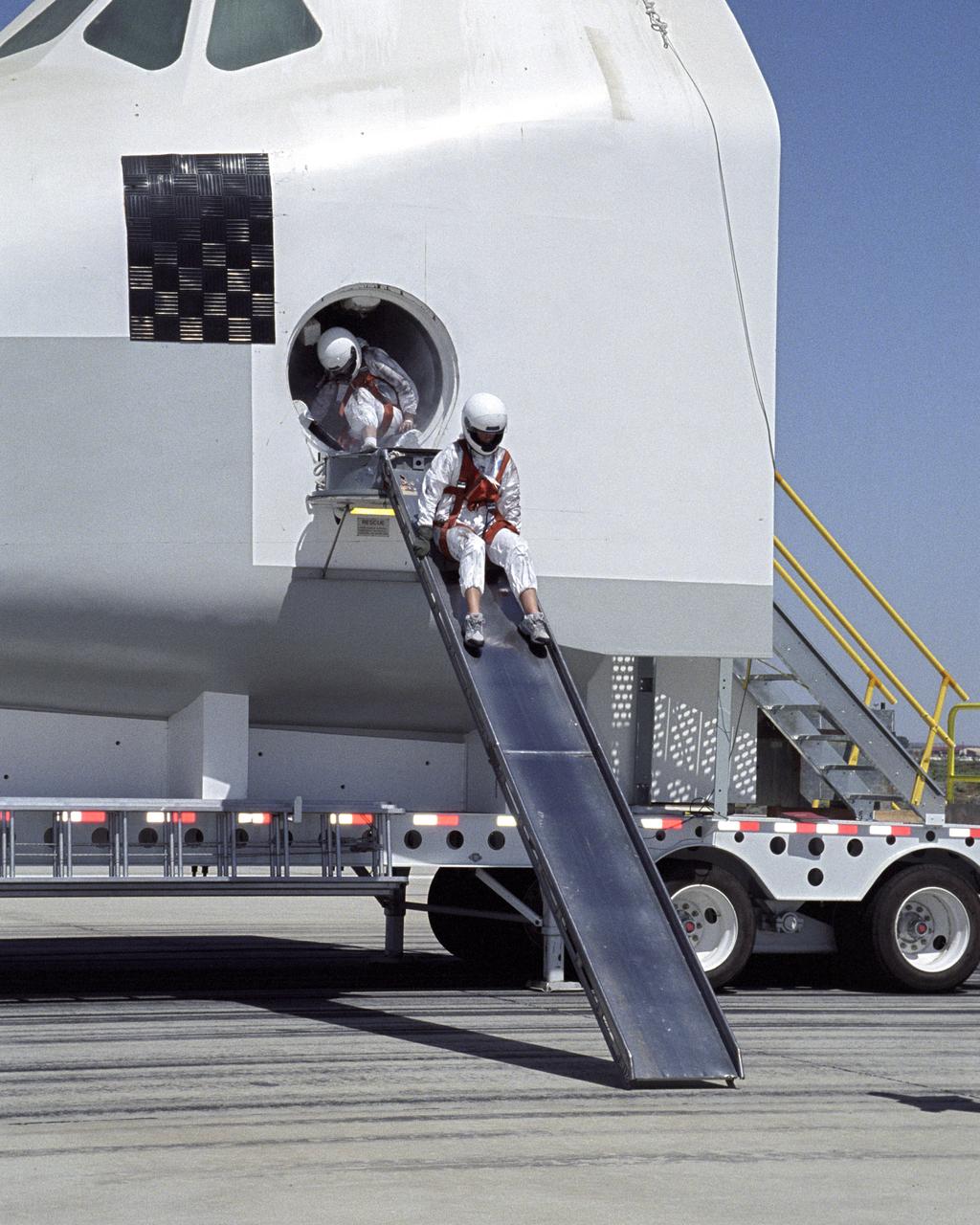
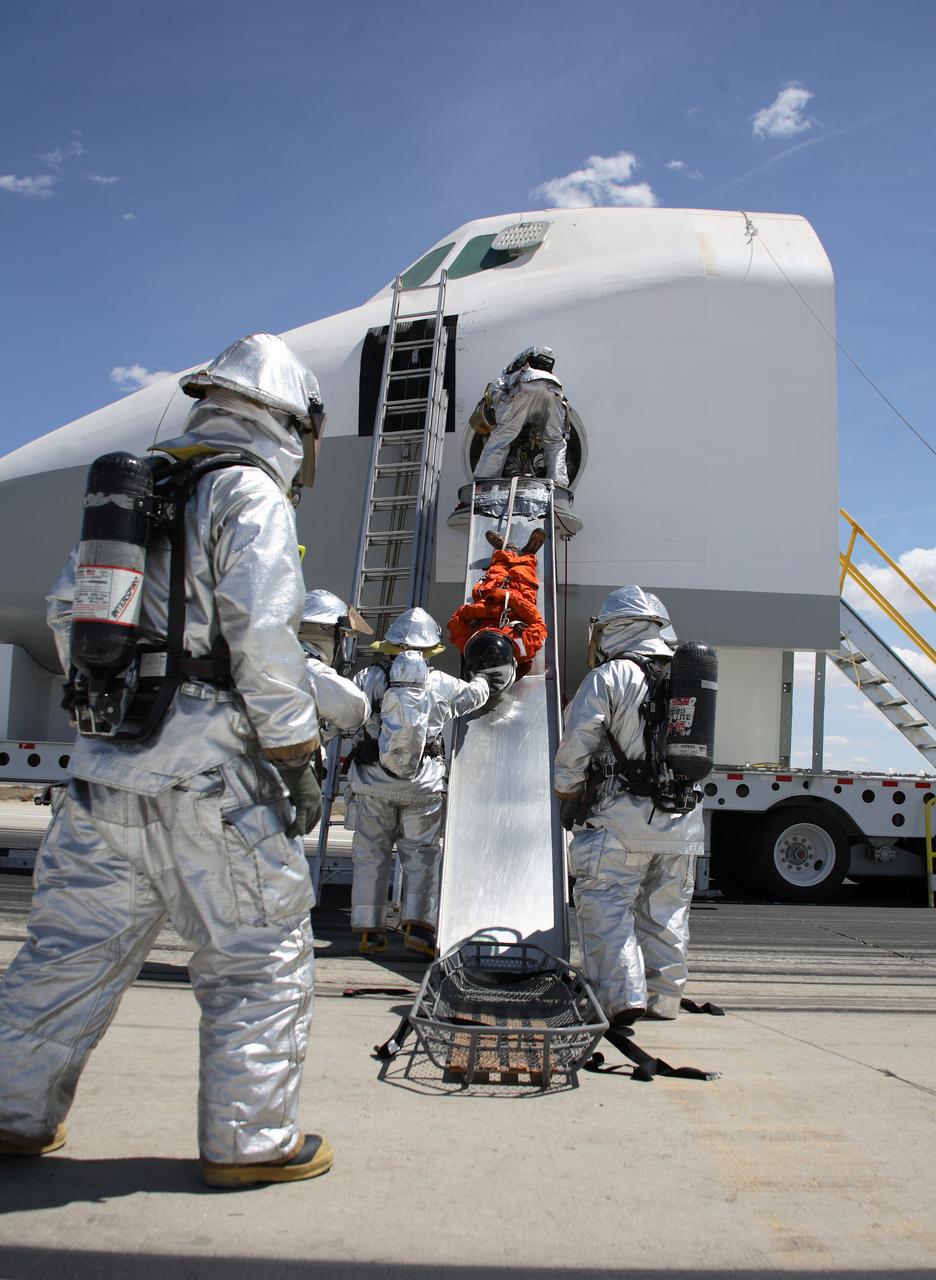
A volunteer "astronaut" starts down an exit slide from a Space Shuttle crew compartment mockup during a rescue and recovery training exercise.
A volunteer "astronaut" starts down an exit slide from a Space Shuttle crew compartment mockup during a rescue and recovery training exercise
Air Force fire/rescue crew place a volunteer "injured astronaut" on a stretcher after exiting the shuttle cabin mockup during the training exercise. (USAF photo # 070505-F-1287F-126)
Air Force fire/rescue crew place a volunteer "injured astronaut" on a stretcher after exiting the shuttle cabin mockup during the training exercise
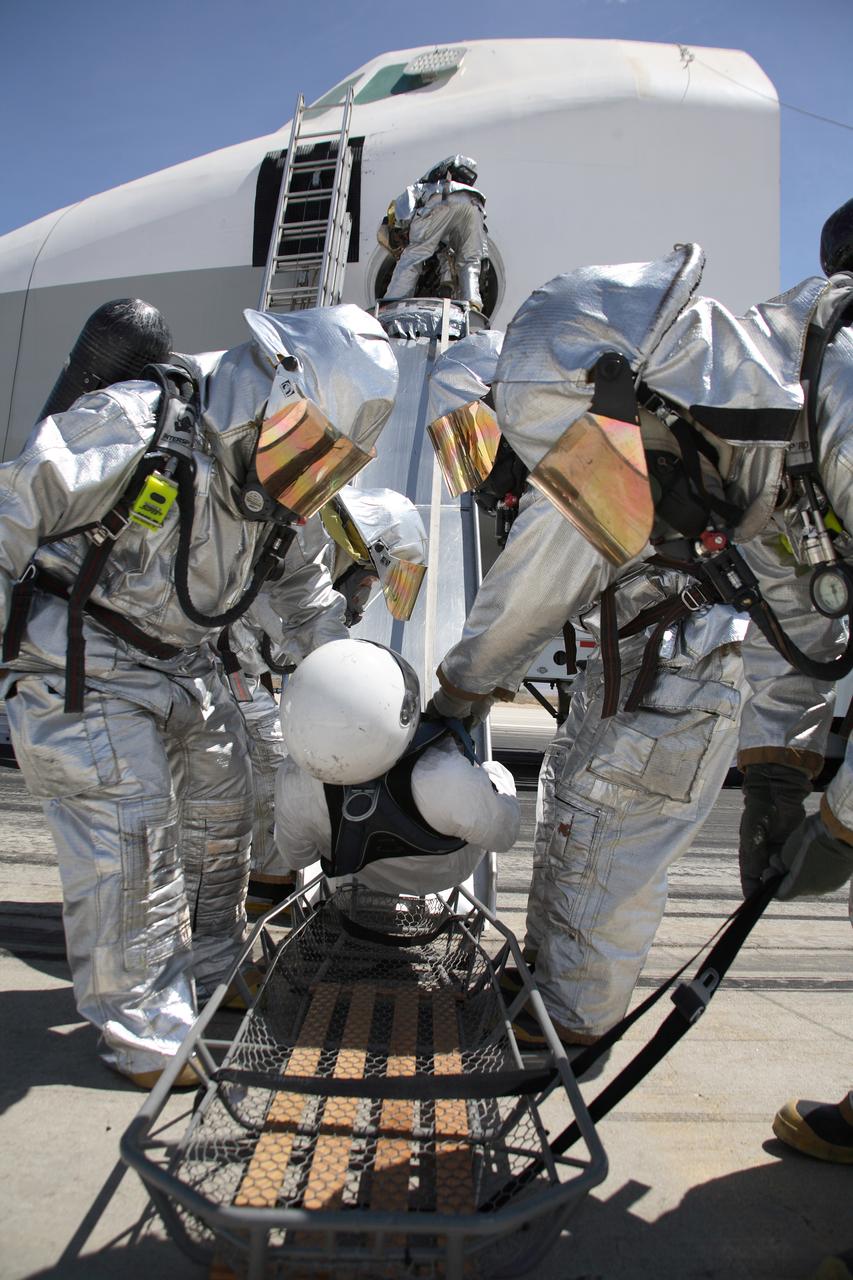
Clad in thermal protection suits, fire/rescue crew aid a volunteer "Injured astronaut" to a head-first ride down the exit slide from the shuttle cabin mockup. (USAF photo # 070505-F-1287F-132)
Clad in thermal protection suits, fire/rescue crew aid a volunteer "Injured astronaut" to a head-first ride down the exit slide from the shuttle cabin mockup
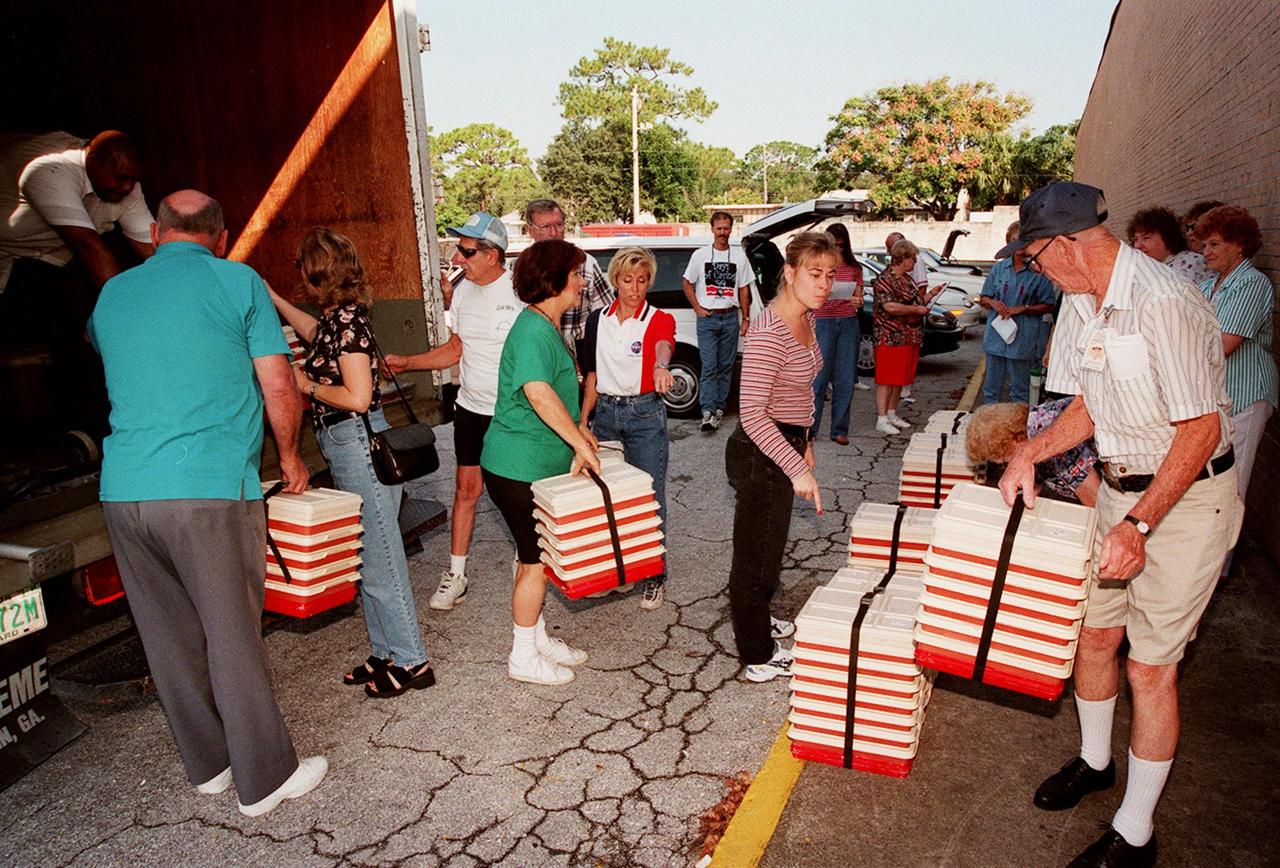
KSC volunteers at Miracle City Mall, Titusville, help unload containers for Meals on Wheels delivery as part of their '99 Days of Caring participation. The volunteers will also help deliver the meals. Coordinated by the KSC Community Relations Council, Days of Caring provides an opportunity for employees to volunteer their services in projects such as painting, planting flowers, reading to school children, and more. Organizations accepting volunteers include The Embers, Yellow Umbrella, Serene Harbor, Domestic Violence Program, the YMCA of Brevard County, and others
KSC-99pp1243
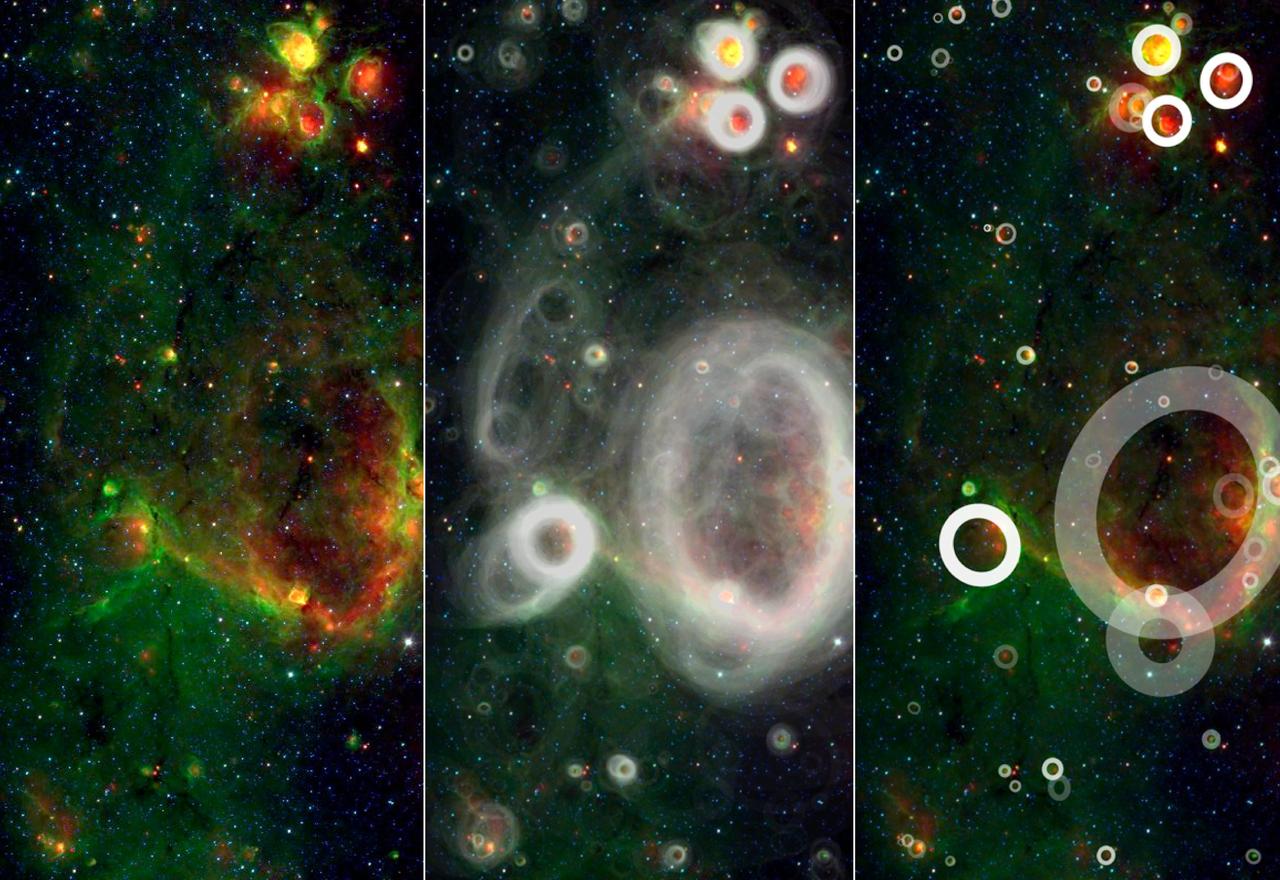
A team of volunteers from the general public has pored over observations from NASA Spitzer Space Telescope and discovered more than 5,000 bubbles in the disk of our Milky Way galaxy.
Finding Bubbles in the Milky Way
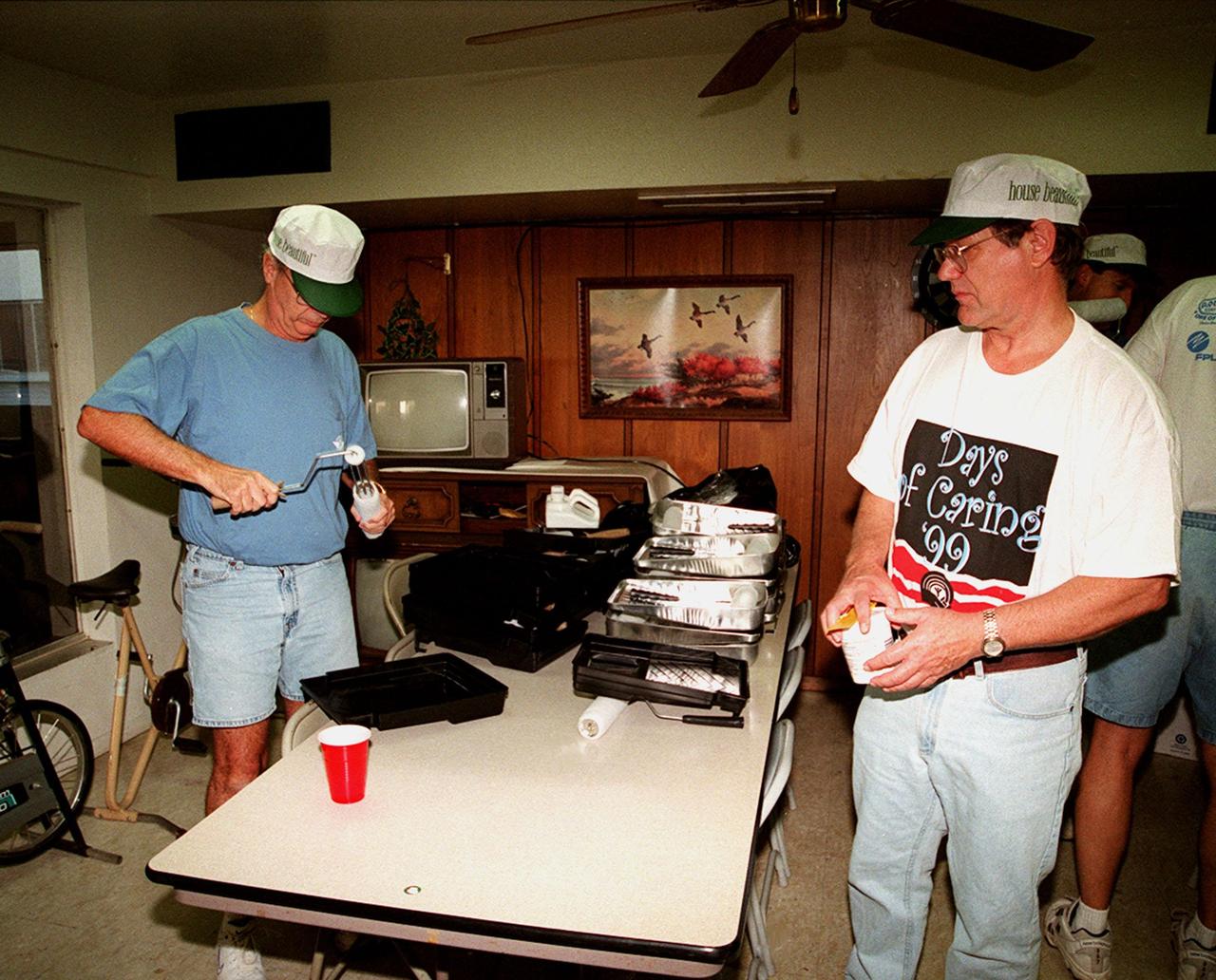
KSC volunteers with Days of Caring '99 share tasks while getting ready to paint at Baxley Manor, an apartment building for senior citizens on Merritt Island. Coordinated by the KSC Community Relations Council, Days of Caring provides an opportunity for employees to volunteer their services in projects such as painting, planting flowers, reading to school children, and more. Organizations accepting volunteers include The Embers, Yellow Umbrella, Serene Harbor, Domestic Violence Program, the YMCA of Brevard County, and others
KSC-99pp1247
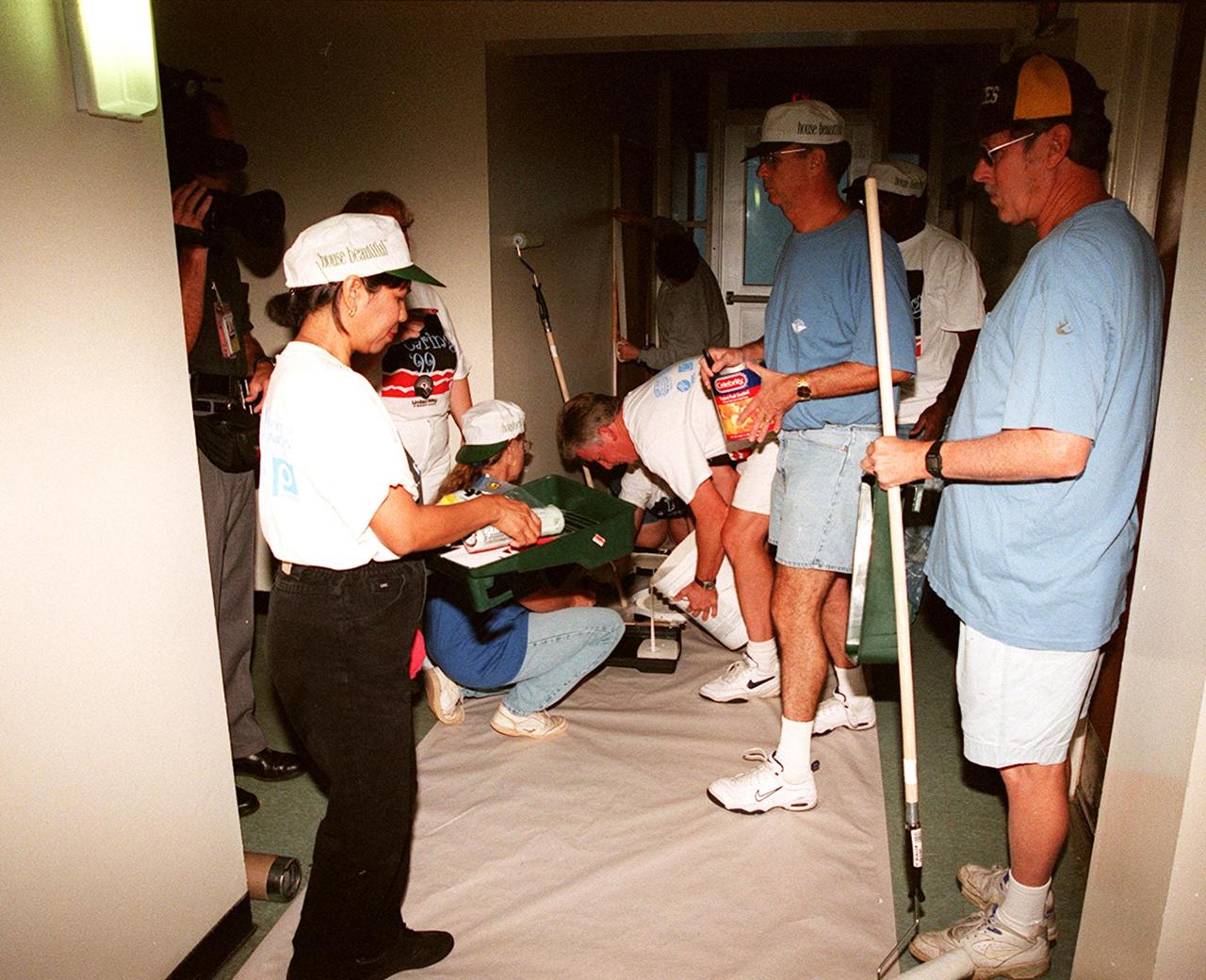
Volunteers for Days of Caring '99 set up the paint trays for painting at Baxley Manor, an apartment building for senior citizens on Merritt Island. Coordinated by the KSC Community Relations Council, Days of Caring provides an opportunity for employees to volunteer their services in projects such as painting, planting flowers, reading to school children, and more. Organizations accepting volunteers include The Embers, Yellow Umbrella, Serene Harbor, Domestic Violence Program, the YMCA of Brevard County, and others
KSC-99pp1246
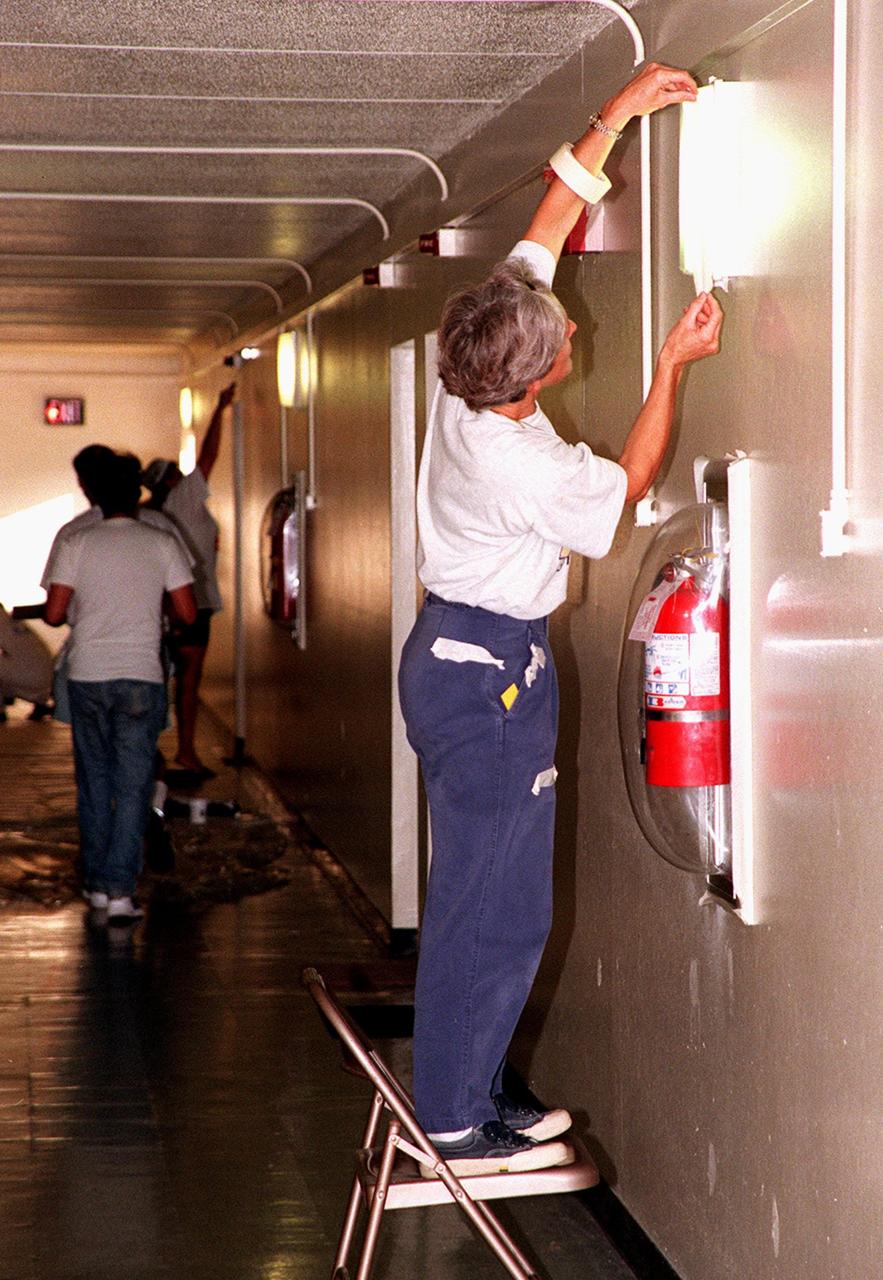
A volunteer for Days of Caring '99 prepares a light fixture before painting the walls in the hallway at Baxley Manor, an apartment building for senior citizens on Merritt Island. Coordinated by the KSC Community Relations Council, Days of Caring provides an opportunity for employees to volunteer their services in projects such as painting, planting flowers, reading to school children, and more. Organizations accepting volunteers include The Embers, Yellow Umbrella, Serene Harbor, Domestic Violence Program, the YMCA of Brevard County, and others
KSC-99pp1245
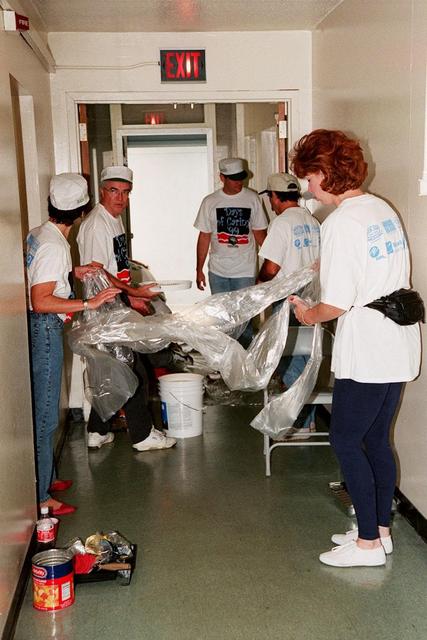
KSC volunteers for Days of Caring '99 unfold protective materials before getting ready to paint at Baxley Manor, an apartment building for senior citizens on Merritt Island. Coordinated by the KSC Community Relations Council, Days of Caring provides an opportunity for employees to volunteer their services in projects such as painting, planting flowers, reading to school children, and more. Organizations accepting volunteers include The Embers, Yellow Umbrella, Serene Harbor, Domestic Violence Program, the YMCA of Brevard County, and others
KSC-99pp1244
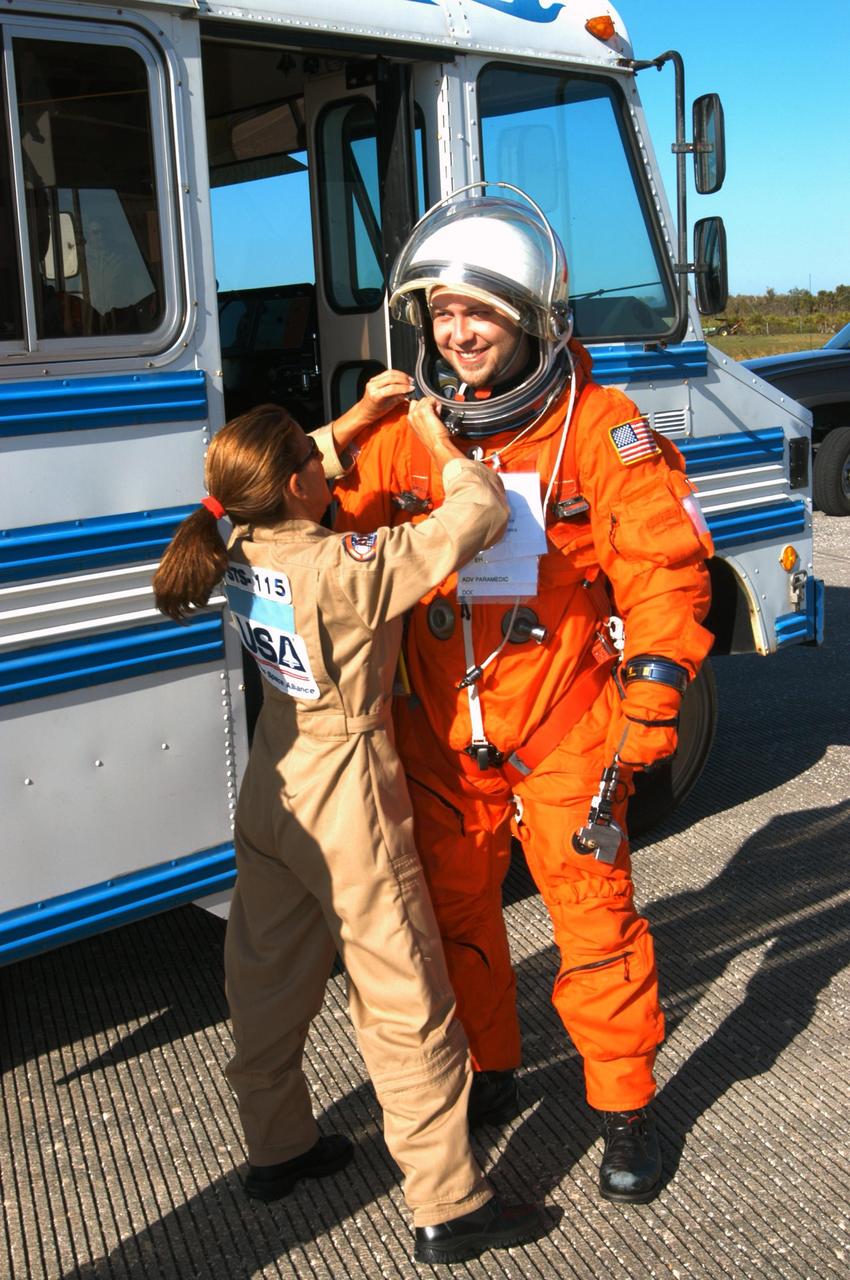
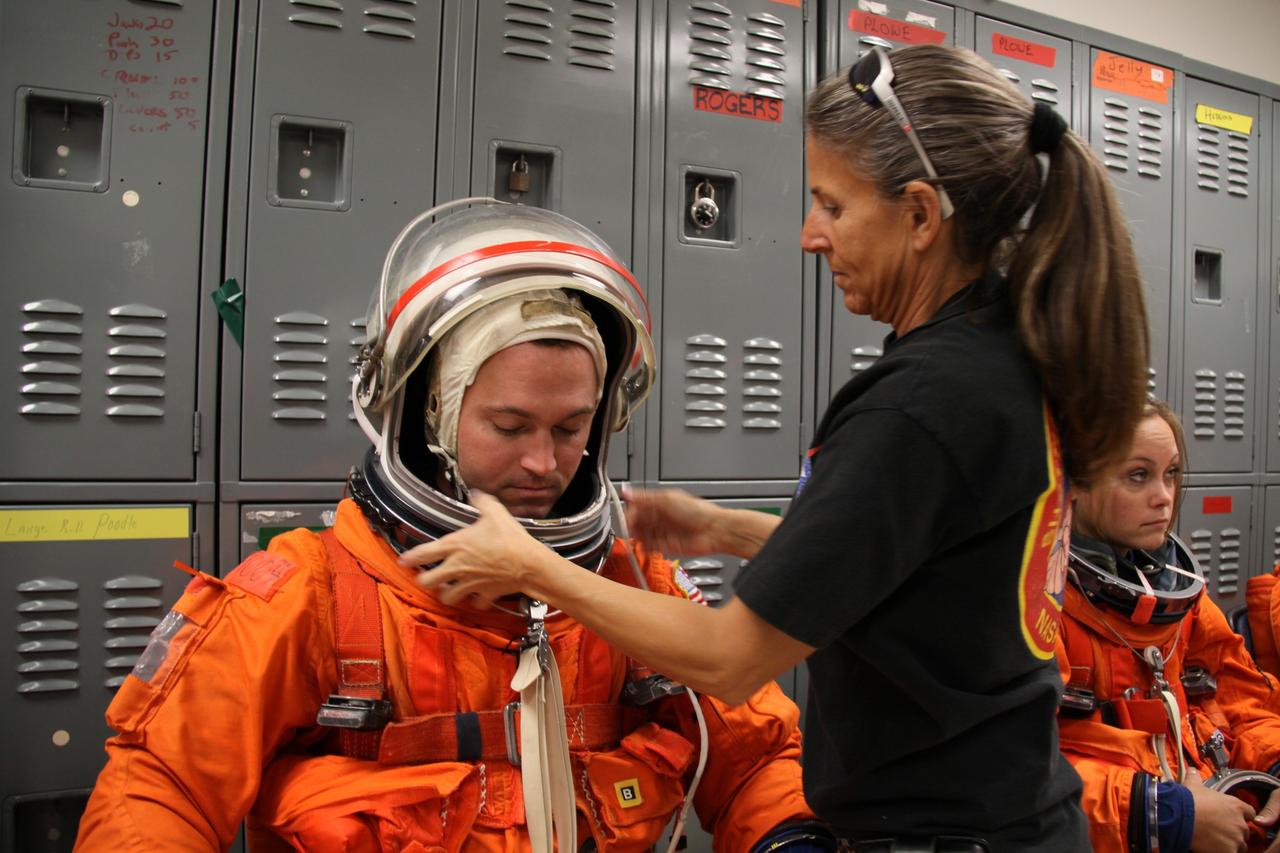
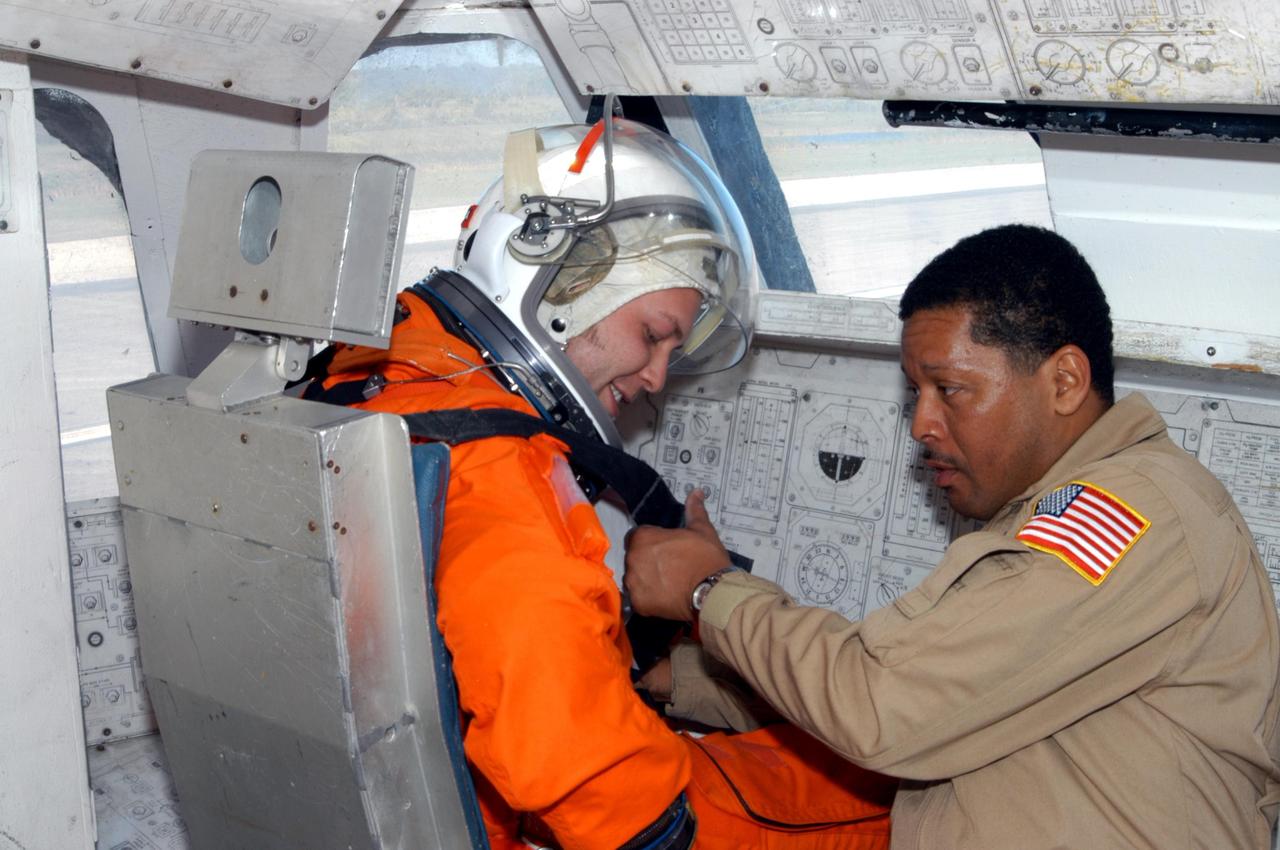
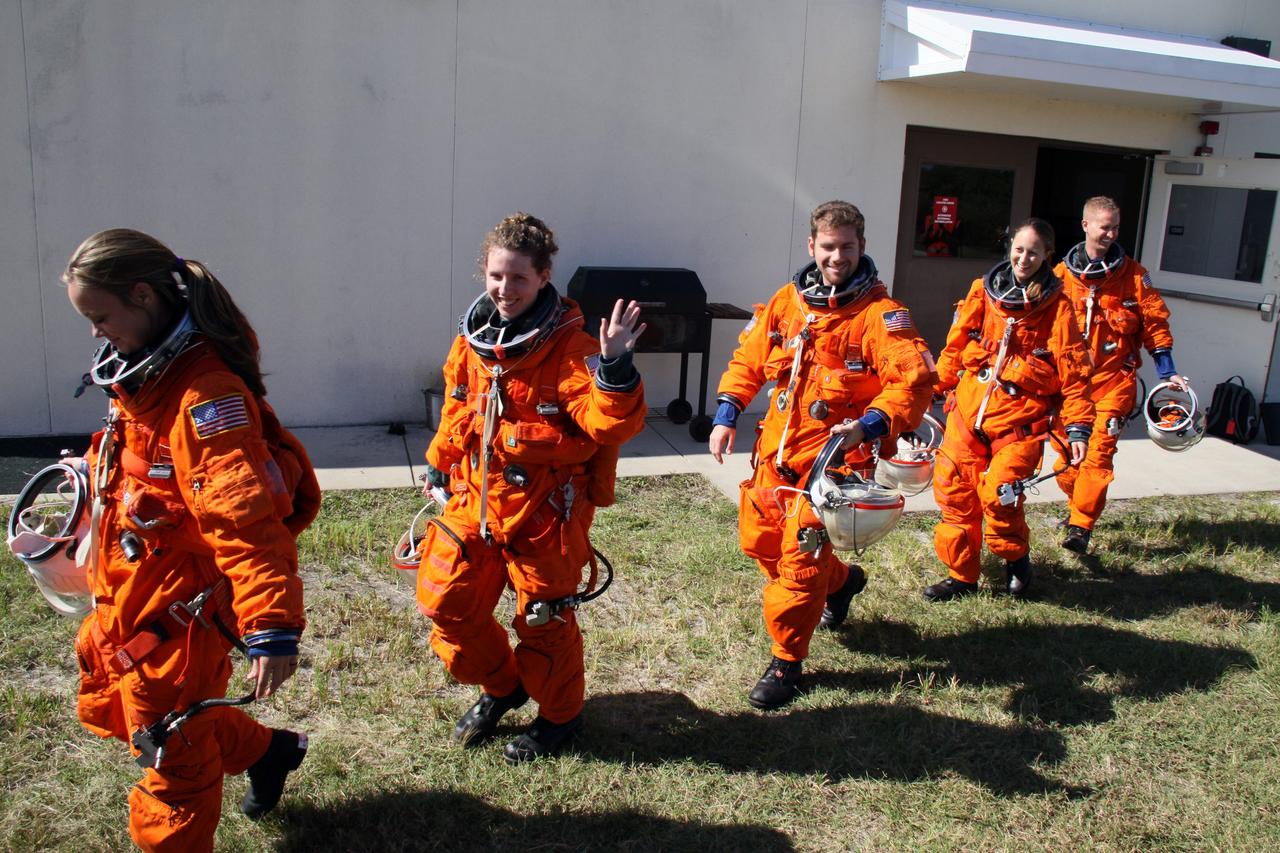
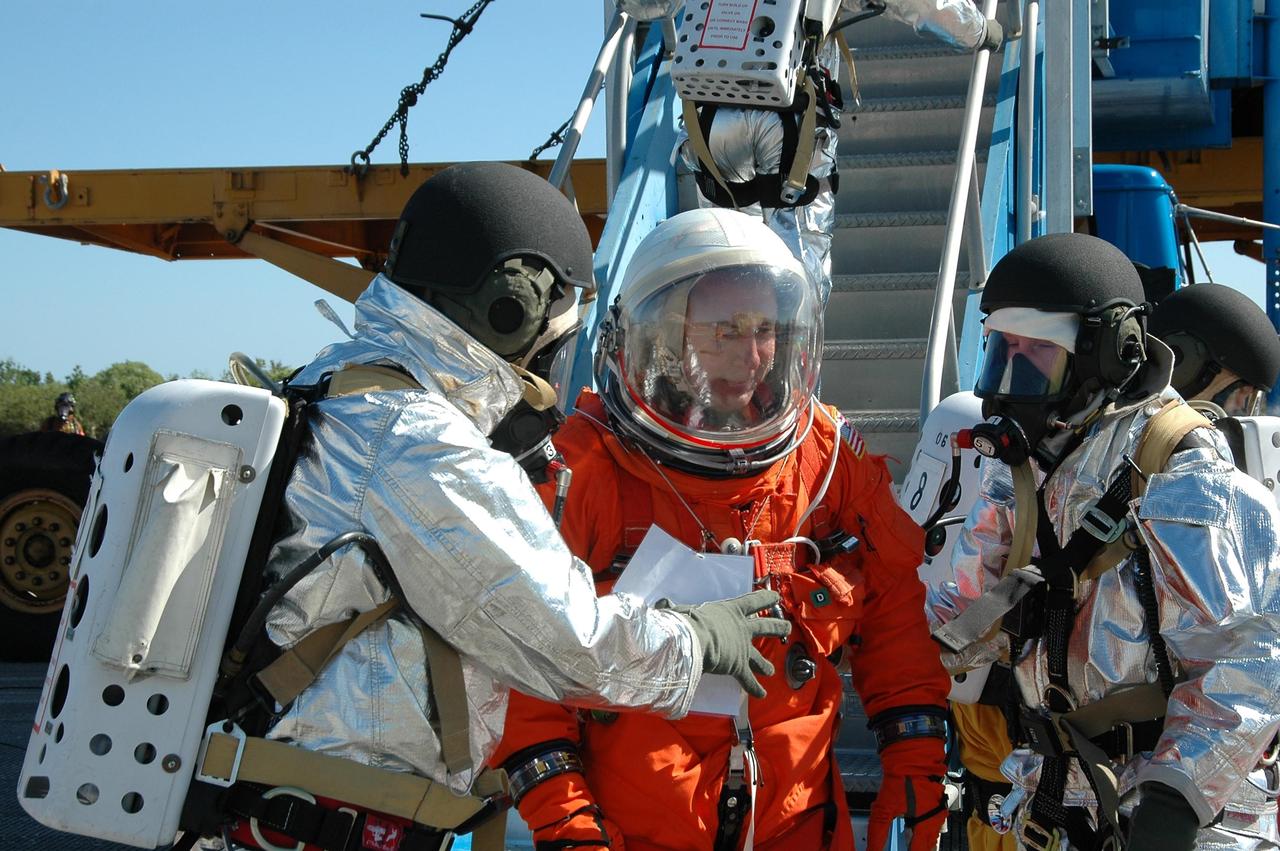
KENNEDY SPACE CENTER, FLA.  -    Preparing for a simulated emergency landing of a shuttle crew,  United Space Alliance (USA) Suit Tech Toni Costa-Davis helps volunteer "astronaut" Brian Bateman, also with USA, with his launch and entry suit.  Many volunteers posed as astronauts during the simulation.  Known as a Mode VI exercise, the operation uses volunteer workers from the Center to pose as astronauts. The purpose of the simulation is to exercise emergency preparedness personnel, equipment and facilities in rescuing astronauts from a downed orbiter and providing immediate medical attention. Photo credit: NASA/George Shelton
KSC-06pd0506
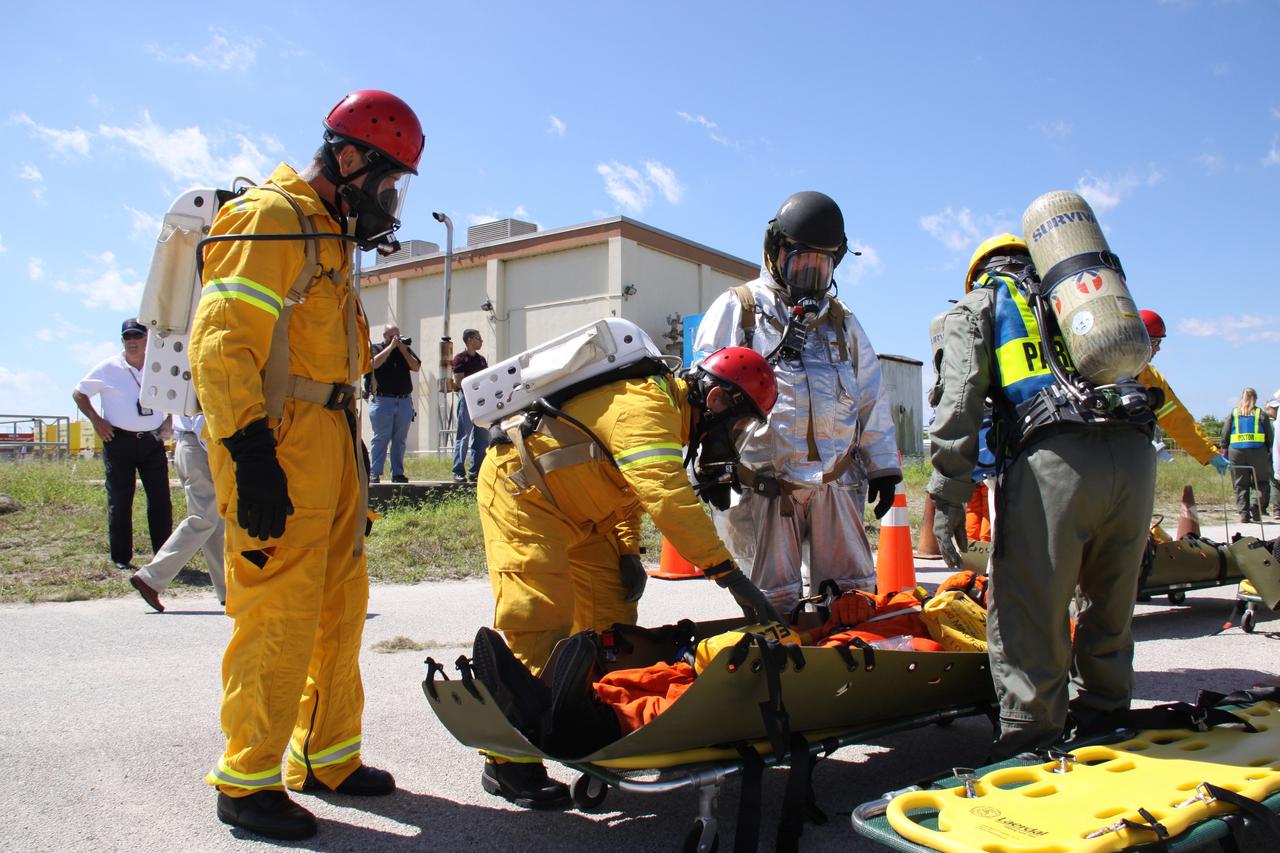
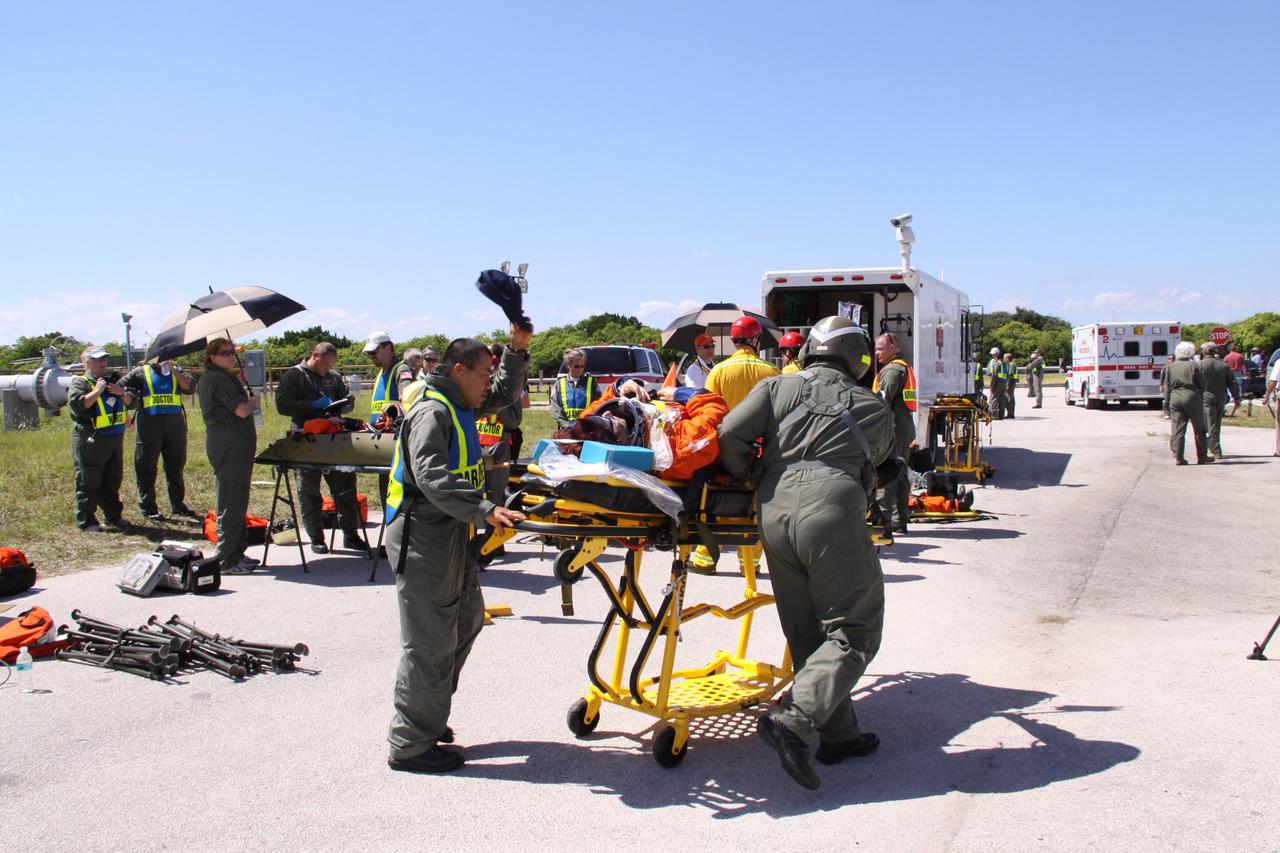
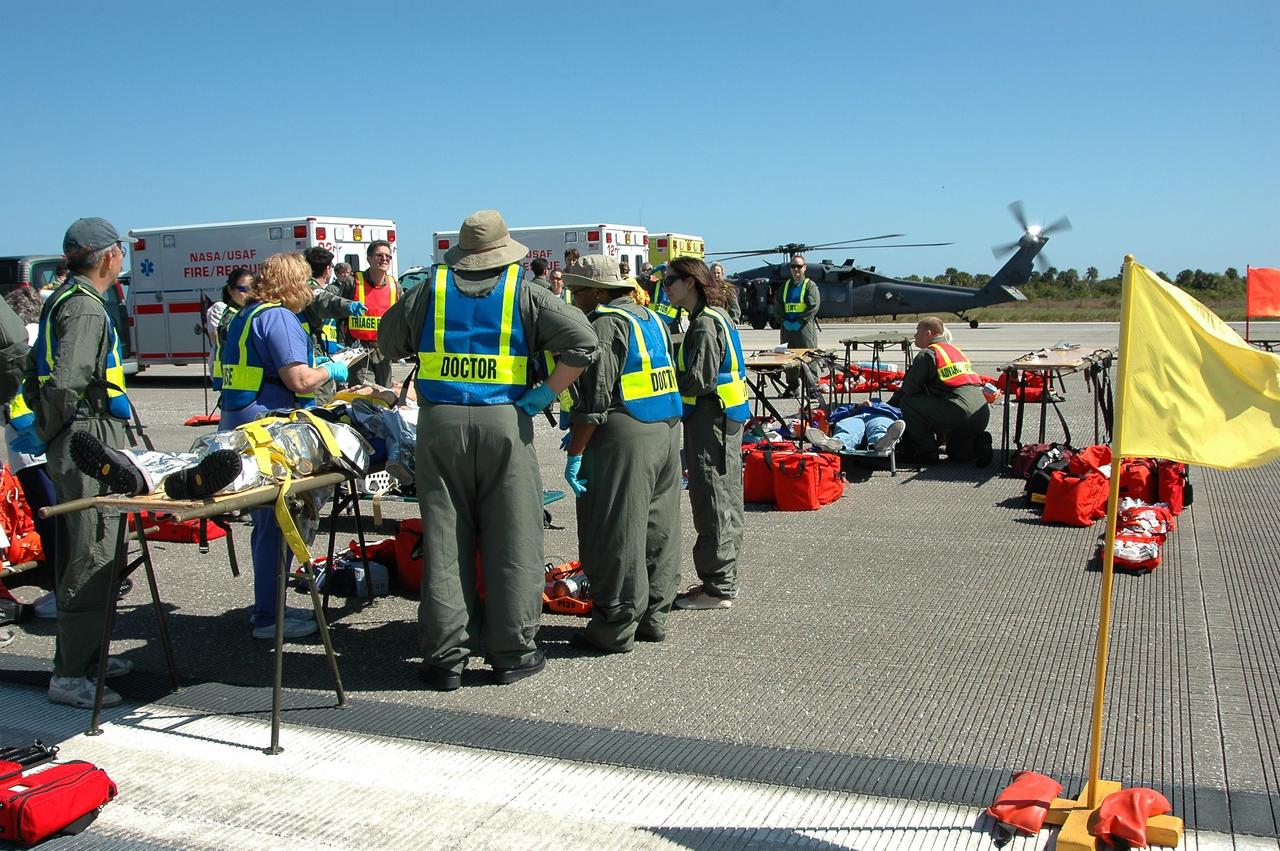
CAPE CANAVERAL, Fla. –  At NASA's Kennedy Space Center in Florida, volunteers portraying astronauts are helped with the launch-and-entry suits.  The volunteers are taking part in a Mode II-IV exercise that allows teams to practice an emergency response at Launch Pad 39A, including helicopter evacuation to local hospitals.  The exercise involves NASA fire rescue personnel, volunteers portraying astronauts with simulated injuries, helicopters and personnel from the Air Force’s 920th Rescue Wing and medical trauma teams at three central Florida hospitals. The Space Shuttle Program and U.S. Air Force are conducting the emergency simulation. Photo credit:  NASA/Troy Cryder
KSC-2009-5270
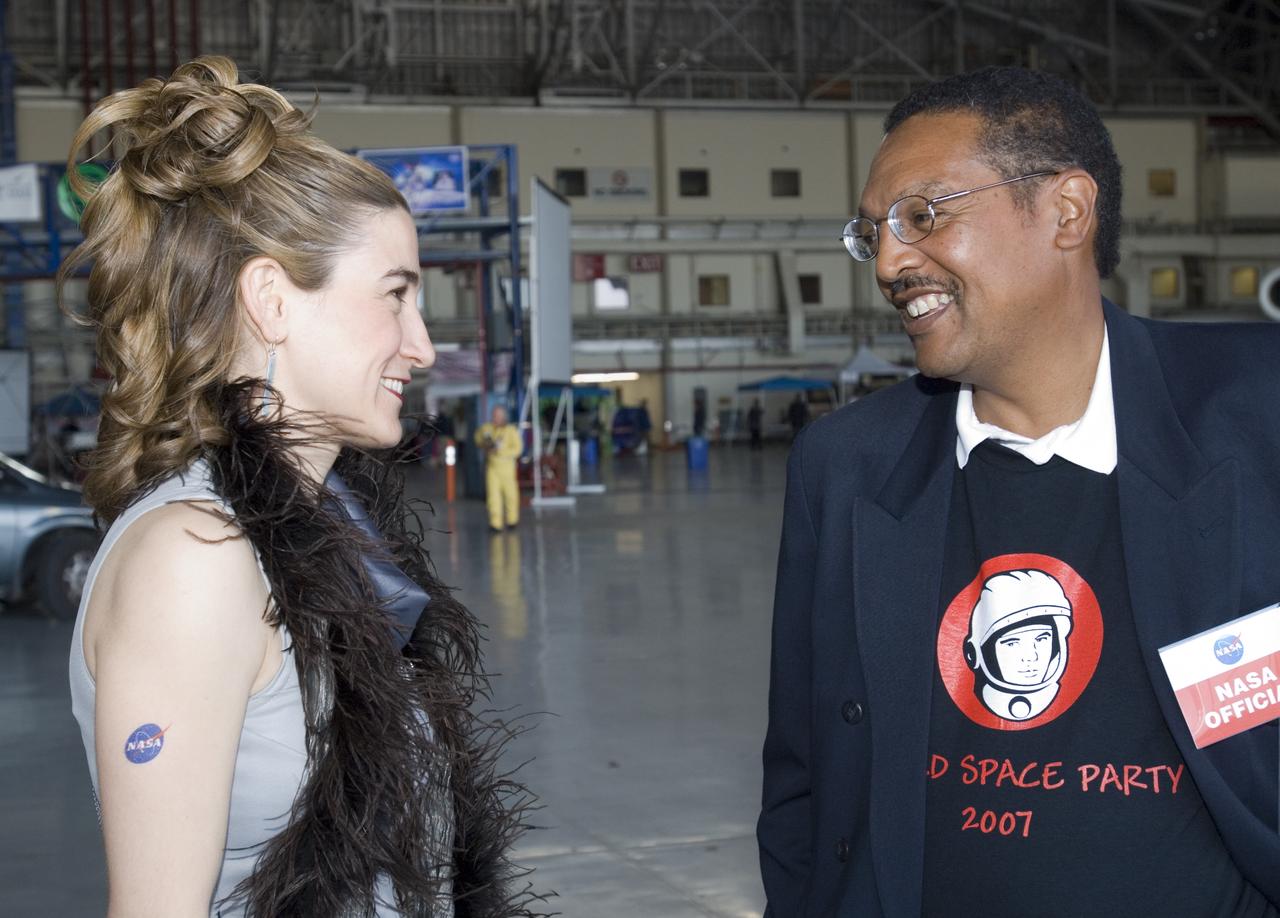
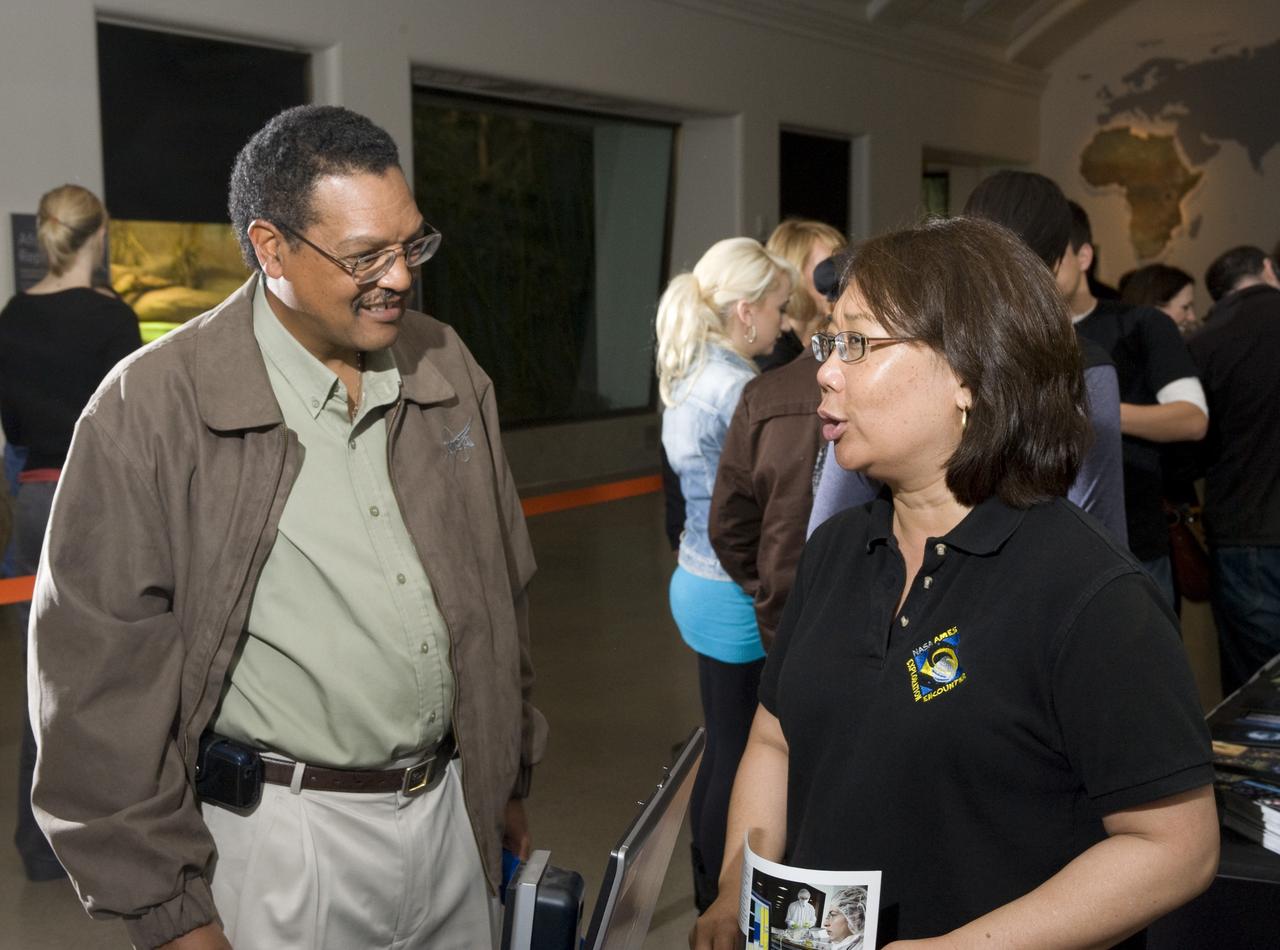
Yuri's Night at Ames a celebration of the first human in space (Lou Braxton III talks with volunteer)
ARC-2007-ACD07-0064-015
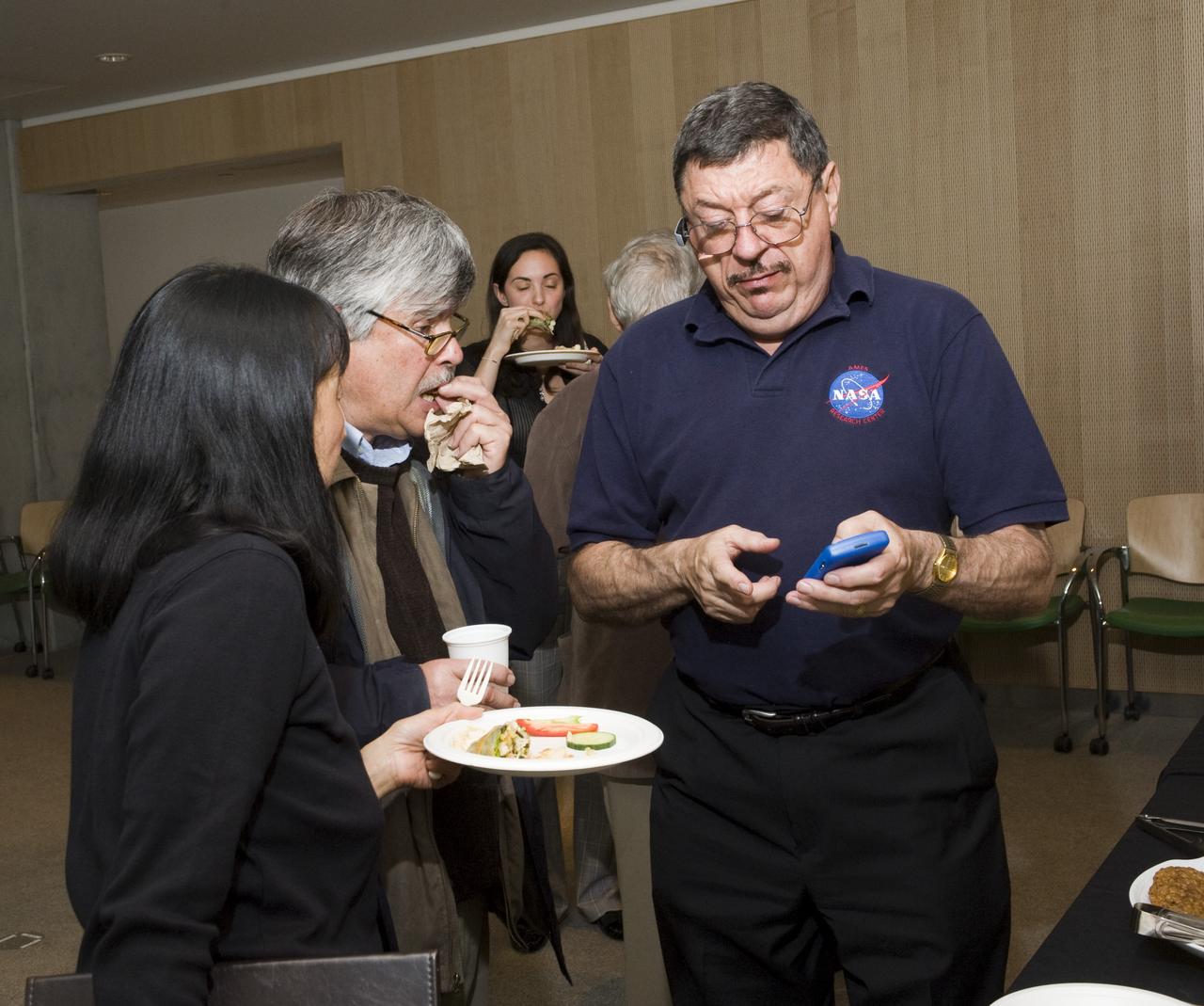
Yuri's Night 2009 held at the California Acaemy of Sciences in San Francisco, California Ames volunteer David Morse with Mike Mewhinney and wife also of Ames.
ARC-2009-ACD09-0054-002
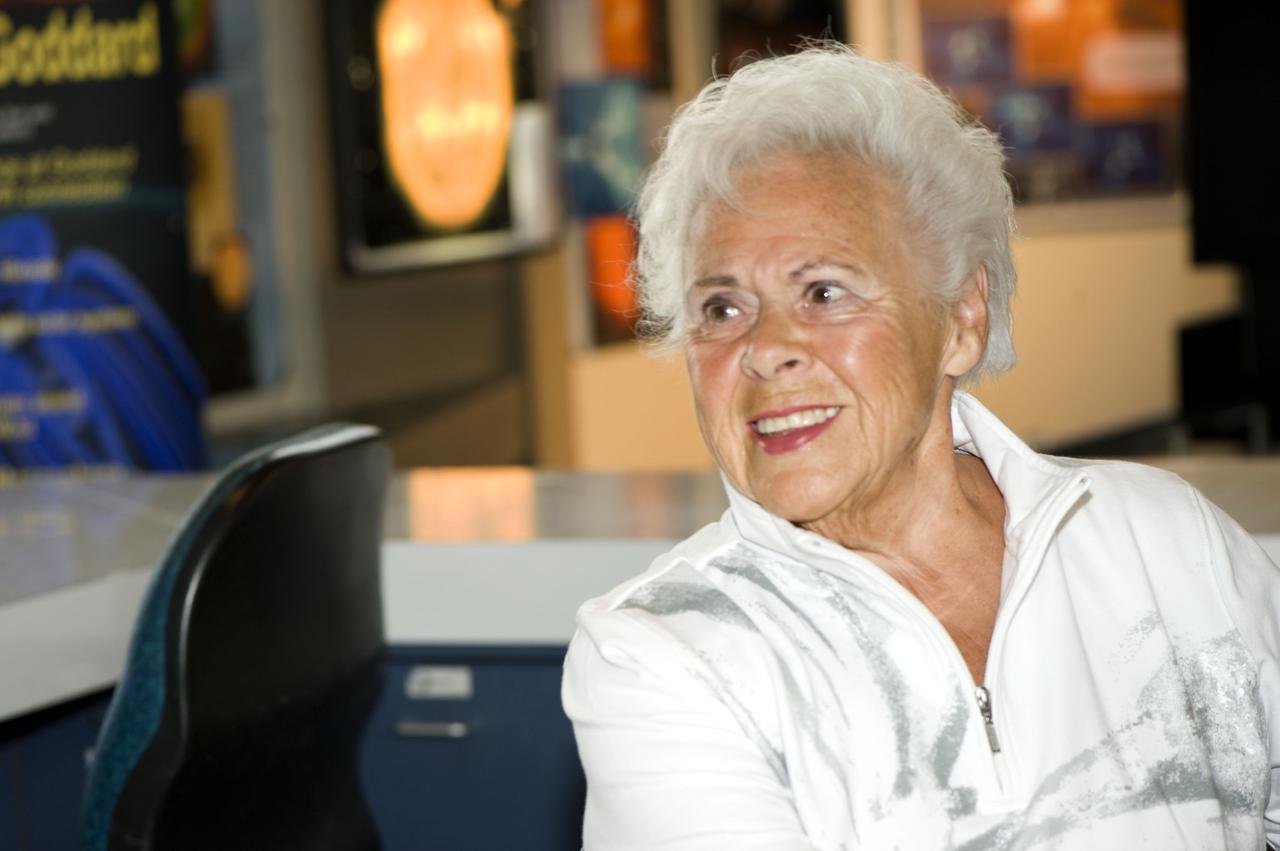
Alberta Moran, one of the first employees of NASA's Goddard Space Flight Center in Greenbelt, Md., and subsequently a longtime volunteer at the Goddard Visitor Center.
G-2010-0179-031
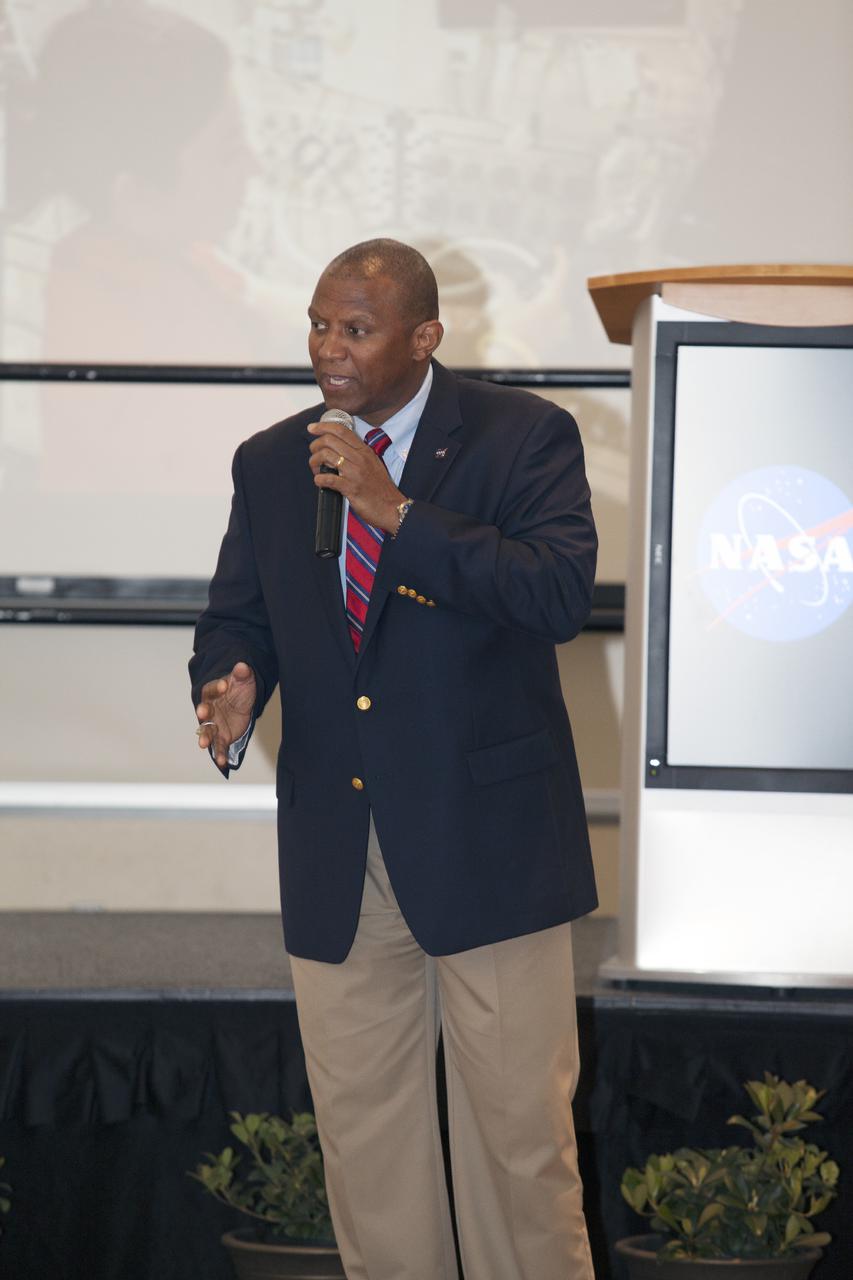
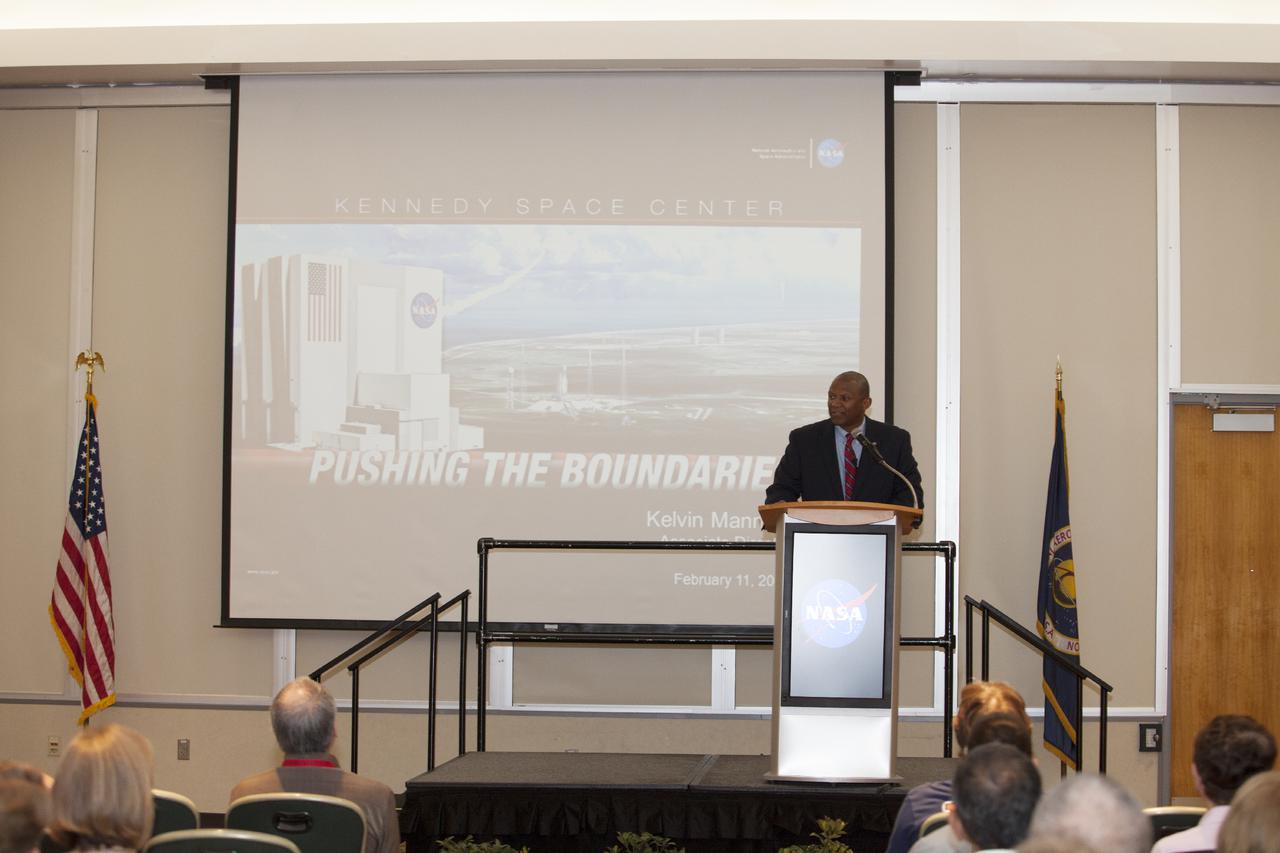
CAPE CANAVERAL, Fla. – NASA Kennedy Space Center Associate Director Kelvin Manning addresses Kennedy's volunteers during a KSC Volunteer Appreciation Event held in the Debus Conference Facility at the Kennedy Space Center Visitor Complex in Florida.  Manning briefed the group on future prospects for the space center with a presentation entitled 'Pushing the Boundaries.' To learn about NASA's Speakers Bureau, visit http:__speakers.grc.nasa.gov_speaker. Photo credit: NASA_Daniel Casper
KSC-2014-1379
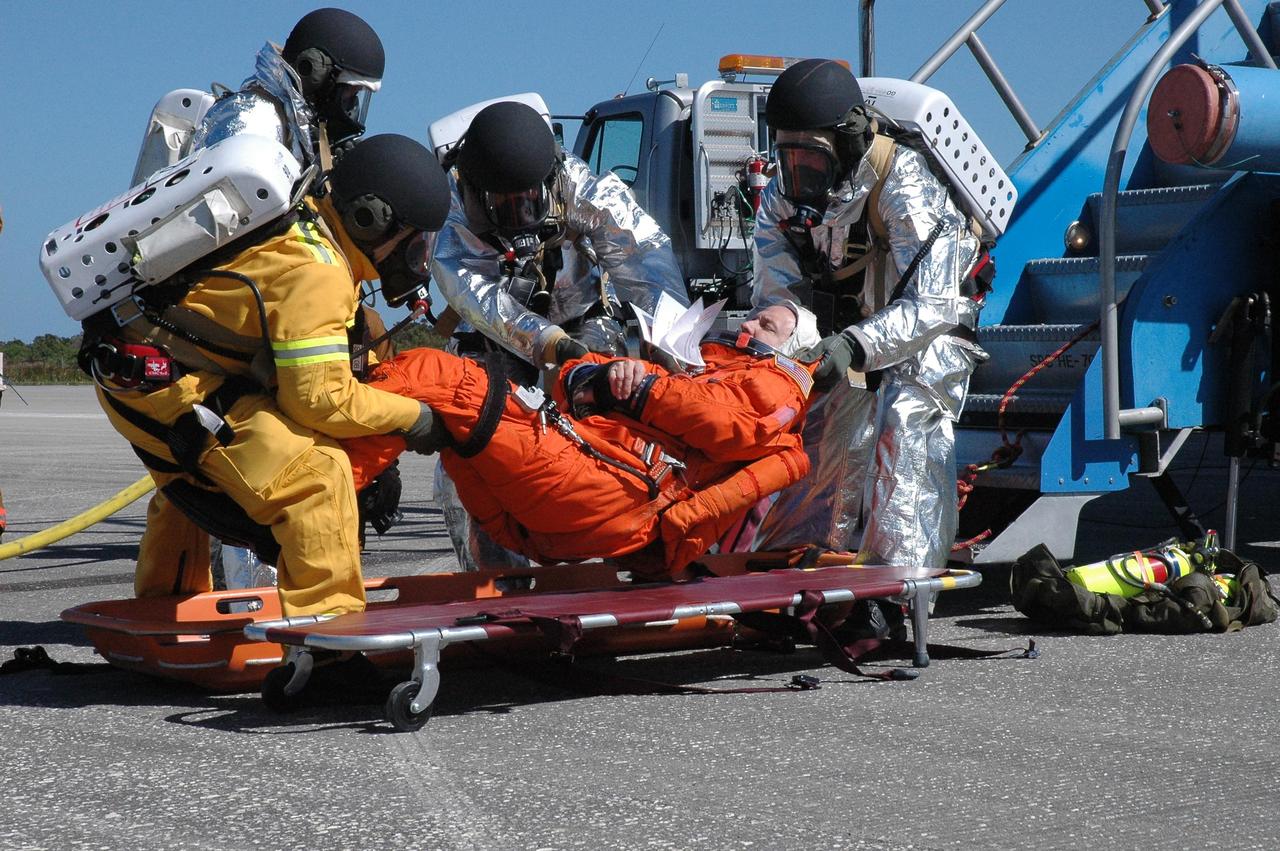
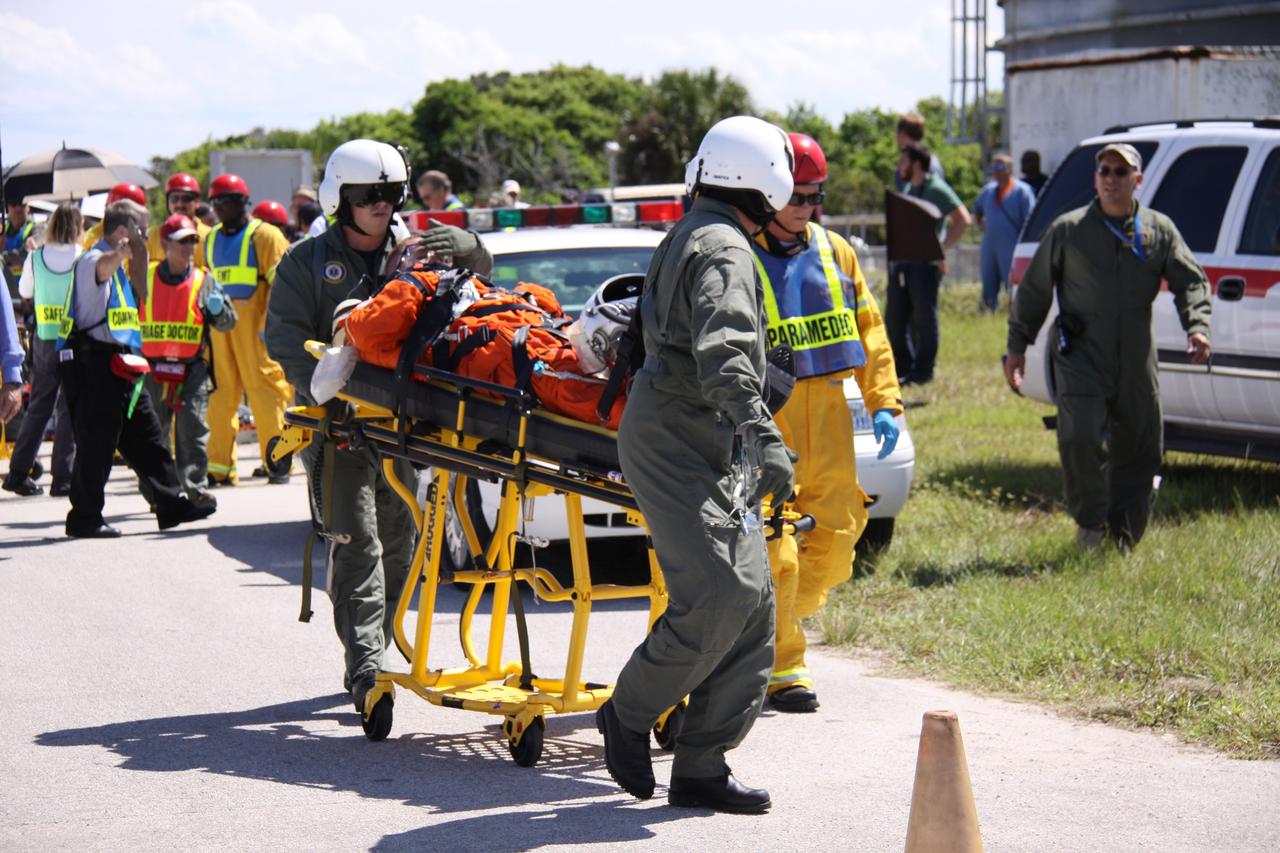
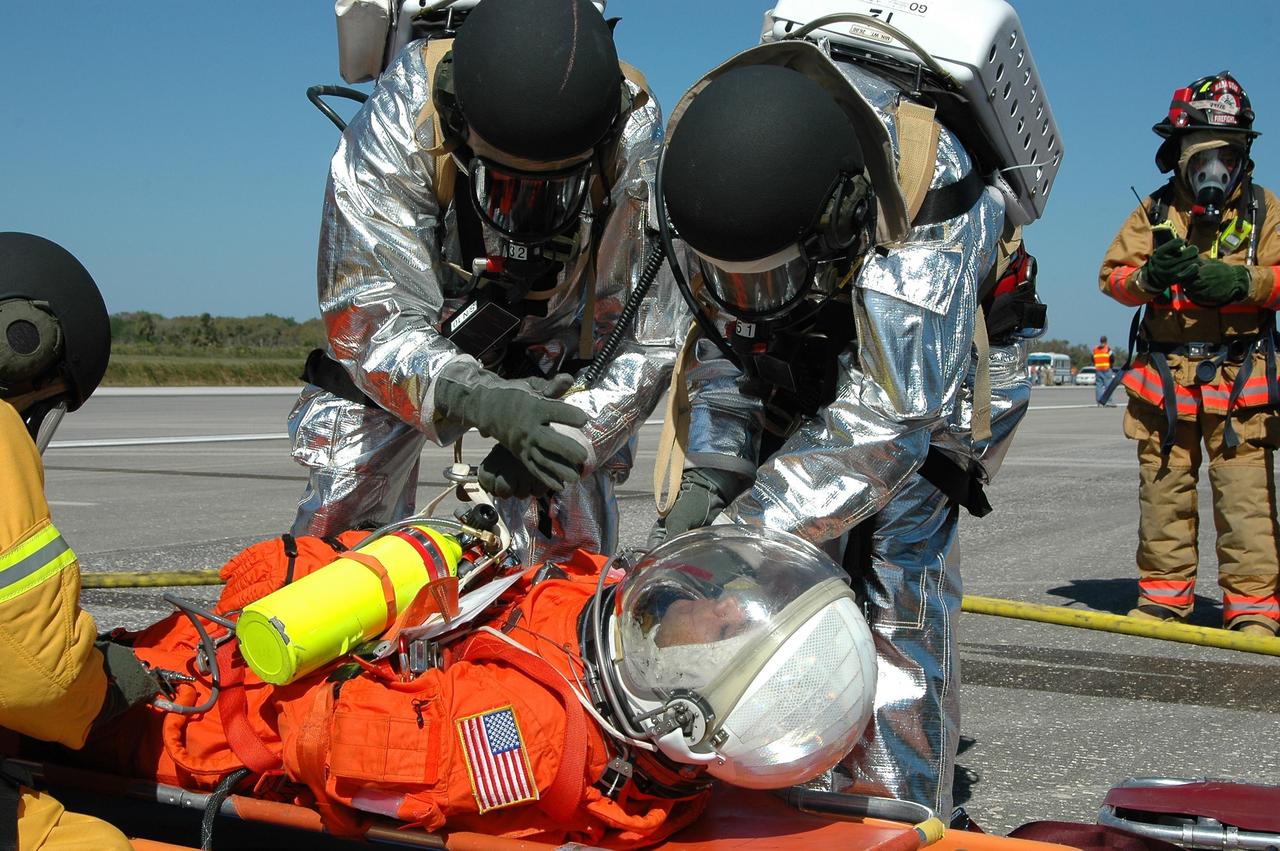
KENNEDY SPACE CENTER, FLA.  -  At NASA Kennedy Space Center's Shuttle Landing Facility, emergency rescue personnel gently place an "injured astronaut" onto a stretcher.  Volunteers and emergency rescue workers are participating in a simulated emergency landing of a shuttle crew. Known as a Mode VI exercise, the operation uses volunteer workers from the Center to pose as astronauts. The purpose of the simulation is to exercise emergency preparedness personnel, equipment and facilities in rescuing astronauts from a downed orbiter and providing immediate medical attention. Photo credit: NASA/Troy Cryder
KSC-06pd0516
Rich Delgado, commanding officer of the Fleet Survey Team located at NASA's John C. Stennis Space Center, visits with Kertrina Watson Lewis, executive director of the HandsOn volunteer organization in New Orleans, during Day of Service activities Jan. 12. The Day of Service was part of the annual Martin Luther King Jr. Day observance at Stennis. During the day, Mississippi and Louisiana organizations visited the center to encourage employees to register and serve as volunteers for various community activities.
2010 Stennis Day of Service
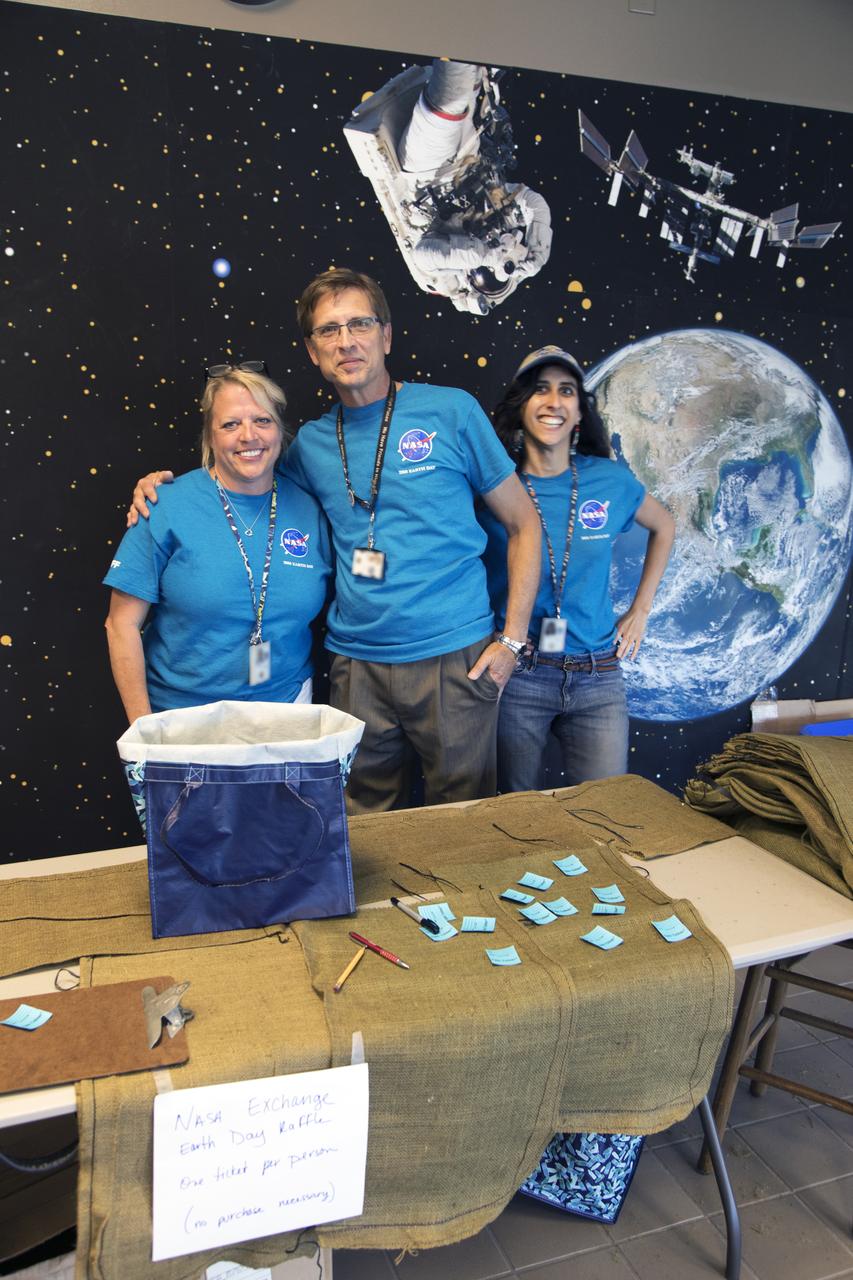
Organizers and volunteers for Kennedy Space Center’s Earth Day celebration gather for a photo at the NASA Exchange raffle booth. From left to right are Jeanne Ryba, Environmental Sustainability program specialist; Robert Smith, Earth Day volunteer; and Natasha Darre, Cultural Resources Specialist. The two-day event featured approximately 50 exhibitors offering information on a variety of topics, including electric vehicles, sustainable lighting, renewable energy, Florida-friendly landscaping tips, Florida’s biking trails and more.
Earth Day 2018 Activities
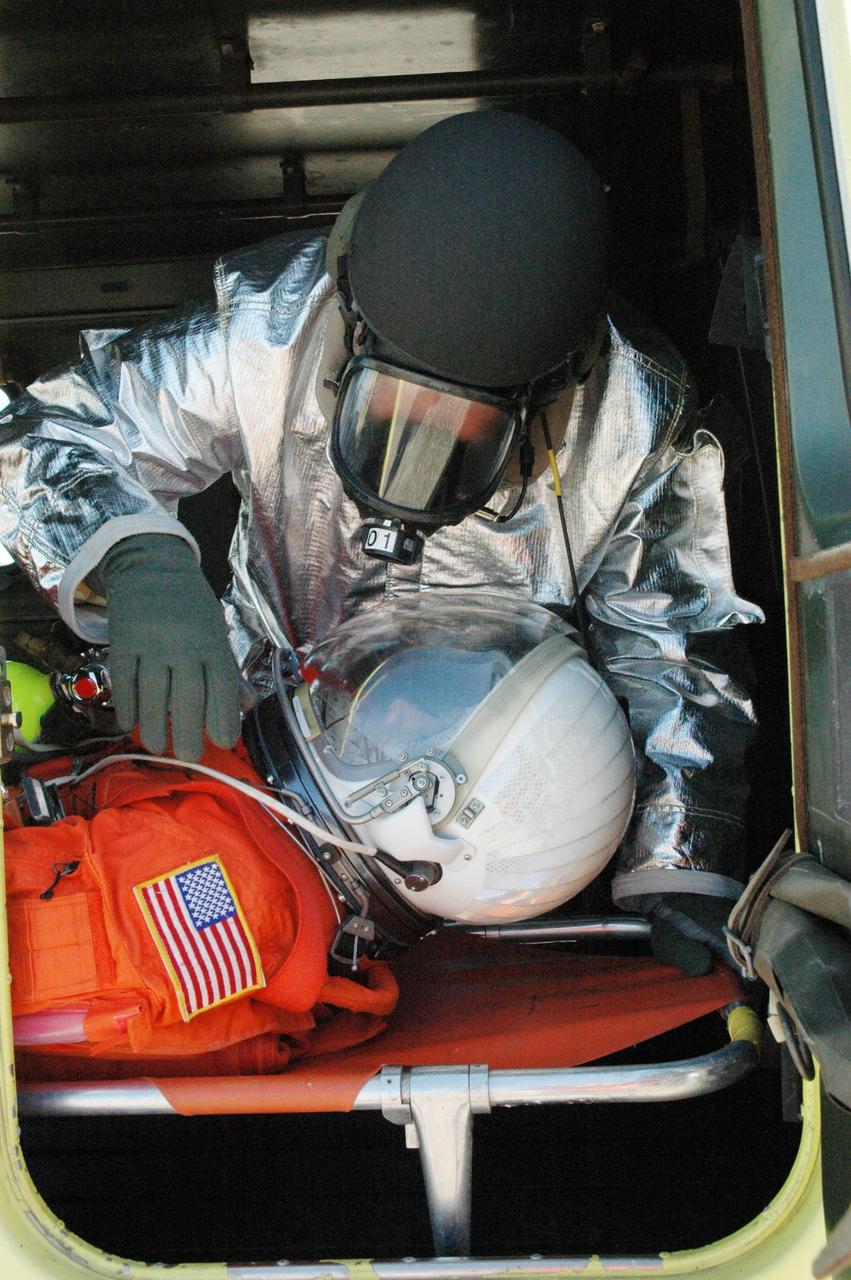
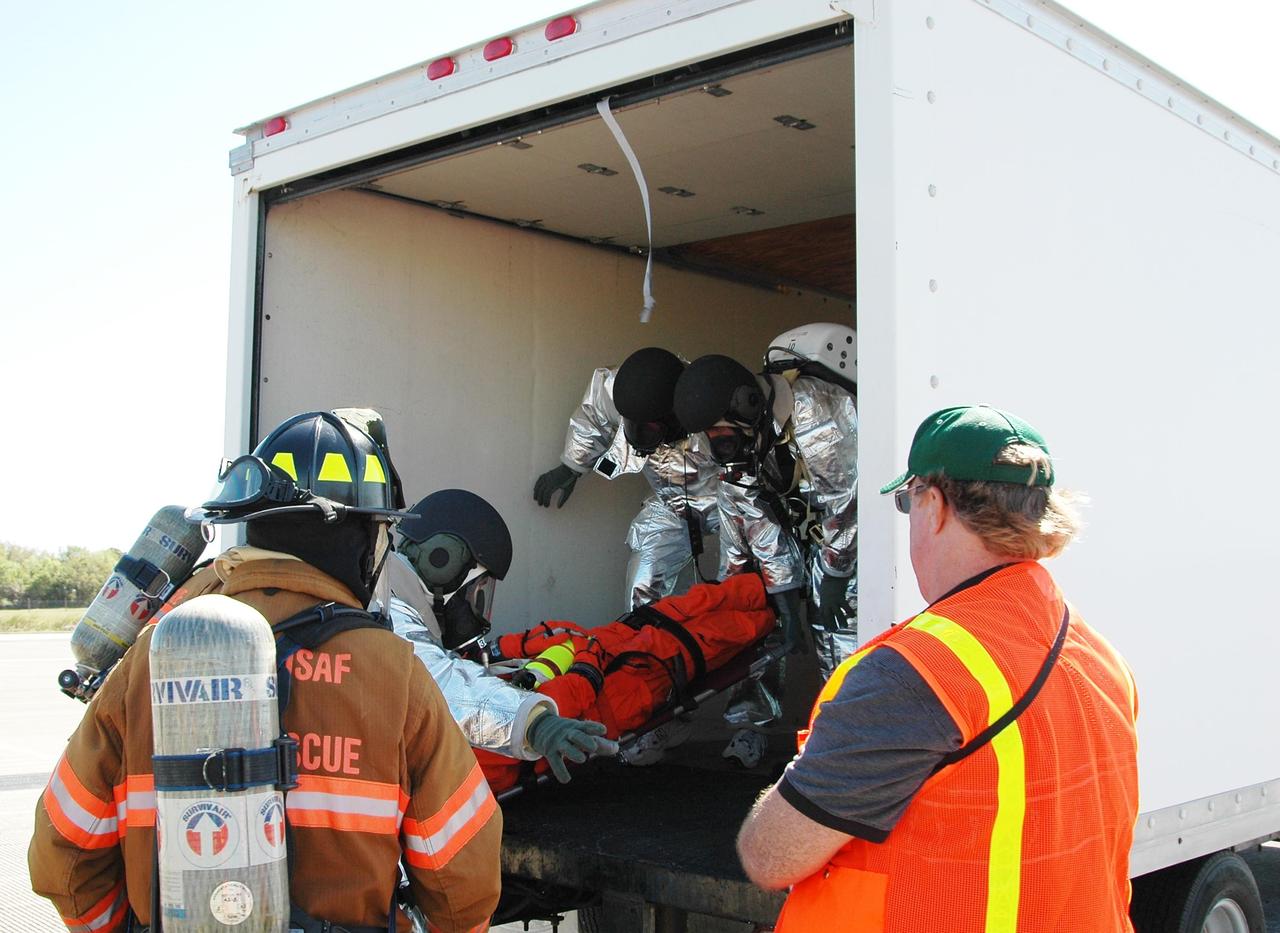
KENNEDY SPACE CENTER, FLA.  -  At NASA Kennedy Space Center's Shuttle Landing Facility, an emergency rescue worker tends to an "injured astronaut" inside a rescue vehicle.  Volunteers and emergency rescue workers are participating in a simulated emergency landing of a shuttle crew.   Known as a Mode VI exercise, the operation uses volunteer workers from the Center to pose as astronauts. The purpose of the simulation is to exercise emergency preparedness personnel, equipment and facilities in rescuing astronauts from a downed orbiter and providing immediate medical attention. Photo credit: NASA/Troy Cryder
KSC-06pd0517
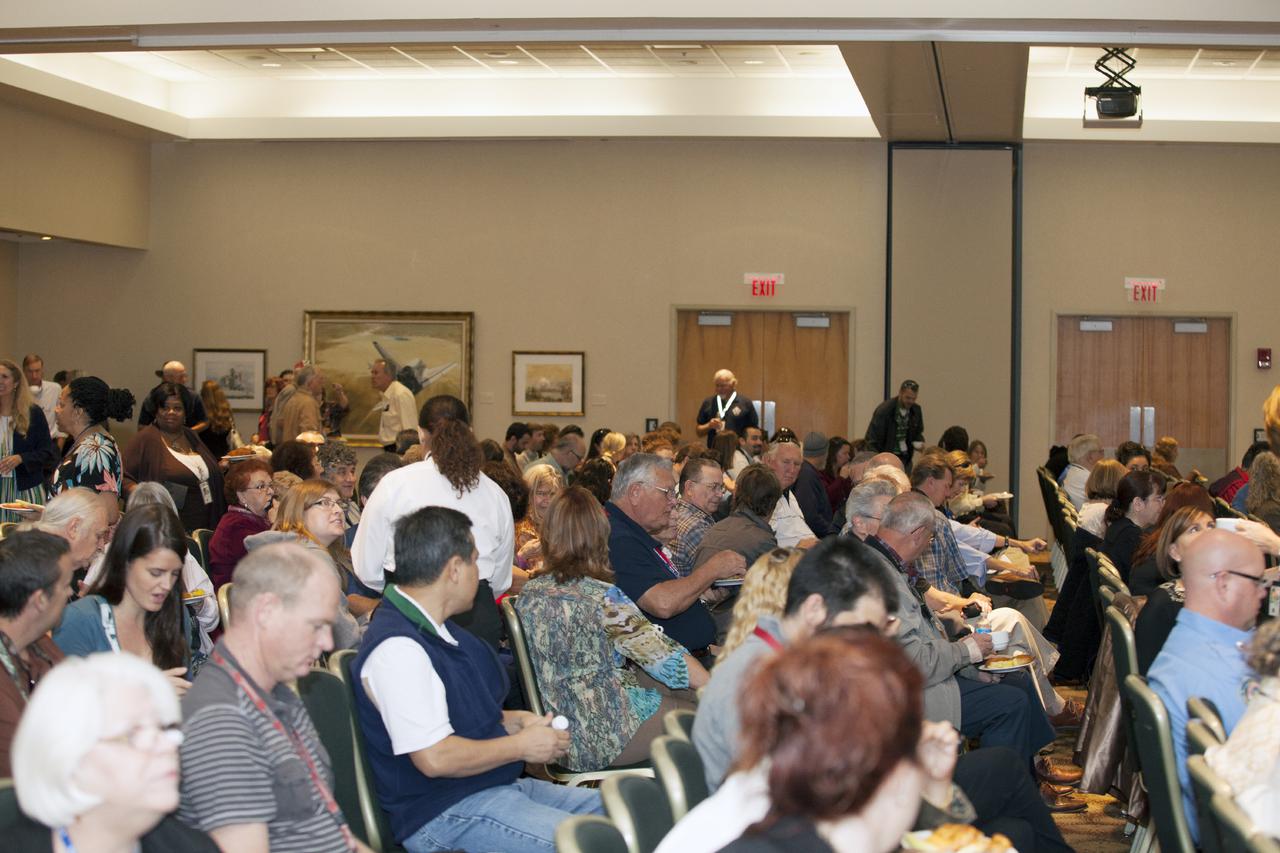
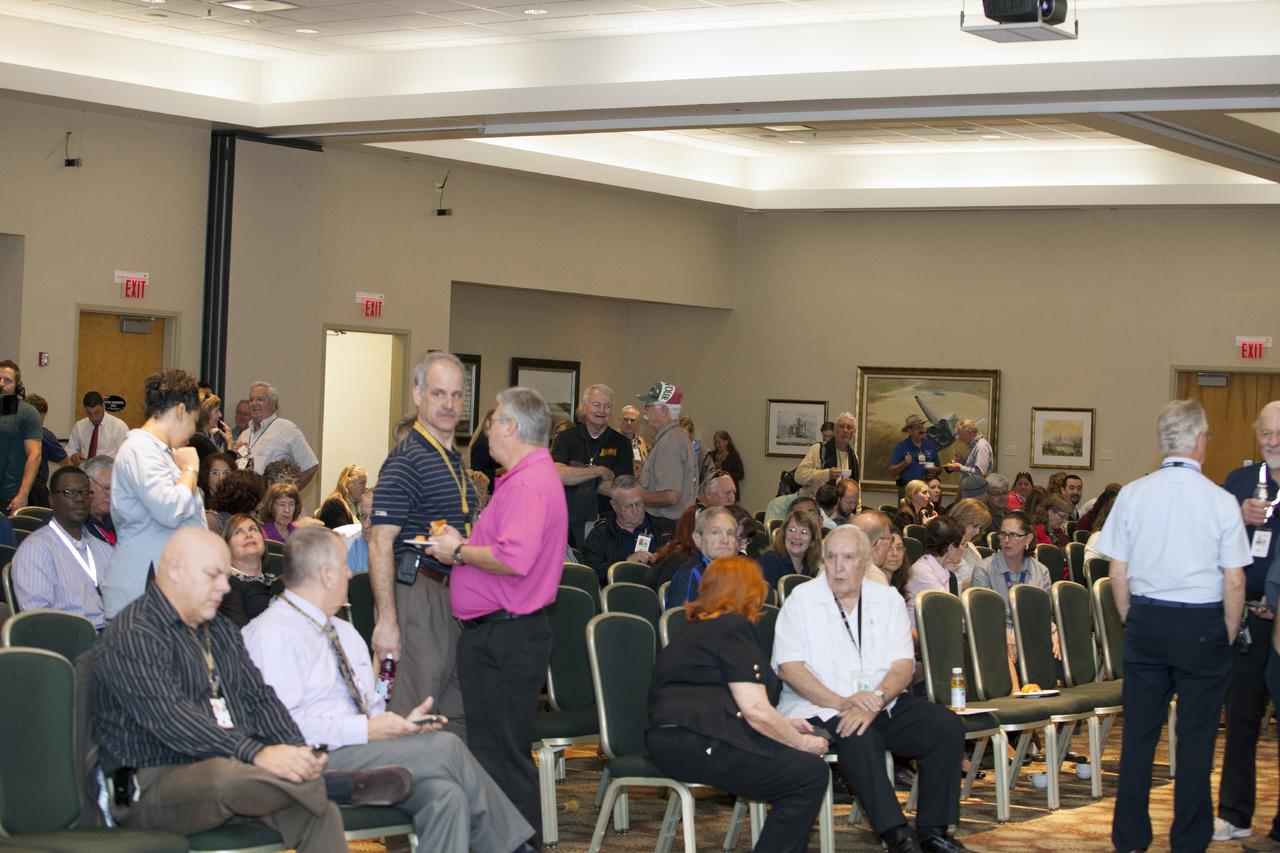
CAPE CANAVERAL, Fla. – NASA Kennedy Space Center volunteers fill the Debus Conference Facility at the Kennedy Space Center Visitor Complex in Florida for a KSC Volunteer Appreciation Event.  The group was given a briefing by Kennedy Associate Director Kelvin Manning on future prospects for the space center, entitled 'Pushing the Boundaries.' To learn about NASA's Speakers Bureau, visit http:__speakers.grc.nasa.gov_speaker. Photo credit: NASA_Daniel Casper
KSC-2014-1377
CAPE CANAVERAL, Fla. – NASA Kennedy Space Center Associate Director Kelvin Manning welcomes Kennedy's volunteers to a KSC Volunteer Appreciation Event held in the Debus Conference Facility at the Kennedy Space Center Visitor Complex in Florida.  Manning briefed the group on future prospects for the space center with a presentation entitled 'Pushing the Boundaries.' To learn about NASA's Speakers Bureau, visit http:__speakers.grc.nasa.gov_speaker. Photo credit: NASA_Daniel Casper
KSC-2014-1378
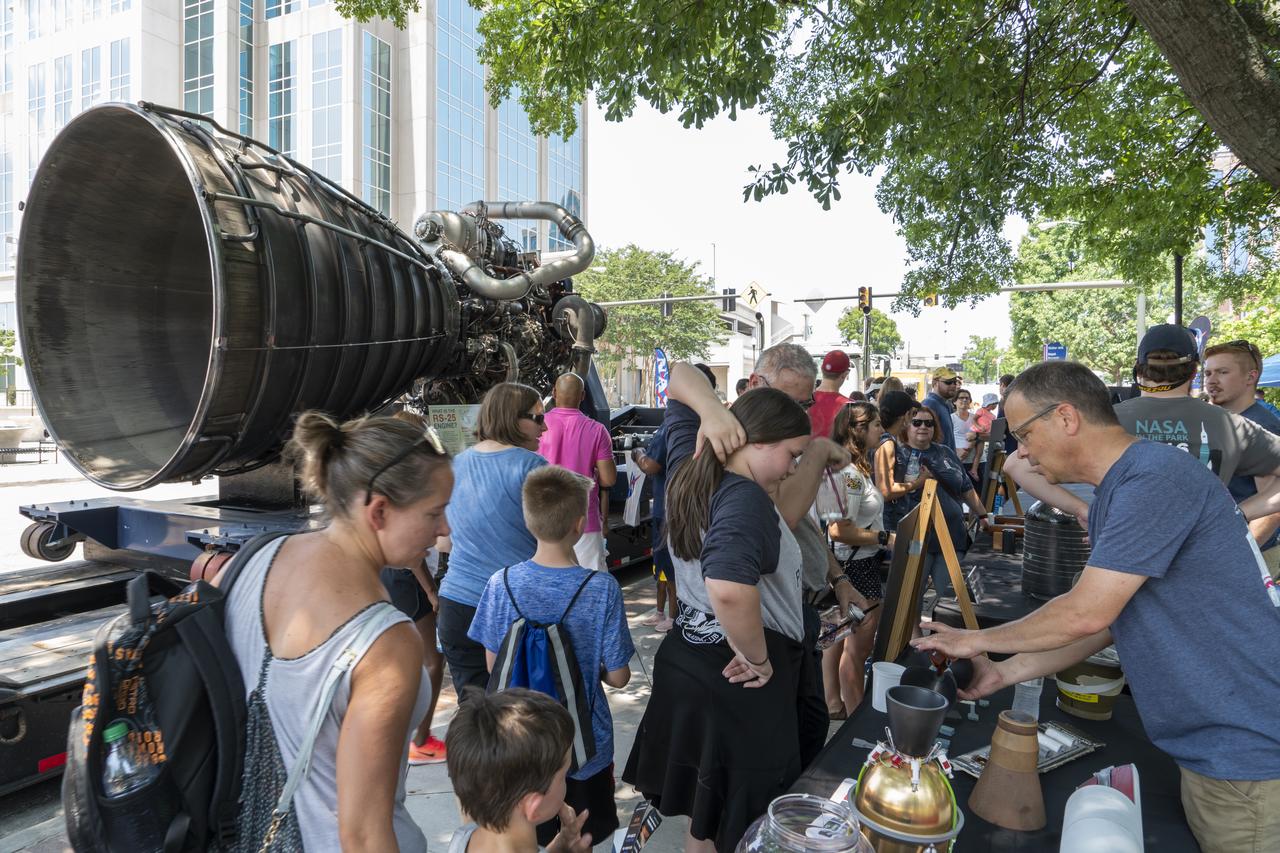
NASA's Marshall Space Flight Center showcased it's various projects for the public in Huntsville, Alabama's Big Spring Park. Exhibits were displayed by all of the various directorates of the Center with employee volunteers explaining all aspects of their projects. Adding to the festivities was the attendance of retired NASA astronaut Robert "Hoot" Gibson. With a RS-25 engine in the background, NASA employees and volunteers demonstrate NASA technology at NASA in the Park.
2018 NASA in the Park Celebration
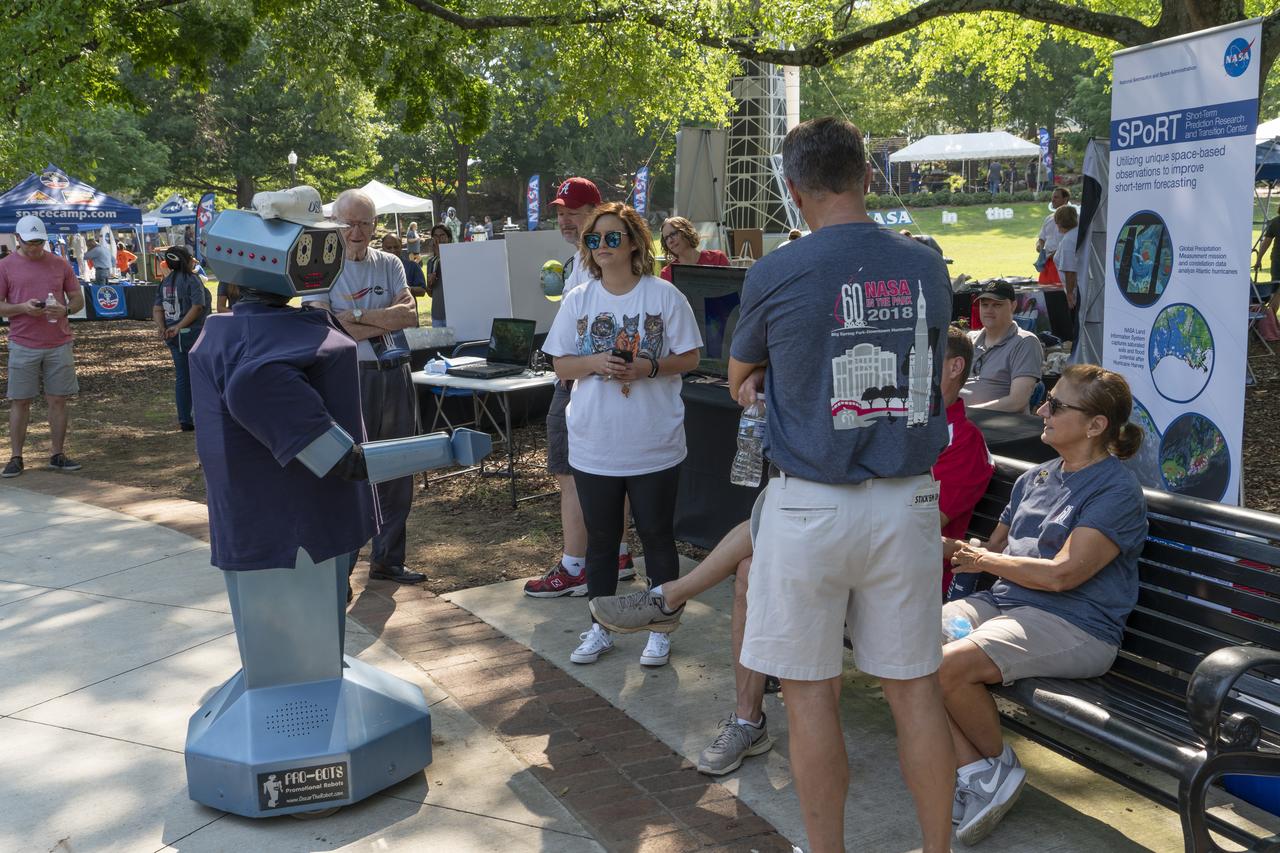
 NASA's Marshall Space Flight Center showcased it's various projects for the public in Huntsville, Alabama's Big Spring Park. Exhibits were displayed by all of the various directorates of the Center with employee volunteers explaining all aspects of their projects. Adding to the festivities was the attendance of retired NASA astronaut Robert "Hoot" Gibson. Oscar the Robot greets volunteers at NASA Day in the Park.
2018 NASA in the Park Celebration
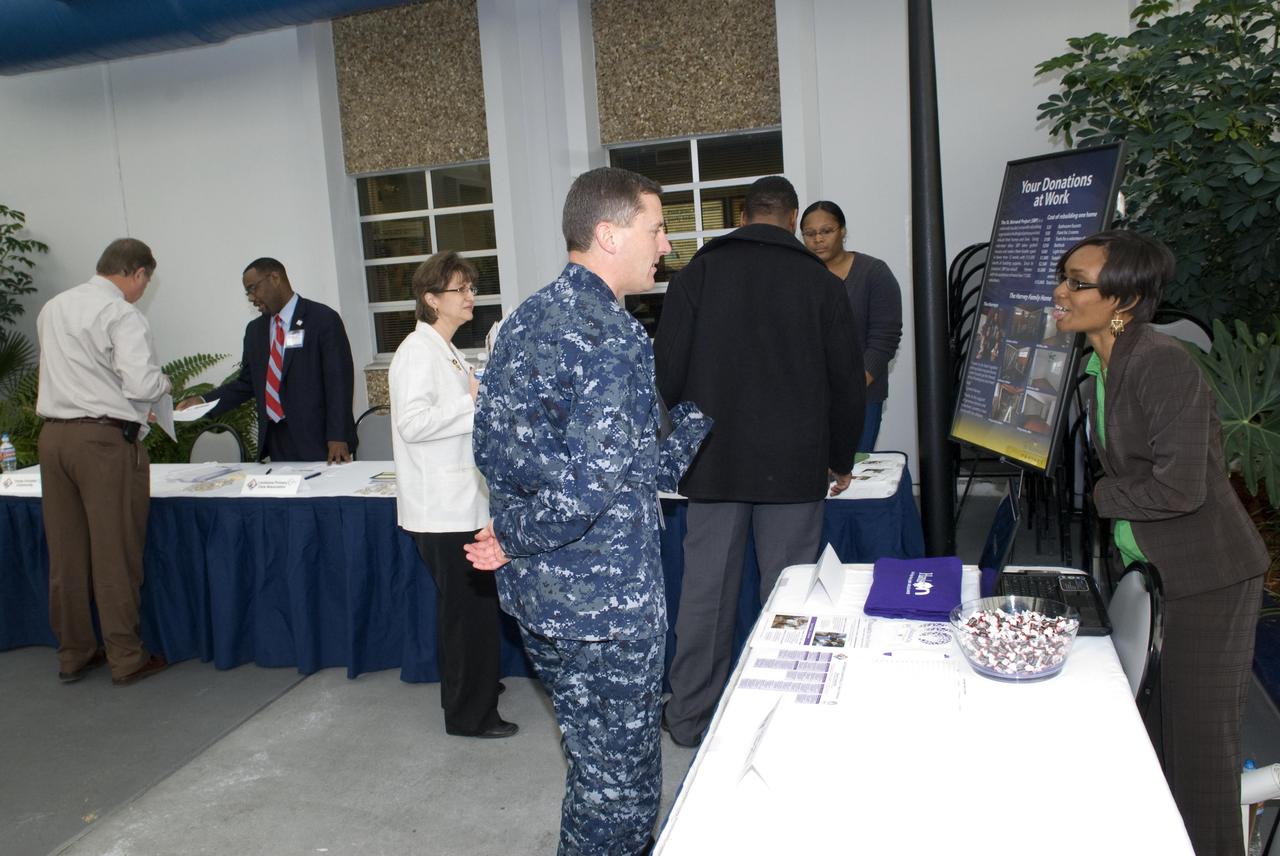
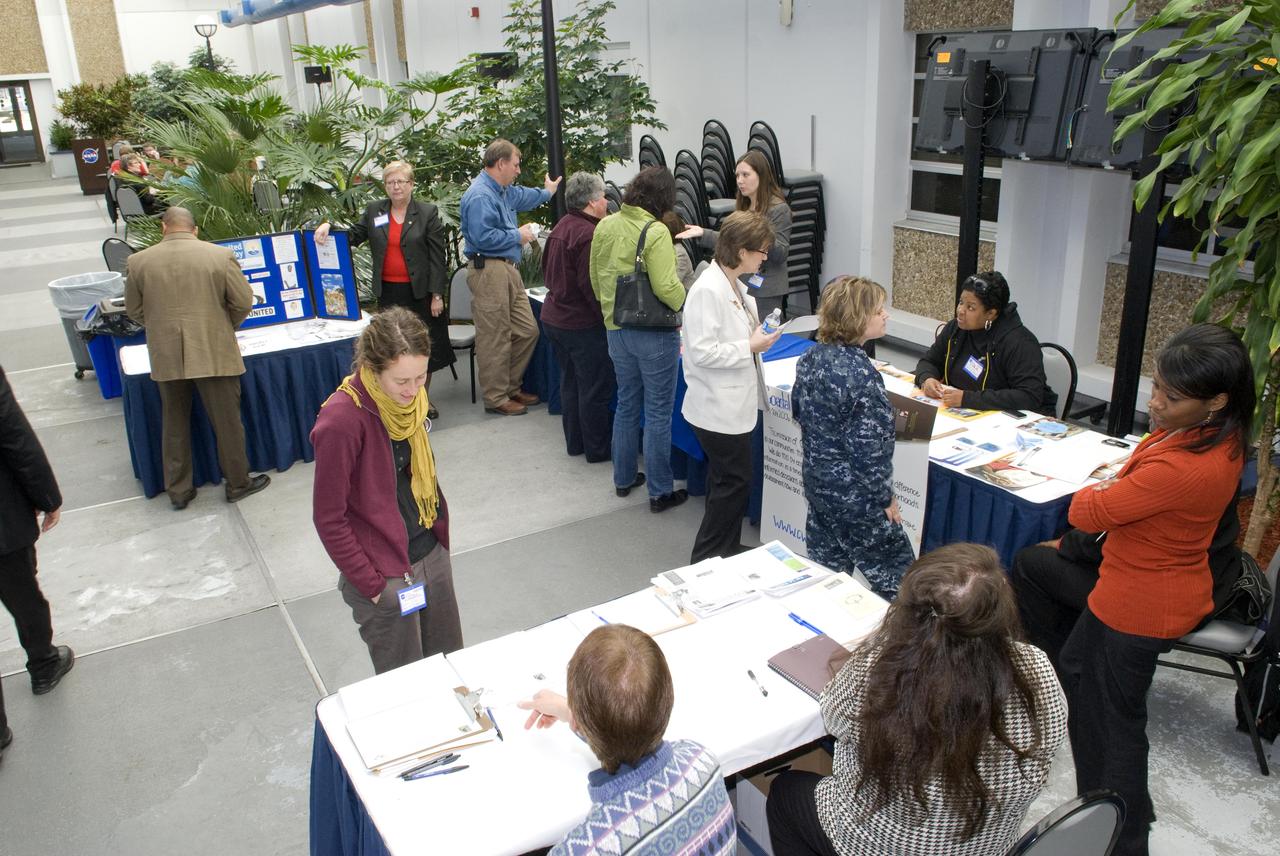
Employees at NASA's John C. Stennis Space Center visit exhibits of volunteer organizations during their observance of Martin Luther King Jr. Day with a Day of Service on Jan. 12. During the day, Mississippi and Louisiana organizations visited the center to encourage employees to register and serve as volunteers for various community activities. The day's focus was emphasized again and again - great things can happen when individuals work together toward a common goal.
2010 Stennis Day of Service
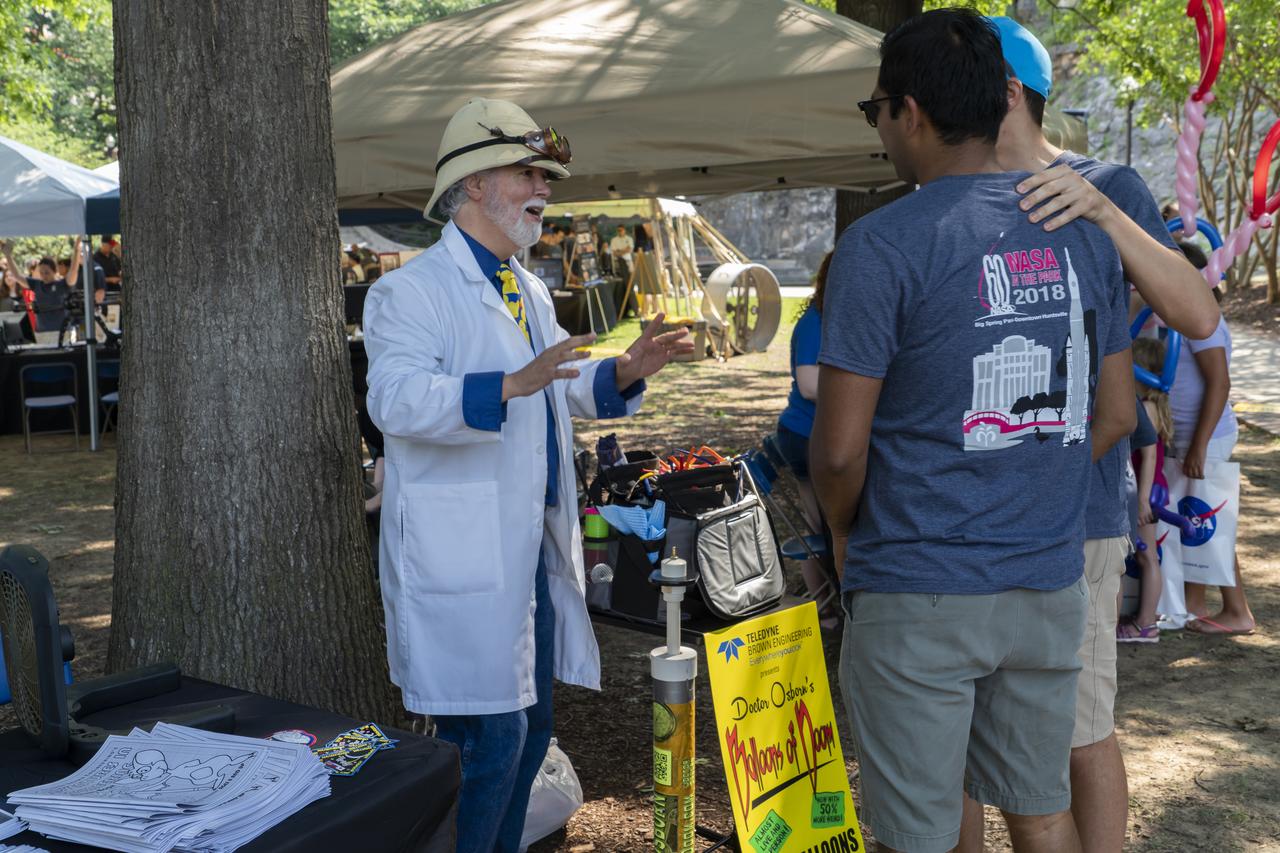
NASA's Marshall Space Flight Center showcased it's various projects for the public in Huntsville, Alabama's Big Spring Park. Exhibits were displayed by all of the various directorates of the Center with employee volunteers explaining all aspects of their projects. Adding to the festivities was the attendance of retired NASA astronaut Robert "Hoot" Gibson. Dr. Osborn, magician and balloon wizard, greets volunteers for NASA in the Park.
2018 NASA in the Park Celebration
CAPE CANAVERAL, Fla. – NASA Kennedy Space Center volunteers turn out in full force for a KSC Volunteer Appreciation Event held in the Debus Conference Facility at the Kennedy Space Center Visitor Complex in Florida.  The group was given a briefing by Kennedy Associate Director Kelvin Manning on future prospects for the space center, entitled 'Pushing the Boundaries.' To learn about NASA's Speakers Bureau, visit http:__speakers.grc.nasa.gov_speaker. Photo credit: NASA_Daniel Casper
KSC-2014-1376
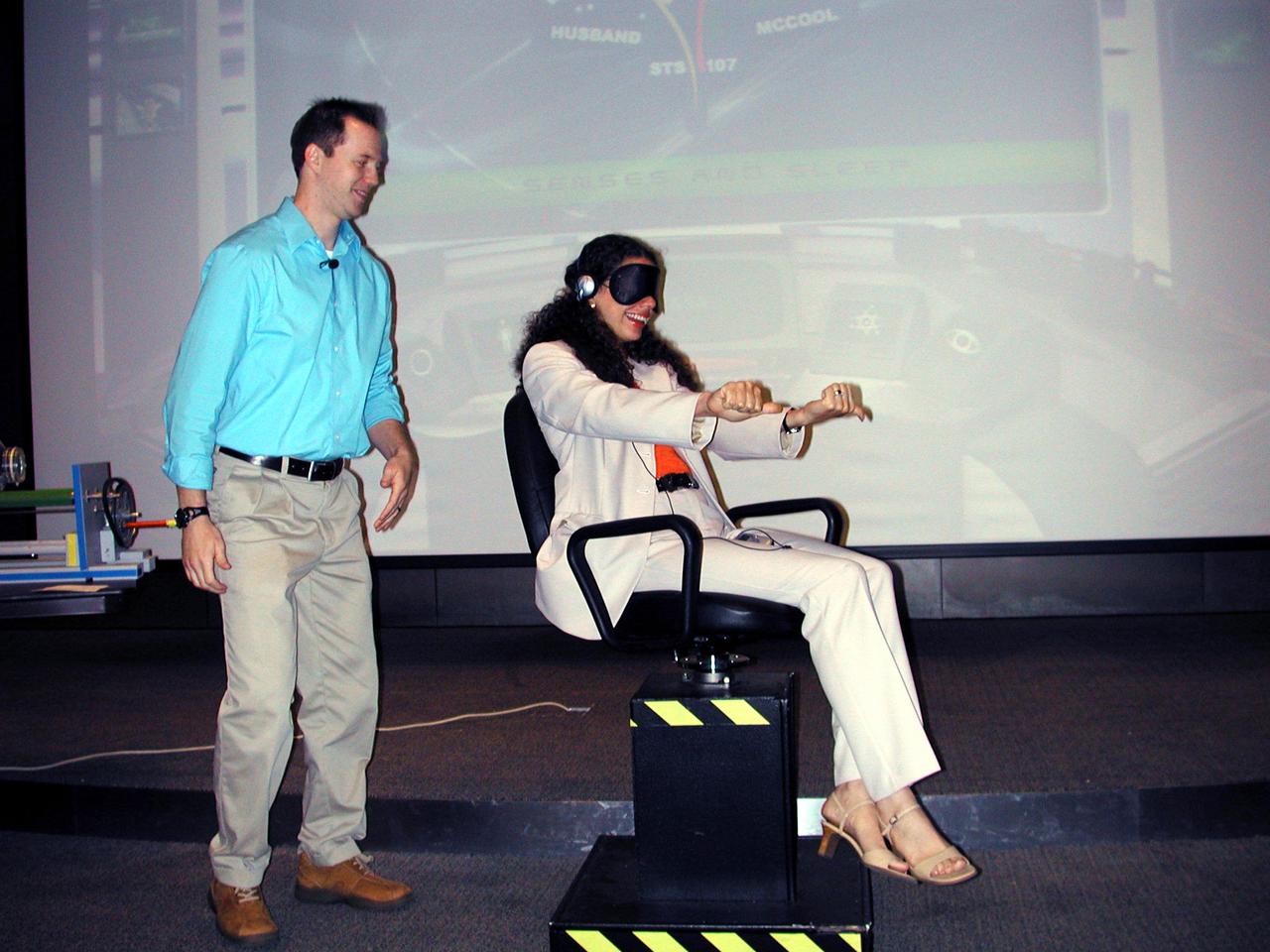
Brad McLain for the Space Biology Museum Network spins a volunteer in a rotating chair to illustrate how dependent the human vestibular system is on visual cues. The volunteer's thumbs indicate which way she thinks she is turning. Similar tests are conducted on astronauts to study how they adapt to space and readapt to Earth. The activity was part of the Space Research and You education event held by NASA's Office of Biological and Physical Research on June 25, 2002, in Arlington, VA, to highlight the research that will be conducted on STS-107.
Microgravity
KENNEDY SPACE CENTER, FLA.  -  At NASA Kennedy Space Center's Shuttle Landing Facility, volunteer Charlie Plain poses as an injured astronaut during a simulated emergency landing of a shuttle crew.  Plain is a Public Affairs Web writer.   Known as a Mode VI exercise, the operation uses volunteer workers from the Center to pose as astronauts. The purpose of the simulation is to exercise emergency preparedness personnel, equipment and facilities in rescuing astronauts from a downed orbiter and providing immediate medical attention. Photo credit: NASA/Troy Cryder
KSC-06pd0519
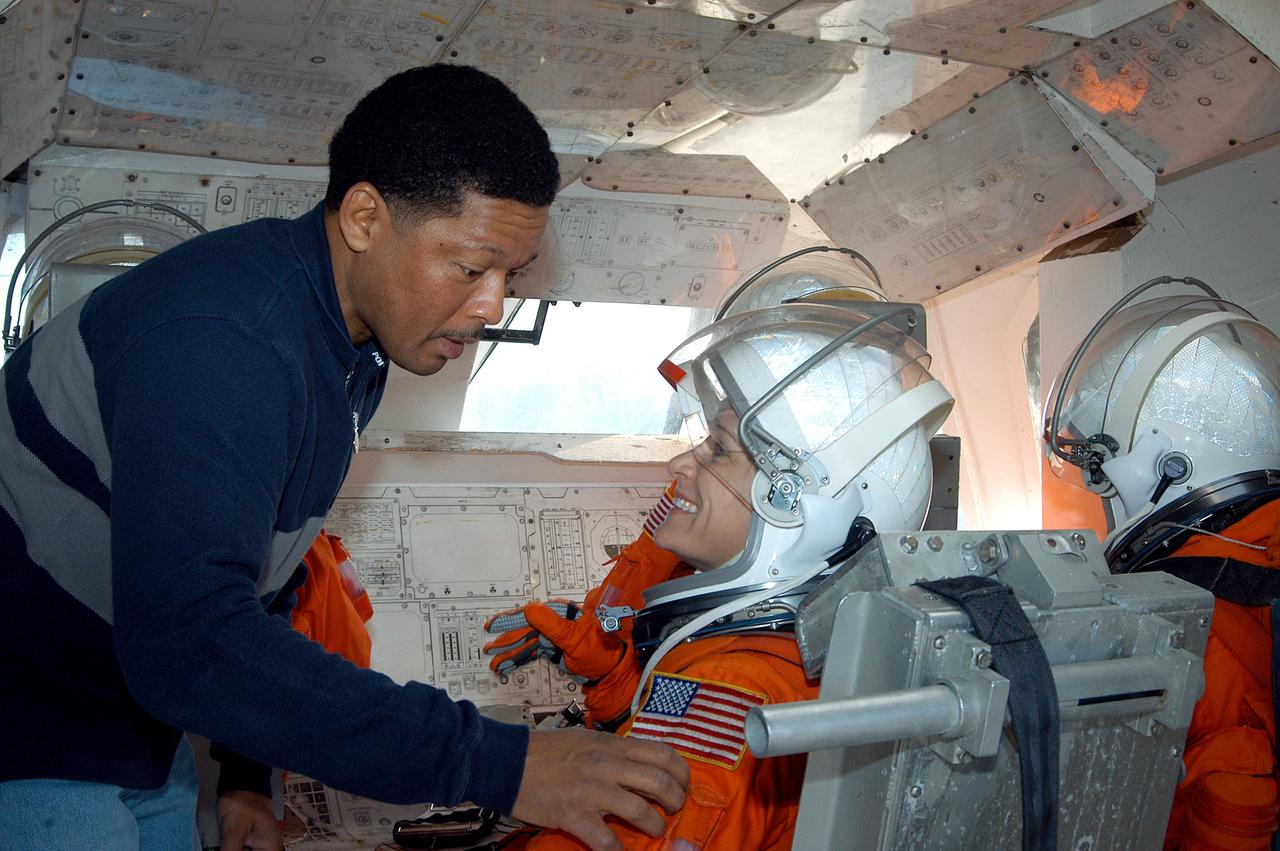
KENNEDY SPACE CENTER, FLA. - Volunteers from the KSC Fire-Rescue team dressed in launch and entry suits settle into seats in an orbiter crew compartment mock-up under the guidance of George Brittingham, USA suit technician on the Closeout Crew. Brittingham is helping Catherine Di Biase, a nurse with Bionetics Life Sciences. They are all taking part in a “Mode VII” emergency landing simulation at Kennedy Space Center.  The purpose is to exercise emergency preparedness personnel, equipment and facilities in rescuing astronauts from a downed orbiter and providing immediate medical attention.  This simulation presents an orbiter that has crashed short of the Shuttle Landing Facility in a wooded area 2-1/2 miles south of Runway 33.  Emergency crews will respond to the volunteer “astronauts” simulating various injuries.  Rescuers must remove the crew, provide triage and transport to hospitals those who need further treatment.  Local hospitals are participating in the exercise.
KENNEDY SPACE CENTER, FLA. - Volunteers from the KSC Fire-Rescue team dressed in launch and entry suits settle into seats in an orbiter crew compartment mock-up under the guidance of George Brittingham, USA suit technician on the Closeout Crew. Brittingham is helping Catherine Di Biase, a nurse with Bionetics Life Sciences. They are all taking part in a “Mode VII” emergency landing simulation at Kennedy Space Center. The purpose is to exercise emergency preparedness personnel, equipment and facilities in rescuing astronauts from a downed orbiter and providing immediate medical attention. This simulation presents an orbiter that has crashed short of the Shuttle Landing Facility in a wooded area 2-1/2 miles south of Runway 33. Emergency crews will respond to the volunteer “astronauts” simulating various injuries. Rescuers must remove the crew, provide triage and transport to hospitals those who need further treatment. Local hospitals are participating in the exercise.
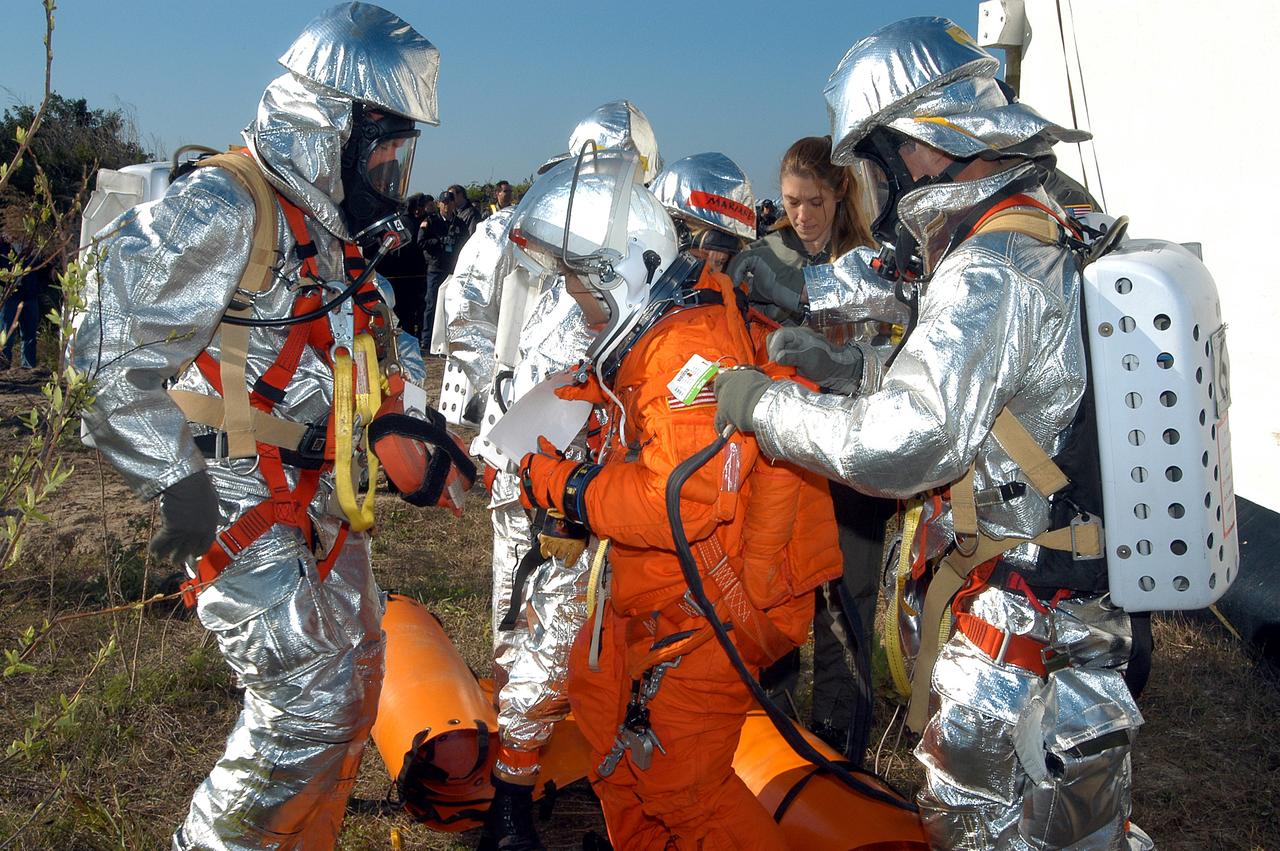
KENNEDY SPACE CENTER, FLA. - Emergency crew members help a volunteer “astronaut” onto the ground after being lowered from the top of the orbiter crew compartment mock-up that is the scene of a “Mode VII” emergency landing simulation at Kennedy Space Center.  The purpose of the Mode VII is to exercise emergency preparedness personnel, equipment and facilities in rescuing astronauts from a downed orbiter and providing immediate medical attention.  This simulation presents an orbiter that has crashed short of the Shuttle Landing Facility in a wooded area 2-1/2 miles south of Runway 33.  Emergency crews are responding to the volunteer astronauts who are simulating various injuries.  Rescuers must remove the crew, provide triage and transport to hospitals those who need further treatment.  Local hospitals are participating in the exercise.
KENNEDY SPACE CENTER, FLA. - Emergency crew members help a volunteer “astronaut” onto the ground after being lowered from the top of the orbiter crew compartment mock-up that is the scene of a “Mode VII” emergency landing simulation at Kennedy Space Center. The purpose of the Mode VII is to exercise emergency preparedness personnel, equipment and facilities in rescuing astronauts from a downed orbiter and providing immediate medical attention. This simulation presents an orbiter that has crashed short of the Shuttle Landing Facility in a wooded area 2-1/2 miles south of Runway 33. Emergency crews are responding to the volunteer astronauts who are simulating various injuries. Rescuers must remove the crew, provide triage and transport to hospitals those who need further treatment. Local hospitals are participating in the exercise.
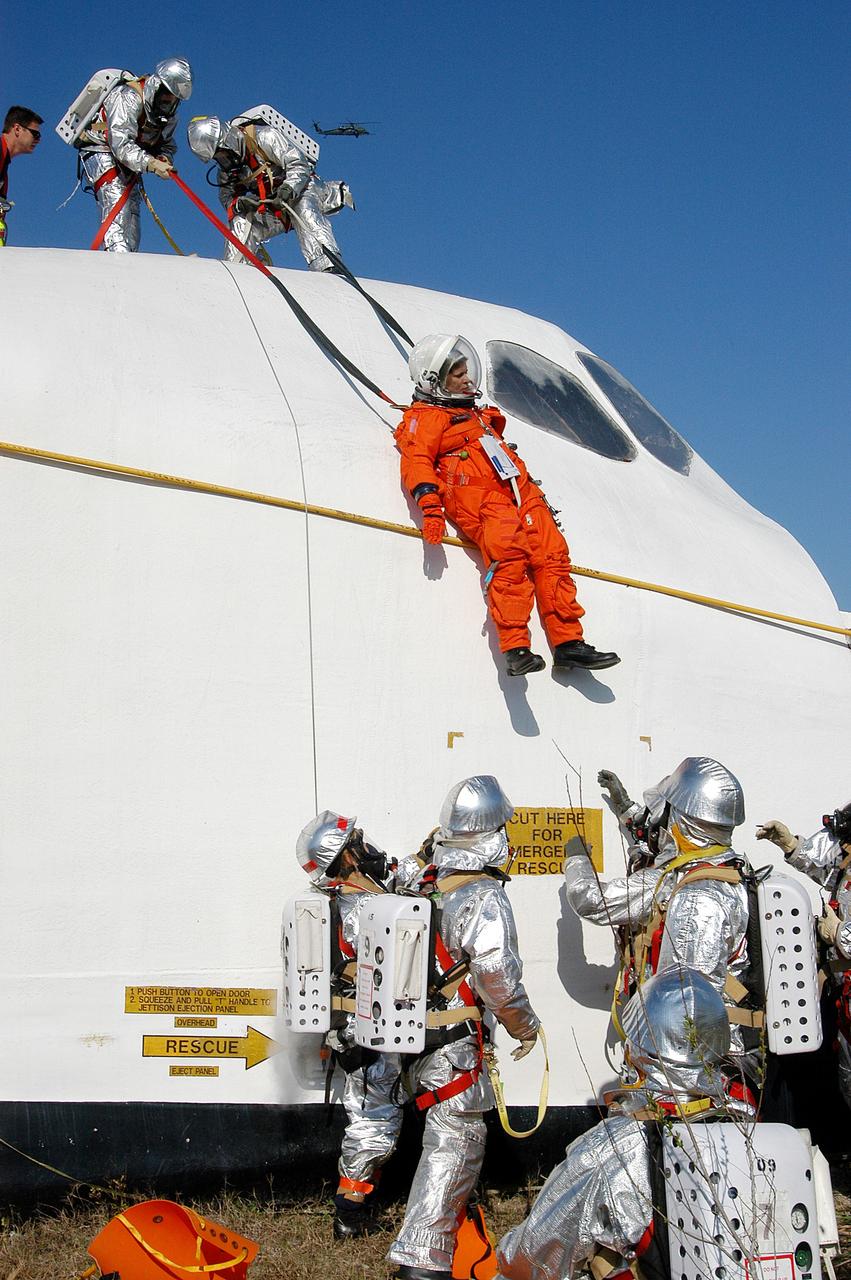
KENNEDY SPACE CENTER, FLA. - Emergency crew members lower a volunteer “astronaut” from the top of the orbiter crew compartment mock-up that is the scene of a “Mode VII” emergency landing simulation at Kennedy Space Center.  The purpose of the Mode VII is to exercise emergency preparedness personnel, equipment and facilities in rescuing astronauts from a downed orbiter and providing immediate medical attention.  This simulation presents an orbiter that has crashed short of the Shuttle Landing Facility in a wooded area 2-1/2 miles south of Runway 33.  Emergency crews are responding to the volunteer “astronauts” who are simulating various injuries.  Rescuers must remove the crew, provide triage and transport to hospitals those who need further treatment.  Local hospitals are participating in the exercise.
KENNEDY SPACE CENTER, FLA. - Emergency crew members lower a volunteer “astronaut” from the top of the orbiter crew compartment mock-up that is the scene of a “Mode VII” emergency landing simulation at Kennedy Space Center. The purpose of the Mode VII is to exercise emergency preparedness personnel, equipment and facilities in rescuing astronauts from a downed orbiter and providing immediate medical attention. This simulation presents an orbiter that has crashed short of the Shuttle Landing Facility in a wooded area 2-1/2 miles south of Runway 33. Emergency crews are responding to the volunteer “astronauts” who are simulating various injuries. Rescuers must remove the crew, provide triage and transport to hospitals those who need further treatment. Local hospitals are participating in the exercise.
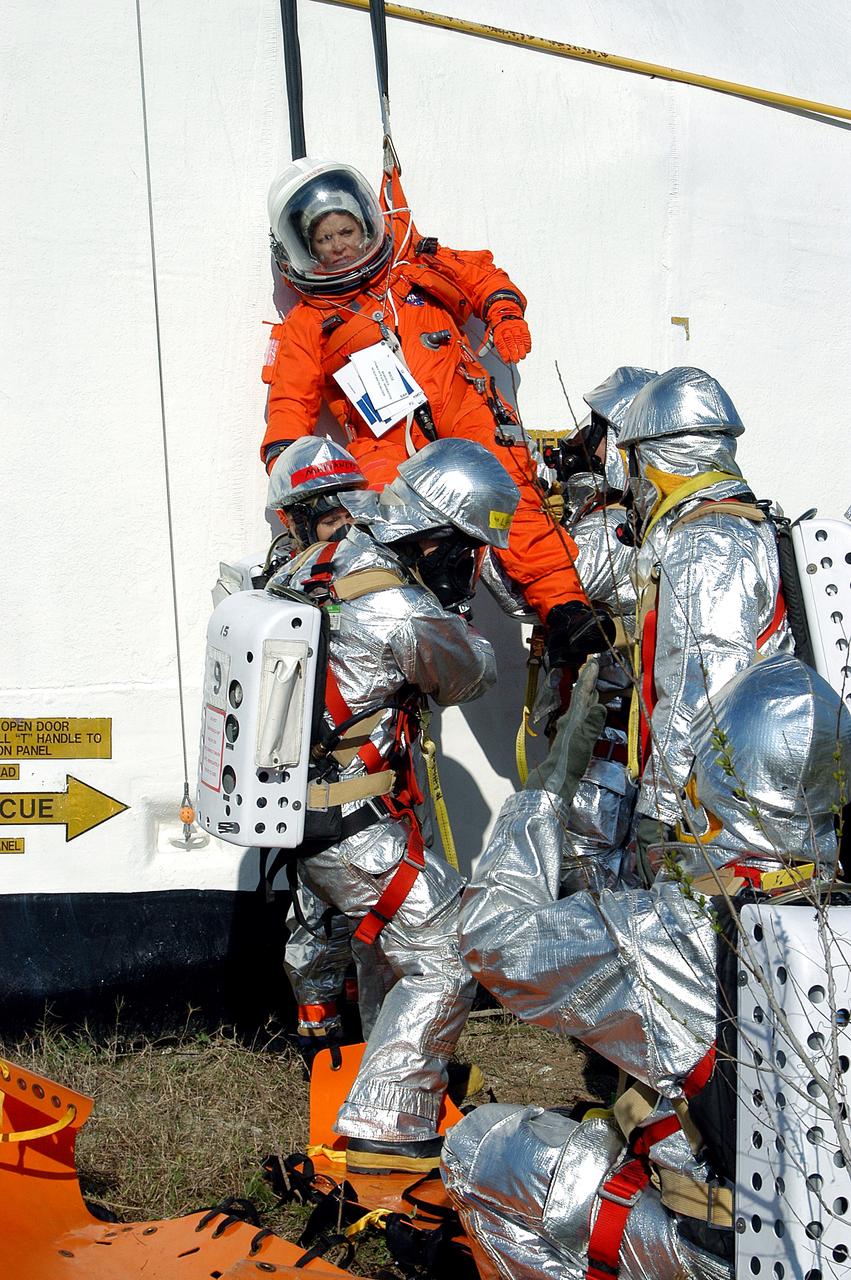
KENNEDY SPACE CENTER, FLA. - Emergency crew members on the ground take hold of a volunteer “astronaut” lowered from the top of the orbiter crew compartment mock-up that is the scene of a “Mode VII” emergency landing simulation at Kennedy Space Center.  The purpose of the Mode VII is to exercise emergency preparedness personnel, equipment and facilities in rescuing astronauts from a downed orbiter and providing immediate medical attention.  This simulation presents an orbiter that has crashed short of the Shuttle Landing Facility in a wooded area 2-1/2 miles south of Runway 33.  Emergency crews are responding to the volunteer astronauts who are simulating various injuries.  Rescuers must remove the crew, provide triage and transport to hospitals those who need further treatment.  Local hospitals are participating in the exercise.
KENNEDY SPACE CENTER, FLA. - Emergency crew members on the ground take hold of a volunteer “astronaut” lowered from the top of the orbiter crew compartment mock-up that is the scene of a “Mode VII” emergency landing simulation at Kennedy Space Center. The purpose of the Mode VII is to exercise emergency preparedness personnel, equipment and facilities in rescuing astronauts from a downed orbiter and providing immediate medical attention. This simulation presents an orbiter that has crashed short of the Shuttle Landing Facility in a wooded area 2-1/2 miles south of Runway 33. Emergency crews are responding to the volunteer astronauts who are simulating various injuries. Rescuers must remove the crew, provide triage and transport to hospitals those who need further treatment. Local hospitals are participating in the exercise.
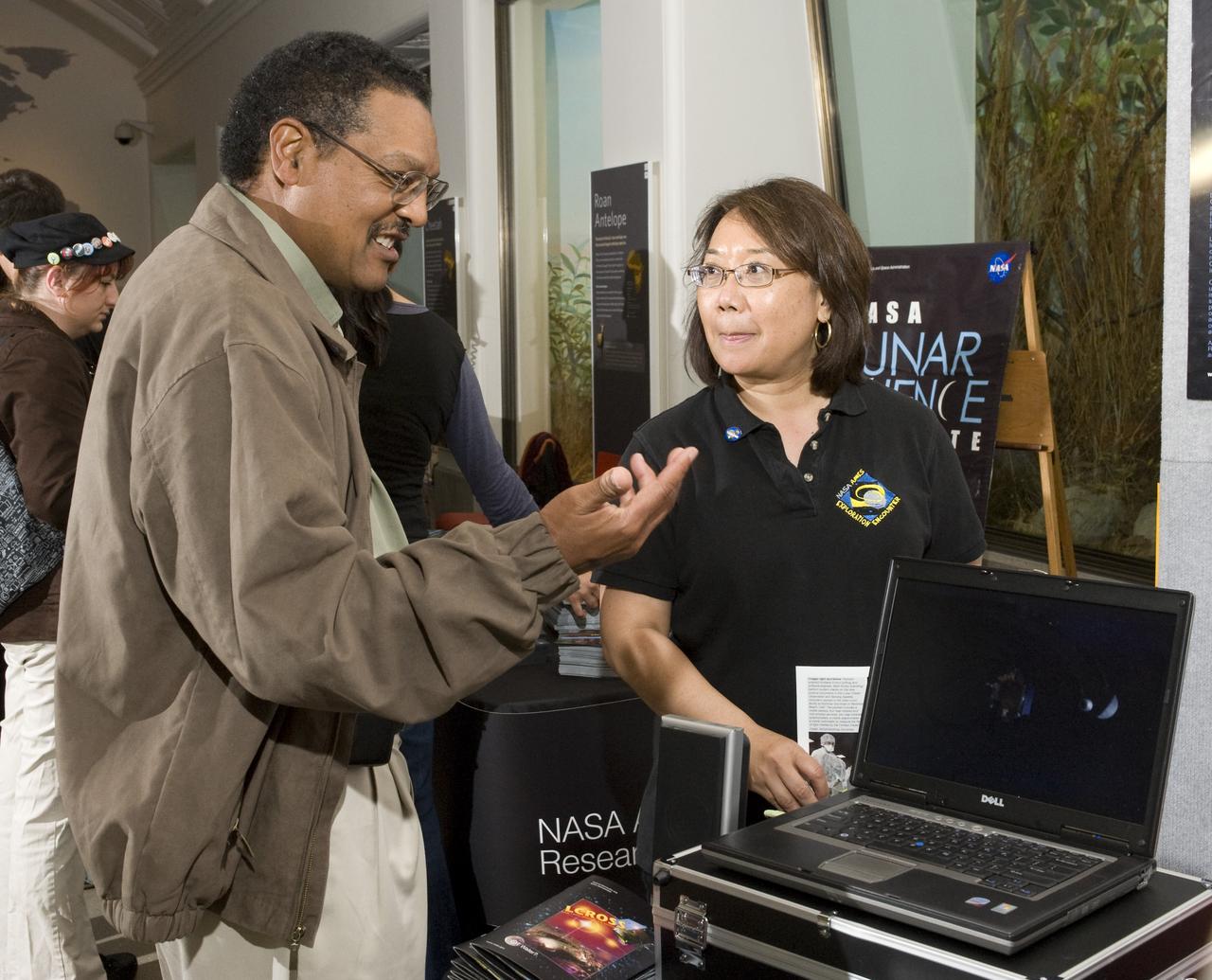
Yuri's Night 2009 held at the California Acaemy of Sciences in San Francisco, California Center Deputy Center Director Lew Braxton talks with a Ames volunteer at the LCROSS booth.
ARC-2009-ACD09-0054-015
Yuri's Night 2009 held at the California Acaemy of Sciences in San Francisco, California Center Deputy Center Director Lew Braxton talks with a Ames volunteer at the LCROSS booth.
ARC-2009-ACD09-0054-014
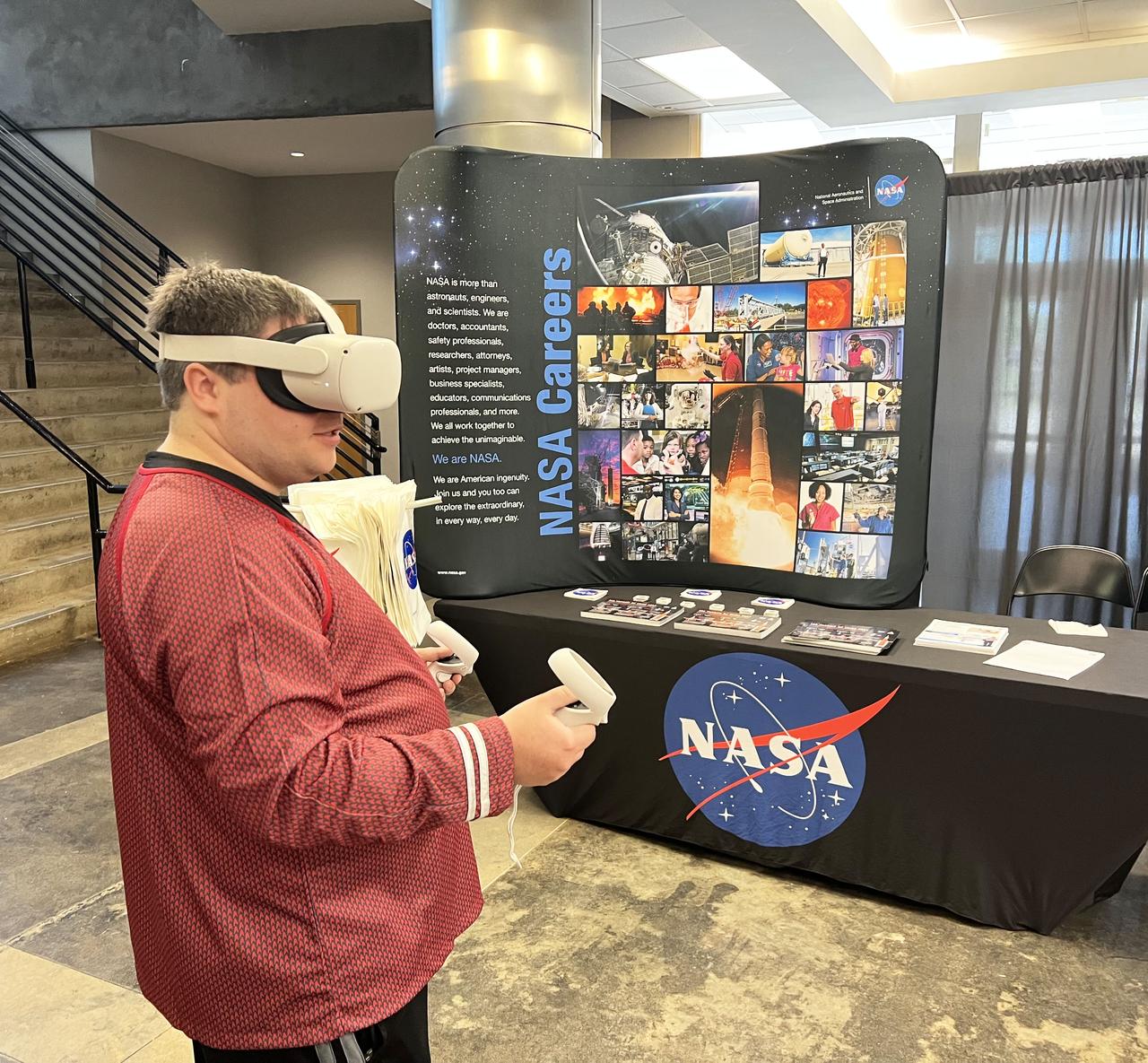
A Jackson, Mississippi, Star Trek fan club, USS Haise member, volunteers to be the first user of the virtual reality experience provided by NASA Stennis before the Mississippi Comic Convention begins.
SSC-20240622-s00761
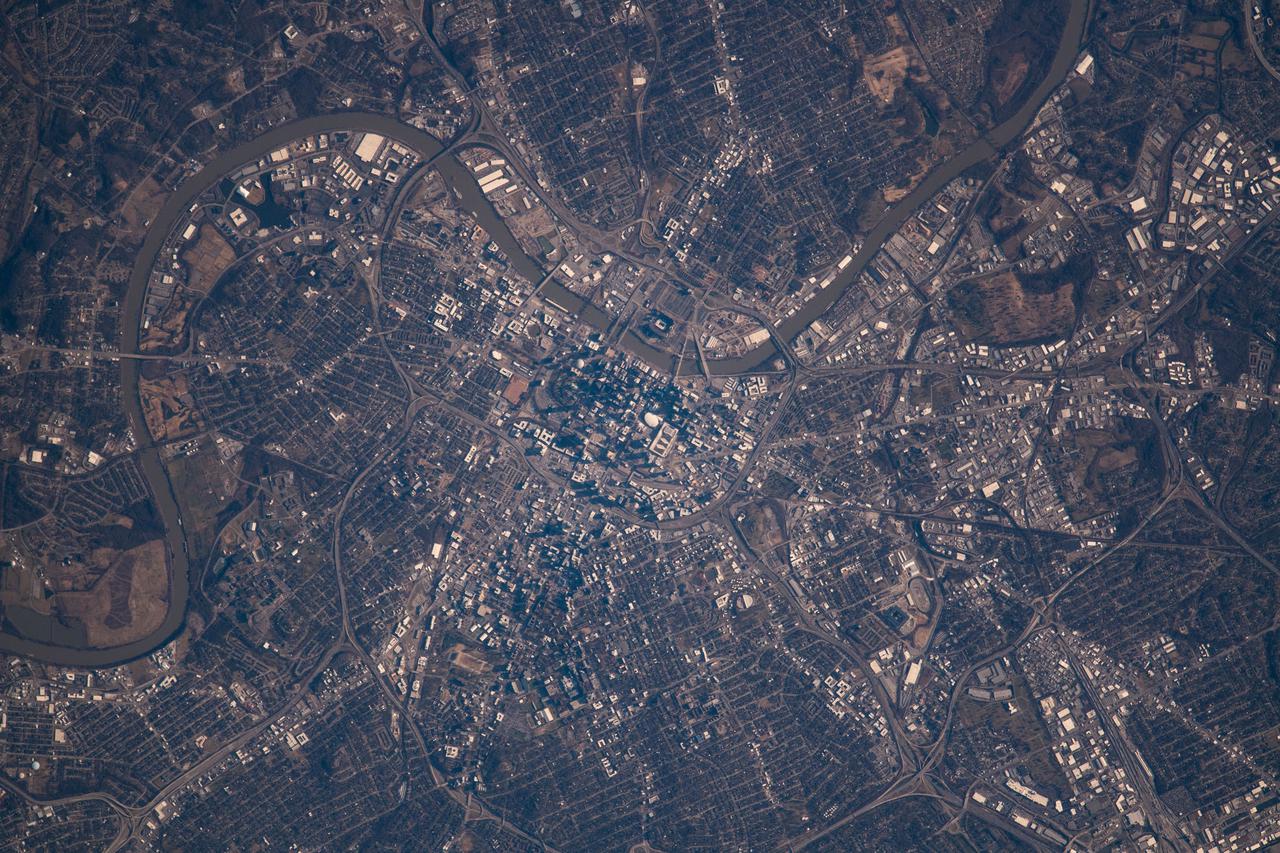
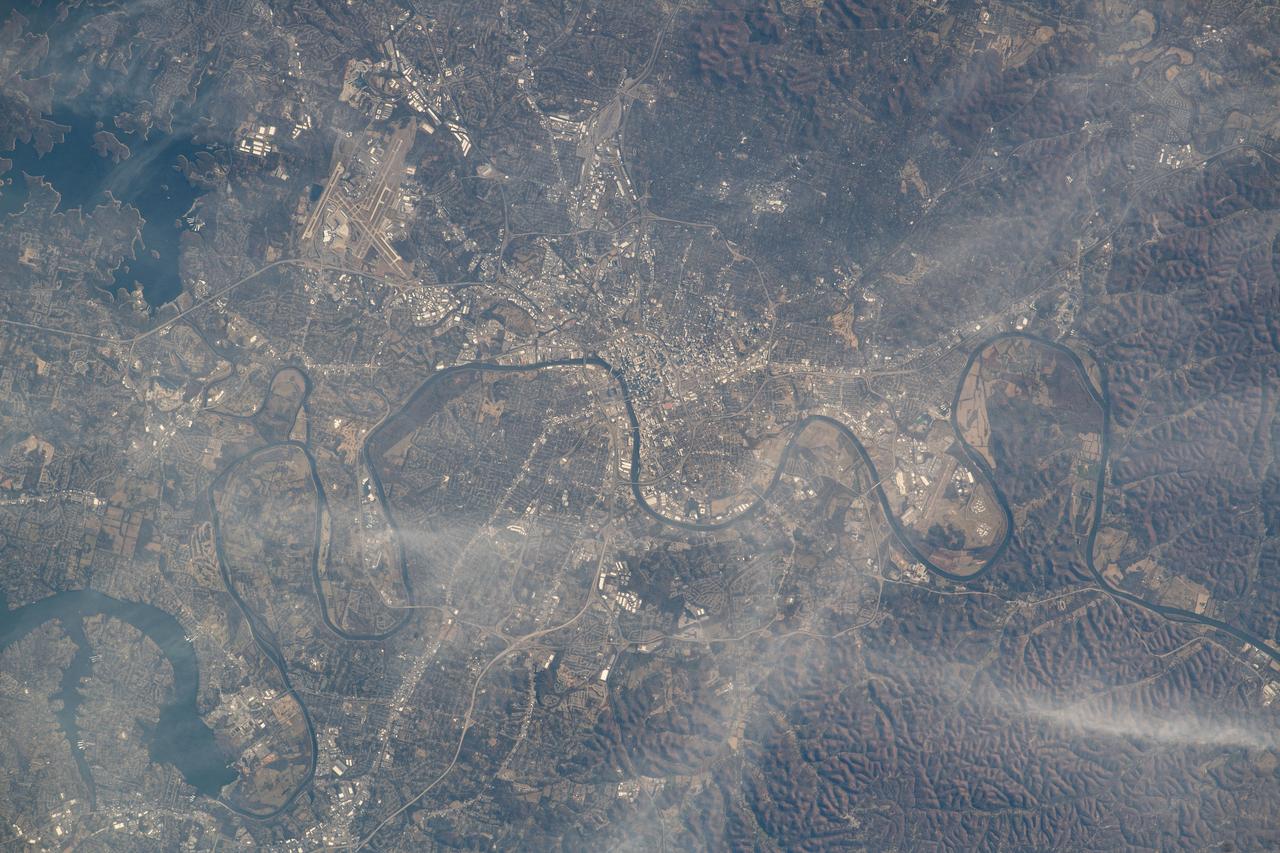
iss066e156616 (March 3, 2022) --- Nashville, Tennessee, split by the Cumberland River, is pictured in this overhead view from the International Space Station as it orbited 261 miles above the Volunteer State.
iss066e156616
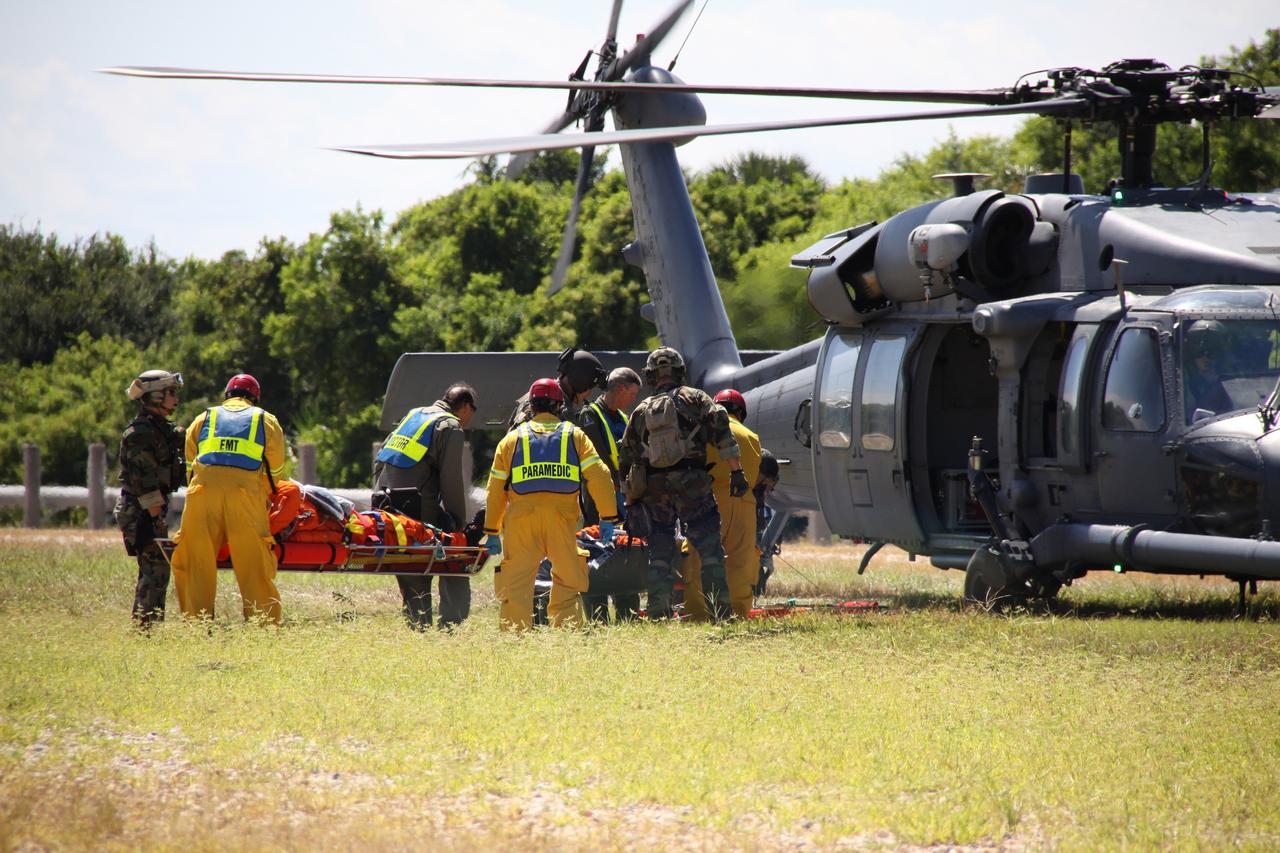
CAPE CANAVERAL, Fla. – At NASA's Kennedy Space Center in Florida, volunteers and teams take part in a Mode II-IV exercise that allows teams to practice an emergency response at Launch Pad 39A, including helicopter evacuation to local hospitals.  The exercise involves NASA fire rescue personnel, volunteers portraying astronauts with simulated injuries, helicopters and personnel from the Air Force’s 920th Rescue Wing and medical trauma teams at three central Florida hospitals. The Space Shuttle Program and U.S. Air Force are conducting the emergency simulation. Photo credit:  NASA/Troy Cryder
KSC-2009-5274
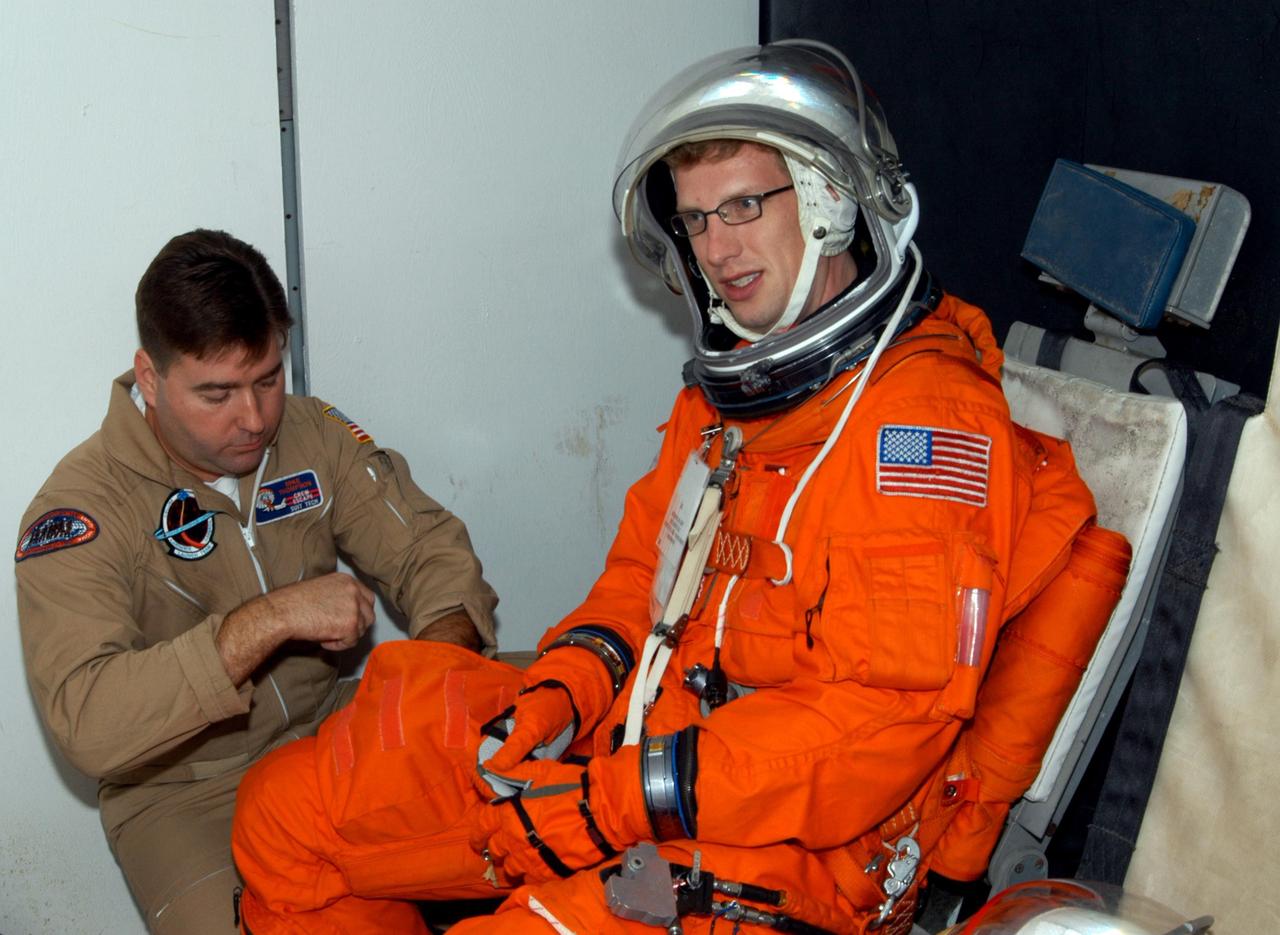
KENNEDY SPACE CENTER, FLA.  -    Inside the orbiter mockup at NASA Kennedy Space Center's Shuttle Landing Facility, volunteer "astronaut" Charlie Plain, with InDyne Inc., gets settled in a seat with the help of United Space Alliance Insertion Tech Mike Thompson before a simulated emergency landing of a shuttle crew.  Known as a Mode VI exercise, the operation uses volunteer workers from the Center to pose as astronauts. The purpose of the simulation is to exercise emergency preparedness personnel, equipment and facilities in rescuing astronauts from a downed orbiter and providing immediate medical attention. Photo credit: NASA/George Shelton
KSC-06pd0509
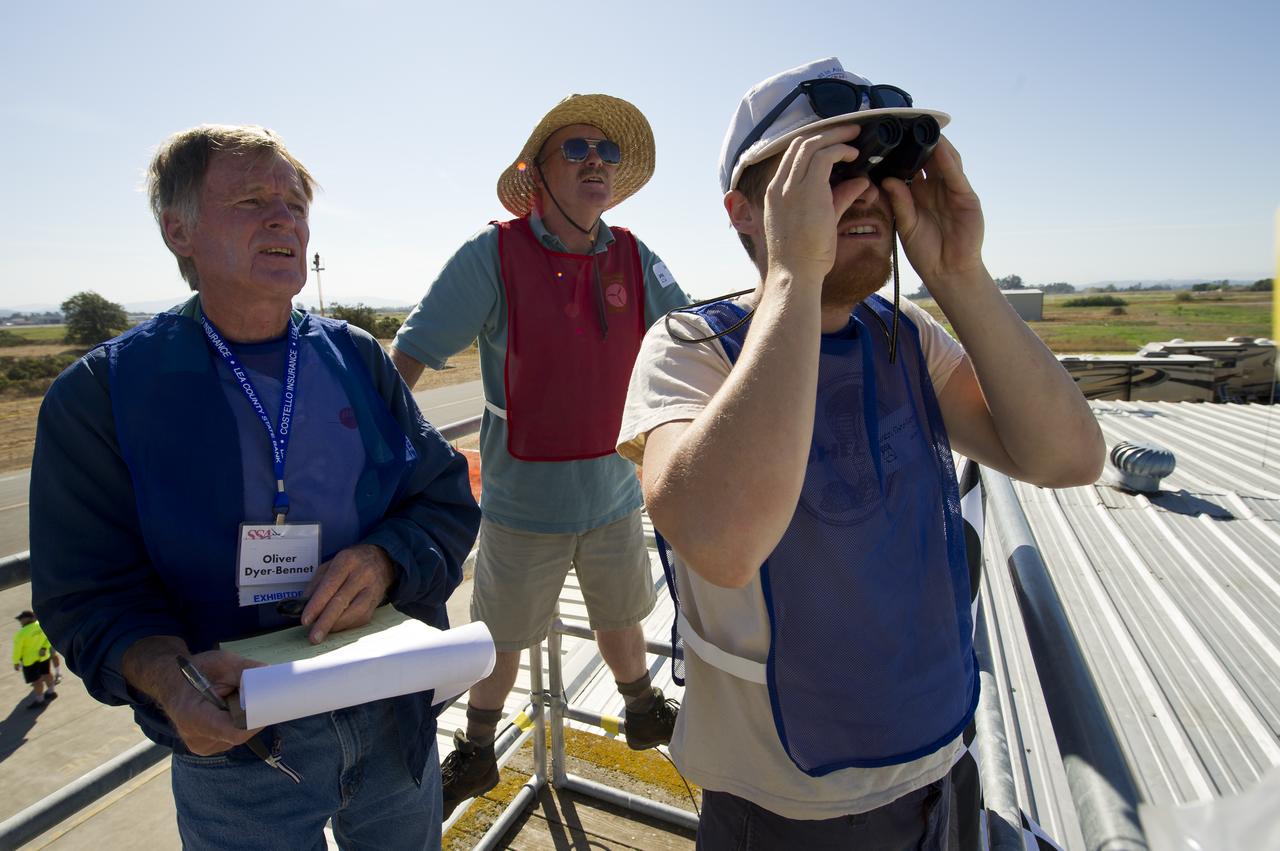
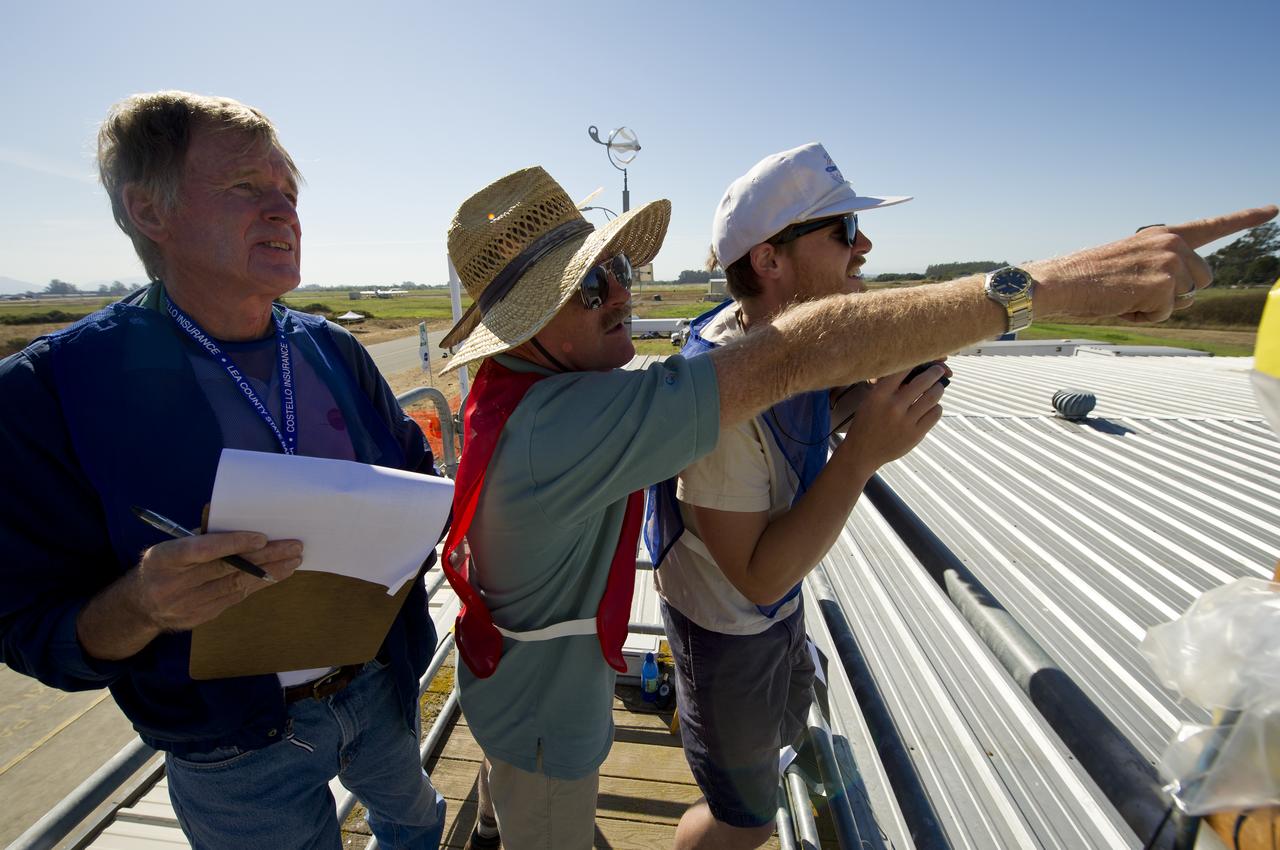
CAFE Foundation volunteer Oliver Dyer-Bennet, left, CAFE Foundation Hanger Boss Mike Fenn, center, and CAFE Foundation volunteer, Justin Dyer-Bennett scan the sky for aircraft during the speed competition portion of the 2011 Green Flight Challenge, sponsored by Google, being held at the Charles M. Schulz Sonoma County Airport in Santa Rosa, Calif. on Thursday, Sept. 29, 2011. NASA and the Comparative Aircraft Flight Efficiency (CAFE) Foundation are having the challenge with the goal to advance technologies in fuel efficiency and reduced emissions with cleaner renewable fuels and electric aircraft. Photo Credit: (NASA/Bill Ingalls)
Green Flight Challenge
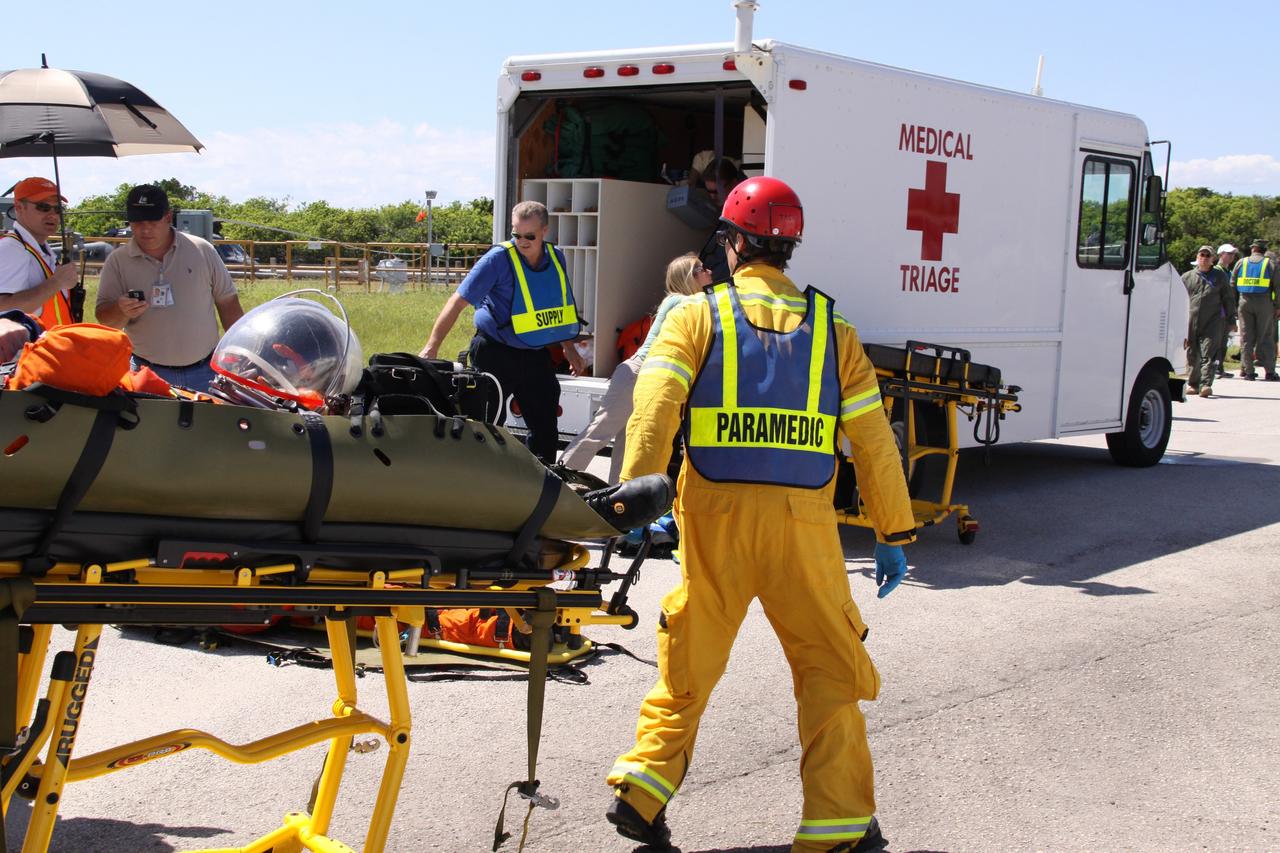
CAPE CANAVERAL, Fla. – At NASA's Kennedy Space Center in Florida, volunteers portraying astronauts are transported to ambulances  as part of a Mode II-IV exercise that allows teams to practice an emergency response at Launch Pad 39A, including helicopter evacuation to local hospitals.  The exercise involves NASA fire rescue personnel, volunteers portraying astronauts with simulated injuries, helicopters and personnel from the Air Force’s 920th Rescue Wing and medical trauma teams at three central Florida hospitals. The Space Shuttle Program and U.S. Air Force are conducting the emergency simulation. Photo credit:  NASA/Jack Pfaller
KSC-2009-5285
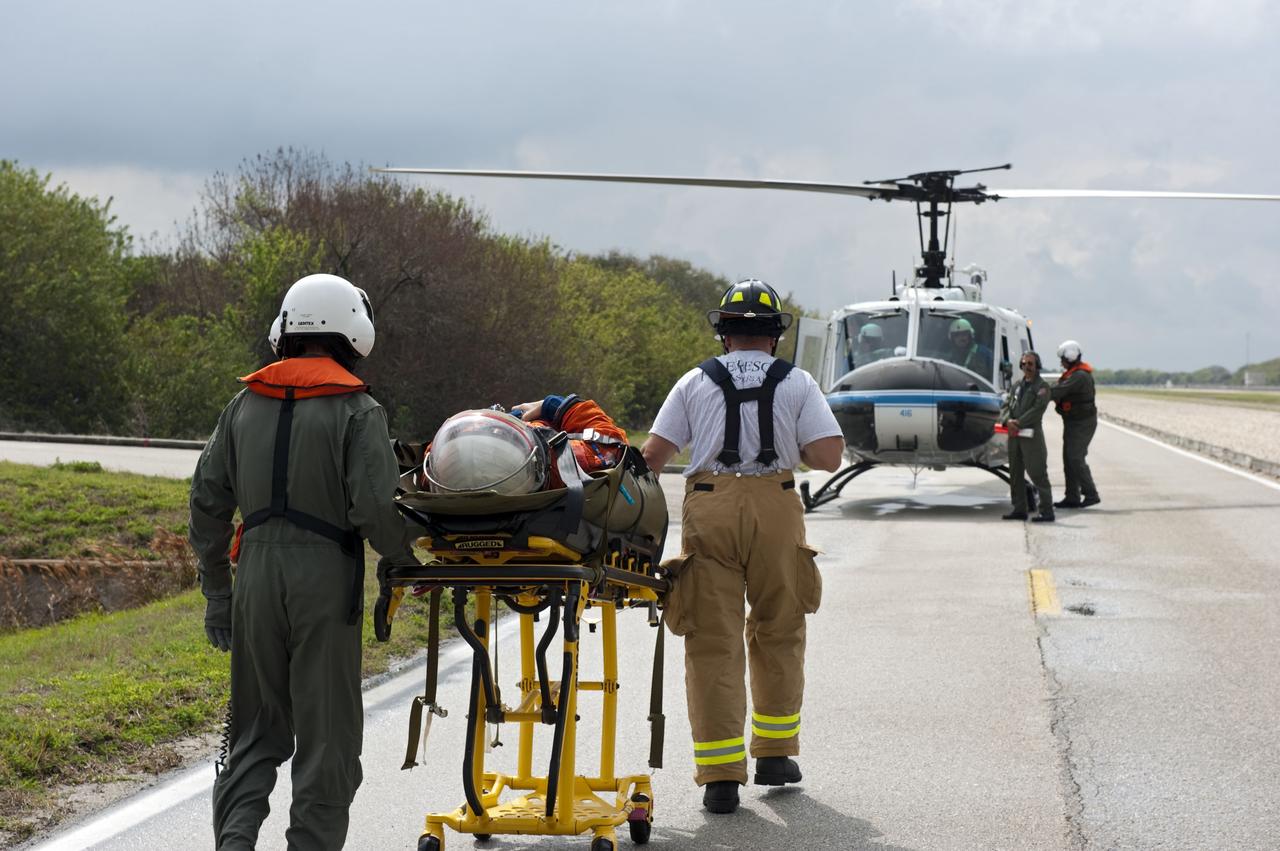
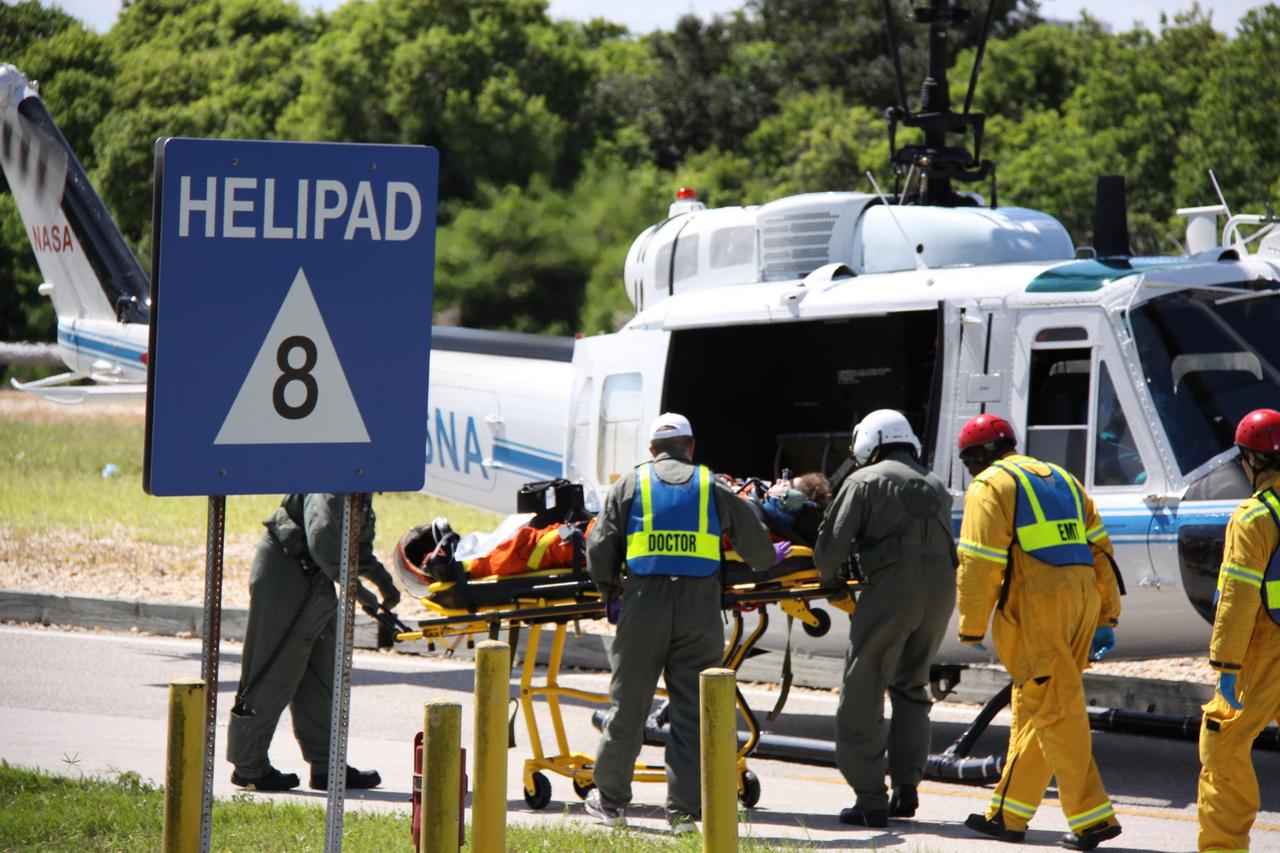
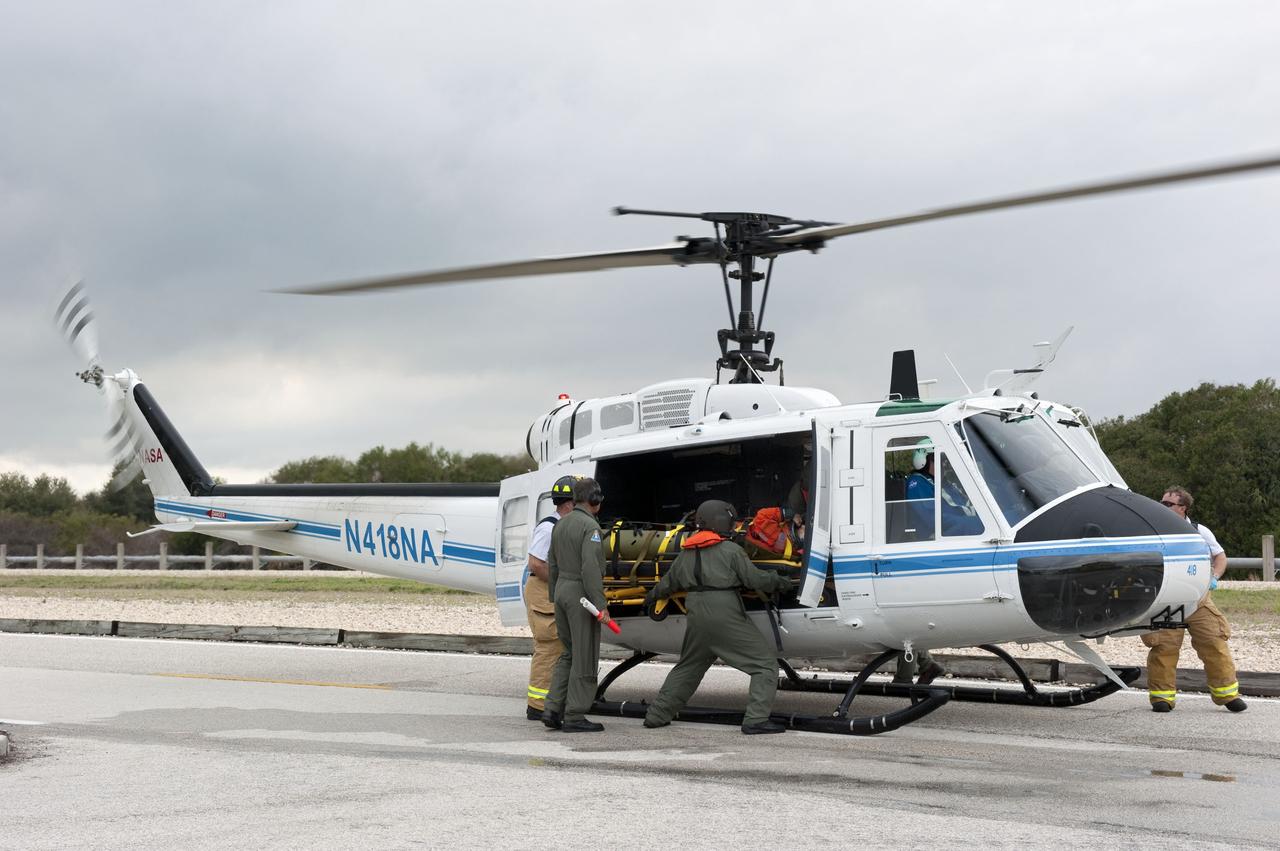
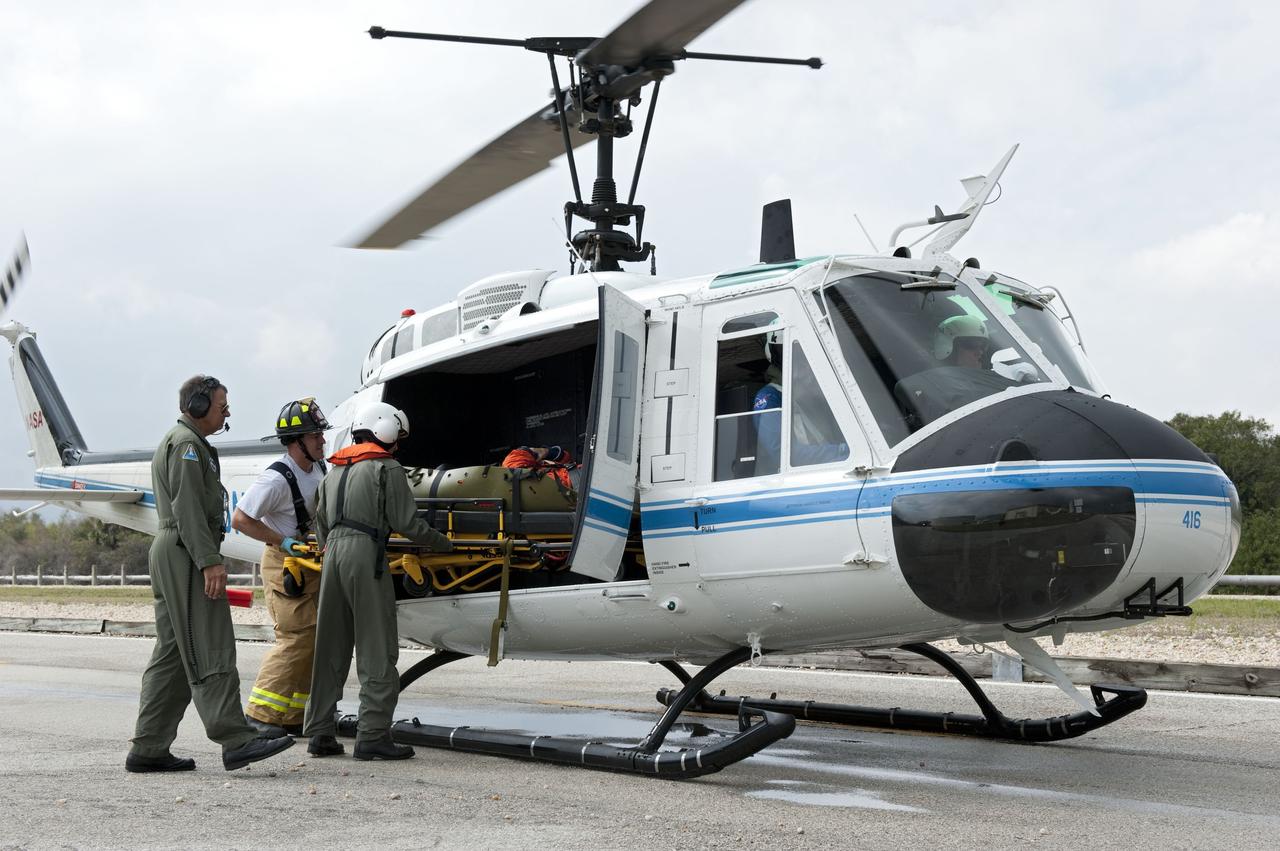
CAPE CANAVERAL, Fla. – Volunteers portraying injured astronauts are loaded onto a helicopter as part of an emergency exit, or Mode II/IV, exercise that allows teams to practice an emergency response at Launch Pad 39A at NASA's Kennedy Space Center in Florida. The exercise involves NASA fire rescue personnel, volunteers portraying astronauts with simulated injuries, helicopters and personnel from the Air Force’s 920th Rescue Wing, and medical trauma teams at three Central Florida hospitals. The drill allows teams to practice an emergency response at the launch pad, including helicopter evacuation to local hospitals.       Photo credit: NASA/Kim Shiflett
KSC-2011-2027
CAPE CANAVERAL, Fla. – At NASA's Kennedy Space Center in Florida, volunteers portraying astronauts are transported to and from a triage site as part of a Mode II-IV exercise that allows teams to practice an emergency response at Launch Pad 39A, including helicopter evacuation to local hospitals. The exercise involves NASA fire rescue personnel, volunteers portraying astronauts with simulated injuries, helicopters and personnel from the Air Force’s 920th Rescue Wing and medical trauma teams at three central Florida hospitals. The Space Shuttle Program and U.S. Air Force are conducting the emergency simulation. Photo credit:  NASA/Jack Pfaller
KSC-2009-5284
CAPE CANAVERAL, Fla. – Volunteers portraying injured astronauts are transported to a helicopter as part of an emergency exit, or Mode II/IV, exercise that allows teams to practice an emergency response at Launch Pad 39A at NASA's Kennedy Space Center in Florida. The exercise involves NASA fire rescue personnel, volunteers portraying astronauts with simulated injuries, helicopters and personnel from the Air Force’s 920th Rescue Wing, and medical trauma teams at three Central Florida hospitals. The drill allows teams to practice an emergency response at the launch pad, including helicopter evacuation to local hospitals.         Photo credit: NASA/Kim Shiflett
KSC-2011-2026
KENNEDY SPACE CENTER, FLA.  -    Inside the orbiter mockup at NASA Kennedy Space Center's Shuttle Landing Facility,  volunteer "astronaut" Jeremy Garcia, with United Space Alliance (USA), is helped with his launch and entry suit by USA Insertion Tech George Brittingham before a simulated emergency landing of a shuttle crew.  Known as a Mode VI exercise, the operation uses volunteer workers from the Center to pose as astronauts. The purpose of the simulation is to exercise emergency preparedness personnel, equipment and facilities in rescuing astronauts from a downed orbiter and providing immediate medical attention. Photo credit: NASA/George Shelton
KSC-06pd0508
CAPE CANAVERAL, Fla. –  At NASA's Kennedy Space Center in Florida, volunteers portraying astronauts are taking part in a Mode II-IV exercise that allows teams to practice an emergency response at Launch Pad 39A, including helicopter evacuation to local hospitals.   The exercise involves NASA fire rescue personnel, volunteers portraying astronauts with simulated injuries, helicopters and personnel from the Air Force’s 920th Rescue Wing and medical trauma teams at three central Florida hospitals. The Space Shuttle Program and U.S. Air Force are conducting the emergency simulation. Photo credit:  NASA/Troy Cryder
KSC-2009-5271
CAPE CANAVERAL, Fla. – At NASA's Kennedy Space Center in Florida, volunteers portraying astronauts are transported to helicopters as part of a Mode II-IV exercise that allows teams to practice an emergency response at Launch Pad 39A, including helicopter evacuation to local hospitals.  The exercise involves NASA fire rescue personnel, volunteers portraying astronauts with simulated injuries, helicopters and personnel from the Air Force’s 920th Rescue Wing and medical trauma teams at three central Florida hospitals. The Space Shuttle Program and U.S. Air Force are conducting the emergency simulation. Photo credit:  NASA/Troy Cryder
KSC-2009-5276
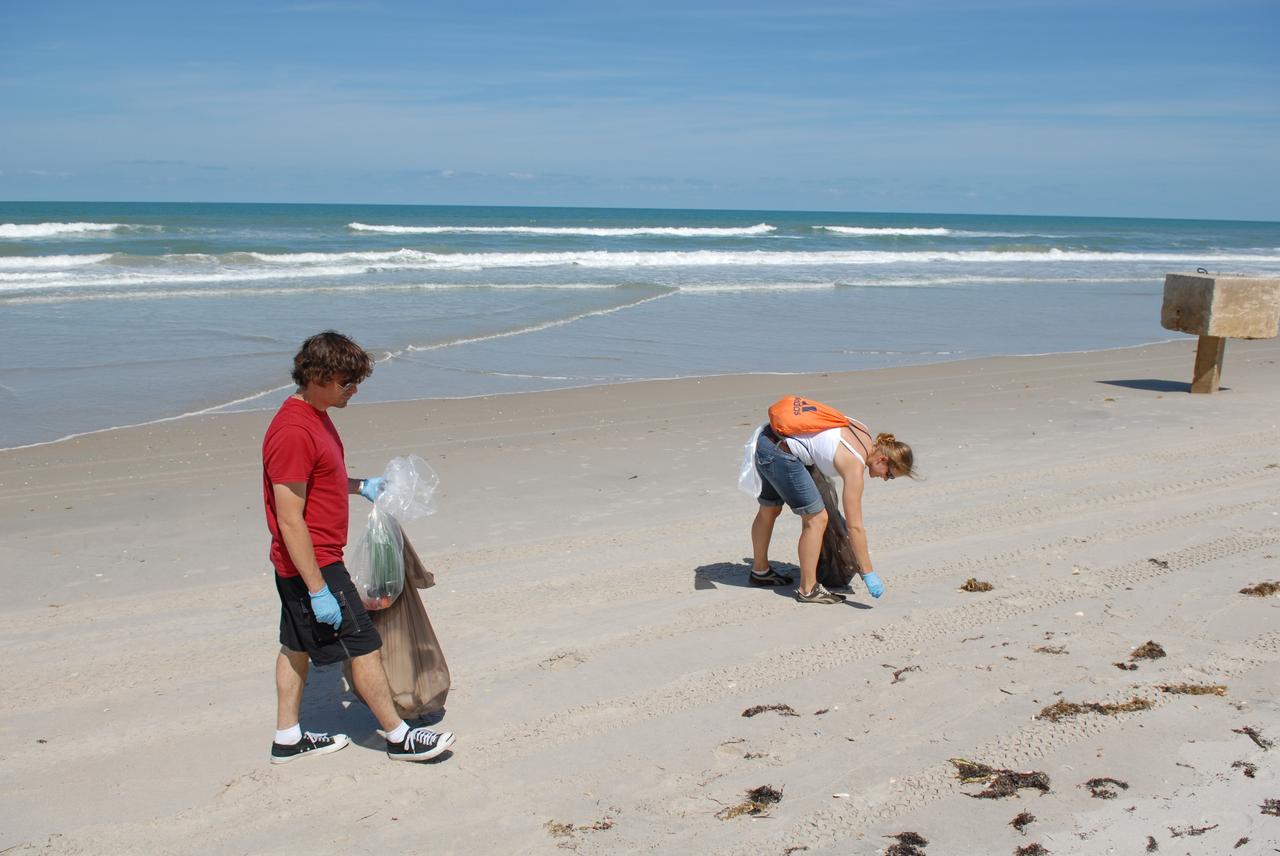
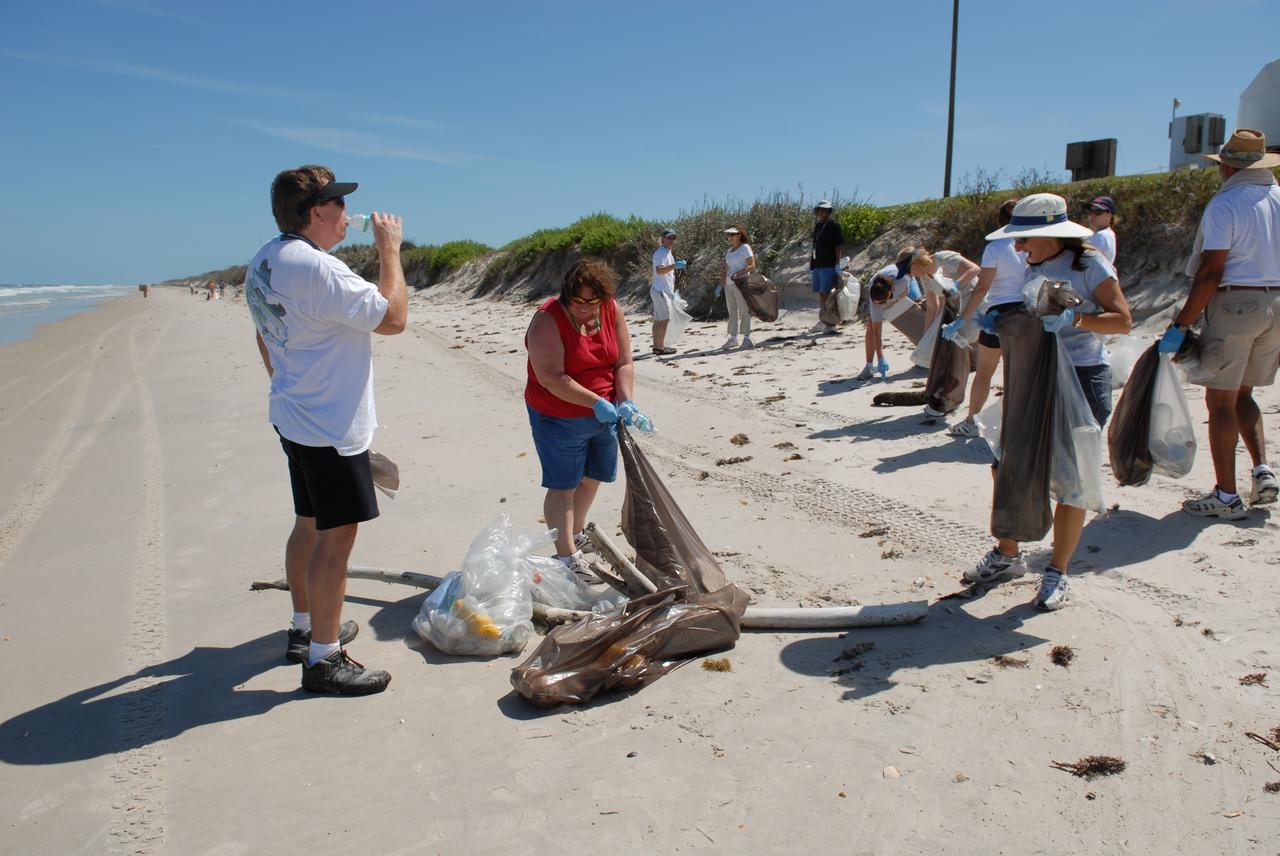
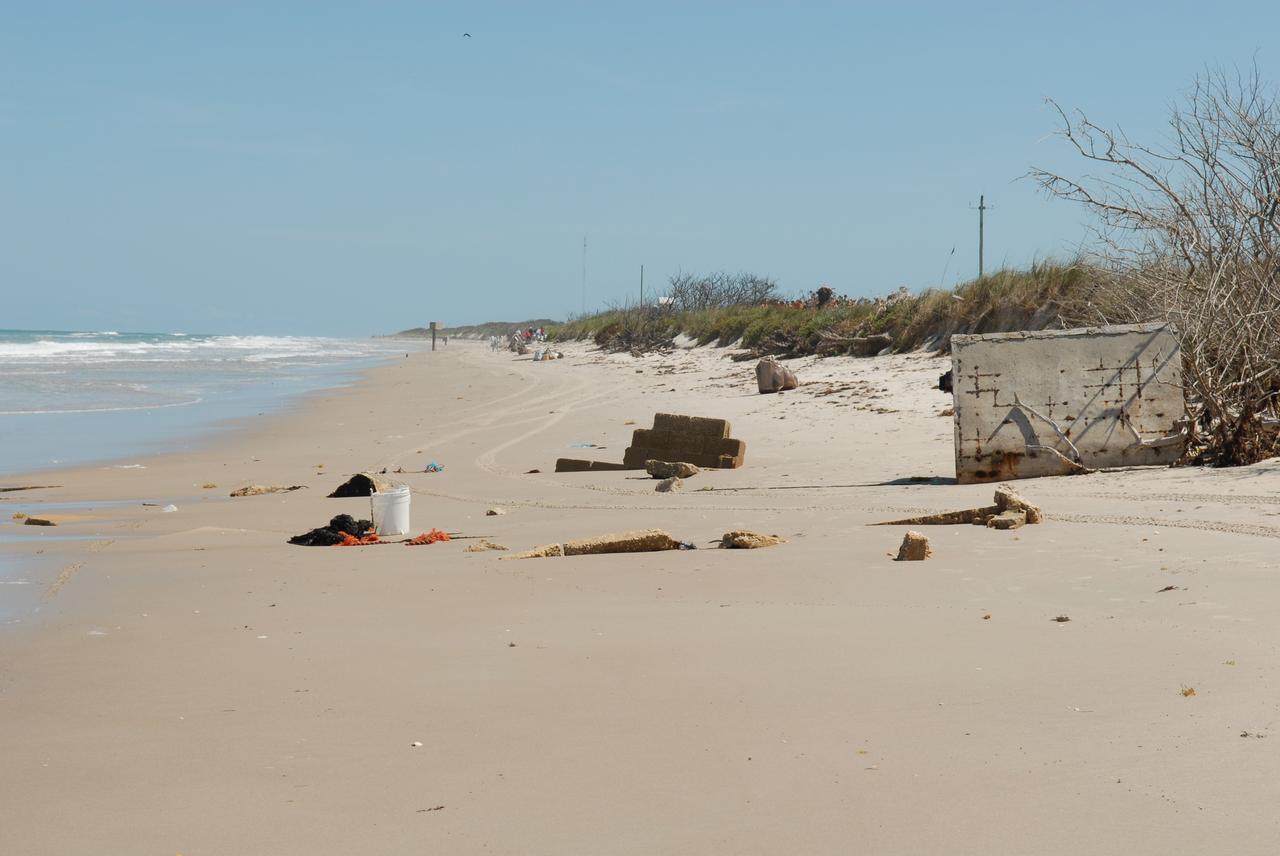
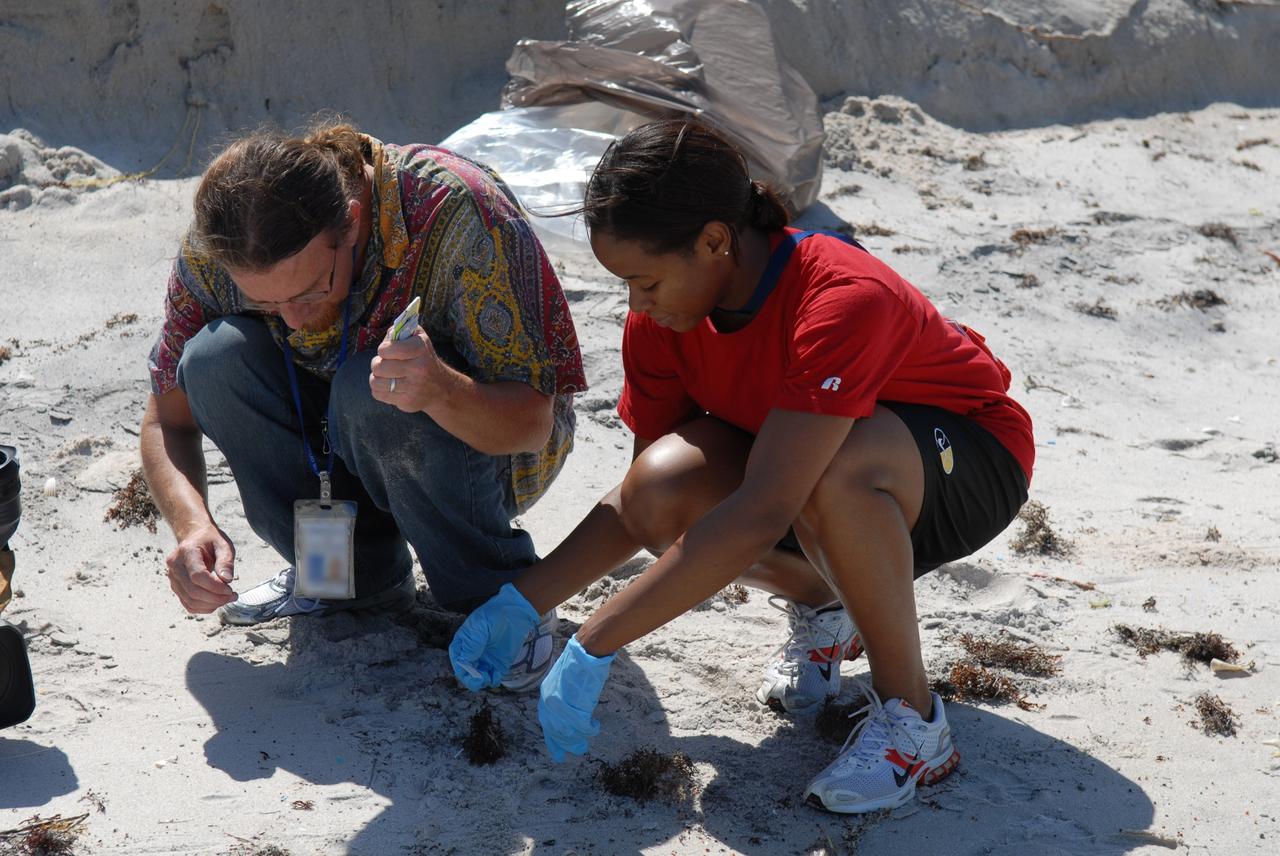
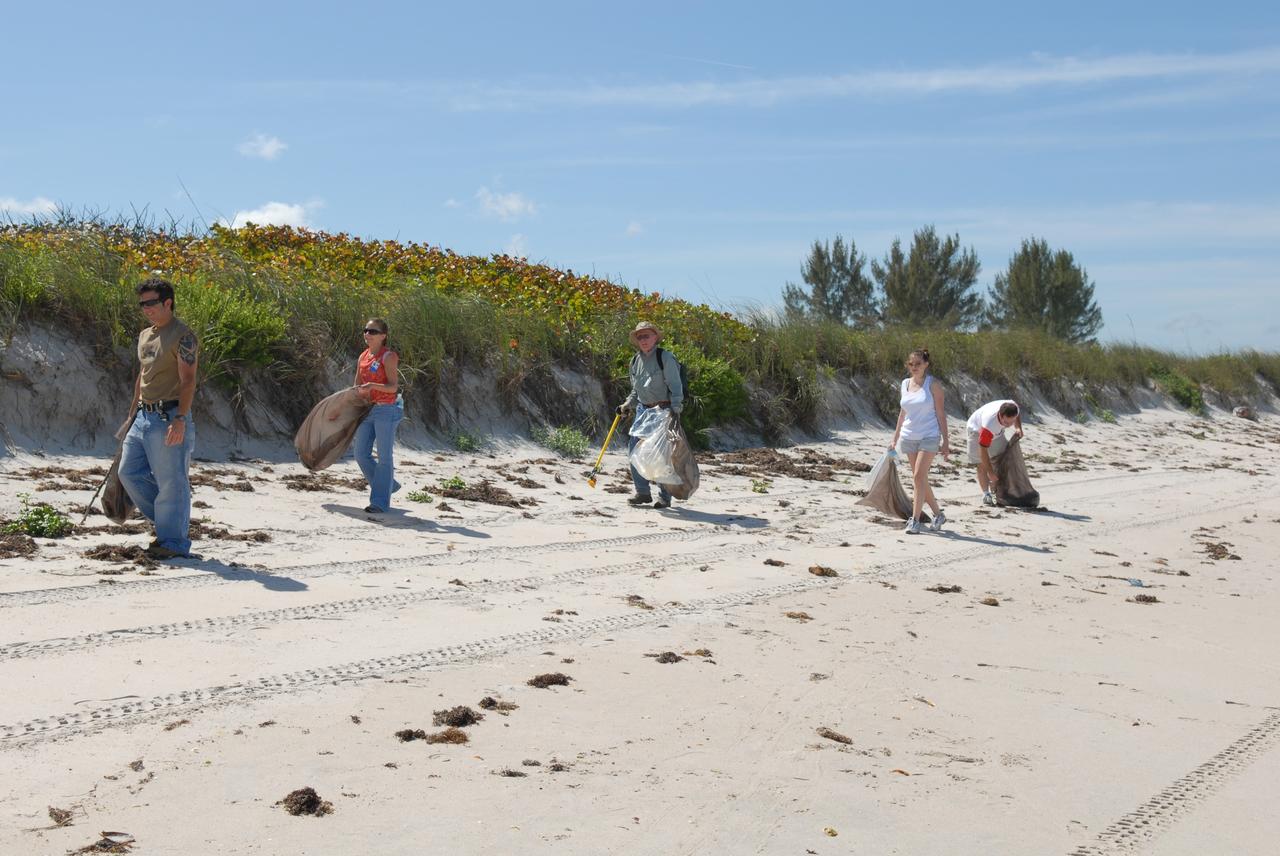
CAPE CANAVERAL, Fla. --   A beach on NASA's Kennedy Space Center is the site designated for cleanup of debris.  More than 130 volunteers from the joint NASA’s Kennedy Space Center and U.S. Fish and Wildlife Service contract organizations give up their afternoon to gather all the “unnatural” items that had accumulated on 6.1 miles of central Florida east coast shoreline during the past 12 months.  Part of the center's dedication to a clean environment,  volunteers gathered enough trash to fill approximately 450 garbage bags and enough recyclable plastic and glass to fill 150 bags.   Photo credit: NASA/Dimitri Gerondidakis
KSC-08pd0933
CAPE CANAVERAL, Fla. –  At NASA's Kennedy Space Center in Florida, volunteers and teams take part in a Mode II-IV exercise that allows teams to practice an emergency response at Launch Pad 39A, including helicopter evacuation to local hospitals. The exercise involves NASA fire rescue personnel, volunteers portraying astronauts with simulated injuries, helicopters and personnel from the Air Force’s 920th Rescue Wing and medical trauma teams at three central Florida hospitals. The Space Shuttle Program and U.S. Air Force are conducting the emergency simulation. Photo credit:  NASA/Troy Cryder
KSC-2009-5273
CAPE CANAVERAL, Fla. --   On a beach on NASA's Kennedy Space Center, more than 130 volunteers from the joint NASA’s Kennedy Space Center and U.S. Fish and Wildlife Service contract organizations give up their afternoon to gather all the “unnatural” items that had accumulated on 6.1 miles of central Florida east coast shoreline during the past 12 months. Part of the center's dedication to a clean environment,  volunteers gathered enough trash to fill approximately 450 garbage bags and enough recyclable plastic and glass to fill 150 bags.   Photo credit: NASA/Dimitri Gerondidakis
KSC-08pd0934
CAPE CANAVERAL, Fla. --   On a beach on NASA's Kennedy Space Center, more than 130 volunteers from the joint NASA’s Kennedy Space Center and U.S. Fish and Wildlife Service contract organizations give up their afternoon to gather all the “unnatural” items that had accumulated on 6.1 miles of central Florida east coast shoreline during the past 12 months. Part of the center's dedication to a clean environment,  volunteers gathered enough trash to fill approximately 450 garbage bags and enough recyclable plastic and glass to fill 150 bags.   Photo credit: NASA/Dimitri Gerondidakis
KSC-08pd0936
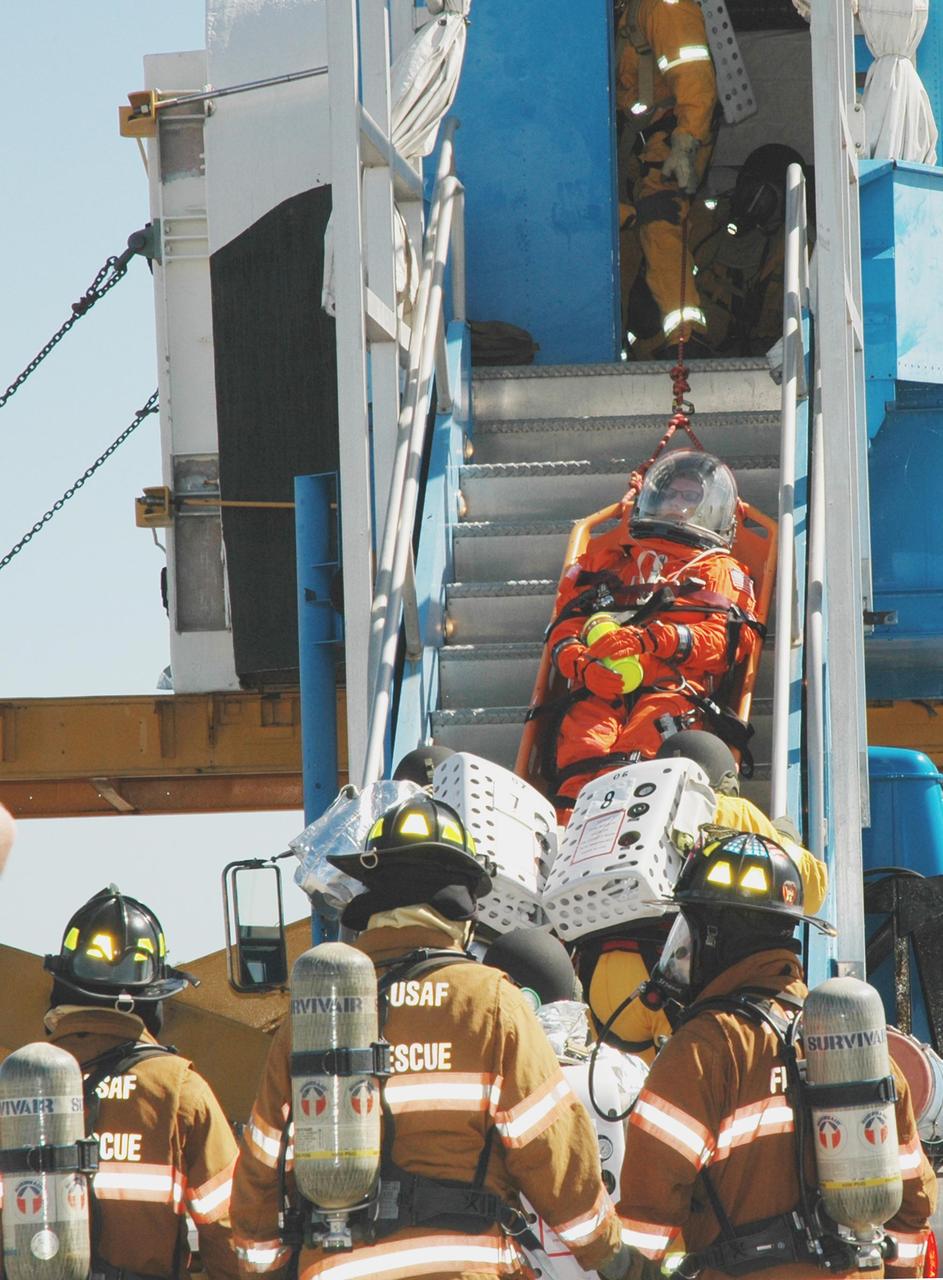
KENNEDY SPACE CENTER, FLA.  -  At NASA Kennedy Space Center's Shuttle Landing Facility, emergency personnel lower an "injured astronaut" on a stretcher down the stairs of the orbiter mockup.  Volunteers and emergency rescue workers are participating in a simulated emergency landing of a shuttle crew. Known as a Mode VI exercise, the operation uses volunteer workers from the Center to pose as astronauts. The purpose of the simulation is to exercise emergency preparedness personnel, equipment and facilities in rescuing astronauts from a downed orbiter and providing immediate medical attention. Photo credit: NASA/Jim Grossmann
KSC-06pd0515
CAPE CANAVERAL, Fla. --   On a beach on NASA's Kennedy Space Center, more than 130 volunteers from the joint NASA’s Kennedy Space Center and U.S. Fish and Wildlife Service contract organizations give up their afternoon to gather all the “unnatural” items that had accumulated on 6.1 miles of central Florida east coast shoreline during the past 12 months.  Part of the center's dedication to a clean environment,  volunteers gathered enough trash to fill approximately 450 garbage bags and enough recyclable plastic and glass to fill 150 bags.   Photo credit: NASA/Dimitri Gerondidakis
KSC-08pd0935
CAPE CANAVERAL, Fla. – At NASA's Kennedy Space Center in Florida, volunteers portraying astronauts are loaded into a helicopter as part of a Mode II-IV exercise that allows teams to practice an emergency response at Launch Pad 39A, including helicopter evacuation to local hospitals. The exercise involves NASA fire rescue personnel, volunteers portraying astronauts with simulated injuries, helicopters and personnel from the Air Force’s 920th Rescue Wing and medical trauma teams at three central Florida hospitals. The Space Shuttle Program and U.S. Air Force are conducting the emergency simulation. Photo credit:  NASA/Troy Cryder
KSC-2009-5275
CAPE CANAVERAL, Fla. --   On a beach on NASA's Kennedy Space Center, more than 130 volunteers from the joint NASA’s Kennedy Space Center and U.S. Fish and Wildlife Service contract organizations give up their afternoon to gather all the “unnatural” items that had accumulated on 6.1 miles of central Florida east coast shoreline during the past 12 months. Part of the center's dedication to a clean environment,  volunteers gathered enough trash to fill approximately 450 garbage bags and enough recyclable plastic and glass to fill 150 bags.   Photo credit: NASA/Dimitri Gerondidakis
KSC-08pd0937
CAFE Foundation volunteer Oliver Dyer-Bennet, left, CAFE Foundation Hanger Boss Mike Fenn, center, and CAFE Foundation volunteer, Justin Dyer-Bennett scan the sky for aircraft during the speed competition portion of the 2011 Green Flight Challenge, sponsored by Google, being held at the Charles M. Schulz Sonoma County Airport in Santa Rosa, Calif. on Thursday, Sept. 29, 2011. NASA and the Comparative Aircraft Flight Efficiency (CAFE) Foundation are having the challenge with the goal to advance technologies in fuel efficiency and reduced emissions with cleaner renewable fuels and electric aircraft. Photo Credit: (NASA/Bill Ingalls)
Green Flight Challenge
CAPE CANAVERAL, Fla. – Volunteers portraying injured astronauts are loaded onto a helicopter as part of an emergency exit, or Mode II/IV, exercise that allows teams to practice an emergency response at Launch Pad 39A at NASA's Kennedy Space Center in Florida. The exercise involves NASA fire rescue personnel, volunteers portraying astronauts with simulated injuries, helicopters and personnel from the Air Force’s 920th Rescue Wing, and medical trauma teams at three Central Florida hospitals. The drill allows teams to practice an emergency response at the launch pad, including helicopter evacuation to local hospitals.       Photo credit: NASA/Kim Shiflett
KSC-2011-2030
NASA's Marshall Space Flight Center showcased it's various projects for the public in Huntsville, Alabama's Big Spring Park. Exhibits were displayed by all of the various directorates of the Center with employee volunteers explaining all aspects of their projects. Adding to the festivities was the attendance of retired NASA astronaut Robert "Hoot" Gibson.
2018 NASA in the Park Celebration
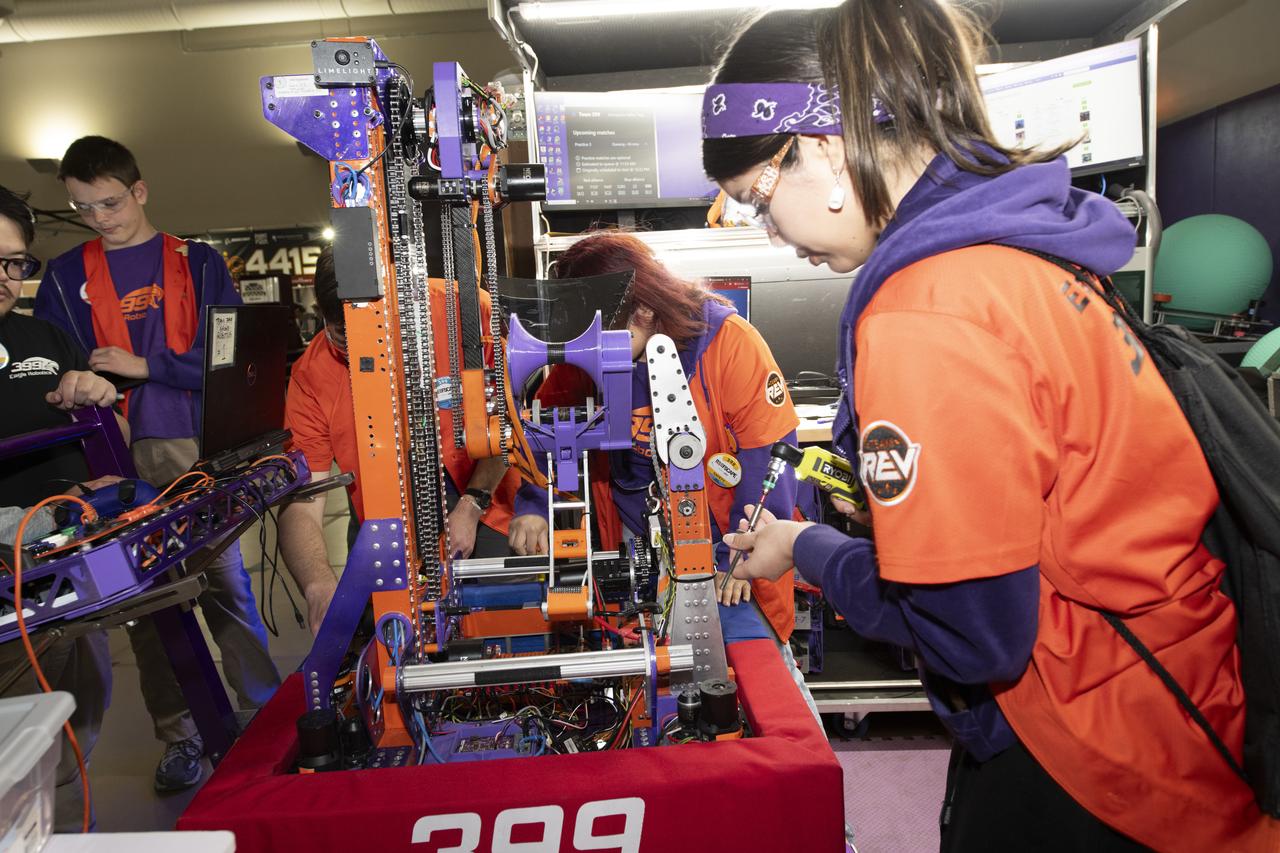
Students from Eagle Robotics, Team 399, supported by volunteers from NASA’s Armstrong Flight Research Center in Edwards, California, adjust their robot during the 2025 Aerospace Valley FIRST Robotics Competition in Lancaster, California, on April 3, 2025.
NASA Supports Next Generation of Innovators at Robotics Competition
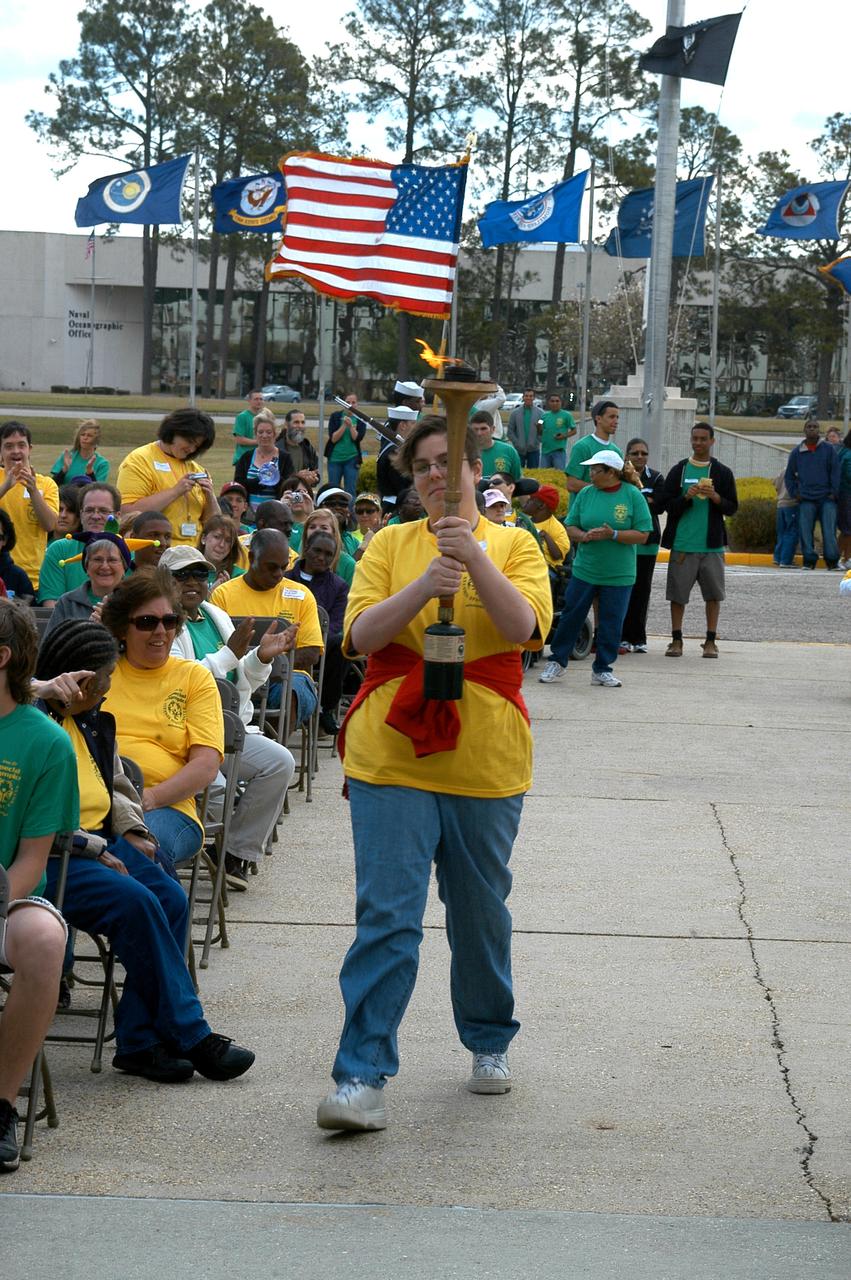
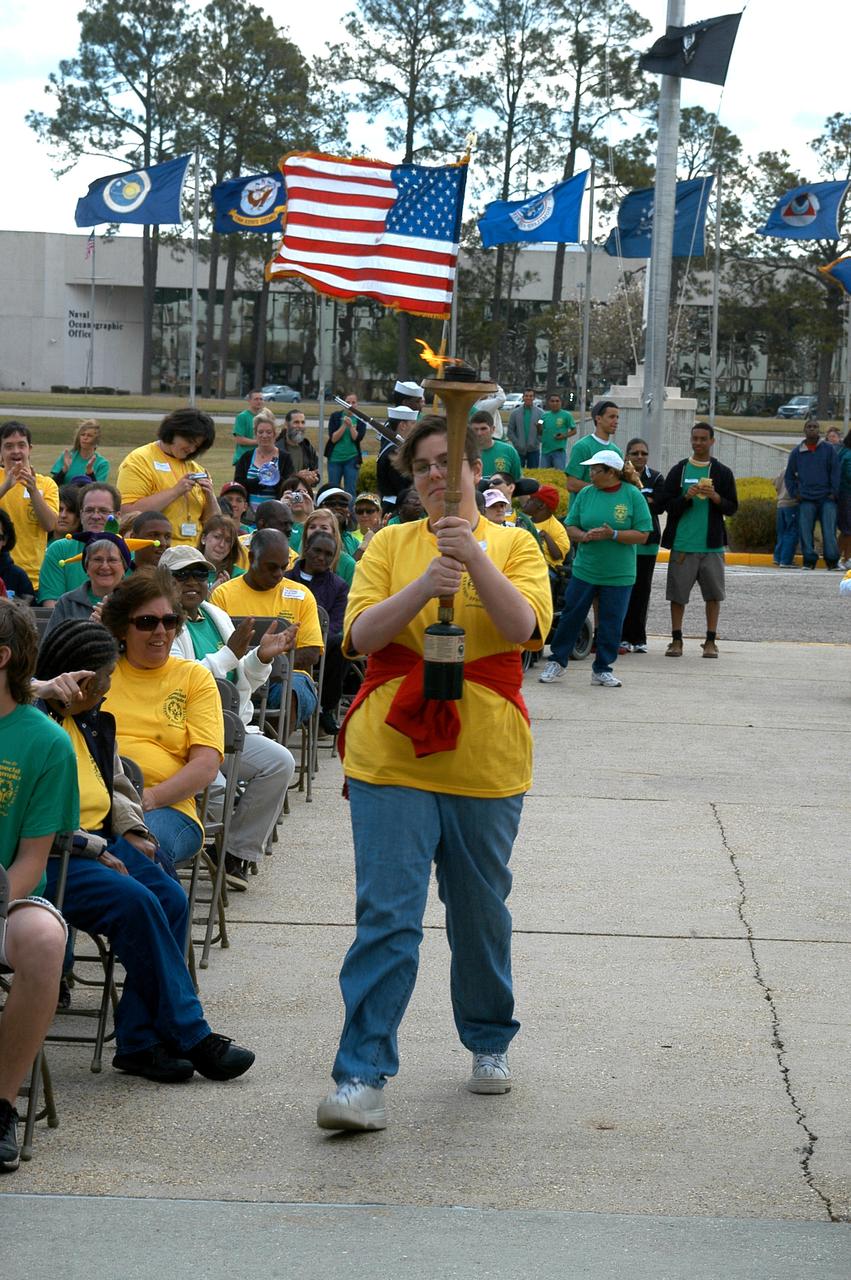
Sarah Johnson, 28, of Gulfport, carries in the Olympic torch to signal the start of the 2010 Area III Special Olympic games at NASA's John C. Stennis Space Center on March 27. Stennis volunteers hosted special needs athletes from across the area for the event. Stennis is an annual host of the games.
Stennis hosts 2010 Special Olympics
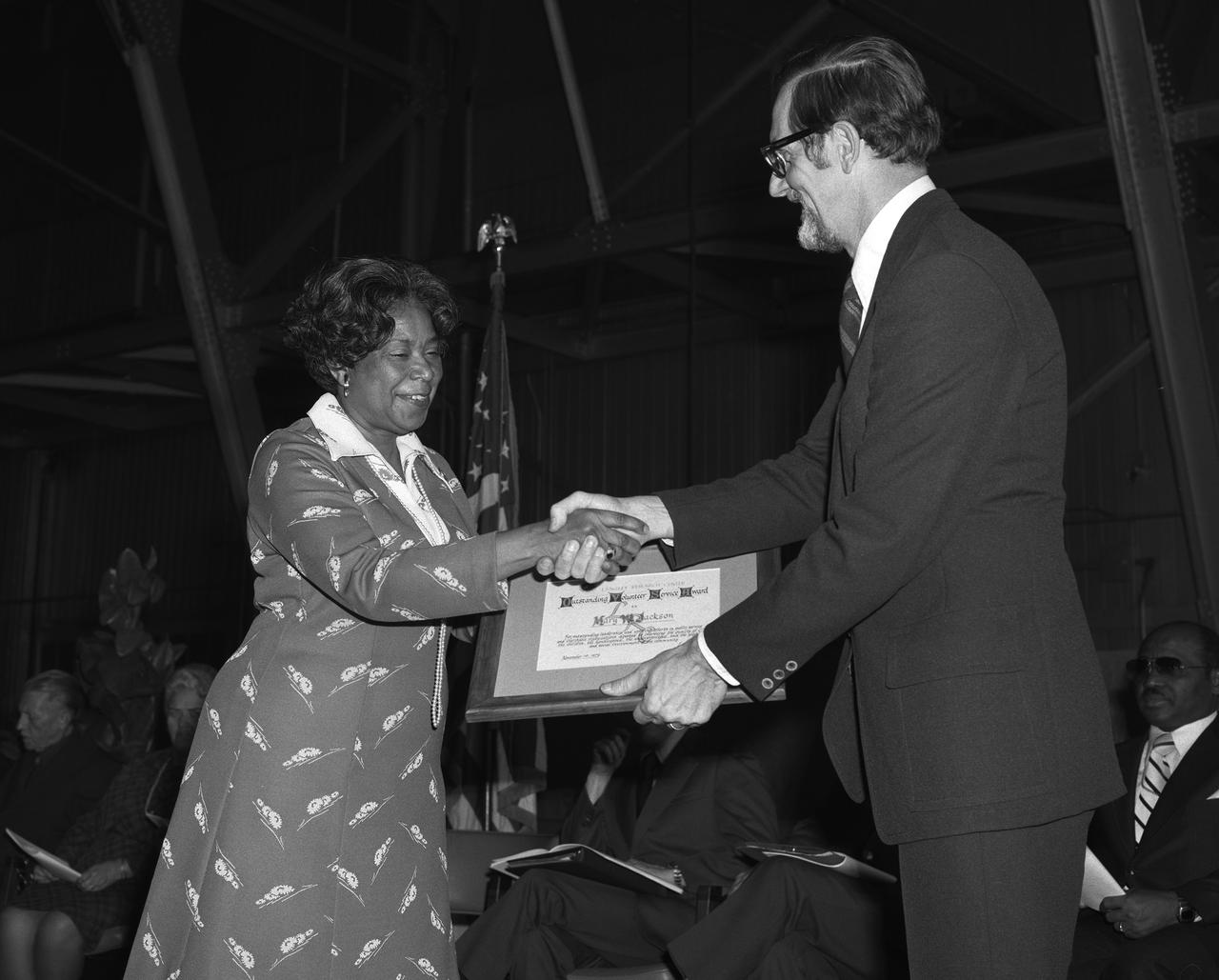
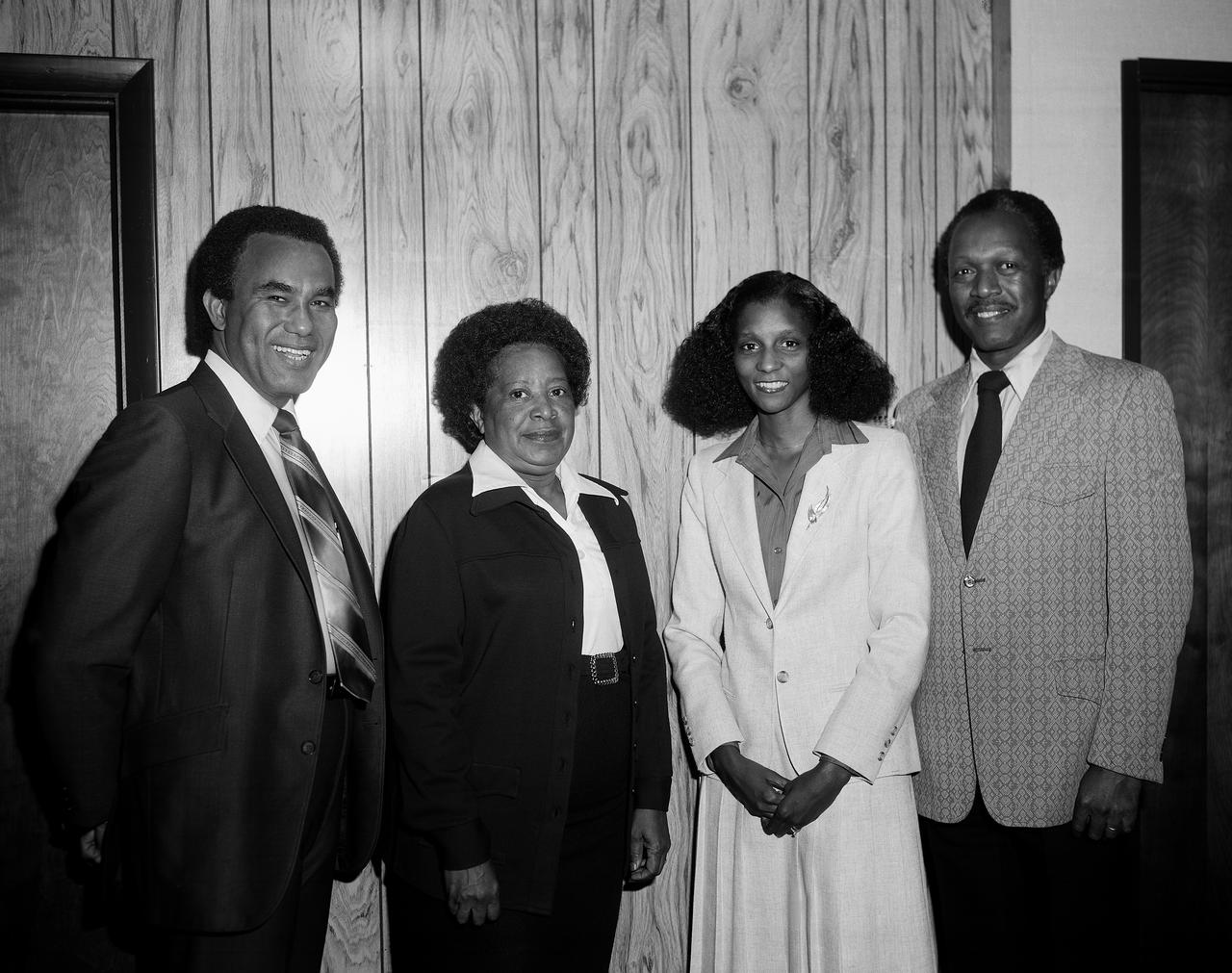
Langley Center Director Donald P. Hearth (right) presenting Mary Jackson with Outstanding Volunteer Service Award.  Mary Jackson was NASA's first African-American female engineer,and subsequent career supporting the hiring and promotion of other deserving female and minority employees.
LRC-1975-OCIO_P_F050-08431.tif
iss070e031247 (Nov. 25, 2023) --- Nashville, Tennessee, split by the Cumberland River, is pictured from the International Space Station as it orbited 261 miles above the Volunteer State. At top left, is the Nashville International Airport near the Percy Priest Lake.
iss070e031247
NASA's Marshall Space Flight Center showcased it's various projects for the public in Huntsville, Alabama's Big Spring Park. Exhibits were displayed by all of the various directorates of the Center with employee volunteers explaining all aspects of their projects. Adding to the festivities was the attendance of retired NASA astronaut Robert "Hoot" Gibson.
2018 NASA in the Park Celebration
Sarah Johnson, 28, of Gulfport, carries in the Olympic torch to signal the start of the 2010 Area III Special Olympic games at NASA's John C. Stennis Space Center on March 27. Stennis volunteers hosted special needs athletes from across the area for the event. Stennis is an annual host of the games.
Stennis hosts 2010 Special Olympics
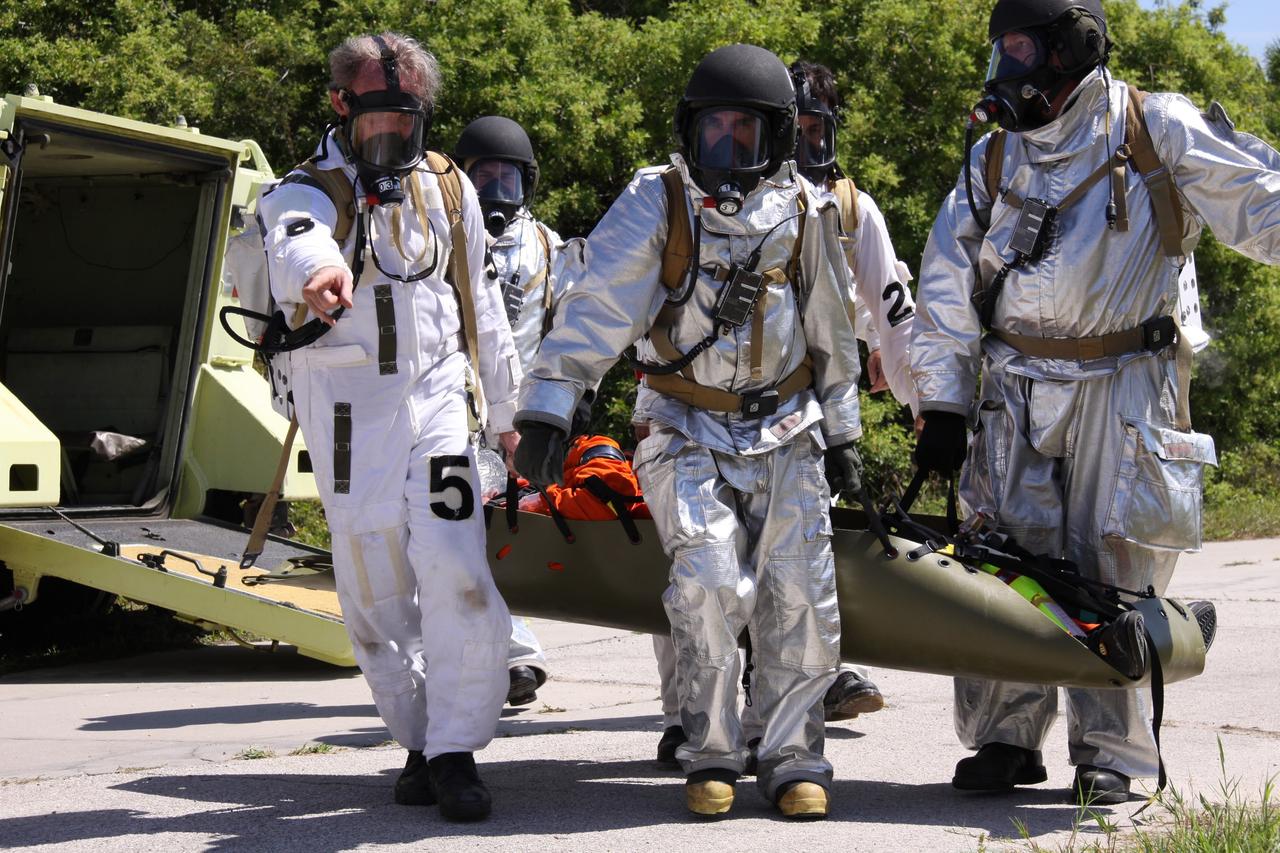
KENNEDY SPACE CENTER, FLA. - A rescue team carries an “injured” astronaut toward the helicopter for transportation to a local hospital.  They are all taking part in a “Mode VII” emergency landing simulation at Kennedy Space Center.  The purpose of the Mode VII is to exercise emergency preparedness personnel, equipment and facilities in rescuing astronauts from a downed orbiter and providing immediate medical attention.  This simulation presents an orbiter that has crashed short of the Shuttle Landing Facility in a wooded area 2-1/2 miles south of Runway 33.  Emergency crews are responding to the volunteer astronauts who are simulating various injuries inside the crew compartment mock-up.  Rescuers must remove the crew, provide triage and transport to hospitals those who need further treatment.  Local hospitals are participating in the exercise. Emergency crews are responding to the volunteer astronauts who are simulating various injuries inside the crew compartment mock-up.  Rescuers must remove the crew, provide triage and transport to hospitals those who need further treatment.  Local hospitals are participating in the exercise.
KENNEDY SPACE CENTER, FLA. - A rescue team carries an “injured” astronaut toward the helicopter for transportation to a local hospital. They are all taking part in a “Mode VII” emergency landing simulation at Kennedy Space Center. The purpose of the Mode VII is to exercise emergency preparedness personnel, equipment and facilities in rescuing astronauts from a downed orbiter and providing immediate medical attention. This simulation presents an orbiter that has crashed short of the Shuttle Landing Facility in a wooded area 2-1/2 miles south of Runway 33. Emergency crews are responding to the volunteer astronauts who are simulating various injuries inside the crew compartment mock-up. Rescuers must remove the crew, provide triage and transport to hospitals those who need further treatment. Local hospitals are participating in the exercise. Emergency crews are responding to the volunteer astronauts who are simulating various injuries inside the crew compartment mock-up. Rescuers must remove the crew, provide triage and transport to hospitals those who need further treatment. Local hospitals are participating in the exercise.
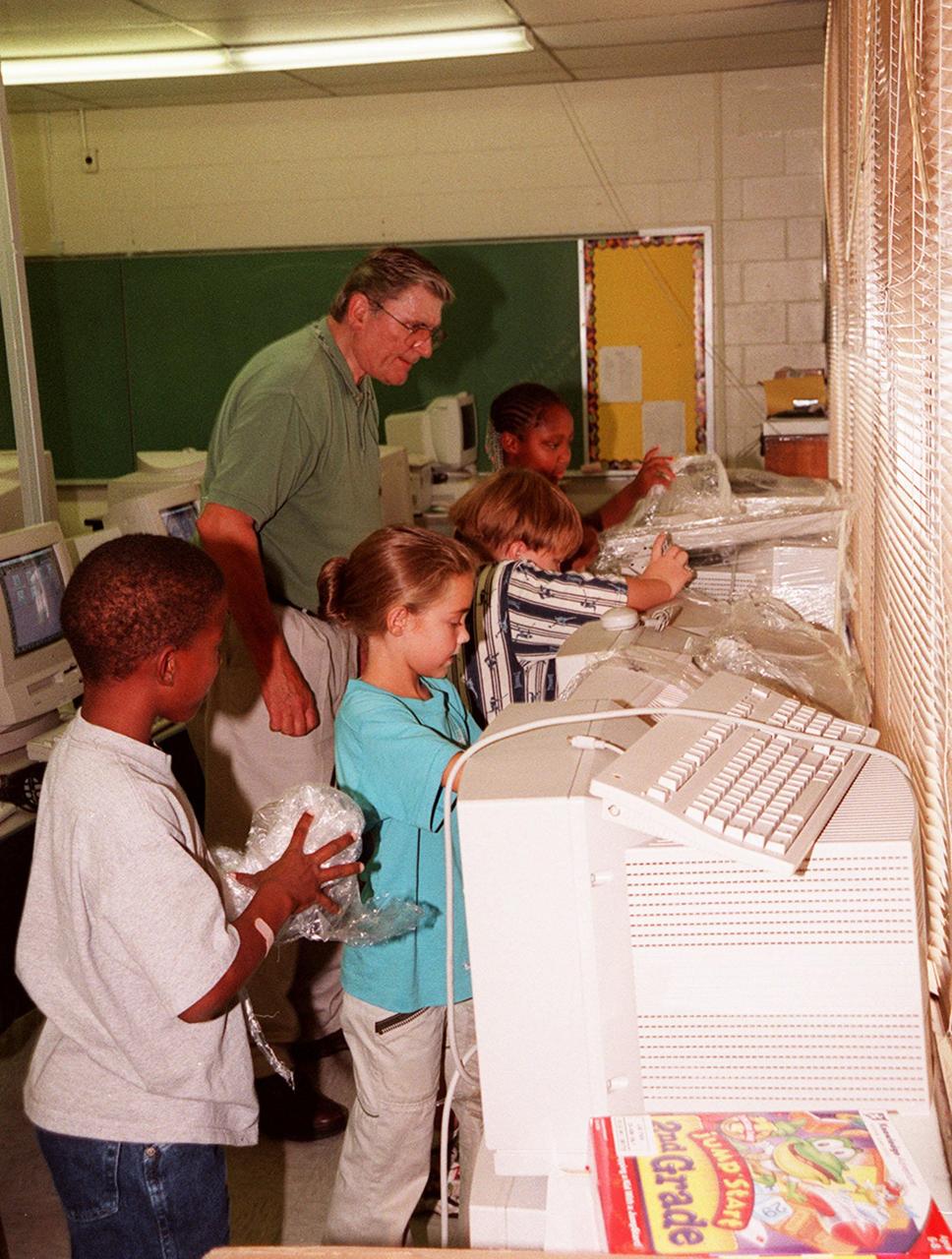
Children at Cambridge Elementary School, Cocoa, Fla., eagerly unwrap computer equipment donated by Kennedy Space Center. Cambridge is one of 13 Brevard County schools receiving 81 excess contractor computers thanks to an innovative educational outreach project spearheaded by the Nasa k-12 Education Services Office at ksc. Behind the children is Jim Thurston, a school volunteer and retired employee of USBI, who shared in the project. The Astronaut Memorial Foundation, a strategic partner in the effort, and several schools in rural Florida and Georgia also received refurbished computers as part of the year-long project. KSC employees put in about 3,300 volunteer hours to transform old, excess computers into upgraded, usable units. A total of $90,000 in upgraded computer equipment is being donated
KSC-99pp1228
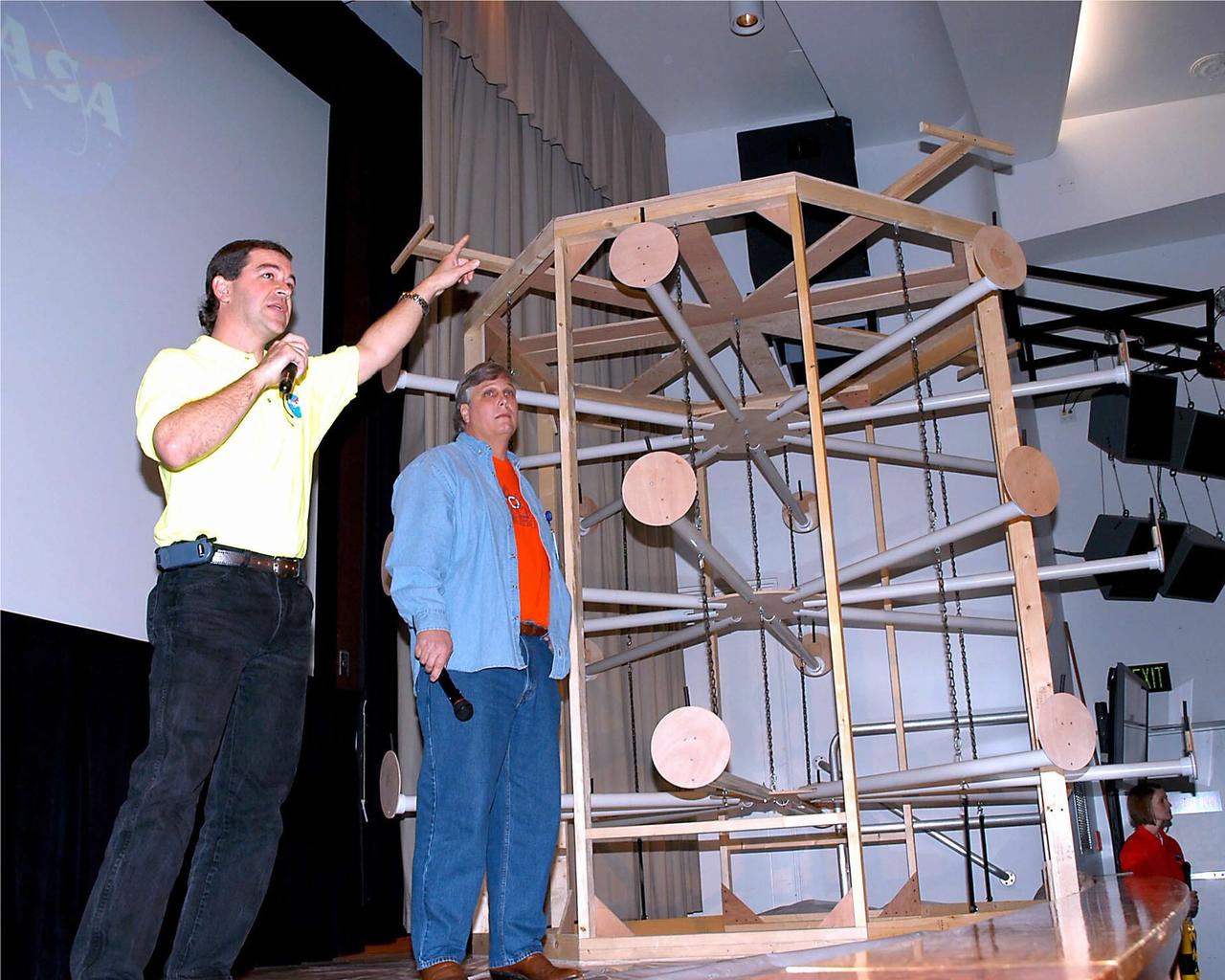
NASA engineers Scott Olive (left) and Bo Clarke answer questions during the 2007 FIRST (For Inspiration and Recognition of Science and Technology) Robotics Competition regional kickoff event held Saturday, Jan. 6, 2007, at StenniSphere, the visitor center at NASA Stennis Space Center near Bay St. Louis, Miss. The SSC employees and FIRST Robotics volunteer mentors are standing near a mock-up of the playing field for the FIRST Robotics' 2007 `Rack n' Roll' challenge. Roughly 300 students and adult volunteers - representing 29 high schools from four states - attended the kickoff to hear the rules of `Rack n' Roll.' The teams will spend the next six weeks building and programming robots from parts kits they received Saturday, then battle their creations at regional spring competitions in New Orleans, Houston, Atlanta and other cities around the nation. FIRST aims to inspire students in the pursuit of engineering and technology studies and careers.
FIRST Robotics Kickoff
CAPE CANAVERAL, Fla. – At NASA's Kennedy Space Center in Florida, volunteers portraying astronauts are transported to helicopters as part of a Mode II-IV exercise that allows teams to practice an emergency response at Launch Pad 39A, including helicopter evacuation to local hospitals.  The exercise allows teams to practice an emergency response at Launch Pad 39A, including helicopter evacuation to local hospitals. The exercise involves NASA fire rescue personnel, volunteers portraying astronauts with simulated injuries, helicopters and personnel from the Air Force’s 920th Rescue Wing and medical trauma teams at three central Florida hospitals. The Space Shuttle Program and U.S. Air Force are conducting the emergency simulation. Photo credit:  NASA/Troy Cryder
KSC-2009-5278
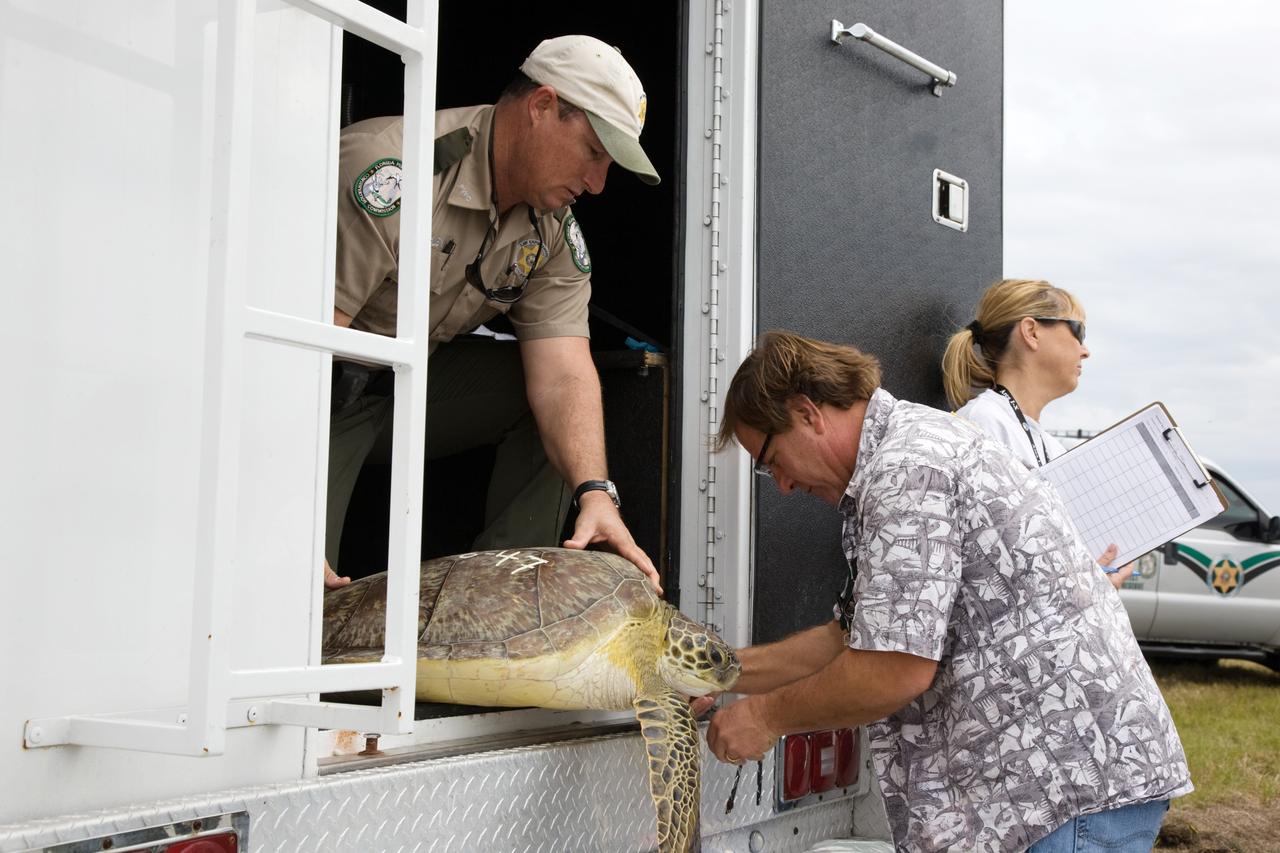
CAPE CANAVERAL, Fla. - An endangered green sea turtle is unloaded from a truck prior to its release into the waters of the Banana River at NASA's Kennedy Space Center in Florida. Wildlife personnel and volunteers are releasing groups of the federally protected turtles after nearly 2,000 of the animals were "stunned" by prolonged cold temperatures.    Many of the turtles were rescued from the Mosquito Lagoon, with others coming from the Indian River Lagoon and Cocoa Beach. Biologists, environmentalists, wildlife experts and other volunteers joined forces with a massive rescue effort at the Merritt Island National Wildlife Refuge, where the turtles were identified, examined and transported to rehabilitation facilities throughout Florida and South Georgia. The animals stayed at these facilities until local waters warmed up to safe temperatures.  Photo credit: NASA/Troy Cryder
KSC-2010-1262
Samuel J. Scott, Administrative Operations Specialist, Acquisition Division; Mary W. Jackson, Federal Women's Program Manager, Office of Equal Opportunity Programs; Fabiola C. Martin, Contract Specialist, Acquisition Division; and Gilbert A. Haynes, Head of the Experimental Avionics Section, Flight Electronics Division, represented Langley recently at the annual National Football League Players' Association Youth Camp in Culpepper, Va. The camp offered four two-week sessions with approximately 60 youngsters attending each session. Serving as role models to minority youth from the Washington, D.C. area, the Langley employees each attended a session for one day discussing their careers and providing information on opportunities at Langley, as part of the community outreach effort of the Office of Equal Opportunity Programs. This was the first year that Langley participated in the camp's activities. Published in the Langley Researcher, August, 28, 1981 page 2.
Volunteers for the National Football Leagues Player's Association
KENNEDY SPACE CENTER, FLA. - Emergency crew members transport an “injured” astronaut during a “Mode VII” emergency landing simulation at Kennedy Space Center.  The purpose of the Mode VII is to exercise emergency preparedness personnel, equipment and facilities in rescuing astronauts from a downed orbiter and providing immediate medical attention.  This simulation presents an orbiter that has crashed short of the Shuttle Landing Facility in a wooded area 2-1/2 miles south of Runway 33.  Emergency crews are responding to the volunteer astronauts who are simulating various injuries.  Rescuers must remove the crew, provide triage and transport to hospitals those who need further treatment.  Local hospitals are participating in the exercise.
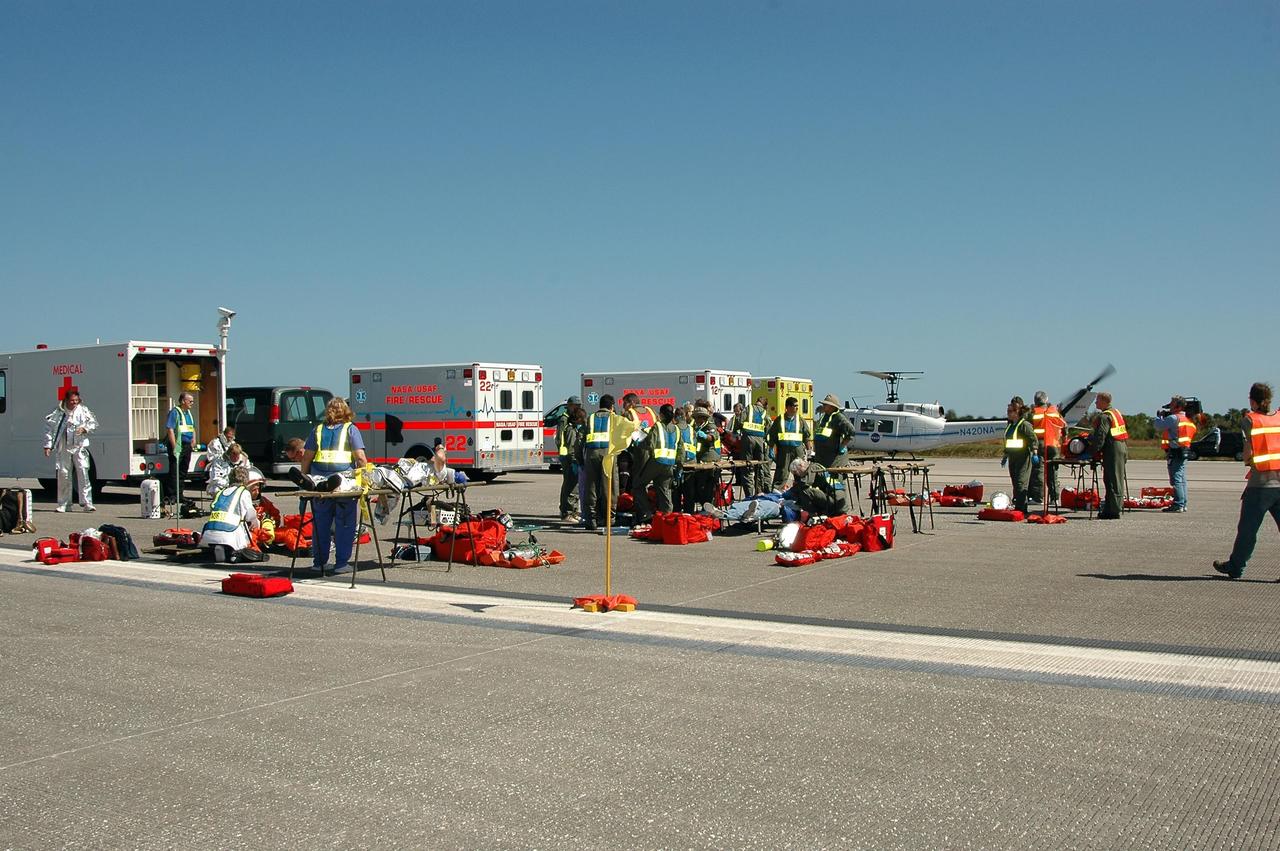
KENNEDY SPACE CENTER, FLA. - Emergency crew members transport an “injured” astronaut during a “Mode VII” emergency landing simulation at Kennedy Space Center. The purpose of the Mode VII is to exercise emergency preparedness personnel, equipment and facilities in rescuing astronauts from a downed orbiter and providing immediate medical attention. This simulation presents an orbiter that has crashed short of the Shuttle Landing Facility in a wooded area 2-1/2 miles south of Runway 33. Emergency crews are responding to the volunteer astronauts who are simulating various injuries. Rescuers must remove the crew, provide triage and transport to hospitals those who need further treatment. Local hospitals are participating in the exercise.
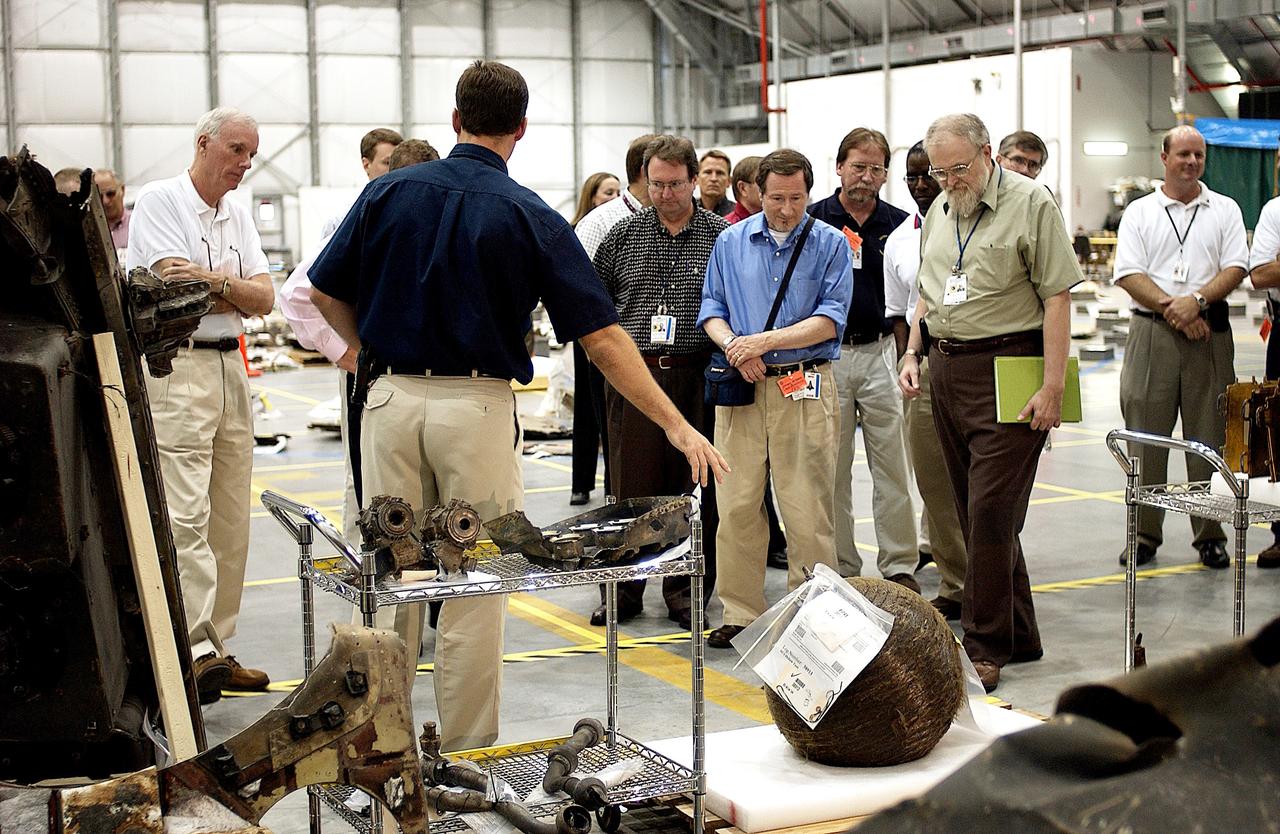
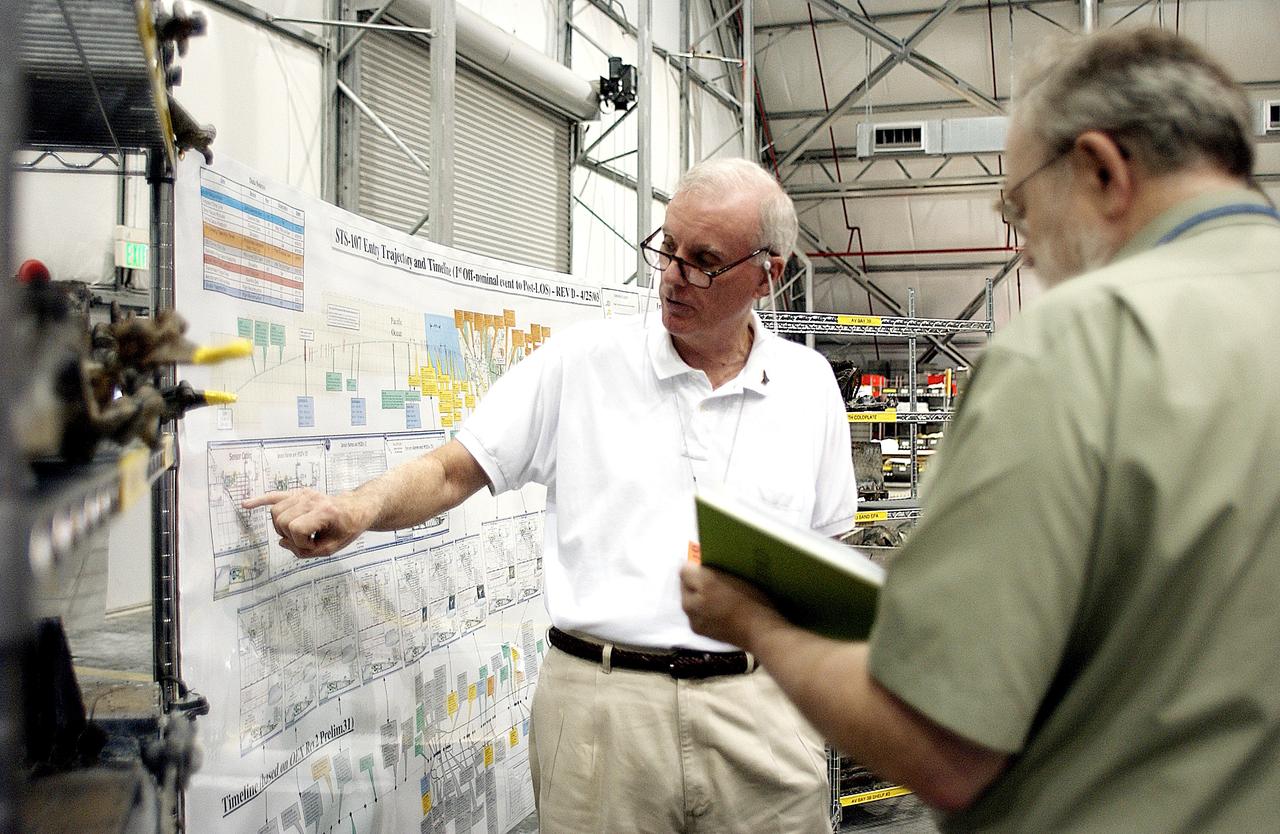
KENNEDY SPACE CENTER, FLA. - In the RLV Hangar, Adm. Harold Gehman, chairman of the Columbia Investigation Accident Board, points to data on a chart.  He and other board members are visiting as part of the ongoing investigation.  Recovery efforts as of May 5 included 82,500 pieces of debris weighing 84,800 pounds, almost 40 percent of the total dry weight of the shuttle.  About 25,000 personnel took part, utilizing almost 1.5 million total man-hours in the recovery effort and involving more than 130 federal, state and local agencies.  The operation was also supported by more than 270 organizations that included businesses and volunteer groups.
KENNEDY SPACE CENTER, FLA. - In the RLV Hangar, Adm. Harold Gehman, chairman of the Columbia Investigation Accident Board, points to data on a chart. He and other board members are visiting as part of the ongoing investigation. Recovery efforts as of May 5 included 82,500 pieces of debris weighing 84,800 pounds, almost 40 percent of the total dry weight of the shuttle. About 25,000 personnel took part, utilizing almost 1.5 million total man-hours in the recovery effort and involving more than 130 federal, state and local agencies. The operation was also supported by more than 270 organizations that included businesses and volunteer groups.
KENNEDY SPACE CENTER, FLA. -   Adm. Harold Gehman, far left, chairman of the Columbia Investigation Accident Board, looks at pieces of Columbia debris collected in the KSC RLV Hangar.  Other members of the board accompanied him as part of the ongoing investigation.  Recovery efforts as of May 5 included 82,500 pieces of debris weighing 84,800 pounds, almost 40 percent of the total dry weight of the shuttle.  About 25,000 personnel took part, utilizing almost 1.5 million total man-hours in the recovery effort and involving more than 130 federal, state and local agencies.  The operation was also supported by more than 270 organizations that included businesses and volunteer groups.
KENNEDY SPACE CENTER, FLA. - Adm. Harold Gehman, far left, chairman of the Columbia Investigation Accident Board, looks at pieces of Columbia debris collected in the KSC RLV Hangar. Other members of the board accompanied him as part of the ongoing investigation. Recovery efforts as of May 5 included 82,500 pieces of debris weighing 84,800 pounds, almost 40 percent of the total dry weight of the shuttle. About 25,000 personnel took part, utilizing almost 1.5 million total man-hours in the recovery effort and involving more than 130 federal, state and local agencies. The operation was also supported by more than 270 organizations that included businesses and volunteer groups.
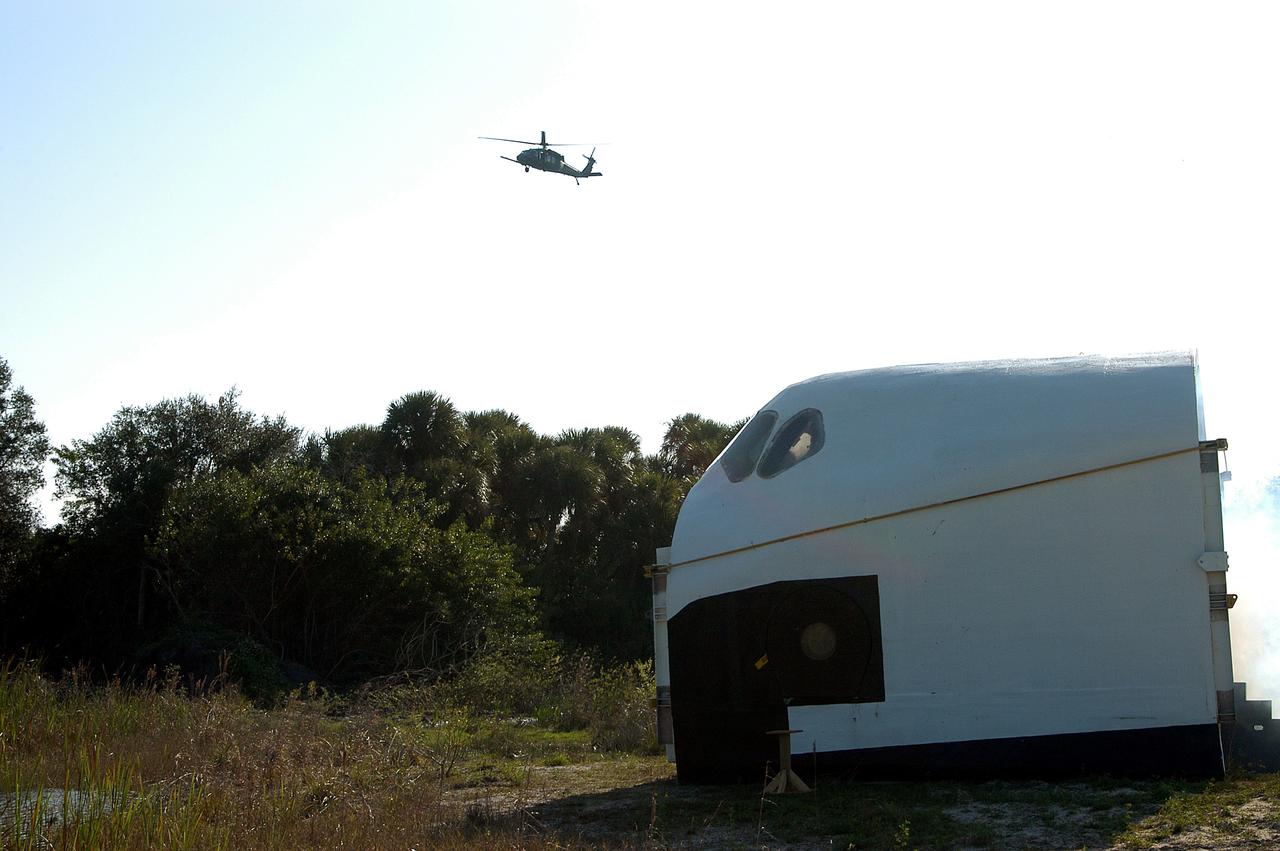
KENNEDY SPACE CENTER, FLA. - A helicopter approaches an orbiter crew compartment mock-up as part of a “Mode VII” emergency landing simulation at Kennedy Space Center.  The purpose is to exercise emergency preparedness personnel, equipment and facilities in rescuing astronauts from a downed orbiter and providing immediate medical attention.  This simulation presents an orbiter that has crashed short of the Shuttle Landing Facility in a wooded area 2-1/2 miles south of Runway 33.  Emergency crews will respond to the volunteer “astronauts” simulating various injuries.  Rescuers must remove the crew, provide triage and transport to hospitals those who need further treatment.  Local hospitals are participating in the exercise.
KENNEDY SPACE CENTER, FLA. - A helicopter approaches an orbiter crew compartment mock-up as part of a “Mode VII” emergency landing simulation at Kennedy Space Center. The purpose is to exercise emergency preparedness personnel, equipment and facilities in rescuing astronauts from a downed orbiter and providing immediate medical attention. This simulation presents an orbiter that has crashed short of the Shuttle Landing Facility in a wooded area 2-1/2 miles south of Runway 33. Emergency crews will respond to the volunteer “astronauts” simulating various injuries. Rescuers must remove the crew, provide triage and transport to hospitals those who need further treatment. Local hospitals are participating in the exercise.
CAFE Foundation safety volunteers Meg Hurt, left, and Gail Vann wait on the runway for the arrival of the next aircraft to take part in the speed competition during the 2011 Green Flight Challenge, sponsored by Google, at the Charles M. Schulz Sonoma County Airport in Santa Rosa, Calif. on Thursday, Sept. 29, 2011. NASA and the Comparative Aircraft Flight Efficiency (CAFE) Foundation are having the challenge with the goal to advance technologies in fuel efficiency and reduced emissions with cleaner renewable fuels and electric aircraft. Photo Credit: (NASA/Bill Ingalls)
Green Flight Challenge
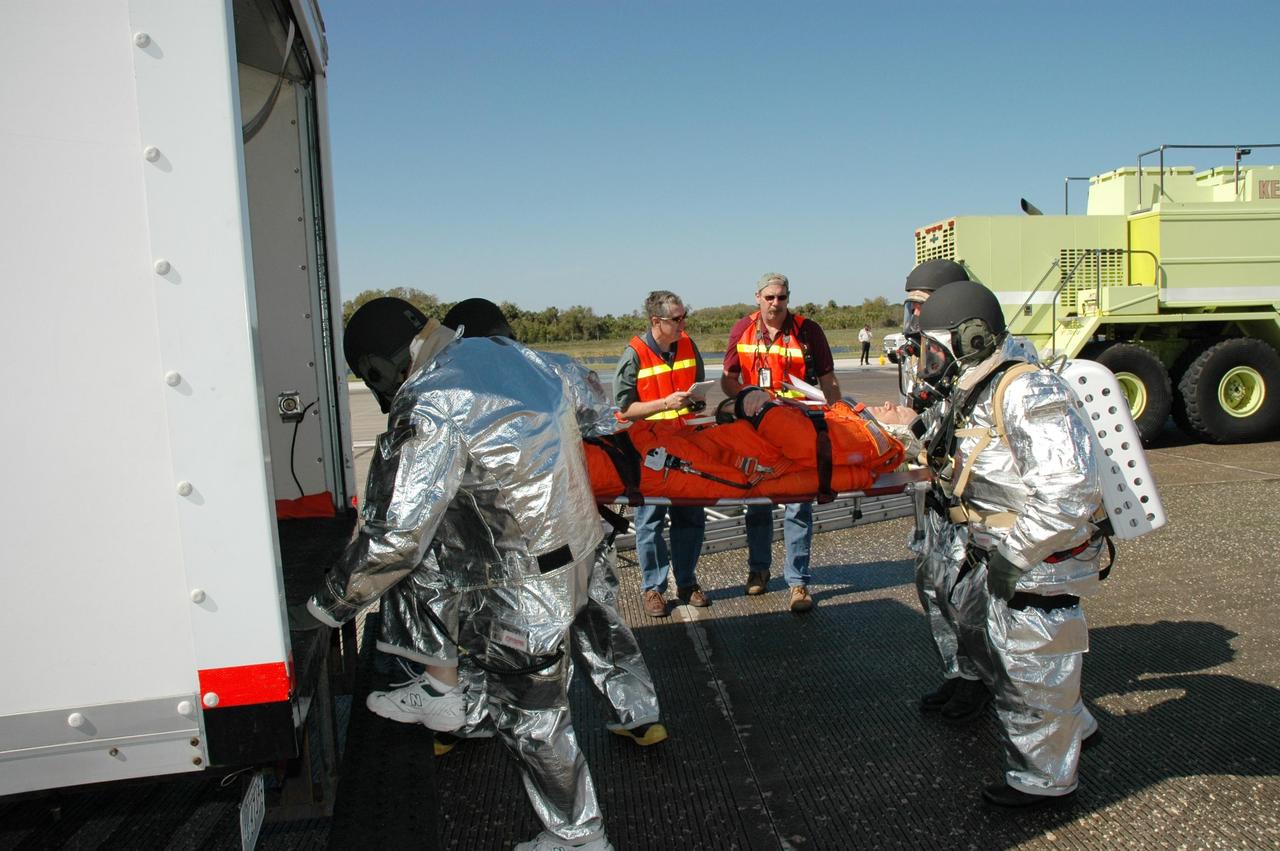
KENNEDY SPACE CENTER, FLA.  -  In a simulated emergency landing of a shuttle crew at NASA Kennedy Space Center's Shuttle Landing Facility, emergency rescue personnel place an "injured astronaut" onto a stretcher.  Known as a Mode VI exercise, the operation uses volunteer workers from the Center to pose as astronauts. The purpose of the simulation is to exercise emergency preparedness personnel, equipment and facilities in rescuing astronauts from a downed orbiter and providing immediate medical attention. Photo credit: NASA/Kim Shiflett
KSC-06pd0491
KENNEDY SPACE CENTER, FLA.  -   In a simulated emergency landing of a shuttle crew at NASA Kennedy Space Center's Shuttle Landing Facility, emergency rescue personnel place an "injured astronaut" into a rescue vehicle.  Known as a Mode VI exercise, the operation uses volunteer workers from the Center to pose as astronauts. The purpose of the simulation is to exercise emergency preparedness personnel, equipment and facilities in rescuing astronauts from a downed orbiter and providing immediate medical attention. Photo credit: NASA/Kim Shiflett
KSC-06pd0496
KENNEDY SPACE CENTER, FLA.  -  At NASA Kennedy Space Center's Shuttle Landing Facility, emergency rescue worker tend to "injured astronauts" during a simulated emergency landing of a shuttle crew.   Known as a Mode VI exercise, the operation uses volunteer workers from the Center to pose as astronauts. The purpose of the simulation is to exercise emergency preparedness personnel, equipment and facilities in rescuing astronauts from a downed orbiter and providing immediate medical attention. Photo credit: NASA/Troy Cryder
KSC-06pd0518
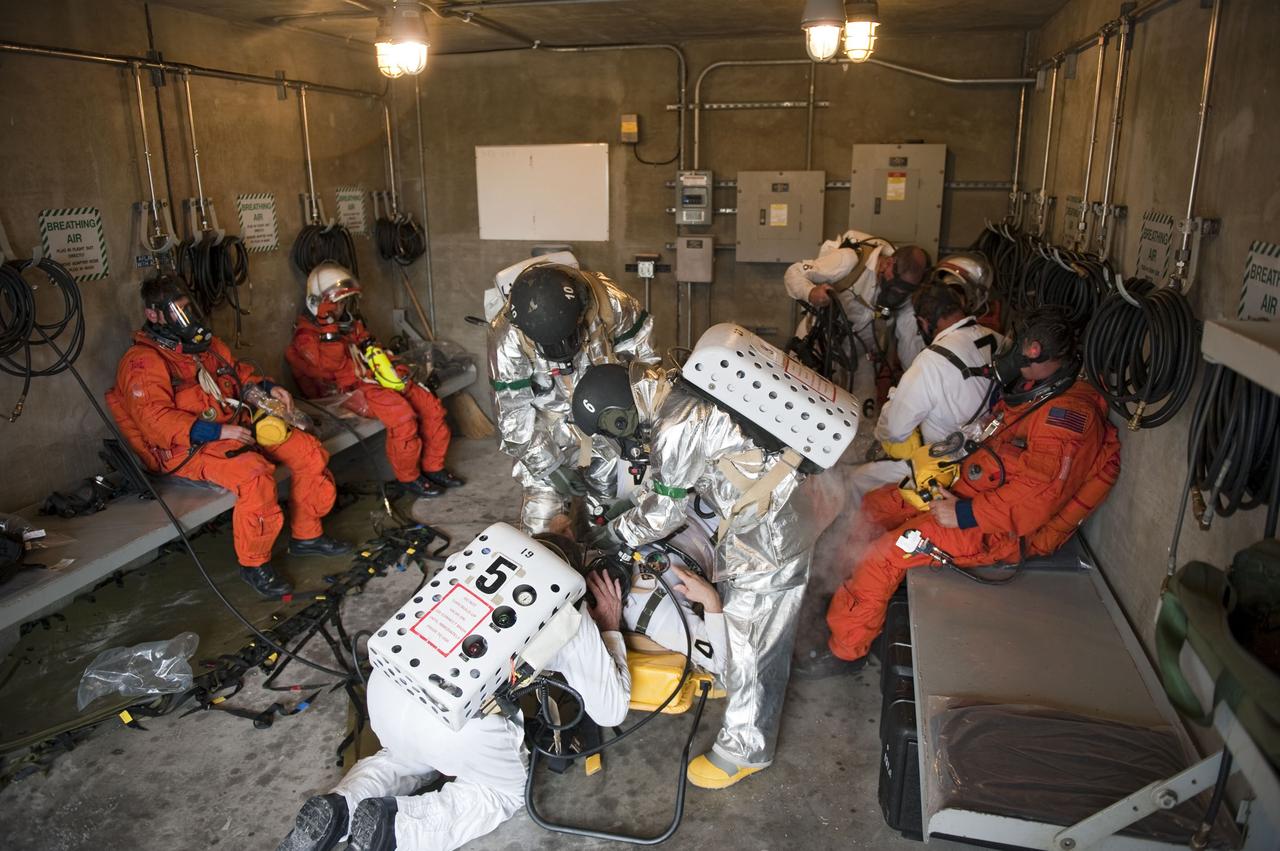
CAPE CANAVERAL, Fla. – An emergency exit, or Mode II/IV, exercise is under way in a bunker of Launch Pad 39A at NASA's Kennedy Space Center in Florida. The exercise involves NASA fire rescue personnel, volunteers portraying astronauts with simulated injuries, helicopters and personnel from the Air Force’s 920th Rescue Wing, and medical trauma teams at three Central Florida hospitals. The drill allows teams to practice an emergency response at the launch pad, including helicopter evacuation to local hospitals.         Photo credit: NASA/Kim Shiflett
KSC-2011-2018
KENNEDY SPACE CENTER, FLA.  -  At NASA Kennedy Space Center's Shuttle Landing Facility, emergency personnel carry an "injured astronaut" to a rescue vehicle during a simulated emergency landing of a shuttle crew.  Known as a Mode VI exercise, the operation uses volunteer workers from the Center to pose as astronauts. The purpose of the simulation is to exercise emergency preparedness personnel, equipment and facilities in rescuing astronauts from a downed orbiter and providing immediate medical attention. Photo credit: NASA/Jim Grossmann
KSC-06pd0514
A volunteer assists an eager participant at International Observe the Moon Night Oct. 28 at the U.S. Space & Rocket Center. The event, hosted by the Planetary Missions Program at NASA's Marshall Space Flight Center, encourages observation and appreciation of the Moon and its connection to NASA planetary science and exploration, as well as our cultural and personal connections to it. Children attending the event had the opportunity to participate in planetary, science-based, hands-on activities
International Observe the Moon Night
NASA's Marshall Space Flight Center showcased it's various projects for the public in Huntsville, Alabama's Big Spring Park. Exhibits were displayed by all of the various directorates of the Center with employee volunteers explaining all aspects of their projects. Adding to the festivities was the attendance of retired NASA astronaut Robert "Hoot" Gibson. “Hoot” Gibson reminisces about his history as an astronaut and takes questions from the audience at NASA Day in the Park.
2018 NASA in the Park Celebration