KSC Protectice Services - Working Dogs Feature Story.
KSC Protectice Services - Working Dogs Feature Story.
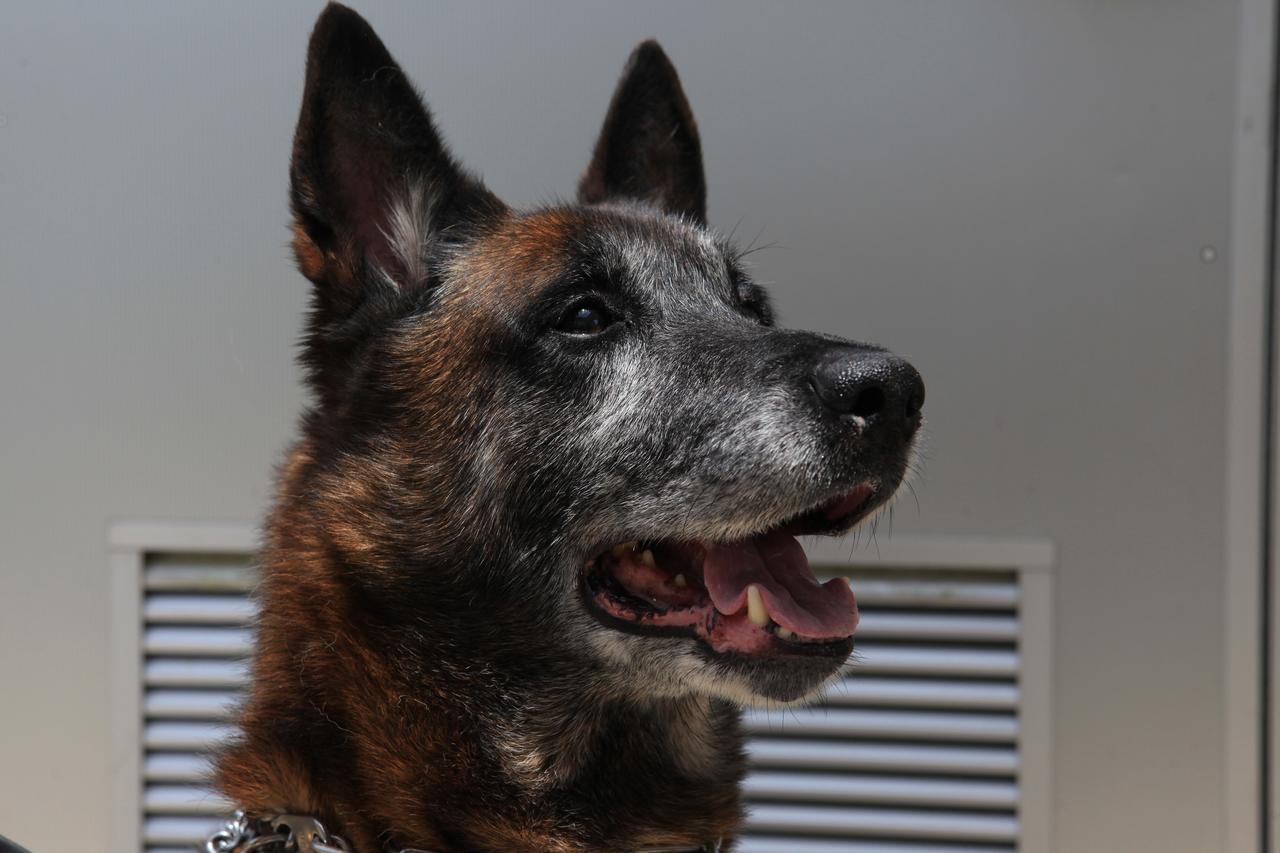
K-9 Spike stands alert and ready for the next training exercise with his Handler Officer John McGee at Kennedy Space Center’s Protective Services Office in Florida on July 10, 2019. The center’s specially trained K-9s support the center 24/7, 365 days. Their main goal is to protect the Kennedy workforce and assets. Normal activities include sweeps of designated facilities, parking lots and random vehicle inspections at entrance gates. During rocket launches, they are out and about performing sweeps of facilities and launch site viewing areas. They cover Kennedy and the Merritt Island National Wildlife Refuge.
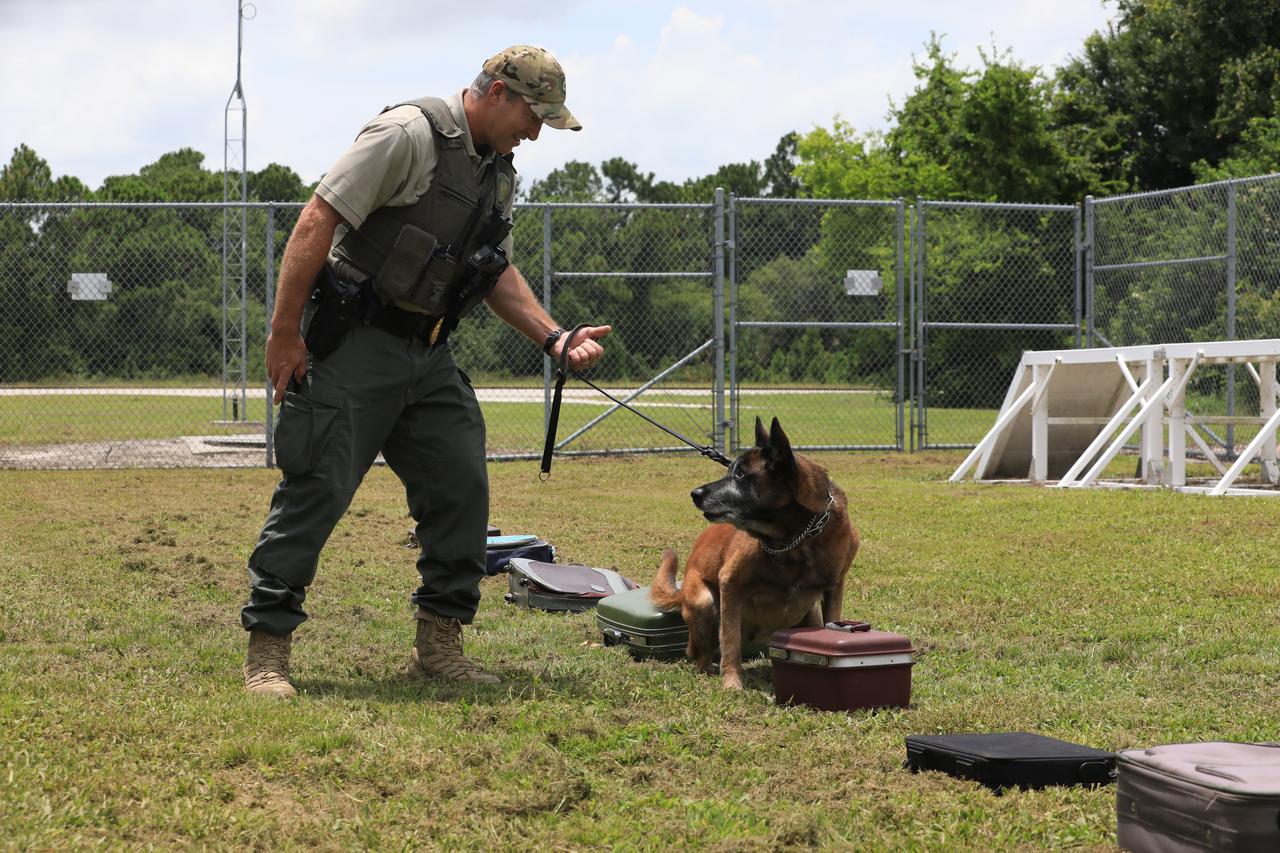
K-9 Handler Officer Scott O’Rourke watches as K-9 LJ stops at the container with a suspicious substance during a training exercise on July 10, 2019, at Kennedy Space Center’s Protective Services Office in Florida. The center’s specially trained K-9s support the center 24/7, 365 days. Their main goal is to protect the Kennedy workforce and assets. Normal activities include sweeps of designated facilities, parking lots and random vehicle inspections at entrance gates. During rocket launches, they are out and about performing sweeps of facilities and launch site viewing areas. They cover Kennedy and the Merritt Island National Wildlife Refuge.
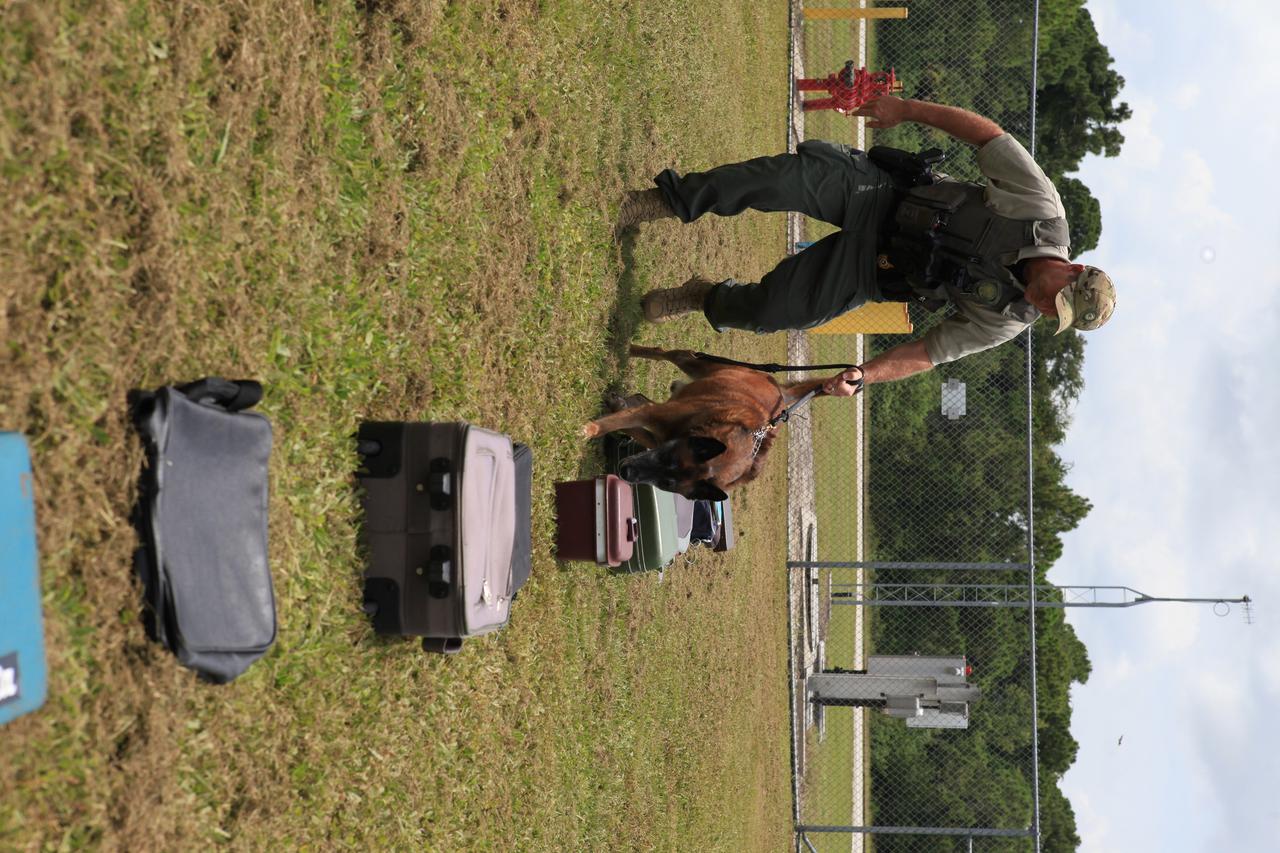
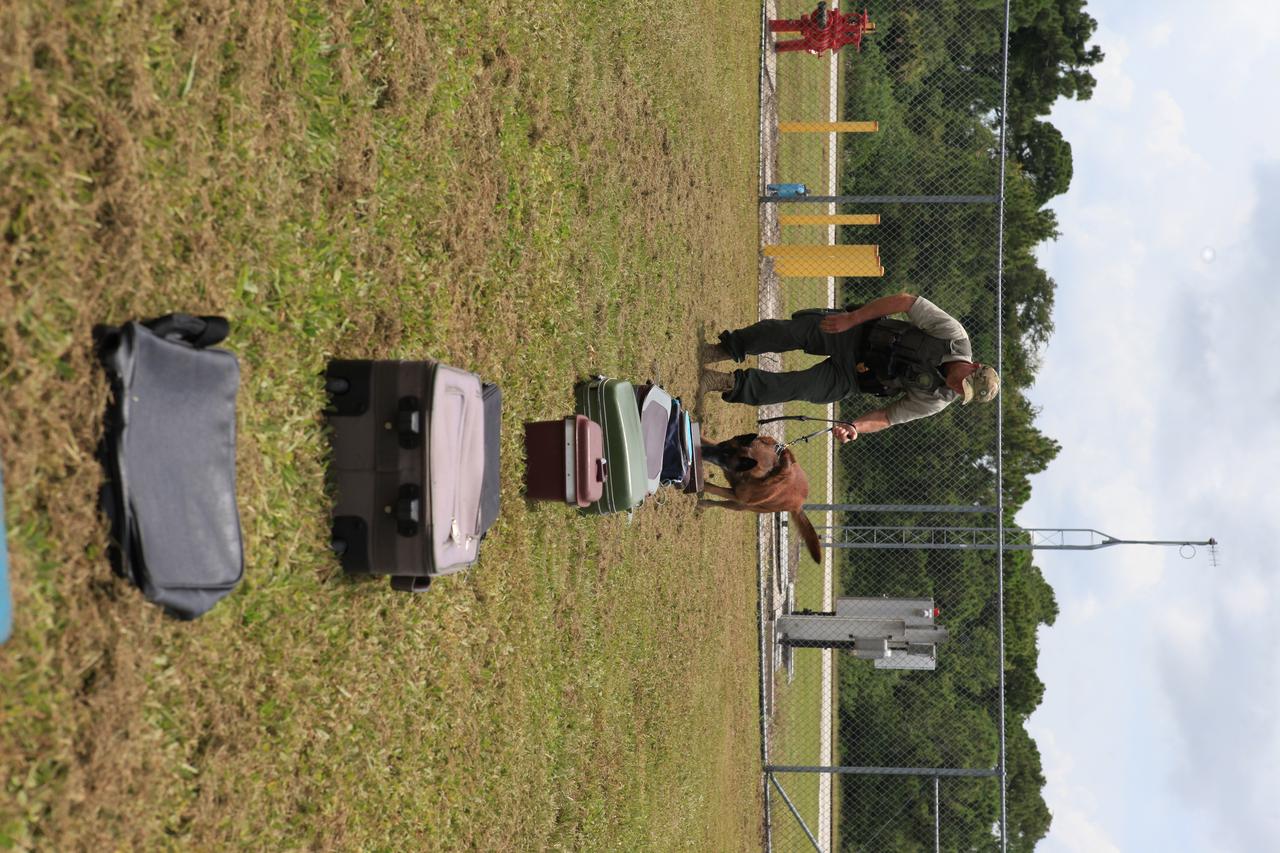
K-9 Handler Officer Scott O’Rourke watches as K-9 LJ works his way through a row of bags and containers to locate one with a suspicious substance during a training exercise on July 10, 2019, at Kennedy Space Center’s Protective Services Office in Florida. The center’s specially trained K-9s support the center 24/7, 365 days. Their main goal is to protect the Kennedy workforce and assets. Normal activities include sweeps of designated facilities, parking lots and random vehicle inspections at entrance gates. During rocket launches, they are out and about performing sweeps of facilities and launch site viewing areas. They cover Kennedy and the Merritt Island National Wildlife Refuge.
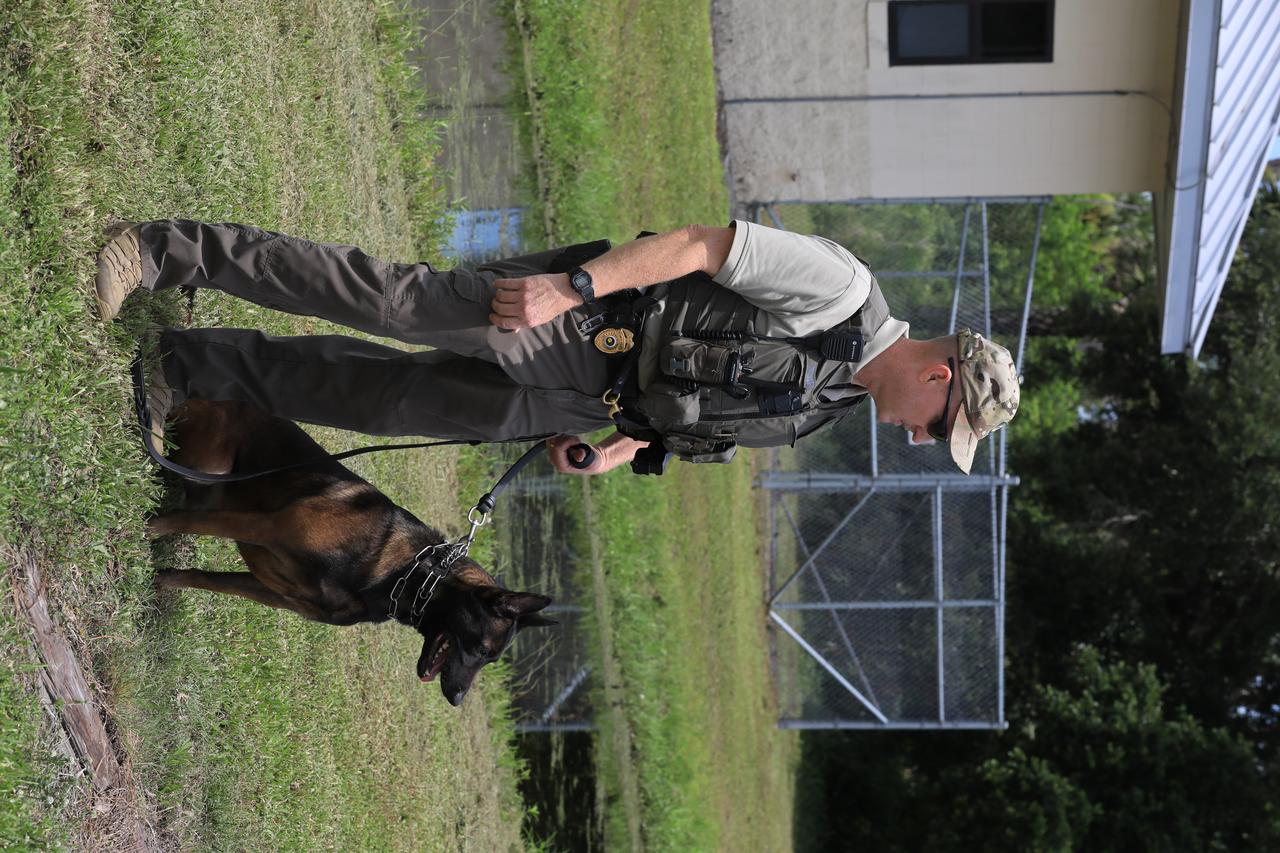
K-9 Spike is ready for the next training exercise with his Handler Officer John McGee at Kennedy Space Center’s Protective Services Office in Florida on July 10, 2019. The center’s specially trained K-9s support the center 24/7, 365 days. Their main goal is to protect the Kennedy workforce and assets. Normal activities include sweeps of designated facilities, parking lots and random vehicle inspections at entrance gates. During rocket launches, they are out and about performing sweeps of facilities and launch site viewing areas. They cover Kennedy and the Merritt Island National Wildlife Refuge.
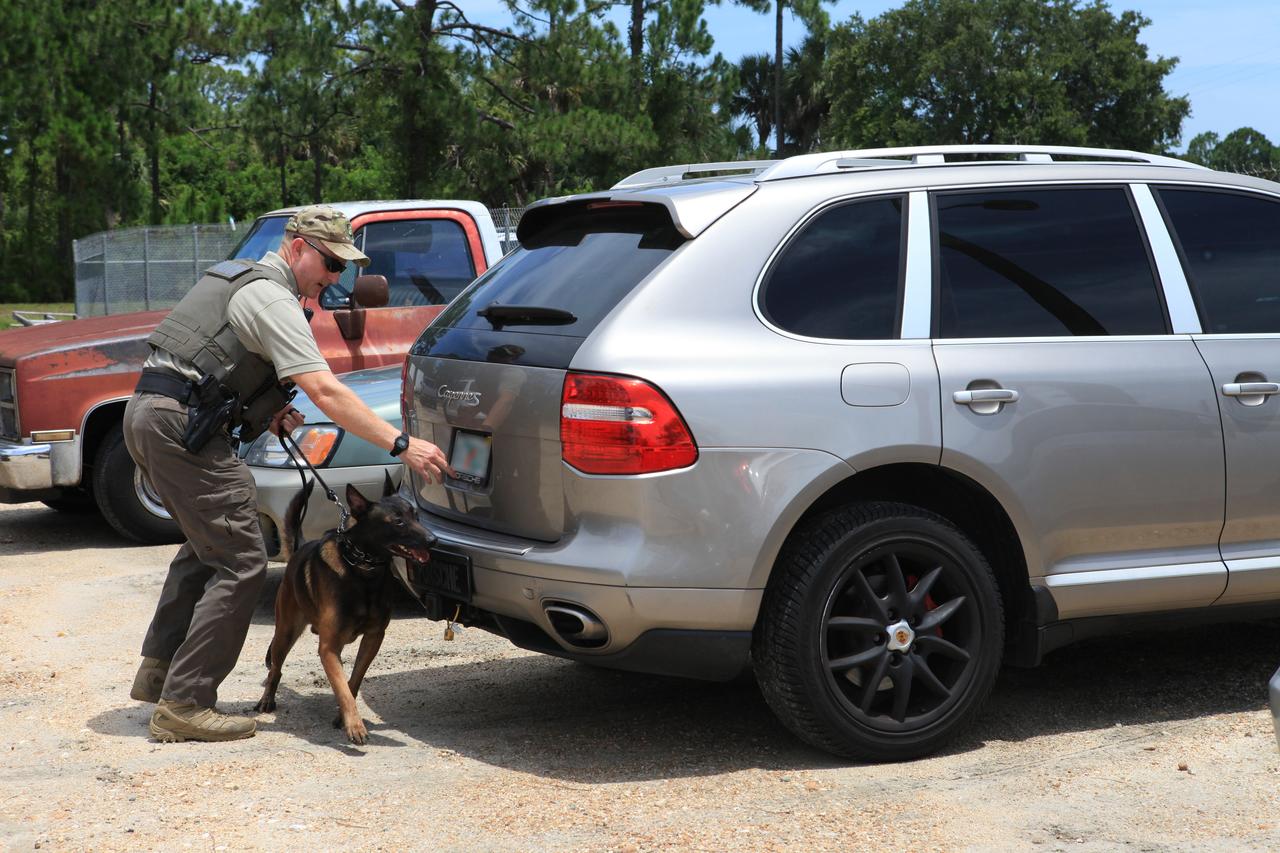
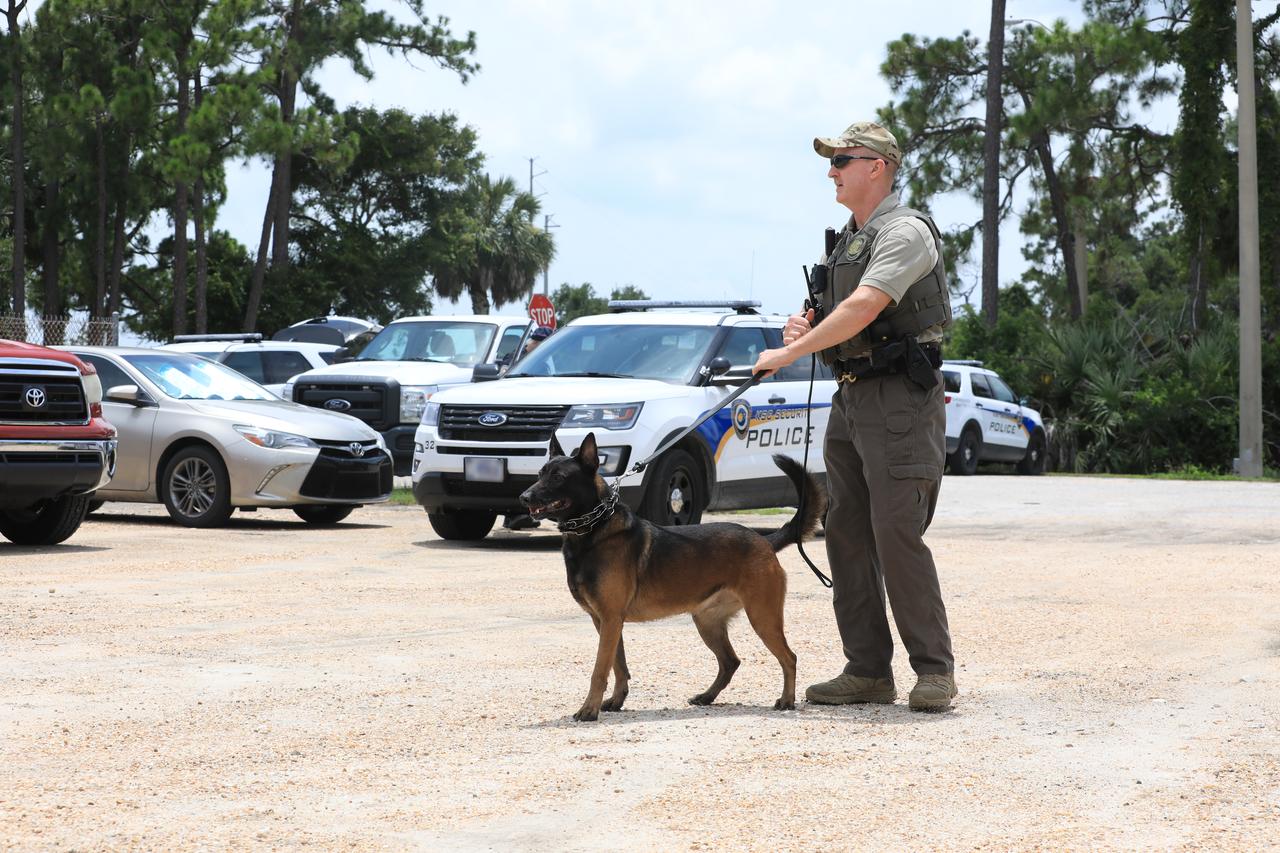
K-9 Handler Officer John McGee watches as K-9 Spike works his way through a row of cars during a training exercise on July 10, 2019, at Kennedy Space Center’s Protective Services Office in Florida. The center’s specially trained K-9s support the center 24/7, 365 days. Their main goal is to protect the Kennedy workforce and assets. Normal activities include sweeps of designated facilities, parking lots and random vehicle inspections at entrance gates. During rocket launches, they are out and about performing sweeps of facilities and launch site viewing areas. They cover Kennedy and the Merritt Island National Wildlife Refuge.
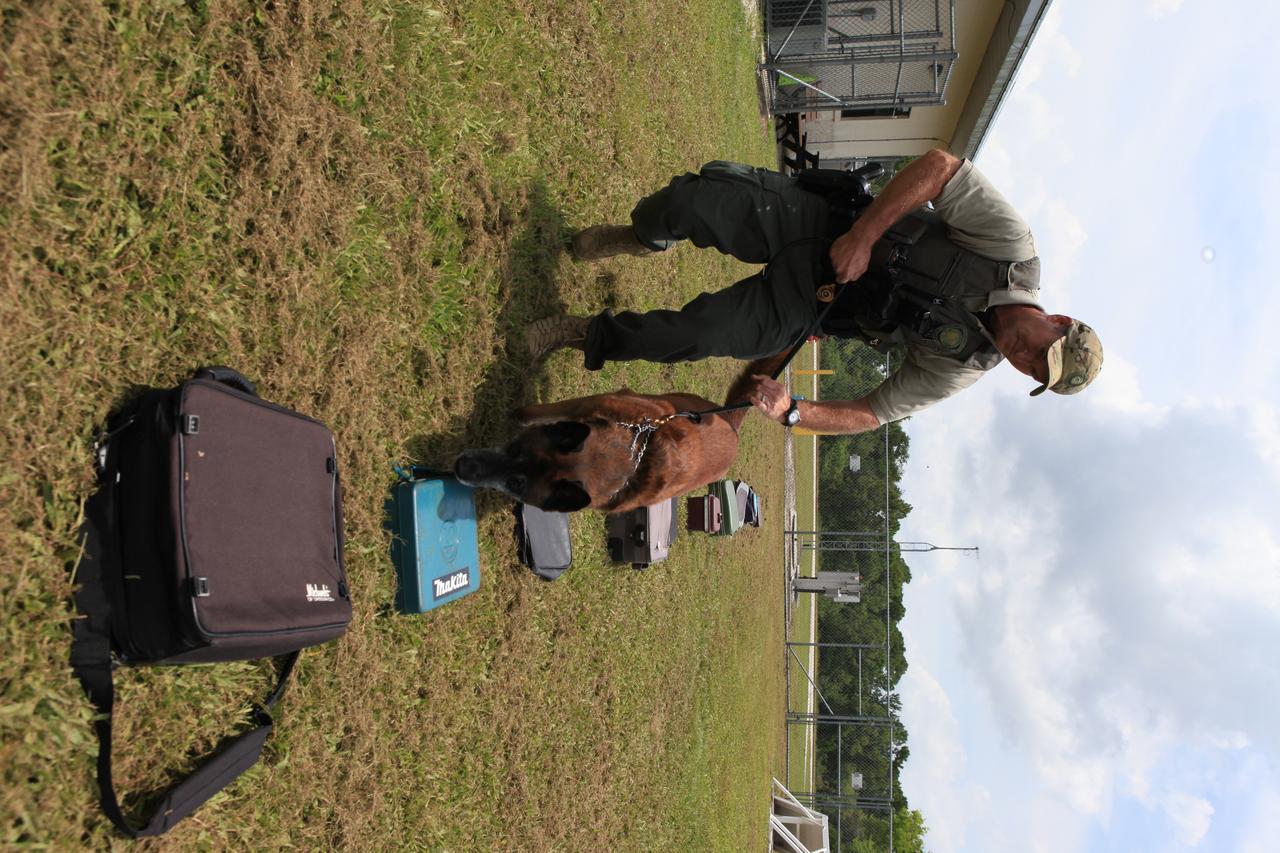
K-9 Handler Officer Scott O’Rourke watches as K-9 LJ works his way through a row of bags and containers to locate one with a suspicious substance during a training exercise on July 10, 2019, at Kennedy Space Center’s Protective Services Office in Florida. The center’s specially trained K-9s support the center 24/7, 365 days. Their main goal is to protect the Kennedy workforce and assets. Normal activities include sweeps of designated facilities, parking lots and random vehicle inspections at entrance gates. During rocket launches, they are out and about performing sweeps of facilities and launch site viewing areas. They cover Kennedy and the Merritt Island National Wildlife Refuge.
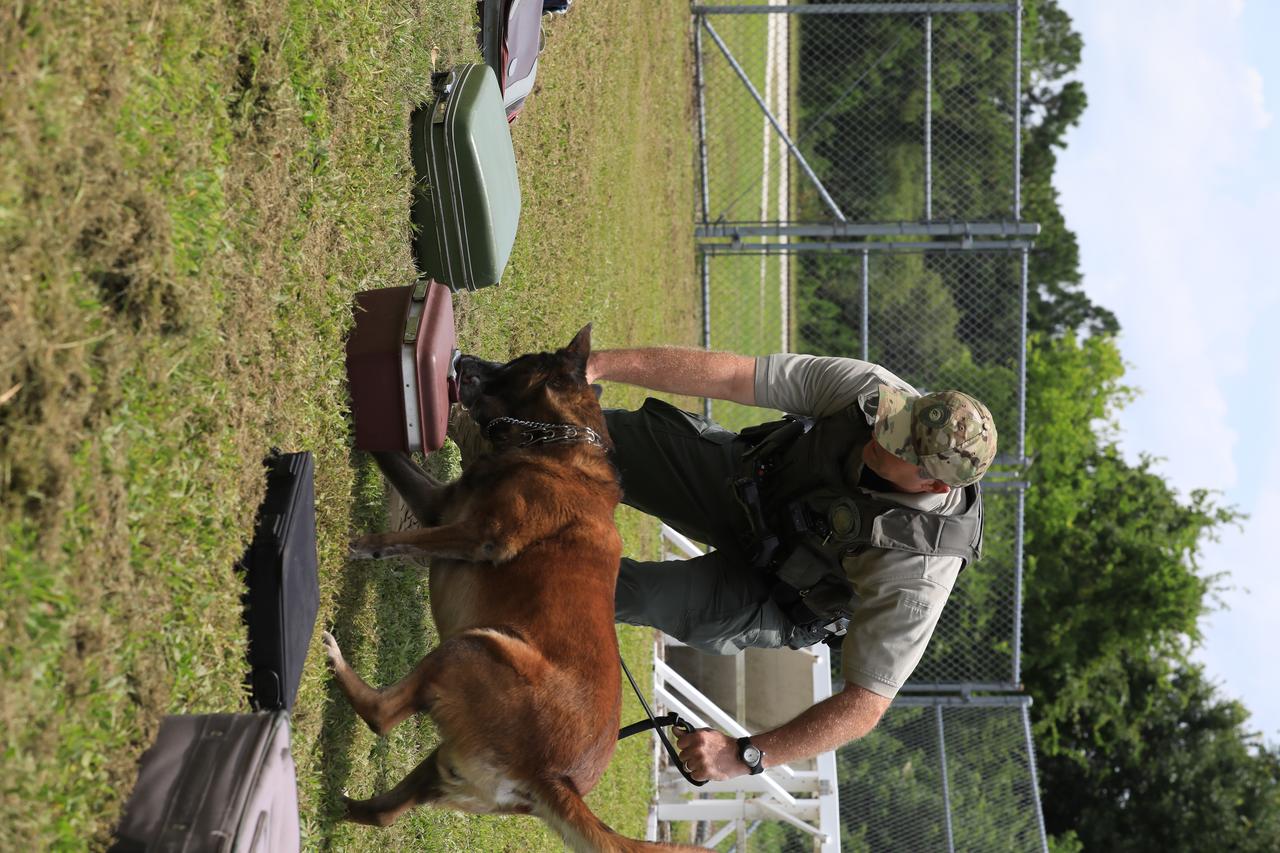
K-9 Handler Officer Scott O’Rourke watches as K-9 LJ selects the container with a suspicious substance during a training exercise on July 10, 2019, at Kennedy Space Center’s Protective Services Office in Florida. The center’s specially trained K-9s support the center 24/7, 365 days. Their main goal is to protect the Kennedy workforce and assets. Normal activities include sweeps of designated facilities, parking lots and random vehicle inspections at entrance gates. During rocket launches, they are out and about performing sweeps of facilities and launch site viewing areas. They cover Kennedy and the Merritt Island National Wildlife Refuge.
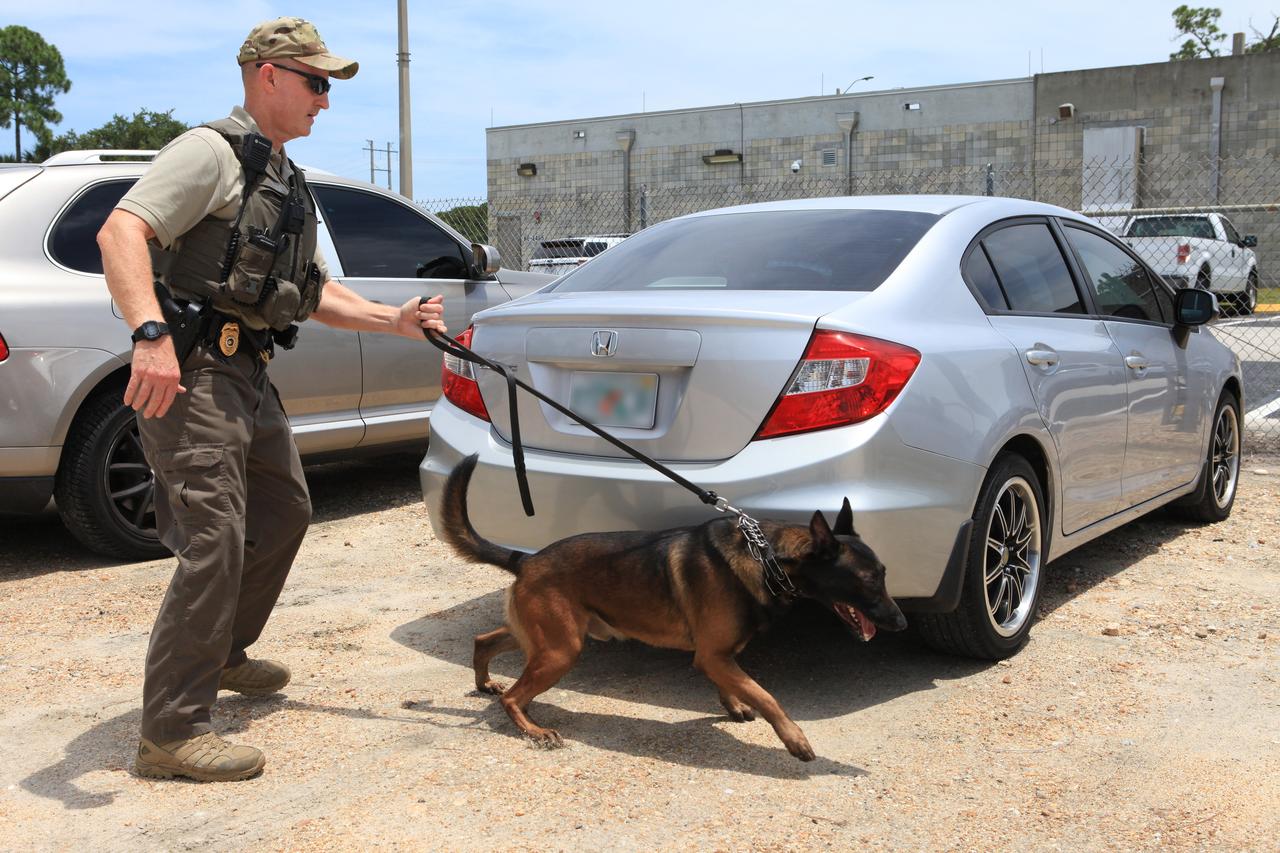
K-9 Handler Officer John McGee watches as K-9 Spike works his way through a row of cars during a training exercise on July 10, 2019, at Kennedy Space Center’s Protective Services Office in Florida. The center’s specially trained K-9s support the center 24/7, 365 days. Their main goal is to protect the Kennedy workforce and assets. Normal activities include sweeps of designated facilities, parking lots and random vehicle inspections at entrance gates. During rocket launches, they are out and about performing sweeps of facilities and launch site viewing areas. They cover Kennedy and the Merritt Island National Wildlife Refuge.
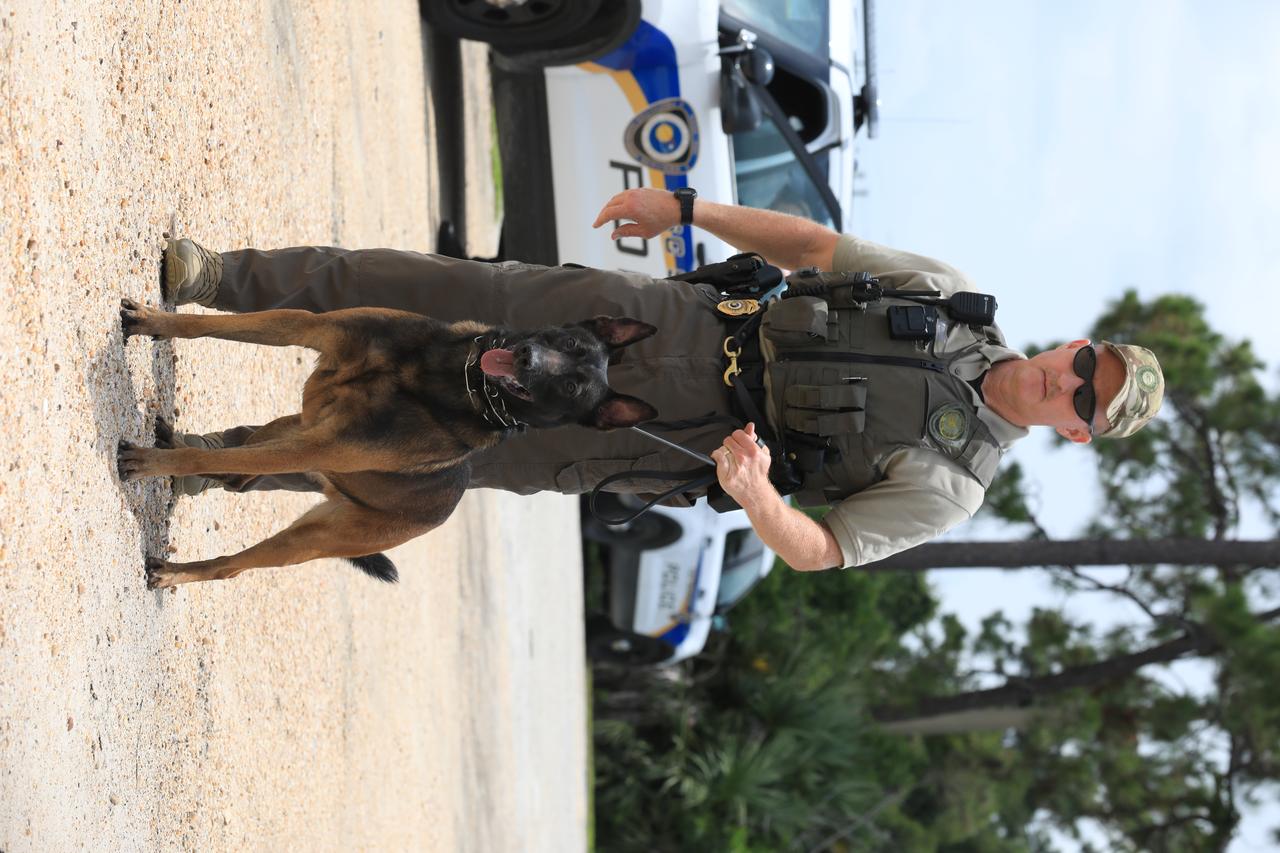
K-9 Spike stands alert and ready for the next training exercise with his Handler Officer John McGee at Kennedy Space Center’s Protective Services Office in Florida on July 10, 2019. The center’s specially trained K-9s support the center 24/7, 365 days. Their main goal is to protect the Kennedy workforce and assets. Normal activities include sweeps of designated facilities, parking lots and random vehicle inspections at entrance gates. During rocket launches, they are out and about performing sweeps of facilities and launch site viewing areas. They cover Kennedy and the Merritt Island National Wildlife Refuge.
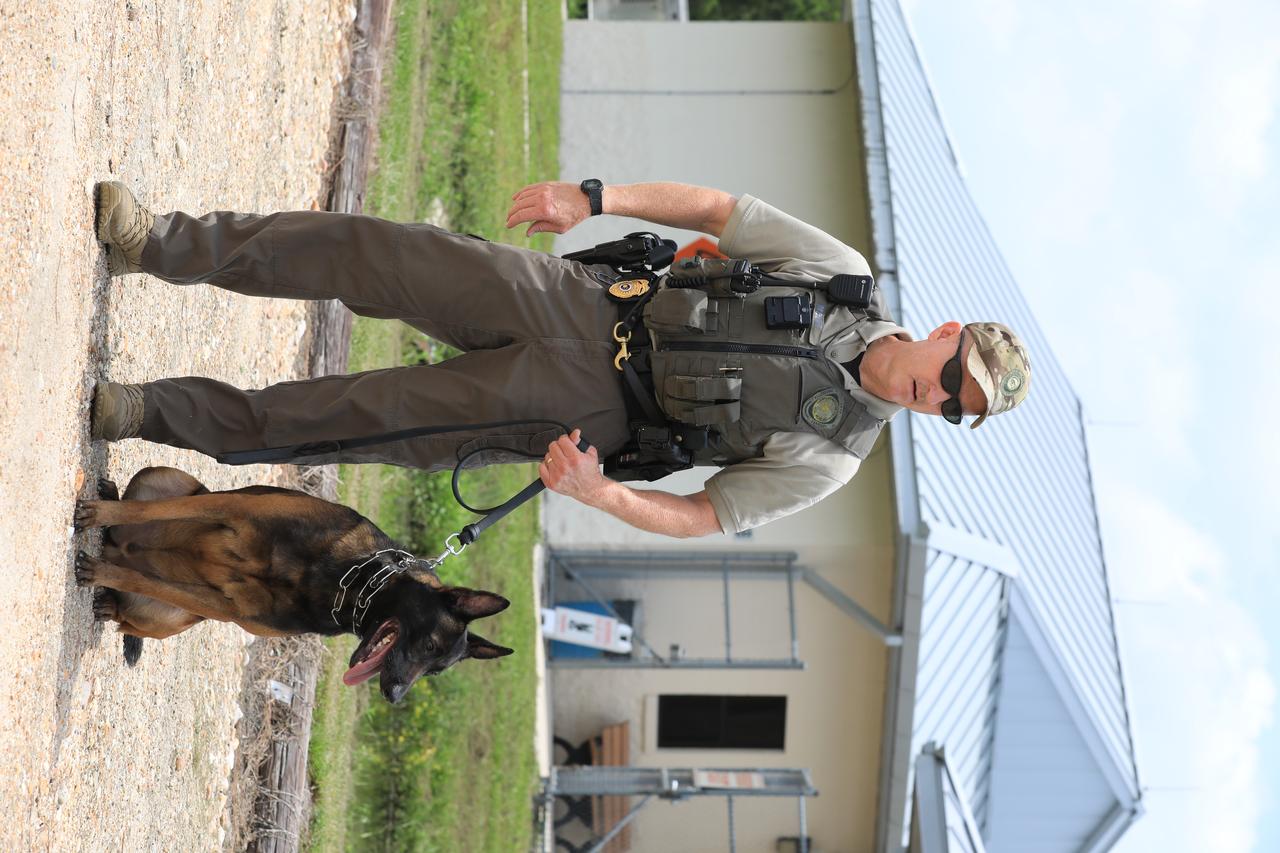
K-9 Spike is ready for the next training exercise with his Handler Officer John McGee at Kennedy Space Center’s Protective Services Office in Florida on July 10, 2019. The center’s specially trained K-9s support the center 24/7, 365 days. Their main goal is to protect the Kennedy workforce and assets. Normal activities include sweeps of designated facilities, parking lots and random vehicle inspections at entrance gates. During rocket launches, they are out and about performing sweeps of facilities and launch site viewing areas. They cover Kennedy and the Merritt Island National Wildlife Refuge.
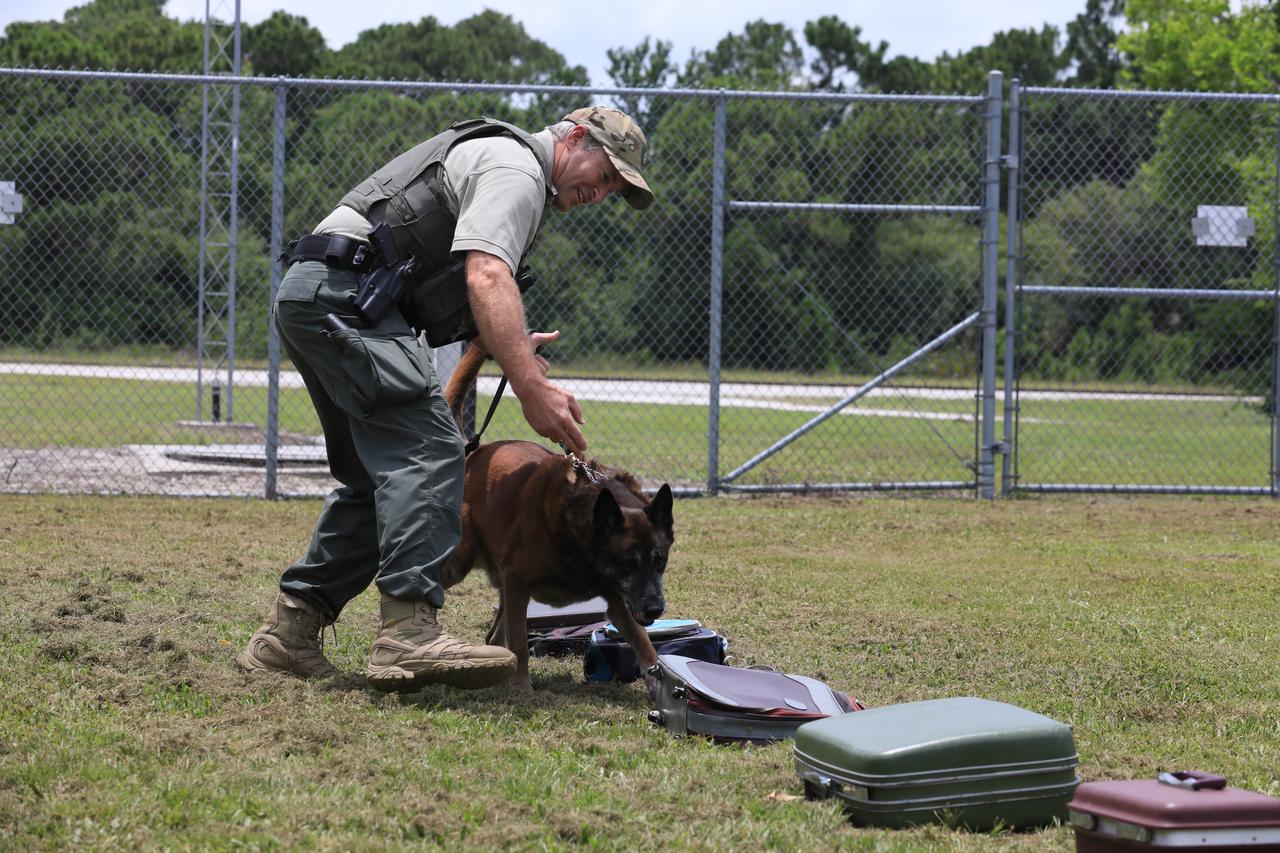
K-9 Handler Officer Scott O’Rourke watches as K-9 LJ works his way through a row of bags and containers to locate one with a suspicious substance during a training exercise on July 10, 2019, at Kennedy Space Center’s Protective Services Office in Florida. The center’s specially trained K-9s support the center 24/7, 365 days. Their main goal is to protect the Kennedy workforce and assets. Normal activities include sweeps of designated facilities, parking lots and random vehicle inspections at entrance gates. During rocket launches, they are out and about performing sweeps of facilities and launch site viewing areas. They cover Kennedy and the Merritt Island National Wildlife Refuge.
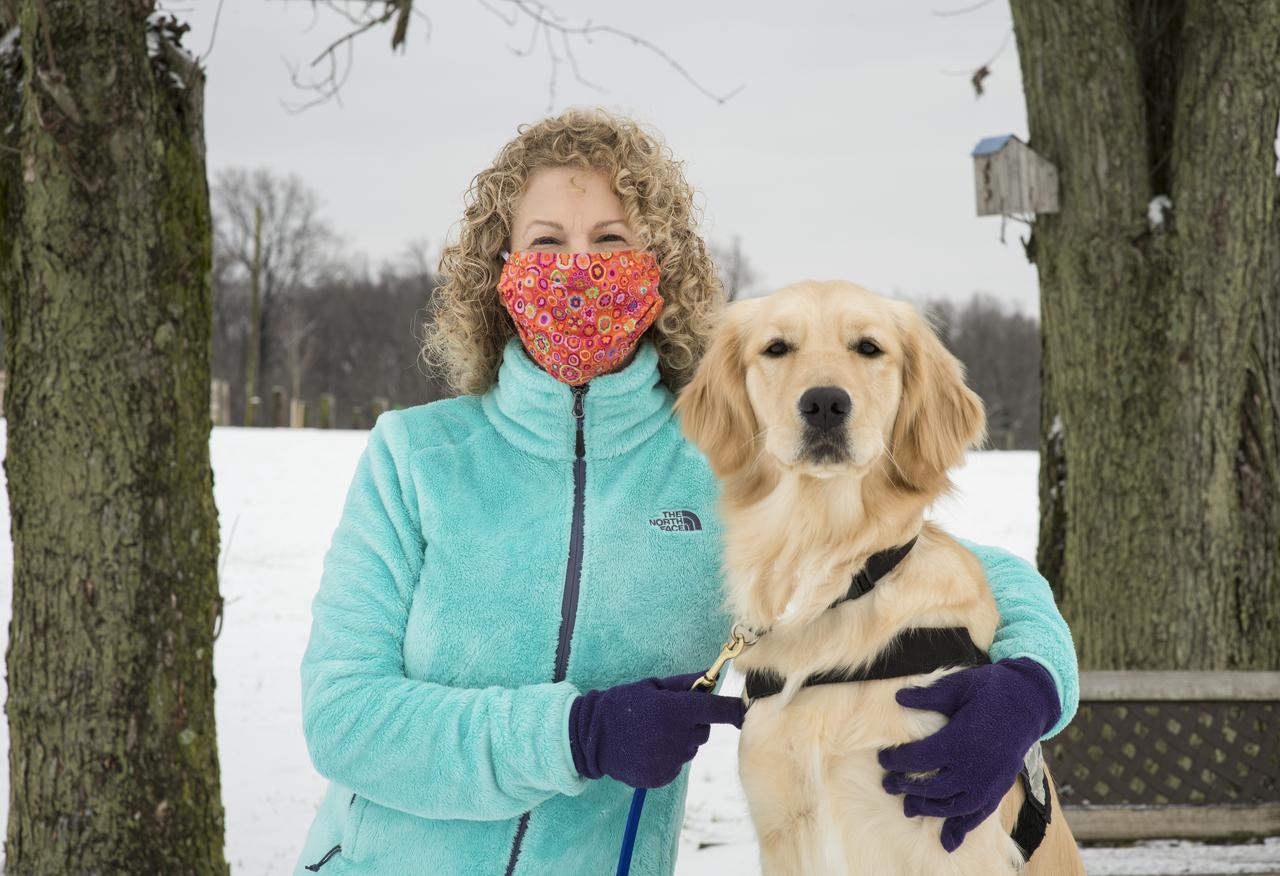
“It was part of my career, but then it was also personal. I was doing it on a volunteer basis, but it was part of my work because I was bringing my service dog in training everywhere with me, which meant to work every day and to meetings at NOAA (National Oceanic and Atmospheric Administration). And I was taking the dog across the country to meetings over at Ball Aerospace; that was all part of the training of a service dog. That was an incredible time. I really enjoyed it. “The fact that I was able to do the two combined, that to me was just such an accomplishment. To some people, it could be they got permission to do it and then that’s all they focused on was the dog, but no. I had my job I had to do. I’ve always gotten a distinguished rating in my performances my entire career, and it didn't change when I was training this service dog. “It was a challenge for sure. “After I had to turn back over the service dog I trained, it was really very difficult because the dog was with me for two years, even though I knew it was for a wonderful cause. I ended up going out and getting my own dog who I’ve trained to be a therapy dog, so now we do therapy visits with veterans, elderly, and others. ” Jean Wolfe, Program Executive for the Geostationary Operational Environmental Satellite (GOES)-R Series Program at NASA Headquarters, poses for a portrait with Bonnie, who was named for U.S. Air Force Reserve Major Bonnie Carroll, Ret., Friday, Dec. 18, 2020 at the Warrior Canine Connection in Boyds, MD. “Warrior Canine Connection enlists service members and veterans with combat stress in the critical mission of training service dogs for fellow Wounded Warriors.” Photo Credit: (NASA/Aubrey Gemignani)

SPARKY THE FIRE DOG, MASCOT FOR THE NATIONAL FIRE PROTECTION ASSOCIATION, TEAMS UP WITH PATRICK SCHEUERMANN AT THE MARSHALL CENTER SEPT. 26 TO PROMOTE THE NATIONWIDE FIRE PREVENTION WEEK CAMPAIGN, “WORKING SMOKE ALARMS SAVE LIVES: TEST YOURS EVERY MONTH!”-
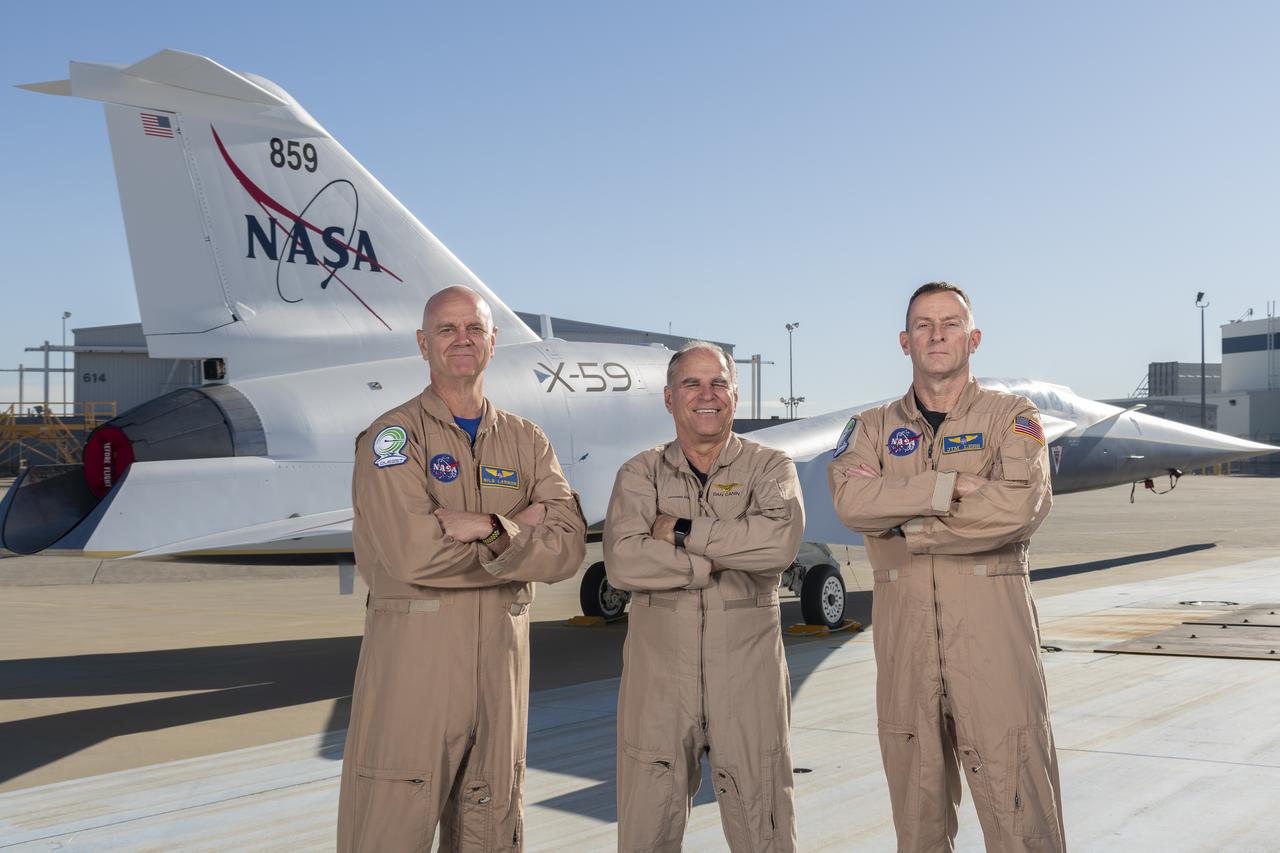
NASA test pilots Nils Larson (left) and Jim “Clue” Less (right), and Lockheed Martin test pilot Dan “Dog” Canin pose with the newly-painted X-59 as it sits on the ramp at Lockheed Martin Skunk Works in Palmdale, California. The X-59 is the centerpiece of NASA’s Quesst mission, which seeks to solve one of the major barriers to supersonic flight over land, currently banned in the United States, by making sonic booms quieter.
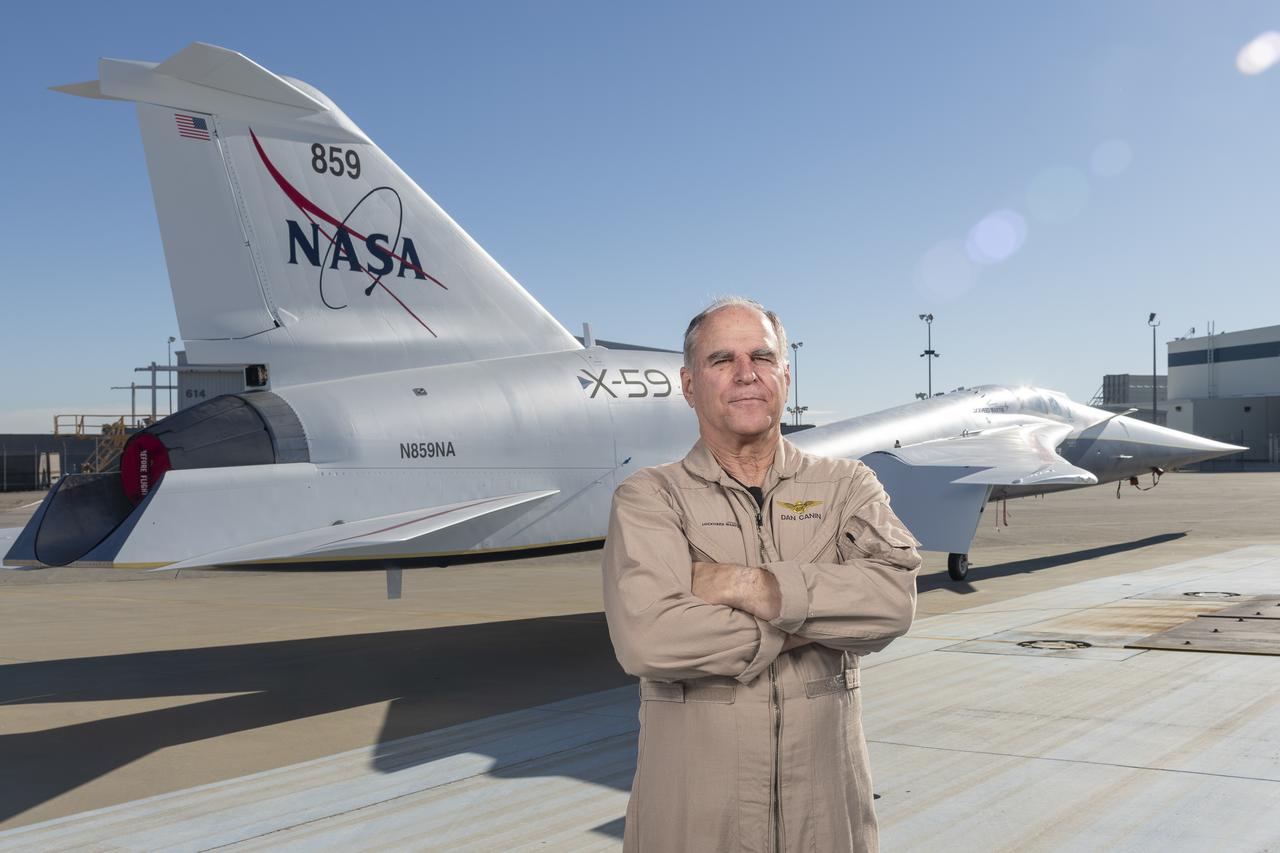
Lockheed Martin test pilot Dan “Dog” Canin poses with the newly-painted X-59 as it sits on the ramp at Lockheed Martin Skunk Works in Palmdale, California. The X-59 is the centerpiece of NASA’s Quesst mission, which seeks to solve one of the major barriers to supersonic flight over land, currently banned in the United States, by making sonic booms quieter.
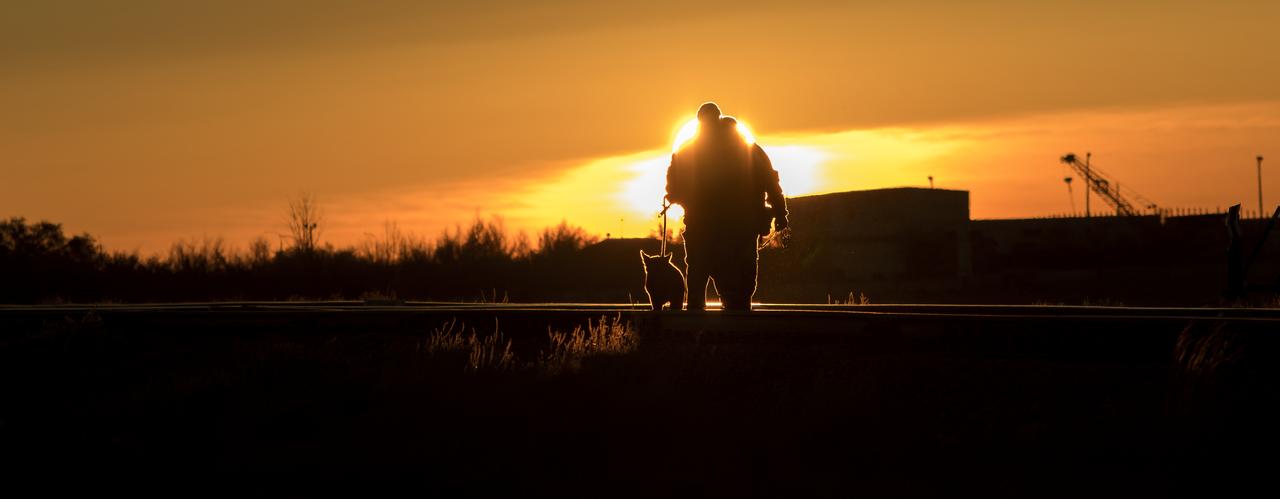
Security personnel and their dog sweep the train tracks in advance of the Soyuz rocket being rolled out to the launch pad, Tuesday, Oct. 9, 2018 at the Baikonur Cosmodrome in Kazakhstan. Expedition 57 crewmembers Nick Hague of NASA and Alexey Ovchinin of Roscosmos are scheduled to launch on October 11 and will spend the next six months living and working aboard the International Space Station. Photo Credit: (NASA/Bill Ingalls)
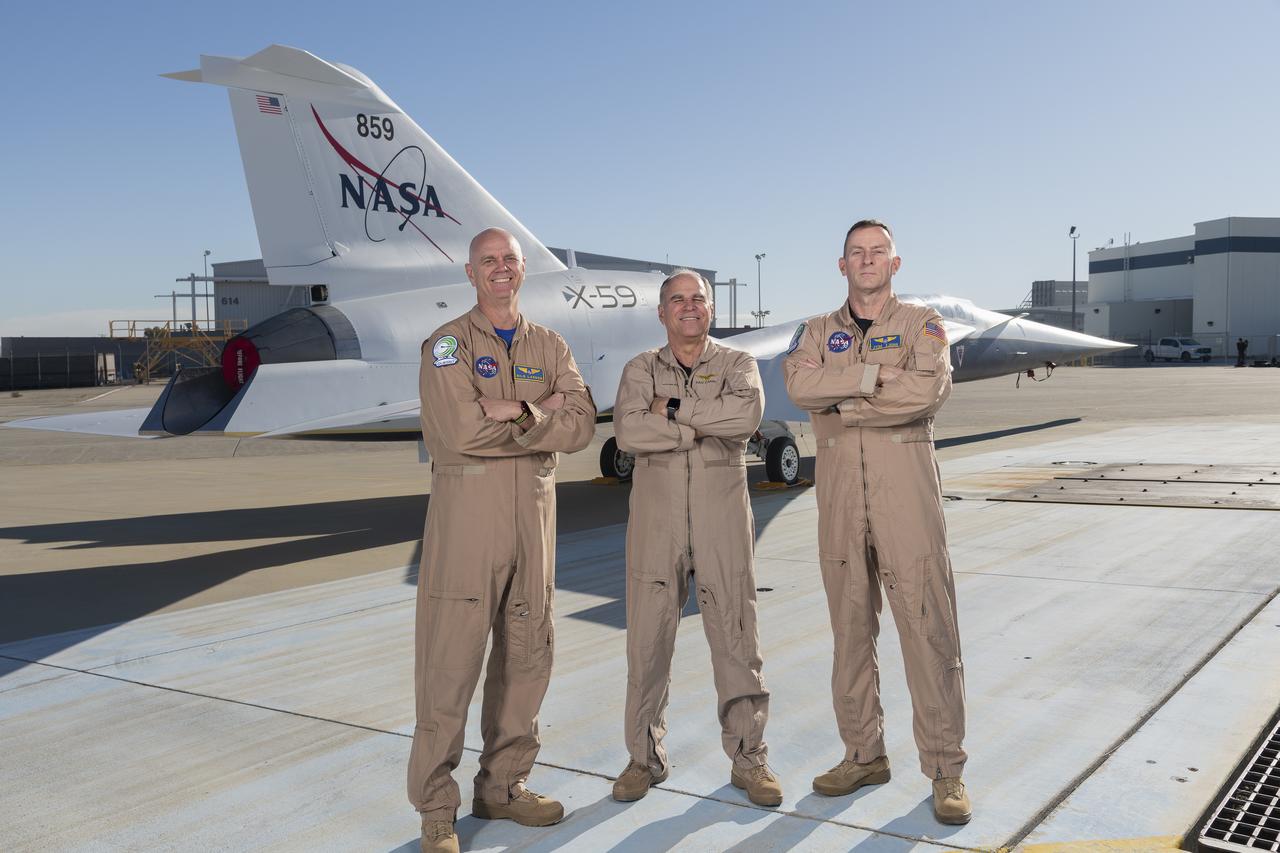
NASA test pilots Nils Larson (left) and Jim “Clue” Less (right), and Lockheed Martin test pilot Dan “Dog” Canin pose with the newly-painted X-59 as it sits on the ramp at Lockheed Martin Skunk Works in Palmdale, California. The X-59 is the centerpiece of NASA’s Quesst mission, which seeks to solve one of the major barriers to supersonic flight over land, currently banned in the United States, by making sonic booms quieter.
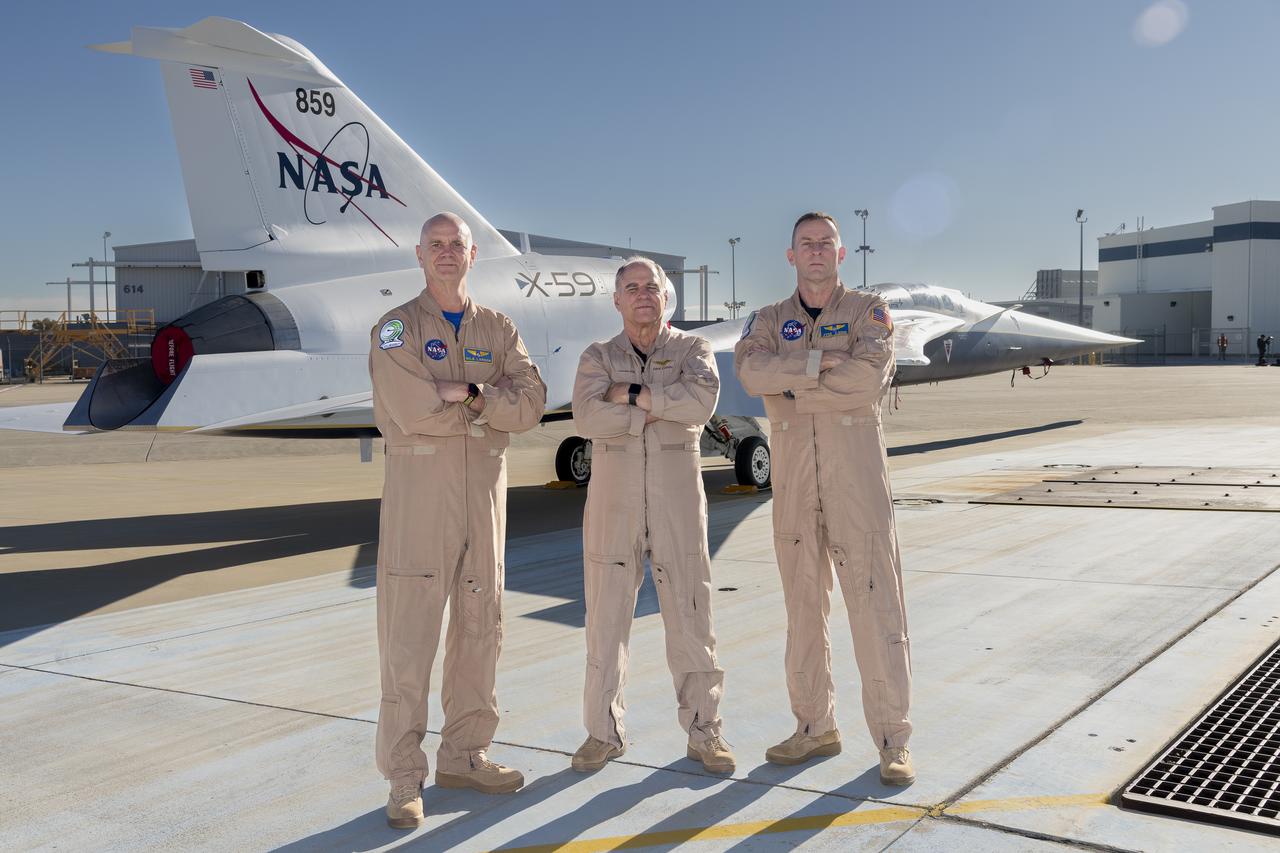
NASA test pilots Nils Larson (left) and Jim “Clue” Less (right), and Lockheed Martin test pilot Dan “Dog” Canin pose with the newly-painted X-59 as it sits on the ramp at Lockheed Martin Skunk Works in Palmdale, California. The X-59 is the centerpiece of NASA’s Quesst mission, which seeks to solve one of the major barriers to supersonic flight over land, currently banned in the United States, by making sonic booms quieter.
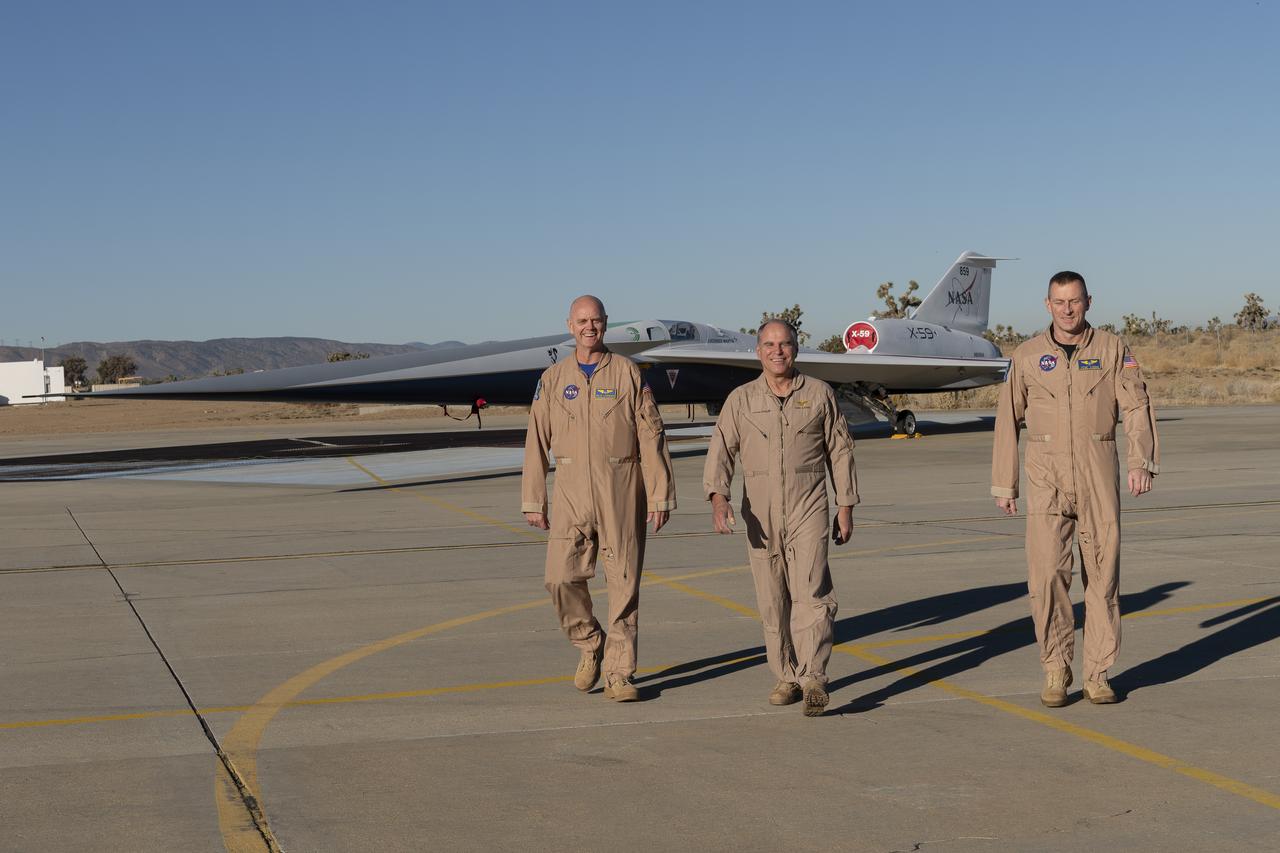
NASA test pilots Nils Larson (left) and Jim “Clue” Less (right), and Lockheed Martin test pilot Dan “Dog” Canin pose with the newly-painted X-59 as it sits on the ramp at Lockheed Martin Skunk Works in Palmdale, California. The X-59 is the centerpiece of NASA’s Quesst mission, which seeks to solve one of the major barriers to supersonic flight over land, currently banned in the United States, by making sonic booms quieter.
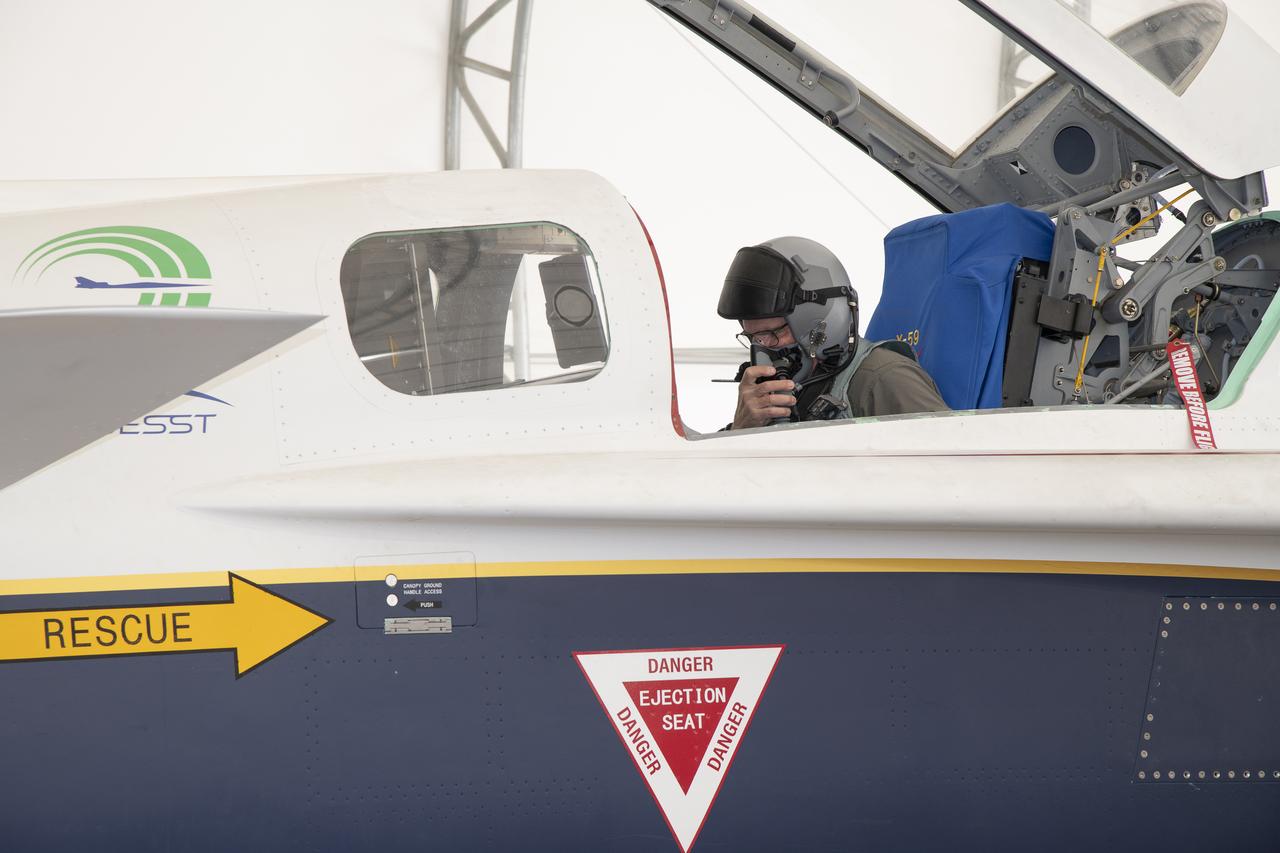
Lockheed Martin test pilot Dan “Dog” Canin sits in the cockpit of NASA’s X-59 quiet supersonic research aircraft in a run stall at Lockheed Martin’s Skunk Works facility in Palmdale, California prior to its first engine run. These engine-run tests featured the X-59 powered by its own engine, whereas in previous tests, the aircraft depended on external sources for power. The X-59 is the centerpiece of NASA’s Quesst mission, which seeks to solve one of the major barriers to supersonic flight over land by making sonic booms quieter.
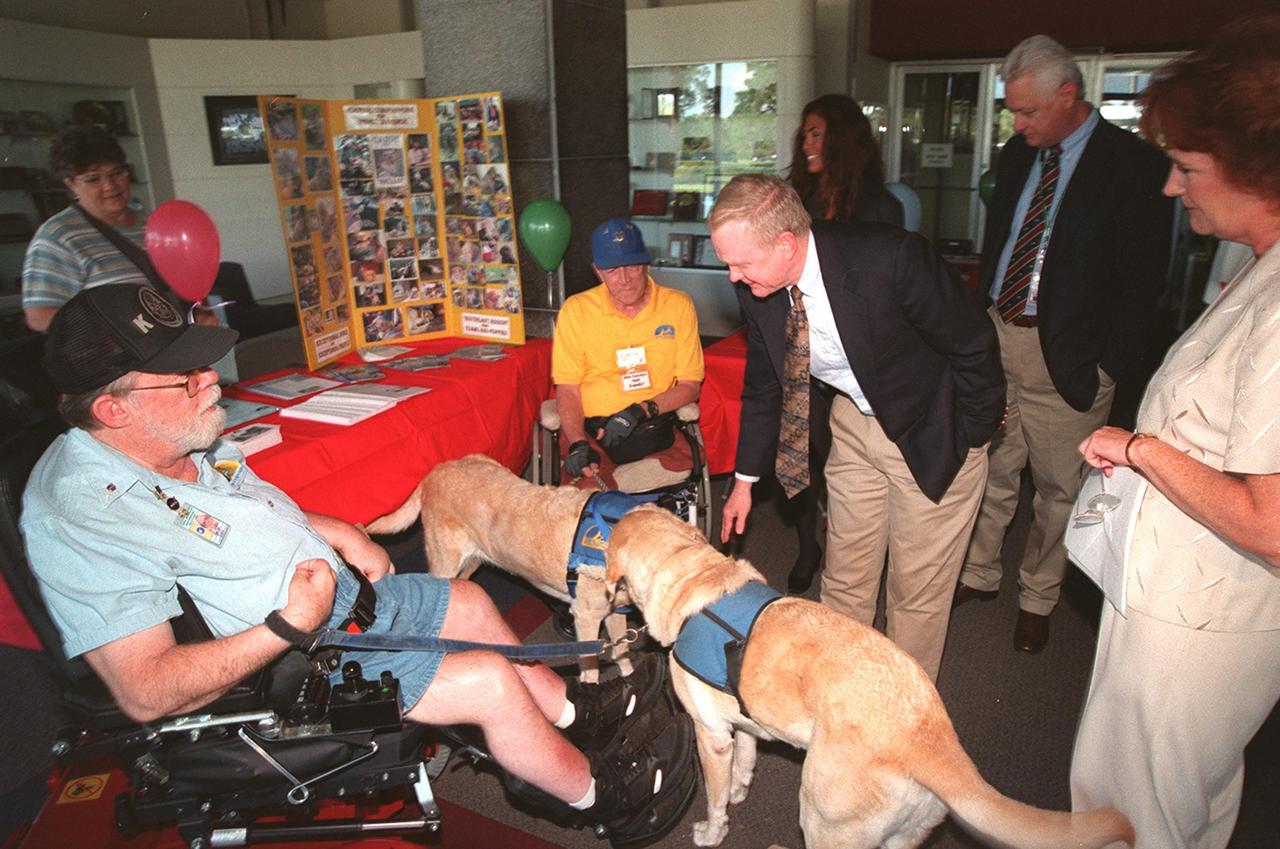
Center Director Roy Bridges stops to pet one of the dogs that serves with Canine Companions for Independence, a vendor displaying its capabilities at the Disability Awareness and Action Working Group (DAAWG) 1999 Technology Fair being held Oct. 20-21 at Kennedy Space Center. Standing at the right is Carol Cavanaugh, with KSC Public Services; behind Bridges is Nancie Strott (left), a multi-media specialist with Dynacs and chairperson of the Fair, and Sterling Walker (right), director of Engineering Development and chairman of DAAWG. The Fair is highlighting vendors demonstrating mobility, hearing, vision and silent disability assistive technology. The purpose is to create an awareness of the types of technology currently available to assist people with various disabilities in the workplace. The theme is that of this year's National Disability Employment Awareness Month, "Opening Doors to Ability." Some of the other vendors participating are Goodwill Industries, Accessible Structures, Division of Blind Services, Space Coast Center for Independent Living, KSC Fitness Center and Delaware North Parks Services
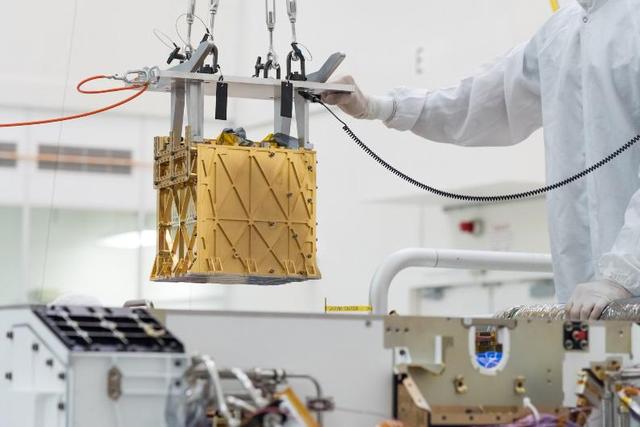
MOXIE (Mars Oxygen In-Situ Resource Utilization Experiment) was launched aboard NASA's Perseverance rover to test a technology for extracting oxygen from the Red Planet's carbon dioxide-rich atmosphere. Audio of MOXIE's air compressor at work on Mars was captured by the microphone on Perseverance's SuperCam instrument on May 27, 2021, the 96th day of the rover's mission. Since Perseverance landed on Mars in 2021, MOXIE generated a total of 122 grams of oxygen – about what a small dog breathes in 10 hours. At its most efficient, MOXIE was able to produce 12 grams of oxygen an hour – twice as much as NASA's original goals for the instrument – at 98% purity or better. On its final, 16th run, on Aug. 7, 2023, the instrument made 9.8 grams of oxygen. MOXIE successfully completed all of its technical requirements and was operated at a variety of conditions throughout a full Mars year, allowing the instrument's developers to learn a great deal about the technology. MOXIE produces molecular oxygen through an electrochemical process that separates one oxygen atom from each molecule of carbon dioxide pumped in from Mars' thin atmosphere. As these gases flow through the system, they're analyzed to check the purity and quantity of oxygen produced. While many of Perseverance's experiments are addressing primary science goals, MOXIE was focused on future human exploration. MOXIE served as the first-ever demonstration of technology that humans could use to survive on, and leave, the Red Planet. An oxygen-producing system could help future missions in various ways, but the most important of them would be as a source of rocket propellant, which would be required in industrial quantities to launch rockets with astronauts for their return trip home. Rather than bringing large quantities of oxygen with them to Mars, future astronauts could live off the land, using materials they find on the planet's surface to survive. This concept – called in-situ resource utilization, or ISRU – has evolved into a growing area of research. A key objective for Perseverance's mission on Mars is astrobiology, including the search for signs of ancient microbial life. The rover will characterize the planet's geology and past climate, pave the way for human exploration of the Red Planet, and be the first mission to collect and cache Martian rock and regolith (broken rock and dust). Subsequent NASA missions, in cooperation with ESA (European Space Agency), would send spacecraft to Mars to collect these sealed samples from the surface and return them to Earth for in-depth analysis. The Mars 2020 Perseverance mission is part of NASA's Moon to Mars exploration approach, which includes Artemis missions to the Moon that will help prepare for human exploration of the Red Planet. Audio file available at https://photojournal.jpl.nasa.gov/catalog/PIA26041