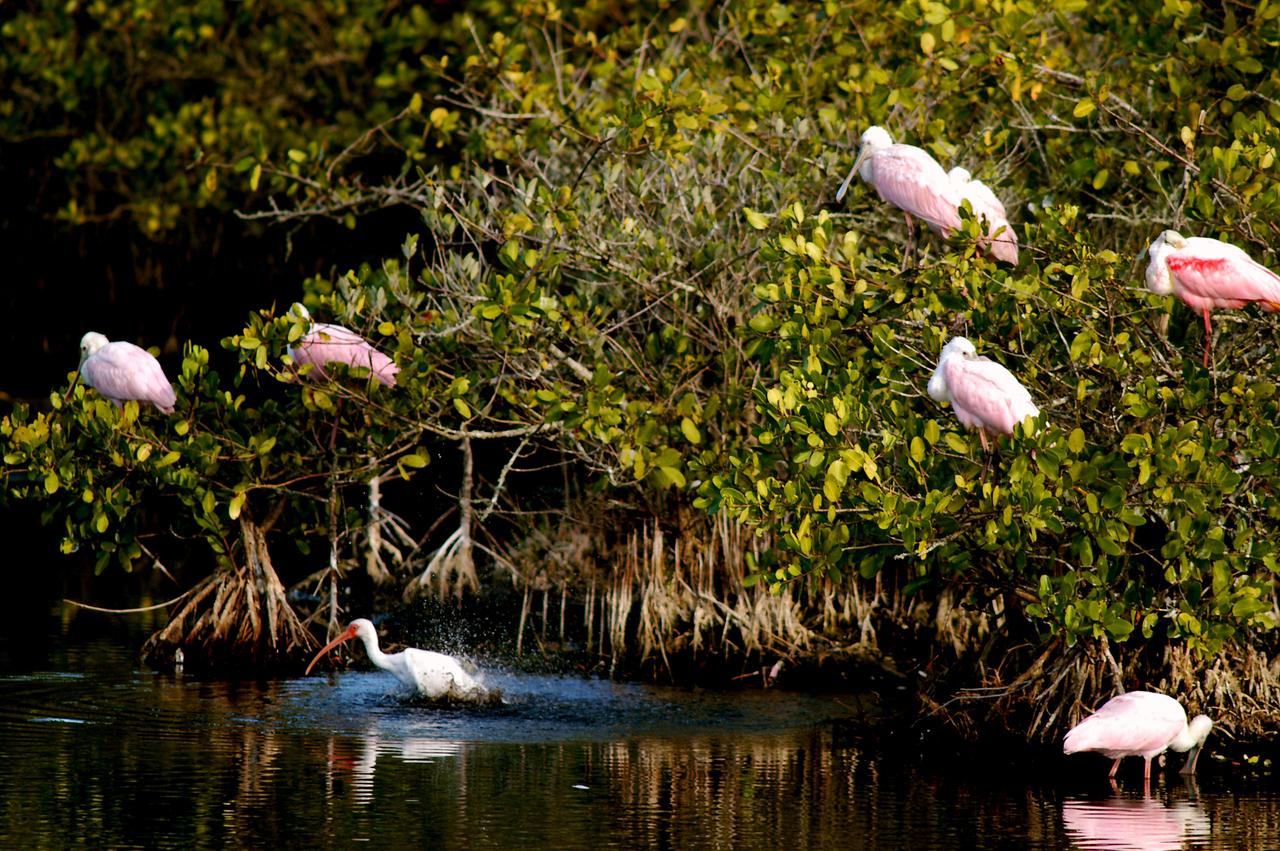
KENNEDY SPACE CENTER, FLA. -- A lone white ibis shares its watery hunting ground with a group of roseate spoonbills near KSC. Spoonbills prefer to inhabit mangroves, ranging from the coasts of southern Florida, Louisiana and Texas, to the West Indies, Mexico, Central and South America. They feed on shrimps and fish in shallow waters. Spoonbills are one of 310 species of birds that inhabit the Merritt Island National Wildlife Refuge, which shares a boundary with KSC. The marshes and open water of the refuge also provide wintering areas for 23 species of migratory waterfowl, as well as a year-round home for great blue herons, great egrets, wood storks, cormorants, brown pelicans and other species of marsh and shore birds.
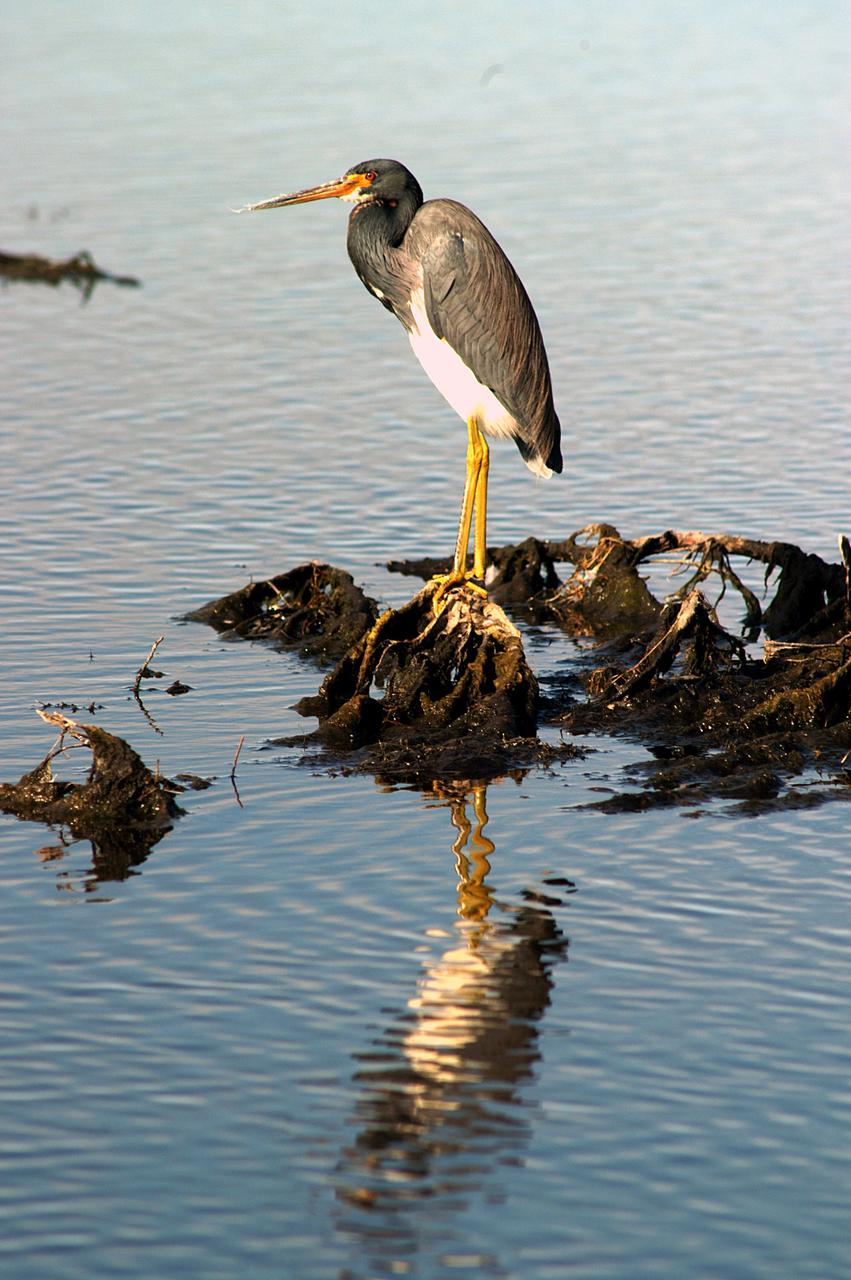
KENNEDY SPACE CENTER, FLA. -- A tri-colored heron stands sentry in the marshes around KSC. It has slate blue feathers on most of its body except for a white chest and belly and a rust-colored neck. It has long yellow legs, a white stripe that runs up its neck and long pointed yellow bill. The bill turns blue during breeding season.The heron is one of 310 species of birds that inhabit the Merritt Island National Wildlife Refuge, which shares a boundary with KSC. The marshes and open water of the refuge also provide wintering areas for 23 species of migratory waterfowl, as well as a year-round home for great egrets, wood storks, cormorants, brown pelicans and other species of marsh and shore birds.
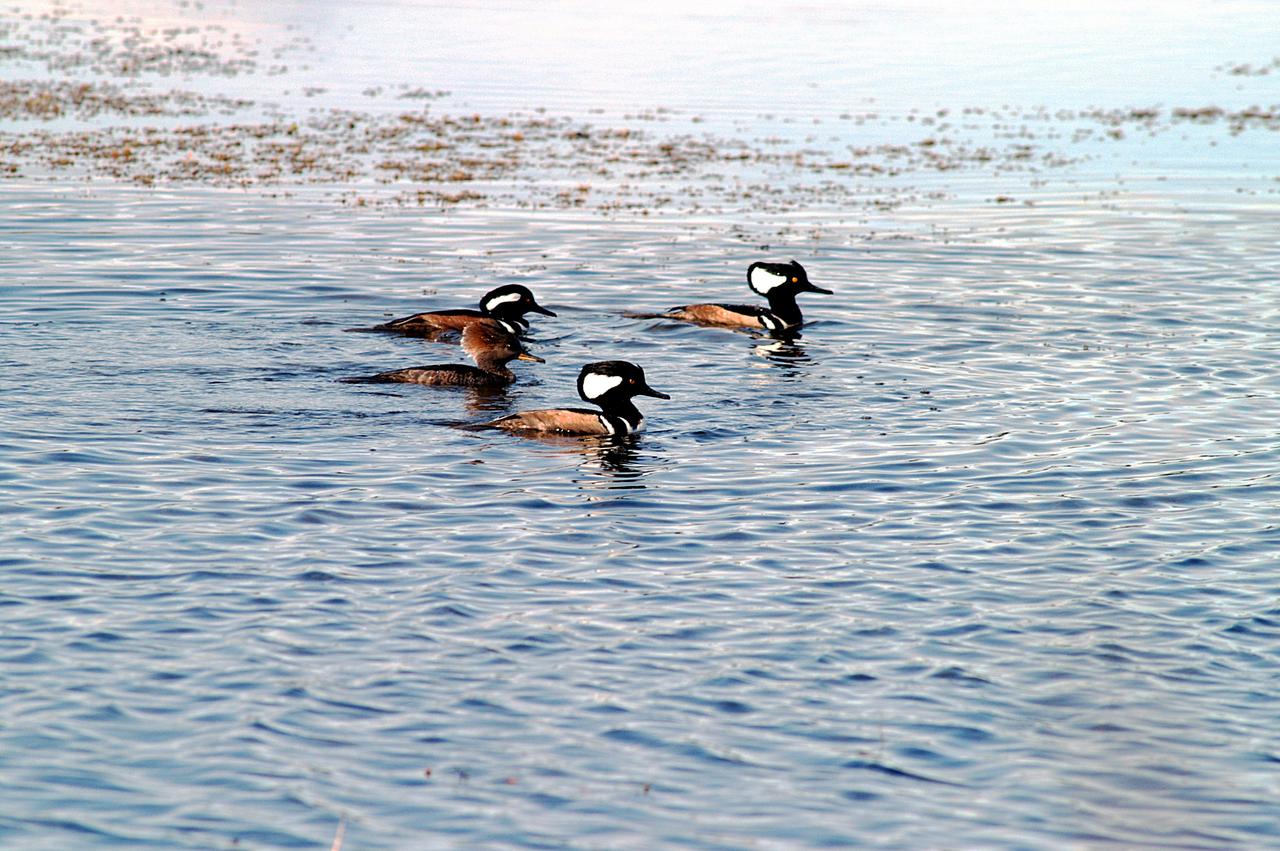
KENNEDY SPACE CENTER, FLA. -- Three male and one female hooded mergansers swim in the quicksilver water of the Merritt Island National Wildlife Refuge, which shares a boundary with Kennedy Space Center. Usually found from Alaska and Canada south to Nebraska, Oregon and Tennessee, hooded mergansers winter south to Mexico and the Gulf Coast, including KSC. The open water of the refuge provides wintering areas for 23 species of migratory waterfowl, as well as a year-round home for great blue herons, great egrets, wood storks, cormorants, brown pelicans and other species of marsh and shore birds. The 92,000-acre refuge is also habitat for more than 310 species of birds, 25 mammals, 117 fishes and 65 amphibians and reptiles.
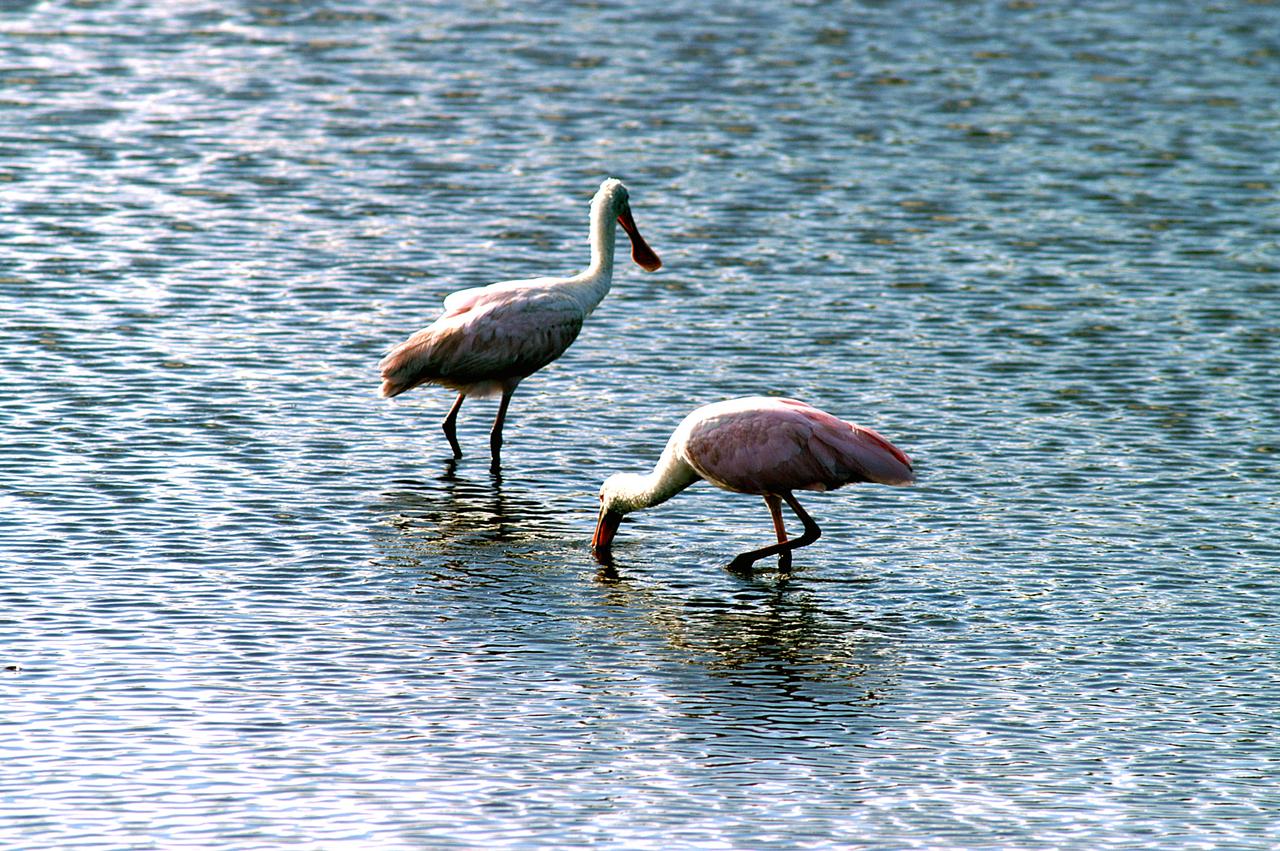
KENNEDY SPACE CENTER, FLA. -- Two roseate spoonbills hunt for their supper in the water near KSC. Spoonbills prefer to inhabit mangroves, ranging from the coasts of southern Florida, Louisiana and Texas, to the West Indies, Mexico, Central and South America. They feed on shrimps and fish in shallow waters. Spoonbills are one of 310 species of birds that inhabit the National Merritt Island Wildlife Refuge, which shares a boundary with KSC. The marshes and open water of the refuge also provide wintering areas for 23 species of migratory waterfowl, as well as a year-round home for great blue herons, great egrets, wood storks, cormorants, brown pelicans and other species of marsh and shore birds.
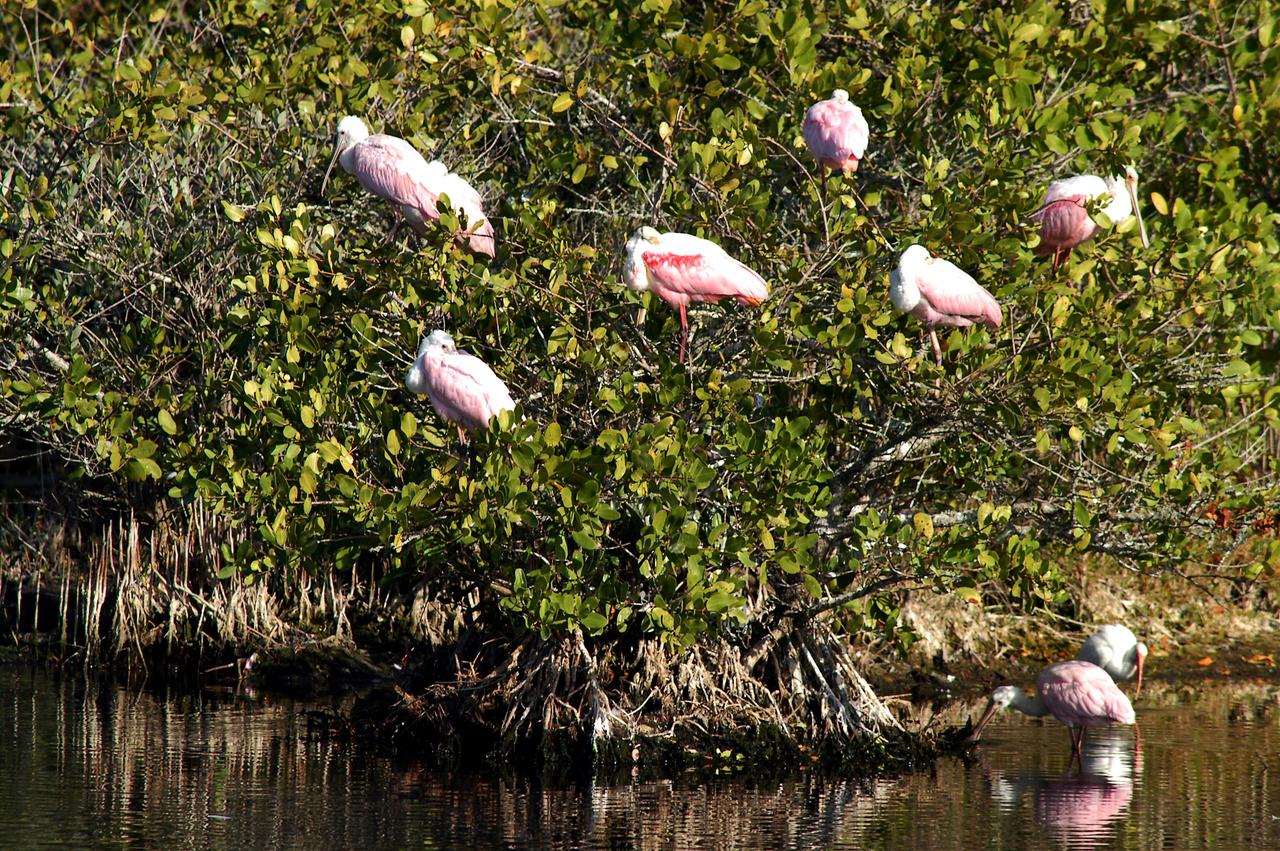
KENNEDY SPACE CENTER, FLA. -- A group of roseate spoonbills share their watery hunting ground with a lone white ibis near KSC. Spoonbills prefer to inhabit mangroves, ranging from the coasts of southern Florida, Louisiana and Texas, to the West Indies, Mexico, Central and South America. They feed on shrimps and fish in shallow waters. Spoonbills are one of 310 species of birds that inhabit the Merritt Island National Wildlife Refuge, which shares a boundary with KSC. The marshes and open water of the refuge also provide wintering areas for 23 species of migratory waterfowl, as well as a year-round home for great blue herons, great egrets, wood storks, cormorants, brown pelicans and other species of marsh and shore birds.
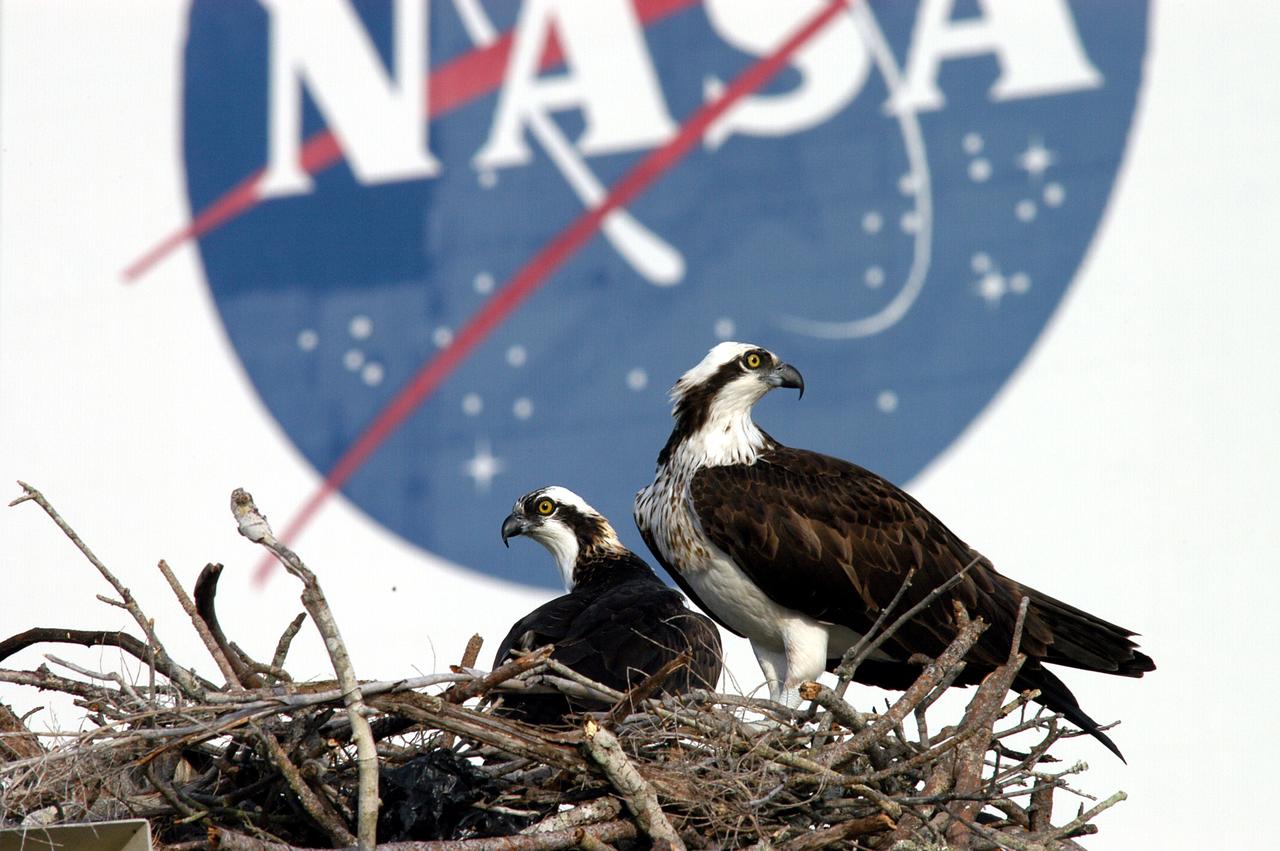
KENNEDY SPACE CENTER, FLA. -- A pair of breeding ospreys have taken up residence in a nest constructed on a speaker pole in the lower parking lot of the KSC Press Site. Eggs have been sighted in the nest. The NASA logo in the background is painted on an outer wall of the 525-foot-tall Vehicle Assembly Building nearby. Known as a fish hawk, the osprey selects sites of opportunity in which to nest -- from trees and telephone poles to rocks or even flat ground. In North America, it is found from Alaska and Newfoundland to Florida and the Gulf Coast. Osprey nests are found throughout the Kennedy Space Center and surrounding Merritt Island National Wildlife Refuge.
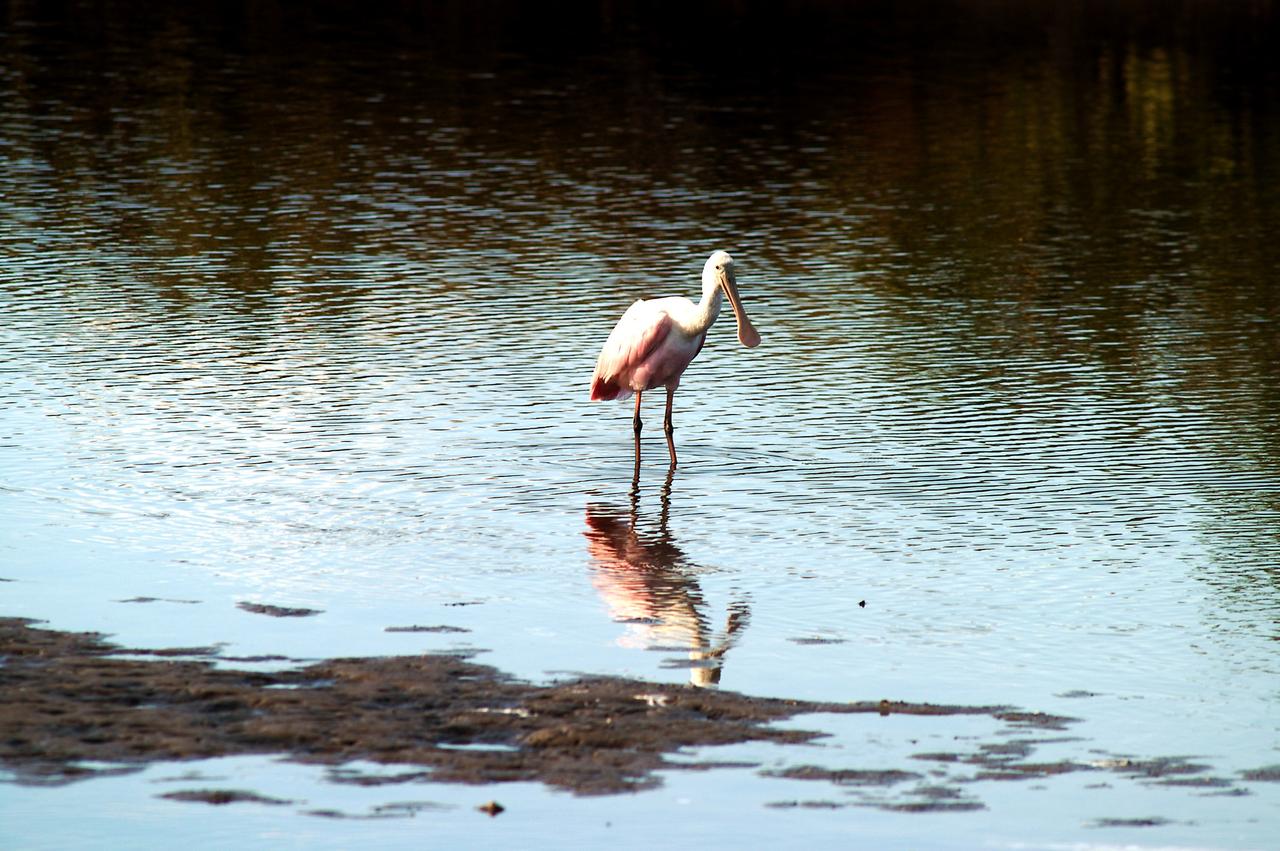
KENNEDY SPACE CENTER, FLA. -- A roseate spoonbill contemplates its reflection in the water near KSC. Spoonbills prefer to inhabit mangroves, ranging from the coasts of southern Florida, Louisiana and Texas, to the West Indies, Mexico, Central and South America. They feed on shrimps and fish in shallow waters. Spoonbills are one of 310 species of birds that inhabit the Merritt Island National Wildlife Refuge, which shares a boundary with KSC. The marshes and open water of the refuge also provide wintering areas for 23 species of migratory waterfowl, as well as a year-round home for great blue herons, great egrets, wood storks, cormorants, brown pelicans and other species of marsh and shore birds.

KENNEDY SPACE CENTER, FLA. -- A pair of breeding ospreys share a nest constructed on a speaker pole in the lower parking lot of the KSC Press Site. Eggs have been sighted in the nest. The NASA logo in the background is painted on an outer wall of the 525-foot-tall Vehicle Assembly Building nearby. Known as a fish hawk, the osprey selects sites of opportunity in which to nest -- from trees and telephone poles to rocks or even flat ground. In North America, it is found from Alaska and Newfoundland to Florida and the Gulf Coast. Osprey nests are found throughout the Kennedy Space Center and surrounding Merritt Island National Wildlife Refuge.
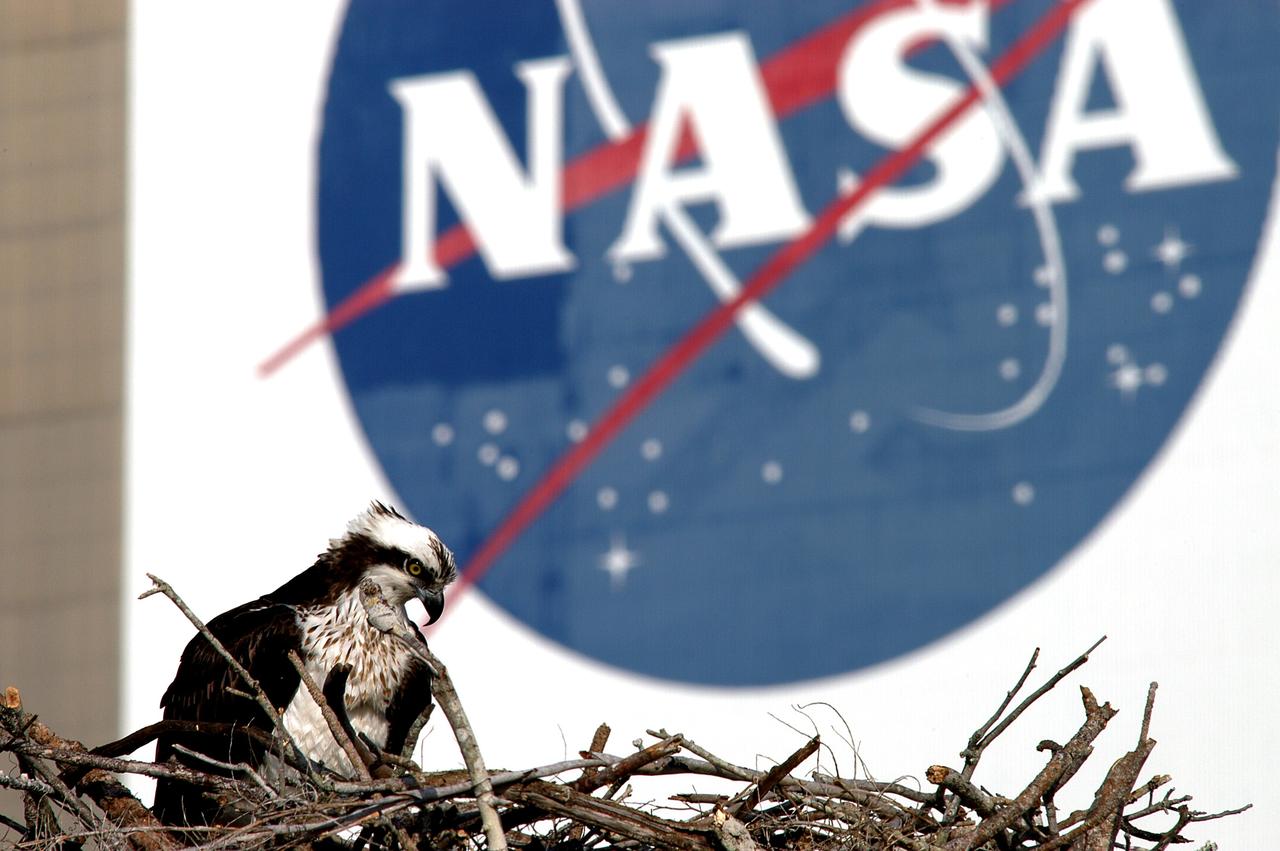
KENNEDY SPACE CENTER, FLA. -- A breeding osprey occupies a nest constructed on a speaker pole in the lower parking lot of the KSC Press Site. Eggs have been sighted in the nest. The NASA logo in the background is painted on an outer wall of the 525-foot-tall Vehicle Assembly Building nearby. Known as a fish hawk, the osprey selects sites of opportunity in which to nest -- from trees and telephone poles to rocks or even flat ground. In North America, it is found from Alaska and Newfoundland to Florida and the Gulf Coast. Osprey nests are found throughout the Kennedy Space Center and surrounding Merritt Island National Wildlife Refuge.
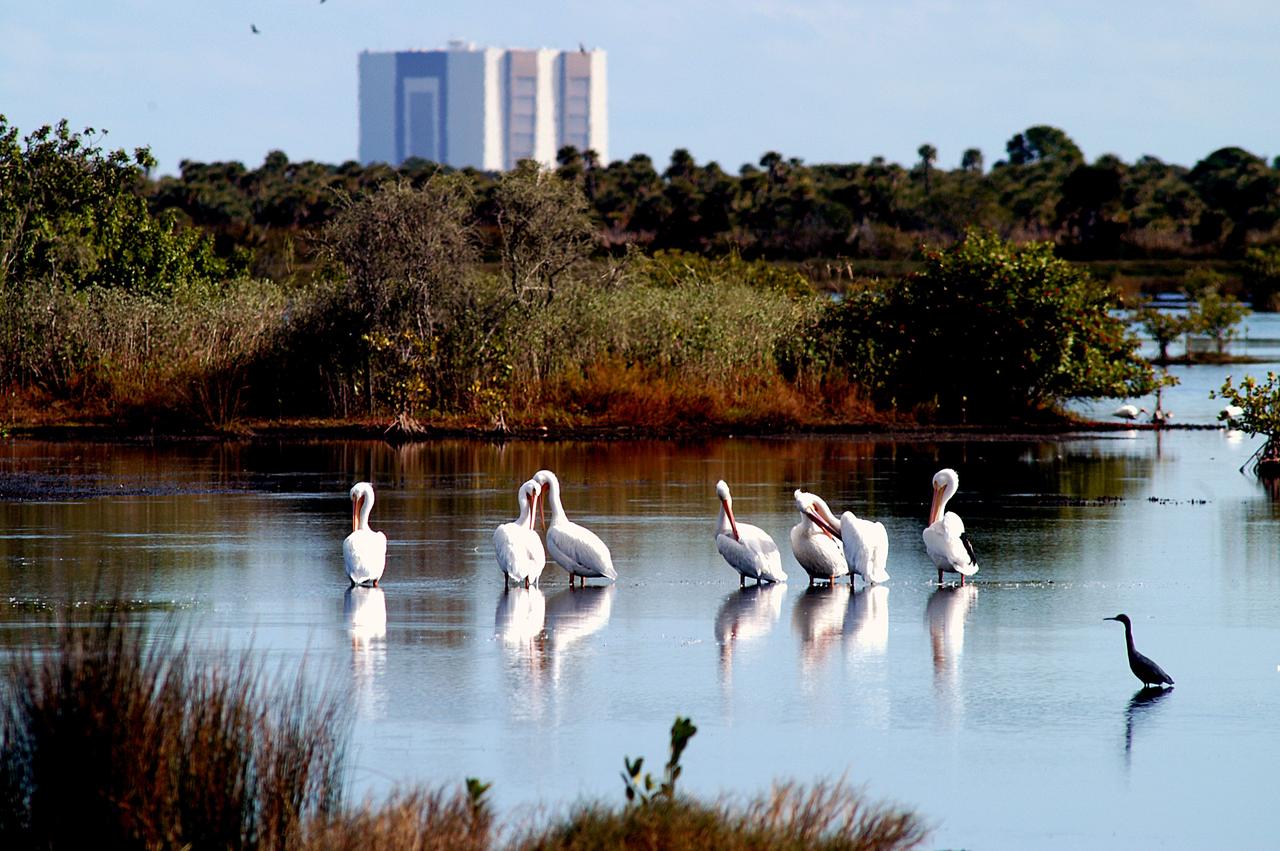
KENNEDY SPACE CENTER, FLA. -- A group of white pelicans spend a few moments relaxing in the water near the Vehicle Assembly Building at Kennedy Space Center. Found from British Columbia south to western Ontario, California and the Texas coast, white pelicans winter from Florida south to Panama. They prefer marshy lakes and coastal regions, and winter chiefly in coastal lagoons. White pelicans are one of 310 species of birds that inhabit the Merritt Island National Wildlife Refuge, which shares a boundary with KSC. The marshes and open water of the refuge also provide wintering areas for 23 species of migratory waterfowl, as well as a year-round home for great blue herons, great egrets, wood storks, cormorants, brown pelicans and other species of marsh and shore birds.
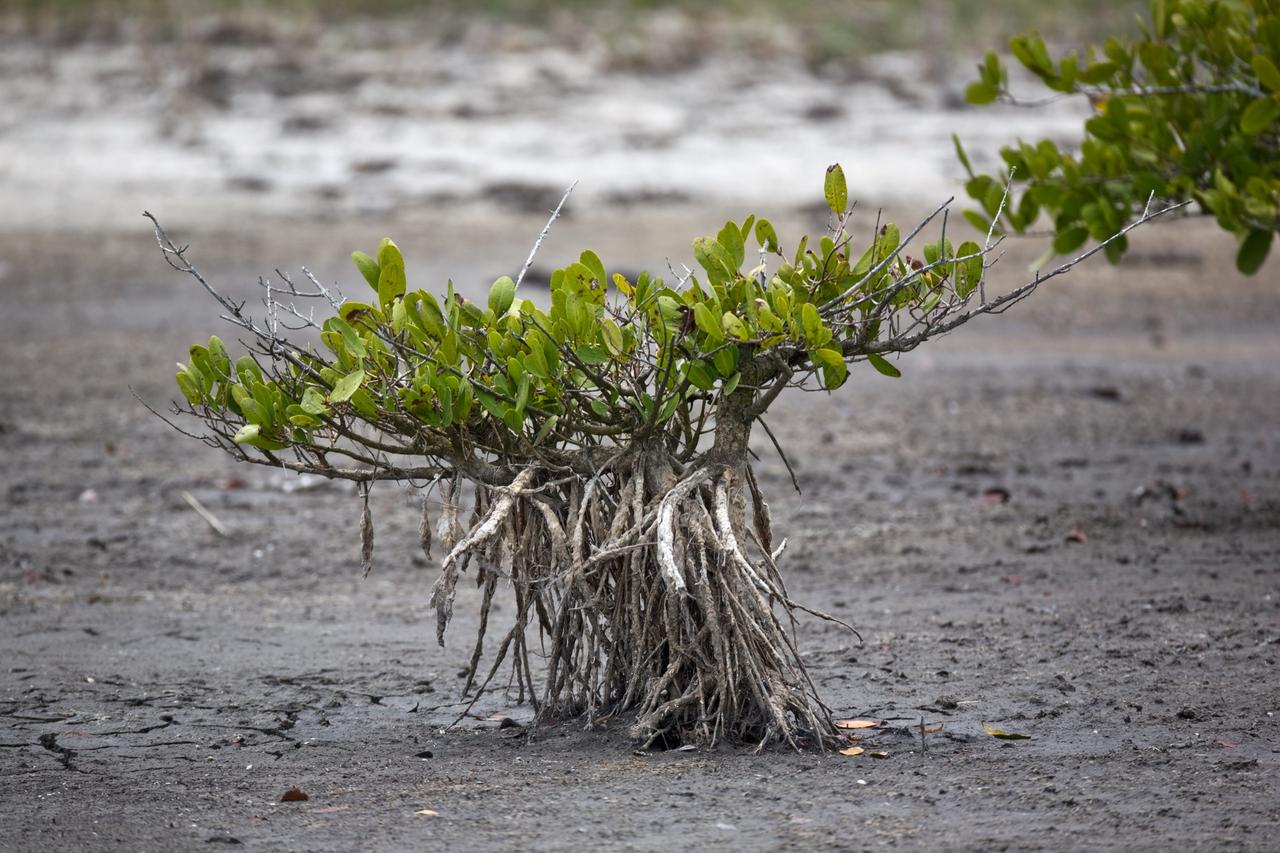
CAPE CANAVERAL, Fla. –– Mangrove roots are exposed in the drought-affected waters on NASA's Kennedy Space Center in Florida. Mangroves generally are trees and shrubs that grow in saline (brackish) coastal habitats in the tropics and subtropics. They provide food, habitat and refuge for a variety of animals, birds and sea creatures. The center shares a boundary with the Merritt Island Wildlife Nature Refuge, which is a habitat for more than 310 species of birds, 25 mammals, 117 fishes and 65 amphibians and reptiles. Photo credit: NASA/Dimitri Gerondidakis
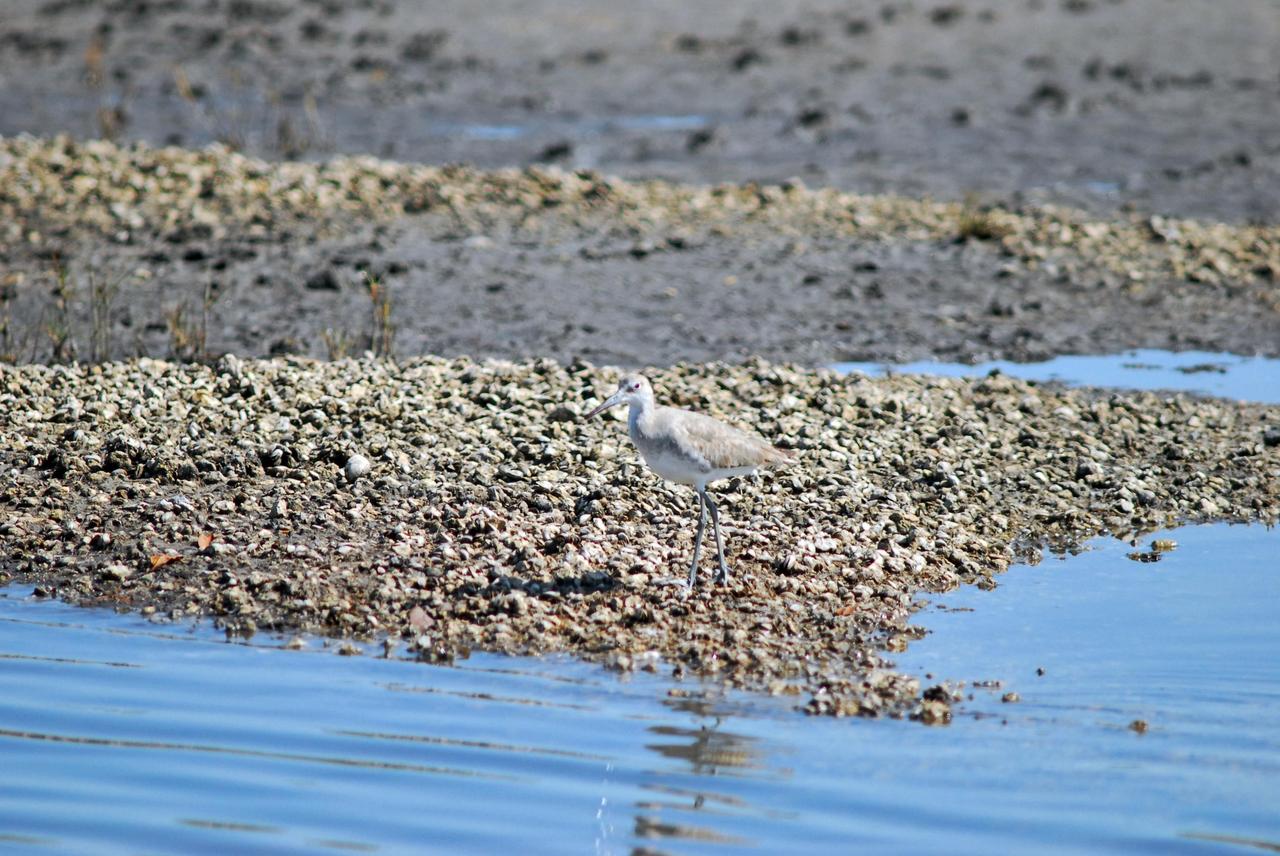
KENNEDY SPACE CENTER, FLA. -- Possibly a willet or a sandpiper in winter plumage, this bird nearly blends into the rocky background of the river bank on Kennedy Space Center. KSC shares a boundary with the Merritt Island Wildlife Nature Refuge. The refuge is a habitat for more than 310 species of birds, 25 mammals, 117 fishes and 65 amphibians and reptiles. In addition, the Refuge supports 19 endangered or threatened wildlife species on Federal or State lists, more than any other single refuge in the U.S. Photo credit: NASA/Dimitri Gerondidakis
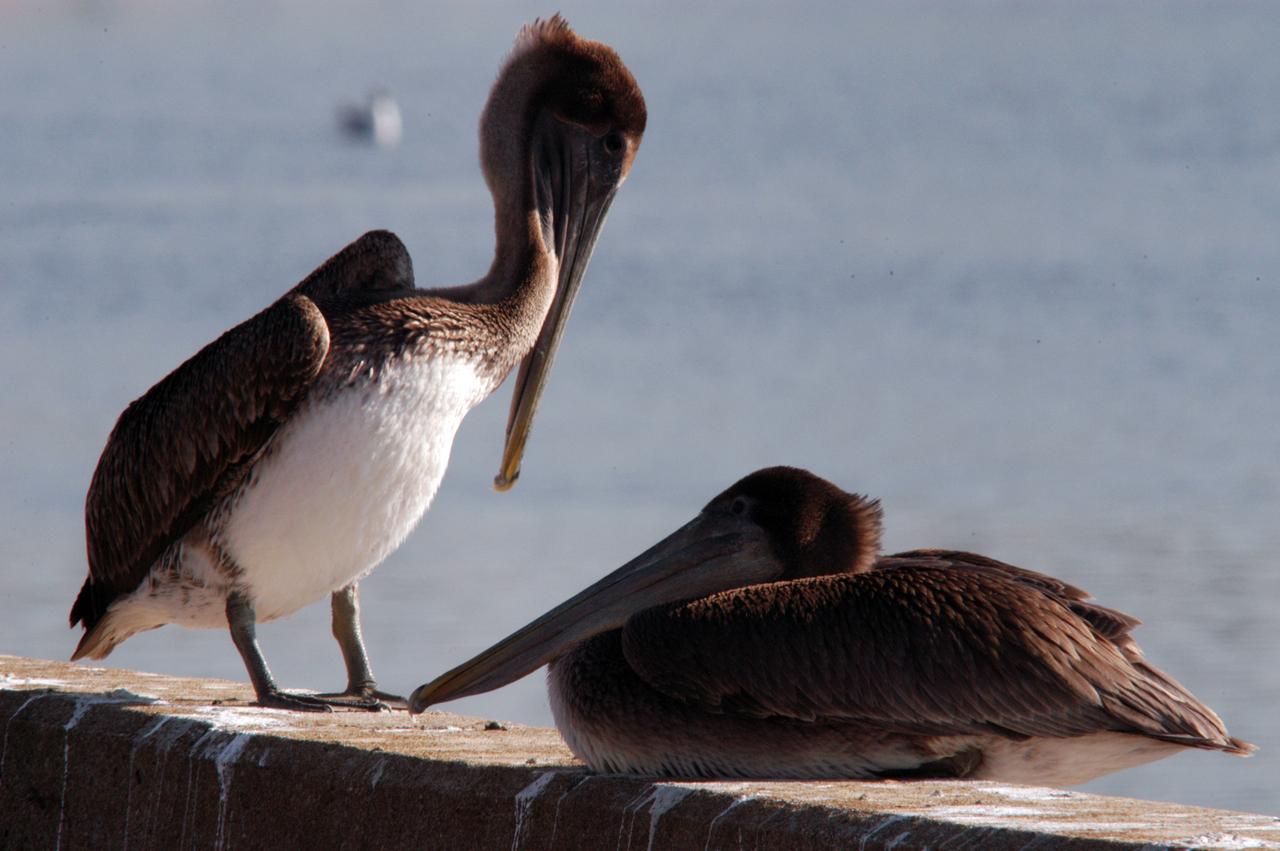
A pair of brown pelicans rest on a wall near the turn basin at NASA's Kennedy Space Center. The turn basin was carved out of the Banana River when KSC was built. The birds' habitat is sandy coastal beaches and lagoons, ranging along the Atlantic Coast from North Carolina south to Venezuela. It nests in colonies. KSC shares a boundary with the Merritt Island Wildlife Nature Refuge. The refuge is a habitat for more than 310 species of birds, 25 mammals, 117 fishes and 65 amphibians and reptiles. In addition, the Refuge supports 19 endangered or threatened wildlife species on Federal or State lists, more than any other single refuge in the U.S.
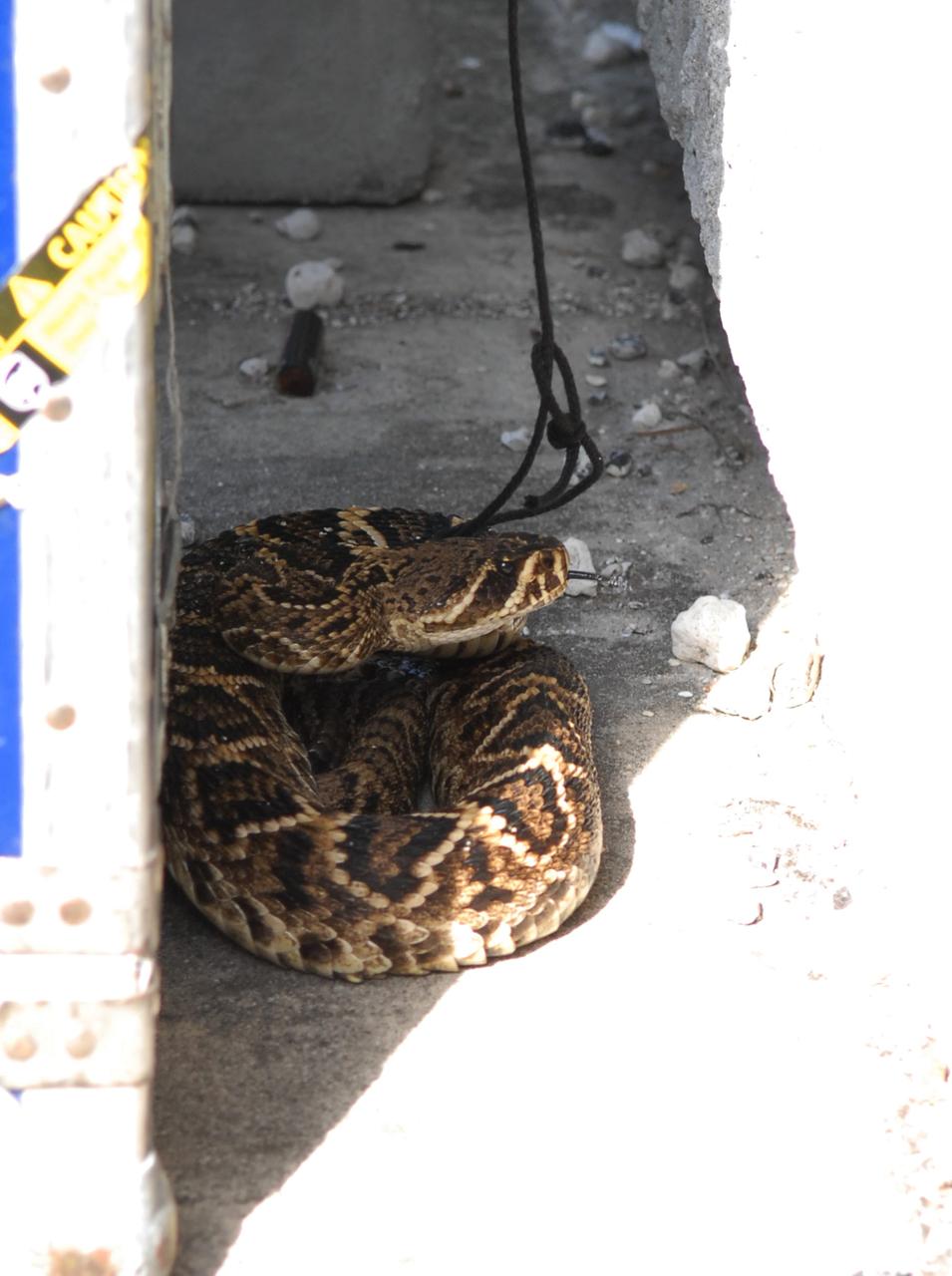
CAPE CANAVERAL, Fla. – An eastern diamondback rattlesnake is spotted next to a building at the NASA News Center at NASA's Kennedy Space Center in Florida. The diamondback is Florida's largest venomous snake and may exceed six feet in length. It occurs throughout Florida in a variety of dry habitats, such as pinelands, scrub and golf courses. Kennedy shares a boundary with the Merritt Island Wildlife Nature Refuge, which is a habitat for more than 310 species of birds, 25 mammals, 117 fishes and 65 amphibians and reptiles. Photo credit: NASA/Jack Pfaller
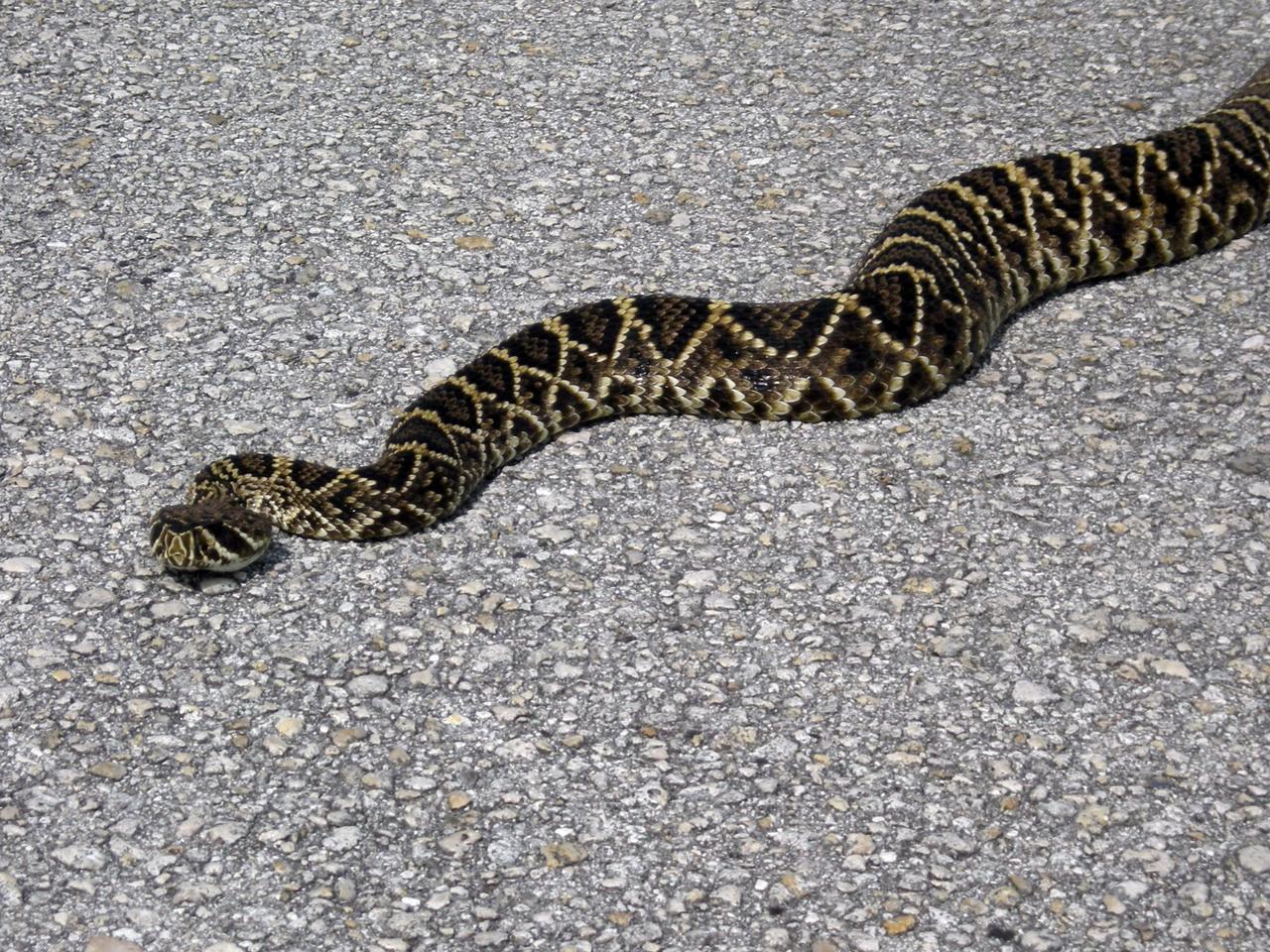
KENNEDY SPACE CENTER, FLA. -- This diamondback rattlesnake lies across the road near Launch Pad 39B at NASA's Kennedy Space Center. The diamondback is Florida's largest venomous snake and may exceed six feet in length. It occurs throughout Florida in a variety of dry habitats, such as pinelands, scrub and golf courses. Kennedy shares a boundary with the Merritt Island Wildlife Nature Refuge, which is a habitat for more than 310 species of birds, 25 mammals, 117 fishes and 65 amphibians and reptiles. Photo credit: NASA/Kenny Allen
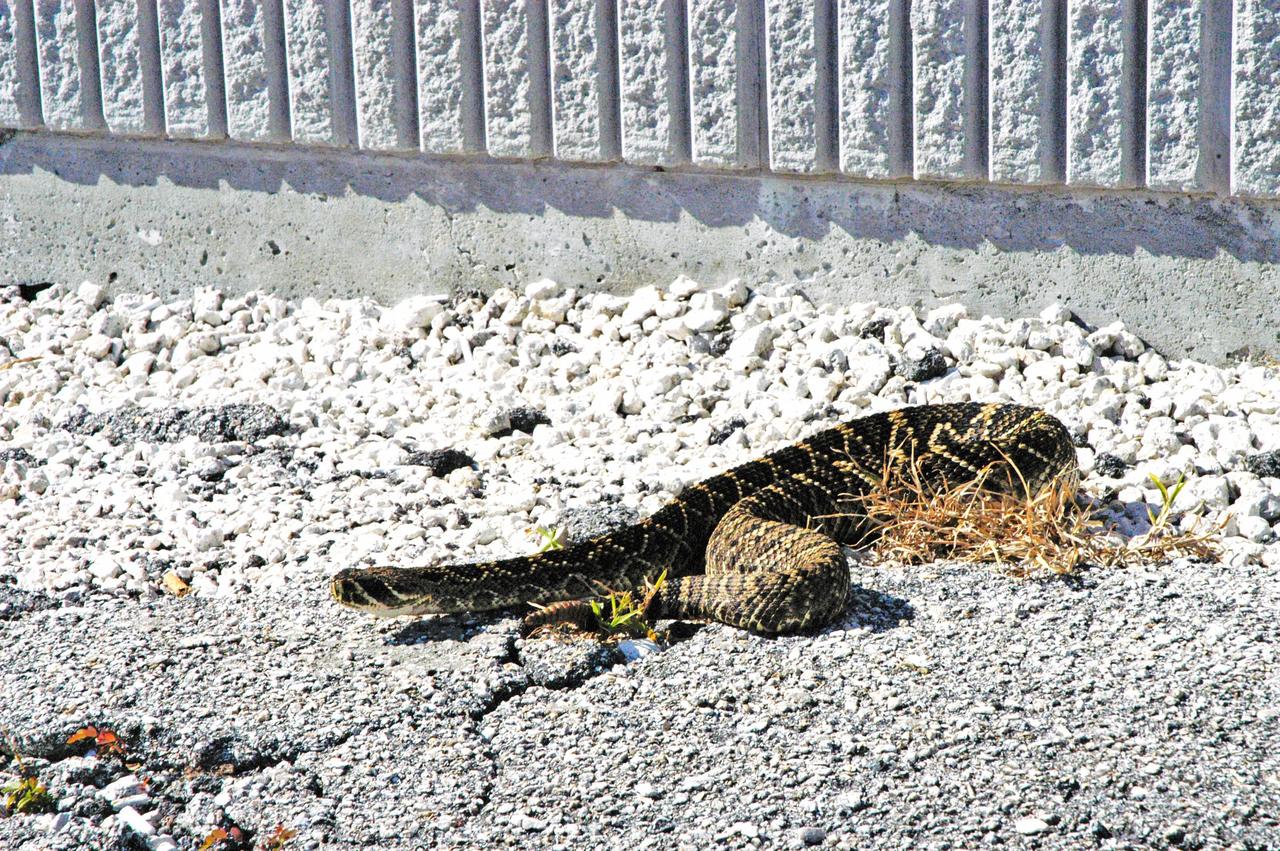
KENNEDY SPACE CENTER, FLA. -- An eastern diamondback rattlesnake warms in the sun near the NASA News Center at NASA's Kennedy Space Center. The diamondback is Florida's largest venomous snake and may exceed six feet in length. It lives throughout Florida in a variety of dry habitats, such as pinelands, scrub and golf courses. Kennedy shares a boundary with the Merritt Island Wildlife Nature Refuge, which is a habitat for more than 310 species of birds, 25 mammals, 117 fishes and 65 amphibians and reptiles. Photo credit: NASA/Kim Shiflett
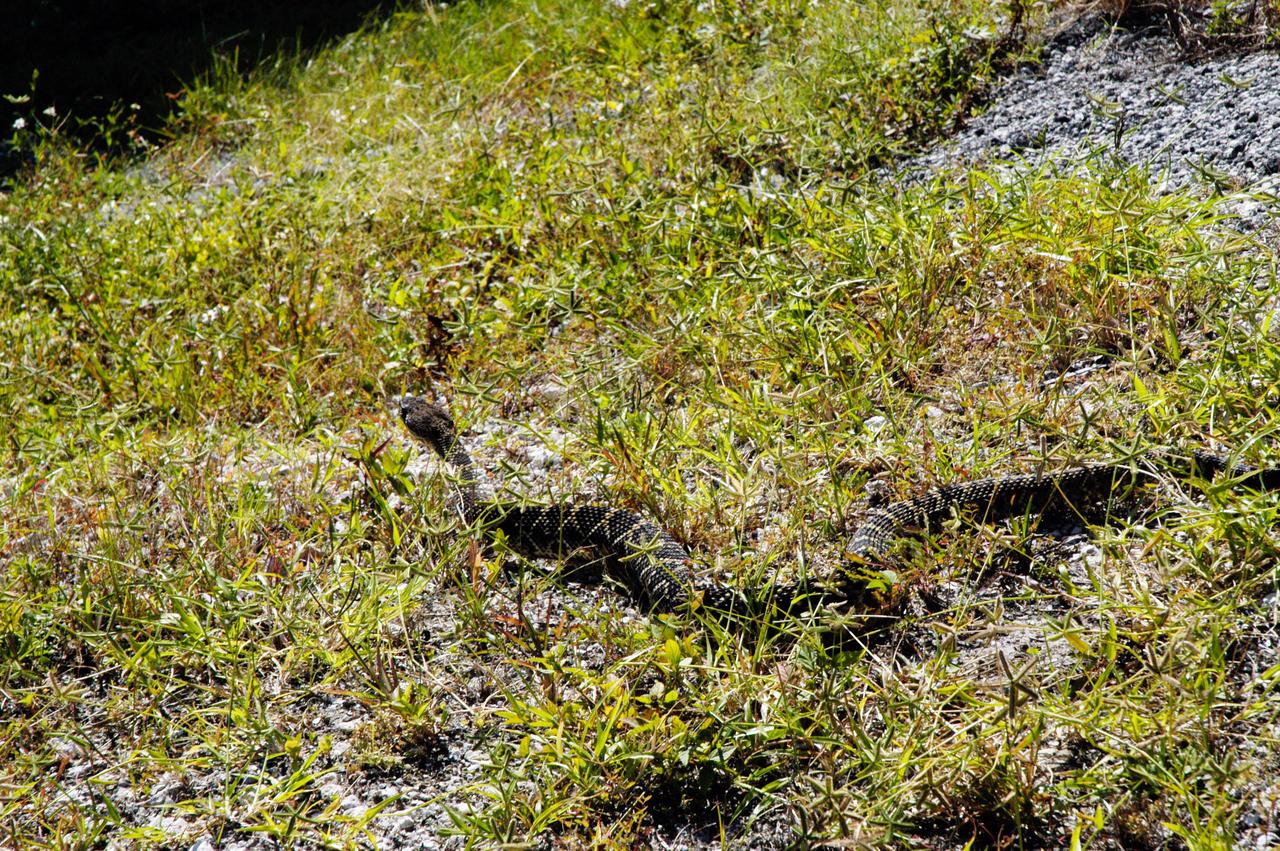
An eastern diamondback rattlesnake slithers through the grass near the NASA News Center at NASA's Kennedy Space Center. The diamondback is Florida's largest venomous snake and may exceed six feet in length. It lives throughout Florida in a variety of dry habitats, such as pinelands, scrub and golf courses. Kennedy shares a boundary with the Merritt Island Wildlife Nature Refuge, which is a habitat for more than 310 species of birds, 25 mammals, 117 fishes and 65 amphibians and reptiles.
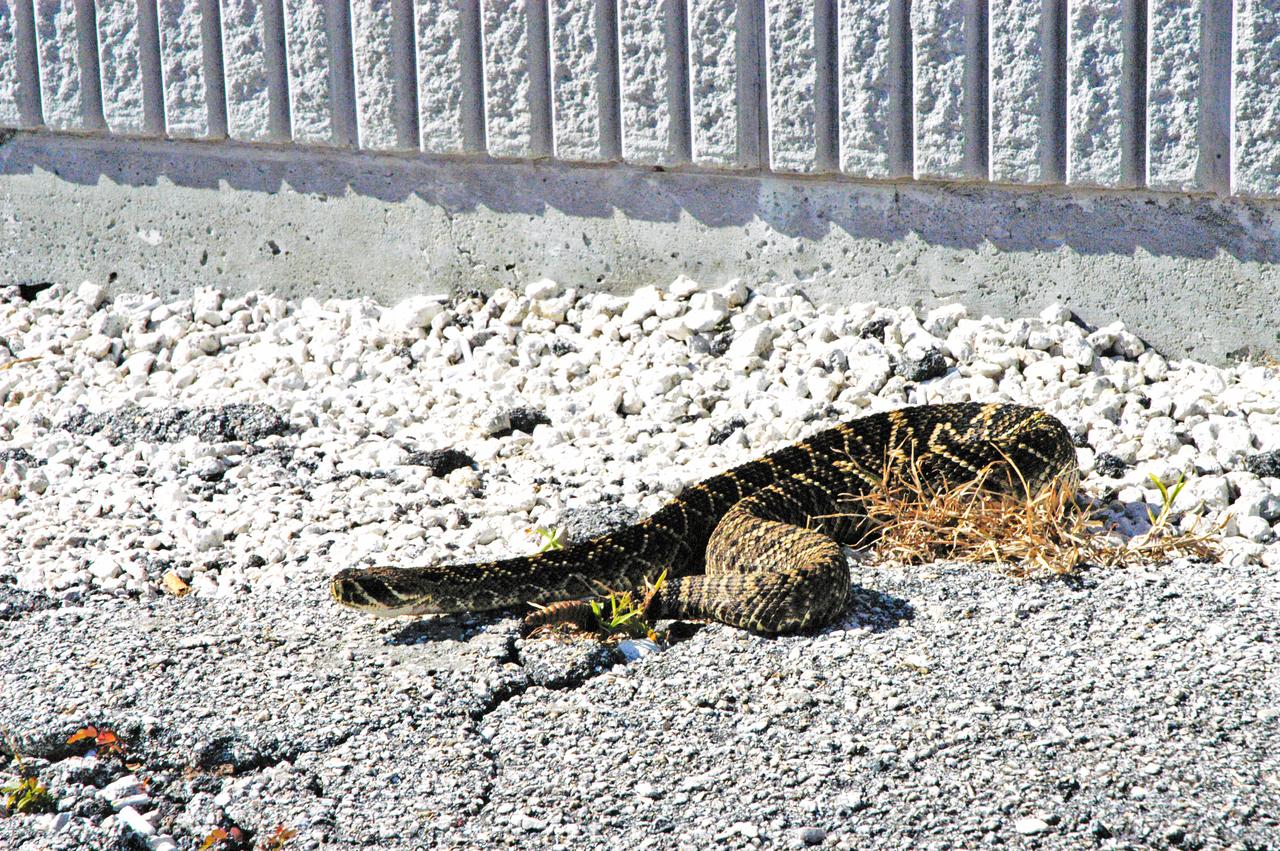
An eastern diamondback rattlesnake warms in the sun near the NASA News Center at NASA's Kennedy Space Center. The diamondback is Florida's largest venomous snake and may exceed six feet in length. It lives throughout Florida in a variety of dry habitats, such as pinelands, scrub and golf courses. Kennedy shares a boundary with the Merritt Island Wildlife Nature Refuge, which is a habitat for more than 310 species of birds, 25 mammals, 117 fishes and 65 amphibians and reptiles.
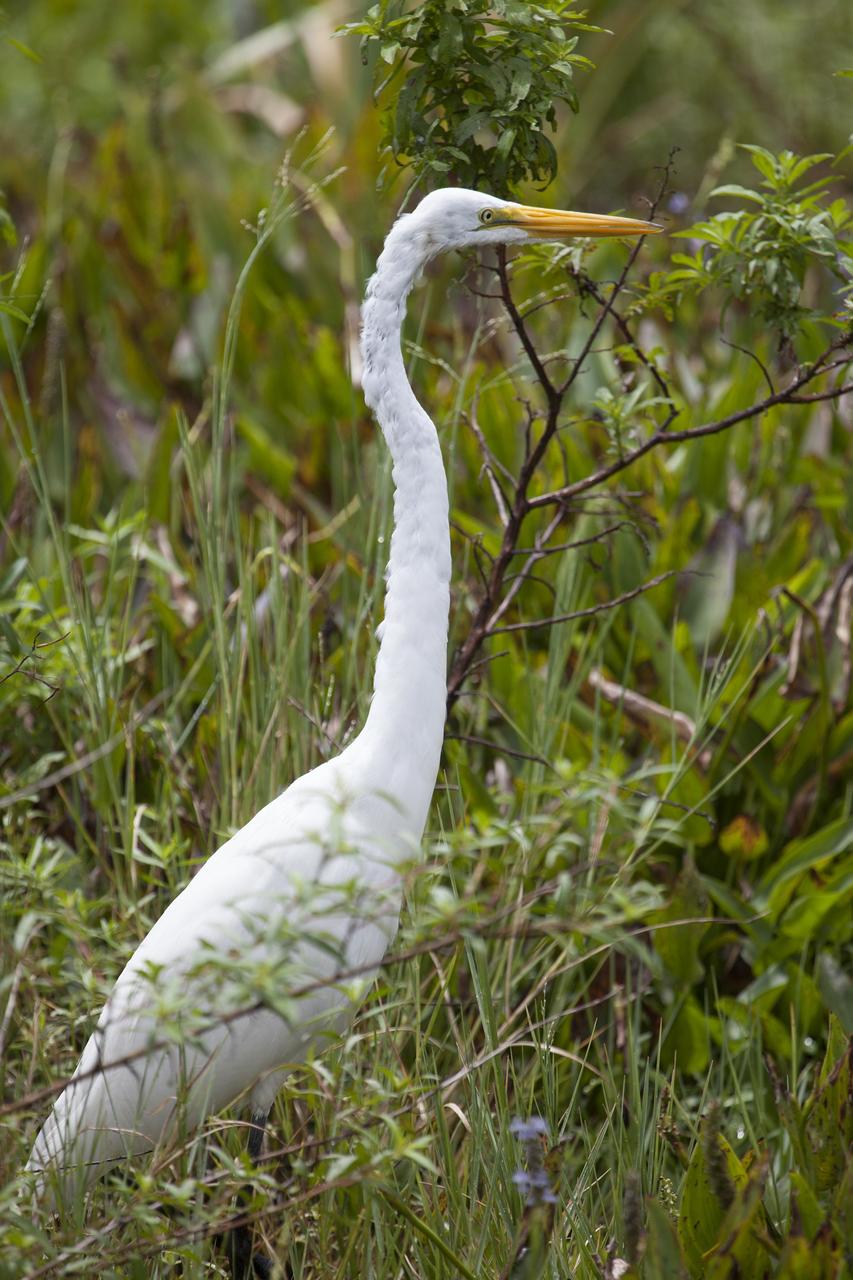
CAPE CANAVERAL, Fla. -- This molting great egret is in its natural habitat in the tall grass on NASA's Kennedy Space Center in Florida. The undeveloped property on Kennedy Space Center is managed by the U.S. Fish and Wildlife Service through the Merritt Island National Wildlife Refuge. The refuge provides a habitat for a plethora of wildlife, including 330 species of birds. For information on the refuge, visit http://www.fws.gov/merrittisland/Index.html. Photo credit: NASA/Daniel Casper
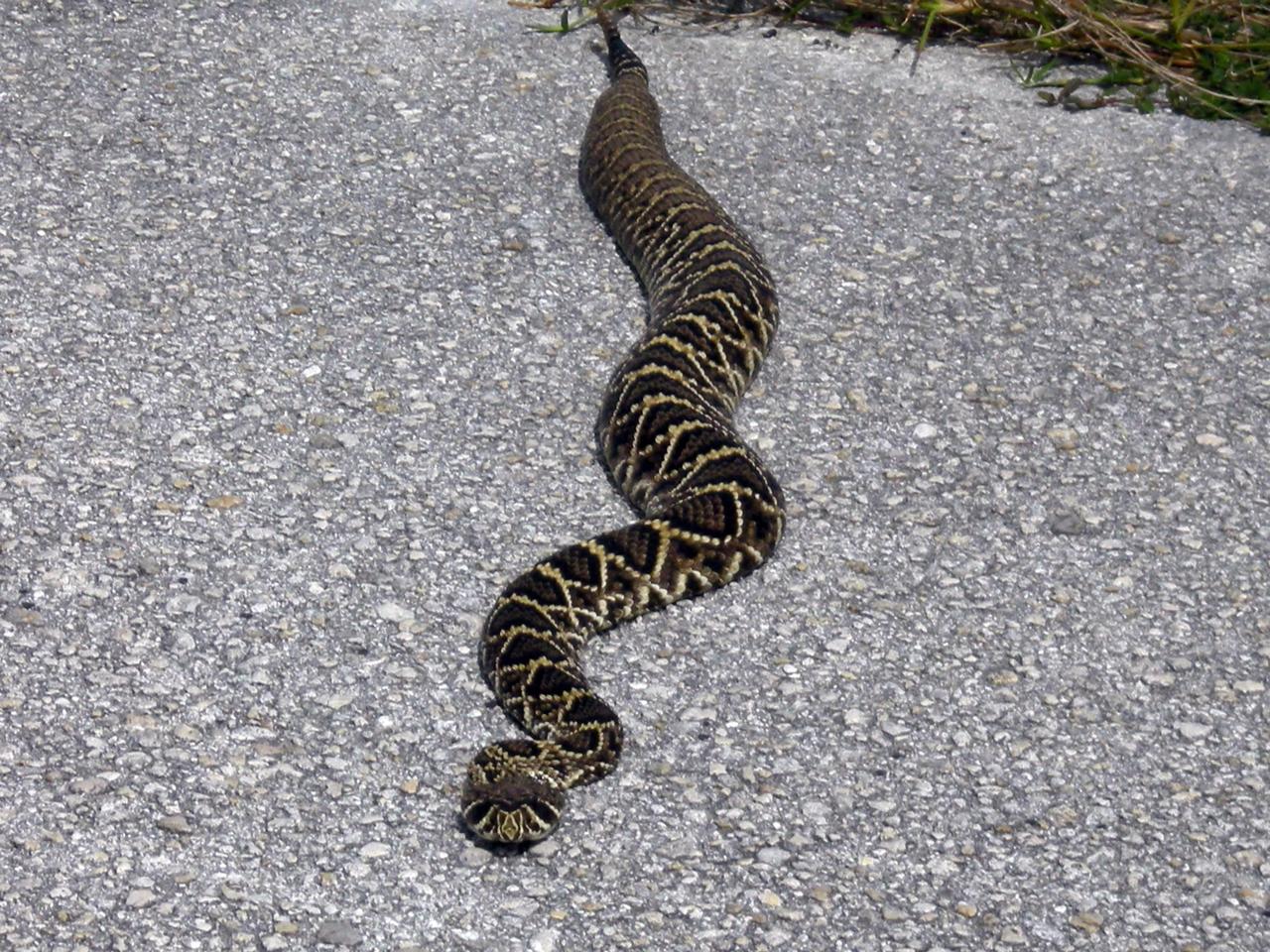
KENNEDY SPACE CENTER, FLA. -- This diamondback rattlesnake lies across the road near Launch Pad 39B at NASA's Kennedy Space Center. The diamondback is Florida's largest venomous snake and may exceed six feet in length. It occurs throughout Florida in a variety of dry habitats, such as pinelands, scrub and golf courses. Kennedy shares a boundary with the Merritt Island Wildlife Nature Refuge, which is a habitat for more than 310 species of birds, 25 mammals, 117 fishes and 65 amphibians and reptiles. Photo credit: NASA/Kenny Allen

KENNEDY SPACE CENTER, FLA. -- White pelicans gather in the shallow water of a lake near Kennedy Space Center. The birds breed from British Columbia and Mackenzie south to western Ontario and California and Texas coast. They winter from Florida and southern California south to Panama. KSC shares a boundary with the Merritt Island Wildlife Nature Refuge. The refuge is a habitat for more than 310 species of birds, 25 mammals, 117 fishes and 65 amphibians and reptiles. In addition, the Refuge supports 19 endangered or threatened wildlife species on Federal or State lists, more than any other single refuge in the U.S. Photo credit: NASA/Dimitri Gerondidakis
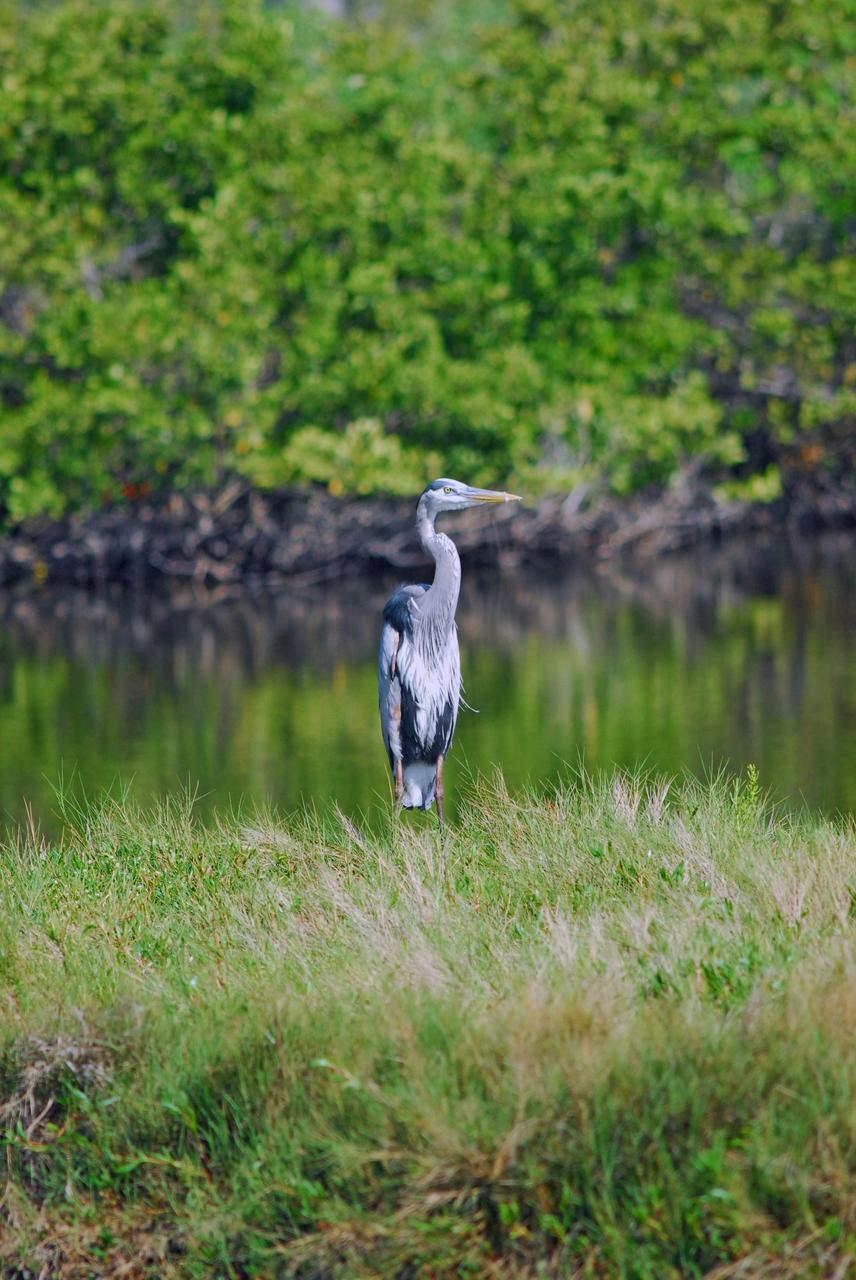
KENNEDY SPACE CENTER, FLA. -- A great blue heron watches warily near a canal on Kennedy Space Center. These herons inhabit lakes, ponds, rivers and marshes. They range throughout the United States. Fish and frogs are its principal food but will also feed on small mammals, reptiles and, occasionally, birds. KSC shares a boundary with the Merritt Island Wildlife Nature Refuge. The refuge is a habitat for more than 310 species of birds, 25 mammals, 117 fishes and 65 amphibians and reptiles. In addition, the Refuge supports 19 endangered or threatened wildlife species on Federal or State lists, more than any other single refuge in the U.S. Photo credit: NASA/Dimitri Gerondidakis
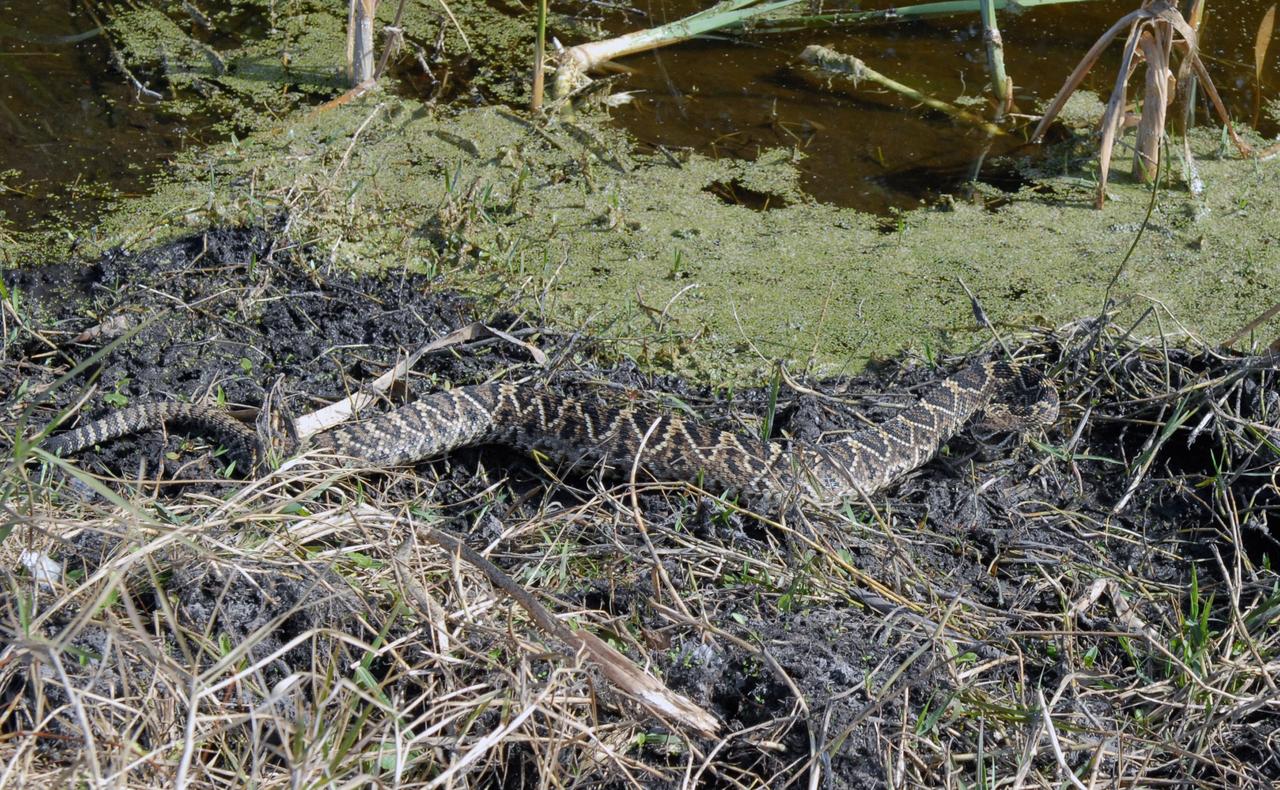
CAPE CANAVERAL, Fla. – An eastern diamondback rattlesnake returns to its natural environs farther from the NASA News Center at NASA's Kennedy Space Center in Florida. The diamondback is Florida's largest venomous snake and may exceed six feet in length. It occurs throughout Florida in a variety of dry habitats, such as pinelands, scrub and golf courses. Kennedy shares a boundary with the Merritt Island Wildlife Nature Refuge, which is a habitat for more than 310 species of birds, 25 mammals, 117 fishes and 65 amphibians and reptiles. Photo credit: NASA/Jack Pfaller
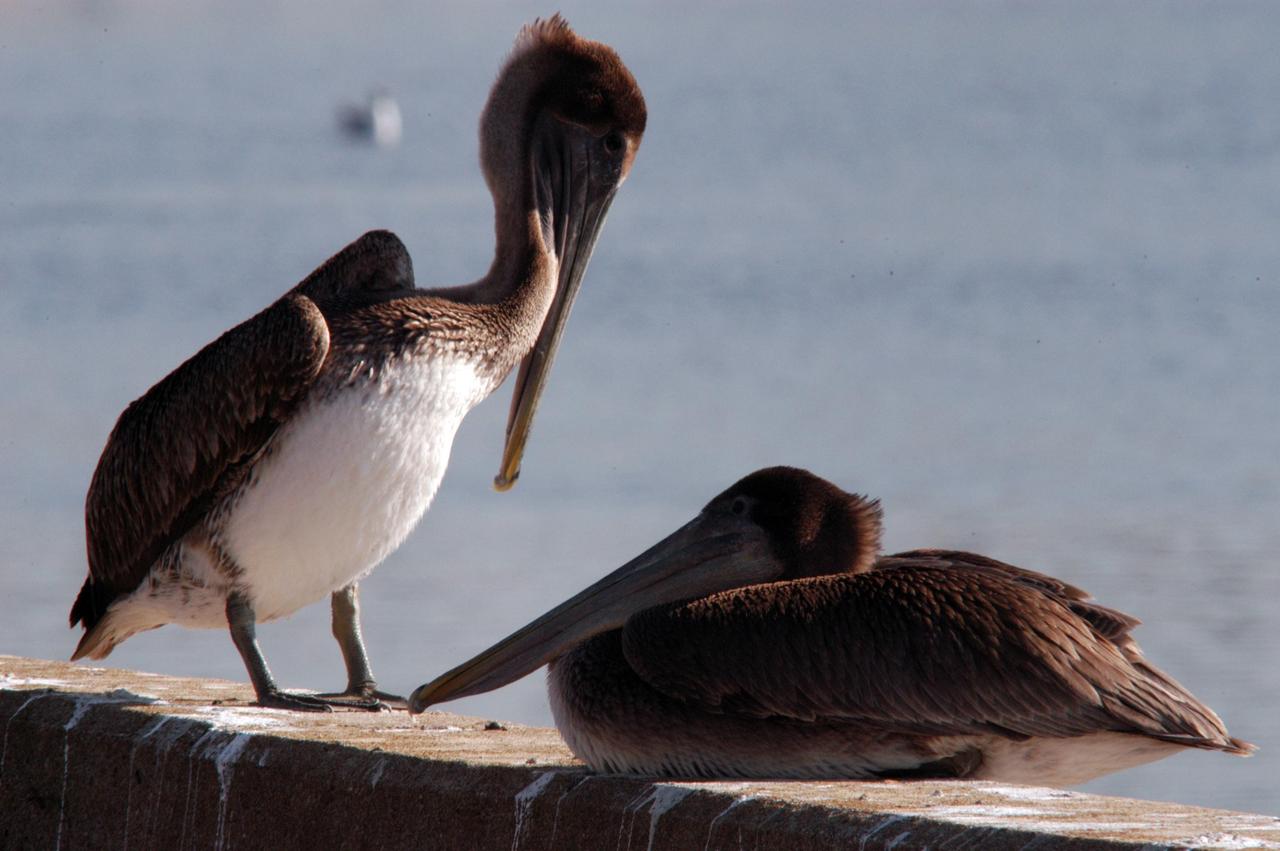
KENNEDY SPACE CENTER, FLA. -- A pair of brown pelicans rest on a wall near the turn basin at NASA's Kennedy Space Center. The turn basin was carved out of the Banana River when KSC was built. The birds' habitat is sandy coastal beaches and lagoons, ranging along the Atlantic Coast from North Carolina south to Venezuela. It nests in colonies. KSC shares a boundary with the Merritt Island Wildlife Nature Refuge. The refuge is a habitat for more than 310 species of birds, 25 mammals, 117 fishes and 65 amphibians and reptiles. In addition, the Refuge supports 19 endangered or threatened wildlife species on Federal or State lists, more than any other single refuge in the U.S. Photo credit: NASA/George Shelton
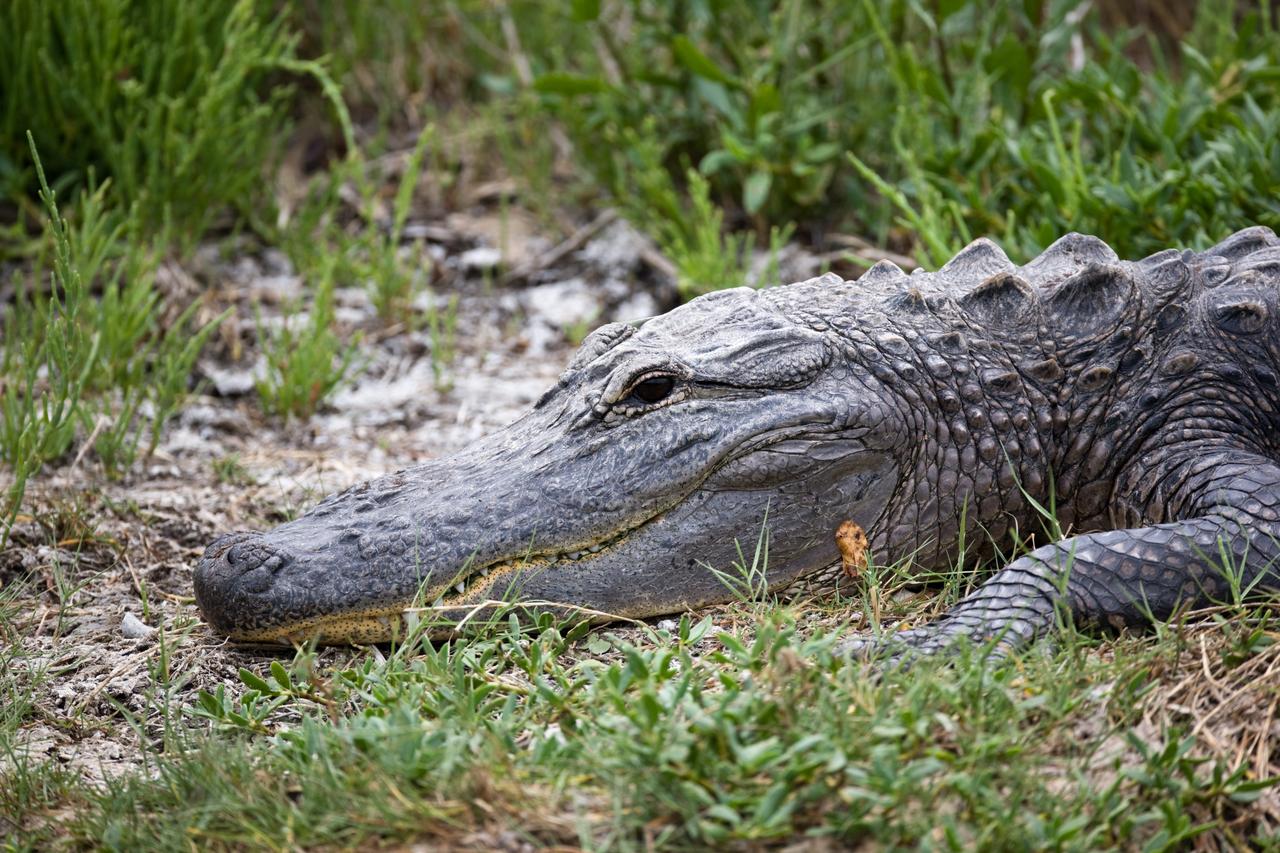
CAPE CANAVERAL, Fla. –– On NASA's Kennedy Space Center in Florida, an alligator rests on the bank of a canal. Alligators can be spotted in the drainage canals and other waters surrounding Kennedy. In Spring, they frequently roam, searching for mates. The center shares a boundary with the Merritt Island Wildlife Nature Refuge, which is a habitat for more than 310 species of birds, 25 mammals, 117 fishes and 65 amphibians and reptiles. Photo credit: NASA/Dimitri Gerondidakis
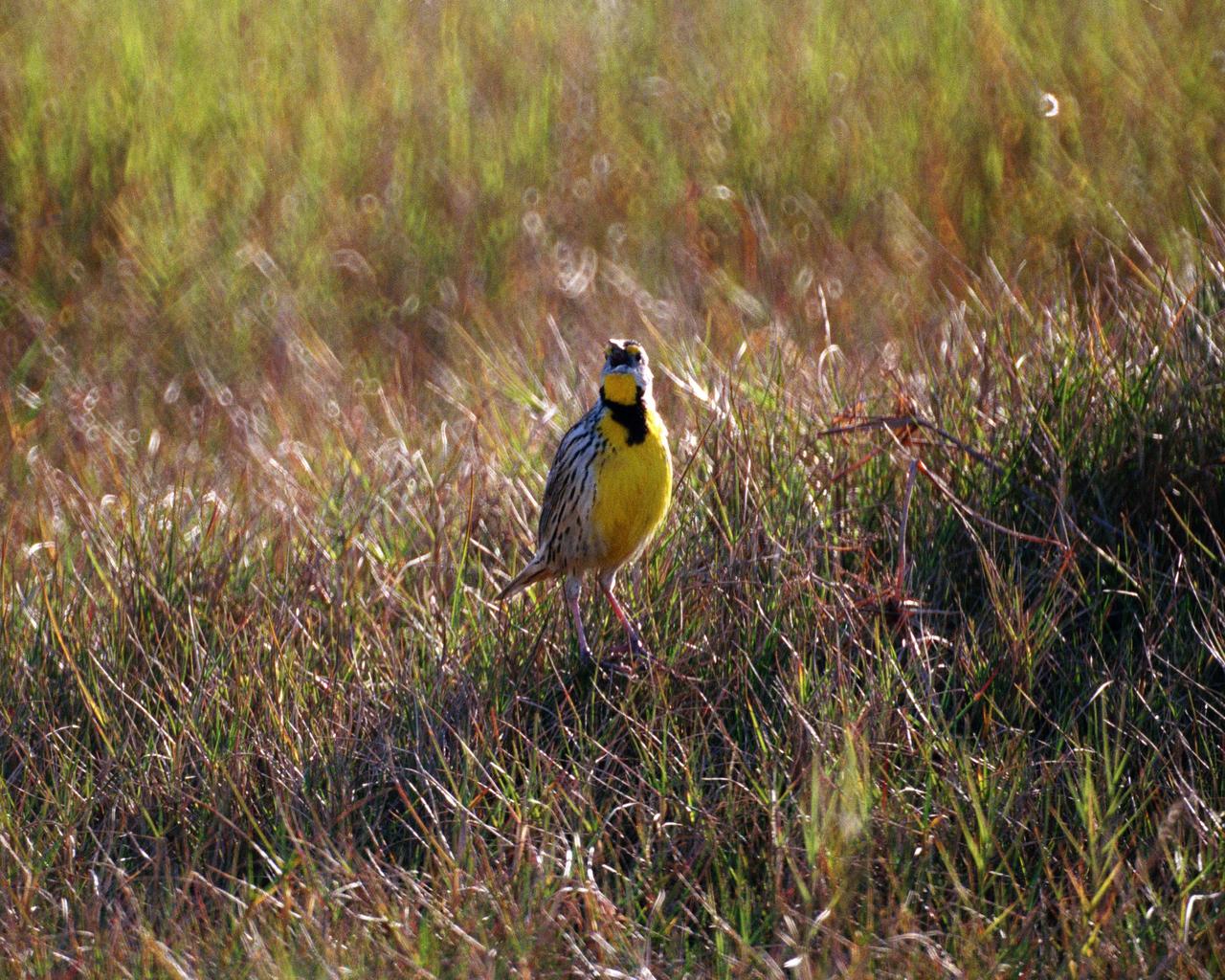
KENNEDY SPACE CENTER, FLA. - Co-located on the Kennedy Space Center is the Merritt Island National Wildlife Refuge, one of the finest refuges in the world. Here, birds, amphibians, mammals and other wild creatures thrive in a multitude of habitats untouched by the human hand. The refuge is living proof that high technology and nature can successfully co-exist. Photo credit: NASA
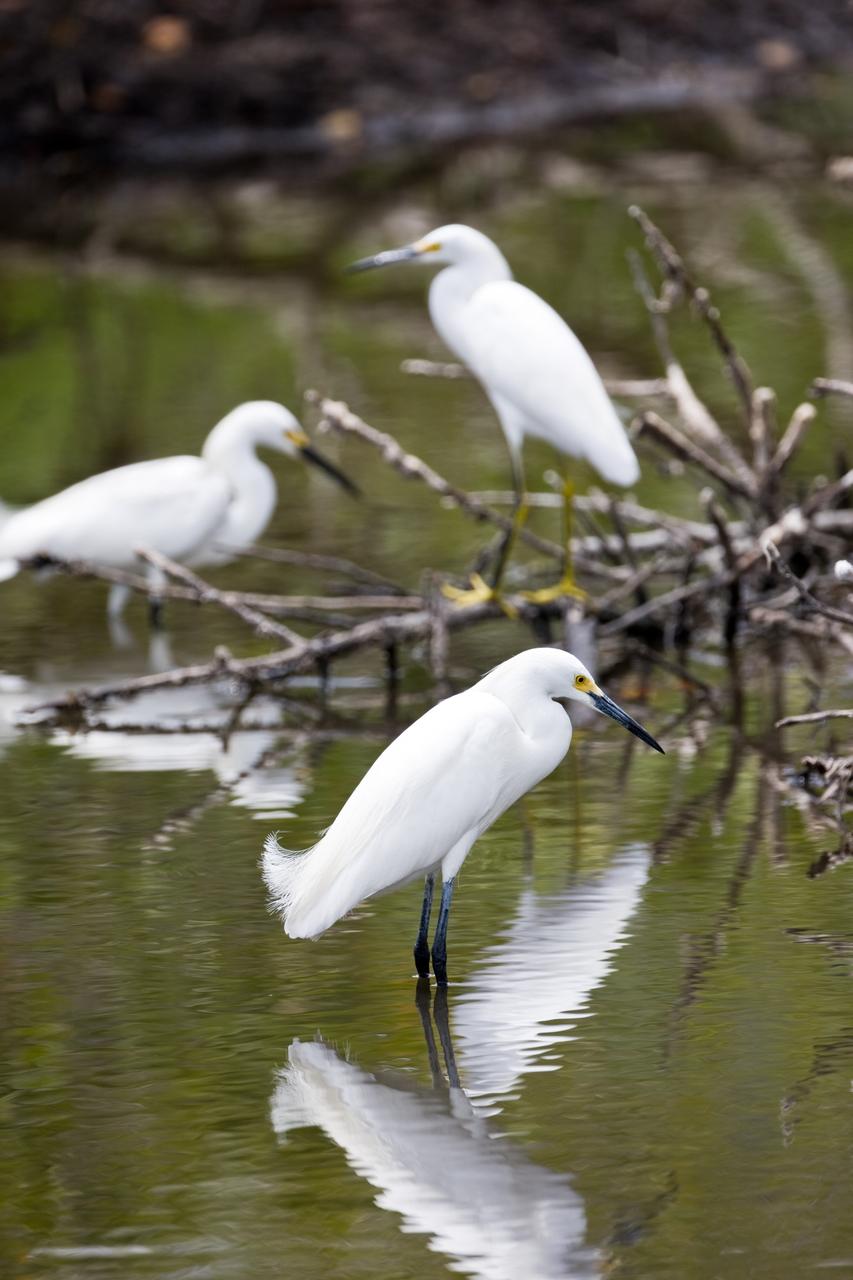
CAPE CANAVERAL, Fla. –– Snowy egrets gather in water on NASA's Kennedy Space Center in Florida. They are distinguished by their slim black beaks, black legs and yellow feet. These egrets inhabit salt marshes, ponds, rice fields and shallow coastal bays. The center shares a boundary with the Merritt Island Wildlife Nature Refuge, which is a habitat for more than 310 species of birds, 25 mammals, 117 fishes and 65 amphibians and reptiles. Photo credit: NASA/Dimitri Gerondidakis
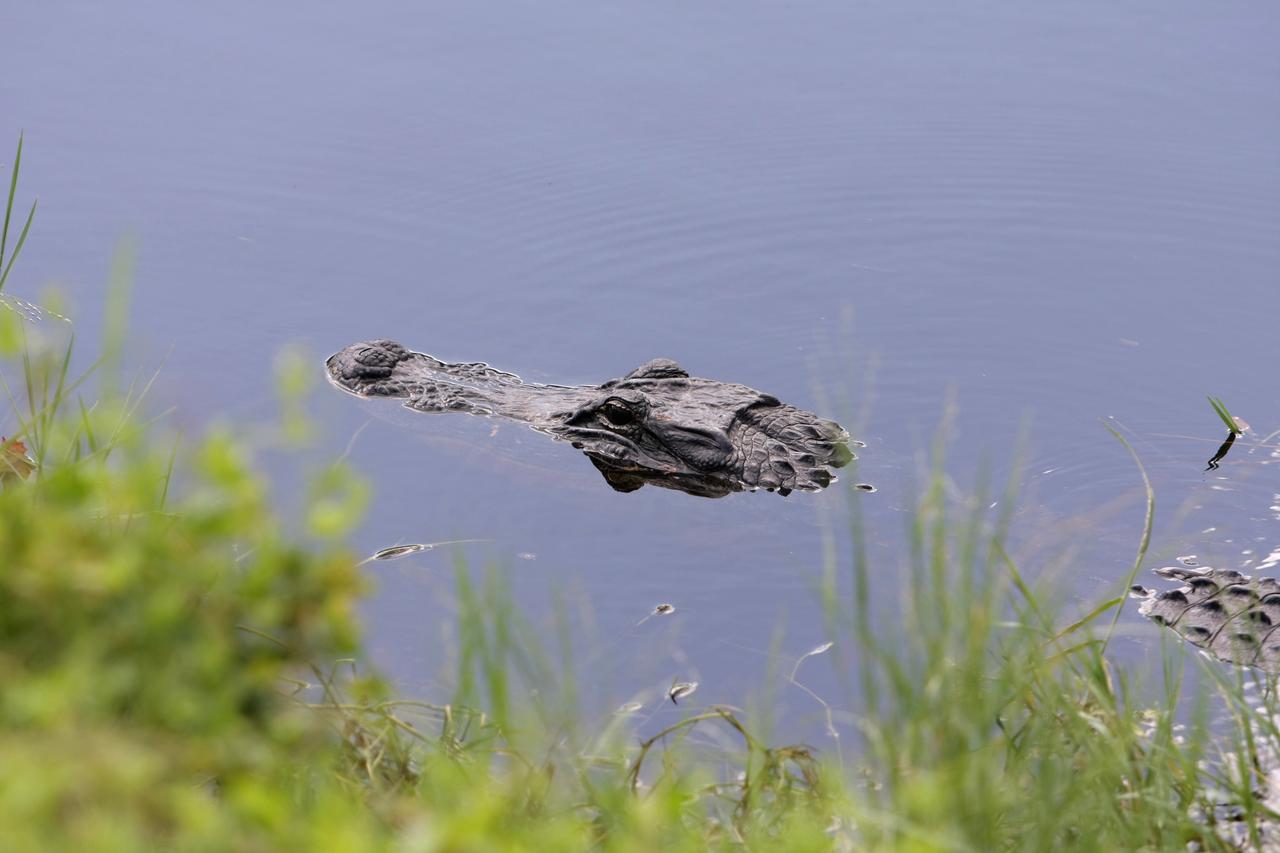
CAPE CANAVERAL, Fla. - An alligator looks warily at the photographer who's spotted the familiar head in a drainage canal on NASA's Kennedy Space Center in Florida. A protected species, alligators can be spotted in the drainage canals and other waters surrounding KSC. The center shares a boundary with the Merritt Island Wildlife Nature Refuge, which is a habitat for more than 310 species of birds, 25 mammals, 117 fishes and 65 amphibians and reptiles. Photo credit: NASA/Dimitri Gerondidakis
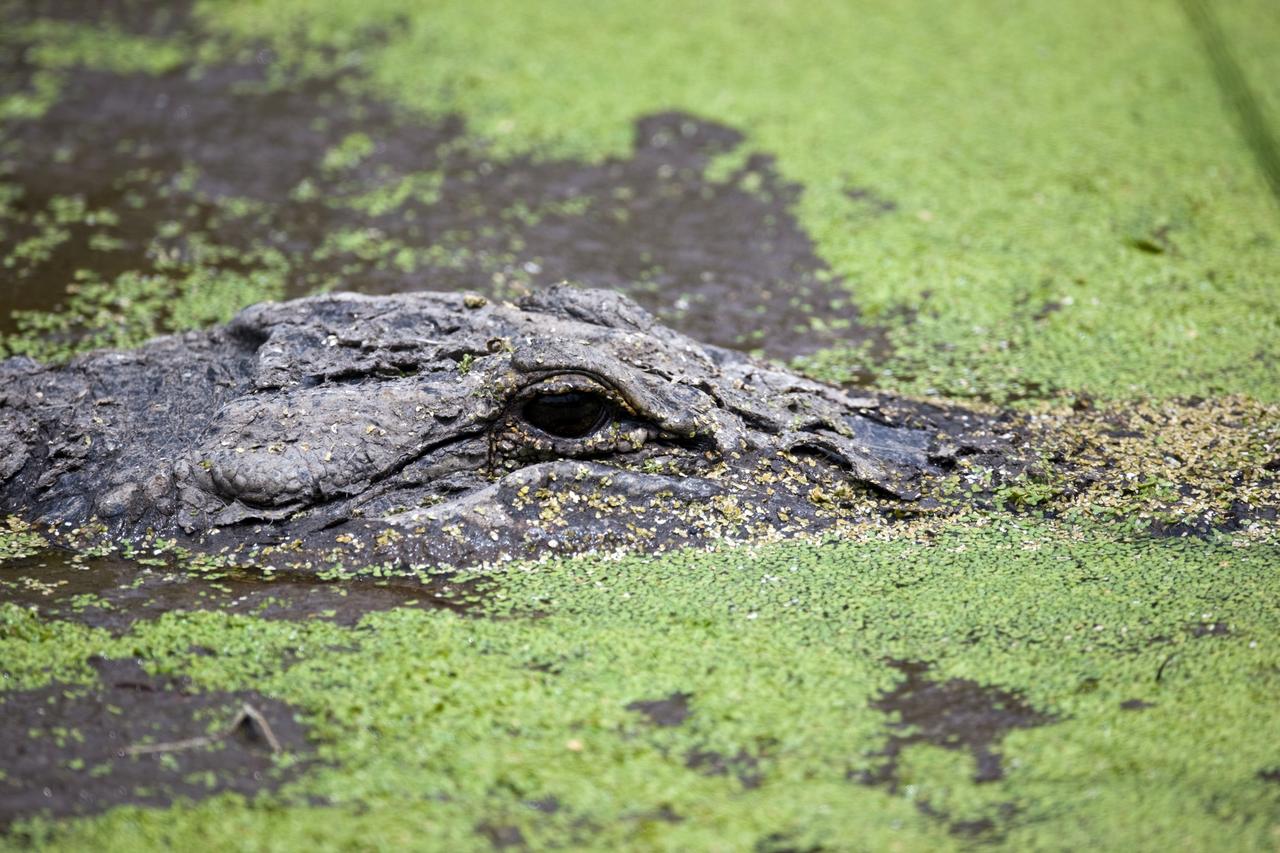
CAPE CANAVERAL, Fla. –– In the water on NASA's Kennedy Space Center in Florida, an alligator waits for a prospective meal. Alligators can be spotted in the drainage canals and other waters surrounding Kennedy. The center shares a boundary with the Merritt Island Wildlife Nature Refuge, which is a habitat for more than 310 species of birds, 25 mammals, 117 fishes and 65 amphibians and reptiles. Photo credit: NASA/Dimitri Gerondidakis
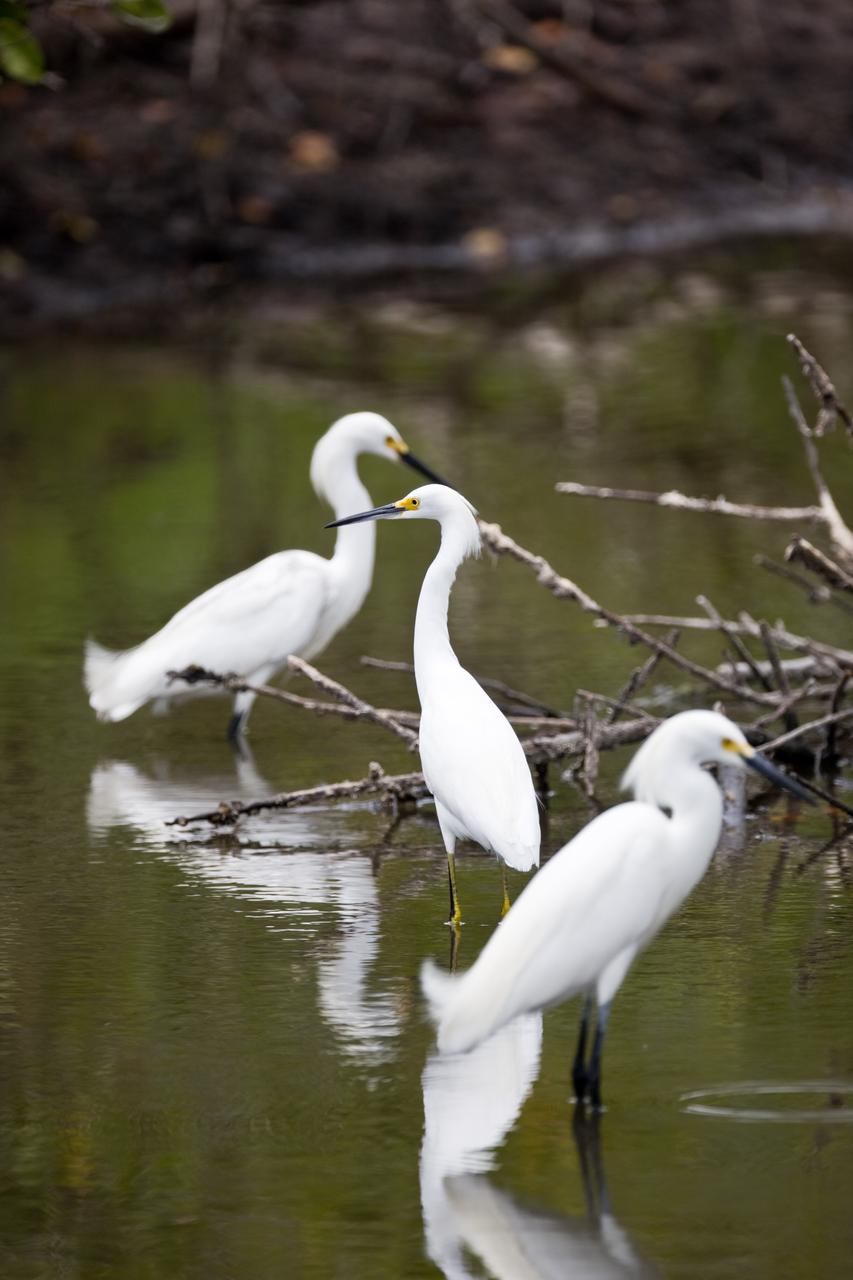
CAPE CANAVERAL, Fla. –– Snowy egrets gather in water on NASA's Kennedy Space Center in Florida. They are distinguished by their slim black beaks, black legs and yellow feet. These egrets inhabit salt marshes, ponds, rice fields and shallow coastal bays. The center shares a boundary with the Merritt Island Wildlife Nature Refuge, which is a habitat for more than 310 species of birds, 25 mammals, 117 fishes and 65 amphibians and reptiles. Photo credit: NASA/Dimitri Gerondidakis
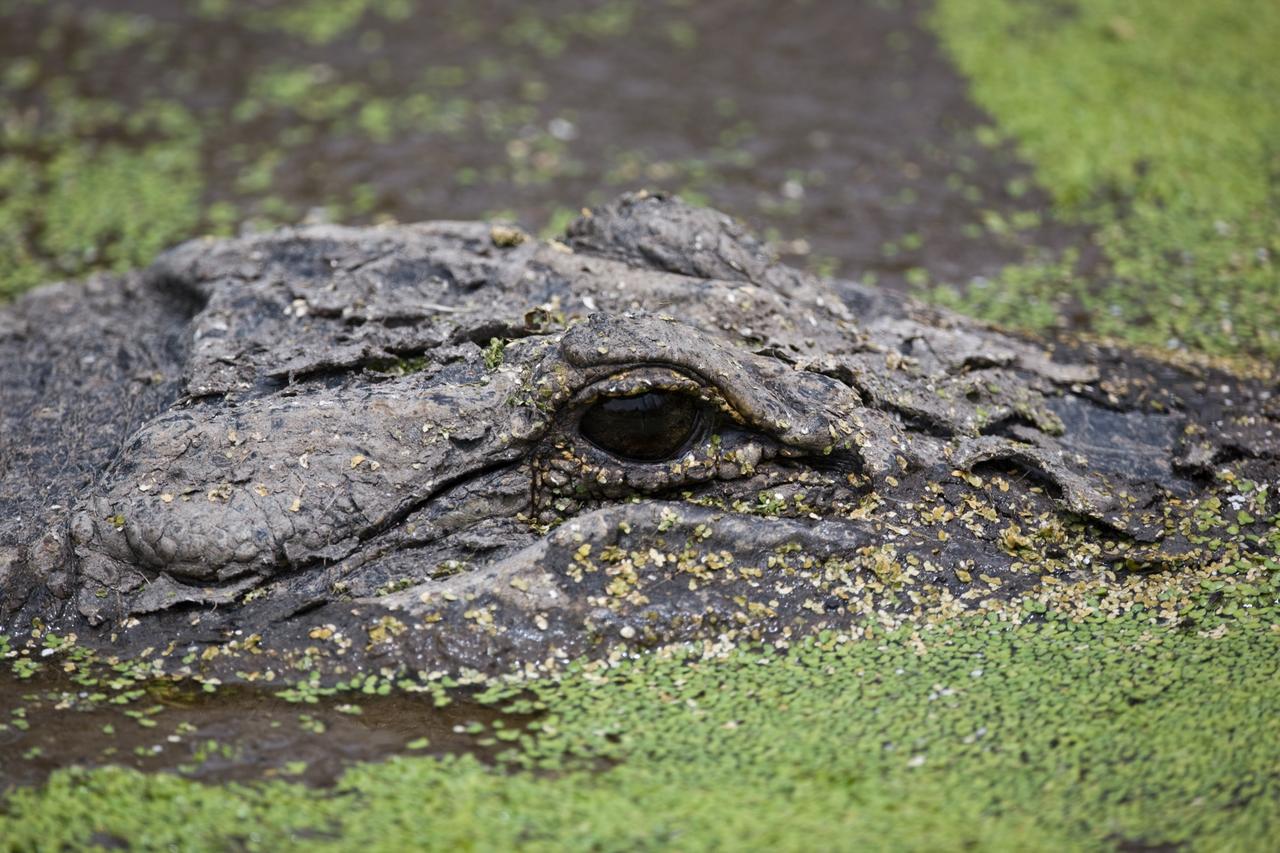
CAPE CANAVERAL, Fla. –– Who is watching whom, as this alligator appears to stare into the camera (at a safe distance away) from its watery site. Alligators can be spotted in the drainage canals and other waters surrounding Kennedy. The center shares a boundary with the Merritt Island Wildlife Nature Refuge, which is a habitat for more than 310 species of birds, 25 mammals, 117 fishes and 65 amphibians and reptiles. Photo credit: NASA/Dimitri Gerondidakis
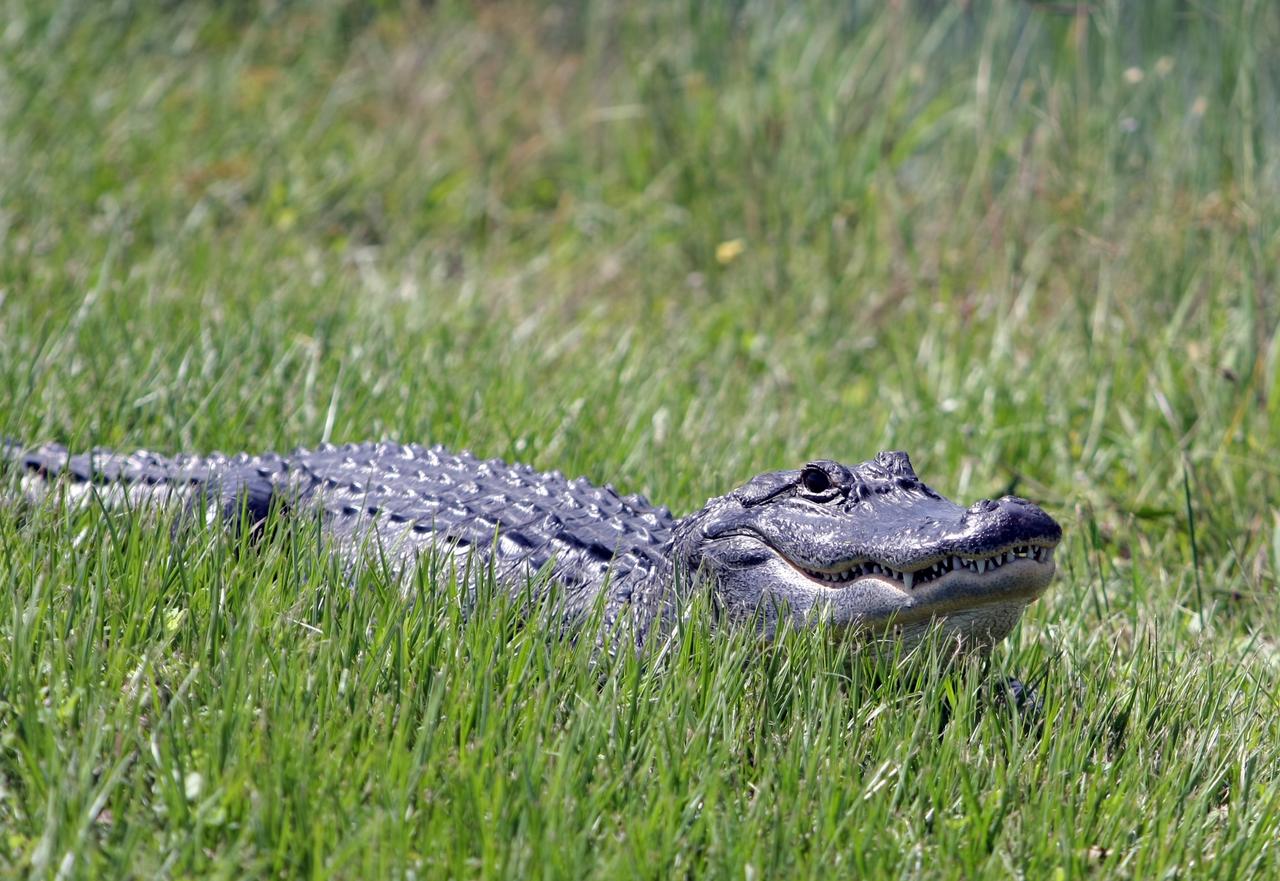
CAPE CANAVERAL, Fla. - On NASA's Kennedy Space Center in Florida, an alligator from a nearby drainage canal stares at the photographer. A protected species, alligators can be spotted in the drainage canals and other waters surrounding KSC. The center shares a boundary with the Merritt Island Wildlife Nature Refuge, which is a habitat for more than 310 species of birds, 25 mammals, 117 fishes and 65 amphibians and reptiles. Photo credit: NASA/Dimitri Gerondidakis
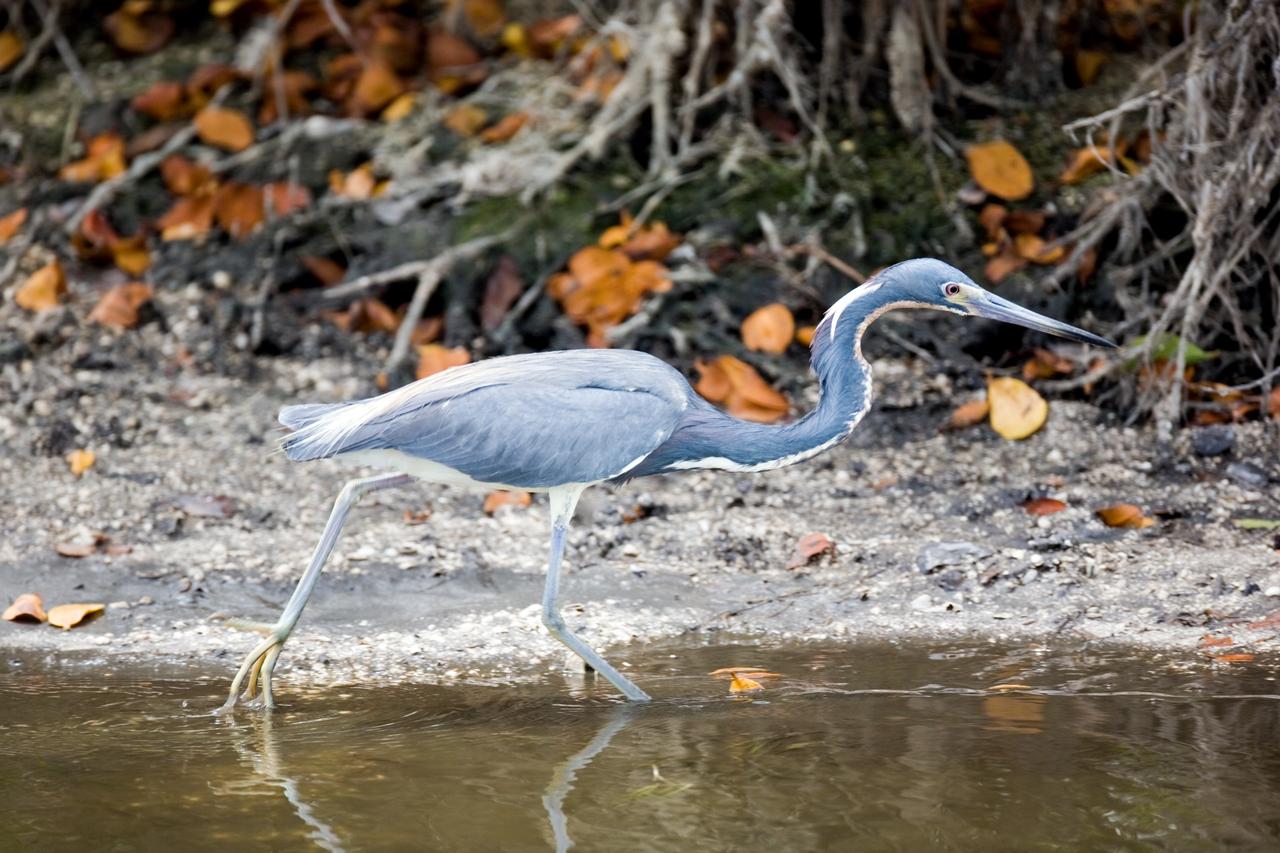
CAPE CANAVERAL, Fla. –– One of the most numerous herons in the Deep South, this Louisiana Heron stalks the water at NASA's Kennedy Space Center in Florida looking for food, usually frogs or fish. The range of this species is the Atlantic and Gulf coasts from Massachusetts south, wintering from Virginia to South America. The center shares a boundary with the Merritt Island Wildlife Nature Refuge, which is a habitat for more than 310 species of birds, 25 mammals, 117 fishes and 65 amphibians and reptiles. Photo credit: NASA/Dimitri Gerondidakis
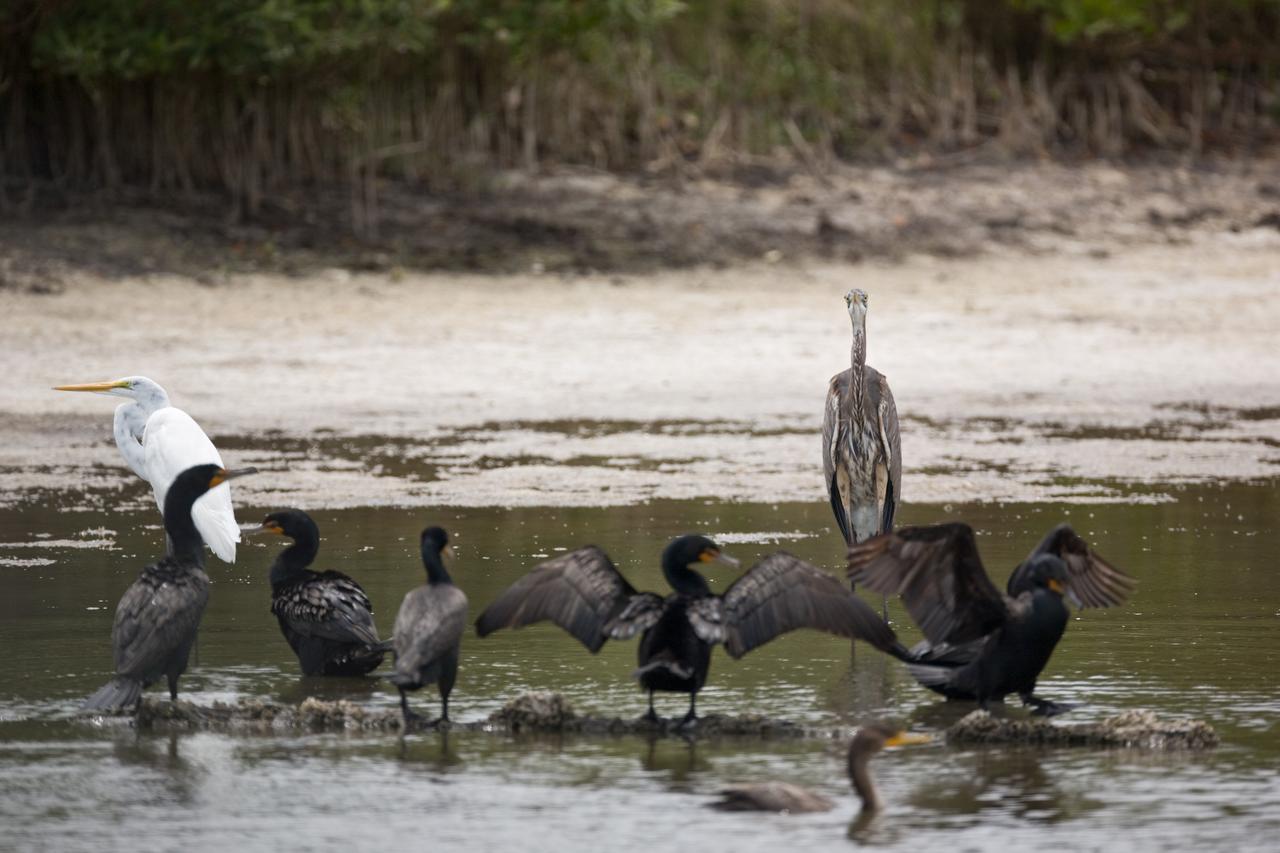
CAPE CANAVERAL, Fla. –– A great egret (left), great blue heron (far right) and cormorants (foreground) share the shallow water on NASA's Kennedy Space Center in Florida. The center shares a boundary with the Merritt Island Wildlife Nature Refuge, which is a habitat for more than 310 species of birds, 25 mammals, 117 fishes and 65 amphibians and reptiles. Photo credit: NASA/Dimitri Gerondidakis
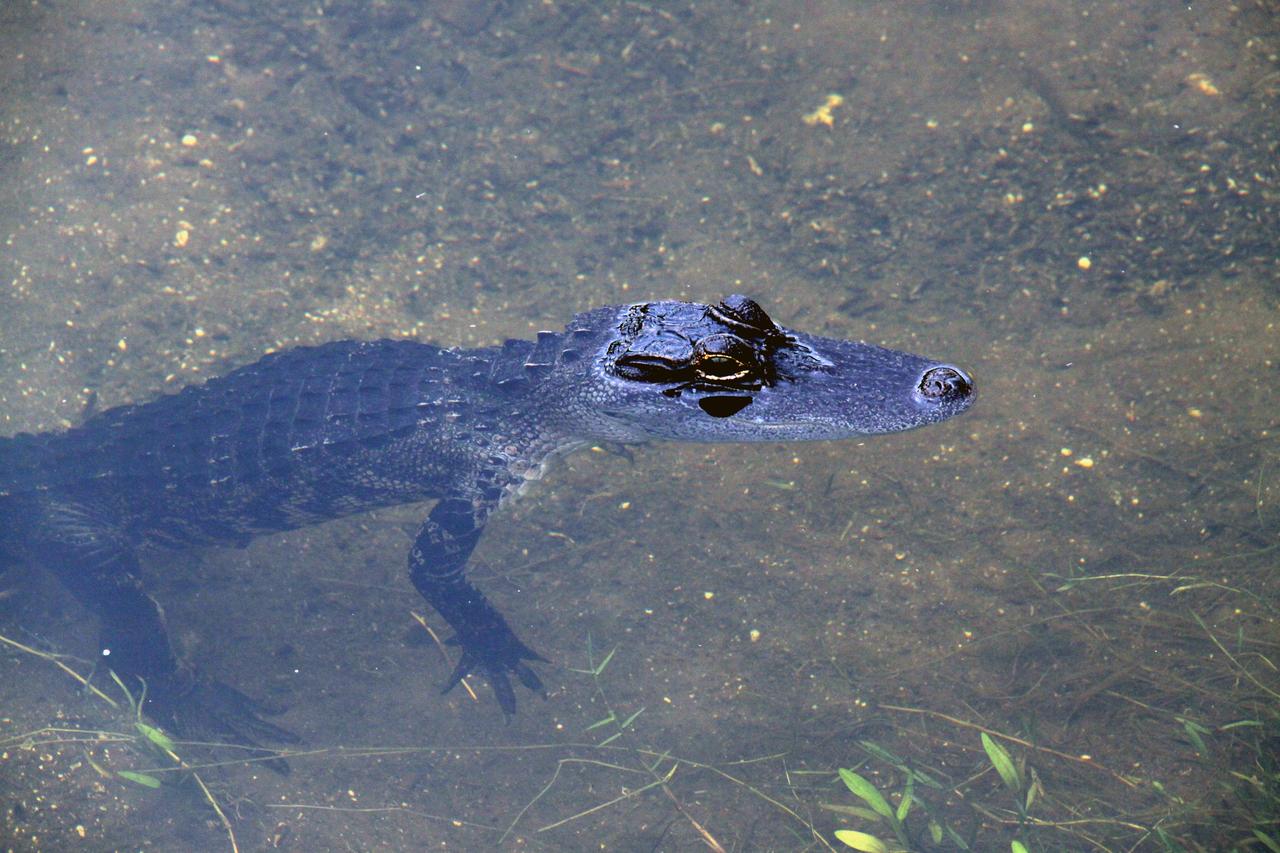
CAPE CANAVERAL, Fla. – A baby alligator is unaware that the water saturating the ground is the aftermath of thunderstorms in the vicinity of NASA Kennedy Space Center’s Shuttle Landing Facility and that space shuttle Atlantis is unable to land to conclude the STS-125 mission. Alligators can be spotted in the drainage canals and other waters surrounding Kennedy. The center shares a boundary with the Merritt Island Wildlife Nature Refuge, which is a habitat for more than 310 species of birds, 25 mammals, 117 fishes and 65 amphibians and reptiles. Photo credit: NASA/Glenn Benson
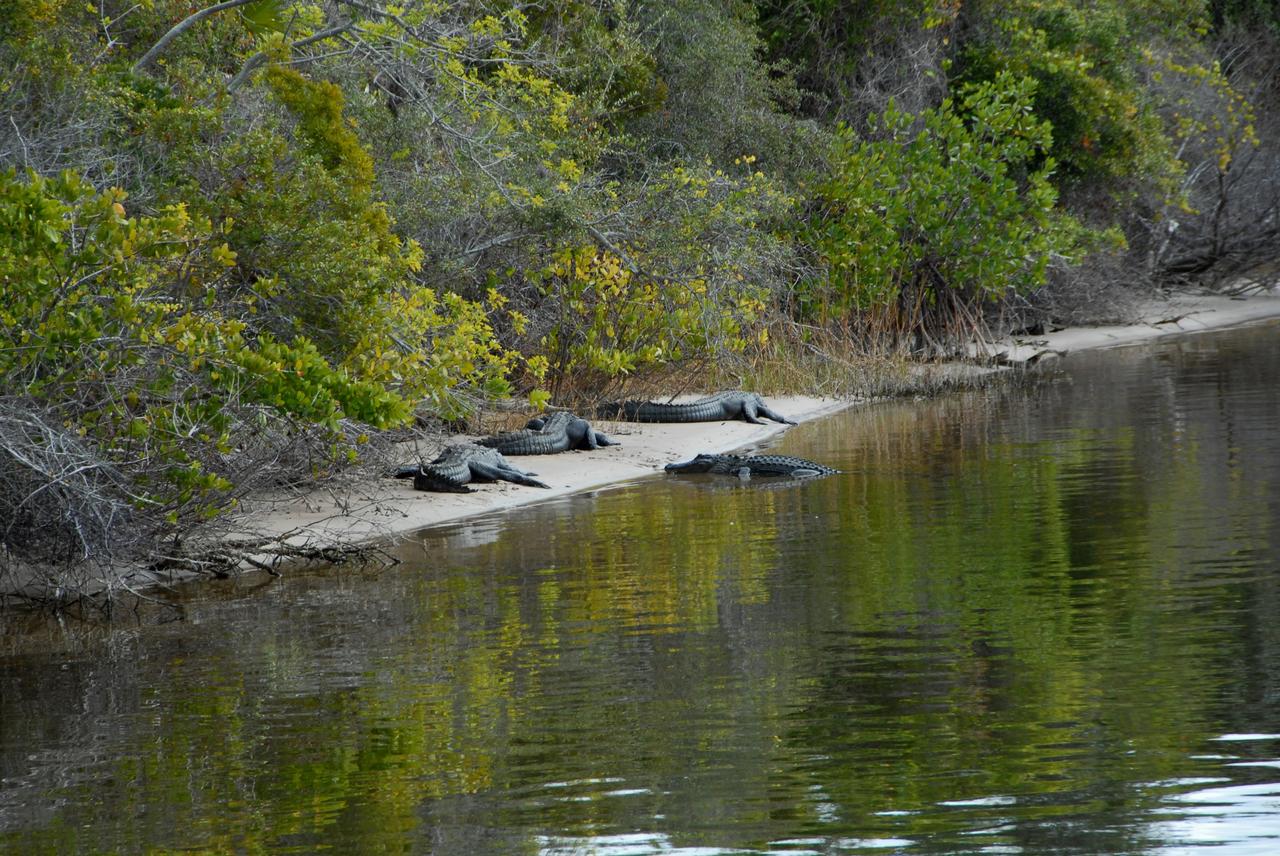
CAPE CANAVERAL, Fla. -- Alligators bask in the warm sun on the banks of the Launch Complex 39 turn basin at NASA's Kennedy Space Center in Florida. Cool weather frequently brings the gators out of the water. A protected species, alligators can be spotted in the drainage canals and other waters surrounding Kennedy. The center shares a boundary with the Merritt Island Wildlife Nature Refuge, which is a habitat for more than 310 species of birds, 25 mammals, 117 fishes and 65 amphibians and reptiles. Photo credit: NASA/Jack Pfaller
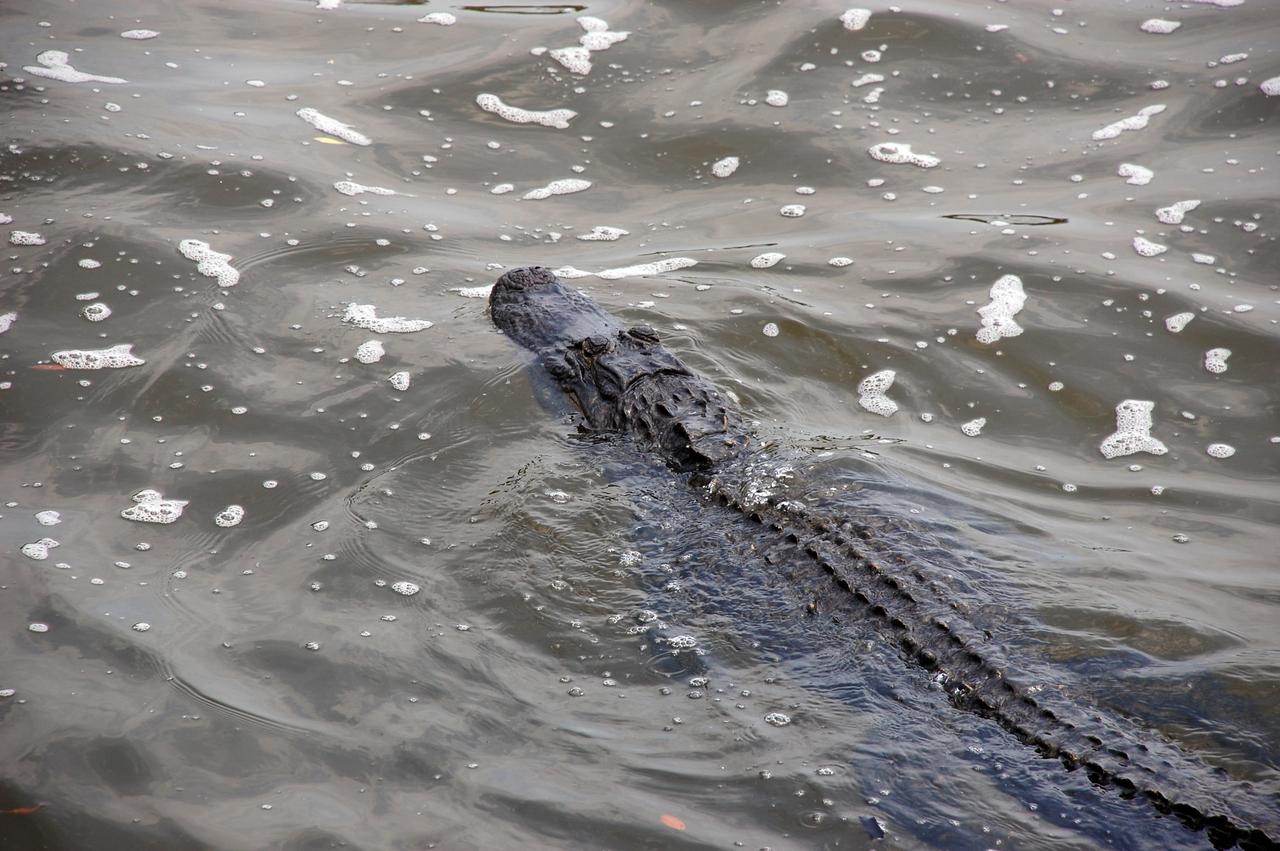
CAPE CANAVERAL, Fla. – An alligator patrols the water in NASA's Kennedy Space Center in Florida. A protected species, alligators can be spotted in the drainage canals and other waters surrounding Kennedy. The center shares a boundary with the Merritt Island Wildlife Nature Refuge, which is a habitat for more than 310 species of birds, 25 mammals, 117 fishes and 65 amphibians and reptiles. Photo credit: NASA/Ben Smegelsky
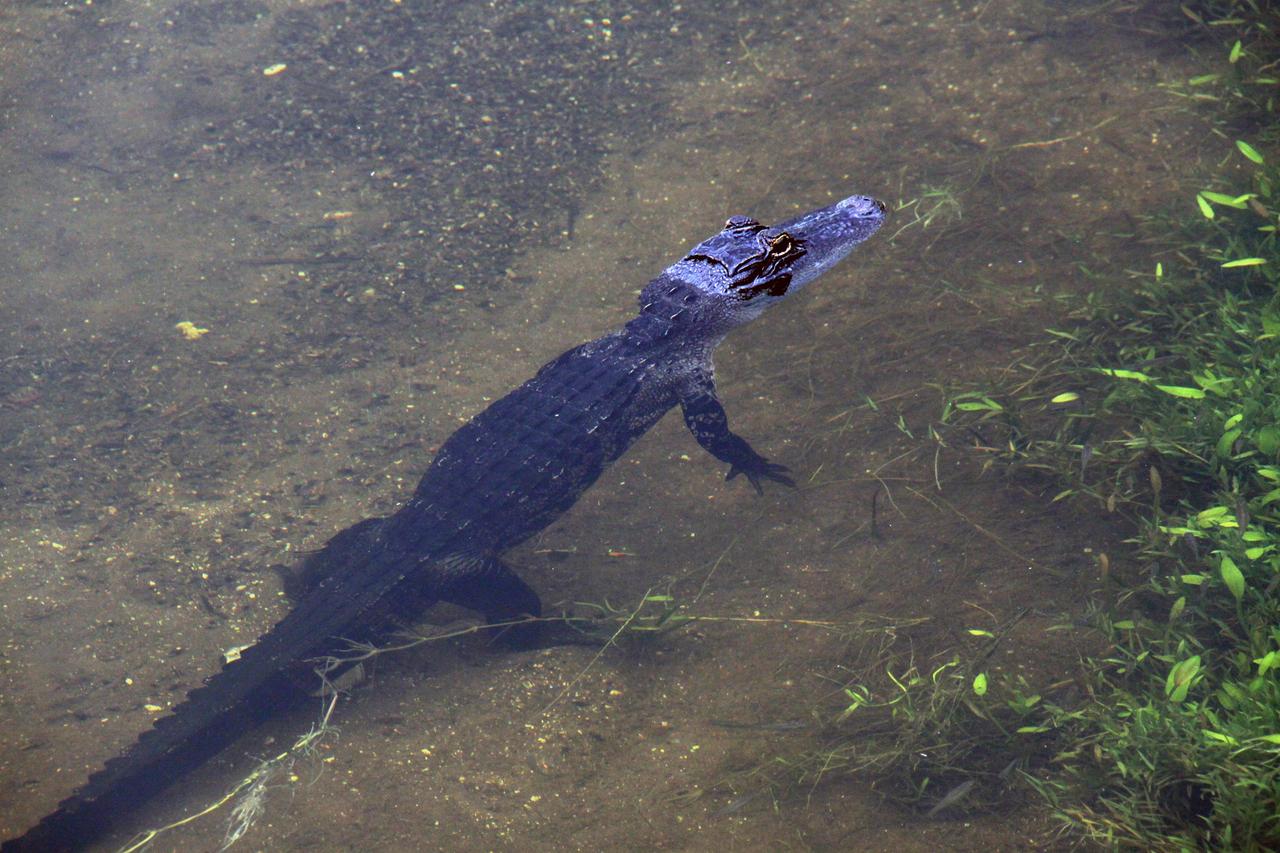
CAPE CANAVERAL, Fla. – A baby alligator is unconcerned that water saturates the ground and space shuttle Atlantis is unable to land at NASA’s Kennedy Space Center to conclude the STS-125 mission, the aftermath of thunderstorms in the vicinity of the Shuttle Landing Facility. Alligators can be spotted in the drainage canals and other waters surrounding Kennedy. The center shares a boundary with the Merritt Island Wildlife Nature Refuge, which is a habitat for more than 310 species of birds, 25 mammals, 117 fishes and 65 amphibians and reptiles. Photo credit: NASA/Glenn Benson
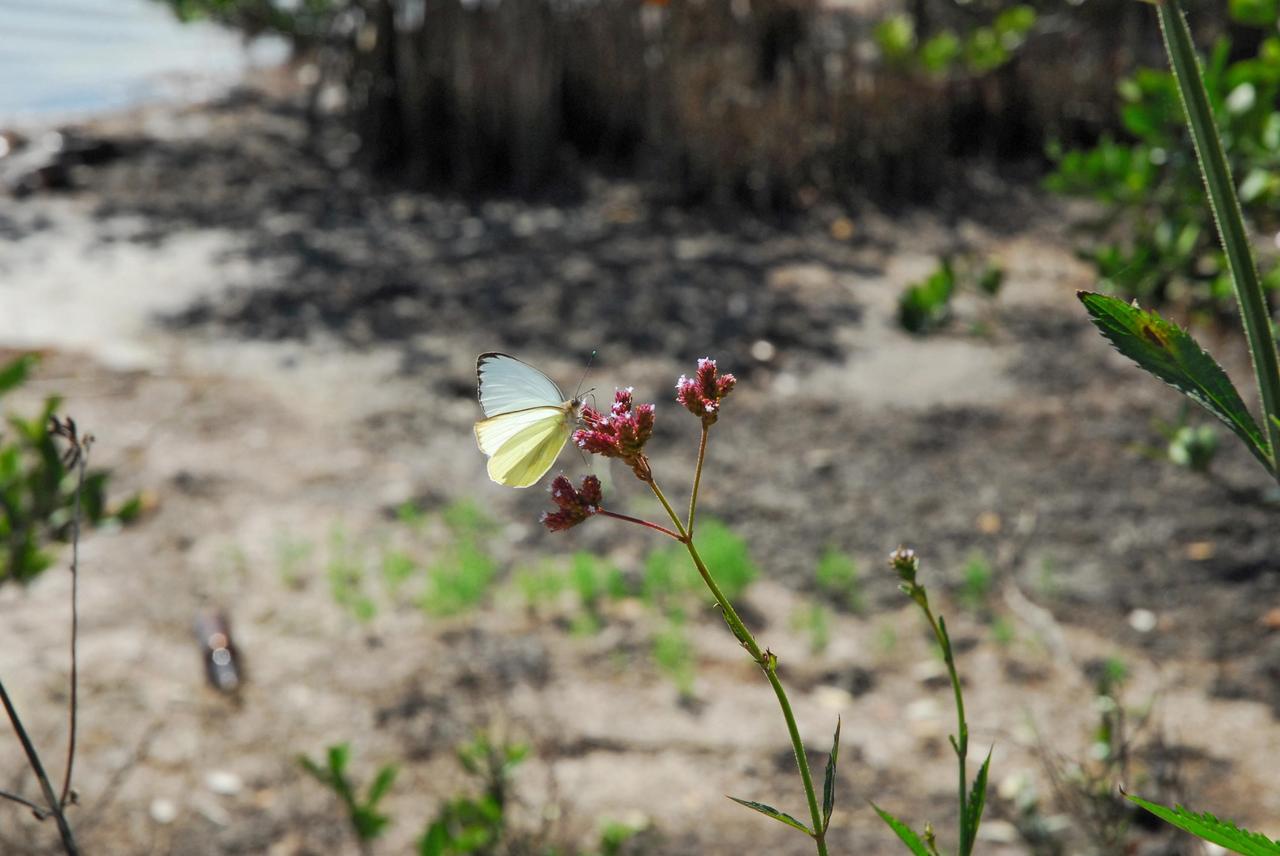
KENNEDY SPACE CENTER, FLA. -- A delicate butterfly perches on a wild flower among the grasses on Kennedy Space Center. KSC shares a boundary with the Merritt Island Wildlife Nature Refuge. The refuge is a habitat for more than 310 species of birds, 25 mammals, 117 fishes and 65 amphibians and reptiles. In addition, the Refuge supports 19 endangered or threatened wildlife species on Federal or State lists, more than any other single refuge in the U.S. Photo credit: NASA/Dimitri Gerondidakis
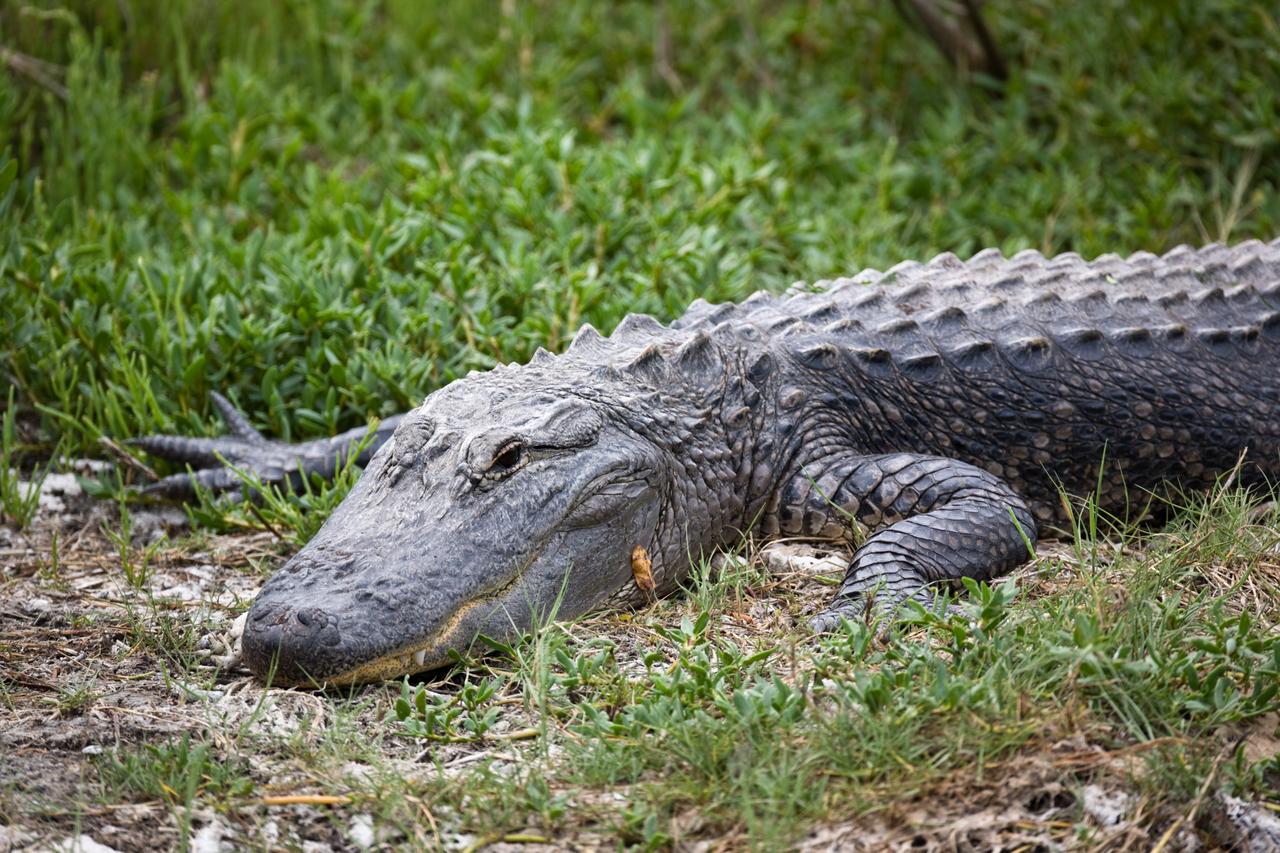
CAPE CANAVERAL, Fla. –– On NASA's Kennedy Space Center in Florida, an alligator rests on the bank of a canal. Alligators can be spotted in the drainage canals and other waters surrounding Kennedy. The center shares a boundary with the Merritt Island Wildlife Nature Refuge, which is a habitat for more than 310 species of birds, 25 mammals, 117 fishes and 65 amphibians and reptiles. Photo credit: NASA/Dimitri Gerondidakis
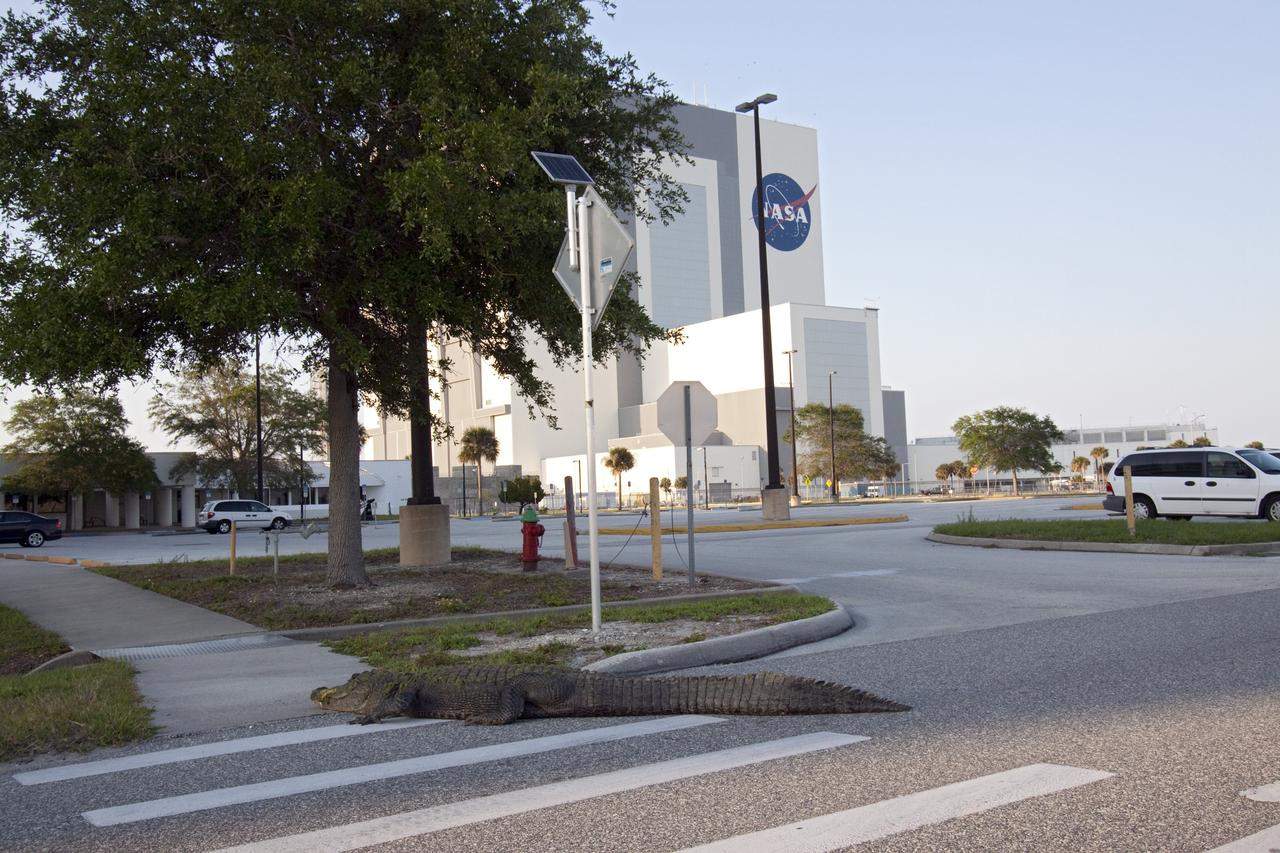
CAPE CANAVERAL, Fla. -- An alligator ambles across Saturn Causeway at NASA's Kennedy Space Center in Florida near the Vehicle Assembly Building. Alligators can be spotted in the drainage canals and other waters surrounding KSC and occasionally venture onto roads seeking new environs or mates. The center shares a boundary with the Merritt Island Wildlife Nature Refuge, which is a habitat for more than 310 species of birds, 25 mammals, 117 fishes and 65 amphibians and reptiles. Photo credit: NASA/Jack Pfaller
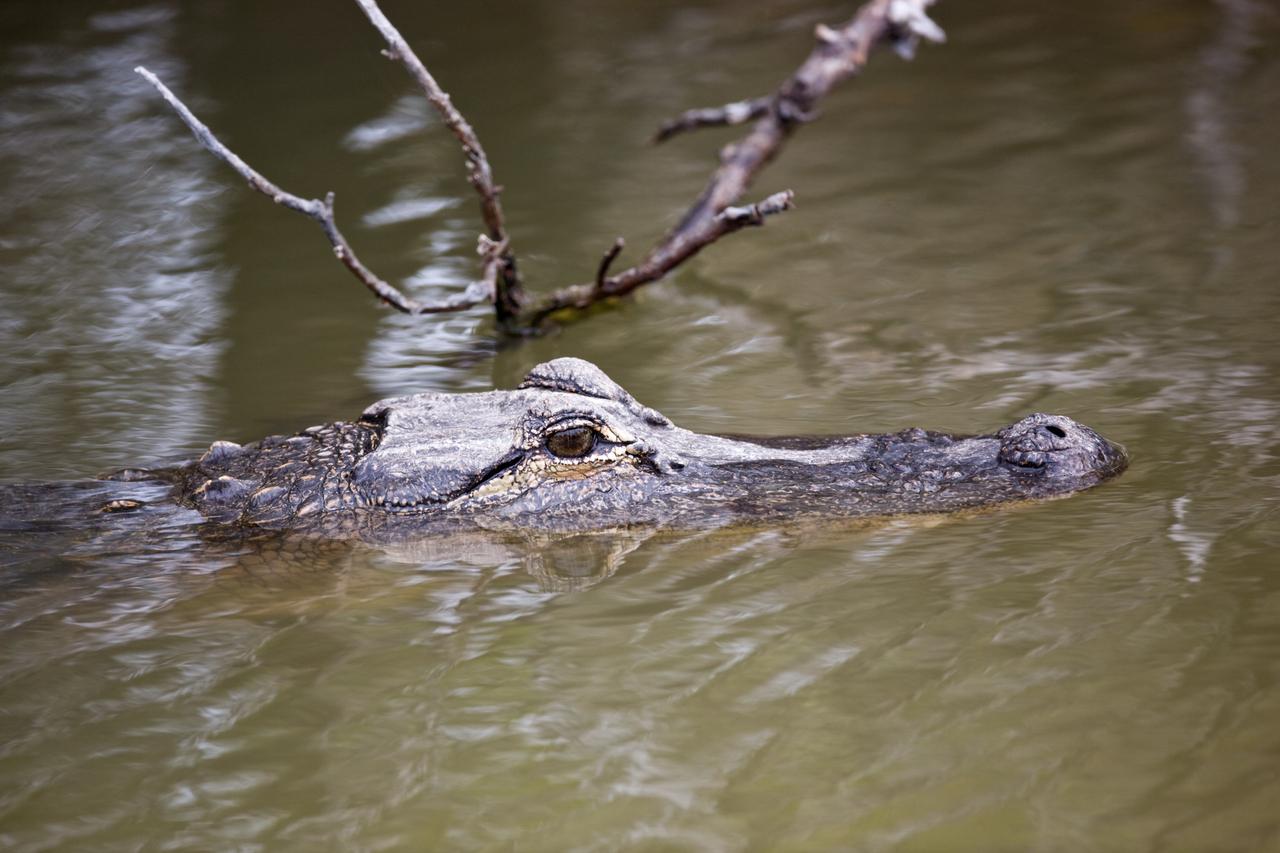
CAPE CANAVERAL, Fla. –– In the water on NASA's Kennedy Space Center in Florida, an alligator waits for a prospective meal. Alligators can be spotted in the drainage canals and other waters surrounding Kennedy. The center shares a boundary with the Merritt Island Wildlife Nature Refuge, which is a habitat for more than 310 species of birds, 25 mammals, 117 fishes and 65 amphibians and reptiles. Photo credit: NASA/Dimitri Gerondidakis
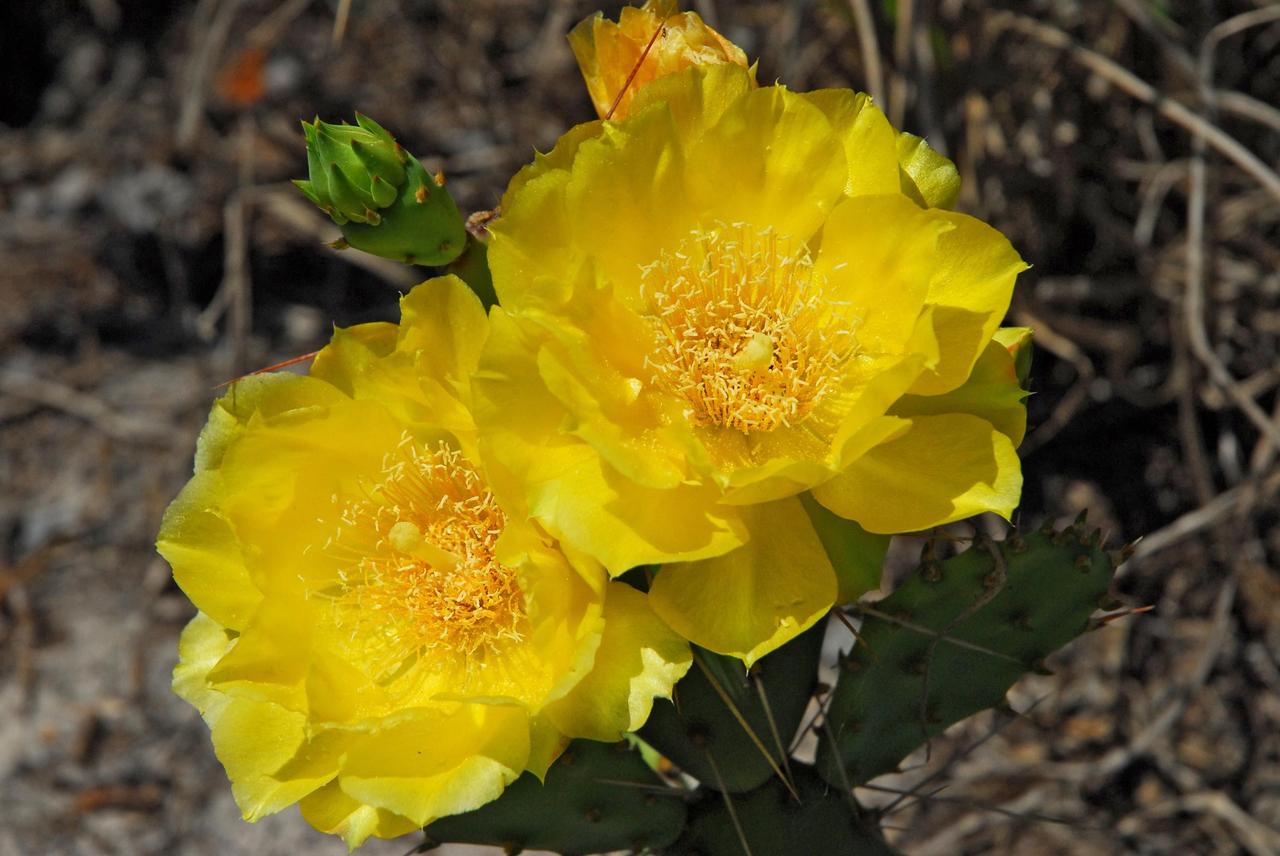
KENNEDY SPACE CENTER, FLA. -- A taste of spring is heralded by the blooming of these flowers near a riverbank on Kennedy Space Center. KSC shares a boundary with the Merritt Island Wildlife Nature Refuge. The refuge is a habitat for more than 310 species of birds, 25 mammals, 117 fishes and 65 amphibians and reptiles. In addition, the Refuge supports 19 endangered or threatened wildlife species on Federal or State lists, more than any other single refuge in the U.S. Photo credit: NASA/Dimitri Gerondidakis
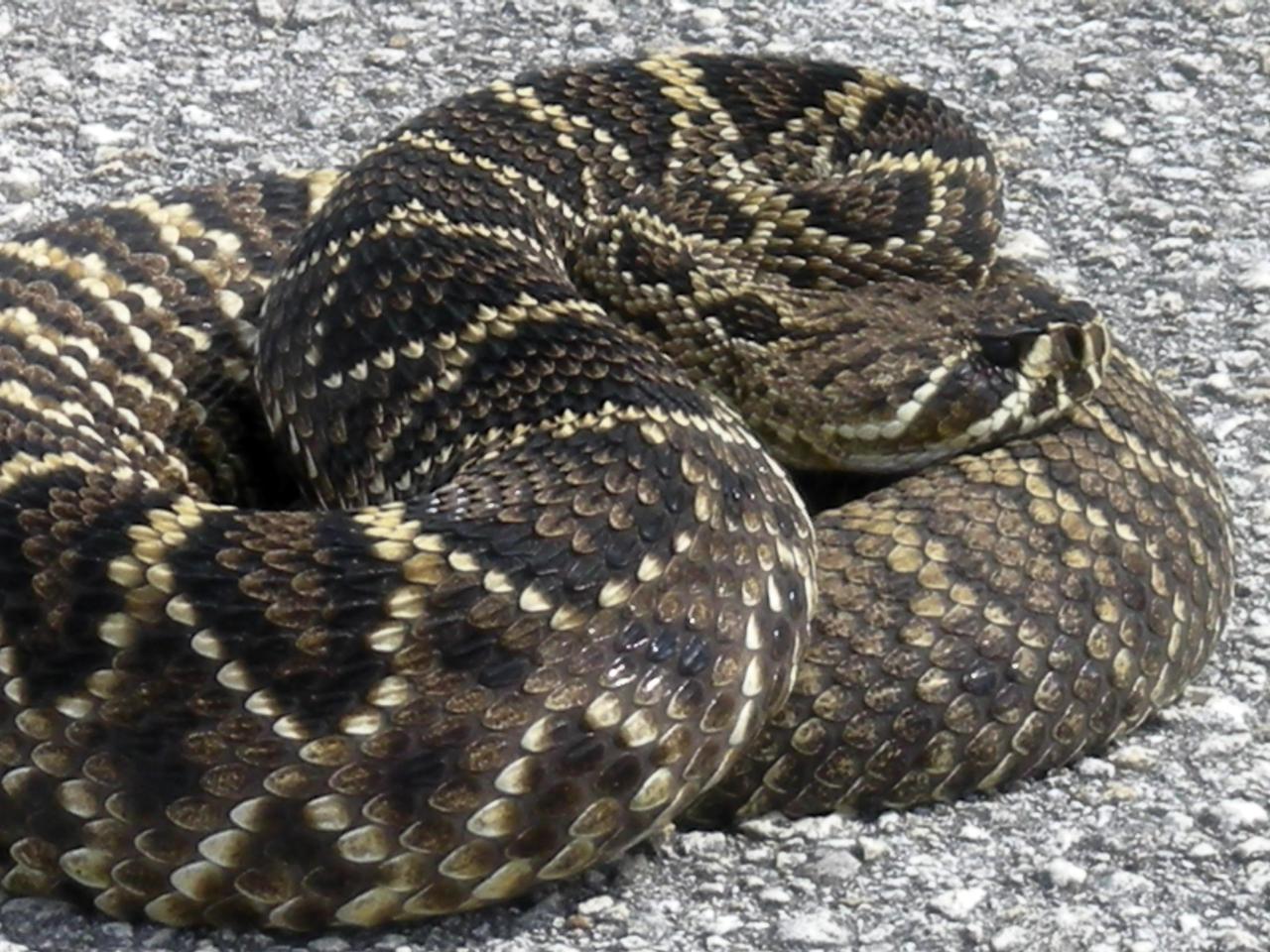
KENNEDY SPACE CENTER, FLA. -- Spotted near Launch Pad 39B at NASA's Kennedy Space Center, this diamondback rattlesnake curls upon itself in a defensive posture. The diamondback is Florida's largest venomous snake and may exceed six feet in length. It occurs throughout Florida in a variety of dry habitats, such as pinelands, scrub and golf courses. Kennedy shares a boundary with the Merritt Island Wildlife Nature Refuge, which is a habitat for more than 310 species of birds, 25 mammals, 117 fishes and 65 amphibians and reptiles. Photo credit: NASA/Kenny Allen
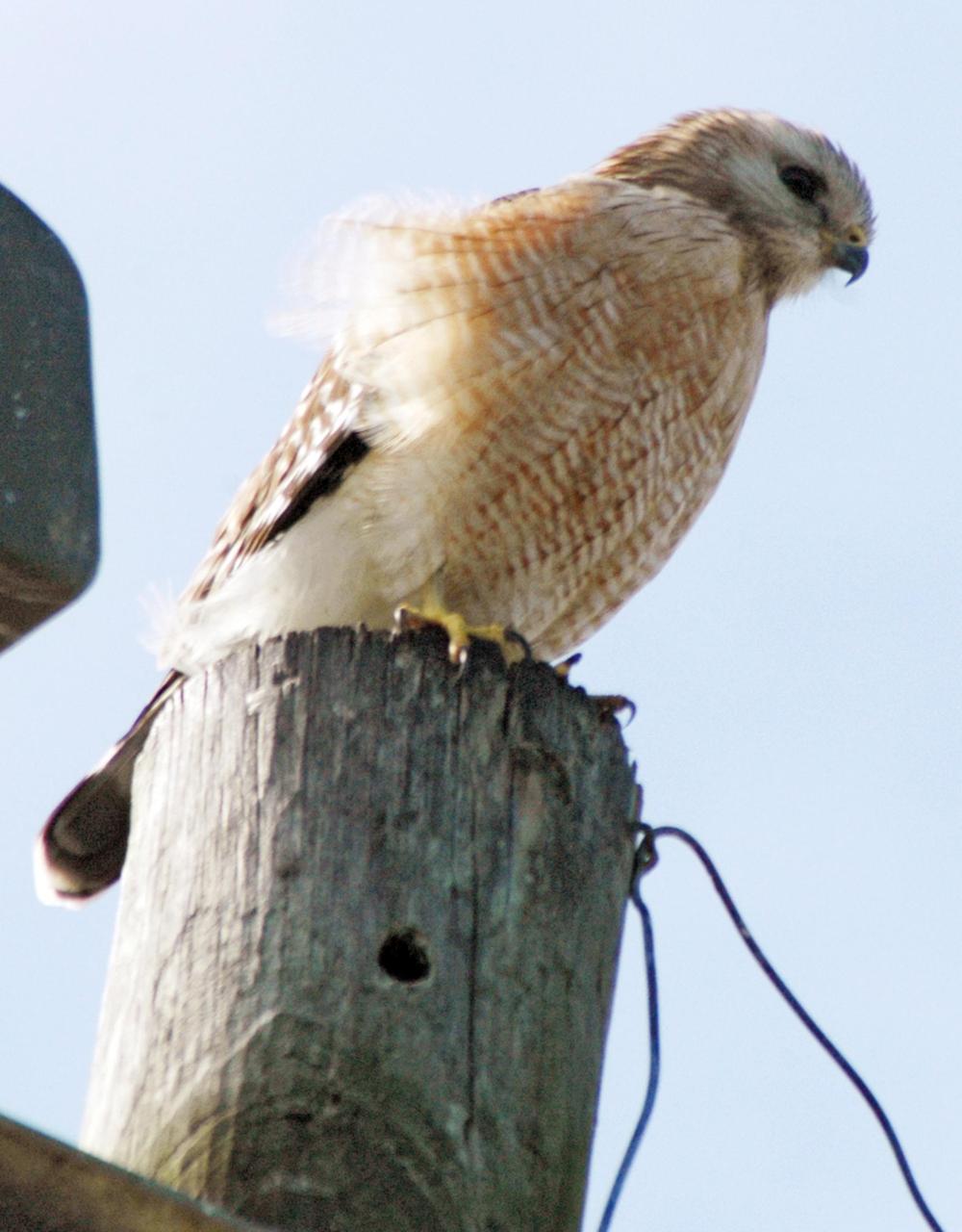
KENNEDY SPACE CENTER, FLA. -- This young red-shouldered hawk perches on a roadside pole inside NASA's Kennedy Space Center. The habitat of these hawks is deciduous woodlands, especially near standing water, frequently found in lowlands such as swampy woods and bogs. They range throughout the eastern half of the United States. KSC shares a boundary with the Merritt Island Wildlife Nature Refuge. The refuge is a habitat for more than 310 species of birds, 25 mammals, 117 fishes and 65 amphibians and reptiles. In addition, the Refuge supports 19 endangered or threatened wildlife species on Federal or State lists, more than any other single refuge in the U.S. Photo credit: NASA/Ken Thornsley
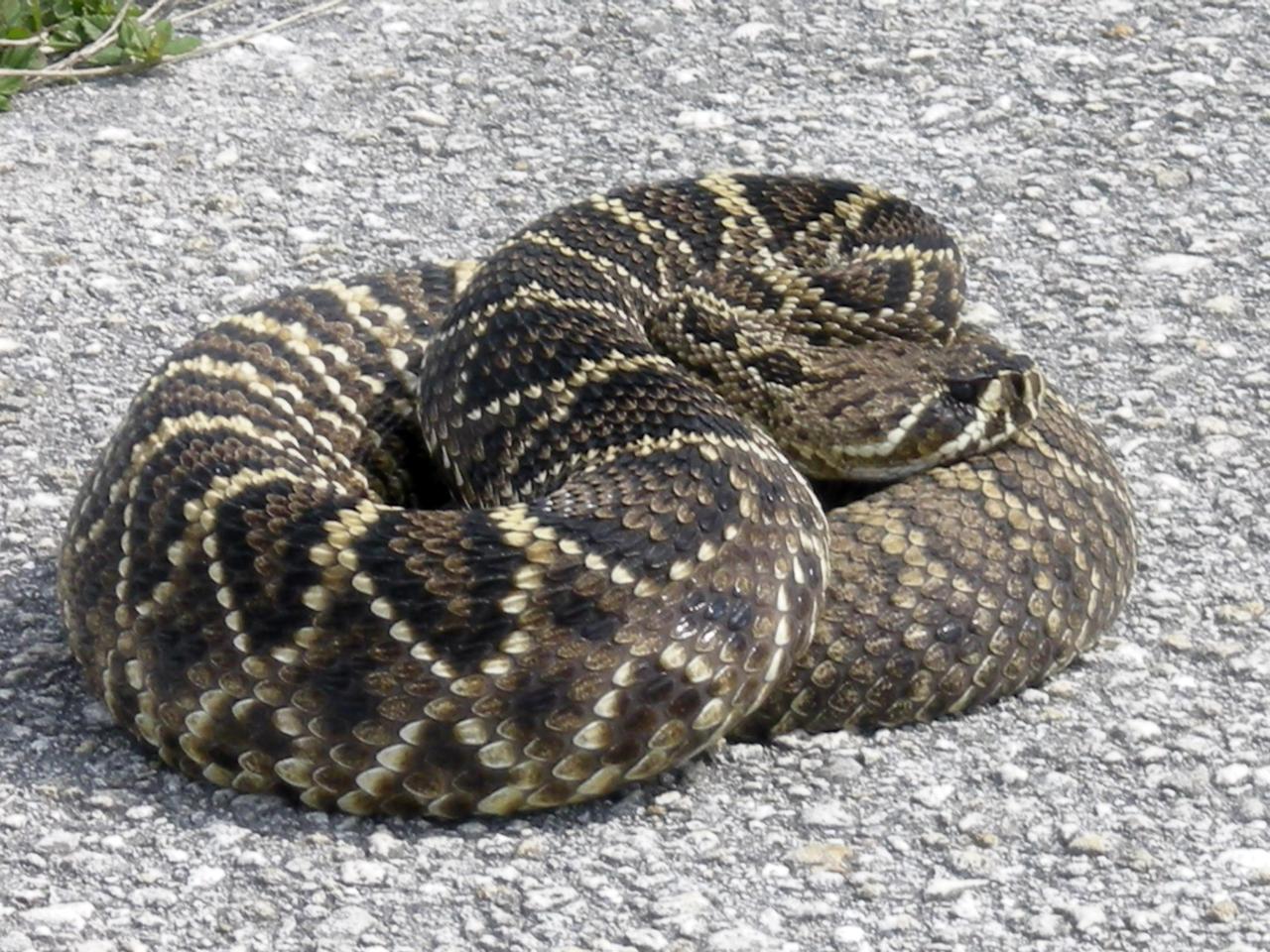
KENNEDY SPACE CENTER, FLA. -- Spotted near Launch Pad 39B at NASA's Kennedy Space Center, this diamondback rattlesnake curls upon itself in a defensive posture. The diamondback is Florida's largest venomous snake and may exceed six feet in length. It occurs throughout Florida in a variety of dry habitats, such as pinelands, scrub and golf courses. Kennedy shares a boundary with the Merritt Island Wildlife Nature Refuge, which is a habitat for more than 310 species of birds, 25 mammals, 117 fishes and 65 amphibians and reptiles. Photo credit: NASA/Kenny Allen
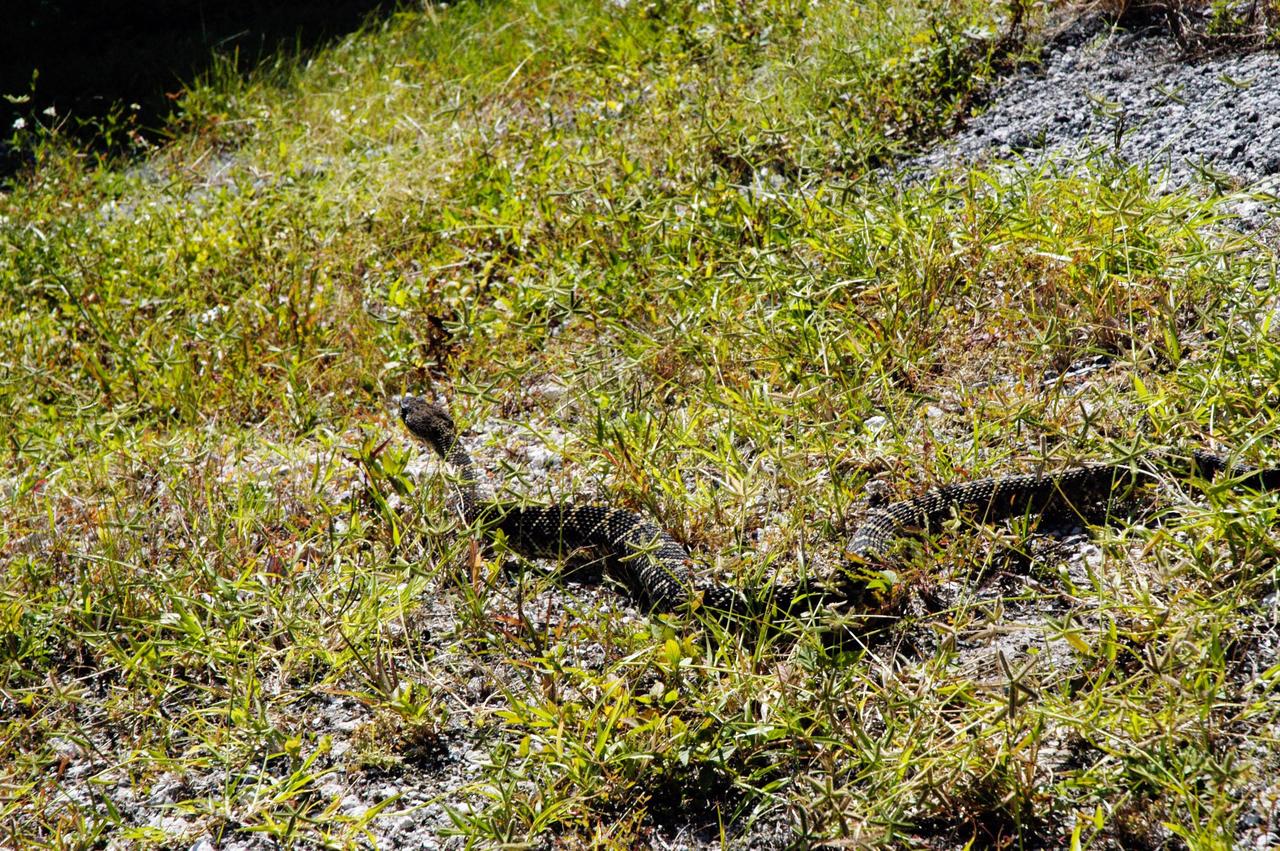
KENNEDY SPACE CENTER, FLA. -- An eastern diamondback rattlesnake slithers through the grass near the NASA News Center at NASA's Kennedy Space Center. The diamondback is Florida's largest venomous snake and may exceed six feet in length. It lives throughout Florida in a variety of dry habitats, such as pinelands, scrub and golf courses. Kennedy shares a boundary with the Merritt Island Wildlife Nature Refuge, which is a habitat for more than 310 species of birds, 25 mammals, 117 fishes and 65 amphibians and reptiles. Photo credit: NASA/Kim Shiflett
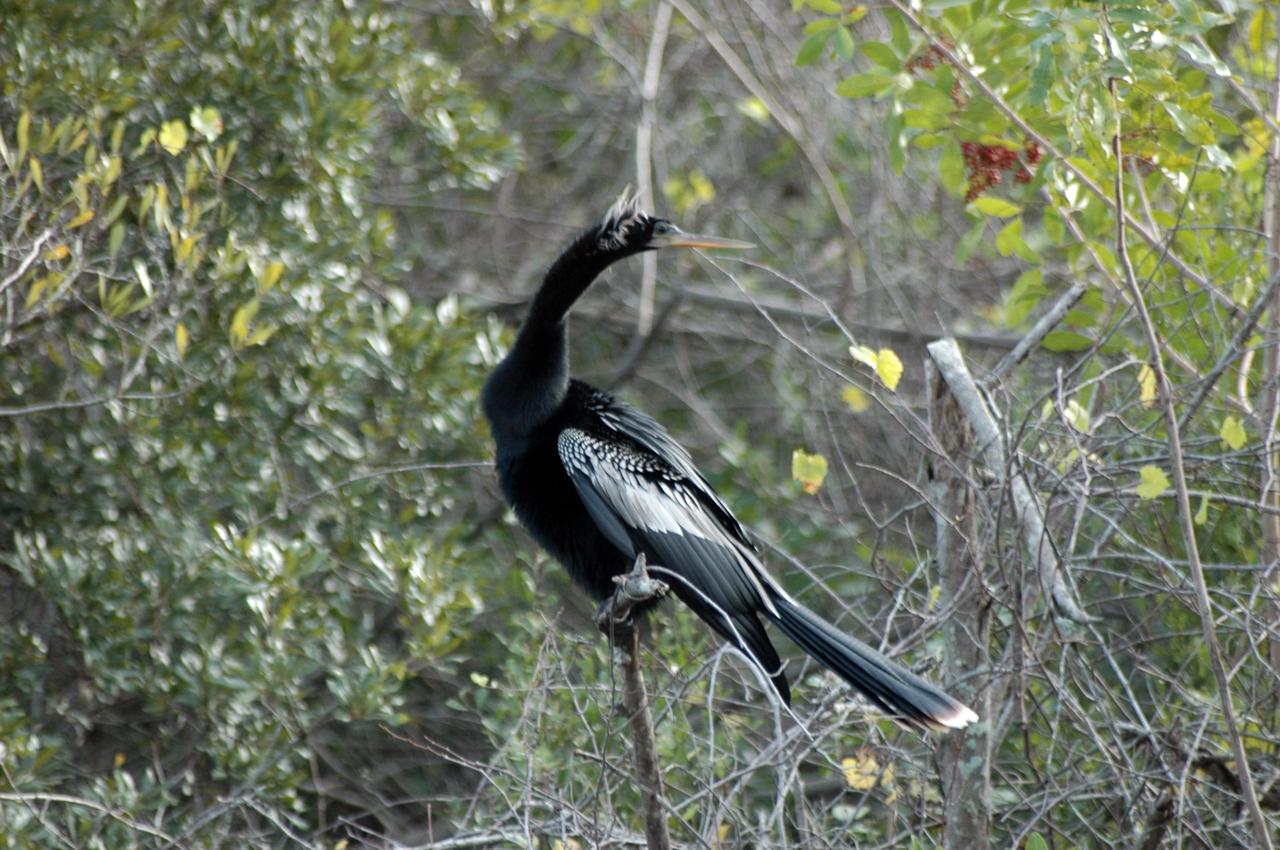
KENNEDY SPACE CENTER, FLA. -- This bird seen at NASA's Kennedy Space Center resembles the anhinga that inhabits southern freshwater ponds and swamps. Its long, dagger-shaped, serrated bill is ideally suited for catching fish, which it spears and then flips into the air and gulps down headfirst. It can frequently be seen perched with wings half-open to dry them in the sun since they lack oil glands with which to preen. KSC shares a boundary with the Merritt Island Wildlife Nature Refuge. The refuge is a habitat for more than 310 species of birds, 25 mammals, 117 fishes and 65 amphibians and reptiles. In addition, the Refuge supports 19 endangered or threatened wildlife species on Federal or State lists, more than any other single refuge in the U.S. Photo credit: NASA/Ken Thornsley
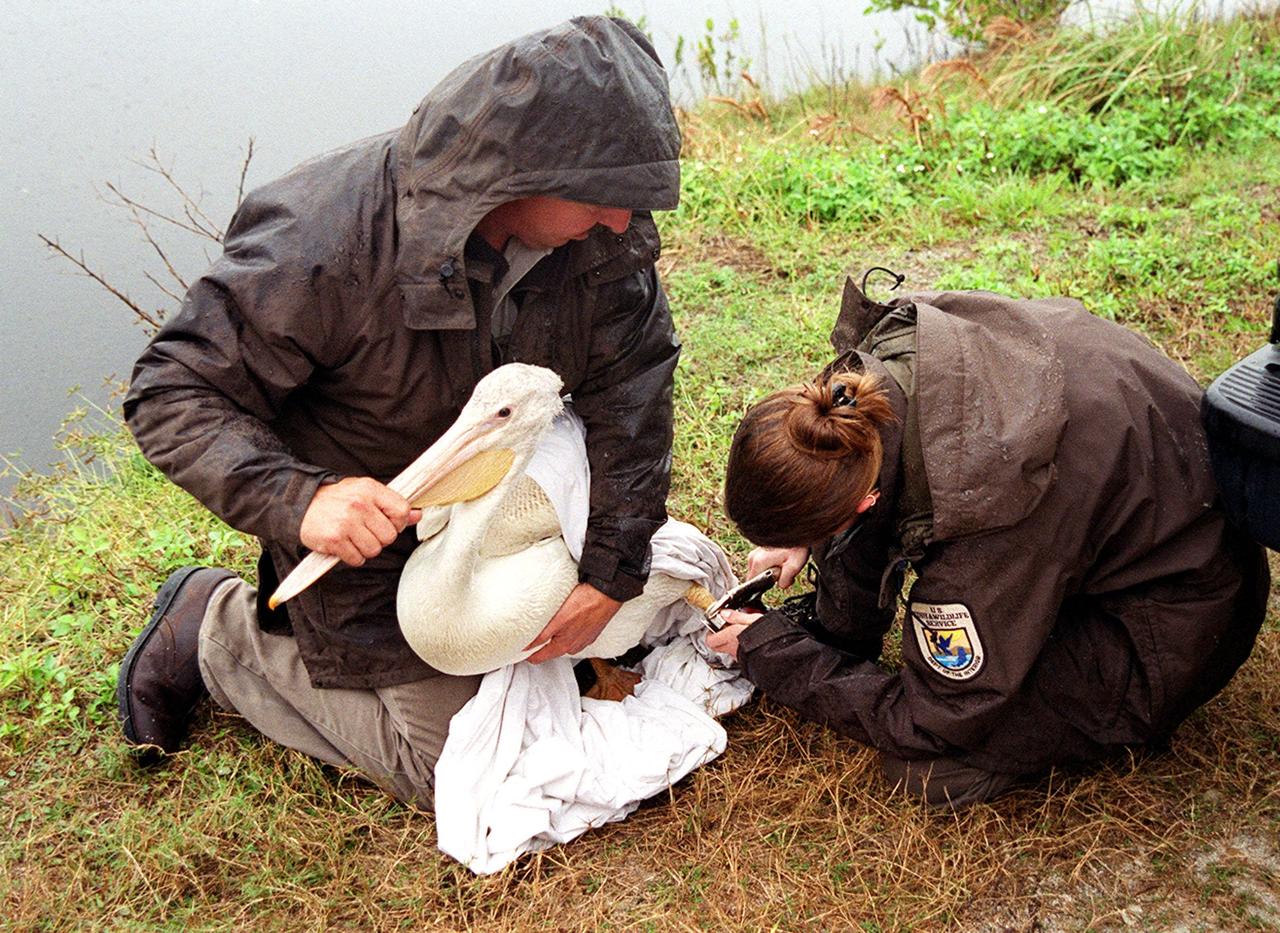
Under a rain-filled sky, Mark Epstein holds a rescued white pelican while Kat Royer fixes a leg band on it before releasing it at the Merritt Island National Wildlife Refuge. Epstein and Royer are with the U.S. Fish and Wildlife Service. The bird was found covered in crude oil from a contaminated ditch in northern Indiana in November, and was rescued by a local Police Department, treated, and flown to the Back to Nature Wildlife Refuge in Orlando, Fla. for care and rest. The pelican, dubbed "Fisheater" by its rescuers, will be let go to join a flock of about 30 other white pelicans that are wintering on the refuge. White pelicans inhabit marshy lakes and along the Pacific and Texas coasts. They winter from Florida and southern California south to Panama, chiefly in coastal lagoons. They are frequently seen flying in long lines, flapping and sailing in unison, but also ride rising air currents to soar gracefully in circles. The Merritt Island National Wildlife Refuge, which encompasses 92,000 acres that are a habitat for more than 331 species of birds, 31 mammals, 117 fishes, and 65 amphibians and reptiles. The marshes and open water of the refuge provide wintering areas for 23 species of migratory waterfowl, as well as a year-round home for great blue herons, great egrets, wood storks, cormorants, brown pelicans and other species of marsh and shore birds, as well as a variety of insects
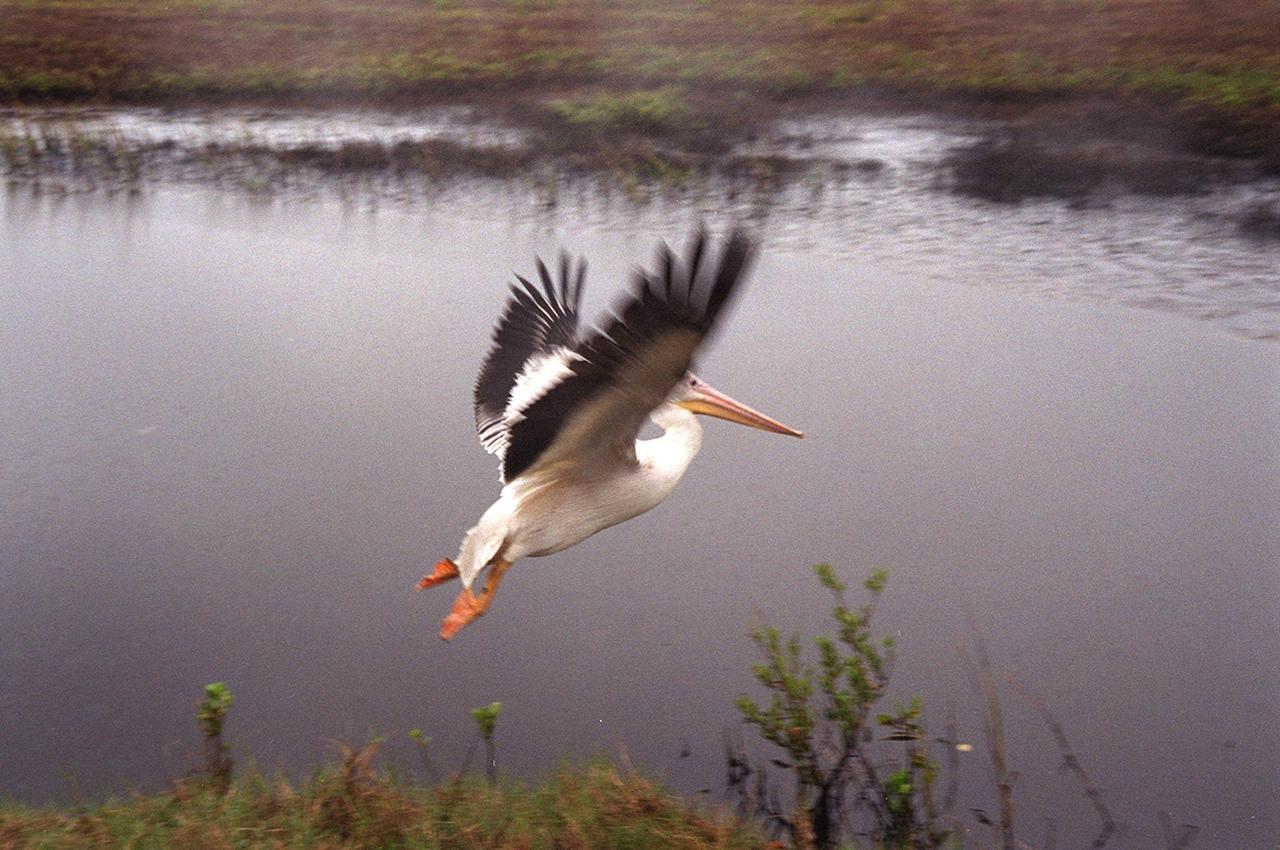
A white pelican named "Fisheater" by its rescuers, beats its wings as it flies to freedom at the Merritt Island National Wildlife Refuge. The pelican was found covered in crude oil from a contaminated ditch in northern Indiana in November, and was rescued by a local Police Department, treated, and flown to the Back to Nature Wildlife Refuge in Orlando, Fla. for care and rest. It is being released today to join a flock of about 30 other white pelicans that are wintering on the refuge. Before its release, however, Kat Royer, with the U.S. Fish and Wildlife Service, placed on it a leg band issued by the U.S. Department of the Interior's Bird Banding Laboratory. White pelicans inhabit marshy lakes and along the Pacific and Texas coasts. They winter from Florida and southern California south to Panama, chiefly in coastal lagoons. They are frequently seen flying in long lines, flapping and sailing in unison, but also ride rising air currents to soar gracefully in circles. The Merritt Island National Wildlife Refuge, which encompasses 92,000 acres that are a habitat for more than 331 species of birds, 31 mammals, 117 fishes, and 65 amphibians and reptiles. The marshes and open water of the refuge provide wintering areas for 23 species of migratory waterfowl, as well as a year-round home for great blue herons, great egrets, wood storks, cormorants, brown pelicans and other species of marsh and shore birds, as well as a variety of insects
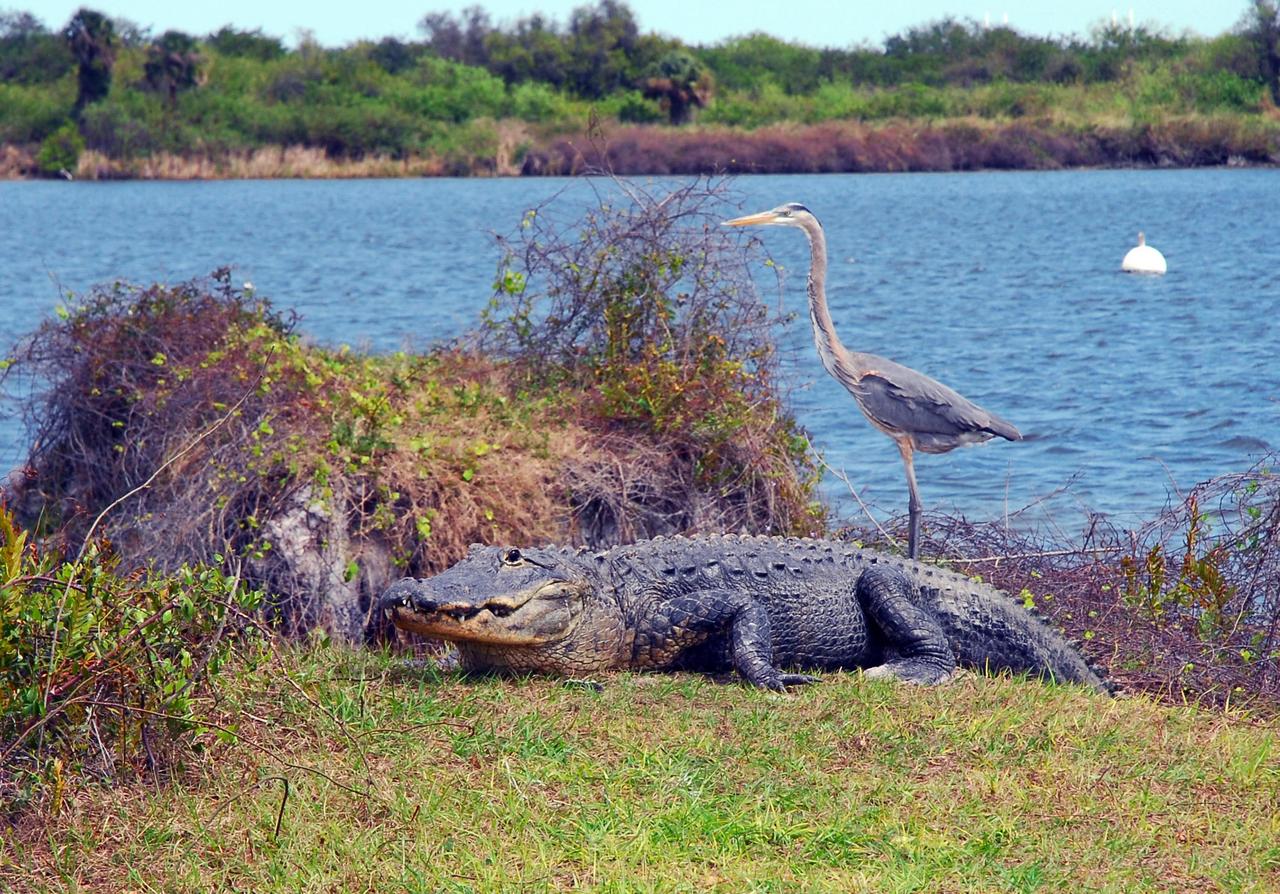
KENNEDY SPACE CENTER, FLA. -- A large alligator on the bank of a creek in NASA's Kennedy Space Center rests its head, apparently ignoring the great blue heron standing behind it. A protected species, alligators can be spotted in the drainage canals and other waters surrounding KSC. The center shares a boundary with the Merritt Island Wildlife Nature Refuge, which is a habitat for more than 310 species of birds, 25 mammals, 117 fishes and 65 amphibians and reptiles. In addition, the Refuge supports 19 endangered or threatened wildlife species on Federal or State lists, more than any other single refuge in the U.S. Photo credit: NASA/Amanda Diller
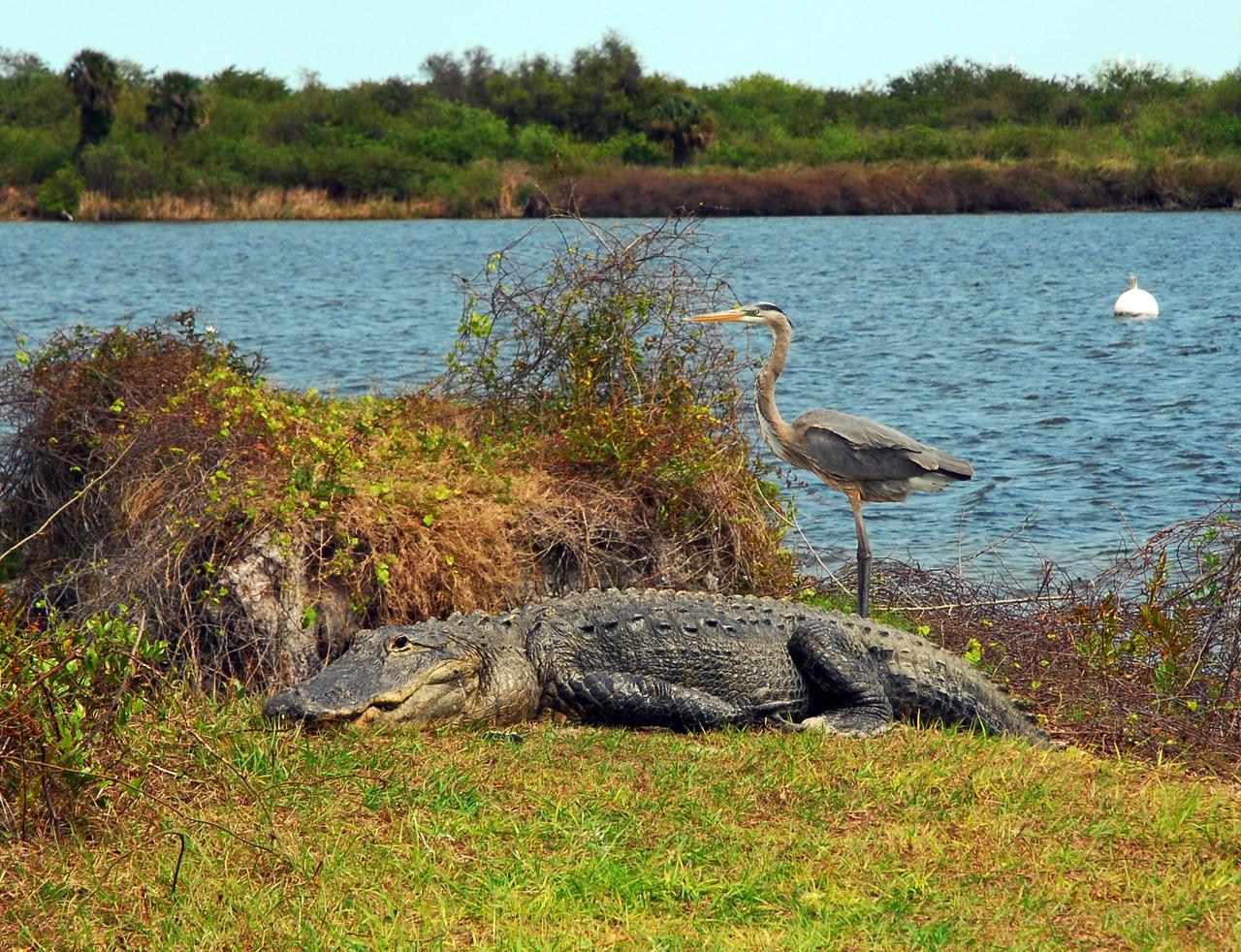
KENNEDY SPACE CENTER, FLA. -- A large alligator on the bank of a creek in NASA's Kennedy Space Center seems to ignore the great blue heron standing behind it. A protected species, alligators can be spotted in the drainage canals and other waters surrounding KSC. The center shares a boundary with the Merritt Island Wildlife Nature Refuge, which is a habitat for more than 310 species of birds, 25 mammals, 117 fishes and 65 amphibians and reptiles. In addition, the Refuge supports 19 endangered or threatened wildlife species on Federal or State lists, more than any other single refuge in the U.S. Photo credit: NASA/Amanda Diller
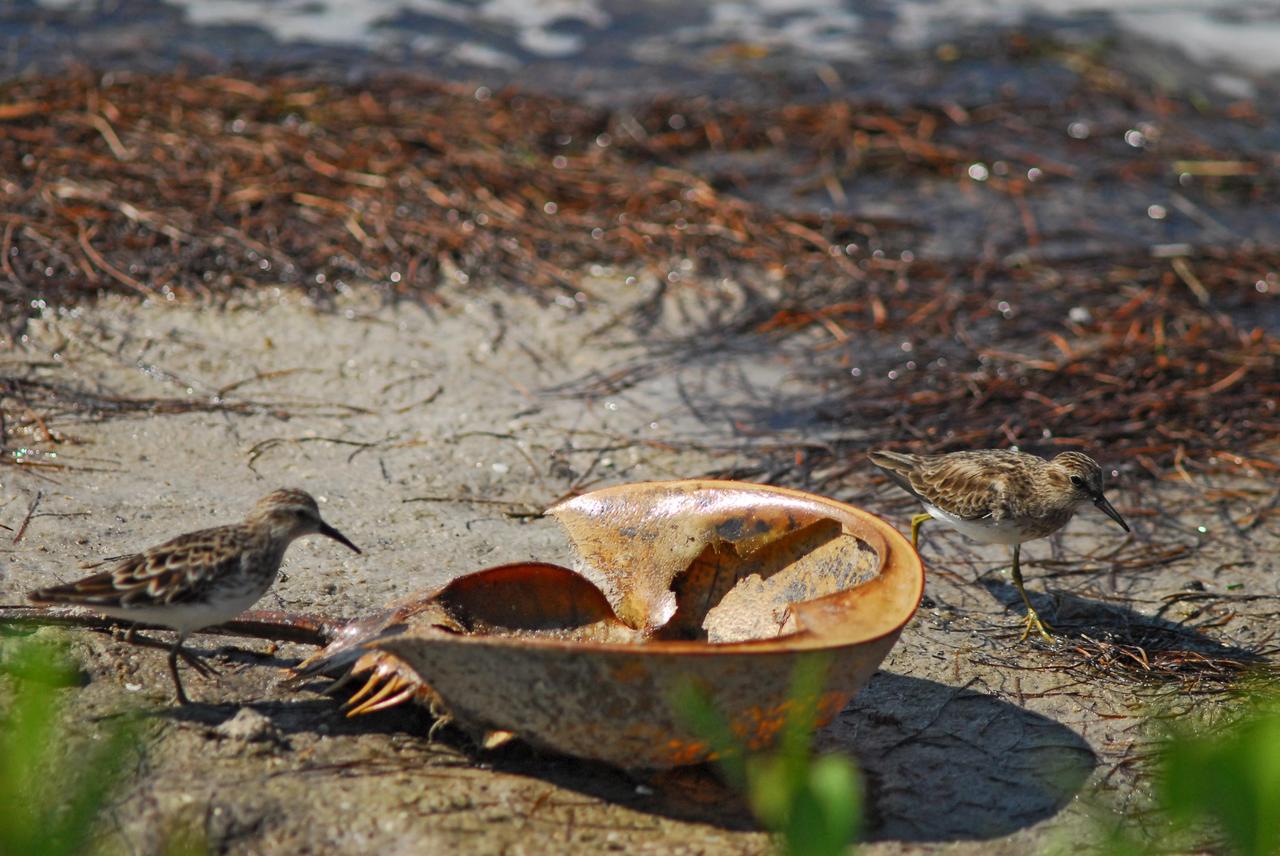
KENNEDY SPACE CENTER, FLA. -- Sandpipers investigate a washed up horseshoe crab on the river bank on Kennedy Space Center. Sandpipers are found on shores and in wetlands around the globe, breeding on the Arctic tundra then returning to more temperate climes. KSC shares a boundary with the Merritt Island Wildlife Nature Refuge. The refuge is a habitat for more than 310 species of birds, 25 mammals, 117 fishes and 65 amphibians and reptiles. In addition, the Refuge supports 19 endangered or threatened wildlife species on Federal or State lists, more than any other single refuge in the U.S. Photo credit: NASA/Dimitri Gerondidakis
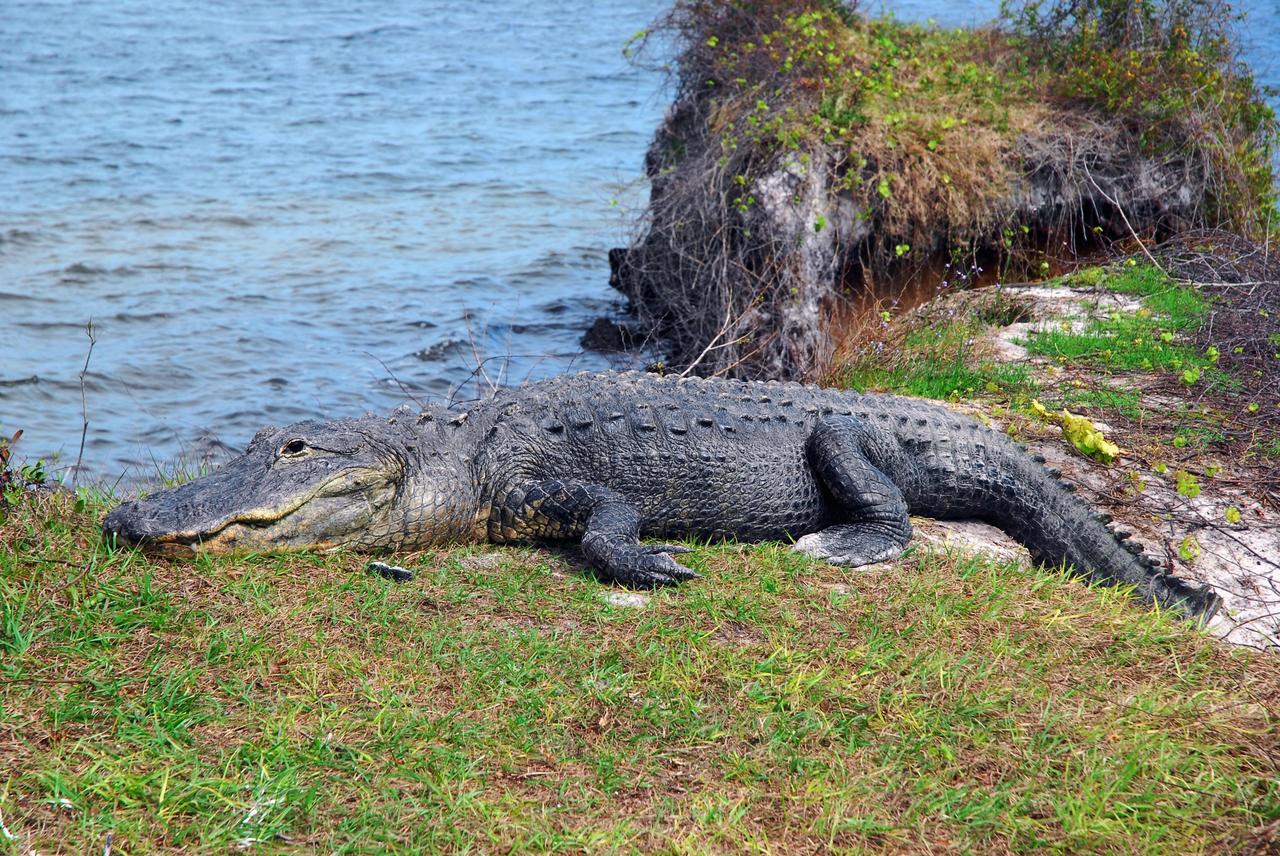
KENNEDY SPACE CENTER, FLA. -- Undisturbed by any fauna nearby, a large alligator basks in the sun on the bank of a creek in NASA's Kennedy Space Center. A protected species, alligators can be spotted in the drainage canals and other waters surrounding KSC. The center shares a boundary with the Merritt Island Wildlife Nature Refuge, which is a habitat for more than 310 species of birds, 25 mammals, 117 fishes and 65 amphibians and reptiles. In addition, the Refuge supports 19 endangered or threatened wildlife species on Federal or State lists, more than any other single refuge in the U.S. Photo credit: NASA/Amanda Diller
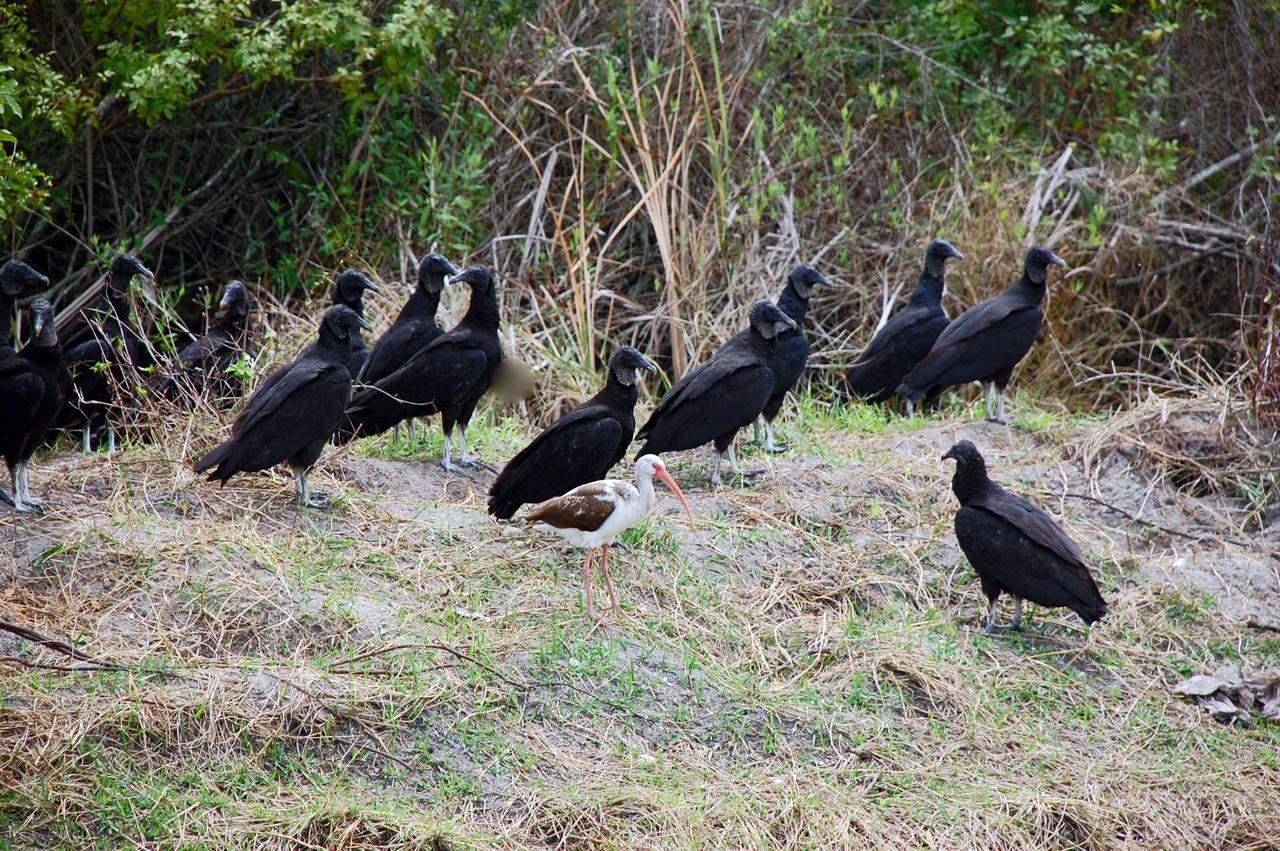
CAPE CANAVERAL, Fla. – Black vultures gather near woods in NASA's Kennedy Space Center in Florida. They are accompanied by a young white ibis. Ranging across the south and southeast, black vultures scavenge for both carrion and weak, sick or unprotected prey. They differ from turkey vultures in that they depend on vision to find food. They can be found all around Kennedy, on the ground or any higher landing spot, from buildings to utility poles. The center shares a boundary with the Merritt Island Wildlife Nature Refuge, which is a habitat for more than 310 species of birds, 25 mammals, 117 fishes and 65 amphibians and reptiles. Photo credit: NASA/Ben Smegelsky
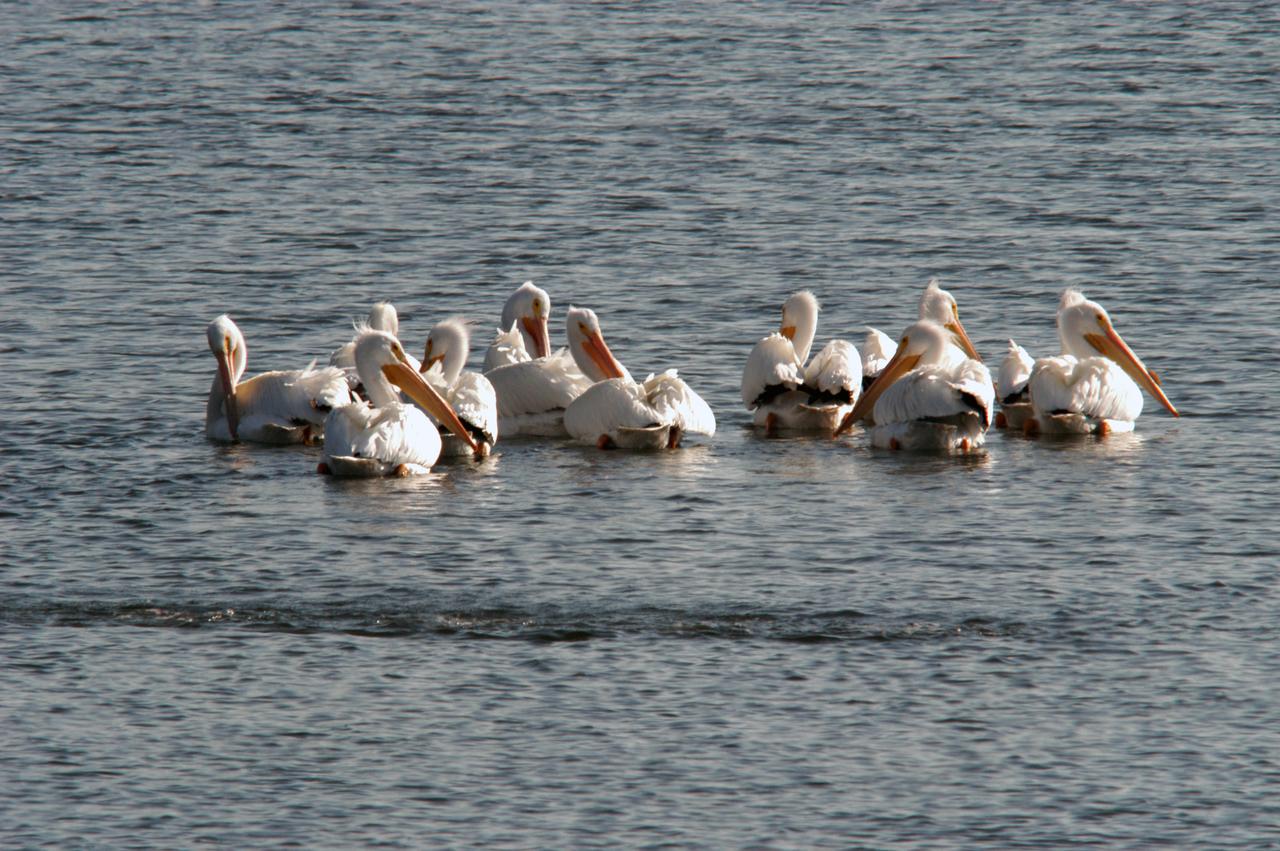
White pelicans gather in the turn basin near the Vehicle Assembly Building of NASA's Kennedy Space Center. The turn basin was carved out of the Banana River when Kennedy Space Center was built. White pelicans winter from Florida and southern California to Panama, chiefly in coastal lagoons, and usually in colonies. KSC shares a boundary with the Merritt Island Wildlife Nature Refuge. The refuge is a habitat for more than 310 species of birds, 25 mammals, 117 fishes and 65 amphibians and reptiles. In addition, the Refuge supports 19 endangered or threatened wildlife species on Federal or State lists, more than any other single refuge in the U.S.
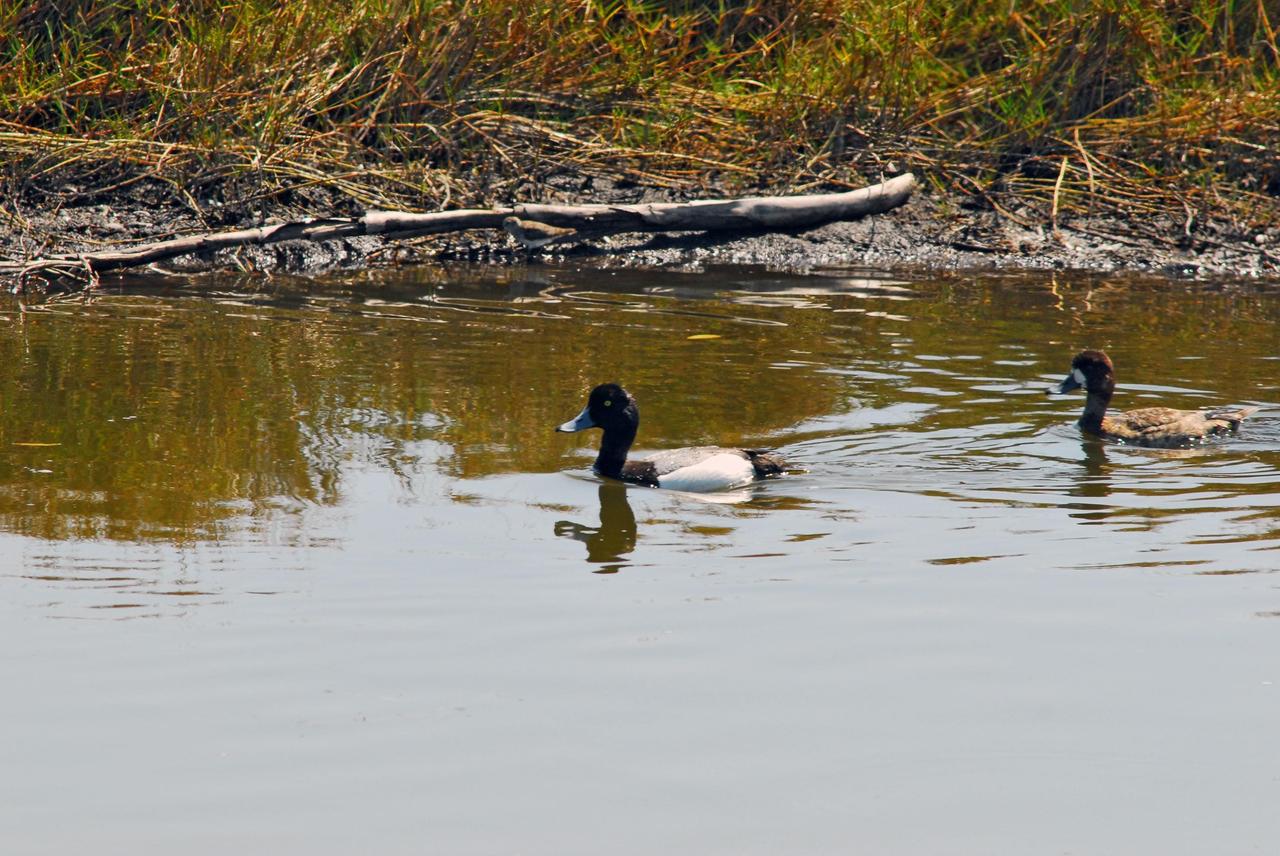
KENNEDY SPACE CENTER, FLA. -- A female greater scaup duck (right) follows her mate through the water on Kennedy Space Center. Normally found in Alaska and northern Canada, this species winters along the Atlantic, Pacific and Gulf coasts. KSC shares a boundary with the Merritt Island Wildlife Nature Refuge. The refuge is a habitat for more than 310 species of birds, 25 mammals, 117 fishes and 65 amphibians and reptiles. In addition, the Refuge supports 19 endangered or threatened wildlife species on Federal or State lists, more than any other single refuge in the U.S. Photo credit: NASA/Dimitri Gerondidakis
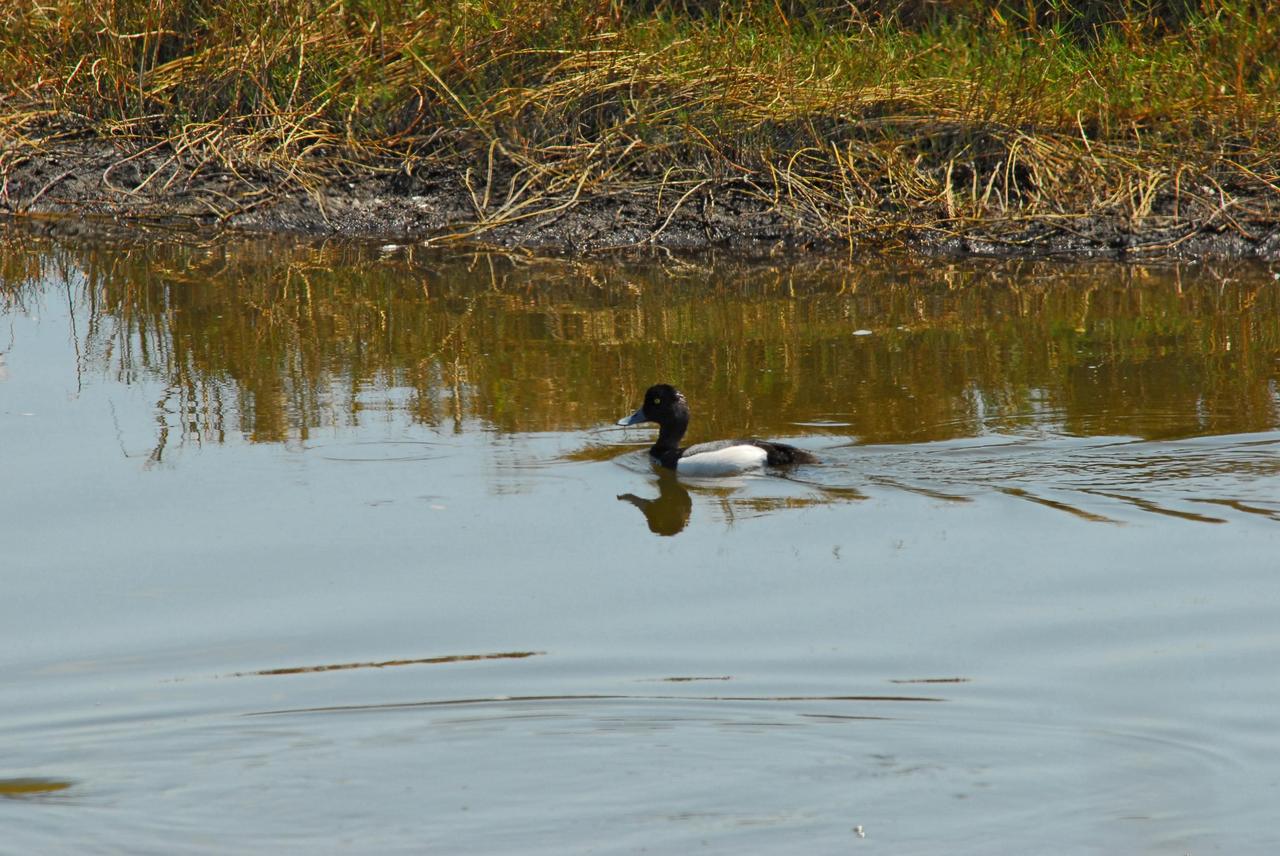
KENNEDY SPACE CENTER, FLA. -- A male greater scaup duck is mirrored in the water on Kennedy Space Center. Normally found in Alaska and northern Canada, this species winters along the Atlantic, Pacific and Gulf coasts. KSC shares a boundary with the Merritt Island Wildlife Nature Refuge. The refuge is a habitat for more than 310 species of birds, 25 mammals, 117 fishes and 65 amphibians and reptiles. In addition, the Refuge supports 19 endangered or threatened wildlife species on Federal or State lists, more than any other single refuge in the U.S. Photo credit: NASA/Dimitri Gerondidakis
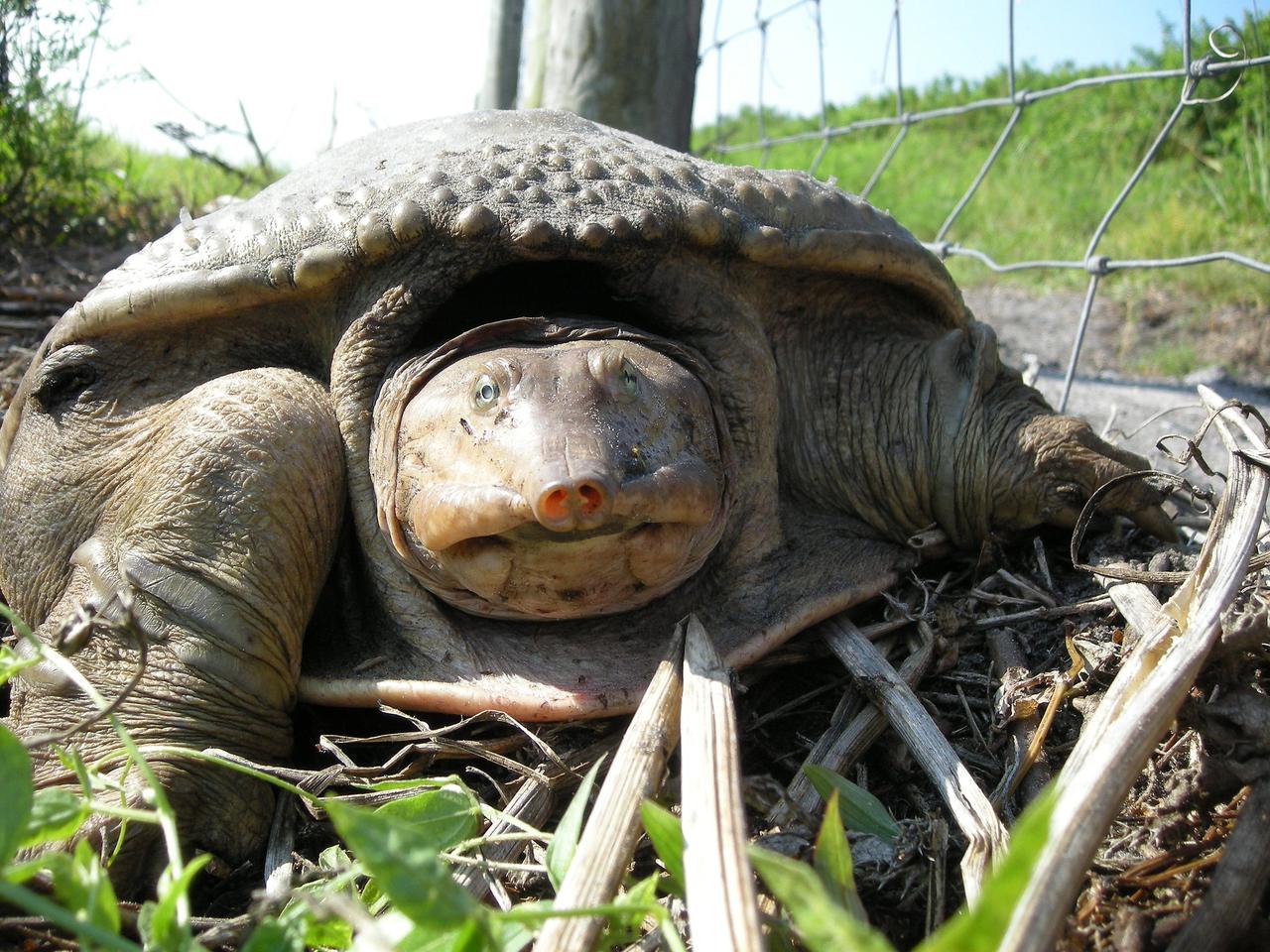
CAPE CANAVERAL, Fla. – This Florida softshell turtle is caught out of the water near the Shuttle Landing Facility at NASA's Kennedy Space Center. A totally aquatic freshwater turtle, it prefers lakes and slow-moving rivers. The species main food is crayfish, fish, frogs, tadpoles and some vegetation. It ranges throughout all of Florida. Kennedy shares a boundary with the Merritt Island Wildlife Nature Refuge, which is a habitat for more than 310 species of birds, 25 mammals, 117 fishes and 65 amphibians and reptiles. Photo credit: NASA/Kenny Allen
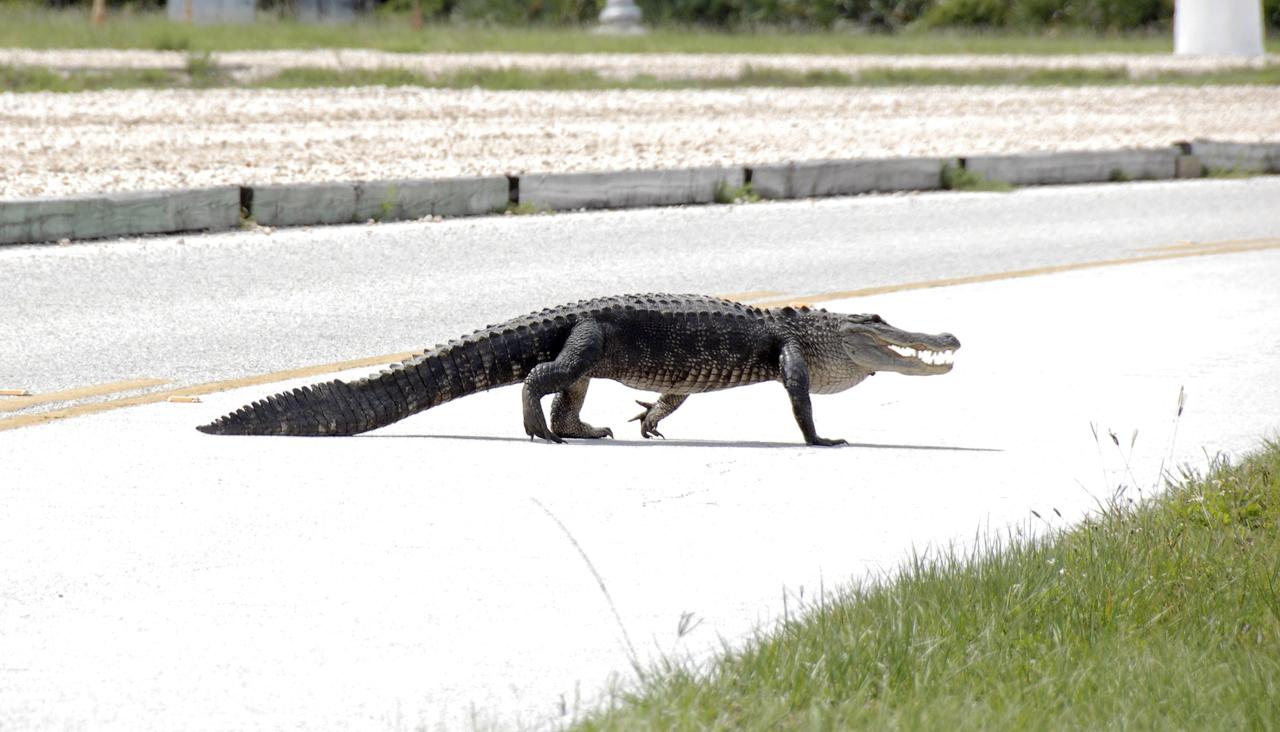
CAPE CANAVERAL, Fla. – Taking a mid-day stroll, an alligator crosses the Saturn Causeway at NASA's Kennedy Space Center in Florida in front of the Astrovan with STS-127 crew members aboard. The crew was on its way to Launch Pad 39A for a simulated launch countdown, part of the terminal countdown demonstration test. Alligators can be spotted in the drainage canals and other waters surrounding Kennedy. They occasionally venture onto roads seeking new environs or mates. The center shares a boundary with the Merritt Island Wildlife Nature Refuge, which is a habitat for more than 310 species of birds, 25 mammals, 117 fishes and 65 amphibians and reptiles. Photo credit: NASA/Kim Shiflett
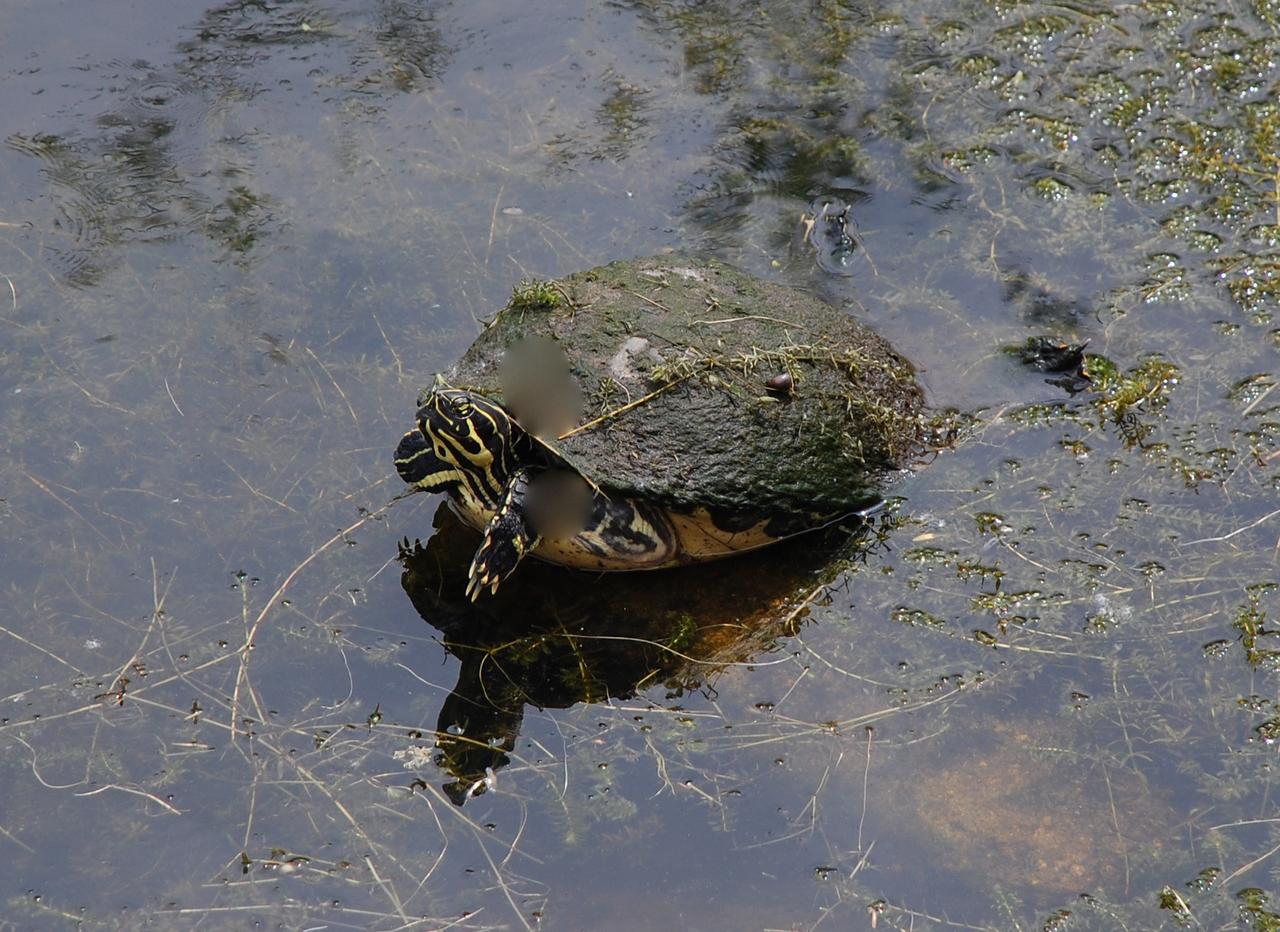
CAPE CANAVERAL, Fla. – A Florida redbelly turtle heads from shore into the water in NASA's Kennedy Space Center in Florida. The redbelly turtle's range is the Florida peninsula and Apalachicola area of the panhandle. They are active year-round and can often be seen basking on logs or floating mats of vegetation. Adults prefer a diet of aquatic plants. The center shares a boundary with the Merritt Island Wildlife Nature Refuge, which is a habitat for more than 310 species of birds, 25 mammals, 117 fishes and 65 amphibians and reptiles. Photo credit: NASA/Ben Smegelsky
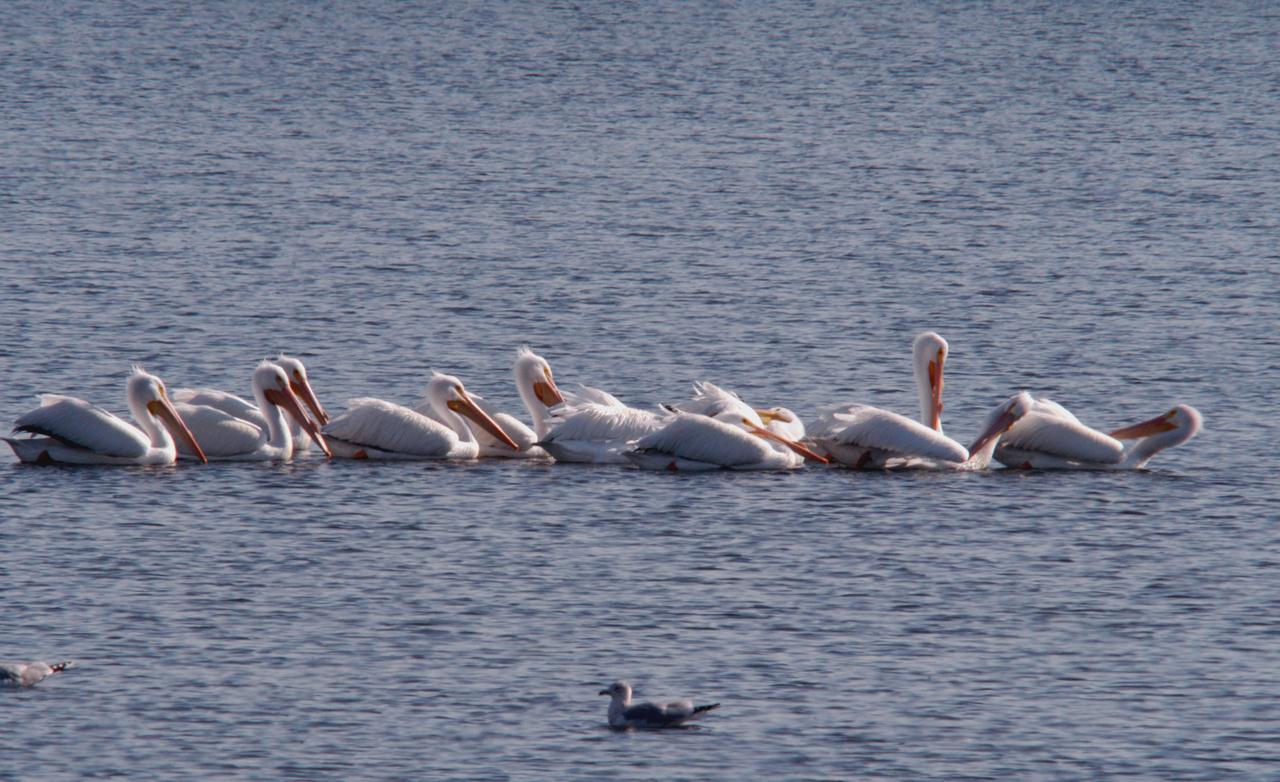
White pelicans form a line while swimming in the turn basin near the Vehicle Assembly Building of NASA's Kennedy Space Center. The turn basin was carved out of the Banana River when Kennedy Space Center was built. White pelicans winter from Florida and southern California to Panama, chiefly in coastal lagoons, and usually in colonies. KSC shares a boundary with the Merritt Island Wildlife Nature Refuge. The refuge is a habitat for more than 310 species of birds, 25 mammals, 117 fishes and 65 amphibians and reptiles. In addition, the Refuge supports 19 endangered or threatened wildlife species on Federal or State lists, more than any other single refuge in the U.S.

CAPE CANAVERAL, Fla. – The closeup of this Florida softshell turtle shows its snorkel-like snout. A totally aquatic freshwater turtle, it prefers lakes and slow-moving rivers. It was spotted near the Shuttle Landing Facility at NASA's Kennedy Space Center. The species main food is crayfish, fish, frogs, tadpoles and some vegetation. It ranges throughout all of Florida. Kennedy shares a boundary with the Merritt Island Wildlife Nature Refuge, which is a habitat for more than 310 species of birds, 25 mammals, 117 fishes and 65 amphibians and reptiles. Photo credit: NASA/Kenny Allen
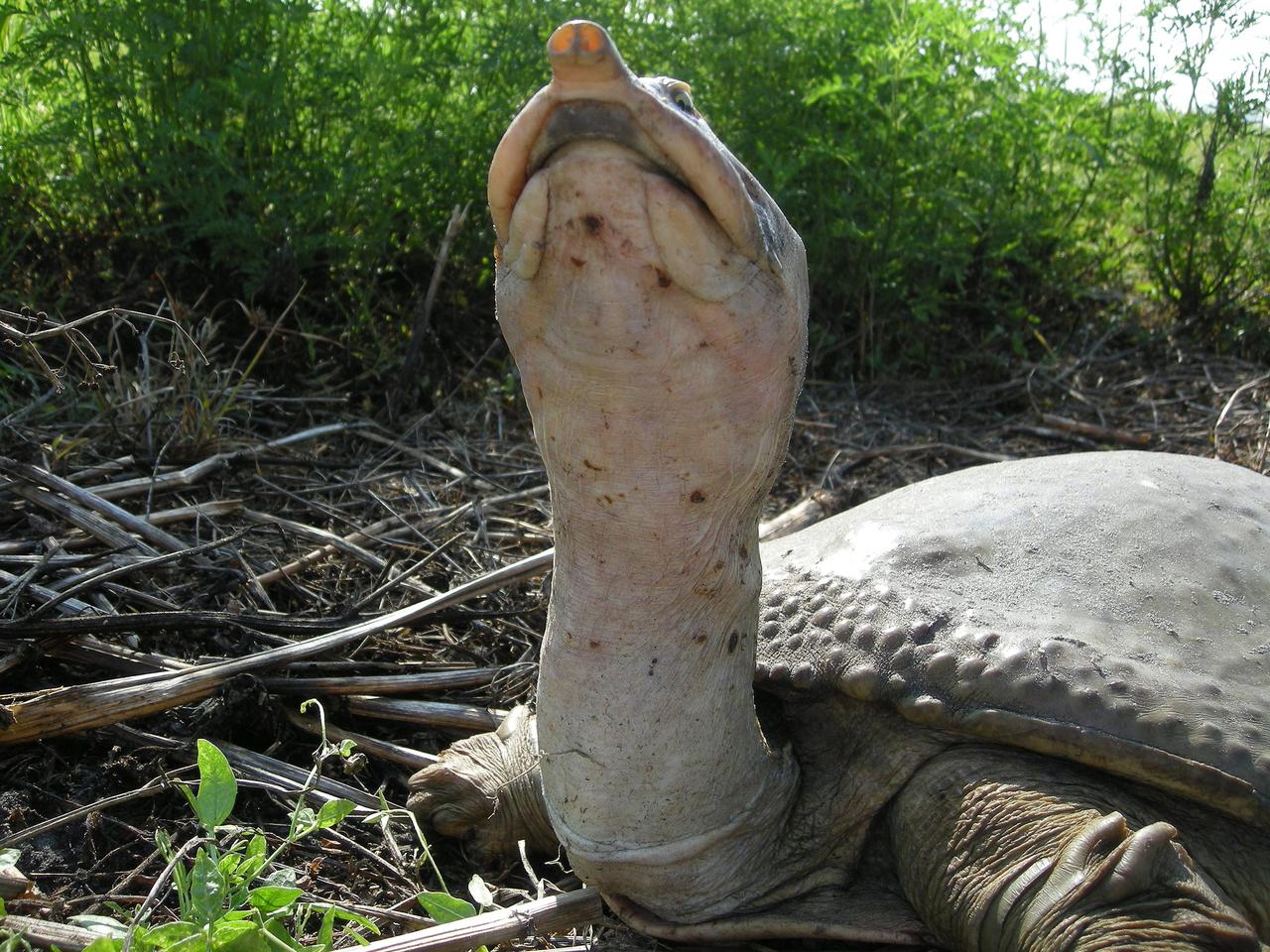
CAPE CANAVERAL, Fla. – This Florida softshell turtle stretches its long neck and points its snorkel-like snout. A totally aquatic freshwater turtle, it prefers lakes and slow-moving rivers. It was spotted near the Shuttle Landing Facility at NASA's Kennedy Space Center. The species main food is crayfish, fish, frogs, tadpoles and some vegetation. It ranges throughout all of Florida. Kennedy shares a boundary with the Merritt Island Wildlife Nature Refuge, which is a habitat for more than 310 species of birds, 25 mammals, 117 fishes and 65 amphibians and reptiles. Photo credit: NASA/Kenny Allen
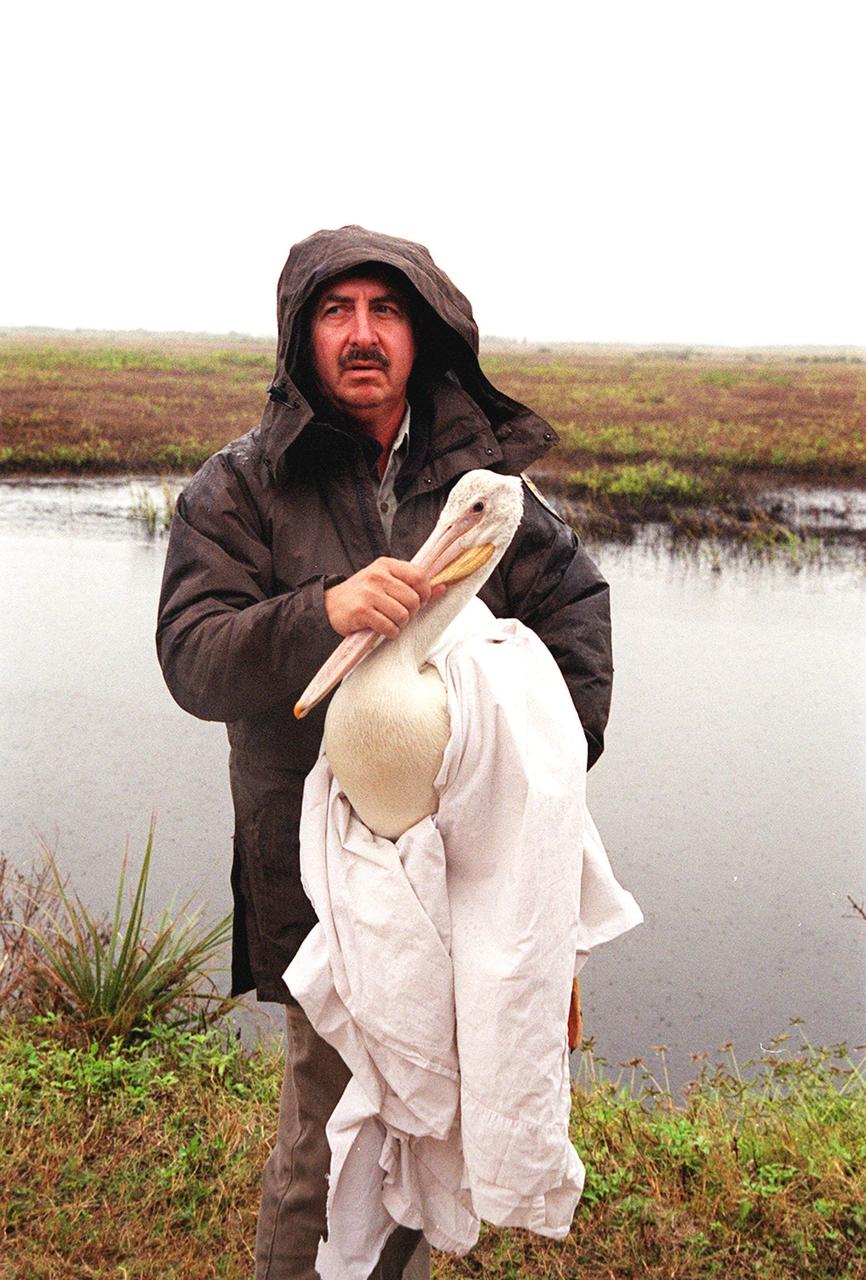
Mark Epstein, with the U.S. Fish and Wildlife Service, holds a white pelican that will be released under a rain-filled sky at the Merritt Island National Wildlife Refuge. The bird was found covered in crude oil from a contaminated ditch in northern Indiana in November, and was rescued by a local Police Department, treated, and flown to the Back to Nature Wildlife Center in Orlando, Fla. for care and rest. After Kat Royer, who is with the U.S. Fish and Wildlife Service, fits the bird with a leg band issued by the U.S. Department of the Interior's Bird Banding Laboratory, the pelican will be let go to join a flock of about 30 other white pelicans that are wintering on the refuge. White pelicans inhabit marshy lakes and along the Pacific and Texas coasts. They winter from Florida and southern California south to Panama, chiefly in coastal lagoons. They are frequently seen flying in long lines, flapping and sailing in unison, but also ride rising air currents to soar gracefully in circles. The Merritt Island National Wildlife Refuge, which encompasses 92,000 acres that are a habitat for more than 331 species of birds, 31 mammals, 117 fishes, and 65 amphibians and reptiles. The marshes and open water of the refuge provide wintering areas for 23 species of migratory waterfowl, as well as a year-round home for great blue herons, great egrets, wood storks, cormorants, brown pelicans and other species of marsh and shore birds, as well as a variety of insects
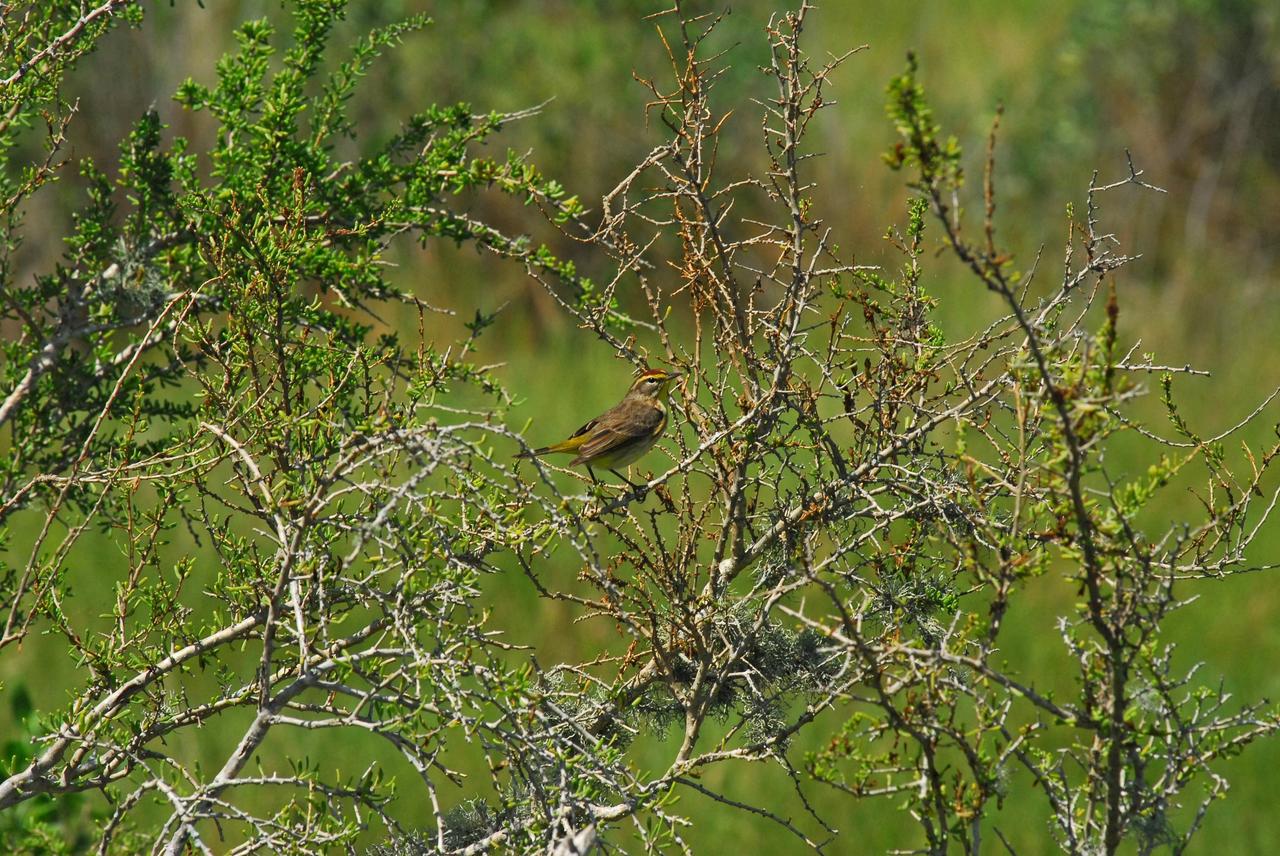
KENNEDY SPACE CENTER, FLA. -- A palm warbler looks for seeds among the branches of a tree on Kennedy Space Center. Palm warblers breed far to the north in Canada, and winter primarily in the southern United States and northern Caribbean. They breed in bogs, open boreal coniferous forest, and partly open situations with scattered trees and heavy undergrowth, usually near water. They are found in migration and winter in a variety of woodland, second growth and thicket habitats, on the ground in savanna and open fields, and in mangroves. Their diet consists of insects, some seeds and fruits in fall and winter. KSC shares a boundary with the Merritt Island Wildlife Nature Refuge. The refuge is a habitat for more than 310 species of birds, 25 mammals, 117 fishes and 65 amphibians and reptiles. In addition, the Refuge supports 19 endangered or threatened wildlife species on Federal or State lists, more than any other single refuge in the U.S. Photo credit: NASA/Dimitri Gerondidakis
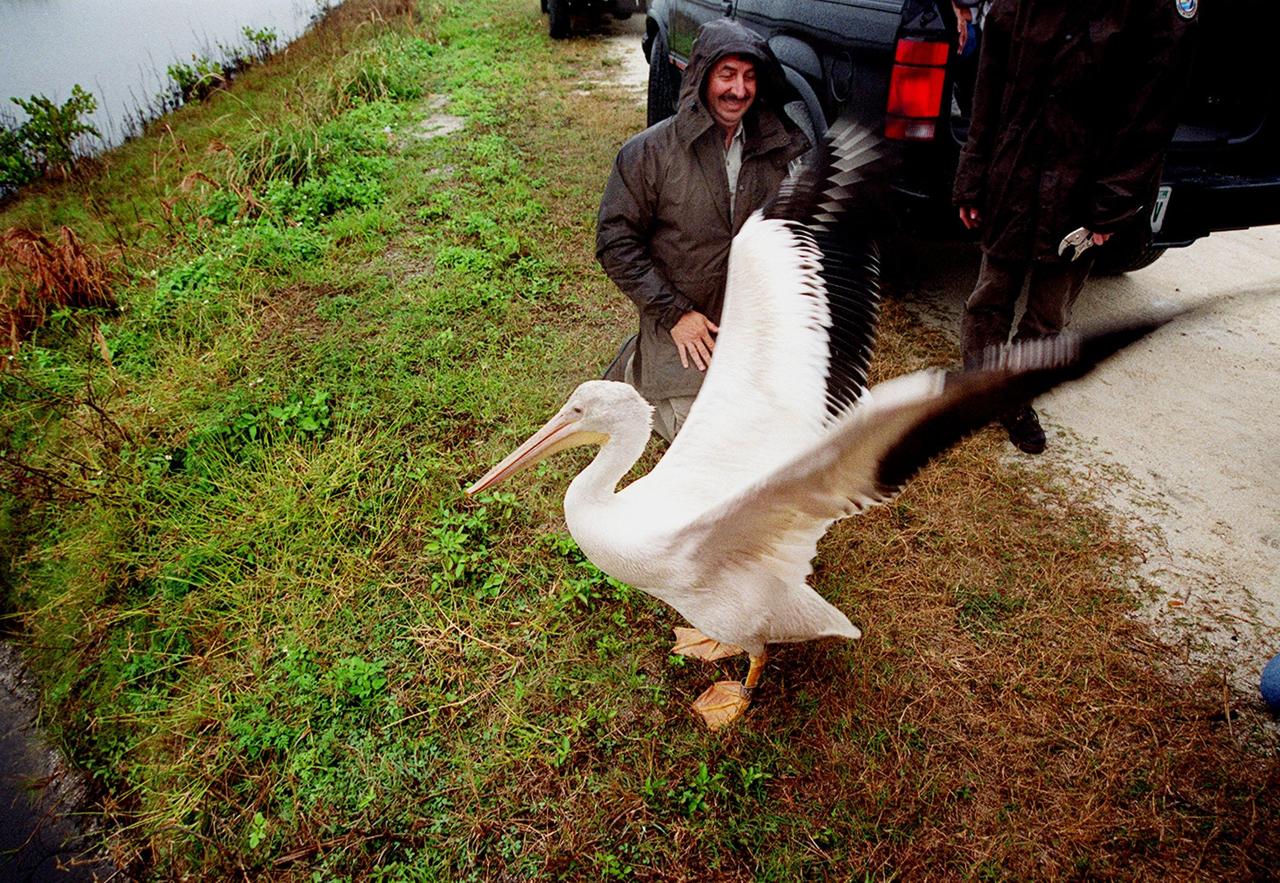
A rescued white pelican, dubbed "Fisheater" by his rescuers, takes a tentative step and stretches its wings after being let go at the Merritt Island National Wildlife Refuge. Looking on is Mark Epstein, with the U.S. Fish and Wildlife Service, who had held the bird while Kat Royer, also with the U.S. Fish and Wildlife Service, placed on it a leg band issued by the U.S. Department of the Interior's Bird Banding Laboratory. The pelican was found covered in crude oil from a contaminated ditch in northern Indiana in November, and was rescued by a local Police Department, treated, and flown to the Back to Nature Wildlife Refuge in Orlando, Fla. for care and rest. It is being released to join a flock of about 30 other white pelicans that are wintering on the refuge. White pelicans inhabit marshy lakes and along the Pacific and Texas coasts. They winter from Florida and southern California south to Panama, chiefly in coastal lagoons. They are frequently seen flying in long lines, flapping and sailing in unison, but also ride rising air currents to soar gracefully in circles. The Merritt Island National Wildlife Refuge, which encompasses 92,000 acres that are a habitat for more than 331 species of birds, 31 mammals, 117 fishes, and 65 amphibians and reptiles. The marshes and open water of the refuge provide wintering areas for 23 species of migratory waterfowl, as well as a year-round home for great blue herons, great egrets, wood storks, cormorants, brown pelicans and other species of marsh and shore birds, as well as a variety of insects
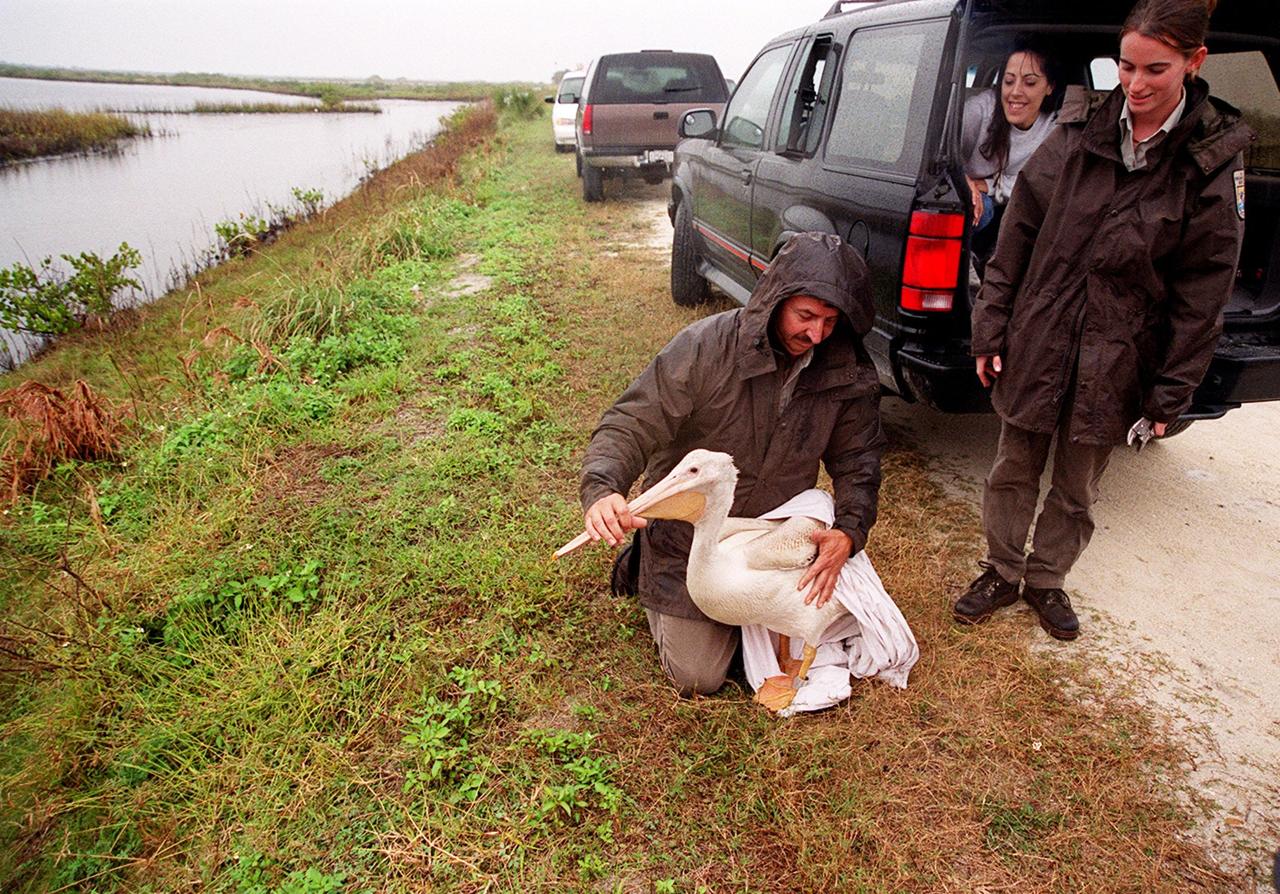
Under a rain-filled sky, Mark Epstein, with the U.S. Fish and Wildlife Service, gets ready to release a rescued white pelican. At right is Kat Royer, also with the U.S. Fish and Wildlife Service, who has fixed on it a leg band issued by the U.S. Department of the Interior's Bird Banding Laboratory. In the background is Christine Wise who is involved with rescue and rehabilitation of Florida wild animals. Wise brought the pelican to the Merritt Island National Wildlife Refuge for its release. The bird was found covered in crude oil from a contaminated ditch in northern Indiana in November, and was rescued by a local Police Department, treated, and flown to the Back to Nature Wildlife Refuge in Orlando, Fla. for care and rest. The pelican, dubbed "Fisheater" by its rescuers, is being let go to join a flock of about 30 other white pelicans that are wintering on the refuge. White pelicans inhabit marshy lakes and along the Pacific and Texas coasts. They winter from Florida and southern California south to Panama, chiefly in coastal lagoons. They are frequently seen flying in long lines, flapping and sailing in unison, but also ride rising air currents to soar gracefully in circles. The Merritt Island National Wildlife Refuge, which encompasses 92,000 acres that are a habitat for more than 331 species of birds, 31 mammals, 117 fishes, and 65 amphibians and reptiles. The marshes and open water of the refuge provide wintering areas for 23 species of migratory waterfowl, as well as a year-round home for great blue herons, great egrets, wood storks, cormorants, brown pelicans and other species of marsh and shore birds, as well as a variety of insects
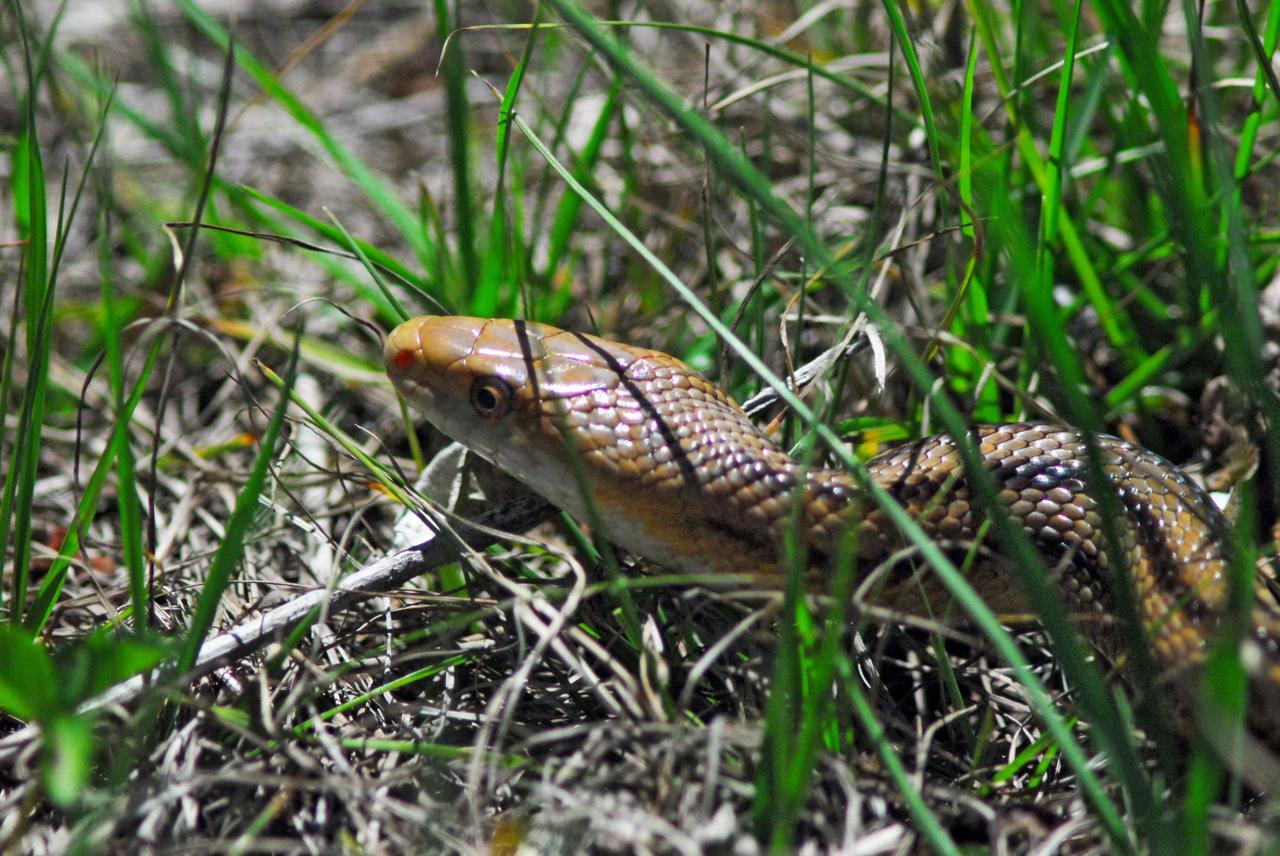
KENNEDY SPACE CENTER, FLA. -- What may be a yellow rat snake slithers through the grass on Kennedy Space Center. Yellow rat snakes are found throughout most of Florida and the Keys. They also live in a narrow strip along the Atlantic coast through Georgia, South Carolina and North Carolina. They are often found in warm southern swamps, and are also common in abandoned buildings and barns. Besides rats, yellow rat snakes will eat a wide variety of small mammals, birds, and eggs. They are considered the best tree climbing snake in Florida. The scales on their bellies are squared off, which aids them tremendously with climbing. They are strong constrictors, and kill their prey by suffocation. KSC shares a boundary with the Merritt Island Wildlife Nature Refuge. The refuge is a habitat for more than 310 species of birds, 25 mammals, 117 fishes and 65 amphibians and reptiles. In addition, the Refuge supports 19 endangered or threatened wildlife species on Federal or State lists, more than any other single refuge in the U.S. Photo credit: NASA/Dimitri Gerondidakis
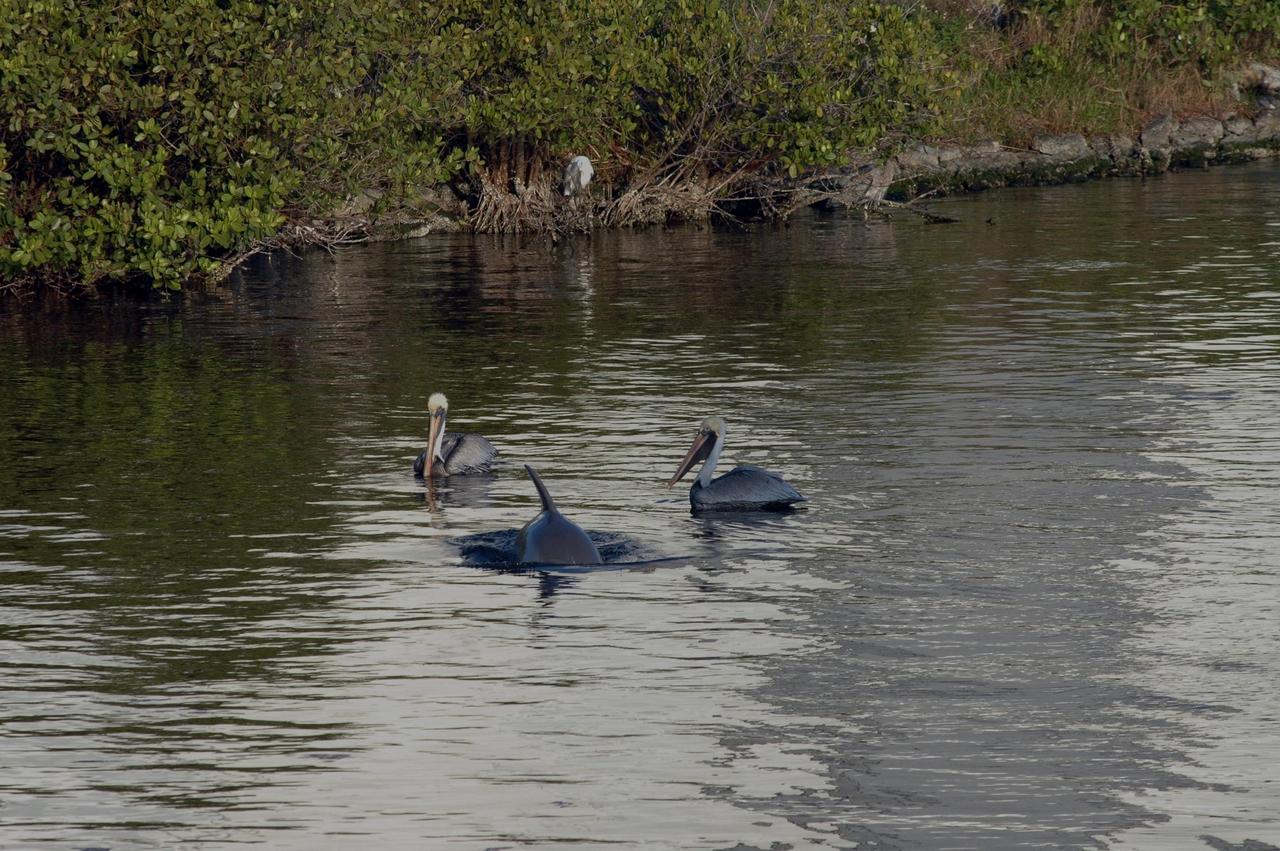
KENNEDY SPACE CENTER, FLA. -- In the turn basin near the Vehicle Assembly Building, a dolphin interrupts two white pelicans swimming near the shore. White pelicans winter from Florida and southern California to Panama, chiefly in coastal lagoons, and usually in colonies. The turn basin was carved out of the Banana River when Kennedy Space Center was built. KSC shares a boundary with the Merritt Island Wildlife Nature Refuge. The refuge is a habitat for more than 310 species of birds, 25 mammals, 117 fishes and 65 amphibians and reptiles. In addition, the Refuge supports 19 endangered or threatened wildlife species on Federal or State lists, more than any other single refuge in the U.S. Photo credit: NASA/Jim Grossmann
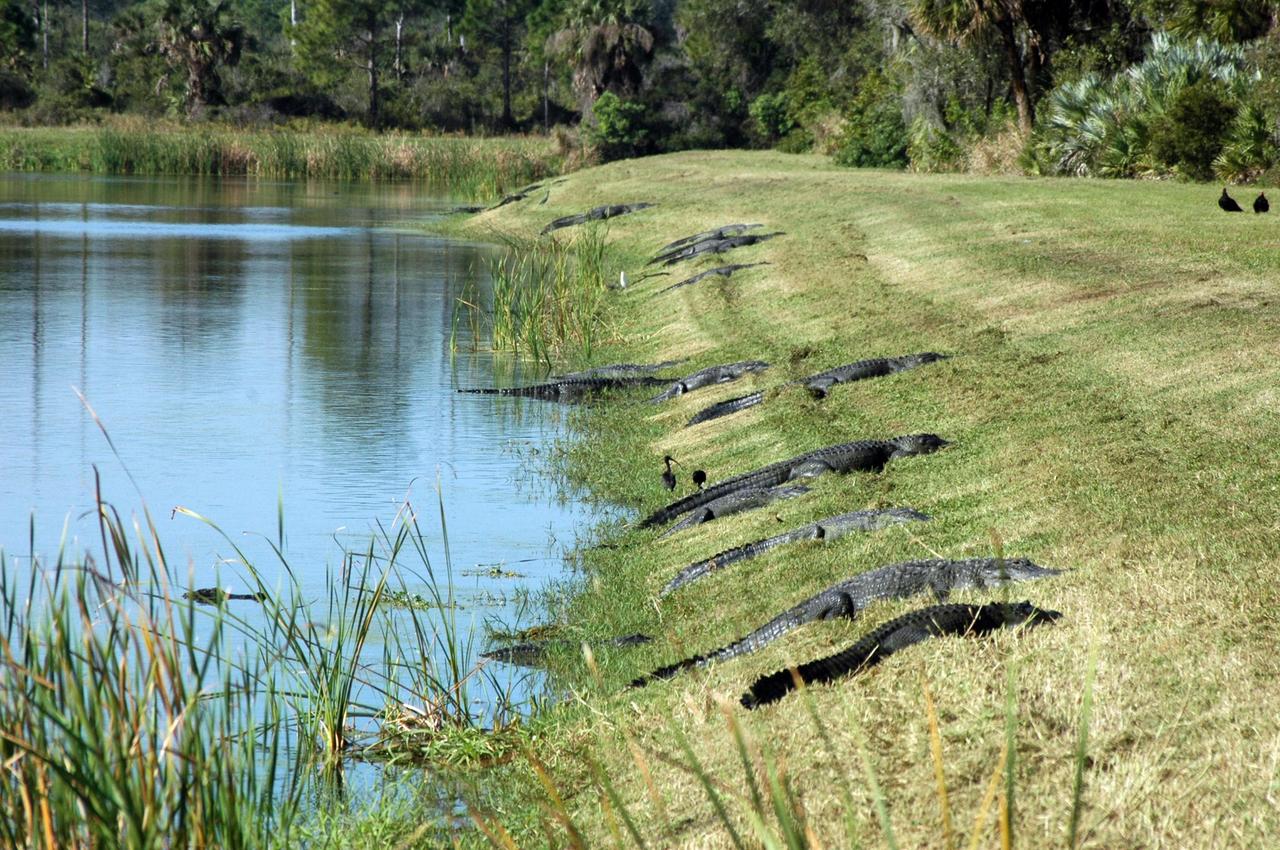
KENNEDY SPACE CENTER, FLA. -- On NASA's Kennedy Space Center, the bank of a pond provides the perfect spot for sunbathing alligators. American alligators feed and rest in the water, and lay their eggs in dens they dig into the banks. The young alligators spend their first several weeks in these dens. A protected species, alligators can be spotted in the drainage canals and other waters surrounding KSC. KSC shares a boundary with the Merritt Island Wildlife Nature Refuge. The refuge is a habitat for more than 310 species of birds, 25 mammals, 117 fishes and 65 amphibians and reptiles. In addition, the Refuge supports 19 endangered or threatened wildlife species on Federal or State lists, more than any other single refuge in the U.S. Photo credit: NASA/Ken Thornsley

KENNEDY SPACE CENTER, FLA. -- From the bank of a pond on Kennedy Space Center, an alligator slides into the water, perhaps eyeing nearby prey. American alligators feed and rest in the water, and lay their eggs in dens they dig into the banks. The young alligators spend their first several weeks in these dens. A protected species, alligators can be spotted in the drainage canals and other waters surrounding KSC. KSC shares a boundary with the Merritt Island Wildlife Nature Refuge. The refuge is a habitat for more than 310 species of birds, 25 mammals, 117 fishes and 65 amphibians and reptiles. In addition, the Refuge supports 19 endangered or threatened wildlife species on Federal or State lists, more than any other single refuge in the U.S. Photo credit: NASA/Dimitri Gerondidakis
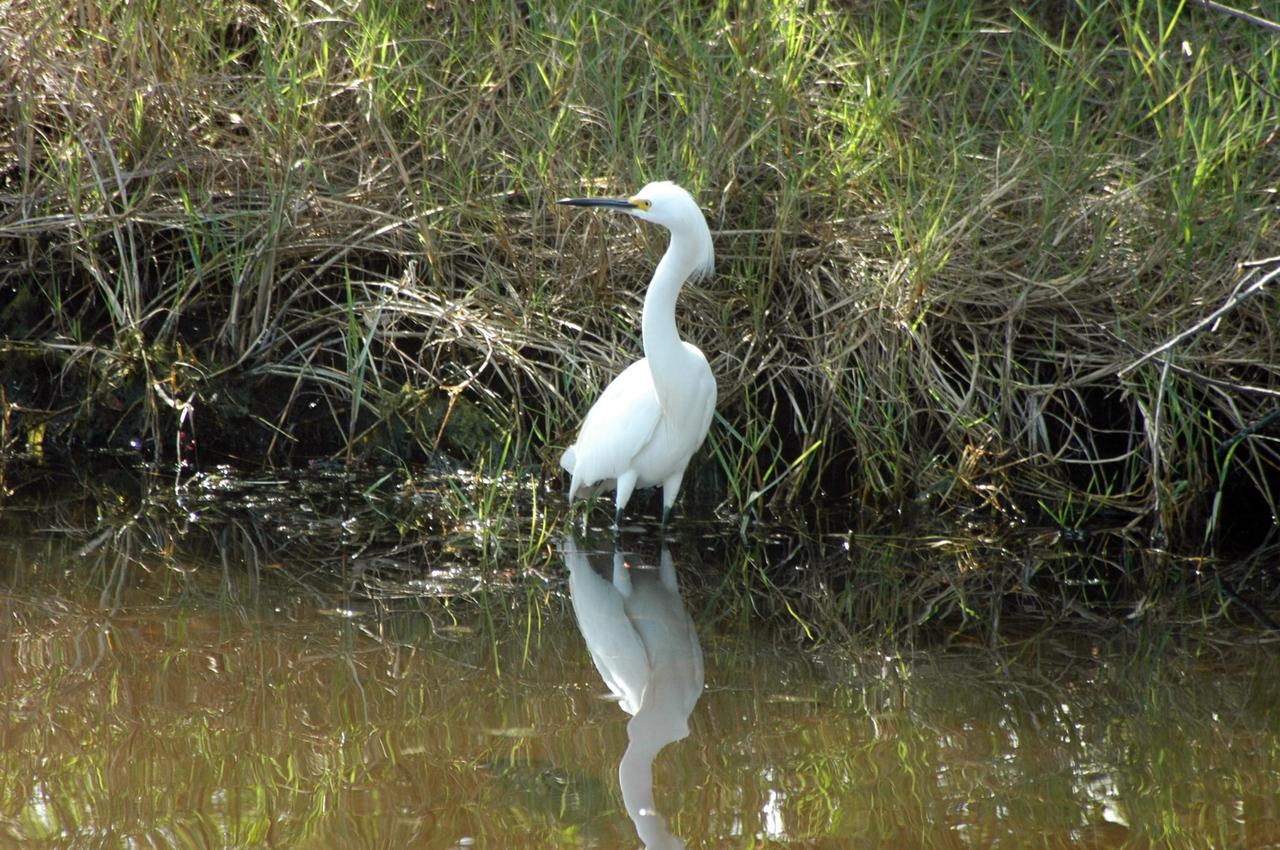
KENNEDY SPACE CENTER, FLA. -- A snowy egret is on the lookout for food in a pond on NASA's Kennedy Space Center. A type of heron, the snowy egret inhabits salt marshes, ponds, rice fields and shallow coastal bays ranging from Maine to southern South America on the east coast. It can also be found in California and Oklahoma to the Gulf of Mexico. KSC shares a boundary with the Merritt Island Wildlife Nature Refuge. The refuge is a habitat for more than 310 species of birds, 25 mammals, 117 fishes and 65 amphibians and reptiles. In addition, the Refuge supports 19 endangered or threatened wildlife species on Federal or State lists, more than any other single refuge in the U.S. Photo credit: NASA/Ken Thornsley
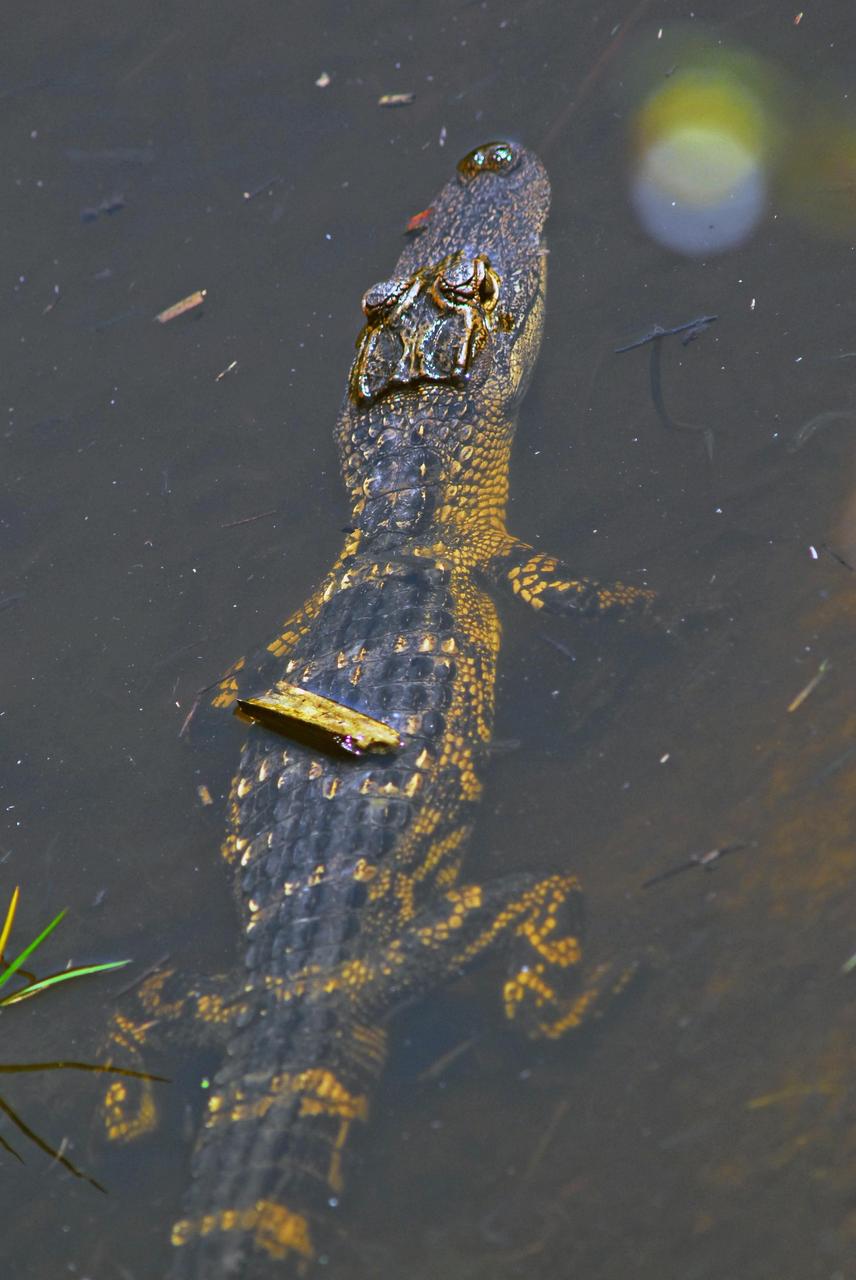
KENNEDY SPACE CENTER, FLA. -- In a pond on Kennedy Space Center, a young alligator tests the water. American alligators feed and rest in the water, and lay their eggs in dens they dig into the banks. The young alligators spend their first several weeks in these dens. A protected species, alligators can be spotted in the drainage canals and other waters surrounding KSC. KSC shares a boundary with the Merritt Island Wildlife Nature Refuge. The refuge is a habitat for more than 310 species of birds, 25 mammals, 117 fishes and 65 amphibians and reptiles. In addition, the Refuge supports 19 endangered or threatened wildlife species on Federal or State lists, more than any other single refuge in the U.S. Photo credit: NASA/Dimitri Gerondidakis
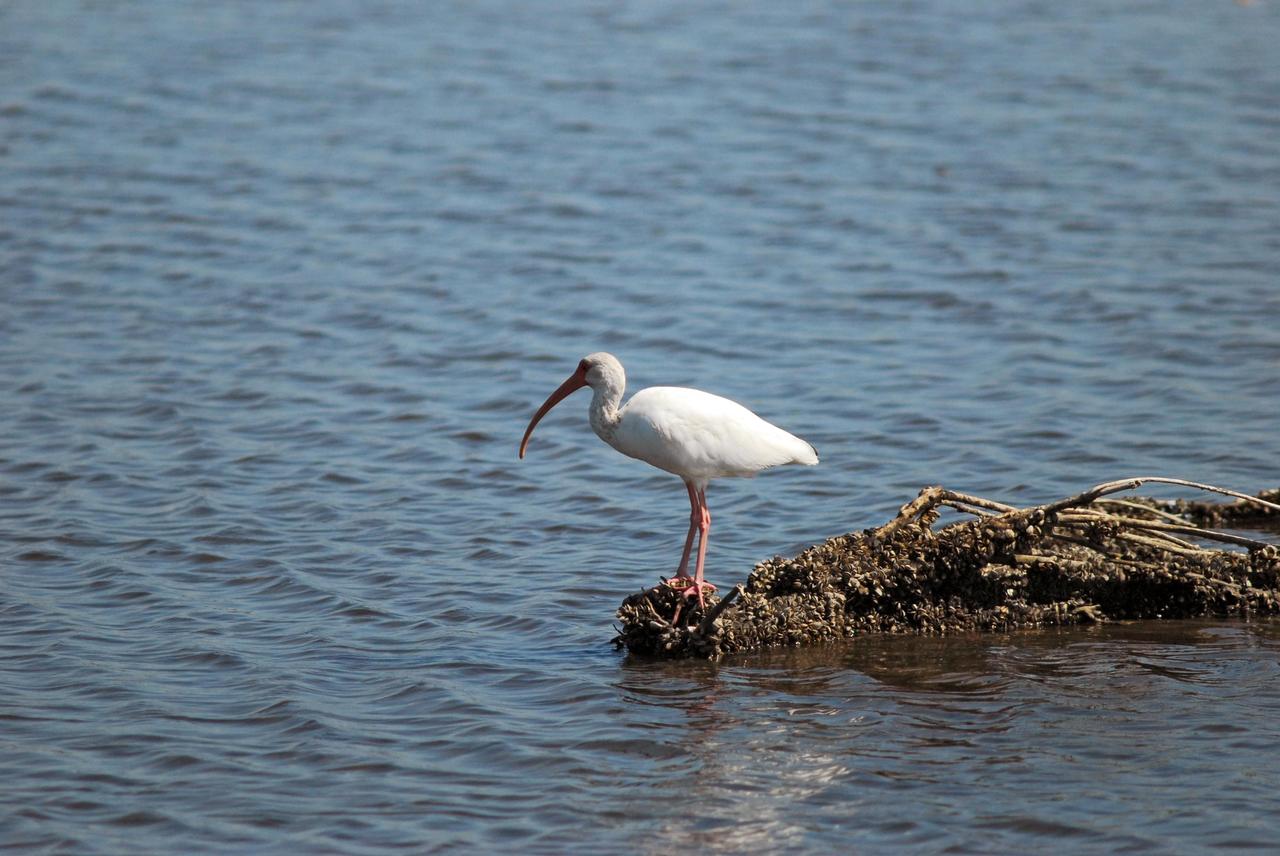
KENNEDY SPACE CENTER, FLA. -- A white ibis looks for food from the edge of a sunken tree in the river near Kennedy Space Center. White ibis range along the coast from South Carolina to Florida and Texas, as far as the northern area of South America. They prefer marshy sloughs, mud flats, lagoons and swamp forests. KSC shares a boundary with the Merritt Island Wildlife Nature Refuge. The refuge is a habitat for more than 310 species of birds, 25 mammals, 117 fishes and 65 amphibians and reptiles. In addition, the Refuge supports 19 endangered or threatened wildlife species on Federal or State lists, more than any other single refuge in the U.S. Photo credit: NASA/Dimitri Gerondidakis
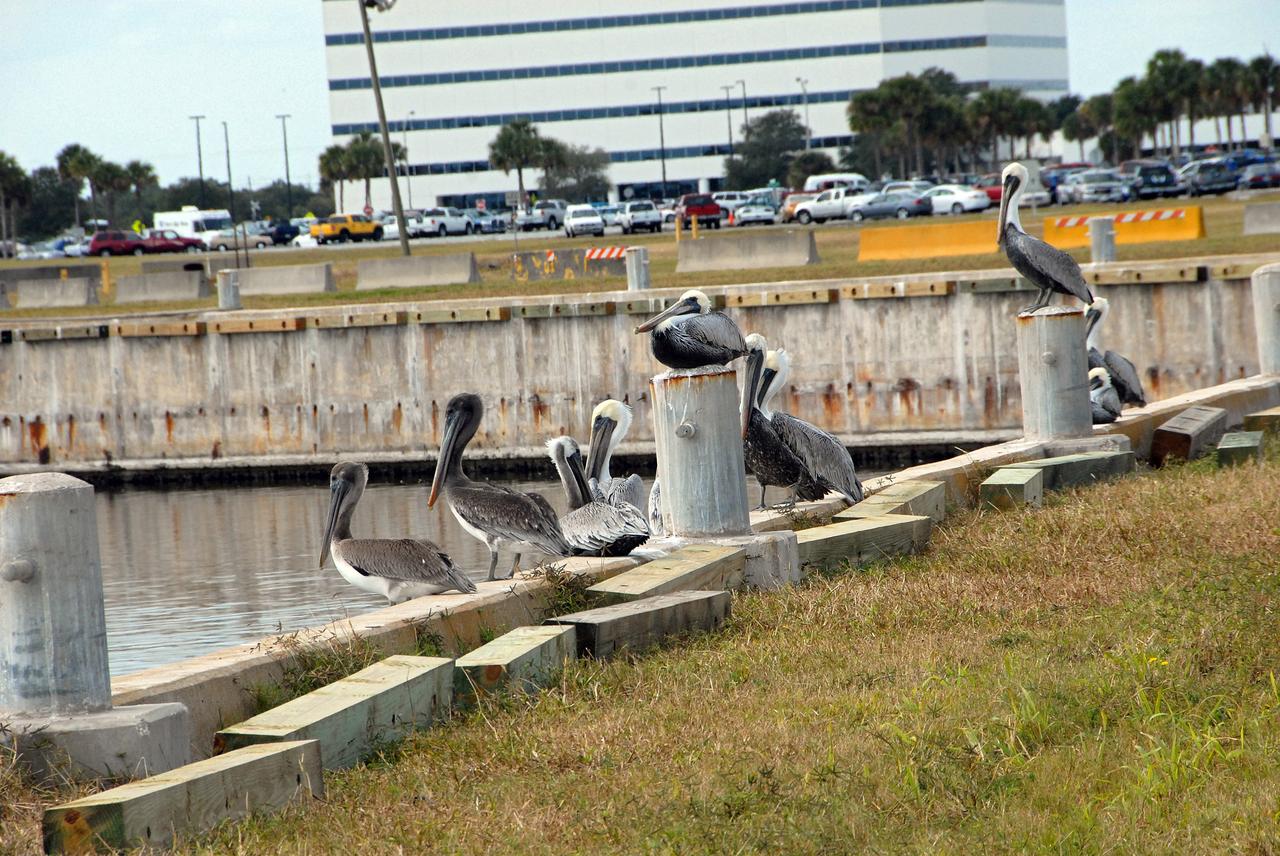
CAPE CANAVERAL, Fla. -- Brown pelicans gather on the wharf of the Launch Complex 39 turn basin at NASA's Kennedy Space Center in Florida. The brown pelican is found along ocean shores and not on inland lakes. It is the only dark pelican, and also the only one that plunges from the air into the water to catch its food. It ranges along the Atlantic Coast from North Carolina south to Venezuela; on the Pacific Coast from British Columbia to Chile. Brown pelicans are a common sight at Kennedy. The center shares a boundary with the Merritt Island Wildlife Nature Refuge, which is a habitat for more than 310 species of birds, 25 mammals, 117 fishes and 65 amphibians and reptiles. Photo credit: NASA/Jack Pfaller
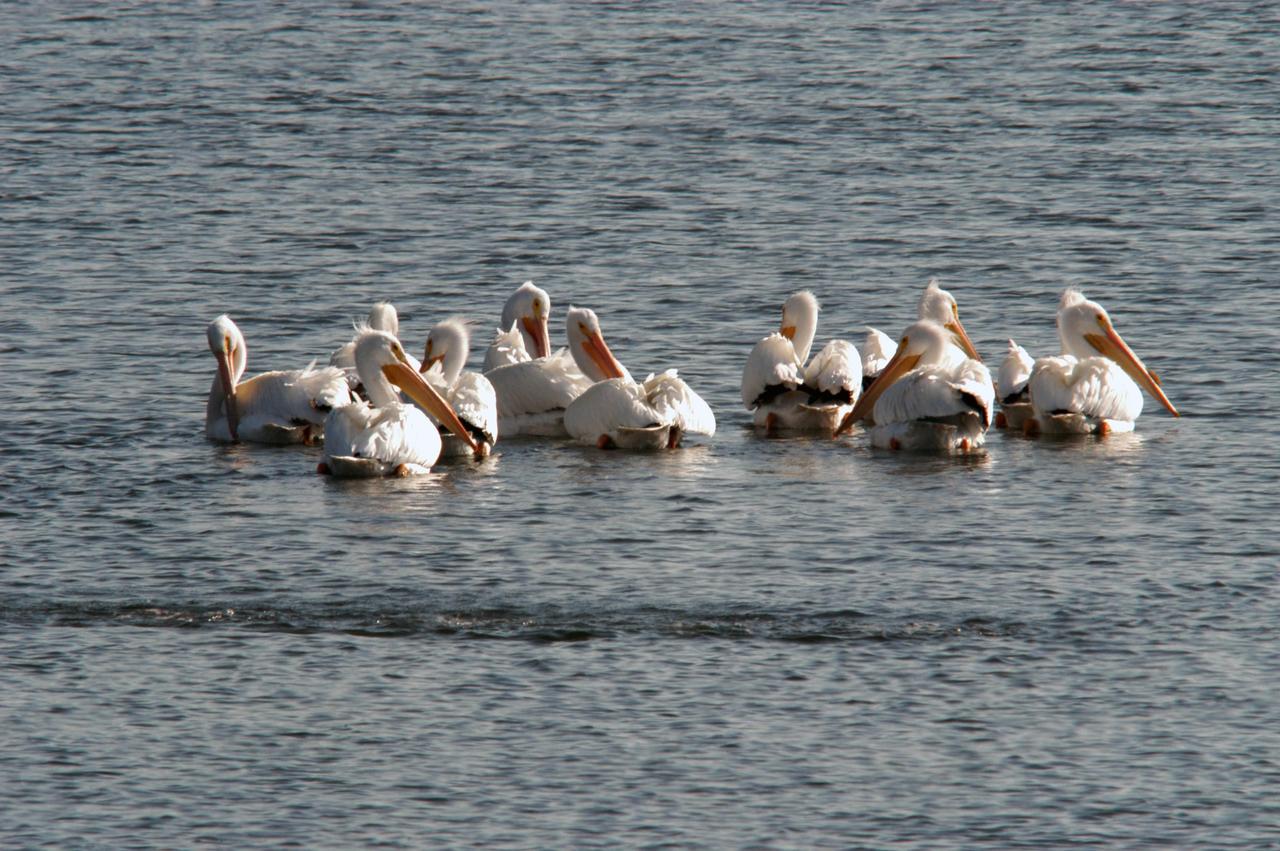
KENNEDY SPACE CENTER, FLA. -- White pelicans gather in the turn basin near the Vehicle Assembly Building of NASA's Kennedy Space Center. The turn basin was carved out of the Banana River when Kennedy Space Center was built. White pelicans winter from Florida and southern California to Panama, chiefly in coastal lagoons, and usually in colonies. KSC shares a boundary with the Merritt Island Wildlife Nature Refuge. The refuge is a habitat for more than 310 species of birds, 25 mammals, 117 fishes and 65 amphibians and reptiles. In addition, the Refuge supports 19 endangered or threatened wildlife species on Federal or State lists, more than any other single refuge in the U.S. Photo credit: NASA/George Shelton

KENNEDY SPACE CENTER, FLA. -- In a marshy area of NASA's Kennedy Space Center, this white ibis may be looking for sticks to build its nest in a nearby tree. White ibis range from coastal South Carolina to Florida and Texas, as well as South America. They inhabit marshy sloughs, mud flats, lagoons and swamp forests. KSC shares a boundary with the Merritt Island Wildlife Nature Refuge. The refuge is a habitat for more than 310 species of birds, 25 mammals, 117 fishes and 65 amphibians and reptiles. In addition, the Refuge supports 19 endangered or threatened wildlife species on Federal or State lists, more than any other single refuge in the U.S. Photo credit: NASA/Ken Thornsley
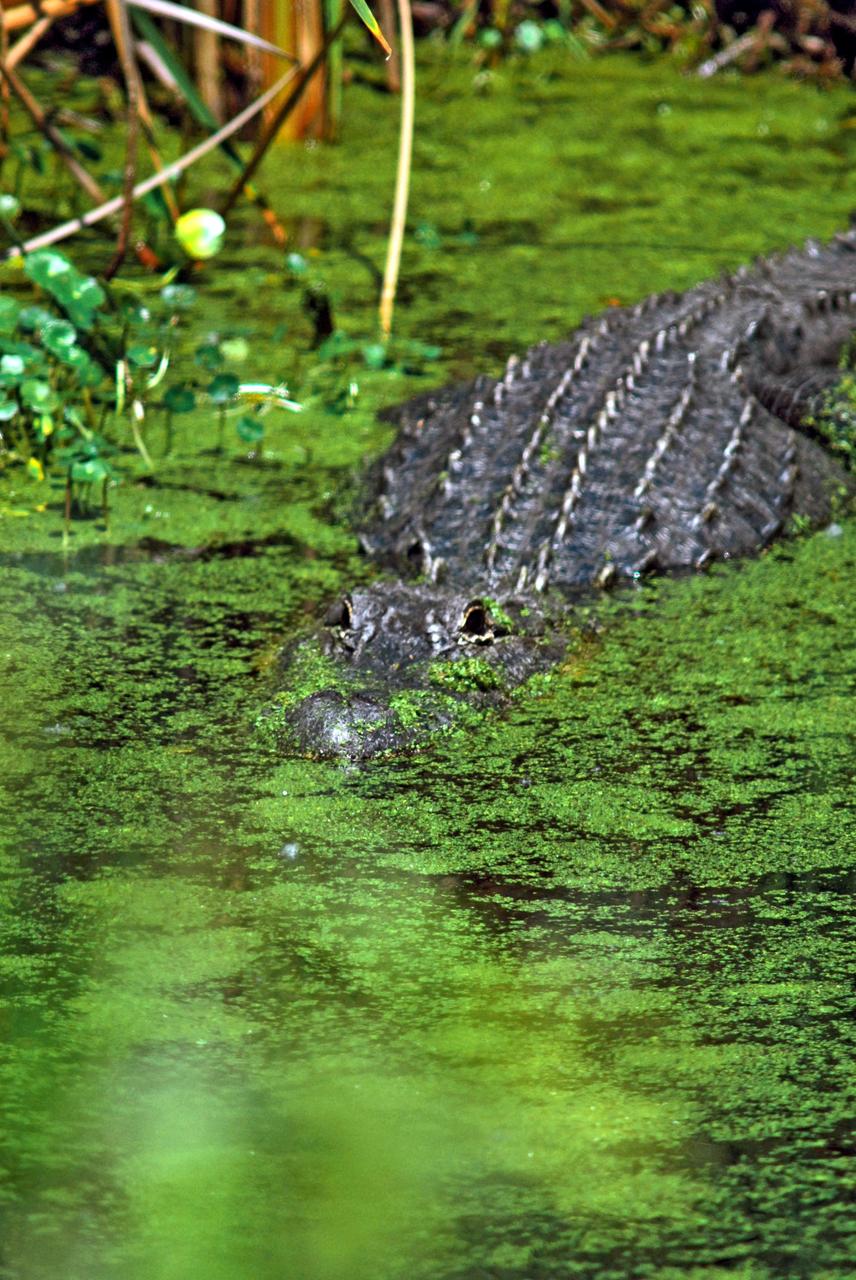
KENNEDY SPACE CENTER, FLA. -- In a pond on Kennedy Space Center, this alligator achieves partial camouflage from the green algae. American alligators feed and rest in the water, and lay their eggs in dens they dig into the banks. The young alligators spend their first several weeks in these dens. A protected species, alligators can be spotted in the drainage canals and other waters surrounding KSC. KSC shares a boundary with the Merritt Island Wildlife Nature Refuge. The refuge is a habitat for more than 310 species of birds, 25 mammals, 117 fishes and 65 amphibians and reptiles. In addition, the Refuge supports 19 endangered or threatened wildlife species on Federal or State lists, more than any other single refuge in the U.S. Photo credit: NASA/Dimitri Gerondidakis
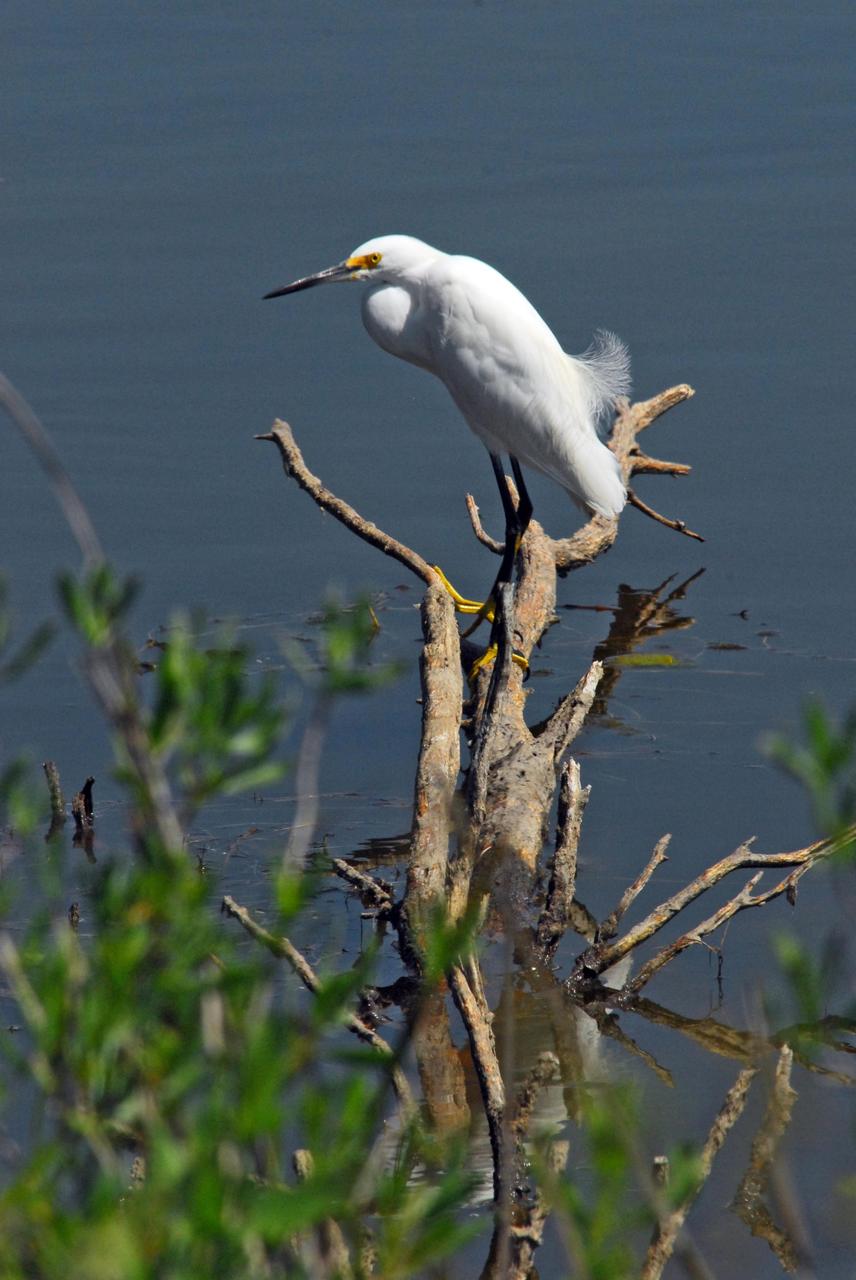
KENNEDY SPACE CENTER, FLA. -- A snowy egret perches on dead limbs in the Indian River near Kennedy Space Center. A type of heron, the snowy egret inhabits salt marshes, ponds, rice fields and shallow coastal bays ranging from Maine to southern South America on the east coast. It can also be found in California and Oklahoma to the Gulf of Mexico. KSC shares a boundary with the Merritt Island Wildlife Nature Refuge. The refuge is a habitat for more than 310 species of birds, 25 mammals, 117 fishes and 65 amphibians and reptiles. In addition, the Refuge supports 19 endangered or threatened wildlife species on Federal or State lists, more than any other single refuge in the U.S. Photo credit: NASA/Dimitri Gerondidakis
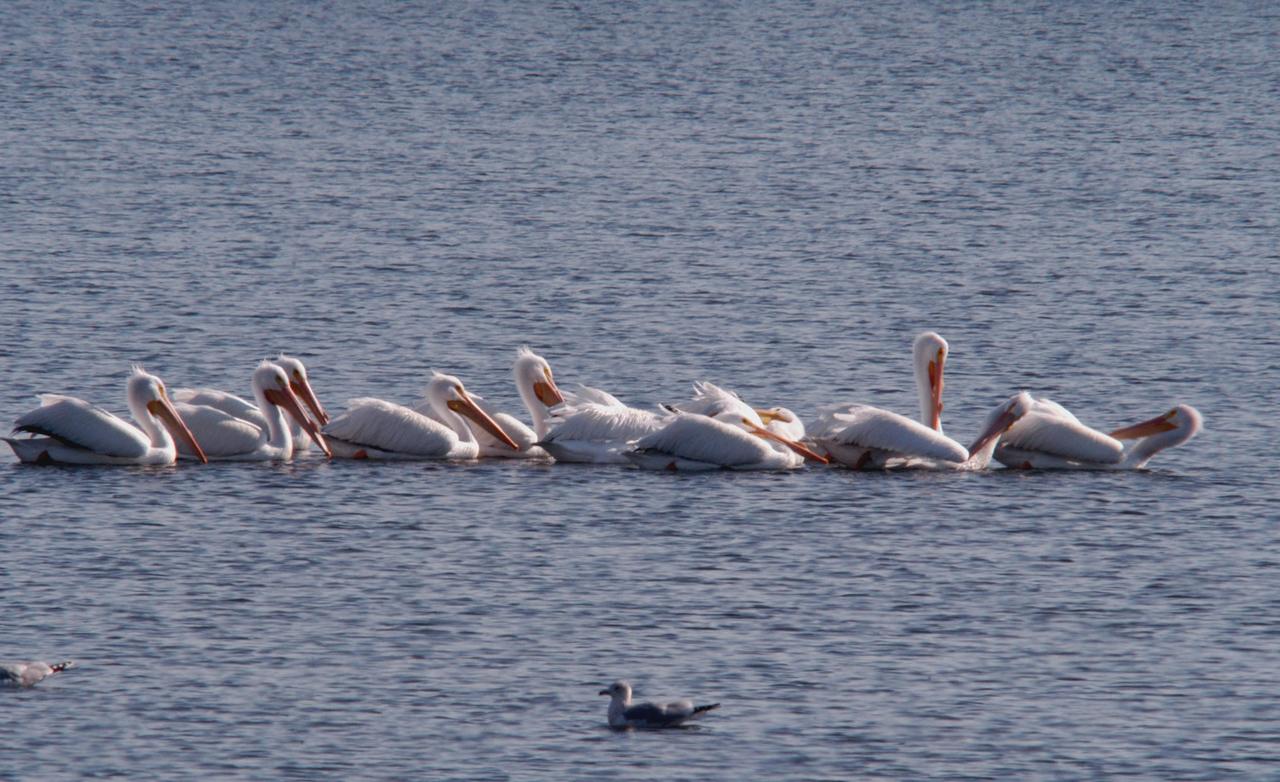
KENNEDY SPACE CENTER, FLA. -- White pelicans form a line while swimming in the turn basin near the Vehicle Assembly Building of NASA's Kennedy Space Center. The turn basin was carved out of the Banana River when Kennedy Space Center was built. White pelicans winter from Florida and southern California to Panama, chiefly in coastal lagoons, and usually in colonies. KSC shares a boundary with the Merritt Island Wildlife Nature Refuge. The refuge is a habitat for more than 310 species of birds, 25 mammals, 117 fishes and 65 amphibians and reptiles. In addition, the Refuge supports 19 endangered or threatened wildlife species on Federal or State lists, more than any other single refuge in the U.S. Photo credit: NASA/George Shelton
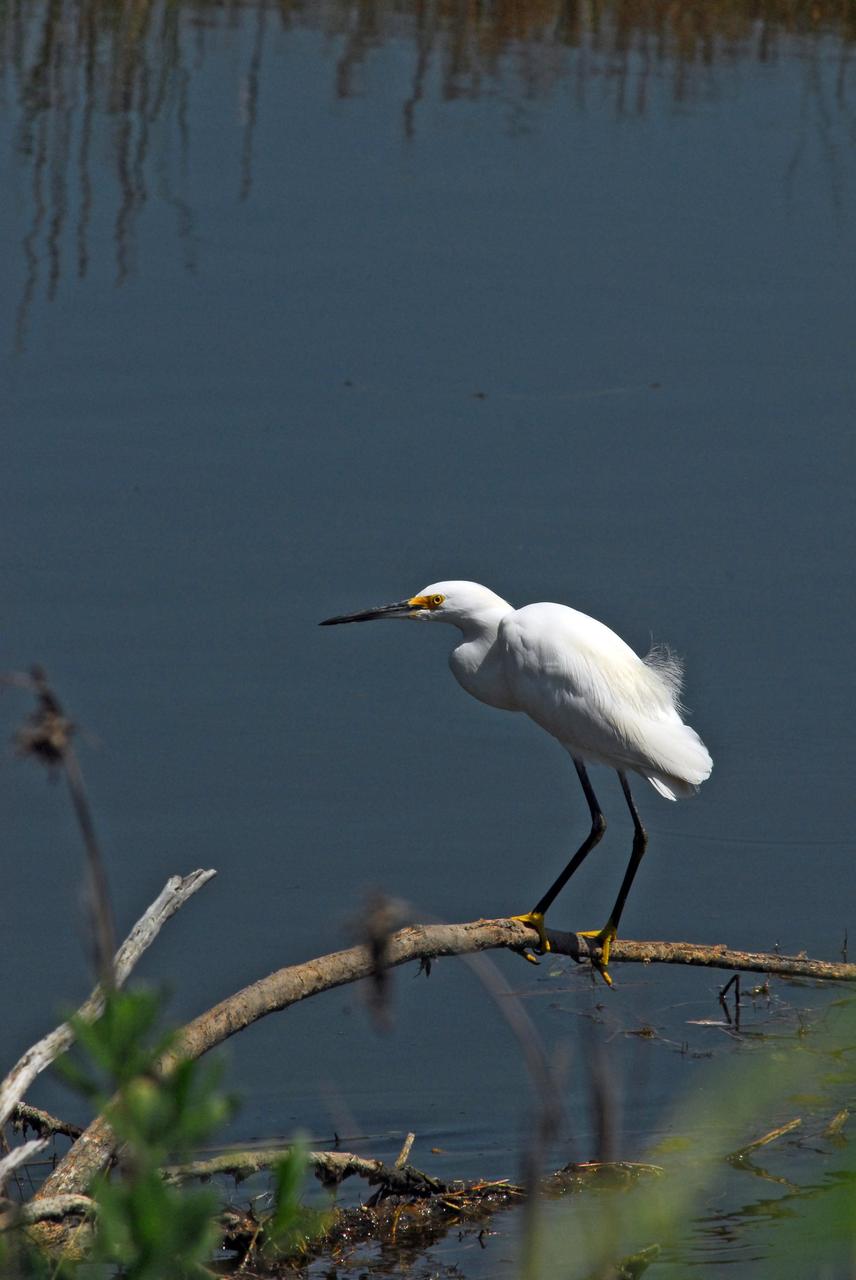
KENNEDY SPACE CENTER, FLA. -- A snowy egret perches on dead limbs in the Indian River near Kennedy Space Center. A type of heron, the snowy egret inhabits salt marshes, ponds, rice fields and shallow coastal bays ranging from Maine to southern South America on the east coast. It can also be found in California and Oklahoma to the Gulf of Mexico. KSC shares a boundary with the Merritt Island Wildlife Nature Refuge. The refuge is a habitat for more than 310 species of birds, 25 mammals, 117 fishes and 65 amphibians and reptiles. In addition, the Refuge supports 19 endangered or threatened wildlife species on Federal or State lists, more than any other single refuge in the U.S. Photo credit: NASA/Dimitri Gerondidakis
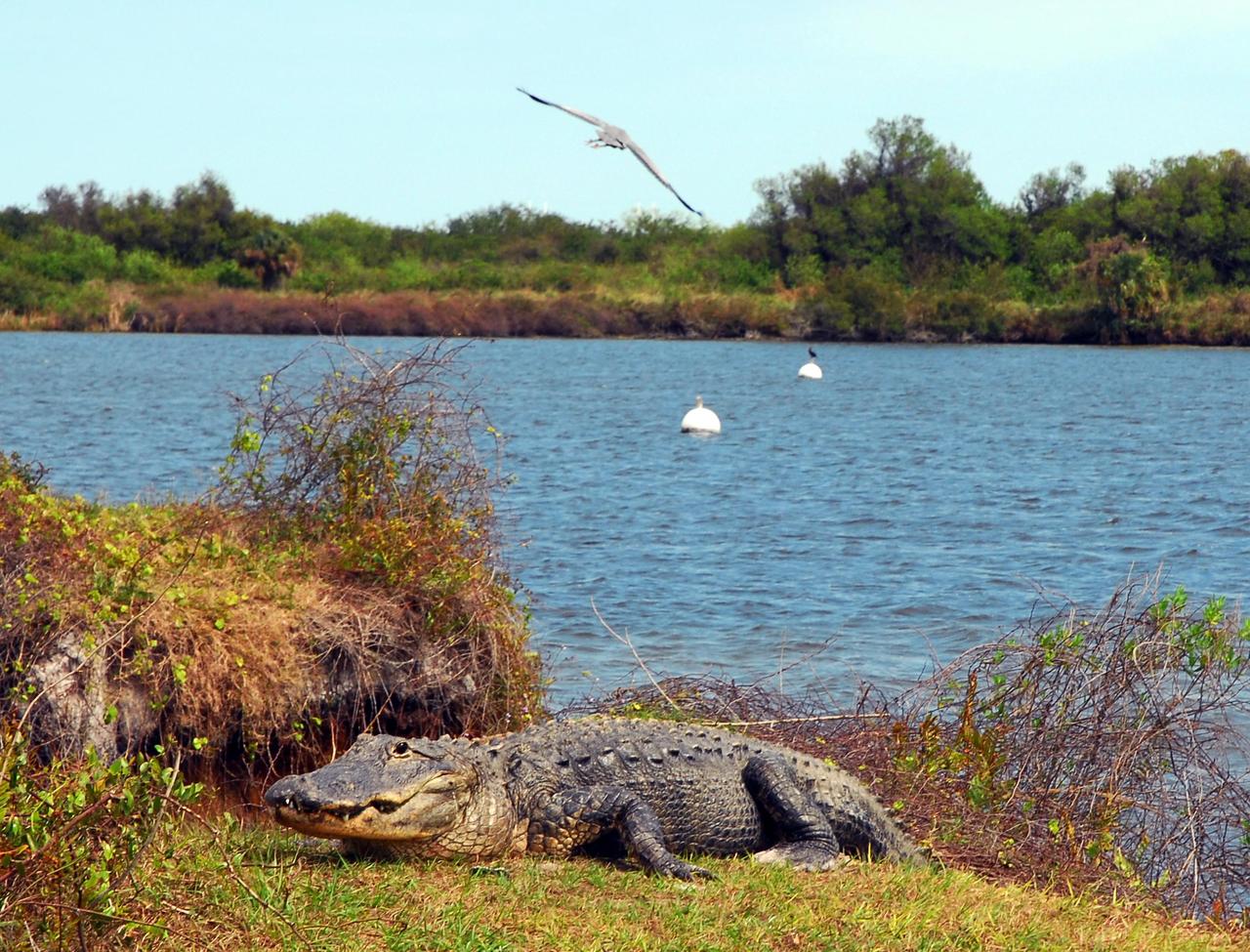
KENNEDY SPACE CENTER, FLA. -- A large alligator on the bank of a creek in NASA's Kennedy Space Center comes to alert, scaring off the great blue heron, seen in the sky above the water. The heron had been standing behind the alligator. A protected species, alligators can be spotted in the drainage canals and other waters surrounding KSC. The center shares a boundary with the Merritt Island Wildlife Nature Refuge, which is a habitat for more than 310 species of birds, 25 mammals, 117 fishes and 65 amphibians and reptiles. In addition, the Refuge supports 19 endangered or threatened wildlife species on Federal or State lists, more than any other single refuge in the U.S. Photo credit: NASA/Amanda Diller
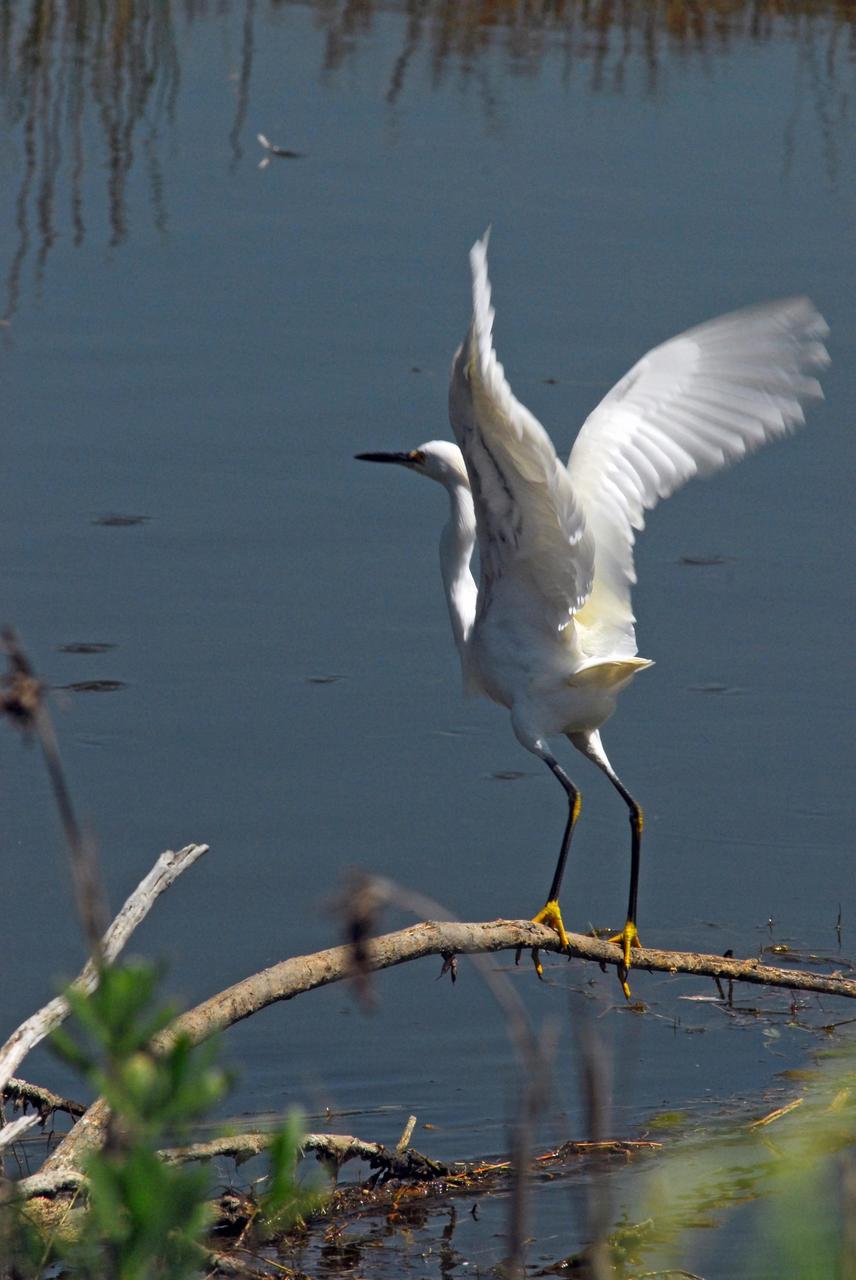
KENNEDY SPACE CENTER, FLA. -- A snowy egret prepares for flight from its perch in the Indian River near Kennedy Space Center. A type of heron, the snowy egret inhabits salt marshes, ponds, rice fields and shallow coastal bays ranging from Maine to southern South America on the east coast. It can also be found in California and Oklahoma to the Gulf of Mexico. KSC shares a boundary with the Merritt Island Wildlife Nature Refuge. The refuge is a habitat for more than 310 species of birds, 25 mammals, 117 fishes and 65 amphibians and reptiles. In addition, the Refuge supports 19 endangered or threatened wildlife species on Federal or State lists, more than any other single refuge in the U.S. Photo credit: NASA/Dimitri Gerondidakis
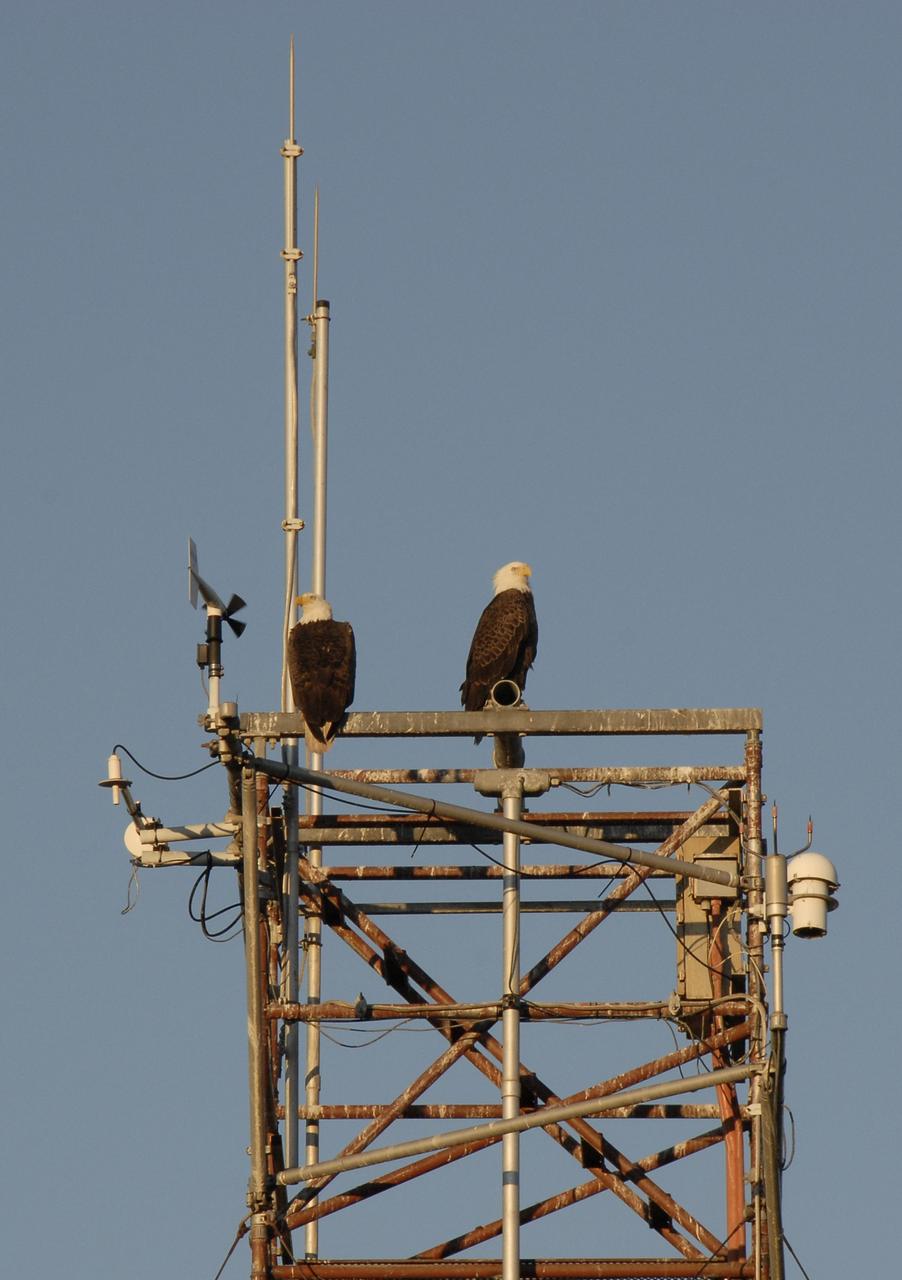
CAPE CANAVERAL, Fla. - At the Shuttle Landing Facility at NASA's Kennedy Space Center in Florida, two bald eagles stand sentinel as STS-129 Commander Charles O. Hobaugh and Pilot Barry E. Wilmore practice landings in a Shuttle Training Aircraft in preparation for space shuttle Atlantis' STS-129 mission. The Merritt Island National Wildlife Refuge coexists with Kennedy Space Center and provides a habitat for 330 species of birds including bald eagles. Bald eagles, which mate for life, use a specific territory for nesting, winter feeding or a year-round residence. Its natural domain is from Alaska to Baja, Calif., and from Maine to Florida. For information on the refuge, visit http://www.fws.gov/merrittisland/Index.html. Photo credit: NASA/Kim Shiflett
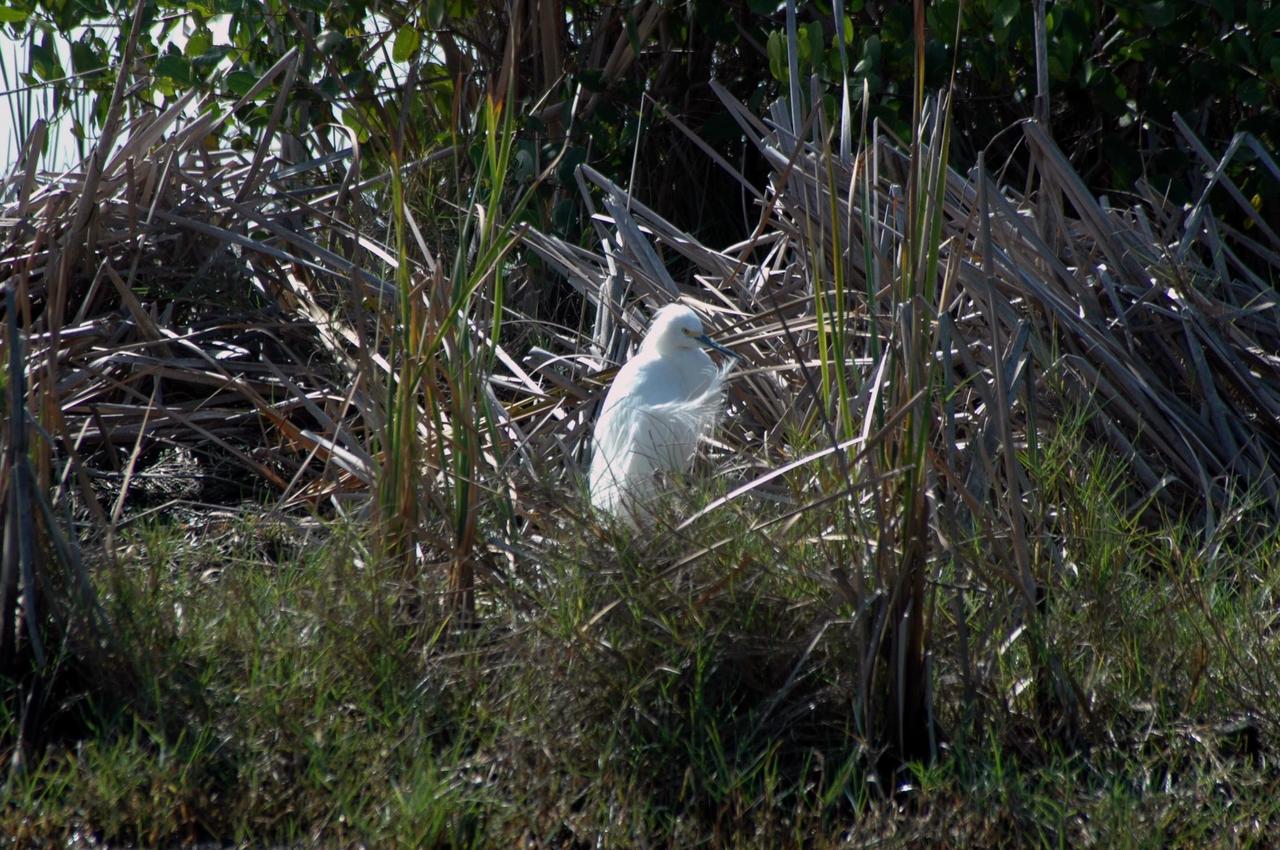
KENNEDY SPACE CENTER, FLA. -- A snowy egret is spotted in the midst of reeds near a pond on NASA's Kennedy Space Center. A type of heron, the snowy egret inhabits salt marshes, ponds, rice fields and shallow coastal bays ranging from Maine to southern South America on the east coast. It can also be found in California and Oklahoma to the Gulf of Mexico. KSC shares a boundary with the Merritt Island Wildlife Nature Refuge. The refuge is a habitat for more than 310 species of birds, 25 mammals, 117 fishes and 65 amphibians and reptiles. In addition, the Refuge supports 19 endangered or threatened wildlife species on Federal or State lists, more than any other single refuge in the U.S. Photo credit: NASA/Ken Thornsley
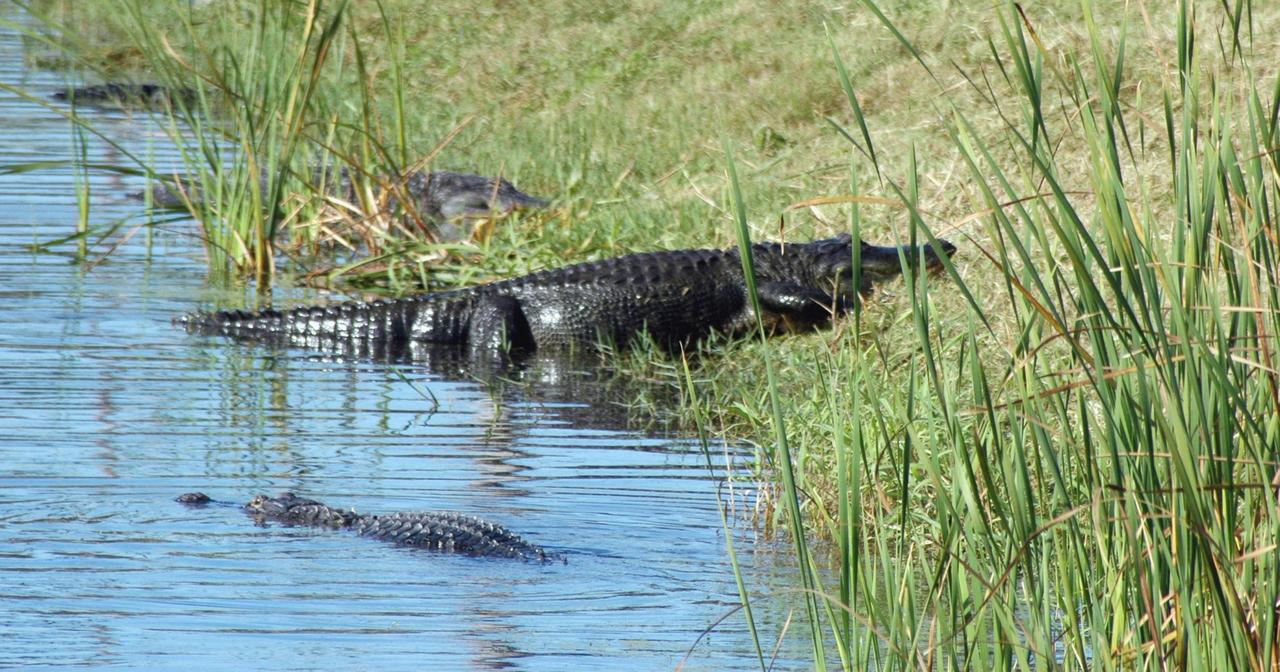
KENNEDY SPACE CENTER, FLA. -- On NASA's Kennedy Space Center, alligators begin climbing out of a pond to sunbathe on the bank. American alligators feed and rest in the water, and lay their eggs in dens they dig into the banks. The young alligators spend their first several weeks in these dens. A protected species, alligators can be spotted in the drainage canals and other waters surrounding KSC. KSC shares a boundary with the Merritt Island Wildlife Nature Refuge. The refuge is a habitat for more than 310 species of birds, 25 mammals, 117 fishes and 65 amphibians and reptiles. In addition, the Refuge supports 19 endangered or threatened wildlife species on Federal or State lists, more than any other single refuge in the U.S. Photo credit: NASA/Ken Thornsley
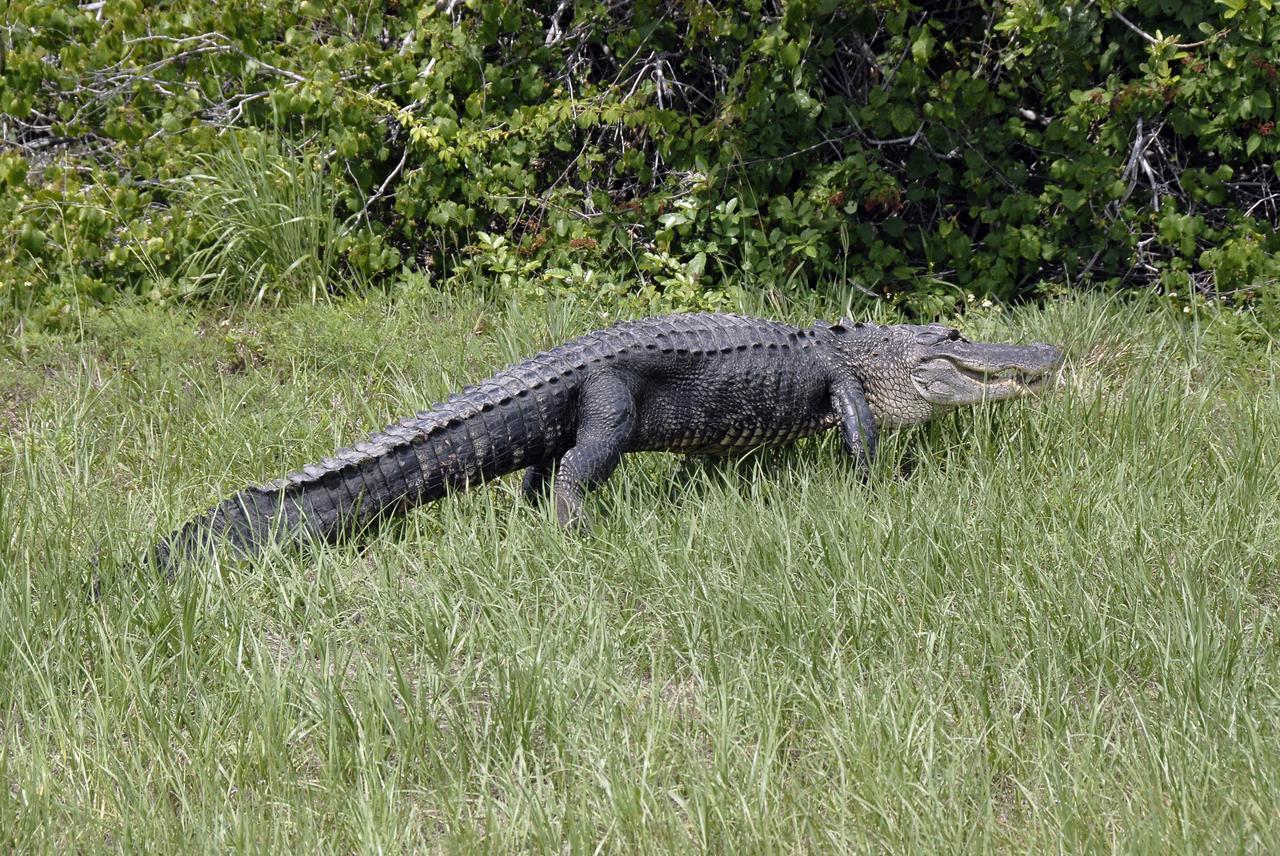
CAPE CANAVERAL, Fla. – Taking a mid-day stroll, an alligator heads for the woods after crossing the Saturn Causeway at NASA's Kennedy Space Center in Florida in front of the Astrovan with STS-127 crew members aboard. The crew was on its way to Launch Pad 39A for a simulated launch countdown, part of the terminal countdown demonstration test. Alligators can be spotted in the drainage canals and other waters surrounding Kennedy. They occasionally venture onto roads seeking new environs or mates. The center shares a boundary with the Merritt Island Wildlife Nature Refuge, which is a habitat for more than 310 species of birds, 25 mammals, 117 fishes and 65 amphibians and reptiles. Photo credit: NASA/Kim Shiflett
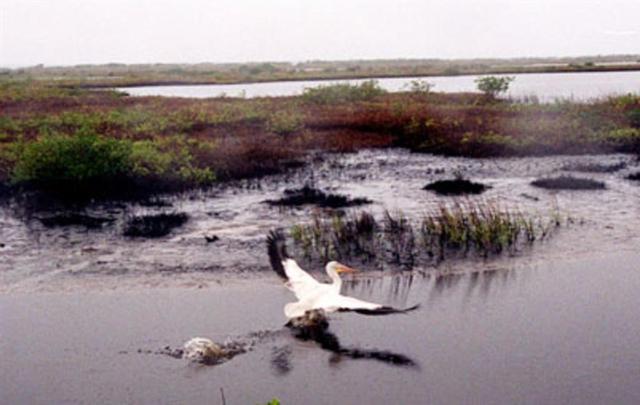
KENNEDY SPACE CENTER, FLA. -- A white pelican named "Fisheater" by its rescuers soars to open water in the Merritt Island National Wildlife Refuge as it flies to freedom. The pelican was found covered in crude oil from a contaminated ditch in northern Indiana in November, and was rescued by a local Police Department, treated, and flown to the Back to Nature Wildlife Refuge in Orlando, Fla. for care and rest. It is being released today to join a flock of about 30 other white pelicans that are wintering on the refuge, some of which are nearby. Before its release, however, Kat Royer, with the U.S. Fish and Wildlife Service, placed on it a leg band issued by the U.S. Department of the Interior's Bird Banding Laboratory. White pelicans inhabit marshy lakes and along the Pacific and Texas coasts. They winter from Florida and southern California south to Panama, chiefly in coastal lagoons. They are frequently seen flying in long lines, flapping and sailing in unison, but also ride rising air currents to soar gracefully in circles. The Merritt Island National Wildlife Refuge, which encompasses 92,000 acres that are a habitat for more than 331 species of birds, 31 mammals, 117 fishes, and 65 amphibians and reptiles. The marshes and open water of the refuge provide wintering areas for 23 species of migratory waterfowl, as well as a year-round home for great blue herons, great egrets, wood storks, cormorants, brown pelicans and other species of marsh and shore birds, as well as a variety of insects.
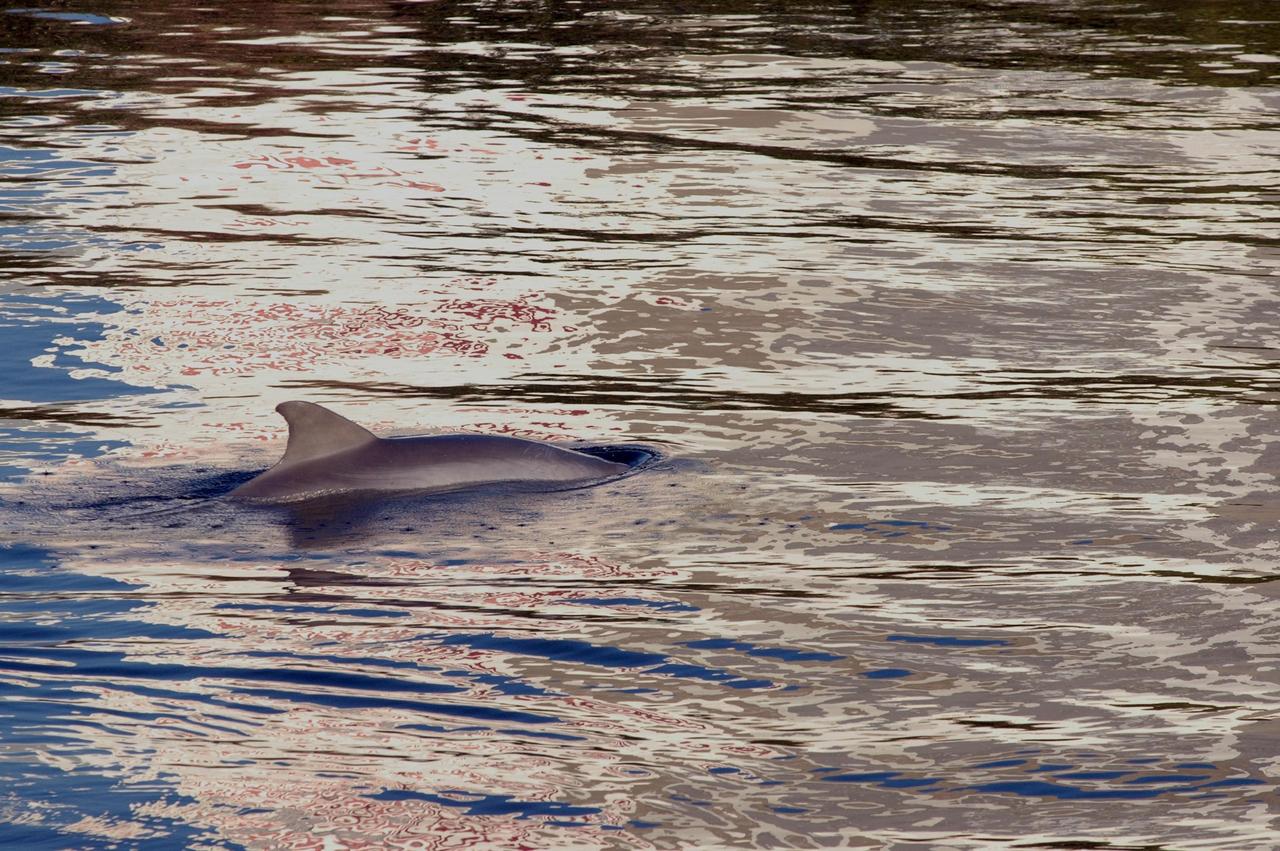
KENNEDY SPACE CENTER, FLA. -- A dolphin silently glides through the water of the turn basin near the Vehicle Assembly Building of NASA's Kennedy Space Center. The turn basin was carved out of the Banana River when Kennedy Space Center was built. Dolphins frequent bays and coastlines, usually in depths under 20 meters. While some pods take up permanent residence and establish home waters, others are migratory and swim considerable distances from coast to coast. Dolphins are a frequent sight in the rivers around KSC, which shares a boundary with the Merritt Island Wildlife Nature Refuge. KSC shares a boundary with the Merritt Island Wildlife Nature Refuge. The refuge is a habitat for more than 310 species of birds, 25 mammals, 117 fishes and 65 amphibians and reptiles. In addition, the Refuge supports 19 endangered or threatened wildlife species on Federal or State lists, more than any other single refuge in the U.S. Photo credit: NASA/Jim Grossmann
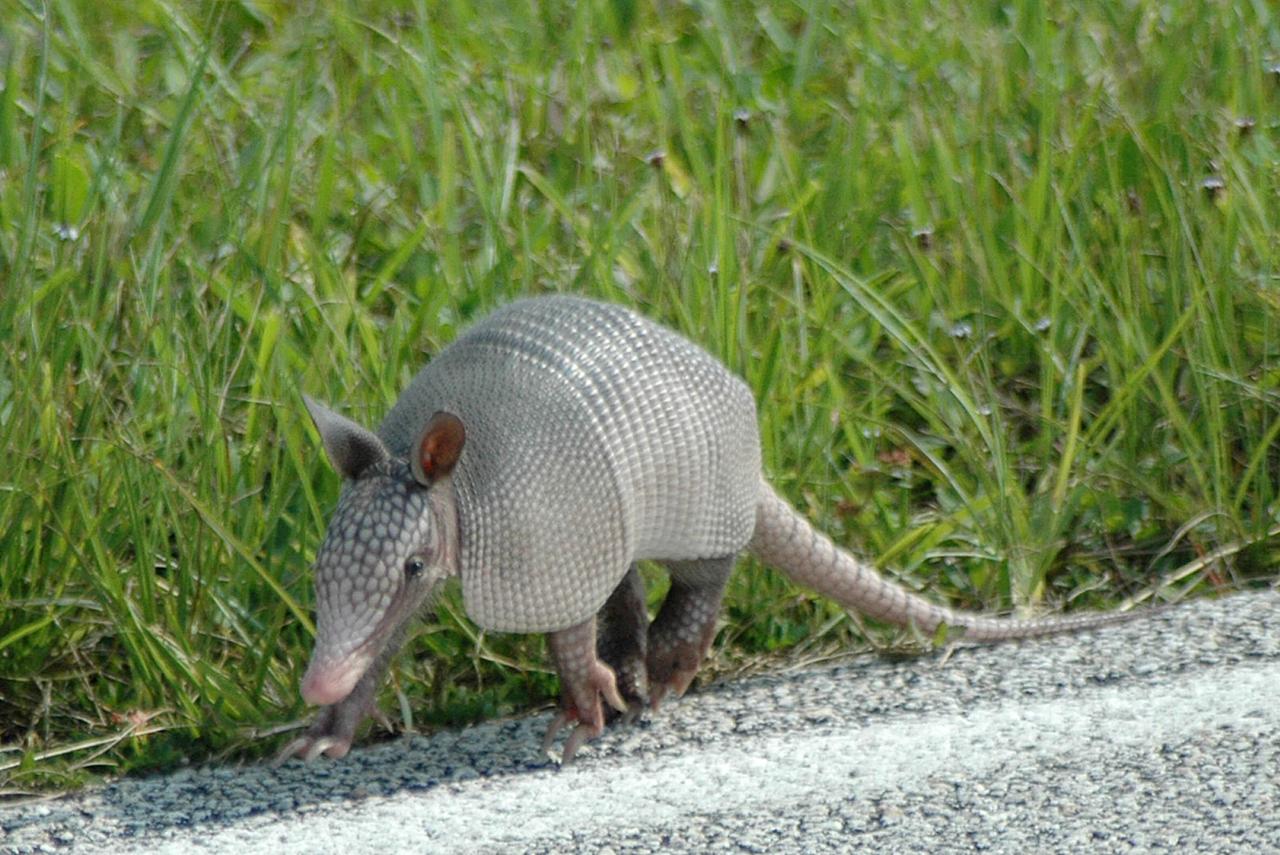
KENNEDY SPACE CENTER, FLA. -- A baby nine-banded armadillo makes its way along the roadside near Launch Pad 39A where Space Shuttle Endeavour waits for launch on mission STS-118. Introduced to Florida in the early 1900s, this species is found statewide in areas with dense ground cover and sandy soil. Nine bands of plates cover the body from shoulder to hip and 12 bands cover the long tail. It has a small, tapered head and snout and a long tongue. Its ears are long and hairless. and it has sparse white hairs on its belly. Its diet is composed of insects, especially beetles, and other invertebrates plus some plant foods such as cedars and beautyberries. It is primarily nocturnal, sedentary, solitary and a burrower. It digs a series of dens with multiple entrances usually protected by stumps, palmettos or trees. KSC shares a boundary with the Merritt Island Wildlife Nature Refuge. The refuge is a habitat for more than 310 species of birds, 25 mammals, 117 fishes and 65 amphibians and reptiles. Photo credit: NASA/Ken Thornsley
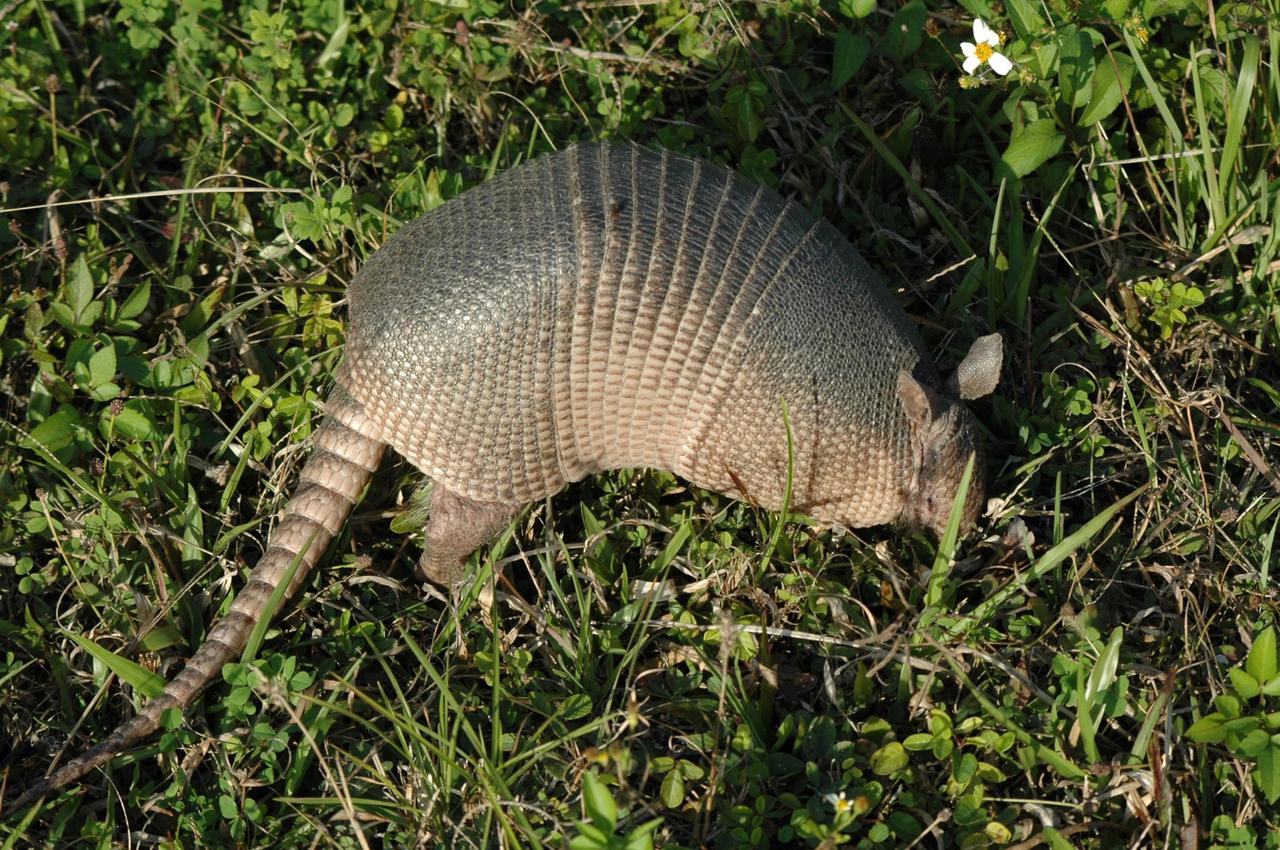
KENNEDY SPACE CENTER, FLA. -- Seen at NASA's Kennedy Space Center, this nine-banded armadillo may be looking for food. Introduced to Florida in the early 1900's, this species is found statewide in areas with dense ground cover and sandy soil. Nine bands of plates cover the body from shoulder to hip and 12 bands cover the long tail. It has a small, tapered head and snout and a long tongue. Its ears are long and hairless. It has sparse white hairs on its belly. Its diet is composed of insects, especially beetles, and other invertebrates plus some plant foods such as cedars and beautyberries. It is primarily nocturnal, sedentary, solitary and a burrower. It digs a series of dens. The multiple entrances are usually protected by stumps, palmettos, or trees. Many other animals also use armadillo dens. KSC shares a boundary with the Merritt Island Wildlife Nature Refuge. The refuge is a habitat for more than 310 species of birds, 25 mammals, 117 fishes and 65 amphibians and reptiles. In addition, the Refuge supports 19 endangered or threatened wildlife species on Federal or State lists, more than any other single refuge in the U.S. Photo credit: NASA/Ken Thornsley
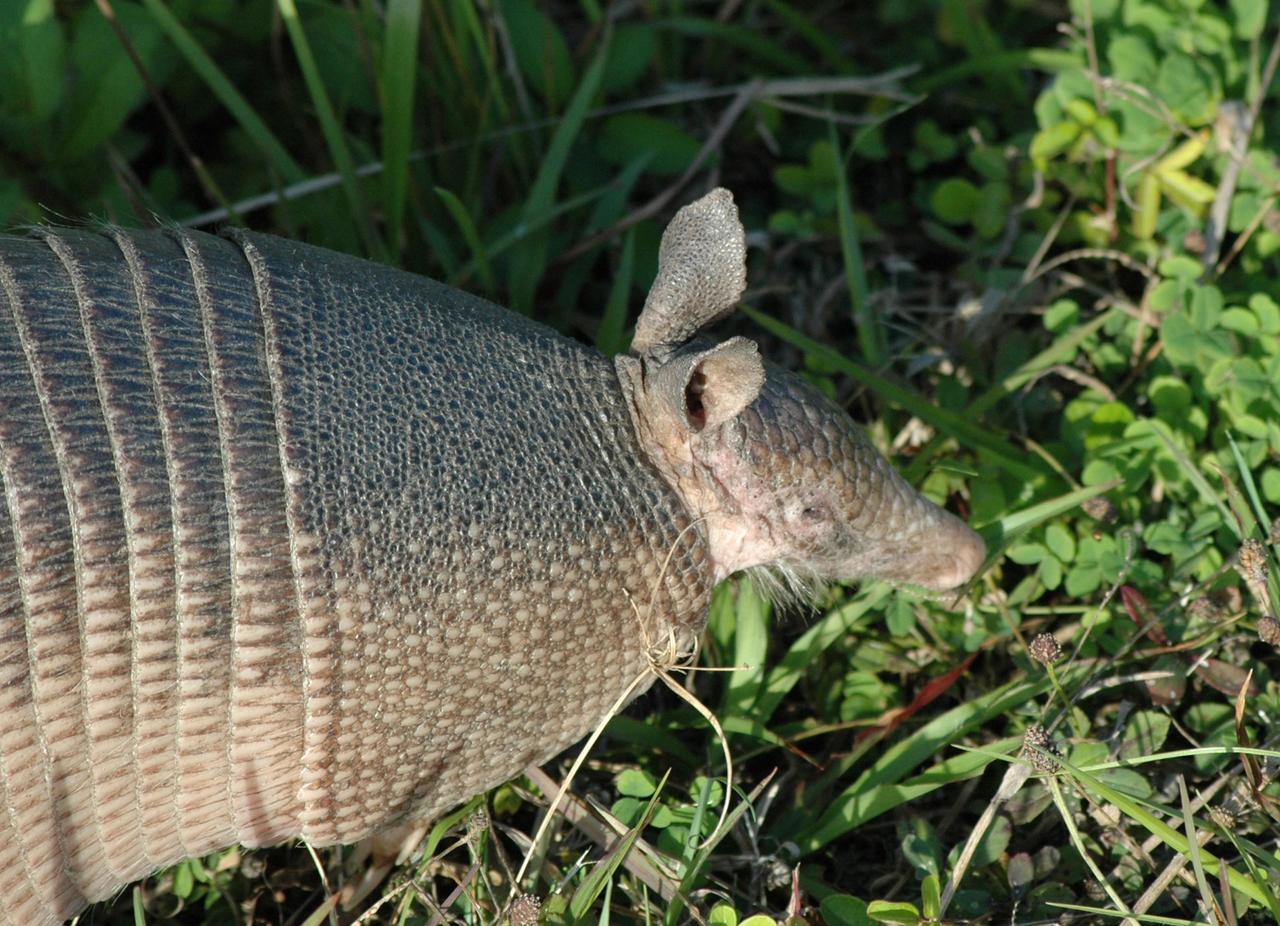
KENNEDY SPACE CENTER, FLA. -- Seen at NASA's Kennedy Space Center, this nine-banded armadillo may be looking for food. Introduced to Florida in the early 1900's, this species is found statewide in areas with dense ground cover and sandy soil. Nine bands of plates cover the body from shoulder to hip and 12 bands cover the long tail. It has a small, tapered head and snout and a long tongue. Its ears are long and hairless. It has sparse white hairs on its belly. Its diet is composed of insects, especially beetles, and other invertebrates plus some plant foods such as cedars and beautyberries. It is primarily nocturnal, sedentary, solitary and a burrower. It digs a series of dens. The multiple entrances are usually protected by stumps, palmettos, or trees. Many other animals also use armadillo dens. KSC shares a boundary with the Merritt Island Wildlife Nature Refuge. The refuge is a habitat for more than 310 species of birds, 25 mammals, 117 fishes and 65 amphibians and reptiles. In addition, the Refuge supports 19 endangered or threatened wildlife species on Federal or State lists, more than any other single refuge in the U.S. Photo credit: NASA/Ken Thornsley
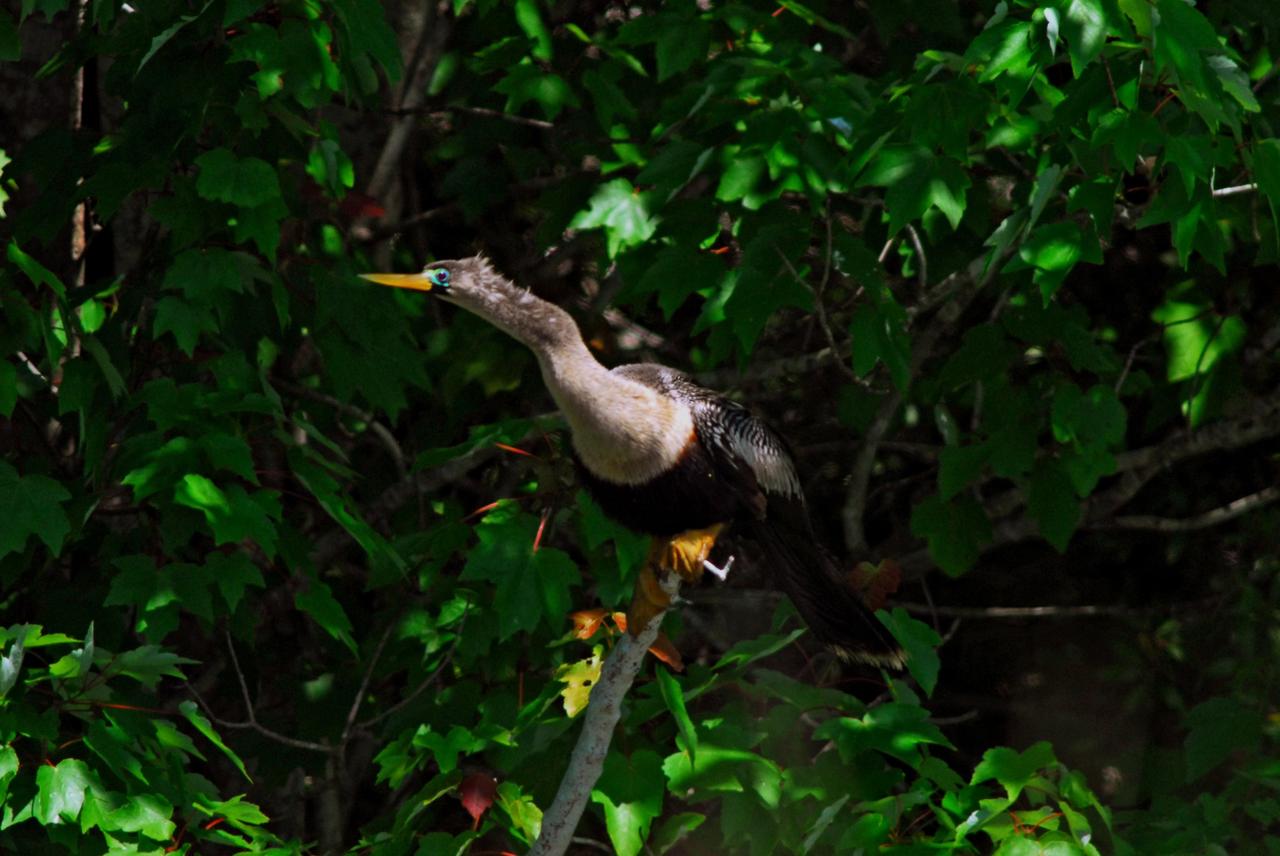
KENNEDY SPACE CENTER, FLA. -- A female anhinga roosts in branches near the water. Anhingas can be found in freshwater ponds and swamps where there is thick vegetation and tall trees. Male anhingas are black and gray; females are distinguished by a buff-colored neck and breast. When anhingas are in their breeding plumage they have a blue ring around their eyes, as seen here. The female lays three to five light blue eggs. The nest is in a tree and it is made of sticks and lined with leaves. The chicks hatch in about a month. Anhingas breed off the Gulf Coast and the Atlantic Coast from North Carolina to Texas and in the Mississippi Valley north to Kentucky and Missouri. They winter along the Gulf Coast north to North Carolina. The anhinga diet is primarily fish. Using their sharp bills, anhingas spear the fish, flip them in the air and swallow them head-first. KSC shares a boundary with the Merritt Island Wildlife Nature Refuge. The refuge is a habitat for more than 310 species of birds, 25 mammals, 117 fishes and 65 amphibians and reptiles. In addition, the Refuge supports 19 endangered or threatened wildlife species on Federal or State lists, more than any other single refuge in the U.S. Photo credit: NASA/Dimitri Gerondidakis
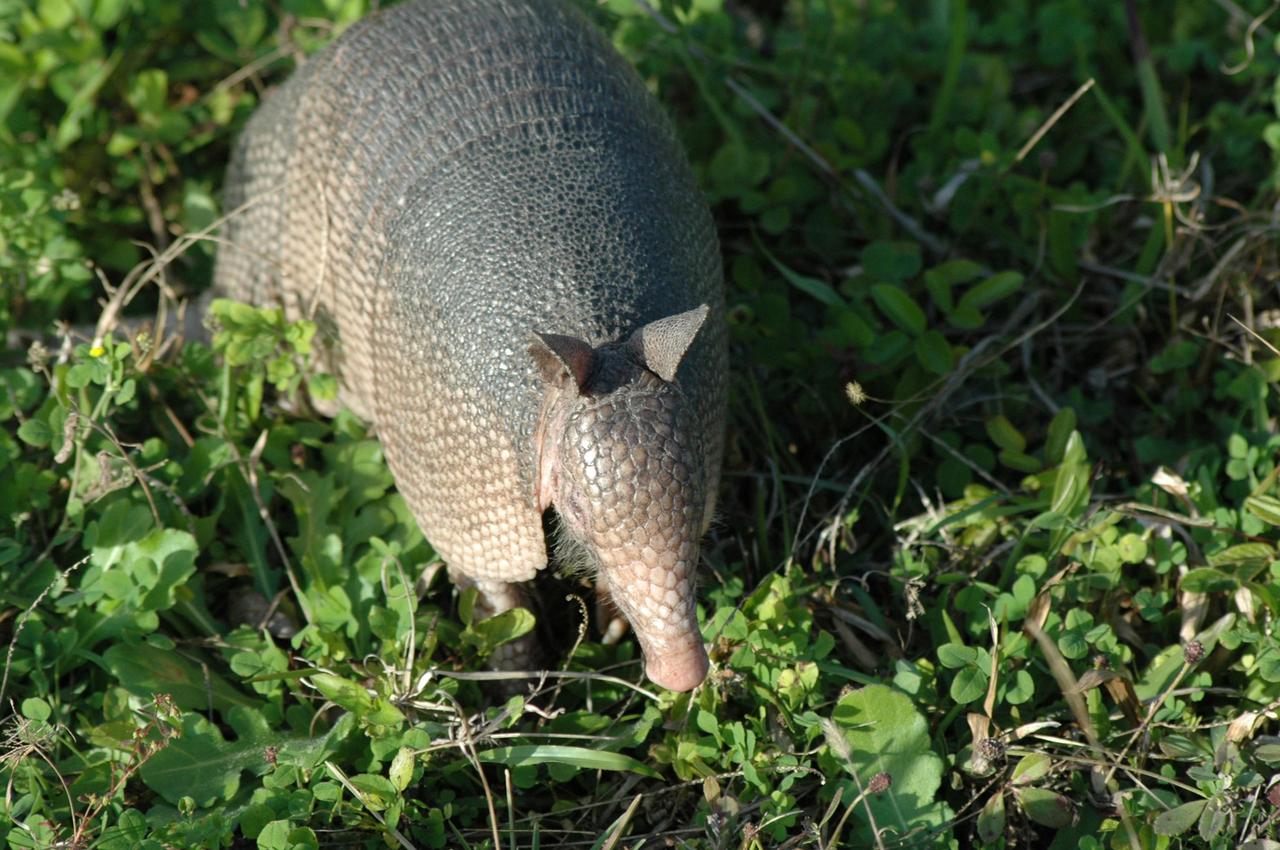
KENNEDY SPACE CENTER, FLA. -- Seen at NASA's Kennedy Space Center, this nine-banded armadillo may be looking for food. Introduced to Florida in the early 1900's, this species is found statewide in areas with dense ground cover and sandy soil. Nine bands of plates cover the body from shoulder to hip and 12 bands cover the long tail. It has a small, tapered head and snout and a long tongue. Its ears are long and hairless. It has sparse white hairs on its belly. Its diet is composed of insects, especially beetles, and other invertebrates plus some plant foods such as cedars and beautyberries. It is primarily nocturnal, sedentary, solitary and a burrower. It digs a series of dens. The multiple entrances are usually protected by stumps, palmettos, or trees. Many other animals also use armadillo dens. KSC shares a boundary with the Merritt Island Wildlife Nature Refuge. The refuge is a habitat for more than 310 species of birds, 25 mammals, 117 fishes and 65 amphibians and reptiles. In addition, the Refuge supports 19 endangered or threatened wildlife species on Federal or State lists, more than any other single refuge in the U.S. Photo credit: NASA/Ken Thornsley
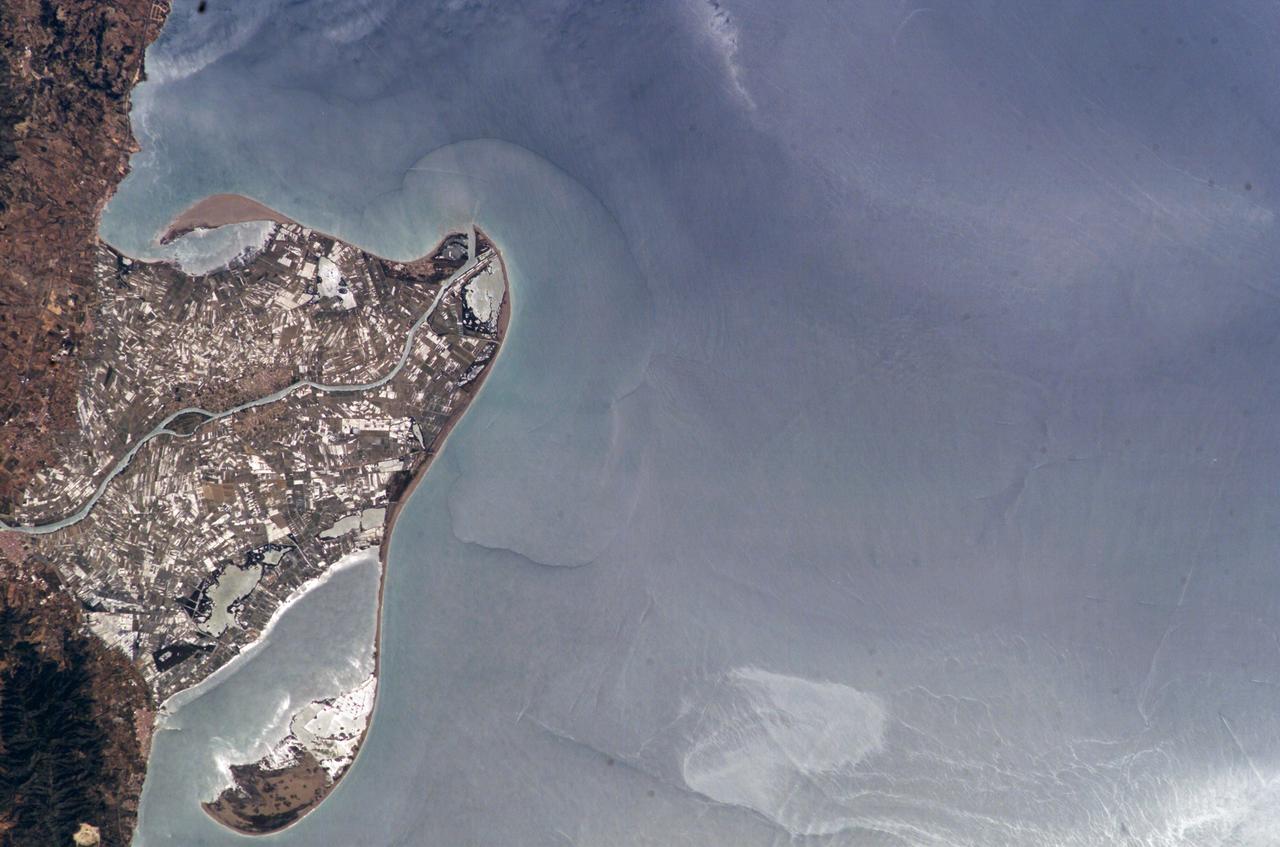
ISS009-E-09985 (3 June 2004) --- The Ebro River Delta, located along the eastern coast of Spain, is featured in this image photographed by an Expedition 9 crewmember on the International Space Station (ISS). Taken in partial sun glint, this view defines the Ebro’s fresh water lens— the water density boundary between the upper layer of fresh water issuing from the Ebro River mouth and the saltier, denser Mediterranean Sea water. According to NASA geologists studying the ISS imagery, diversion and impoundment of the Ebro River upstream has led to a decrease in water and sediment delivery to the delta. This decrease has led to increased erosion in some areas to the northeast of El Fangar Bay and along the southwestern shoreline of the delta. The Ebro River Delta is one of the largest wetland areas in the western Mediterranean region. The Ebro delta has grown rapidly—the historical rate of growth of the delta is demonstrated by the city of Amposta. This city was a seaport in the 4th Century, and is now located well inland from the current Ebro river mouth. The rounded form of the delta attests to the balance between sediment deposition by the Ebro River and removal of this material by wave erosion. The modern delta is in intensive agricultural use for rice, fruit, and vegetables. White polygonal areas to the north and south of the Ebro River are paddy fields. The Ebro delta also hosts numerous beaches, marshes, and saltpans that provide habitat for over 300 species of birds. A large part of the delta was designated as Parc Natural del Delta de l'Ebre (Ebre Delta National Park) in 1983. A network of canals and irrigation ditches constructed by both agricultural and conservation groups are helping to maintain the ecologic and economic resources of the Ebro Delta.