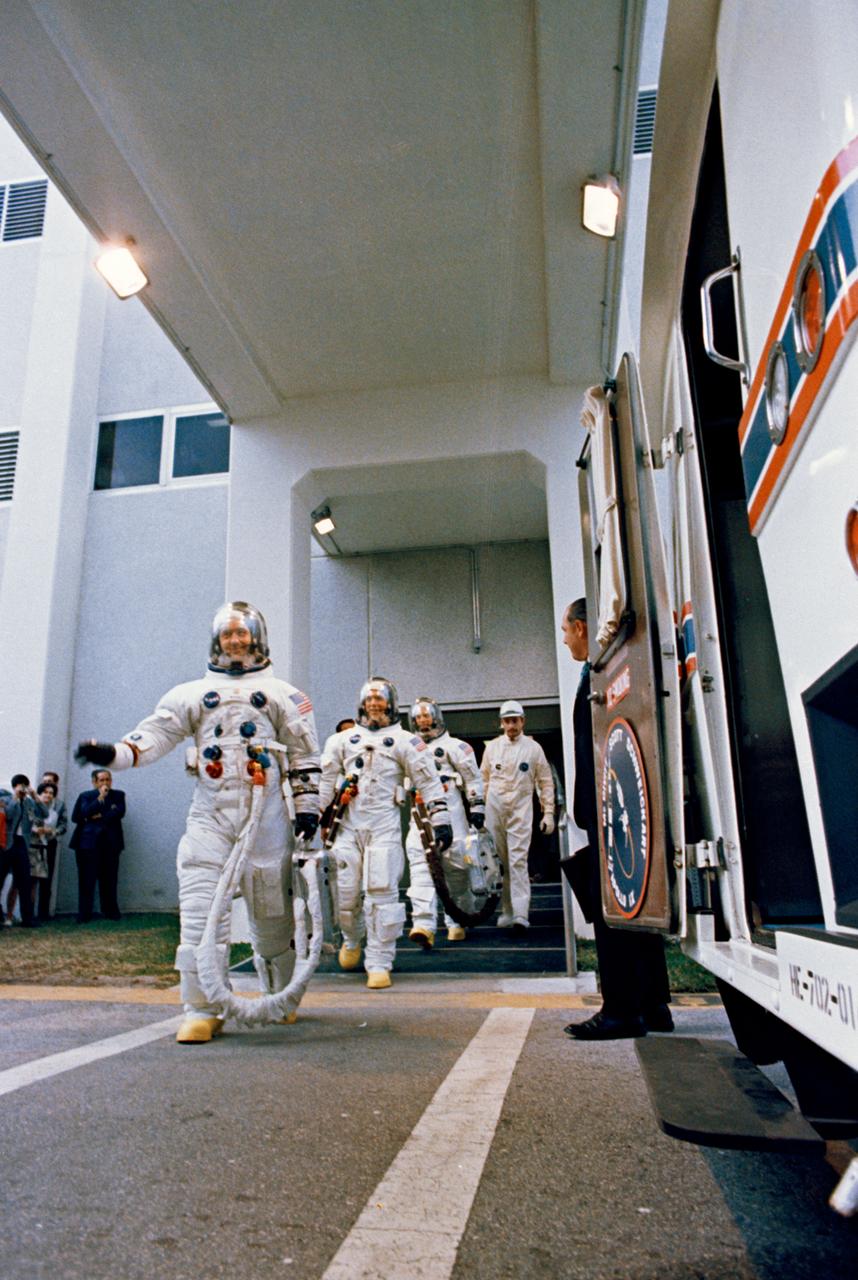
S69-25883 (3 March 1969) --- The Apollo 9 crew leaves the Kennedy Space Center's Manned Spacecraft Operations Building during the Apollo 9 prelaunch countdown. Leading is astronaut James A. McDivitt, commander; followed by astronaut David R. Scott, command module pilot; and Russell L. Schweickart, lunar module pilot. Moments later they entered the special transfer van which transported them to their waiting spacecraft at Pad A, Launch Complex 39. Apollo 9 was launched at 11 a.m. (EST), March 3, 1969, on a 10-day Earth-orbital mission.
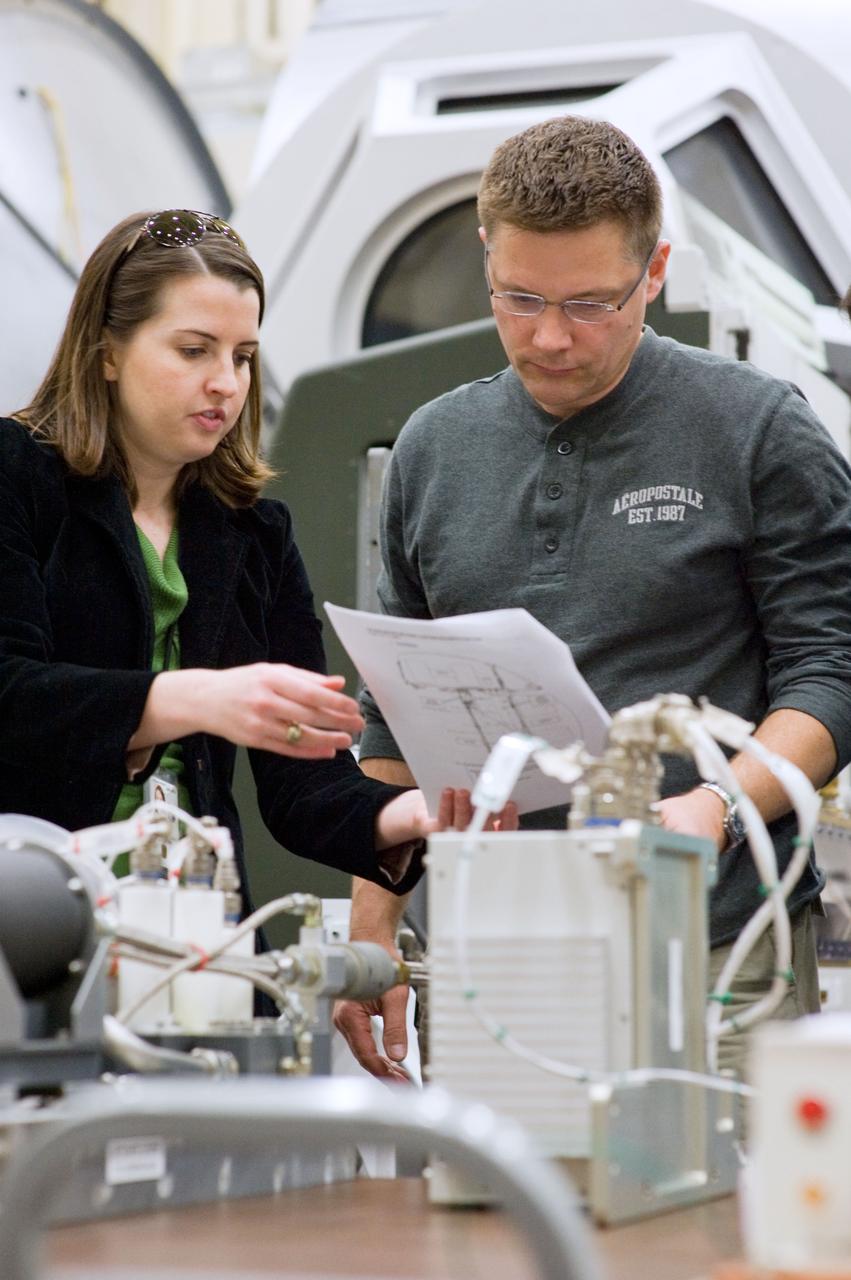
PHOTO DATE: 03-30-10 LOCATION: BLDG 9NW ISS MOCK UPS SUBJECT: Regenerative ECLSS training in Building 9 for Expedition 24 Doug Wheelock and Shannon Walker WORK ORDER: 0914-EXP24REGEN-03-30-10 PHOTOGRAPHER: BILL STAFFORD
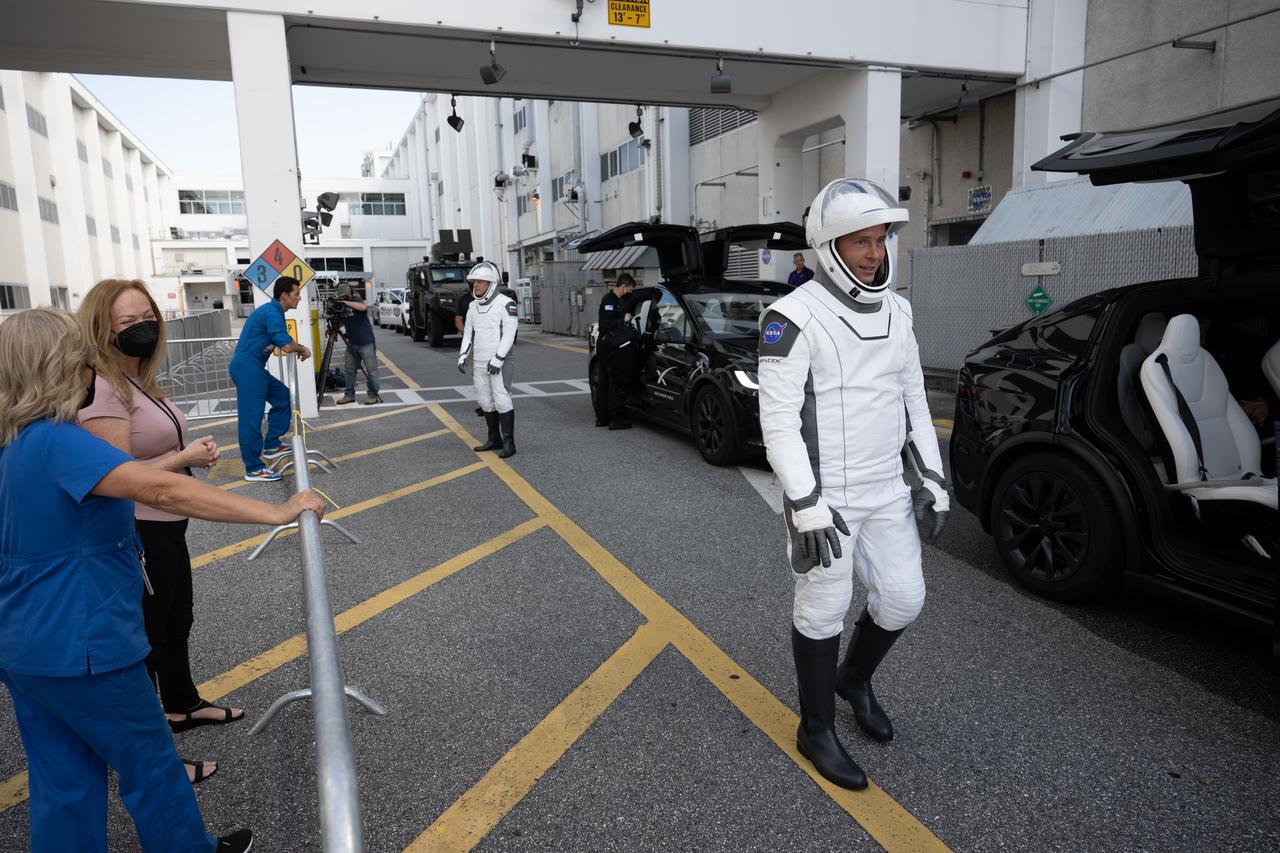
NASA astronaut Nick Hague and Roscosmos cosmonaut Aleksandr Gorbunov, wearing SpaceX spacesuits, are seen as they depart the Neil A. Armstrong Operations and Checkout Building for Space Launch Complex 40 on Cape Canaveral Space Force Station during a dress rehearsal in preparation for the Crew-9 mission launch, Tuesday, Sept. 24, 2024, at NASA’s Kennedy Space Center in Florida. NASA’s SpaceX Crew-9 mission is the ninth crew rotation mission of the SpaceX Dragon spacecraft and Falcon 9 rocket to the International Space Station as part of the agency’s Commercial Crew Program. Photo Credit: (NASA/Keegan Barber)
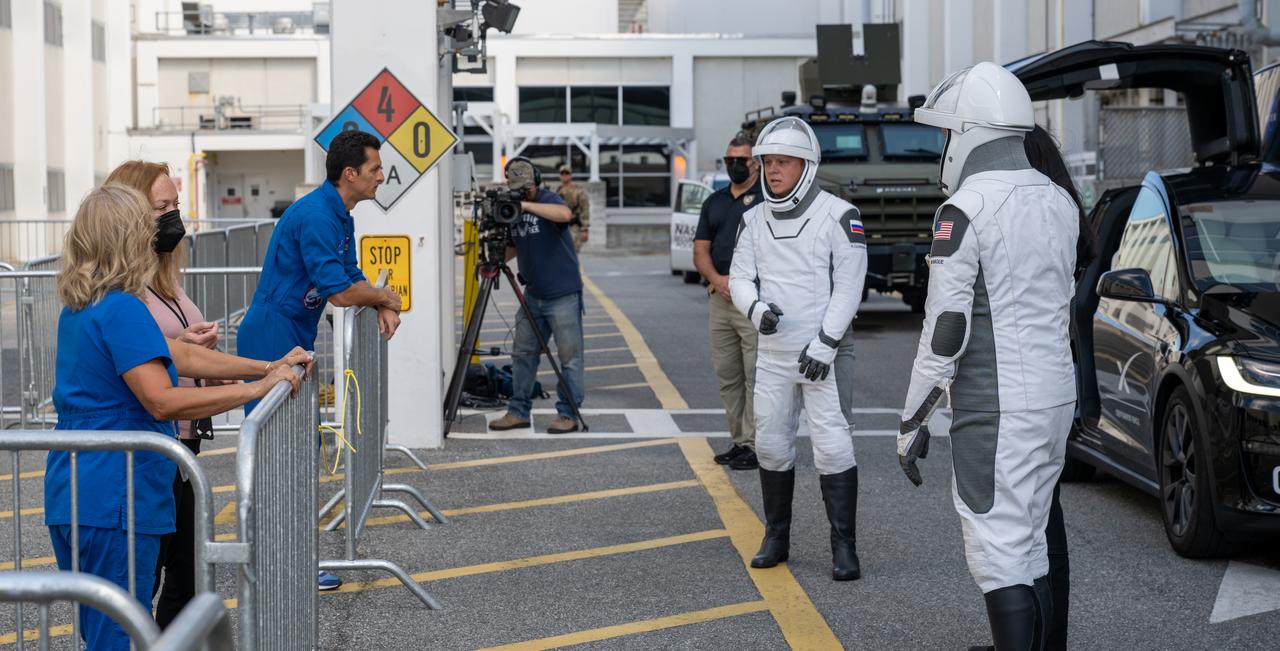
NASA astronaut Nick Hague and Roscosmos cosmonaut Aleksandr Gorbunov, wearing SpaceX spacesuits, are seen as they depart the Neil A. Armstrong Operations and Checkout Building for Space Launch Complex 40 on Cape Canaveral Space Force Station during a dress rehearsal in preparation for the Crew-9 mission launch, Tuesday, Sept. 24, 2024, at NASA’s Kennedy Space Center in Florida. NASA’s SpaceX Crew-9 mission is the ninth crew rotation mission of the SpaceX Dragon spacecraft and Falcon 9 rocket to the International Space Station as part of the agency’s Commercial Crew Program. Photo Credit: (NASA/Keegan Barber)
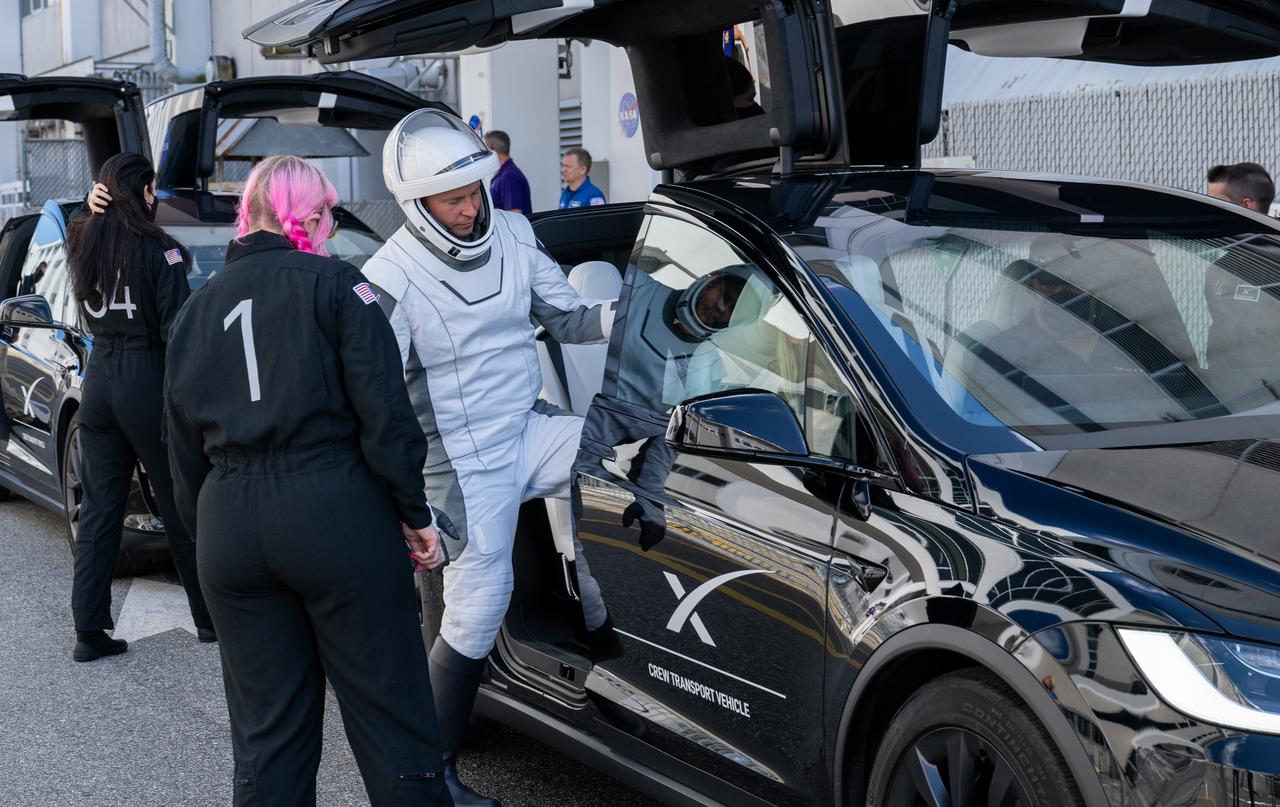
NASA astronaut Nick Hague, wearing a SpaceX spacesuit, is seen departing the Neil A. Armstrong Operations and Checkout Building for Space Launch Complex 40 on Cape Canaveral Space Force Station during a dress rehearsal in preparation for the Crew-9 mission launch, Tuesday, Sept. 24, 2024, at NASA’s Kennedy Space Center in Florida. NASA’s SpaceX Crew-9 mission is the ninth crew rotation mission of the SpaceX Dragon spacecraft and Falcon 9 rocket to the International Space Station as part of the agency’s Commercial Crew Program. Photo Credit: (NASA/Keegan Barber)
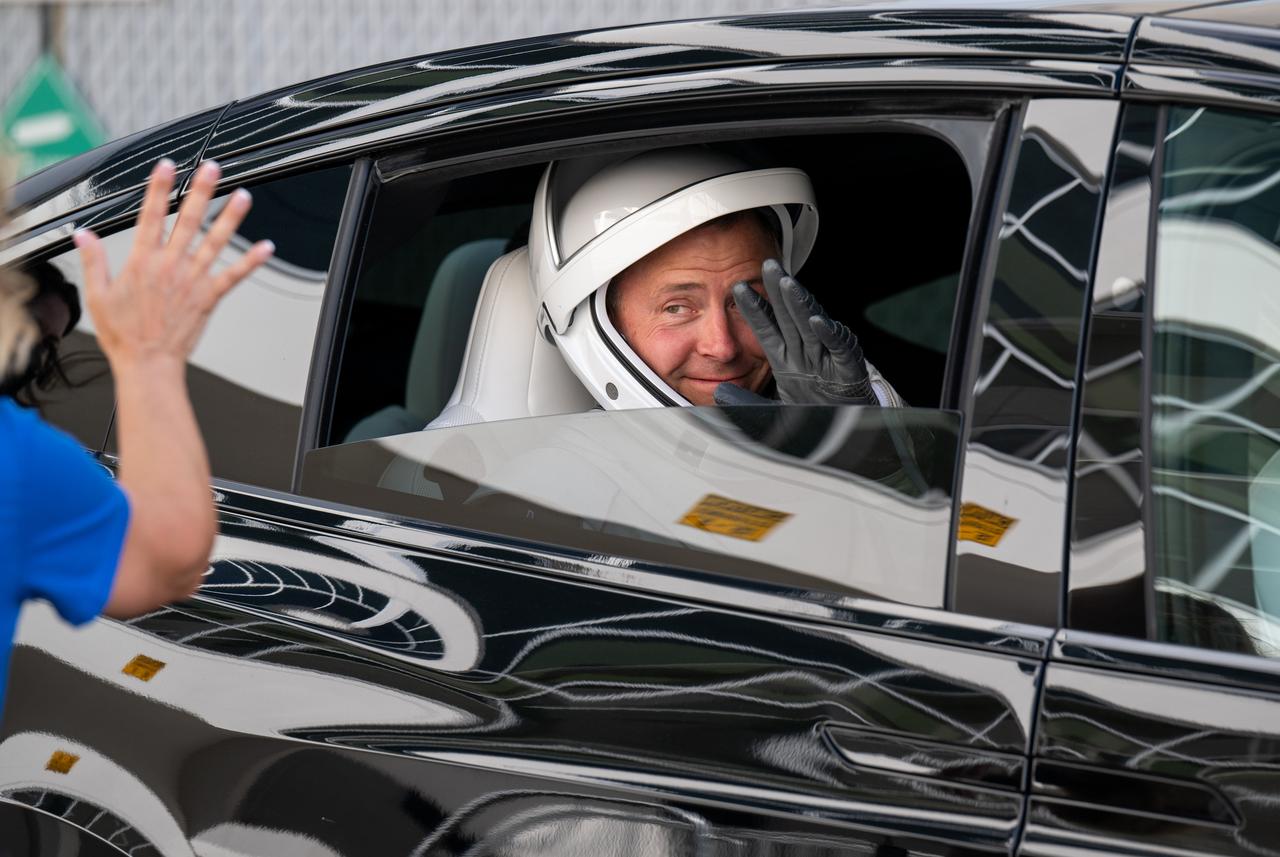
NASA astronaut Nick Hague, wearing a SpaceX spacesuit, is seen departing the Neil A. Armstrong Operations and Checkout Building for Space Launch Complex 40 on Cape Canaveral Space Force Station during a dress rehearsal in preparation for the Crew-9 mission launch, Tuesday, Sept. 24, 2024, at NASA’s Kennedy Space Center in Florida. NASA’s SpaceX Crew-9 mission is the ninth crew rotation mission of the SpaceX Dragon spacecraft and Falcon 9 rocket to the International Space Station as part of the agency’s Commercial Crew Program. Photo Credit: (NASA/Keegan Barber)
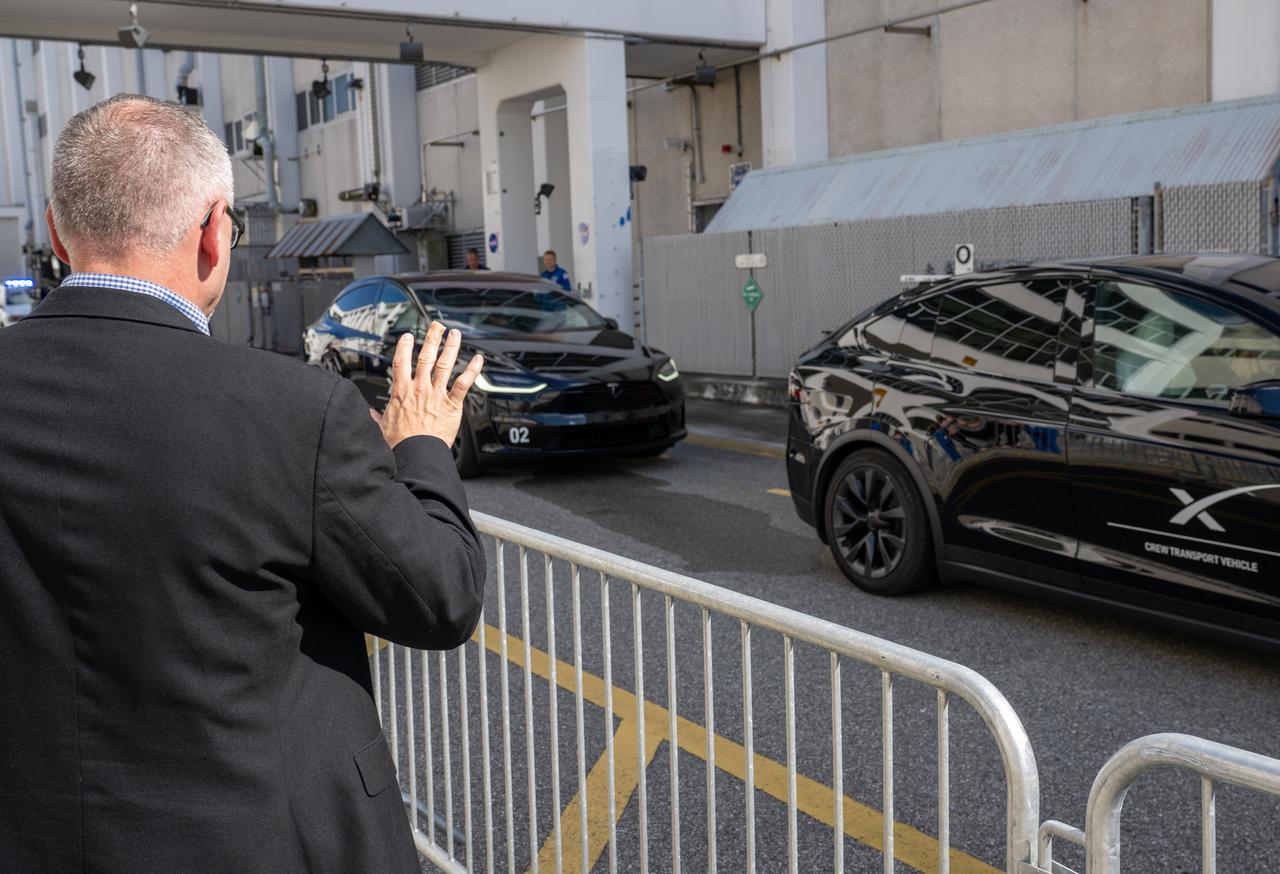
NASA Associate Administrator Jim Free, left, waves farewell as NASA astronaut Nick Hague and Roscosmos cosmonaut Aleksandr Gorbunov depart the Neil A. Armstrong Operations and Checkout Building for Space Launch Complex 40 on Cape Canaveral Space Force Station during a dress rehearsal in preparation for the Crew-9 mission launch, Tuesday, Sept. 24, 2024, at NASA’s Kennedy Space Center in Florida. NASA’s SpaceX Crew-9 mission is the ninth crew rotation mission of the SpaceX Dragon spacecraft and Falcon 9 rocket to the International Space Station as part of the agency’s Commercial Crew Program. Photo Credit: (NASA/Keegan Barber)
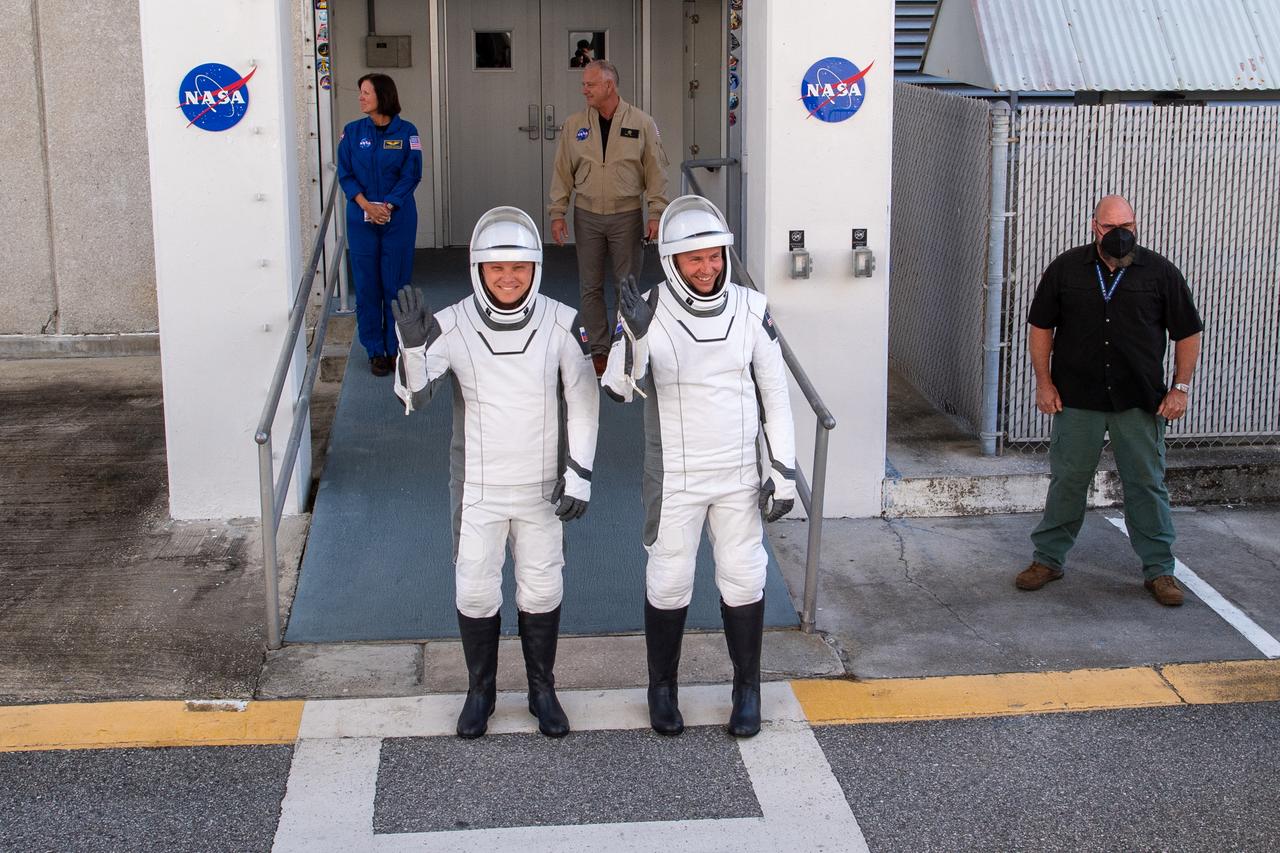
Roscosmos cosmonaut Aleksandr Gorbunov, left, and NASA astronaut Nick Hague, right, wearing SpaceX spacesuits, are seen as they depart the Neil A. Armstrong Operations and Checkout Building for Space Launch Complex 40 on Cape Canaveral Space Force Station during a dress rehearsal in preparation for the Crew-9 mission launch, Tuesday, Sept. 24, 2024, at NASA’s Kennedy Space Center in Florida. NASA’s SpaceX Crew-9 mission is the ninth crew rotation mission of the SpaceX Dragon spacecraft and Falcon 9 rocket to the International Space Station as part of the agency’s Commercial Crew Program. Photo Credit: (NASA/Keegan Barber)
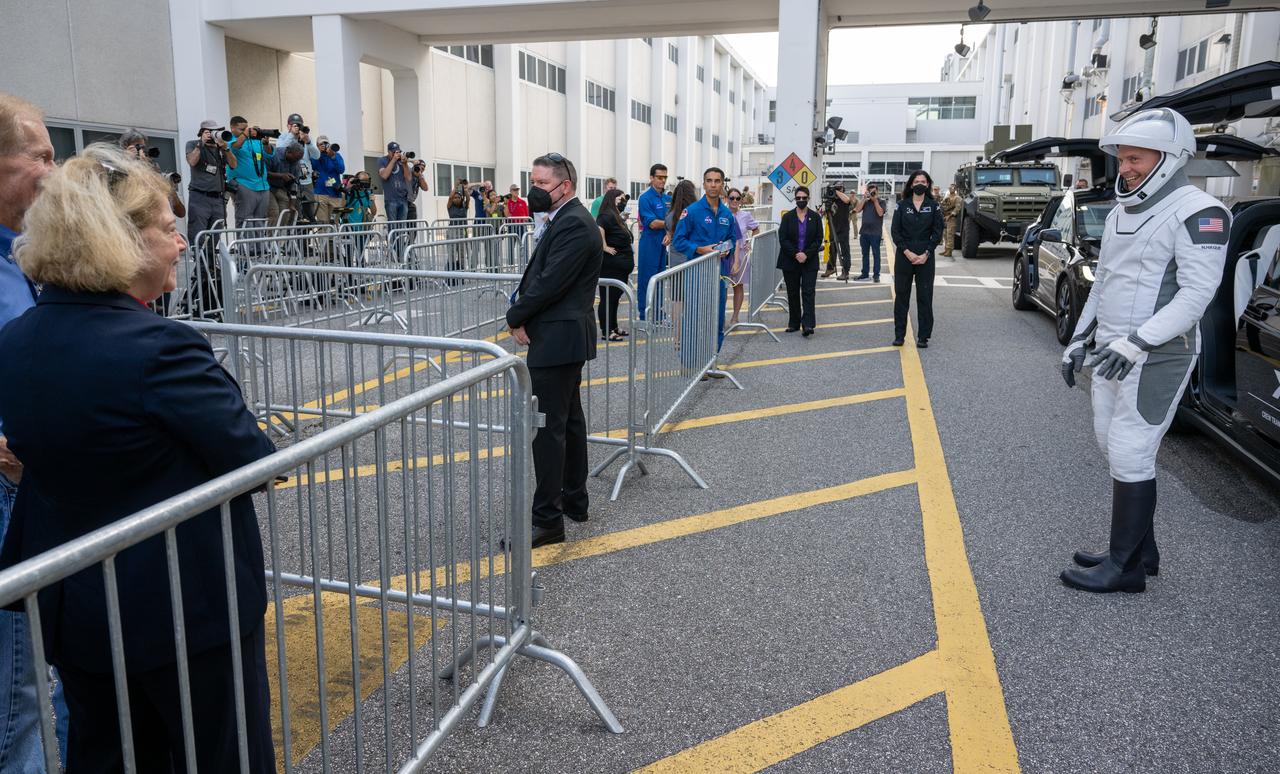
NASA astronaut Nick Hague greets NASA Administrator Bill Nelson, left, and NASA Deputy Administrator Pam Melroy, second from left, prior to departing the Neil A. Armstrong Operations and Checkout Building for Space Launch Complex 40 on Cape Canaveral Space Force Station to board the SpaceX Dragon spacecraft for the Crew-9 mission launch, Saturday, Sept. 28, 2024, at NASA’s Kennedy Space Center in Florida. NASA’s SpaceX Crew-9 mission is the ninth crew rotation mission of the SpaceX Dragon spacecraft and Falcon 9 rocket to the International Space Station as part of the agency’s Commercial Crew Program. Hague and Gorbunov are scheduled to launch at 1:17 p.m. EDT, from Space Launch Complex 40 at the Cape Canaveral Space Force Station. Photo Credit: (NASA/Keegan Barber)
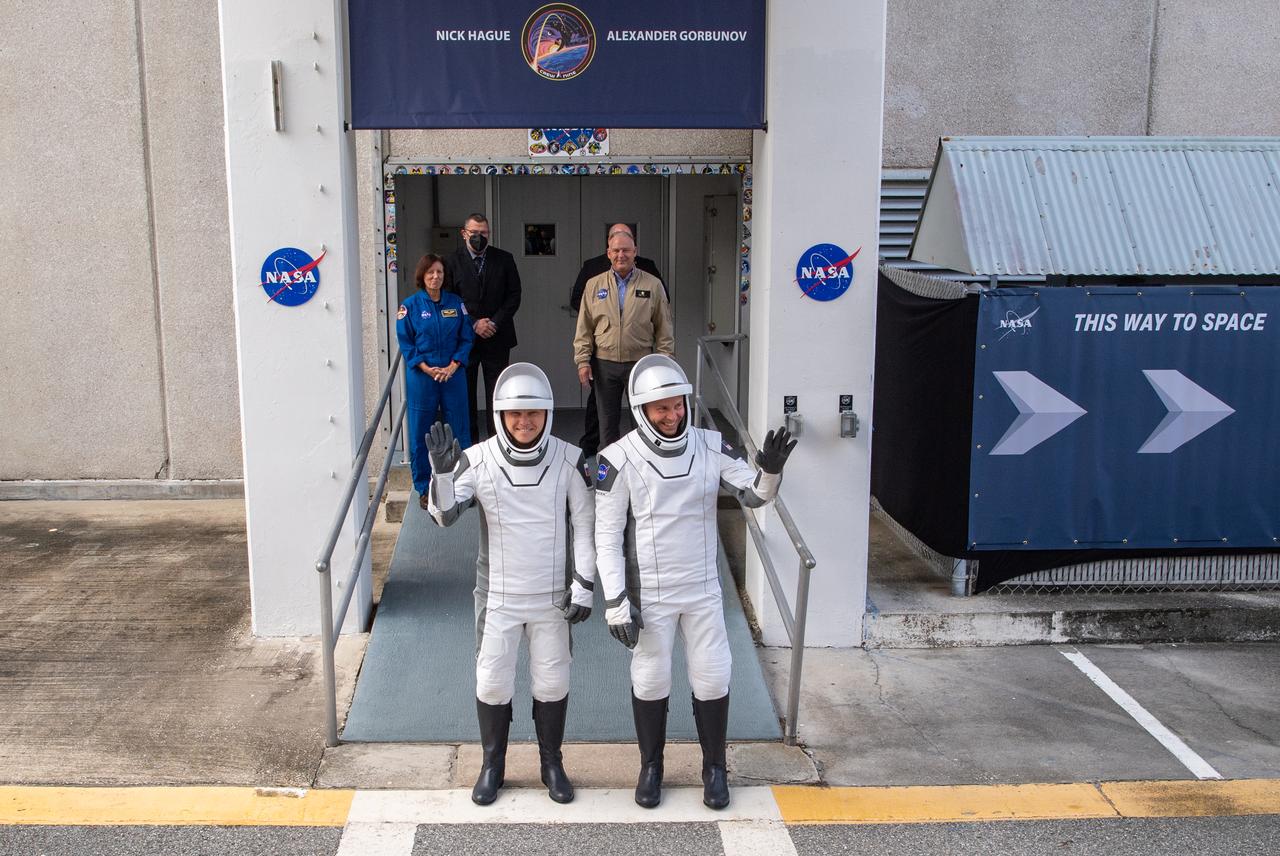
Roscosmos cosmonaut Aleksandr Gorbunov, left, and NASA astronaut Nick Hague, right, wearing SpaceX spacesuits, are seen as they prepare to depart the Neil A. Armstrong Operations and Checkout Building for Space Launch Complex 40 on Cape Canaveral Space Force Station to board the SpaceX Dragon spacecraft for the Crew-9 mission launch, Saturday, Sept. 28, 2024, at NASA’s Kennedy Space Center in Florida. NASA’s SpaceX Crew-9 mission is the ninth crew rotation mission of the SpaceX Dragon spacecraft and Falcon 9 rocket to the International Space Station as part of the agency’s Commercial Crew Program. Hague and Gorbunov are scheduled to launch at 1:17 p.m. EDT, from Space Launch Complex 40 at the Cape Canaveral Space Force Station. Photo Credit: (NASA/Keegan Barber)
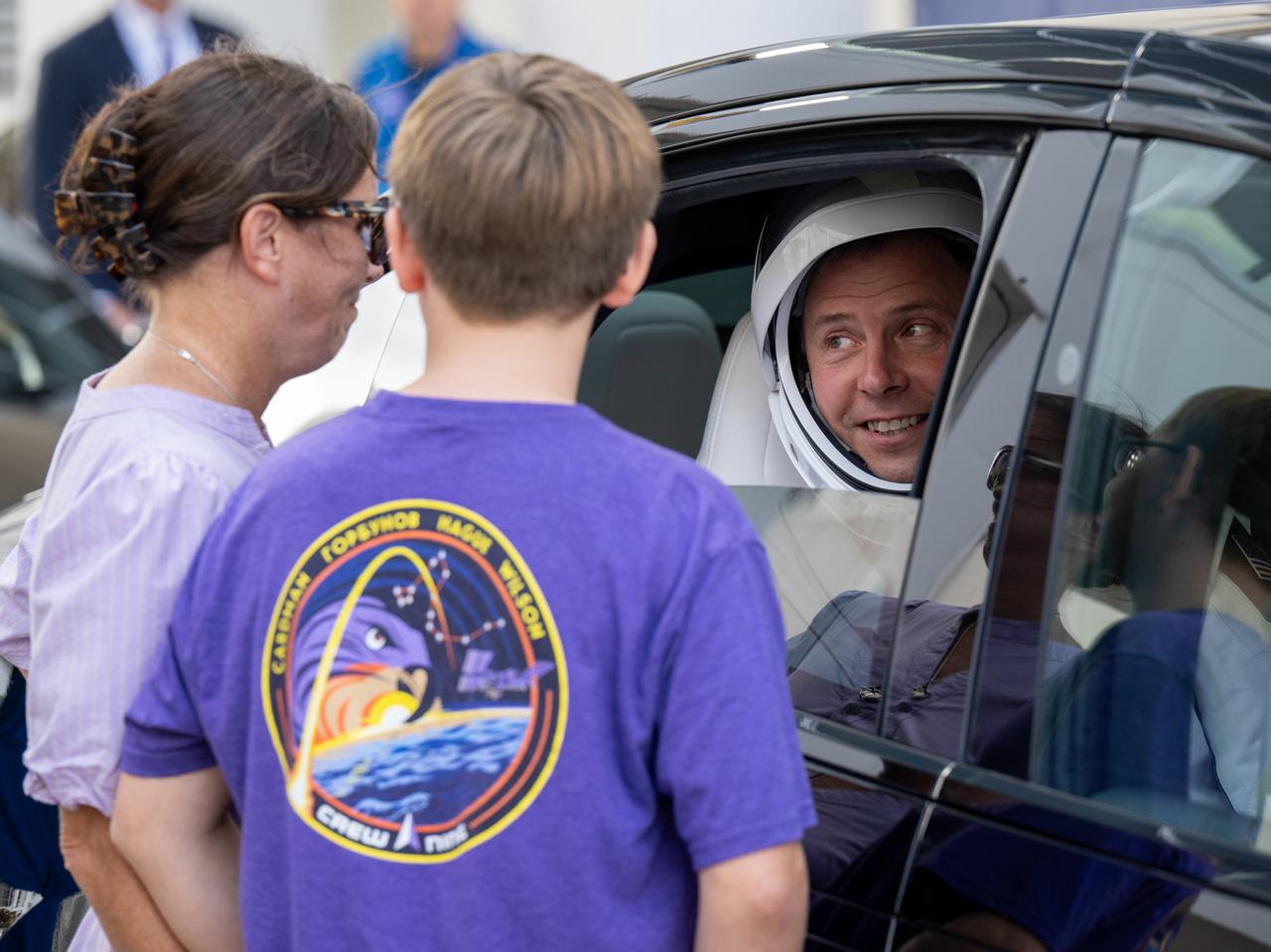
NASA astronaut Nick Hague speaks with family as he prepares to depart the Neil A. Armstrong Operations and Checkout Building for Space Launch Complex 40 on Cape Canaveral Space Force Station to board the SpaceX Dragon spacecraft for the Crew-9 mission launch, Saturday, Sept. 28, 2024, at NASA’s Kennedy Space Center in Florida. NASA’s SpaceX Crew-9 mission is the ninth crew rotation mission of the SpaceX Crew Dragon spacecraft and Falcon 9 rocket to the International Space Station as part of the agency’s Commercial Crew Program. Hague and Gorbunov are scheduled to launch at 1:17 p.m. EDT, from Space Launch Complex 40 at the Cape Canaveral Space Force Station. Photo Credit: (NASA/Keegan Barber)
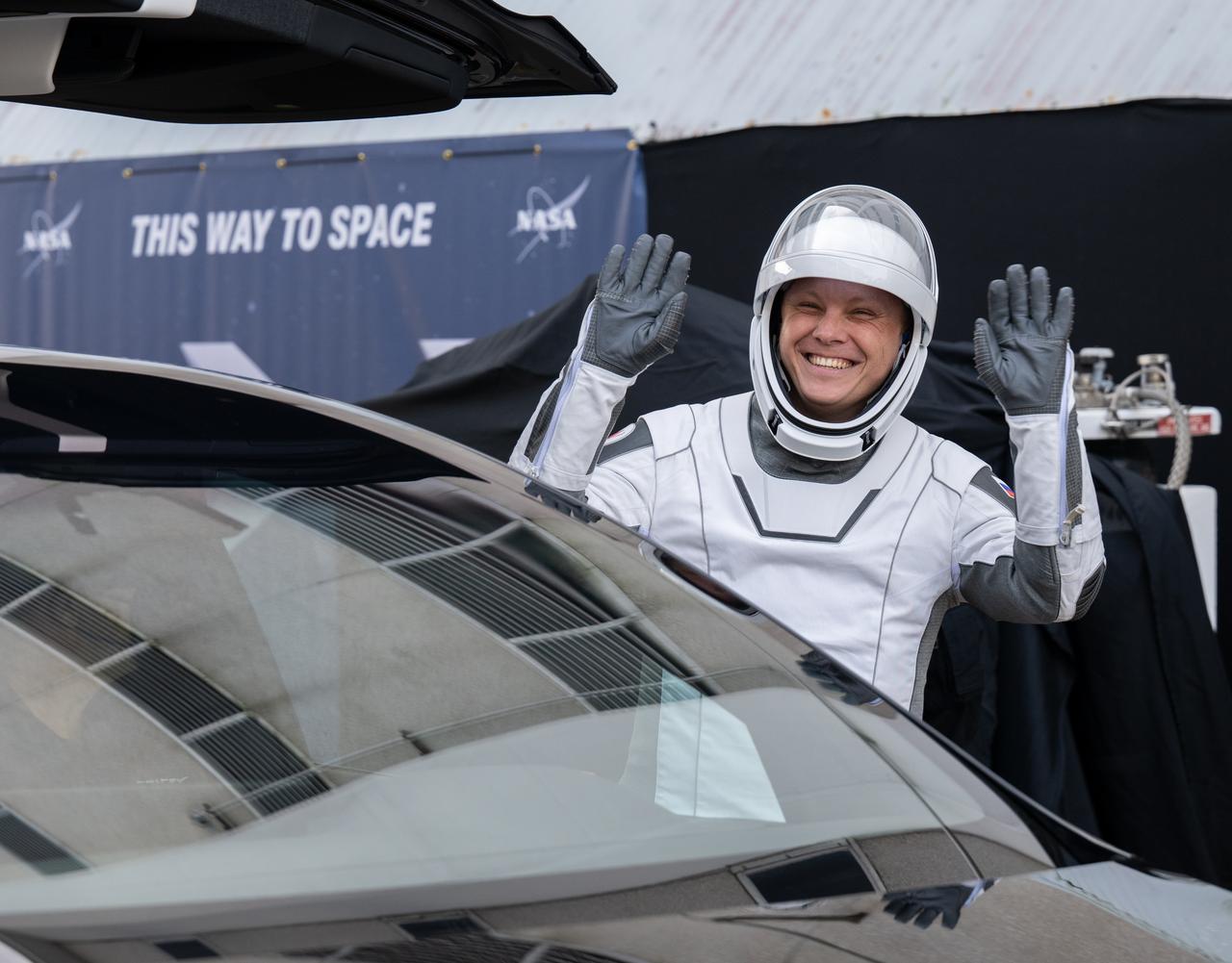
Roscosmos cosmonaut Aleksandr Gorbunov, bids farewell as he prepares to depart the Neil A. Armstrong Operations and Checkout Building for Space Launch Complex 40 on Cape Canaveral Space Force Station to board the SpaceX Dragon spacecraft for the Crew-9 mission launch, Saturday, Sept. 28, 2024, at NASA’s Kennedy Space Center in Florida. NASA’s SpaceX Crew-9 mission is the ninth crew rotation mission of the SpaceX Crew Dragon spacecraft and Falcon 9 rocket to the International Space Station as part of the agency’s Commercial Crew Program. Hague and Gorbunov are scheduled to launch at 1:17 p.m. EDT, from Space Launch Complex 40 at the Cape Canaveral Space Force Station. Photo Credit: (NASA/Keegan Barber)
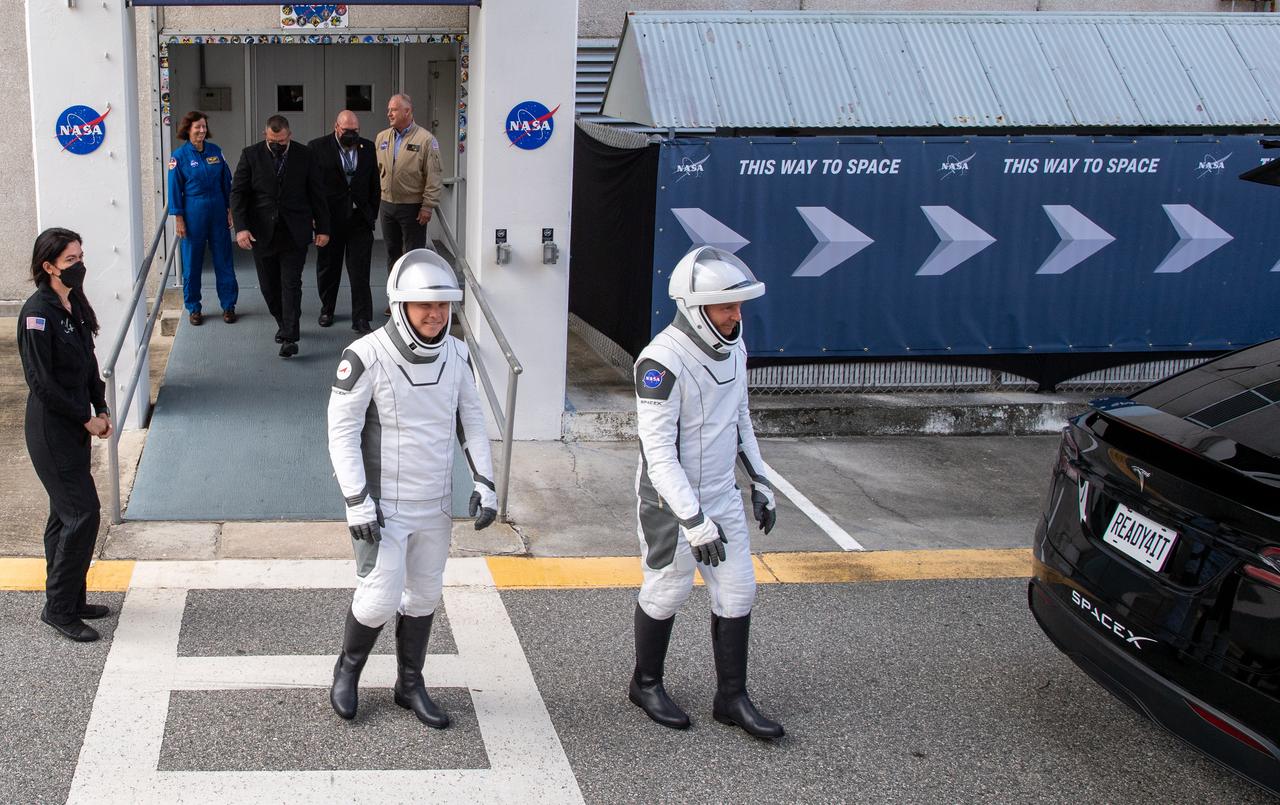
Roscosmos cosmonaut Aleksandr Gorbunov, left, and NASA astronaut Nick Hague, right, wearing SpaceX spacesuits, are seen as they prepare to depart the Neil A. Armstrong Operations and Checkout Building for Space Launch Complex 40 on Cape Canaveral Space Force Station to board the SpaceX Dragon spacecraft for the Crew-9 mission launch, Saturday, Sept. 28, 2024, at NASA’s Kennedy Space Center in Florida. NASA’s SpaceX Crew-9 mission is the ninth crew rotation mission of the SpaceX Dragon spacecraft and Falcon 9 rocket to the International Space Station as part of the agency’s Commercial Crew Program. Hague and Gorbunov are scheduled to launch at 1:17 p.m. EDT, from Space Launch Complex 40 at the Cape Canaveral Space Force Station. Photo Credit: (NASA/Keegan Barber)
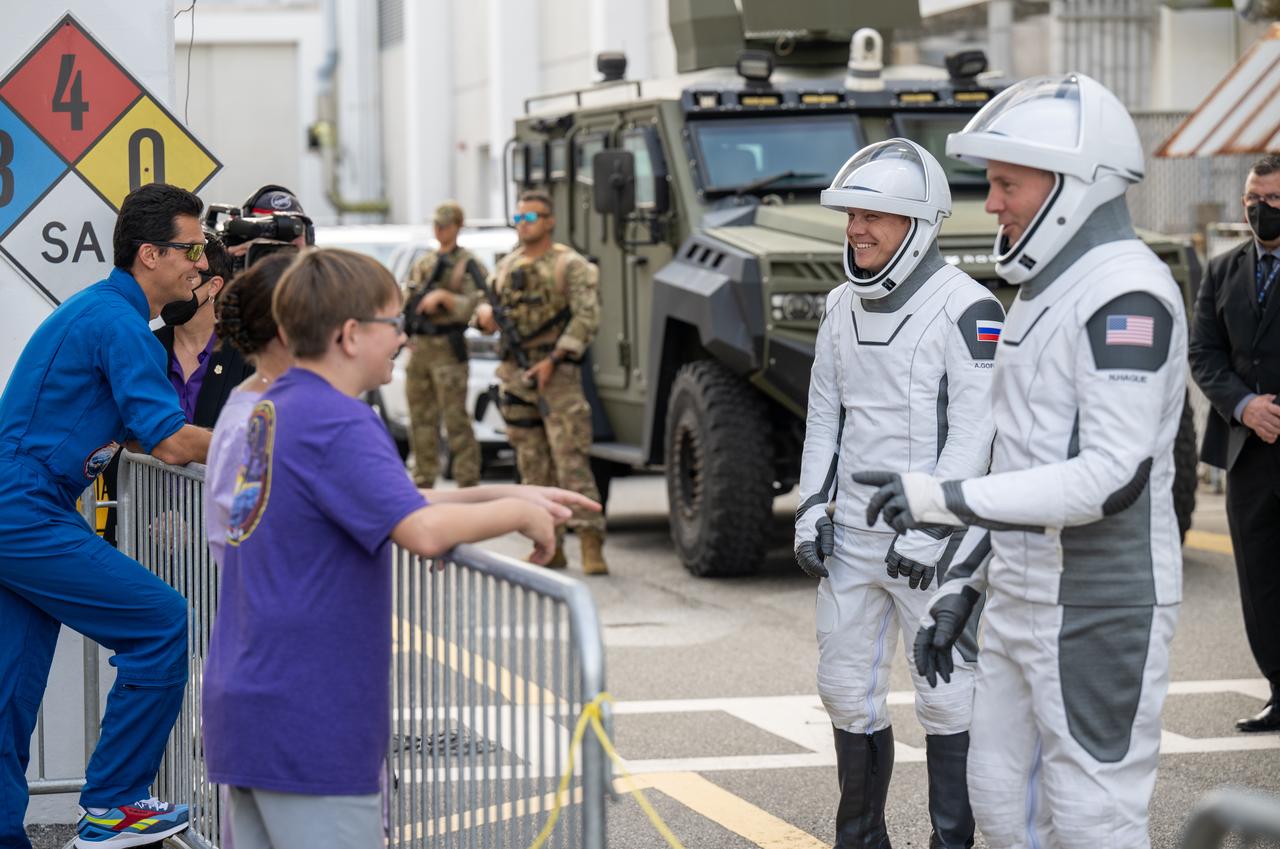
Roscosmos cosmonaut Aleksandr Gorbunov and NASA astronaut Nick Hague speak with family and friends as they prepare to depart the Neil A. Armstrong Operations and Checkout Building for Space Launch Complex 40 on Cape Canaveral Space Force Station to board the SpaceX Dragon spacecraft for the Crew-9 mission launch, Saturday, Sept. 28, 2024, at NASA’s Kennedy Space Center in Florida. NASA’s SpaceX Crew-9 mission is the ninth crew rotation mission of the SpaceX Dragon spacecraft and Falcon 9 rocket to the International Space Station as part of the agency’s Commercial Crew Program. Hague and Gorbunov are scheduled to launch at 1:17 p.m. EDT, from Space Launch Complex 40 at the Cape Canaveral Space Force Station. Photo Credit: (NASA/Keegan Barber)

Roscosmos cosmonaut Aleksandr Gorbunov, left, and NASA astronaut Nick Hague, right, wearing SpaceX spacesuits, are seen as they prepare to depart the Neil A. Armstrong Operations and Checkout Building for Space Launch Complex 40 on Cape Canaveral Space Force Station to board the SpaceX Dragon spacecraft for the Crew-9 mission launch, Saturday, Sept. 28, 2024, at NASA’s Kennedy Space Center in Florida. NASA’s SpaceX Crew-9 mission is the ninth crew rotation mission of the SpaceX Dragon spacecraft and Falcon 9 rocket to the International Space Station as part of the agency’s Commercial Crew Program. Hague and Gorbunov are scheduled to launch at 1:17 p.m. EDT, from Space Launch Complex 40 at the Cape Canaveral Space Force Station. Photo Credit: (NASA/Keegan Barber)
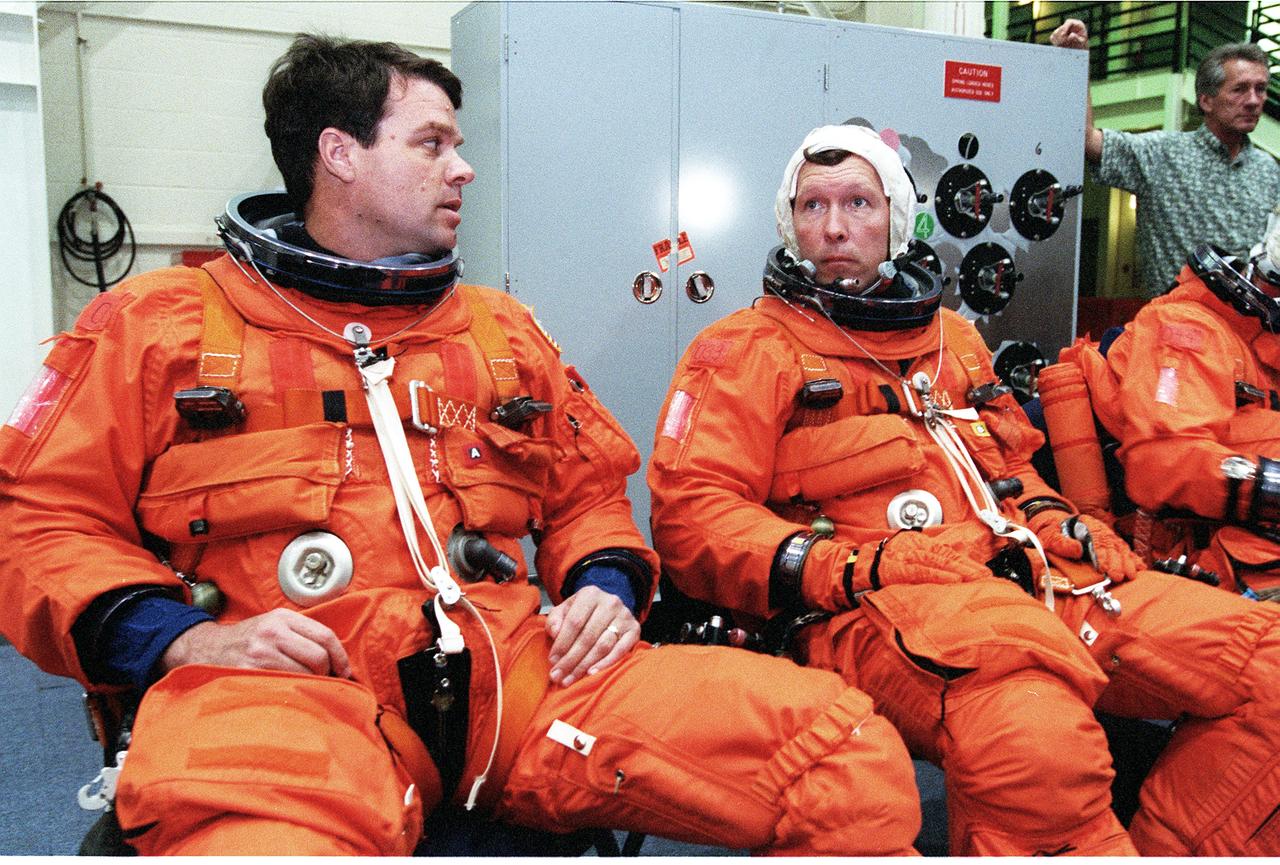
S99-05619 (19 May 1999) --- Astronauts Kevin R. Kregel (left) and Dominic L. Gorie, mission commander and pilot, respectively, for STS-99, are pictured during the briefing portion of emergency bailout training at the Johnson Space Center's Systems Integration Facility. Other members of the crew are out of frame at right.
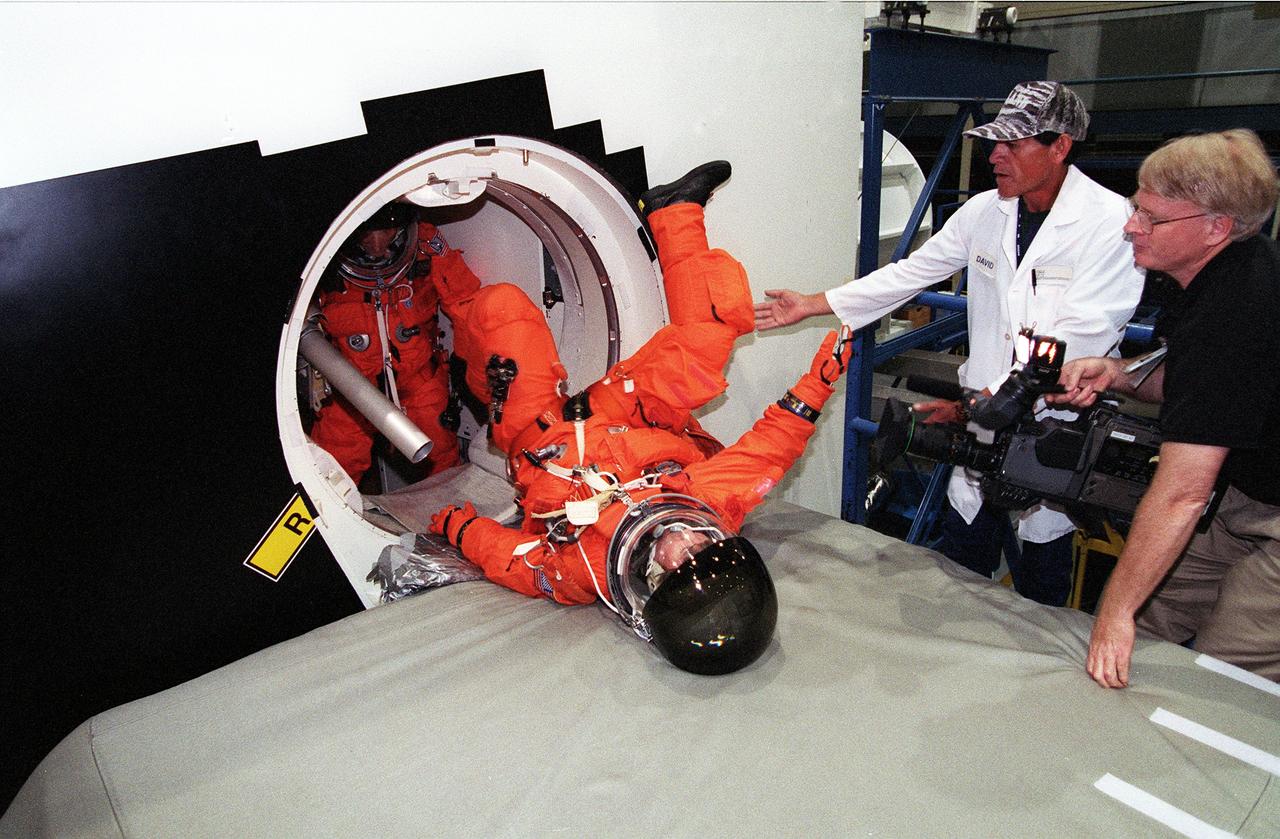
S99-05615 (19 May 1999) --- Astronaut Gerhard P.J. Thiele, mission specialist representing the European Space Agency (ESA), slides off the shuttle escape pole onto a soft surface during emergency bailout training for the STS-99 crew members. A second STS-99 crew member awaits his turn. Looking on are technician David Borjas (second right) and videographer Charles Clendaniel (right). The training took place at the crew compartment trainer (CCT) in the Systems Integration Facility at the Johnson Space Center (JSC).
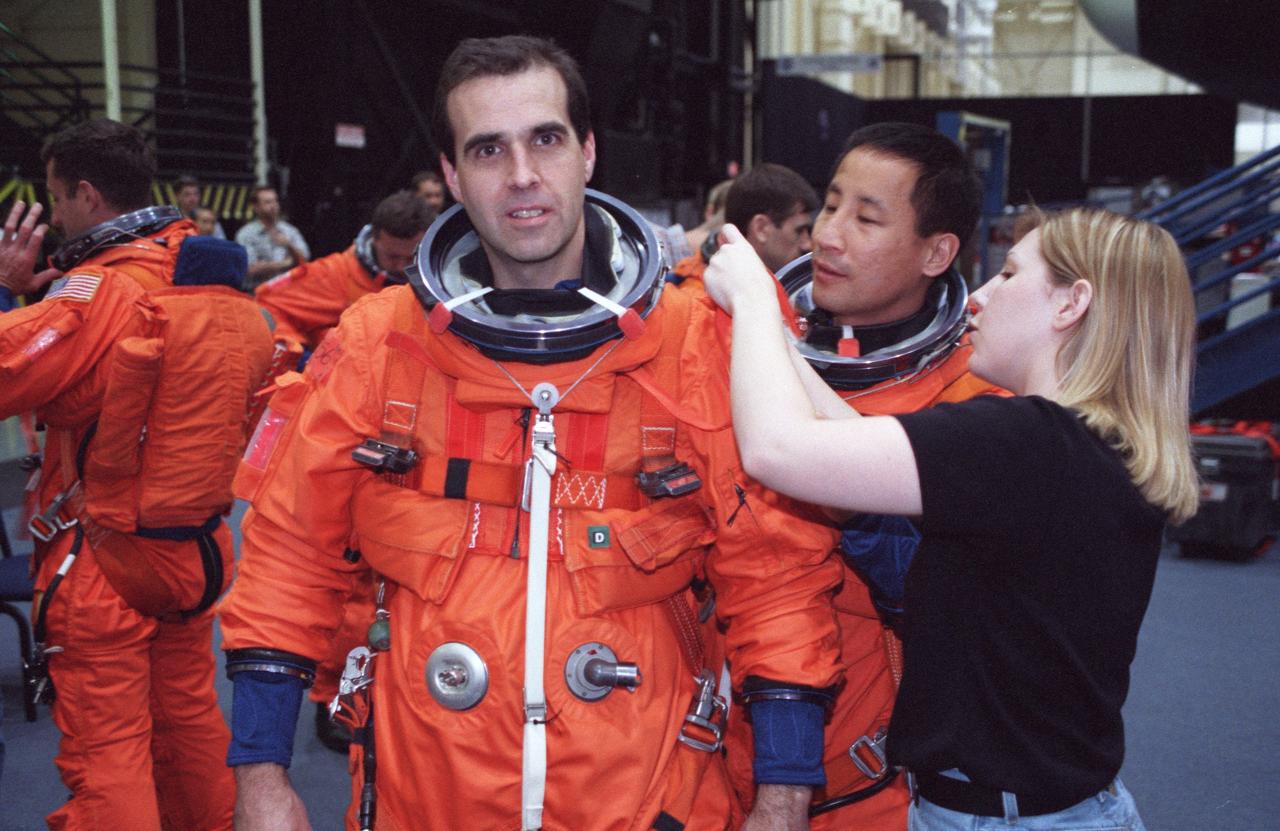
JSC2000-02223 (March 2000) --- Astronaut Edward T. Lu (center foreground) and United Space Alliance suit technician Erin Traina assist astronaut Richard A. Mastracchio with his launch and entry suit. The two astronauts were about to join their five crewmates for a simulation of mission activity in the Systems Integration Facility at the Johnson Space Center (JSC).

JSC2000-02225 (March 2000) --- Astronaut Daniel C. Burbank, mission specialist, fastens the communications carrier assembly (CCA) on his launch and entry suit (LES). Burbank was about to join his six STS-106 crewmates for a simulation exercise in the Systems Integration Facility at the Johnson Space Center (JSC).
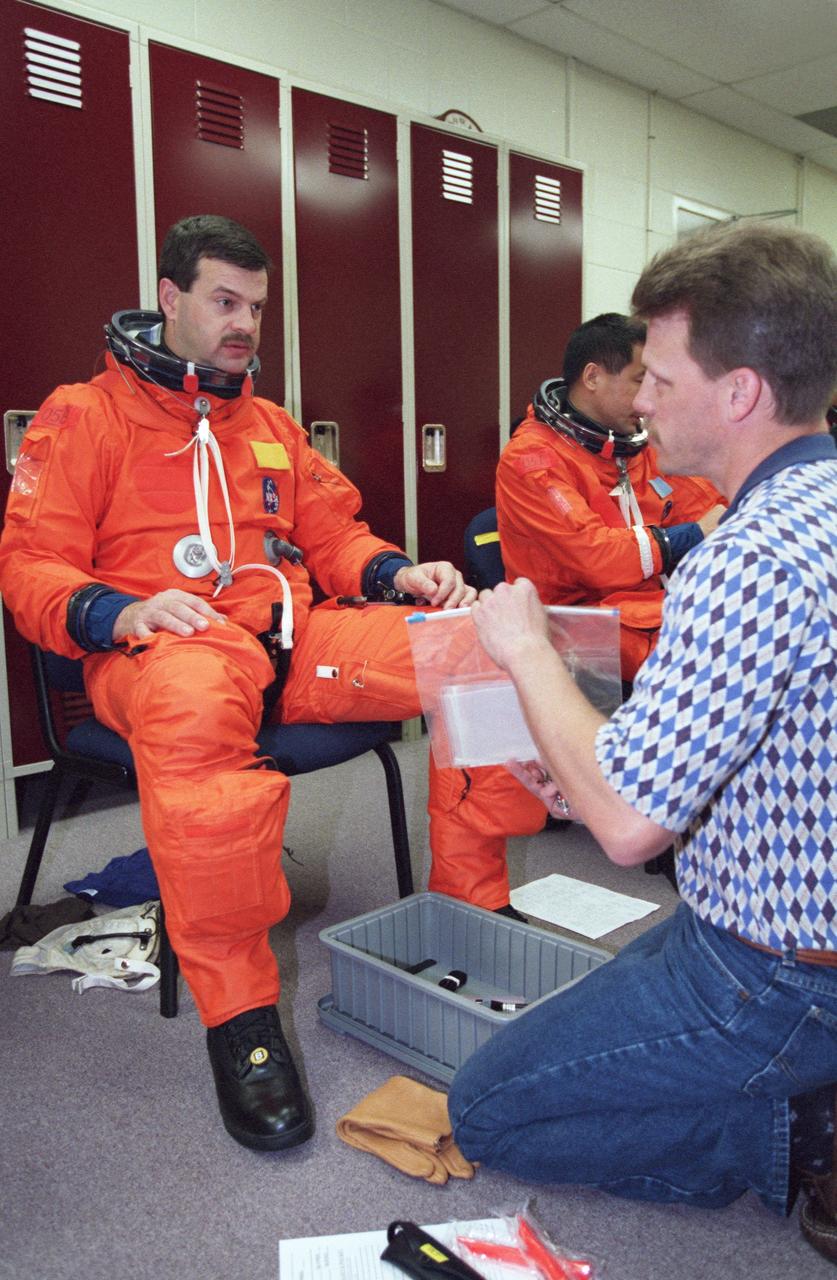
JSC2000-02218 (March 2000) --- United Space Alliance (USA) suit technician Brad Milling assists astronaut Scott D. Altman, pilot for STS-106, with his launch and entry suit. Altman was getting ready for a training session in the Systems Integration Facility at the Johnson Space Center (JSC). Astronaut Edward T. Lu, mission specialist, can be seen in the background.
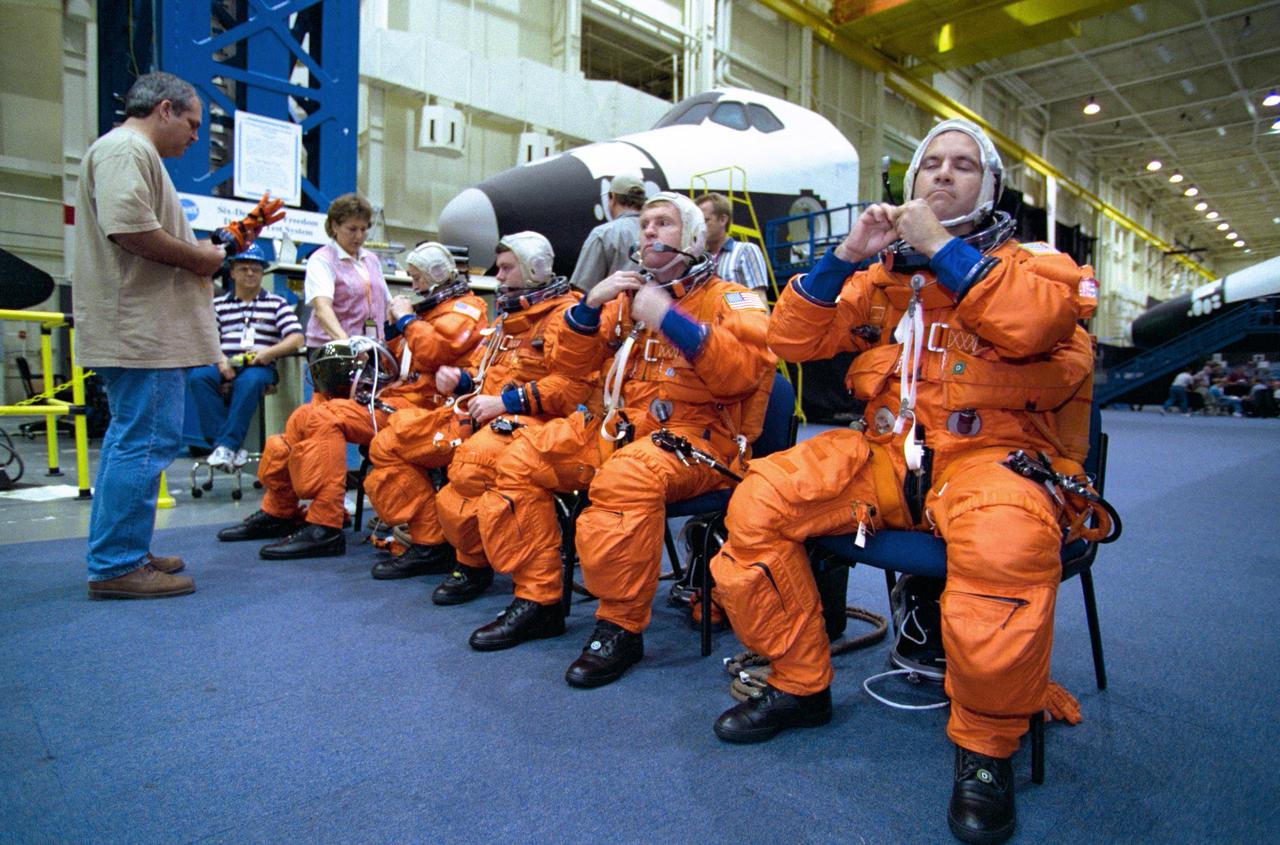
JSC2000-05551 (3 August 2000) --- Four astronauts, who comprise the core crew for STS-102, listen to a launch and entry garment briefing by suit technician Lloyd Armintor in the Systems Integration Facility as they suit up for a contingency simulation exercise in preparation for next year's visit to the International Space Station (ISS). From the left are astronauts James D. Wetherbee, commander; James M. Kelly, pilot; and Andrew S.W. Thomas and Paul W. Richards, both mission specialists. The four will be joined by a cosmonaut and two other astronauts scheduled to share the "up" ride for a lengthy stay aboard the orbiting outpost. Then, they will bring back a threesome made up an astronaut and two cosmonauts who will have been onboard the station since early November 2000.
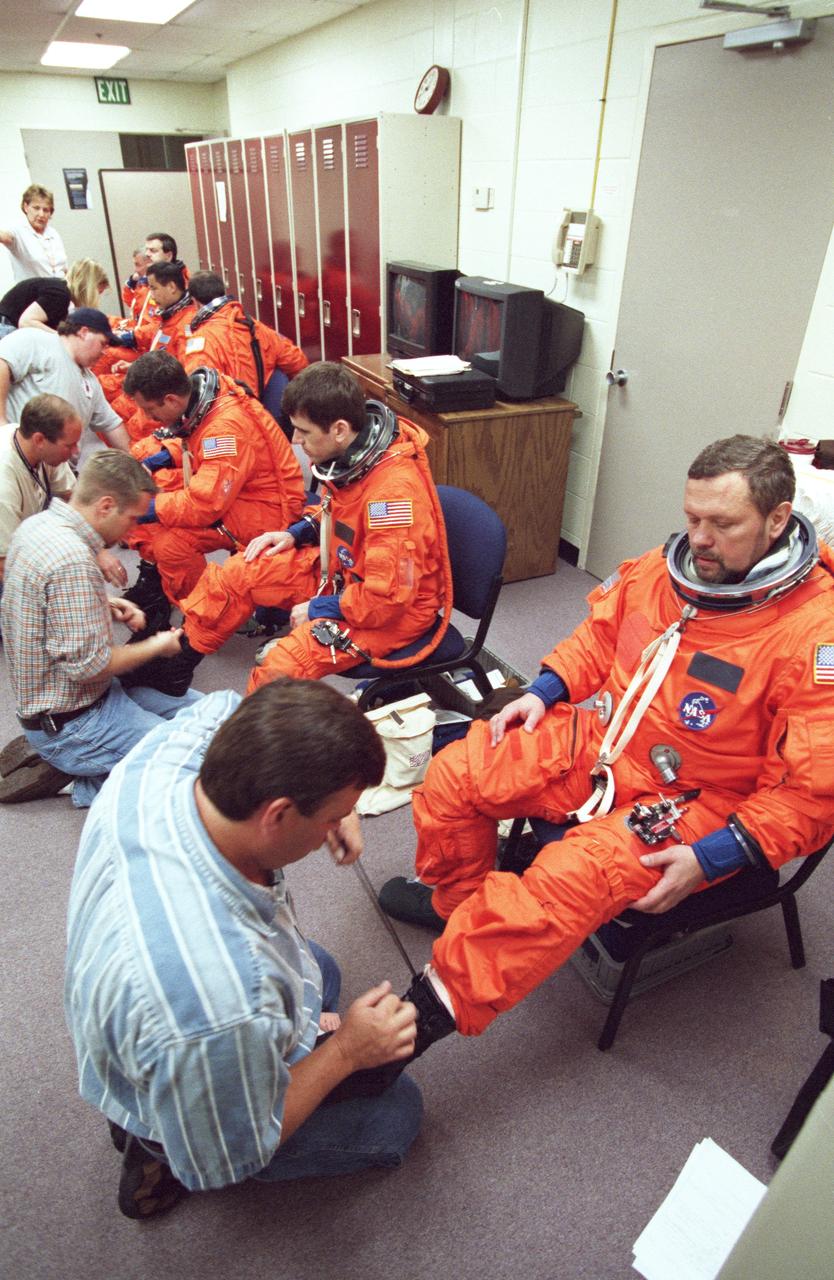
JSC2000-02217 (March 2000) --- United Space Alliance suit technician Mike Birkenseher helps cosmonaut Boris V. Morukov with the donning of his launch and entry suit (LES) prior to STS-106 training in the Systems Integration Facility at the Johnson Space Center (JSC).
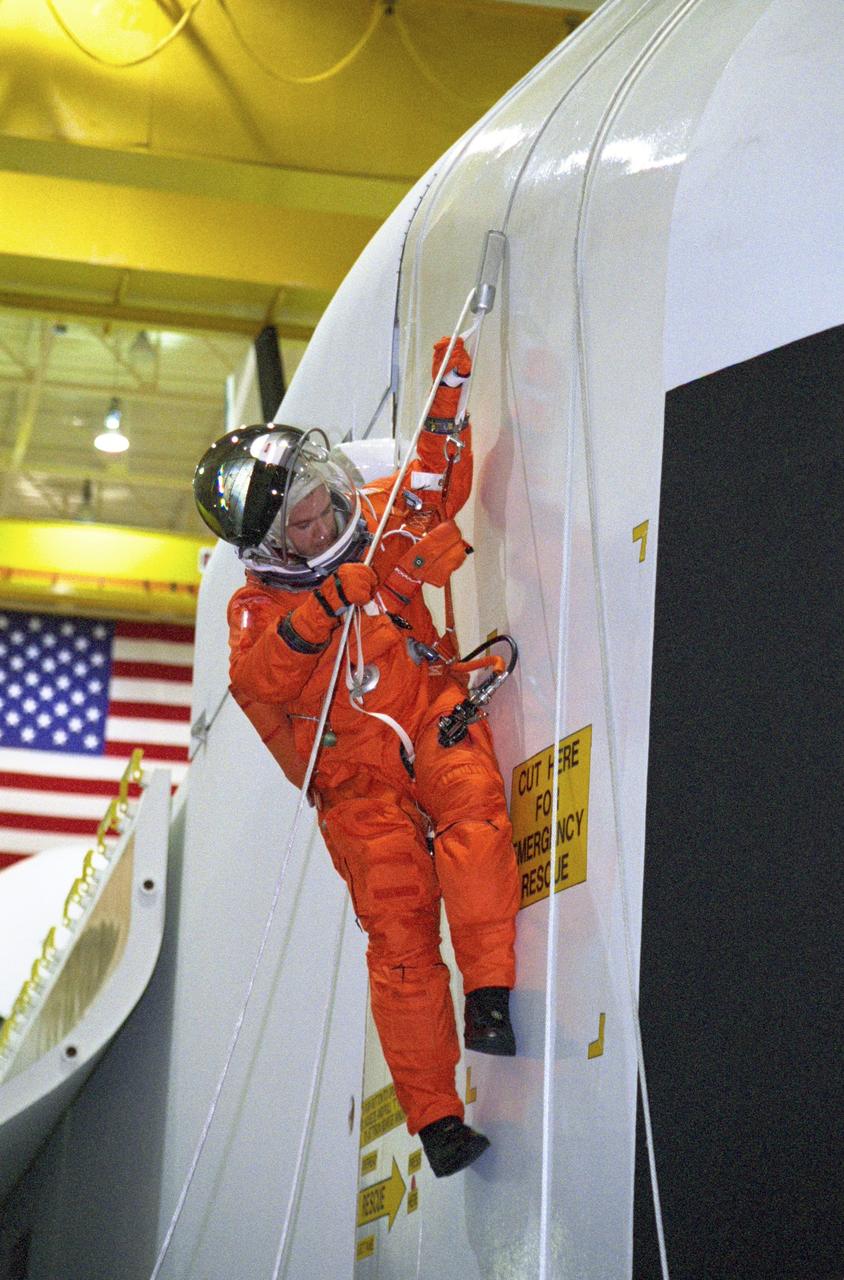
JSC2000-05553 (3 August 2000) --- Astronaut Paul W. Richards, STS-102 mission specialist, during a session of egress training in the Johnson Space Center's Systems Integration Facility, uses a Sky-genie device to escape from a simulated shuttle in trouble. The full fuselage trainer (FFT) is a full scale mockup of a shuttle.
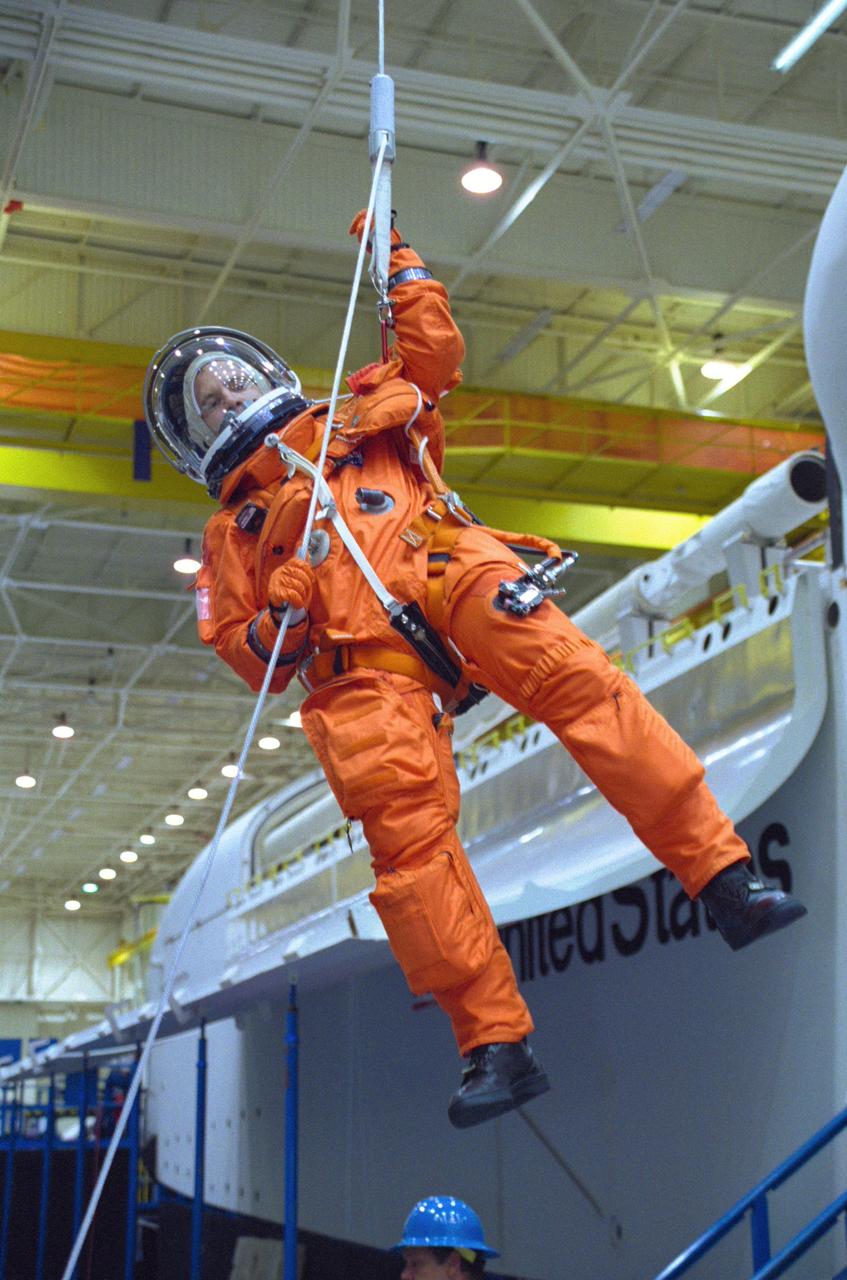
JSC2000-05554 (3 August 2000) --- Astronaut Paul W. Richards, STS-102 mission specialist, rappels from the top of the shuttle full fuselage trainer (FFT) during an emergency egress training exercise at the Johnson Space Center's Systems Integration Facility.
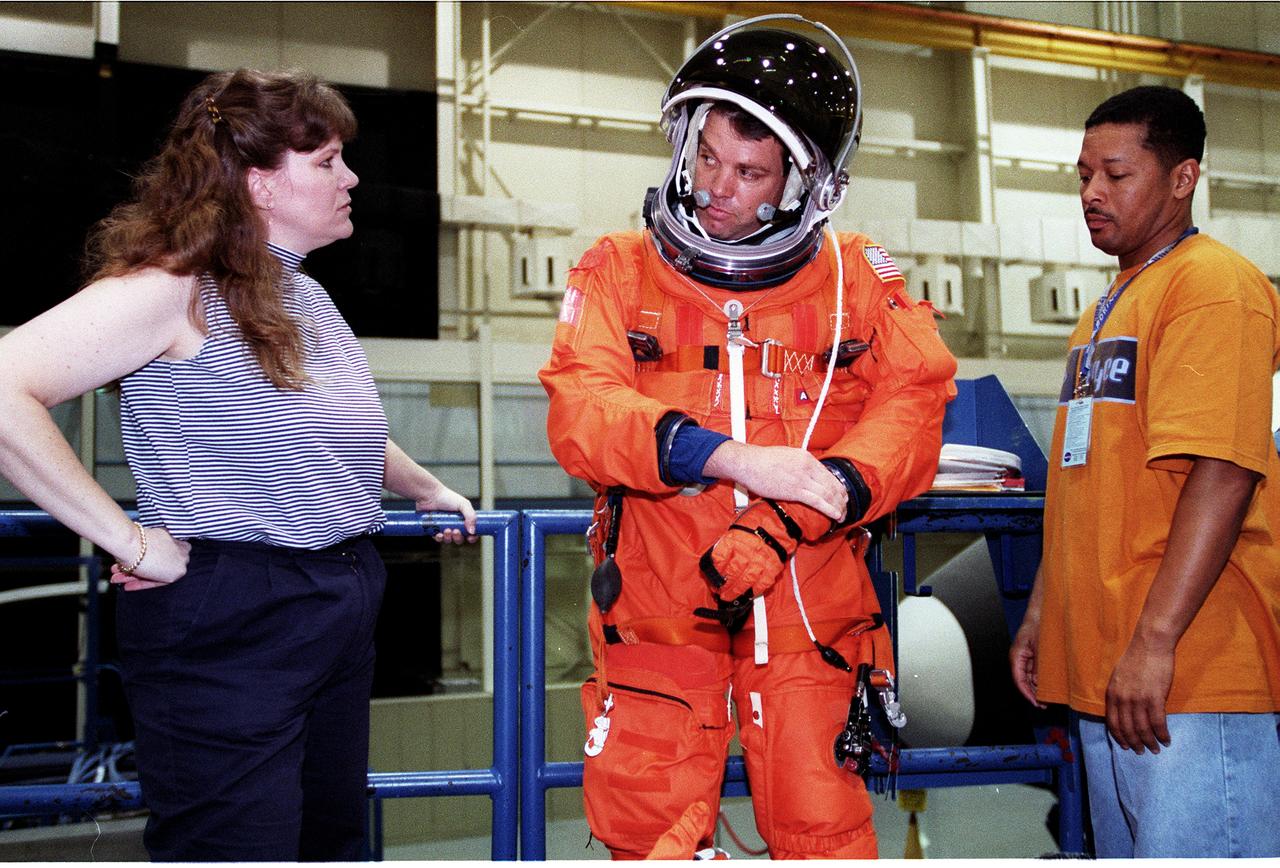
S99-05620 (19 May 1999) --- Astronaut Kevin R. Kregel (left), STS-99 mission commander, is briefed by a member of the crew training staff (out of frame at left) during emergency bailout training at the Johnson Space Center's Systems Integration Facility. Looking on is insertion technician George Britingham, United Space Alliance.

JSC2000-03357 (19 April 2000) --- Cosmonaut Boris V. Morukov, mission specialist representing the Russian Aviation and Space Agency, participates in a launch and entry procedures simulation on the mid deck of one of the crew compartment trainers in the Johnson Space Center's Systems Integration Facility.
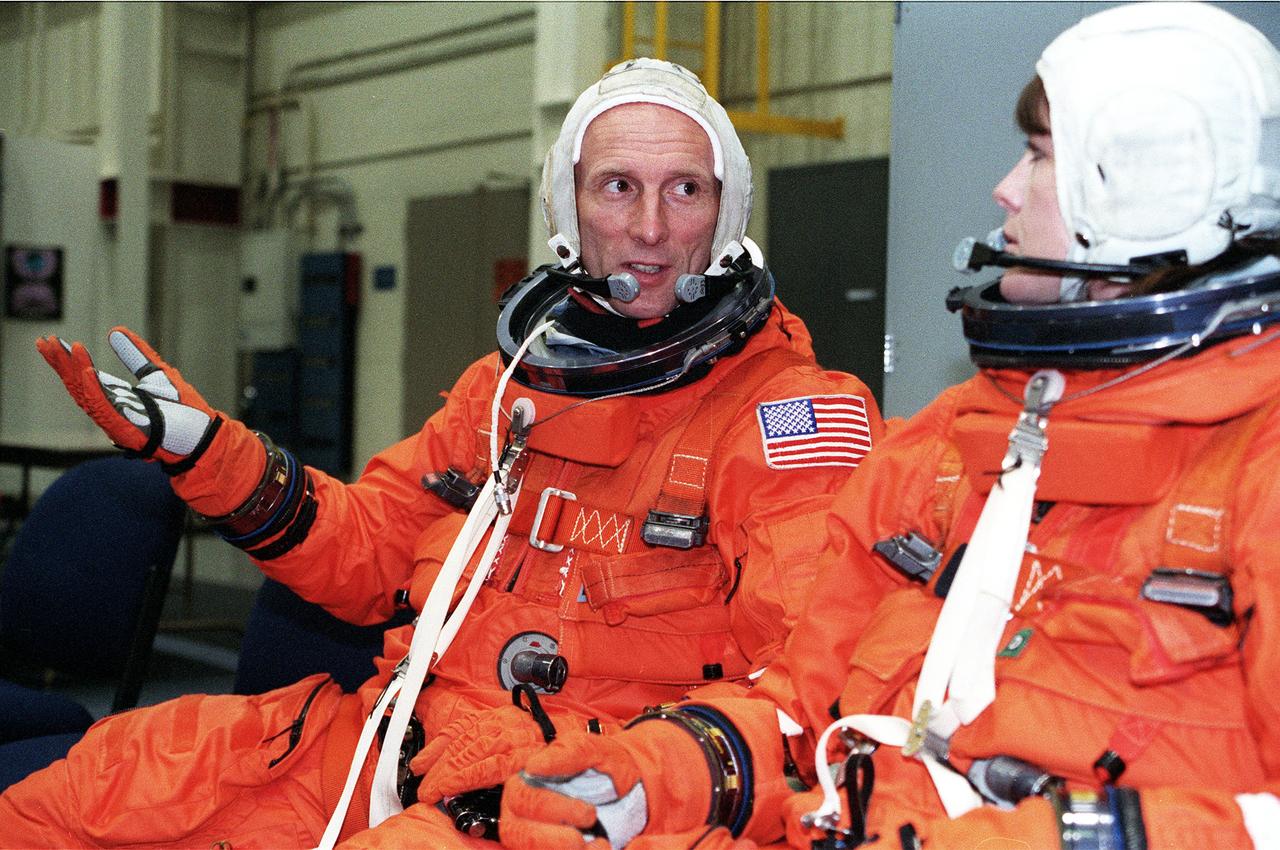
S99-05616 (19 May 1999) --- Astronauts Gerhard P.J. Thiele and Janet L. Kavandi await a briefing about emergency egress procedures during a training session at the Johnson Space Center's Systems Integration Facility. Thiele represents the European Space Agency (ESA). Other STS-99 crew members are out of frame at right.

JSC2000-05556 (3 August 2000) --- Astronaut James M. Kelly, STS-102 pilot, during a session of egress training in the Johnson Space Center's Systems Integration Facility, prepares to use a Sky-genie device to escape from a simulated shuttle in trouble. Crew trainer David Pogue (right) gives the pilot some tips on using the device.
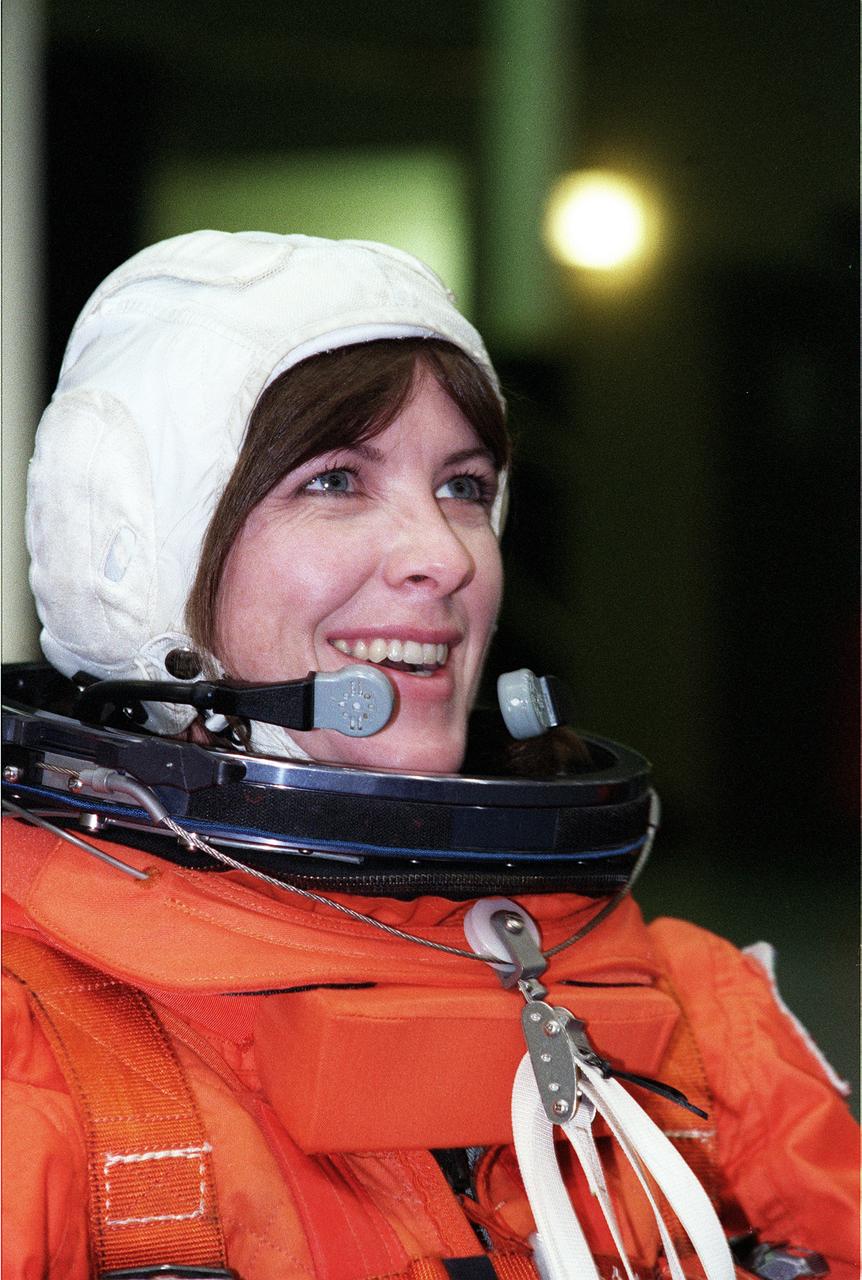
S99-05617 (19 May 1999) --- Astronaut Janet L. Kavandi, mission specialist, listens to a briefing about emergency egress procedures during a training session at the Johnson Space Center's Systems Integration Facility. Kavandi wears a training version of the partial pressure launch and entry garment.
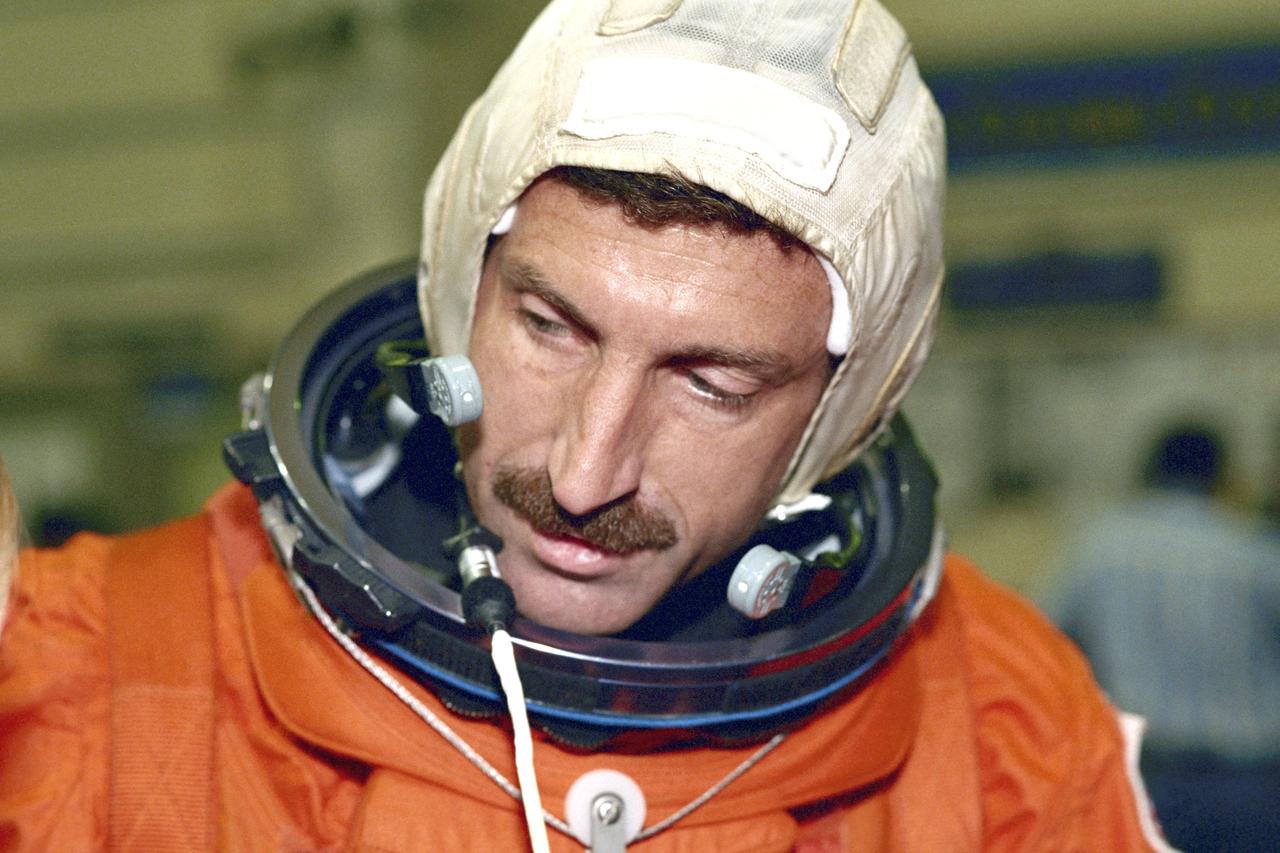
JSC2000-03345 (19 April 2000) --- Astronaut Daniel C. Burbank, STS-106 mission specialist, checks his communication gear during suit-donning prior to a training exercise at JSC's Systems Integration Facility. The mission specialist is scheduled to join four other NASA astronauts and two Russian cosmonauts for a late summer mission to the International Space Station.
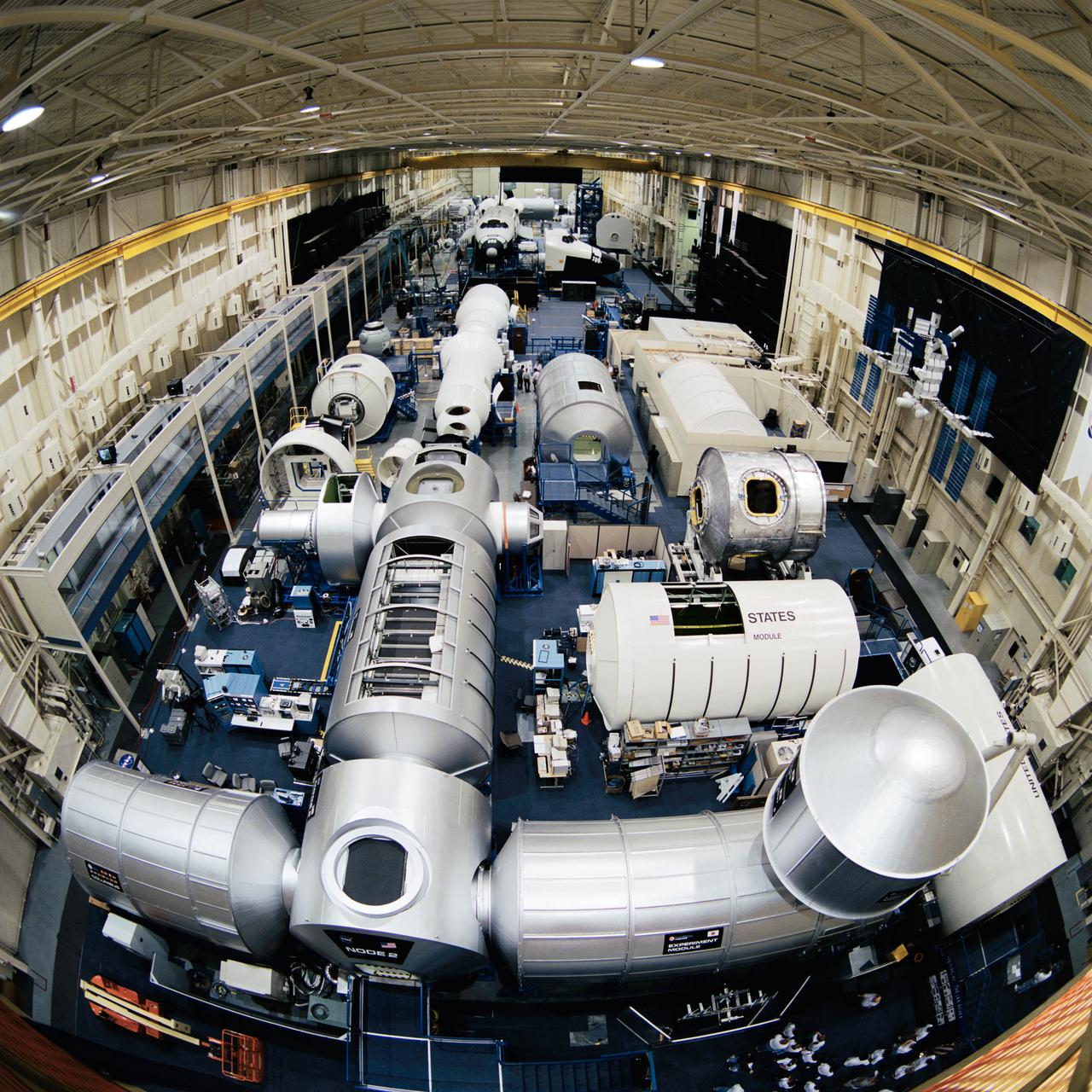
Photographic documentation showing the bldg. 9 ISS module mock-ups and trainers. Views include: various overall views of the configuration of the ISS module trainers on the floor of bldg. 9 (08445-46, 08449-51, 08458-61, 08464-65, 08469, 08471, 08476); various portions of the mock-ups (08447-48, 08470); views of the Node 2, Experiment Module and Logistics Module (08452); Node 2 (08453, 08466); Destiny and Node 2 (08454); Destiny, Unity and Airlock (08455); Zarya, Service Module and shuttle mock-ups (08456); Logistics Module and Experiment Module (08457, 08468); various views of Columbia, Node 2 and Destiny (08462-63); Columbus, Node 2, Experiment Module and Logistics Module (08467); U.S. Laboratory module (08472); Logistics Module (08473); module layout (08474); Logistics Module and Experiment Module (08475).
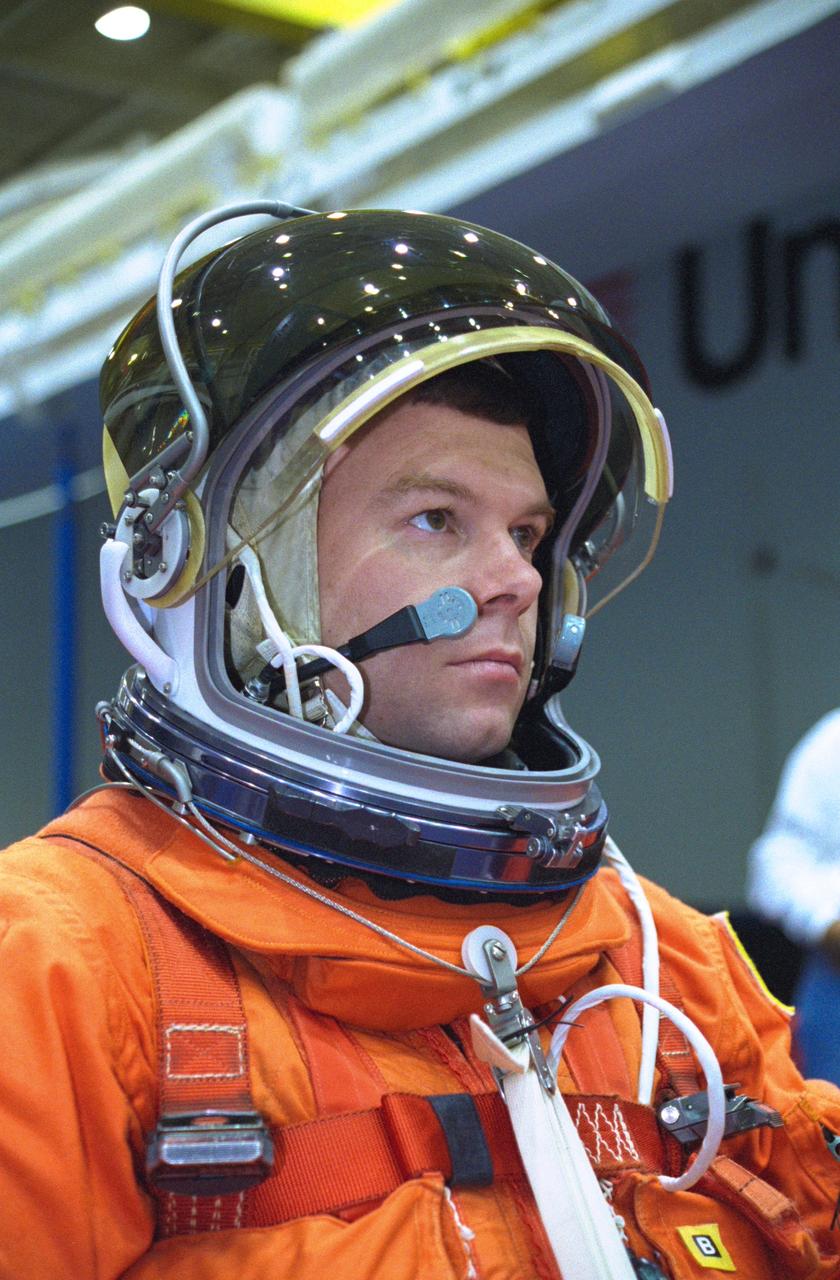
JSC2000-05557 (3 August 2000) --- Astronaut James M. Kelly, STS-102 pilot, listens as a crew training staff member briefs the astronauts at the Full Fuselage Trainer (FFT) during an emergency egress training exercise at the Johnson Space Center's Systems Integration Facility.

JSC2000-03346 (19 April 2000) --- Astronauts Edward T. Lu (left) and Richard A. Mastracchio put final touches on their suit-donning process prior to a training session in JSC's Systems Integration Facility. The two mission specialists are scheduled to join three other NASA astronauts and two Russian cosmonauts for a late summer mission to the International Space Station.
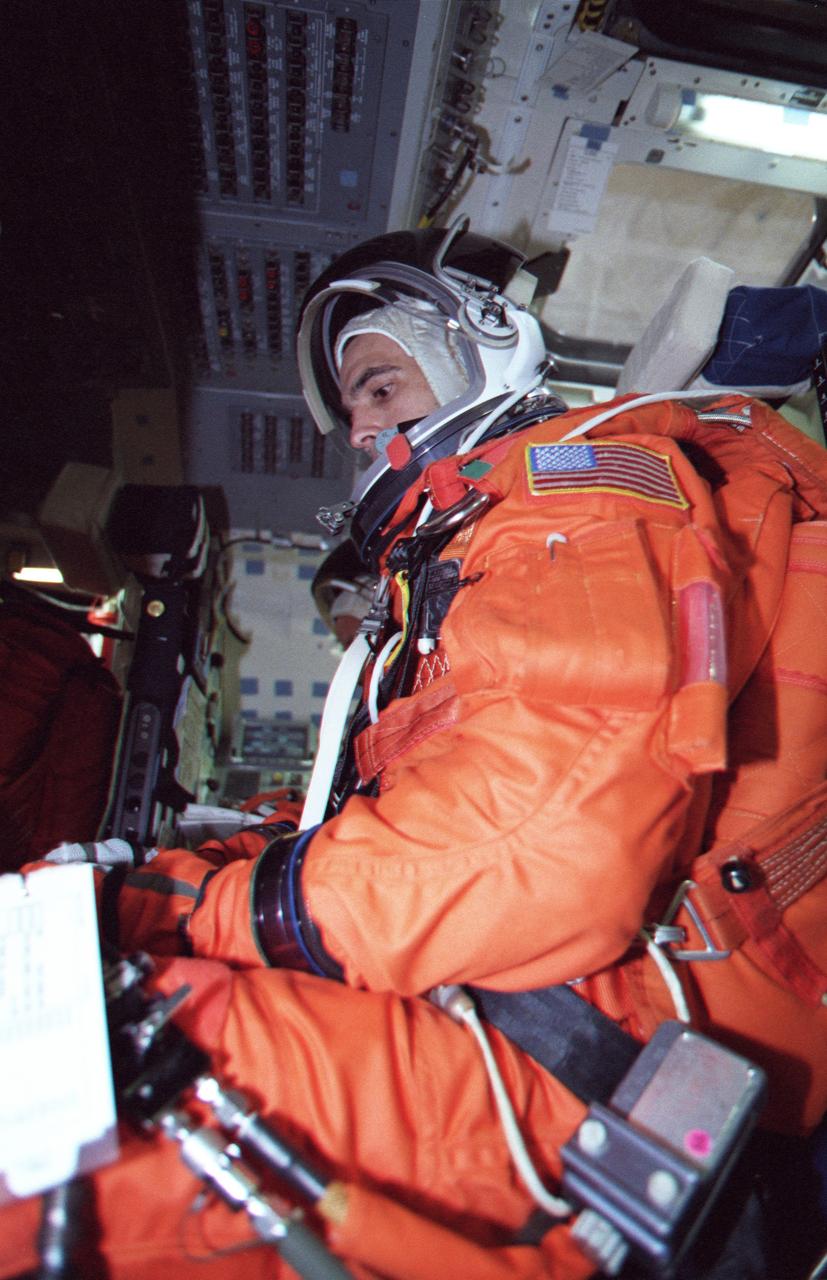
JSC2000-02222 (March 2000) --- Astronaut Richard A. Mastracchio, mission specialist, participates in a simulation exercise on the flight deck of the crew compartment trainer (CCT-1) at the Johnson Space Center's Systems Integration Facility. With four crew members seated on the flight deck and three on the mid deck, the astronauts rehearsed procedures for countdown and launch.
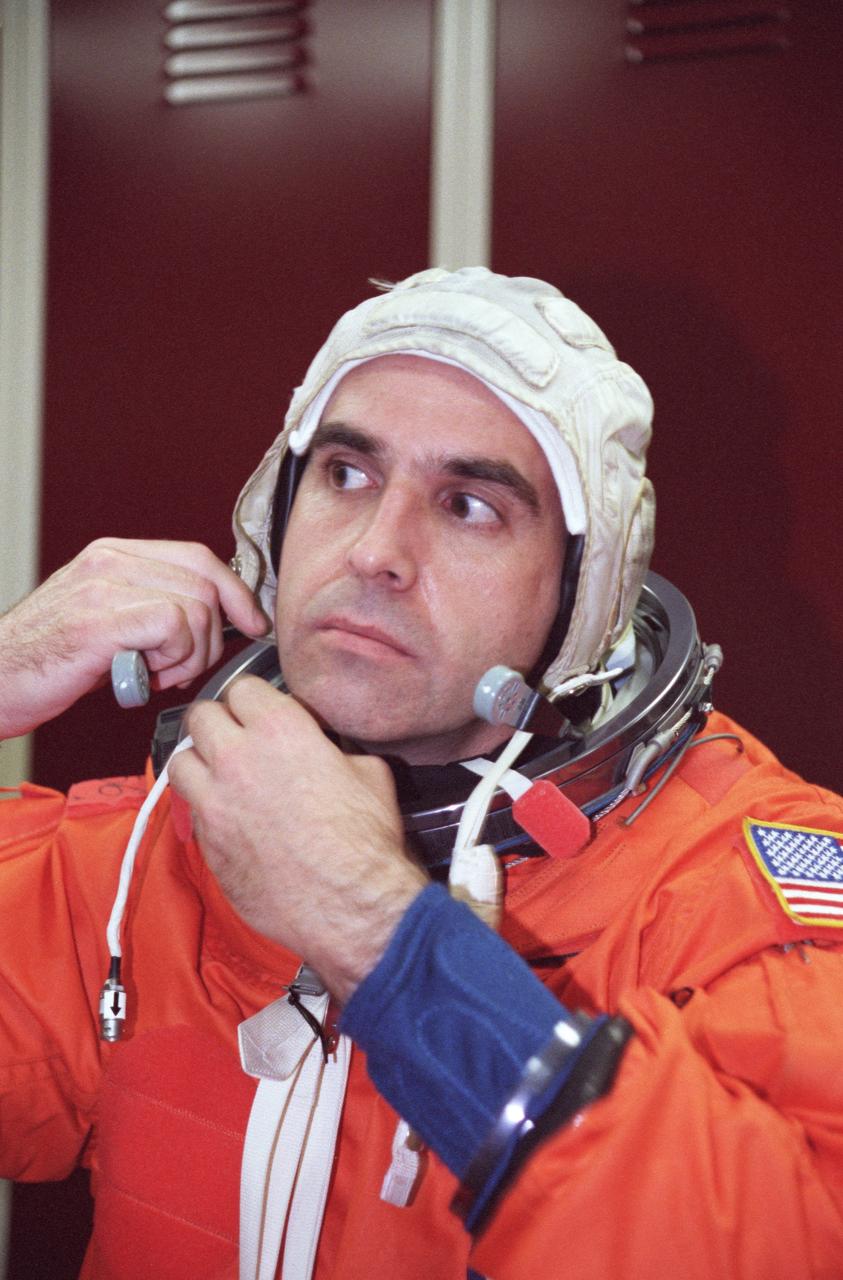
JSC2000-02219 (March 2000) --- Astronaut Richard A. Mastracchio, mission specialist, fastens his communications carrier assembly (CCA), part of the launch and entry suit (LES), during a training session at the Johnson Space Center's Systems Integration Facility.
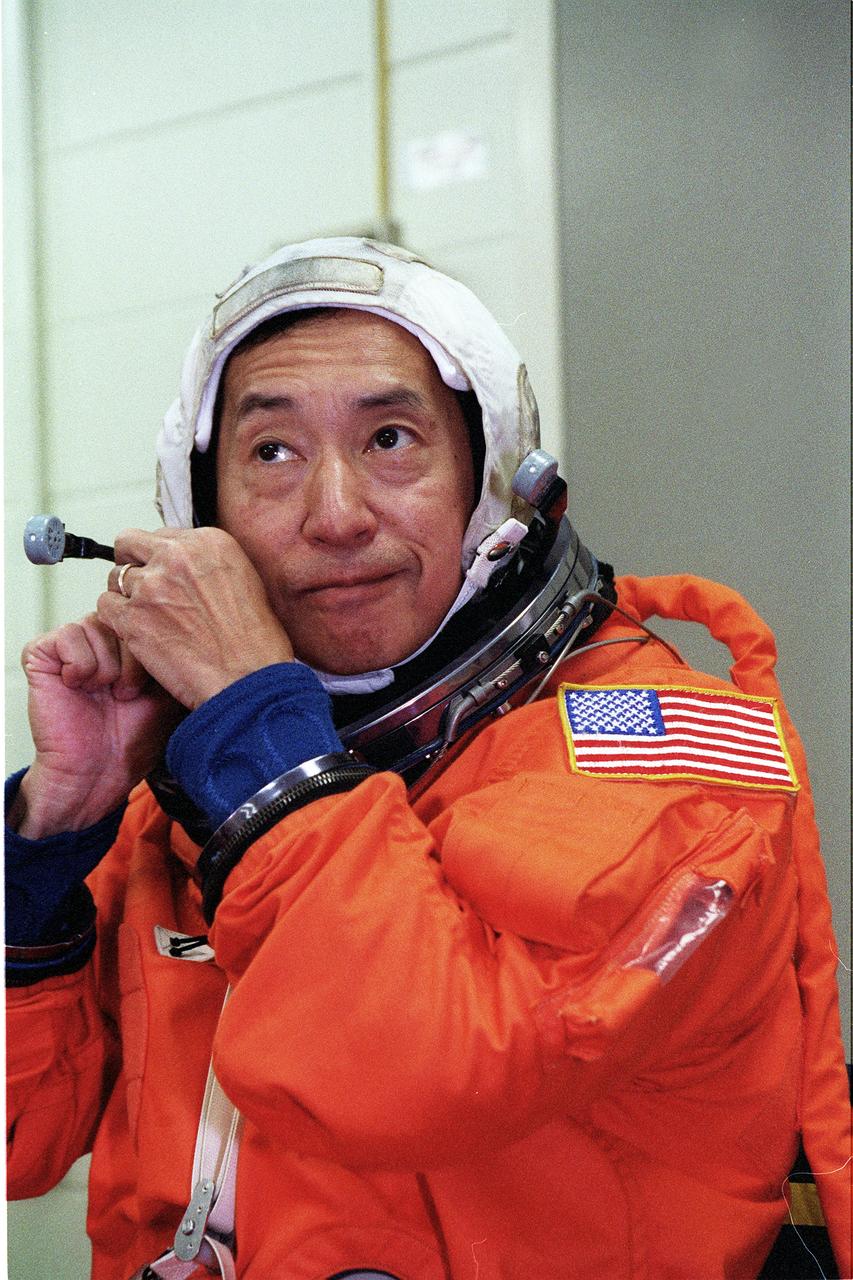
S99-05622 (19 May 1999) --- Astronaut Mamoru Mohri, mission specialist representing Japan's National Space Development Agency, works with his communications gear prior to participating in emergency bailout training at the Johnson Space Center's Systems Integration Facility. Mohri wears a training version of the partial pressure launch and entry garment.
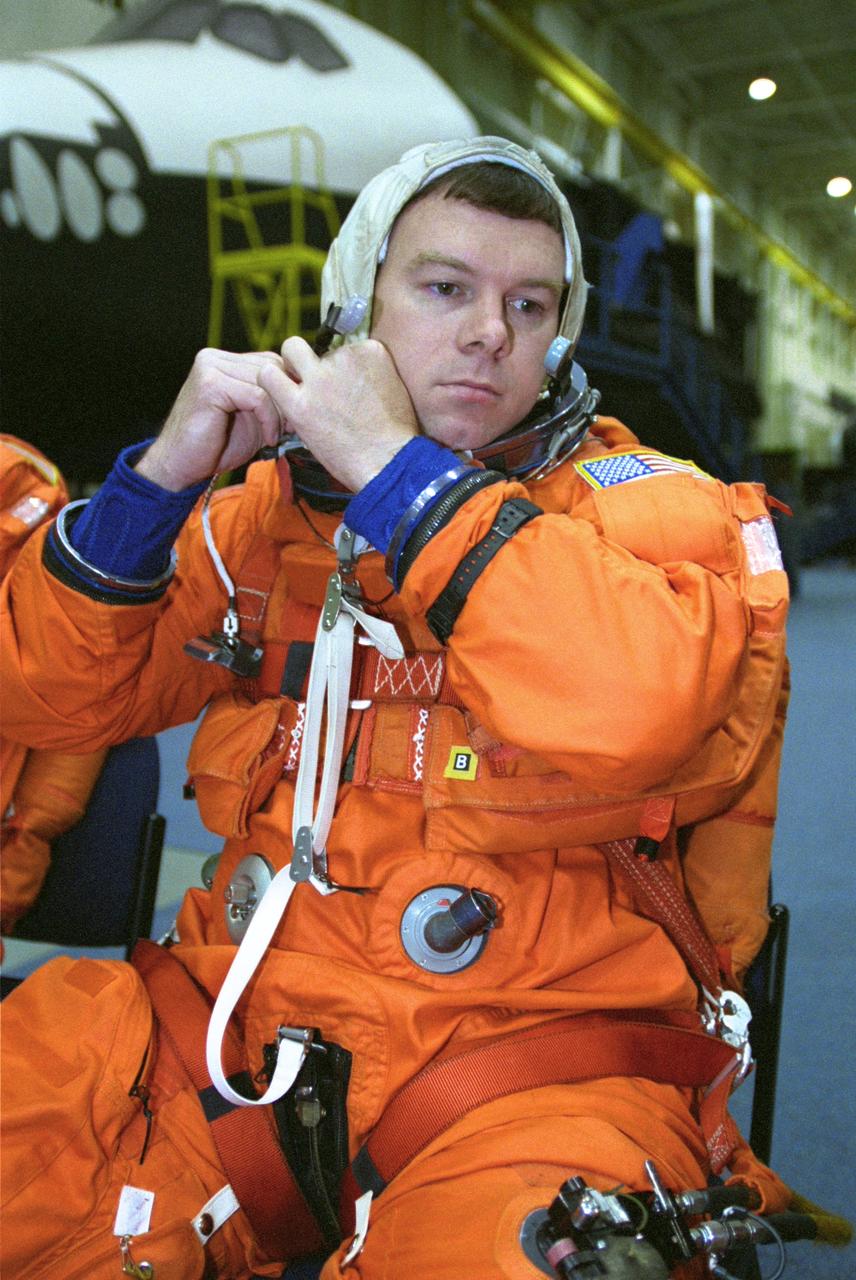
JSC2000-05552 (3 August 2000) --- Astronaut James M. Kelly, STS-102 pilot, snaps on his communications head gear prior to a session of egress training in the Johnson Space Center's Systems Integration Facility.
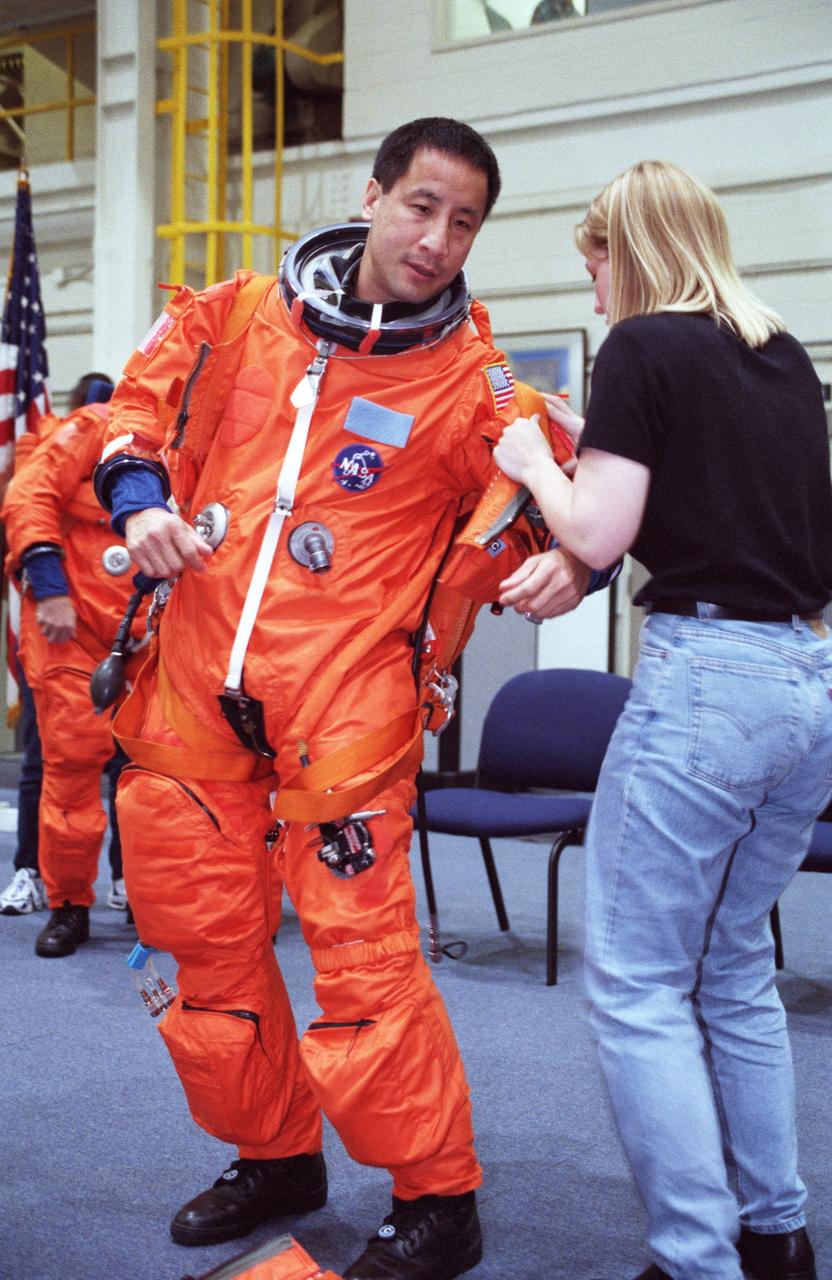
JSC2000-02220 (March 2000) --- Erin Traina, a suit technician for United Space Alliance (USA), assists astronaut Edward T. Lu with his launch and entry suit prior to a STS-106 training session in the Systems Integration Facility at the Johnson Space Center (JSC).
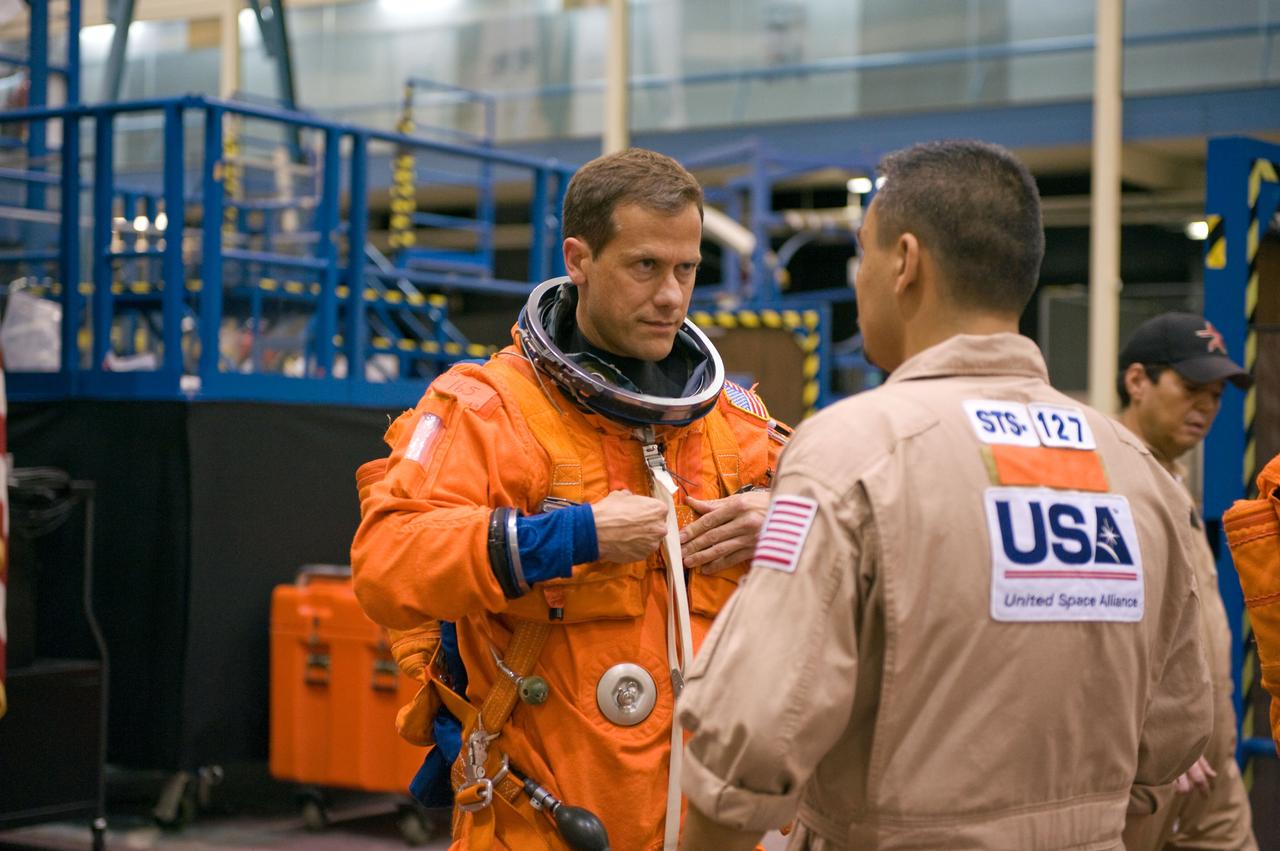
STS-127 Post-Insertion Training. Building 9 - CCT II mockup.
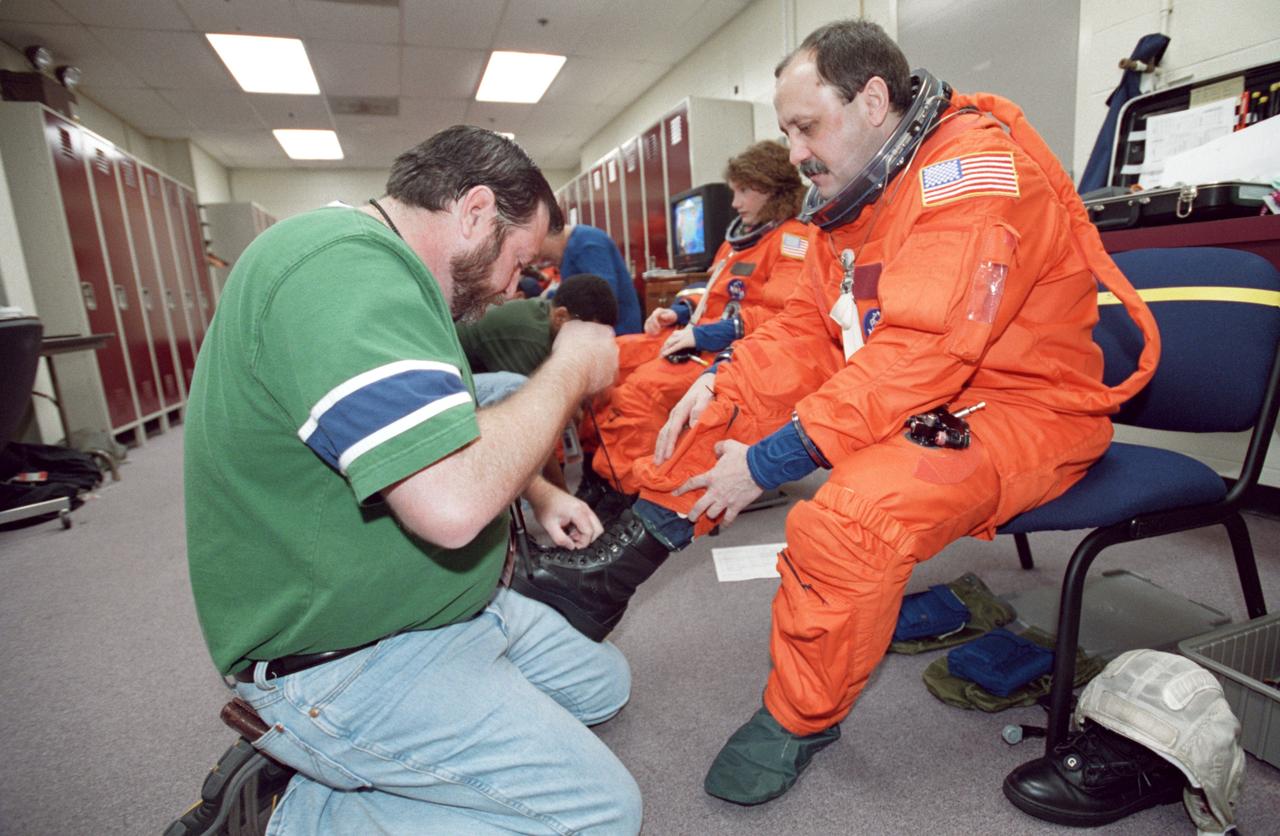
JSC2000-07446 (6 December 2000) --- Suit technician Steve Clendenin helps cosmonaut Yury V. Usachev with his boot straps during an STS-102 training session in the Systems Integration Facility at the Johnson Space Center (JSC). The Expedition Two commander, along with two astronauts on his crew and the four STS-102 crew members, later simulated procedures for a nominal countdown in the crew compartment trainer (CCT-2) in the high bay area of this facility.
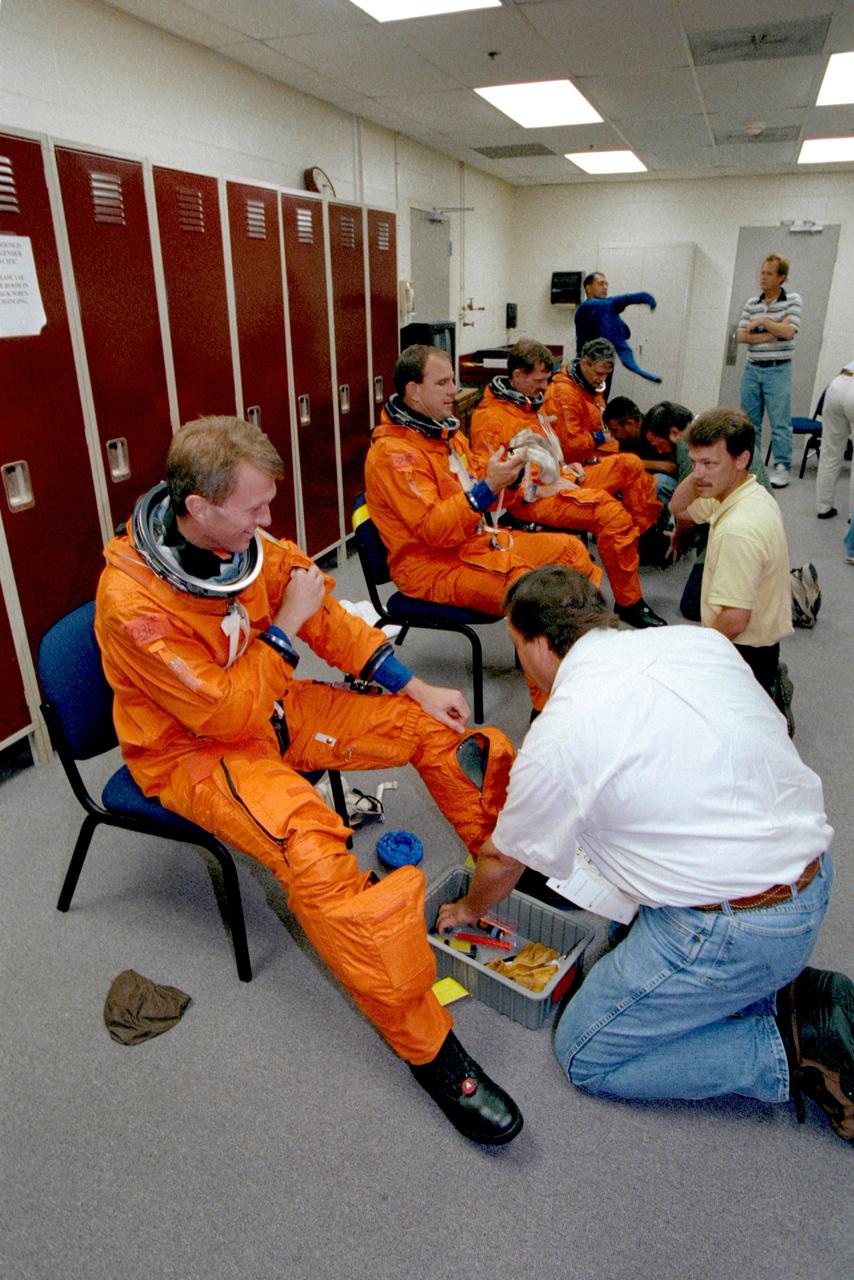
JSC2000-04751 (15 June 2000) --- Members of the STS-97 crew don training versions of the ascent and entry suits for a training session in the Johnson Space Center's Systems Integration Facility. Wearing the burnt-orange pressure suits, from the left, are astronauts Brent W. Jett, mission commander; Michael J. Bloomfield, pilot; and Joseph R. Tanner and Marc Garneau, both mission specialists. Garneau represents the Canadian Space Agency (CSA). Suit technicians assisting are Mike Birkenseher, Brad Milling, Steve Clendenin and Rudy Molina. In the background Carlos I. Noriega, mission specialist, prepares to put on his suit with the assistance of suit tech John Hazelhurt.
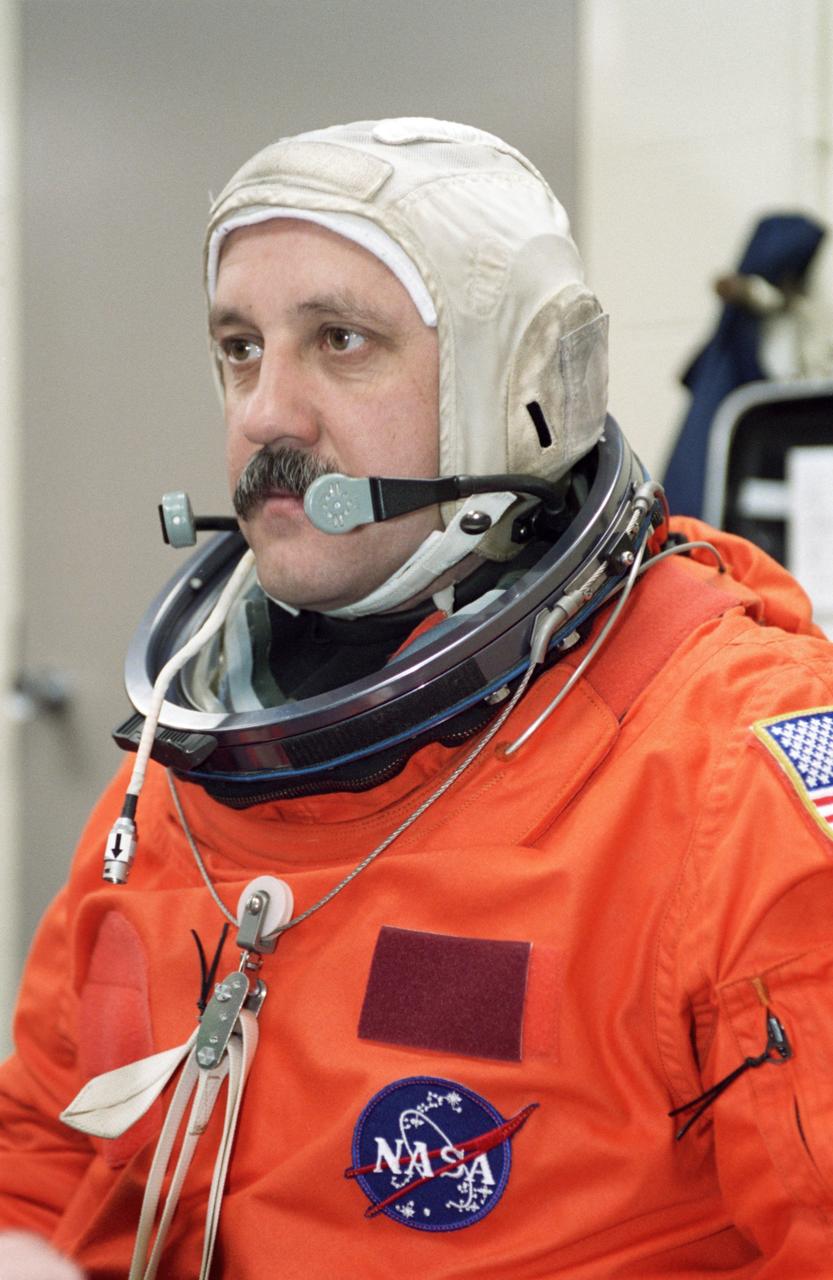
JSC2000-07447 (6 December 2000) --- Cosmonaut Yury V. Usachev, Expedition Two mission commander, checks out his communications gear during a joint Expedition Two/STS-102 training session in the Systems Integration Facility at the Johnson Space Center (JSC). The Russian Aviation and Space Agency representative, along with two astronauts on his crew and the four STS-102 crew members, later simulated procedures for a nominal countdown in the crew compartment trainer (CCT-2) in the high bay area of this facility.
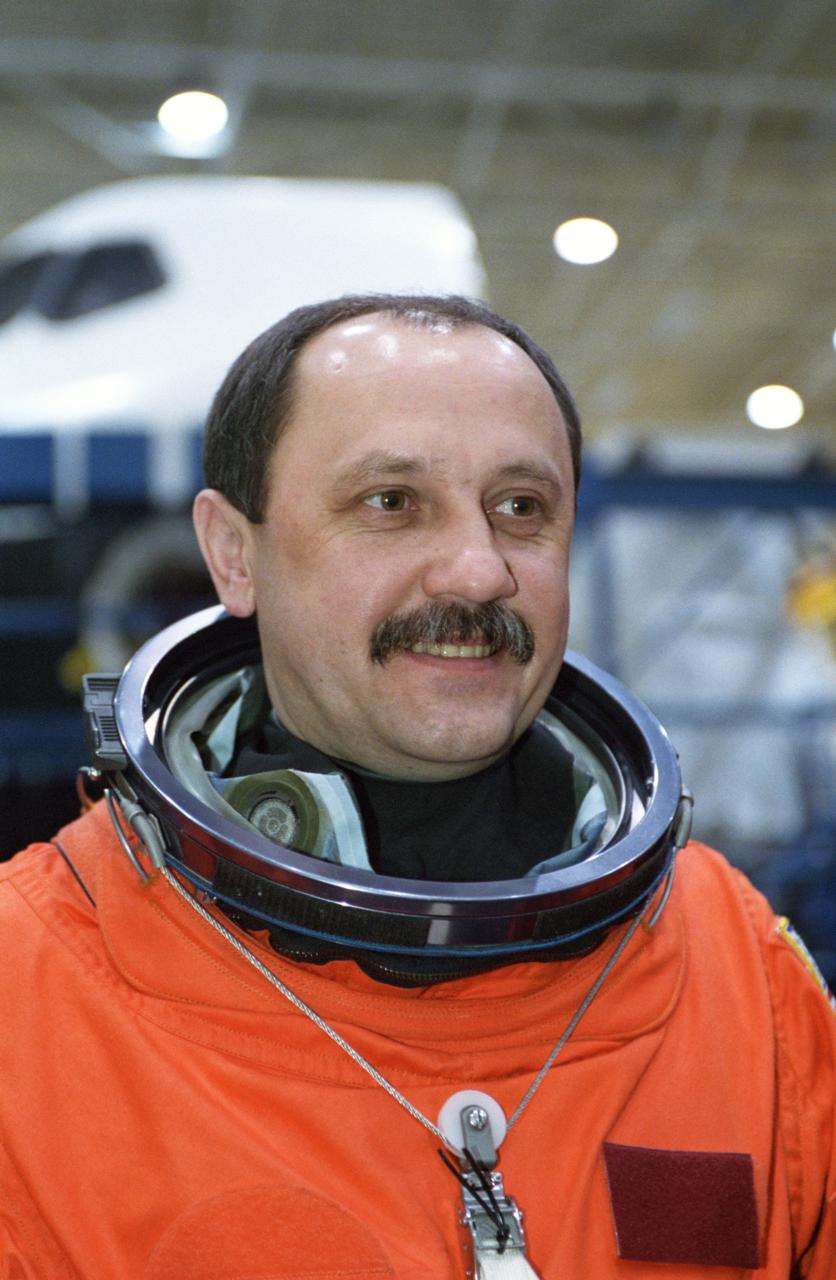
JSC2000-07445 (6 December 2000) --- Cosmonaut Yury V. Usachev, Expedition Two mission commander, talks to nearby astronauts (out of frame) during a joint Expedition Two/STS-102 training session in the Systems Integration Facility at the Johnson Space Center (JSC). The Russian Aviation and Space Agency representative, along with two astronauts on his crew and the four STS-102 crew members, later simulated procedures for a nominal countdown in the crew compartment trainer (CCT-2) in the high bay area of this facility.
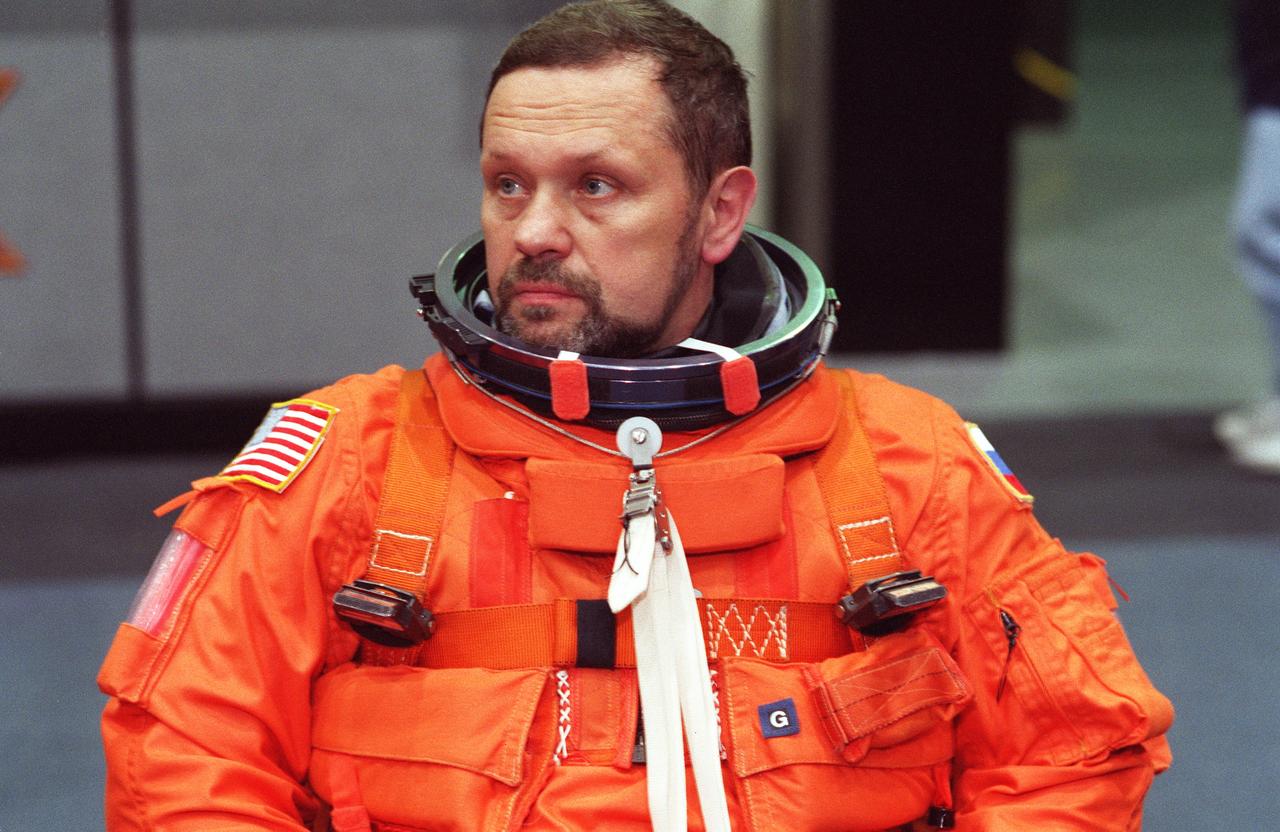
S99-14210 (15 November 1999) --- Cosmonaut Boris V. Morukov, mission specialist representing the Russian Space Agency (RSA), listens attentively to a briefing which covered emergency bailout procedures. Out of frame are six crew mates who joined Morukov for the emergency bailout training.
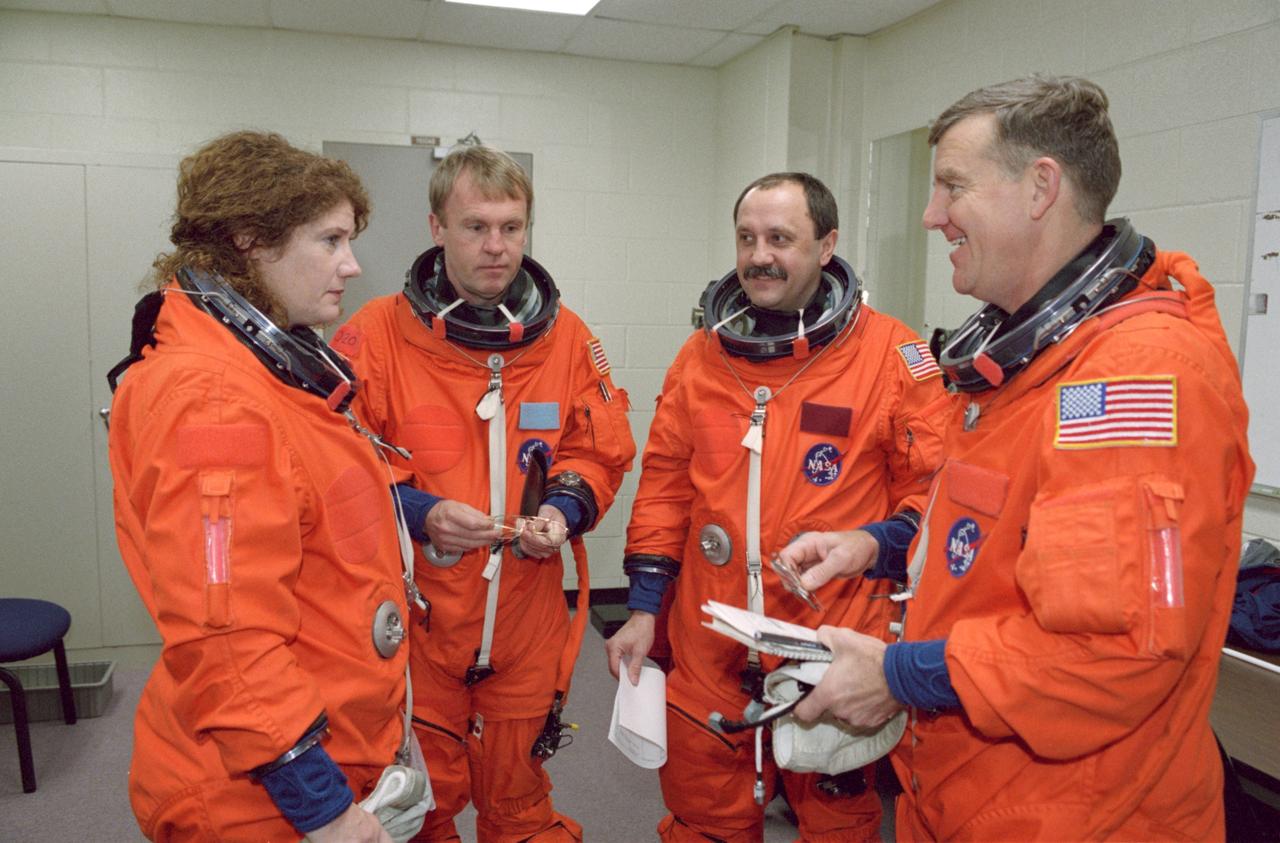
JSC2000-07449 (6 December 2000) --- Astronaut Andrew S.W. Thomas (second left), STS-102 mission specialist, chats with the Expedition Two crew members prior to a simulation exercise in the Systems Integration Facility at the Johnson Space Center. The station crew members are, from left, astronaut Susan J. Helms, cosmonaut Yury V. Usachev and astronaut James S. Voss. Usachev is commander for the second station crew, which will replace the initial group onboard the outpost. The three station crew members will accompany the STS-102 crew aboard the Space Shuttle Discovery to the outpost in March of next year.
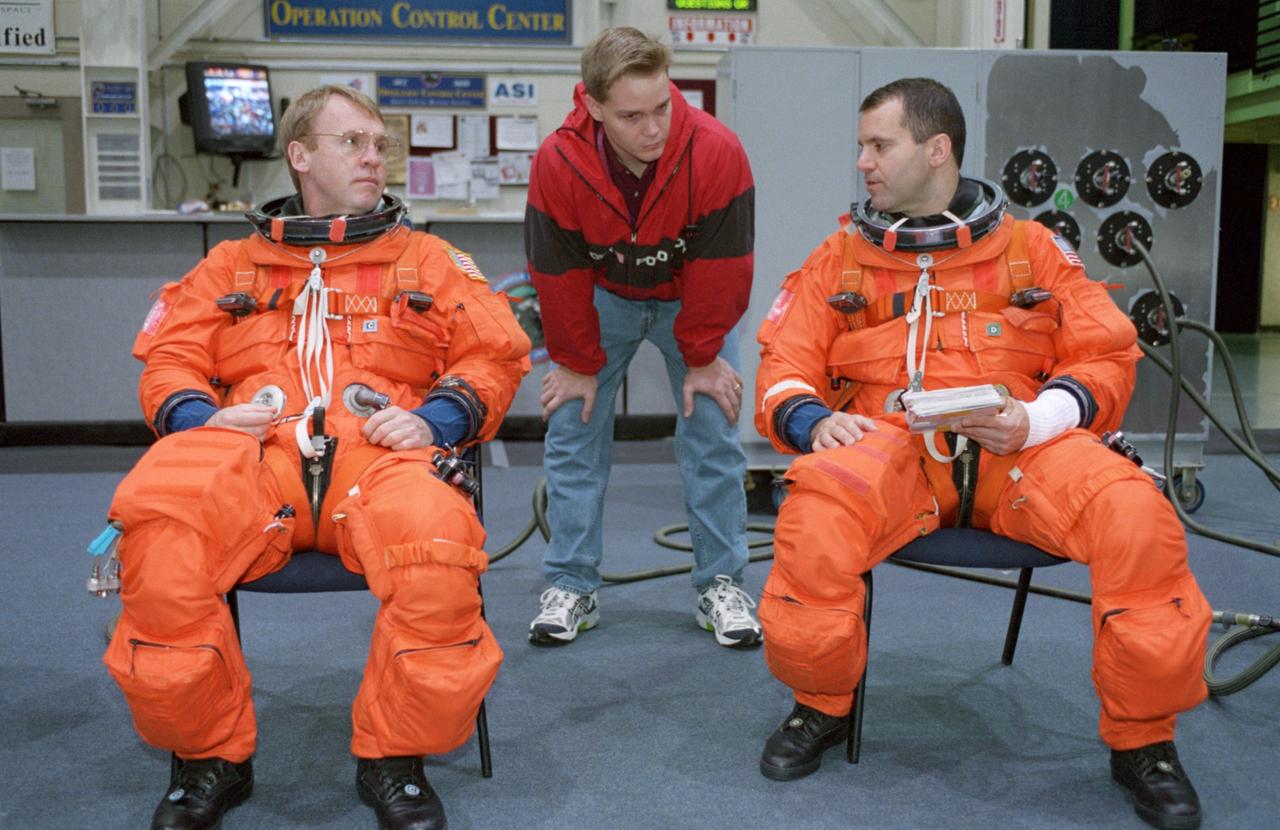
JSC2000-07442 (6 December 2000) --- Attired in training versions of their full-pressure launch and entry garments, two mission specialists for STS-102 are pictured prior to participating in a simulation in the Crew Compartment Trainer (CCT-2) of the Systems Integration Facility at the Johnson Space Center (JSC). They are astronauts Andrew S.W. Thomas (left) and Paul W. Richards.

JSC2001-E-24459 (8 August 2001) --- Astronaut Nancy J. Currie, STS-109 mission specialist, uses the virtual reality lab at the Johnson Space Center (JSC) to train for some of her duties aboard the Space Shuttle Columbia. This type of computer interface paired with virtual reality training hardware and software helps to prepare the entire team to perform their duties during the fourth Hubble Space Telescope (HST) servicing mission.

JSC2001-E-24452 (8 August 2001) --- Astronauts John M. Grunsfeld (left), STS-109 payload commander, and Nancy J. Currie, mission specialist, use the virtual reality lab at the Johnson Space Center (JSC) to train for some of their duties aboard the Space Shuttle Columbia. This type of computer interface paired with virtual reality training hardware and software helps to prepare the entire team to perform its duties during the fourth Hubble Space Telescope (HST) servicing mission.
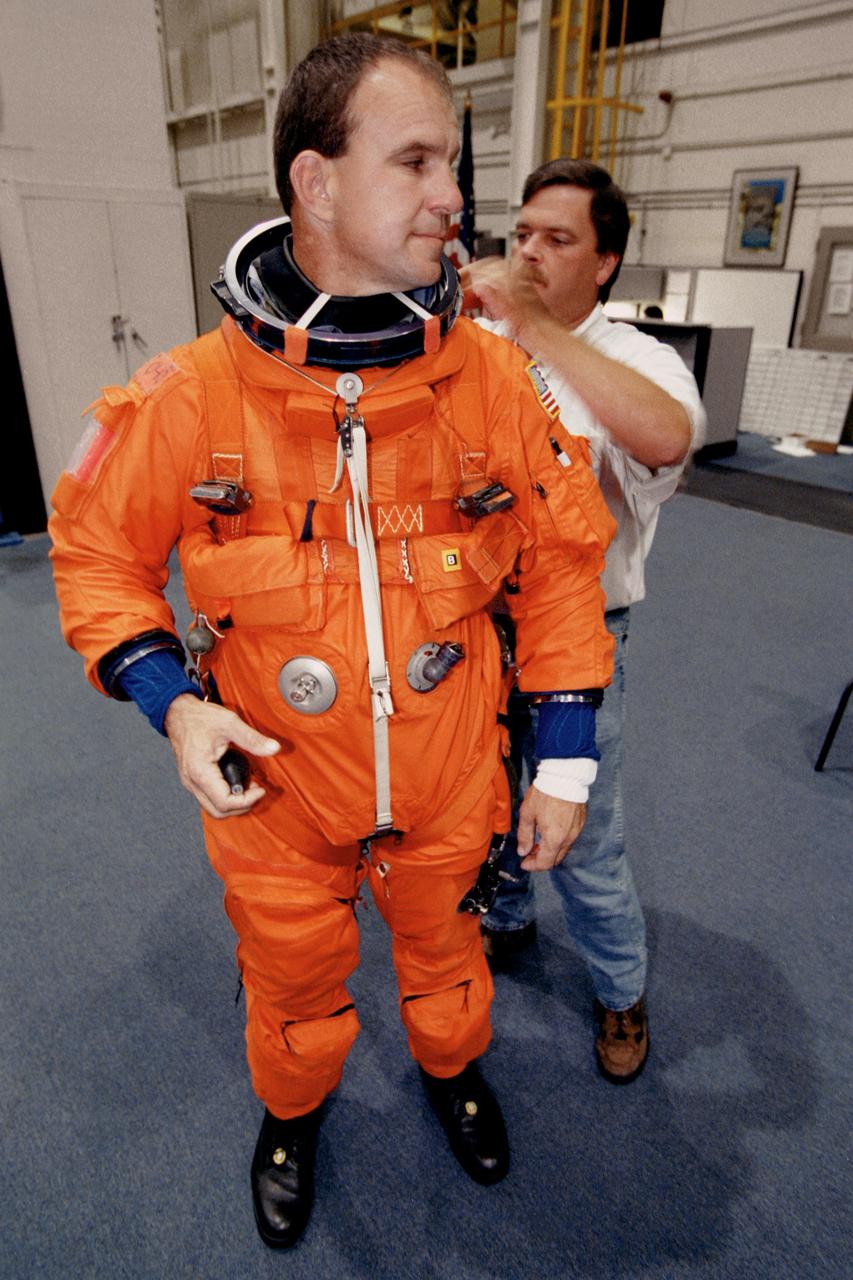
JSC2000-04753 (15 June 2000) --- Mike Birkenseher, a suit technician for the United Space Alliance, assists astronaut Michael J. Bloomfield, STS-97 pilot, with his launch and entry garment. Bloomfield was about to join his four STS-97 crew mates for a rehearsal of launch procedures in a nearby shuttle trainer.
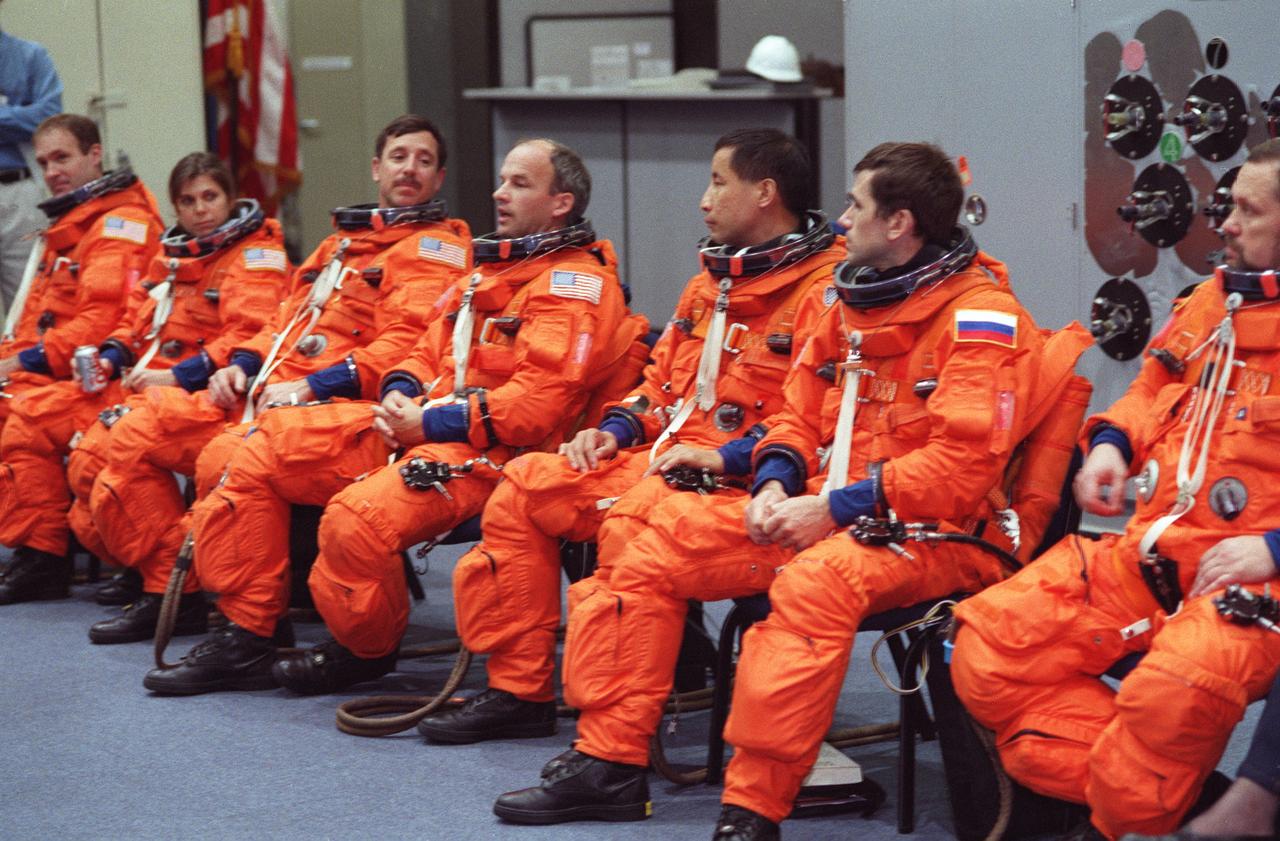
S99-14209 (15 November 1999) --- The seven crew members for STS-101 are seated during a briefing regarding emergency egress procedures. From the left are astronauts James D. Halsell, Jr., Mary Ellen Weber, Scott J. Horowitz, Jeffrey N. Williams and Edward T. Lu, along with cosmonauts Yuri I. Malenchenko and Boris V. Morukov. Malenchenko and Morukov represent the Russian Space Agency (RSA). Editor's Note: Since this photograph was taken, changes in crew personnel have been made. Cosmonauts Yuri I. Malenchenko and Boris V. Morukov, along with astronaut Edward T. Lu were moved to STS-106. Astronauts James S. Voss and Susan J. Helms, and cosmonaut Yury V. Usachev were added to the STS-101 crew. Malenchenko, Morukov and Usachev all represent the Russian Space Agency (RSA).
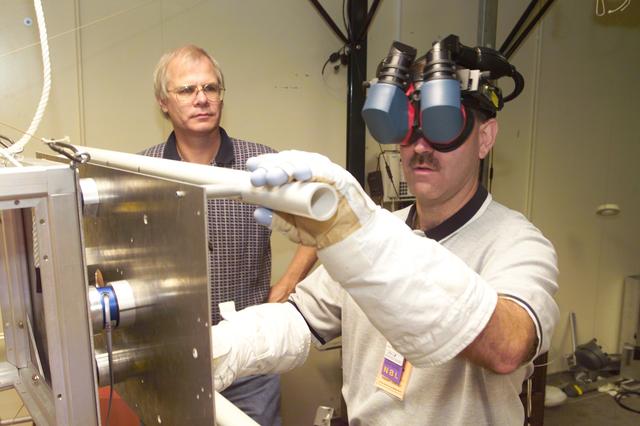
JSC2001-E-24454 (8 August 2001) --- Astronaut John M. Grunsfeld, STS-109 payload commander, uses virtual reality hardware at the Johnson Space Center (JSC) to rehearse some of his duties on the upcoming STS-109 mission, NASA’s fourth servicing visit to the Hubble Space Telescope (HST). He will join six other astronauts for the servicing mission, scheduled for February 2002.
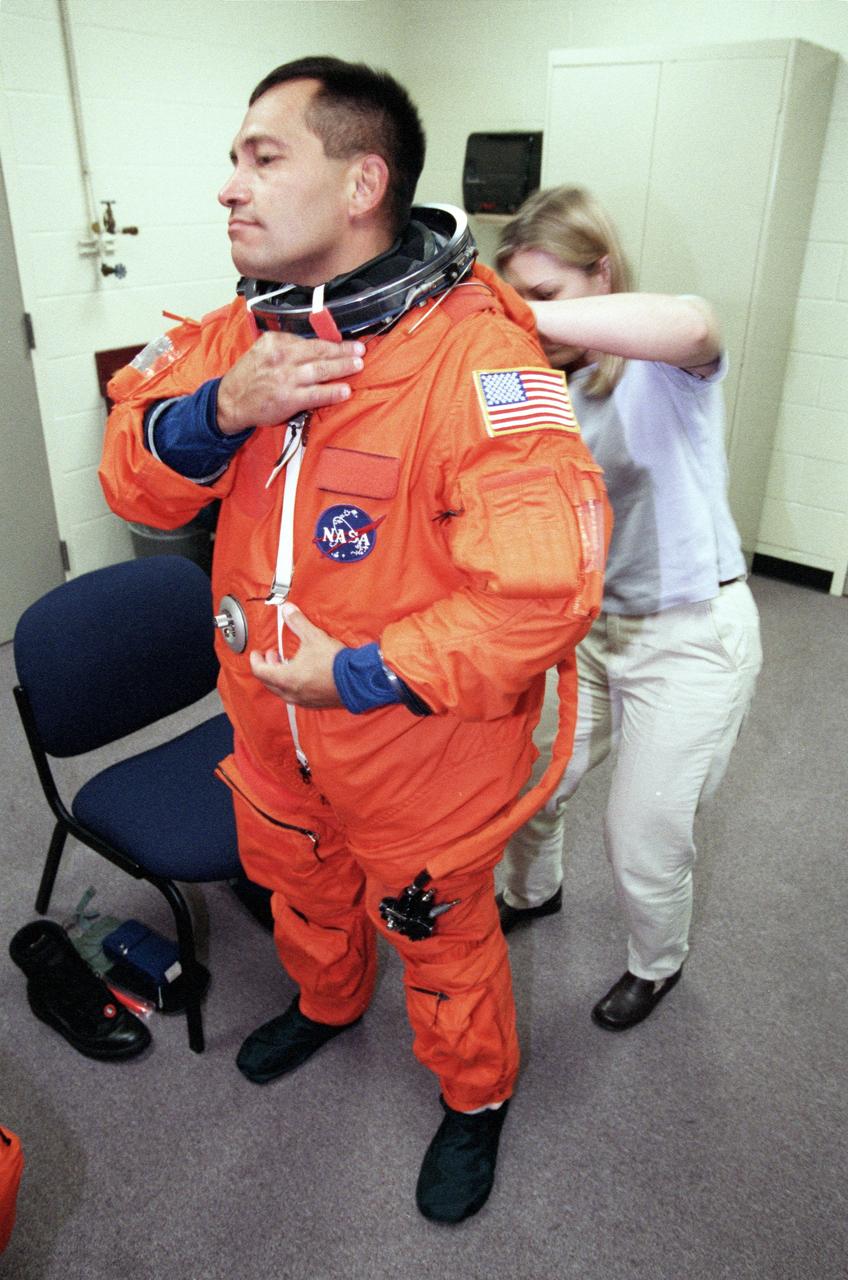
Photographic documentation showing the STS-97 crew training in the Crew Compartment Trainer II (CCT II) in bldg. 9. Views include: STS-97 pilot Michael J. Bloomfield wearing a Launch and Entry Suit (LES) with no helmet (04749); STS-97 Mission Specialist (MS) Carlos I. Noriega with personnel helping him with his LES 904750); Left to right in a locker room, with all wearing LES: STS-97 mission commaner Brett W. Jett, Bloomfield, MS Joseph R. Tanner and MS Marc Garneau (04751); Noriega, wearing LES and helmet, strapped down in CCT II (04752); personnel help Bloomfield with his LES (04753). CCTII mockup. Crew includes: Brent Jett, Michael Bloomfield, Joseph Tanner, Carlos Noriega, Marc Garneau
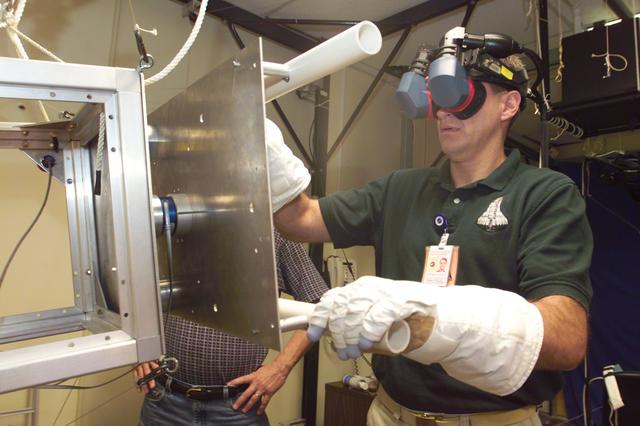
JSC2001-E-24453 (8 August 2001) --- Astronaut Richard M. Linnehan, STS-109 mission specialist, uses virtual reality hardware at the Johnson Space Center (JSC) to rehearse some of his duties on the upcoming STS-109 mission, NASA’s fourth servicing visit to the Hubble Space Telescope (HST). He will join six other astronauts for the servicing mission, scheduled for February 2002.
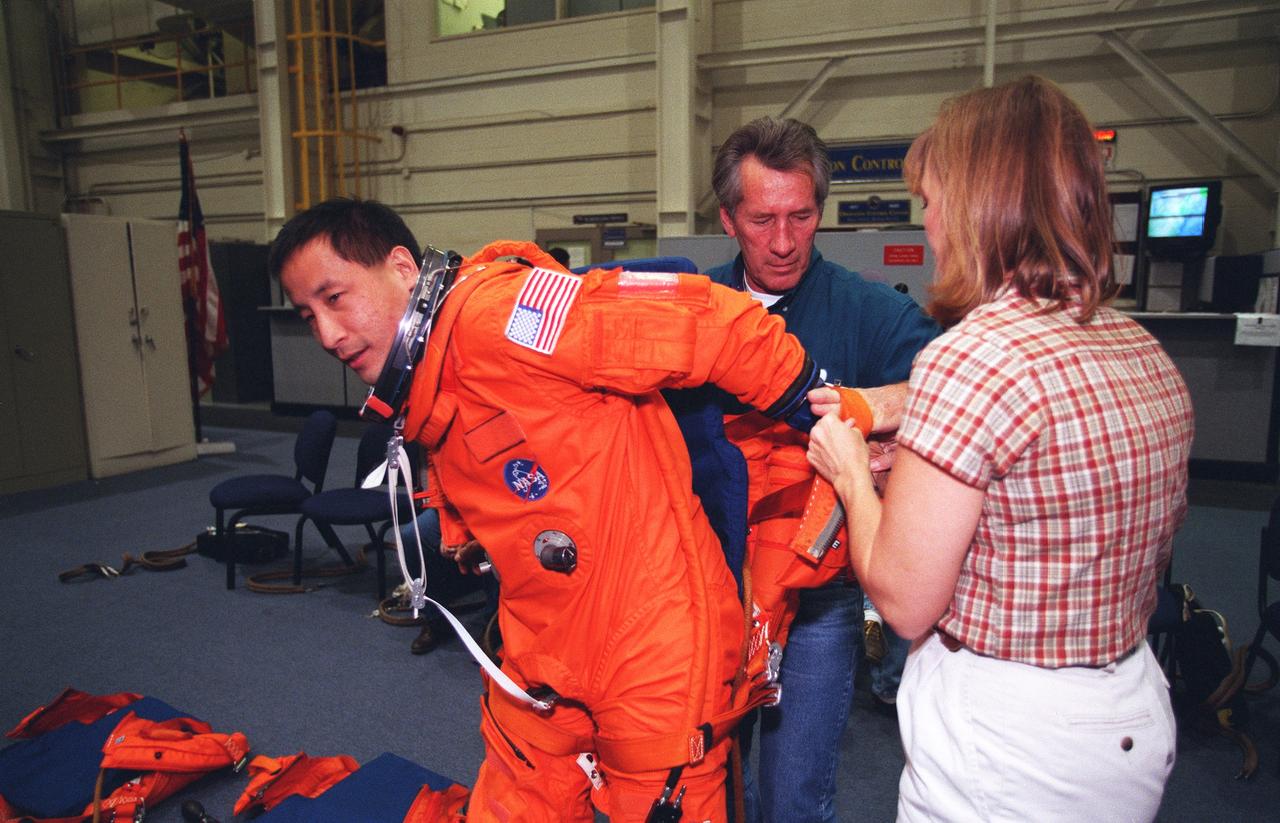
S99-14214 (15 November 1999) --- Astronaut Edward T. Lu, mission specialist, receives assistance with his pressure, ascent and entry garment during emergency egress training at the Johnson Space Center's systems intregration facility. Lu is training with four other astronauts and two cosmonauts for next year's scheduled STS-106 visit to the International Space Station (ISS).
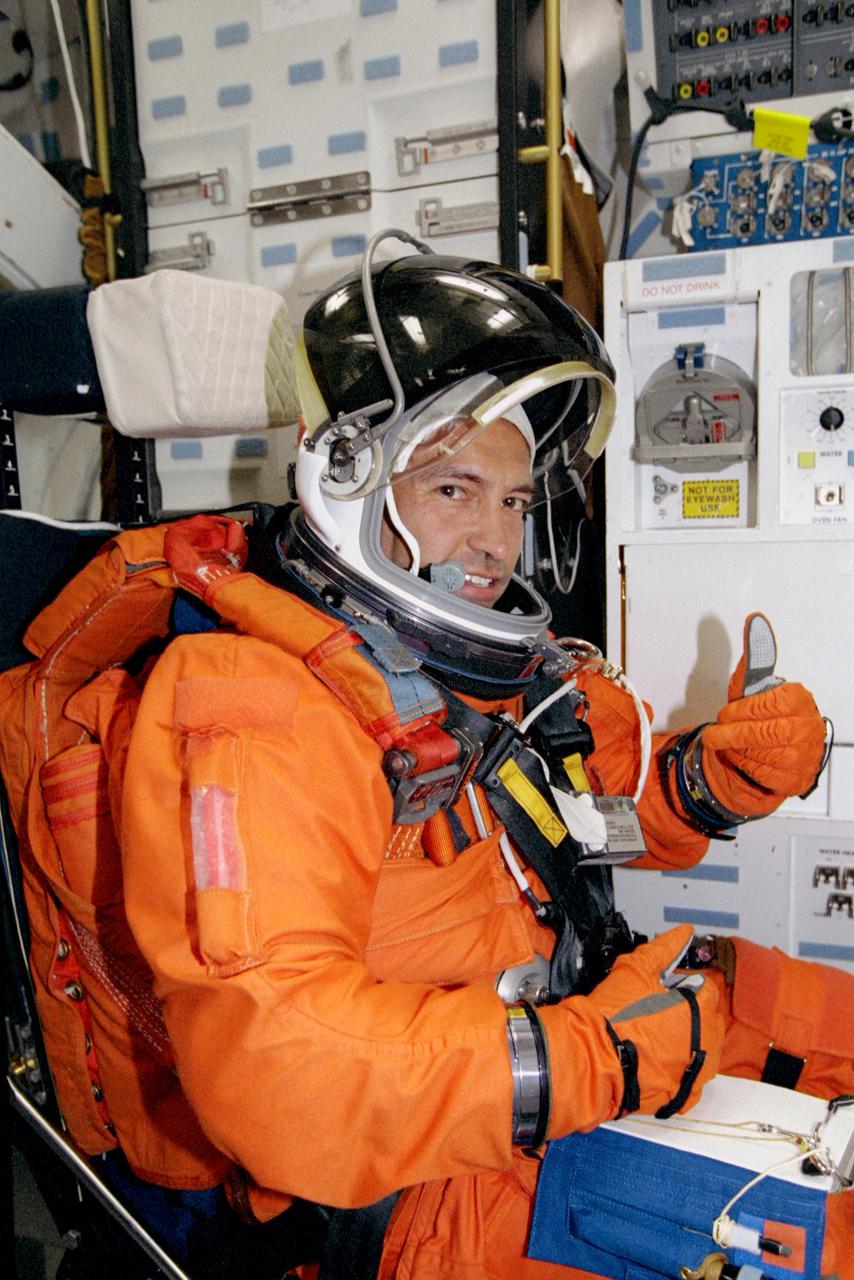
JSC2000-04752 (15 June 2000) --- Positioned in a removable seat on a simulated mid deck, astronaut Carlos I. Noriega, mission specialist, gives the thumbs-up signal during a "dry run" for launch and entry procedures. The training took place in the Crew Compartment Trainer (CCT-2) in the Johnson Space Center's Systems Integrtion Facility.
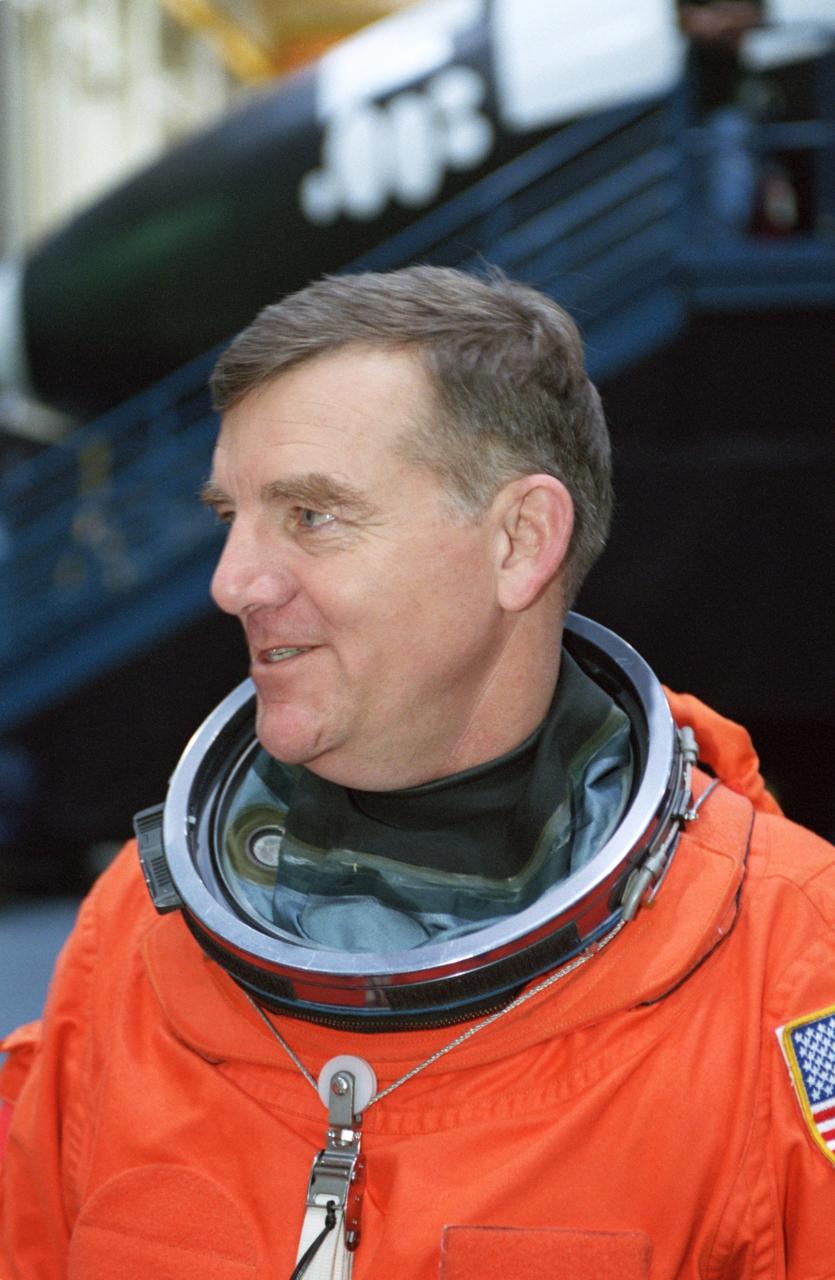
JSC2000-07444 (6 December 2000) --- Astronaut James S. Voss, Expedition Two crew member in training for next year's second lengthy stay aboard the International Space Station (ISS), listens as crew training personnel (out of frame) explain procedures for an upcoming simulation. The training took place in the crew compartment trainer (CCT-2) in the high bay area of the Johnson Space Center's Systems Integration Facility.
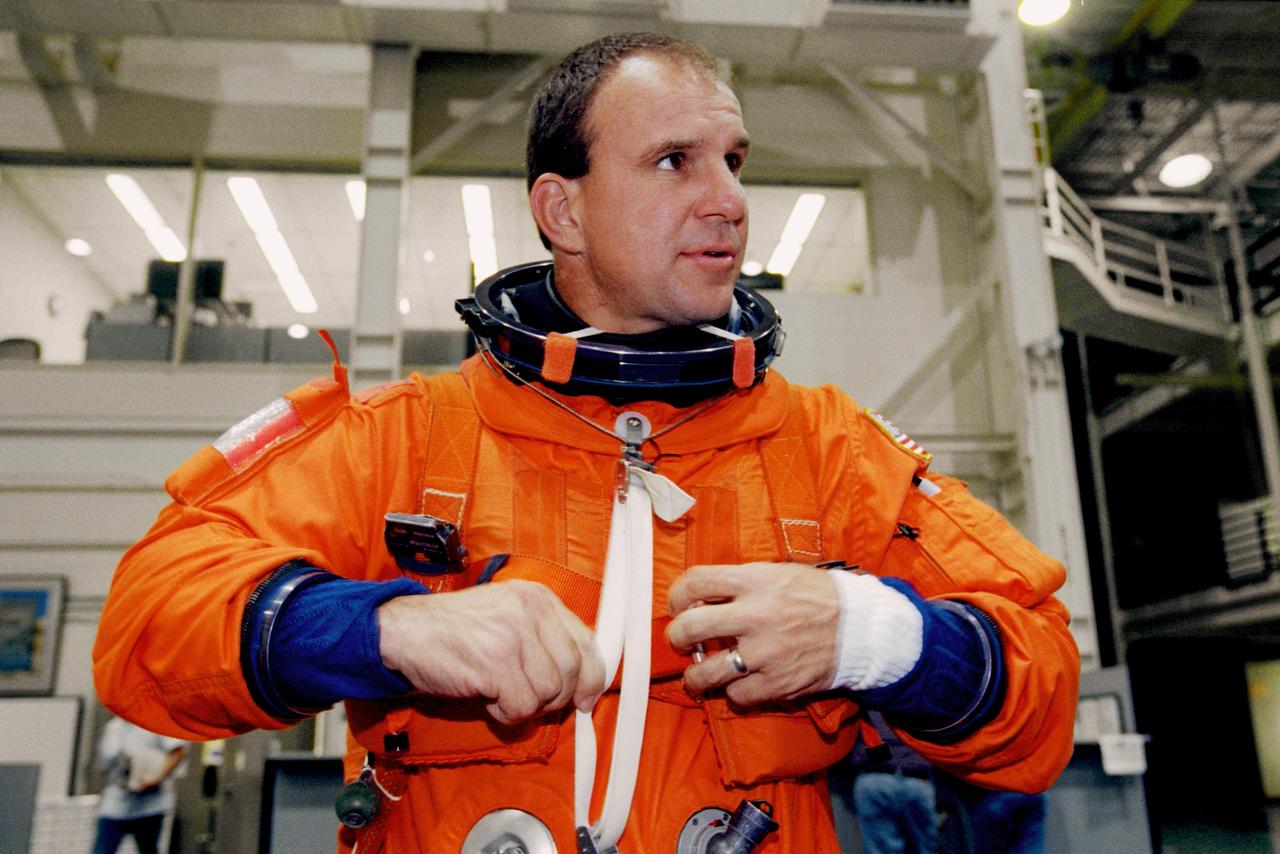
JSC2000-04749 (15 June 2000) --- Astronaut Michael J. Bloomfield, STS-97 pilot, prepares to participate in a 'dry run' of launch countdown procedures in the Systems Integration Facility at the Johnson Space Center (JSC).
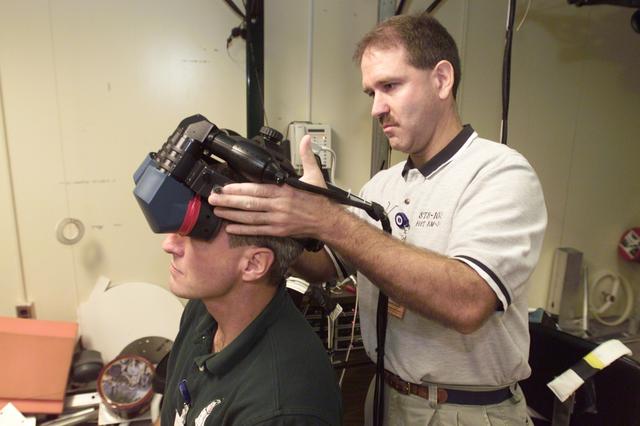
JSC2001-E-24460 (8 August 2001) --- John M. Grunsfeld (right), payload commander, assists Richard M. Linnehan, STS-109 mission specialist, in using virtual reality hardware at the Johnson Space Center (JSC) to rehearse some of his duties on the upcoming STS-109 mission, NASA’s fourth servicing visit to the Hubble Space Telescope (HST). They will join five other astronauts for the servicing mission, scheduled for February 2002.
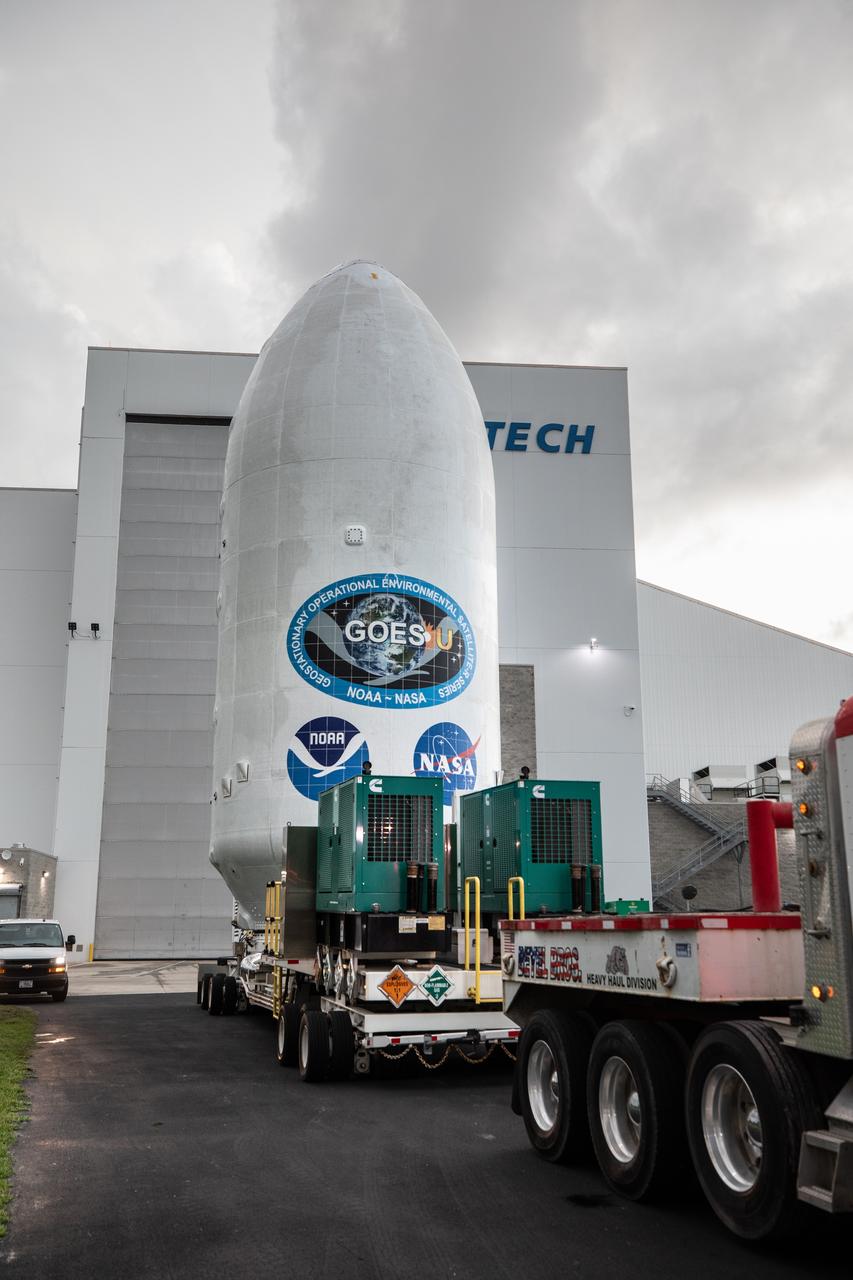
Crews transport NOAA’s (National Oceanic and Atmospheric Administration) Geostationary Operational Environmental Satellite (GOES-U) from the Astrotech Space Operations facility to the SpaceX hangar at Launch Complex 39A at NASA’s Kennedy Space Center in Florida beginning on Friday, June 14, 2024, with the operation finishing early Saturday, June 15, 2024. The fourth and final weather-observing and environmental monitoring satellite in NOAA’s GOES-R Series will assist meteorologists in providing advanced weather forecasting and warning capabilities. The two-hour window for liftoff opens 5:16 p.m. EDT Tuesday, June 25, aboard a SpaceX Falcon Heavy rocket from Launch Complex 39A at NASA’s Kennedy Space Center in Florida.
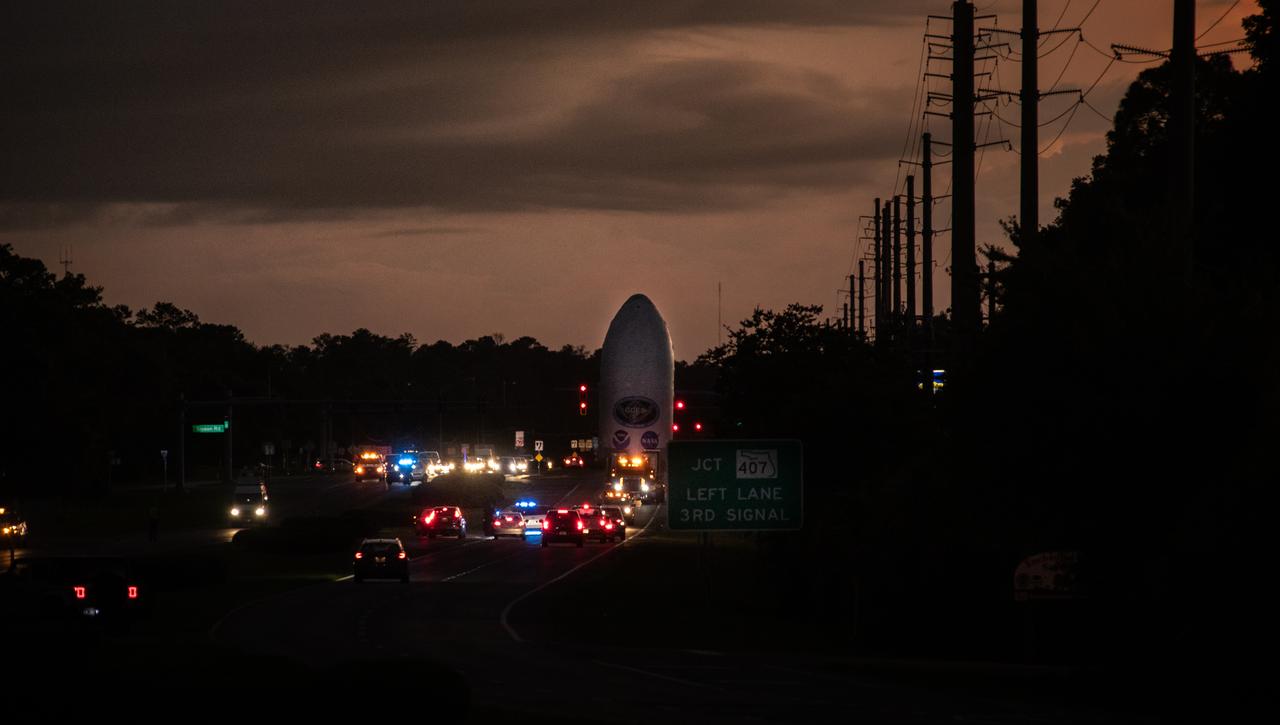
Crews transport NOAA’s (National Oceanic and Atmospheric Administration) Geostationary Operational Environmental Satellite (GOES-U) from the Astrotech Space Operations facility to the SpaceX hangar at Launch Complex 39A at NASA’s Kennedy Space Center in Florida beginning on Friday, June 14, 2024, with the operation finishing early Saturday, June 15, 2024. The fourth and final weather-observing and environmental monitoring satellite in NOAA’s GOES-R Series will assist meteorologists in providing advanced weather forecasting and warning capabilities. The two-hour window for liftoff opens 5:16 p.m. EDT Tuesday, June 25, aboard a SpaceX Falcon Heavy rocket from Launch Complex 39A at NASA’s Kennedy Space Center in Florida.
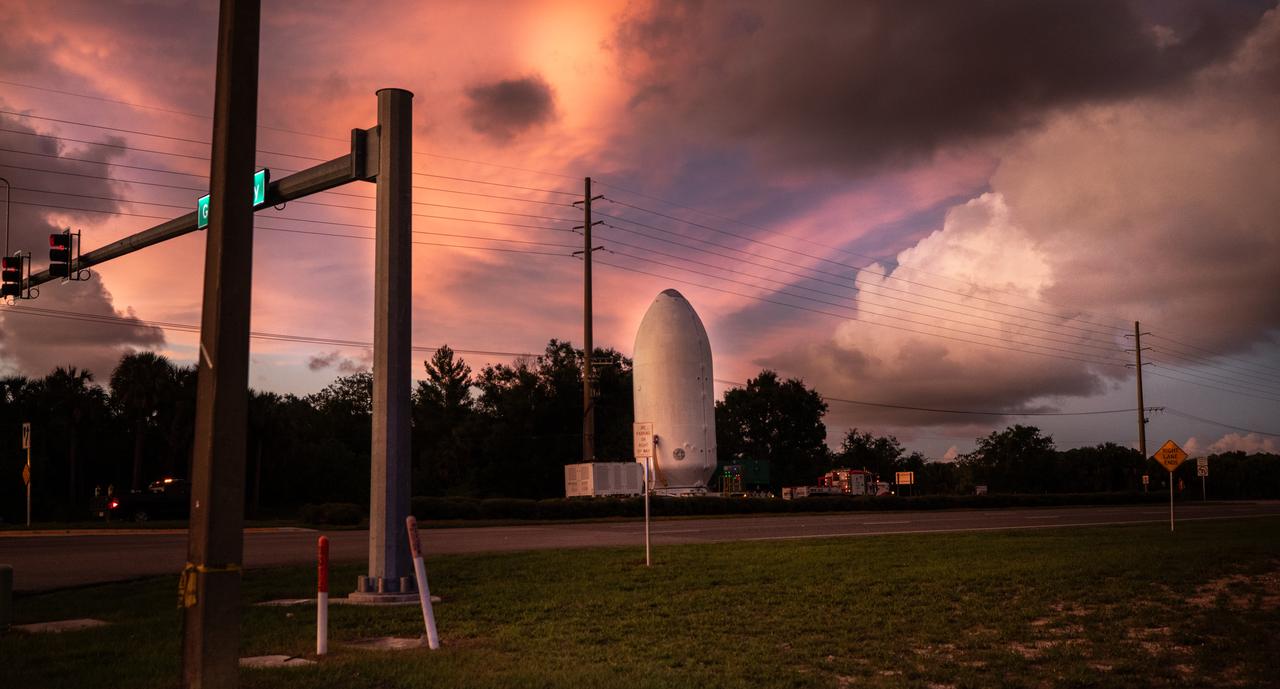
Crews transport NOAA’s (National Oceanic and Atmospheric Administration) Geostationary Operational Environmental Satellite (GOES-U) from the Astrotech Space Operations facility to the SpaceX hangar at Launch Complex 39A at NASA’s Kennedy Space Center in Florida beginning on Friday, June 14, 2024, with the operation finishing early Saturday, June 15, 2024. The fourth and final weather-observing and environmental monitoring satellite in NOAA’s GOES-R Series will assist meteorologists in providing advanced weather forecasting and warning capabilities. The two-hour window for liftoff opens 5:16 p.m. EDT Tuesday, June 25, aboard a SpaceX Falcon Heavy rocket from Launch Complex 39A at NASA’s Kennedy Space Center in Florida.
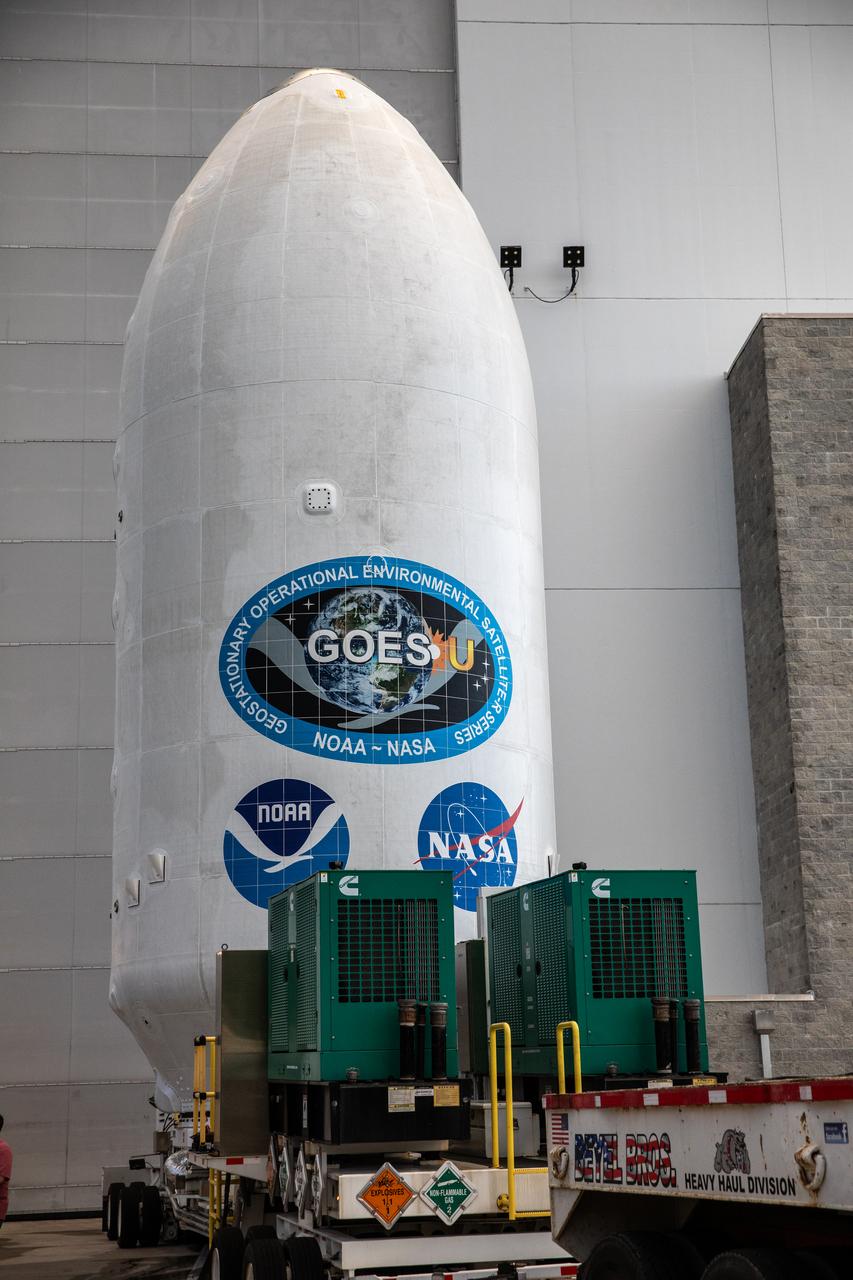
Crews transport NOAA’s (National Oceanic and Atmospheric Administration) Geostationary Operational Environmental Satellite (GOES-U) from the Astrotech Space Operations facility to the SpaceX hangar at Launch Complex 39A at NASA’s Kennedy Space Center in Florida beginning on Friday, June 14, 2024, with the operation finishing early Saturday, June 15, 2024. The fourth and final weather-observing and environmental monitoring satellite in NOAA’s GOES-R Series will assist meteorologists in providing advanced weather forecasting and warning capabilities. The two-hour window for liftoff opens 5:16 p.m. EDT Tuesday, June 25, aboard a SpaceX Falcon Heavy rocket from Launch Complex 39A at NASA’s Kennedy Space Center in Florida.
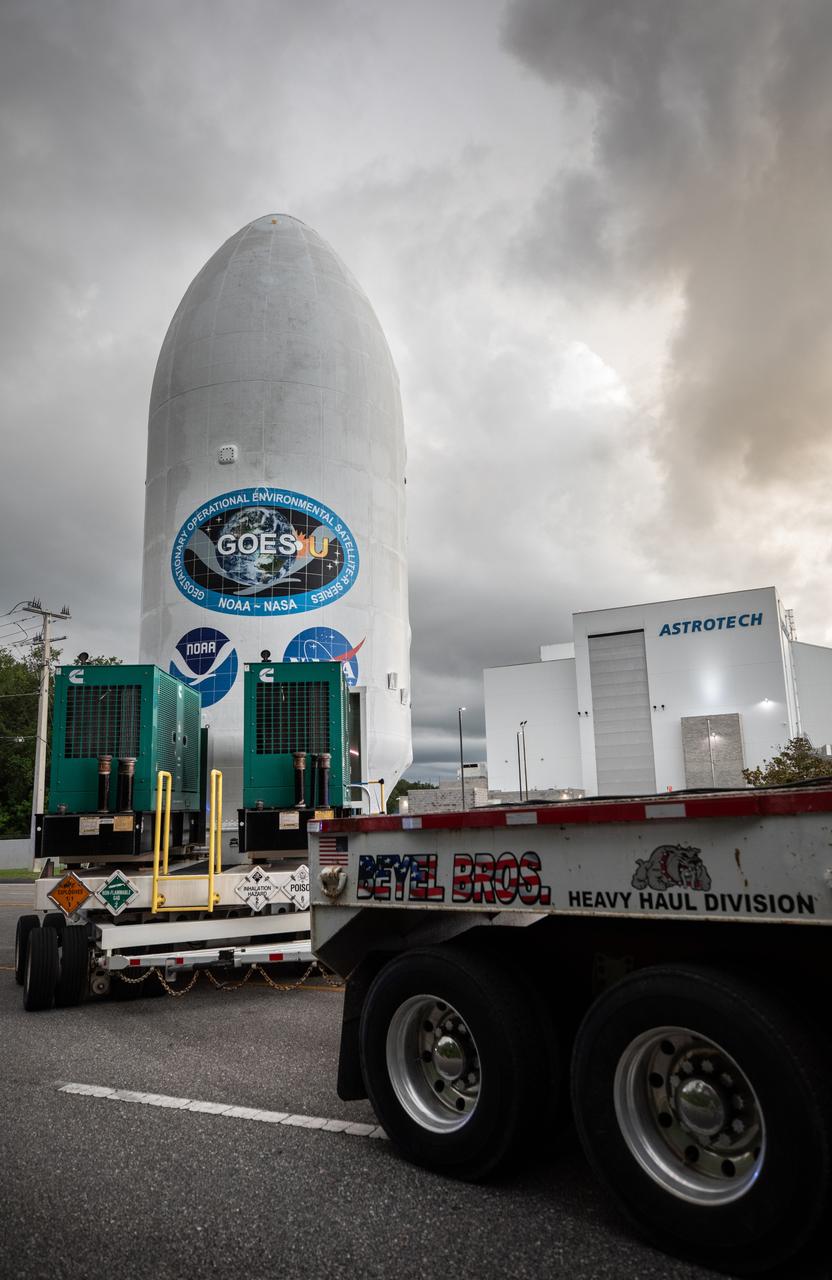
Crews transport NOAA’s (National Oceanic and Atmospheric Administration) Geostationary Operational Environmental Satellite (GOES-U) from the Astrotech Space Operations facility to the SpaceX hangar at Launch Complex 39A at NASA’s Kennedy Space Center in Florida beginning on Friday, June 14, 2024, with the operation finishing early Saturday, June 15, 2024. The fourth and final weather-observing and environmental monitoring satellite in NOAA’s GOES-R Series will assist meteorologists in providing advanced weather forecasting and warning capabilities. The two-hour window for liftoff opens 5:16 p.m. EDT Tuesday, June 25, aboard a SpaceX Falcon Heavy rocket from Launch Complex 39A at NASA’s Kennedy Space Center in Florida.
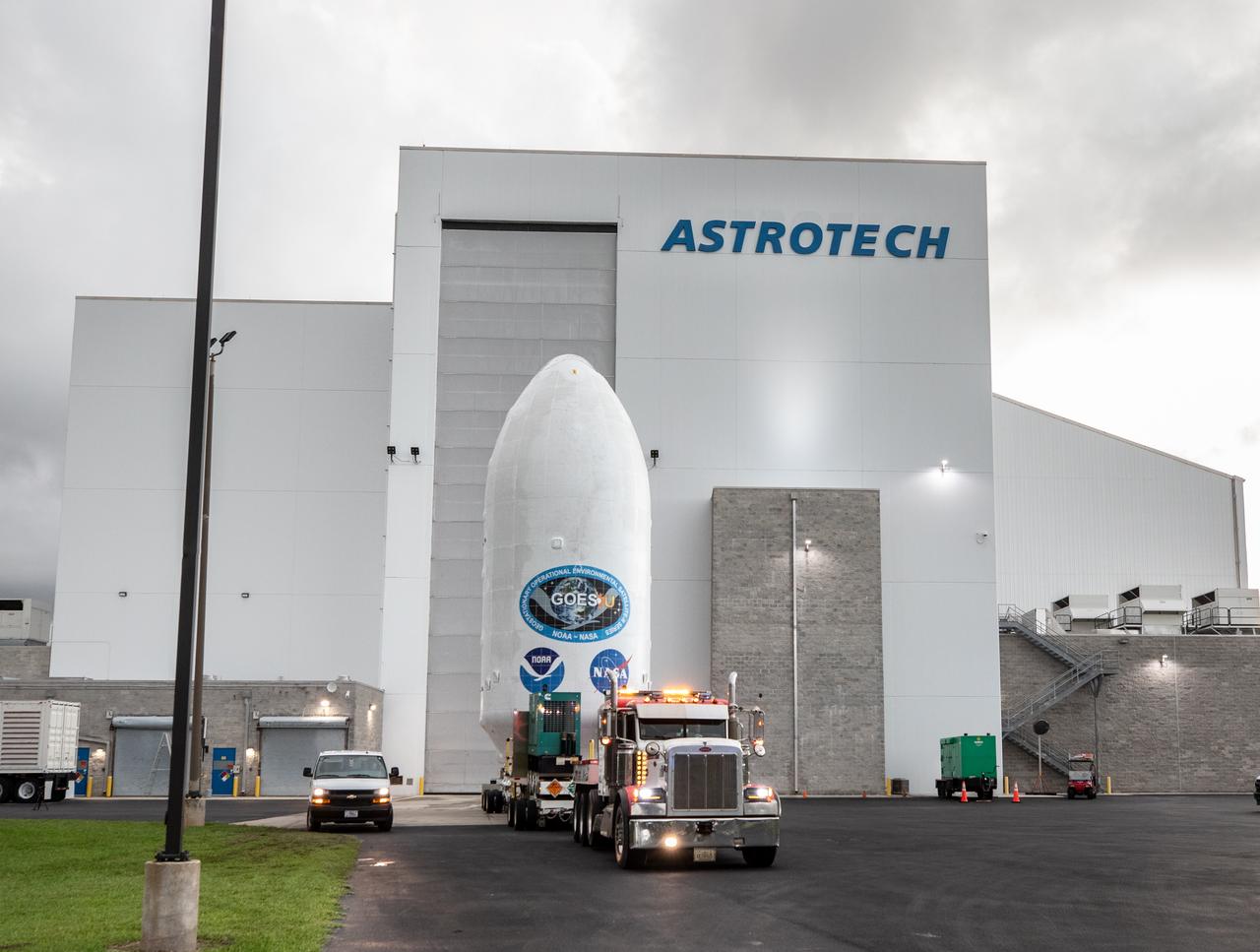
Crews transport NOAA’s (National Oceanic and Atmospheric Administration) Geostationary Operational Environmental Satellite (GOES-U) from the Astrotech Space Operations facility to the SpaceX hangar at Launch Complex 39A at NASA’s Kennedy Space Center in Florida beginning on Friday, June 14, 2024, with the operation finishing early Saturday, June 15, 2024. The fourth and final weather-observing and environmental monitoring satellite in NOAA’s GOES-R Series will assist meteorologists in providing advanced weather forecasting and warning capabilities. The two-hour window for liftoff opens 5:16 p.m. EDT Tuesday, June 25, aboard a SpaceX Falcon Heavy rocket from Launch Complex 39A at NASA’s Kennedy Space Center in Florida.
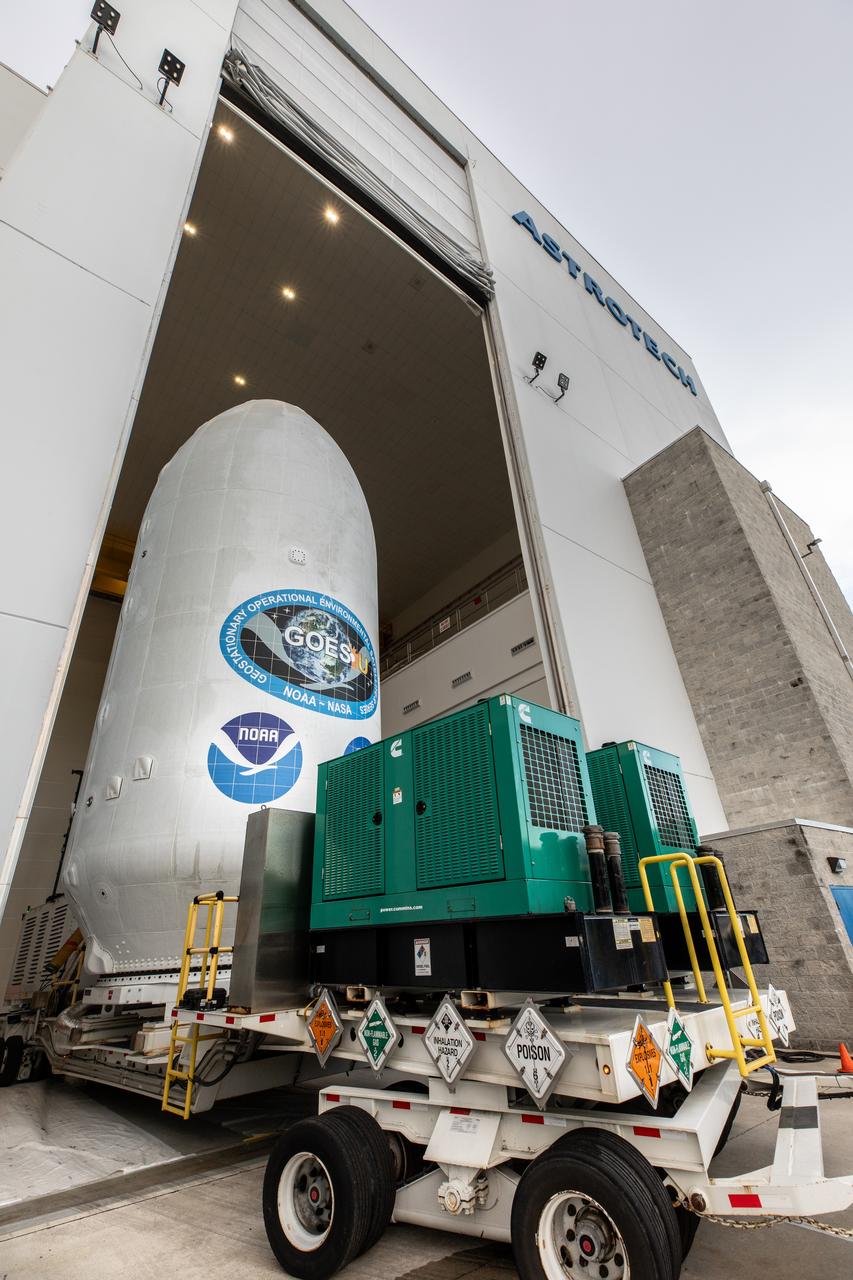
Crews transport NOAA’s (National Oceanic and Atmospheric Administration) Geostationary Operational Environmental Satellite (GOES-U) from the Astrotech Space Operations facility to the SpaceX hangar at Launch Complex 39A at NASA’s Kennedy Space Center in Florida beginning on Friday, June 14, 2024, with the operation finishing early Saturday, June 15, 2024. The fourth and final weather-observing and environmental monitoring satellite in NOAA’s GOES-R Series will assist meteorologists in providing advanced weather forecasting and warning capabilities. The two-hour window for liftoff opens 5:16 p.m. EDT Tuesday, June 25, aboard a SpaceX Falcon Heavy rocket from Launch Complex 39A at NASA’s Kennedy Space Center in Florida.

NASA Astronaut Frank Rubio smiles during a spacewalk robotics training on May 11, 2022 in Building 9 of NASA's Johnson Space Center in Houston, Texas.
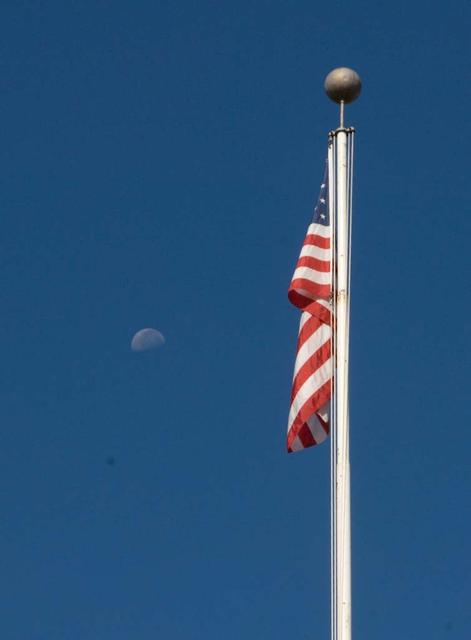
First Lunar Science Institute (LSI) collobration signing with nine (9) International partners. The Moon makes a daylight appearance over the LSI building-17.
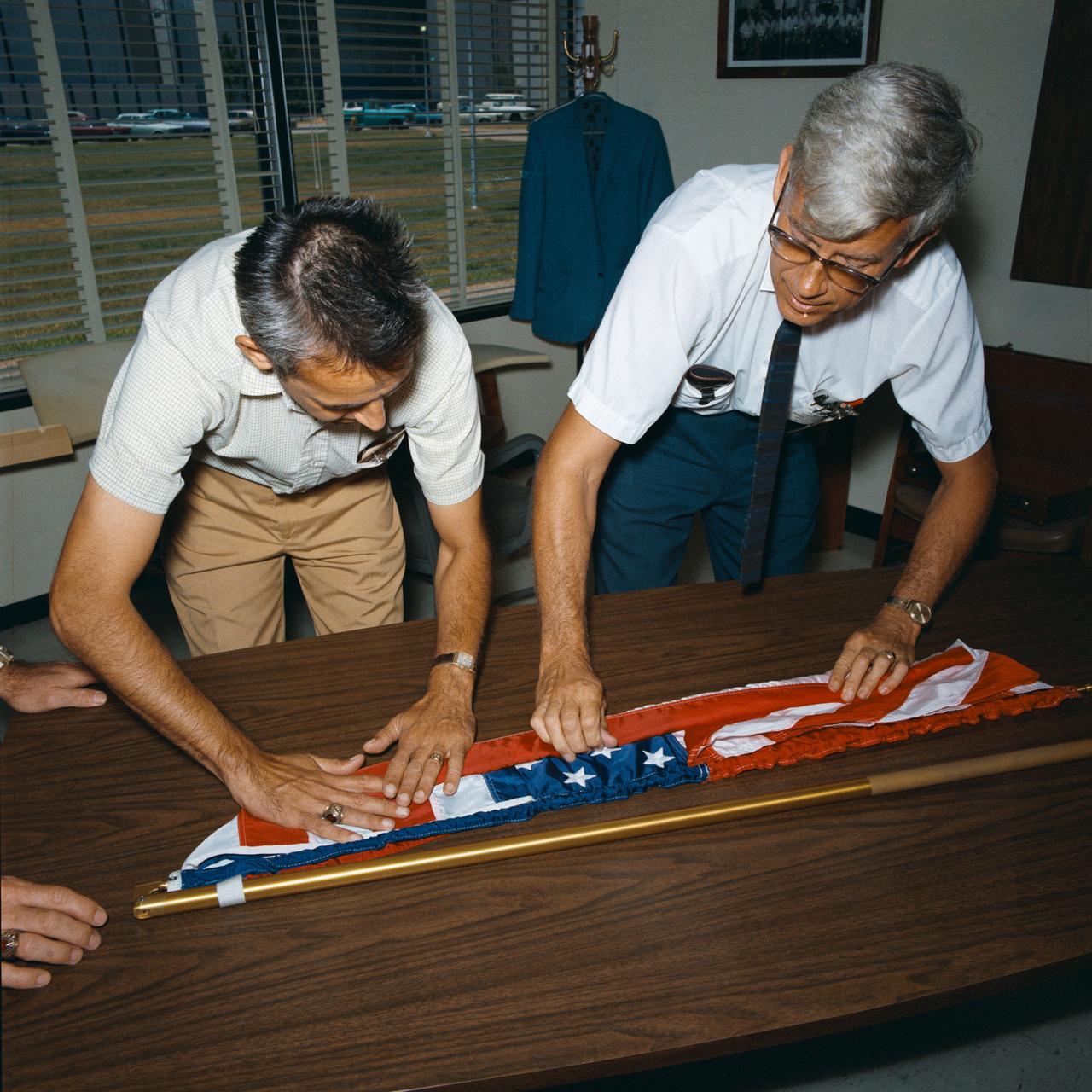
S69-38765 (1969) -- Jack Kinzler, right, with the U.S. flag kit for Apollo 11, seen in the technical services shop in Building 9.
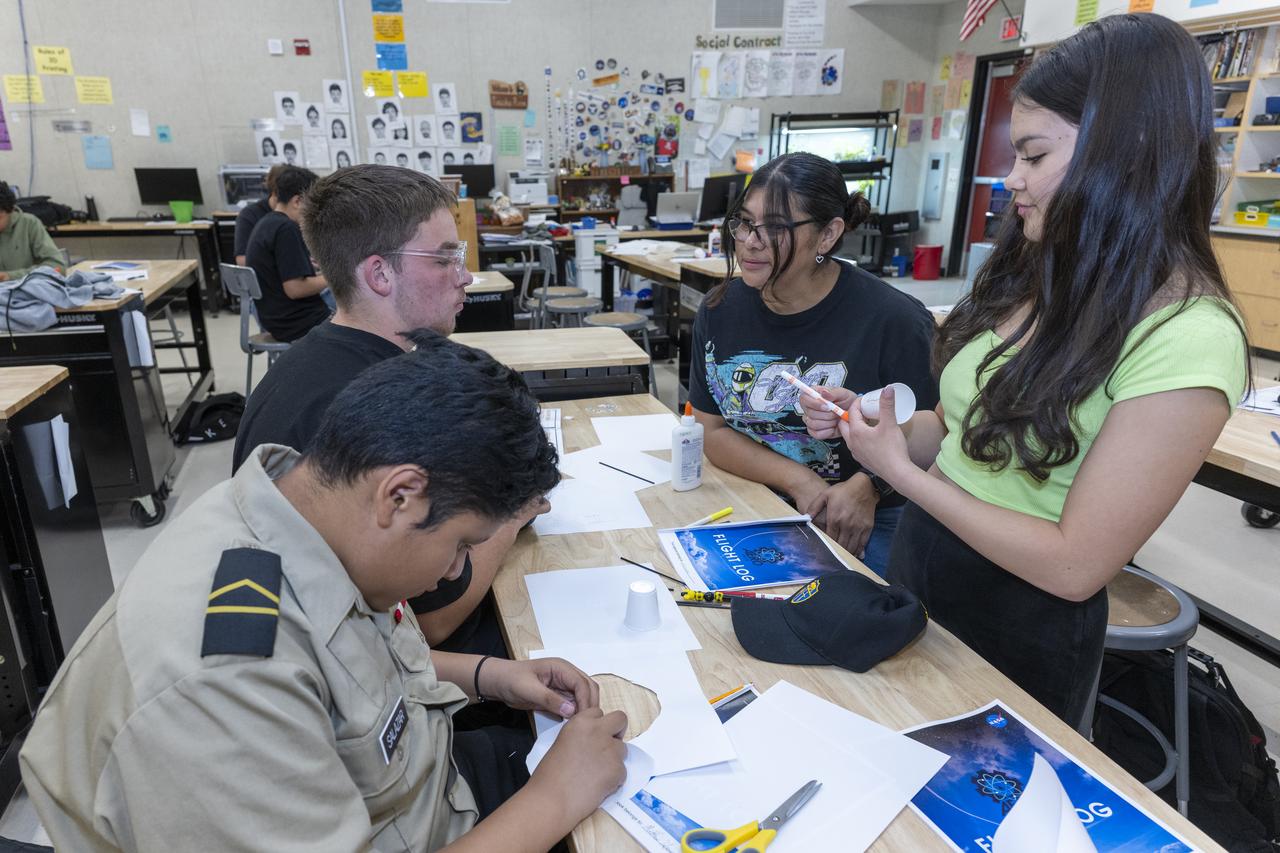
Students from Tropico Middle School in Rosamond, California, build their own paper planes as part of a project during NASA Aero Fair on April 9, 2025.
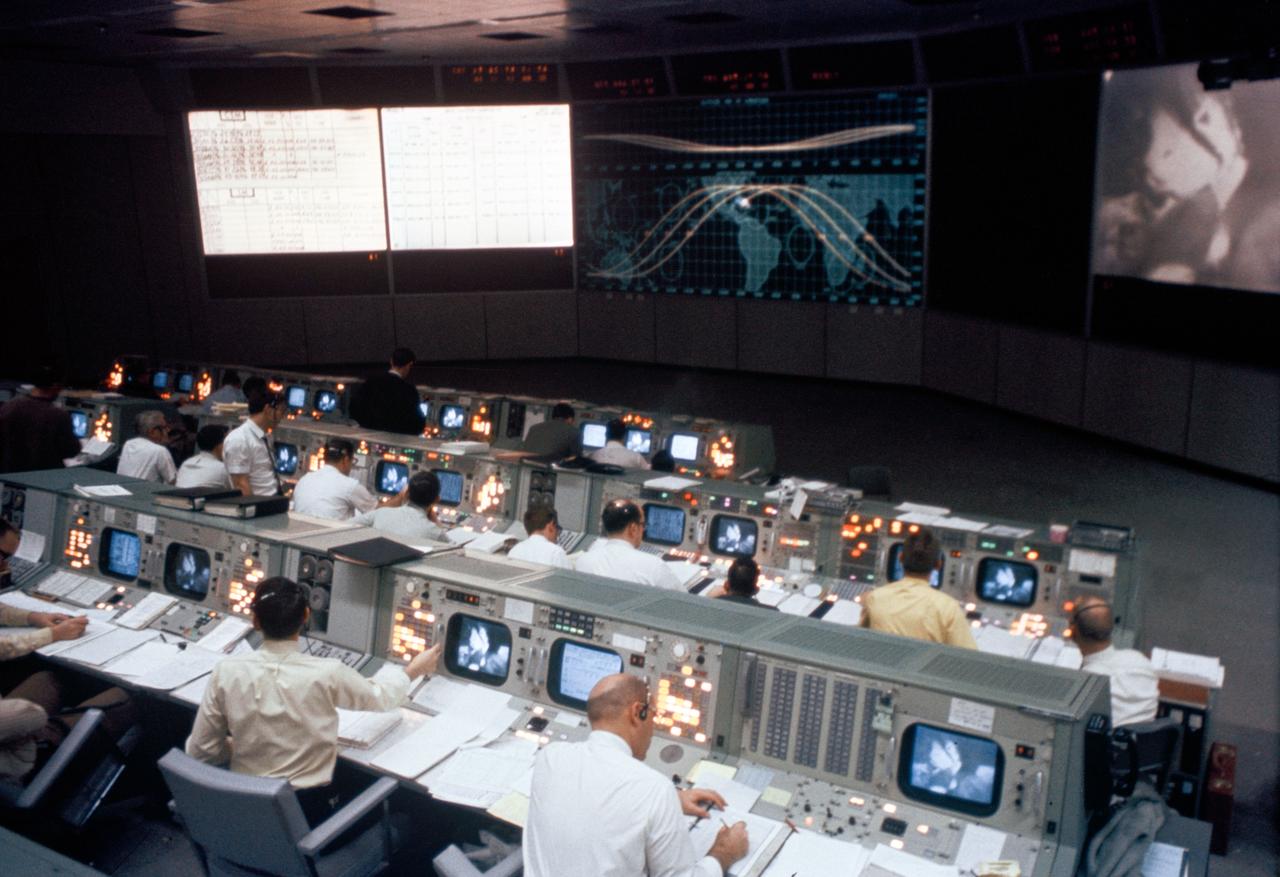
S69-26301 (March 1969) --- Overall view of the Mission Operations Control Room in the Mission Control Center, Building 30, during the Apollo 9 Earth-orbital mission. When this photograph was taken a live television transmission was being received from Apollo 9 as it orbited Earth.
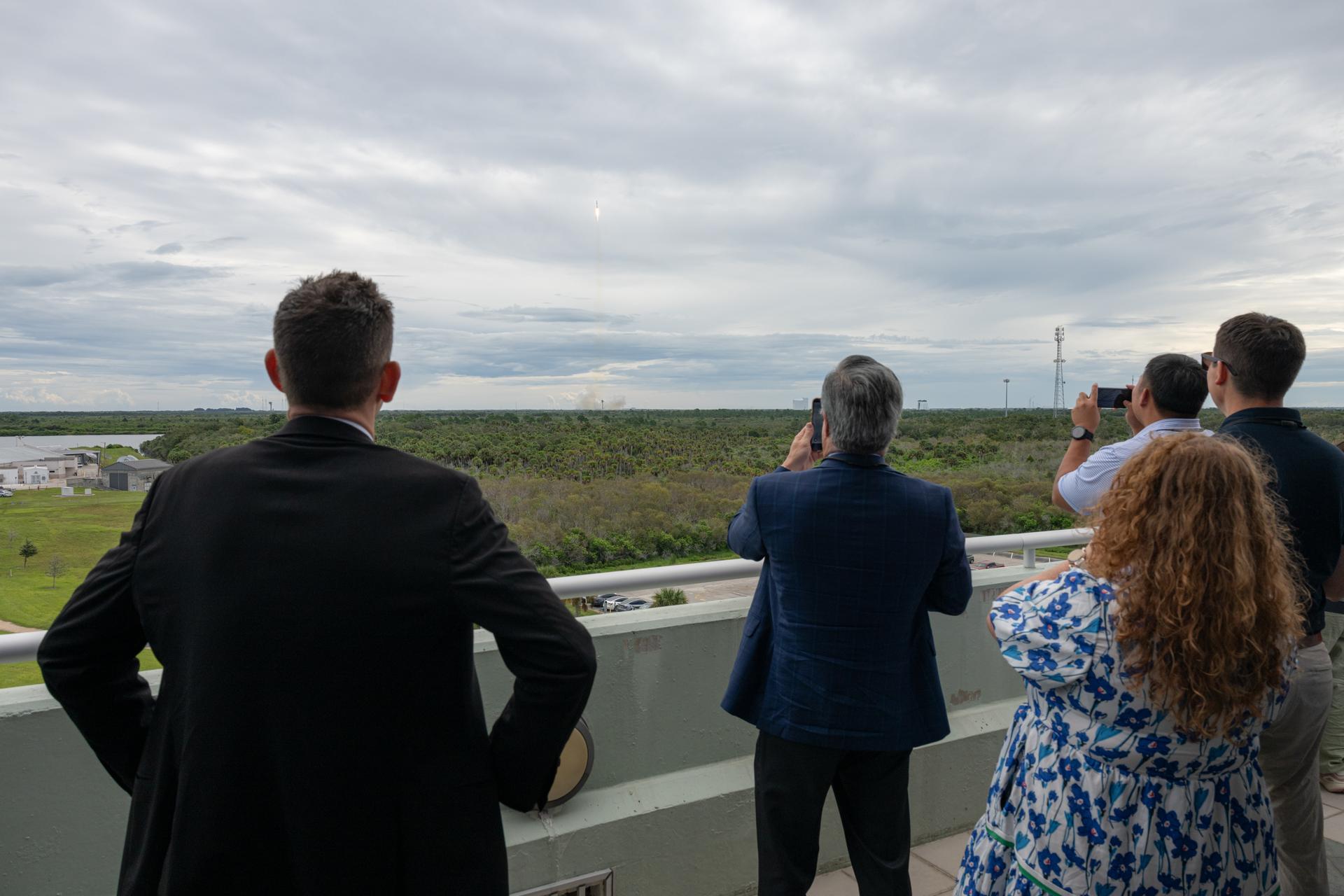
NASA Administrator Jared Isaacman, left, and invited guests and NASA employees watch as a SpaceX Falcon 9 rocket carrying the company’s Dragon spacecraft launches on NASA’s SpaceX Crew-13 mission to the International Space Station with NASA astronauts Jessica Watkins and Luke Delaney, CSA (Canadian Space Agency) astronaut Joshua Kutryk, and Roscosmos cosmonaut Sergey Teteryatnikov, Thursday, Oct. 1, 2026, at the Operations Support Building II at NASA’s Kennedy Space Center in Florida. NASA’s SpaceX Crew-13 mission is the thirteenth crew rotation mission of the SpaceX Falcon 9 rocket and Dragon spacecraft to the International Space Station as part of the agency’s Commercial Crew Program. Watkins, Delaney, Kutryk, and Teteryatnikov launched at 11:10 a.m. EDT from Space Launch Complex 40 at Cape Canaveral Space Force Station to begin their mission aboard the orbital outpost. Photo Credit: (NASA/John Kraus)
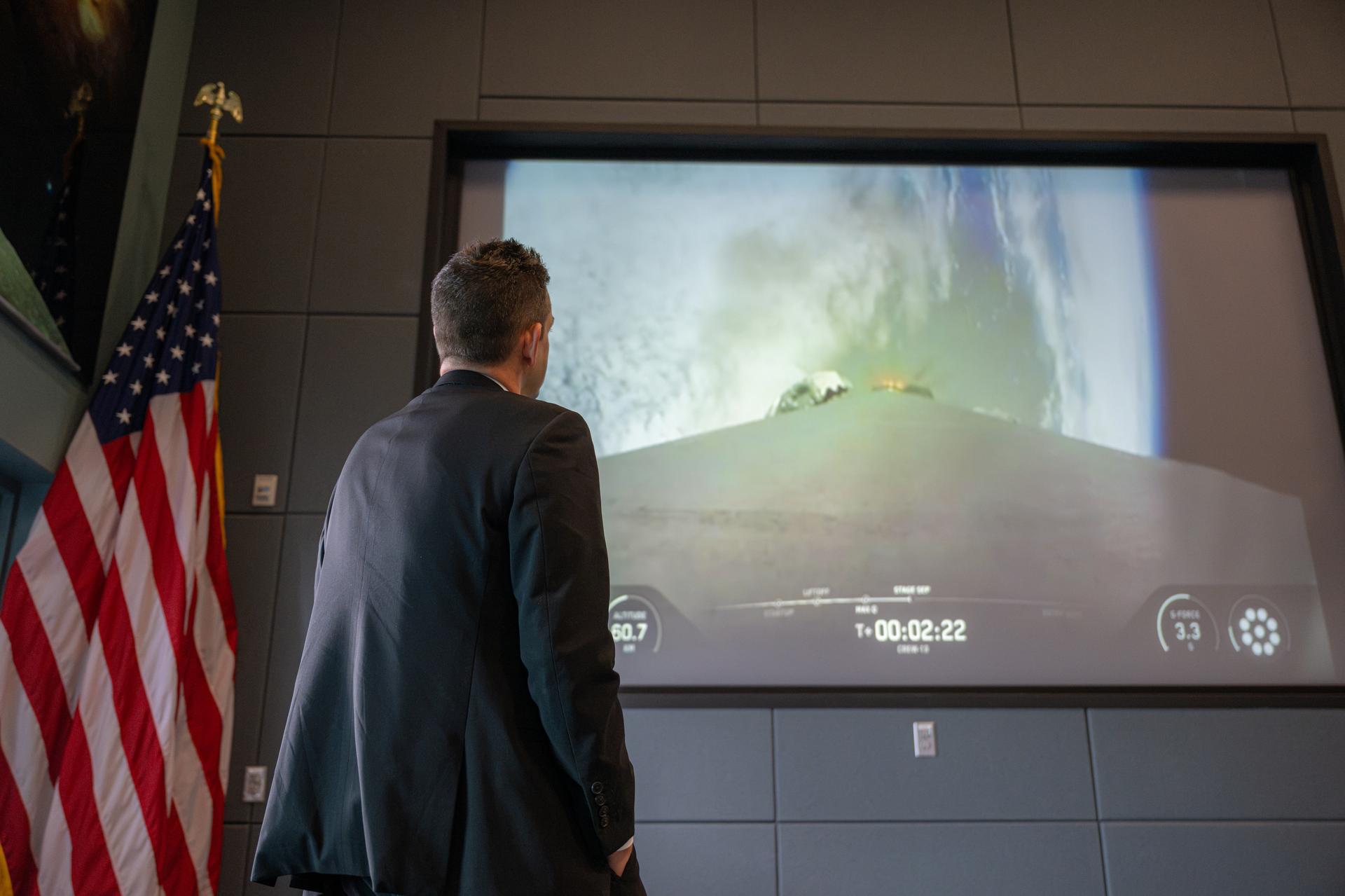
NASA Administrator Jared Isaacman watches a webcast of the launch of a SpaceX Falcon 9 rocket carrying the company’s Dragon spacecraft on NASA’s SpaceX Crew-13 mission to the International Space Station with NASA astronauts Jessica Watkins and Luke Delaney, CSA (Canadian Space Agency) astronaut Joshua Kutryk, and Roscosmos cosmonaut Sergey Teteryatnikov, Thursday, Oct. 1, 2026, at the Operations Support Building II at NASA’s Kennedy Space Center in Florida. NASA’s SpaceX Crew-13 mission is the thirteenth crew rotation mission of the SpaceX Falcon 9 rocket and Dragon spacecraft to the International Space Station as part of the agency’s Commercial Crew Program. Watkins, Delaney, Kutryk, and Teteryatnikov launched at 11:10 a.m. EDT from Space Launch Complex 40 at Cape Canaveral Space Force Station in Florida to begin their mission aboard the orbital outpost. Photo Credit: (NASA/John Kraus)
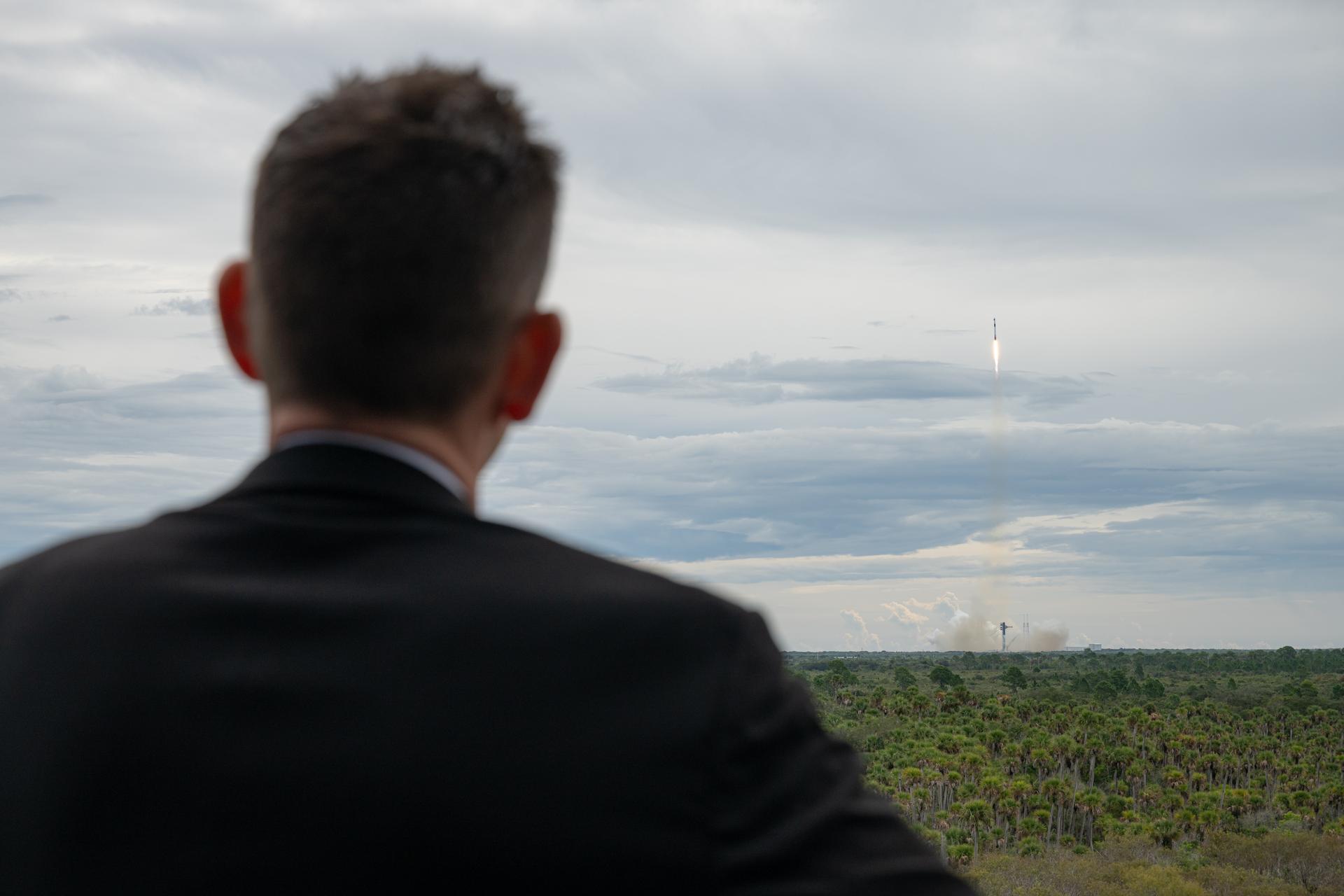
NASA Administrator Jared Isaacman watches as a SpaceX Falcon 9 rocket carrying the company’s Dragon spacecraft launches on NASA’s SpaceX Crew-13 mission to the International Space Station with NASA astronauts Jessica Watkins and Luke Delaney, CSA (Canadian Space Agency) astronaut Joshua Kutryk, and Roscosmos cosmonaut Sergey Teteryatnikov, Thursday, Oct. 1, 2026, at the Operations Support Building II at NASA’s Kennedy Space Center in Florida. NASA’s SpaceX Crew-13 mission is the thirteenth crew rotation mission of the SpaceX Falcon 9 rocket and Dragon spacecraft to the International Space Station as part of the agency’s Commercial Crew Program. Watkins, Delaney, Kutryk, and Teteryatnikov launched at 11:10 a.m. EDT from Space Launch Complex 40 at Cape Canaveral Space Force Station to begin their mission aboard the orbital outpost. Photo Credit: (NASA/John Kraus)
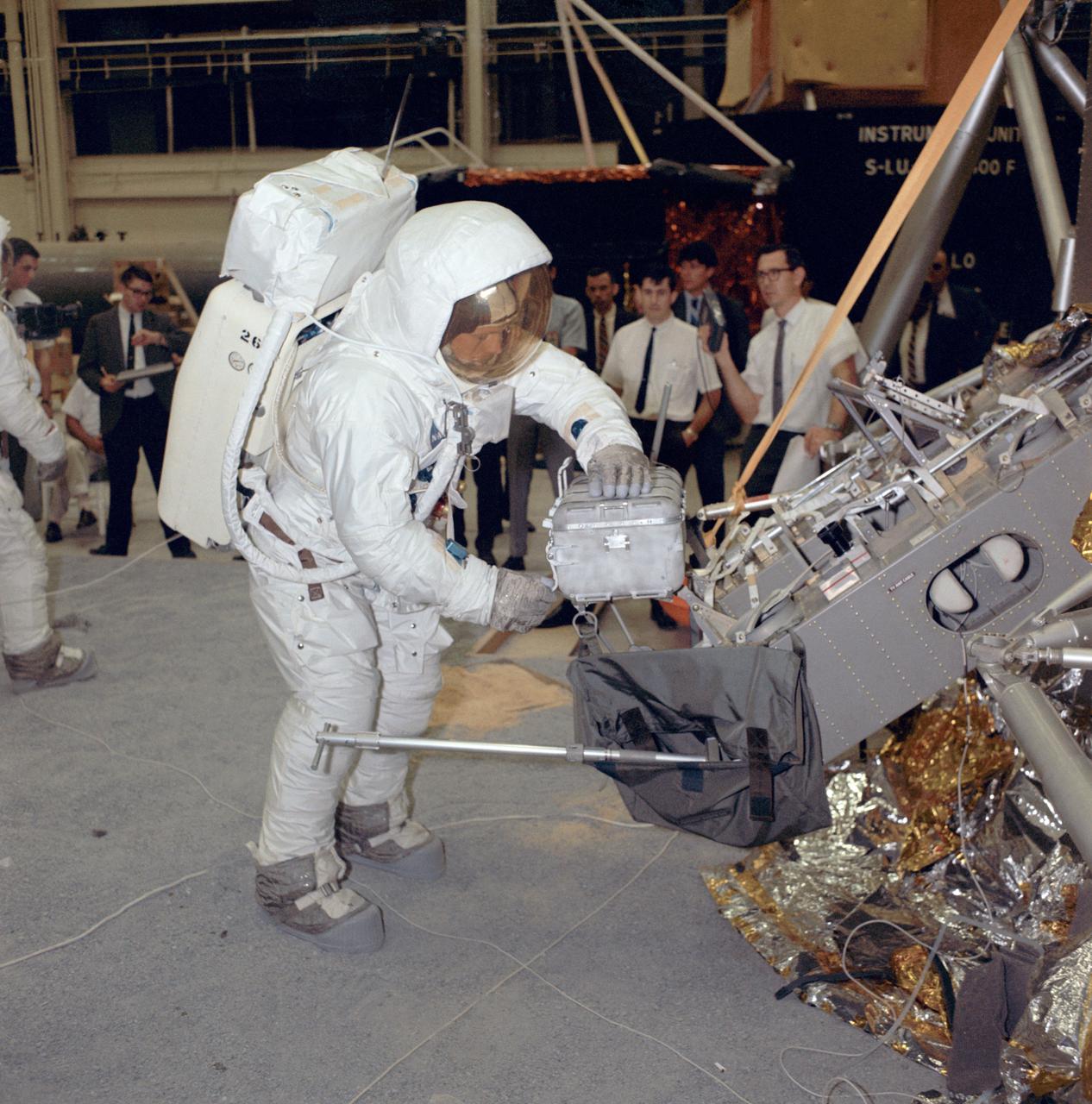
Apollo 11 commander Neil Armstrong works with an Apollo Lunar Sample Return Container during a two-and-a-half-hour lunar surface simulation training exercise. The image was taken on Apr. 18, 1969, in Building 9 at the Manned Spacecraft Center in Houston, Texas. The sample tubes carried by NASA's Mars 2020 Perseverance rover are destined to carry the first samples in history from another planet back to Earth. Future scientists will use these carefully selected representatives of Martian rock and regolith (broken rock and dust), to look for evidence of potential microbial life present in Mars' ancient past and to answer other key questions about Mars and its history. Perseverance will land at Mars' Jezero Crater on Feb. 18, 2021. https://photojournal.jpl.nasa.gov/catalog/PIA24297
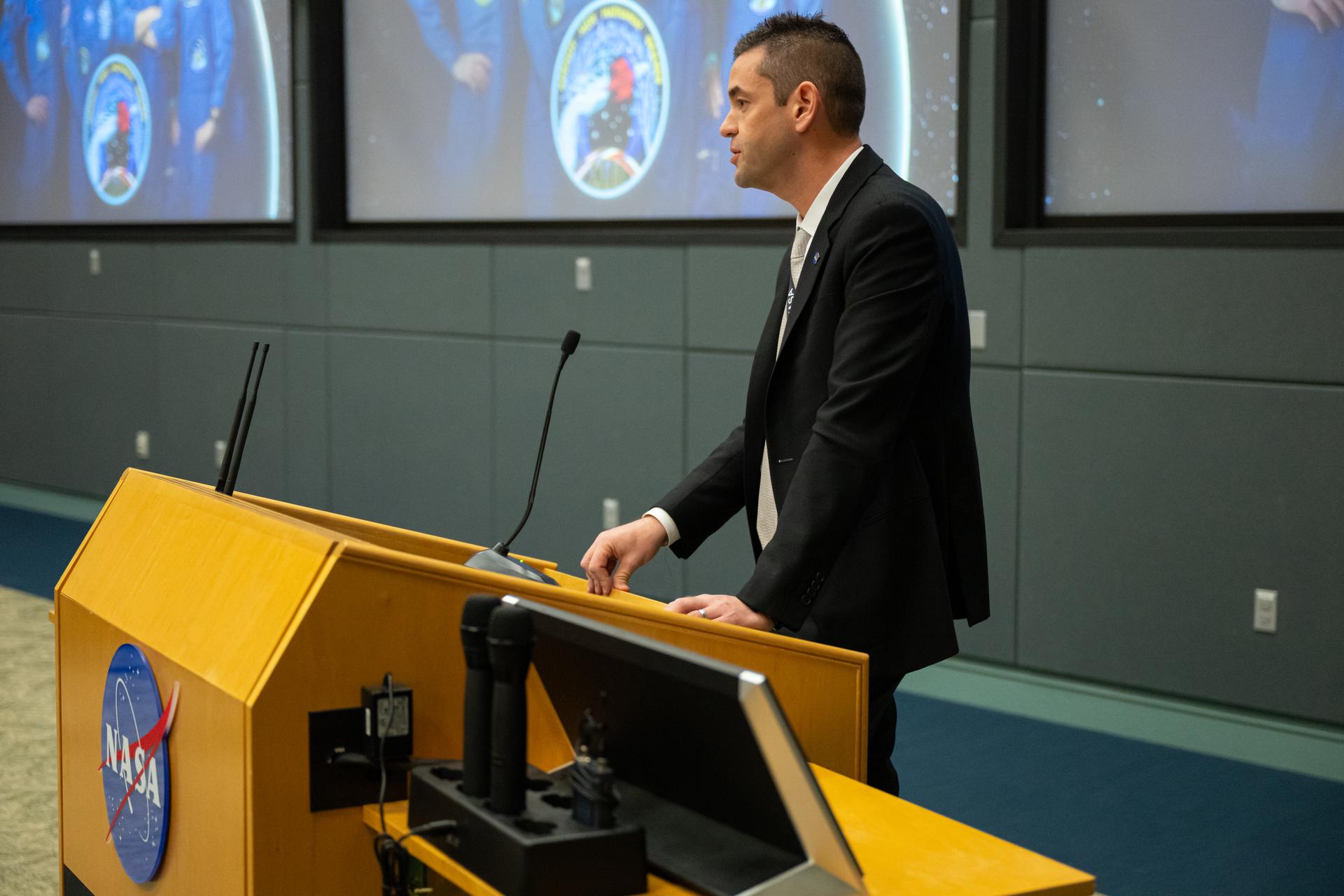
NASA Administrator Jared Isaacman gives remarks ahead of the launch of NASA’s SpaceX Crew-12 mission, Friday, Feb. 13, 2026, at the Operations and Support Building II at NASA’s Kennedy Space Center in Florida. NASA’s SpaceX Crew-12 mission is the twelfth crew rotation mission of the SpaceX Falcon 9 rocket and Dragon spacecraft to the International Space Station as part of the agency’s Commercial Crew Program. NASA astronauts Jessica Meir, Jack Hathaway, ESA (European Space Agency) astronaut Sophie Adenot, and Roscosmos cosmonaut Andrey Fedyaev are scheduled to launch at 5:15 a.m. EST on Friday, Feb. 13, from Space Launch Complex 40. Photo Credit: (NASA/John Kraus)
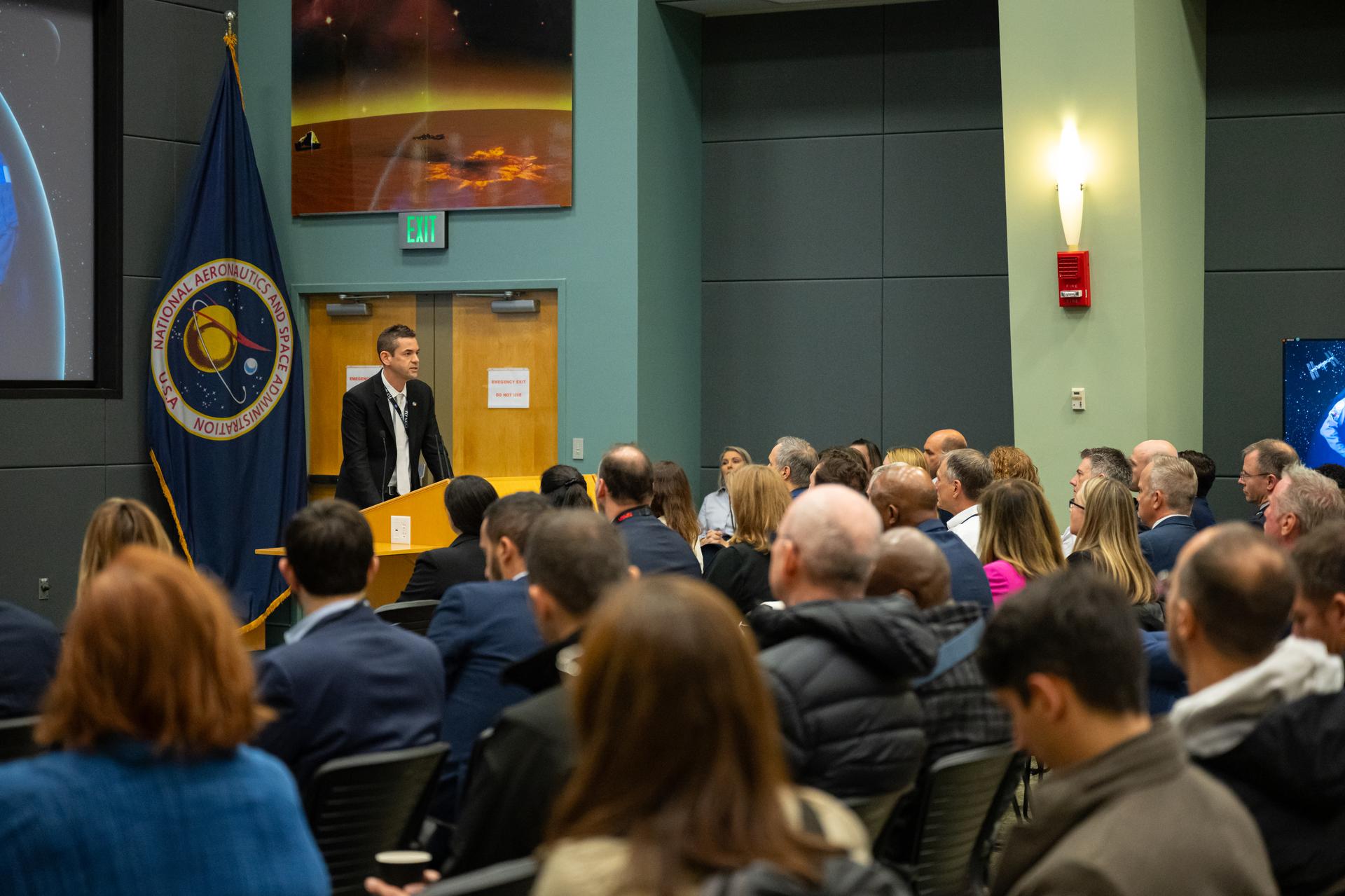
NASA Administrator Jared Isaacman gives remarks ahead of the launch of NASA’s SpaceX Crew-12 mission, Friday, Feb. 13, 2026, at the Operations and Support Building II at NASA’s Kennedy Space Center in Florida. NASA’s SpaceX Crew-12 mission is the twelfth crew rotation mission of the SpaceX Falcon 9 rocket and Dragon spacecraft to the International Space Station as part of the agency’s Commercial Crew Program. NASA astronauts Jessica Meir, Jack Hathaway, ESA (European Space Agency) astronaut Sophie Adenot, and Roscosmos cosmonaut Andrey Fedyaev are scheduled to launch at 5:15 a.m. EST on Friday, Feb. 13, from Space Launch Complex 40. Photo Credit: (NASA/John Kraus)
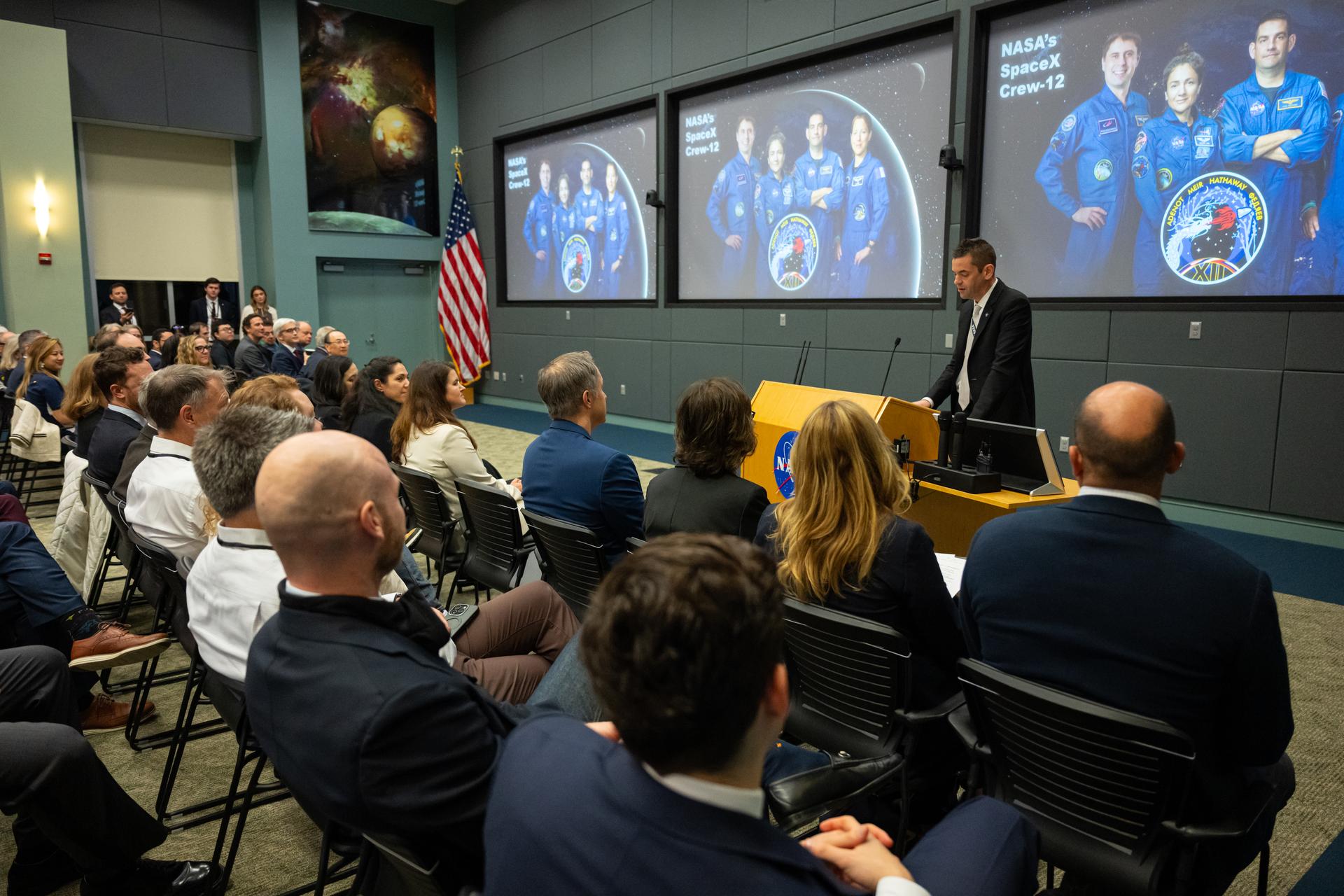
NASA Administrator Jared Isaacman gives remarks ahead of the launch of NASA’s SpaceX Crew-12 mission, Friday, Feb. 13, 2026, at the Operations and Support Building II at NASA’s Kennedy Space Center in Florida. NASA’s SpaceX Crew-12 mission is the twelfth crew rotation mission of the SpaceX Falcon 9 rocket and Dragon spacecraft to the International Space Station as part of the agency’s Commercial Crew Program. NASA astronauts Jessica Meir, Jack Hathaway, ESA (European Space Agency) astronaut Sophie Adenot, and Roscosmos cosmonaut Andrey Fedyaev are scheduled to launch at 5:15 a.m. EST on Friday, Feb. 13, from Space Launch Complex 40. Photo Credit: (NASA/John Kraus)
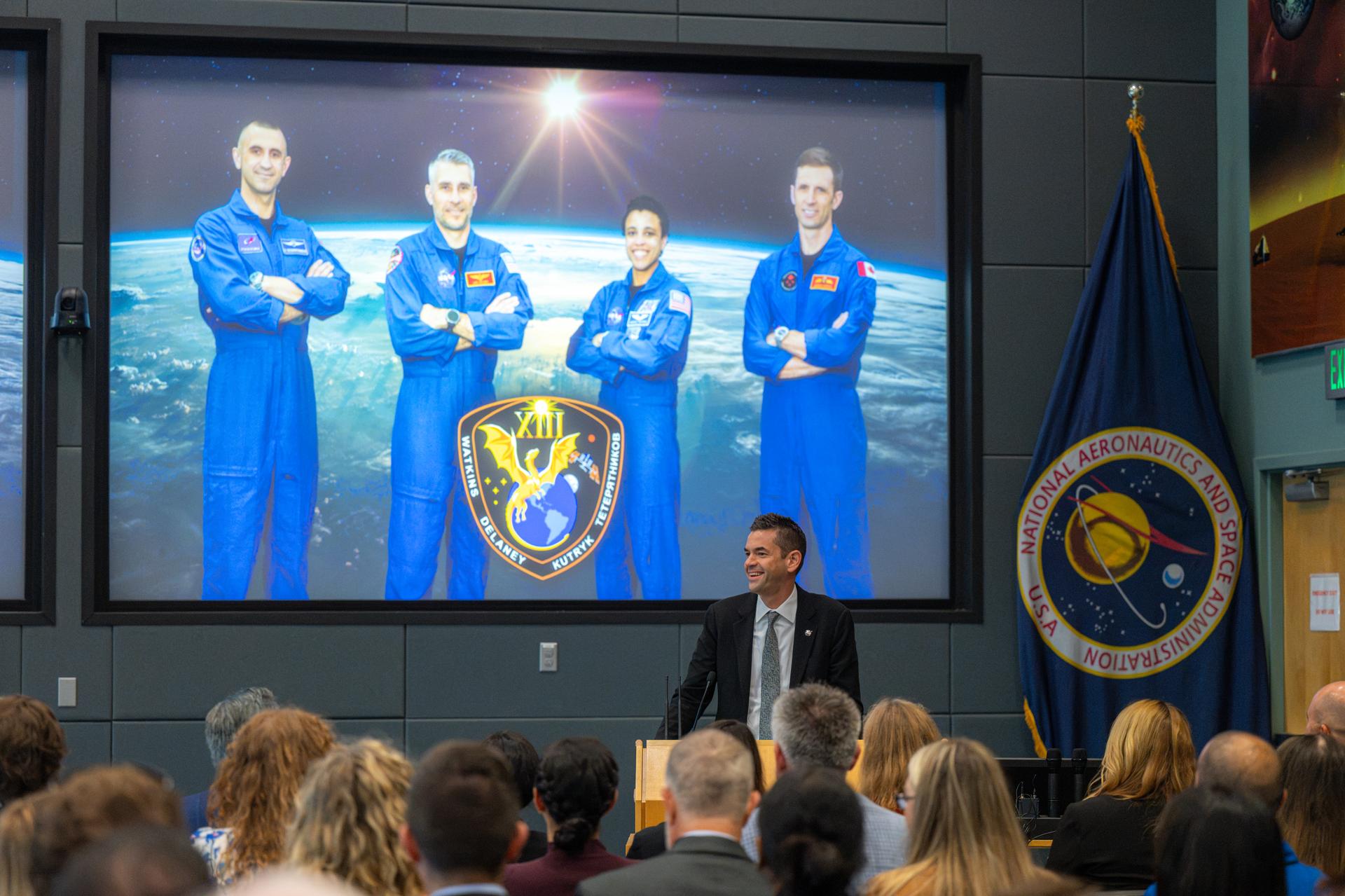
NASA Administrator Jared Isaacman gives remarks during a prelaunch briefing for NASA’s SpaceX Crew-13 mission, Thursday, Oct. 1, 2026, at the Operations Support Building II at NASA’s Kennedy Space Center in Florida. NASA’s SpaceX Crew-13 mission is the thirteenth crew rotation mission of the SpaceX Falcon 9 rocket and Dragon spacecraft to the International Space Station as part of the agency’s Commercial Crew Program. NASA astronauts Jessica Watkins and Luke Delaney, CSA (Canadian Space Agency) astronaut Joshua Kutryk, and Roscosmos cosmonaut Sergey Teteryatnikov will conduct scientific research, technology demonstrations, and maintenance during their long-duration stay aboard the orbital outpost. Photo Credit: (NASA/John Kraus)
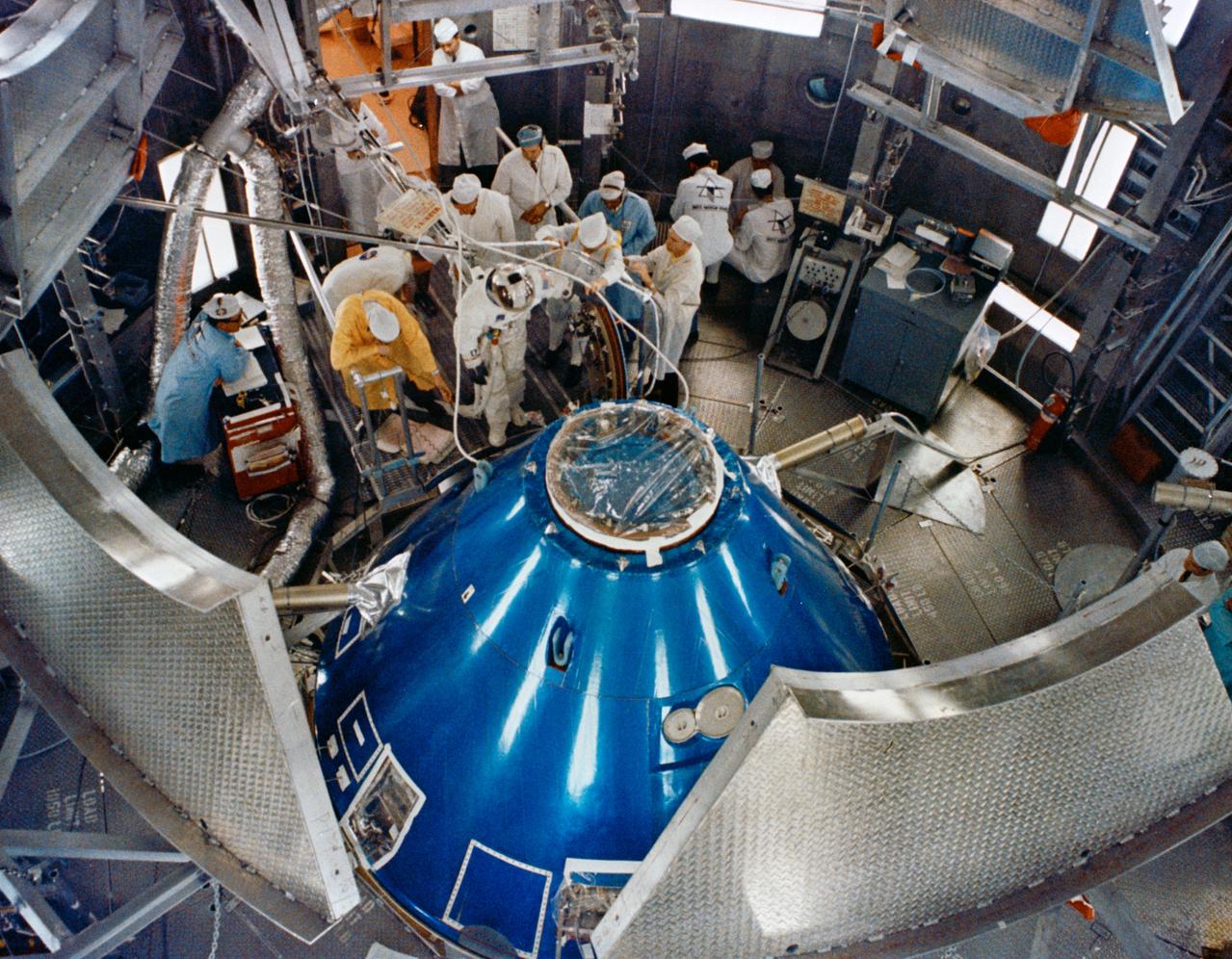
S68-55255 (6 Nov. 1968) --- Overhead view of Altitude Chamber "L" in the Kennedy Space Center's Manned Spacecraft Operations Building showing a member of the Apollo 9 backup crew preparing to ingress the Apollo 9 spacecraft for egress test and simulated altitude run. The Apollo 9 backup crew consists of astronauts Charles Conrad Jr., Richard F. Gordon Jr., and Alan L. Bean.
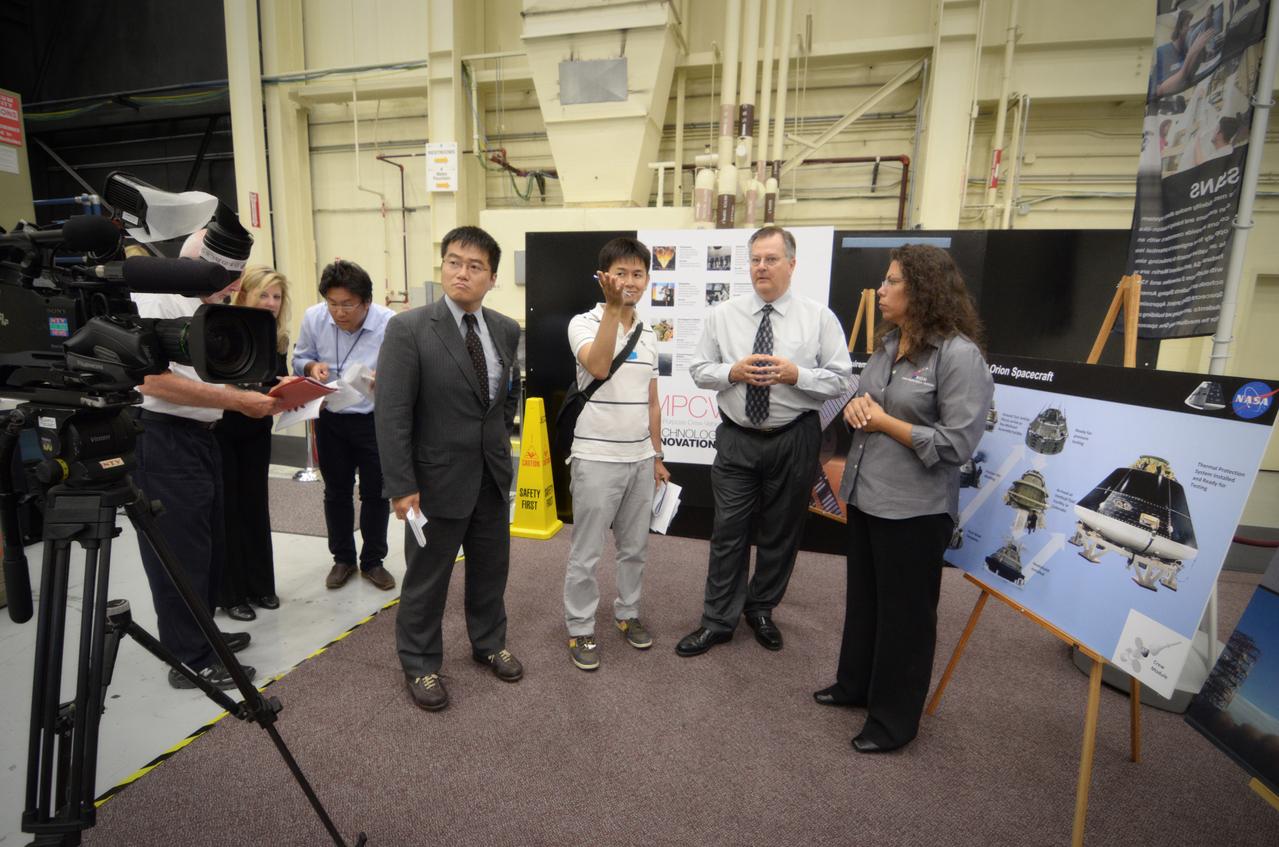
Members of the media attend a Media Day event and visit the Orion mockup in the Space Vehicle Mockup Facility in Building 9 of the Johnson Space Center in Houston on July 1, 2011. Part of Batch image transfer from Flickr.

DATE: 3-15-11 LOCATION: Building 9 - ISS Mockup SUBJECT: Expedition 28/29 crew members during Docking Timeline Training. PHOTOGRAPHER: Lauren Harnett
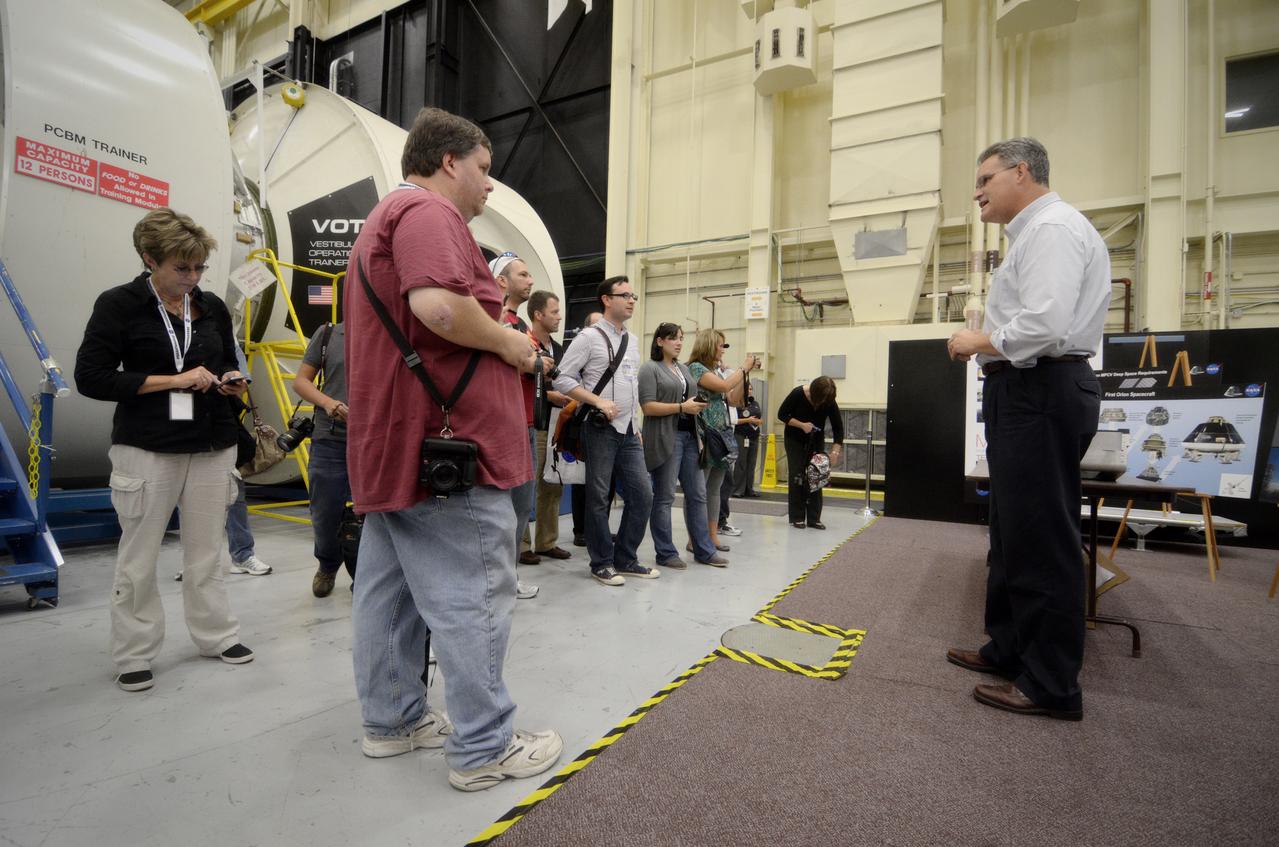
Paul Marshall from the Orion program office speaks to NASA Tweetup participants in Building 9 at the Johnson Space Center in Houston on July 19, 2011. Part of Batch image transfer from Flickr.
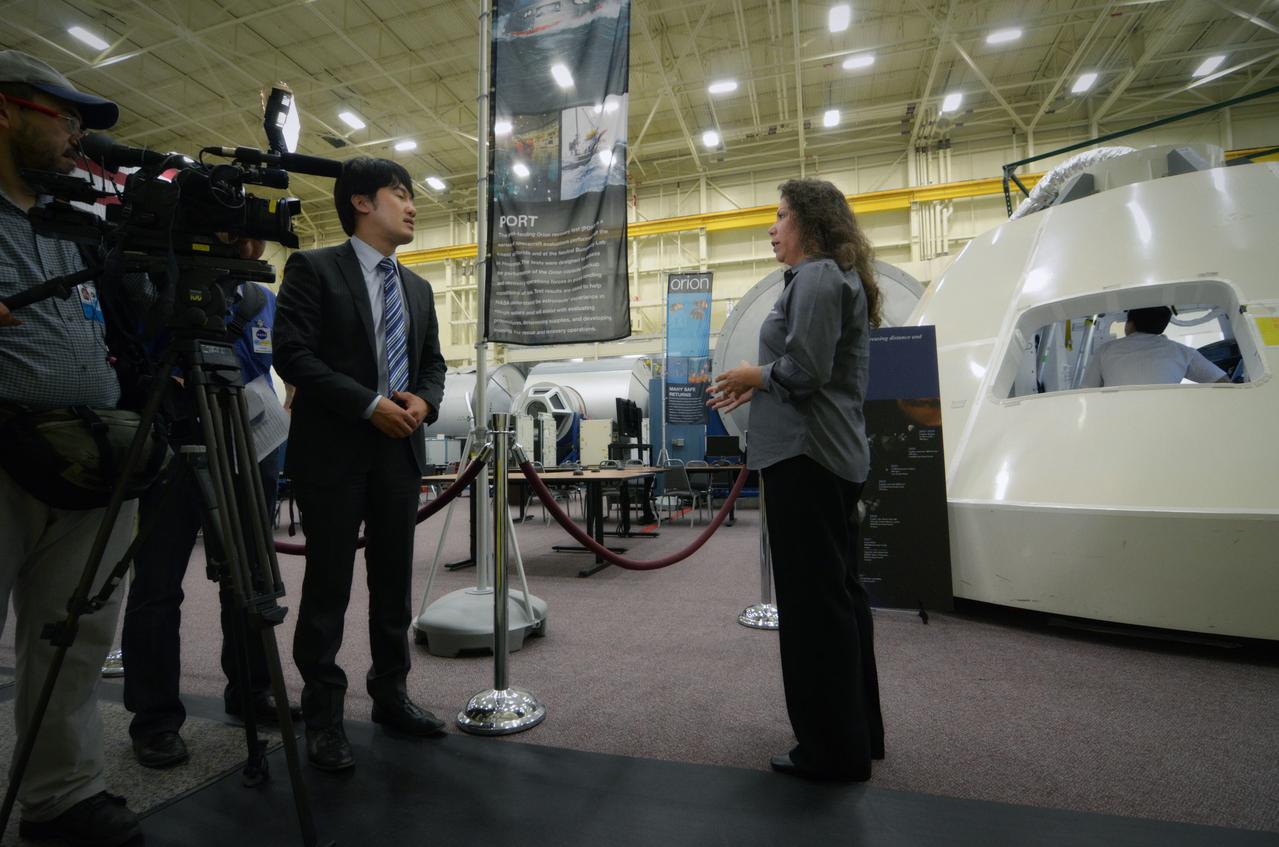
Members of the media attend a Media Day event and visit the Orion mockup in the Space Vehicle Mockup Facility in Building 9 of the Johnson Space Center in Houston on July 1, 2011. Part of Batch image transfer from Flickr.

DATE: 3-15-11 LOCATION: Building 9 - ISS Mockup SUBJECT: Expedition 28/29 crew members during Docking Timeline Training. PHOTOGRAPHER: Lauren Harnett
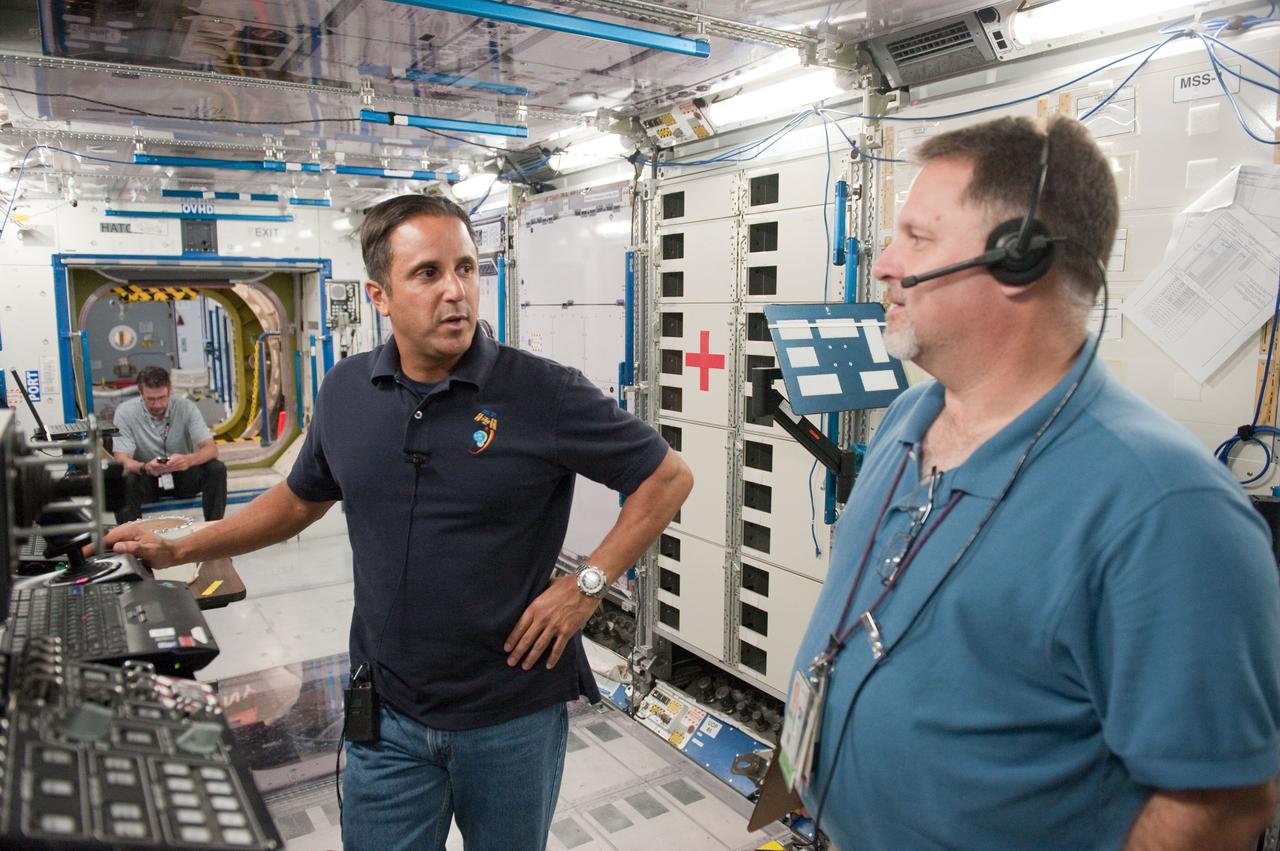
DATE: 10-17-11 LOCATION: Building 9 - ISS Trainers SUBJECT: Expedition 31/32 crew—Padalka, Revin and Acaba—during some of their Emergency Scenarios training. PHOTOGRAPHER: Lauren Harnett
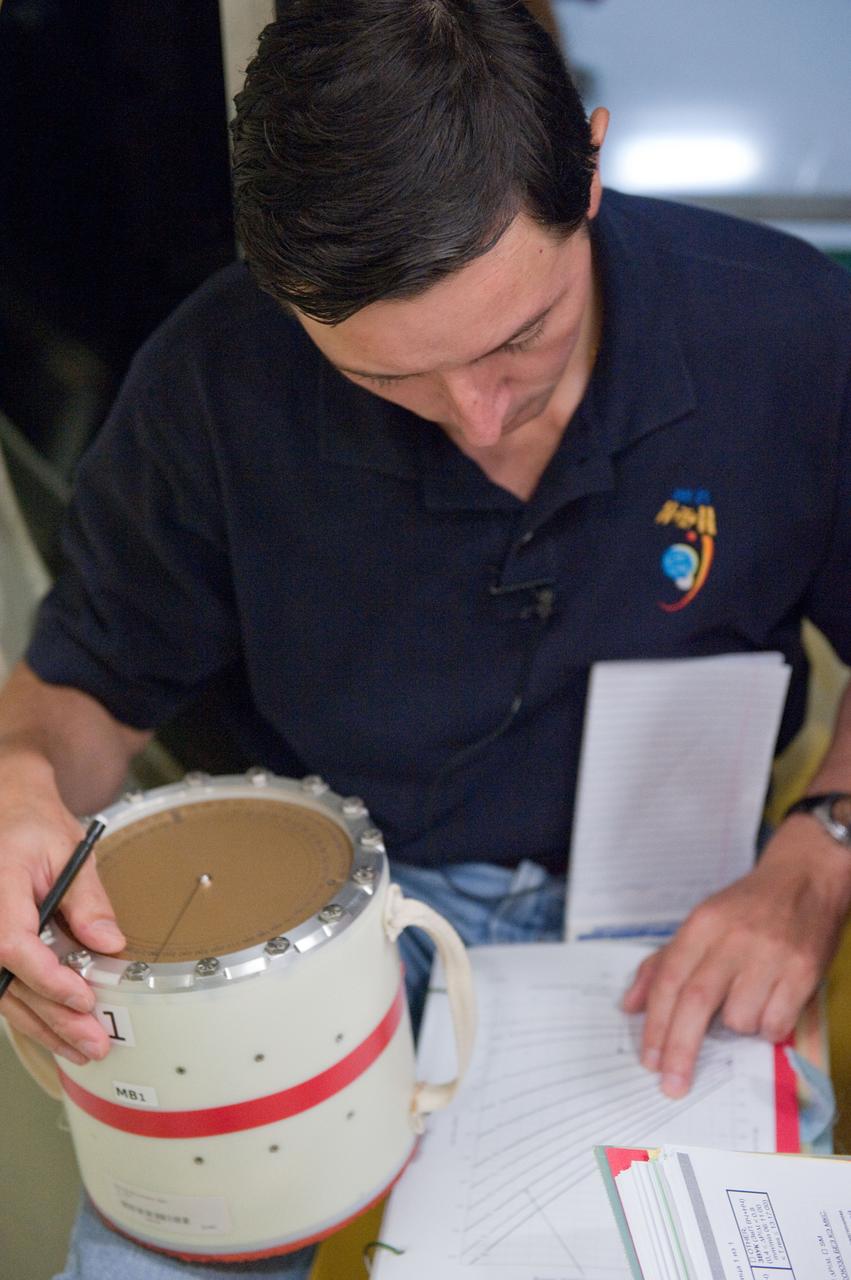
DATE: 10-17-11 LOCATION: Building 9 - ISS Trainers SUBJECT: Expedition 31/32 crew—Padalka, Revin and Acaba—during some of their Emergency Scenarios training. PHOTOGRAPHER: Lauren Harnett
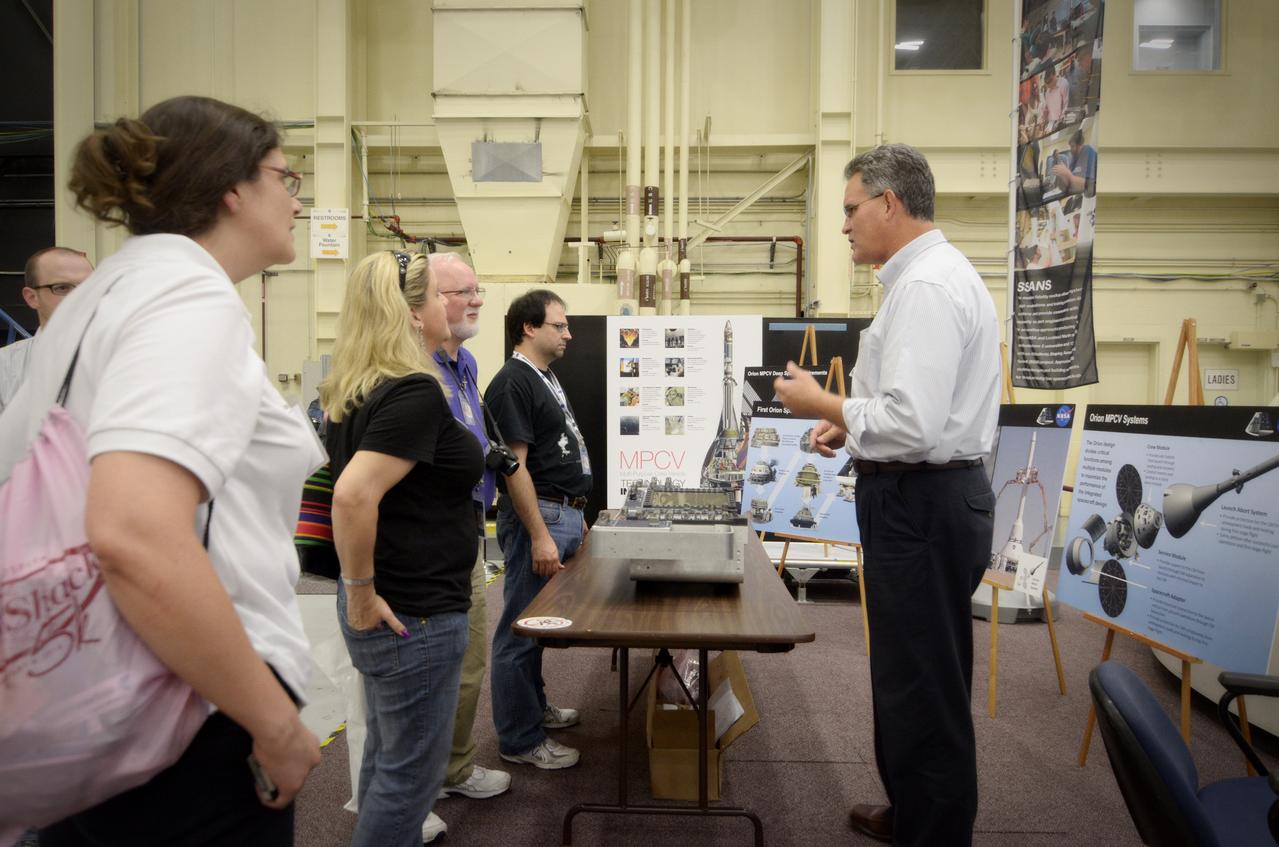
Paul Marshall from the Orion program office speaks to NASA Tweetup participants in Building 9 at the Johnson Space Center in Houston on July 19, 2011. Part of Batch image transfer from Flickr.

Paul Marshall from the Orion program office speaks to NASA Tweetup participants in Building 9 at the Johnson Space Center in Houston on July 19, 2011. Part of Batch image transfer from Flickr.
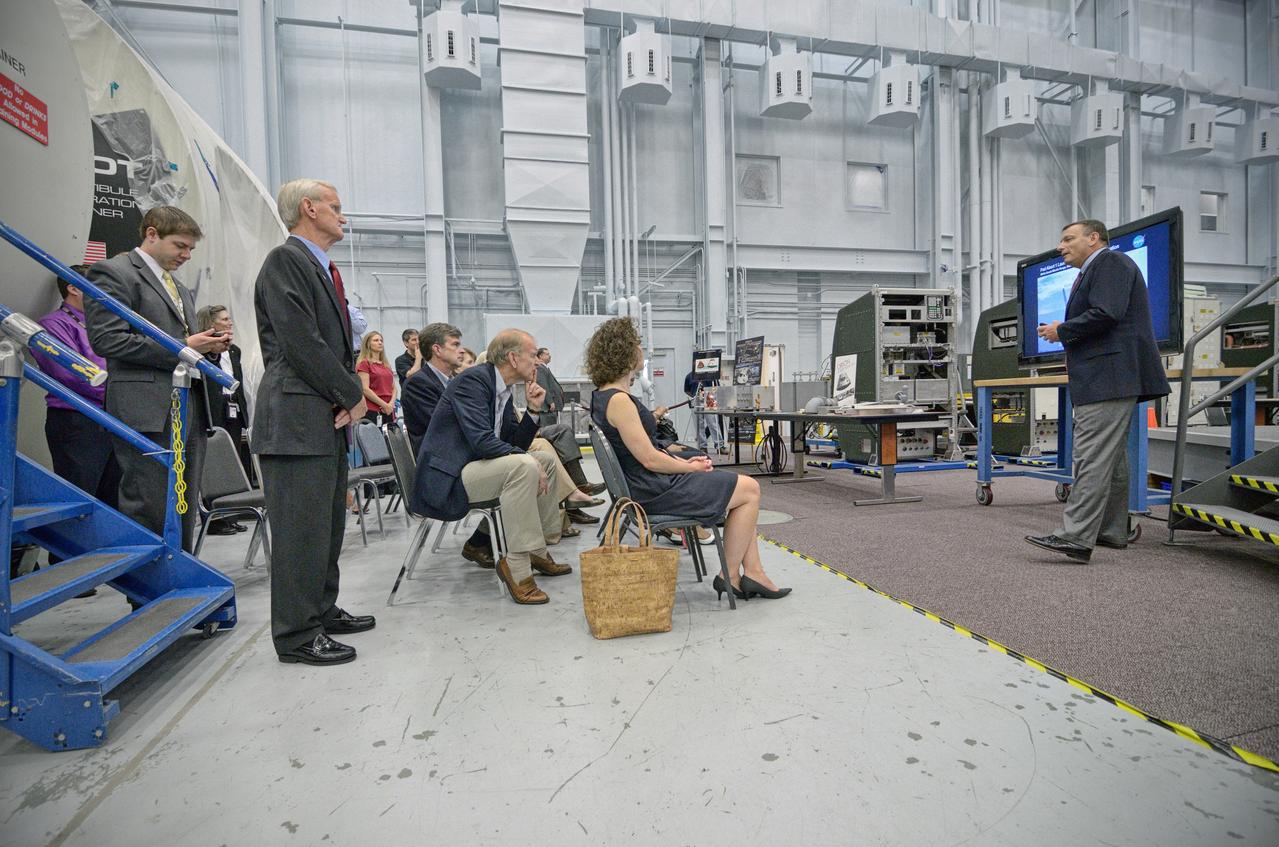
State congressional delegations visit the Orion mockup in the Space Vehicle Mockup Facility in Building 9 of Johnson Space Center in Houston on June 22, 2012. Part of Batch image transfer from Flickr.
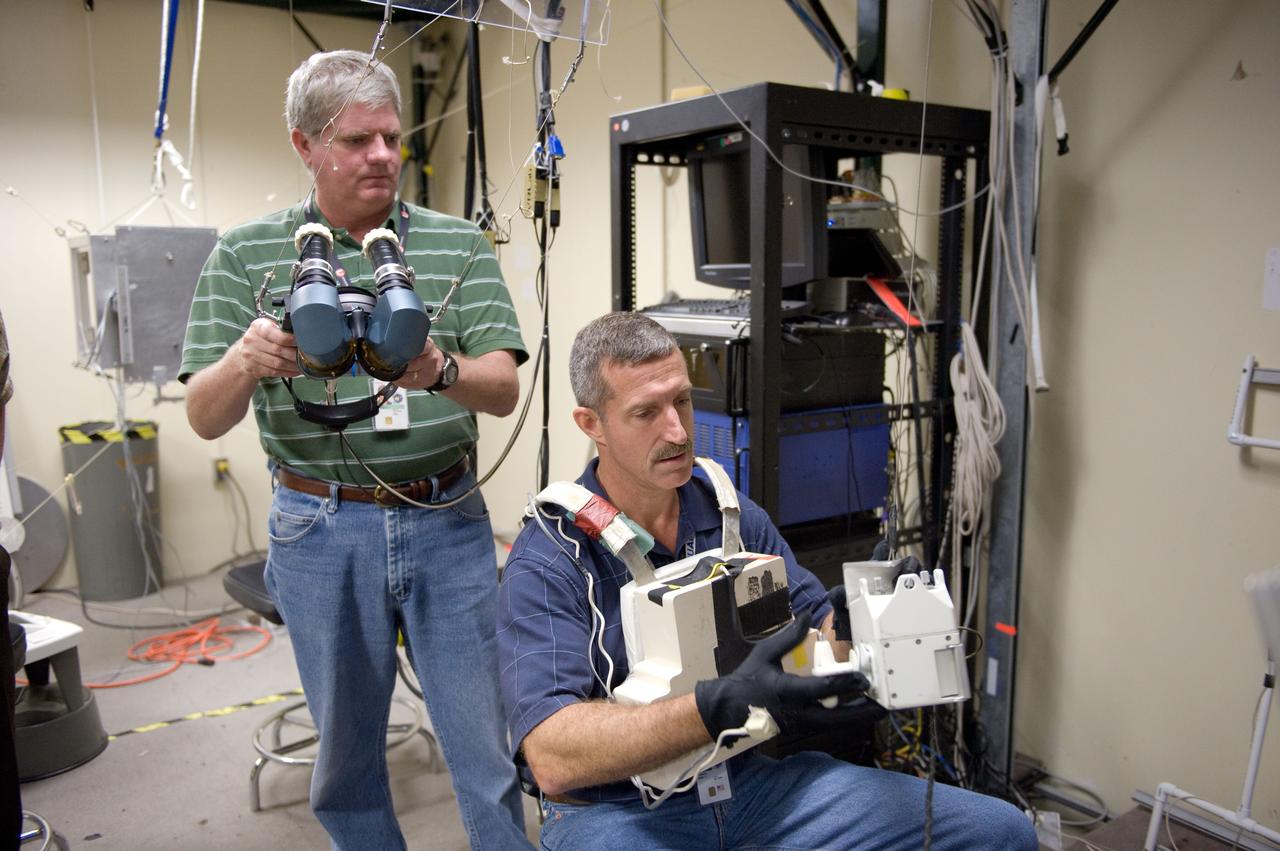
Expedition 29/30 astronaut Dan Burbank during SAFER Proficiency Training in the VR Lab. Photo Date: June 17, 2011. Location: Building 9 - Virtual Reality Lab. Photographer: Robert Markowitz
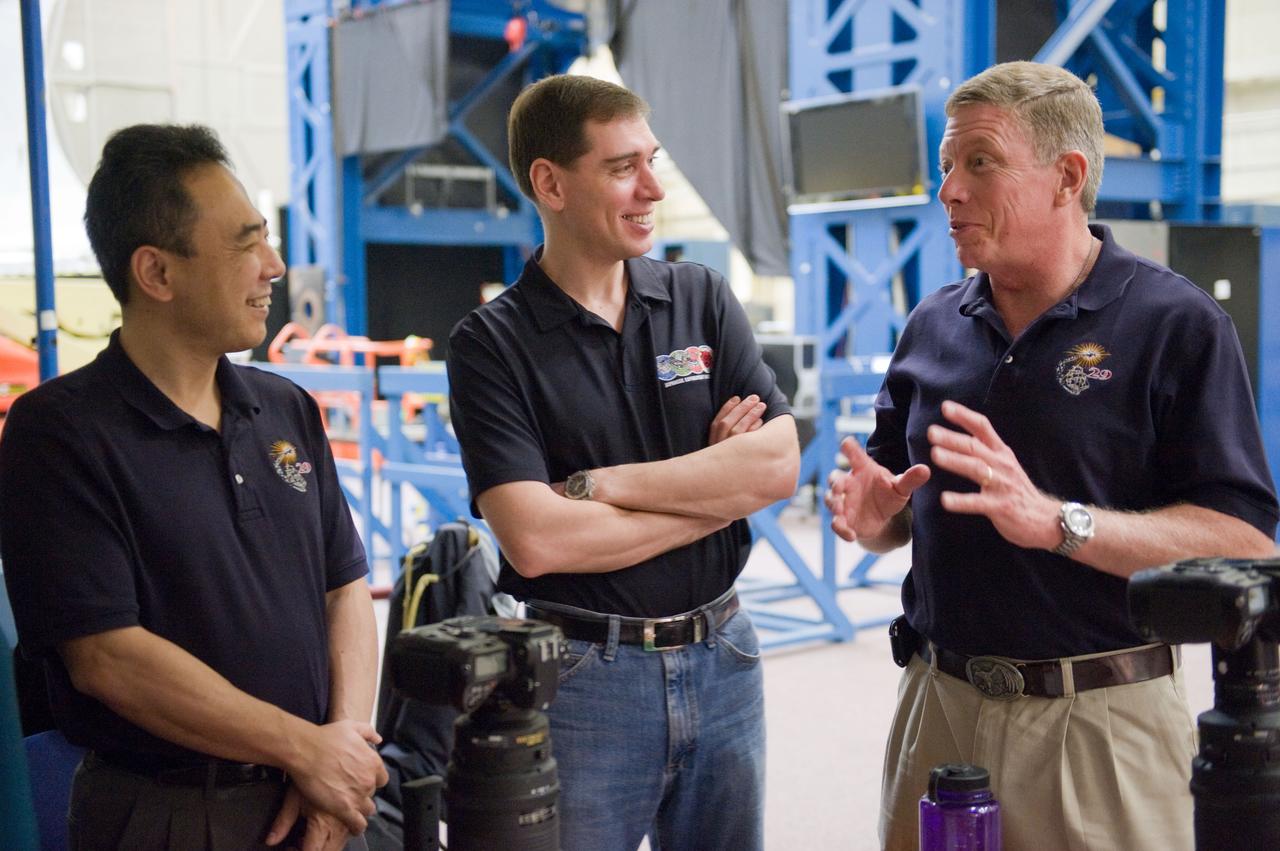
DATE: 3-15-11 LOCATION: Building 9 - ISS Mockup SUBJECT: Expedition 28/29 crew members during Docking Timeline Training. PHOTOGRAPHER: Lauren Harnett
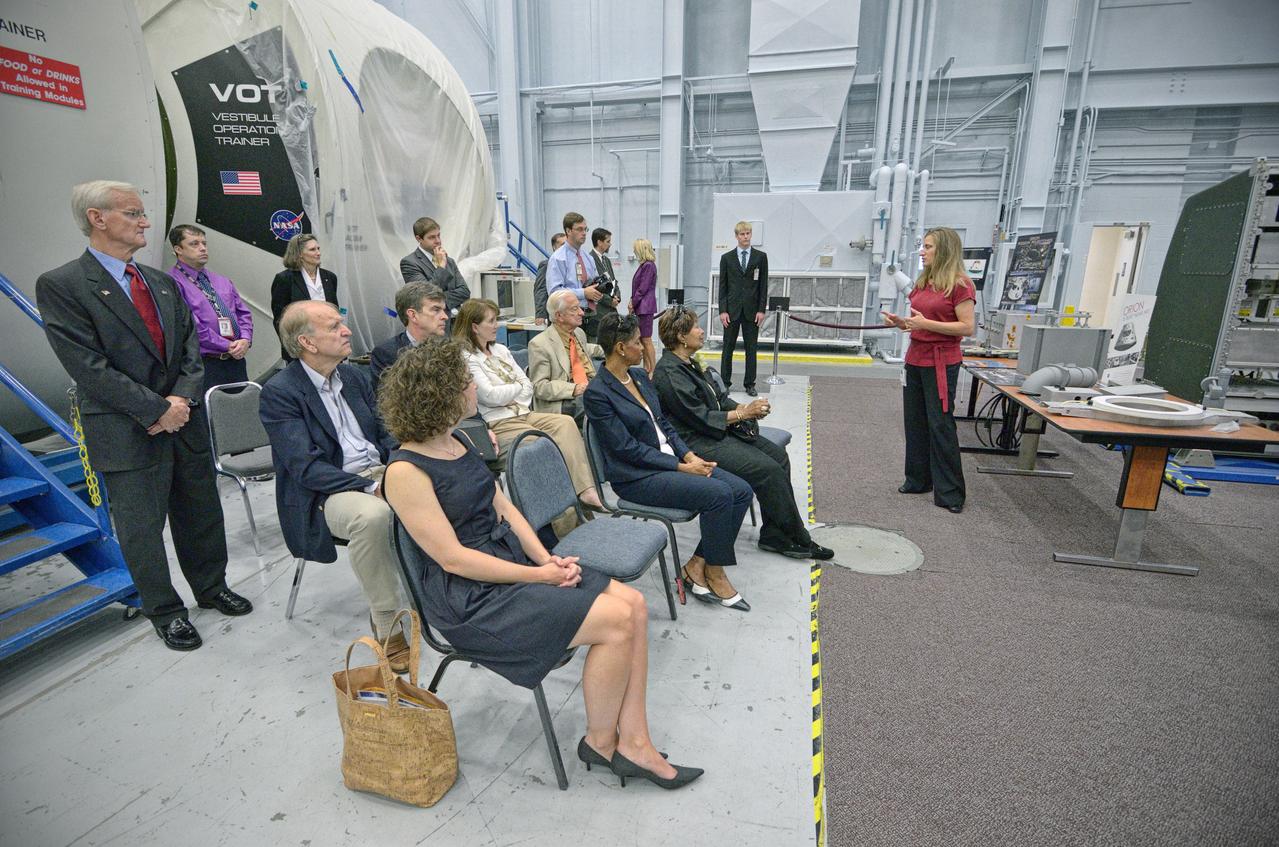
State congressional delegations visit the Orion mockup in the Space Vehicle Mockup Facility in Building 9 of Johnson Space Center in Houston on June 22, 2012. Part of Batch image transfer from Flickr.
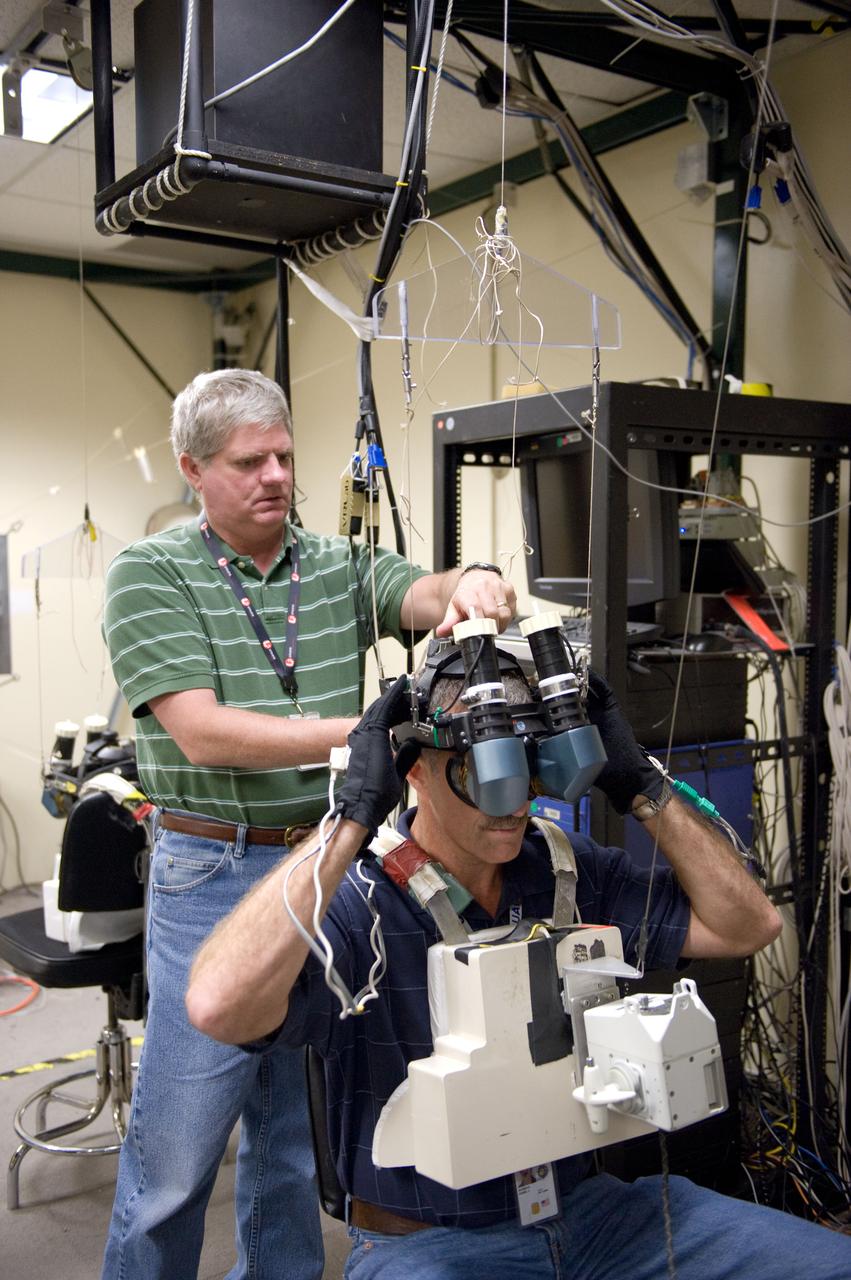
Expedition 29/30 astronaut Dan Burbank during SAFER Proficiency Training in the VR Lab. Photo Date: June 17, 2011. Location: Building 9 - Virtual Reality Lab. Photographer: Robert Markowitz
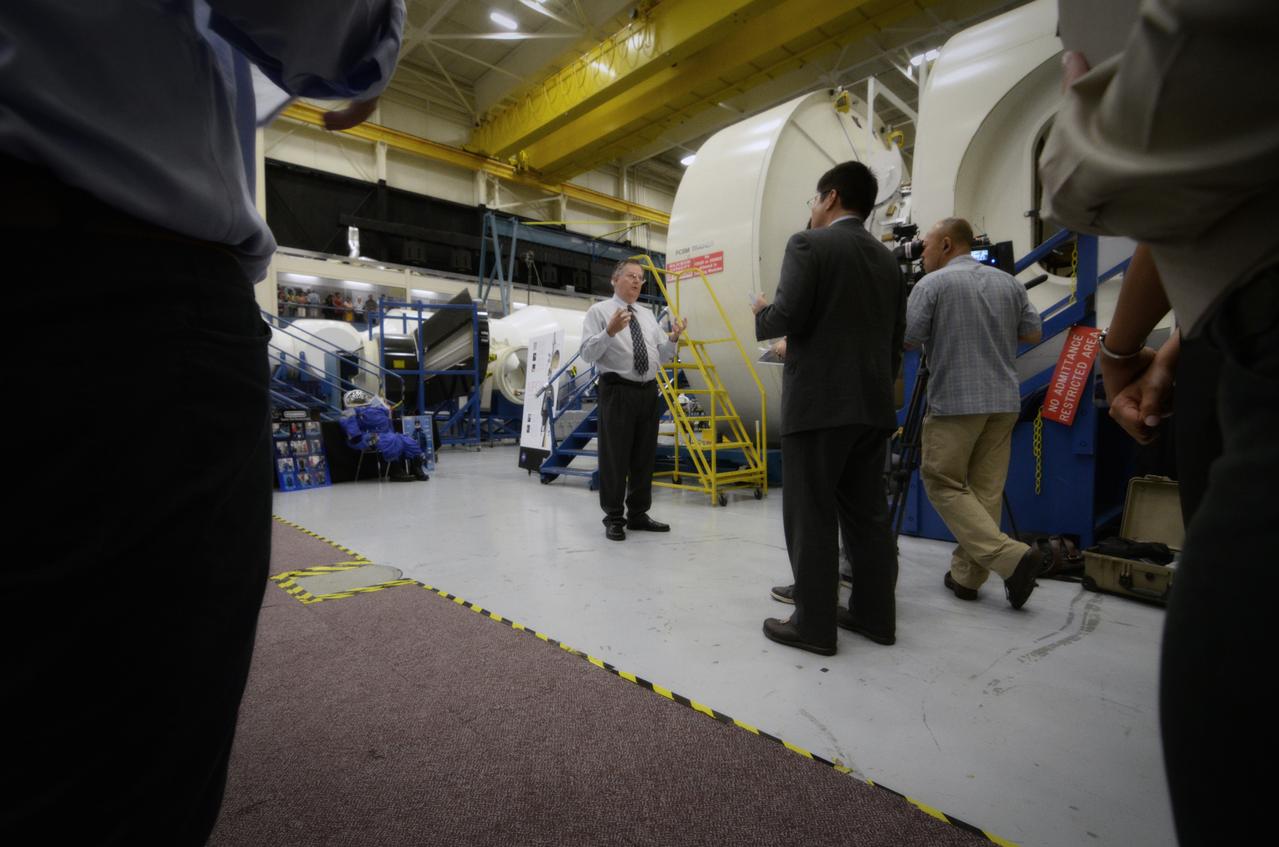
Members of the media attend a Media Day event and visit the Orion mockup in the Space Vehicle Mockup Facility in Building 9 of the Johnson Space Center in Houston on July 1, 2011. Part of Batch image transfer from Flickr.

DATE: 3-15-11 LOCATION: Building 9 - ISS Mockup SUBJECT: Expedition 28/29 crew members during Docking Timeline Training. PHOTOGRAPHER: Lauren Harnett
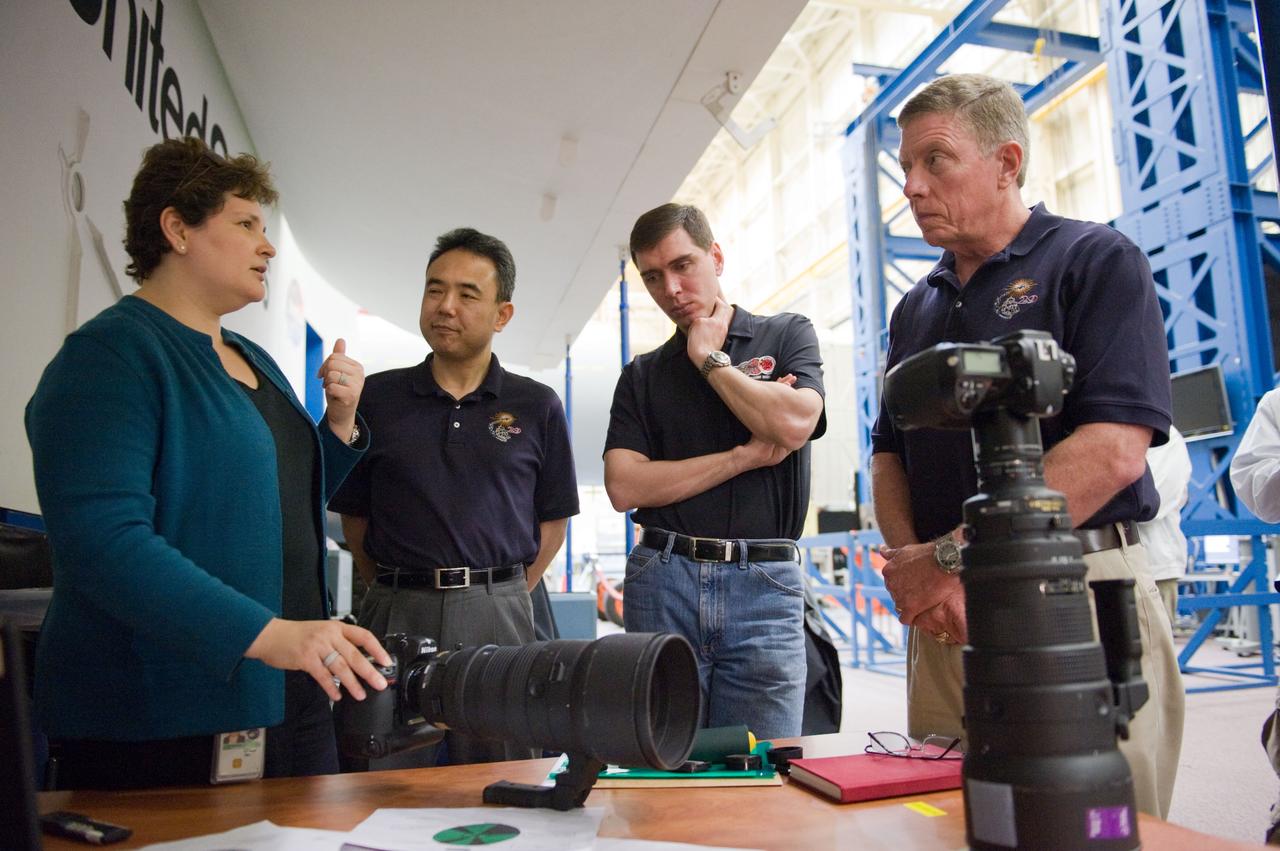
DATE: 3-15-11 LOCATION: Building 9 - ISS Mockup SUBJECT: Expedition 28/29 crew members during Docking Timeline Training. PHOTOGRAPHER: Lauren Harnett
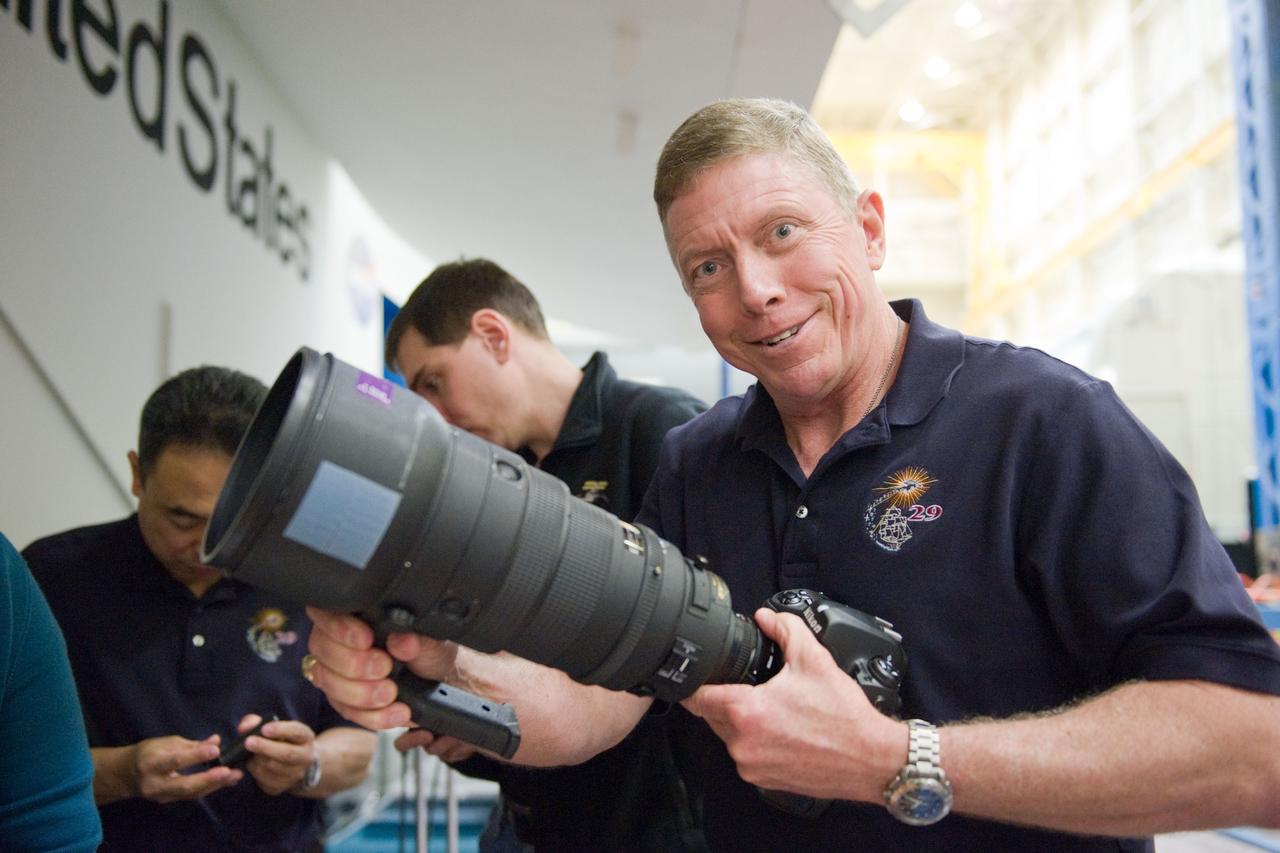
DATE: 3-15-11 LOCATION: Building 9 - ISS Mockup SUBJECT: Expedition 28/29 crew members during Docking Timeline Training. PHOTOGRAPHER: Lauren Harnett
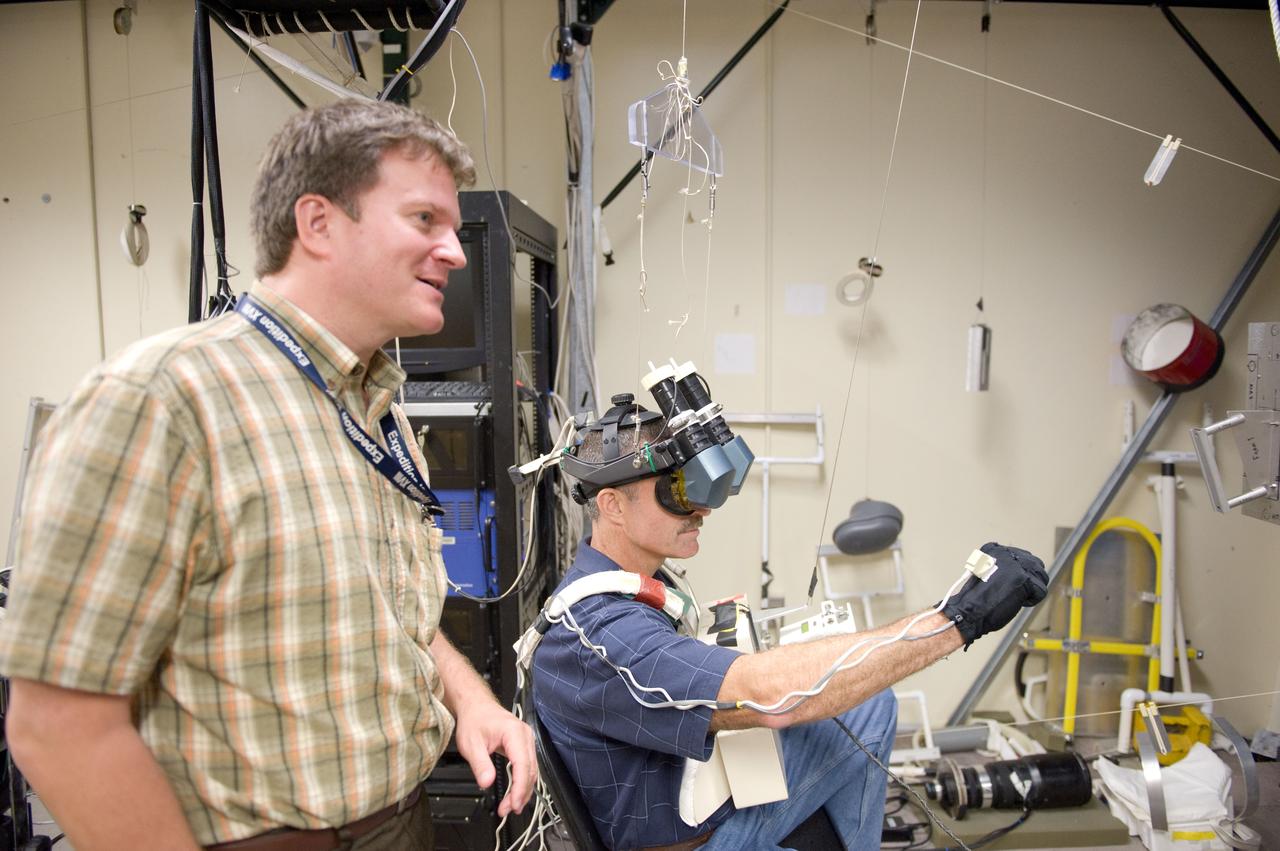
Expedition 29/30 astronaut Dan Burbank during SAFER Proficiency Training in the VR Lab. Photo Date: June 17, 2011. Location: Building 9 - Virtual Reality Lab. Photographer: Robert Markowitz
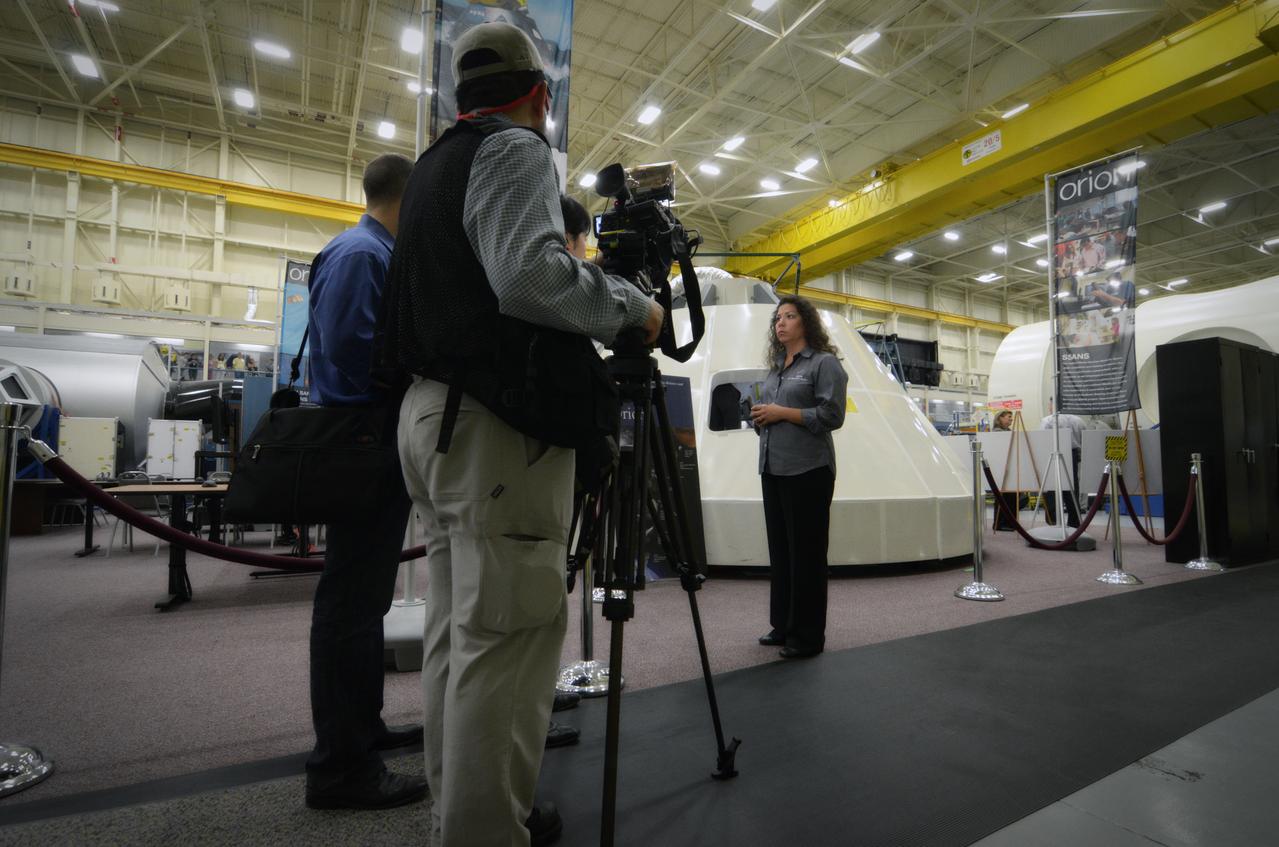
Members of the media attend a Media Day event and visit the Orion mockup in the Space Vehicle Mockup Facility in Building 9 of the Johnson Space Center in Houston on July 1, 2011. Part of Batch image transfer from Flickr.
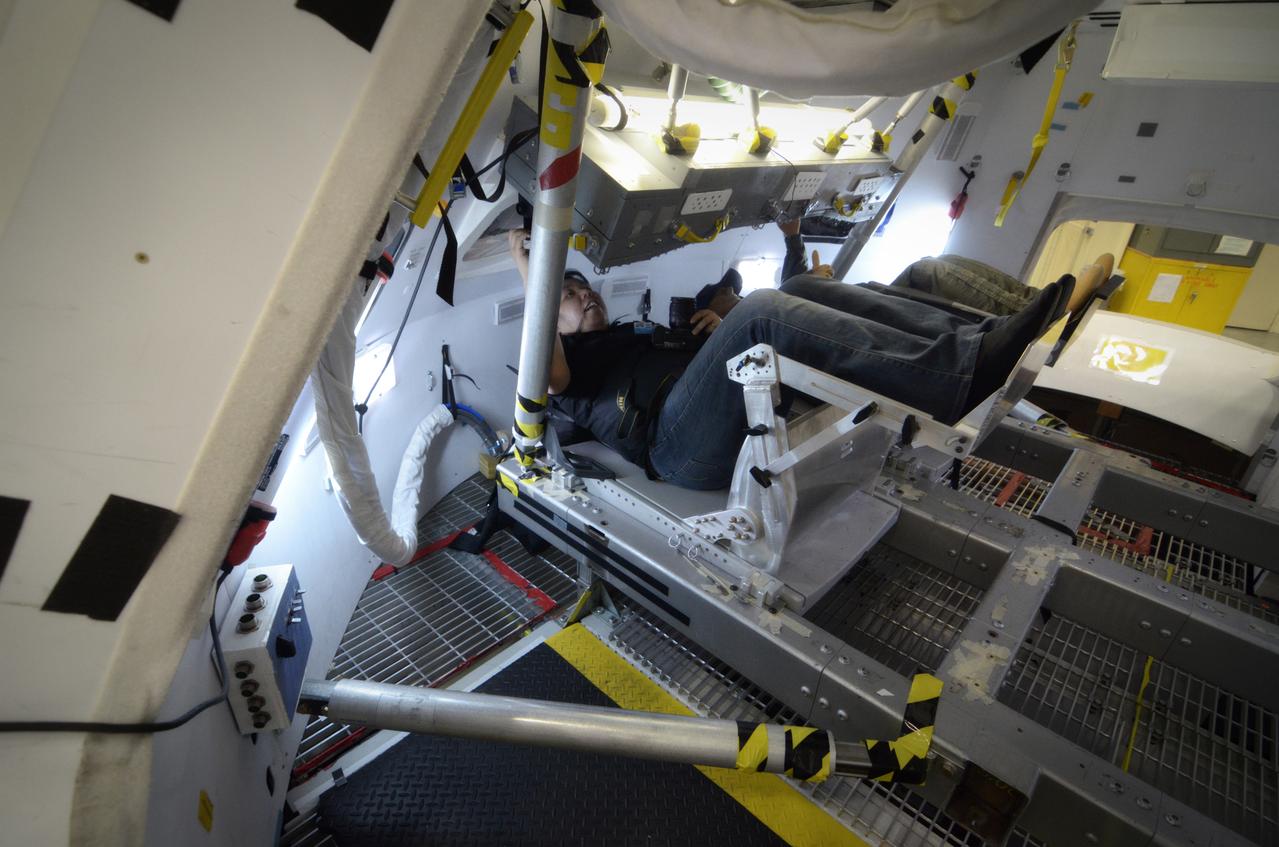
Members of the media attend a Media Day event and visit the Orion mockup in the Space Vehicle Mockup Facility in Building 9 of the Johnson Space Center in Houston on July 1, 2011. Part of Batch image transfer from Flickr.