
The SOFIA telescope team collected baseline operational measurements during several nights of characterization testing in March 2008 while the SOFIA 747SP aircraft that houses the German-built infrared telescope was parked on an unlit ramp next to its hangar at the NASA Dryden Flight Operations Facility in Palmdale, Calif. The primary celestial target was Polaris, the North Star. The activity provided the team with a working knowledge of how telescope operating systems interact and the experience of tracking celestial targets from the ground.

The SOFIA telescope team collected baseline operational measurements during several nights of characterization testing in March 2008 while the SOFIA 747SP aircraft that houses the German-built infrared telescope was parked on an unlit ramp next to its hangar at the NASA Dryden Flight Operations Facility in Palmdale, Calif. The primary celestial target was Polaris, the North Star. The activity provided the team with a working knowledge of how telescope operating systems interact and the experience of tracking celestial targets from the ground.
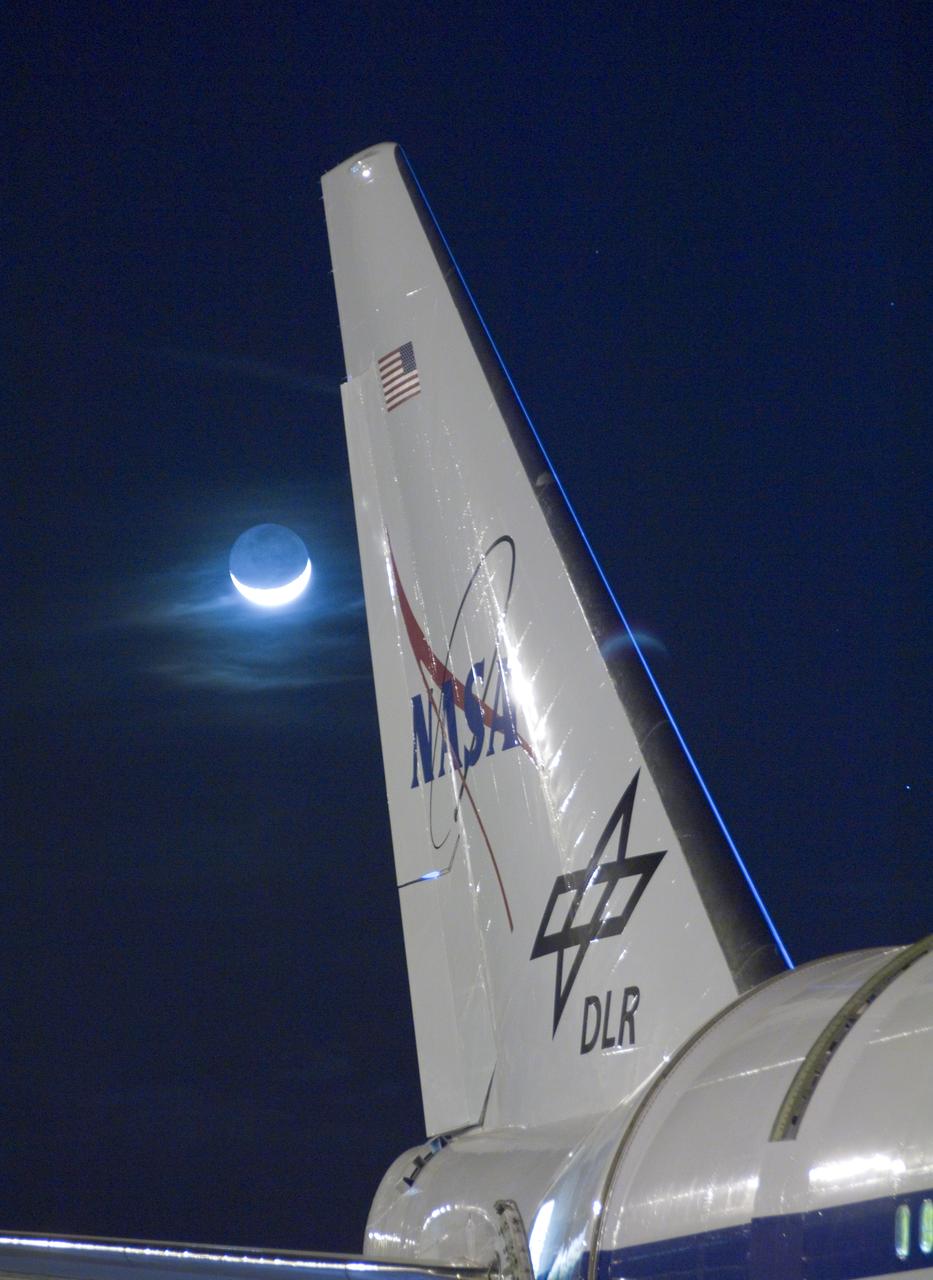
The SOFIA telescope team collected baseline operational measurements during several nights of characterization testing in March 2008 while the SOFIA 747SP aircraft that houses the German-built infrared telescope was parked on an unlit ramp next to its hangar at the NASA Dryden Flight Operations Facility in Palmdale, Calif. The primary celestial target was Polaris, the North Star. The activity provided the team with a working knowledge of how telescope operating systems interact and the experience of tracking celestial targets from the ground.

The SOFIA telescope team collected baseline operational measurements during several nights of characterization testing in March 2008 while the SOFIA 747SP aircraft that houses the German-built infrared telescope was parked on an unlit ramp next to its hangar at the NASA Dryden Flight Operations Facility in Palmdale, Calif. The primary celestial target was Polaris, the North Star. The activity provided the team with a working knowledge of how telescope operating systems interact and the experience of tracking celestial targets from the ground.

The SOFIA telescope team collected baseline operational measurements during several nights of characterization testing in March 2008 while the SOFIA 747SP aircraft that houses the German-built infrared telescope was parked on an unlit ramp next to its hangar at the NASA Dryden Flight Operations Facility in Palmdale, Calif. The primary celestial target was Polaris, the North Star. The activity provided the team with a working knowledge of how telescope operating systems interact and the experience of tracking celestial targets from the ground.
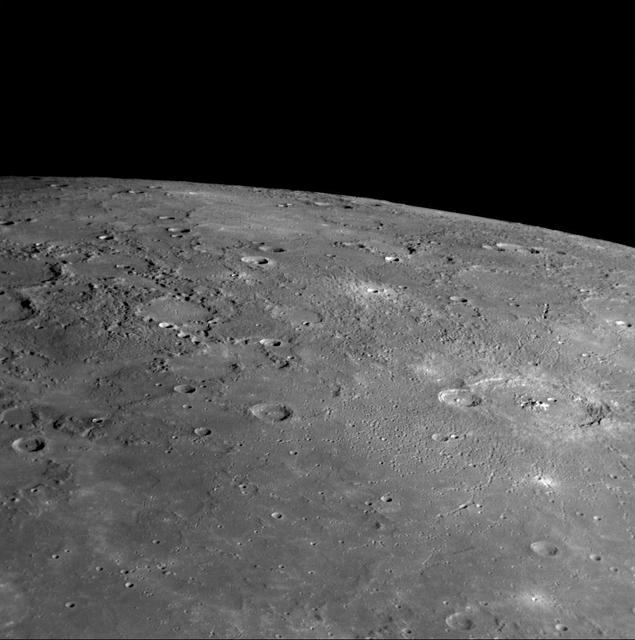
This view in the southern constellation Carina was acquired on December 13, 2007 as part of the characterization tests of the Framing Camera. The false-color view is a composite of images at 430 nm violet, 650 nm red, and 980 nm infrared.
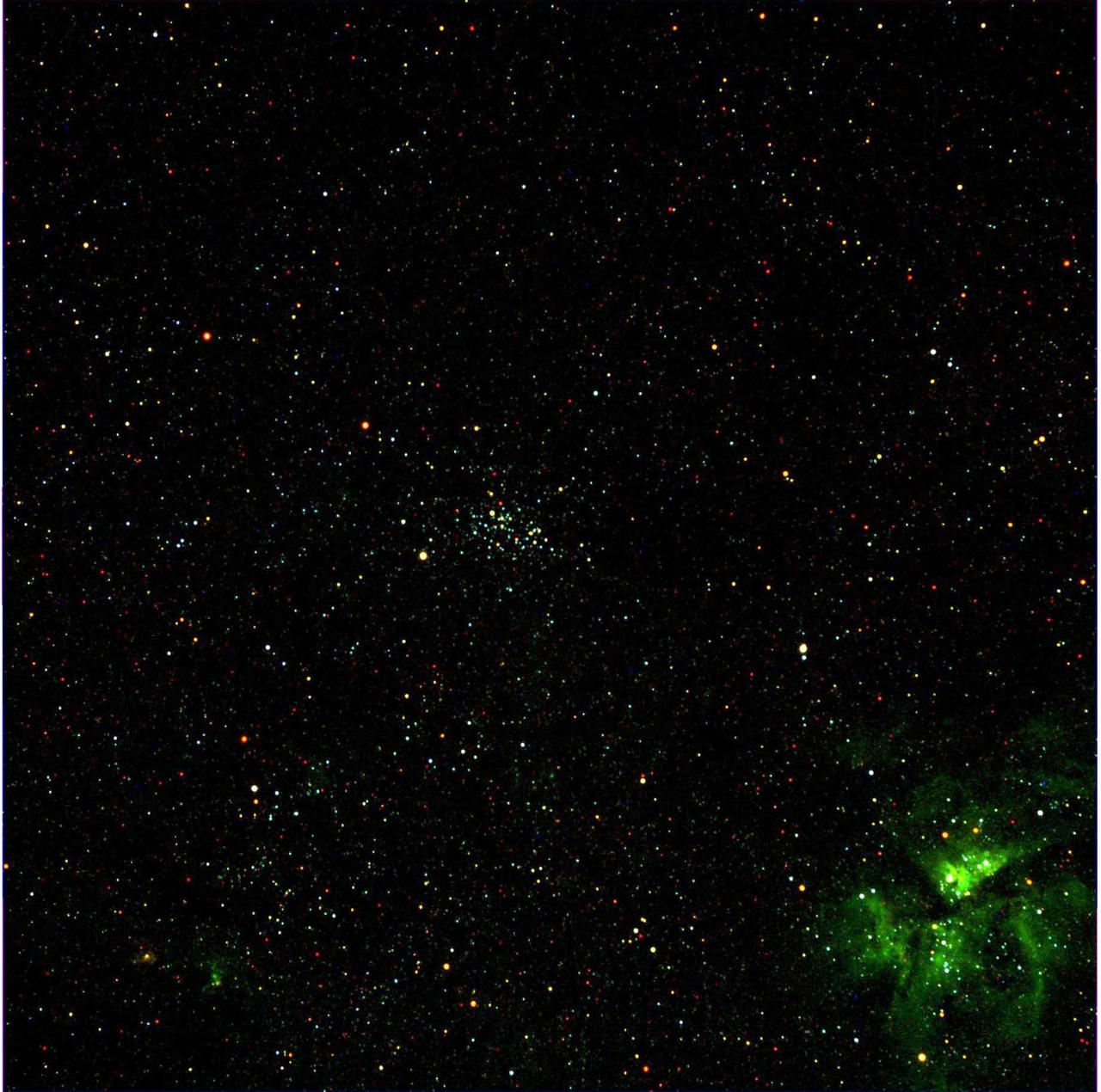
This view in the southern constellation Carina was acquired on December 13, 2007 as part of the characterization tests of the Framing Camera. The cluster of stars in the center is NGC 3532, and the nebula in the lower right is the Eta Carina Nebula.

The SOFIA telescope team collected baseline operational measurements during several nights of characterization testing in March 2008 while the SOFIA 747SP aircraft that houses the German-built infrared telescope was parked on an unlit ramp next to its hangar at the NASA Dryden Flight Operations Facility in Palmdale, Calif. The primary celestial target was Polaris, the North Star. The activity provided the team with a working knowledge of how telescope operating systems interact and the experience of tracking celestial targets from the ground.
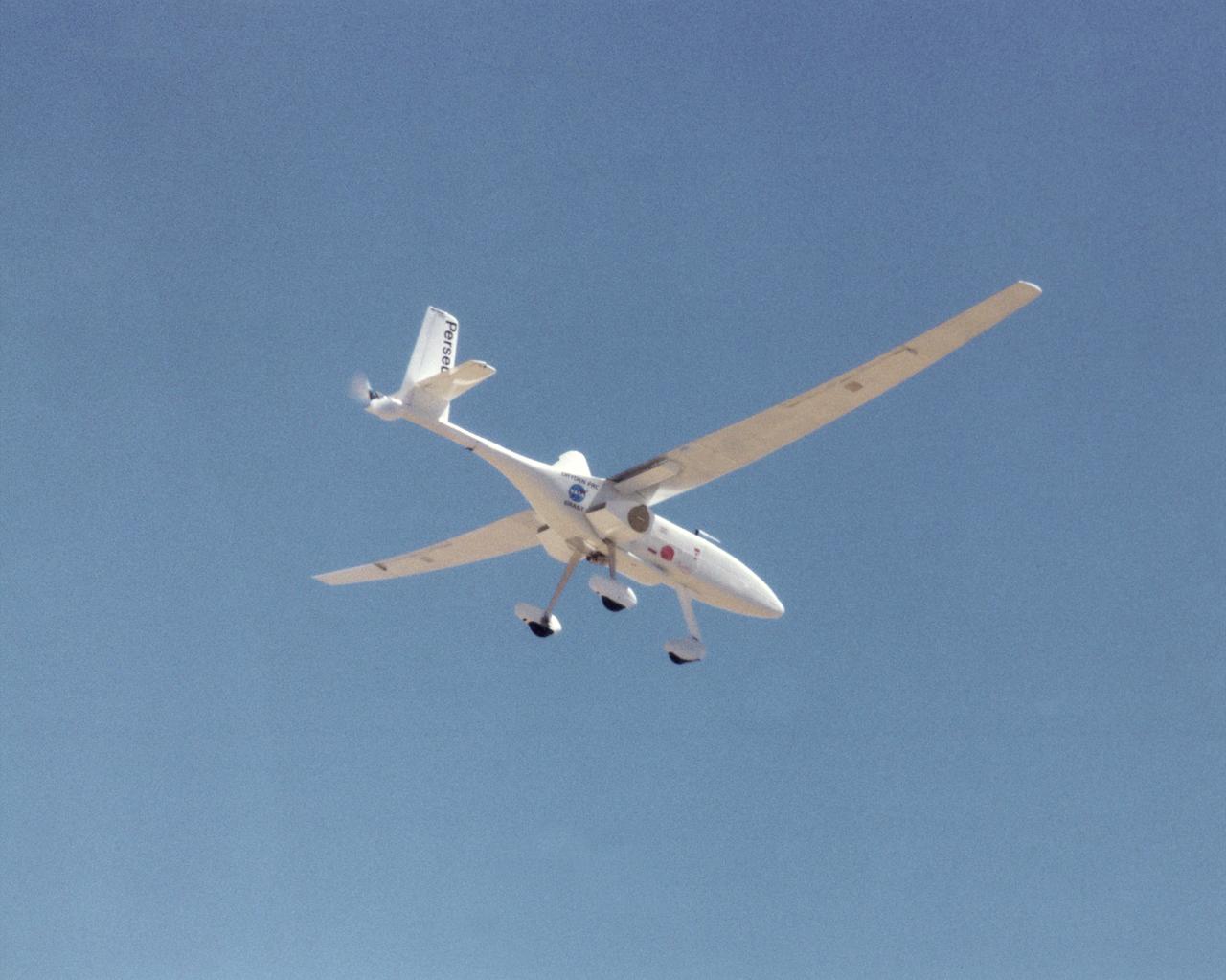
A long, slender wing and a pusher propeller at the rear characterize the Perseus B remotely piloted research aircraft, seen here during a test flight in June 1998.
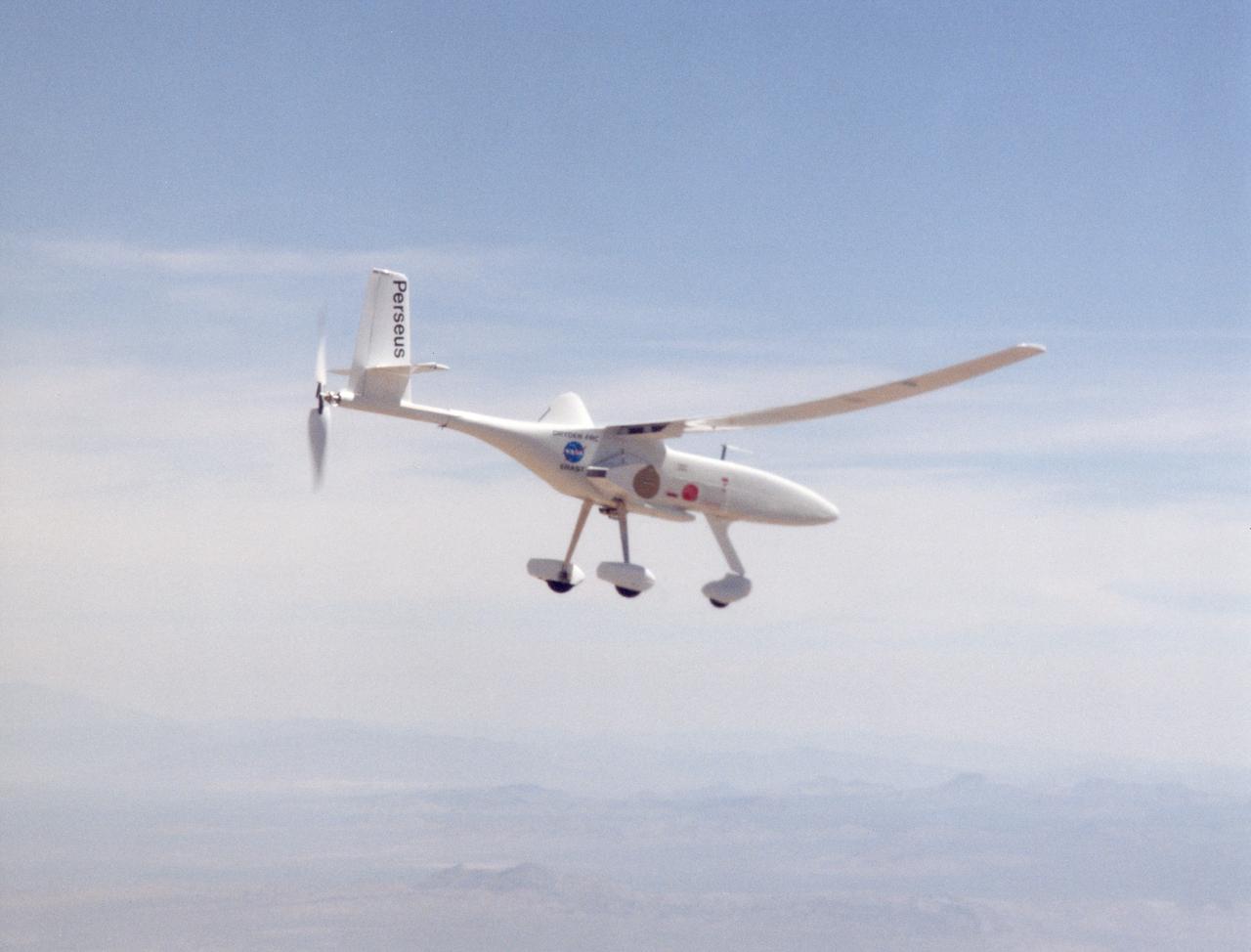
A long, slender wing and a pusher propeller at the rear characterize the Perseus B remotely piloted research aircraft, seen here during a test flight in June 1998.
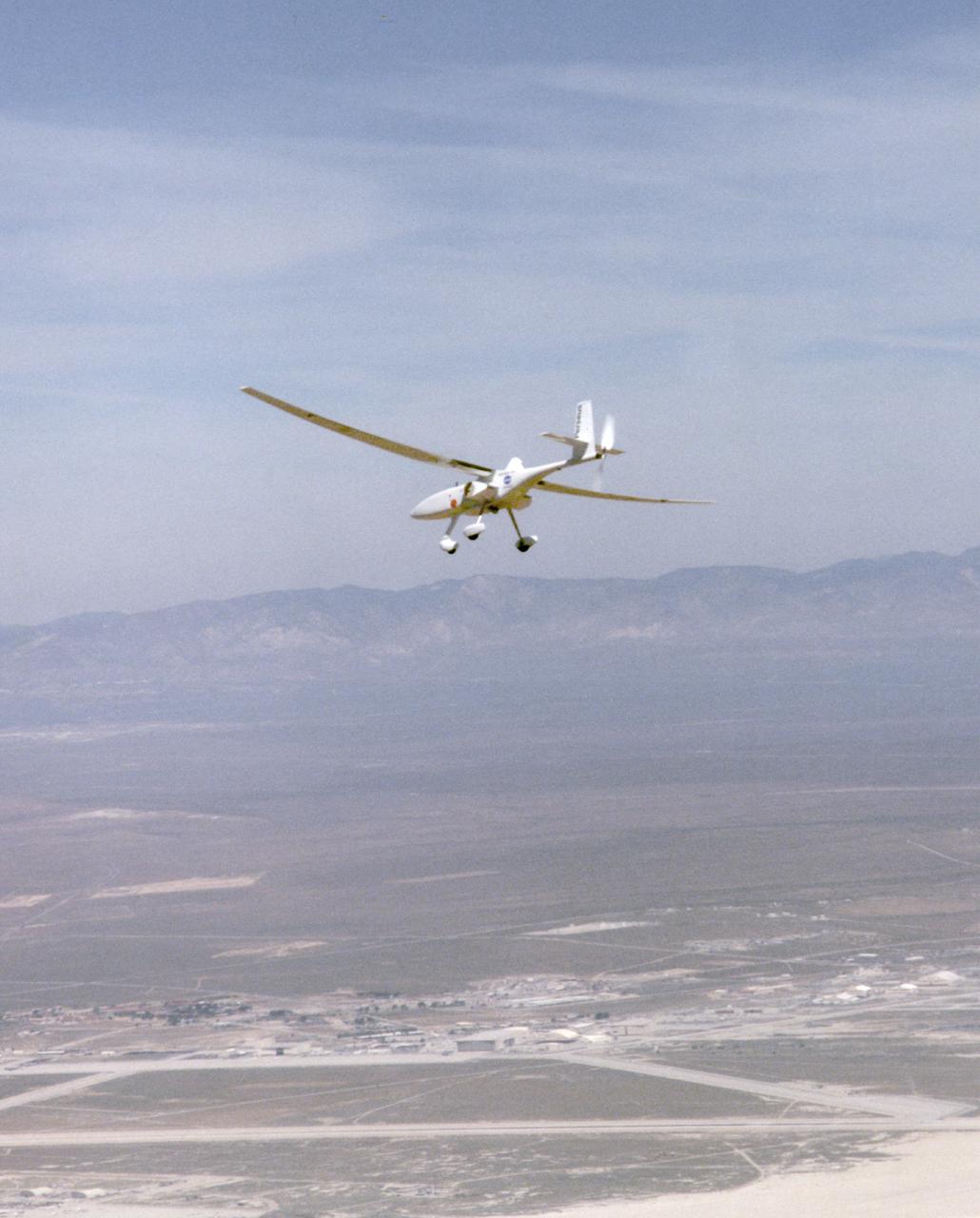
A long, slender wing and a pusher propeller at the rear characterize the Perseus B remotely-piloted research aircraft, seen here during a test flight in April1998.

jsc2021e007964 (9/30/2020) --- Post-integration solar array characterization testing. The Ionosphere Thermosphere Scanning Photometer for Ion-Neutral Studies (IT-SPINS) produces two-dimensional (2D) tomographic imaging of Earth’s ionosphere in order to increase fundamental understanding of its structure. Image courtesy of Montana State University.
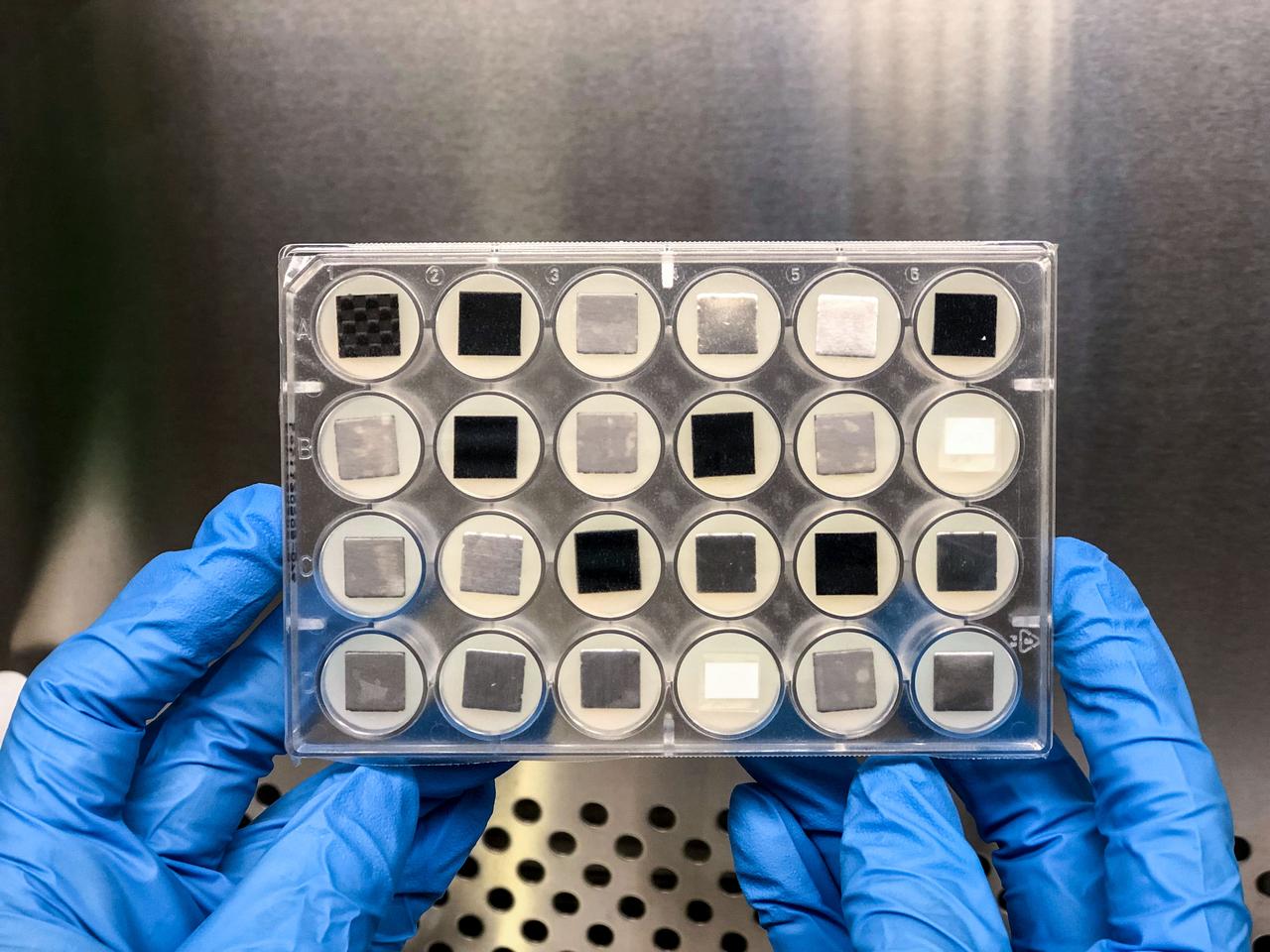
jsc2020e003406 (10/28/2019) --- A preflight view of a Commercial-off-the-shelf (COTS) 24-Well plate in fungal configuration. Each well contains a 1 cm2 coupon inoculated with fungal spores. Seven different materials were included for testing. The Characterization of Biofilm Formation, Growth, and Gene Expression on Different Materials and Environmental Conditions in Microgravity (Space Biofilms) investigation characterizes the mass, thickness, structure, and associated gene expression of biofilms that form in space by analyzing different microbial species grown on different materials. Biofilm formation can cause equipment malfunction and human illnesses, and could be a serious problem on future long-term human space missions.
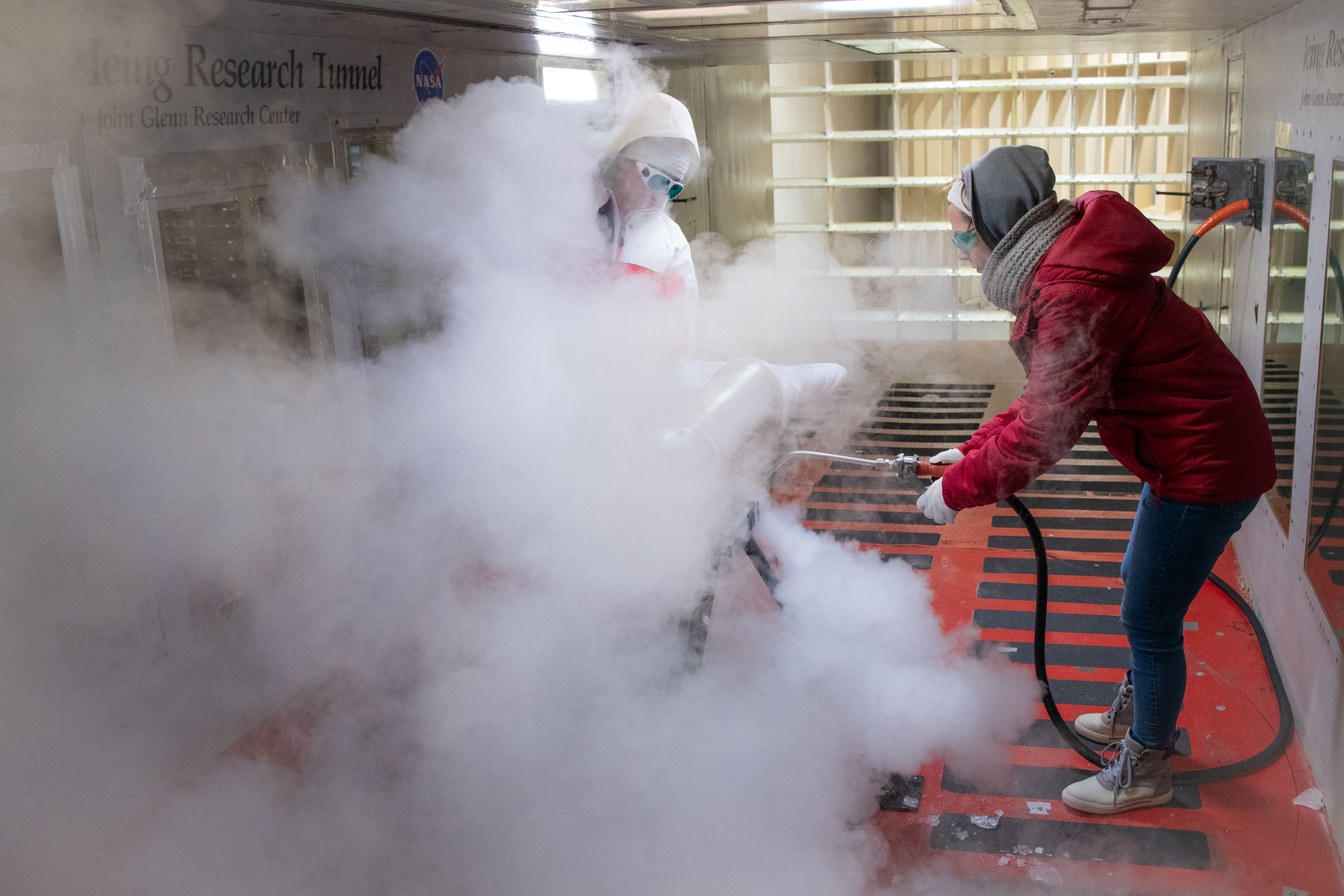
Test engineers clean the ice cloud detection probe in the Icing Research Tunnel in between test runs. Steam is used to melt the accumulated ice on the detection probe. The test engineers need to wear goggles to protect them from the laser light that the probe emits. The laser detects water content and ice particles in the cloud that the wind tunnel produces. This process is done to calibrate the tunnel for research by characterizing the cloud flow.
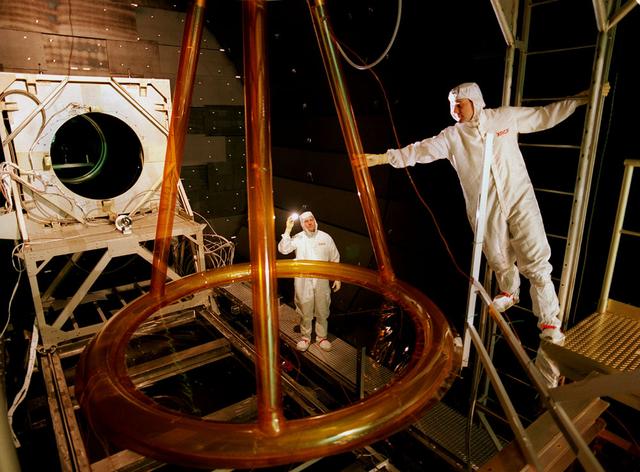
The Shooting Star Experiment (SSE) is designed to develop and demonstrate the technology required to focus the sun's energy and use the energy for inexpensive space Propulsion Research. Pictured is an engineering model (Pathfinder III) of the Shooting Star Experiment (SSE). This model was used to test and characterize the motion and deformation of the structure caused by thermal effects. In this photograph, alignment targets are being placed on the engineering model so that a theodolite (alignment telescope) could be used to accurately measure the deformation and deflections of the engineering model under extreme conditions, such as the coldness of deep space and the hotness of the sun as well as vacuum. This thermal vacuum test was performed at the X-Ray Calibration Facility because of the size of the test article and the capabilities of the facility to simulate in-orbit conditions
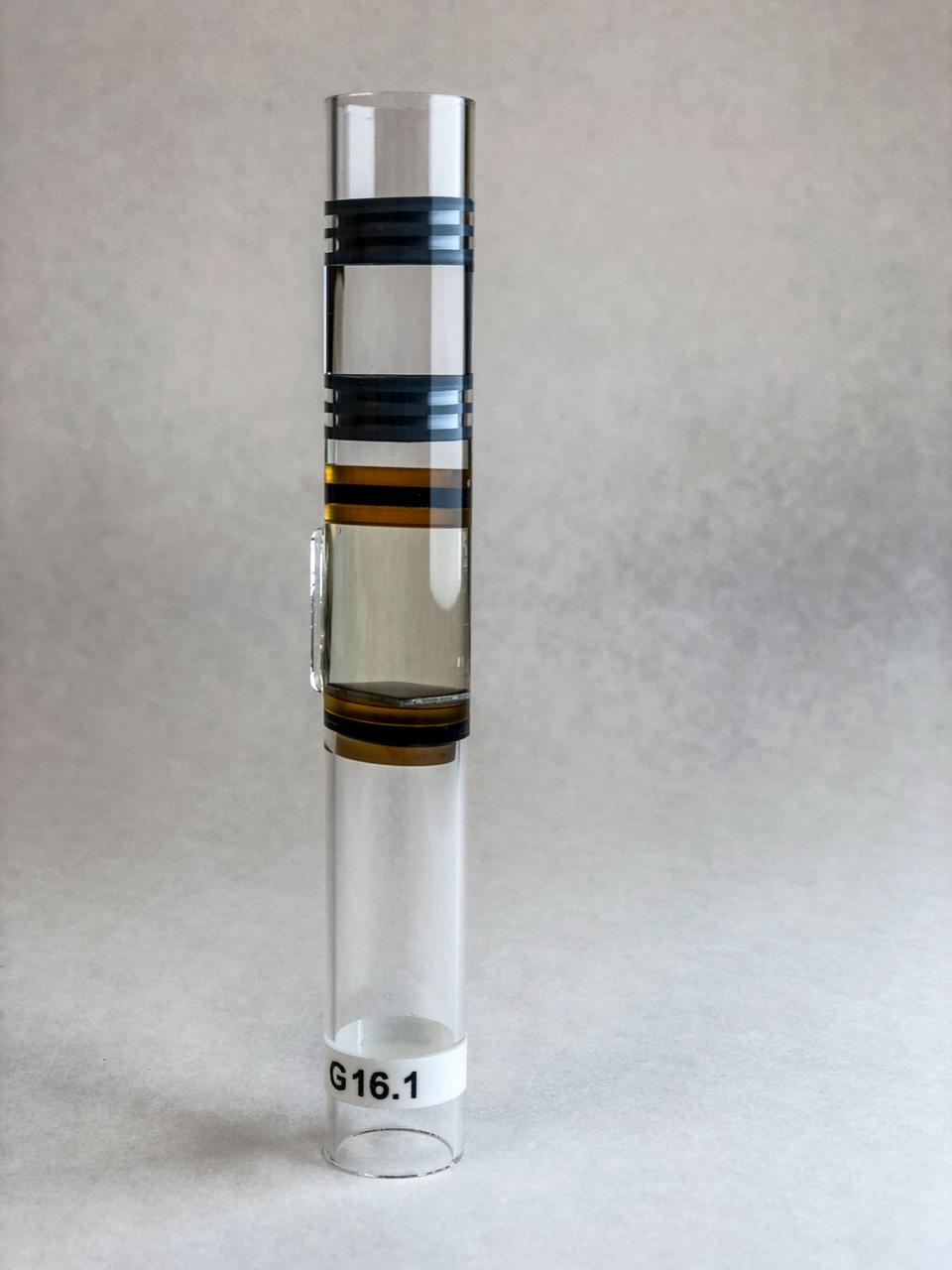
jsc2020e003405 (10/30/2019) --- A preflight view of BioServe’s Fluid Processing Apparatus (FPA) in a three-chamber configuration. From bottom to top: sterile growth medium and 1 cm2 material coupon, bacteria in stasis (inoculum), and fixative for controlled experiment termination. FPAs were used to house the bacterial component of this experiment, where six different materials were tested. The Characterization of Biofilm Formation, Growth, and Gene Expression on Different Materials and Environmental Conditions in Microgravity (Space Biofilms) investigation characterizes the mass, thickness, structure, and associated gene expression of biofilms that form in space by analyzing different microbial species grown on different materials. Biofilm formation can cause equipment malfunction and human illnesses, and could be a serious problem on future long-term human space missions.
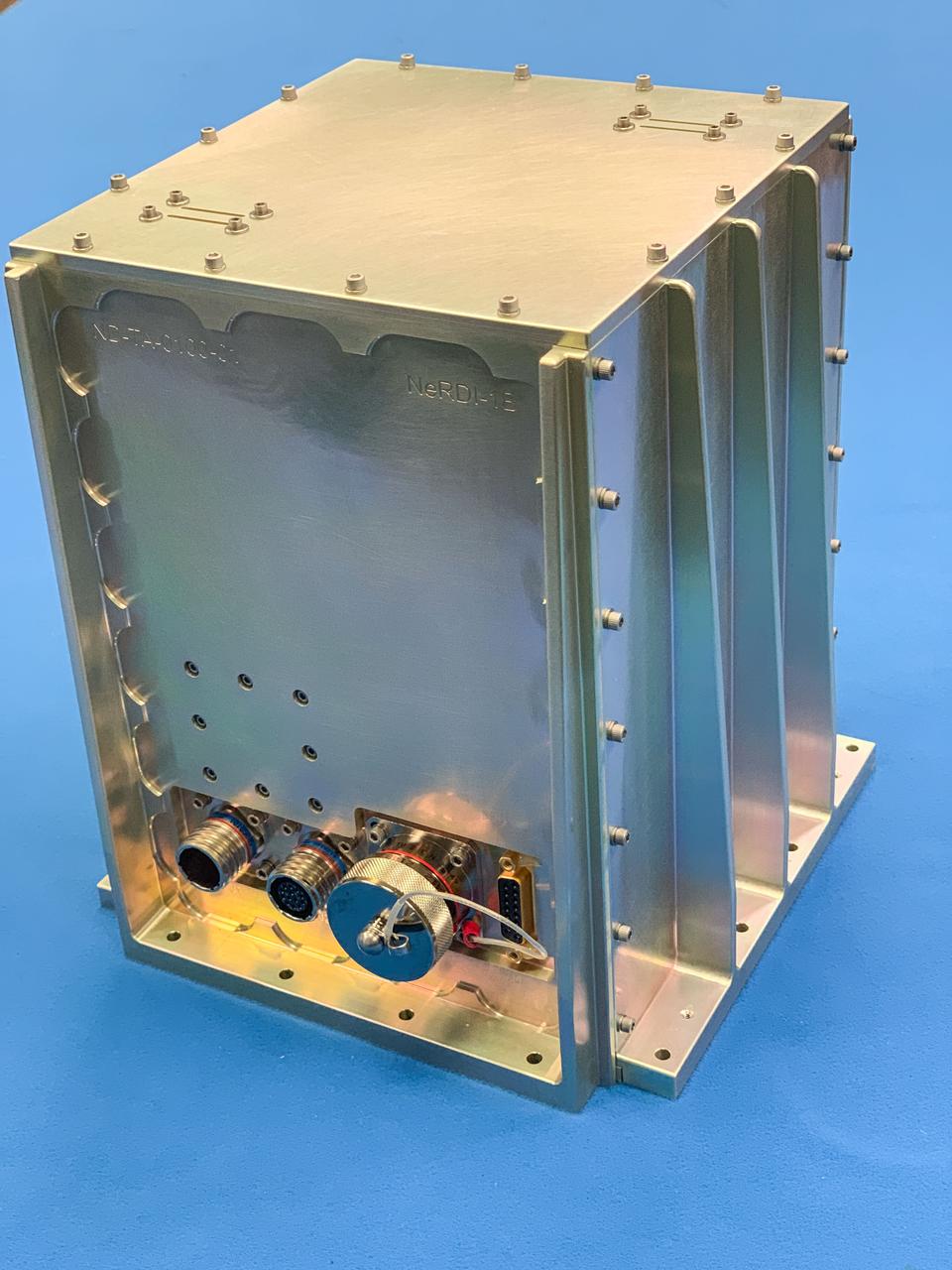
jsc2025e044728 (5/12/2025) --- NERDI-1B prior to integration onto STP-H10. The primary objective of the Space Test Program – Houston 10 – Neutron Radiation Detection Instrument (STP-H10-NeRDI) is to characterize the effects of the space radiation environment on the performance of these neutron-sensitive radiation detectors over time. Image courtesy of Naval Research Academy.
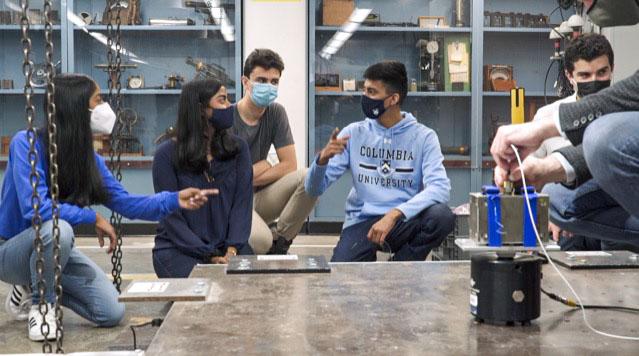
jsc2021e063277 (12/10/2021) --- Preflight imagery for the Characterizing Antibiotic Resistance in Microgravity Environments (CARMEn) experiment, part of Nanoracks Module-96. CARMEn observes how spaceflight affects the growth of a culture of two species of bacteria. Team members are pictured alongside the payload at Carleton Laboratory, where the payload’s structural integrity is tested. From left to right: Kalpana Ganeshan, Swati Ravi, Juan Zuniga, Gaurav Kulkarni, Alfonso Ussia.
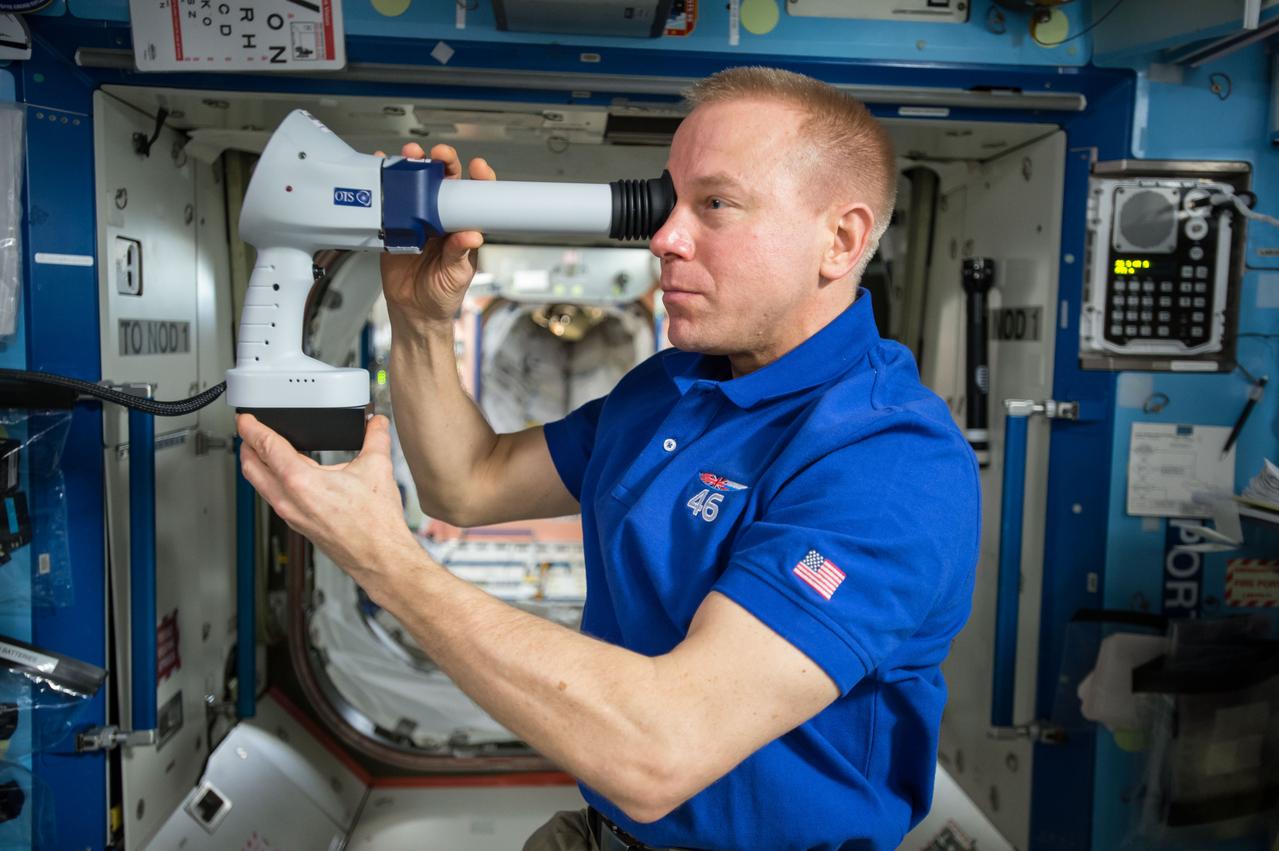
ISS047e010094 (03/16/2016) --- Expedition 47 Commander Tim Kopra of NASA participates in the Ocular Health investigation aboard the International Space Station. The study seeks to help researchers better understand microgravity-induced visual impairment and changes believed to arise from elevated intracranial pressure. These tests will help characterize how living in microgravity can affect the visual, vascular and central nervous system. The investigation will also measure how long it takes for astronauts to return to normal after they return to Earth.
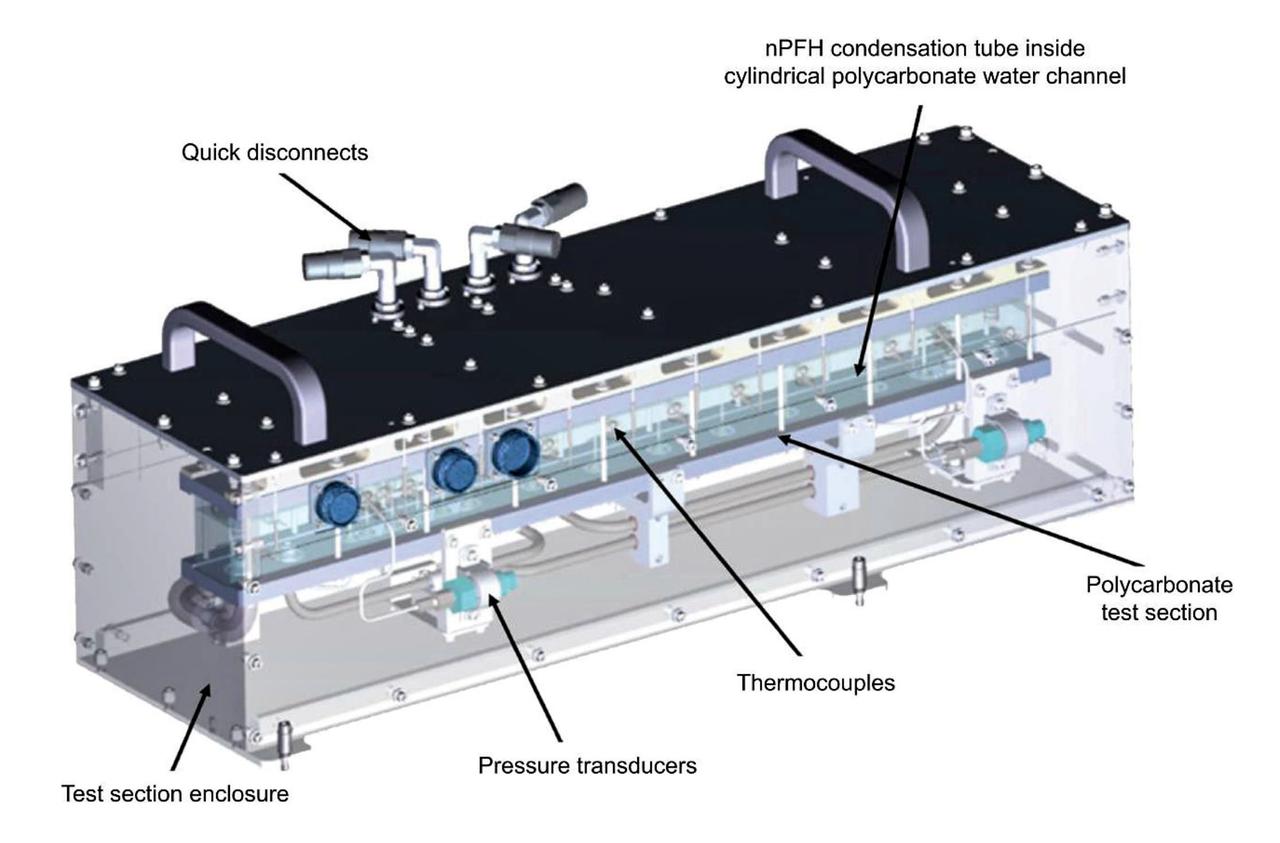
jsc2023e038725 (6/28/2023) --- The FBCE-CM-HT Test Module Assembly with main features identified. This investigation gathers data to characterize the function of condensation surfaces and to validate flow velocity models. Results could identify optimal flow rates at various gravitational levels to safely dissipate heat, supporting design of systems for use in space and on Earth. Image courtesy of NASA Glenn Research Center.
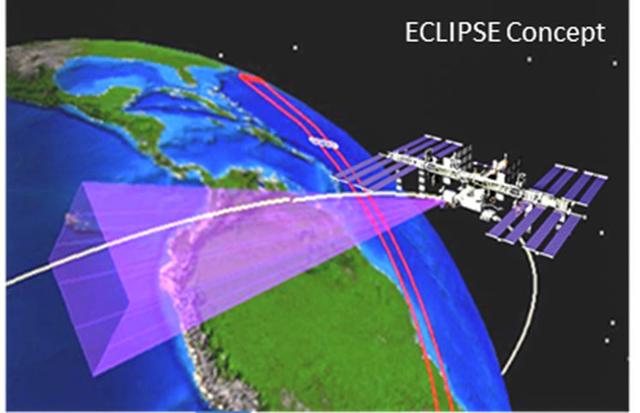
jsc2022e091370 (12/7/2022) --- The Space Test Program - Houston 9 - Experiment for Characterizing the Lower Ionosphere and Production of Sporadic-E (STP-H9-ECLIPSE) investigation scans its photometer fields of view (FOV) along the orbit plane looking behind the International Space Station to measure the vertical distribution of airglow emissions and cross-track below the ISS to observe the horizontal distribution of the airglow emissions. The observations are tomographically inverted to infer the 3D ionospheric structure. Image courtesy of the Naval Research Laboratory.
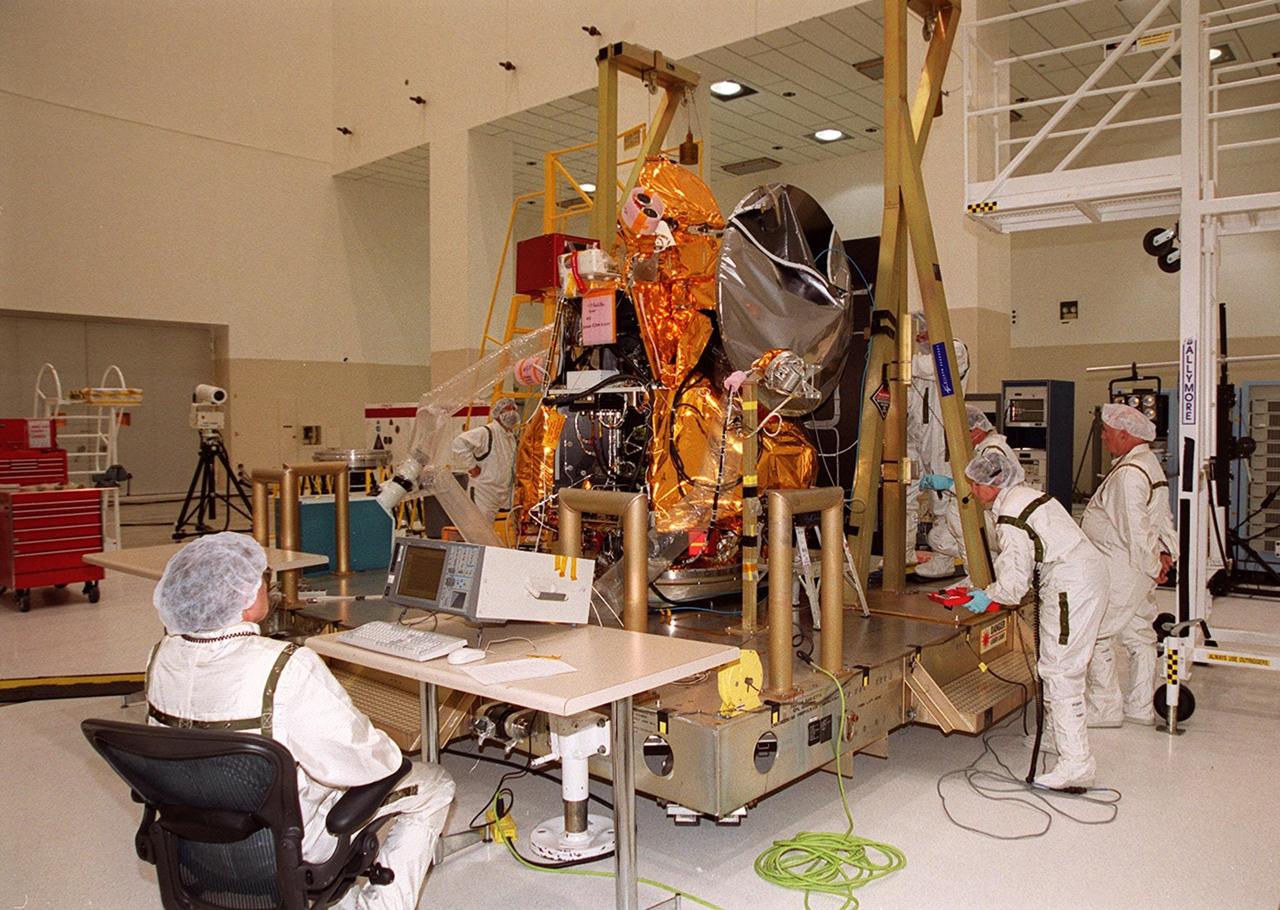
Workers in the Spacecraft Assembly and Encapsulation Facility (SAEF 2) get ready to conduct an illumination test on the 2001 Mars Odyssey Orbiter. Various components of the Odyssey Orbiter are undergoing testing. Scheduled for launch April 7, 2001, the orbiter contains three science instruments: THEMIS, the Gamma Ray Spectrometer (GRS), and the Mars Radiation Environment Experiment (MARIE). THEMIS will map the mineralogy and morphology of the Martian surface using a high-resolution camera and a thermal infrared imaging spectrometer. The GRS will achieve global mapping of the elemental composition of the surface and determine the abundance of hydrogen in the shallow subsurface. The MARIE will characterize aspects of the near-space radiation environment with regards to the radiation-related risk to human explorers
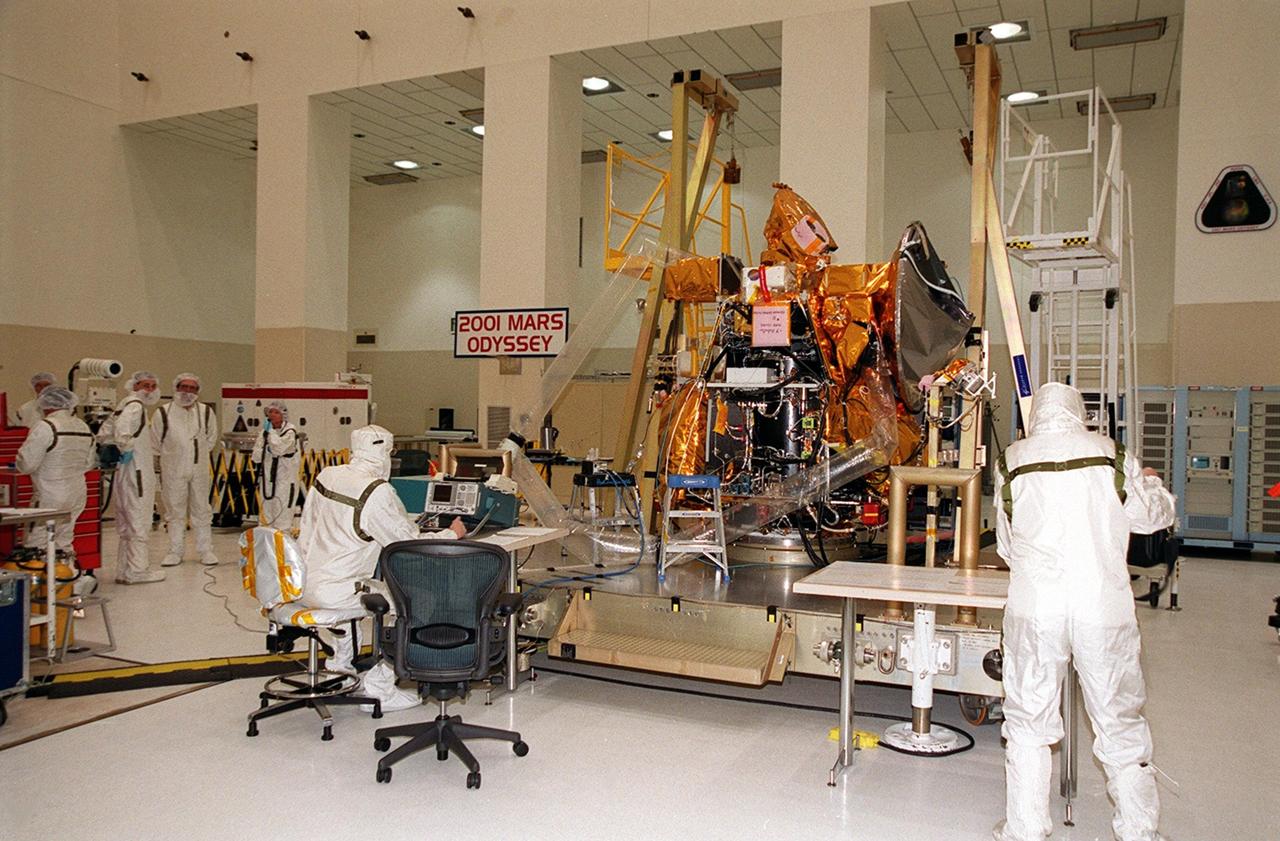
The 2001 Mars Odyssey Orbiter sits in the Spacecraft Assembly and Encapsulation Facility (SAEF 2) while components undergo testing. Workers in the foreground check instruments during testing of the UHF antenna. Scheduled for launch April 7, 2001, the orbiter contains three science instruments: THEMIS, the Gamma Ray Spectrometer (GRS), and the Mars Radiation Environment Experiment (MARIE). THEMIS will map the mineralogy and morphology of the Martian surface using a high-resolution camera and a thermal infrared imaging spectrometer. The GRS will achieve global mapping of the elemental composition of the surface and determine the abundance of hydrogen in the shallow subsurface. The MARIE will characterize aspects of the near-space radiation environment with regards to the radiation-related risk to human explorers
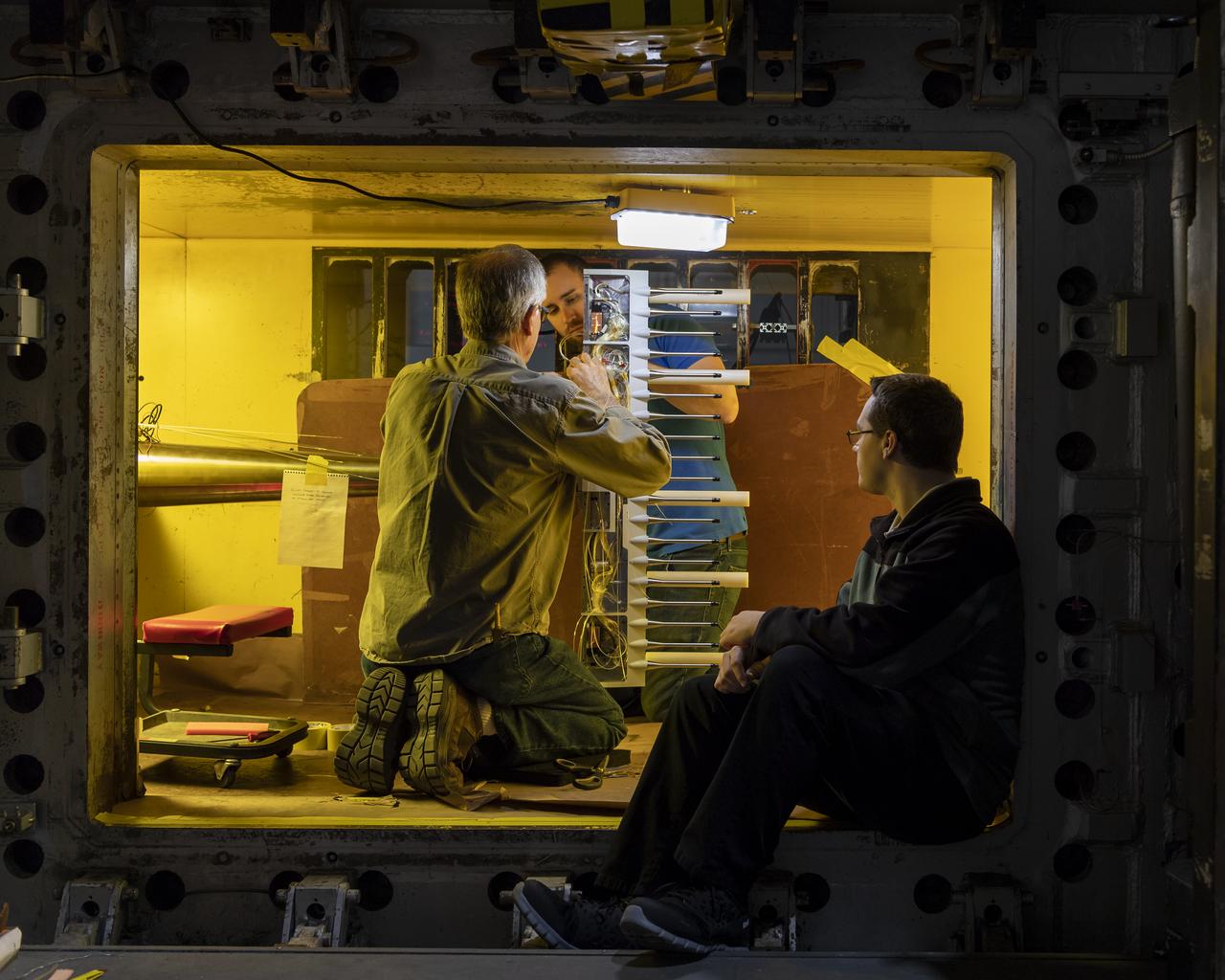
LaRC OCIO's Media Solutions Branch Photographer Harlen Capen photographed the installation of a new flow survey rake for the supersonic Unitary Plan Wind Tunnel (UPWT). The hardware – shown installed in the 4-foot, high-Mach-number Test Section 2 with a coating of Pressure Sensitive Paint – consists of a purpose-built sting, rake body, and two different types of pressure measurement probes. The survey rake will be used to characterize the flow in the test section in support of the "CFD Central Flight Dynamics as a Surrogate for High Speed Supersonic Tests" People in the photo L to R are, Ricky L. Hall, Jacobs Technology, Inc.,Supersonic/Hypersonic Testing Branch - Group A, Alexander (Alex) Moore Jacobs Technology, Inc, Supersonic/Hypersonic Testing Branch and Mathew A. (Alec) Reed, Jacobs Technology, In. NASA photographer Harlen Capen won First Place in the NASA's 2019 Still Photographer of the Year competition in the "People" category with this image.
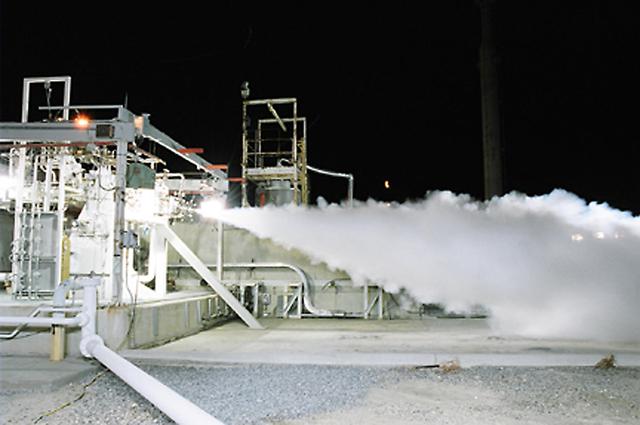
NASA Stennis Space Center engineers conducted a successful cold-flow test of an RS-84 engine component Sept. 24. The RS-84 is a reusable engine fueled by rocket propellant - a special blend of kerosene - designed to power future flight vehicles. Liquid oxygen was blown through the RS-84 subscale preburner to characterize the test facility's performance and the hardware's resistance. Engineers are now moving into the next phase, hot-fire testing, which is expected to continue into February 2004. The RS-84 engine prototype, developed by the Rocketdyne Propulsion and Power division of The Boeing Co. of Canoga Park, Calif., is one of two competing Rocket Engine Prototype technologies - a key element of NASA's Next Generation Launch Technology program.
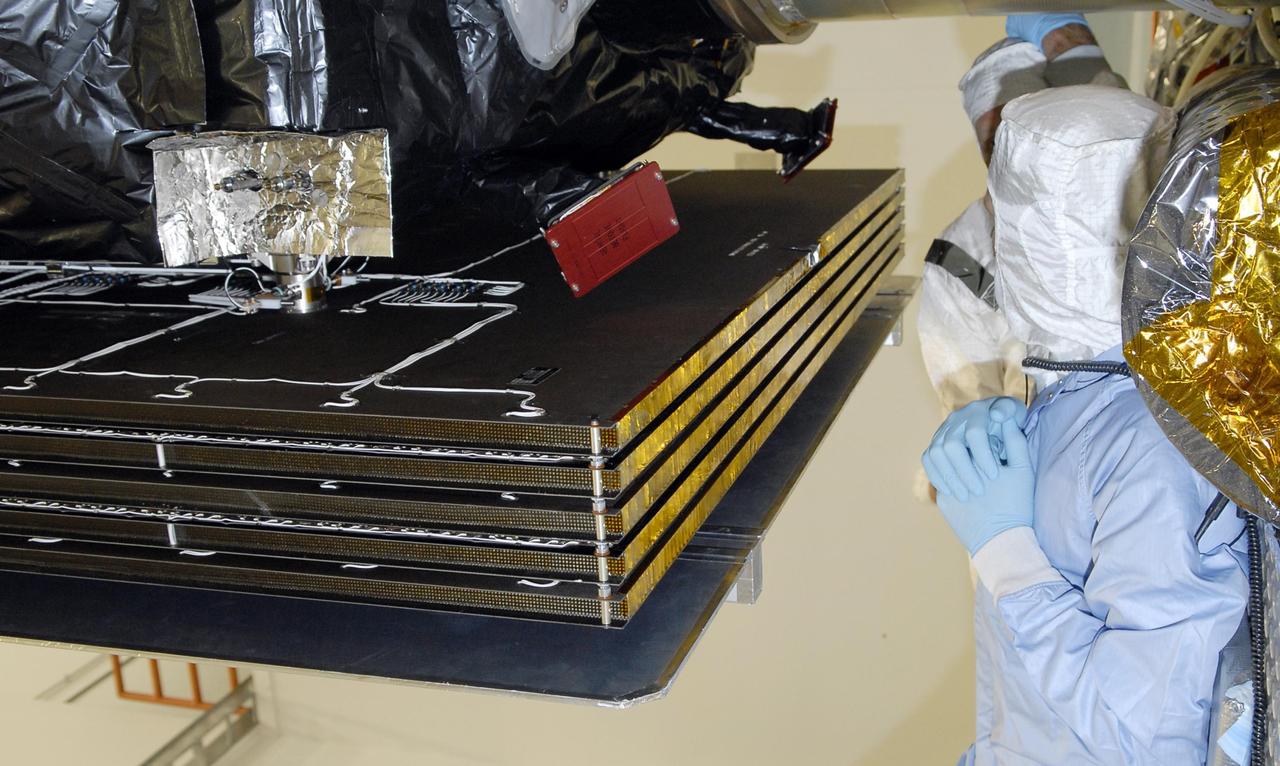
KENNEDY SPACE CENTER, FLA. -- Technicians from Dutch Space get underneath the solar array panel on the Dawn spacecraft to look at the slight damage done by a technician's tool June 11 during a procedure to prepare Dawn for spin-balance testing. Dawn's goal is to characterize the conditions and processes of the solar system's earliest epoch by investigating in detail the largest protoplanets that have remained intact since their formations: asteroid Vesta and the dwarf planet Ceres. They reside in the extensive zone between Mars and Jupiter together with many other smaller bodies, called the asteroid belt. Dawn is scheduled to launch July 7. Photo credit: NASA/Kim Shiflett
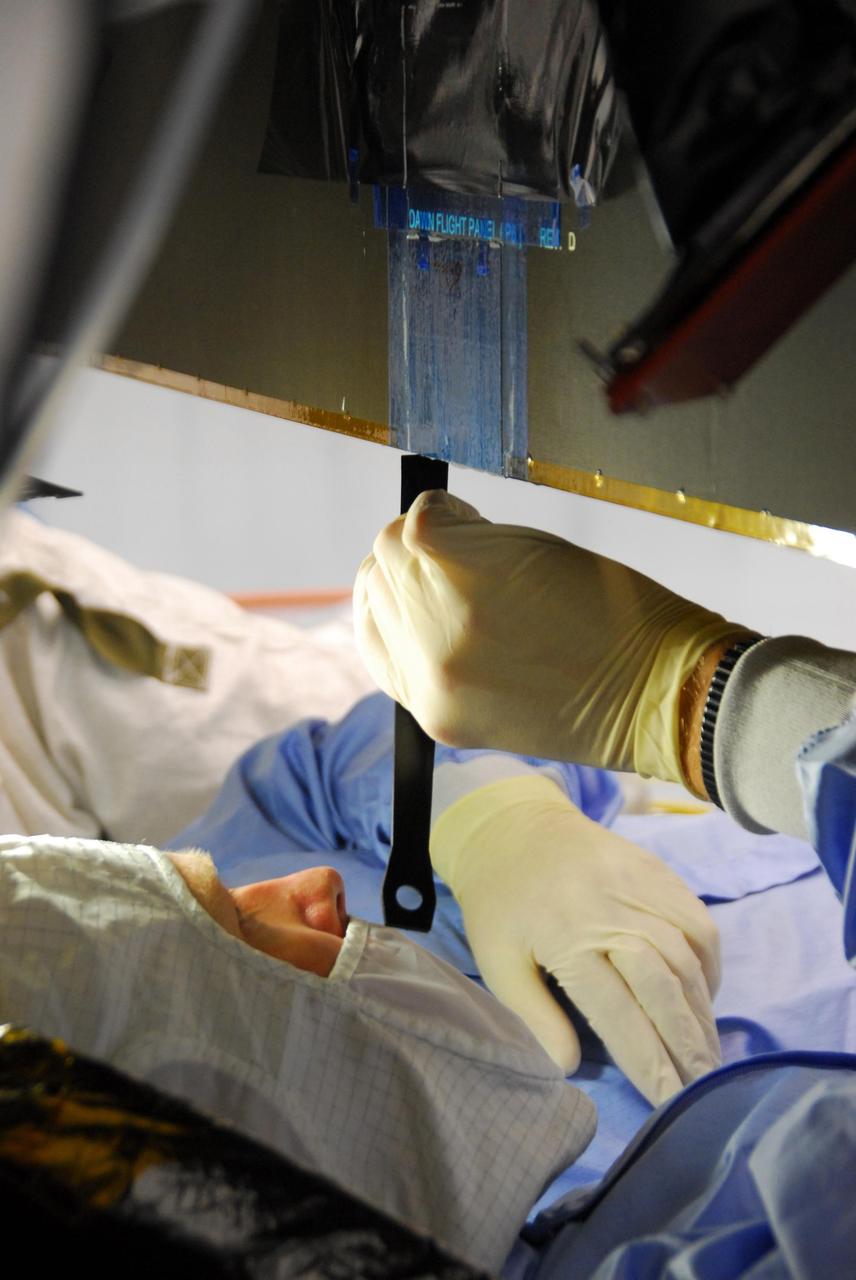
KENNEDY SPACE CENTER, FLA. -- At Astrotech, a Dutch Space technician repairs the damage to the lower edge of the solar array panel on the Dawn spacecraft. On June 11, during a procedure to prepare the Dawn spacecraft for spin-balance testing, the back of a solar array panel was slightly damaged by a technician's tool. The size of the affected area is about 2.5 inches by 2 inches. There is no impact to the launch date of July 7. Dawn's goal is to characterize the conditions and processes of the solar system's earliest epoch 4.5 billion years ago by investigating in detail two of the largest asteroids, Ceres and Vesta. They reside between Mars and Jupiter in the asteroid belt. Photo credit: NASA/George Shelton
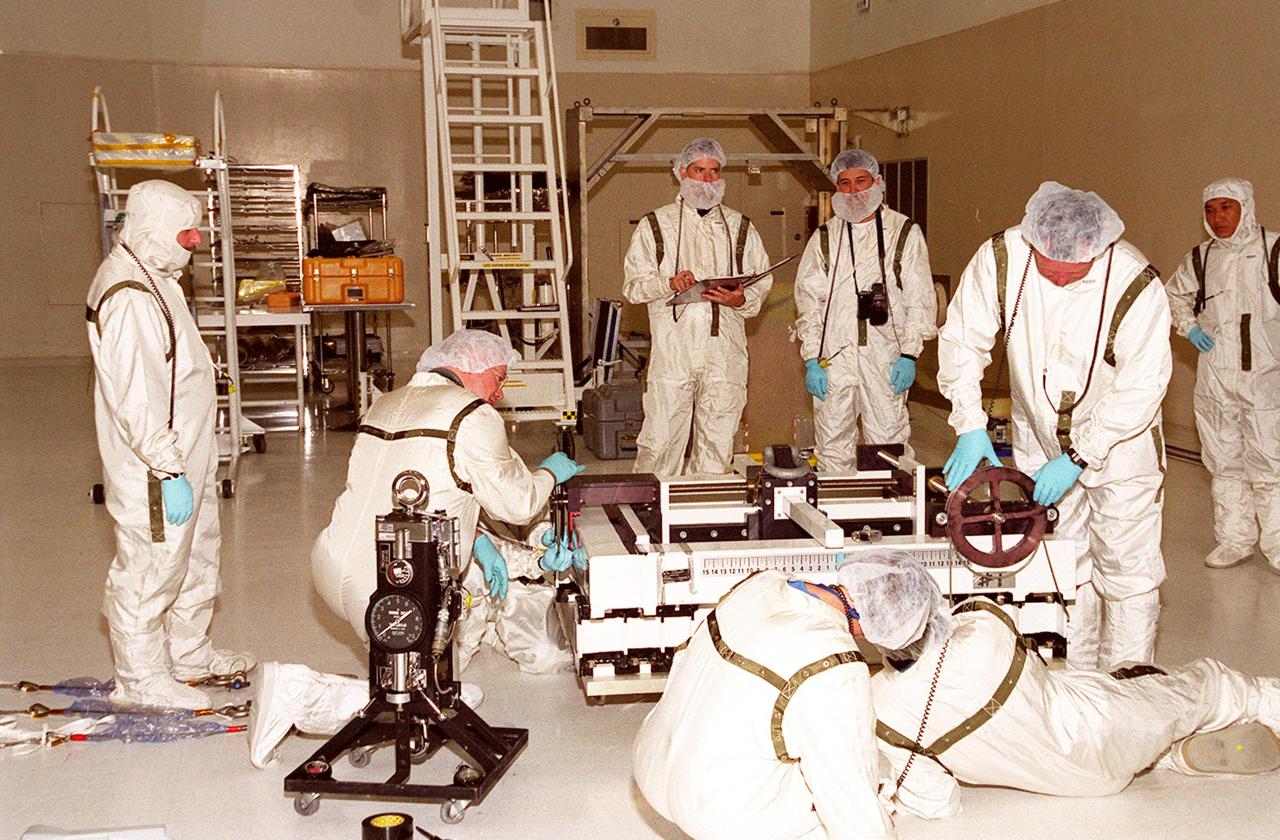
Workers in the Space Assembly and Encapsulation Building 2 prepare the overhead crane that will lift and move the 2001 Mars Odyssey Orbiter to the spin table for testing. The orbiter carries three science instruments THEMIS, the Gamma Ray Spectrometer (GRS), and the Mars Radiation Environment Experiment (MARIE) that will map the mineralogy and morphology of the Martian surface, the elemental composition of the surface and determine the abundance of hydrogen in the shallow subsurface, and characterize aspects of the near-space radiation environment with regards to the radiation-related risk to human explorers. The Mars Odyssey Orbiter is scheduled for launch on April 7, 2001, aboard a Delta II rocket from Launch Pad 17-A, Cape Canaveral Air Force Station
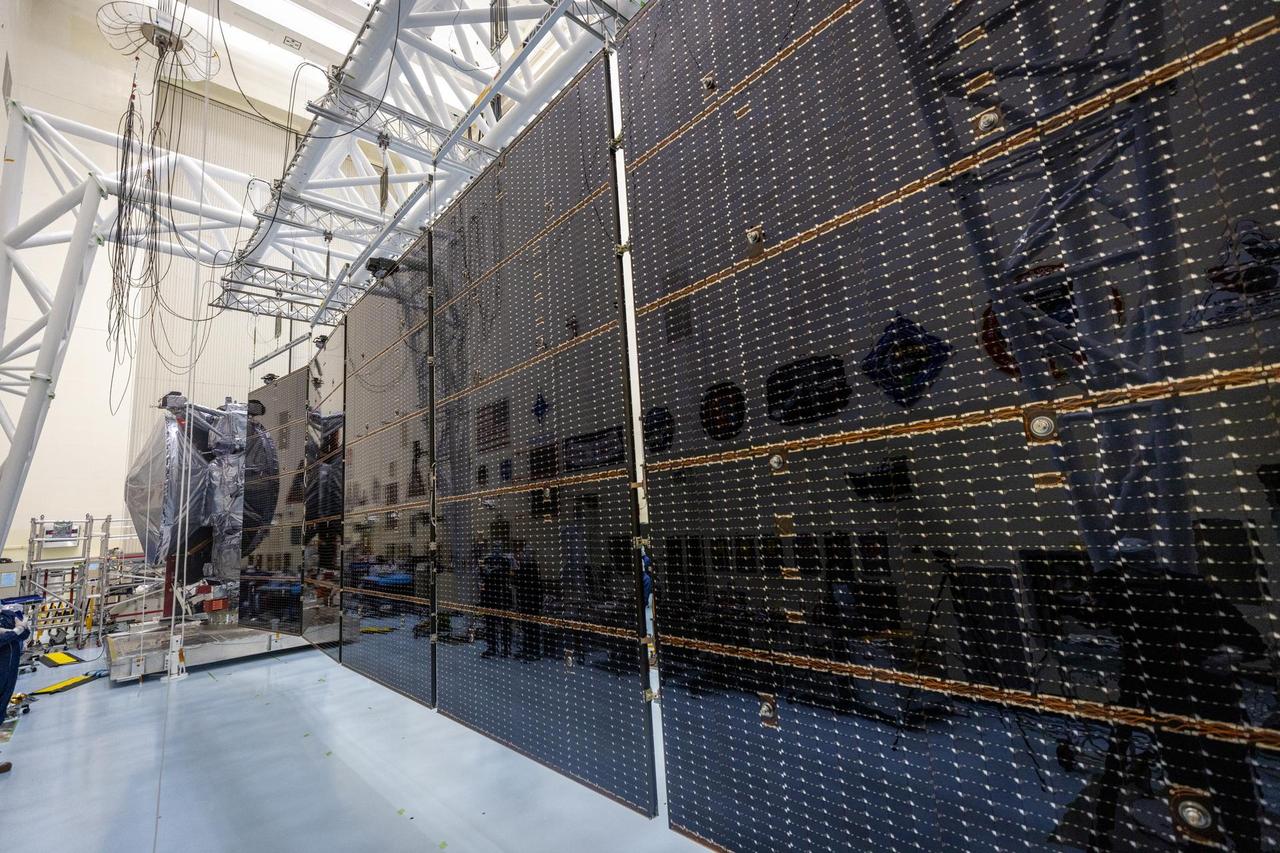
NASA's Europa Clipper is seen here on Aug. 21, 2024, in a clean room at the agency's Kennedy Space Center in Florida. The photo was taken as engineers and technicians deployed and tested the spacecraft's giant solar arrays, each of which measures about 46.5 feet (14.2 meters) long and about 13.5 feet (4.1 meters) high. Europa Clipper's three main science objectives are to determine the thickness of the moon's icy shell and its interactions with the ocean below, to investigate its composition, and to characterize its geology. The mission's detailed exploration of Europa will help scientists better understand the astrobiological potential for habitable worlds beyond our planet. https://photojournal.jpl.nasa.gov/catalog/PIA26066
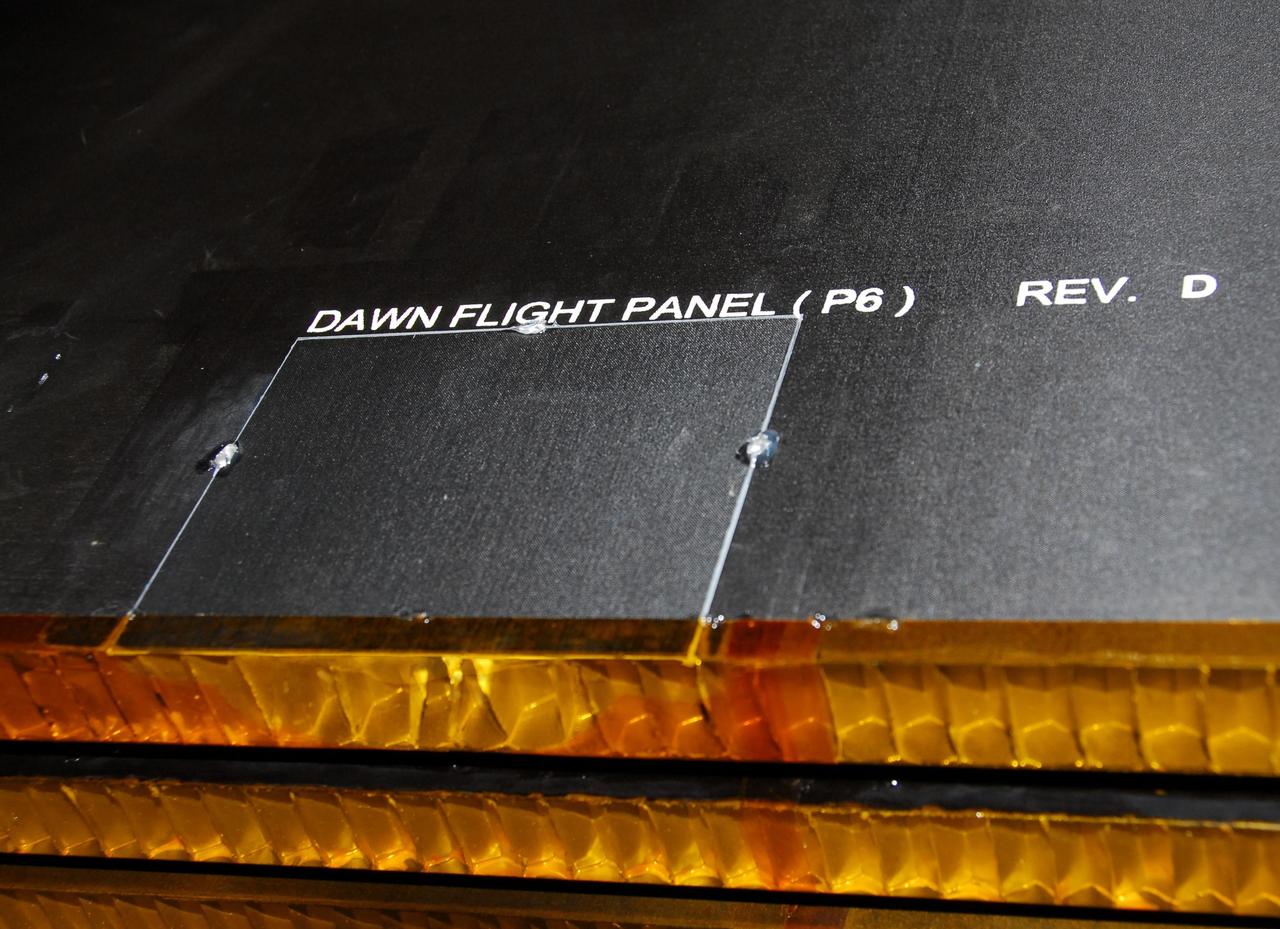
KENNEDY SPACE CENTER, FLA. -- At Astrotech, the repair to the damage on the solar array panel on the Dawn spacecraft is seen here. Incurred on June 11, the damage was made by a technician's tool during a procedure to prepare Dawn for spin-balance testing. The size of the affected area is about 2.5 inches by 2 inches. There was no impact to the launch date of July 7. Dawn's goal is to characterize the conditions and processes of the solar system's earliest epoch 4.5 billion years ago by investigating in detail two of the largest asteroids, Ceres and Vesta. They reside between Mars and Jupiter in the asteroid belt Photo credit: NASA/George Shelton
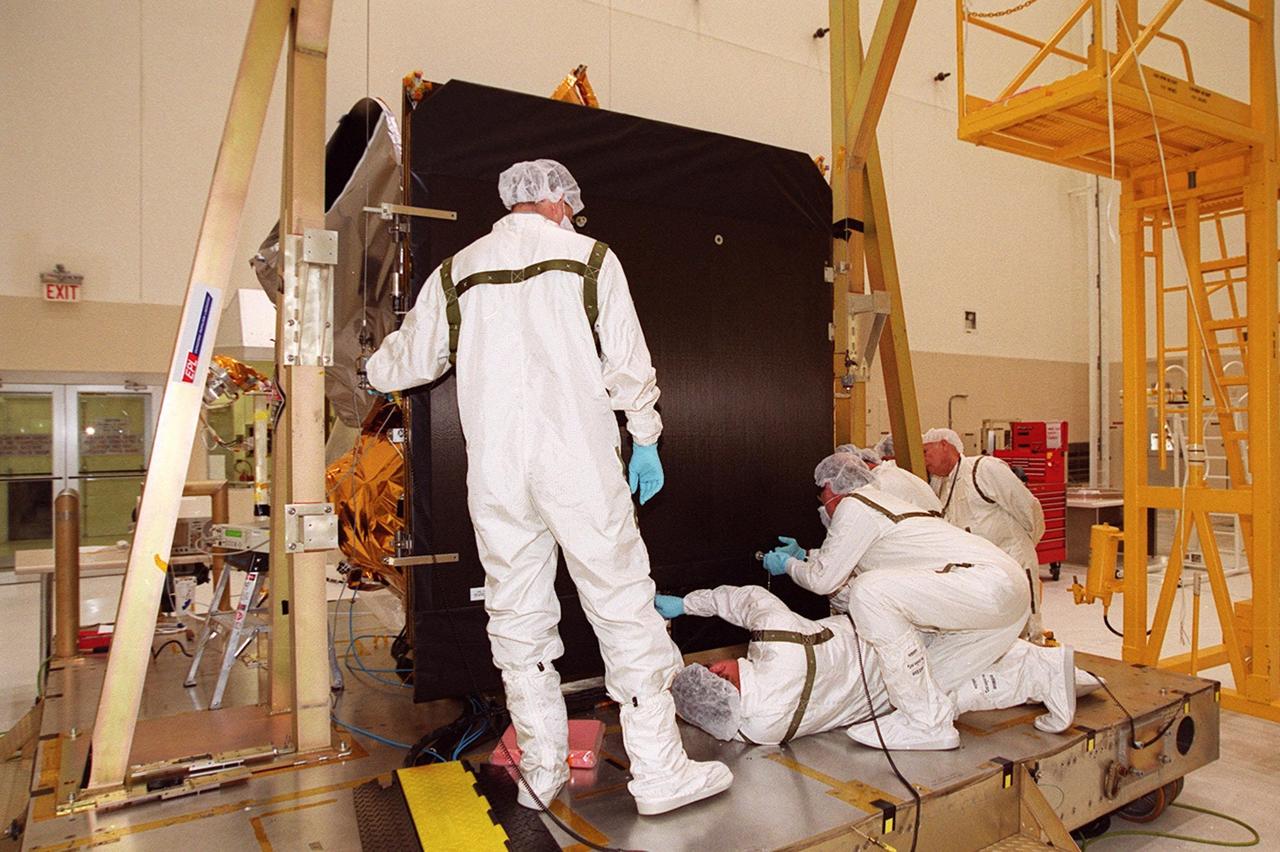
Workers in the Spacecraft Assembly and Encapsulation Facility (SAEF 2) reattach the solar panel on the 2001 Mars Odyssey Orbiter in order to conduct illumination testing. Scheduled for launch April 7, 2001, the orbiter contains three science instruments: THEMIS, the Gamma Ray Spectrometer (GRS), and the Mars Radiation Environment Experiment (MARIE). THEMIS will map the mineralogy and morphology of the Martian surface using a high-resolution camera and a thermal infrared imaging spectrometer. The GRS will achieve global mapping of the elemental composition of the surface and determine the abundance of hydrogen in the shallow subsurface. The MARIE will characterize aspects of the near-space radiation environment with regards to the radiation-related risk to human explorers
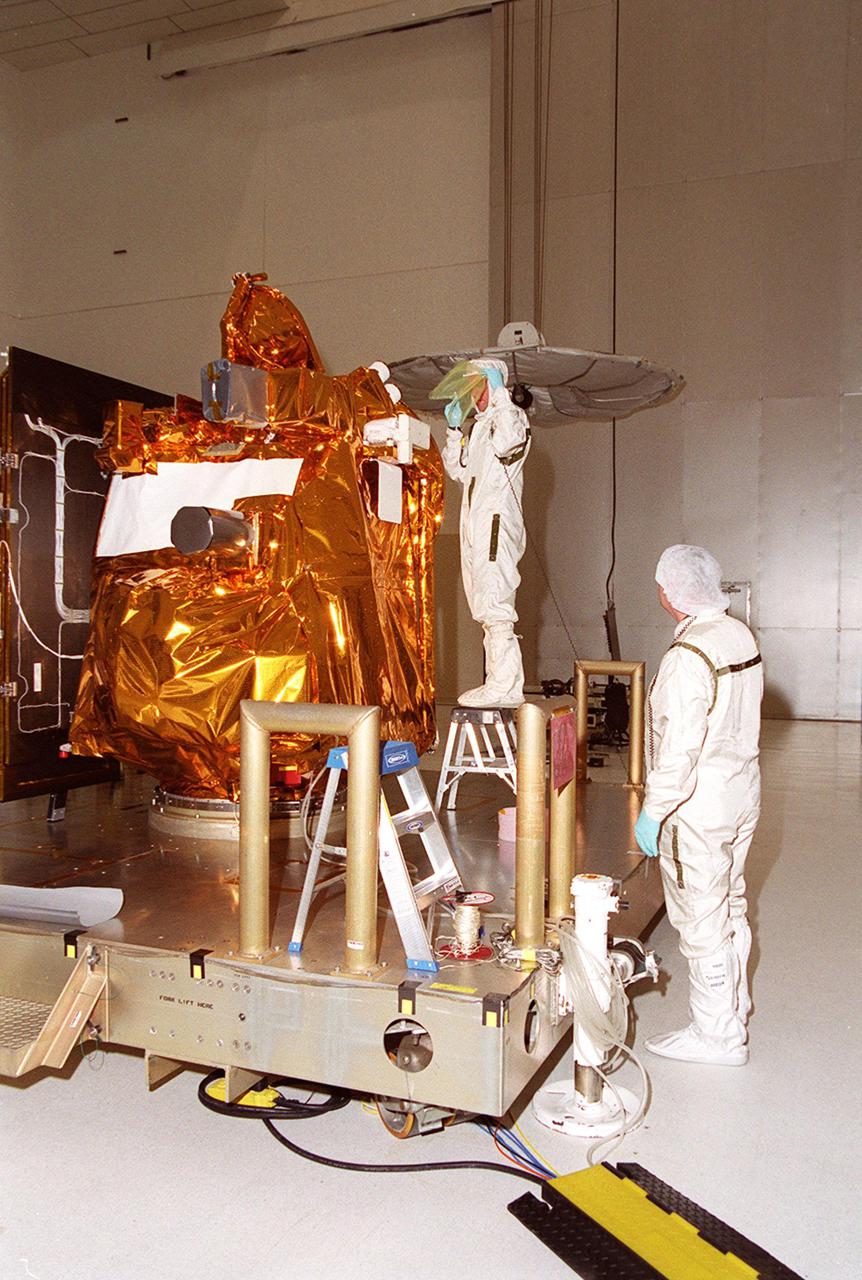
Workers in the Space Assembly and Encapsulation Building 2 prepare the 2001 Mars Odyssey Orbiter for its move to the spin table for testing. The orbiter carries three science instruments THEMIS, the Gamma Ray Spectrometer (GRS), and the Mars Radiation Environment Experiment (MARIE) that will map the mineralogy and morphology of the Martian surface, the elemental composition of the surface and determine the abundance of hydrogen in the shallow subsurface, and characterize aspects of the near-space radiation environment with regards to the radiation-related risk to human explorers. The Mars Odyssey Orbiter is scheduled for launch on April 7, 2001, aboard a Delta II rocket from Launch Pad 17-A, Cape Canaveral Air Force Station
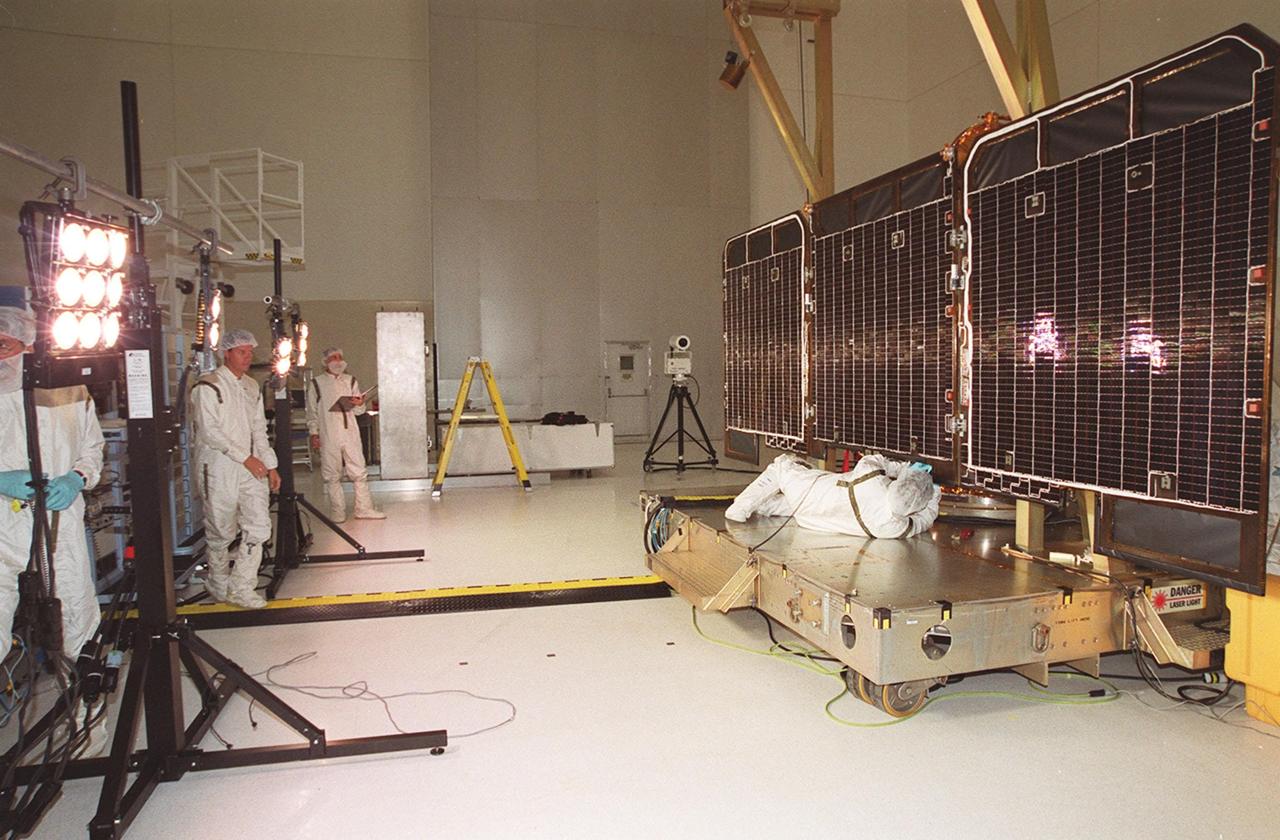
Arrays of lights (left) in the Spacecraft Assembly and Encapsulation Facility (SAEF 2) are used for illumination testing on the solar array panels at right. The panels are part of on the 2001 Mars Odyssey Orbiter. Scheduled for launch April 7, 2001, the orbiter contains three science instruments: THEMIS, the Gamma Ray Spectrometer (GRS), and the Mars Radiation Environment Experiment (MARIE). THEMIS will map the mineralogy and morphology of the Martian surface using a high-resolution camera and a thermal infrared imaging spectrometer. The GRS will achieve global mapping of the elemental composition of the surface and determine the abundance of hydrogen in the shallow subsurface. The MARIE will characterize aspects of the near-space radiation environment with regards to the radiation-related risk to human explorers
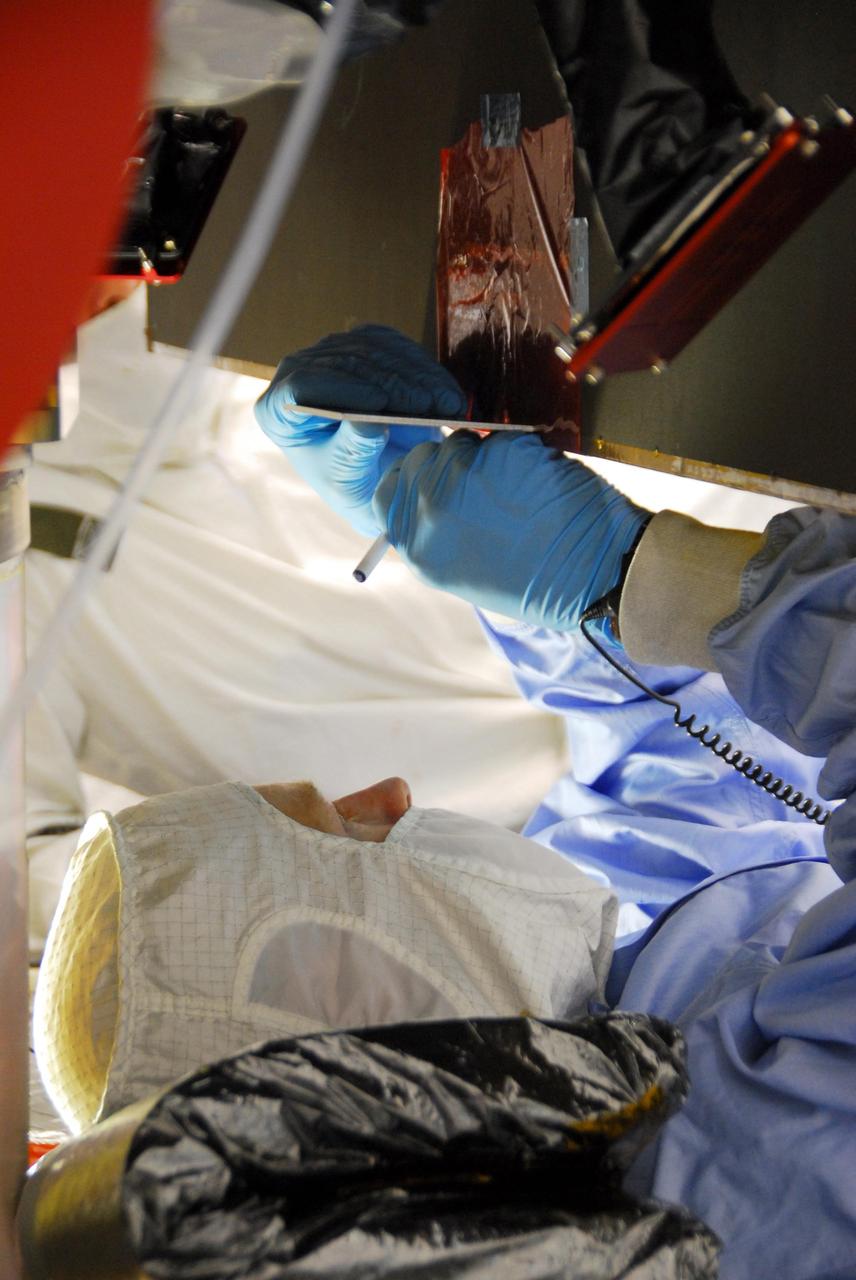
KENNEDY SPACE CENTER, FLA. -- At Astrotech, engineers from Dutch Space are making repairs on the slight damage done by a technician's tool to the back of a solar array panel of the Dawn spacecraft on June 11 during a procedure to prepare Dawn for spin-balance testing. The size of the affected area is about 2.5 inches by 2 inches. There is no impact to the launch date of July 7. Dawn's goal is to characterize the conditions and processes of the solar system's earliest epoch 4.5 billion years ago by investigating in detail two of the largest asteroids, Ceres and Vesta. They reside between Mars and Jupiter in the asteroid belt. Photo credit: NASA/George Shelton
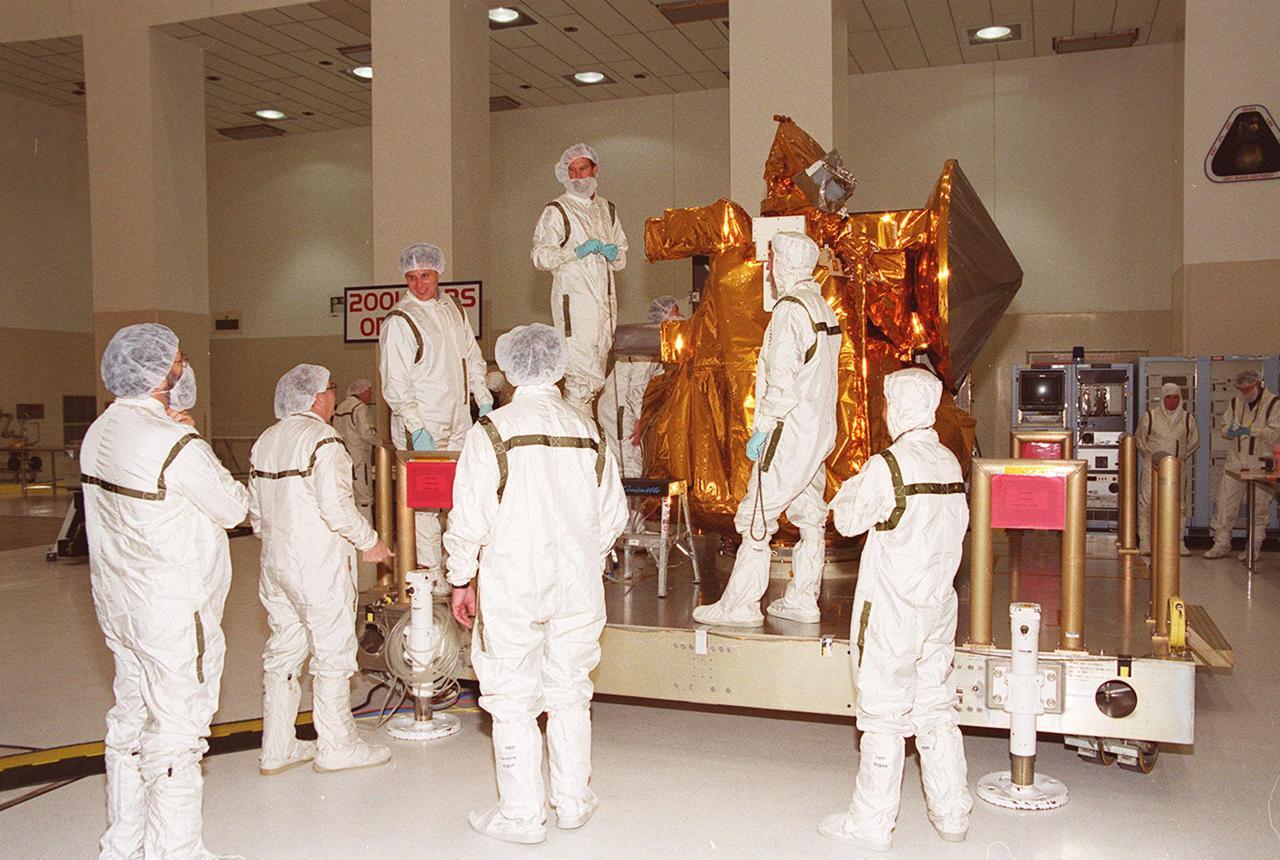
Workers in the Space Assembly and Encapsulation Building 2 prepare to move the 2001 Mars Odyssey Orbiter to the spin table for testing. The orbiter carries three science instruments THEMIS, the Gamma Ray Spectrometer (GRS), and the Mars Radiation Environment Experiment (MARIE) that will map the mineralogy and morphology of the Martian surface, the elemental composition of the surface and determine the abundance of hydrogen in the shallow subsurface, and characterize aspects of the near-space radiation environment with regards to the radiation-related risk to human explorers. The Mars Odyssey Orbiter is scheduled for launch on April 7, 2001, aboard a Delta II rocket from Launch Pad 17-A, Cape Canaveral Air Force Station
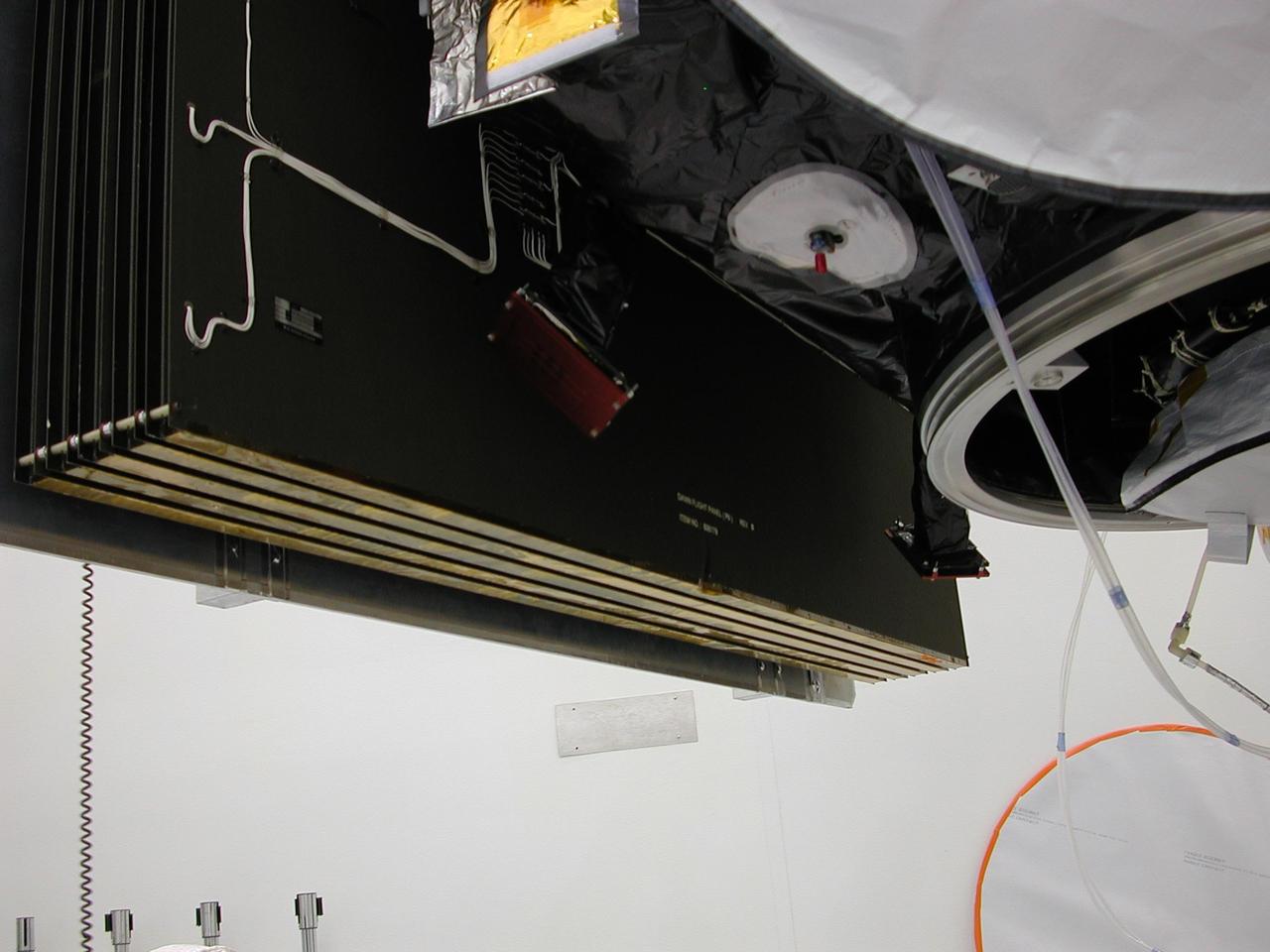
KENNEDY SPACE CENTER, FLA. -- On June 11, during a procedure to prepare the Dawn spacecraft for spin-balance testing, the back of a solar array panel was slightly damaged by a technician's tool. The size of the affected area is about 2.5 inches by 2 inches. The necessary minor repairs will be made during the coming weekend. There is no impact to the launch date of July 7. Dawn's goal is to characterize the conditions and processes of the solar system's earliest epoch 4.5 billion years ago by investigating in detail two of the largest asteroids, Ceres and Vesta. They reside between Mars and Jupiter in the asteroid belt. Photo courtesy of Orbital Sciences
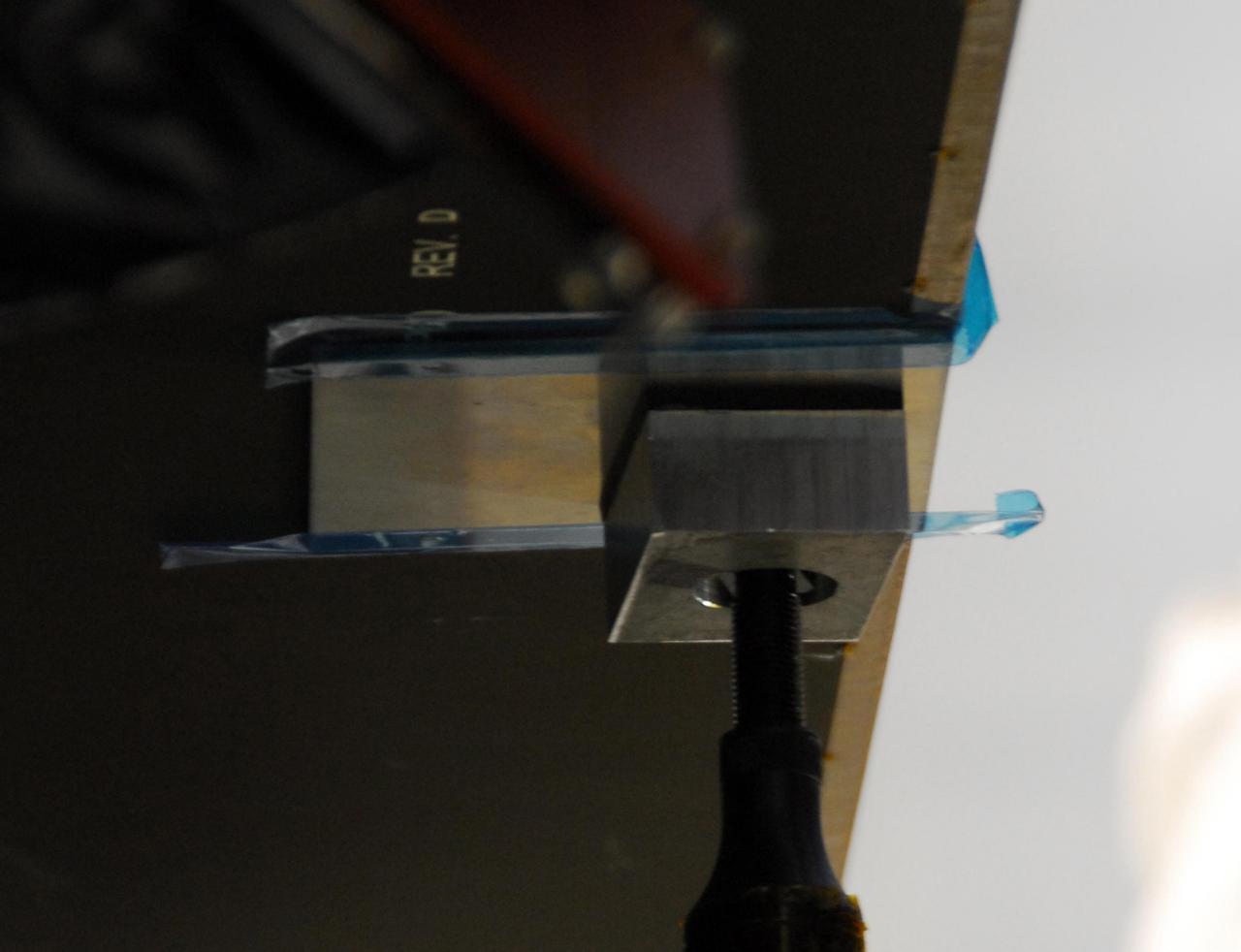
KENNEDY SPACE CENTER, FLA. -- The area of slight damage done by a technician's tool to the back of a solar array panel on the Dawn spacecraft is under repair. The damage occurred at Astrotech on June 11 during a procedure to prepare Dawn for spin-balance testing. The size of the affected area is about 2.5 inches by 2 inches. There is no impact to the launch date of July 7. Dawn's goal is to characterize the conditions and processes of the solar system's earliest epoch 4.5 billion years ago by investigating in detail two of the largest asteroids, Ceres and Vesta. They reside between Mars and Jupiter in the asteroid belt. Photo credit: NASA/George Shelton
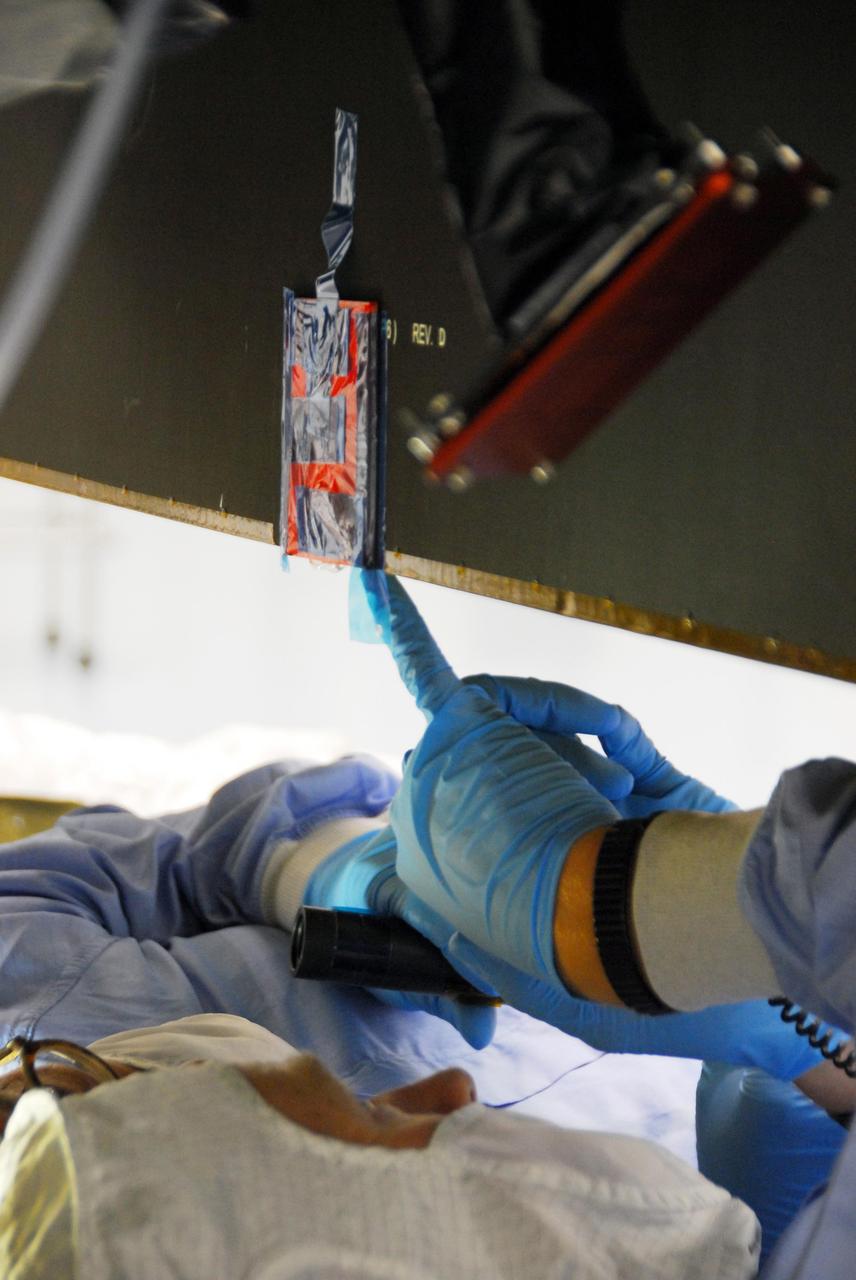
KENNEDY SPACE CENTER, FLA. -- At Astrotech, engineers from Dutch Space are making repairs on the slight damage done by a technician's tool to the back of a solar array panel of the Dawn spacecraft on June 11 during a procedure to prepare Dawn for spin-balance testing. The size of the affected area is about 2.5 inches by 2 inches. There is no impact to the launch date of July 7. Dawn's goal is to characterize the conditions and processes of the solar system's earliest epoch 4.5 billion years ago by investigating in detail two of the largest asteroids, Ceres and Vesta. They reside between Mars and Jupiter in the asteroid belt. Photo credit: NASA/George Shelton
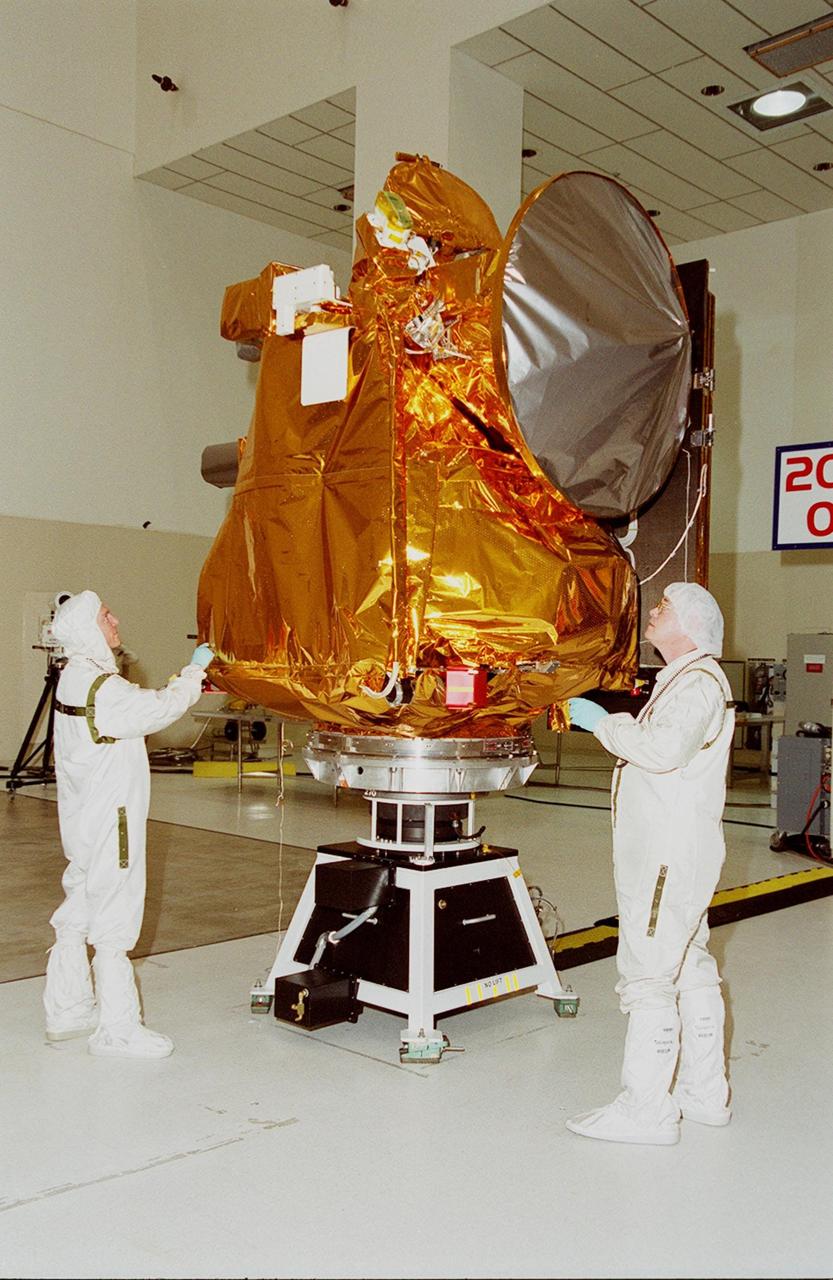
Workers in the Space Assembly and Encapsulation Building 2 make a last-minute check on the 2001 Mars Odyssey Orbiter before it undergoes spin testing. The orbiter carries three science instruments THEMIS, the Gamma Ray Spectrometer (GRS), and the Mars Radiation Environment Experiment (MARIE) that will map the mineralogy and morphology of the Martian surface, the elemental composition of the surface and determine the abundance of hydrogen in the shallow subsurface, and characterize aspects of the near-space radiation environment with regards to the radiation-related risk to human explorers. The Mars Odyssey Orbiter is scheduled for launch on April 7, 2001, aboard a Delta II rocket from Launch Pad 17-A, Cape Canaveral Air Force Station
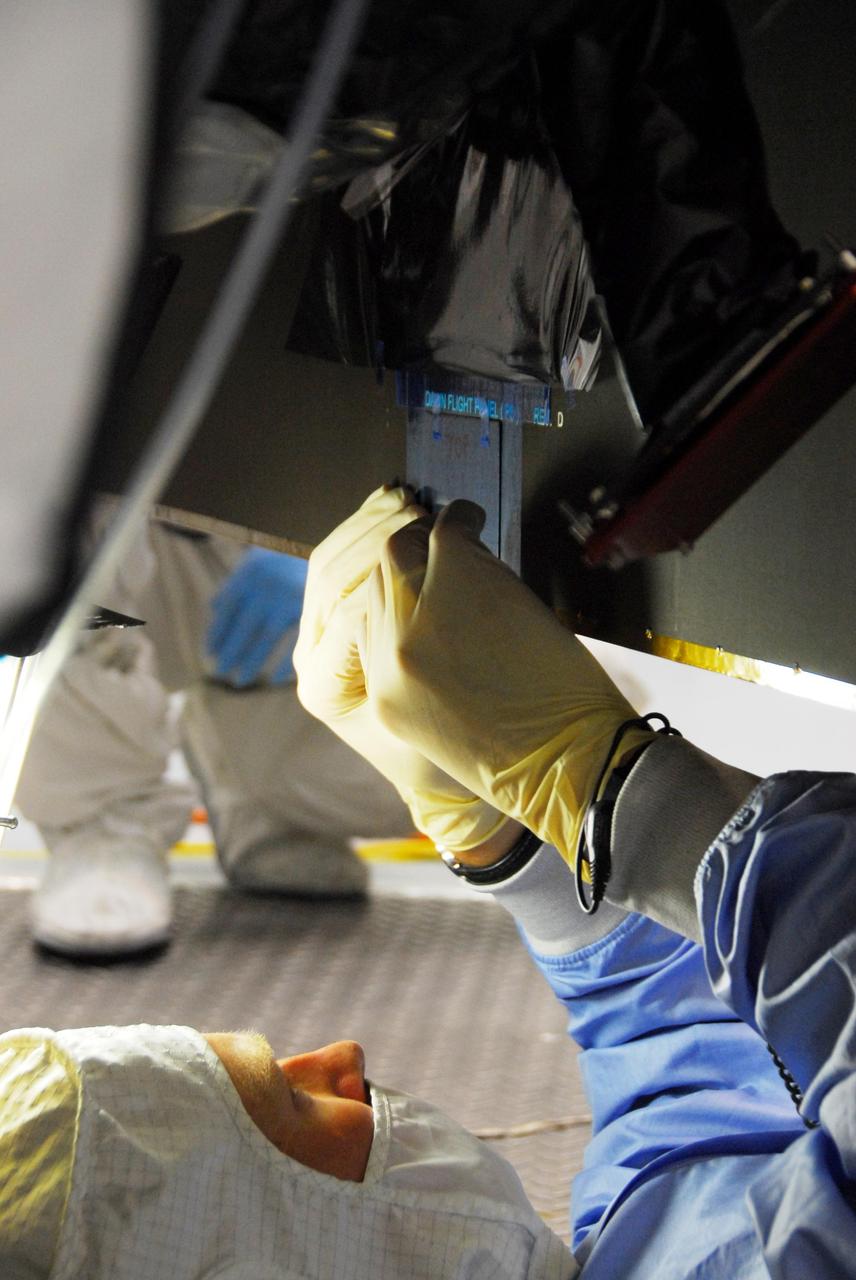
KENNEDY SPACE CENTER, FLA. -- At Astrotech, a Dutch Space technician repairs the damage to the lower edge of the solar array panel on the Dawn spacecraft. On June 11, during a procedure to prepare the Dawn spacecraft for spin-balance testing, the back of a solar array panel was slightly damaged by a technician's tool. The size of the affected area is about 2.5 inches by 2 inches. There is no impact to the launch date of July 7. Dawn's goal is to characterize the conditions and processes of the solar system's earliest epoch 4.5 billion years ago by investigating in detail two of the largest asteroids, Ceres and Vesta. They reside between Mars and Jupiter in the asteroid belt. Photo credit: NASA/George Shelton
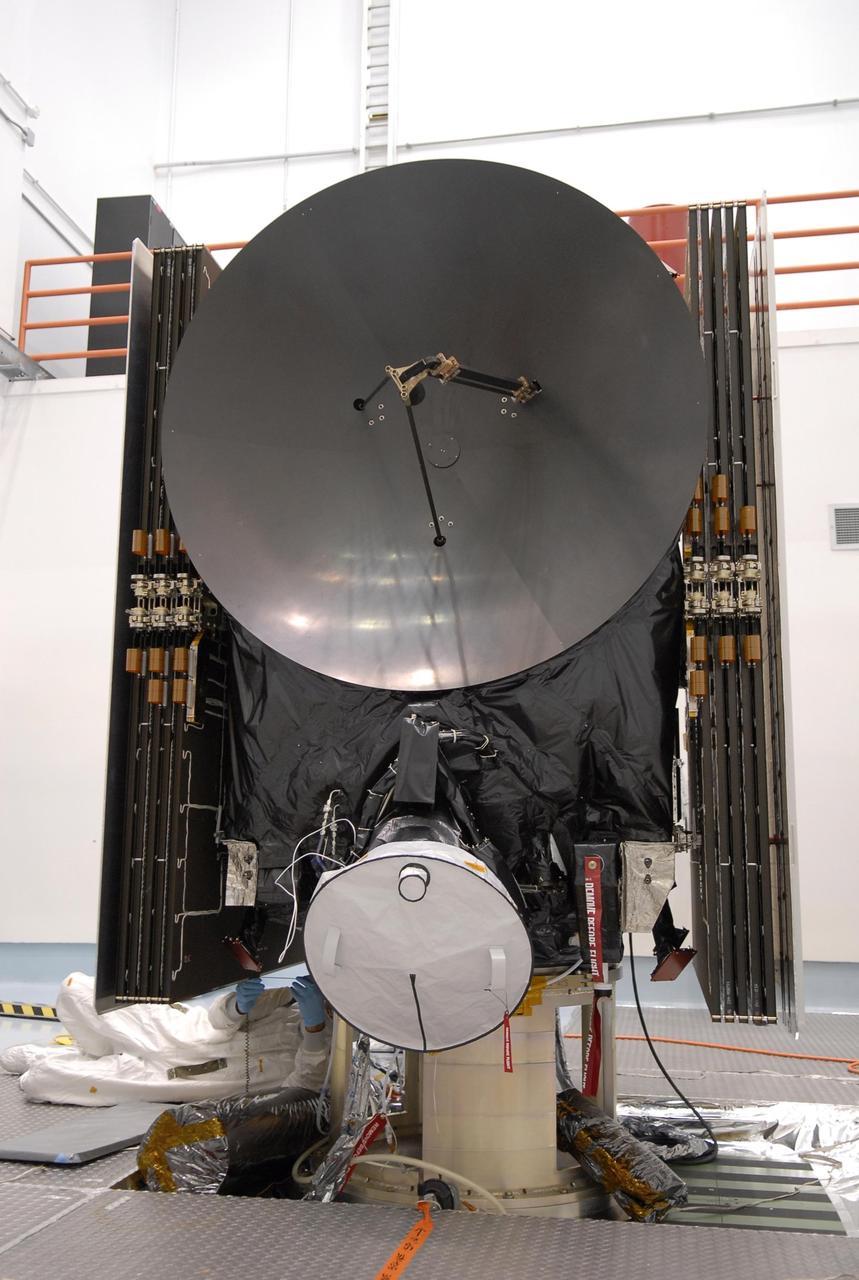
KENNEDY SPACE CENTER, FLA. -- A technicians from Dutch Space gets underneath the solar array panel on the Dawn spacecraft to look at the slight damage done by a technician's tool June 11 during a procedure to prepare Dawn for spin-balance testing. Dawn's goal is to characterize the conditions and processes of the solar system's earliest epoch by investigating in detail the largest protoplanets that have remained intact since their formations: asteroid Vesta and the dwarf planet Ceres. They reside in the extensive zone between Mars and Jupiter together with many other smaller bodies, called the asteroid belt. Dawn is scheduled to launch July 7. Photo credit: NASA/Kim Shiflett
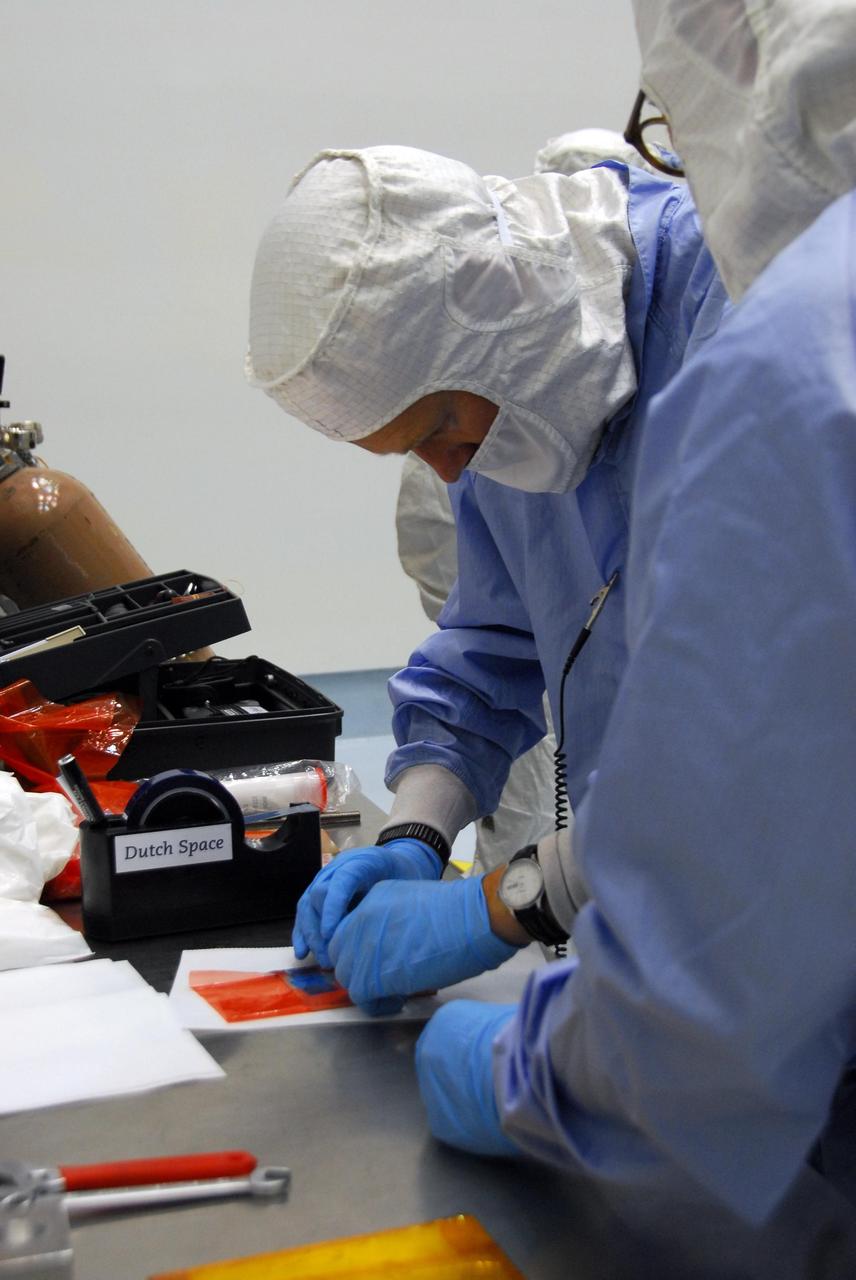
KENNEDY SPACE CENTER, FLA. --At Astrotech, engineers from Dutch Space prepare materials to make repairs on the slight damage done by a technician's tool to the back of a solar array panel of the Dawn spacecraft on June 11 during a procedure to prepare Dawn for spin-balance testing. The size of the affected area is about 2.5 inches by 2 inches. There is no impact to the launch date of July 7. Dawn's goal is to characterize the conditions and processes of the solar system's earliest epoch 4.5 billion years ago by investigating in detail two of the largest asteroids, Ceres and Vesta. They reside between Mars and Jupiter in the asteroid belt. Photo credit: NASA/George Shelton
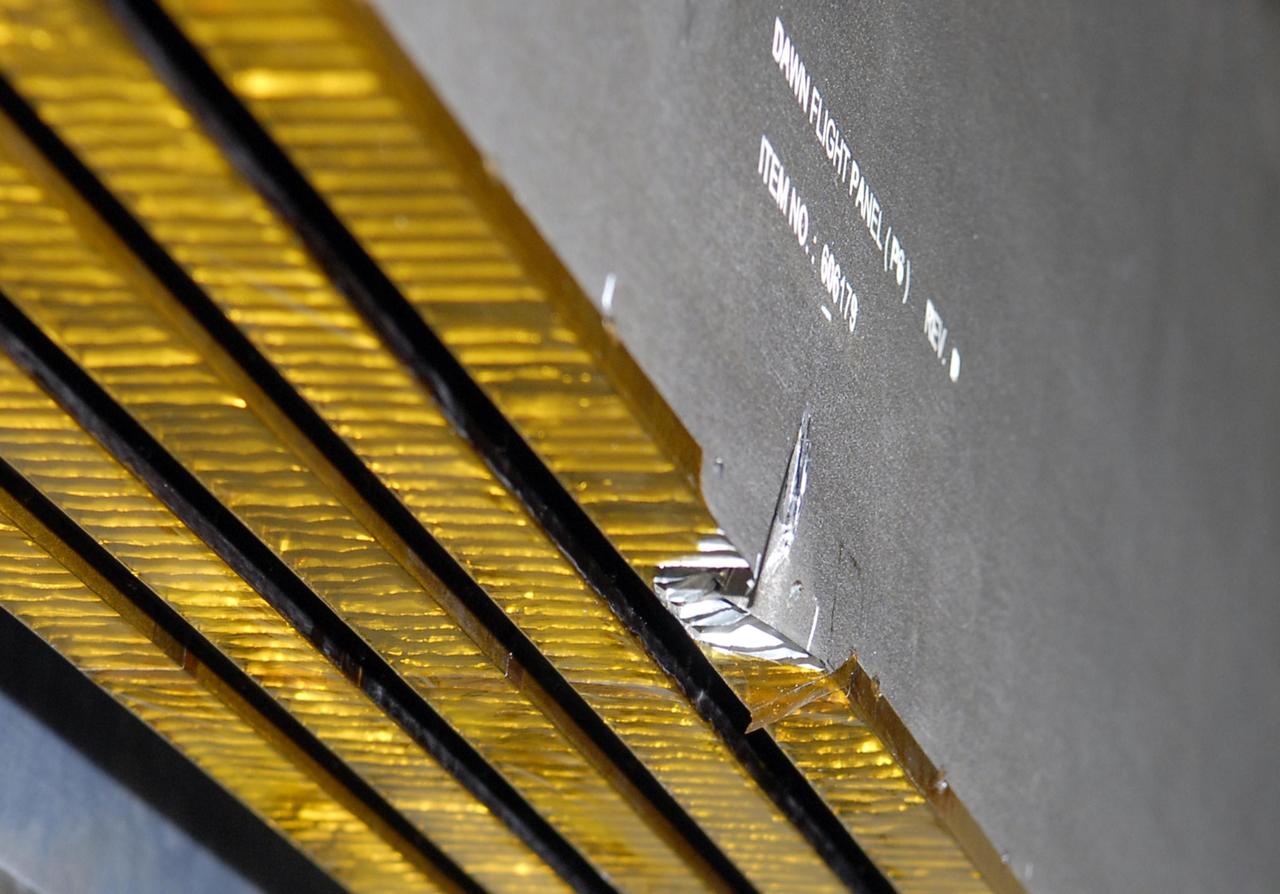
KENNEDY SPACE CENTER, FLA. -- This closeup shows the slight damage done by a technician's tool to the back of a solar array panel on June 11 during a procedure to prepare the Dawn spacecraft for spin-balance testing. Dawn's goal is to characterize the conditions and processes of the solar system's earliest epoch by investigating in detail the largest protoplanets that have remained intact since their formations: asteroid Vesta and the dwarf planet Ceres. They reside in the extensive zone between Mars and Jupiter together with many other smaller bodies, called the asteroid belt. Dawn is scheduled to launch July 7. Photo credit: NASA/Kim Shiflett
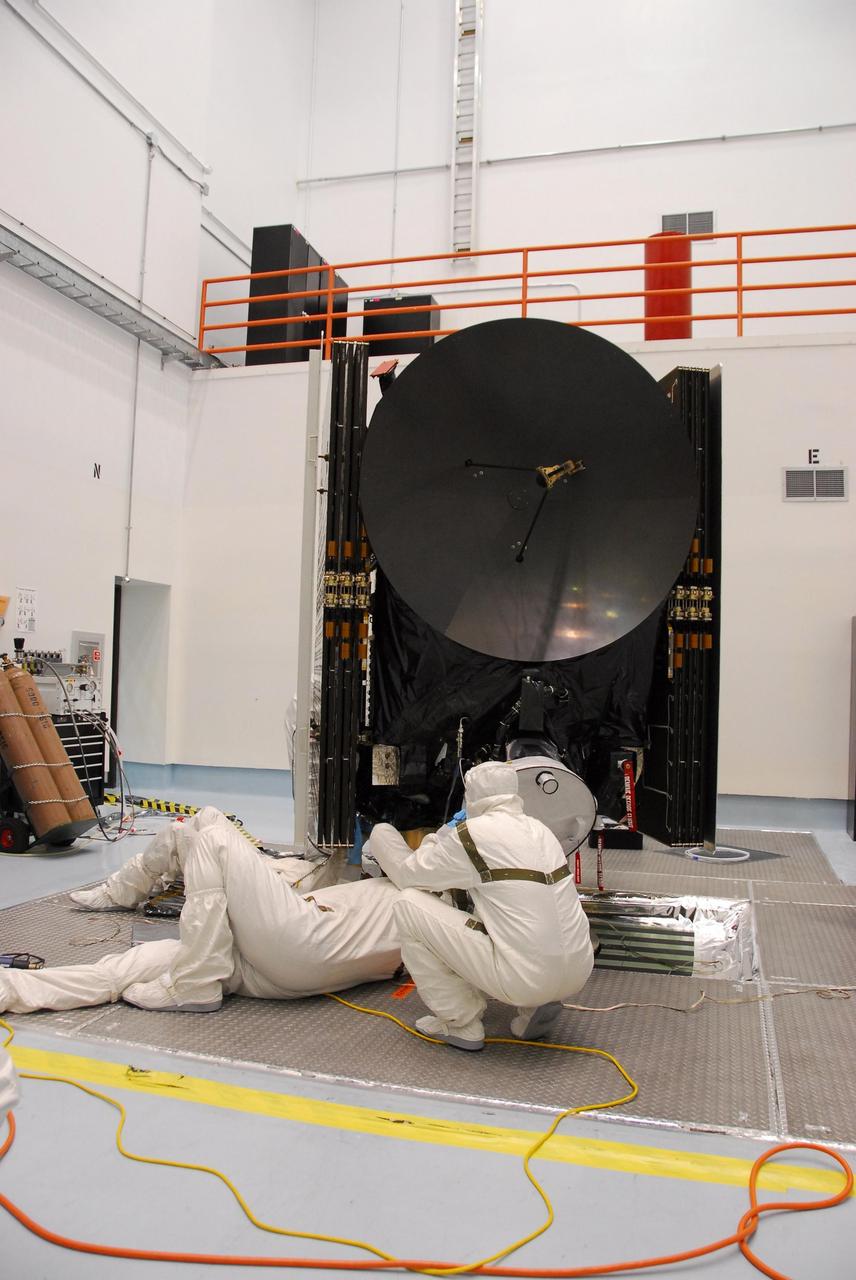
KENNEDY SPACE CENTER, FLA. -- At Astrotech, engineers from Dutch Space lie underneath the Dawn spacecraft to examine the repairs under process on damage made to the solar array panel. The damage occurred on June 11 from a technician's tool during a procedure to prepare Dawn for spin-balance testing. The size of the affected area is about 2.5 inches by 2 inches. There is no impact to the launch date of July 7. Dawn's goal is to characterize the conditions and processes of the solar system's earliest epoch 4.5 billion years ago by investigating in detail two of the largest asteroids, Ceres and Vesta. They reside between Mars and Jupiter in the asteroid belt. Photo credit: NASA/George Shelton
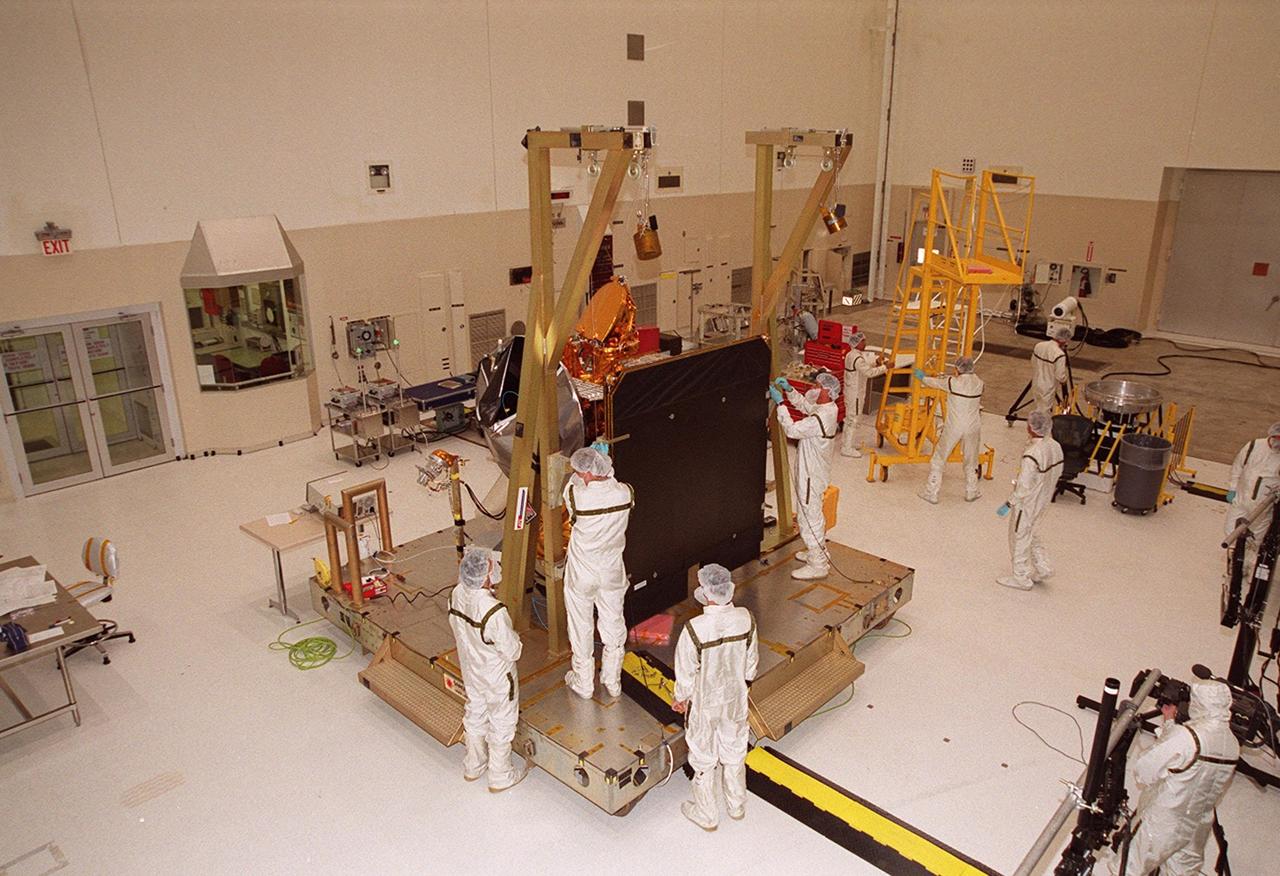
In the Spacecraft Assembly and Encapsulation Facility (SAEF 2), workers get ready to open the panels of the solar array on the 2001 Mars Odyssey Orbiter in order to conduct illumination testing. Scheduled for launch April 7, 2001, the orbiter contains three science instruments: THEMIS, the Gamma Ray Spectrometer (GRS), and the Mars Radiation Environment Experiment (MARIE). THEMIS will map the mineralogy and morphology of the Martian surface using a high-resolution camera and a thermal infrared imaging spectrometer. The GRS will achieve global mapping of the elemental composition of the surface and determine the abundance of hydrogen in the shallow subsurface. The MARIE will characterize aspects of the near-space radiation environment with regards to the radiation-related risk to human explorers
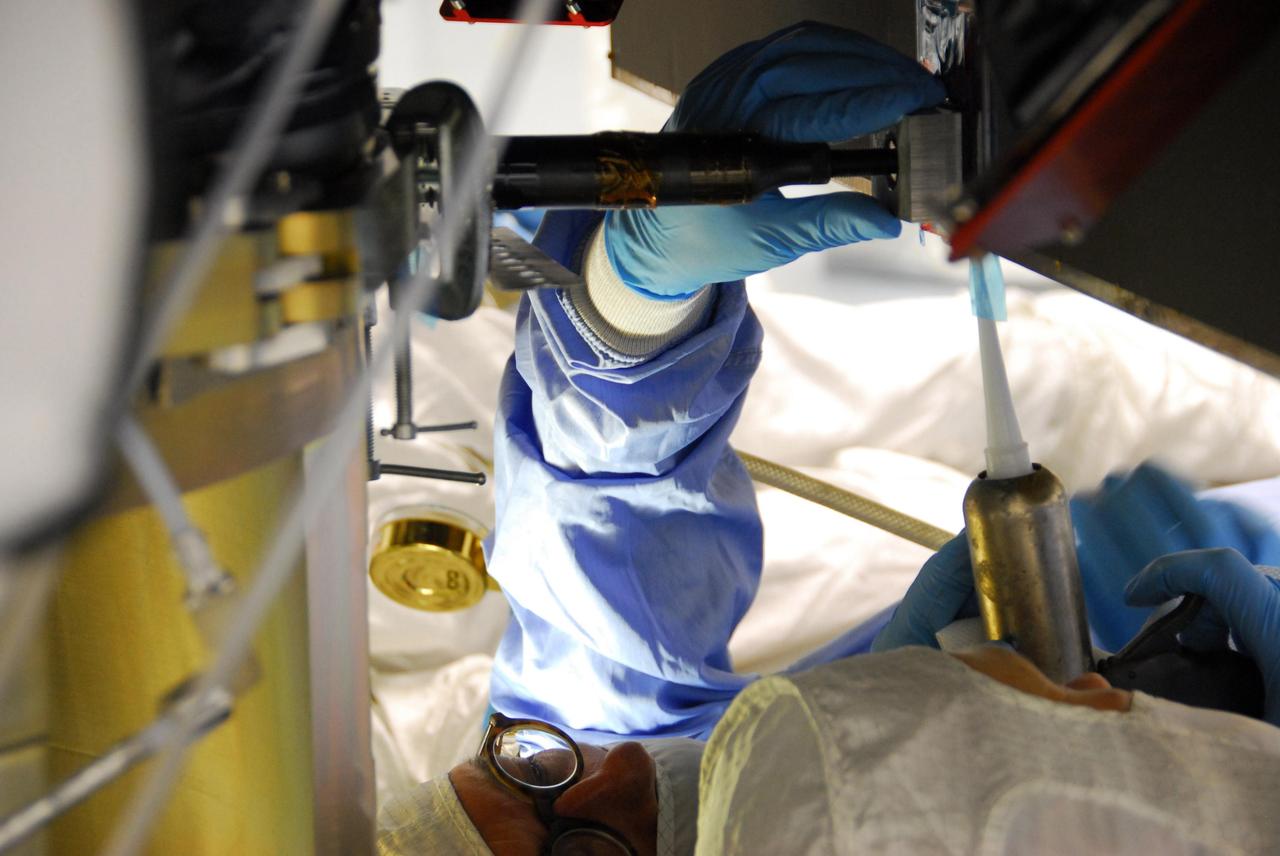
KENNEDY SPACE CENTER, FLA. -- At Astrotech, an engineer from Dutch Space is making repairs on the slight damage done by a technician's tool to the back of a solar array panel of the Dawn spacecraft on June 11 during a procedure to prepare Dawn for spin-balance testing. The size of the affected area is about 2.5 inches by 2 inches. There is no impact to the launch date of July 7. Dawn's goal is to characterize the conditions and processes of the solar system's earliest epoch 4.5 billion years ago by investigating in detail two of the largest asteroids, Ceres and Vesta. They reside between Mars and Jupiter in the asteroid belt. Photo credit: NASA/George Shelton
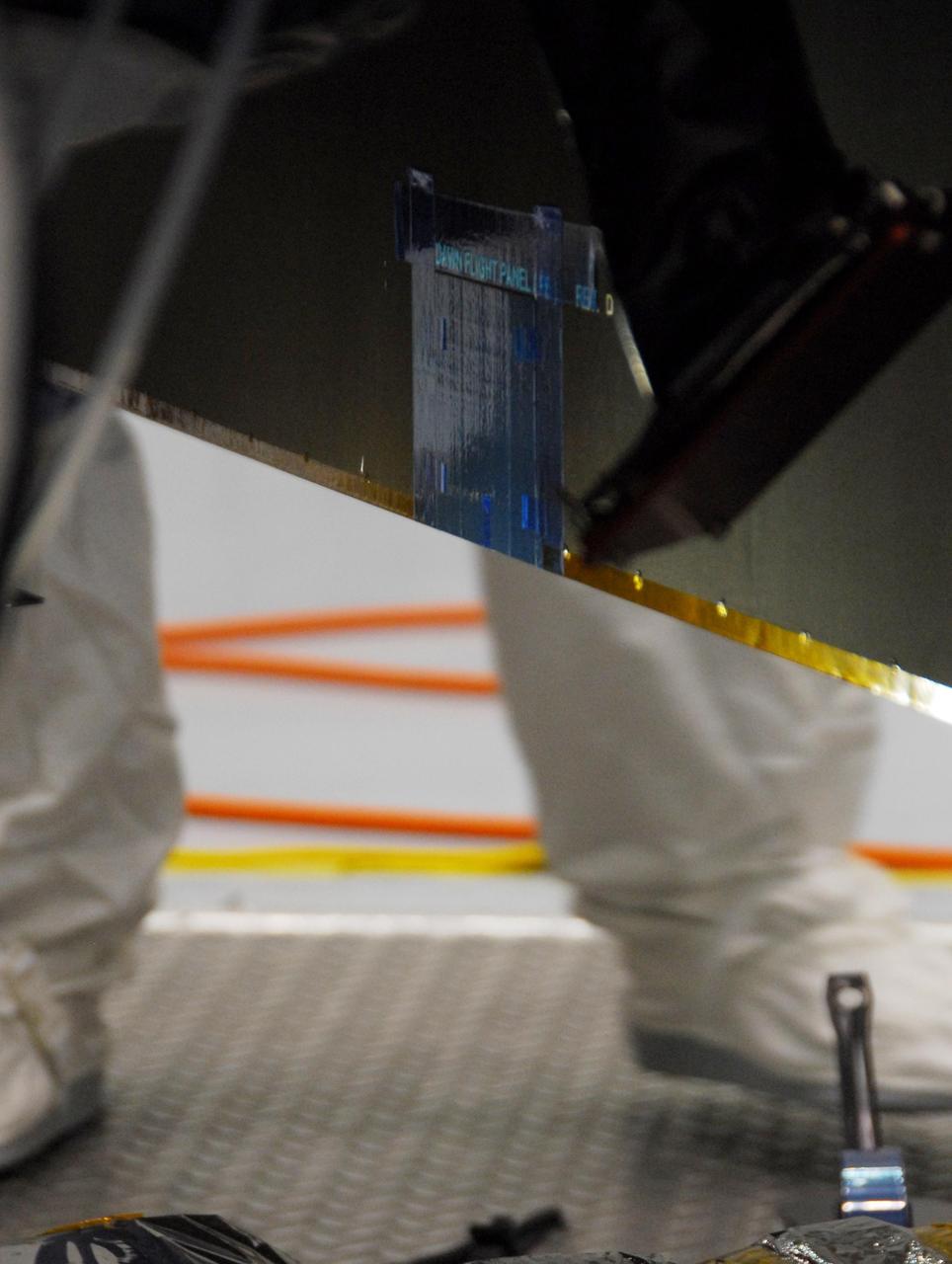
KENNEDY SPACE CENTER, FLA. -- At Astrotech, engineers from Dutch Space have repaired the damage to the solar array panel on the Dawn spacecraft. The damage, incurred on June 11, was made by a technician's tool during a procedure to prepare Dawn for spin-balance testing. The size of the affected area is about 2.5 inches by 2 inches. There was no impact to the launch date of July 7. Dawn's goal is to characterize the conditions and processes of the solar system's earliest epoch 4.5 billion years ago by investigating in detail two of the largest asteroids, Ceres and Vesta. They reside between Mars and Jupiter in the asteroid belt Photo credit: NASA/George Shelton
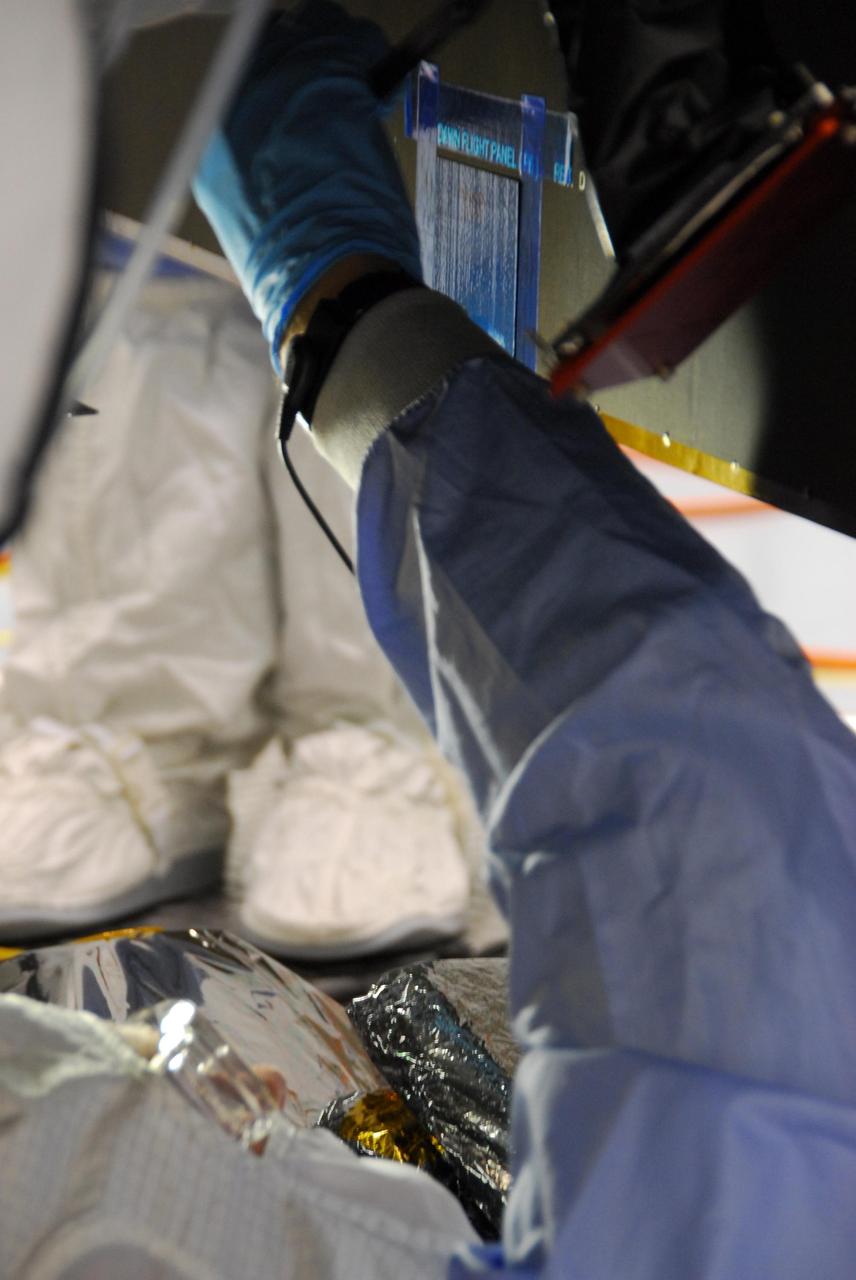
KENNEDY SPACE CENTER, FLA. -- At Astrotech, an engineer from Dutch Space makes a final check of repair made to the damage on a solar array panel on the Dawn spacecraft. The damage, incurred on June 11, was made by a technician's tool during a procedure to prepare Dawn for spin-balance testing. The size of the affected area is about 2.5 inches by 2 inches. There was no impact to the launch date of July 7. Dawn's goal is to characterize the conditions and processes of the solar system's earliest epoch 4.5 billion years ago by investigating in detail two of the largest asteroids, Ceres and Vesta. They reside between Mars and Jupiter in the asteroid belt Photo credit: NASA/George Shelton
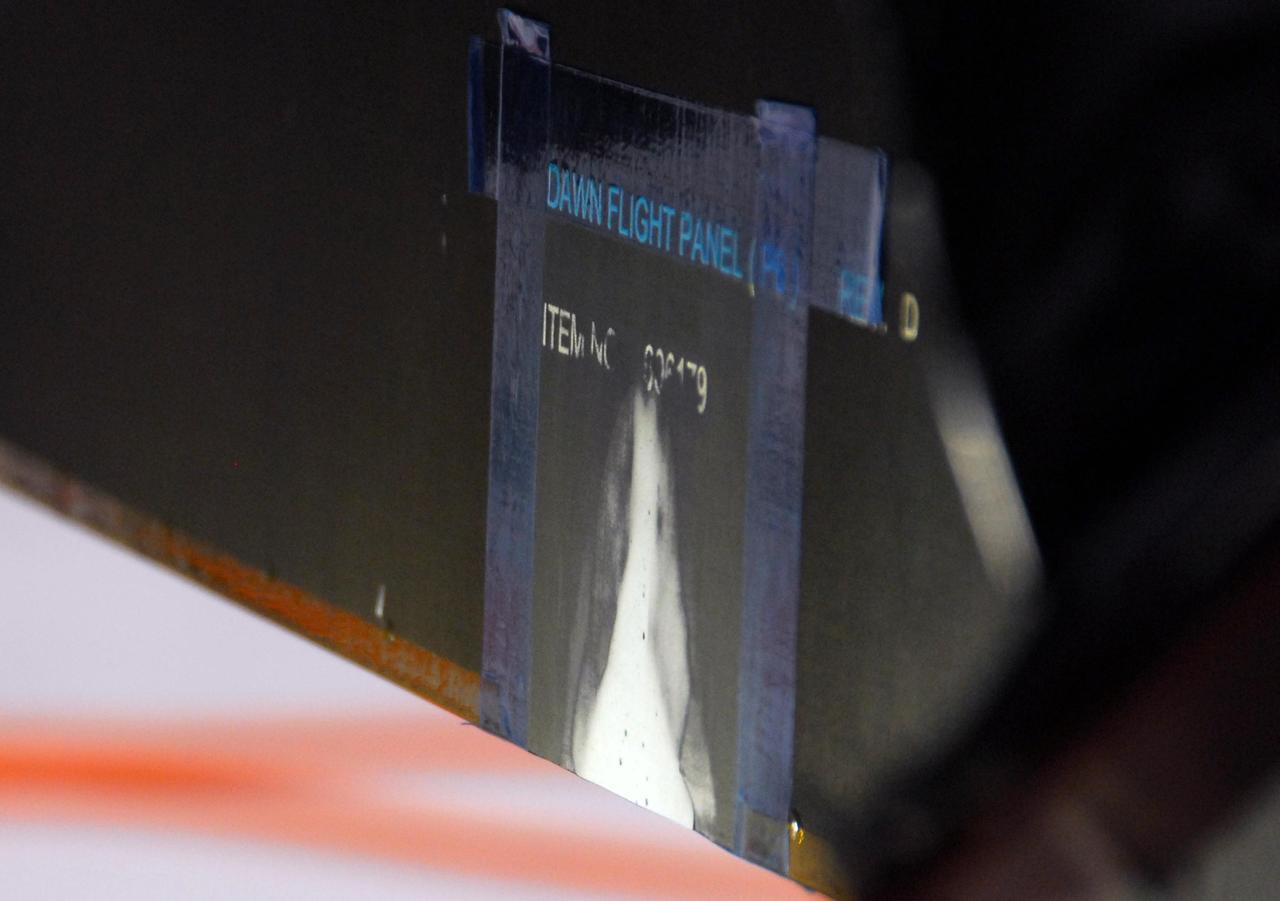
KENNEDY SPACE CENTER, FLA. -- This closeup reveals the repair made to the damage on a solar array panel on the Dawn spacecraft. The damage, incurred on June 11, was made by a technician's tool during a procedure to prepare Dawn for spin-balance testing. The size of the affected area is about 2.5 inches by 2 inches. There was no impact to the launch date of July 7. Dawn's goal is to characterize the conditions and processes of the solar system's earliest epoch 4.5 billion years ago by investigating in detail two of the largest asteroids, Ceres and Vesta. They reside between Mars and Jupiter in the asteroid belt Photo credit: NASA/George Shelton
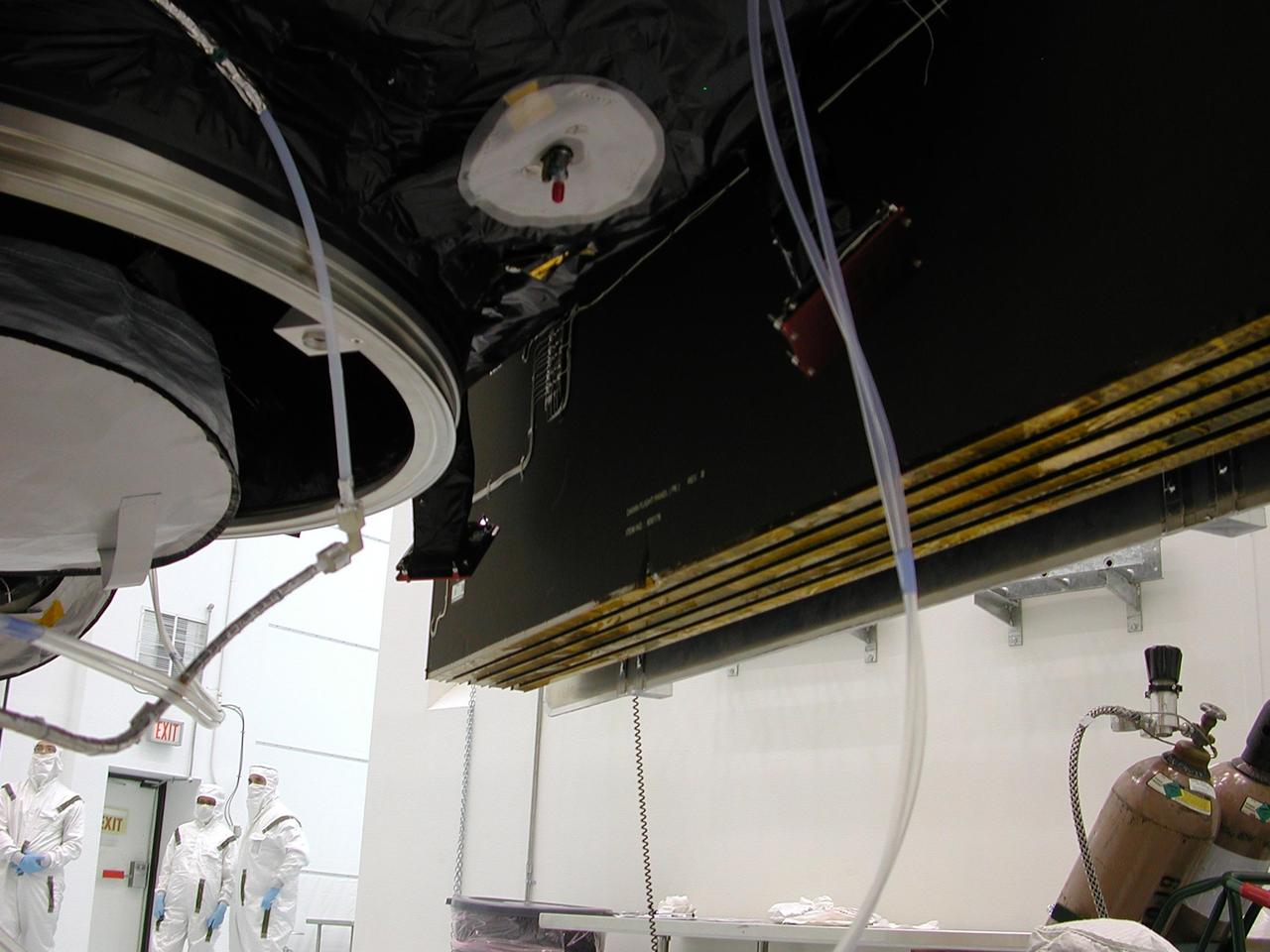
KENNEDY SPACE CENTER, FLA. -- On June 11, during a procedure to prepare the Dawn spacecraft for spin-balance testing, the back of a solar array panel was slightly damaged by a technician's tool. The size of the affected area is about 2.5 inches by 2 inches. The necessary minor repairs will be made during the coming weekend. There is no impact to the launch date of July 7. Dawn's goal is to characterize the conditions and processes of the solar system's earliest epoch 4.5 billion years ago by investigating in detail two of the largest asteroids, Ceres and Vesta. They reside between Mars and Jupiter in the asteroid belt. Photo courtesy of Orbital Sciences
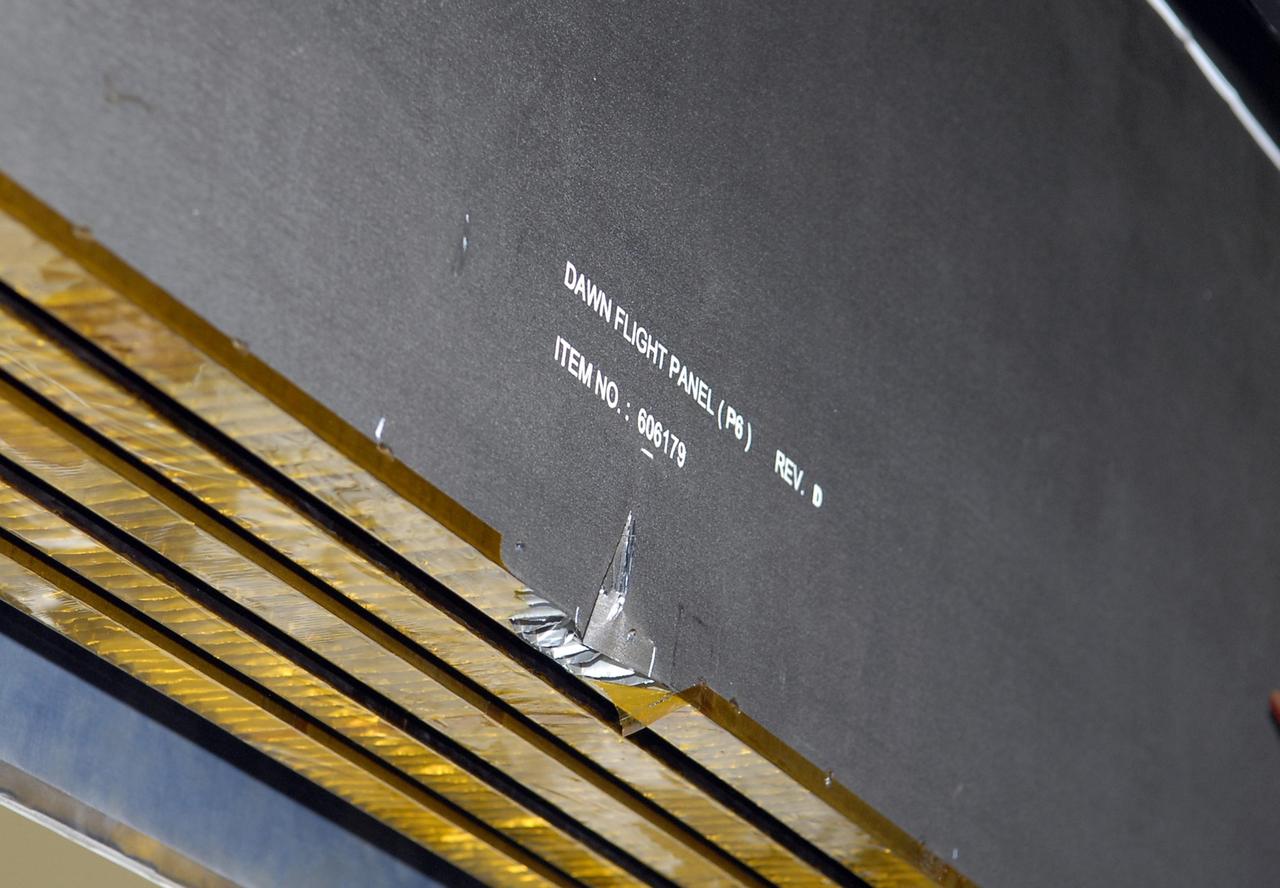
KENNEDY SPACE CENTER, FLA. -- This closeup shows the slight damage done by a technician's tool to the back of a solar array panel on June 11 during a procedure to prepare the Dawn spacecraft for spin-balance testing. Dawn's goal is to characterize the conditions and processes of the solar system's earliest epoch by investigating in detail the largest protoplanets that have remained intact since their formations: asteroid Vesta and the dwarf planet Ceres. They reside in the extensive zone between Mars and Jupiter together with many other smaller bodies, called the asteroid belt. Dawn is scheduled to launch July 7. Photo credit: NASA/Kim Shiflett
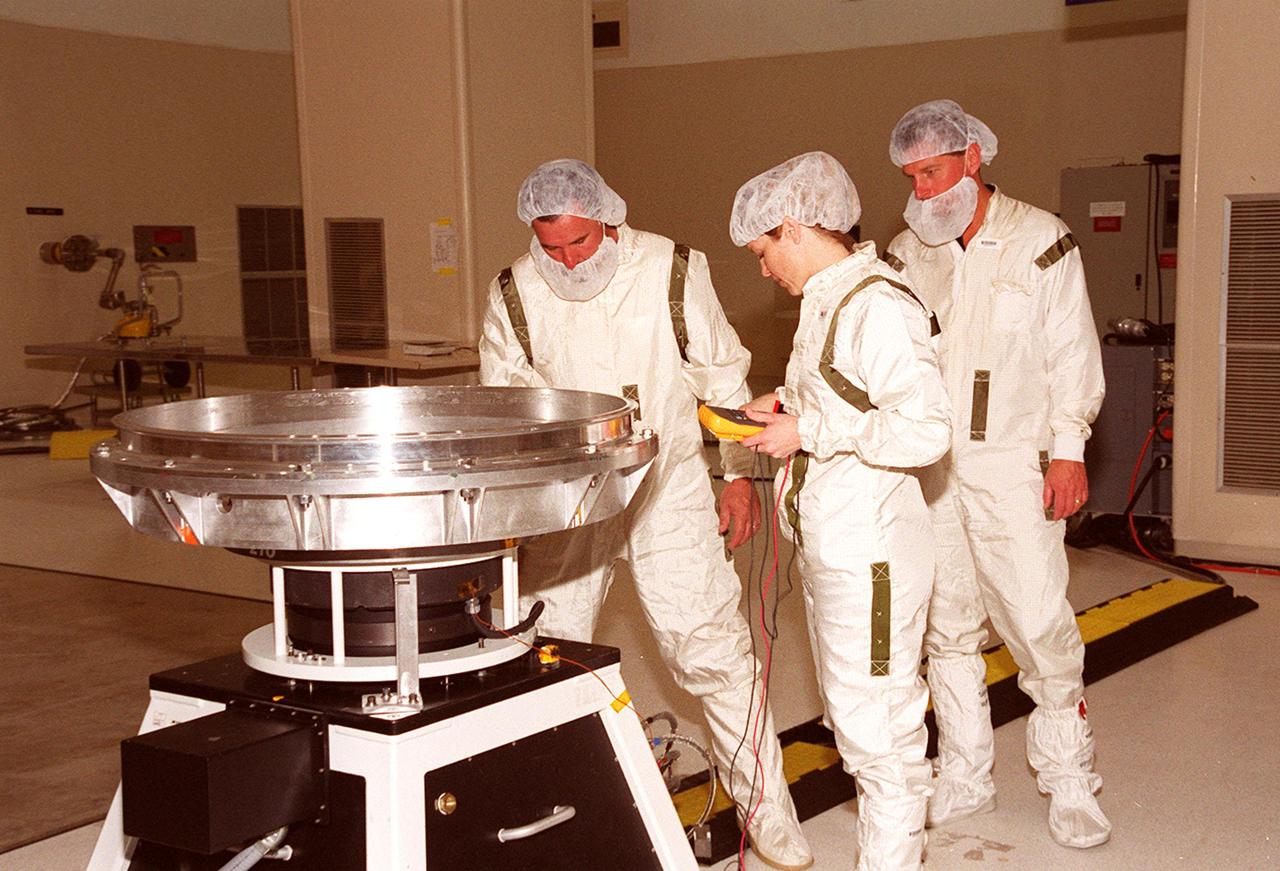
Workers in the Space Assembly and Encapsulation Building 2 prepare the spin table that will test the 2001 Mars Odyssey Orbiter. The orbiter carries three science instruments THEMIS, the Gamma Ray Spectrometer (GRS), and the Mars Radiation Environment Experiment (MARIE) that will map the mineralogy and morphology of the Martian surface, the elemental composition of the surface and determine the abundance of hydrogen in the shallow subsurface, and characterize aspects of the near-space radiation environment with regards to the radiation-related risk to human explorers. The Mars Odyssey Orbiter is scheduled for launch on April 7, 2001, aboard a Delta II rocket from Launch Pad 17-A, Cape Canaveral Air Force Station
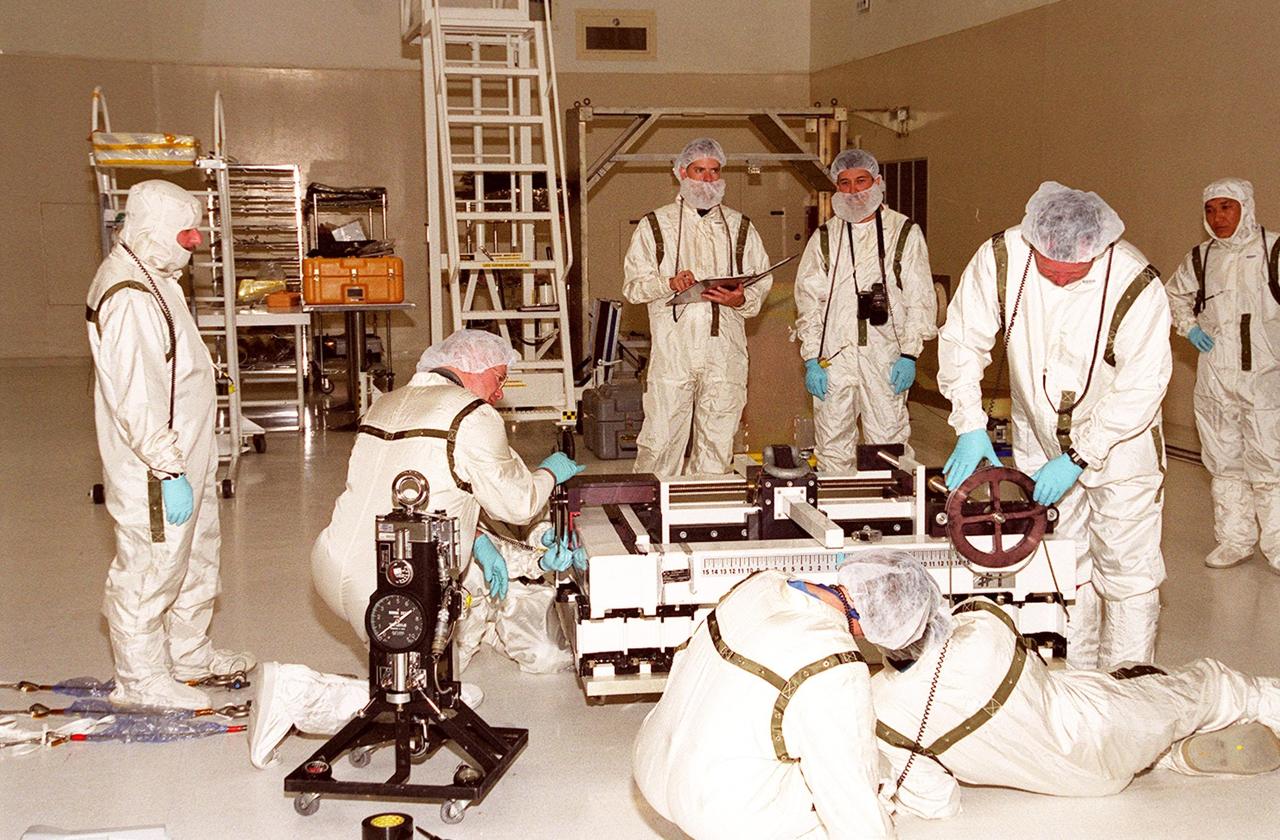
Workers in the Space Assembly and Encapsulation Building 2 prepare the overhead crane that will lift and move the 2001 Mars Odyssey Orbiter to the spin table for testing. The orbiter carries three science instruments THEMIS, the Gamma Ray Spectrometer (GRS), and the Mars Radiation Environment Experiment (MARIE) that will map the mineralogy and morphology of the Martian surface, the elemental composition of the surface and determine the abundance of hydrogen in the shallow subsurface, and characterize aspects of the near-space radiation environment with regards to the radiation-related risk to human explorers. The Mars Odyssey Orbiter is scheduled for launch on April 7, 2001, aboard a Delta II rocket from Launch Pad 17-A, Cape Canaveral Air Force Station
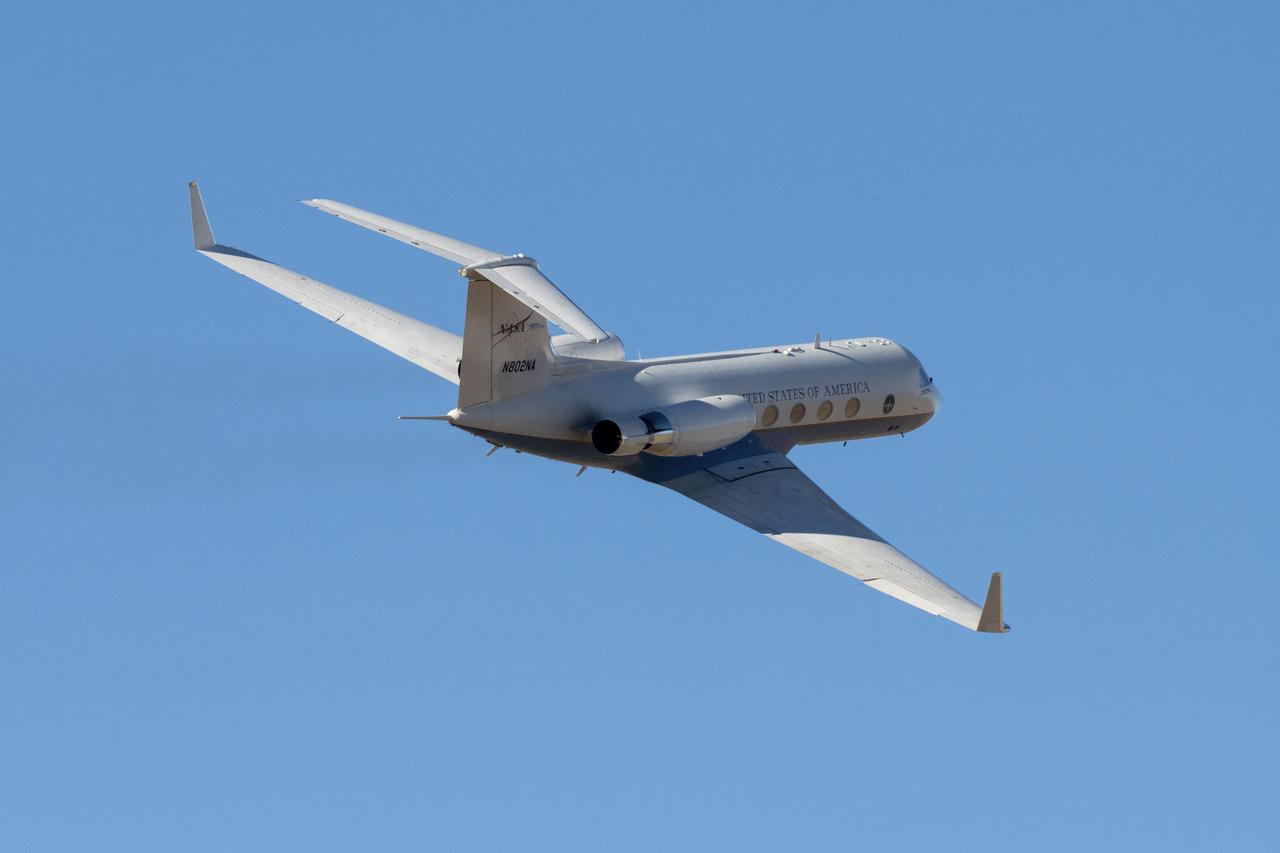
A C-20 based at NASA’s Armstrong Flight Research Center in Edwards, California, departs to use its Uninhabited Aerial Vehicle Synthetic Aperture Radar to support the Marine Oil Spill Thickness mission. Thousands of gallons of oil seep through cracks in the ocean floor and rise to the surface just off the coast of Santa Barbara. It’s one of the largest naturally occurring oil seeps and serves as a laboratory for NASA and the National Oceanic and Atmospheric Administration to test automated oil spill detection, oil extent mapping, and oil thickness characterization.
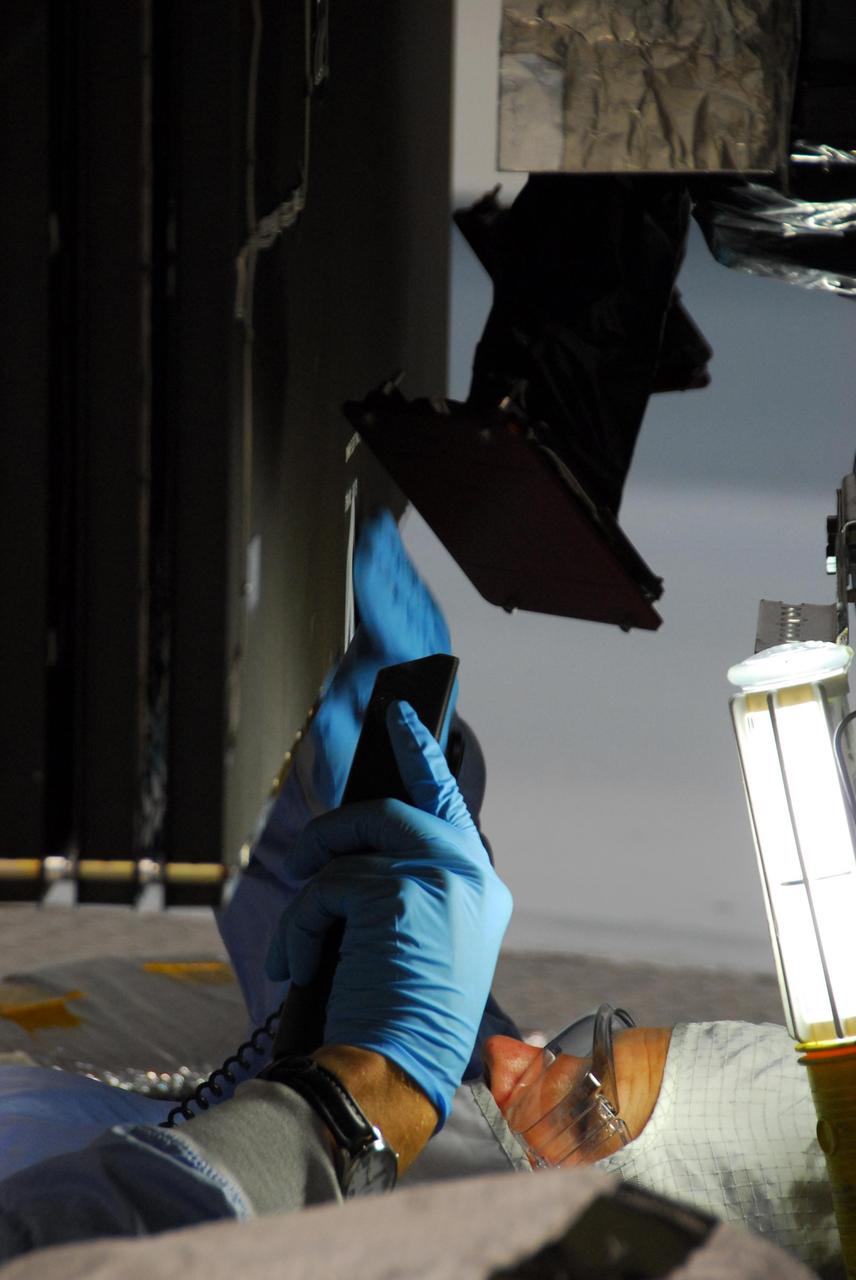
KENNEDY SPACE CENTER, FLA. -- At Astrotech, a Dutch Space technician repairs the damage to the lower edge of the solar array panel on the Dawn spacecraft. On June 11, during a procedure to prepare the Dawn spacecraft for spin-balance testing, the back of a solar array panel was slightly damaged by a technician's tool. The size of the affected area is about 2.5 inches by 2 inches. There is no impact to the launch date of July 7. Dawn's goal is to characterize the conditions and processes of the solar system's earliest epoch 4.5 billion years ago by investigating in detail two of the largest asteroids, Ceres and Vesta. They reside between Mars and Jupiter in the asteroid belt. Photo credit: NASA/George Shelton
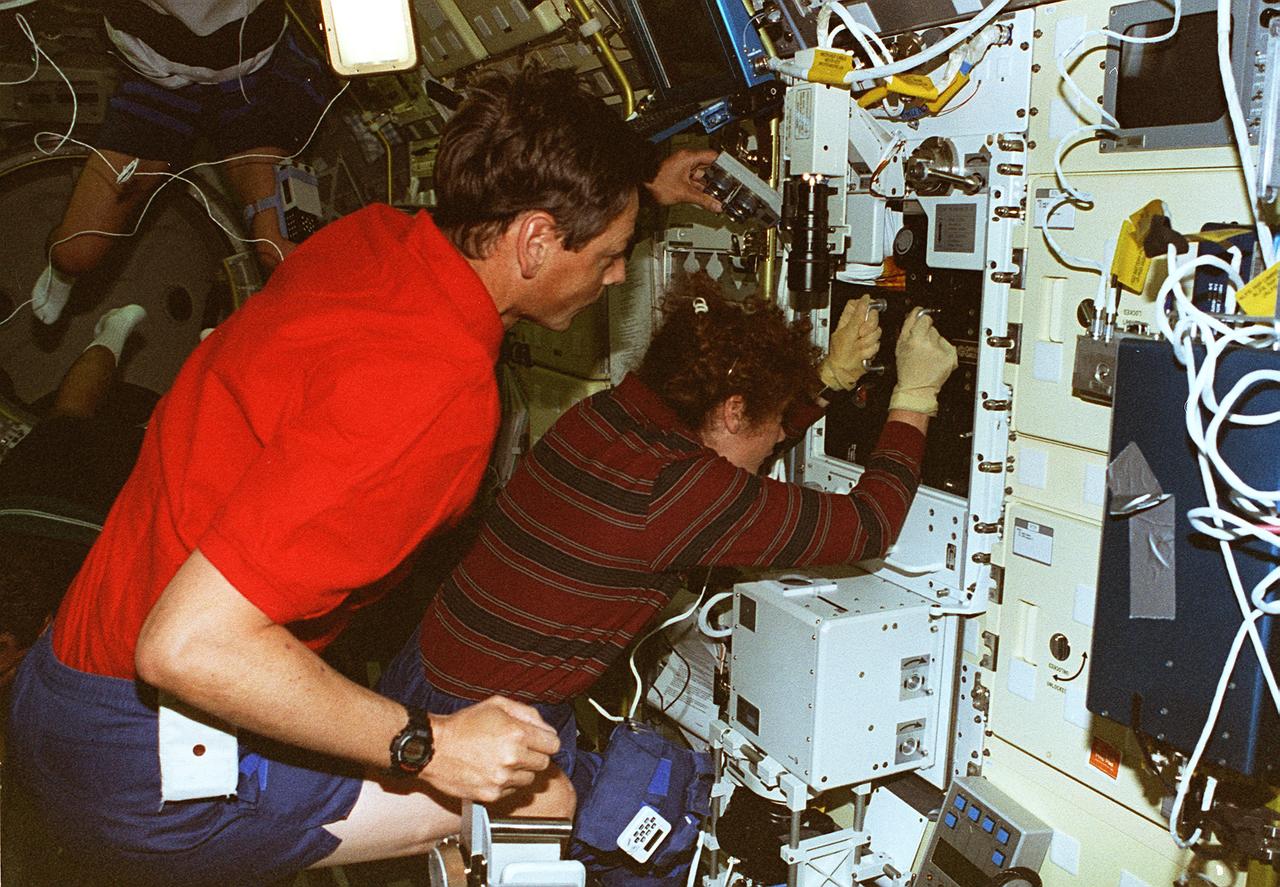
STS078-306-035 (20 June - 7 July 1996) --- Astronaut Susan J. Helms, payload commander, and payload specialist Jean-Jacques Favier, representing the French Space Agency (CNES), insert a test container into the Bubble Drop Particle Unit (BDPU) in the Life and Microgravity Spacelab (LMS-1) Science Module aboard the Space Shuttle Columbia. The fluid in the chamber is heated and the fluid processes are observed by use of three internal cameras mounted inside the BDPU. Investigations in this facility will help characterize interfacial processes involving either bubbles, drops, liquid columns or liquid layers.
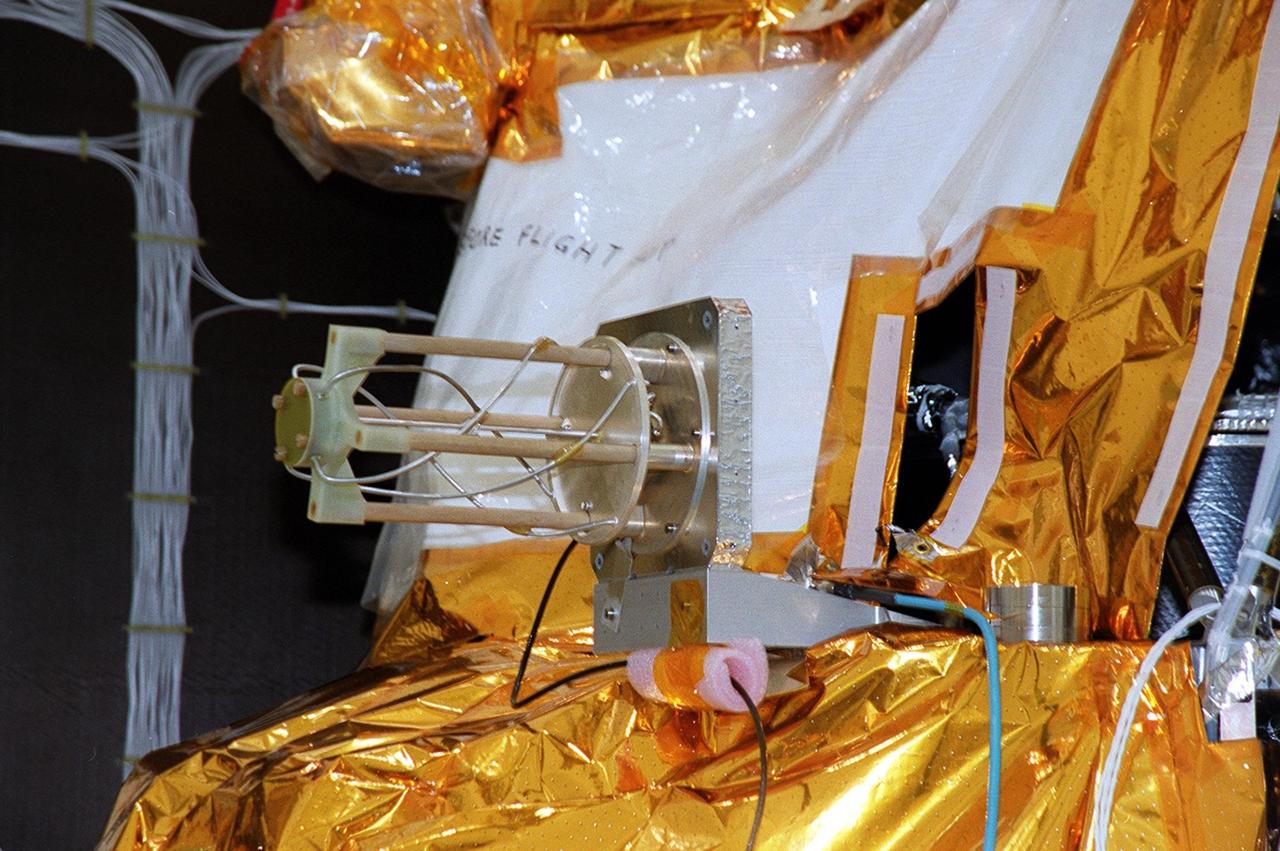
Shown in this closeup is the UHF antenna on the Mars Odyssey Orbiter. The antenna is undergoing testing in the Spacecraft Assembly and Encapsulation Facility (SAEF 2). The 2001 Mars Odyssey Orbiter, scheduled for launch April 7, 2001, contains three science instruments: THEMIS, the Gamma Ray Spectrometer (GRS), and the Mars Radiation Environment Experiment (MARIE). THEMIS will map the mineralogy and morphology of the Martian surface using a high-resolution camera and a thermal infrared imaging spectrometer. The GRS will achieve global mapping of the elemental composition of the surface and determine the abundance of hydrogen in the shallow subsurface. The MARIE will characterize aspects of the near-space radiation environment with regards to the radiation-related risk to human explorers
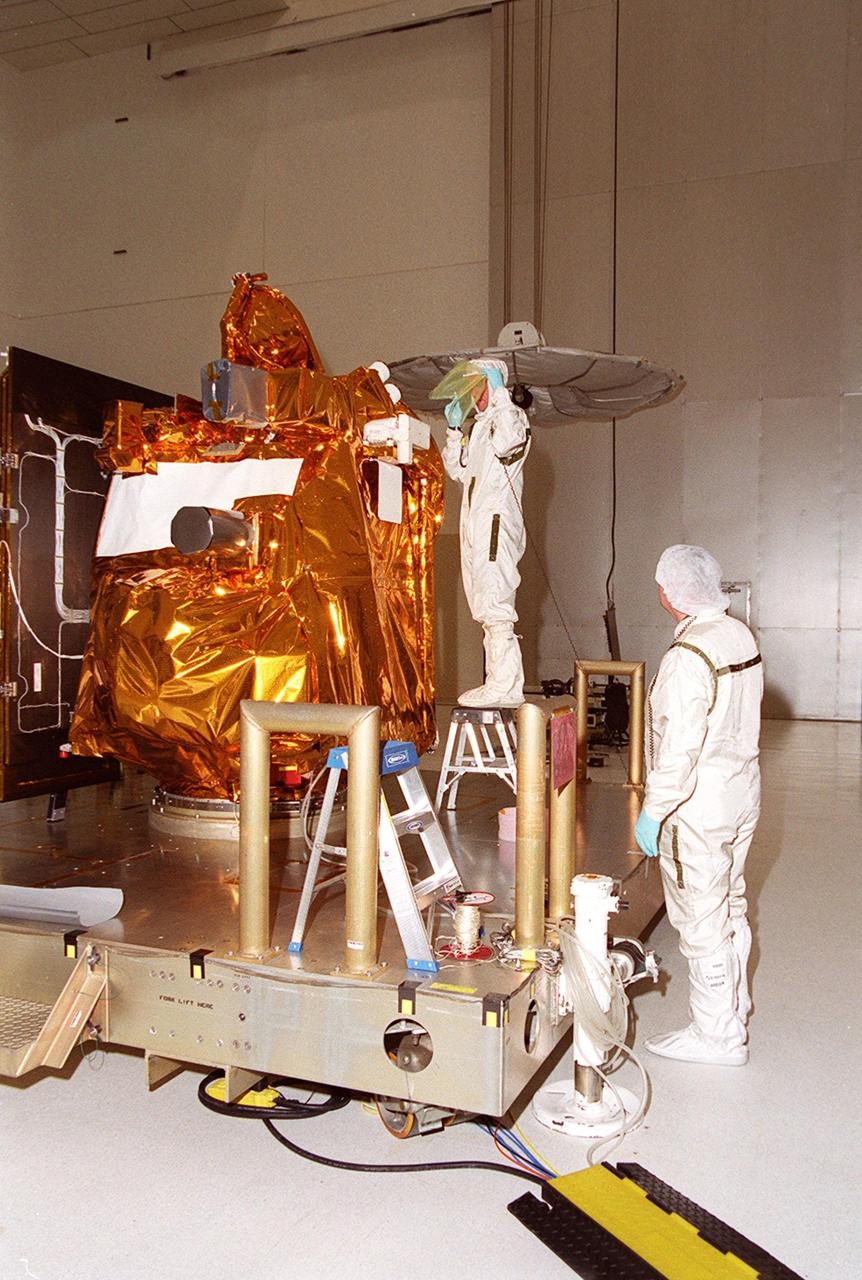
Workers in the Space Assembly and Encapsulation Building 2 prepare the 2001 Mars Odyssey Orbiter for its move to the spin table for testing. The orbiter carries three science instruments THEMIS, the Gamma Ray Spectrometer (GRS), and the Mars Radiation Environment Experiment (MARIE) that will map the mineralogy and morphology of the Martian surface, the elemental composition of the surface and determine the abundance of hydrogen in the shallow subsurface, and characterize aspects of the near-space radiation environment with regards to the radiation-related risk to human explorers. The Mars Odyssey Orbiter is scheduled for launch on April 7, 2001, aboard a Delta II rocket from Launch Pad 17-A, Cape Canaveral Air Force Station

A worker in the Spacecraft Assembly and Encapsulation Facility (SAEF 2) checks an area of a solar array panel on the 2001 Mars Odyssey Orbiter. The array will undergo illumination testing. Scheduled for launch April 7, 2001, the orbiter contains three science instruments: THEMIS, the Gamma Ray Spectrometer (GRS), and the Mars Radiation Environment Experiment (MARIE). THEMIS will map the mineralogy and morphology of the Martian surface using a high-resolution camera and a thermal infrared imaging spectrometer. The GRS will achieve global mapping of the elemental composition of the surface and determine the abundance of hydrogen in the shallow subsurface. The MARIE will characterize aspects of the near-space radiation environment with regards to the radiation-related risk to human explorers
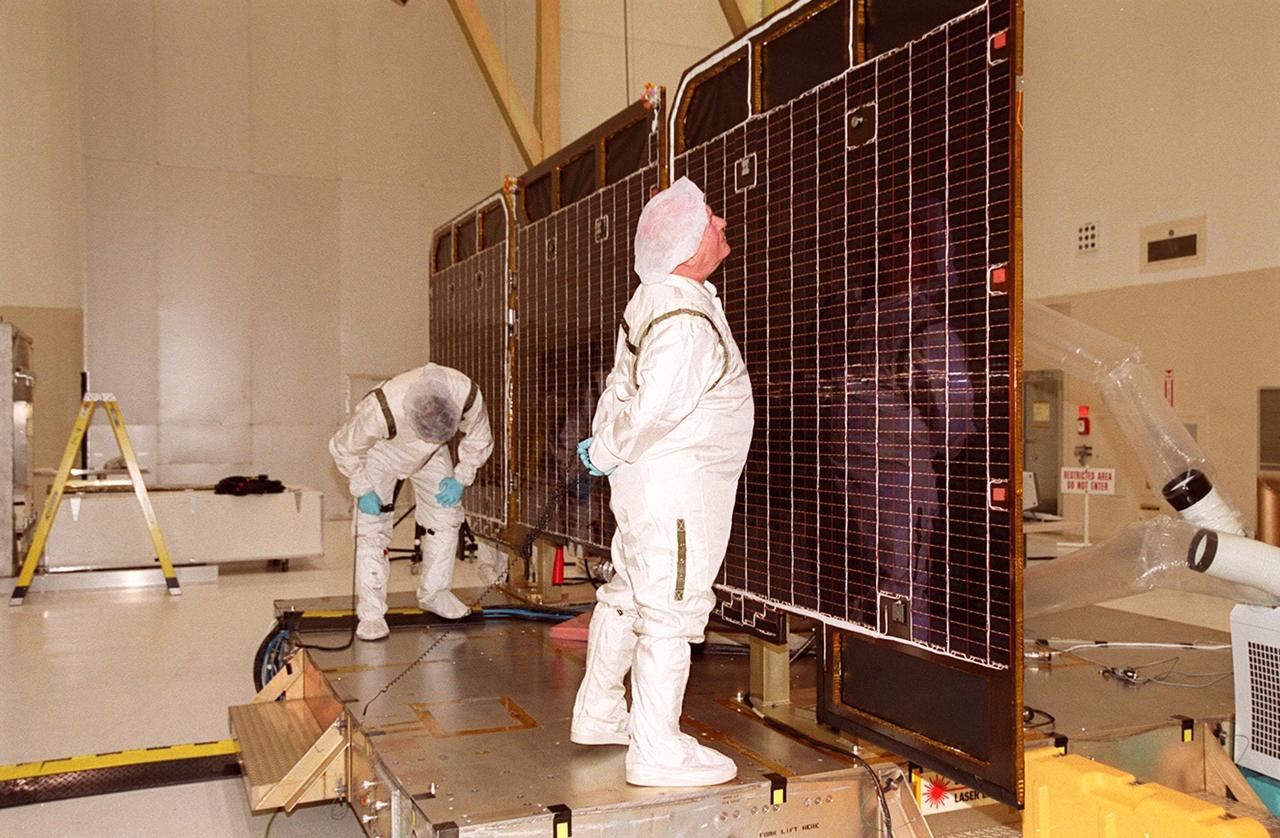
Workers examine parts of the opened solar array panels on the 2001 Mars Odyssey Orbiter. The array will undergo illumination testing. Scheduled for launch April 7, 2001, the orbiter contains three science instruments: THEMIS, the Gamma Ray Spectrometer (GRS), and the Mars Radiation Environment Experiment (MARIE). THEMIS will map the mineralogy and morphology of the Martian surface using a high-resolution camera and a thermal infrared imaging spectrometer. The GRS will achieve global mapping of the elemental composition of the surface and determine the abundance of hydrogen in the shallow subsurface. The MARIE will characterize aspects of the near-space radiation environment with regards to the radiation-related risk to human explorers
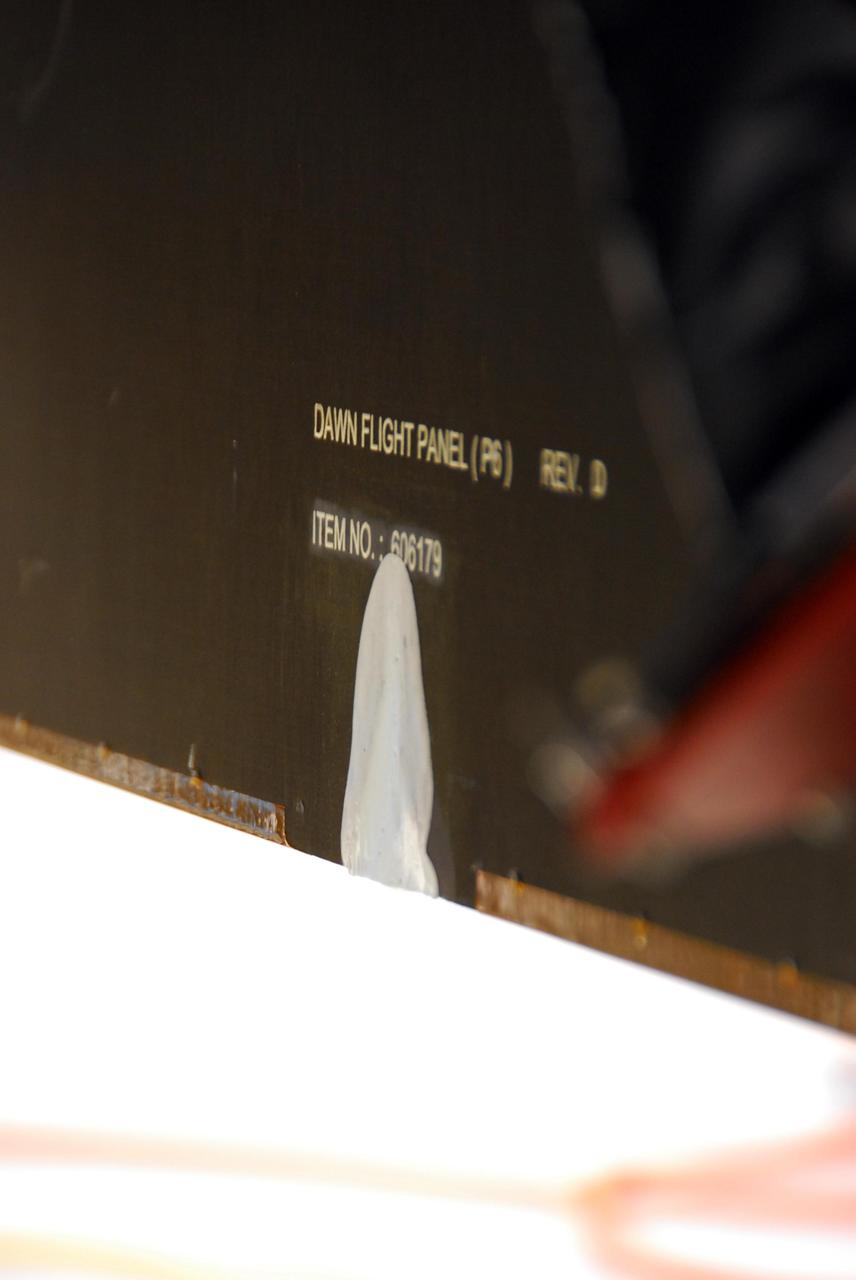
KENNEDY SPACE CENTER, FLA. -- Seen here is the area of damage under repair on the solar array panel on the Dawn spacecraft. The damage occurred at Astrotech on June 11 from a technician's tool during a procedure to prepare Dawn for spin-balance testing. The size of the affected area is about 2.5 inches by 2 inches. There is no impact to the launch date of July 7. Dawn's goal is to characterize the conditions and processes of the solar system's earliest epoch 4.5 billion years ago by investigating in detail two of the largest asteroids, Ceres and Vesta. They reside between Mars and Jupiter in the asteroid belt. Photo credit: NASA/George Shelton
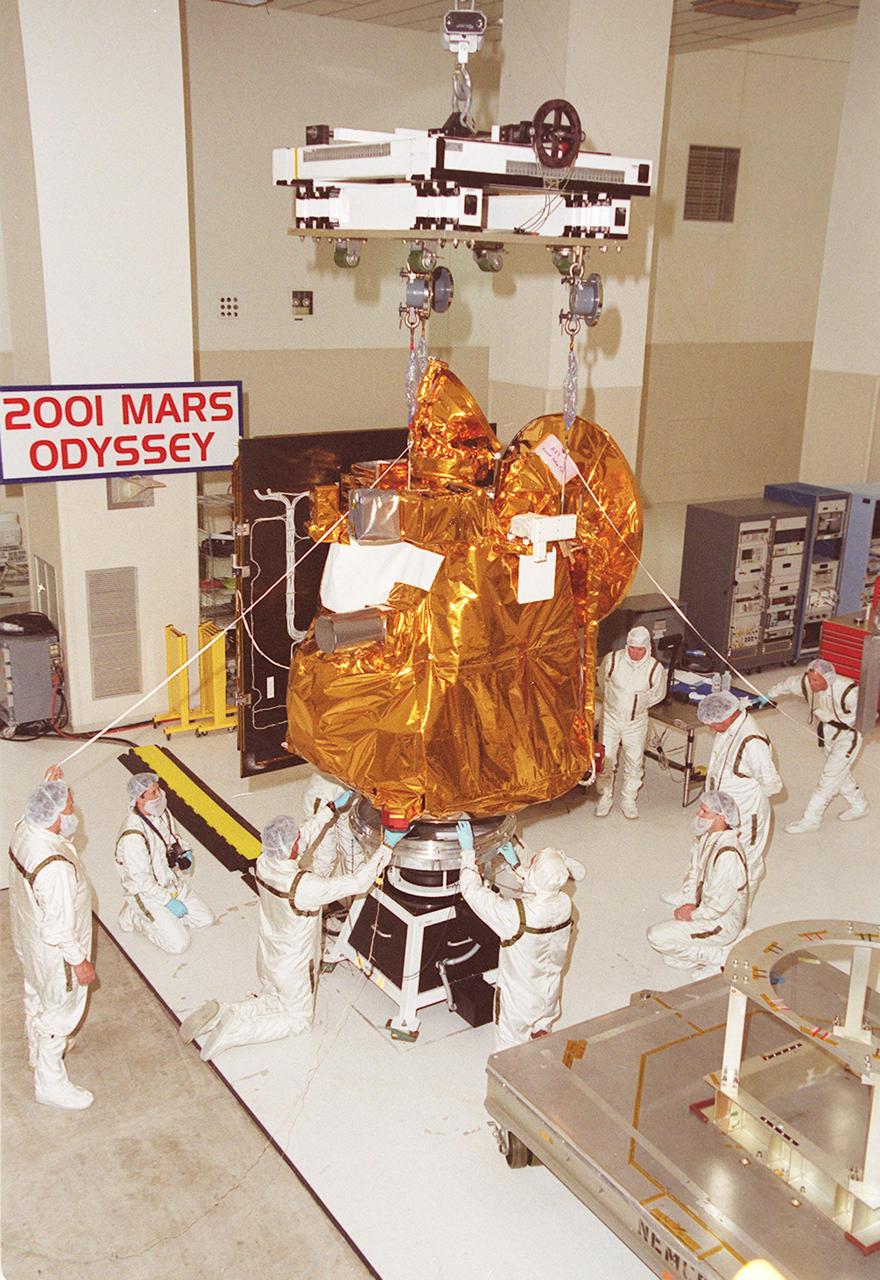
The 2001 Mars Odyssey Orbiter is lowered onto the spin table in the Space Assembly and Encapsulation Building 2. There it will undergo testing. The orbiter carries three science instruments THEMIS, the Gamma Ray Spectrometer (GRS), and the Mars Radiation Environment Experiment (MARIE) that will map the mineralogy and morphology of the Martian surface, the elemental composition of the surface and determine the abundance of hydrogen in the shallow subsurface, and characterize aspects of the near-space radiation environment with regards to the radiation-related risk to human explorers. The Mars Odyssey Orbiter is scheduled for launch on April 7, 2001, aboard a Delta II rocket from Launch Pad 17-A, Cape Canaveral Air Force Station
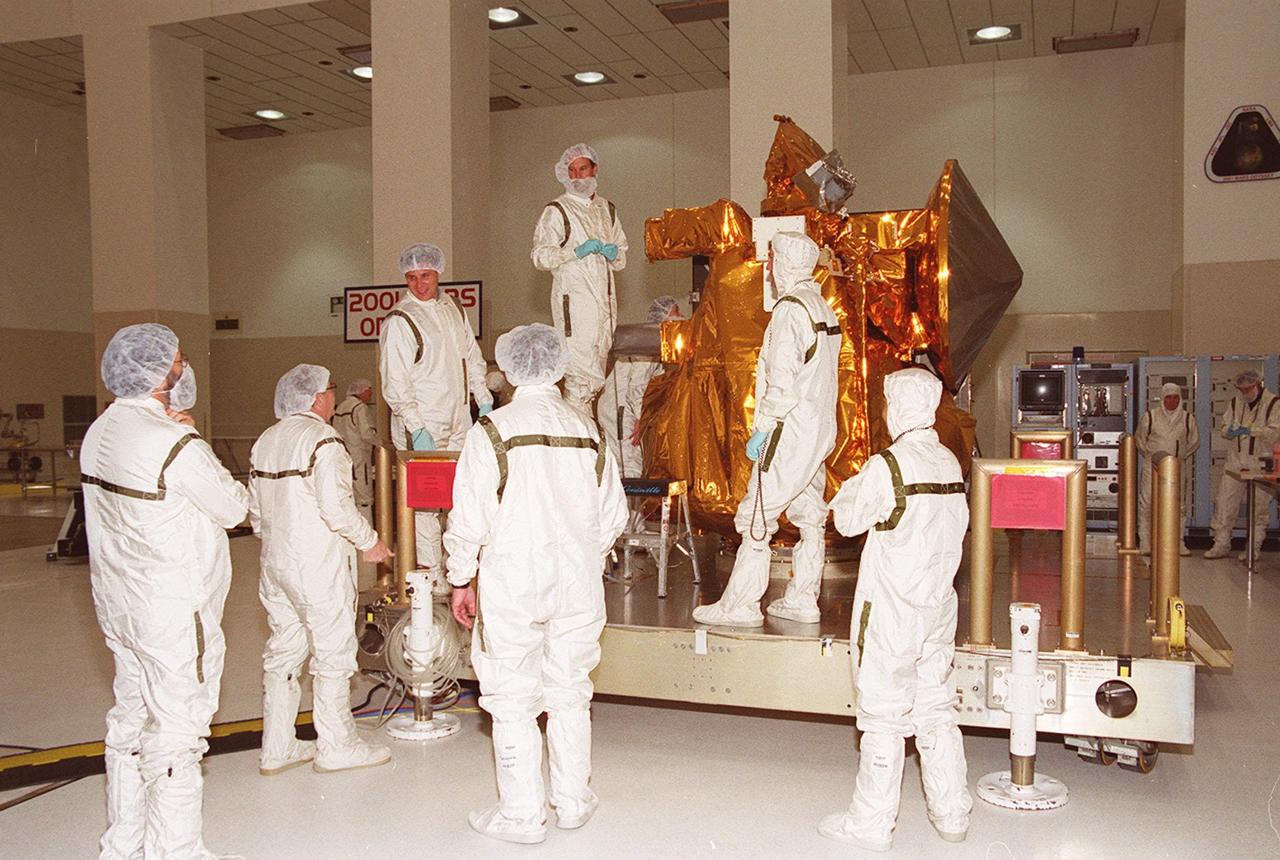
Workers in the Space Assembly and Encapsulation Building 2 prepare to move the 2001 Mars Odyssey Orbiter to the spin table for testing. The orbiter carries three science instruments THEMIS, the Gamma Ray Spectrometer (GRS), and the Mars Radiation Environment Experiment (MARIE) that will map the mineralogy and morphology of the Martian surface, the elemental composition of the surface and determine the abundance of hydrogen in the shallow subsurface, and characterize aspects of the near-space radiation environment with regards to the radiation-related risk to human explorers. The Mars Odyssey Orbiter is scheduled for launch on April 7, 2001, aboard a Delta II rocket from Launch Pad 17-A, Cape Canaveral Air Force Station
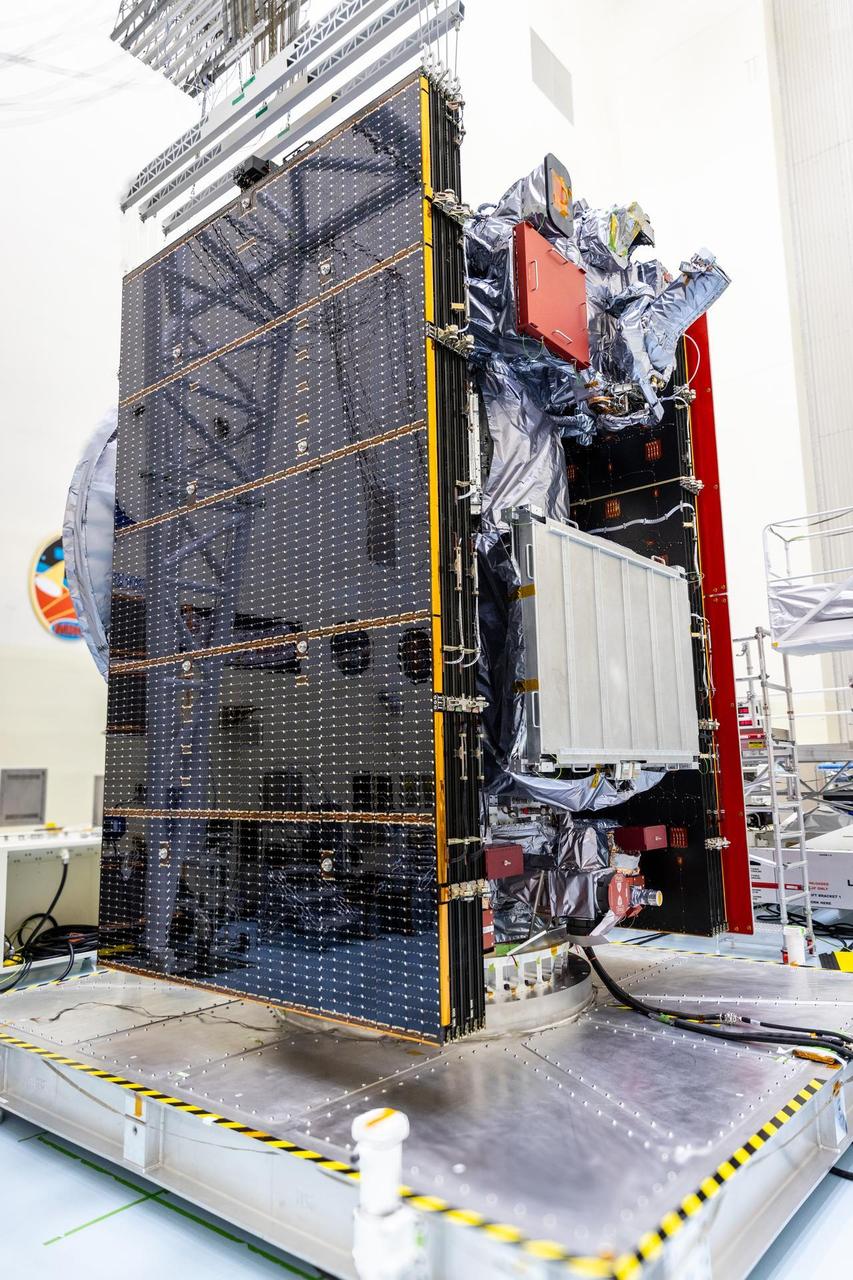
NASA's Europa Clipper is seen here on Aug. 21, 2024, in a clean room at the agency's Kennedy Space Center in Florida after engineers and technicians tested and stowed the spacecraft's giant solar arrays. Each array measures about 46.5 feet (14.2 meters) long and about 13.5 feet (4.1 meters) high. Europa Clipper's three main science objectives are to determine the thickness of the moon's icy shell and its interactions with the ocean below, to investigate its composition, and to characterize its geology. The mission's detailed exploration of Europa will help scientists better understand the astrobiological potential for habitable worlds beyond our planet. https://photojournal.jpl.nasa.gov/catalog/PIA26067
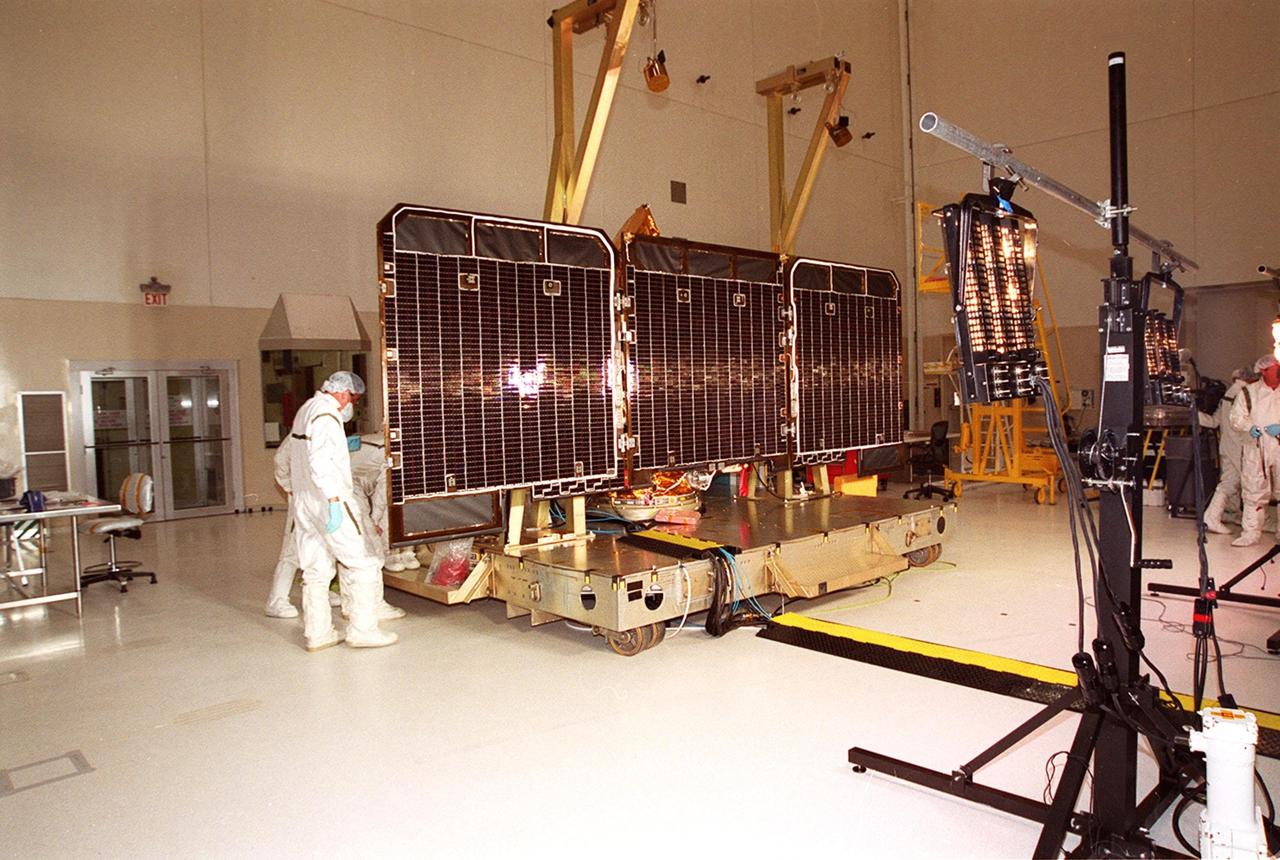
Solar array panels on the 2001 Mars Odyssey Orbiter undergo illumination testing in the Spacecraft Assembly and Encapsulation Facility (SAEF 2). Scheduled for launch April 7, 2001, the orbiter contains three science instruments: THEMIS, the Gamma Ray Spectrometer (GRS), and the Mars Radiation Environment Experiment (MARIE). THEMIS will map the mineralogy and morphology of the Martian surface using a high-resolution camera and a thermal infrared imaging spectrometer. The GRS will achieve global mapping of the elemental composition of the surface and determine the abundance of hydrogen in the shallow subsurface. The MARIE will characterize aspects of the near-space radiation environment with regards to the radiation-related risk to human explorers
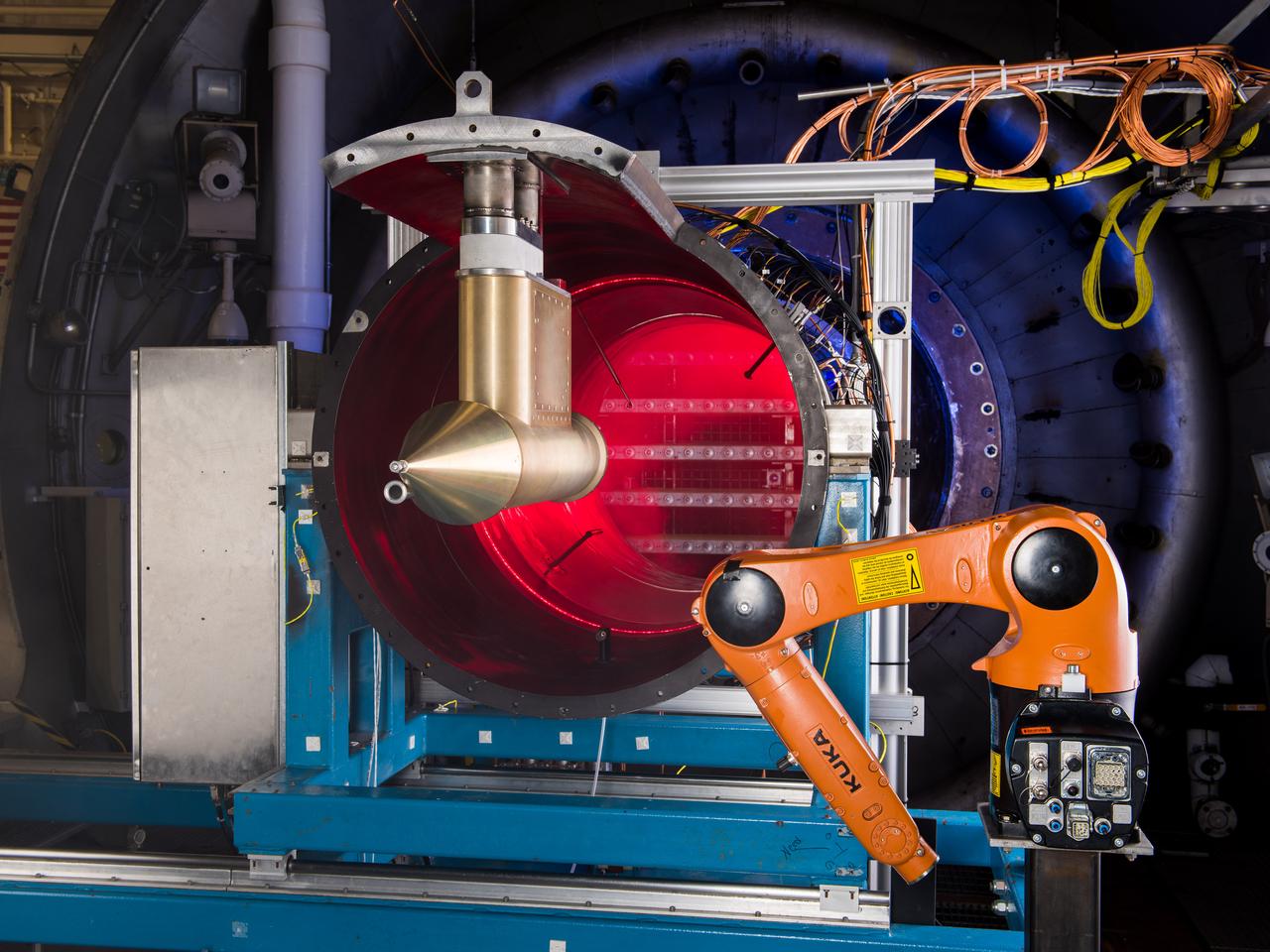
NASA Glenn’s Propulsion Systems Lab (PSL) is conducting research to characterize ice crystal clouds that can create a hazard to aircraft engines in certain conditions. With specialized equipment, scientists can create a simulated ice crystal cloud with the set of bars in the back spraying out a mist. The red area includes lasers, which measure the intensity of the cloud and a series of probes to measure everything from humidity to air pressure. The isokinetic probe (in gold) samples particles and the robotic arm (in orange) has a test tube on the end that catches ice particles for further measuring. NASA Glenn’s PSL is the only place in the world which can create these kind of ice crystal cloud conditions.
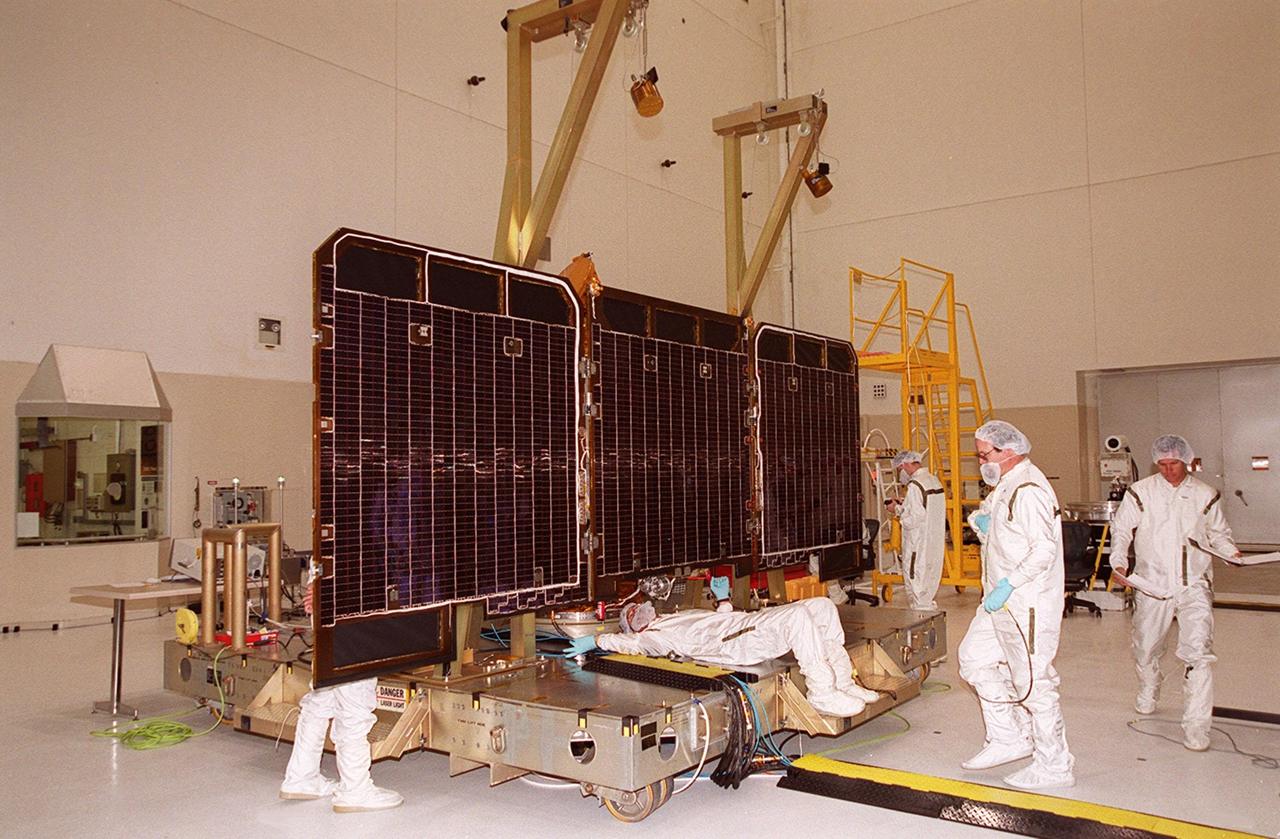
A worker in the Spacecraft Assembly and Encapsulation Facility (SAEF 2) checks the underside of the extended solar array panels on the 2001 Mars Odyssey Orbiter. The array will undergo illumination testing. Scheduled for launch April 7, 2001, the orbiter contains three science instruments: THEMIS, the Gamma Ray Spectrometer (GRS), and the Mars Radiation Environment Experiment (MARIE). THEMIS will map the mineralogy and morphology of the Martian surface using a high-resolution camera and a thermal infrared imaging spectrometer. The GRS will achieve global mapping of the elemental composition of the surface and determine the abundance of hydrogen in the shallow subsurface. The MARIE will characterize aspects of the near-space radiation environment with regards to the radiation-related risk to human explorers
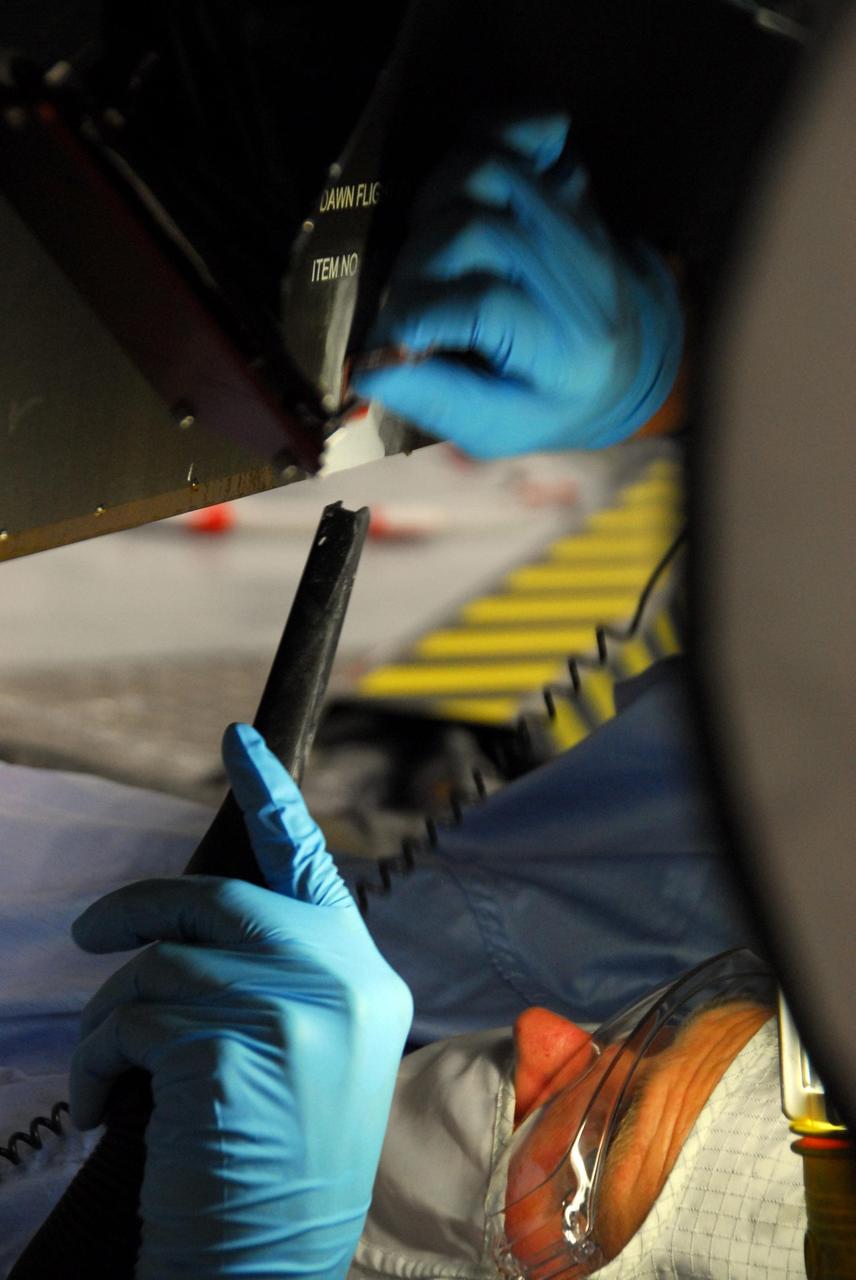
KENNEDY SPACE CENTER, FLA. -- At Astrotech, a Dutch Space technician repairs the damage to the lower edge of the solar array panel on the Dawn spacecraft. On June 11, during a procedure to prepare the Dawn spacecraft for spin-balance testing, the back of a solar array panel was slightly damaged by a technician's tool. The size of the affected area is about 2.5 inches by 2 inches. There is no impact to the launch date of July 7. Dawn's goal is to characterize the conditions and processes of the solar system's earliest epoch 4.5 billion years ago by investigating in detail two of the largest asteroids, Ceres and Vesta. They reside between Mars and Jupiter in the asteroid belt. Photo credit: NASA/George Shelton
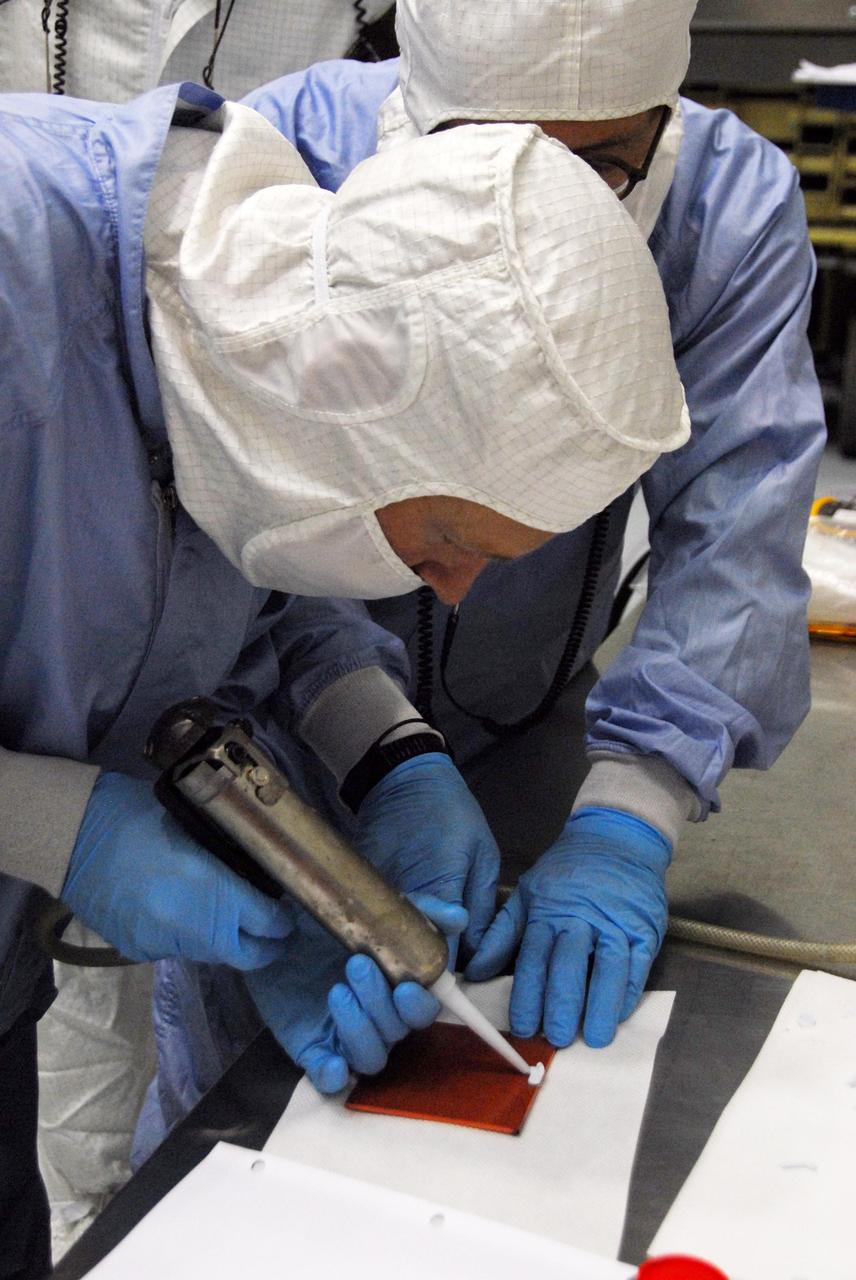
KENNEDY SPACE CENTER, FLA. -- At Astrotech, engineers from Dutch Space prepare materials to make repairs on the slight damage done by a technician's tool to the back of a solar array panel of the Dawn spacecraft on June 11 during a procedure to prepare Dawn for spin-balance testing. The size of the affected area is about 2.5 inches by 2 inches. There is no impact to the launch date of July 7. Dawn's goal is to characterize the conditions and processes of the solar system's earliest epoch 4.5 billion years ago by investigating in detail two of the largest asteroids, Ceres and Vesta. They reside between Mars and Jupiter in the asteroid belt. Photo credit: NASA/George Shelton
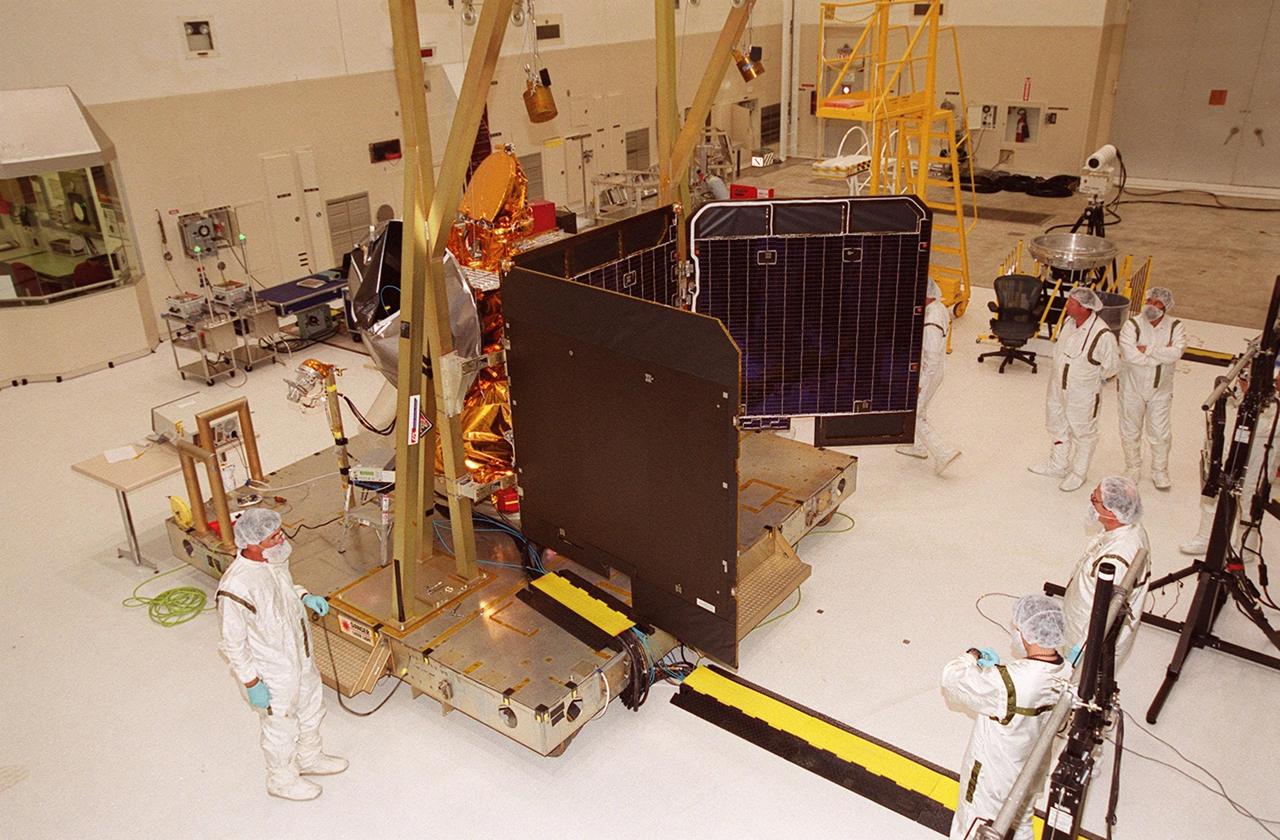
In the Spacecraft Assembly and Encapsulation Facility (SAEF 2), workers stand back as the panels of the solar array on the 2001 Mars Odyssey Orbiter open. The array will undergo illumination testing. Scheduled for launch April 7, 2001, the orbiter contains three science instruments: THEMIS, the Gamma Ray Spectrometer (GRS), and the Mars Radiation Environment Experiment (MARIE). THEMIS will map the mineralogy and morphology of the Martian surface using a high-resolution camera and a thermal infrared imaging spectrometer. The GRS will achieve global mapping of the elemental composition of the surface and determine the abundance of hydrogen in the shallow subsurface. The MARIE will characterize aspects of the near-space radiation environment with regards to the radiation-related risk to human explorers
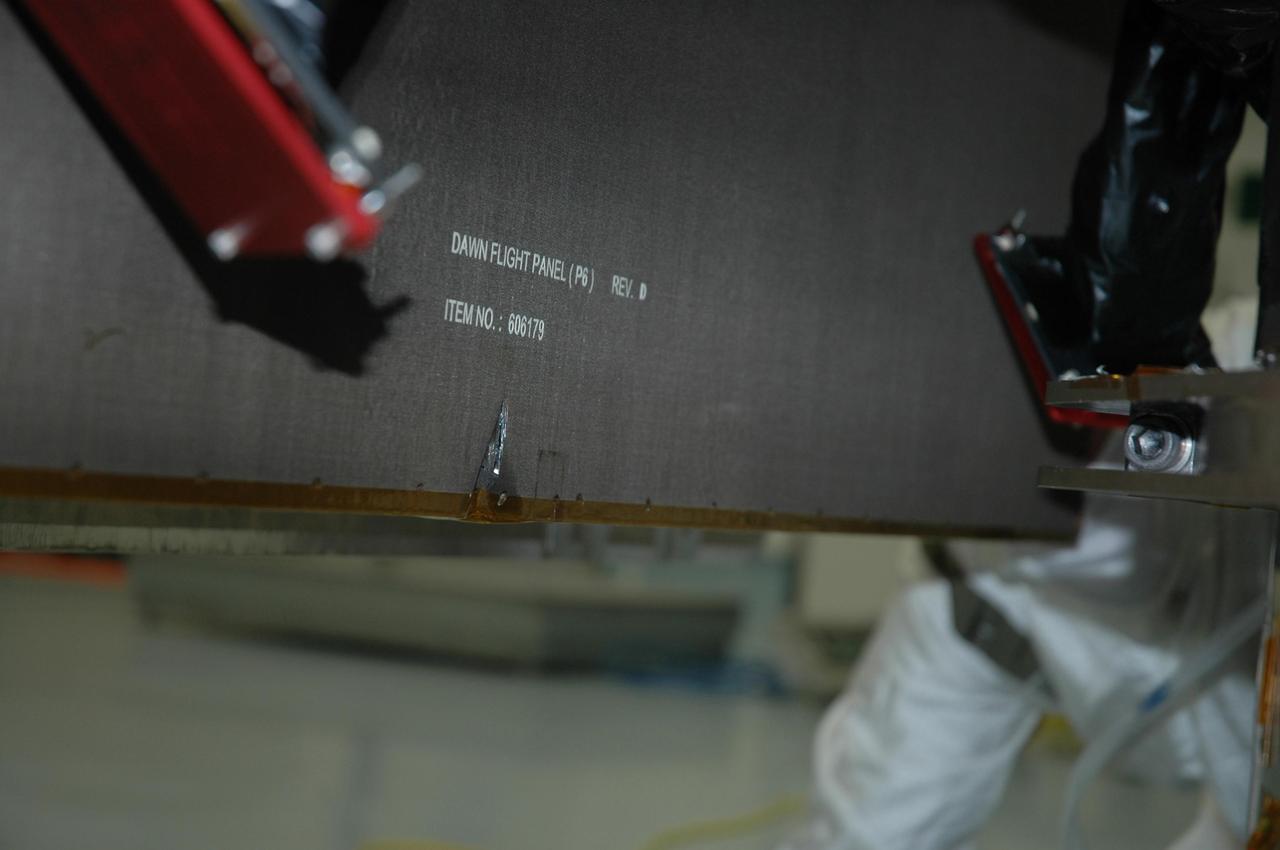
KENNEDY SPACE CENTER, FLA. -- On June 11, during a procedure to prepare the Dawn spacecraft for spin-balance testing, the back of a solar array panel was slightly damaged by a technician's tool. The size of the affected area is about 2.5 inches by 2 inches. The necessary minor repairs will be made during the coming weekend. There is no impact to the launch date of July 7. Dawn's goal is to characterize the conditions and processes of the solar system's earliest epoch 4.5 billion years ago by investigating in detail two of the largest asteroids, Ceres and Vesta. They reside between Mars and Jupiter in the asteroid belt. Photo courtesy of Orbital Sciences
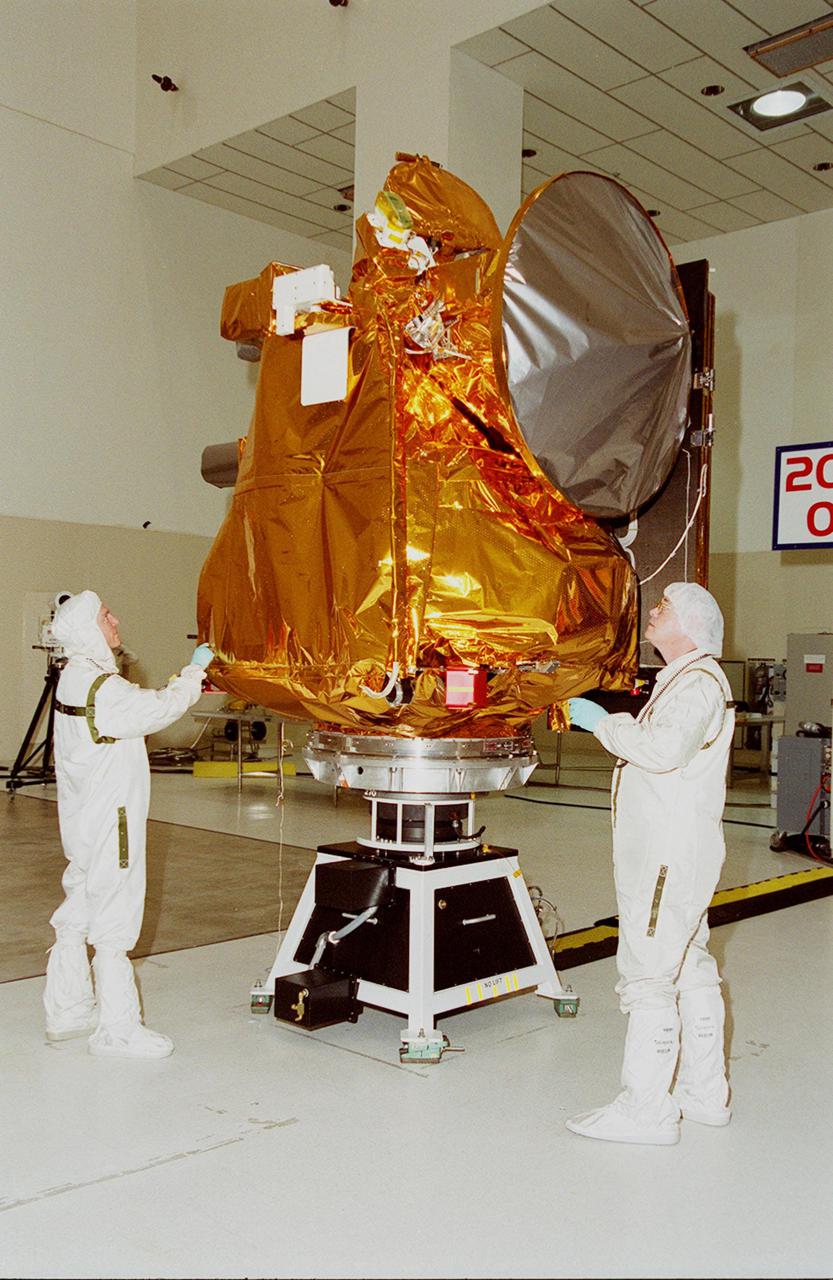
Workers in the Space Assembly and Encapsulation Building 2 make a last-minute check on the 2001 Mars Odyssey Orbiter before it undergoes spin testing. The orbiter carries three science instruments THEMIS, the Gamma Ray Spectrometer (GRS), and the Mars Radiation Environment Experiment (MARIE) that will map the mineralogy and morphology of the Martian surface, the elemental composition of the surface and determine the abundance of hydrogen in the shallow subsurface, and characterize aspects of the near-space radiation environment with regards to the radiation-related risk to human explorers. The Mars Odyssey Orbiter is scheduled for launch on April 7, 2001, aboard a Delta II rocket from Launch Pad 17-A, Cape Canaveral Air Force Station
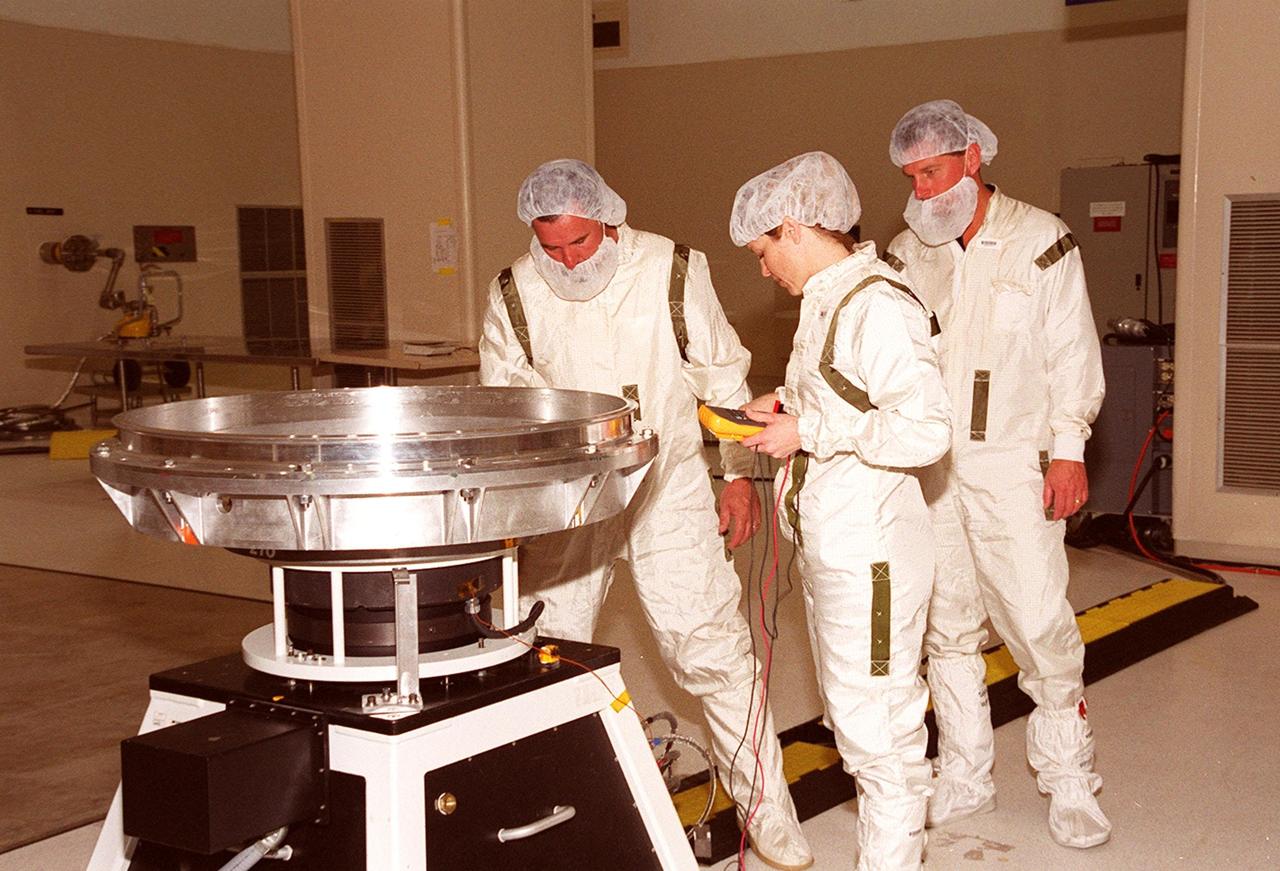
Workers in the Space Assembly and Encapsulation Building 2 prepare the spin table that will test the 2001 Mars Odyssey Orbiter. The orbiter carries three science instruments THEMIS, the Gamma Ray Spectrometer (GRS), and the Mars Radiation Environment Experiment (MARIE) that will map the mineralogy and morphology of the Martian surface, the elemental composition of the surface and determine the abundance of hydrogen in the shallow subsurface, and characterize aspects of the near-space radiation environment with regards to the radiation-related risk to human explorers. The Mars Odyssey Orbiter is scheduled for launch on April 7, 2001, aboard a Delta II rocket from Launch Pad 17-A, Cape Canaveral Air Force Station
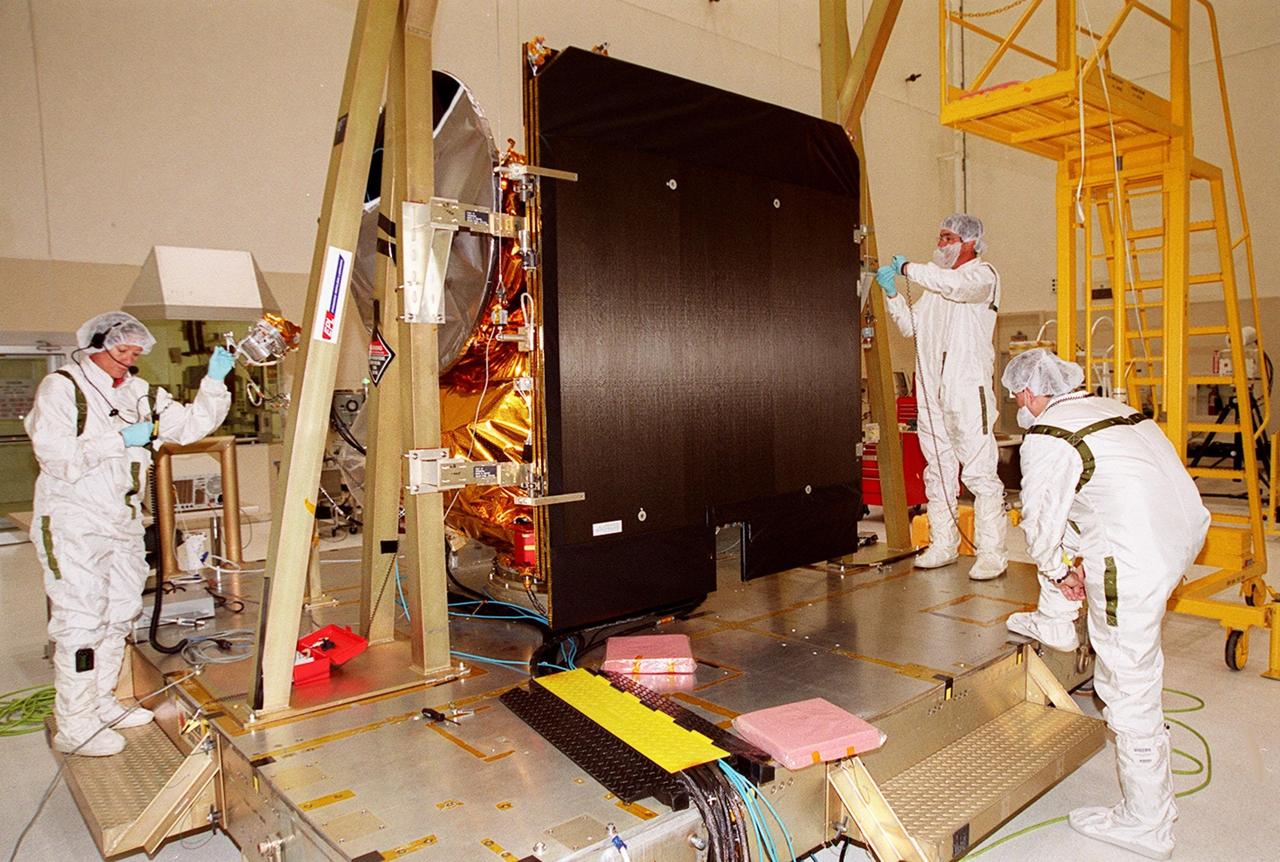
Workers in the Spacecraft Assembly and Encapsulation Facility (SAEF 2) reattach the solar panel on the 2001 Mars Odyssey Orbiter in order to conduct illumination testing. Scheduled for launch April 7, 2001, the orbiter contains three science instruments: THEMIS, the Gamma Ray Spectrometer (GRS), and the Mars Radiation Environment Experiment (MARIE). THEMIS will map the mineralogy and morphology of the Martian surface using a high-resolution camera and a thermal infrared imaging spectrometer. The GRS will achieve global mapping of the elemental composition of the surface and determine the abundance of hydrogen in the shallow subsurface. The MARIE will characterize aspects of the near-space radiation environment with regards to the radiation-related risk to human explorers
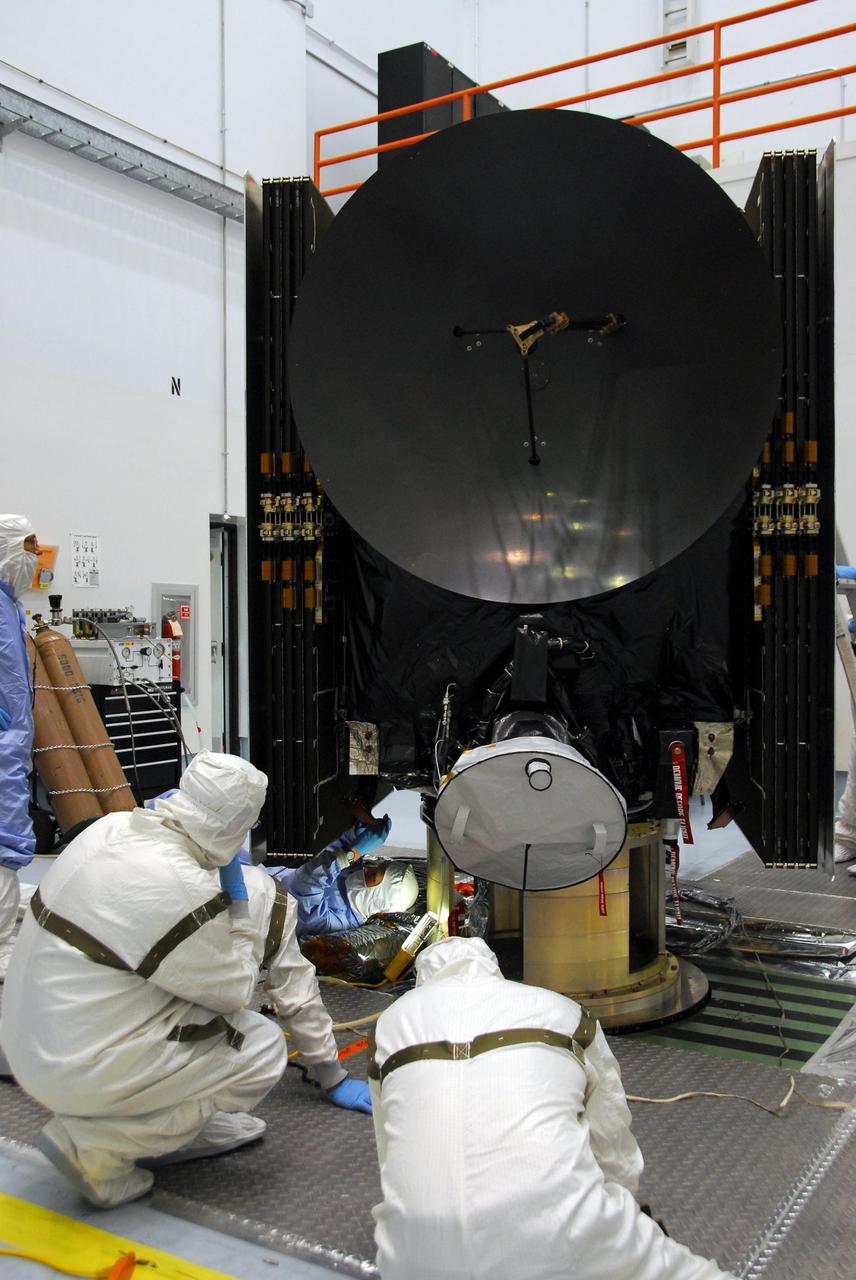
KENNEDY SPACE CENTER, FLA. --At Astrotech, engineers from Dutch Space are making repairs on the slight damage done by a technician's tool to the back of a solar array panel of the Dawn spacecraft on June 11 during a procedure to prepare Dawn for spin-balance testing. The size of the affected area is about 2.5 inches by 2 inches. There is no impact to the launch date of July 7. Dawn's goal is to characterize the conditions and processes of the solar system's earliest epoch 4.5 billion years ago by investigating in detail two of the largest asteroids, Ceres and Vesta. They reside between Mars and Jupiter in the asteroid belt. Photo credit: NASA/George Shelton
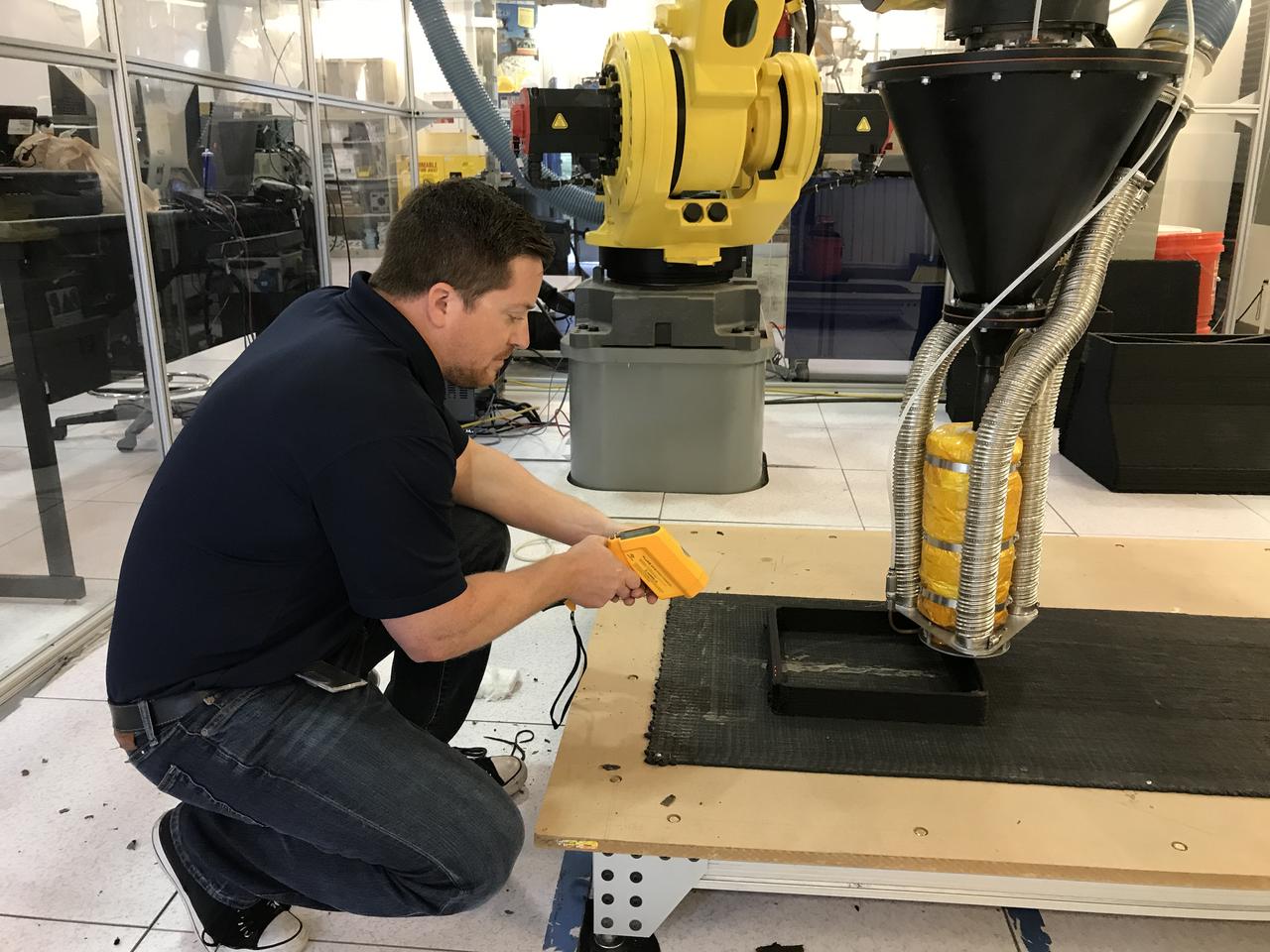
Packing light is the idea behind the Zero Launch Mass 3-D Printer. Instead of loading up on heavy building supplies, a large scale 3-D printer capable of using recycled plastic waste and dirt at the destination as construction material would save mass and money when launching robotic precursor missions to build infrastructure on the Moon or Mars in preparation for human habitation. To make this a reality, Nathan Gelino, a researcher engineer with NASA’s Swamp Works at Kennedy Space Center, measured the temperature of a test specimen from the 3-D printer Tuesday as an early step in characterizing printed material strength properties. Material temperature plays a large role in the strength of bonds between layers.
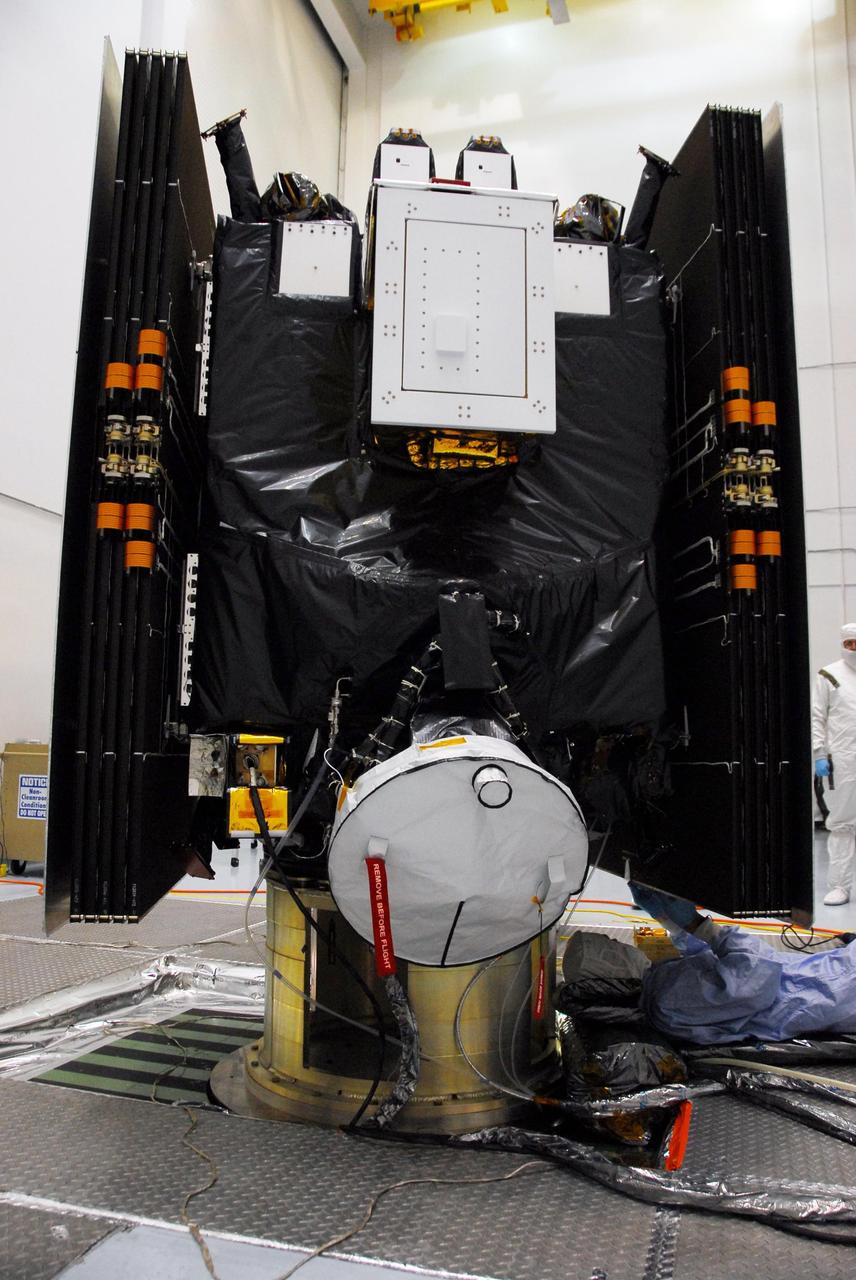
KENNEDY SPACE CENTER, FLA. -- At Astrotech, engineers from Dutch Space lie underneath the Dawn spacecraft to examine the damage repairs under process on the solar array panel. The damage occurred on June 11 from a technician's tool during a procedure to prepare Dawn for spin-balance testing. The size of the affected area is about 2.5 inches by 2 inches. There is no impact to the launch date of July 7. Dawn's goal is to characterize the conditions and processes of the solar system's earliest epoch 4.5 billion years ago by investigating in detail two of the largest asteroids, Ceres and Vesta. They reside between Mars and Jupiter in the asteroid belt. Photo credit: NASA/George Shelton
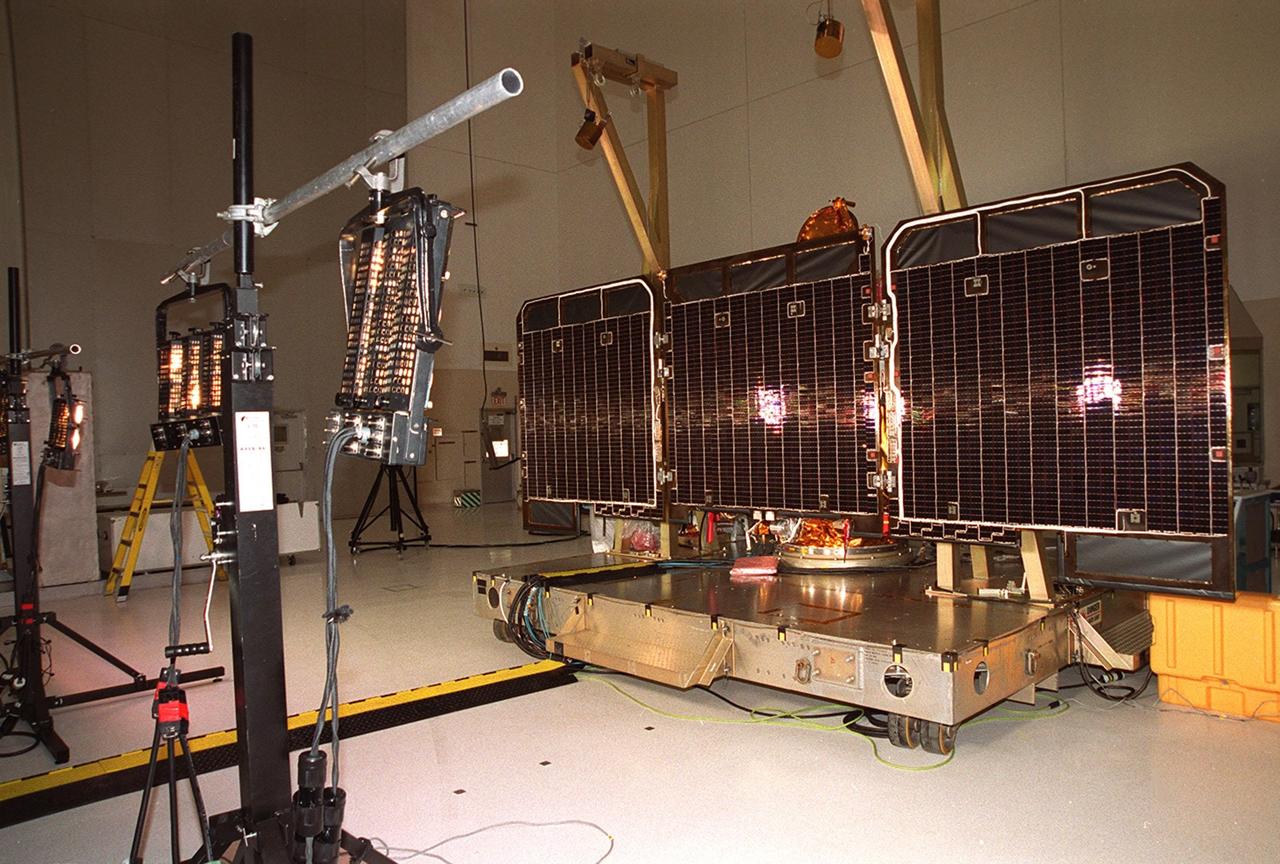
Arrays of lights at left focus on solar array panels at right during illumination testing. The solar array is part of the 2001 Mars Odyssey Orbiter. Scheduled for launch April 7, 2001, the orbiter contains three science instruments: THEMIS, the Gamma Ray Spectrometer (GRS), and the Mars Radiation Environment Experiment (MARIE). THEMIS will map the mineralogy and morphology of the Martian surface using a high-resolution camera and a thermal infrared imaging spectrometer. The GRS will achieve global mapping of the elemental composition of the surface and determine the abundance of hydrogen in the shallow subsurface. The MARIE will characterize aspects of the near-space radiation environment with regards to the radiation-related risk to human explorers
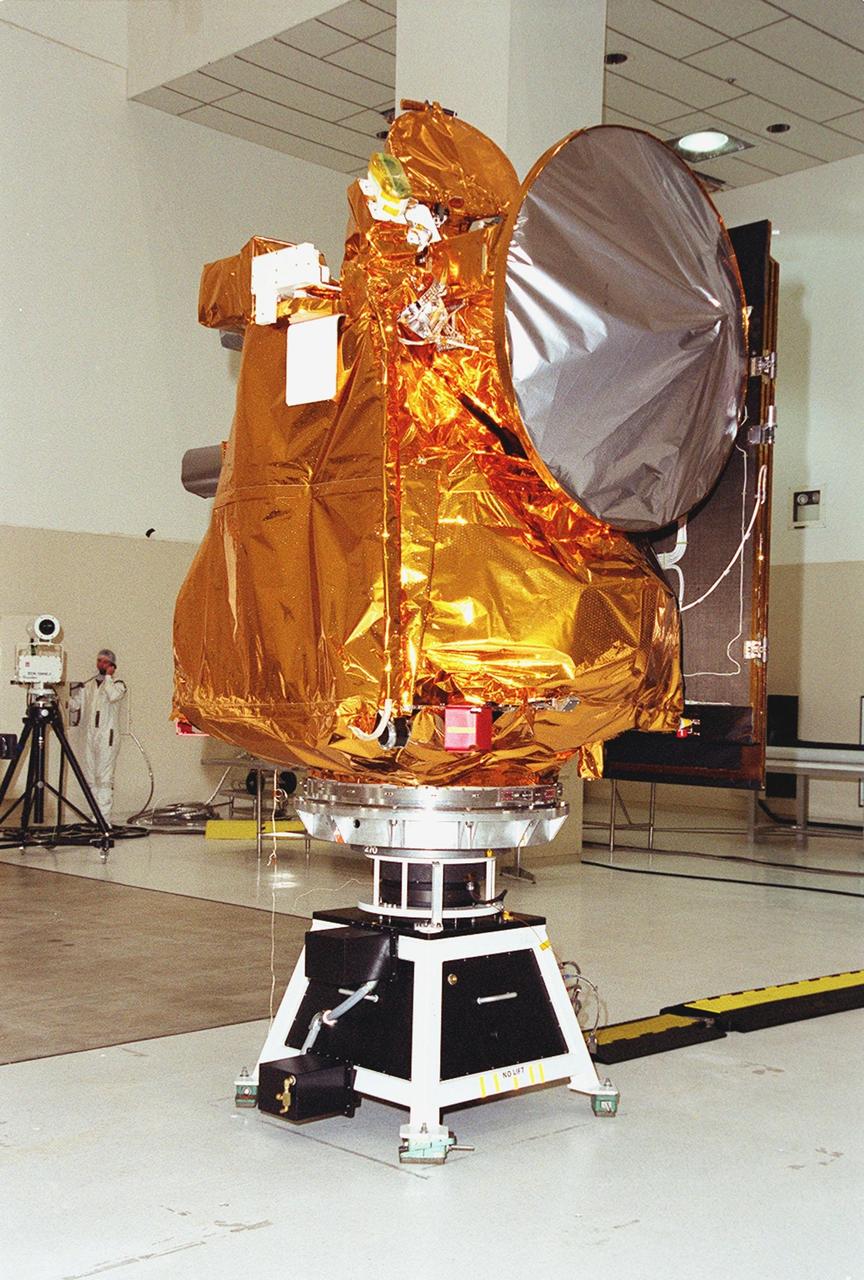
The 2001 Mars Odyssey Orbiter rests on the spin table in the Space Assembly and Encapsulation Building 2. There it will undergo testing. The orbiter carries three science instruments THEMIS, the Gamma Ray Spectrometer (GRS), and the Mars Radiation Environment Experiment (MARIE) that will map the mineralogy and morphology of the Martian surface, the elemental composition of the surface and determine the abundance of hydrogen in the shallow subsurface, and characterize aspects of the near-space radiation environment with regards to the radiation-related risk to human explorers. The Mars Odyssey Orbiter is scheduled for launch on April 7, 2001, aboard a Delta II rocket from Launch Pad 17-A, Cape Canaveral Air Force Station
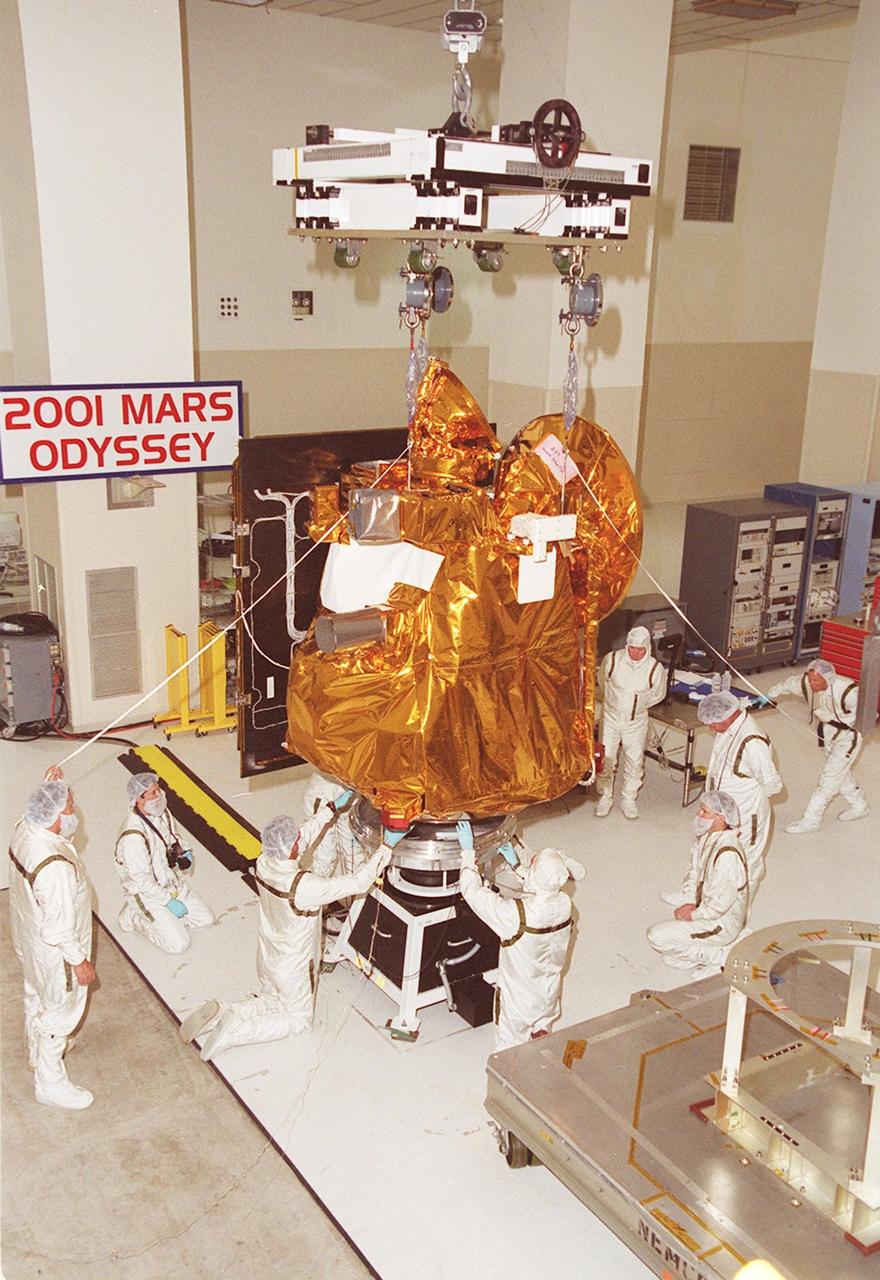
The 2001 Mars Odyssey Orbiter is lowered onto the spin table in the Space Assembly and Encapsulation Building 2. There it will undergo testing. The orbiter carries three science instruments THEMIS, the Gamma Ray Spectrometer (GRS), and the Mars Radiation Environment Experiment (MARIE) that will map the mineralogy and morphology of the Martian surface, the elemental composition of the surface and determine the abundance of hydrogen in the shallow subsurface, and characterize aspects of the near-space radiation environment with regards to the radiation-related risk to human explorers. The Mars Odyssey Orbiter is scheduled for launch on April 7, 2001, aboard a Delta II rocket from Launch Pad 17-A, Cape Canaveral Air Force Station
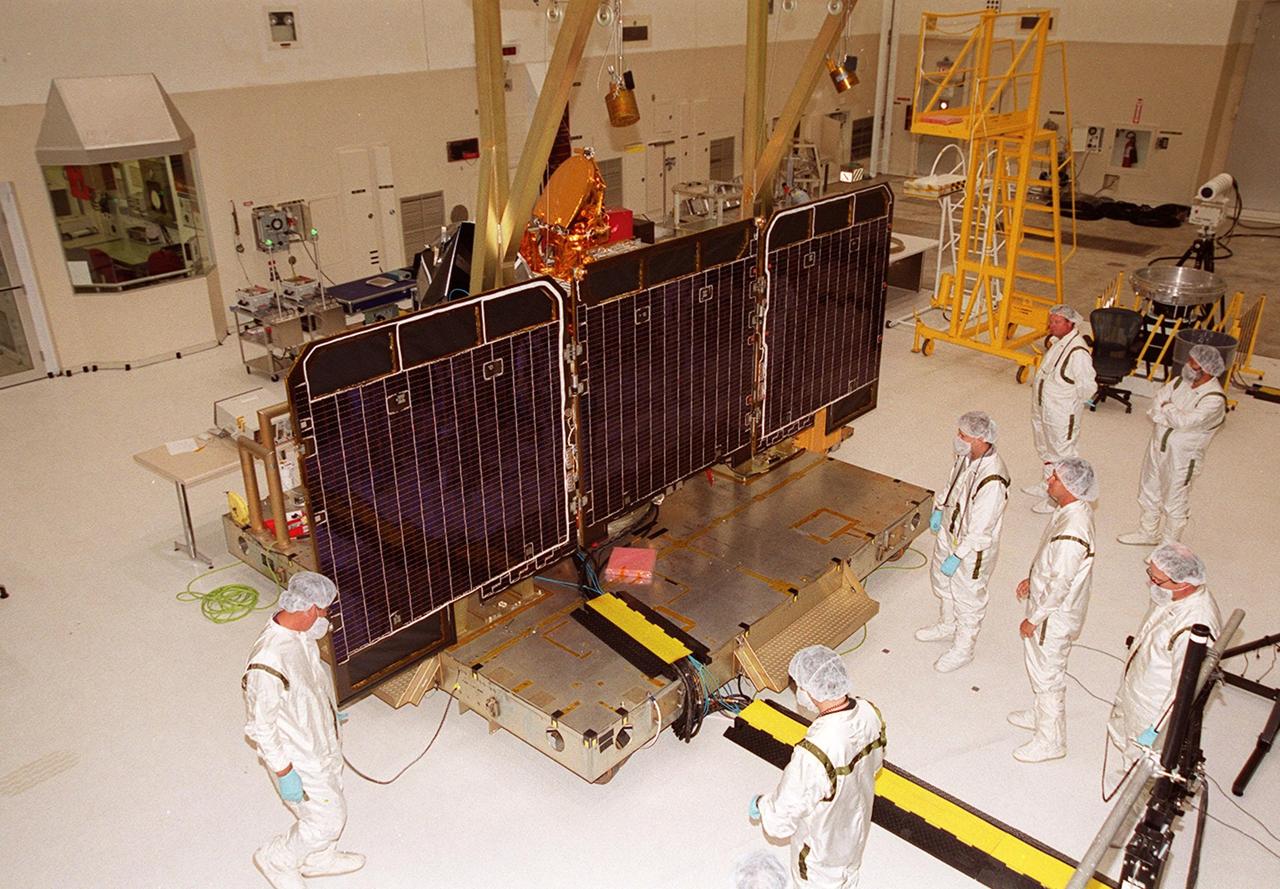
In the Spacecraft Assembly and Encapsulation Facility (SAEF 2), workers look at the opened panels of the solar array on the 2001 Mars Odyssey Orbiter. The array will undergo illumination testing. Scheduled for launch April 7, 2001, the orbiter contains three science instruments: THEMIS, the Gamma Ray Spectrometer (GRS), and the Mars Radiation Environment Experiment (MARIE). THEMIS will map the mineralogy and morphology of the Martian surface using a high-resolution camera and a thermal infrared imaging spectrometer. The GRS will achieve global mapping of the elemental composition of the surface and determine the abundance of hydrogen in the shallow subsurface. The MARIE will characterize aspects of the near-space radiation environment with regards to the radiation-related risk to human explorers
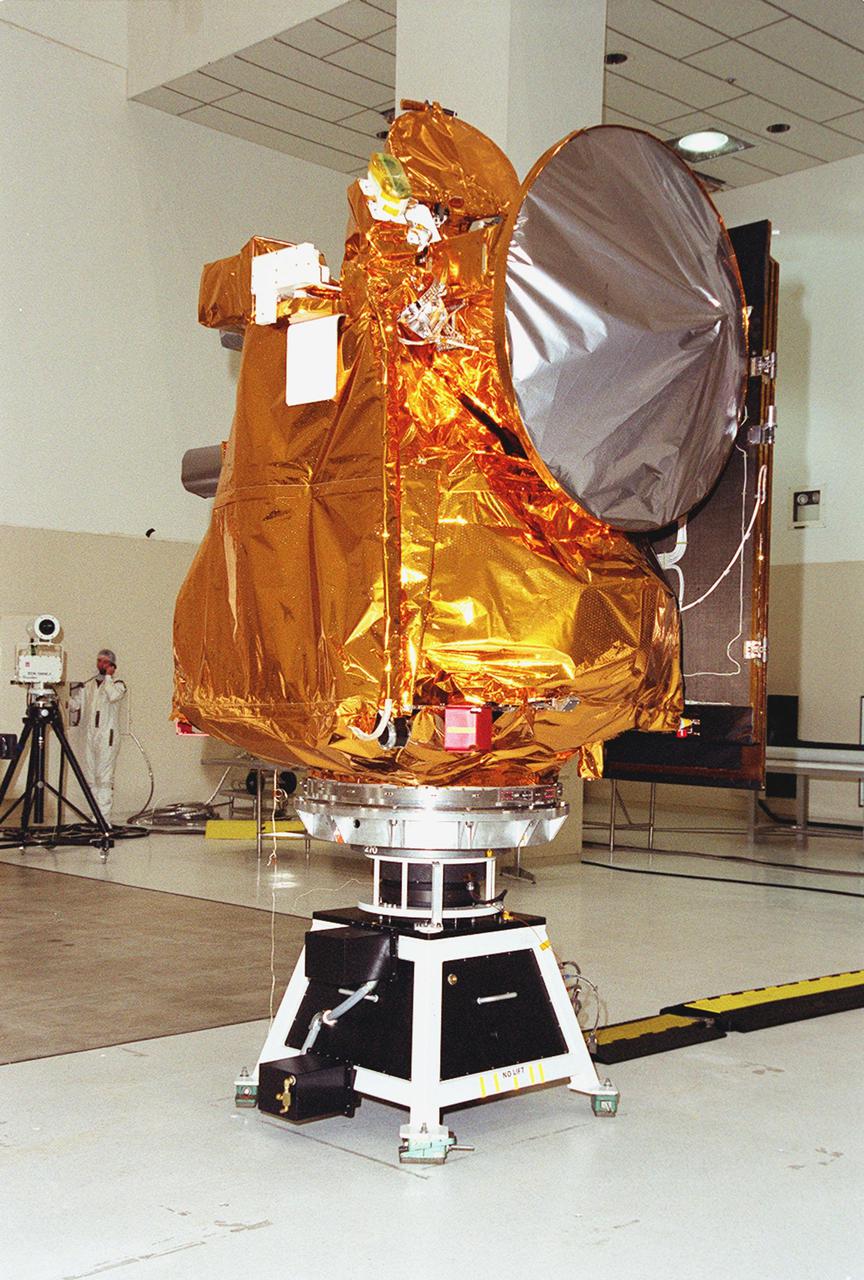
The 2001 Mars Odyssey Orbiter rests on the spin table in the Space Assembly and Encapsulation Building 2. There it will undergo testing. The orbiter carries three science instruments THEMIS, the Gamma Ray Spectrometer (GRS), and the Mars Radiation Environment Experiment (MARIE) that will map the mineralogy and morphology of the Martian surface, the elemental composition of the surface and determine the abundance of hydrogen in the shallow subsurface, and characterize aspects of the near-space radiation environment with regards to the radiation-related risk to human explorers. The Mars Odyssey Orbiter is scheduled for launch on April 7, 2001, aboard a Delta II rocket from Launch Pad 17-A, Cape Canaveral Air Force Station
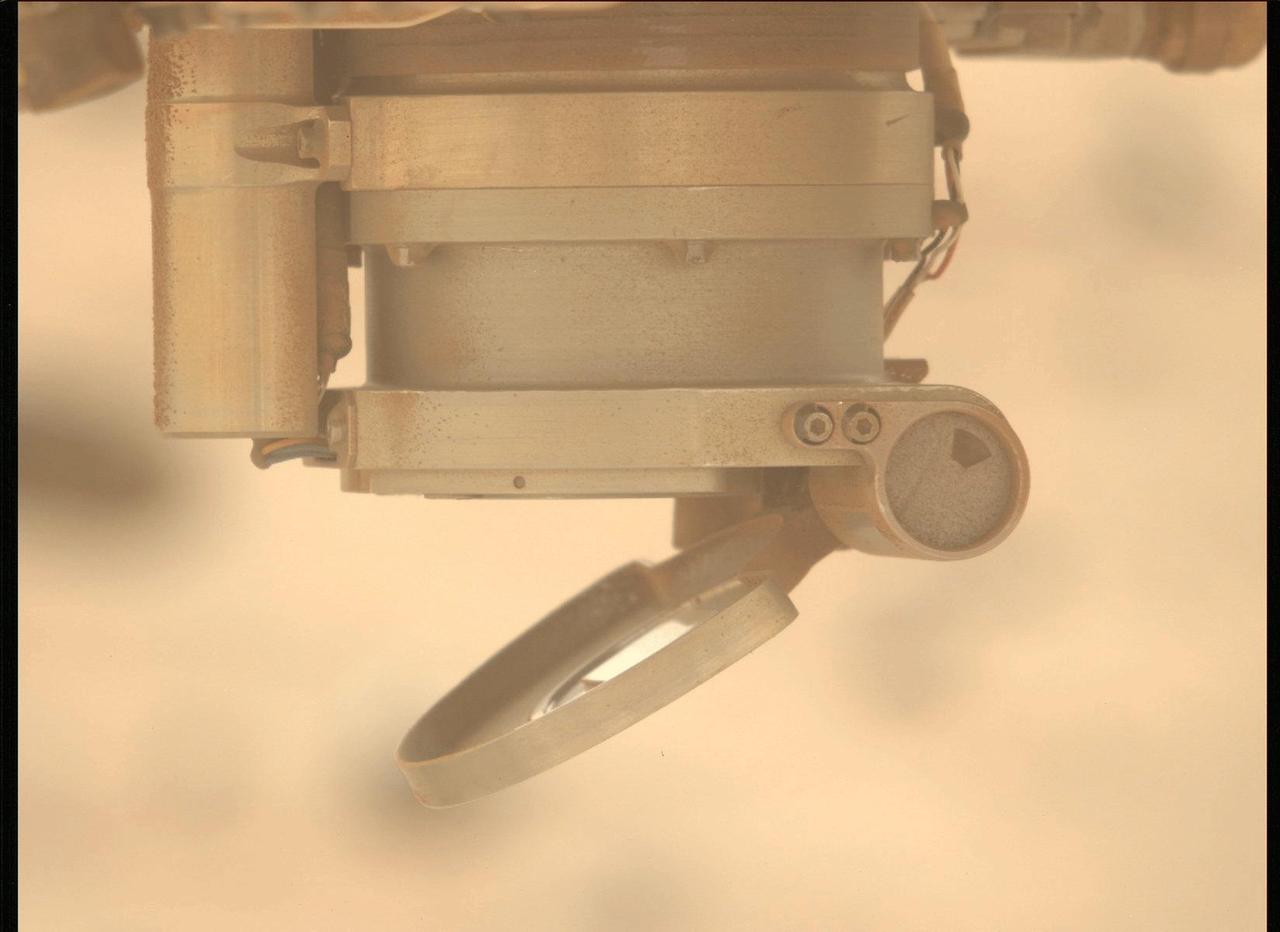
On May 11, 2024, the 1,147th Martian day, or sol, of Perseverance's mission, the Mastcam-Z instrument aboard the NASA Mars rover took these three images showing movement of the cover for the Autofocus and Context Imager (ACI) camera during a test to characterize the behavior of the cover mechanism. Part of the SHERLOC (Scanning Habitable Environments with Raman & Luminescence) instrument, the cover is designed to protect the instrument's spectrometer and one of its cameras from dust. On Jan. 6, 2024, the cover froze in a position that prevented SHERLOC from collecting data. The rover team found a way to address the issue so the instrument can continue to operate. A key objective for Perseverance's mission on Mars is astrobiology, including the search for signs of ancient microbial life. The rover is also characterizing the planet's geology and past climate, which paves the way for human exploration of the Red Planet. JPL, which is managed for NASA by Caltech in Pasadena, California, built and manages operations of the Perseverance rover. Animation available at https://photojournal.jpl.nasa.gov/catalog/PIA26338
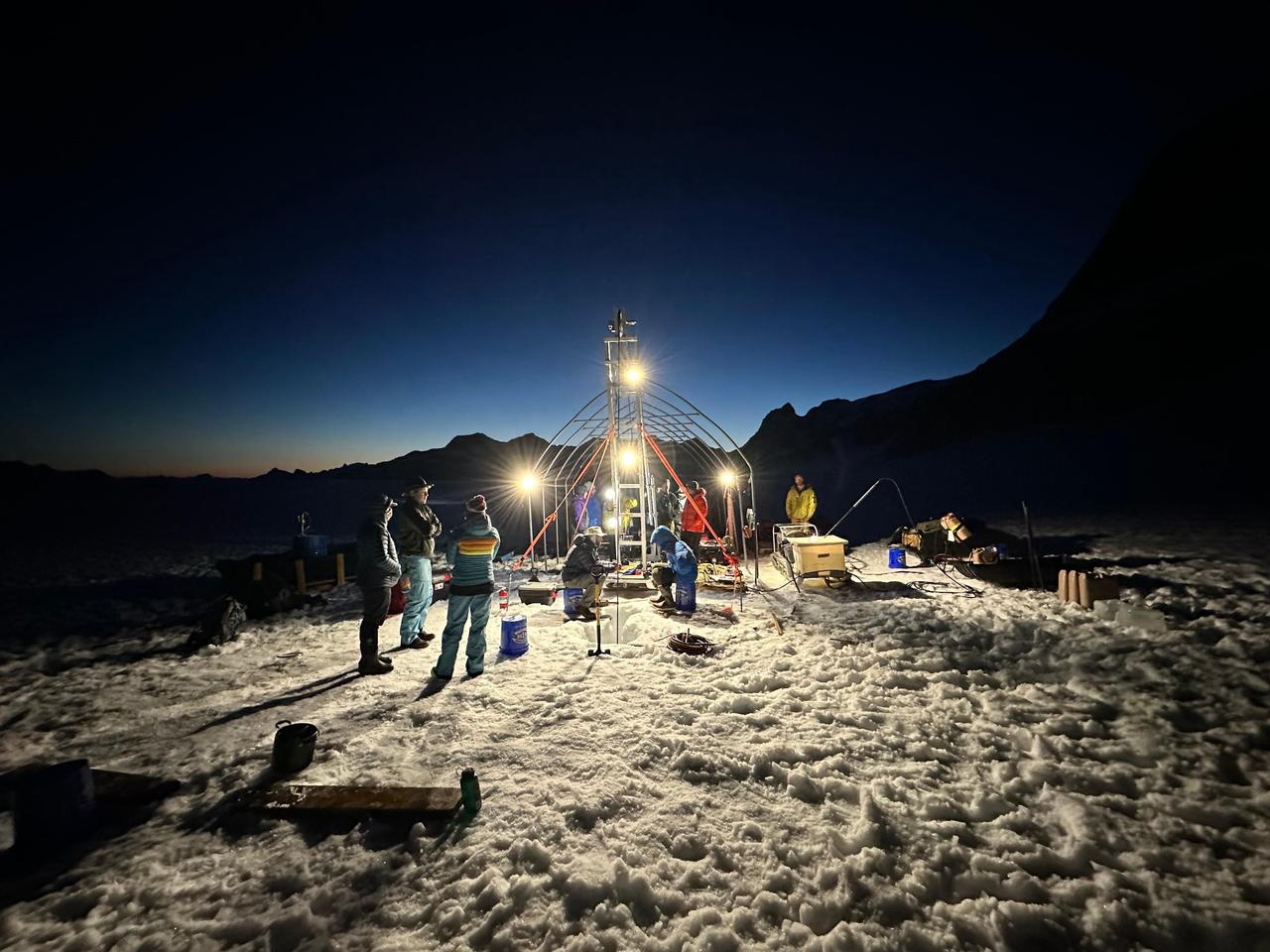
A group of researchers from NASA's Jet Propulsion Laboratory and other institutions spent two weeks on a glacier in Alaska in July 2023 for a project called ORCAA (Ocean Worlds Reconnaissance and Characterization of Astrobiological Analogs). Known as an analog mission, the project is working to answer science questions and test technology in preparation for a potential future mission to explore the surface or subsurface of icy moons like Jupiter's Europa and Saturn's Enceladus. Working at the Juneau Icefield, in coordination with the Juneau Icefield Research Project, the team used a hot-water drill to make a narrow hole in the glacier, melting its way progressively deeper. After three days, the drill reached bedrock, 890 feet (272 meters) below the surface. Science instruments were then sent down the borehole to take a variety of measurements and characterize the water environment. In 2025, the ORCAA team will return to the icefield and target a subglacial lake (a body of water inside the glacier) that has similarities to a reservoir scientists believe exists a few kilometers beneath the icy surface of Europa. ORCAA is funded by NASA's Planetary Science and Technology from Analog Research (PSTAR) program. https://photojournal.jpl.nasa.gov/catalog/PIA26345
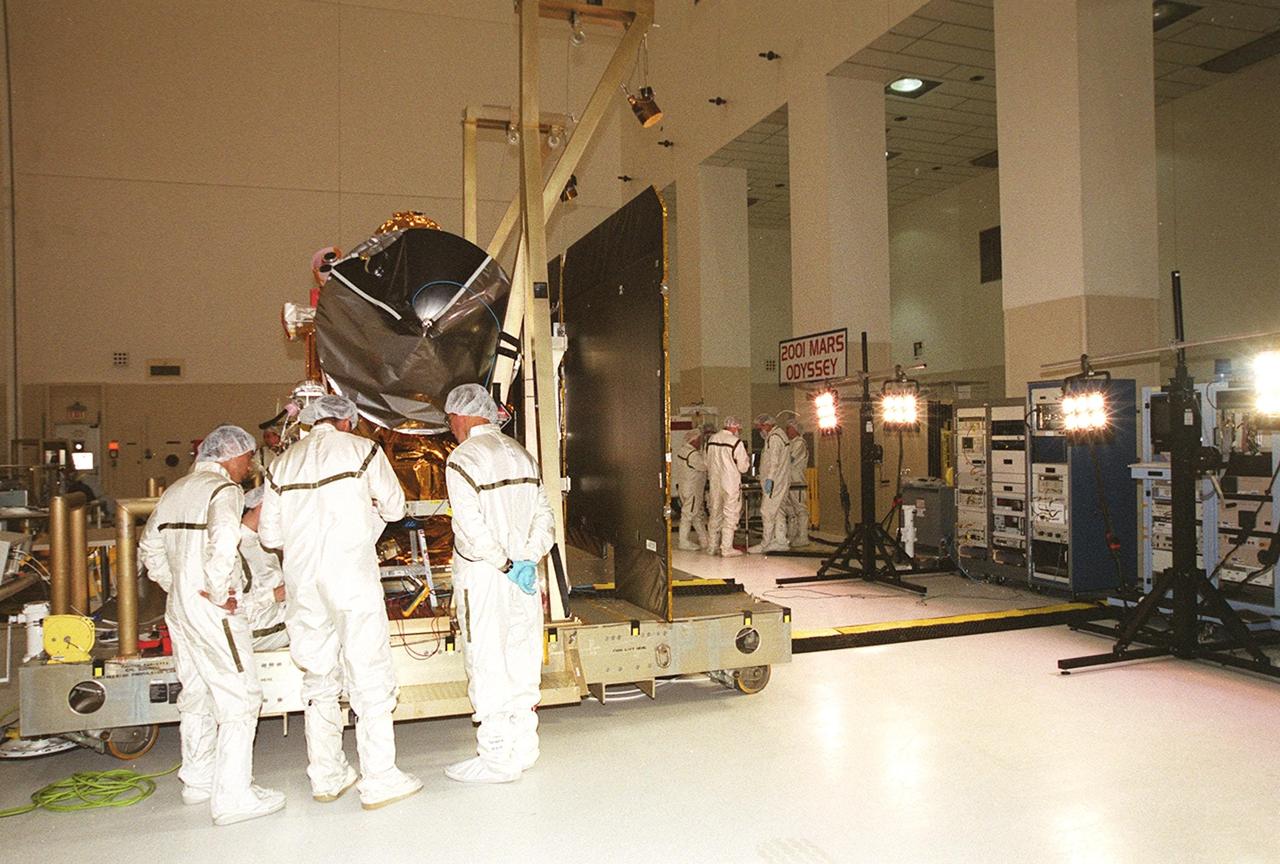
Workers testing in the Spacecraft Assembly and Encapsulation Facility (SAEF 2) stand alongside the 2001 Mars Odyssey Orbiter and behind its solar array panels. The arrays of lights (right) focus on the panels during illumination testing. Scheduled for launch April 7, 2001, the orbiter contains three science instruments: THEMIS, the Gamma Ray Spectrometer (GRS), and the Mars Radiation Environment Experiment (MARIE). THEMIS will map the mineralogy and morphology of the Martian surface using a high-resolution camera and a thermal infrared imaging spectrometer. The GRS will achieve global mapping of the elemental composition of the surface and determine the abundance of hydrogen in the shallow subsurface. The MARIE will characterize aspects of the near-space radiation environment with regards to the radiation-related risk to human explorers
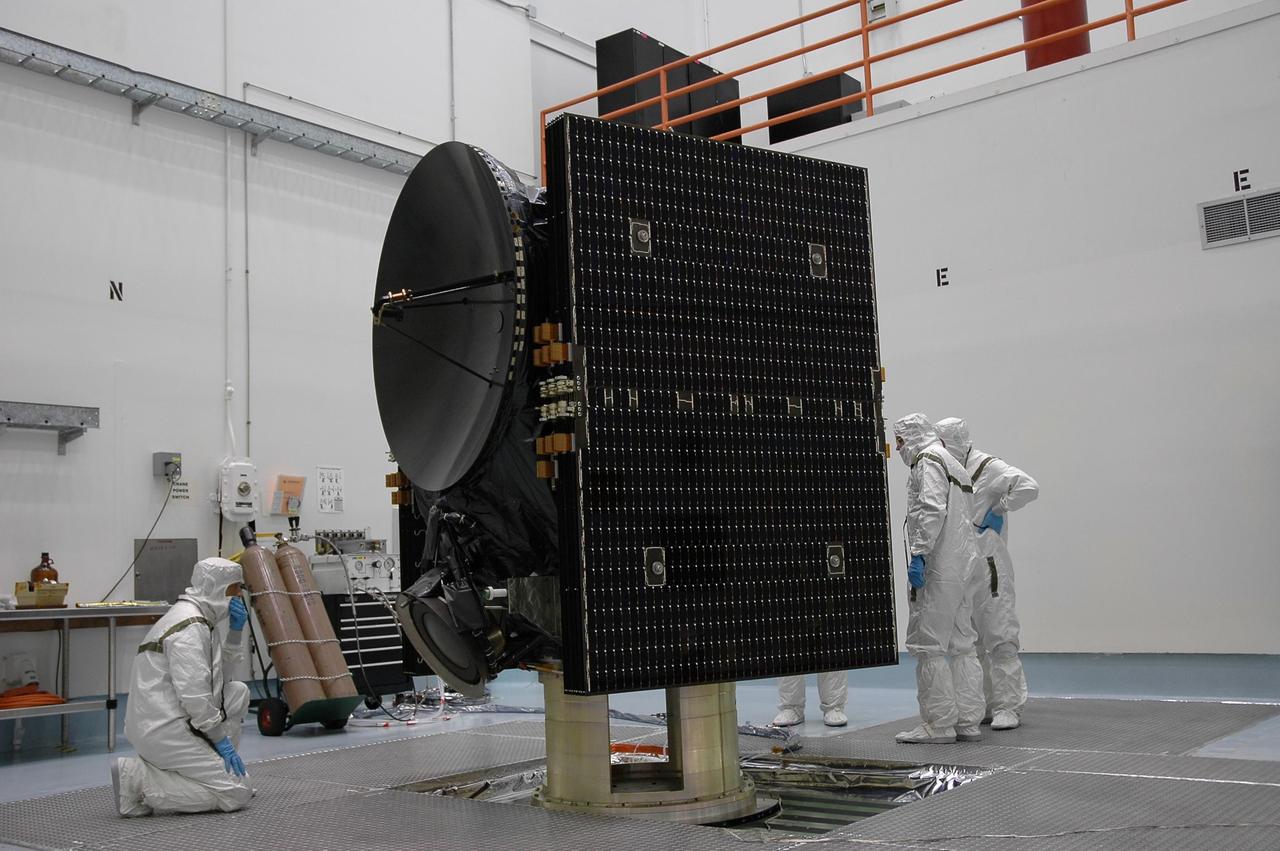
KENNEDY SPACE CENTER, FLA. -- Technicians at Astrotech check the Dawn spacecraft before spin-balance testing. After the test, Dawn will then be mated to the upper stage booster, installed into a spacecraft transportation canister for the trip to Cape Canaveral Air Force Station and mated to the Delta II rocket at Launch Pad 17-B.The Dawn spacecraft will employ ion propulsion to explore two of the asteroid belt's most intriguing and dissimilar occupants: asteroid Vesta and the dwarf planet Ceres. Dawn's goal is to characterize the conditions and processes of the solar system's earliest epoch by investigating in detail these largest protoplanets that have remained intact since their formations. Ceres and Vesta reside in the extensive zone between Mars and Jupiter together with many other smaller bodies, called the asteroid belt. Dawn is scheduled to launch July 7. Photo credit: NASA/Jack Pfaller
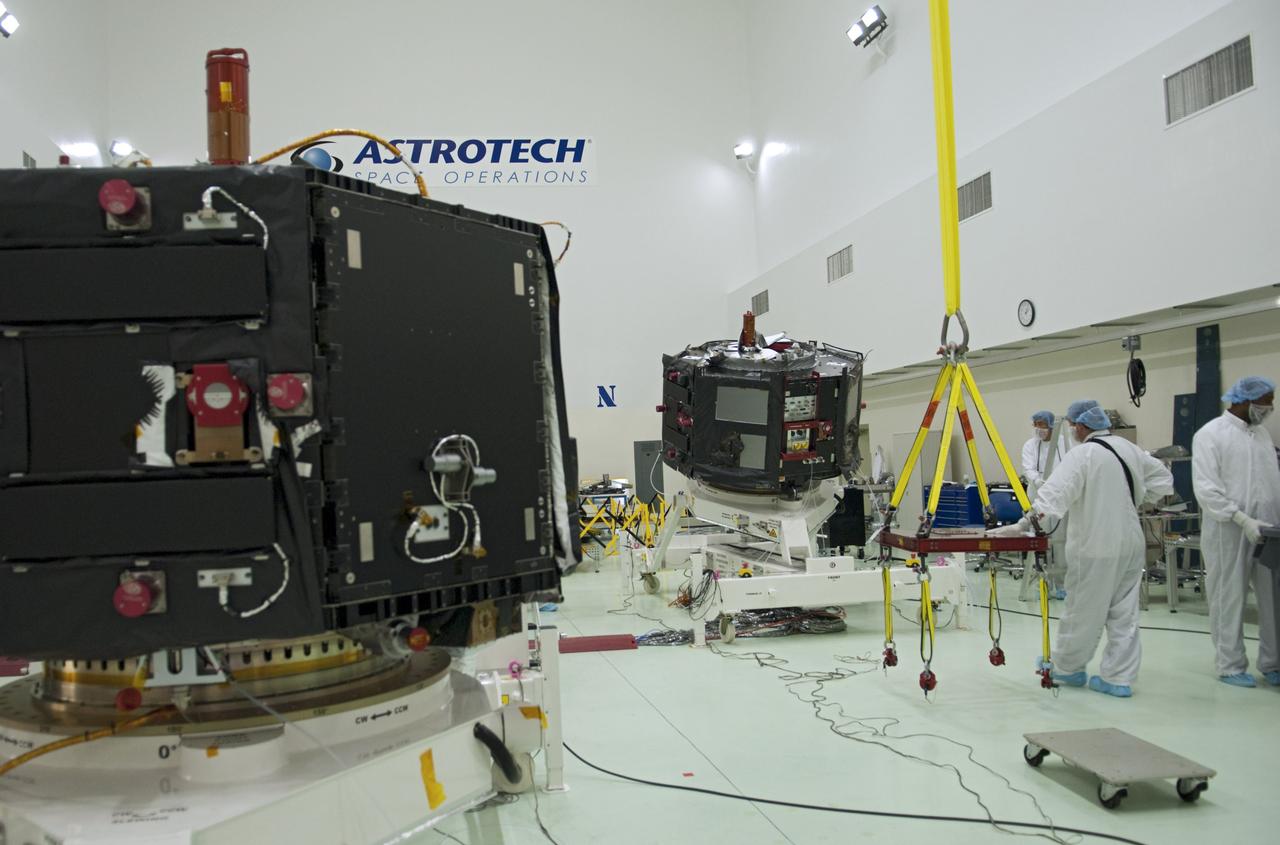
CAPE CANAVERAL, Fla. – Inside the Astrotech payload processing facility near NASA’s Kennedy Space Center in Florida, technicians prepare to perform a magnetic swing test on Radiation Belt Storm Probes, or RBSP, spacecraft A. The magnetic swing test is performed to characterize the magnetic signature of the spacecraft so that when it is taking measurements with its sensors in space scientists can subtract out background noise from the spacecraft itself. NASA’s RBSP mission will help us understand the sun’s influence on Earth and near-Earth space by studying the Earth’s radiation belts on various scales of space and time. RBSP will begin its mission of exploration of Earth’s Van Allen radiation belts and the extremes of space weather after its launch aboard a United Launch Alliance Atlas V rocket. Launch is targeted for Aug. 23. For more information, visit http://www.nasa.gov/rbsp. Photo credit: NASA/Charisse Nahser
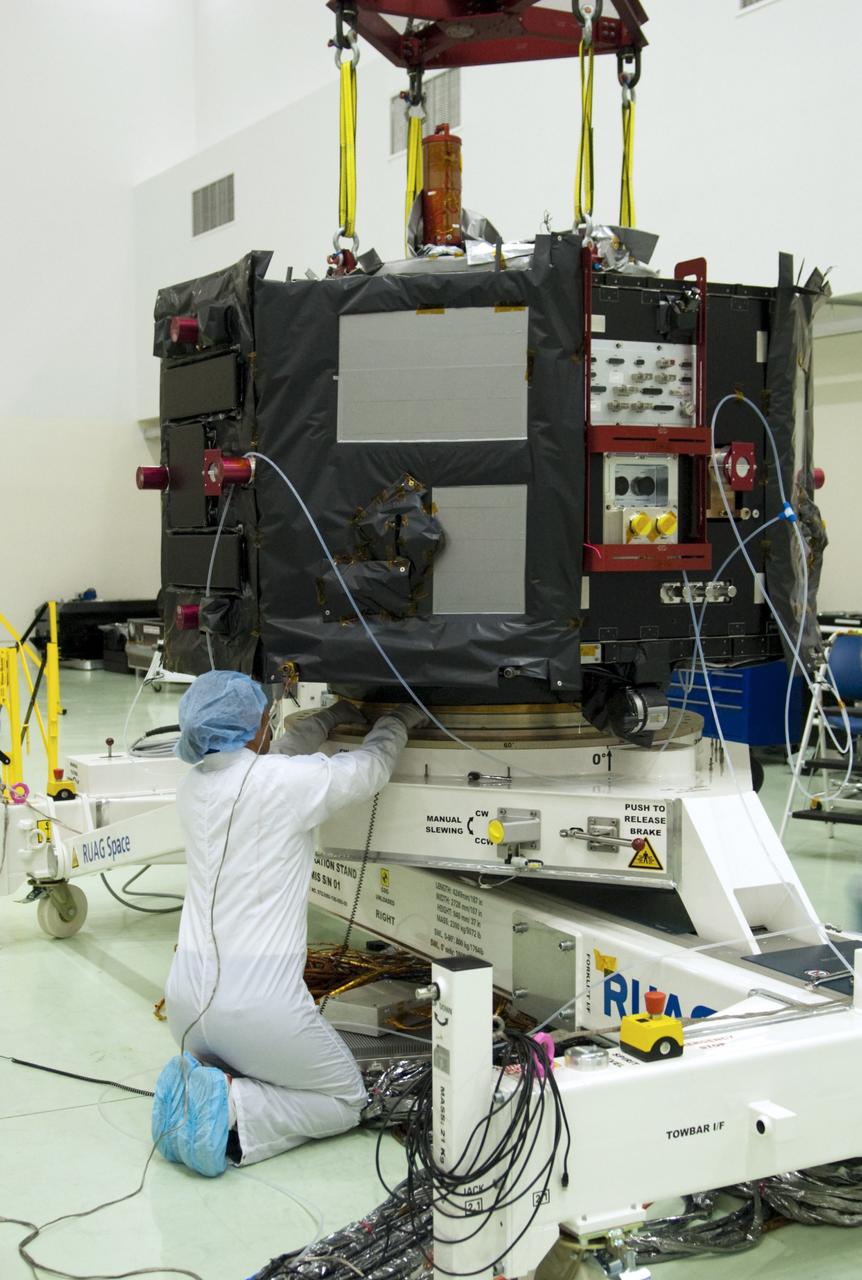
CAPE CANAVERAL, Fla. – Inside the Astrotech payload processing facility near NASA’s Kennedy Space Center in Florida, technicians prepare to perform a magnetic swing test on Radiation Belt Storm Probes, or RBSP, spacecraft A. The magnetic swing test is performed to characterize the magnetic signature of the spacecraft so that when it is taking measurements with its sensors in space scientists can subtract out background noise from the spacecraft itself. NASA’s RBSP mission will help us understand the sun’s influence on Earth and near-Earth space by studying the Earth’s radiation belts on various scales of space and time. RBSP will begin its mission of exploration of Earth’s Van Allen radiation belts and the extremes of space weather after its launch aboard a United Launch Alliance Atlas V rocket. Launch is targeted for Aug. 23. For more information, visit http://www.nasa.gov/rbsp. Photo credit: NASA/Charisse Nahser
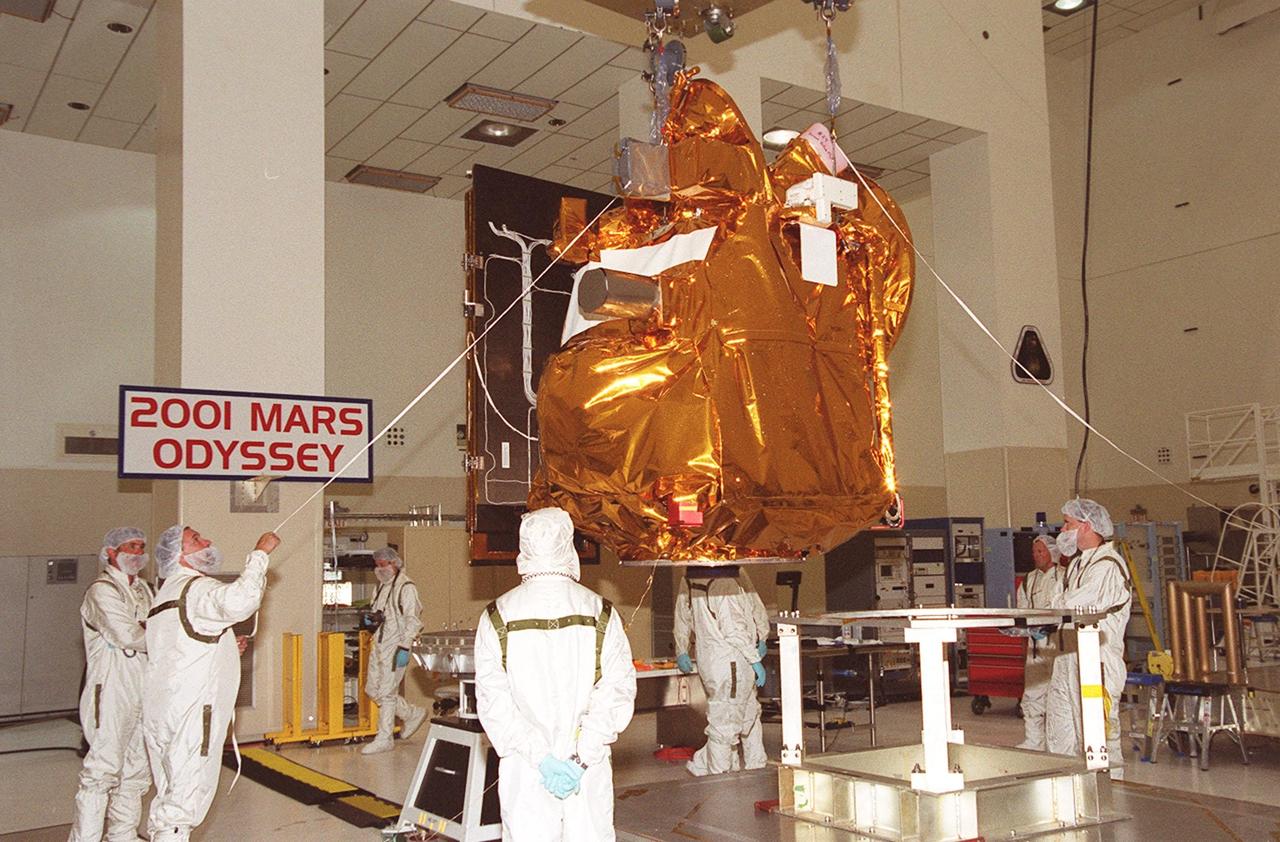
With workers keeping watch, the 2001 Mars Odyssey Orbiter, suspended by an overhead crane in the Space Assembly and Encapsulation Building 2, moves toward the spin table at left where it will be tested. The orbiter is being transferred to a spin table for testing. The orbiter carries three science instruments THEMIS, the Gamma Ray Spectrometer (GRS), and the Mars Radiation Environment Experiment (MARIE) that will map the mineralogy and morphology of the Martian surface, the elemental composition of the surface and determine the abundance of hydrogen in the shallow subsurface, and characterize aspects of the near-space radiation environment with regards to the radiation-related risk to human explorers. The Mars Odyssey Orbiter is scheduled for launch on April 7, 2001, aboard a Delta II rocket from Launch Pad 17-A, Cape Canaveral Air Force Station
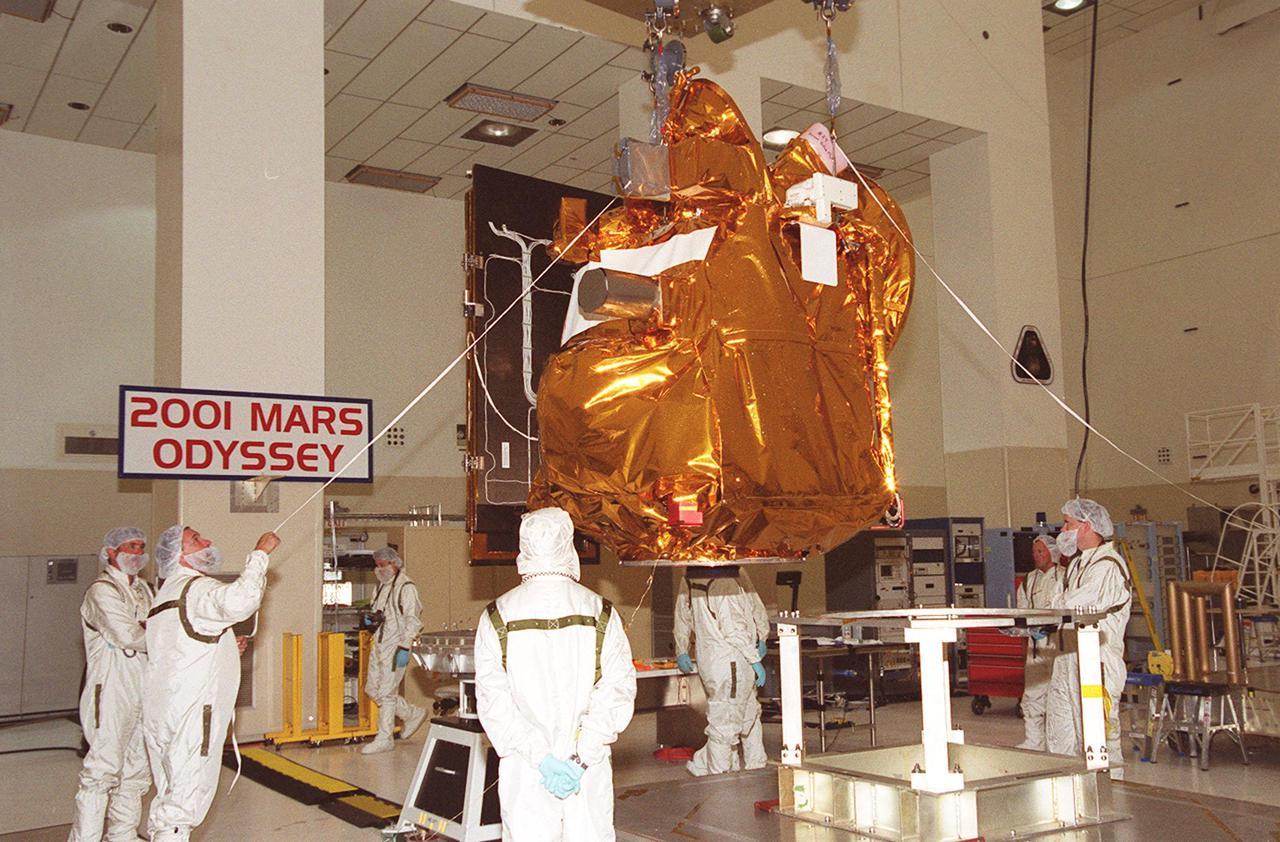
With workers keeping watch, the 2001 Mars Odyssey Orbiter, suspended by an overhead crane in the Space Assembly and Encapsulation Building 2, moves toward the spin table at left where it will be tested. The orbiter is being transferred to a spin table for testing. The orbiter carries three science instruments THEMIS, the Gamma Ray Spectrometer (GRS), and the Mars Radiation Environment Experiment (MARIE) that will map the mineralogy and morphology of the Martian surface, the elemental composition of the surface and determine the abundance of hydrogen in the shallow subsurface, and characterize aspects of the near-space radiation environment with regards to the radiation-related risk to human explorers. The Mars Odyssey Orbiter is scheduled for launch on April 7, 2001, aboard a Delta II rocket from Launch Pad 17-A, Cape Canaveral Air Force Station

The 2001 Mars Odyssey Orbiter sits in the Spacecraft Assembly and Encapsulation Facility (SAEF 2) while components undergo testing. The worker at left looks at an oscilloscope for testing the UHF antenna, a small cylindrical object protruding from the left side of the satellite. Scheduled for launch April 7, 2001, the orbiter contains three science instruments: THEMIS, the Gamma Ray Spectrometer (GRS), and the Mars Radiation Environment Experiment (MARIE). THEMIS will map the mineralogy and morphology of the Martian surface using a high-resolution camera and a thermal infrared imaging spectrometer. The GRS will achieve global mapping of the elemental composition of the surface and determine the abundance of hydrogen in the shallow subsurface. The MARIE will characterize aspects of the near-space radiation environment with regards to the radiation-related risk to human explorers
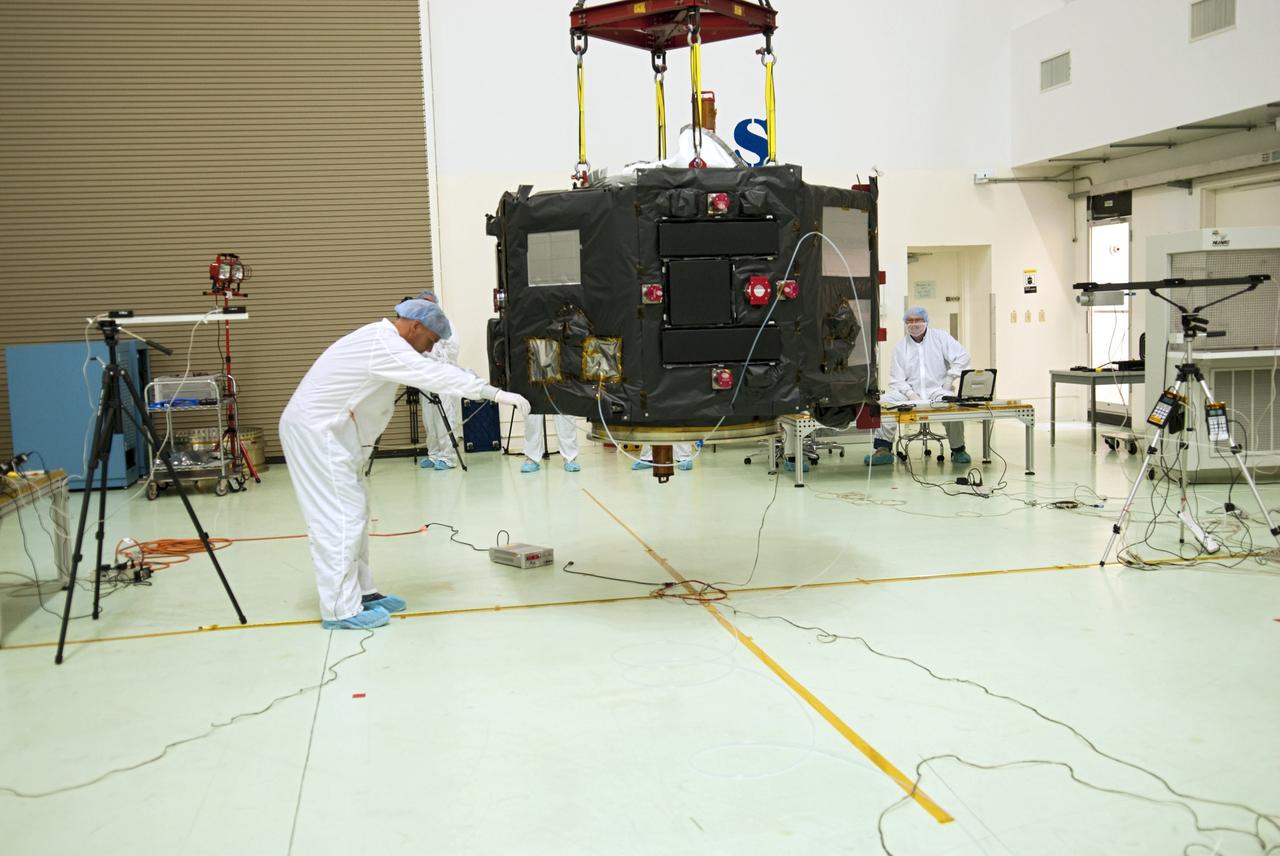
CAPE CANAVERAL, Fla. – Inside the Astrotech payload processing facility near NASA’s Kennedy Space Center in Florida, technicians line up the Radiation Belt Storm Probes, or RBSP, spacecraft A over an electromagnetic source in order to perform a magnetic swing test. The magnetic swing test is performed to characterize the magnetic signature of the spacecraft so that when it is taking measurements with its sensors in space scientists can subtract out background noise from the spacecraft itself. NASA’s RBSP mission will help us understand the sun’s influence on Earth and near-Earth space by studying the Earth’s radiation belts on various scales of space and time. RBSP will begin its mission of exploration of Earth’s Van Allen radiation belts and the extremes of space weather after its launch aboard a United Launch Alliance Atlas V rocket. Launch is targeted for Aug. 23. For more information, visit http://www.nasa.gov/rbsp. Photo credit: NASA/Charisse Nahser
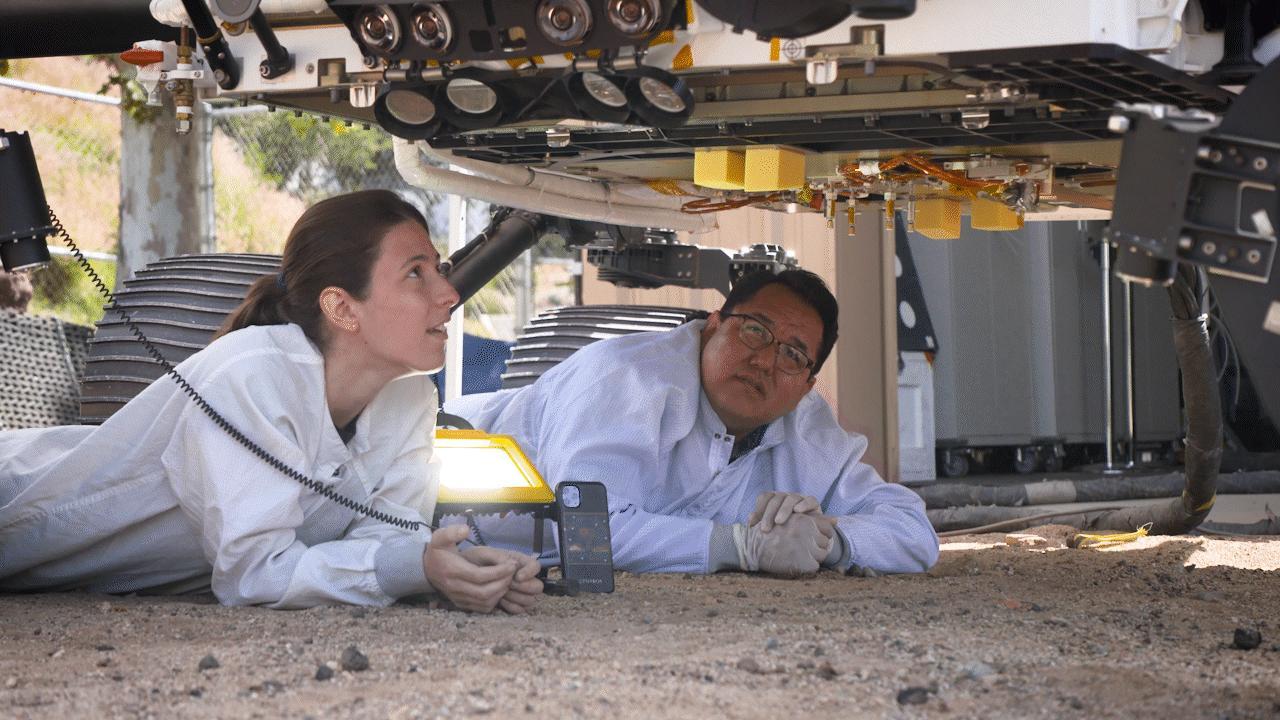
Engineers use OPTIMISM, a full-size replica of NASA's Perseverance rover, to test how it will deposit its first sample tube on the Martian surface. The test was conducted in the Mars Yard at NASA's Jet Propulsion Laboratory in Southern California. A key objective for Perseverance's mission on Mars is astrobiology, including the search for signs of ancient microbial life. The rover will characterize the planet's geology and past climate, pave the way for human exploration of the Red Planet, and be the first mission to collect and cache Martian rock and regolith (broken rock and dust). Subsequent NASA missions, in cooperation with ESA (European Space Agency), would send spacecraft to Mars to collect these sealed samples from the surface and return them to Earth for in-depth analysis. The Mars 2020 Perseverance mission is part of NASA's Moon to Mars exploration approach, which includes Artemis missions to the Moon that will help prepare for human exploration of the Red Planet. Movie available at https://photojournal.jpl.nasa.gov/catalog/PIA25676
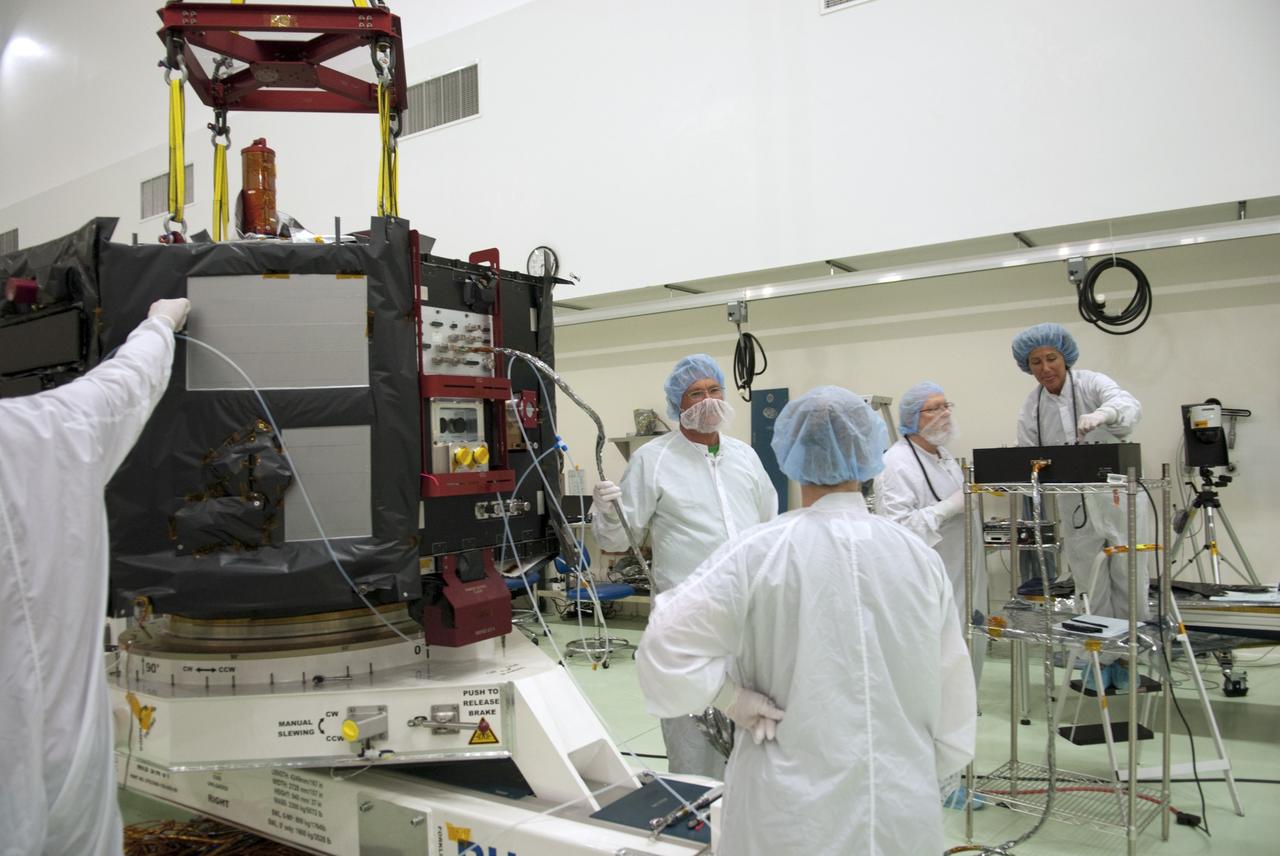
CAPE CANAVERAL, Fla. – Inside the Astrotech payload processing facility near NASA’s Kennedy Space Center in Florida, technicians prepare to perform a magnetic swing test on Radiation Belt Storm Probes, or RBSP, spacecraft A. The magnetic swing test is performed to characterize the magnetic signature of the spacecraft so that when it is taking measurements with its sensors in space scientists can subtract out background noise from the spacecraft itself. NASA’s RBSP mission will help us understand the sun’s influence on Earth and near-Earth space by studying the Earth’s radiation belts on various scales of space and time. RBSP will begin its mission of exploration of Earth’s Van Allen radiation belts and the extremes of space weather after its launch aboard a United Launch Alliance Atlas V rocket. Launch is targeted for Aug. 23. For more information, visit http://www.nasa.gov/rbsp. Photo credit: NASA/Charisse Nahser

CAPE CANAVERAL, Fla. – Inside the Astrotech payload processing facility near NASA’s Kennedy Space Center in Florida, technicians line up the Radiation Belt Storm Probes, or RBSP, spacecraft A over an electromagnetic source in order to perform a magnetic swing test. The magnetic swing test is performed to characterize the magnetic signature of the spacecraft so that when it is taking measurements with its sensors in space scientists can subtract out background noise from the spacecraft itself. NASA’s RBSP mission will help us understand the sun’s influence on Earth and near-Earth space by studying the Earth’s radiation belts on various scales of space and time. RBSP will begin its mission of exploration of Earth’s Van Allen radiation belts and the extremes of space weather after its launch aboard a United Launch Alliance Atlas V rocket. Launch is targeted for Aug. 23. For more information, visit http://www.nasa.gov/rbsp. Photo credit: NASA/Charisse Nahser
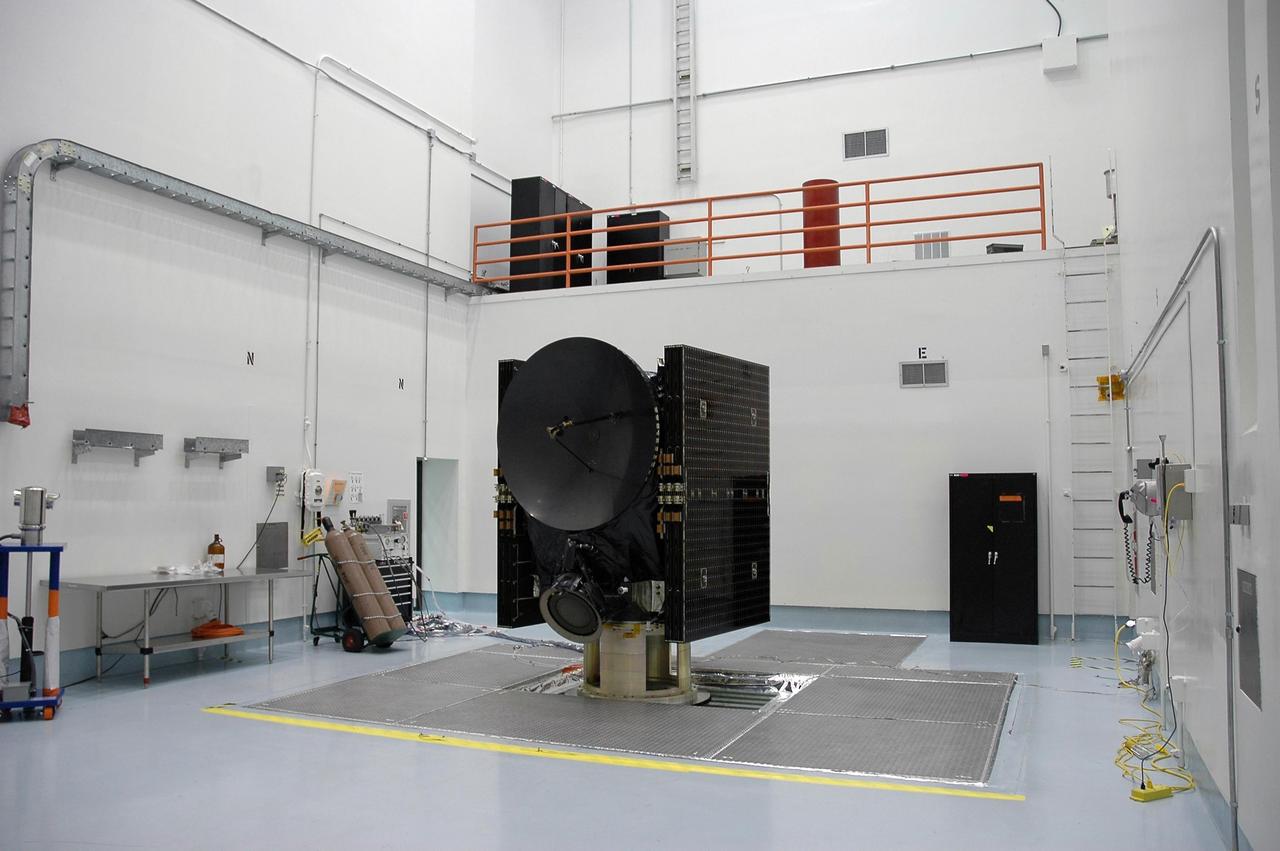
KENNEDY SPACE CENTER, FLA. -- At Astrotech, the Dawn spacecraft is ready for spin-balance testing. After the test, Dawn will then be mated to the upper stage booster, installed into a spacecraft transportation canister for the trip to Cape Canaveral Air Force Station and mated to the Delta II rocket at Launch Pad 17-B. The Dawn spacecraft will employ ion propulsion to explore two of the asteroid belt's most intriguing and dissimilar occupants: asteroid Vesta and the dwarf planet Ceres. Dawn's goal is to characterize the conditions and processes of the solar system's earliest epoch by investigating in detail these largest protoplanets that have remained intact since their formations. Ceres and Vesta reside in the extensive zone between Mars and Jupiter together with many other smaller bodies, called the asteroid belt. Dawn is scheduled to launch July 7. Photo credit: NASA/Jack Pfaller
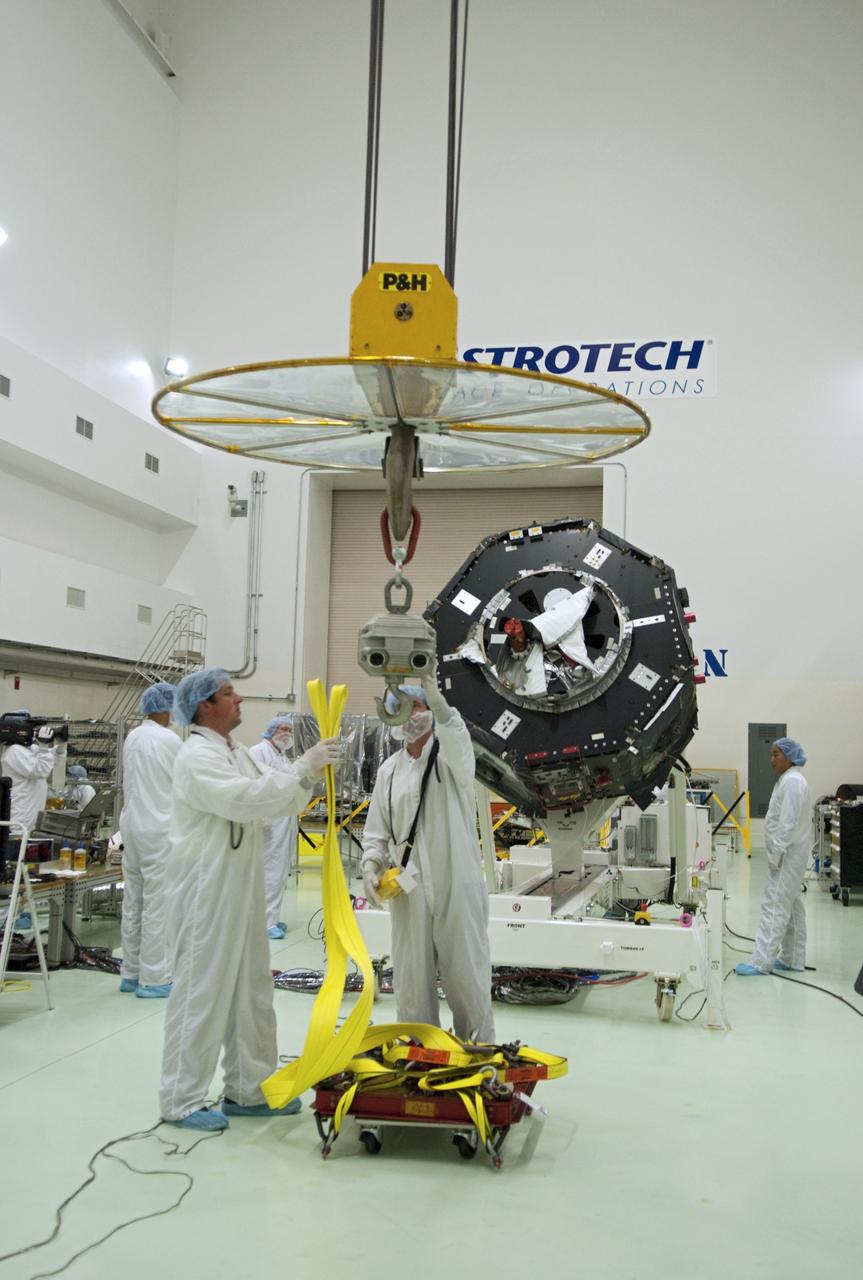
CAPE CANAVERAL, Fla. – Inside the Astrotech payload processing facility near NASA’s Kennedy Space Center in Florida, technicians prepare to perform a magnetic swing test on Radiation Belt Storm Probes, or RBSP, spacecraft A. The magnetic swing test is performed to characterize the magnetic signature of the spacecraft so that when it is taking measurements with its sensors in space scientists can subtract out background noise from the spacecraft itself. NASA’s RBSP mission will help us understand the sun’s influence on Earth and near-Earth space by studying the Earth’s radiation belts on various scales of space and time. RBSP will begin its mission of exploration of Earth’s Van Allen radiation belts and the extremes of space weather after its launch aboard a United Launch Alliance Atlas V rocket. Launch is targeted for Aug. 23. For more information, visit http://www.nasa.gov/rbsp. Photo credit: NASA/Charisse Nahser
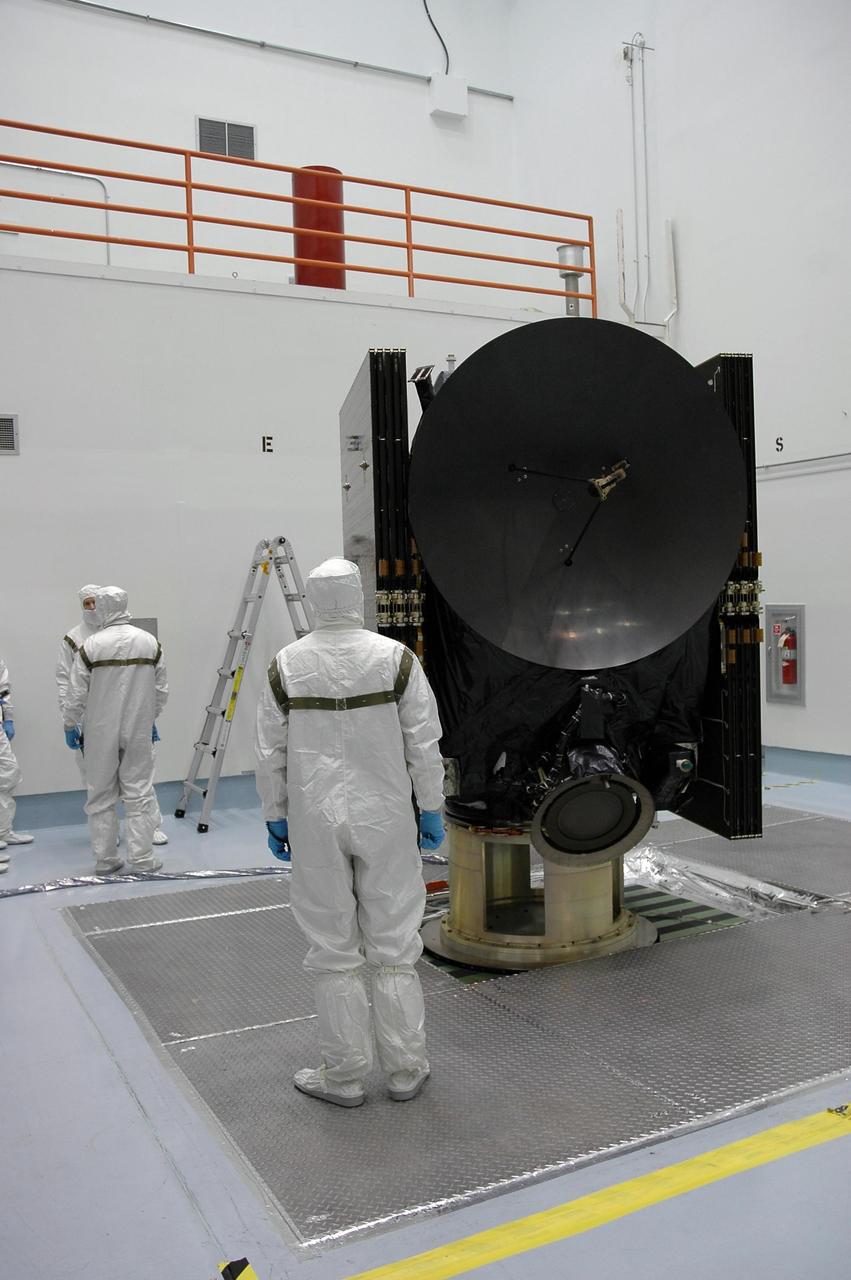
KENNEDY SPACE CENTER, FLA. -- Technicians at Astrotech are preparing the Dawn spacecraft for spin-balance testing. After the test, Dawn will then be mated to the upper stage booster, installed into a spacecraft transportation canister for the trip to Cape Canaveral Air Force Station and mated to the Delta II rocket at Launch Pad 17-B. The Dawn spacecraft will employ ion propulsion to explore two of the asteroid belt's most intriguing and dissimilar occupants: asteroid Vesta and the dwarf planet Ceres. Dawn's goal is to characterize the conditions and processes of the solar system's earliest epoch by investigating in detail these largest protoplanets that have remained intact since their formations. Ceres and Vesta reside in the extensive zone between Mars and Jupiter together with many other smaller bodies, called the asteroid belt. Dawn is scheduled to launch July 7. Photo credit: NASA/Jack Pfaller
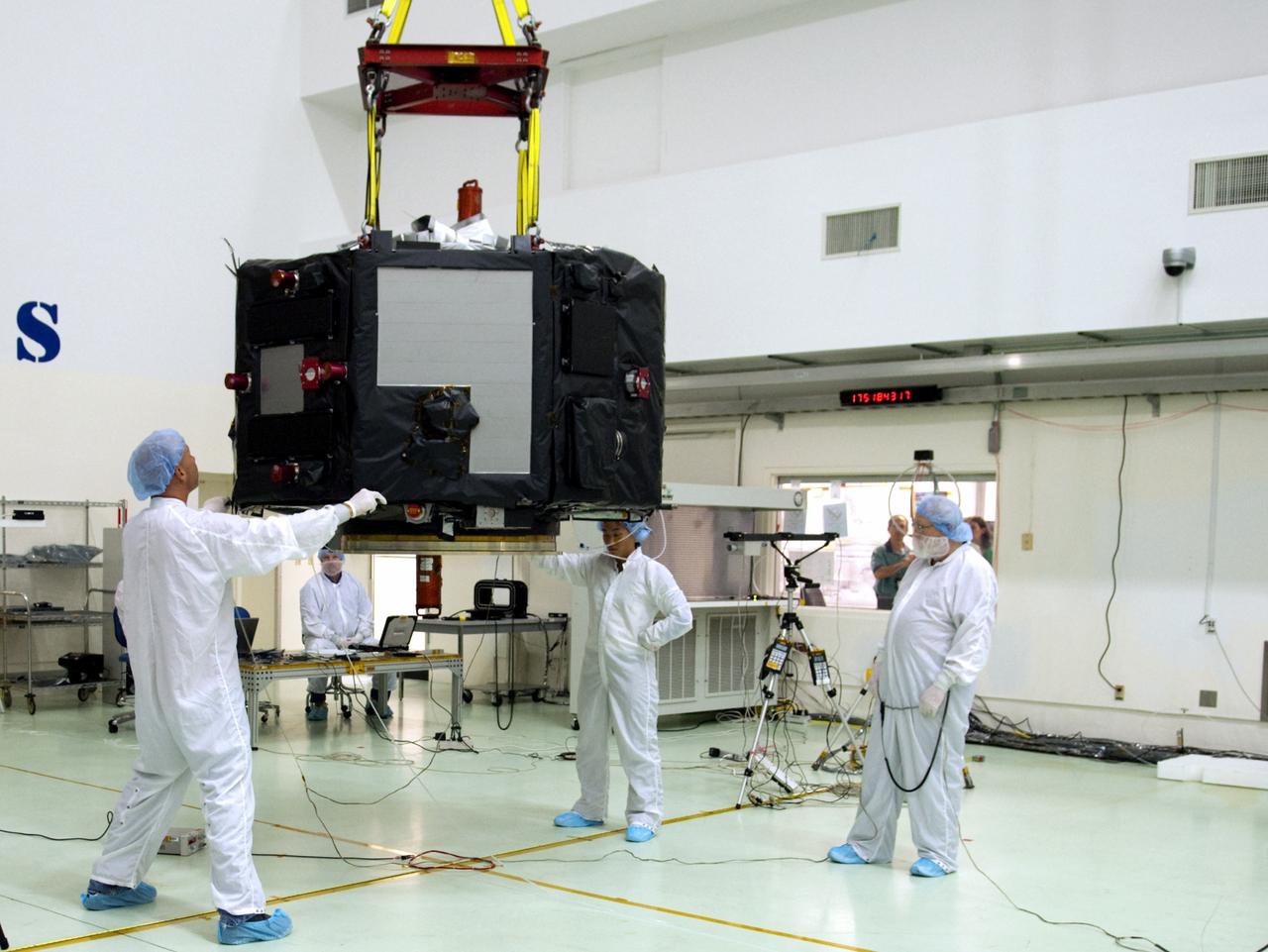
CAPE CANAVERAL, Fla. – Inside the Astrotech payload processing facility near NASA’s Kennedy Space Center in Florida, technicians line up the Radiation Belt Storm Probes, or RBSP, spacecraft A over an electromagnetic source in order to perform a magnetic swing test. The magnetic swing test is performed to characterize the magnetic signature of the spacecraft so that when it is taking measurements with its sensors in space scientists can subtract out background noise from the spacecraft itself. NASA’s RBSP mission will help us understand the sun’s influence on Earth and near-Earth space by studying the Earth’s radiation belts on various scales of space and time. RBSP will begin its mission of exploration of Earth’s Van Allen radiation belts and the extremes of space weather after its launch aboard a United Launch Alliance Atlas V rocket. Launch is targeted for Aug. 23. For more information, visit http://www.nasa.gov/rbsp. Photo credit: NASA/Charisse Nahser
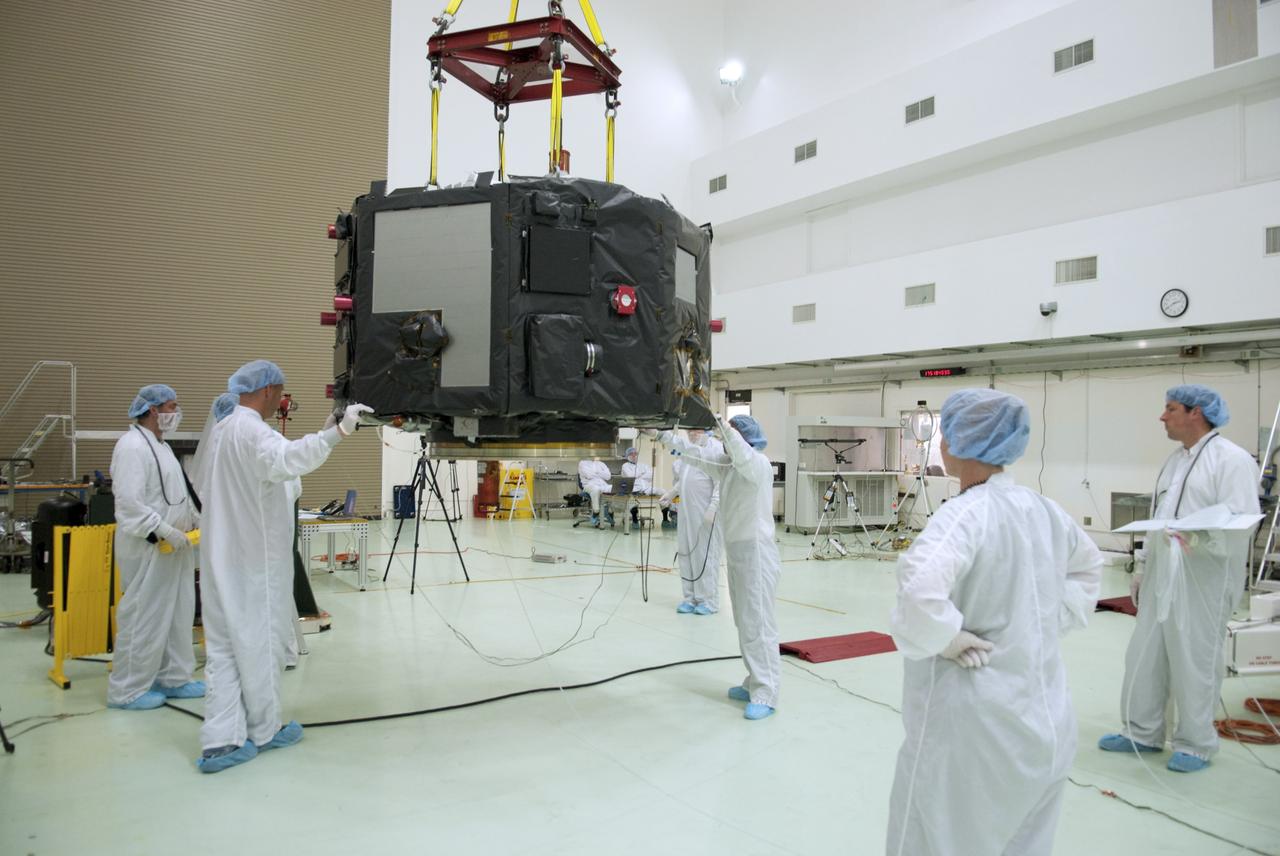
CAPE CANAVERAL, Fla. – Inside the Astrotech payload processing facility near NASA’s Kennedy Space Center in Florida, technicians prepare to perform a magnetic swing test on Radiation Belt Storm Probes, or RBSP, spacecraft A. The magnetic swing test is performed to characterize the magnetic signature of the spacecraft so that when it is taking measurements with its sensors in space scientists can subtract out background noise from the spacecraft itself. NASA’s RBSP mission will help us understand the sun’s influence on Earth and near-Earth space by studying the Earth’s radiation belts on various scales of space and time. RBSP will begin its mission of exploration of Earth’s Van Allen radiation belts and the extremes of space weather after its launch aboard a United Launch Alliance Atlas V rocket. Launch is targeted for Aug. 23. For more information, visit http://www.nasa.gov/rbsp. Photo credit: NASA/Charisse Nahser