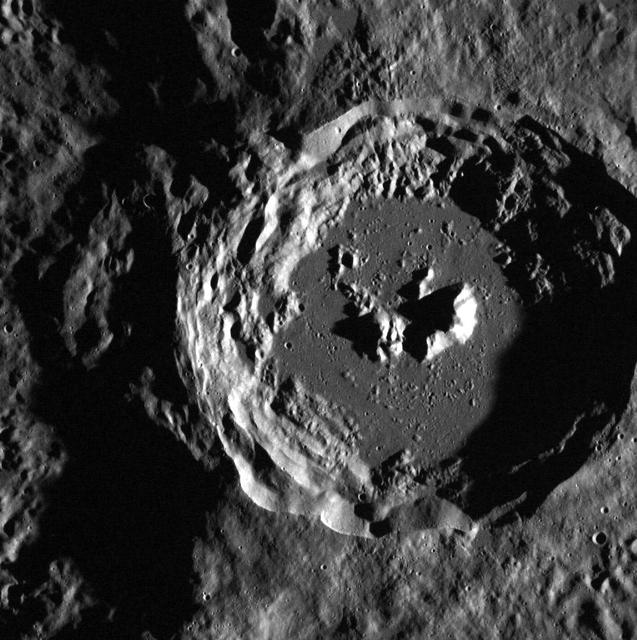
A Crater in Closeup
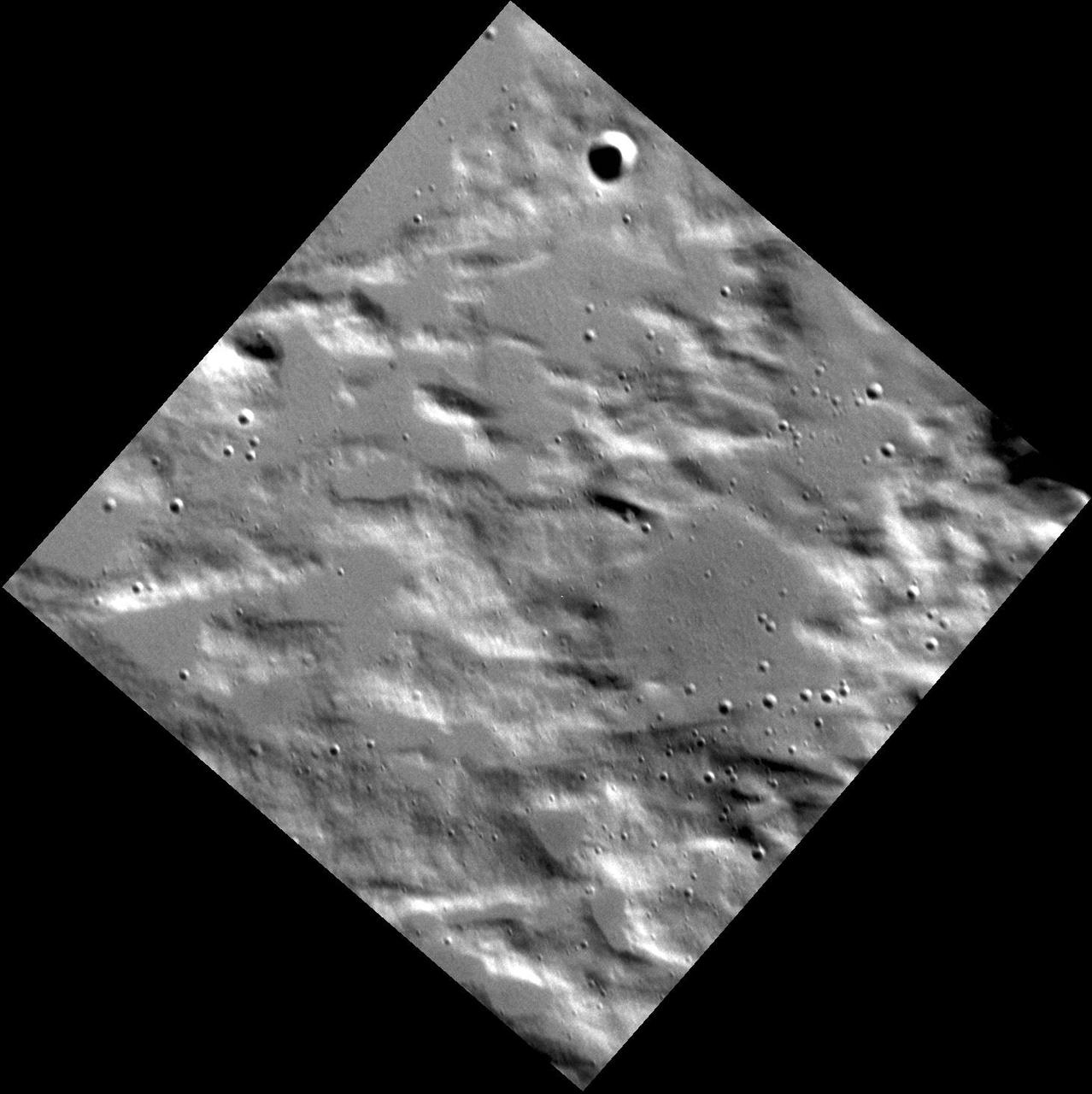
Extreme Closeup
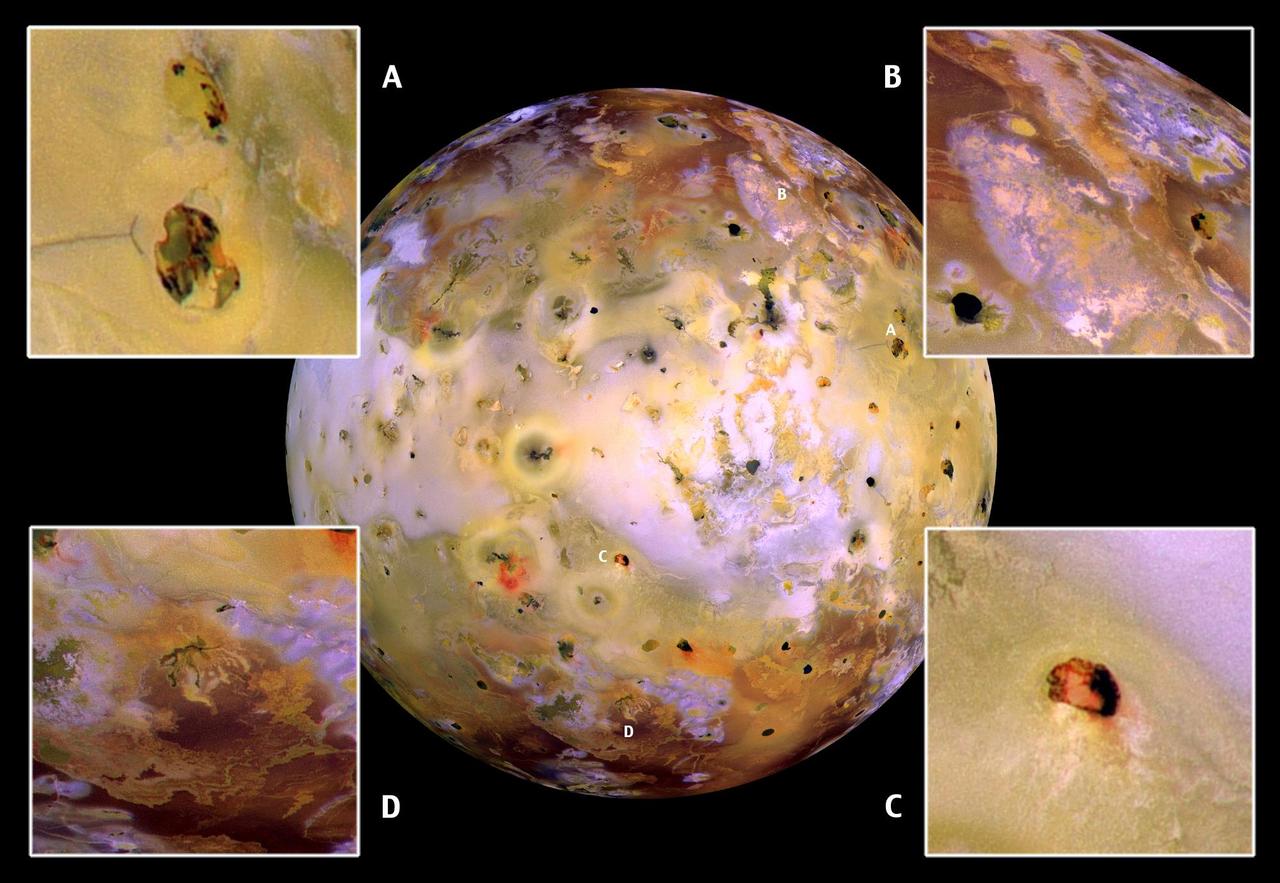
Closeups of Io false color
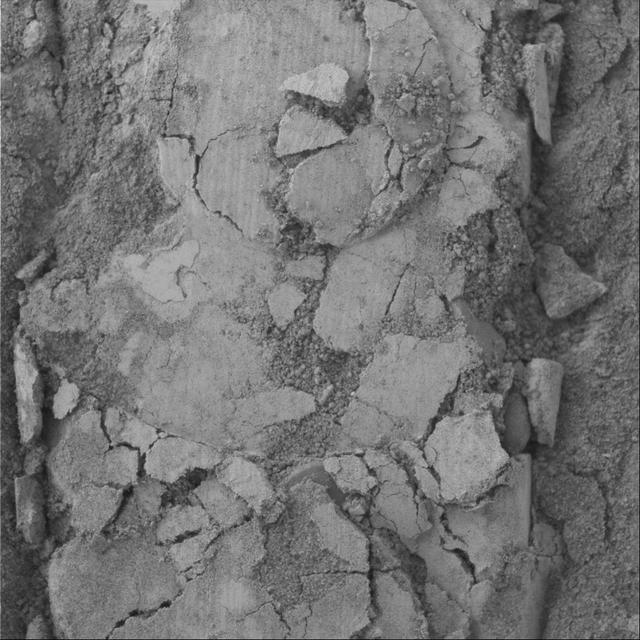
Closeup View of Compacted Soil
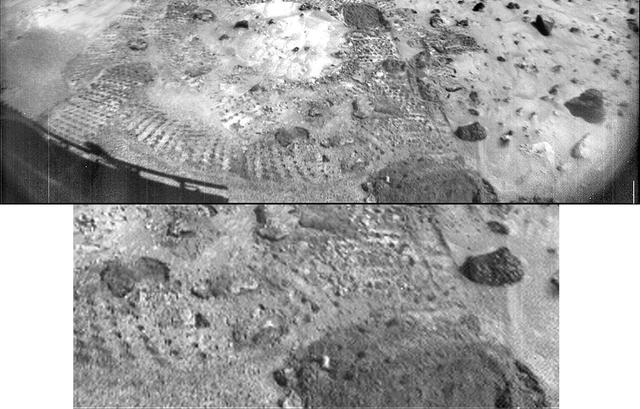
Closeup of Mermaid
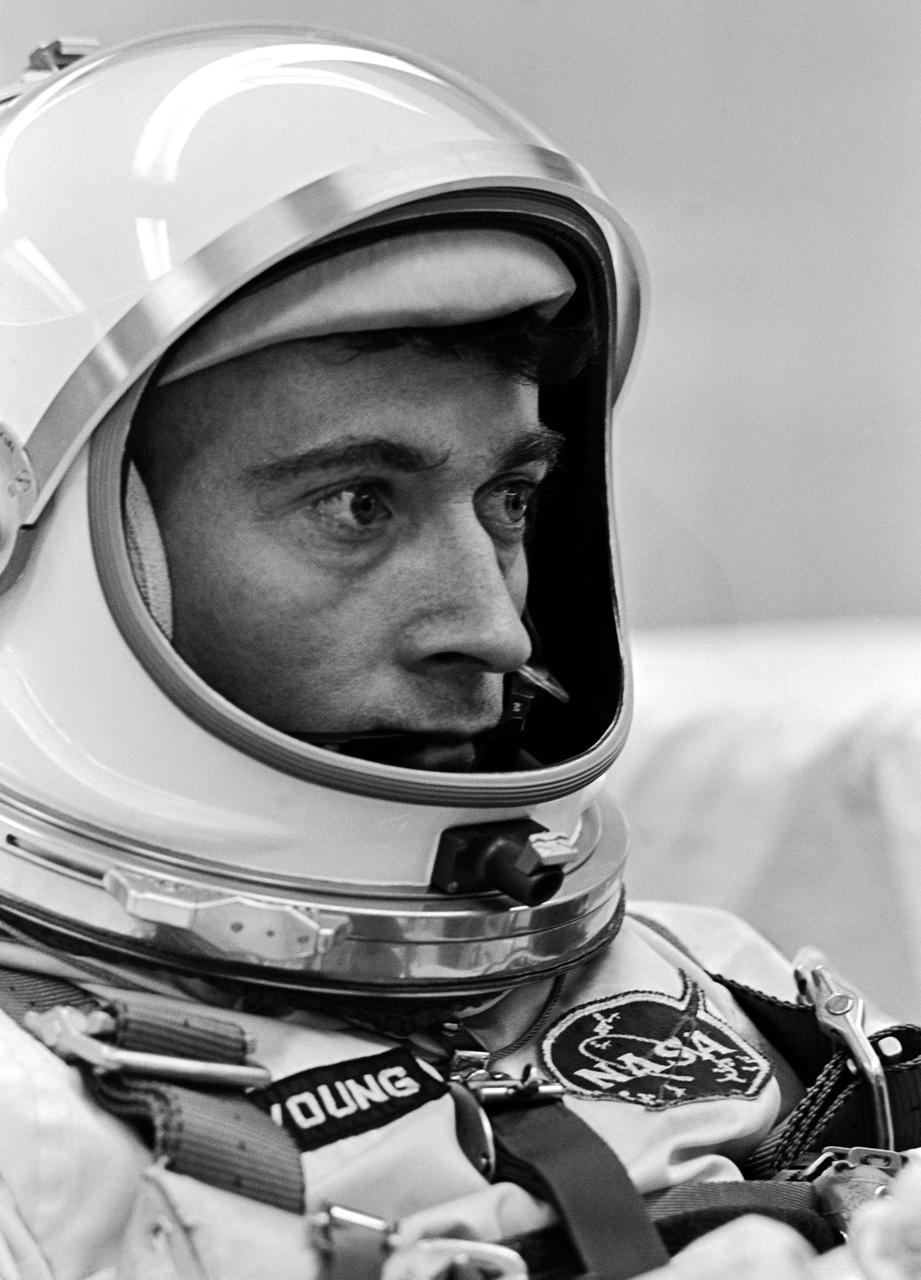
Closeup of Astronaut John W. Young, Pilot for the Gemini-III Spaceflight. CAPE KENNEDY, FL
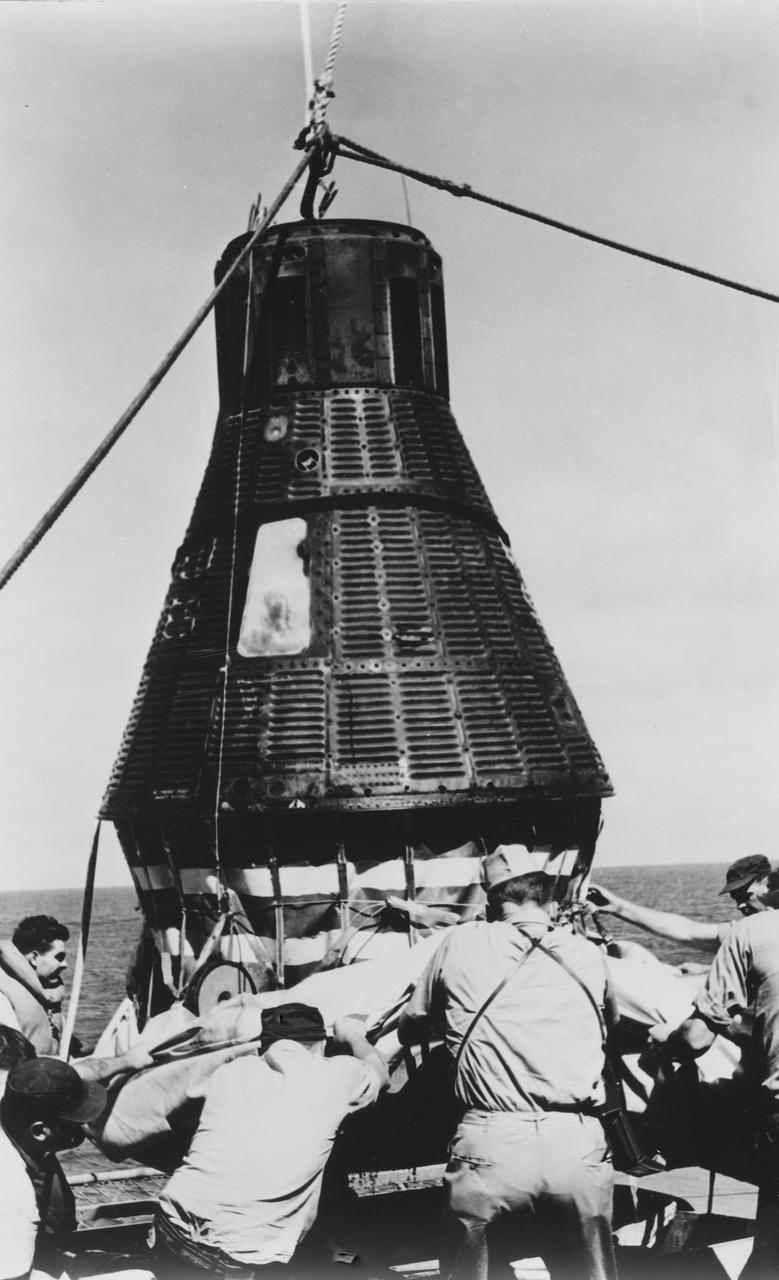
S62-06175 (3 Oct. 1962) --- Closeup view of the Mercury-Atlas 8 (MA-8) Sigma 7 capsule being lowered to recovery ship's deck. Navy personnel remove the floatation device before opening the capsule. Photo credit: NASA
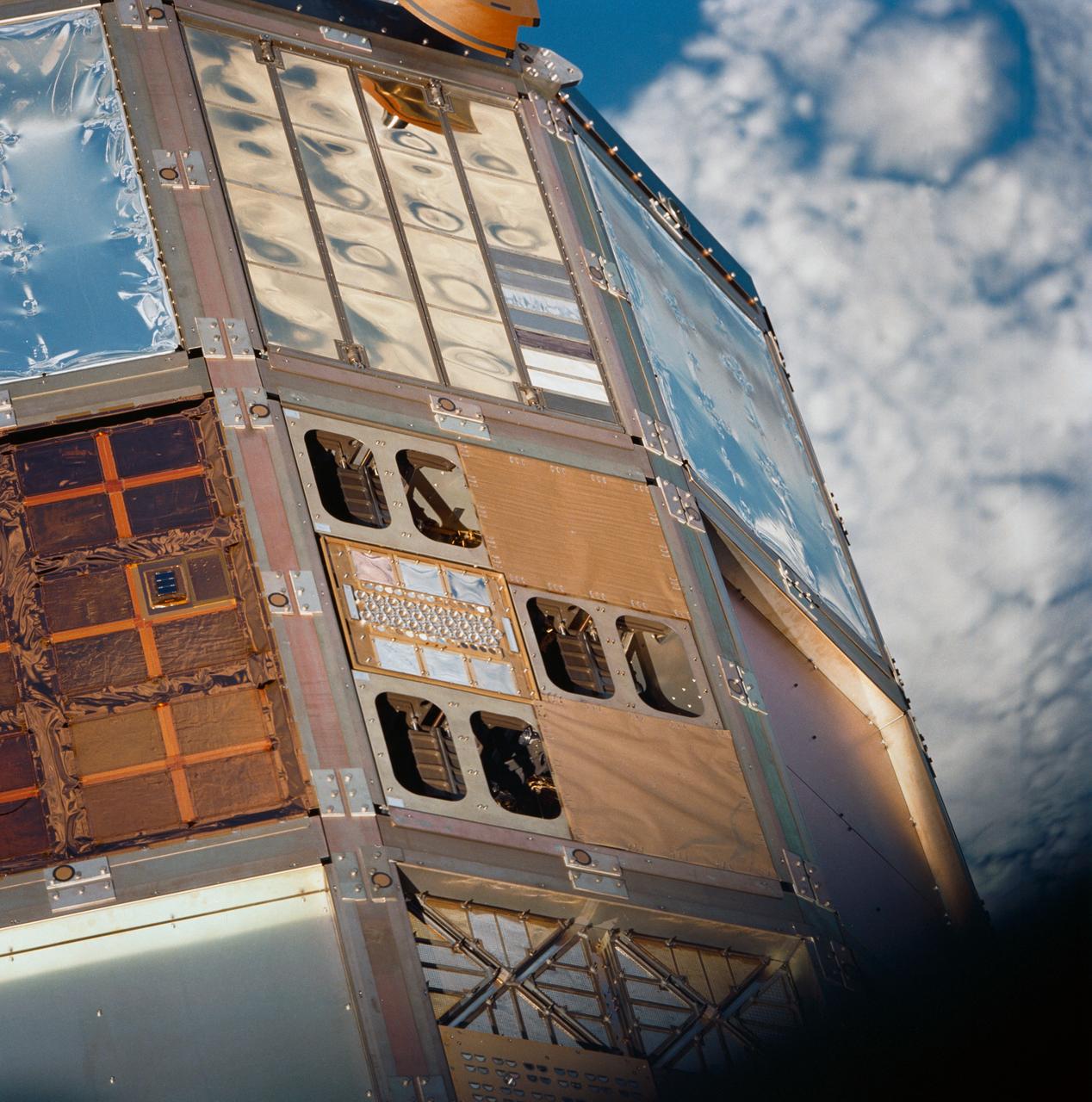
Closeup of Long Duration Exposure Facility (LDEF) experiment trays is documented during STS-32 retrieval activity and photo survey conducted by crewmembers onboard Columbia, Orbiter Vehicle (OV) 102. Partially visible is the Polymer Matrix Composite Materials Experiment. In the background is the surface of the Earth.
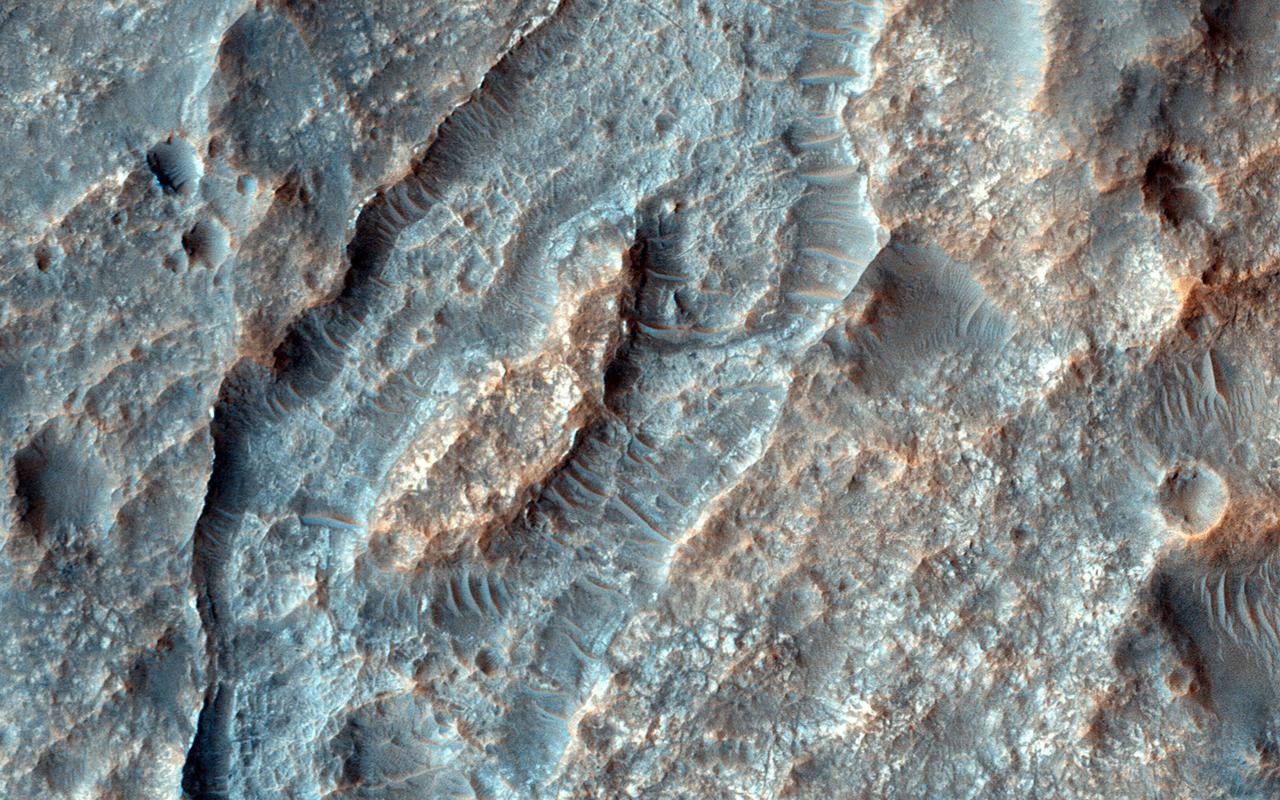
This closeup from NASA Mars Reconnaissance Orbiter covers a region in the Eridania Basin that shows interesting inverted ridges.
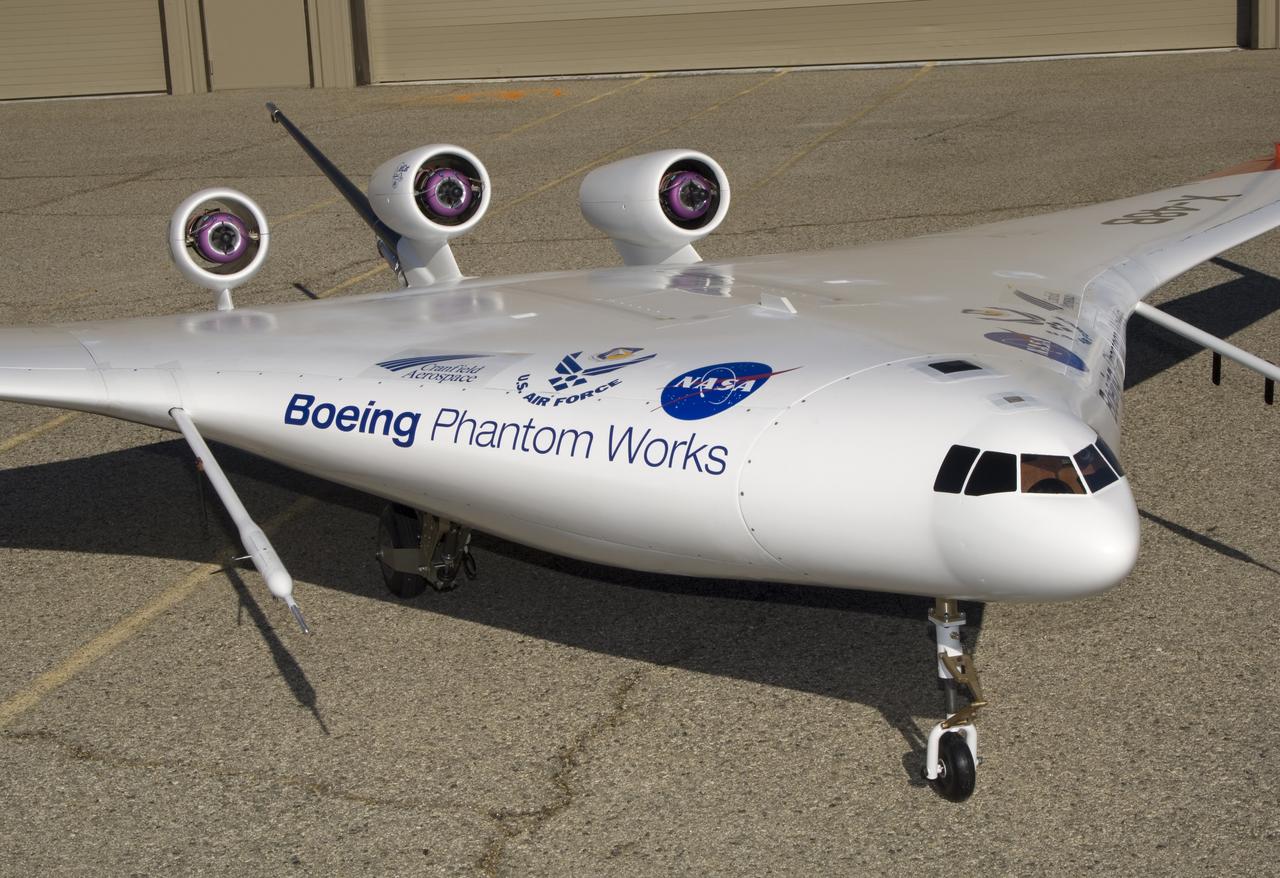
This closeup of Boeing Phantom Works' unique X-48B Blended Wing Body technology demonstrator shows off its unusual engine placement and supercritical airfoil.
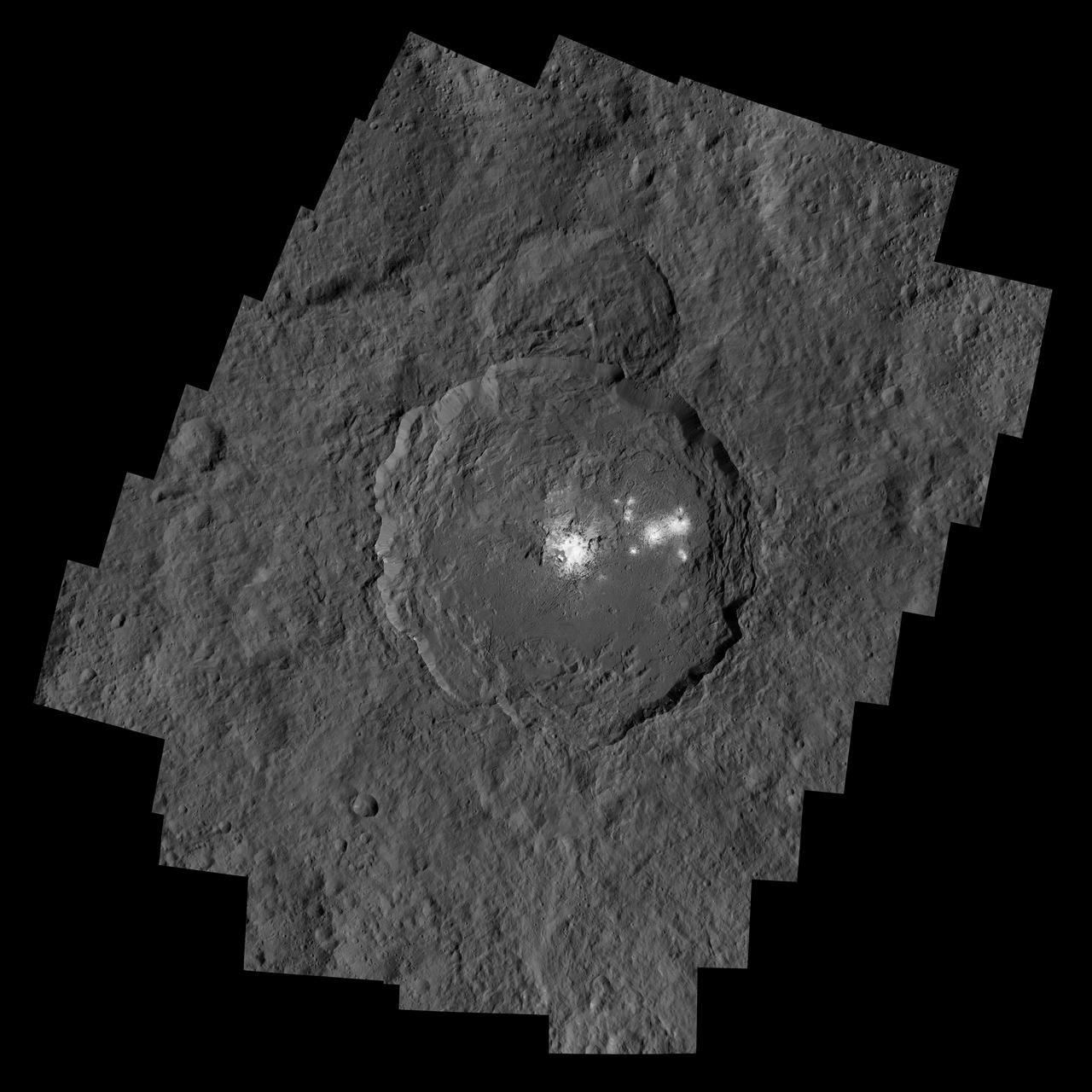
NASA Dawn spacecraft captured Occator Crater, containing the brightest area on Ceres; this closeup reveals a dome in a smooth-walled pit in the bright center of the crater.
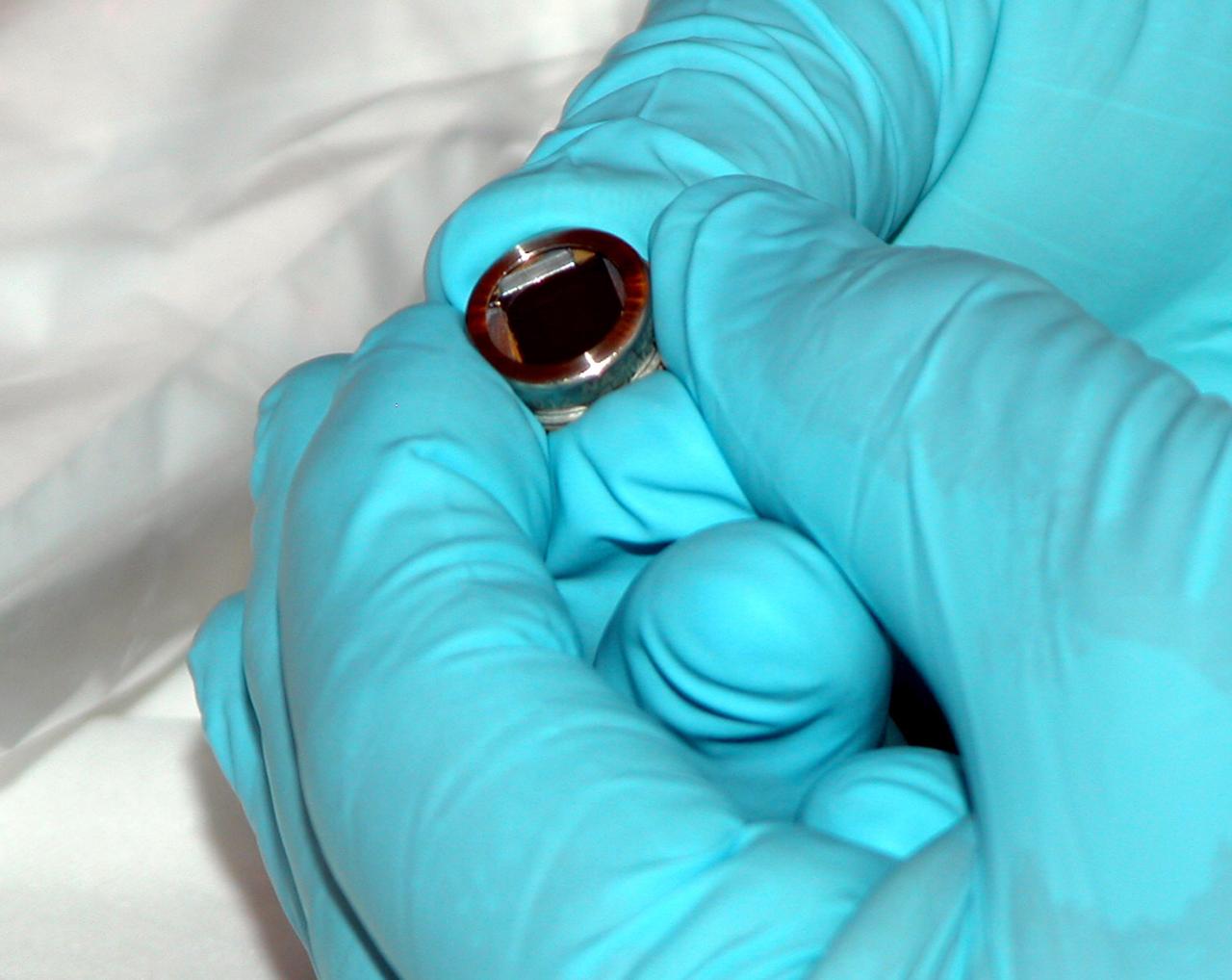
This closeup shows the size of the computer chip that holds about 35,000 laser-engraved signatures of visitors to the Mars Exploration Rovers at the Jet Propulsion Laboratory.
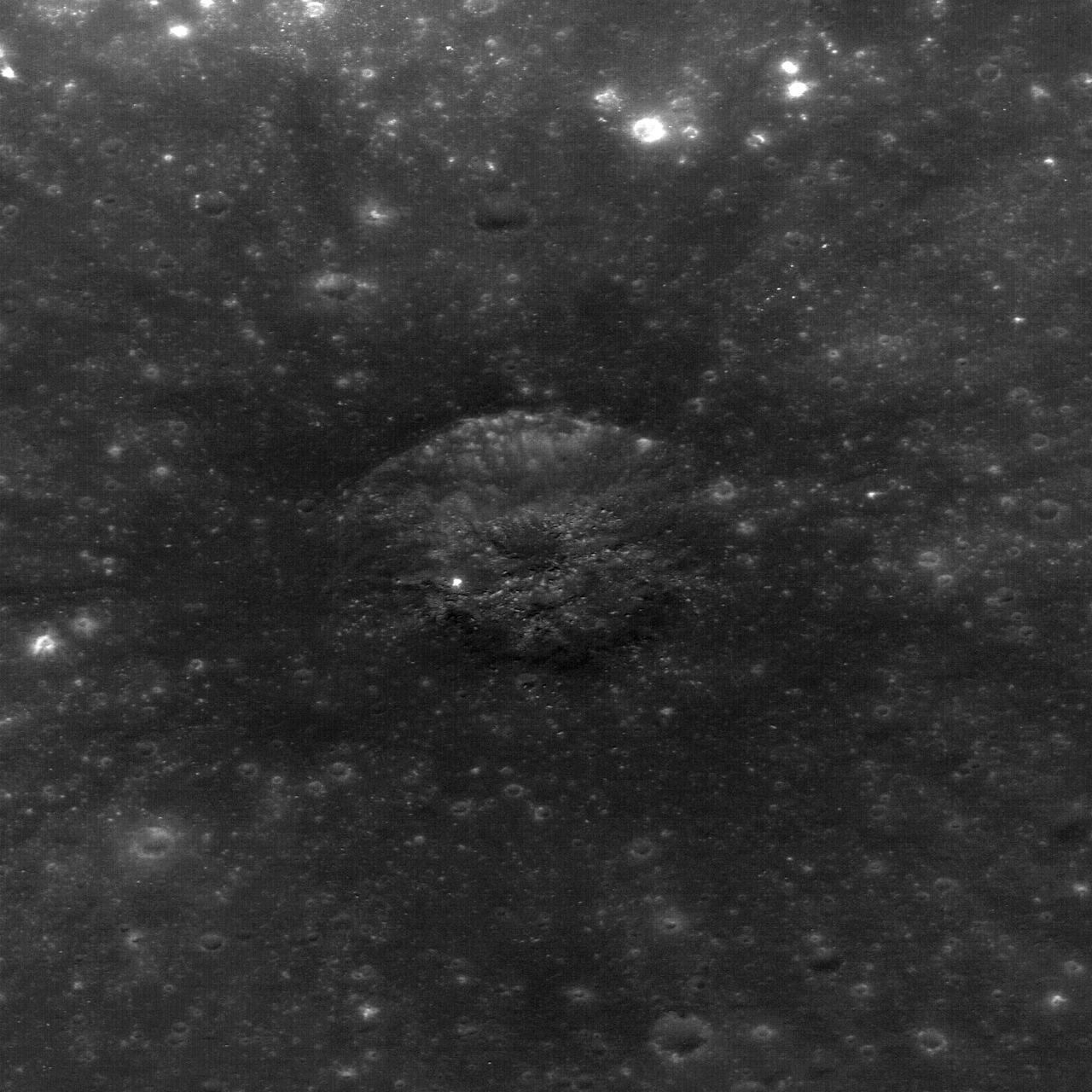
This image is a NASA Lunar Reconnaissance Orbiter closeup of a small fresh crater with very dark ejecta highlands near Rima Bode II.

This closeup of asteroid Vesta from NASA Dawn spacecraft shows small scale features such as grabens linear depressions which run parallel to and inside the troughs.
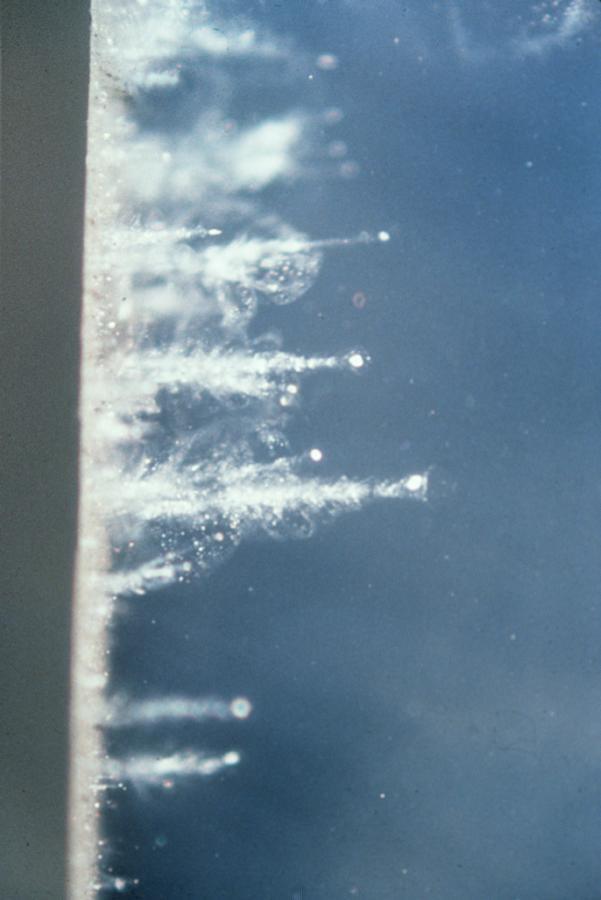
In an experiment using a special air gun, particles are shot into aerogel at high velocities. Closeup of particles leaving a carrot-shaped trail in the aerogel are shown here. Aerogel was used on NASA Stardust spacecraft.
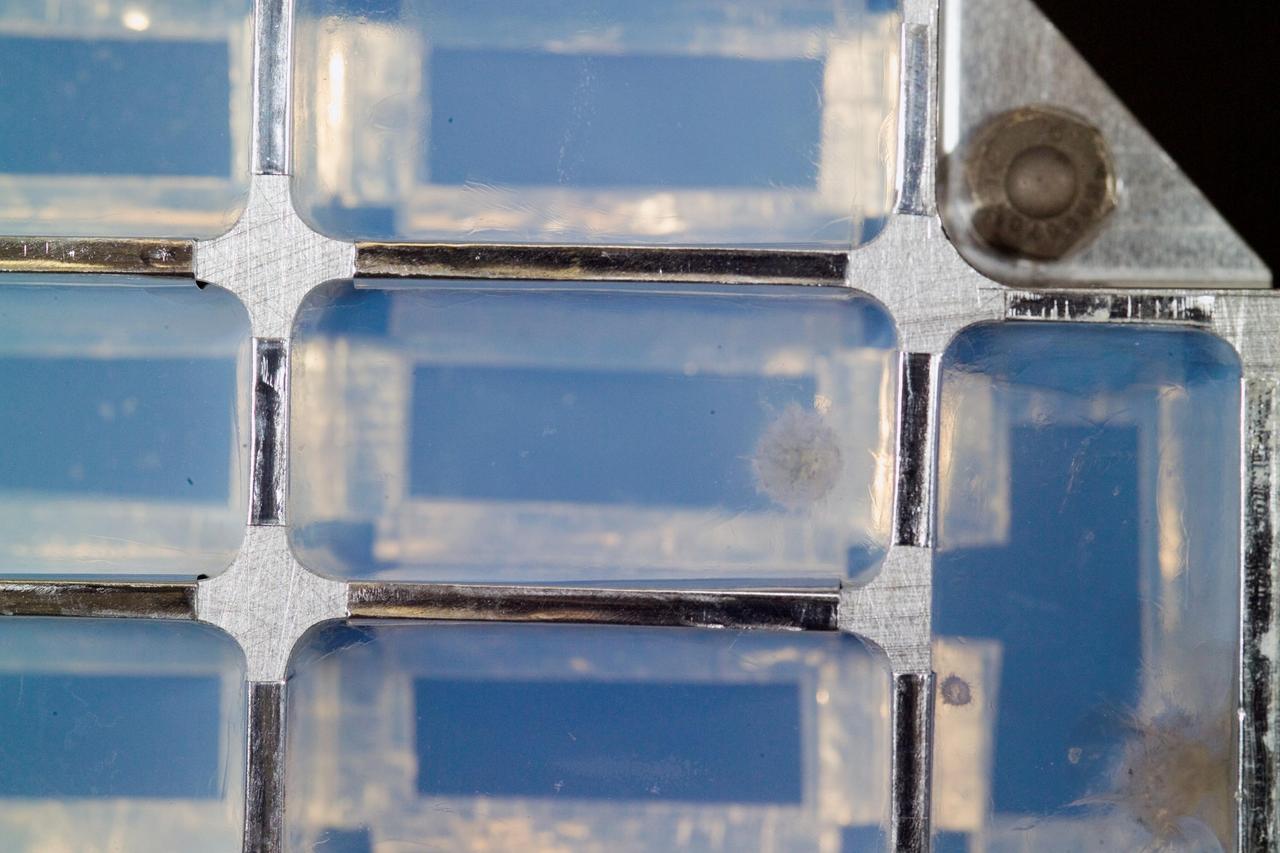
Closeup view of a cometary impact upper right into aerogel was inspected by scientists at a laboratory at the Johnson Space Center hours after NASA Stardust Sample Return Canister was delivered to the Johnson Space Center.

This image from NASA Mars Reconnaissance Orbiter shows a well-preserved impact crater. A closeup view highlights distinctive bright lines and spots on the steep slope on the north side.
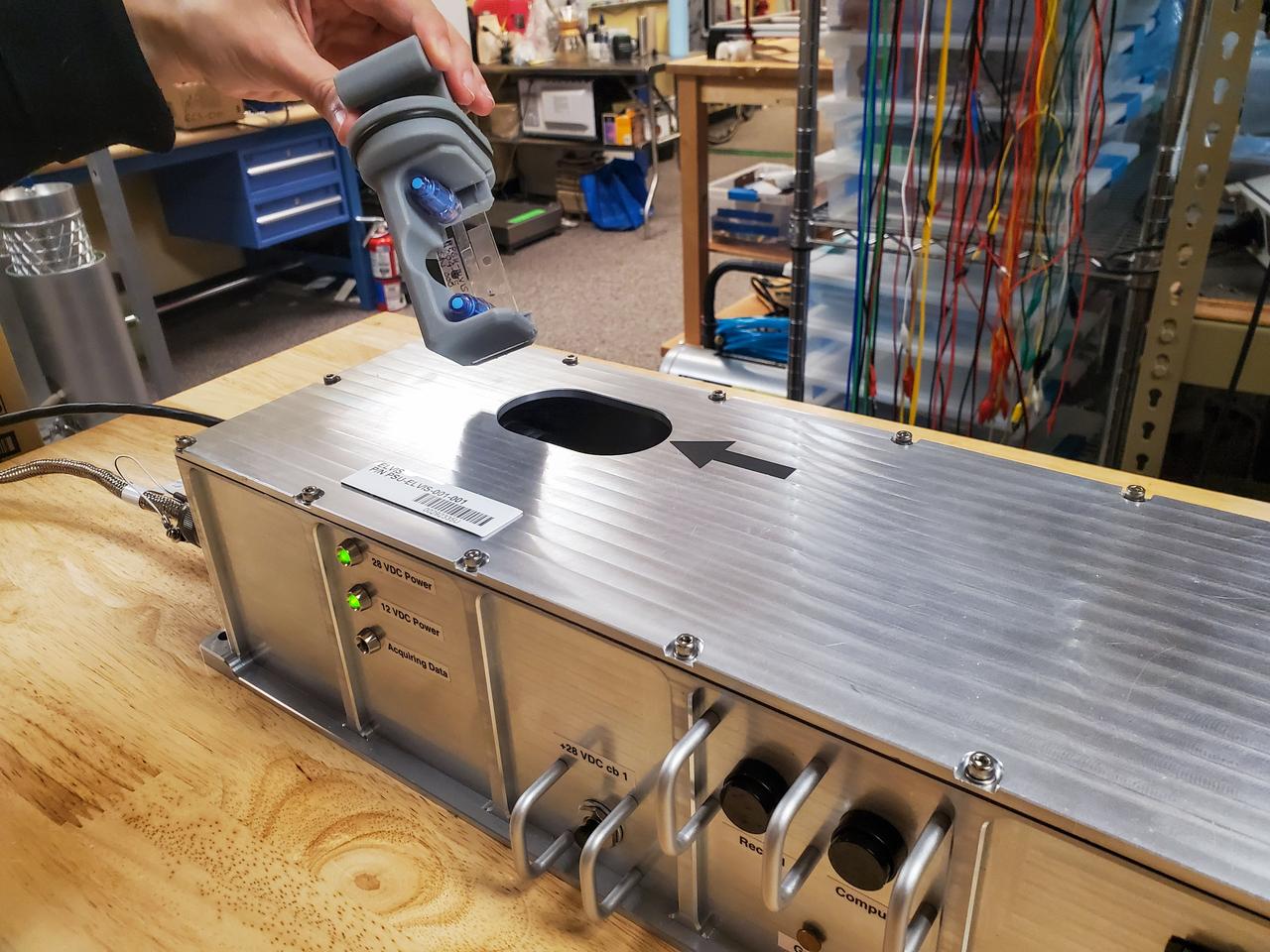
Closeup of the sample chamber being inserted into the ELVIS box.
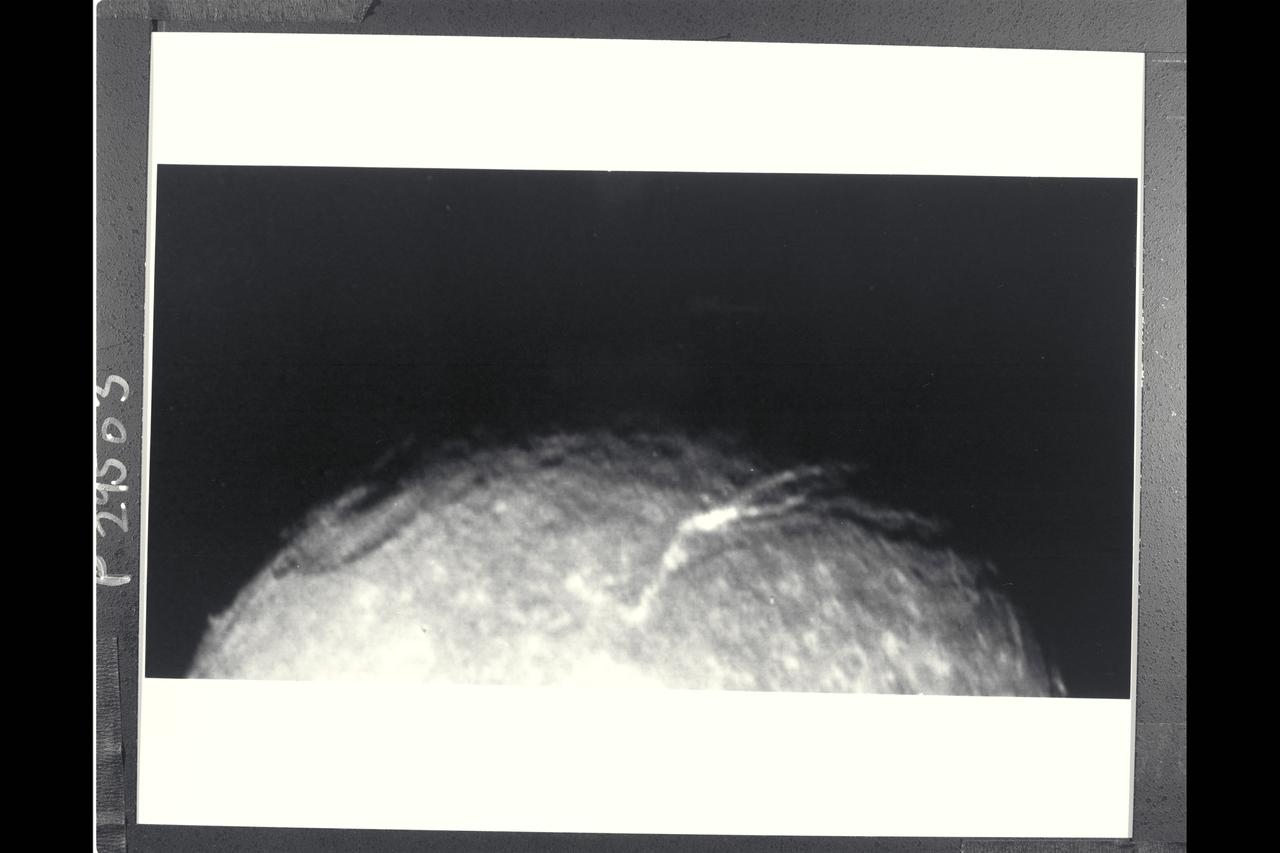
P29503 Moon (closeup) Voyager 2 flyby of Uranus
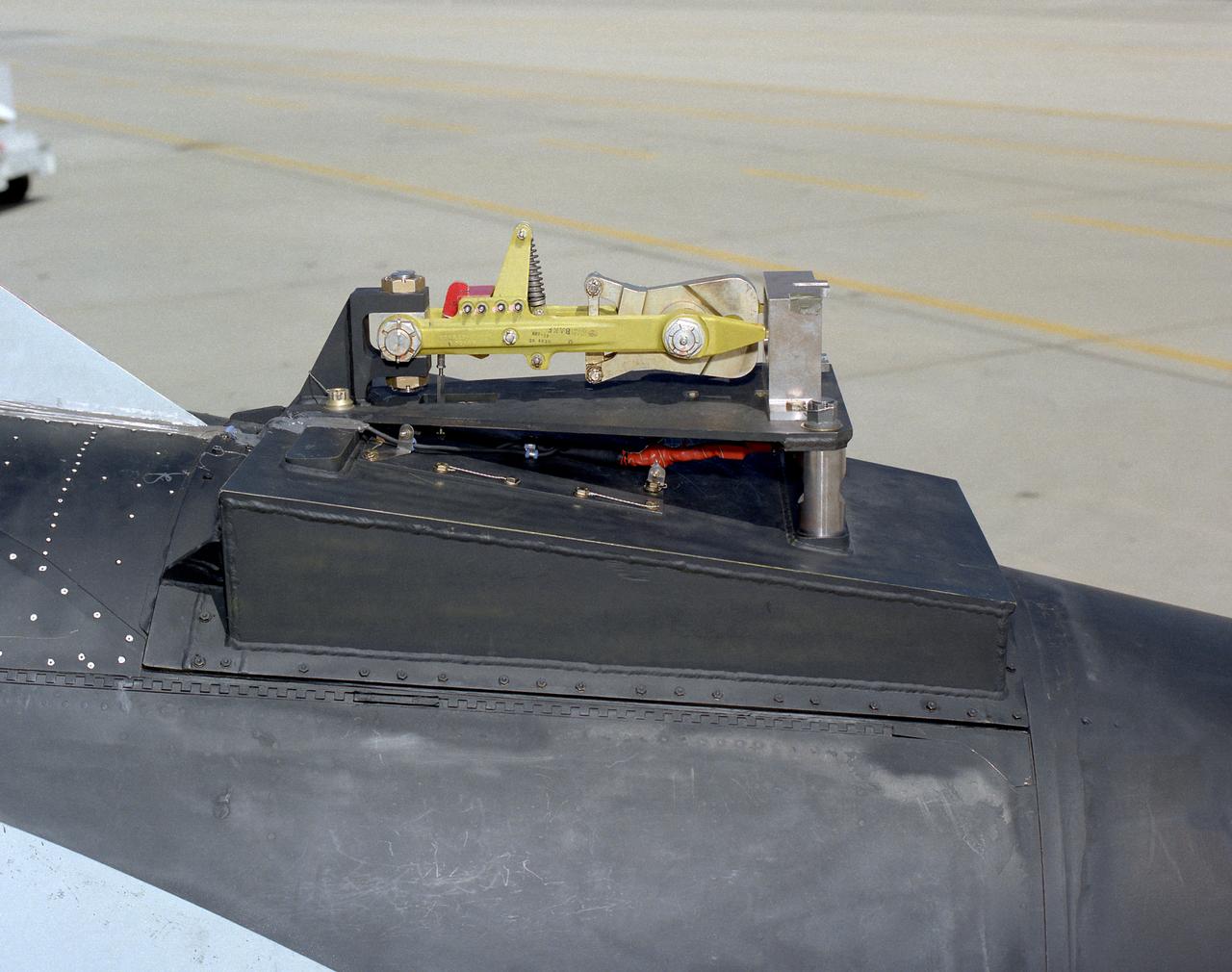
Closeup of QF-106 release hook for Eclipse program
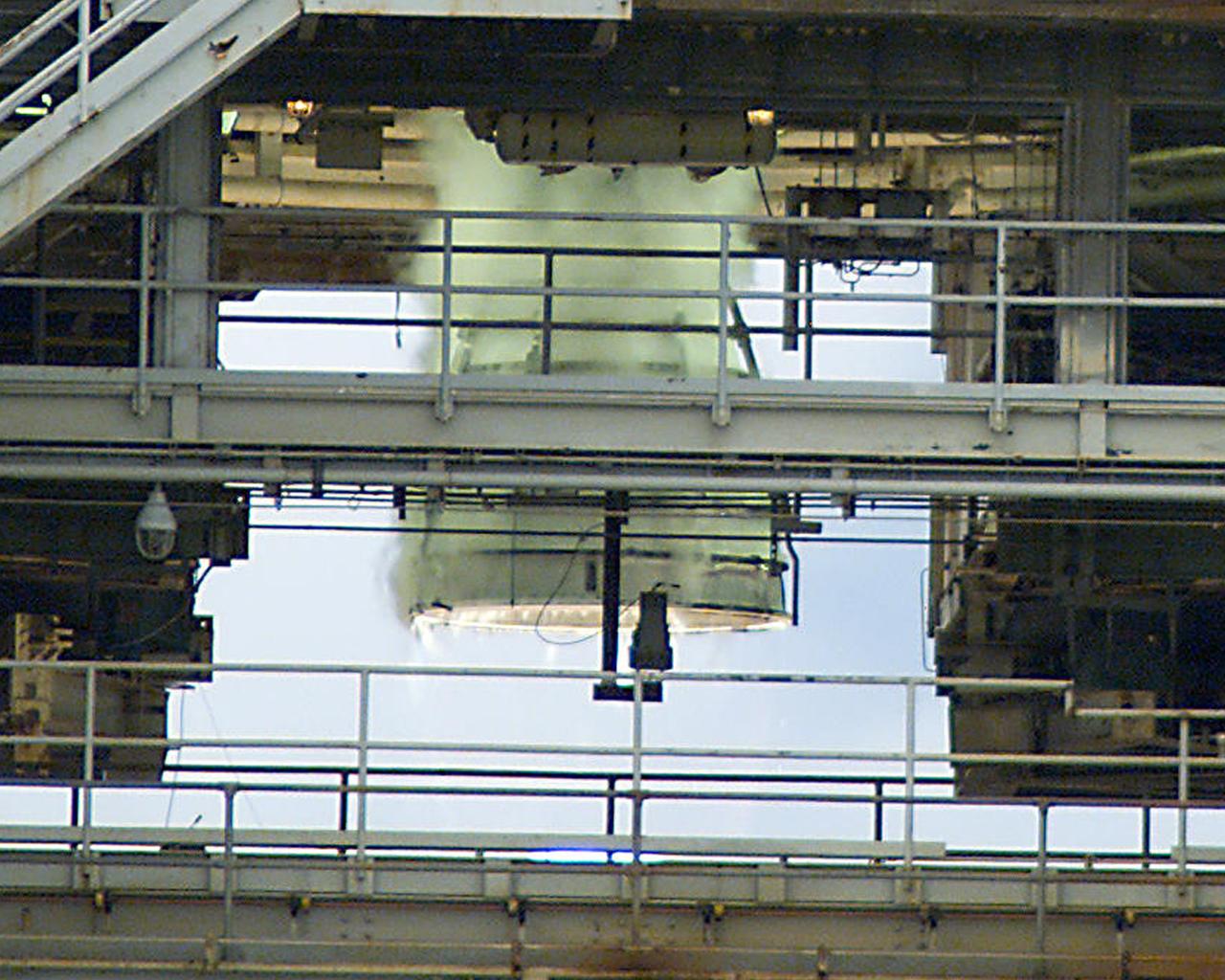
This close-up photo was taken during testing of a Space Shuttle Main Engine on the A-1 Test Stand at Stennis Space Center near Bay St. Louis, Miss. The test was conducted June 19, 2003.

An aging star last hurrah creates a flurry of glowing knots of gas that appear to be streaking through space. This closeup image of the Dumbbell Nebula was taken by the JPL-built and designed WFC3 camera, onboard NASA's Hubble Space Telescope. http://photojournal.jpl.nasa.gov/catalog/PIA04249
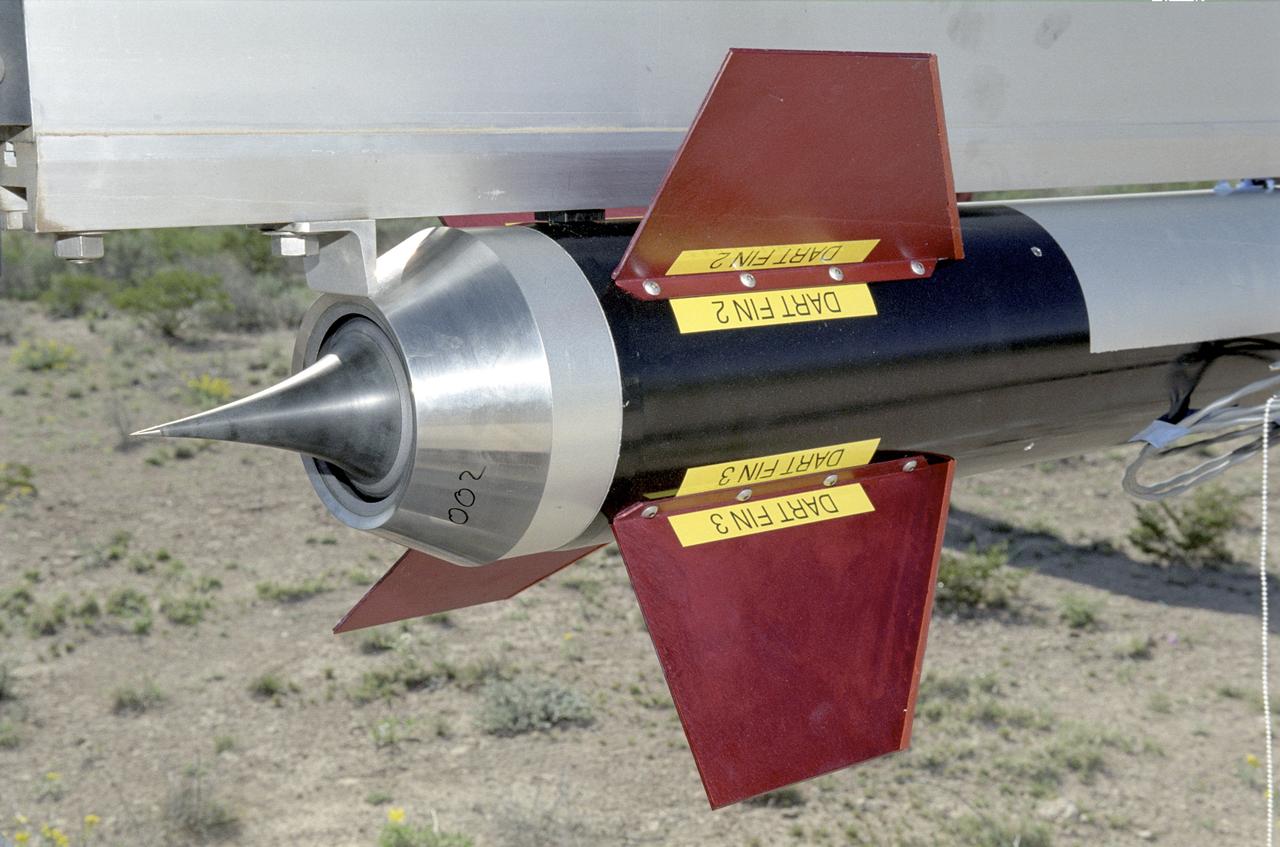
A closeup of one of the Cesaroni Technology, Inc. - constructed aerospike nozzles used in the Dryden Aerospike Rocket Test.
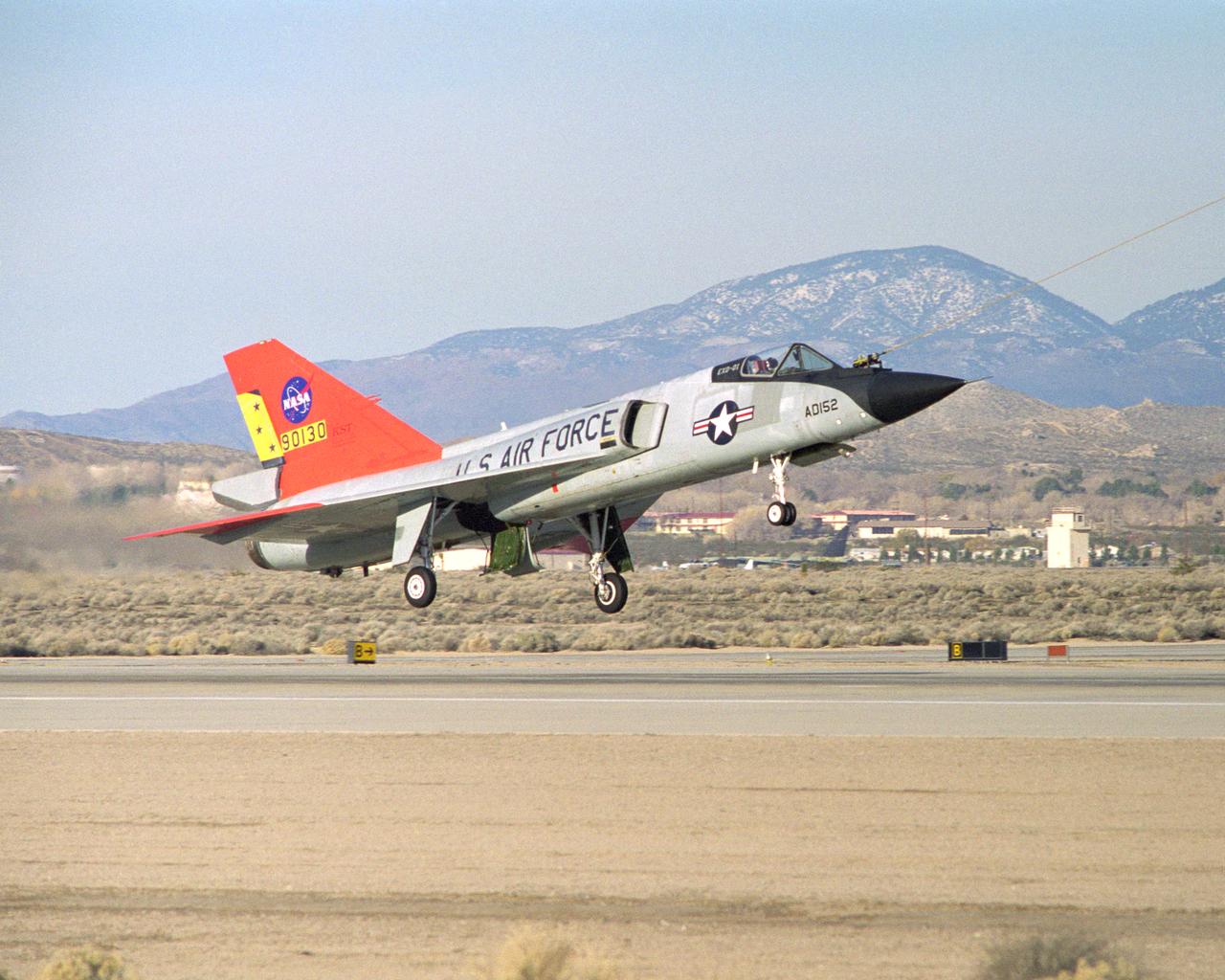
Eclipse project closeup of QF-106 under tow on takeoff on first flight December 20, 1997
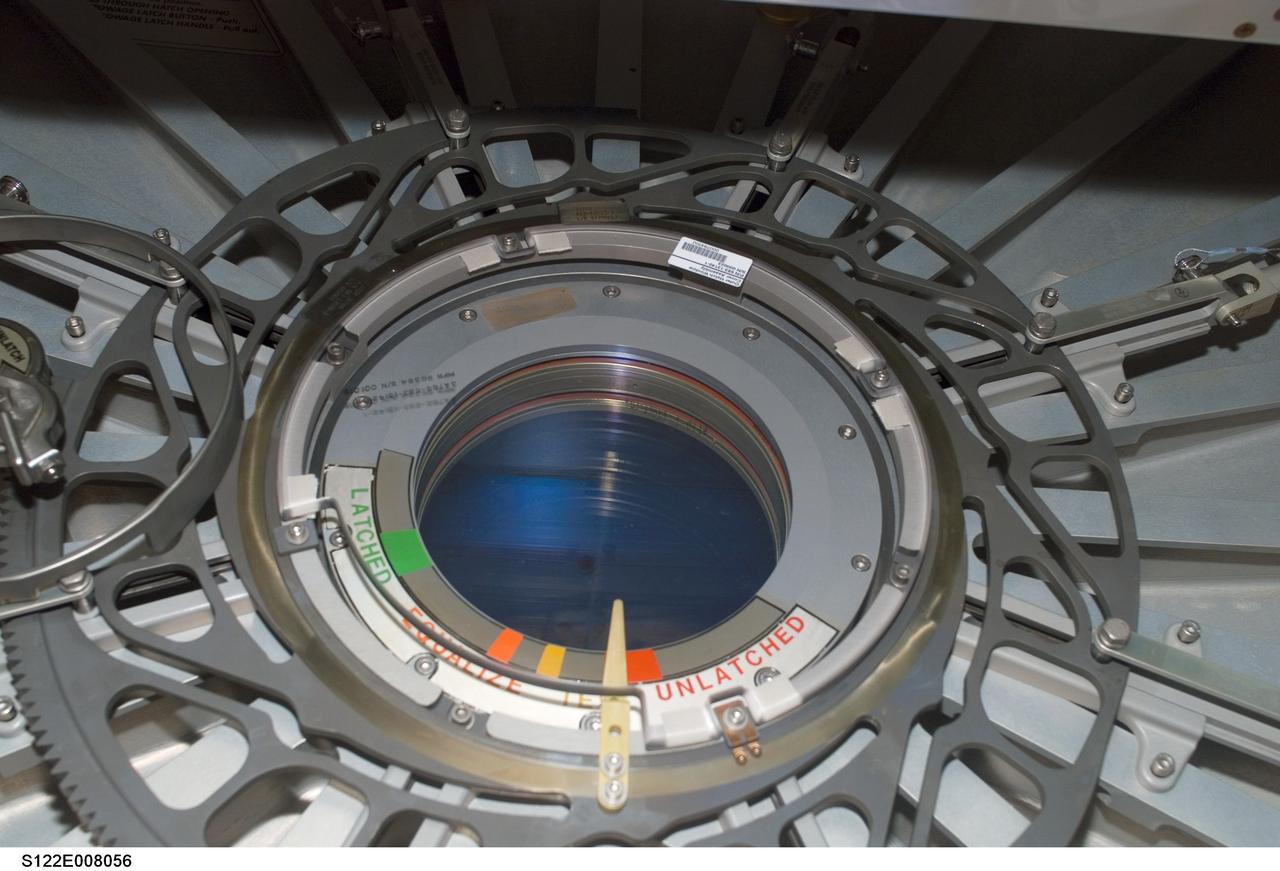
S122-E-008056 (13 February 2008) --- Closeup view of portal inside Columbus laboratory.
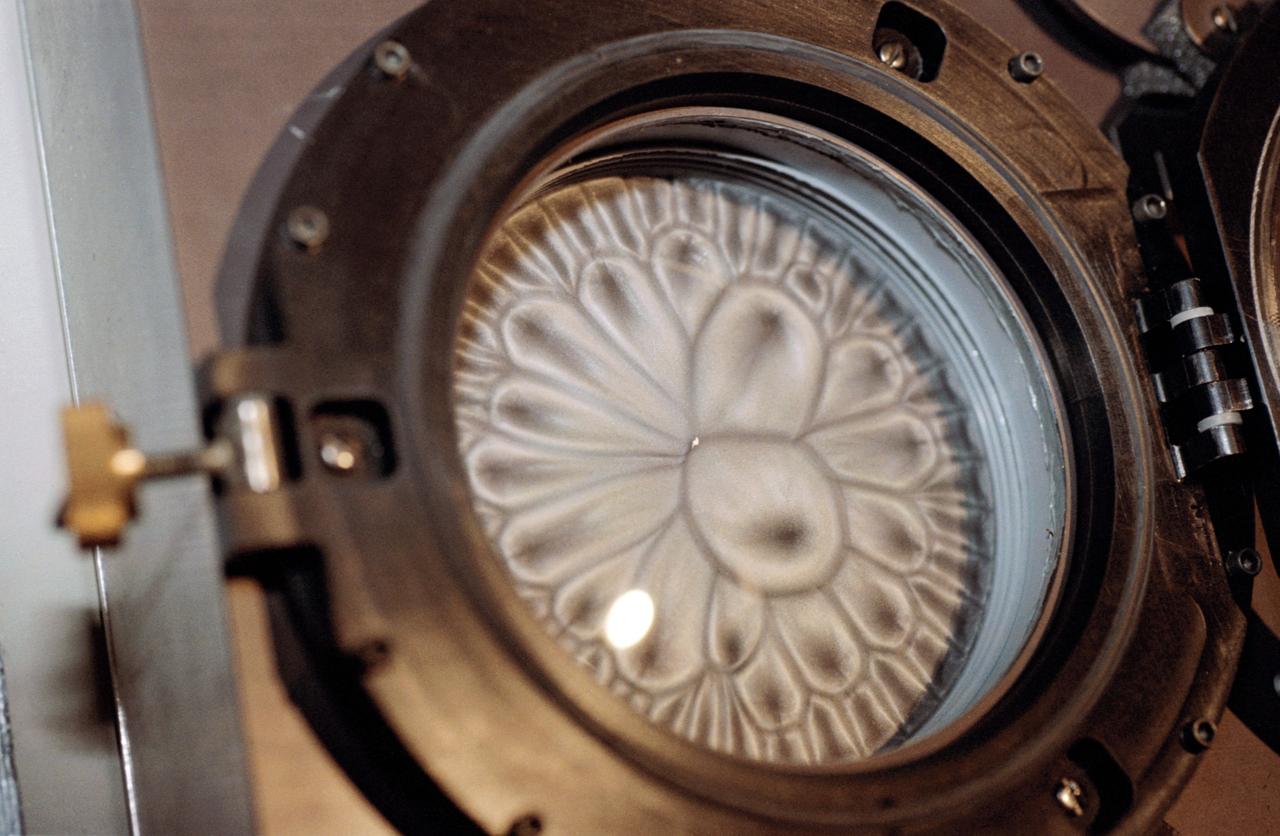
STS-42 closeup view shows Student Experiment 81-09 (SE 81-09), Convection in Zero Gravity experiment, with radial pattern caused by convection induced by heating an oil and aluminum powder mixture in the weightlessness of space. While the STS-42 crewmembers activated the Shuttle Student Involvement Program (SSIP) experiment on Discovery's, Orbiter Vehicle (OV) 103's, middeck, Scott Thomas, the student who designed the experiment, was able to observe the procedures via downlinked television (TV) in JSC's Mission Control Center (MCC). Thomas, now a physics doctoral student at the University of Texas, came up with the experiment while he participated in the SSIP as a student at Richland High School in Johnstown, Pennsylvia.
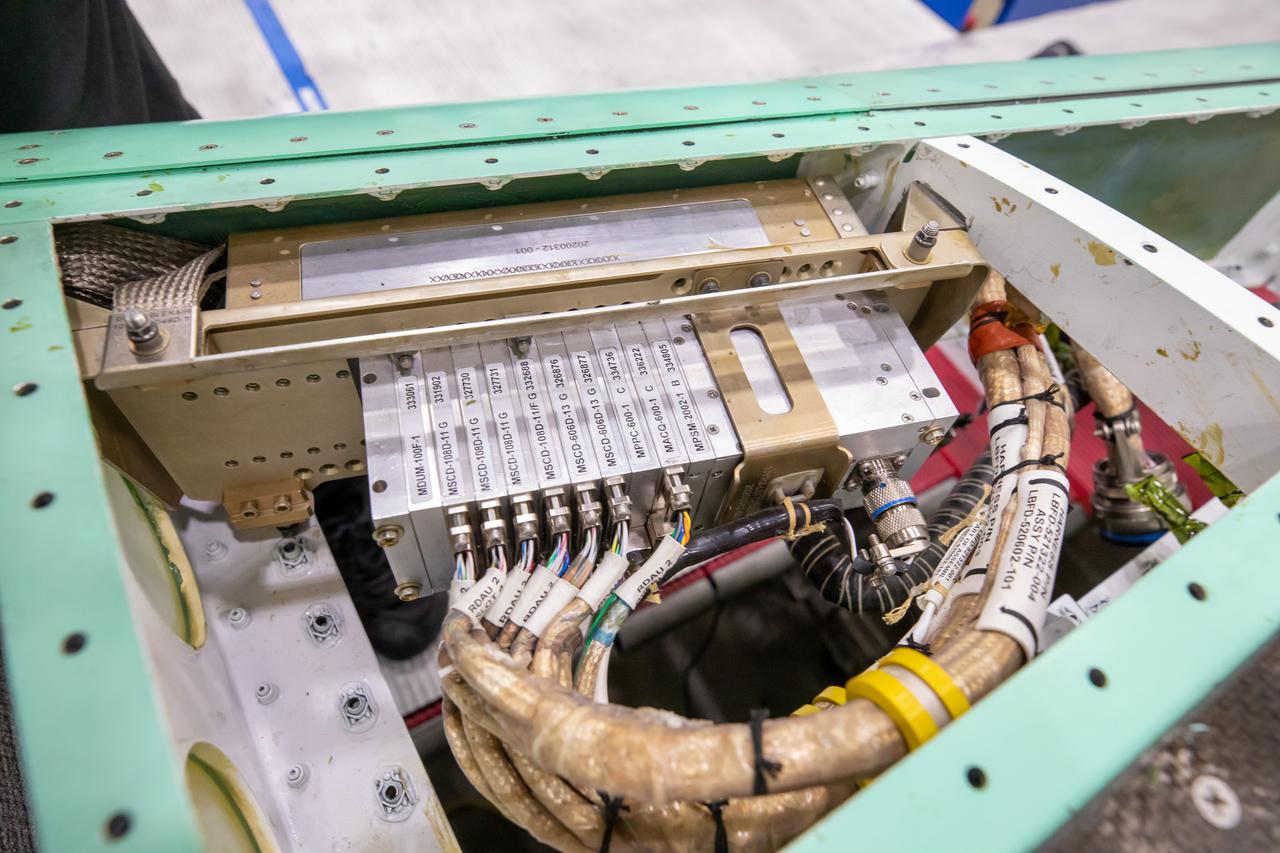
Here is a closeup of some of the X-59’s wiring and instrumentation system. Displayed here is the remote instrumentation encoder, which can be found in the wing of the aircraft. This encoder communicates with the plane’s other instrumentation systems like pressure and temperature sensors within the X-59.
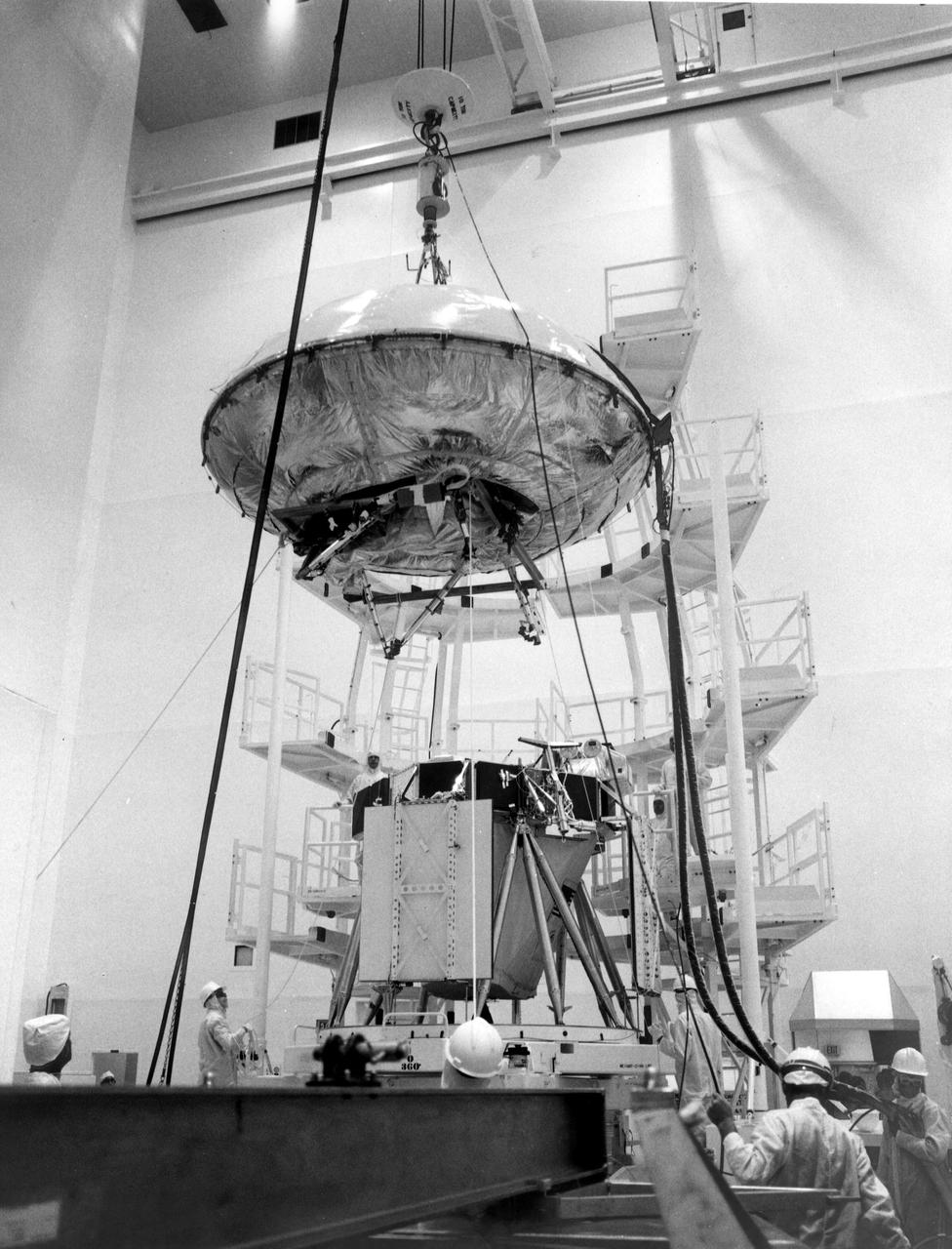
KENNEDY SPACE CENTER, FLA. - Closeup view shows mated Viking Lander (top) and Orbiter in Kennedy Space Center Spacecraft Assembly and Encapsulation Facility.
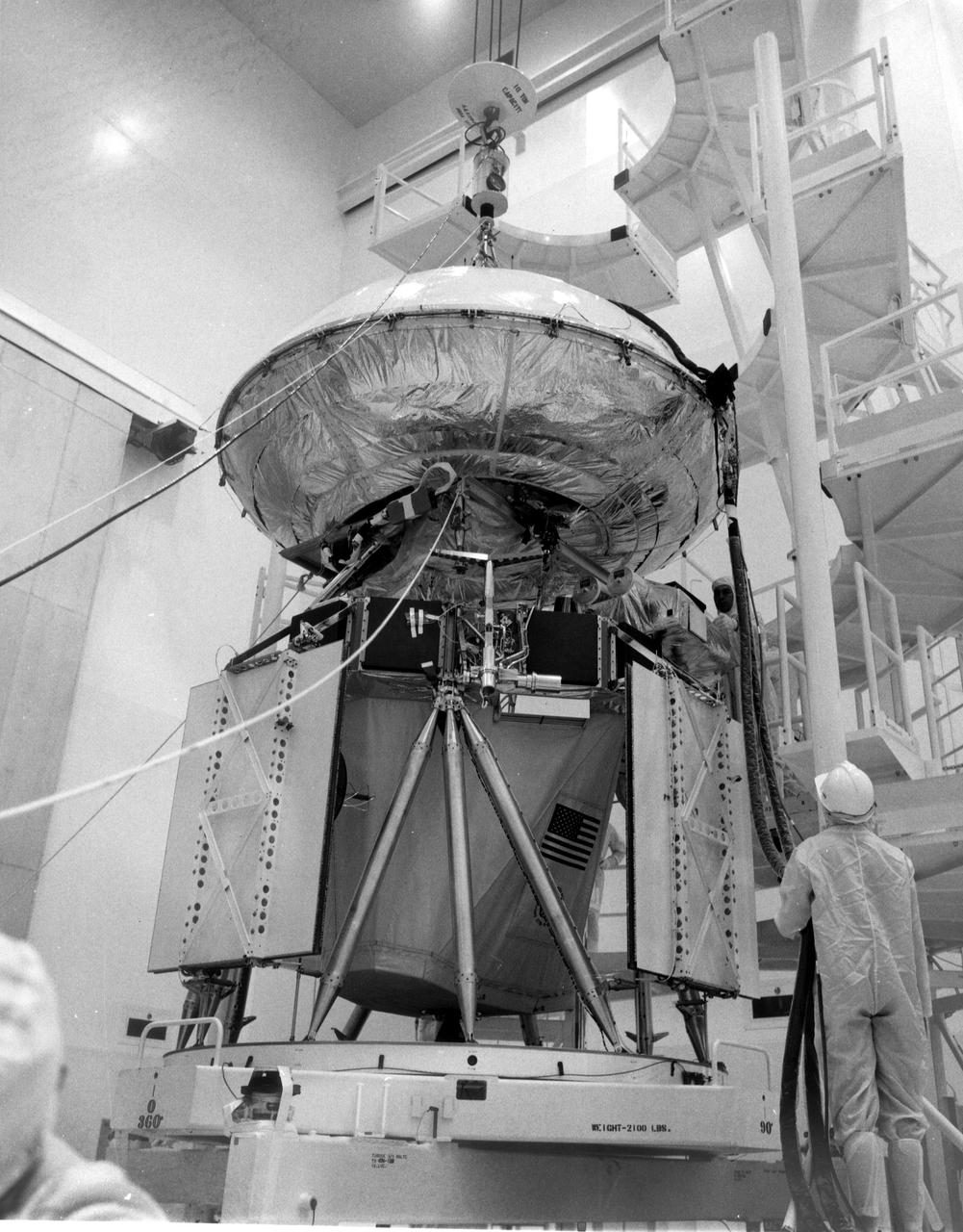
KENNEDY SPACE CENTER, FLA. -- Closeup view shows mated Viking Lander (top) and Orbiter in Kennedy Space Center Spacecraft Assembly and Encapsulation Facility.
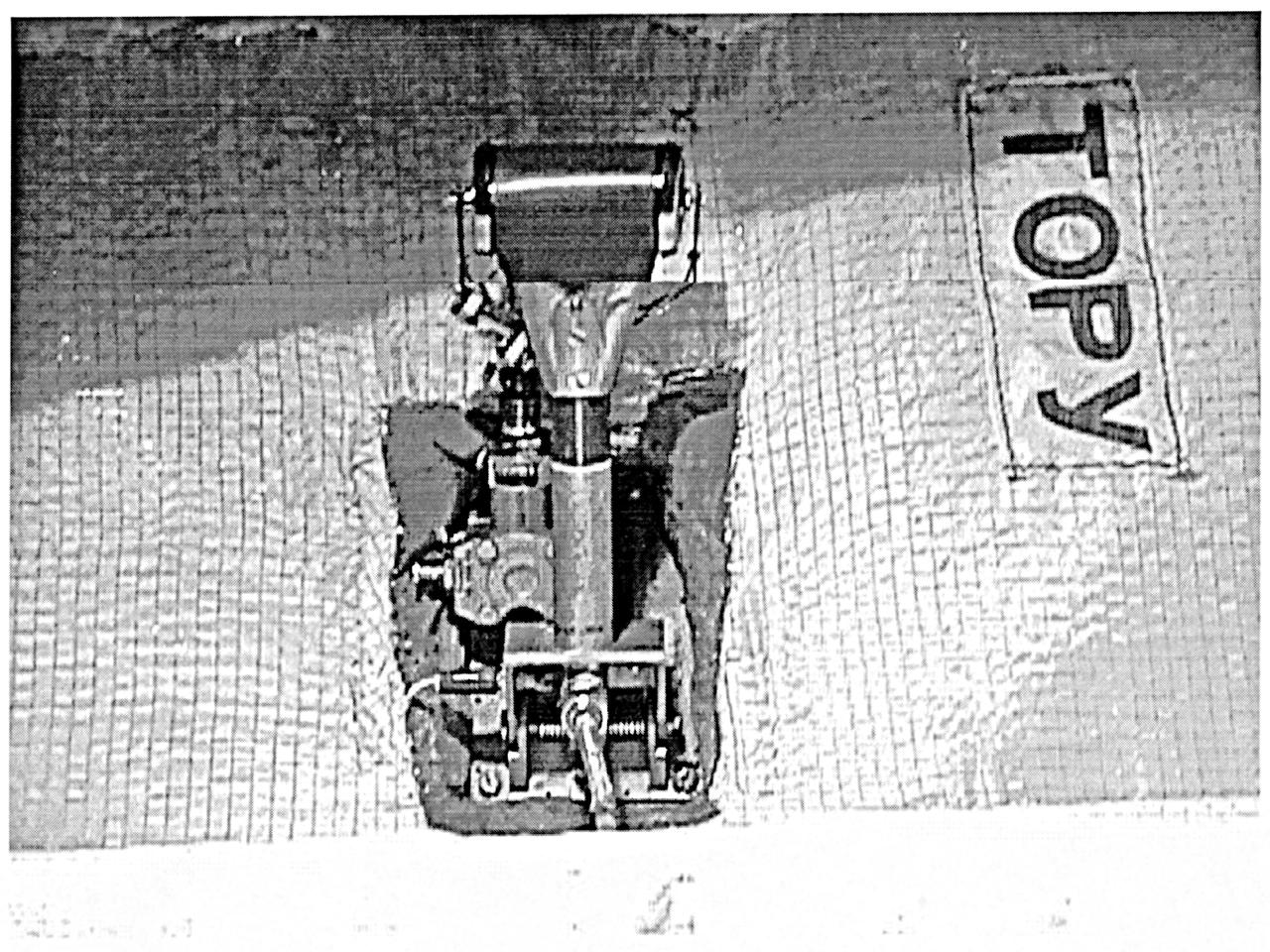
S98-E-09732 (Nov. 1998) --- Closeup view of part of the antenna system for the Teleoperator Control System (TORU) manual docking system on Zarya. This photograph was taken prior to Zarya's deployment. Recent activities showed an indication of a possible failure to deploy of two small antennae elements in the TORU. Accompanying image shows pre-flight closeout closeup image of the second small element.
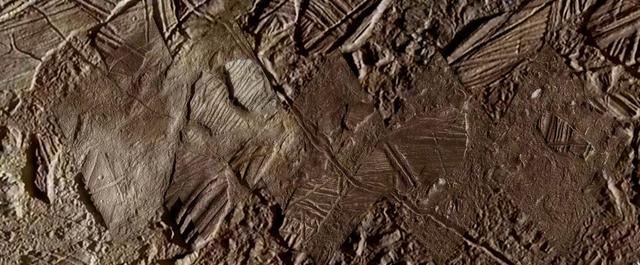
This image shows a close-up view of terrain within the region of Europa's surface named Conamara. This region sports ice rafts that look like those at Earth's poles, where large chunks of ice break away and float freely on the ocean. Much of the region bears the reddish/brownish discoloration seen here – the same as seen along many of Europa's fractures. Scientists believe this material may contain clues about the composition of an ocean beneath the icy surface, if it is proven to exist. https://photojournal.jpl.nasa.gov/catalog/PIA26446
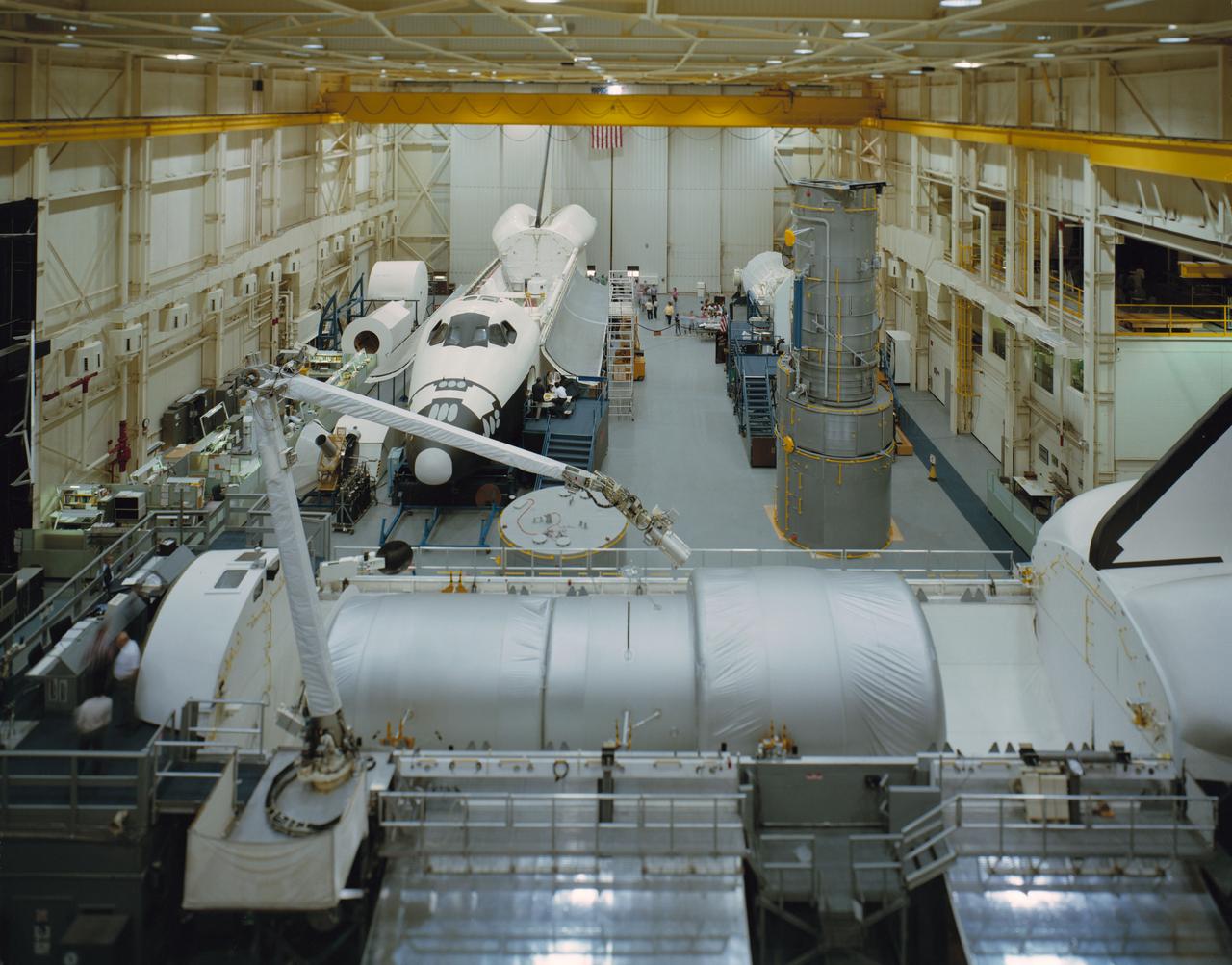
Overall views of the Bldg. 9A Training Facility and closeup views of the Space Telescope Mockup for the Weightless Environment Training Facility (WETF). 1. SHUTTLE - PAYLOADS (TELESCOPE) JSC, HOUSTON, TX Also available in 4x5 CN
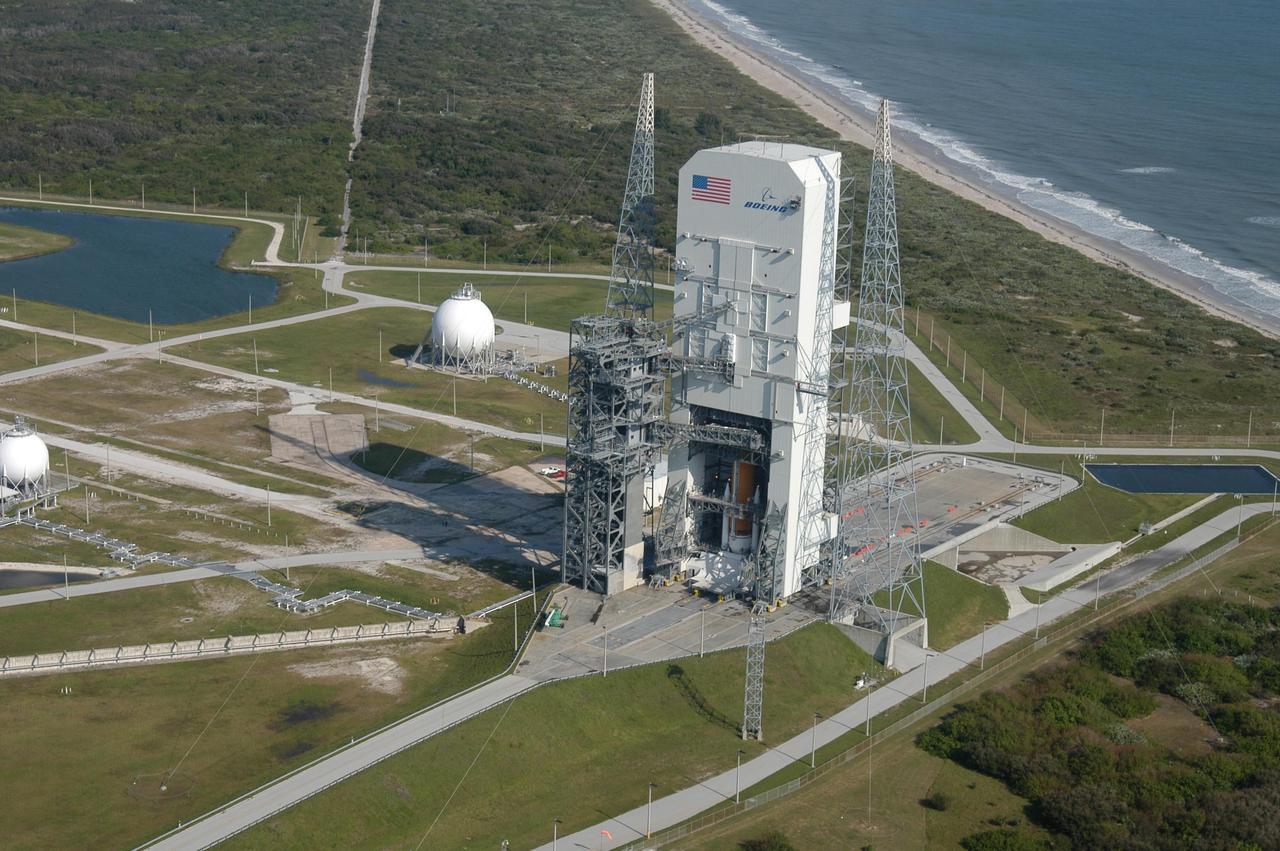
KENNEDY SPACE CENTER, FLA. - A closeup aerial view of Launch Complex 37 at Cape Canaveral Air Force Station in Florida. In the upper right corner can be seen the narrow beach and Atlantic Ocean.
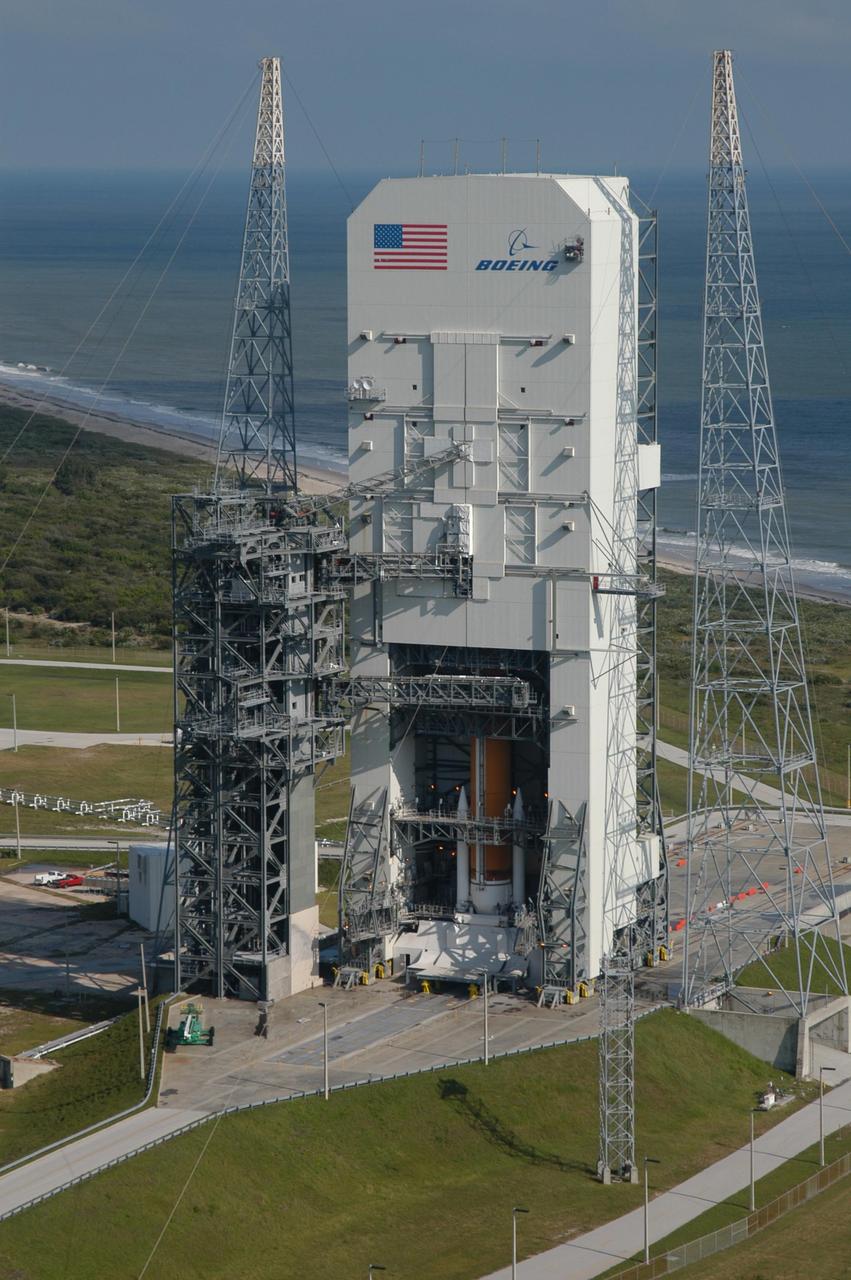
KENNEDY SPACE CENTER, FLA. - A closeup aerial view of Launch Complex 37 at Cape Canaveral Air Force Station in Florida. Behind it can be seen the narrow beach and Atlantic Ocean.
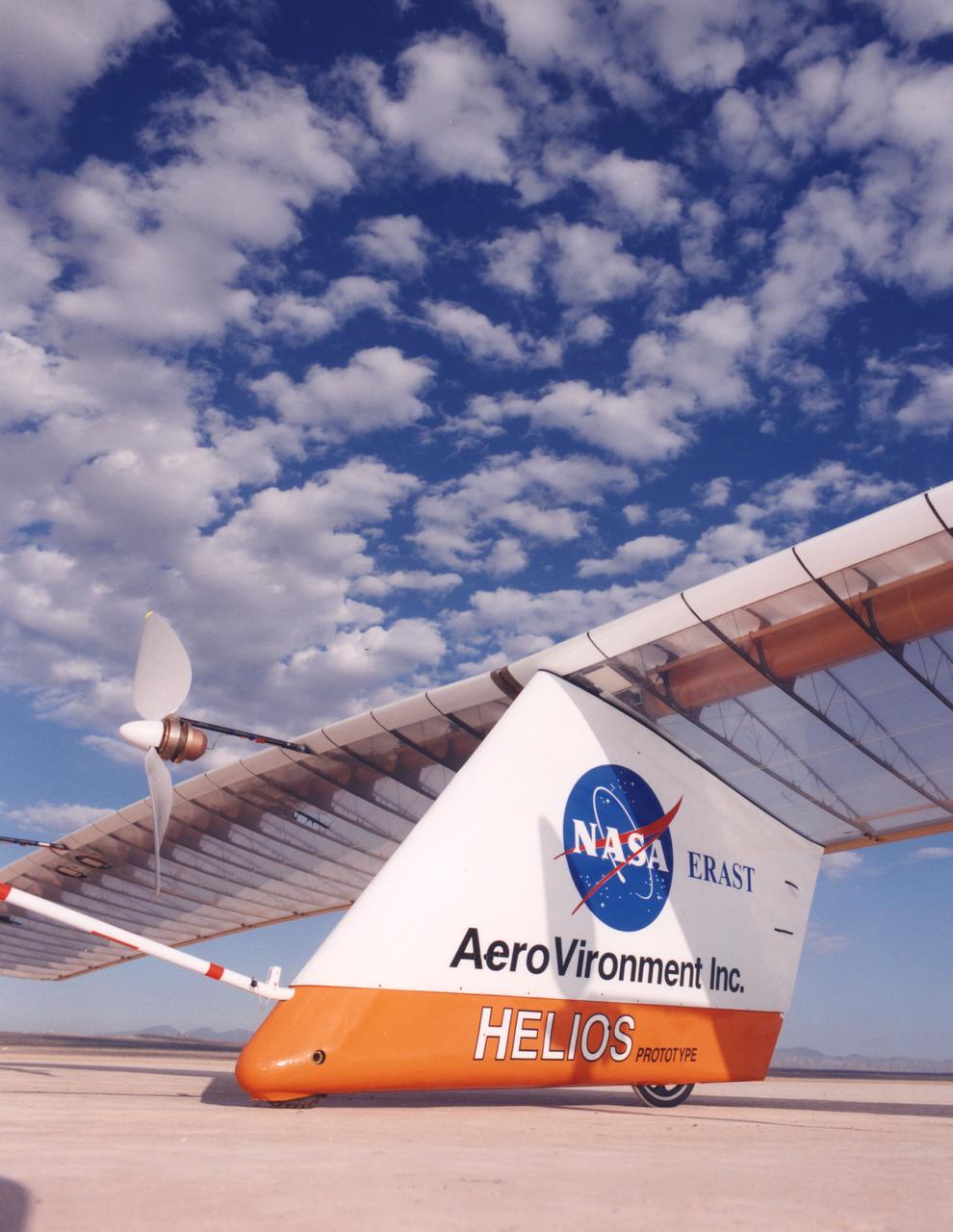
Closeup of the Helios Prototype, the latest and largest example of a slow-flying ultralight flying wing designed for high-altitude, long-duration Earth science or telecommunications relay missions.
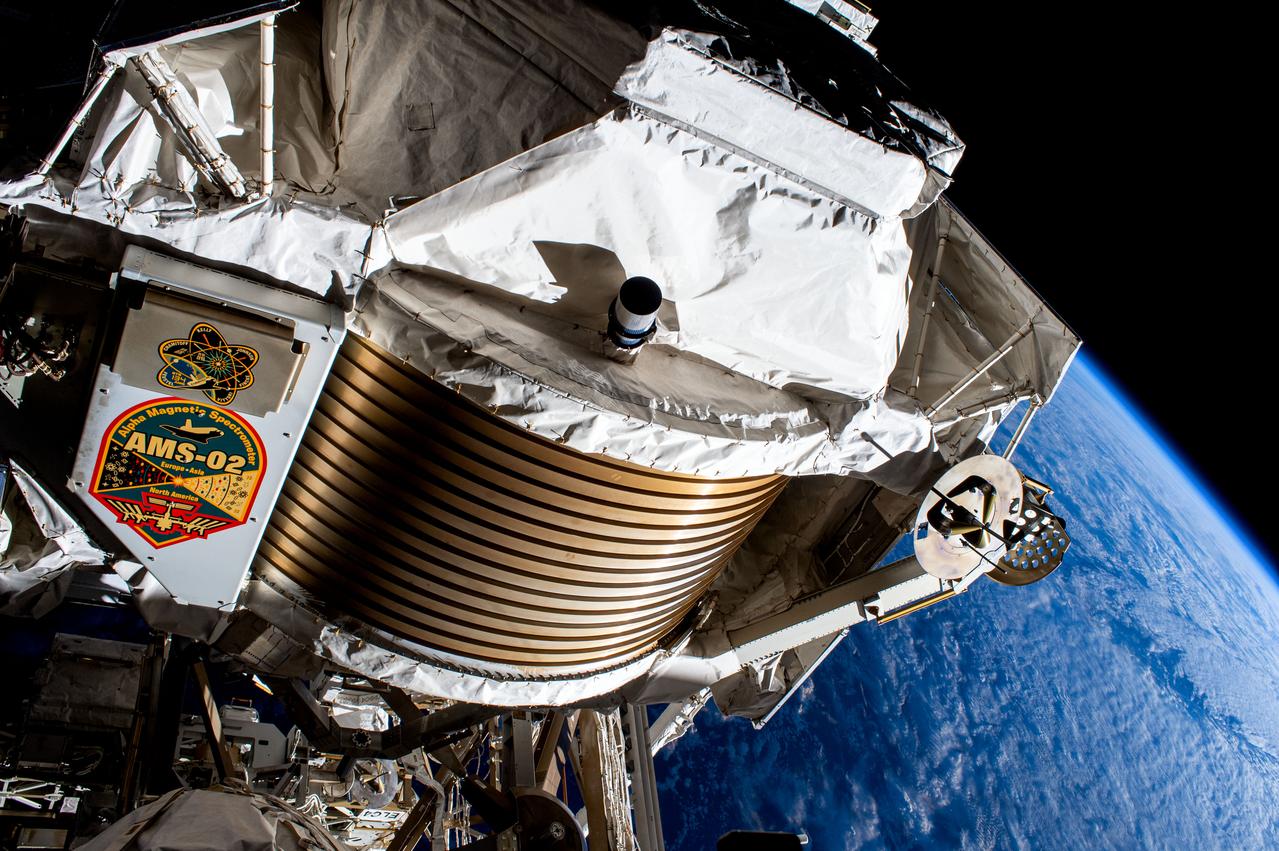
The Alpha Magnetic Spectrometer was photographed during a spacewalk in January 2017. NASA astronauts Shane Kimbrough and Peggy Whitson successfully installed three new adapter plates and hooked up electrical connections for three of the six new lithium-ion batteries on the International Space Station. They also accomplished several get-ahead tasks, including a photo survey of the Alpha Magnetic Spectrometer.
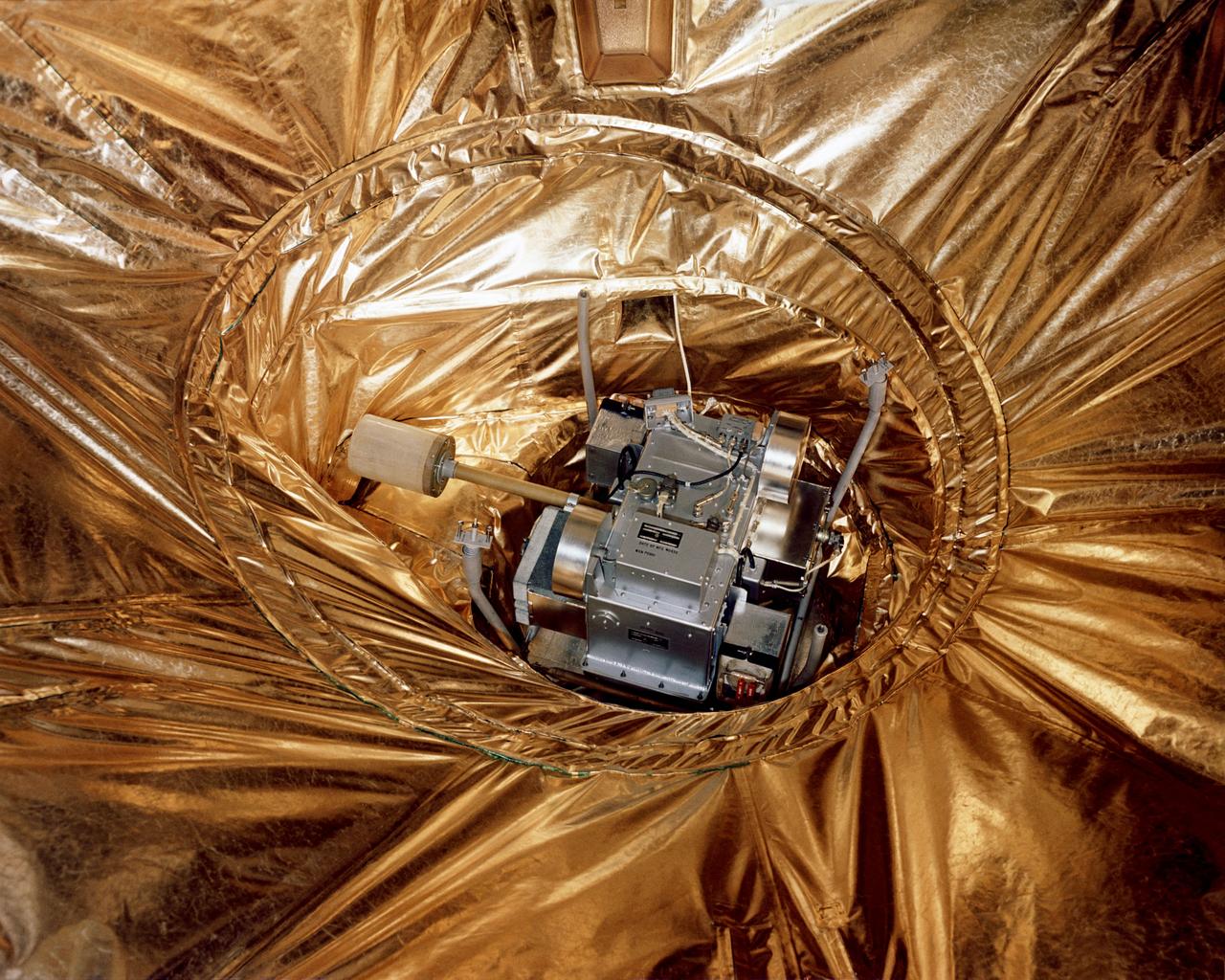
S65-42044 (28 July 1965) --- Close-up view of the Rendezvous Evaluation Pod installed in the equipment section of the Gemini-5 spacecraft at Pad 19.

Photographs documenting International Space Station (ISS) Phase One activities at the Russian Space Agency's (RSA) Gagarin Cosmonaut Training Center, Korolov Mission Control Center and Zvezda; and ISS and Soyuz manufacturing at RSA's Khrunichev Design Center and RSC Energiya in Moscow, Russia, the French Space Agency's (CNES) INTESPACE facility in Toulouse, France, and the Italian Space Agency's (ASI) Alenia Spazio facility in Torino, Italy. Photographs were taken by Johnson Space Center Imagery and Publications Office contractors travelling from October 7 to November 4, 1996. Includes: VIEWS FROM RSC ENERGIYA'S SPACE MUSEUM: Room with a Buran model and photographic displays (17372-374). Salyut Space Station mock-up (17376). Russian propulsion engines on display (17377-378). Russian spacecraft on display (17375, 17387-398). Graphic displays (17399-405). VIEWS FROM RSC ENERGIYA MANUFACTURING FACILITIES: Unidentified facility (17379). Mir 24 crew member Michael C. Foale, suited in a Soyuz pressure suit, ingresses the Soyuz TM-26 flight article at RSC Energiya for a fit check (17380-381). Closeups of Foale inside the Soyuz during the fit check (17382-383, 17466-467). Overhead views of RSC Energiya's Building 444 manufacturing floor where docking modules and Soyuz TM spacecraft are built (17495-498). Technicians on the Building 444 manufacturing floor assembling probe and drogue docking modules (17499-500, 17504). Technicians assembling Soyuz spacecraft (17437-439). Views of other Soyuz spacecraft (17440-441). Androgynous Peripheral Docking System (APDS) mock-up (17501-503). Closeups of a control panel, possibly for the APDS mock-up (17519-528). VIEWS FROM ZVEZDA, RSA CONTRACTOR FOR SUIT DESIGN AND SOYUZ SEAT LINERS: Mir 24 crew member Foale dons a "penguin" flight suit for a fit check (17454-456). Zvezda personnel adjust Foale's Soyuz seat and seat liner (17442). Closeup of Foale, suited in a Soyuz pressure suit, sitting on a chair (17444). Zvezda personnel strap pressure-suited Foale into his Soyuz seat (17443, 17445, 17450). Views of Foale in his Soyuz seat during a pressurized pressure suit fit check (17451-453). Views looking into a vacuum chamber where Foale, wearing pressure suit, is strapped into his Soyuz seat (17466-467). Views of Zvezda personnel working at the vacuum chamber control station during the vacuum chamber suit test (17468-471). VIEWS FROM KHRUNICHEV DESIGN CENTER: Views of a green ISS Functional Cargo Block (FGB) test article on the manufacturing floor (17529, 17532-536, 17540-544). Views of an ISS Service Module (SM) test article on the manufacturing floor (17530-531, 17537, 17539). Closeup of the SM test article docking sphere (17538). Views of the FGB flight article on the manufacturing floor during systems tests (17545-548, 17550-567). Views of technicians conducting the FGB systems tests (17549, 17557). VIEWS FROM GAGARIN COSMONAUT TRAINING CENTER: NASA astronauts work out in the cosmonaut gym at Gagarin: Closeup of ISS 2R Expedition Commander William Shepherd on a weight machine (17384). Shepherd and an unidentified man with back to camera work out with dumbbells (17386). Shepherd does pull-ups (17447). Closeup of Foale on an exercise machine (17385). Closeups of Foale exercising arms on a cycle ergometer and a weight machine (17415, 17448-449). Foale exercises on a Nordic Track (17416). Closeup of Mir 23 crew member Jerry Linenger exercising arms (17417). Wendy Lawrence exercises with dumbbells (17418). Closeup of Lawrence in a handstand position (17419). David Wolf works out on a leg press machine (17446). Views of the Mir Space Station mock-up at Gagarin: Interior views of the Mir Base Module mock-up looking toward the transfer compartment (17421-425). Mir Base Module living area mock-up (17420). Overall views of the Base Module mock-up central control station (17426-427, 17505). Closeups of switch panels on the central control station (17428-436, 17506-518). Other views from Gagarin: Personnel work at an unidentified test/trainer control station (17472-473). Linenger sits at a table next to an RSA trainer during a Mir 23 meeting (17475-476). Out-of-focus view of two subjects in the Soyuz trainer (17474). Foale examines a Mir Complex EVA Suit (Orlan) with RSA trainers during an EVA suit training class (17492-494). VIEWS FROM KOROLOV MISSION CONTROL CENTER: Various views of personnel working in the NASA Consulting Room and/or PAO Consulting Room at Korolov Mission Control Center (17457-463). VIEWS FROM INTESPACE: Exterior views of an ISS Mini Pressurized Logistics Module (MPLM) structural test article (STA) during testing at INTESPACE (17406-409, 17477, 17482-484). Technicians install hatch on the MPLM STA (17410-414). Interior views of the MPLM STA (17478-481). VIEWS FROM ALENIA SPAZIO: Closeups of MPLM flight article #1 side panels during milling and refining at Alenia Spazio (17485-488). Workers process MPLM parts at milling machines (17489-491).
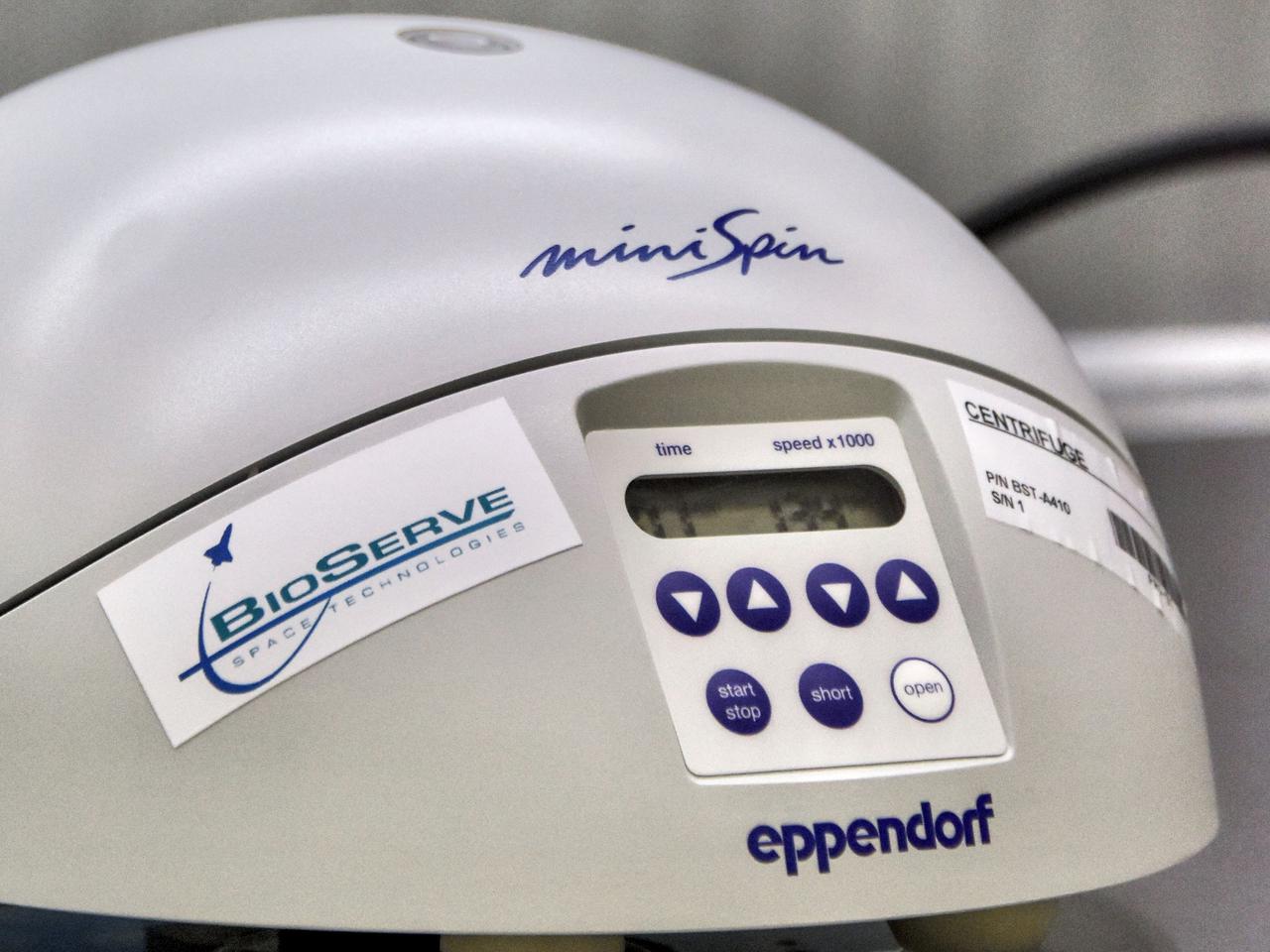
jsc2022e031231 (8/13/2021) --- A preflight closeup view of the BioServe Centrifuge’s user interface. The BioServe Centrifuge facility supports a wide variety of life, physical, and materials science research. It enables separation of substances with differing densities, including cell cultures, DNA, protein, blood, and sedimentation samples. Image courtesy of BioServe Space Technologies.
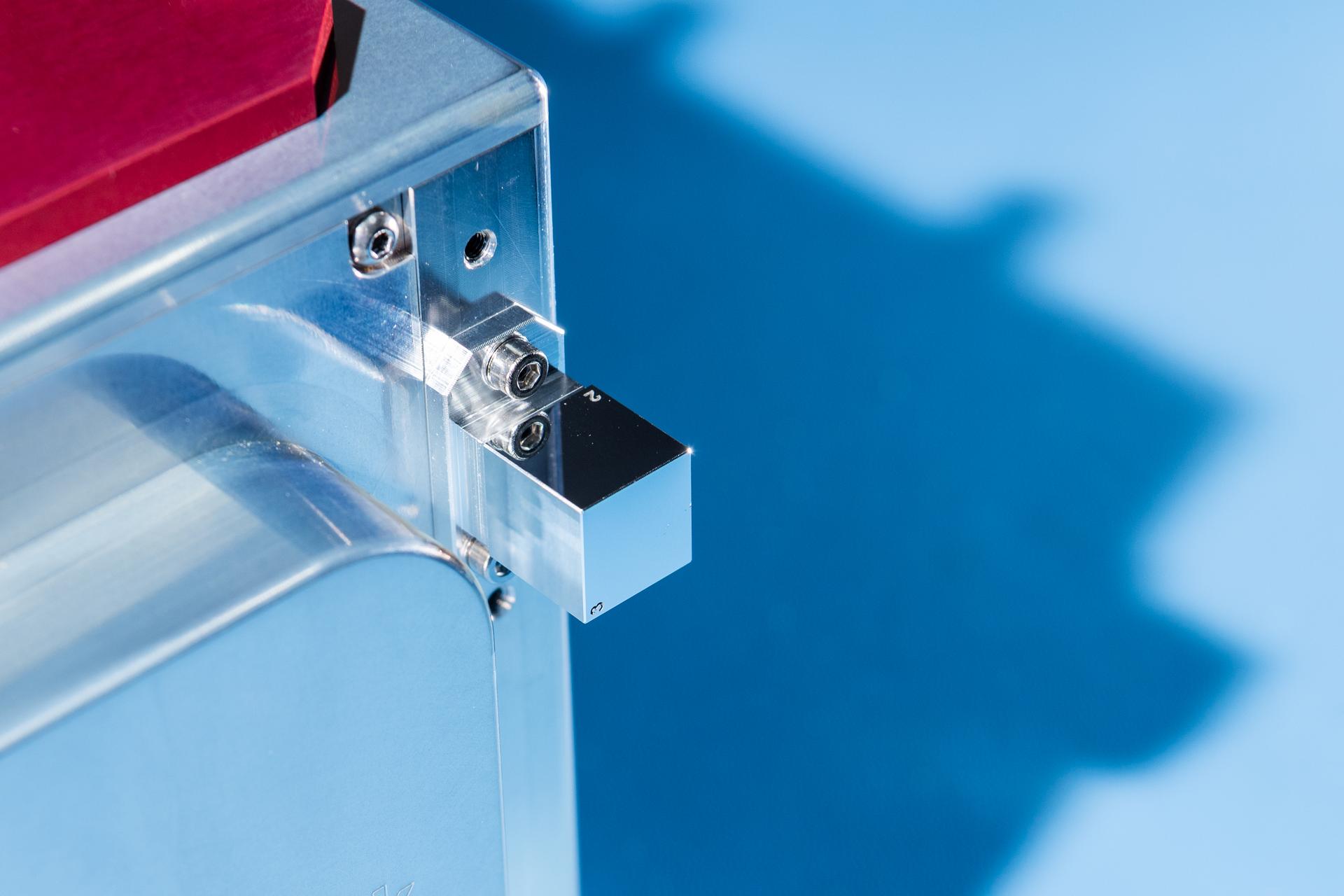
Closeup photo of an optical cube mounted to OSAM-1 hardware inside cleanroom at Goddard Space Flight Center, Greenbelt Md., Jun 4, 2024. This photo has been reviewed by OSAM1 project management and the Export Control Office and is released for public view. NASA/Mike Guinto
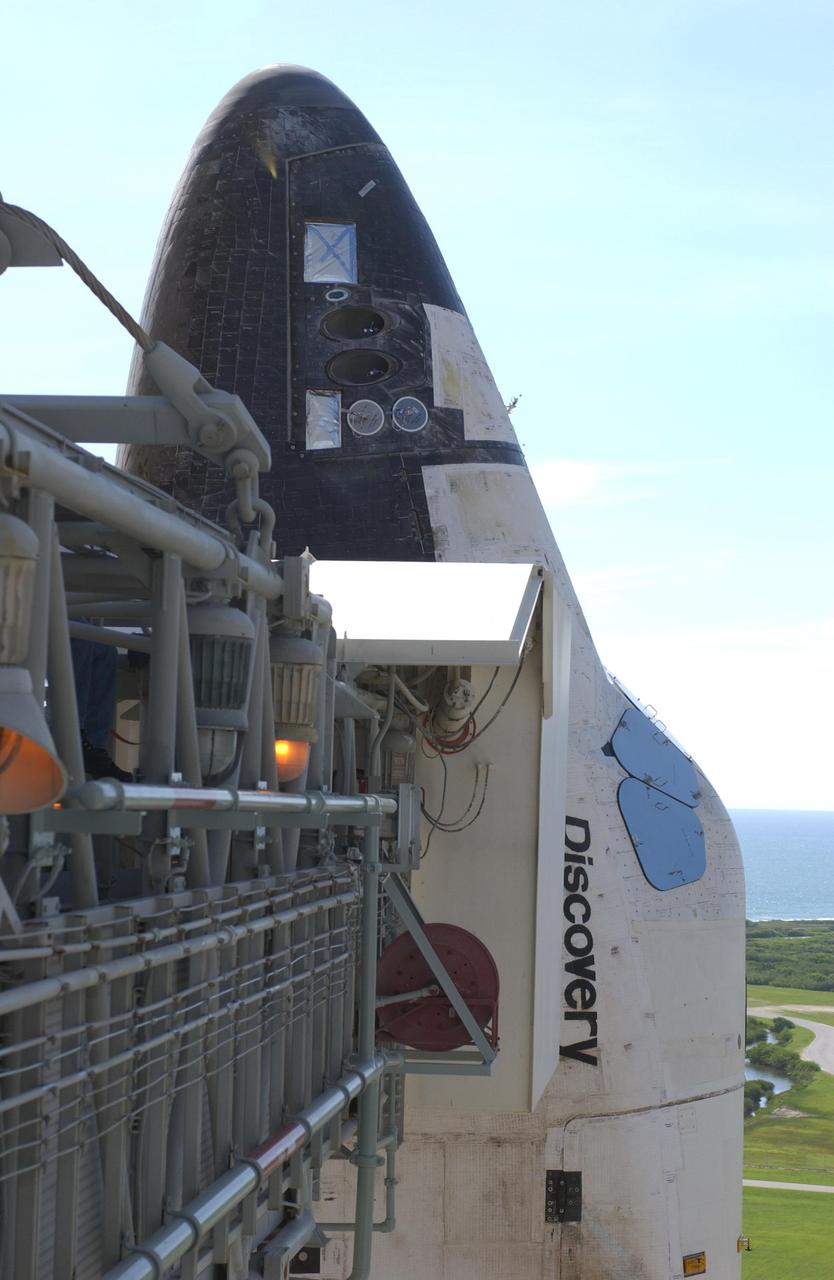
KENNEDY SPACE CENTER, Fla. -- - This closeup at about the 147-foot level shows the orbiter access arm as it extends toward the side of Discovery. At the end is the White Room, which provides entry into the orbiter. Discovery is scheduled to launch in early August on mission STS-105. Photo by Scott Andrews using a Nikon D1X camera
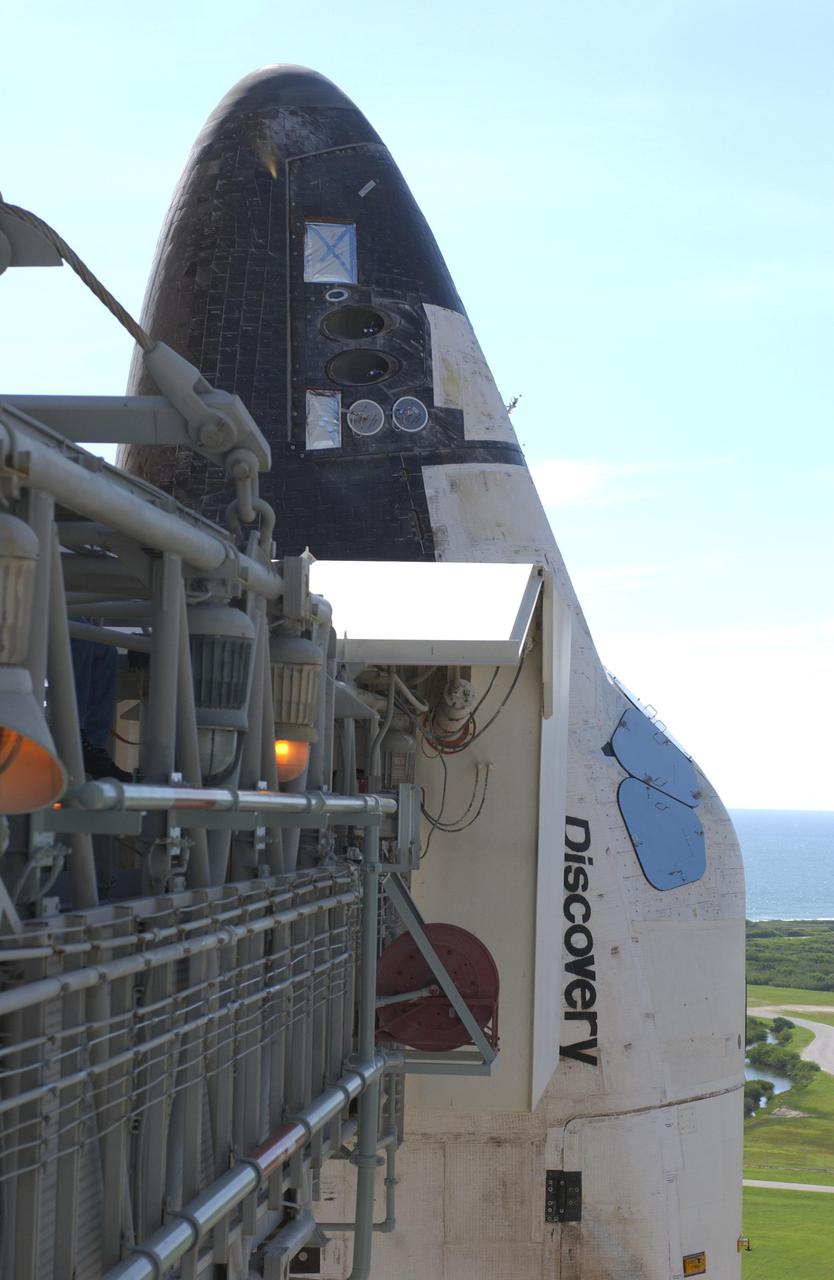
KENNEDY SPACE CENTER, Fla. -- - This closeup at about the 147-foot level shows the orbiter access arm as it extends toward the side of Discovery. At the end is the White Room, which provides entry into the orbiter. Discovery is scheduled to launch in early August on mission STS-105. Photo by Scott Andrews using a Nikon D1X camera
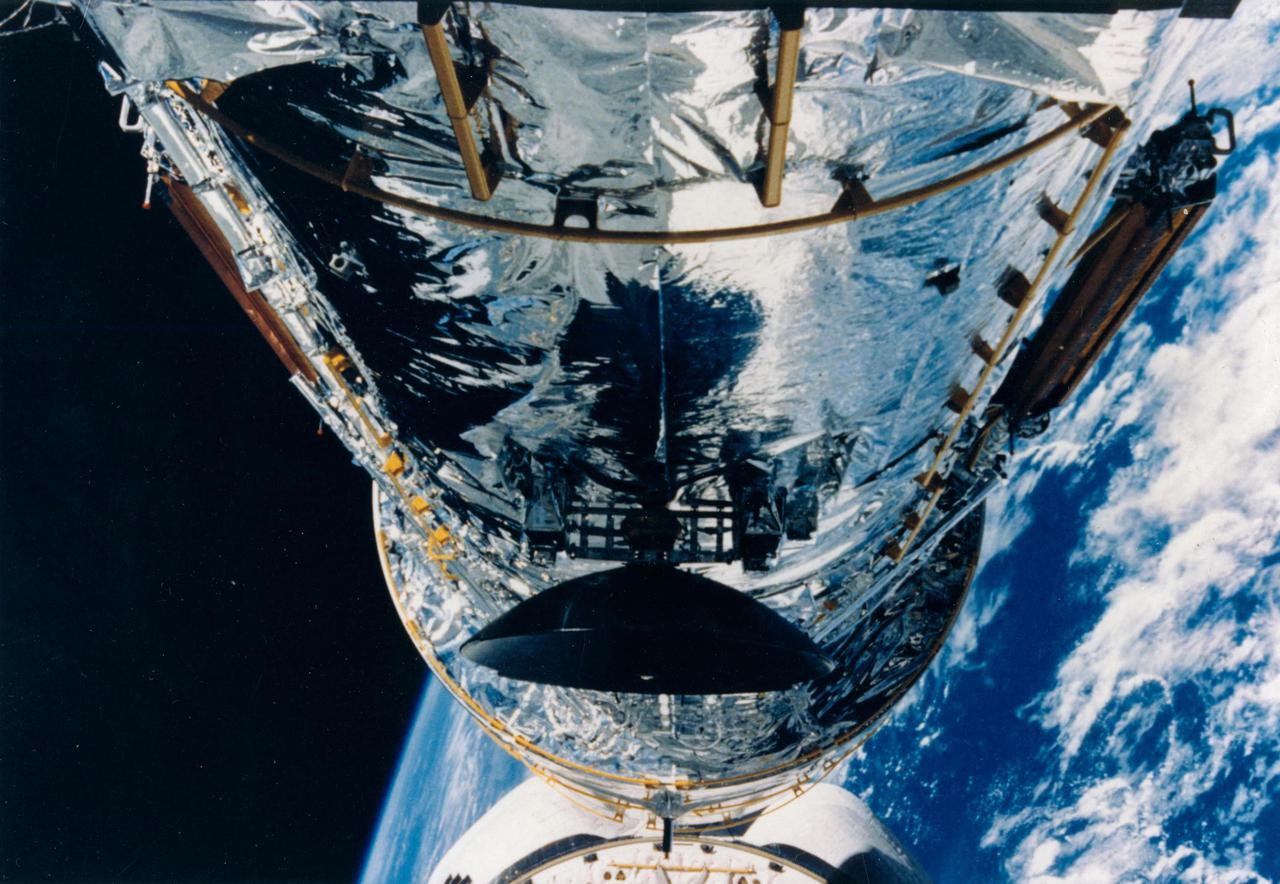
JOHNSON SPACE CENTER, HOUSTON, TEXAS-- STS-31 ONBOARD SCENE -- A medium closeup view photographed with fish-eye lens on a 35mm camera shooting the Hubble Space Telescope (HST) held above Discovery's cargo bay by the remote manipulator system prior to solar array and antennae deployment.
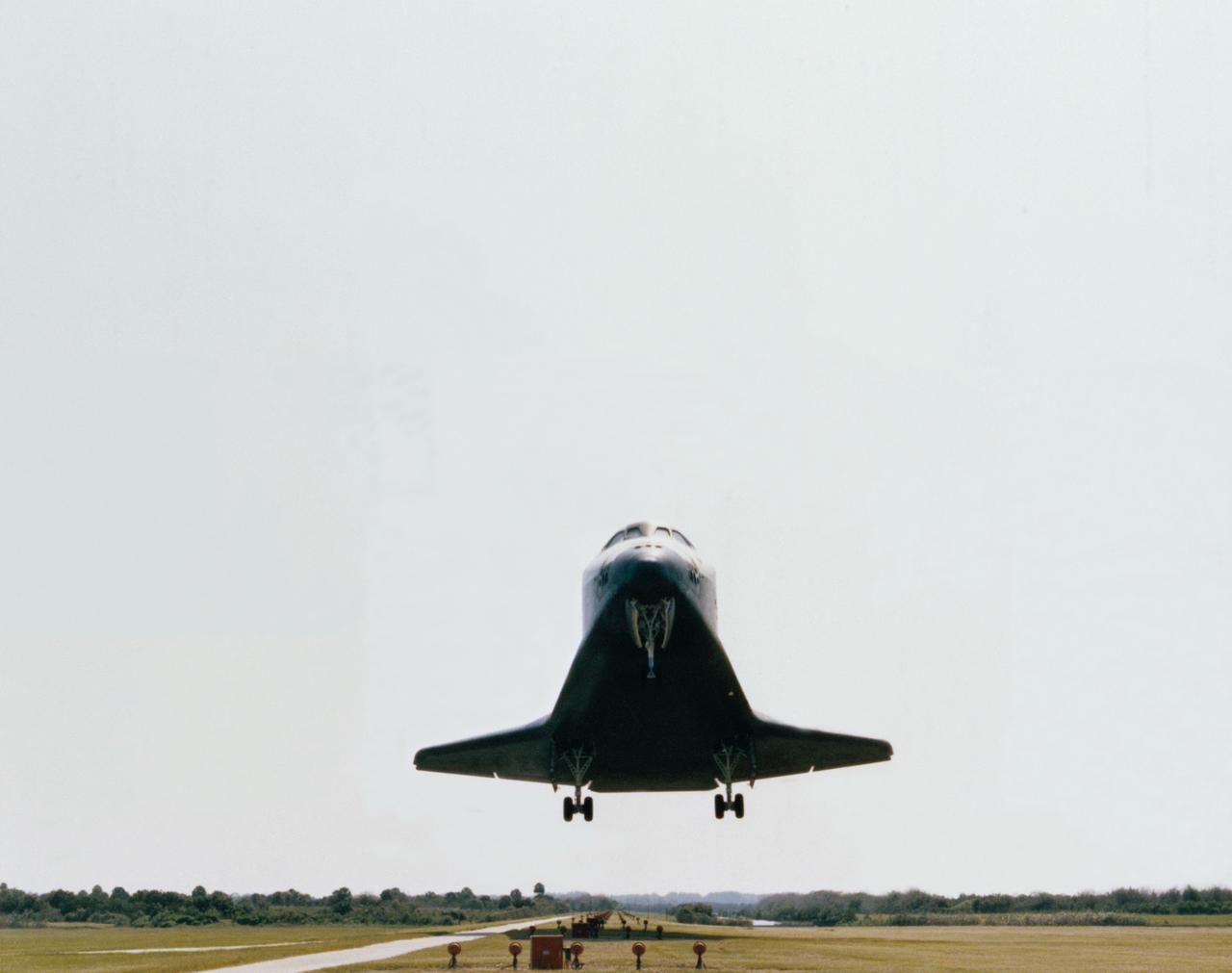
Landing of Orbiter Challenger at KSC completion of 41G Mission. Views closeup front view of the Orbiter approaching the runway, its landing gear extended in preparation for touchdown. The KSC Alternative Photo Number is 108-KSC-84PC-639. KSC, FL
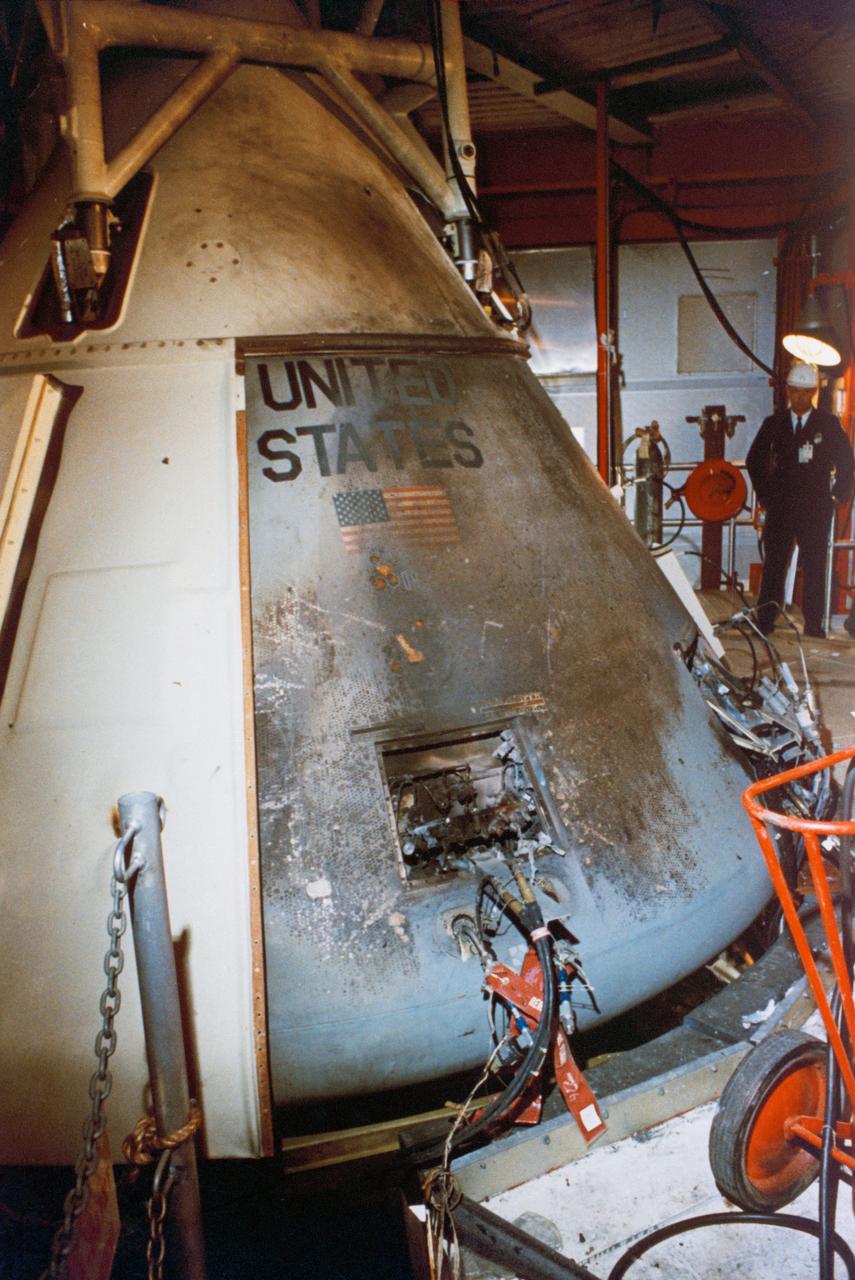
Closeup view of the interior of Apollo S/C 012 C/M, Pad 34, showing the effects of the intense heat of the flash fire which killed the Prime Crew of the A/S 204 Mission. CAPE KENNEDY, FL CAPE KENNEDY, FL
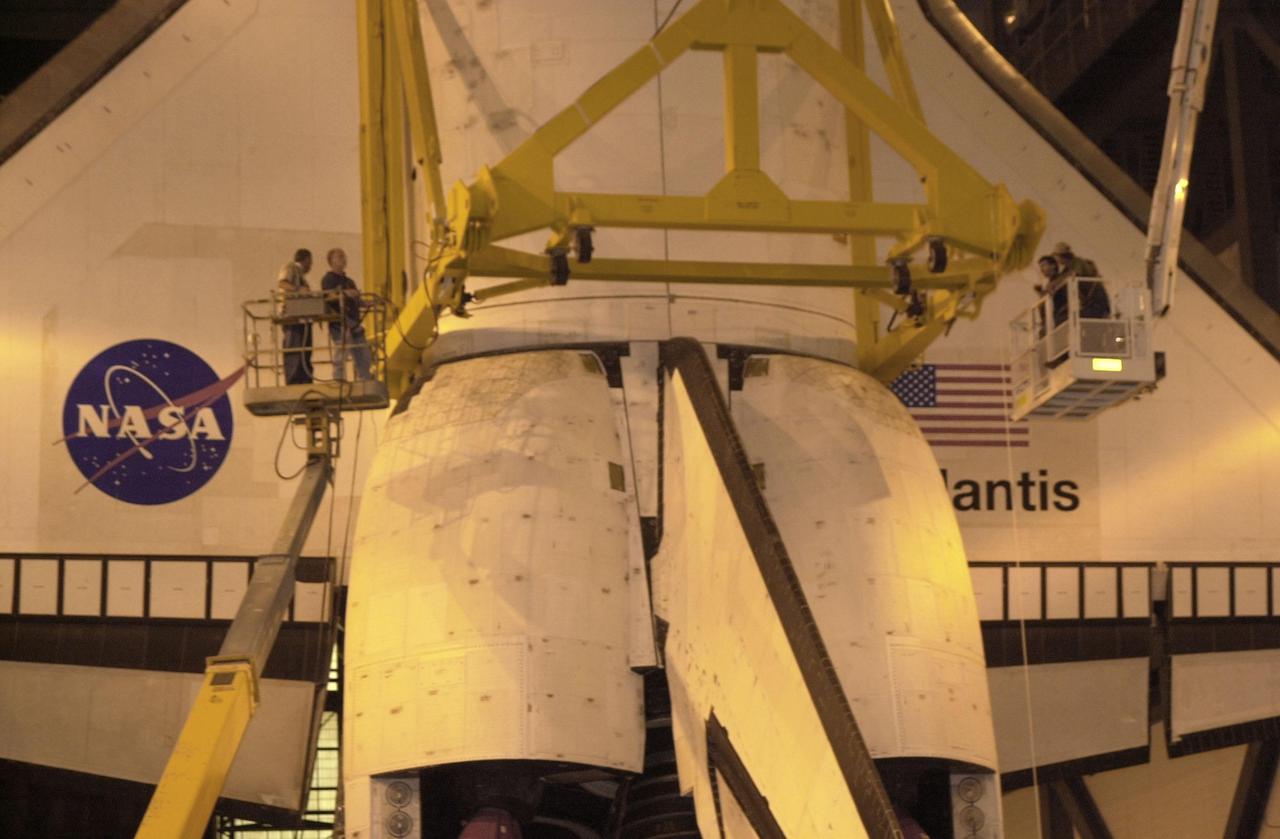
KENNEDY SPACE CENTER, FLA. -- This closeup shows the workers, standing on lifts, who are checking the bolts on the apparatus holding the orbiter Atlantis. The orbiter will be rotated and lifted up and over to a high bay and stacked with its external tank and solid rocket boosters. Space Shuttle Atlantis is scheduled to launch on mission STS-104 in early July
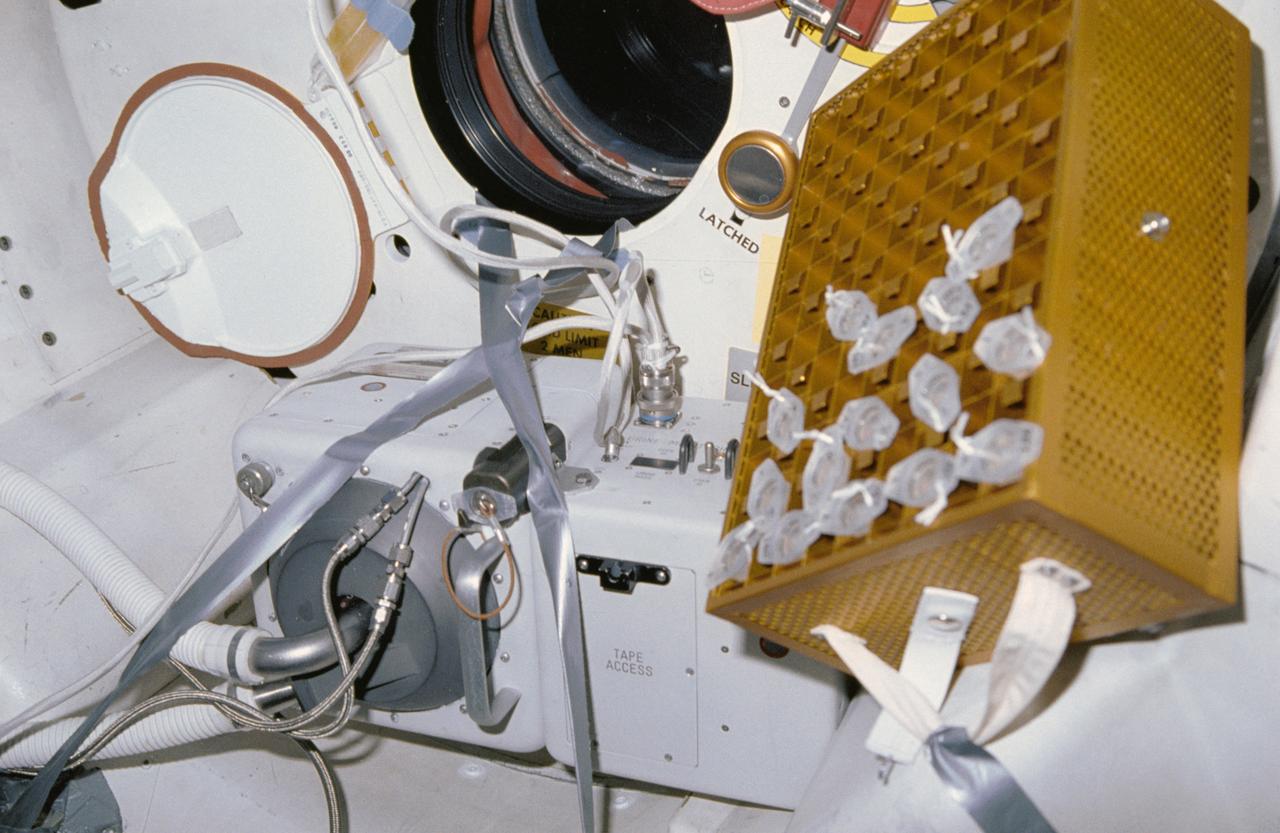
STS040-04-036 (5-14 June 1991) --- Closeup view of urine monitoring system and test samples, part of the busy schedule of life sciences testing on the nine-day STS-40/Spacelab Life Sciences (SLS-1) mission aboard the earth-orbiting Columbia.
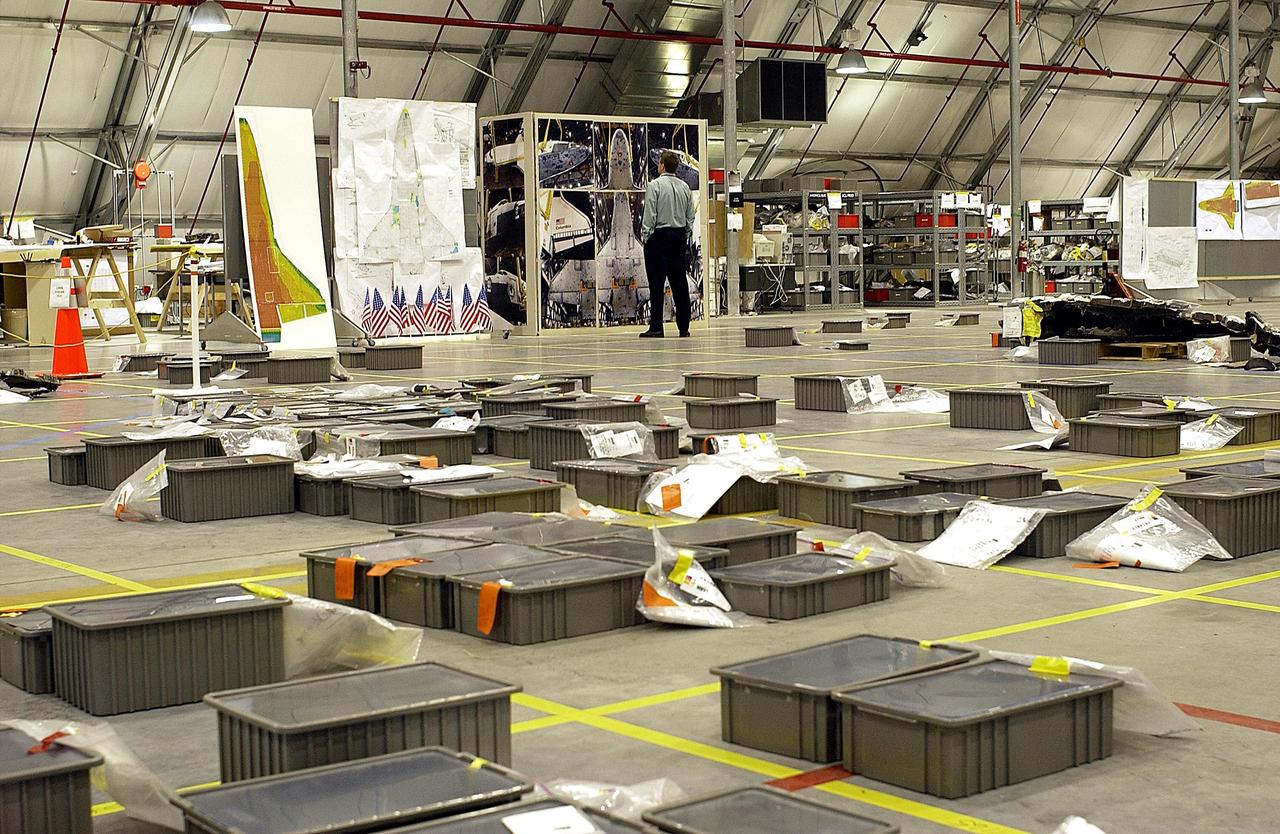
KENNEDY SPACE CENTER, FLA. -- Another closeup of the floor in the RLV Hangar shows the variety of Columbia debris gathered there. The Columbia Reconstruction Project Team is attempting to reconstruct the orbiter as part of the investigation into the accident that caused the destruction of Columbia and loss of its crew as it returned to Earth on mission STS-107.
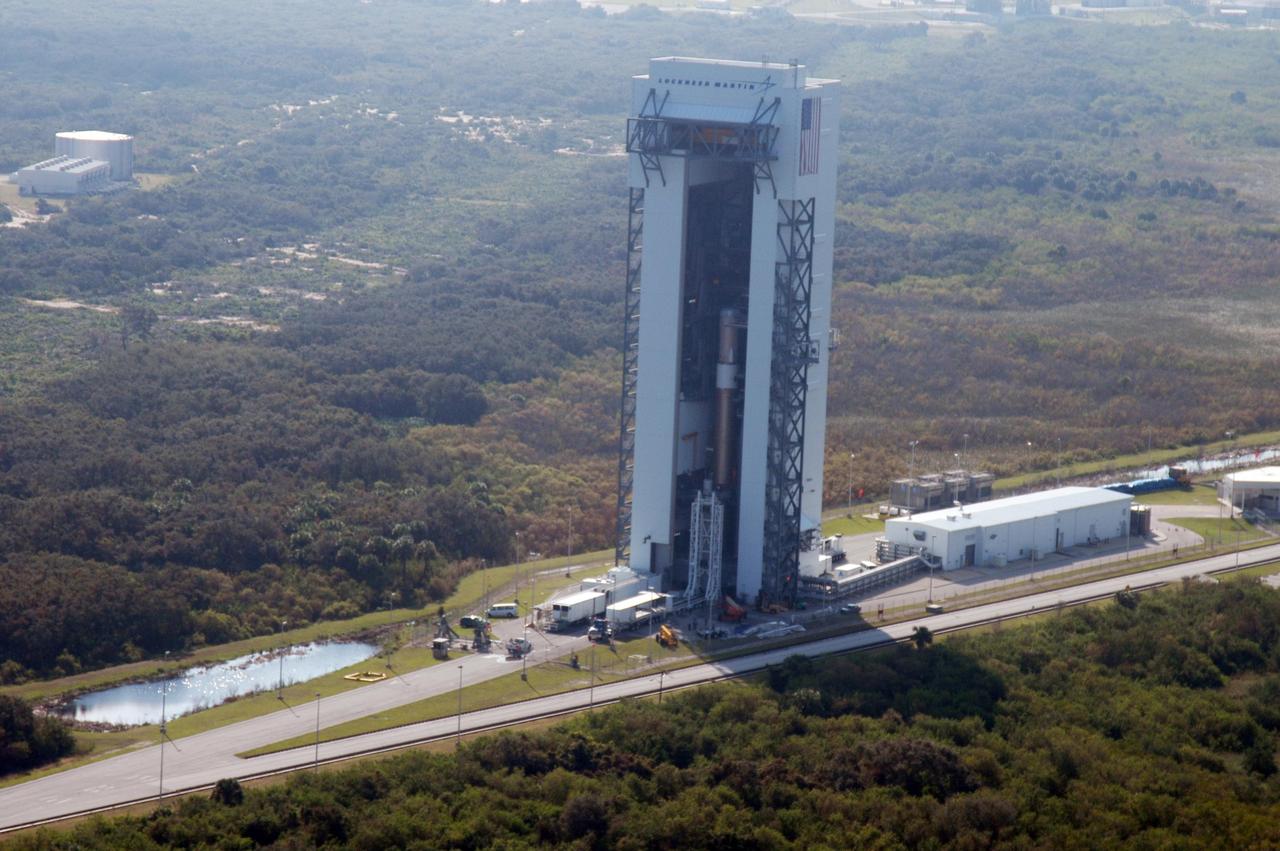
KENNEDY SPACE CENTER, FLA. - A closeup aerial view of the Vertical Integration Facility, on Launch Complex 41 at Cape Canaveral Air Force Station in Florida, which holds the Lockheed Martin Atlas V rocket that will launch NASA’s New Horizons spacecraft.
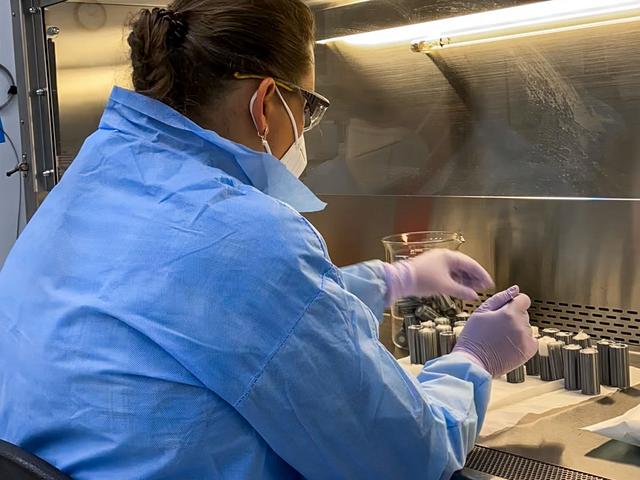
jsc2022e042488 (4/20/2022) --- A closeup of Pacific Northwest National Laboratory (PNNL) staff technician Yuliya Farris preparing sterile spaces used to hold soil in place during Dynamics of the Microbiome in Space (DynaMoS). Image courtesy of the Pacific Northwest National Laboratory.
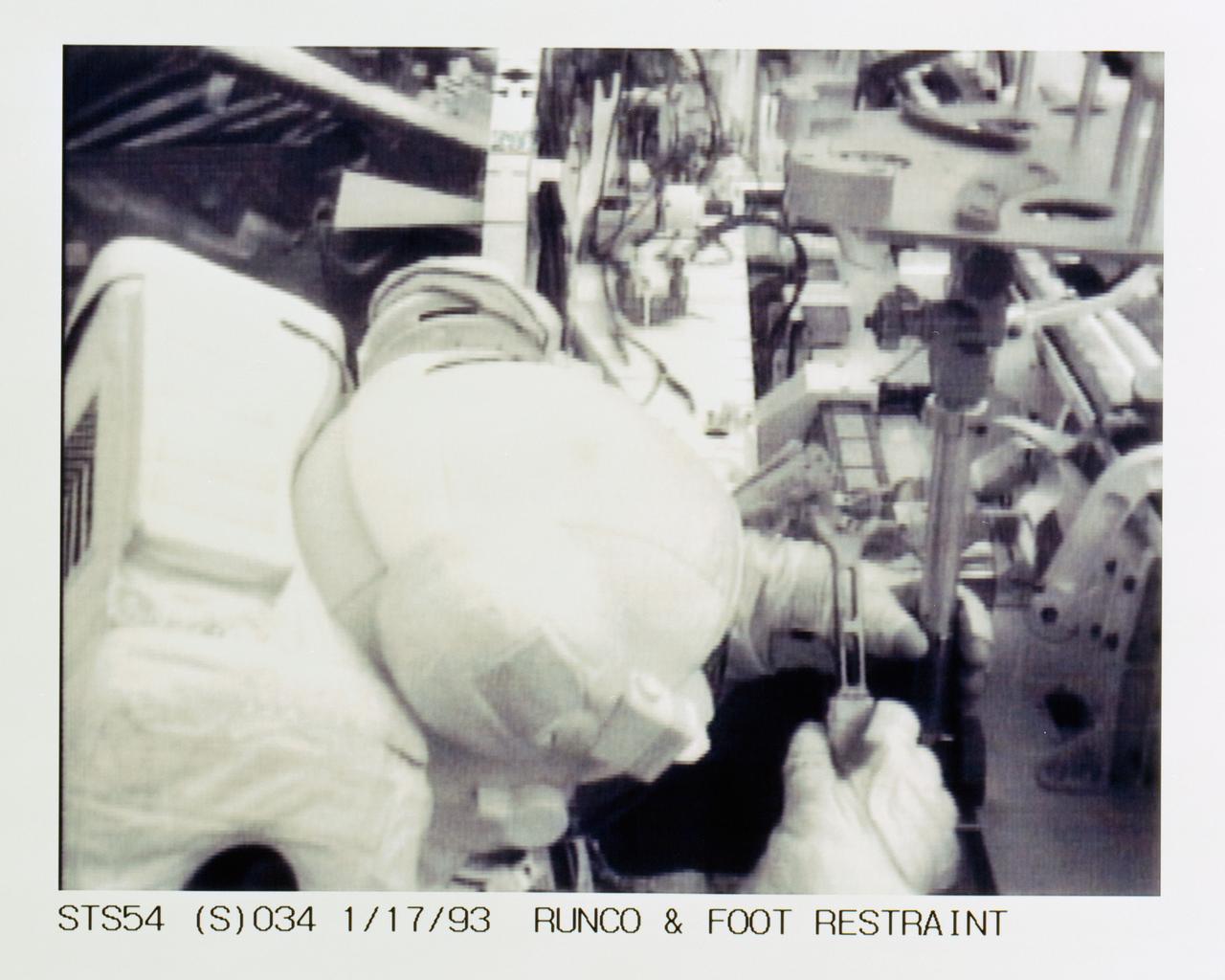
STS054-S-034 (17 Jan 1993) --- Closeup view of Runco as he works to install a mobile foot restraint during extravehicular activity (EVA) in Endeavour's cargo bay. The scene was downlinked at 11:55:07:24 GMT, Jan. 17, 1993.
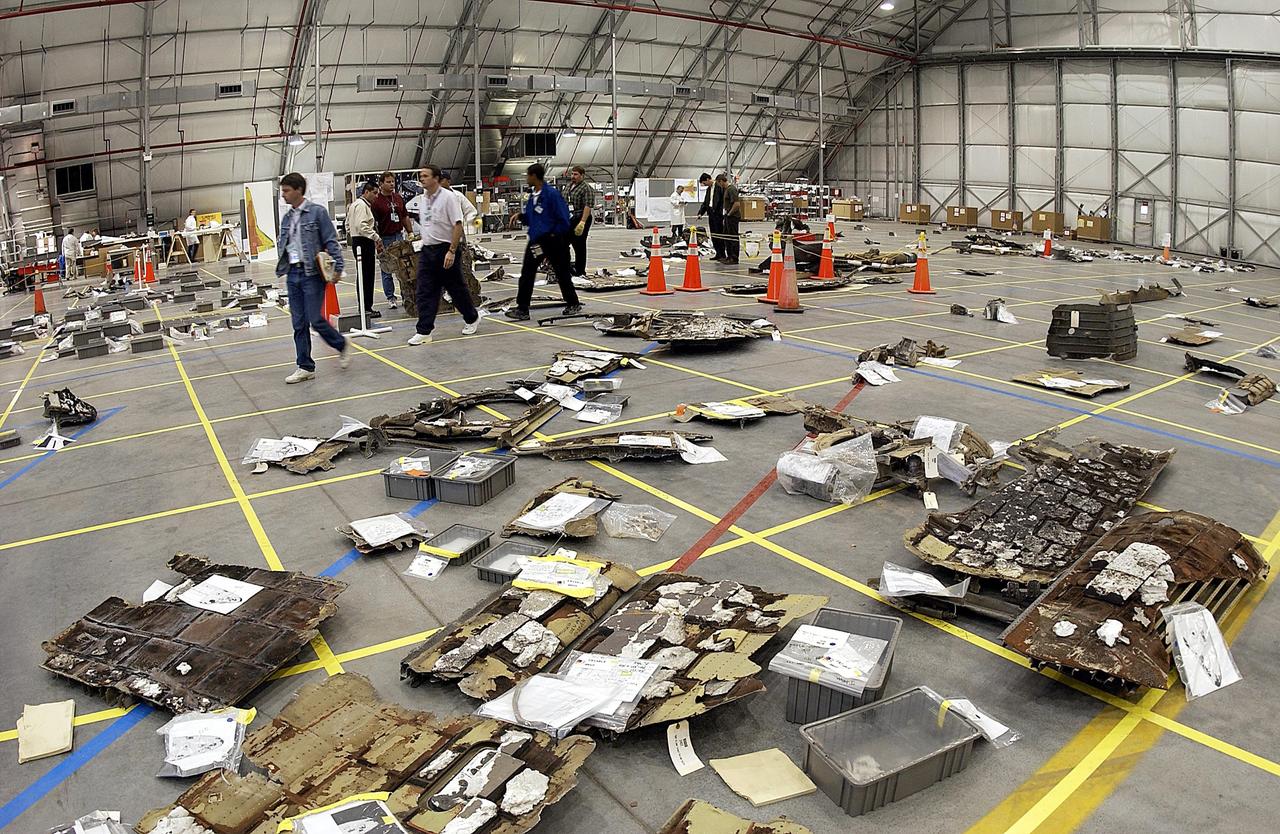
KENNEDY SPACE CENTER, FLA. - A closeup of the floor in the RLV Hangar shows the variety of Columbia debris gathered there. The Columbia Reconstruction Project Team is attempting to reconstruct the orbiter as part of the investigation into the accident that caused the destruction of Columbia and loss of its crew as it returned to Earth on mission STS-107.
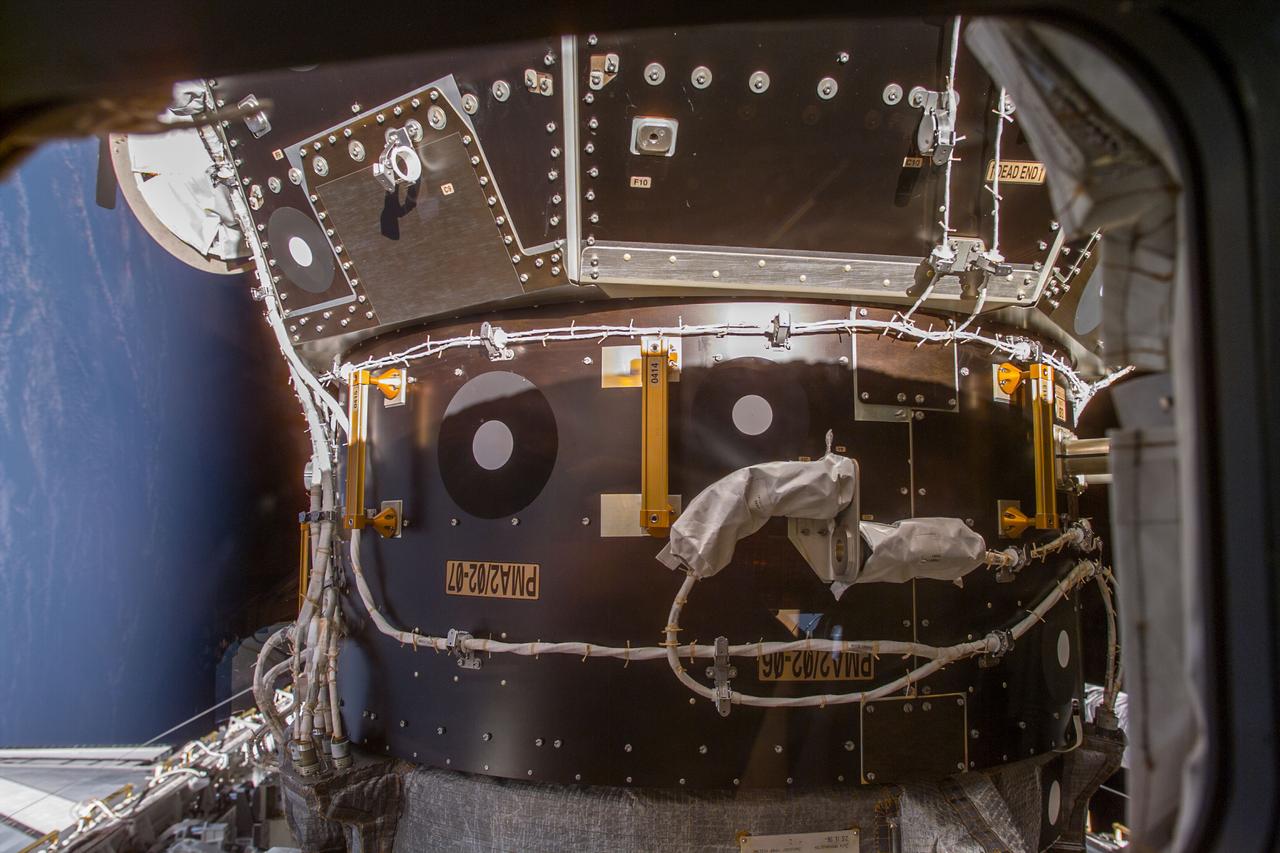
S96-E-5006 (29 May 1999) --- A closeup view of the pressurized mating adapter 2 (PMA2) was recorded with an electronic still camera (ESC) from Discovery's cabin shortly after docking. A small slice of Earth's horizon can be seen at left frame intersecting Discovery's starboard wing.
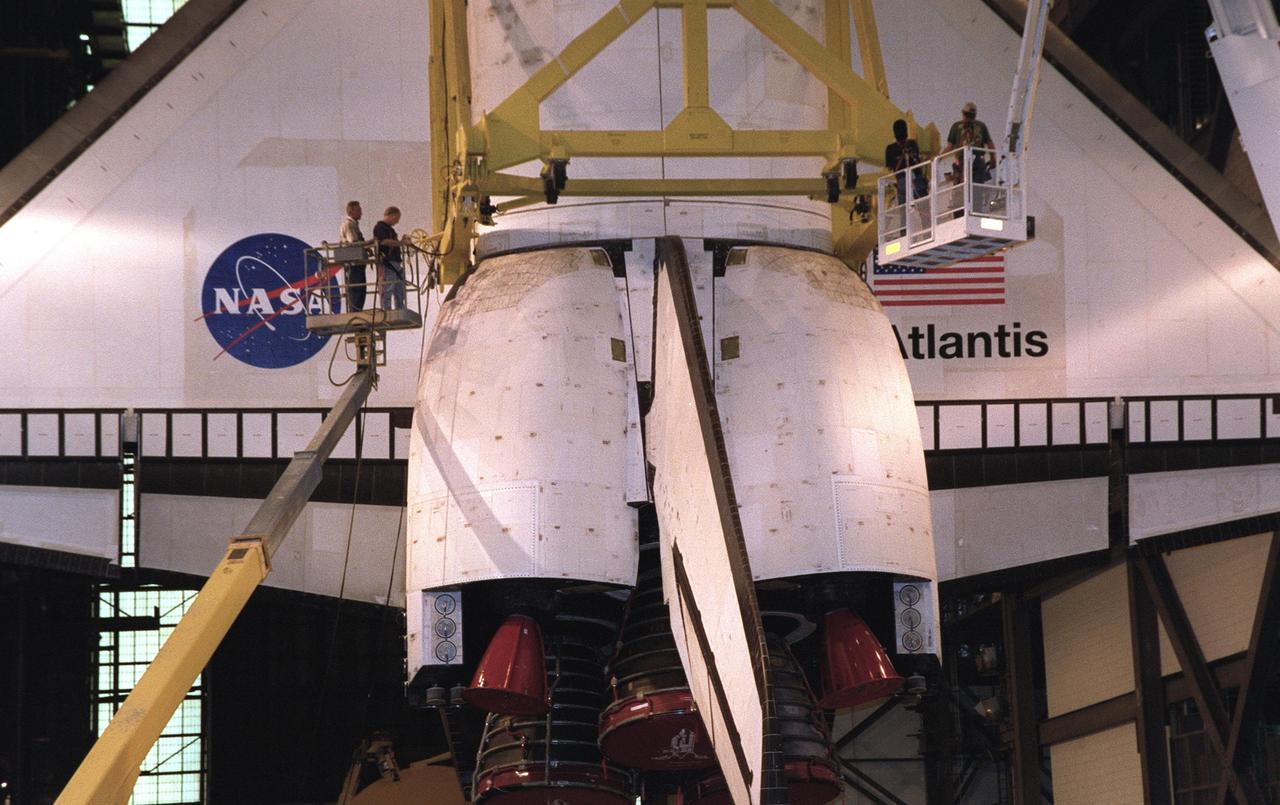
KENNEDY SPACE CENTER, FLA. -- This closeup shows the workers, standing on lifts, who are checking the bolts on the apparatus holding the orbiter Atlantis. The orbiter will be rotated and lifted into high bay 1 where it will be stacked with its external tank and solid rocket boosters. Space Shuttle Atlantis is scheduled to launch on mission STS-104 in early July
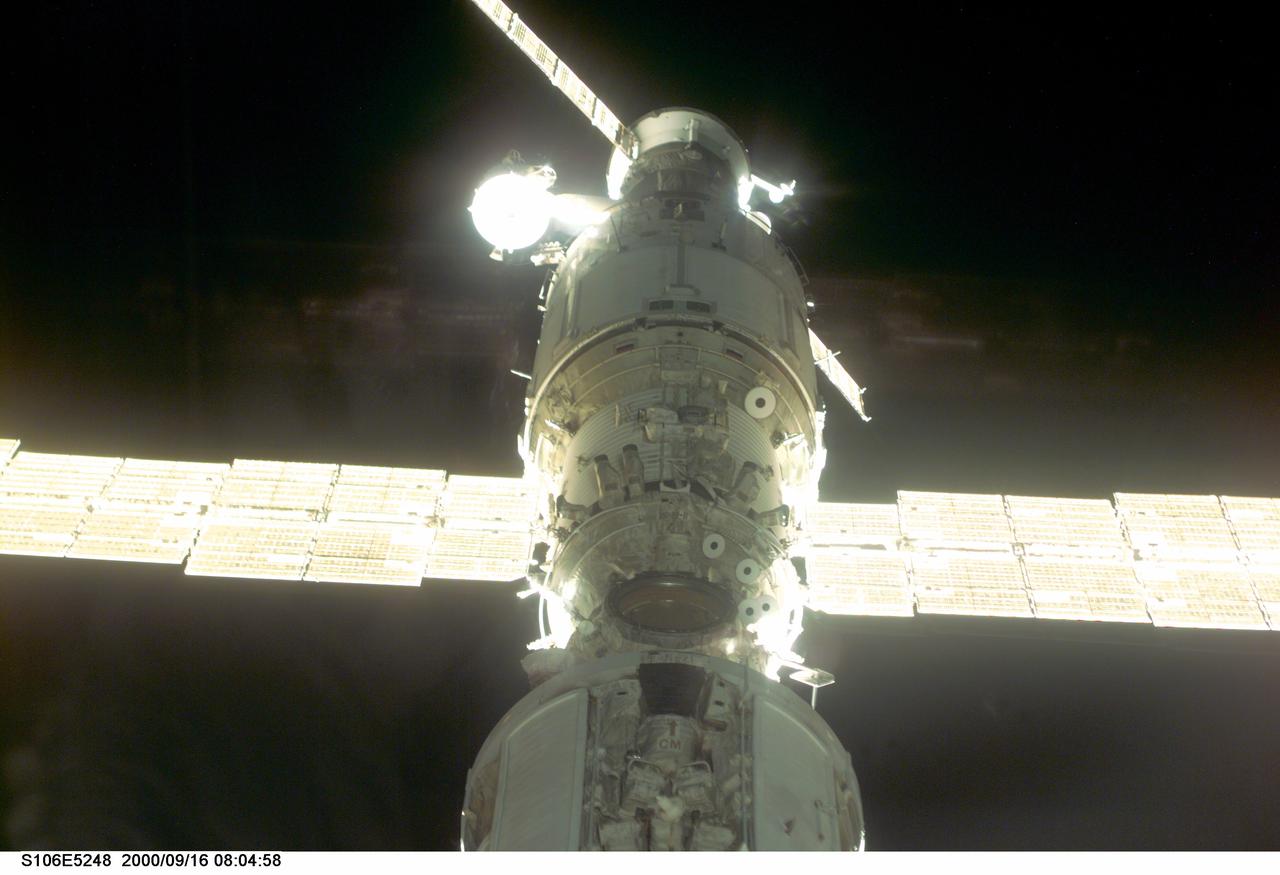
S106-E-5248 (16 September 2000) --- An out-the-window view with the electronic still camera (ESC) represents one of the final STS-106 closeup looks at the International Space Station (ISS) as the Atlantis crew works rapidly to wrap up chores on the station.
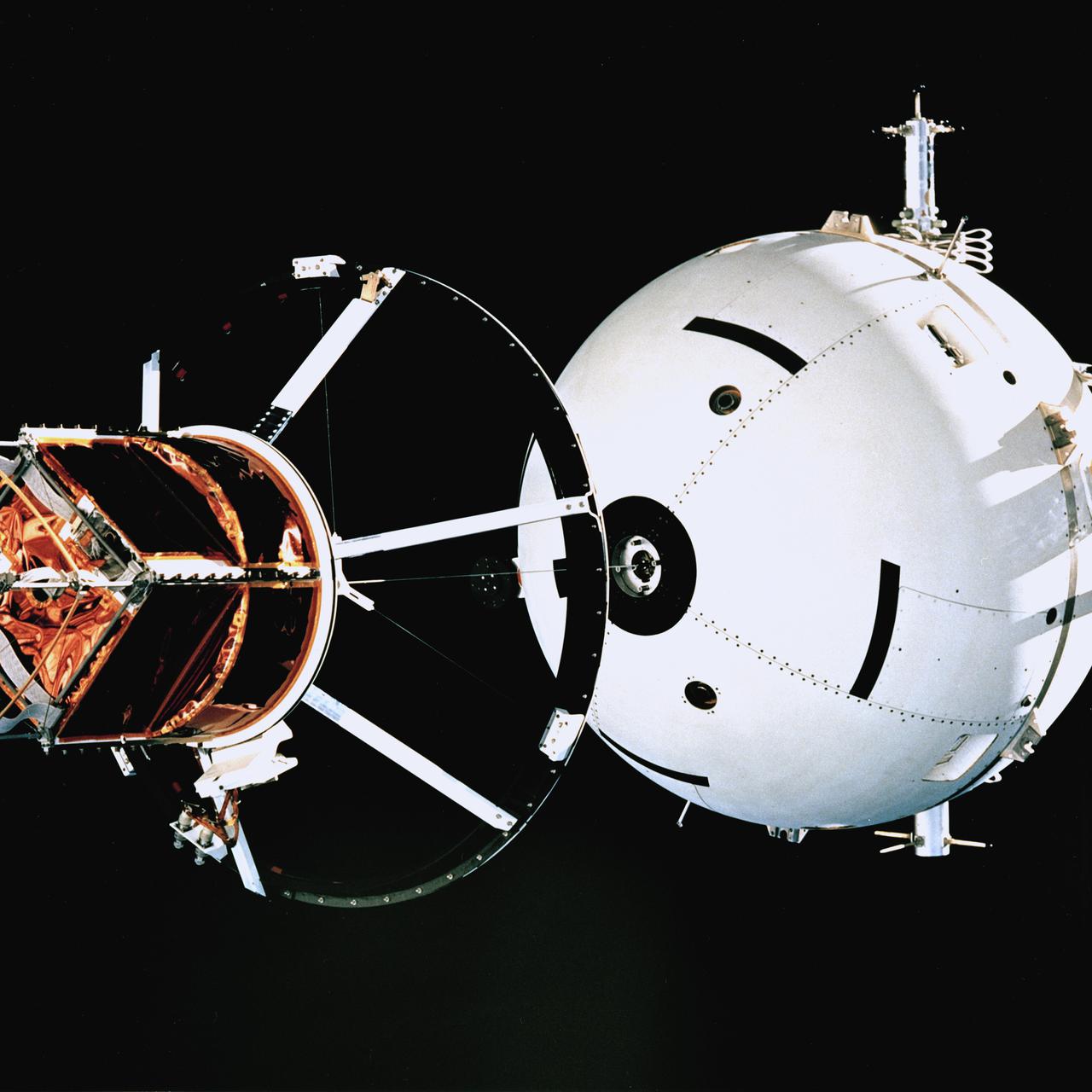
ONBOARD ATLANTIS -- A 70mm handheld camera was used by the STS-46 crewmembers to capture this medium closeup view of early operations with the Tethered Satellite System. The sphere can be seen moving away from the ring structure on the boom device in Atlantis’ cargo bay. Photo Credit: NASA
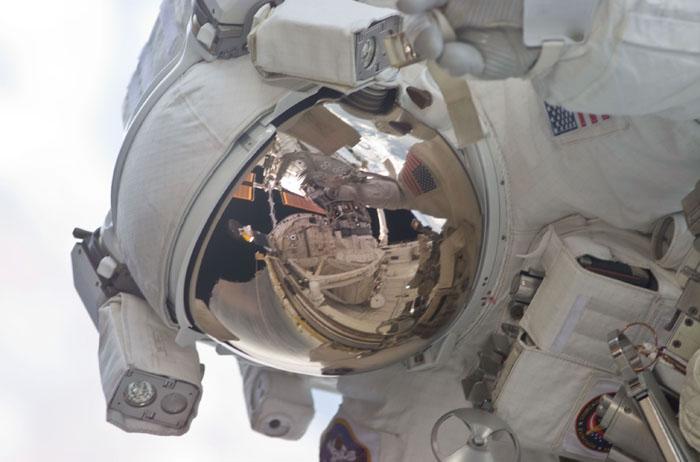
STS105-E-5228 (16 August 2001) --- Closeup view of the helmet visor and upper torso of astronaut Patrick G. Forrester during early stages of the first space walk on STS-105. Most of the cargo bay of the Space Shuttle Discovery is reflected in the helmet. The image was recorded with a digital still camera.
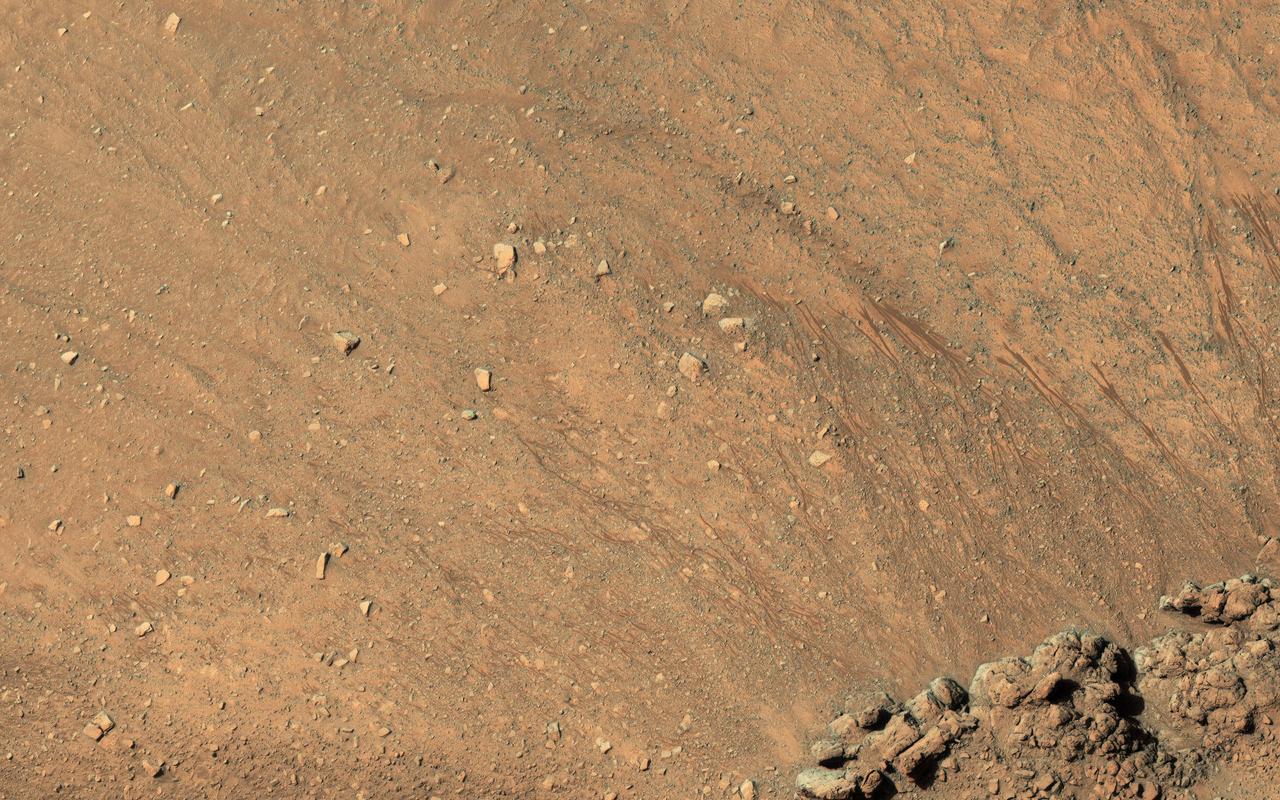
Asimov is an 84-kilometer diameter crater located in the southern ancient highlands of Mars. It is distinguished from other craters in this region in that it contains both a ring-depression just within the crater rim and a pit near the center. Gullies have formed along slopes both in the ring-depression and within the central pit. A closeup shows gullies and recurring slope lineae (RSL) along the eastern slope of the pit. These features continue to form seasonally in this region and the HiRISE team monitors this and other sites to look for changes. Another closeup shows new RSL forming during the summer just after the recent global dust storm. How these features form is still under investigation. Additional changes documented here and at other locations as a result of the dust storm may provide some insight into their formation. https://photojournal.jpl.nasa.gov/catalog/PIA22898
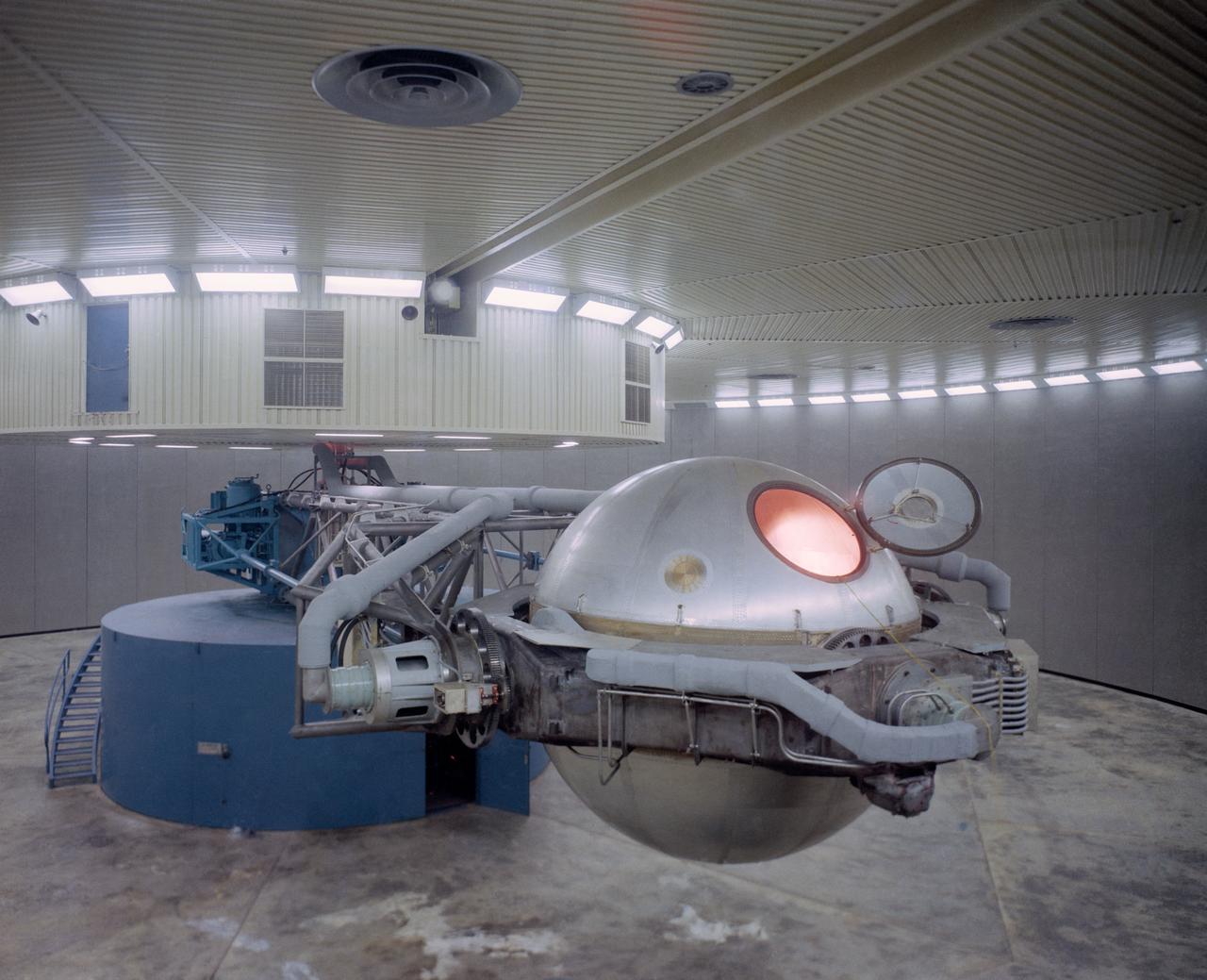
The new centrifuge at MSC, located in the Flight Acceleration Facility (FAF), Bldg. 29. The 50-ft. arm can swing the 3-man gondola to create G-Forces Astronauts will experience during liftoffs and re-entry conditions. MSC, HOUSTON, TX CN
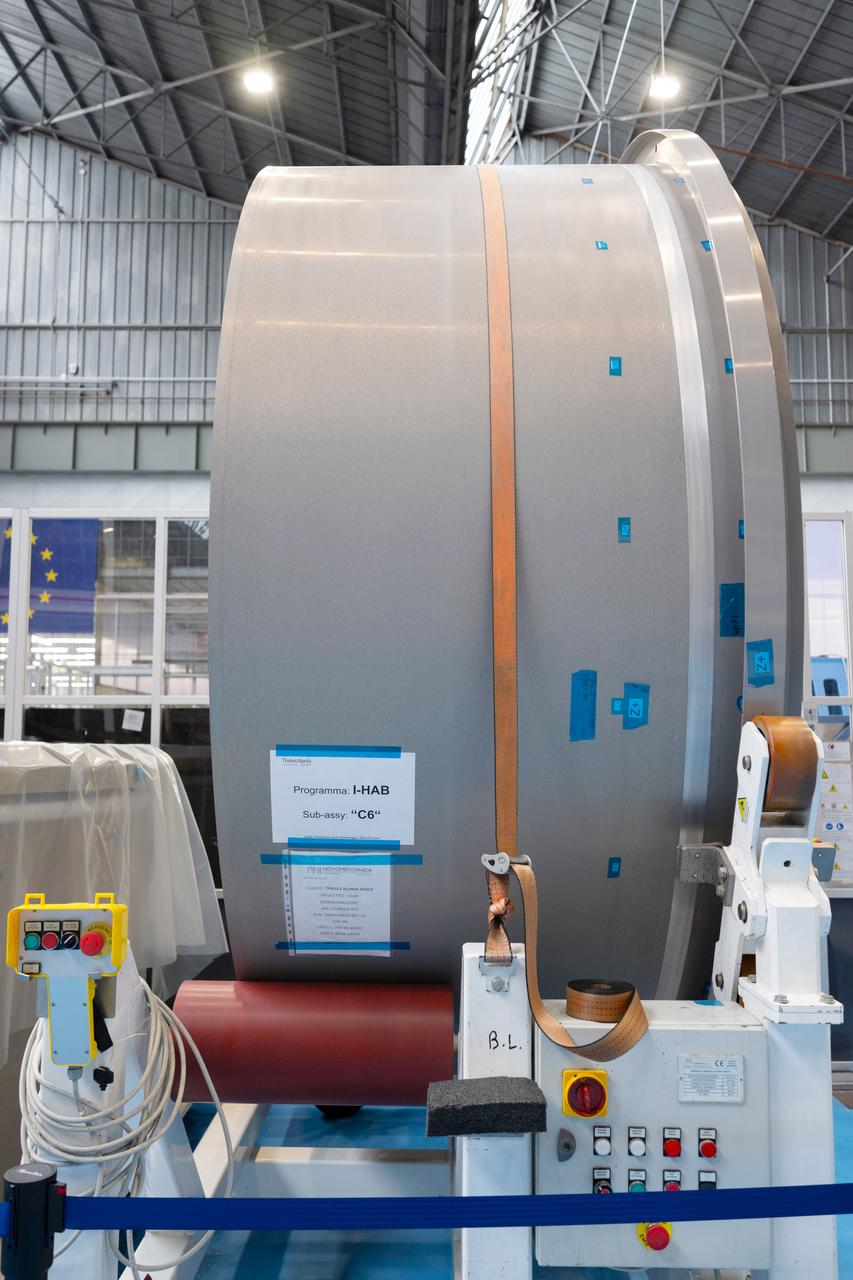
Photo Date: 11/14/2023 Location: Turin, Italy Subject: ESA International Habitat (I-HAB) Photo Credit: ESA/Stephane Corvaja
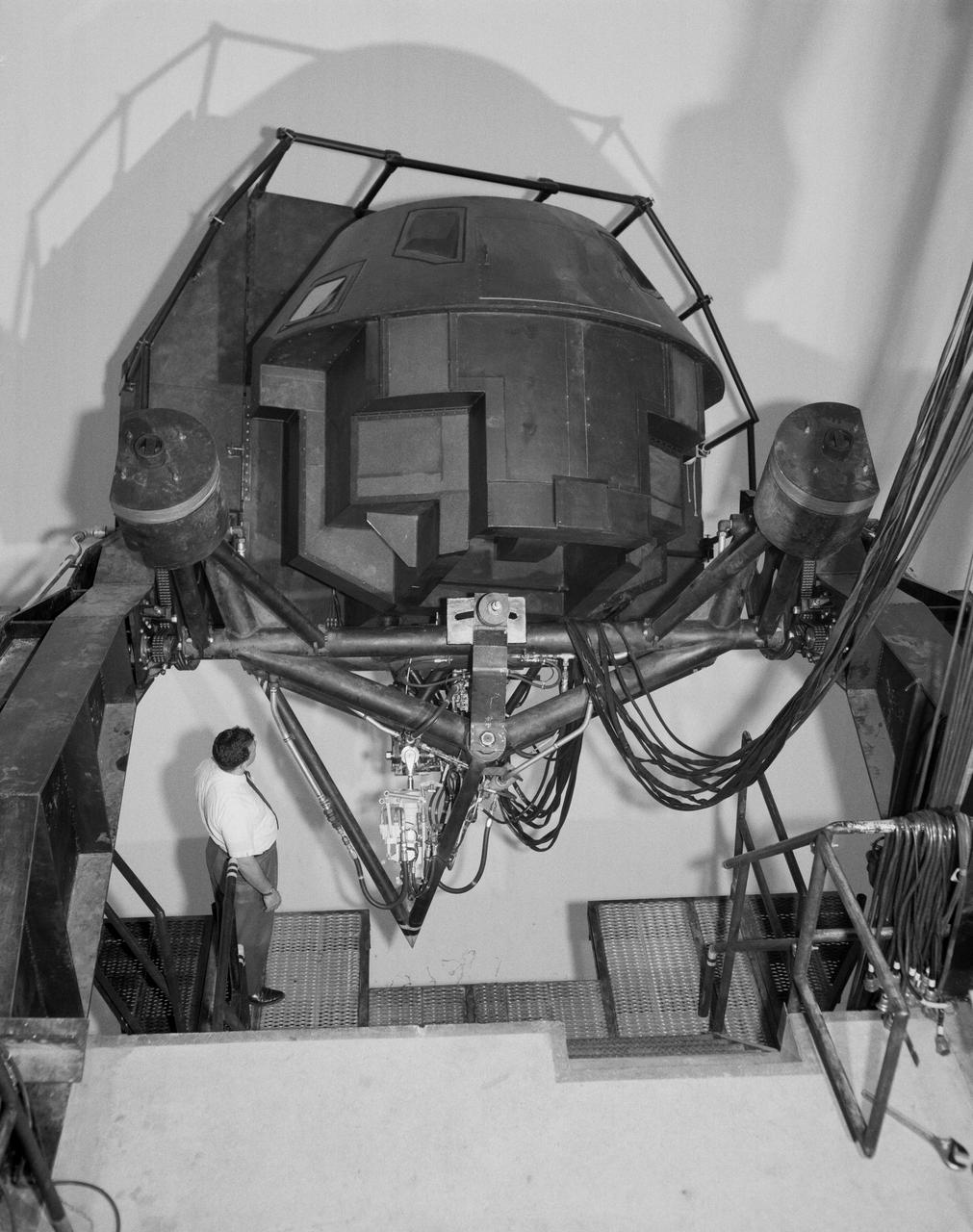
S66-21296 (1967) --- This is a medium exterior view of the Dynamic Crew Procedures Trainer, Command Module configuration, one of the Apollo astronaut training components located in the Mission Simulation and Training Facility, Building 5, Manned Spacecraft Center, Houston, Texas. Photo credit: NASA
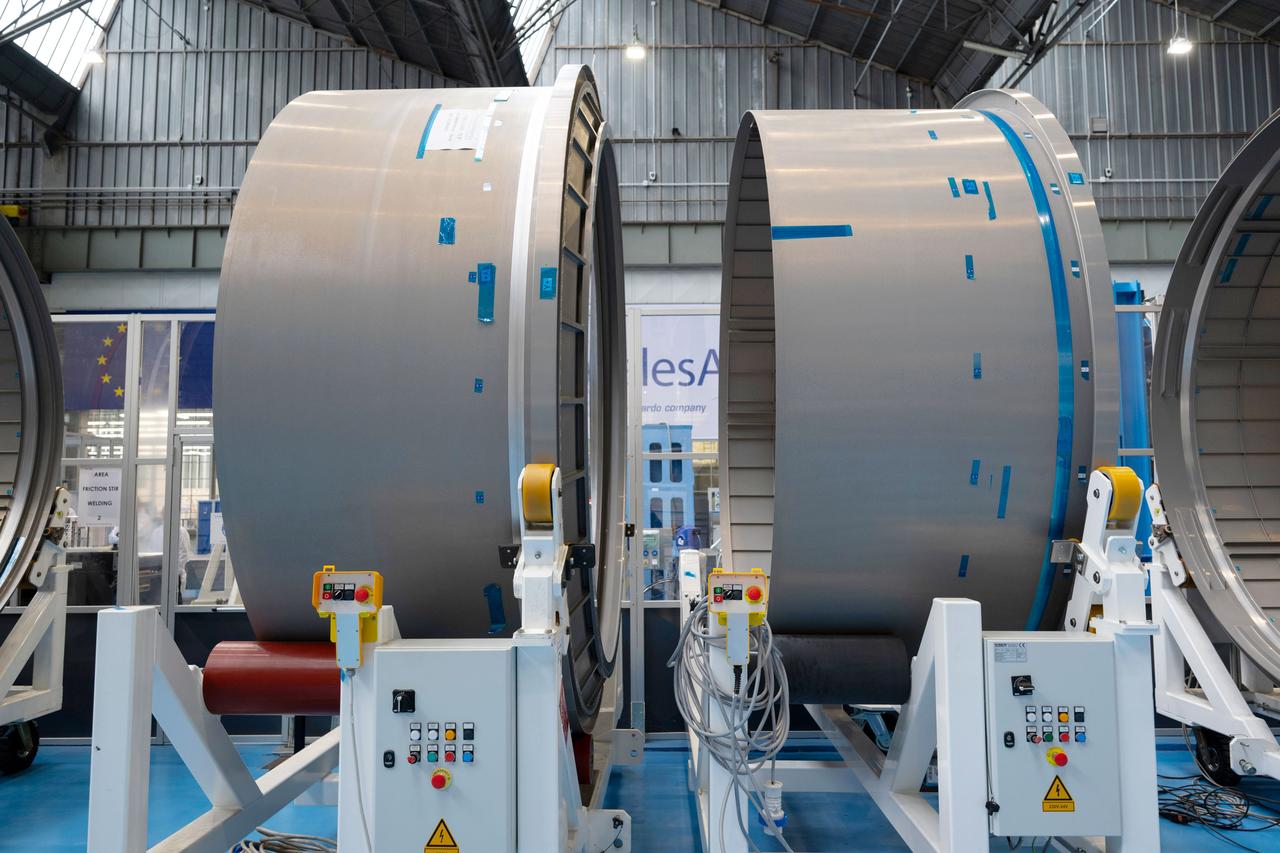
Photo Date: 11/14/2023 Location: Turin, Italy Subject: ESA International Habitat (I-HAB) Photo Credit: ESA/Stephane Corvaja
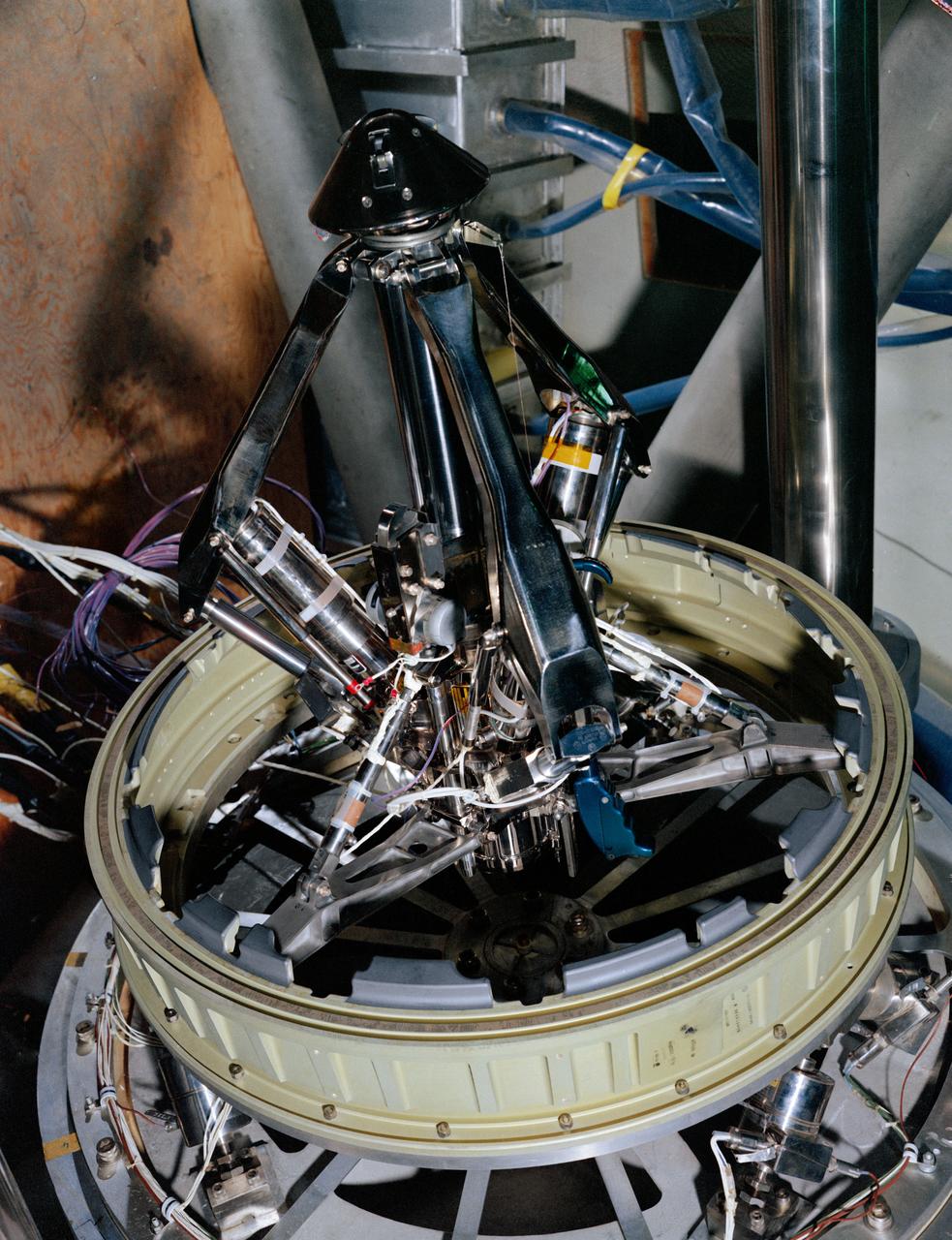
S68-50870 (1968) --- An engineering set up illustrating the probe portion of the docking system of the Apollo spacecraft. During docking maneuvers the docking probe on the Command Module (CM) engages the cone shaped drogue of the Lunar Module (LM). The primary docking structure is the tunnel through which the astronauts transfer from one module to the other. This tunnel is partly in the nose of the CM and partly in the top of the LM. Following CSM/LM docking the drogue and probe are removed to open the passageway between the modules.
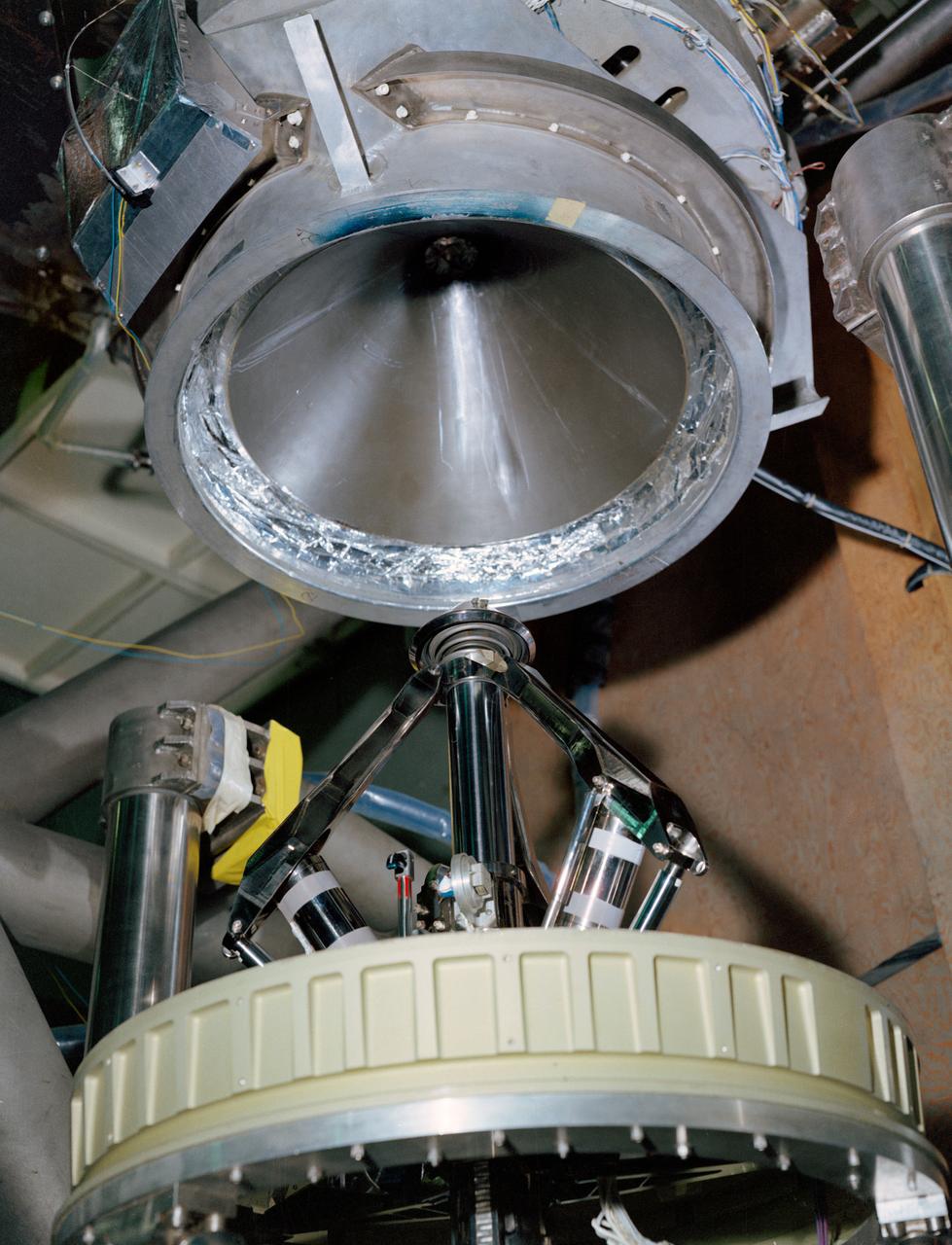
S68-50869 (1968) --- An engineering set up illustrating the docking system of the Apollo spacecraft. During docking maneuvers the docking probe on the Command Module engages the cone-shaped drogue of the Lunar Module. The primary docking structure is the tunnel through which the astronauts transfer from one module to the other. This tunnel is partly in the nose of the Command Module and partly in the top of the Lunar Module. Following CSM/LM docking the drogue and probe are removed to open the passageway between the modules.
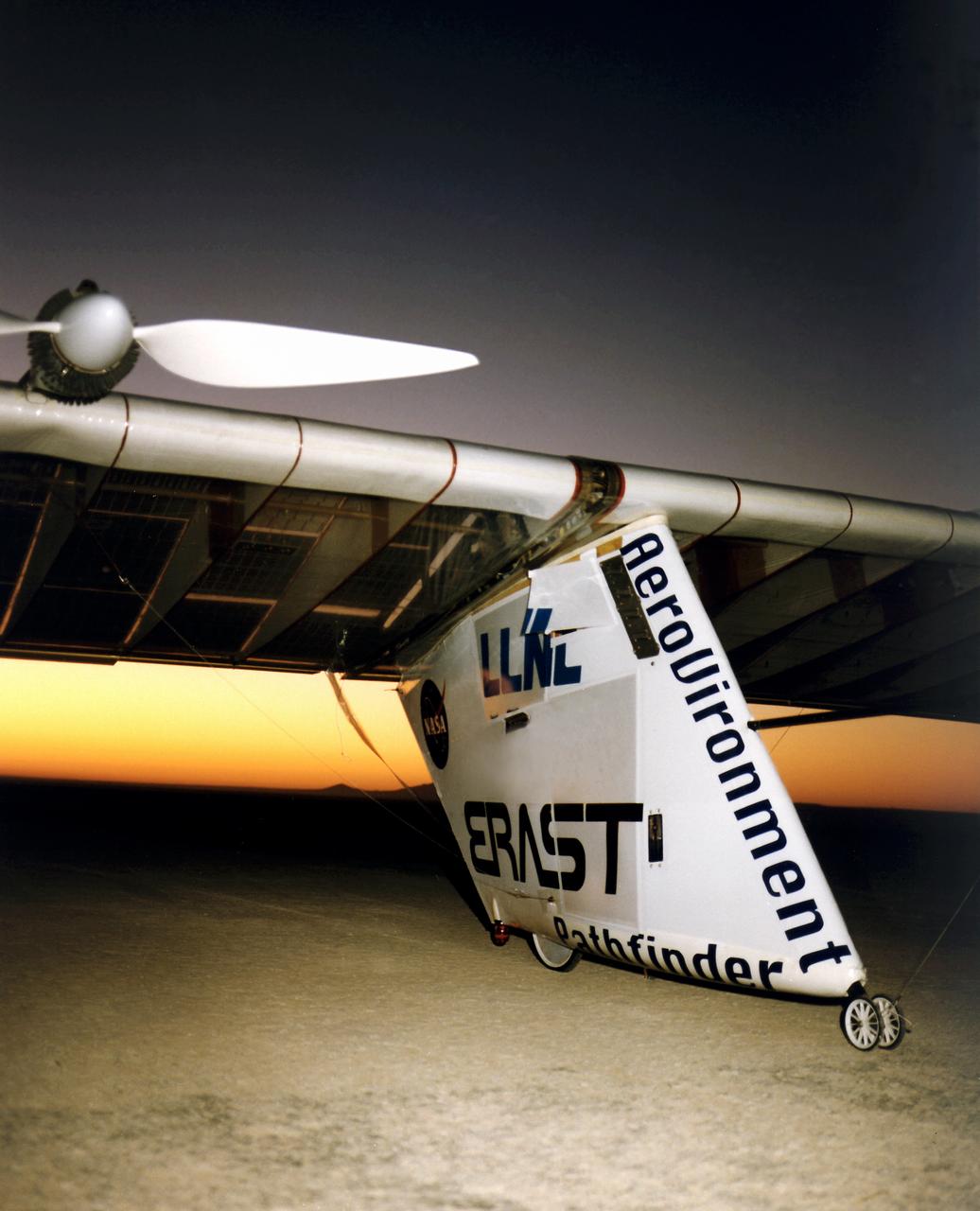
The Pathfinder solar-powered aircraft sits on Rogers Dry Lake at NASA's Dryden Flight Research Center, Edwards, California, before a research flight.
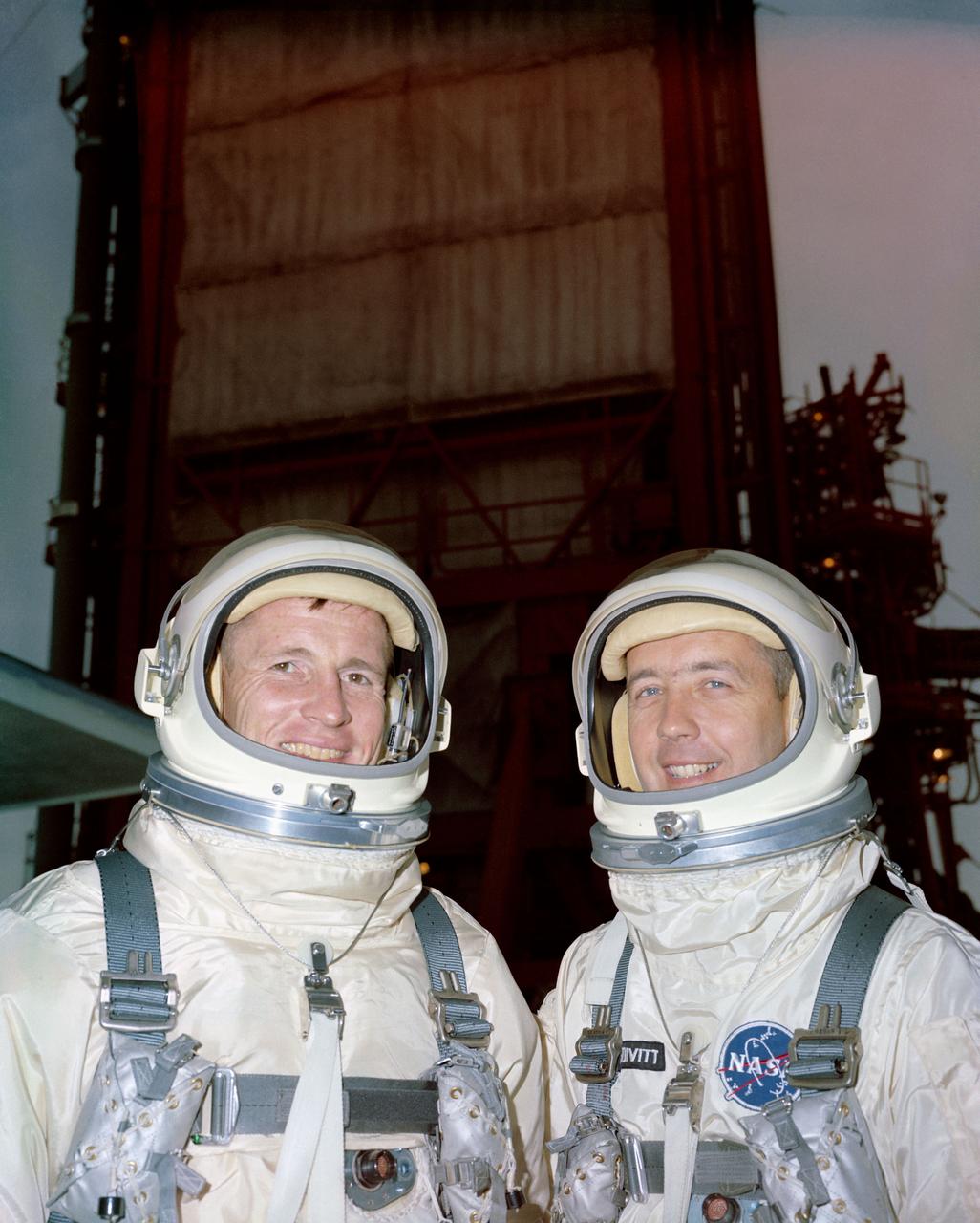
S65-19528 (1 June 1965) --- Astronauts Edward H. White II (left), Gemini-Titan 4 pilot; and James A. McDivitt, command pilot. EDITOR?S NOTE: Astronaut White died in the Apollo 1/Saturn 204 fire at Cape Kennedy on Jan. 27, 1967.
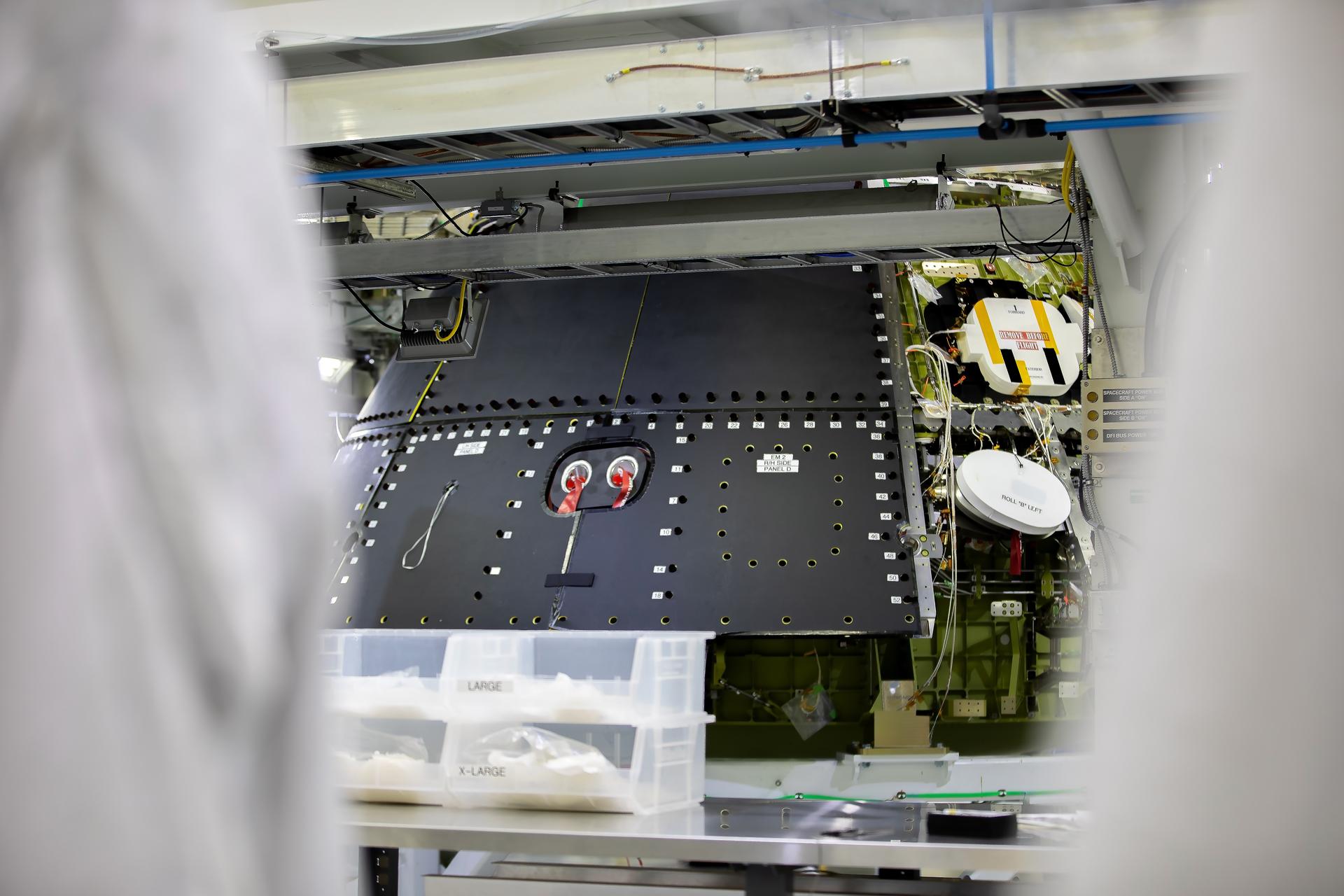
A photographer captures the Artemis IV Orion crew module on Friday, July 31, 2026, inside the Neil A. Armstrong Operations and Checkout Building at NASA’s Kennedy Space Center in Florida. There are currently several pieces of hardware from Artemis III, IV, and V undergoing processing at the same time inside the facility. Artemis IV will be one of the most complex undertakings of engineering and human ingenuity in the history of deep space exploration, exploring the lunar South Pole region. The astronauts’ observations, samples, and data collected will expand our understanding of our solar system and home planet, while inspiring the Artemis Generation.
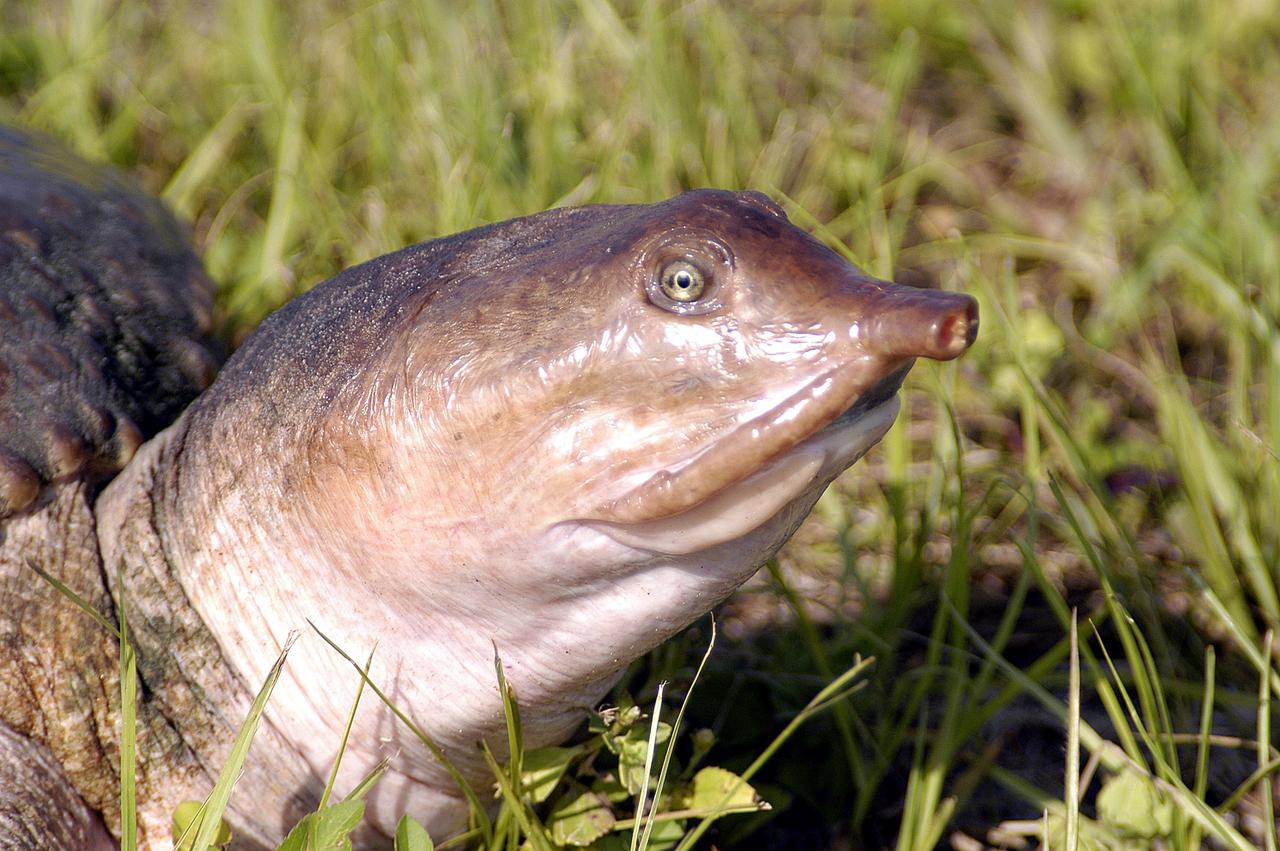
KENNEDY SPACE CENTER, FLA. - A closeup of a soft-shell turtle seen crossing the tow-way at KSC. The turtle is one of 65 amphibians and reptiles found in the Merritt Island National Wildlife Refuge, which surrounds KSC. The Wildlife Refuge encompasses 92,000 acres that are also a habitat for more than 331 species of birds, 31 mammals and 117 fishes. The marshes and open water of the refuge provide wintering areas for 23 species of migratory waterfowl, as well as a year-round home for great blue herons, great egrets, wood storks, cormorants, brown pelicans and other species of marsh and shore birds, plus a variety of insects.
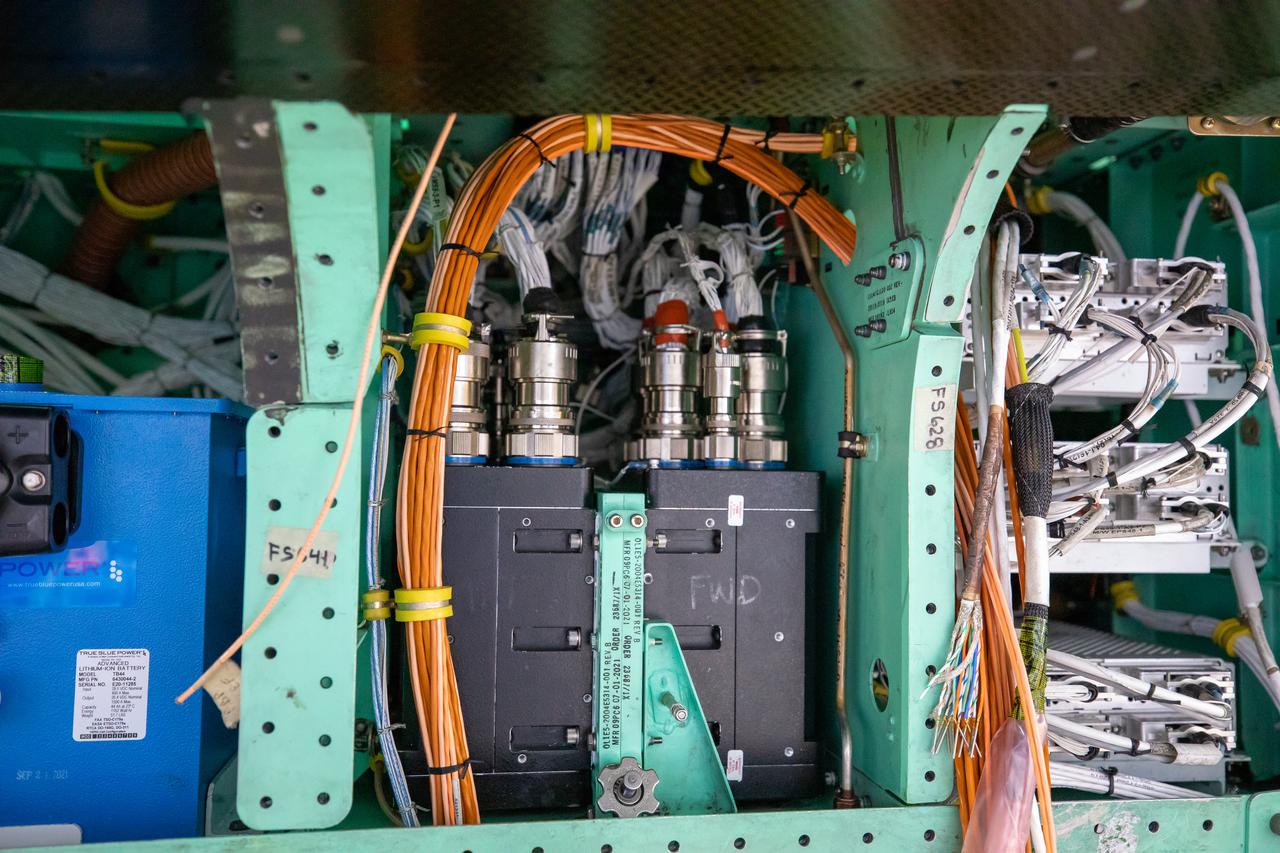
This is a closeup view of the inner workings of the X-59 aircraft. Visible are one the plane’s three lithium-ion batteries (blue box), electrical power system and other wiring components including the vehicle management systems computers (two black boxes) and the white wirings which assist in providing the power that is needed for the aircraft to function in flight. All of these components are essential to maintaining and monitoring the X-59 once it takes to the skies. The X-59 is the centerpiece of the Quesst mission which plans to help enable commercial supersonic air travel over land.
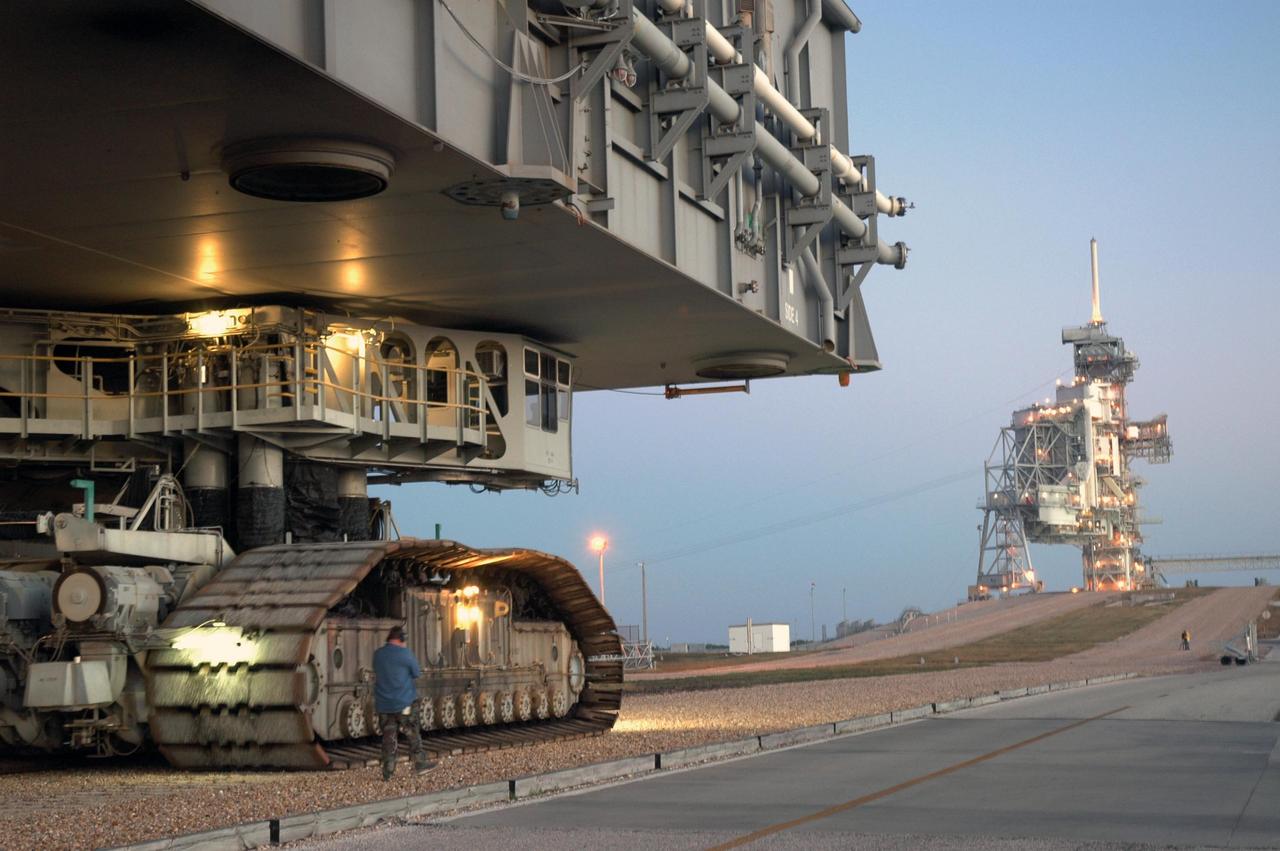
KENNEDY SPACE CENTER, FLA. -- A closeup of the crawler-transporter underneath the mobile launcher platform with Space Shuttle Discovery on top as they approach the ramp to Launch Pad 39B for launch of mission STS-116. The mission is No. 20 to the International Space Station and construction flight 12A.1. The mission payload is the SPACEHAB module, the P5 integrated truss structure and other key components. The launch window for mission STS-116 opens Dec. 7. Photo credit: NASA/Jim Grossmann
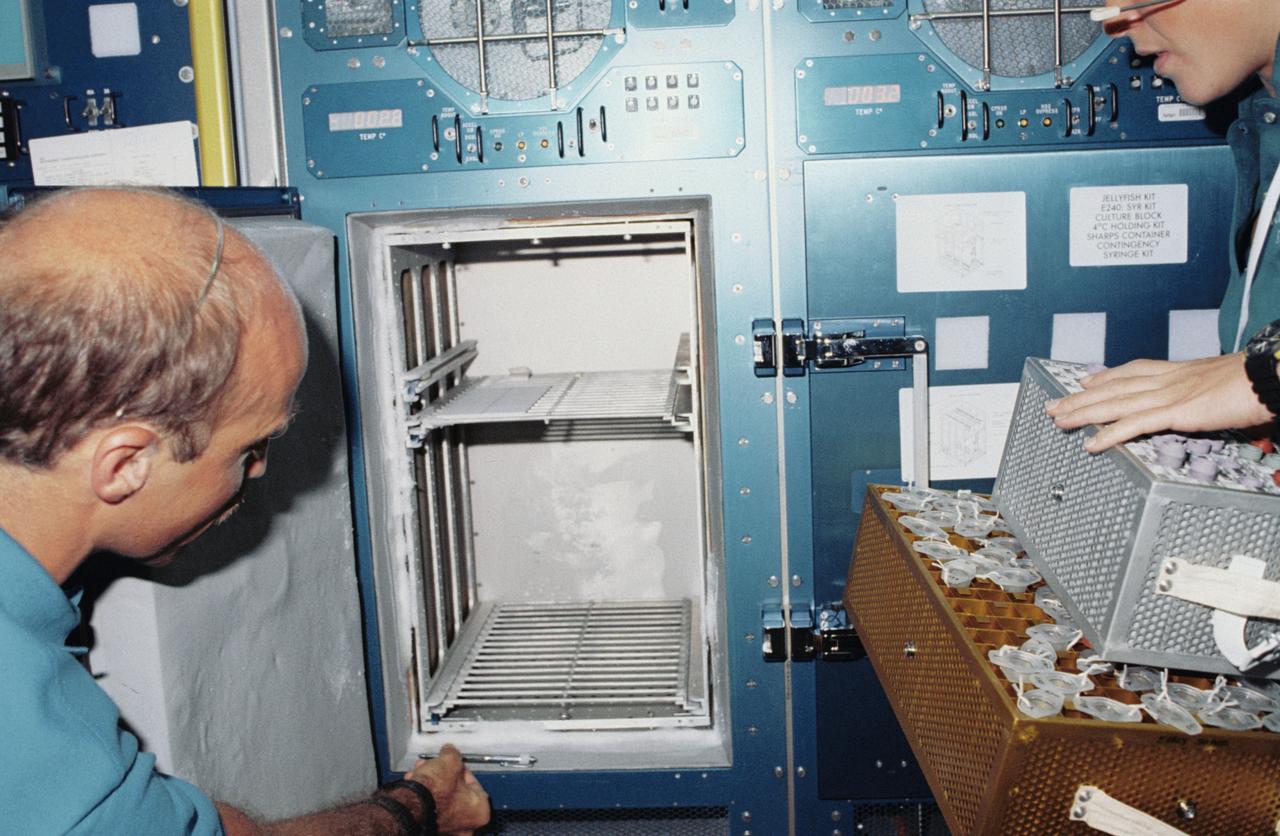
STS040-202-033 (5-14 June 1991) --- A medium closeup scene shows astronaut James P. Bagian (left) and an unidentified crewmember (partially out of frame) looking at a vacant refrigerator in the Spacelab Life Sciences (SLS-1) module aboard the Earth-orbiting Space Shuttle Columbia. Following the detection of problems with the refrigerator, its contents were temporarily removed. This scene was photographed with a 35mm camera.
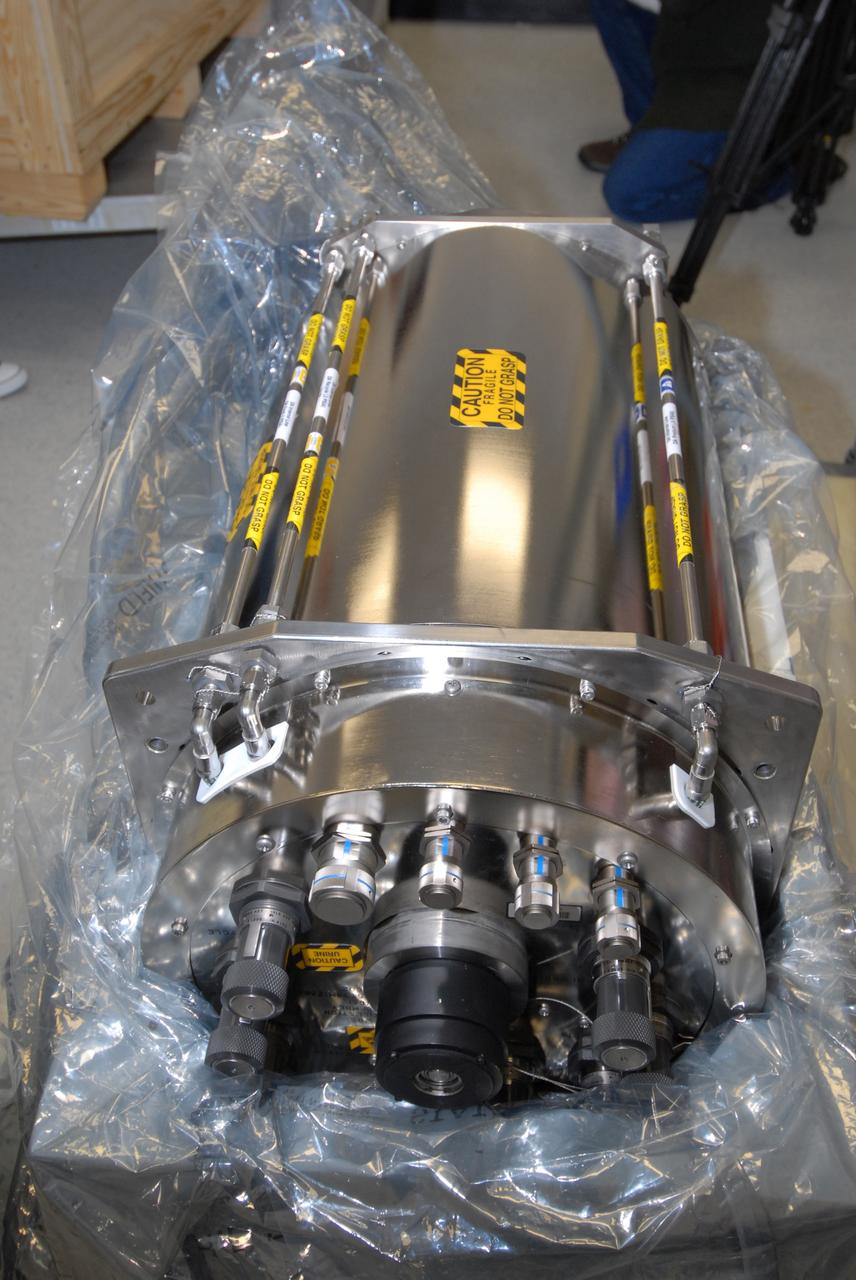
CAPE CANAVERAL, Fla. – A closeup of the replacement distillation assembly for the International Space Station's new water recycling system being checked out in the Space Station Processing Facility at NASA's Kennedy Space Center in Florida. The unit is part of the Urine Processing Assembly that removes impurities from urine in an early stage of the recycling process. It will be flown to the station aboard space shuttle Discovery on the STS-119 mission. Photo credit: NASA/Jack Pfaller
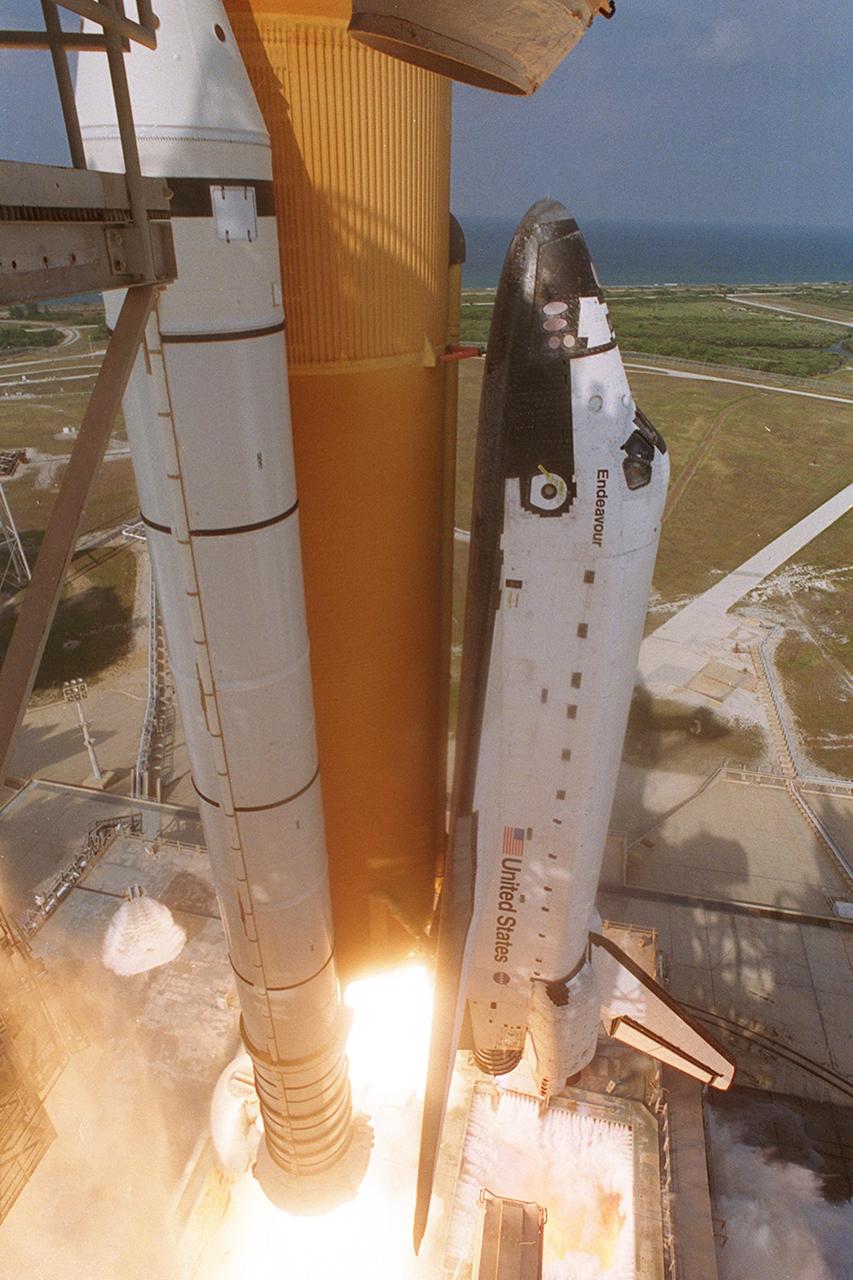
KENNEDY SPACE CENTER, FLA. -- A camera at the pad catches this closeup view of Space Shuttle Endeavour just after liftoff, which occurred at 5:22:49 p.m. EDT. The Shuttle and crew are bound for the International Space Station on mission STS-111, a utilization flight. This mission marks the 14th Shuttle flight to the International Space Station and the third Shuttle mission this year. Mission STS-111 is the 18th flight of Endeavour and the 110th flight overall in NASA's Space Shuttle program
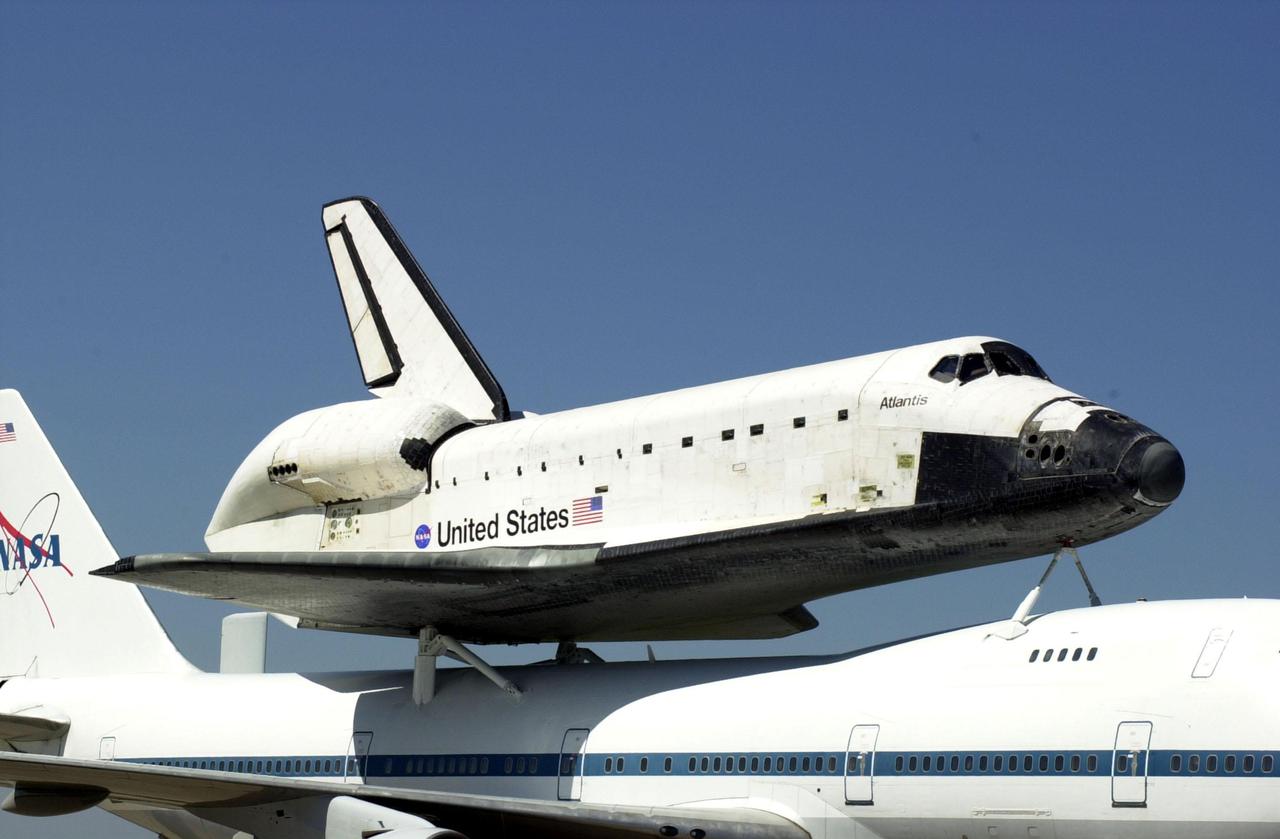
KENNEDY SPACE CENTER, FLA. -- This closeup shows the orbiter Atlantis atop a Shuttle Carrier Aircraft, its transport from California, after landing at the KSC Shuttle Landing Facility. Atlantis landed in California Feb. 19 concluding mission STS-98. The ferry flight began in California March 1; unfavorable weather conditions kept it on the ground at Altus AFB, Okla., until it could return to Florida. The orbiter will next fly on mission STS-104, the 10th construction flight to the International Space Station, scheduled June 8
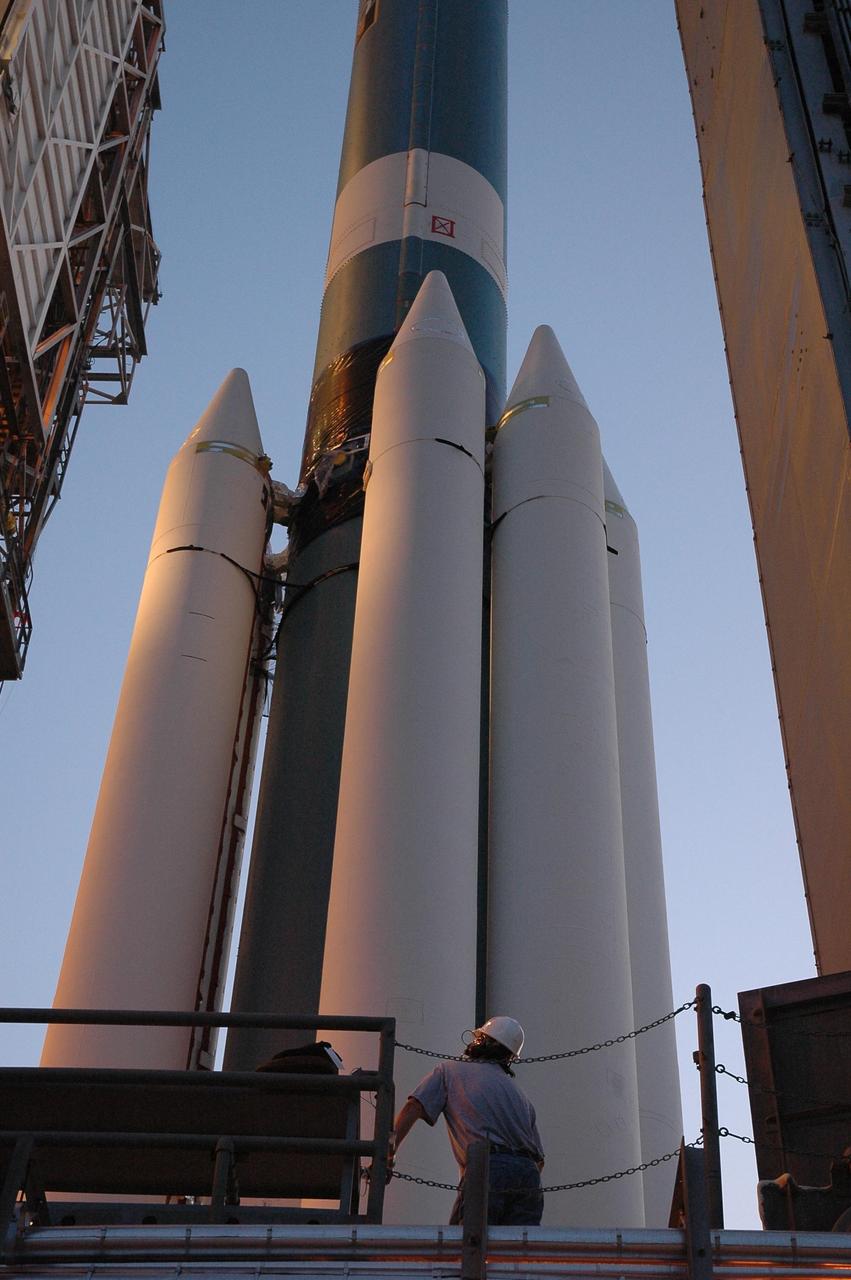
KENNEDY SPACE CENTER, FLA. -- This closeup shows four of the nine solid rocket boosters being mated to the Delta II first stage on Launch Pad 17-B at Cape Canaveral Air Force Station for launch of the Dawn spacecraft. Dawn's goal is to characterize the conditions and processes of the solar system's earliest epoch 4.5 billion years ago by investigating in detail two of the largest asteroids, Ceres and Vesta. They reside between Mars and Jupiter in the asteroid belt. Launch is targeted for July 7. Photo credit: NASA/Jim Grossmann
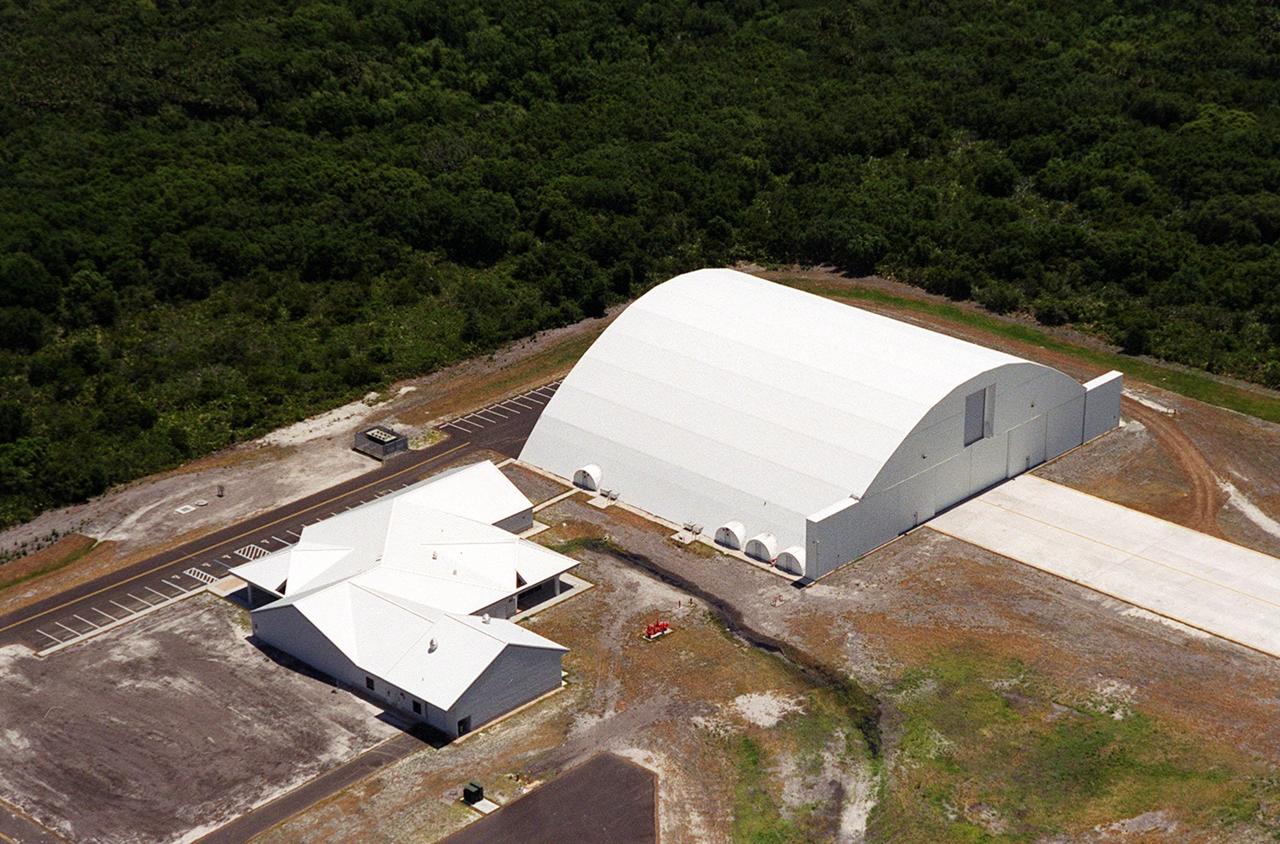
This closeup photo shows the Reusable Launch Vehicle (RLV) Support Complex at Kennedy Space Center. At right is a multi-purpose hangar and to the left is a building for related ground support equipment and administrative/ technical support. The complex is situated at the Shuttle Landing Facility. The RLV complex will be available to accommodate the Space Shuttle; the X-34 RLV technology demonstrator; the L-1011 carrier aircraft for Pegasus and X-34; and other RLV and X-vehicle programs. The complex is jointly funded by the Spaceport Florida Authority, NASA’s Space Shuttle Program and KSC
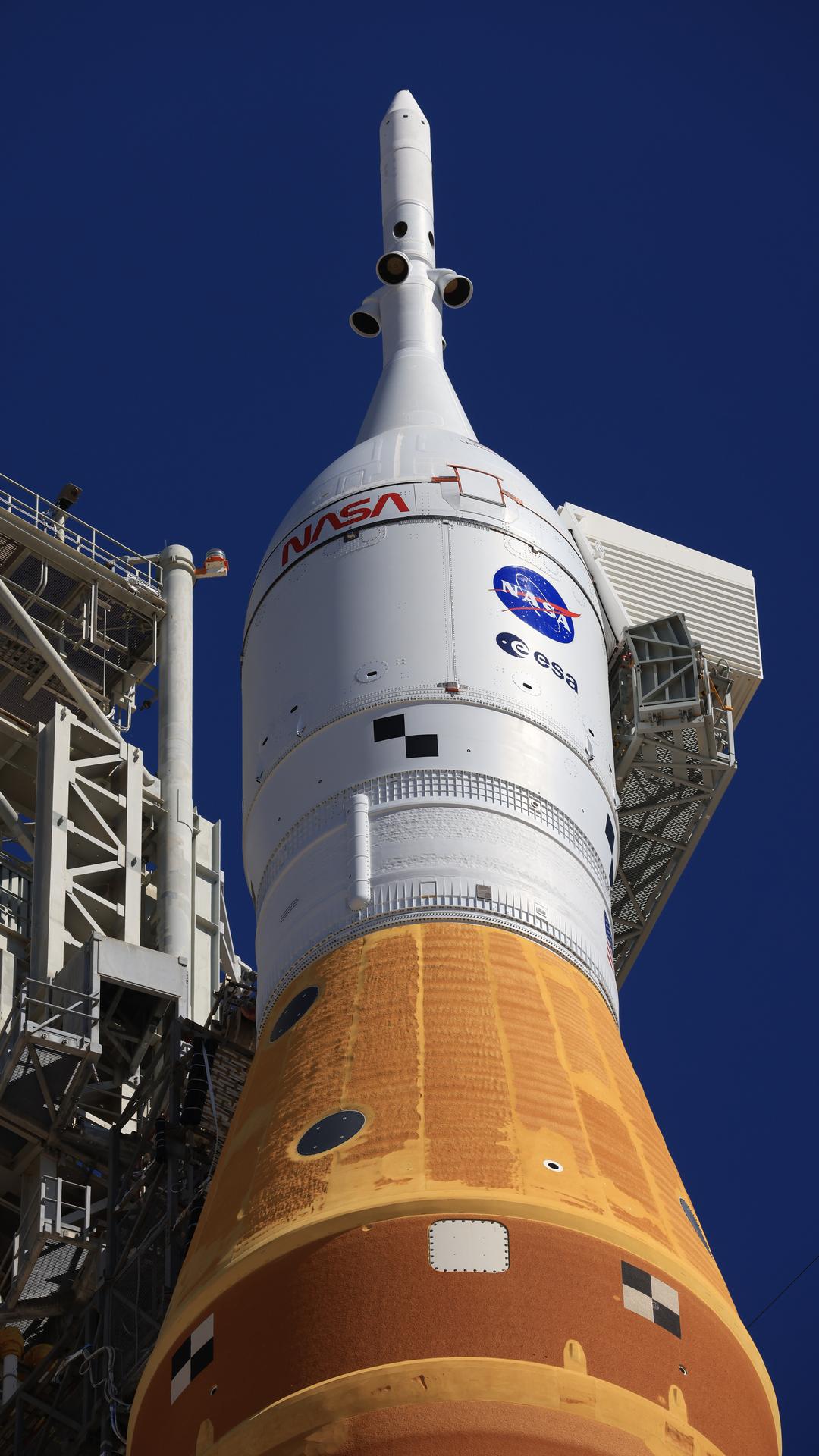
A closeup view shows the NASA’s Artemis II SLS (Space Launch System) rocket with the Orion spacecraft and launch abort system atop at Launch Complex 39B at NASA’s Kennedy Space Center in Florida on Tuesday, Feb. 10, 2026. The Artemis II test flight will take Commander Reid Wiseman, Pilot Victor Glover, and Mission Specialist Christina Koch from NASA, and Mission Specialist Jeremy Hansen from the CSA (Canadian Space Agency), around the Moon and back to Earth.
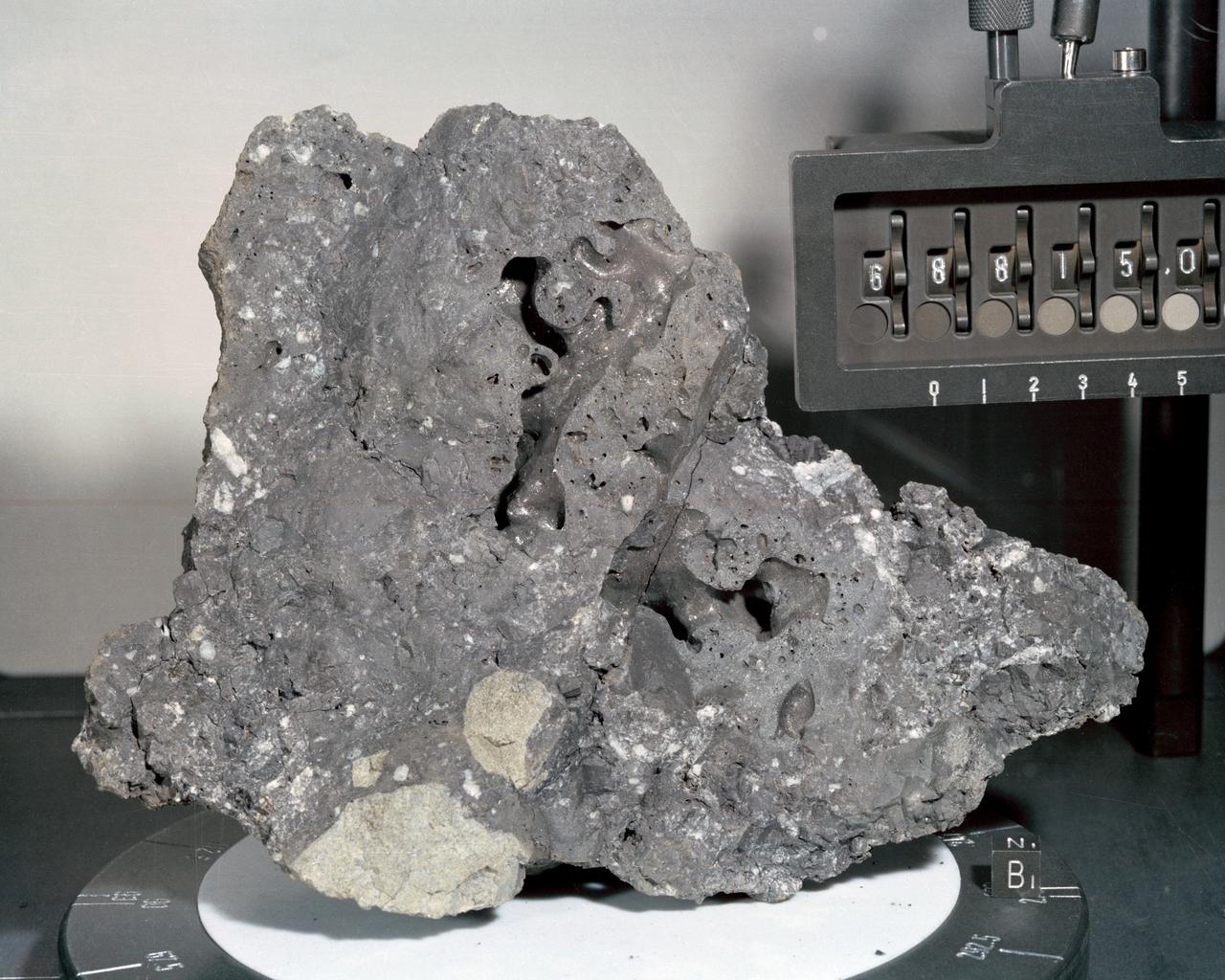
A closeup view or "mug shot" of Apollo 16 lunar sample no. 68815, a dislodged fragment from a parent boulder roughly four feet high and five feet long encountered at Station 8. The crew tried in vain to overturn the parent boulder. A fillet-soil sample was taken close to the boulder, allowing for study of the type and rate of erosion acting on lunar rocks. The fragment itself is very hard, has many veticles and a variety of inclusions. In addition, numerous metallic particles were observed in the black matrix.
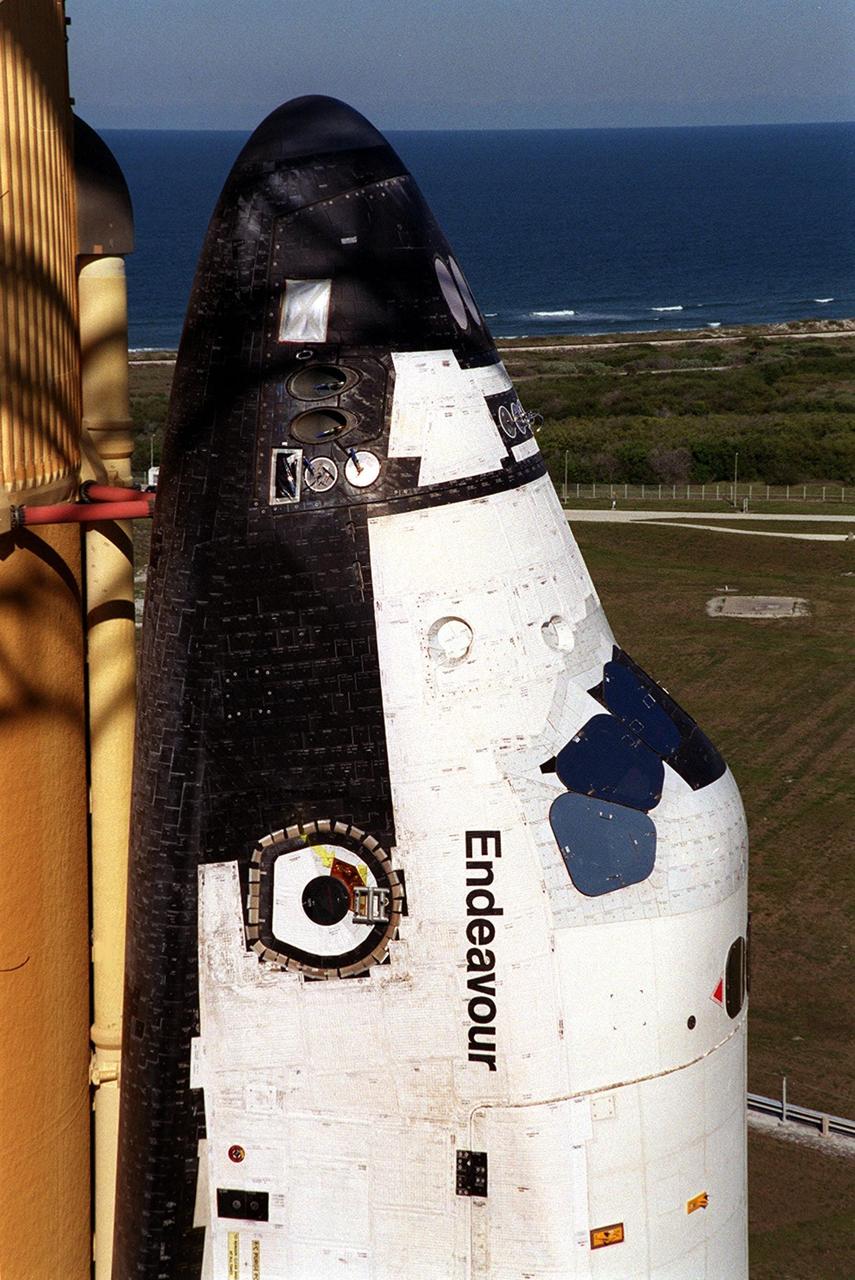
KENNEDY SPACE CENTER, FLA. -- In this closeup of Space Shuttle Endeavour at Launch Pad 39A, the crew entry can be seen just to the left of the orbiter’s name. Prior to launch, the orbiter access arm with the White Room at the end will extend to the entry, enabling the crew to enter the orbiter. In the background, the Atlantic Ocean can be seen. Endeavour is expected to lift off on mission STS-100 on April 19, carrying the Multi-Purpose Logistics Module Raffaello and the Canadian robotic arm, SSRMS, to the International Space Station
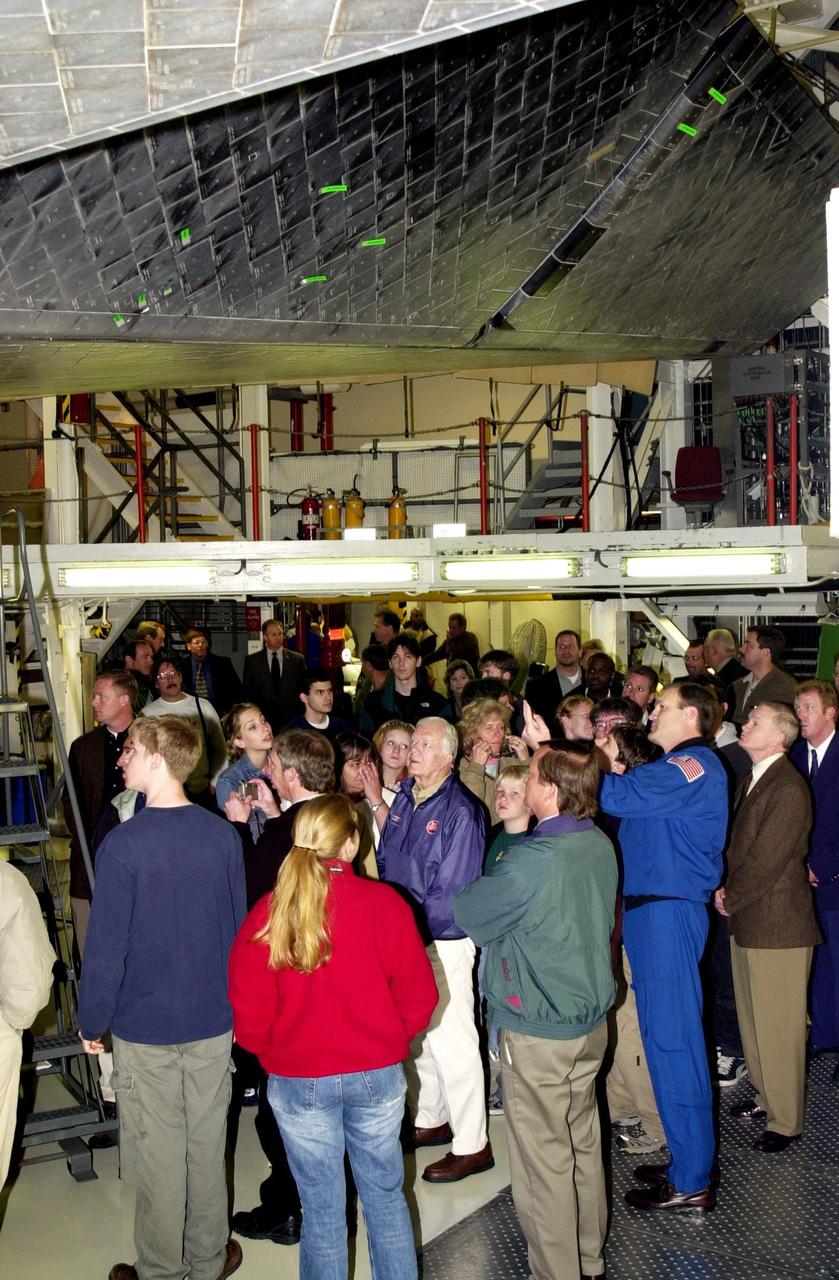
KENNEDY SPACE CENTER, FLA. -- In the Orbiter Processing Facility, former President Jimmy Carter (center) gets a closeup view of the underside of an orbiter space vehicle. On the outer edge of the crowd are (left to riht) Launch Director Mike Leinbach (green jacket), Space Shuttle Launch Integration Manager Jim Halsell and Center Director Roy D. Bridges. Carter and former First Lady Rosalyn Carter are touring KSC
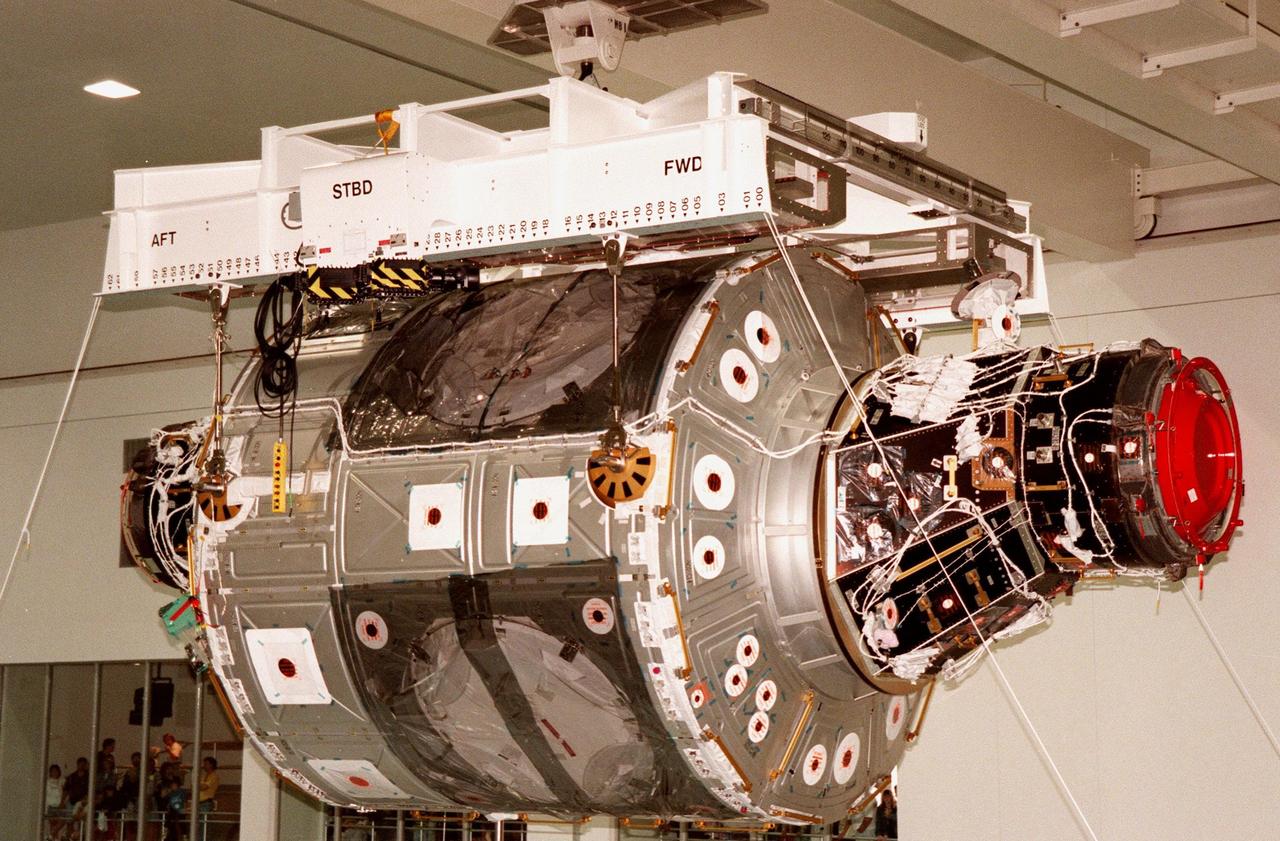
In the Space Station Processing Facility, a closeup view shows the overhead crane holding the Unity connecting module as it moves it to the payload canister for transfer to the launch pad. Part of the International Space Station (ISS), Unity is scheduled for launch aboard Space Shuttle Endeavour on Mission STS-88 in December. The Unity is a connecting passageway to the living and working areas of ISS. While on orbit, the flight crew will deploy Unity from the payload bay and attach Unity to the Russian-built Zarya control module which will be in orbit at that time
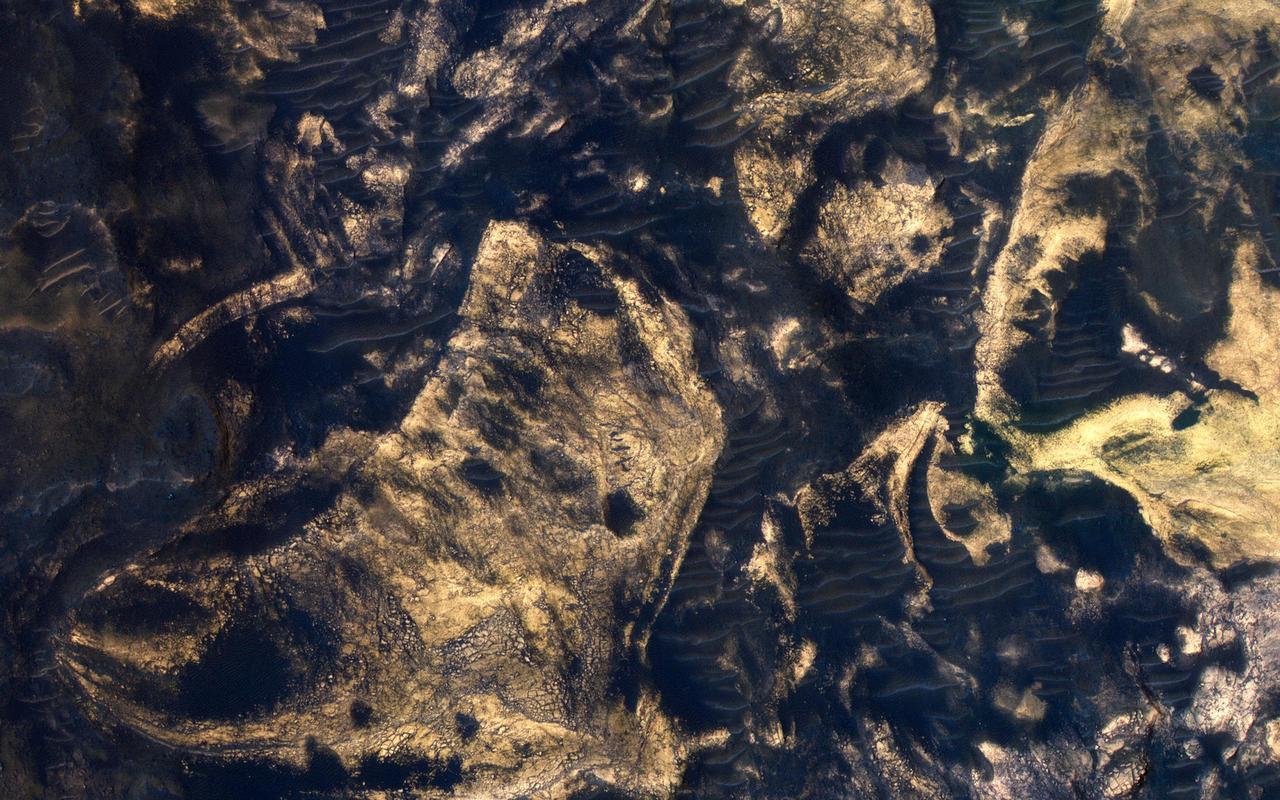
This part of Melas Chasma has been the target for many previous HiRISE images due to its diversity of terrains and materials. This observation covers an area not previously imaged, revealing a chaotic jumble of bright layered sediments, perhaps resulting from large landslides. In a closeup with enhanced colors, we can see an assortment of materials. Dark sand covers the low areas of the scene. https://photojournal.jpl.nasa.gov/catalog/PIA23063
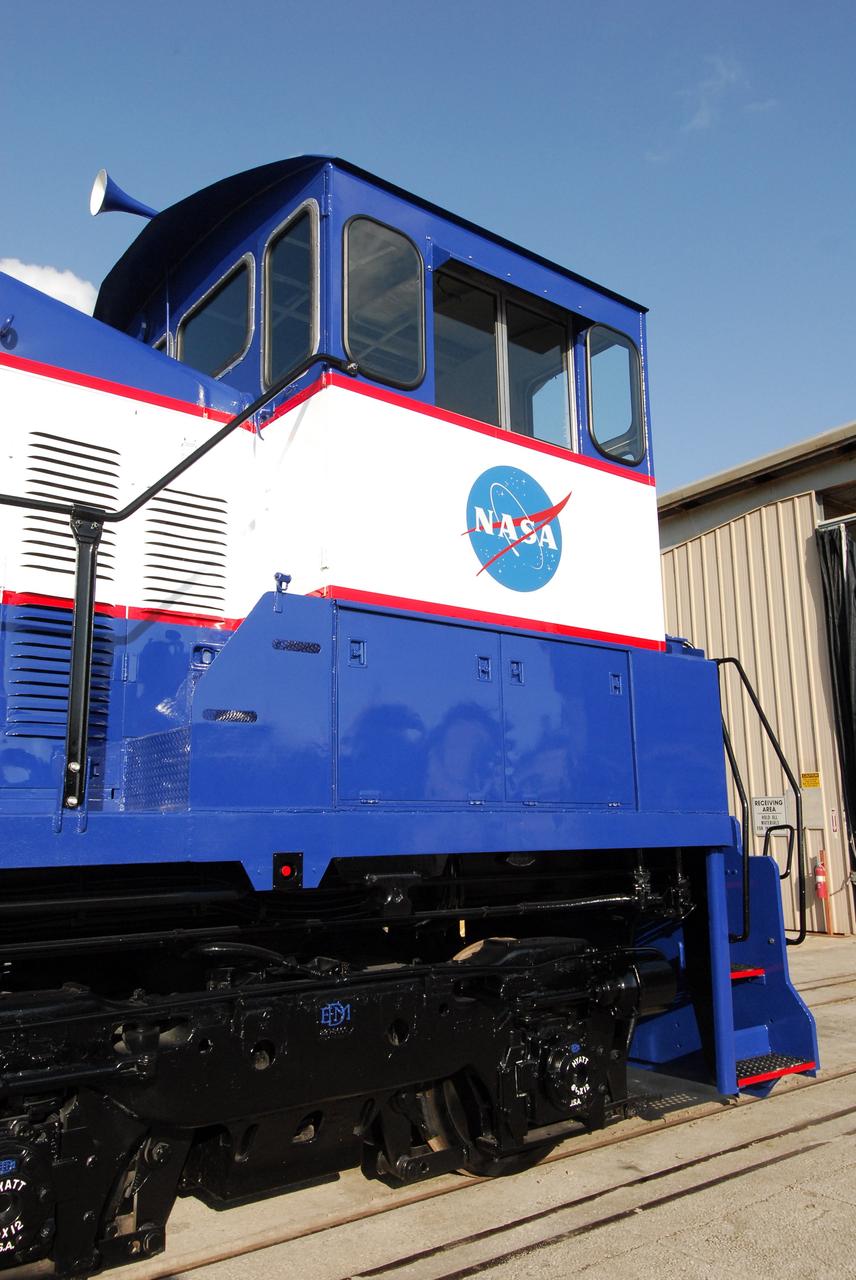
CAPE CANAVERAL, Fla. – A closeup of the cab on NASA Railroad locomotive 3 which was recently refurbished by the Railroad Operation and Maintenance Team at NASA's Kennedy Space Center in Florida. The 15-month process, including a new paint scheme, dealt with extensive corrosion to the locomotive because of Kennedy's proximity to the Atlantic Ocean. Locomotives 1 and 2 also will be refurbished eventually. The NASA Railroad locomotives are SW-1500 switch engines built by Electro Motive Diesel (EMD). Photo credit: NASA/Amanda Diller
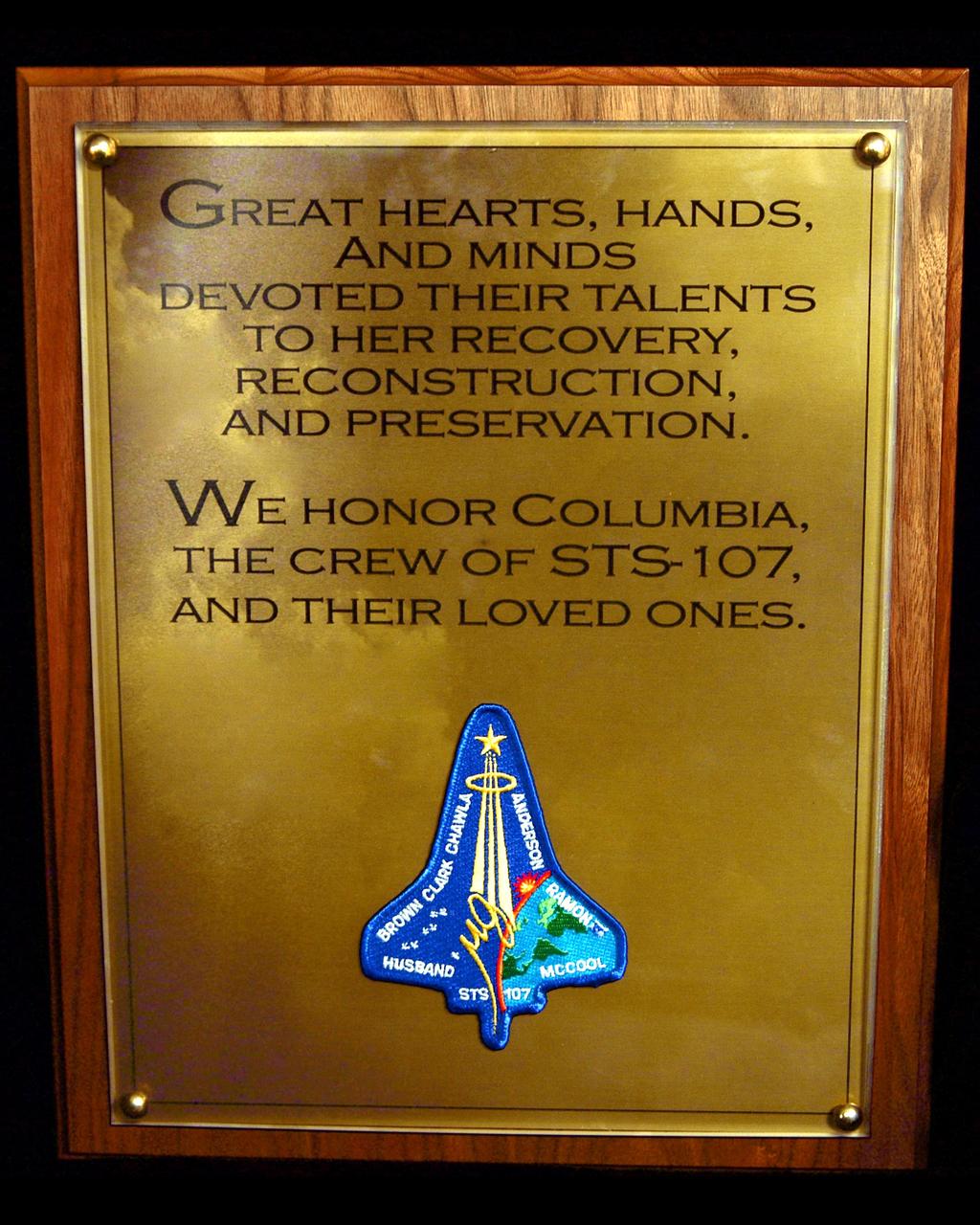
KENNEDY SPACE CENTER, FLA. - This closeup shows the words of the plaque unveiled Jan. 29, 2004, that was dedicated in memory of the orbiter Columbia and her seven-member crew who were lost in the tragic accident Feb. 1, 2003, as they returned to Earth from mission STS-107. The dedication of the plaque was made in front of the 40-member preservation team in the “Columbia room,” a permanent repository in the Vehicle Assembly Building of the debris collected in the aftermath of the accident.
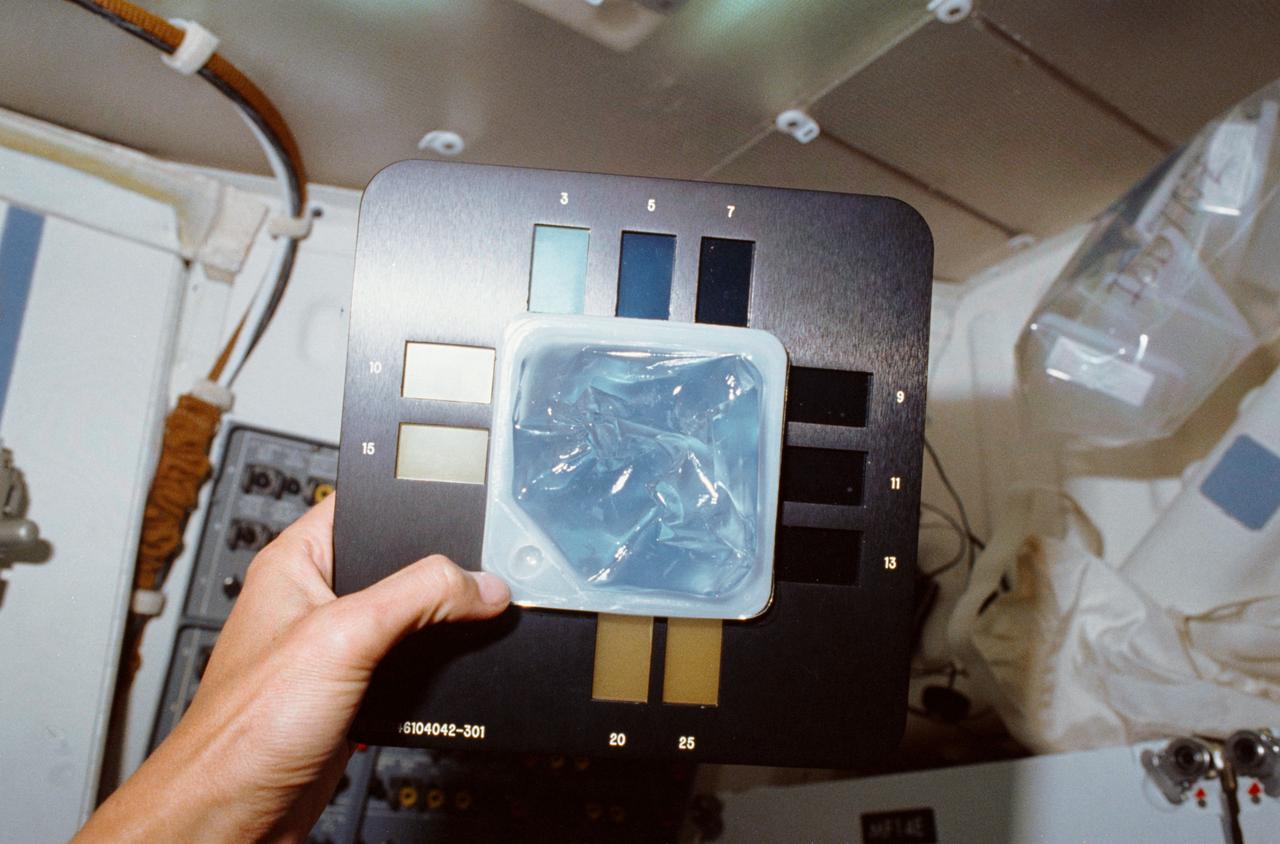
STS034-10-014 (18-23 Oct. 1989) --- An onboard 35mm camera provides a closeup view of an STS-34 beverage container doubling as an experiment module for a test involving iodine concentration in onboard water. The examination called for the adding of starch to a specimen of Atlantis' fuel-cell produced water. The liquid was then compared against the color chart for determining the degree of iodine content. The experiment was designed by Terry H. Slezak of JSC's Photographic Technology and Television Division.

KENNEDY SPACE CENTER, FLA. - This closeup shows the size of the computer chip that holds about 35,000 laser-engraved signatures of visitors to the Mars Exploration Rovers at the Jet Propulsion Laboratory. It will be placed on the second rover to be launched to Mars; the first rover already has one. The signatures include those of senators, artists, and John Glenn. The identical Mars rovers are scheduled to launch June 5 and June 25 from Cape Canaveral Air Force Station.
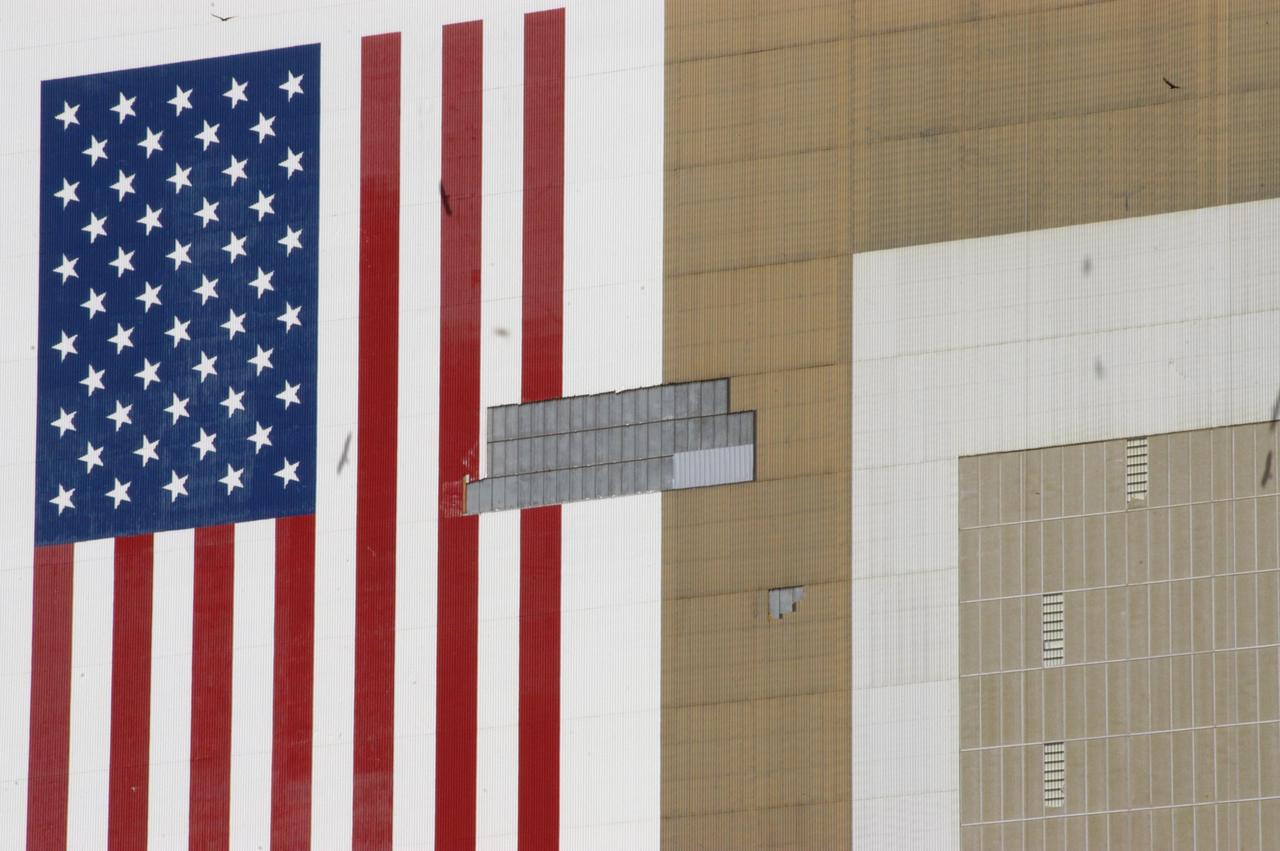
KENNEDY SPACE CENTER, FLA. - This closeup of the Vehicle Assembly Building at KSC shows some of the patchwork of corrugated steel that covers holes created by recent hurricanes. The VAB lost 820 panels from the south wall during Hurricane Frances, and 25 additional panels pulled off the east wall by Hurricane Jeanne. Employees of Met-Con, a subcontractor in Cocoa, Fla., worked night and day on scaffolds hung from the 525-foot-high roof to close the holes and enable the facility to return to normal operations.
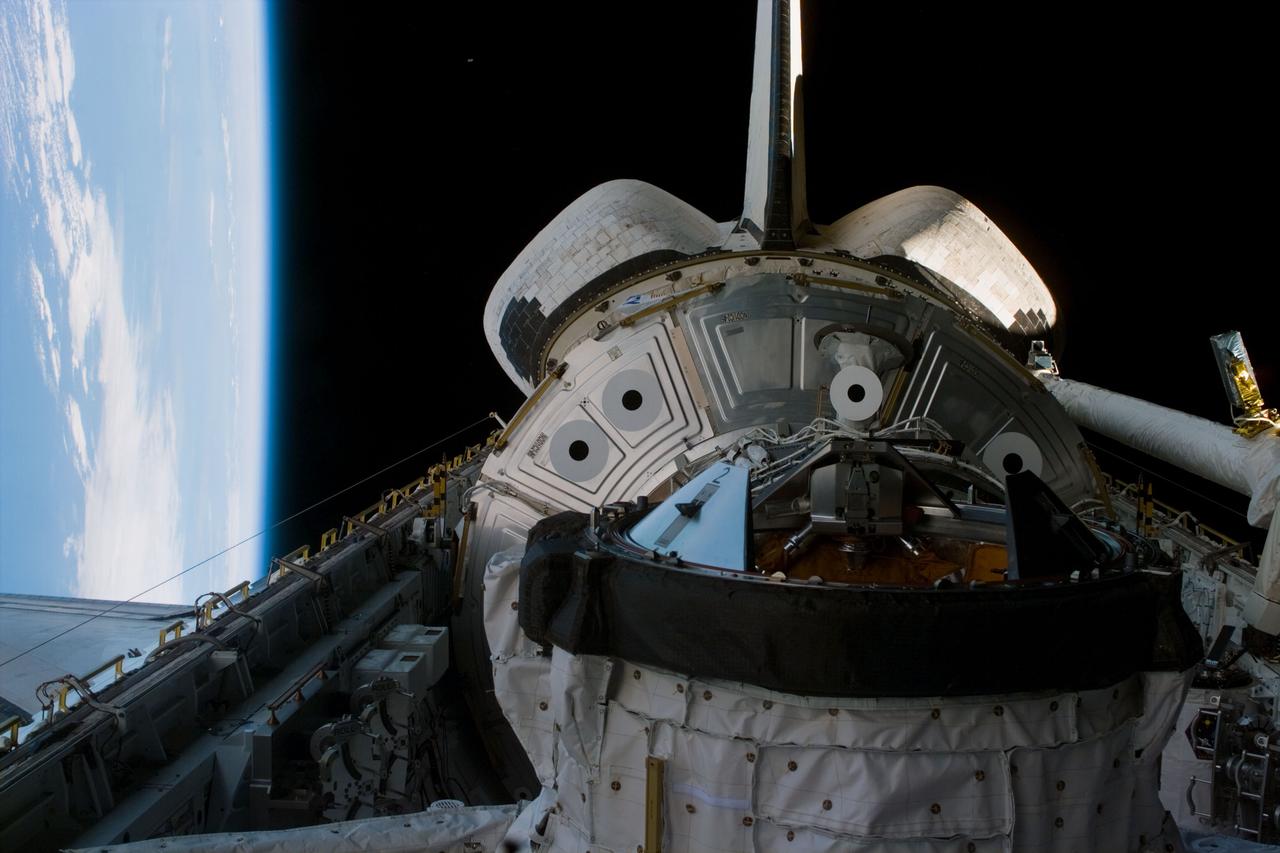
S88-E-5009 (12-04-98) --- This medium closeup electronic still camera (ESC) photograph shows Endeavour's docking system in the cargo bay. Though partially obscured, Unity can be seen in its stowed position in aft payload pay. The photo was taken prior to astronaut Nancy Currie's moving of the 12.8-ton Unity connecting module to link it with Endeavour's docking system. The photo was taken at 21:28:19 GMT, Dec. 4, and downlinked later to flight controllers in Houston.
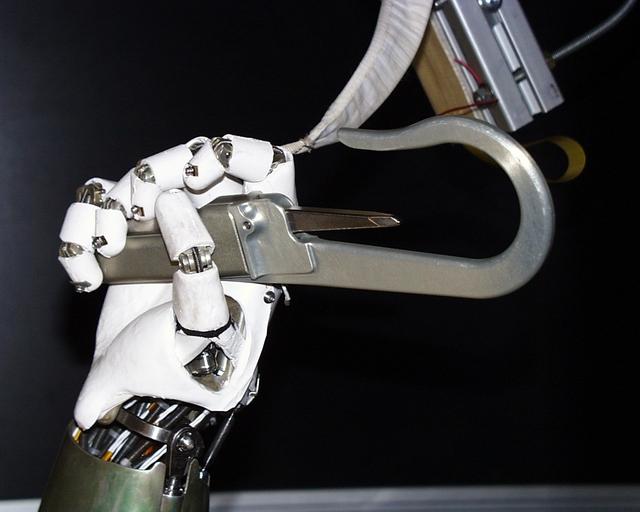
JSC2004-E-03468 (March 2004) --- This closeup view, photographed during a series of evaluations, shows the hand of a Robonaut grasping a tether hook. Joint travel for the wrist pitch and yaw is designed to meet or exceed that of the human hand in a pressurized glove and the hand and wrist parts are sized to reproduce the necessary strength to meet maximum crew requirements for extravehicular activity. Future robots like the Robonaut prototype may some day help astronauts perform important spacewalk tasks.
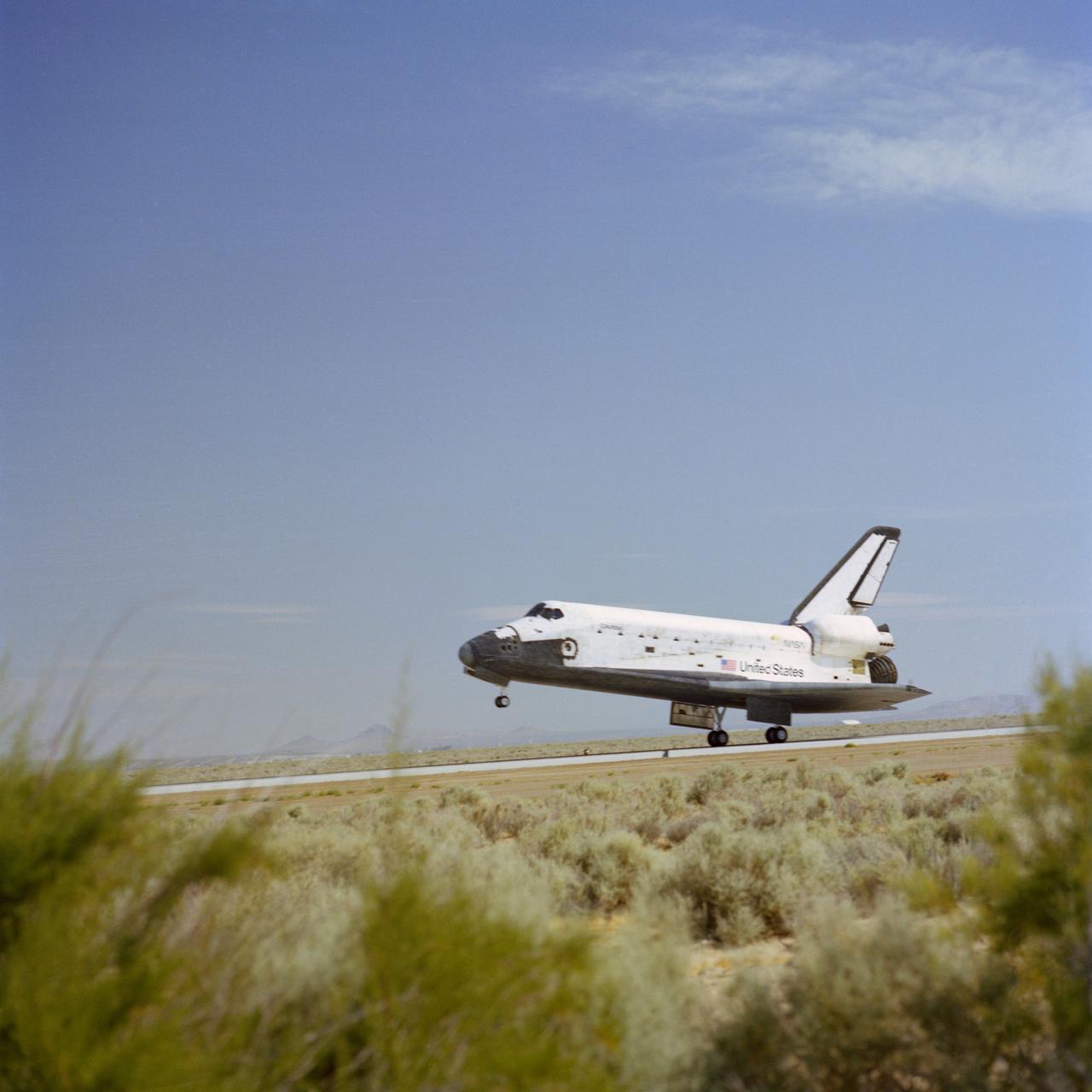
S82-33229 (4 July 1982) --- The space shuttle Columbia touches down on Runway 22 at Edwards Air Force Base in Southern California at the completion of a successful seven-day stay in Earth orbit. Inside are astronauts Thomas K. Mattingly II and Henry W. Hartsfield Jr., STS-4 commander and pilot, respectively. Though this closeup scene is devoid of visible people, hundreds of thousands weren?t far away for the unique July 4 celebration. Photo credit: NASA
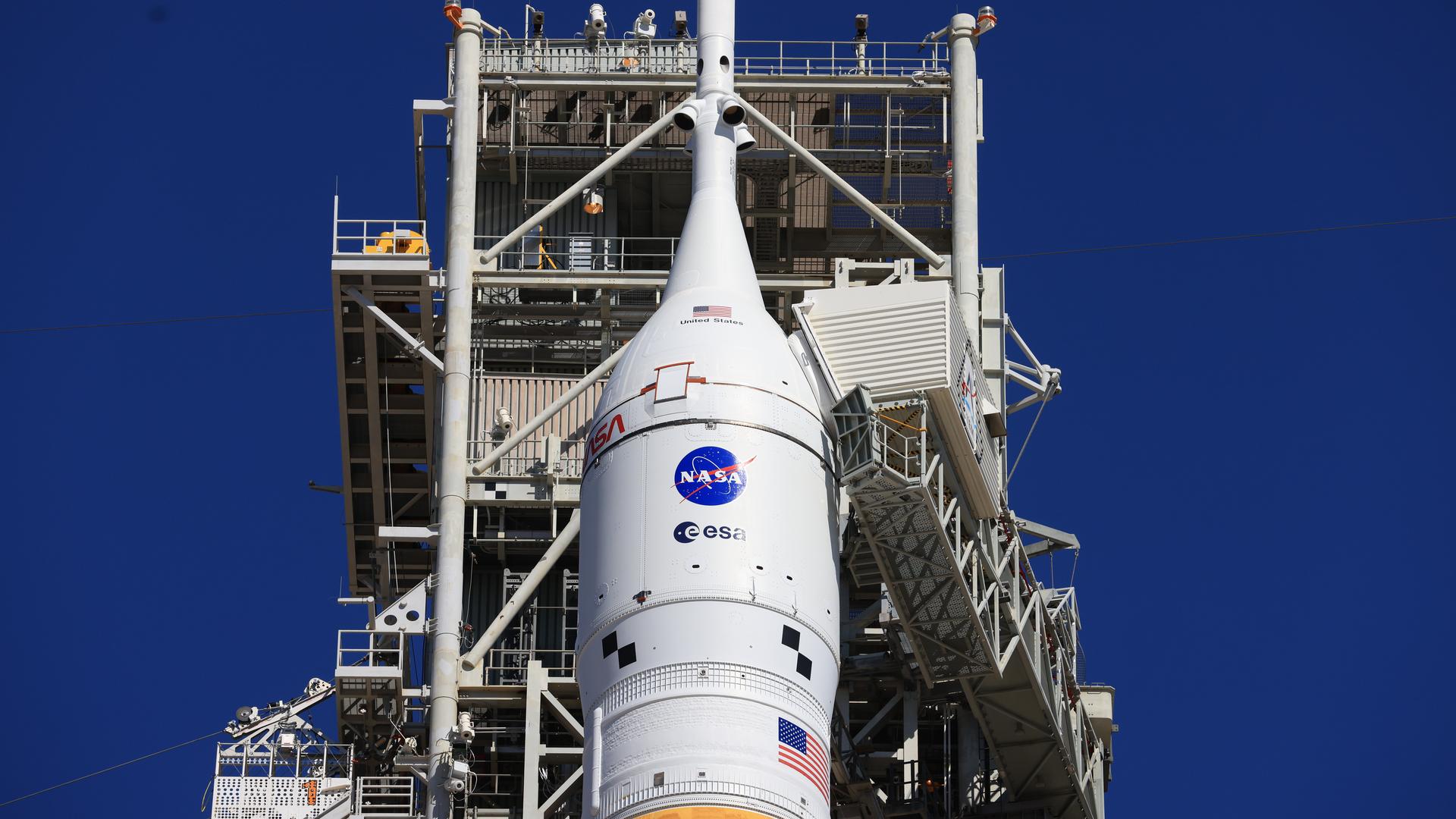
A closeup view shows the Orion spacecraft and launch abort system for NASA’s Artemis II test flight at Launch Complex 39B at NASA’s Kennedy Space Center in Florida on Tuesday, Feb. 10, 2026. The Artemis II test flight will take Commander Reid Wiseman, Pilot Victor Glover, and Mission Specialist Christina Koch from NASA, and Mission Specialist Jeremy Hansen from the CSA (Canadian Space Agency), around the Moon and back to Earth.
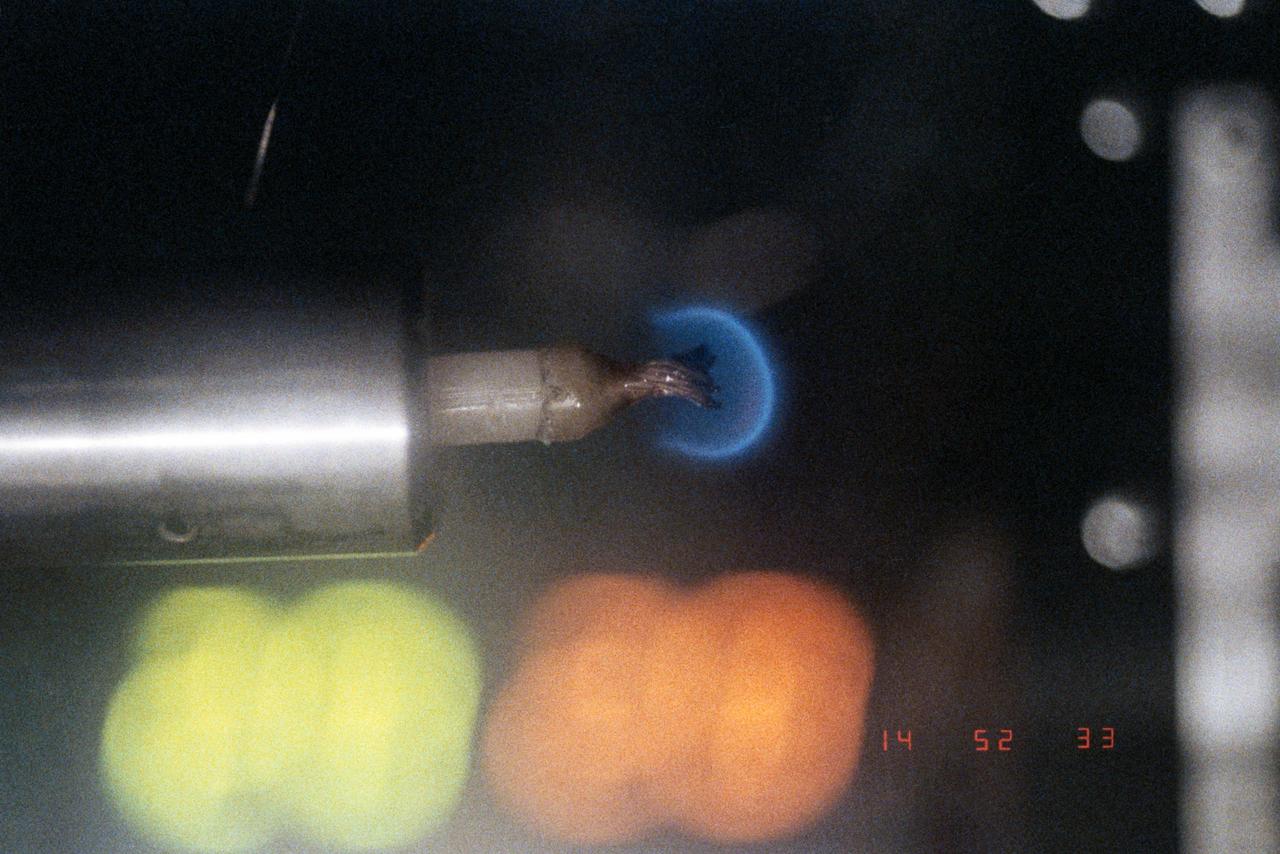
Closeup view inside glovebox showing a candle flame. The Candle Flames in Microgravity experiment is carried onboard Columbia to examine whether candle flames can be sustained in space; to study the interaction and physical properties of diffusion flames. In space, where buoyancy-driven convection is reduced, the role diffusion plays in sustaining candle flames can be isolated. Results have implications for other diffusion flame studies. Diffusion flames are the most common type of flame on Earth.
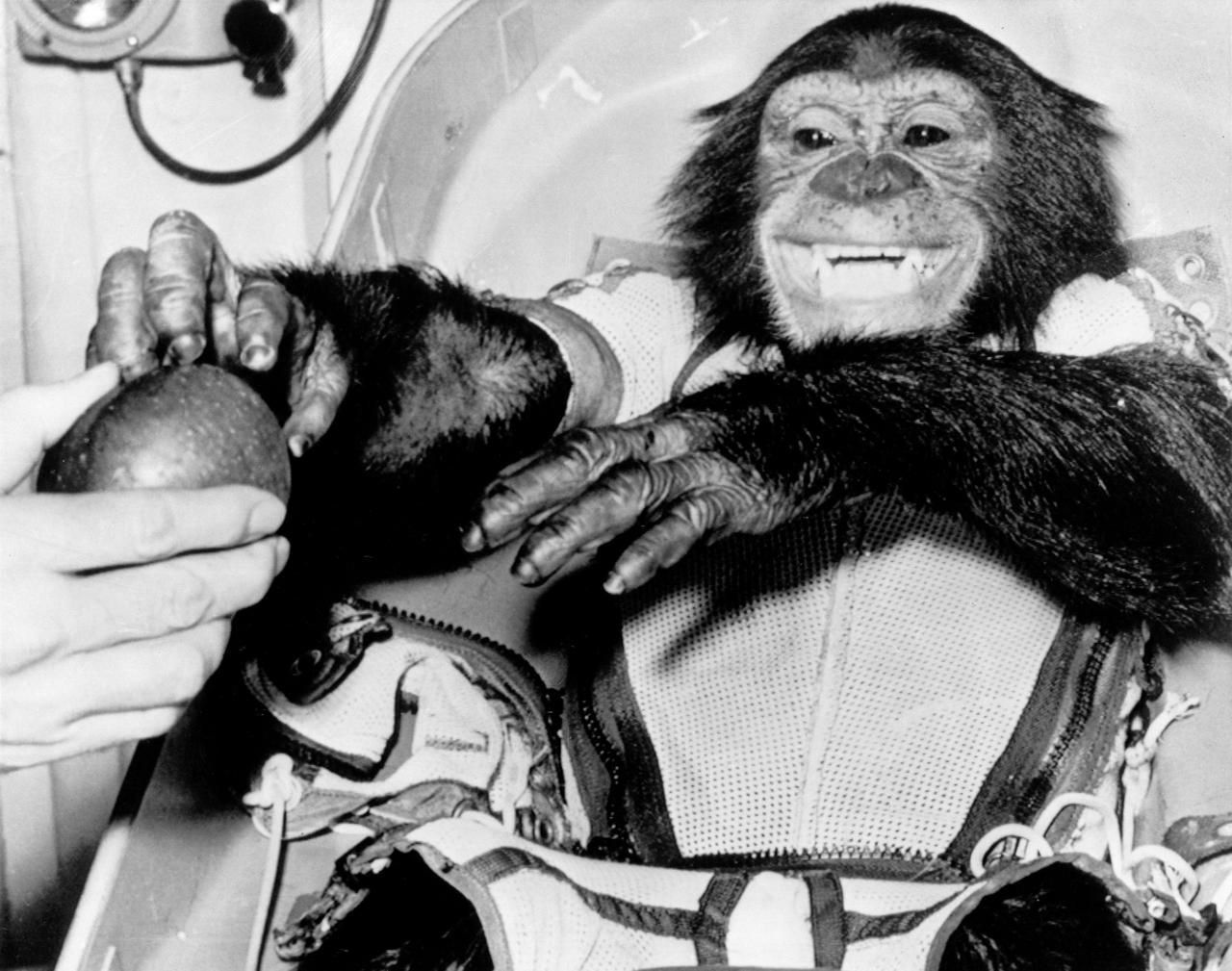
S63-18198 (31 Jan. 1961) --- Closeup view of the chimpanzee "Ham", the live test subject for the Mercury-Redstone 2 (MR-2) test flight, following his successful recovery from the Atlantic. The 420-statute mile suborbital MR-2 flight by the 37-pound primate was a significant accomplishment on the American route toward manned spaceflight. Photo credit: NASA
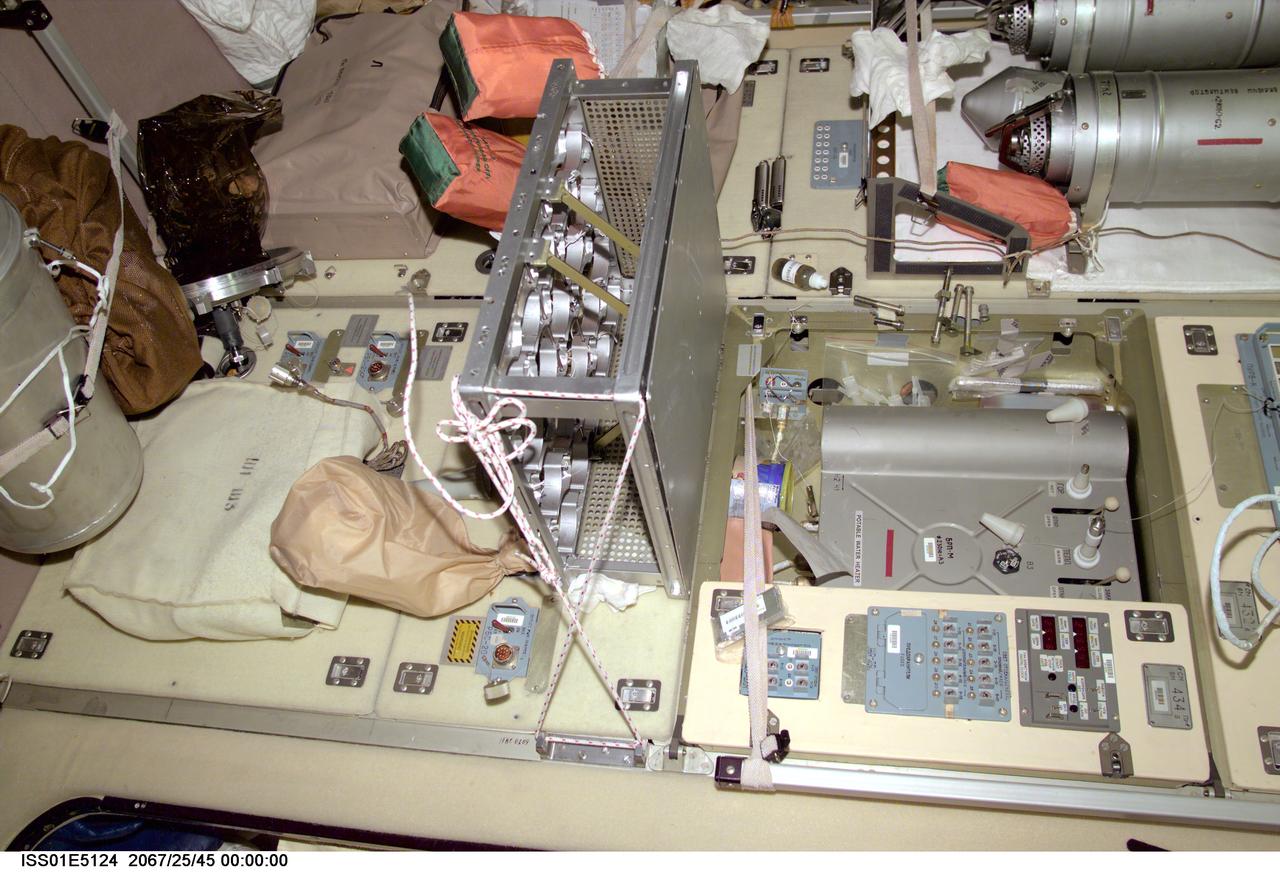
ISS01-E-5124 (December 2000) --- A medium closeup view, photographed with a digital still camera, shows part of the galley area on the International Space Station's Zvezda Service Module. The picture should be viewed vertically with potable water heater (right side of this frame before suggested 90-degree rotation) and distribution unit in the top half.
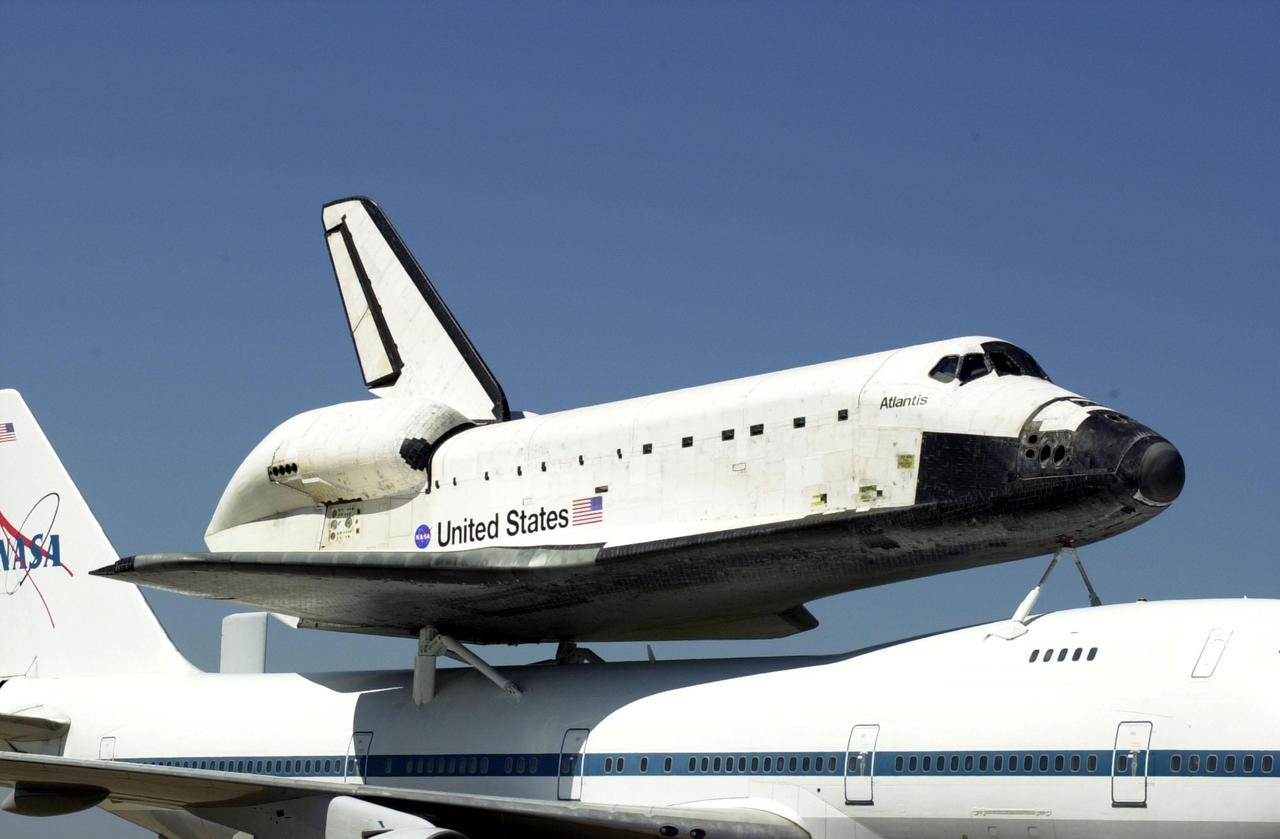
KENNEDY SPACE CENTER, FLA. -- This closeup shows the orbiter Atlantis atop a Shuttle Carrier Aircraft, its transport from California, after landing at the KSC Shuttle Landing Facility. Atlantis landed in California Feb. 19 concluding mission STS-98. The ferry flight began in California March 1; unfavorable weather conditions kept it on the ground at Altus AFB, Okla., until it could return to Florida. The orbiter will next fly on mission STS-104, the 10th construction flight to the International Space Station, scheduled June 8
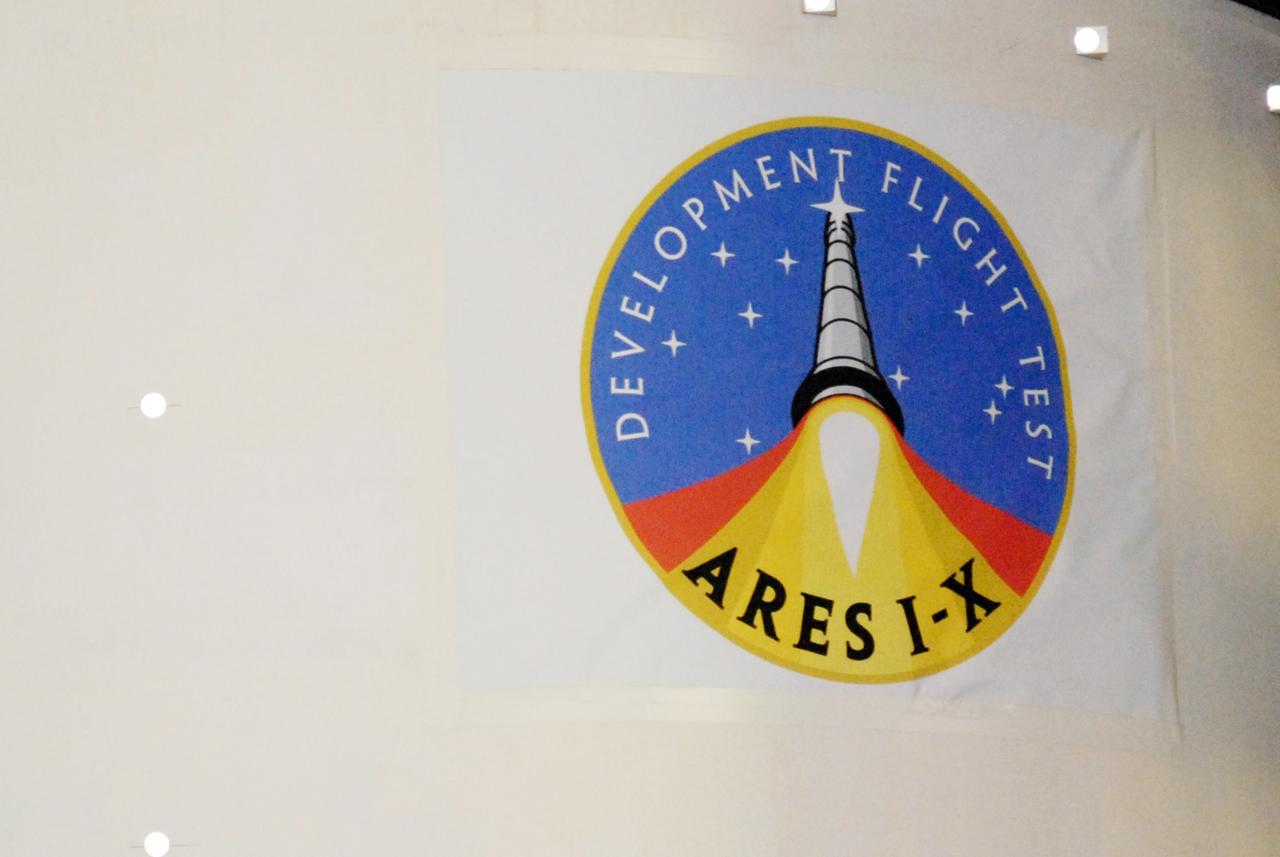
CAPE CANAVERAL, Fla. -- Vibration and laser testing is being conducted on Ares I-X segments at NASA's Kennedy Space Center. Here, is a closeup of a special Ares I-X Logo, supplied by Jon Cowart of NASA Constellation, that the Inert Solid Rocket Motor Segment has received for the Modal Test. Photo credit: NASA/Dimitri Gerondidakis
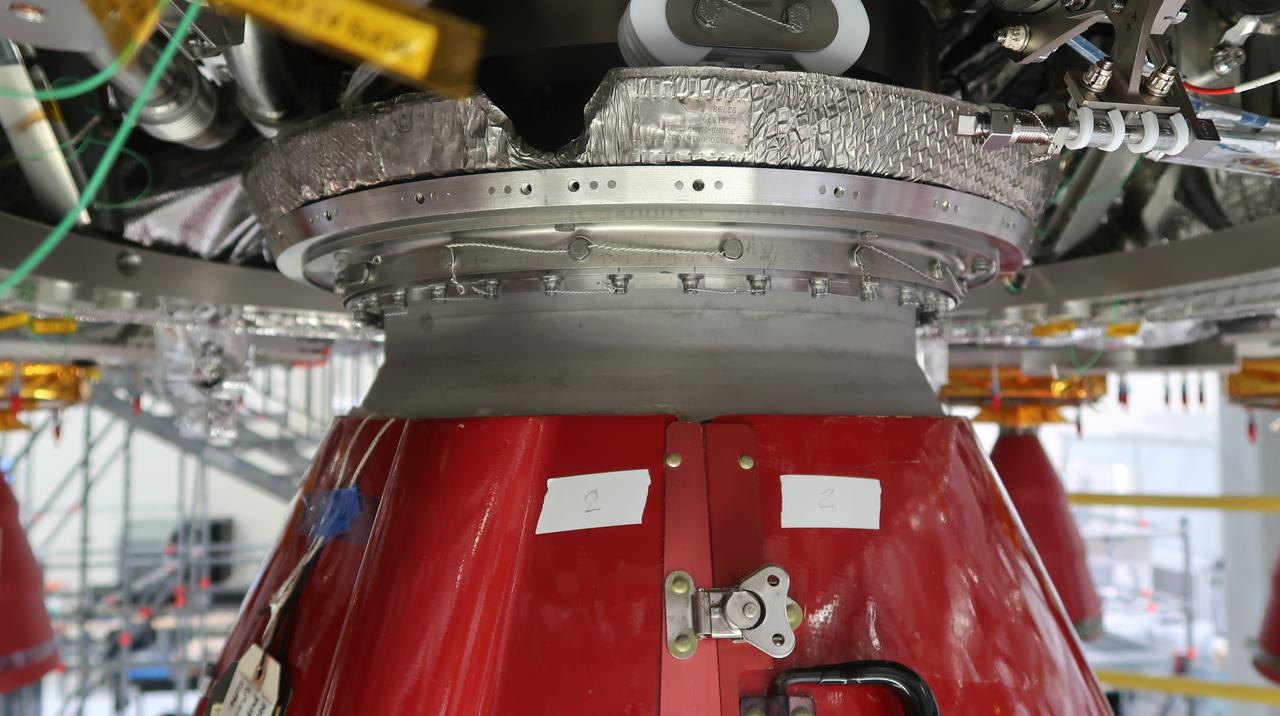
In view is a closeup of the newly installed orbital maneuvering system engine nozzle and heat shield for the Artemis II European Service Module inside the Neil Armstrong Operations and Checkout Building at NASA’s Kennedy Space Center in Florida on Jan. 16, 2023. Artemis II will be the first crewed flight test of the Space Launch System rocket and Orion spacecraft. The service module will provide the power necessary to propel Orion on a trip around the Moon, including the in-space maneuvering capability and other commodities necessary to sustain crew for the duration of the mission.
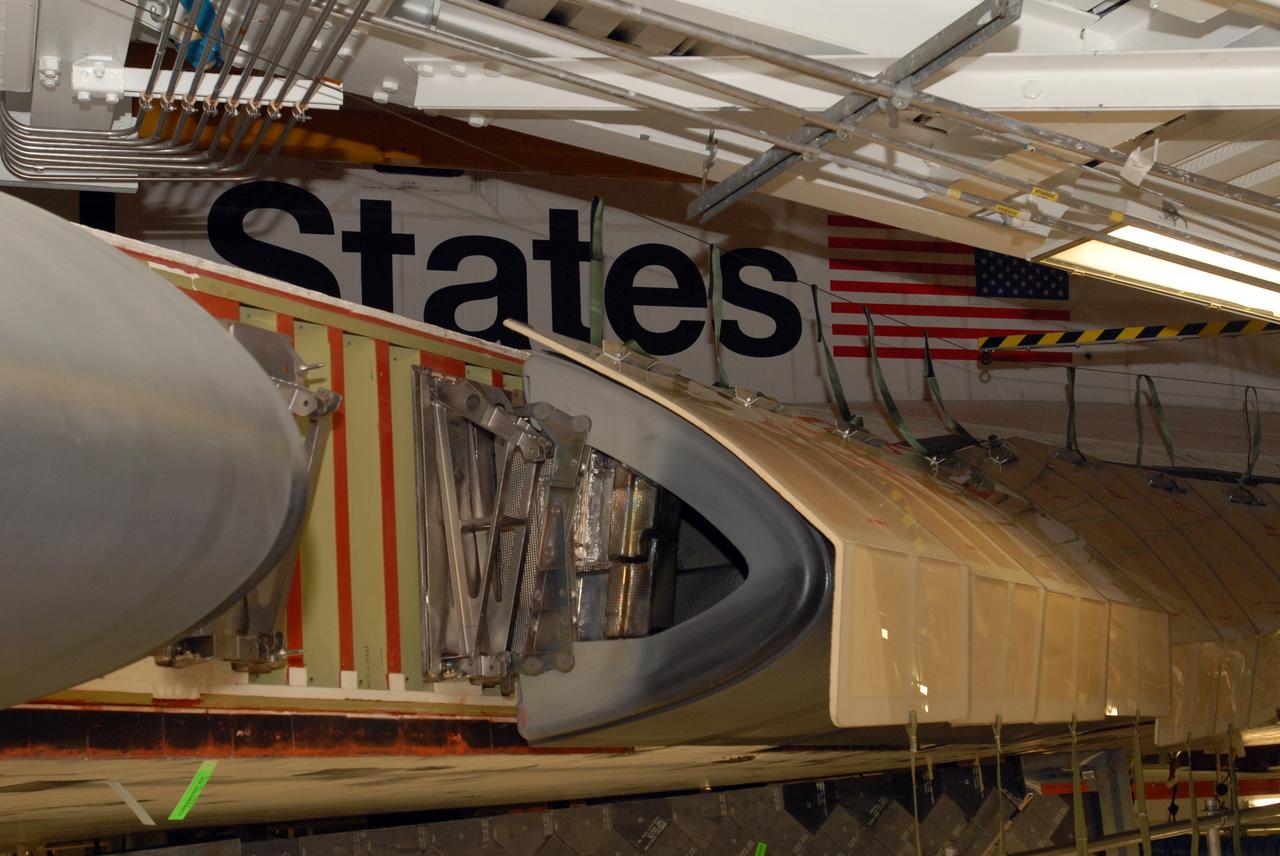
CAPE CANAVERAL, Fla. – A closeup of the wing leading edge on space shuttle Atlantis where a reinforced-carbon carbon, or RCC, panel has been removed. The structural edge of the wing (area of red and green behind the panels) will undergo spar corrosion inspection to verify the structural integrity of the wing. The RCC panels will be placed in protective coverings until the inspection is complete. Atlantis will make the 31st flight to the International Space Station for the STS-129 mission, targeted for launch on Nov. 12. Photo credit: NASA/Tim Jacobs
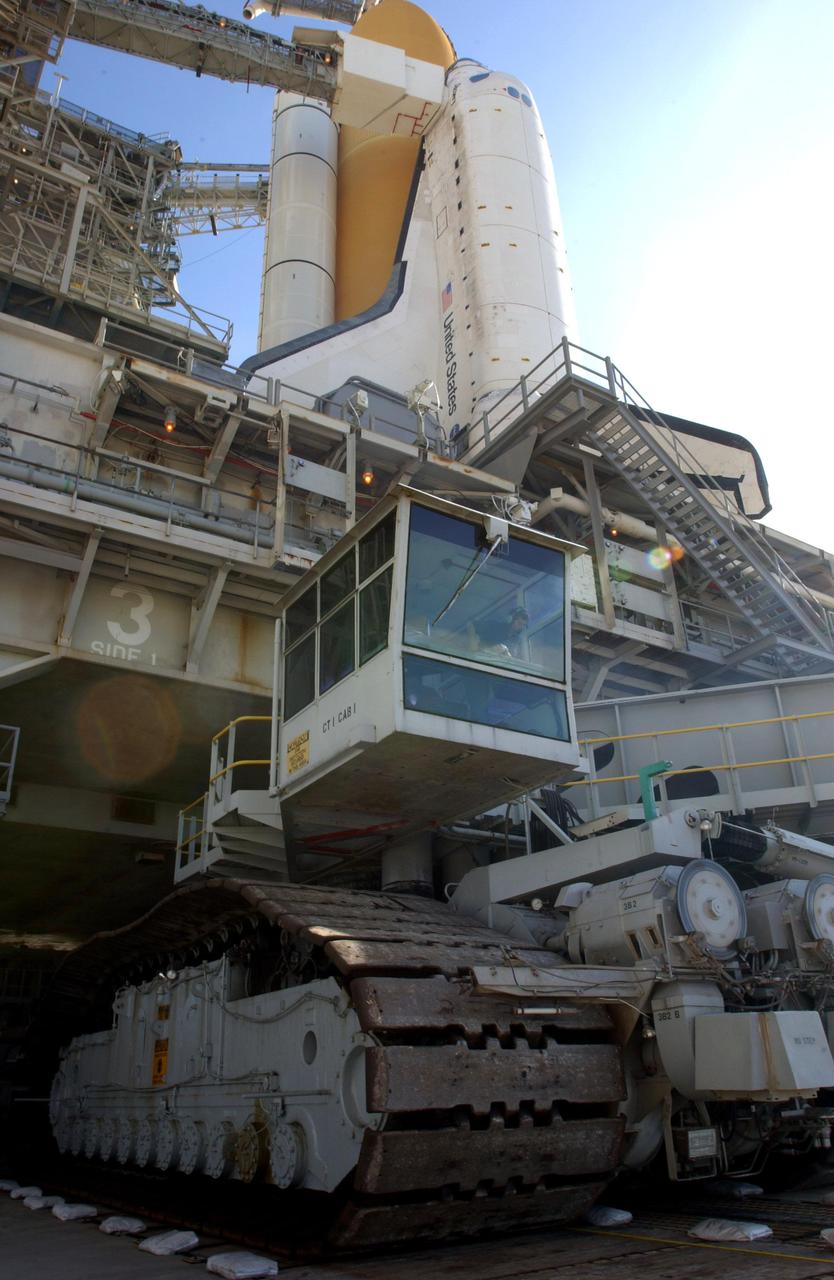
KENNEDY SPACE CENTER, Fla. - This closeup shows the crawler-transporter (bottom) as it rolls out from under Space Shuttle Discovery and the mobile launcher platform on Launch Pad 39A. The operator can be seen in the control cab. The crawler-transporter earlier moved the Shuttle and MLP from the Vehicle Assembly Building on a six-hour journey of 3.4 miles. Discovery is scheduled to launch in early August on mission STS-105. Photo by Scott Andrews using a Nikon D1X camera
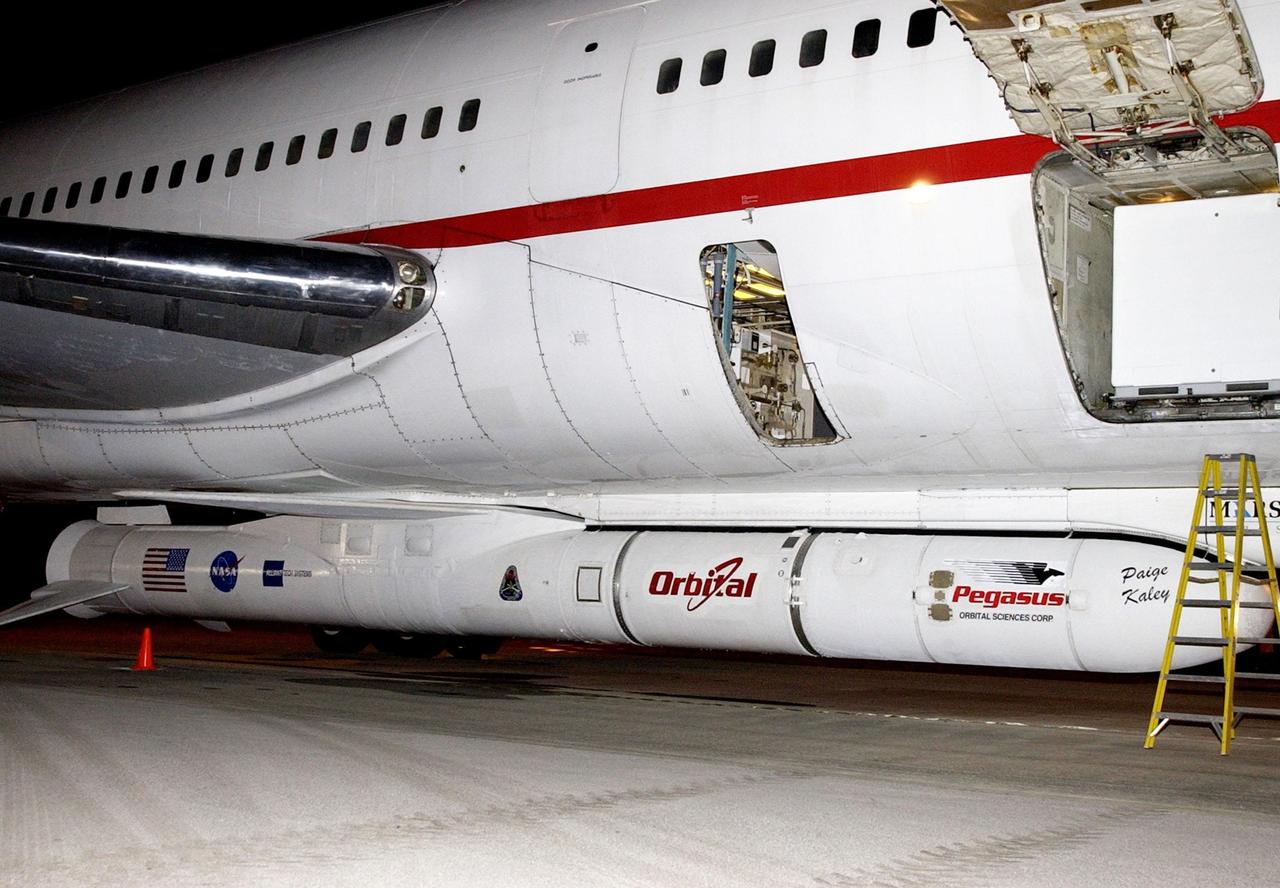
KENNEDY SPACE CENTER, FLA. -- This closeup shows the Pegasus XL rocket with the High Energy Solar Spectroscopic Imager (HESSI) attached at its top, on the right. The Pegasus will launch HESSI to explore the basic physics of particle acceleration and energy release in solar flares. The launch is scheduled for Feb. 5, 2002, from beneath the Orbital Sciences Corp. L-1011 aircraft seen here