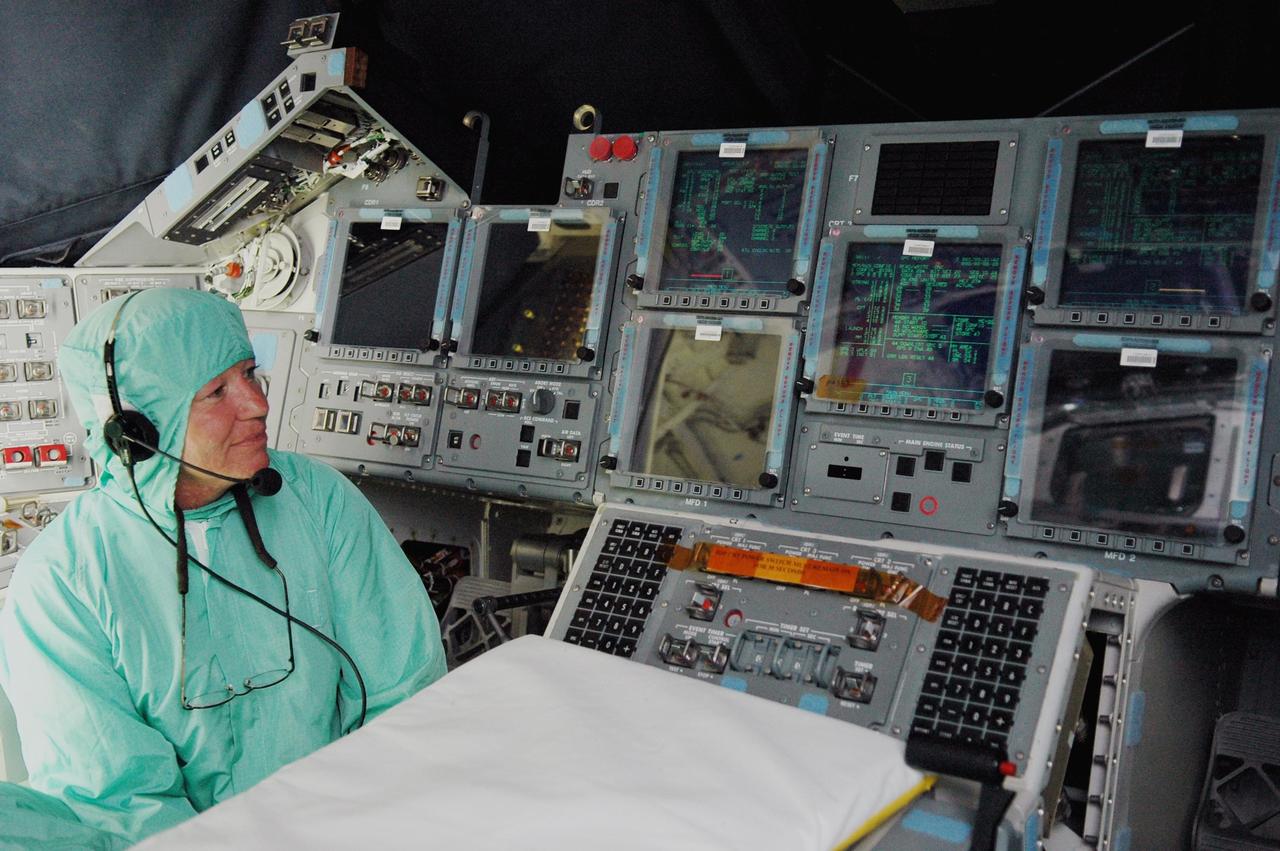
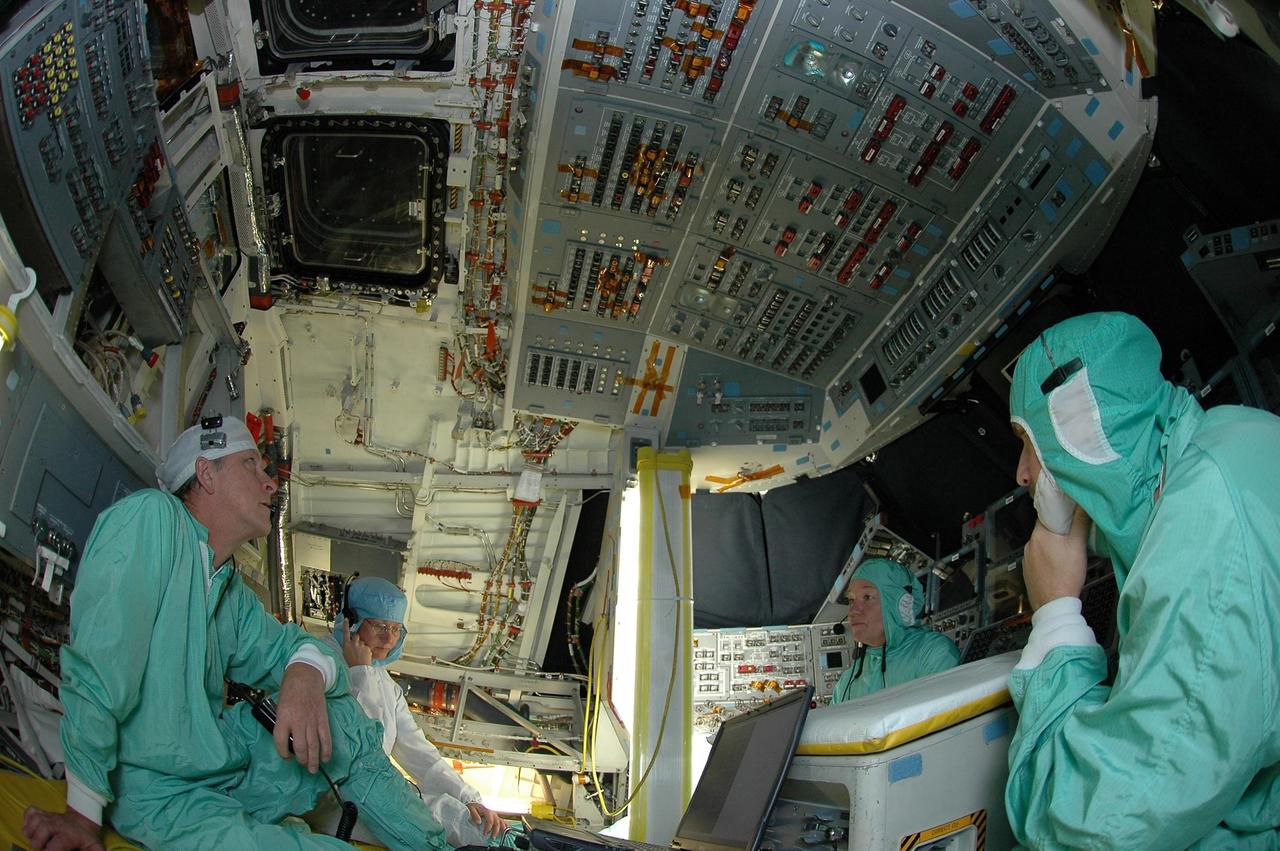
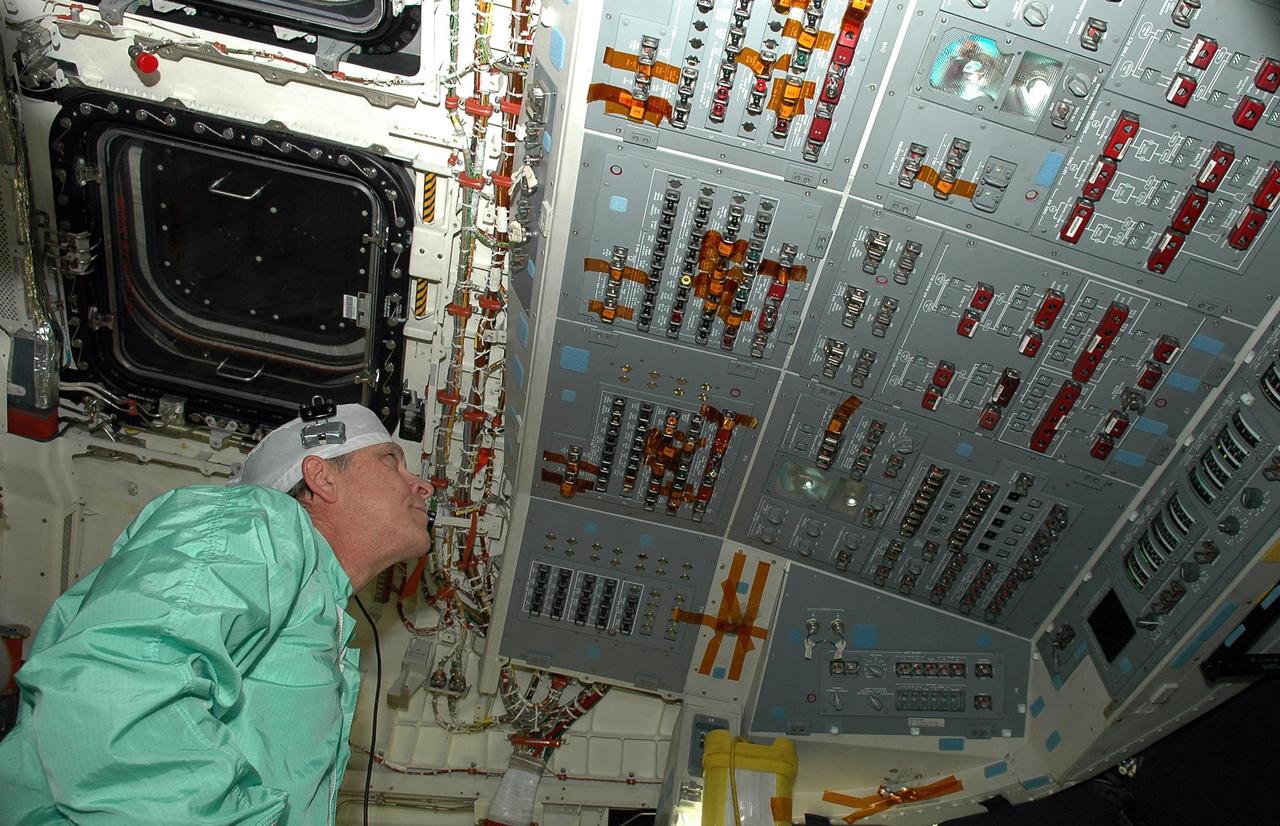
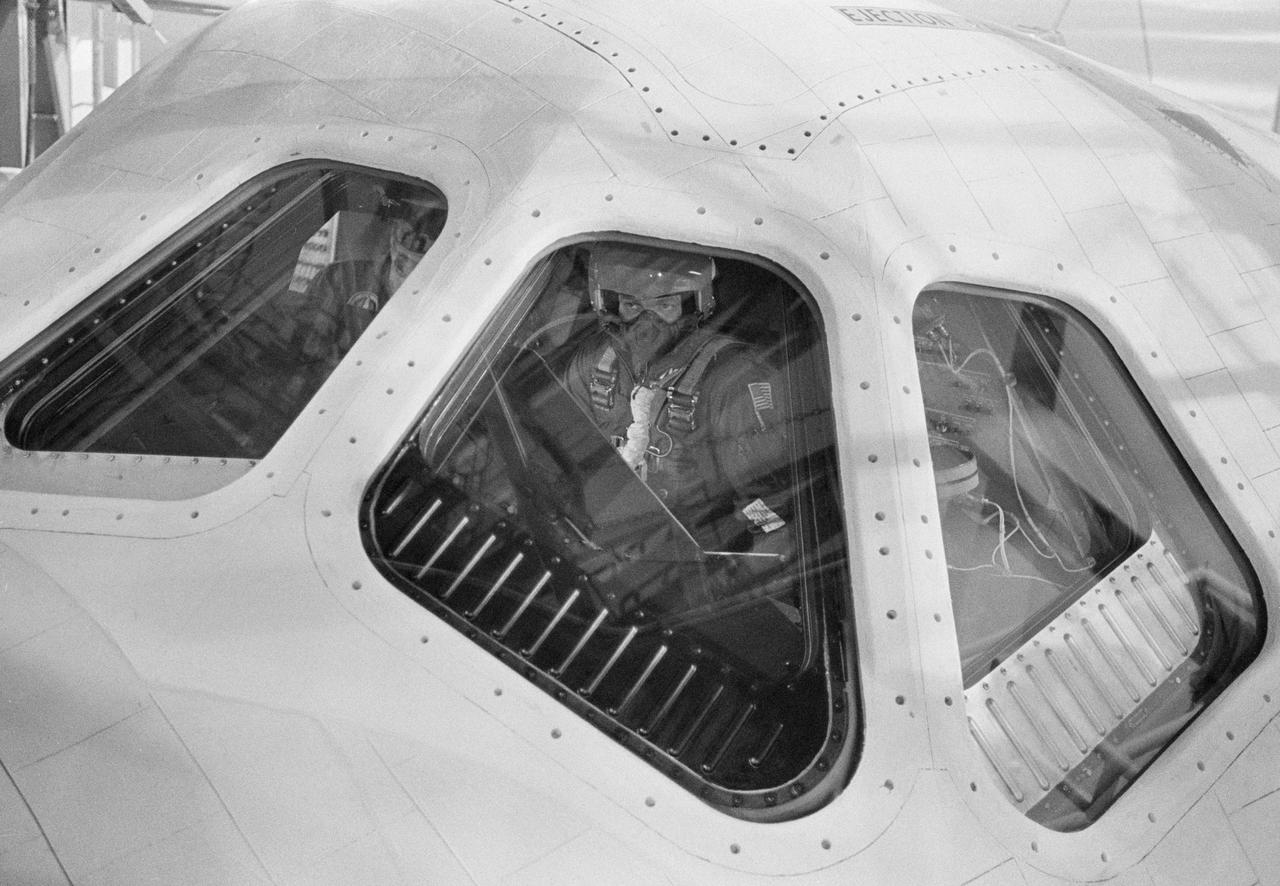
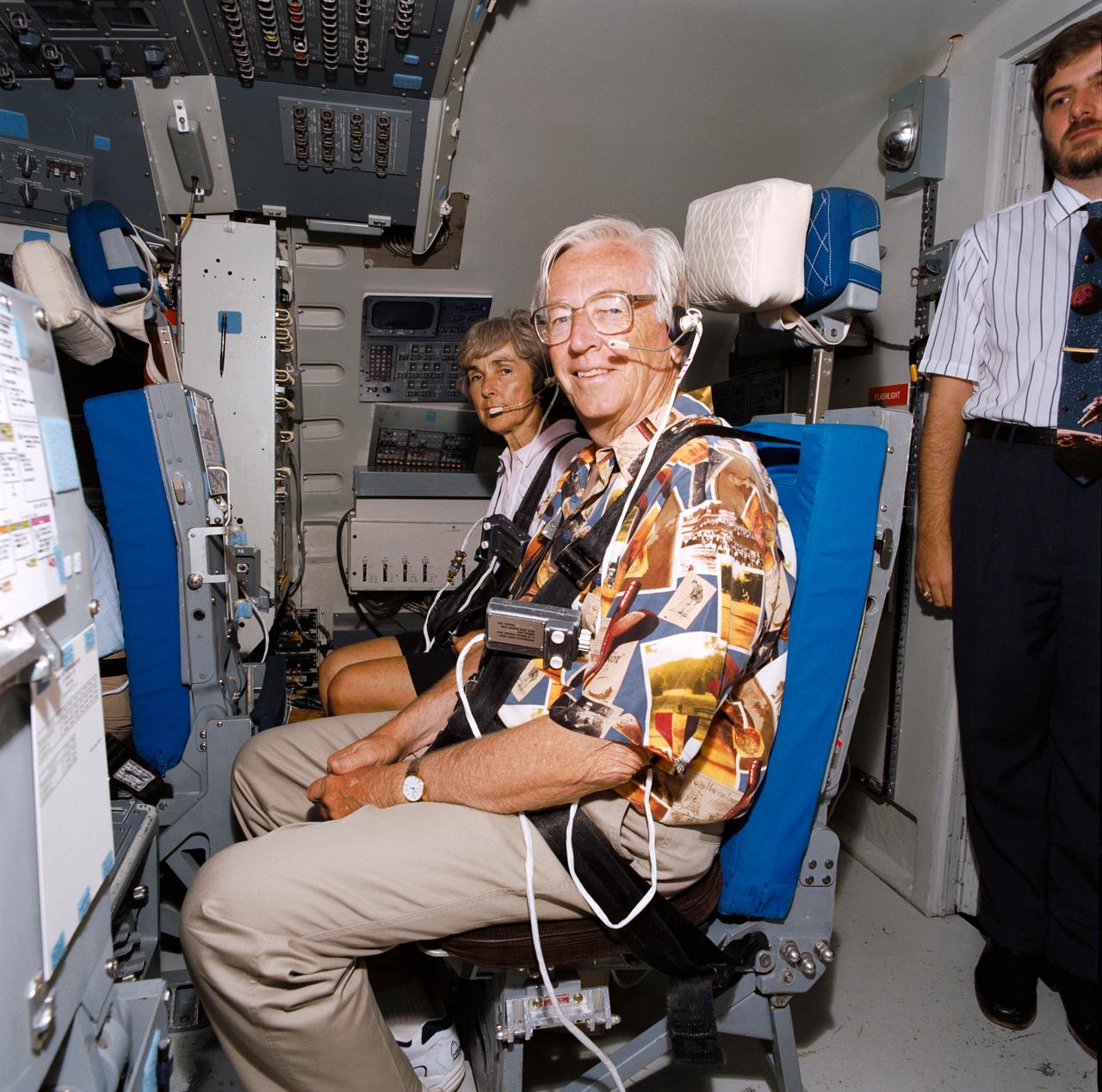
Space Shuttle Simulator cockpit
Want to sit in the cockpit of the Space Shuttle and watch astronauts work in outer space? At StenniSphere, you can do that and much more. StenniSphere, the visitor center at John C. Stennis space Center in Hancock County, Miss., presents 14,000-square-feet of interactive exhibits that depict America's race for space as well as a glimpse of the future. Stennisphere is open free of charge from 9 a.m. to 5 p.m. daily.
Space Shuttle Cockpit
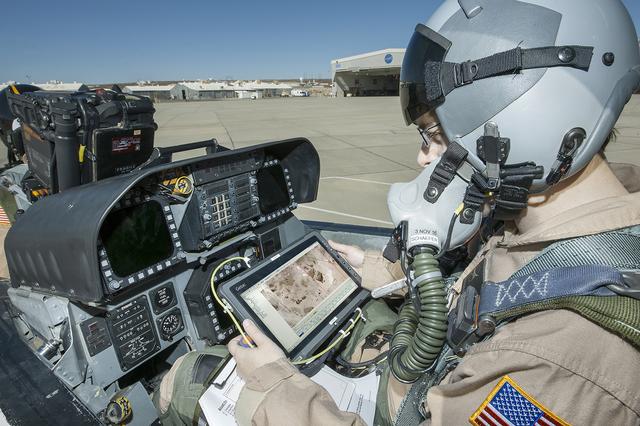
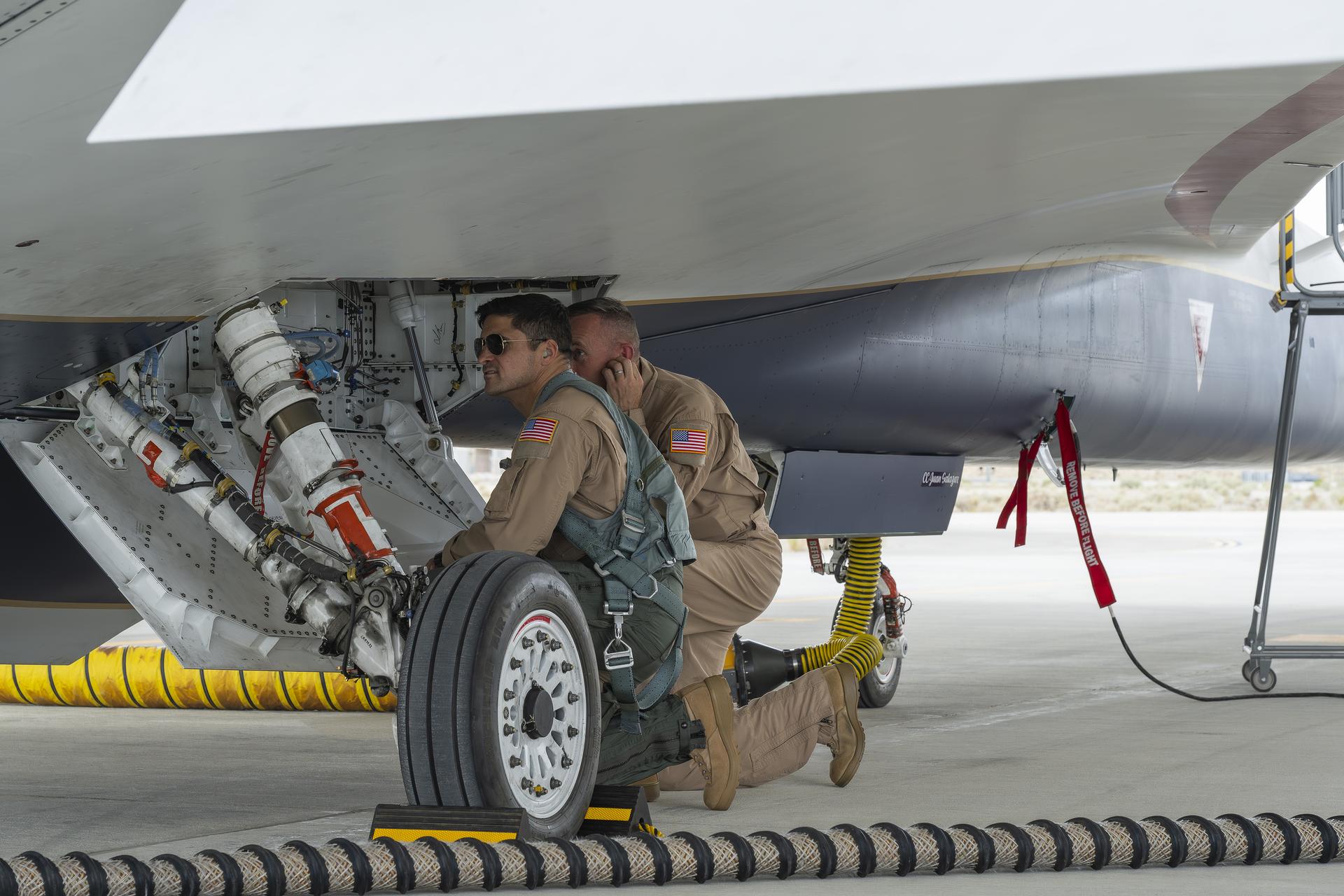
Flight Test Engineer Jacob Schaefer inspects the Cockpit Interactive Sonic Boom Display Avionics, or CISBoomDA, from the cockpit of his F-18 at NASA’s Armstrong Flight Research Center in Edwards, California.
NASA’s Improved Supersonic Cockpit Display Shows Precise Locations of Sonic Booms
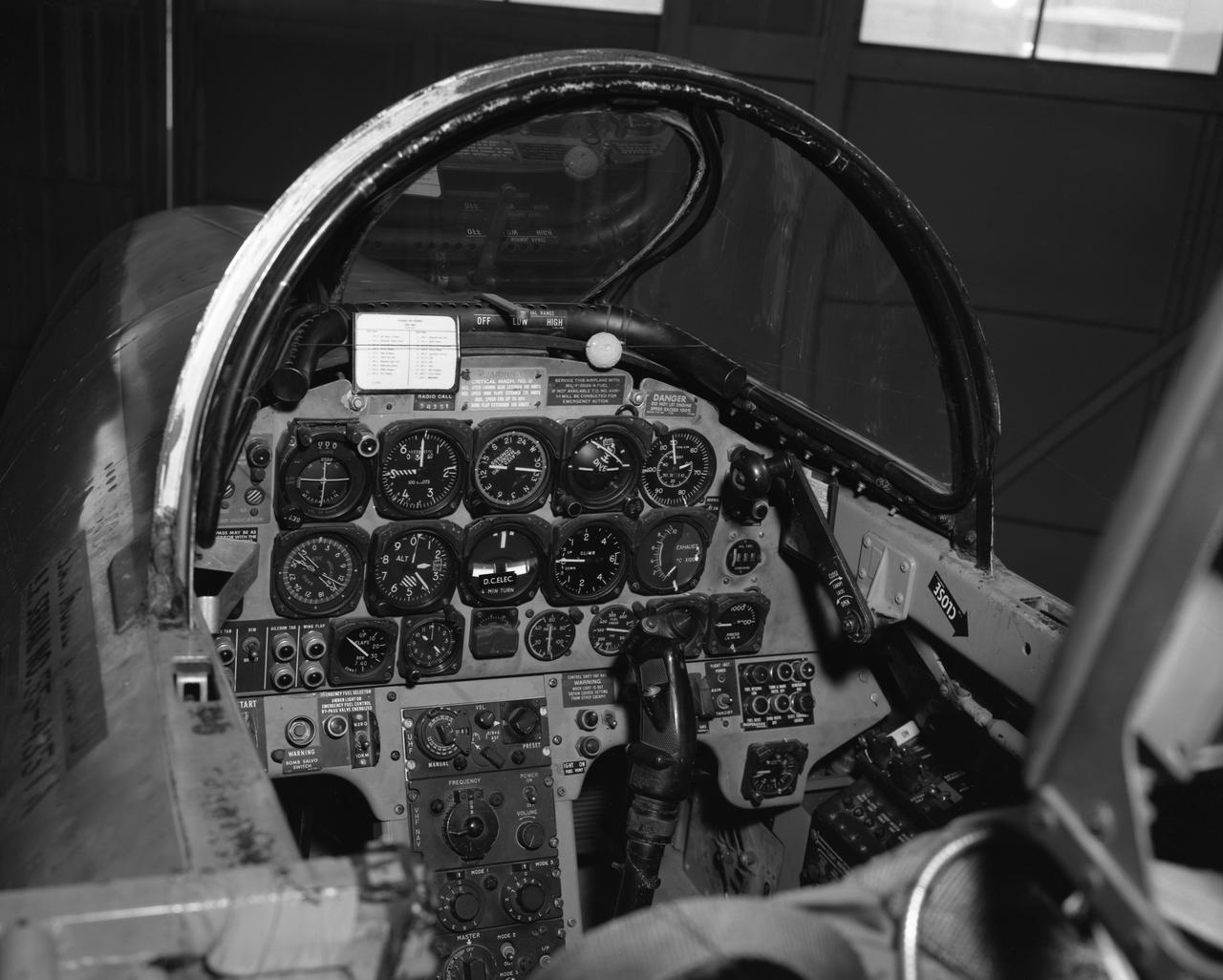
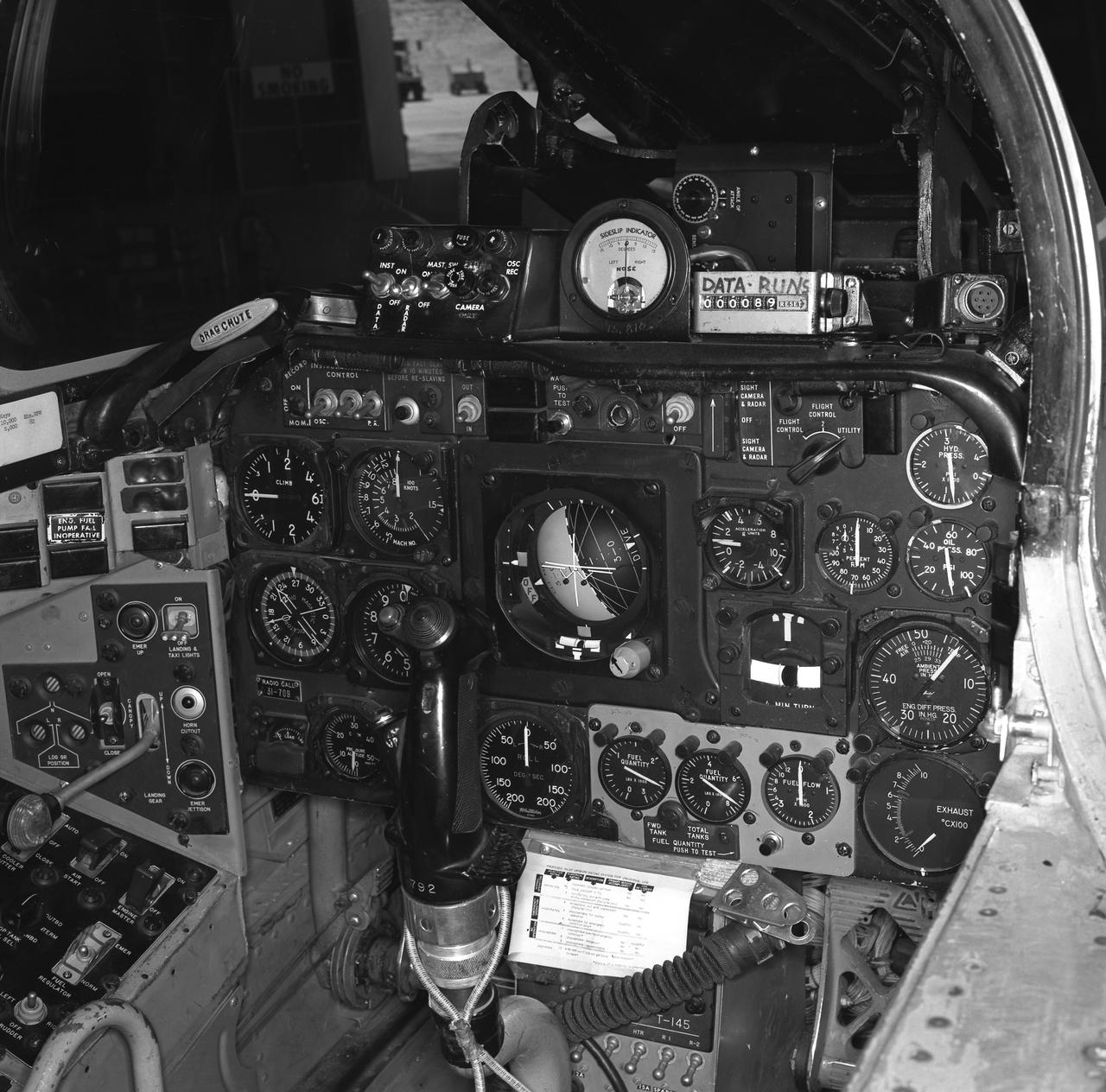
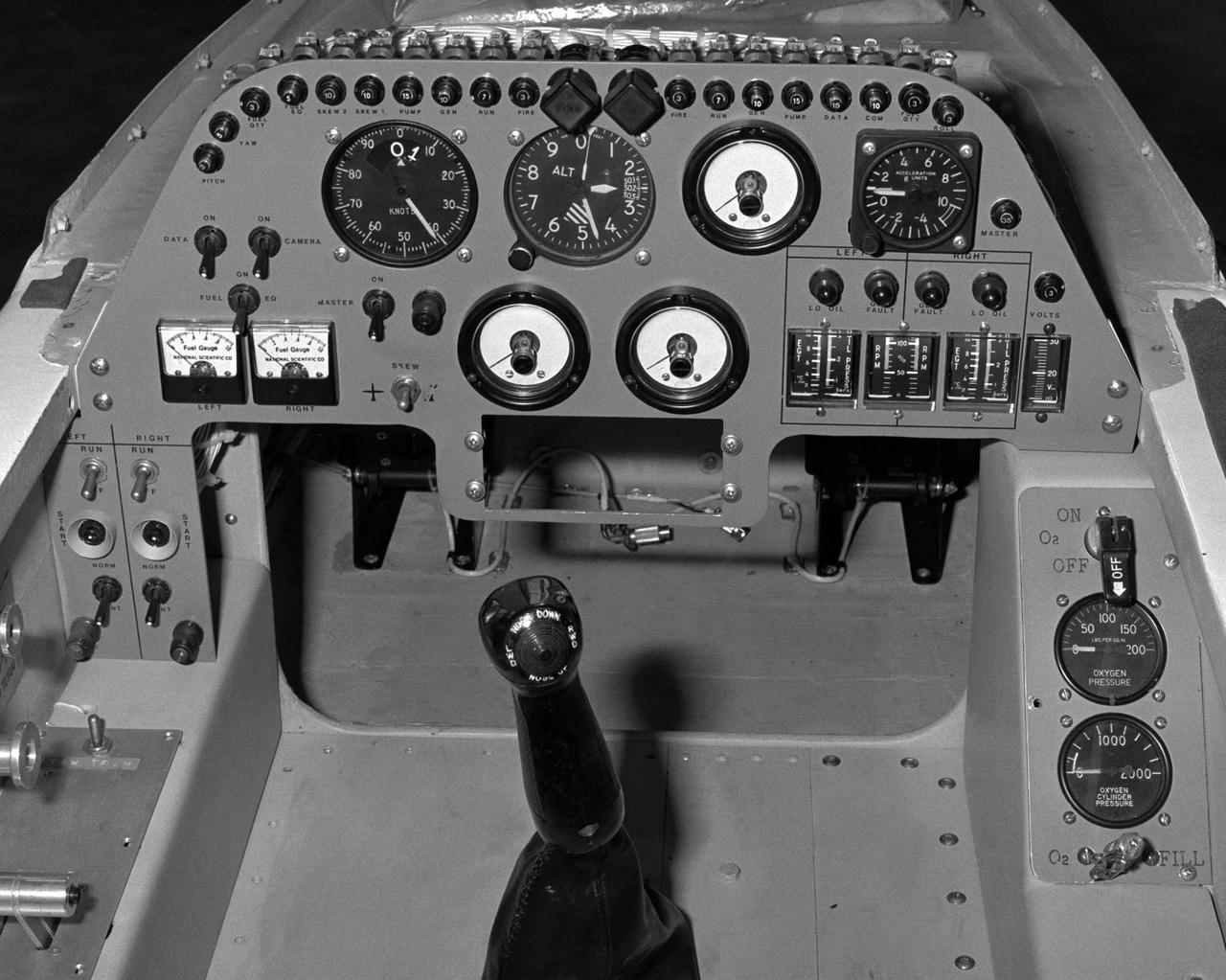
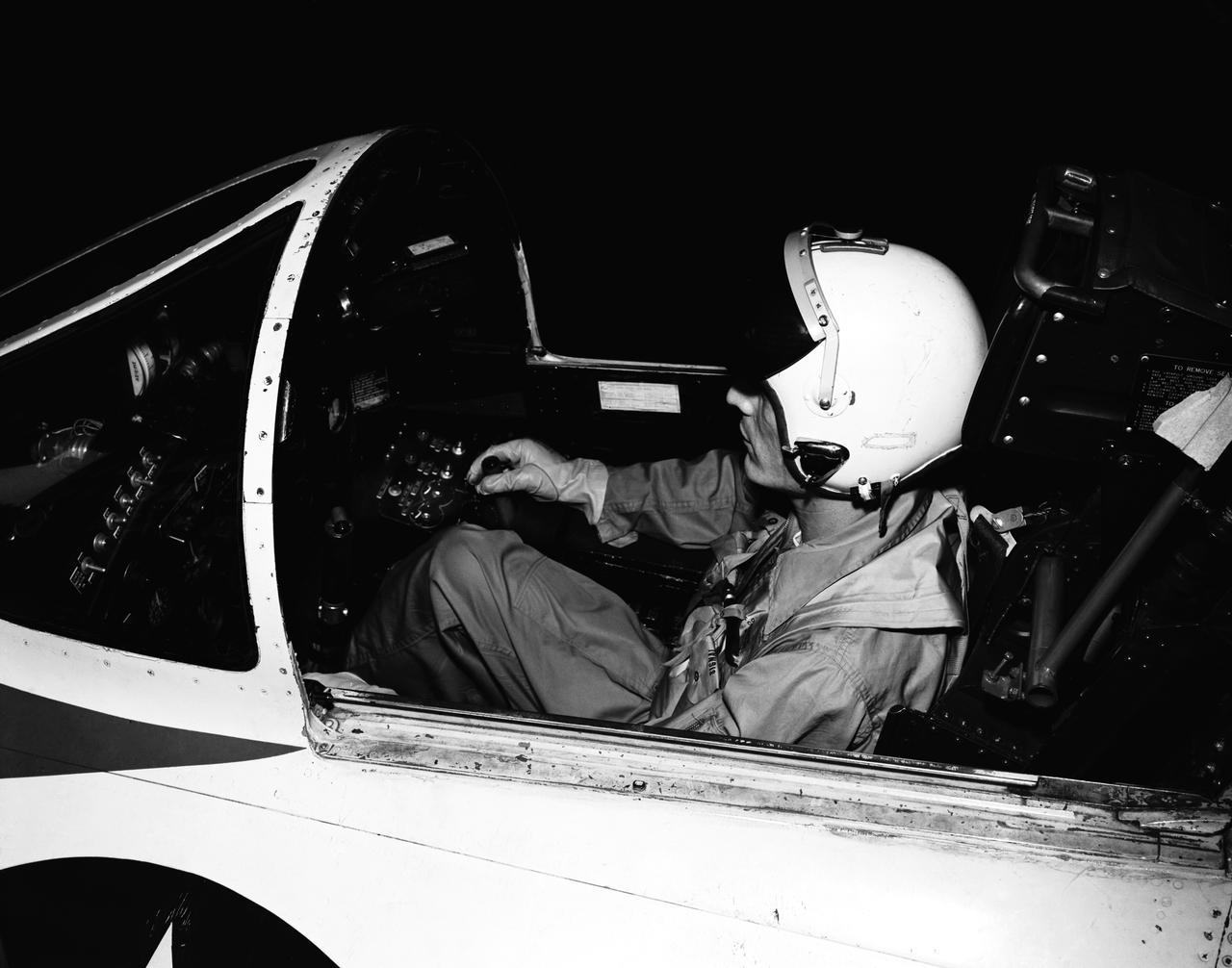
T-33 #351 Cockpit control panel. Feb. 13, 1964
T-33 #351 Cockpit control panel
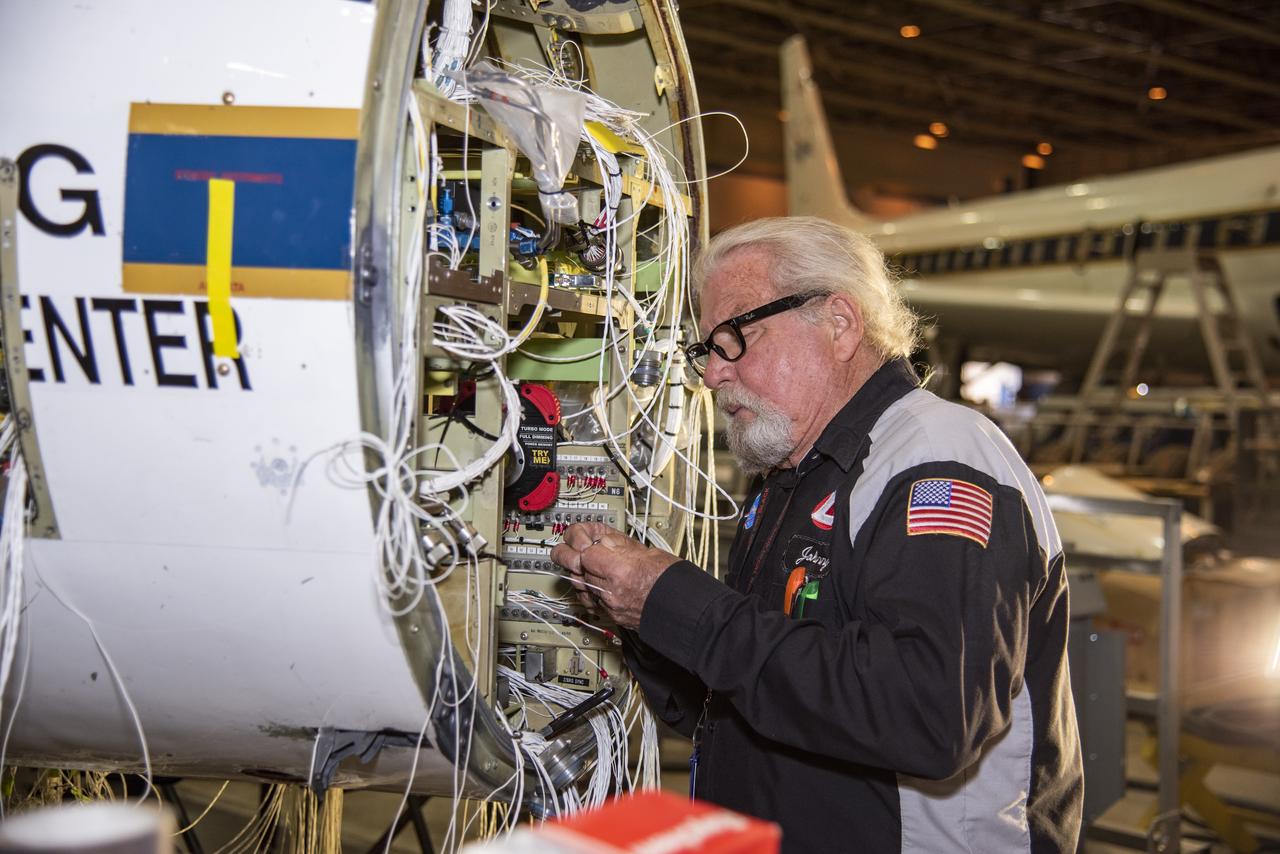
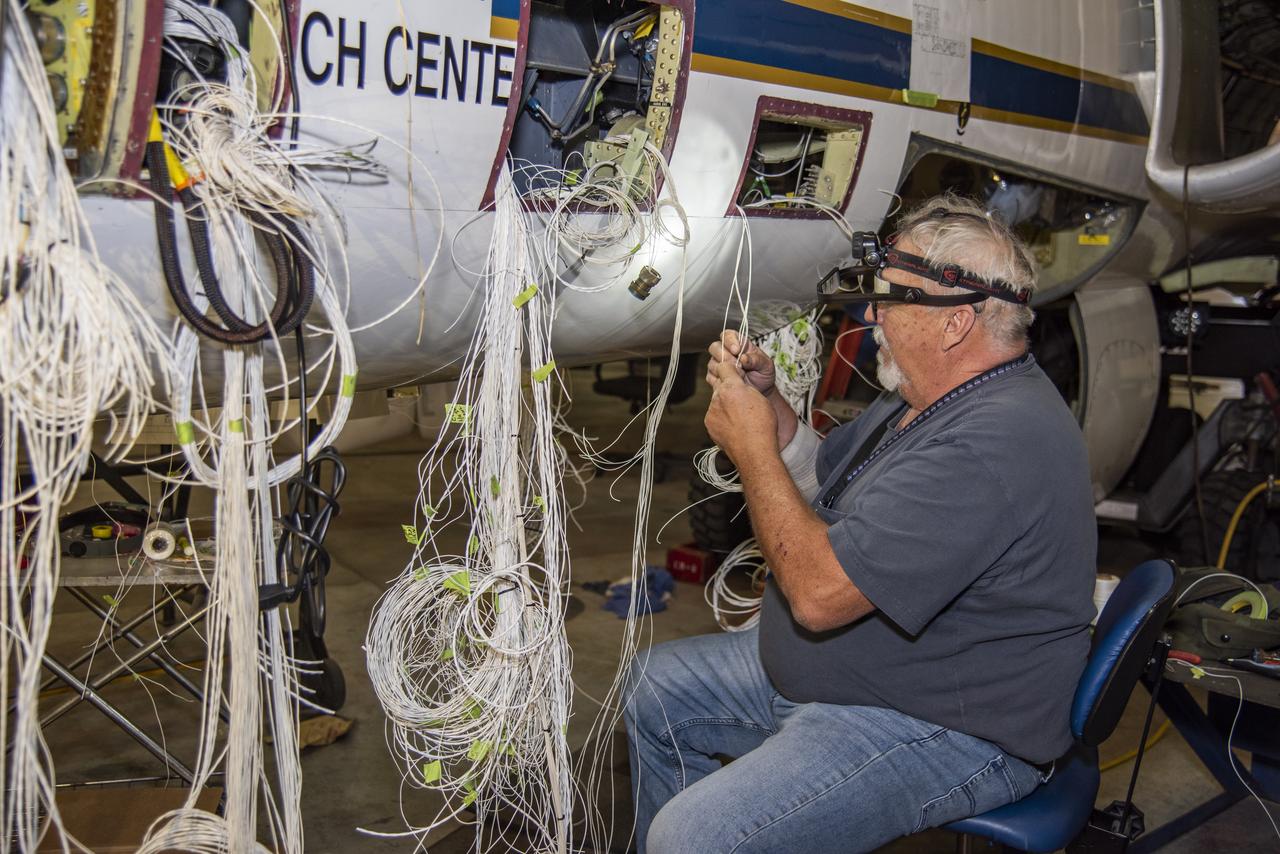
Technician Johnny Bryant works on rewiring the high-altitude aircraft's fixed nose and cockpit.
ER-2 Cockpit Effort Will Enhance Pilot Safety
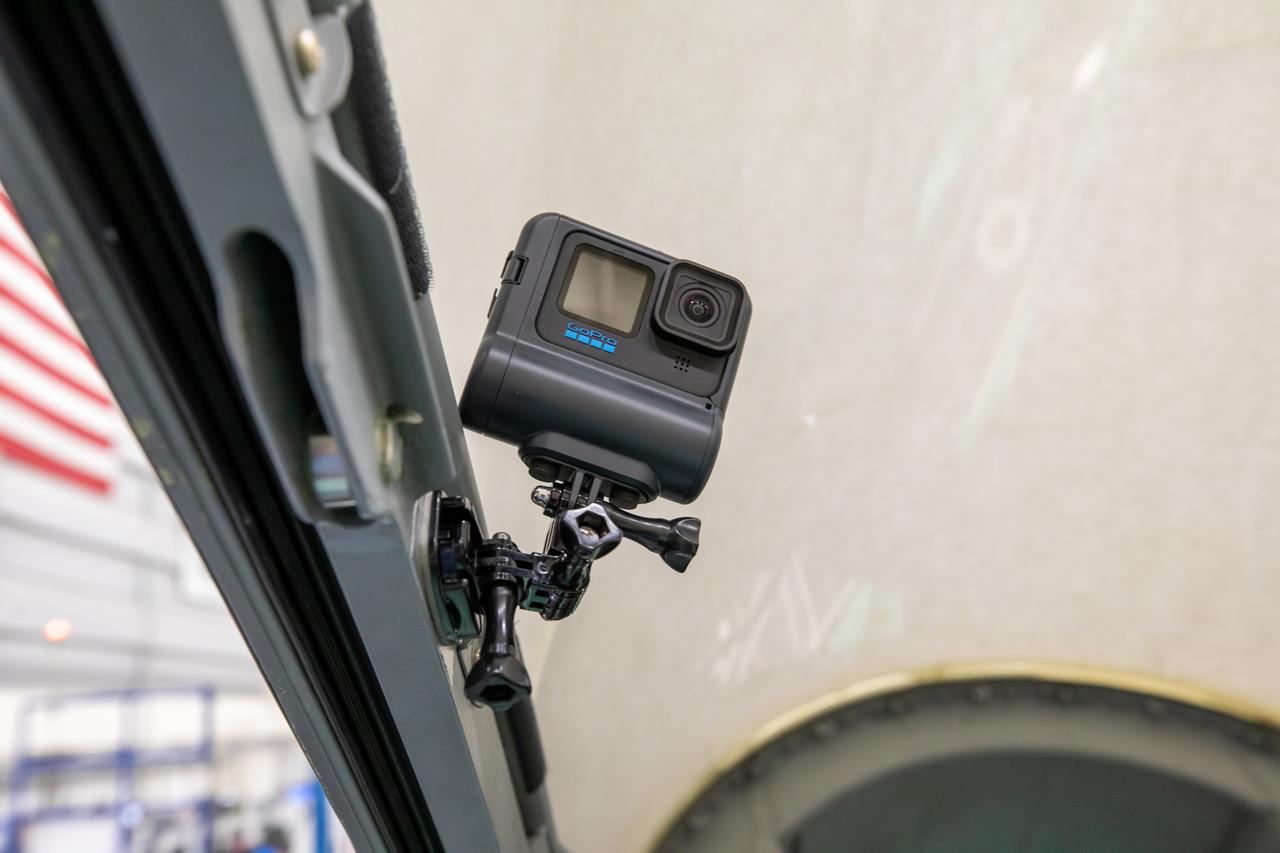
A Go-Pro is mounted on the inside of the X-59’s cockpit to capture the pilots activities during flight.
X-59’s Cockpit Outfitted with Cameras for Pilot Data
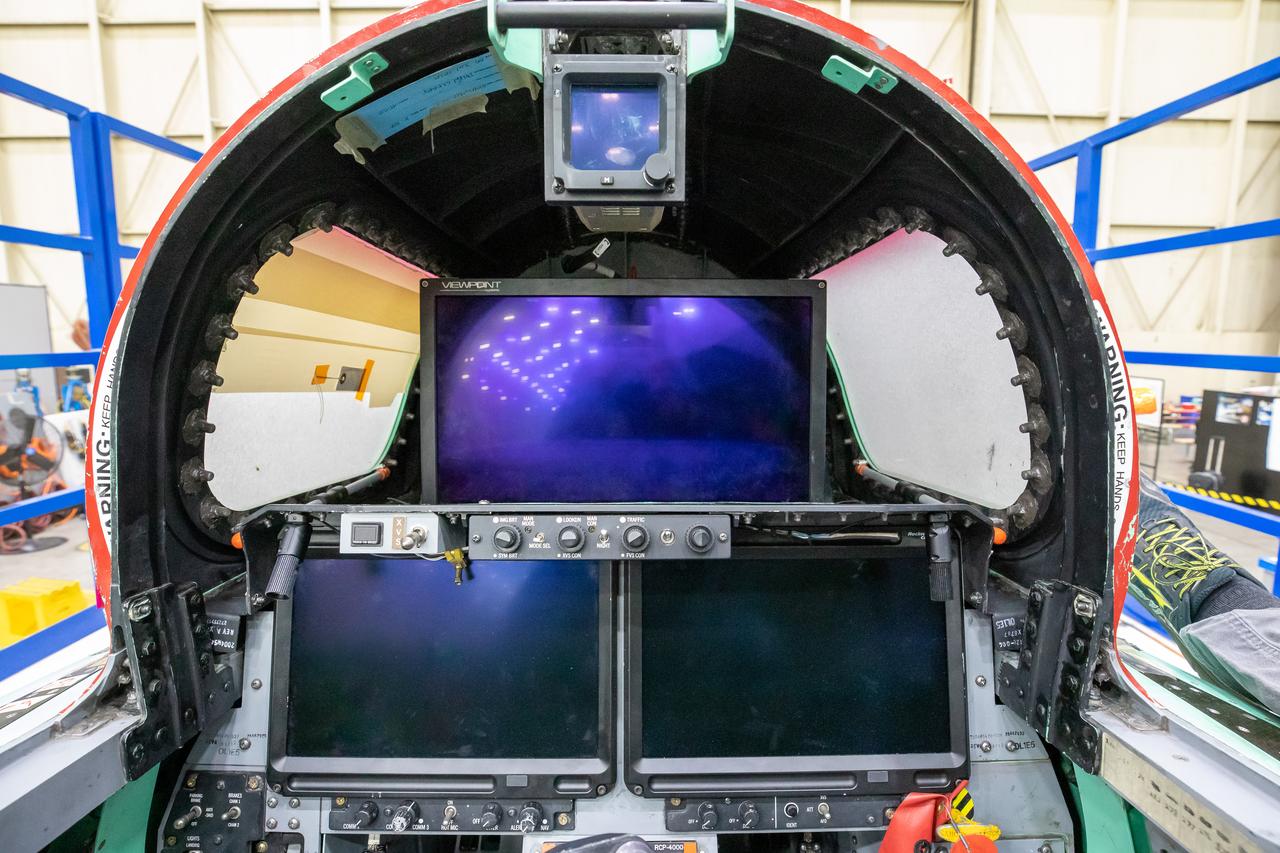
This image shows the forward view of the X-59’s cockpit with the canopy open. The aircraft will not have a forward-facing window and will use an eXternal Vision System (XVS) made up of a high definition 4K monitor (located in the center) and two monitors below to help the pilots safely fly through the skies.
Nose Installed and Cockpit Instrumentation
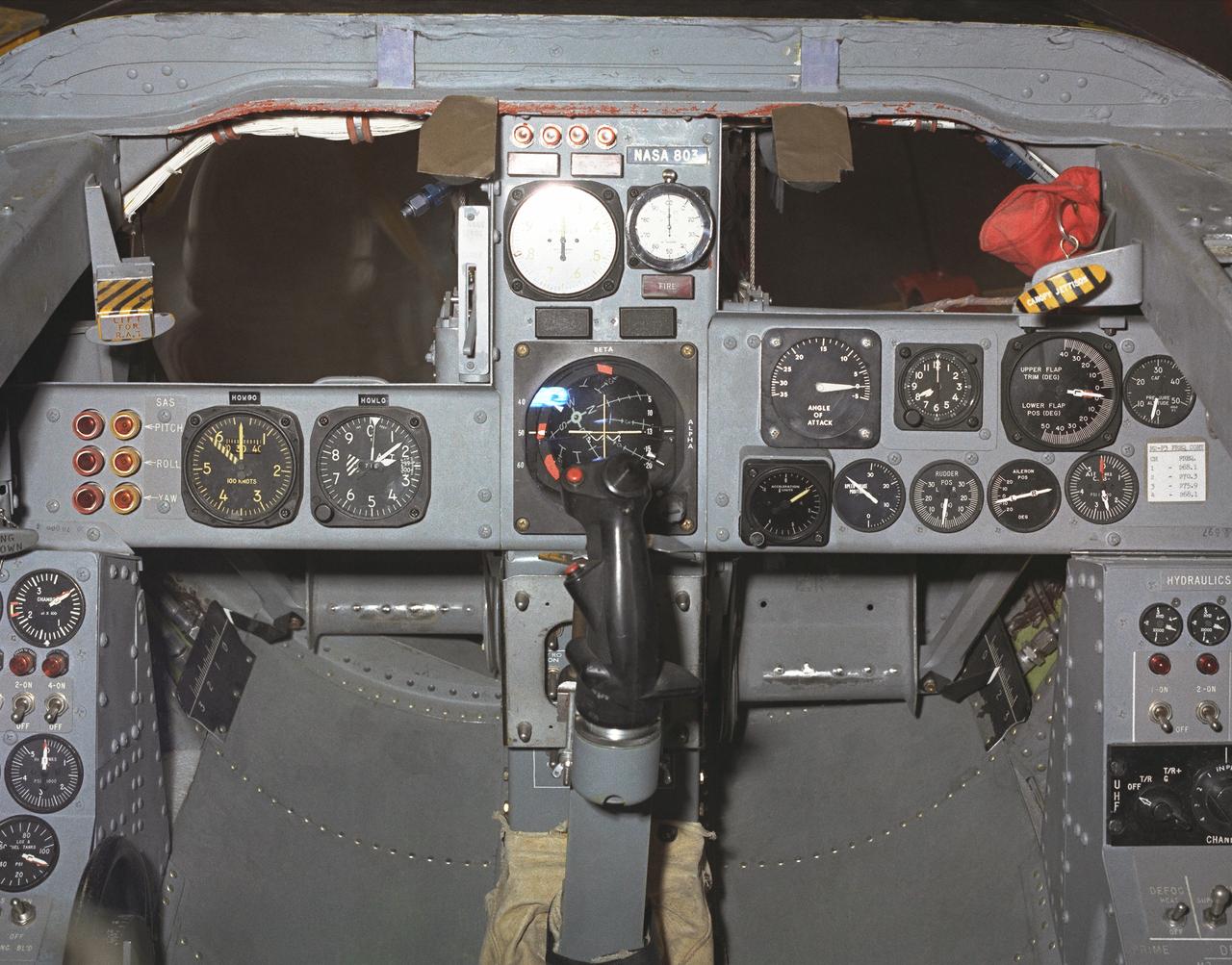
This photo shows the cockpit instrument panel of the M2-F3 Lifting Body.
M2-F3 cockpit instrument panel
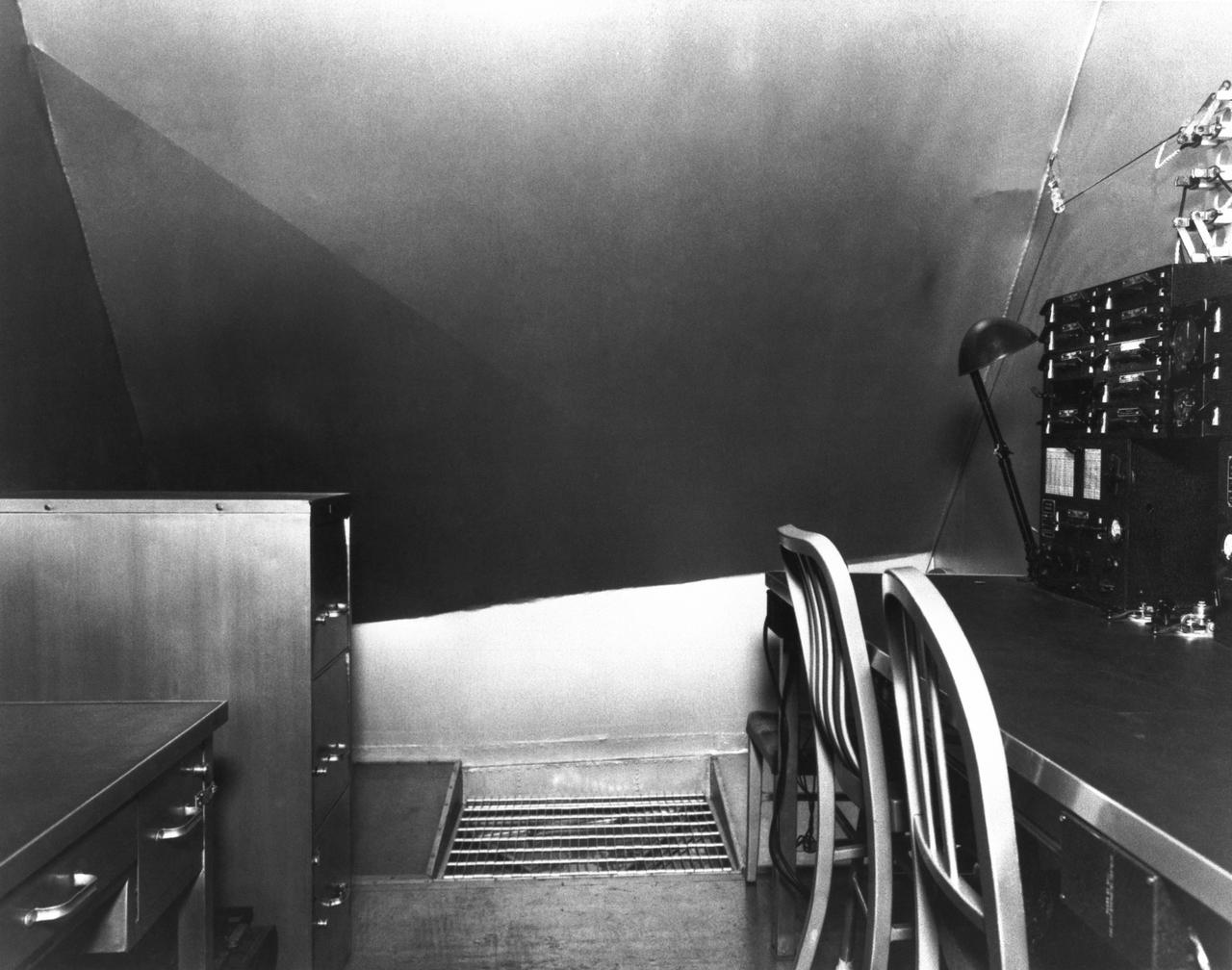
History of Cockpits - interior of control room of a Dirigible (@1935)
ARC-1993-A83-0499-28
History of Cockpits - control room navigation station onboard a Dirigible (@1935)
ARC-1993-A83-0499-30
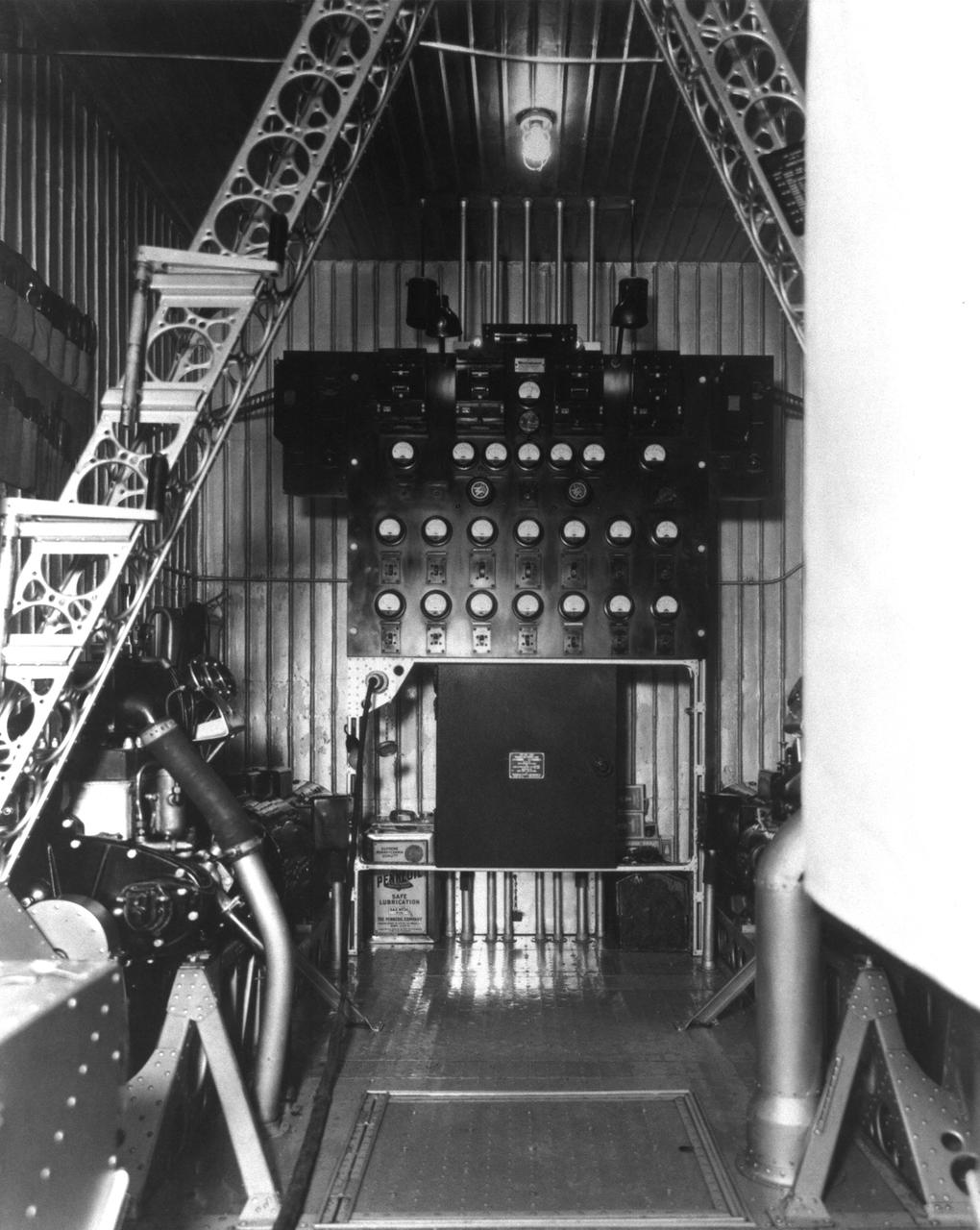
History of Cockpits - interior of control room showing pressure gages (@1935)
ARC-1993-A83-0499-29
History of Cockpits - interior of control room onboard Dirigible (@1935)
ARC-1993-A83-0499-27
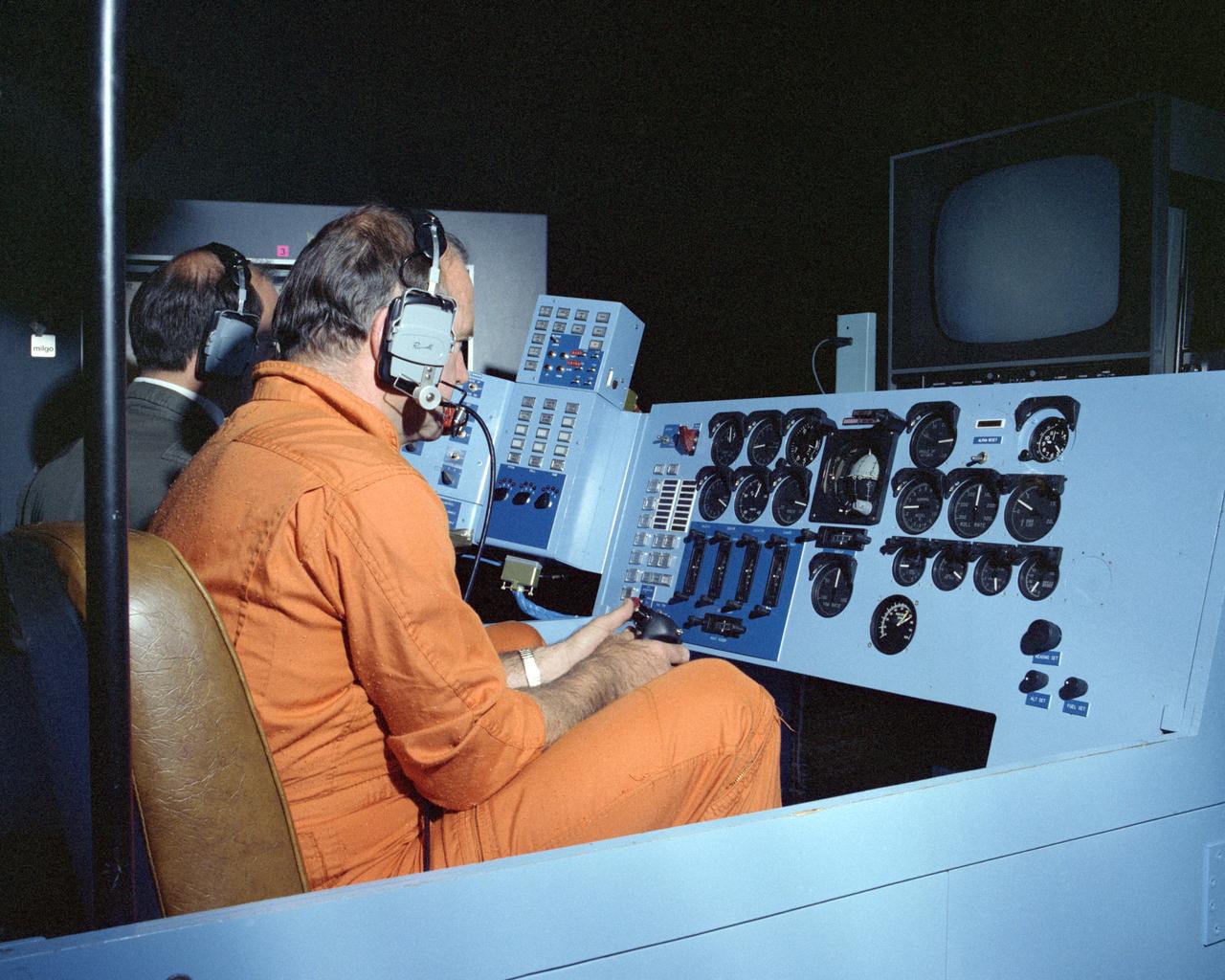
SSV COCKPIT IN THE MOVING-CAB TRANSPORT SIMULATOR (S.16) SHOWING VISUAL SCENE
ARC-1970-AC70-5442
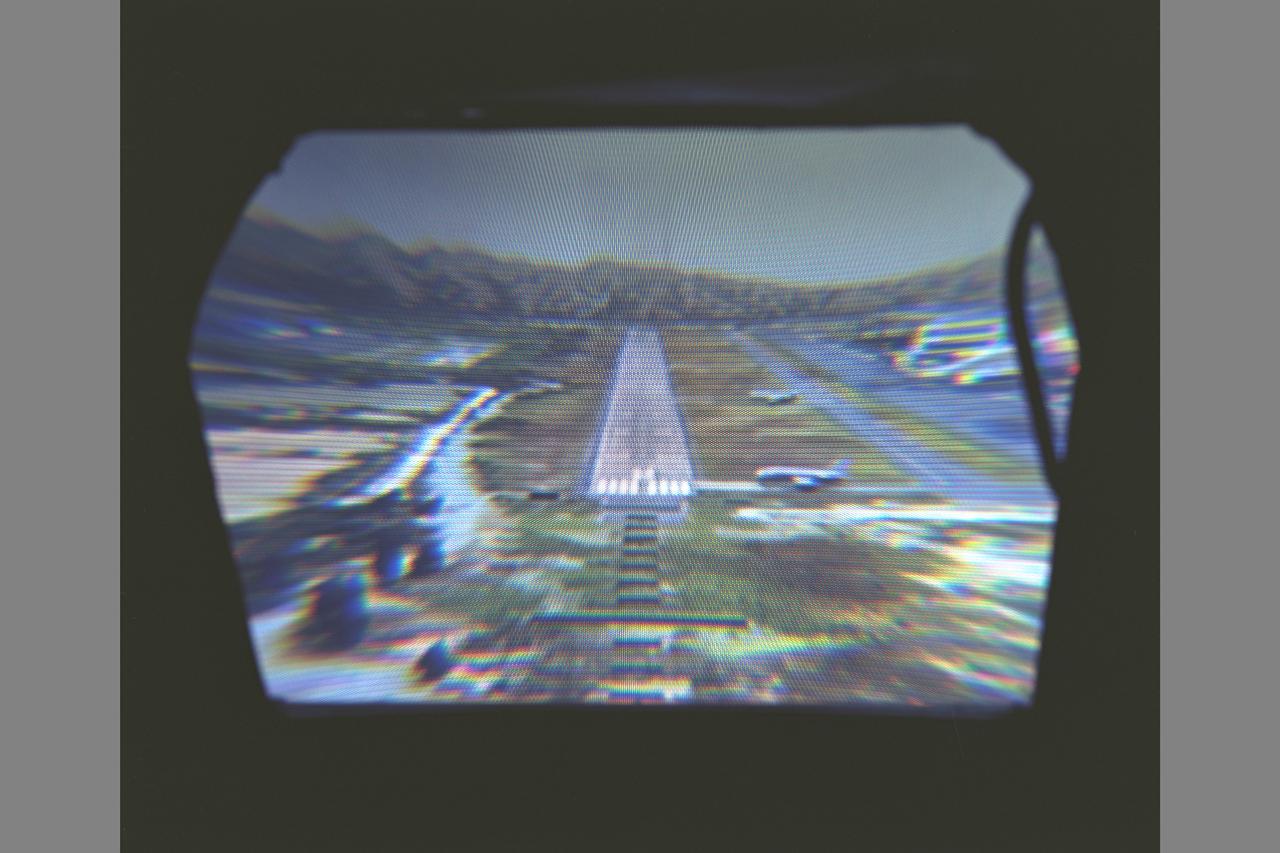
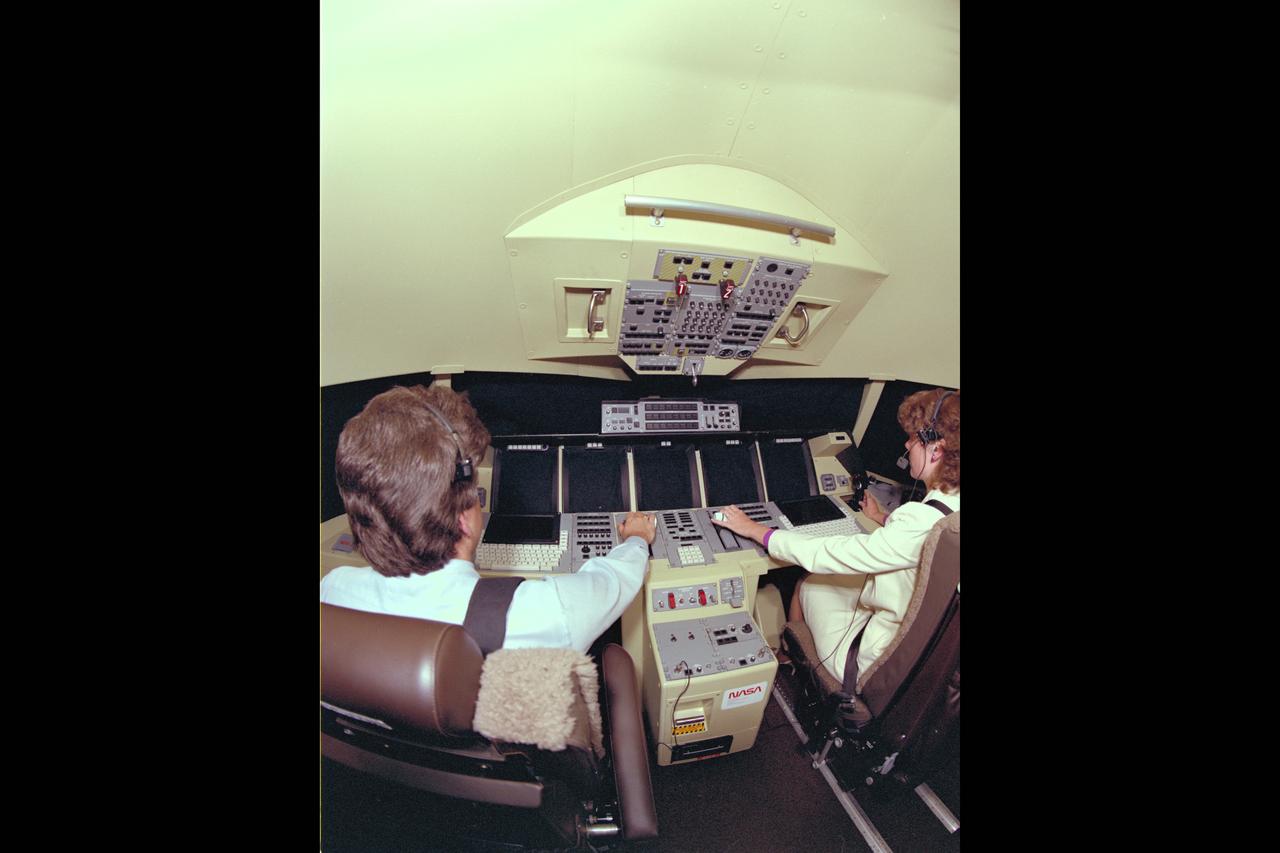
MVSRF Advanced Cockpit
ARC-1984-AC84-0342-4
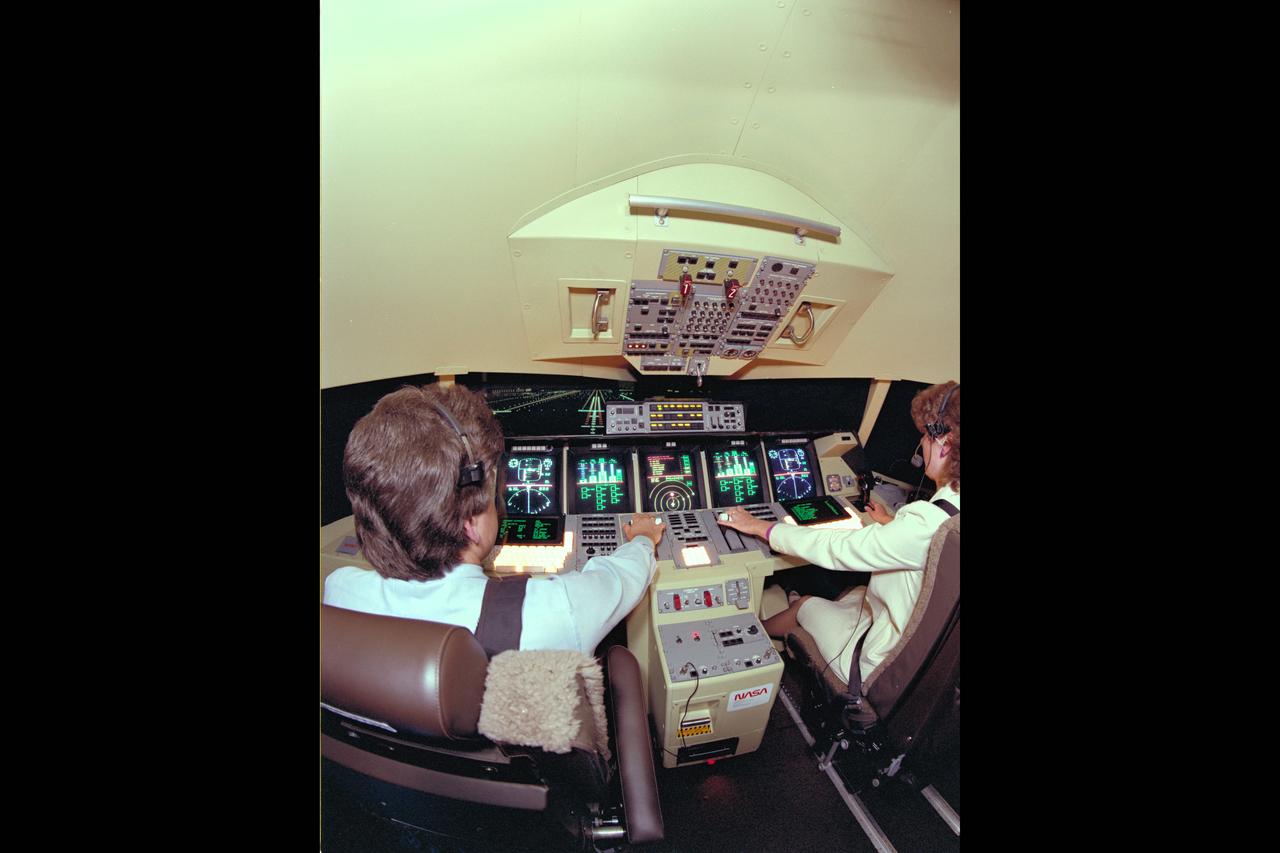
MVSRF Advanced Cockpit
ARC-1984-AC84-0342-2
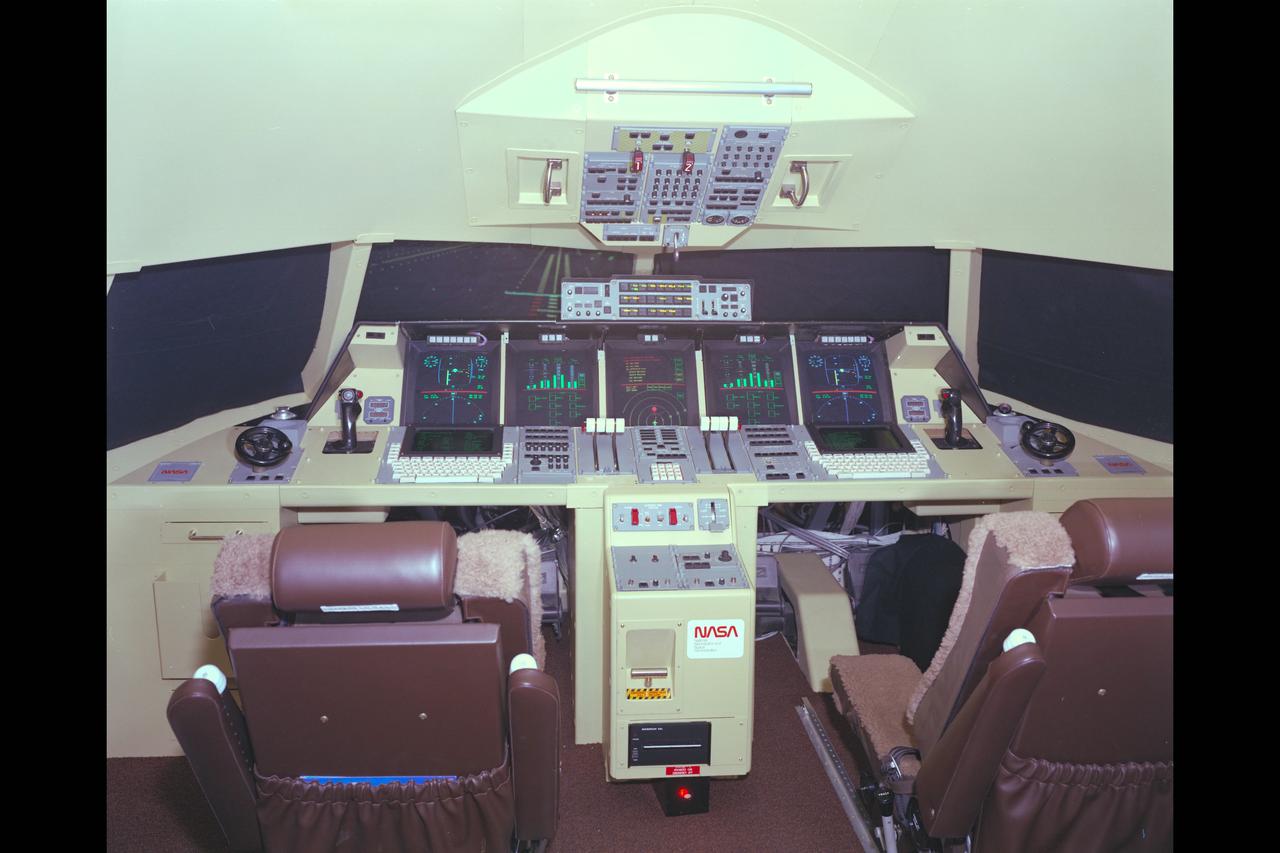
MVSRF Advanced Cockpit
ARC-1984-AC84-0342-3
DAST cockpit
DAST cockpit
History of Cockpits: Airship Macon - Engine Control Station (1934 - 1935)
ARC-1993-A83-0499-22
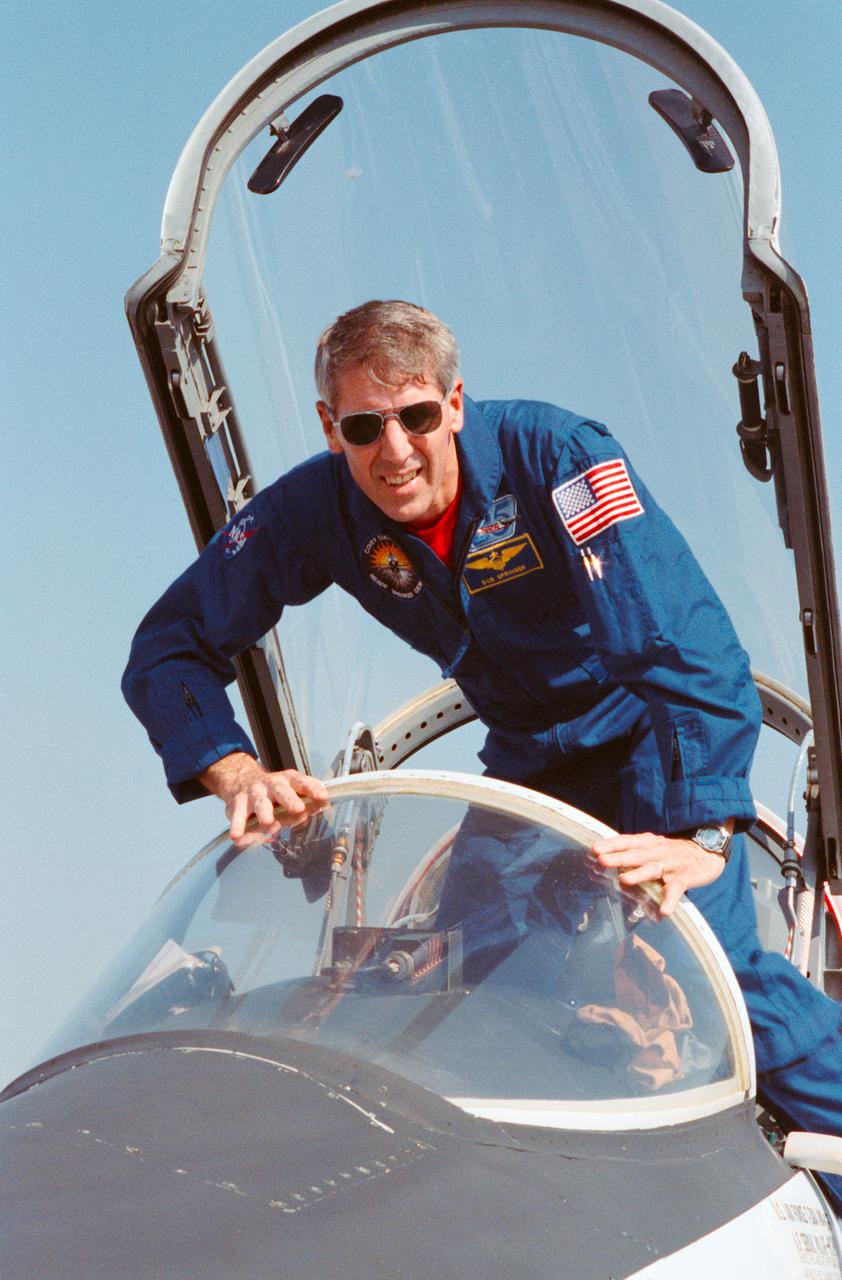
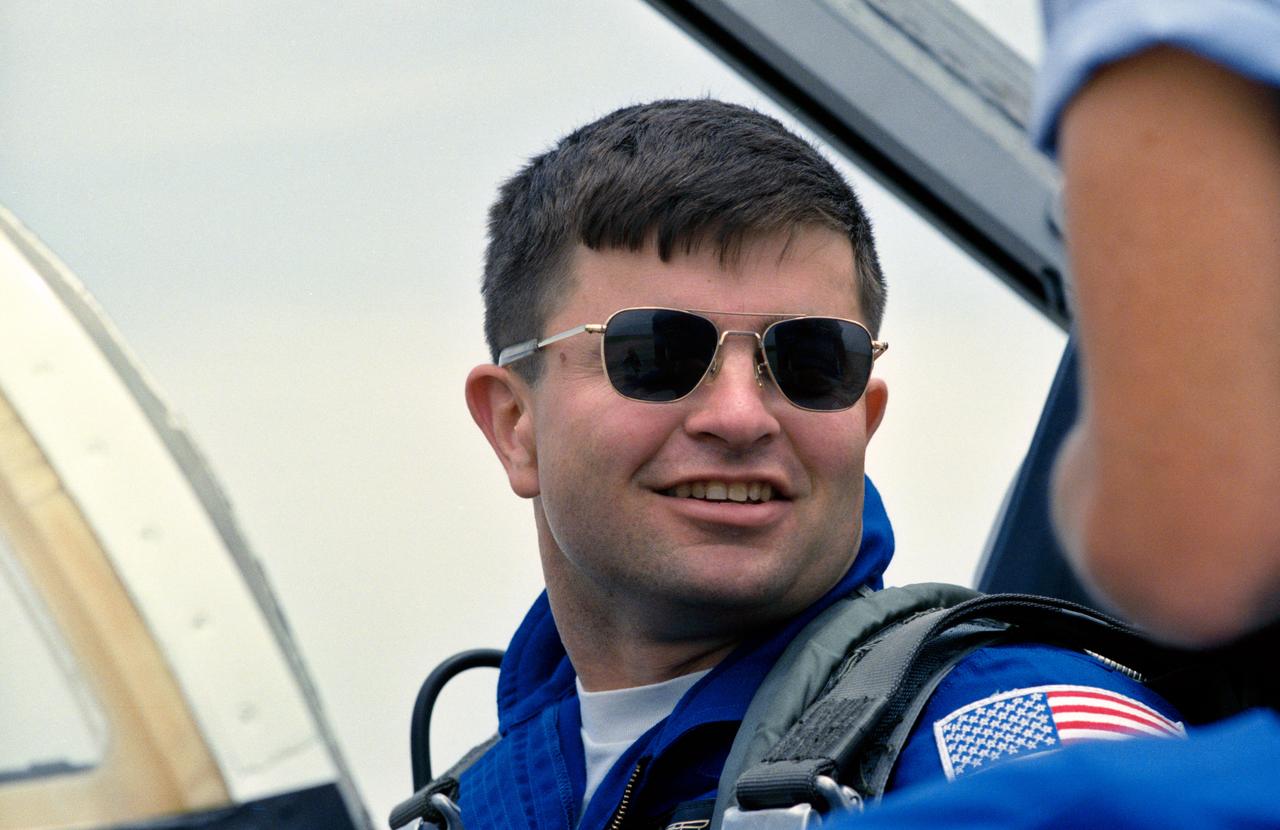
STS-38 Mission Specialist (MS) Robert C. Springer climbs into T-38A forward cockpit prior to Ellington Field departure for the Kennedy Space Center (KSC).
STS-38 MS Springer climbs into T-38A forward cockpit at Ellington Field
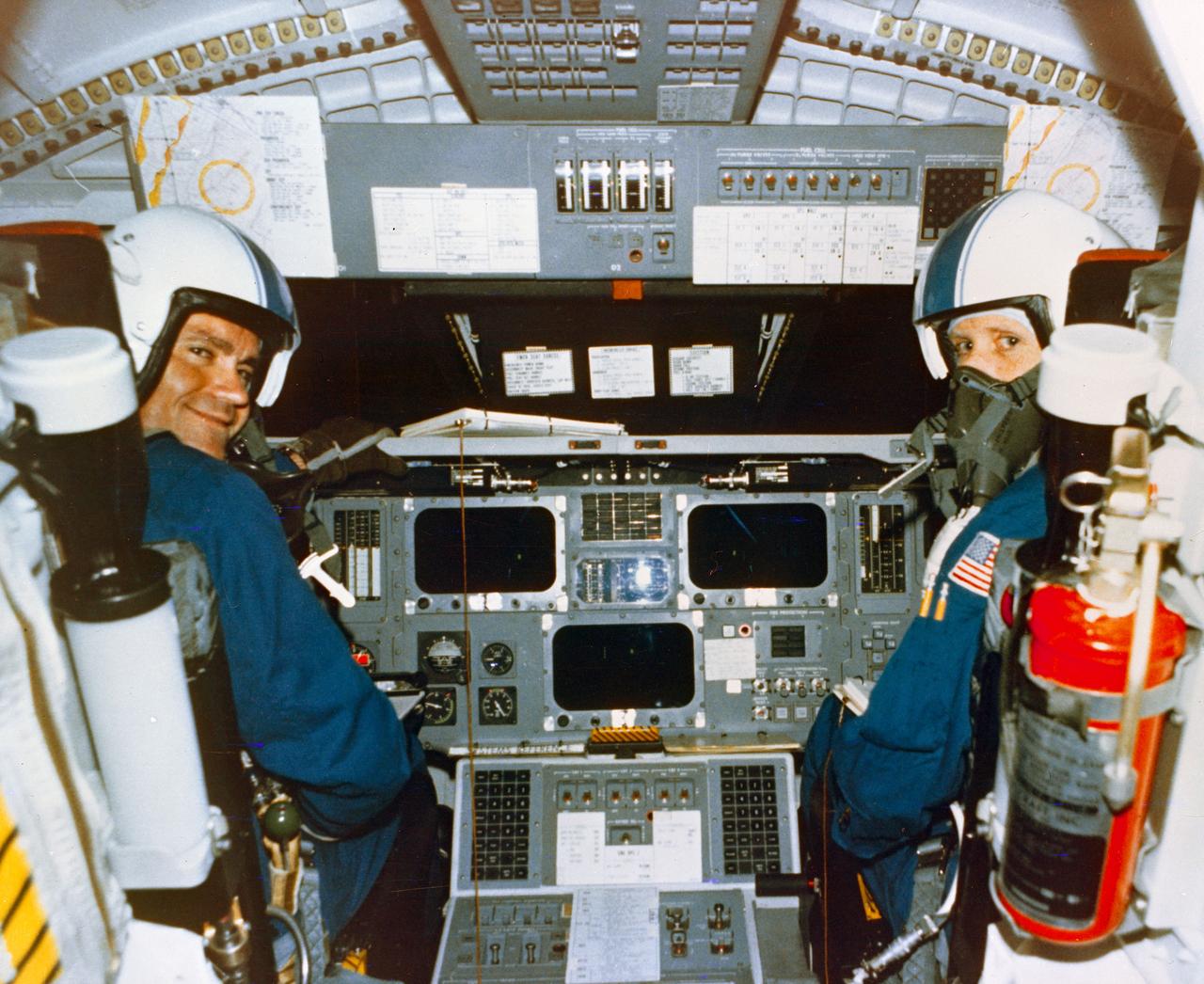
Astronauts Fred W. Haise, Jr., Commander, left, and C. Gordon Fullerton in the cockpit of the Space Shuttle Orbiter 101 "Enterprise" prior to the fifth and final FF in the Approach and Landing Test (ALT) series, from DFRC.  Original photo number was 77-HC-446.        DFRC, CA
ASTRONAUTS HAISE AND FULLERTON - COCKPIT - ORBITER 101 - PREFLIGHT FREE FLIGHT - DRYDEN FLIGHT RESEARCH CENTER (DFRC), CA
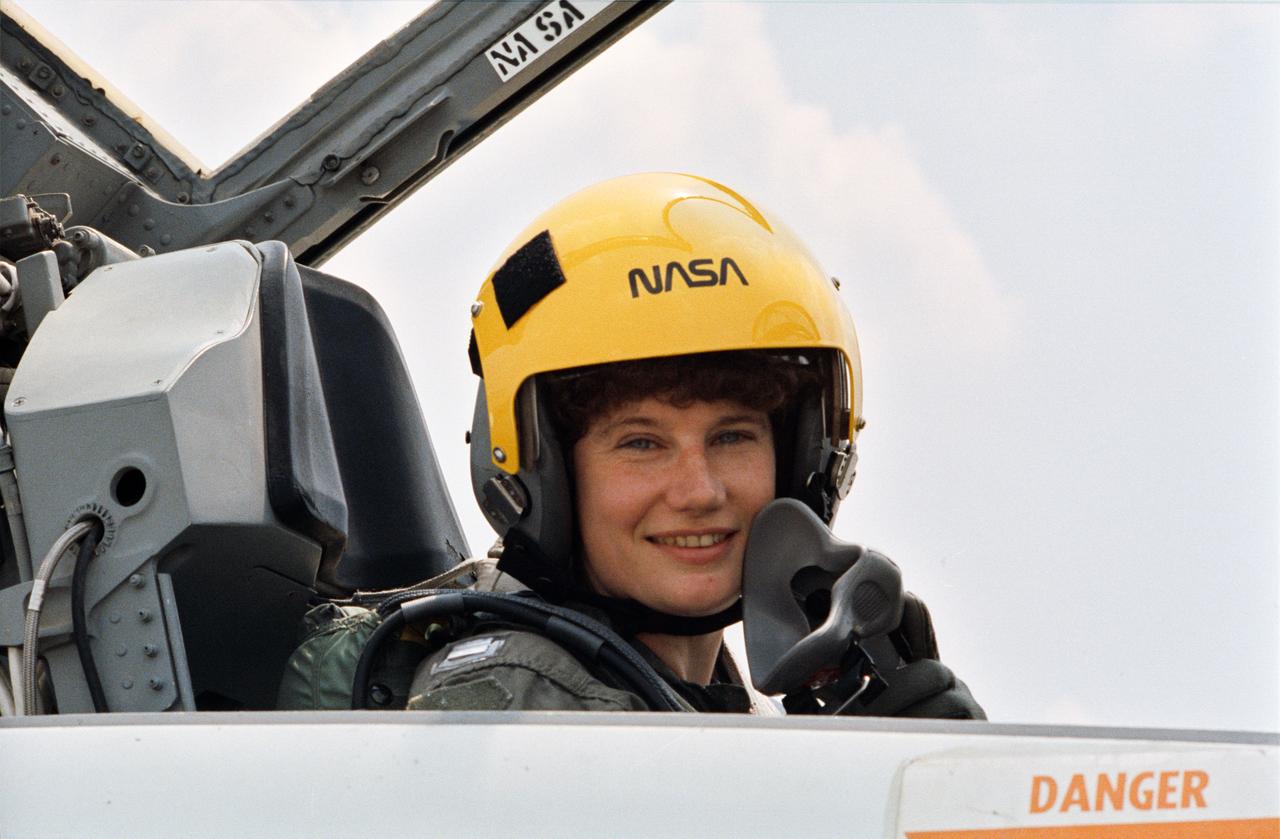
S90-45809 (July 1990) --- Susan J. Helms, one of the 23 astronaut candidates who began a year's training and evaluation program recently, sits in the cockpit of a NASA T-38 jet trainer at Ellington Field near the Johnson Space Center.
ASCAN Helms sits in T-38A cockpit and prepares for Ellington Field training
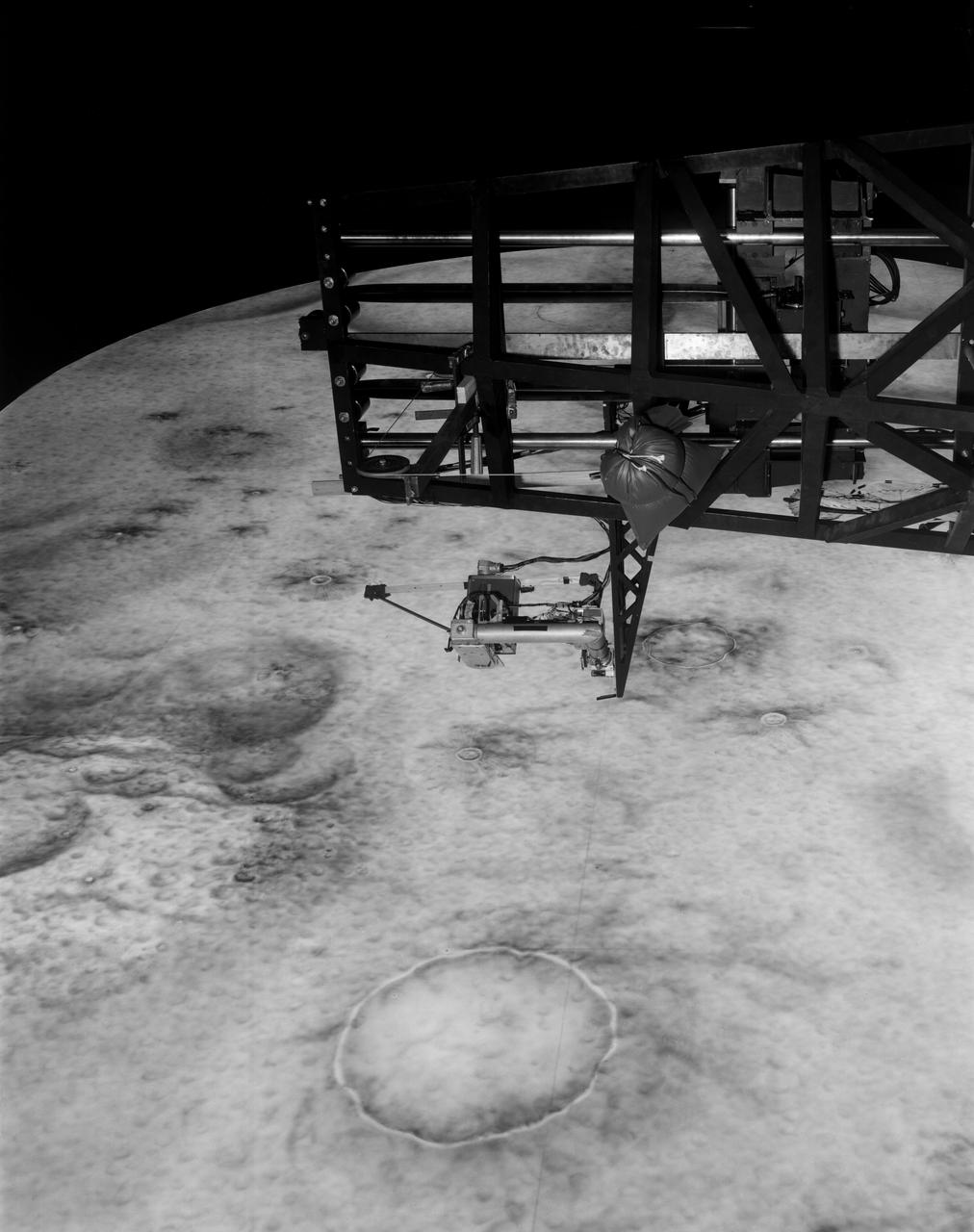
LOLA Cockpit and LOLA Gimbal
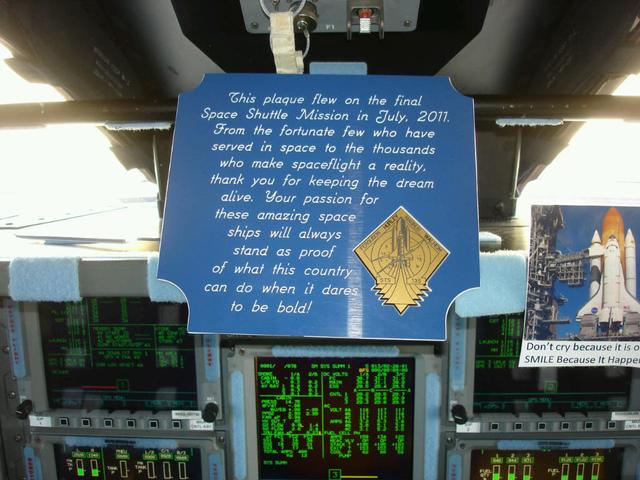
JSC2011-E-068995 (21 July 2011) --- The crew of STS-135 left this plaque in the cockpit of Atlantis as a tribute to all of the people who have worked on the Space Shuttle Program. Photo credit: NASA
STS-135 Postflight
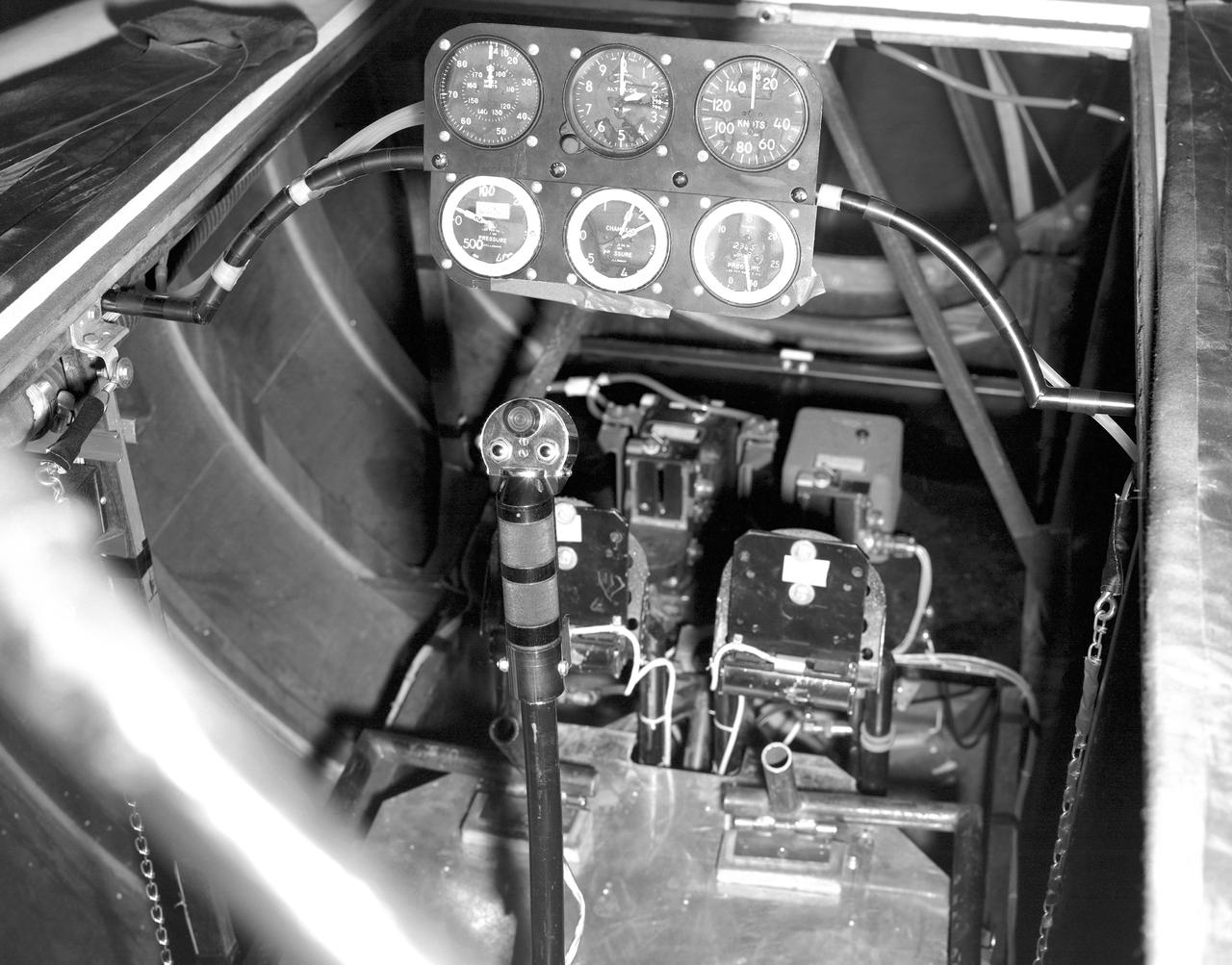
This photo shows the cockpit configuration of the M2-F1 wingless lifting body. With a top speed of about 120 knots, the M2-F1 had a simple instrument panel. Besides the panel itself, the ribs of the wooden shell (left) and the control stick (center) are also visible.
M2-F1 cockpit
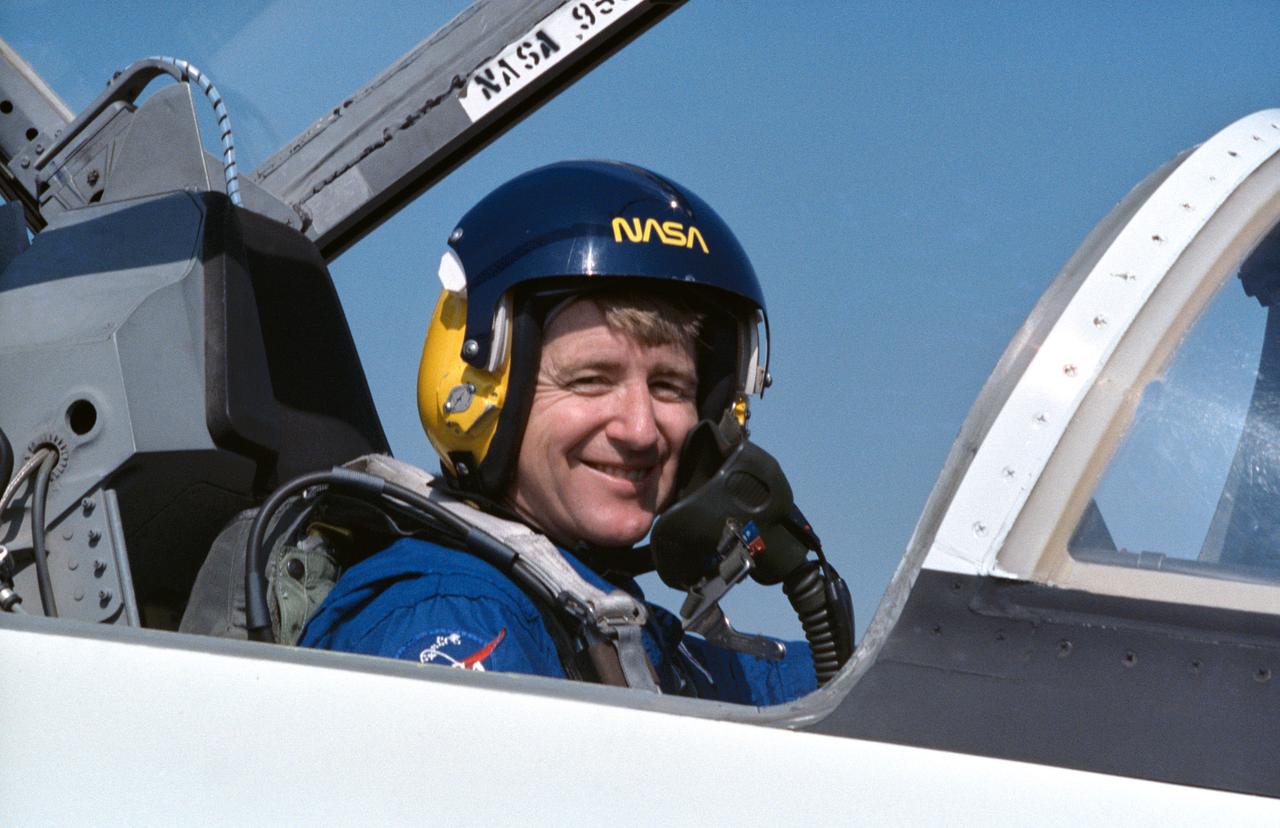
STS-38 Pilot Frank L. Culberston, smiling and wearing his helmet with breathing apparatus attached, sits in T-38A NASA 955 forward cockpit at Ellington Field and prepares for departure.
STS-38 Pilot Culberston in T-38A NASA 955 forward cockpit at Ellington Field
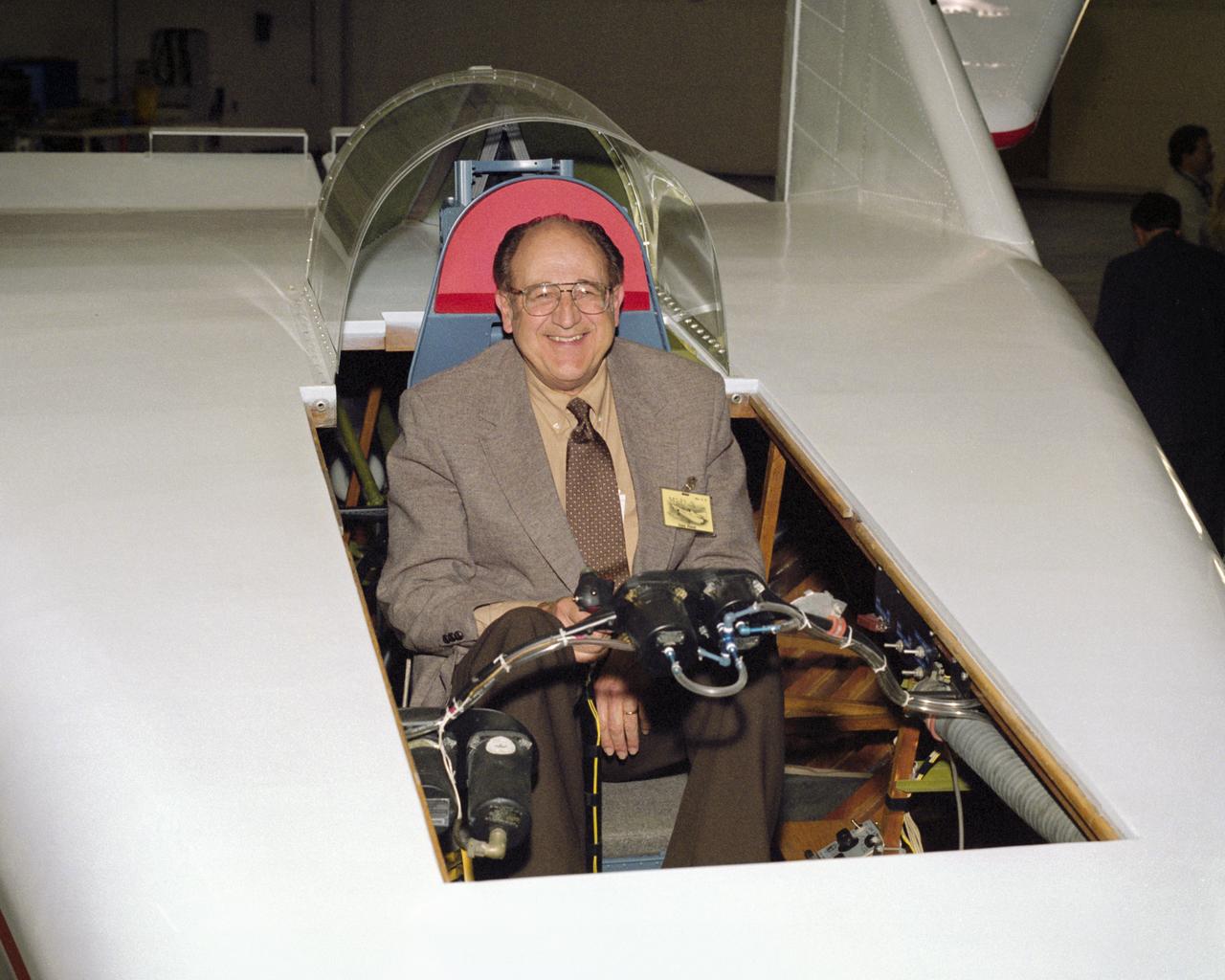
Pilot Bill Dana in HiMAT cockpit
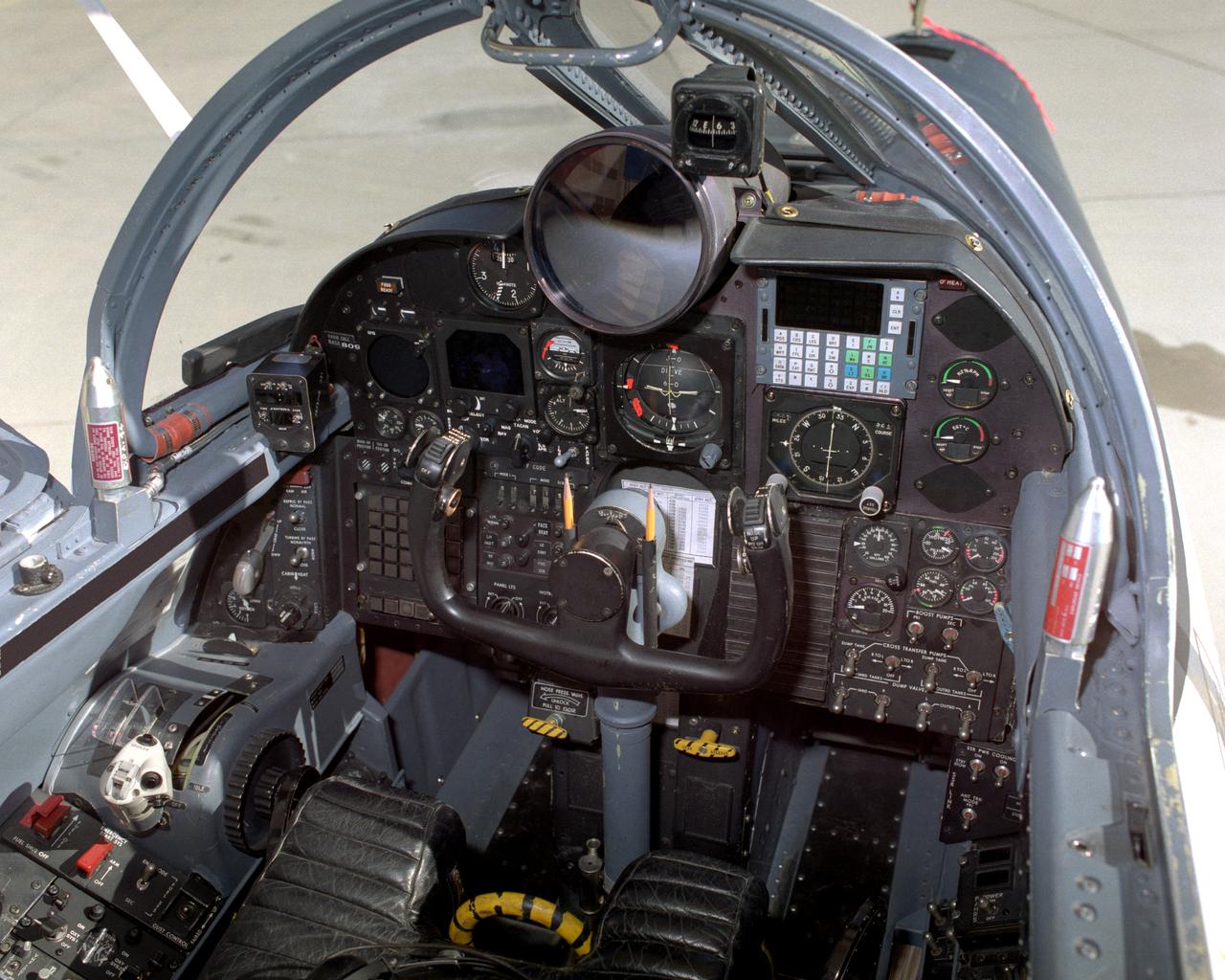
Lockheed ER-2 #809 cockpit
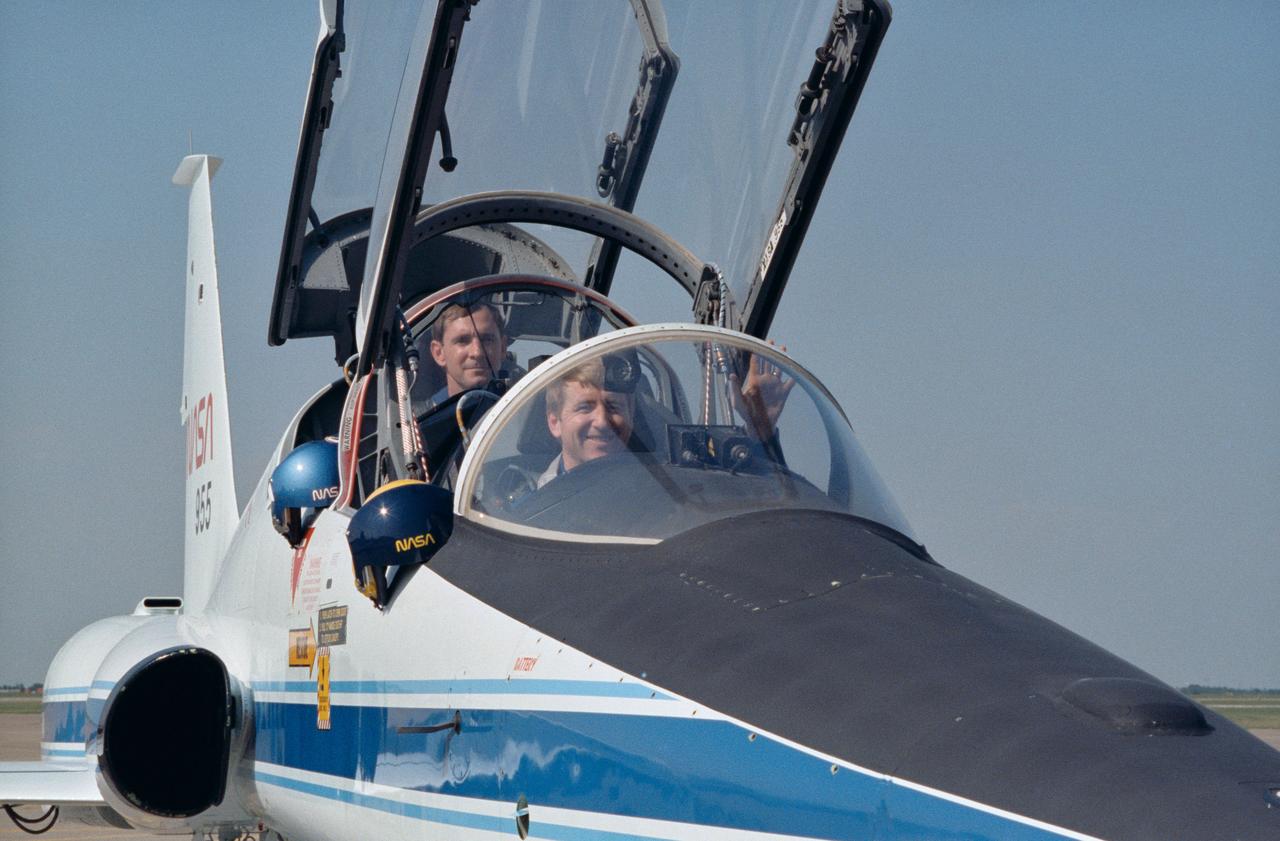
STS-38 Pilot Frank L. Culbertson waves from T-38A NASA 955 forward cockpit prior to Ellington Field departure. Astronaut Curtis L. Brown, Jr is stationed in the aft cockpit behind Culbertson.
STS-38 Pilot Culbertson in T-38A prior to Ellington departure
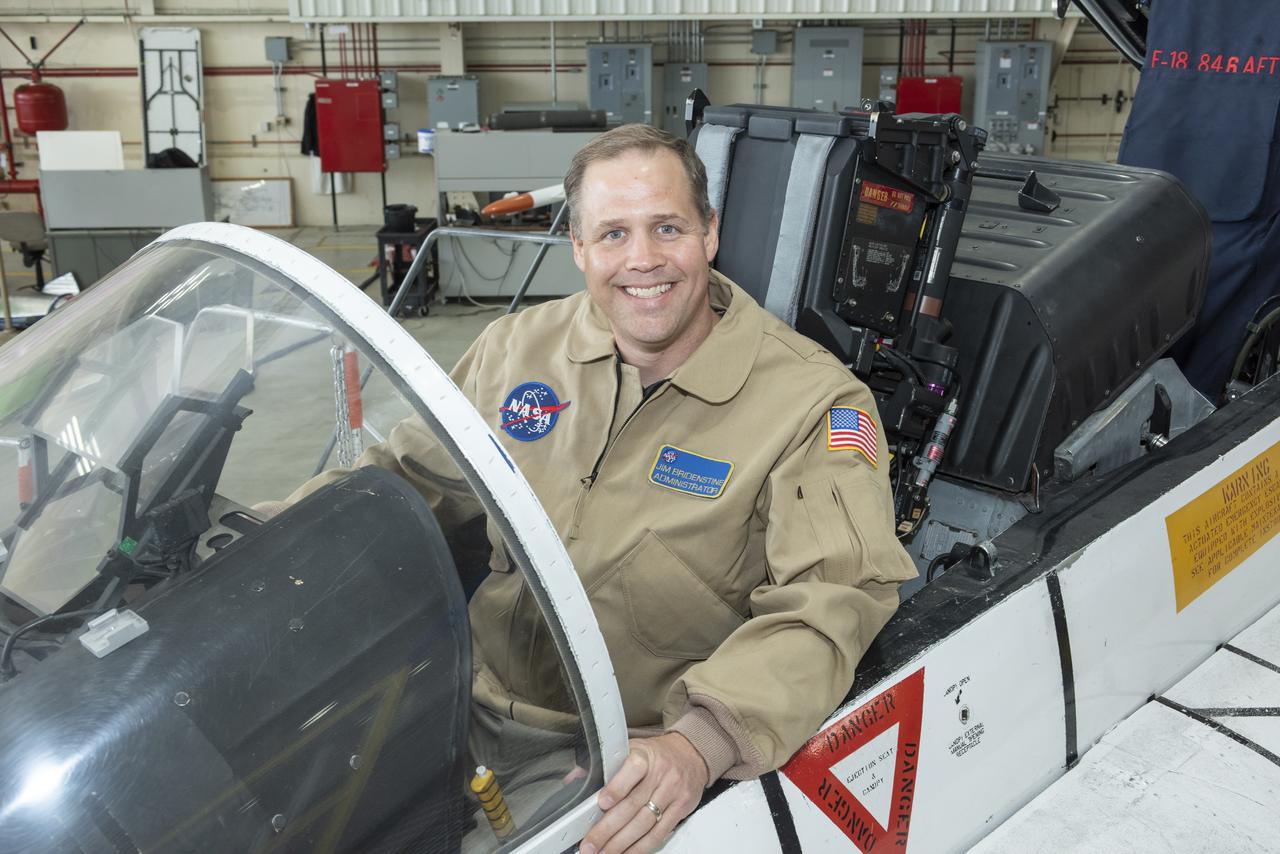
NASA Administrator Bridenstine, former navy pilot, sits comfortably back in F-18 jet cockpit at Armstrong Flight Research Center.
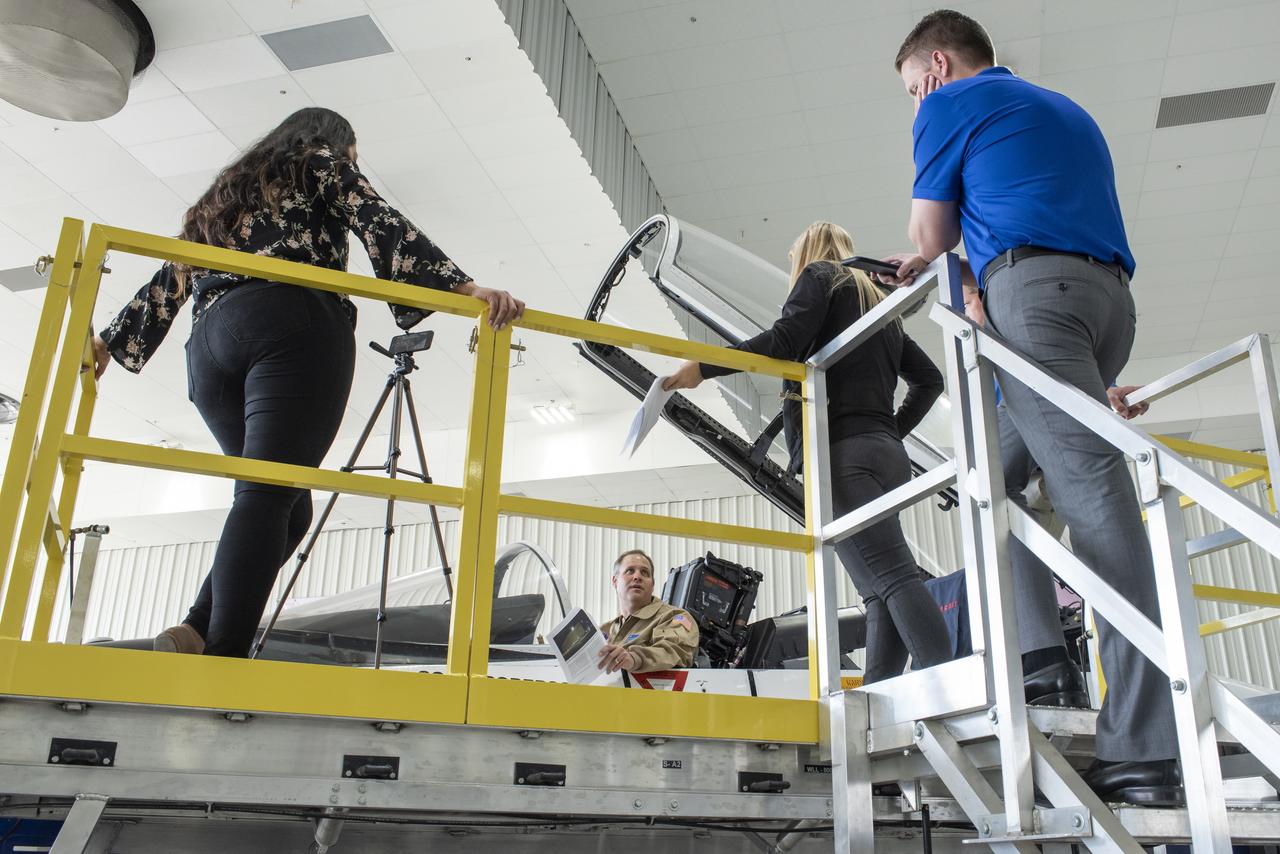
NASA Administrator Bridenstine sits in F-18 jet cockpit in NASA Armstrong Flight Research Center hangar in California where he did a Facebook Live event.
NASA Administrator Bridenstine, former navy pilot, sits comfortably back in F-18 jet cockpit at Armstrong Flight Research Center.
NASA Administrator Bridenstine sits in F-18 jet cockpit in NASA Armstrong Flight Research Center hangar in California where he did a Facebook Live event.
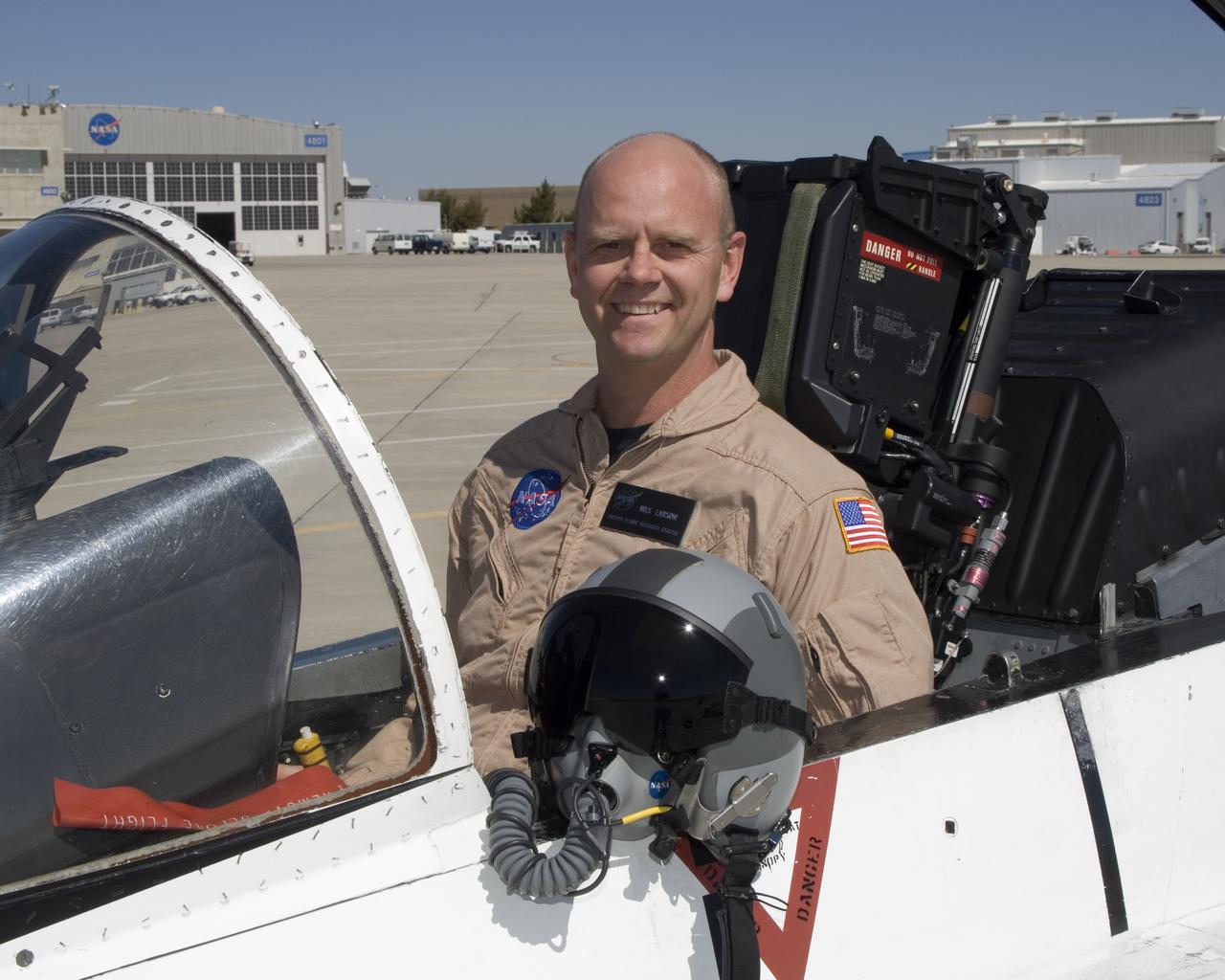
NASA test pilot, Nils Larson, inspects the X-59 cockpit displays and lighting system during system checkouts. The External Vision System (XVS) is displayed on the top screen, and the avionics flight displays, which can show navigation information or aircraft status, are shown on the bottom two screens.
Quesst Mission- NASA Test Piot Nils Larson Inspects X-59’s Cockpit
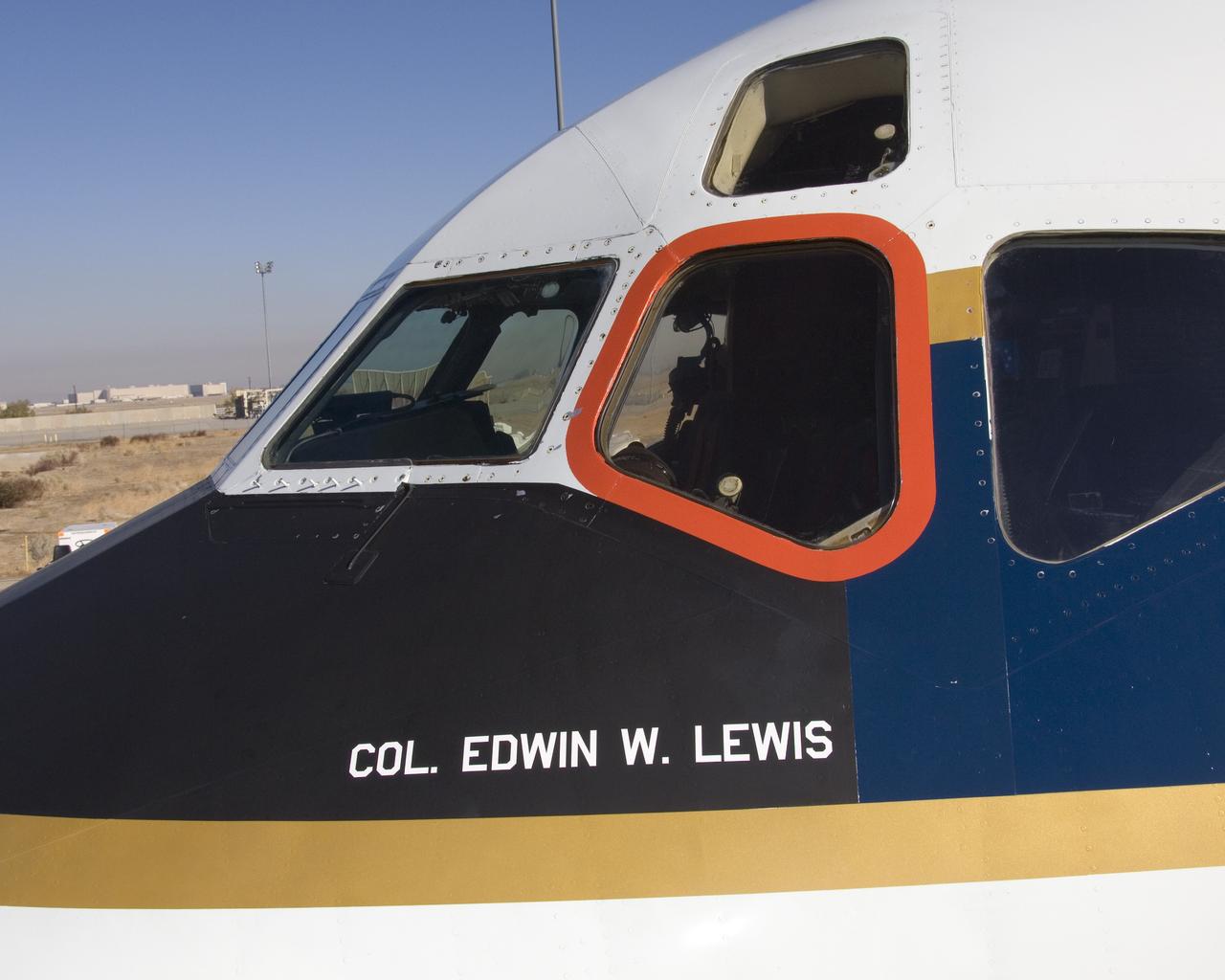
NASA's modified DC-8 now carries the name of the late Edwin W. Lewis below its cockpit window, a tribute to his 18 years piloting the unique science laboratory.
NASA's modified DC-8 now carries the name of the late Edwin W. Lewis below its cockpit window, a tribute to his 18 years piloting the unique science laboratory
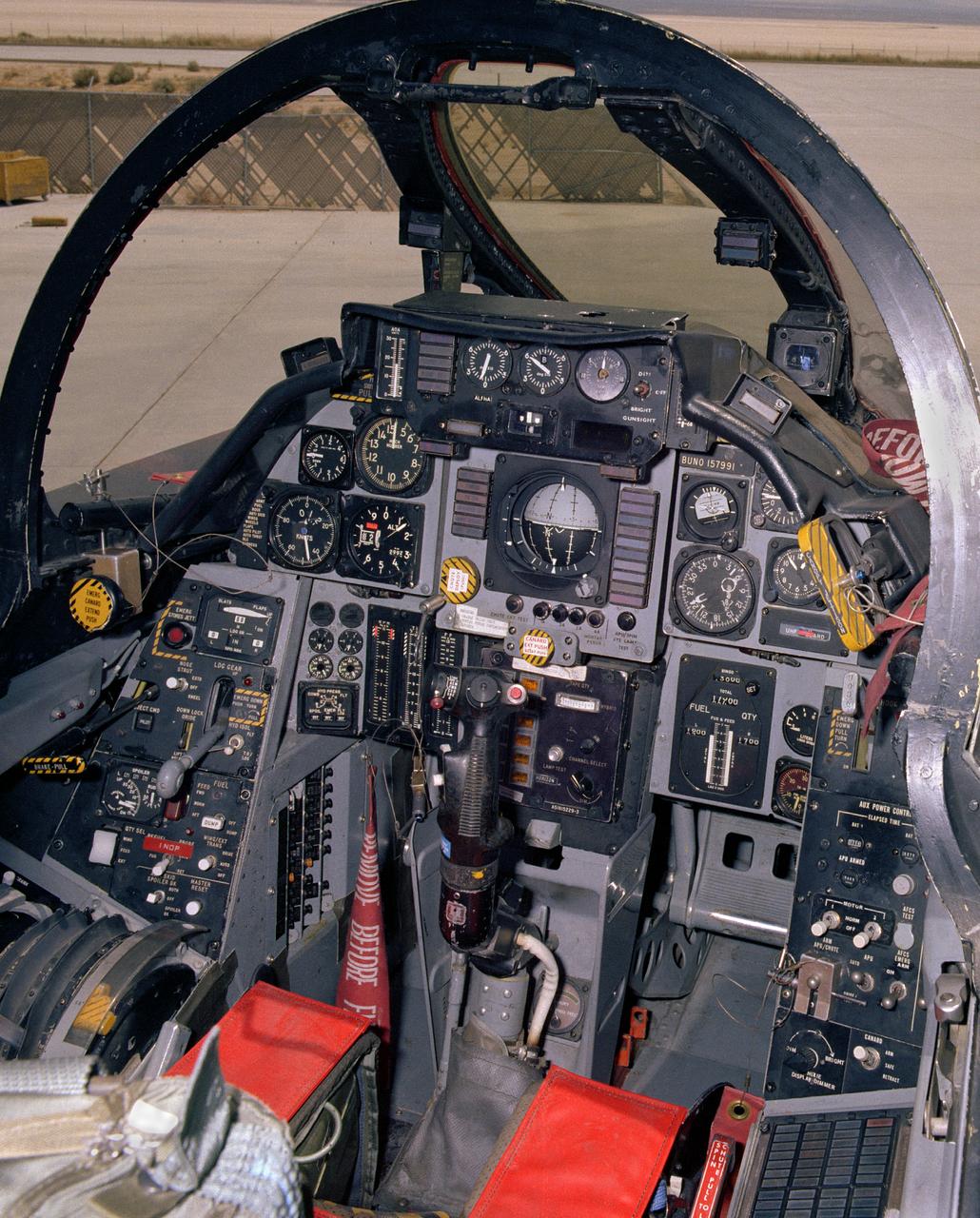
View of the cockpit of NASA's F-14, tail number 991. This aircraft was the first of a series of post-Vietnam fighters, followed by the F-15, F-16, and F-18. They were designed for maneuverability in air-to-air combat. The F-14s had a spin problem that posed problems for its ability to engage successfully in a dogfight, since it tended to depart from controlled flight at the high angles of attack that frequently occur in close-in engagements.
F-14 #991 cockpit
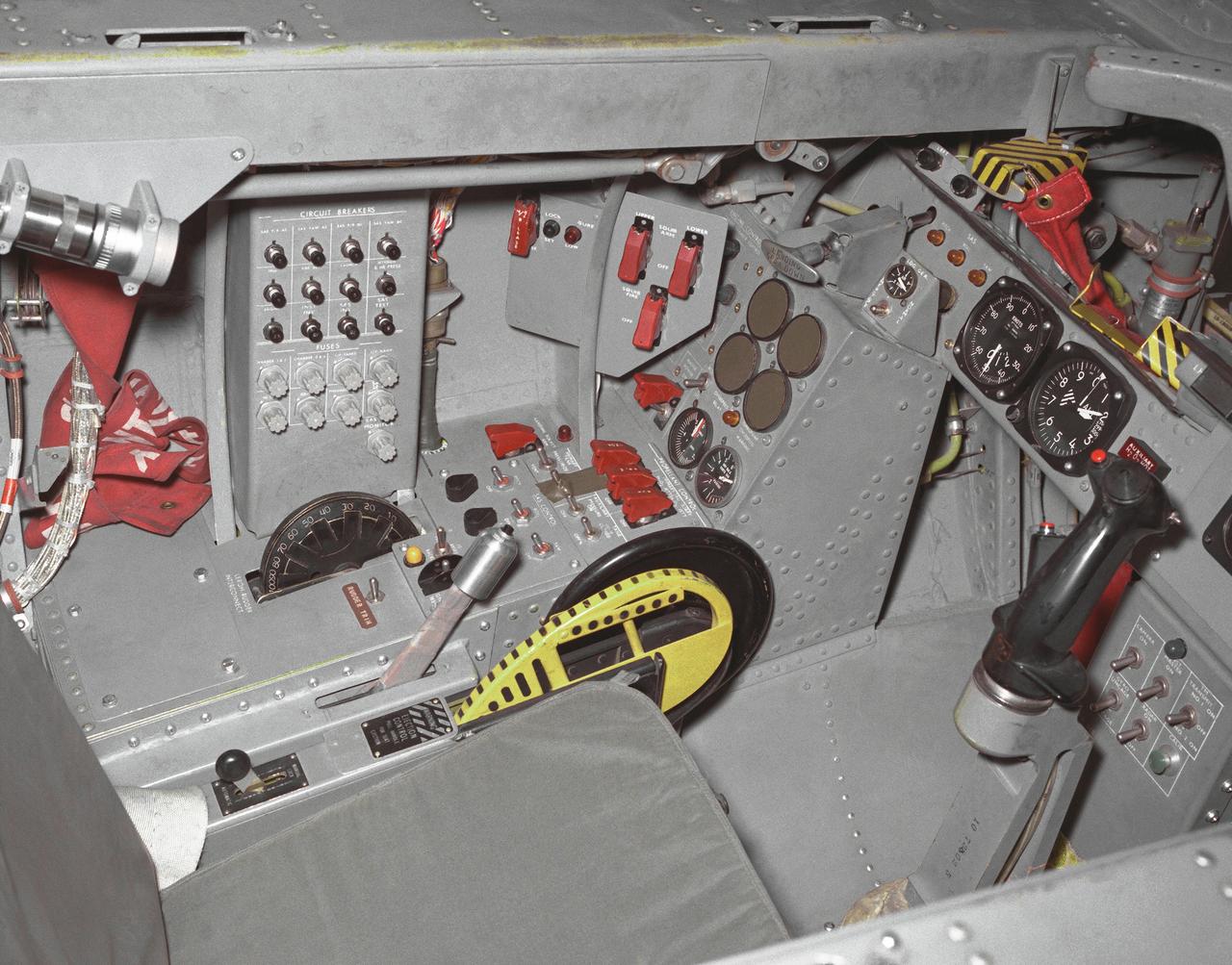
This photo shows the left side cockpit instrumentation panel of the M2-F2 Lifting Body. The success of Dryden's M2-F1 program led to NASA's development and construction of two heavyweight lifting bodies based on studies at NASA's Ames and Langley research centers -- the M2-F2 and the HL-10, both built by the Northrop Corporation. The "M" refers to "manned" and "F" refers to "flight" version. "HL" comes from "horizontal landing" and 10 is for the tenth lifting body model to be investigated by Langley.  The first flight of the M2-F2 -- which looked much like the "F1" -- was on July 12, 1966. Milt Thompson was the pilot. By then, the same B-52 used to air launch the famed X-15 rocket research aircraft was modified to also carry the lifting bodies. Thompson was dropped from the B-52's wing pylon mount at an altitude of 45,000 feet on that maiden glide flight.  The M2-F2 weighed 4,620 pounds, was 22 feet long, and had a width of about 10 feet.  On May 10, 1967, during the sixteenth glide flight leading up to powered flight, a landing accident severely damaged the vehicle and seriously injured the NASA pilot, Bruce Peterson.  NASA pilots and researchers realized the M2-F2 had lateral control problems, even though it had a stability augmentation control system. When the M2-F2 was rebuilt at Dryden and redesignated the M2-F3, it was modified with an additional third vertical fin -- centered between the tip fins -- to improve control characteristics.  The M2-F2/F3 was the first of the heavy-weight, entry-configuration lifting bodies. Its successful development as a research test vehicle answered many of the generic questions about these vehicles.  NASA donated the M2-F3 vehicle to the Smithsonian Institute in December 1973. It is currently hanging in the Air and Space Museum along with the X-15 aircraft number 1, which was its hangar partner at Dryden from 1965 to 1969.
M2-F2 cockpit instrument panels
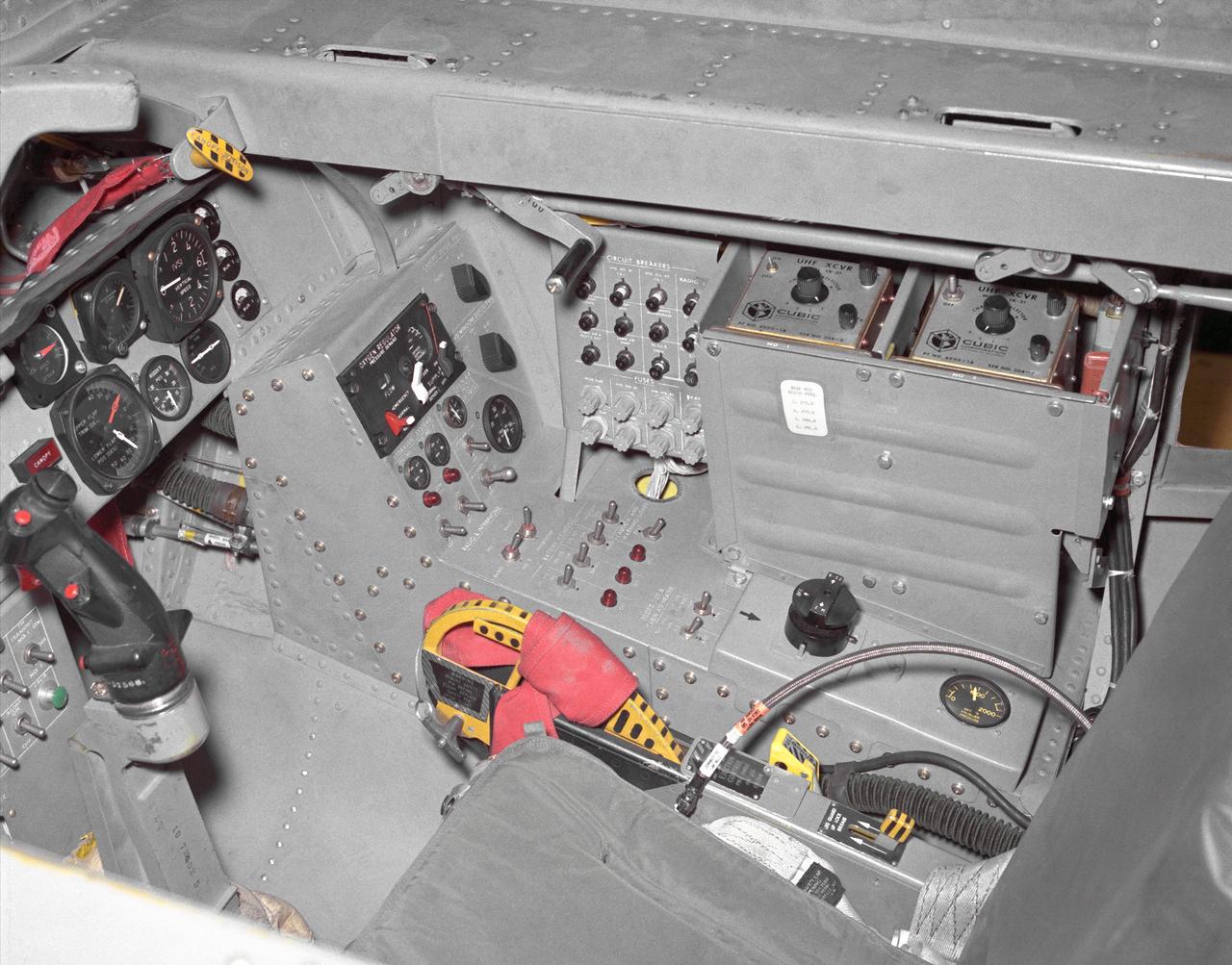
This photo shows the right side cockpit instrumentation panel of the M2-F2 Lifting Body. The success of Dryden's M2-F1 program led to NASA's development and construction of two heavyweight lifting bodies based on studies at NASA's Ames and Langley research centers -- the M2-F2 and the HL-10, both built by the Northrop Corporation. The "M" refers to "manned" and "F" refers to "flight" version. "HL" comes from "horizontal landing" and 10 is for the tenth lifting body model to be investigated by Langley.  The first flight of the M2-F2 -- which looked much like the "F1" -- was on July 12, 1966. Milt Thompson was the pilot. By then, the same B-52 used to air launch the famed X-15 rocket research aircraft was modified to also carry the lifting bodies. Thompson was dropped from the B-52's wing pylon mount at an altitude of 45,000 feet on that maiden glide flight.  The M2-F2 weighed 4,620 pounds, was 22 feet long, and had a width of about 10 feet.  On May 10, 1967, during the sixteenth glide flight leading up to powered flight, a landing accident severely damaged the vehicle and seriously injured the NASA pilot, Bruce Peterson.  NASA pilots and researchers realized the M2-F2 had lateral control problems, even though it had a stability augmentation control system. When the M2-F2 was rebuilt at Dryden and redesignated the M2-F3, it was modified with an additional third vertical fin -- centered between the tip fins -- to improve control characteristics.  The M2-F2/F3 was the first of the heavy-weight, entry-configuration lifting bodies. Its successful development as a research test vehicle answered many of the generic questions about these vehicles.  NASA donated the M2-F3 vehicle to the Smithsonian Institute in December 1973. It is currently hanging in the Air and Space Museum along with the X-15 aircraft number 1, which was its hangar partner at Dryden from 1965 to 1969.
M2-F2 cockpit instrument panels
F-15 Propulsion Controlled Aircraft (PCA) simulation cockpit
F-15 PCA (Propulsion Controlled Aircraft) simulation cockpit
NASA Pilot Bruce Peterson in the cockpit of the restored M2-F1 Lifting Body.
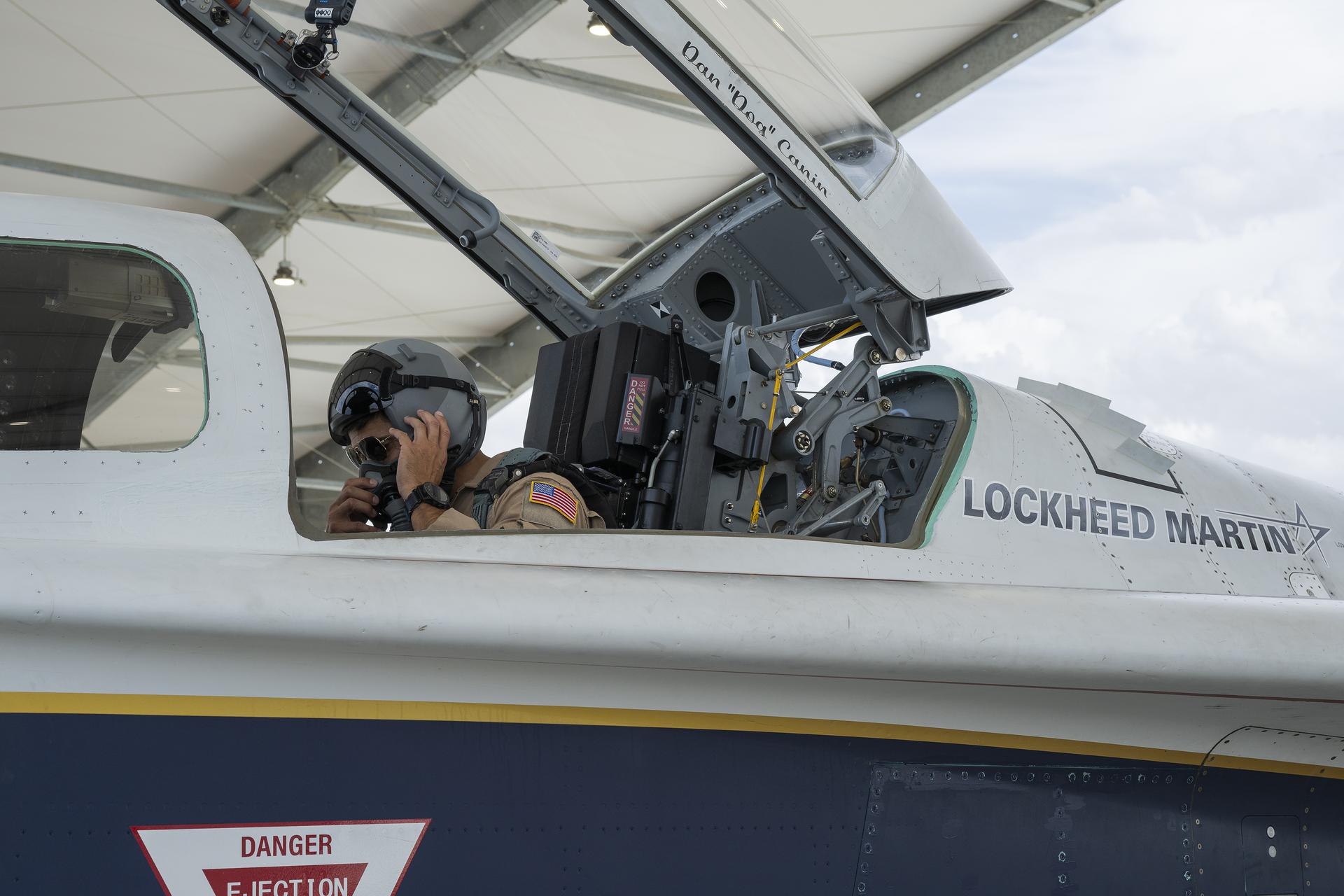
Lockheed Martin test pilot Dan “Dog” Canin sits in the cockpit of NASA’s X-59 quiet supersonic research aircraft in a run stall at Lockheed Martin’s Skunk Works facility in Palmdale, California prior to its first engine run. These engine-run tests featured the X-59 powered by its own engine, whereas in previous tests, the aircraft depended on external sources for power. The X-59 is the centerpiece of NASA’s Quesst mission, which seeks to solve one of the major barriers to supersonic flight over land by making sonic booms quieter.
Test Pilot Sits in X-59 Cockpit Prior to First Engine Run
View from the cockpit of Glenn’s S–3 Viking
GRC-2010-C-03192
Head and shoulders view of astronaut Ken Cameron sitting in the cockpit of a T 38 at Ellington Field prior to his departure to Fairchild AFB, Washington.
Head and shoulders view of astronaut Ken Cameron sitting in the cockpit
Rylee Ritter, student and first time visitor to NASA's Armstrong Flight Research Center, sits in a mockup of an F-15 cockpit, during the center's Take Your Kids To Work Day event.
Student Sits in Aircraft Cockpit Before the Space Station Downlink at NASA Armstrong
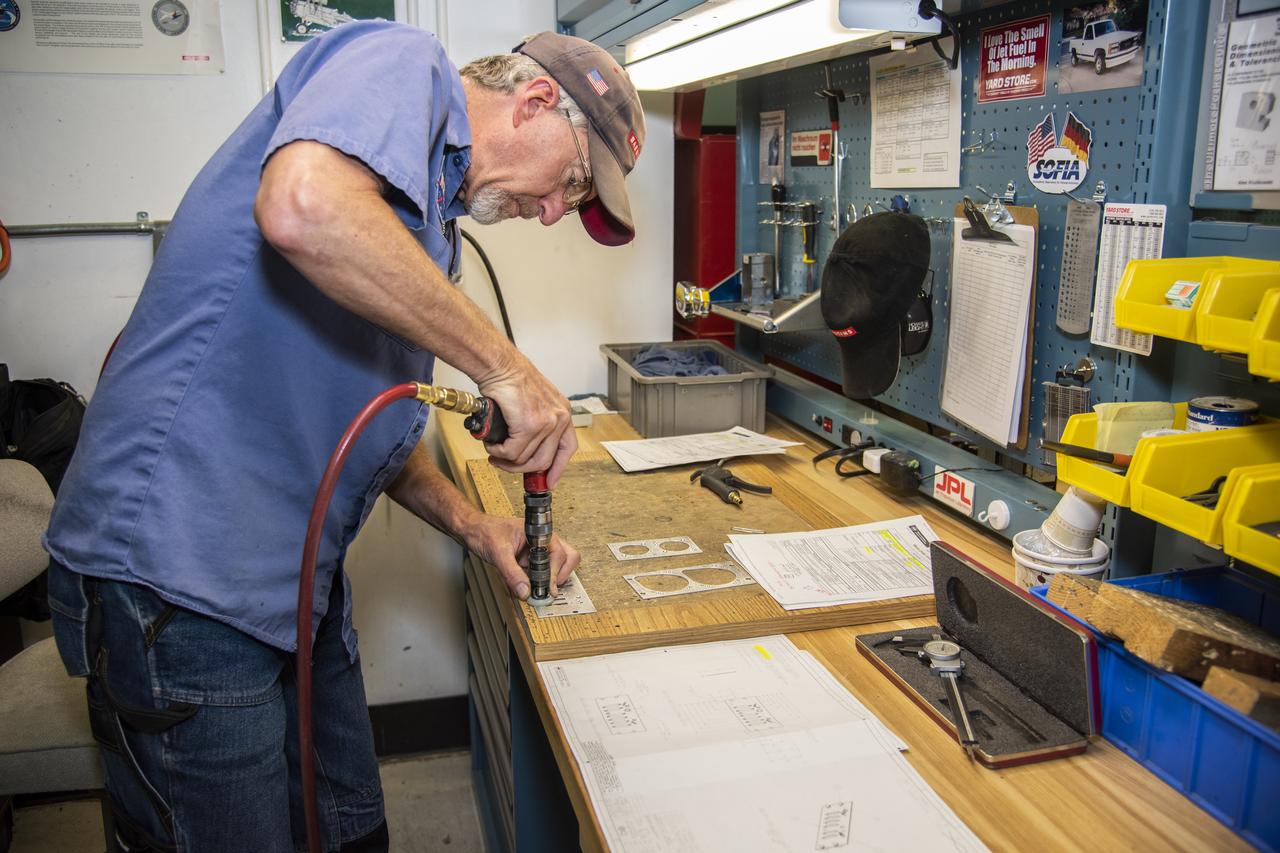
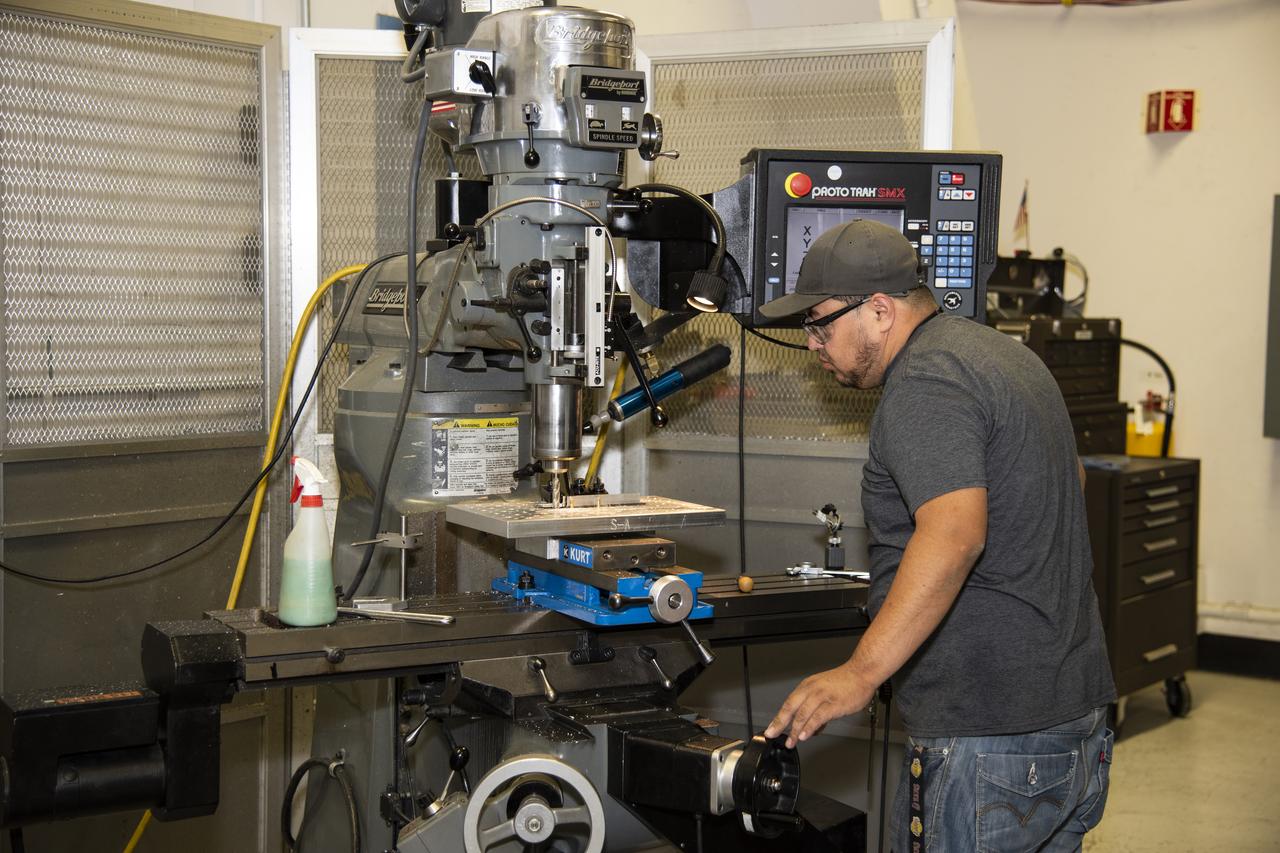
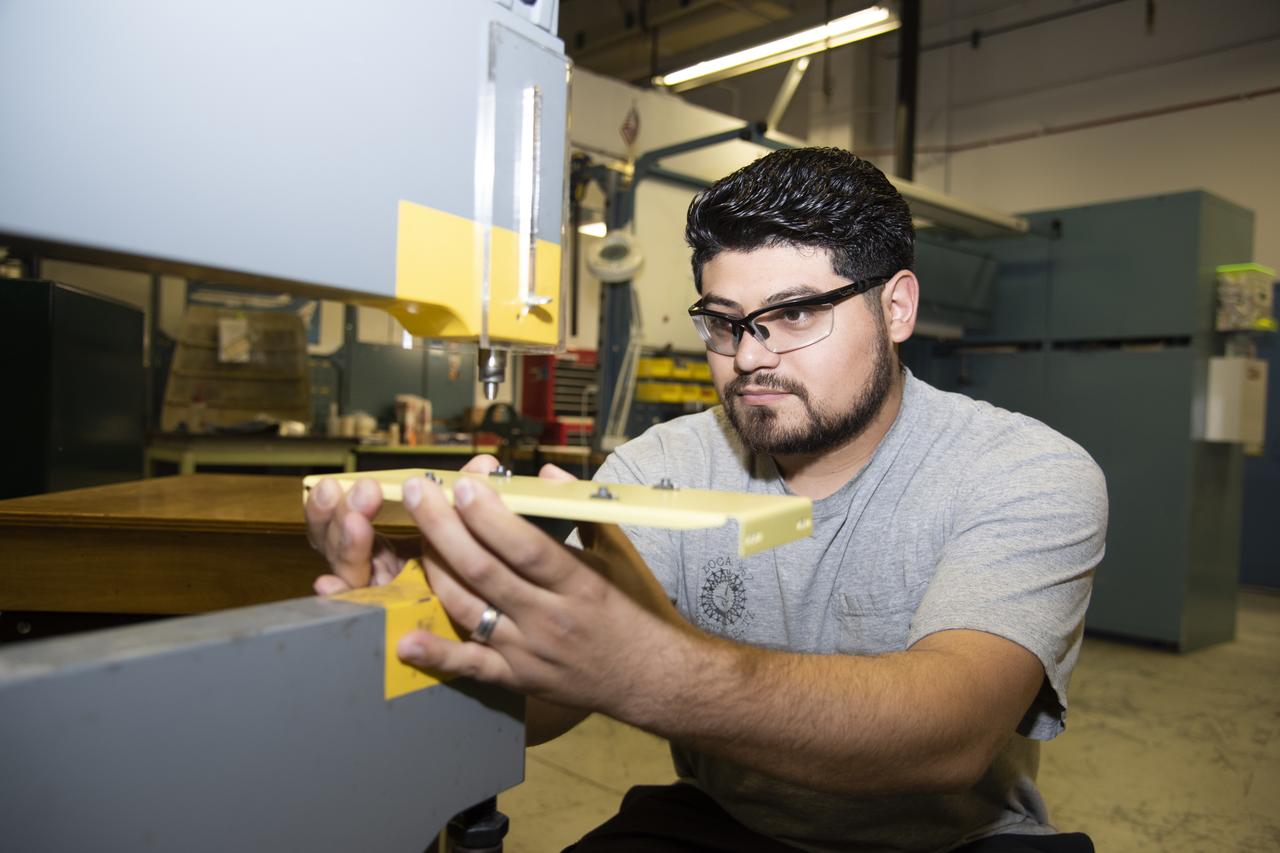
Hector Rosas works on fabricating a part for the ER-2 instrumentation panel.
ER-2 Cockpit Effort Will Enhance Pilot Safety
Technician David Johnson works on rewiring the high-altitude ER-2 aircraft's fixed nose and cockpit.Â
ER-2 Cockpit Effort Will Enhance Pilot Safety
Eric Nisbet works on a part for the ER-2 instrument panel.
ER-2 Cockpit Effort Will Enhance Pilot Safety
Andrew Shaw works on a component for the high-altitude ER-2 aircraft's instrument panel.
ER-2 Cockpit Effort Will Enhance Pilot Safety
Herman Escobar works on a part for the ER-2 instrument panel.
ER-2 Cockpit Effort Will Enhance Pilot Safety
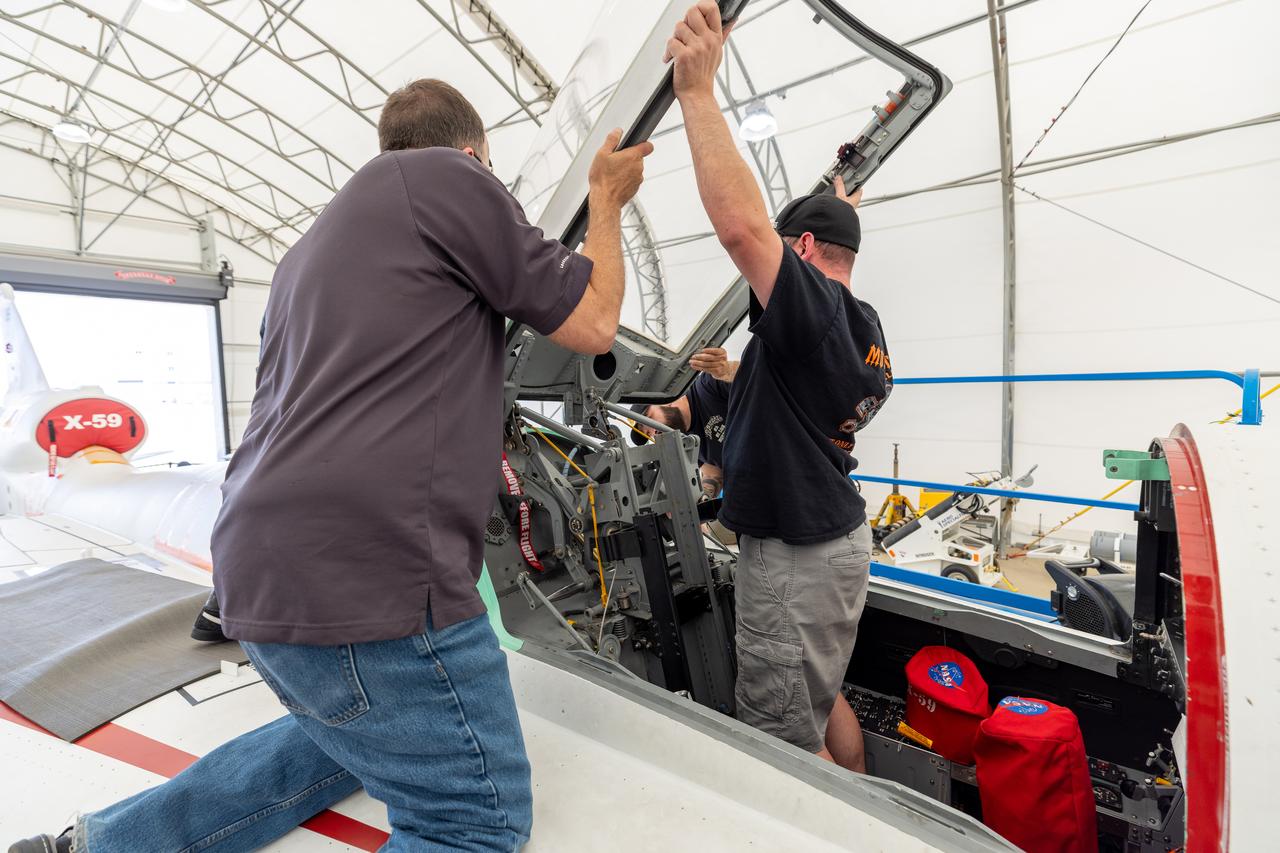
Lockheed Martin technicians temporarily remove the canopy from the X-59 in preparation for final installation of the ejection seat into the aircraft.
Canopy-Cockpit-Run Stall Equipment and Ground Points
JF-100C #709 cockpit control panel July 17, 1963
E63-10169
KENNEDY SPACE CENTER, FLA. -   In Orbiter Processing Facility bay 2, United Space Alliance employees Charles Bell, Terri Halverstadt, Loralee Woodbury, and Rob Lewis monitor a display in Space Shuttle Endeavour's cockpit the first time the orbiter is powered up after nearly two years. Endeavour has been in its Orbiter Major Modification (OMM) period since December 2003. Engineers and technicians spent 900,000 hours performing 124 modifications to the vehicle. These included all recommended return to flight safety modifications, bonding more than 1,000 thermal protection system tiles and inspecting more than 150 miles of wiring throughout Endeavour. Eighty five of the modifications are completed, with work on the additional 39 modifications continuing throughout the next few months. Shuttle major modification periods are scheduled at regular intervals to enhance safety and performance, infuse new technology and allow for thorough inspections of the airframe and wiring of the vehicles. This was the second of these modification periods performed entirely at Kennedy Space Center. Endeavour's previous modification was completed in March 1997.
KSC-05pd2299
KENNEDY SPACE CENTER, FLA. -   In Orbiter Processing Facility bay 2, United Space Alliance technician Loralee Woodbury monitors the lighted display in Space Shuttle Endeavour's cockpit after full powerup, the first time the orbiter has been powered up after nearly two years. Endeavour has been in its Orbiter Major Modification (OMM) period since December 2003. Engineers and technicians spent 900,000 hours performing 124 modifications to the vehicle. These included all recommended return to flight safety modifications, bonding more than 1,000 thermal protection system tiles and inspecting more than 150 miles of wiring throughout Endeavour. Eighty five of the modifications are completed, with work on the additional 39 modifications continuing throughout the next few months. Shuttle major modification periods are scheduled at regular intervals to enhance safety and performance, infuse new technology and allow for thorough inspections of the airframe and wiring of the vehicles. This was the second of these modification periods performed entirely at Kennedy Space Center. Endeavour's previous modification was completed in March 1997.
KSC-05pd2301
KENNEDY SPACE CENTER, FLA. -   In Orbiter Processing Facility bay 2, United Space Alliance technician Charles Bell monitors a display in Space Shuttle Endeavour's cockpit the first time the orbiter is powered up after nearly two years. Endeavour has been in its Orbiter Major Modification (OMM) period since December 2003. Engineers and technicians spent 900,000 hours performing 124 modifications to the vehicle. These included all recommended return to flight safety modifications, bonding more than 1,000 thermal protection system tiles and inspecting more than 150 miles of wiring throughout Endeavour. Eighty five of the modifications are completed, with work on the additional 39 modifications continuing throughout the next few months. Shuttle major modification periods are scheduled at regular intervals to enhance safety and performance, infuse new technology and allow for thorough inspections of the airframe and wiring of the vehicles. This was the second of these modification periods performed entirely at Kennedy Space Center. Endeavour's previous modification was completed in March 1997.
KSC-05pd2298
KENNEDY SPACE CENTER, FLA. -   In Orbiter Processing Facility bay 2, United Space Alliance technician Charles Bell examines a display in Space Shuttle Endeavour's cockpit the first time the orbiter is powered up after nearly two years. Endeavour has been in its Orbiter Major Modification (OMM) period since December 2003. Engineers and technicians spent 900,000 hours performing 124 modifications to the vehicle. These included all recommended return to flight safety modifications, bonding more than 1,000 thermal protection system tiles and inspecting more than 150 miles of wiring throughout Endeavour. Eighty five of the modifications are completed, with work on the additional 39 modifications continuing throughout the next few months. Shuttle major modification periods are scheduled at regular intervals to enhance safety and performance, infuse new technology and allow for thorough inspections of the airframe and wiring of the vehicles. This was the second of these modification periods performed entirely at Kennedy Space Center. Endeavour's previous modification was completed in March 1997.
KSC-05pd2300
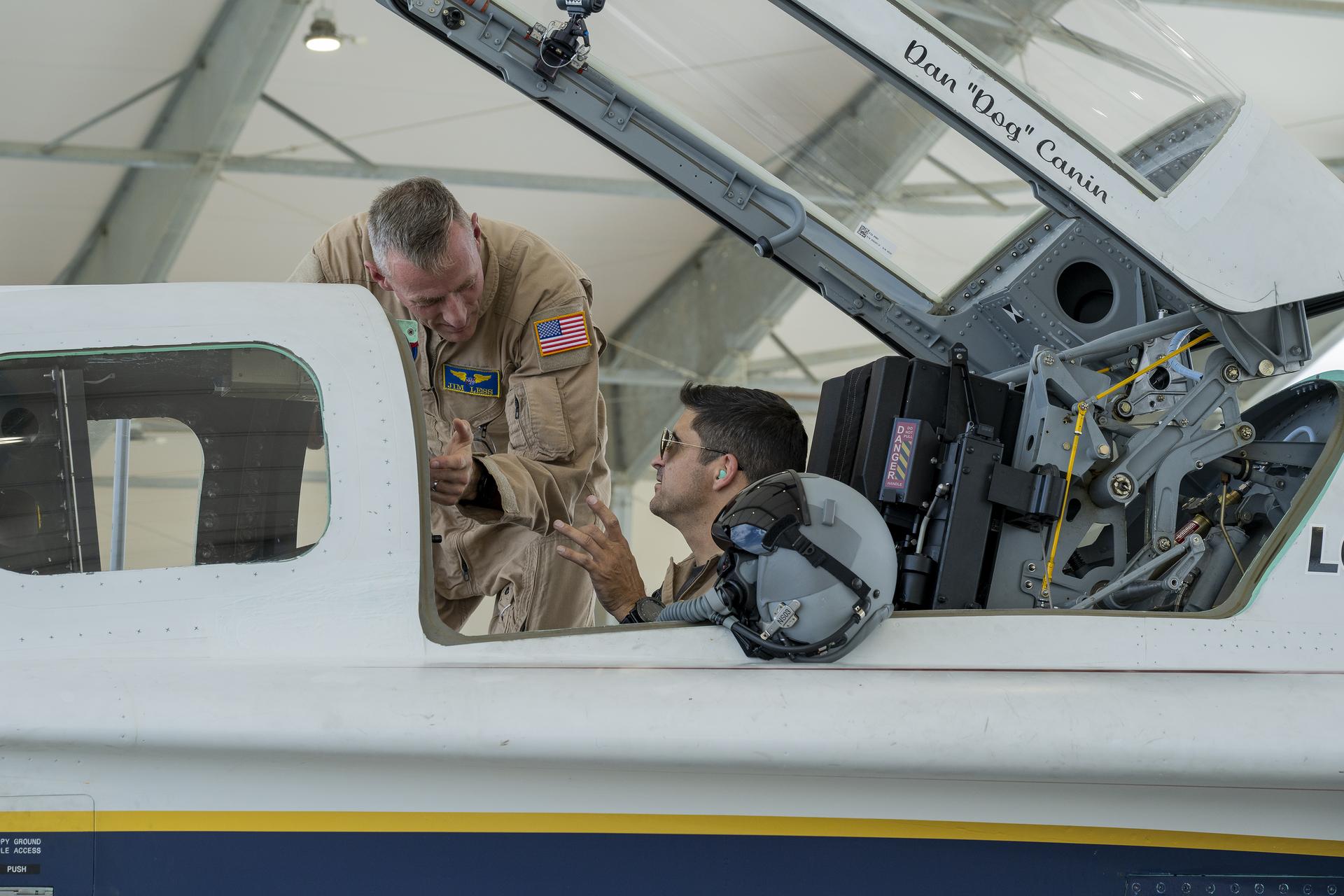
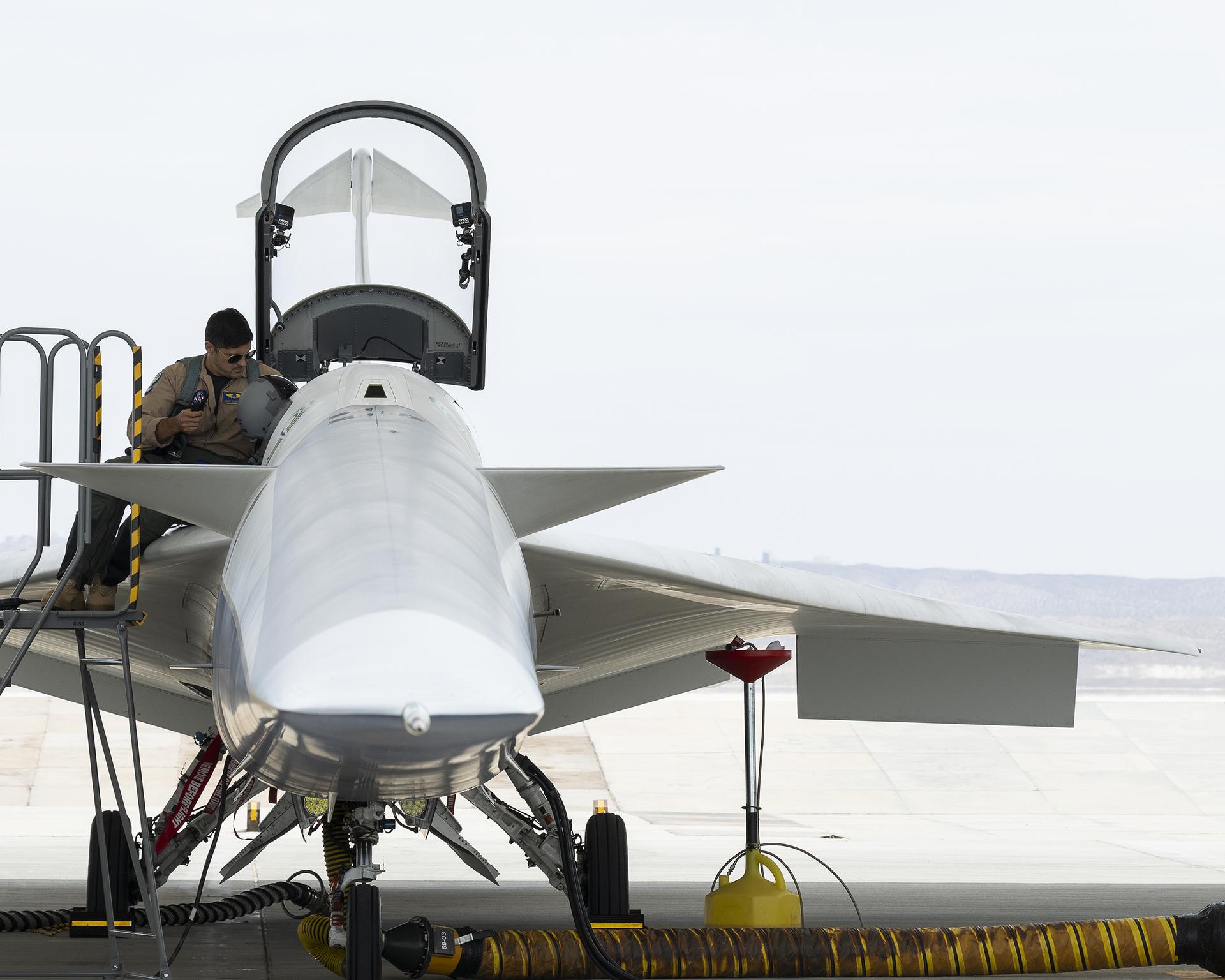
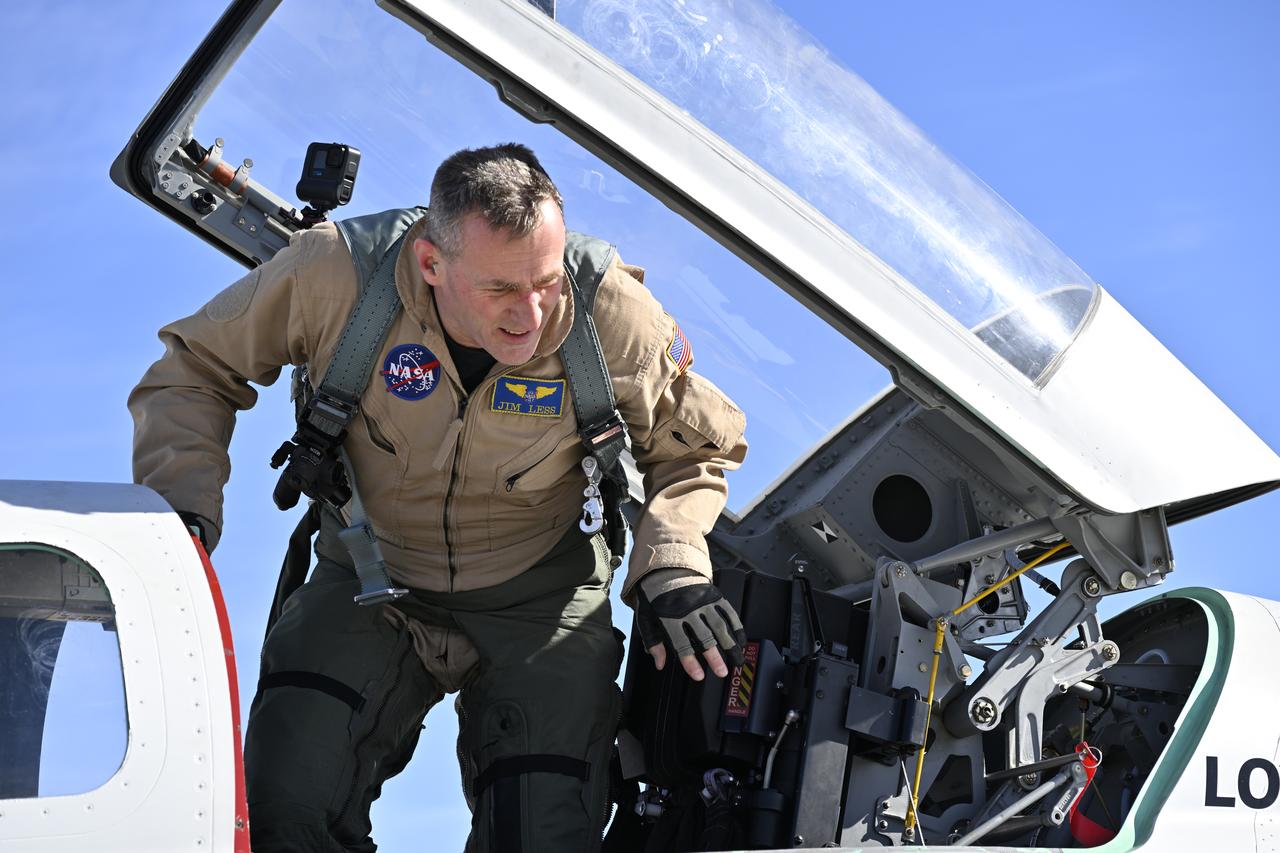
NASA test pilot Jim Less prepares to exit the cockpit of the quiet supersonic X-59 aircraft in between electromagnetic interference (EMI) testing. The EMI testing ensures an aircraft’s systems function properly under various conditions of electromagnetic radiation. The X-59 is the centerpiece of the NASA’s Quesst mission, designed to demonstrate quiet supersonic technology and provide data to address a key barrier to commercial supersonic travel.
NASA Test Pilot Exits X-59 Cockpit After Electromagnetic Interference Testing
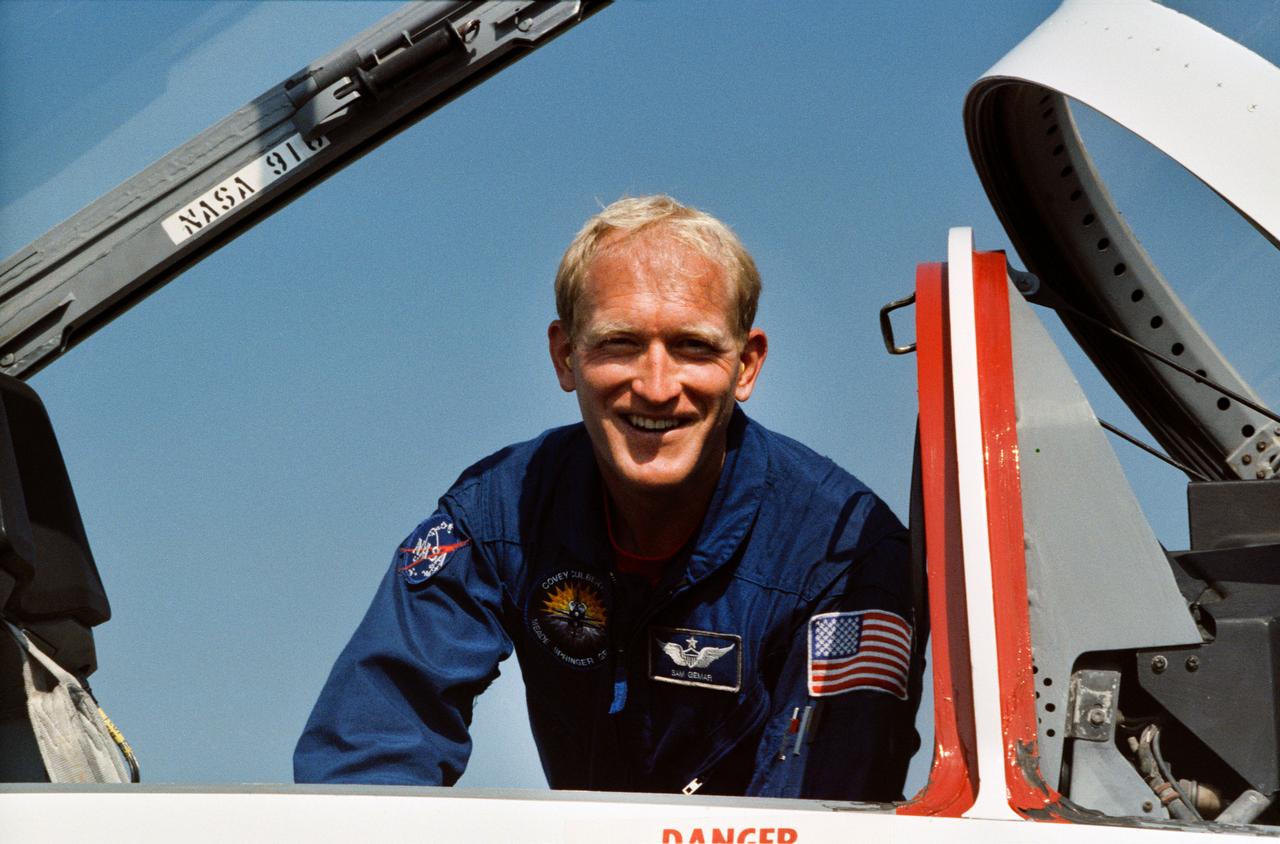
S90-41527 (August 1990) ---  Astronaut Charles D. (Sam) Gemar, prepares to climb aboard on of NASA's T-38 jet trainers, located near the Johnson Space Center (JSC).  Gemar began training as an astronaut candidate in summer of 1985.
STS-38 Mission Specialist Gemar climbs into T-38A cockpit at Ellington Field
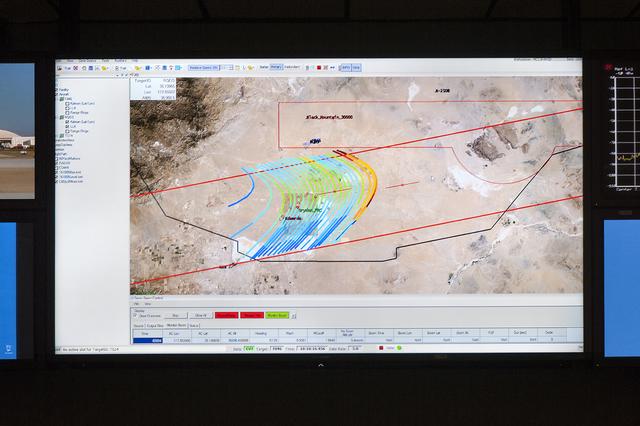
The CISBoomDA display allows the pilot of a supersonic aircraft to monitor the locations of any sonic booms produced, to prevent the aircraft from positioning booms in restricted area.
NASA’s Improved Supersonic Cockpit Display Shows Precise Locations of Sonic Booms
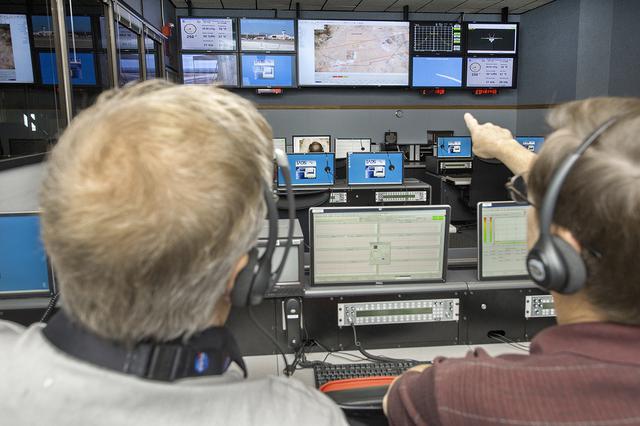
Engineers and researchers at NASA’s Armstrong Flight Research Center monitored the flights, and were able to observe the mapping of the sonic boom carpet from the F-18, from the center’s Mission Control Center.
NASA’s Improved Supersonic Cockpit Display Shows Precise Locations of Sonic Booms
S77-28212 (13 Sept 1977) --- Astronauts Joe H. Engle (right), commander, and Richard H. Truly, pilot, sit in the cockpit of the shuttle Orbiter 101 "Enterprise" at the Dryden Flight Research Center (DFRC) prior to takeoff of the NASA 747 carrier aircraft to which the "Enterprise" was mated.  The pair later made a five-minute, 31-second free-flight in the craft, the second in a series of such flights for the Shuttle Approach and Landing Tests (ALT) program.  The photograph was made from the Mate-Demate Device (MDD).
Astronauts Engle and Truly in cockpit of Orbiter 101 prior to takeoff
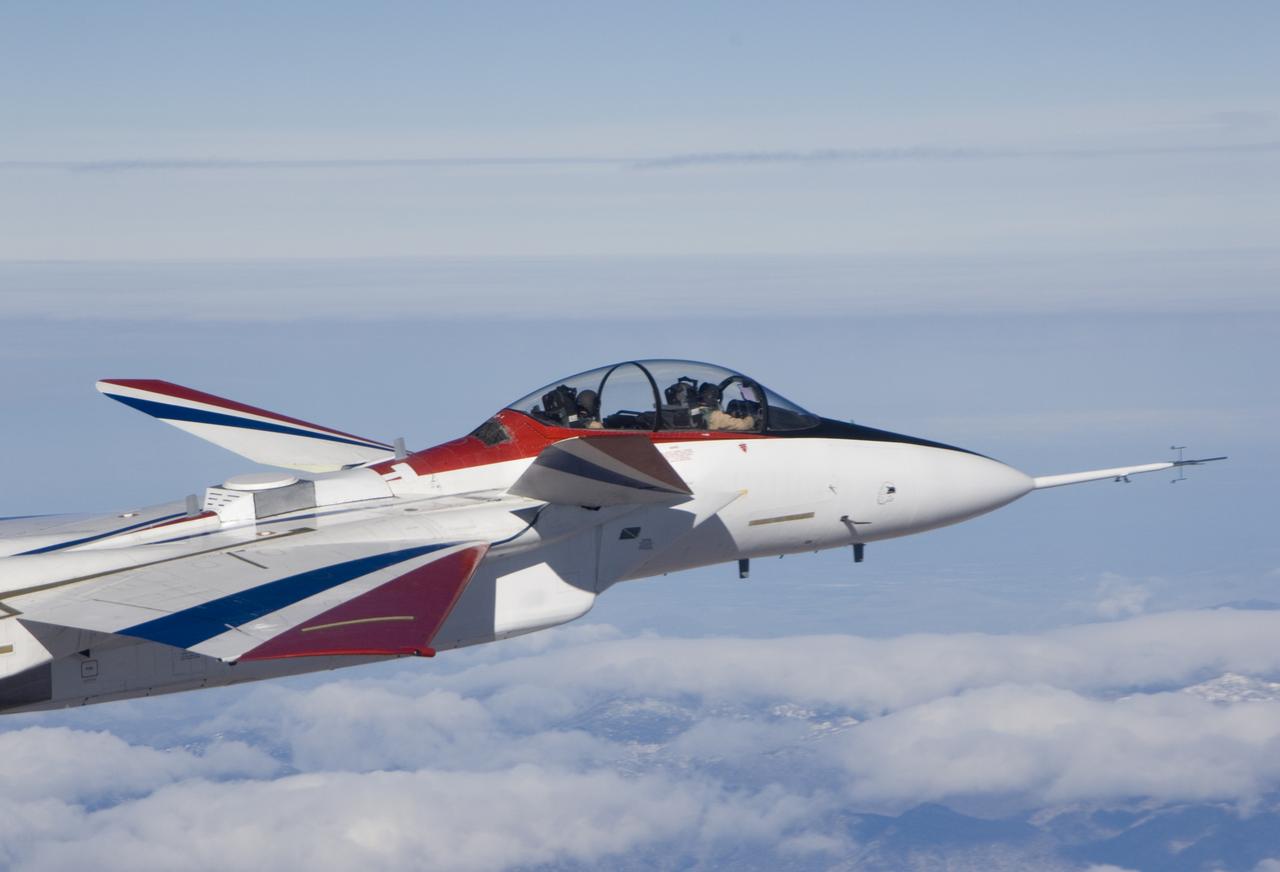
New range safety and range user system antennas for the ECANS project can be seen just behind and to the left of the cockpit on NASA's NF-15B research aircraft.
NASA Dryden life support technician Jim Sokolik assists pressure-suited pilot Dee Porter into the cockpit of NASA's ER-2 Earth resources aircraft.
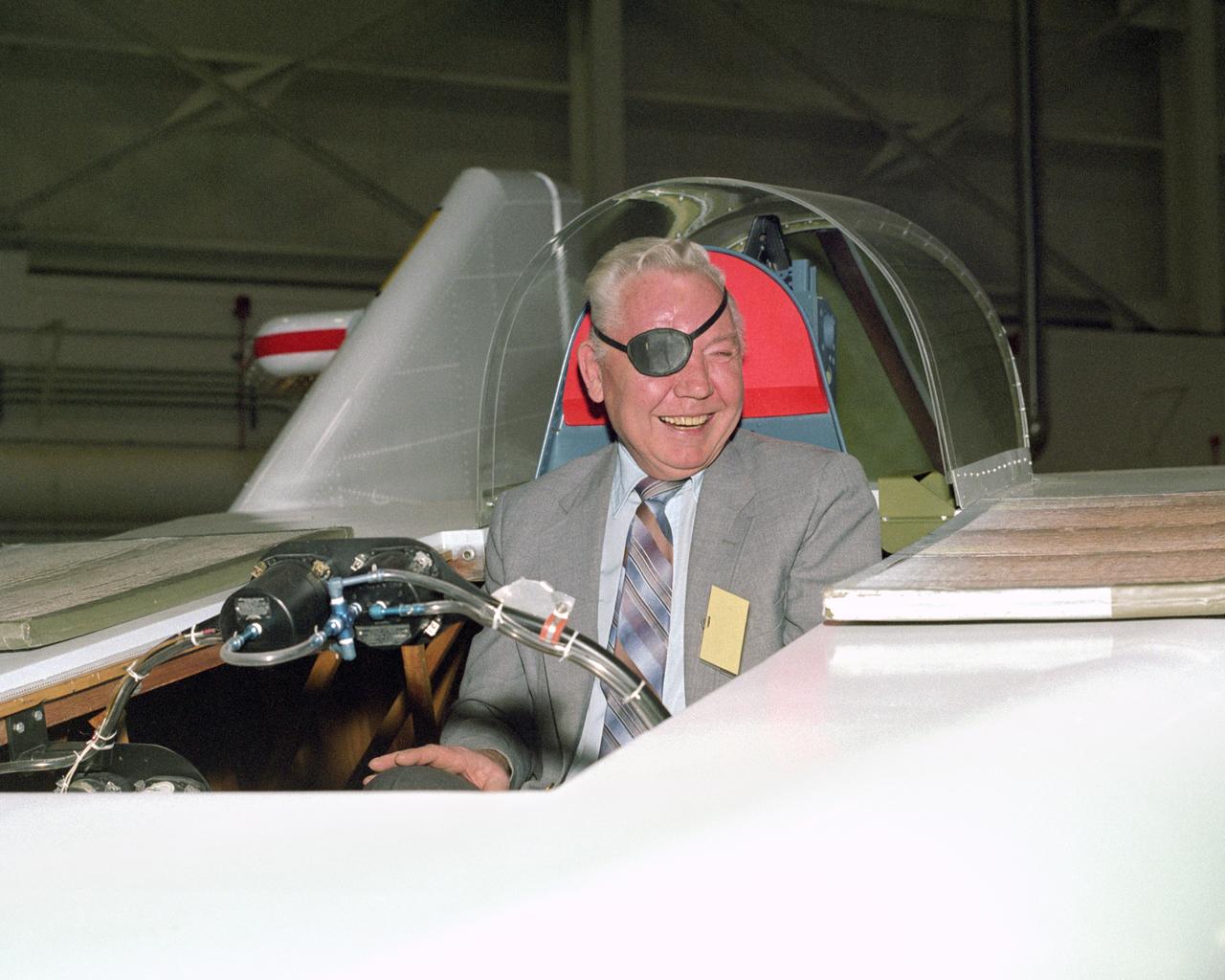
Often called the "Father of the Lifting Bodies," NASA aerospace engineer Dale Reed enjoys a moment in the cockpit of the restored wingless M2-F1 in 1997.
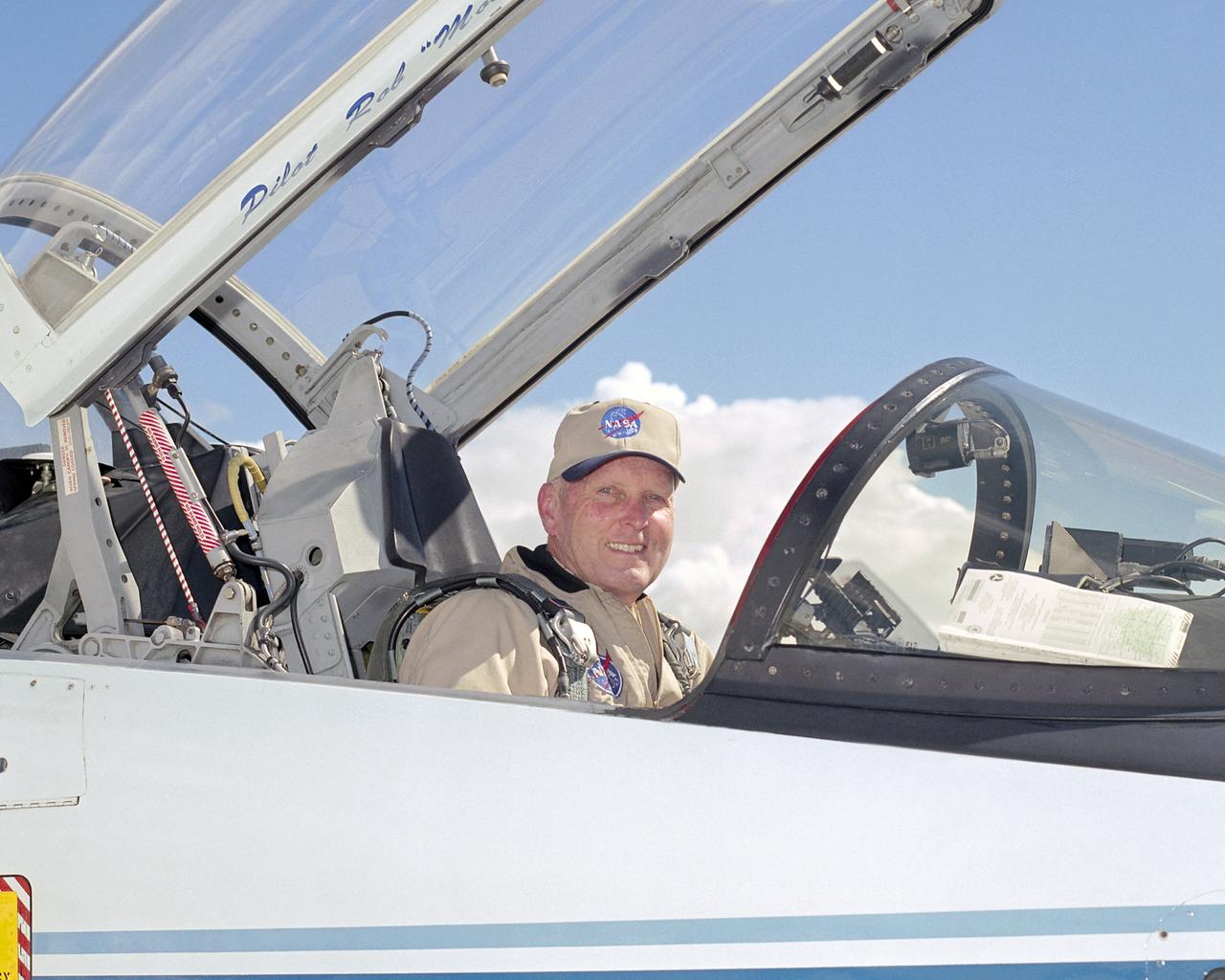
NASA Dryden Flight Research Center's chief pilot Gordon Fullerton in the cockpit of the center's T-38 Talon mission support aircraft.
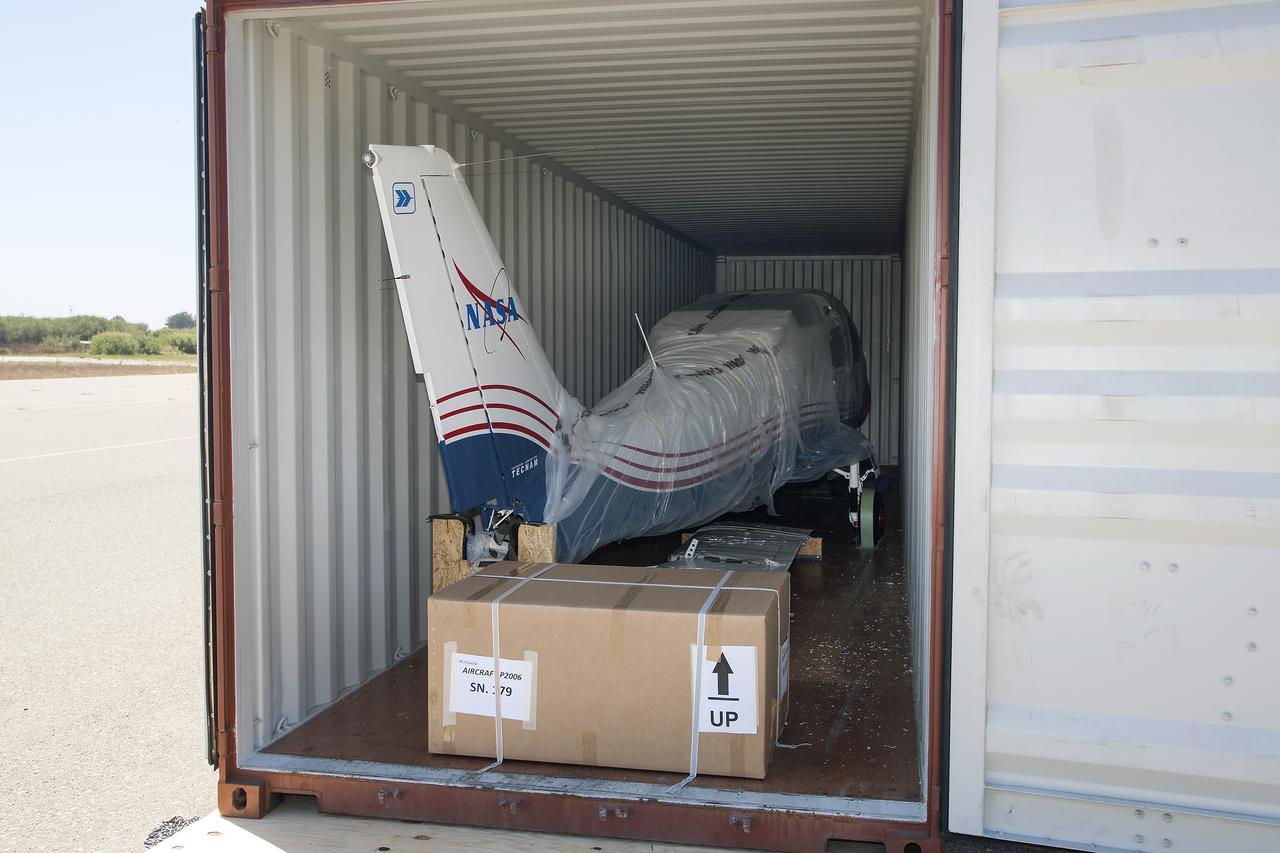
The Tecnam P2006T cockpit for the X-57, or Maxwell, will be the first all electric propulsion aircraft once the plane and wing integration is complete.
X-57 Aircraft Fuselage Arrives in California
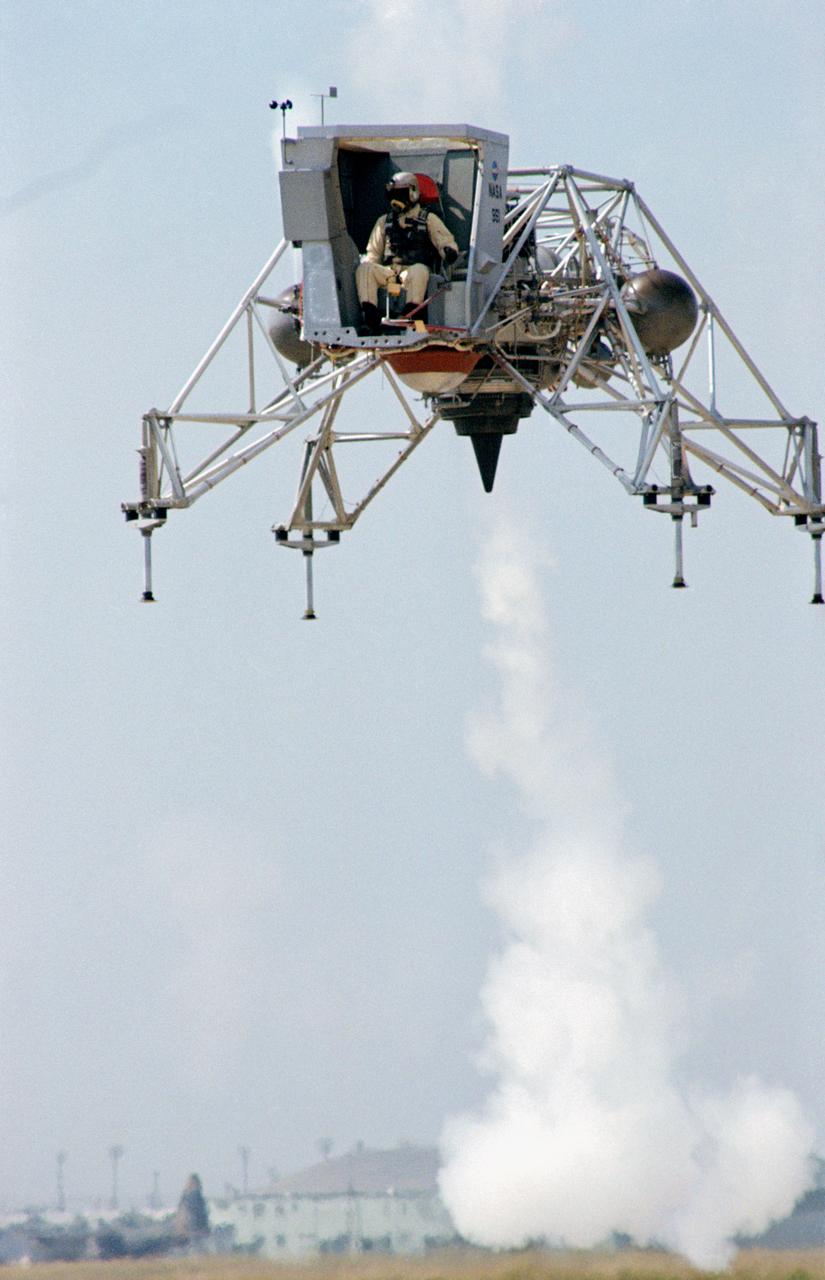
S69-56058 (25 Oct. 1969) --- Astronaut Charles Conrad Jr., commander of the Apollo 12 lunar landing mission, sits in the cockpit of a Lunar Landing Training Vehicle (LLTV) during a lunar simulation flight at Ellington Air Force Base. The LLTV is used to train Apollo crews in lunar landing techniques.
Astronaut Charles Conrad - Cockpit - Lunar Landing Training Vehicle - Ellington AFB (EAFB), TX
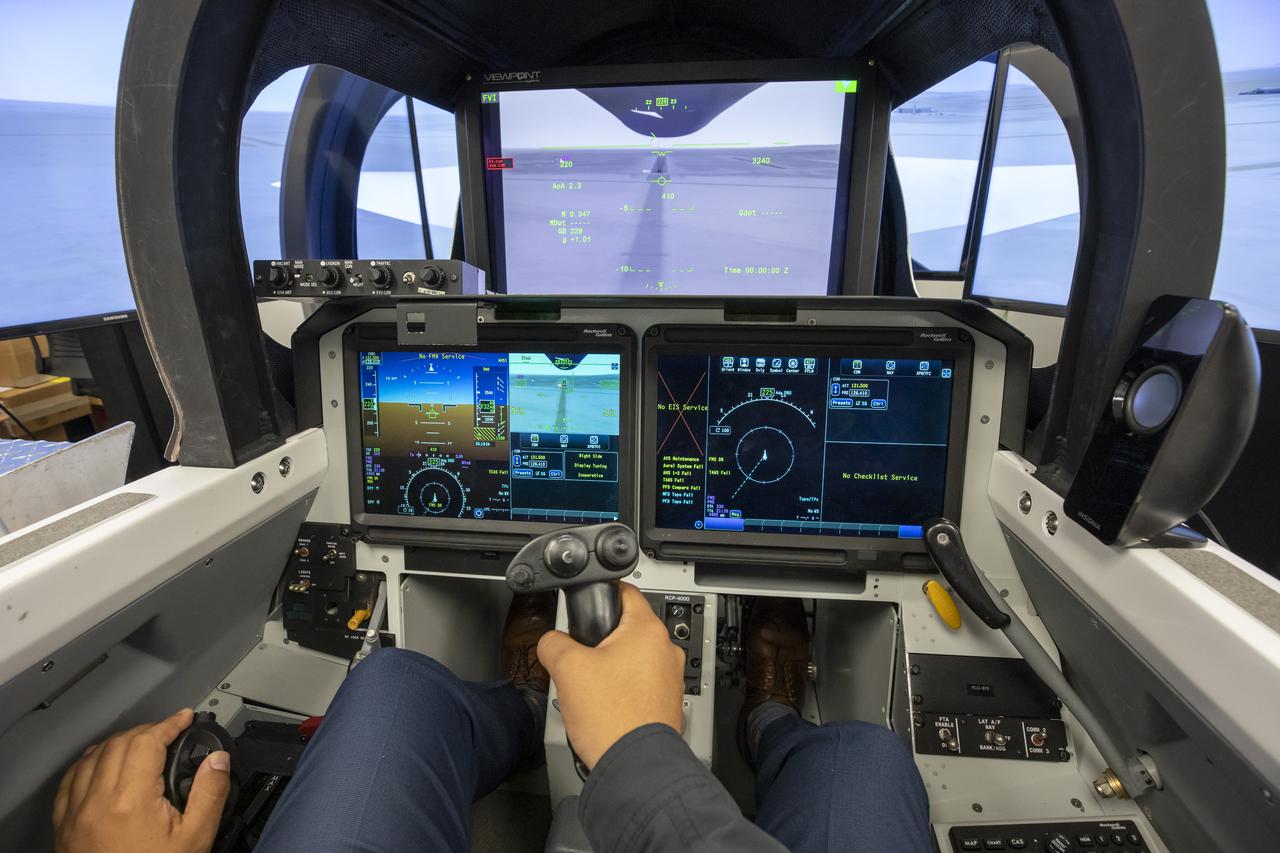
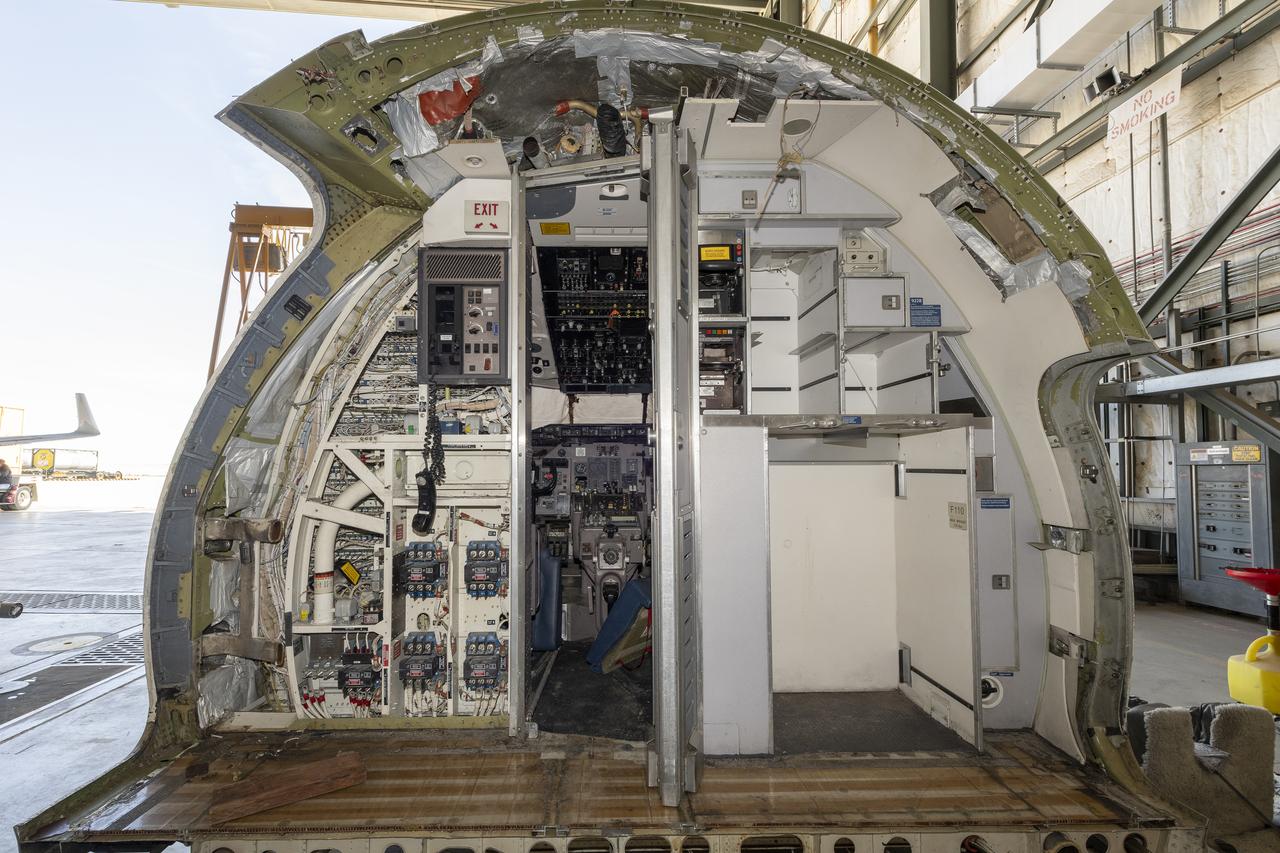
The cockpit of an old MD-90 aircraft arrived at NASA’s Armstrong Flight Research Center in Edwards, California, in March 2024. Parts will be used to build a simulator for NASA’s X-66, the demonstration aircraft for the Sustainable Flight Demonstrator project.
Boneyard Airplane Sees New Life as a NASA X-66 Simulator
The second X-43A hypersonic research vehicle, mounted under the right wing of the B-52B launch aircraft, viewed from the B-52 cockpit. The crew is working on closing out the research vehicle, preparing it for flight.
The second X-43A hypersonic research vehicle, mounted under the right wing of the B-52B launch aircraft, viewed from the B-52 cockpit
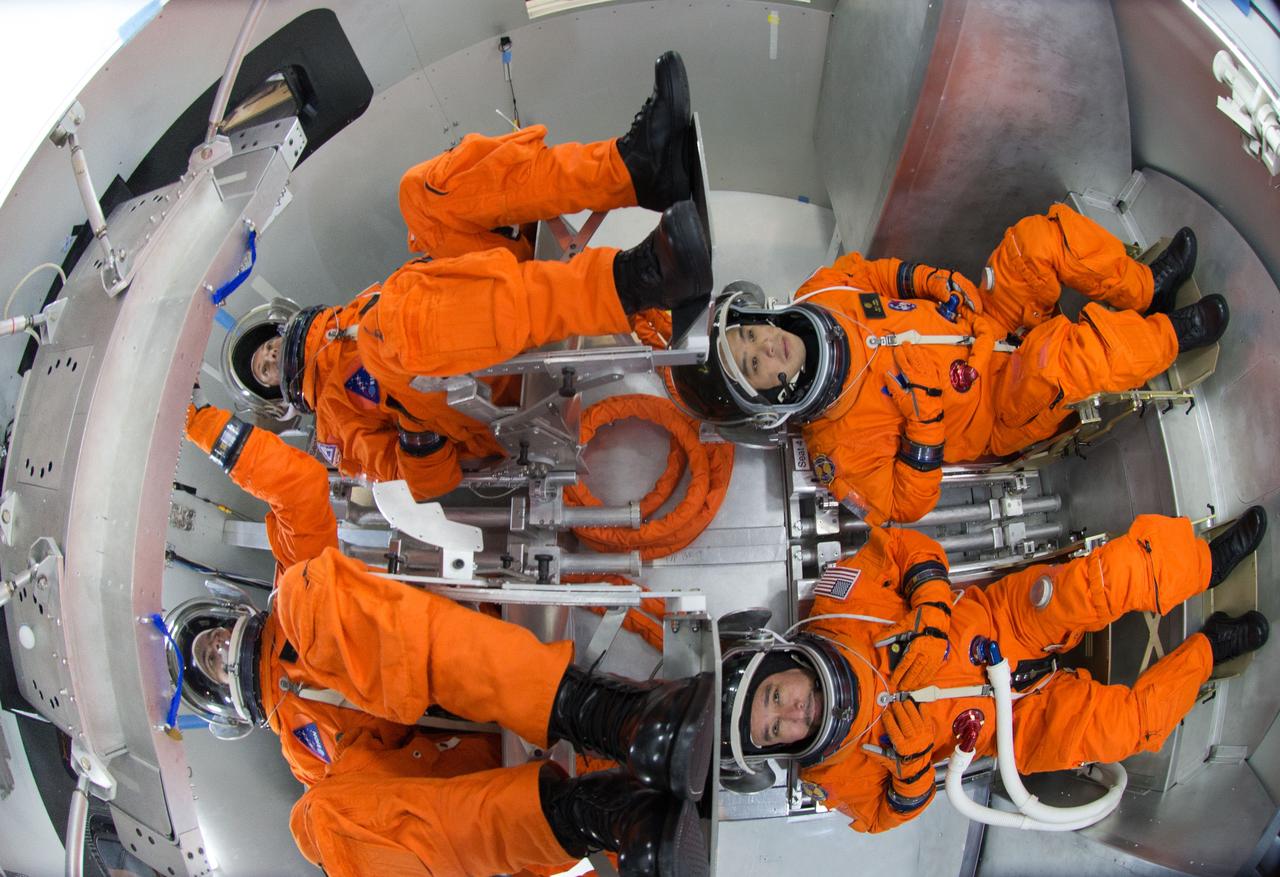
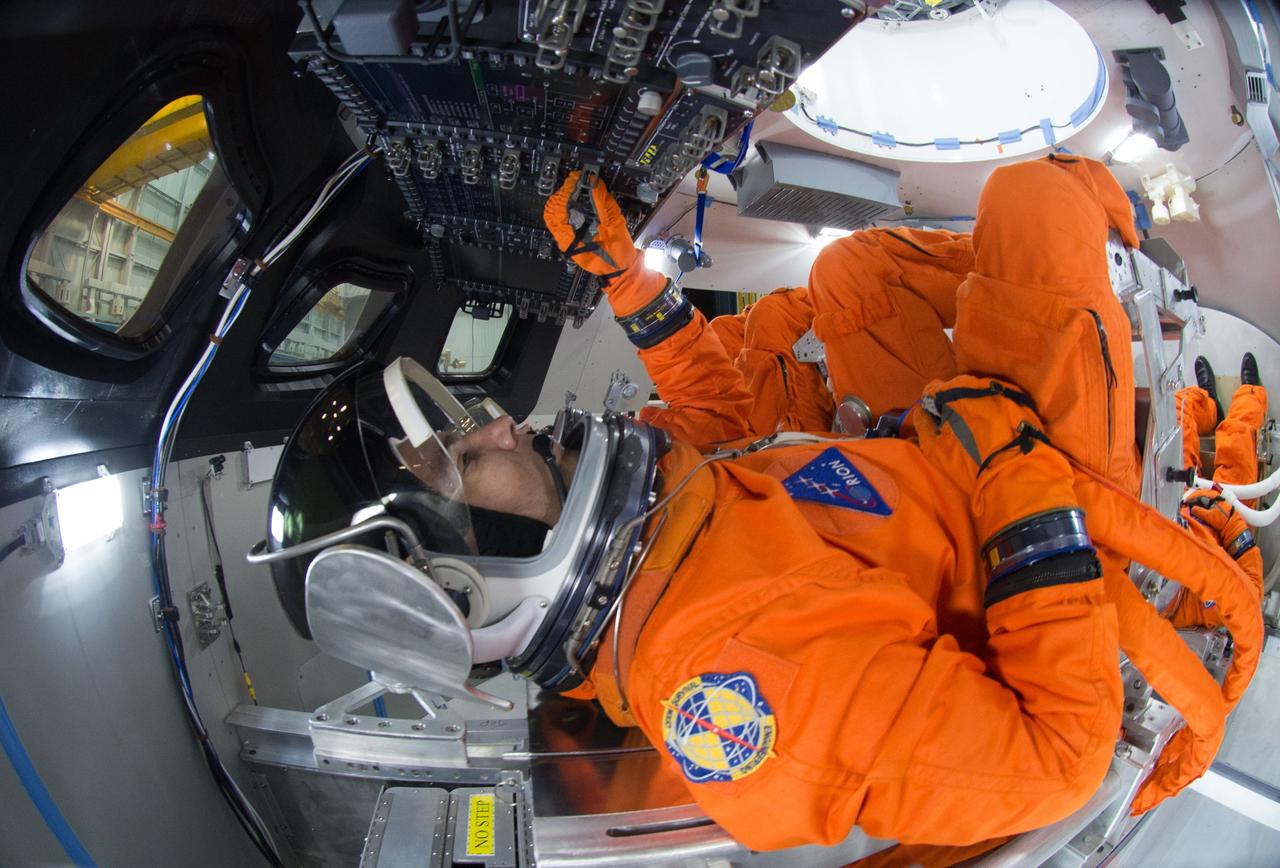
Spacesuit engineers demonstrate how four crew members would be arranged for launch inside the Orion spacecraft, using a mockup of the vehicle at Johnson Space Center in Houston on Oct. 24, 2014.  Part of Batch image transfer from Flickr.
Orion Cockpit
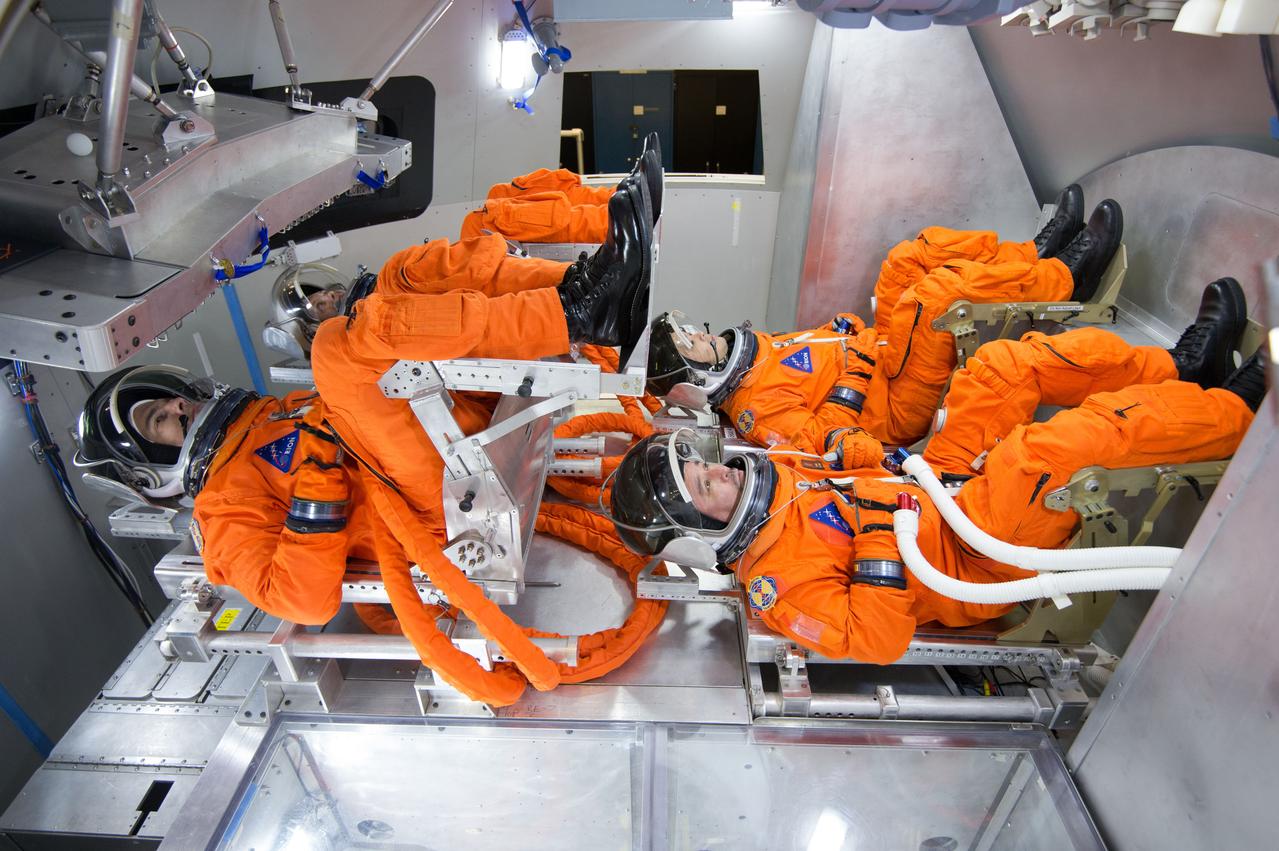
Spacesuit engineers demonstrate how four crew members would be arranged for launch inside the Orion spacecraft, using a mockup of the vehicle at Johnson Space Center in Houston on Oct. 24, 2014.  Part of Batch image transfer from Flickr.
Orion cockpit
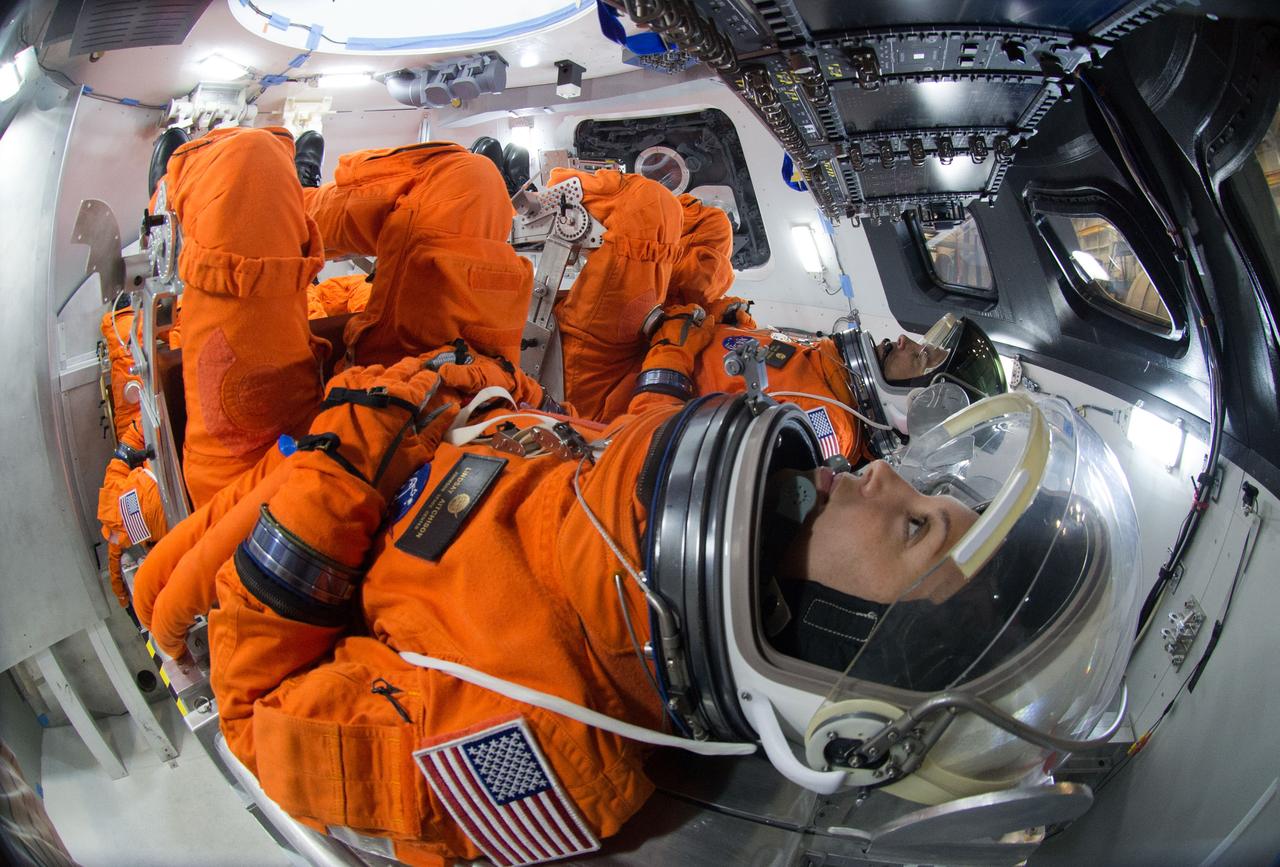
Spacesuit engineers demonstrate how four crew members would be arranged for launch inside the Orion spacecraft, using a mockup of the vehicle at Johnson Space Center in Houston on Oct. 24, 2014.  Part of Batch image transfer from Flickr.
Orion Cockpit
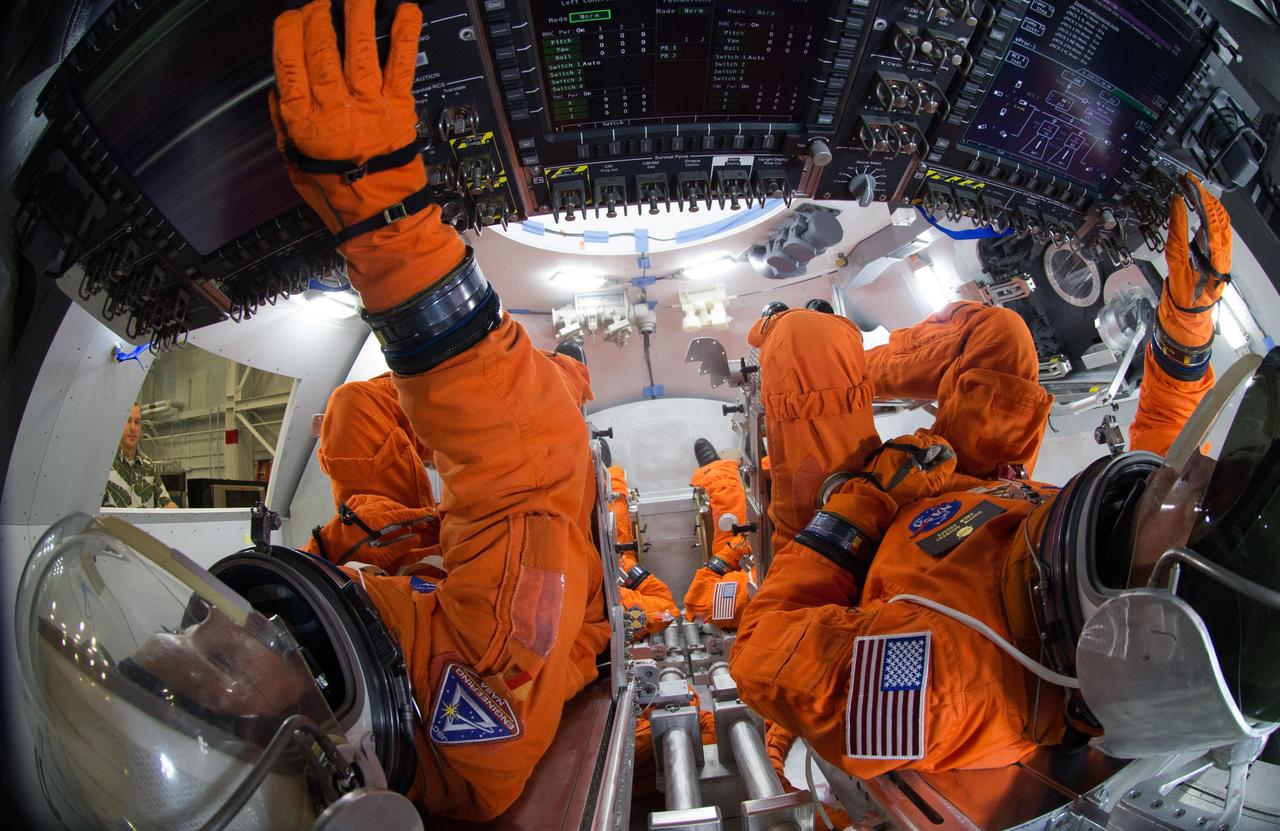
Spacesuit engineers demonstrate how four crew members would be arranged for launch inside the Orion spacecraft, using a mockup of the vehicle at Johnson Space Center in Houston on Oct. 24, 2014.  Part of Batch image transfer from Flickr.
Orion Cockpit
Spacesuit engineers demonstrate how four crew members would be arranged for launch inside the Orion spacecraft, using a mockup of the vehicle at Johnson Space Center in Houston on Oct. 24, 2014.  Part of Batch image transfer from Flickr.
Orion Cockpit
Range safety and phased-array range user system antennas validated in the ECANS project can be seen just behind the cockpit on NASA's NF-15B research aircraft.
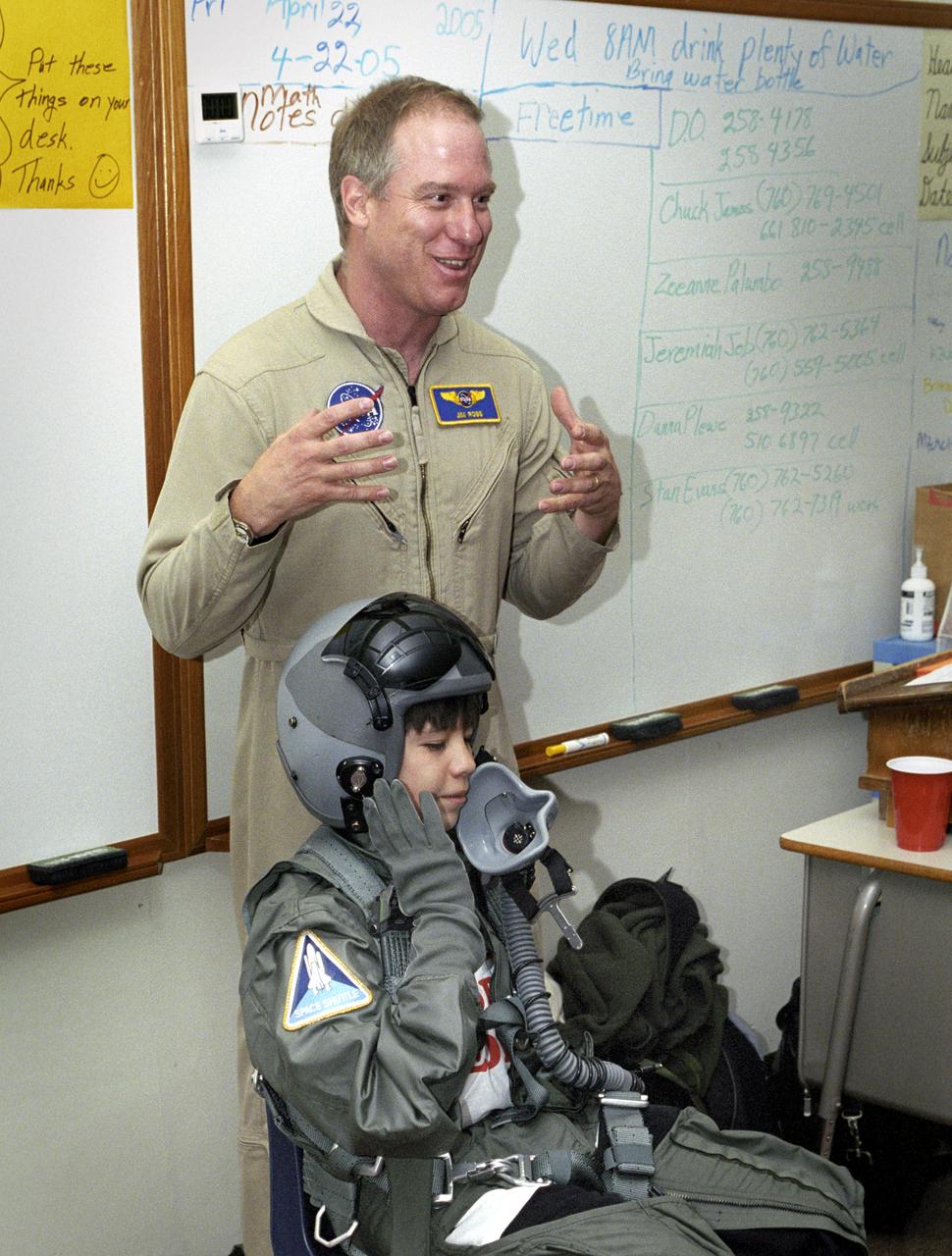
While NASA Dryden's Jim Ross outlined his job as an aerial photographer, sixth-grade student Leo Banuelos learned first-hand about the gear Ross wears in the cockpit.
While NASA Dryden's Jim Ross outlined his job as an aerial photographer, student Leo Banuelos learned first-hand about the gear Ross wears in the cockpit.
This image shows a close up of the cockpit view of the eXternal Vision System that will be placed in the X-59. Instead of a front facing window, the pilot will use these monitors for forward facing visibility.  Lockheed Martin Photography By Garry Tice 1011 Lockheed Way, Palmdale, Ca. 93599 Event: X-59 SIL Round 2 Date: 6/10/2021
X-59 SIL Round 2
Nils Larson is a research pilot in the Flight Crew Branch of NASA's Dryden Flight Research Center, Edwards, Calif. Larson joined NASA in February 2007 and will fly the F-15, F-18, T-38 and ER-2. Prior to joining NASA, Larson was on active duty with the U.S. Air Force. He has accumulated more that 4,900 hours of military and civilian flight experience in more than 70 fixed and rotary winged aircraft.  Larson completed undergraduate pilot training at Williams Air Force Base, Chandler, Ariz., in 1987. He remained at Williams as a T-37 instructor pilot.  In 1991, Larson was assigned to Beale Air Force Base, Calif., as a U-2 pilot. He flew 88 operational missions from Korea, Saudi Arabia, the United Kingdom, Panama and other locations.  Larson graduated from the U.S. Air Force Test Pilot School at Edwards Air Force Base, Calif., in Class 95A. He became a flight commander and assistant operations officer for the 445th squadron at Edwards. He flew the radar, avionics integration and engine tests in F-15 A-D, the early flights of the glass cockpit T-38C and airworthiness flights of the Coast Guard RU-38.  He was selected to serve as an Air Force exchange instructor at the U.S. Naval Test Pilot School, Patuxent River, Md. He taught systems and fixed-wing flight test and flew as an instructor pilot in the F-18, T-2, U-6A Beaver and X-26 Schweizer sailplane.  Larson commanded U-2 operations for Warner Robins Air Logistics Center's Detachment 2 located in Palmdale, Calif. In addition to flying the U-2, Larson supervised the aircraft's depot maintenance and flight test.  He was the deputy group commander for the 412th Operations Group at Edwards before retiring from active duty in 2007 with the rank of lieutenant colonel.  His first experience with NASA was at the Glenn Research Center, Cleveland, where he served a college summer internship working on arcjet engines.  Larson is a native of Bethany, W.Va,, and received his commission from the U.S. Air Force Academy in 1986 with a
Nils Larson
The cockpit and instrument panel of the AD-1 aircraft. Due to the small size of the AD-1, instrumentation was limited and the cockpit was cramped.
E79-36067
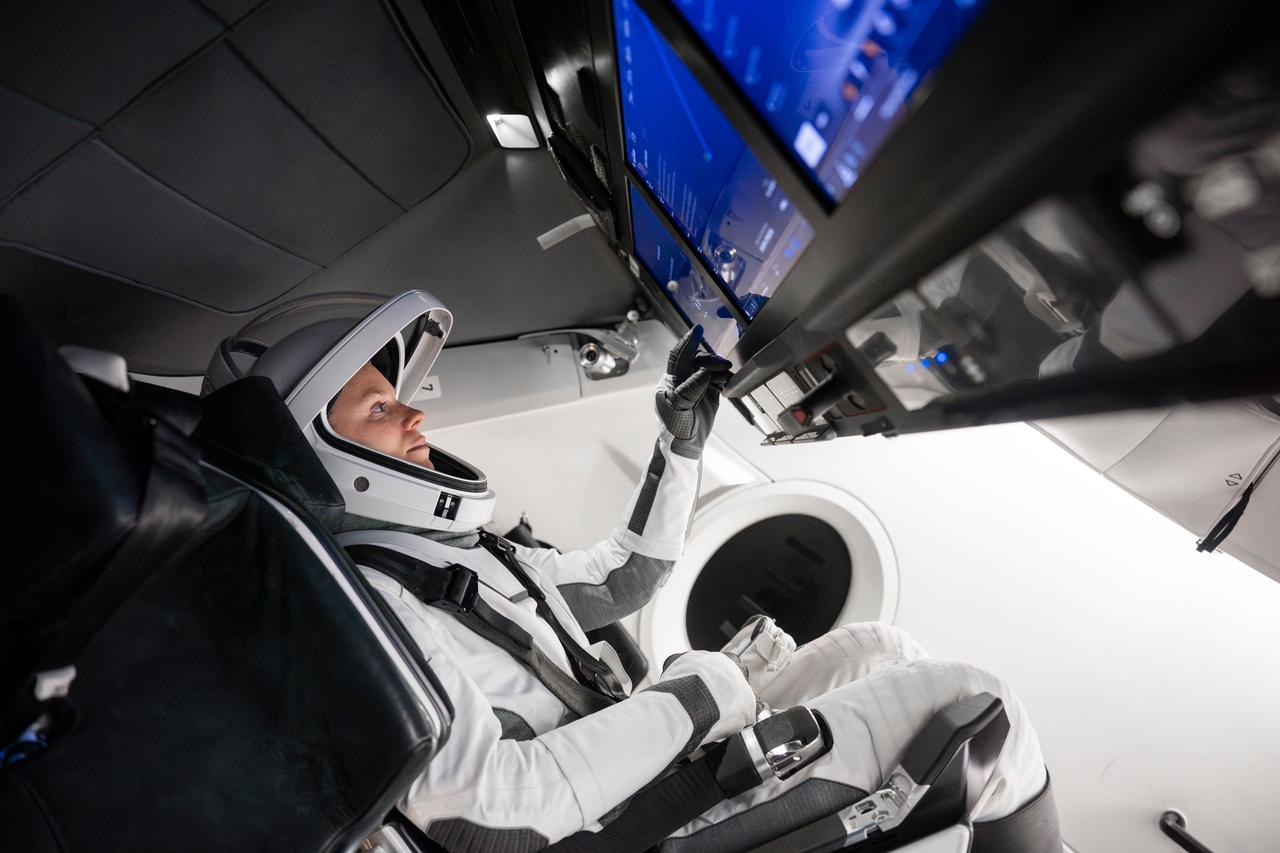
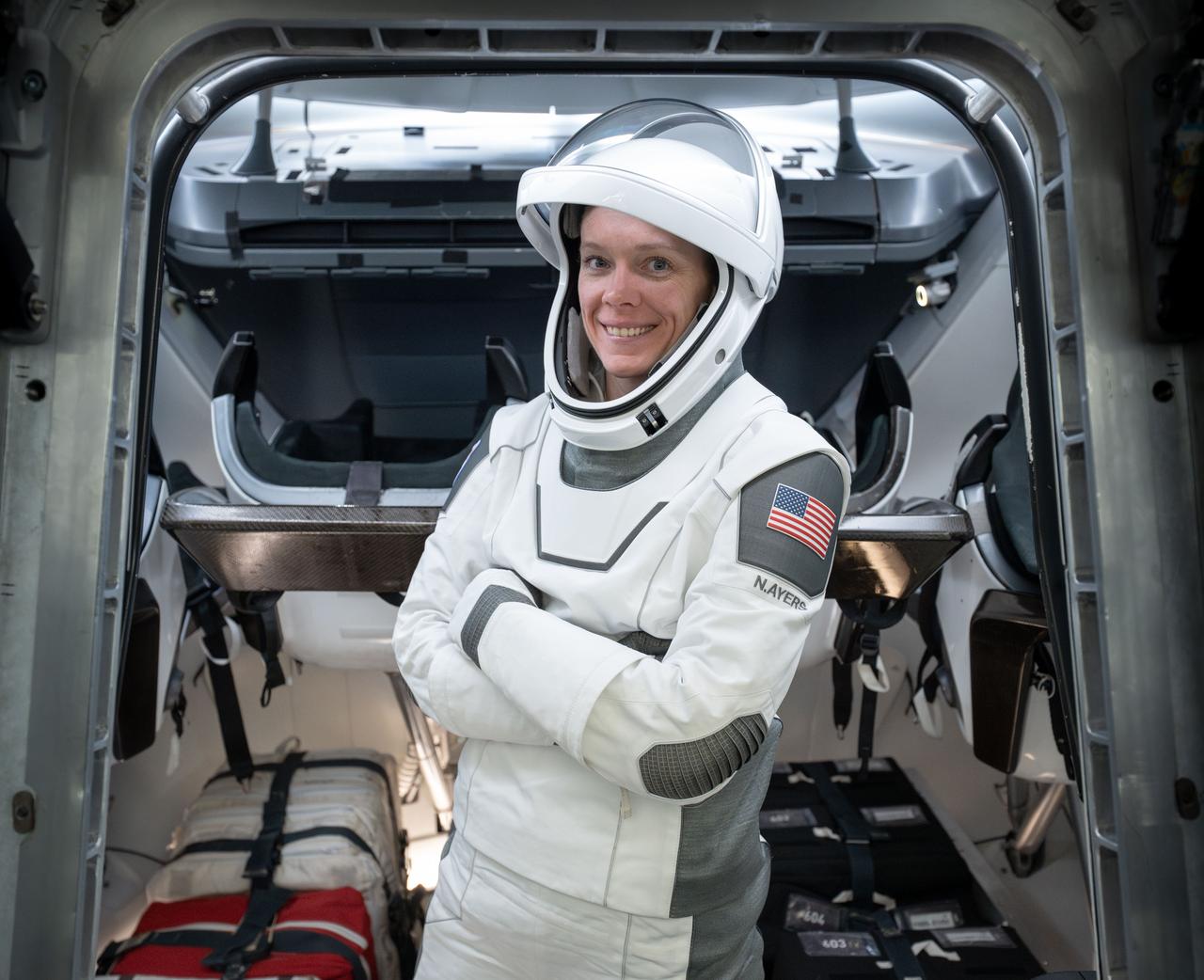
jsc2024e079789 (Nov. 20, 2024) --- NASA astronaut and Pilot for NASA’s SpaceX Crew-10 mission Nichole Ayers is pictured training inside a mockup of a Dragon cockpit at the company's facilities in Hawthorne, California. Credit: SpaceX
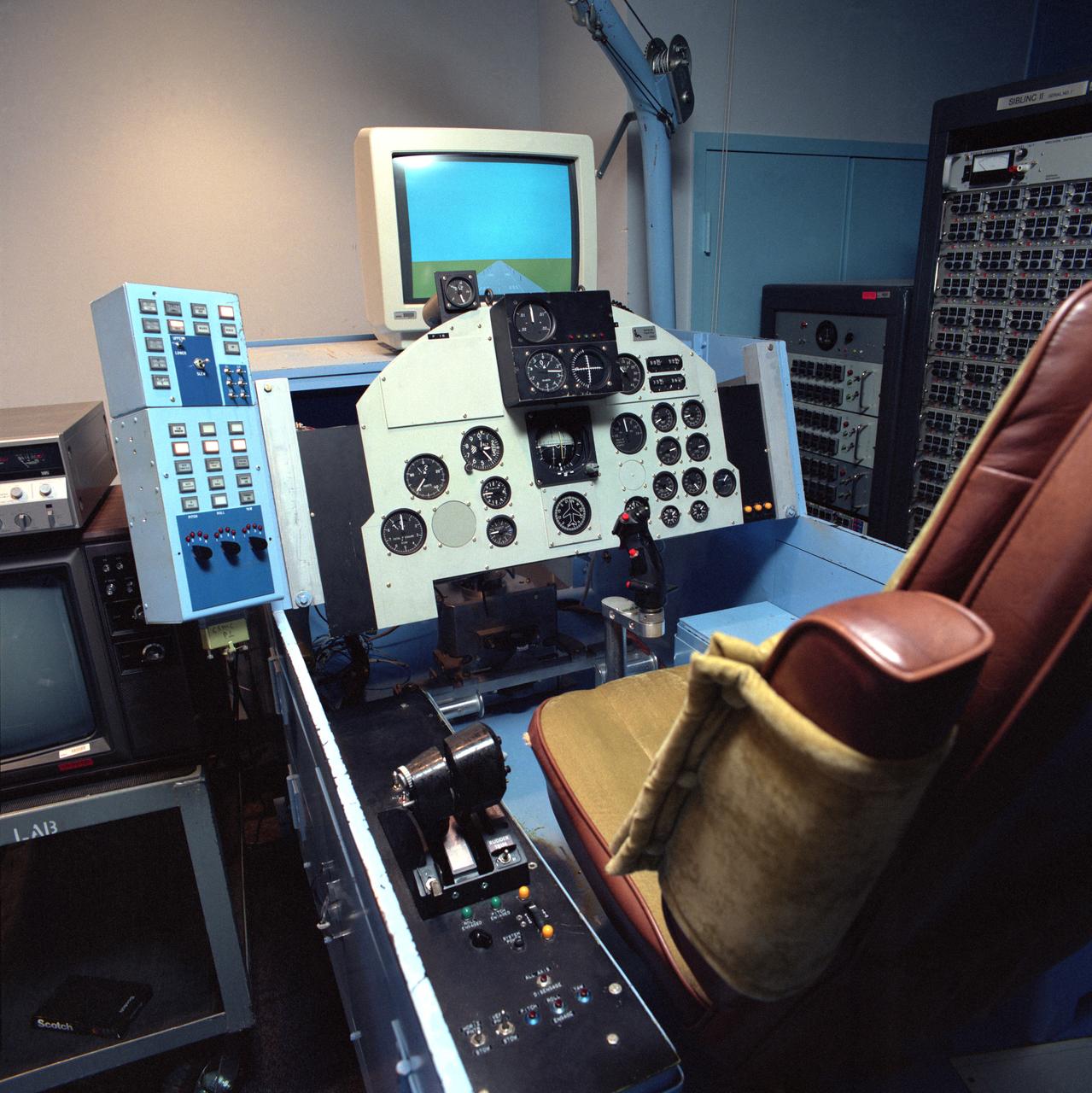
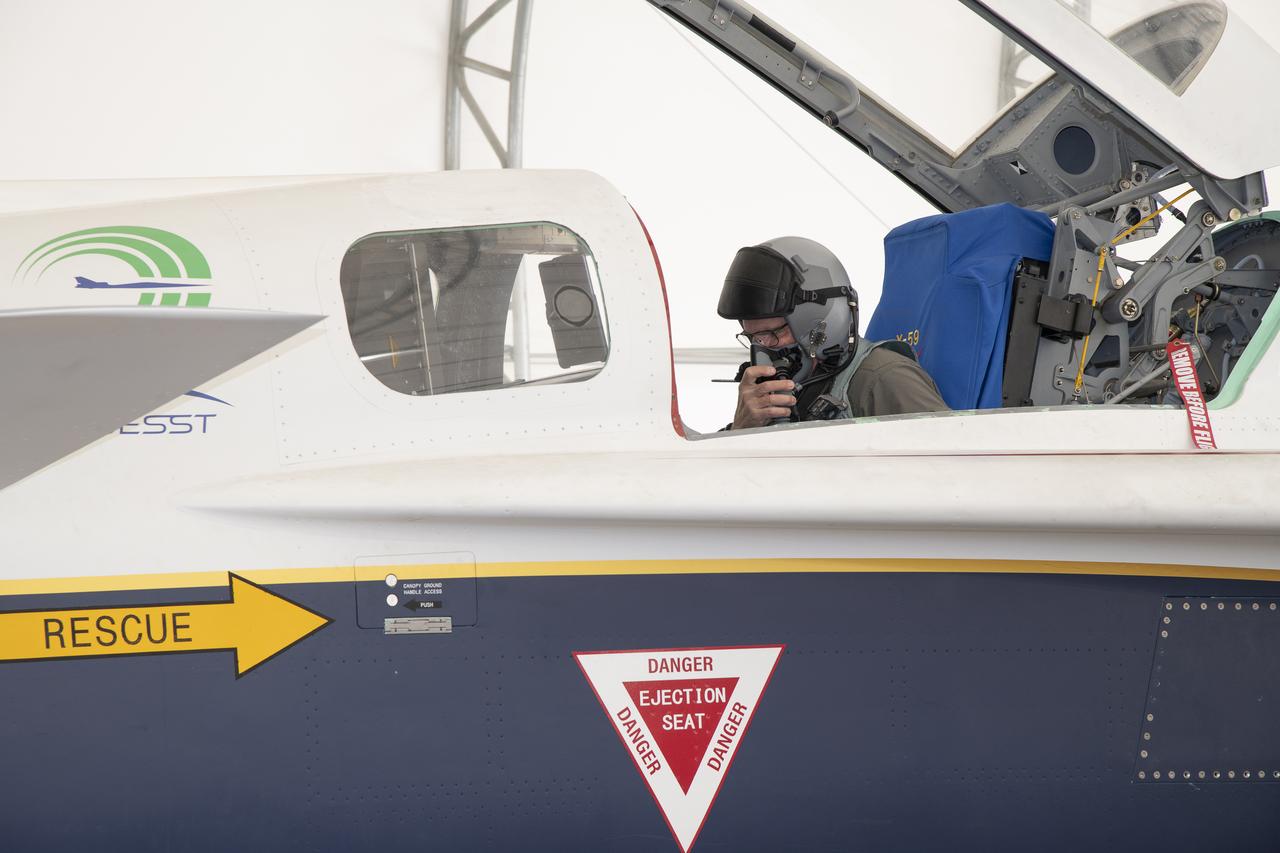
NASA astronaut and SpaceX Crew-10 Pilot Nichole Ayers
The cockpit of an old MD-90 aircraft arrived at NASA’s Armstrong Flight Research Center in Edwards, California, in March 2024. Parts will be used to build a simulator for NASA’s X-66, the demonstration aircraft for the Sustainable Flight Demonstrator project.
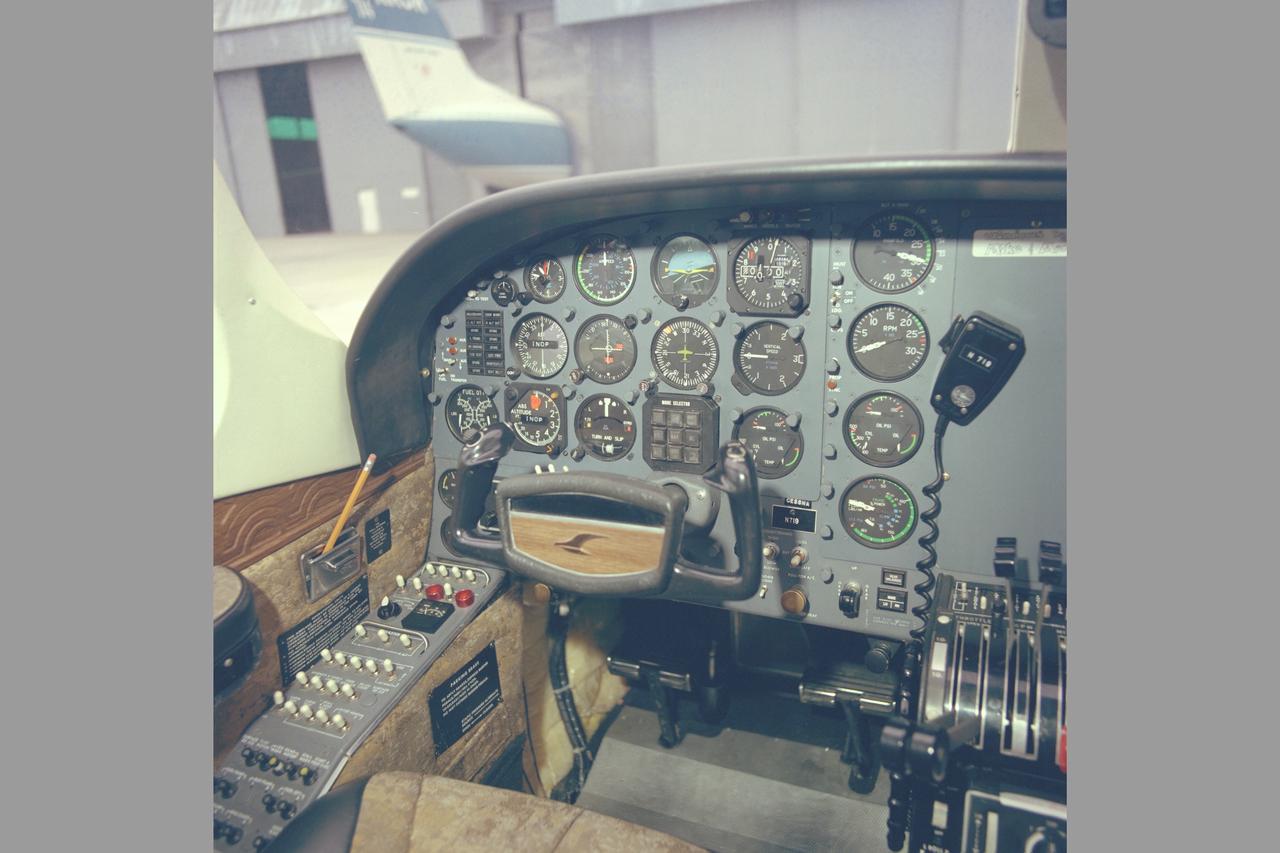
Boneyard Airplane Sees New Life as a NASA X-66 Simulator
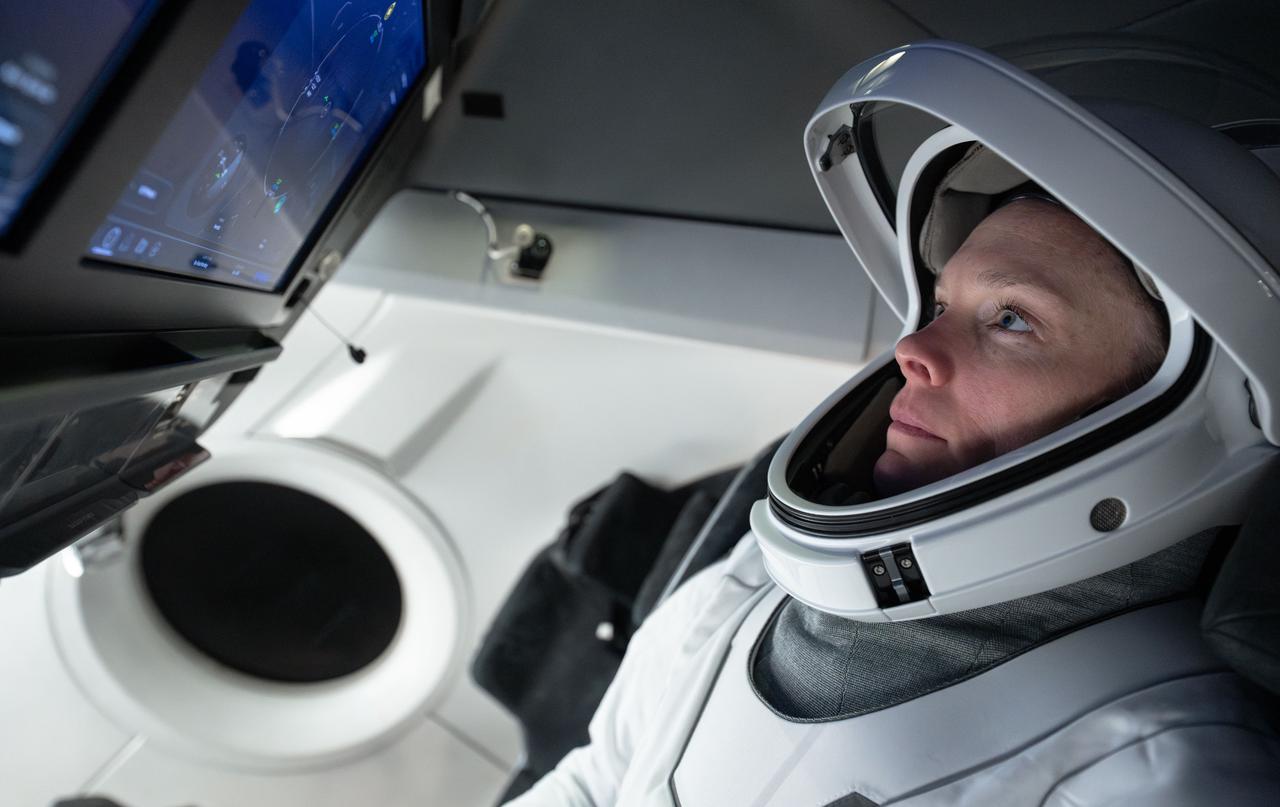
jsc2024e079790 (Nov. 20, 2024) --- NASA astronaut and Pilot for NASA’s SpaceX Crew-10 mission Nichole Ayers is pictured training inside a mockup of a Dragon cockpit at the company's facilities in Hawthorne, California. Credit: SpaceX
NASA astronaut and SpaceX Crew-10 Pilot Nichole Ayers
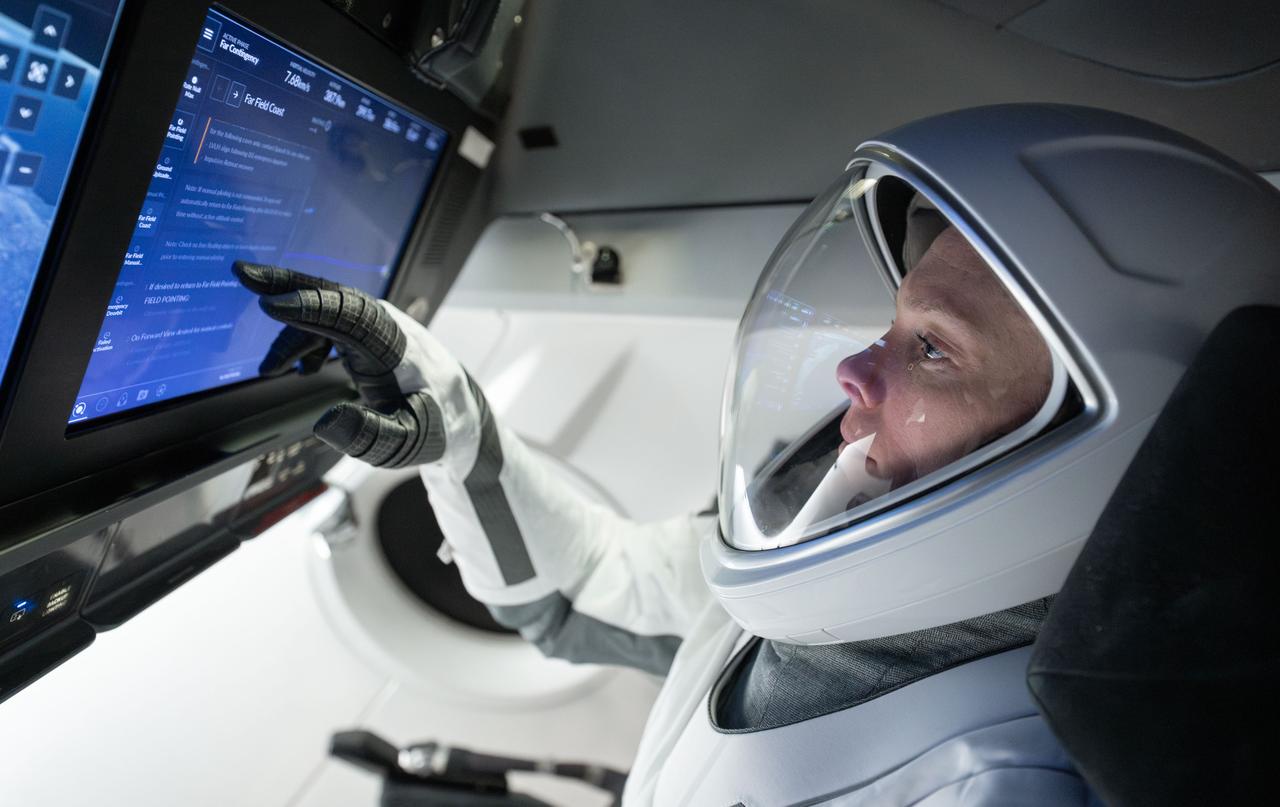
jsc2025e064523 (June 23, 2024) --- NASA’s SpaceX Crew-11 commander and NASA astronaut Zena Cardman is pictured training inside a mockup of a Dragon cockpit at SpaceX facilities in Hawthorne, California. Credit: SpaceX
NASA’s SpaceX Crew-11 commander and NASA astronaut Zena Cardman
jsc2025e064523 (June 23, 2025) --- NASA’s SpaceX Crew-11 commander and NASA astronaut Zena Cardman is pictured training inside a mockup of a Dragon cockpit at SpaceX facilities in Hawthorne, California. Credit: SpaceX
NASA’s SpaceX Crew-11 commander and NASA astronaut Zena Cardman
jsc2024e079791 (Nov. 20, 2024) --- NASA astronaut and Pilot for NASA’s SpaceX Crew-10 mission Nichole Ayers is pictured inside a mockup of a Dragon cockpit at the company's facilities in Hawthorne, California. Credit: SpaceX
NASA astronaut and SpaceX Crew-10 Pilot Nichole Ayers
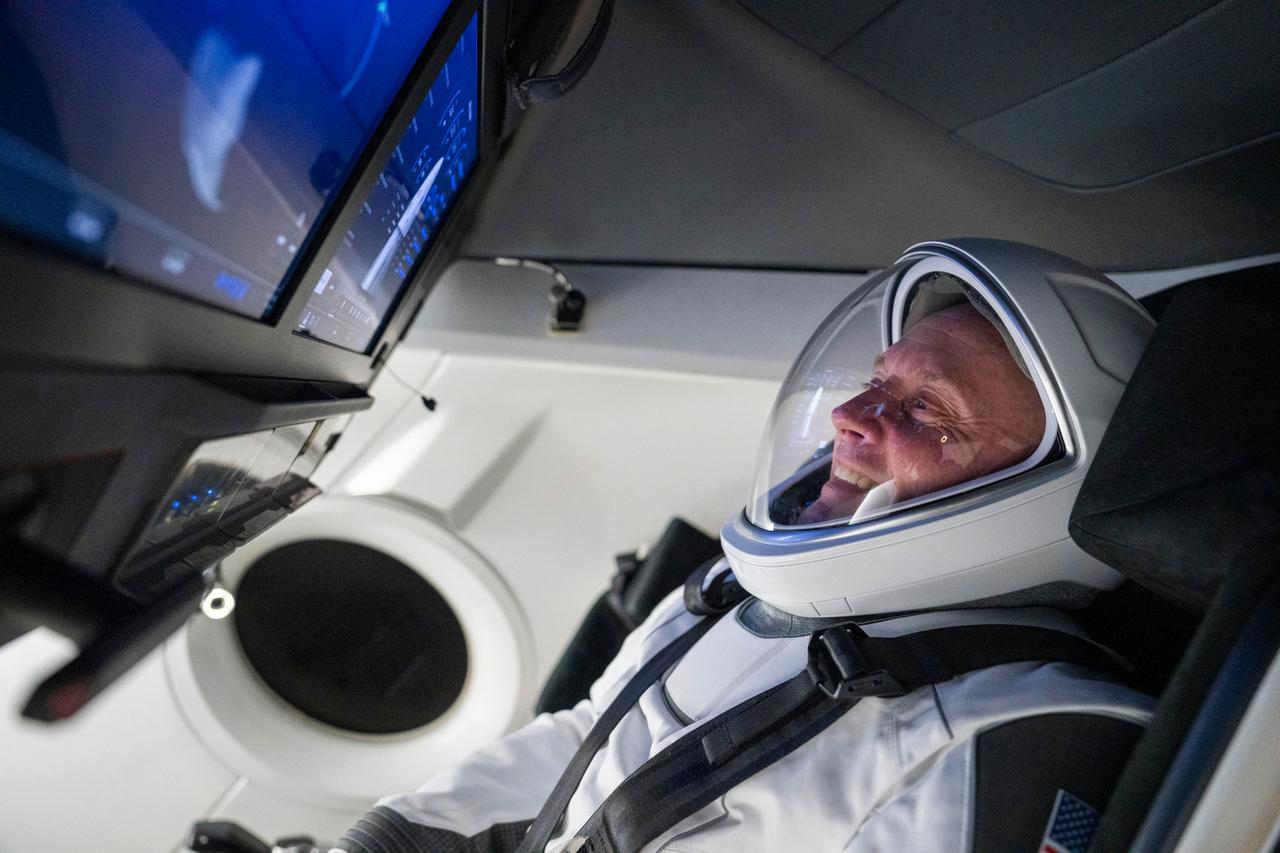
jsc2025e064539 (May 19, 2025) --- NASA’s SpaceX Crew-11 pilot and NASA astronaut Mike Fincke is pictured training inside a mockup of a Dragon cockpit at SpaceX facilities in Hawthorne, California. Credit: SpaceX
NASA’s SpaceX Crew-11 pilot and NASA astronaut Mike Fincke
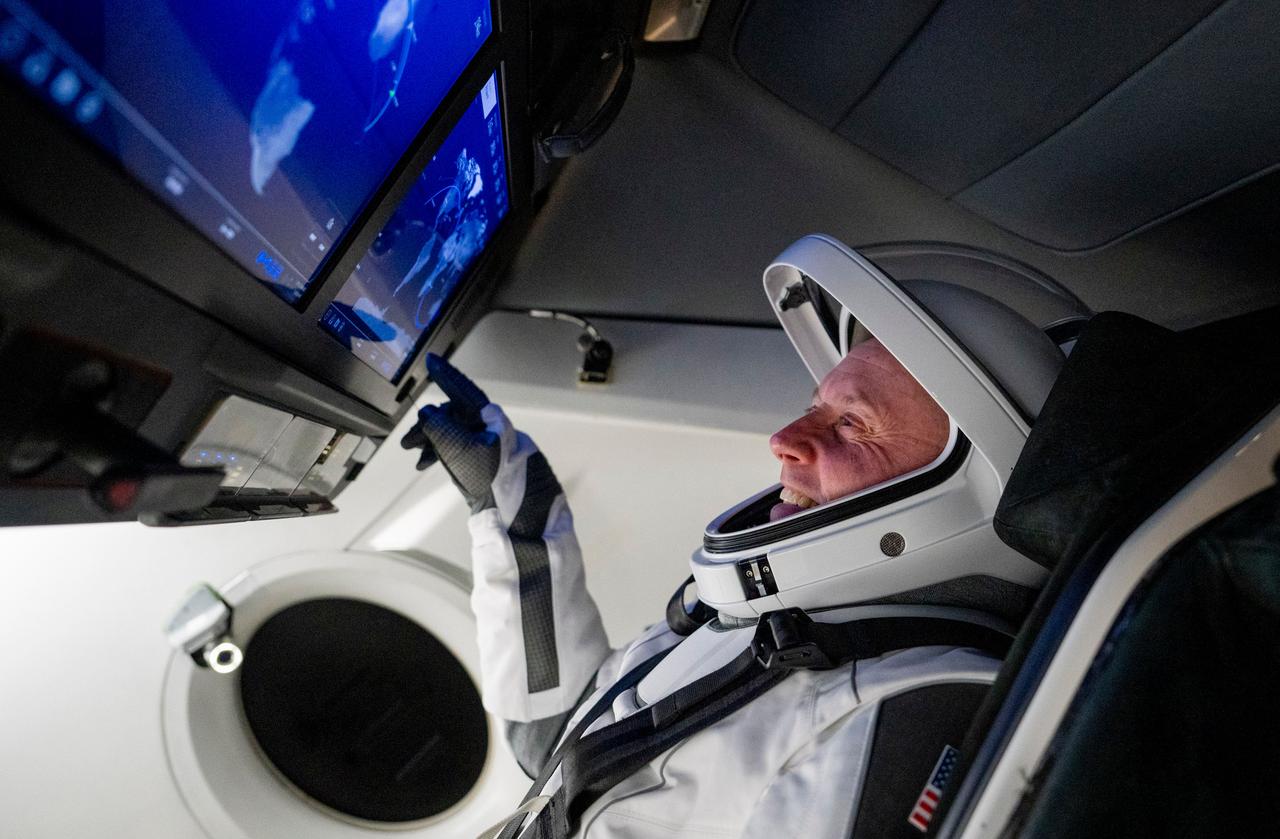
jsc2025e064540 (May 19, 2025) --- NASA’s SpaceX Crew-11 pilot and NASA astronaut Mike Fincke is pictured training inside a mockup of a Dragon cockpit at SpaceX facilities in Hawthorne, California. Credit: SpaceX
NASA’s SpaceX Crew-11 pilot and NASA astronaut Mike Fincke
Charles Schulz Memorial Library.  View of unidentified individual in cockpit area (02834 thru 02835); and   View of unidentified individuals in cockpit area (02836).
Charles Schulz Memorial Library
jsc2024e079794 (Nov. 20, 2024) --- NASA’s SpaceX Crew-10 Mission Specialist Takuya Onishi of JAXA (Japan Aerospace Exploration Agency) is pictured inside a mockup of a Dragon cockpit at the company's facilities in Hawthorne, California. Credit: SpaceX
JAXA astronaut and SpaceX Crew-10 Mission Specialist Takuya Onishi
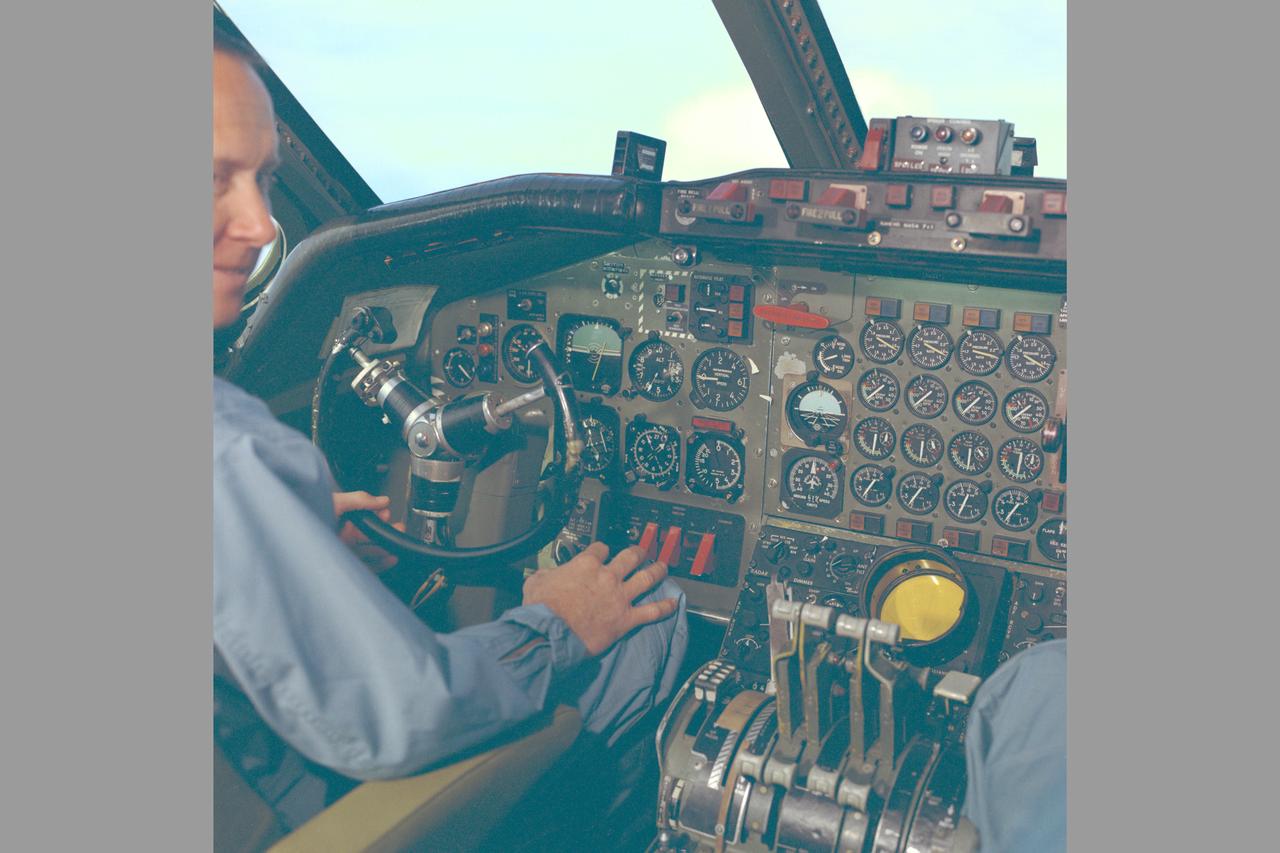
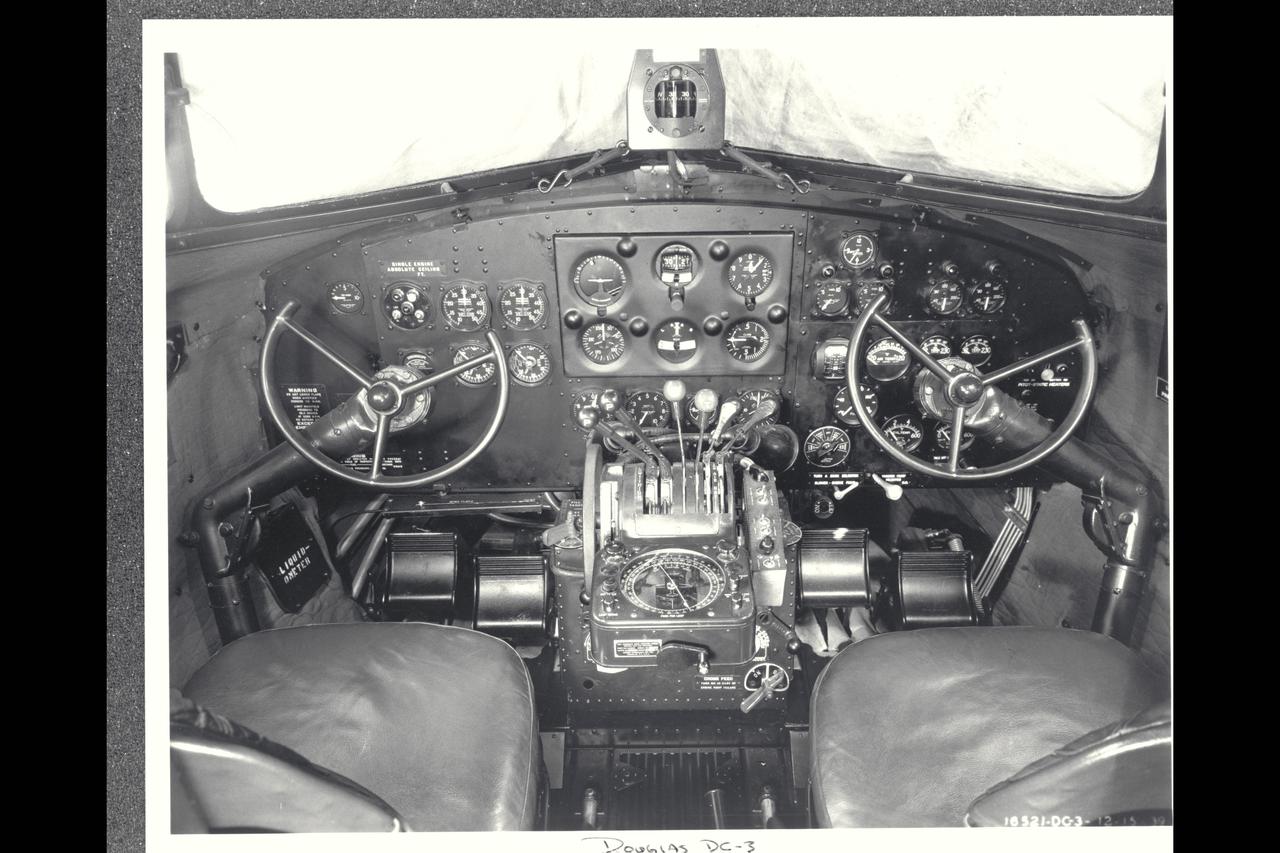
Douglas DC-8 Cockpit
ARC-1993-A83-0499-7
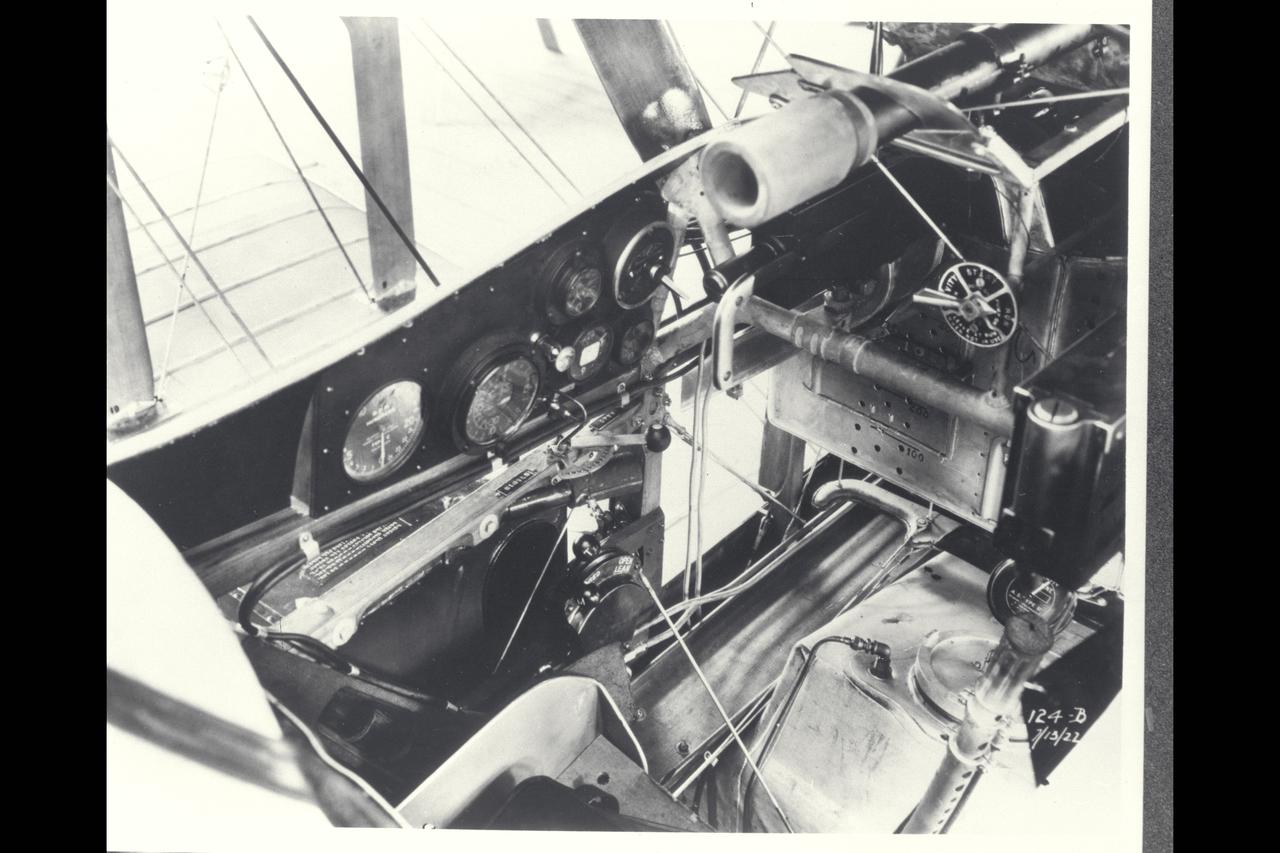
MB-3A Cockpit
ARC-1993-A83-0499-20
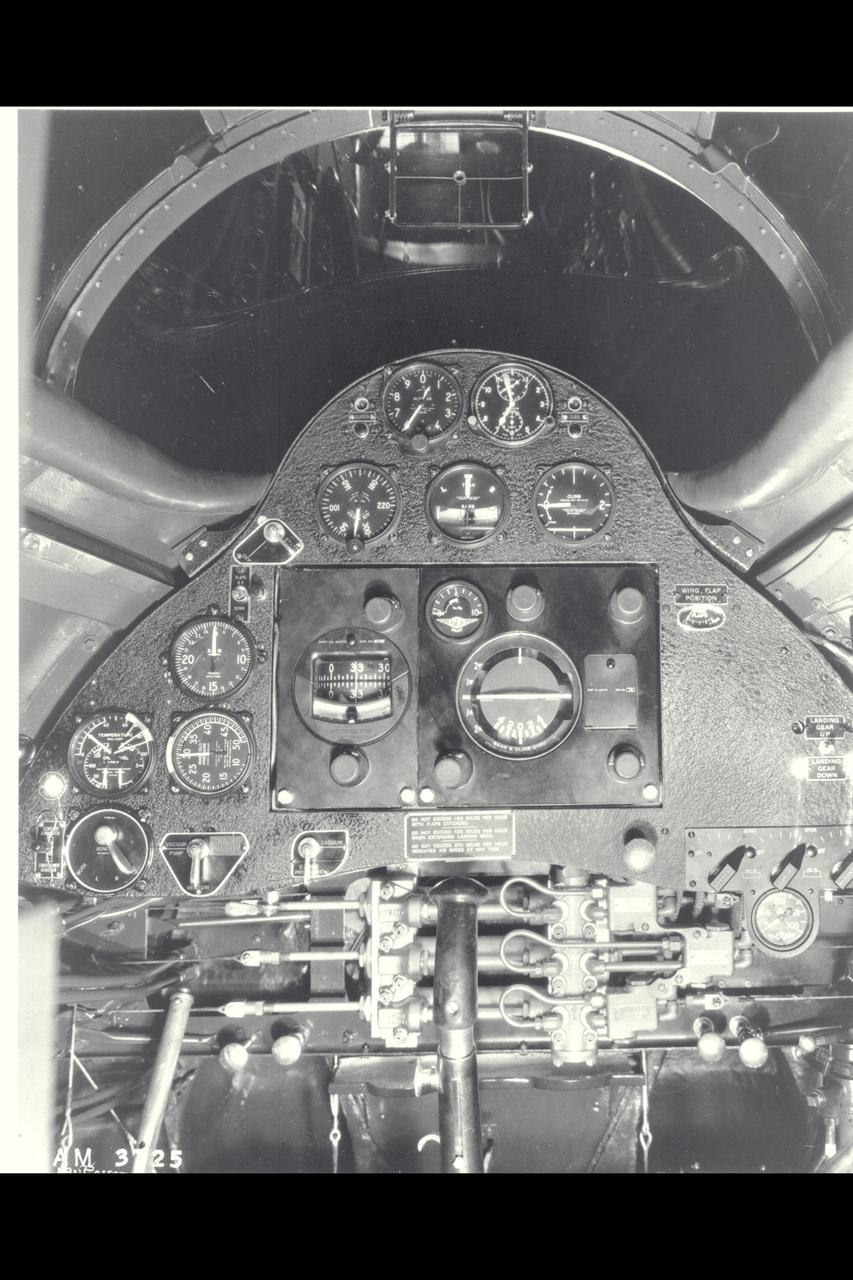
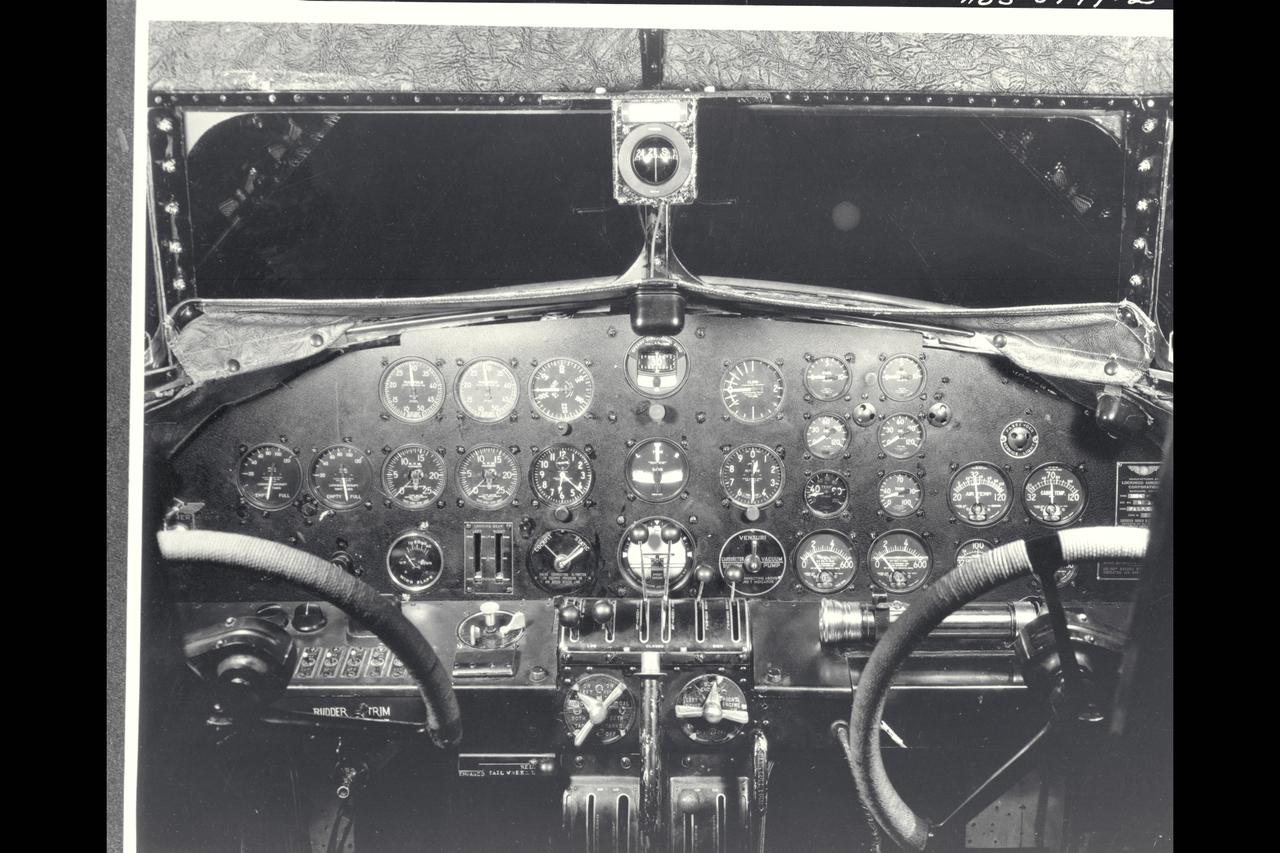
Lockheed Vega Cockpit
ARC-1993-A83-0499-3
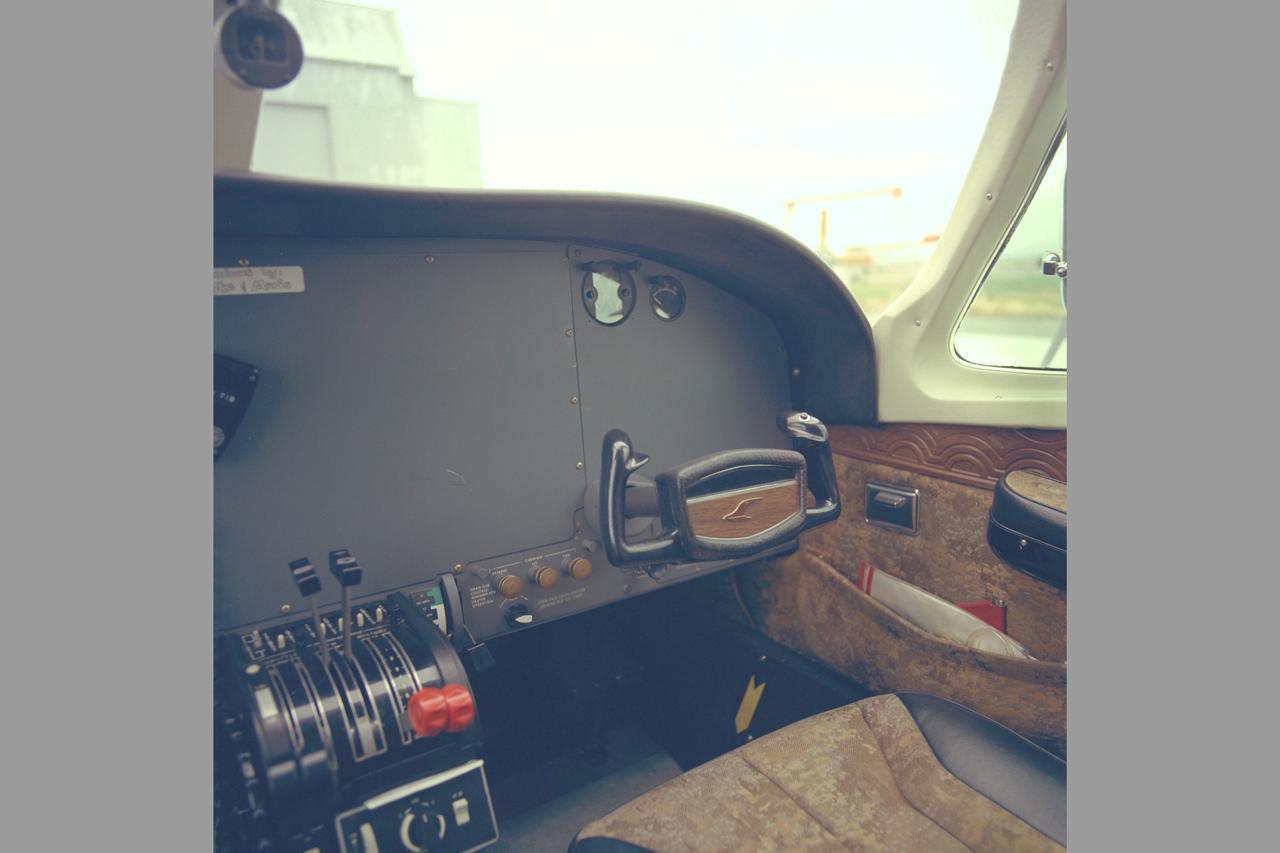
Cessna 402 cockpit
ARC-1976-AC76-0872-28
Cessna 402 cockpit
ARC-1976-AC76-0872-27
Test pilot in cockpit.
Side arm controller
Lockheed Model 12 Cockpit
ARC-1993-A83-0499-2
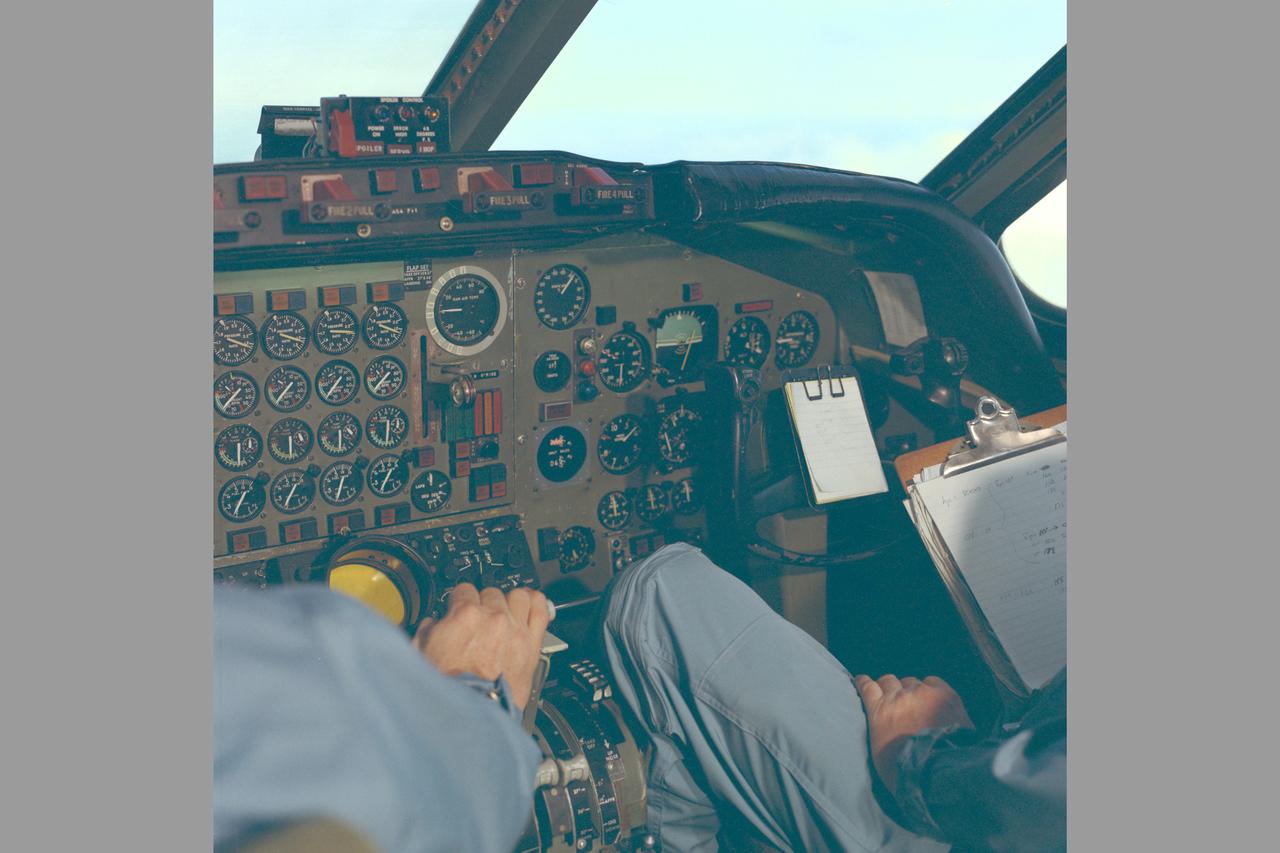
Pilots in cockpit of CV-990
ARC-1968-AC-40789-7
Pilot  in cockpit of CV-990
ARC-1968-AC-40789-8
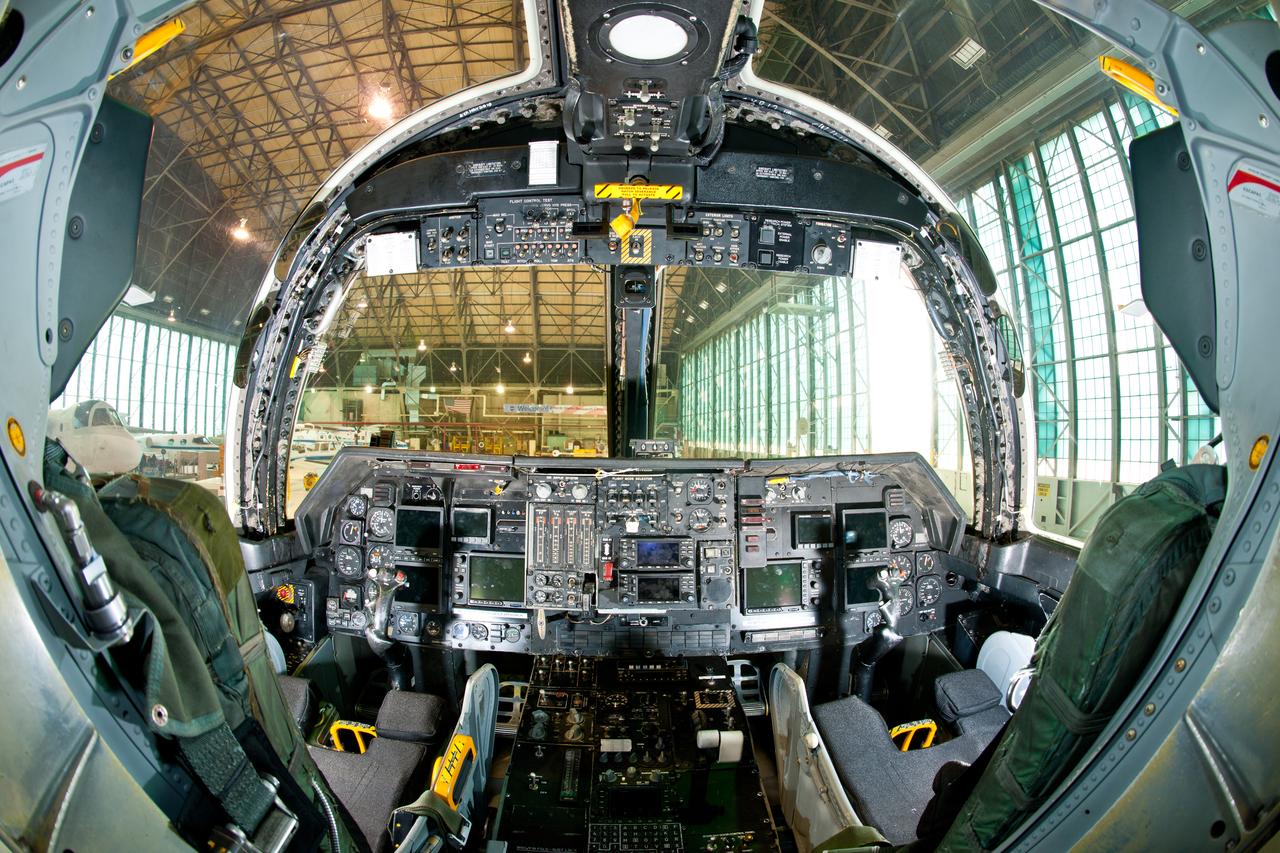
B-52B Cockpit Instrument Panel
EC96-43814-1
Lear Jet (NASA-705) cockpit
ARC-1975-AC75-0149-10
CH-47 (NASA-737) Control Panel and Cockpit
ARC-1986-A86-0235
McDonnell Douglas F/A-18A Hornet cockpit drawing
ARC-1993-A83-0499-34
CH-47 (NASA-737) Control Panel and Cockpit
ARC-1986-AC86-0235-6
VMS: F-Cab Comache Project configuration  (cockpit)
ARC-2002-ACD02-0034-06