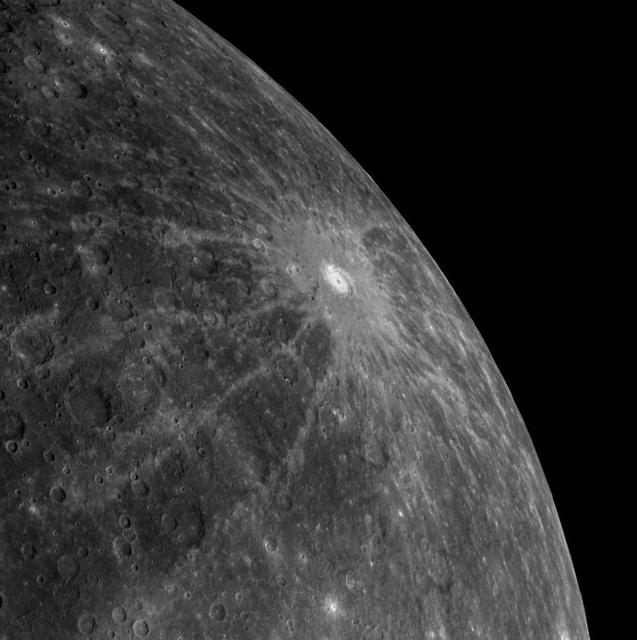
Claire de Limb

Delightful de Graft
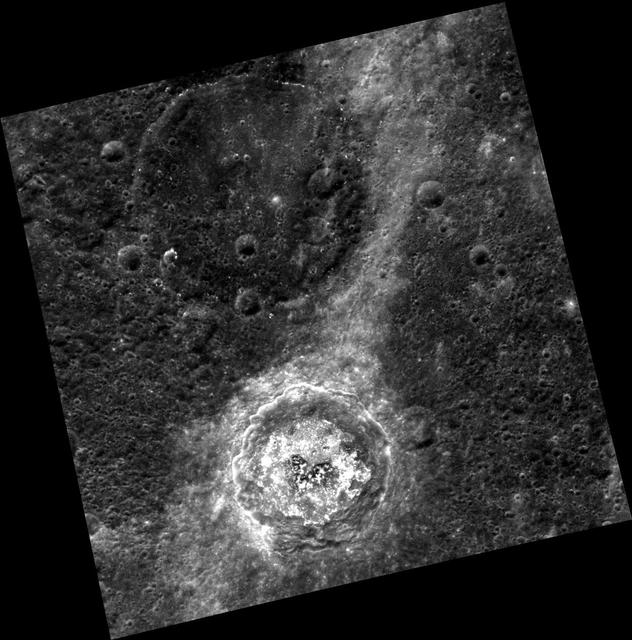
De Graft Drama
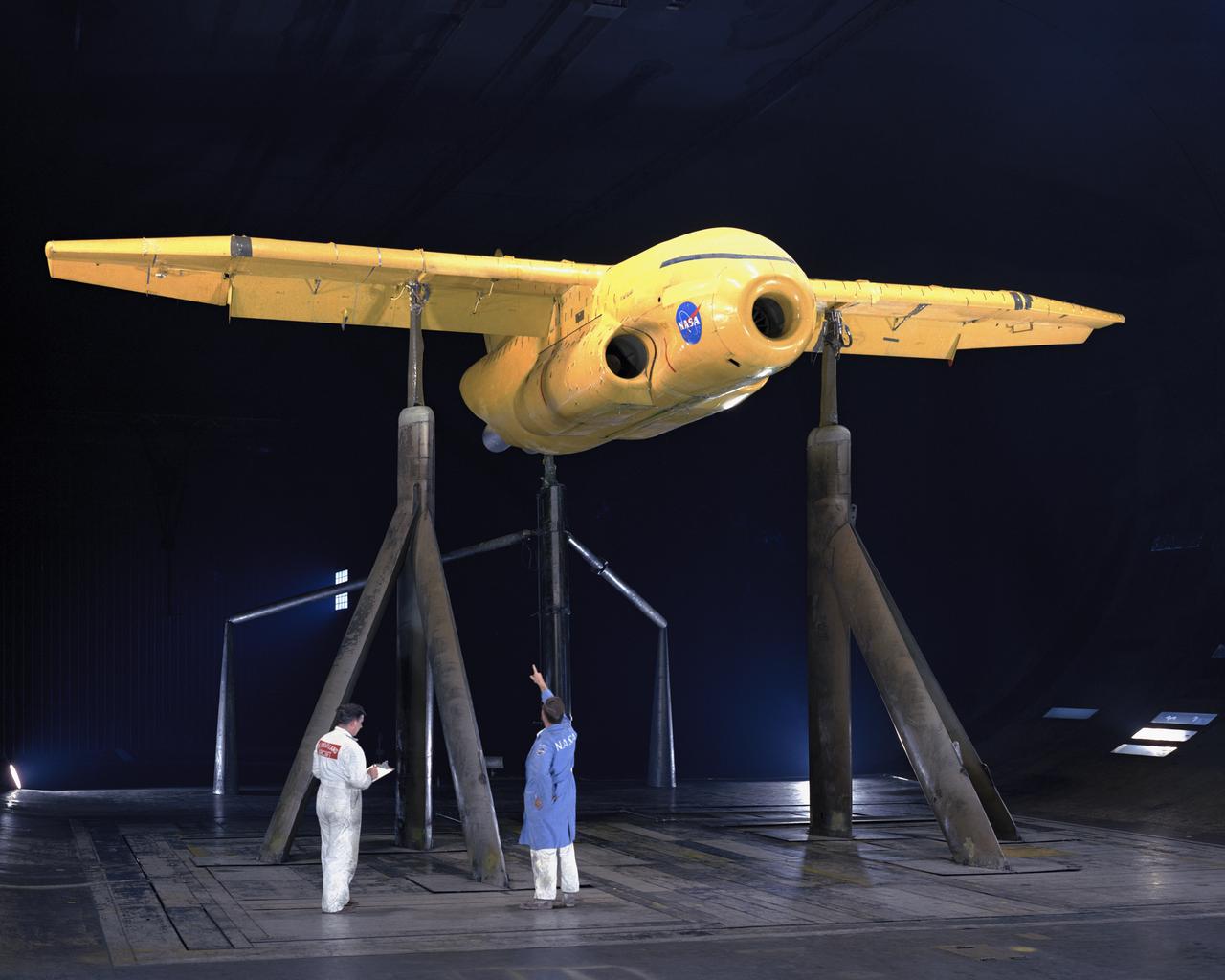
de Havilland augmenter wing model 3/4 front view in 40 x 80 wind tunnel. JOHN CONWAY, ALAN WHEELBAND
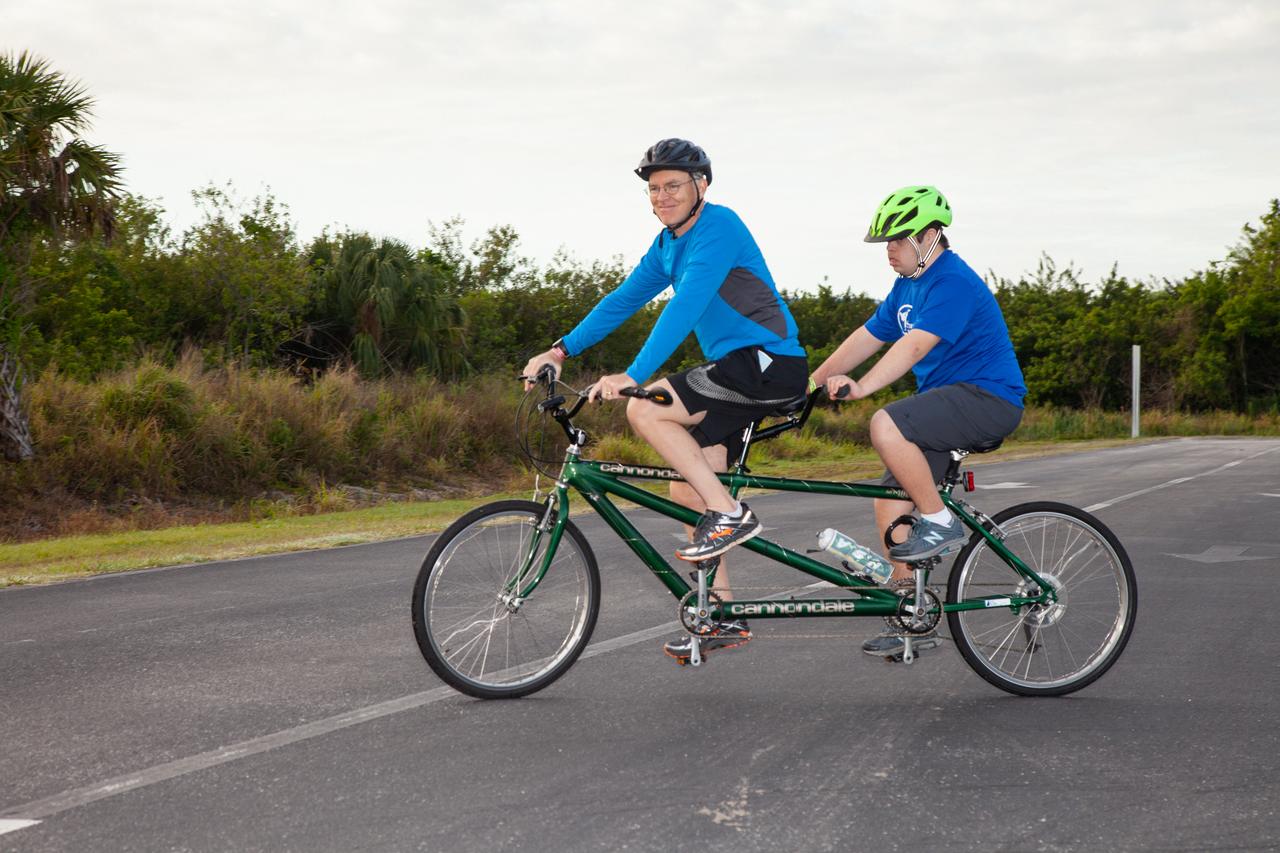
Participants riding a tandem bicycle take part in Kennedy Space Center’s annual Tour de KSC. The bicycle tour took place March 30, giving Kennedy employees and guests the opportunity to choose from three different routes that ranged from seven to 33 miles along some of the Florida spaceport’s most notable facilities such as the Vehicle Assembly Building, the Shuttle Landing Facility and historic Launch Pad 39A, among others.
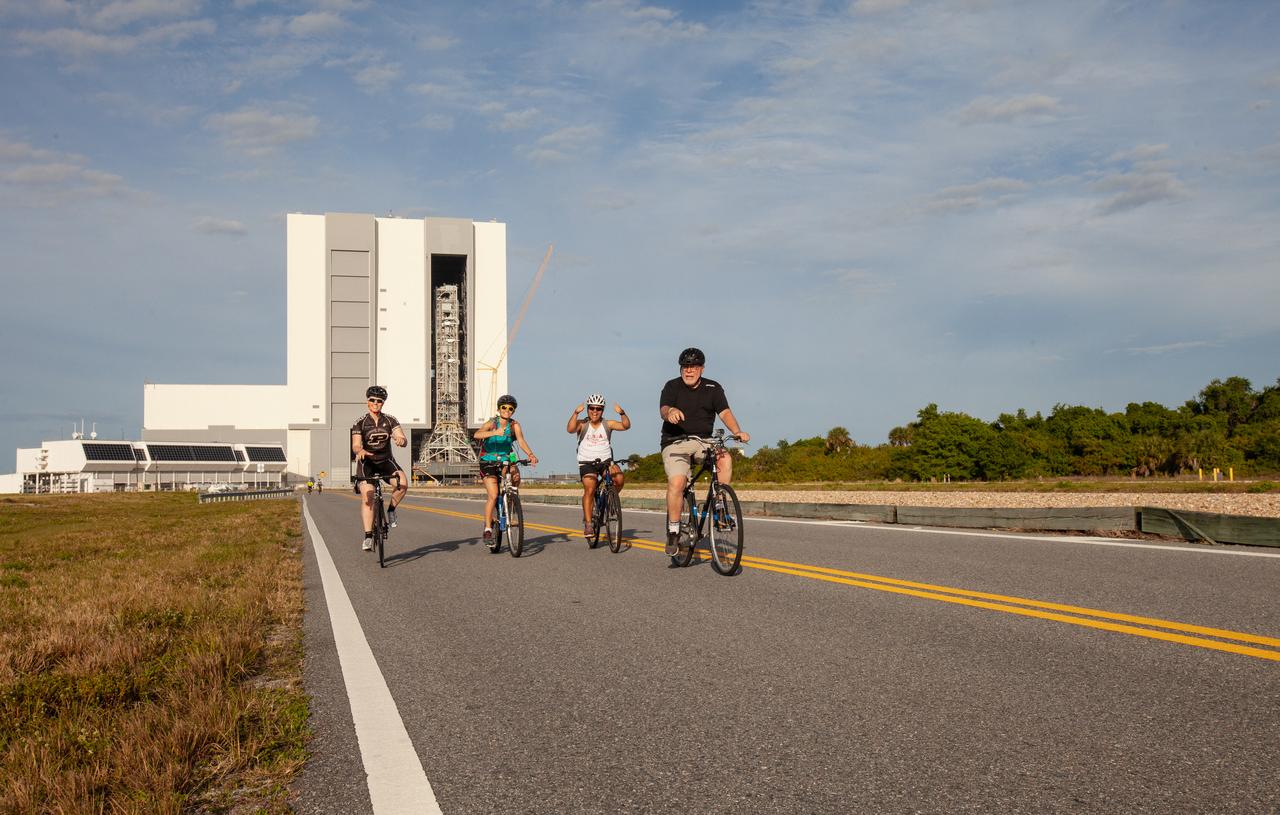
Cyclists pedal away from the Vehicle Assembly Building (VAB) and Launch Control Center, continuing on the Kennedy Space Center’s annual Tour de KSC. The bicycle tour took place March 30, giving Kennedy employees and guests the opportunity to choose from three different routes that ranged from seven to 33 miles along some of the Florida spaceport’s most notable facilities such as the VAB, the Shuttle Landing Facility and historic Launch Pad 39A, among others.
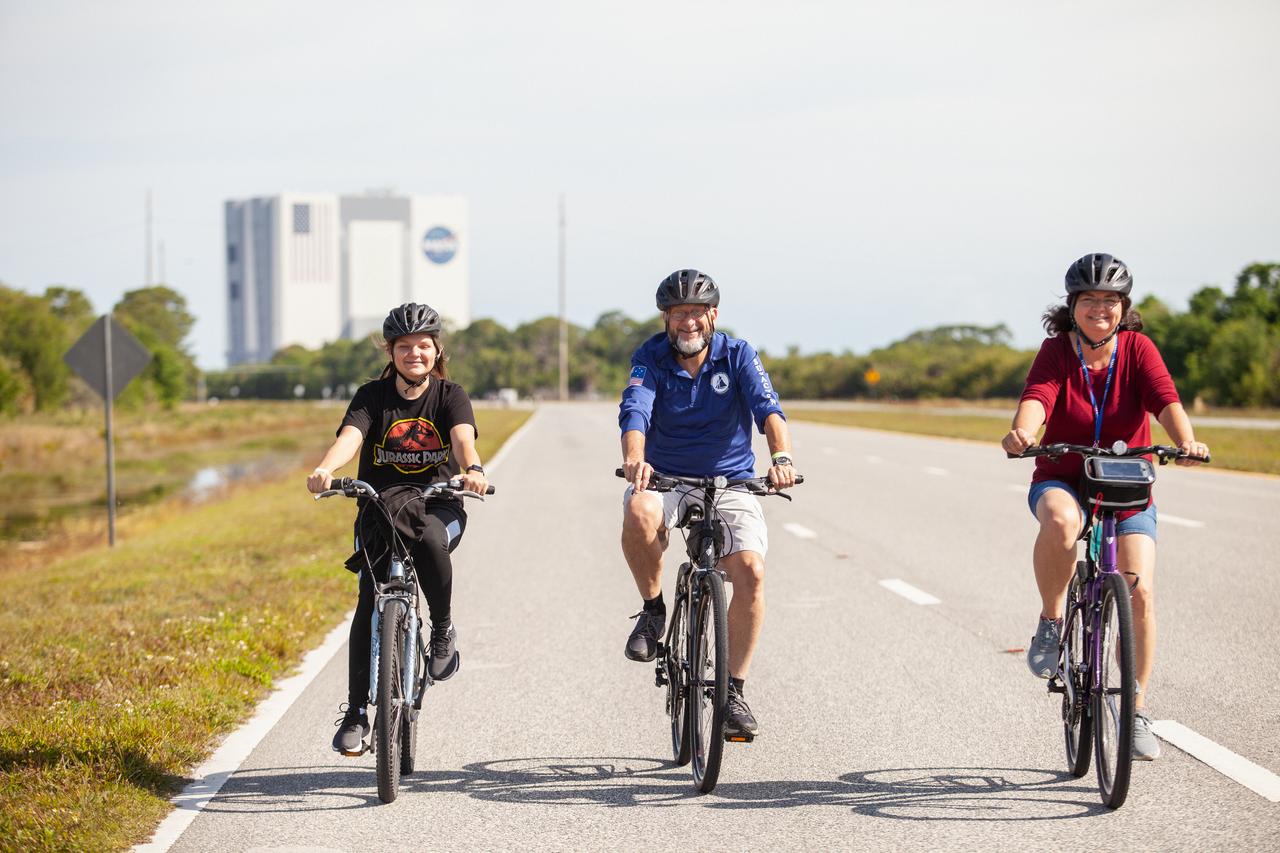
Cyclists pedal away from the Vehicle Assembly Building (VAB), continuing on Kennedy Space Center’s annual Tour de KSC. The bicycle tour took place March 30, giving Kennedy employees and guests the opportunity to choose from three different routes that ranged from seven to 33 miles along some of the Florida spaceport’s most notable facilities such as the VAB, the Shuttle Landing Facility and historic Launch Pad 39A, among others.
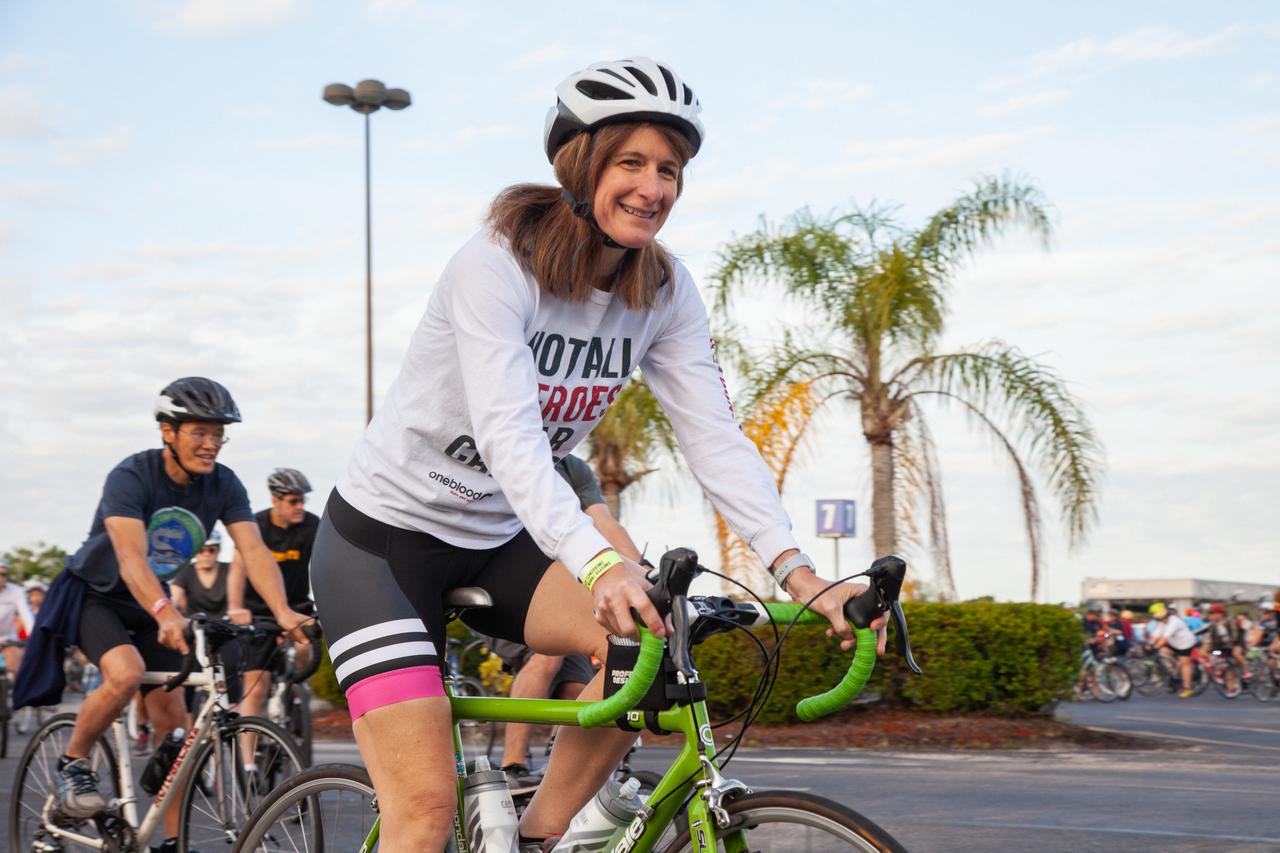
Cyclists take off from the Kennedy Space Center Visitor Complex at the start of the center’s annual Tour de KSC. The bicycle tour took place March 30, giving Kennedy employees and guests the opportunity to choose from three different routes that ranged from seven to 33 miles along some of the Florida spaceport’s most notable facilities such as the Vehicle Assembly Building, the Shuttle Landing Facility and historic Launch Pad 39A, among others.
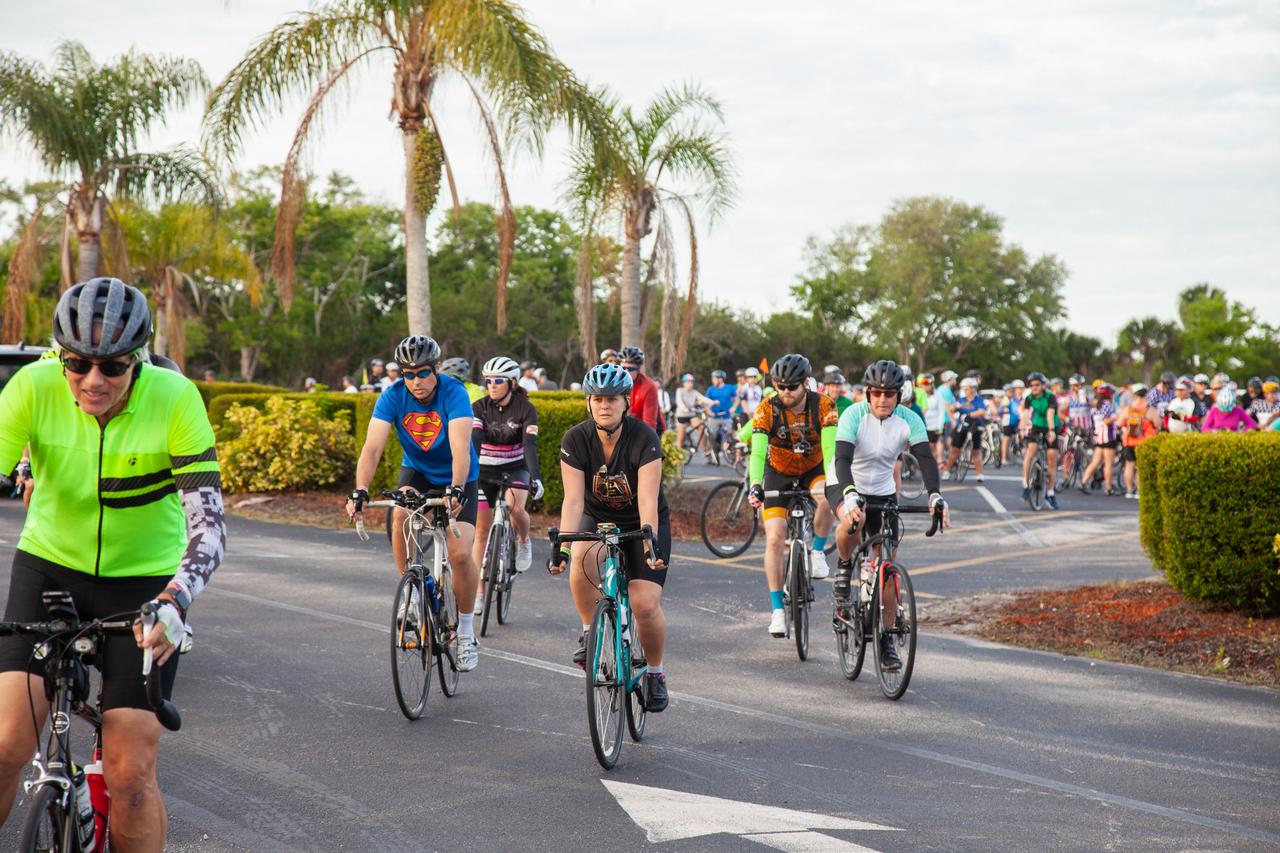
Cyclists take off from the Kennedy Space Center Visitor Complex at the start of the center’s annual Tour de KSC. The bicycle tour took place March 30, giving Kennedy employees and guests the opportunity to choose from three different routes that ranged from seven to 33 miles along some of the Florida spaceport’s most notable facilities such as the Vehicle Assembly Building, the Shuttle Landing Facility and historic Launch Pad 39A, among others.
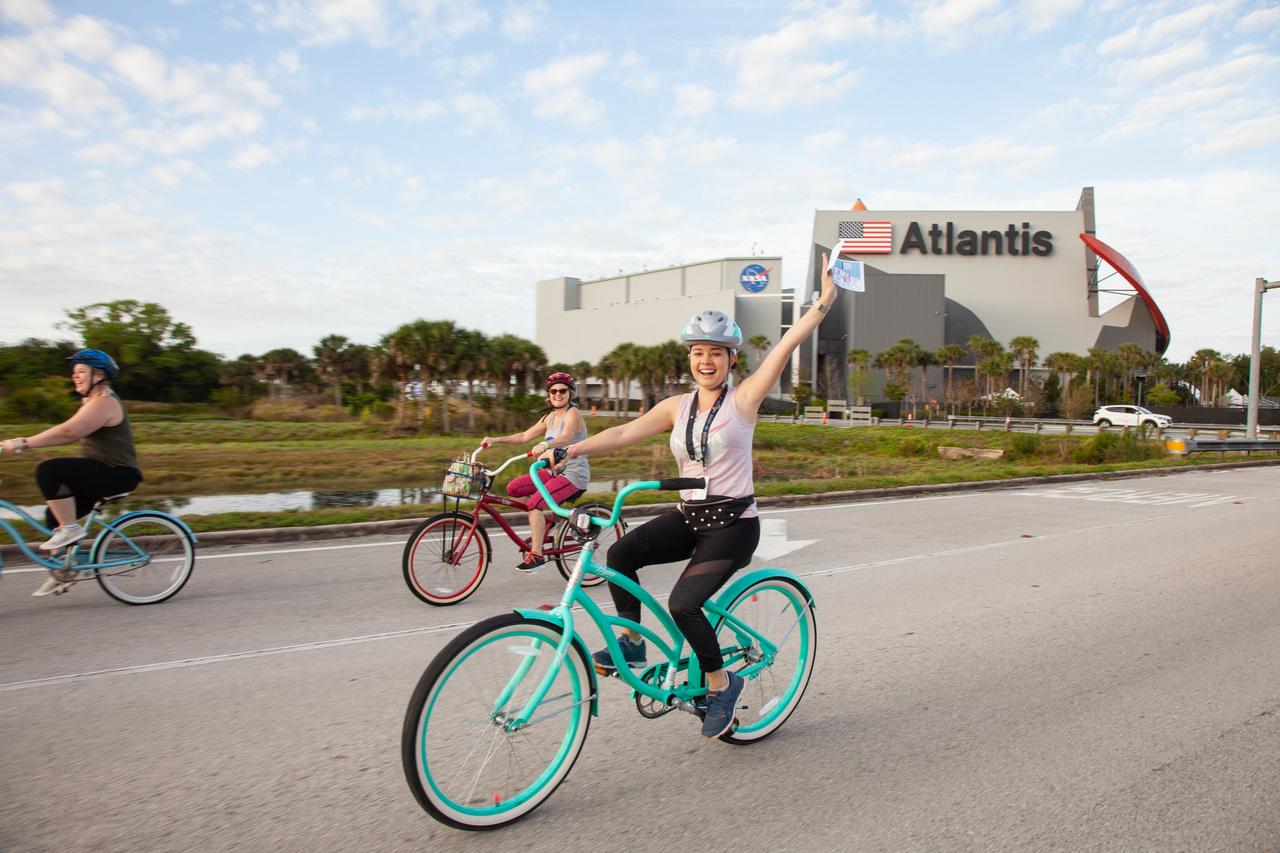
Cyclists ride away from the Kennedy Space Center Visitor Complex, the starting point of the center’s annual Tour de KSC. The bicycle tour took place March 30, giving Kennedy employees and guests the opportunity to choose from three different routes that ranged from seven to 33 miles along some of the Florida spaceport’s most notable facilities such as the Vehicle Assembly Building, the Shuttle Landing Facility and historic Launch Pad 39A, among others.
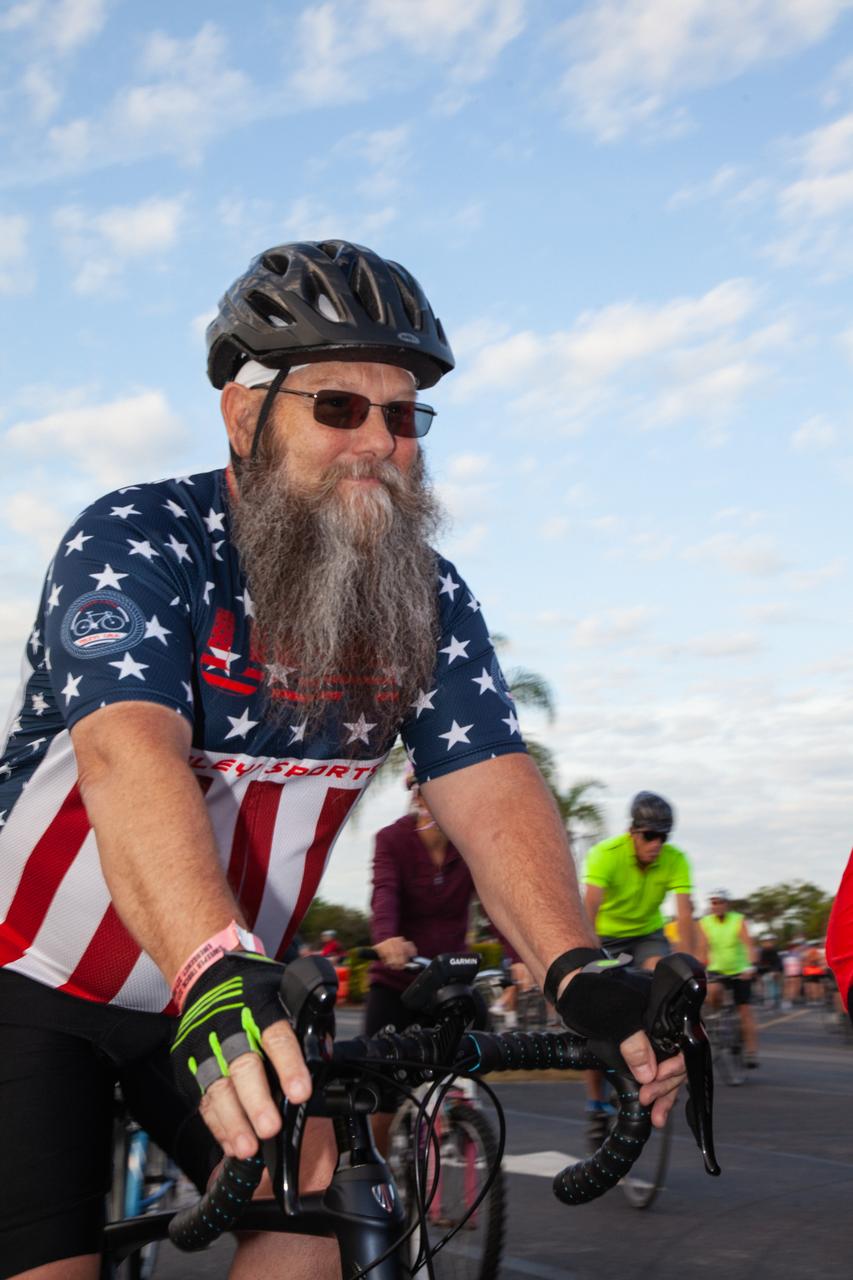
A cyclist takes off from the Kennedy Space Center Visitor Complex at the start of the center’s annual Tour de KSC. The bicycle tour took place March 30, giving Kennedy employees and guests the opportunity to choose from three different routes that ranged from seven to 33 miles along some of the Florida spaceport’s most notable facilities such as the Vehicle Assembly Building, the Shuttle Landing Facility and historic Launch Pad 39A, among others.
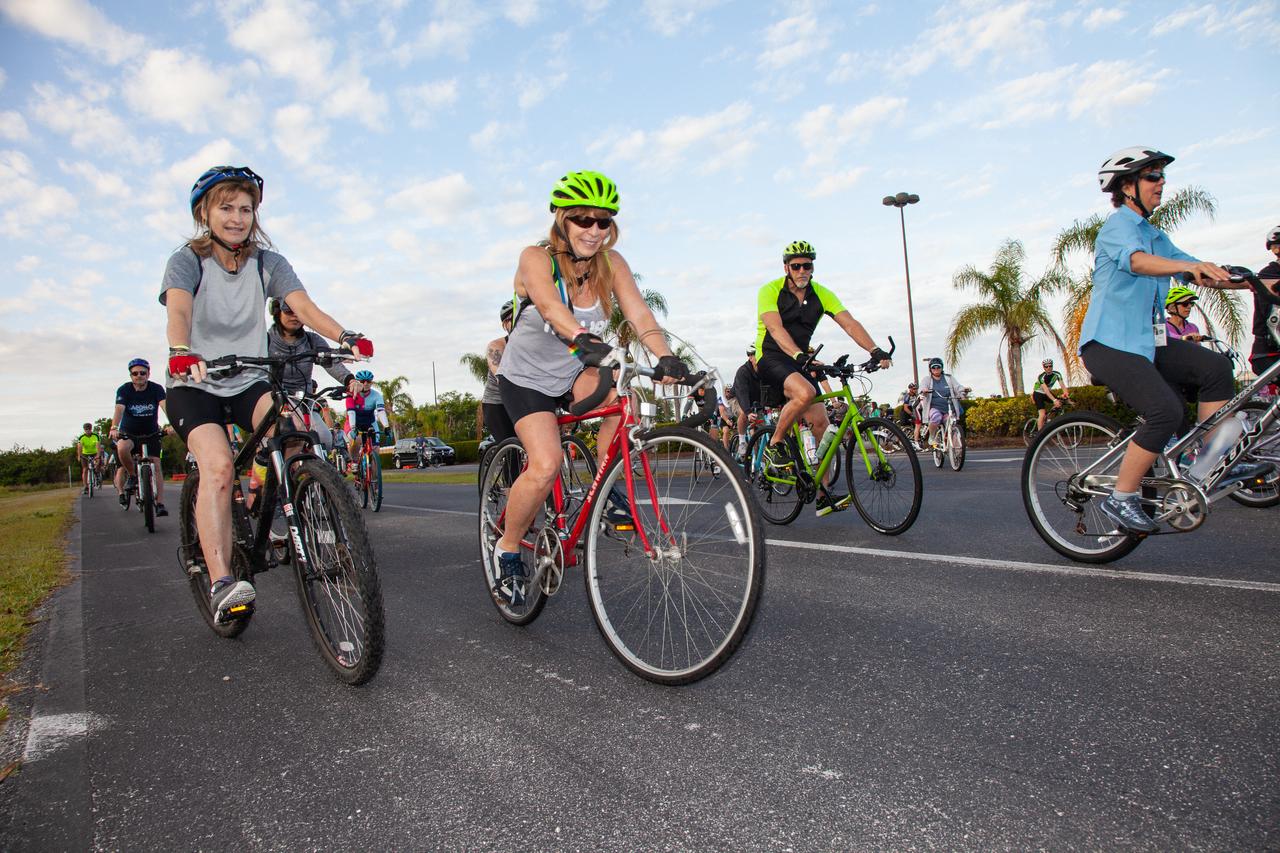
Cyclists take off from the Kennedy Space Center Visitor Complex at the start of the center’s annual Tour de KSC. The bicycle tour took place March 30, giving Kennedy employees and guests the opportunity to choose from three different routes that ranged from seven to 33 miles along some of the Florida spaceport’s most notable facilities such as the Vehicle Assembly Building, the Shuttle Landing Facility and historic Launch Pad 39A, among others.
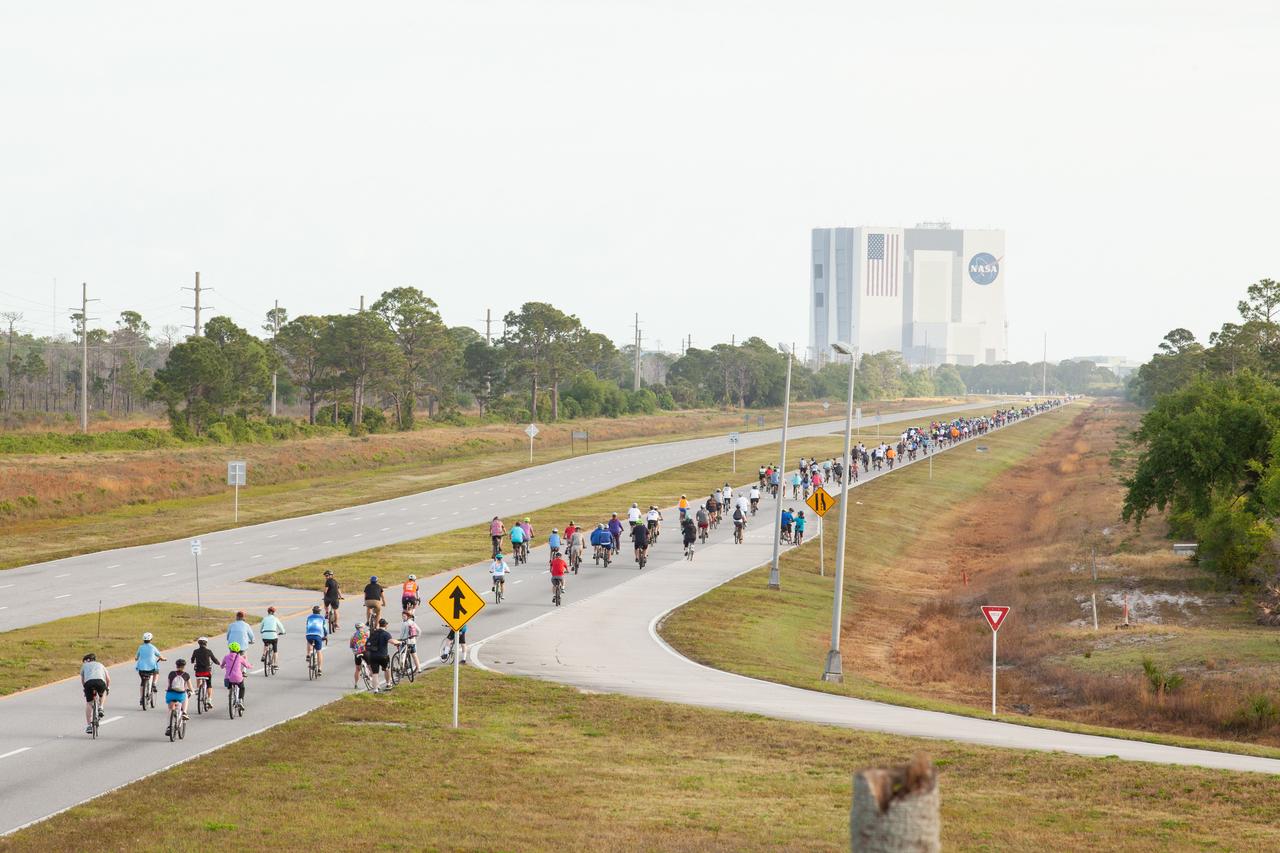
Cyclists pedal down Kennedy Parkway toward the Vehicle Assembly Building (VAB) during Kennedy Space Center’s annual Tour de KSC. The bicycle tour took place March 30, giving center employees and guests the opportunity to choose from three different routes that ranged from seven to 33 miles along some of the Florida spaceport’s most notable facilities such as the VAB, the Shuttle Landing Facility and historic Launch Pad 39A, among others.
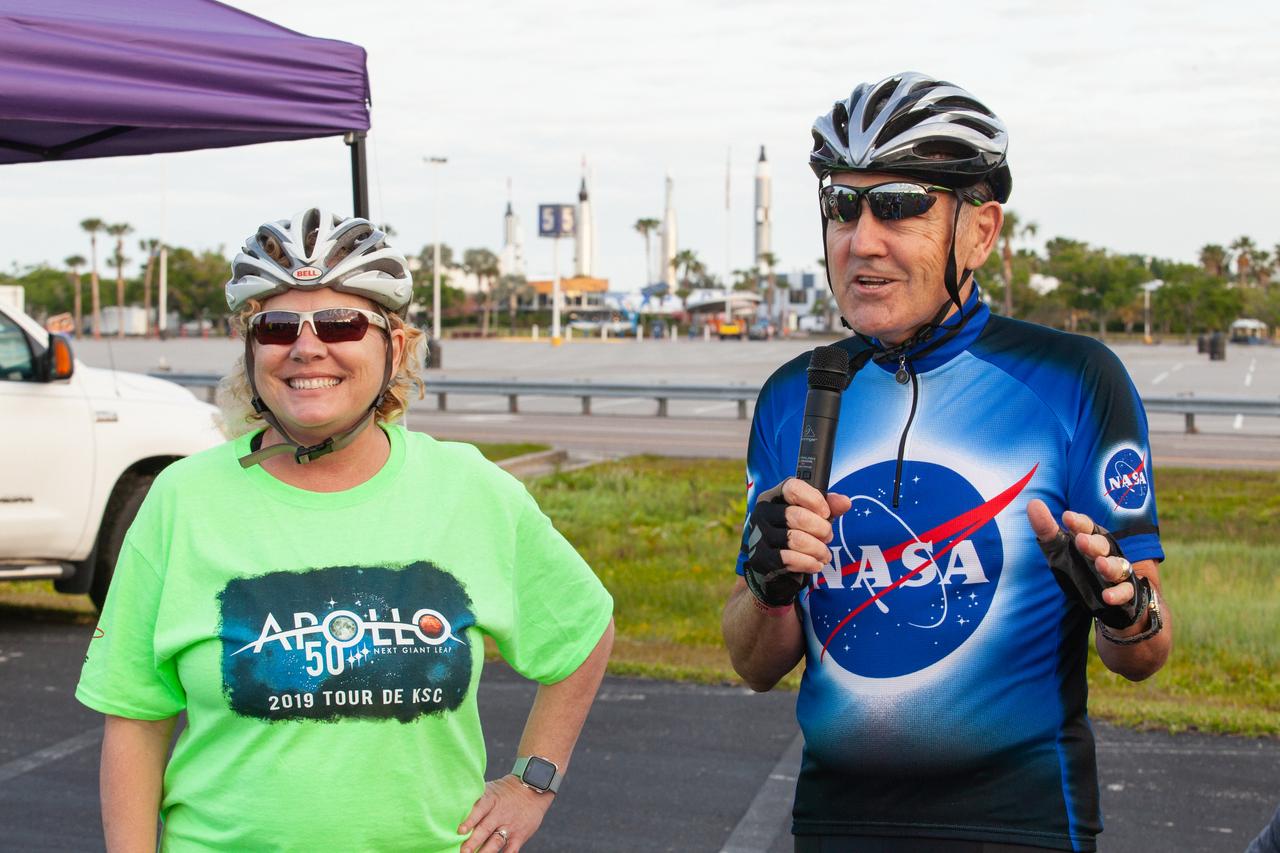
Kennedy Space Center Director Bob Cabana addresses cyclists participating in the center’s annual Tour de KSC bicycle tour prior to its start on March 30. Employees and guests had the opportunity to choose from three different routes, ranging from seven to 33 miles, along some of the Florida spaceport’s most notable facilities such as the Vehicle Assembly Building, the Shuttle Landing Facility and historic Launch Pad 39A, among others.

Cyclists pose for a photo within a frame promoting the 50th anniversary of the first Apollo Moon landing prior to the start of Kennedy Space Center’s annual Tour de KSC. The bicycle tour took place March 30, giving Kennedy employees and guests the opportunity to choose from three different routes that ranged from seven to 33 miles along some of the Florida spaceport’s most notable facilities such as the Vehicle Assembly Building, the Shuttle Landing Facility and historic Launch Pad 39A, among others.
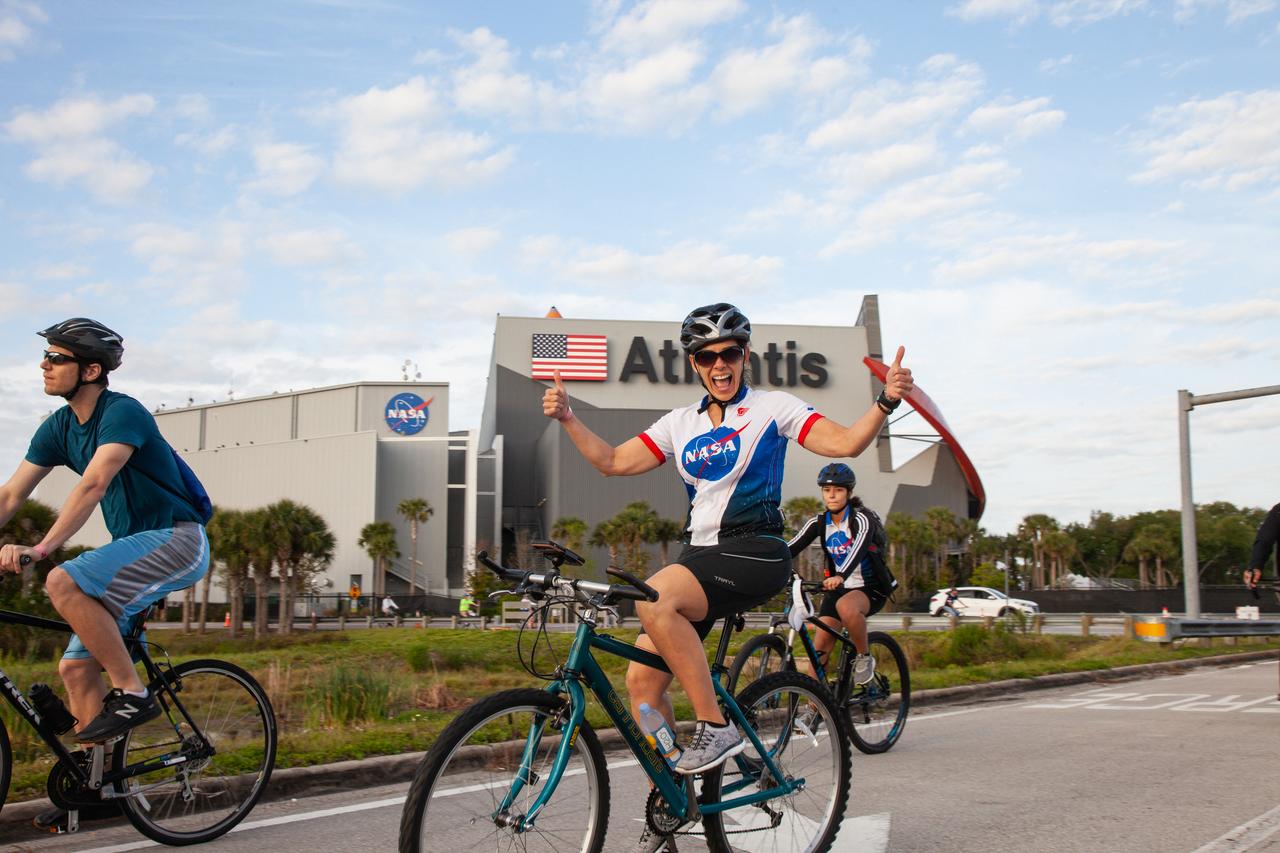
A cyclist gives two thumbs-up as she rides away from the Kennedy Space Center Visitor Complex, the starting point of the center’s annual Tour de KSC. The bicycle tour took place March 30, giving Kennedy employees and guests the opportunity to choose from three different routes that ranged from seven to 33 miles along some of the Florida spaceport’s most notable facilities such as the Vehicle Assembly Building, the Shuttle Landing Facility and historic Launch Pad 39A, among others.
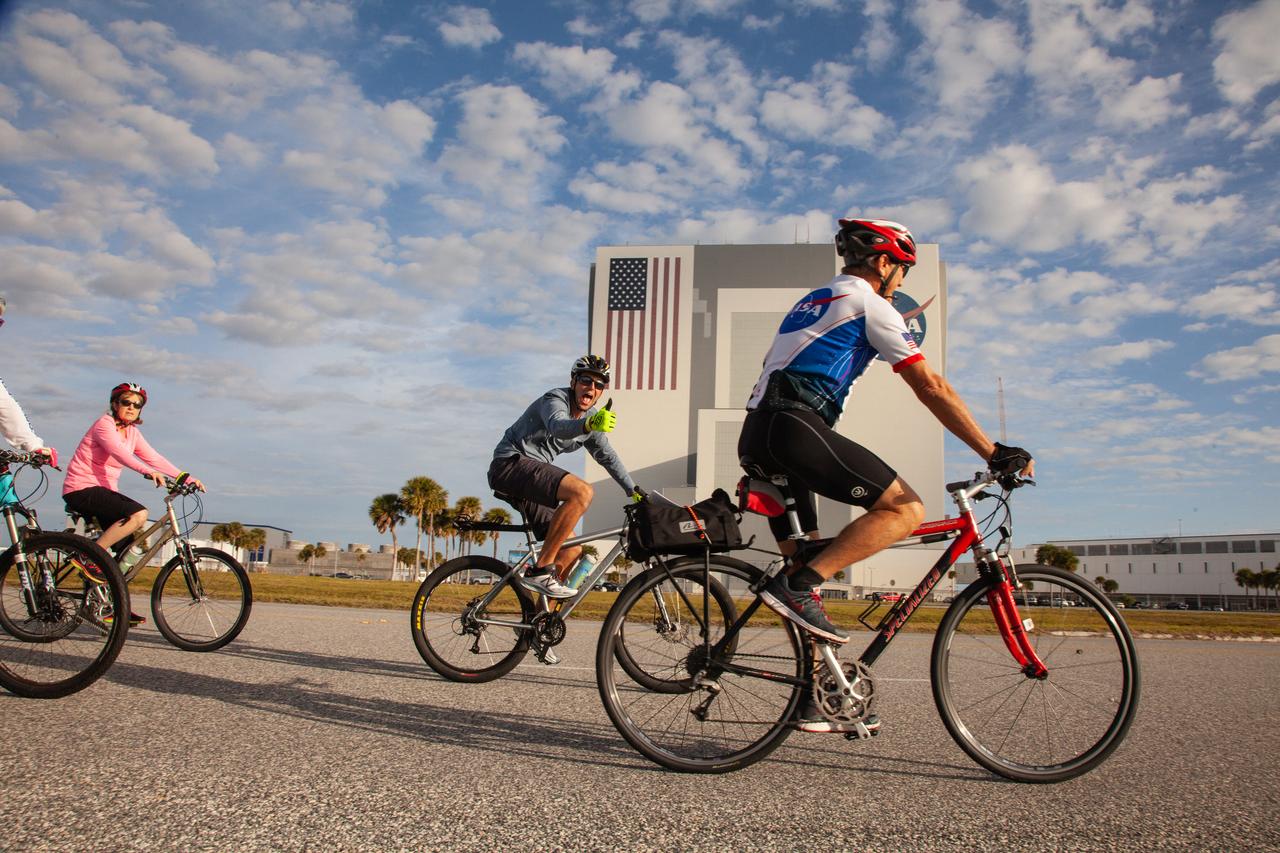
Cyclists ride past the Vehicle Assembly Building (VAB) during Kennedy Space Center’s annual Tour de KSC. The bicycle tour took place March 30, giving Kennedy employees and guests the opportunity to choose from three different routes that ranged from seven to 33 miles along some of the Florida spaceport’s most notable facilities such as the VAB, the Shuttle Landing Facility and historic Launch Pad 39A, among others.
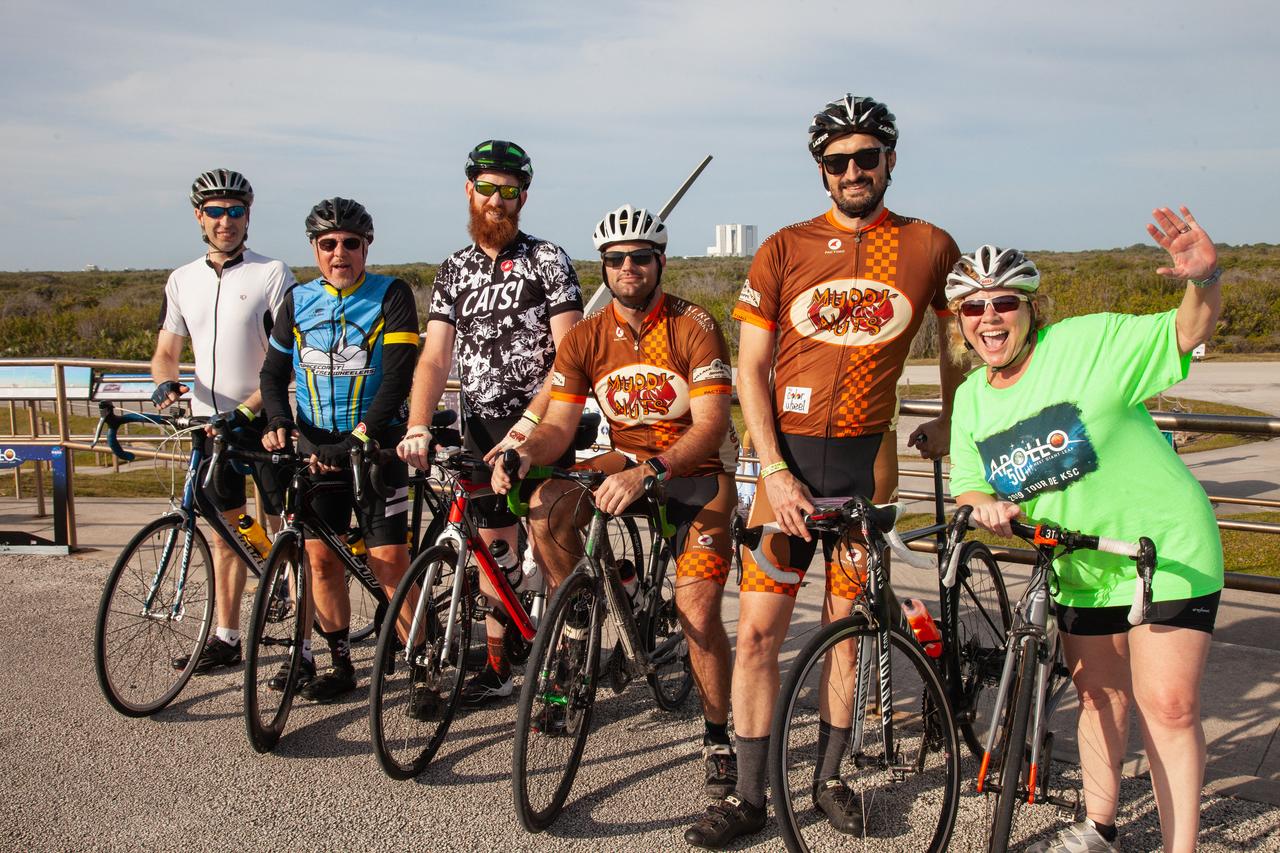
Cyclists pose for a photo with the Vehicle Assembly Building (VAB) faintly in the background during Kennedy Space Center’s annual Tour de KSC. The bicycle tour took place March 30, giving Kennedy employees and guests the opportunity to choose from three different routes that ranged from seven to 33 miles along some of the Florida spaceport’s most notable facilities such as the VAB, the Shuttle Landing Facility and historic Launch Pad 39A, among others.
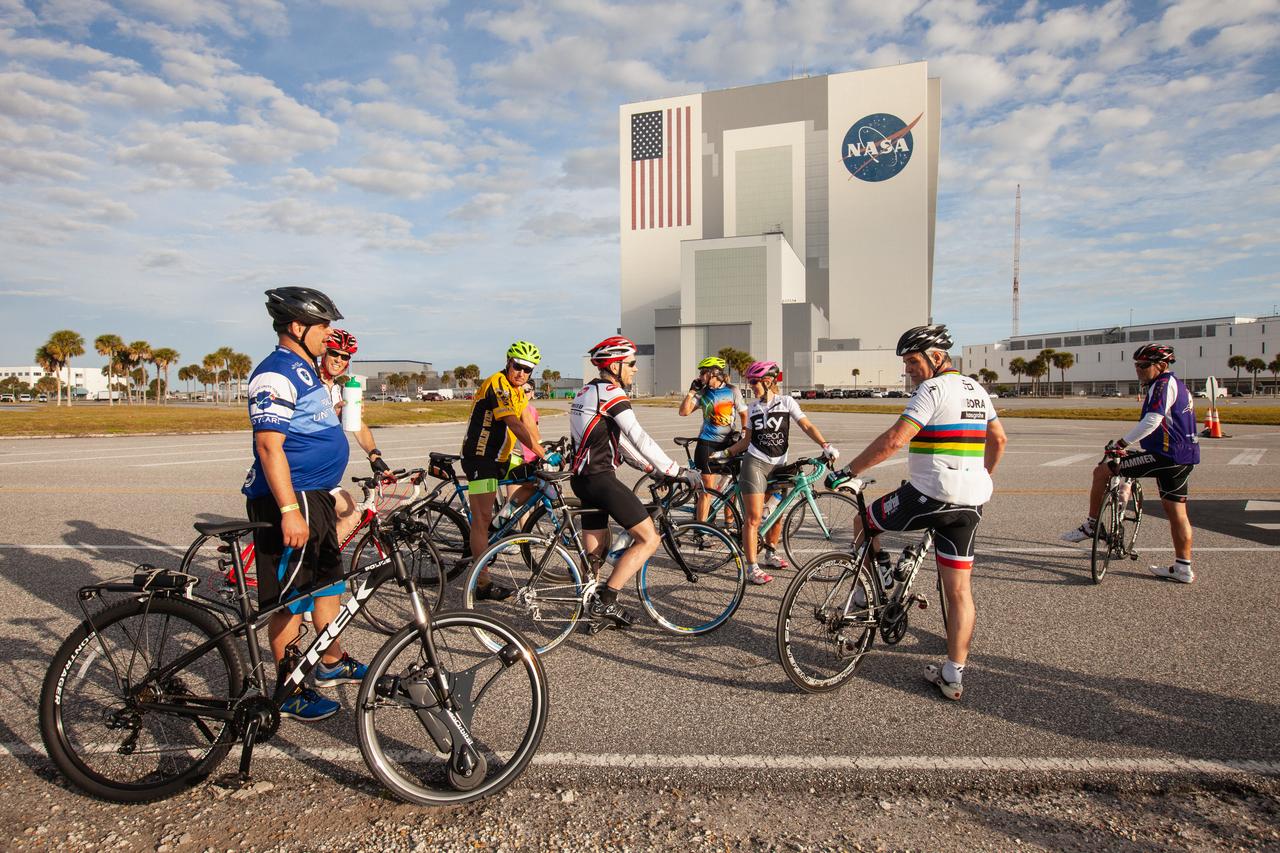
Cyclists pause in front of the Vehicle Assembly Building (VAB) to rest during Kennedy Space Center’s annual Tour de KSC. The bicycle tour took place March 30, giving Kennedy employees and guests the opportunity to choose from three different routes that ranged from seven to 33 miles along some of the Florida spaceport’s most notable facilities such as the VAB, the Shuttle Landing Facility and historic Launch Pad 39A, among others.
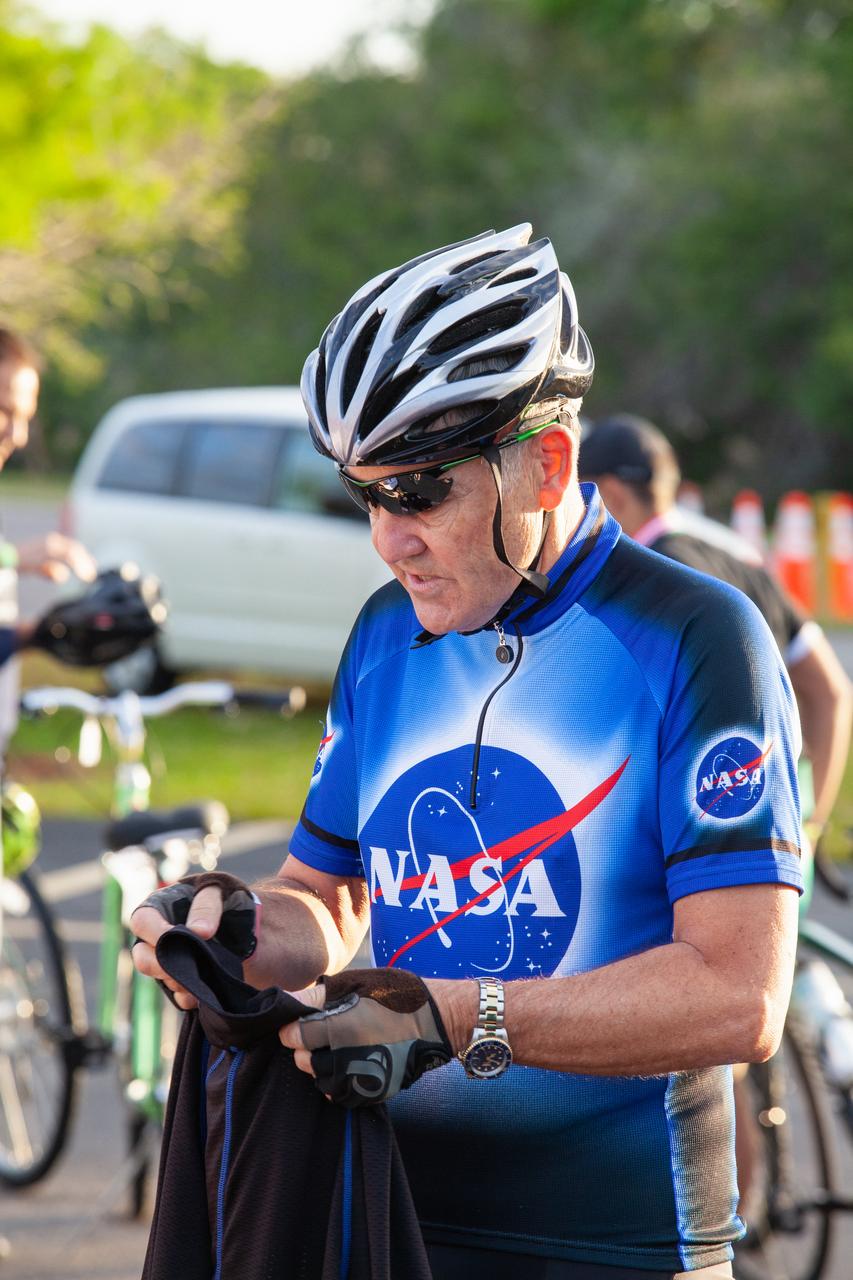
Kennedy Space Center Director Bob Cabana stands suited up and ready to go prior to the start of the center’s annual Tour de KSC. The bicycle tour took place March 30, giving Kennedy employees and guests the opportunity to choose from three different routes that ranged from seven to 33 miles along some of the Florida spaceport’s most notable facilities such as the Vehicle Assembly Building, the Shuttle Landing Facility and historic Launch Pad 39A, among others.
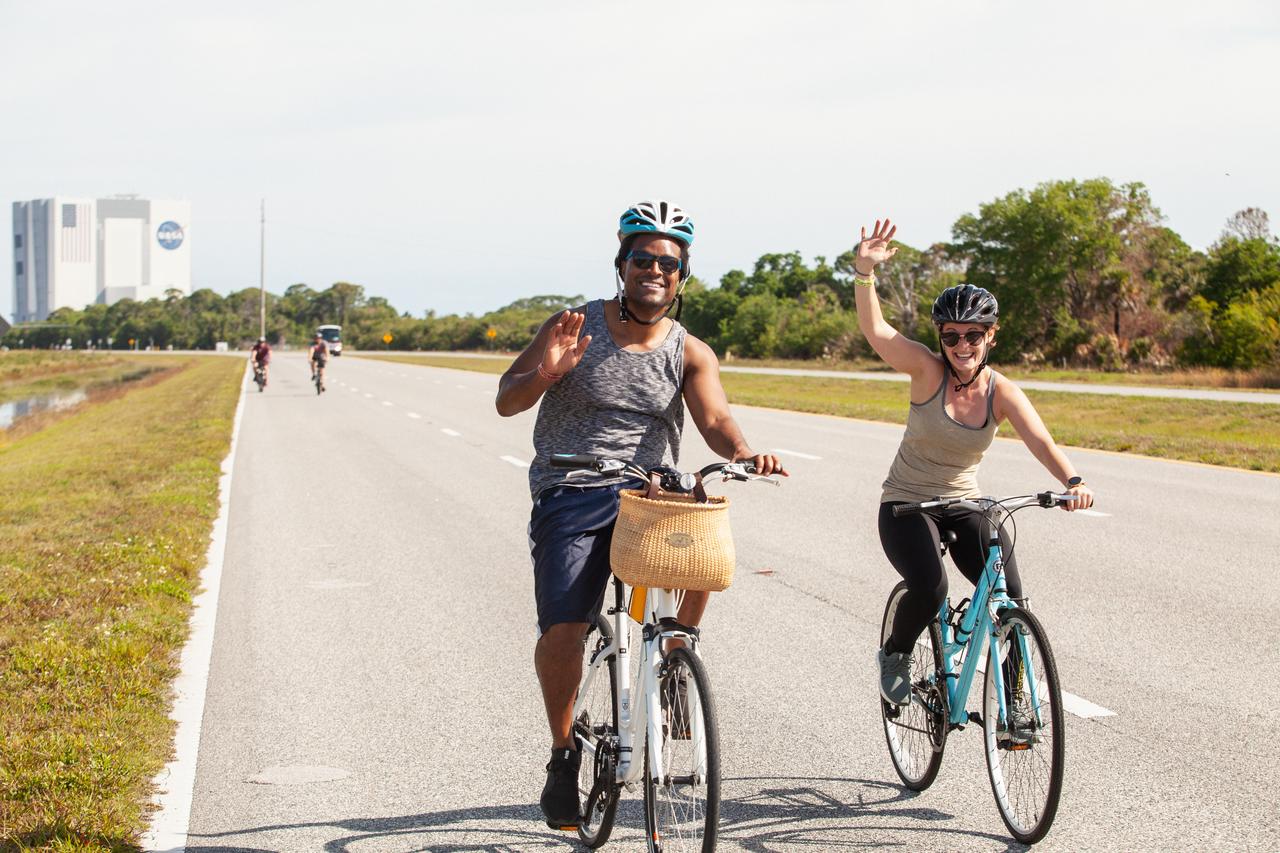
Cyclists wave as they pass by during Kennedy Space Center’s annual Tour de KSC. The bicycle tour took place March 30, giving Kennedy employees and guests the opportunity to choose from three different routes that ranged from seven to 33 miles along some of the Florida spaceport’s most notable facilities such as the VAB, the Shuttle Landing Facility and historic Launch Pad 39A, among others.
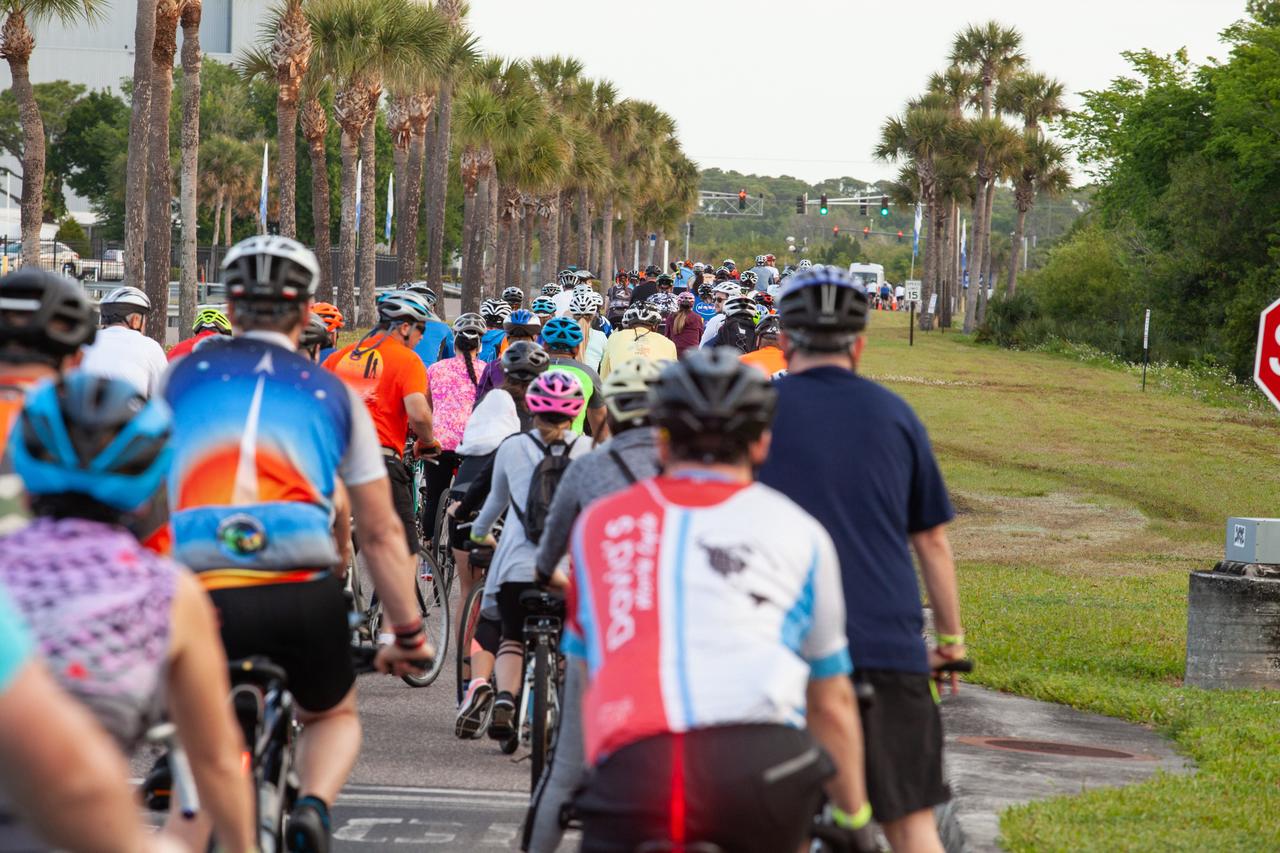
Cyclists take off from the Kennedy Space Center Visitor Complex at the start of the center’s annual Tour de KSC. The bicycle tour took place March 30, giving Kennedy employees and guests the opportunity to choose from three different routes that ranged from seven to 33 miles along some of the Florida spaceport’s most notable facilities such as the Vehicle Assembly Building, the Shuttle Landing Facility and historic Launch Pad 39A, among others.
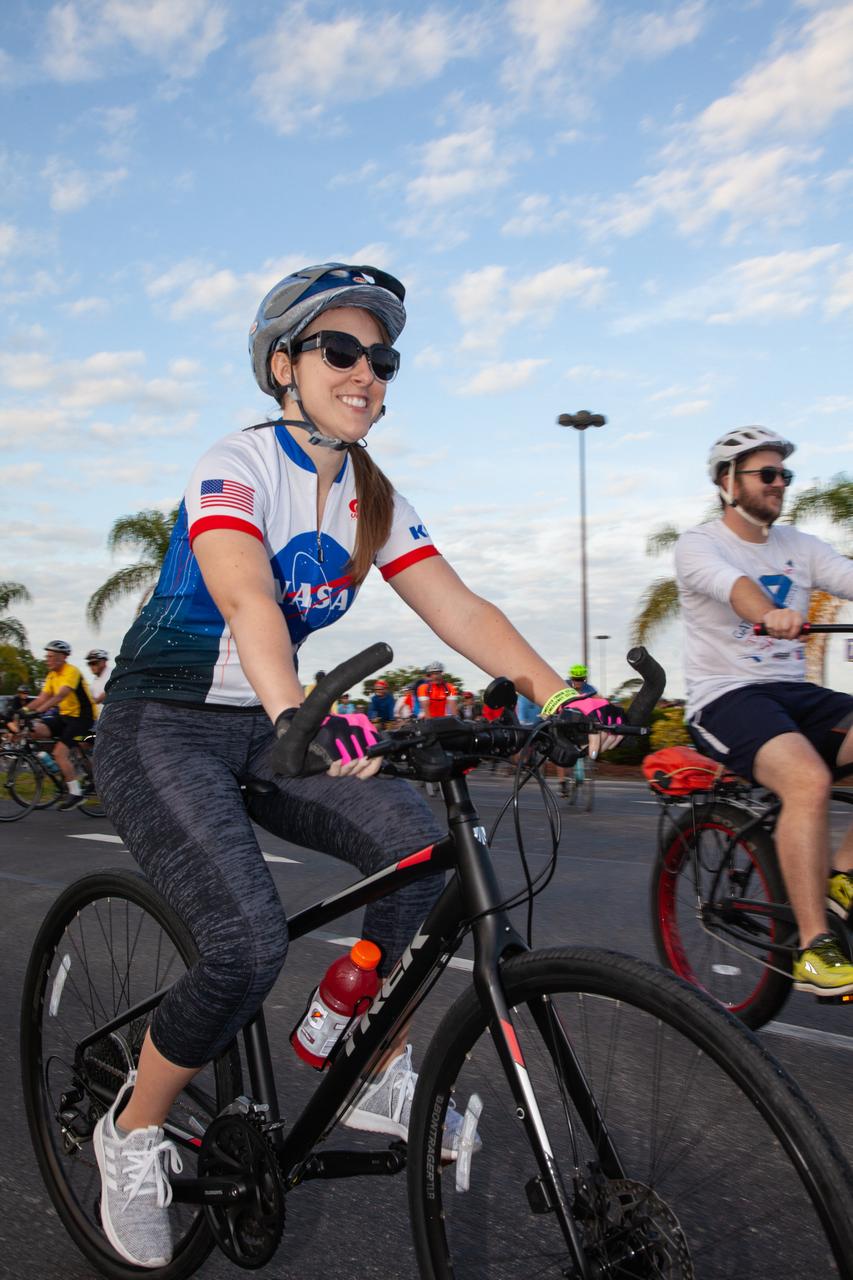
Cyclists take off from the Kennedy Space Center Visitor Complex at the start of the center’s annual Tour de KSC. The bicycle tour took place March 30, giving Kennedy employees and guests the opportunity to choose from three different routes that ranged from seven to 33 miles along some of the Florida spaceport’s most notable facilities such as the Vehicle Assembly Building, the Shuttle Landing Facility and historic Launch Pad 39A, among others.
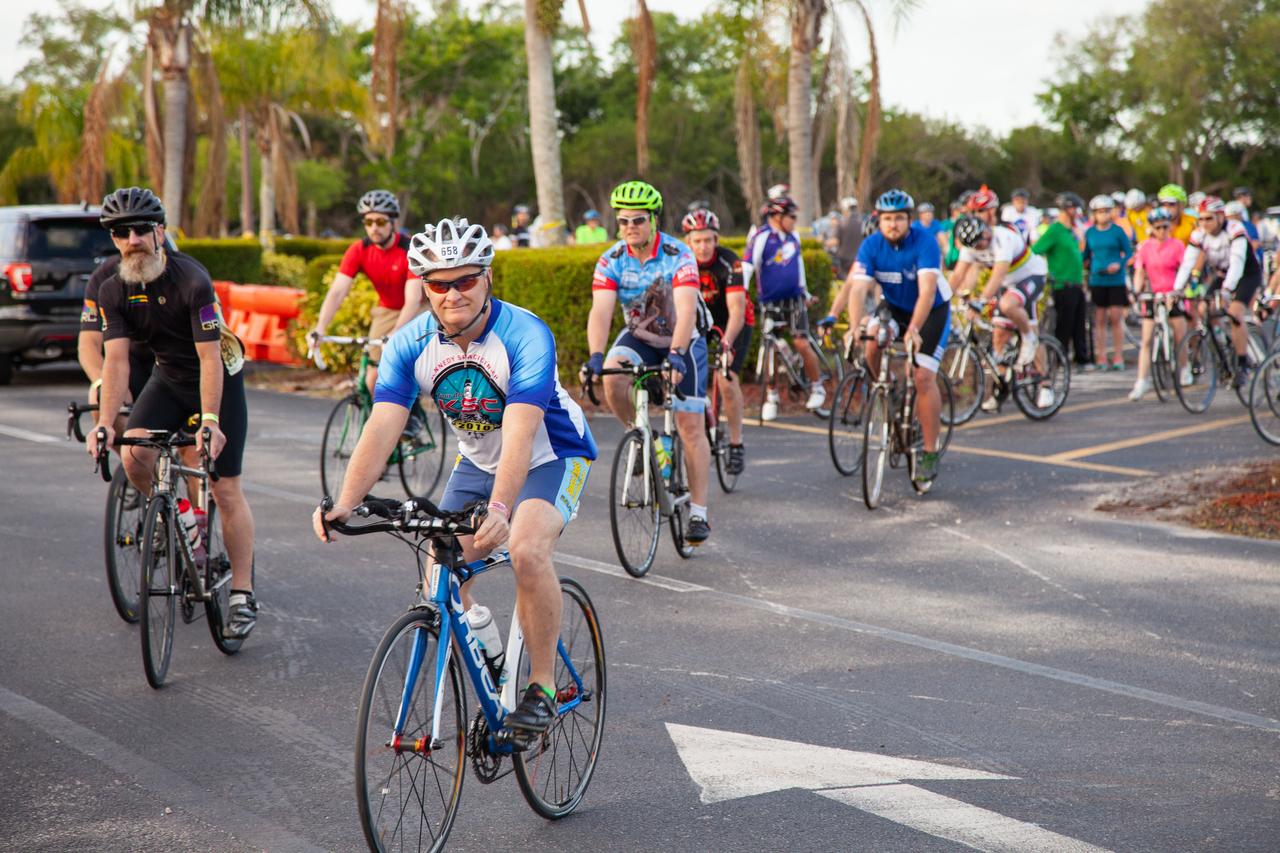
Cyclists take off from the Kennedy Space Center Visitor Complex at the start of the center’s annual Tour de KSC. The bicycle tour took place March 30, giving Kennedy employees and guests the opportunity to choose from three different routes that ranged from seven to 33 miles along some of the Florida spaceport’s most notable facilities such as the Vehicle Assembly Building, the Shuttle Landing Facility and historic Launch Pad 39A, among others.
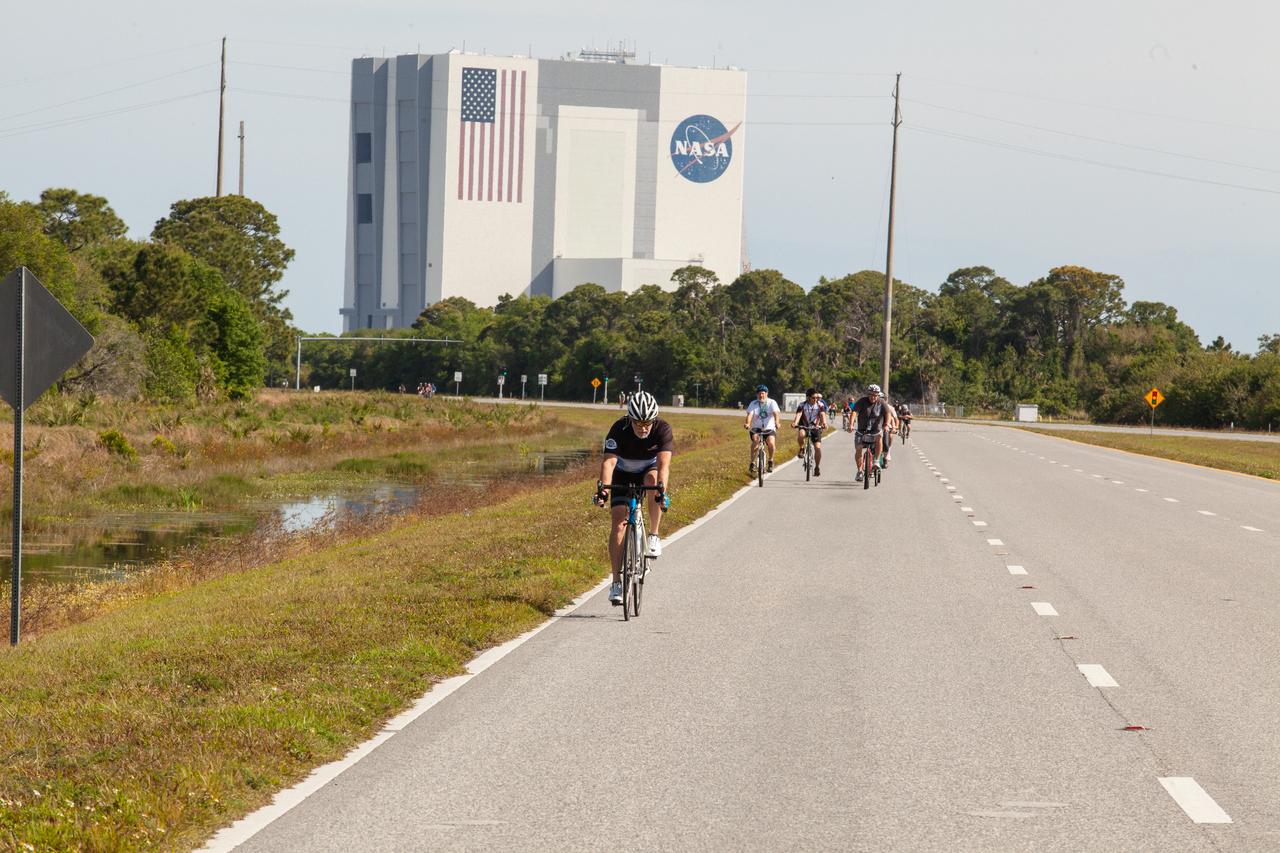
Cyclists pedal away from the Vehicle Assembly Building (VAB), continuing on Kennedy Space Center’s annual Tour de KSC. The bicycle tour took place March 30, giving Kennedy employees and guests the opportunity to choose from three different routes that ranged from seven to 33 miles along some of the Florida spaceport’s most notable facilities such as the VAB, the Shuttle Landing Facility and historic Launch Pad 39A, among others.
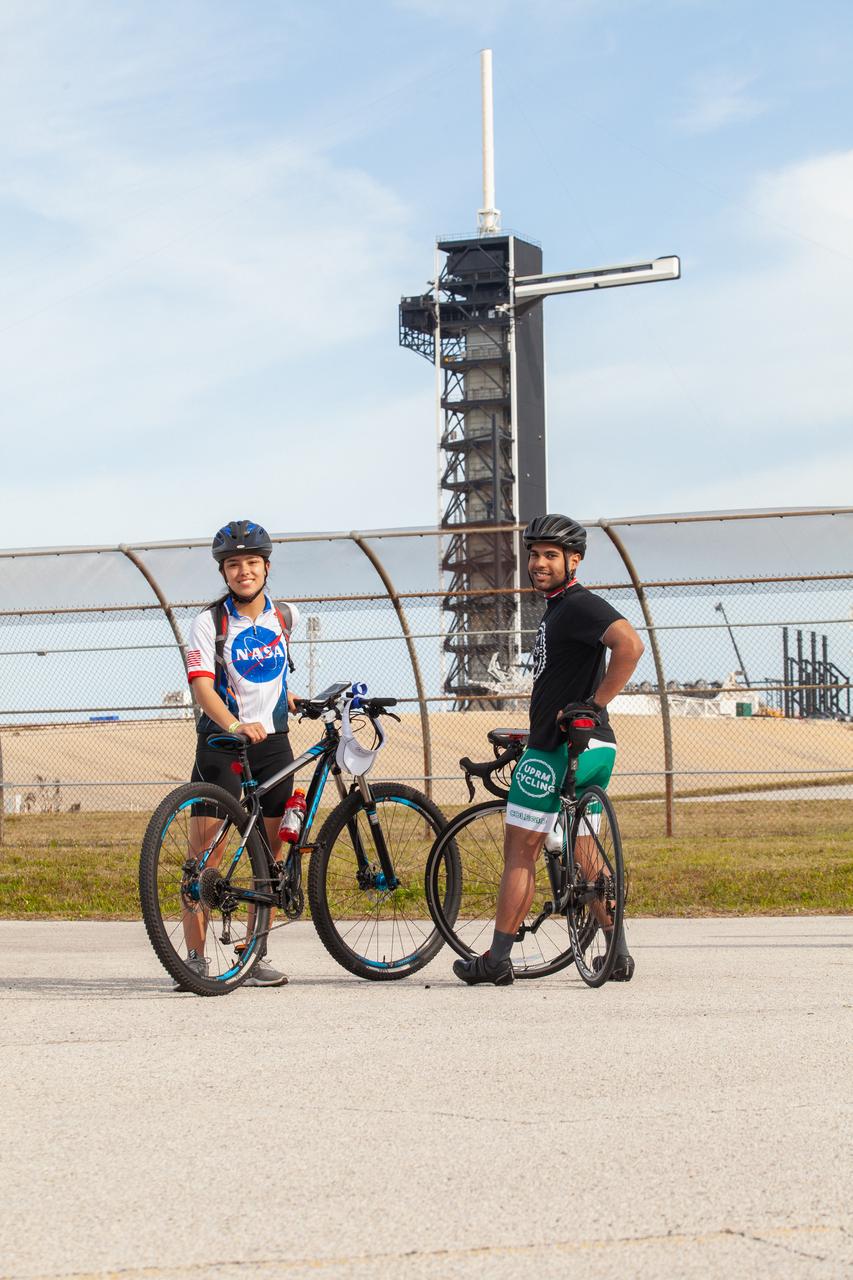
Cyclists pose for a photo in front of SpaceX’s launch tower, supporting the company’s Crew Access Arm, at historic Launch Pad 39A during Kennedy Space Center’s annual Tour de KSC. The bicycle tour took place March 30, giving Kennedy employees and guests the opportunity to choose from three different routes that ranged from seven to 33 miles along some of the Florida spaceport’s most notable facilities such as the Vehicle Assembly Building, the Space Shuttle Landing facility and others.
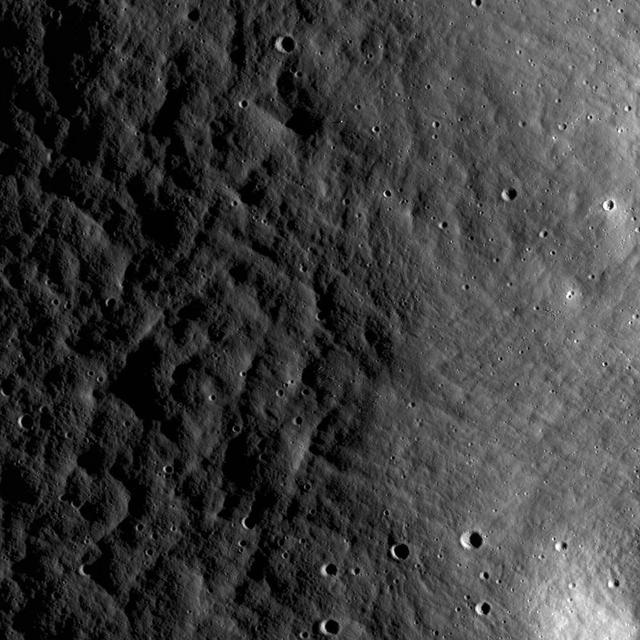
Ejecta from Van de Graaff Crater
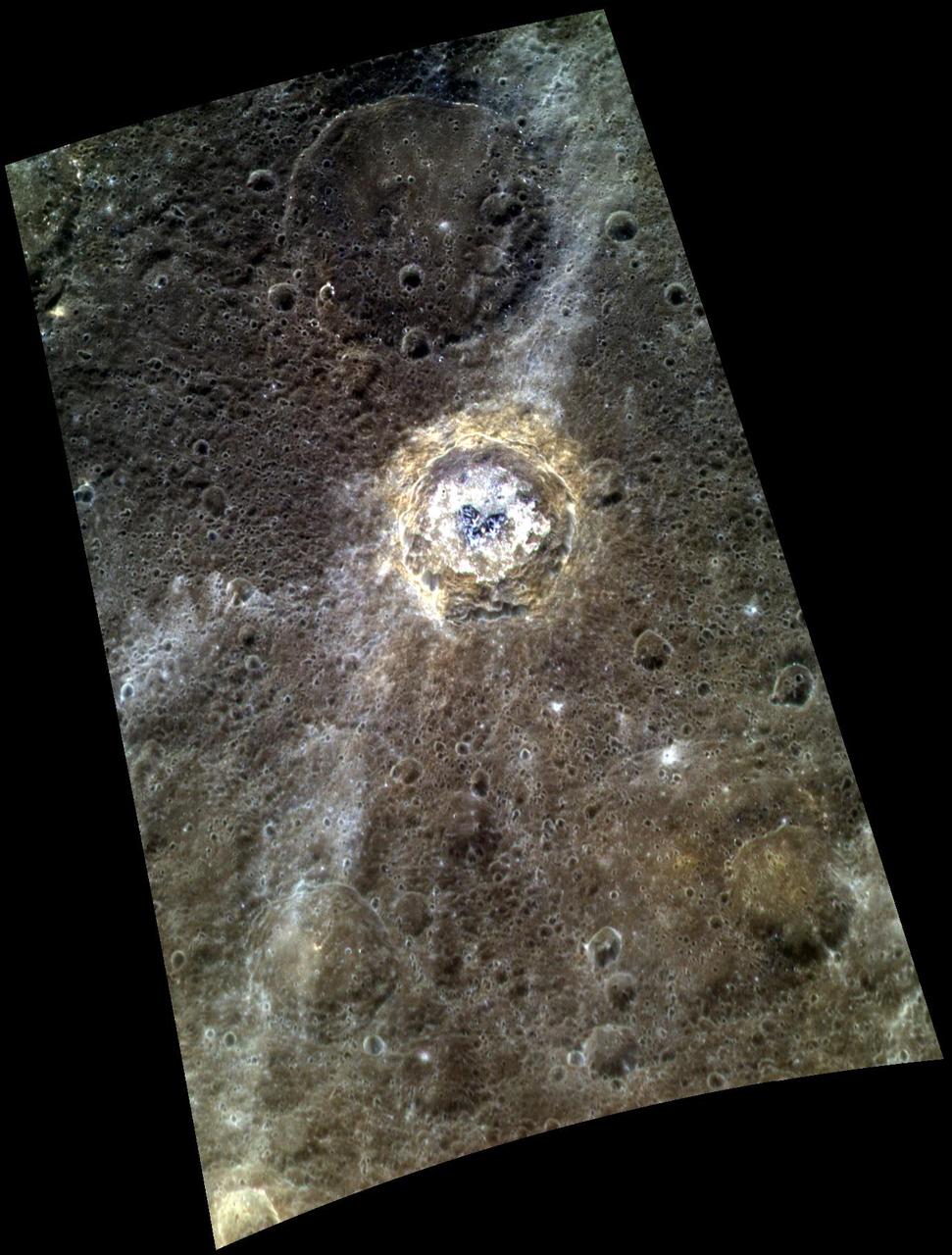
New Higher Resolution Color of de Graft
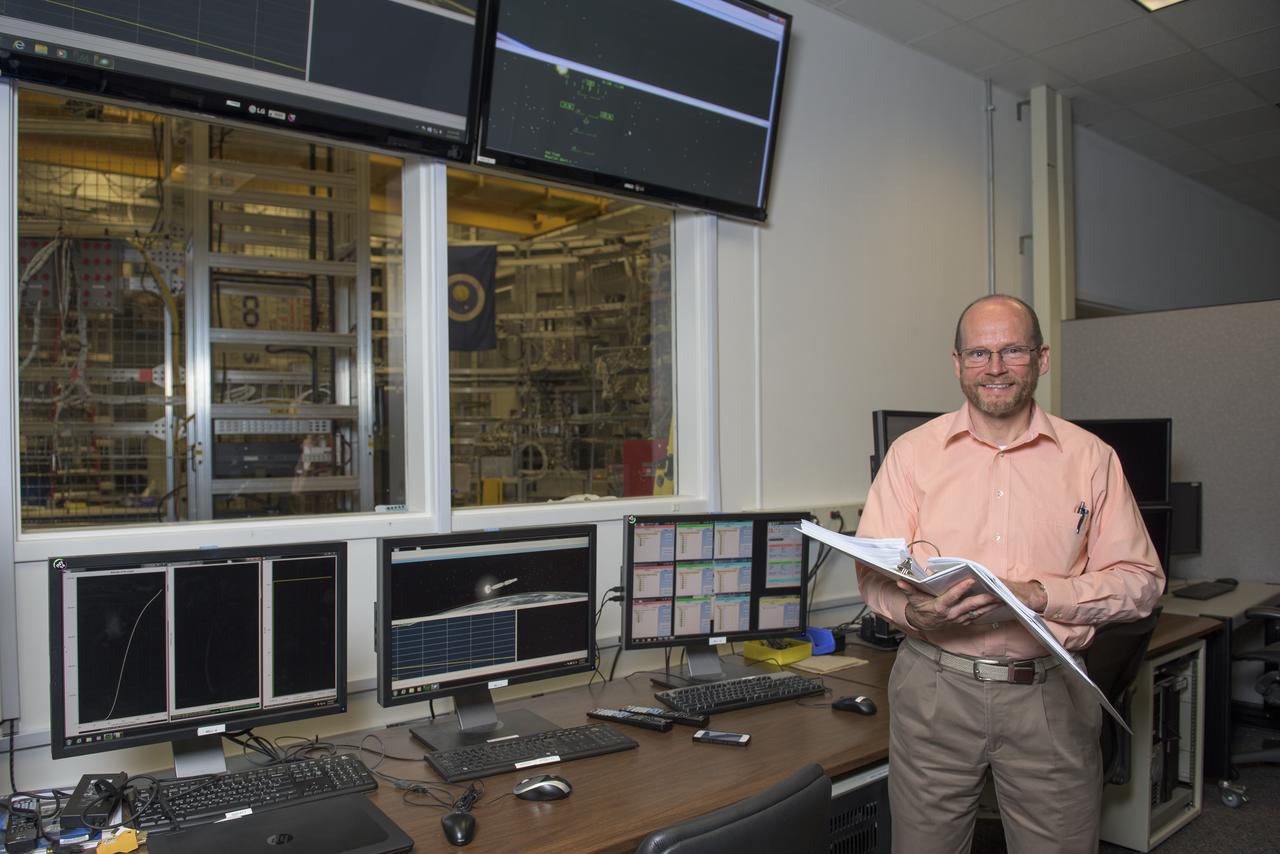
John Hanson, Alternate Lead Systems Engineer in the Spacecraft and Vehicle Systems department of the Engineering Directorate at MSFC has been honored by the American Institute of Aeronautics and Astronautics (AIAA) with the 2016 De Florez Award for flight simulation
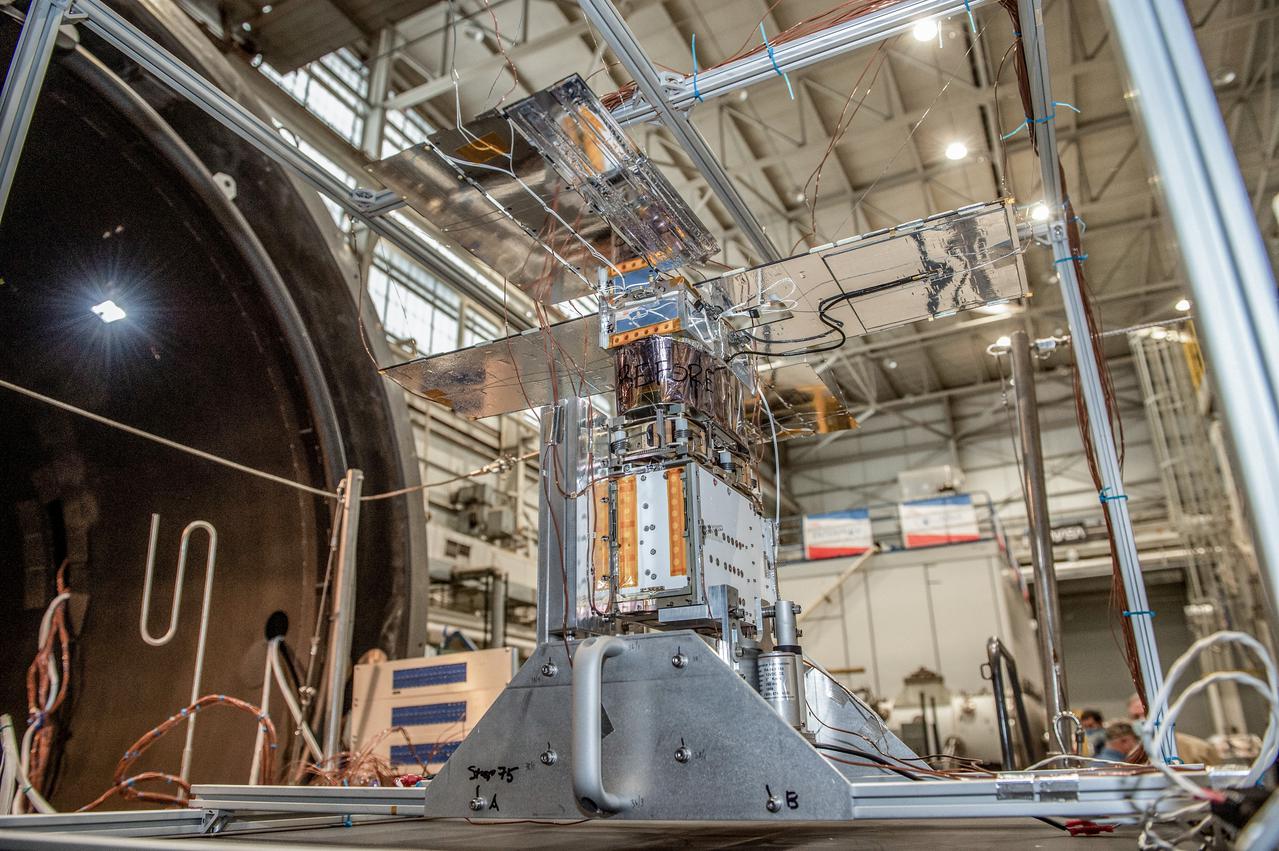
NEA Scout spacecraft after de-integration from hot box
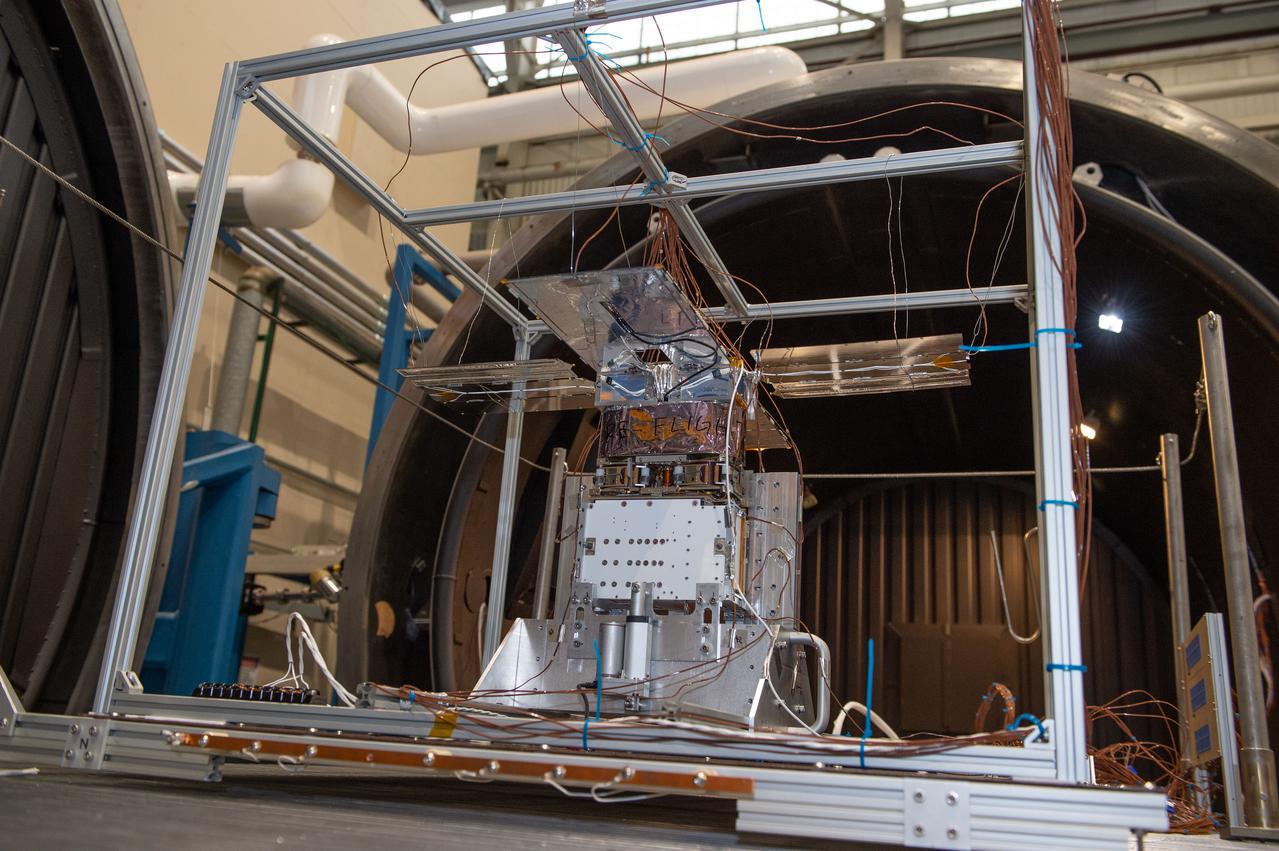
NEA Scout spacecraft after de-integration from hot box
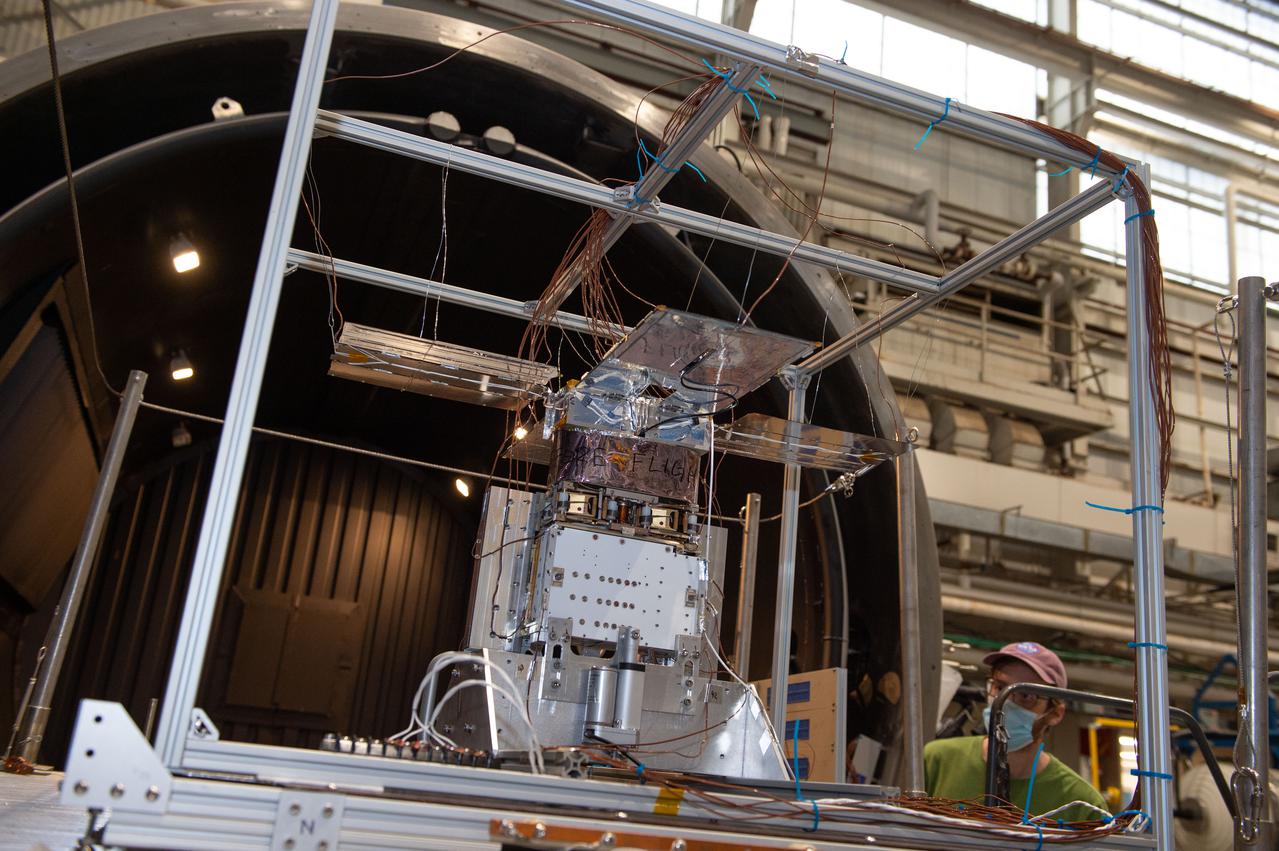
NEA Scout spacecraft after de-integration from hot box
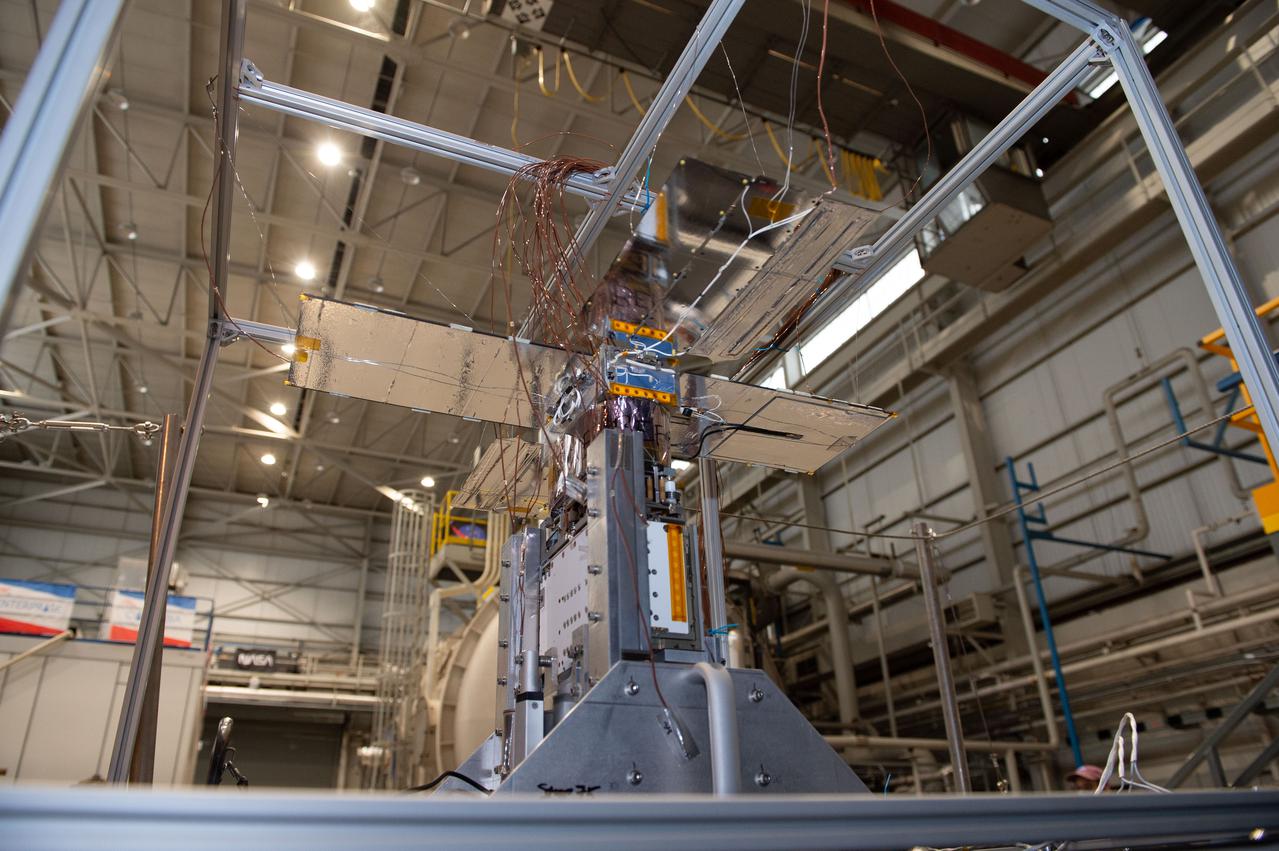
NEA Scout spacecraft after de-integration from hot box
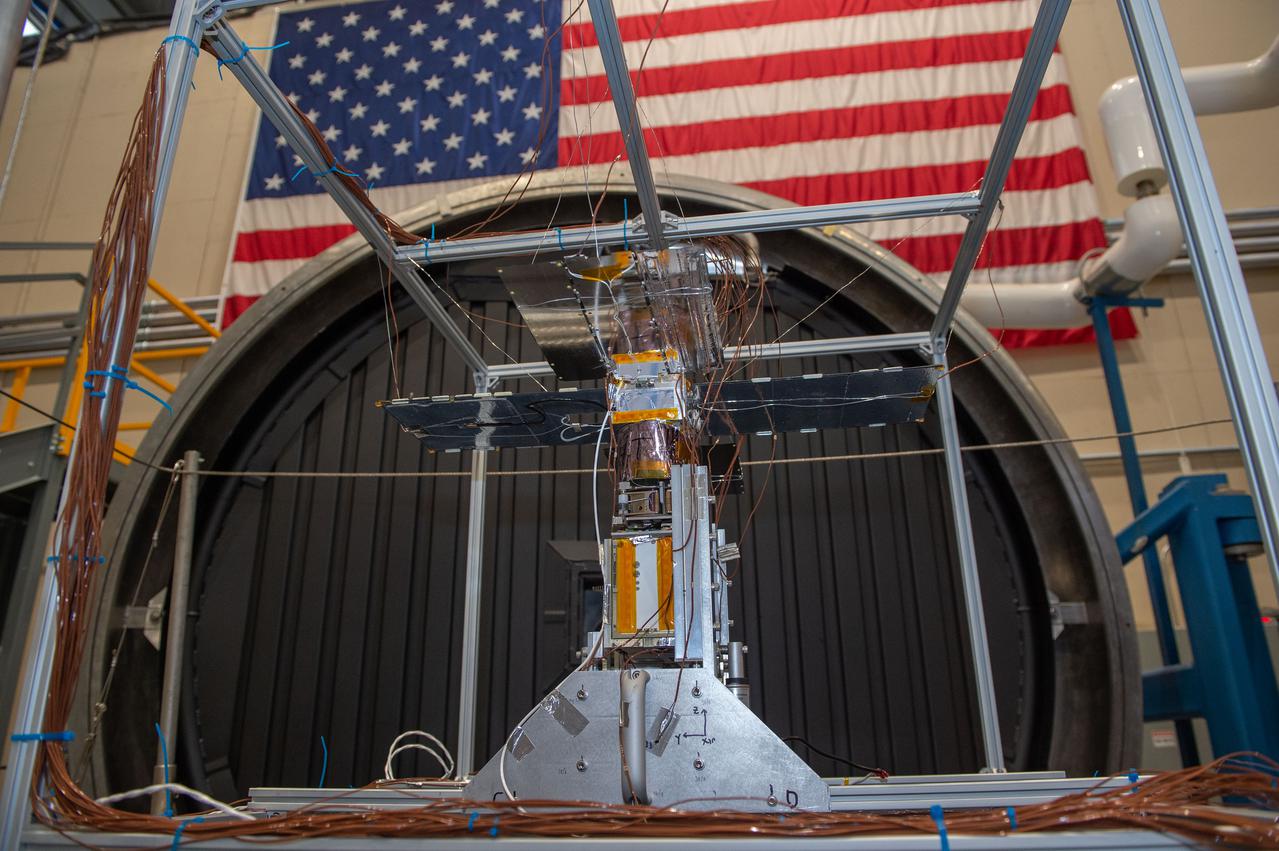
NEA Scout spacecraft after de-integration from hot box
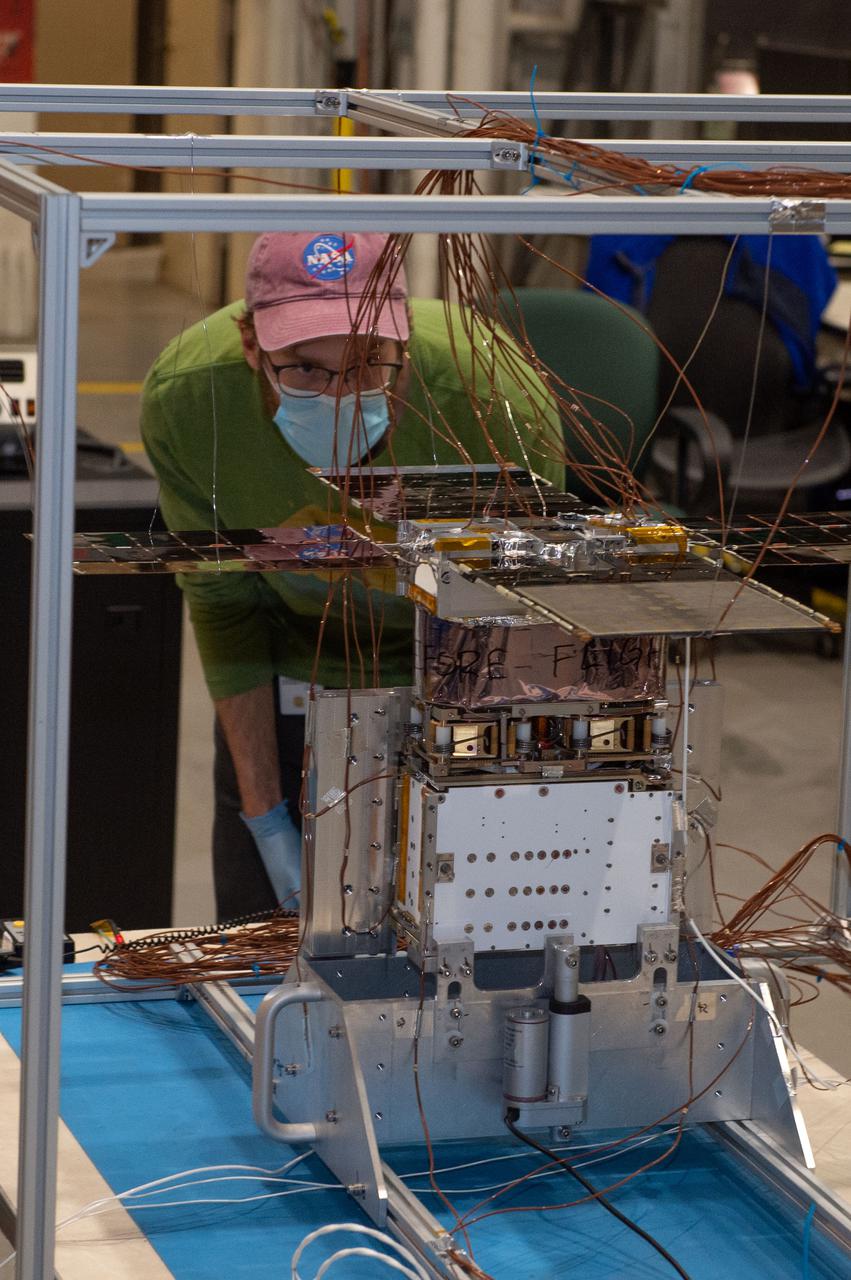
NEA Scout spacecraft after de-integration from hot box
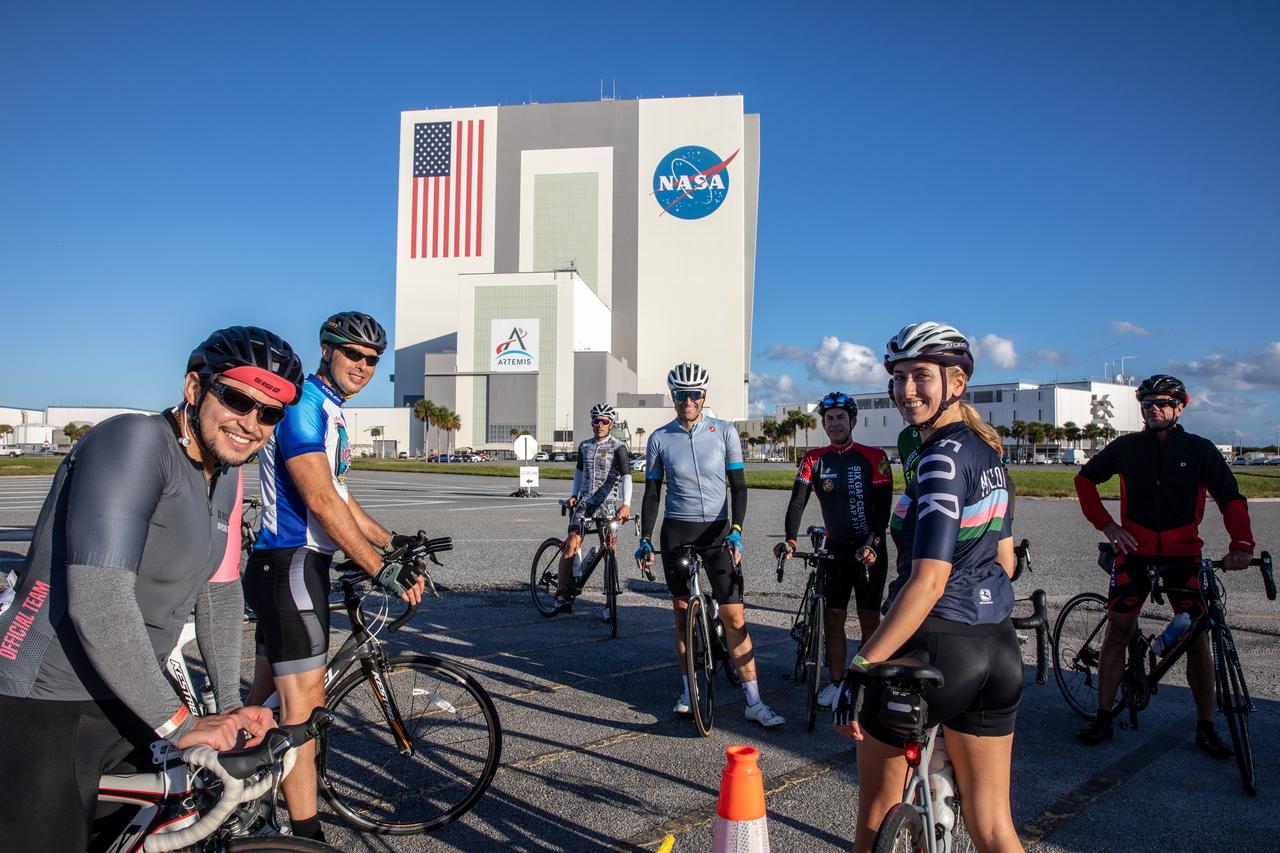
Kennedy Space Center employees and their guests participate in the Diamond Tour de KSC at NASA’s Kennedy Space Center in Florida on Oct. 22, 2022. This unique event, held for the first time since 2019, was part of the Safety organization’s Fall Into Safety and Health event, and named “diamond” to honor the center’s 60th anniversary. Cyclists covered three different routes and rode by historic landmarks, completing a total of about 37 miles.
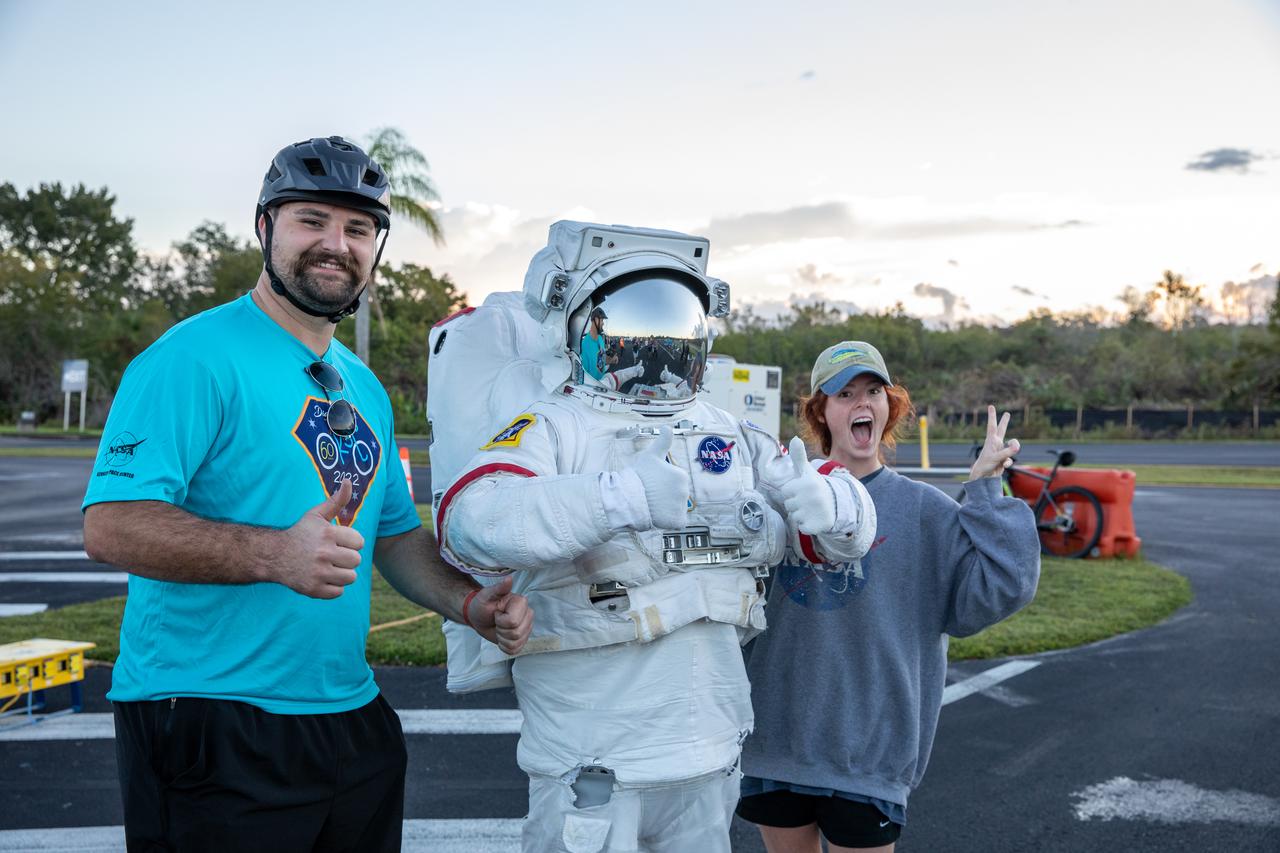
Participants in the Diamond Tour de KSC pause for a photo with the Spaceperson at NASA’s Kennedy Space Center Visitor Complex before beginning their bicycle routes at Kennedy Space Center in Florida on Oct. 22, 2022. This unique event, held for the first time since 2019, was part of the Safety organization’s Fall Into Safety and Health event, and named “diamond” to honor the center’s 60th anniversary. Cyclists covered three different routes and rode by historic landmarks, completing a total of about 37 miles.
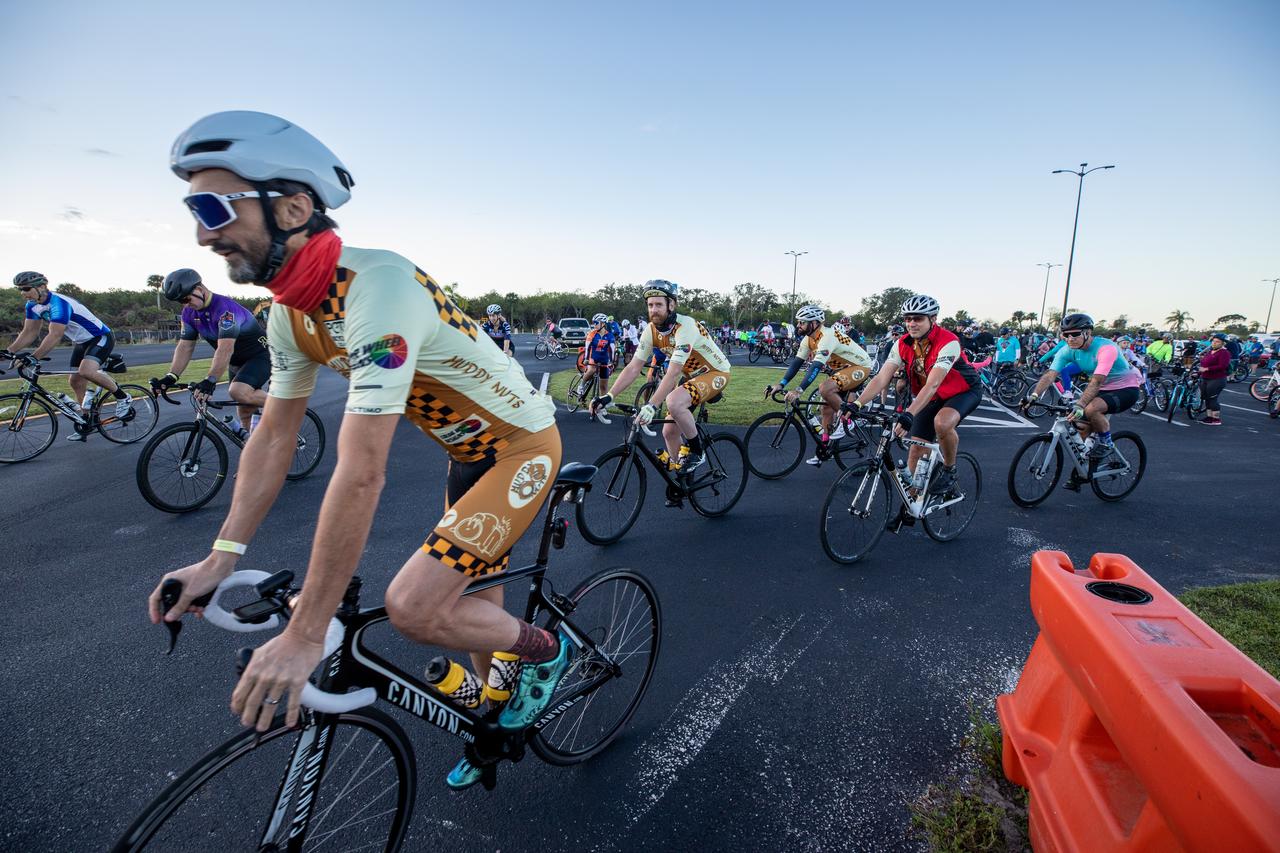
Kennedy Space Center employees and their guests participate in the Diamond Tour de KSC at NASA’s Kennedy Space Center in Florida on Oct. 22, 2022. This unique event, held for the first time since 2019, was part of the Safety organization’s Fall Into Safety and Health event, and named “diamond” to honor the center’s 60th anniversary. Cyclists covered three different routes and rode by historic landmarks, completing a total of about 37 miles.
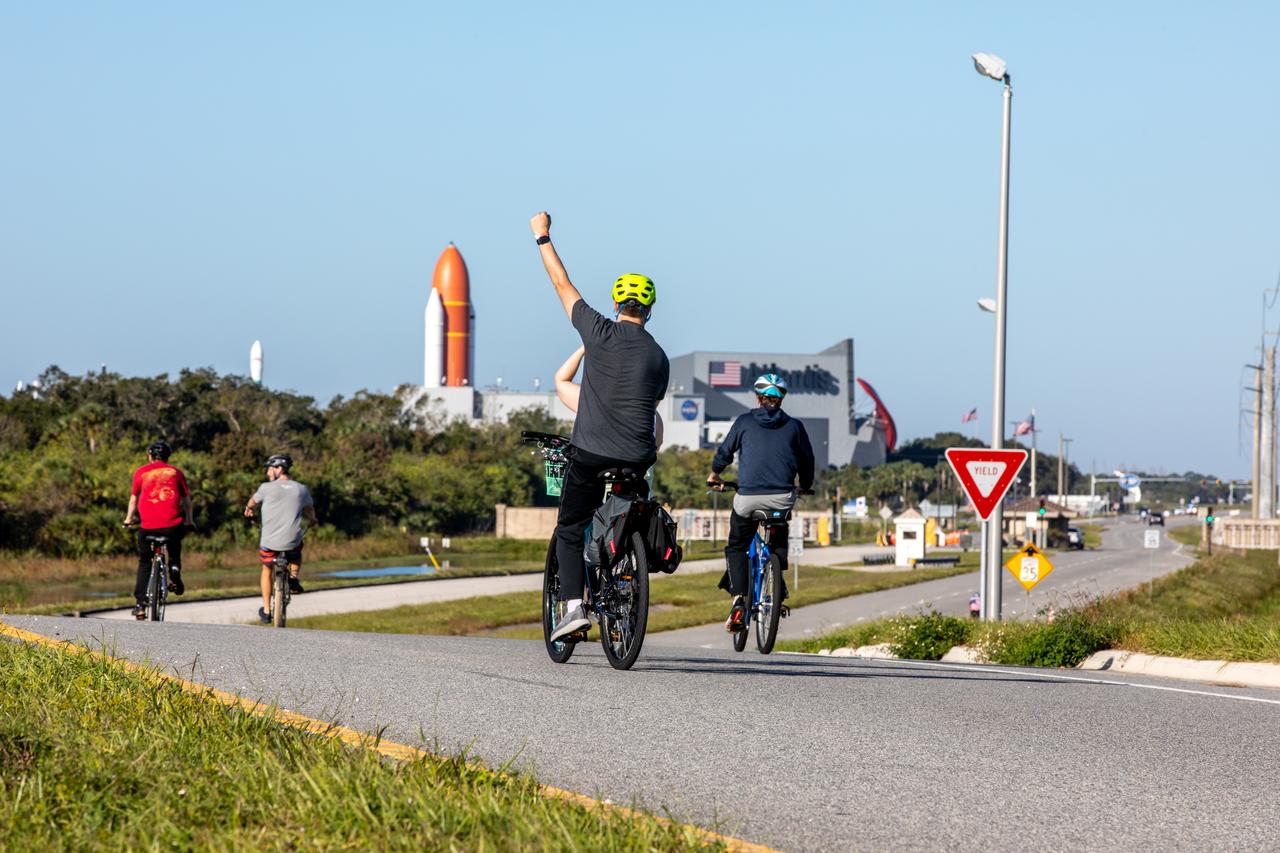
Kennedy Space Center employees and their guests return to the Kennedy Space Center Visitor Complex after completing the Diamond Tour de KSC at the NASA spaceport in Florida on Oct. 22, 2022. This unique event, held for the first time since 2019, was part of the Safety organization’s Fall Into Safety and Health event, and named “diamond” to honor the center’s 60th anniversary. Cyclists covered three different routes and rode by historic landmarks, completing a total of about 37 miles.

Participants in the Diamond Tour de KSC pause for a selfie at NASA’s Kennedy Space Center Visitor Complex before beginning their bicycle routes at Kennedy Space Center in Florida on Oct. 22, 2022. This unique event, held for the first time since 2019, was part of the Safety organization’s Fall Into Safety and Health event, and named “diamond” to honor the center’s 60th anniversary. Cyclists covered three different routes and rode by historic landmarks, completing a total of about 37 miles.
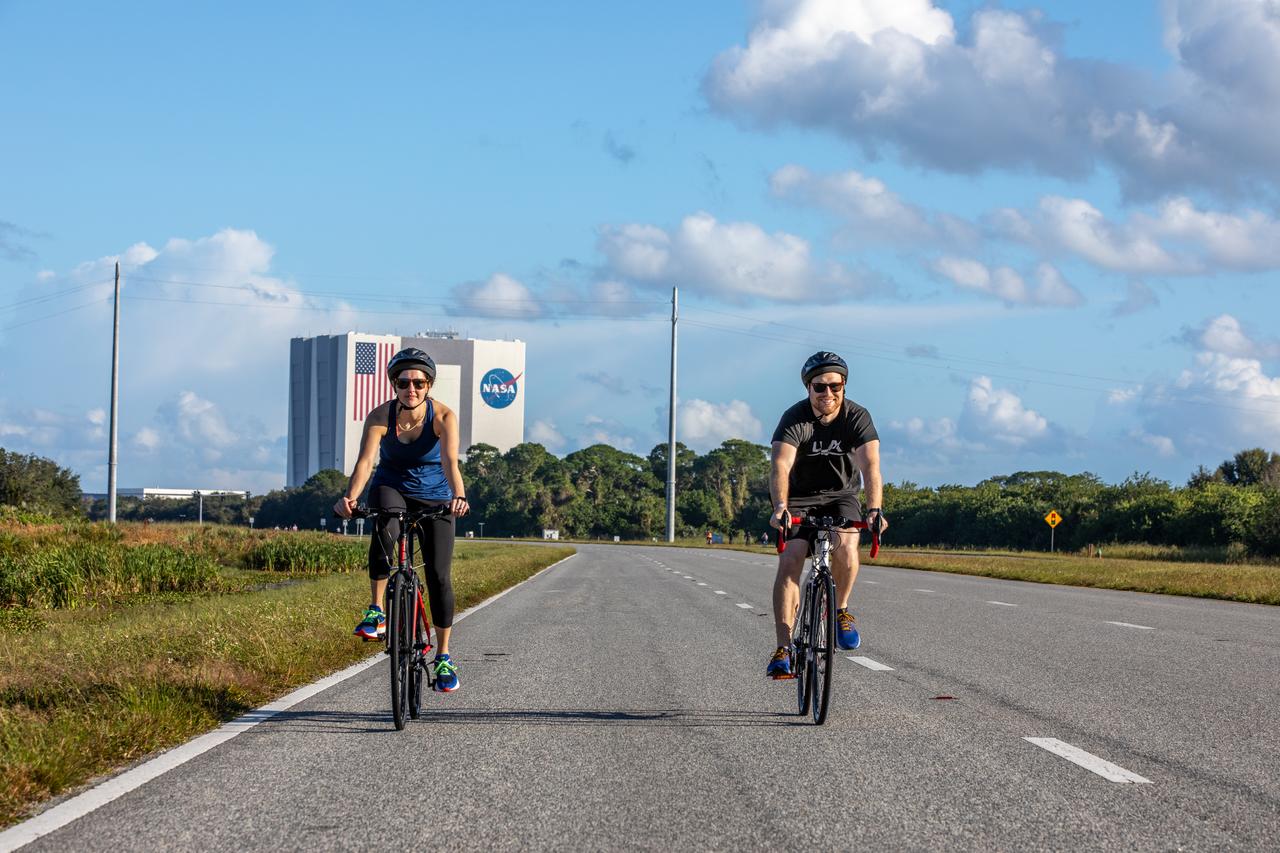
Two cyclists participate in the Diamond Tour de KSC at NASA’s Kennedy Space Center in Florida on Oct. 22, 2022. In the background is the iconic Vehicle Assembly Building. This unique event, held for the first time since 2019, was part of the Safety organization’s Fall Into Safety and Health event, and named “diamond” to honor the center’s 60th anniversary. Cyclists covered three different routes and rode by historic landmarks, completing a total of about 37 miles.
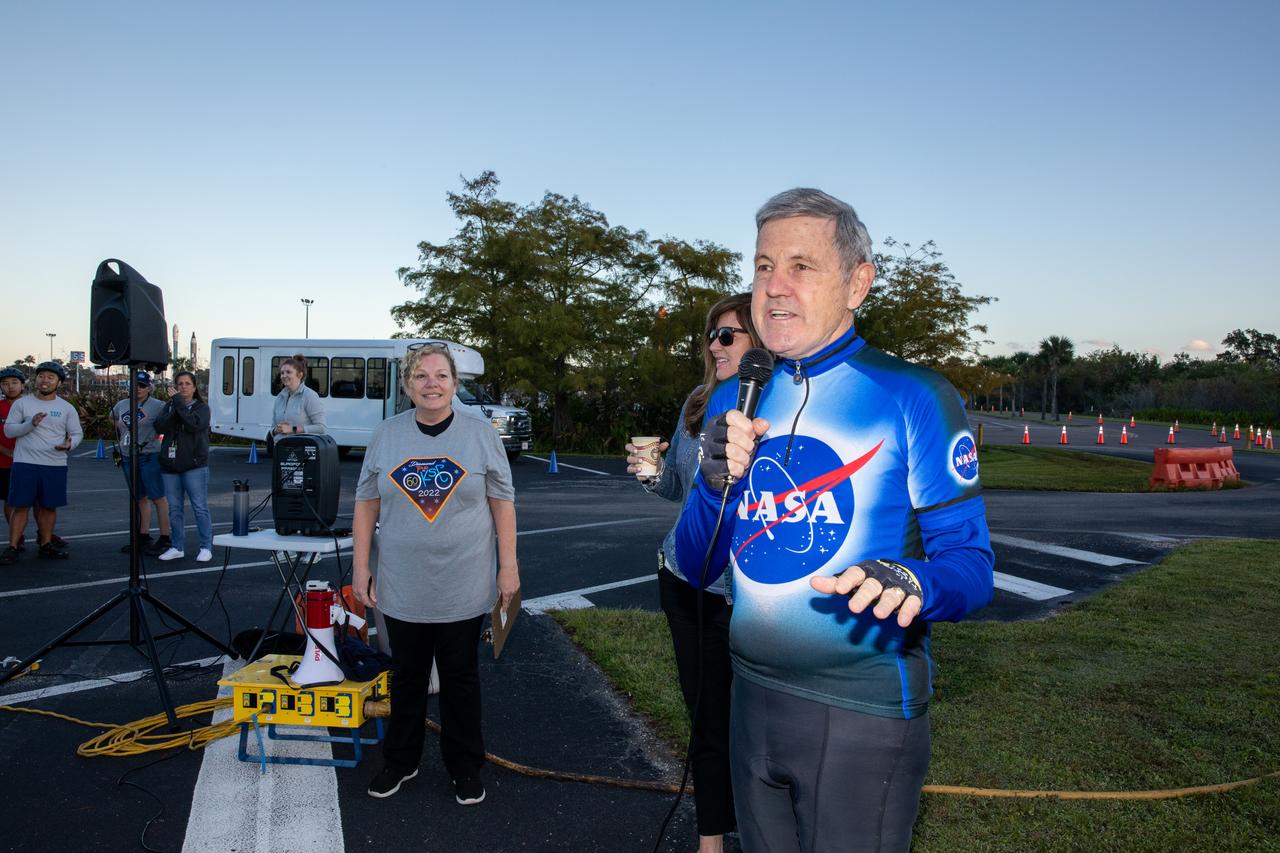
NASA Associate Administrator and retired astronaut Bob Cabana speaks to participants in the Diamond Tour de KSC at Kennedy Space Center Visitor Complex before beginning their bicycle routes at Kennedy Space Center in Florida on Oct. 22, 2022. This unique event, held for the first time since 2019, was part of the Safety organization’s Fall Into Safety and Health event, and named “diamond” to honor the center’s 60th anniversary. Cyclists covered three different routes and rode by historic landmarks, completing a total of about 37 miles.
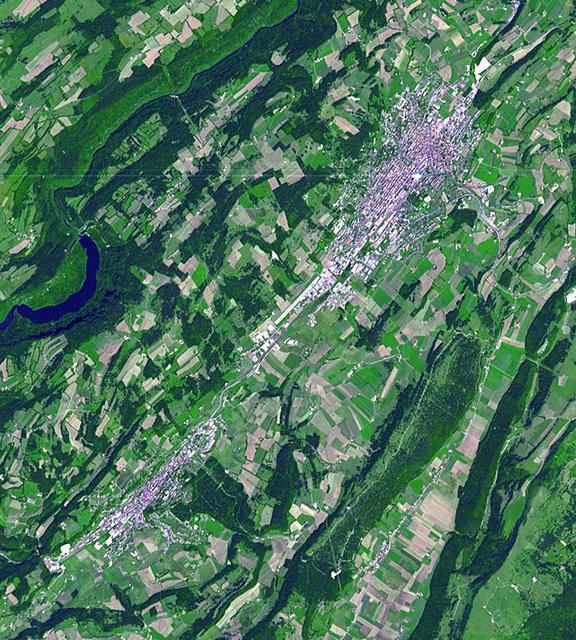
This image acquired by NASA Terra spacecraft is of La Chaux-de-Fonds, a Swiss city in the Jura Mountains, founded in 1656.
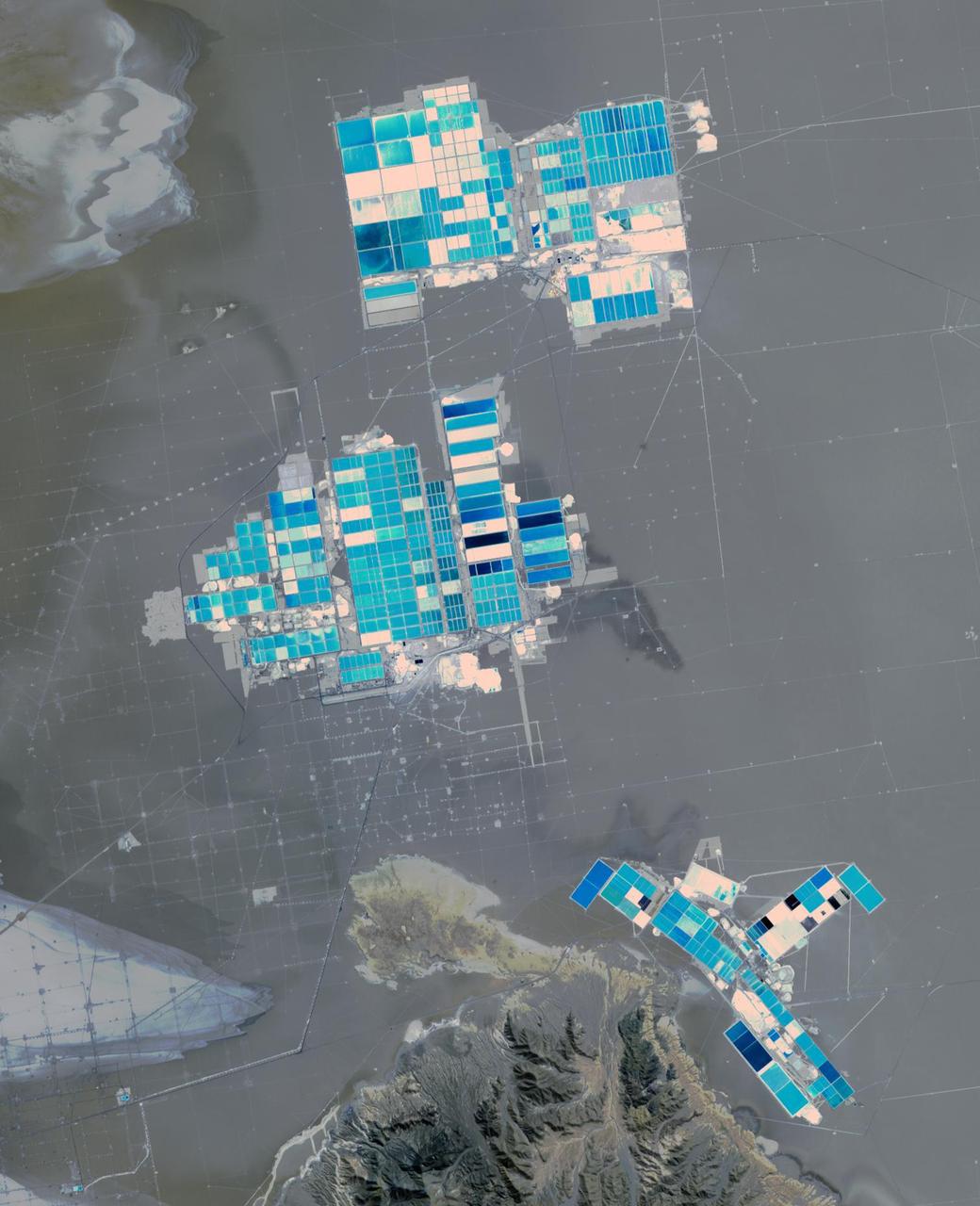
Salar de Atacama (Atacama salt flats) in Chile's Atacama Desert receives 2 mm rain per year. Its attraction are the brines 40 m below ground. They are pumped to the surface into large evaporation pans. After the water has vanished, a yellowish greasy solution is left behind that contains lithium. In fact, Salar de Atacama produces 27% of the world's annual supply. Mining lithium here is less expensive to produce than from neighboring Salar de Uyuni, which is estimated to have half of the lithium reserves in the world. The image was acquired August 21, 2017, covers an area of 22.5 by 27.8 km, and is located at 23.5 degrees south, 68.3 degrees west. https://photojournal.jpl.nasa.gov/catalog/PIA23420
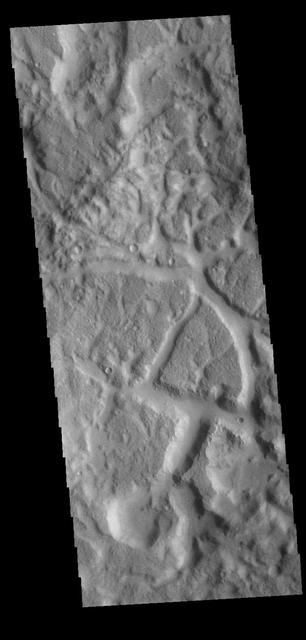
Today's VIS image shows part of the floor of the huge de Vaucouleurs Crater. This crater has a mix of features, including the chaotic terrain seen in this image. Orbit Number: 80942 Latitude: -14.7382 Longitude: 170.602 Instrument: VIS Captured: 2020-03-14 01:53 https://photojournal.jpl.nasa.gov/catalog/PIA23905
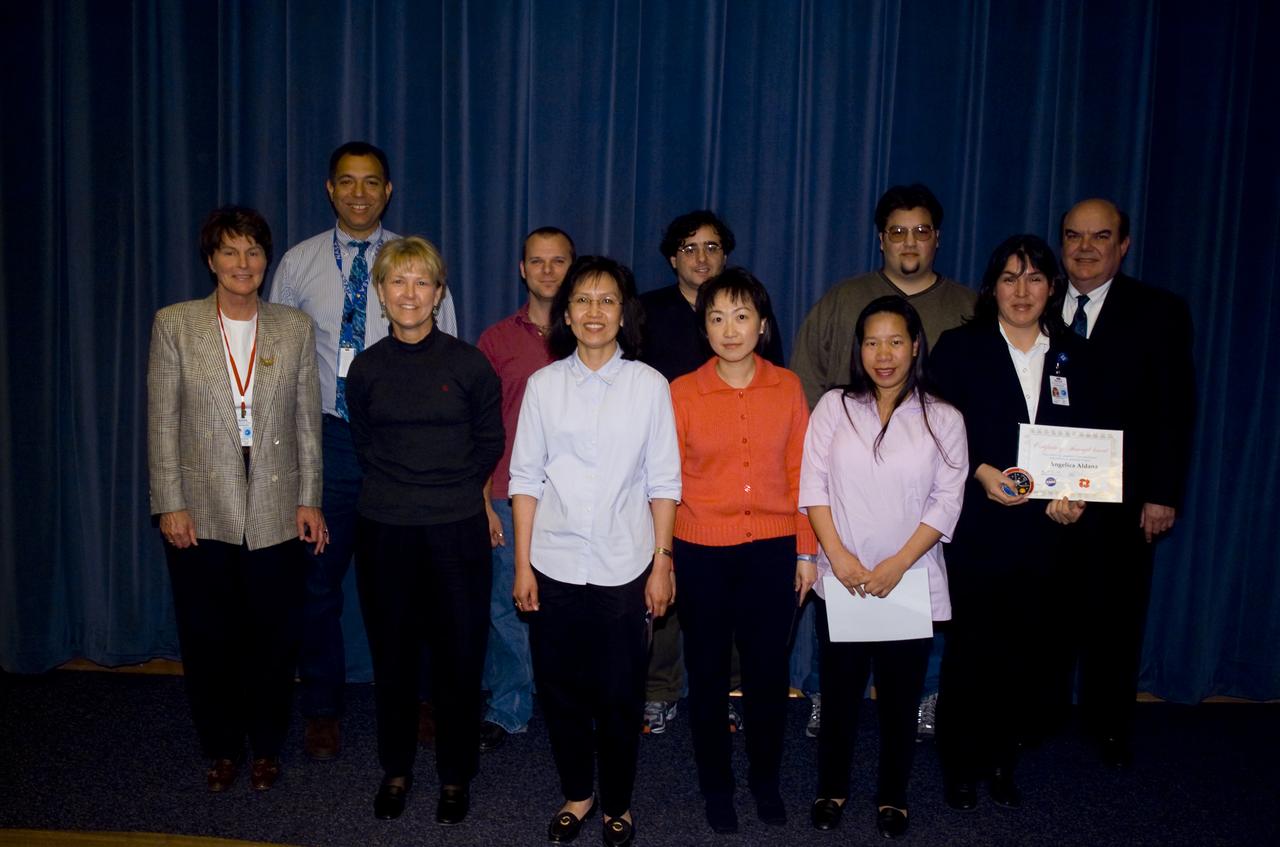
NASA Ames Foothill De Anza Student Program Graduation Ceremony

NASA Ames Foothill De Anza Student Program Graduation Ceremony
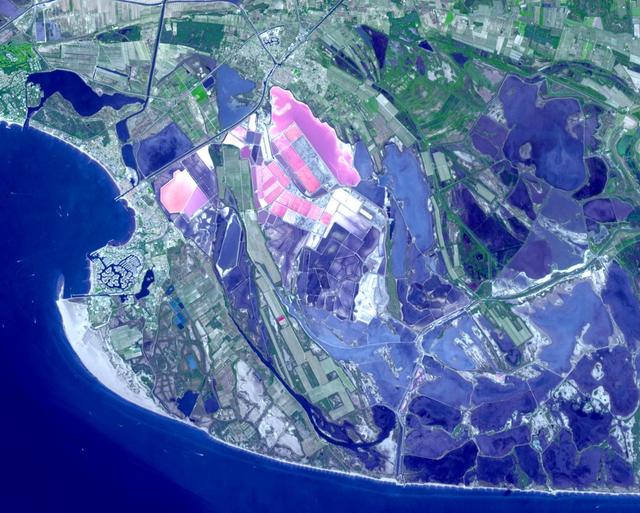
Salin-de-Giraud is a major center of salt production on the right bank of the Rhone River in southern France. Through evaporation of seawater, about one million tons of salt are produced every year. In addition, the recovery of sodium carbonate is key to the manufacture of the soap of Marseille. The image was acquired September 2, 2020, covers an area of 14.7 by 18.3 km, and is located at 43.4 degrees north, 4.7 degrees east. https://photojournal.jpl.nasa.gov/catalog/PIA26325
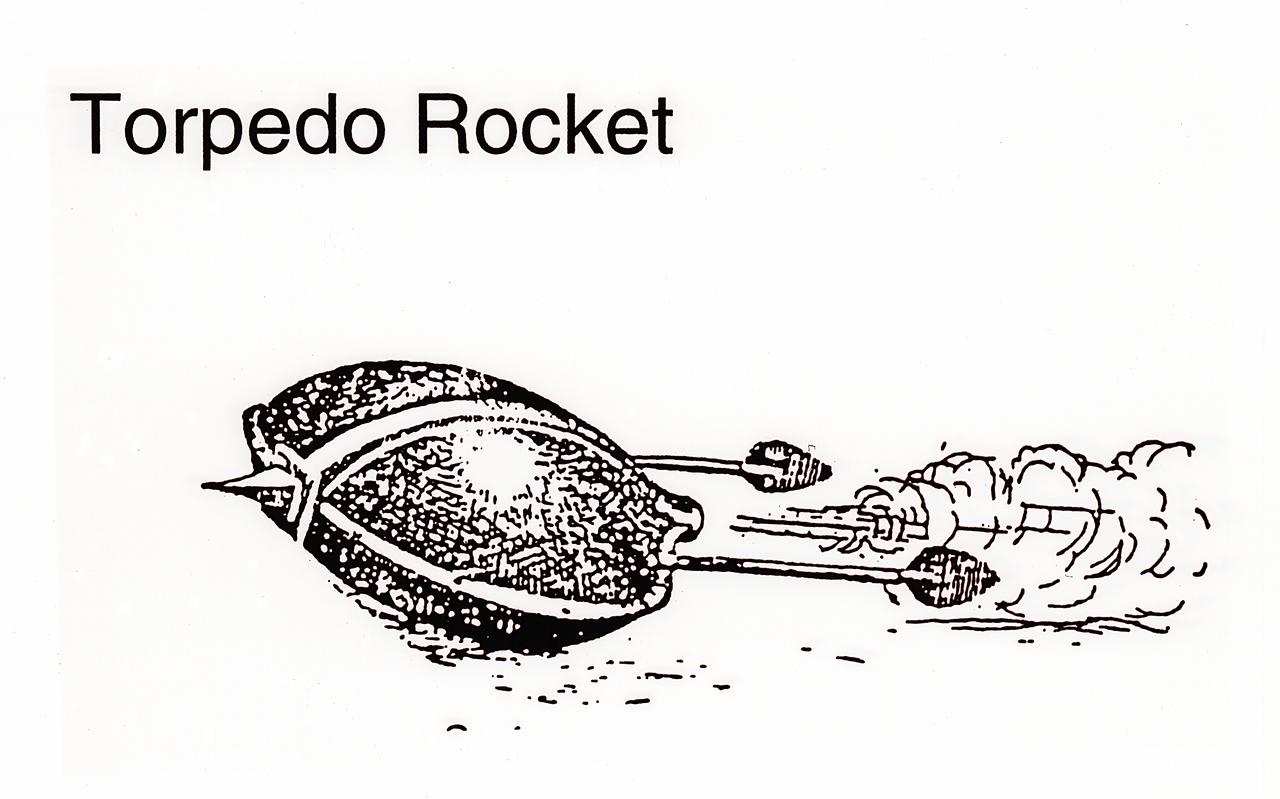
All through the 13th to the 15th Centuries there were reports of many rocket experiments. For example, Joanes de Fontana of Italy designed a surface-rurning, rocket-powered torpedo for setting enemy ships on fire
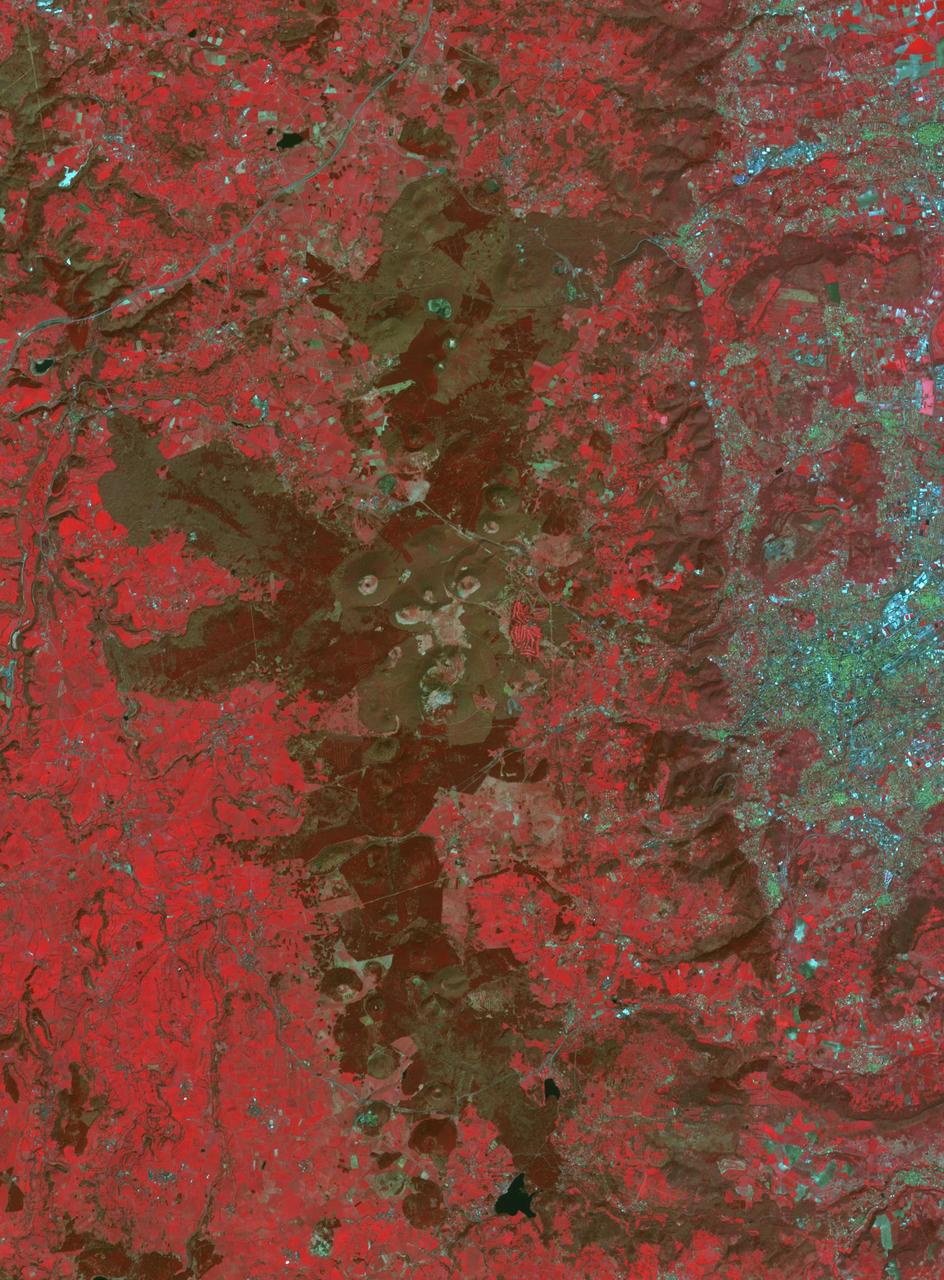
The Chaine des Puys, about 40 kilometers long, is a chain of 48 cinder cones, 8 lava domes and 15 maars (explosion craters) in central France, west of Clermont-Ferrand. The chaine is located on the Limagne Fault, related to formation of the Alps. The most recent eruption is thought to be 4040 BCE. The image was acquired April 21, 2015, covers an area of 22.5 by 30.6 km, and is located at 45.8 degrees north, 3 degrees east. https://photojournal.jpl.nasa.gov/catalog/PIA25798
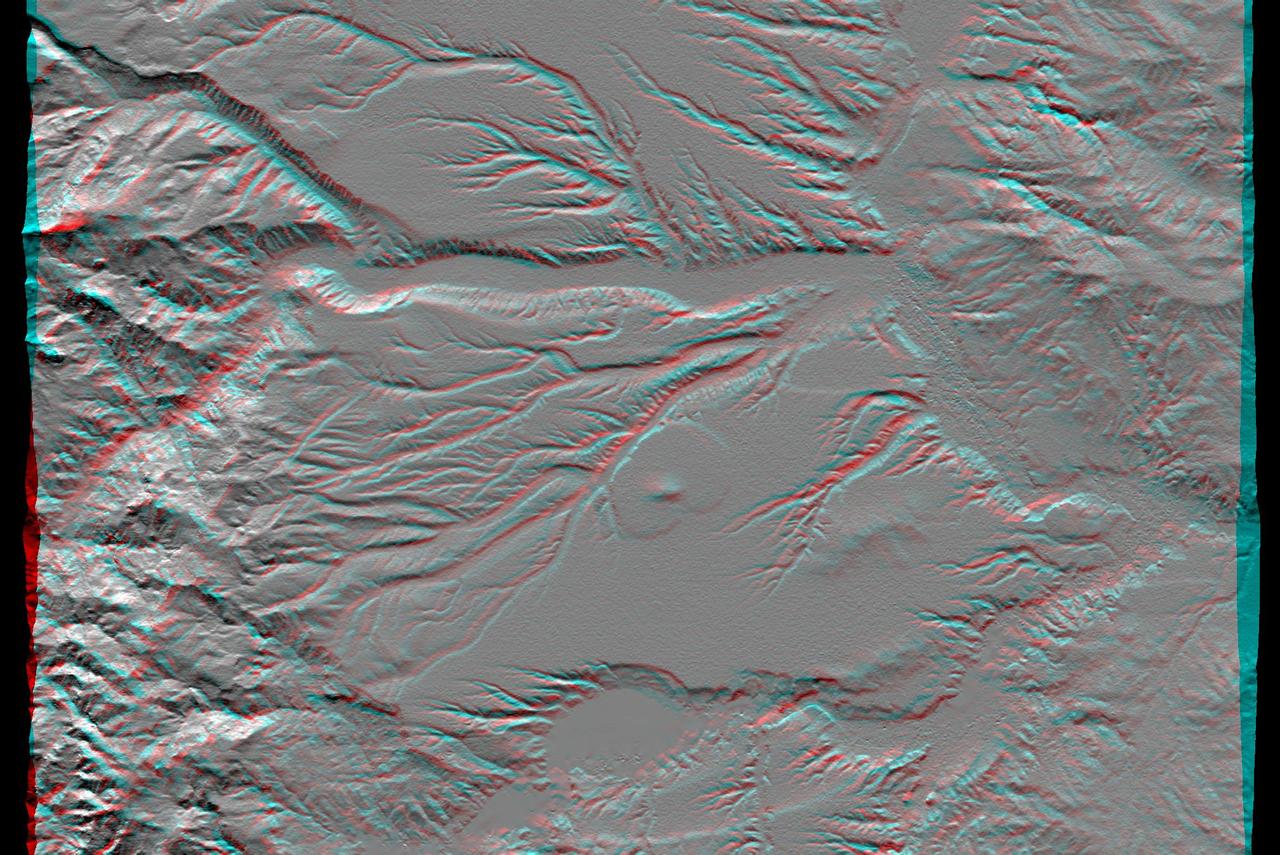
This anaglyph, from NASA Shuttle Radar Topography Mission, shows the eastern flank of the Andes Mountains, southeast of San Martin de Los Andes, Argentina. 3D glasses are necessary to view this image.
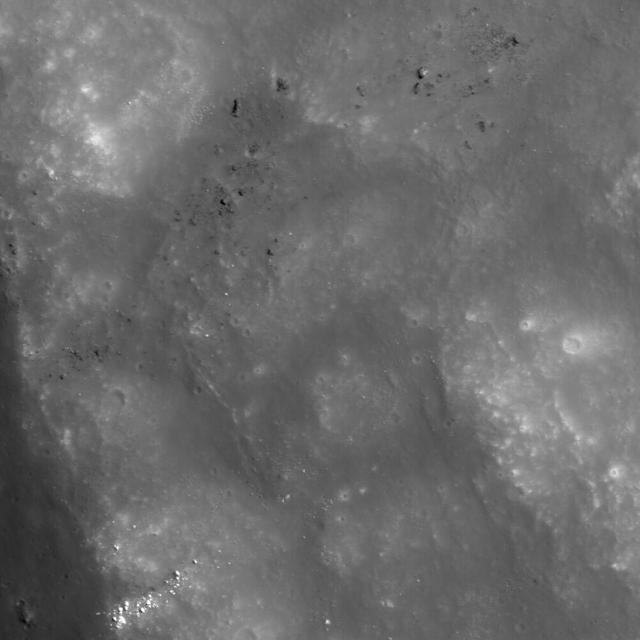
This image taken NASA Lunar Reconnaissance Orbiter shows the wall of crater Van de Graaff C, where brighter material is exposed by more active processes associated with steeper slopes, recent small craters, and even individual rolling boulders.
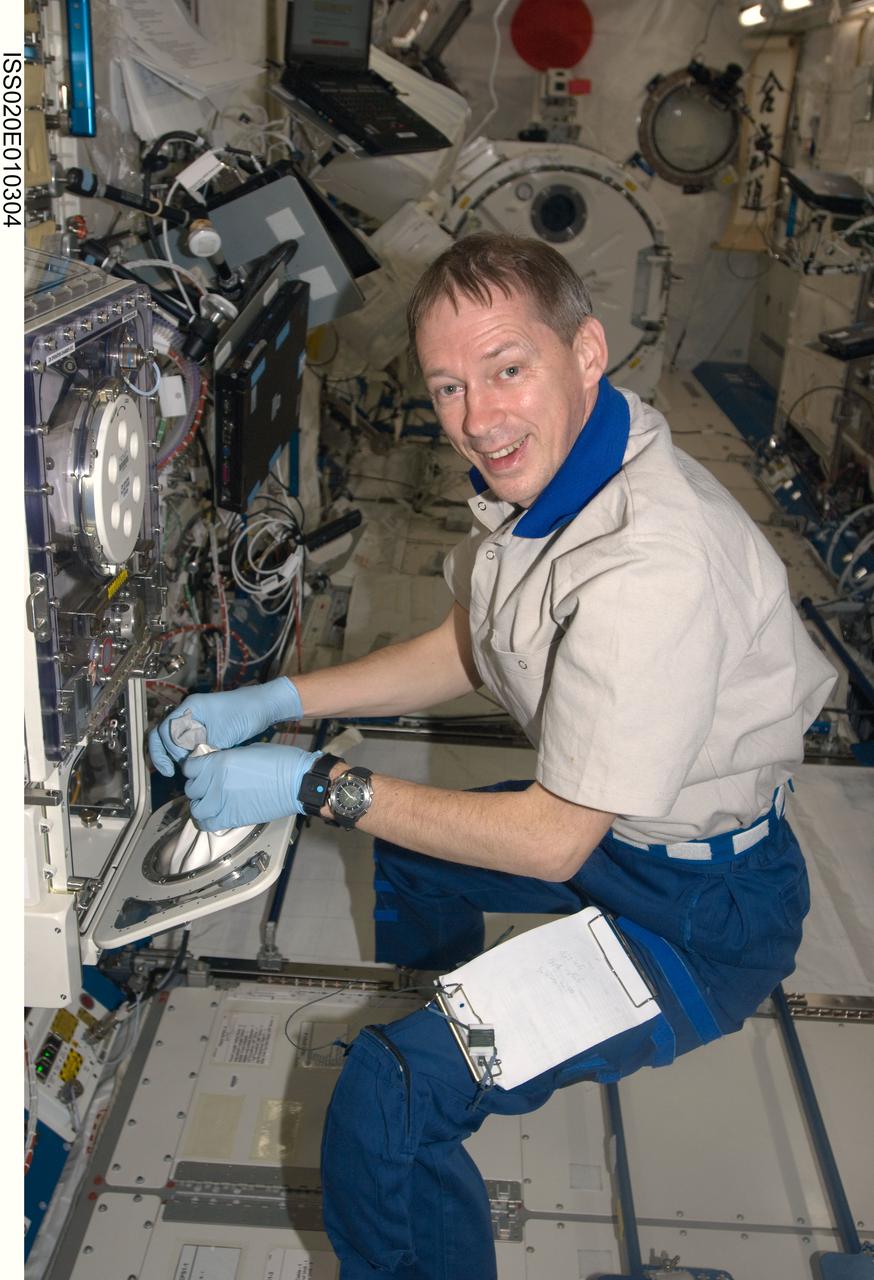
ISS020-E-010304 (15 June 2009) --- European Space Agency astronaut Frank De Winne, Expedition 20 flight engineer, works at the Clean Bench Facility in the Kibo laboratory of the International Space Station.
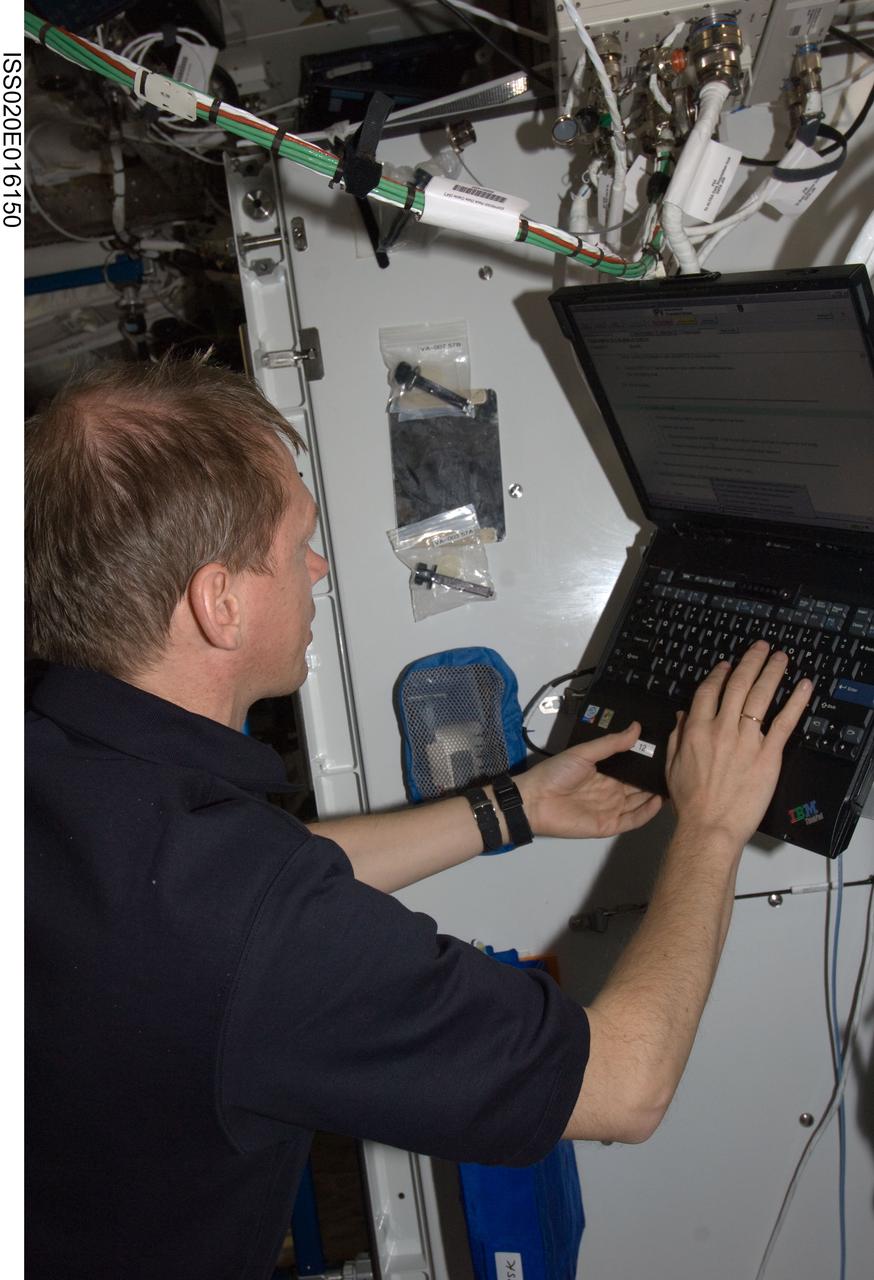
ISS020-E-016150 (30 June 2009) --- European Space Agency astronaut Frank De Winne, Expedition 20 flight engineer, uses a computer in the Destiny laboratory of the International Space Station.
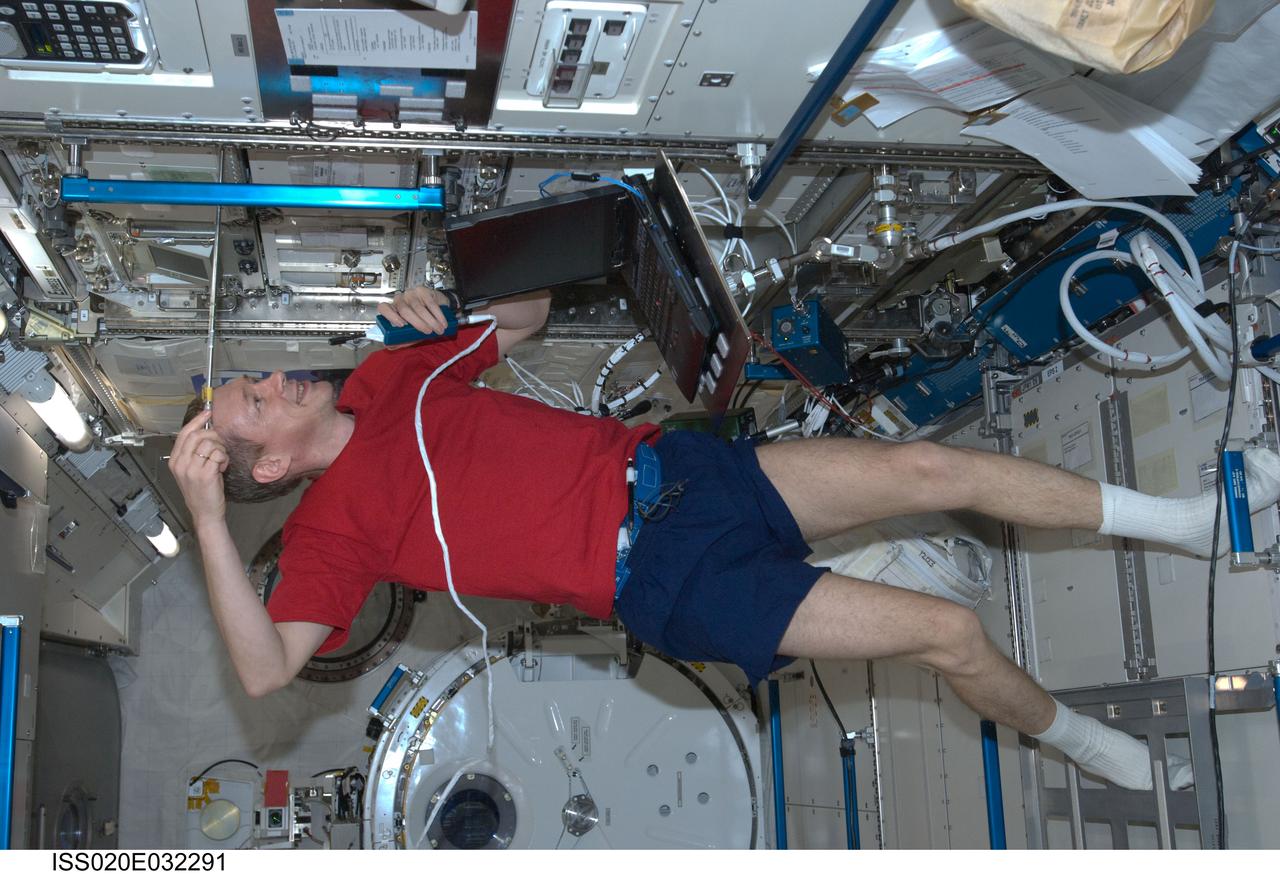
ISS020-E-032291 (19 Aug. 2009) --- European Space Agency astronaut Frank De Winne, Expedition 20 flight engineer, works in the Kibo laboratory of the International Space Station.
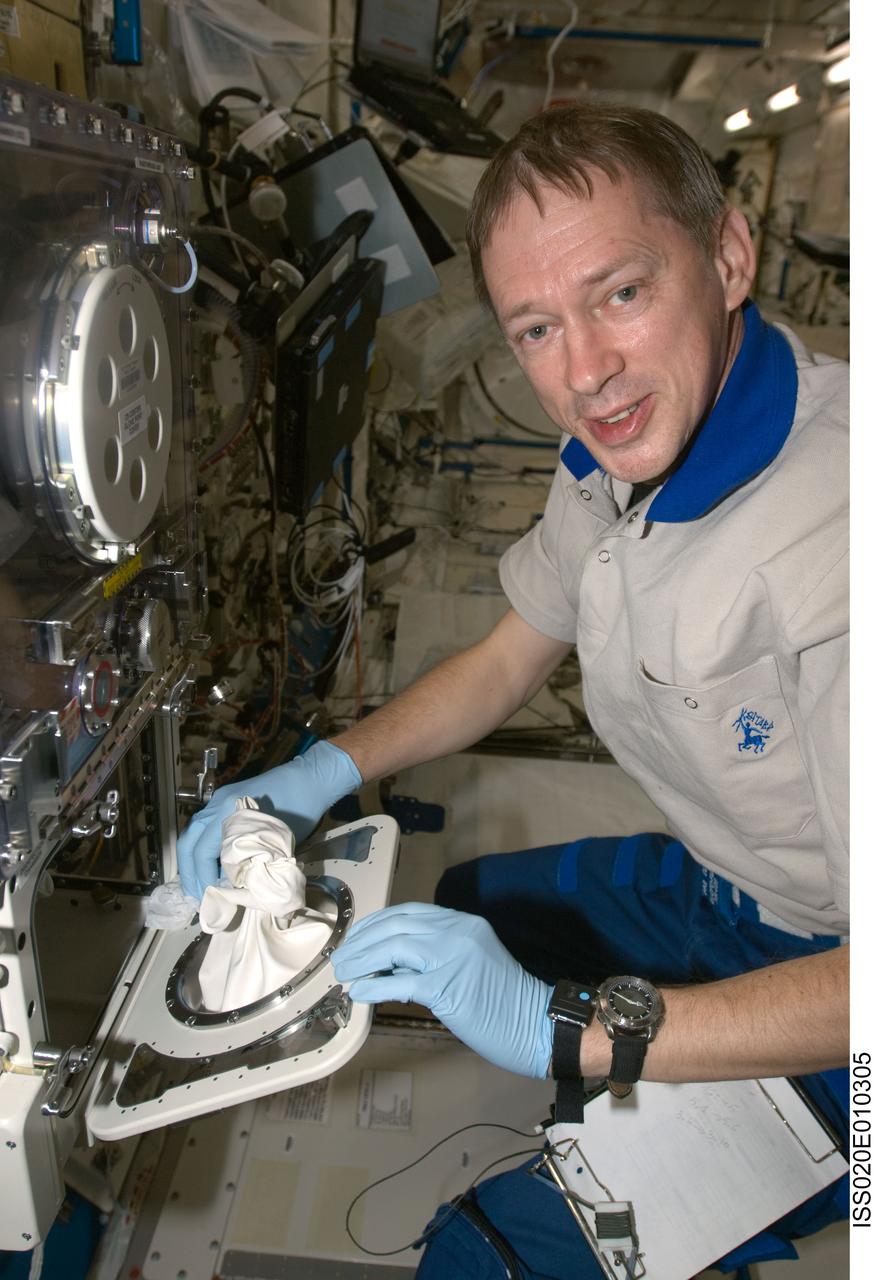
ISS020-E-010305 (15 June 2009) --- European Space Agency astronaut Frank De Winne, Expedition 20 flight engineer, works at the Clean Bench Facility in the Kibo laboratory of the International Space Station.
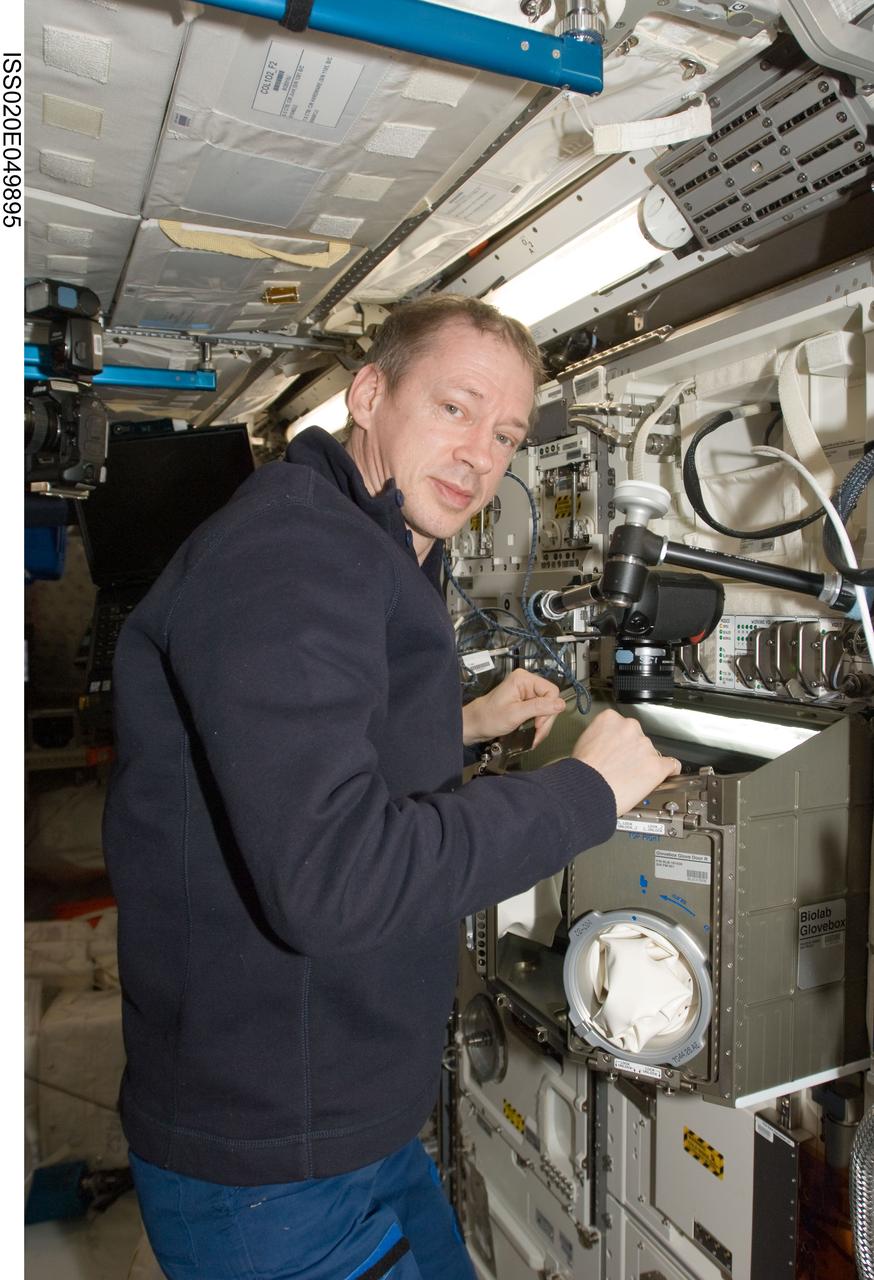
ISS020-E-049895 (8 Oct. 2009) --- European Space Agency astronaut Frank De Winne, Expedition 20 flight engineer and Expedition 21 commander, works at the Biolab incubator in the Columbus laboratory of the International Space Station.
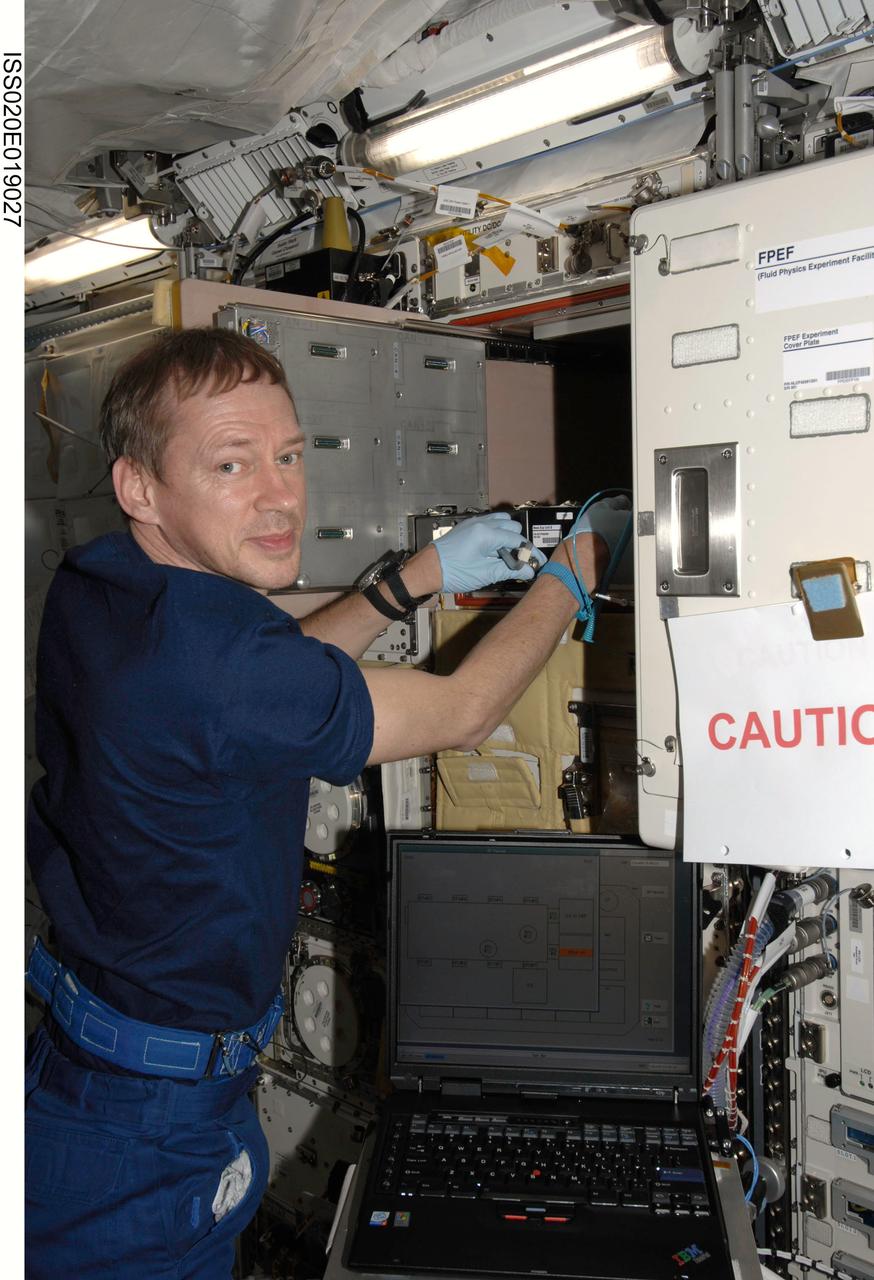
ISS020-E-019027 (10 July 2009) --- European Space Agency astronaut Frank De Winne, Expedition 20 flight engineer, works at the Cell Biology Experiment Facility (CBEF) in the Kibo laboratory of the International Space Station.
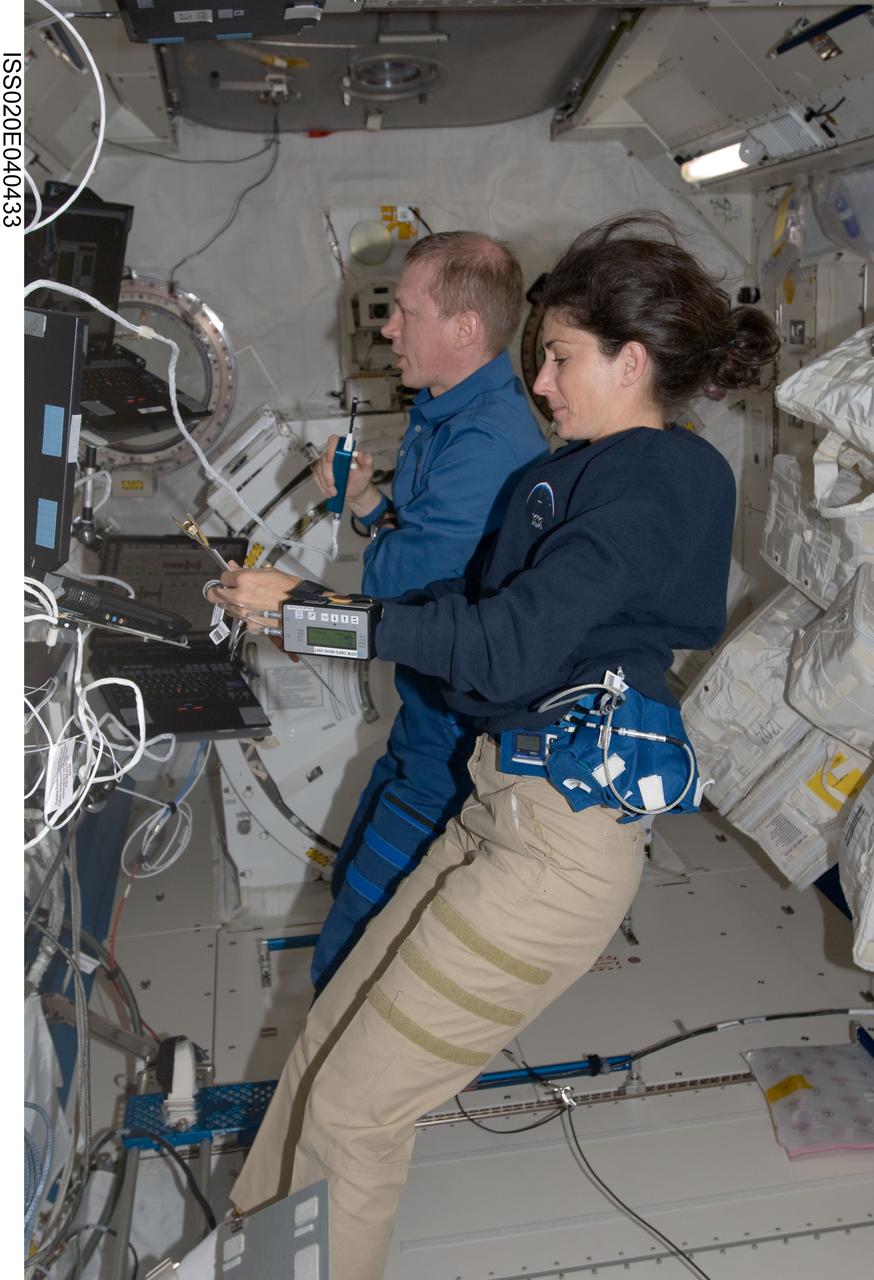
ISS020-E-040433 (16 Sept. 2009) --- NASA astronaut Nicole Stott and European Space Agency astronaut Frank De Winne, both Expedition 20 flight engineers, work in the Kibo laboratory of the International Space Station.
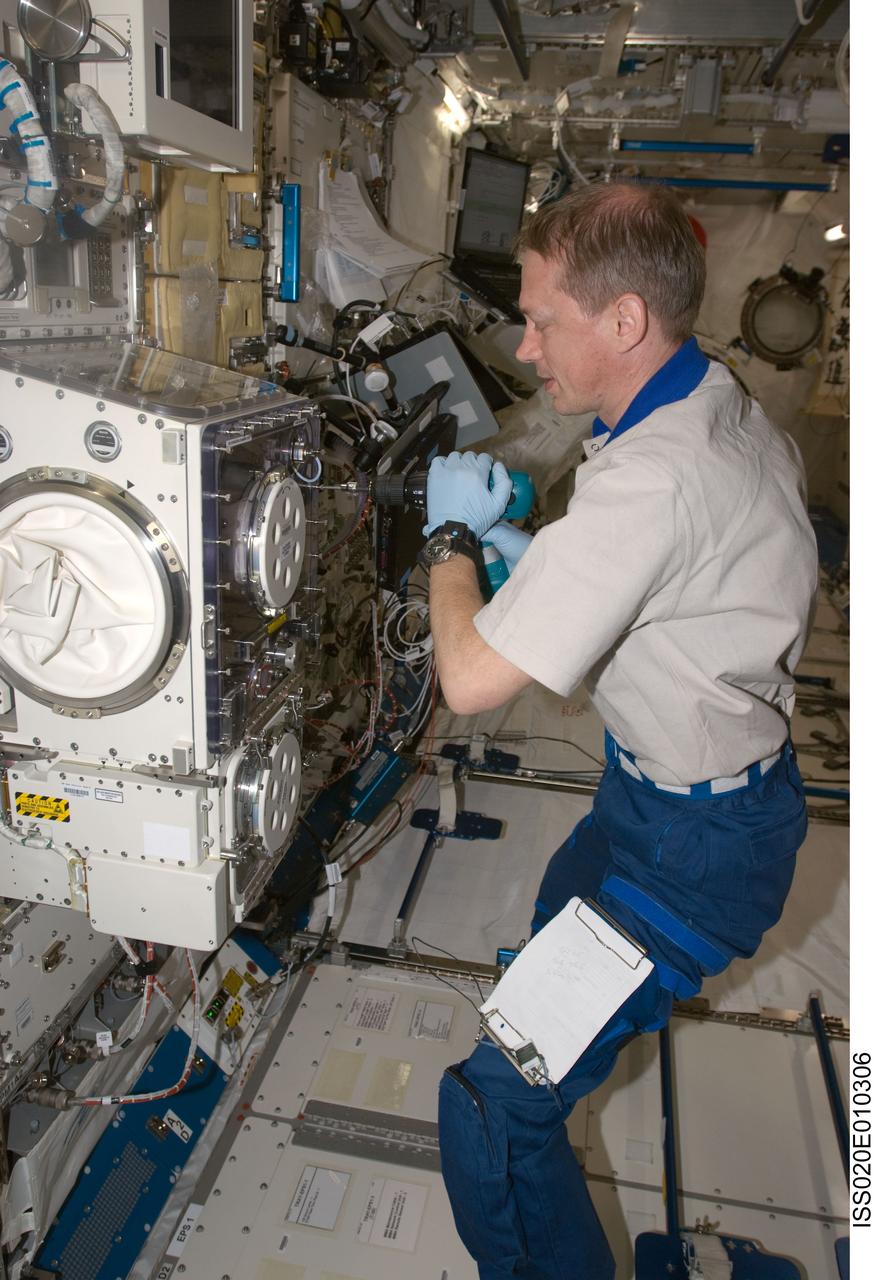
ISS020-E-010306 (15 June 2009) --- European Space Agency astronaut Frank De Winne, Expedition 20 flight engineer, works at the Clean Bench Facility in the Kibo laboratory of the International Space Station.
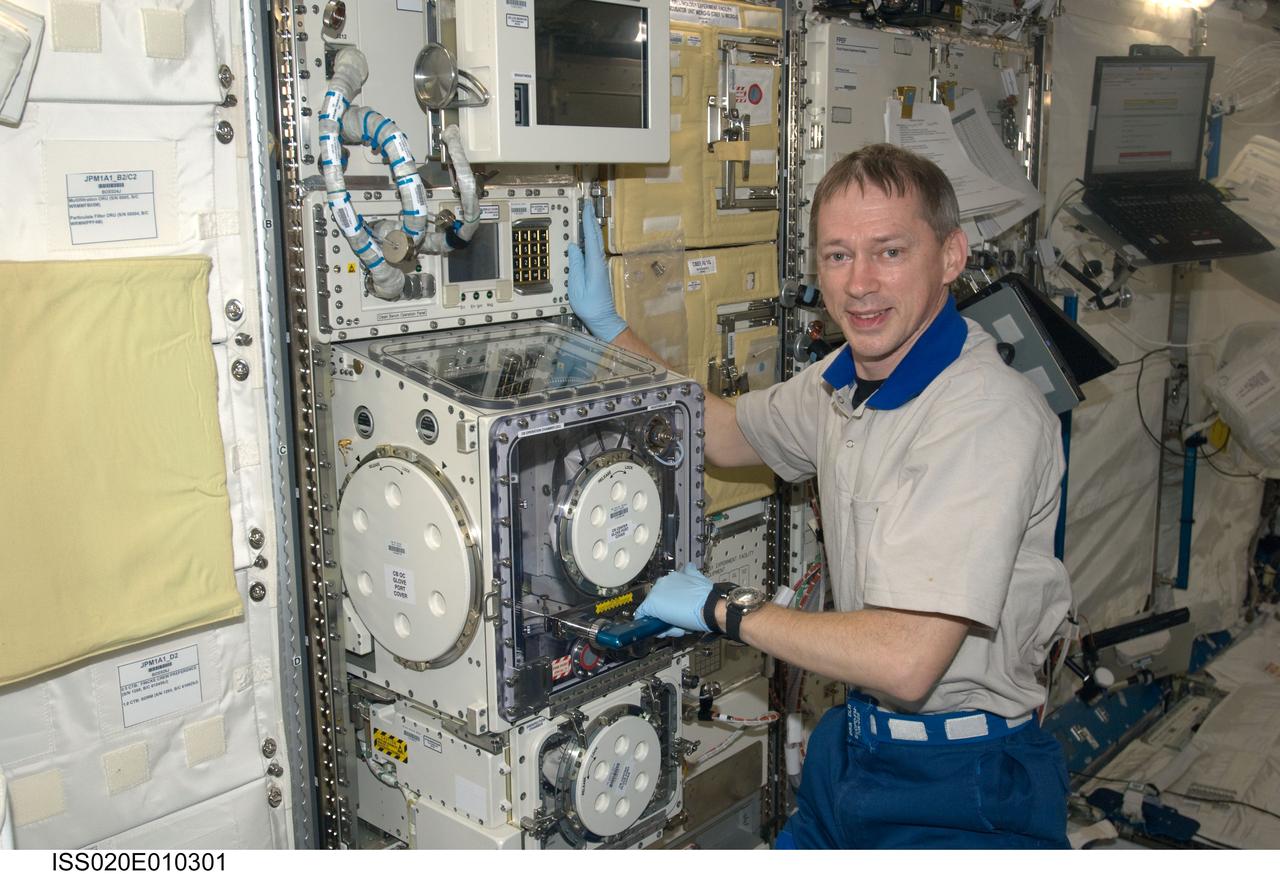
ISS020-E-010301 (15 June 2009) --- European Space Agency astronaut Frank De Winne, Expedition 20 flight engineer, works at the Clean Bench Facility in the Kibo laboratory of the International Space Station.

ISS020-E-005801 (31 May 2009) --- European Space Agency astronaut Frank De Winne, Expedition 20 flight engineer, works in the Kibo laboratory of the International Space Station.

This anaglyph, from NASA Shuttle Radar Topography Mission, shows Meseta de Somuncura, a semi-arid basalt plateau in northern Patagonia. 3D glasses are necessary to view this image.
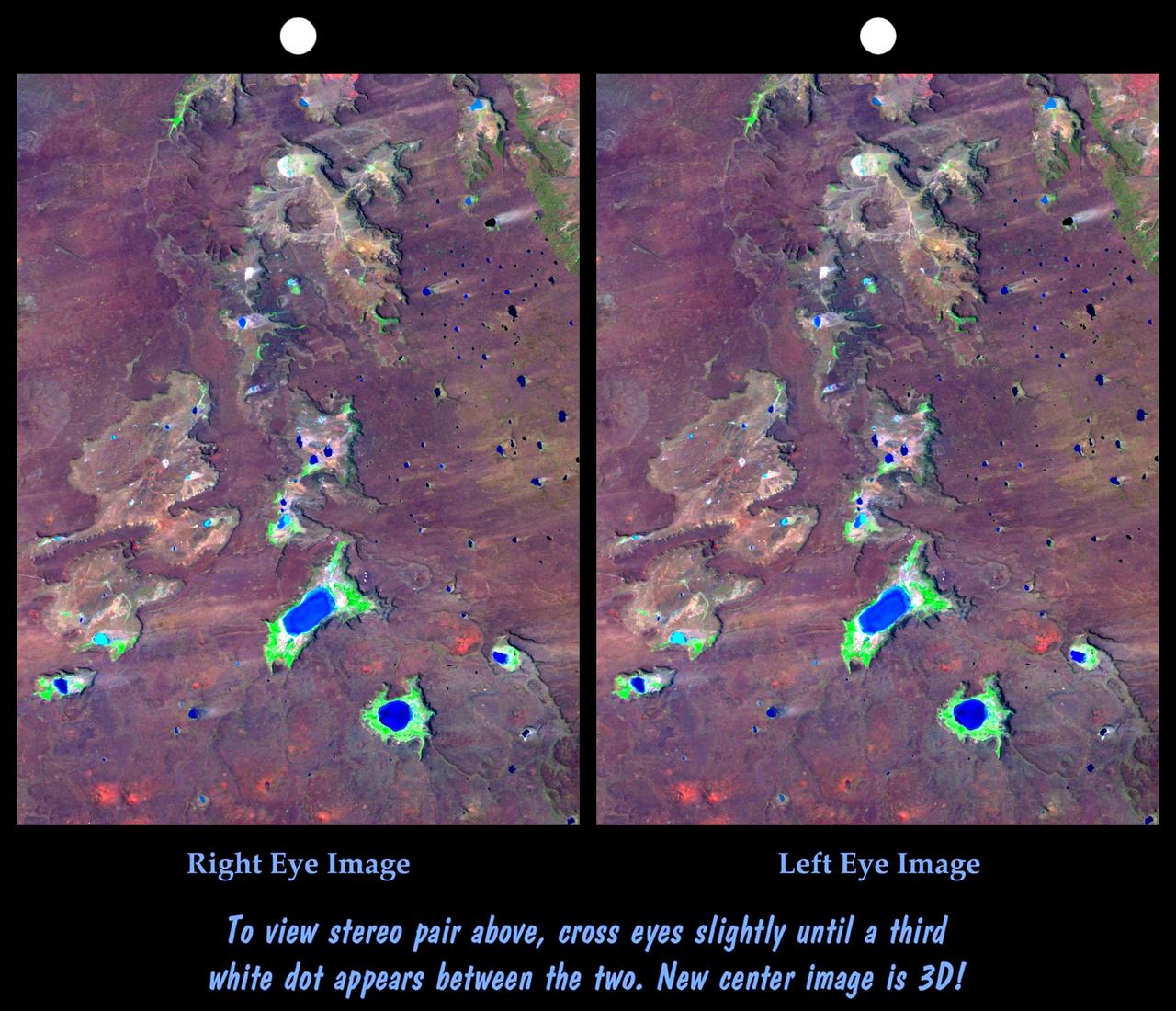
The Meseta de Somuncura is a semi-arid basalt plateau in northern Patagonia. This view of the northwestern part of the plateau, near Los Menucos, Argentina, shows numerous depressions where the upper basalt layers are missing or collapsed.
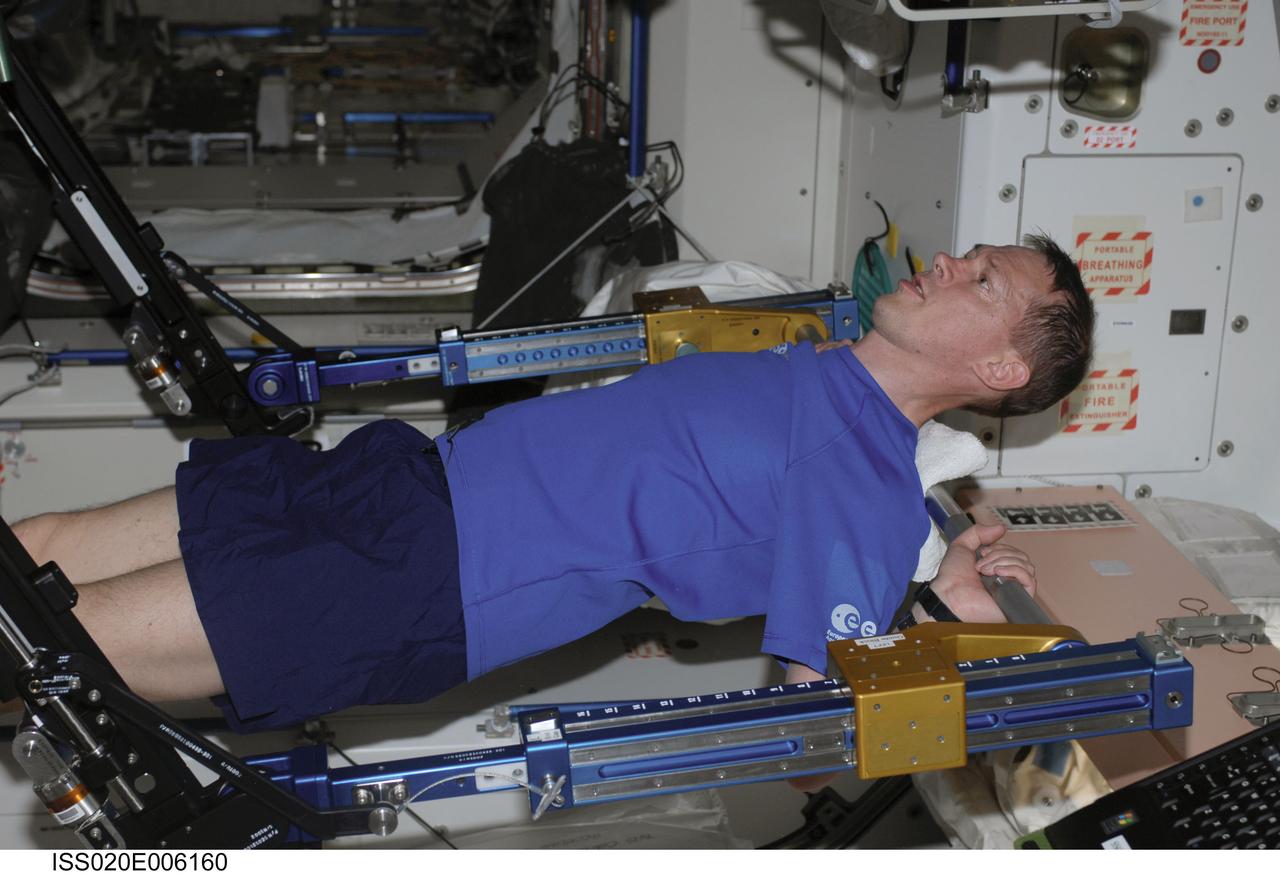
ISS020-E-006160 (3 June 2009) --- European Space Agency astronaut Frank De Winne, Expedition 20 flight engineer, exercises using the advanced Resistive Exercise Device (aRED) in the Unity node of the International Space Station.
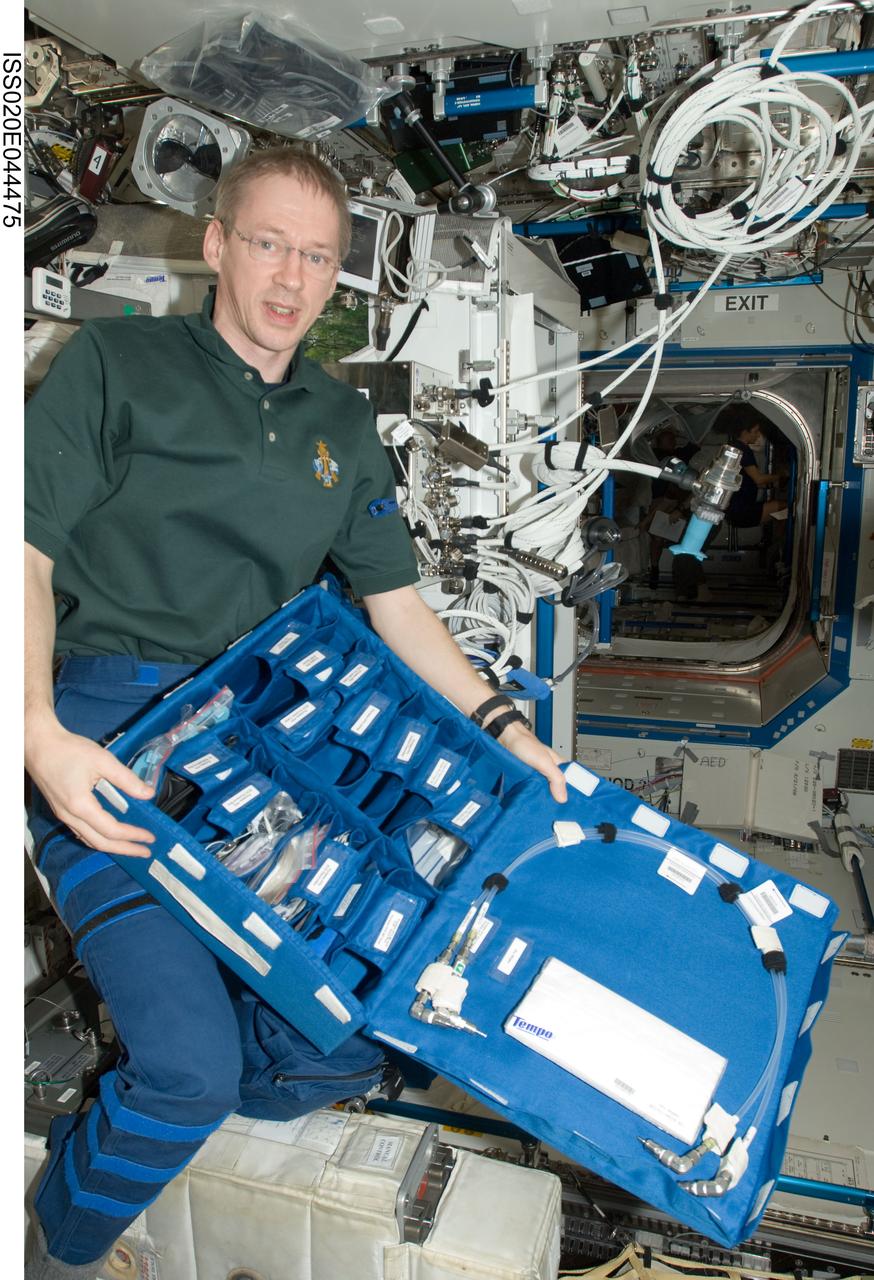
ISS020-E-044475 (3 Oct. 2009) --- European Space Agency astronaut Frank De Winne, Expedition 20 flight engineer and Expedition 21 commander, holds a Portable Pulmonary Function System (PPFS) stowage bag in the Destiny laboratory of the International Space Station.
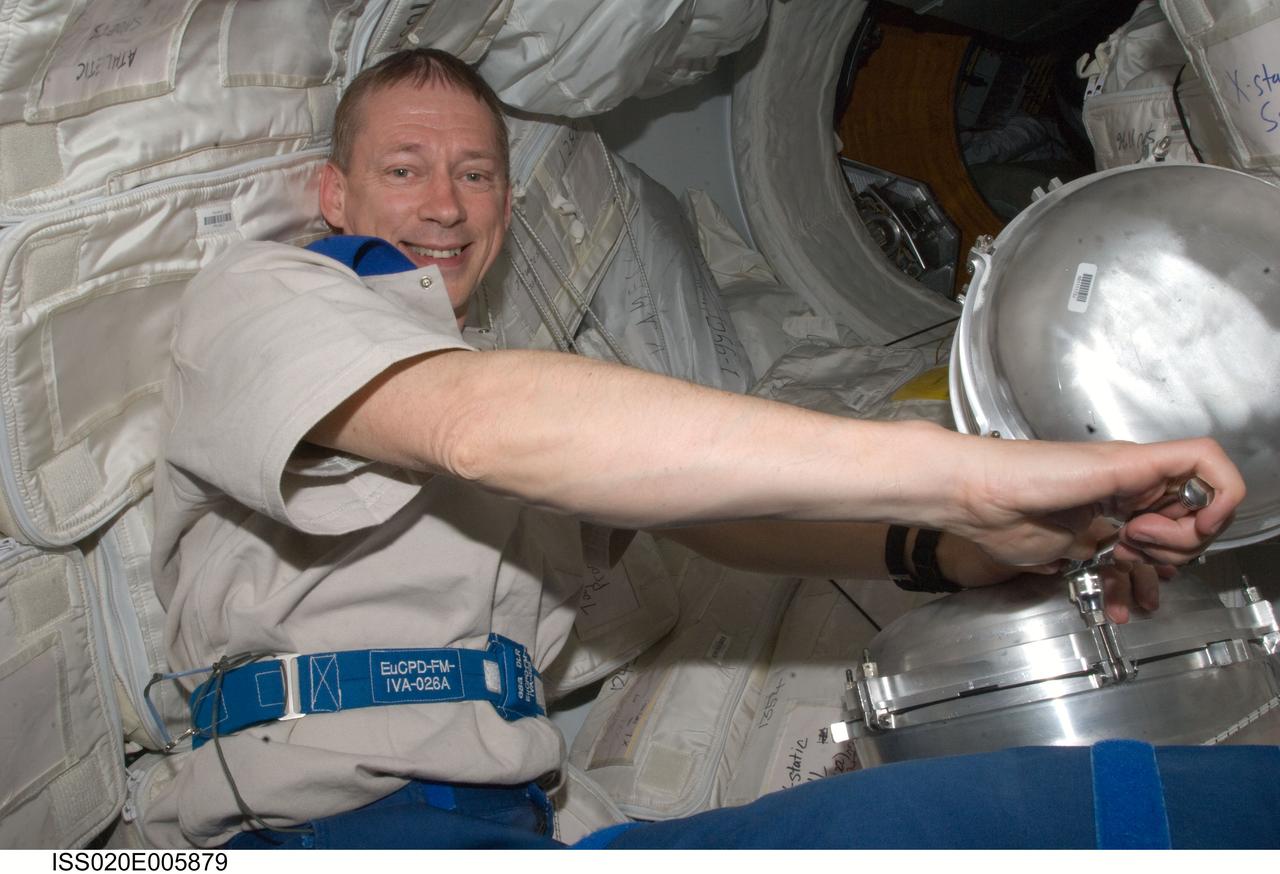
ISS020-E-005879 (1 June 2009) --- European Space Agency astronaut Frank De Winne, Expedition 20 flight engineer, performs the regular service on the Water Processor Assembly (WPA) in the Kibo laboratory of the International Space Station.
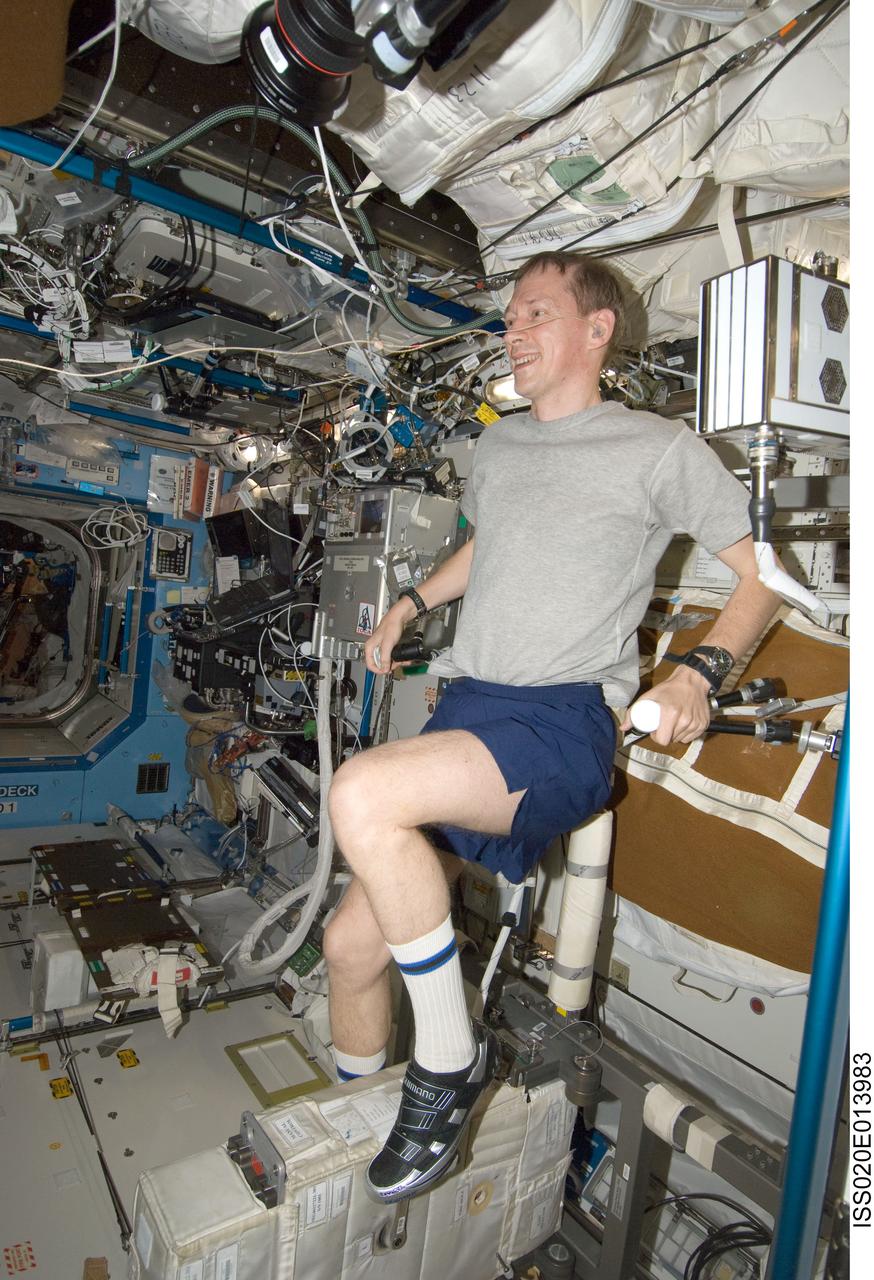
ISS020-E-013983 (22 June 2009) --- European Space Agency astronaut Frank De Winne, Expedition 20 flight engineer, exercises on the Cycle Ergometer with Vibration Isolation System (CEVIS) in the Destiny laboratory of the International Space Station.
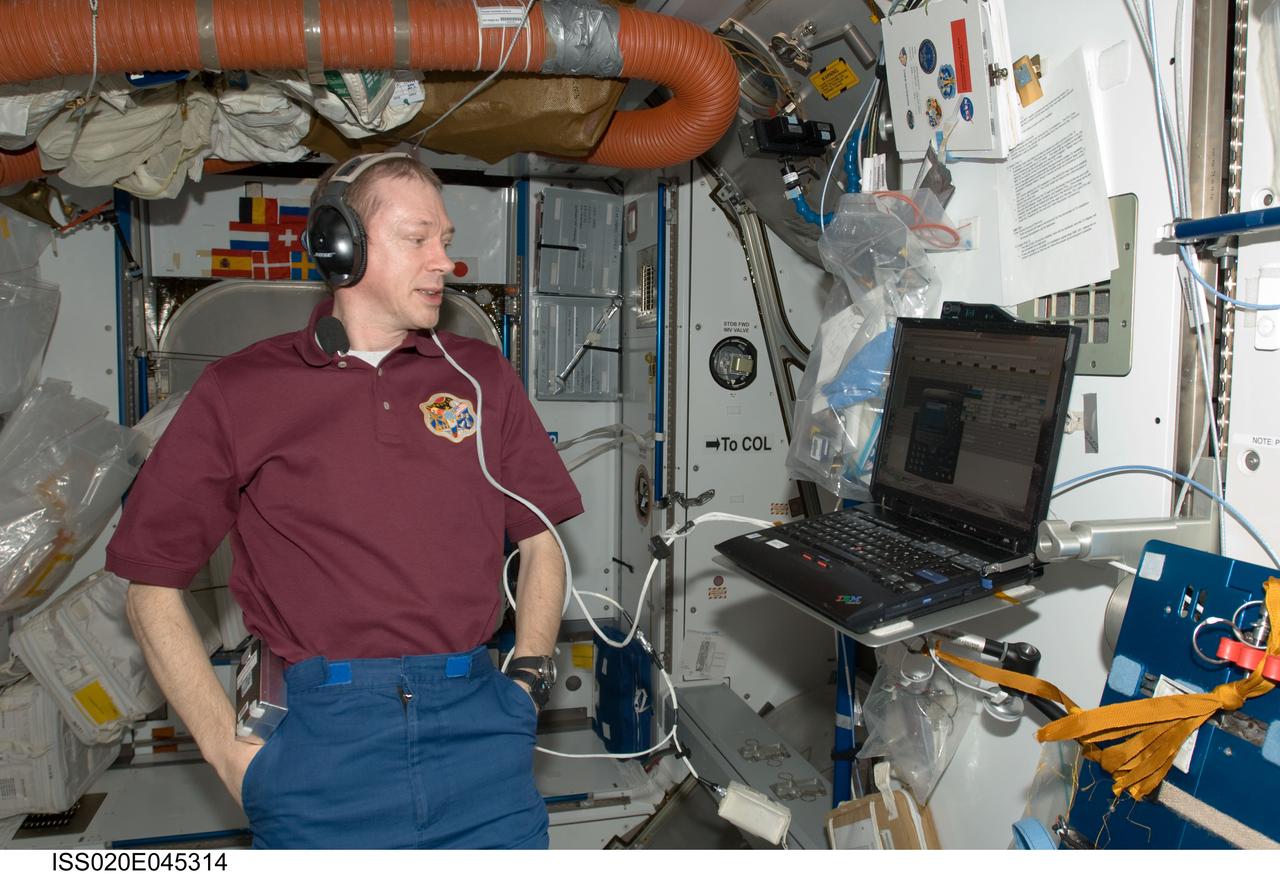
ISS020-E-045314 (5 Oct. 2009) --- European Space Agency astronaut Frank De Winne, Expedition 20 flight engineer and Expedition 21 commander, uses a communication system near a computer in the Harmony node of the International Space Station.
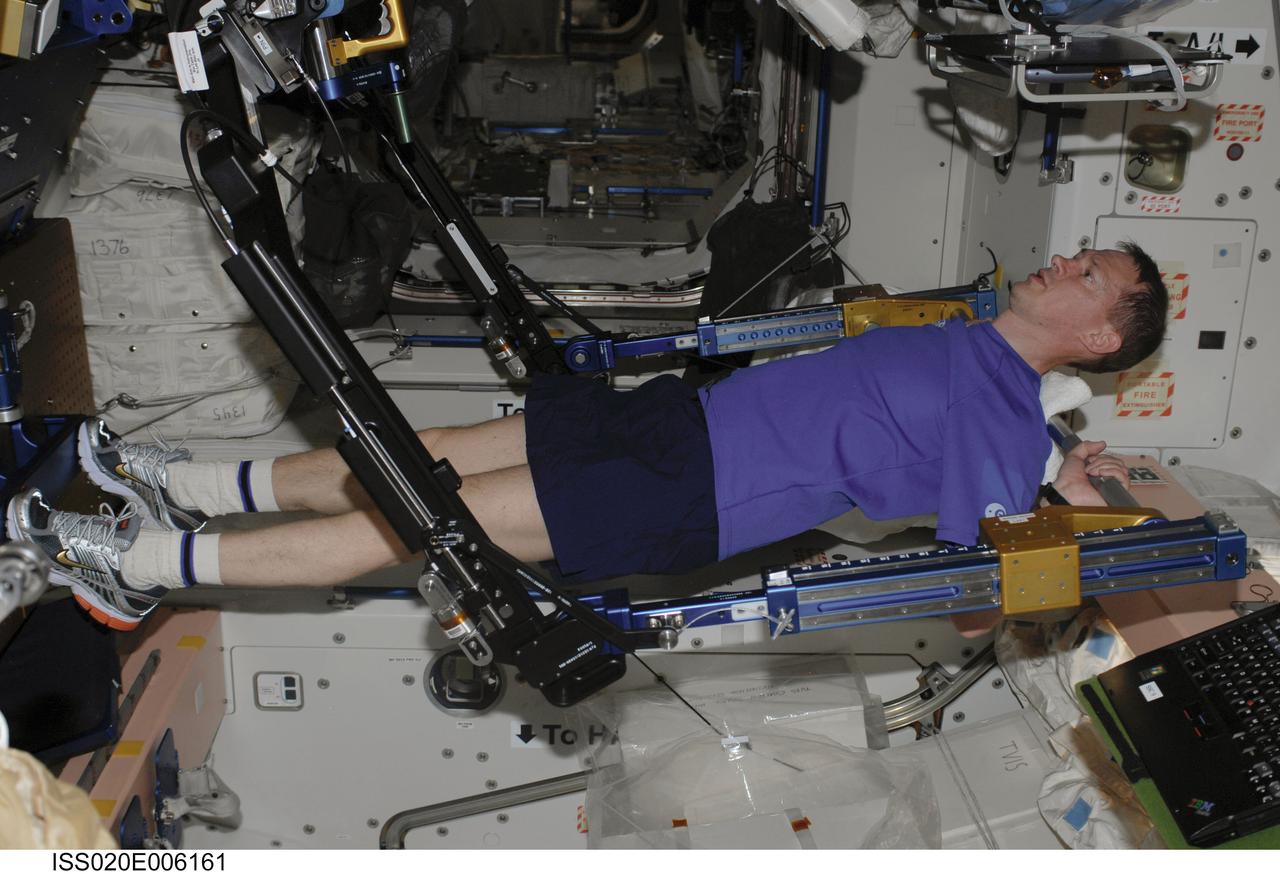
ISS020-E-006161 (3 June 2009) --- European Space Agency astronaut Frank De Winne, Expedition 20 flight engineer, exercises using the advanced Resistive Exercise Device (aRED) in the Unity node of the International Space Station.
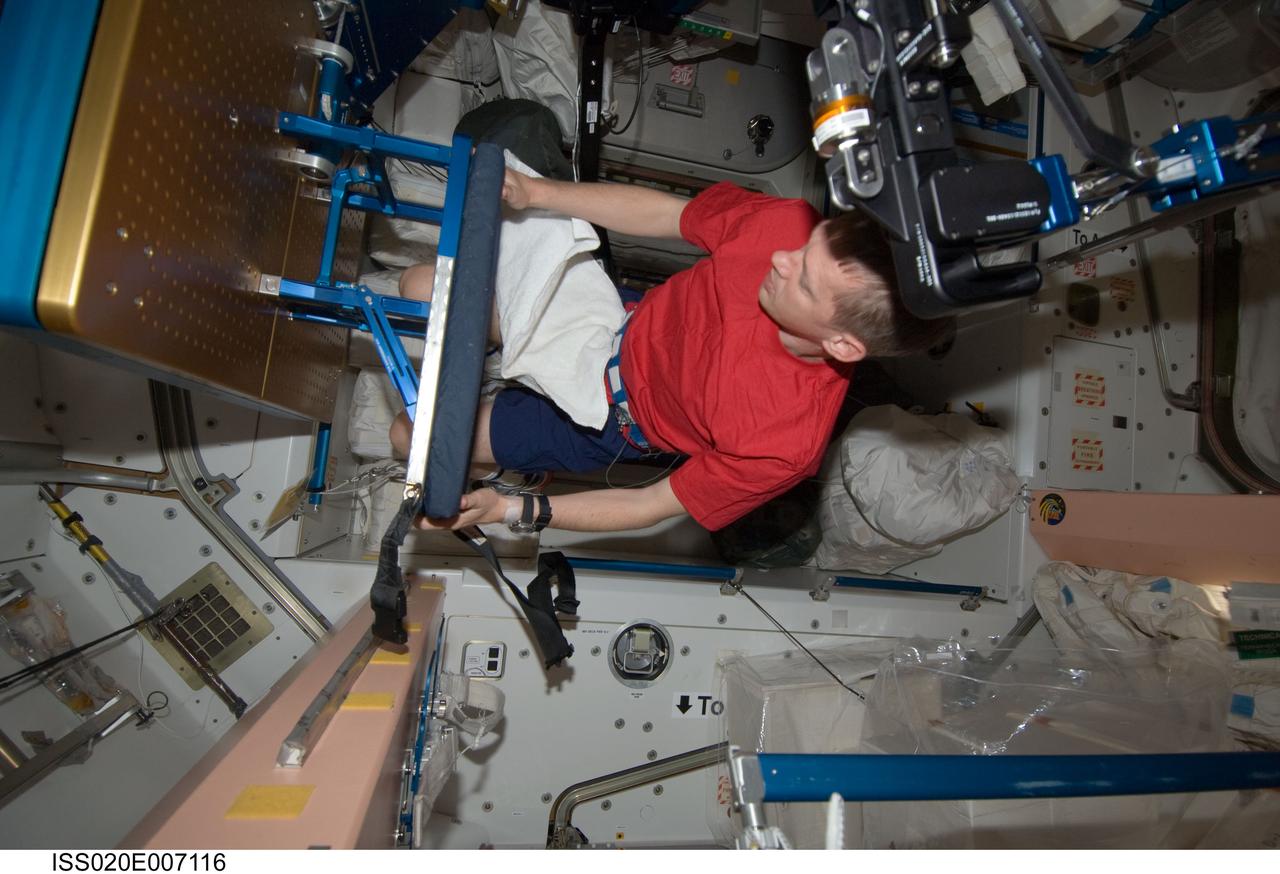
ISS020-E-007116 (5 June 2009) --- European Space Agency astronaut Frank De Winne, Expedition 20 flight engineer, prepares to use the advanced Resistive Exercise Device (aRED) in the Unity node of the International Space Station.
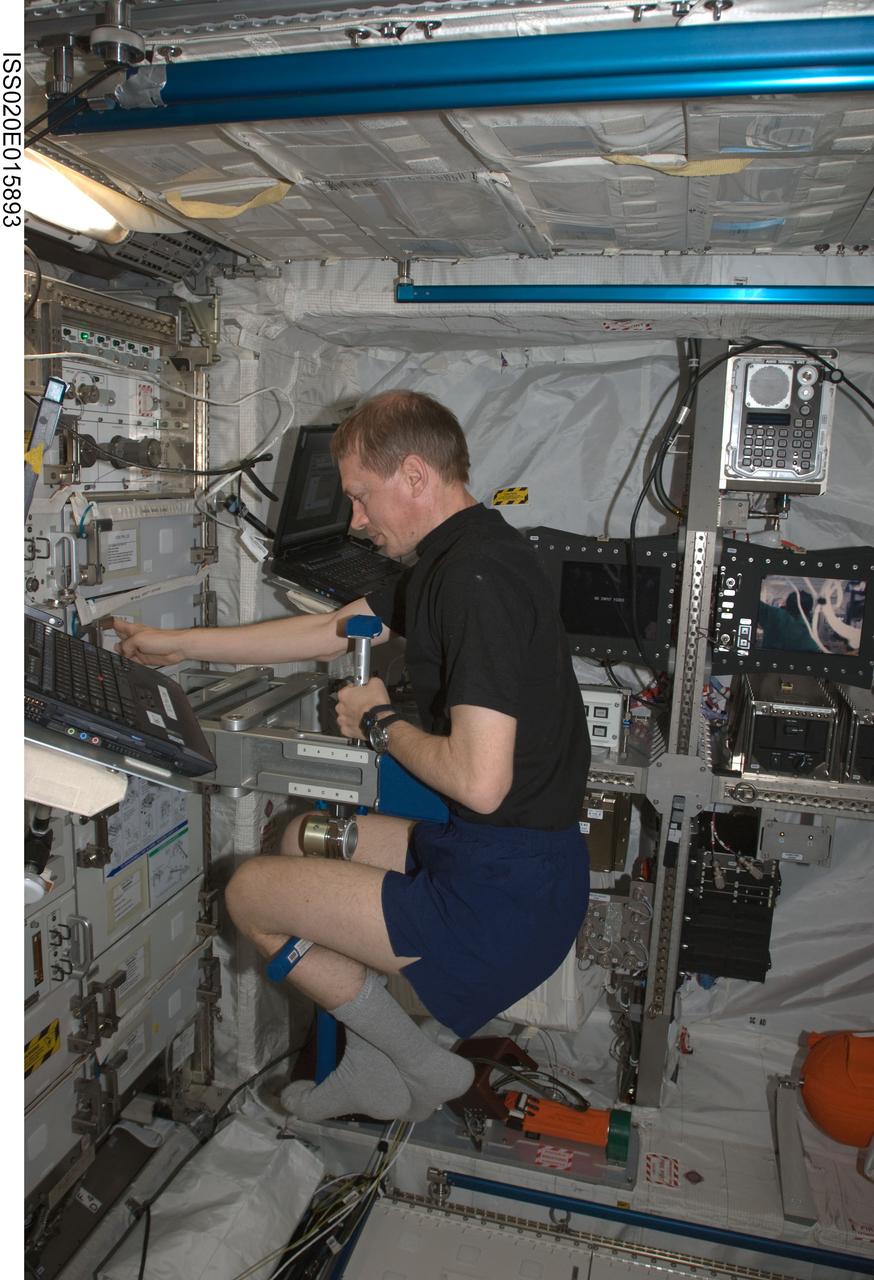
ISS020-E-015893 (29 June 2009) --- European Space Agency astronaut Frank De Winne, Expedition 20 flight engineer, works with the Space Linear Acceleration Mass Measurement Device (SLAMMD) in the Columbus laboratory of the International Space Station.
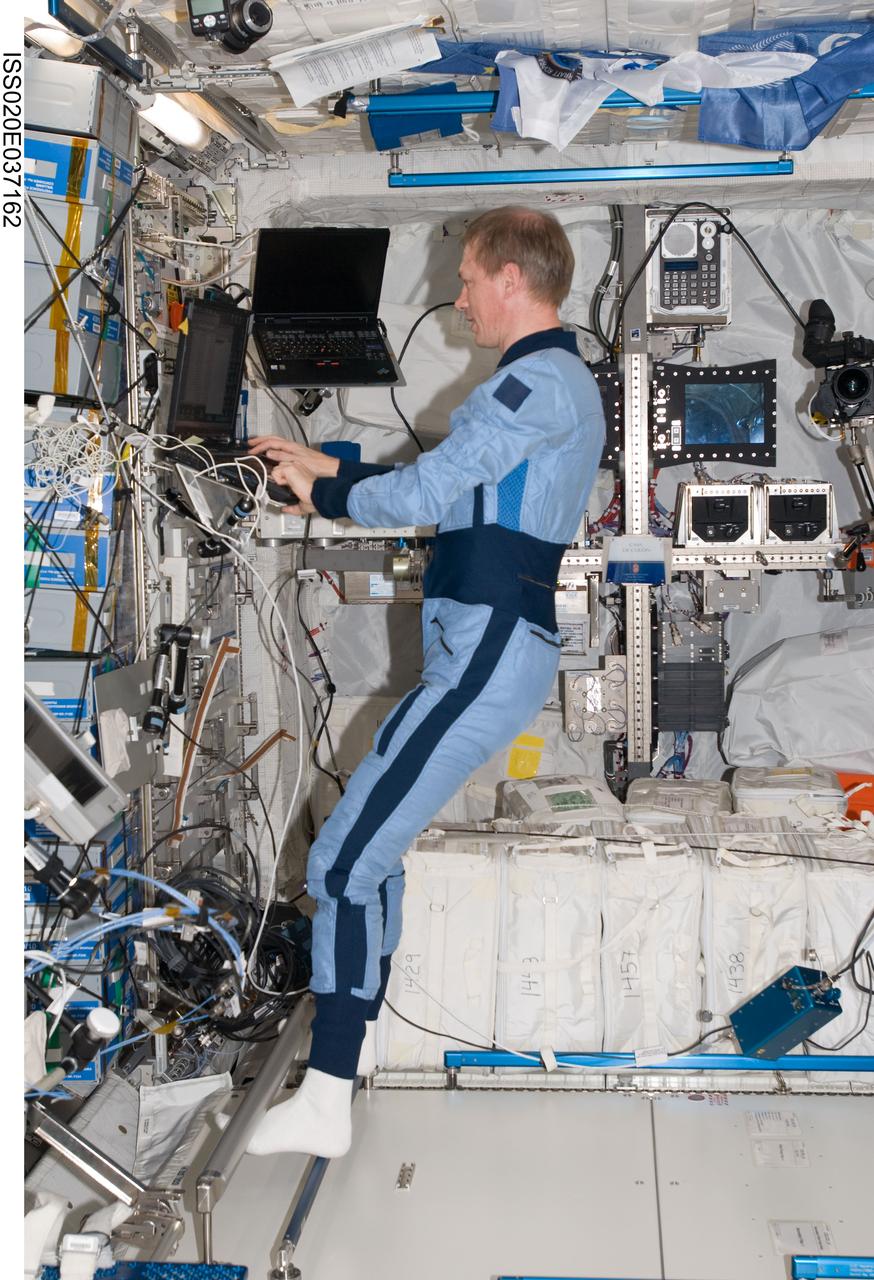
ISS020-E-037162 (30 Aug. 2009) --- European Space Agency astronaut Frank De Winne, Expedition 20 flight engineer, uses a computer in the Columbus laboratory of the International Space Station while Space Shuttle Discovery (STS-128) remains docked with the station.
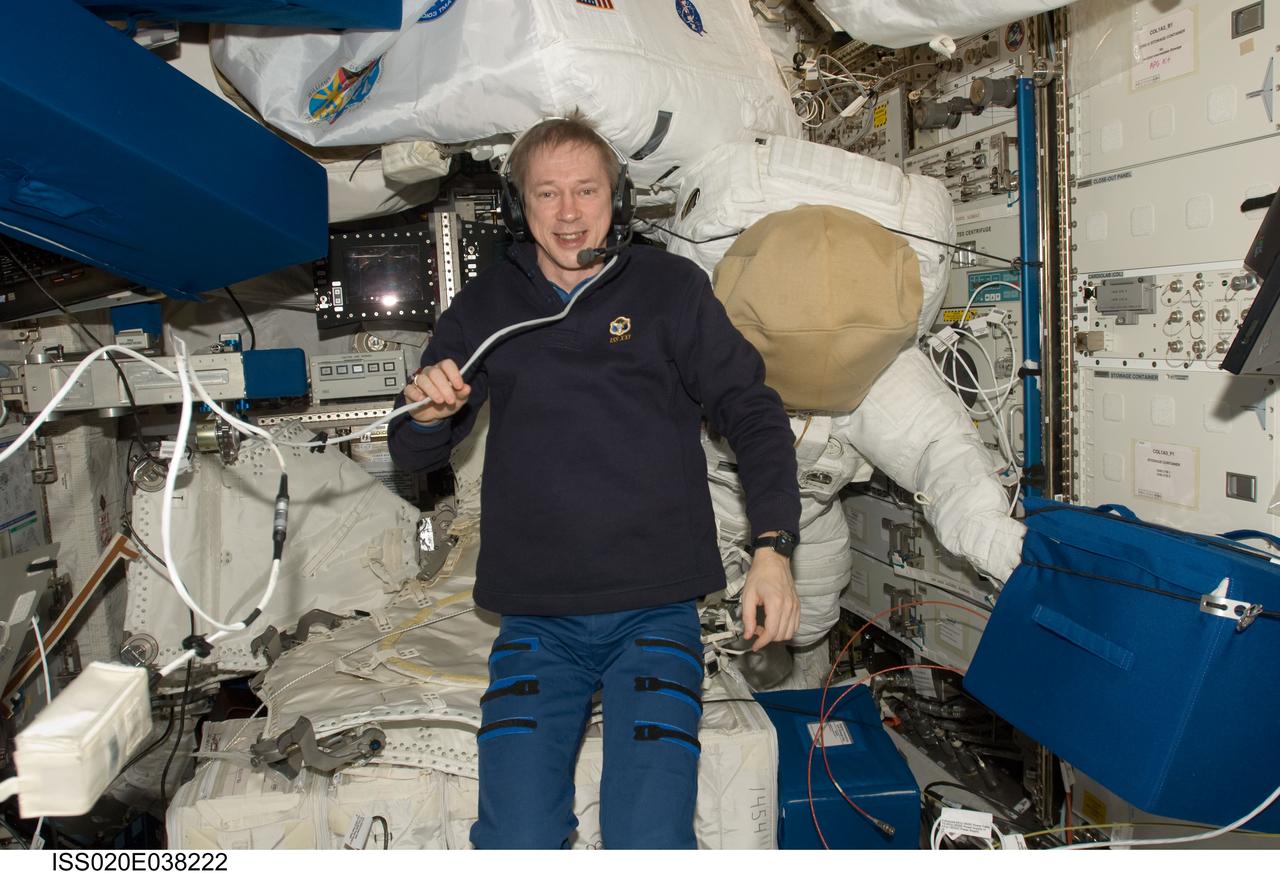
ISS020-E-038222 (3 Sept. 2009) --- European Space Agency astronaut Frank De Winne, Expedition 20 flight engineer, is pictured in the Columbus laboratory of the International Space Station while Space Shuttle Discovery (STS-128) remains docked with the station.
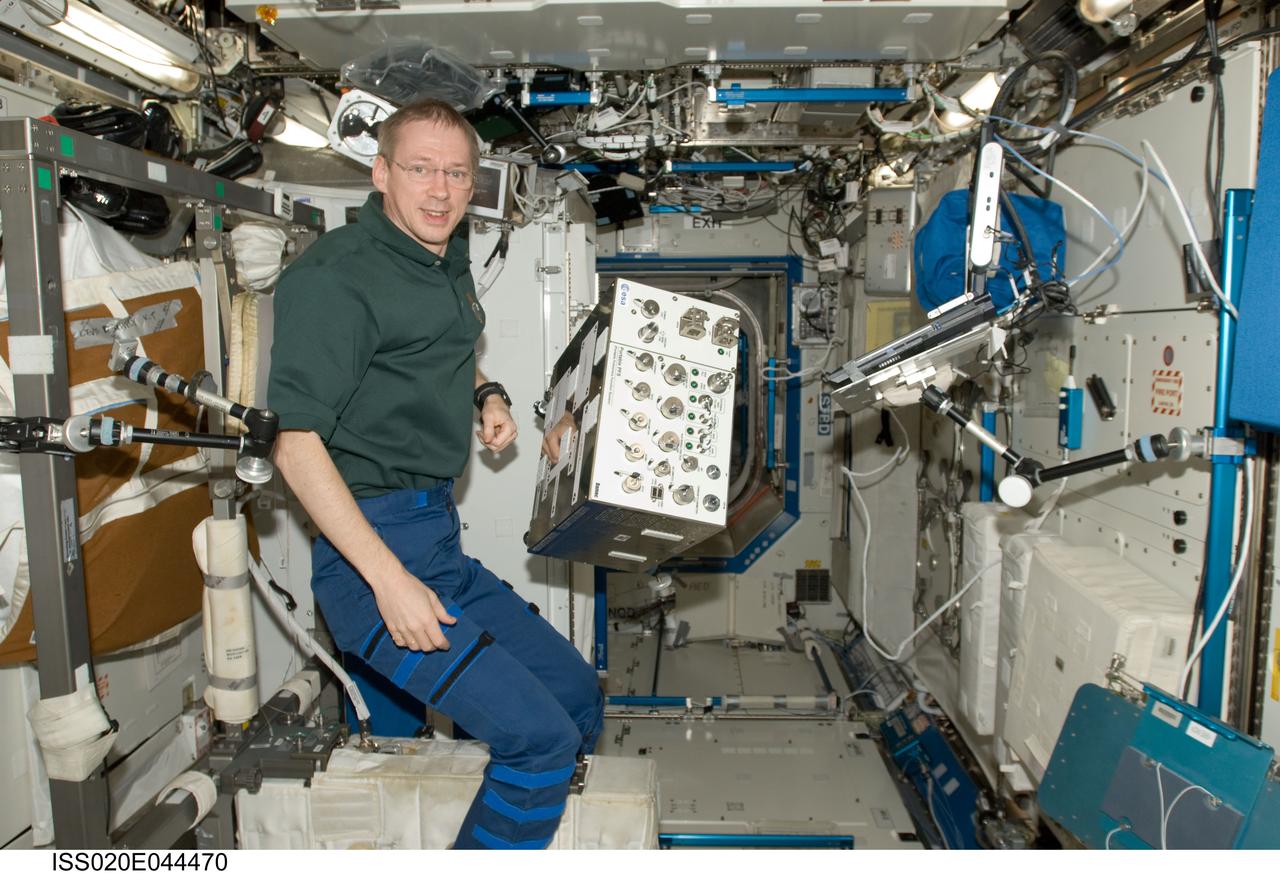
ISS020-E-044470 (3 Oct. 2009) --- European Space Agency astronaut Frank De Winne, Expedition 20 flight engineer and Expedition 21 commander, is pictured near Portable Pulmonary Function System (PPFS) hardware floating freely in the Destiny laboratory of the International Space Station.

ISS020-E-038221 (3 Sept. 2009) --- European Space Agency astronaut Frank De Winne, Expedition 20 flight engineer, is pictured in the Columbus laboratory of the International Space Station while Space Shuttle Discovery (STS-128) remains docked with the station.
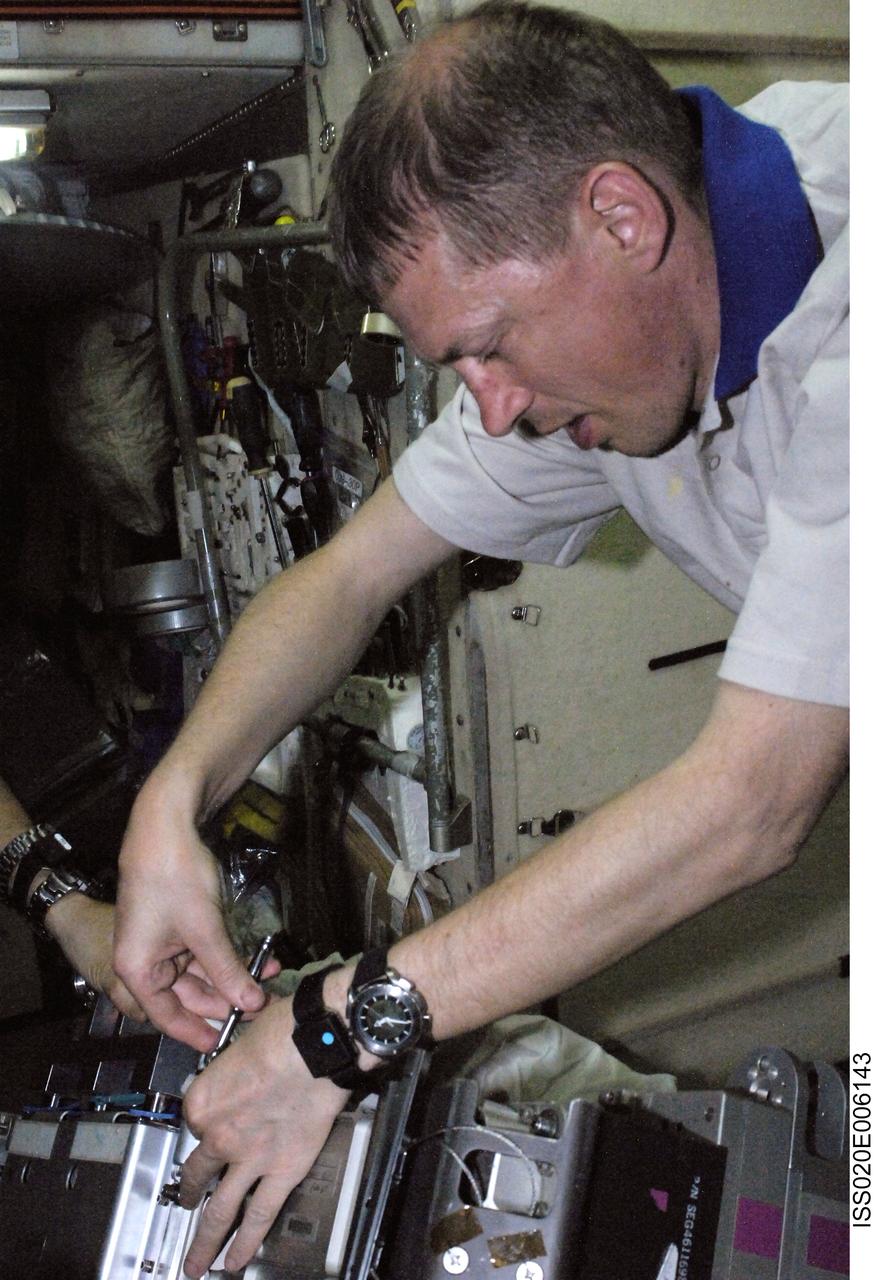
ISS020-E-006143 (3 June 2009) --- European Space Agency astronaut Frank De Winne, Expedition 20 flight engineer, performs in-flight maintenance on the Treadmill Vibration Isolation System (TVIS) in the Zvezda Service Module of the International Space Station.
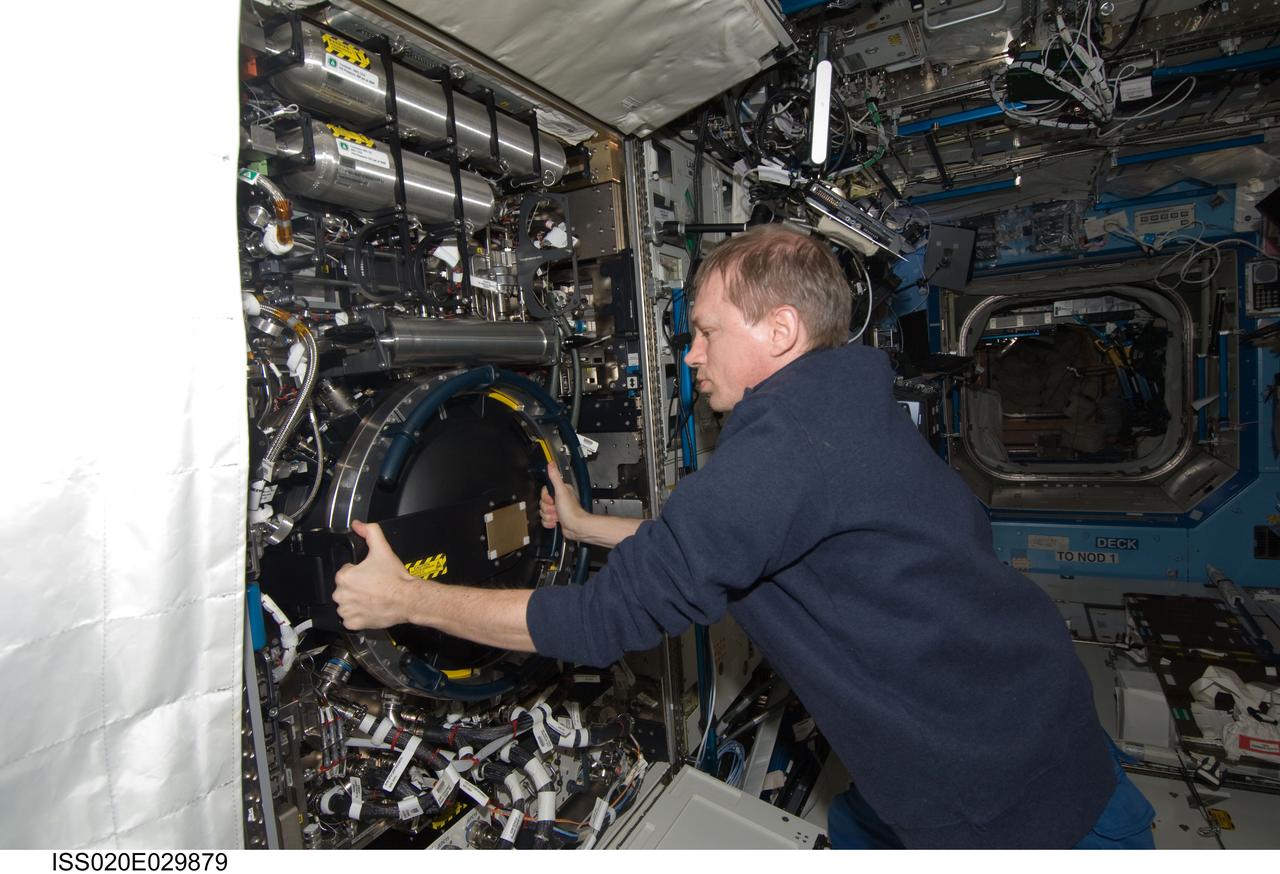
ISS020-E-029879 (12 Aug. 2009) --- European Space Agency astronaut Frank De Winne, Expedition 20 flight engineer, works with the Combustion Integrated Rack (CIR) in the Destiny laboratory of the International Space Station.
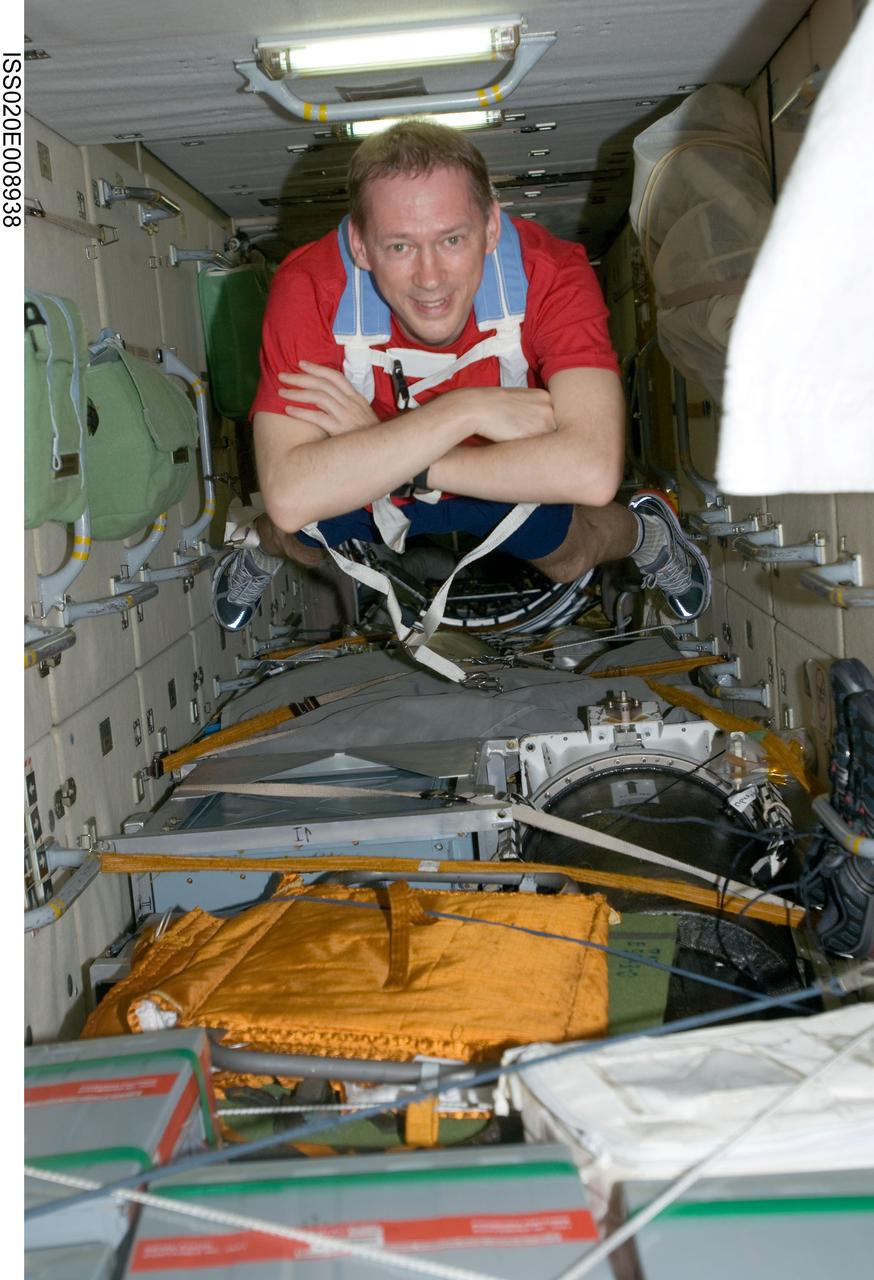
ISS020-E-008938 (14 June 2009) --- European Space Agency astronaut Frank De Winne, Expedition 20 flight engineer, floats through the Zarya functional cargo block (FGB) of the International Space Station.
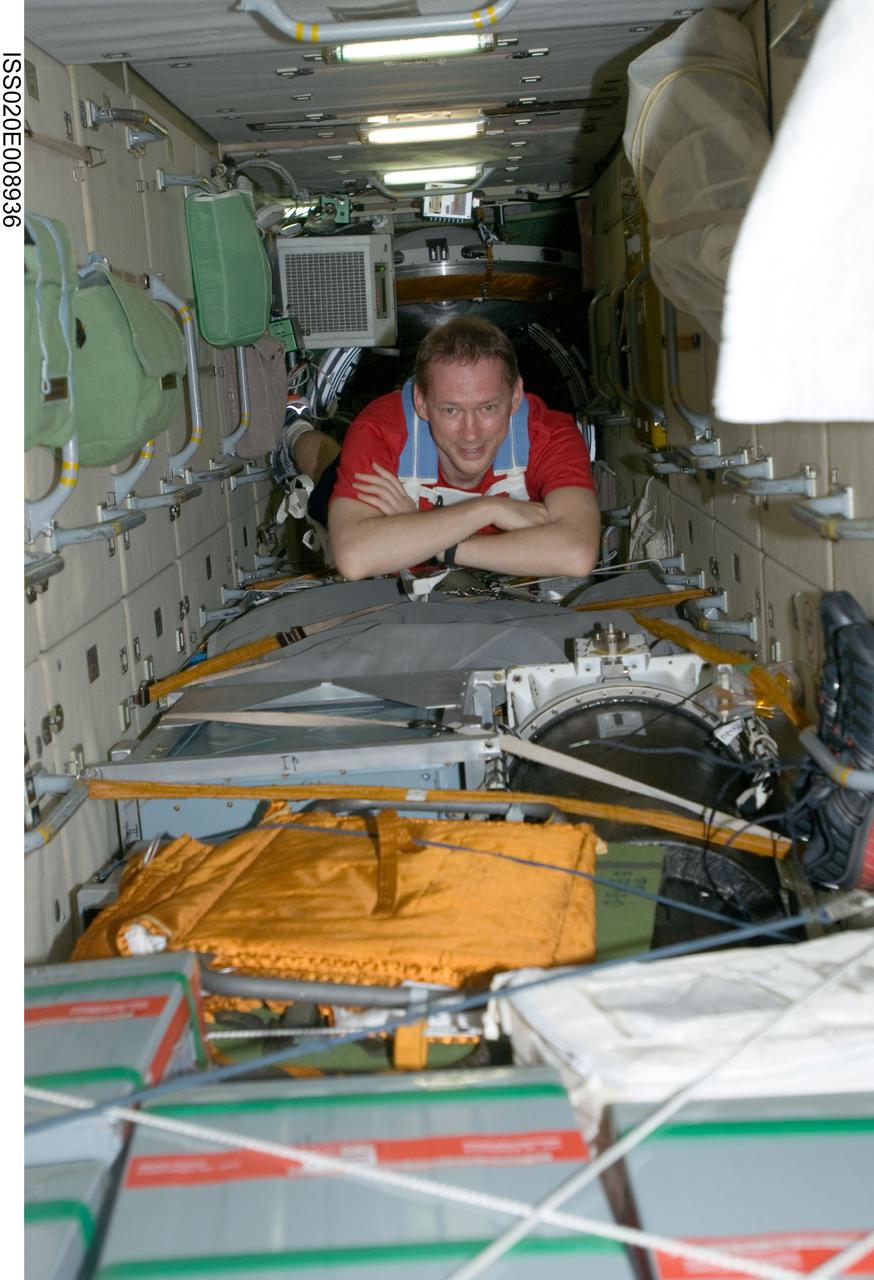
ISS020-E-008936 (14 June 2009) --- European Space Agency astronaut Frank De Winne, Expedition 20 flight engineer, floats through the Zarya functional cargo block (FGB) of the International Space Station.
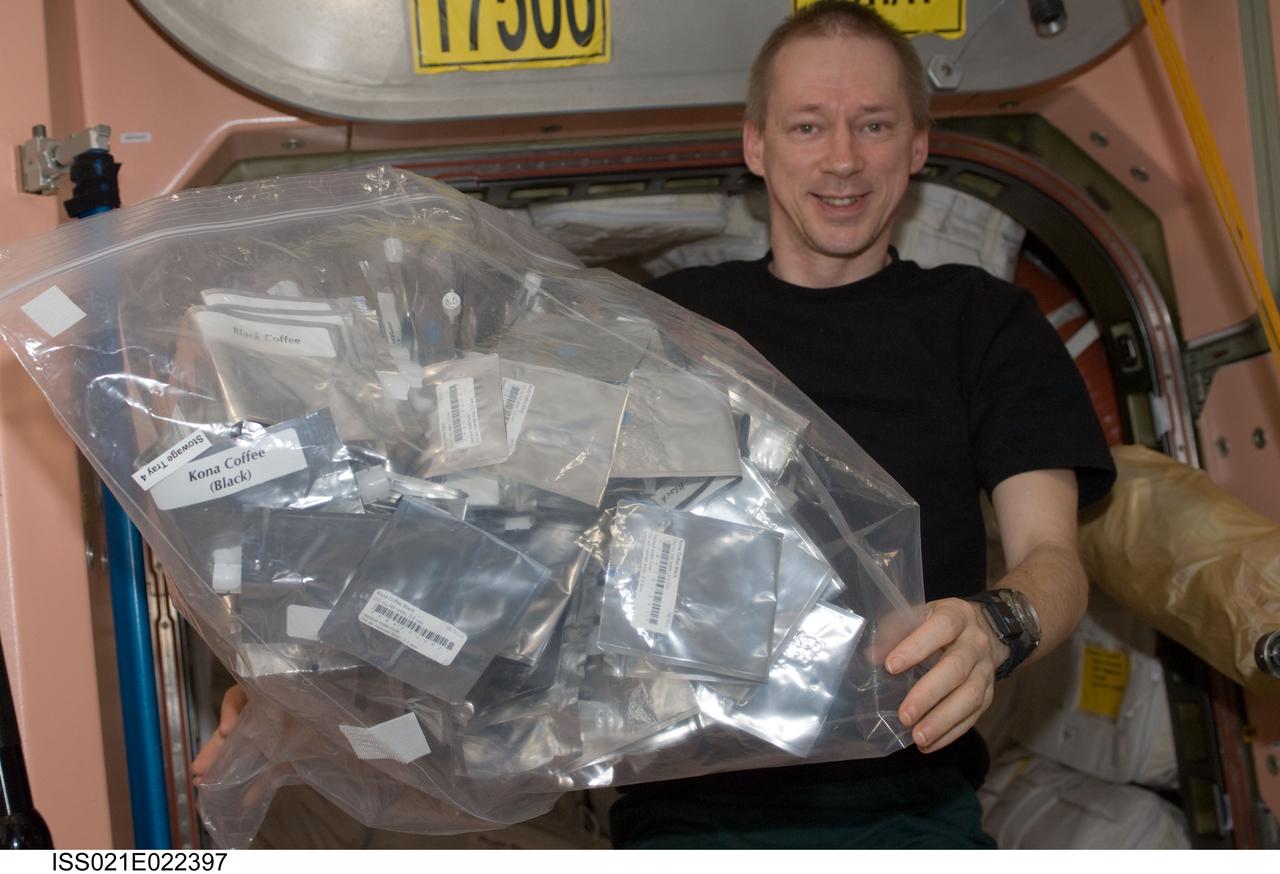
ISS021-E-022397 (8 Nov. 2009) --- European Space Agency astronaut Frank De Winne, Expedition 21 commander, holds a stowage bag containing various beverages in the Unity node of the International Space Station.
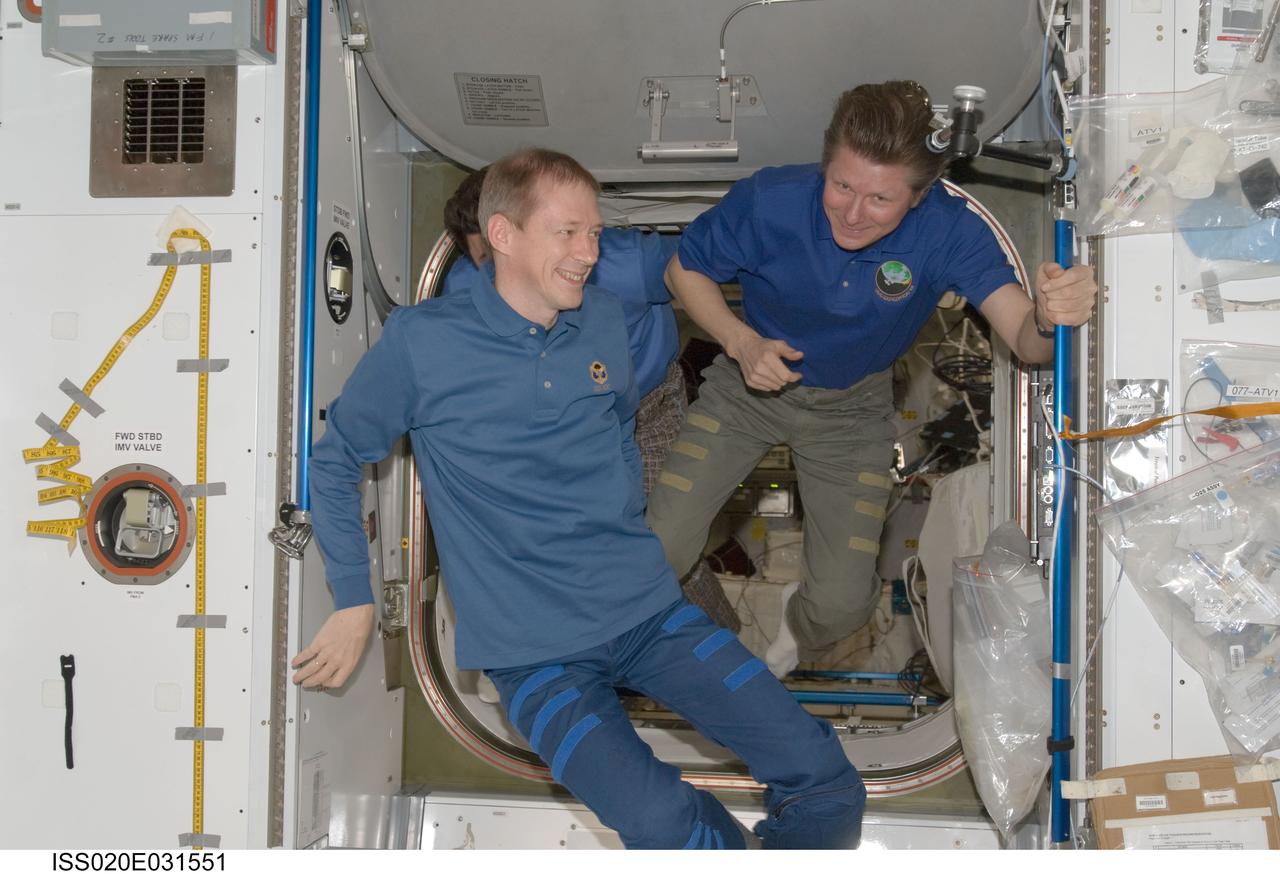
ISS020-E-031551 (18 Aug. 2009) --- Cosmonaut Gennady Padalka (right), Expedition 20 commander; and European Space Agency astronaut Frank De Winne, flight engineer, are pictured in the Harmony node of the International Space Station.
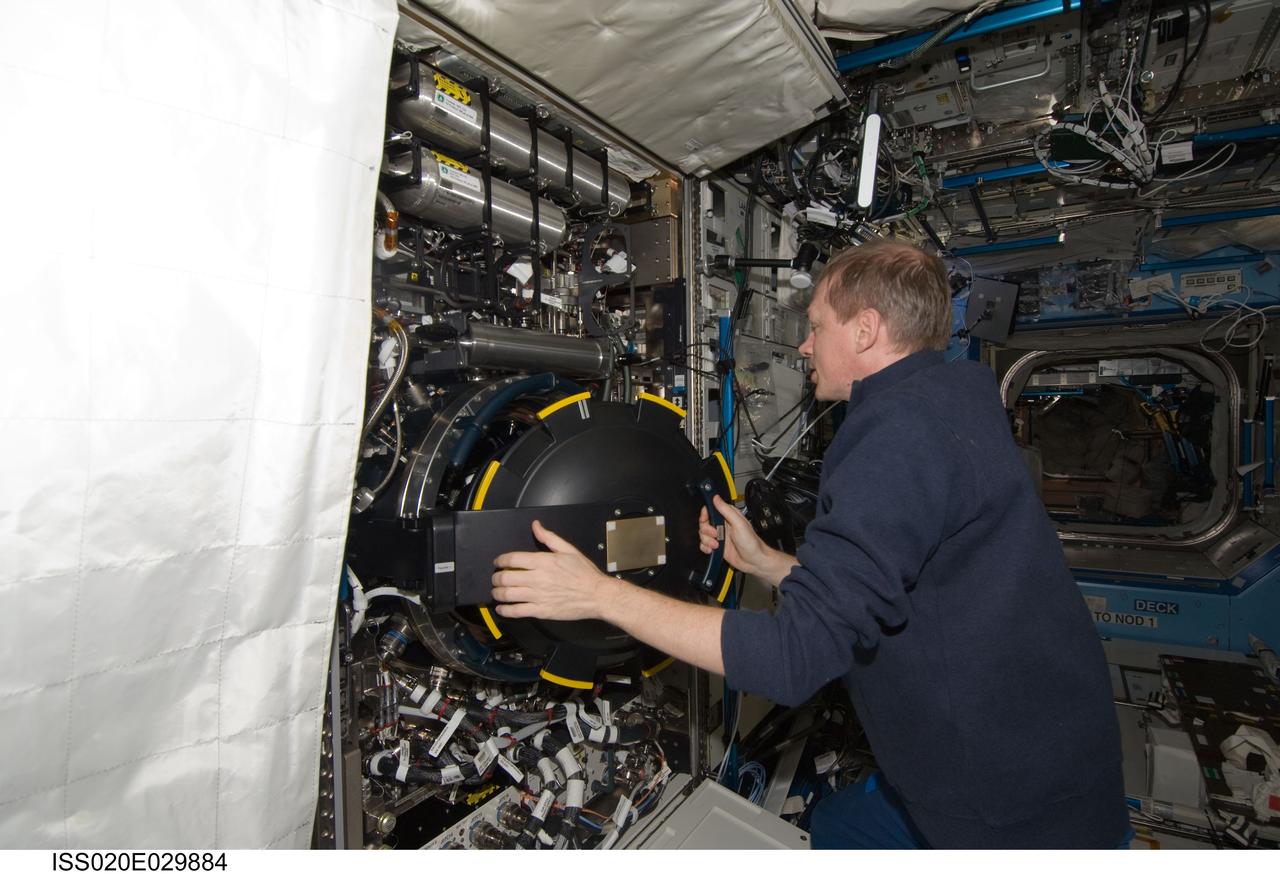
ISS020-E-029884 (12 Aug. 2009) --- European Space Agency astronaut Frank De Winne, Expedition 20 flight engineer, works with the Combustion Integrated Rack (CIR) in the Destiny laboratory of the International Space Station.

Less interested in the scientific fundamentals of rocketry, many writers of popular literature and science fiction discovered one of the most vital elements in the formula for space travel, a fertile imagination. Under the impression that the sun "draws up" dewdrops, Cyrano de Bergerac suggested fancifully that one might fly by trapping dew in bottles, strapping the bottles to oneself, and standing in sunlight.
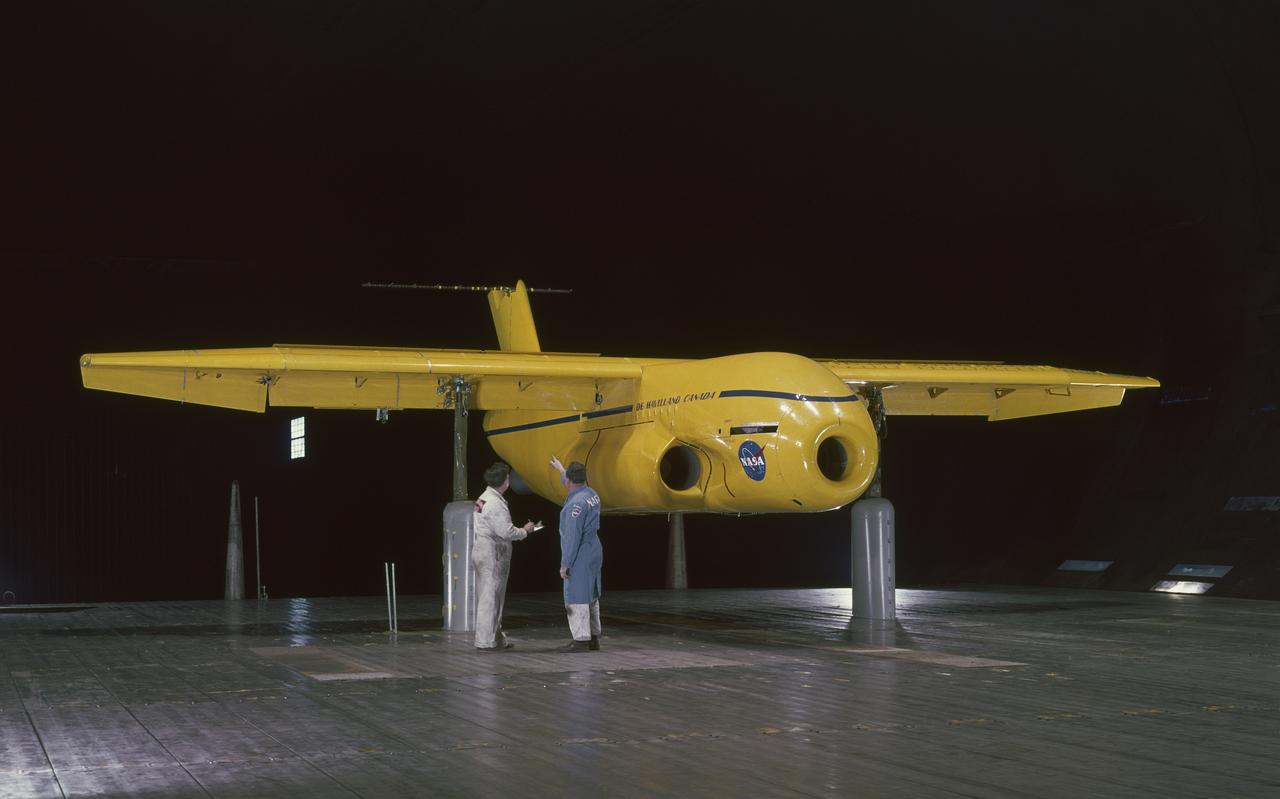
3/4 front view, a=0. de Havilland Augmenter Wing Model, High Lift System in Ames 40x80 Foot Wind Tunnel. Cecil McDonald and Al Wheelband in picture.
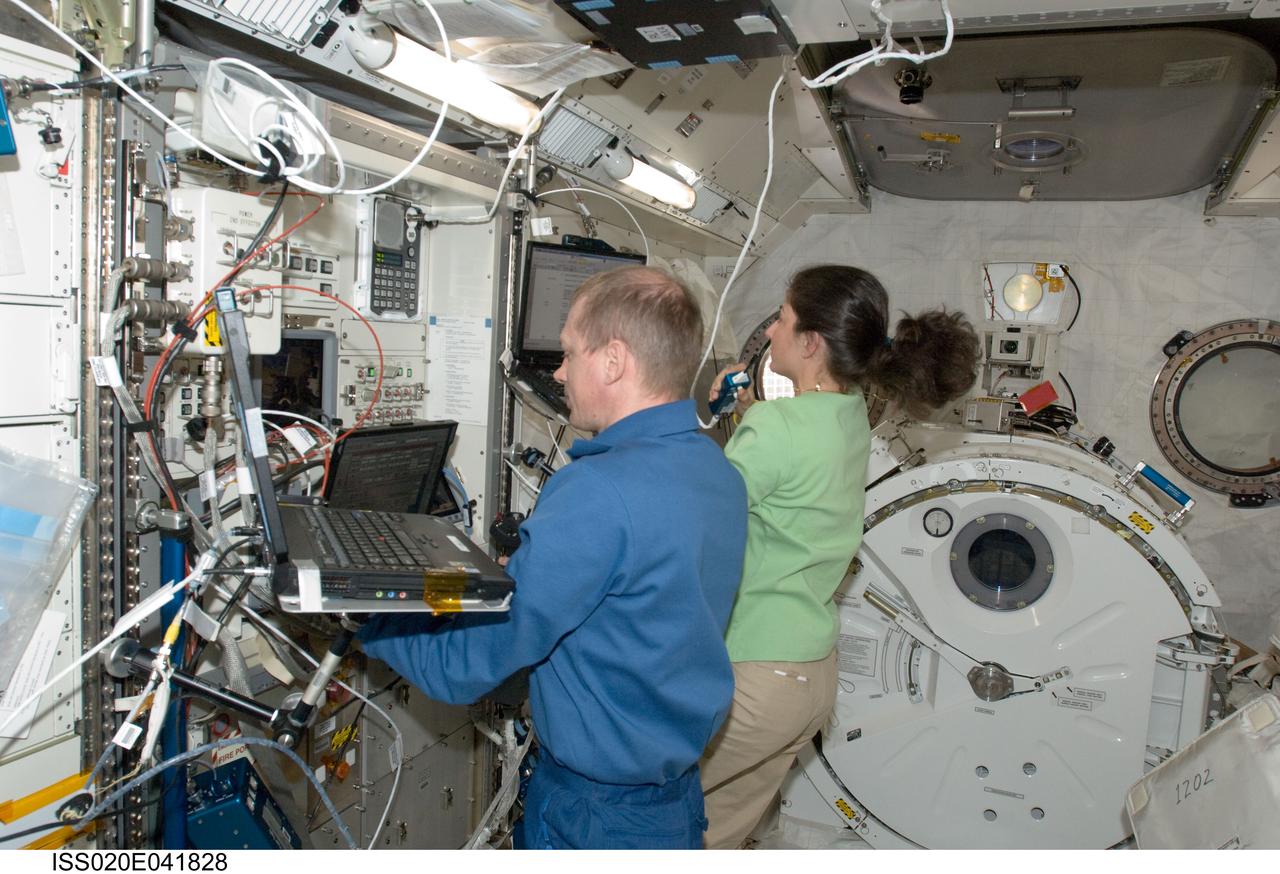
ISS020-E-041828 (23 Sept. 2009) --- European Space Agency astronaut Frank De Winne and NASA astronaut Nicole Stott, both Expedition 20 flight engineers, work the controls of the JEM Robotic Manipulator System (JEM-RMS) in the Kibo laboratory of the International Space Station. De Winne and Stott used the JEM-RMS to grapple the Exposed Pallet (EP) from the station’s Canadarm2 and berth it to the JEM Exposed Facility / Exposed Facility Unit 10 (JEF EFU10).
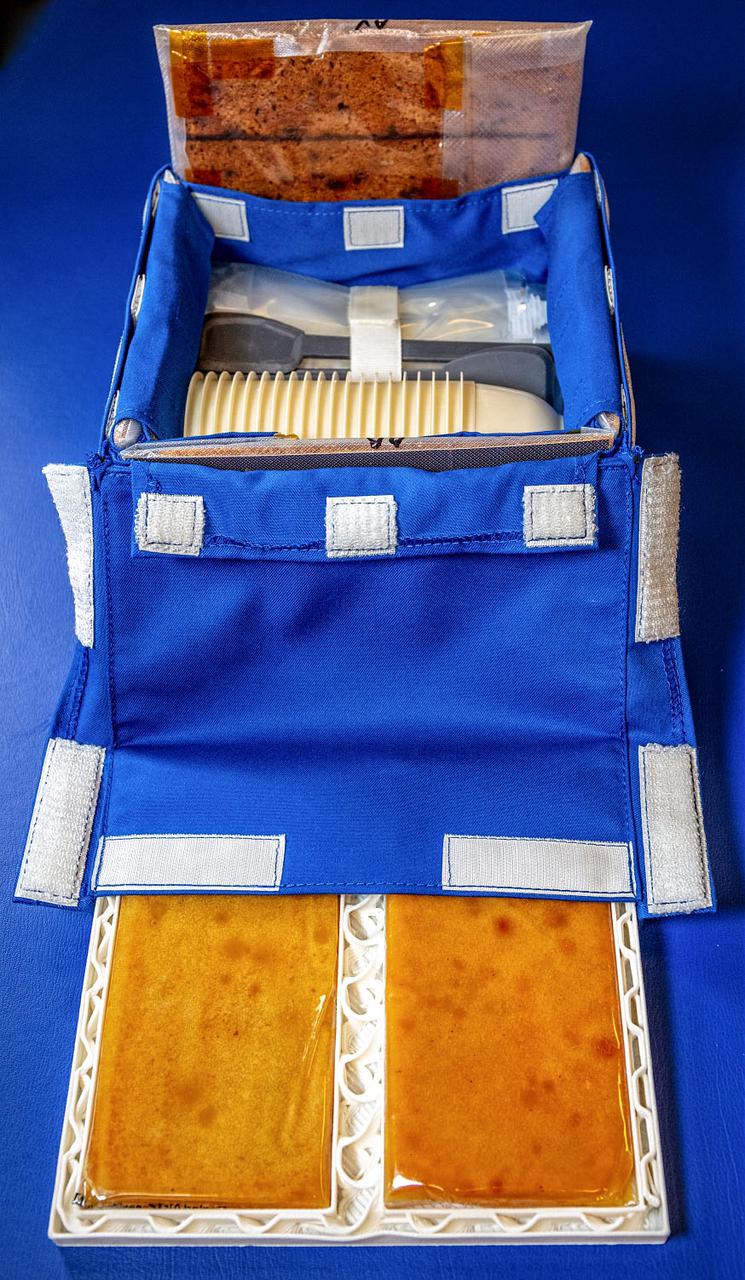
jsc2021e063281 (12/9/20210 --- Preflight image of the Food Processor consumables Kit which uses Edible prodcuts and Renewable pad as new protection Foam. © CNES/DE PRADA Thierry, 2020
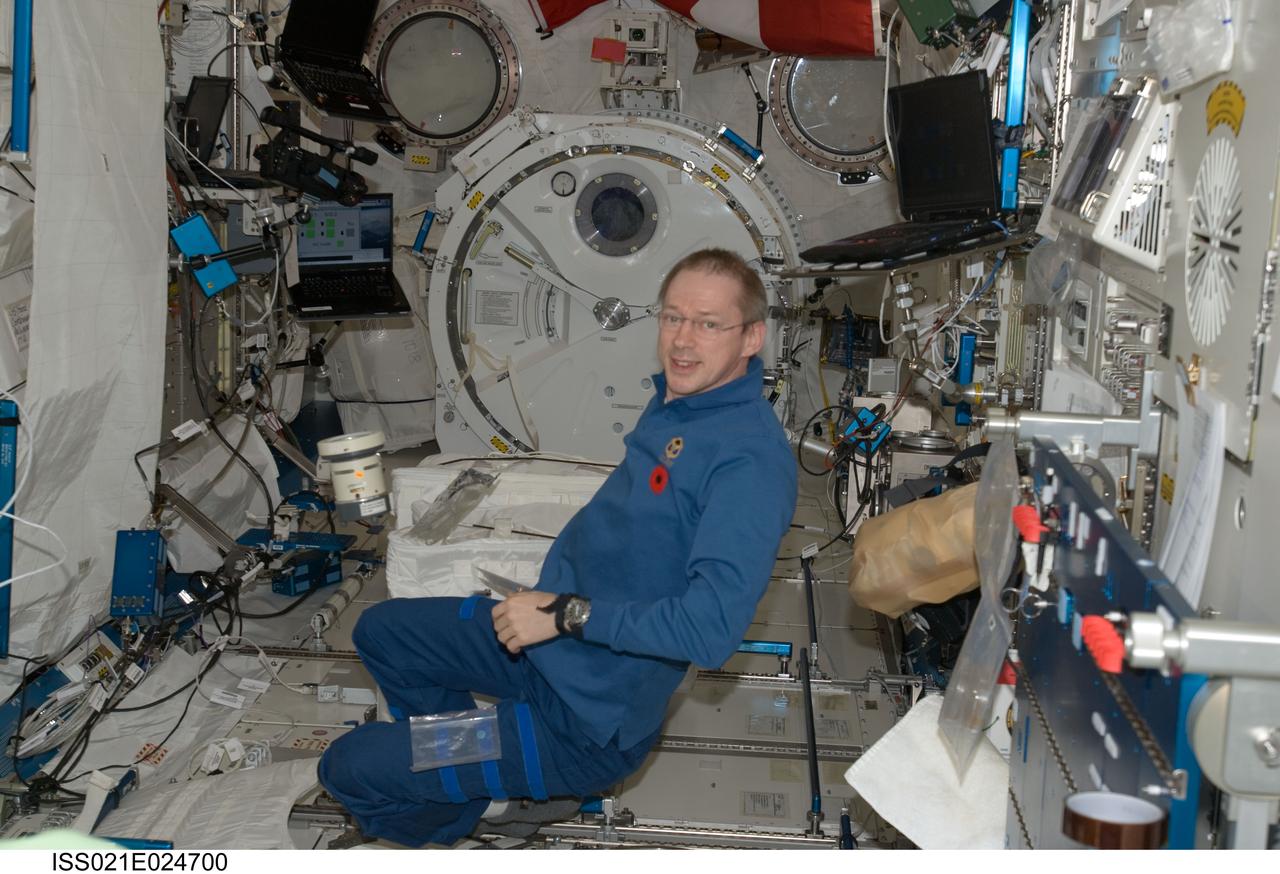
ISS021-E-024700 (11 Nov. 2009) --- European Space Agency astronaut Frank De Winne, Expedition 21 commander, uses the Microbial Air Sampler kit (floating freely near De Winne) to obtain microbiology (bacterial & fungal) air samples in the Kibo laboratory of the International Space Station.
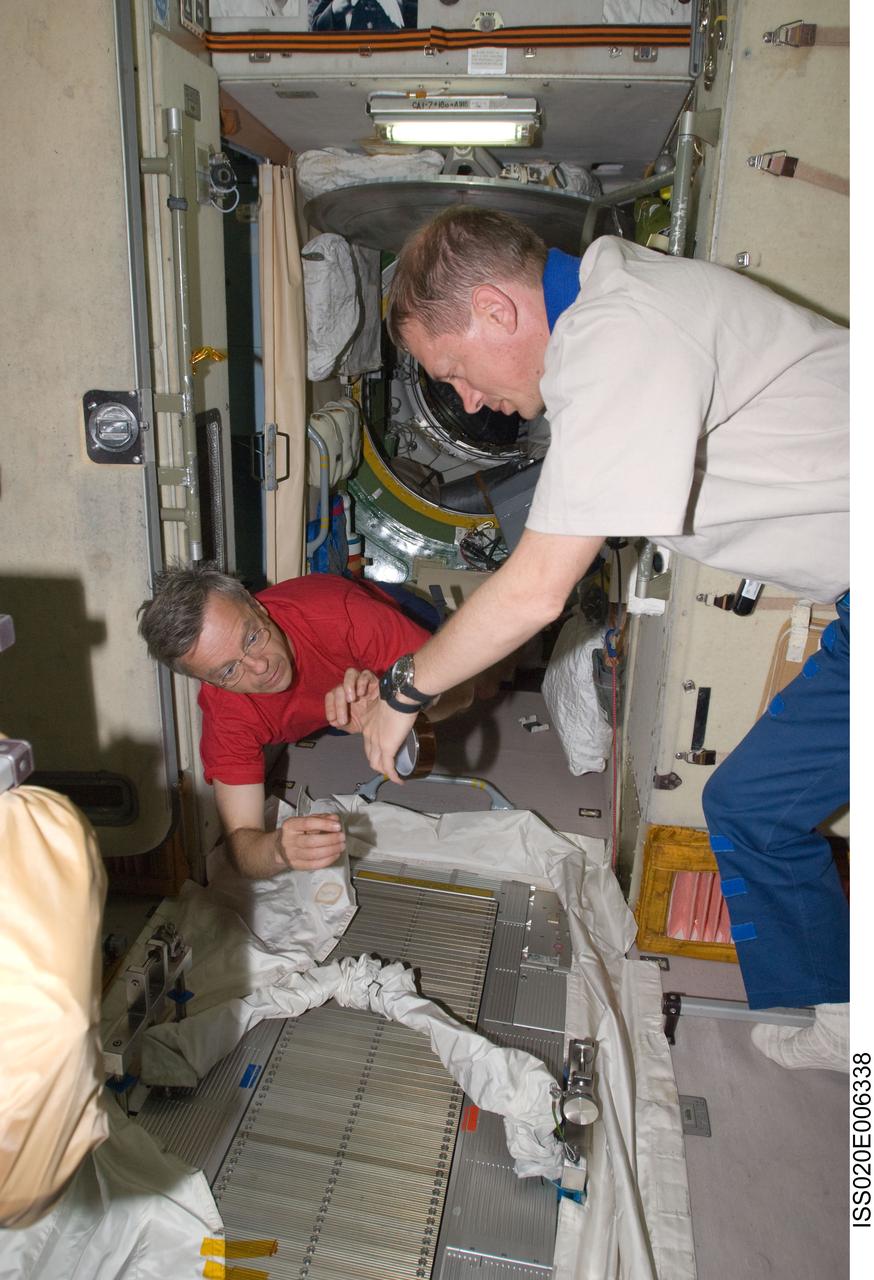
ISS020-E-006338 (3 June 2009) --- Canadian Space Agency astronaut Robert Thirsk (left) and European Space Agency astronaut Frank De Winne, both Expedition 20 flight engineers, perform in-flight maintenance on the Treadmill Vibration Isolation System (TVIS) in the Zvezda Service Module of the International Space Station.
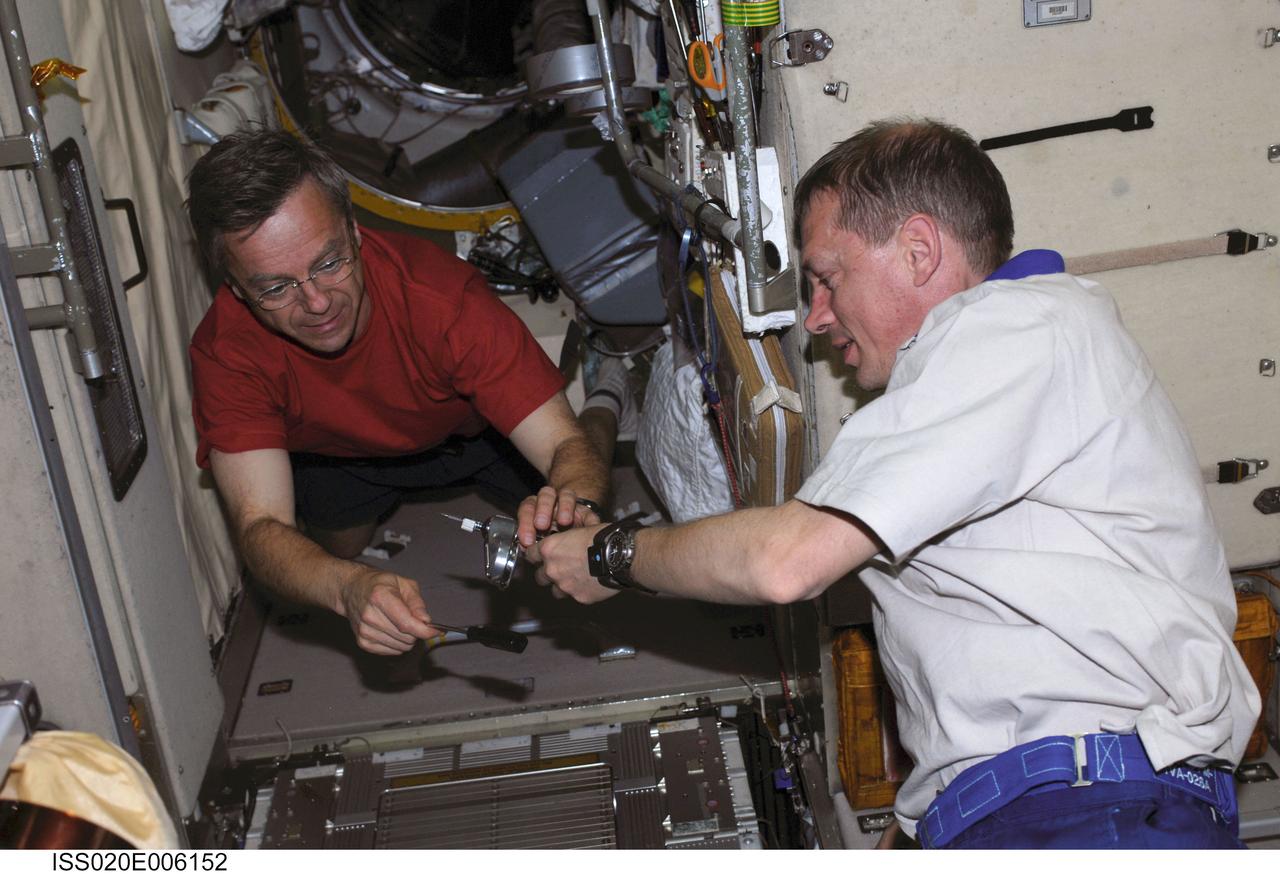
ISS020-E-006152 (3 June 2009) --- Canadian Space Agency astronaut Robert Thirsk (left) and European Space Agency astronaut Frank De Winne, both Expedition 20 flight engineers, perform in-flight maintenance on the Treadmill Vibration Isolation System (TVIS) in the Zvezda Service Module of the International Space Station.
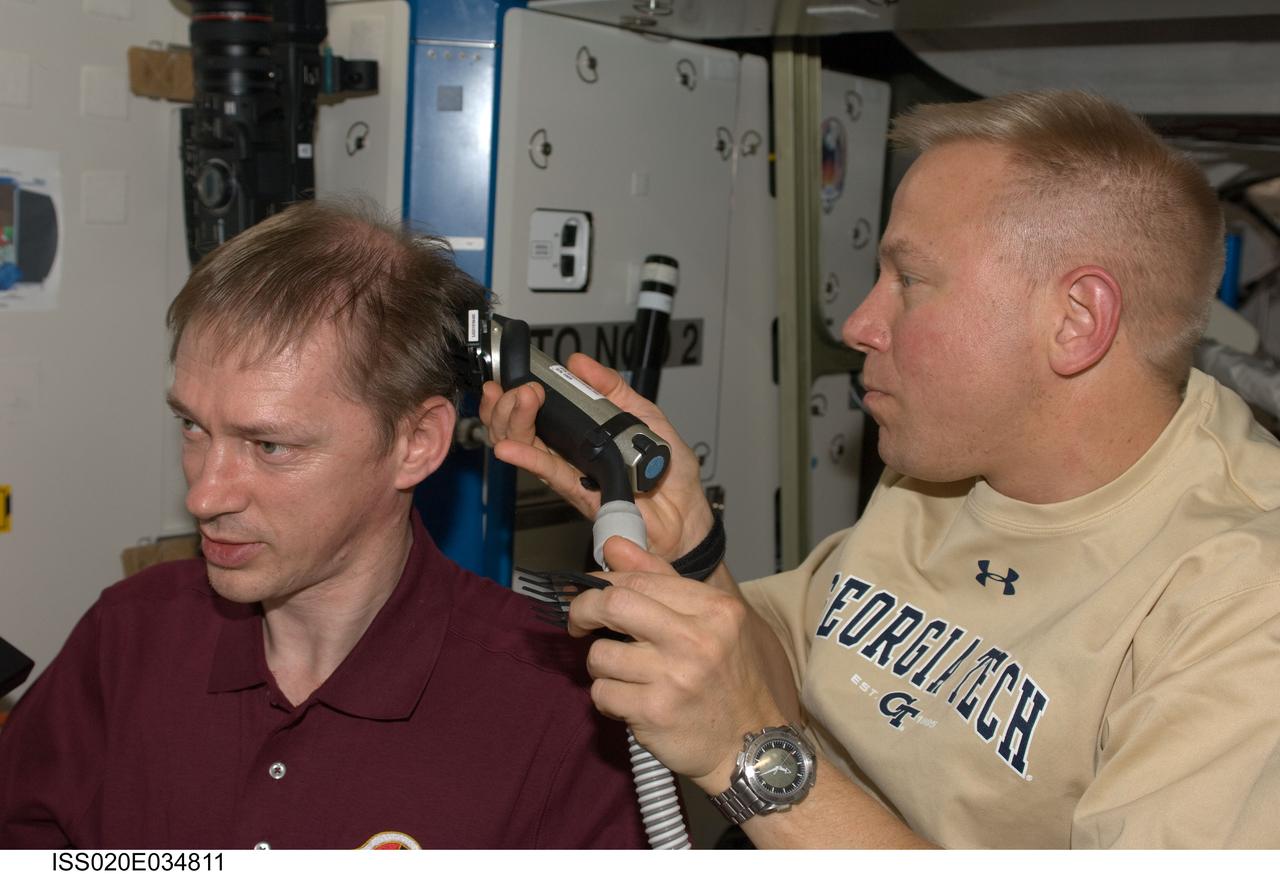
ISS020-E-034811 (9 Aug. 2009) --- NASA astronaut Tim Kopra, Expedition 20 flight engineer, trims European Space Agency astronaut Frank De Winne’s hair in the Destiny laboratory of the International Space Station. Kopra used hair clippers fashioned with a vacuum device to garner freshly cut hair.
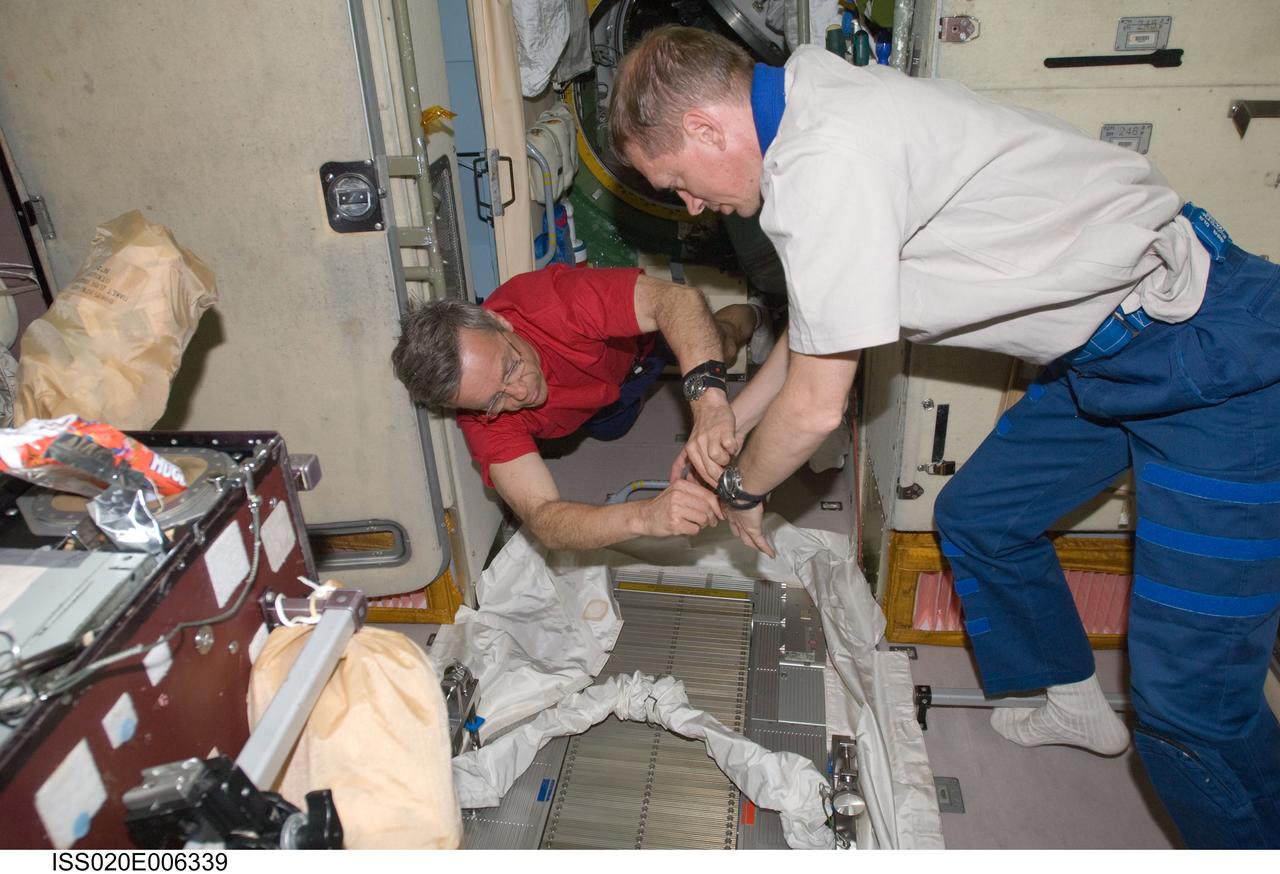
ISS020-E-006339 (3 June 2009) --- Canadian Space Agency astronaut Robert Thirsk (left) and European Space Agency astronaut Frank De Winne, both Expedition 20 flight engineers, perform in-flight maintenance on the Treadmill Vibration Isolation System (TVIS) in the Zvezda Service Module of the International Space Station.
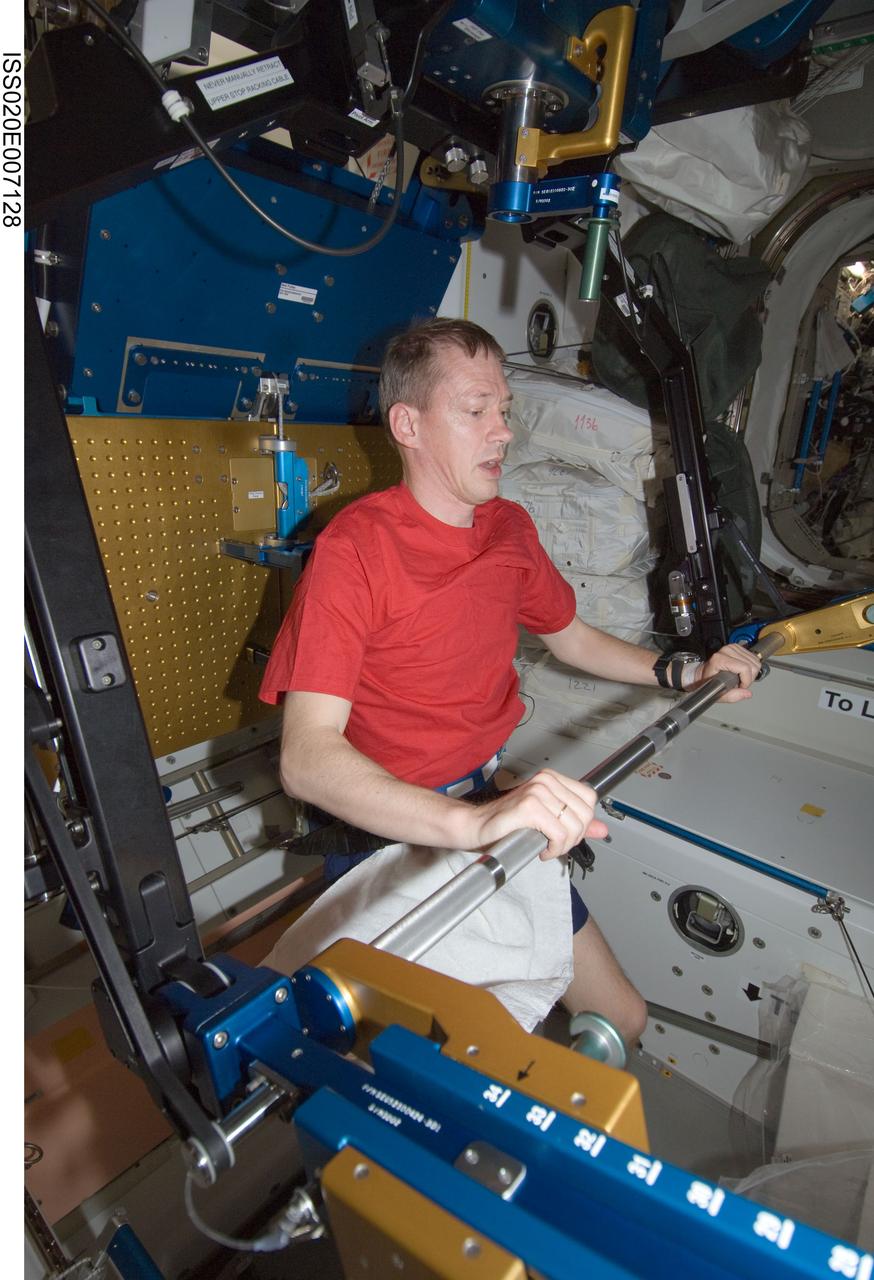
ISS020-E-007128 (5 June 2009) --- European Space Agency astronaut Frank De Winne, Expedition 20 flight engineer, exercises using the advanced Resistive Exercise Device (aRED) in the Unity node of the International Space Station.
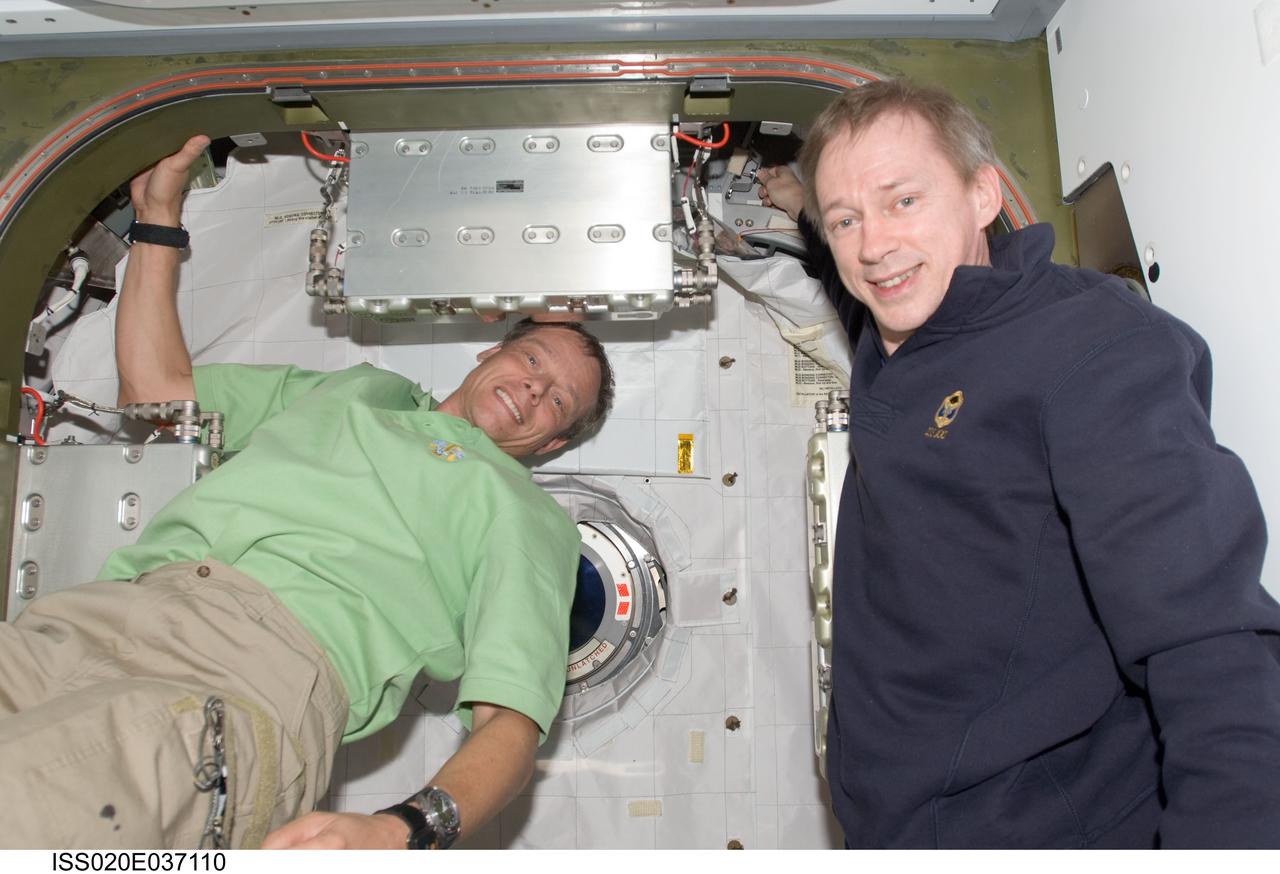
ISS020-E-037110 (31 Aug. 2009) --- European Space Agency astronauts Frank De Winne (right), Expedition 20 flight engineer; and Christer Fuglesang, STS-128 mission specialist, are pictured in the Harmony node of the International Space Station while Space Shuttle Discovery remains docked with the station.
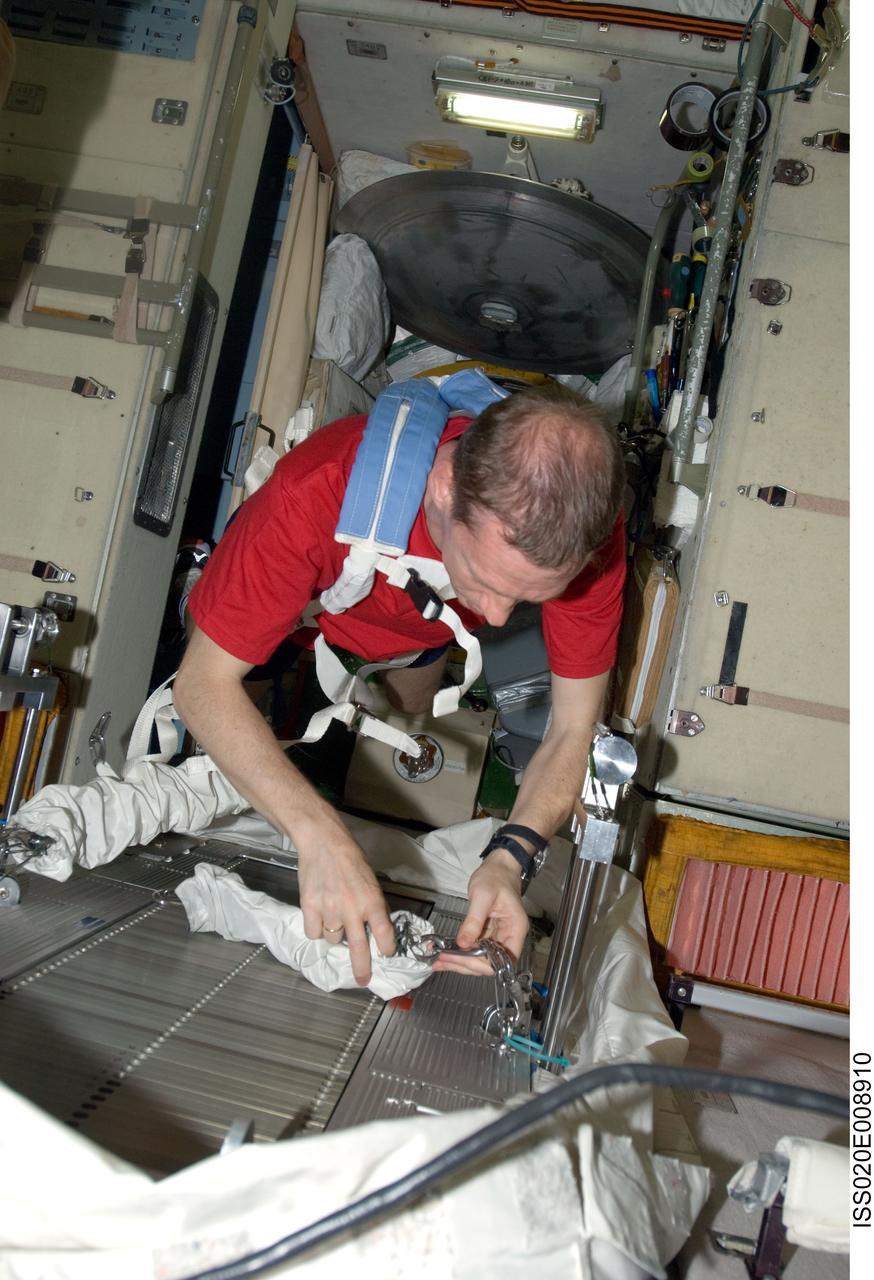
ISS020-E-008910 (14 June 2009) --- European Space Agency astronaut Frank De Winne, Expedition 20 flight engineer, works with a bungee harness for the Treadmill Vibration Isolation System (TVIS) in the Zvezda Service Module of the International Space Station.
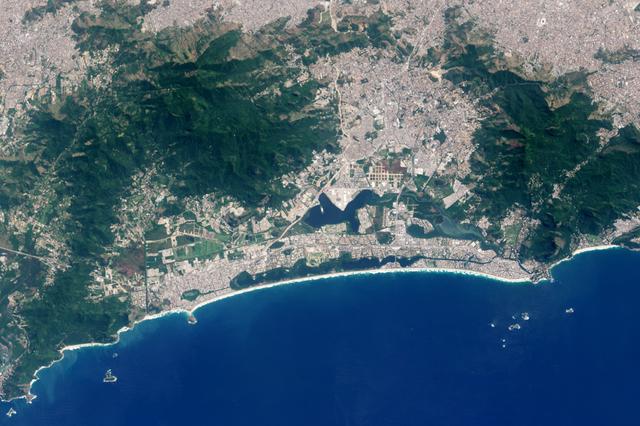
While gymnasts leap, cyclists pedal and divers twirl for Olympic gold in Rio de Janeiro, Brazil, several NASA Earth Observing satellites catch glimpses of the city and its surroundings from space. This image shows how Rio Olympic Park appeared to the Operational Land Imager (OLI), a sensor on Landsat 8, last September as the city prepared for the 2016 Summer Olympic Games. Image credit: Landsat 8/NASA Earth Observatory <b><a href="http://www.nasa.gov/audience/formedia/features/MP_Photo_Guidelines.html" rel="nofollow">NASA image use policy.</a></b> <b><a href="http://www.nasa.gov/centers/goddard/home/index.html" rel="nofollow">NASA Goddard Space Flight Center</a></b> enables NASA’s mission through four scientific endeavors: Earth Science, Heliophysics, Solar System Exploration, and Astrophysics. Goddard plays a leading role in NASA’s accomplishments by contributing compelling scientific knowledge to advance the Agency’s mission. <b>Follow us on <a href="http://twitter.com/NASAGoddardPix" rel="nofollow">Twitter</a></b> <b>Like us on <a href="http://www.facebook.com/pages/Greenbelt-MD/NASA-Goddard/395013845897?ref=tsd" rel="nofollow">Facebook</a></b> <b>Find us on <a href="http://instagrid.me/nasagoddard/?vm=grid" rel="nofollow">Instagram</a></b>
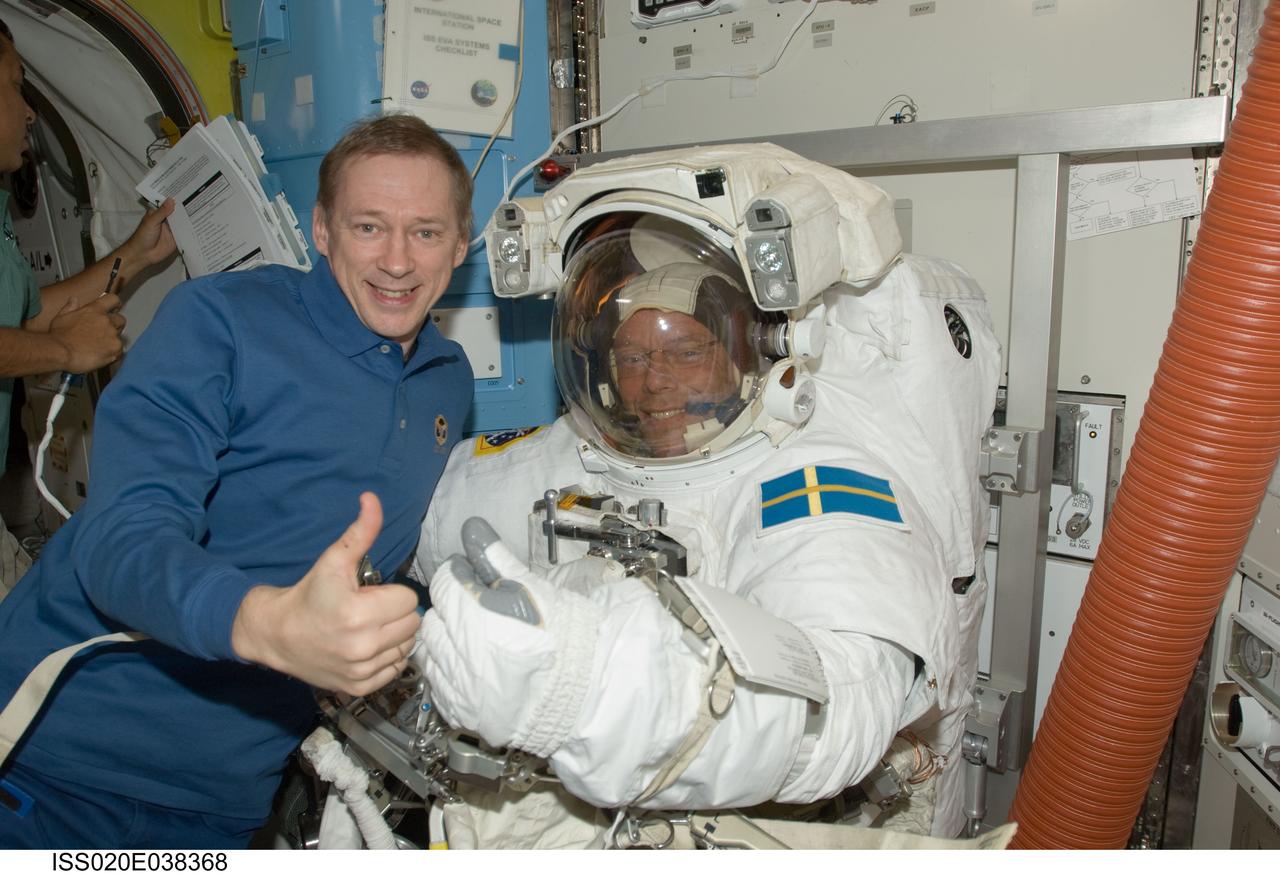
ISS020-E-038368 (3 Sept. 2009) --- European Space Agency astronauts Frank De Winne (left), Expedition 20 flight engineer; and Christer Fuglesang, STS-128 mission specialist, pose for a photo in the Quest airlock of the International Space Station while Space Shuttle Discovery remains docked with the station. Fuglesang is attired in his Extravehicular Mobility Unit (EMU) spacesuit.
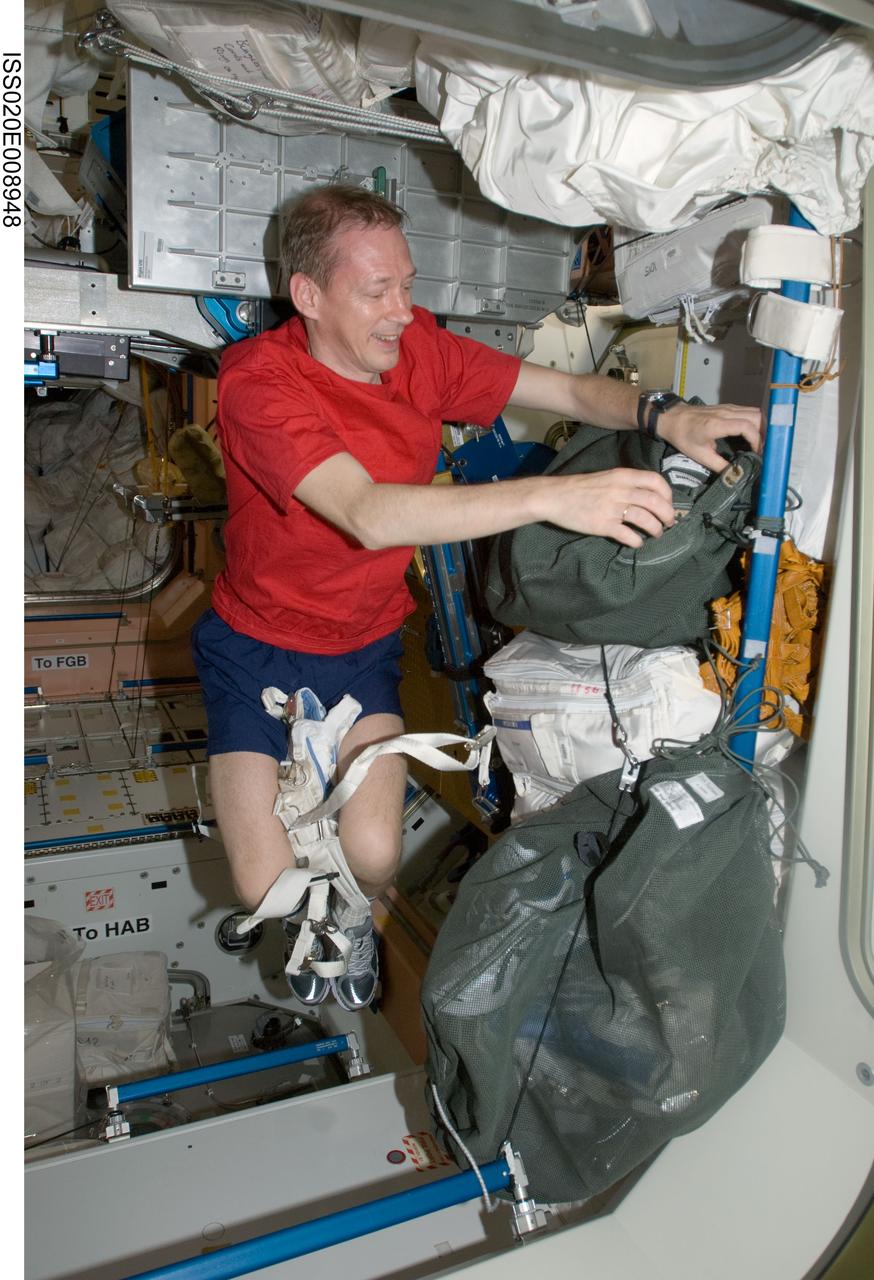
ISS020-E-008948 (14 June 2009) --- European Space Agency astronaut Frank De Winne, Expedition 20 flight engineer, retrieves items from a stowage bag in the Unity node of the International Space Station.
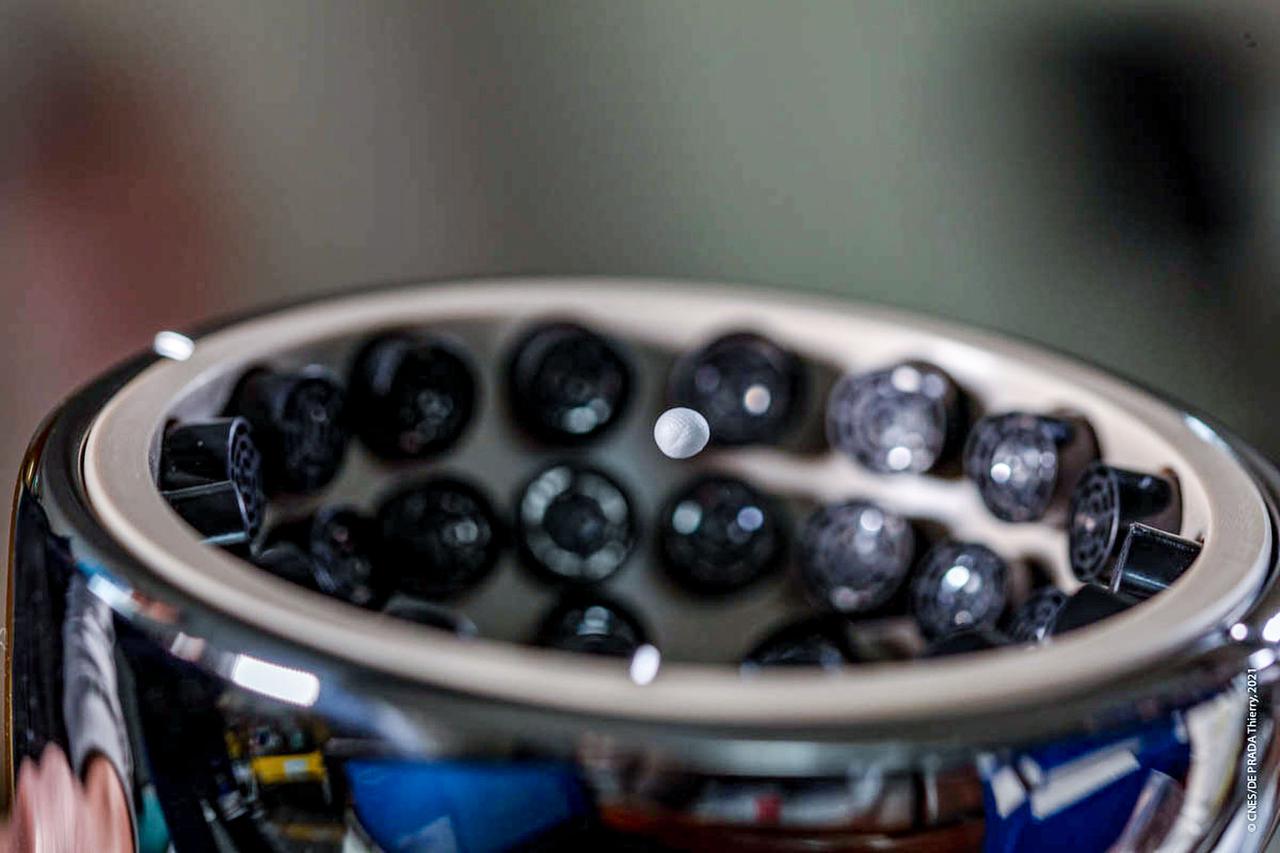
jsc2021e020420 (2/10/2021) --- A preflight view of the Ultrasonic Tweezers handle trapping a polystyrene sphere during hardware verification. The objective of the Ultrasonic Tweezers project is to develop acoustic tweezers that use sound to allow for remote and contactless manipulation of materials in a microgravity context. Image courtesy of CNES/T. De Prada.
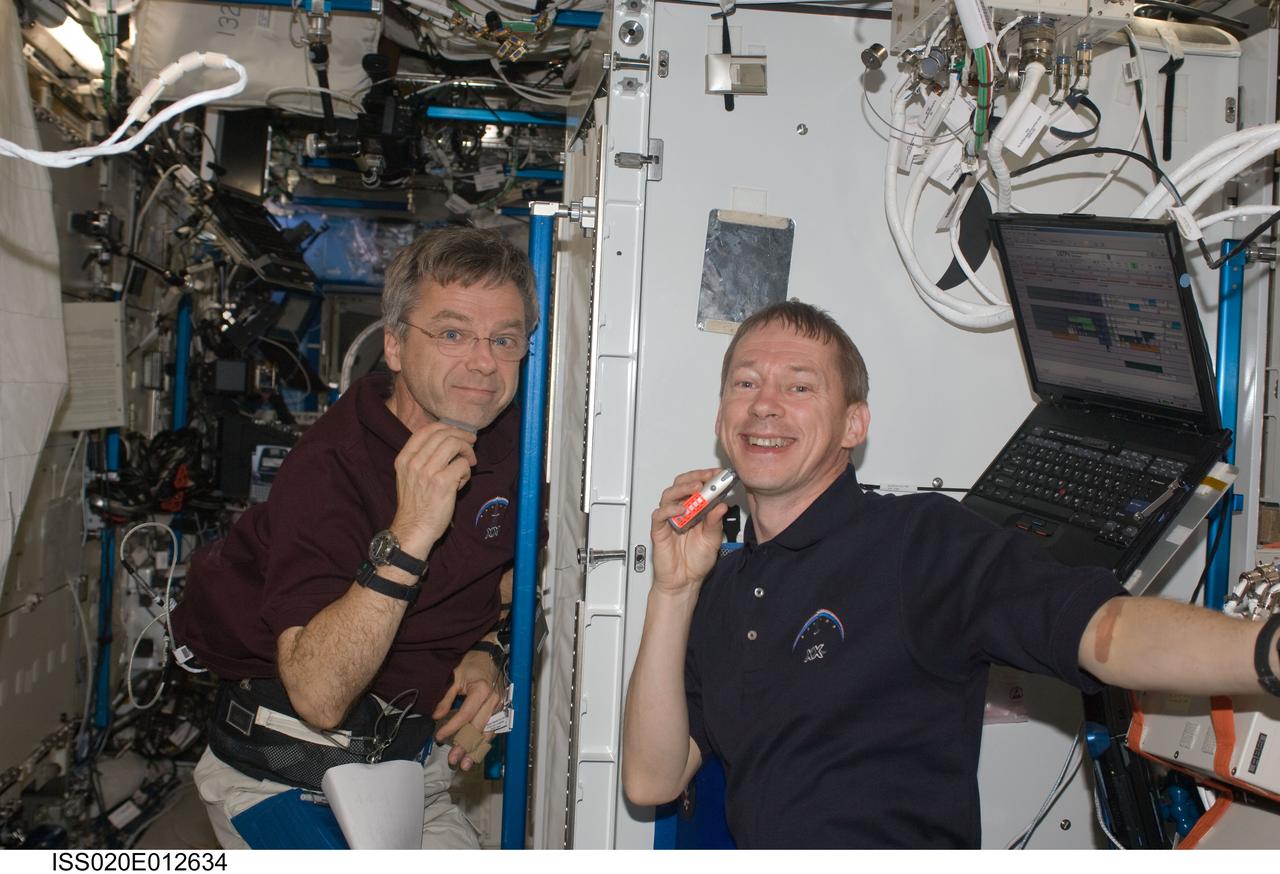
ISS020-E-012634 (19 June 2009) --- Canadian Space Agency astronaut Robert Thirsk (left) and European Space Agency astronaut Frank De Winne, both Expedition 20 flight engineers, shave with electric razors in the Destiny laboratory of the International Space Station.