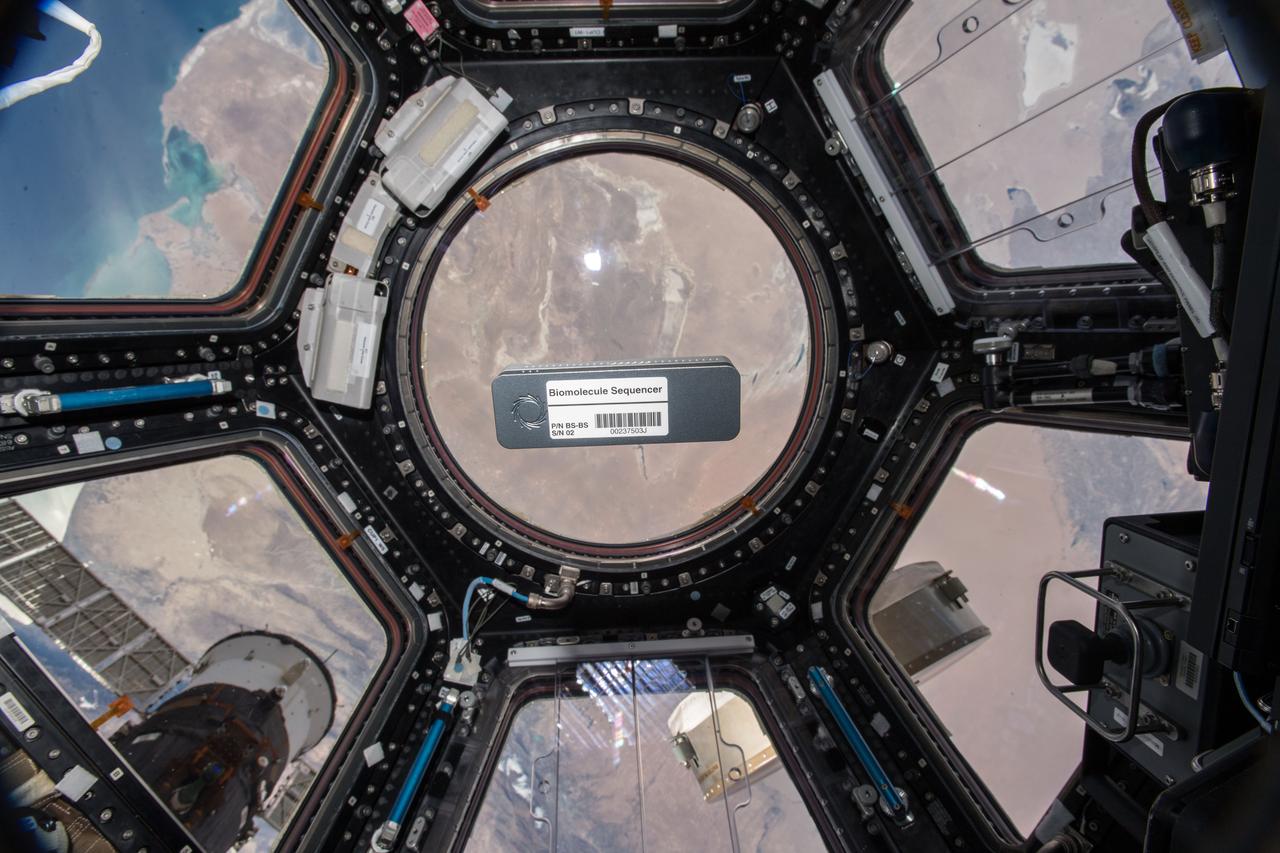
iss057e000185 (10/8/2018) - Biomolecule Sequencer for the BEST experiment floating in front of Window 7 in the Cupola module. Earth is in the background. The Biomolecule Sequencer seeks to demonstrate, for the first time, that DNA sequencing is feasible in an orbiting spacecraft. A space-based DNA sequencer could identify microbes, diagnose diseases and understand crew member health, and potentially help detect DNA-based life elsewhere in the solar system.
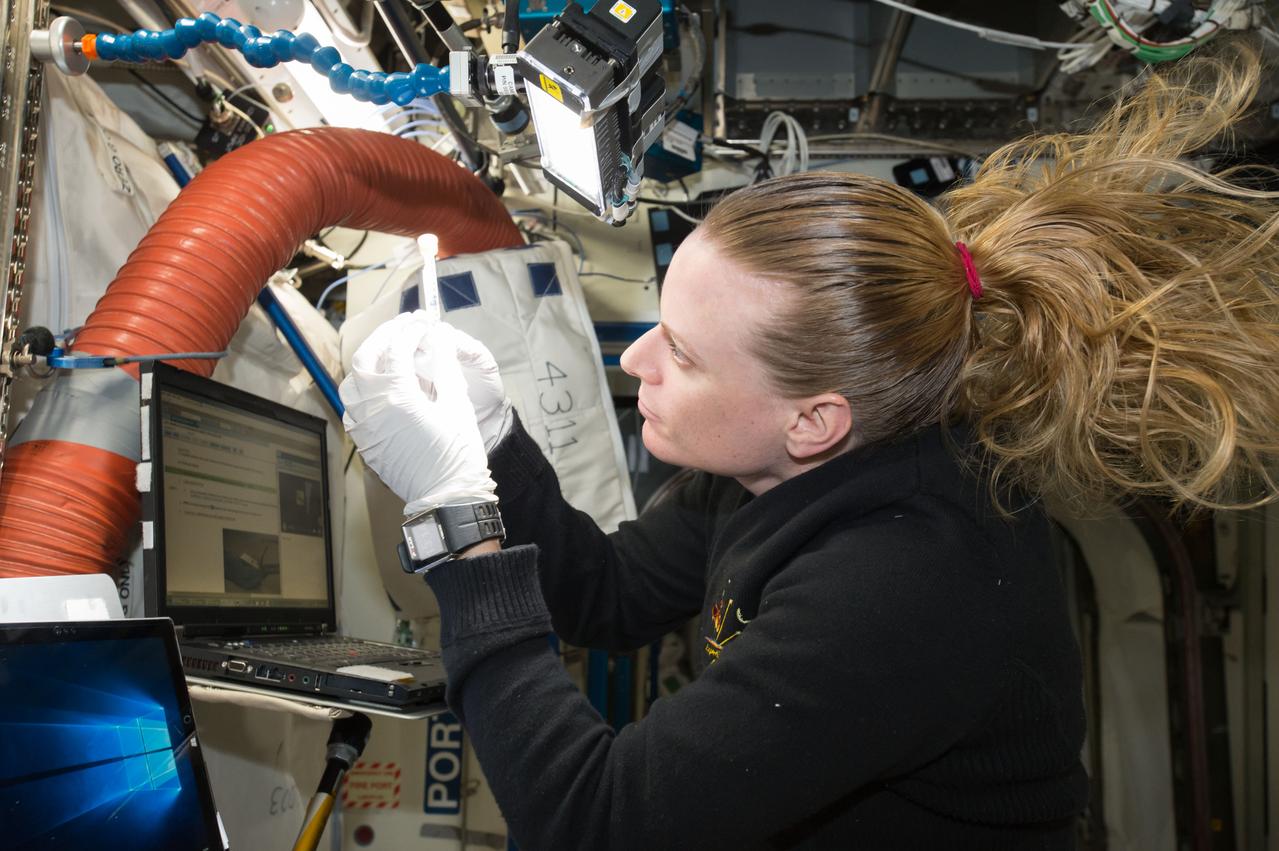
iss048e069880 (9/3/2016) --- NASA Astronaut Kate Rubins makes preparations for the Run 2 sample initialization of the Biomolecule Sequencer experiment. The Biomolecule Sequencer seeks to demonstrate, for the first time, that DNA sequencing is feasible in an orbiting spacecraft. A space-based DNA sequencer could identify microbes, diagnose diseases and understand crew member health, and potentially help detect DNA-based life elsewhere in the solar system.
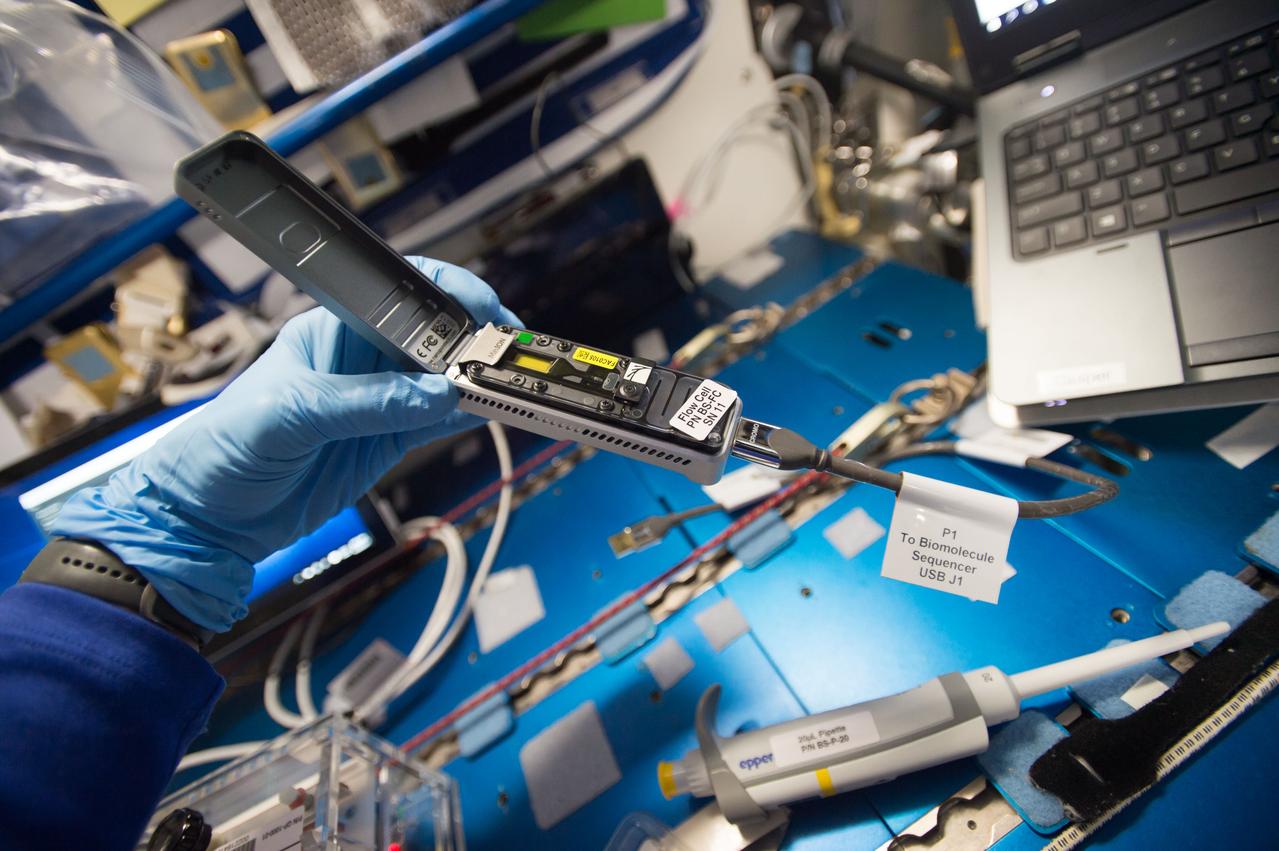
iss052e008880 (6/28/2017) --- View of Genes In Space-3 experiment in the Node 2 module. The Genes in Space-3 experiments demonstrate ways in which portable, real-time DNA sequencing can be used to assay microbial ecology, diagnose infectious diseases and monitor crew health aboard the ISS.
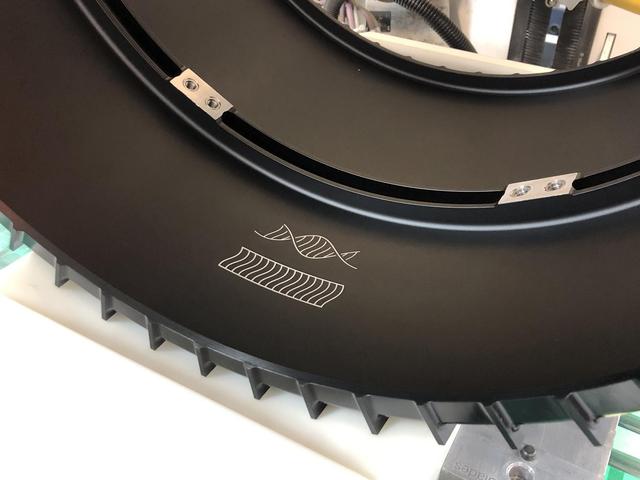
This photo shows two small drawings inscribed inside the front left wheel of the Mars Perseverance rover, pictured here before it was installed on the rover. One figure represents the tracks that the rover leaves as it drives on Mars. The other resembles that same pattern, twisted into the shape of DNA. The symbols represent humanity's fundamental drive to invent the tools necessary for exploration, and serve as a reminder that our space robots are of human origin. https://photojournal.jpl.nasa.gov/catalog/PIA24552
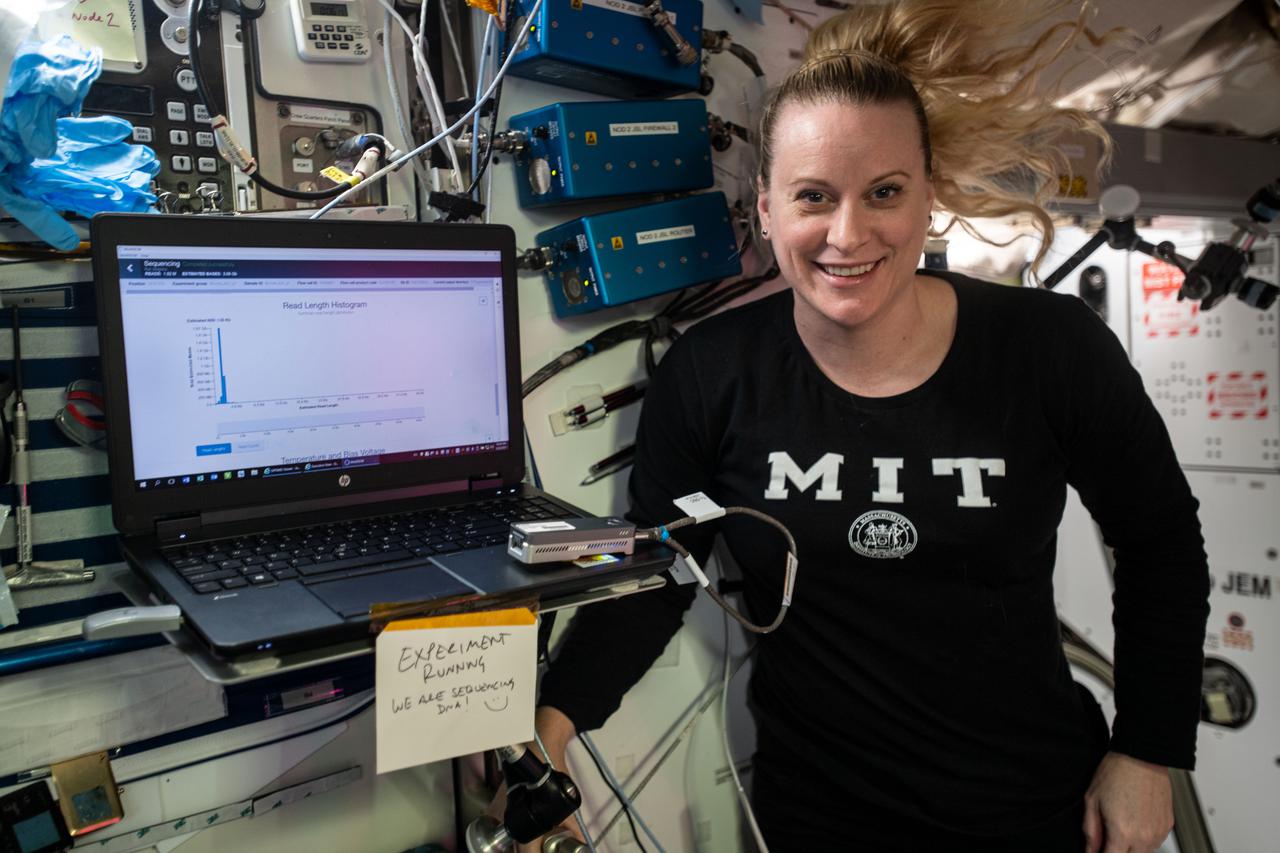
iss064e025418 (Jan. 21, 2021) --- NASA astronaut and Expedition 64 Flight Engineer Kate Rubins sequences DNA aboard the International Space Station for an experiment that seeks to diagnose medical conditions and identify microbes. Learn more about the first sequencing of DNA in space: https://go.nasa.gov/2VPsQFJ
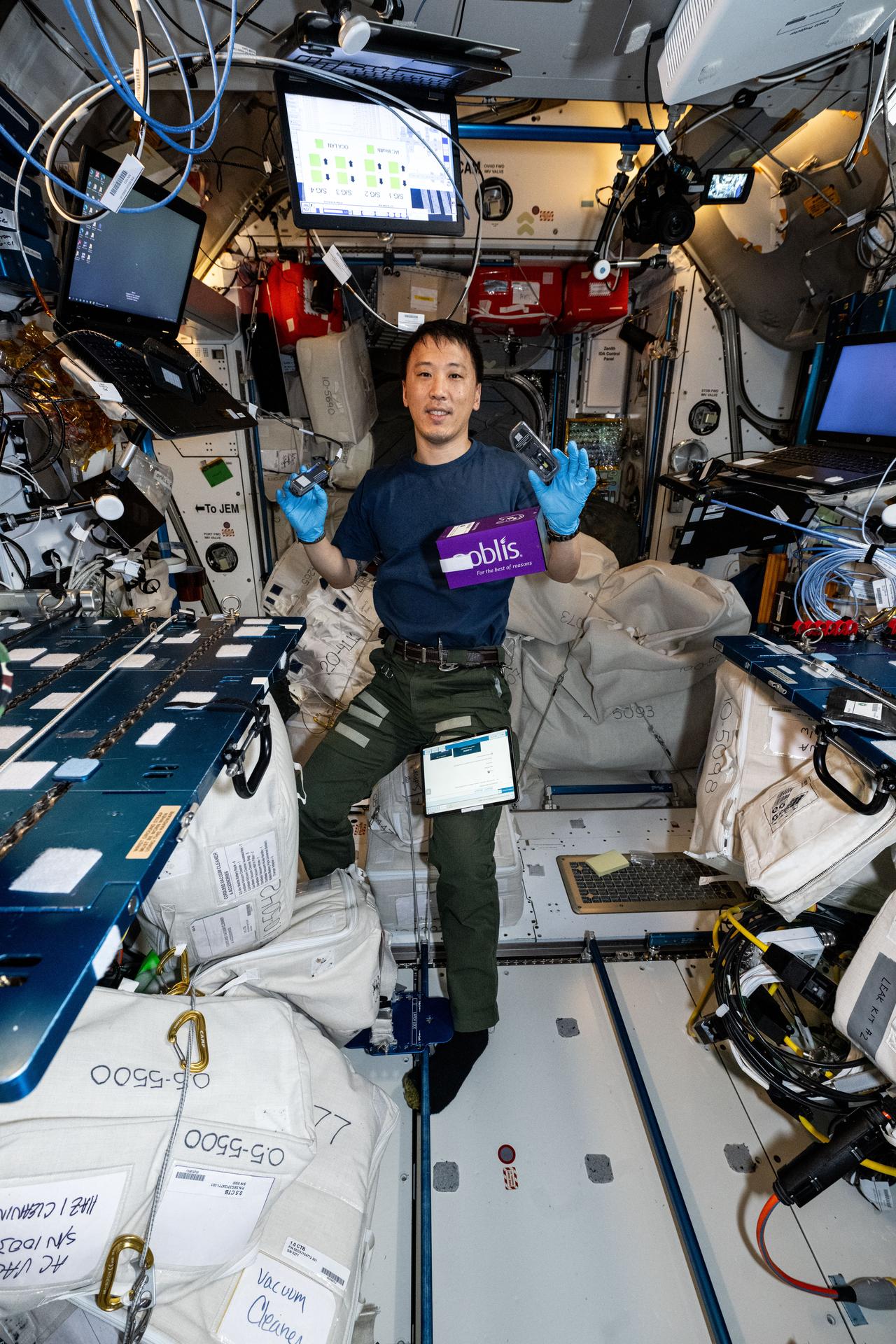
iss073e0815503 (Sept. 26, 2025) --- NASA astronaut and Expedition 73 Flight Engineer Jonny Kim shows off research hardware from the Voyager DNA Decryption experiment taking place inside the International Space Station's Harmony module. The biotechnology investigation explores the use of DNA as a medium for storing and encrypting digital data, aiming to reduce reliance on traditional, heavier storage systems in space.
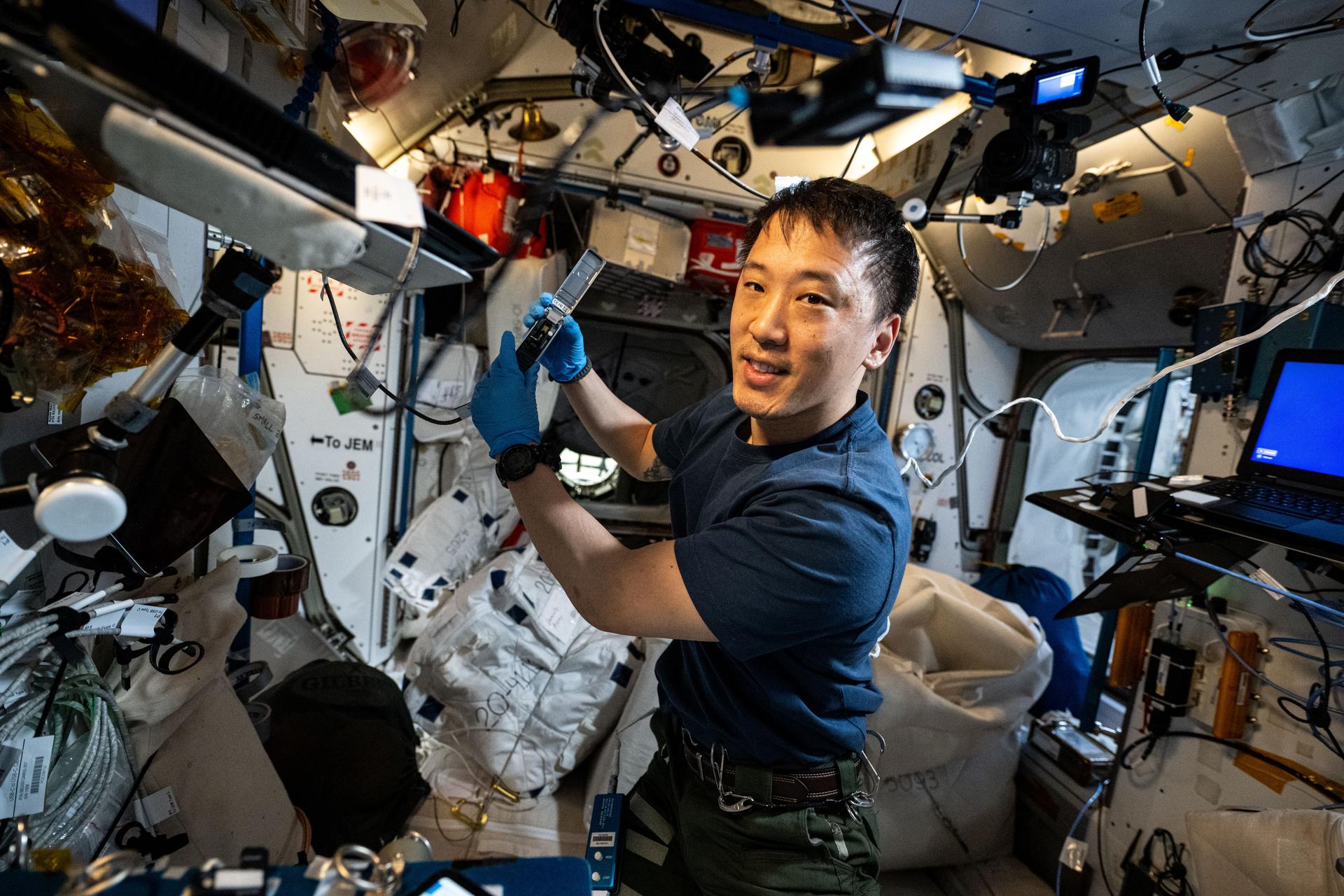
iss073e0815503 (Sept. 26, 2025) --- NASA astronaut and Expedition 73 Flight Engineer Jonny Kim conducts research operations for the Voyager DNA Decryption experiment taking place inside the International Space Station's Harmony module. The biotechnology investigation explores the use of DNA as a medium for storing and encrypting digital data, aiming to reduce reliance on traditional, heavier storage systems in space.
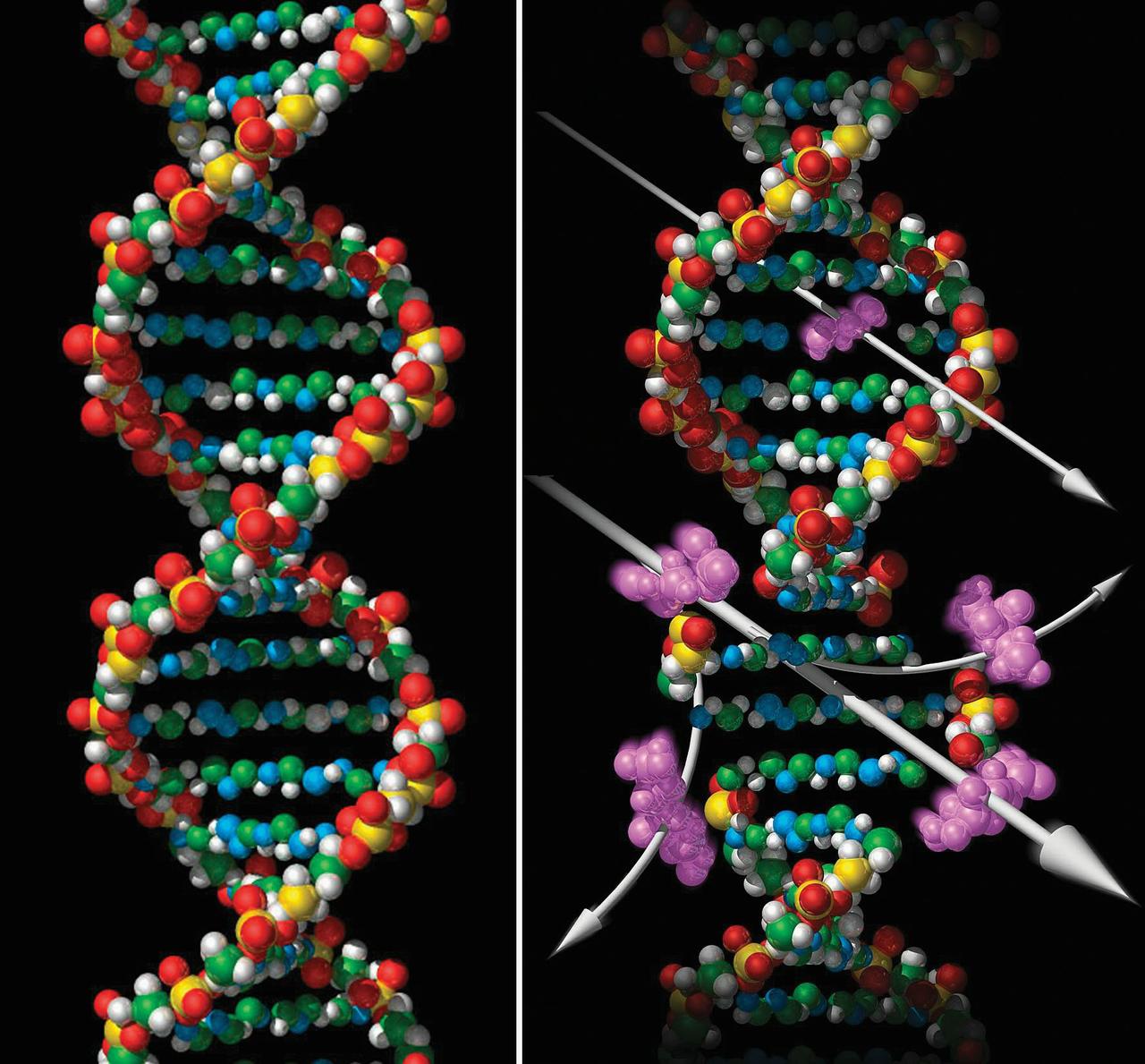
The blueprint of life, DNA's double helix is found in the cells of everything from bacteria to astronauts. Exposure to radiation(depicted at right) such as X-rays (upper) or heavy ion particles (lower), can damage DNA and cause dire consequences both to the organism itself and to future generations. One of NASA's main goals is to develop better radiation shielding materials to protect astronauts from destructive radiation in space. This is particularly important for long space missions. NASA has selected researchers to study materials that provide better shielding. This research is managed by NASA's Office of Biological and Physical Research and is supported by the Microgravity Science and Applications Department at NASA's Marshall Center. During International Space Station Expedition Six, the Extravehicular Activity Radiation Monitoring (EVARM) will continue to measure radiation dosage encountered by the eyes, internal organs and skin during specific spacewalks, and relate it to the type of activity, location and other factors. An analysis of this information may be useful in mitigating potential exposure to space walkers in the future. (Illustration by Dr. Frank Cucinotta, NASA/Johnson Space Center, and Prem Saganti, Lockheed Martin)
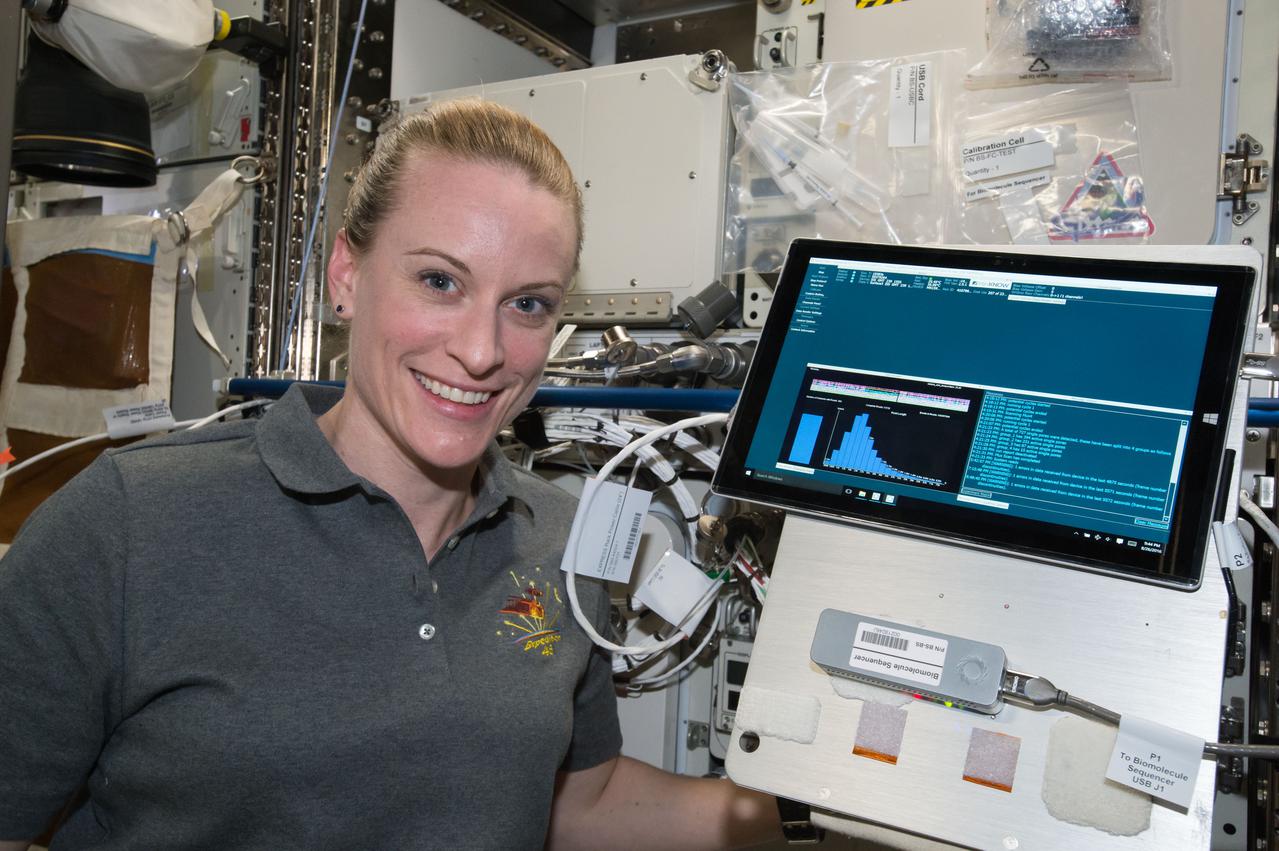
iss048e066523 (8/26/2016) --- NASA astronaut Kate Rubins poses for a photo with Biomolecule Sequencer experiment hardware (Surface Pro 3 tablet and MinION) during the first sample initialization run. The image was taken in the Destiny U.S. Laboratory aboard the International Space Station (ISS).
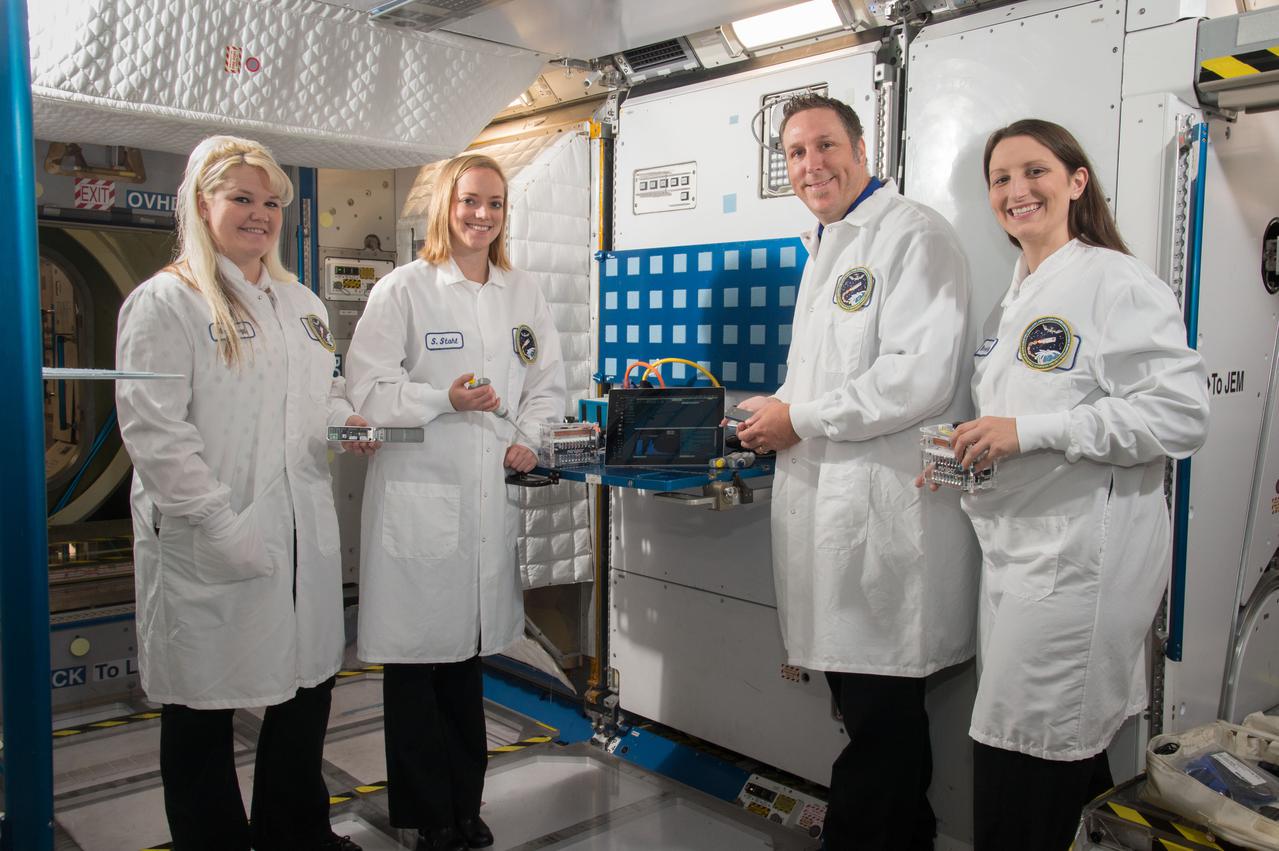
PHOTO DATE: 11-14-16 LOCATION: ISS MOCKUPS SUBJECT: Biomolecule Sequencer team group portrait of Sara Wallace, Sarah Stahl-Rommel, Aaron Burton and Kristen John. PHOTOGRAPHER: BILL STAFFORD
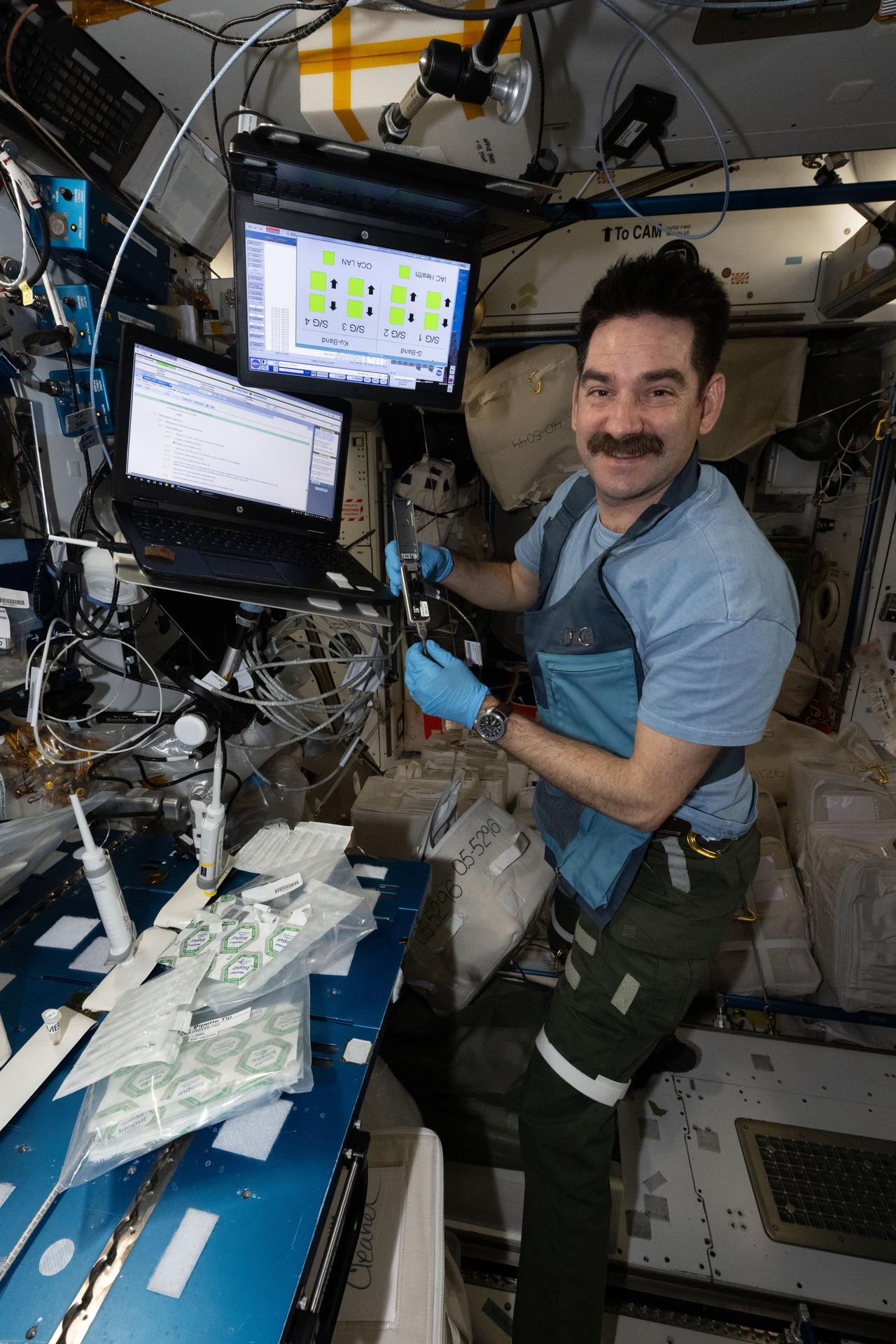
iss074e0722461 (June 17, 2026) --- NASA astronaut and Expedition 74 flight engineer Jack Hathaway loads bacterial samples into a portable DNA sequencer to read their genetic code inside the International Space Station’s Harmony module. The GEARS biotechnology investigation may help scientists understand how bacteria become resistant to antibiotics in the space environment, which could affect an astronaut’s ability to fight infections. Credit: NASA/Jessica Meir
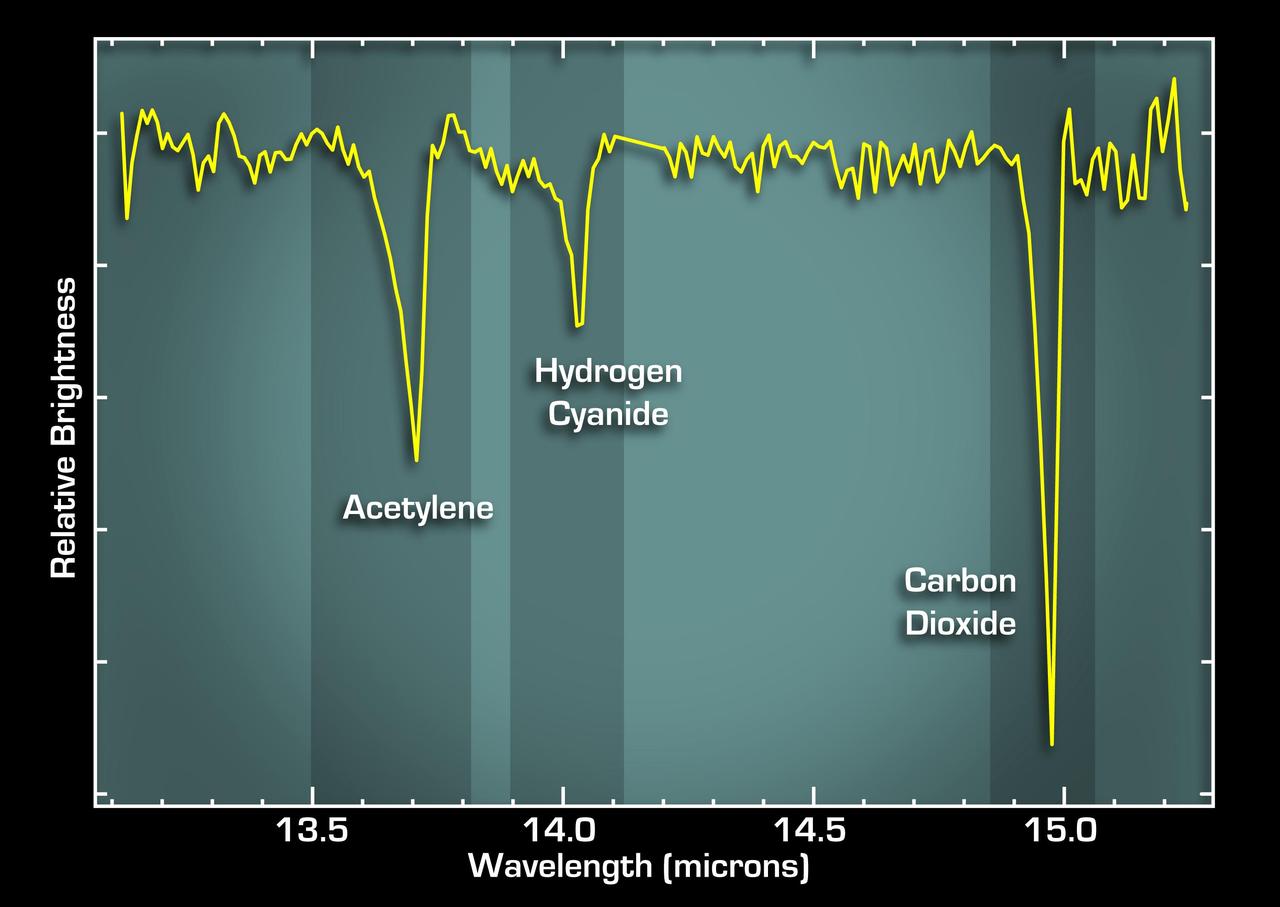
This graph, or spectrum, from NASA Spitzer Space Telescope tells astronomers that some of the most basic ingredients of DNA and protein are concentrated in a dusty planet-forming disk circling a young sun-like star called IRS 46.
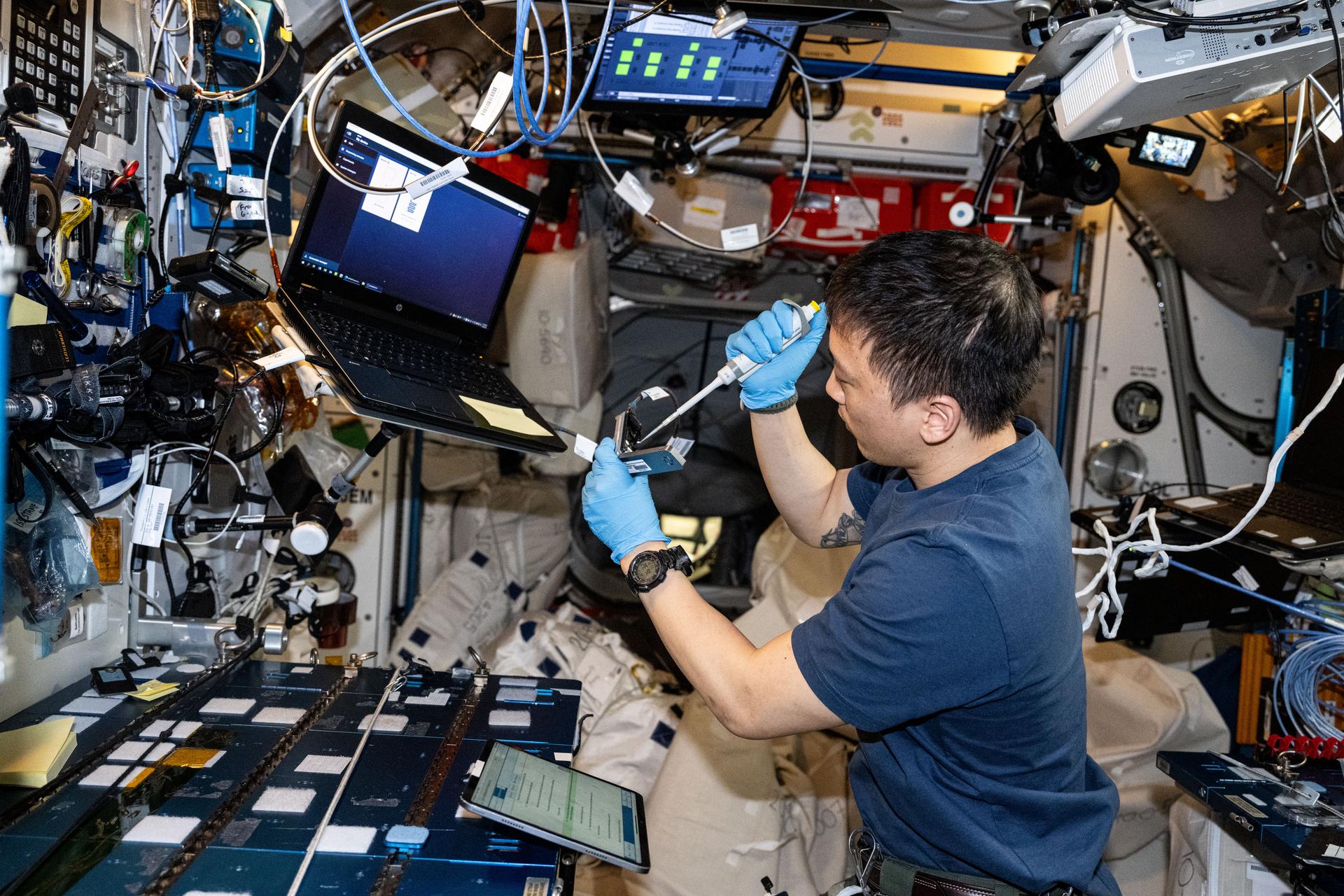
iss073e0768479 (Sept. 26, 2005) --- NASA astronaut and Expedition 73 Flight Engineer Johnny Kim works with DNA encoded with encrypted messages to demonstrate the feasibility of using DNA as a medium for securely encoding, transmitting, and decoding data both in space and on Earth. This investigation, Voyager DNA Decryption, could reduce the weight and energy requirements of traditional data storage for deep space missions.
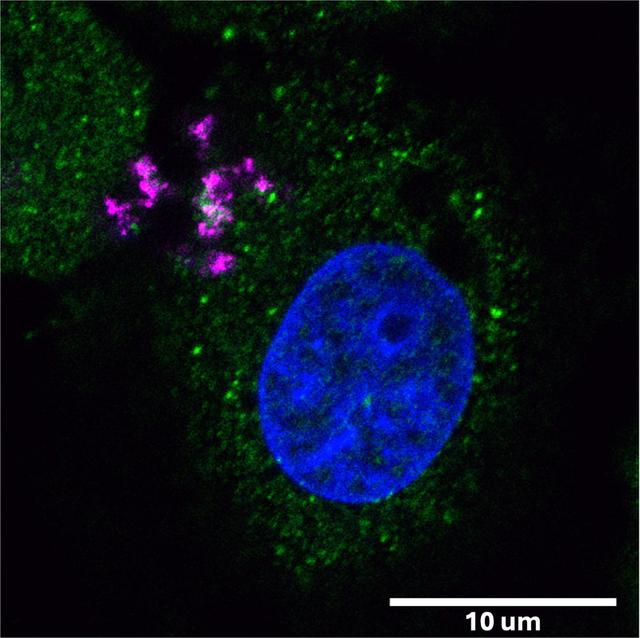
jsc2025e036195 (4/4/2025) --- A confocal microscope image shows a human cartilage cell, with its nucleus stained in blue, following delivery of Janus Base Nanoparticles (JBNp) and the subsequent release of bioactive mRNA (pink) that was translated into function protein (green). Biomimetic Fabrication of Multi-Functional DNA-Inspired Nanomaterials via Controlled Self-assembly in Space (DNA Nano Therapeutics-Mission 2) continues prior research on in-space manufacturing of nanomaterials that mimic DNA and have applications for vaccines and regenerative medicine. Image courtesy of University of Connecticut.
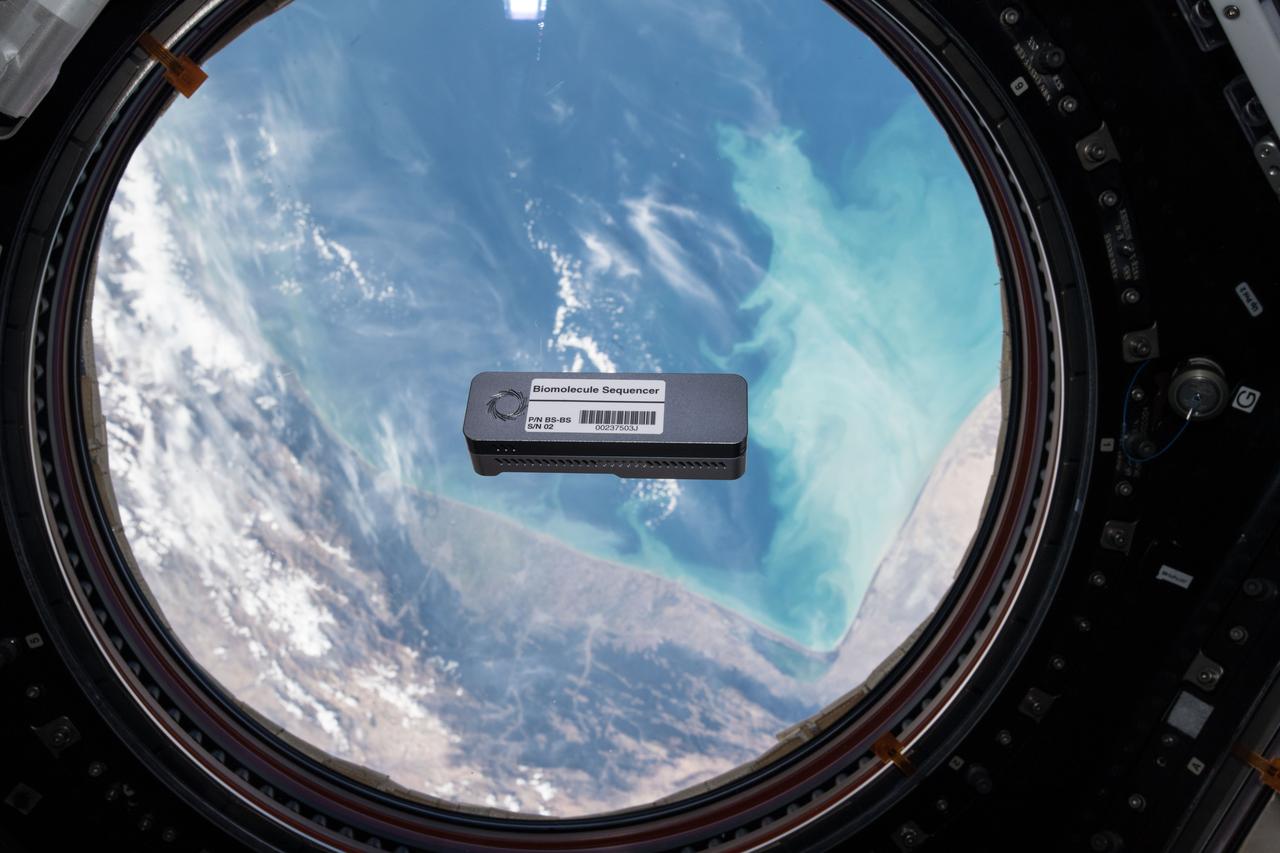
iss057e000180 (10/8/2018) - Biomolecule Sequencer for the BEST experiment floating in front of Window 7 in the Cupola module. Earth is in the background. The Biomolecule Sequencer seeks to demonstrate, for the first time, that DNA sequencing is feasible in an orbiting spacecraft. A space-based DNA sequencer could identify microbes, diagnose diseases and understand crew member health, and potentially help detect DNA-based life elsewhere in the solar system.
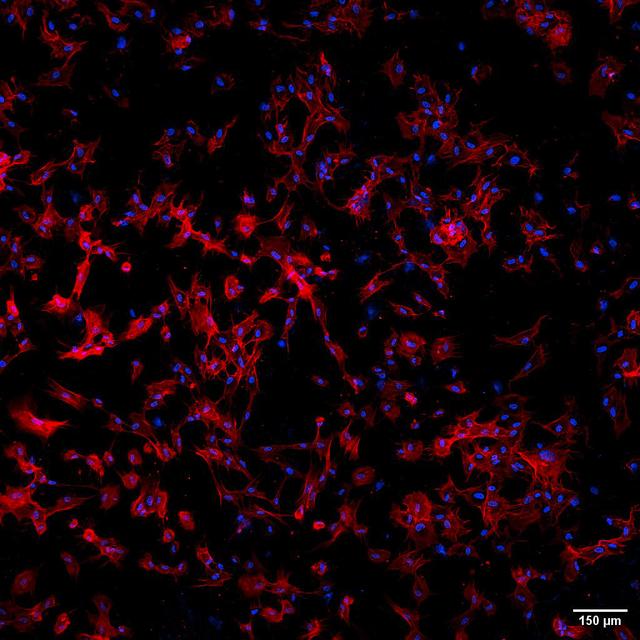
Jsc2025e036192 (4/4/2025) --- Stem cells grown along Janus Base Nanomaterial (JBNm) made on Earth. After four hours, the cells adhered to the scaffold. Biomimetic Fabrication of Multi-Functional DNA-Inspired Nanomaterials via Controlled Self-assembly in Space (DNA Nano Therapeutics-Mission 2) continues prior research on in-space manufacturing of nanomaterials that mimic DNA and have applications for vaccines and regenerative medicine. Image courtesy of University of Connecticut.
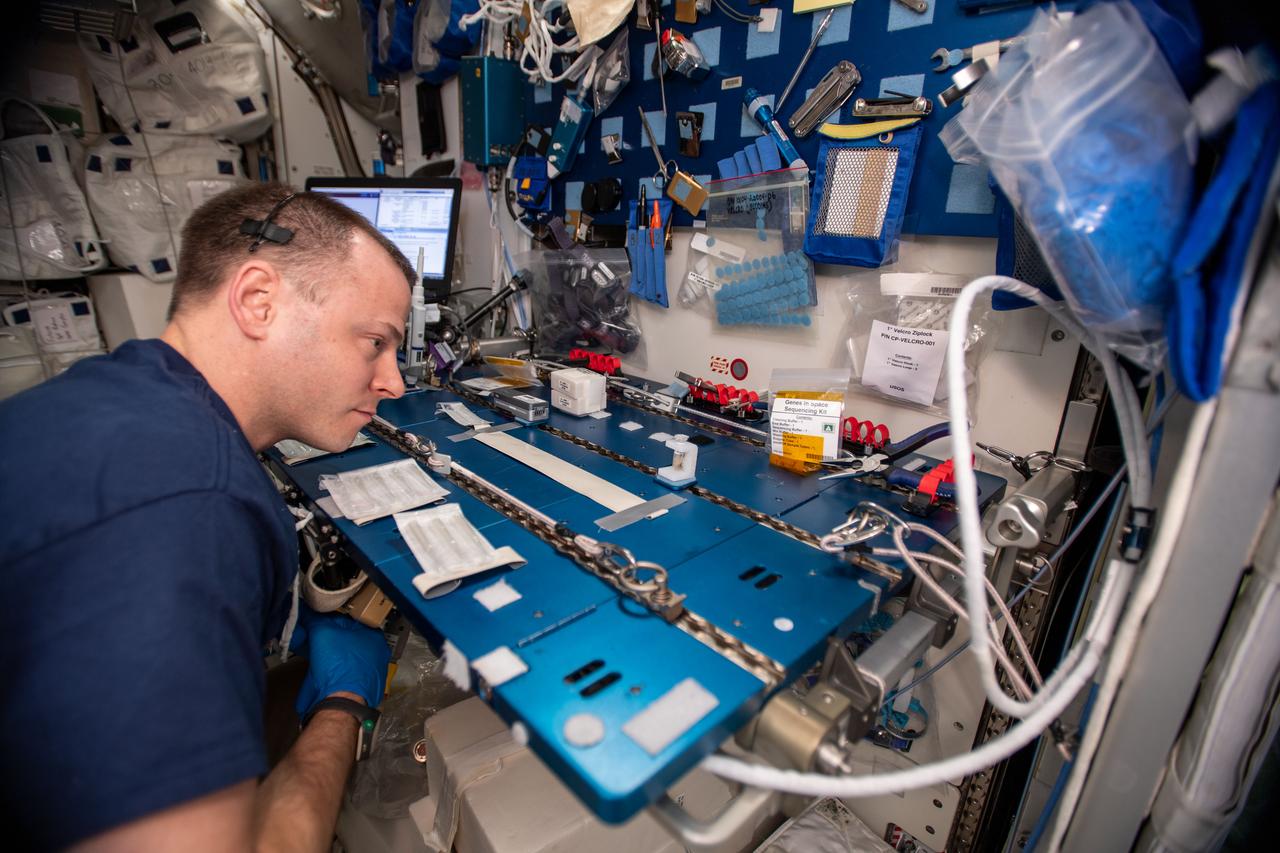
iss059e068226 (May 21, 2019) --- NASA astronaut Nick Hague of Expedition 59 sequences DNA samples for a study exploring how increased exposure to space radiation impacts crew health. He used the Biomolecule Sequencer for the investigation to demonstrate DNA sequencing in space. The Genes In Space-6 experiment is researching how space radiation damages DNA and how the cell repair mechanism works in microgravity.
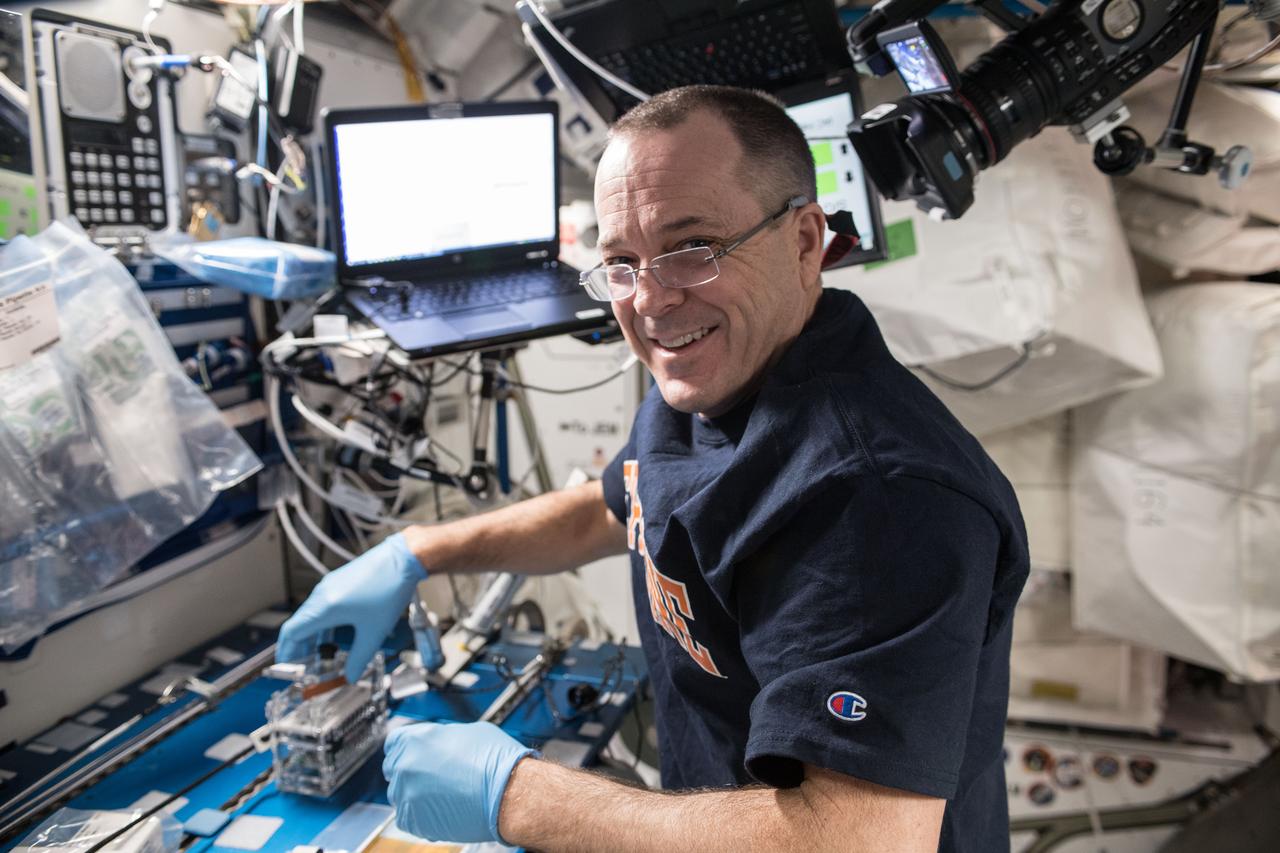
iss056e097419 (July 19, 2018) --- NASA astronaut Ricky Arnold swabbed surfaces in the International Space Station to collect microbe samples. He then processed the microbial DNA using the Biomolecule Sequencer, a device that enables DNA sequencing in microgravity, to identify microbes able to survive in microgravity.
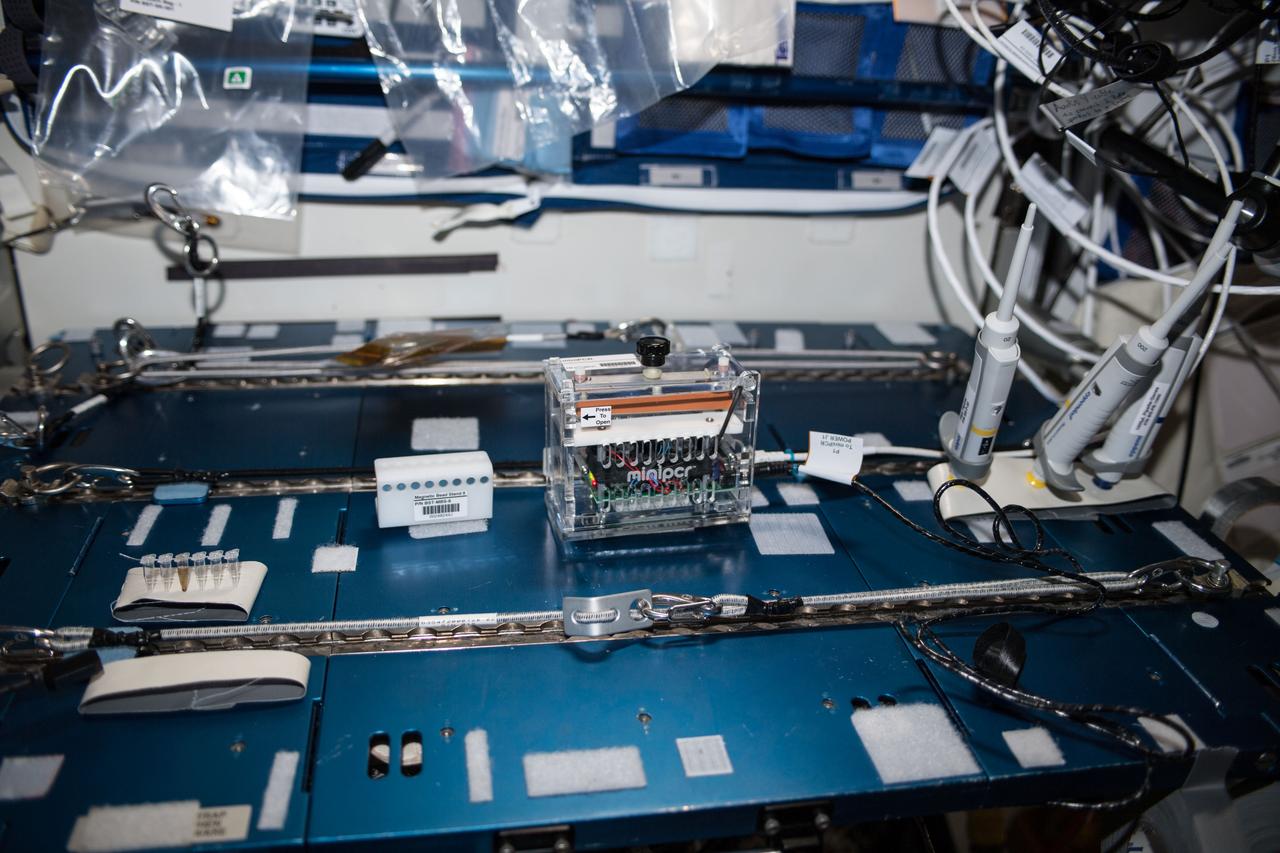
iss056e097438 (July 19, 2018) --- NASA astronaut Ricky Arnold swabbed surfaces in the International Space Station to collect microbe samples. He then processed the microbial DNA using the Biomolecule Sequencer, a device that enables DNA sequencing in microgravity, to identify microbes able to survive in microgravity.
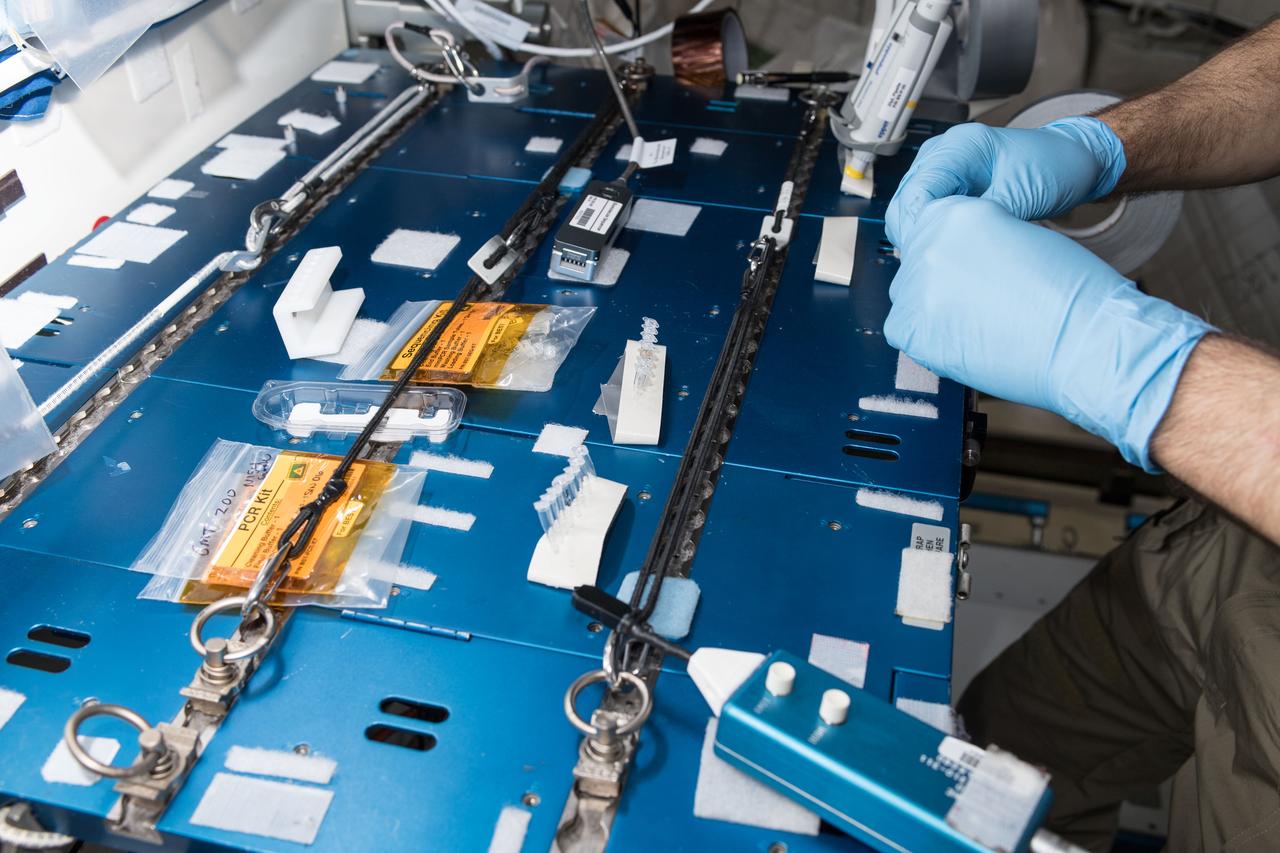
iss056e097517 (July 20, 2018) --- NASA astronaut Ricky Arnold swabbed surfaces in the International Space Station to collect microbe samples. He then processed the microbial DNA using the Biomolecule Sequencer, a device that enables DNA sequencing in microgravity, to identify microbes able to survive in microgravity.
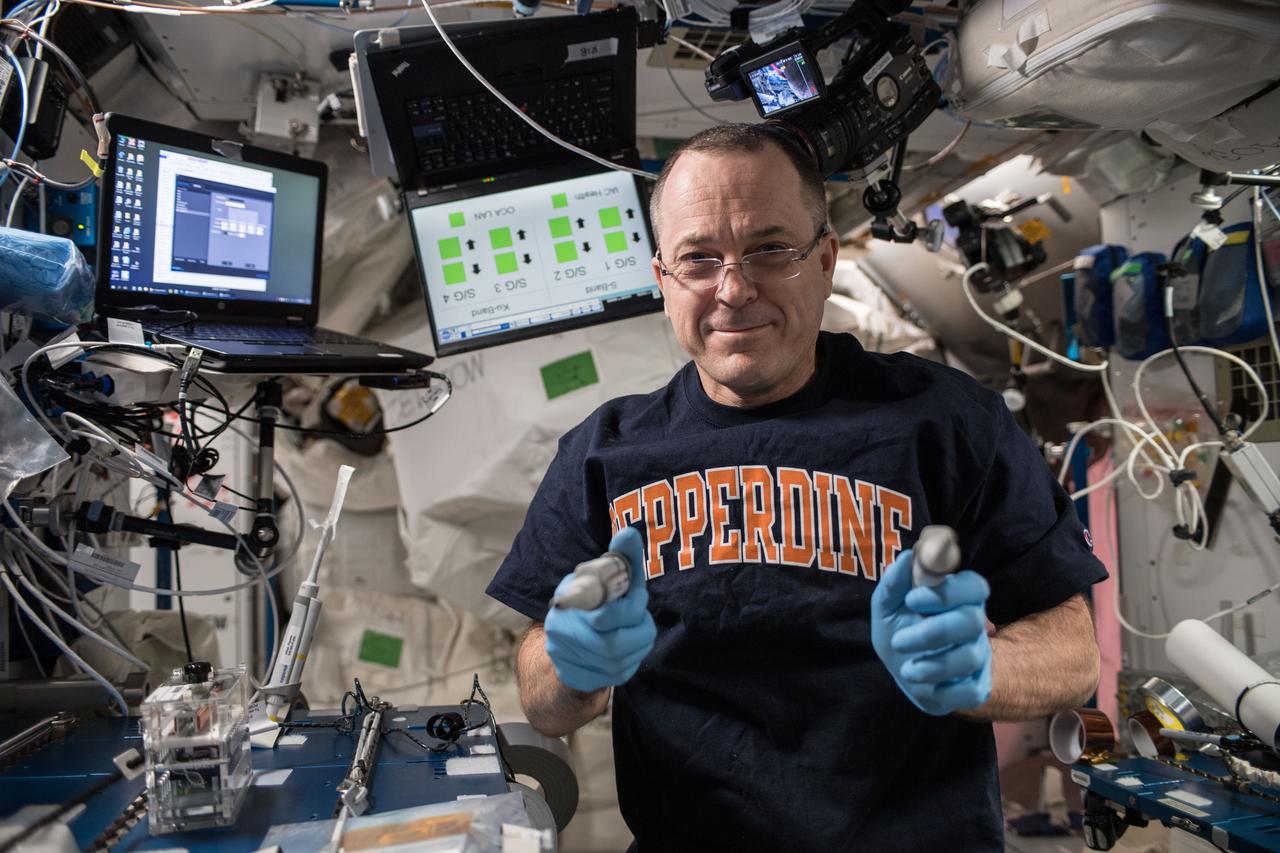
iss056e097429 (July 19, 2018) --- NASA astronaut Ricky Arnold swabbed surfaces in the International Space Station to collect microbe samples. He then processed the microbial DNA using the Biomolecule Sequencer, a device that enables DNA sequencing in microgravity, to identify microbes able to survive in microgravity.
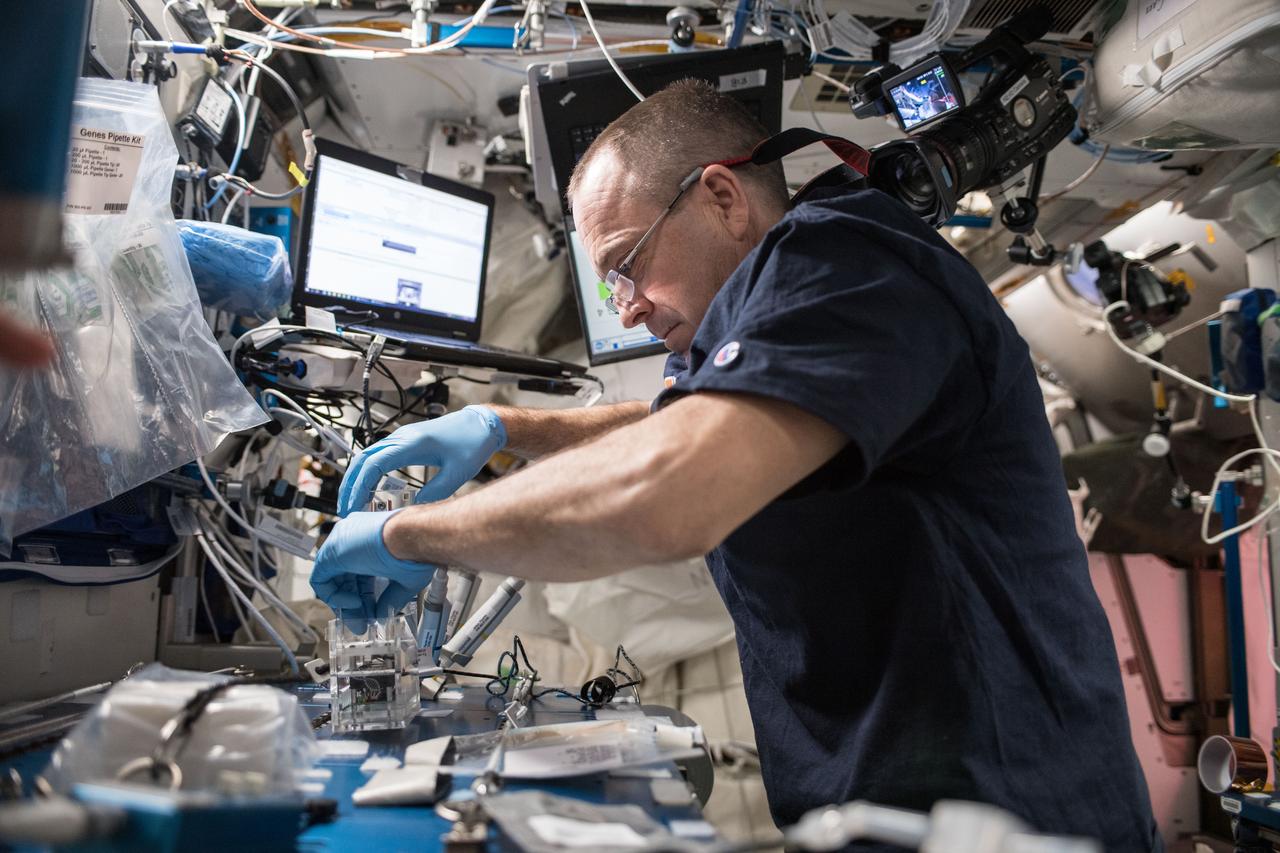
iss056e097421 (July 19, 2018) --- NASA astronaut Ricky Arnold swabbed surfaces in the International Space Station to collect microbe samples. He then processed the microbial DNA using the Biomolecule Sequencer, a device that enables DNA sequencing in microgravity, to identify microbes able to survive in microgravity.
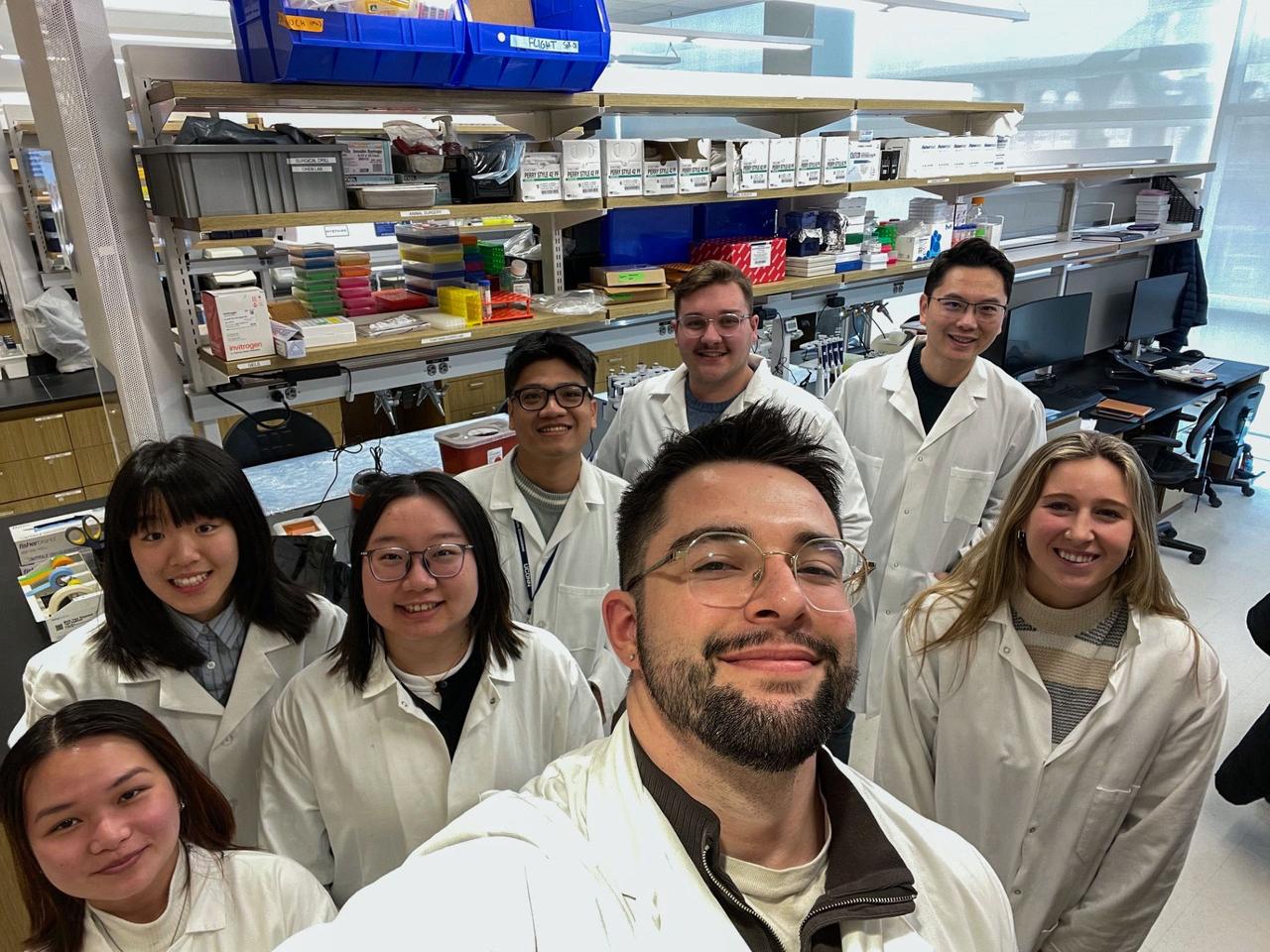
jsc2025e036189 (4/4/2025) --- The UCONN lab team who all contributed to space research leading up to DNA Nano Therapeutics-Mission 2. Front: Maxwell Landolina. In back, from left to right: Annie Nguyen (Ph.D. Student), Qianyu Chen (Undergraduate Student), Jin Zhai (Ph.D. Student), Toan Dang (Ph.D. Student), Trystin Cote (Ph.D. Student), Dr. Yupeng Chen (Principal Investigator), Madelyn Pickett (Master's Student). Biomimetic Fabrication of Multi-Functional DNA-Inspired Nanomaterials via Controlled Self-assembly in Space (DNA Nano Therapeutics-Mission 2) continues prior research on in-space manufacturing of nanomaterials that mimic DNA and have applications for vaccines and regenerative medicine. Image courtesy of University of Connecticut.
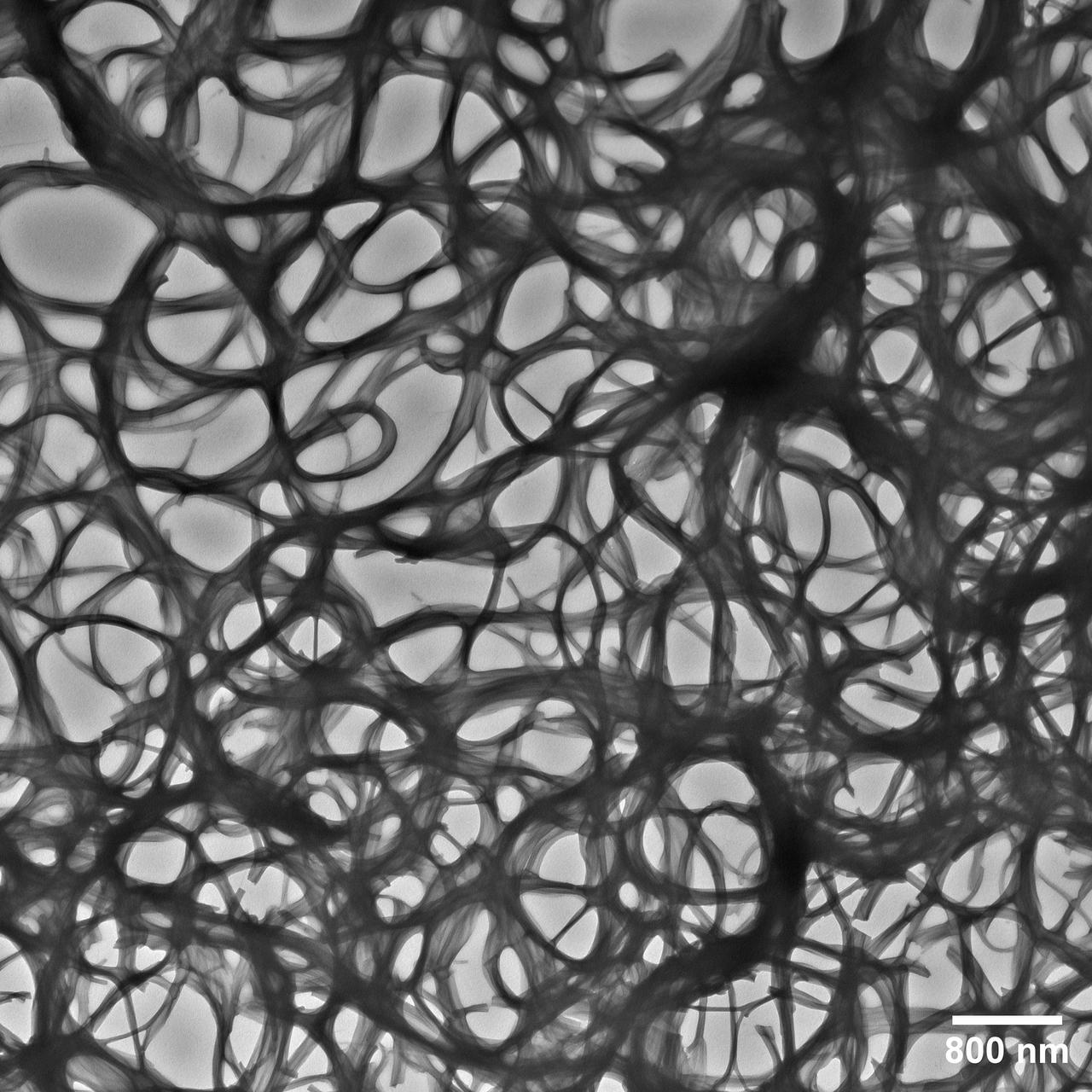
jsc2025e036191 (4/4/2025) --- An electron microscope image taken of a Janus Base Nanomaterial (JBNm) made on the International Space Station. The scale bar on the bottom represents 1/62500 the width of a human hair, making the JBNm bundles thick and interspersed, lead to better outcomes for cells. Biomimetic Fabrication of Multi-Functional DNA-Inspired Nanomaterials via Controlled Self-assembly in Space (DNA Nano Therapeutics-Mission 2) continues prior research on in-space manufacturing of nanomaterials that mimic DNA and have applications for vaccines and regenerative medicine. Image courtesy of University of Connecticut.
The fundamental structural unit of chromatin and is the basis for organization within the genome by compaction of DNA within the nucleus of the cell and by making selected regions of chromosomes available for transcription and replication.
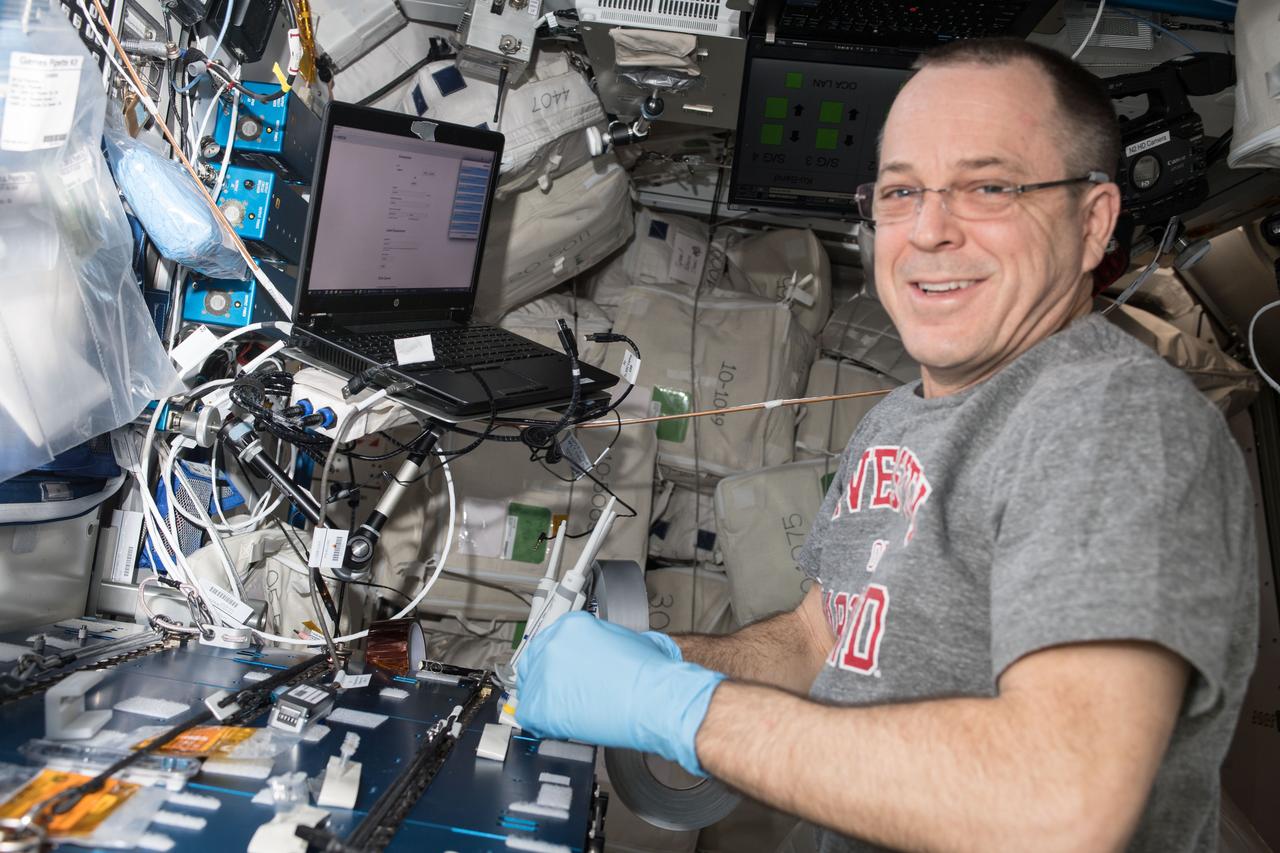
iss056e097518 (July 20, 2018) --- Expedition 56 Flight Engineer Ricky Arnold prepares amplified DNA collected from microbes living aboard the International Space Station for sequencing using the Biomolecule Sequencer. The Biomolecule Extraction and Sequencing Technology (BEST) investigation studies the use of DNA sequencing for the identification of unknown microbial organisms living on the station and to understand how humans, plants and microbes adapt to living in space.
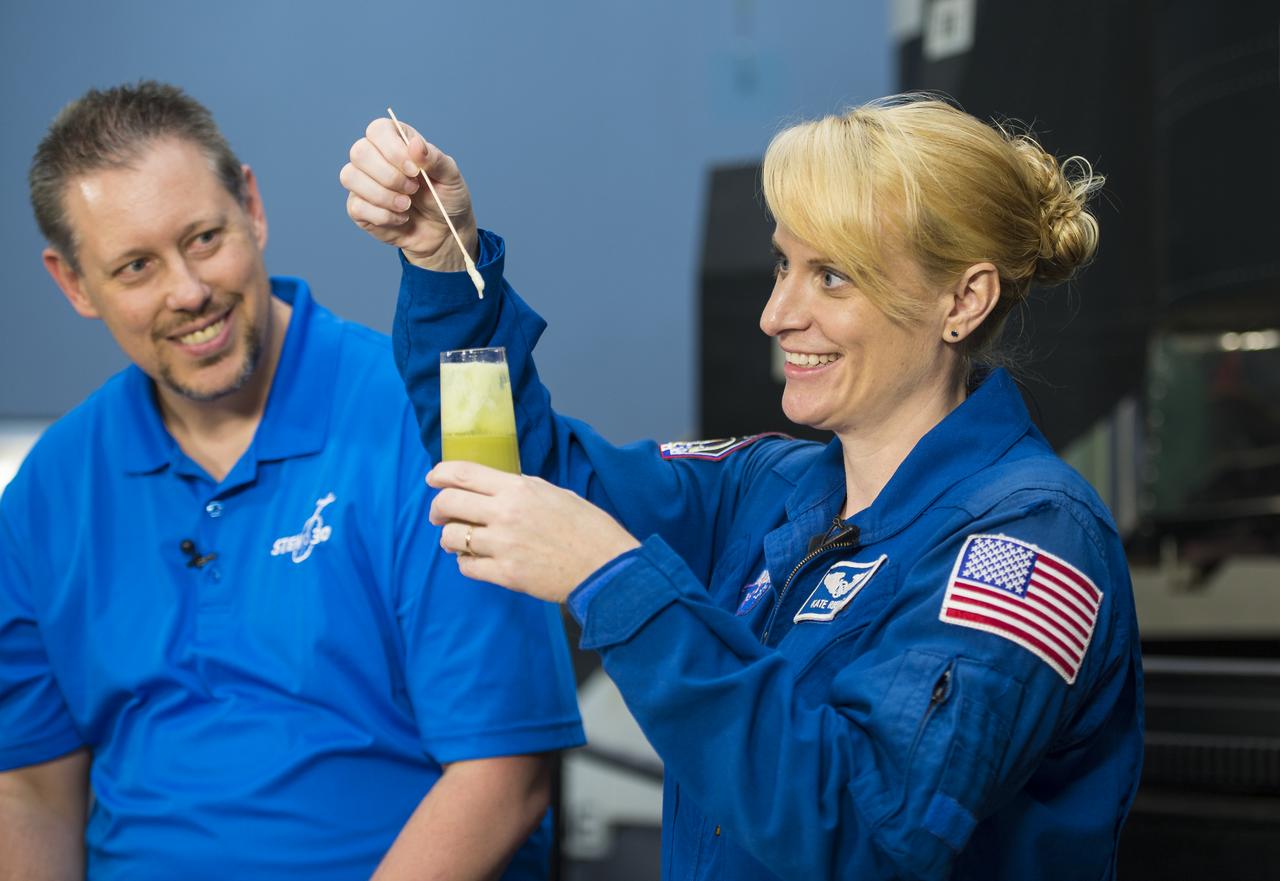
NASA Astronaut Kate Rubins conducts a DNA experiment for a STEM in 30 segment, Thursday, April 27, 2017 at Smithsonian's National Air and Space Museum in Washington. Rubins served on the International Space Station during Expeditions 48 and 49 and became the first person to sequence DNA in space. She completed her first mission when she landed in a remote area near the town of Zhezkazgan, Kazakhstan in October 2016. Photo Credit: (NASA/Aubrey Gemignani)
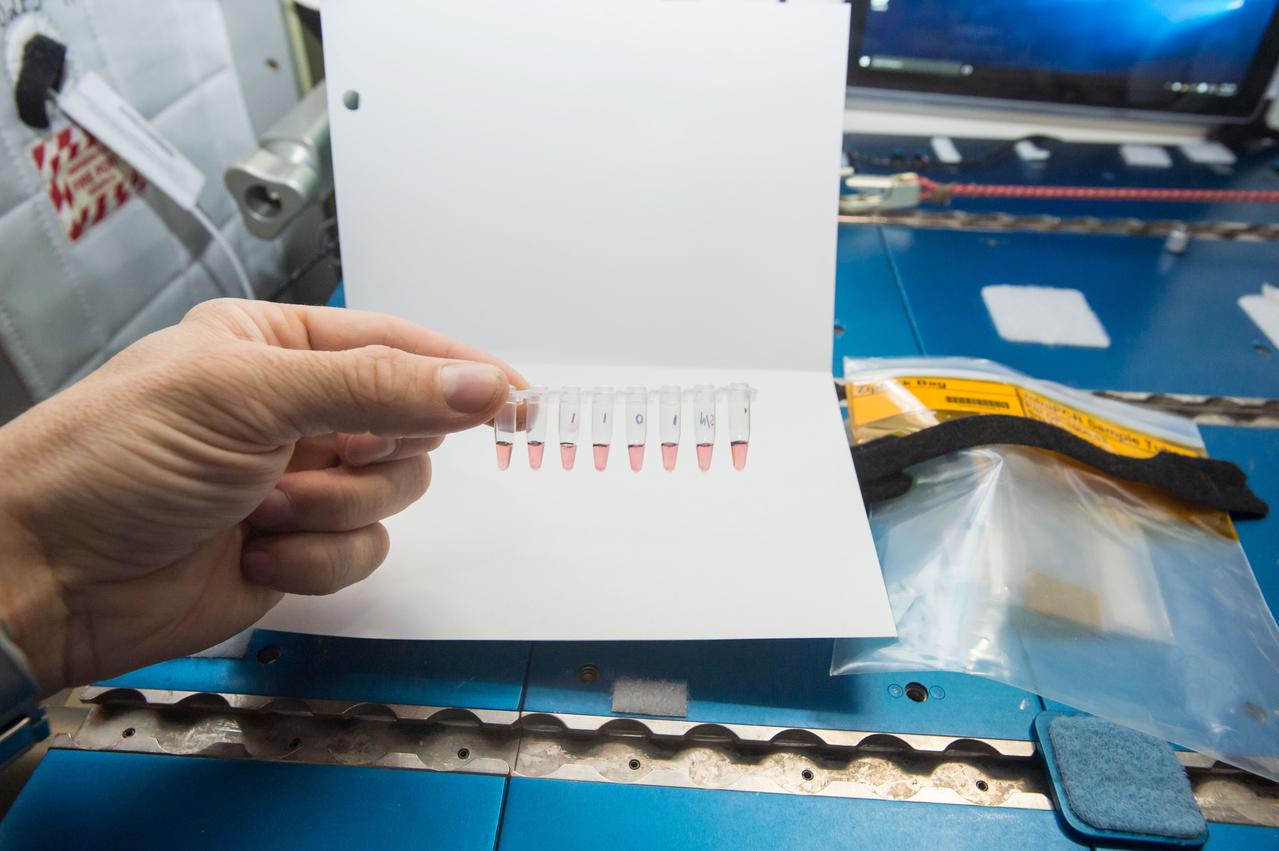
iss051e044502 (5/17/2017) --- Crew members on the International Space Station completed a new session of the Genes in Space 2 investigation. Spaceflight causes many changes to the human body, including alterations in DNA and a weakened immune system. This study uses a new technology to study DNA in space to try and safeguard crew health. Credits: NASA
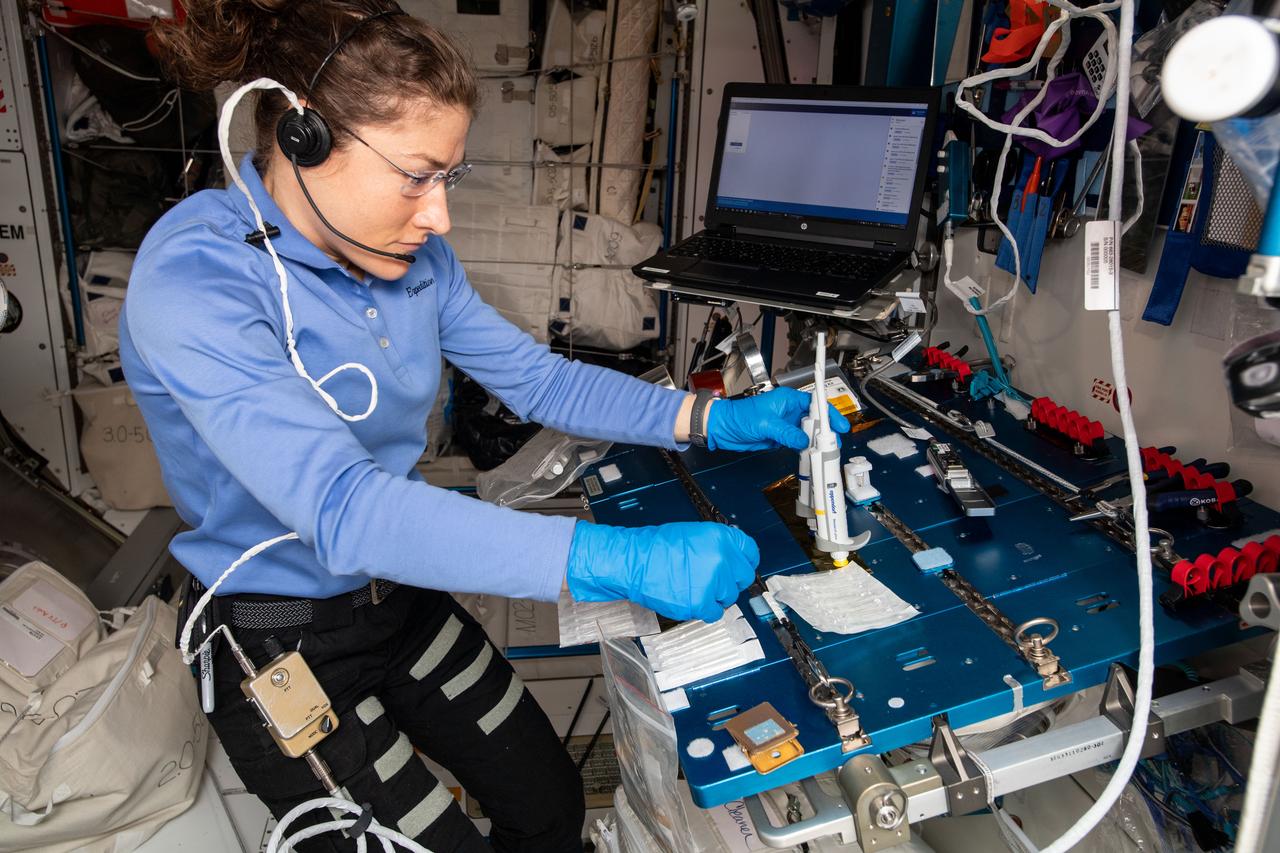
iss059e111734 (June 18, 2019) --- Flight Engineer Christina Koch of NASA works on the Genes In Space-6 (GIS-6) experiment inside Europe’s Columbus laboratory module. GIS-6 uses the Biomolecule Sequencer to sequence DNA samples to help scientists understand how space radiation mutates DNA and assess the molecular level repair process.
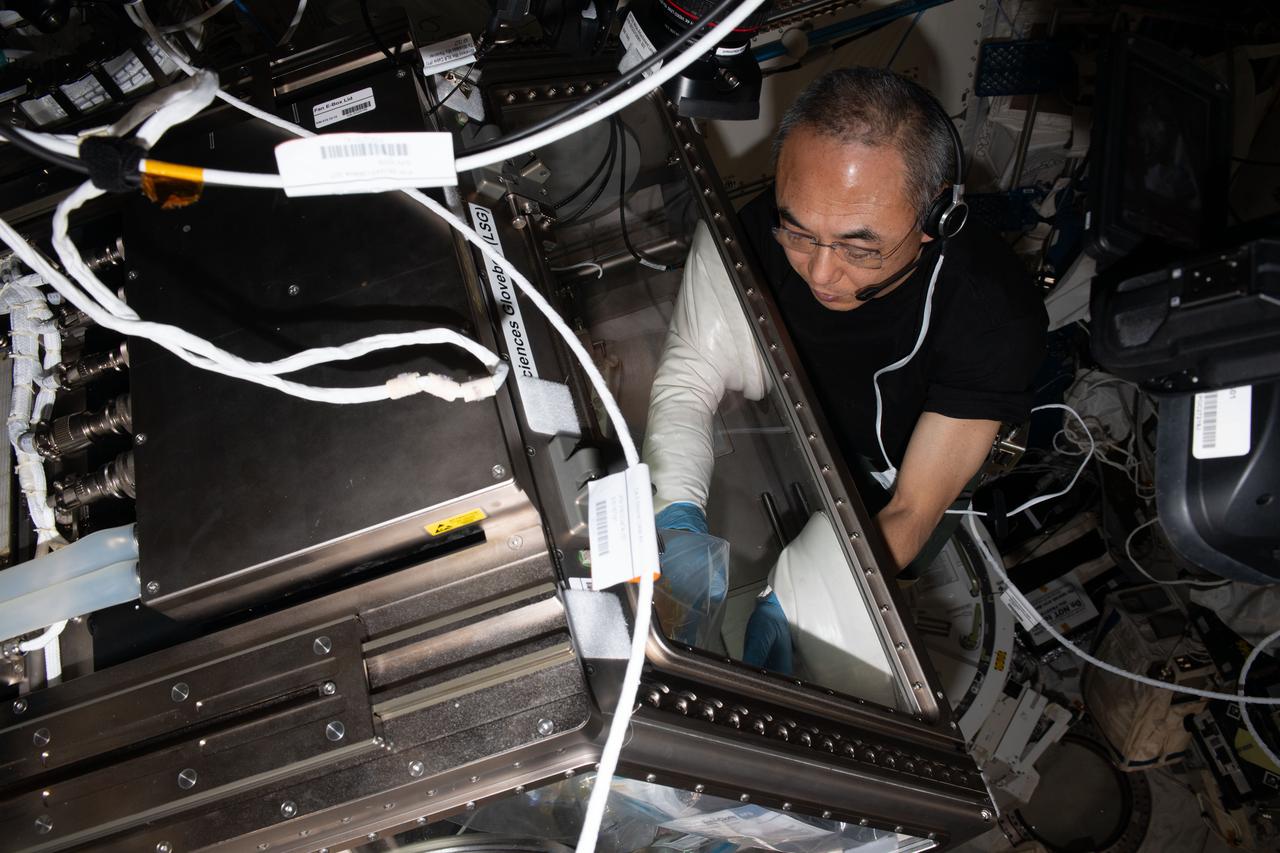
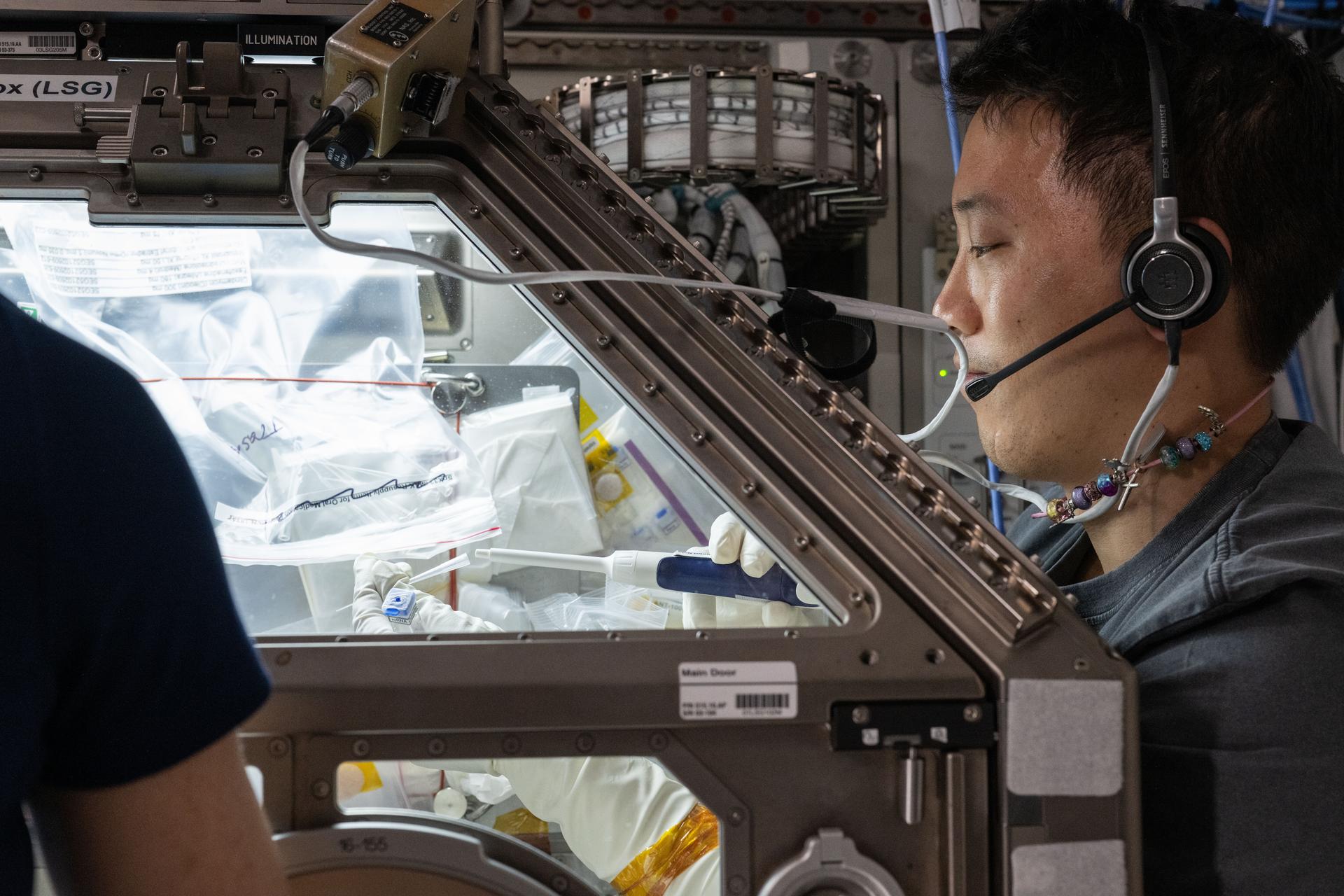
iss070e035116 (Dec. 1, 2023) --- JAXA (Japan Aerospace Exploration Agency) astronaut and Expedition 70 Flight Engineer Satoshi Furukawa works in the Kibo laboratory module's Life Science Glovebox extracting DNA samples for the new uTitan investigation. The technology demonstration is exploring a method for automated nucleic acid extraction in microgravity and may inform DNA sample processing and sequencing techniques on spacecraft and remote locations on Earth.
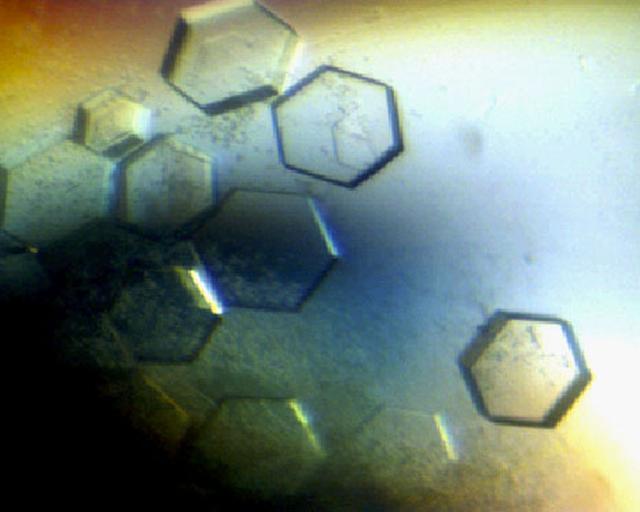
Type II restriction enzymes, such as Eco R1 endonulease, present a unique advantage for the study of sequence-specific recognition because they leave a record of where they have been in the form of the cleaved ends of the DNA sites where they were bound. The differential behavior of a sequence -specific protein at sites of differing base sequence is the essence of the sequence-specificity; the core question is how do these proteins discriminate between different DNA sequences especially when the two sequences are very similar. Principal Investigator: Dan Carter/New Century Pharmaceuticals
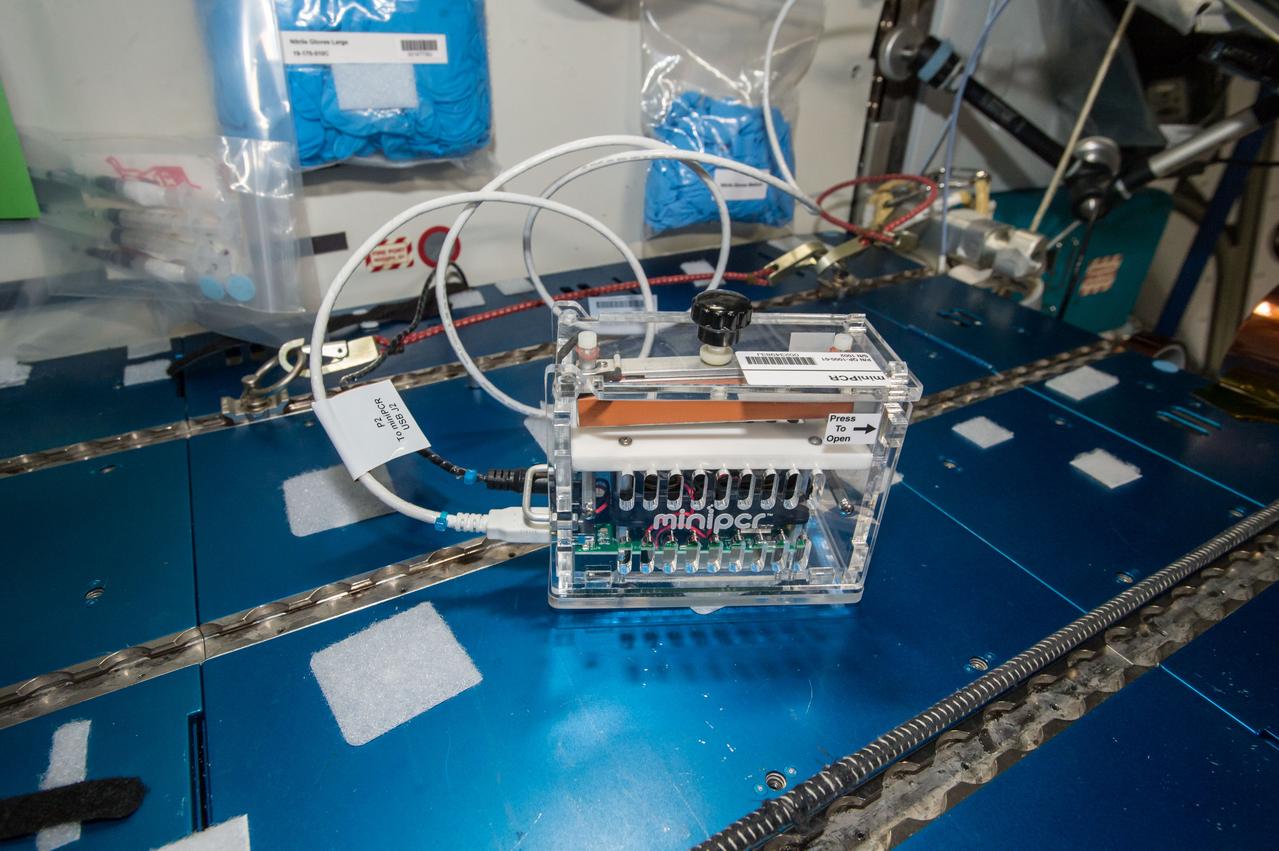
iss051e029016 (4/28/2017) --- Crew members on the International Space Station completed a new session of the Genes in Space 2 investigation. Spaceflight causes many changes to the human body, including alterations in DNA and a weakened immune system. This study uses a new technology to study DNA in space to try and safeguard crew health. Credits: NASA
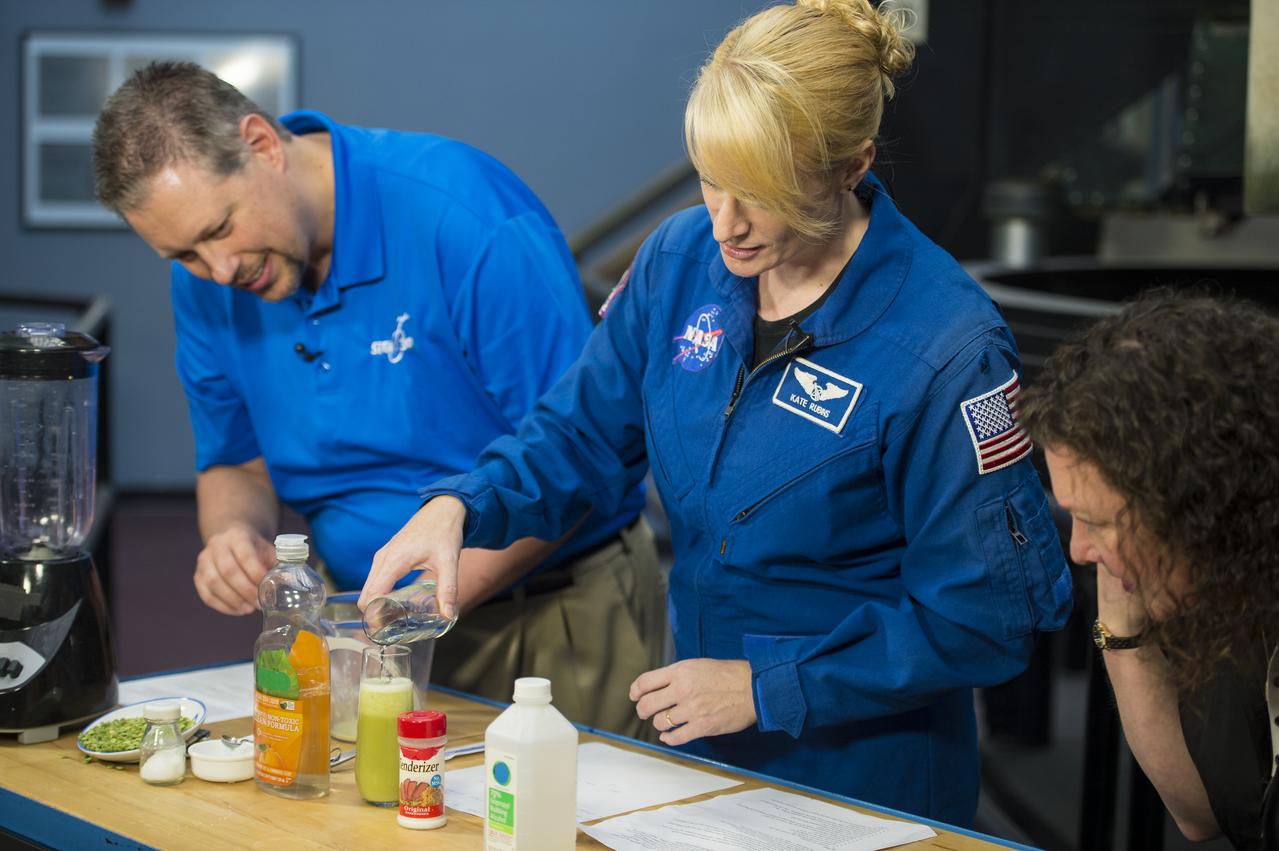
NASA Astronaut Kate Rubins conducts a DNA experiment for a STEM in 30 segment, Thursday, April 27, 2017 at Smithsonian's National Air and Space Museum in Washington. Rubins served on the International Space Station during Expeditions 48 and 49 and became the first person to sequence DNA in space. She completed her first mission when she landed in a remote area near the town of Zhezkazgan, Kazakhstan in October 2016. Photo Credit: (NASA/Aubrey Gemignani)
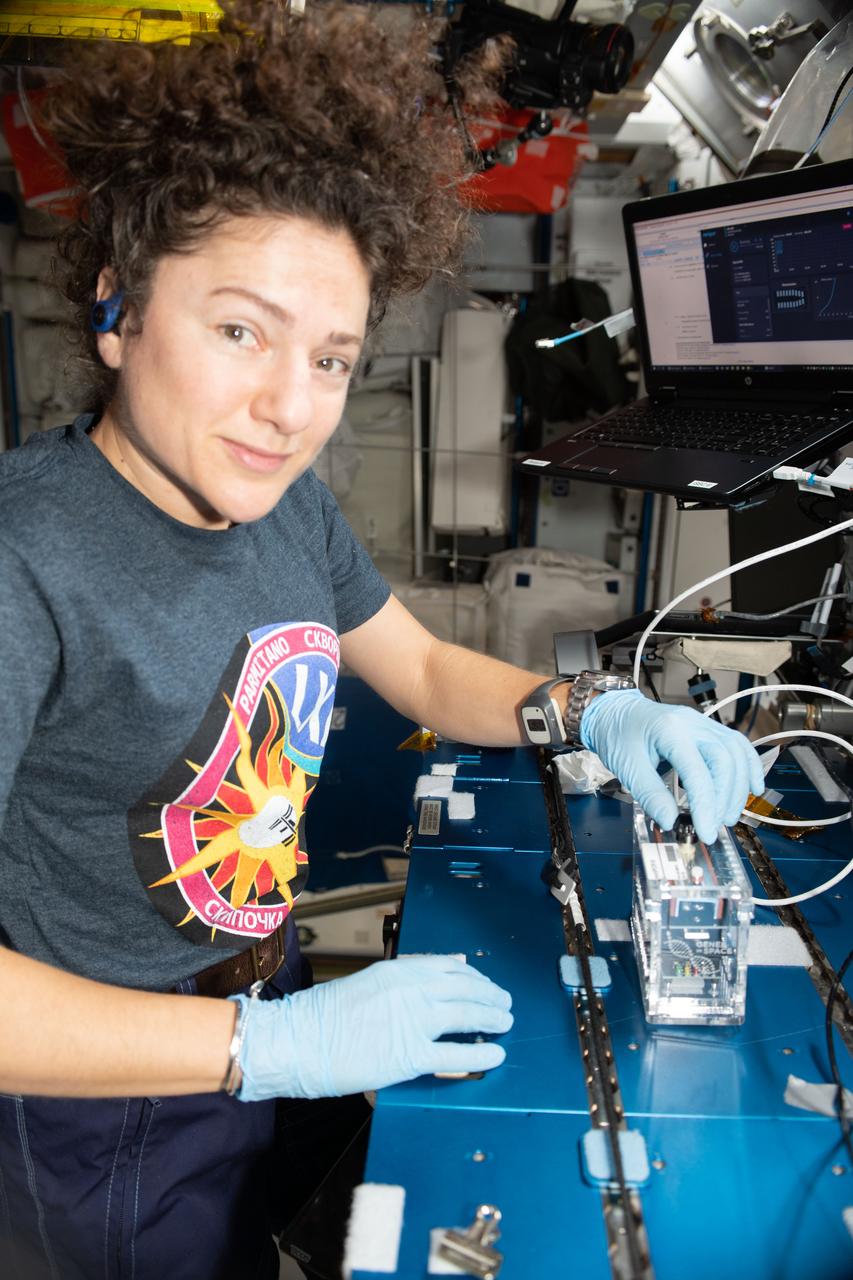
iss061e096628 (Dec. 26, 2019) --- NASA astronaut and Expedition 61 Flight Engineer Jessica Meir prepares DNA samples for sequencing for the Genes in Space-6 experiment. The study explores how cells repair DNA damaged by space radiation to help learn how to protect astronauts on the space station and future missions beyond low-Earth orbit.
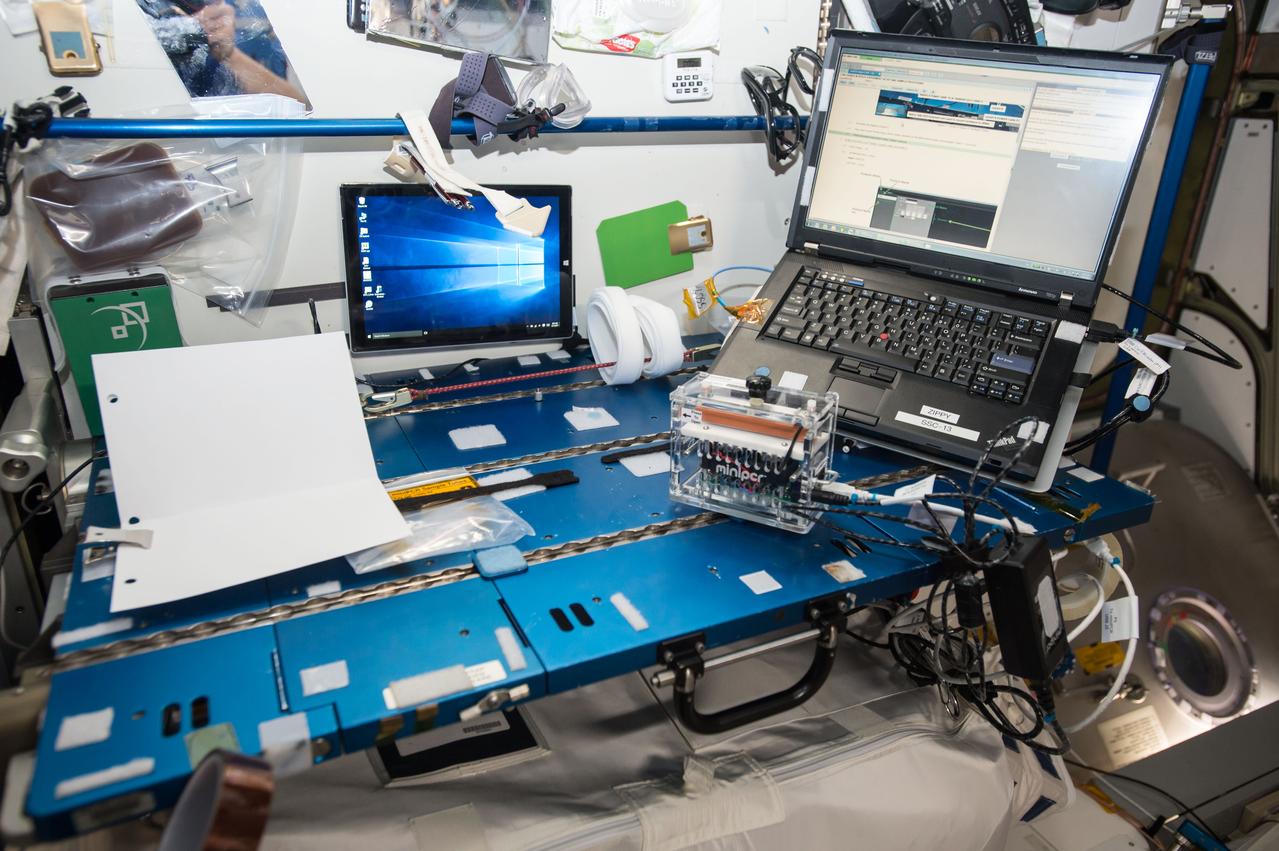
iss051e044497 (5/17/2017) --- Crew members on the International Space Station completed a new session of the Genes in Space 2 investigation. Spaceflight causes many changes to the human body, including alterations in DNA and a weakened immune system. This study uses a new technology to study DNA in space to try and safeguard crew health. Credits: NASA
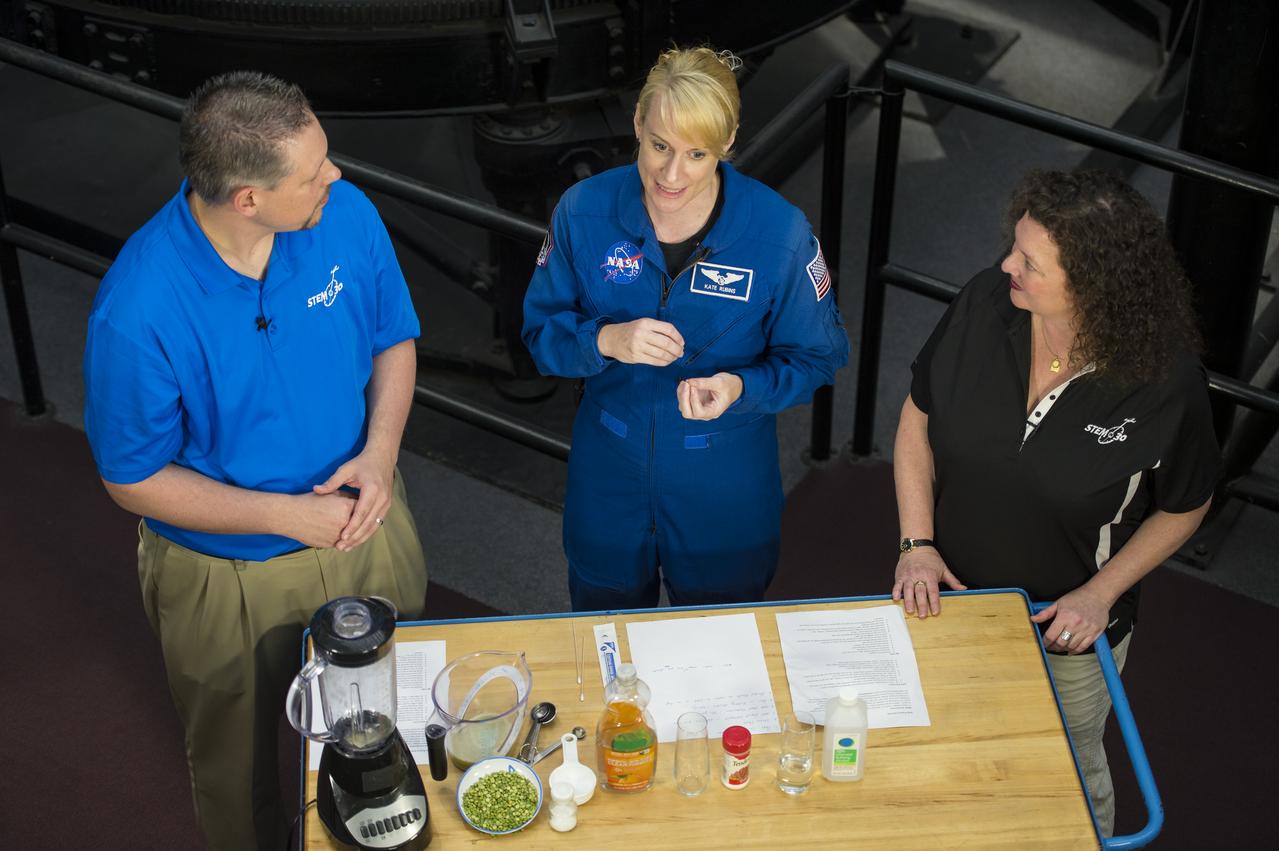
NASA Astronaut Kate Rubins conducts a DNA experiment for a STEM in 30 segment, Thursday, April 27, 2017 at Smithsonian's National Air and Space Museum in Washington. Rubins served on the International Space Station during Expeditions 48 and 49 and became the first person to sequence DNA in space. She completed her first mission when she landed in a remote area near the town of Zhezkazgan, Kazakhstan in October 2016. Photo Credit: (NASA/Aubrey Gemignani)
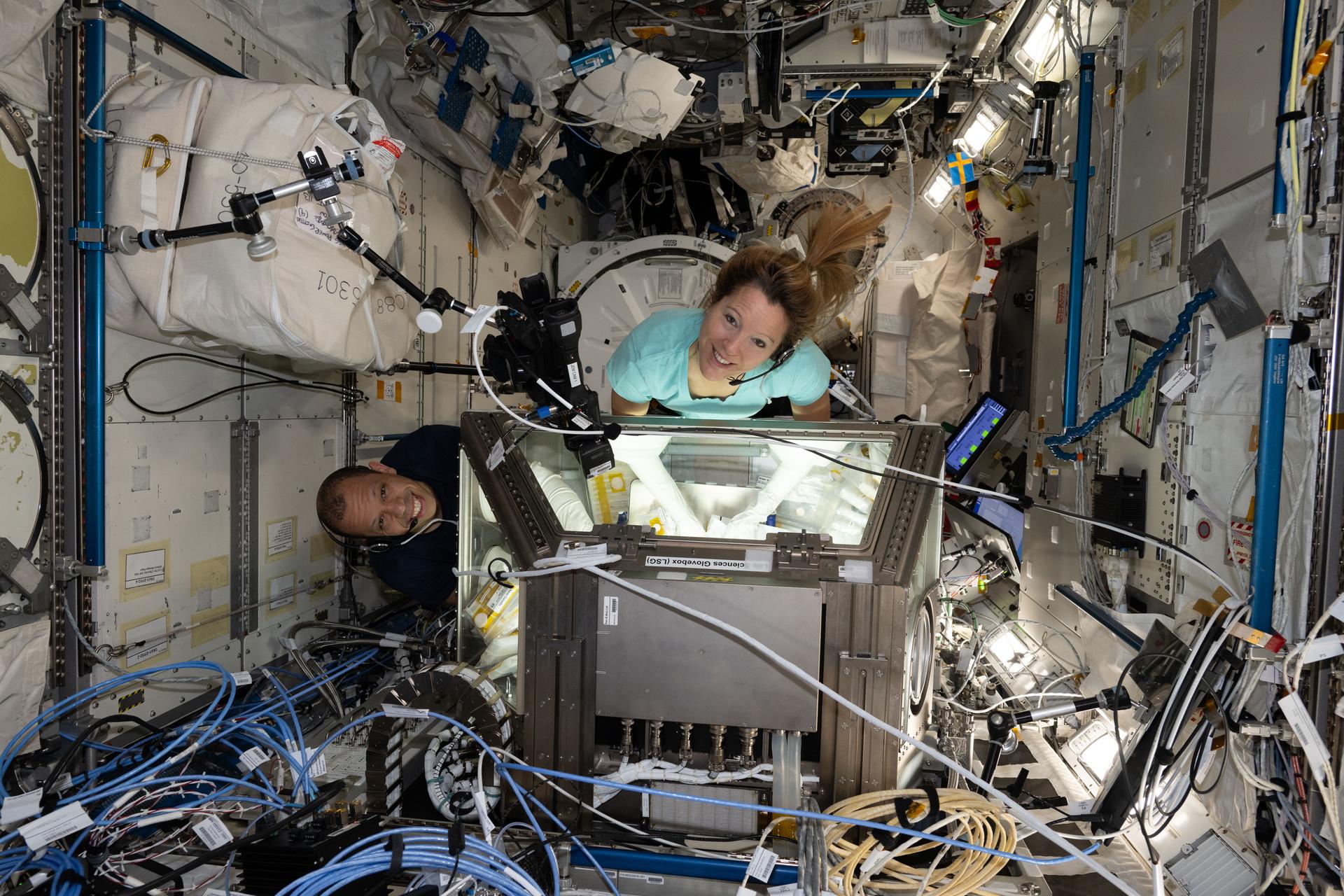
iss074e0503941 (April 22, 2026) --- Expedition 74 flight engineers Chris Williams of NASA and Sophie Adenot of the European Space Agency work together in the Kibo laboratory module’s Life Science Glovebox, processing genetic-material samples for the DNA Nano Therapeutics‑3 experiment. The investigation is exploring DNA‑inspired assembly techniques as a way to manufacture treatments—such as chemotherapy and immunotherapy—that can kill cancer cells and activate the immune system. Credit: NASA/Jessica Meir
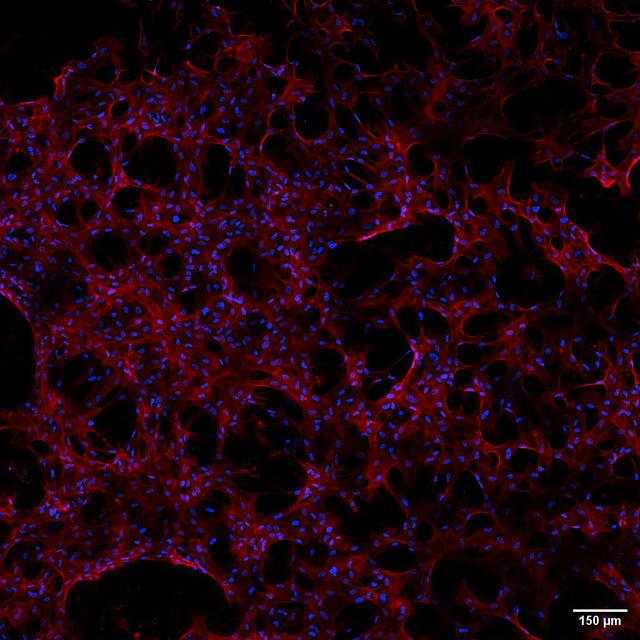
jsc2025e036190 (4/4/2025) --- Stem cells grown along the Janus Base Nanomaterial (JBNm) made aboard the International Space Station. After four hours, a significant increase in the number of these cells adhered to the scaffold, compared to the ground scaffold. This shows that structural improvements were obtained through in-space manufacturing and translated directly into biological improvements. The Flight JBNm is much better at stem cell recruitment, which could better stimulate cartilage regeneration. Biomimetic Fabrication of Multi-Functional DNA-Inspired Nanomaterials via Controlled Self-assembly in Space (DNA Nano Therapeutics-Mission 2) continues prior research on in-space manufacturing of nanomaterials that mimic DNA and have applications for vaccines and regenerative medicine. Image courtesy of University of Connecticut.
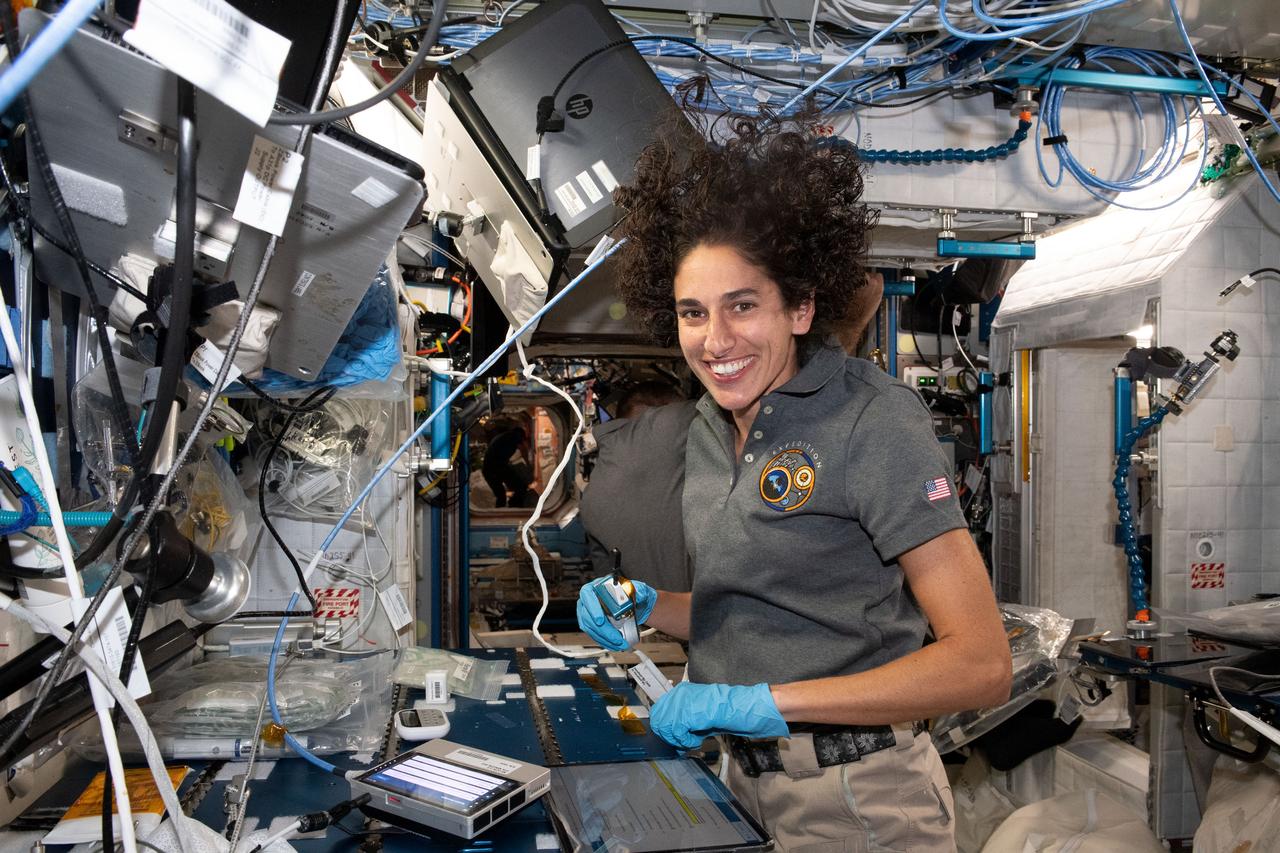
iss069e088431_alt (Sept. 15, 2023) --- NASA astronaut and Expedition 69 Flight Engineer Jasmin Moghbeli services microbe samples for DNA sequencing aboard the International Space Station.
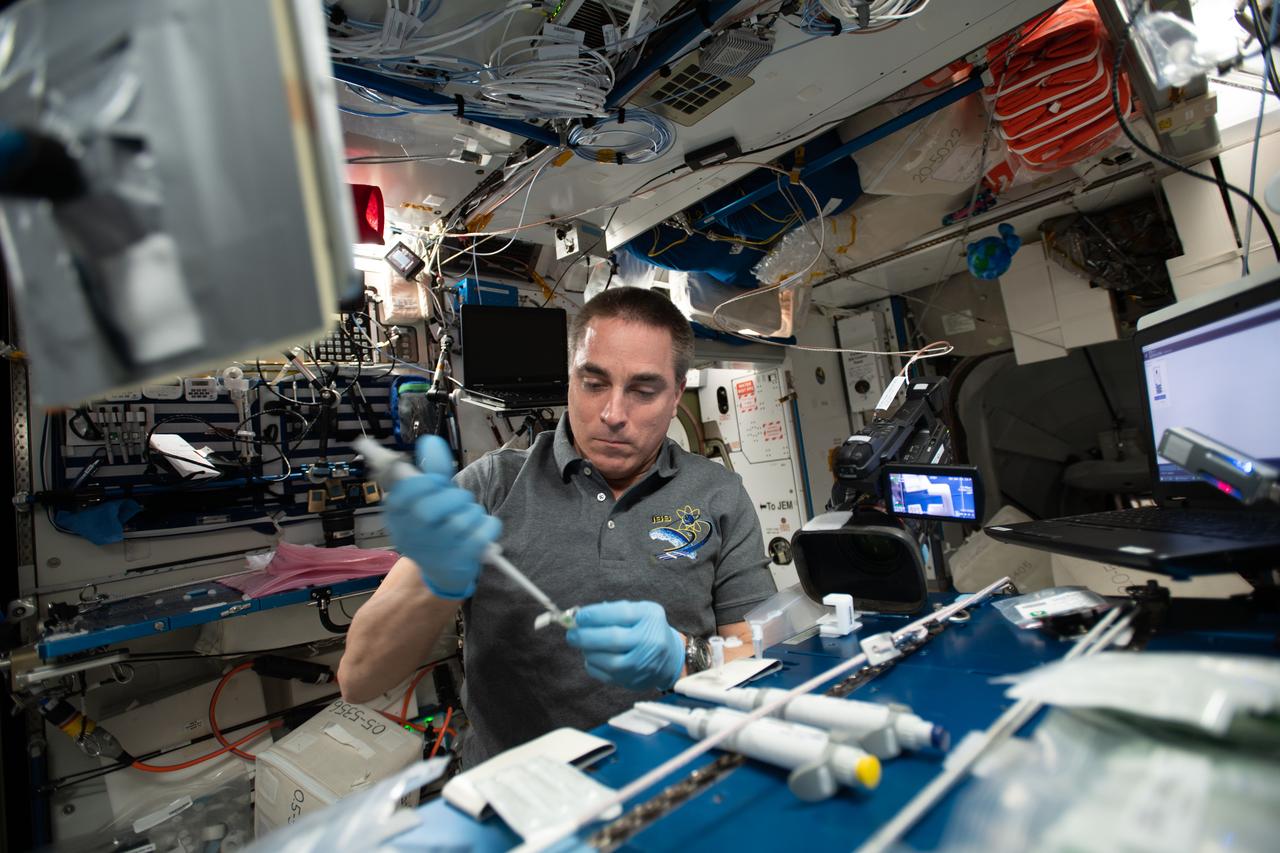
iss063e063777 (July 31, 2020) --- NASA astronaut and Expedition 63 Commander Chris Cassidy works inside the International Space Station's Harmony module servicing microbial DNA samples for sequencing and identification.
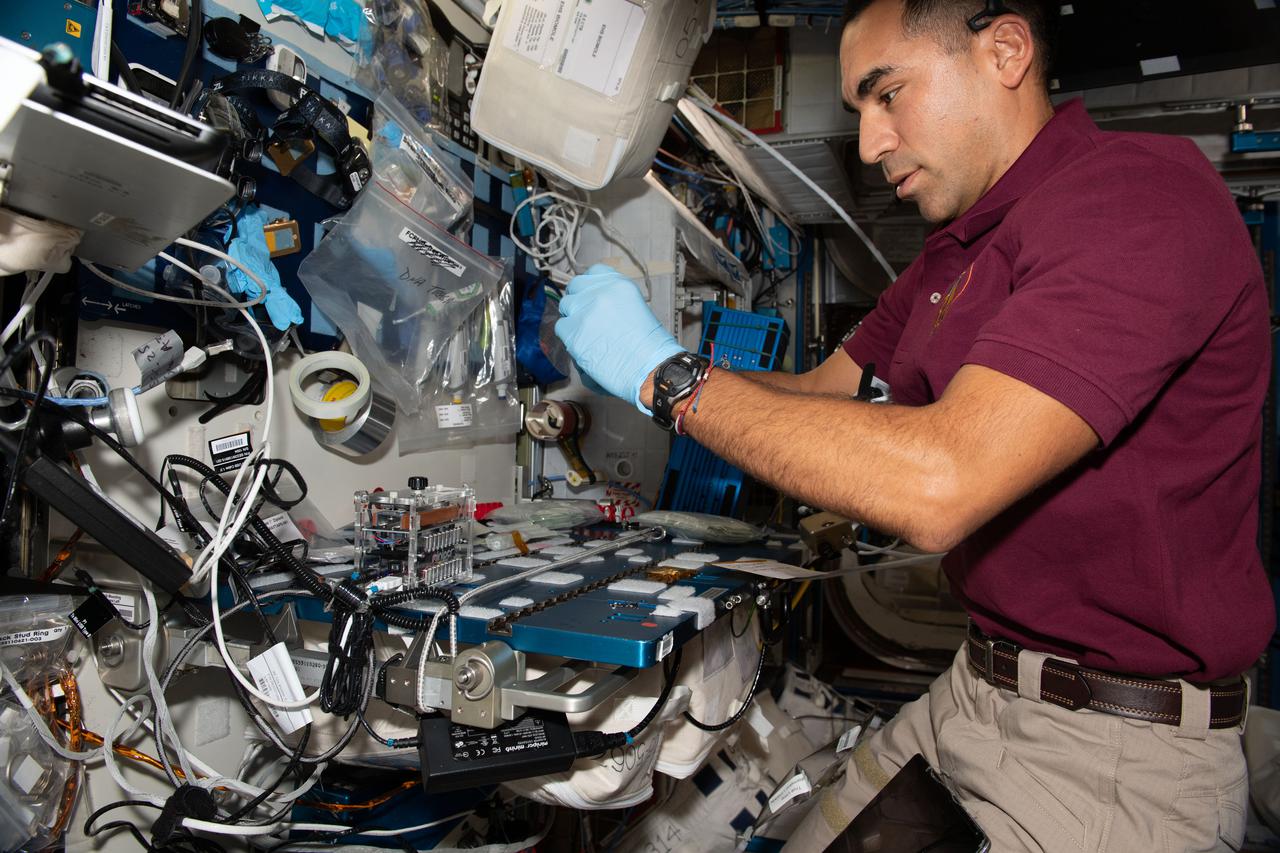
iss066e102637 (Jan. 3, 2022) --- NASA astronaut and Expedition 66 Flight Engineer Raja Chari sequences DNA from bacteria samples using the BioMole Facility to understand the microbial environment on the International Space Station.
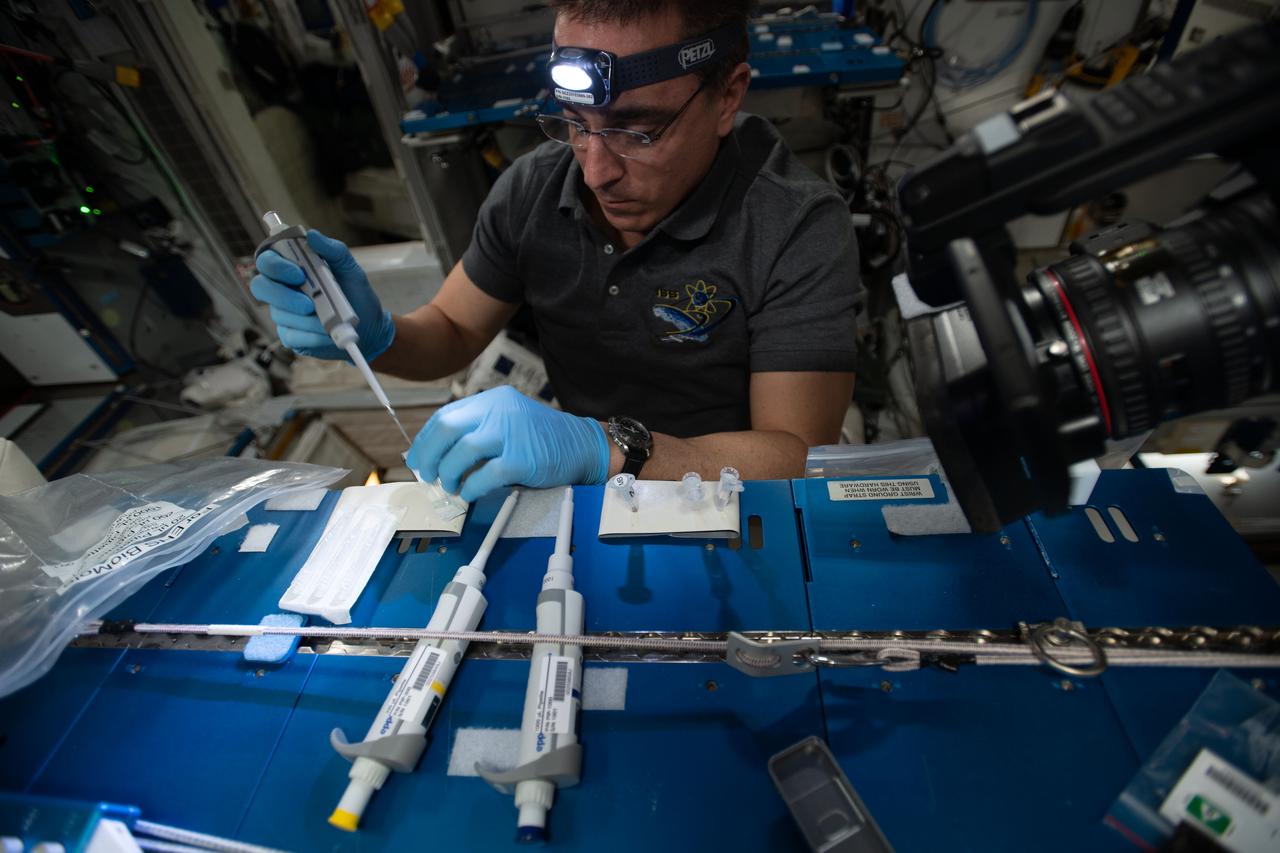
iss063e063823 (July 31, 2020) --- NASA astronaut and Expedition 63 Commander Chris Cassidy works inside the International Space Station's Harmony module servicing microbial DNA samples for sequencing and identification.
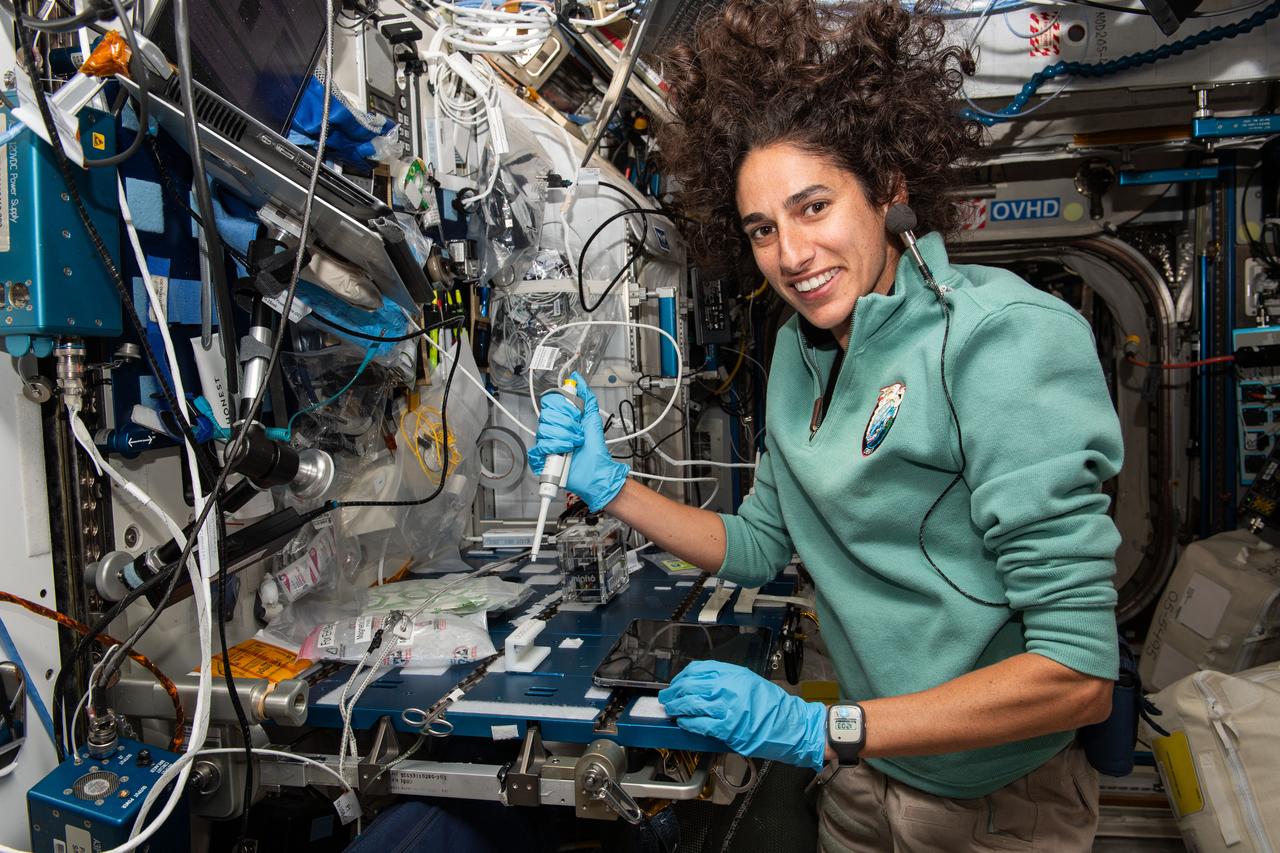
iss069e086055 (Sept. 6, 2023) --- NASA astronaut and Expedition 69 Flight Engineer Jasmin Moghbeli services microbe samples for DNA sequencing aboard the International Space Station.
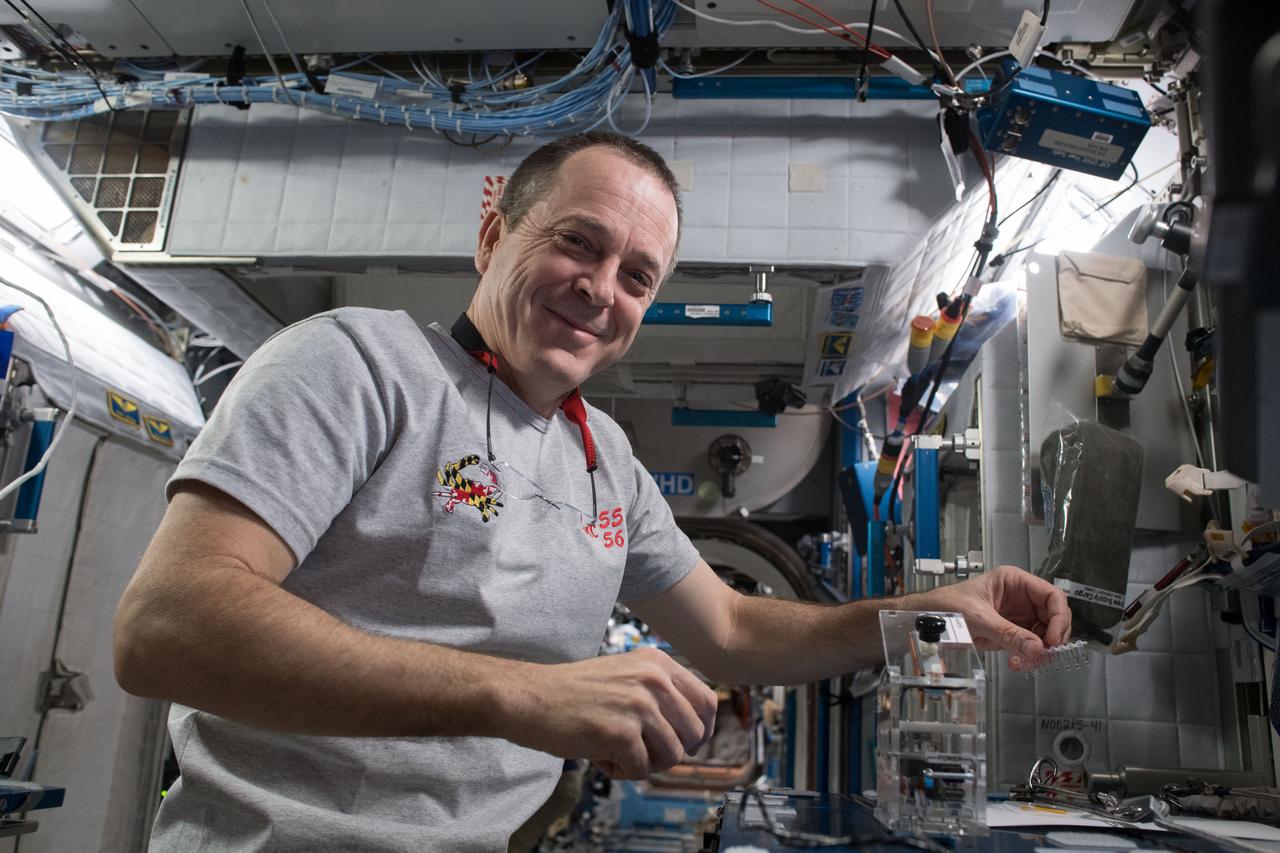
iss055e016053 (4/11/2018) --- NASA astronaut Ricky Arnold works with the student-designed Genes in Space-5 experiment inside the Harmony module. The genetic research is helping scientists understand the relationship between DNA alterations and weakened immune systems possibly caused by living in space. Genes in Space is an innovation challenge including students and teachers across the United States from grades 7 through 12. Students design a pioneering DNA-related experiment to fly on the ISS, providing real-world training in science, technology, engineering and math (STEM) fields and connecting students to the space program.
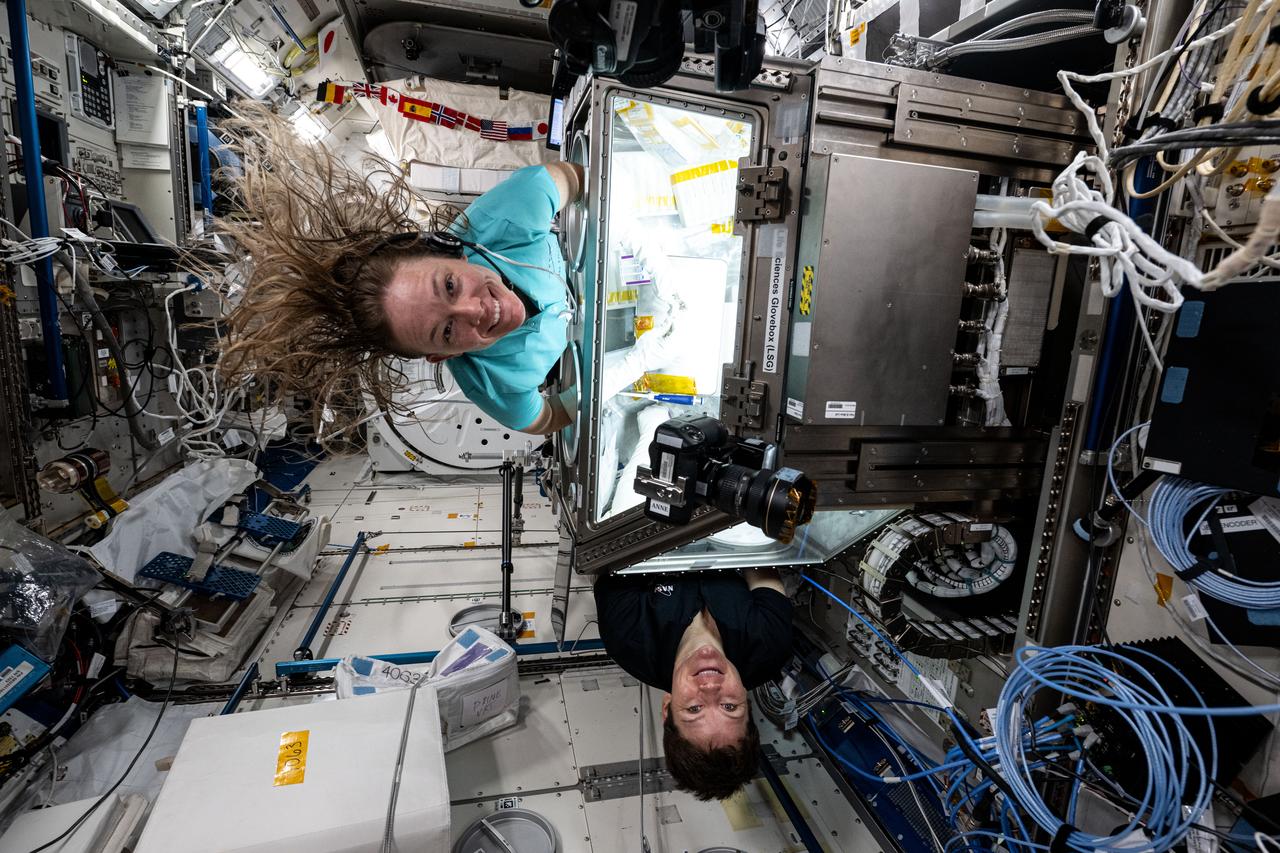
iss073e0001816 (4/25/2025) --- NASA astronauts Anne McClain, top, and Nichole Ayers, right, use the space station’s Microgravity Science Glovebox to work on DNA Nano Therapeutics-Mission 2. This investigation tests in-space production of special DNA-inspired nanomaterial building blocks and evaluates whether they reduce joint inflammation and help regenerate cartilage lost due to arthritis. These materials are less toxic, more stable, and more compatible with living tissues than current drug delivery technologies and could provide relief to patients with fewer side effects.
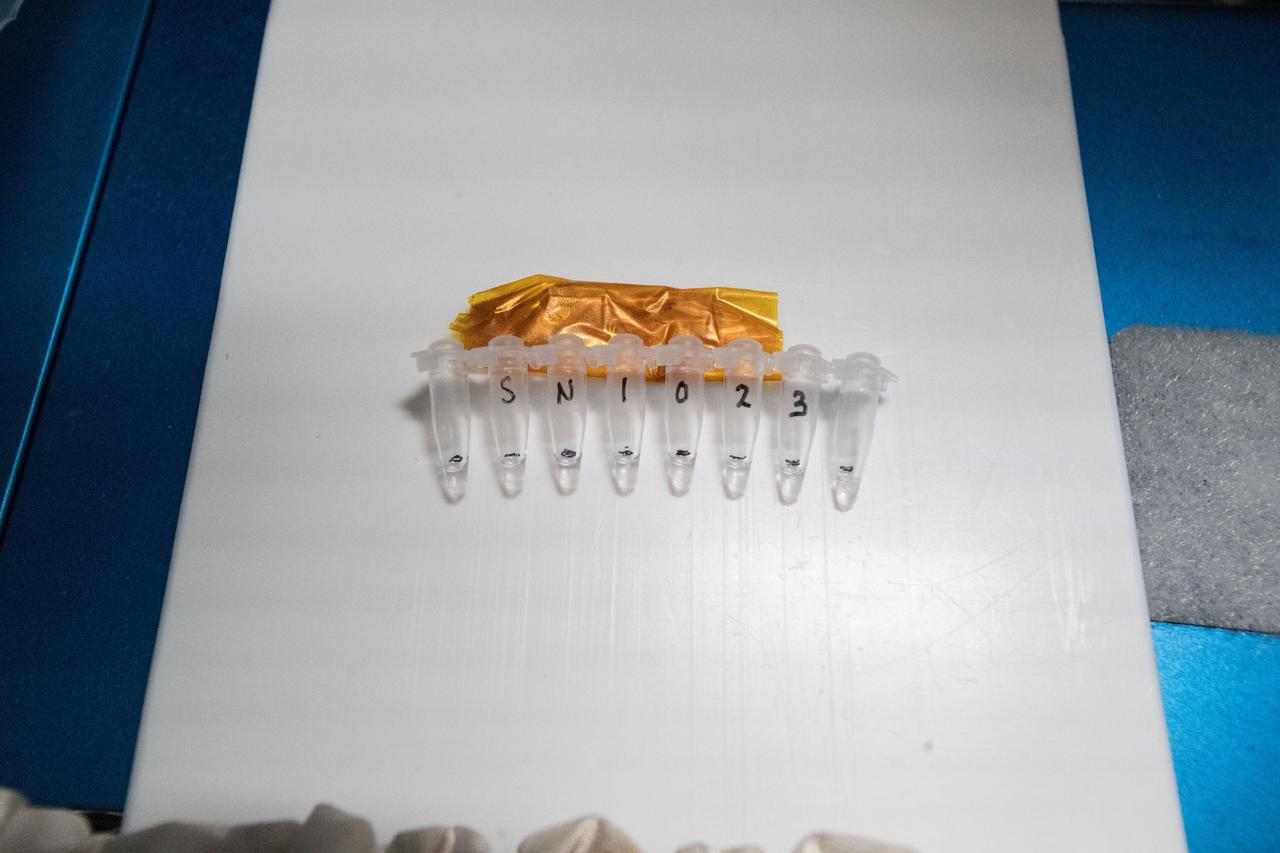
iss055e020316 (4/13/2018) --- Photographic documentation taken during processing of samples in the Miniature Polymerase Chain Reaction (miniPCR) for the Genes In Space-5 experiment onboard the International Space Station (ISS). The genetic research is helping scientists understand the relationship between DNA alterations and weakened immune systems possibly caused by living in space. Genes in Space is an innovation challenge including students and teachers across the United States from grades 7 through 12. Students design a pioneering DNA-related experiment to fly on the ISS, providing real-world training in science, technology, engineering and math (STEM) fields and connecting students to the space program.
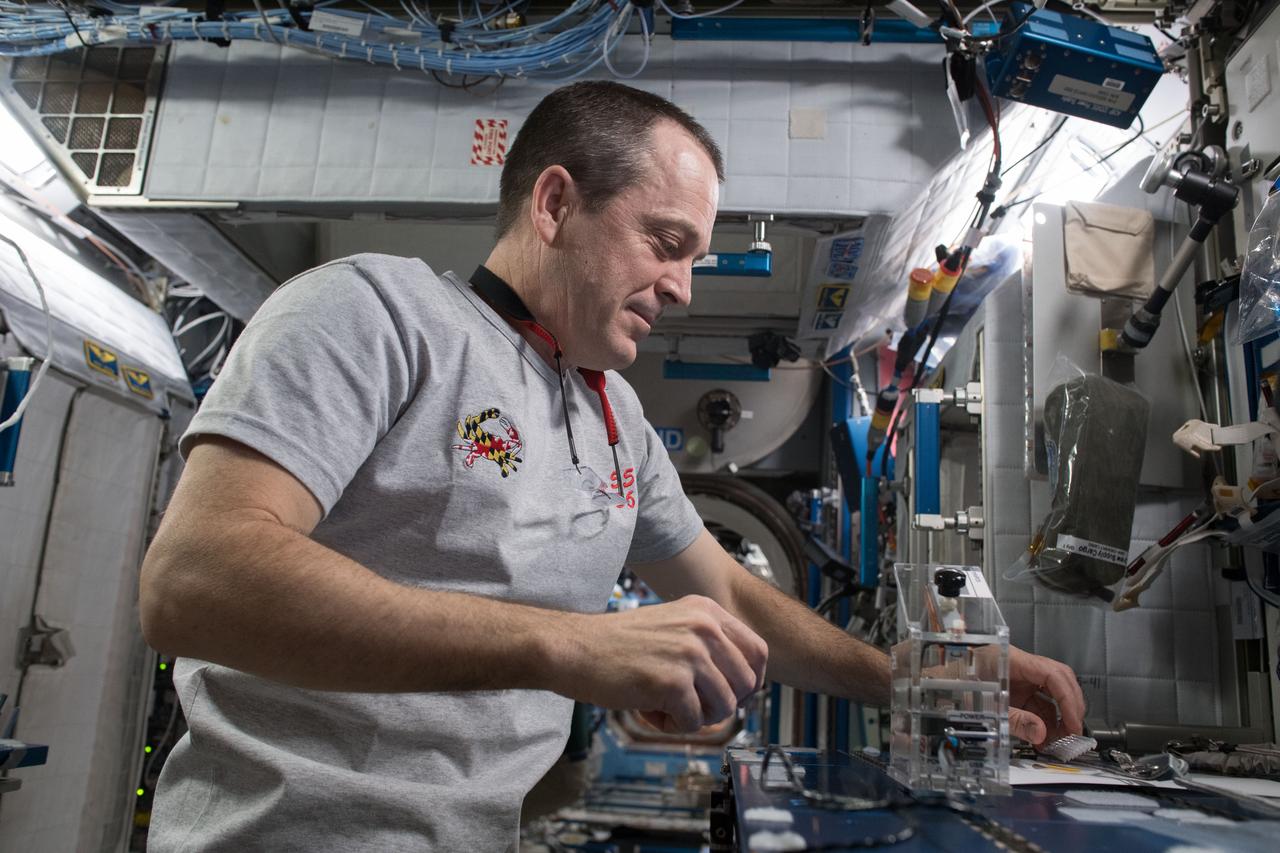
iss055e016052 (4/11/2018) --- NASA astronaut Ricky Arnold works with the student-designed Genes in Space-5 experiment inside the Harmony module. The genetic research is helping scientists understand the relationship between DNA alterations and weakened immune systems possibly caused by living in space. Genes in Space is an innovation challenge including students and teachers across the United States from grades 7 through 12. Students design a pioneering DNA-related experiment to fly on the ISS, providing real-world training in science, technology, engineering and math (STEM) fields and connecting students to the space program.
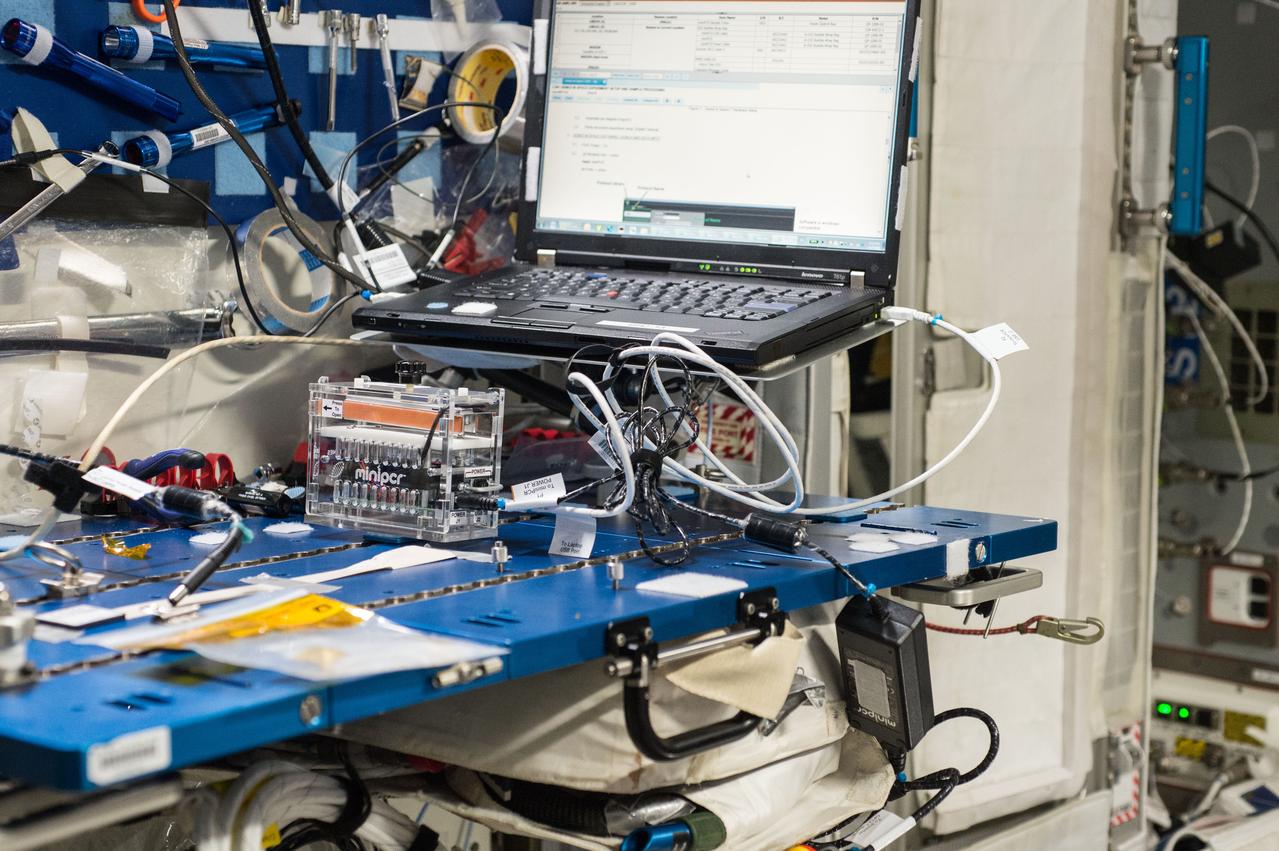
iss047e083547 (4/27/2016) --- Photographic documentation during the Genes in Space experiment showing the polymerase chain reaction (PCR) and miniPCR system as a way to amplify deoxyribonucleic acid (DNA) in space and make it possible to measure and monitor telomere changes during spaceflight. Genes in Space is an innovation challenge including students and teachers across the United States from grades 7 through 12. Students design a pioneering DNA-related experiment to fly on the ISS, providing real-world training in science, technology, engineering and math (STEM) fields and connecting students to the space program.
iss073e0025618 (May 8, 2025) -- Working in the space station’s Microgravity Science Glovebox, NASA astronaut Jonny Kim mixes proteins with Janus base nanomaterials, small molecules that mimic DNA base pairs, for DNA Nano Therapeutics-Mission 2. This investigation builds on previous work and aims to develop in-space manufacturing of nanomaterials that are less toxic, more stable, and more biocompatible than current drug delivery technologies. Better, more advanced drugs and easier methods for delivering them could improve quality of life for patients in space on Earth.
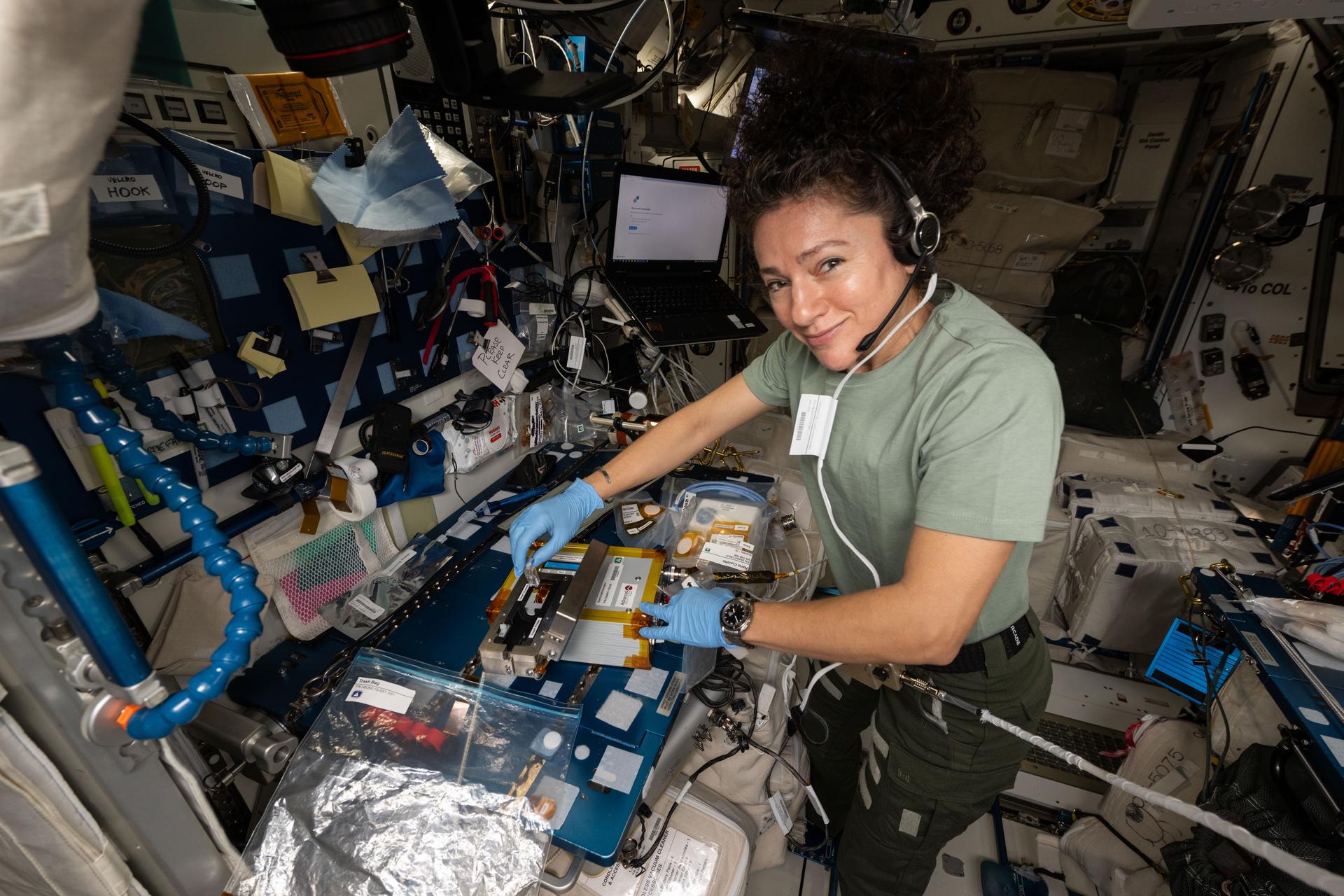
iss074e0573327 (May 7, 2026) --- NASA astronaut and Expedition 74 flight engineer Jessica Meir works inside the International Space Station's Harmony module conducting a biotechnology investigation to observe how tiny, engineered materials that mimic DNA behave in microgravity. Meir pointed a light-measuring device, called a spectrophotometer, at the DNA-like sample materials housed in small transparent containers to analyze their ability to form stable structures. Doctors on Earth will use the research data to learn how to improve and develop future treatments, or nano-therapies, that target cancer cells more precisely. Credit: NASA/Jessica Meir
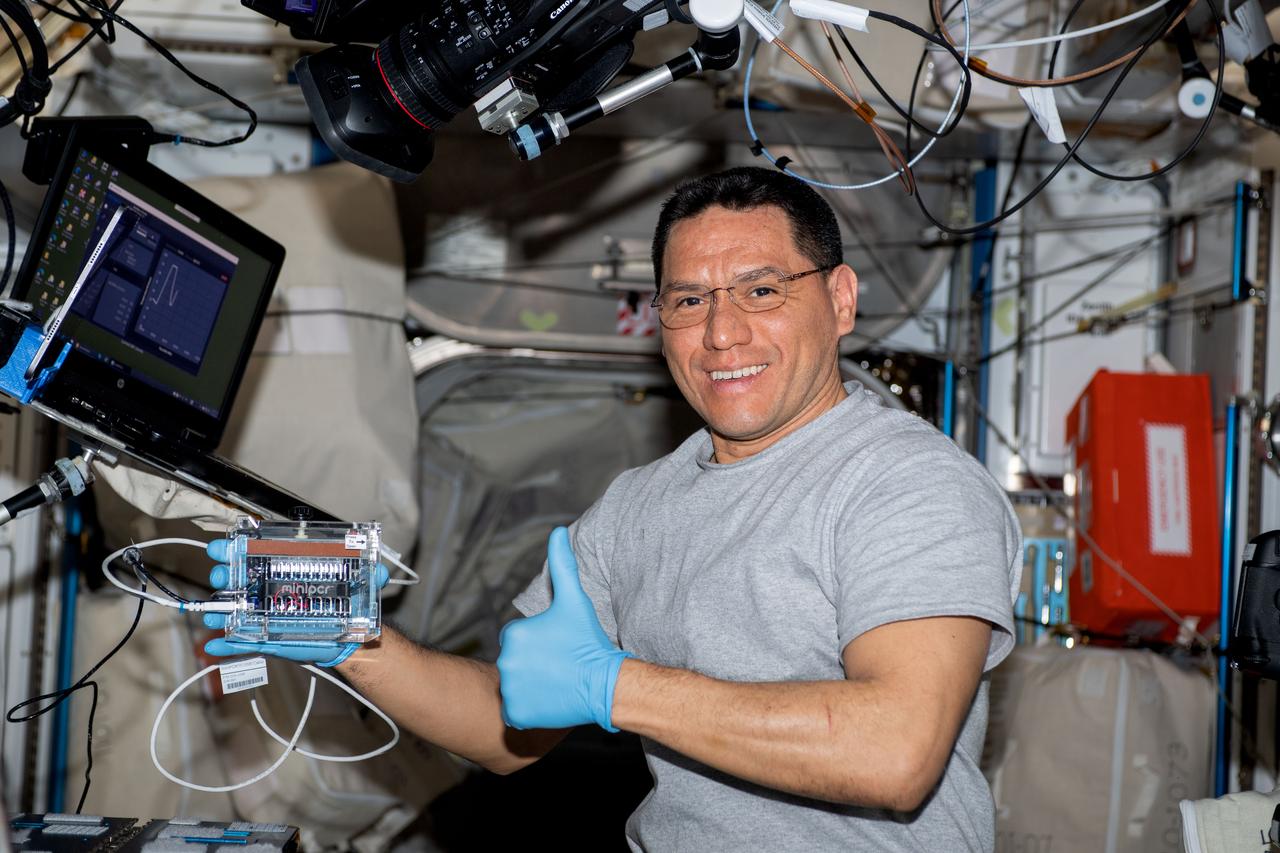
iss069e031305 (July 13, 2023) -- NASA astronaut and Expedition 69 Flight Engineer Frank Rubio holds the Mini Polymerase Chain Reaction (miniPCR) system, that promotes DNA research on Earth and in space, set up inside the Columbus laboratory module.
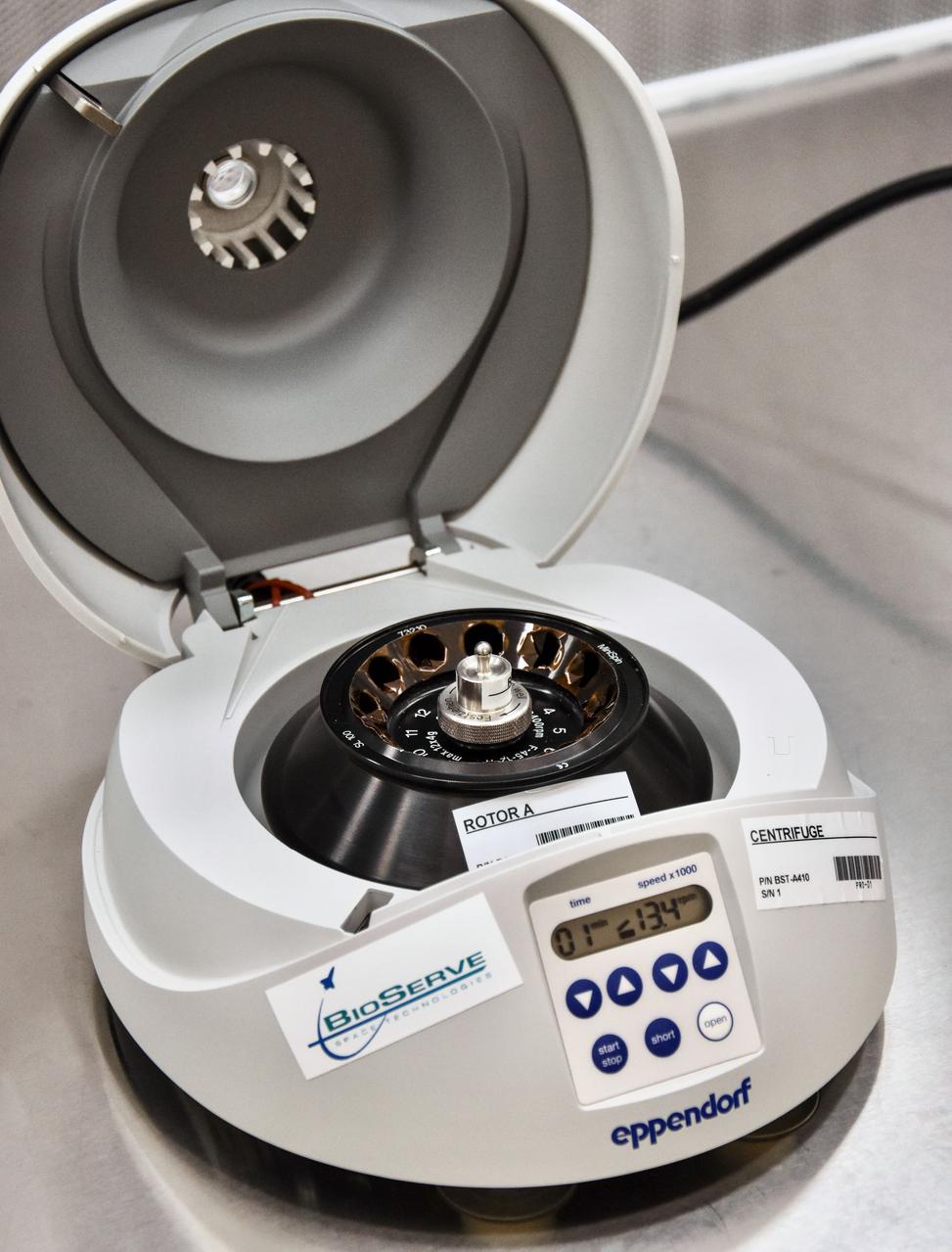
jsc2022e031230 (8/13/2021) --- A preflight view of the interior of the BioServe Centrifuge in nominal configuration with Rotor A. The BioServe Centrifuge facility supports a wide variety of life, physical, and materials science research. It enables separation of substances with differing densities, including cell cultures, DNA, protein, blood, and sedimentation samples.Image courtesy of BioServe Space Technologies.
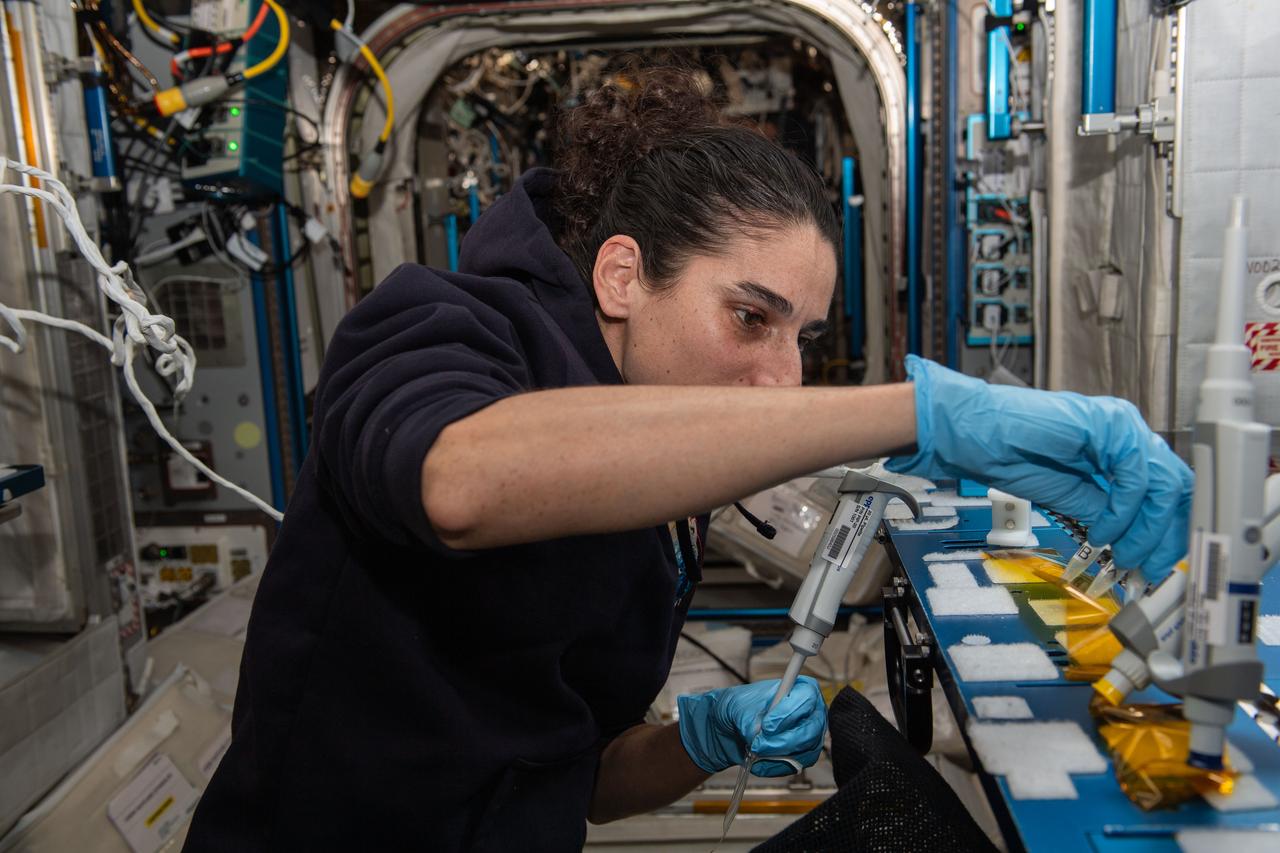
iss070e062919 (Jan. 11, 2024) --- NASA astronaut and Expedition 70 Flight Engineer Jasmin Moghbeli sequences DNA samples for the BioMole study demonstrating hardware that can analyze microbes to protect crew health and spacecraft life support systems.
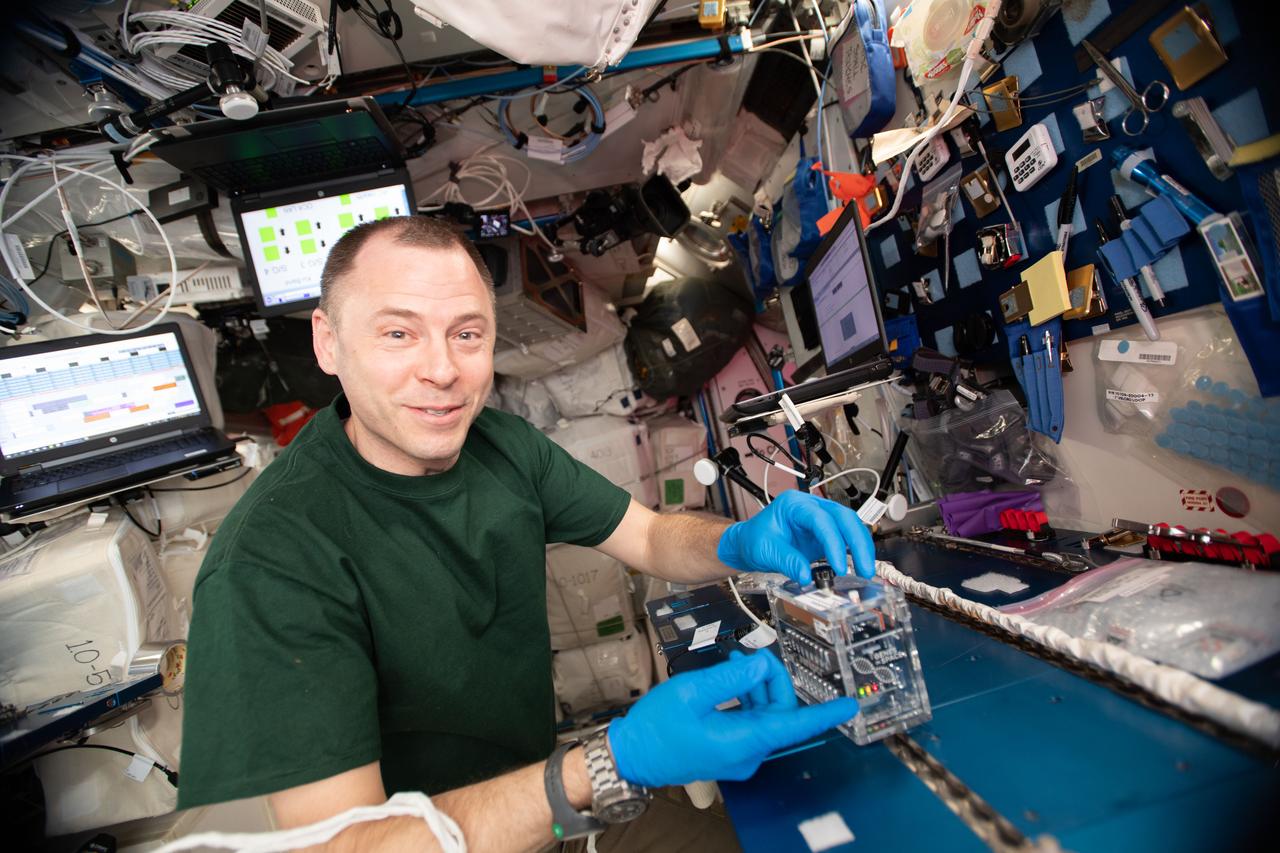
iss059e060940 (May 12, 2019) --- NASA astronaut Nick Hague works with the miniPCR hardware inside the Columbus laboratory module for the Genes In Space-6 experiment that is exploring how space radiation damages DNA and how the cell repair mechanism works in microgravity.
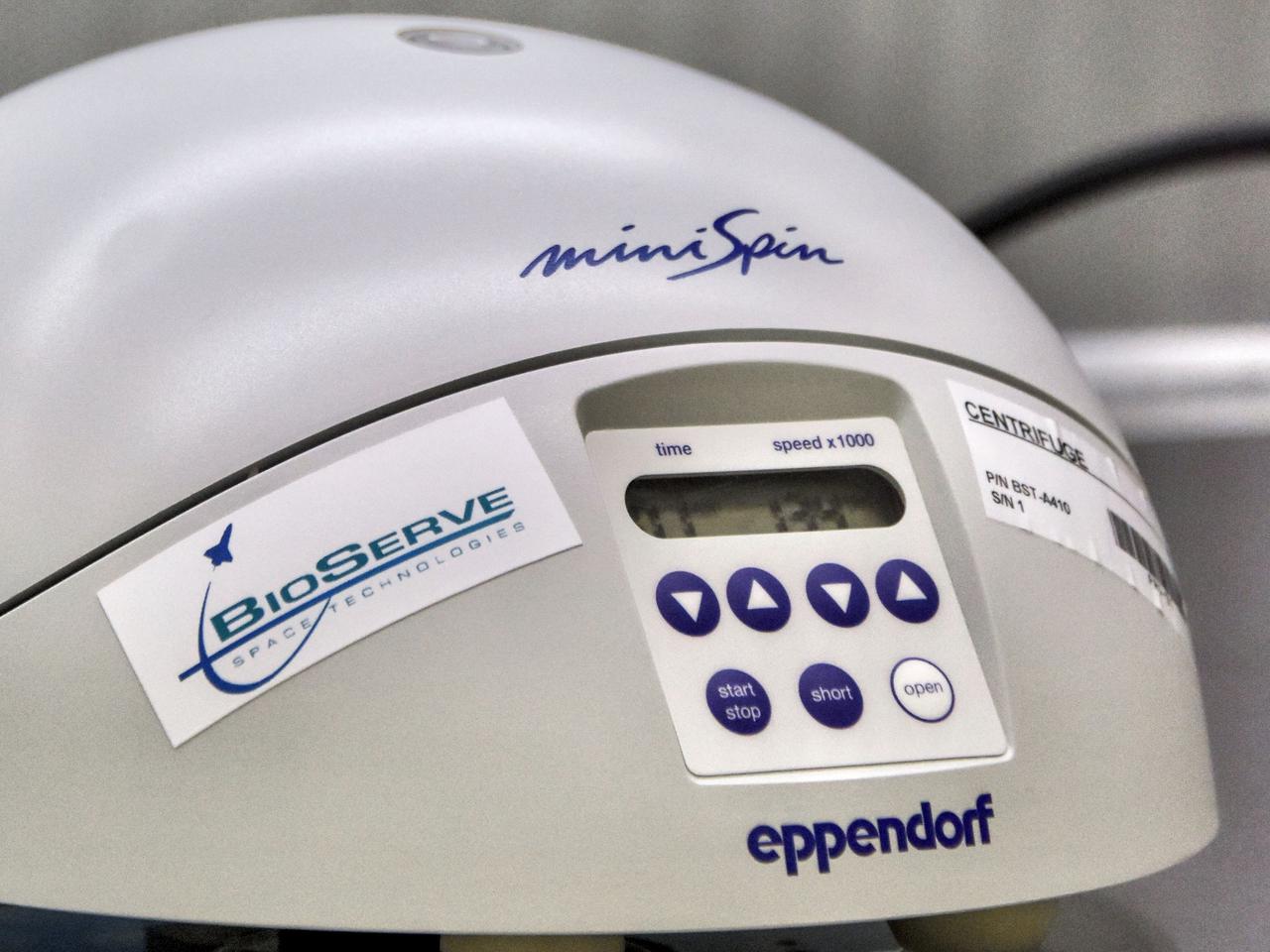
jsc2022e031231 (8/13/2021) --- A preflight closeup view of the BioServe Centrifuge’s user interface. The BioServe Centrifuge facility supports a wide variety of life, physical, and materials science research. It enables separation of substances with differing densities, including cell cultures, DNA, protein, blood, and sedimentation samples. Image courtesy of BioServe Space Technologies.
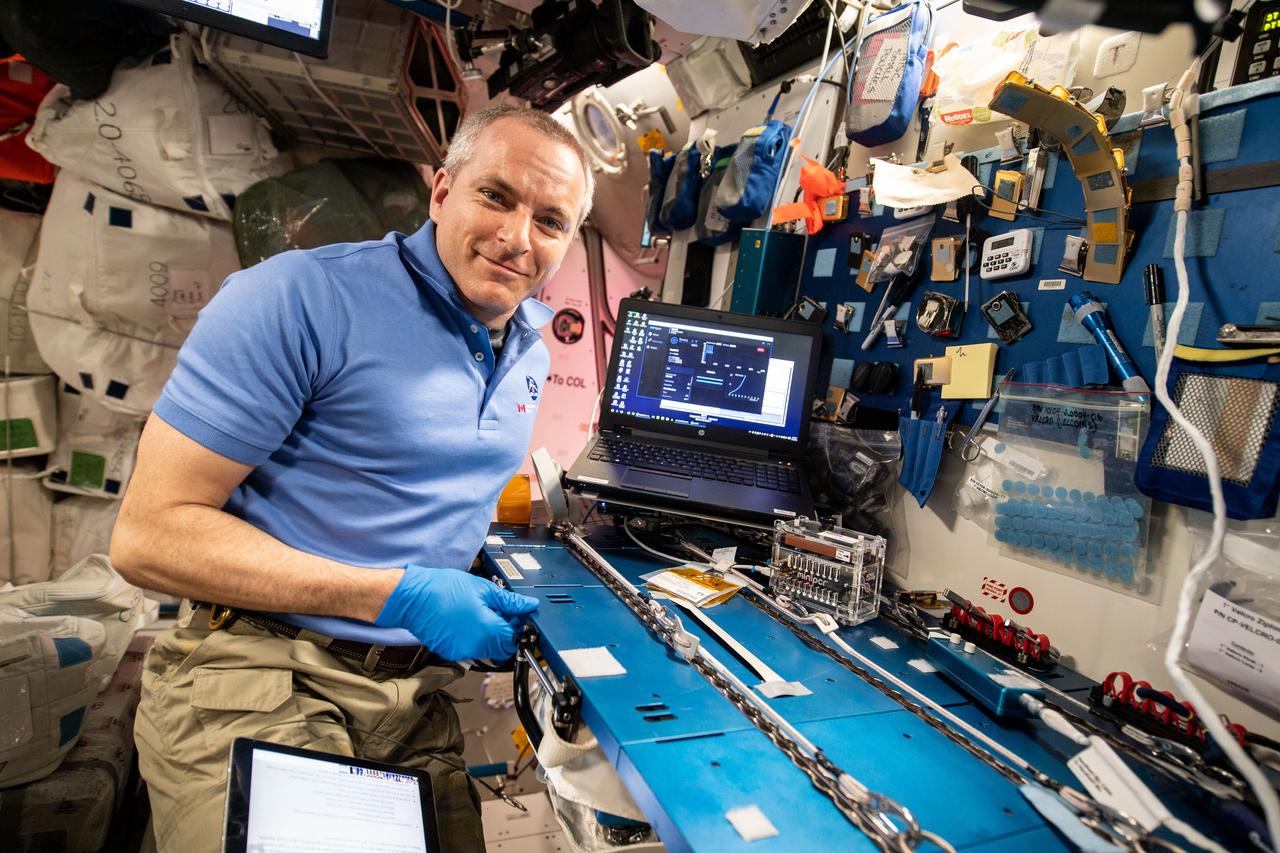
iss059e061607 (5/14/2019) --- Canadian Space Agency (CSA) astronaut David Saint-Jacques works with the miniPCR hardware inside the Columbus laboratory module onboard the International Space Station (ISS) for the Genes In Space-6 experiment that is exploring how space radiation damages DNA and how the cell repair mechanism works in microgravity.
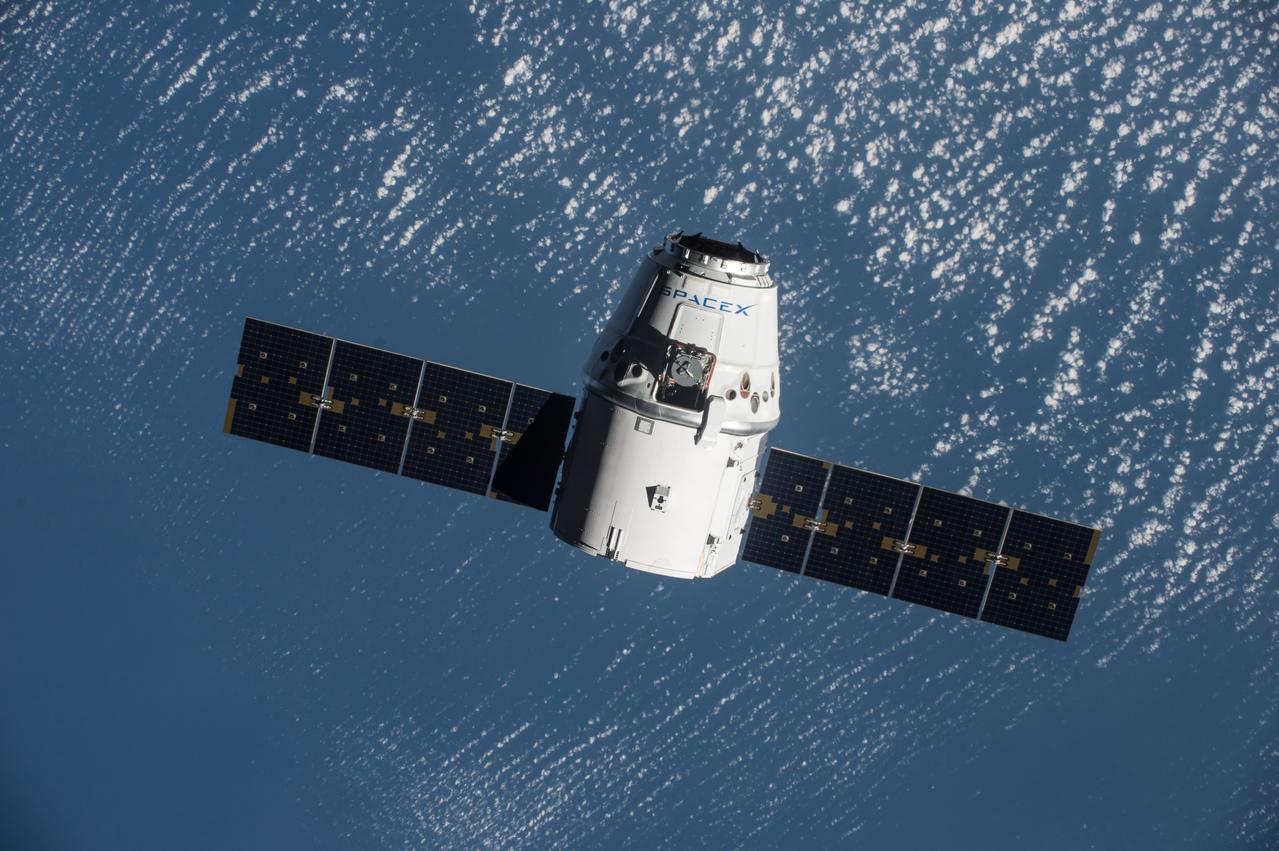
ISS048e042023 (07/20/2016) --- The SpaceX Dragon spacecraft arrives at the International Space Station with nearly 5,000 pounds of cargo. Instruments to perform the first-ever DNA sequencing in space, and the first international docking adapter for commercial crew spacecraft, are among the cargo of the SpaceX Commercial Resupply Services-9 (CRS-9) mission.
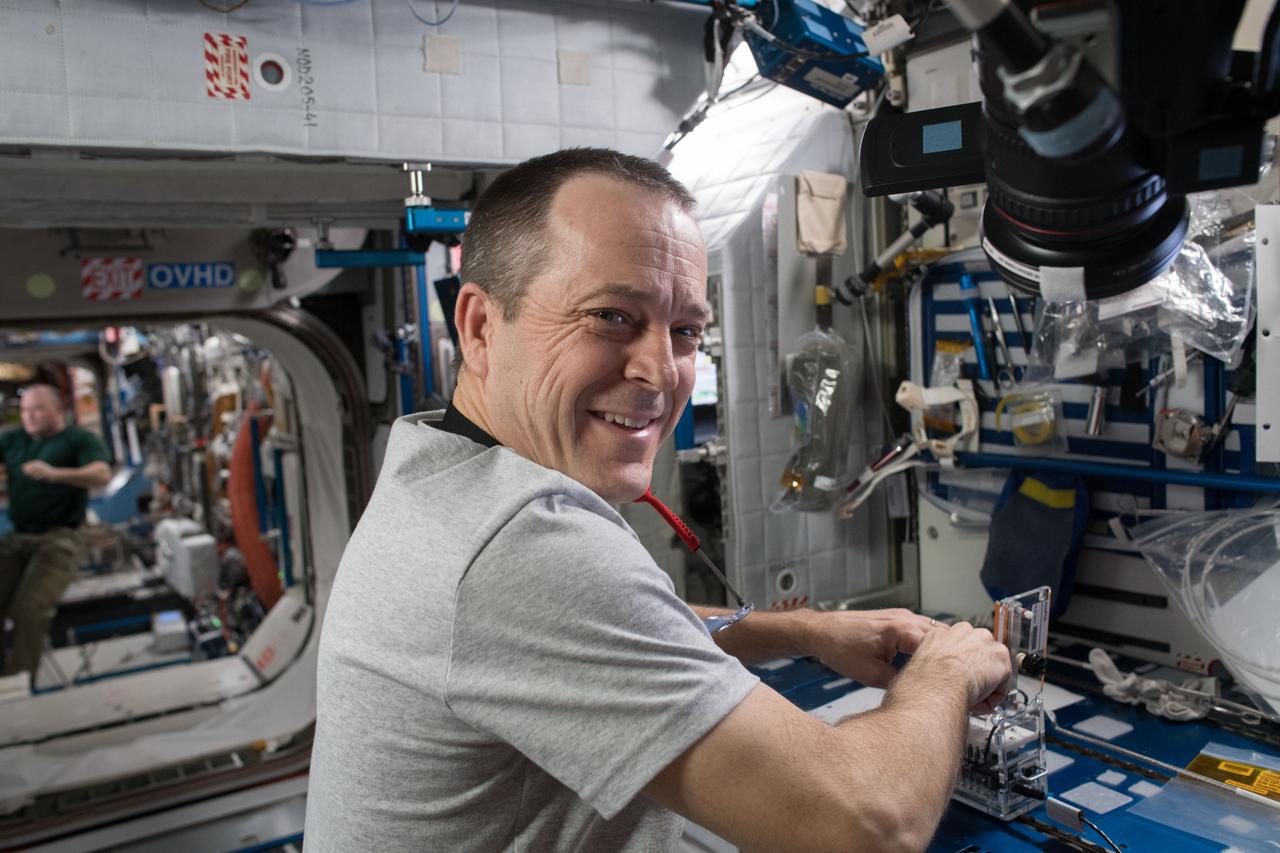
iss055e016051 (April 11, 2018) --- NASA astronaut and Flight Engineer Ricky Arnold works with the student-designed Genes in Space-5 experiment inside the Harmony module. The genetic research is helping scientists understand the relationship between DNA alterations and weakened immune systems possibly caused by living in space.
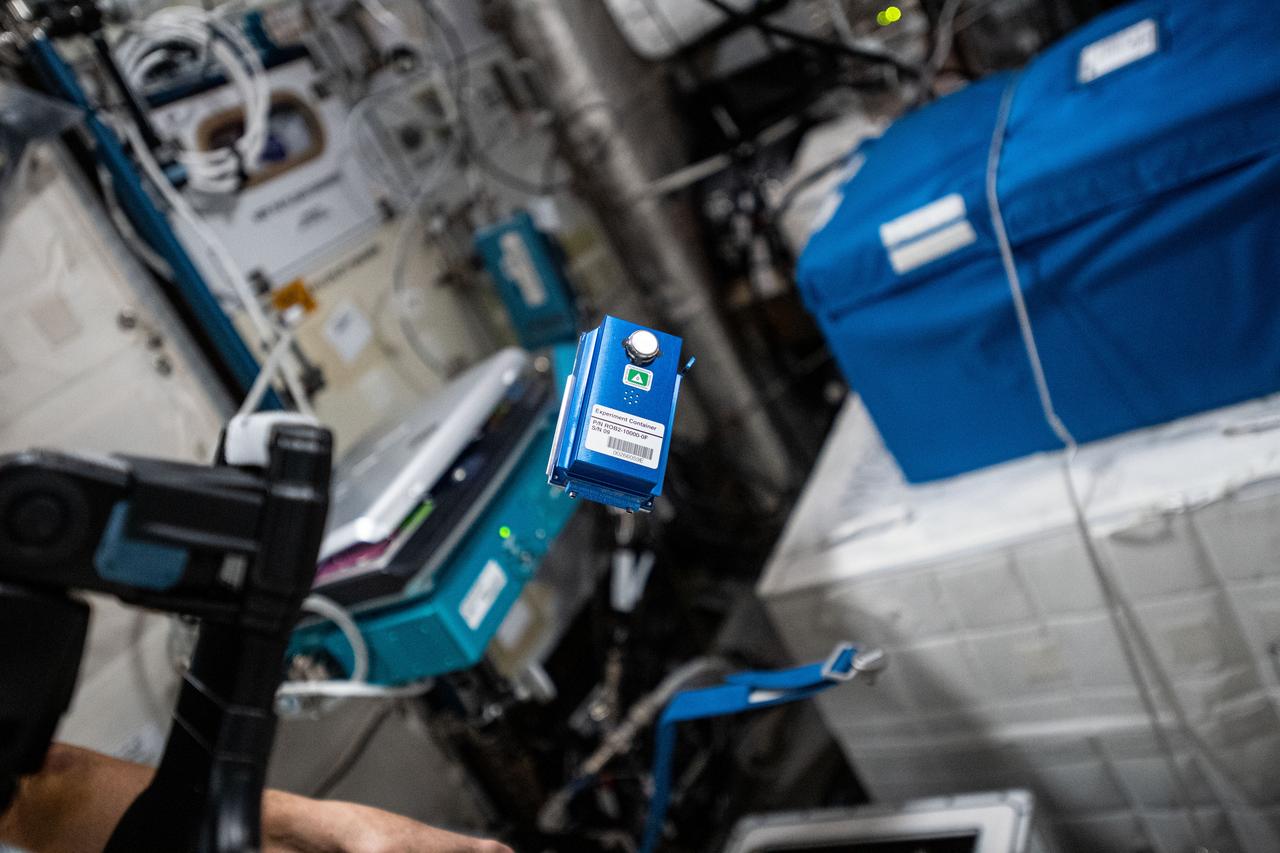
iss064e011398 (12/8/2020) --- A view of the Rotifer-B2 experiment container aboard the Internationals Space Station (ISS). The Rotifer-B2 investigation aims to explore the effects that spaceflight has on deoxyribonucleic acid (DNA) repair mechanisms of the bdelloid rotifer Adineta vaga.
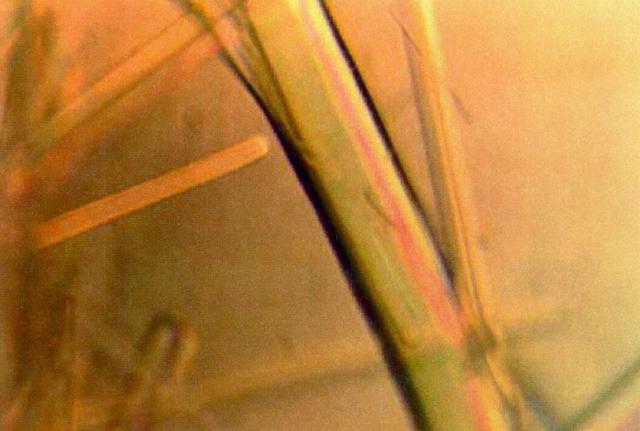
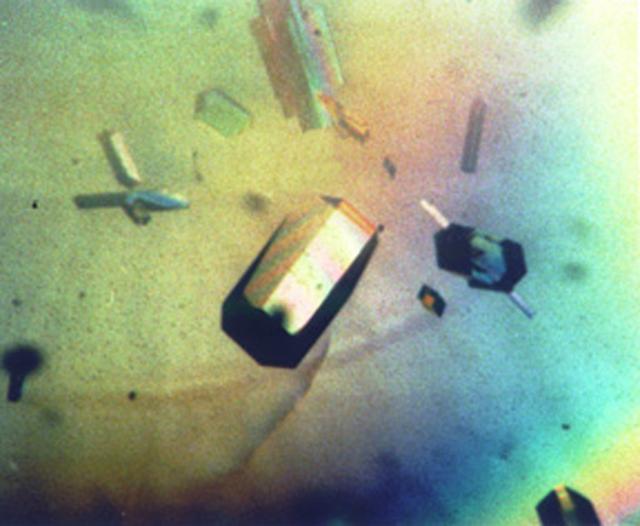
Nucleosome Core Particle grown on STS-81. The fundamental structural unit of chromatin and is the basis for organization within the genome by compaction of DNA within the nucleus of the cell and by making selected regions of chromosomes available for transcription and replication. Principal Investigator's are Dr. Dan Carter and Dr. Gerard Bunick of New Century Pharmaceuticals.
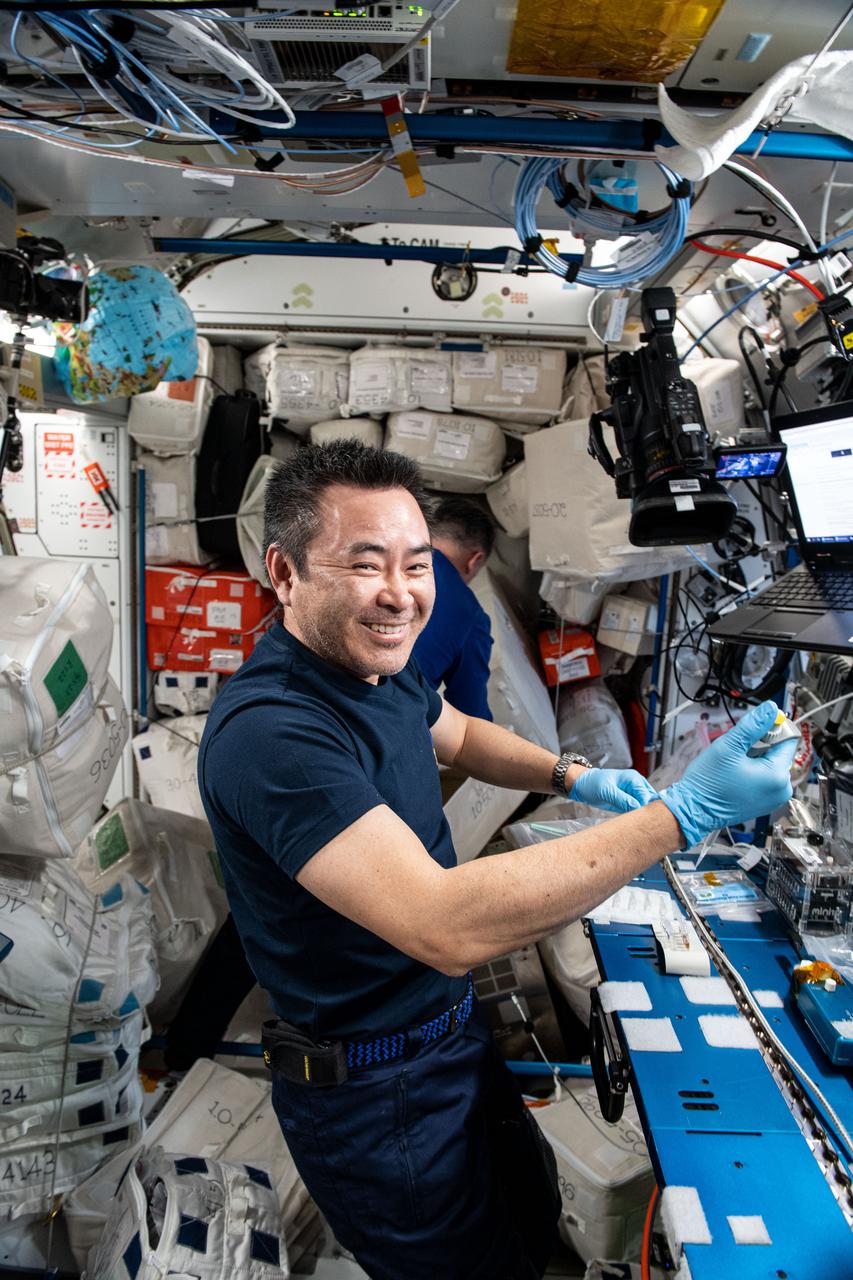
iss065e369726 (Sept. 9, 2021) --- Expedition 65 Commander Akihiko Hoshide of the Japan Aerospace Exploration Agency (JAXA) conducts research using DNA sequencing to help monitor and identify microbes on spacecraft to increase the safety of future human missions to the Moon, Mars and beyond.
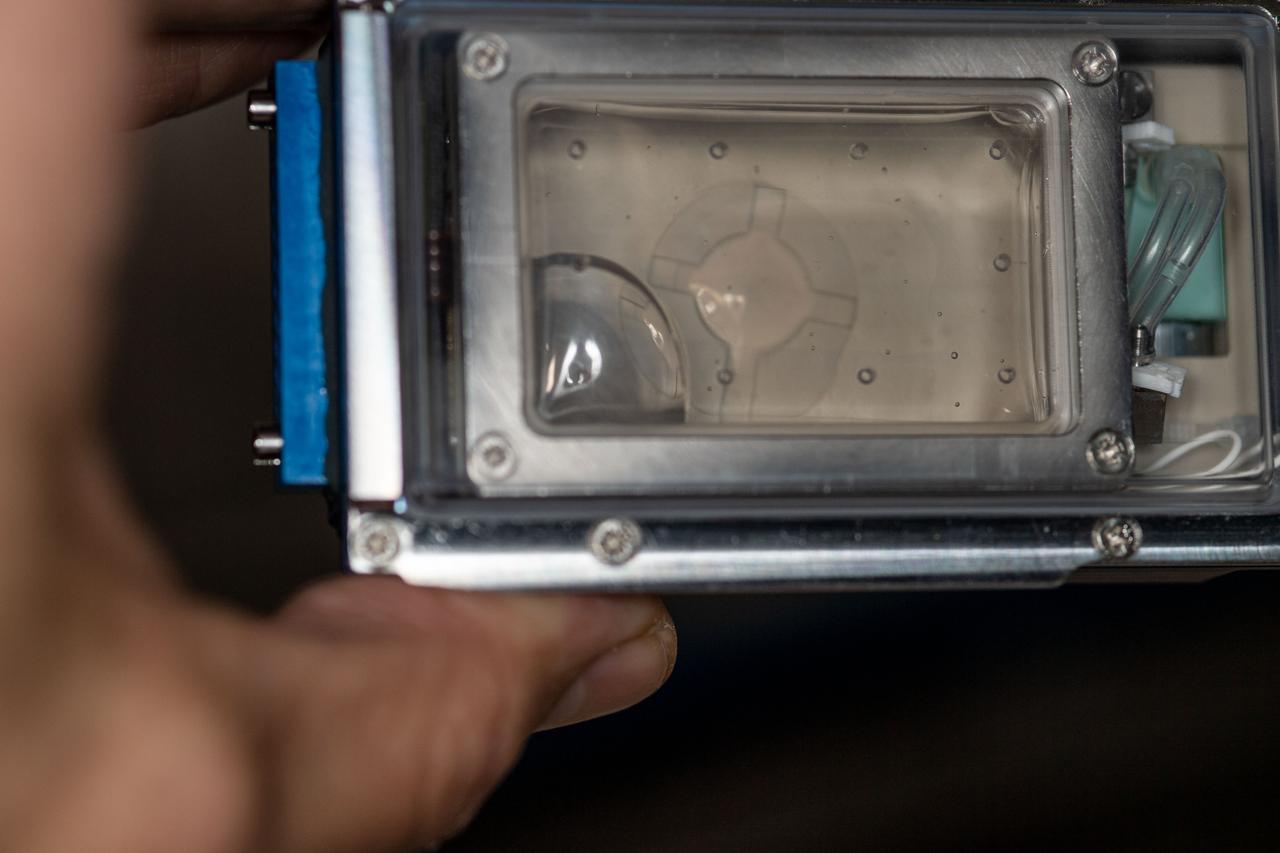
iss064e011243 (12/8/2020) --- A view of the Rotifer-B2 experiment container aboard the Internationals Space Station (ISS). The Rotifer-B2 investigation aims to explore the effects that spaceflight has on deoxyribonucleic acid (DNA) repair mechanisms of the bdelloid rotifer Adineta vaga.
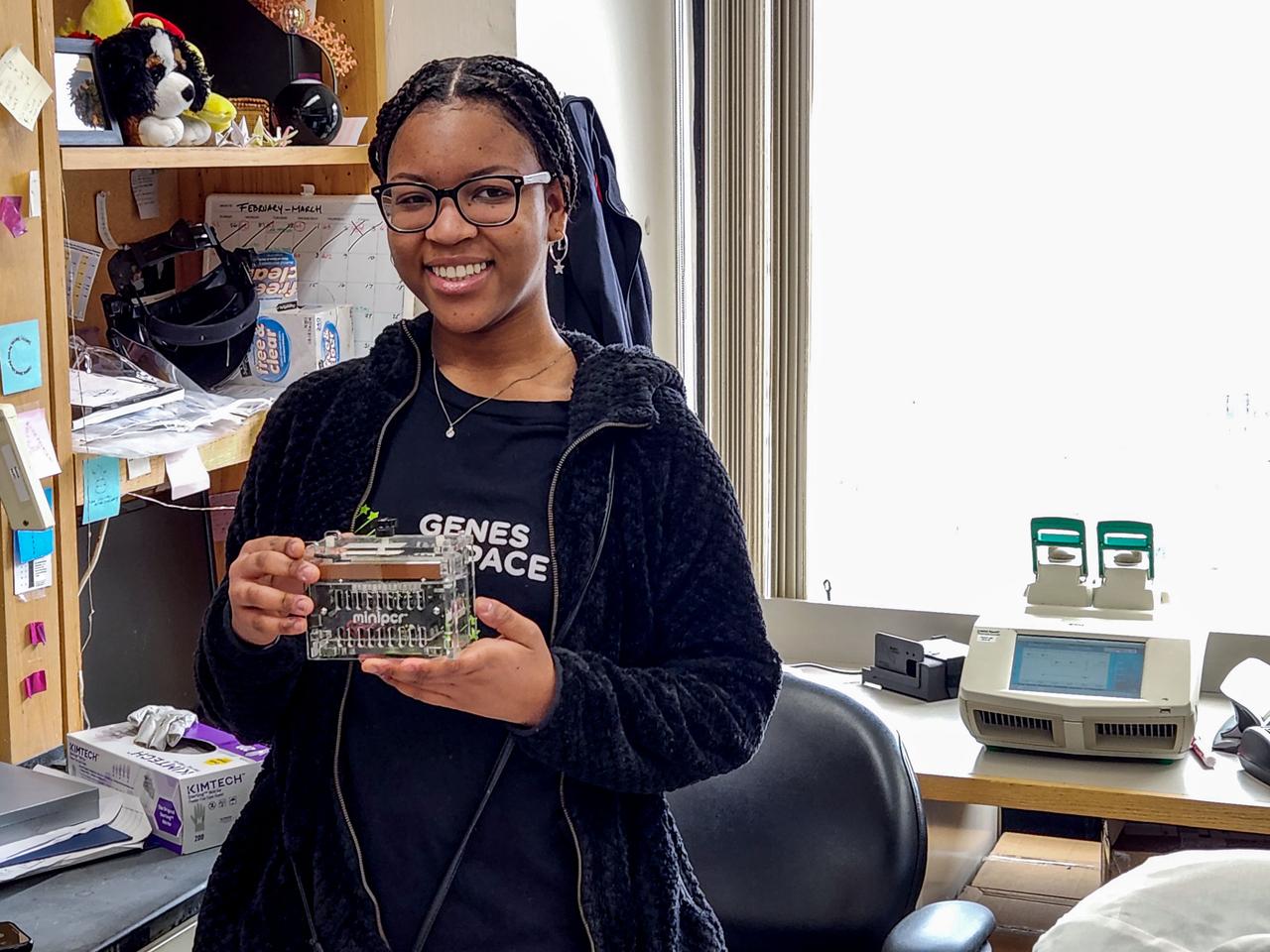
jsc2023e031076 (3/13/2023) --- Genes in Space-10 winner, student Pristine Onuoha, holds the miniPCR device, one of the tools astronauts will use to perform her investigation on the International Space Station. Onuoha’s investigation tests a method of measuring and analyzing DNA length in microgravity. Image courtesy of Genes in Space.
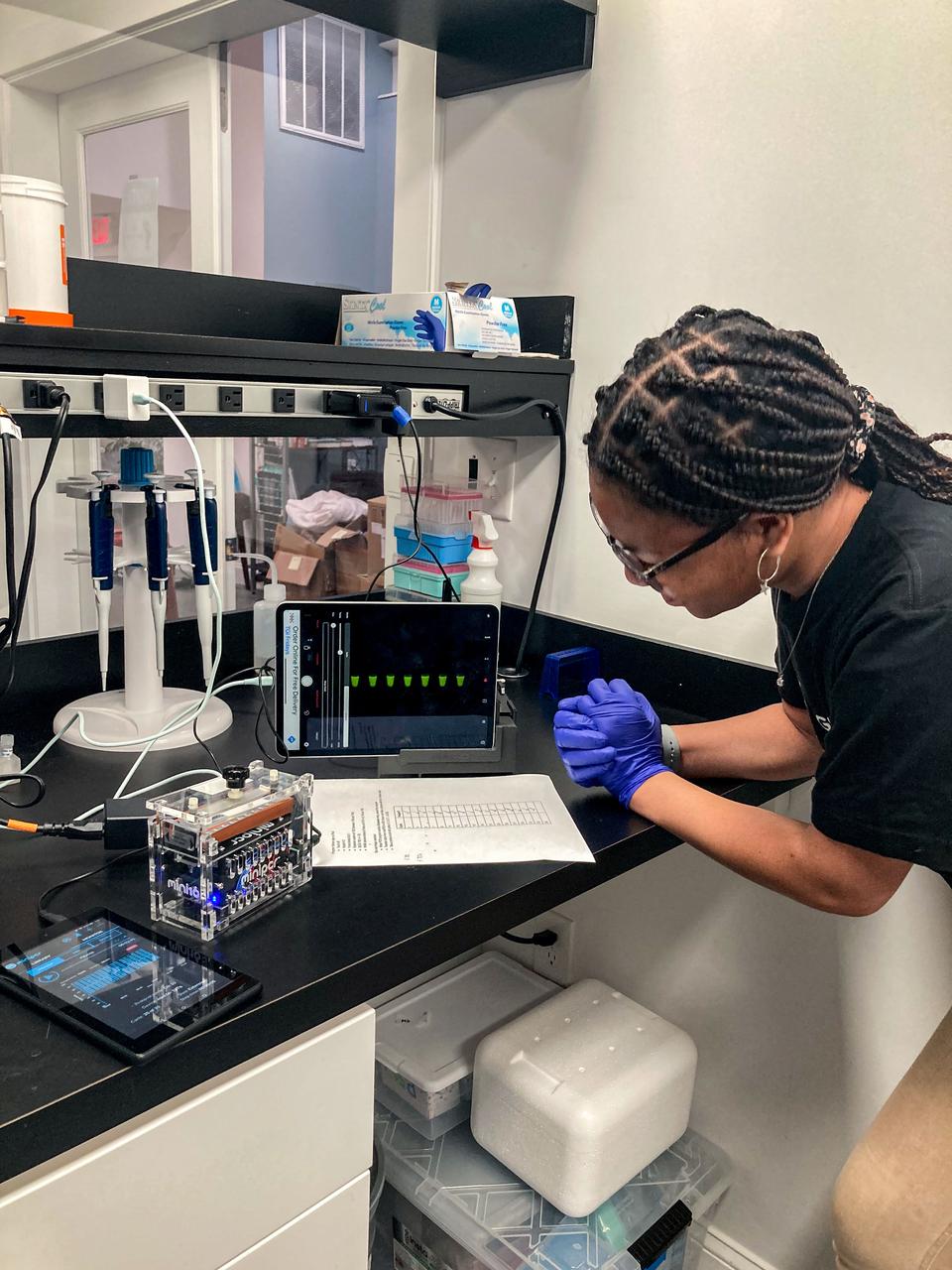
jsc2023e031077 (3/13/2023) --- Pristine Onuoha, the Genes in Space-10 winner, tests her investigation before it launches to the International Space Station. The Genes in Space program allows middle and high school students to design DNA experiments that address a challenge in space exploration. Image courtesy of Genes in Space.
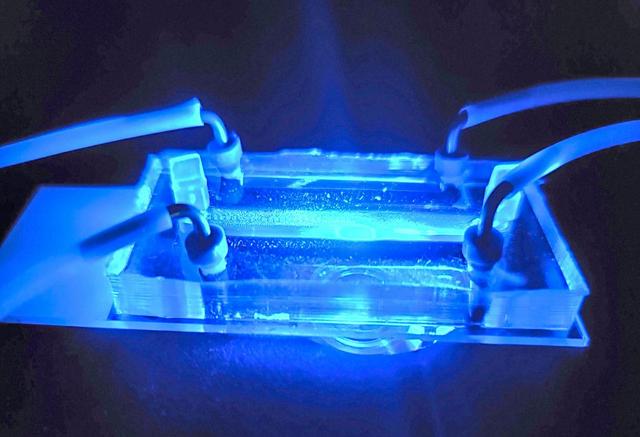
jsc2024e005964 (11/6/2023) --- A preflight image of the Janus base nano-matrix (JBNm) enabled cartilage tissue chip. The Compartment Cartilage Tissue Construct investigation uses biological materials that mimic DNA to develop a scaffold for regenerating cartilage tissues and tests the effect of a specific RNA on cartilage growth in space. Image courtesy of the University of Connecticut.
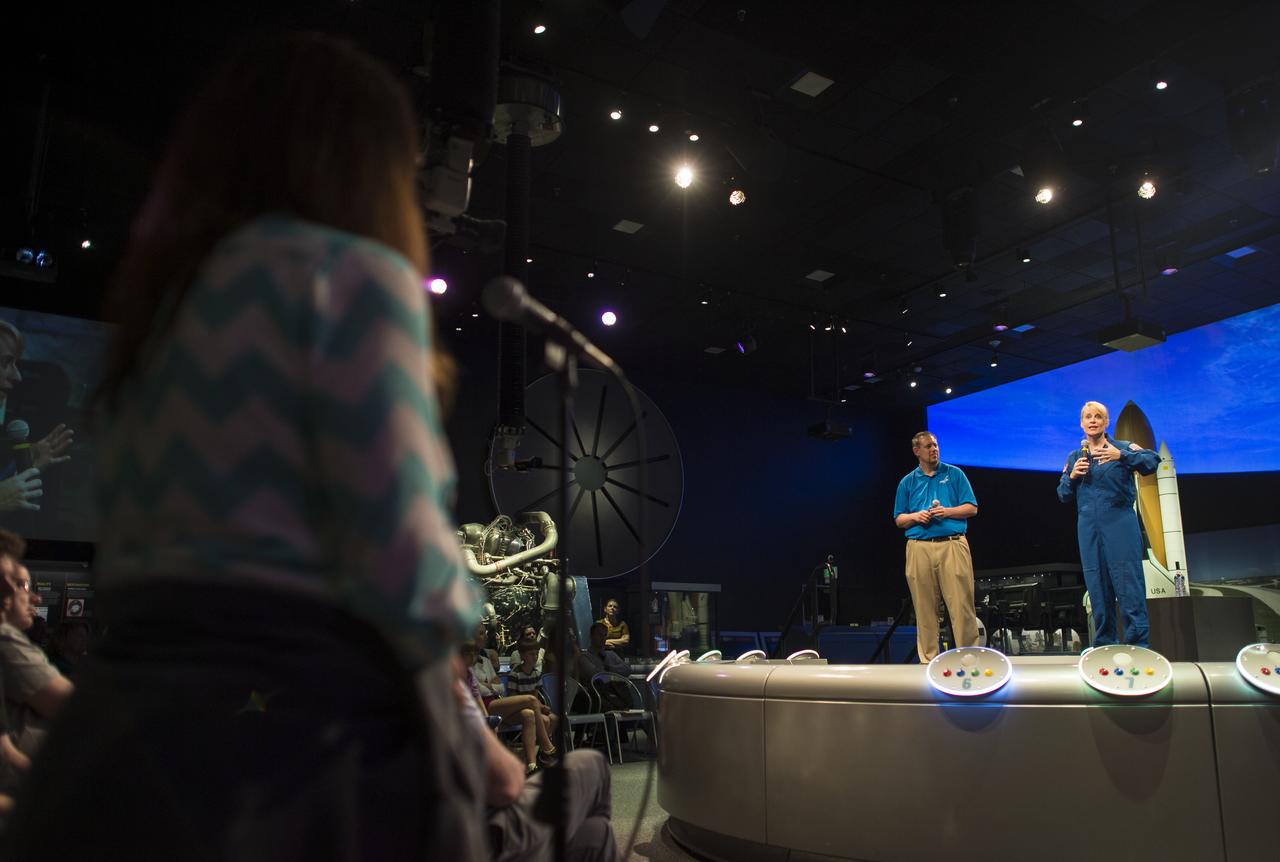
NASA Astronaut Kate Rubins answers a question from an audience member about her time onboard the International Space Station during Expeditions 48 and 49, Thursday, April 27, 2017 at Smithsonian's National Air and Space Museum in Washington. Rubins became the first person to sequence DNA in space and completed her first mission when she landed in a remote area near the town of Zhezkazgan, Kazakhstan in October 2016. Photo Credit: (NASA/Aubrey Gemignani)
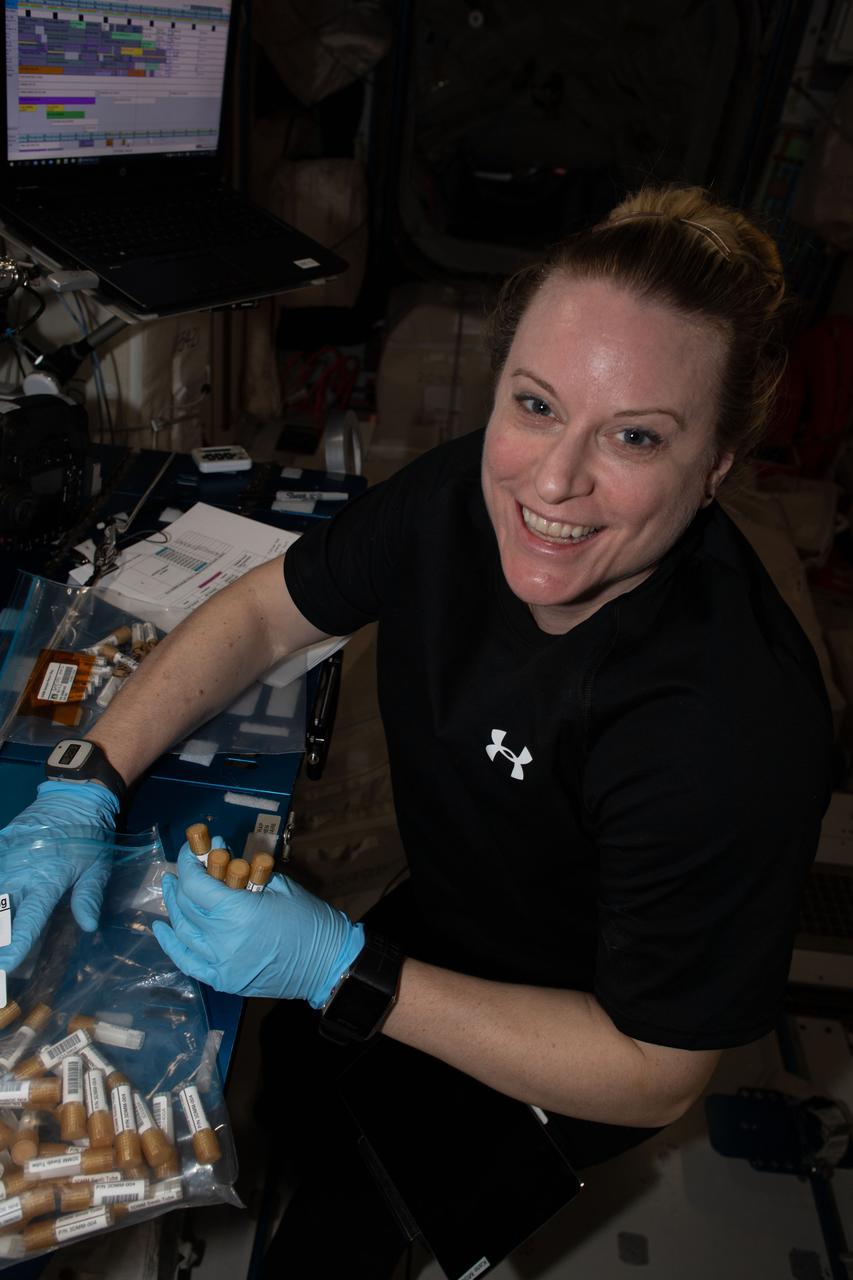
iss064e035217 (Feb. 23, 2021) --- NASA astronaut and Expedition 64 Flight Engineer Kate Rubins collects tubes containing swab samples of microbes for the 3DMM (Three-dimensional Microbial Monitoring of ISS Environment) investigation. The study analyzes and sequences the DNA from bacteria swabbed from station surfaces to understand how microbes respond at a molecular level to specific stress conditions, including altered gravity and atmospheric composition.
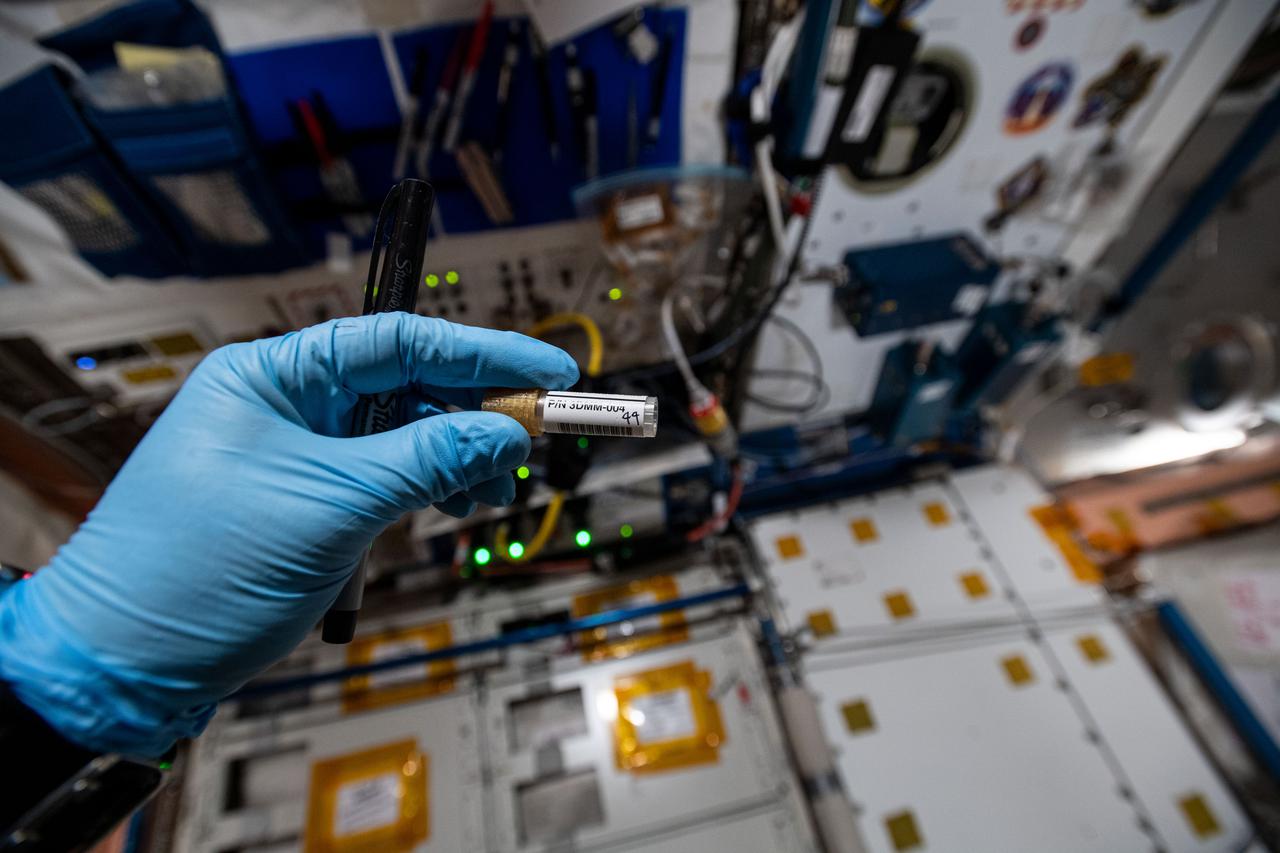
iss064e030059 (2/8/2021) --- NASA astronaut Kate Rubins collects tubes containing swab samples of microbes for the 3DMM (Three-dimensional Microbial Monitoring of ISS Environment) investigation. The study analyzes and sequences the DNA from bacteria swabbed from station surfaces to understand how microbes respond at a molecular level to specific stress conditions, including altered gravity and atmospheric composition.
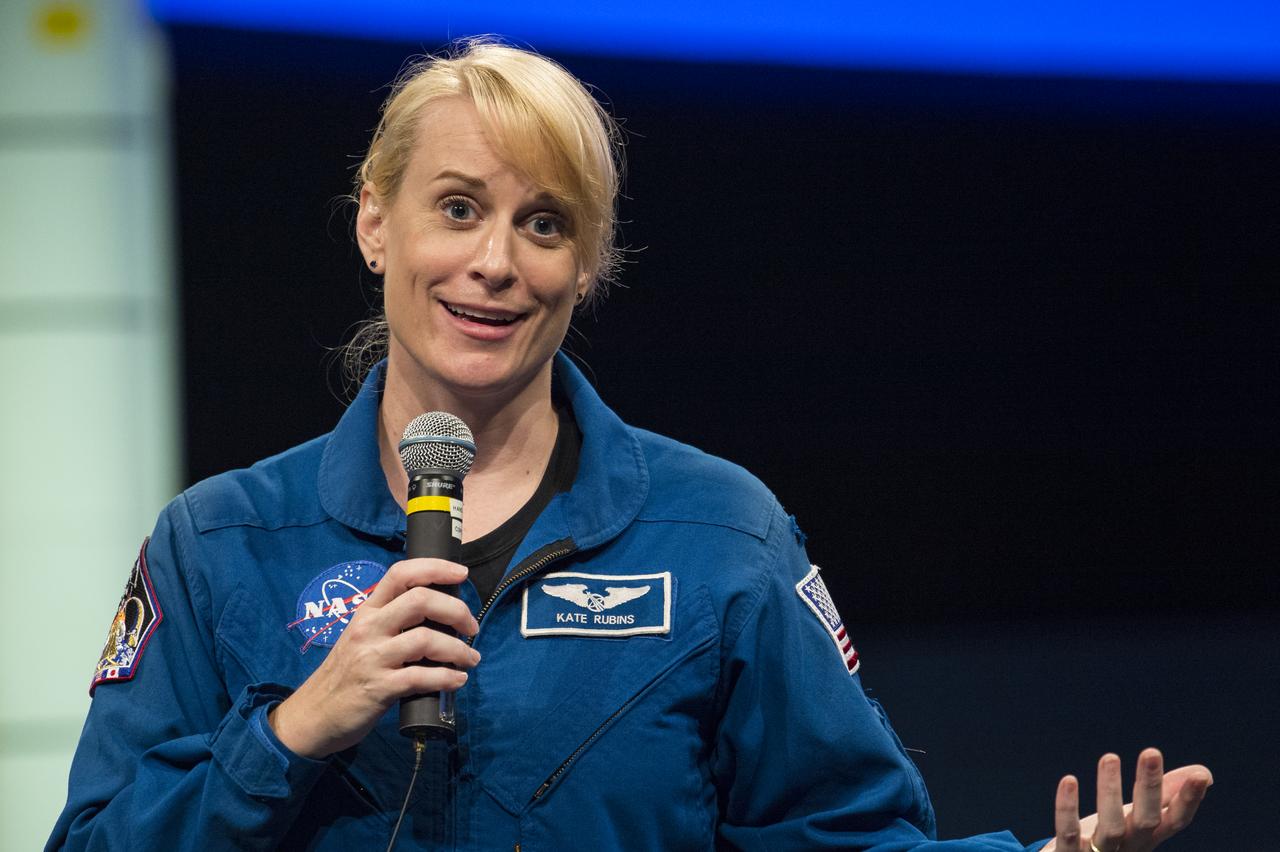
NASA Astronaut Kate Rubins speaks about her time onboard the International Space Station during Expeditions 48 and 49 Thursday, April 27, 2017 at Smithsonian's National Air and Space Museum in Washington. Rubins became the first person to sequence DNA in space and completed her first mission when she landed in a remote area near the town of Zhezkazgan, Kazakhstan in October 2016. Photo Credit: (NASA/Aubrey Gemignani)
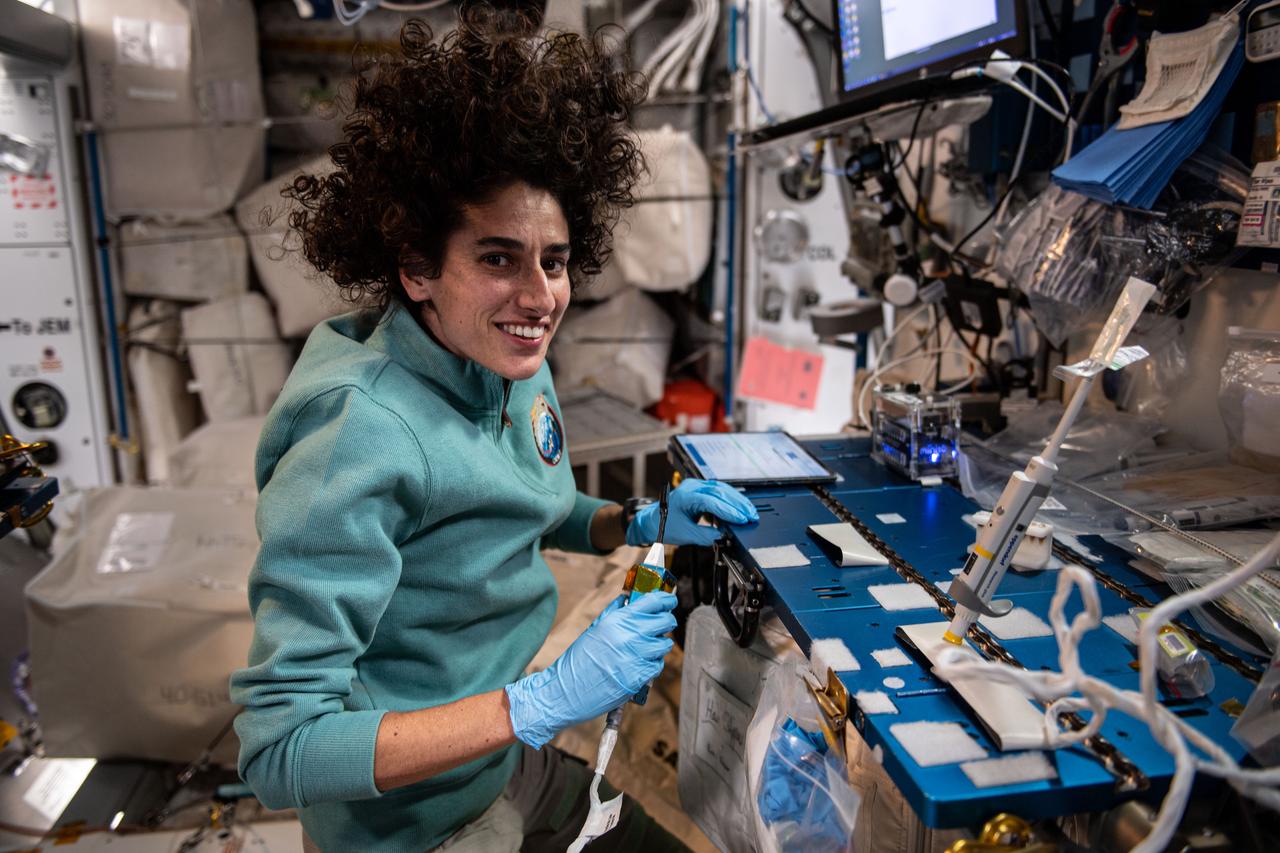
iss070e005386 (Oct. 18, 2023) --- NASA astronaut and Expedition 70 Flight Engineer Jasmin Moghbeli uses a portable DNA detection device that can be found in laboratories and classrooms on Earth. She was identifying bacteria extracted from water samples collected aboard the International Space Station. Known as BioMole, the study is demonstrating the ability to monitor the spacecraft’s microbial environment without sending samples back to Earth for analysis.
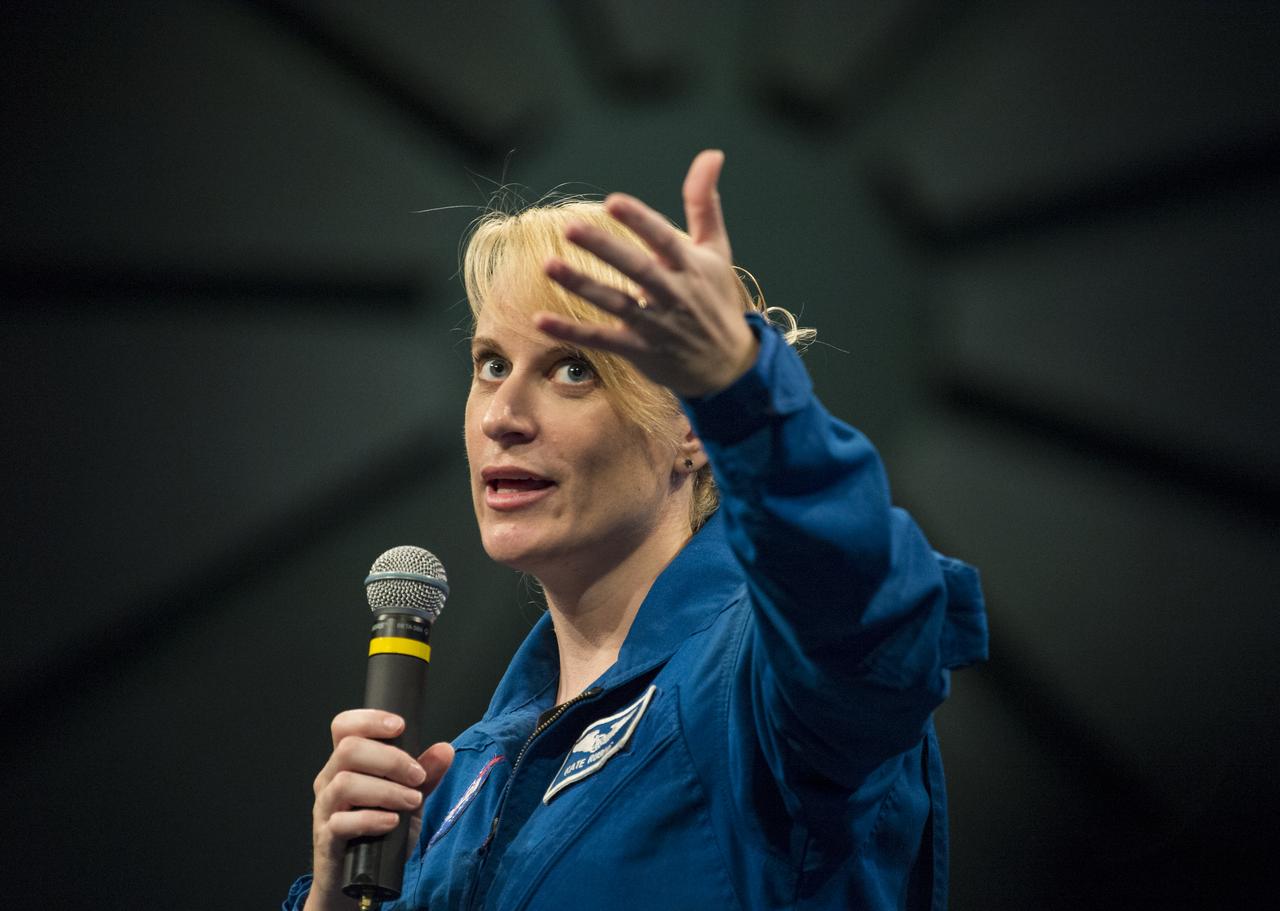
NASA Astronaut Kate Rubins speaks about her time onboard the International Space Station during Expeditions 48 and 49 Thursday, April 27, 2017 at Smithsonian's National Air and Space Museum in Washington. Rubins became the first person to sequence DNA in space and completed her first mission when she landed in a remote area near the town of Zhezkazgan, Kazakhstan in October 2016. Photo Credit: (NASA/Aubrey Gemignani)
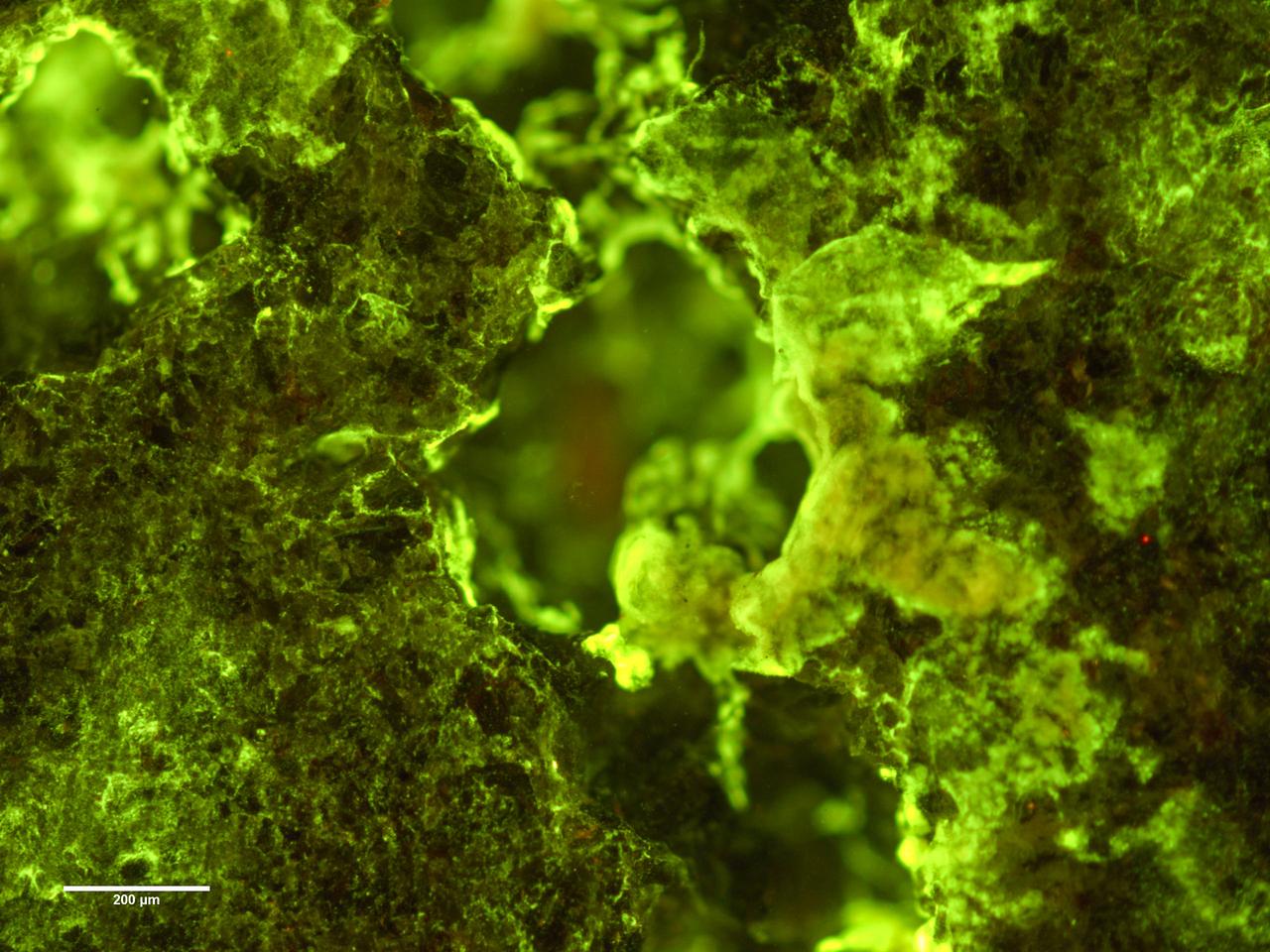
jsc2019e039825 (7/16/2019) --- Preflight Ffuorescence microscopy image of biofilm of Spingomonas desiccabilis growing over and into the surface of a basalt slide as part of BioRock experiment. Organisms are stained with DNA binding sye Sybr Gold. Growth can be seen into the rock cavities. The purpose of the Biorock investigation is to examine the effects of altered gravity on the rock/microbe/liquid system as a whole. (Image Courtesy of: ESA)
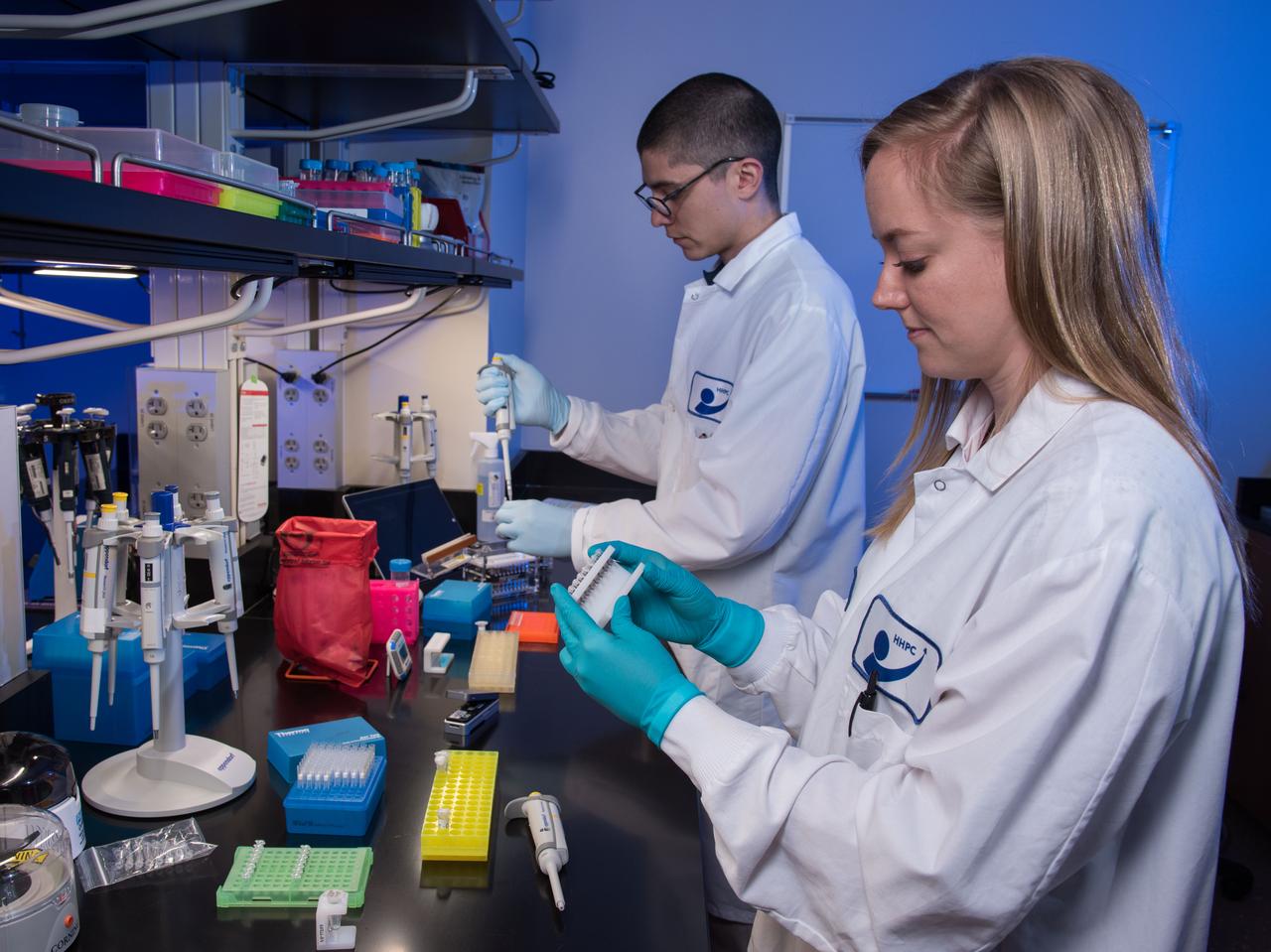
jsc2018e040417 (4/30/2018) --- Researchers at NASA's Johnson Space Center perform DNA and RNA sequencing on microbes as part of the Biomolecule Extraction and Sequencing Technology (BEST) experiment. The same sequencing procedure is performed in orbit aboard the International Space Station (ISS) and the results are compared to those on the ground. This will provide better insight into the effects of the spaceflight environment on microbial life.
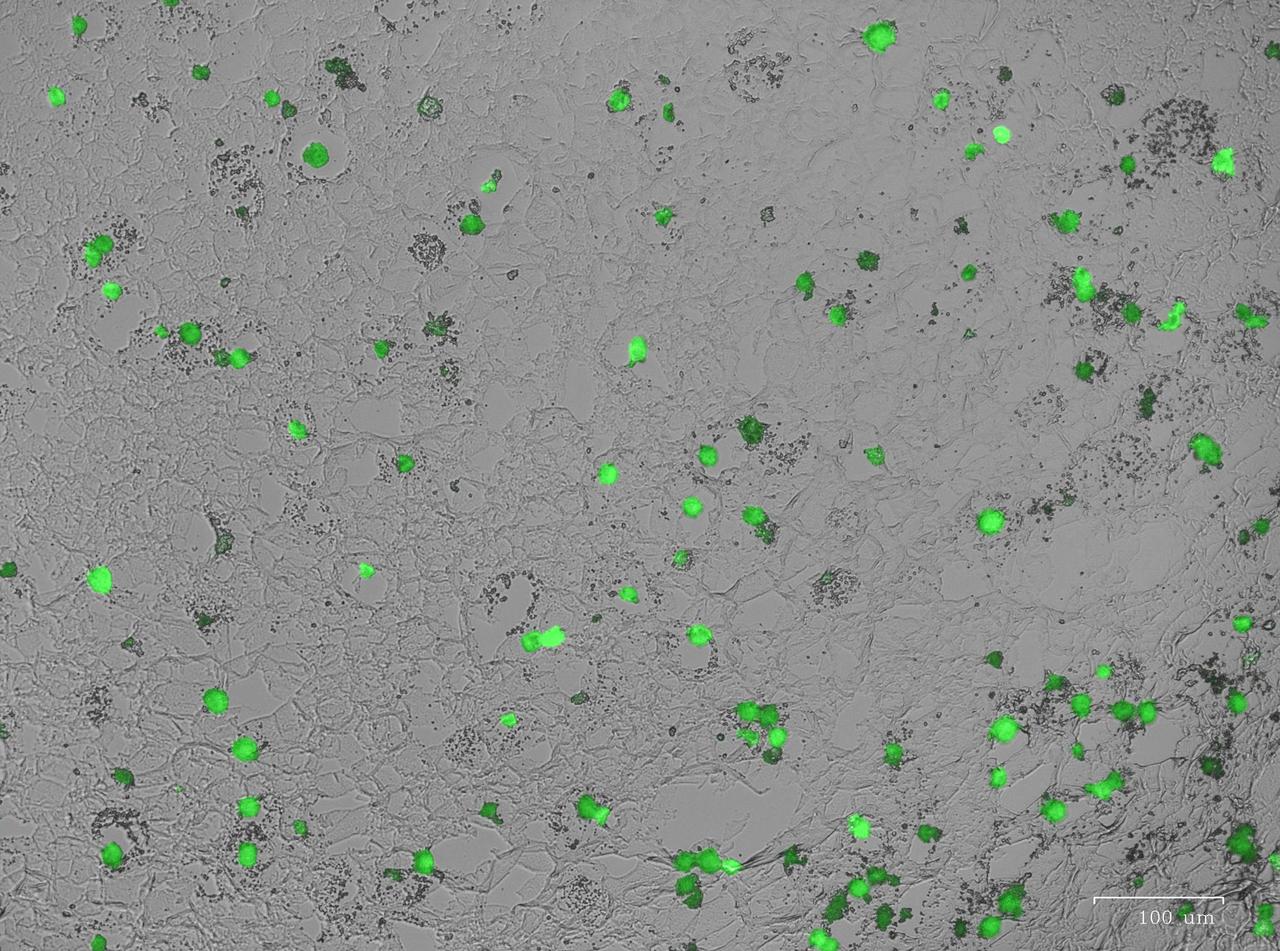
jsc2024e005962 (12/10/2023) --- A preflight image for the Compartment Cartilage Tissue Construct investigation shows that the Janus base Nanopieces (JBNps) delivered green fluorescence labeled therapeutic RNA into cartilage cells. Compartment Cartilage Tissue Construct uses biological materials that mimic DNA to develop a scaffold for regenerating cartilage tissues and tests the effect of a specific RNA on cartilage growth in space. Image courtesy of the University of Connecticut.
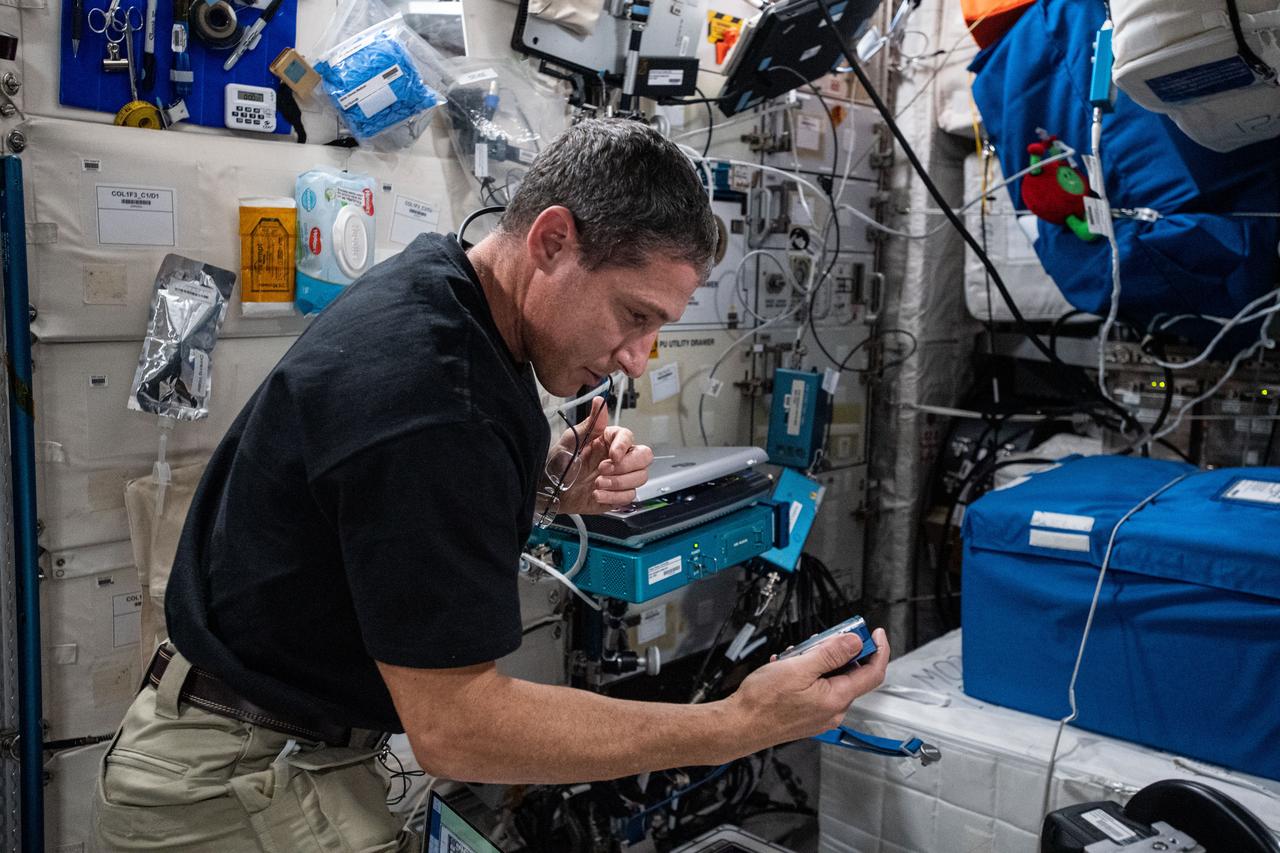
iss064e011391 (Dec. 8, 2020) --- NASA astronaut and Expedition 64 Flight Engineer Michael Hopkins shakes an experiment container containing biological samples to displace bubbles before placing it into the Kubik incubator facility. Hopkins was servicing the samples for the Rotifer-B2 experiment that is exploring the effects spaceflight has on DNA repair mechanisms of the bdelloid rotifer Adineta vaga, a plankton-like microscopic organism.
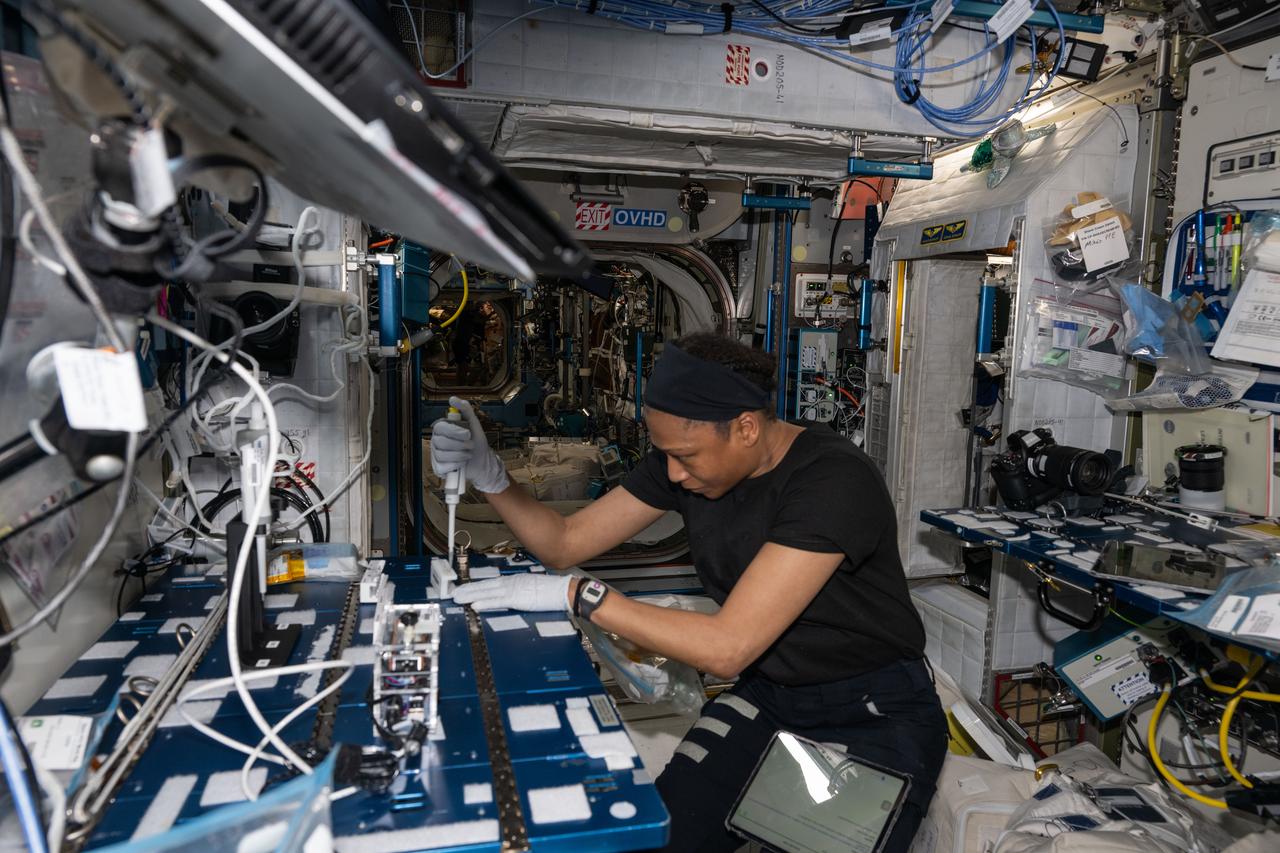
iss071e041625 (April 24, 2024) --- NASA astronaut and Expedition 71 Flight Engineer Jeanette Epps extracts DNA samples from bacteria colonies for genomic analysis aboard the International Space Station's Harmony module. The research work may help researchers understand how bacteria adapts to weightlessness and develop ways to protect space crews and humans on Earth.

NASA Astronaut Kate Rubins participates in a Facebook Live, answering questions about her time onboard the International Space Station during Expeditions 48 and 49, Thursday, April 27, 2017 at Smithsonian's National Air and Space Museum in Washington. Rubins became the first person to sequence DNA in space and completed her first mission when she landed in a remote area near the town of Zhezkazgan, Kazakhstan in October 2016. Photo Credit: (NASA/Aubrey Gemignani)
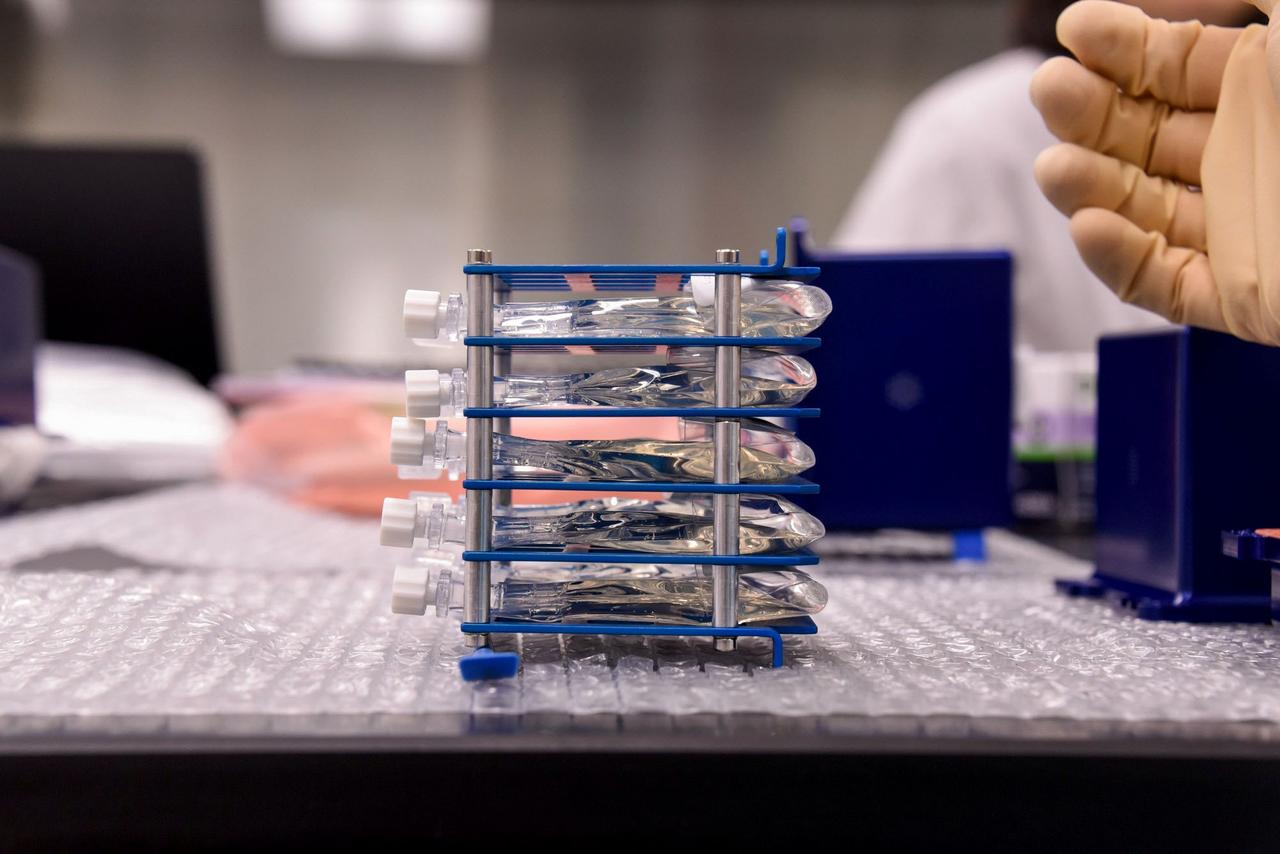
jsc2024e050833 (12/2/2019) --- Preflight image of the Rotifer-B2 experiment container. The Rotifer-B2 investigation aims to explore the effects that spaceflight has on deoxyribonucleic acid (DNA) repair mechanisms of the bdelloid rotifer Adineta vaga. This is achieved by pre-exposing rotifers to high levels of radiation on Earth and then culturing them in Kubik, an on-orbit incubator facility. After exposing rotifers to space conditions inside the International Space Station, the samples are frozen and returned to Earth for postflight analyses. Image courtesy of the University of Namur.
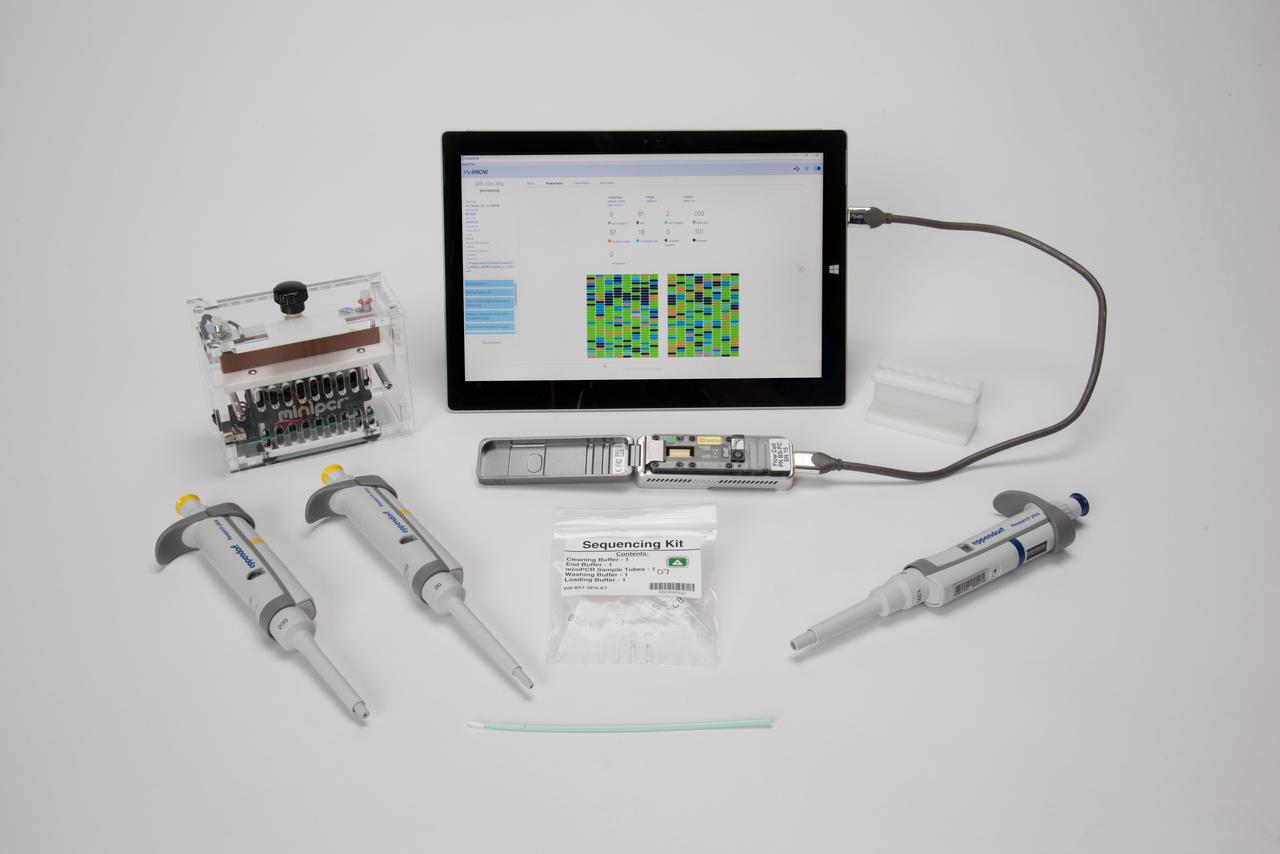
jsc2018e059572_alt (5/29/2018) --- The miniPCR platform, used for the amplification of nucleic acids, from the Genes in Space investigations combined with the MinION, nucleic acid sequencer, from the Biomolecule Sequencer experiment makes up the Biomolecule Extraction and Sequencing Technology (BEST) payload. With this hardware, including the pipettes, astronauts have demonstrated a complete sample-to-answer process for DNA and RNA sequencing on board the ISS.

iss070e005393 (12/182023) --- NASA astronaut Jasmin Moghbeli is shown performing steps to extract and amplify DNA from a water sample for later sequencing. The EHS BioMole Facility demonstrates technology for monitoring the microbial environment onboard a spacecraft. As part of a Crew Health Care System (CHeCS), this technology could support missions such as Gateway and Mars transit that do not have the capability to return samples to Earth for analysis. The investigation evaluates the ability of the EHS BioMole Facility to accurately analyze potable water samples on the space station.
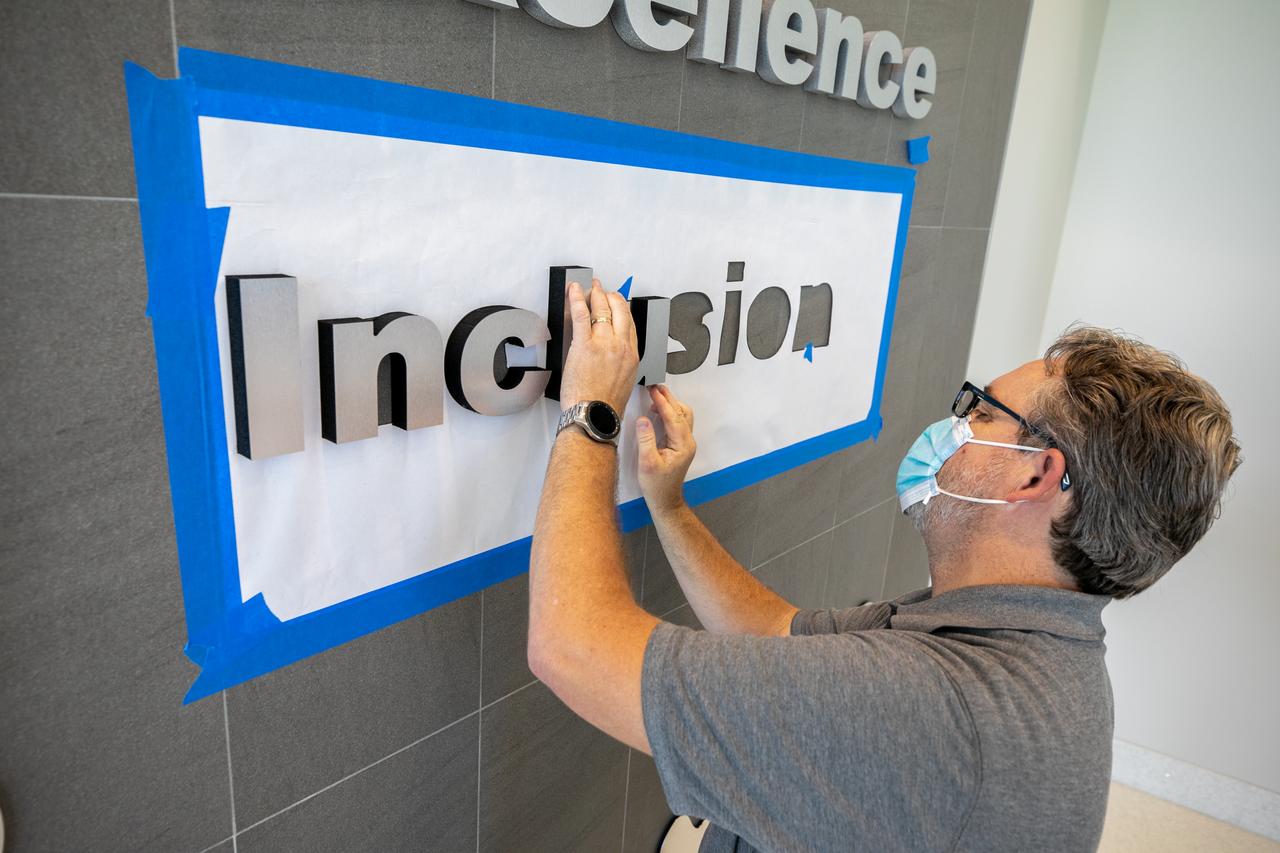
NASA’s fifth core value – inclusion – is installed in the Central Campus lobby at the agency’s Kennedy Space Center in Florida on Sept. 1, 2020. On July 23, NASA Administrator Jim Bridenstine announced the addition of this fifth core value to the existing values embraced by NASA: safety, integrity, teamwork, and excellence. In his announcement, Bridenstine stated “Incorporating inclusion as a NASA core value is an important step to ensuring this principle remains a long-term focus for our agency and becomes ingrained in the NASA family DNA.”
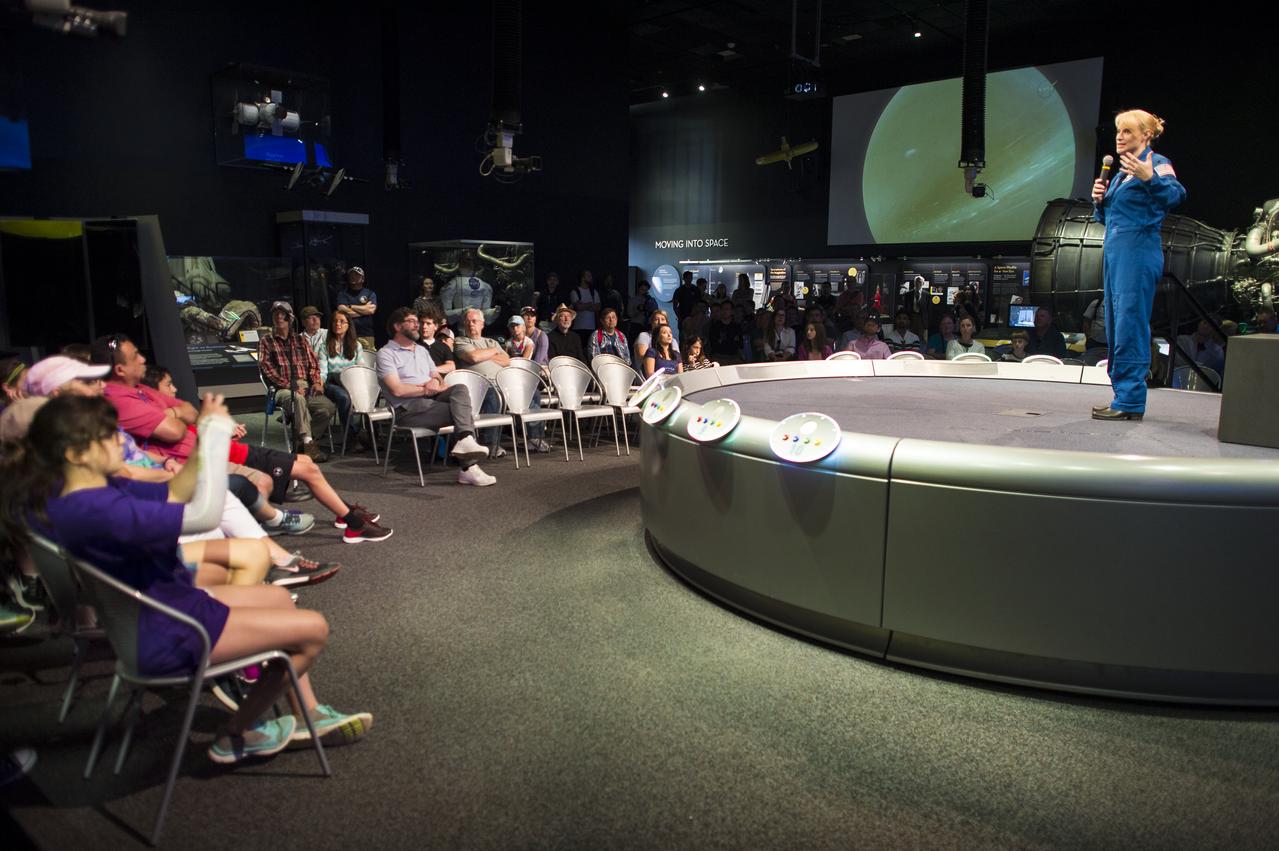
NASA Astronaut Kate Rubins speaks about her time onboard the International Space Station during Expeditions 48 and 49 Thursday, April 27, 2017 at Smithsonian's National Air and Space Museum in Washington. Rubins became the first person to sequence DNA in space and completed her first mission when she landed in a remote area near the town of Zhezkazgan, Kazakhstan in October 2016. Photo Credit: (NASA/Aubrey Gemignani)
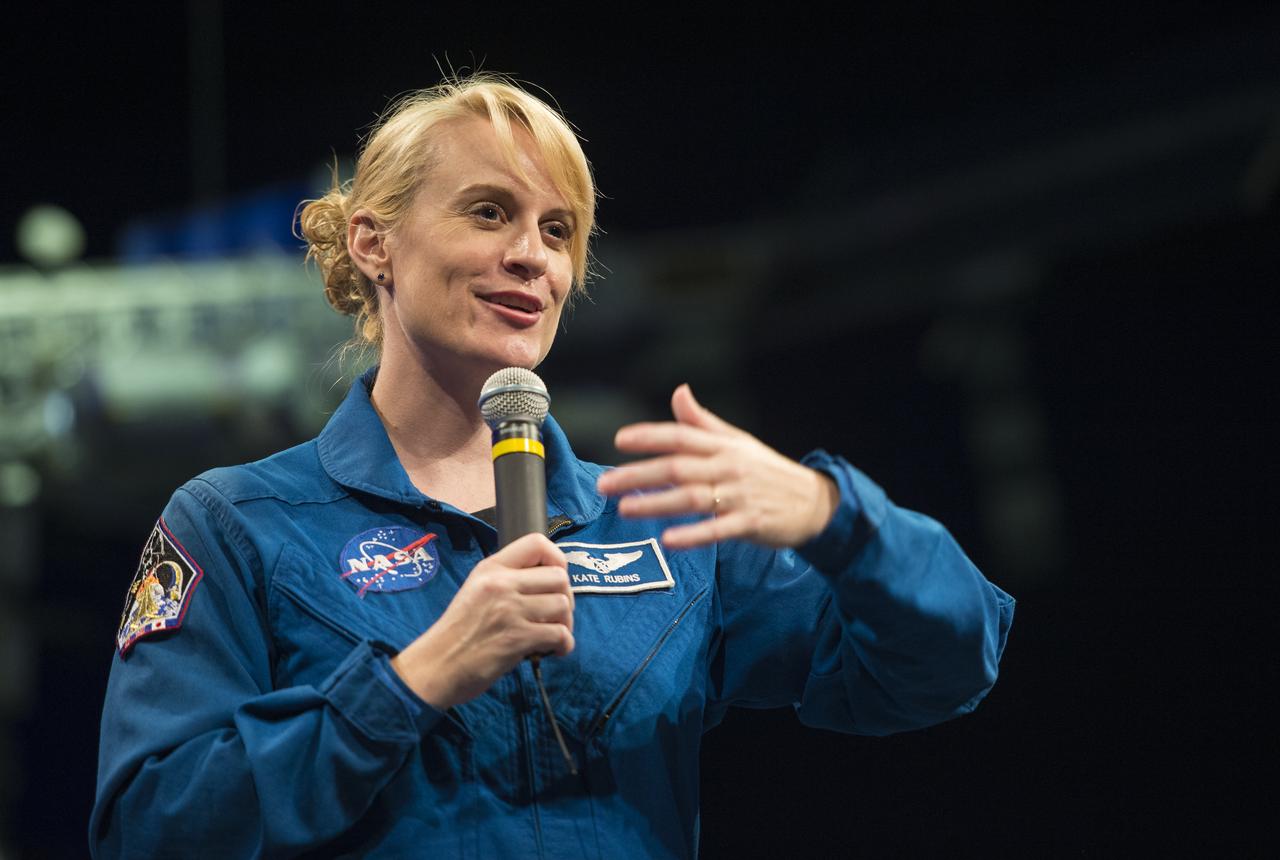
NASA Astronaut Kate Rubins speaks about her time onboard the International Space Station during Expeditions 48 and 49 Thursday, April 27, 2017 at Smithsonian's National Air and Space Museum in Washington. Rubins became the first person to sequence DNA in space and completed her first mission when she landed in a remote area near the town of Zhezkazgan, Kazakhstan in October 2016. Photo Credit: (NASA/Aubrey Gemignani)
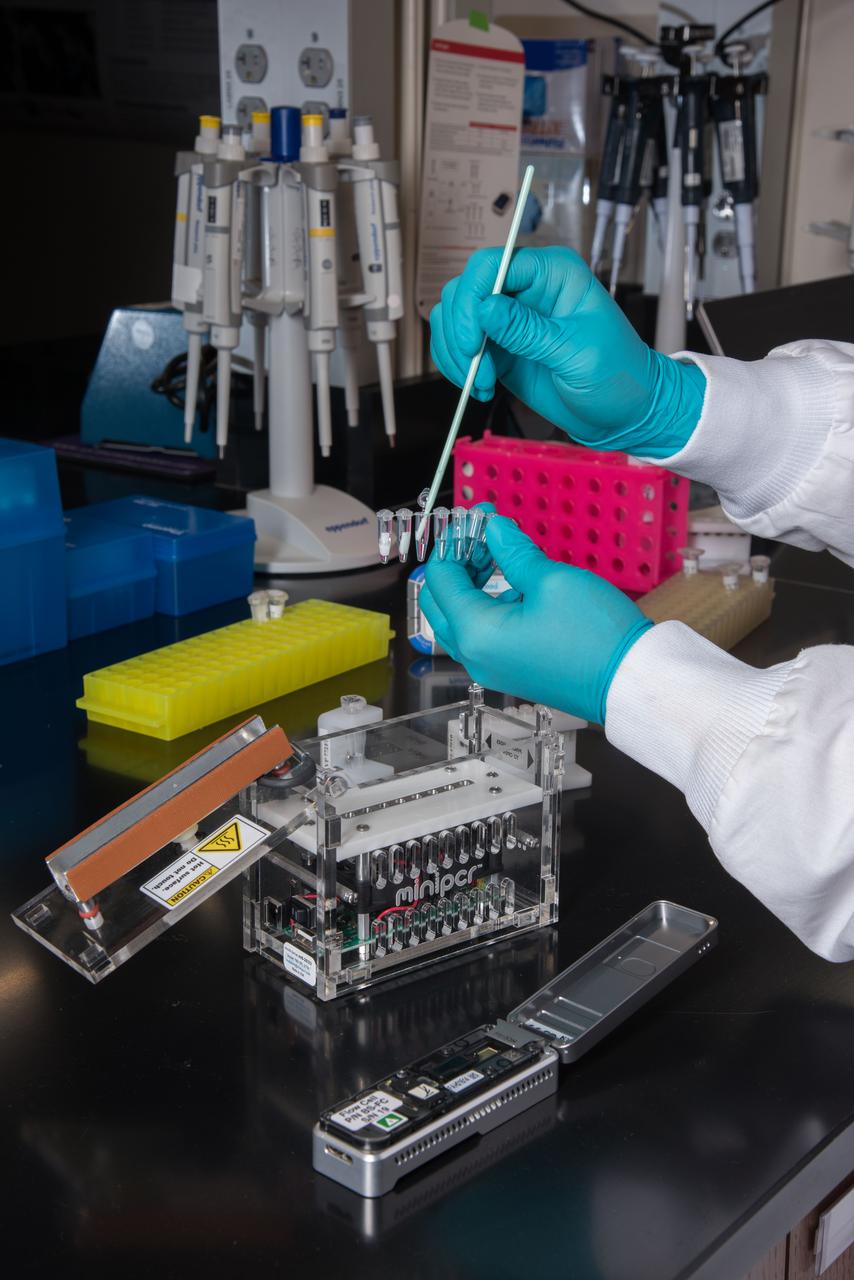
jsc2018e040453 (4/30/2018) --- A Researcher at NASA's Johnson Space Center perform DNA and RNA sequencing on microbes as part of the Biomolecule Extraction and Sequencing Technology (BEST) experiment. The same sequencing procedure is performed in orbit aboard the International Space Station (ISS) and the results are compared to those on the ground. This will provide better insight into the effects of the spaceflight environment on microbial life.
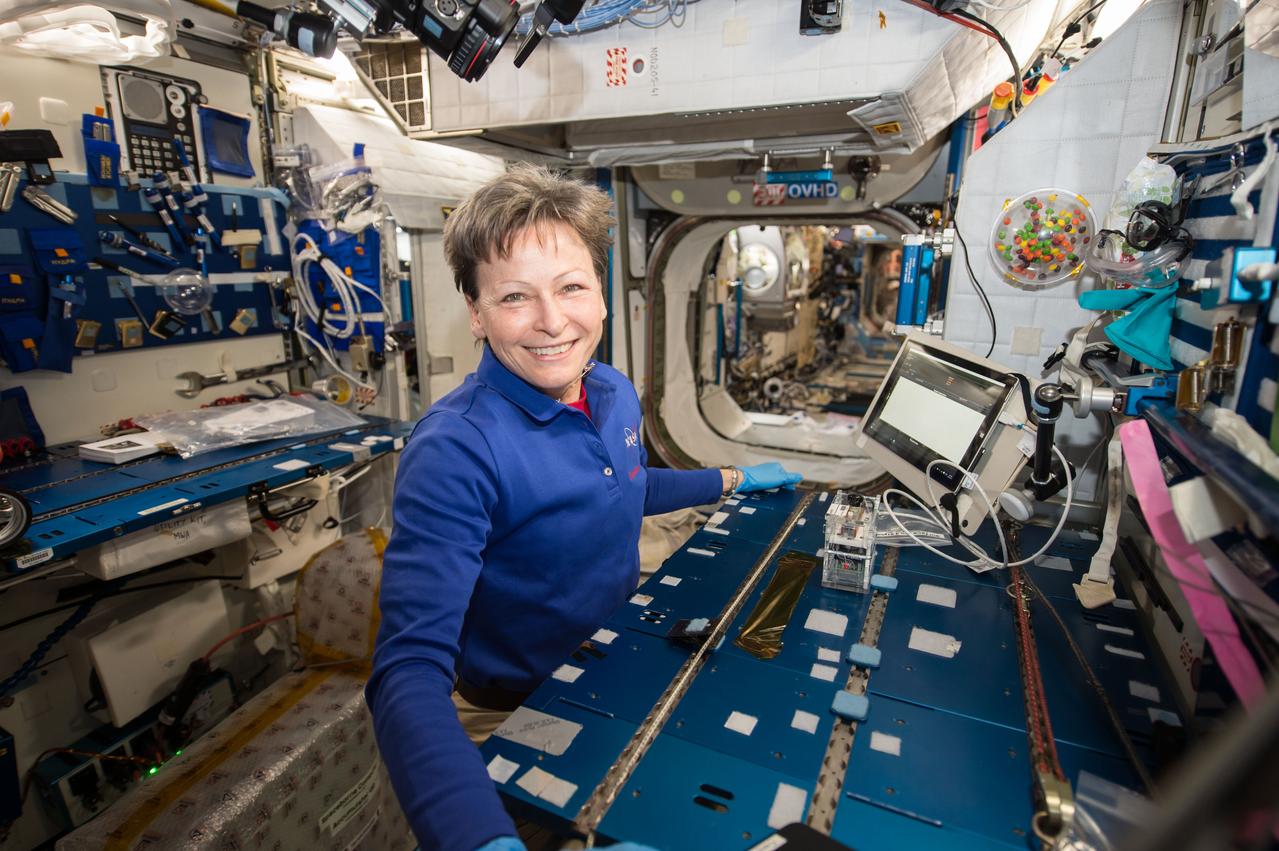
iss052e061925 (8/21/2017) --- NASA astronaut Peggy Whitson is photographed working with the Genes In Space experiment in the Node 2 module. Genes in Space is an innovation challenge including students and teachers across the United States from grades 7 through 12. Students design a pioneering DNA-related experiment to fly on the ISS, providing real-world training in science, technology, engineering and math (STEM) fields and connecting students to the space program.
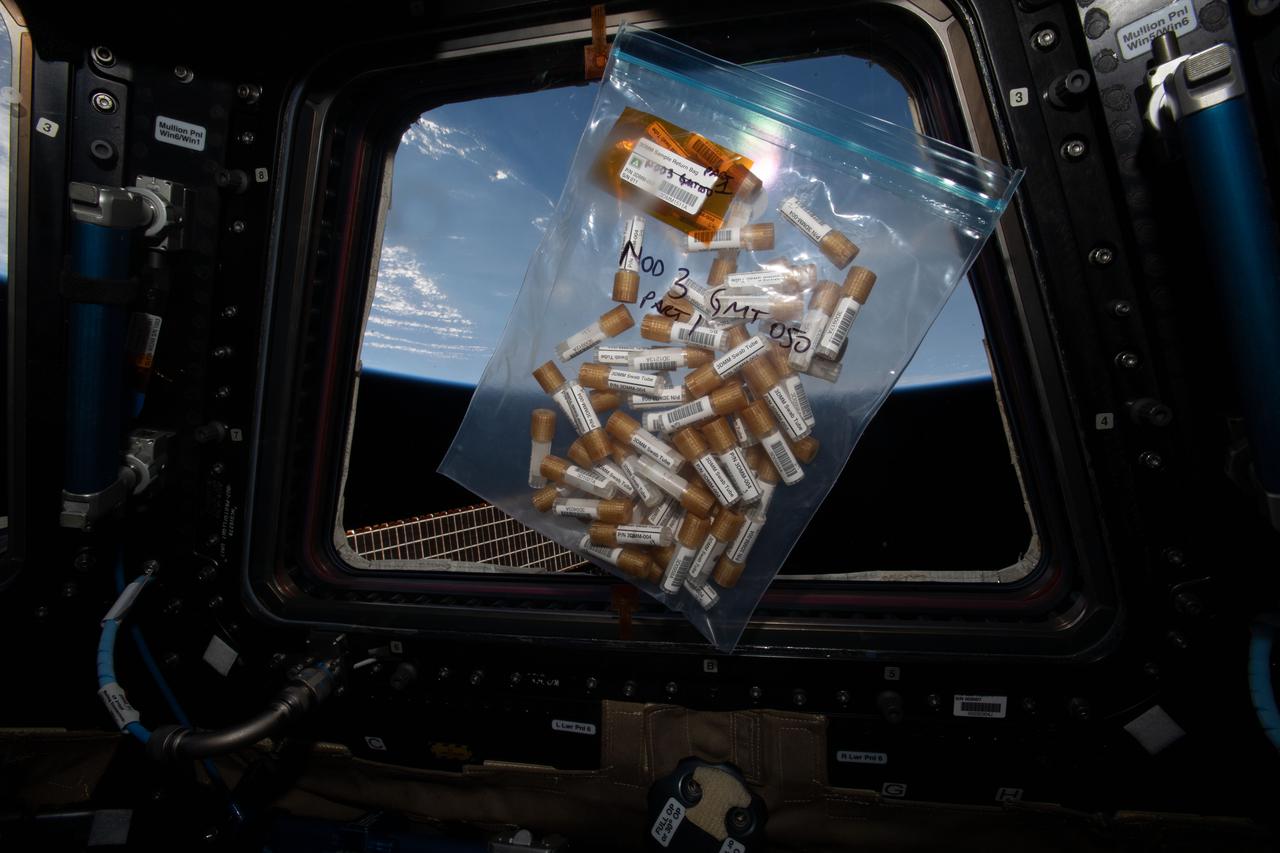
iss064e035033 (2/19/2021) --- A view at the cupola window of collects tubes containing swab samples of microbes for the 3DMM (Three-dimensional Microbial Monitoring of ISS Environment) investigation. The study analyzes and sequences the DNA from bacteria swabbed from station surfaces to understand how microbes respond at a molecular level to specific stress conditions, including altered gravity and atmospheric composition.
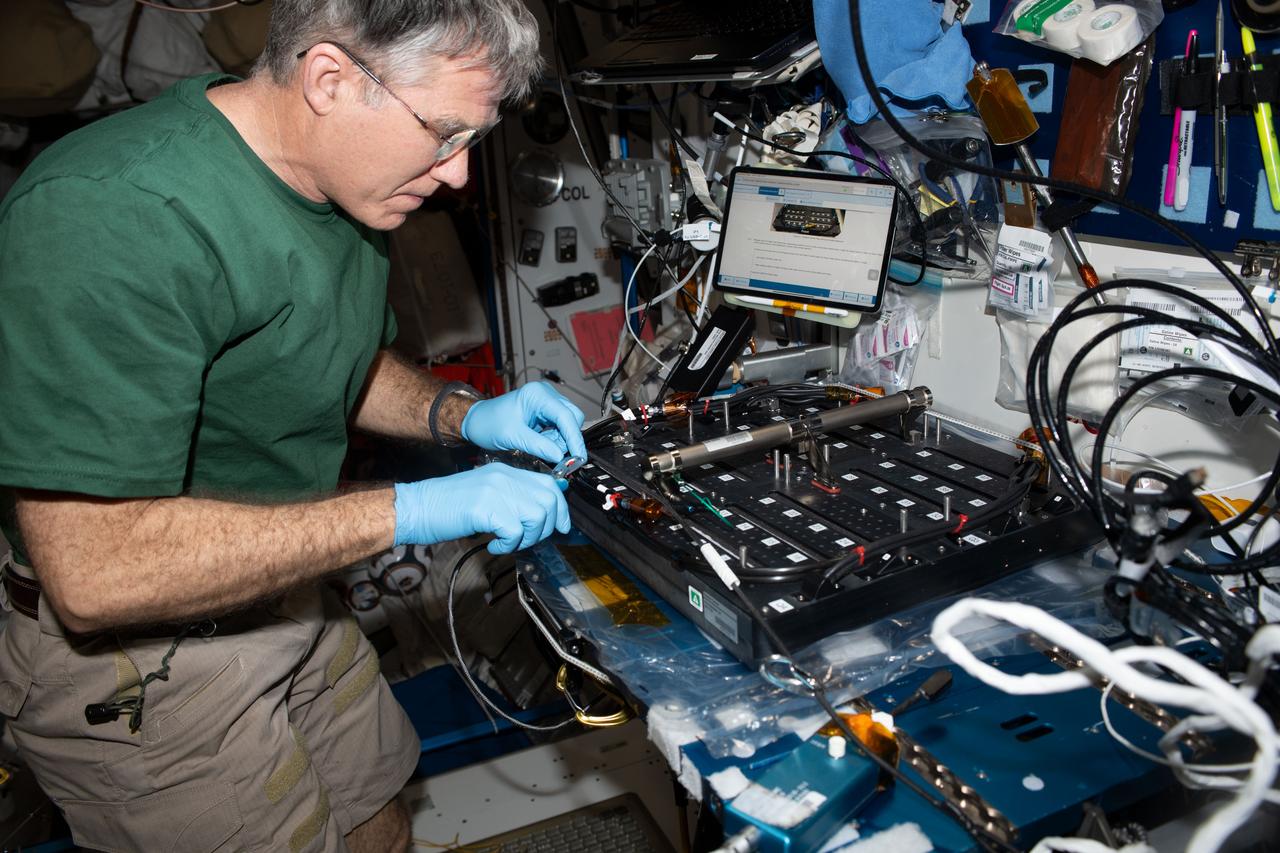
iss069e030677 (July 10, 2023) --- NASA astronaut and Expedition 69 Flight Engineer Stephen Bowen works on the Plant Habitat-03B Science Carrier, a space botany research device, in the International Space Station's Harmony module. The Plant Habitat-03 investigation explores how space-caused DNA changes are transferred from one generation of plants to the next and then continue to accumulate or stabilize. This could provide insight into how to grow repeated generations of crops to provide food and other services on future space missions.
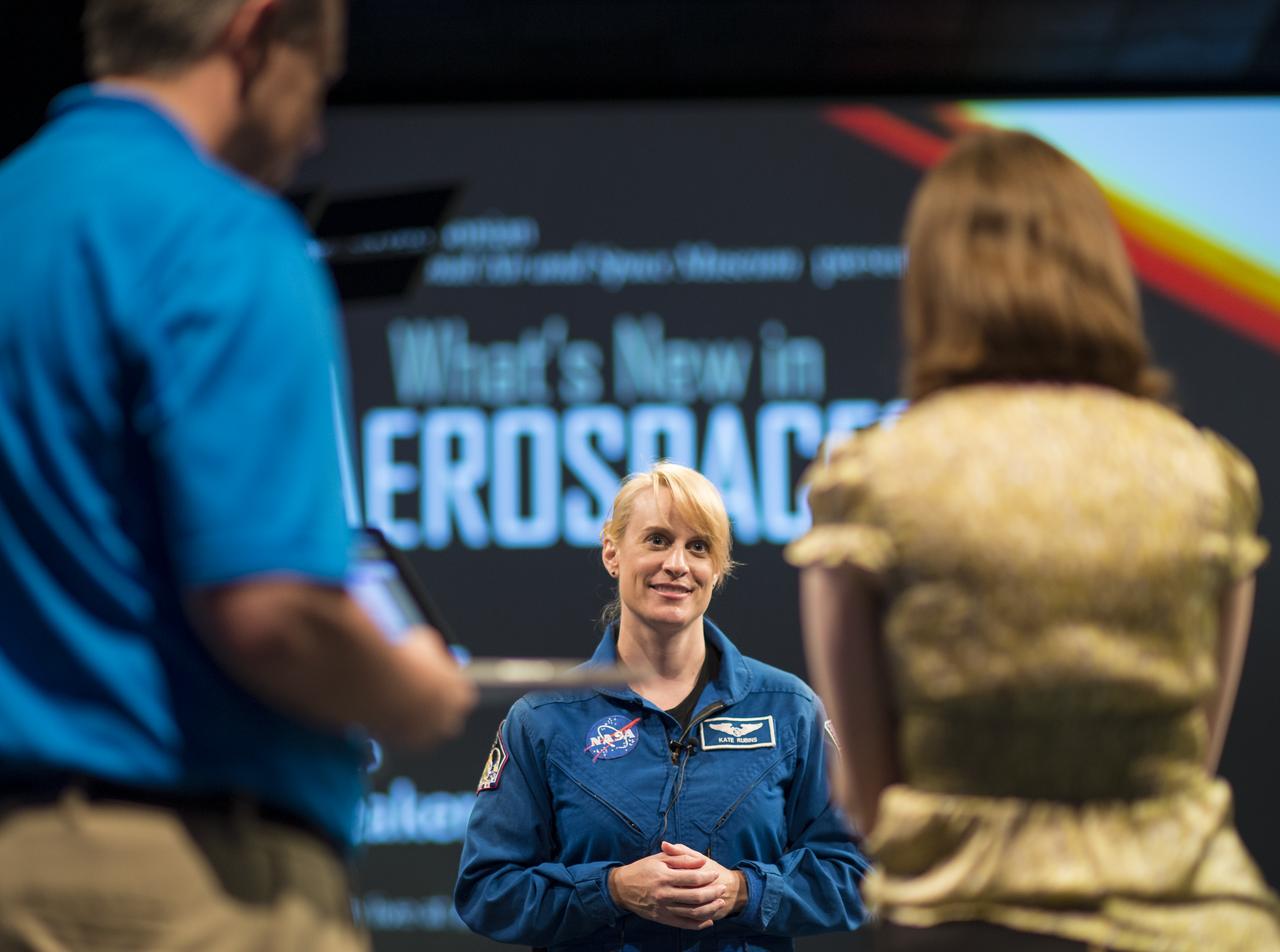
NASA Astronaut Kate Rubins participates in a Facebook Live, answering questions about her time onboard the International Space Station during Expeditions 48 and 49, Thursday, April 27, 2017 at Smithsonian's National Air and Space Museum in Washington. Rubins became the first person to sequence DNA in space and completed her first mission when she landed in a remote area near the town of Zhezkazgan, Kazakhstan in October 2016. Photo Credit: (NASA/Aubrey Gemignani)
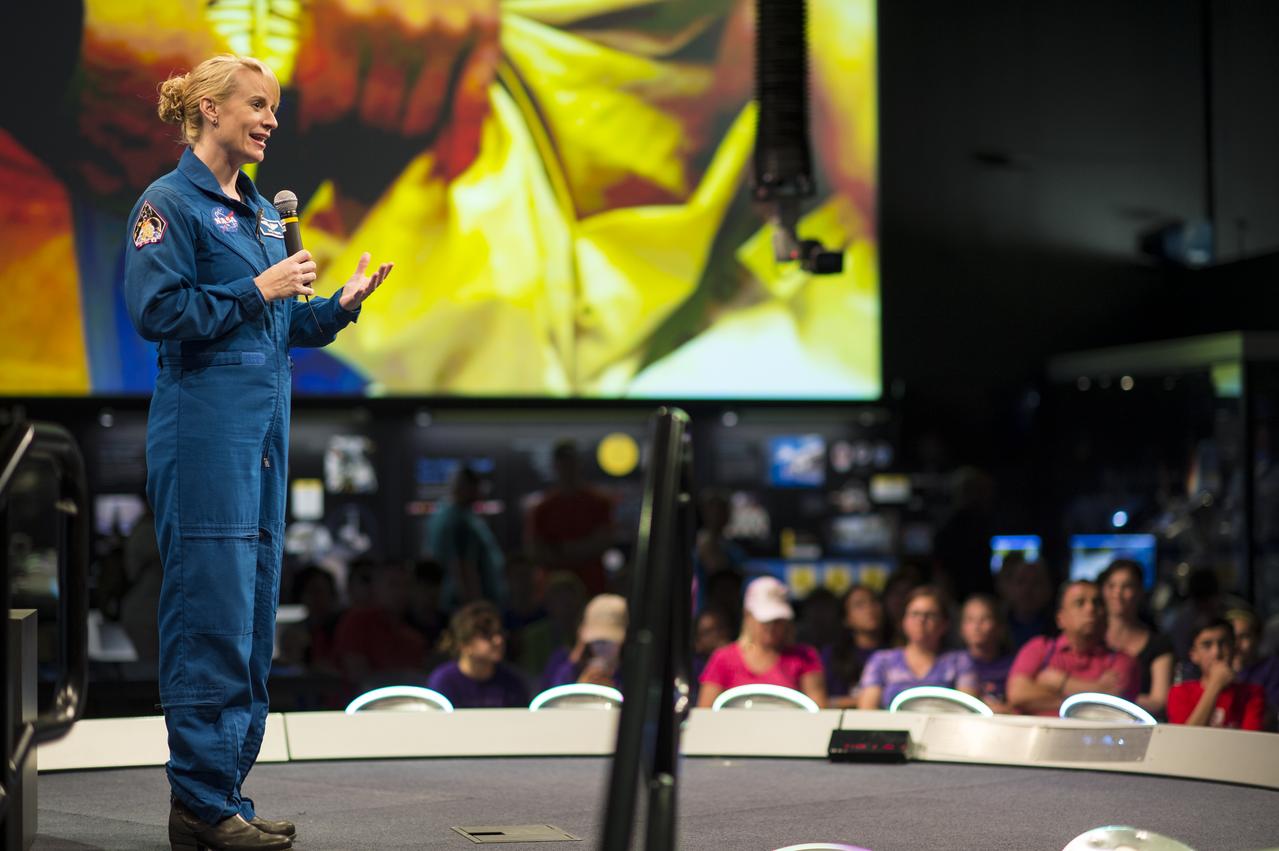
NASA Astronaut Kate Rubins speaks about her time onboard the International Space Station during Expeditions 48 and 49 Thursday, April 27, 2017 at Smithsonian's National Air and Space Museum in Washington. Rubins became the first person to sequence DNA in space and completed her first mission when she landed in a remote area near the town of Zhezkazgan, Kazakhstan in October 2016. Photo Credit: (NASA/Aubrey Gemignani)

The Rotifer-B2 investigation aims to explore the effects that spaceflight has on deoxyribonucleic acid (DNA) repair mechanisms of the bdelloid rotifer Adineta vaga. This is achieved by pre-exposing rotifers to high levels of radiation on Earth and then culturing them in Kubik, an on-orbit incubator facility. After exposing rotifers to space conditions inside the International Space Station, the samples are frozen and returned to Earth for postflight analyses. Image courtesy of the University of Namur.
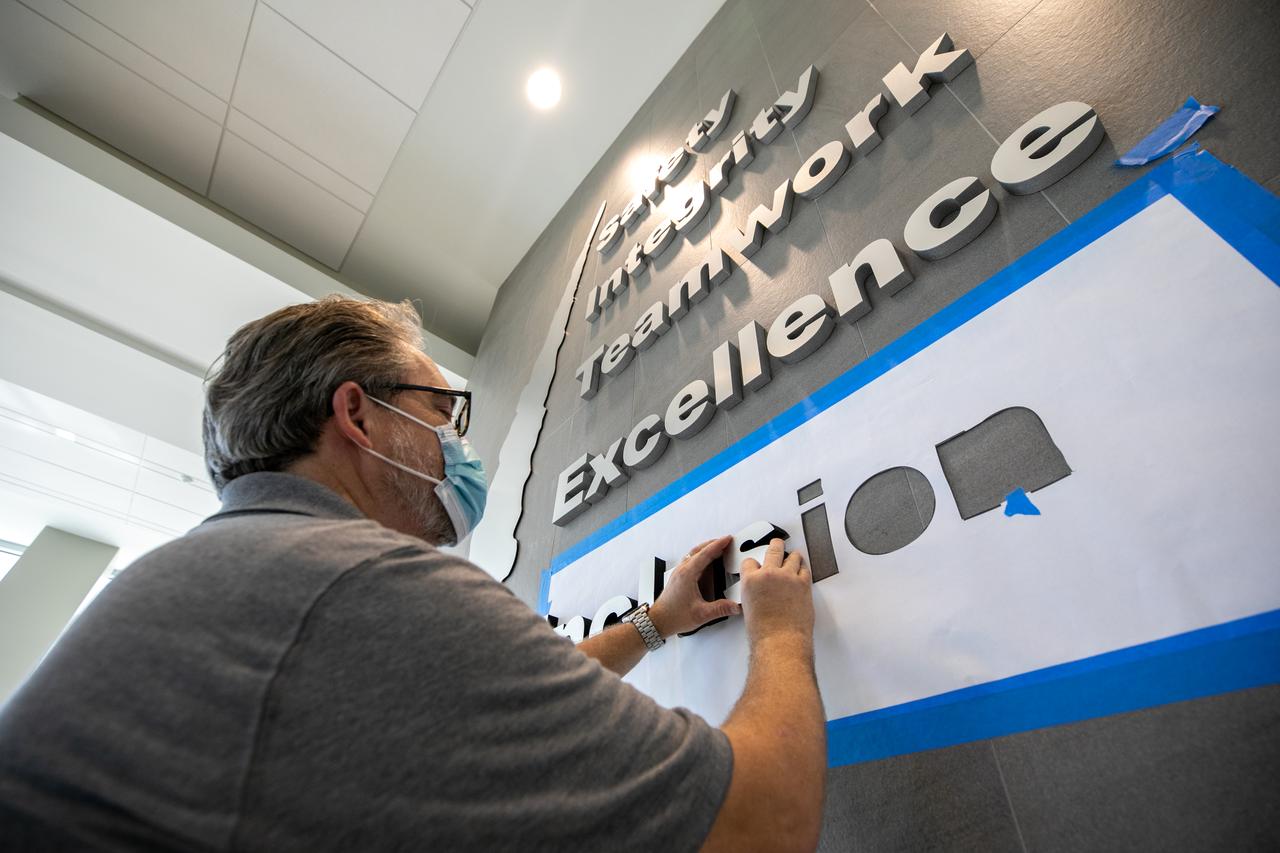
NASA’s fifth core value – inclusion – is installed in the Central Campus lobby at the agency’s Kennedy Space Center in Florida on Sept. 1, 2020. On July 23, NASA Administrator Jim Bridenstine announced the addition of this fifth core value to the existing values embraced by NASA: safety, integrity, teamwork, and excellence. In his announcement, Bridenstine stated “Incorporating inclusion as a NASA core value is an important step to ensuring this principle remains a long-term focus for our agency and becomes ingrained in the NASA family DNA.”
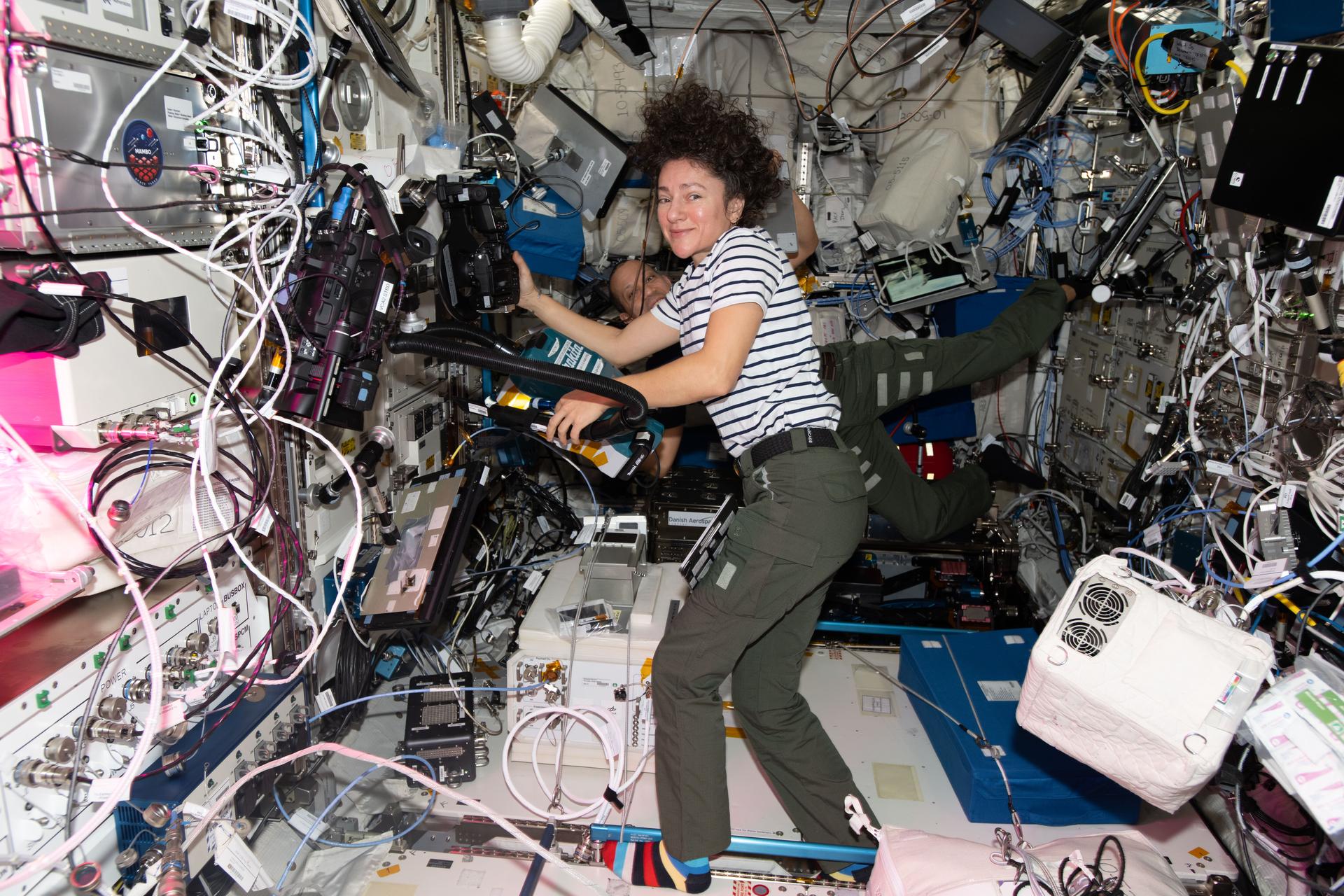
iss074e0503707 (April 22, 2026) --- NASA astronauts Jessica Meir and Chris Williams (in the background) work on separate tasks inside the International Space Station’s Columbus laboratory module. Meir swapped scientific hardware inside the BioLab research incubator to study how DNA damaged by space radiation repairs itself. Williams installed new laptop software and checked computer connections to the station’s Wi‑Fi system. Credit: NASA/Jack Hathaway
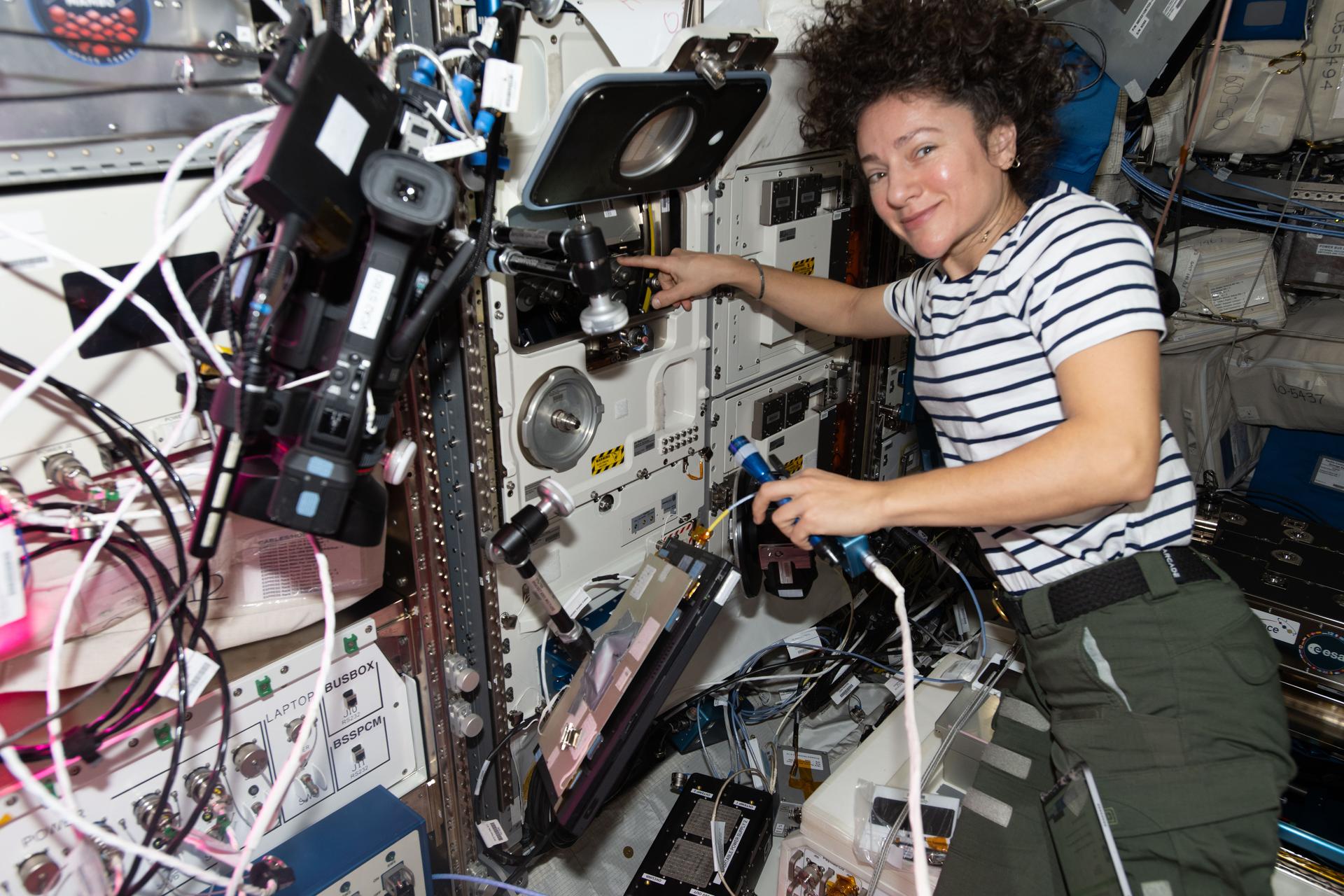
iss074e0503710 (April 22, 2026) --- NASA astronaut and Expedition 74 flight engineer Jessica Meir works inside the International Space Station’s Columbus laboratory module swapping scientific hardware inside the BioLab research incubator. Meir was supporting the Lux in Space investigation that observes how DNA damaged by space radiation repairs itself. Credit: NASA/Jack Hathaway
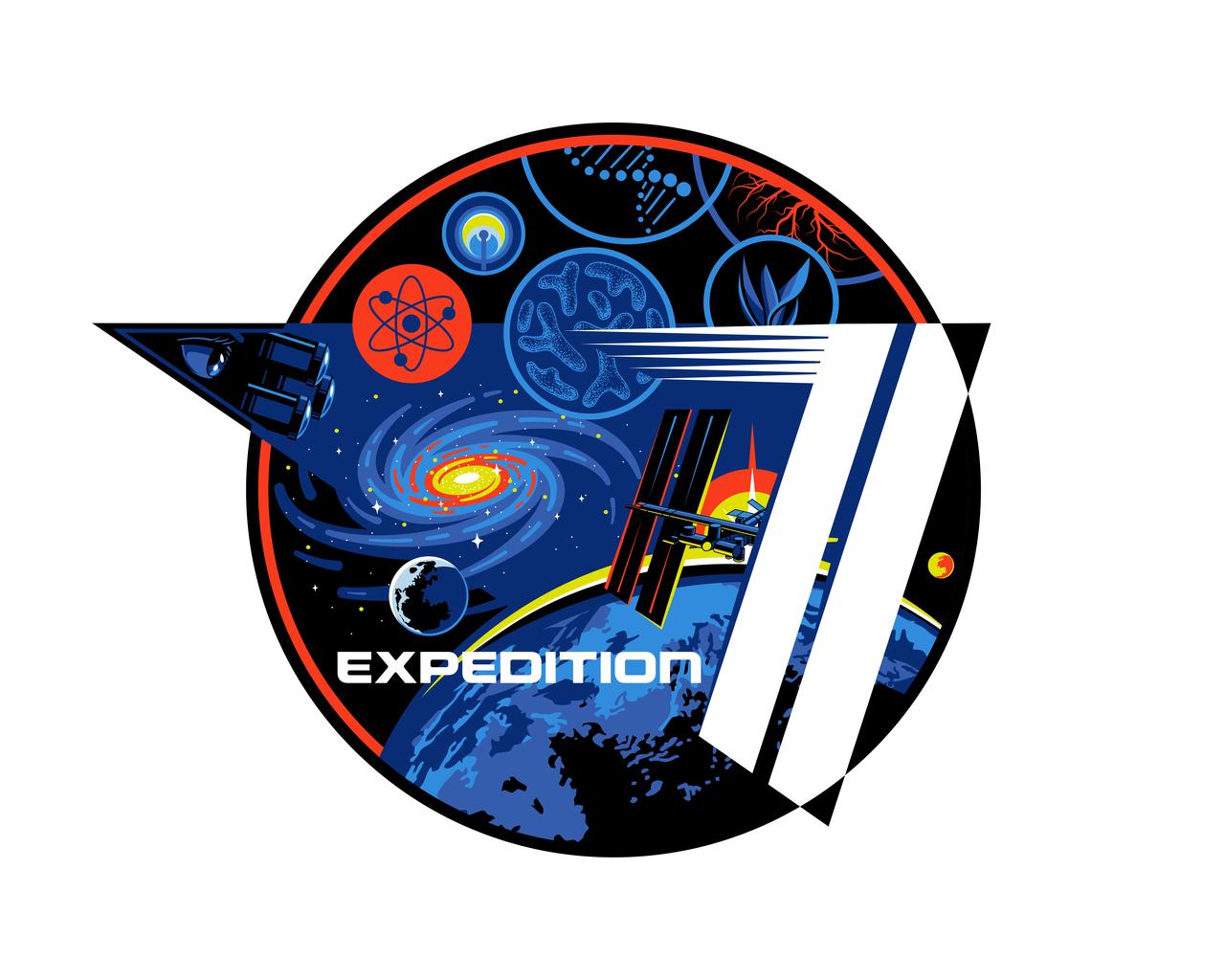
iss071-s-001 (Aug. 31, 2023) --- For nearly a quarter of a century the International Space Station (ISS) has hosted crews and accommodated science experiments even as it has continued to evolve into the highly capable orbiting laboratory of today. With its unique vantage point, the ISS serves as an intersection for discoveries ranging from the vast, such as the search for dark matter and cosmological origins, to the near, such as detailed observation of our home planet and its atmosphere, to the microscopic, including behavior of microbial life, DNA sequencing, and molecular biology in the microgravity environment. The Expedition 71 patch celebrates this science as well as the thousands of multinational scientists and technicians that have contributed to numerous groundbreaking experiments. The ISS is the ultimate destination for the scientifically curious. The symbology represents onboard research into quantum behavior of novel states of matter, antibodies and immune function, the search for dark matter, flame and combustion physics, DNA expression, plant growth and root behavior, and direct earth observation. The human eye and microscope objectives at upper left form the apex of a cone of vision culminating in the Expedition number 71, and represents the deliberate and disciplined practice of scientific observation. Earth’s moon and Mars are also depicted as next steps for exploration, with an anticipation of further rich scientific discovery using many techniques and skills honed aboard the ISS.
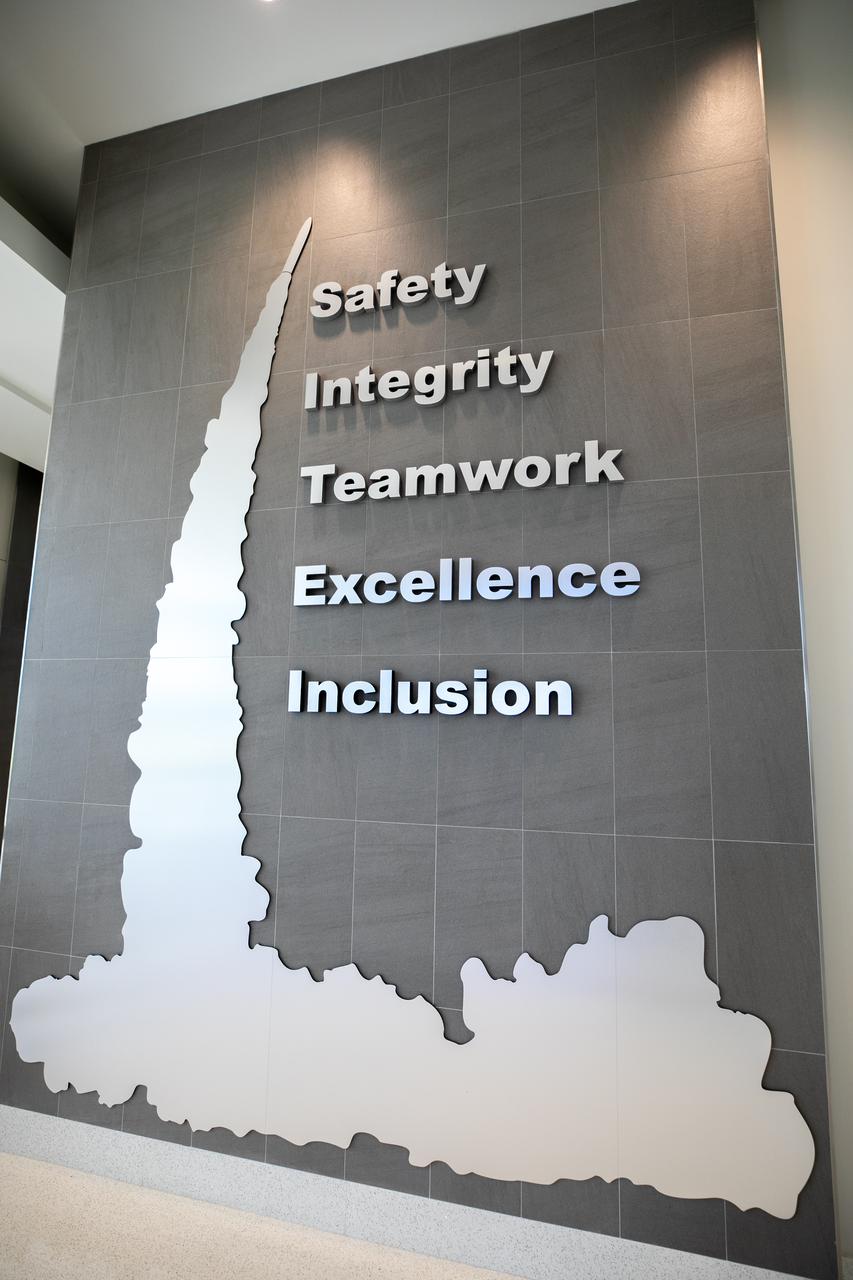
NASA’s core values are shown in the Central Campus lobby at the agency’s Kennedy Space Center in Florida following the installation of NASA’s fifth core value – inclusion – on Sept. 1, 2020. On July 23, NASA Administrator Jim Bridenstine announced the addition of this fifth core value to the existing values embraced by NASA: safety, integrity, teamwork, and excellence. In his announcement, Bridenstine stated “Incorporating inclusion as a NASA core value is an important step to ensuring this principle remains a long-term focus for our agency and becomes ingrained in the NASA family DNA.”
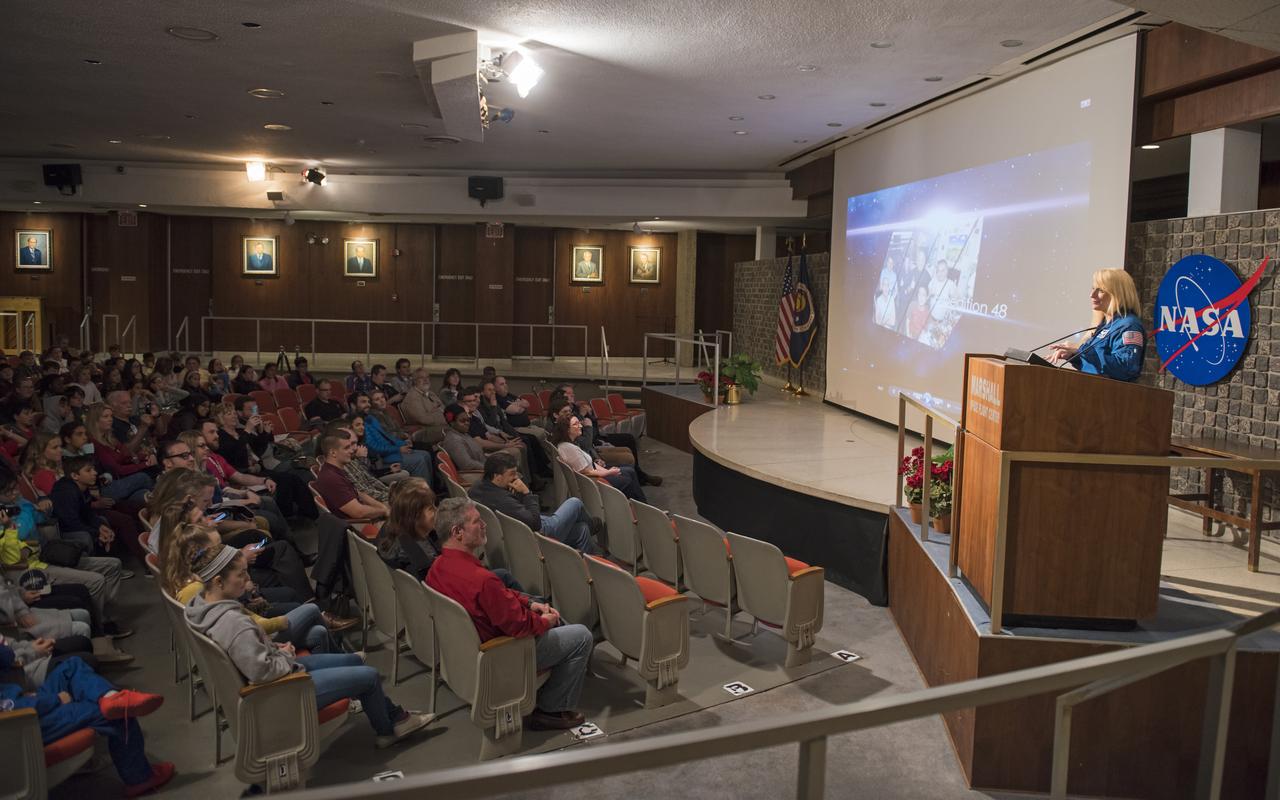
NASA astronaut Kate Rubins presents highlights from Expedition 48/49, her mission to the International Space Station, to team members and Space Camp students from the U.S. Space & Rocket Center in Huntsville, April 6 at NASA's Marshall Space Flight Center. During her mission, Rubins became the first person to sequence DNA in space, researching technology development for deep-space exploration by humans, Earth and space science. She also conducted two spacewalks, in which she and NASA astronaut Jeff Williams installed an International Docking Adapter and performed maintenance of the station's external thermal control system and installed high-definition cameras.
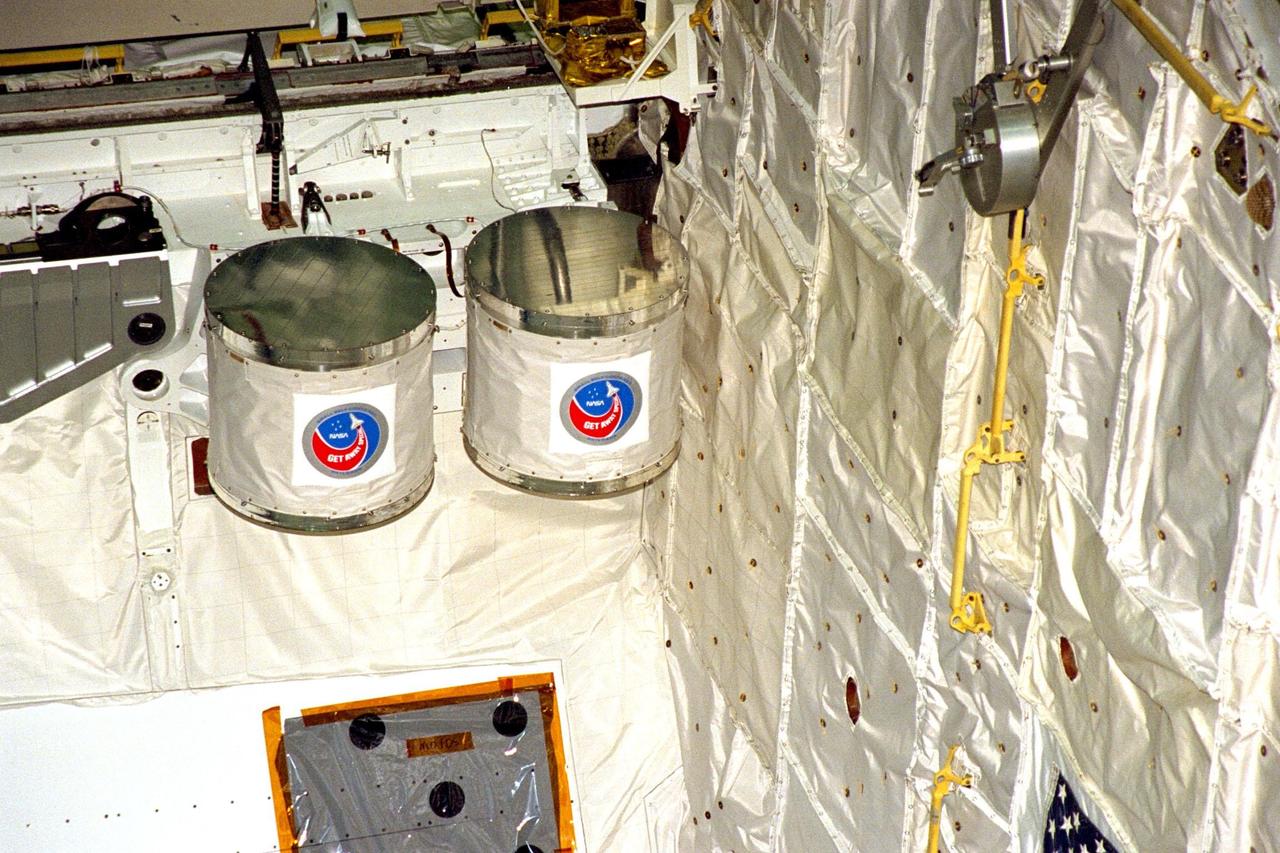
Processing activities for STS-91 continue in KSC's Orbiter Processing Facility Bay 2. Two Get Away Special (GAS) canisters are shown after their installation into Discovery's payload bay. At left is G-090, containing three educational experiments sponsored by Utah State University, and at right is G-743, an experiment sponsored by Broward Community College in Florida to test DNA exposed to cosmic radiation in a microgravity environment. STS-91 is scheduled to launch aboard the Space Shuttle Discovery for the ninth and final docking with the Russian Space Station Mir from KSC's Launch Pad 39A on June 2 with a launch window opening around 6:04 p.m. EDT
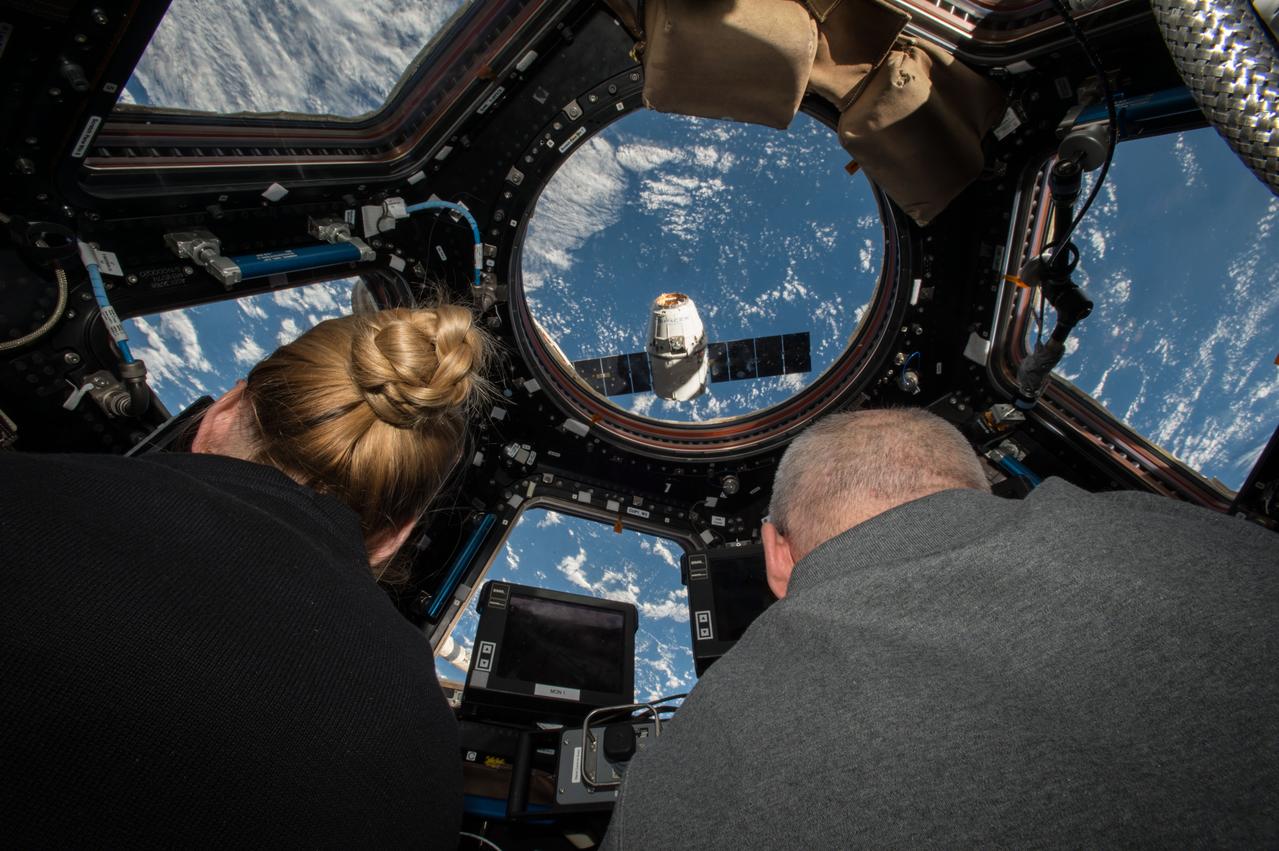
ISS048e041836 (07/20/2016) --- NASA astronauts Kate Rubins (left) and Jeff Williams (right) prepare to grapple the SpaceX Dragon supply spacecraft from aboard the International Space Station. The nearly 5,000 pounds of supplies and equipment includes science supplies and hardware, including instruments to perform the first-ever DNA sequencing in space, and the first of two identical international docking adapters (IDA.) The IDAs will provide a means for commercial crew spacecraft to dock to the station in the near future as part of NASA’s Commercial Crew Program. Dragon is scheduled to depart the space station Aug. 29 when it will return critical science research back to Earth.
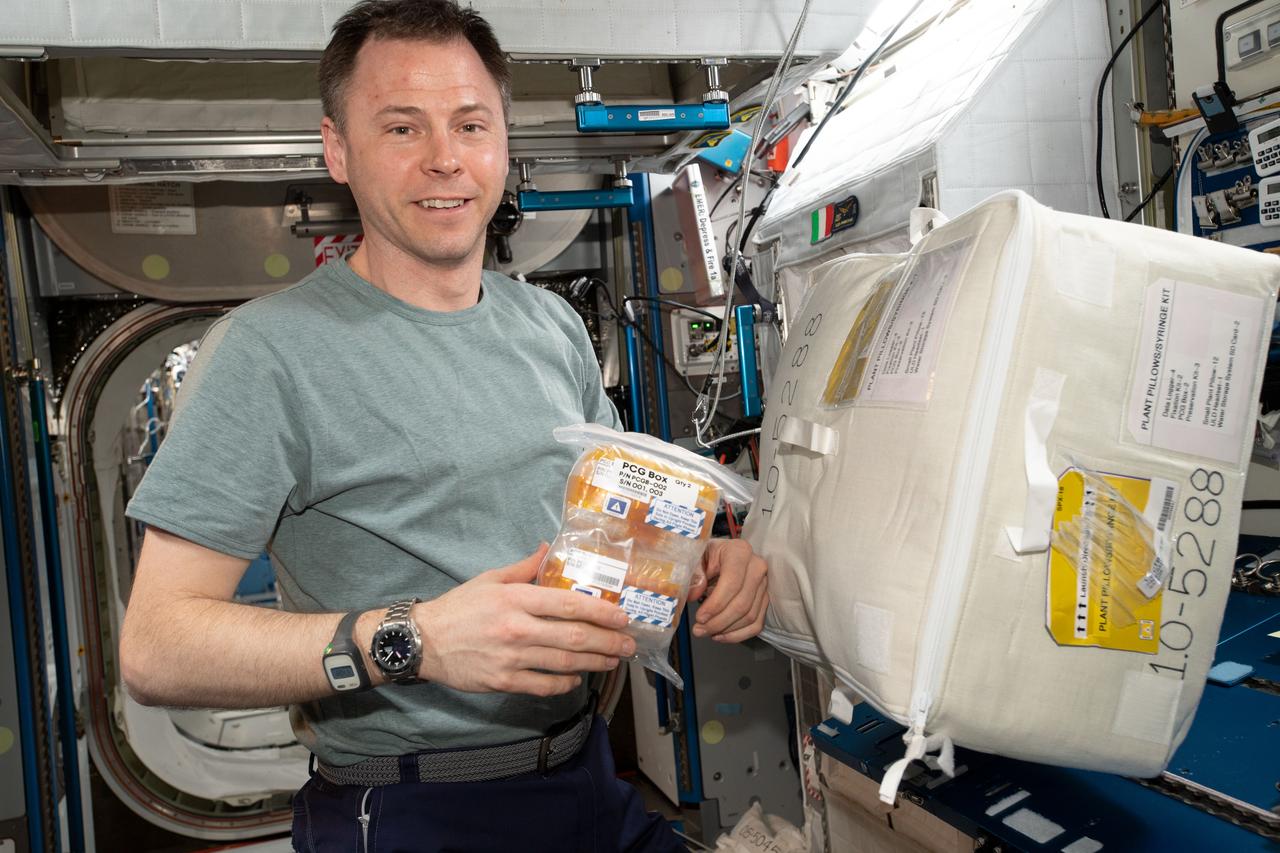
iss060e015014 (7/28/2019) — NASA astronaut Nick Hague is shown holding the CASIS Protein Crystal Growth 15 (CASIS PCG 15) investigation samples aboard the International Space Station (ISS). Microgravity Crystal Growth for Improvement in Neutron Diffraction and the Analysis of Protein Complexes (CASIS PCG 15) seeks a better understanding of enzyme catalysis by examining crystals from two model Pyridoxal phosphate (PLP) dependent enzymes and from a bacteriophage transient deoxyribonucleic acid (DNA) repair complex. Analysis of the crystals may reveal catalyst mechanisms and structures and visualize the interaction between the repair proteins. Results could contribute to identification of biomarkers for diagnosis of disease and to development of better antimicrobials.
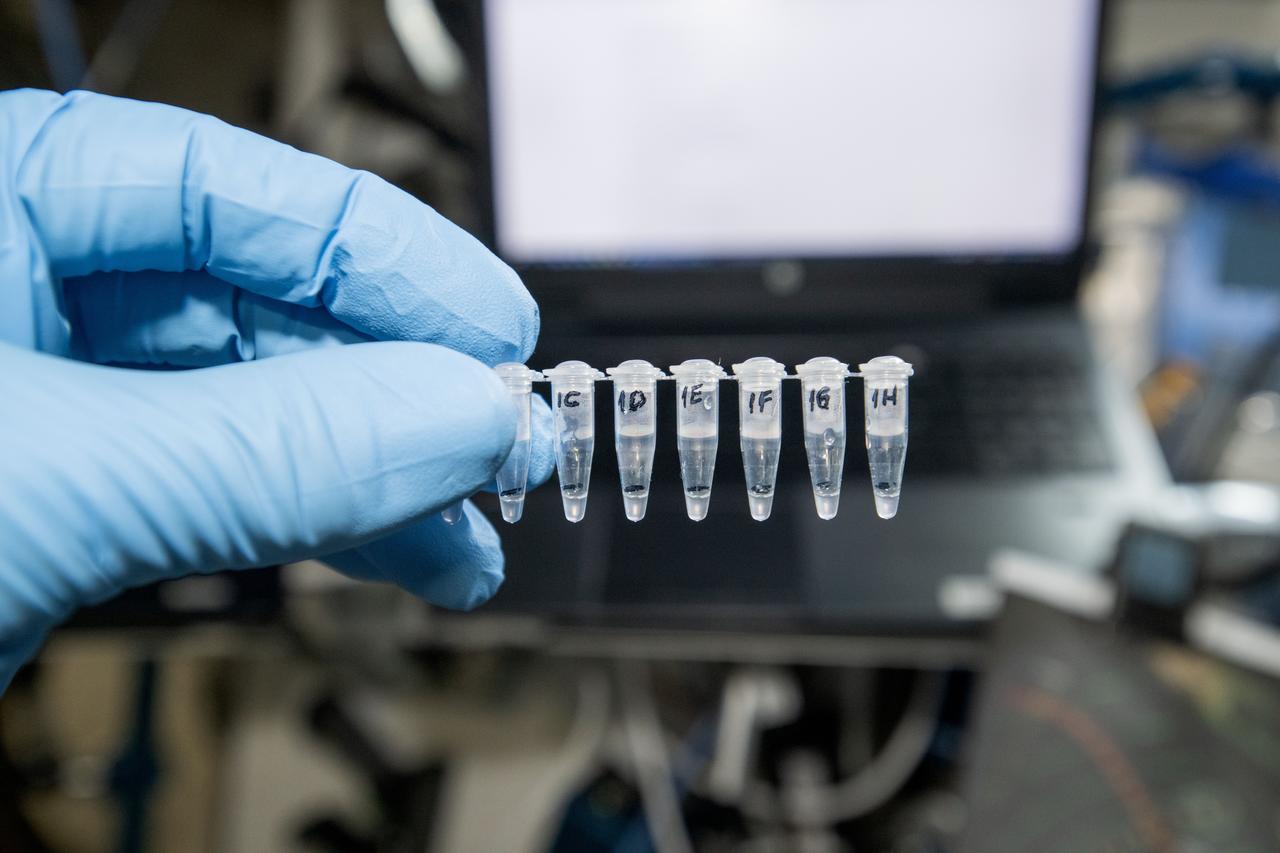
iss072e010035 (Oct. 12, 2024) --- NASA astronaut and Expedition 72 Flight Engineer Don Pettit displays Genes In Space-11 samples validating on-orbit Nucleic Acid Sequenced Based Amplification (NASBA), a novel technique to detect specific RNA sequences that can be applied to studying crucial biological processes, such as viral infection, genomic damage, or gene expression during spaceflight. Genes in Space-11 studies how spaceflight may activate retrotransposons, which are DNA fragments that copy and paste themselves throughout a genome, leading to cancer and other diseases. This investigation tests methods for detecting and measuring retrotransposons that may be adapted to detect other RNAs, including those of viruses that cause illness. Understanding the behavior of retrotransposons in microgravity may shed light on the genetic risks, including cancer, from space travel and support development of ways to protect astronauts during missions.