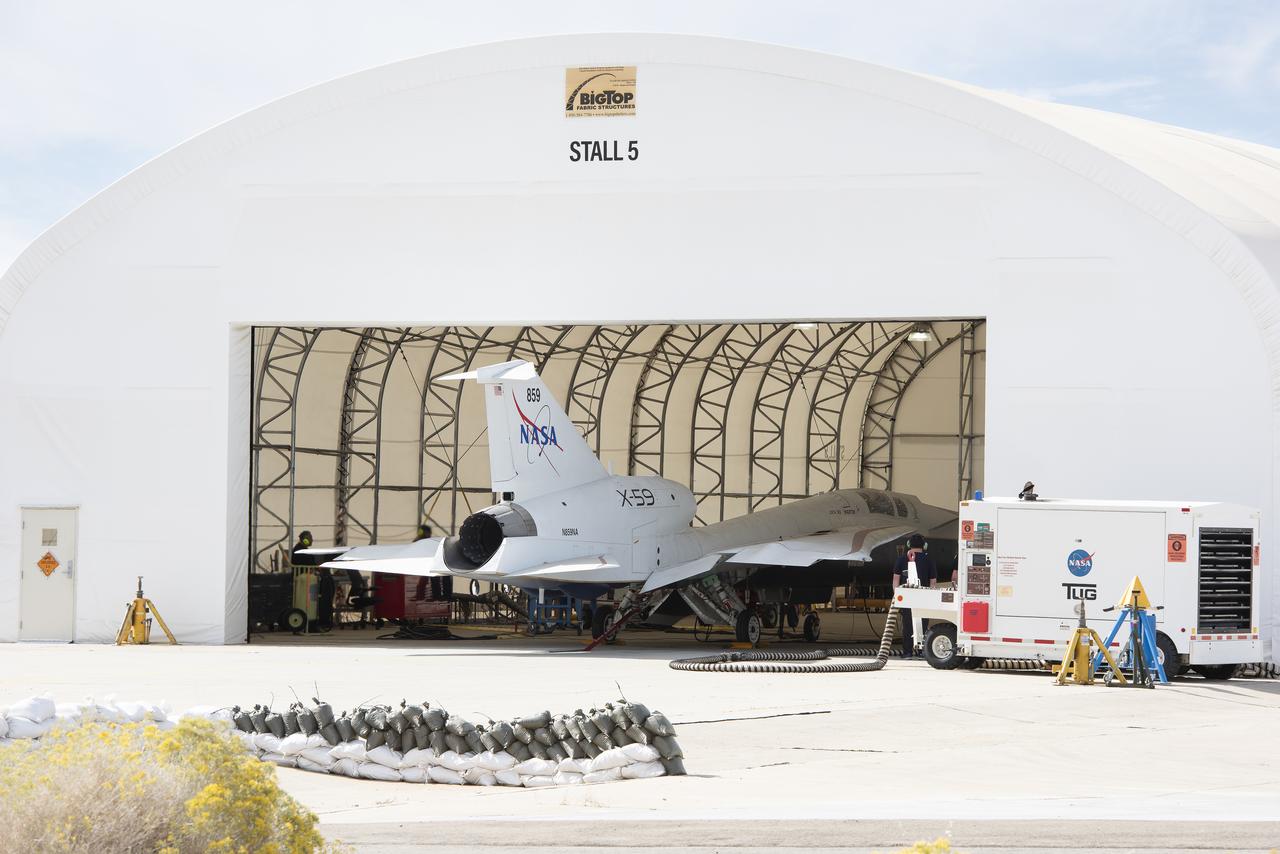
NASA’s X-59 quiet supersonic research aircraft sits in its run stall at Lockheed Martin’s Skunk Works facility in Palmdale, California, firing up its engine for the first time. These engine-run tests start at low power and allow the X-59 team to verify the aircraft’s systems are working together while powered by its own engine. The X-59 is the centerpiece of NASA’s Quesst mission, which seeks to solve one of the major barriers to supersonic flight over land by making sonic booms quieter.
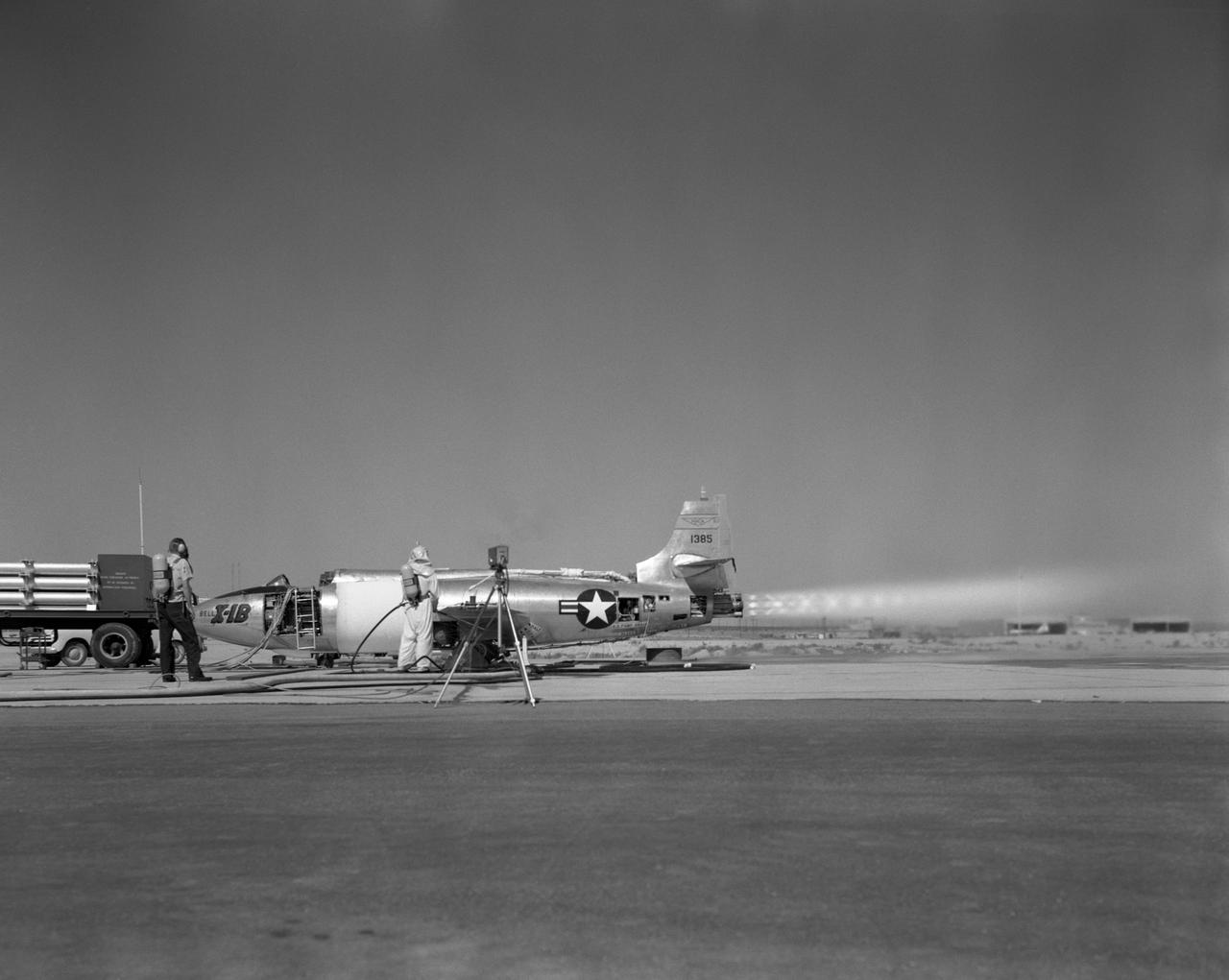
X-1B engine run on Air Force thrust stand.
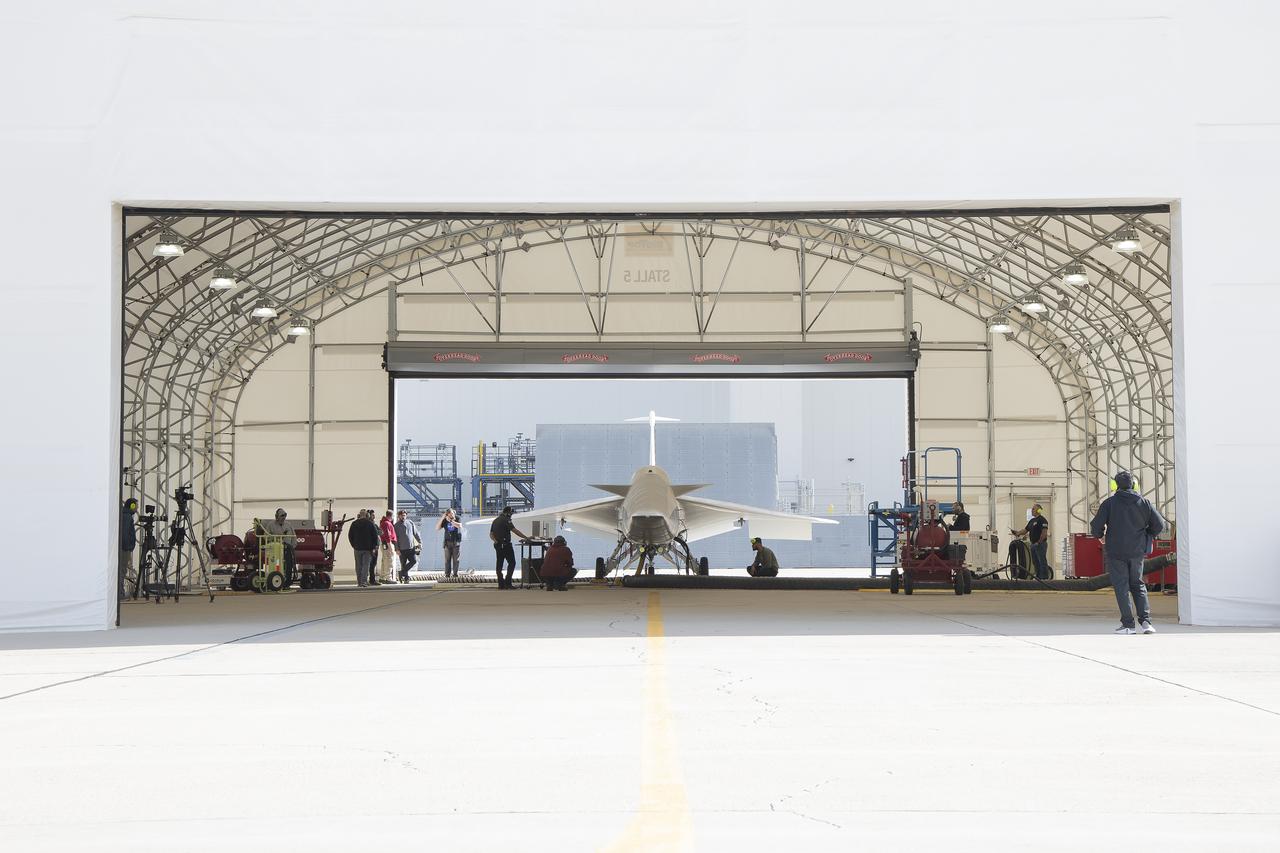
NASA’s X-59 quiet supersonic research aircraft sits in its run stall at Lockheed Martin’s Skunk Works facility in Palmdale, California, prior to its first engine run. Engine runs are part of a series of integrated ground tests needed to ensure safe flight and successful achievement of mission goals. The X-59 is the centerpiece of NASA’s Quesst mission, which seeks to solve one of the major barriers to supersonic flight over land by making sonic booms quieter.
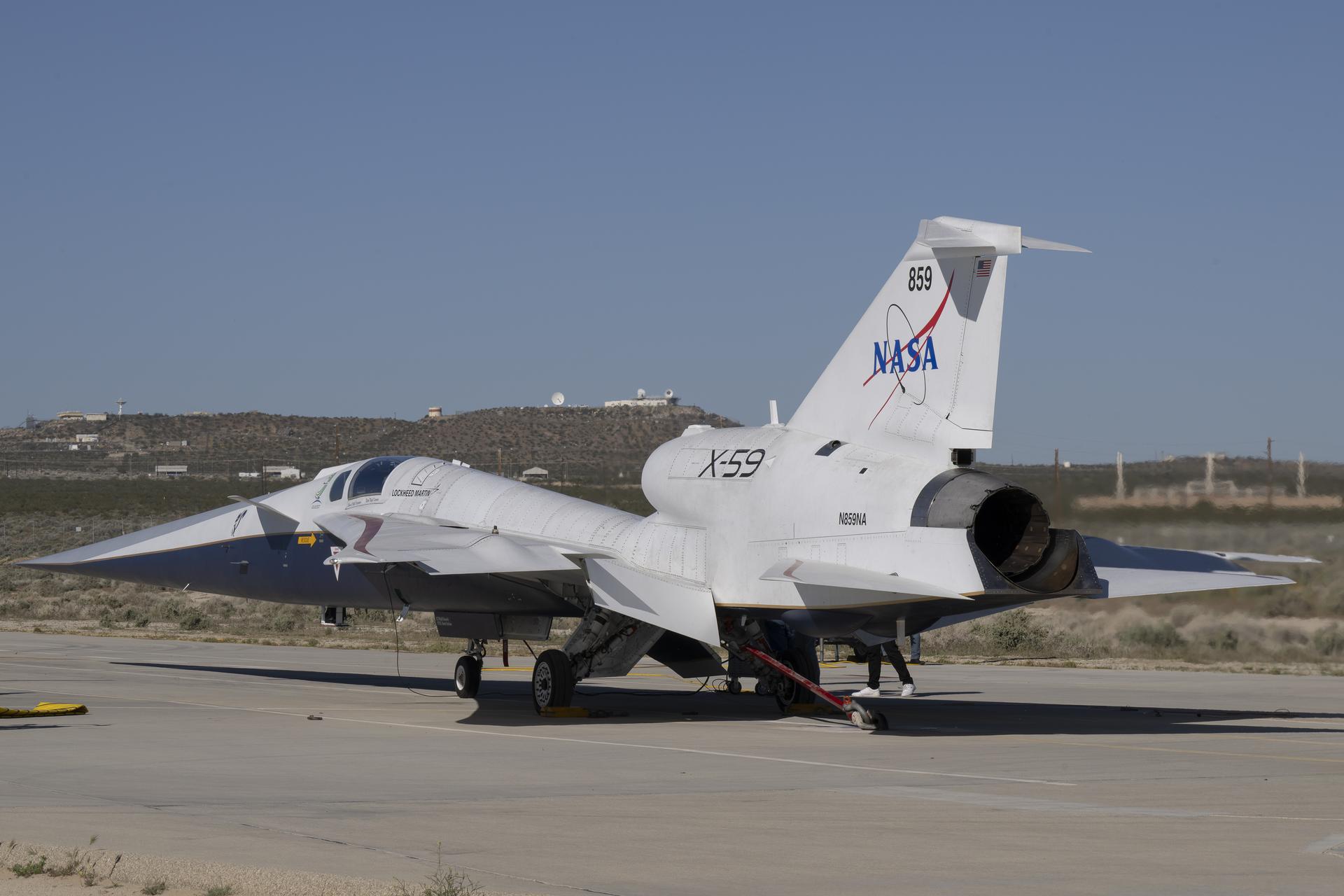
NASA’s X-59 quiet supersonic research aircraft completed a series of engine run tests on Thursday, March 12, 2026, at NASA’s Armstrong Flight Research Center in Edwards, California. These tests mark one of the final ground preparations before the aircraft’s second flight.
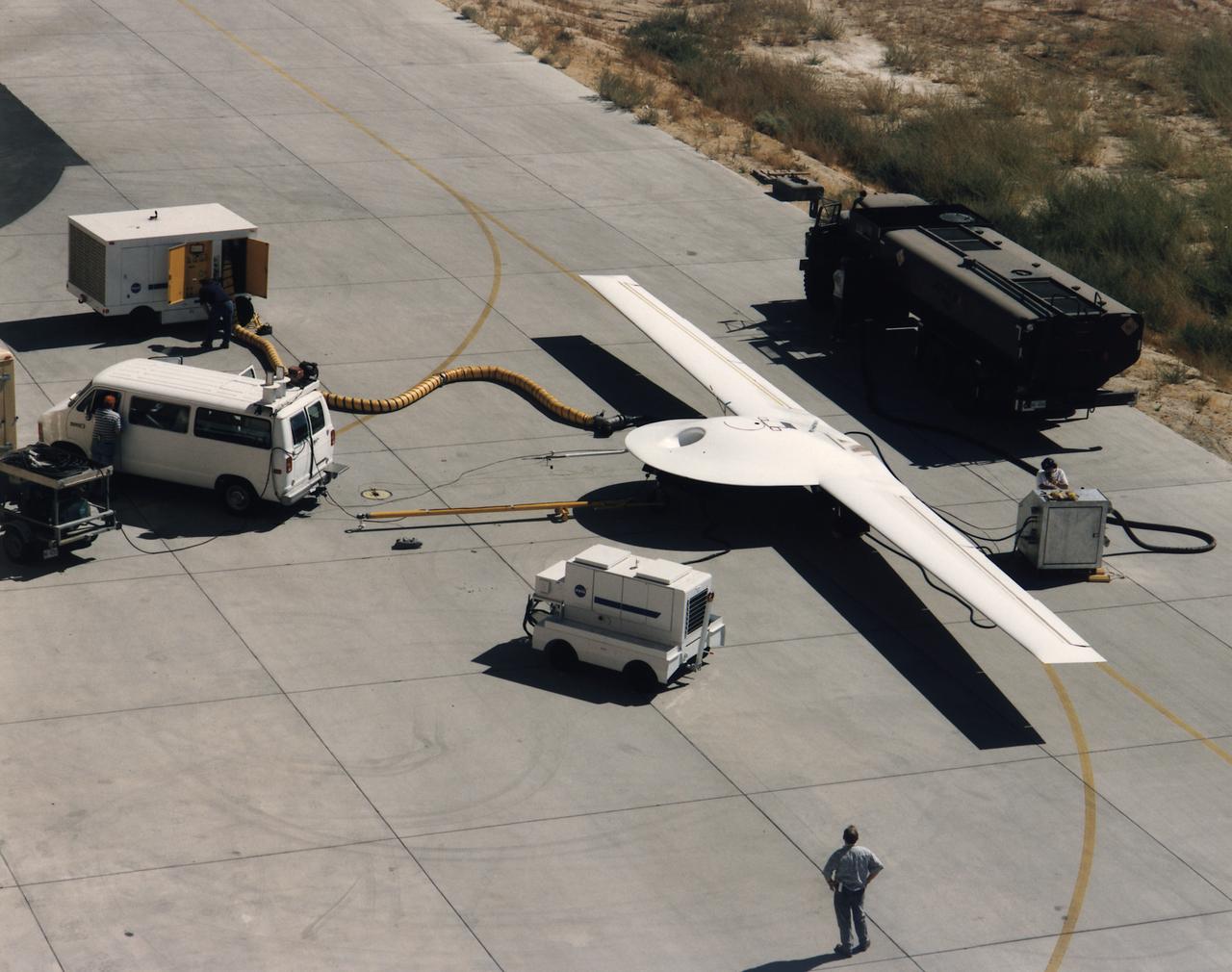
The Lockheed Martin/Boeing Tier III- (minus) unpiloted aerial vehicle undergoing an engine run on the ramp at the Dryden Flight Research Center, Edwards, California.

NASA’s X-59 quiet supersonic research aircraft sits on the ramp during engine run testing on Thursday, March 12, 2026, at NASA’s Armstrong Flight Research Center in Edwards, California. Engine runs are one of the final tests before the aircraft is ready for its second flight. The data collected from the aircraft during upcoming flight tests could help inform future regulations for commercial supersonic travel over land.

NASA’s X-59 quiet supersonic research aircraft sits on the ramp during engine run testing on Thursday, March 12, 2026, at NASA’s Armstrong Flight Research Center in Edwards, California. Engine runs are one of the final tests before the aircraft is ready for its second flight. The data collected from the aircraft during upcoming flight tests could help inform future regulations for commercial supersonic travel over land.
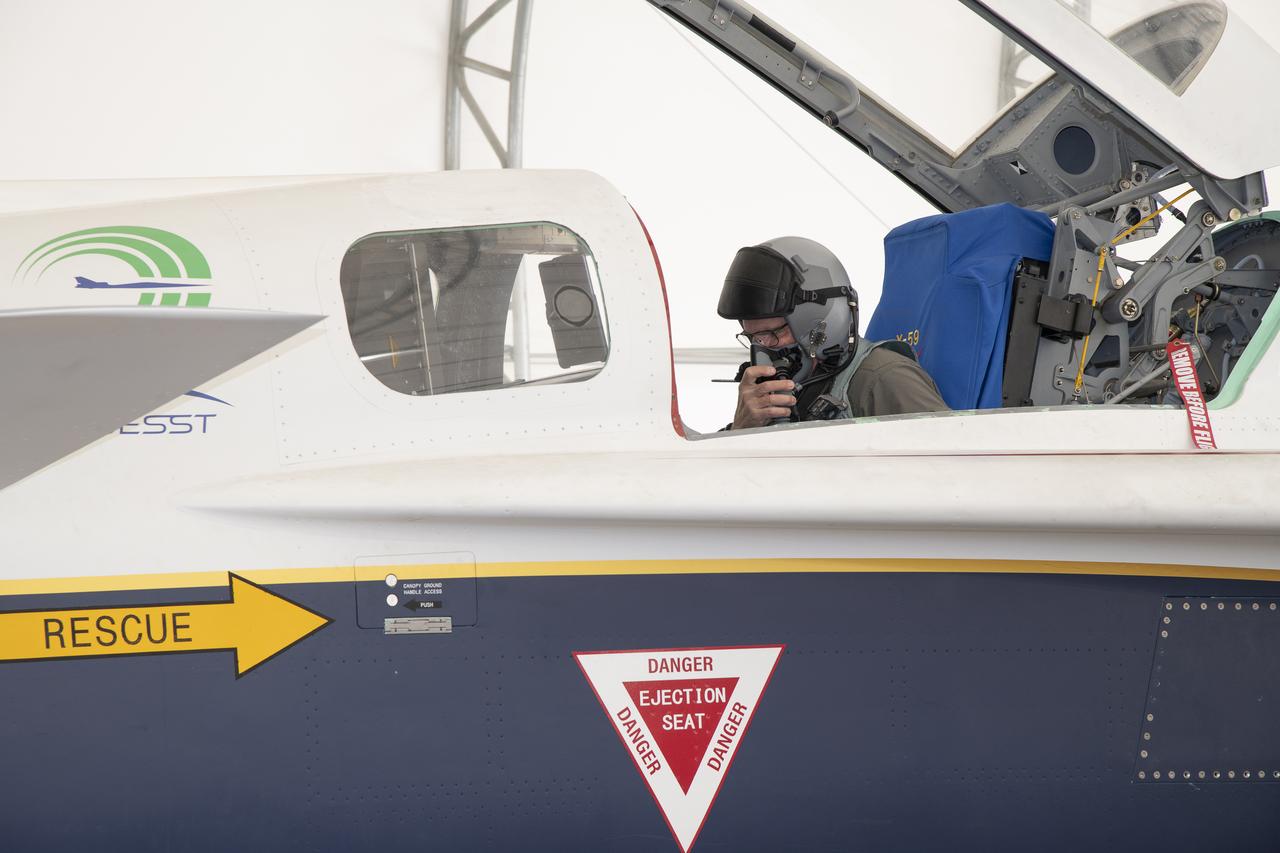
Lockheed Martin test pilot Dan “Dog” Canin sits in the cockpit of NASA’s X-59 quiet supersonic research aircraft in a run stall at Lockheed Martin’s Skunk Works facility in Palmdale, California prior to its first engine run. These engine-run tests featured the X-59 powered by its own engine, whereas in previous tests, the aircraft depended on external sources for power. The X-59 is the centerpiece of NASA’s Quesst mission, which seeks to solve one of the major barriers to supersonic flight over land by making sonic booms quieter.
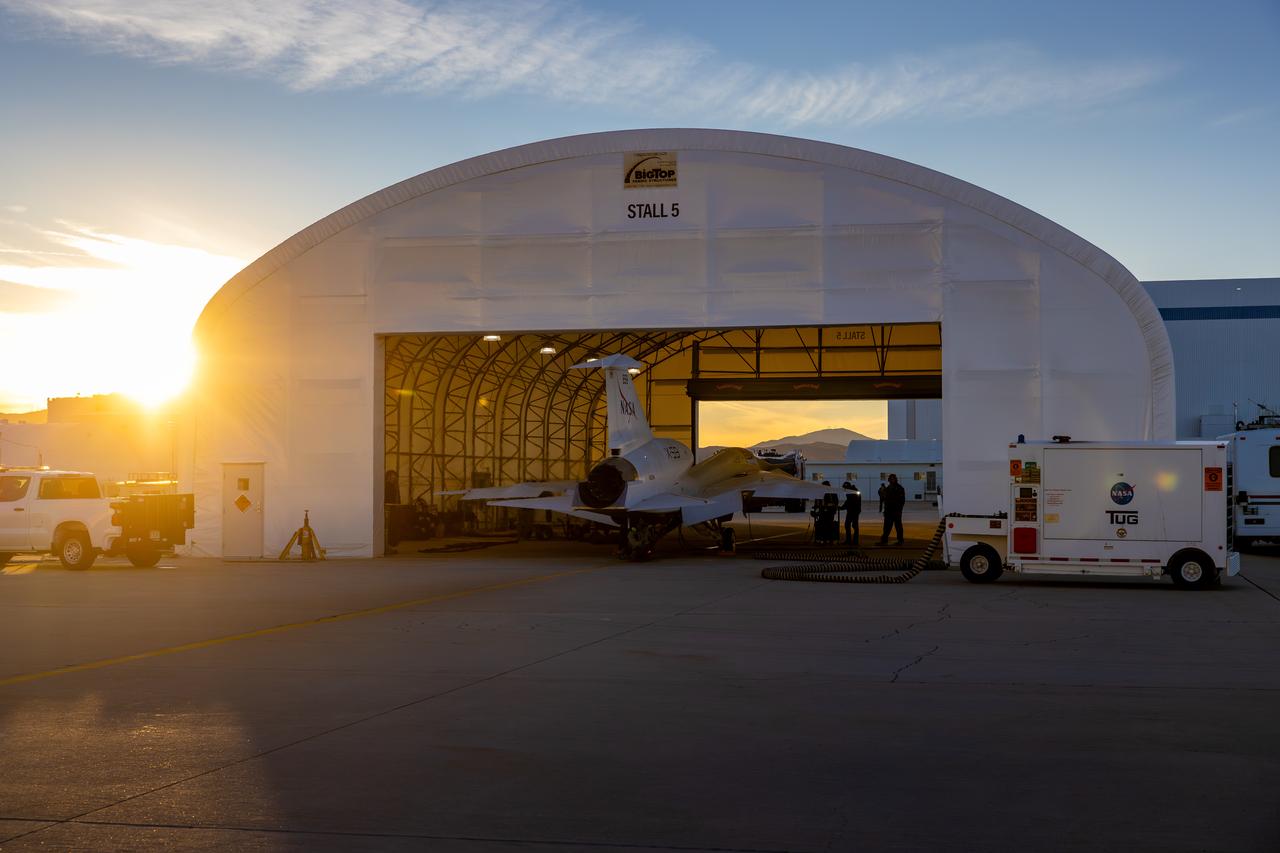
NASA’s X-59 quiet supersonic research aircraft sits inside its run stall in preparation for maximum afterburner testing at Lockheed Martin’s Skunk Works facility in Palmdale, California. Teams conduct final checks on the aircraft before its high-thrust engine runs. The X-59 is the centerpiece of NASA’s Quesst mission designed to demonstrate quiet supersonic flight over land, addressing a key barrier to commercial supersonic travel.

NASA test pilot Jim “Clue” Less sits inside the cockpit of the agency’s X-59 quiet supersonic research aircraft ahead of early morning engine runs at NASA’s Armstrong Flight Research Center in Edwards, California, on Thursday, March 12, 2026. The X-59 is part of NASA's Quesst mission, which seeks to demonstrate quiet supersonic flight and gather data that could help define acceptable sound for commercial supersonic travel over land.
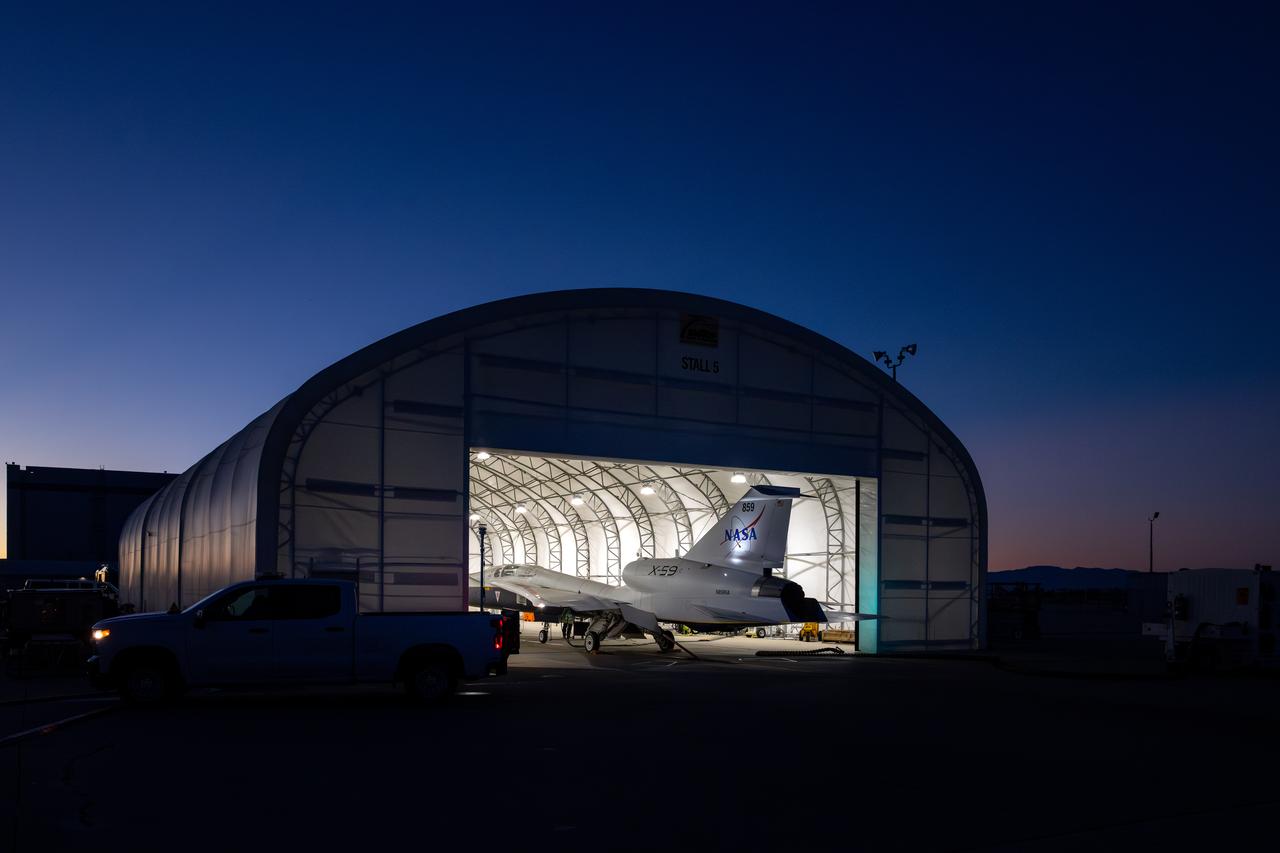
NASA’s X-59 quiet supersonic research aircraft sits inside its run stall following maximum afterburner testing at Lockheed Martin’s Skunk Works facility in Palmdale, California. The test demonstrates the engine’s ability to generate the thrust required for supersonic flight, advancing NASA’s Quesst mission. The X-59 is the centerpiece of the mission, designed to demonstrate quiet supersonic flight over land, addressing a key barrier to commercial supersonic travel.
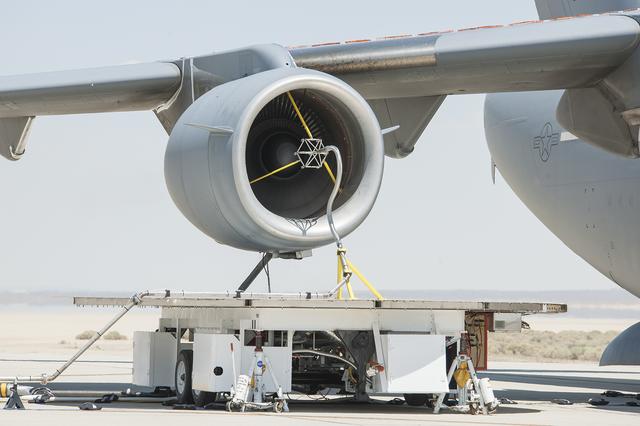
The volcanic ash distribution spider, shown here in the inlet of the engine while running, was used to send the ultra-fine particles of ash through the engine.
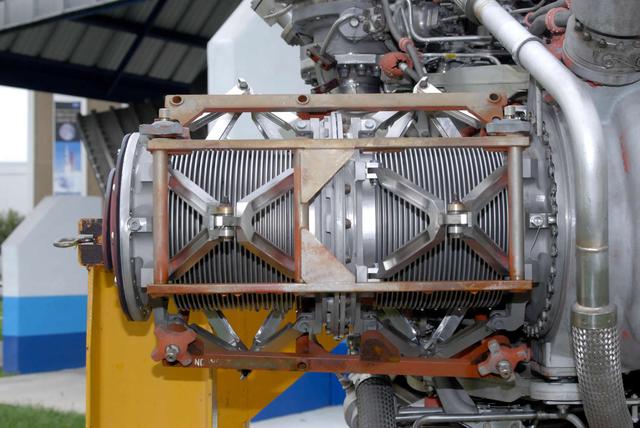
Stennis Space Center engineers are preparing to conduct water tests on an updated version of the scissors duct component of the J-2X engine. Measuring about 2 feet long and about 8 inches in diameter, the duct on the J-2X predecessor, the J-2, connected its fuel turbo pumps to the flight vehicle's upper stage run tanks. According to NASA's J-2X project manager at SSC, Gary Benton, the water tests should establish the limits of the duct's ability to withstand vibration.
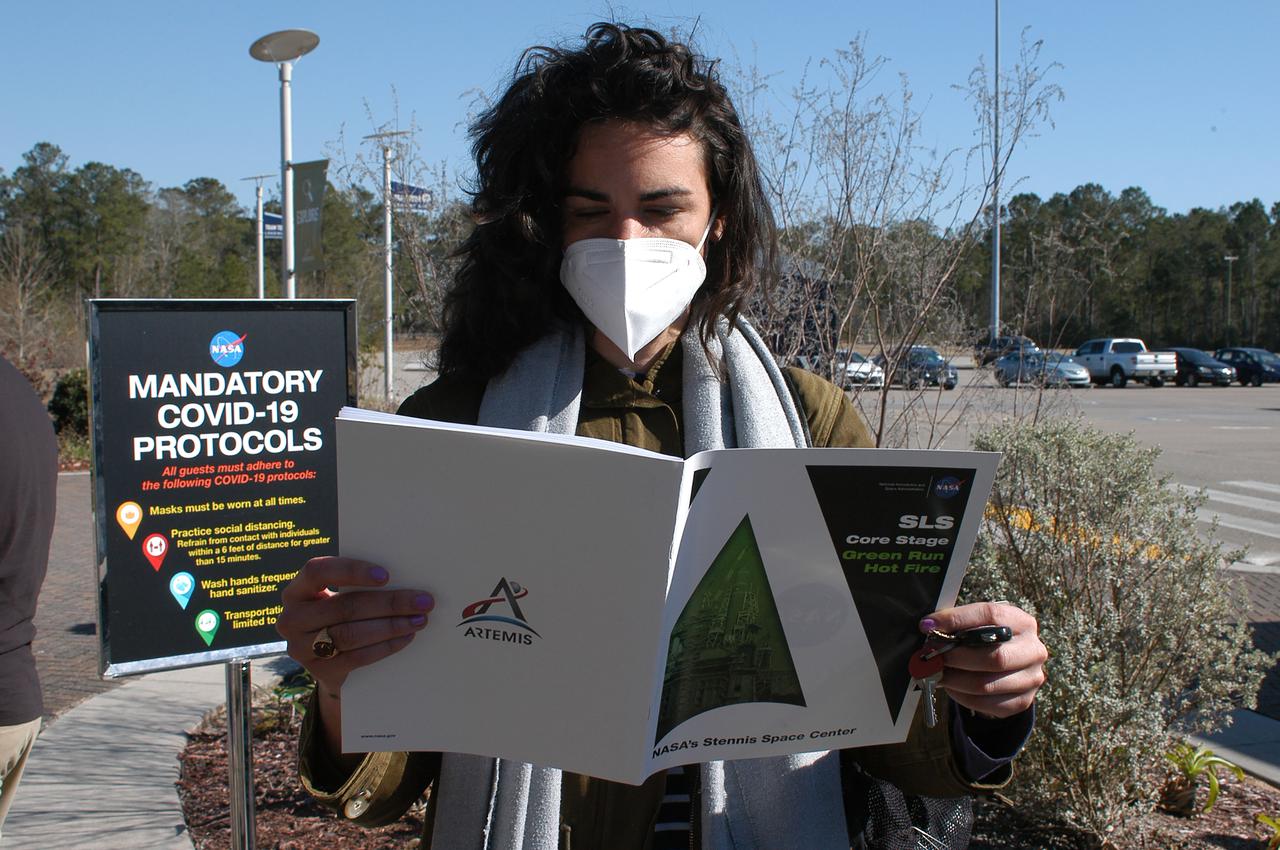
A guest reviews a commemorative Green Run booklet after arriving to view the Green Run hot fire test of the core stage for NASA’s Space Launch System (SLS) rocket at Stennis Space Center near Bay St. Louis, Mississippi, on Saturday, January 16, 2021. NASA conducted a hot fire test of the core stage’s four RS-25 engines on the B-2 Test Stand at Stennis. Scheduled for as long as eight minutes, the engines fired for a little more than one minute to generate a combined 1.6 million pounds of thrust, just as will occur during an actual launch. The hot fire is the final test of the Green Run test series, a comprehensive assessment of the SLS core stage prior to launching the Artemis I mission to the Moon.
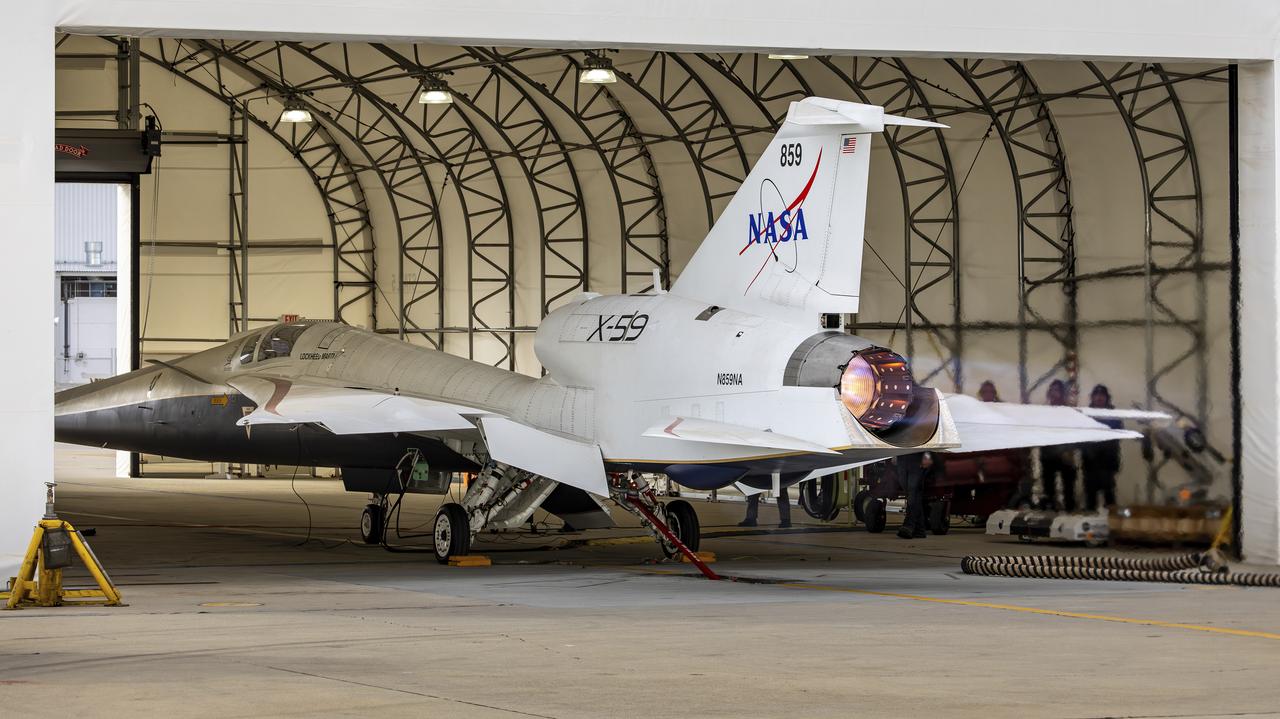
NASA’s X-59 quiet supersonic research aircraft completed its first maximum afterburner test at Lockheed Martin’s Skunk Works facility in Palmdale, California. This full-power test, during which the engine generates additional thrust, validates the additional power needed for meeting the testing conditions of the aircraft. The X-59 is the centerpiece of NASA’s Quesst mission, which aims to overcome a major barrier to supersonic flight over land by reducing the noise of sonic booms.
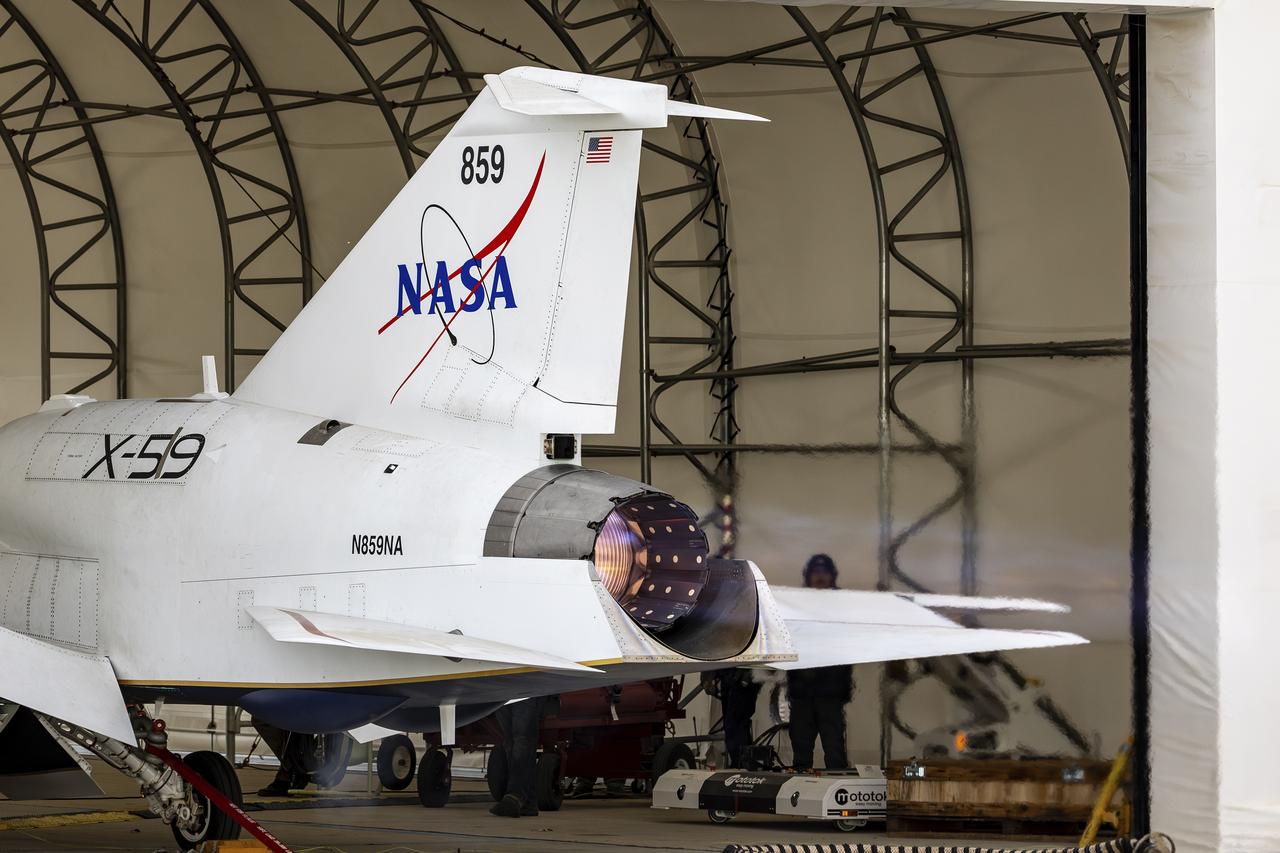
NASA’s X-59 quiet supersonic research aircraft completed its first maximum afterburner test at Lockheed Martin’s Skunk Works facility in Palmdale, California. This full-power test, during which the engine generates additional thrust, validates the additional power needed for meeting the testing conditions of the aircraft. The X-59 is the centerpiece of NASA’s Quesst mission, which aims to overcome a major barrier to supersonic flight over land by reducing the noise of sonic booms.
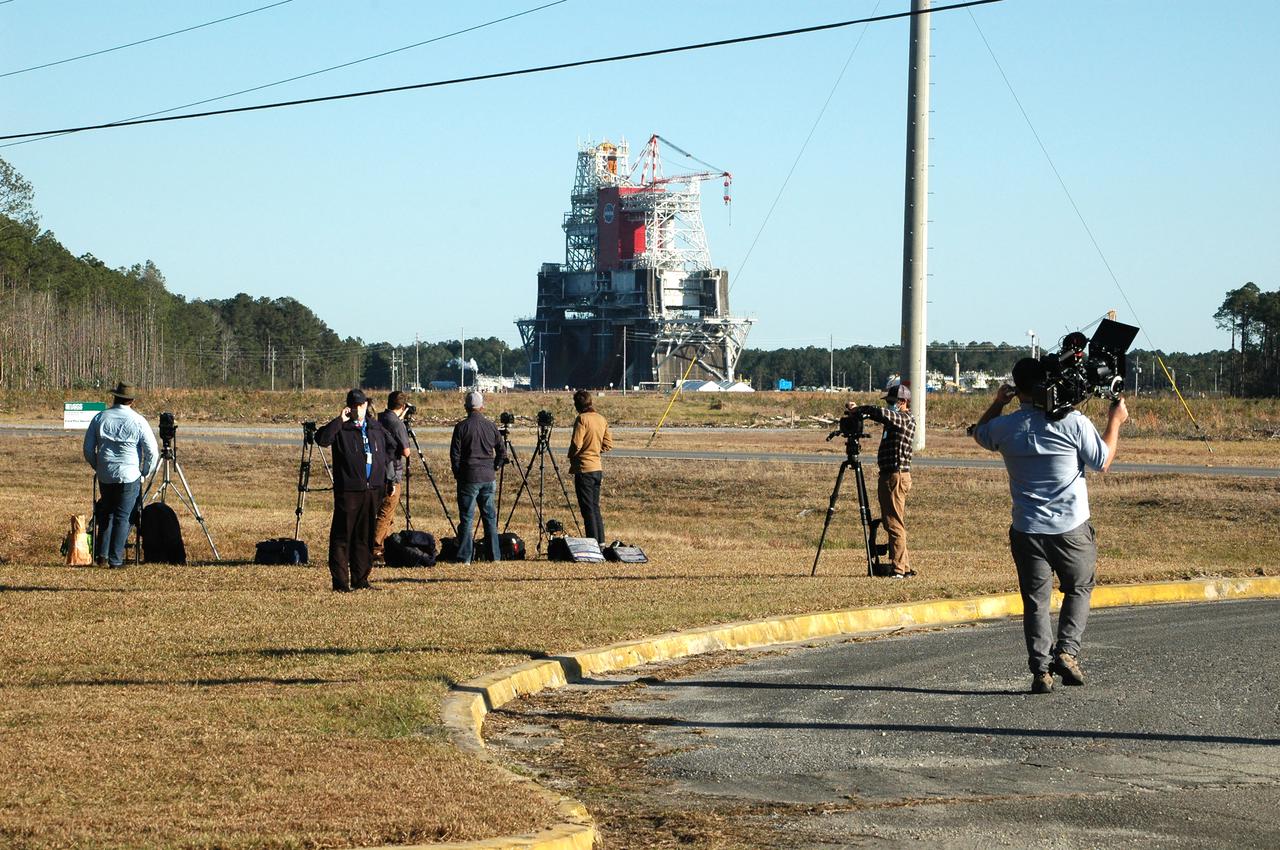
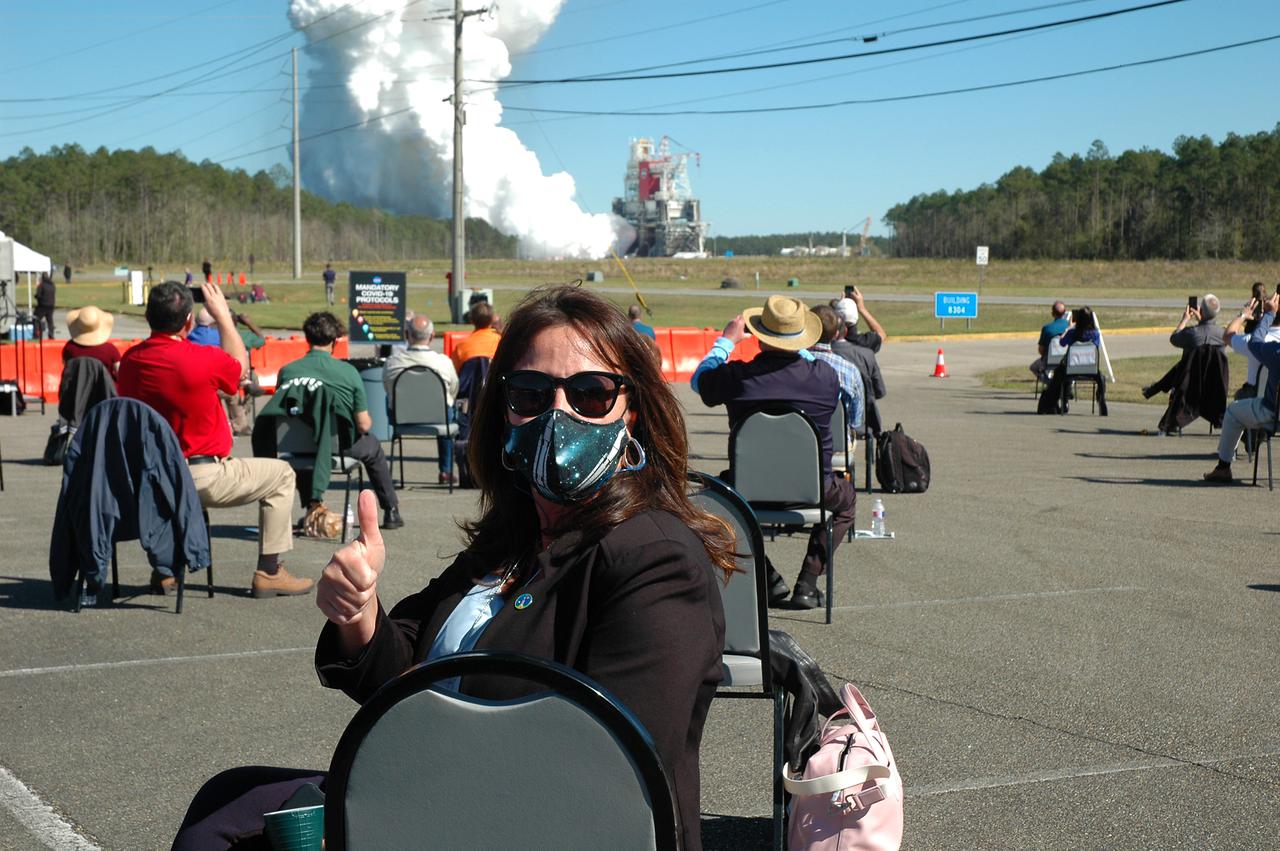
Members of the media stake out viewing spots prior to the Green Run hot fire test of the core stage for NASA’s Space Launch System (SLS) rocket at Stennis Space Center near Bay St. Louis, Mississippi, on Jan. 16, 2021. NASA conducted a hot fire test of the core stage’s four RS-25 engines on the B-2 Test Stand at Stennis. Scheduled for as long as eight minutes, the engines fired for a little more than one minute to generate a combined 1.6 million pounds of thrust, just as will occur during an actual launch. The hot fire is the final test of the Green Run test series, a comprehensive assessment of the SLS core stage prior to launching the Artemis I mission to the Moon.
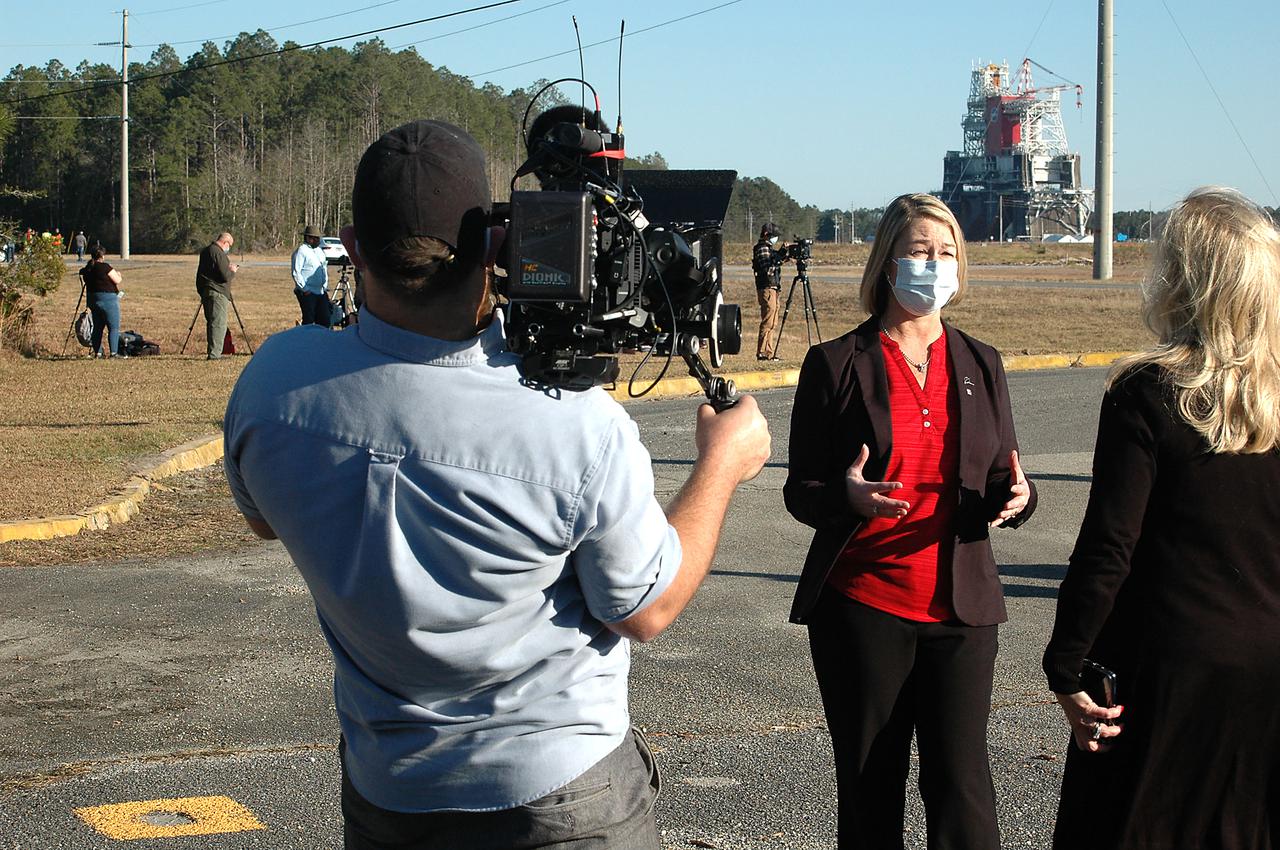
Jennifer Boland-Masterson, director of Boeing Operations at NASA’s Michoud Assembly Facility in New Orleans, talks with media prior to the Green Run hot fire test of the core stage for NASA’s Space Launch System (SLS) rocket at Stennis Space Center near Bay St. Louis, Mississippi, on Jan. 16, 2021. NASA conducted a hot fire test of the core stage’s four RS-25 engines on the B-2 Test Stand at Stennis. Scheduled for as long as eight minutes, the engines fired for a little more than one minute to generate a combined 1.6 million pounds of thrust, just as will occur during an actual launch. The hot fire is the final test of the Green Run test series, a comprehensive assessment of the SLS core stage prior to launching the Artemis I mission to the Moon.
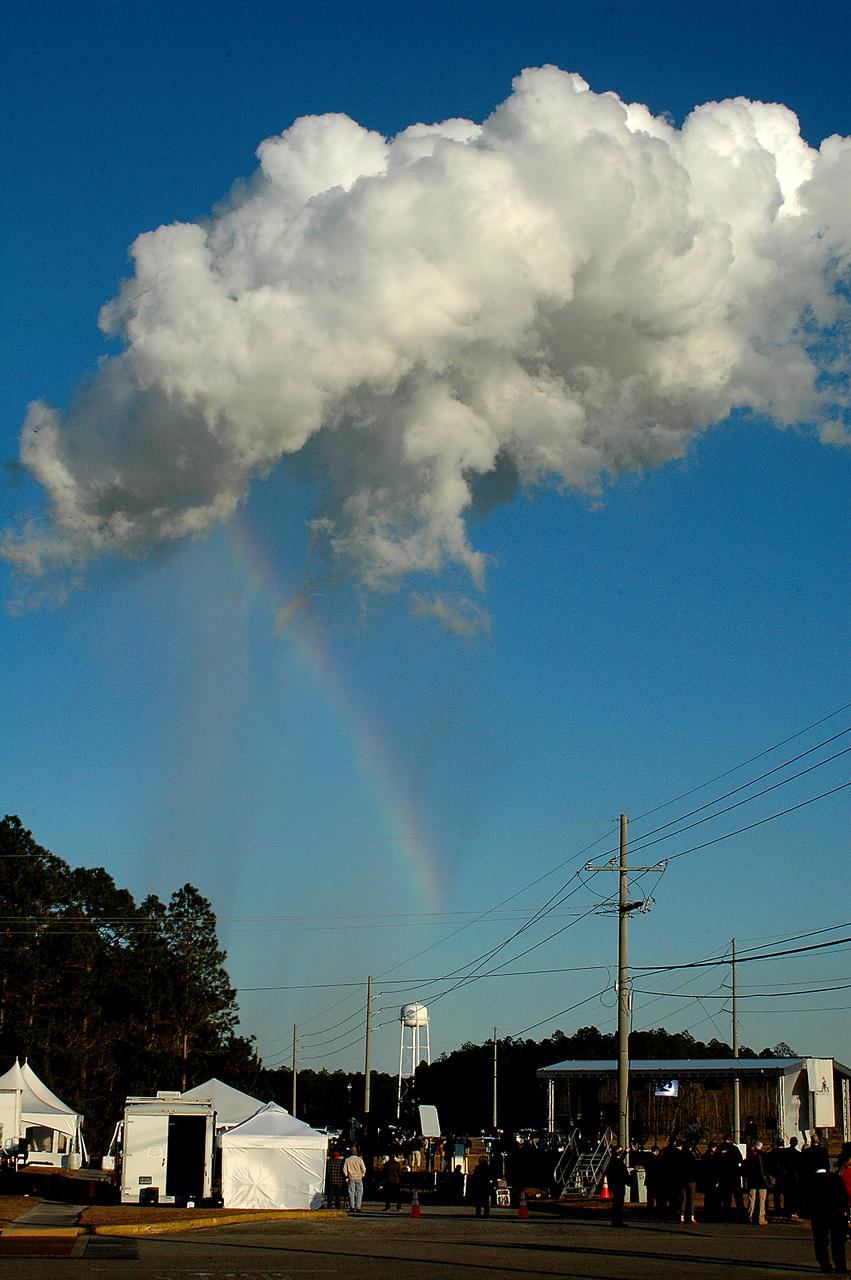
A rainbow appears as the steam cloud dissipates following the Green Run hot fire test of the core stage for NASA’s Space Launch System (SLS) rocket on Saturday, January 16, 2021. NASA conducted a hot fire test of the core stage’s four RS-25 engines on the B-2 Test Stand at Stennis Space Center near Bay St. Louis, Mississippi. Scheduled for as long as eight minutes, the engines fired for a little more than one minute to generate a combined 1.6 million pounds of thrust, just as will occur during an actual launch. The hot fire is the final test of the Green Run test series, a comprehensive assessment of the SLS core stage prior to launching the Artemis I mission to the Moon.
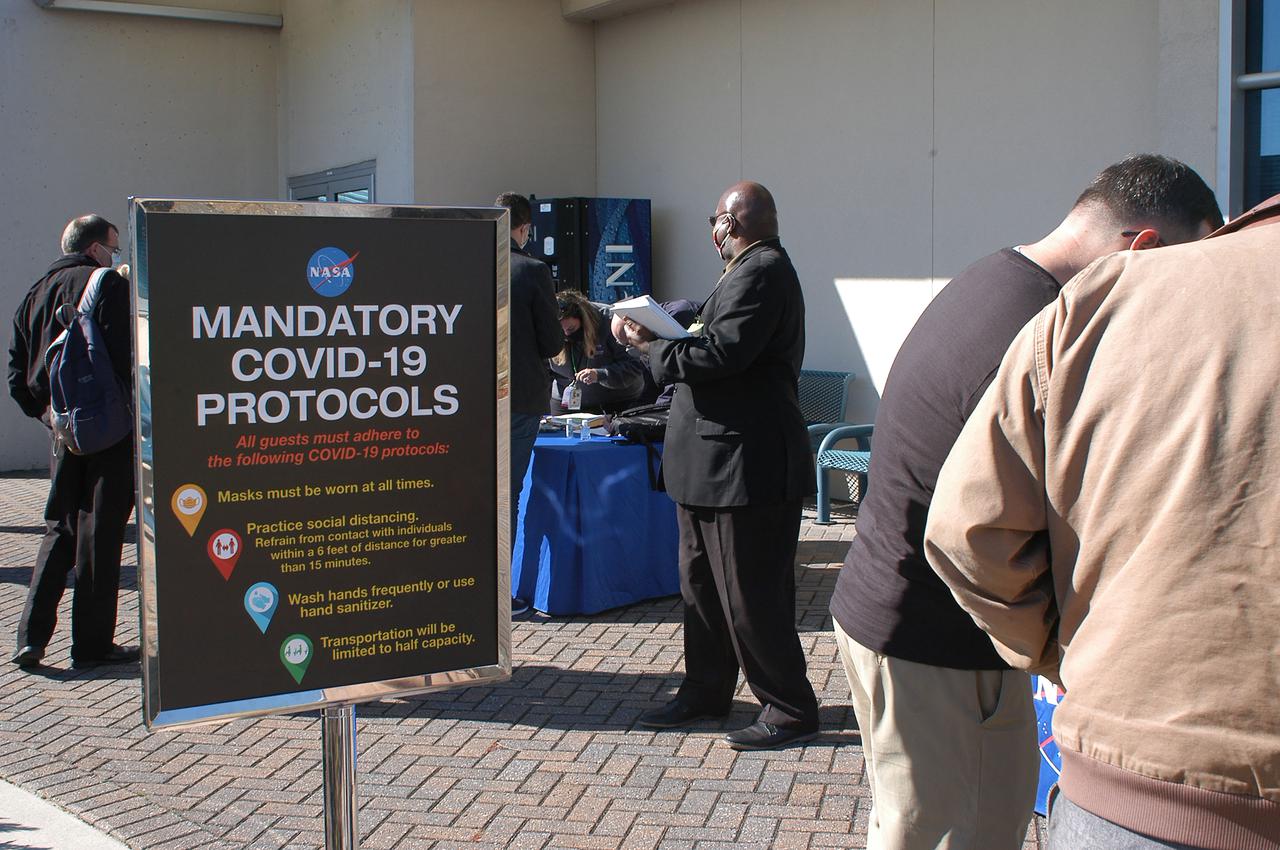
A posted sign outlines COVID-19 protocol for media and guests arriving to view the Green Run hot fire test of the core stage for NASA’s Space Launch System (SLS) rocket at Stennis Space Center near Bay St. Louis, Mississippi, on Saturday, January 16, 2021. NASA conducted a hot fire test of the core stage’s four RS-25 engines on the B-2 Test Stand at Stennis. Scheduled for as long as eight minutes, the engines fired for a little more than one minute to generate a combined 1.6 million pounds of thrust, just as will occur during an actual launch. The hot fire is the final test of the Green Run test series, a comprehensive assessment of the SLS core stage prior to launching the Artemis I mission to the Moon.
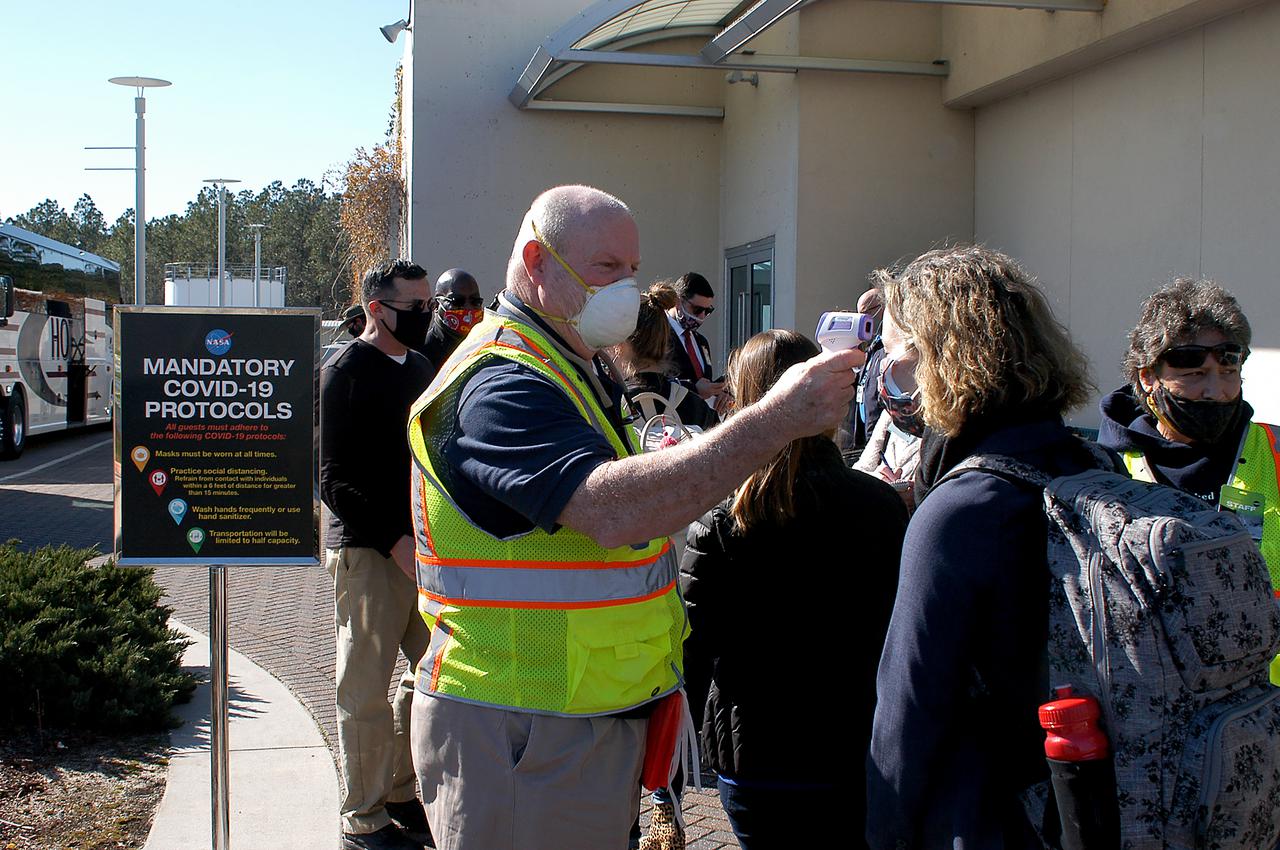
A staff member administers a COVID-19 temperature check to media and guests arriving to view the Green Run hot fire test of the core stage for NASA’s Space Launch System (SLS) rocket at Stennis Space Center near Bay St. Louis, Mississippi, on Saturday, January 16, 2021. NASA conducted a hot fire test of the core stage’s four RS-25 engines on the B-2 Test Stand at Stennis. Scheduled for as long as eight minutes, the engines fired for a little more than one minute to generate a combined 1.6 million pounds of thrust, just as will occur during an actual launch. The hot fire is the final test of the Green Run test series, a comprehensive assessment of the SLS core stage prior to launching the Artemis I mission to the Moon.

NASA conducts a hot fire test Jan. 16, 2021, of the core stage for the agency’s Space Launch System rocket on the B-2 Test Stand at Stennis Space Center near Bay St. Louis. The hot fire test of the stage’s four RS-25 engines generated a combined 1.6 million pounds of thrust, just as will occur during an actual launch. The hot fire is the final test of the Green Run test series, a comprehensive assessment of the SLS core stage prior to launching the Artemis I mission to the Moon.
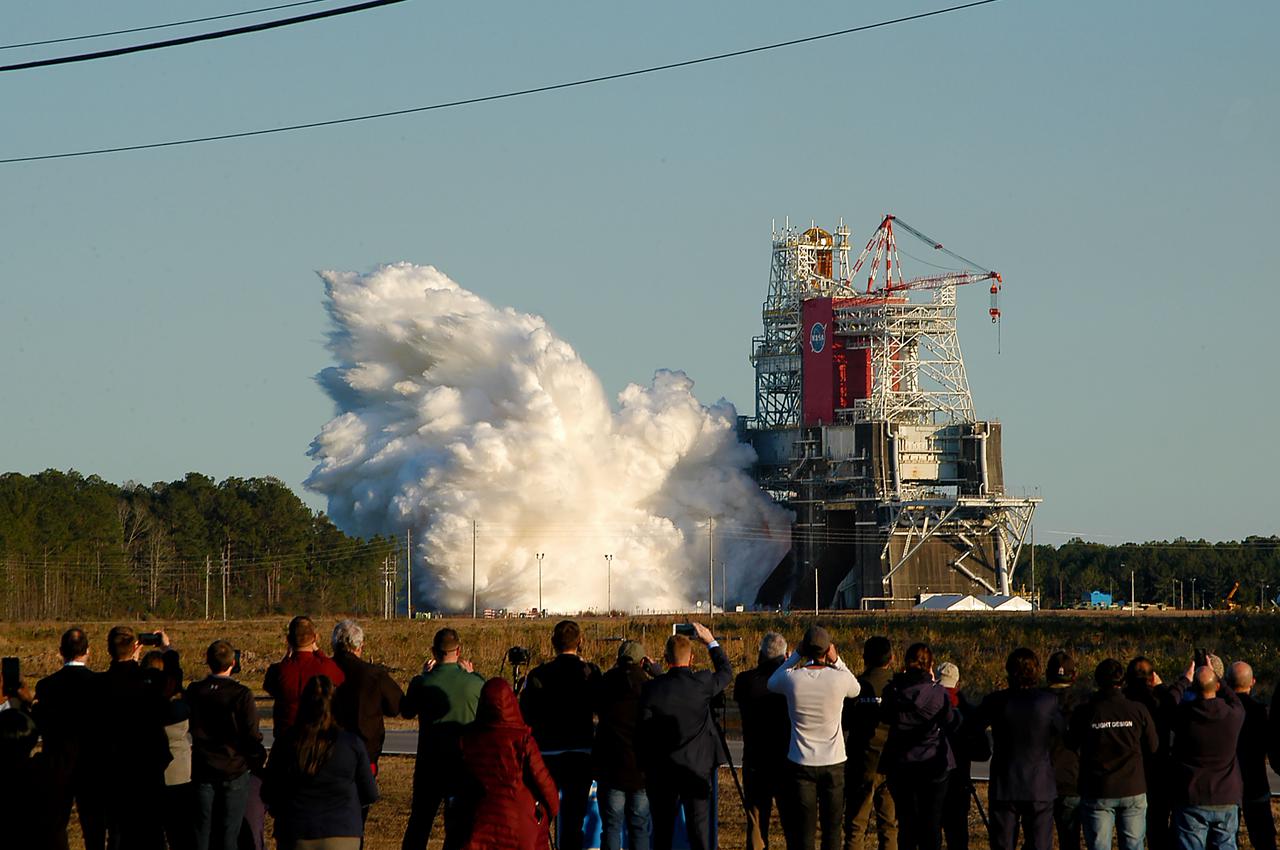
NASA conducts a hot fire test Jan. 16, 2021, of the core stage for the agency’s Space Launch System rocket on the B-2 Test Stand at Stennis Space Center near Bay St. Louis. The hot fire test of the stage’s four RS-25 engines generated a combined 1.6 million pounds of thrust, just as will occur during an actual launch. The hot fire is the final test of the Green Run test series, a comprehensive assessment of the SLS core stage prior to launching the Artemis I mission to the Moon.
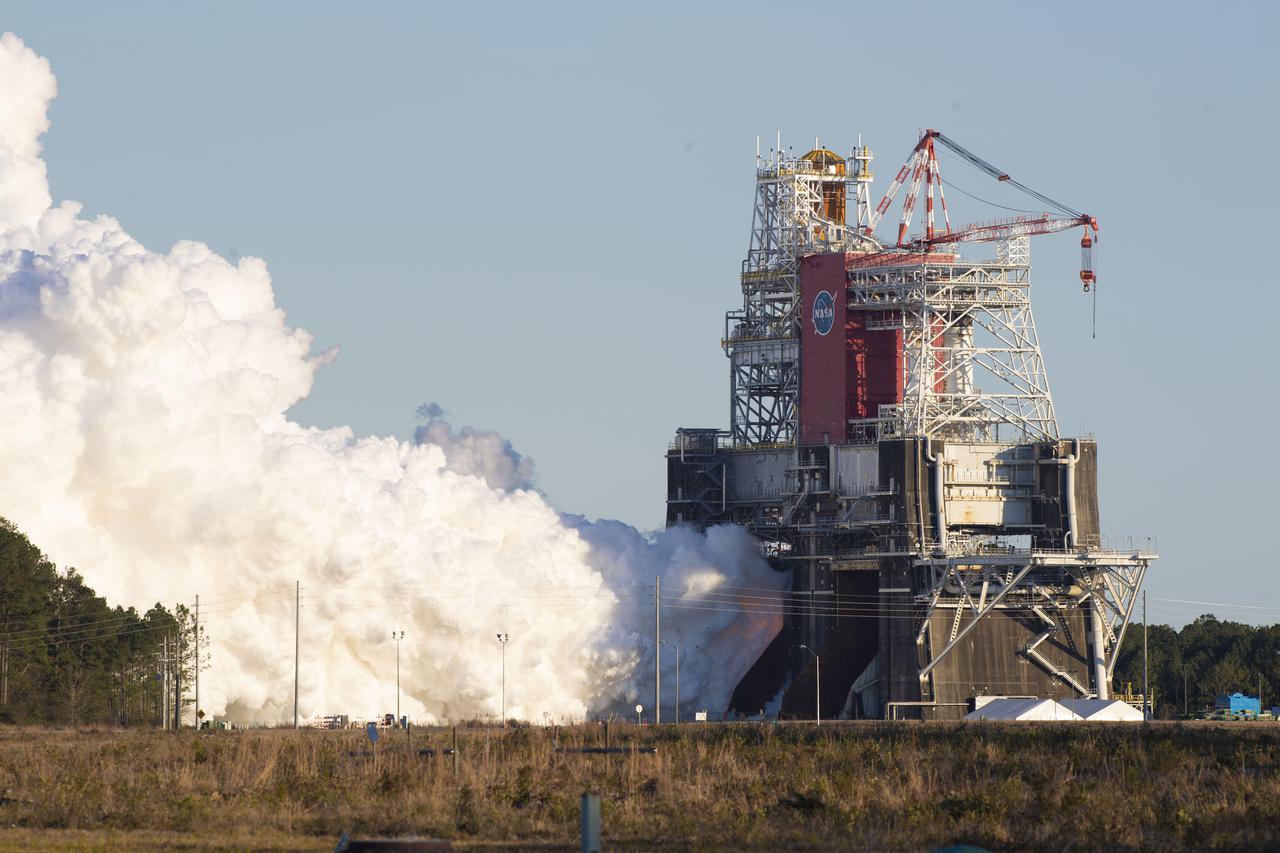
NASA conducts a hot fire test Jan. 16, 2021, of the core stage for the agency’s Space Launch System rocket on the B-2 Test Stand at Stennis Space Center near Bay St. Louis. The hot fire test of the stage’s four RS-25 engines generated a combined 1.6 million pounds of thrust, just as will occur during an actual launch. The hot fire is the final test of the Green Run test series, a comprehensive assessment of the SLS core stage prior to launching the Artemis I mission to the Moon.
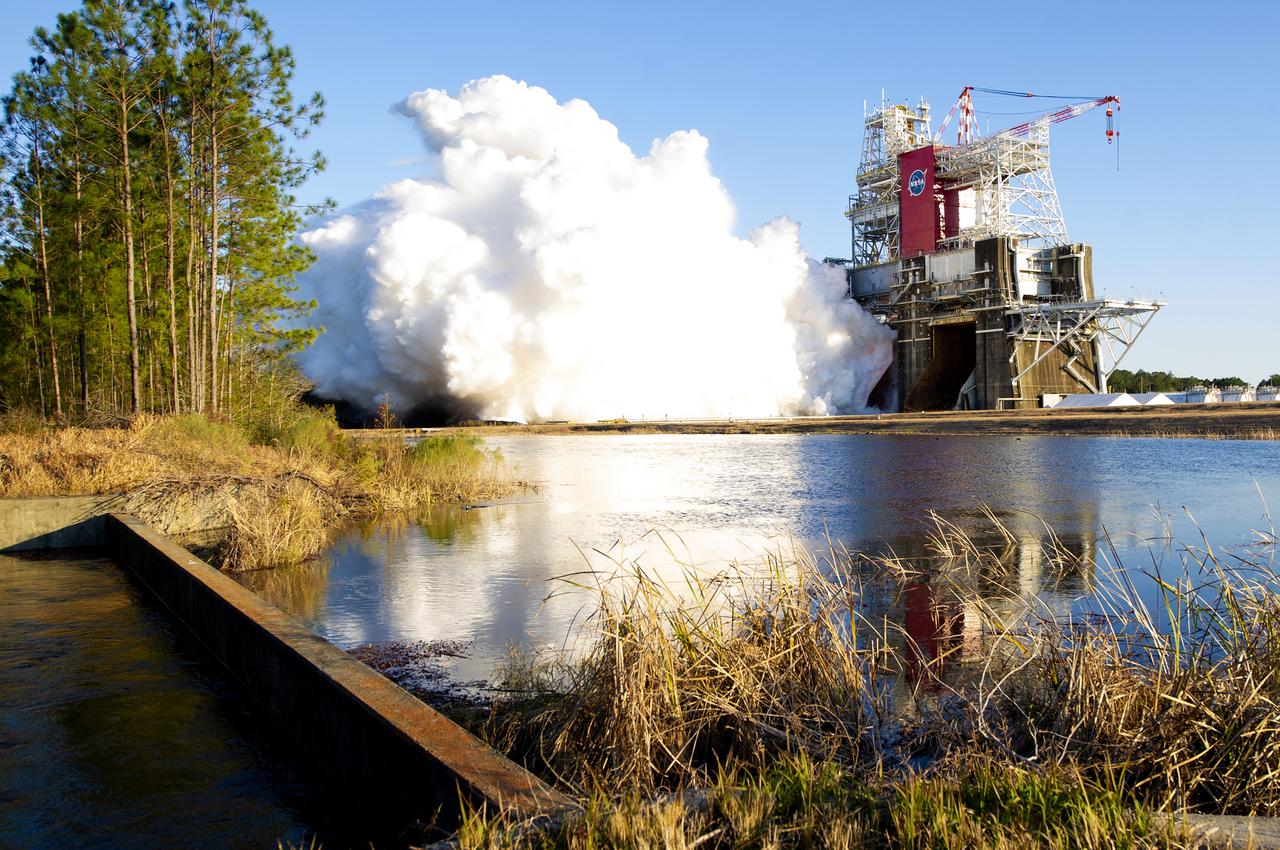
NASA conducts a hot fire test Jan. 16, 2021, of the core stage for the agency’s Space Launch System rocket on the B-2 Test Stand at Stennis Space Center near Bay St. Louis. The hot fire test of the stage’s four RS-25 engines generated a combined 1.6 million pounds of thrust, just as will occur during an actual launch. The hot fire is the final test of the Green Run test series, a comprehensive assessment of the SLS core stage prior to launching the Artemis I mission to the Moon.
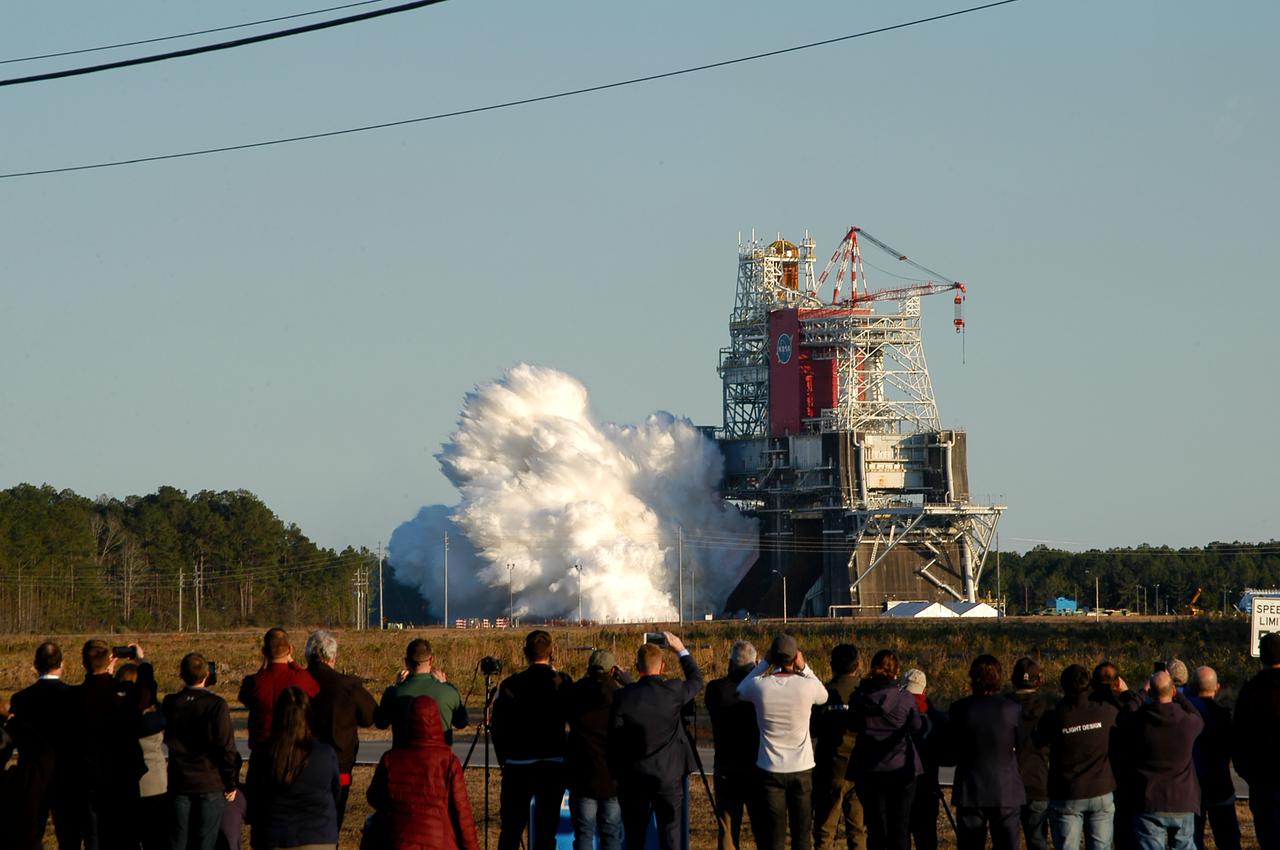
NASA conducts a hot fire test Jan. 16, 2021, of the core stage for the agency’s Space Launch System rocket on the B-2 Test Stand at Stennis Space Center near Bay St. Louis. The hot fire test of the stage’s four RS-25 engines generated a combined 1.6 million pounds of thrust, just as will occur during an actual launch. The hot fire is the final test of the Green Run test series, a comprehensive assessment of the SLS core stage prior to launching the Artemis I mission to the Moon.

NASA conducts a hot fire test Jan. 16, 2021, of the core stage for the agency’s Space Launch System rocket on the B-2 Test Stand at Stennis Space Center near Bay St. Louis. The hot fire test of the stage’s four RS-25 engines generated a combined 1.6 million pounds of thrust, just as will occur during an actual launch. The hot fire is the final test of the Green Run test series, a comprehensive assessment of the SLS core stage prior to launching the Artemis I mission to the Moon.
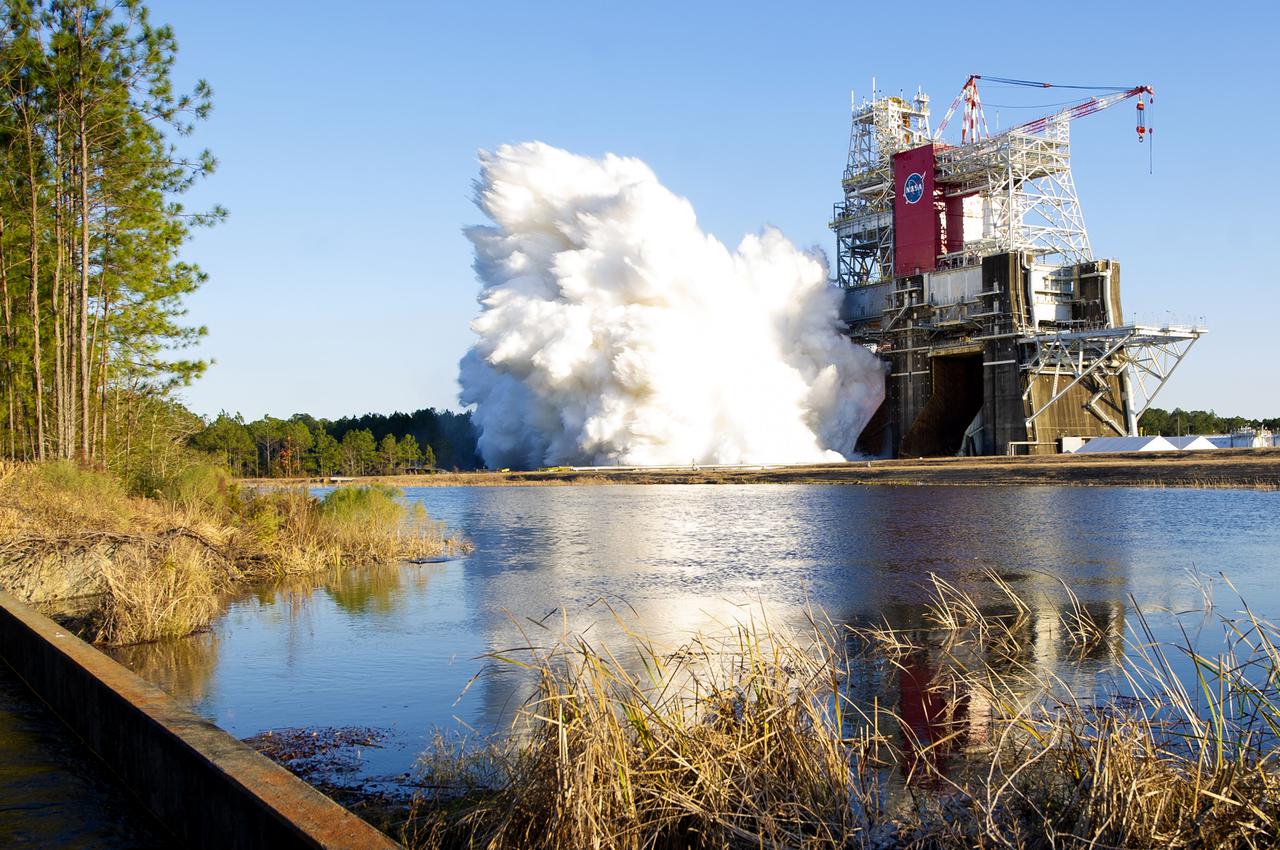
NASA conducts a hot fire test Jan. 16, 2021, of the core stage for the agency’s Space Launch System rocket on the B-2 Test Stand at Stennis Space Center near Bay St. Louis. The hot fire test of the stage’s four RS-25 engines generated a combined 1.6 million pounds of thrust, just as will occur during an actual launch The hot fire is the final test of the Green Run test series, a comprehensive assessment of the SLS core stage prior to launching the Artemis I mission to the Moon.
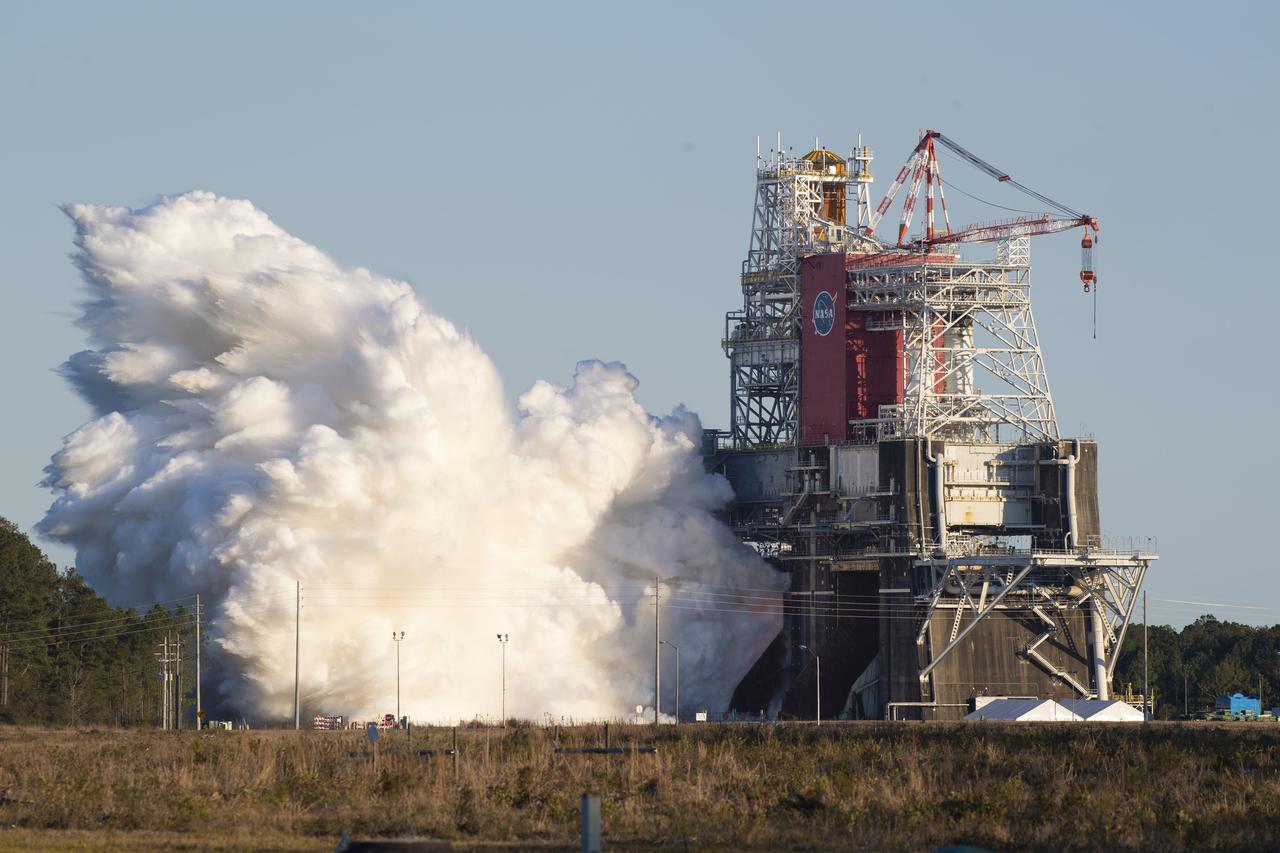
NASA conducts a hot fire test Jan. 16, 2021, of the core stage for the agency’s Space Launch System rocket on the B-2 Test Stand at Stennis Space Center near Bay St. Louis. The hot fire test of the stage’s four RS-25 engines generated a combined 1.6 million pounds of thrust, just as will occur during an actual launch. The hot fire is the final test of the Green Run test series, a comprehensive assessment of the SLS core stage prior to launching the Artemis I mission to the Moon.
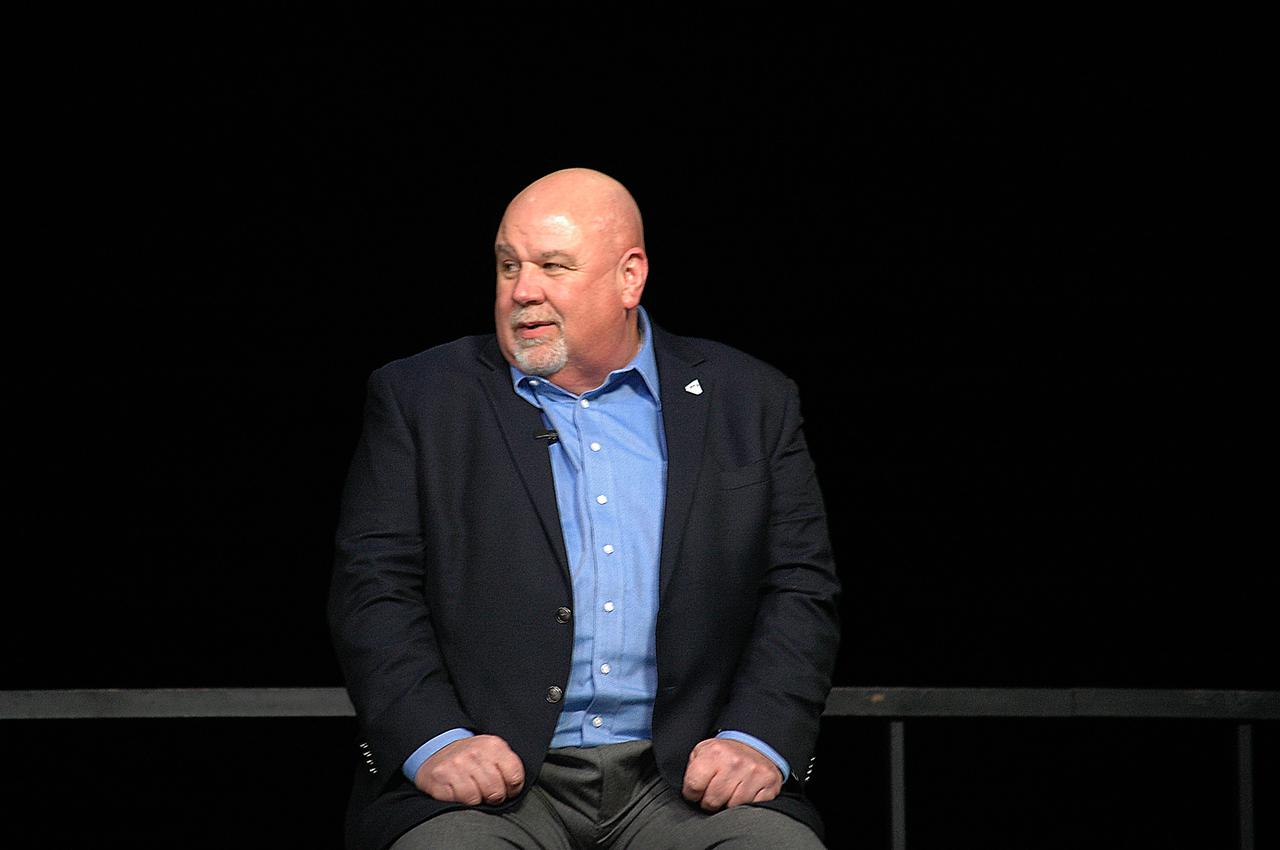
SLS Program Manager John Honeycutt from NASA’s Marshall Space Flight Center participates in a press conference following the Green Run hot fire test of the core stage for NASA’s Space Launch System (SLS) rocket on Saturday, January 16, 2021. NASA conducted a hot fire test of the core stage’s four RS-25 engines on the B-2 Test Stand at Stennis Space Center near Bay St. Louis, Mississippi. Scheduled for as long as eight minutes, the engines fired for a little more than one minute to generate a combined 1.6 million pounds of thrust, just as will occur during an actual launch. The hot fire is the final test of the Green Run test series, a comprehensive assessment of the SLS core stage prior to launching the Artemis I mission to the Moon.
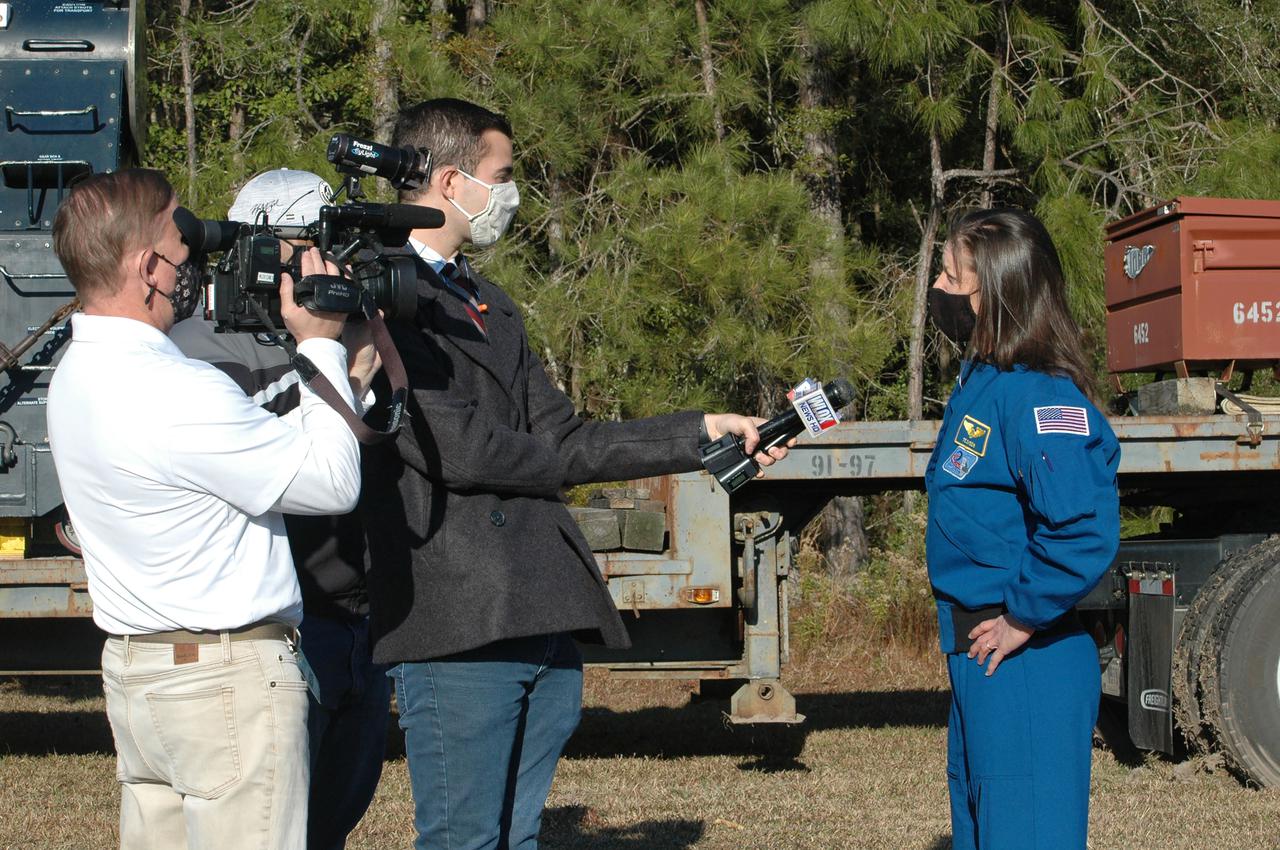
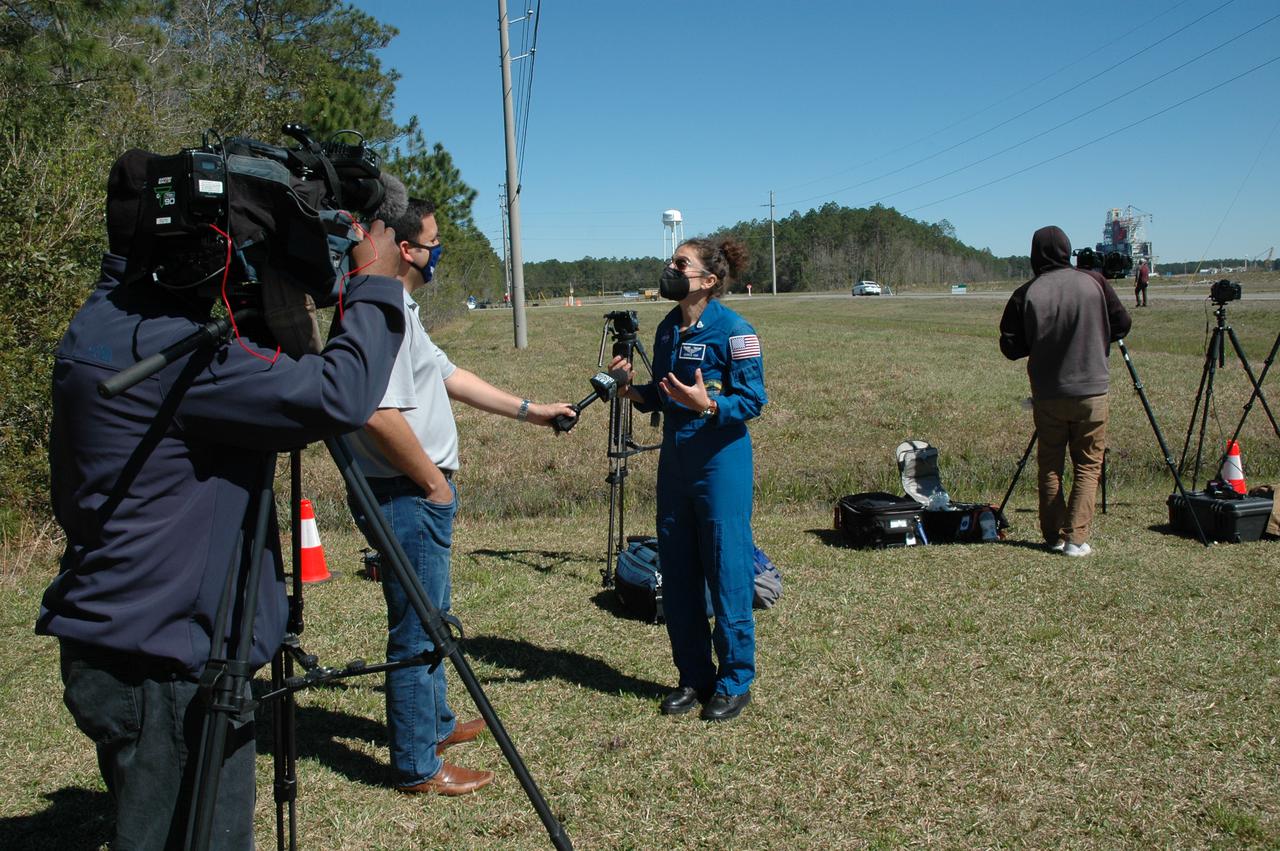
Astronaut Tracy Caldwell Dyson speaks with media representatives prior to the Green Run hot fire test of the core stage for NASA’s Space Launch System (SLS) rocket at Stennis Space Center near Bay St. Louis, Mississippi, on Saturday, January 16, 2021. NASA conducted a hot fire test of the core stage’s four RS-25 engines on the B-2 Test Stand at Stennis. Scheduled for as long as eight minutes, the engines fired for a little more than one minute to generate a combined 1.6 million pounds of thrust, just as will occur during an actual launch. The hot fire is the final test of the Green Run test series, a comprehensive assessment of the SLS core stage prior to launching the Artemis I mission to the Moon.
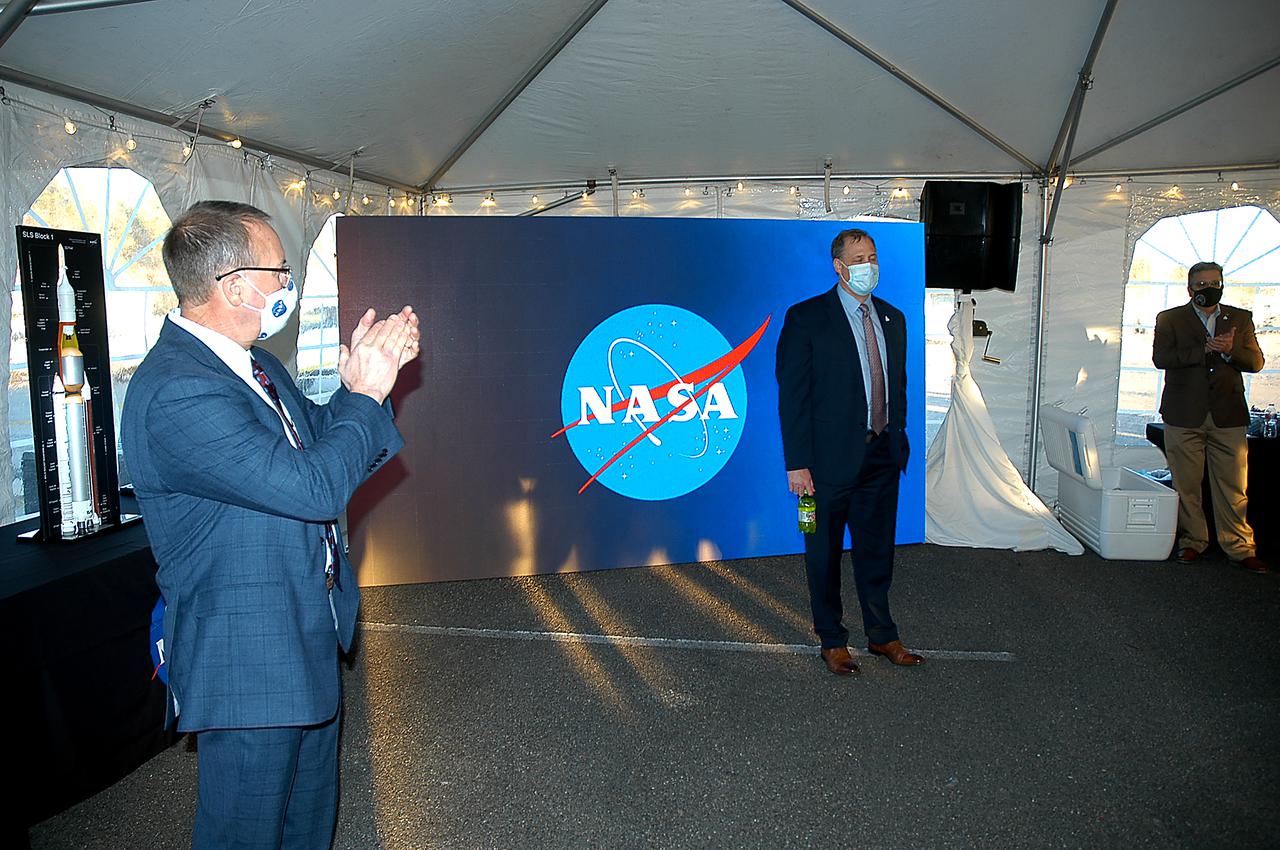
Outgoing NASA Administrator Jim Bridenstine (right) receives a round of applause from Stennis Director Rick Gilbrech and guests for comments following the Green Run hot fire test of the core stage for NASA’s Space Launch System (SLS) rocket at Stennis Space Center near Bay St. Louis, Mississippi, on Saturday, January 16, 2021. NASA conducted a hot fire test of the core stage’s four RS-25 engines on the B-2 Test Stand at Stennis. Scheduled for as long as eight minutes, the engines fired for a little more than one minute to generate a combined 1.6 million pounds of thrust, just as will occur during an actual launch. The hot fire is the final test of the Green Run test series, a comprehensive assessment of the SLS core stage prior to launching the Artemis I mission to the Moon. (NASA/Michael Badon)
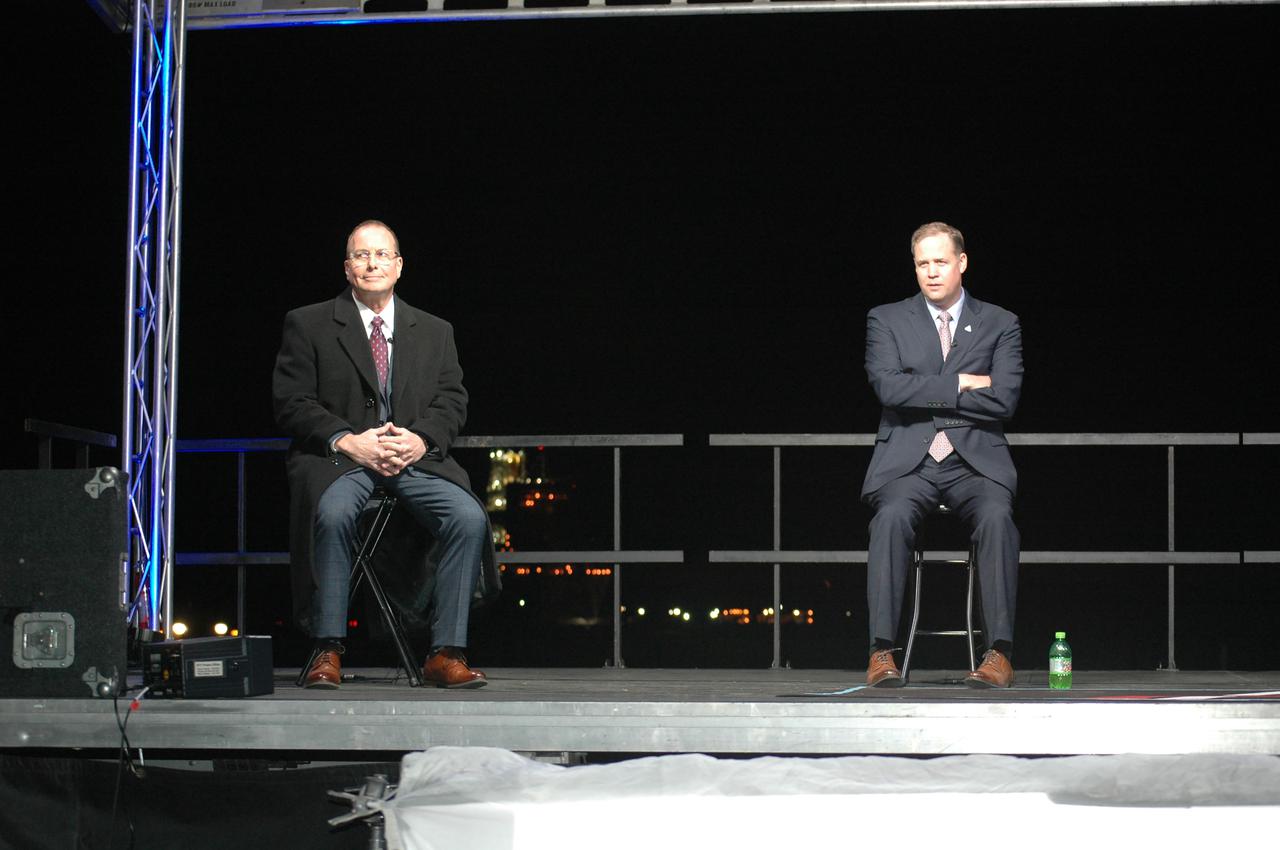
Outgoing NASA Administrator Jim Bridenstine (right) and Stennis Space Center Director Rick Gilbrech participate in a press conference following the Green Run hot fire test of the core stage for NASA’s Space Launch System (SLS) rocket on Saturday, January 16, 2021. NASA conducted a hot fire test of the core stage’s four RS-25 engines on the B-2 Test Stand at Stennis Space Center near Bay St. Louis, Mississippi. Scheduled for as long as eight minutes, the engines fired for a little more than one minute to generate a combined 1.6 million pounds of thrust, just as will occur during an actual launch. The hot fire is the final test of the Green Run test series, a comprehensive assessment of the SLS core stage prior to launching the Artemis I mission to the Moon.
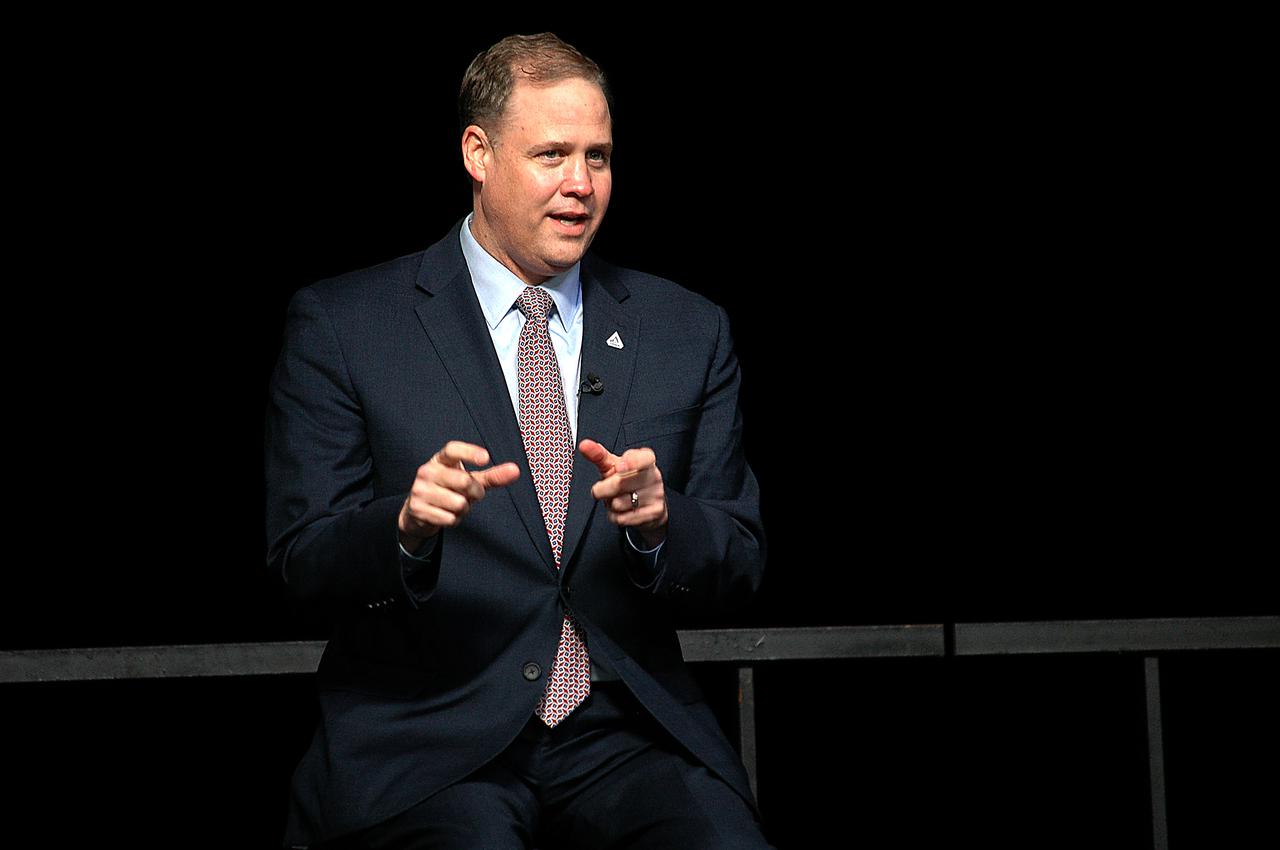
Outgoing NASA Administrator Jim Bridenstine participates in a press conference following the Green Run hot fire test of the core stage for NASA’s Space Launch System (SLS) rocket on Saturday, January 16, 2021. NASA conducted a hot fire test of the core stage’s four RS-25 engines on the B-2 Test Stand at Stennis Space Center near Bay St. Louis, Mississippi. Scheduled for as long as eight minutes, the engines fired for a little more than one minute to generate a combined 1.6 million pounds of thrust, just as will occur during an actual launch. The hot fire is the final test of the Green Run test series, a comprehensive assessment of the SLS core stage prior to launching the Artemis I mission to the Moon.
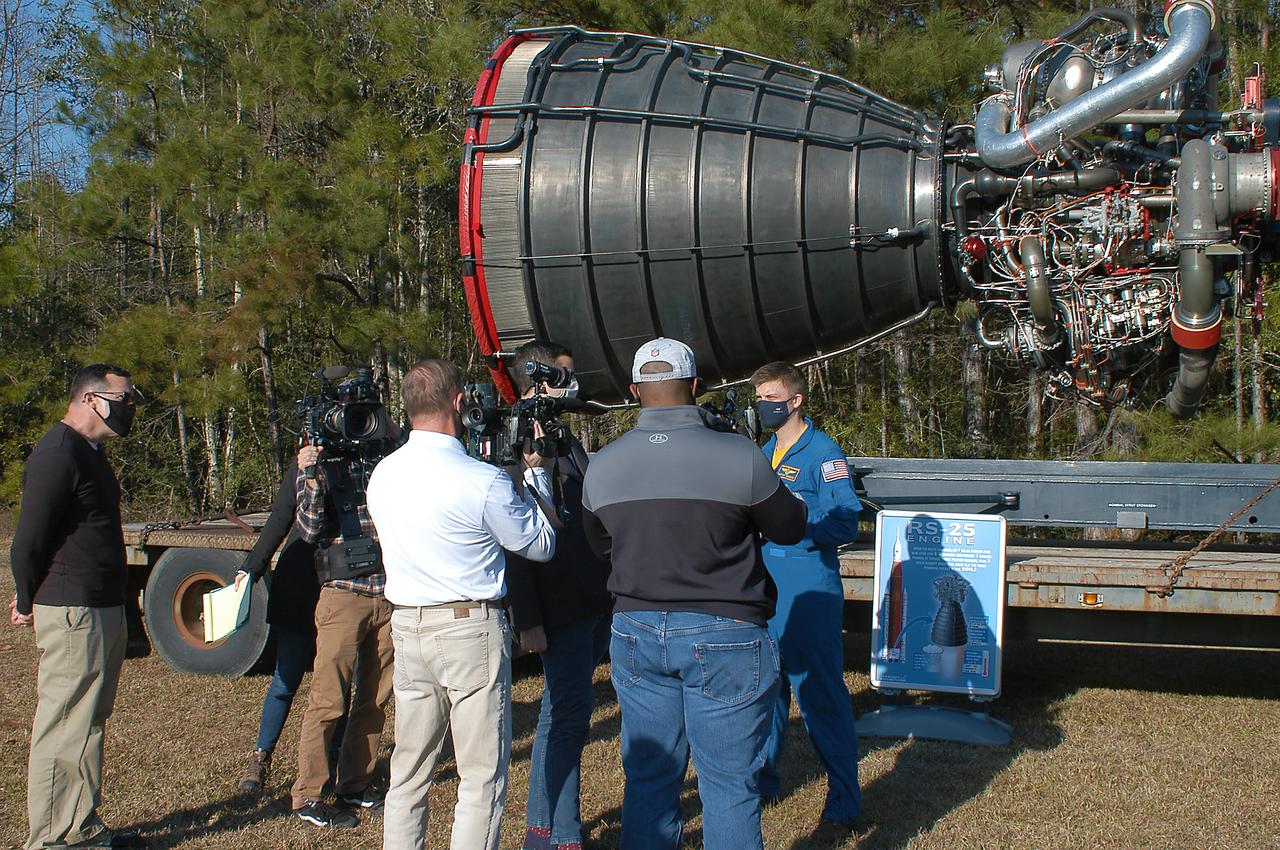
Astronaut Matthew Dominick speaks with media representatives prior to the Green Run hot fire test of the core stage for NASA’s Space Launch System (SLS) rocket at Stennis Space Center near Bay St. Louis, Mississippi, on Saturday, January 16, 2021. NASA conducted a hot fire test of the core stage’s four RS-25 engines on the B-2 Test Stand at Stennis. Scheduled for as long as eight minutes, the engines fired for a little more than one minute to generate a combined 1.6 million pounds of thrust, just as will occur during an actual launch. The hot fire is the final test of the Green Run test series, a comprehensive assessment of the SLS core stage prior to launching the Artemis I mission to the Moon.

Stennis Space Center Director Rick Gilbrech participates in a press conference following the Green Run hot fire test of the core stage for NASA’s Space Launch System (SLS) rocket on Saturday, January 16, 2021. NASA conducted a hot fire test of the core stage’s four RS-25 engines on the B-2 Test Stand at Stennis Space Center near Bay St. Louis, Mississippi. Scheduled for as long as eight minutes, the engines fired for a little more than one minute to generate a combined 1.6 million pounds of thrust, just as will occur during an actual launch. The hot fire is the final test of the Green Run test series, a comprehensive assessment of the SLS core stage prior to launching the Artemis I mission to the Moon.
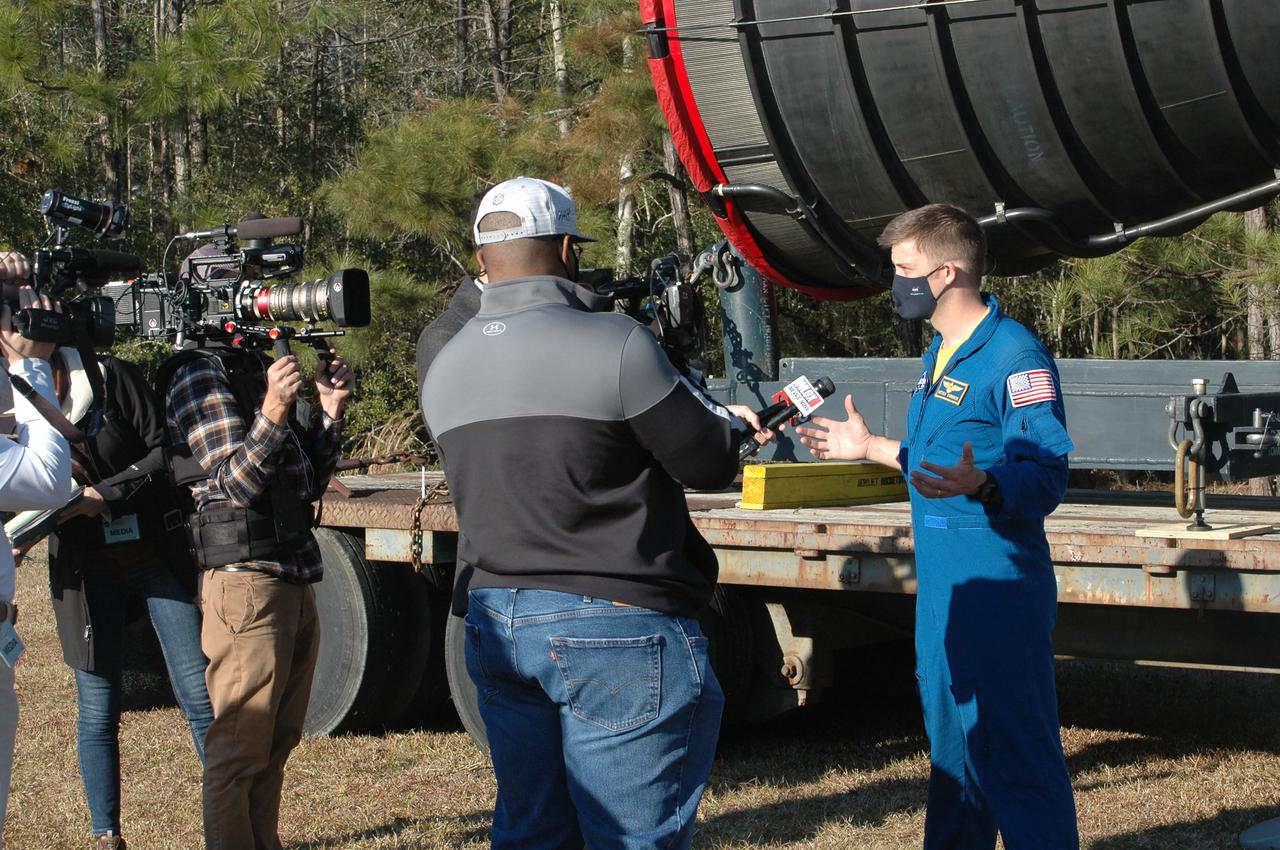
Astronaut Matthew Dominick speaks with media representatives prior to the Green Run hot fire test of the core stage for NASA’s Space Launch System (SLS) rocket at Stennis Space Center near Bay St. Louis, Mississippi, on Saturday, January 16, 2021. NASA conducted a hot fire test of the core stage’s four RS-25 engines on the B-2 Test Stand at Stennis. Scheduled for as long as eight minutes, the engines fired for a little more than one minute to generate a combined 1.6 million pounds of thrust, just as will occur during an actual launch. The hot fire is the final test of the Green Run test series, a comprehensive assessment of the SLS core stage prior to launching the Artemis I mission to the Moon.
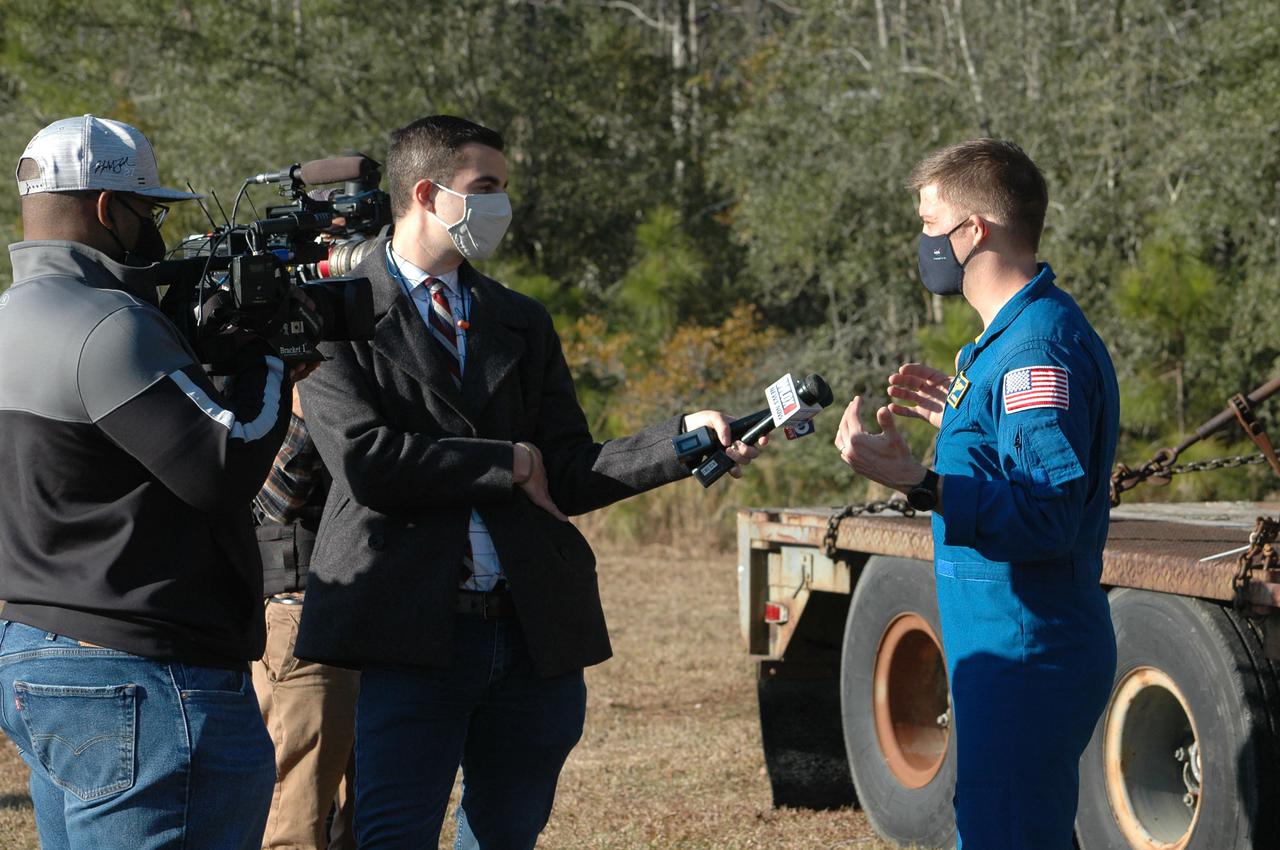
Astronaut Matthew Dominick speaks with media representatives prior to the Green Run hot fire test of the core stage for NASA’s Space Launch System (SLS) rocket at Stennis Space Center near Bay St. Louis, Mississippi, on Saturday, January 16, 2021. NASA conducted a hot fire test of the core stage’s four RS-25 engines on the B-2 Test Stand at Stennis. Scheduled for as long as eight minutes, the engines fired for a little more than one minute to generate a combined 1.6 million pounds of thrust, just as will occur during an actual launch. The hot fire is the final test of the Green Run test series, a comprehensive assessment of the SLS core stage prior to launching the Artemis I mission to the Moon.
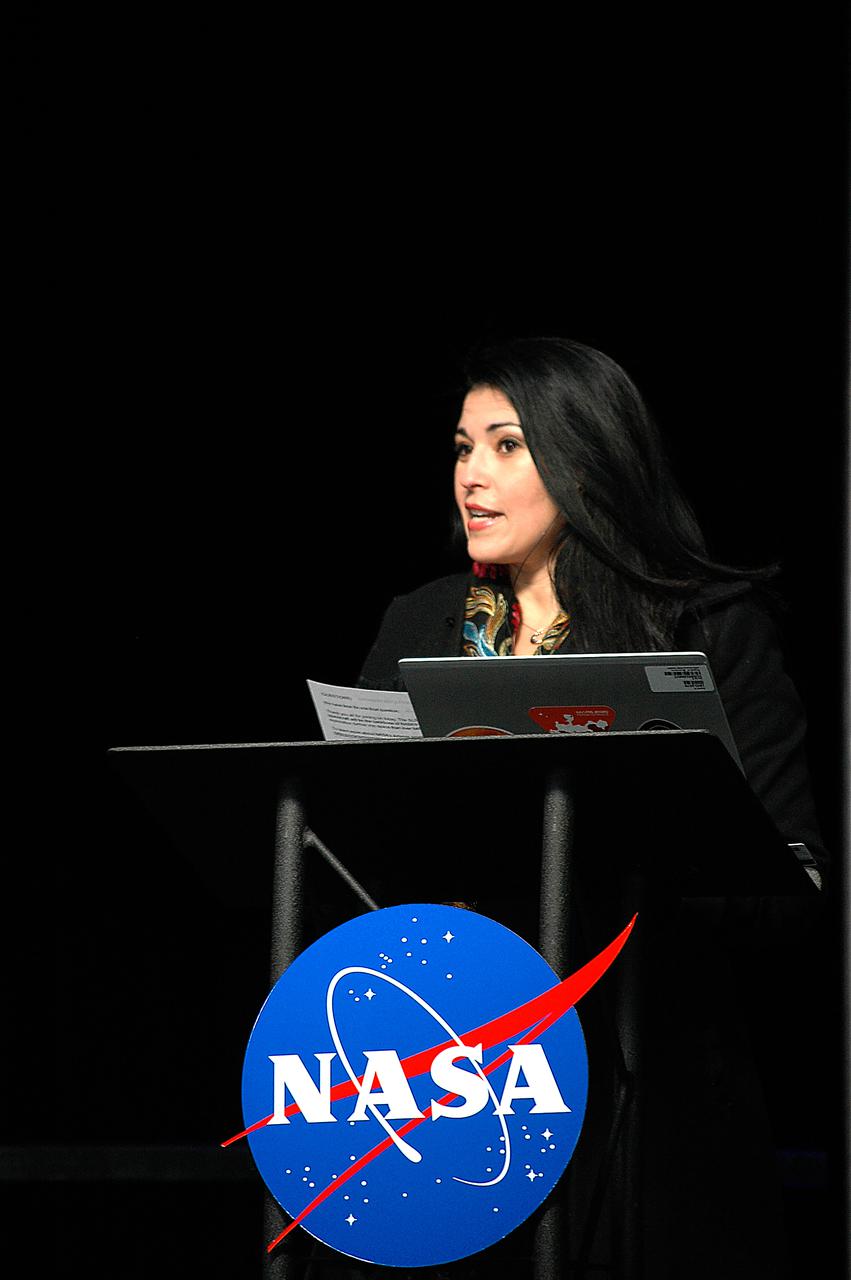
Outgoing NASA Associate Administrator for Communications Bettina Inclan hosts a press conference following the Green Run hot fire test of the core stage for NASA’s Space Launch System (SLS) rocket on Saturday, January 16, 2021. NASA conducted a hot fire test of the core stage’s four RS-25 engines on the B-2 Test Stand at Stennis Space Center near Bay St. Louis, Mississippi. Scheduled for as long as eight minutes, the engines fired for a little more than one minute to generate a combined 1.6 million pounds of thrust, just as will occur during an actual launch. The hot fire is the final test of the Green Run test series, a comprehensive assessment of the SLS core stage prior to launching the Artemis I mission to the Moon.
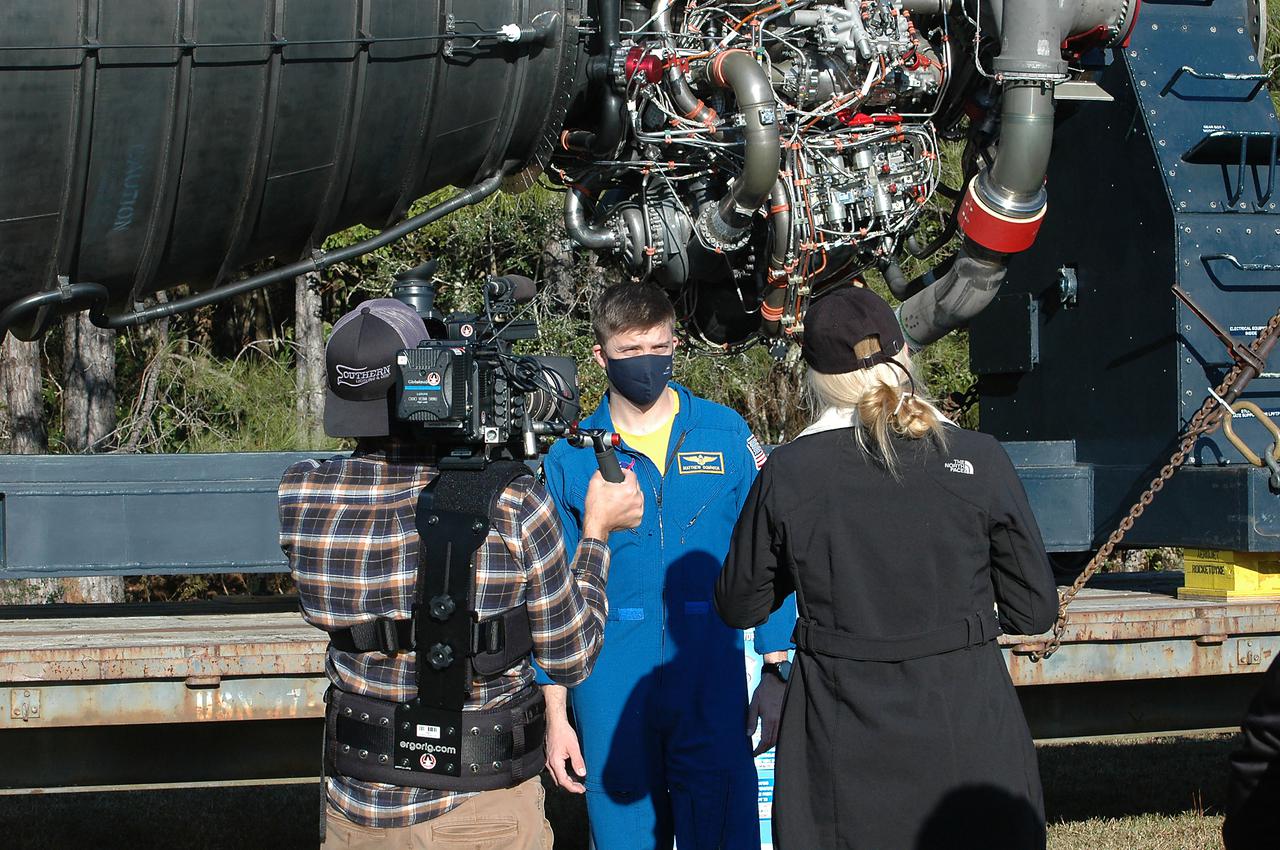
Astronaut Matthew Dominick speaks with media representatives prior to the Green Run hot fire test of the core stage for NASA’s Space Launch System (SLS) rocket at Stennis Space Center near Bay St. Louis, Mississippi, on Saturday, January 16, 2021. NASA conducted a hot fire test of the core stage’s four RS-25 engines on the B-2 Test Stand at Stennis. Scheduled for as long as eight minutes, the engines fired for a little more than one minute to generate a combined 1.6 million pounds of thrust, just as will occur during an actual launch. The hot fire is the final test of the Green Run test series, a comprehensive assessment of the SLS core stage prior to launching the Artemis I mission to the Moon.
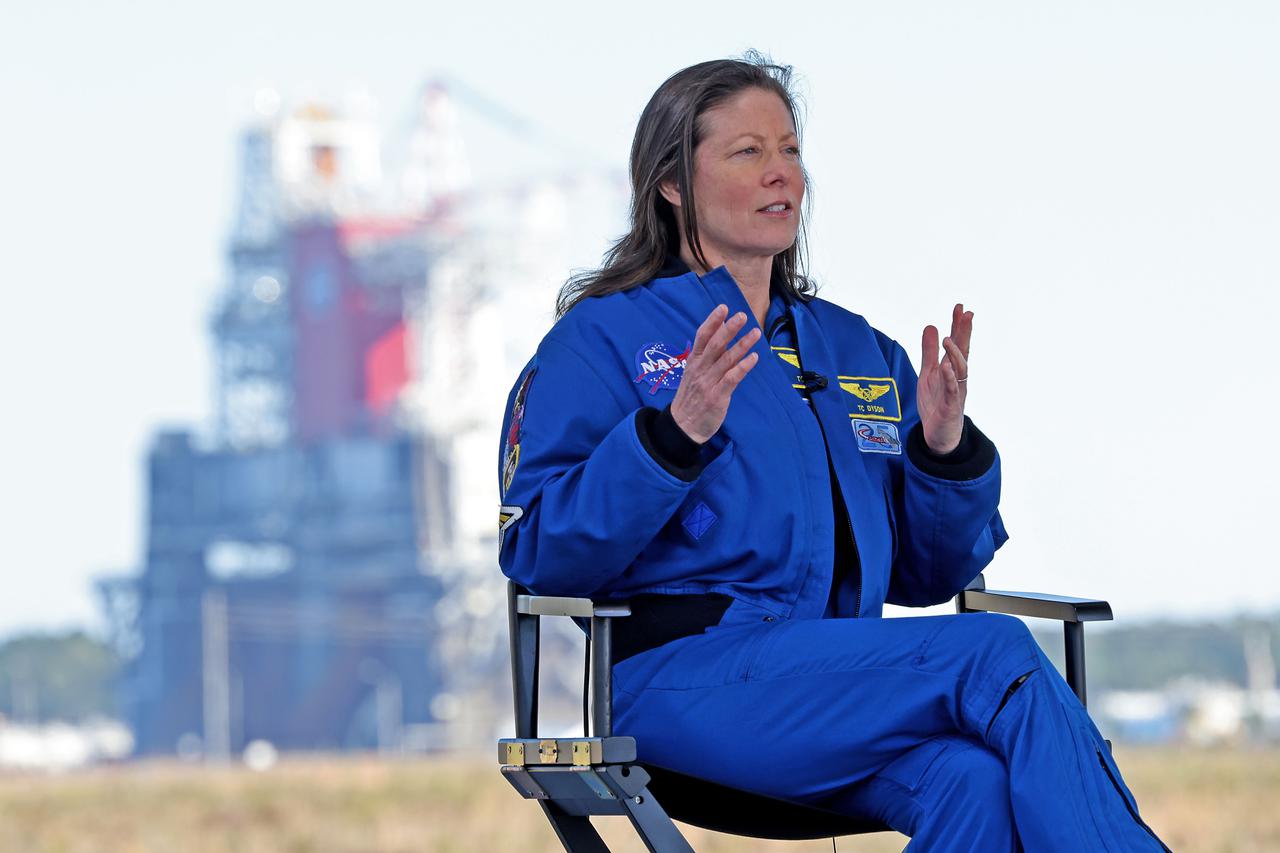
Astronaut Tracy Caldwell Dyson speaks on NASA TV prior to the Green Run hot fire test of the core stage for NASA’s Space Launch System (SLS) rocket at Stennis Space Center near Bay St. Louis, Mississippi, on Saturday, January 16, 2021. NASA conducted a hot fire test of the core stage’s four RS-25 engines on the B-2 Test Stand at Stennis. Scheduled for as long as eight minutes, the engines fired for a little more than one minute to generate a combined 1.6 million pounds of thrust, just as will occur during an actual launch. The hot fire is the final test of the Green Run test series, a comprehensive assessment of the SLS core stage prior to launching the Artemis I mission to the Moon.
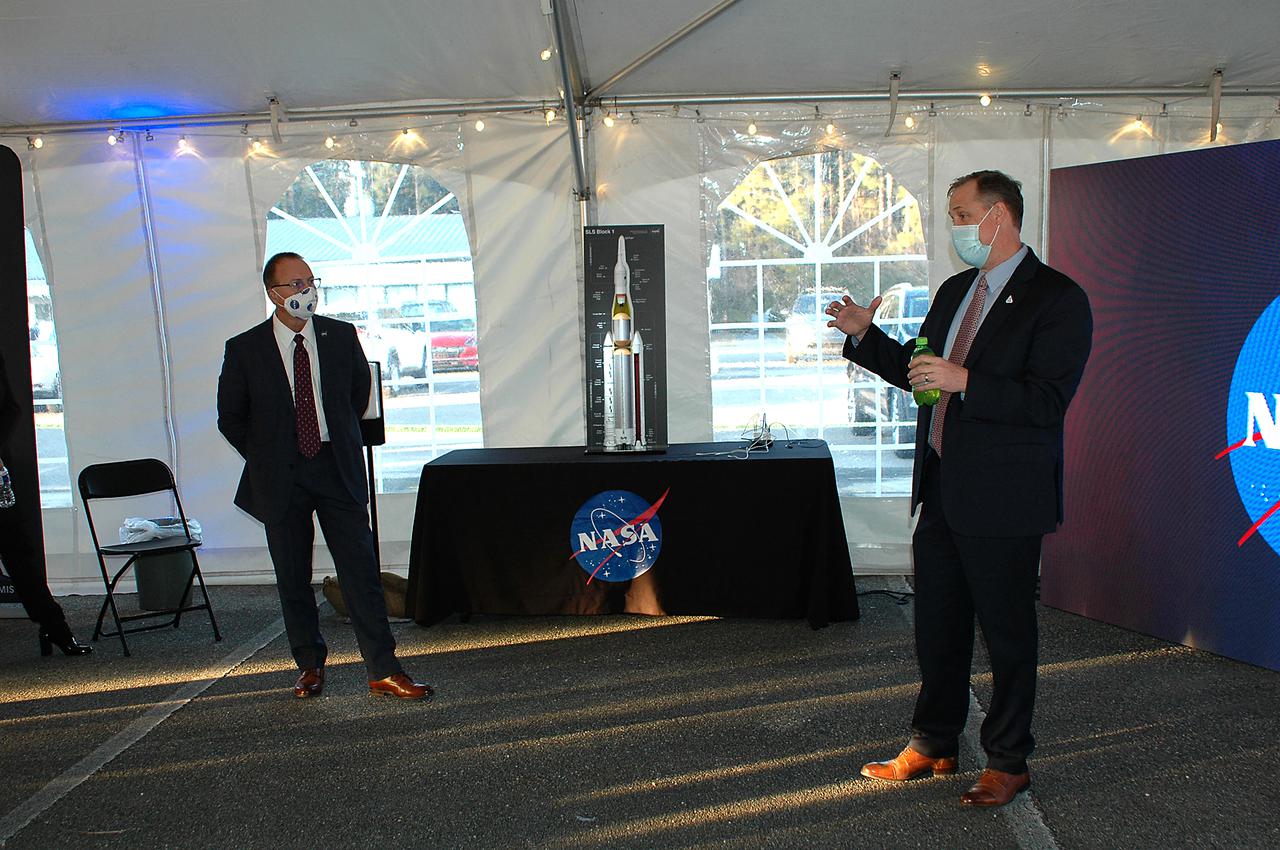
Outgoing NASA Administrator Jim Bridenstine (right), as Stennis Director Rick Gilbrech looks on, speaks to guests following the Green Run hot fire test of the core stage for NASA’s Space Launch System (SLS) rocket at Stennis Space Center near Bay St. Louis, Mississippi, on Saturday, January 16, 2021. NASA conducted a hot fire test of the core stage’s four RS-25 engines on the B-2 Test Stand at Stennis. Scheduled for as long as eight minutes, the engines fired for a little more than one minute to generate a combined 1.6 million pounds of thrust, just as will occur during an actual launch. The hot fire is the final test of the Green Run test series, a comprehensive assessment of the SLS core stage prior to launching the Artemis I mission to the Moon.

NASA conducts a hot fire test March 18, 2021, of the core stage for the agency’s Space Launch System rocket on the B-2 Test Stand at Stennis Space Center near Bay St. Louis, Mississippi. The hot fire test of the stage’s four RS-25 engines generated a combined 1.6 million pounds of thrust, just as will occur during an actual launch. The hot fire is the final test of the Green Run test series, which represents a comprehensive assessment of the core stage and its integrated systems prior to its launch on the Artemis I mission to the Moon.
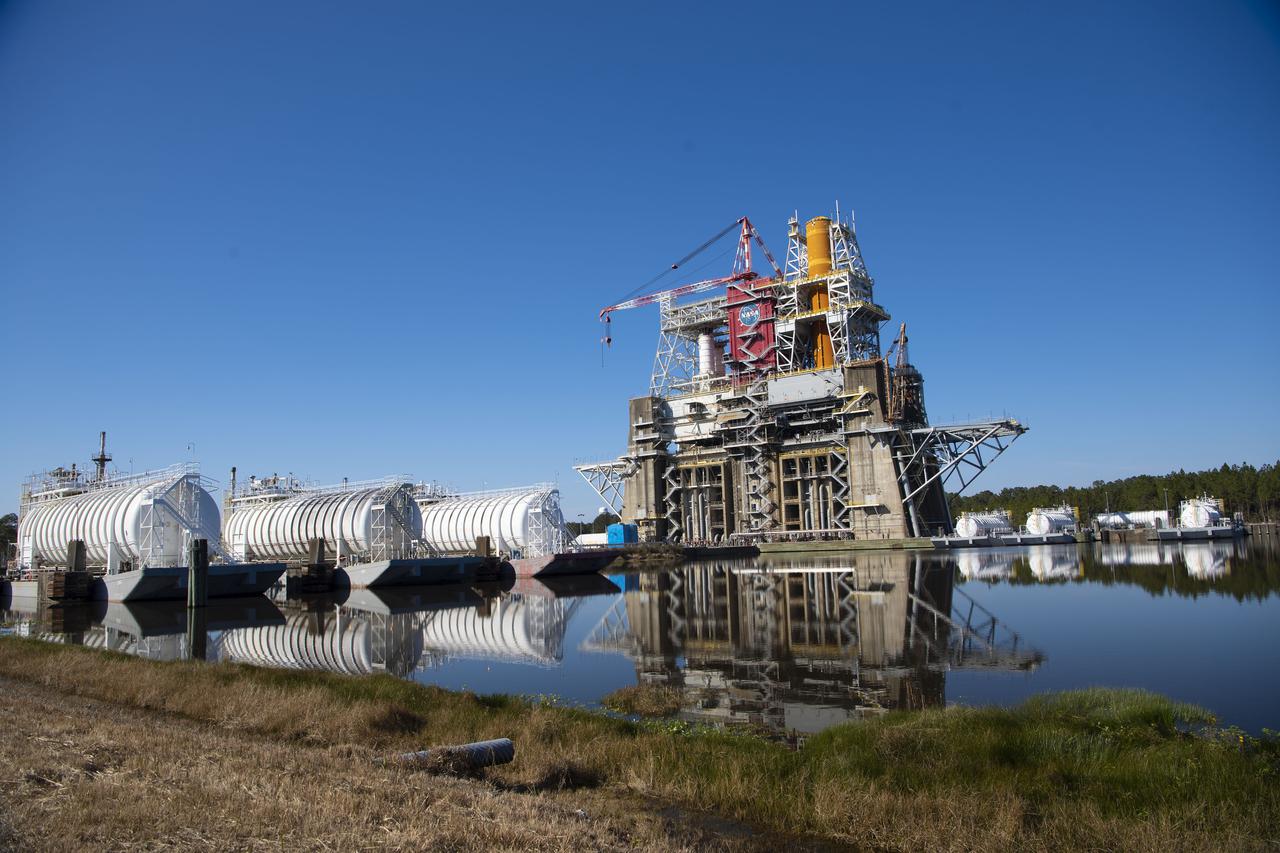
Propellant barges are docked at the B-2 Test Stand at NASA’s Stennis Space Center near Bay St. Louis, Mississippi, prior the hot fire test of the core stage for the agency’s Space Launch System rocket. The hot fire test Jan. 16, 2021 of the stage’s four RS-25 engines generated a combined 1.6 million pounds of thrust, just as will occur during an actual launch. The hot fire is the final test of the Green Run test series, a comprehensive assessment of the SLS core stage prior to launching the Artemis I mission to the Moon.
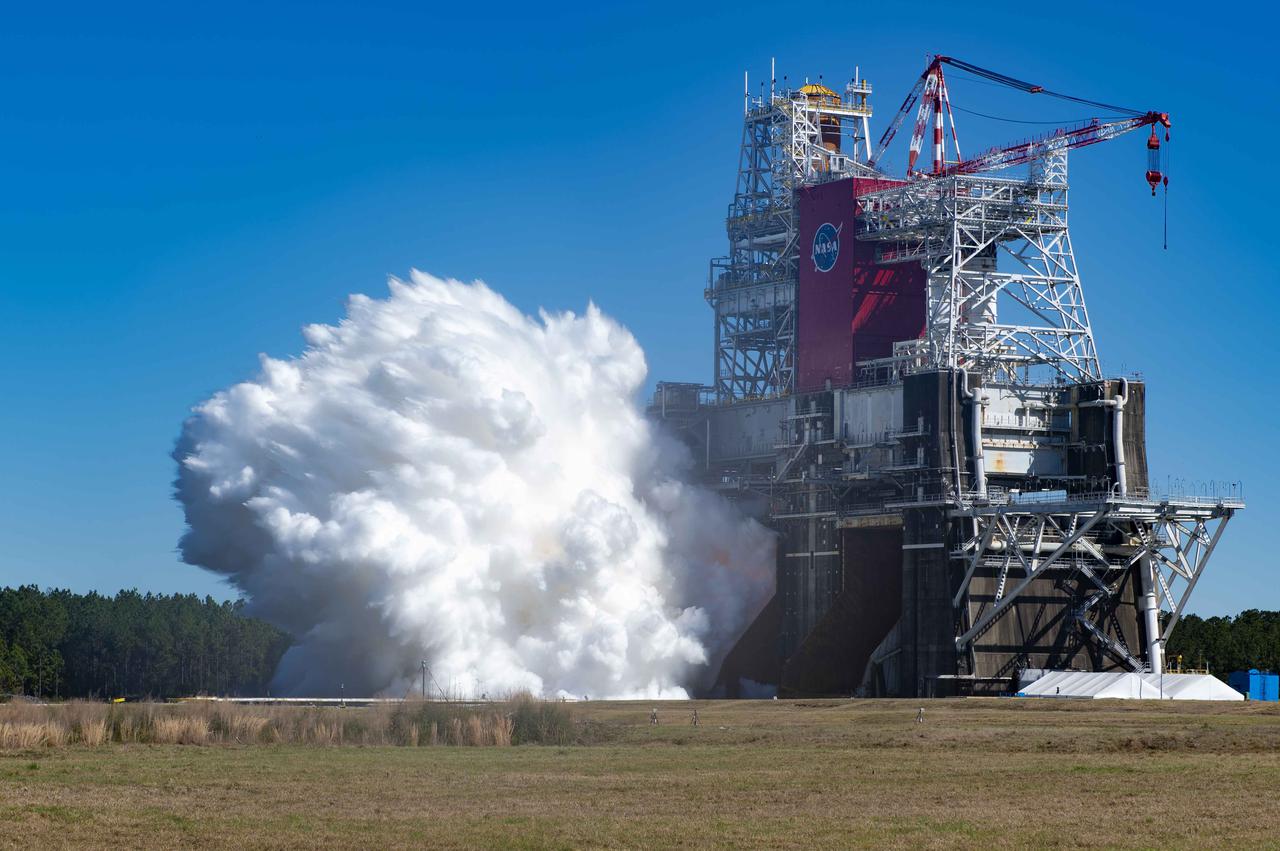
NASA conducts a hot fire test March 18, 2021, of the core stage for the agency’s Space Launch System rocket on the B-2 Test Stand at Stennis Space Center near Bay St. Louis, Mississippi. The hot fire test of the stage’s four RS-25 engines generated a combined 1.6 million pounds of thrust, just as will occur during an actual launch. The hot fire is the final test of the Green Run test series, which represents a comprehensive assessment of the core stage and its integrated systems prior to its launch on the Artemis I mission to the Moon.
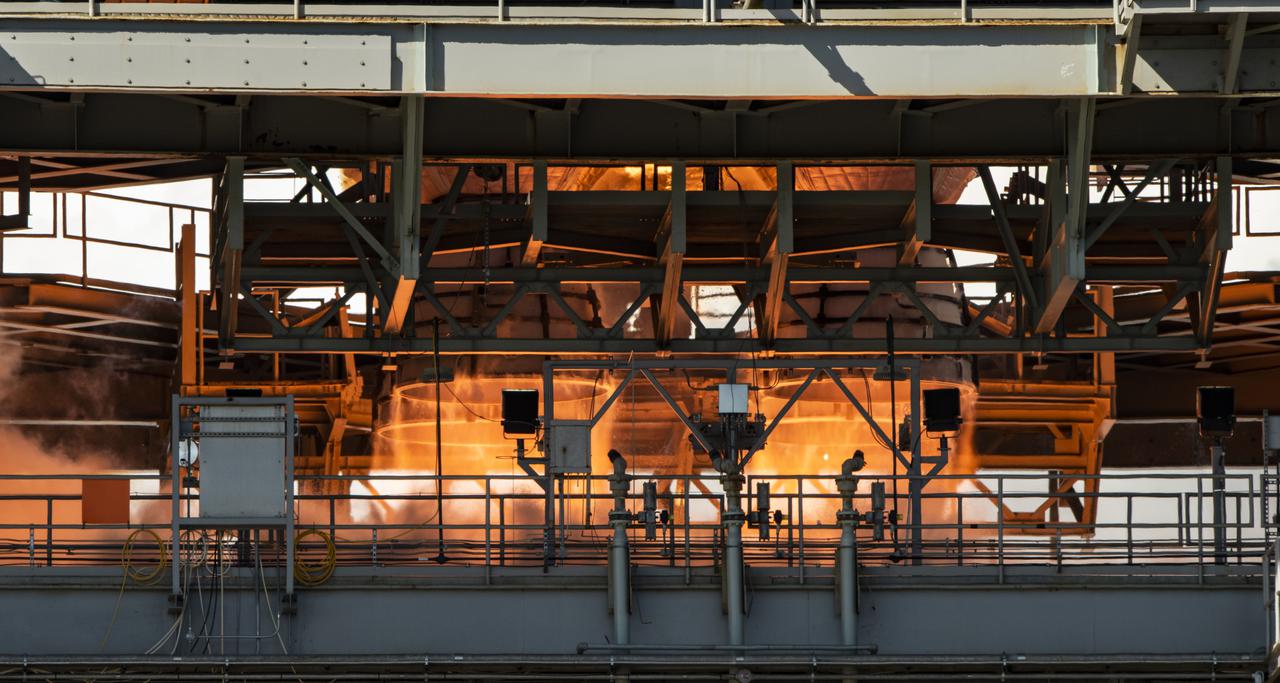
The core stage for the first flight of NASA’s Space Launch System rocket is seen in the B-2 Test Stand during a second hot fire test, Thursday, March 18, 2021, at NASA’s Stennis Space Center near Bay St. Louis, Mississippi. The four RS-25 engines fired for the full-duration of 8 minutes during the test and generated 1.6 million pounds of thrust. The hot fire test is the final stage of the Green Run test series, a comprehensive assessment of the Space Launch System’s core stage prior to launching the Artemis I mission to the Moon. Photo Credit: (NASA/Robert Markowitz)
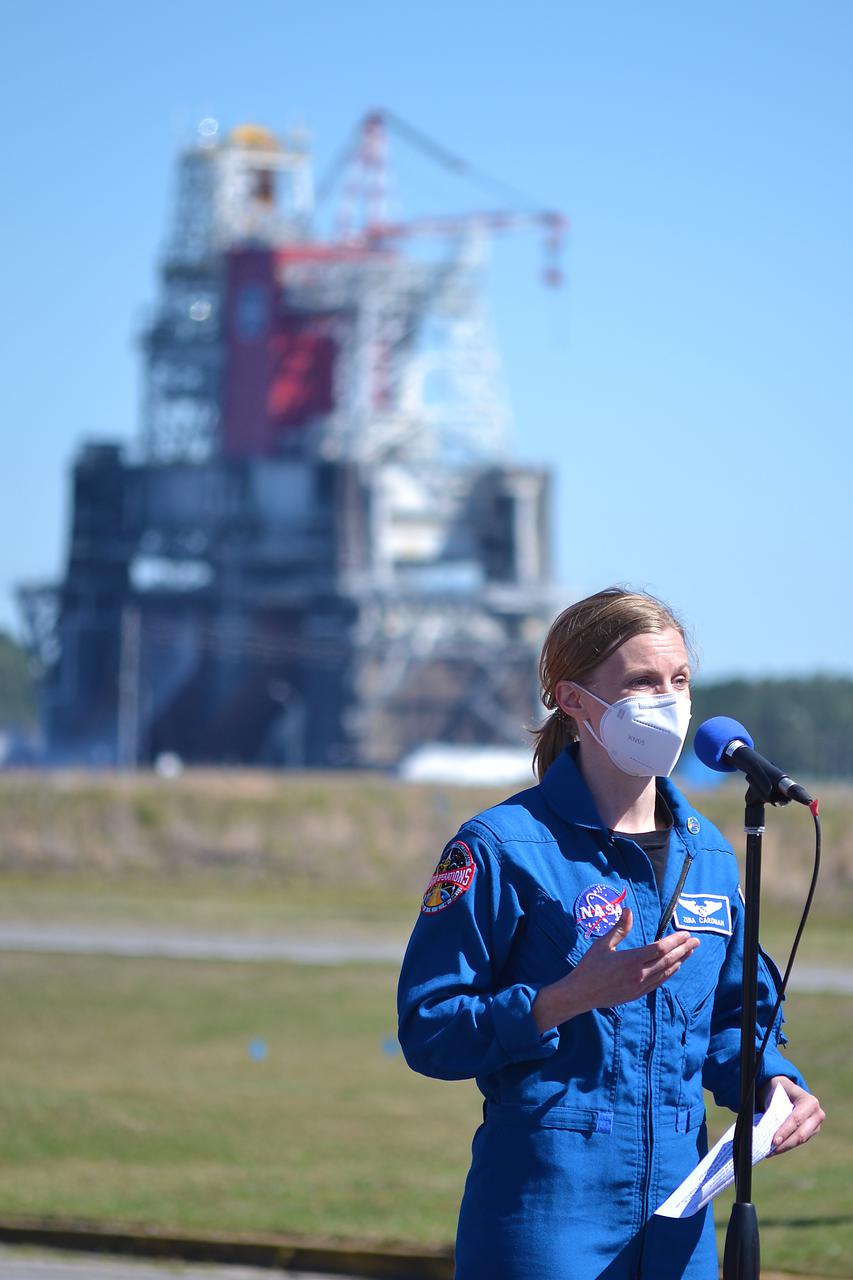
NASA conducts a hot fire test March 18, 2021, of the core stage for the agency’s Space Launch System rocket on the B-2 Test Stand at Stennis Space Center near Bay St. Louis, Mississippi. The hot fire test of the stage’s four RS-25 engines generated a combined 1.6 million pounds of thrust, just as will occur during an actual launch. The hot fire is the final test of the Green Run test series, which represents a comprehensive assessment of the core stage and its integrated systems prior to its launch on the Artemis I mission to the Moon.
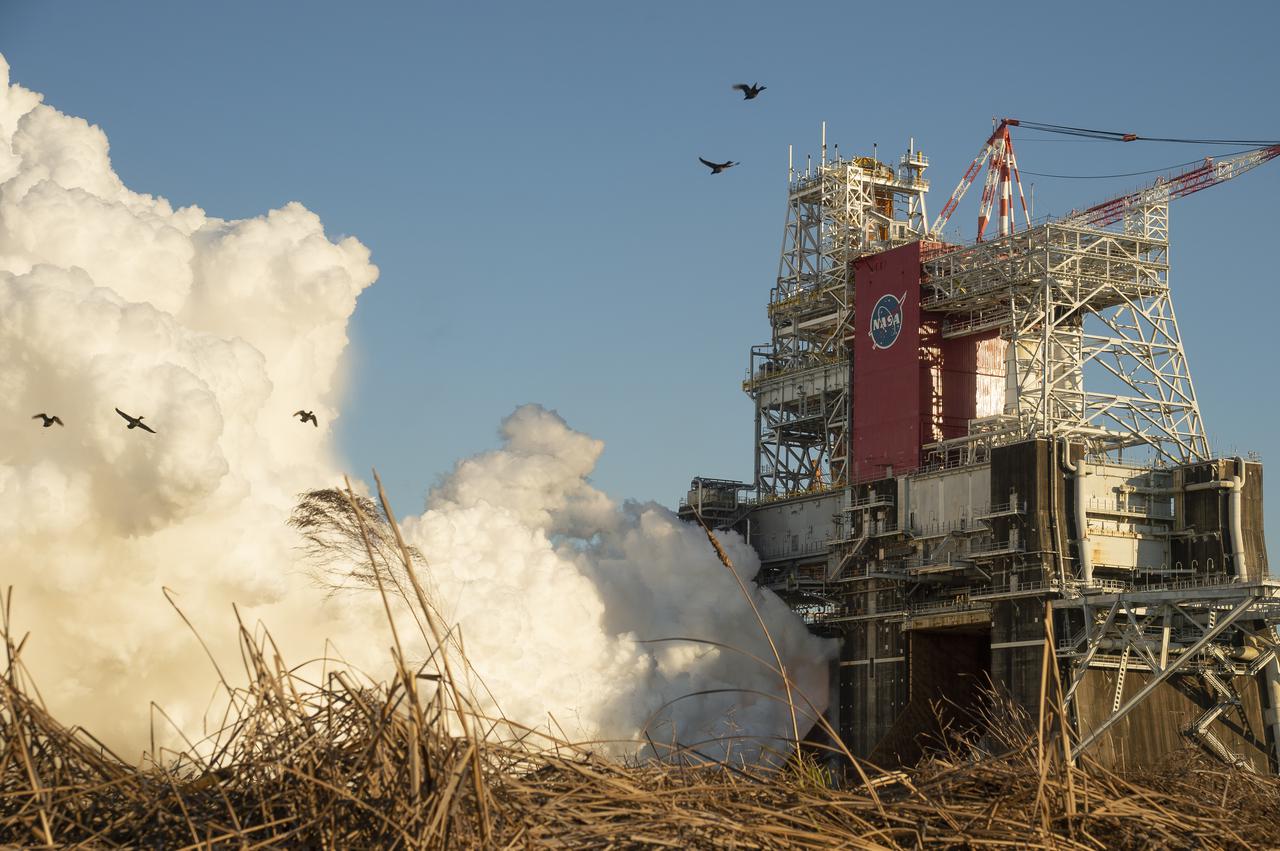
The core stage for the first flight of NASA’s Space Launch System rocket is seen in the B-2 Test Stand during a scheduled eight minute duration hot fire test, Saturday, Jan. 16, 2021, at NASA’s Stennis Space Center near Bay St. Louis, Mississippi. The four RS-25 engines fired for a little more than one minute and generated 1.6 million pounds of thrust. The hot fire is the final test of the Green Run test series, a comprehensive assessment of the Space Launch System’s core stage prior to launching the Artemis I mission to the Moon. Photo Credit: (NASA/Robert Markowitz)
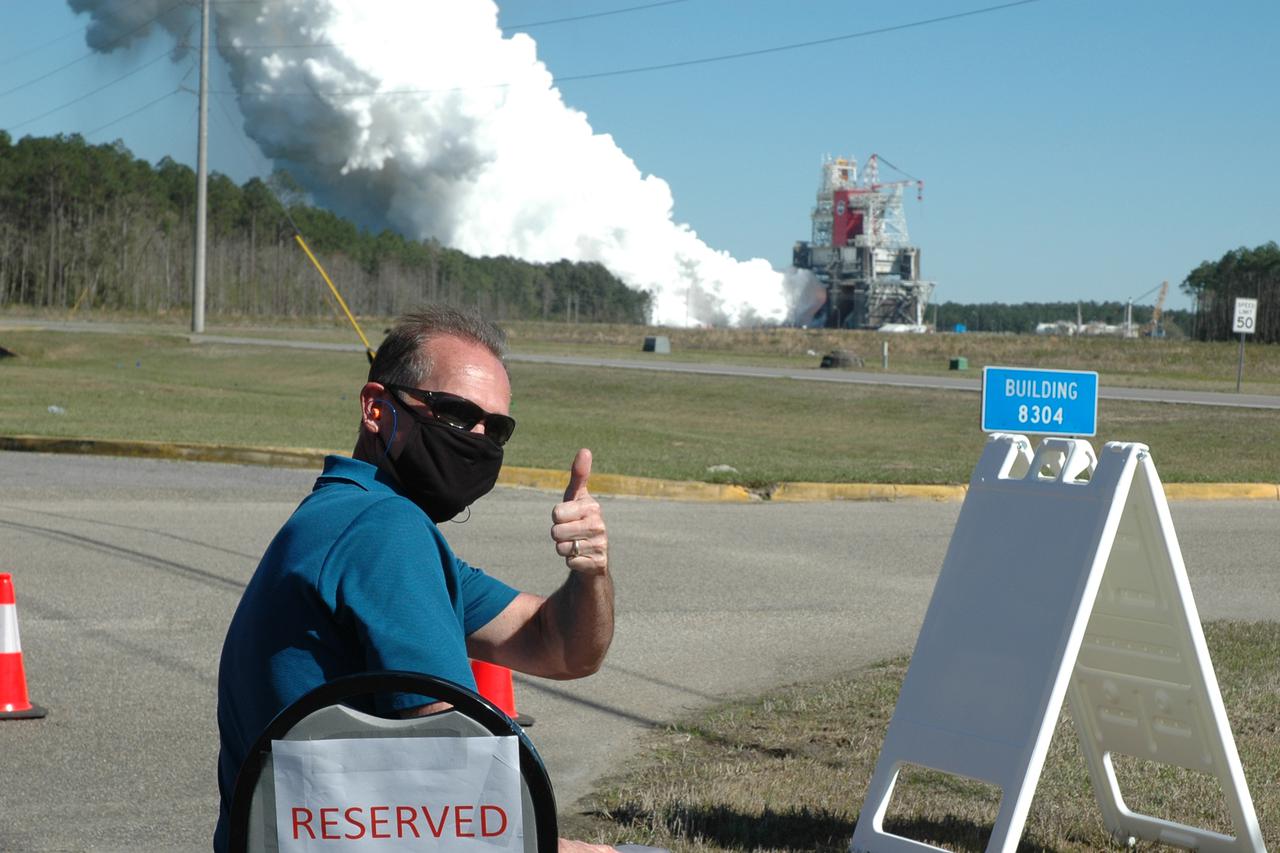
NASA conducts a hot fire test March 18, 2021, of the core stage for the agency’s Space Launch System rocket on the B-2 Test Stand at Stennis Space Center near Bay St. Louis, Mississippi. The hot fire test of the stage’s four RS-25 engines generated a combined 1.6 million pounds of thrust, just as will occur during an actual launch. The hot fire is the final test of the Green Run test series, which represents a comprehensive assessment of the core stage and its integrated systems prior to its launch on the Artemis I mission to the Moon.
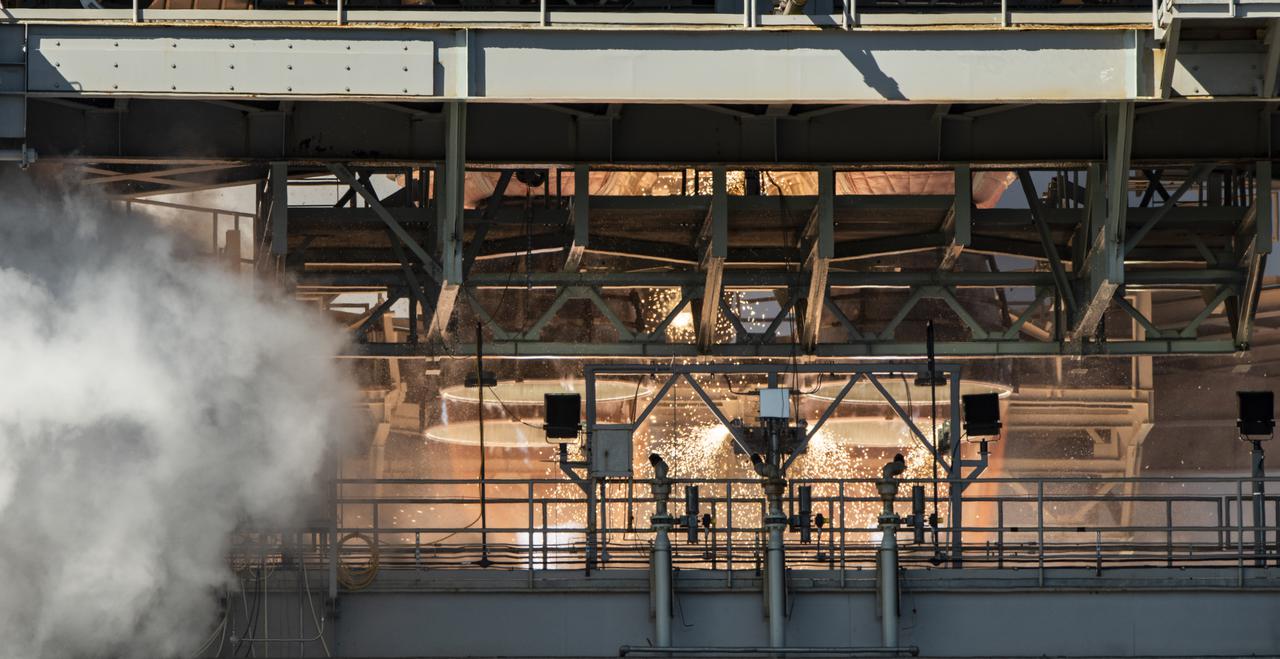
The core stage for the first flight of NASA’s Space Launch System rocket is seen in the B-2 Test Stand during a second hot fire test, Thursday, March 18, 2021, at NASA’s Stennis Space Center near Bay St. Louis, Mississippi. The four RS-25 engines fired for the full-duration of 8 minutes during the test and generated 1.6 million pounds of thrust. The hot fire test is the final stage of the Green Run test series, a comprehensive assessment of the Space Launch System’s core stage prior to launching the Artemis I mission to the Moon. Photo Credit: (NASA/Robert Markowitz)
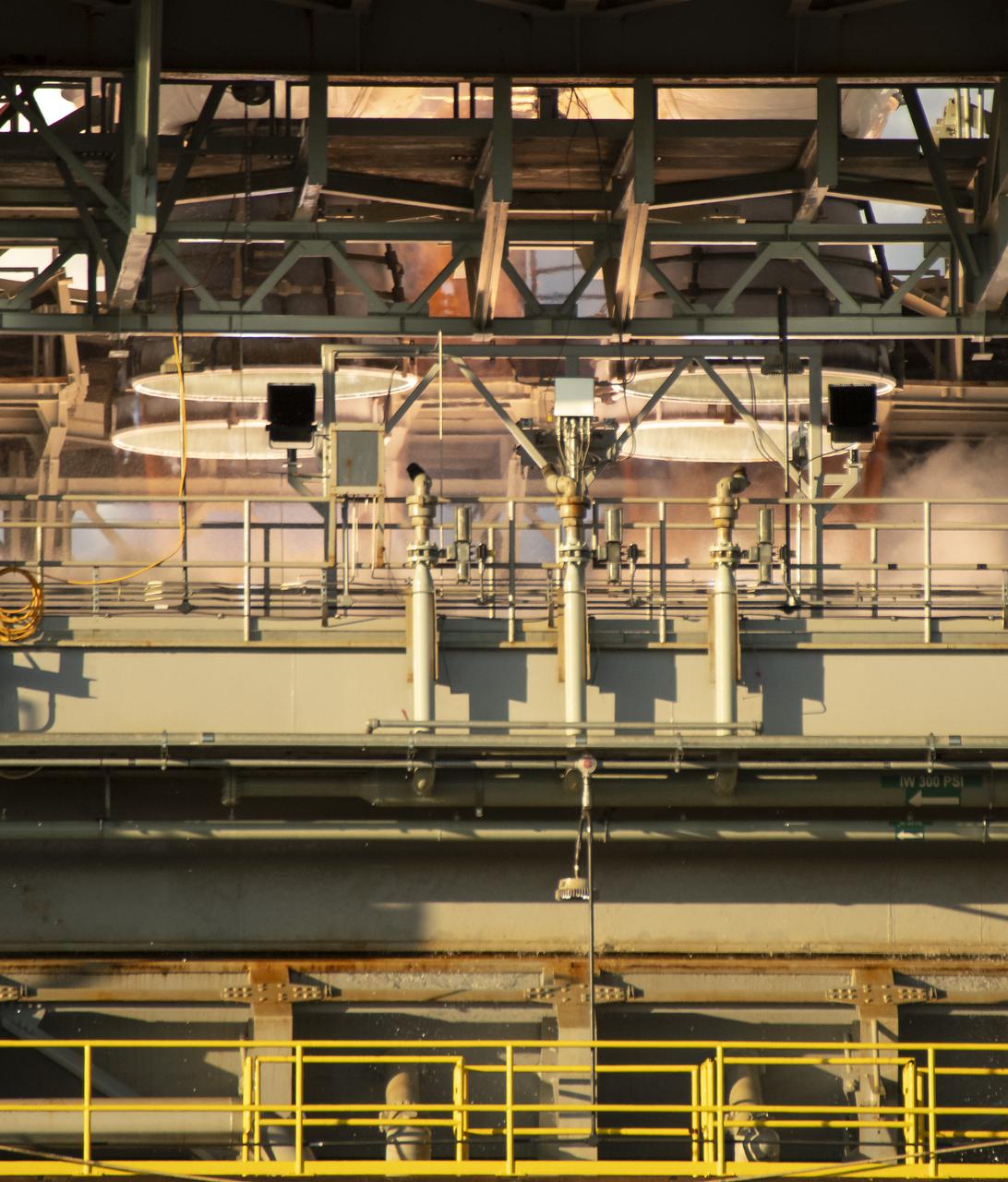
The core stage for the first flight of NASA’s Space Launch System rocket is seen in the B-2 Test Stand during a scheduled eight minute duration hot fire test, Saturday, Jan. 16, 2021, at NASA’s Stennis Space Center near Bay St. Louis, Mississippi. The four RS-25 engines fired for a little more than one minute and generated 1.6 million pounds of thrust. The hot fire is the final test of the Green Run test series, a comprehensive assessment of the Space Launch System’s core stage prior to launching the Artemis I mission to the Moon. Photo Credit: (NASA/Robert Markowitz)
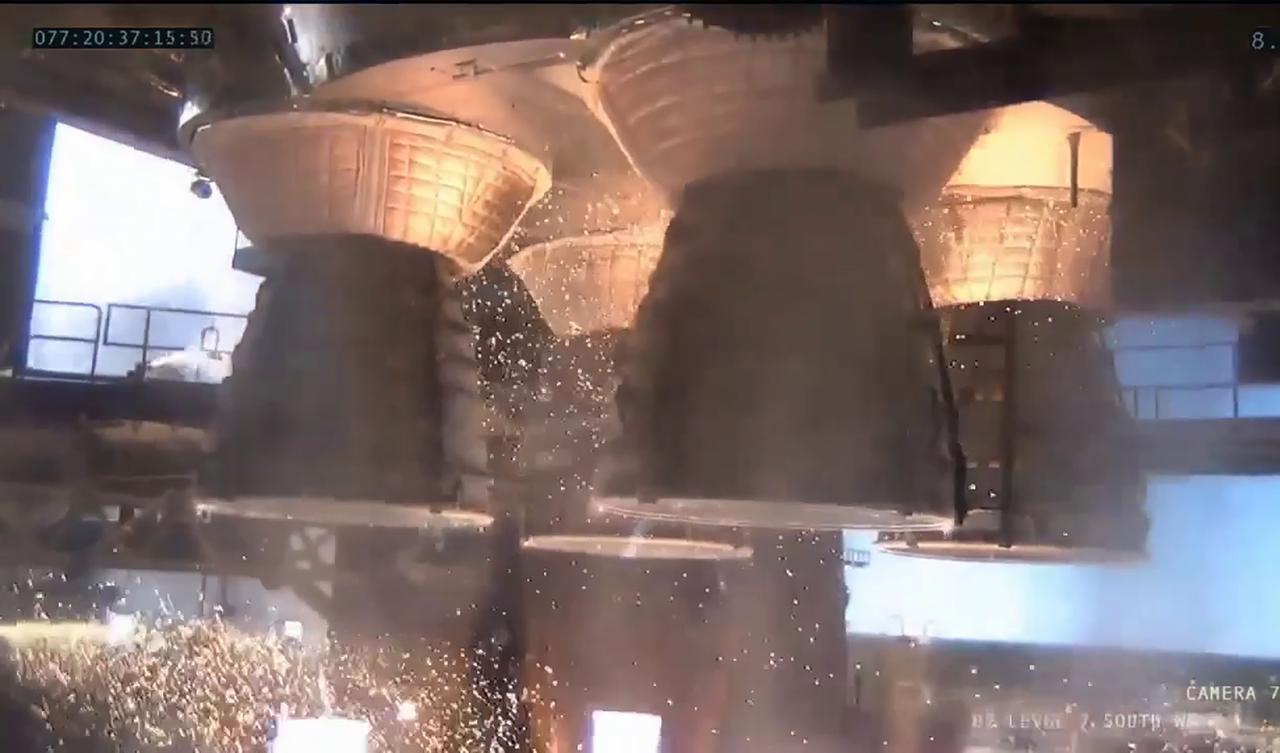
A on-stand camera offers a close-up view as NASA conducts a hot fire test March 18, 2021, of the core stage for the agency’s Space Launch System rocket on the B-2 Test Stand at Stennis Space Center near Bay St. Louis, Mississippi. The hot fire test of the stage’s four RS-25 engines shown in the photo generated a combined 1.6 million pounds of thrust, just as will occur during an actual launch. The hot fire is the final test of the Green Run test series, which represents a comprehensive assessment of the core stage and its integrated systems prior to its launch on the Artemis I mission to the Moon.
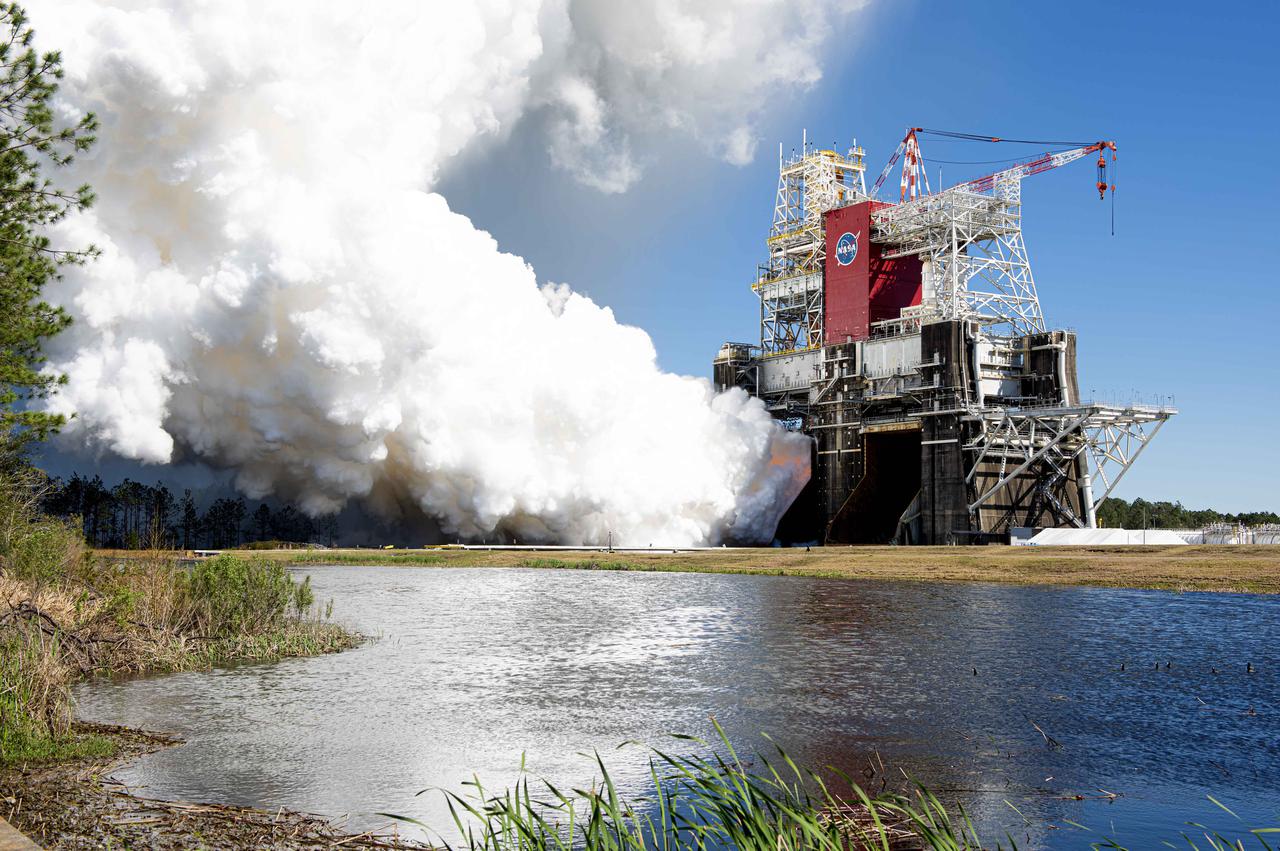
NASA conducts a hot fire test March 18, 2021, of the core stage for the agency’s Space Launch System rocket on the B-2 Test Stand at Stennis Space Center near Bay St. Louis, Mississippi. The hot fire test of the stage’s four RS-25 engines generated a combined 1.6 million pounds of thrust, just as will occur during an actual launch. The hot fire is the final test of the Green Run test series, which represents a comprehensive assessment of the core stage and its integrated systems prior to its launch on the Artemis I mission to the Moon.
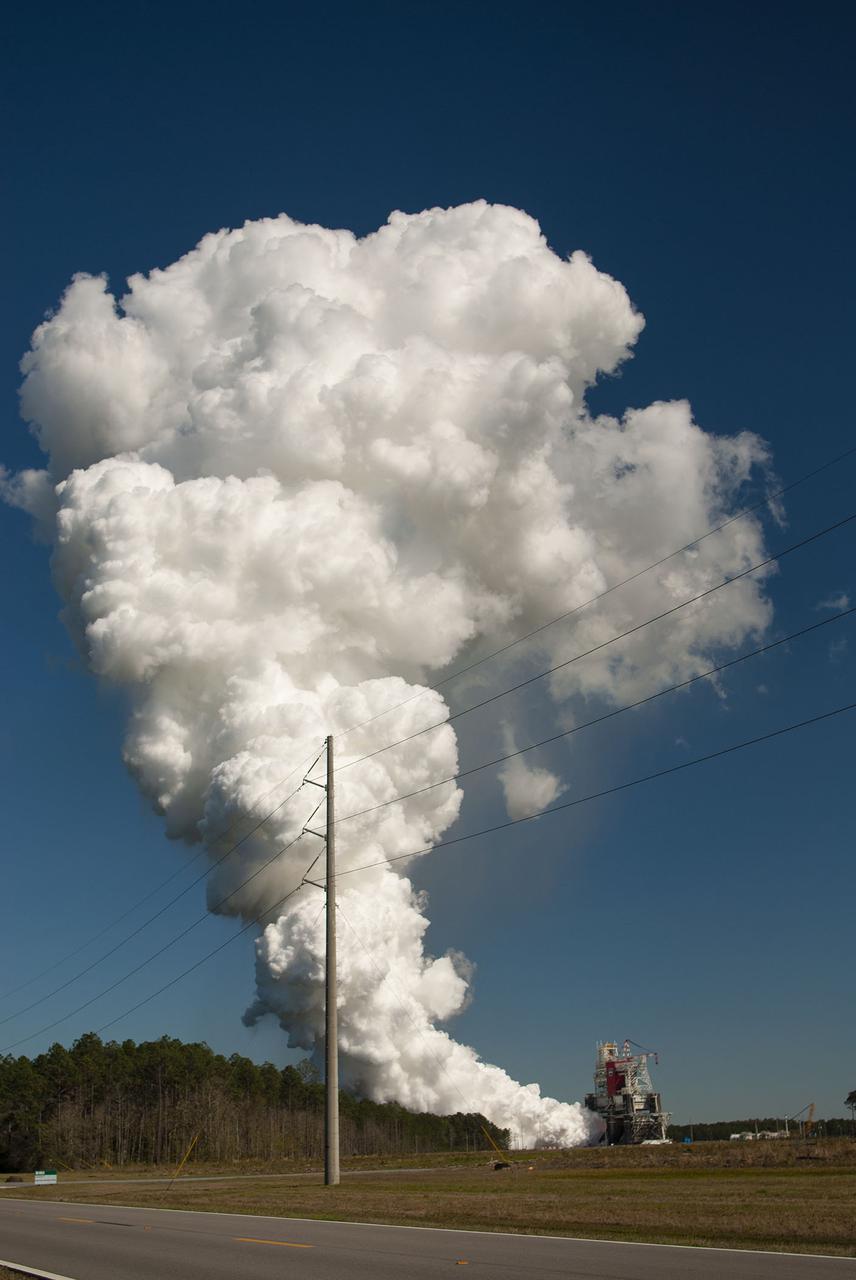
NASA conducts a hot fire test March 18, 2021, of the core stage for the agency’s Space Launch System rocket on the B-2 Test Stand at Stennis Space Center near Bay St. Louis, Mississippi. The hot fire test of the stage’s four RS-25 engines generated a combined 1.6 million pounds of thrust, just as will occur during an actual launch. The hot fire is the final test of the Green Run test series, which represents a comprehensive assessment of the core stage and its integrated systems prior to its launch on the Artemis I mission to the Moon.
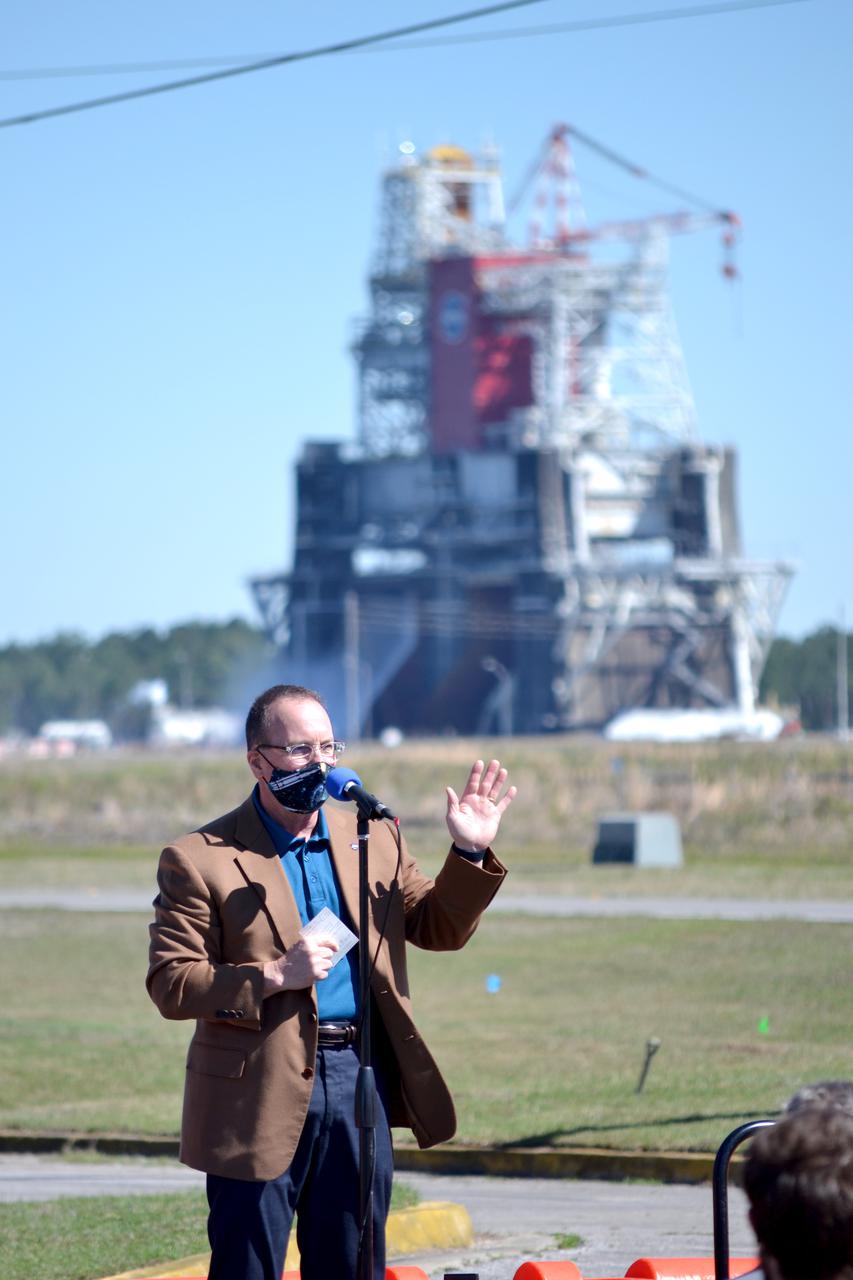
NASA conducts a hot fire test March 18, 2021, of the core stage for the agency’s Space Launch System rocket on the B-2 Test Stand at Stennis Space Center near Bay St. Louis, Mississippi. The hot fire test of the stage’s four RS-25 engines generated a combined 1.6 million pounds of thrust, just as will occur during an actual launch. The hot fire is the final test of the Green Run test series, which represents a comprehensive assessment of the core stage and its integrated systems prior to its launch on the Artemis I mission to the Moon.
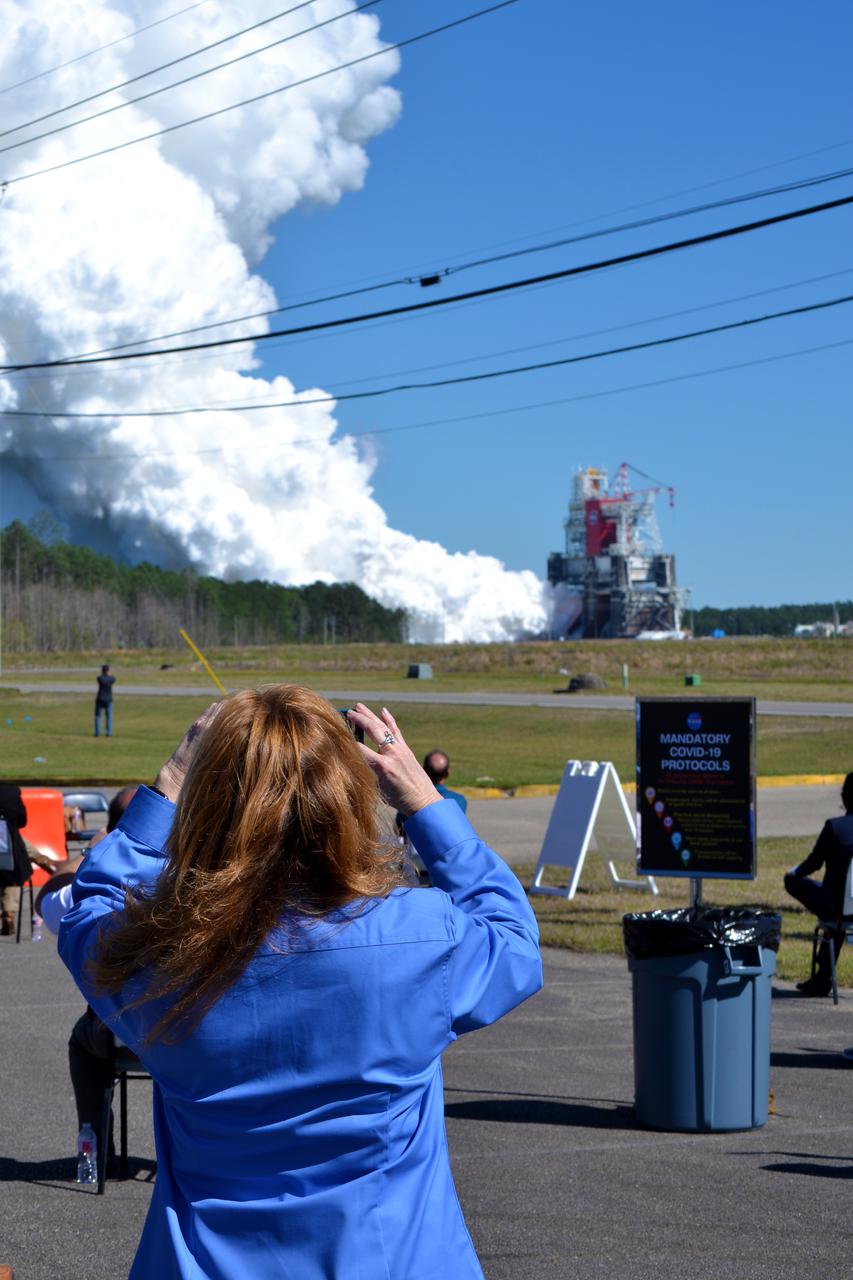
NASA conducts a hot fire test March 18, 2021, of the core stage for the agency’s Space Launch System rocket on the B-2 Test Stand at Stennis Space Center near Bay St. Louis, Mississippi. The hot fire test of the stage’s four RS-25 engines generated a combined 1.6 million pounds of thrust, just as will occur during an actual launch. The hot fire is the final test of the Green Run test series, which represents a comprehensive assessment of the core stage and its integrated systems prior to its launch on the Artemis I mission to the Moon.
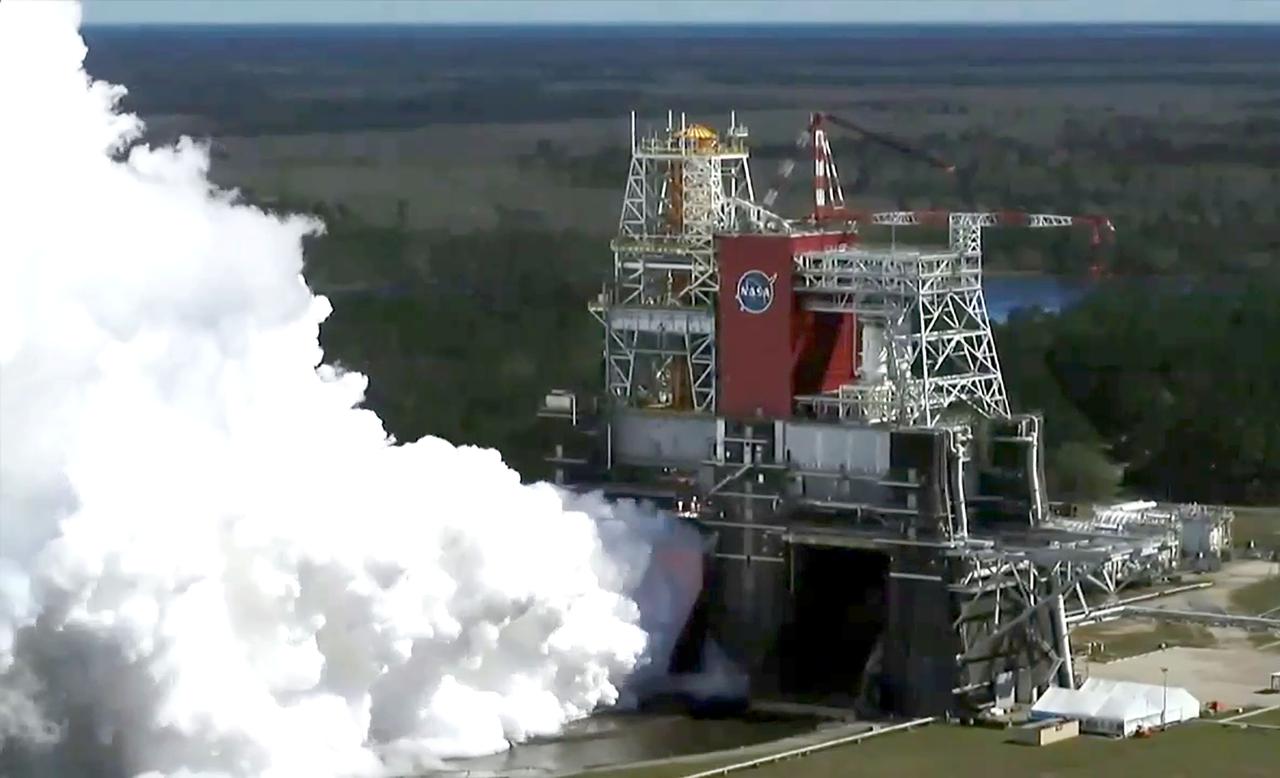
A drone camera offers a bird’s-eye view as NASA conducts a hot fire test March 18, 2021, of the core stage for the agency’s Space Launch System rocket on the B-2 Test Stand at Stennis Space Center near Bay St. Louis, Mississippi. The hot fire test of the stage’s four RS-25 engines generated a combined 1.6 million pounds of thrust, just as will occur during an actual launch. The hot fire is the final test of the Green Run test series, which represents a comprehensive assessment of the core stage and its integrated systems prior to its launch on the Artemis I mission to the Moon.
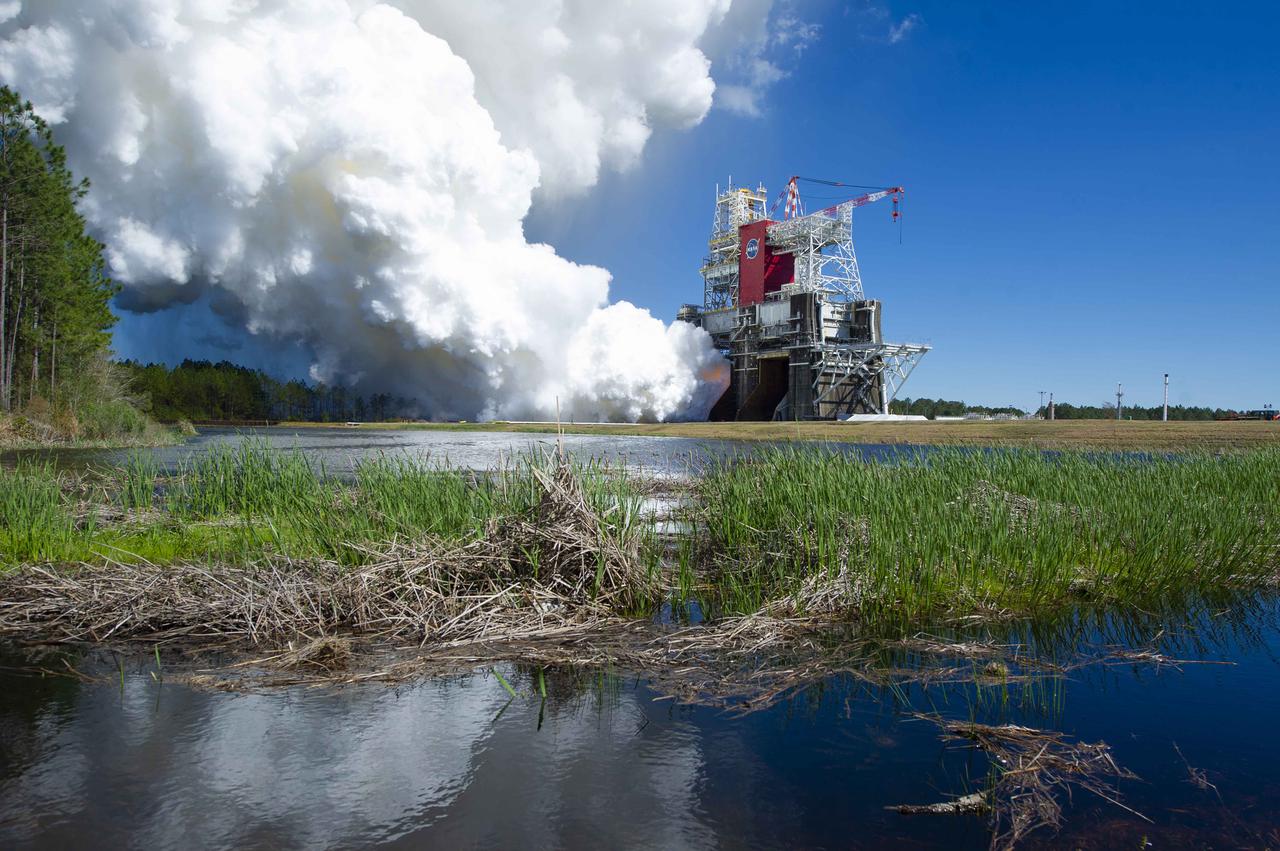
NASA conducts a hot fire test March 18, 2021, of the core stage for the agency’s Space Launch System rocket on the B-2 Test Stand at Stennis Space Center near Bay St. Louis, Mississippi. The hot fire test of the stage’s four RS-25 engines generated a combined 1.6 million pounds of thrust, just as will occur during an actual launch. The hot fire is the final test of the Green Run test series, which represents a comprehensive assessment of the core stage and its integrated systems prior to its launch on the Artemis I mission to the Moon.
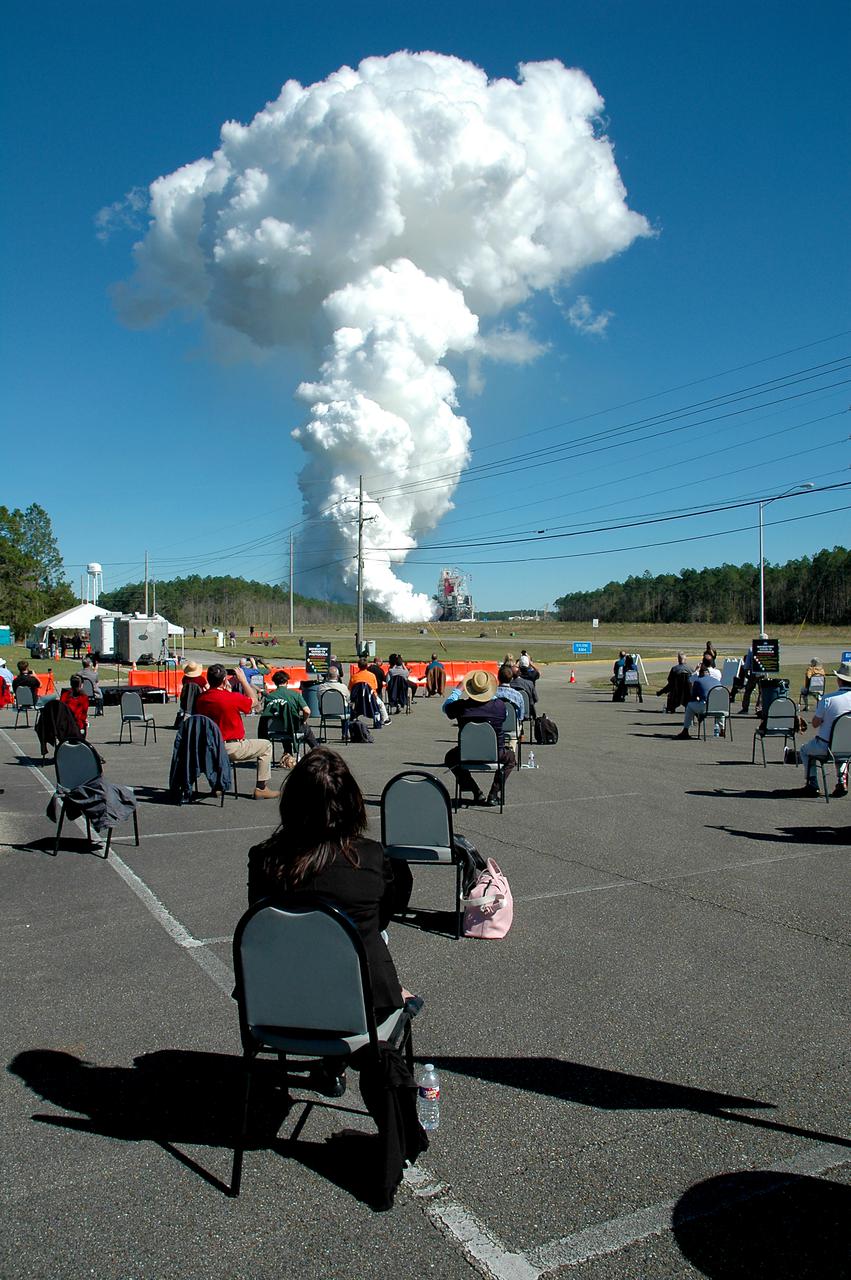
NASA conducts a hot fire test March 18, 2021, of the core stage for the agency’s Space Launch System rocket on the B-2 Test Stand at Stennis Space Center near Bay St. Louis, Mississippi. The hot fire test of the stage’s four RS-25 engines generated a combined 1.6 million pounds of thrust, just as will occur during an actual launch. The hot fire is the final test of the Green Run test series, which represents a comprehensive assessment of the core stage and its integrated systems prior to its launch on the Artemis I mission to the Moon.
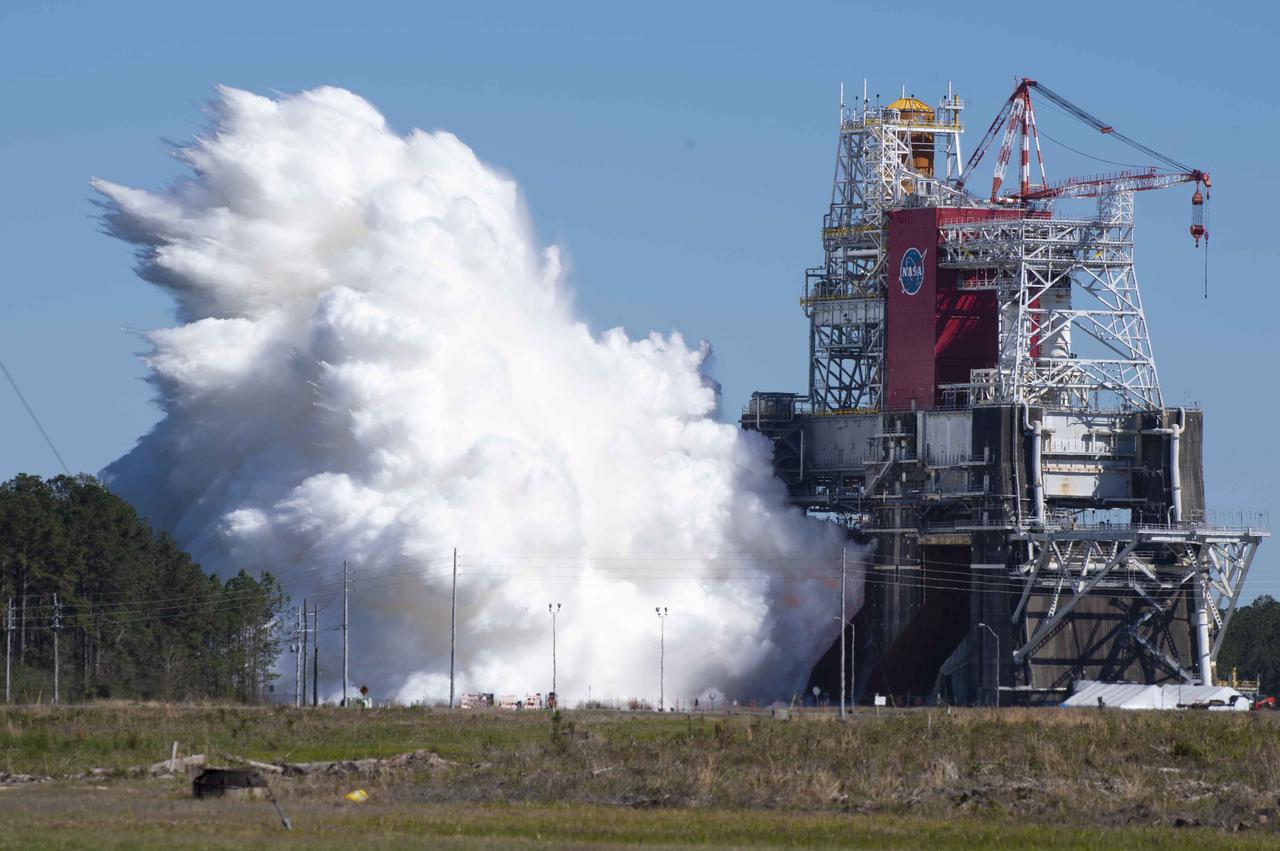
NASA conducts a hot fire test March 18, 2021, of the core stage for the agency’s Space Launch System rocket on the B-2 Test Stand at Stennis Space Center near Bay St. Louis, Mississippi. The hot fire test of the stage’s four RS-25 engines generated a combined 1.6 million pounds of thrust, just as will occur during an actual launch. The hot fire is the final test of the Green Run test series, which represents a comprehensive assessment of the core stage and its integrated systems prior to its launch on the Artemis I mission to the Moon.
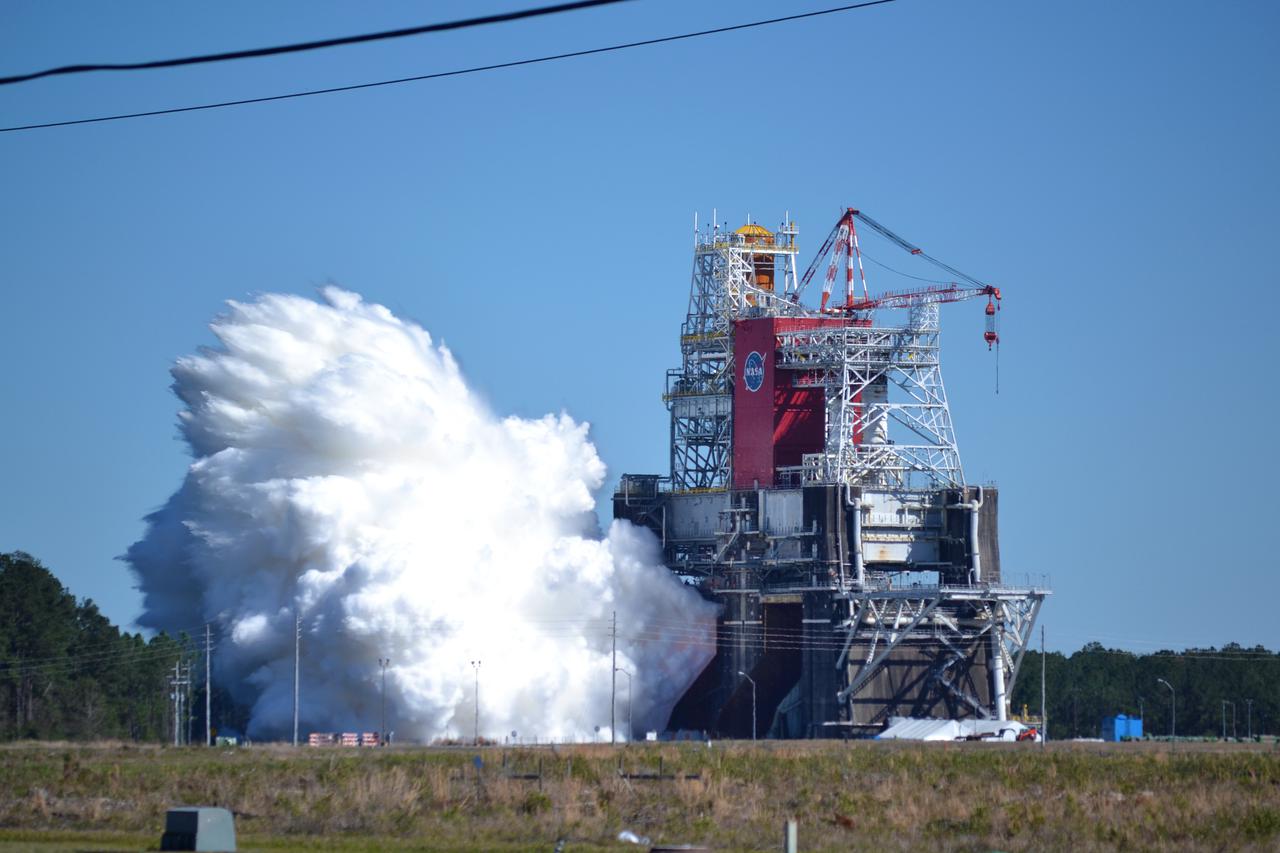
NASA conducts a hot fire test March 18, 2021, of the core stage for the agency’s Space Launch System rocket on the B-2 Test Stand at Stennis Space Center near Bay St. Louis, Mississippi. The hot fire test of the stage’s four RS-25 engines generated a combined 1.6 million pounds of thrust, just as will occur during an actual launch. The hot fire is the final test of the Green Run test series, which represents a comprehensive assessment of the core stage and its integrated systems prior to its launch on the Artemis I mission to the Moon.
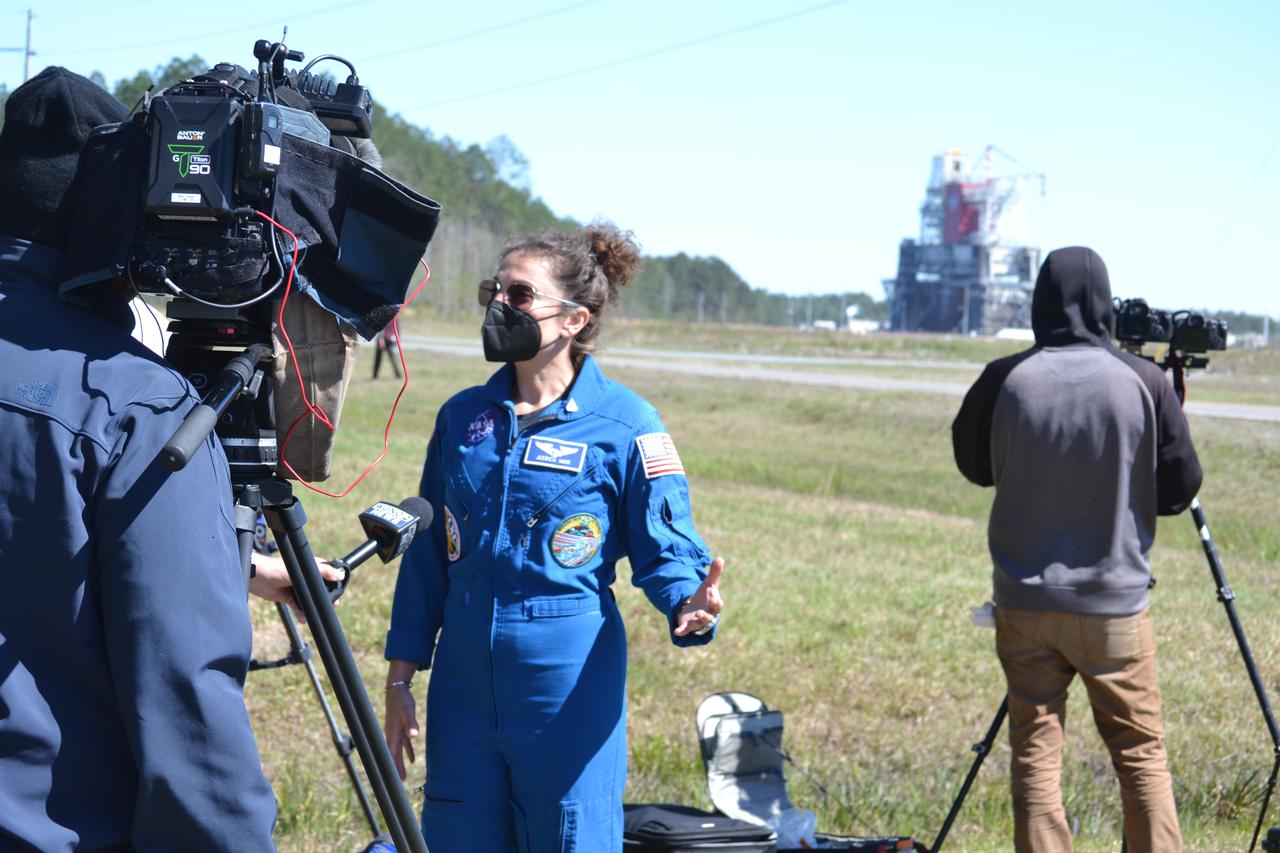
NASA conducts a hot fire test March 18, 2021, of the core stage for the agency’s Space Launch System rocket on the B-2 Test Stand at Stennis Space Center near Bay St. Louis, Mississippi. The hot fire test of the stage’s four RS-25 engines generated a combined 1.6 million pounds of thrust, just as will occur during an actual launch. The hot fire is the final test of the Green Run test series, which represents a comprehensive assessment of the core stage and its integrated systems prior to its launch on the Artemis I mission to the Moon.
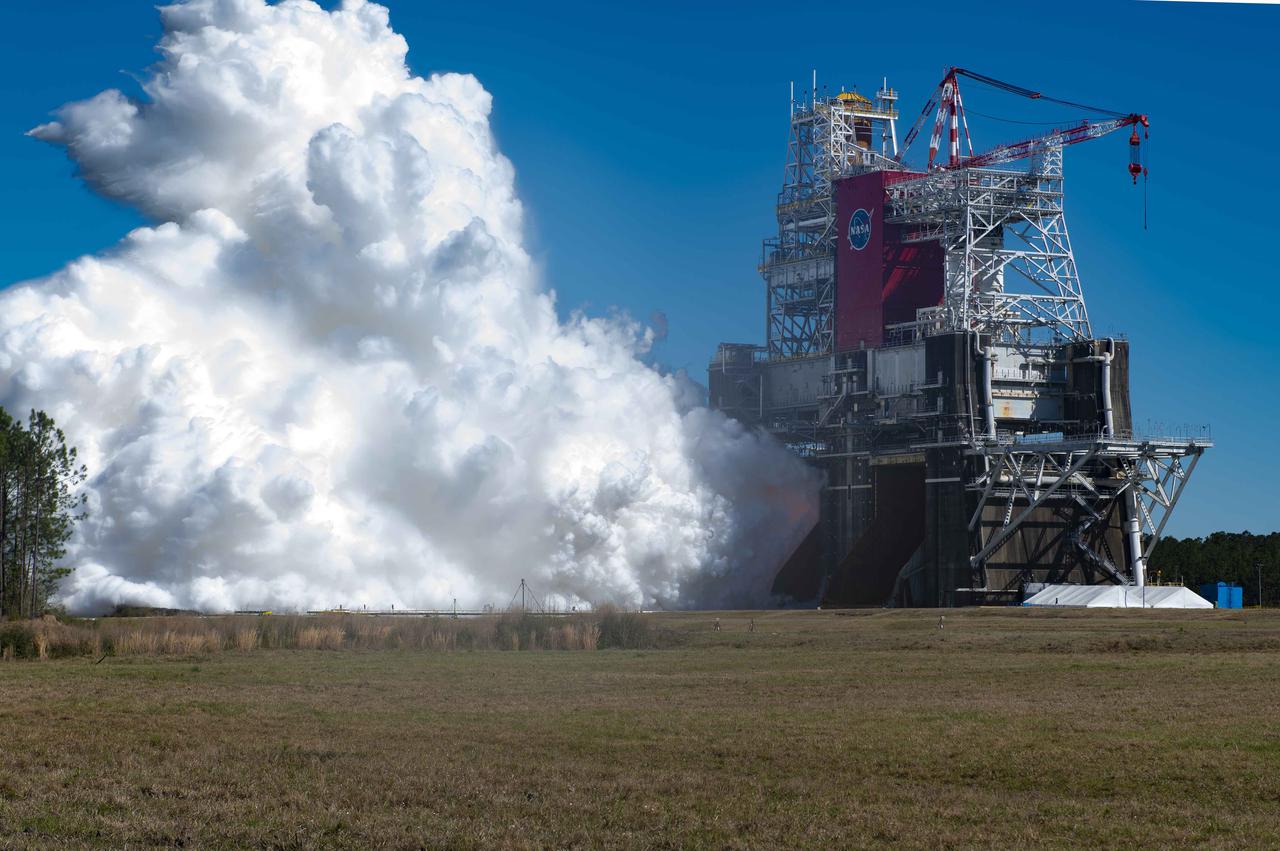
NASA conducts a hot fire test March 18, 2021, of the core stage for the agency’s Space Launch System rocket on the B-2 Test Stand at Stennis Space Center near Bay St. Louis, Mississippi. The hot fire test of the stage’s four RS-25 engines generated a combined 1.6 million pounds of thrust, just as will occur during an actual launch. The hot fire is the final test of the Green Run test series, which represents a comprehensive assessment of the core stage and its integrated systems prior to its launch on the Artemis I mission to the Moon.
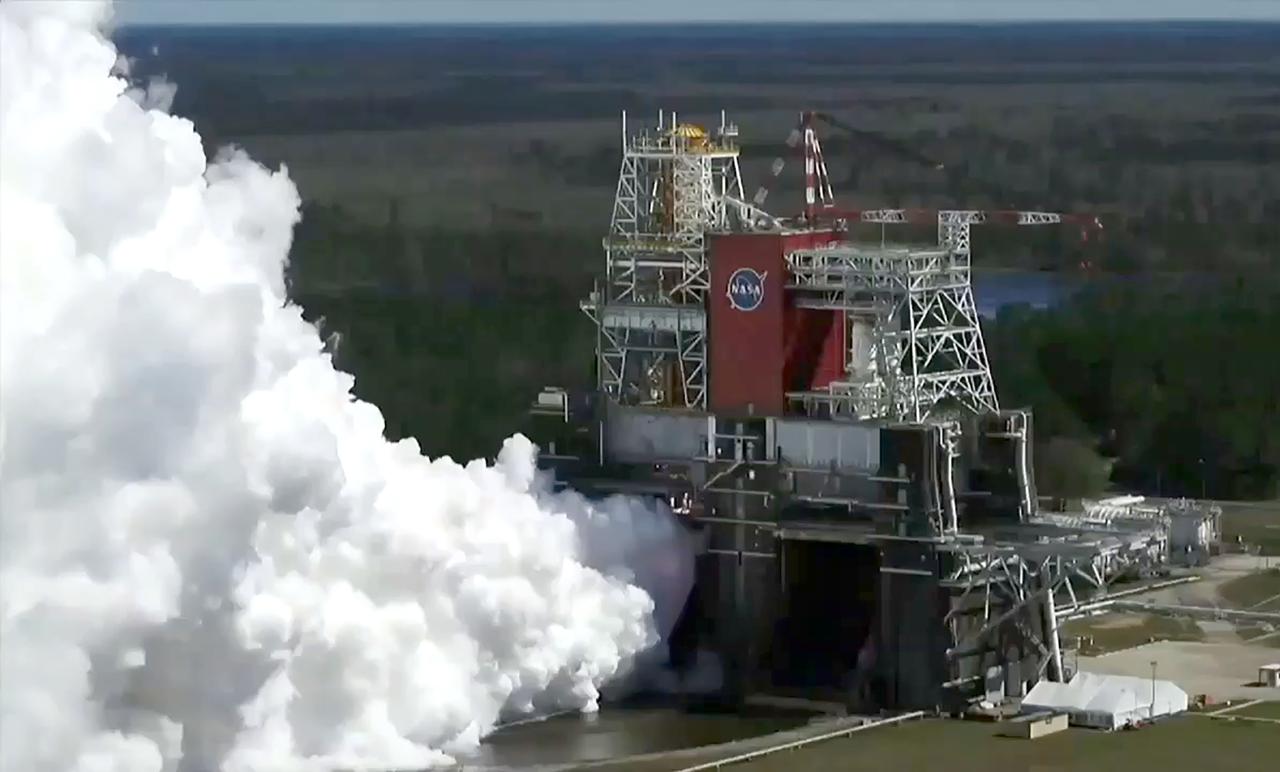
A drone camera offers a bird’s-eye view as NASA conducts a hot fire test March 18, 2021, of the core stage for the agency’s Space Launch System rocket on the B-2 Test Stand at Stennis Space Center near Bay St. Louis, Mississippi. The hot fire test of the stage’s four RS-25 engines generated a combined 1.6 million pounds of thrust, just as will occur during an actual launch. The hot fire is the final test of the Green Run test series, which represents a comprehensive assessment of the core stage and its integrated systems prior to its launch on the Artemis I mission to the Moon.
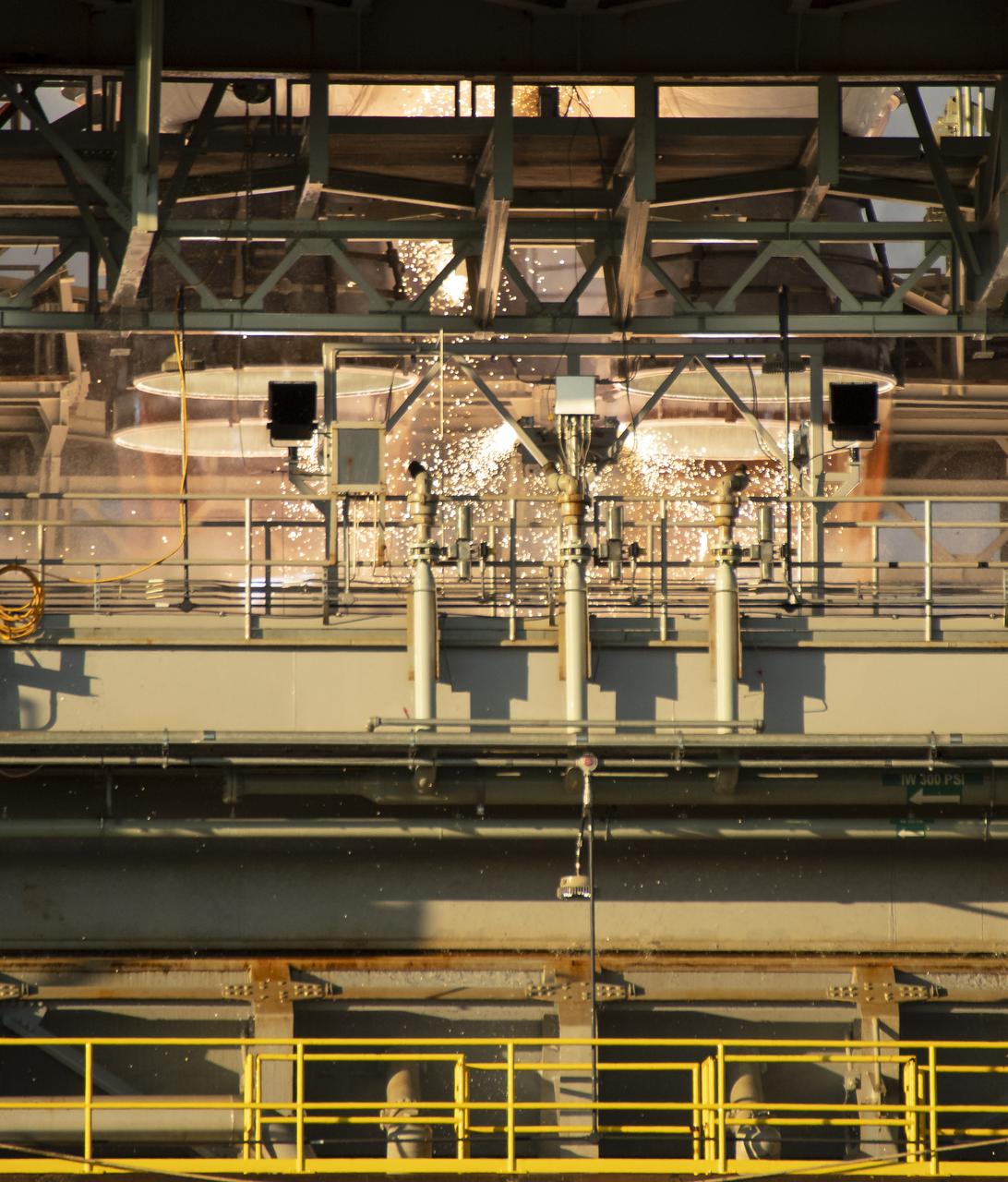
The core stage for the first flight of NASA’s Space Launch System rocket is seen in the B-2 Test Stand during a scheduled eight minute duration hot fire test, Saturday, Jan. 16, 2021, at NASA’s Stennis Space Center near Bay St. Louis, Mississippi. The four RS-25 engines fired for a little more than one minute and generated 1.6 million pounds of thrust. The hot fire is the final test of the Green Run test series, a comprehensive assessment of the Space Launch System’s core stage prior to launching the Artemis I mission to the Moon. Photo Credit: (NASA/Robert Markowitz)
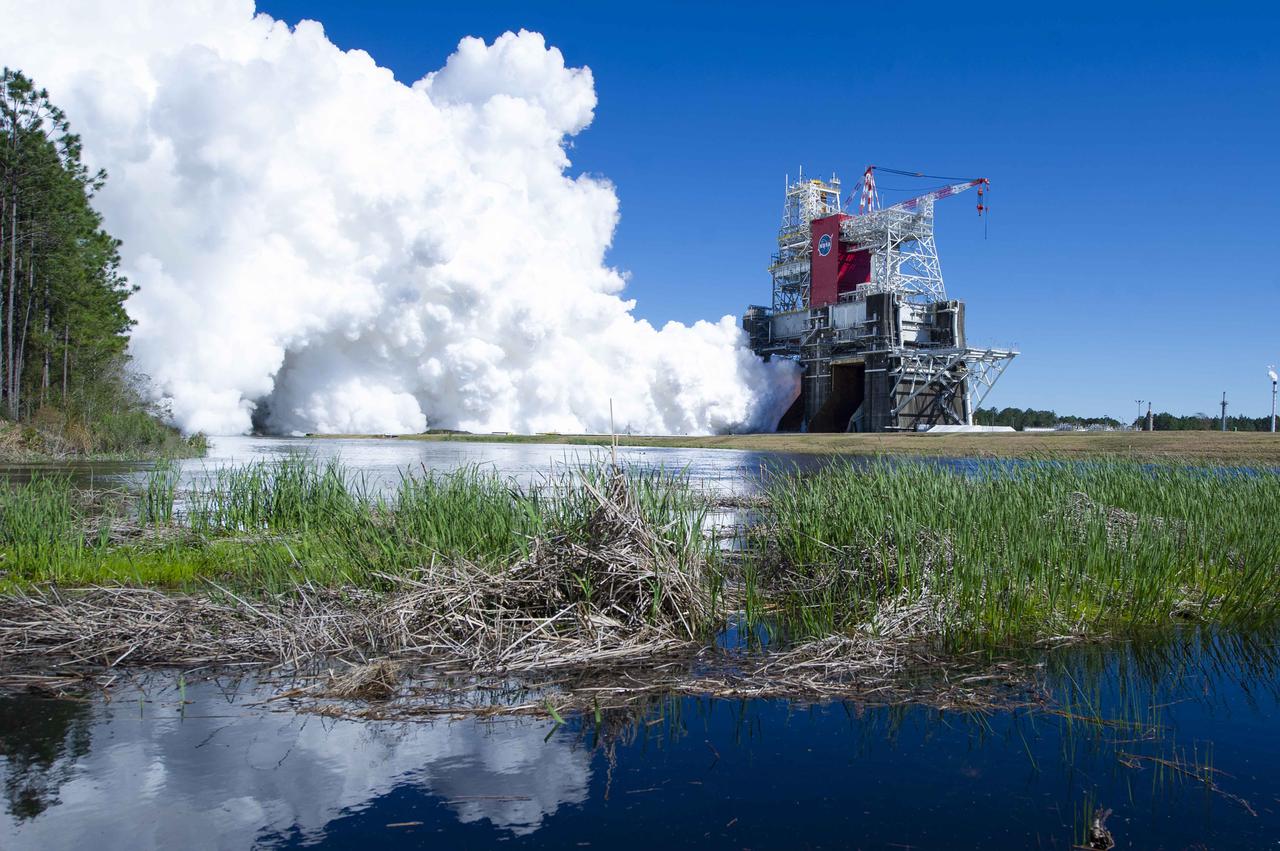
NASA conducts a hot fire test March 18, 2021, of the core stage for the agency’s Space Launch System rocket on the B-2 Test Stand at Stennis Space Center near Bay St. Louis, Mississippi. The hot fire test of the stage’s four RS-25 engines generated a combined 1.6 million pounds of thrust, just as will occur during an actual launch. The hot fire is the final test of the Green Run test series, which represents a comprehensive assessment of the core stage and its integrated systems prior to its launch on the Artemis I mission to the Moon.
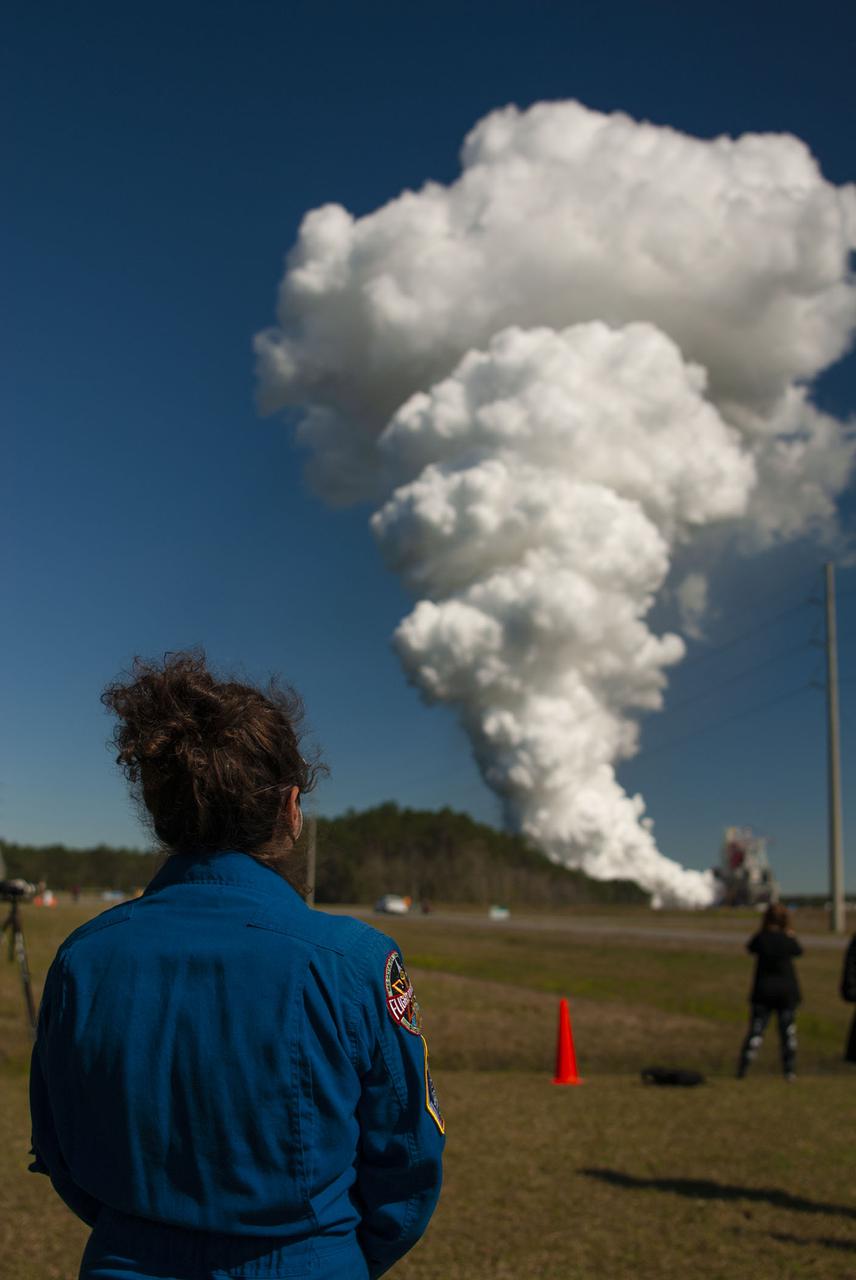
NASA conducts a hot fire test March 18, 2021, of the core stage for the agency’s Space Launch System rocket on the B-2 Test Stand at Stennis Space Center near Bay St. Louis, Mississippi. The hot fire test of the stage’s four RS-25 engines generated a combined 1.6 million pounds of thrust, just as will occur during an actual launch. The hot fire is the final test of the Green Run test series, which represents a comprehensive assessment of the core stage and its integrated systems prior to its launch on the Artemis I mission to the Moon.

The core stage for the first flight of NASA’s Space Launch System rocket is seen in the B-2 Test Stand during a scheduled eight minute duration hot fire test, Saturday, Jan. 16, 2021, at NASA’s Stennis Space Center near Bay St. Louis, Mississippi. The four RS-25 engines fired for a little more than one minute and generated 1.6 million pounds of thrust. The hot fire is the final test of the Green Run test series, a comprehensive assessment of the Space Launch System’s core stage prior to launching the Artemis I mission to the Moon. Photo Credit: (NASA/Robert Markowitz)
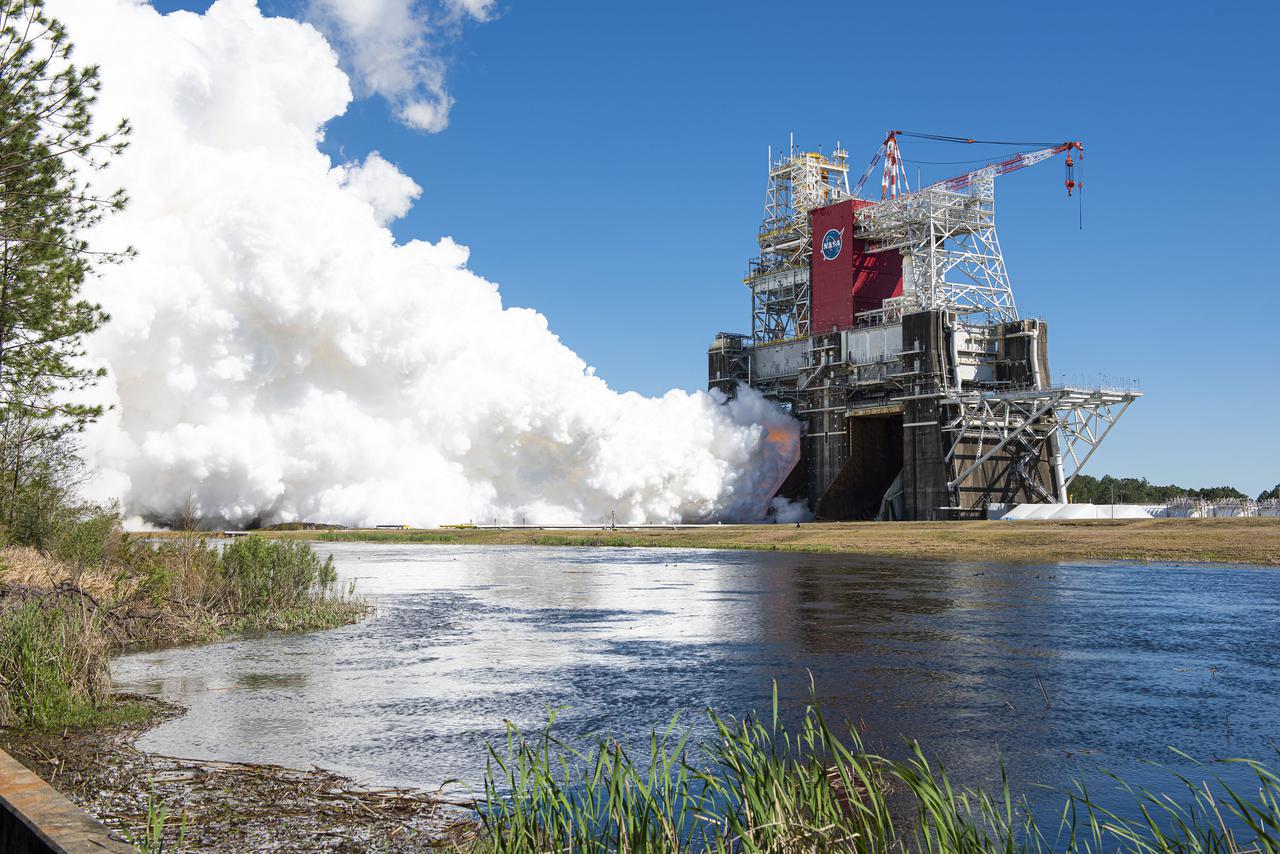
NASA conducts a hot fire test March 18, 2021, of the core stage for the agency’s Space Launch System rocket on the B-2 Test Stand at Stennis Space Center near Bay St. Louis, Mississippi. The hot fire test of the stage’s four RS-25 engines generated a combined 1.6 million pounds of thrust, just as will occur during an actual launch. The hot fire is the final test of the Green Run test series, which represents a comprehensive assessment of the core stage and its integrated systems prior to its launch on the Artemis I mission to the Moon.
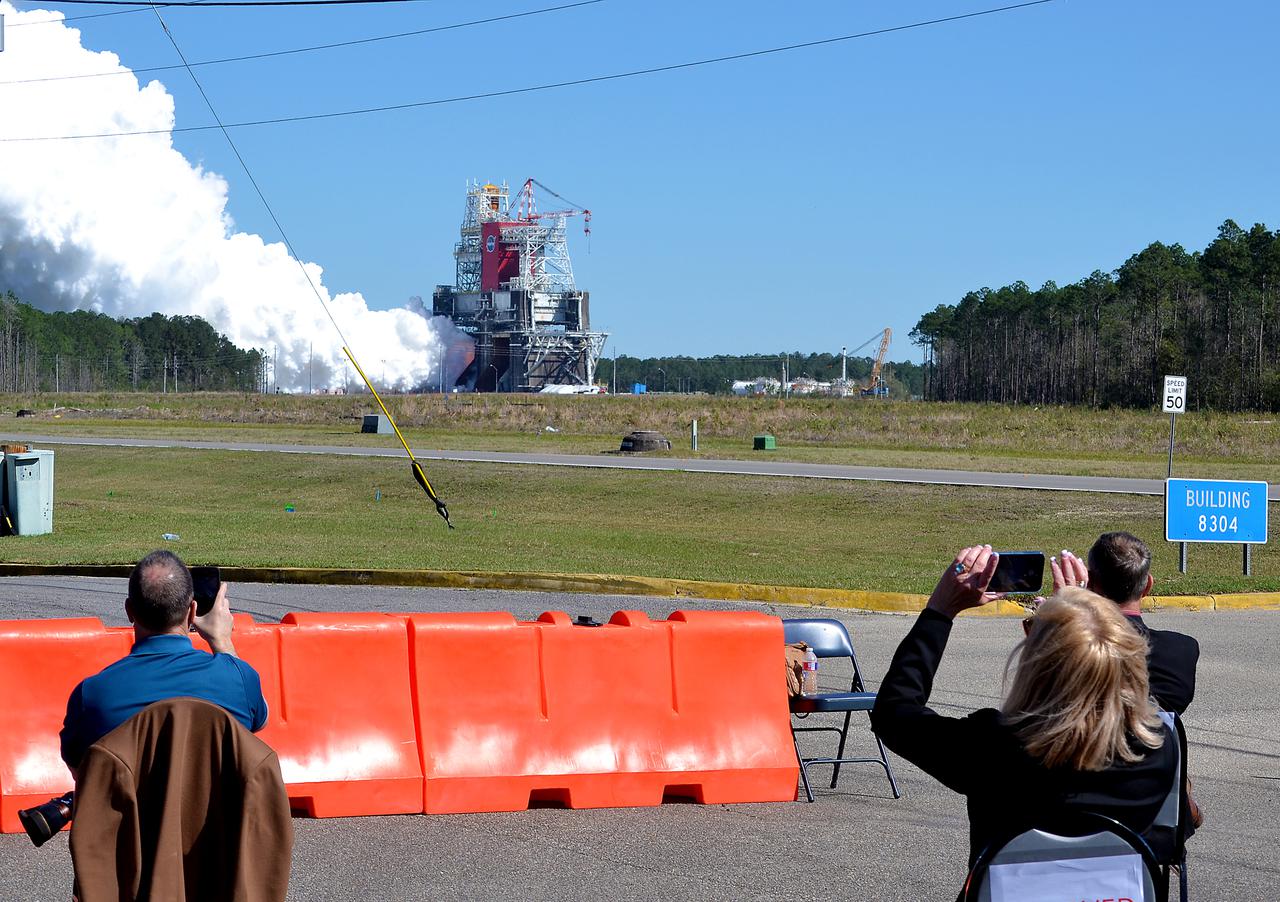
NASA conducts a hot fire test March 18, 2021, of the core stage for the agency’s Space Launch System rocket on the B-2 Test Stand at Stennis Space Center near Bay St. Louis, Mississippi. The hot fire test of the stage’s four RS-25 engines generated a combined 1.6 million pounds of thrust, just as will occur during an actual launch. The hot fire is the final test of the Green Run test series, which represents a comprehensive assessment of the core stage and its integrated systems prior to its launch on the Artemis I mission to the Moon.
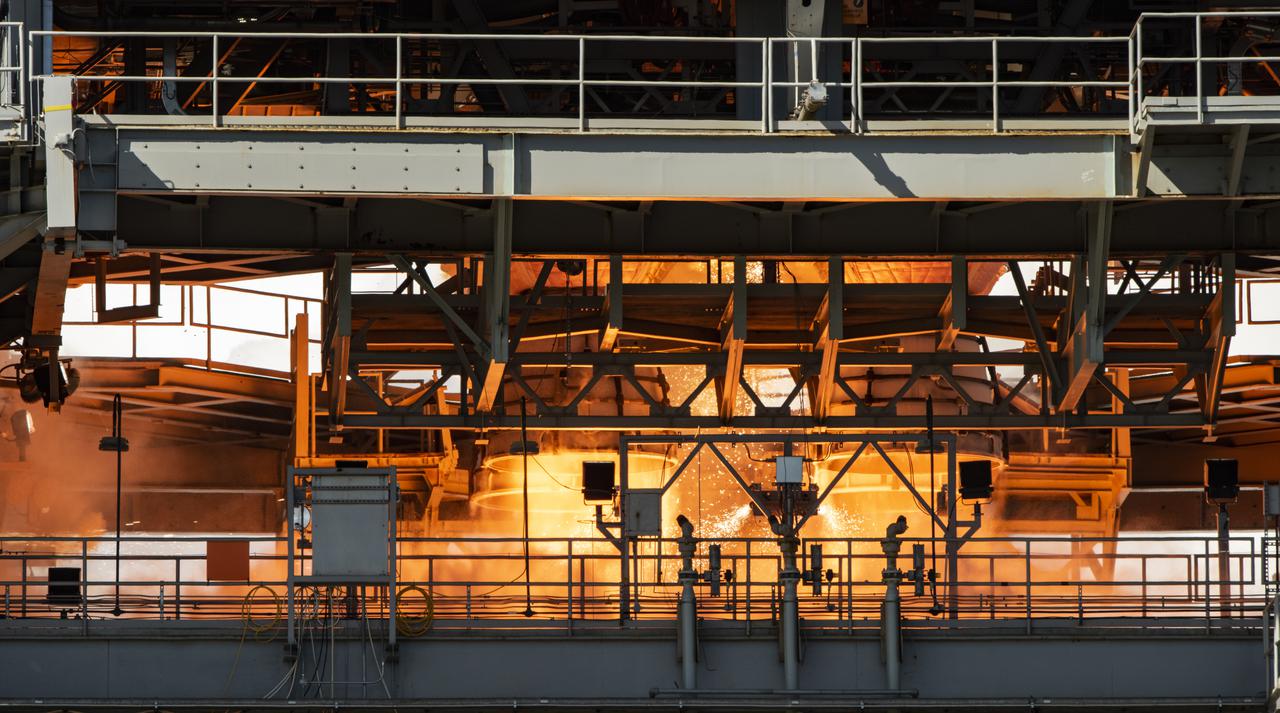
The core stage for the first flight of NASA’s Space Launch System rocket is seen in the B-2 Test Stand during a second hot fire test, Thursday, March 18, 2021, at NASA’s Stennis Space Center near Bay St. Louis, Mississippi. The four RS-25 engines fired for the full-duration of 8 minutes during the test and generated 1.6 million pounds of thrust. The hot fire test is the final stage of the Green Run test series, a comprehensive assessment of the Space Launch System’s core stage prior to launching the Artemis I mission to the Moon. Photo Credit: (NASA/Robert Markowitz)
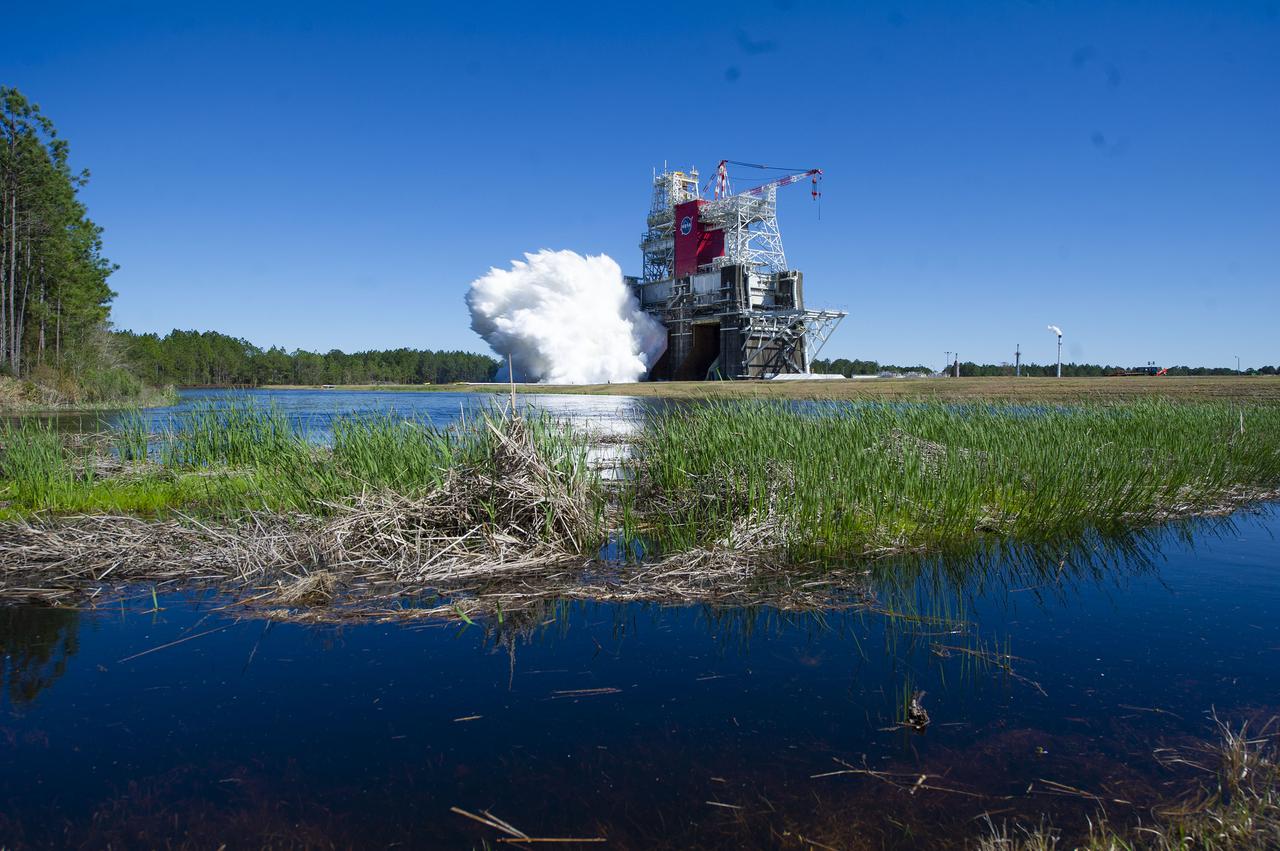
NASA conducts a hot fire test March 18, 2021, of the core stage for the agency’s Space Launch System rocket on the B-2 Test Stand at Stennis Space Center near Bay St. Louis, Mississippi. The hot fire test of the stage’s four RS-25 engines generated a combined 1.6 million pounds of thrust, just as will occur during an actual launch. The hot fire is the final test of the Green Run test series, which represents a comprehensive assessment of the core stage and its integrated systems prior to its launch on the Artemis I mission to the Moon.
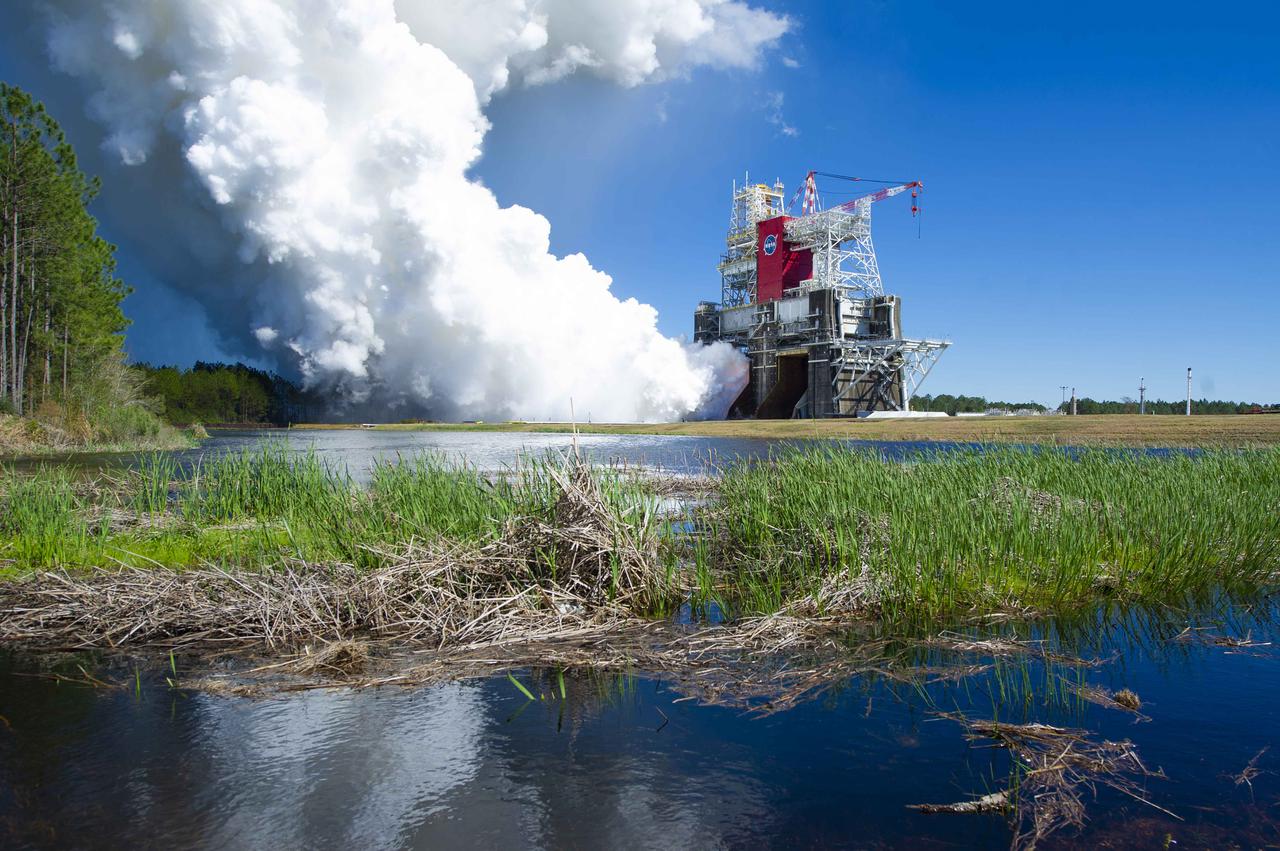
NASA conducts a hot fire test March 18, 2021, of the core stage for the agency’s Space Launch System rocket on the B-2 Test Stand at Stennis Space Center near Bay St. Louis, Mississippi. The hot fire test of the stage’s four RS-25 engines generated a combined 1.6 million pounds of thrust, just as will occur during an actual launch. The hot fire is the final test of the Green Run test series, which represents a comprehensive assessment of the core stage and its integrated systems prior to its launch on the Artemis I mission to the Moon.
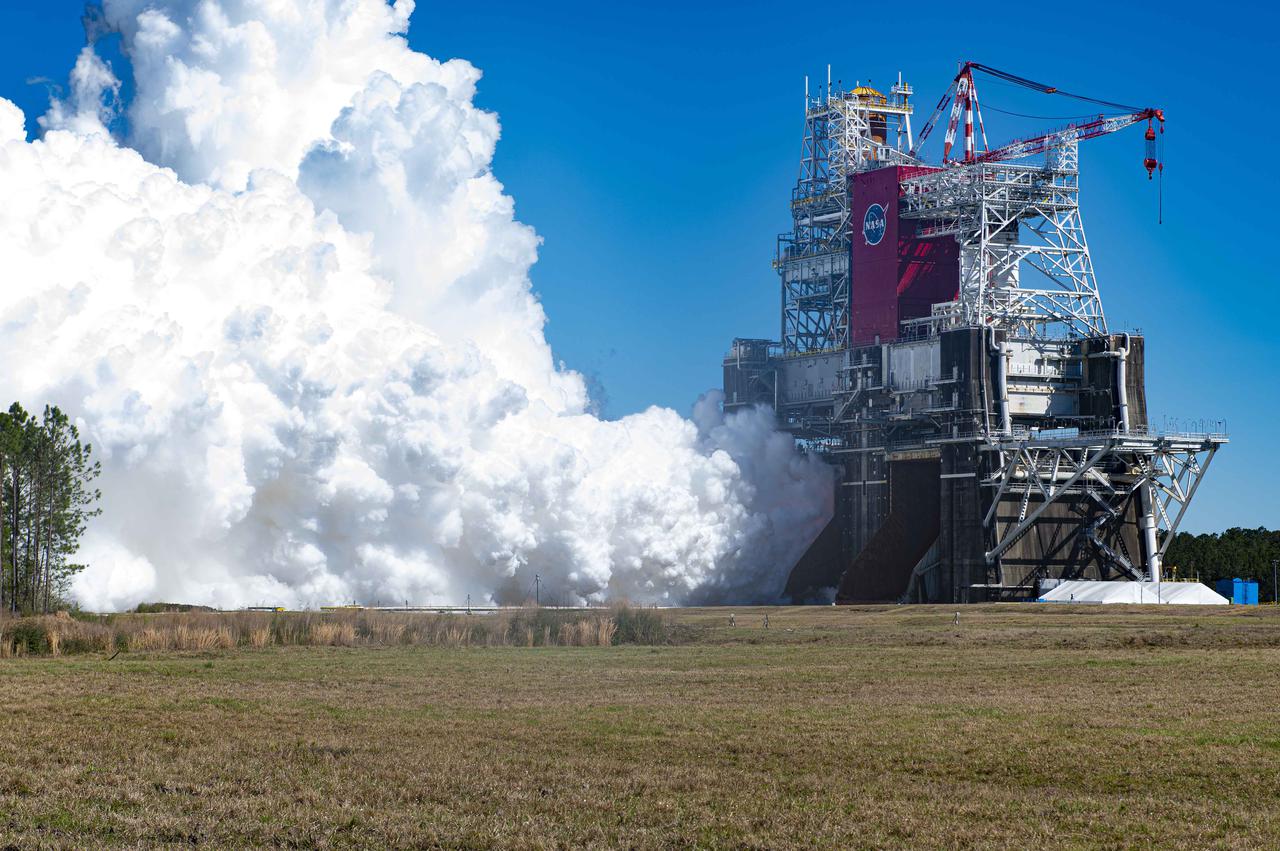
NASA conducts a hot fire test March 18, 2021, of the core stage for the agency’s Space Launch System rocket on the B-2 Test Stand at Stennis Space Center near Bay St. Louis, Mississippi. The hot fire test of the stage’s four RS-25 engines generated a combined 1.6 million pounds of thrust, just as will occur during an actual launch. The hot fire is the final test of the Green Run test series, which represents a comprehensive assessment of the core stage and its integrated systems prior to its launch on the Artemis I mission to the Moon.
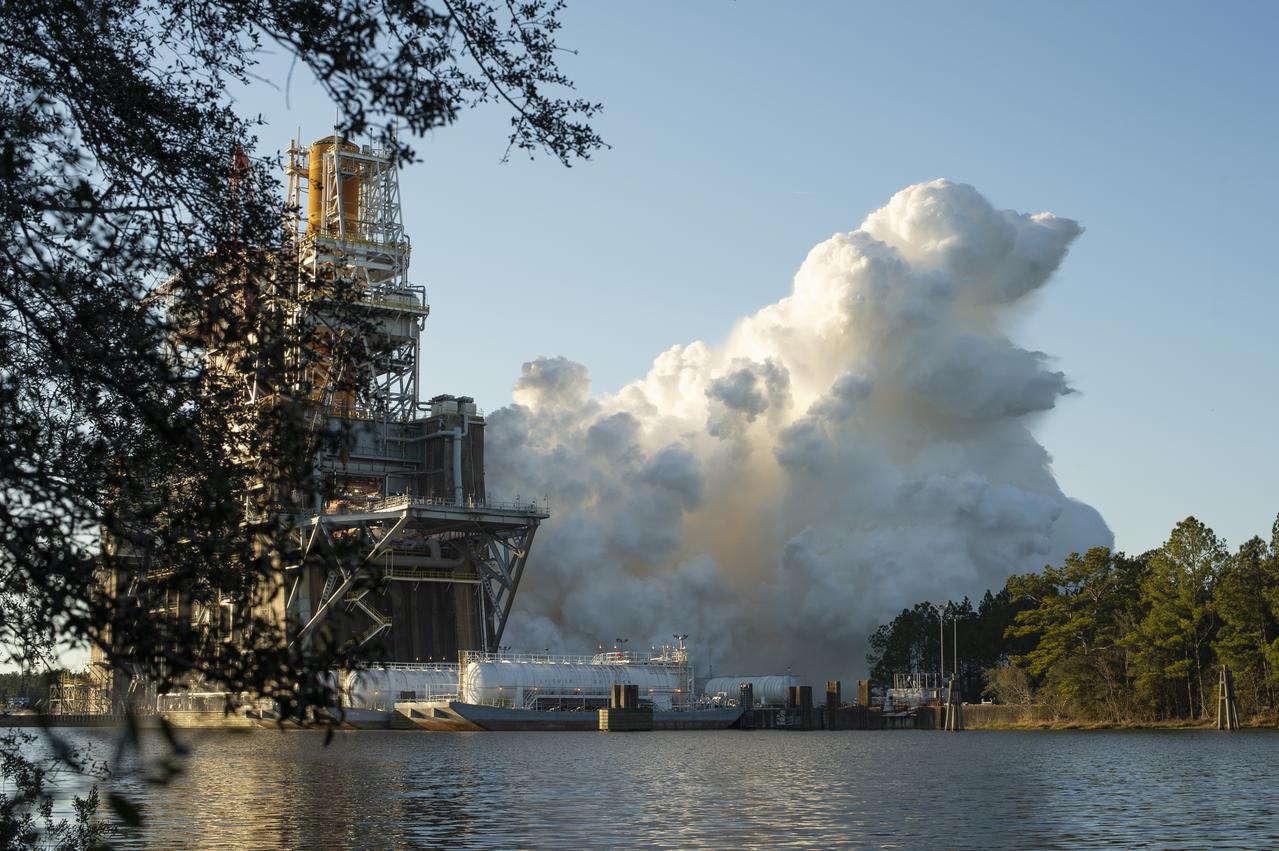
The core stage for the first flight of NASA’s Space Launch System rocket is seen in the B-2 Test Stand during a scheduled eight minute duration hot fire test, Saturday, Jan. 16, 2021, at NASA’s Stennis Space Center near Bay St. Louis, Mississippi. The four RS-25 engines fired for a little more than one minute and generated 1.6 million pounds of thrust. The hot fire is the final test of the Green Run test series, a comprehensive assessment of the Space Launch System’s core stage prior to launching the Artemis I mission to the Moon. Photo Credit: (NASA/Robert Markowitz)
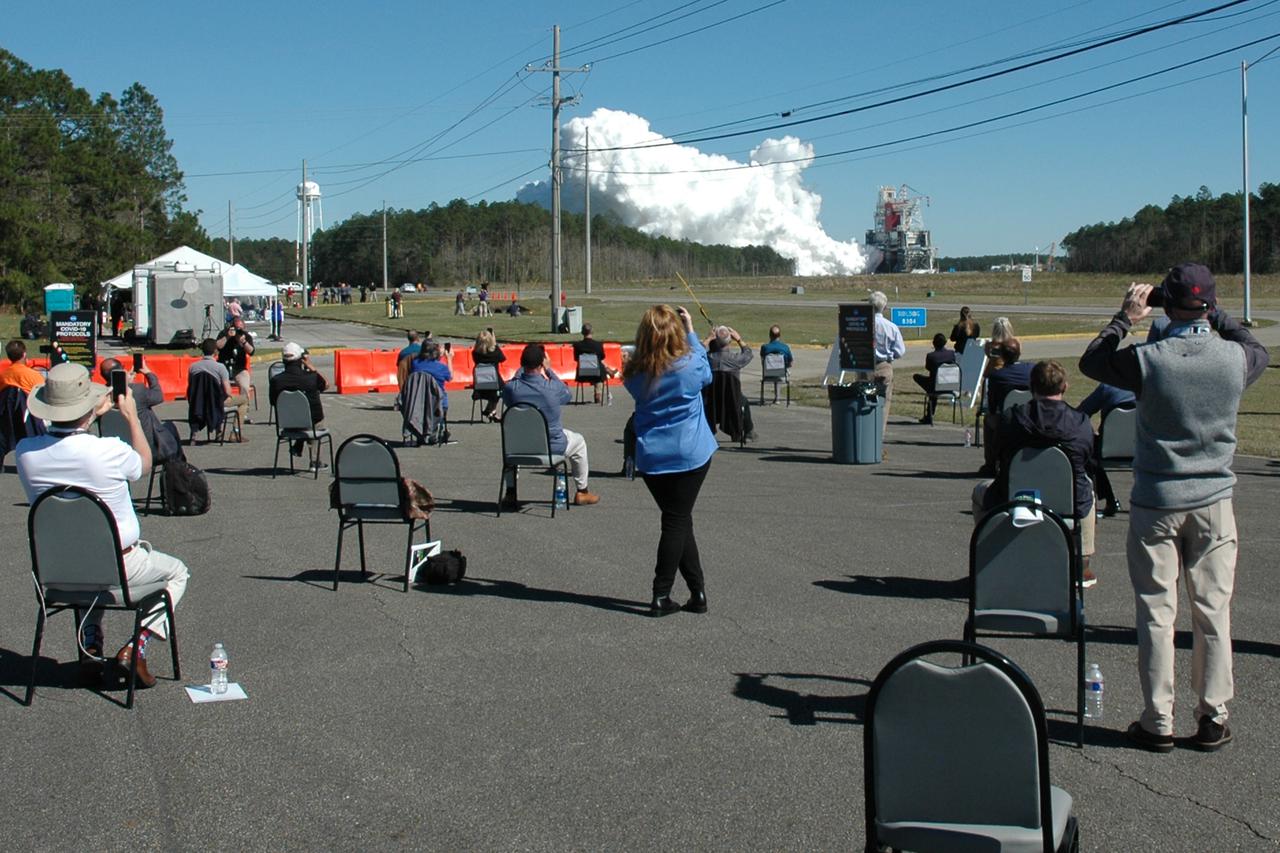
NASA conducts a hot fire test March 18, 2021, of the core stage for the agency’s Space Launch System rocket on the B-2 Test Stand at Stennis Space Center near Bay St. Louis, Mississippi. The hot fire test of the stage’s four RS-25 engines generated a combined 1.6 million pounds of thrust, just as will occur during an actual launch. The hot fire is the final test of the Green Run test series, which represents a comprehensive assessment of the core stage and its integrated systems prior to its launch on the Artemis I mission to the Moon.
NASA conducts a hot fire test March 18, 2021, of the core stage for the agency’s Space Launch System rocket on the B-2 Test Stand at Stennis Space Center near Bay St. Louis, Mississippi. The hot fire test of the stage’s four RS-25 engines generated a combined 1.6 million pounds of thrust, just as will occur during an actual launch. The hot fire is the final test of the Green Run test series, which represents a comprehensive assessment of the core stage and its integrated systems prior to its launch on the Artemis I mission to the Moon.
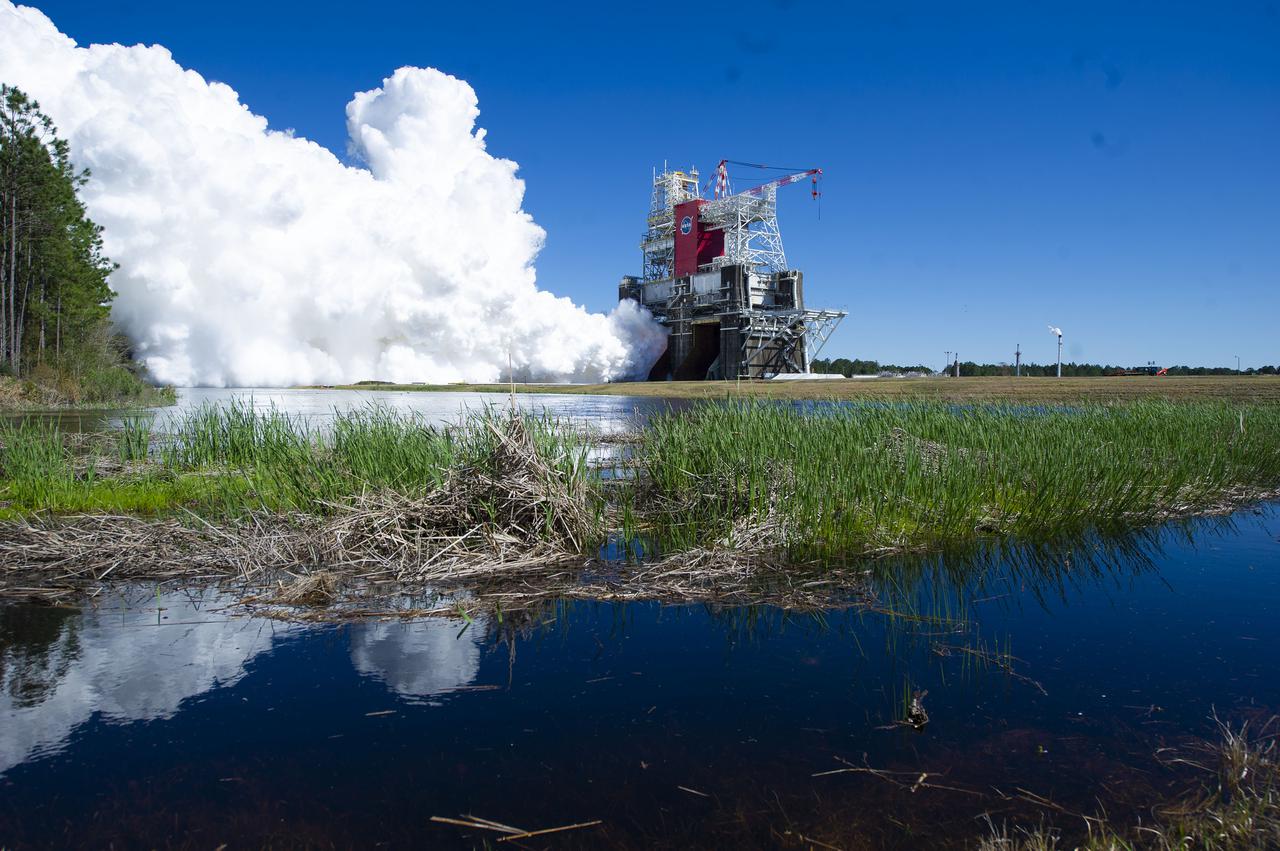
NASA conducts a hot fire test March 18, 2021, of the core stage for the agency’s Space Launch System rocket on the B-2 Test Stand at Stennis Space Center near Bay St. Louis, Mississippi. The hot fire test of the stage’s four RS-25 engines generated a combined 1.6 million pounds of thrust, just as will occur during an actual launch. The hot fire is the final test of the Green Run test series, which represents a comprehensive assessment of the core stage and its integrated systems prior to its launch on the Artemis I mission to the Moon.

NASA conducts a hot fire test March 18, 2021, of the core stage for the agency’s Space Launch System rocket on the B-2 Test Stand at Stennis Space Center near Bay St. Louis, Mississippi. The hot fire test of the stage’s four RS-25 engines generated a combined 1.6 million pounds of thrust, just as will occur during an actual launch. The hot fire is the final test of the Green Run test series, which represents a comprehensive assessment of the core stage and its integrated systems prior to its launch on the Artemis I mission to the Moon.
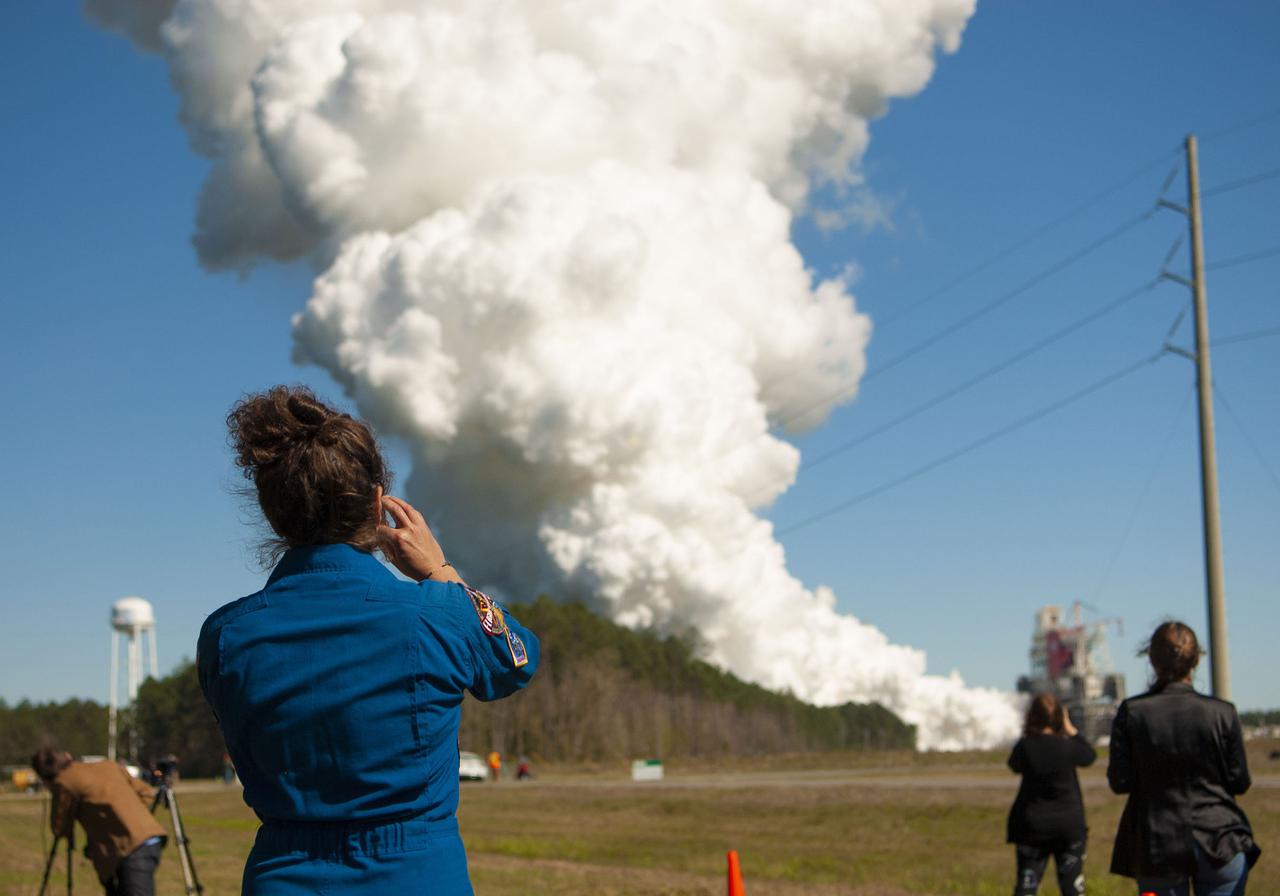
NASA conducts a hot fire test March 18, 2021, of the core stage for the agency’s Space Launch System rocket on the B-2 Test Stand at Stennis Space Center near Bay St. Louis, Mississippi. The hot fire test of the stage’s four RS-25 engines generated a combined 1.6 million pounds of thrust, just as will occur during an actual launch. The hot fire is the final test of the Green Run test series, which represents a comprehensive assessment of the core stage and its integrated systems prior to its launch on the Artemis I mission to the Moon.
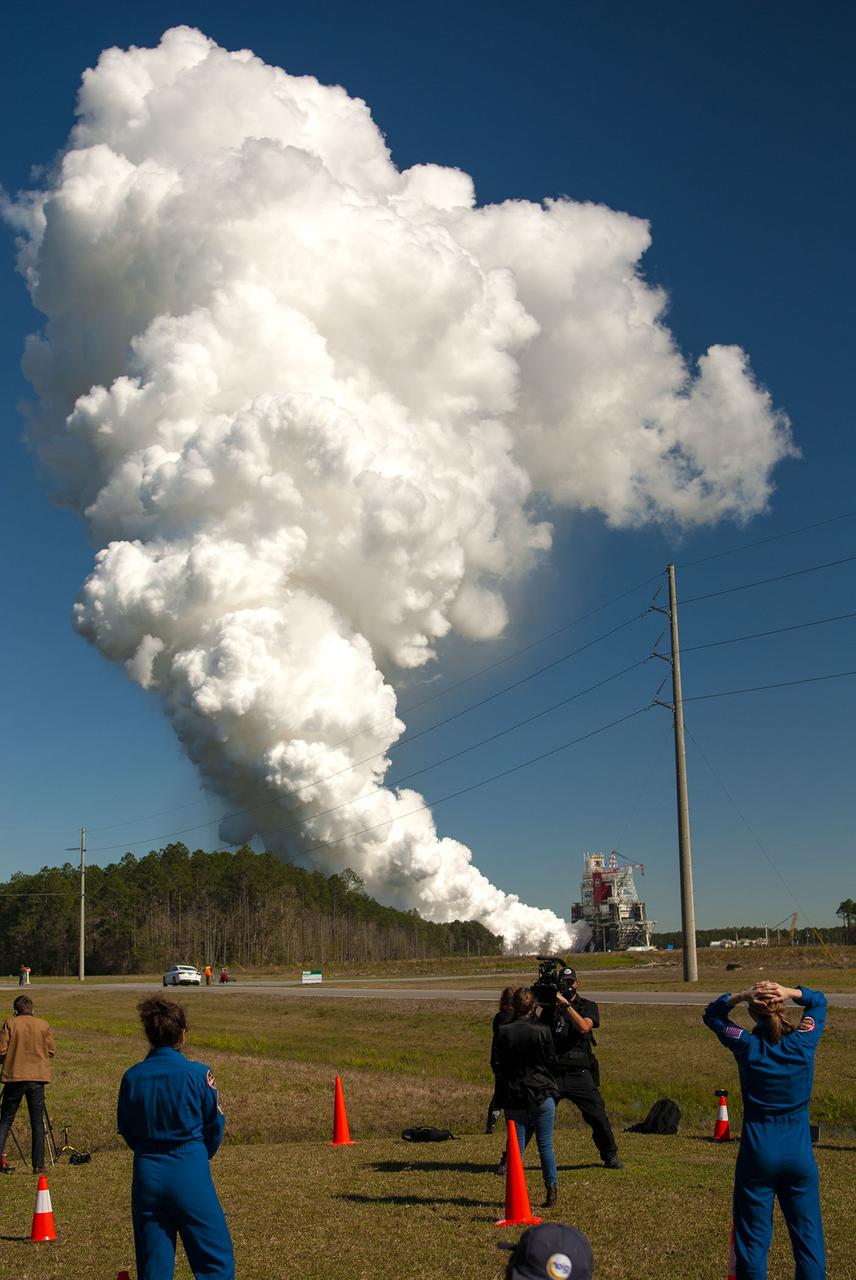
NASA conducts a hot fire test March 18, 2021, of the core stage for the agency’s Space Launch System rocket on the B-2 Test Stand at Stennis Space Center near Bay St. Louis, Mississippi. The hot fire test of the stage’s four RS-25 engines generated a combined 1.6 million pounds of thrust, just as will occur during an actual launch. The hot fire is the final test of the Green Run test series, which represents a comprehensive assessment of the core stage and its integrated systems prior to its launch on the Artemis I mission to the Moon.
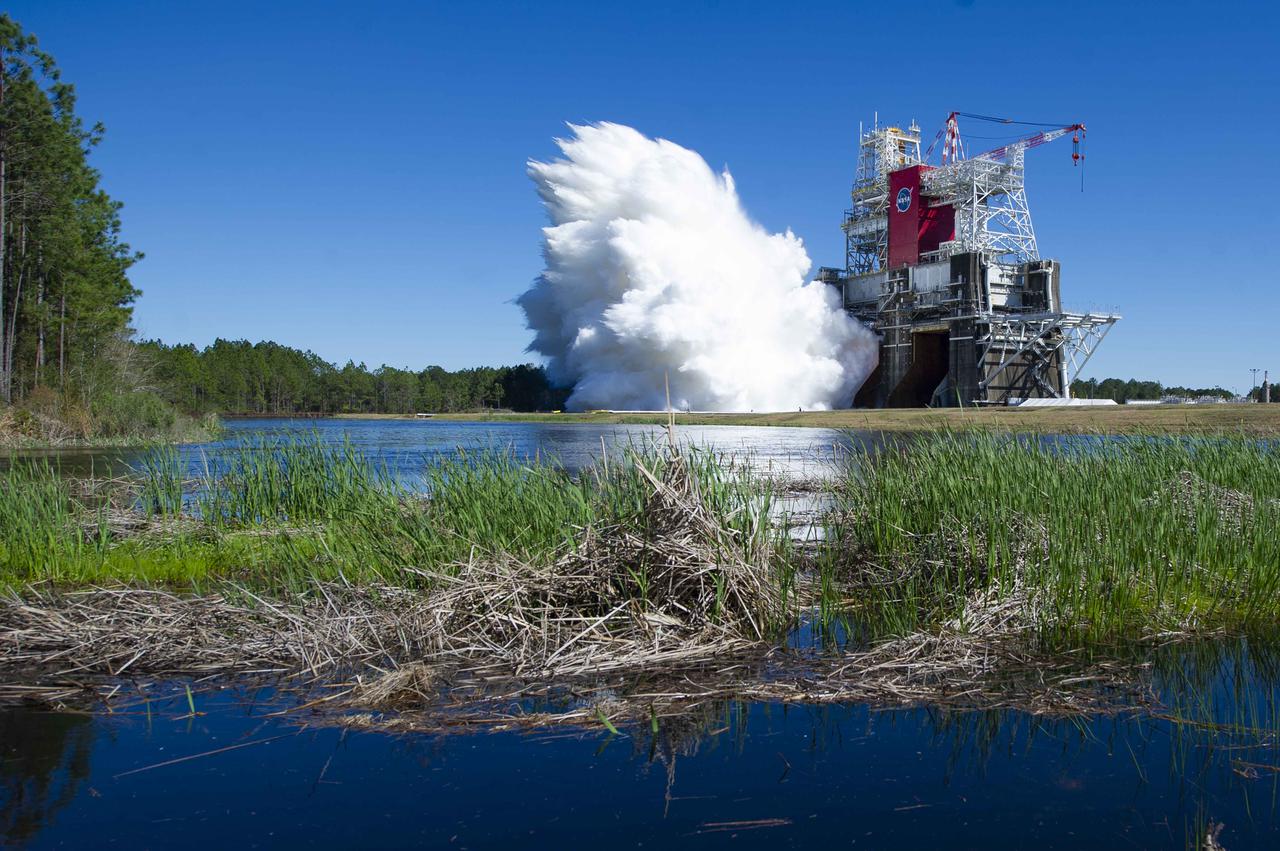
NASA conducts a hot fire test March 18, 2021, of the core stage for the agency’s Space Launch System rocket on the B-2 Test Stand at Stennis Space Center near Bay St. Louis, Mississippi. The hot fire test of the stage’s four RS-25 engines generated a combined 1.6 million pounds of thrust, just as will occur during an actual launch. The hot fire is the final test of the Green Run test series, which represents a comprehensive assessment of the core stage and its integrated systems prior to its launch on the Artemis I mission to the Moon.
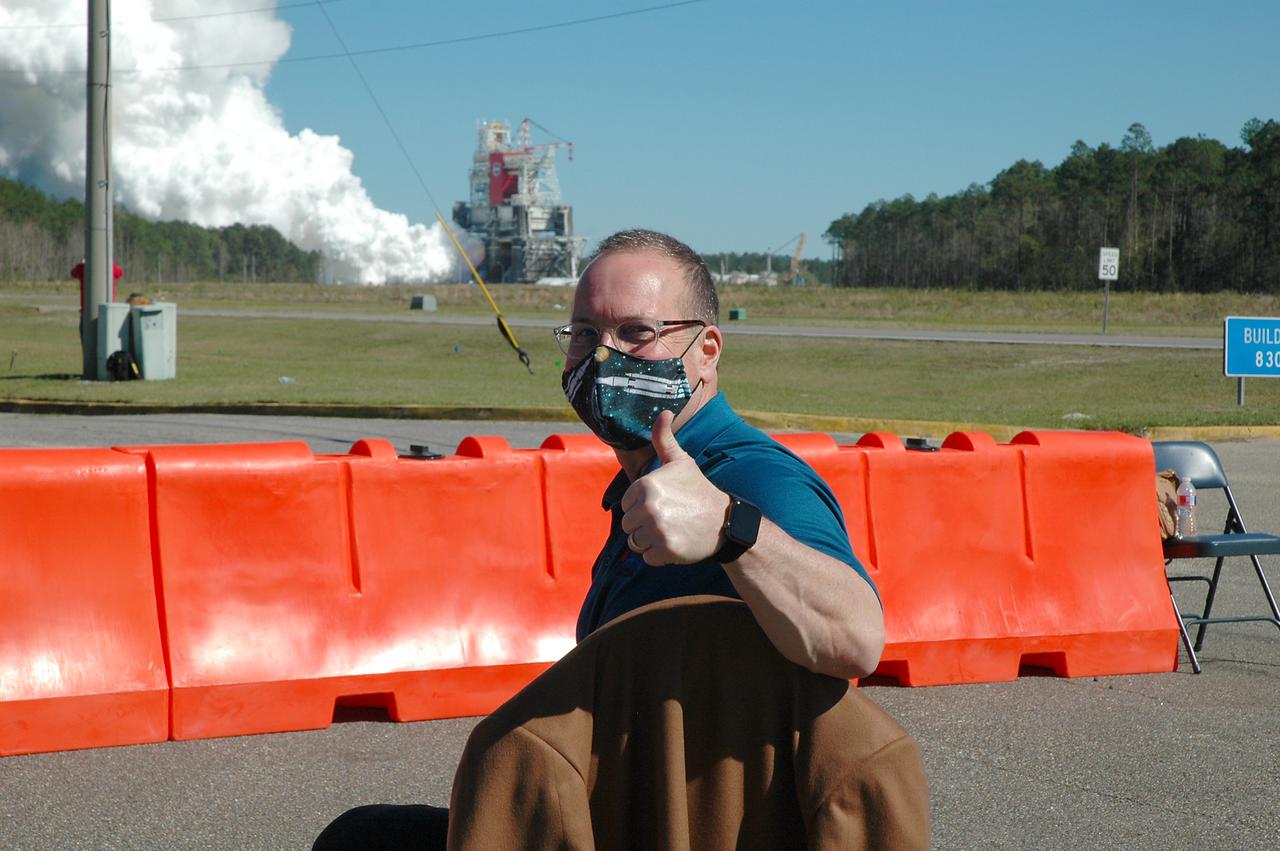
NASA conducts a hot fire test March 18, 2021, of the core stage for the agency’s Space Launch System rocket on the B-2 Test Stand at Stennis Space Center near Bay St. Louis, Mississippi. The hot fire test of the stage’s four RS-25 engines generated a combined 1.6 million pounds of thrust, just as will occur during an actual launch. The hot fire is the final test of the Green Run test series, which represents a comprehensive assessment of the core stage and its integrated systems prior to its launch on the Artemis I mission to the Moon.
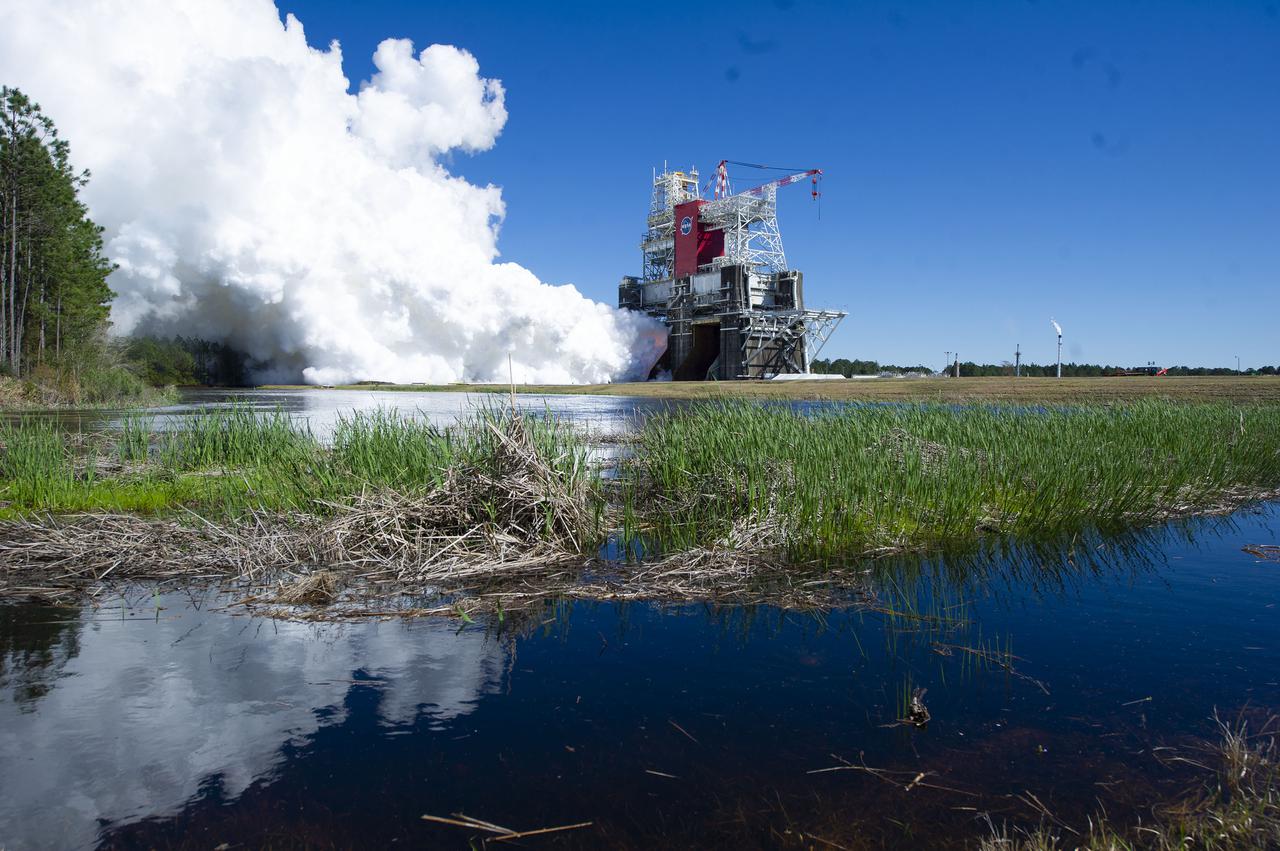
NASA conducts a hot fire test March 18, 2021, of the core stage for the agency’s Space Launch System rocket on the B-2 Test Stand at Stennis Space Center near Bay St. Louis, Mississippi. The hot fire test of the stage’s four RS-25 engines generated a combined 1.6 million pounds of thrust, just as will occur during an actual launch. The hot fire is the final test of the Green Run test series, which represents a comprehensive assessment of the core stage and its integrated systems prior to its launch on the Artemis I mission to the Moon.
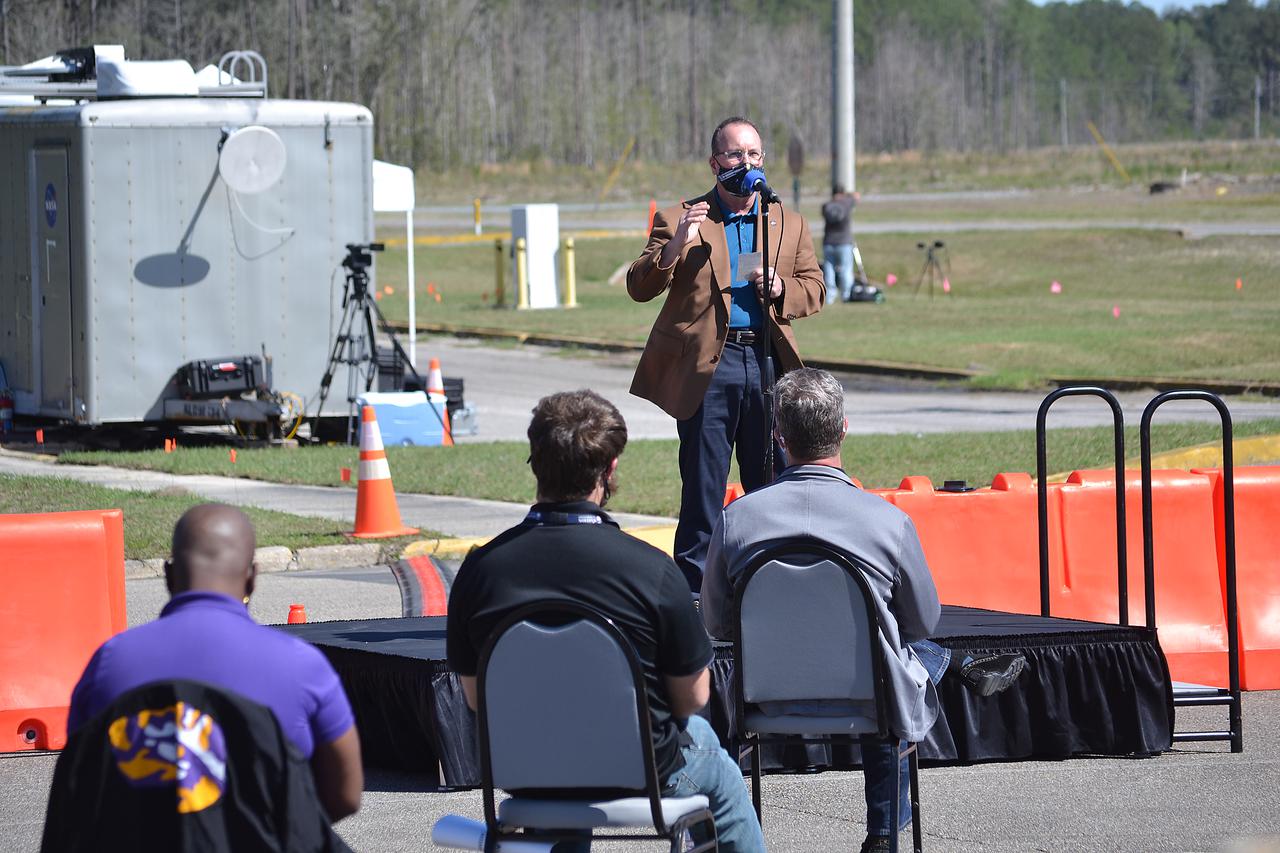
NASA conducts a hot fire test March 18, 2021, of the core stage for the agency’s Space Launch System rocket on the B-2 Test Stand at Stennis Space Center near Bay St. Louis, Mississippi. The hot fire test of the stage’s four RS-25 engines generated a combined 1.6 million pounds of thrust, just as will occur during an actual launch. The hot fire is the final test of the Green Run test series, which represents a comprehensive assessment of the core stage and its integrated systems prior to its launch on the Artemis I mission to the Moon.
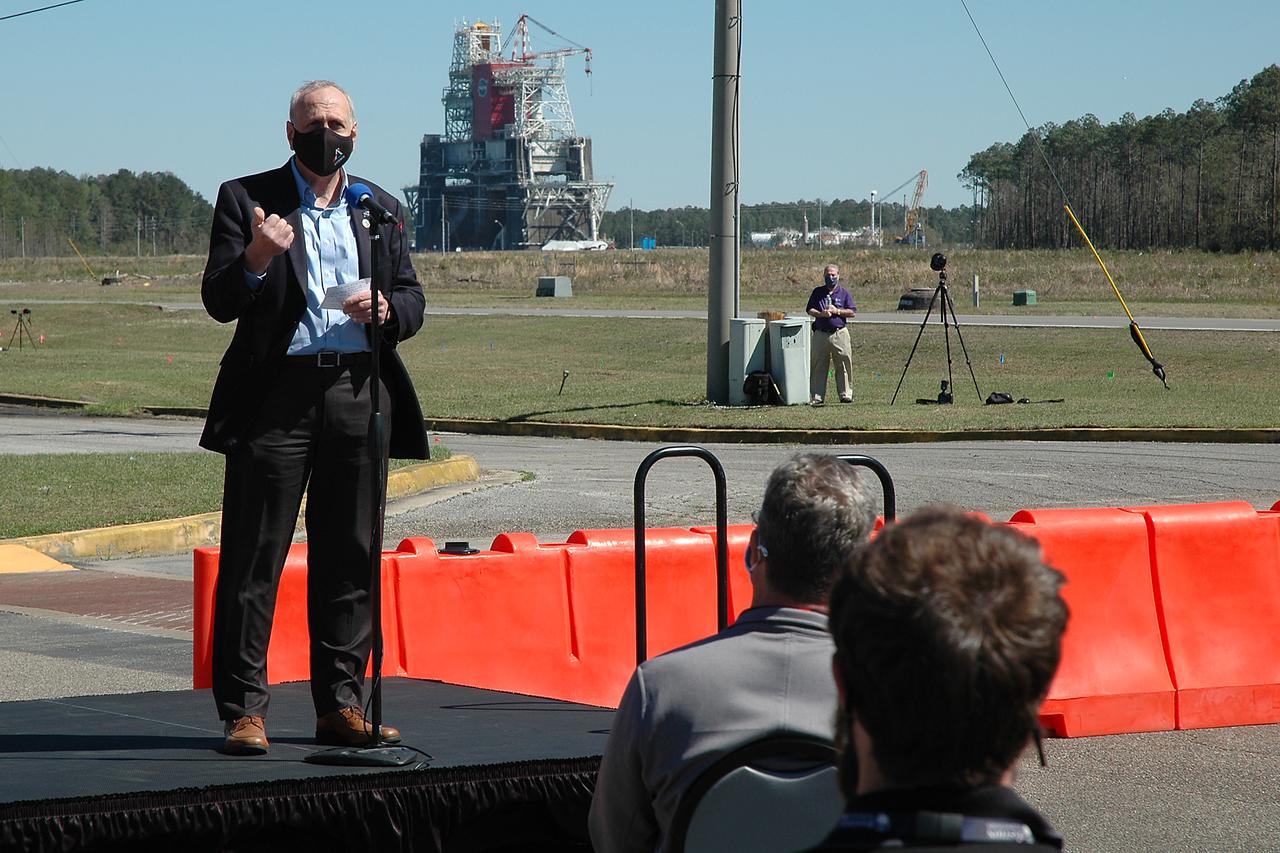
NASA conducts a hot fire test March 18, 2021, of the core stage for the agency’s Space Launch System rocket on the B-2 Test Stand at Stennis Space Center near Bay St. Louis, Mississippi. The hot fire test of the stage’s four RS-25 engines generated a combined 1.6 million pounds of thrust, just as will occur during an actual launch. The hot fire is the final test of the Green Run test series, which represents a comprehensive assessment of the core stage and its integrated systems prior to its launch on the Artemis I mission to the Moon.
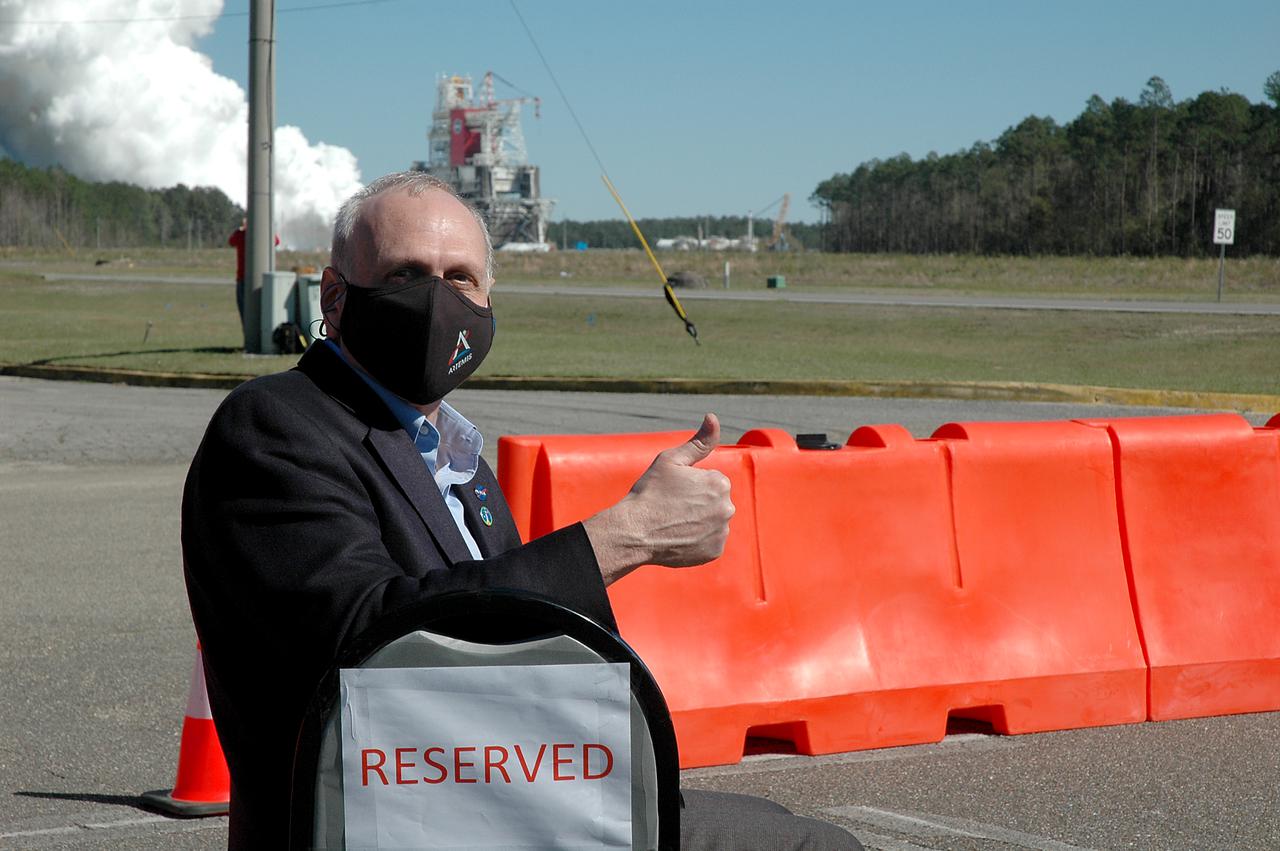
NASA conducts a hot fire test March 18, 2021, of the core stage for the agency’s Space Launch System rocket on the B-2 Test Stand at Stennis Space Center near Bay St. Louis, Mississippi. The hot fire test of the stage’s four RS-25 engines generated a combined 1.6 million pounds of thrust, just as will occur during an actual launch. The hot fire is the final test of the Green Run test series, which represents a comprehensive assessment of the core stage and its integrated systems prior to its launch on the Artemis I mission to the Moon.
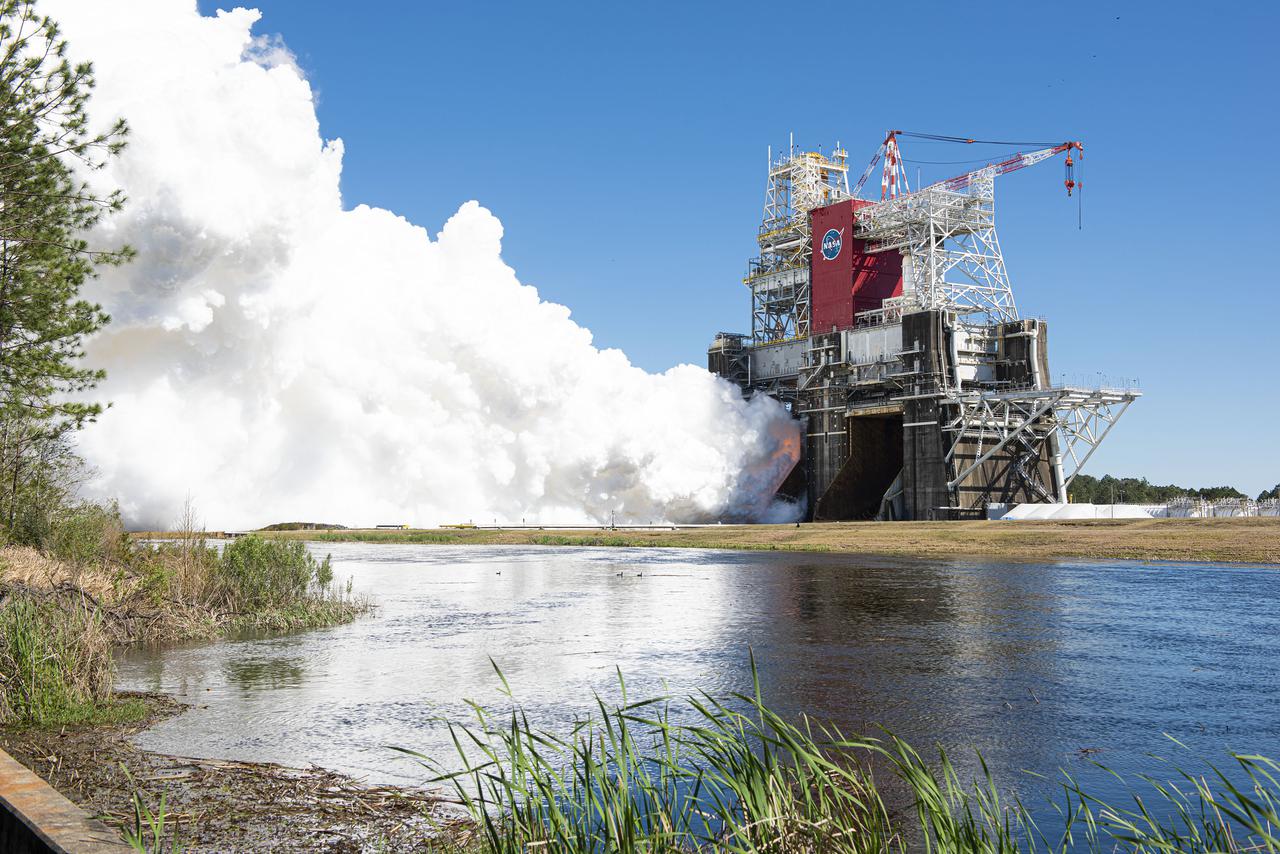
NASA conducts a hot fire test March 18, 2021, of the core stage for the agency’s Space Launch System rocket on the B-2 Test Stand at Stennis Space Center near Bay St. Louis, Mississippi. The hot fire test of the stage’s four RS-25 engines generated a combined 1.6 million pounds of thrust, just as will occur during an actual launch. The hot fire is the final test of the Green Run test series, which represents a comprehensive assessment of the core stage and its integrated systems prior to its launch on the Artemis I mission to the Moon.
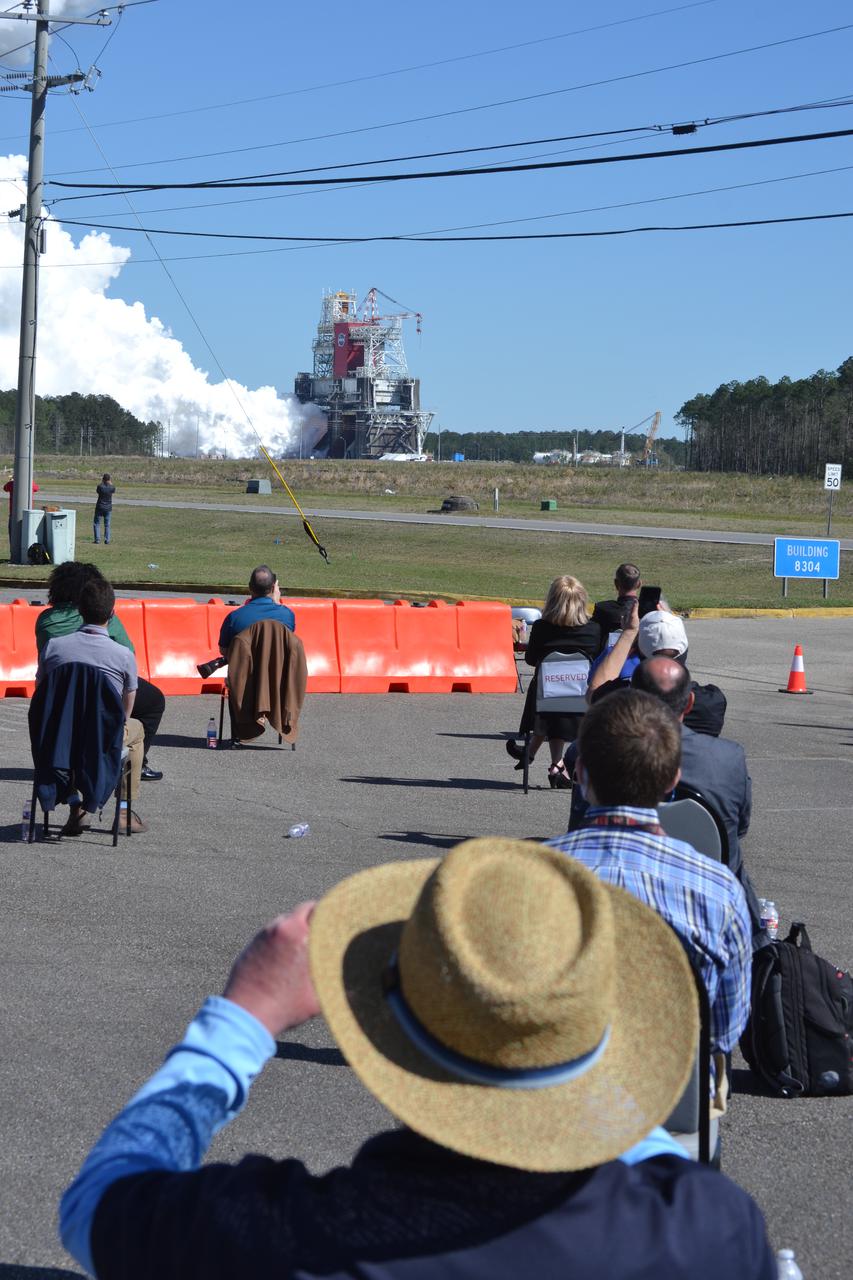
NASA conducts a hot fire test March 18, 2021, of the core stage for the agency’s Space Launch System rocket on the B-2 Test Stand at Stennis Space Center near Bay St. Louis, Mississippi. The hot fire test of the stage’s four RS-25 engines generated a combined 1.6 million pounds of thrust, just as will occur during an actual launch. The hot fire is the final test of the Green Run test series, which represents a comprehensive assessment of the core stage and its integrated systems prior to its launch on the Artemis I mission to the Moon.
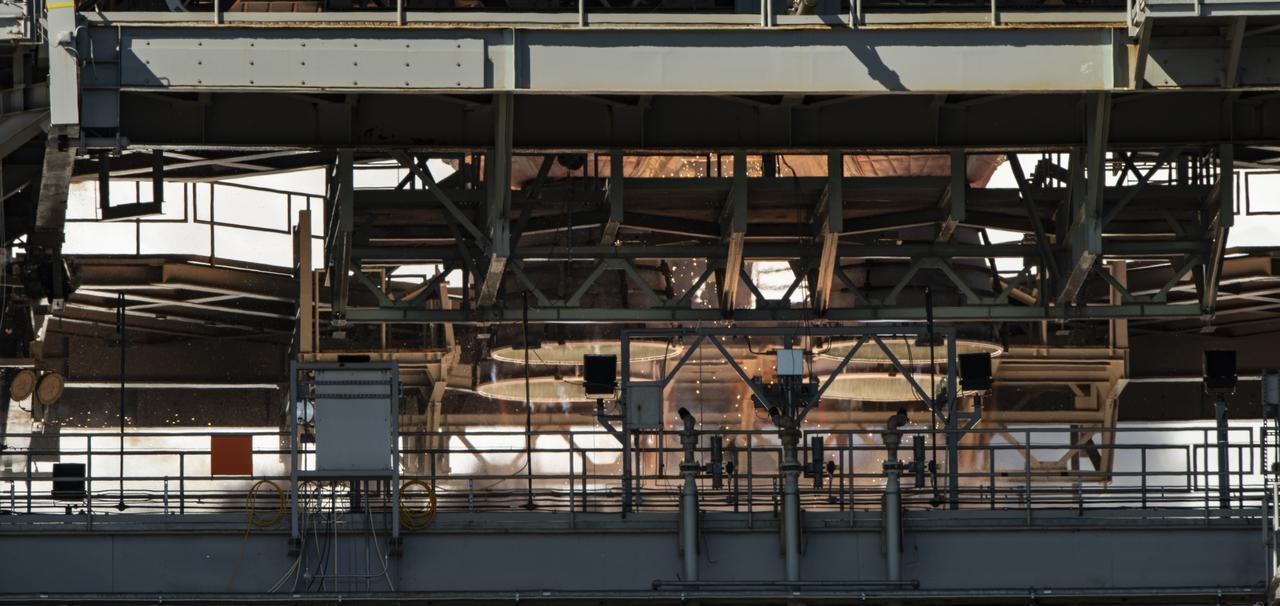
The core stage for the first flight of NASA’s Space Launch System rocket is seen in the B-2 Test Stand during a second hot fire test, Thursday, March 18, 2021, at NASA’s Stennis Space Center near Bay St. Louis, Mississippi. The four RS-25 engines fired for the full-duration of 8 minutes during the test and generated 1.6 million pounds of thrust. The hot fire test is the final stage of the Green Run test series, a comprehensive assessment of the Space Launch System’s core stage prior to launching the Artemis I mission to the Moon. Photo Credit: (NASA/Robert Markowitz)
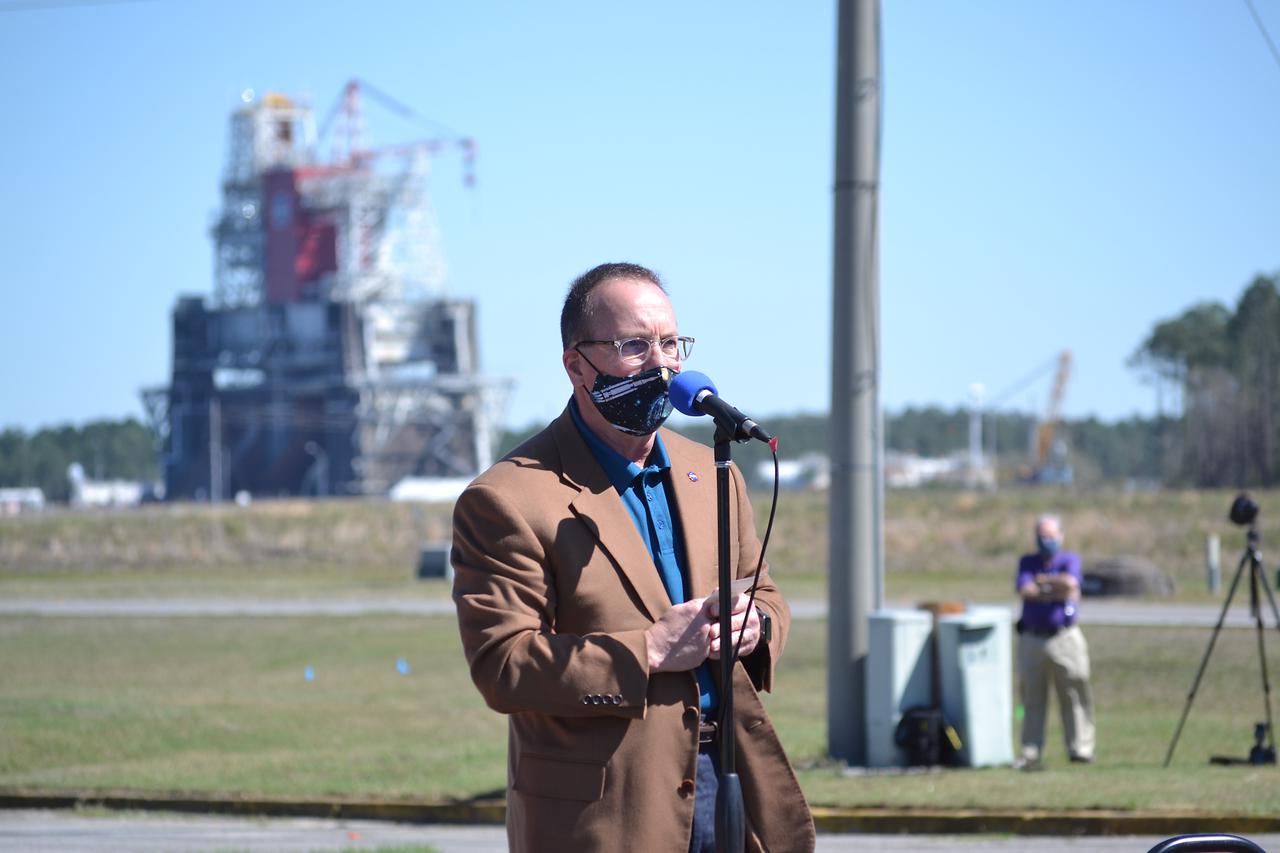
NASA conducts a hot fire test March 18, 2021, of the core stage for the agency’s Space Launch System rocket on the B-2 Test Stand at Stennis Space Center near Bay St. Louis, Mississippi. The hot fire test of the stage’s four RS-25 engines generated a combined 1.6 million pounds of thrust, just as will occur during an actual launch. The hot fire is the final test of the Green Run test series, which represents a comprehensive assessment of the core stage and its integrated systems prior to its launch on the Artemis I mission to the Moon.

NASA conducts a hot fire test March 18, 2021, of the core stage for the agency’s Space Launch System rocket on the B-2 Test Stand at Stennis Space Center near Bay St. Louis, Mississippi. The hot fire test of the stage’s four RS-25 engines generated a combined 1.6 million pounds of thrust, just as will occur during an actual launch. The hot fire is the final test of the Green Run test series, which represents a comprehensive assessment of the core stage and its integrated systems prior to its launch on the Artemis I mission to the Moon.
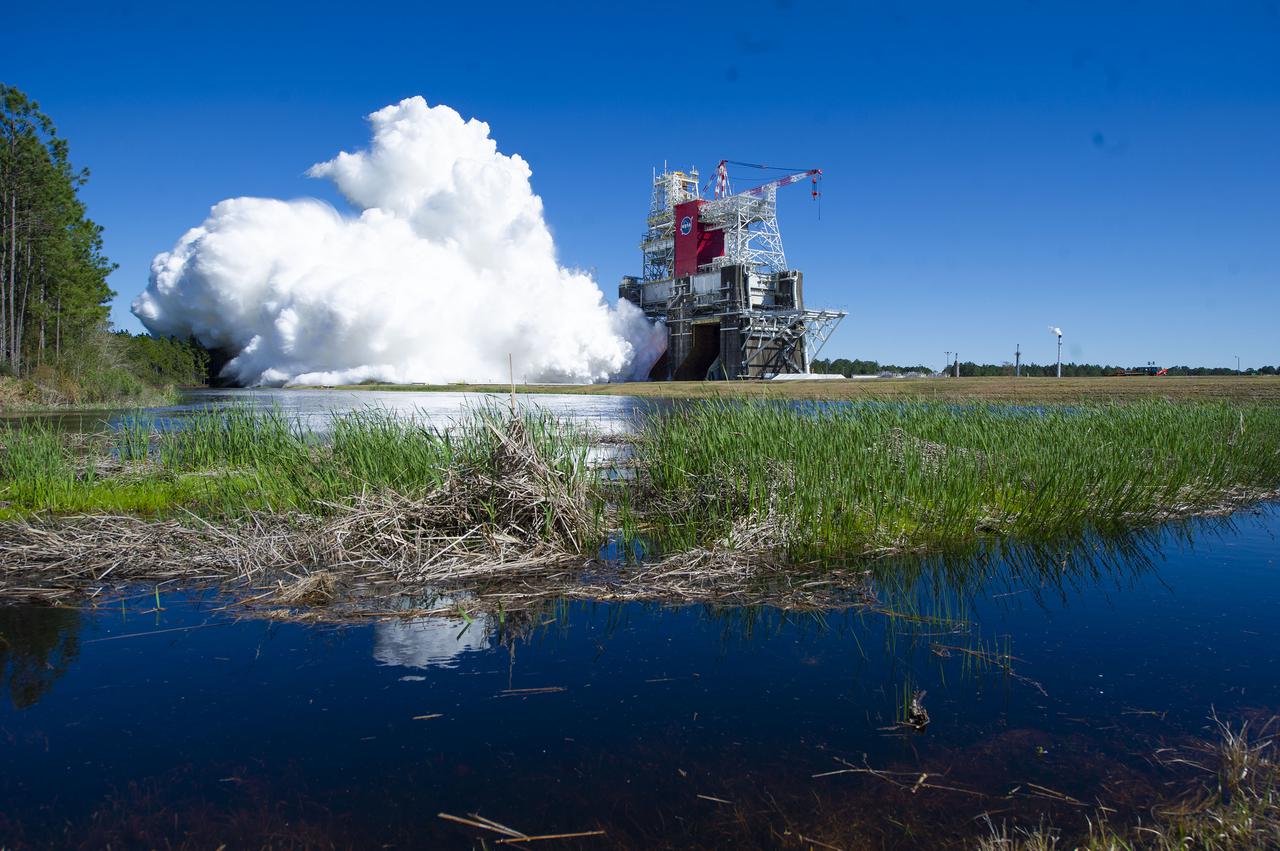
NASA conducts a hot fire test March 18, 2021, of the core stage for the agency’s Space Launch System rocket on the B-2 Test Stand at Stennis Space Center near Bay St. Louis, Mississippi. The hot fire test of the stage’s four RS-25 engines generated a combined 1.6 million pounds of thrust, just as will occur during an actual launch. The hot fire is the final test of the Green Run test series, which represents a comprehensive assessment of the core stage and its integrated systems prior to its launch on the Artemis I mission to the Moon.
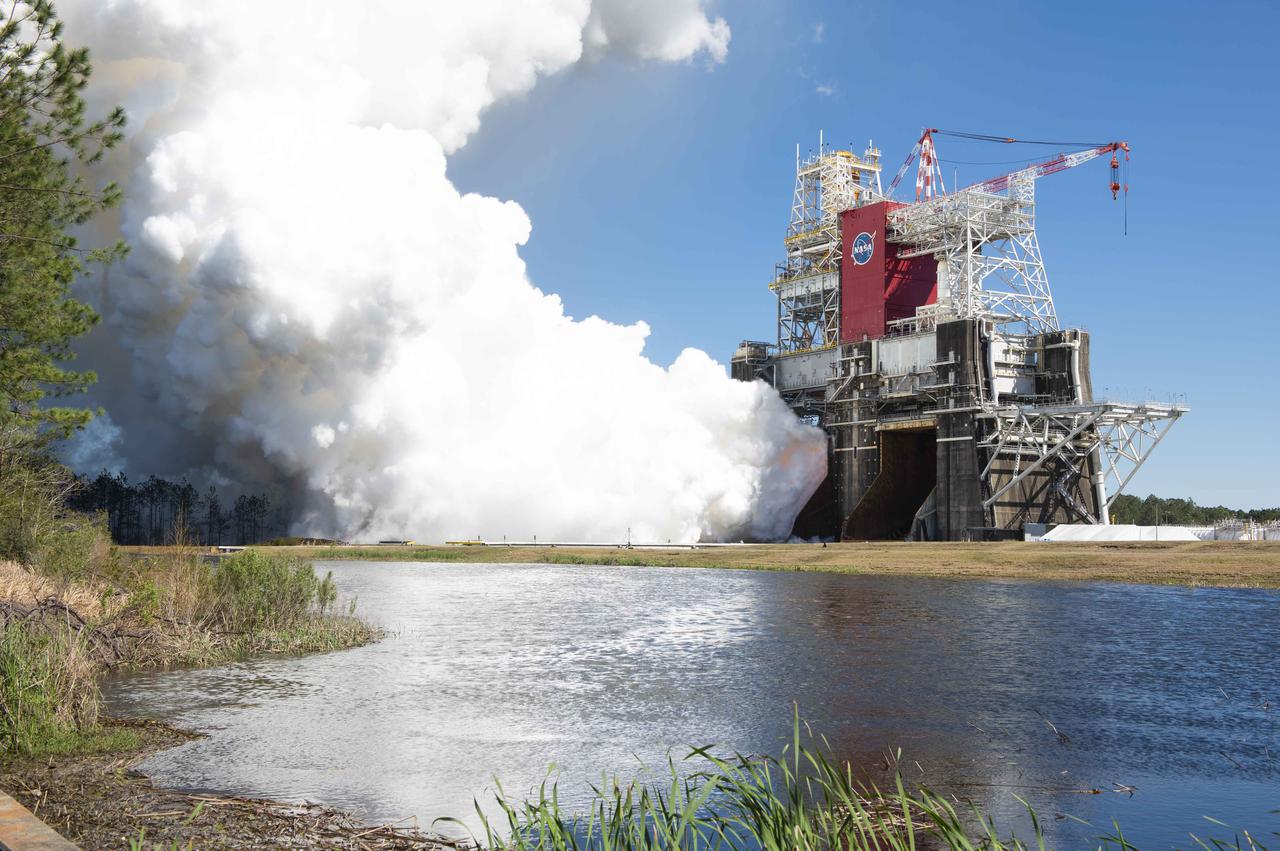
NASA conducts a hot fire test March 18, 2021, of the core stage for the agency’s Space Launch System rocket on the B-2 Test Stand at Stennis Space Center near Bay St. Louis, Mississippi. The hot fire test of the stage’s four RS-25 engines generated a combined 1.6 million pounds of thrust, just as will occur during an actual launch. The hot fire is the final test of the Green Run test series, which represents a comprehensive assessment of the core stage and its integrated systems prior to its launch on the Artemis I mission to the Moon.
NASA conducts a hot fire test March 18, 2021, of the core stage for the agency’s Space Launch System rocket on the B-2 Test Stand at Stennis Space Center near Bay St. Louis, Mississippi. The hot fire test of the stage’s four RS-25 engines generated a combined 1.6 million pounds of thrust, just as will occur during an actual launch. The hot fire is the final test of the Green Run test series, which represents a comprehensive assessment of the core stage and its integrated systems prior to its launch on the Artemis I mission to the Moon.

NASA’s X-59 quiet supersonic research aircraft sits on the ramp during engine run testing on Thursday, March 12, 2026, at NASA’s Armstrong Flight Research Center in Edwards, California. Engine runs are one of the final tests before the aircraft is ready for its second flight. The data collected from the aircraft during upcoming flight tests could help inform future regulations for commercial supersonic travel over land.
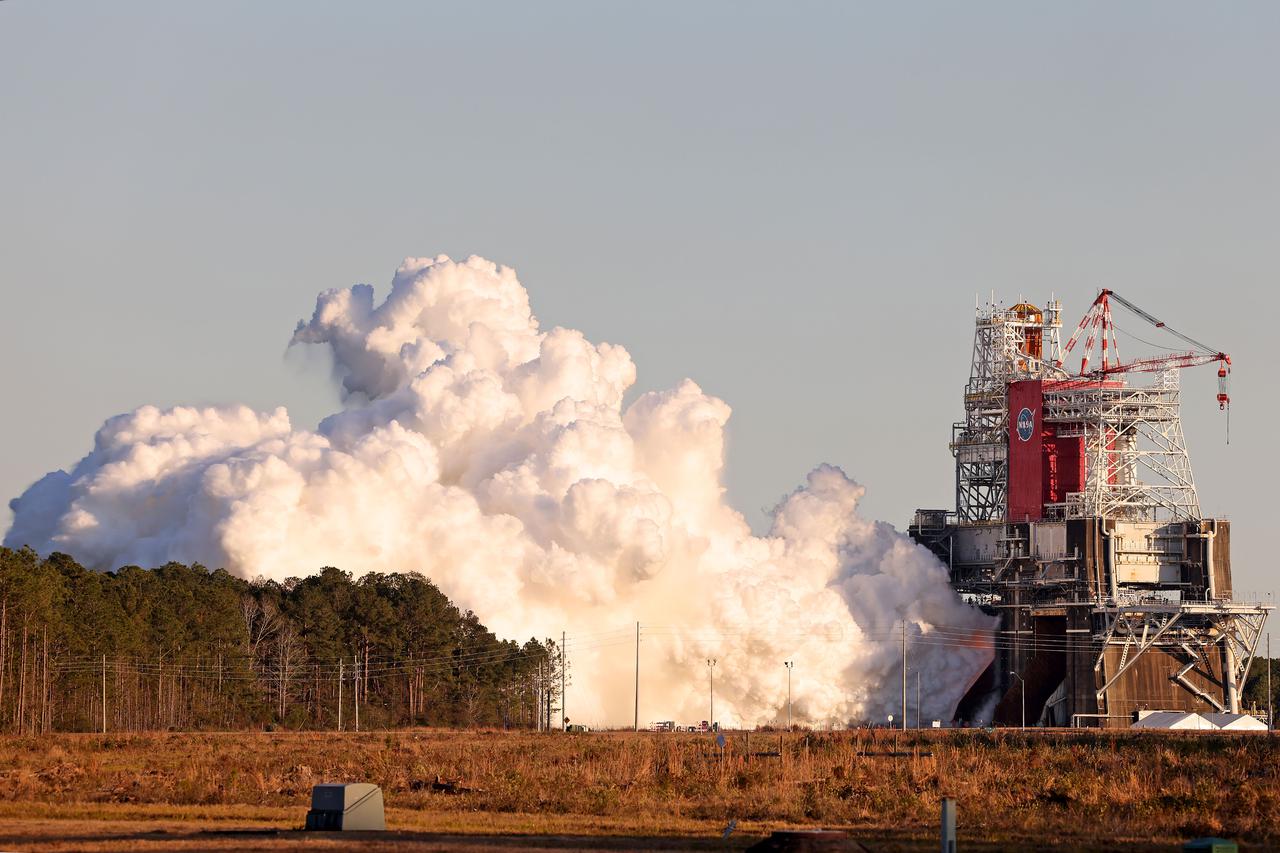
NASA conducts a hot fire test Jan. 16, 2021, of the core stage for the agency’s Space Launch System rocket on the B-2 Test Stand at Stennis Space Center near Bay St. Louis. The hot fire test of the stage’s four RS-25 engines generated a combined 1.6 million pounds of thrust, just as will occur during an actual launch. The hot fire is the final test of the Green Run test series, a comprehensive assessment of the SLS core stage prior to launching the Artemis I mission to the Moon.
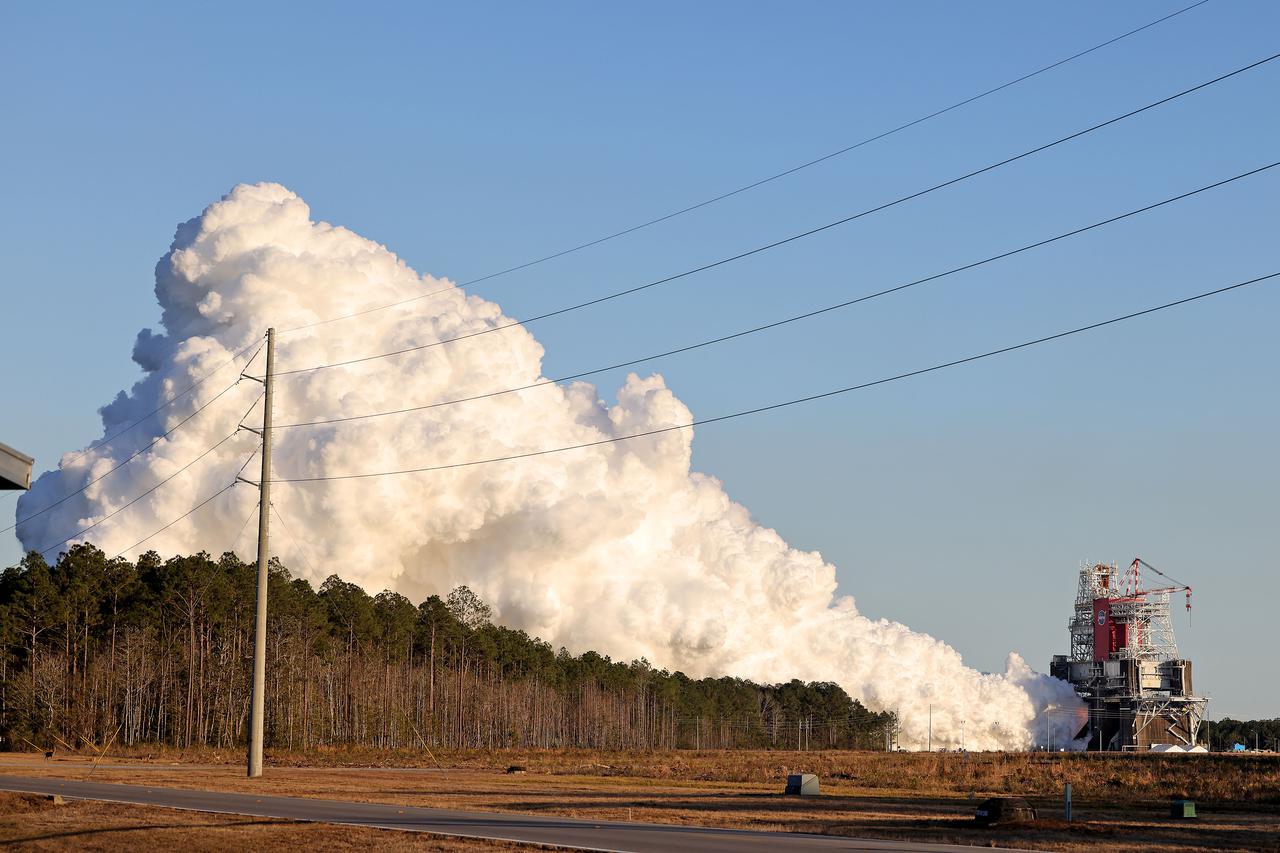
NASA conducts a hot fire test Jan. 16, 2021, of the core stage for the agency’s Space Launch System rocket on the B-2 Test Stand at Stennis Space Center near Bay St. Louis. The hot fire test of the stage’s four RS-25 engines generated a combined 1.6 million pounds of thrust, just as will occur during an actual launch. The hot fire is the final test of the Green Run test series, a comprehensive assessment of the SLS core stage prior to launching the Artemis I mission to the Moon.
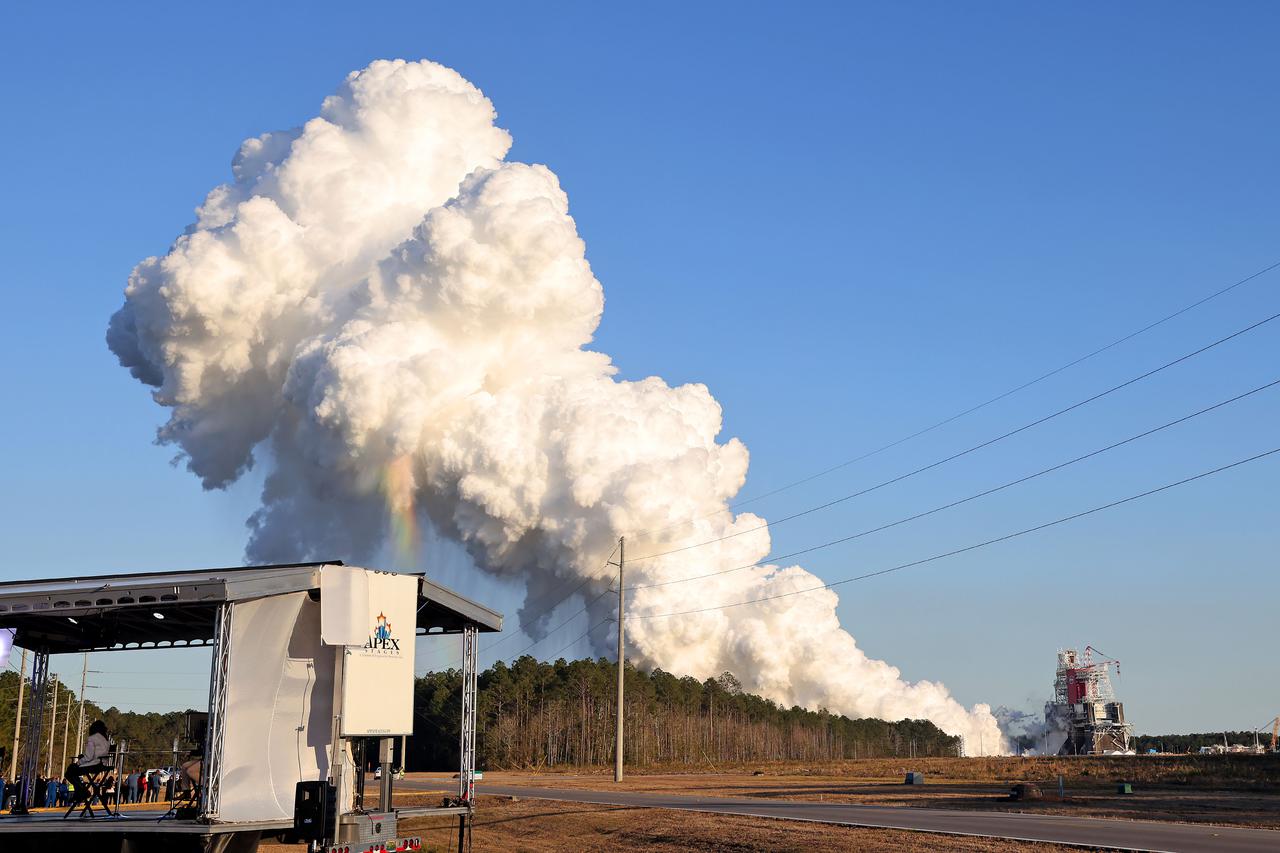
NASA conducts a hot fire test Jan. 16, 2021, of the core stage for the agency’s Space Launch System rocket on the B-2 Test Stand at Stennis Space Center near Bay St. Louis. The hot fire test of the stage’s four RS-25 engines generated a combined 1.6 million pounds of thrust, just as will occur during an actual launch. The hot fire is the final test of the Green Run test series, a comprehensive assessment of the SLS core stage prior to launching the Artemis I mission to the Moon.
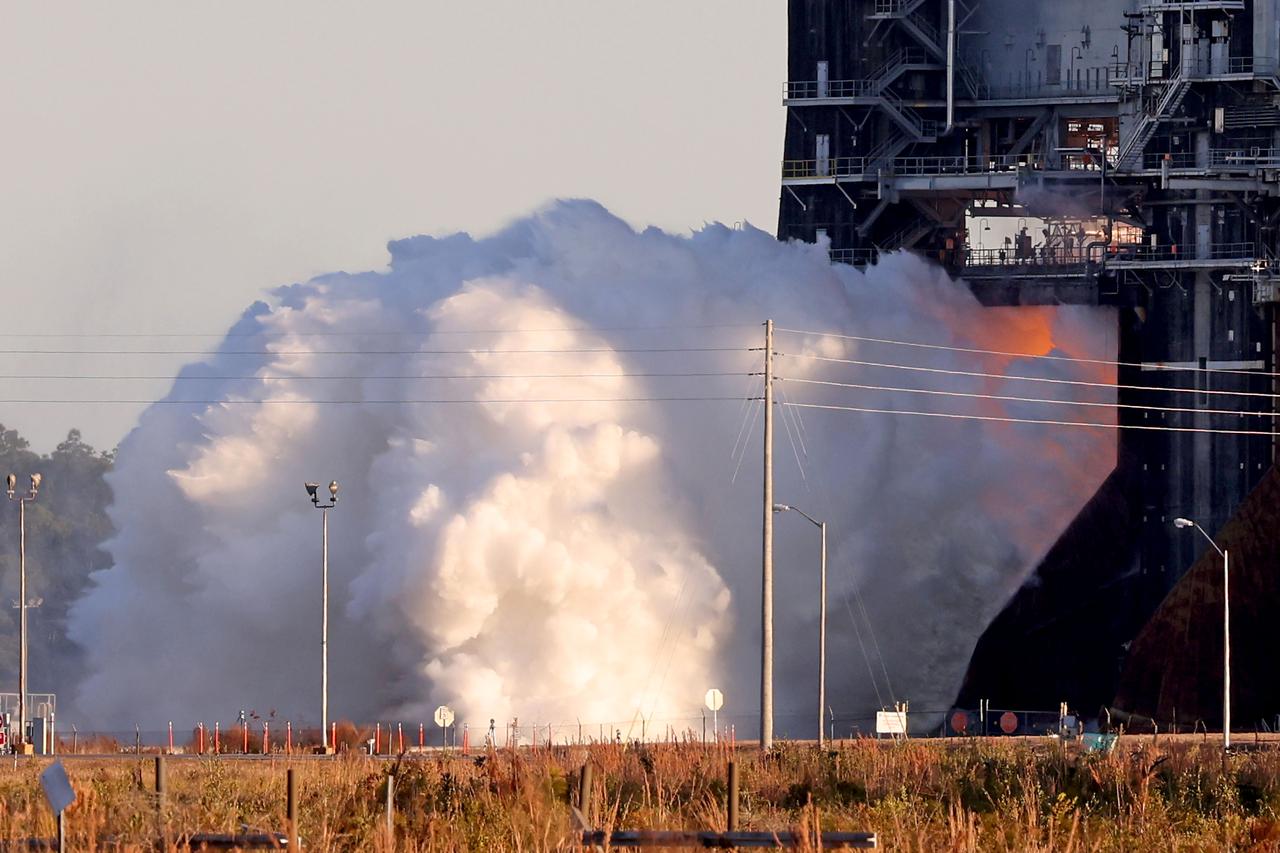
NASA conducts a hot fire test Jan. 16, 2021, of the core stage for the agency’s Space Launch System rocket on the B-2 Test Stand at Stennis Space Center near Bay St. Louis. The hot fire test of the stage’s four RS-25 engines generated a combined 1.6 million pounds of thrust, just as will occur during an actual launch. The hot fire is the final test of the Green Run test series, a comprehensive assessment of the SLS core stage prior to launching the Artemis I mission to the Moon.