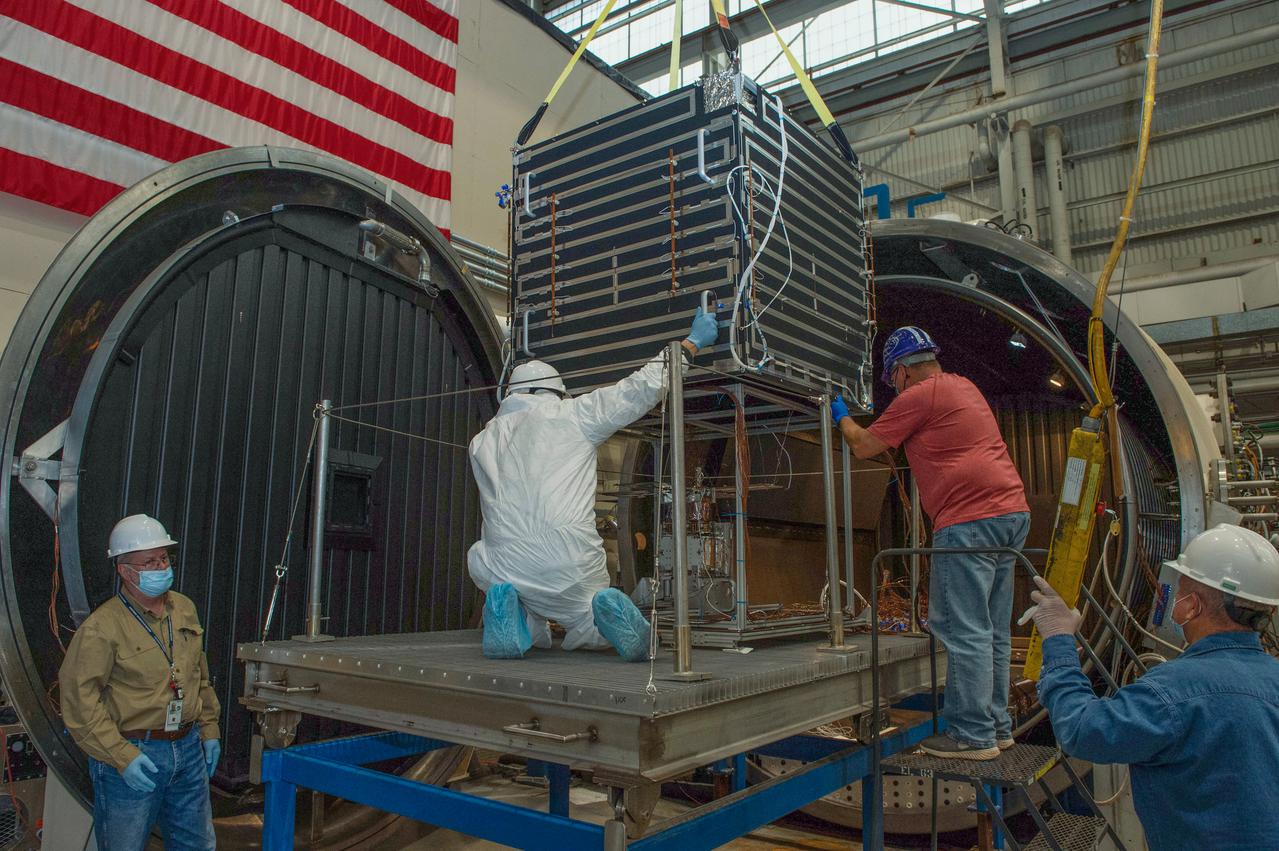
Opening Thermal Vacuum Chamber V15 to extract hot box containing NEA Scout spacecraft 2 of 2
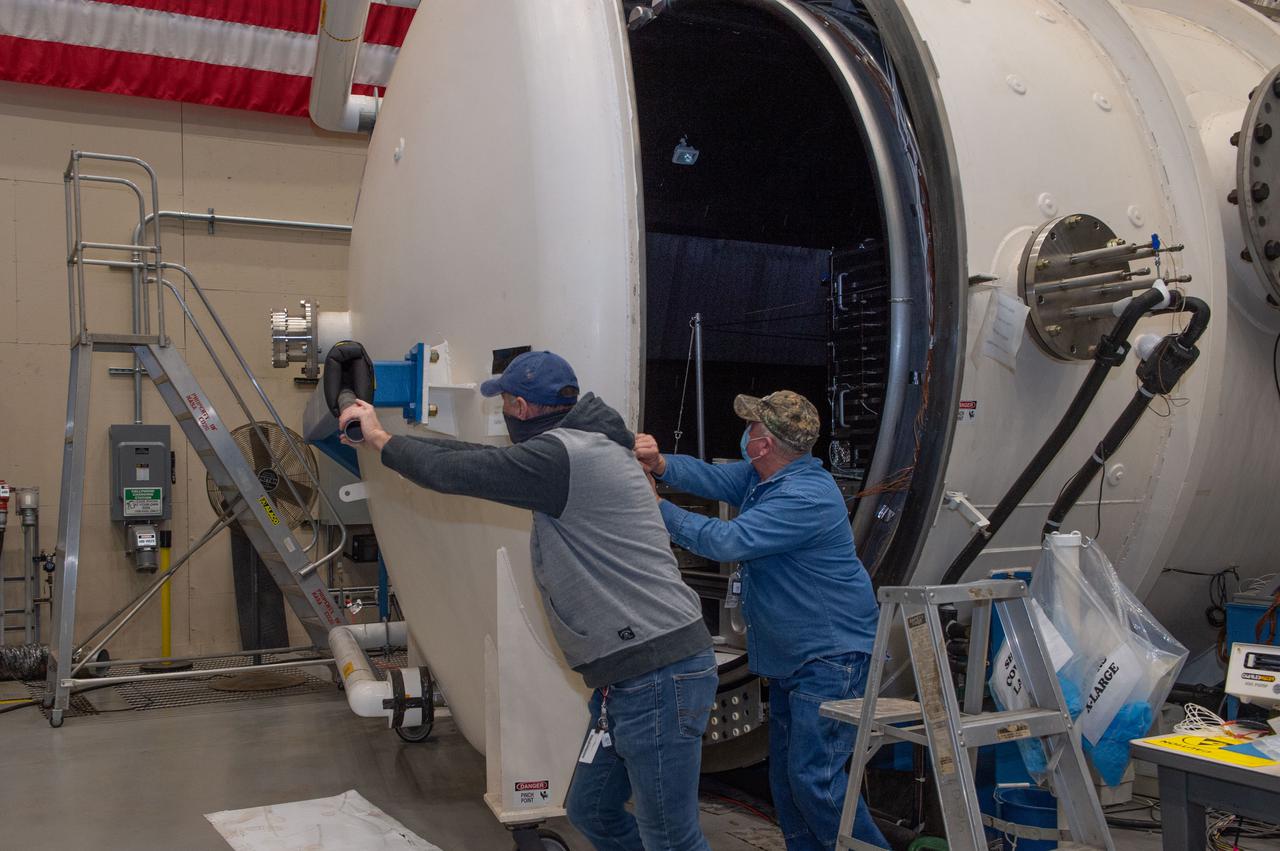
Opening Thermal Vacuum Chamber V15 to extract hot box containing NEA Scout spacecraft.
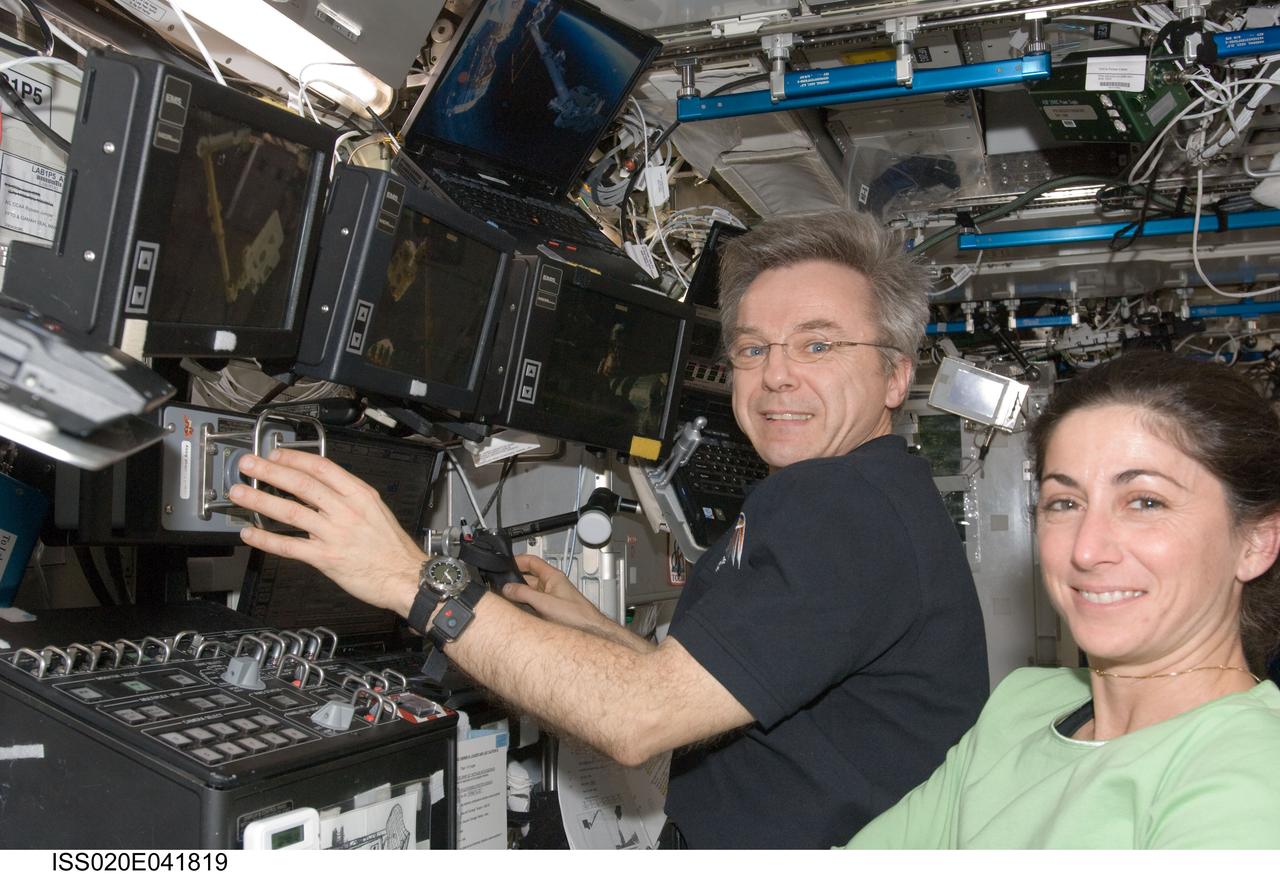
ISS020-E-041819 (23 Sept. 2009) --- Canadian Space Agency astronaut Robert Thirsk and NASA astronaut Nicole Stott, both Expedition 20 flight engineers, work the controls of the Canadarm2 in the Destiny laboratory of the International Space Station. Thirsk and Stott used the station?s robotic arm to release and extract the Exposed Pallet (EP) from the Unpressurized Logistics Carrier (ULC) to hand over to the JEM Robotic Manipulator System (JEM-RMS) and berth to the JEM Exposed Facility / Exposed Facility Unit 10 (JEF EFU10).
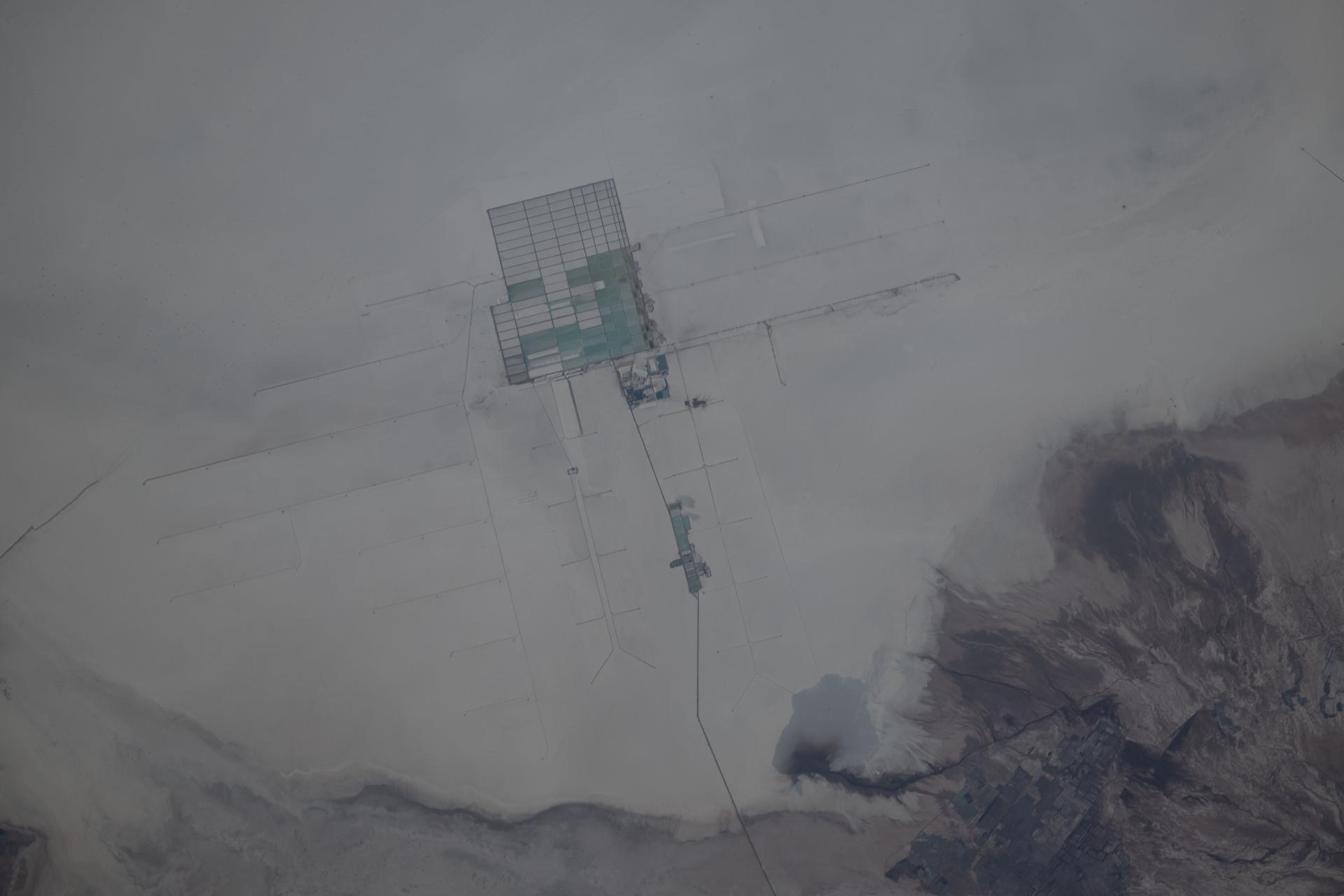
iss074e0796207 (July 7, 2026) --- A lithium extraction facility in Bolivia's Salar de Uyuni, the world's largest salt flat and the flattest surface on Earth, is pictured from the International Space Station as it orbited 263 miles above the South American nation. Credit: NASA/Chris Williams
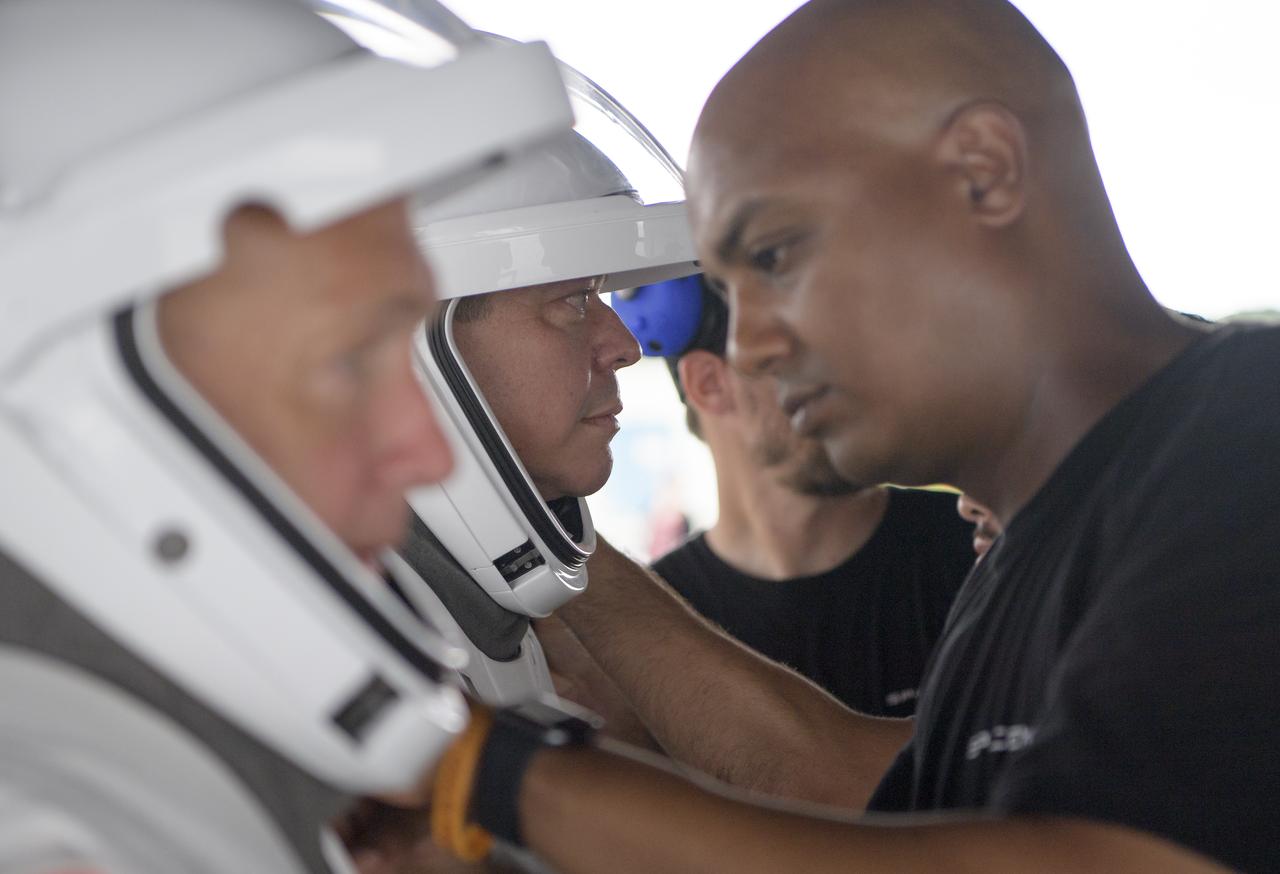
NASA astronauts Doug Hurley, left, and Bob Behnken work with teams from NASA and SpaceX to rehearse crew extraction from SpaceX’s Crew Dragon, which will be used to carry humans to the International Space Station, on August 13, 2019 at the Trident Basin in Cape Canaveral, Florida. Using the Go Searcher ship SpaceX uses to recover their spacecraft after splashdown and a mock-up of the Crew Dragon, the teams worked through the steps necessary to get NASA astronauts Doug Hurley and Bob Behnken out of the Dragon and back to dry land. Hurley and Behnken will fly to the space station aboard the Crew Dragon for the SpaceX Demo-2 mission. Photo Credit: (NASA/Bill Ingalls)
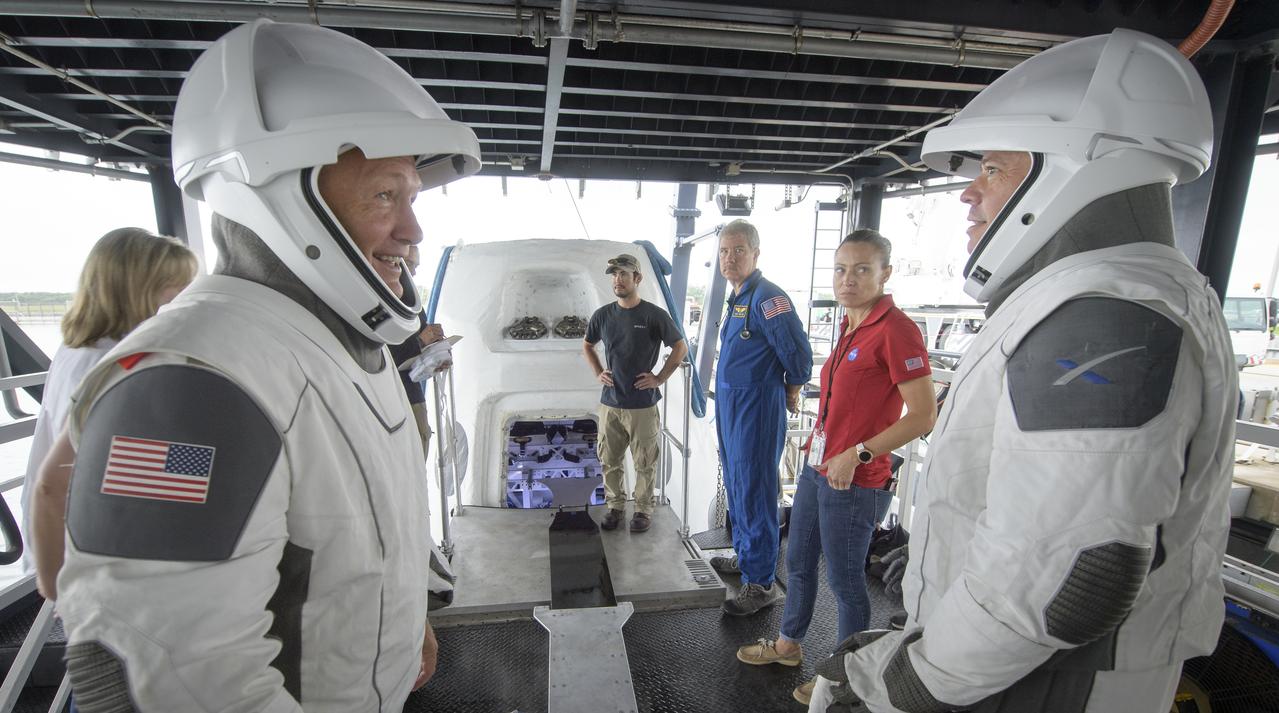
NASA astronauts Doug Hurley, left, and Bob Behnken work with teams from NASA and SpaceX to rehearse crew extraction from SpaceX’s Crew Dragon, which will be used to carry humans to the International Space Station, on August 13, 2019 at the Trident Basin in Cape Canaveral, Florida. Using the Go Searcher ship SpaceX uses to recover their spacecraft after splashdown and a mock-up of the Crew Dragon, the teams worked through the steps necessary to get NASA astronauts Doug Hurley and Bob Behnken out of the Dragon and back to dry land. Hurley and Behnken will fly to the space station aboard the Crew Dragon for the SpaceX Demo-2 mission. Photo Credit: (NASA/Bill Ingalls)
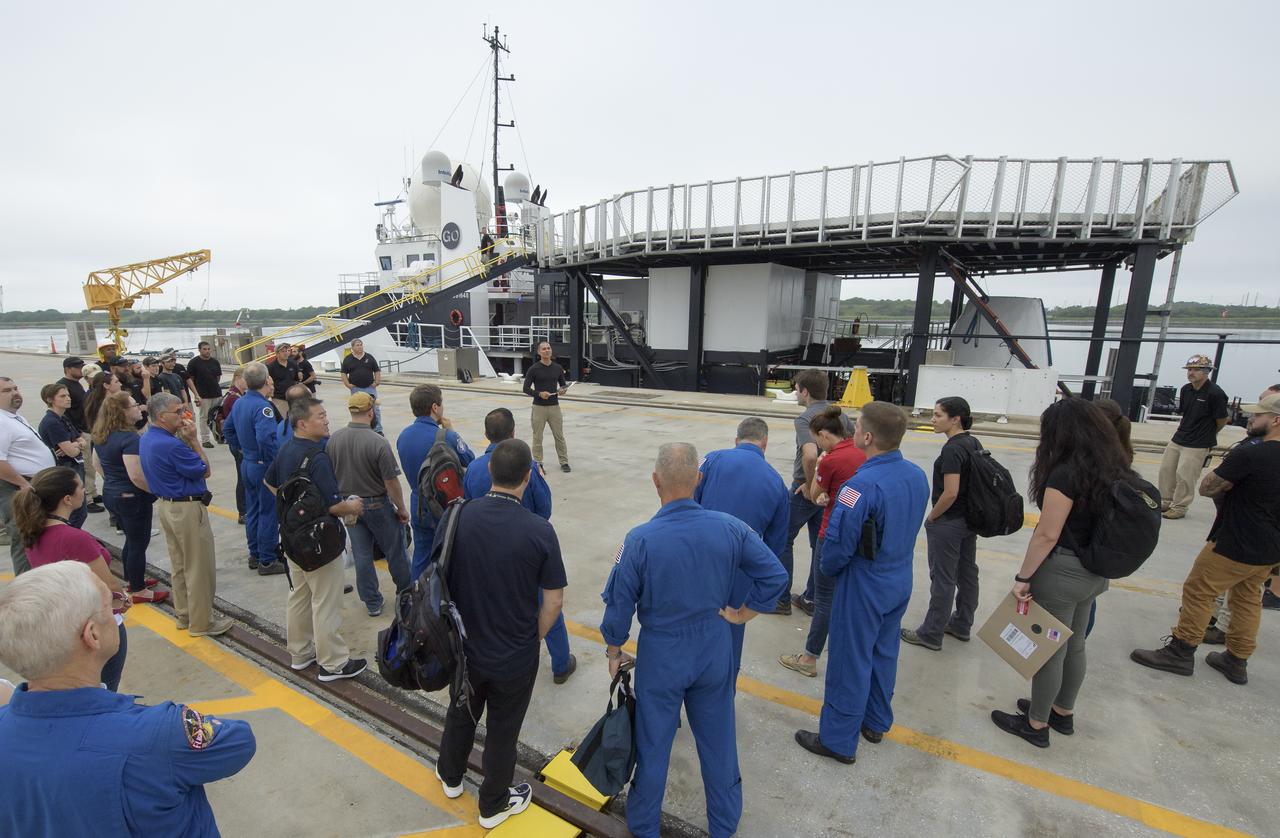
Teams from NASA and SpaceX gather at the Trident Basin in Cape Canaveral, Florida, on August 13, 2019 to rehearse extracting astronauts from SpaceX’s Crew Dragon, which will be used to carry humans to the International Space Station. Using the Go Searcher ship SpaceX uses to recover their spacecraft after splashdown and a mock-up of the Crew Dragon, the teams worked through the steps necessary to get NASA astronauts Doug Hurley and Bob Behnken out of the Dragon and back to dry land. Hurley and Behnken will fly to the space station aboard the Crew Dragon for the SpaceX Demo-2 mission. Photo Credit: (NASA/Bill Ingalls)
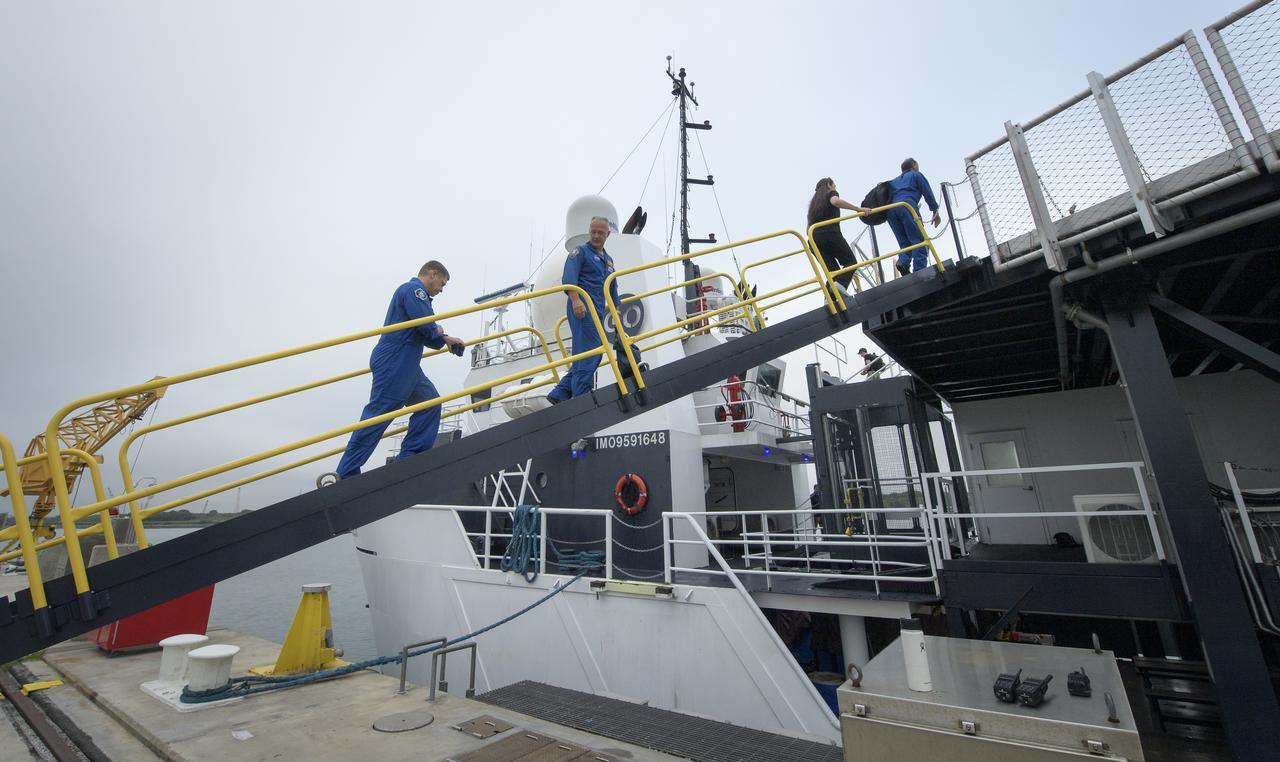
NASA astronauts Bob Behnken, left, and Doug Hurley board the SpaceX GO Searcher ship at the Trident Basin in Cape Canaveral, Florida, on August 13, 2019 to rehearse extracting astronauts from SpaceX’s Crew Dragon, which will be used to carry humans to the International Space Station. Using the Go Searcher ship SpaceX uses to recover their spacecraft after splashdown and a mock-up of the Crew Dragon, the teams worked through the steps necessary to get NASA astronauts Doug Hurley and Bob Behnken out of the Dragon and back to dry land. Hurley and Behnken will fly to the space station aboard the Crew Dragon for the SpaceX Demo-2 mission. Photo Credit: (NASA/Bill Ingalls)
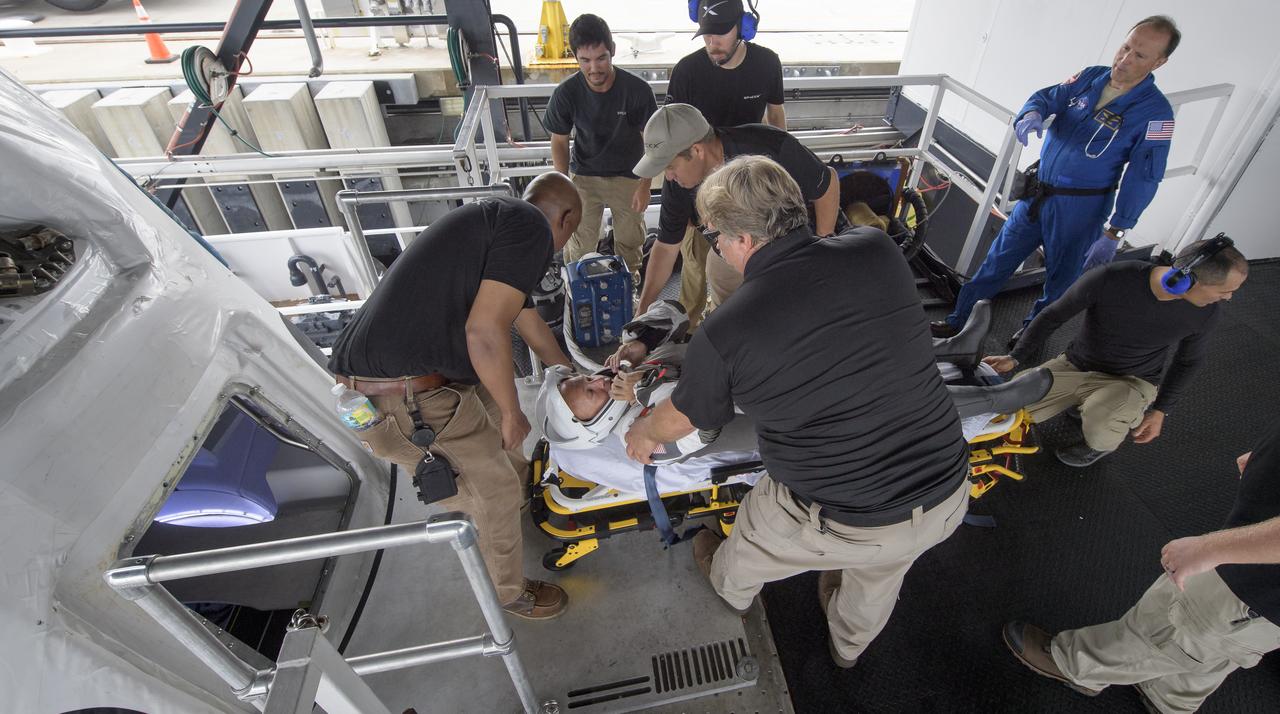
NASA astronaut Doug Hurley, along with teams from NASA and SpaceX, rehearse crew extraction from SpaceX’s Crew Dragon, which will be used to carry humans to the International Space Station, on August 13, 2019 at the Trident Basin in Cape Canaveral, Florida. Using the Go Searcher ship SpaceX uses to recover their spacecraft after splashdown and a mock-up of the Crew Dragon, the teams worked through the steps necessary to get NASA astronauts Doug Hurley and Bob Behnken out of the Dragon and back to dry land. Hurley and Behnken will fly to the space station aboard the Crew Dragon for the SpaceX Demo-2 mission. Photo Credit: (NASA/Bill Ingalls)
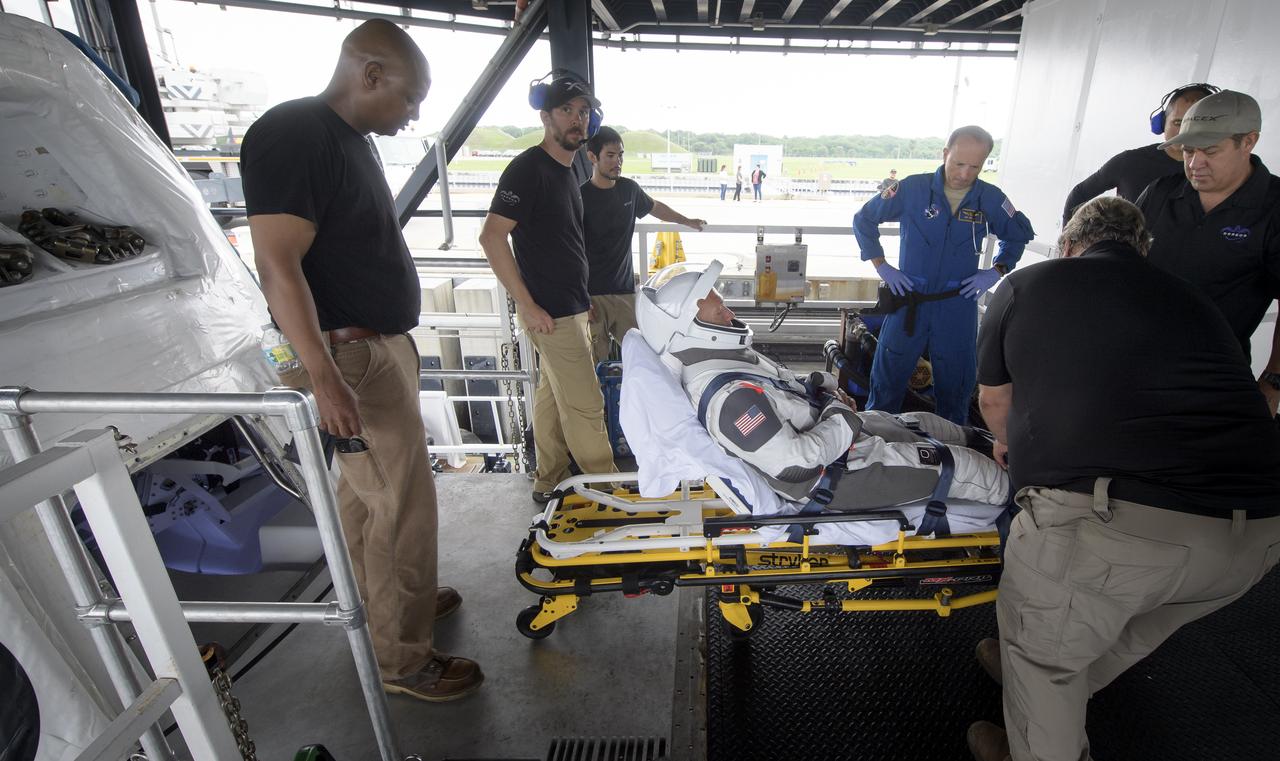
NASA astronaut Doug Hurley, along with teams from NASA and SpaceX, rehearse crew extraction from SpaceX’s Crew Dragon, which will be used to carry humans to the International Space Station, on August 13, 2019 at the Trident Basin in Cape Canaveral, Florida. Using the Go Searcher ship SpaceX uses to recover their spacecraft after splashdown and a mock-up of the Crew Dragon, the teams worked through the steps necessary to get NASA astronauts Doug Hurley and Bob Behnken out of the Dragon and back to dry land. Hurley and Behnken will fly to the space station aboard the Crew Dragon for the SpaceX Demo-2 mission. Photo Credit: (NASA/Bill Ingalls)
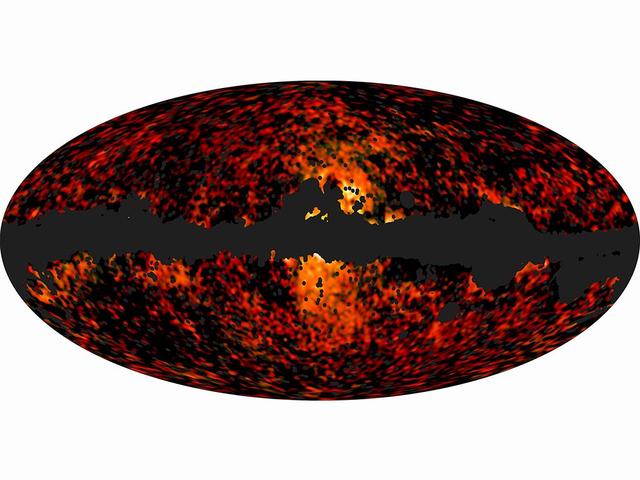
This all-sky image shows the spatial distribution over the whole sky of the galactic haze at 30 and 44 GHz, extracted from the Planck observations.
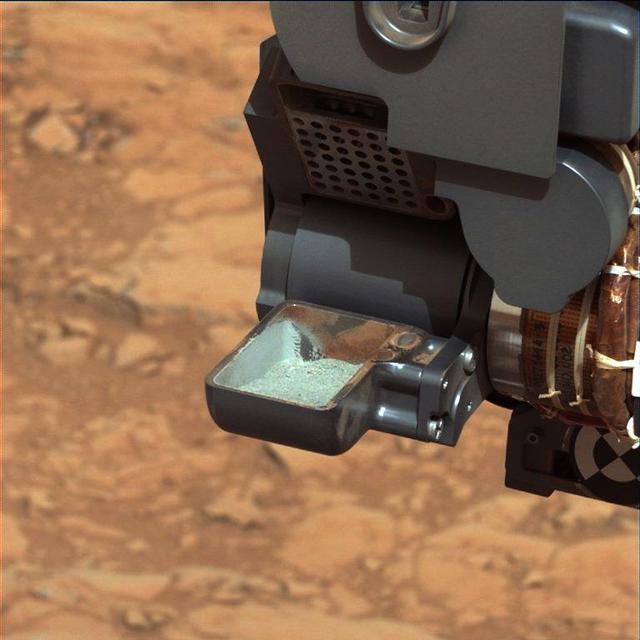
NASA Curiosity rover shows the first sample of powdered rock extracted by the rover drill. The image was taken after the sample was transferred from the drill to the rover scoop.
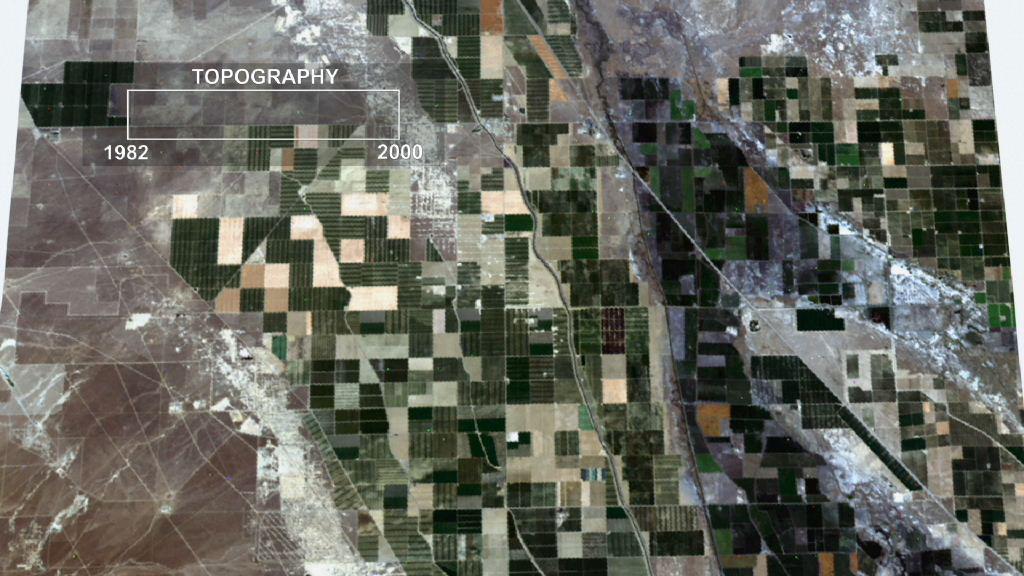
This frame from an animation depicts ground subsidence resulting from the extraction of oil. The oil fields are located near the community of Lost Hills, California, approximately 100 km northwest of Bakersfield.
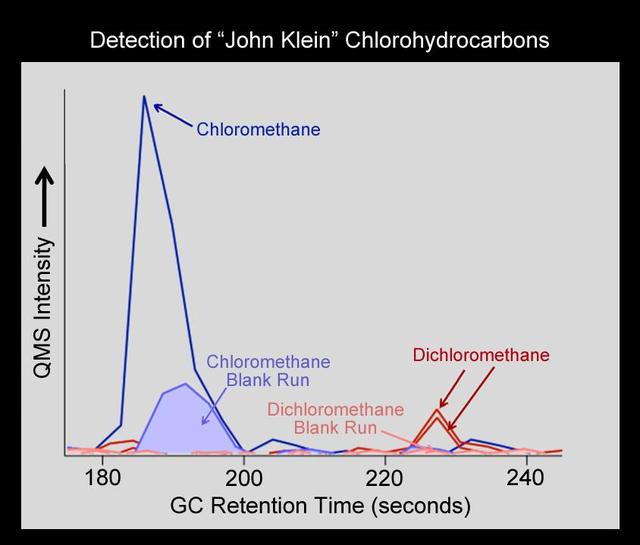
NASA Curiosity rover has detected the simple carbon-containing compounds chloro- and dichloromethane from the powdered rock sample extracted from the John Klein rock on Mars.
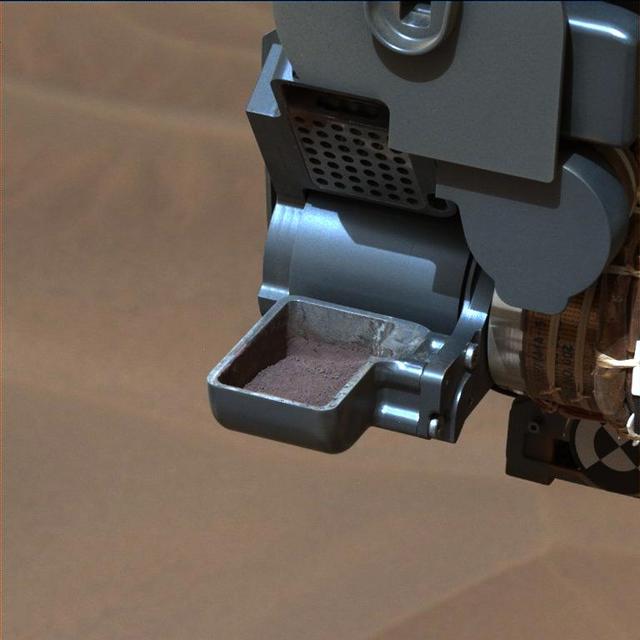
This image from NASA Curiosity rover shows a sample of powdered rock extracted by the rover drill from the Confidence Hills target -- the first rock drilled after Curiosity reached the base of Mount Sharp in September 2014.
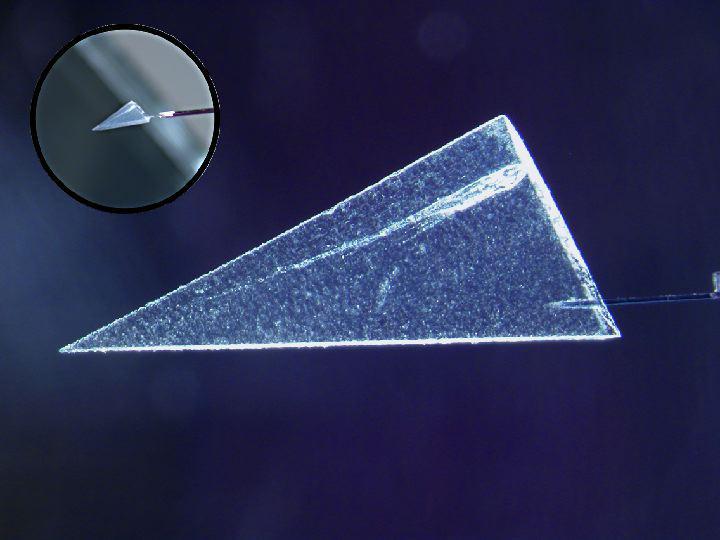
This image illustrates one of several ways scientists have begun extracting comet particles from NASAa Stardust spacecraft collector. First, a particle and its track are cut out of the collector material, called aerogel.

One investigation on NASA's Mars 2020 rover will extract oxygen from the Martian atmosphere. It is called MOXIE, for Mars Oxygen In-Situ Resource Utilization Experiment. In this image, MOXIE Principal Investigator Michael Hecht, of the Massachusetts Institute of Technology, Cambridge, is in the MOXIE development laboratory at NASA's Jet Propulsion Laboratory, Pasadena, California. Mars' atmosphere is mostly carbon dioxide. Demonstration of the capability for extracting oxygen from it, under Martian environmental conditions, will be a pioneering step toward how humans on Mars will use the Red Planet's natural resources. Oxygen can be used in the rocket http://photojournal.jpl.nasa.gov/catalog/PIA20761
Engineers conduct testing of the Molten Regolith Electrolysis (MRE) inside a laboratory in the Neil A. Armstrong Operations and Checkout Building at NASA’s Kennedy Space Center in Florida on Aug. 30, 2022. This is a high-temperature electrolytic process which aims to extract oxygen from the simulated lunar regolith. Extraction of oxygen on the lunar surface is critical to the agency’s Artemis program. Oxygen extracted from the Moon can be utilized for propellent to NASA’s lunar landers., breathable oxygen for astronauts, and a variety of other industrial and scientific applications for NASA’s future missions to the Moon.
Inside a laboratory in the Neil Armstrong Operations and Checking Building at NASA’s Kennedy Space Center in Florida, testing is underway on the Molten Regolith Electrolysis (MRE) on Sept. 13, 2022. This is a high-temperature electrolytic process which aims to extract oxygen from the simulated lunar regolith. Extraction of oxygen on the lunar surface is critical to the agency’s Artemis program. Oxygen extracted from the Moon can be utilized for propellent to NASA’s lunar landers., breathable oxygen for astronauts, and a variety of other industrial and scientific applications for NASA’s future missions to the Moon.

Inside a laboratory in the Neil Armstrong Operations and Checking Building at NASA’s Kennedy Space Center in Florida, testing is underway on the Molten Regolith Electrolysis (MRE) on Sept. 13, 2022. This is a high-temperature electrolytic process which aims to extract oxygen from the simulated lunar regolith. Extraction of oxygen on the lunar surface is critical to the agency’s Artemis program. Oxygen extracted from the Moon can be utilized for propellent to NASA’s lunar landers., breathable oxygen for astronauts, and a variety of other industrial and scientific applications for NASA’s future missions to the Moon.
An engineer conducts testing of the Molten Regolith Electrolysis (MRE) inside a laboratory in the Neil Armstrong Operations and Checkout Building at NASA’s Kennedy Space Center in Florida on Sept. 13, 2022. This is a high-temperature electrolytic process which aims to extract oxygen from the simulated lunar regolith. Extraction of oxygen on the lunar surface is critical to the agency’s Artemis program. Oxygen extracted from the Moon can be utilized for propellent to NASA’s lunar landers., breathable oxygen for astronauts, and a variety of other industrial and scientific applications for NASA’s future missions to the Moon.
Inside a laboratory in the Neil A. Armstrong Operations and Checking Building at NASA’s Kennedy Space Center in Florida, testing is underway on the Molten Regolith Electrolysis (MRE) on Aug. 30, 2022. This is a high-temperature electrolytic process which aims to extract oxygen from the simulated lunar regolith. Extraction of oxygen on the lunar surface is critical to the agency’s Artemis program. Oxygen extracted from the Moon can be utilized for propellent to NASA’s lunar landers., breathable oxygen for astronauts, and a variety of other industrial and scientific applications for NASA’s future missions to the Moon.

An engineer conducts testing of the Molten Regolith Electrolysis (MRE) inside a laboratory in the Neil A. Armstrong Operations and Checkout Building at NASA’s Kennedy Space Center in Florida on Aug. 30, 2022. This is a high-temperature electrolytic process which aims to extract oxygen from the simulated lunar regolith. Extraction of oxygen on the lunar surface is critical to the agency’s Artemis program. Oxygen extracted from the Moon can be utilized for propellent to NASA’s lunar landers., breathable oxygen for astronauts, and a variety of other industrial and scientific applications for NASA’s future missions to the Moon.
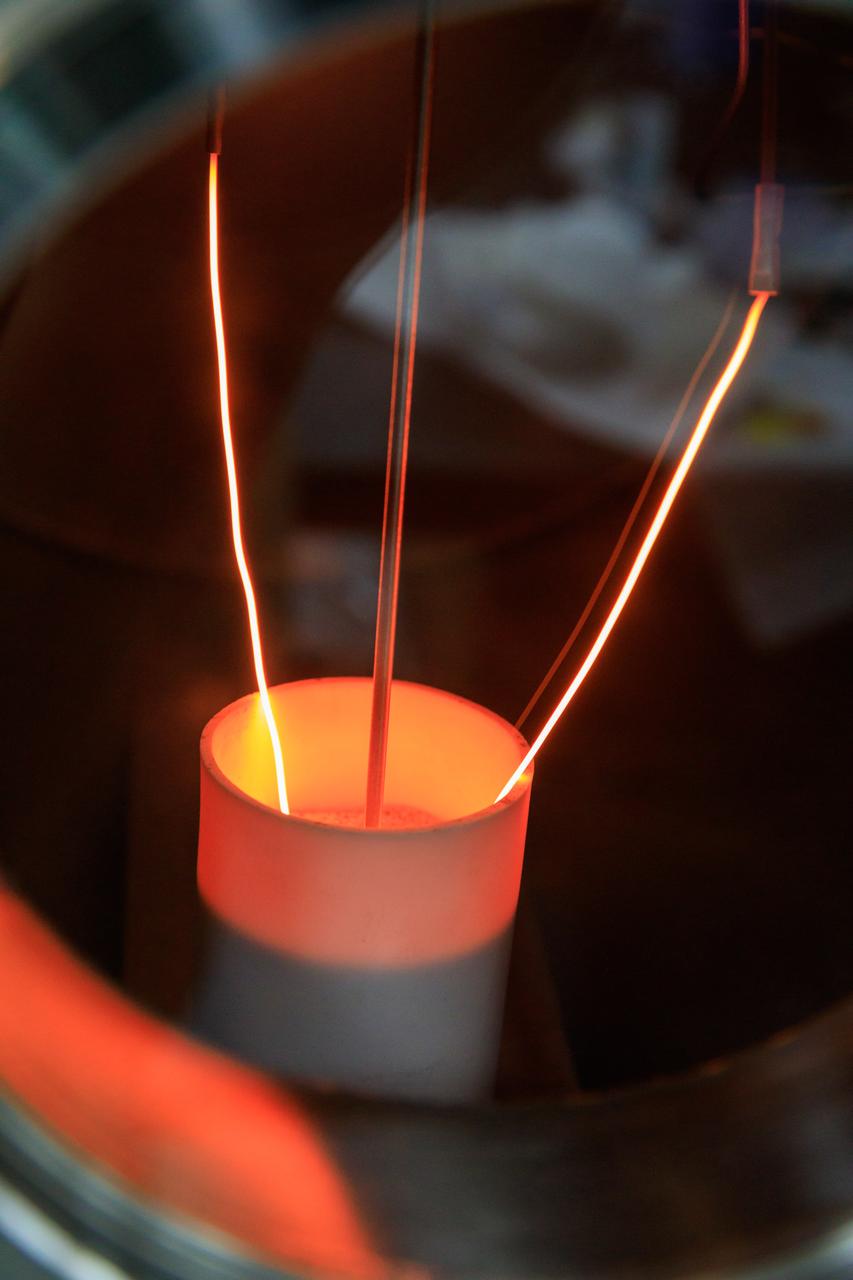
Inside a laboratory in the Neil Armstrong Operations and Checking Building at NASA’s Kennedy Space Center in Florida, testing is underway on the Molten Regolith Electrolysis (MRE) on Sept. 13, 2022. This is a high-temperature electrolytic process which aims to extract oxygen from the simulated lunar regolith. Extraction of oxygen on the lunar surface is critical to the agency’s Artemis program. Oxygen extracted from the Moon can be utilized for propellent to NASA’s lunar landers., breathable oxygen for astronauts, and a variety of other industrial and scientific applications for NASA’s future missions to the Moon.
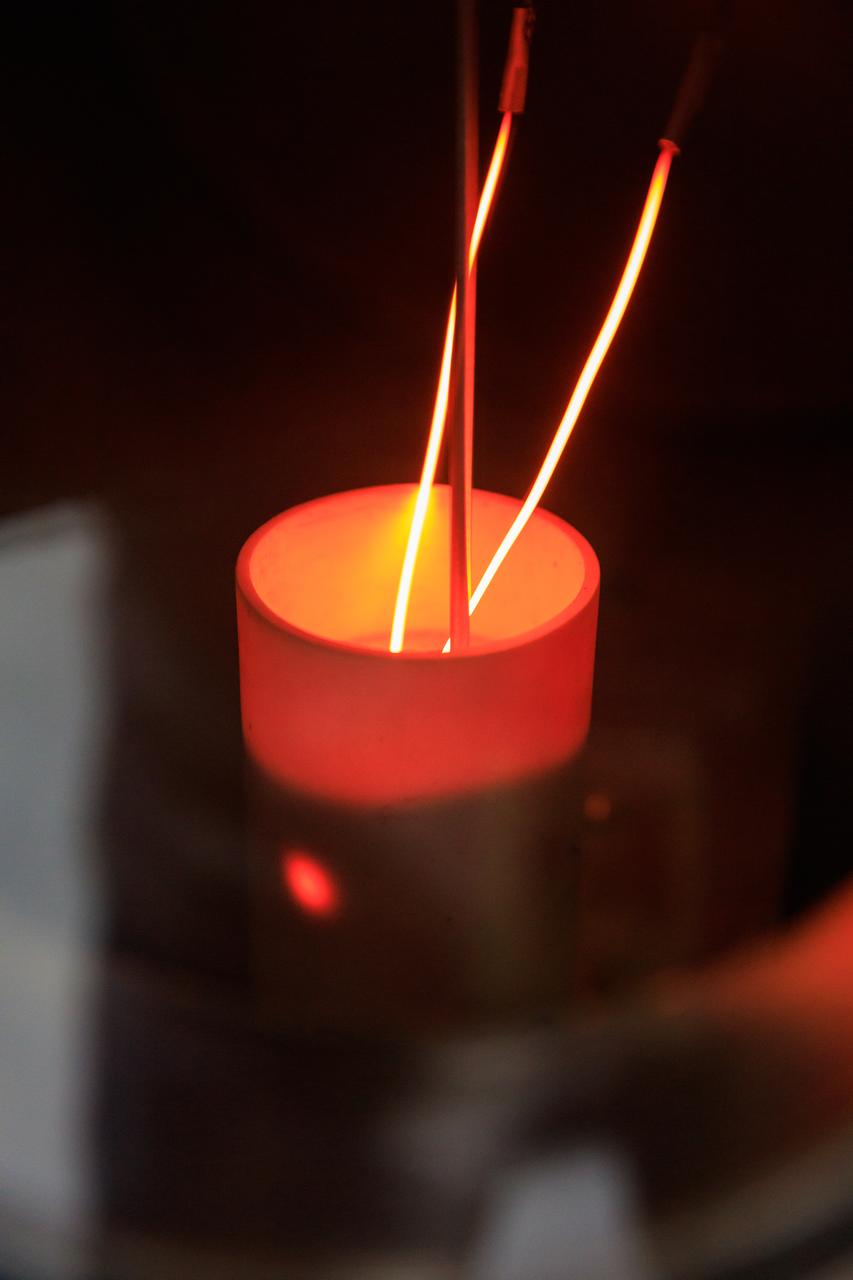
Inside a laboratory in the Neil A. Armstrong Operations and Checking Building at NASA’s Kennedy Space Center in Florida, testing is underway on the Molten Regolith Electrolysis (MRE) on Aug. 30, 2022. This is a high-temperature electrolytic process which aims to extract oxygen from the simulated lunar regolith. Extraction of oxygen on the lunar surface is critical to the agency’s Artemis program. Oxygen extracted from the Moon can be utilized for propellent to NASA’s lunar landers., breathable oxygen for astronauts, and a variety of other industrial and scientific applications for NASA’s future missions to the Moon.
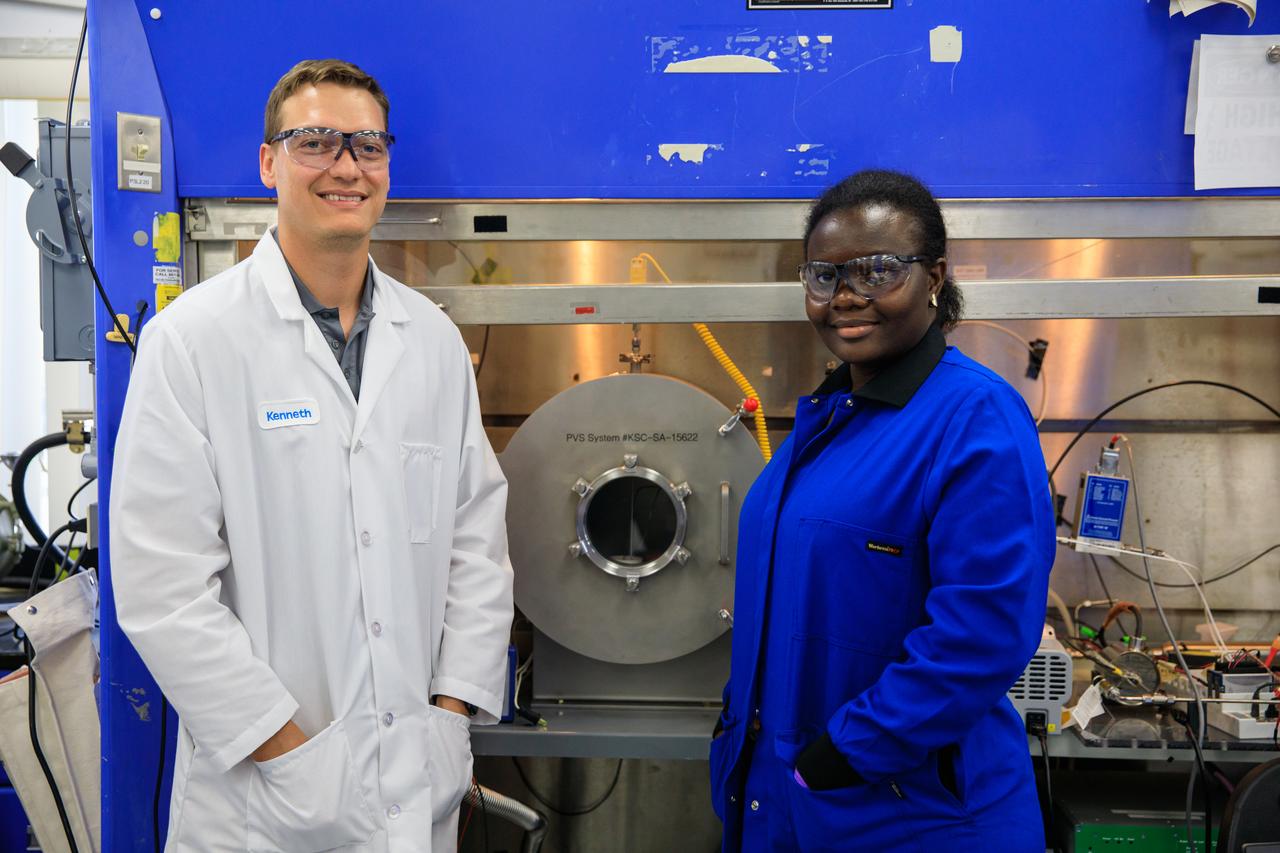
Engineers conduct testing of the Molten Regolith Electrolysis (MRE) inside a laboratory in the Neil A. Armstrong Operations and Checkout Building at NASA’s Kennedy Space Center in Florida on Aug. 30, 2022. This is a high-temperature electrolytic process which aims to extract oxygen from the simulated lunar regolith. Extraction of oxygen on the lunar surface is critical to the agency’s Artemis program. Oxygen extracted from the Moon can be utilized for propellent to NASA’s lunar landers., breathable oxygen for astronauts, and a variety of other industrial and scientific applications for NASA’s future missions to the Moon.

An engineer conducts testing of the Molten Regolith Electrolysis (MRE) inside a laboratory in the Neil A. Armstrong Operations and Checkout Building at NASA’s Kennedy Space Center in Florida on Aug. 30, 2022. This is a high-temperature electrolytic process which aims to extract oxygen from the simulated lunar regolith. Extraction of oxygen on the lunar surface is critical to the agency’s Artemis program. Oxygen extracted from the Moon can be utilized for propellent to NASA’s lunar landers., breathable oxygen for astronauts, and a variety of other industrial and scientific applications for NASA’s future missions to the Moon.
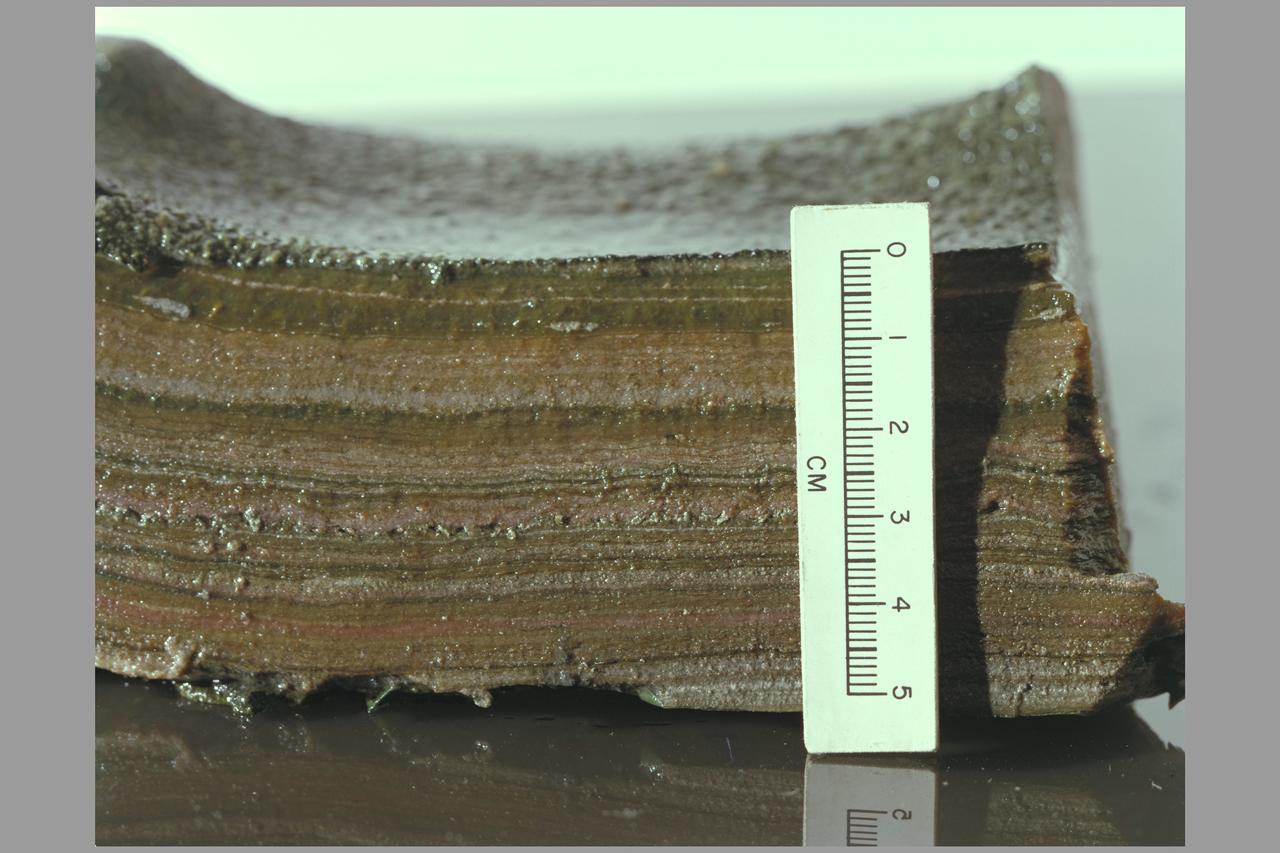
Origin of Life: Stromatolites Microbial Mats and Mat-Layer Extracts
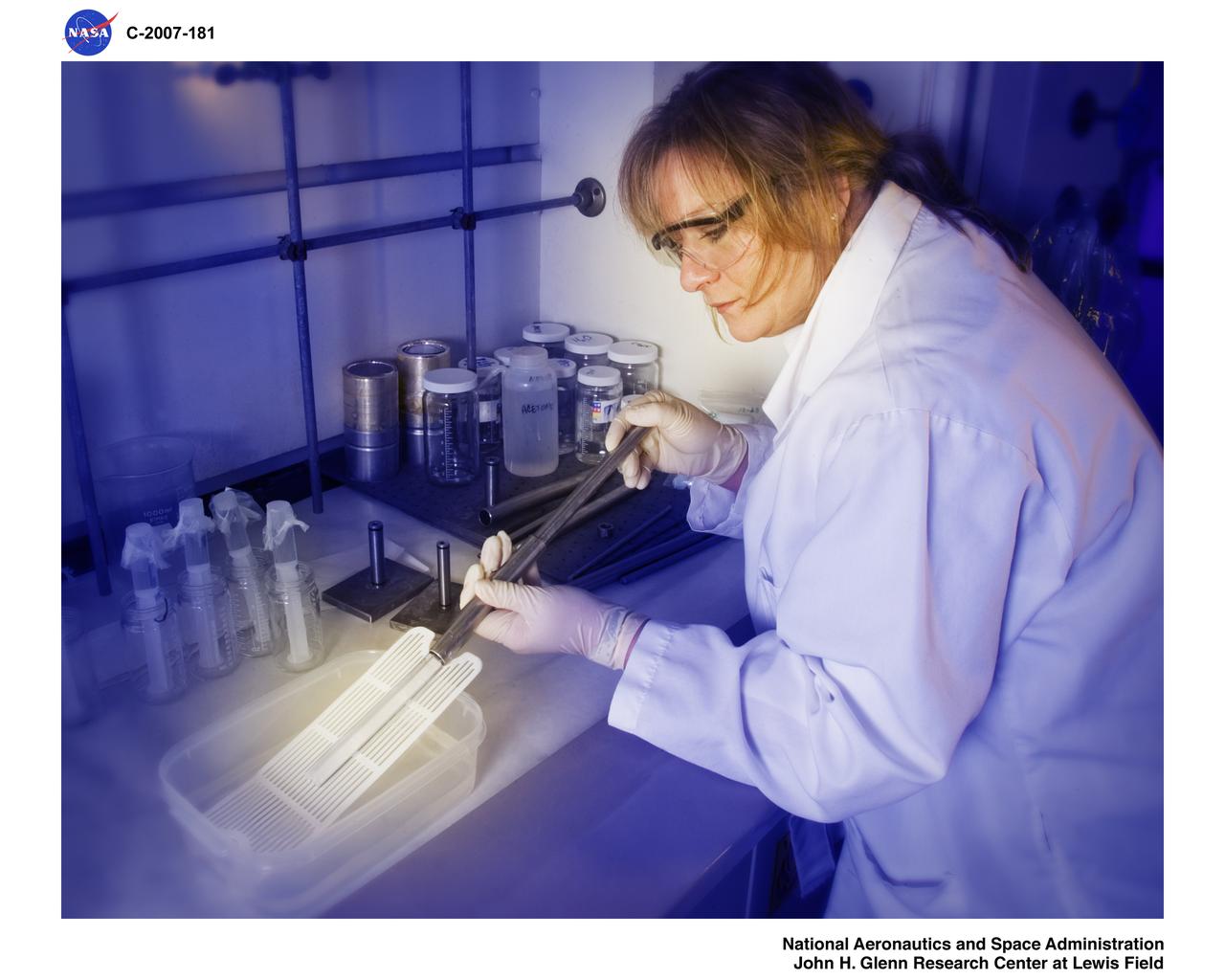
Researcher extracts a tubular Aerogel material sample in its "green" state

Origin of Life: Stromatolites Microbial Mats and Mat-Layer Extracts
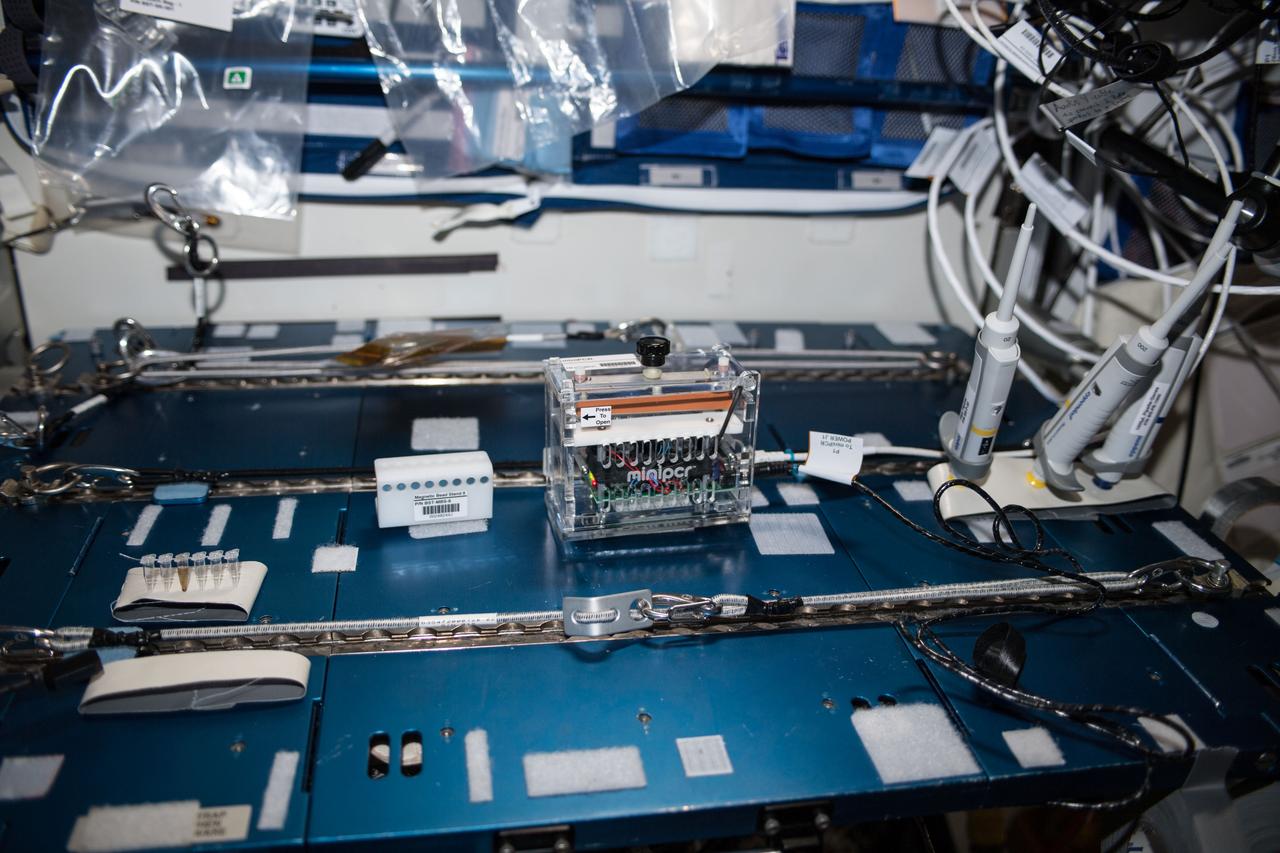
iss056e097438 (July 19, 2018) --- NASA astronaut Ricky Arnold swabbed surfaces in the International Space Station to collect microbe samples. He then processed the microbial DNA using the Biomolecule Sequencer, a device that enables DNA sequencing in microgravity, to identify microbes able to survive in microgravity.
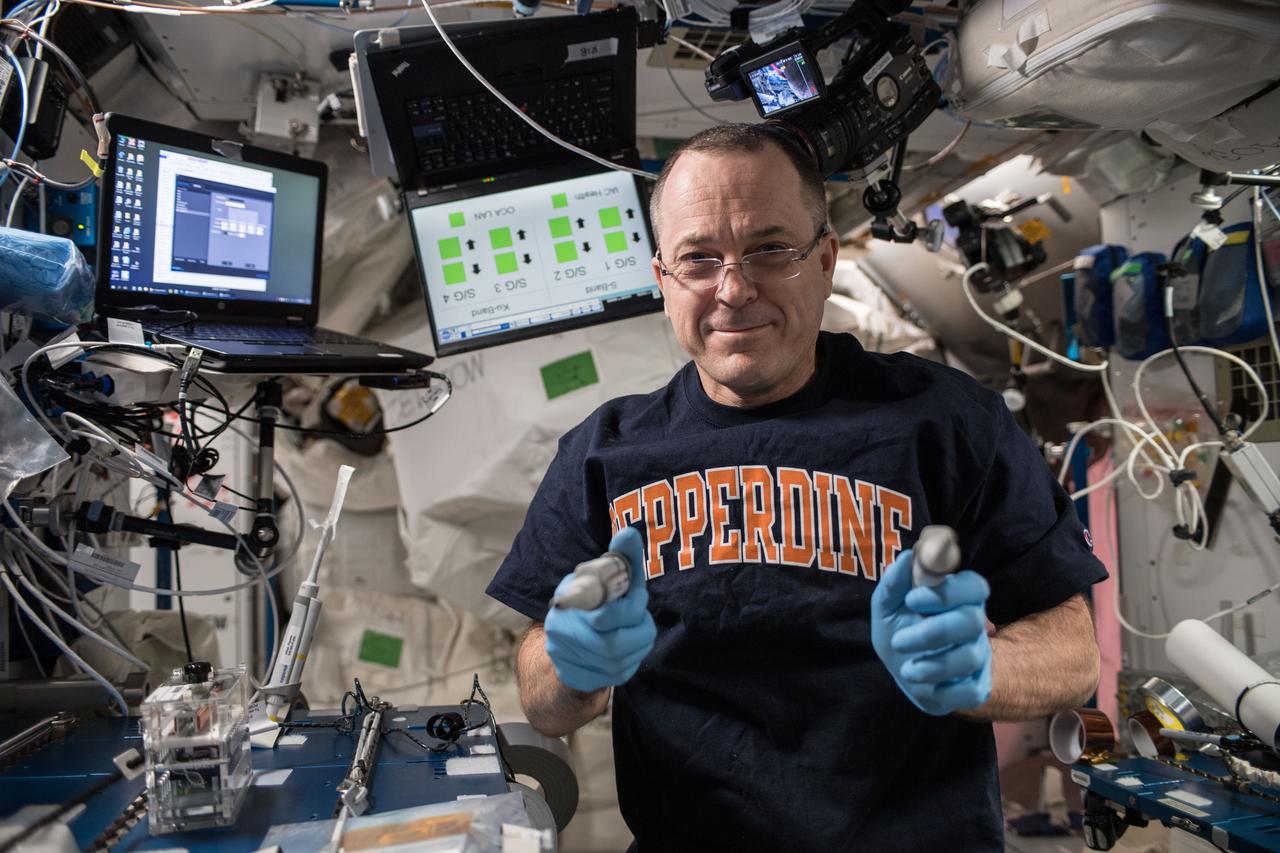
iss056e097429 (July 19, 2018) --- NASA astronaut Ricky Arnold swabbed surfaces in the International Space Station to collect microbe samples. He then processed the microbial DNA using the Biomolecule Sequencer, a device that enables DNA sequencing in microgravity, to identify microbes able to survive in microgravity.
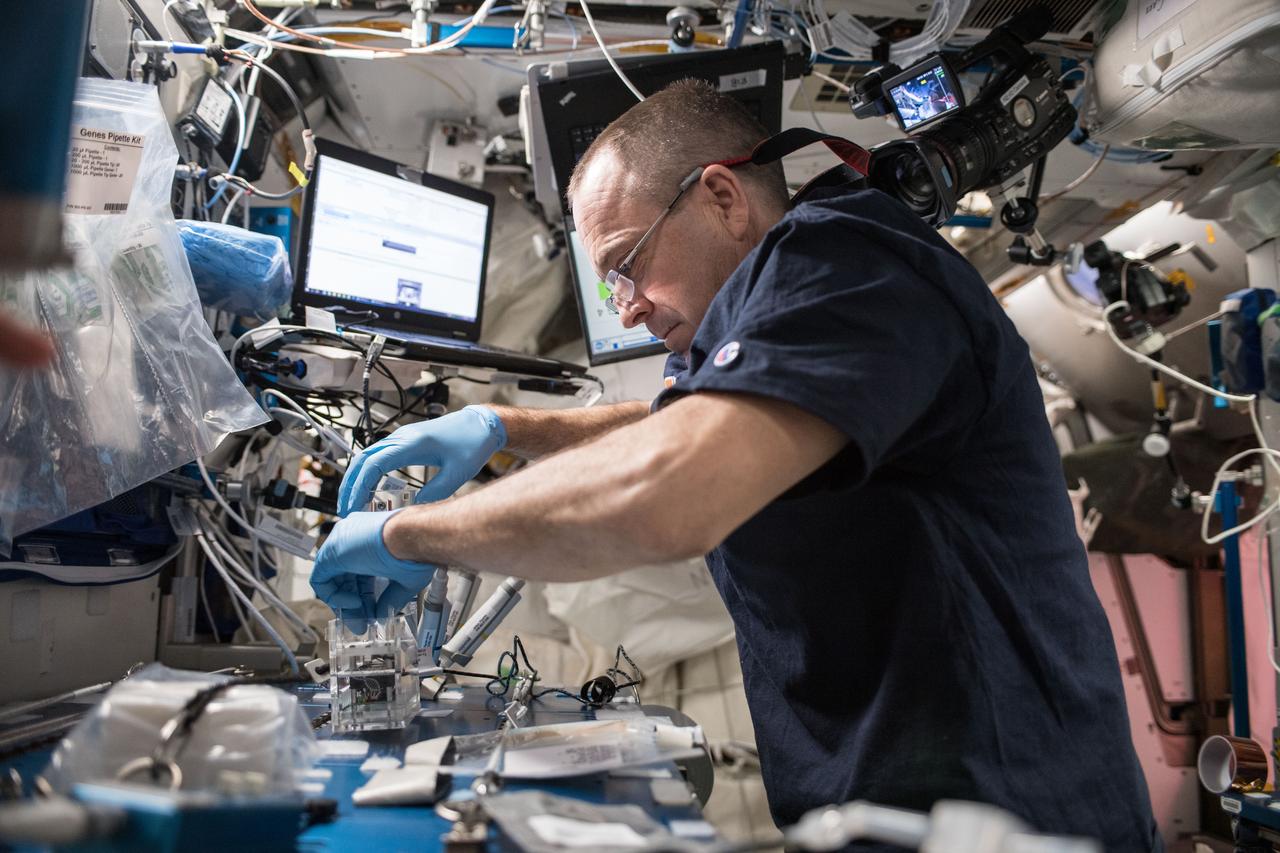
iss056e097421 (July 19, 2018) --- NASA astronaut Ricky Arnold swabbed surfaces in the International Space Station to collect microbe samples. He then processed the microbial DNA using the Biomolecule Sequencer, a device that enables DNA sequencing in microgravity, to identify microbes able to survive in microgravity.
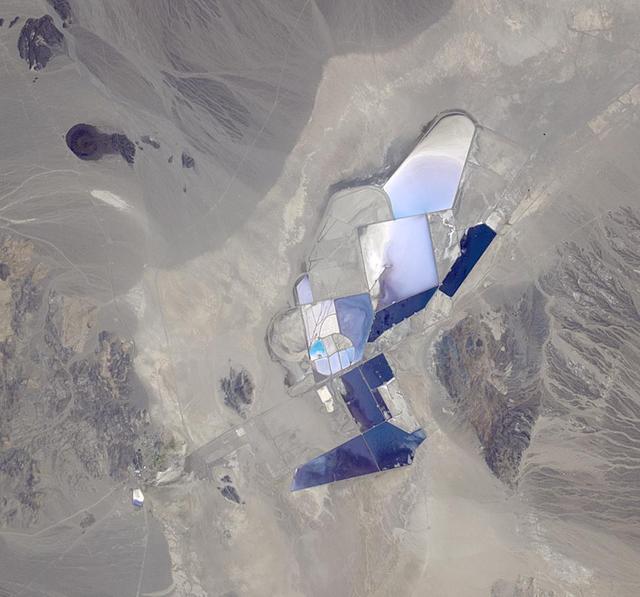
This image from NASA Terra spacecraft shows the once-abandoned mining town of Silver Peak, Nevada, which began to thrive again when Foote Mineral Company began extracting lithium from brine below the floor of Clayton Valley in 1966.
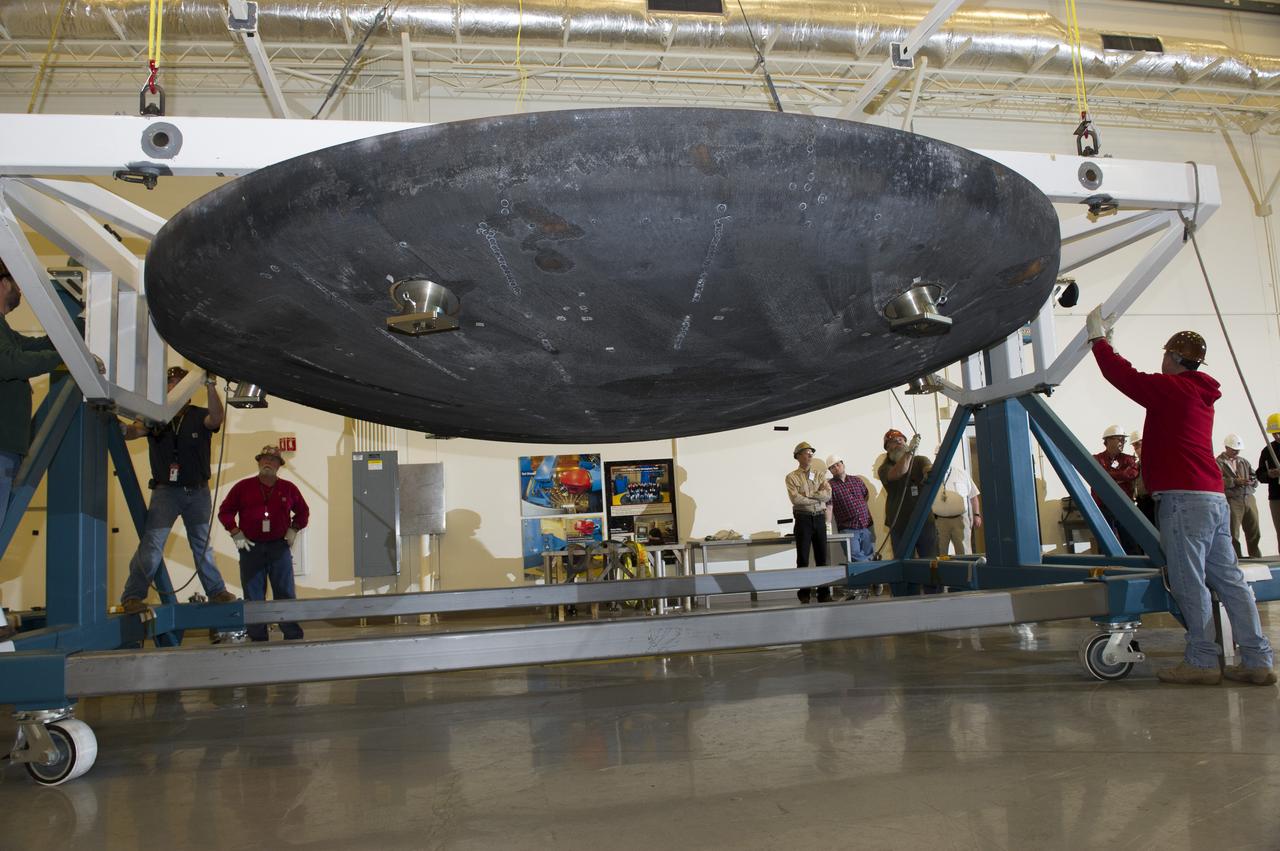
THE HEAT SHIELD ARRIVED MARCH 9 AT MARSHALL, WHERE EXPERTS FROM THE CENTER AND NASA’S AMES RESEARCH CENTER WILL EXTRACT SAMPLES OF THE ABLATIVE MATERIAL, OR AVCOAT
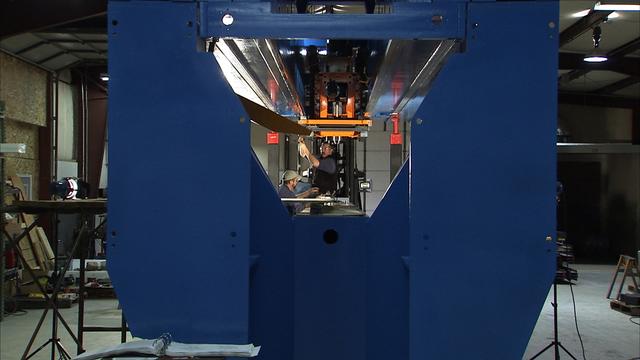
Workers are shown assembling the vertical weld tool in support of the Ares/Constellation upperstage project. This image extracted from high definition video and is the highest resolution available.
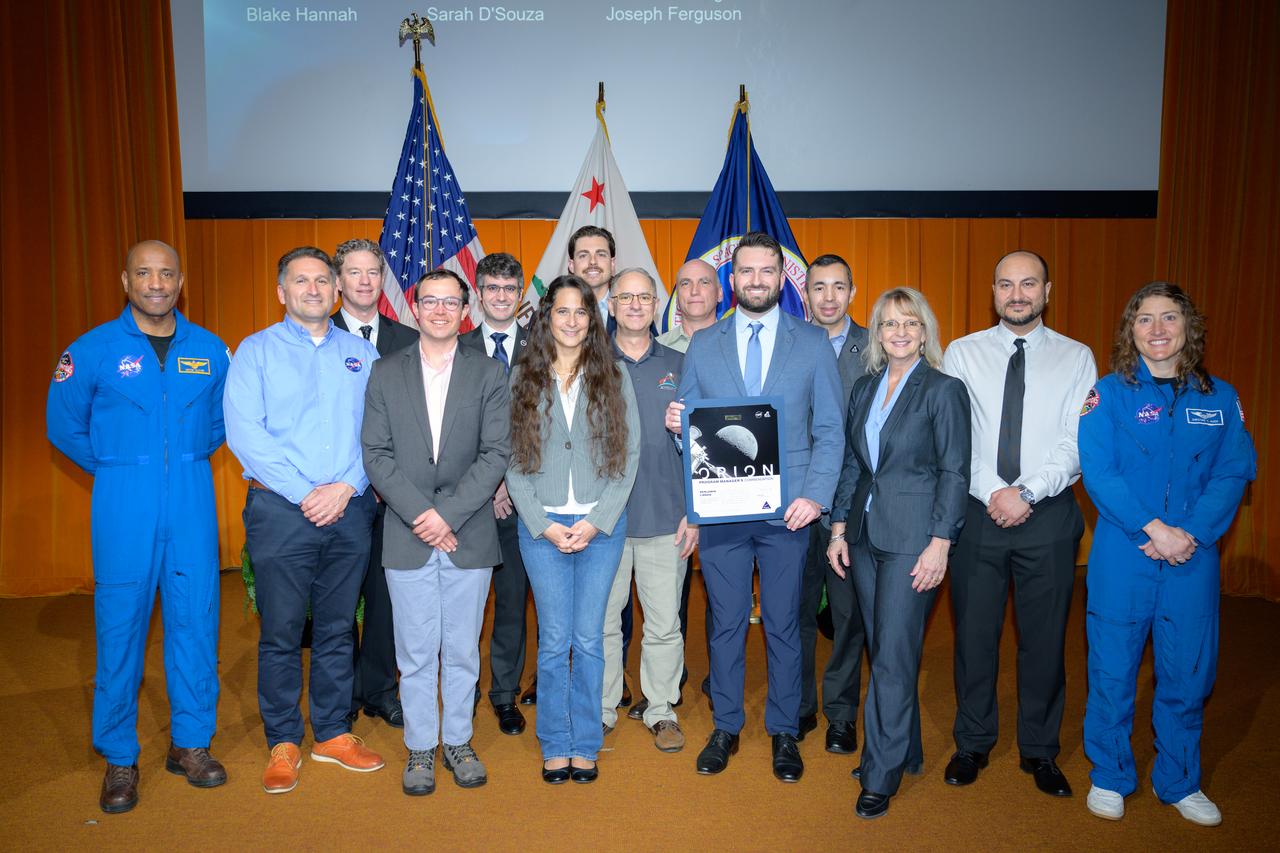
Artemis I Heat Shield Sample Extraction and Analysis team with NASA astronauts Victor J. Glover, left, and Christina Koch, right, in the N201 auditorium.
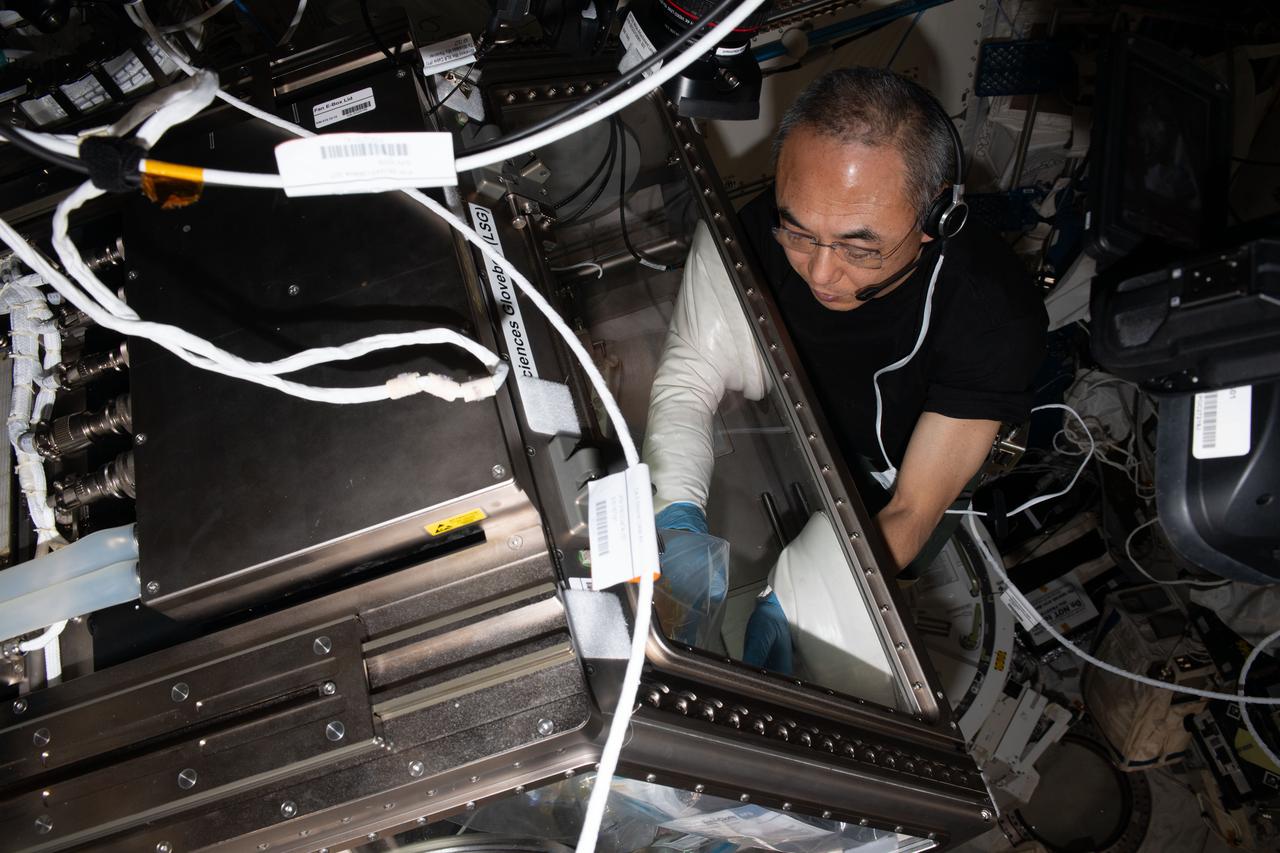
iss070e035116 (Dec. 1, 2023) --- JAXA (Japan Aerospace Exploration Agency) astronaut and Expedition 70 Flight Engineer Satoshi Furukawa works in the Kibo laboratory module's Life Science Glovebox extracting DNA samples for the new uTitan investigation. The technology demonstration is exploring a method for automated nucleic acid extraction in microgravity and may inform DNA sample processing and sequencing techniques on spacecraft and remote locations on Earth.
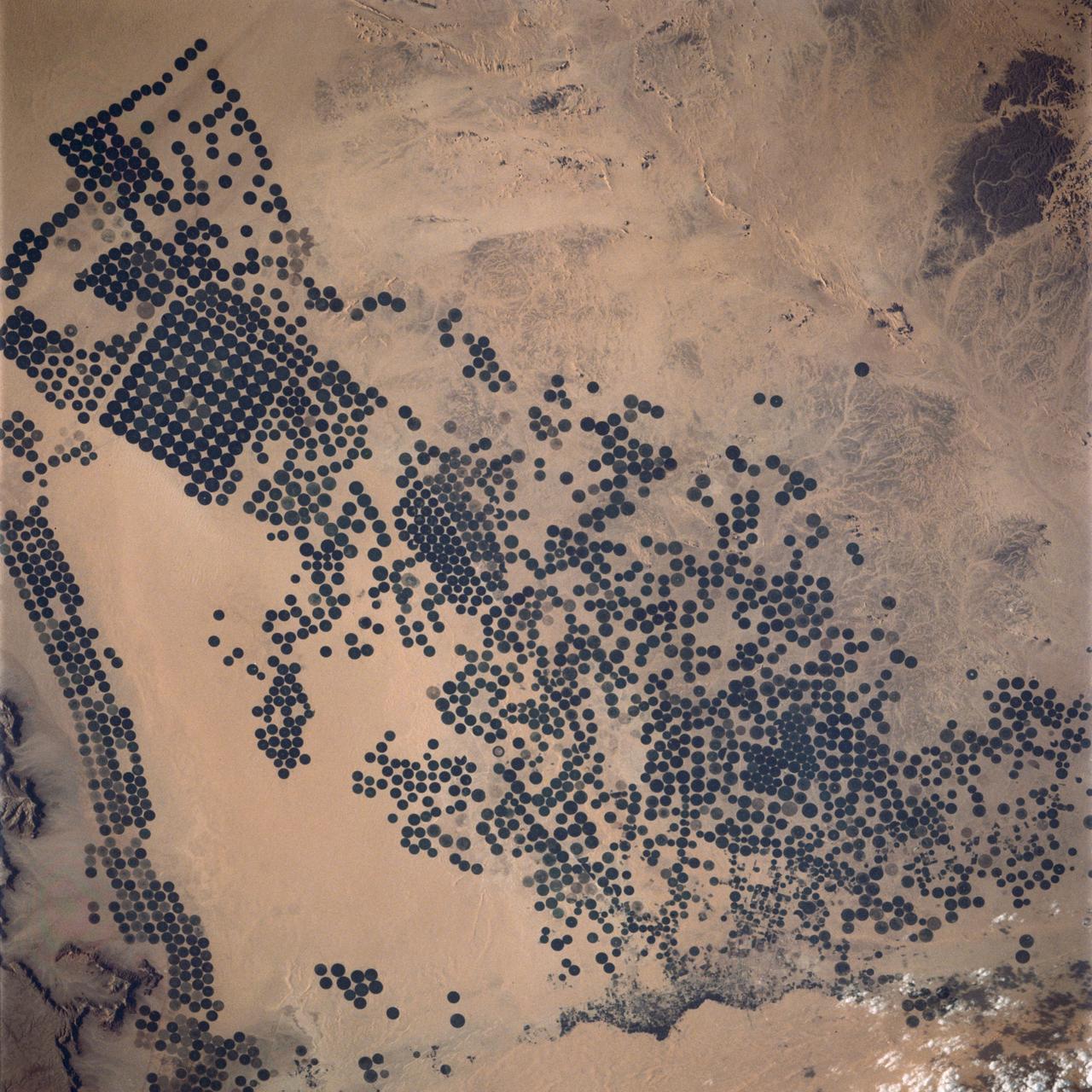
In Saudi Arabia, center-pivot, swing-arm irrigated agriculture complexes such as the one imaged at Jabal Tuwayq (20.5N, 45.0 E) extract deep fossil water reserves to achieve food crop production self sufficiency in this desert environment. The significance of the Saudi expanded irrigated agriculture is that the depletion of this finite water resource is a short term solution to a long term need that will still exist when the water has been extracted.
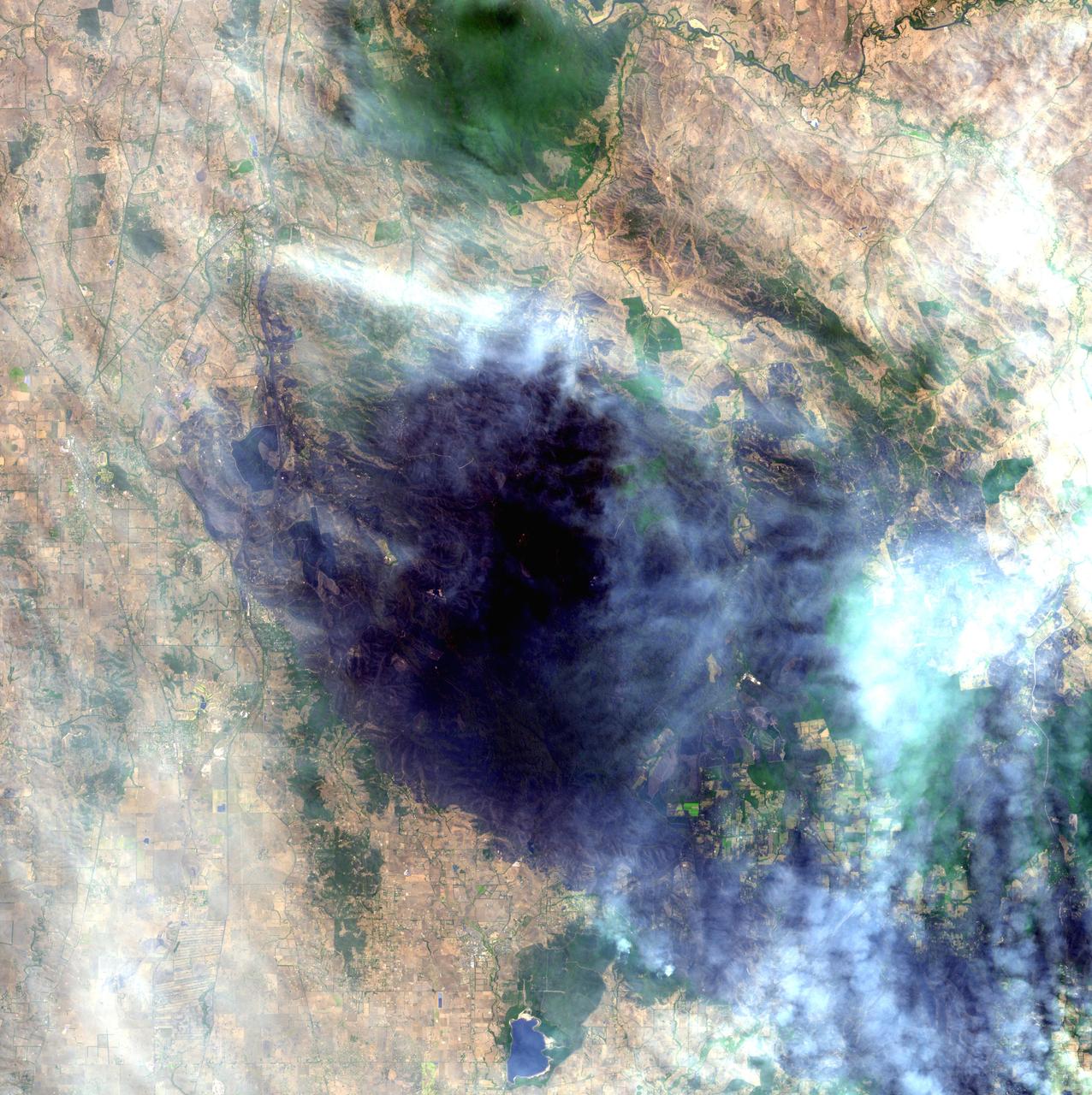
On February 17, 2009, NASA Terra satellite imaged bushfires burning in Victoria Australia.
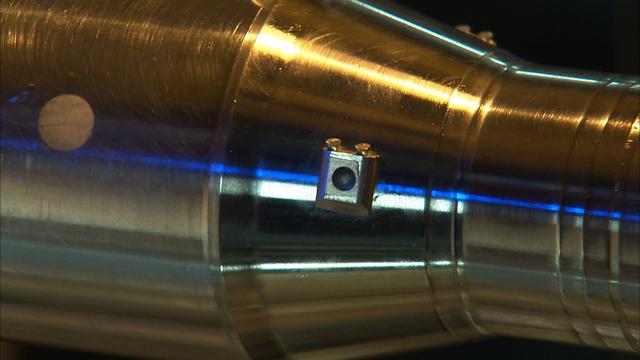
Shown is a wind tunnel test of the Ares model for force/moment testing in support of the Ares/ClV integrated vehicle at Langley Research Center, Virginia. The image is extracted from a high definition video file and is the highest resolution available.
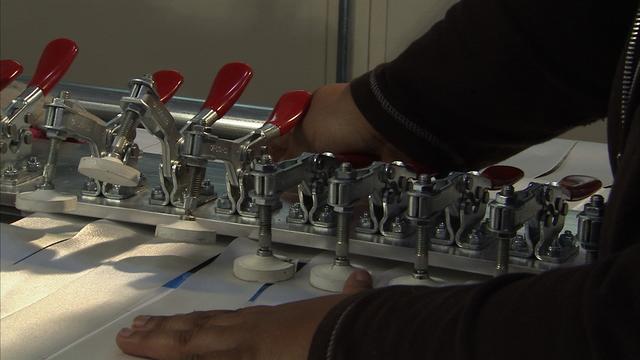
Shown is the fabrication of the First Stage Main Parachute in support of Ares/CLV at the Pioneer Zodiac Facility in Mississippi in support of the Constellation/Ares project. This image is extracted from a high definition video file and is the highest resolution available
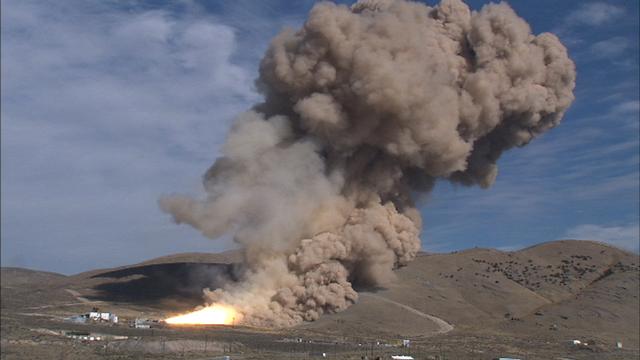
Shown is a test of the TEM-13 Solid Rocket Motor in support of the Ares/CLV first stage at ATK, Utah . Constellation/Ares project. This image is extracted from a high definition video file and is the highest resolution available.
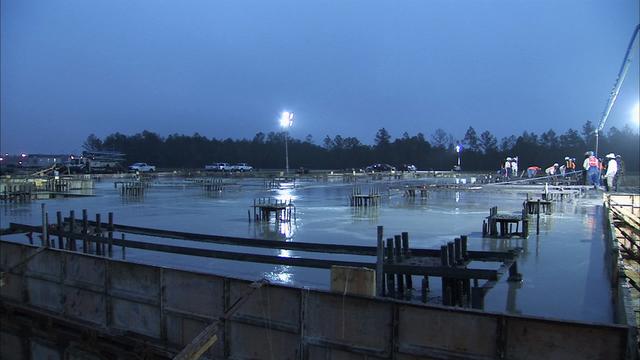
THIS IMAGE SHOWS THE DEVELOPMENT AND CONSTRUCTION OF THE A3 TEST STAND IN SUPPORT OF THE ARES/CLV UPPER STAGE ENGINE AT STENNIS SPACE CENTER, MISSISSIPPI. THIS IMAGE IS EXTRACTED FROM A HIGH DEFINITION VIDEO FILE AND IS THE HIGHEST RESOLUTION AVAILABLE.
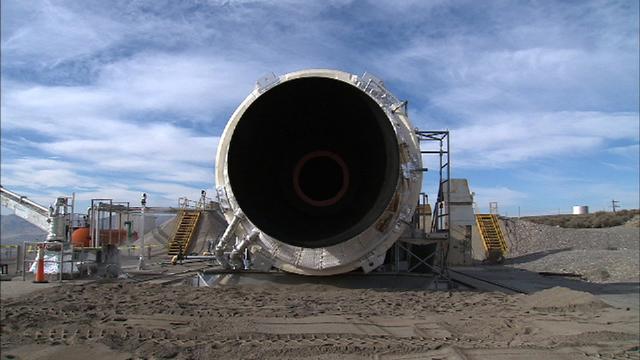
Shown is a test of the TEM-13 solid rocket motor at the ATK test facility in Utah in support of the Ares/CLV first stage. This image is extracted from high definition video and is the highest resolution available.
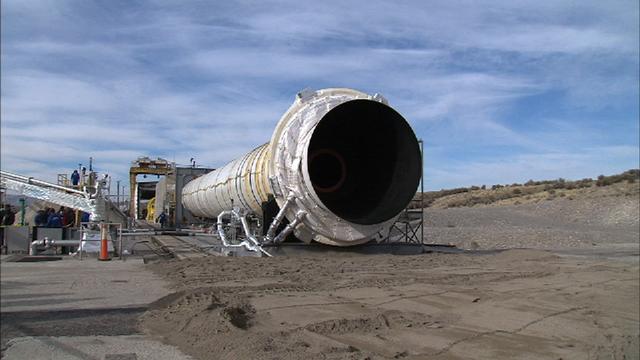
Shown is a test of the TEM-13 Solid Rocket Motor in support of the Ares/CLV first stage at ATK, Utah . Constellaton/Ares project. This image is extracted from a high definition video file and is the highest resolution available.

jsc2024e006099 (1/18/2024) --- A NASA ARC Space Life Sciences Training Program (SLTP) Intern, Kristen Saban processing A. platensis for phycocyanin pigment extraction. Image courtesy of Katherine Fisher
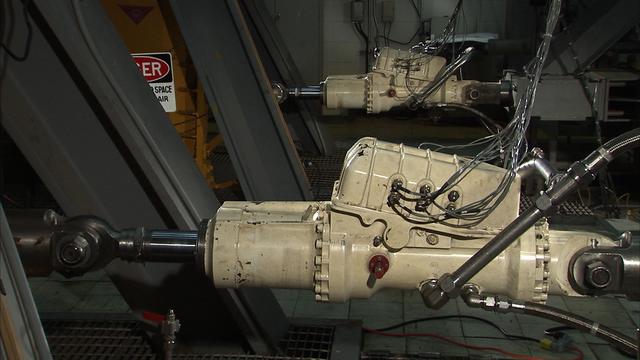
Testing of the Ascent Thrust Vector Control System in support of the Ares 1-X program at the Marshall Space Flight Center in Huntsville, Alabama. This image is extracted from a high definition video file and is the highest resolution available
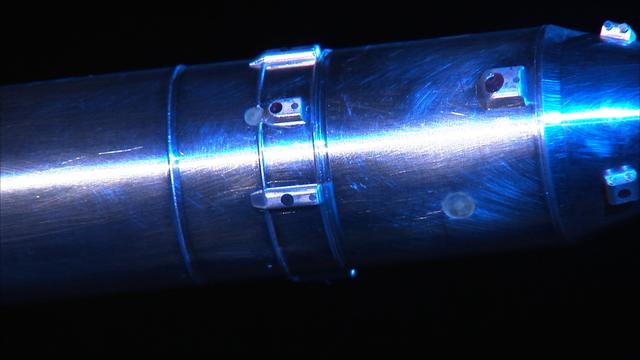
Testing of the subsonic and transonic mach number for clean and full protuberances in support of the Ares/CLV Integrated Vehicle at the Boeing facility in Missouri. This image is extracted from a high definition video file and is the highest resolution available.
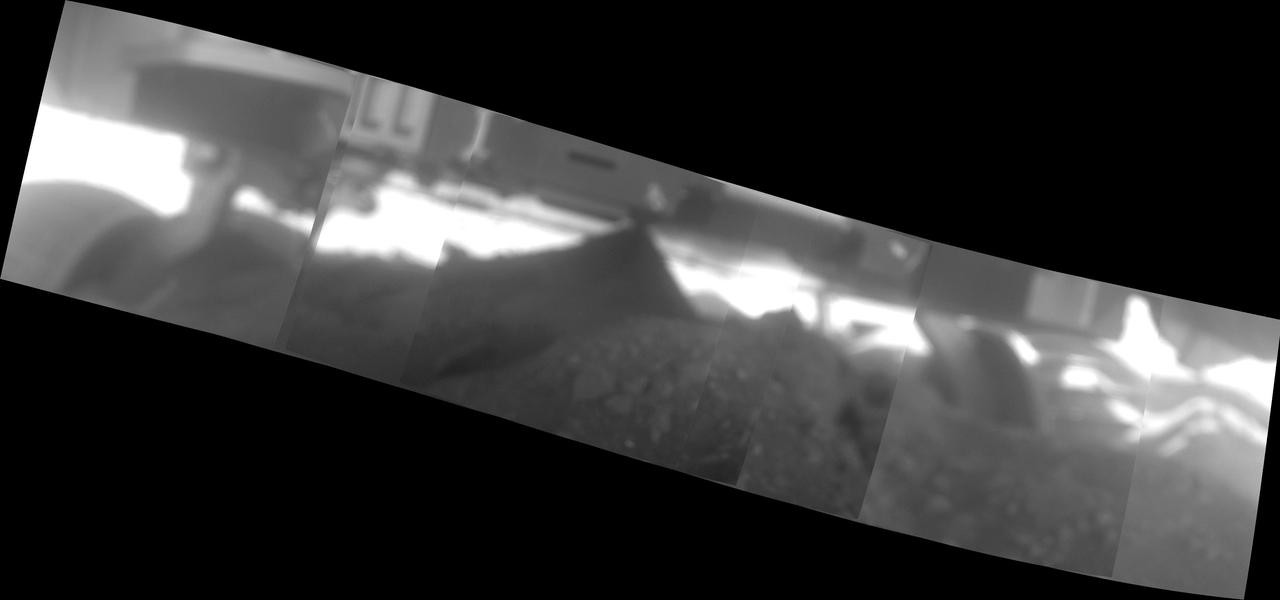
This panorama of images from the Spirit rover, taken on Sol 1925 June 2, 2009, is helping engineers assess the rover current state and plan her extraction from the soft soil in the region now called Troy.
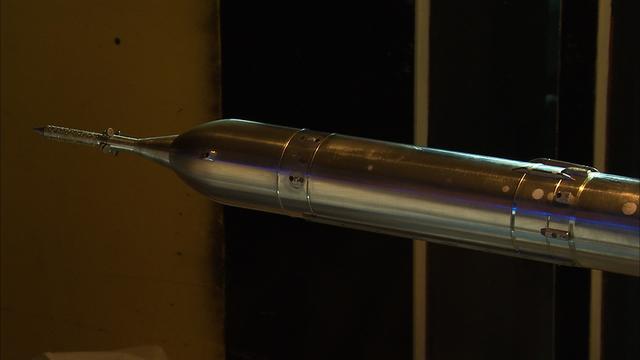
Shown is a wind tunnel test of the Ares model for force/moment testing in support of the Ares/ClV integrated vehicle at Langley Research Center, Virginia. The image is extracted from a high definition video file and is the highest resolution available.
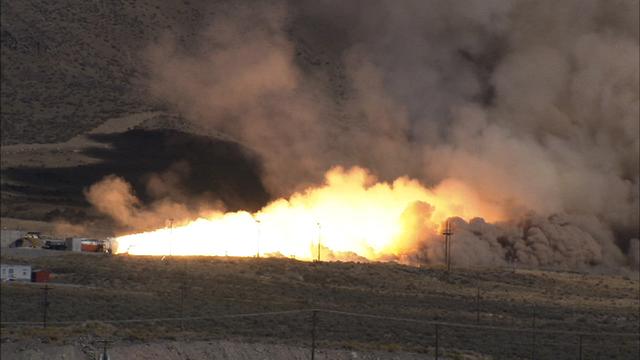
Shown is a test of the TEM-13 solid rocket motor at the ATK test facility in Utah in support of the Ares/CLV first stage. This image is extracted from high definition video and is the highest resolution available.
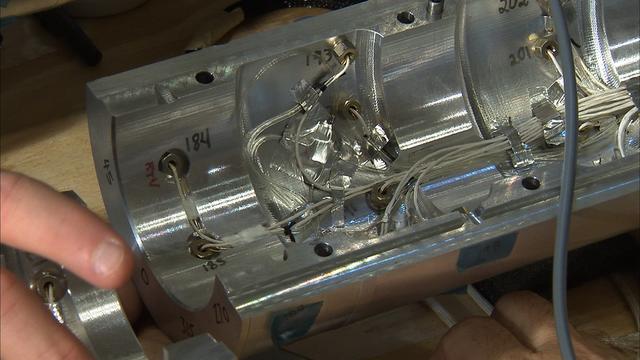
Shown is testing of a 3.5% Ares 1-X buffet model at the transonic wind tunnel at Langley Research Center, Virginia in support of the Ares/Constellation program. This image is extracted from high definition video and is the highest resolution available
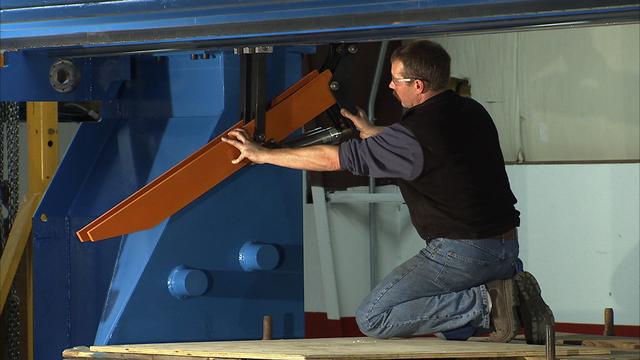
THIS IMAGE SHOWS THE DEVELOPMENT AND CONSTRUCTION OF THE A3 TEST STAND IN SUPPORT OF THE ARES/CLV UPPER STAGE ENGINE AT STENNIS SPACE CENTER, MISSISSIPPI. THIS IMAGE IS EXTRACTED FROM A HIGH DEFINITION VIDEO FILE AND IS THE HIGHEST RESOLUTION AVAILABLE.
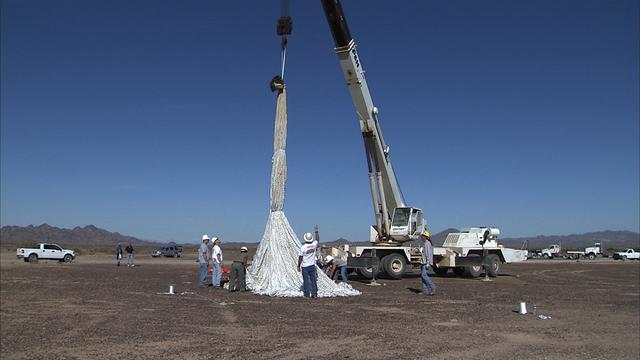
Shown is the testing of the Main Parachute for the Ares/CLV first stage in support of the Ares/Constellation program at the Yuma Proving Ground, Arizona. This image is extracted from high definition video and is the highest resolution available.
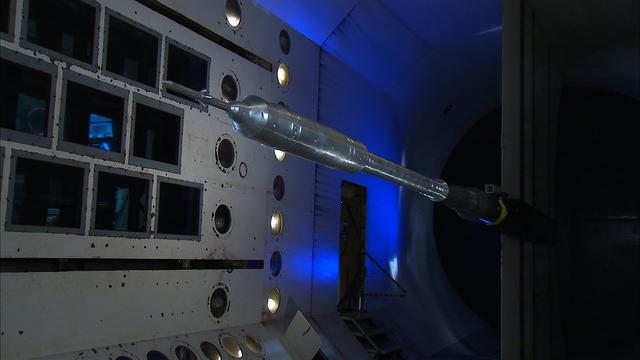
Shown is testing of a 3.5% Ares 1-X buffet model at the transonic wind tunnel at Langley Research Center, Virginia in support of the Ares/Constellation program. This image is extracted from high definition video and is the highest resolution available.
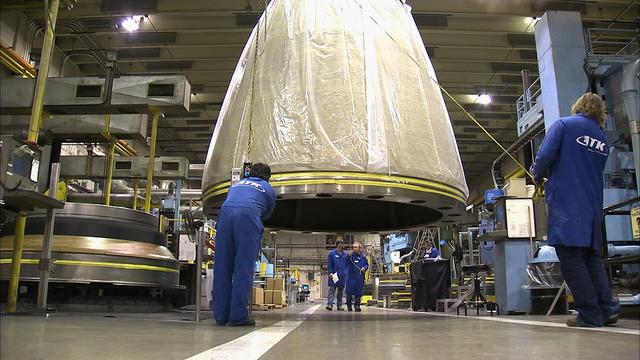
Shown is the installation of O-rings in the aft nozzle section in support of the Ares/CLV First Stage at ATK in Utah. This image is extracted from a high definition video file and is the highest resolution available
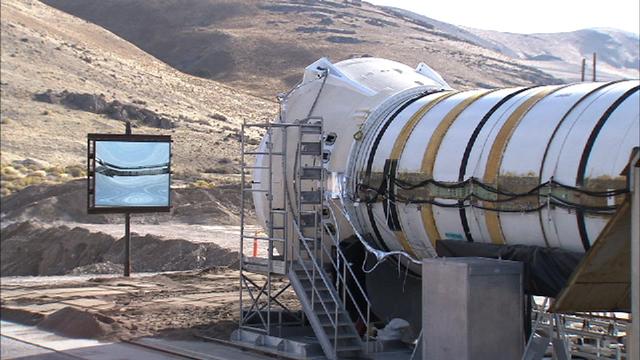
Shown is a test of the TEM-13 solid rocket motor at the ATK test facility in Utah in support of the Ares/CLV first stage. This image is extracted from high definition video and is the highest resolution available.
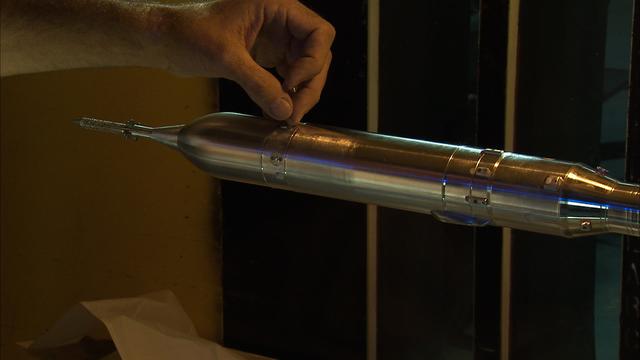
Shown is a wind tunnel test of the Ares model for force/moment testing in support of the Ares/Clv integrated vehicle at Langley Research Center, Virginia. The image is extracted from a high definition video file and is the highest resolution available.
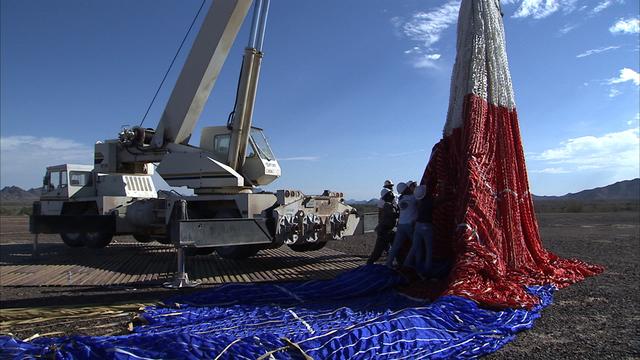
Shown is the testing of the Main Parachute for the Ares/CLV first stage in support of the Ares/Constellation program at the Yuma Proving Ground, Arizona. This image is extracted from high definition video and is the highest resolution available.
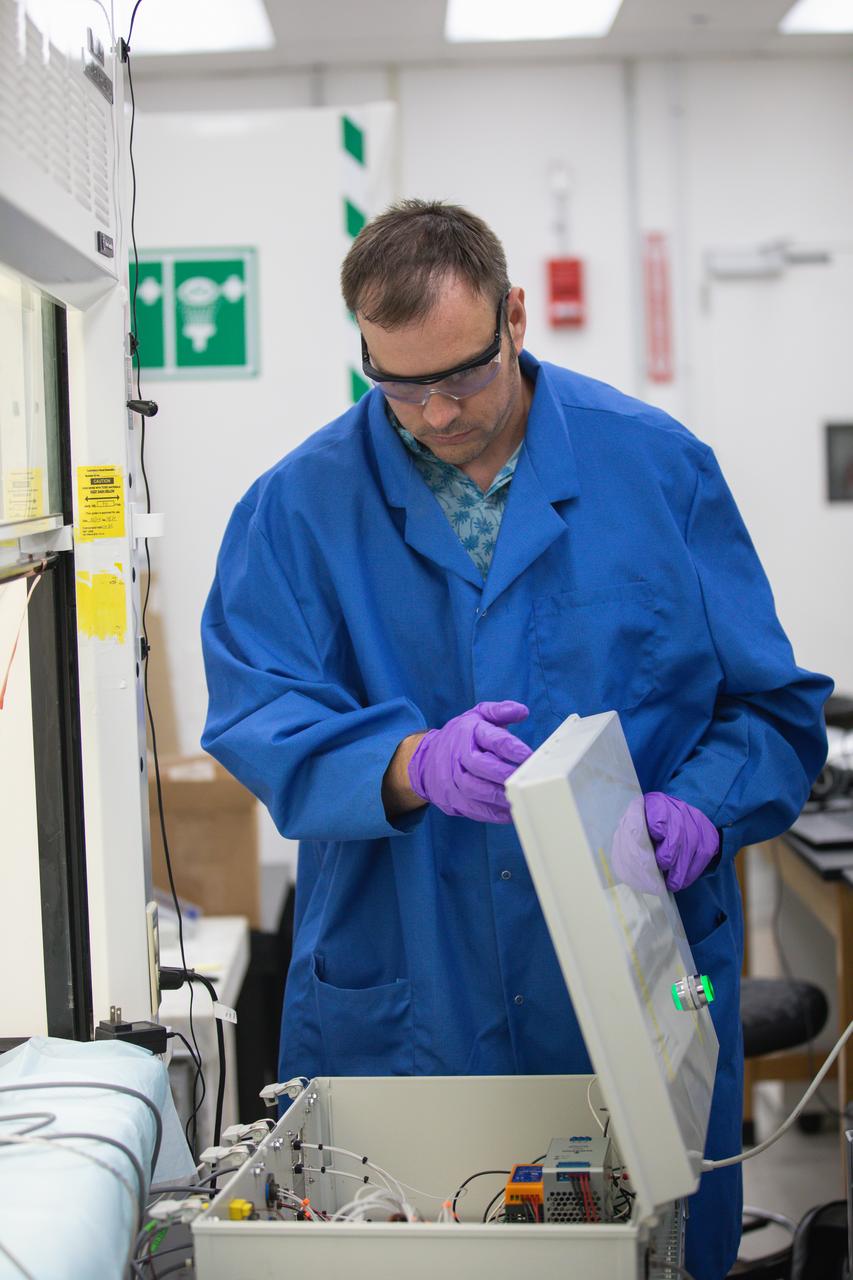
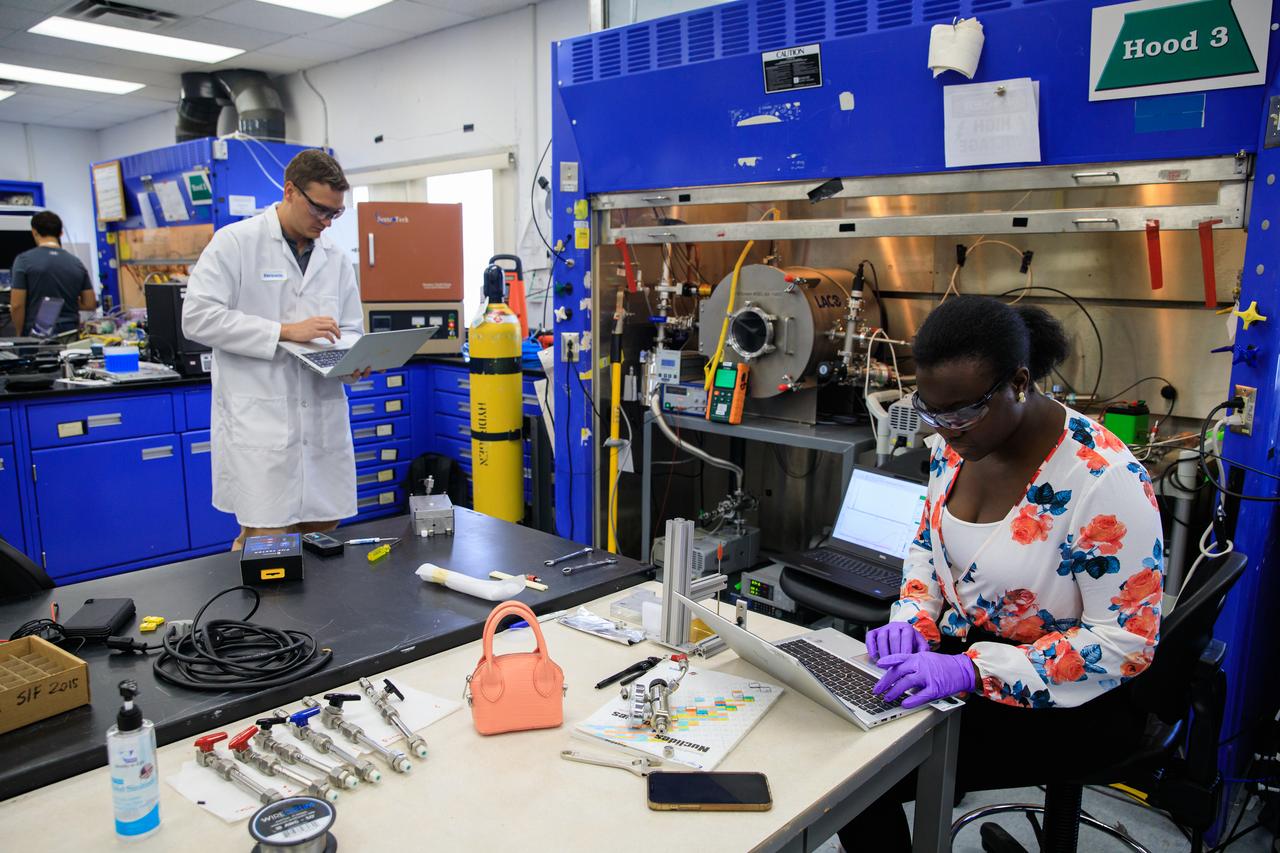
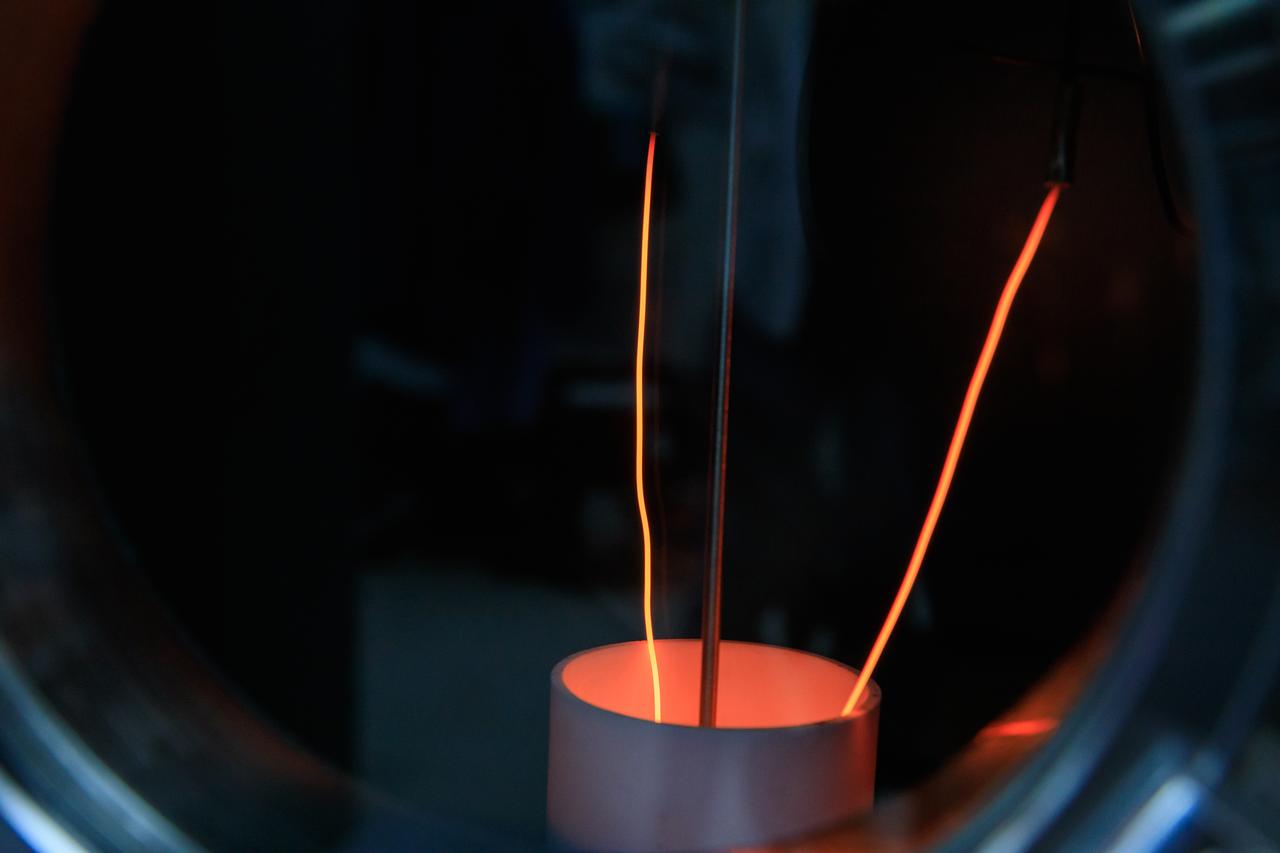
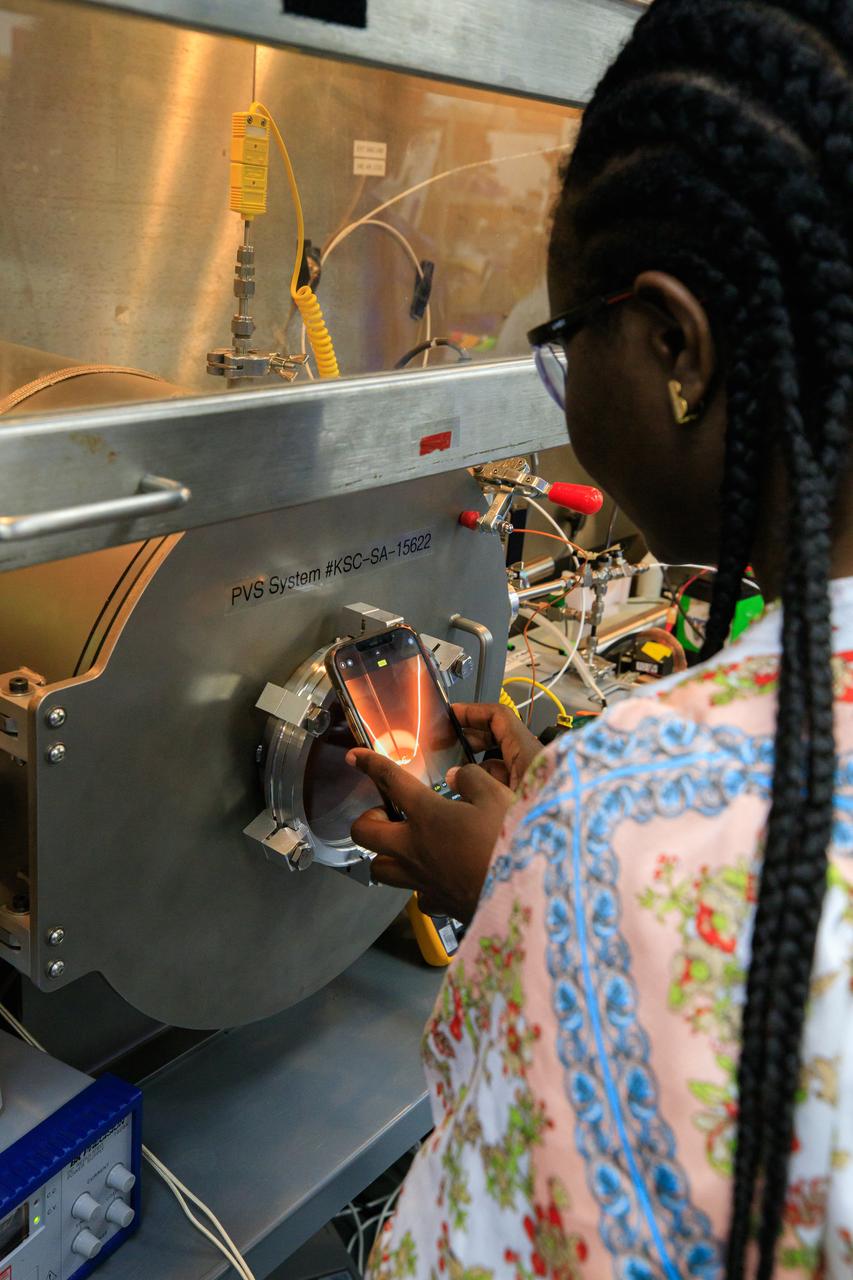
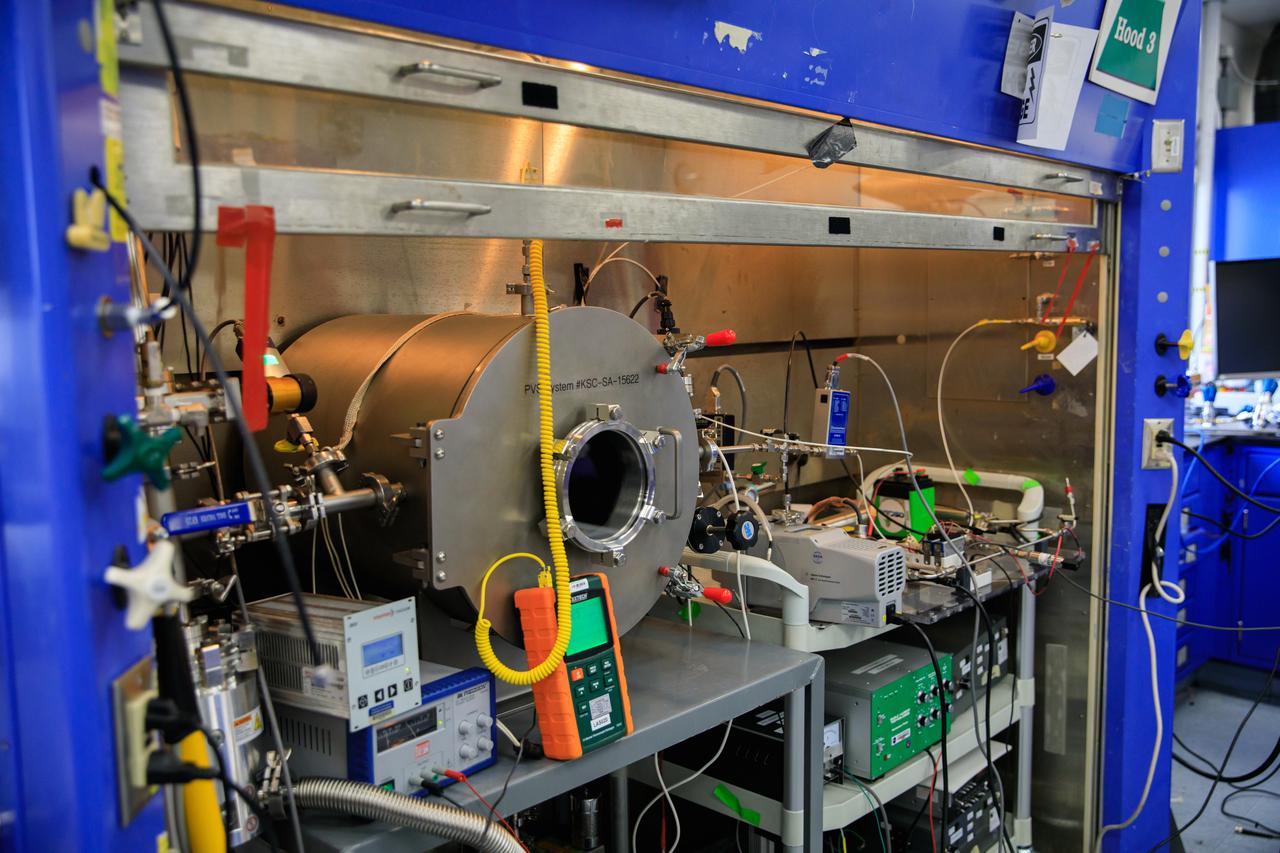
Beau Peacock, software engineer, conducts testing of the Volatile Monitoring Oxygen Measurement Subsystem (VMOMS) for Molten Regolith Electrolysis (MRE) inside a laboratory in the Neil A. Armstrong Operations and Checkout Building at NASA’s Kennedy Space Center in Florida on April 19, 2024. The high-temperature electrolytic process aims to extract oxygen from simulated lunar regolith which will be critical to the agency’s Artemis campaign. Oxygen extracted from the Moon can be utilized for propellent to NASA’s lunar landers, breathable oxygen for astronauts, and a variety of other industrial and scientific applications for NASA’s future missions to the Moon.
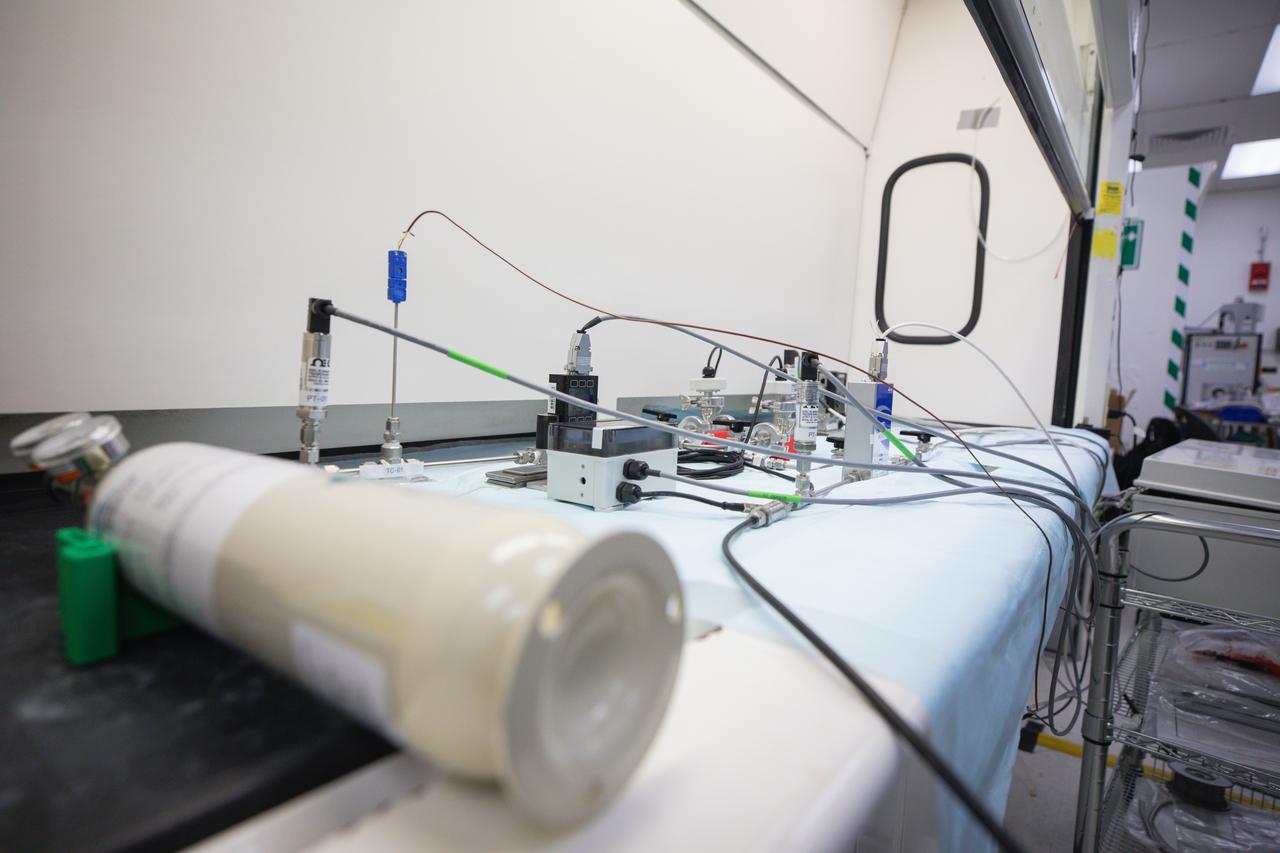
Inside a laboratory in the Neil A. Armstrong Operations and Checking Building at NASA’s Kennedy Space Center in Florida, testing is underway with the Volatile Monitoring Oxygen Measurement Subsystem (VMOMS) for Molten Regolith Electrolysis (MRE) on April 19, 2024. The high-temperature electrolytic process aims to extract oxygen from simulated lunar regolith, which will be critical to the agency’s Artemis campaign. Oxygen extracted from the Moon can be utilized for propellent to NASA’s lunar landers, breathable oxygen for astronauts, and a variety of other industrial and scientific applications for NASA’s future missions to the Moon.

Deborah Efua Adu Essumang, system lead scientist, conducts testing of the Volatile Monitoring Oxygen Measurement Subsystem (VMOMS) for Molten Regolith Electrolysis (MRE) inside a laboratory in the Neil A. Armstrong Operations and Checkout Building at NASA’s Kennedy Space Center in Florida on April 19, 2024. The high-temperature electrolytic process aims to extract oxygen from simulated lunar regolith which will be critical to the agency’s Artemis campaign. Oxygen extracted from the Moon can be utilized for propellent to NASA’s lunar landers, breathable oxygen for astronauts, and a variety of other industrial and scientific applications for NASA’s future missions to the Moon.
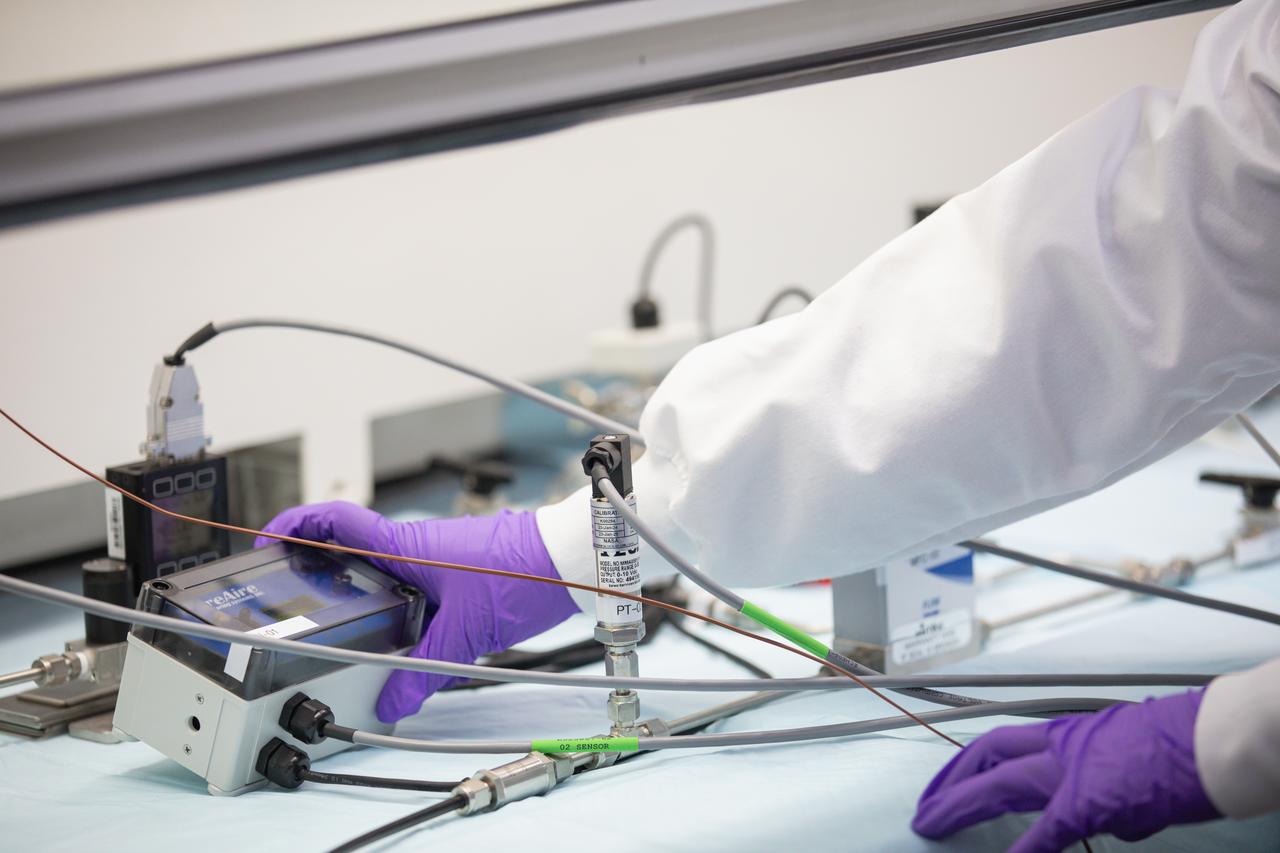
Inside a laboratory in the Neil A. Armstrong Operations and Checking Building at NASA’s Kennedy Space Center in Florida, testing is underway with the Volatile Monitoring Oxygen Measurement Subsystem (VMOMS) for Molten Regolith Electrolysis (MRE) on April 19, 2024. The high-temperature electrolytic process aims to extract oxygen from simulated lunar regolith, which will be critical to the agency’s Artemis campaign. Oxygen extracted from the Moon can be utilized for propellent to NASA’s lunar landers, breathable oxygen for astronauts, and a variety of other industrial and scientific applications for NASA’s future missions to the Moon.
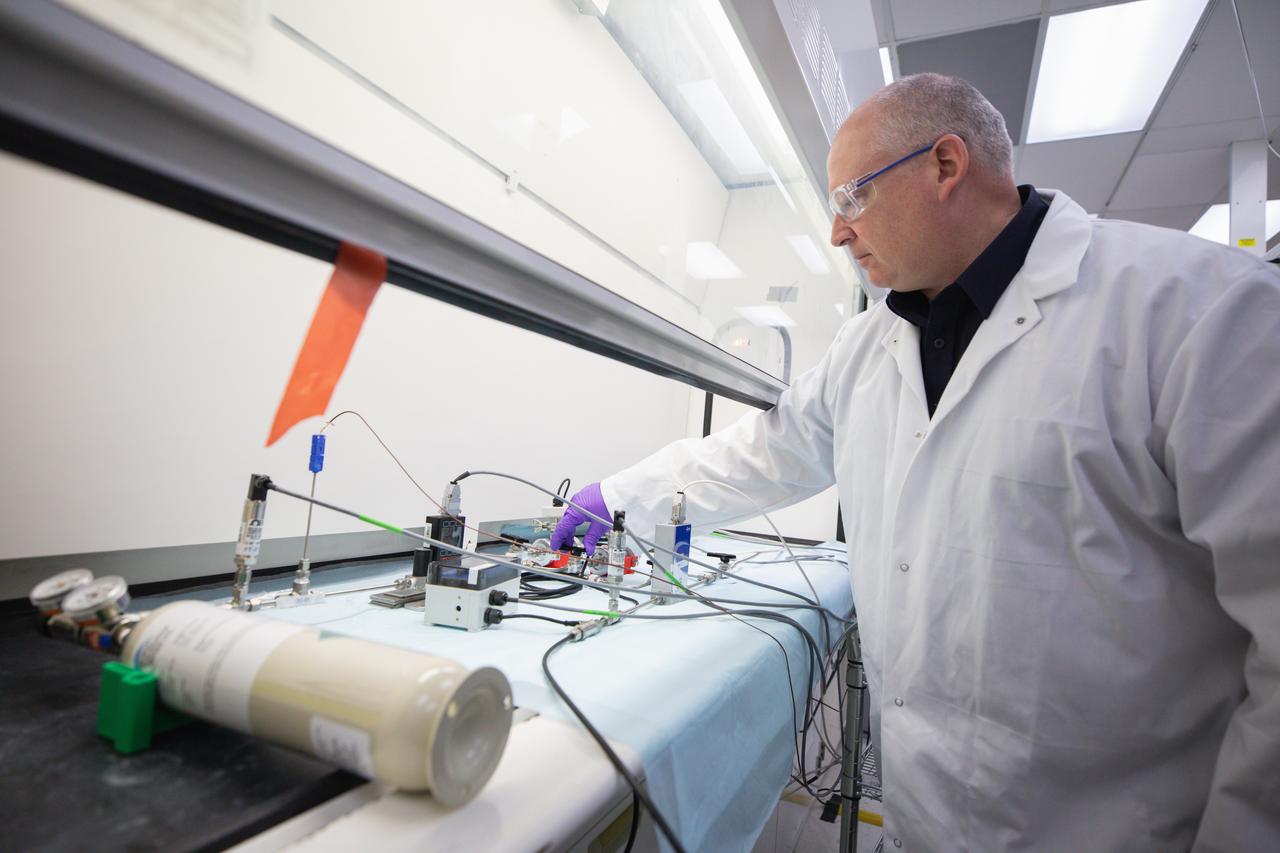
Dr. Joel Olson, subject matter expert, conducts testing of the Volatile Monitoring Volatile Monitoring Oxygen Measurement Subsystem (VMOMS) for Molten Regolith Electrolysis (MRE) inside a laboratory in the Neil A. Armstrong Operations and Checkout Building at NASA’s Kennedy Space Center in Florida on April 19, 2024. The high-temperature electrolytic process aims to extract oxygen from simulated lunar regolith which will be critical to the agency’s Artemis campaign. Oxygen extracted from the Moon can be utilized for propellent to NASA’s lunar landers, breathable oxygen for astronauts, and a variety of other industrial and scientific applications for NASA’s future missions to the Moon.
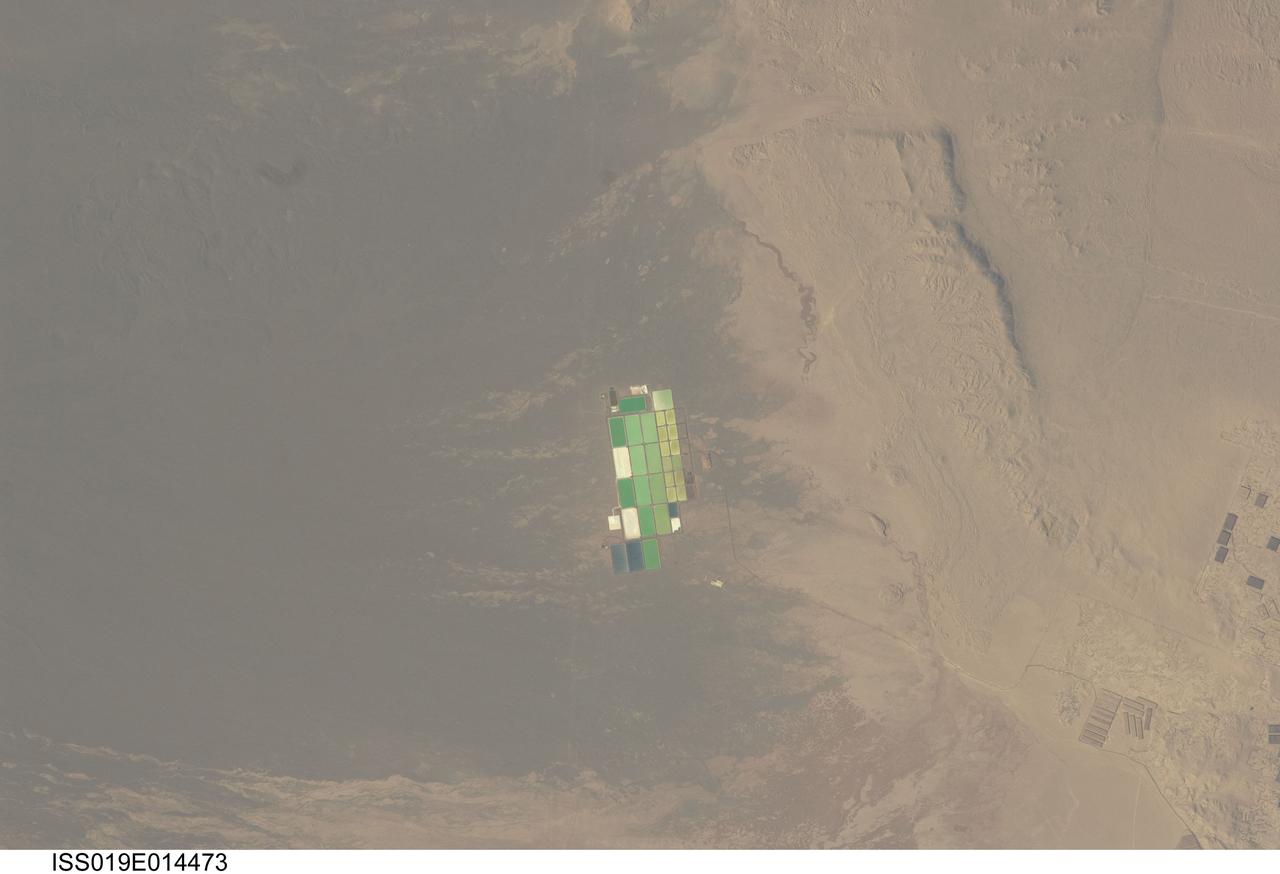
ISS019-E-014473 (5 May 2009) --- Salt ponds in Nueva Victoria, northern Chile are featured in this image photographed by an Expedition 19 crew member on the International Space Station. This view shows a long alluvial fan, sloping from east to west (left to right) in northern Chile with solar evaporation (or salt) ponds, some brightly colored, near the foot of the fan. The alluvial fan sediments are brown and contrast sharply with tan sediments of the Pampa del Tamarugal, the great hyper arid inner valley of Chile?s northern Atacama Desert. Nitrates and many other minerals are mined in this region. A few extraction pits and ore dumps are visible at bottom right, but most of the shallow diggings (0.5?5 meters deep) of a mine extracting caliche deposits ? a hard, cemented layer in the soil formed by downward movement and redeposition of sodium salts ? lie just outside the picture. Iodine is one of the products from mining; it is first extracted by a process known as heap leaching. Waste liquids from the iodine plants are dried in the tan and brightly colored evaporation ponds to crystallize nitrate salts for collection. Fertilizer production for higher-value crops is the main use for the recovered nitrates, but there are many other uses including the manufacture of pharmaceuticals, explosives, glass, ceramics, water treatment and metallurgical processes.
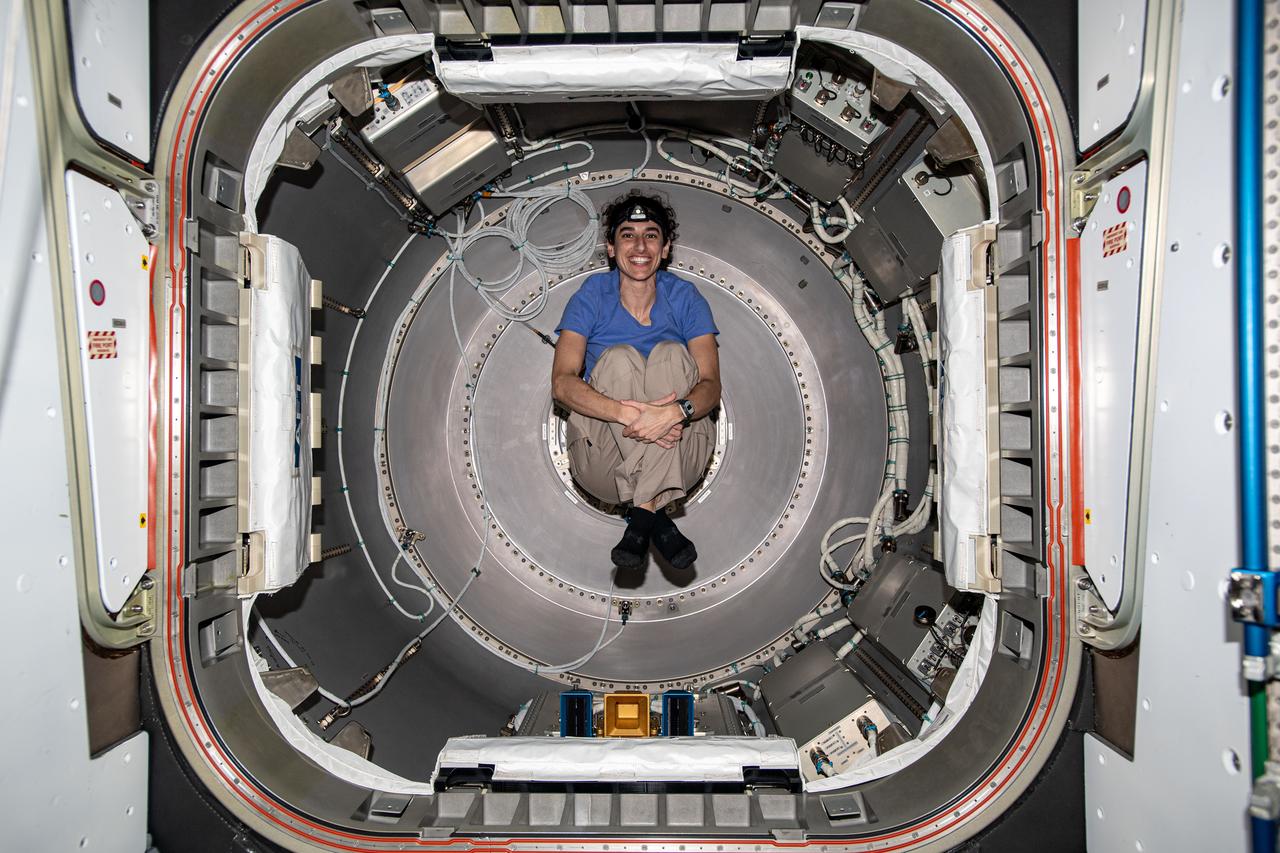
iss070e102740 (Feb. 26, 2024) --- Expedition 70 Flight Engineer and NASA astronaut Jasmin Moghbeli is photographed inside the NanoRacks Bishop airlock. Bishop can be uninstalled from its home on the Tranquility module for portable operations. It can also be used to stow cargo and extract or install payloads.
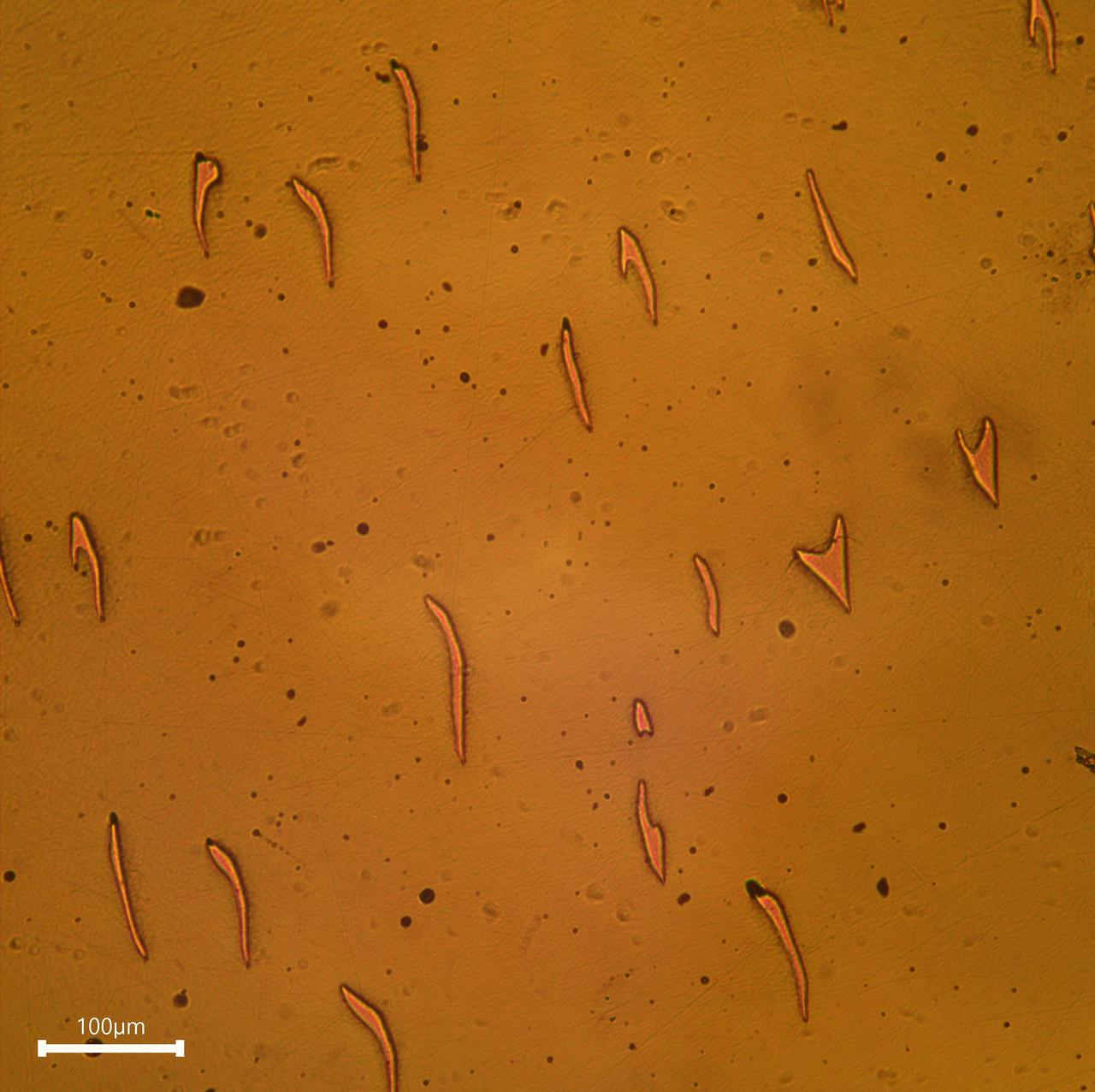
jsc2025e067418 (8/5/2025) --- Microscopic image of a semimetal-semiconductor composite (SSC) wafer extracted from one of four crystals grown in the International Space Station’s SUBSA facility during the first SUBSA-InSPA-SSCug mission. Credit: United Semiconductors LLC
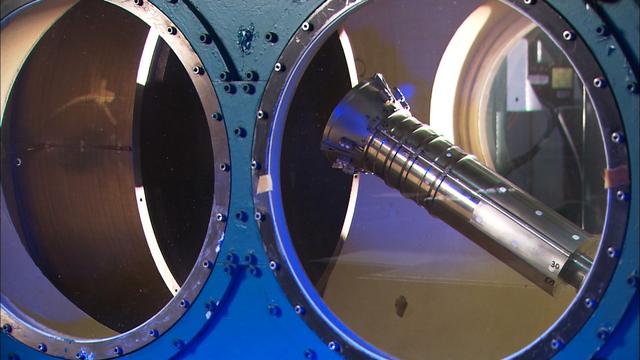
THIS IS A MODEL TEST OF THE 1ST STAGE RE-ENTRY. HEAT TESTING OF A 3% MODEL TO SUPPORT THE ARES/CLV FIRST STAGE RE-ENTRY. THIS OCCURRED AT ARNOLD AIR FORCE BASE, TENNESSEE IN SUPPORT OF THE CONSTELLATION/ARES PROJECT. THIS IMAGE IS EXTRACTED FROM A HIGH DEFINITION VIDEO FILE AND IS THE HIGHEST RESOLUTION AVAILABLE.

jsc2025e067416 (8/5/2025) --- Microscopic image of a semimetal-semiconductor composite (SSC) wafer extracted from one of four crystals grown in the International Space Station’s SUBSA facility during the first SUBSA-InSPA-SSCug mission. Credit: United Semiconductors LLC

jsc2025e067417 (8/5/2025) --- Microscopic image of a semimetal-semiconductor composite (SSC) wafer extracted from one of four crystals grown in the International Space Station’s SUBSA facility during the first SUBSA-InSPA-SSCug mission. Credit: United Semiconductors LLC

jsc2025e067415 (8/5/2025) --- Microscopic image of a semimetal-semiconductor composite (SSC) wafer extracted from one of four crystals grown in the International Space Station’s SUBSA facility during the first SUBSA-InSPA-SSCug mission. Credit: United Semiconductors LLC
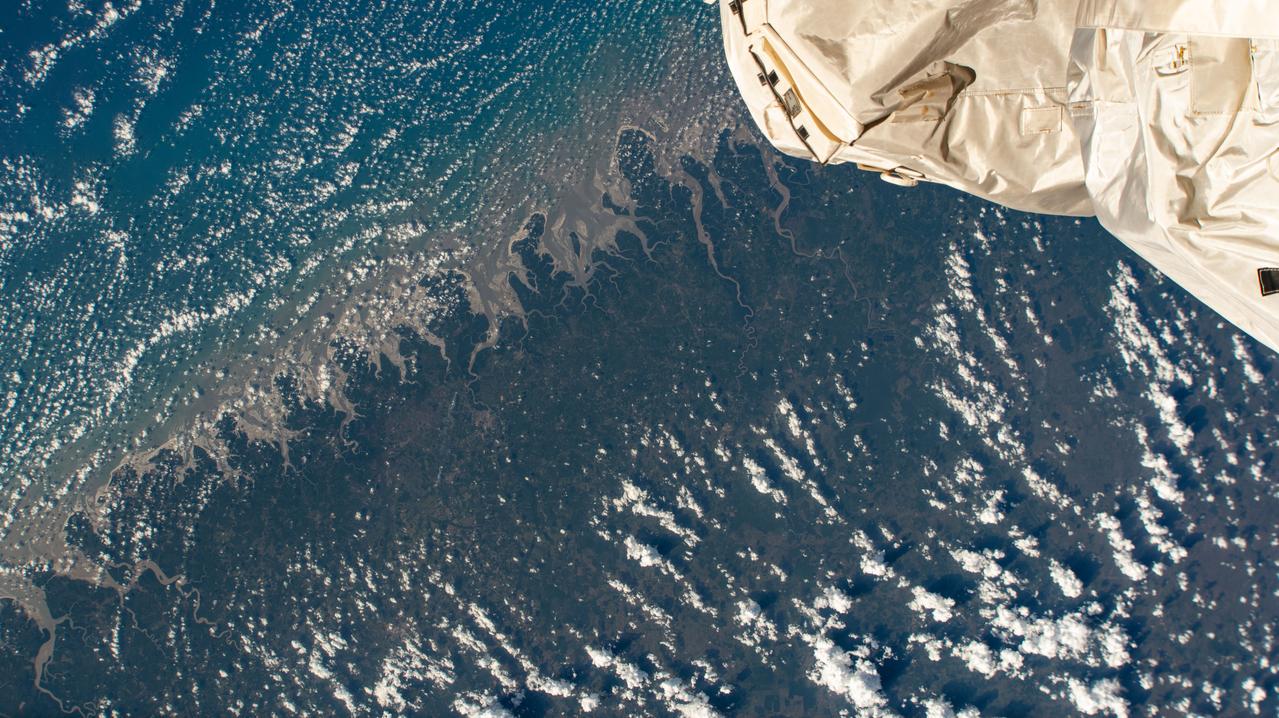
iss063e077259 (Aug. 21, 2020) --- The International Space Station was orbiting above Brazil when an external high-definition camera pictured the Marine Extractive Reserve of Tracuateua near the mouth of the Amazon River located on the northeast coast of the South American nation.
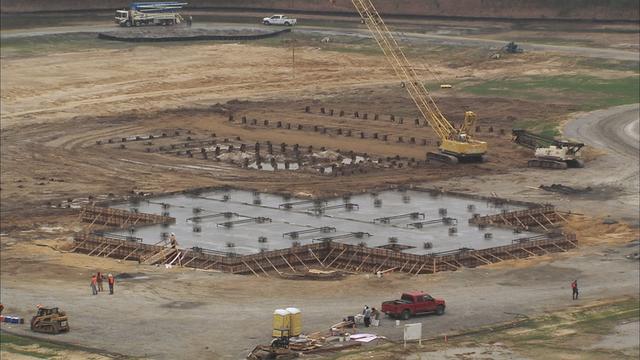
THIS IMAGE DOCUMENTS THE DEVELOPMENT AND CONSTRUCTION OF THE A3 TEST STAND IN SUPPORT OF THE ARES/CLV UPPER STAGE ENGINE DEVELOPMENT AT STENNIS SPACE CENTER, MISSIPPI IN SUPPORT OF THE DEVELOPMENT OF THE CONSTELLATION/ARES PROJECT. THIS IMAGE IS EXTRACTED FROM A HIGH DEFINITION VIDEO FILE AND IS THE HIGHEST RESOLUTION AVAILABLE
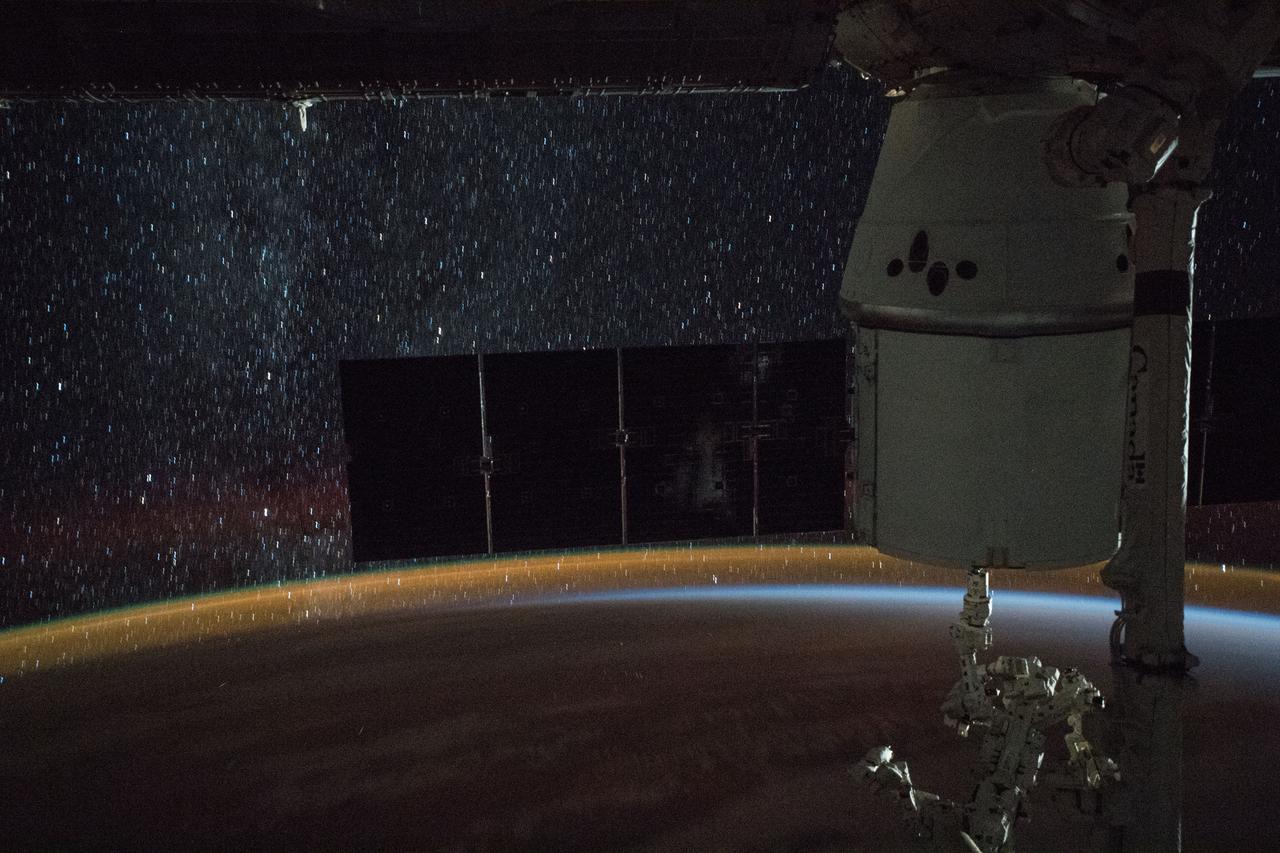
iss056e077457 (July 4, 2018) --- A star-lit sky and Earth's atmospheric glow are the backdrop as the Canadarm2 robotic arm, with its Dextre robotic hand attached, is poised to begin extracting cargo from the rear of the SpaceX Dragon cargo craft, or it's trunk.
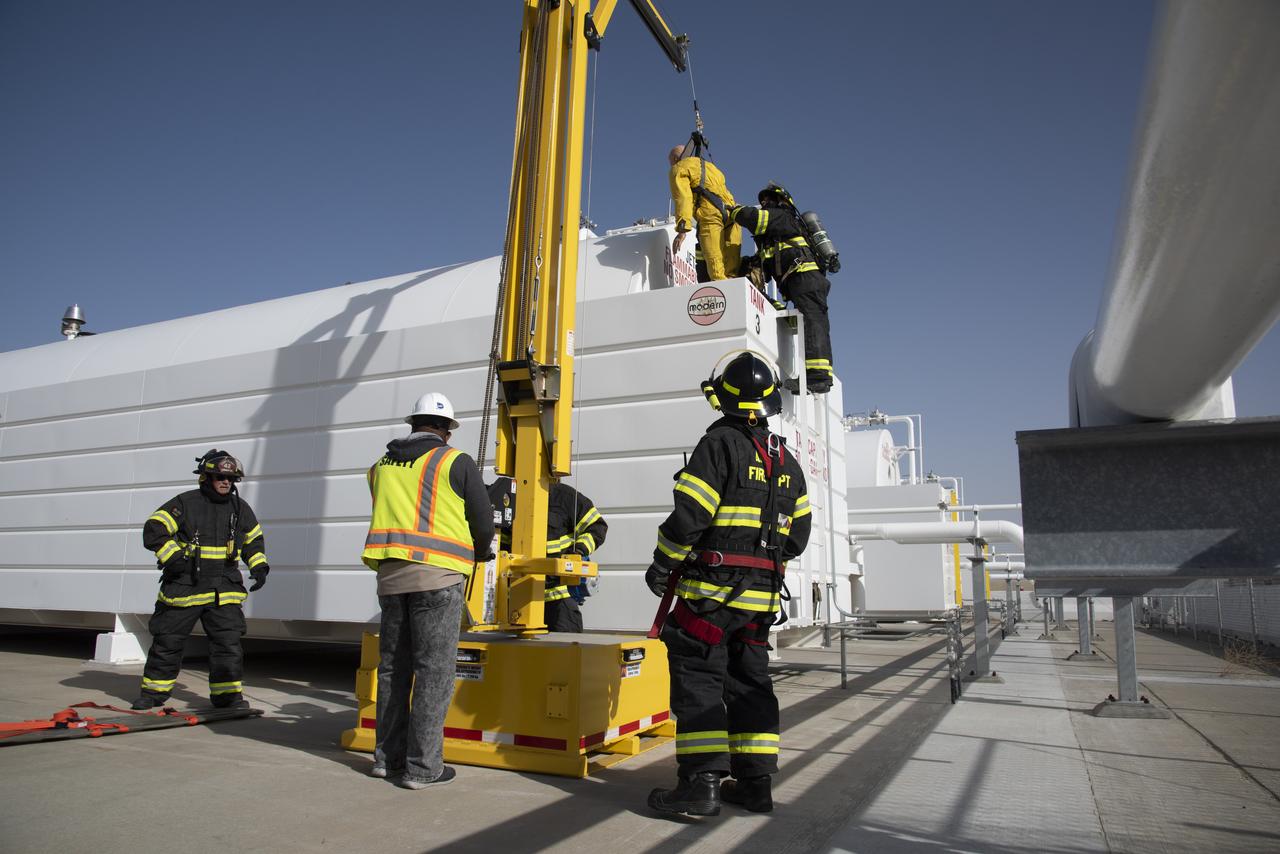
Syd Myers, a NASA Armstrong Flight Research Center confined space supervisor for a drill at NASA Armstrong Flight Research Center’s Building 703 in Palmdale, California, observes U.S. Air Force Plan 42 Fire Department responders extract a mannequin from a confined space as part of an emergency exercise.
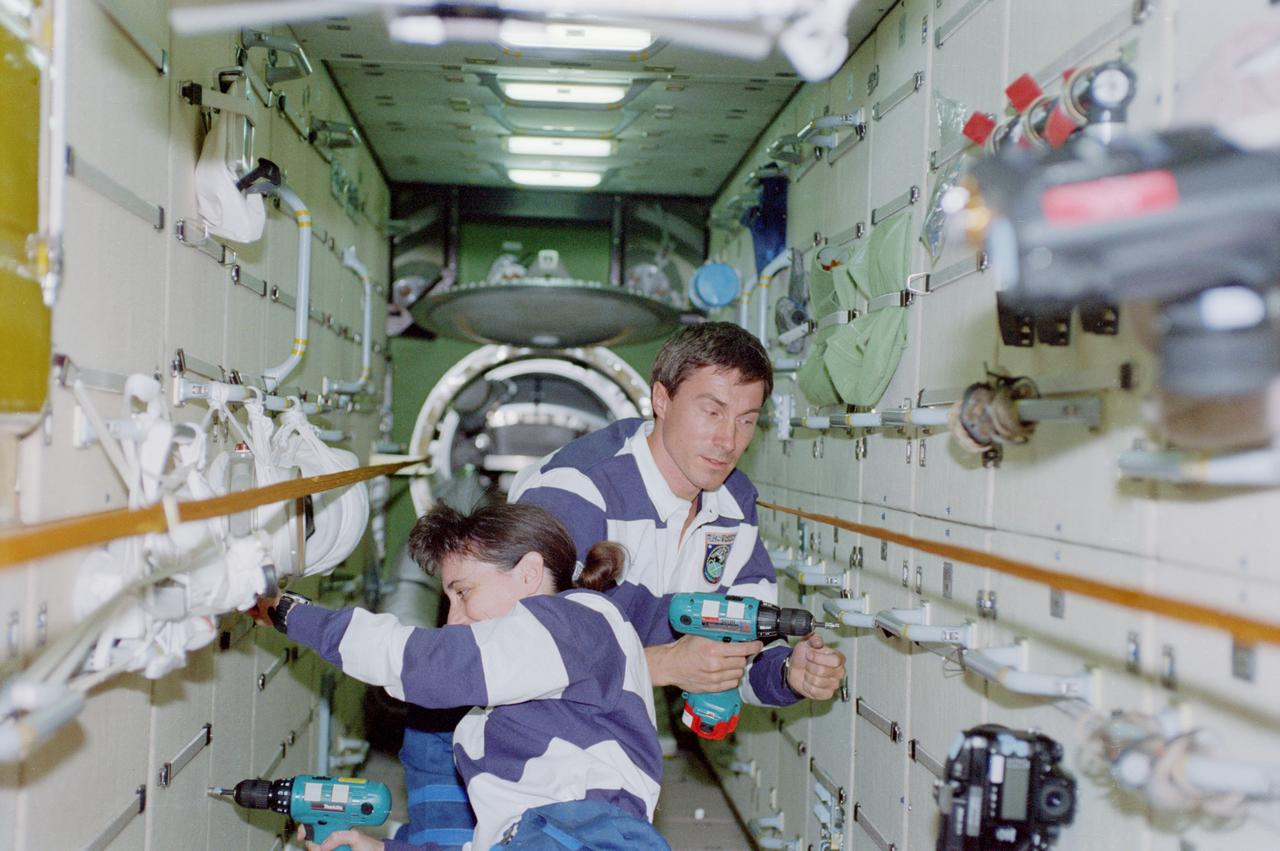
STS088-357-011 (4-15 Dec. 1998) --- Astronaut Nancy J. Currie, mission specialist, and cosmonaut Sergei K. Krikalev, mission specialist representing the Russian Space Agency (RSA), work in the FGB or Zarya Module of the International Space Station (ISS). The two are using battery powered tools to extract bolts.
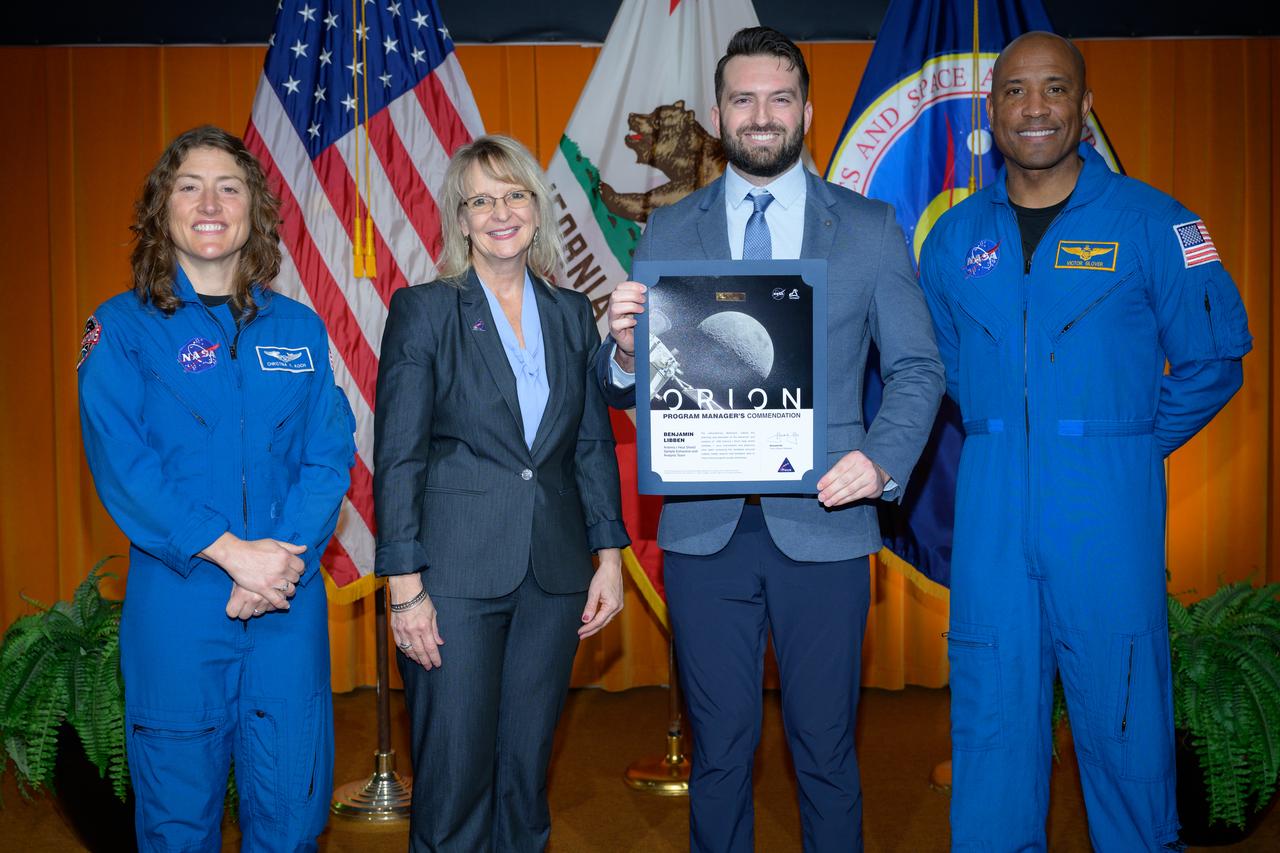
Artemis Orion program manager’s commendation team award presented to the Artemis I Heat Shield Sample Extraction and Analysis team accepted by Benjamin Libben, center, by Orion Deputy Program Manager Debbie Korth, left, NASA astronauts Victor J. Glover, right, and Christina Koch, left, in the N201 auditorium.
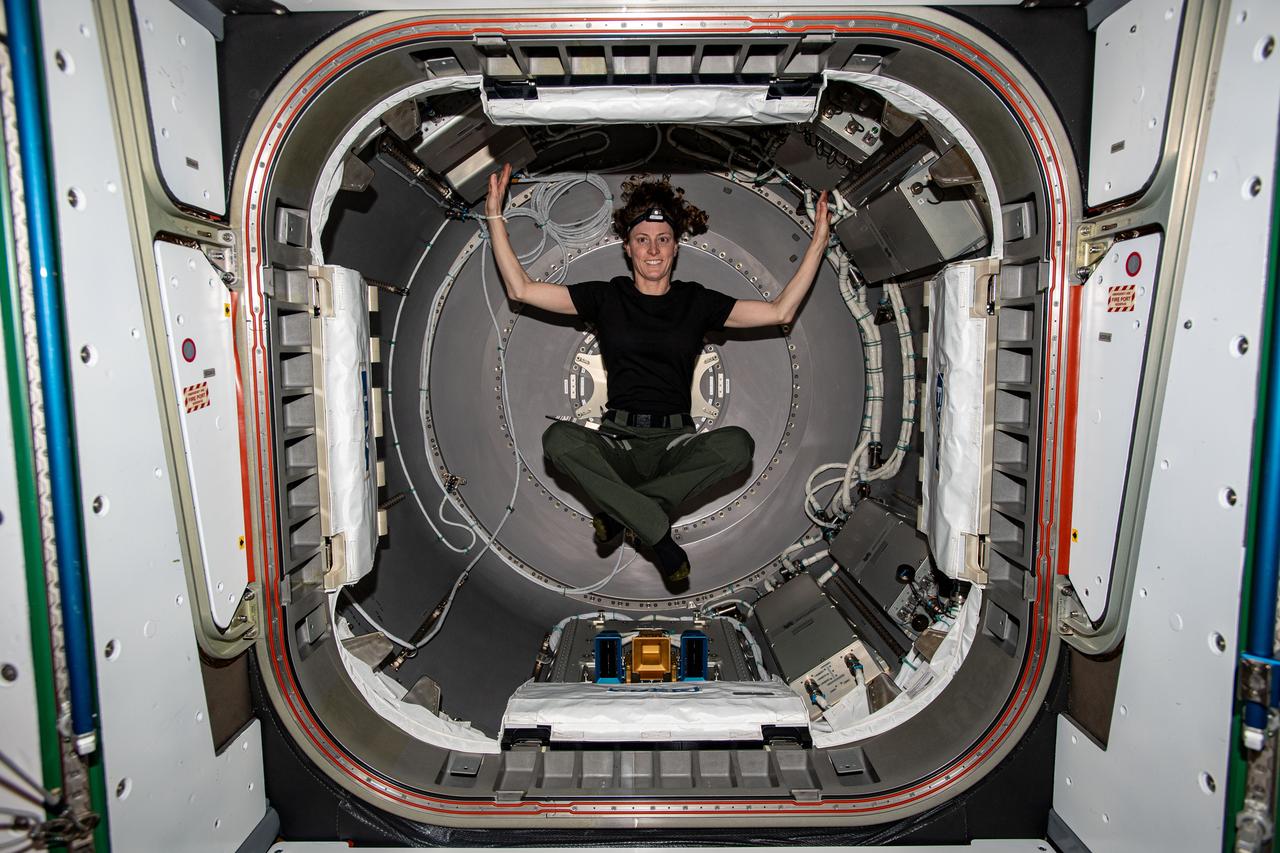
iss070e102747 (Feb. 26, 2024) --- Expedition 70 Flight Engineer and NASA astronaut Loral O'Hara is photographed inside the NanoRacks Bishop airlock. Bishop can be uninstalled from its home on the Tranquility module for portable operations. It can also be used to stow cargo and extract or install payloads.
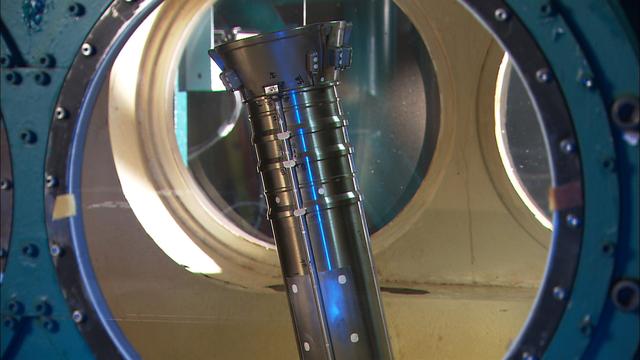
THIS IS A TEST OF THE 1ST STAGE RE-ENTRY VEHICLE. HEAT TESTING OF A 3% MODEL TO SUPPORT THE ARES/ CLV FIRST STAGE RE-ENTRY. THIS TEST OCCURRED AT ARNOLD AIR FORCE BASE, TENNESSEE. THIS TESTING SUPPORTS THE DEVELOPMENT OF THE CONSTELLATION/ARES PROJECT. THIS IMAGE IS EXTRACTED FROM A HIGH DEFINITION VIDEO FILE AND IS THE HIGHEST RESOLUTION AVAILABLE.
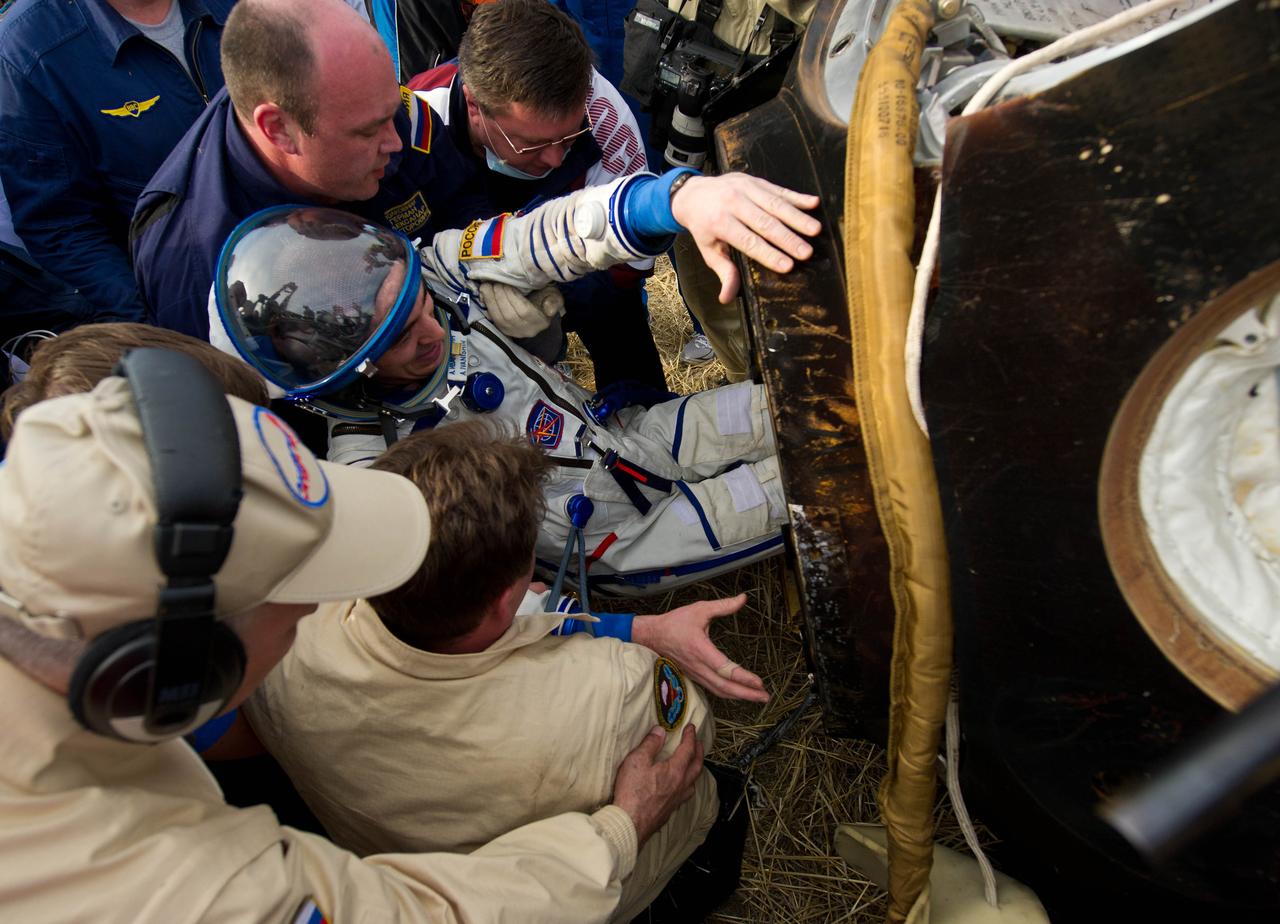
201204270043hq (April 27, 2012) --- Expedition 30 Flight Engineer and Roscosmos cosmonaut Anatoly Ivanishin is extracted from the Soyuz TMA-22 spacecraft shortly after parachuting to Earth with crewmates (out of frame) Dan Burbank of NASA and Anton Shkaplerov of Roscosmos. Credit: NASA/Carla Cioffi
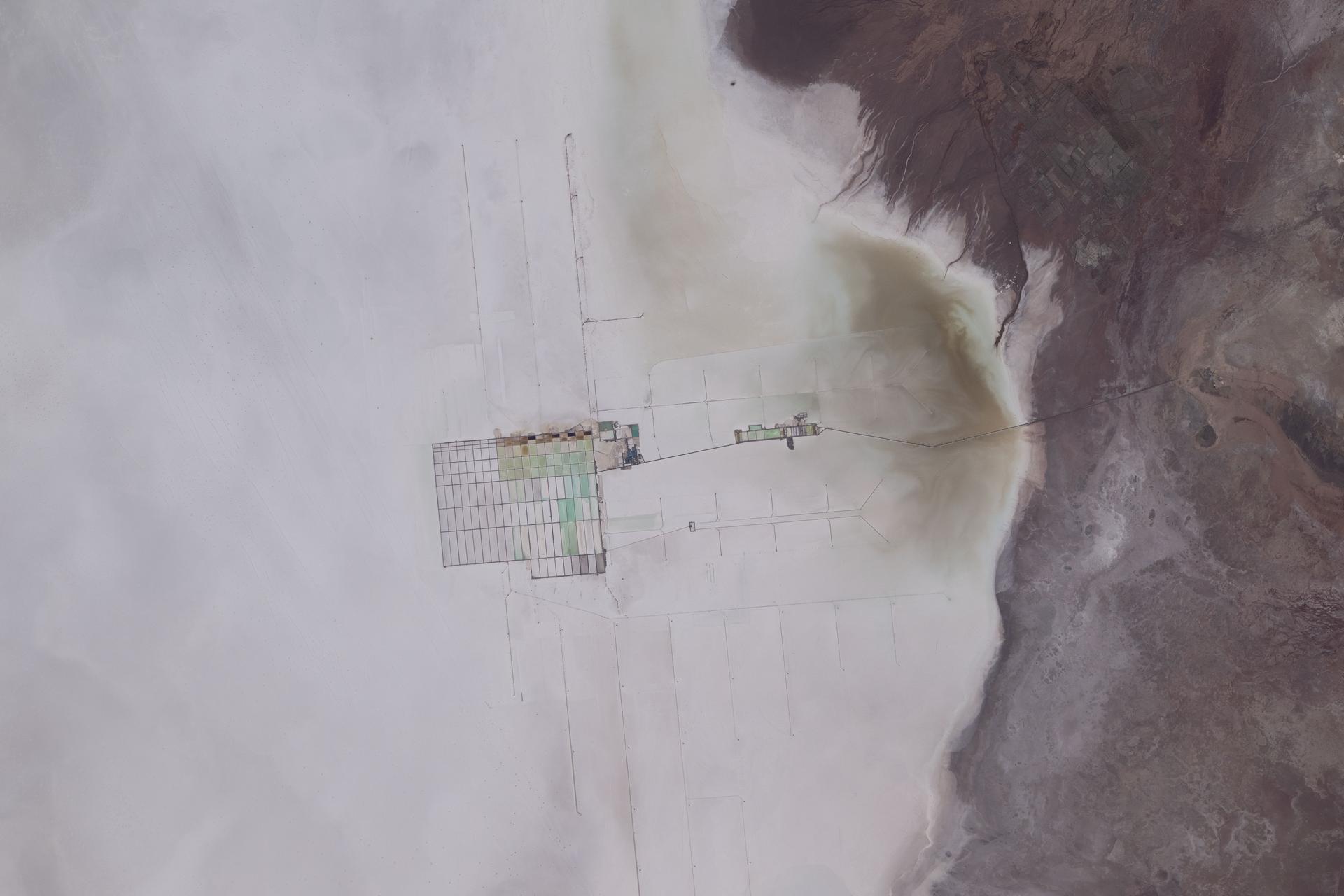
iss074e0319935 (Feb. 21, 2026) --- The Salar de Uyuni in Bolivia is the world's largest salt flat and one of the flattest surfaces on Earth. At the center of the photograph is a mining operation extracting extensive lithium deposits across the salt flat. Credit: NASA/Jessica Meir
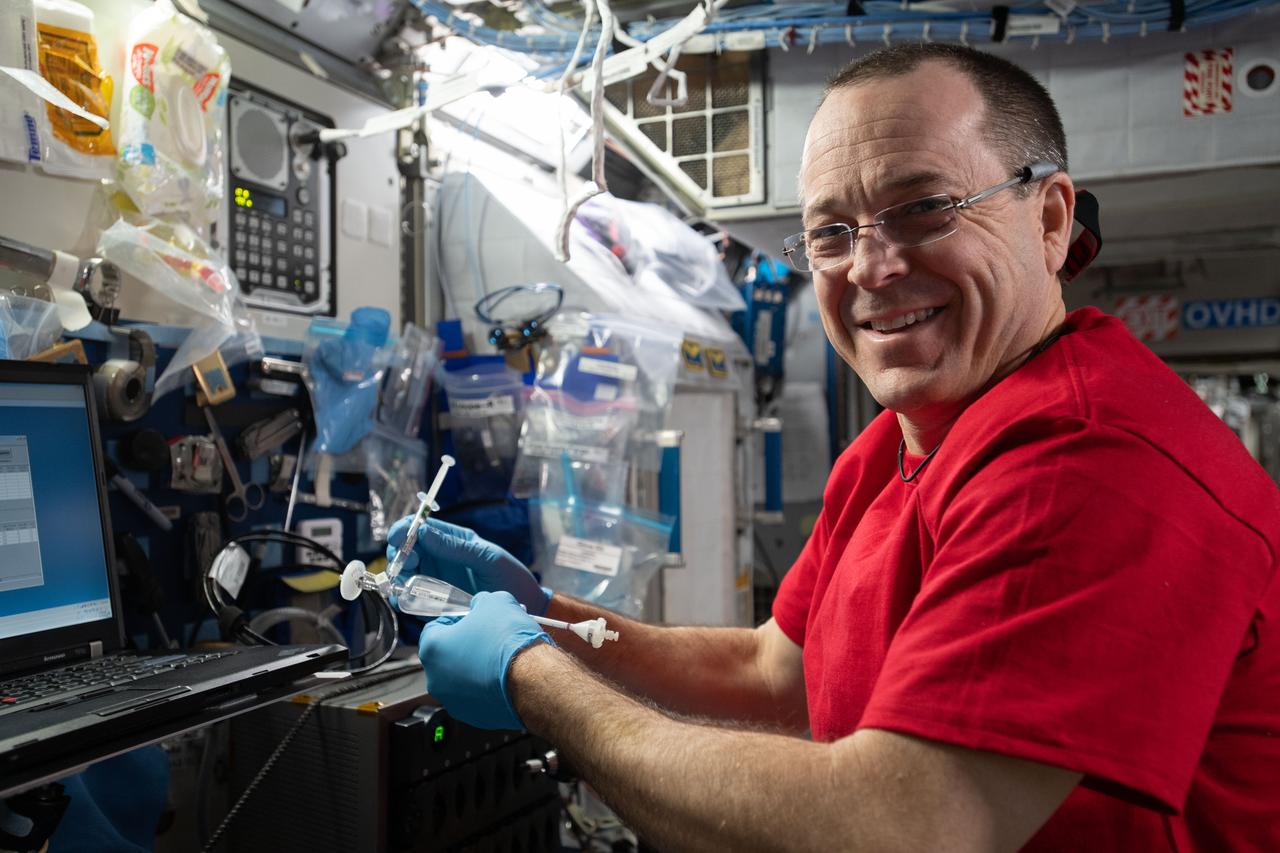
iss056e158445 (Aug. 27, 2018) --- NASA astronaut Ricky Arnold is pictured working inside NASA's U.S. Destiny laboratory module on an experiment that extracts RNA from biological samples to help researchers decipher the changes in gene expression that take place in microgravity.
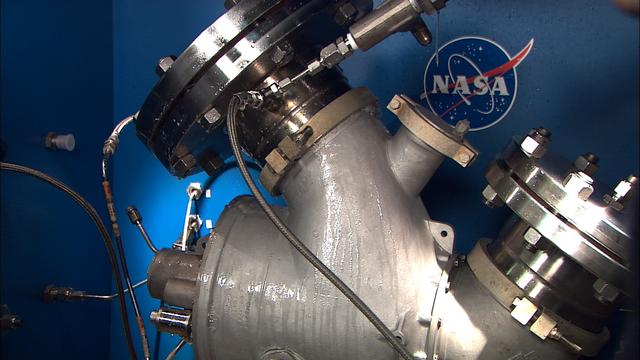
Shown is the disassembly, examination, refurbishment and testing of the LH2 ( liquid hydrogen) and LOX (liquid oxygen) vent and relief valves for the S-IVB-211 engine stage in support of the Constellation/Ares project. This image is extracted from high definition video and is the highest resolution available.
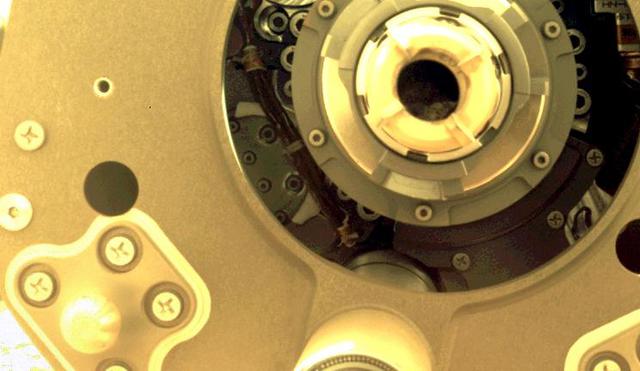
This image taken by the front left hazard camera (hazcam) aboard NASA's Mars Perseverance rover shows the cored-rock sample remaining in the sample tube after the drill bit was extracted from the bit carousel on Jan. 7, 2022. The sample was collected from a rock in the "South Séítah" region of Jezero Crater on Dec. 29, 2021. This image has been processed to enhance contrast. A key objective for Perseverance's mission on Mars is astrobiology, including the search for signs of ancient microbial life. The rover will characterize the planet's geology and past climate, pave the way for human exploration of the Red Planet, and be the first mission to collect and cache Martian rock and regolith (broken rock and dust). Subsequent NASA missions, in cooperation with ESA (European Space Agency), would send spacecraft to Mars to collect these sealed samples from the surface and return them to Earth for in-depth analysis. The Mars 2020 Perseverance mission is part of NASA's Moon to Mars exploration approach, which includes Artemis missions to the Moon that will help prepare for human exploration of the Red Planet. https://photojournal.jpl.nasa.gov/catalog/PIA25067
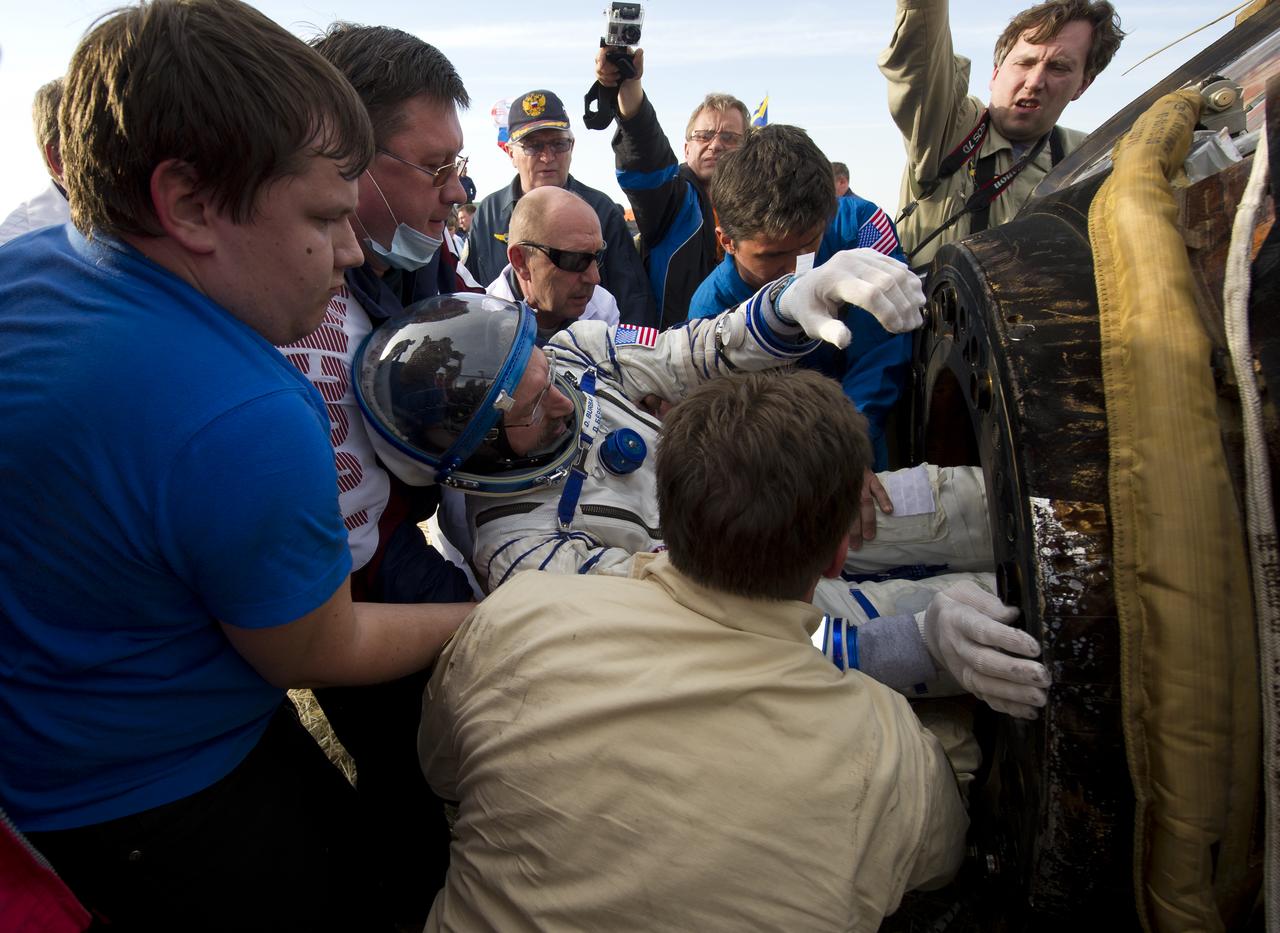
Expedition 30 Commander Dan Burbank is seen as he is extracted from the Soyuz TMA-22 spacecraft shortly after the capsule landed with Russian flight engineers Anton Shkaplerov and Anatoly Ivanishin in a remote area outside of the town of Arkalyk, Kazakhstan on Friday, April 27, 2012. Burbank, Ivanishin, and Shkaplerov are returning from more than five months onboard the International Space Station where they served as members of the Expedition 29 and 30 crews. Photo Credit: (NASA/Carla Cioffi)
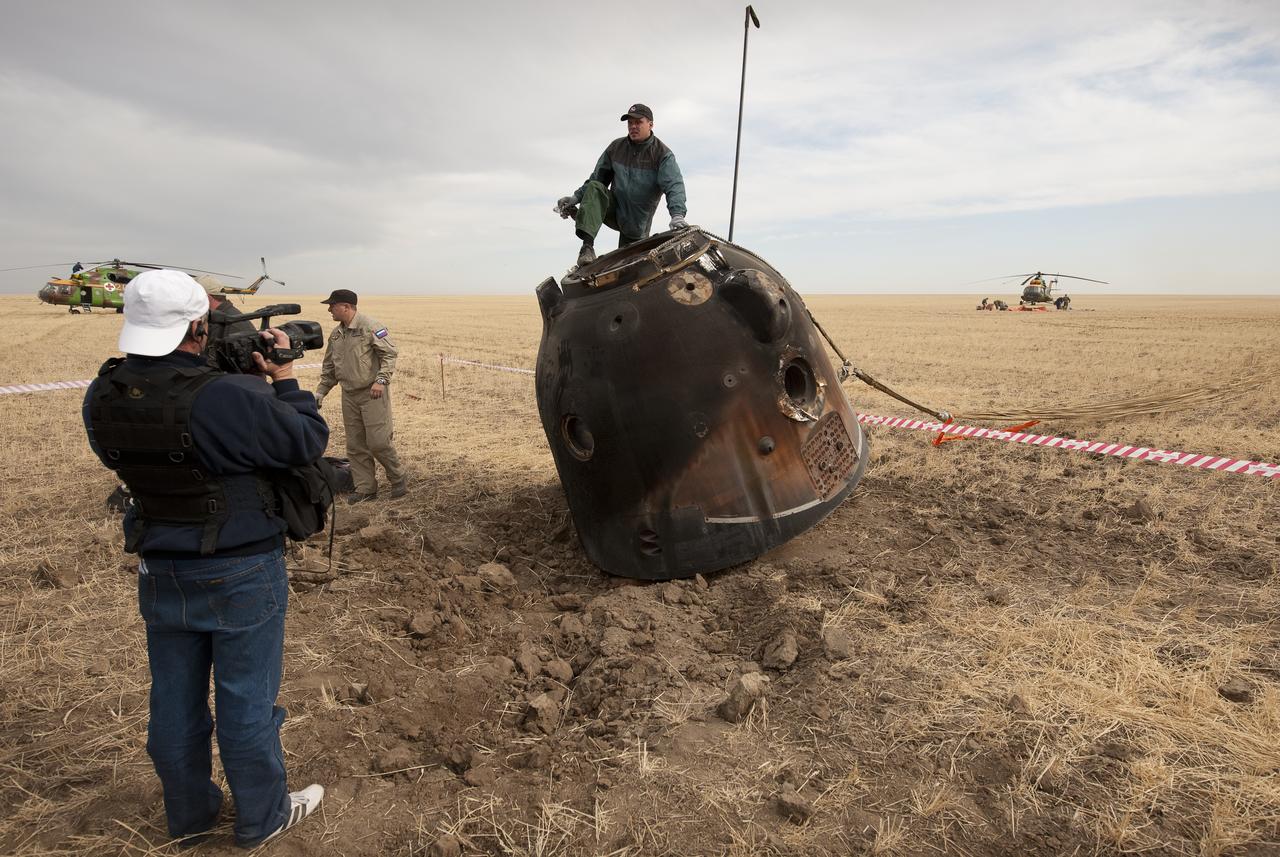
Russian search and rescue personnel and engineers prepare to extract the crew from the Soyuz TMA-18 moments after it landed with Expedition 24 Commander Alexander Skvortsov and Flight Engineers Tracy Caldwell Dyson and Mikhail Kornienko near the town of Arkalyk, Kazakhstan on Saturday, Sept. 25, 2010. Russian Cosmonauts Skvortsov and Kornienko and NASA Astronaut Caldwell Dyson, are returning from six months onboard the International Space Station where they served as members of the Expedition 23 and 24 crews. Photo Credit: (NASA/Bill Ingalls)
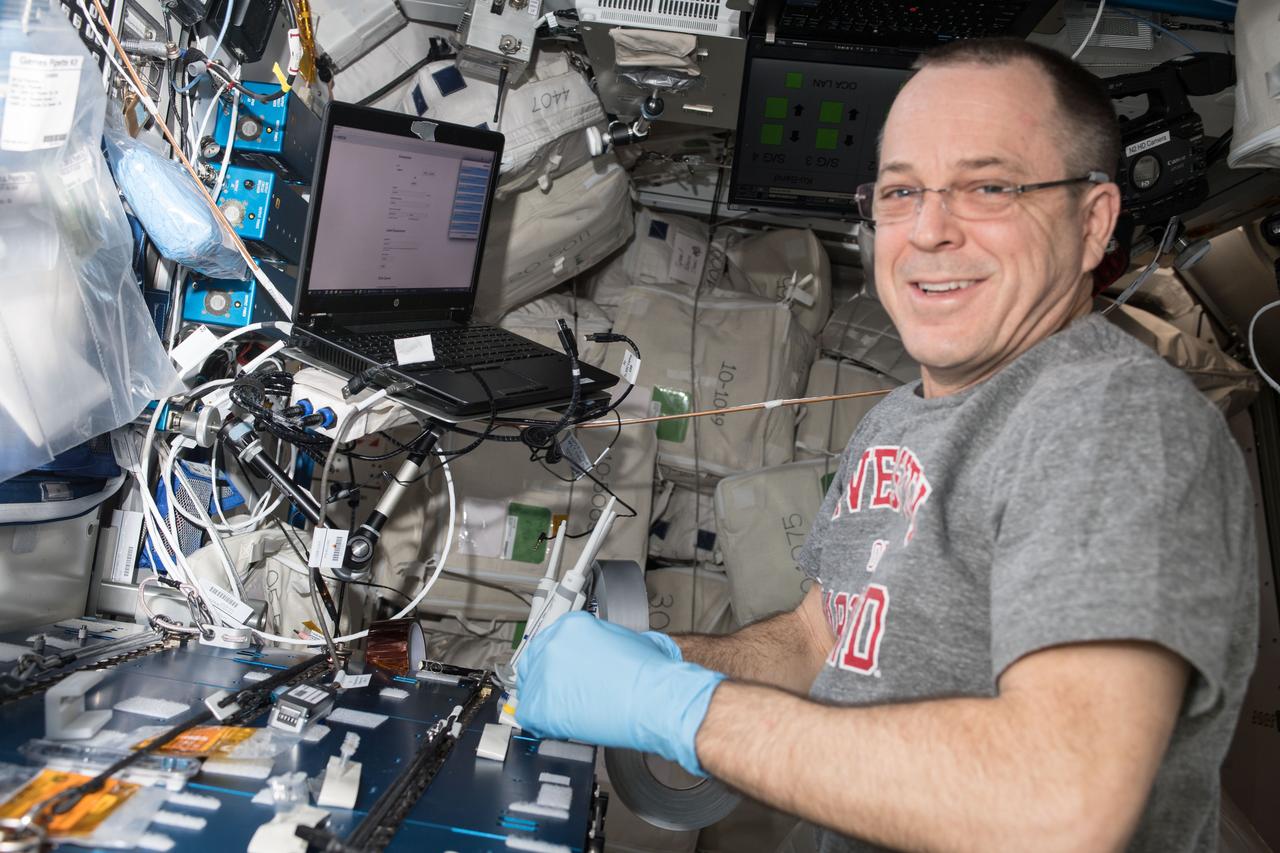
iss056e097518 (July 20, 2018) --- Expedition 56 Flight Engineer Ricky Arnold prepares amplified DNA collected from microbes living aboard the International Space Station for sequencing using the Biomolecule Sequencer. The Biomolecule Extraction and Sequencing Technology (BEST) investigation studies the use of DNA sequencing for the identification of unknown microbial organisms living on the station and to understand how humans, plants and microbes adapt to living in space.
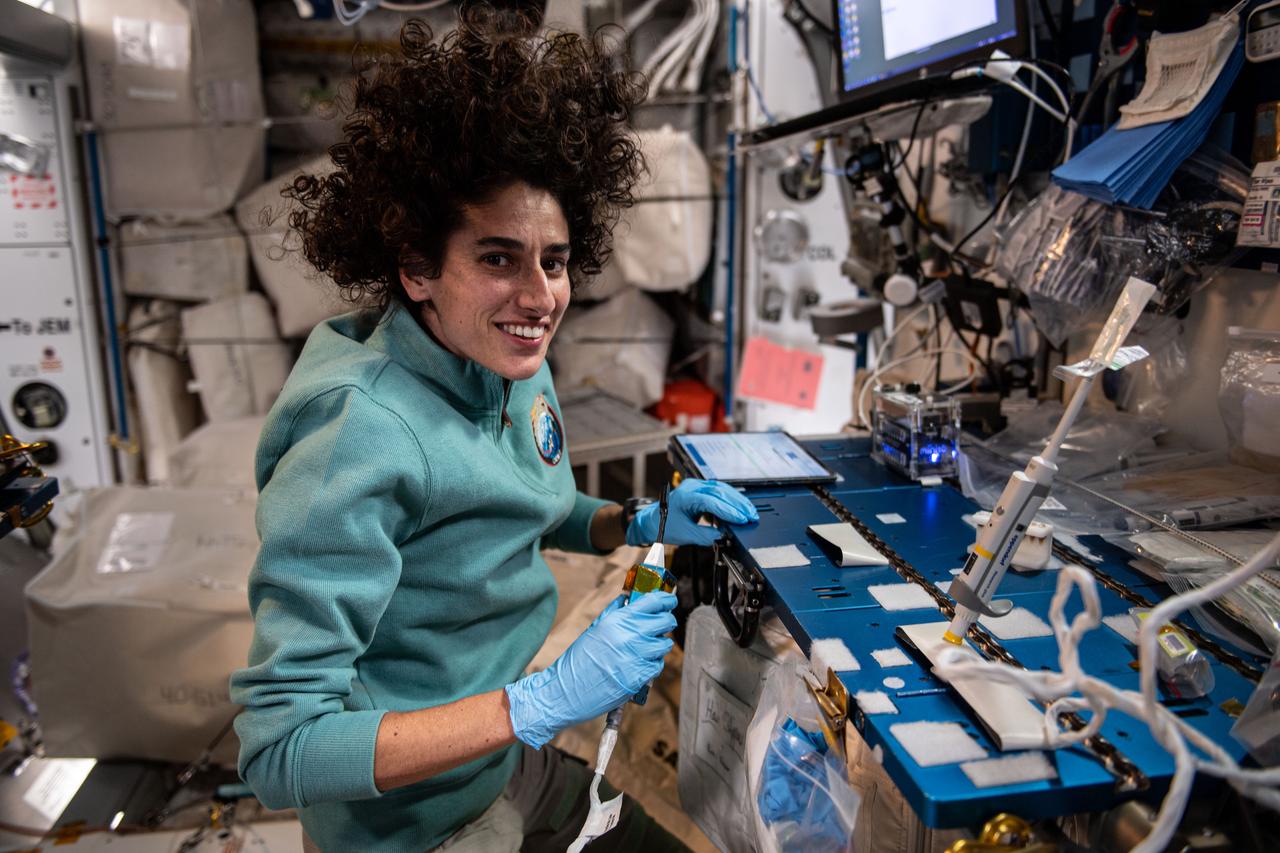
iss070e005386 (Oct. 18, 2023) --- NASA astronaut and Expedition 70 Flight Engineer Jasmin Moghbeli uses a portable DNA detection device that can be found in laboratories and classrooms on Earth. She was identifying bacteria extracted from water samples collected aboard the International Space Station. Known as BioMole, the study is demonstrating the ability to monitor the spacecraft’s microbial environment without sending samples back to Earth for analysis.
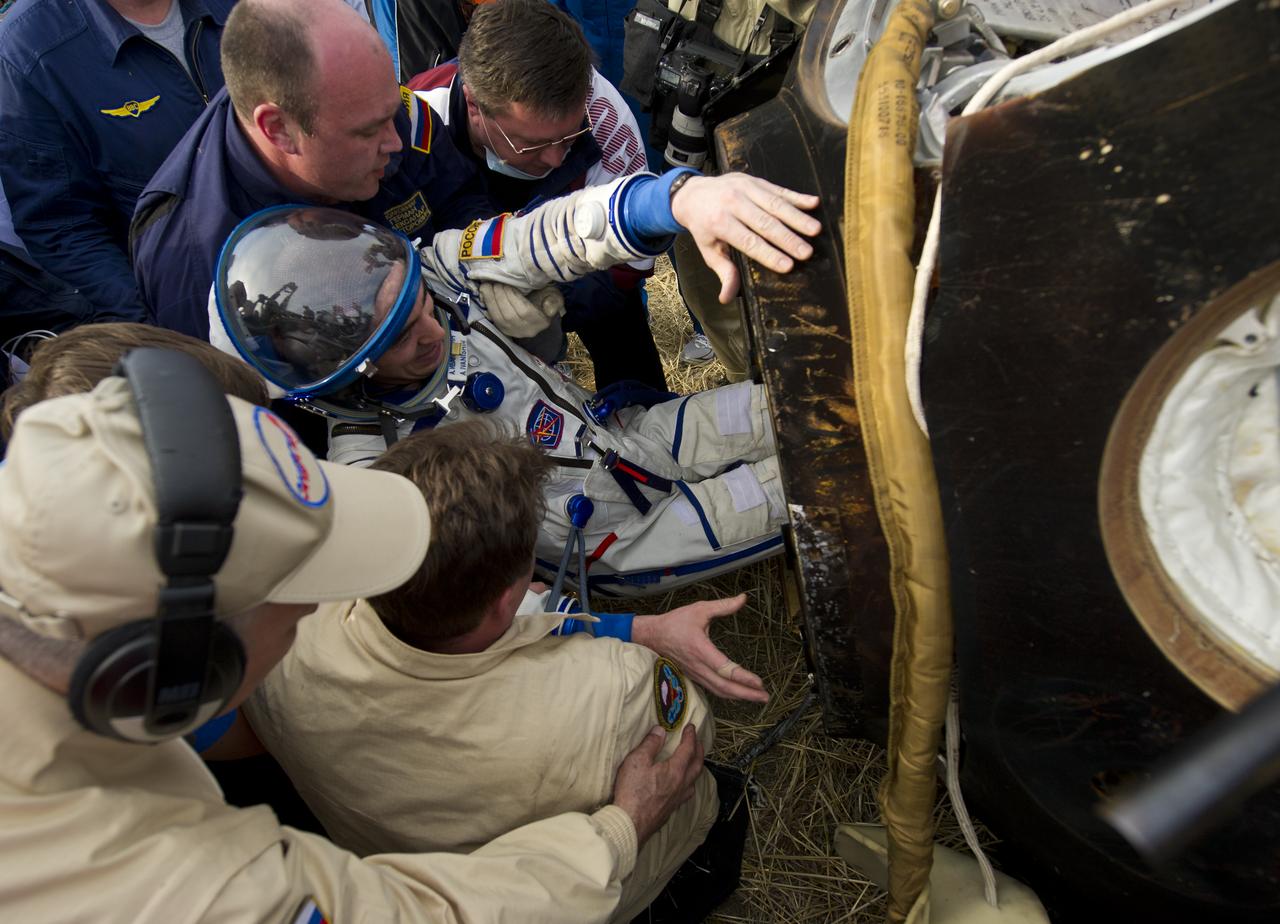
Expedition 30 flight engineer and Russian cosmonaut Anatoly Ivanishin is seen as he is extracted from the Soyuz TMA-22 spacecraft shortly after the capsule landed with Expedition 30 Commander Dan Burbank and flight engineer Anton Shkaplerov in a remote area outside of the town of Arkalyk, Kazakhstan on Friday, April 27, 2012. Ivanishin, Burbank and Shkaplerov are returning from more than five months onboard the International Space Station where they served as members of the Expedition 29 and 30 crews. Photo Credit: (NASA/Carla Cioffi)
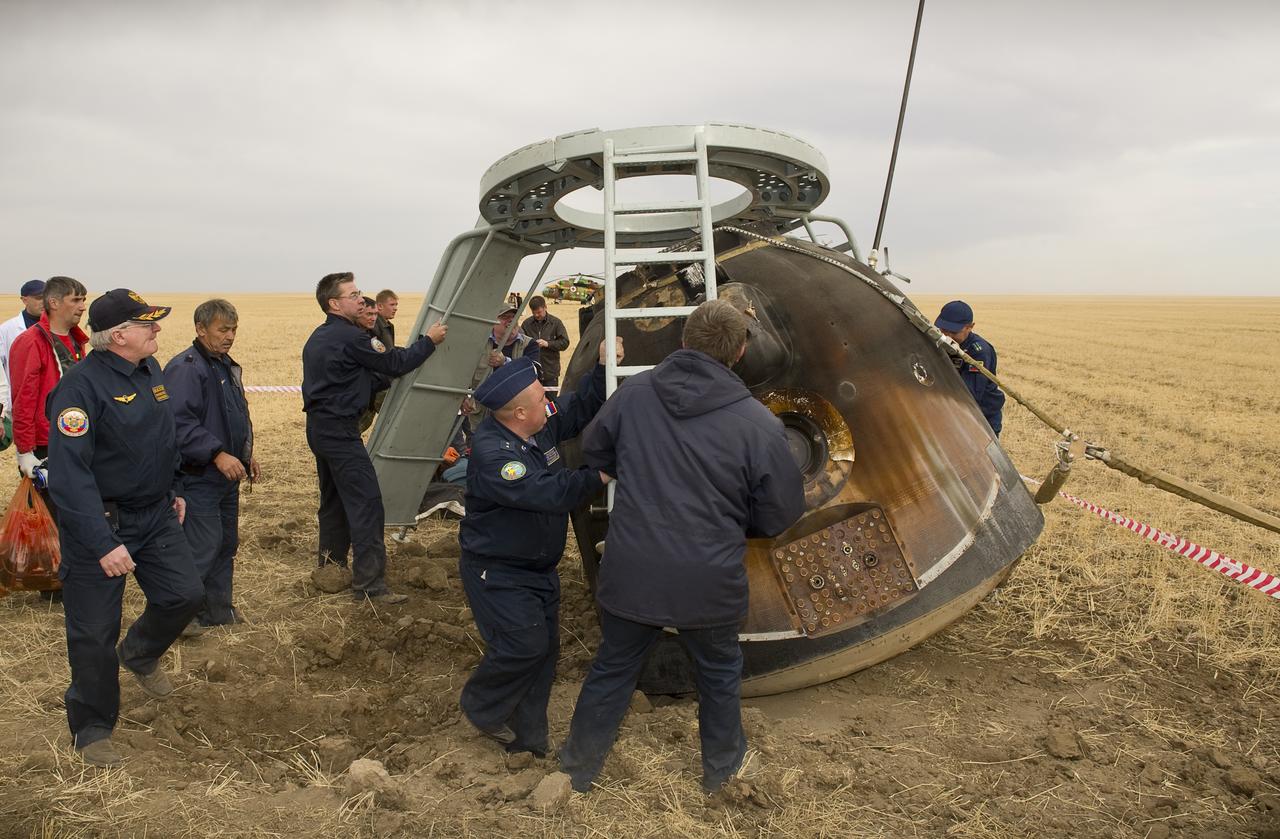
Russian search and rescue personnel and engineers prepare to extract the crew from the Soyuz TMA-18 moments after it landed with Expedition 24 Commander Alexander Skvortsov and Flight Engineers Tracy Caldwell Dyson and Mikhail Kornienko near the town of Arkalyk, Kazakhstan on Saturday, Sept. 25, 2010. Russian Cosmonauts Skvortsov and Kornienko and NASA Astronaut Caldwell Dyson, are returning from six months onboard the International Space Station where they served as members of the Expedition 23 and 24 crews. Photo Credit: (NASA/Bill Ingalls)
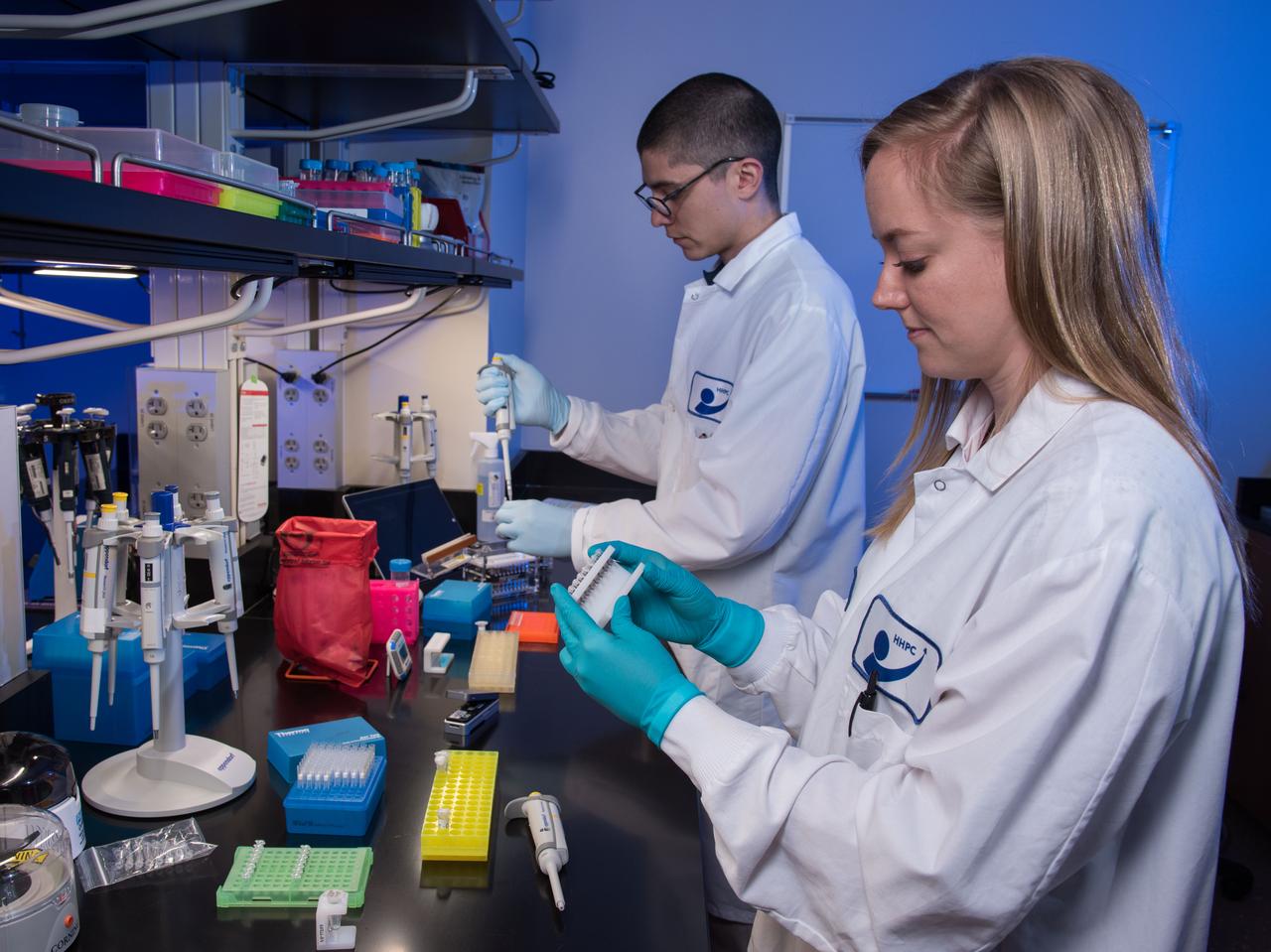
jsc2018e040417 (4/30/2018) --- Researchers at NASA's Johnson Space Center perform DNA and RNA sequencing on microbes as part of the Biomolecule Extraction and Sequencing Technology (BEST) experiment. The same sequencing procedure is performed in orbit aboard the International Space Station (ISS) and the results are compared to those on the ground. This will provide better insight into the effects of the spaceflight environment on microbial life.
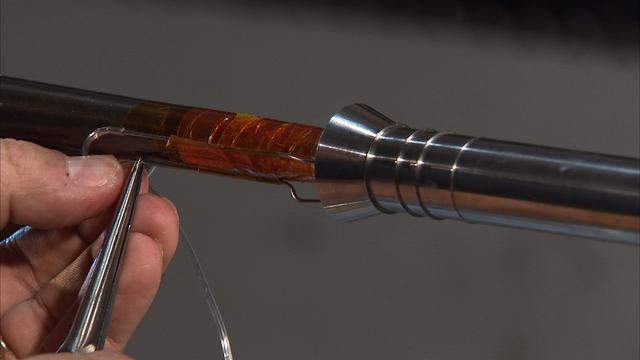
Active damper wind tunnel test in support of the development of Constellation/Ares. Testing of the 1% and .548% models for active damper and wall interference assessment in support of the Ares/CLV integrated vehicle. This test occurred at the 11 foot wind tunnel at the Ames Research Center, California. This image is extracted from high definition video file and is the highest resolution available.
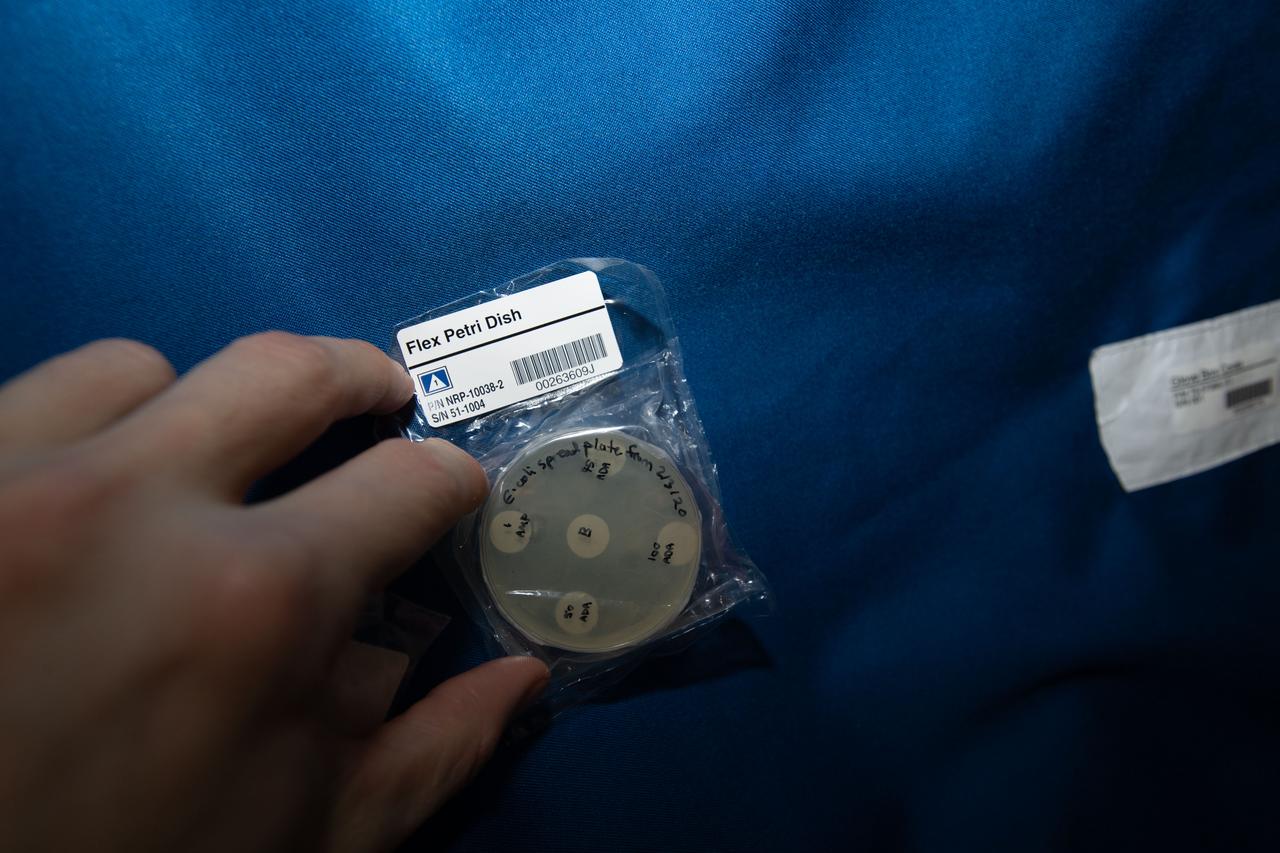
iss062e087553 (3/11/2020) --- A View of the ISSET-Nanoracks-Mission Discovery 4 investigation aboard the International Space Station (ISS). The purpose of the Antibacterial properties of fly larvae extract: sub-investigation is to observe the effect of microgravity on the ability of the antibiotics found in fly larvae to eliminate E. coli bacteria. As part of the study, adipic acid, the antibacterial compound identified in fly larvae, is used and antibacterial prospects in microgravity are evaluated.
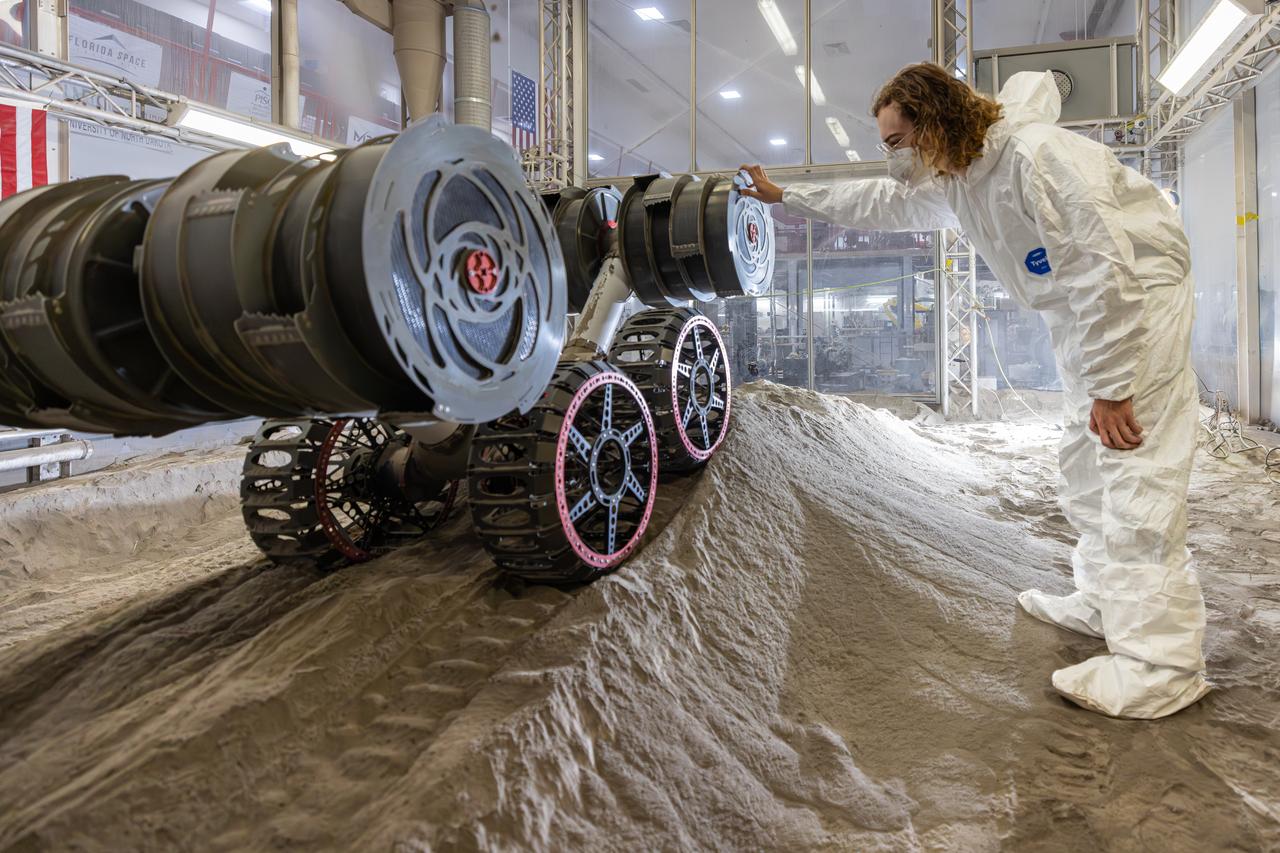
Ben Burdess, mechanical engineer, observes NASA’s RASSOR (Regolith Advanced Surface Systems Operations Robot) excavation testing of simulated regolith, or lunar dust found on the Moon’s surface, inside of the Granular Mechanics and Regolith Operations Lab at the agency’s Kennedy Space Center in Florida on Tuesday, May 27, 2025. RASSOR is designed to work in low-gravity situations, using counter rotating bucket drums on each arm to collect and dump regolith for the extraction of hydrogen, oxygen, or water, resources critical for sustaining a habitable presence.
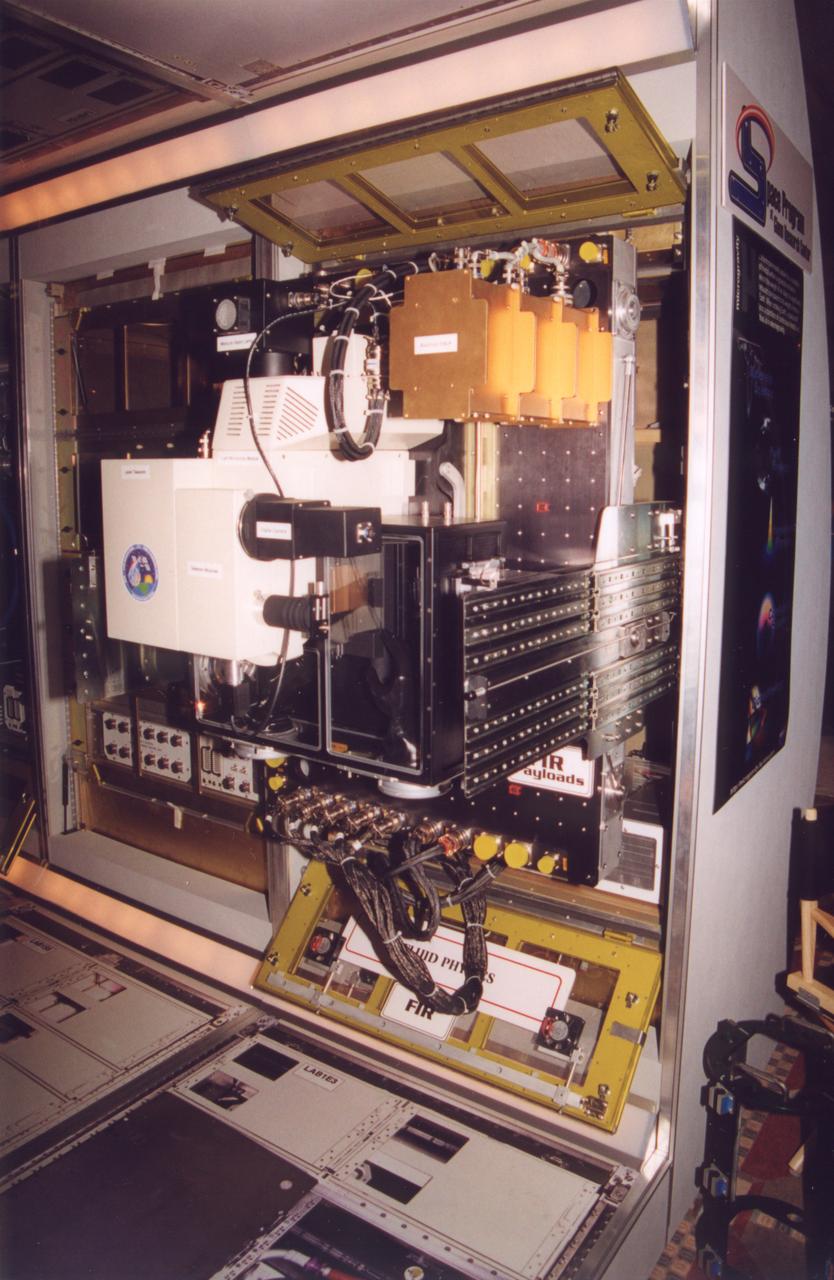
The optical bench for the Fluids Integrated Rack section of the Fluids and Combustion Facility (FCF) is shown extracted for servicing. The FCF will be installed, in phases, in the Destiny, the U.S. Laboratory Module of the International Space Station (ISS), and will accommodate multiple users for a range of investigations. This is an engineering mockup; the flight hardware is subject to change as designs are refined. The FCF is being developed by the Microgravity Science Division (MSD) at the NASA Glenn Research Center. (Photo credit: NASA/Marshall Space Flight Center)
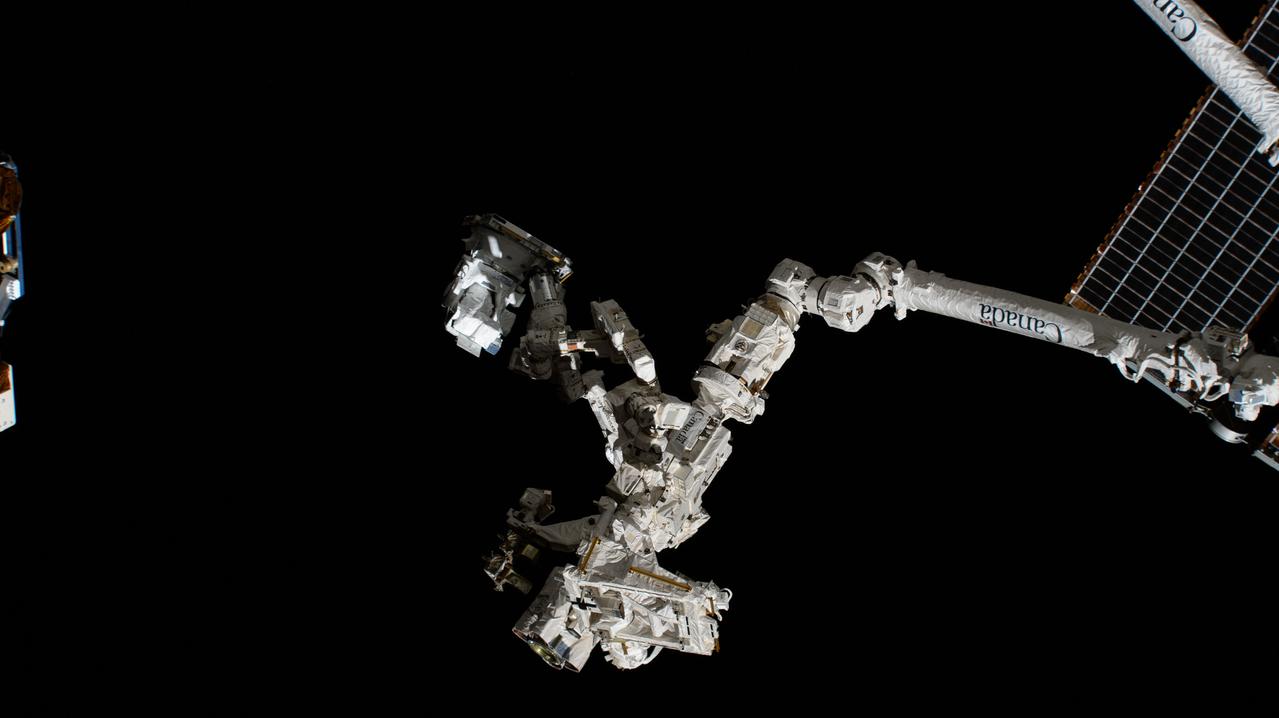
iss072e188838 (Nov. 9, 2024) --- The fine-tuned robotic hand, better known as Dextre, is attached to the Canadarm2 robotic arm and carries the CODEX experiment (center) after extracting the research hardware from the trunk of the SpaceX Dragon cargo spacecraft. CODEX, a solar coronagraph installed on the International Space Station, will gather important information about the solar wind and how it forms. A coronagraph blocks out the bright light from the Sun to better see details in the Sun's outer atmosphere, or corona.
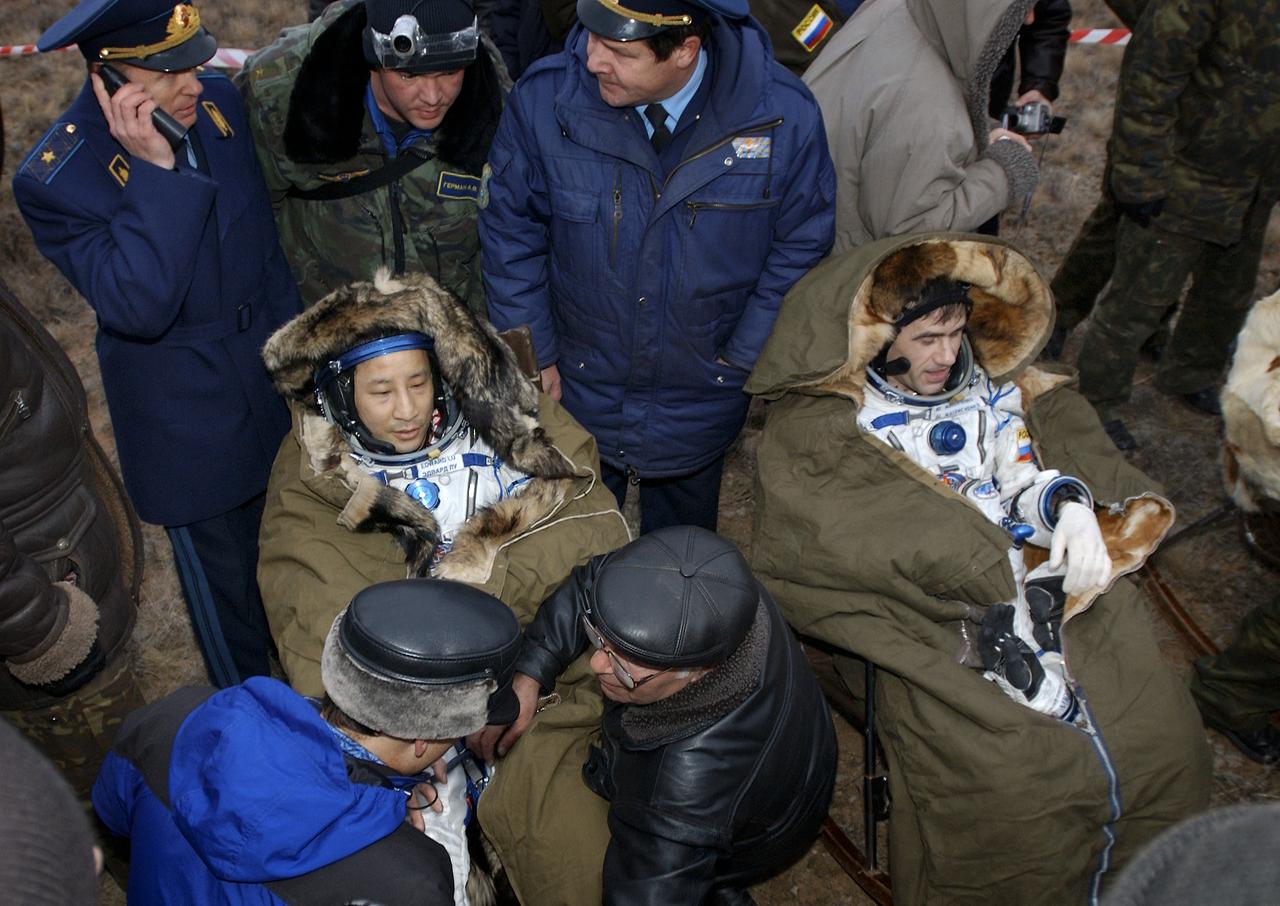
Astronaut Edward T. Lu, Expedition 7 NASA International Space Station Science Officer and Flight Engineer, left and cosmonaut Yuri I. Malenchenko, Mission Commander, are seated in their chairs after being extracted from the Soyuz TMA-2 spacecraft upon their landing in Kazakhstan on Monday, October 27, 2003 at 9:41 p.m. (EST). Photo Credit: (NASA/Bill Ingalls)
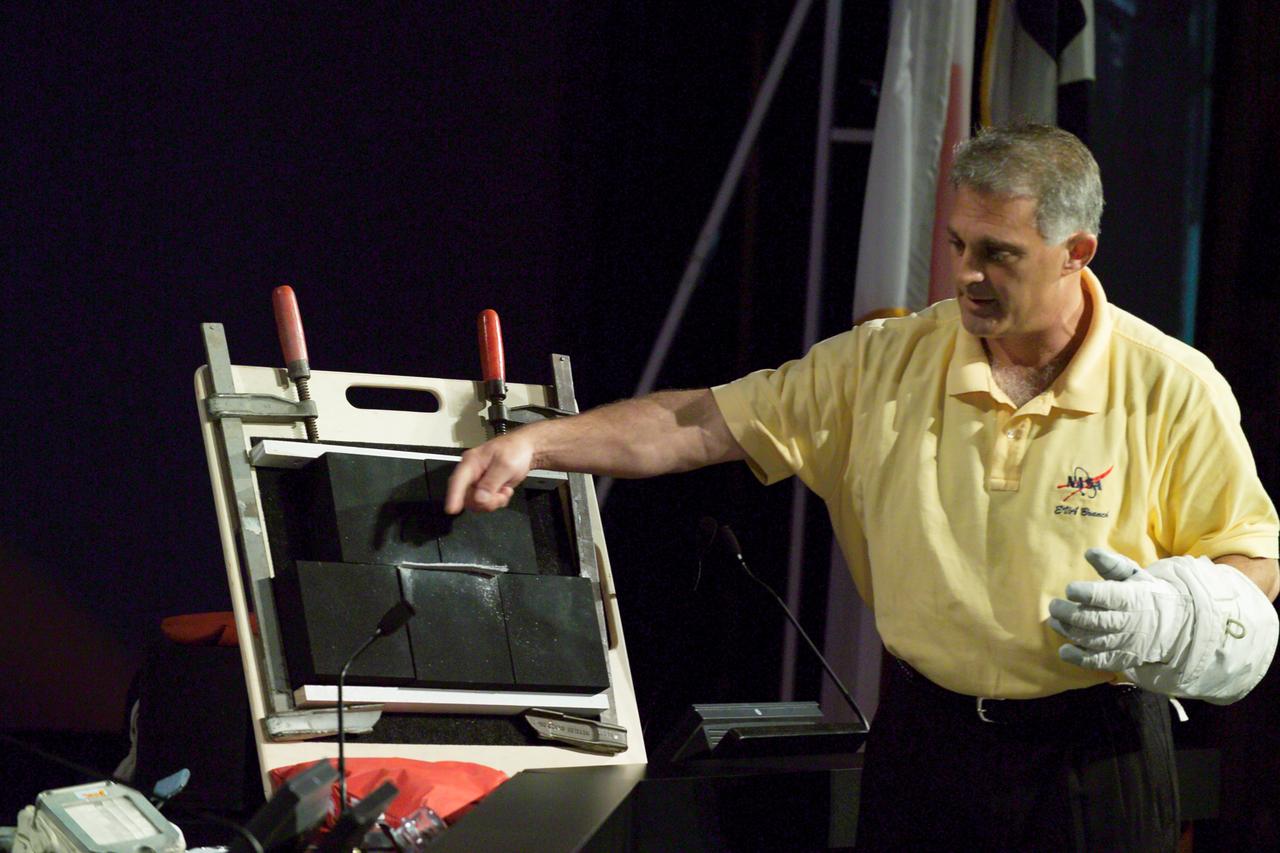
JSC2005-E-31523 (2 August 2005) --- Astronaut David A. Wolf points to a simulated piece of protruding fiber on a set-up of thermal tiles to demonstrate for a press conference audience possible techniques to extract the gap filler material on the underside of the Space Shuttle Discovery. The STS-114 crew will conduct a spacewalk on August 3 to remove two such pieces.
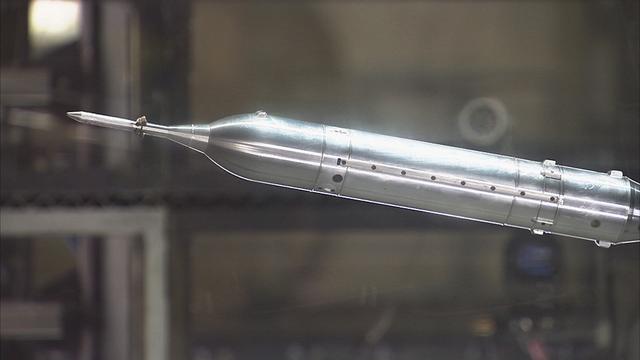
Active damper wind tunnel test in support of the development of Constellation/Ares. Testing of the 1% and .548% models for active damper and wall interference assessment in support of the Ares/CLV integrated vehicle. This test occurred at the 11 foot wind tunnel at the Ames Research Center, California. This image is extracted from high definition video file and is the highest resolution available