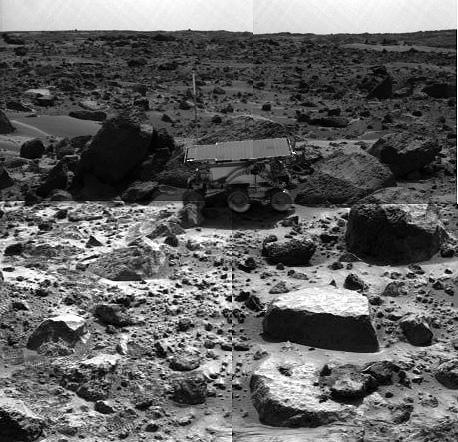
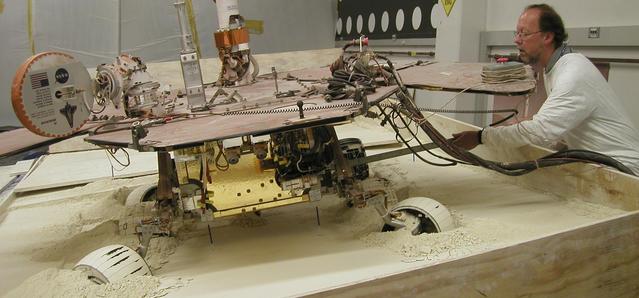
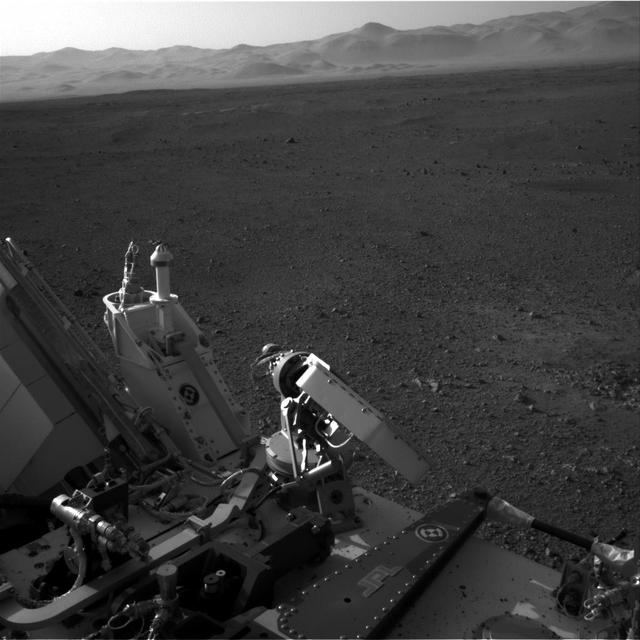
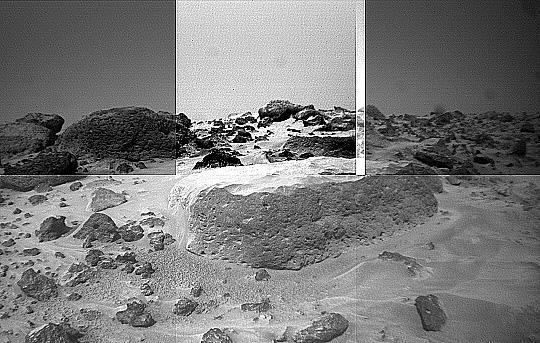
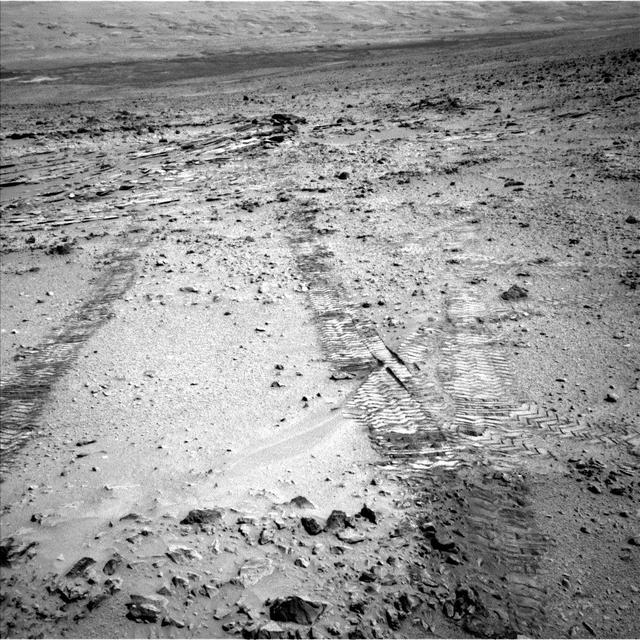
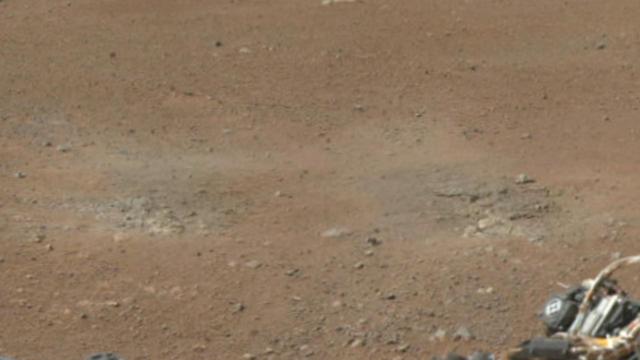
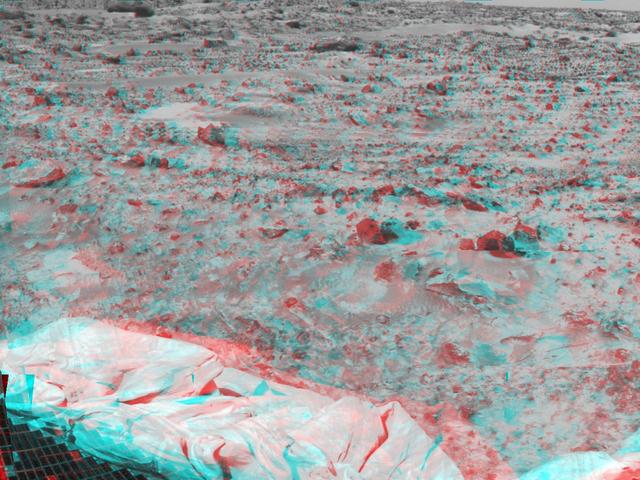
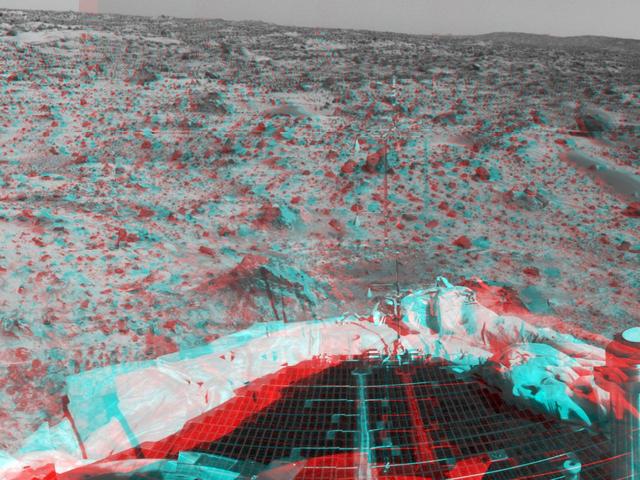
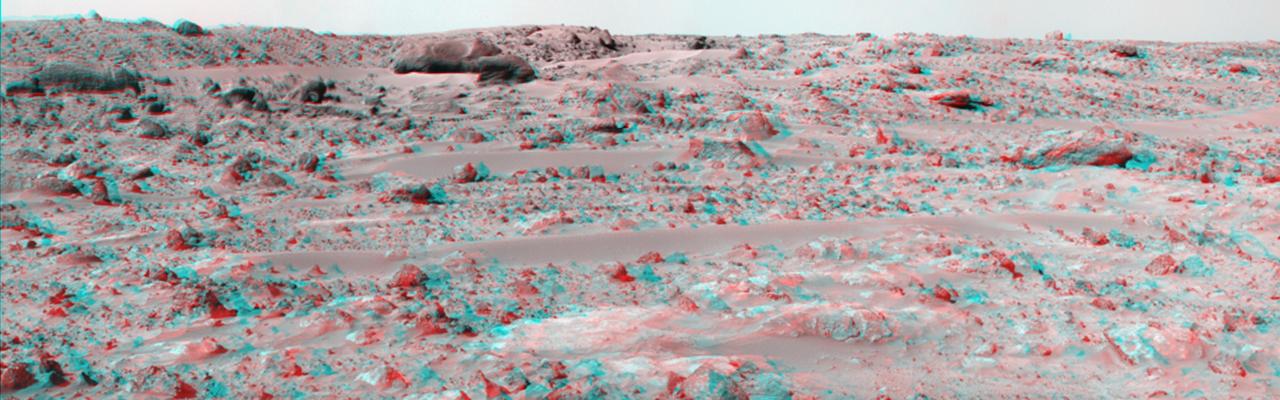
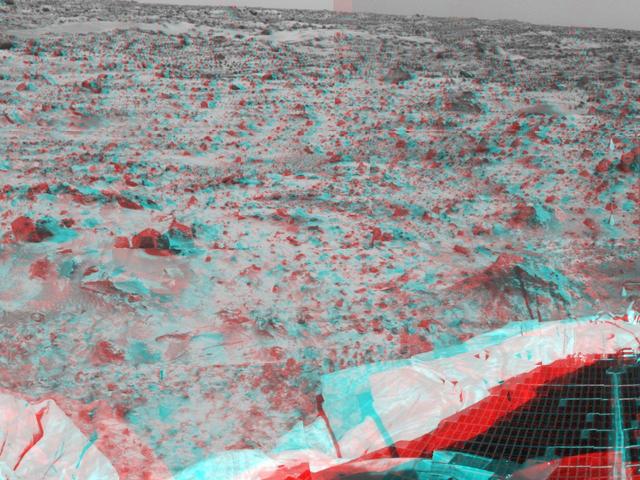
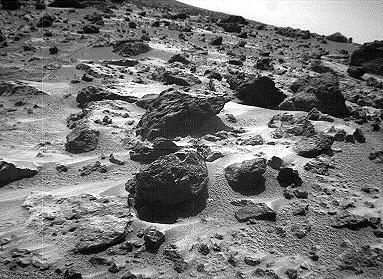
North View from Sojourner - Left Eye
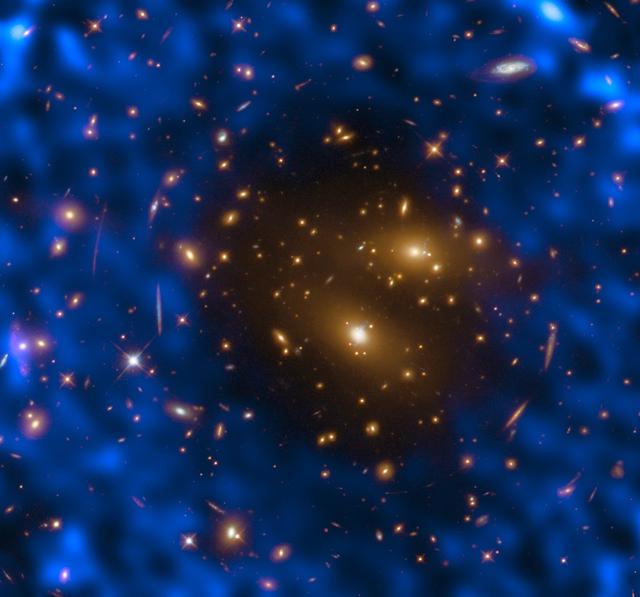
The events surrounding the Big Bang were so cataclysmic that they left an indelible imprint on the fabric of the cosmos. We can detect these scars today by observing the oldest light in the universe. As it was created nearly 14 billion years ago, this light — which exists now as weak microwave radiation and is thus named the cosmic microwave background (CMB) — permeates the entire cosmos, filling it with detectable photons.  The CMB can be used to probe the cosmos via something known as the Sunyaev-Zel’dovich (SZ) effect, which was first observed over 30 years ago. We detect the CMB here on Earth when its constituent microwave photons travel to us through space. On their journey to us, they can pass through galaxy clusters that contain high-energy electrons. These electrons give the photons a tiny boost of energy. Detecting these boosted photons through our telescopes is challenging but important — they can help astronomers to understand some of the fundamental properties of the universe, such as the location and distribution of dense galaxy clusters.  The NASA/ESA (European Space Agency) Hubble Space Telescope observed one of most massive known galaxy clusters, RX J1347.5–1145, seen in this Picture of the Week, as part of the Cluster Lensing And Supernova survey with Hubble (CLASH). This observation of the cluster, 5 billion light-years from Earth, helped the Atacama Large Millimeter/submillimeter Array (ALMA) in Chile to study the cosmic microwave background using the thermal Sunyaev-Zel’dovich effect. The observations made with ALMA are visible as the blue-purple hues.  Image credit: ESA/Hubble &amp; NASA, T. Kitayama (Toho University, Japan)/ESA/Hubble &amp; NASA  <b><a href="http://www.nasa.gov/audience/formedia/features/MP_Photo_Guidelines.html" rel="nofollow">NASA image use policy.</a></b>  <b><a href="http://www.nasa.gov/centers/goddard/home/index.html" rel="nofollow">NASA Goddard Space Flight Center</a></b> enables NASA’s mission through four scientific endeavors: Earth Science, Heliophysics, Solar System Exploration, and Astrophysics. Goddard plays a leading role in NASA’s accomplishments by contributing compelling scientific knowledge to advance the Agency’s mission.  <b>Follow us on <a href="http://twitter.com/NASAGoddardPix" rel="nofollow">Twitter</a></b>  <b>Like us on <a href="http://www.facebook.com/pages/Greenbelt-MD/NASA-Goddard/395013845897?ref=tsd" rel="nofollow">Facebook</a></b>  <b>Find us on <a href="http://instagrid.me/nasagoddard/?vm=grid" rel="nofollow">Instagram</a></b>
The Big Bang left a permanent scare in the cosmic background, 5 billion light-years from Earth
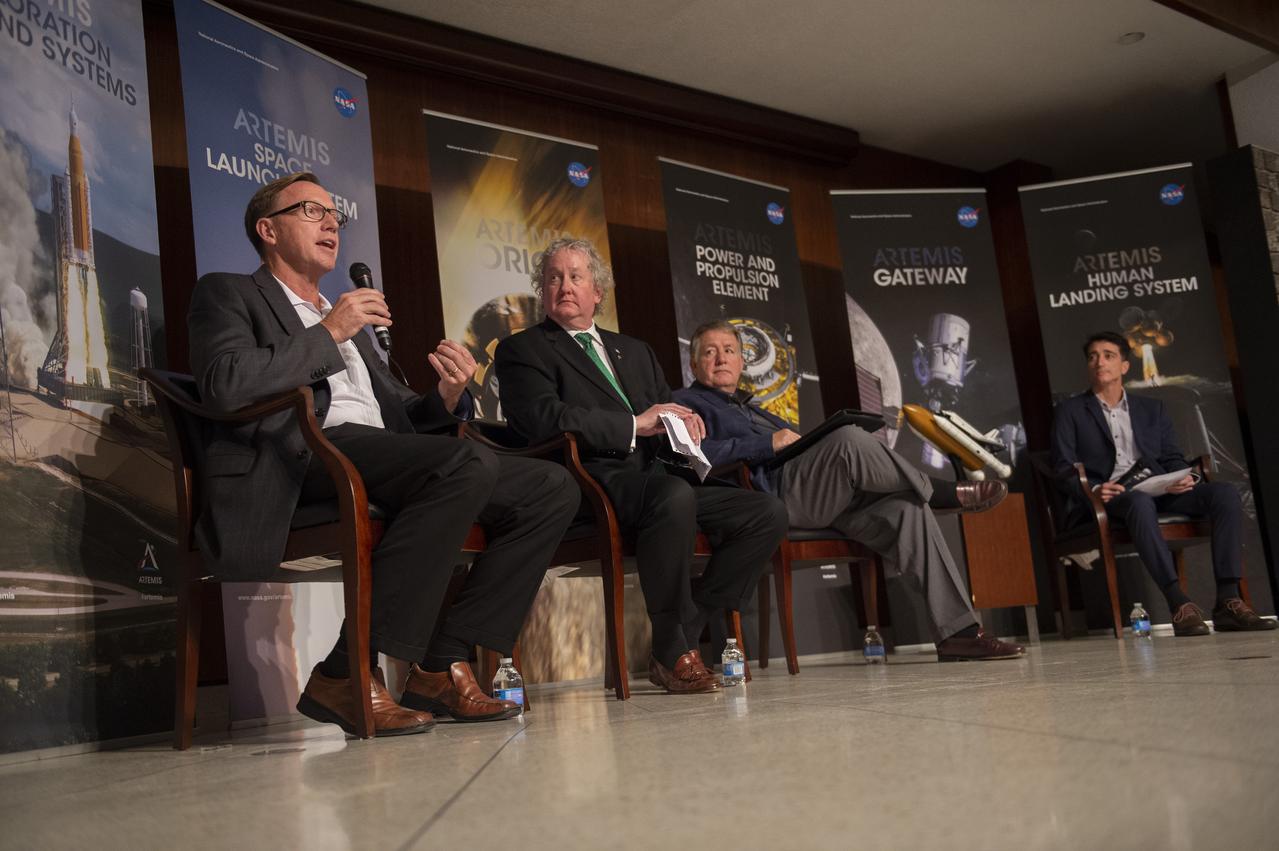
A Nov. 5 panel at NASA’s Marshall Space Flight Center discusses lessons learned from Columbia including, from left, Steve Miley, associate director of Marshall; Bill Hill, director of advanced technology at Marshall; Preston Jones, associate director, technical, at Marshall; and Mike Ciannilli, Apollo Challenger Columbia Lessons Learned Program manager at NASA’s Kennedy Space Center.
A Nov. 5 panel at NASA’s Marshall Space Flight Center discusse
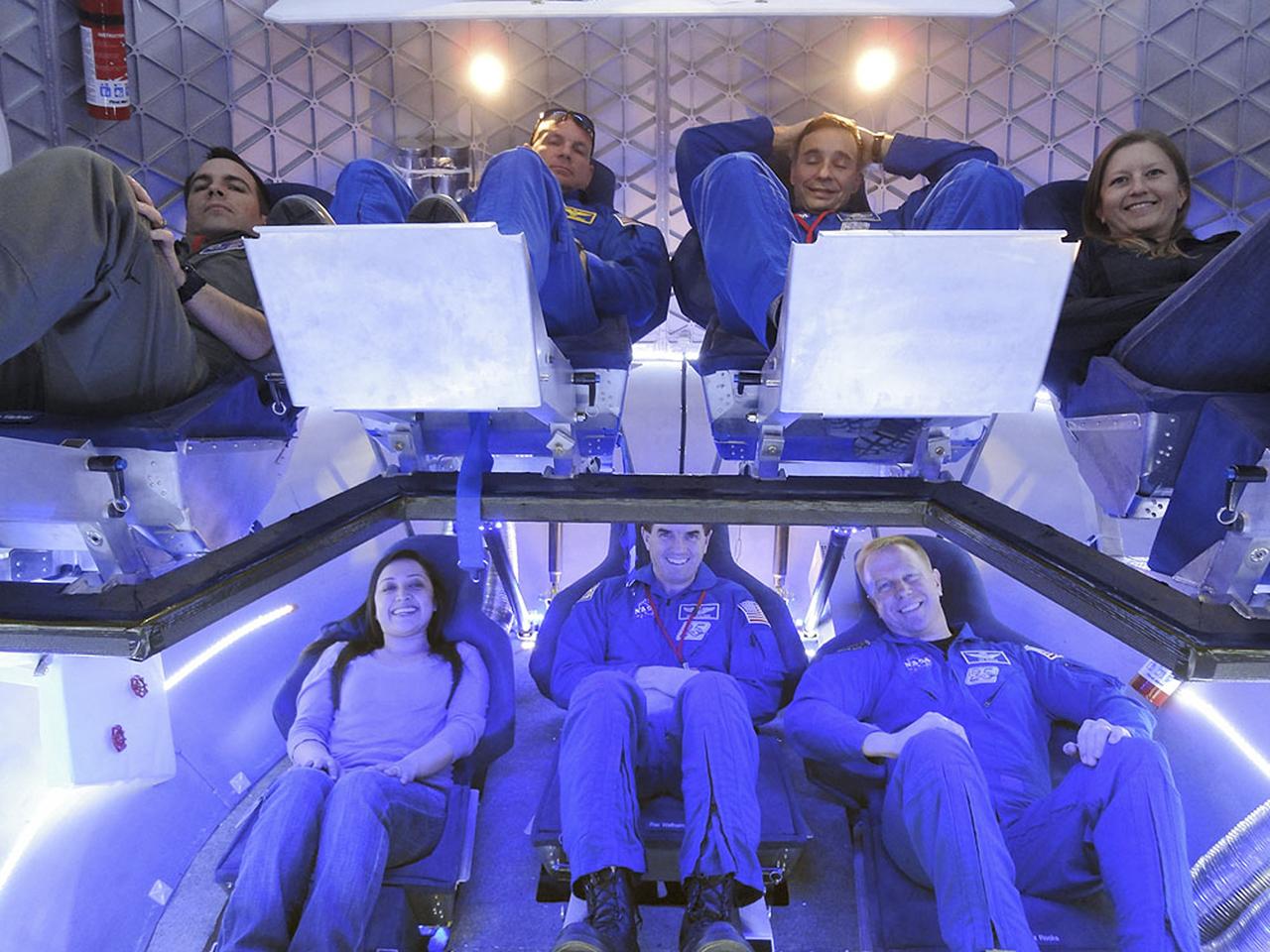
HAWTHORNE, Calif. -- NASA astronauts and industry experts check out the crew accommodations in the Dragon spacecraft under development by Space Exploration Technologies SpaceX of Hawthorne, Calif., for the agency's Commercial Crew Program. On top, from left, are NASA Crew Survival Engineering Team Lead Dustin Gohmert, NASA astronauts Tony Antonelli and Lee Archambault, and SpaceX Mission Operations Engineer Laura Crabtree. On bottom, from left, are SpaceX Thermal Engineer Brenda Hernandez and NASA astronauts Rex Walheim and Tim Kopra. In 2011, NASA selected SpaceX during Commercial Crew Development Round 2 CCDev2) activities to mature the design and development of a crew transportation system with the overall goal of accelerating a United States-led capability to the International Space Station. The goal of CCP is to drive down the cost of space travel as well as open up space to more people than ever before by balancing industry’s own innovative capabilities with NASA's 50 years of human spaceflight experience. Six other aerospace companies also are maturing launch vehicle and spacecraft designs under CCDev2, including Alliant Techsystems Inc. ATK, The Boeing Co., Excalibur Almaz Inc., Blue Origin, Sierra Nevada, and United Launch Alliance ULA. For more information, visit www.nasa.gov/commercialcrew. Image credit: Space Exploration Technologies
NASA astronauts and industry experts check out the crew accommod
Sojourner Rover Backing Away From Moe - Left Eye
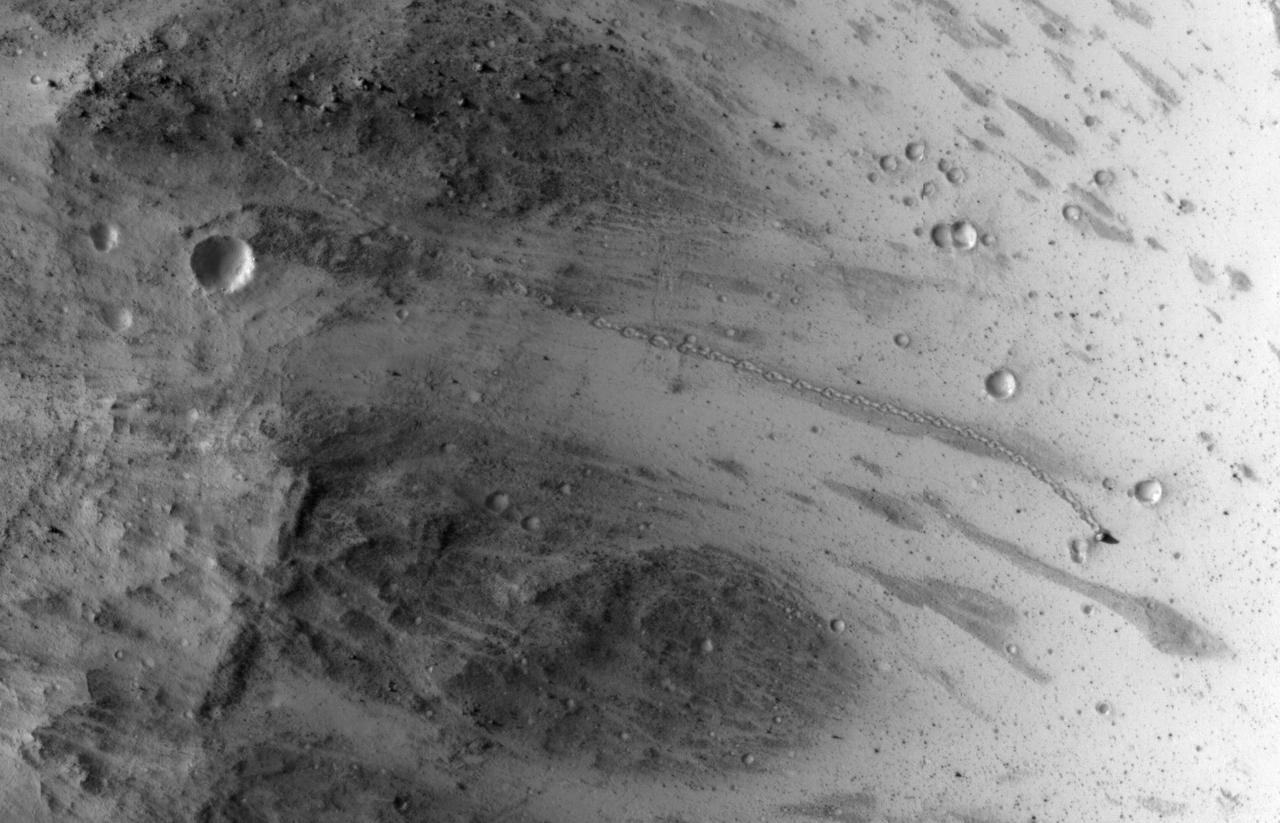
The track left by an oblong boulder as it tumbled down a slope on Mars runs from upper left to right center of this image taken by NASA Mars Reconnaissance Orbiter.
An Irregular, Upright Boulder on Mars
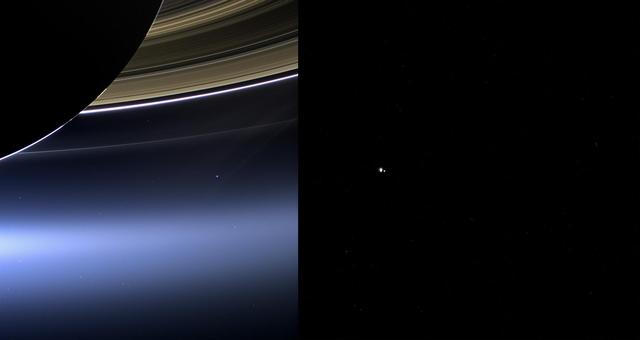
These images show views of Earth and the moon from NASA Cassini left and MESSENGER spacecraft right from July 19, 2013.
Two Views of Home
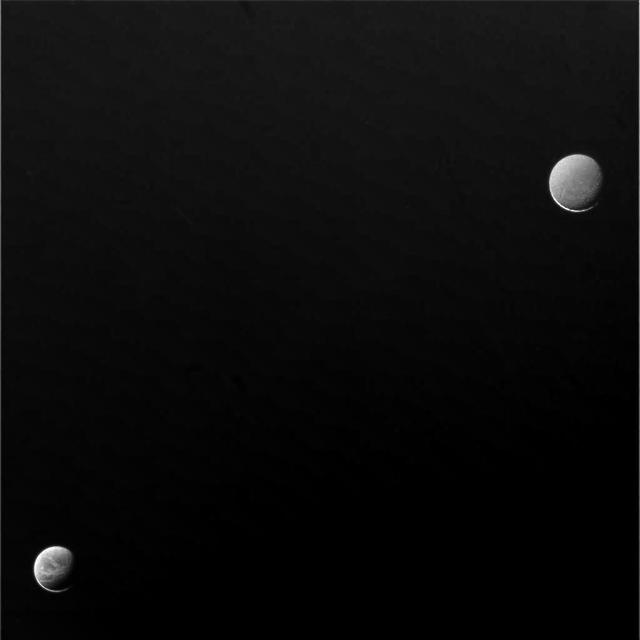
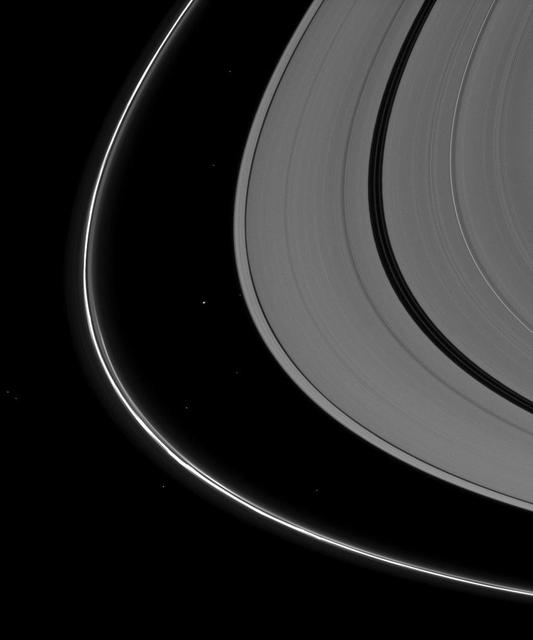
Soft light from Saturn lifts the veil of night from the moons Dione lower left and Rhea upper right
Glow of Night
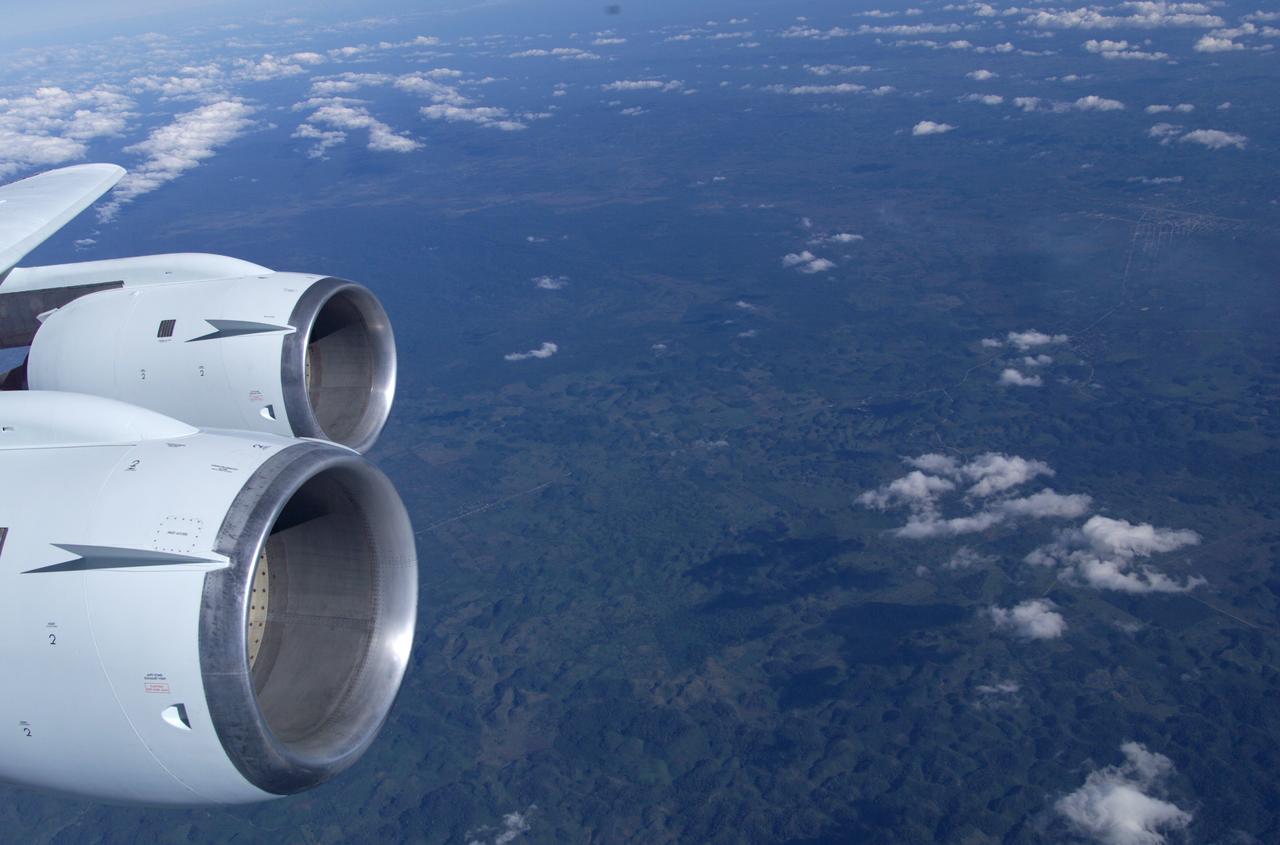
This is a photograph from the left side of the aircraft as NASA's DC-8 does an AirSAR 2004 research "line" over Honduras. AirSAR 2004 is a three-week expedition by an international team of scientists that will use an all-weather imaging tool, called the Airborne Synthetic Aperture Radar (AirSAR), in a mission ranging from the tropical rain forests of Central America to frigid Antarctica.
This is a photograph from the left side of the aircraft as NASA's DC-8 does an AirSAR 2004 research "line" over Honduras
At the Gagarin Cosmonaut Training Center in Star City, Russia, Expedition 59 prime crewmembers Christina Koch of NASA (left), Nick Hague of NASA (second from left), and backup crewmembers Luca Parmitano of the European Space Agency (second from right) and Drew Morgan of NASA (right) share a moment Feb. 26 before departing for their launch site at the Baikonur Cosmodrome in Kazakhstan for final pre-launch training. Hague, Koch and Alexey Ovchinin of Roscosmos will launch on March 14, U.S. time, on the Soyuz MS-12 spacecraft from the Baikonur Cosmodrome in Kazakhstan for a six-and-a-half month mission on the International Space Station.  NASA/Beth Weissinger
At the Gagarin Cosmonaut Training Center in Star City, Russia, Expedition 59 prime crewmembers Christina Koch of NASA (left), Nick Hague of NASA (second from left), and backup crewmembers Luca Parmitano of the European Space Agency (second from right) and
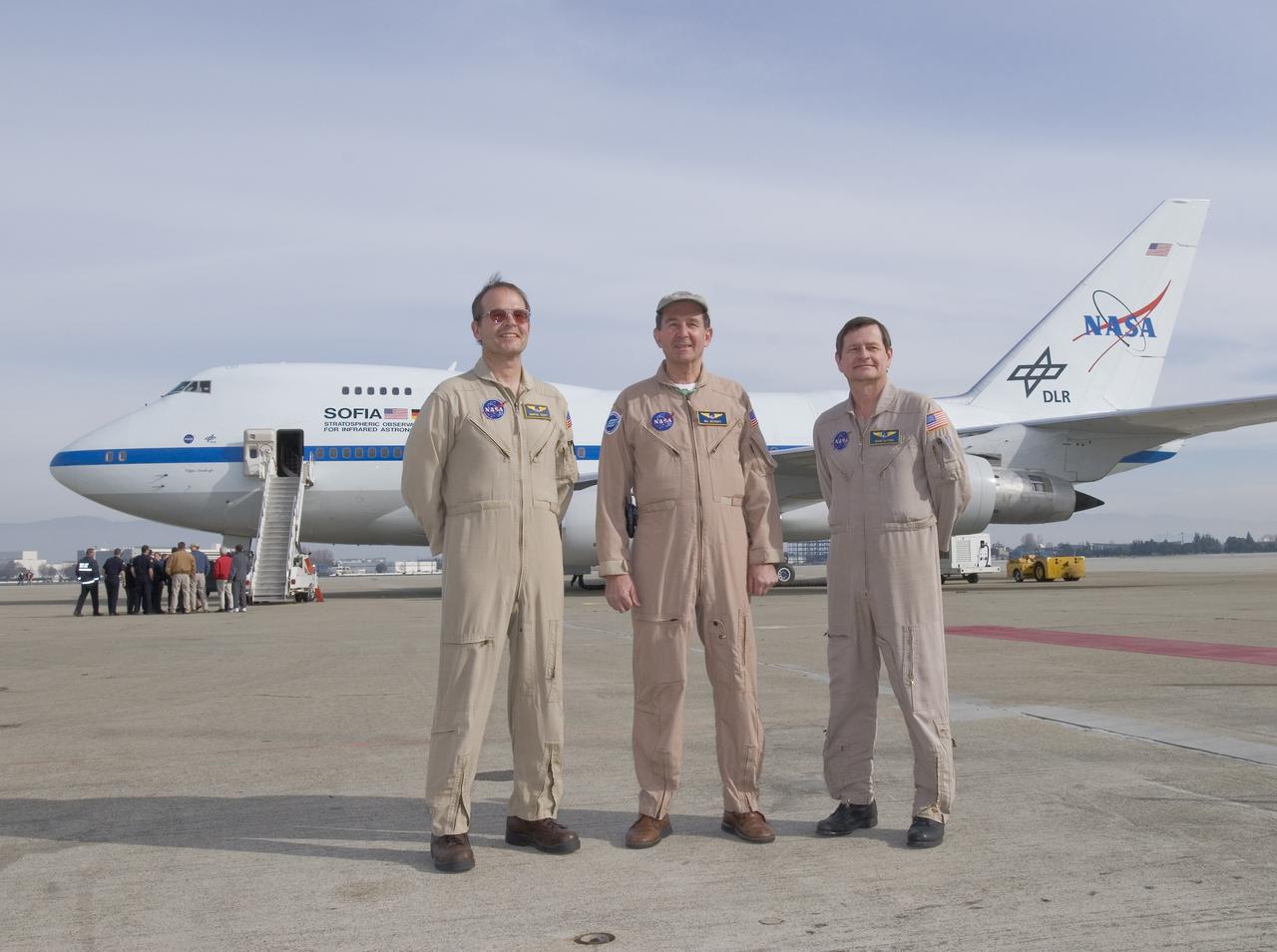
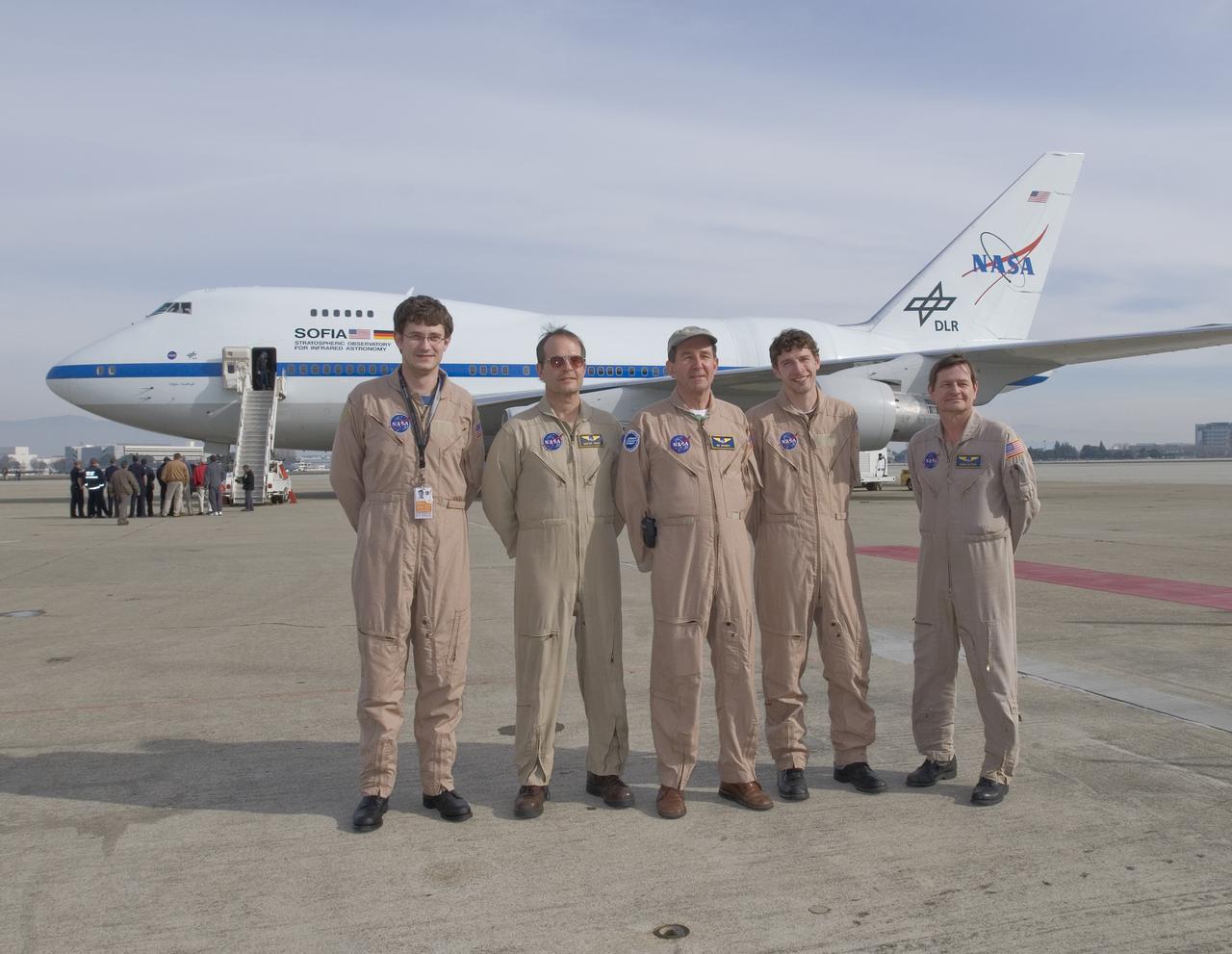
The flight crew of NASA's SOFIA airborne observatory includes (from left), flight engineer Marty Trout and pilots Bill Brockett and Frank Batteas.
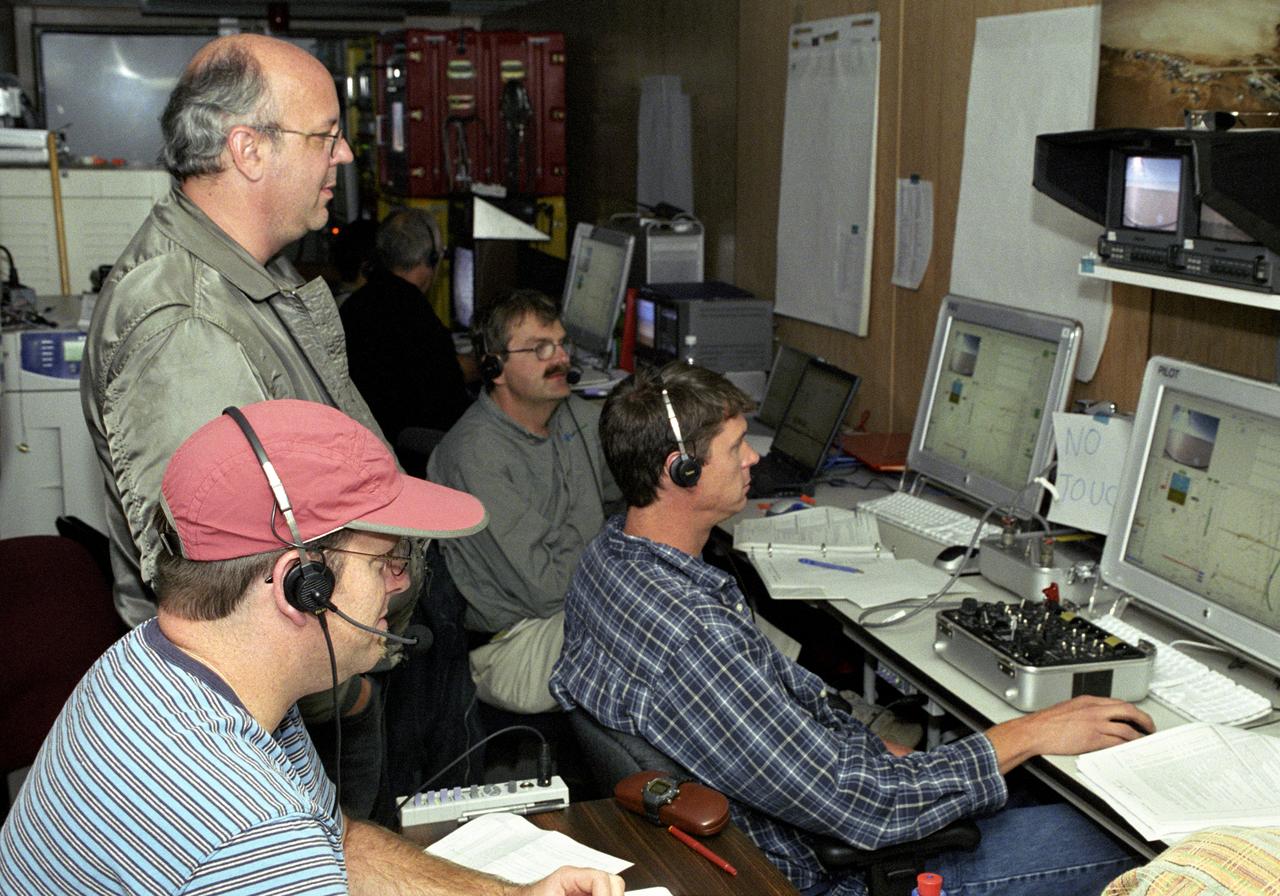
AeroVironment's test director Jim Daley, backup pilot Rik Meininger, stability and controls engineer Derek Lisoski and pilot Wyatt Sadler (clockwise from bottom left) closely monitor systems testing of the Pathfinder-Plus solar aircraft from the control station.
AeroVironment's Jim Daley, Rik Meininger, Derek Lisoski and Wyatt Sadler (clockwise from bottom left) closely monitor systems testing of the Pathfinder-Plus.
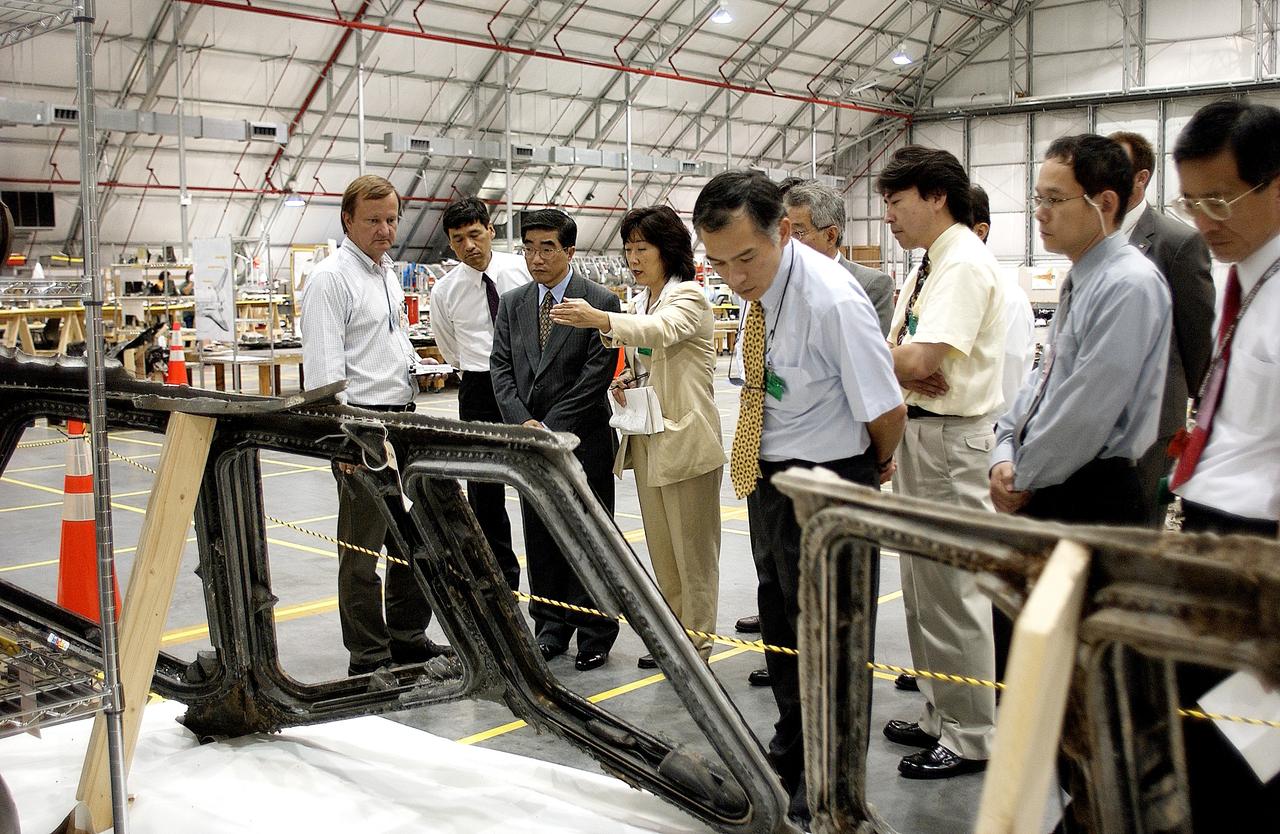
KENNEDY SPACE CENTER, FLA. -  Shuttle Launch Director Mike Leinbach (left) accompanies Executive Director of NASDA Koji Yamamoto (third from left) and others visiting the Columbia Debris Hangar.  Mr. Yamamoto is at KSC for a welcome ceremony involving the arrival of the newest Space Station module, the Japanese Experiment Module/pressurized module.
KENNEDY SPACE CENTER, FLA. - Shuttle Launch Director Mike Leinbach (left) accompanies Executive Director of NASDA Koji Yamamoto (third from left) and others visiting the Columbia Debris Hangar. Mr. Yamamoto is at KSC for a welcome ceremony involving the arrival of the newest Space Station module, the Japanese Experiment Module/pressurized module.
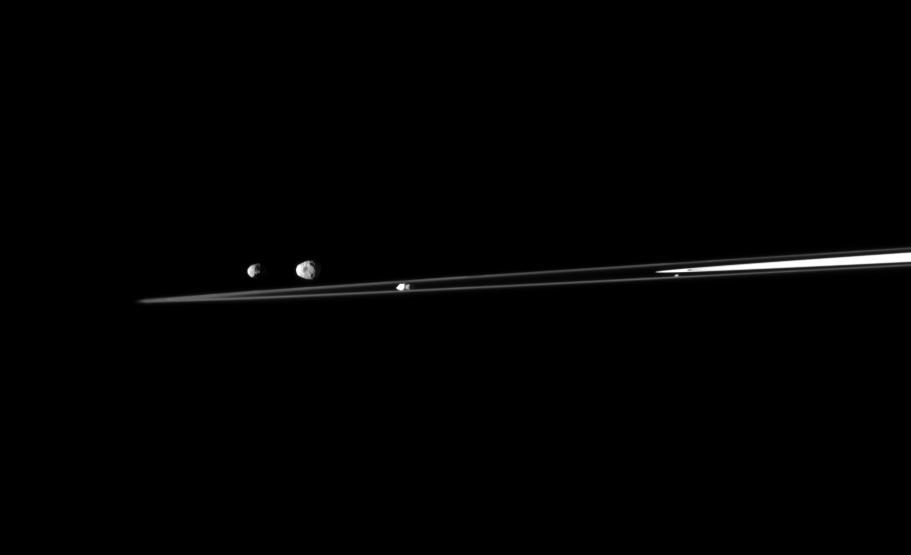
A quartet of Saturn moons are shown with a sliver of the rings in this view from NASA Cassini spacecraft. From left to right in this image are Epimetheus, Janus, Prometheus, and Atlas.
Moon Quartet
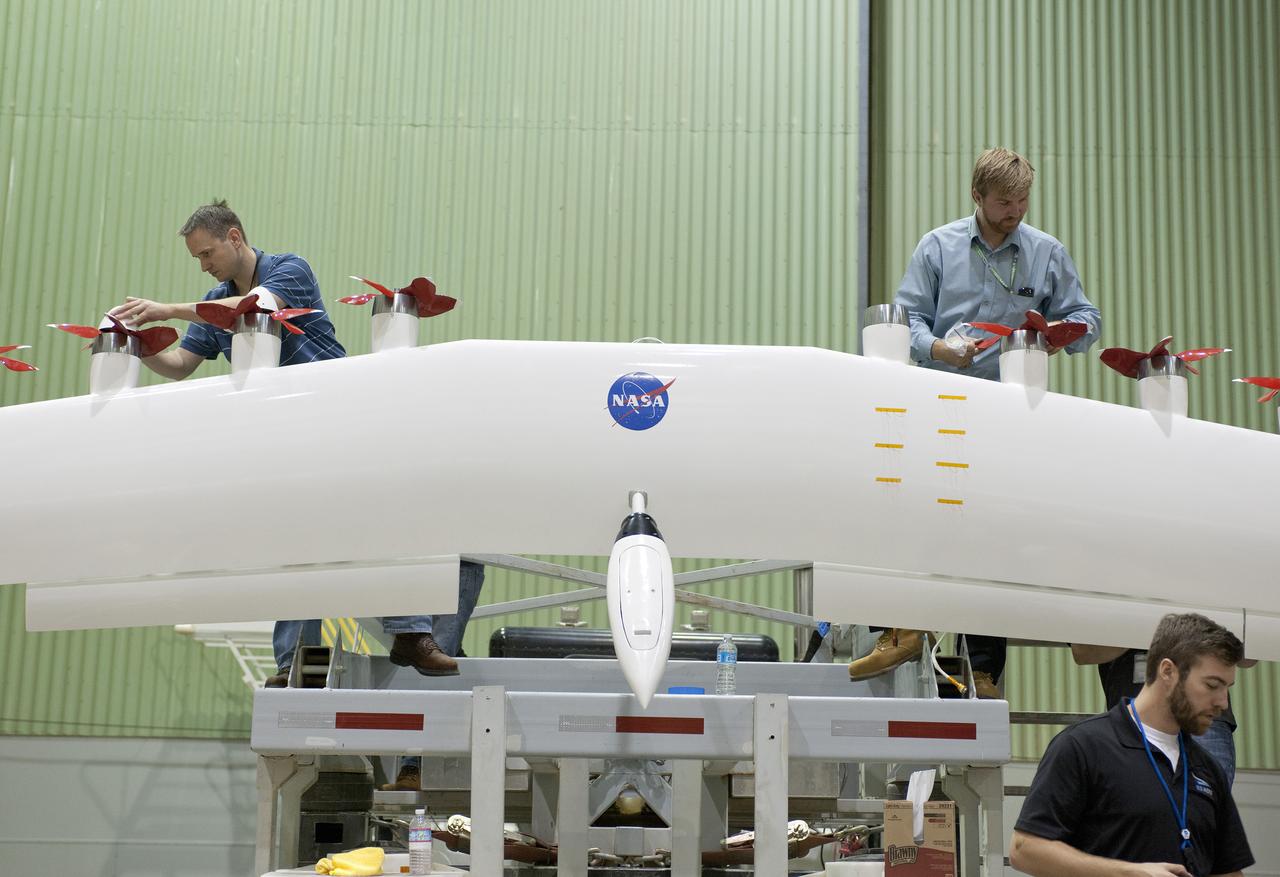
Engineers work on a wing with electric motors that is part of an integrated experimental testbed. From left are Sean Clarke, left, Kurt Papathakis at upper right and Anthony Cash in the foreground.
Piloted, Electric Propulsion-Powered Experimental Aircraft Underway
This mosaic image shows part of the left side of NASA Curiosity rover and two blast marks from the descent stage rocket engines. The rim of Gale Crater is the lighter colored band across the horizon. The back of the rover is to the left.
Traces of Landing
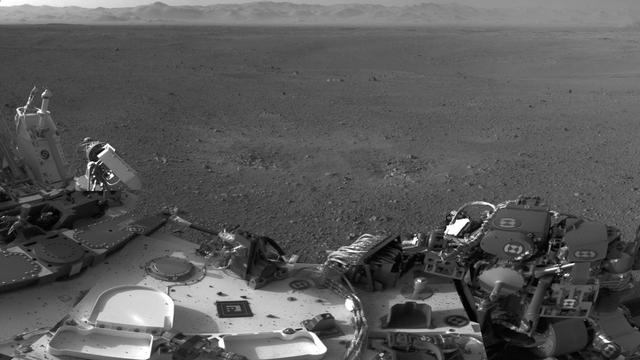
This full-resolution image shows part of the deck of NASA Curiosity rover taken from one of the rover Navigation cameras looking toward the back left of the rover. On the left, part of the rover power supply is visible.
A Clear Look at the Rover Deck
In this view from behind a test rover at NASA Jet Propulsion Laboratory, Pasadena, Calif., the rear wheels of the rover are turned toward the left, and the left-front wheel is turned toward the the right.
Preparing for Rover Pivot Test
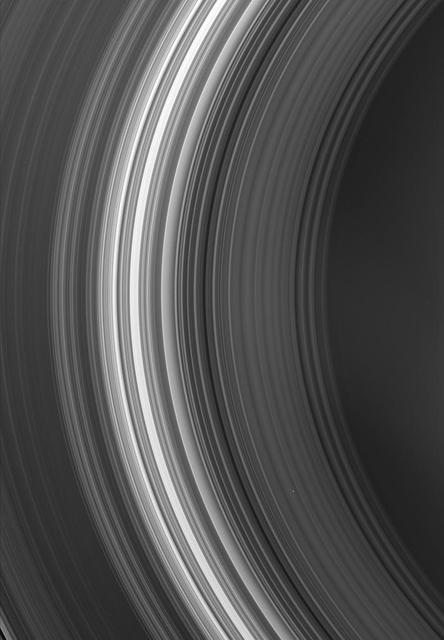
The Cassini spacecraft looks toward the innermost region of Saturn rings, capturing from right to left the C and B rings. The dark, inner edge of the Cassini Division is just visible in the lower left corner
The Inner Rings
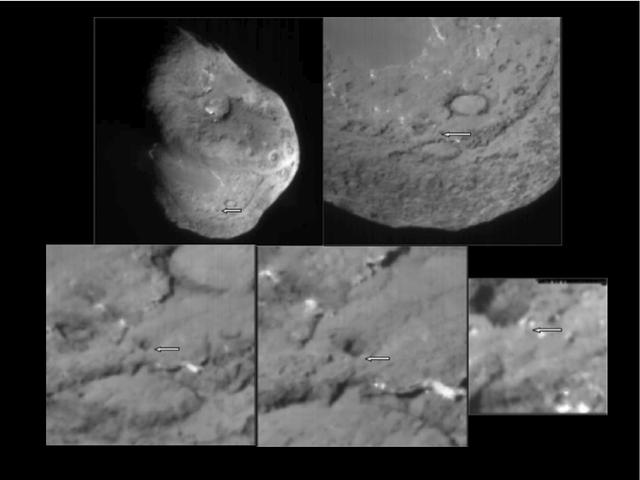
This series of images shows the area where NASA Deep Impact probe collided with the surface of comet Tempel 1 in 2005. The view zooms in as the images progress from top left to right, and then bottom left to right.
Before the Deep Impact Collision
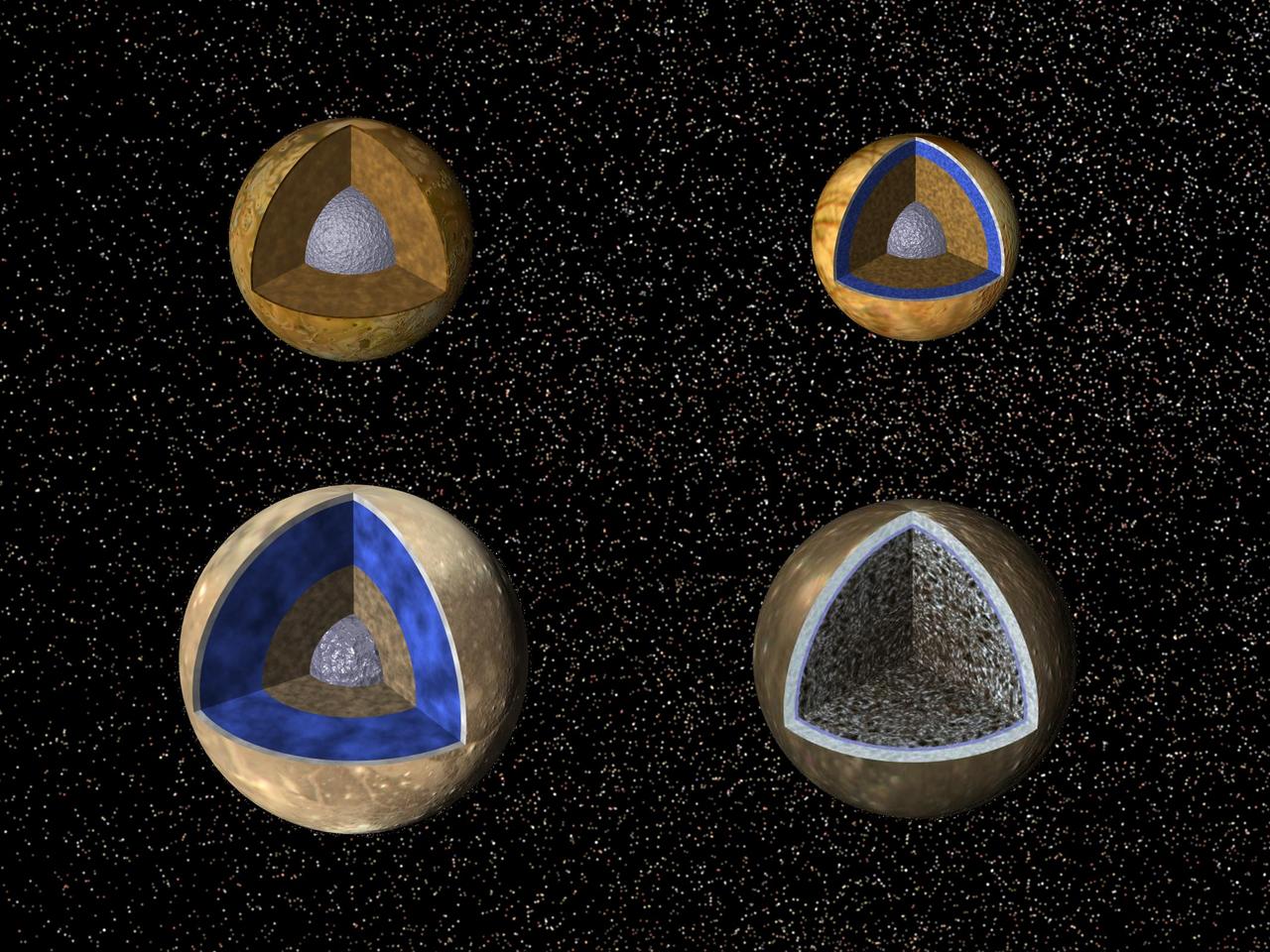
Cutaway views of the possible internal structures of the Galilean satellites. Ganymede at lower left, Callisto at lower right, Io on upper left, and Europa on upper right in a combined biew from NASA Galileo and Voyager spacecraft.
Possible Internal Structures of the Galilean Satellites
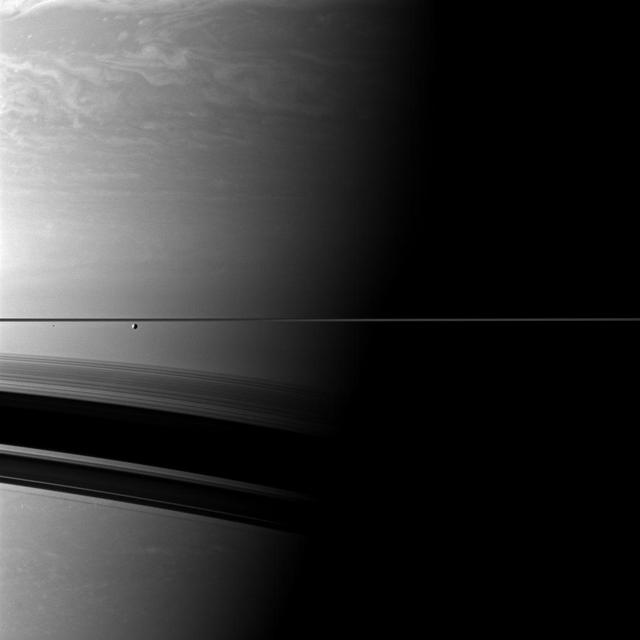
A pair of Saturn moons appear insignificant compared to the immensity of the planet. Enceladus is at left, Epimetheus appears as a tiny black speck on the far left in this image from NASA Cassini spacecraft.
Tiny by the Terminator
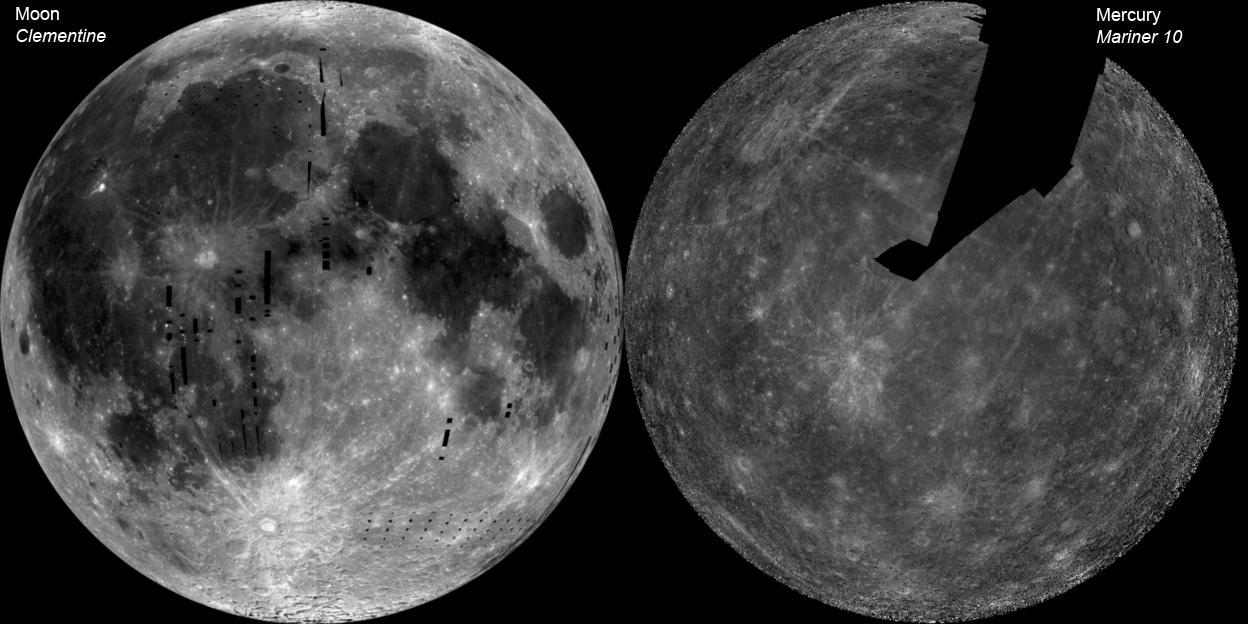
The image of the Moon left is a mosaic of images from NASA Clementine. The Mercury image right is a NASA Mariner 10 mosaic.
The Whole of the Moon
This isolated mesa [lower left center of the image] has an almost  heart-shaped margin. Happy Valentine Day from Mars
Valentine Day
This image from Curiosity Mastcam looks to the west of a waypoint on the rover route to Mount Sharp. The mountain lies to the left of the scene.
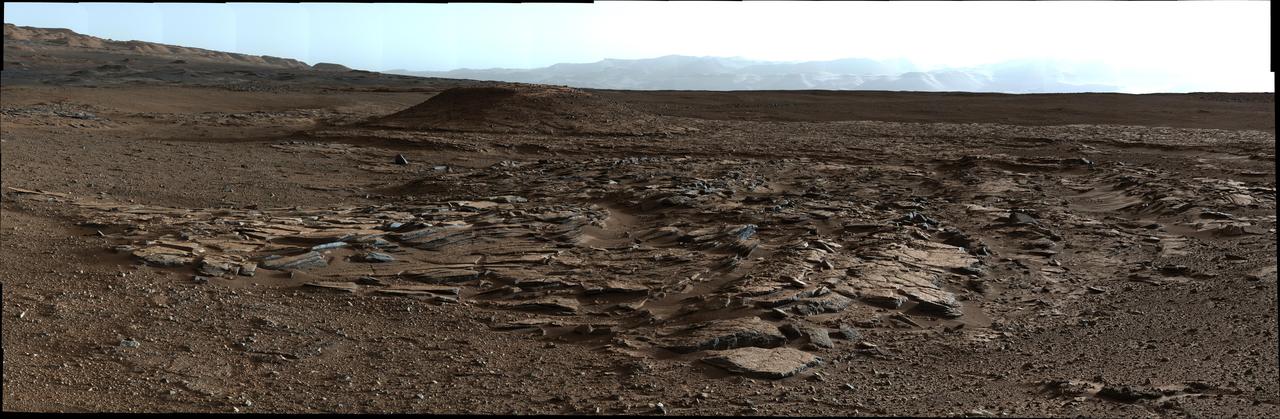
Sets of Beds Inclined Toward Mount Sharp
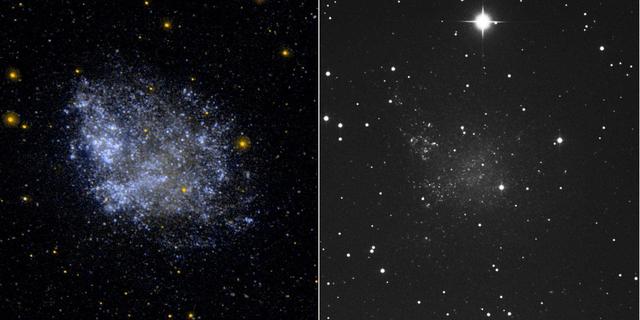
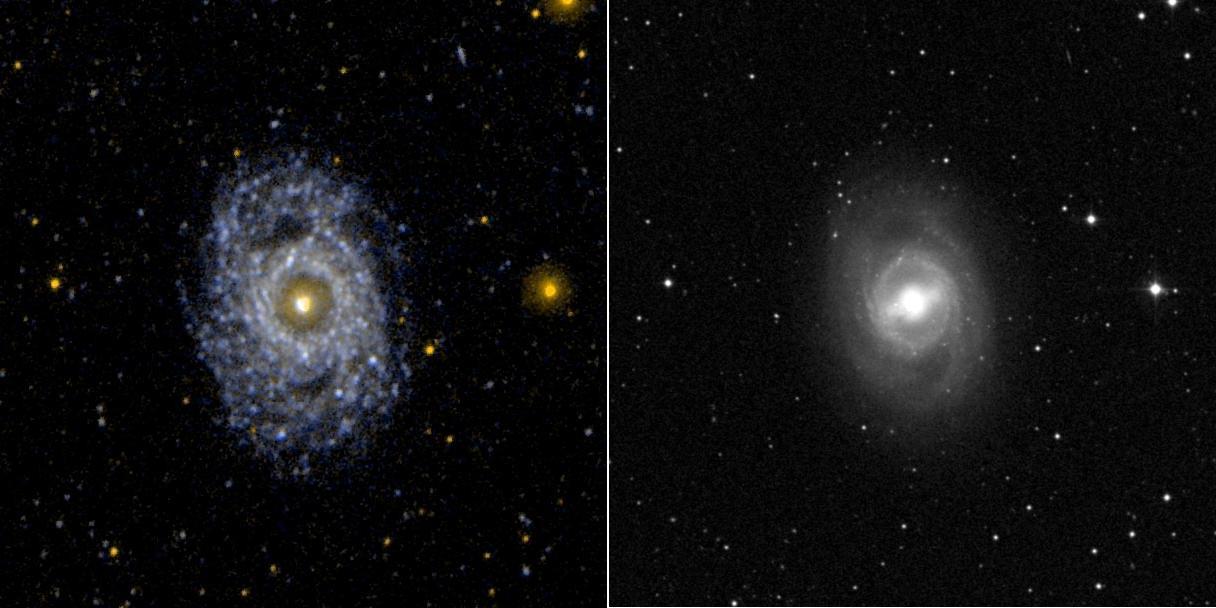
This ultraviolet image left and visual image right from NASA Galaxy Evolution Explorer is of the irregular dwarf galaxy IC 1613.
Irregular Dwarf Galaxy IC 1613
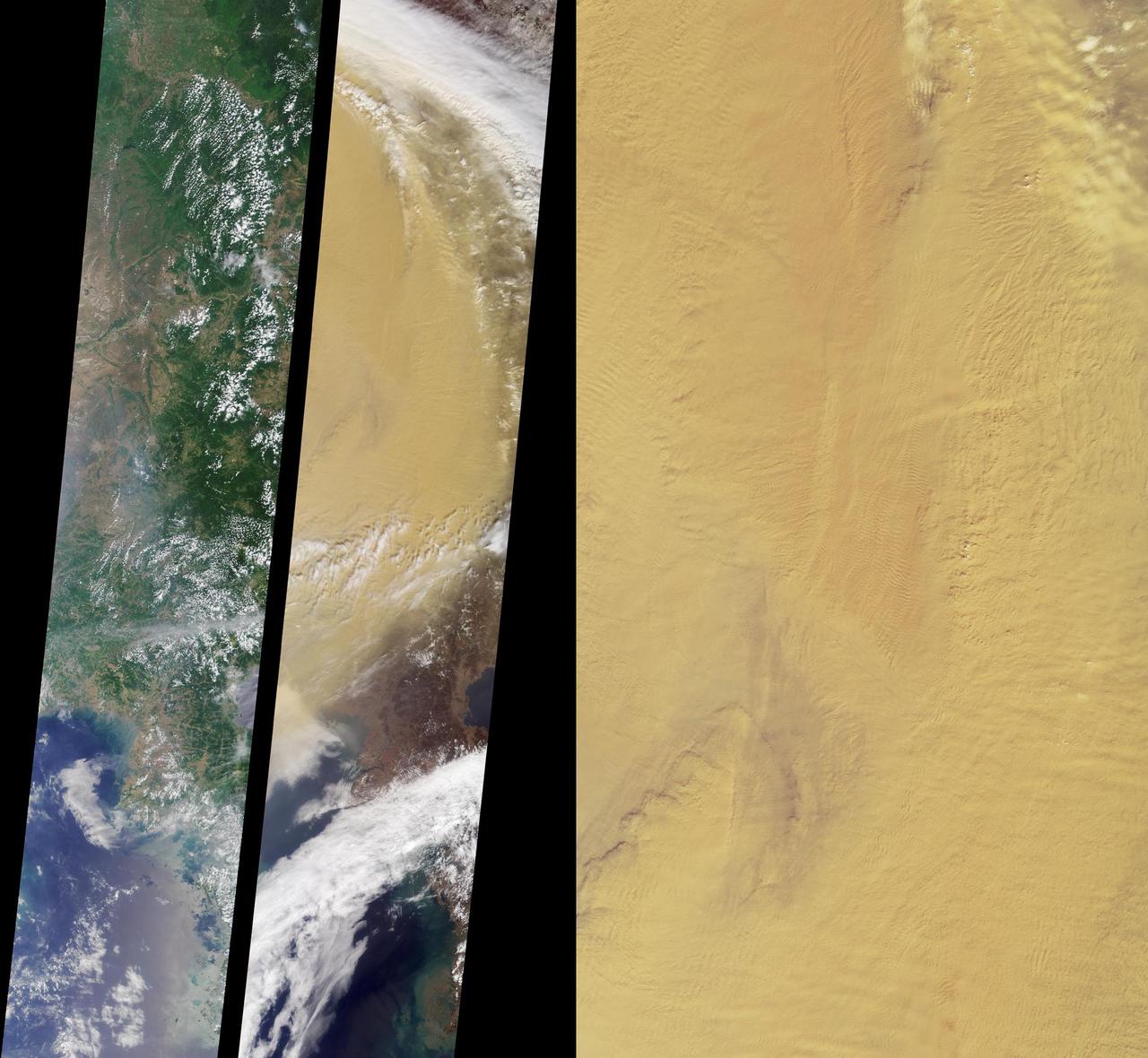
These images from NASA Terra satellite eastern China compare a somewhat hazy summer view from July 9, 2000 left with a spectacularly dusty spring view from April 7, 2001 middle.
Fingerprints in the Dust
This set of images shows the results from the rock abrasion tool from NASA Mars Exploration Rover Opportunity left and the drill from NASA Curiosity rover right.
Studying Habitability in Ancient Martian Environments
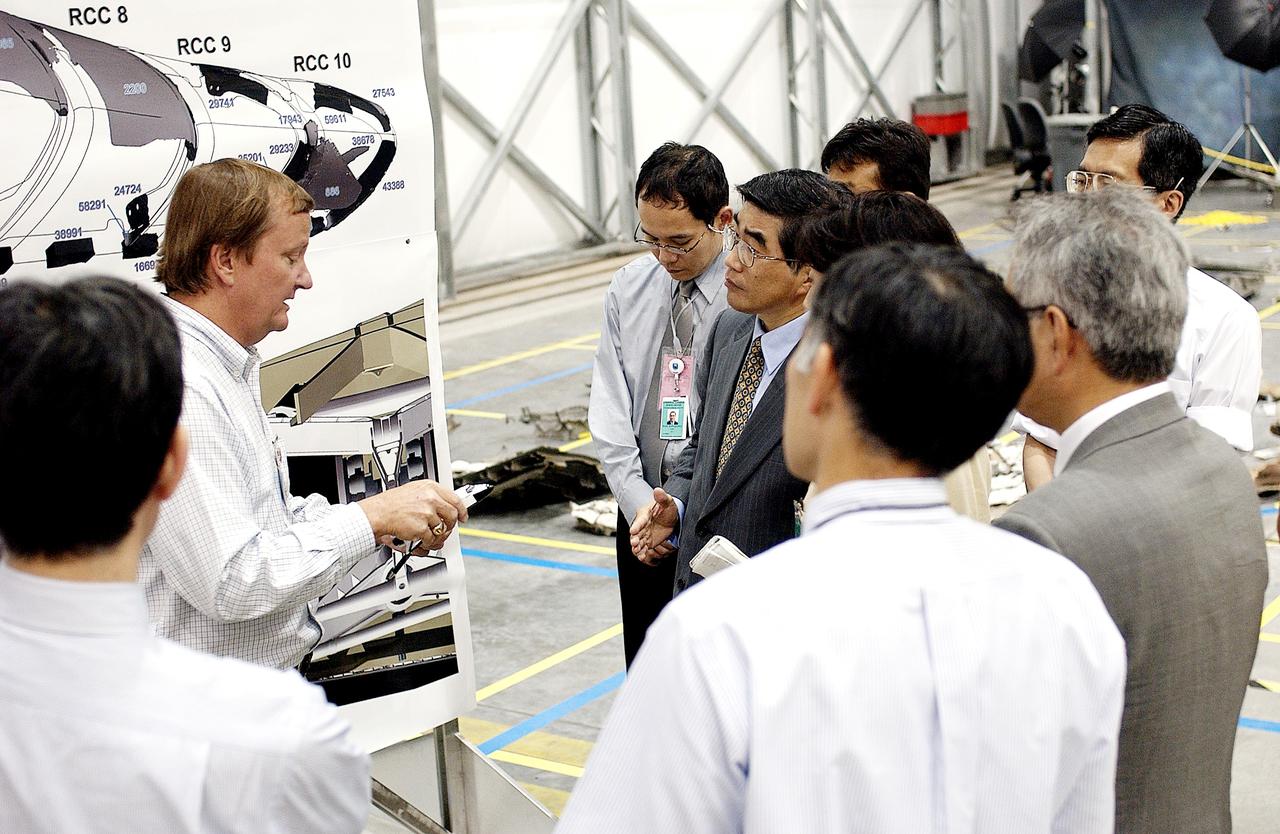
KENNEDY SPACE CENTER, FLA. -  Shuttle Launch Director Mike Leinbach (second from left) explains recovery and reconstruction efforts of Columbia to the Executive Director of NASDA Koji Yamamoto (fourth from left) and others visiting the Columbia Debris Hangar.   Mr. Yamamoto is at KSC for a welcome ceremony involving the arrival of the newest Space Station module, the Japanese Experiment Module/pressurized module.
KENNEDY SPACE CENTER, FLA. - Shuttle Launch Director Mike Leinbach (second from left) explains recovery and reconstruction efforts of Columbia to the Executive Director of NASDA Koji Yamamoto (fourth from left) and others visiting the Columbia Debris Hangar. Mr. Yamamoto is at KSC for a welcome ceremony involving the arrival of the newest Space Station module, the Japanese Experiment Module/pressurized module.
KENNEDY SPACE CENTER, FLA. -  Shuttle Launch Director Mike Leinbach (second from left) accompanies Executive Director of NASDA Koji Yamamoto (fourth from left) and others visiting the Columbia Debris Hangar.  Mr. Yamamoto is at KSC for a welcome ceremony involving the arrival of the newest Space Station module, the Japanese Experiment Module/pressurized module.
KENNEDY SPACE CENTER, FLA. - Shuttle Launch Director Mike Leinbach (second from left) accompanies Executive Director of NASDA Koji Yamamoto (fourth from left) and others visiting the Columbia Debris Hangar. Mr. Yamamoto is at KSC for a welcome ceremony involving the arrival of the newest Space Station module, the Japanese Experiment Module/pressurized module.
jsc2025e041955 (Feb. 26, 2025) --- The official crew portrait of NASA's SpaceX Crew-11 members. Front row, from left, are Pilot Mike Fincke and Commander Zena Cardman, both NASA astronauts. In the back from left, are Mission Specialists Oleg Platonov of Roscosmos and Kimiya Yui of JAXA (Japan Aerospace Exporation Agency).
The official crew portrait of NASA's SpaceX Crew-11 members
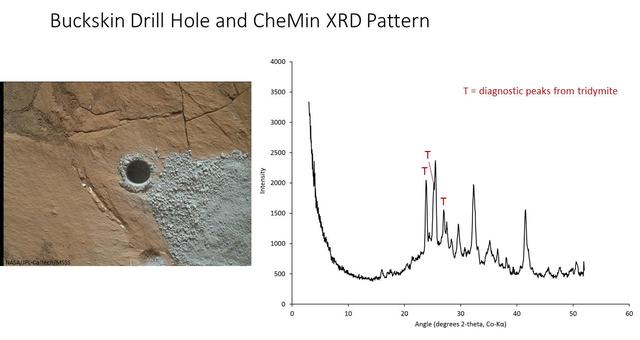
The graph at right presents information from the NASA Curiosity Mars rover's onboard analysis of rock powder drilled from the "Buckskin" target location, shown at left.  X-ray diffraction analysis of the Buckskin sample inside the rover's Chemistry and Mineralogy (CheMin) instrument revealed the presence of a silica-containing mineral named tridymite. This is the first detection of tridymite on Mars. Peaks in the X-ray diffraction pattern are from minerals in the sample, and every mineral has a diagnostic set of peaks that allows identification.  The image of Buckskin at left was taken by the rover's Mars Hand Lens Imager (MAHLI) camera on July 30, 2015, and is also available at PIA19804. http://photojournal.jpl.nasa.gov/catalog/PIA20271
Buckskin Drill Hole and CheMin X-ray Diffraction
The flight crew of NASA's SOFIA airborne observatory and DLR telescope engineers who operated the system during its visit to NASA Ames Research Center on Jan. 14, 2008 included (from left), DLR telescope engineer Ulli Lampater, flight engineer Marty Trout, pilot Bill Brockett, telescope engineer Andres Reinacher and pilot Frank Batteas.
The flight crew of NASA's SOFIA airborne observatory includes (from left), Ulli Lampater Marty Trout, Bill Brockett Andres Reinacher and Frank Batteas.
jsc2017e136943 - At the Baikonur Museum in Baikonur, Kazakhstan, Expedition 54-55 backup crewmembers Jeanette Epps of NASA (second from the left), Sergey Prokopyev of the Russian Federal Space Agency (Roscosmos, second from the right) and Alexander Gerst o
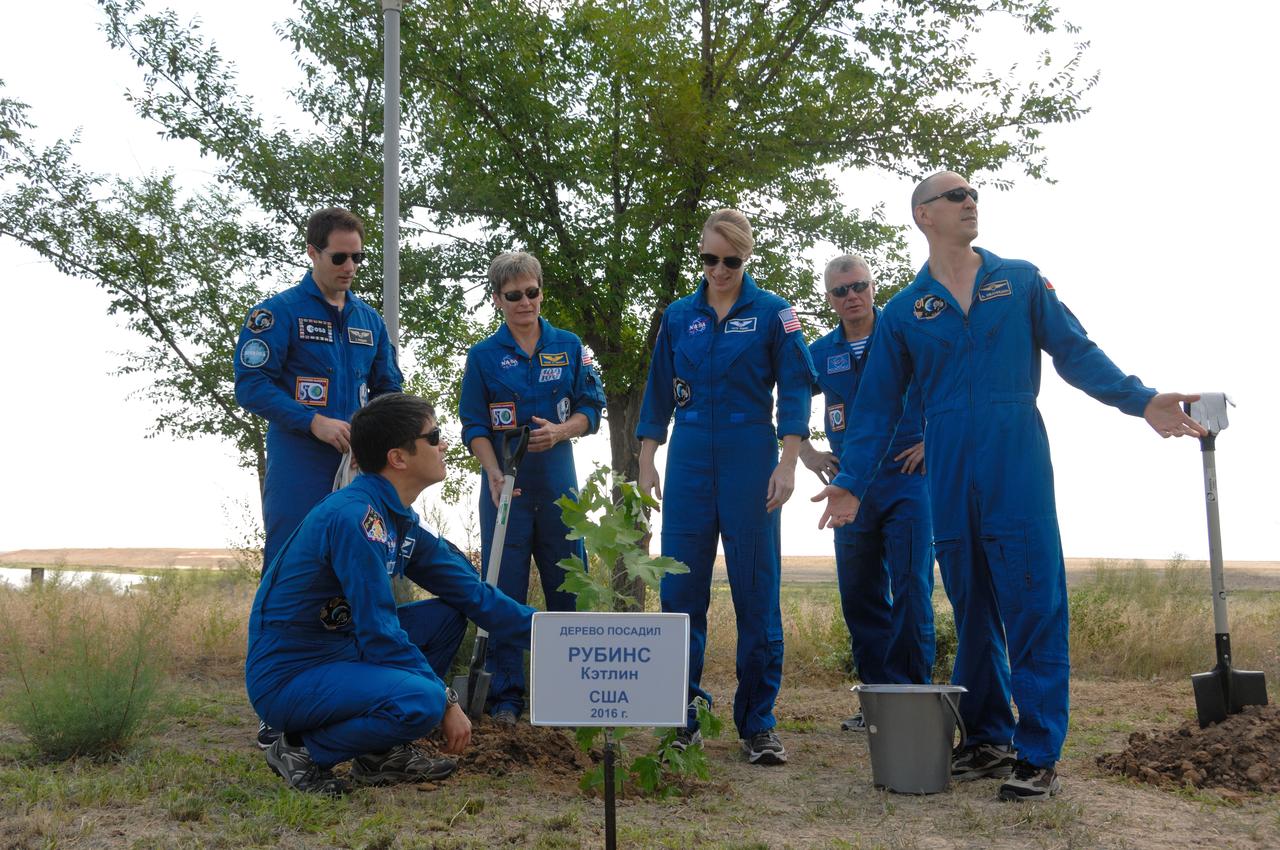
At the Cosmonaut Hotel in Baikonur, Kazakhstan, Expedition 48-49 crewmember Kate Rubins of NASA (third from left, standing) admires a tree she planted in her name in traditional pre-launch activities June 30 as her crewmates surround her. They include Takuya Onishi of the Japan Aerospace Exploration Agency (crouching), and backup crewmembers Thomas Pesquet of the European Space Agency (standing, left), Peggy Whitson of NASA (standing, second from the left), and Oleg Novitskiy (standing, second from the right) and prime crewmember Anatoly Ivanishin (right). Rubins, Ivanishin and Onishi will launch July 7, Baikonur time, on the Soyuz MS-01 spacecraft for a planned four-month mission on the International Space Station.  NASA/Alexander Vysotsky
At the Cosmonaut Hotel in Baikonur, Kazakhstan, Expedition 48-49 crewmember Kate Rubins of NASA (third from left, standing) admires a tree she planted in her name in traditional pre-launch activities June 30 as her crewmates surround her. They include Takuya Onishi of the Japan Aerospace Exploration Agency (crouching), and backup crewmembers Thomas Pesquet of the European Space Agency (standing, left), Peggy Whitson of NASA (standing, second from the left), and Oleg Novitskiy (standing, second from the right) and prime crewmember Anatoly Ivanishin (right). Rubins, Ivanishin and Onishi will launch July 7, Baikonur time, on the Soyuz MS-01 spacecraft for a planned four-month mission on the International Space Station...NASA/Alexander Vysotsky.
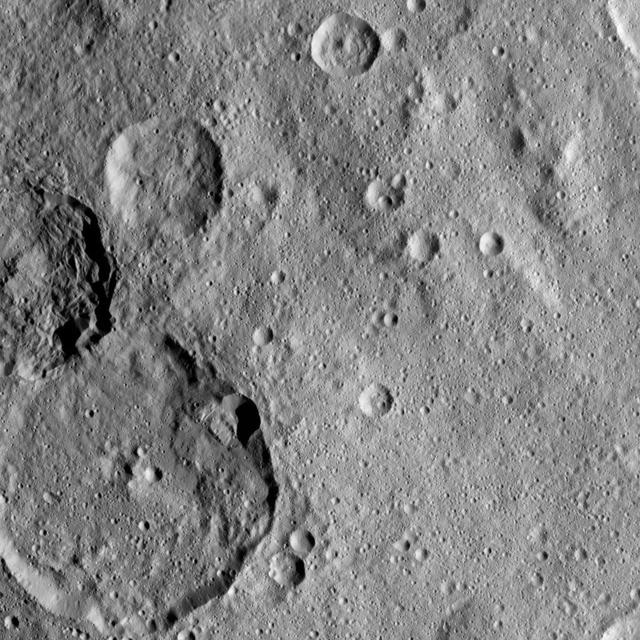
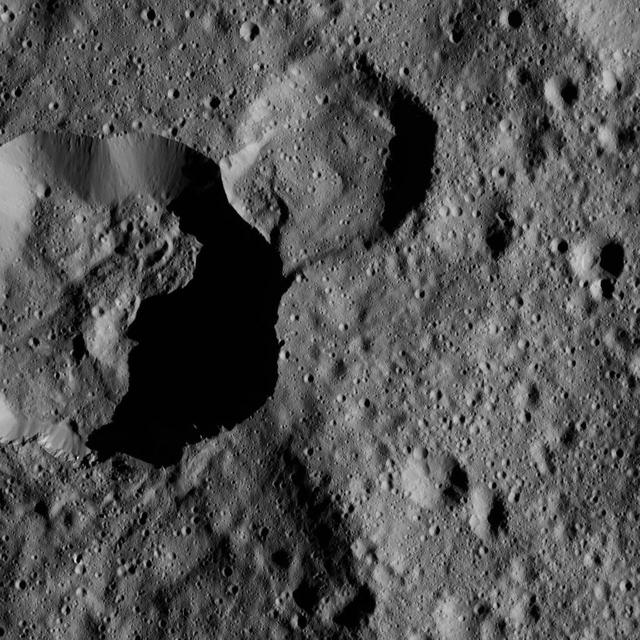
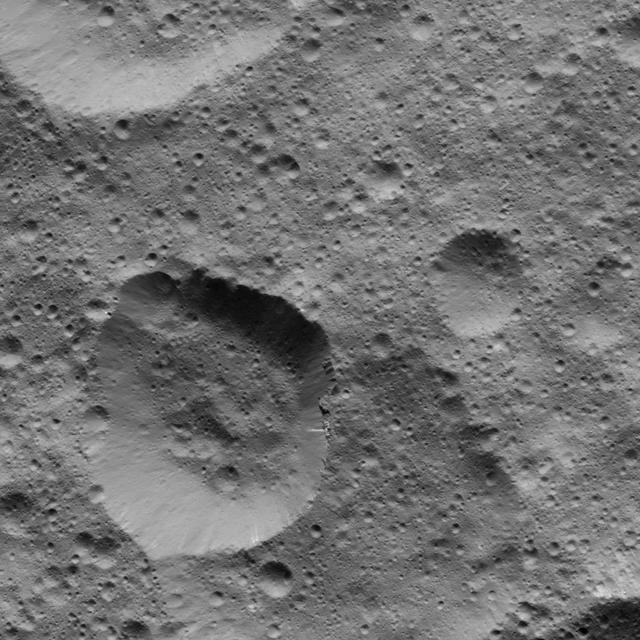
This view from NASA's Dawn spacecraft shows the craters Kondos and Jarimba on Ceres. Jarimba, at 43 miles (69 kilometers) in diameter, is the largest crater in this image, located at lower left. Above it, on the left-hand edge of the image is Kondos, which is 27 miles (44 kilometers) in diameter.  Dawn took this image on Oct. 22, 2016, from its second extended-mission science orbit (XMO2), at a distance of about 920 miles (1,480 kilometers) above the surface. The image resolution is about 460 feet (140 meters) per pixel.  http://photojournal.jpl.nasa.gov/catalog/PIA21246
Dawn XMO2 Image 26
This image of the rock "Flat Top" was taken from the left of the Sojourner rover's front cameras on Sol 42. Pits on the edge of the rock and a fluted surface are clearly visible. The rocks in the left background comprise the Rock Garden.  Sojourner spent 83 days of a planned seven-day mission exploring the Martian terrain, acquiring images, and taking chemical, atmospheric and other measurements. The final data transmission received from Pathfinder was at 10:23 UTC on September 27, 1997. Although mission managers tried to restore full communications during the following five months, the successful mission was terminated on March 10, 1998. http://photojournal.jpl.nasa.gov/catalog/PIA01554
PIA01554
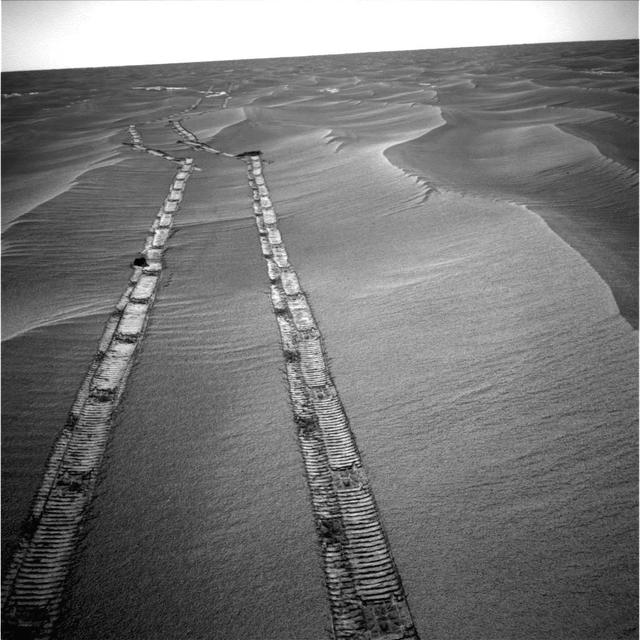
This north-looking vista from NASA Mars Rover Opportunity shows Wdowiak Ridge, from left foreground to center. This version is presented in false color, which enhances visibility of the rover wheel tracks at right.
Opportunity Northward View of Wdowiak Ridge False Color
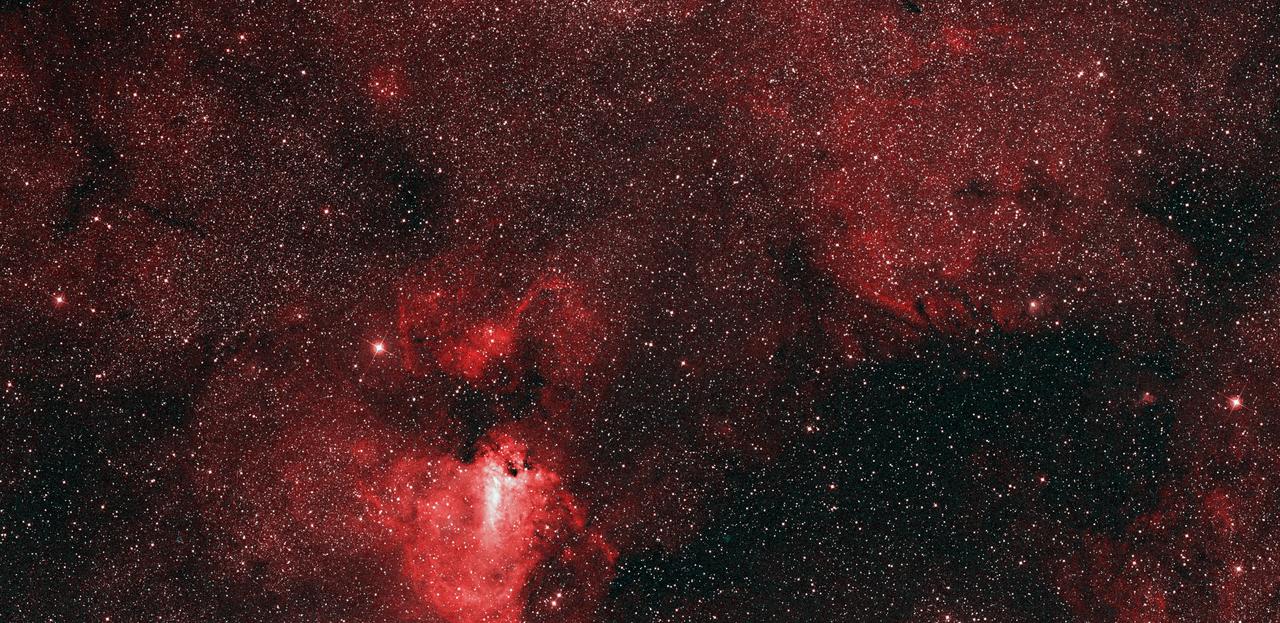
This visible-light view from from NASA Spitzer Space Telescope highlights the bright M17 nebula, as well as the glowing hot gas filling the bubble to its left.
Dragon Lair
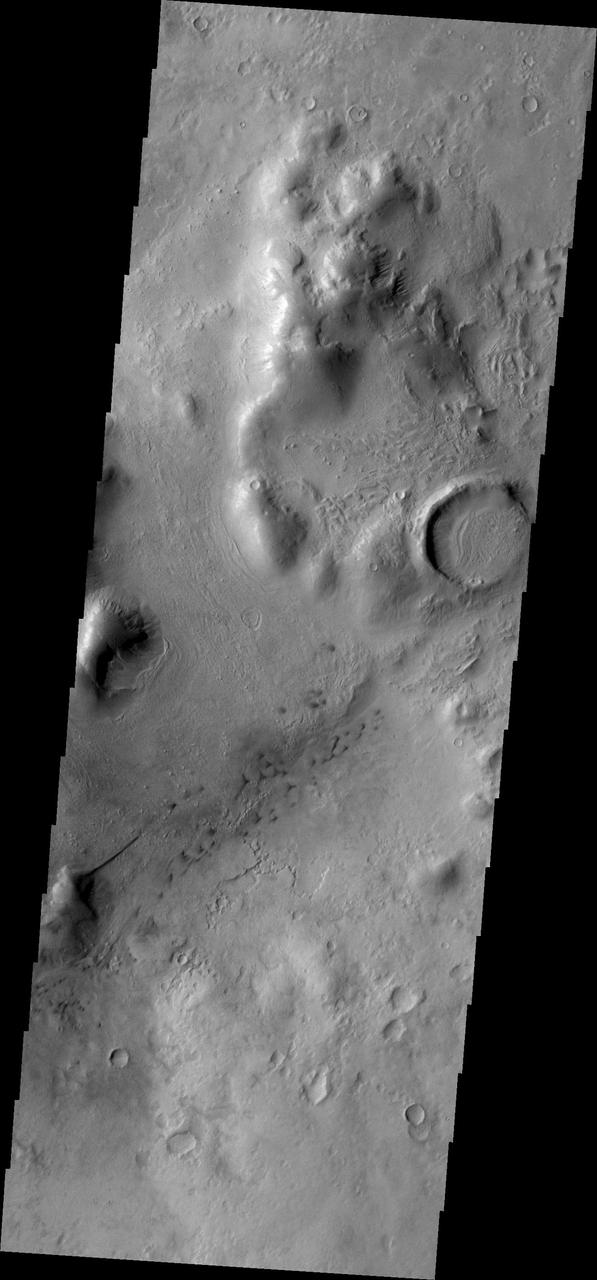
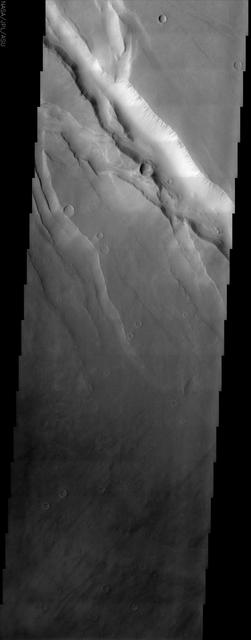
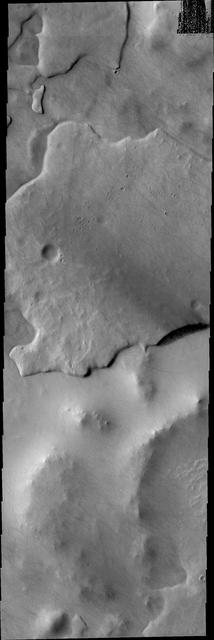
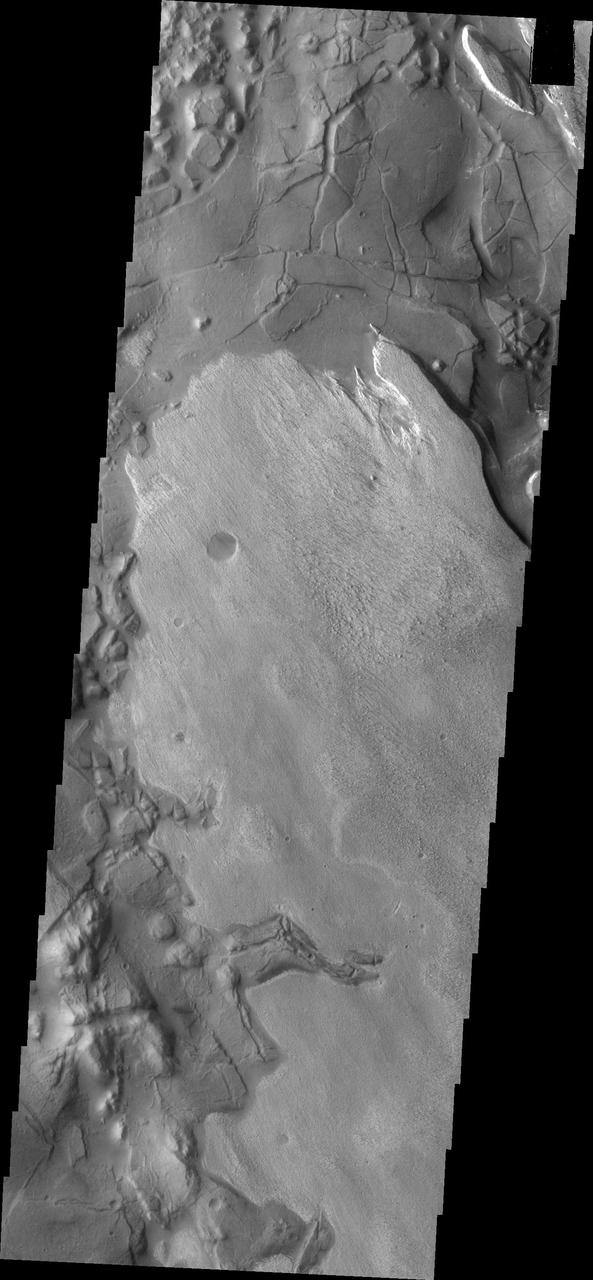
This NASA Mars Odyssey image covers a tract of plateau territory called Ophir Planum. The most obvious features in this scene are the fractures ranging from 1 to 5 km wide running from the upper left to lower right.
Crustal Fractures of Ophir Planum
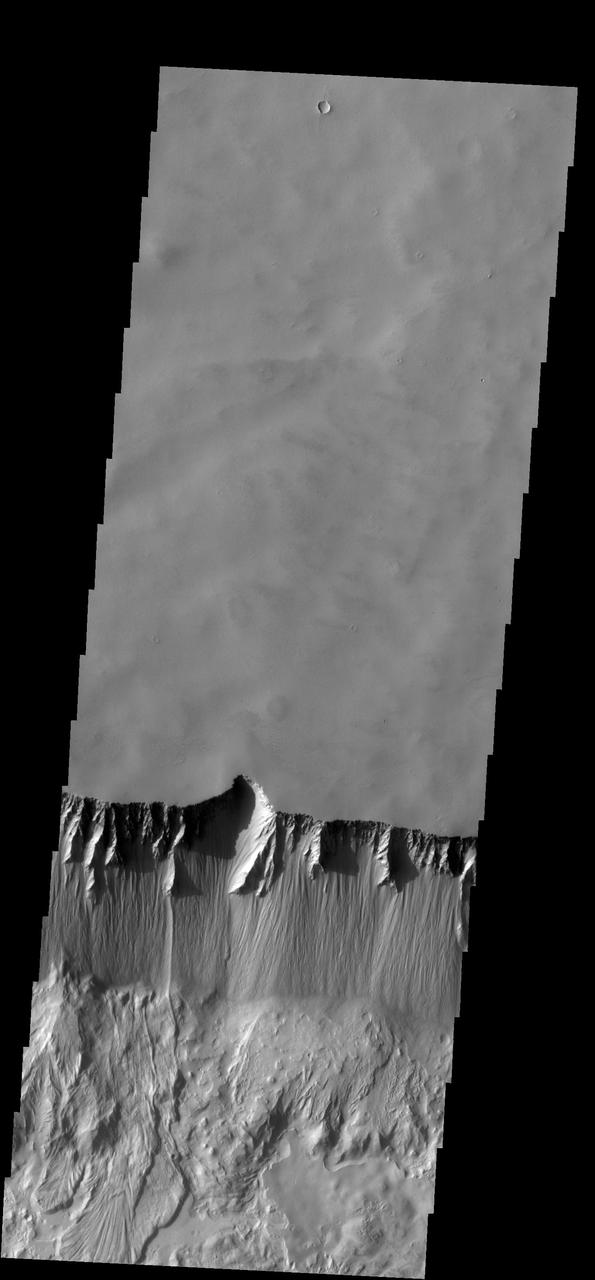
The steep northern wall of Tithonium Chasma crosses this image from NASA 2001 Mars Odyssey spacecraft. Landslide deposits from slope failure can be seen at the lower left corner of the image.
A Fresh Perspective
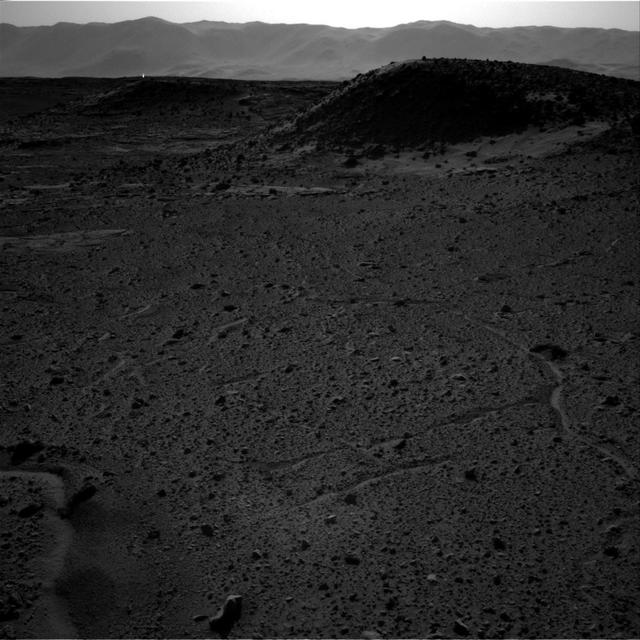
This image from NASA Curiosity Mars rover, taken on April 3, 2014, includes a bright spot near the upper left corner. Possible explanations include a glint from a rock or a cosmic-ray hit.
Bright Spot Toward Sun in Image from NASA Curiosity Mars Rover
This cut-out from a color panorama image taken by NASA Curiosity rover shows the effects of the descent stage rocket engines blasting the ground. It comes from the left side of the thumbnail panorama obtained by Curiosity Mast Camera.
A Set of Blast Marks in Color, Left Side
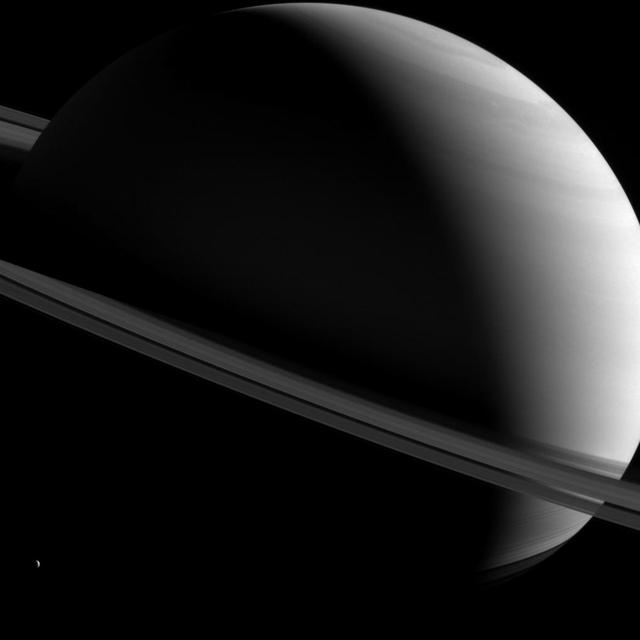
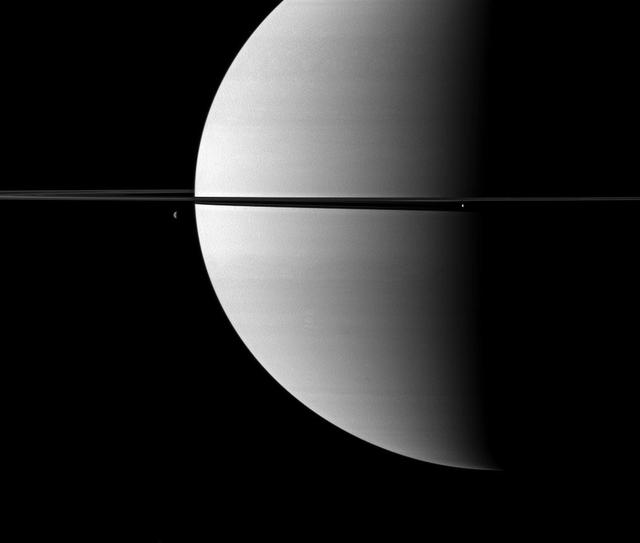
NASA Cassini spacecraft captured this image of Saturn as it views the planet and its expansive rings from all sorts of angles. Here, a half-lit Saturn sits askew as tiny Dione looks on from lower left.
Saturn Askew
This stereo vista from NASA Mars Rover Opportunity shows Wdowiak Ridge, from left foreground to center, as part of a northward look. You will need 3-D glasses to view this image.
Opportunity Northward View of Wdowiak Ridge Stereo
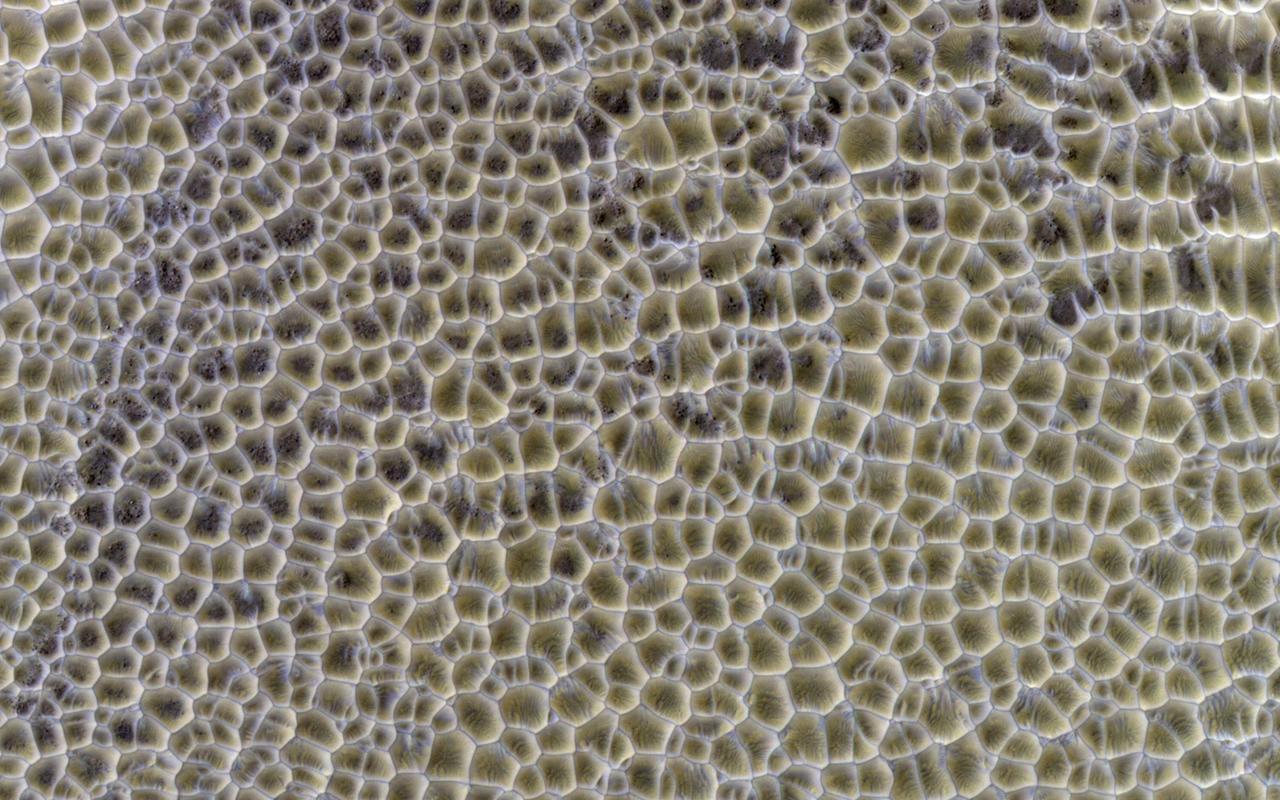
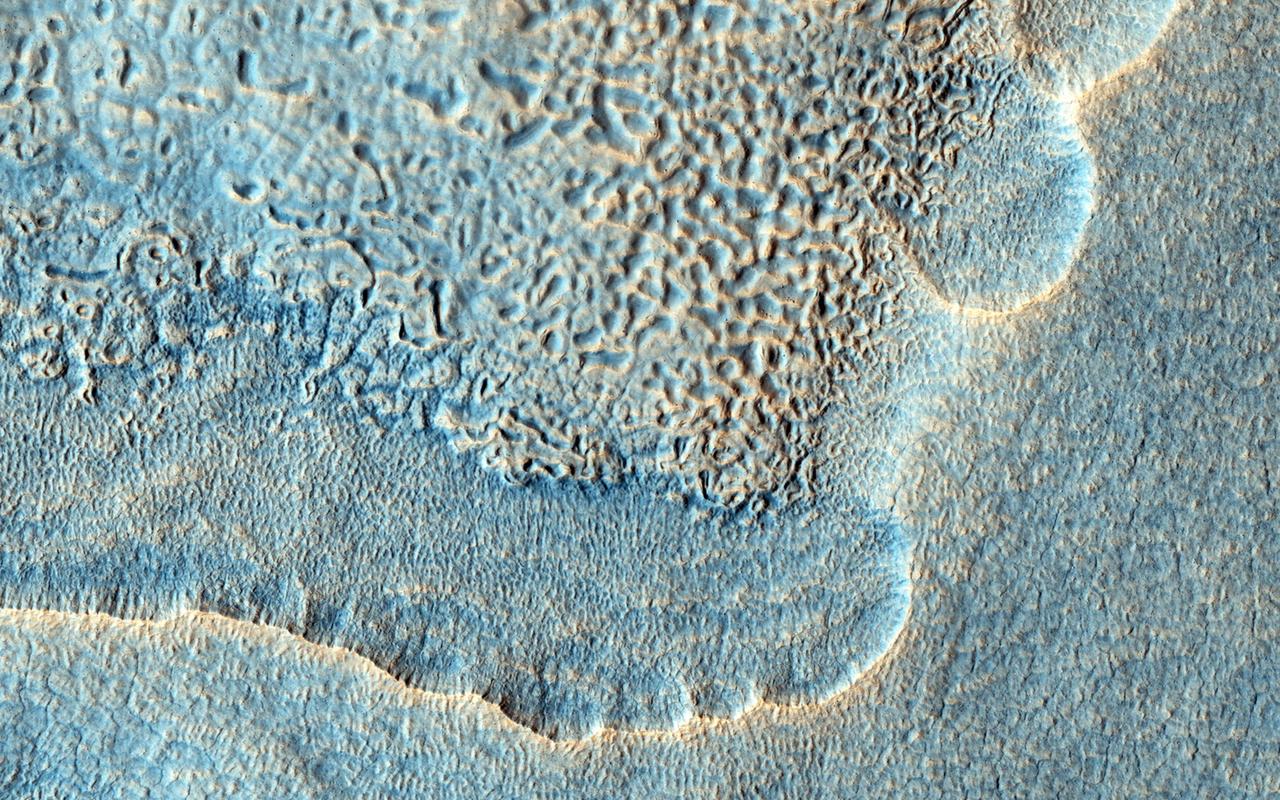
This observation from NASA Mars Reconnaissance Orbiter Polygons form by the intersecting ridges of sand dunes. The illumination is coming from the upper left, so the bluish ridges are high-standing.
Polygonal Dunes
The steep northern wall of Tithonium Chasma crosses this image from NASA 2001 Mars Odyssey spacecraft. Landslide deposits from slope failure can be seen at the lower left corner of the image.
Tithonium Chasma
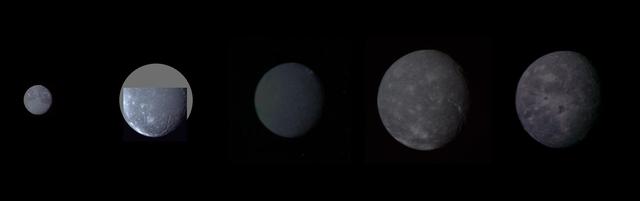
Montage of Uranus five largest satellites taken by NASA Voyager 2. From to right to left in order of decreasing distance from Uranus are Oberon, Titania, Umbriel, Ariel, and Miranda.
Uranus - Montage of Uranus Five Largest Satellites
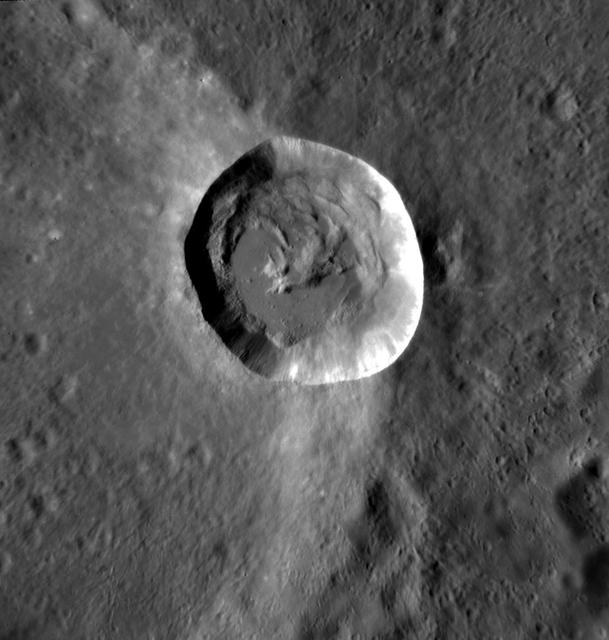
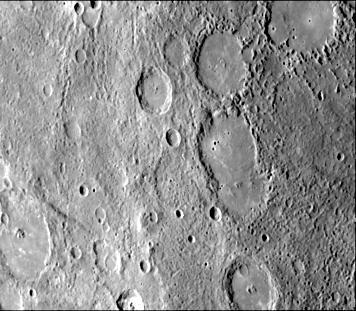
This image, from NASA Mariner 10 spacecraft which launched in 1974, shows a broadly curved lobate scarp running from left to right in the large crater to the right of center in this image.
Curved Lobate Scarp on Crater Floor
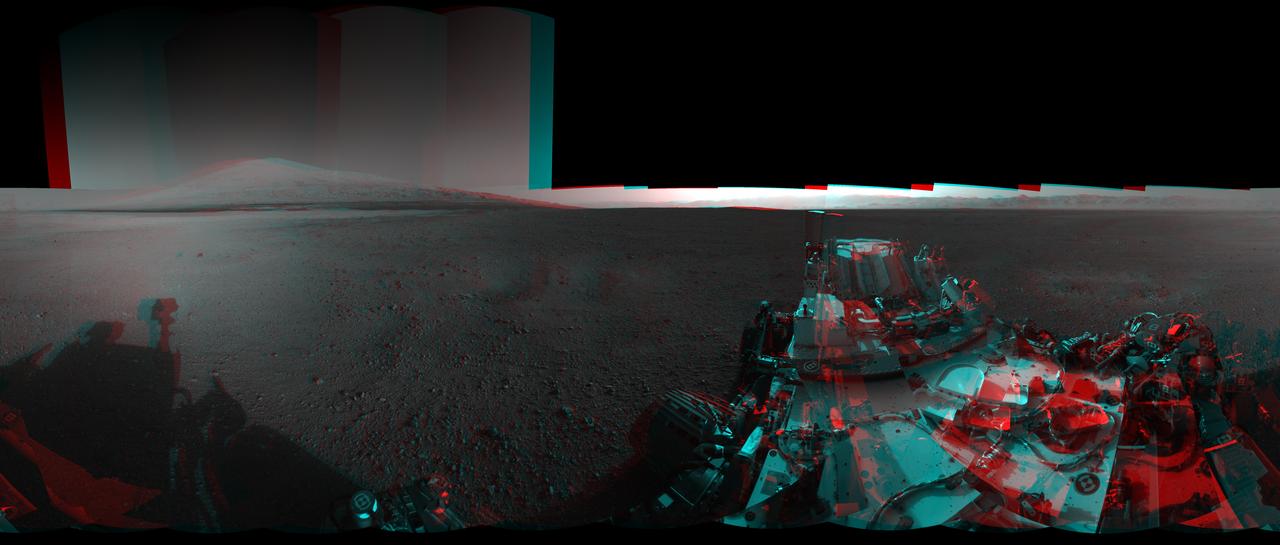
This 3D image from NASA Curiosity was taken from the rover Bradbury Landing site inside Gale Crater, Mars. Between the rover on the right, and its shadow on the left, looms the rover eventual target: Mount Sharp.
3-D View from Bradbury Landing Site
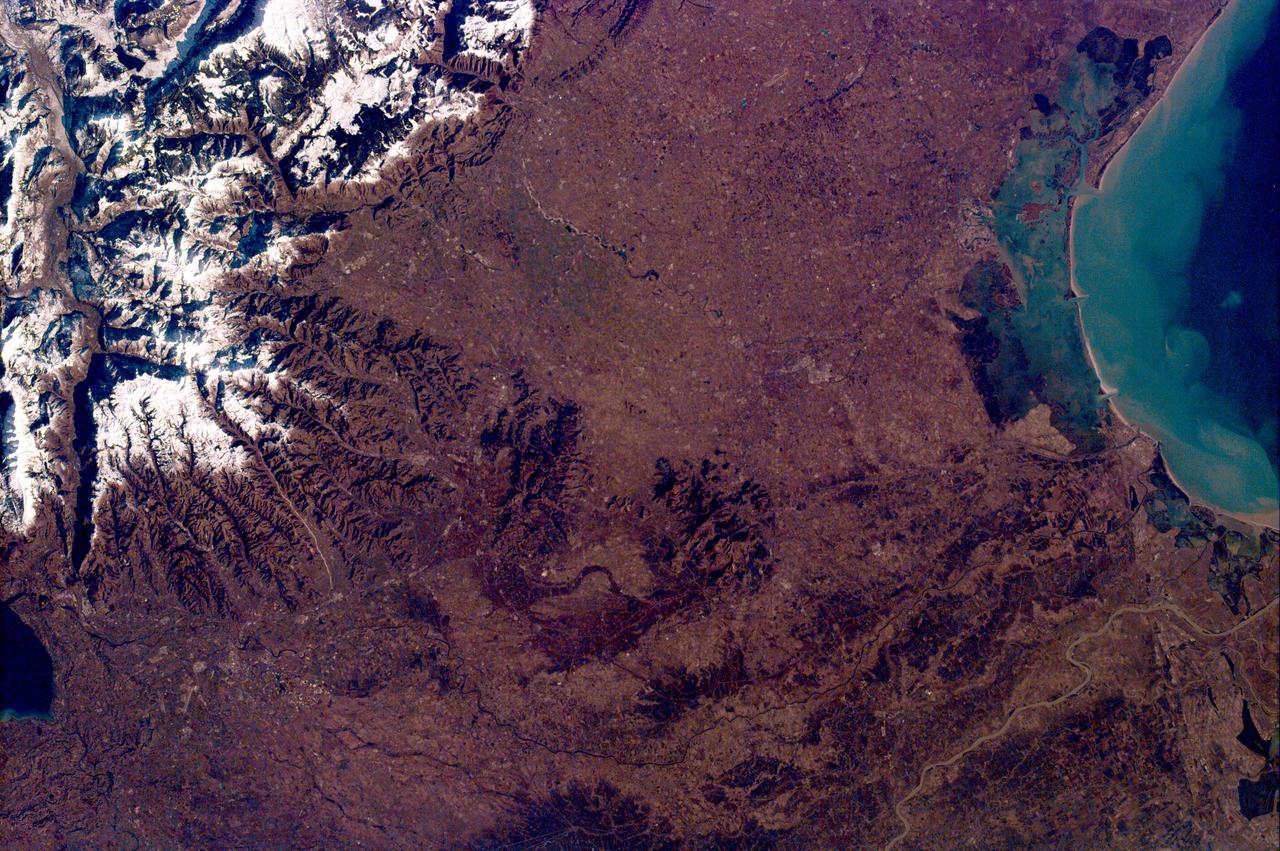
This image from NASA KidSat spans the region of Venetia from the city of Venice, Italy, on the coast of the Adriatic Sea north to the snow-capped Alps. Venice appears in the lower left part of the image, and the Alps appear in the lower right.
Venice, Italy & the Alps from the Shuttle KidSat Camera
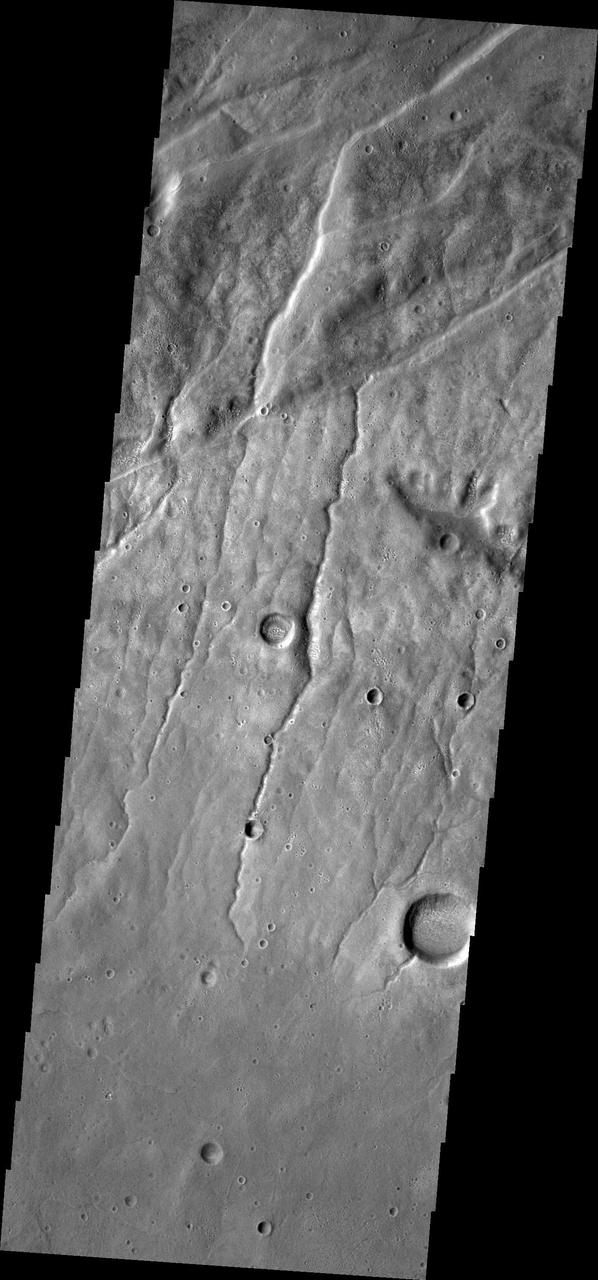
This image from NASA 2001 Mars Odyssey spacecraft of the Claritas Fossae region illustrates how fractures affect other features. In this instance, the fractures control the path of several channels from upper right towards lower left.
Fractures and Channels
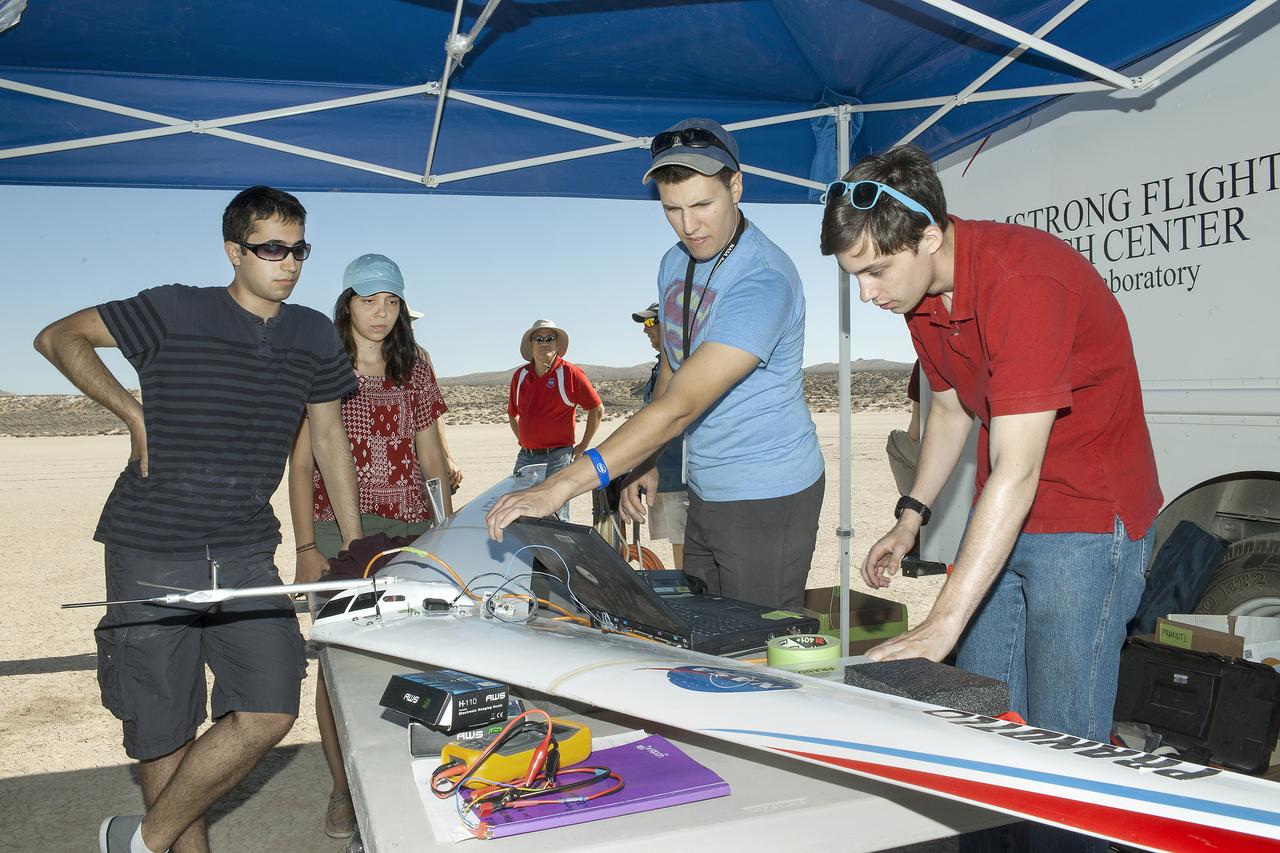
Jonathan Zur, from left, Alexandra Ocasio, Derek Abramson, Red Jensen, Etan Halberg and Keenan Albee wait for data to download from a Prandtl-d flight
Could This Become the First Mars Airplane?
Do you see what I see in this image from NASA Mars Odyssey spacecraft? A long dune extends from the side of a hill on the bottom left side of this image. It looks like the beak of a humming bird.
THEMIS Art #102
Terrain seen in this view from NASA Dawn spacecraft is in the northern hemisphere of Ceres. A sharp cliff separates Dada Crater, the smaller crater at top center, from Roskva Crater, the larger crater at left.
Dawn LAMO Image 70
This view from the left Navigation Camera Navcam of NASA Mars Rover Curiosity looks back at wheel tracks made during the first drive away from the last science target in the Glenelg area.
First Leg of Long Trek Toward Mount Sharp
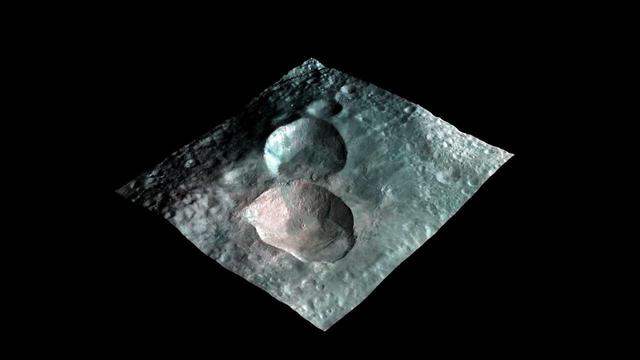
This image from NASA Dawn mission shows a 3-D rendering of the craters that make up the nowman feature on the giant asteroid Vesta. From left to right, the craters are named Marcia, Calpurnia, and Minucia.
Views of the Snowman
NASA rover Opportunity captured this image of the tracks the rover left on a drive from one energy-favorable position on the northern end of a sand ripple to another. The rover team calls this hopping from lily pad to lily pad.
Opportunity Looks Back After Hop to a New Pad
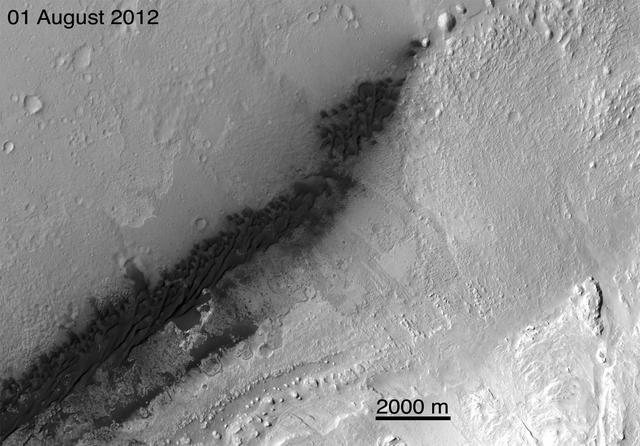
This image from an animation is from NASA Mars Reconnaissance Orbiter MRO showing the landing effects of the descent stage, the rover lander, the back shell and parachute, and the heat shield, all found on the left side of the image.
Before and After Curiosity Touchdown
This vista from NASA Mars Exploration Rover Opportunity shows Wdowiak Ridge, from left foreground to center, as part of a northward look with the rover tracks visible at right.
Opportunity Northward View of Wdowiak Ridge
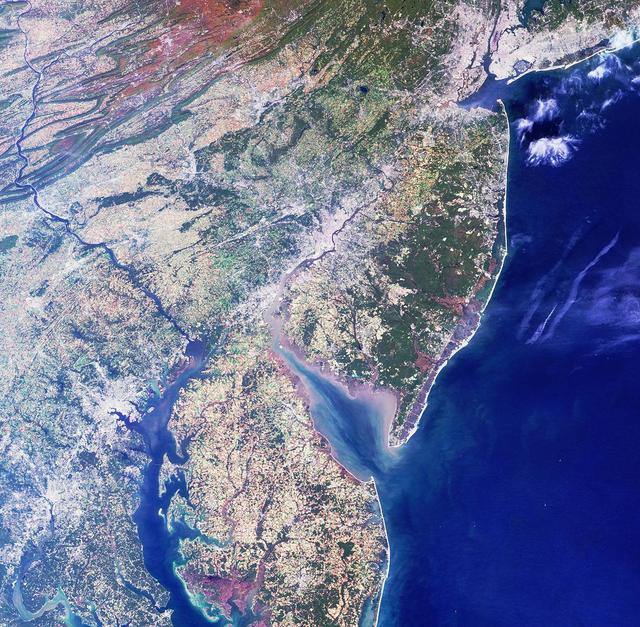
Philadelphia lies in the center of this image from NASA Terra satellite. Larger cities, including New York, Newark, Philadelphia, Wilmington, Baltimore and Washington D.C., are visible from upper right to lower left.
A Spaceborne Perspective on the Red, White, and Blue
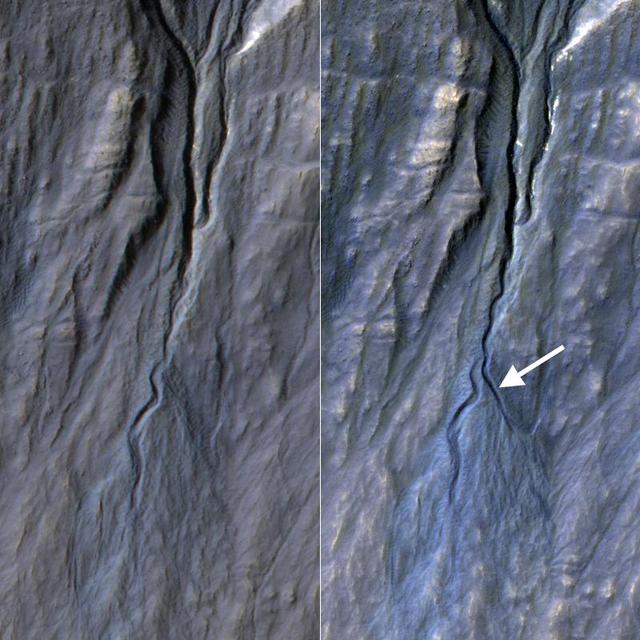
This pair of before left and after right images from NASA Mars Reconnaissance Orbiter documents formation of a new channel on a Martian slope between 2010 and 2013, likely resulting from activity of carbon-dioxide frost.
A New Gully Channel in Terra Sirenum, Mars
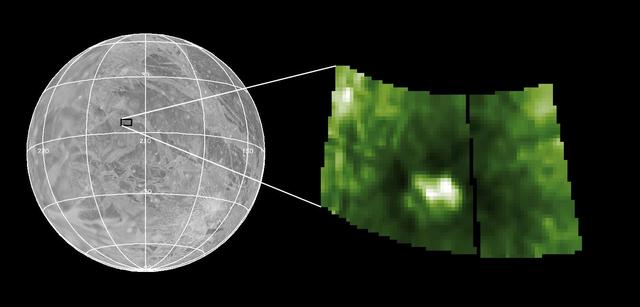
The left image is an airbrush map of the surface of Ganymede from NASA Voyager data. The small square shows the location of Antum crater, target of the image from NASA Galileo spacecraft on the right.
Antum Crater
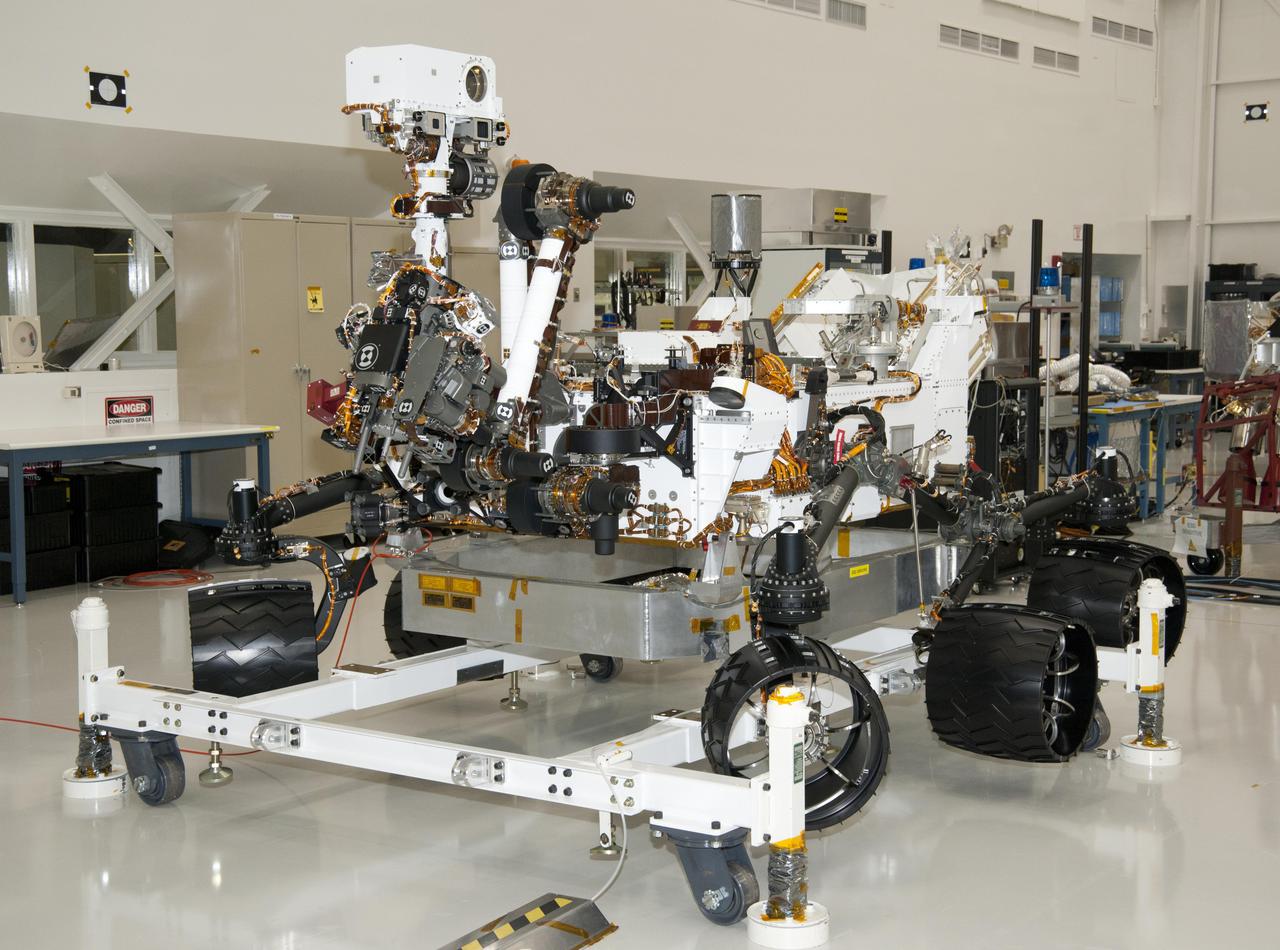
The rover for NASA Mars Science Laboratory mission, named Curiosity, is seen here inside the Spacecraft Assembly Facility at NASA Jet Propulsion Laboratory, Pasadena, Calif. Support equipment is holding the rover slightly off the floor.
NASA Mars Rover Curiosity at JPL, View from Front Left Corner
Do you see what I see? A giant fish with open mouth looks to the left in the center of this image from NASA Mars Odyssey spacecraft.
THEMIS Art #104
Portions of the lander deflated airbags and a petal are at lower left in this image from NASA Mars Pathfinder. 3D glasses are necessary to identify surface detail.
Petal, terrain & airbags - 3-D
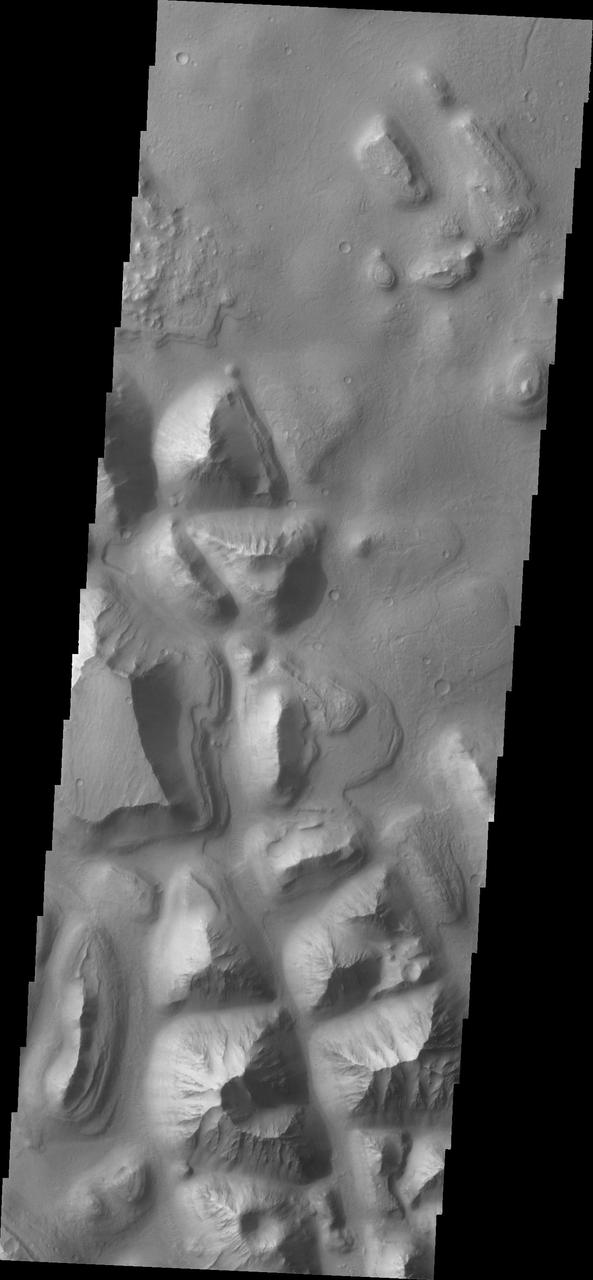
This image from NASA 2001 Mars Odyssey spacecraft shows a portion of Hydraotes Chaos. The individual hills on the left side of the image also appear to be layered.
Hydraotes Chaos
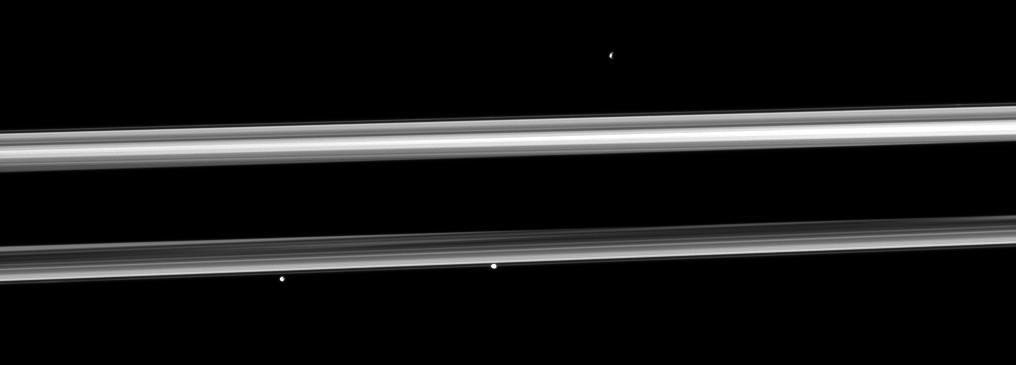
Three of Saturn small moons straddle the rings in this image captured by NASA Cassini spacecraft. From left to right are Pandora, Prometheus and, near the top right, Epimetheus.
Tiny Trio
The objective of this observation by NASA Mars Reconnaissance Orbiter was to examine the edge of impact ejecta from a crater to the north-west of this area north is up, west is to the left.
Sunken and Pitted Ejecta
Resembling ornaments hanging from Saturn rings, two moons accent this portrait of the planet captured by NASA Cassini spacecraft. The moon Enceladus is on the right. Dione is on the left.
Ornamented Rings
This ultraviolet image from NASA Galaxy Evolution Explorer left and visual image right of the face on barred and ringed spiral galaxy NGC 3351 M95.
Face on Barred and Ringed Spiral Galaxy NGC 3351
This picture from NASA Dawn spacecraft shows craters in the northern hemisphere of Ceres. The large crater at lower left displays several bright streaks on its walls.
Dawn LAMO Image 96
The large, elongated rock left of center in the middle distance is Zaphod is seen in this image from NASA Mars Pathfinder. 3D glasses are necessary to identify surface detail.
Northeast View from Pathfinder Lander - Anaglyph
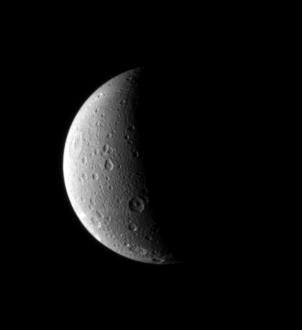
Dione looks lovely half lit in this portrait from the Cassini spacecraft. Just visible is a long canyon running southward just left of the terminator
North on Dione
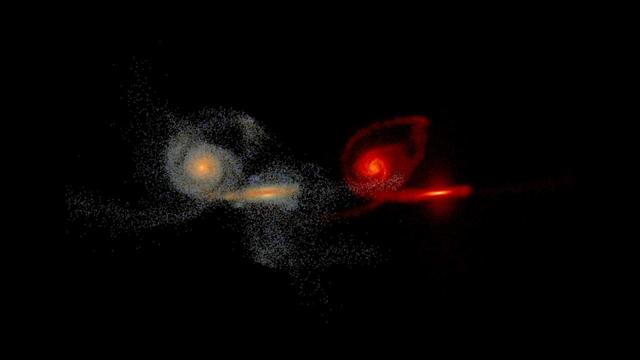
This frame from a simulation shows the merging of two massive galaxies. The merging galaxies are split into two views: a visible-light view on the left, and infrared view on the right.
Mega Galaxy Merger
Portions of the lander deflated airbags and a petal are at lower left in this image from NASA Mars Pathfinder. 3D glasses are necessary to identify surface detail.
Martian terrain & airbags - 3-D
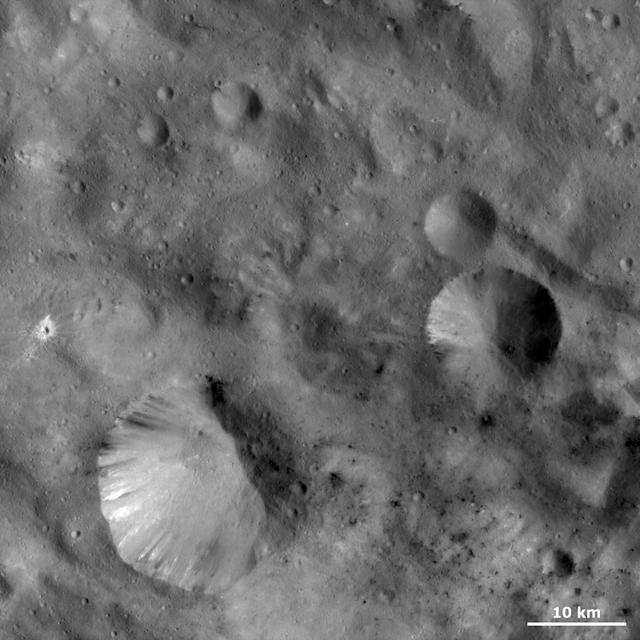
This image from NASA Dawn spacecraft shows craters with both sharp and smooth rims. The most obvious is the large crater in the bottom left of the image.
Unusual Craters on Vesta II
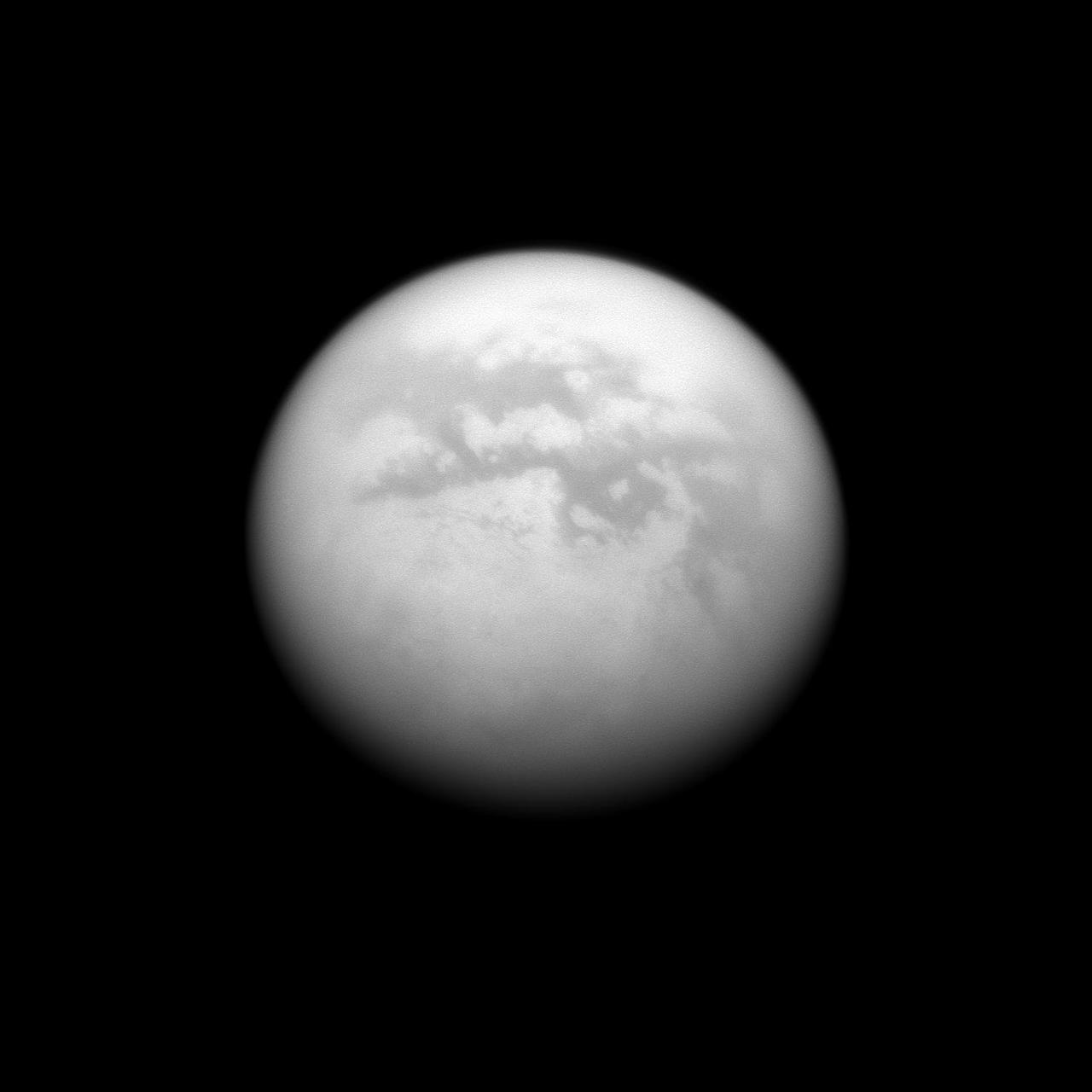
The Cassini spacecraft charts a quartet of dark albedo features on the moon Titan. From upper left to lower right of the image are Fenzal, Aztlan, Aaru and Senkyo.
Low Albedo Foursome
Saturn tiny moon Atlas, just to the left of the center of the image, appears almost indistinguishable from the background stars seen in this image captured by NASA Cassini spacecraft.
Lost Among Stars
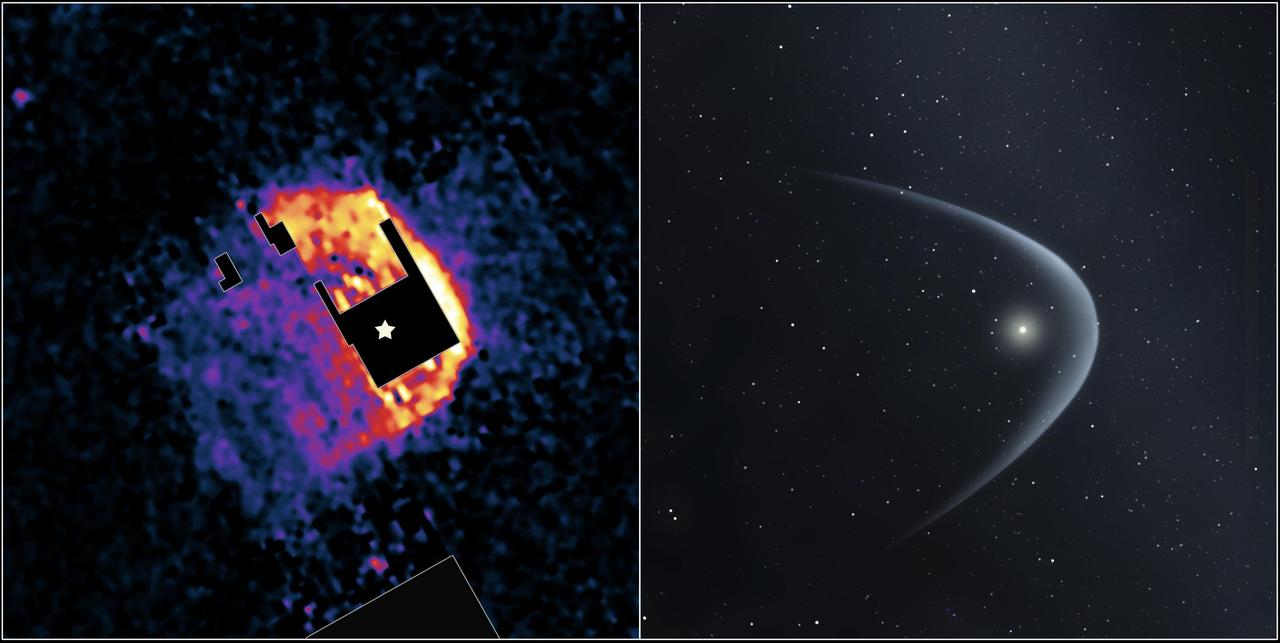
This image from NASA Spitzer Space Telescope left panel shows the bow shock of a dying star named R Hydrae, or R Hya, in the constellation Hydra.
Red Giant Plunging Through Space
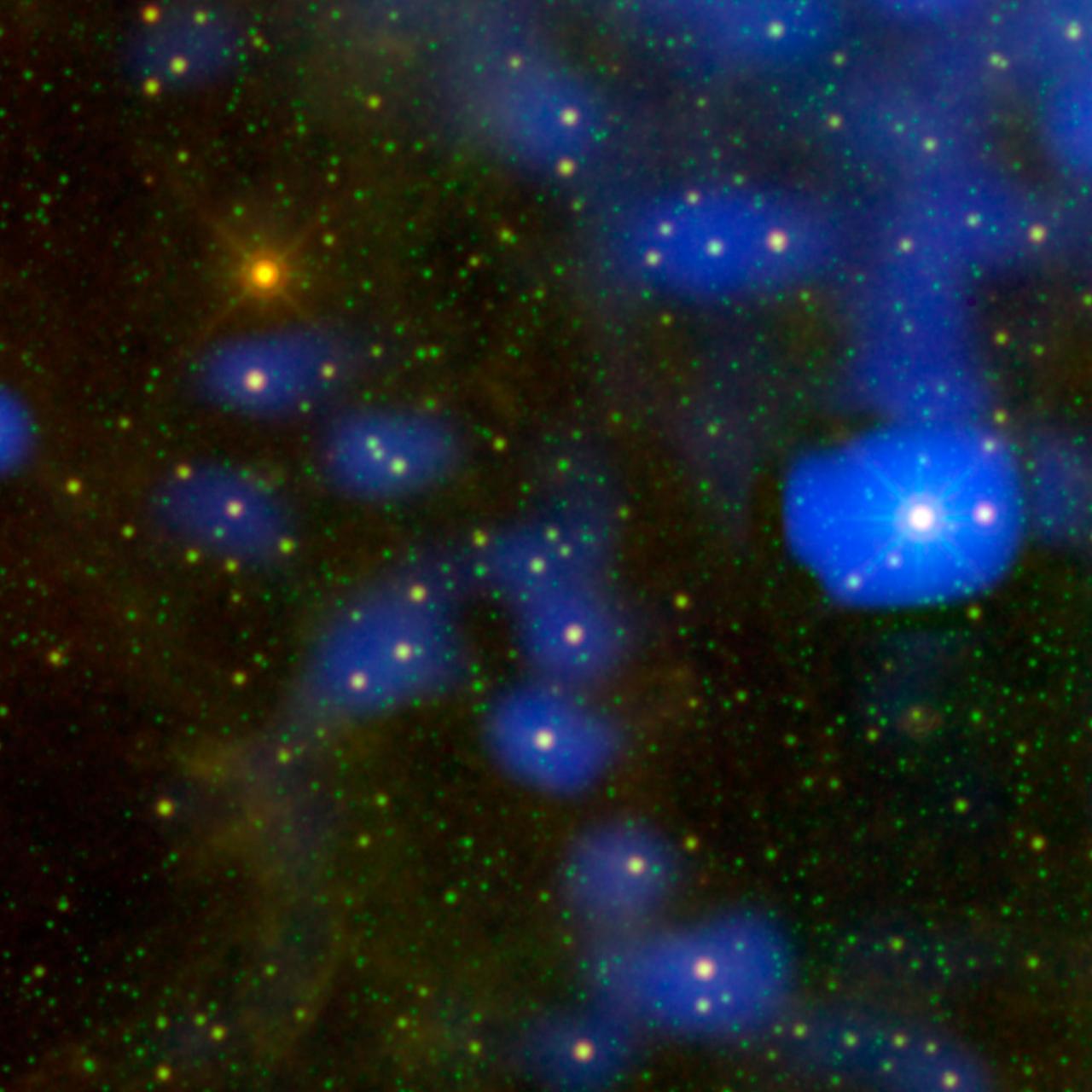
It a dust bunny of cosmic proportions. Astronomers used images from NASA WISE to locate an aging star shedding loads of dust orange dot at upper left.
Dusty Star Stands Out From the Rest
Portions of the lander deflated airbags and a petal are at lower left in this image from NASA Mars Pathfinder. 3D glasses are necessary to identify surface detail.
Martian Terrain and Airbags - 3-D
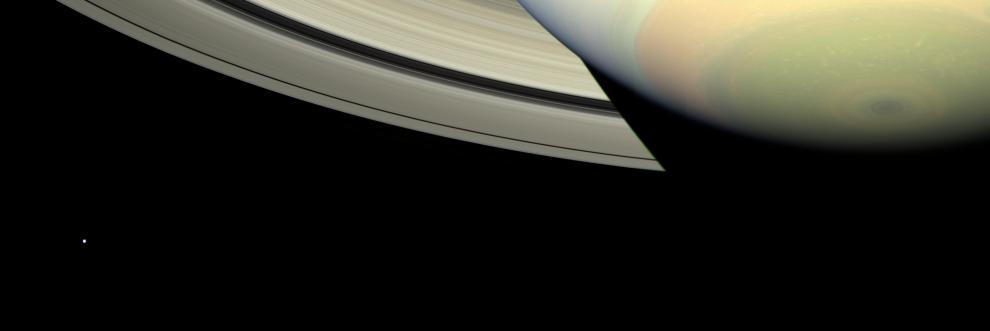
Cassini takes in a sweeping view of Saturn south polar region as the planet shadow masks the rings and bright, icy Mimas looks on from left
Shadowcaster
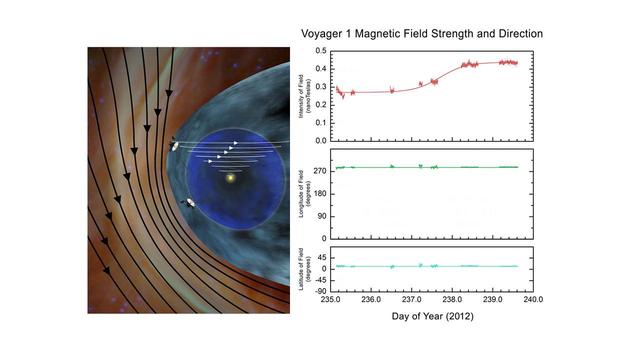
The artist concept on left is based on theoretical models predicting the direction and strength of magnetic field lines coming from the sun and interstellar space.
Mystery of the Interstellar Magnetic Field Artist Concept
Do you see what I see in this image from NASA Mars Odyssey spacecraft? These layered deposits look like a giant bear facing to the left.
THEMIS Art #120
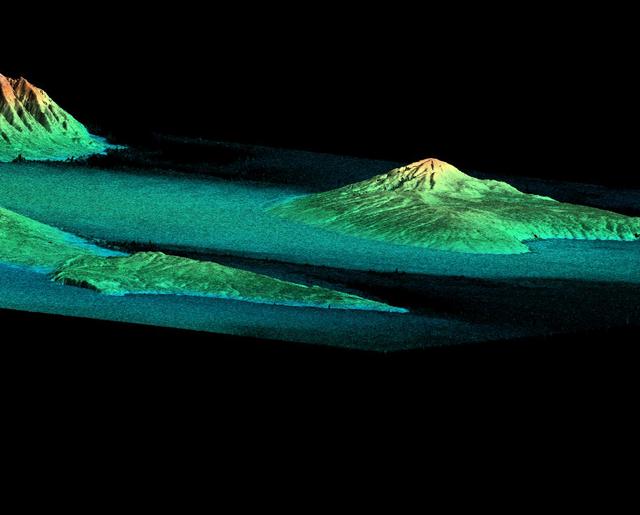
This perspective view acquired by NASA Shuttle Radar Topography Mission SRTM from data collected on February 18, 2000 shows three Hawaiian islands: Molokai lower left, Lanai right, and the northwest tip of Maui upper left.
Perspective View, Radar Image, Color as Height, Molokai, Lanai and Maui, Hawaii
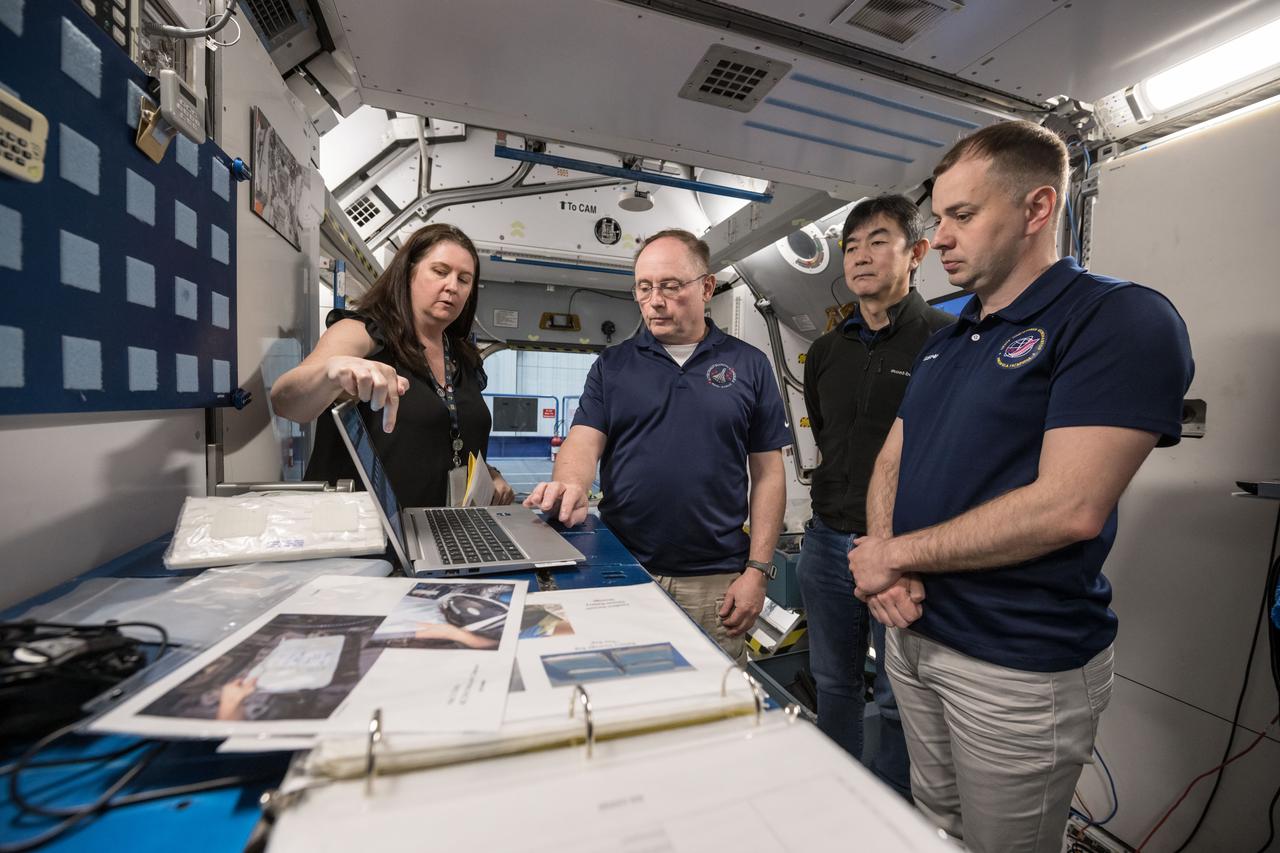
jsc2025e032867 (March 20, 2025) --- From left to right, NASA astronaut Mike Fincke, JAXA astronaut Kimiya Yui, and Roscosmos Cosmonaut Oleg Platonov conduct training scenarios with their instructor (far left) at NASA’s Johnson Space Center in Houston, Texas, for their upcoming mission to the International Space Station. Credit: NASA/David DeHoyos
NASA’s SpaceX Crew-11 members train for their International Space Station mission
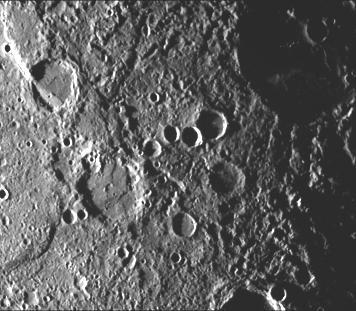
This image, from NASA Mariner 10 spacecraft which launched in 1974, shows a scarp upper left corner of the image about 130 kilometers long cutting two craters older crater is at extreme left corner, younger is diagonally below.
Crater Rim Offset 10 Kilometers by Scarp
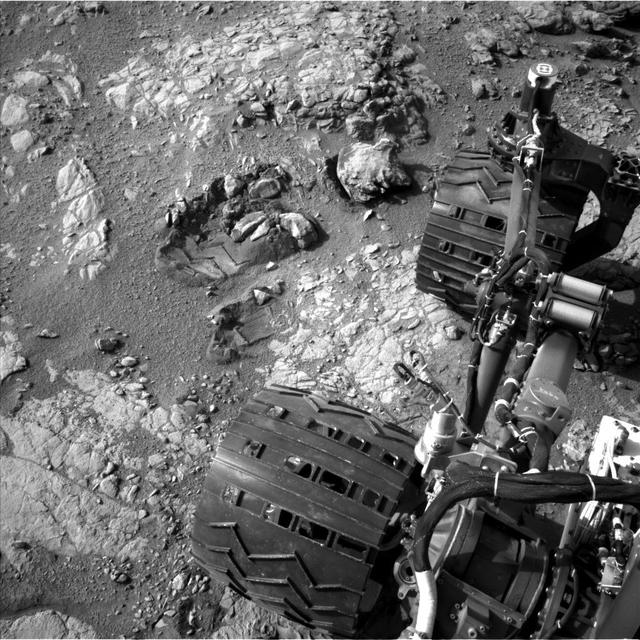
This view of Curiosity left-front and left-center wheels and of marks made by wheels on the ground in the Yellowknife Bay area comes from one of six cameras used on Mars for the first time more than six months after the rover landed.
View From Camera Not Used During Curiosity First Six Months on Mars
At the Gagarin Cosmonaut Training Center in Star City, Russia, Expedition 59 crewmembers Alexey Ovchinin of Roscosmos (second from left), Christina Koch of NASA (second from right) and Nick Hague of NASA (right) walk to a bus Feb. 26 to take them to their plane for a flight to their launch site at the Baikonur Cosmodrome in Kazakhstan for final pre-launch training. They will launch on March 14, U.S. time, on the Soyuz MS-12 spacecraft from the Baikonur Cosmodrome in Kazakhstan for a six-and-a-half month mission on the International Space Station.  NASA/Beth Weissinger
At the Gagarin Cosmonaut Training Center in Star City, Russia, Expedition 59 crewmembers Alexey Ovchinin of Roscosmos (second from left), Christina Koch of NASA (second from right) and Nick Hague of NASA (right) walk to a bus Feb. 26 to take them to their
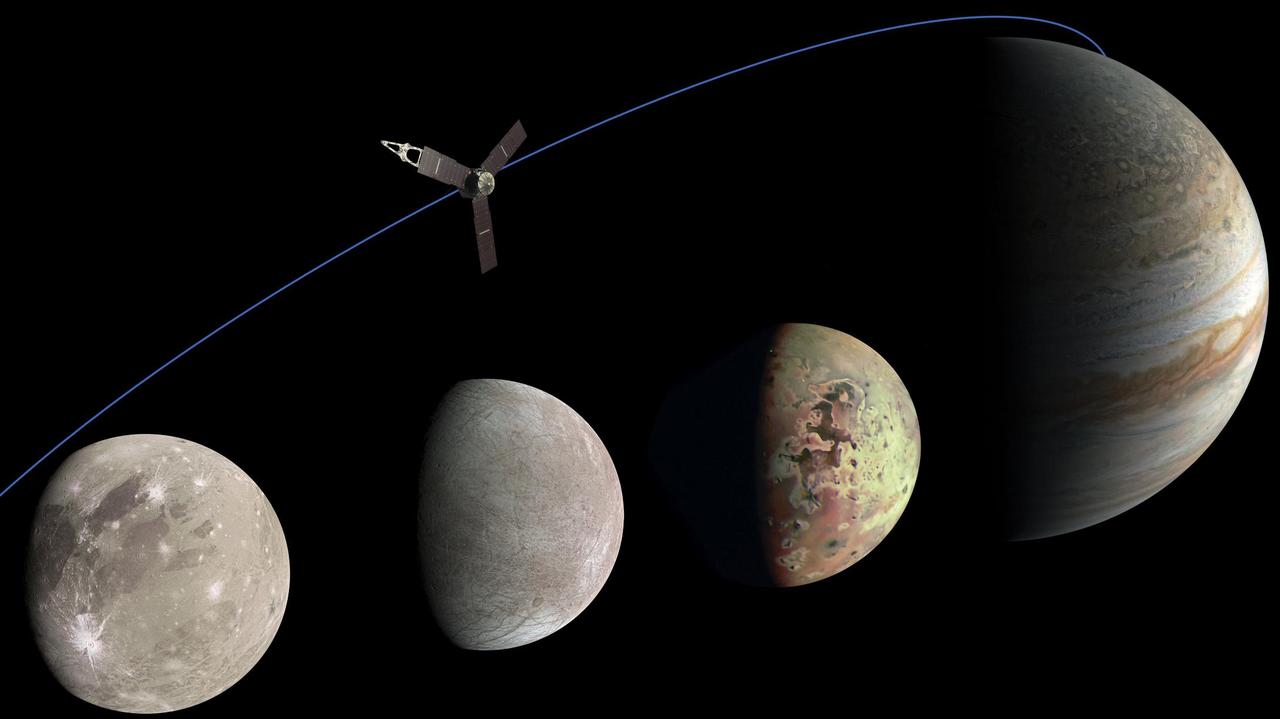
This photo illustration of Jupiter and the three Jovian moons NASA's Juno mission has flown past was generated from data collected by the spacecraft's JunoCam imager.  Ganymede, the moon furthest to the left, was imaged by JunoCam as it flew past on June 8, 2021. Citizen scientist Kevin M. Gill created this image using data from JunoCam.  The moon second from the left is Europa, which Juno imaged on Sept. 29, 2022. Citizen scientist Kevin M. Gill created this image using data from JunoCam.  The image of Io was captured during a flyby of the moon on May 16, 2023. Citizen scientist Thomas Thomopoulos created this image using data from JunoCam.  The image of Jupiter was captured on Dec. 15, 2022. Citizen scientist Kevin M. Gill created this image using data from JunoCam.  https://photojournal.jpl.nasa.gov/catalog/PIA25966
Jovian Family Portrait
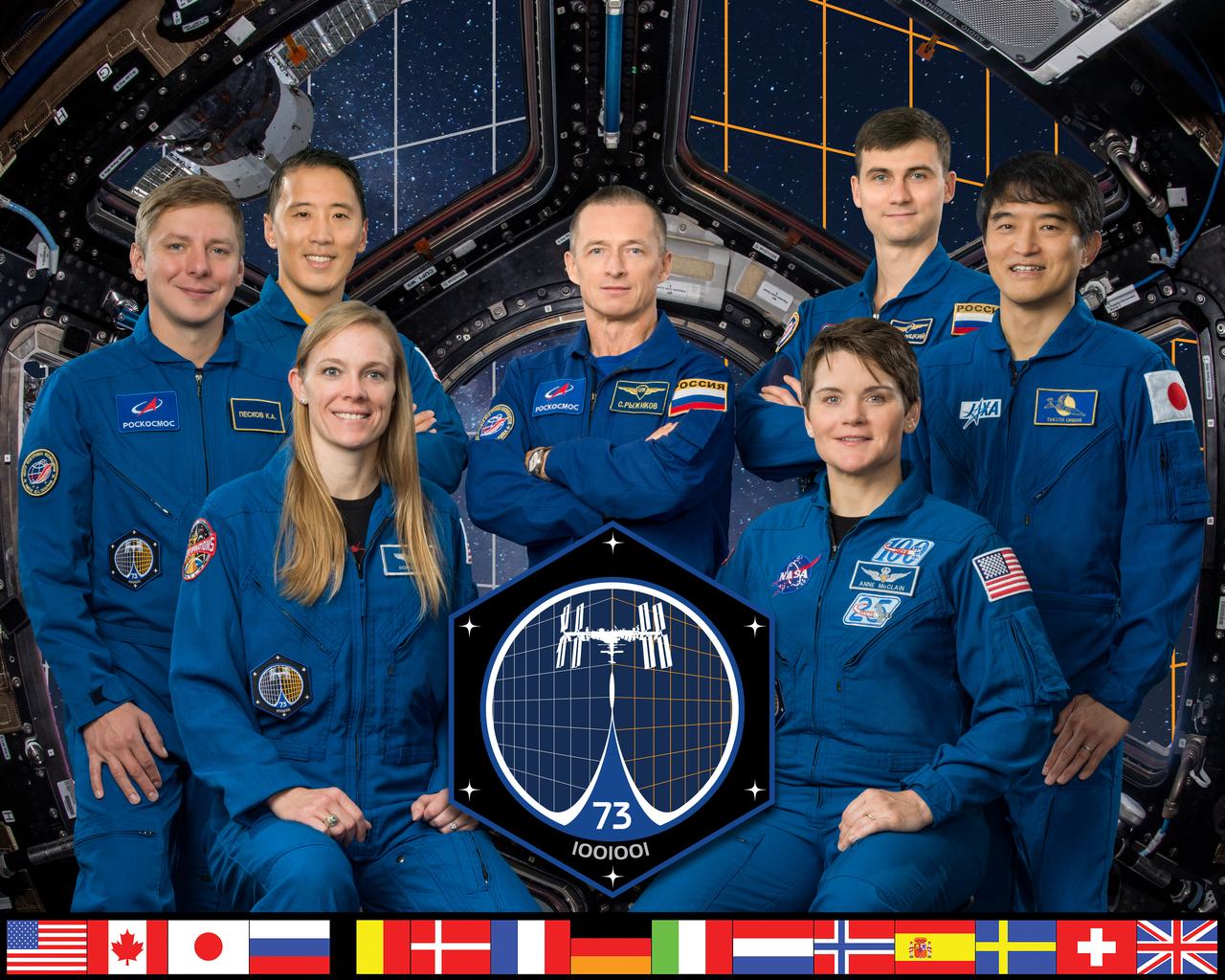
iss073-s-002 (Oct. 16, 2024) --- The official portrait of the International Space Station's seven-member Expedition 73 crew from three different space agencies. Seated in the front row from left, are NASA astronauts Nichole Ayers and Anne McClain. In the back row from left are, Roscosmos cosmonaut Kirill Peskov; NASA astronaut Jonny Kim; Roscosmos cosmonauts Sergey Ryzhikov and Alexey Zubritsky; and JAXA (Japan Aerospace Exploration Agency) astronaut Takuya Onishi. Credit: NASA/Josh Valcarcel
The official portrait of the Expedition 73 crew
iss058e013244 (Feb. 13, 2019) --- The forward end of the International Space Station is pictured showing portions of five modules. From right to left is a portion of the U.S. Destiny laboratory module linking forward to the Harmony module. Attached to the port side of Harmony (left foreground) is the Kibo laboratory module from the Japan Aerospace Exploration Agency (JAXA) with its logistics module berthed on top. On Harmony's starboard side (center background) is the Columbus laboratory module from ESA (European Space Agency).
The forward end of the International Space Station is pictured showing portions of five modules.
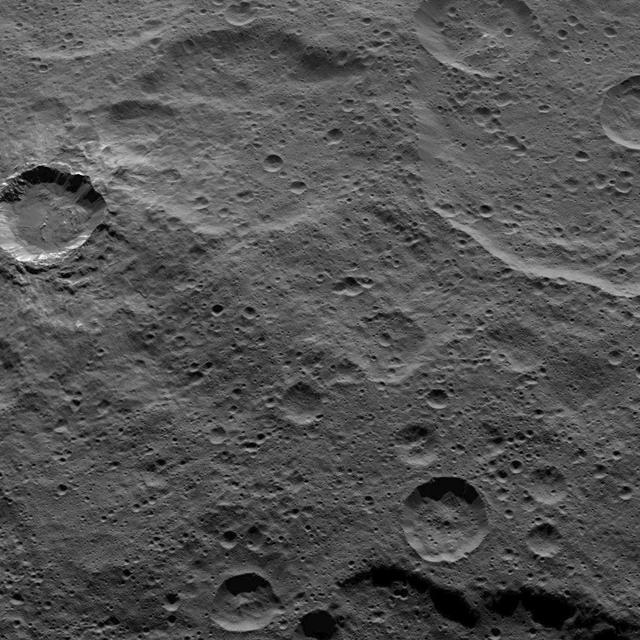
This view from NASA Dawn spacecraft, taken on Oct. 17, 2015, from an altitude of 915 miles 1,470 kilometers, shows southern mid-latitudes on Ceres, including a relatively fresh crater near upper left.  http://photojournal.jpl.nasa.gov/catalog/PIA20137
Dawn HAMO Image 74
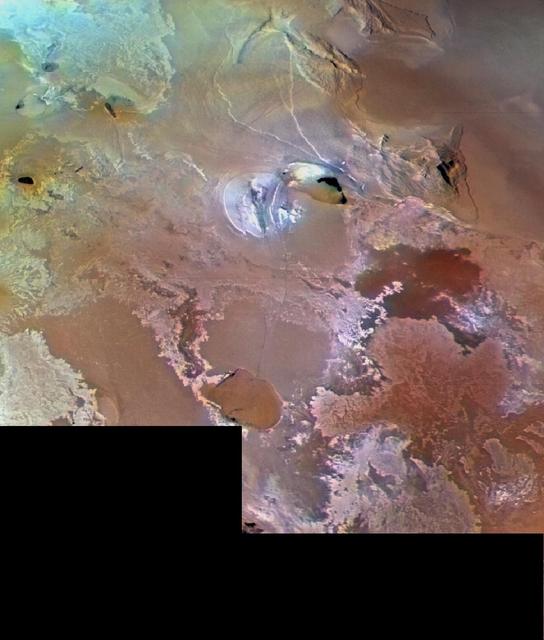
Io volcanic plains are shown in this archival image from NASA Voyager 1, which spans an area about 1030 km 640 miles from left to right. Numerous volcanic calderas and lava flows are visible.  http://photojournal.jpl.nasa.gov/catalog/PIA00324
Volcanic Plains of Io Near Galai Patera
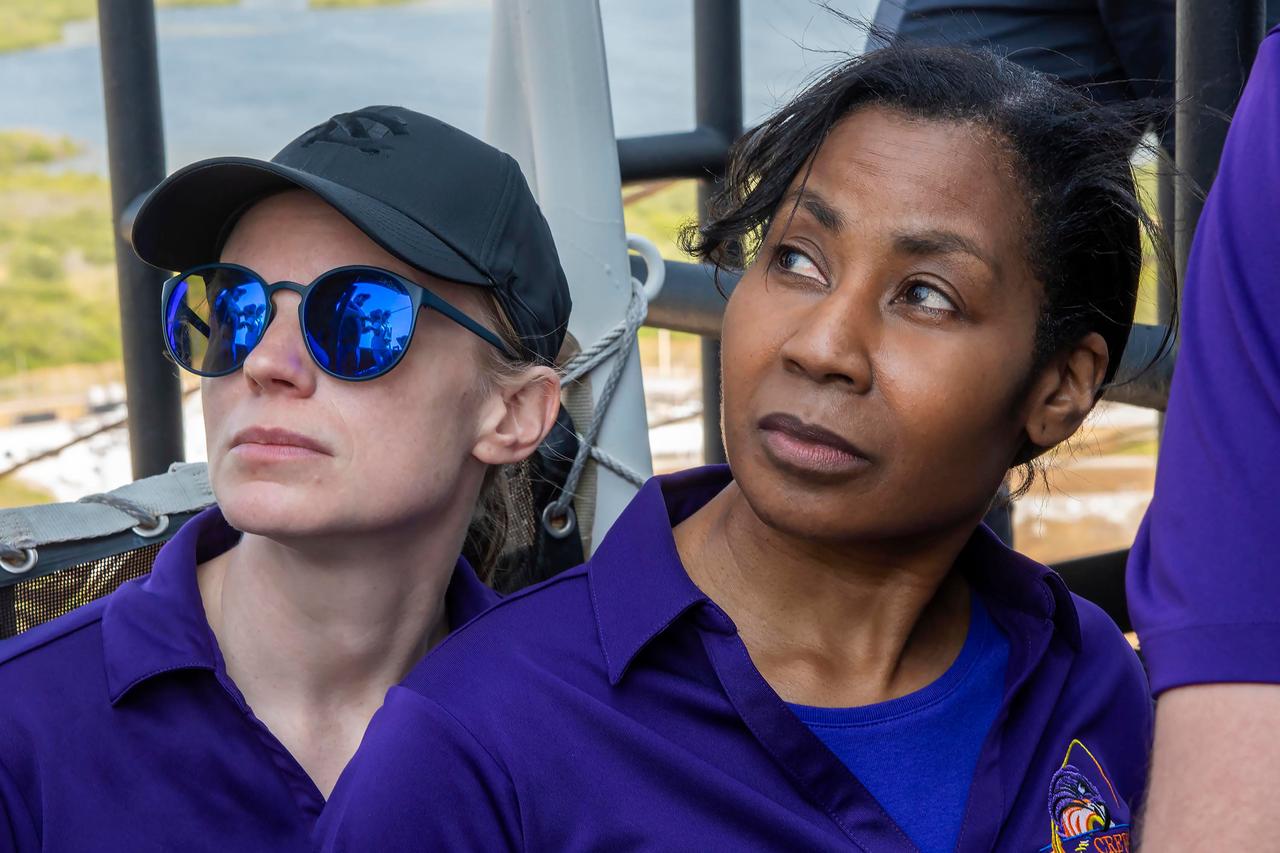
jsc2024e050148 (May 13, 2024) --- From left, NASA’s SpaceX Crew-9 Commander Zena Cardman and Mission Specialist Stephanie Wilson look off into the distance from the launch tower at Launch Complex 39A at NASA's Kennedy Space Center in Florida. Credit: SpaceX
NASA’s SpaceX Crew-9 crew members Zena Cardman and Stephanie Wilson
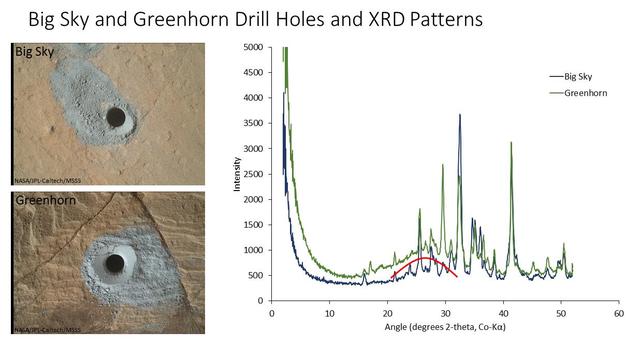
The graph at right presents information from the NASA Curiosity Mars rover's onboard analysis of rock powder drilled from the "Big Sky" and "Greenhorn" target locations, shown at left.  X-ray diffraction analysis of the Greenhorn sample inside the rover's Chemistry and Mineralogy (CheMin) instrument revealed an abundance of silica in the form of noncrystalline opal. The broad hump in the background of the X-ray diffraction pattern for Greenhorn, compared to Big Sky, is diagnostic of opal.  The image of Big Sky at upper left was taken by the rover's Mars Hand Lens Imager (MAHLI) camera the day the hole was drilled, Sept. 29, 2015, during the mission's 1,119th Martian day, or sol. The Greenhorn hole was drilled, and the MAHLI image at lower left was taken, on Oct. 18, 2015 (Sol 1137). http://photojournal.jpl.nasa.gov/catalog/PIA20272
Big Sky and Greenhorn Drill Holes and CheMin X-ray Diffraction
This VIS image shows an unnamed channel in Xanthe Terra. The large bend in the channel was created as the flow of liquid from the bottom of the image was deflected by a ridge that extends diagonally from the left center.  Orbit Number: 71967 Latitude: -0.658424 Longitude: 302.288 Instrument: VIS Captured: 2018-03-05 22:29  https://photojournal.jpl.nasa.gov/catalog/PIA22500
Xanthe Terra Channel
KENNEDY SPACE CENTER, FLA. -- United Space Alliance (USA) Vice President and Space Shuttle Program Manager Howard DeCastro (left) and NASA Deputy Associate Administrator for Space Station and Shuttle Programs Michael Kostelnik (third from left) watch as a USA technician (right) creates a tile for use in the Shuttle's Thermal Protection System (TPS).  NASA and USA Space Shuttle program management are participating in a leadership workday.  The day is intended to provide management with an in-depth, hands-on look at Shuttle processing activities at KSC.
KENNEDY SPACE CENTER, FLA. -- United Space Alliance (USA) Vice President and Space Shuttle Program Manager Howard DeCastro (left) and NASA Deputy Associate Administrator for Space Station and Shuttle Programs Michael Kostelnik (third from left) watch as a USA technician (right) creates a tile for use in the Shuttle's Thermal Protection System (TPS). NASA and USA Space Shuttle program management are participating in a leadership workday. The day is intended to provide management with an in-depth, hands-on look at Shuttle processing activities at KSC.
Outside the Integration Facility at the Baikonur Cosmodrome in Kazakhstan, Expedition 48-49 crewmembers Takuya Onishi of the Japan Aerospace Exploration Agency (left) and Kate Rubins of NASA (second from left) receive a briefing on the use of a satellite phone June 25 as they prepare for their launch with Anatoly Ivanishin of Roscosmos on July 7, Baikonur time, on the Soyuz MS-01 spacecraft for a planned four-month mission on the International Space Station.  NASA/Alexander Vysotsky
Outside the Integration Facility at the Baikonur Cosmodrome in Kazakhstan, Expedition 48-49 crewmembers Takuya Onishi of the Japan Aerospace Exploration Agency (left) and Kate Rubins of NASA (second from left) receive a briefing on the use of a satellite phone June 25 as they prepare for their launch with Anatoly Ivanishin of Roscosmos on July 7, Baikonur time, on the Soyuz MS-01 spacecraft for a planned four-month mission on the International Space Station...NASA/Alexander Vysotsky.