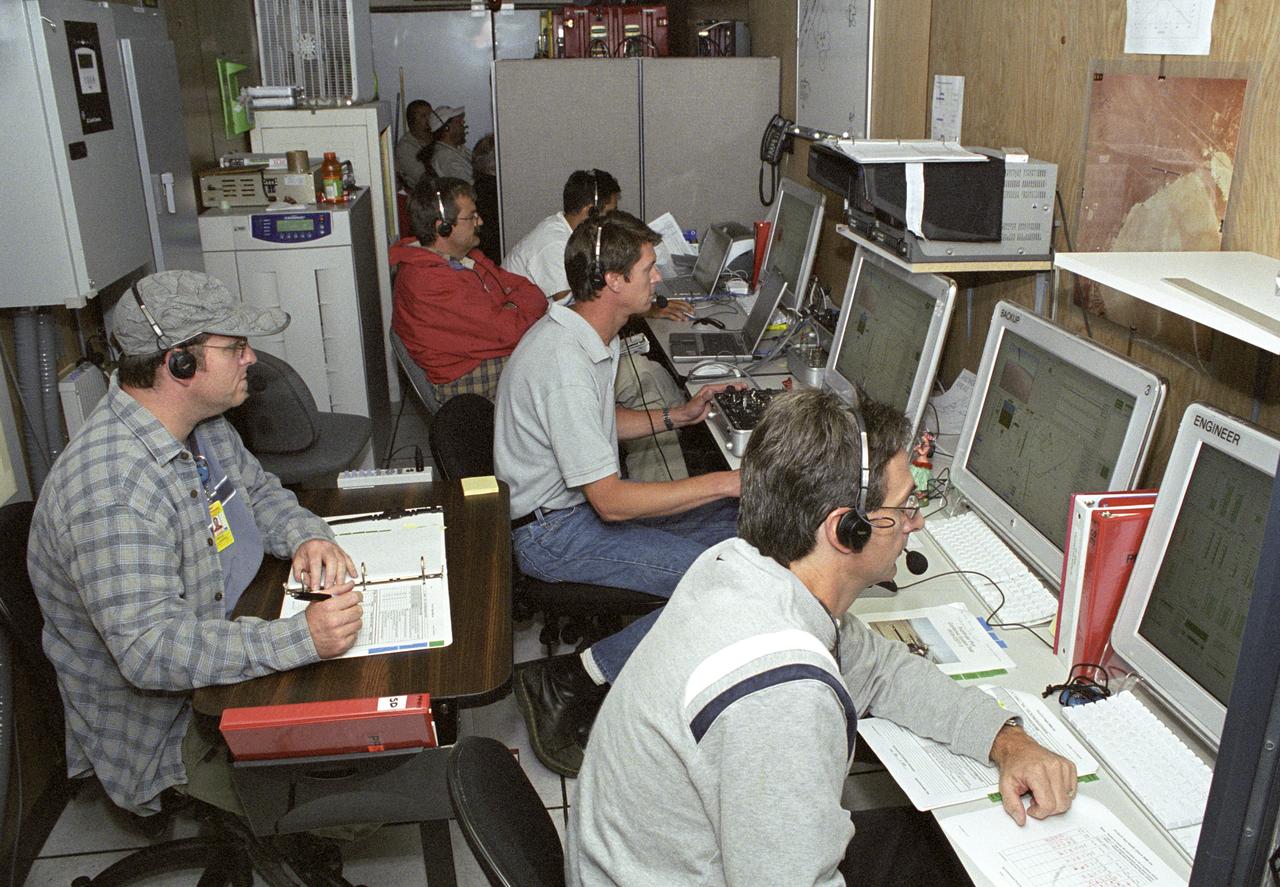
AeroVironment engineers and technicians closely monitor flight data in the ground control station during the Pathfinder-Plus' turbulence measurement flights.
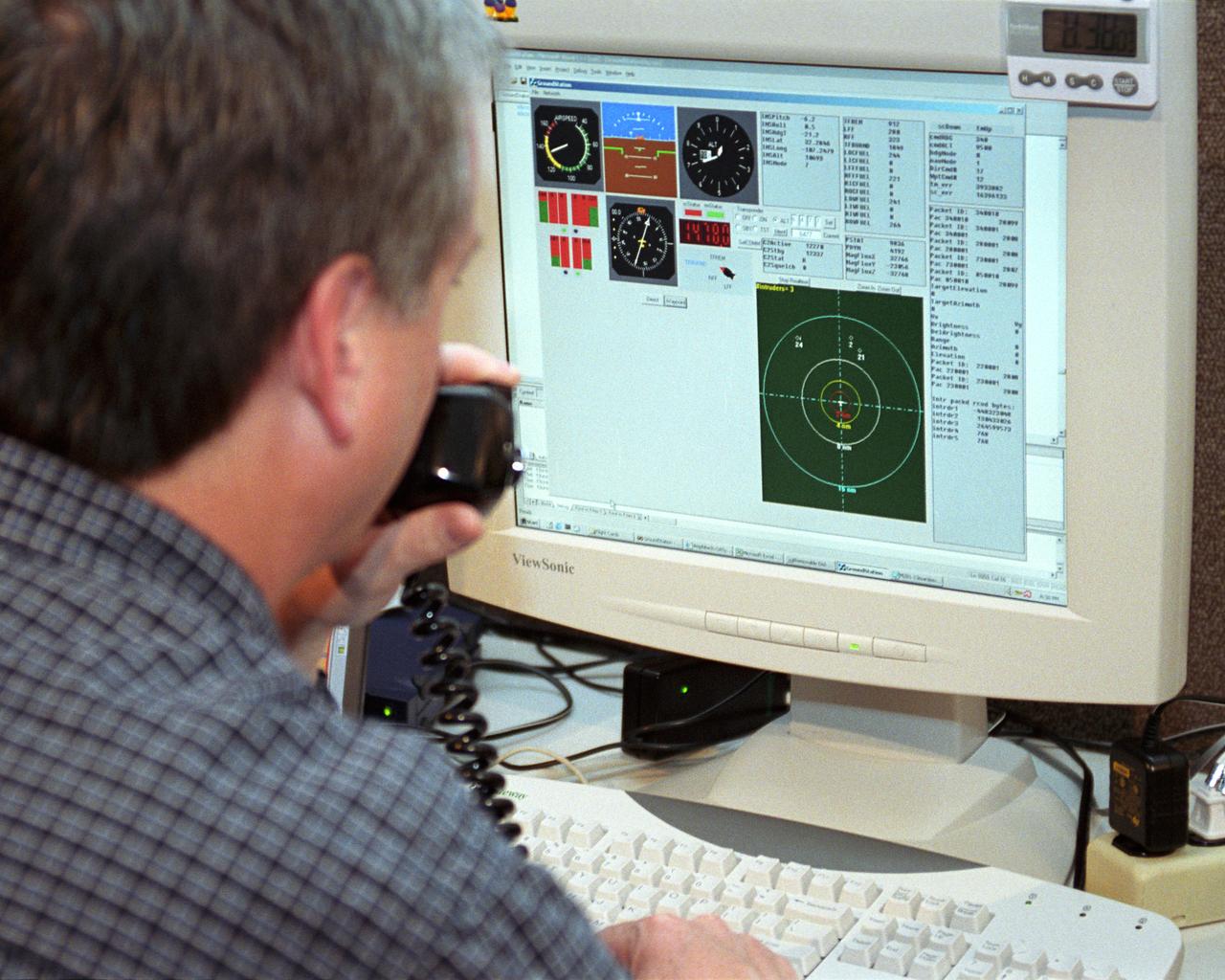
Scaled Composites' Doug Shane examines the screen of his ground control station during tests in New Mexico. Shane used this configuration as the ground control station to remotely pilot the Proteus aircraft during a NASA sponsored series of tests.
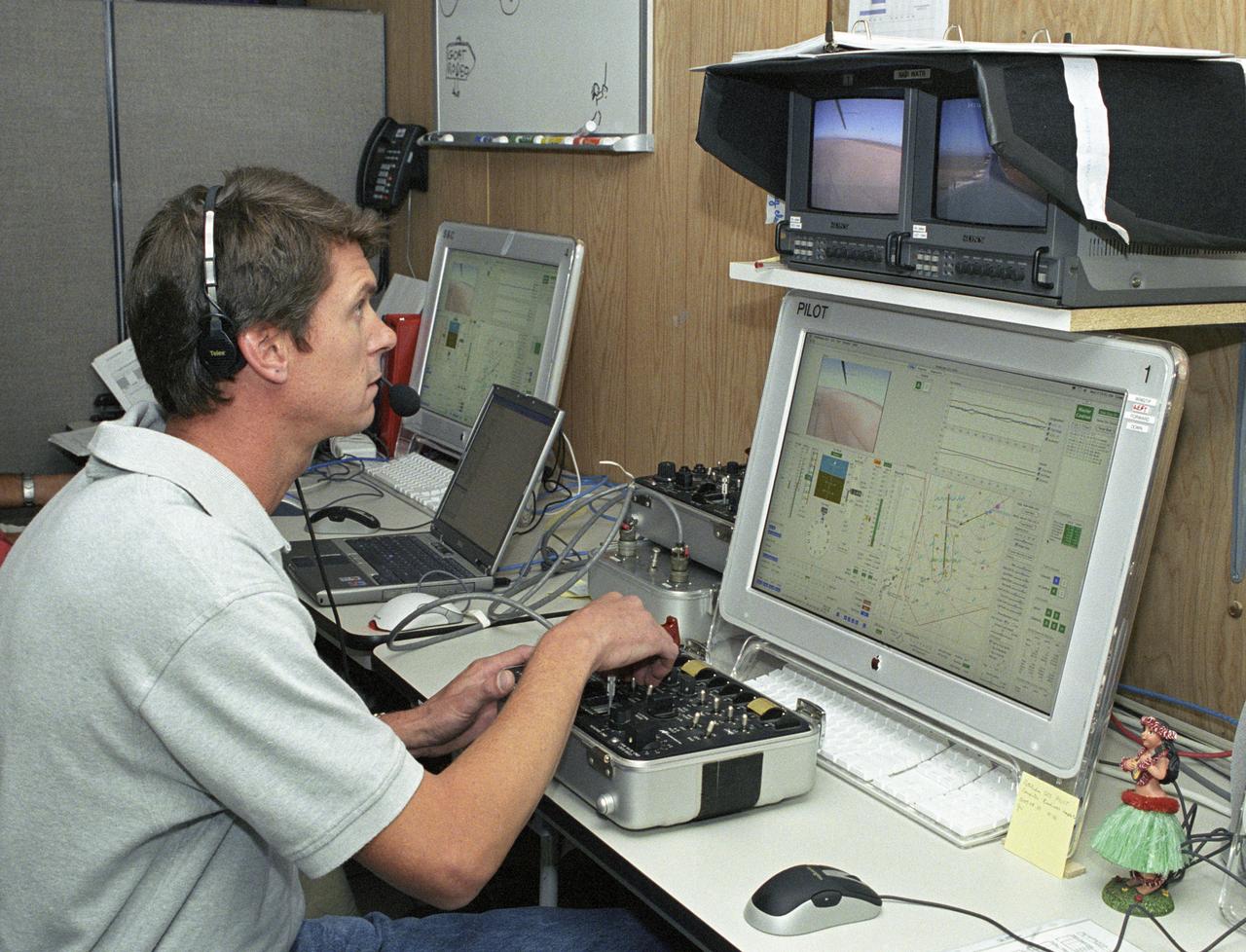
AeroVironment pilot Wyatt Sadler controls the Pathfinder-Plus flying wing from a small console, video and computer monitors in the ground station.
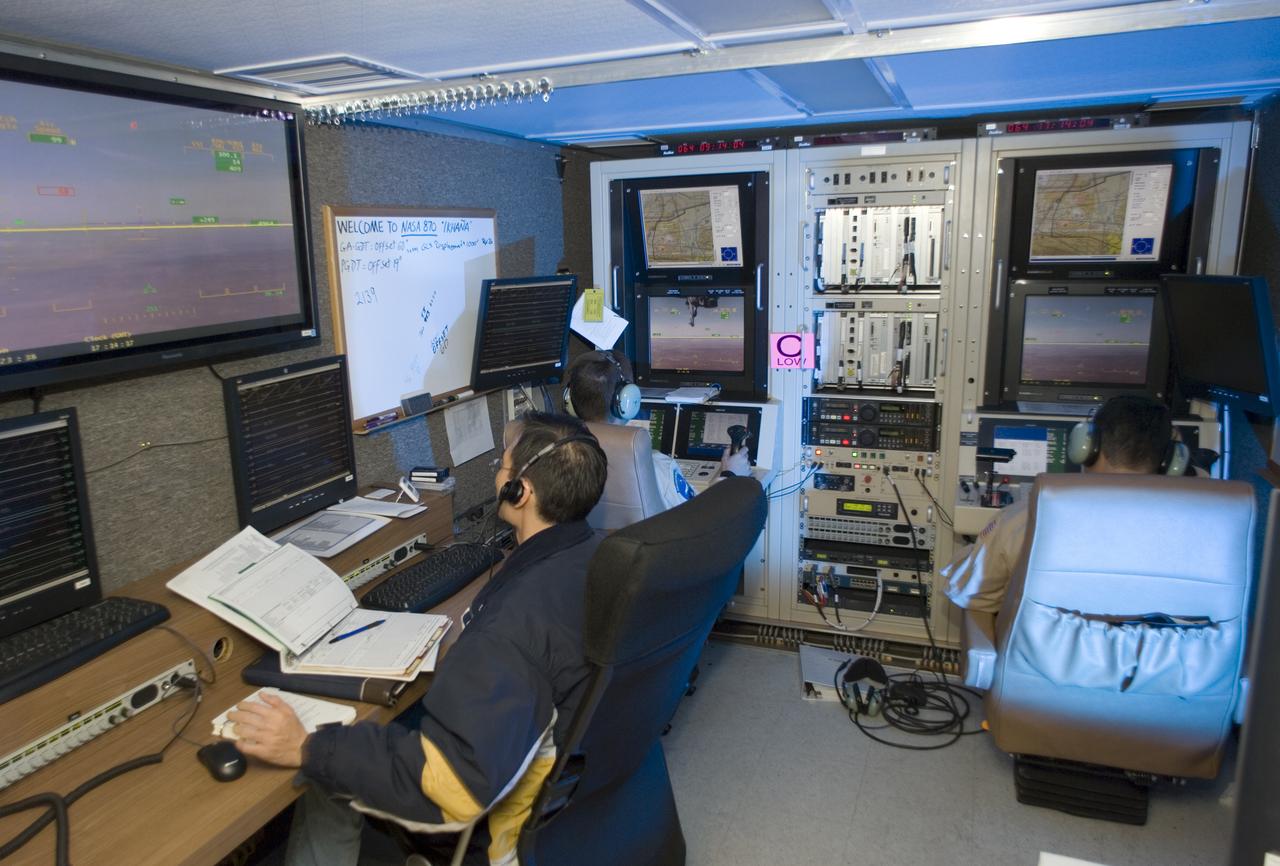
NASA's Ikhana unmanned science aircraft ground control station includes consoles for two pilots and positions for scientists and engineers along the side.
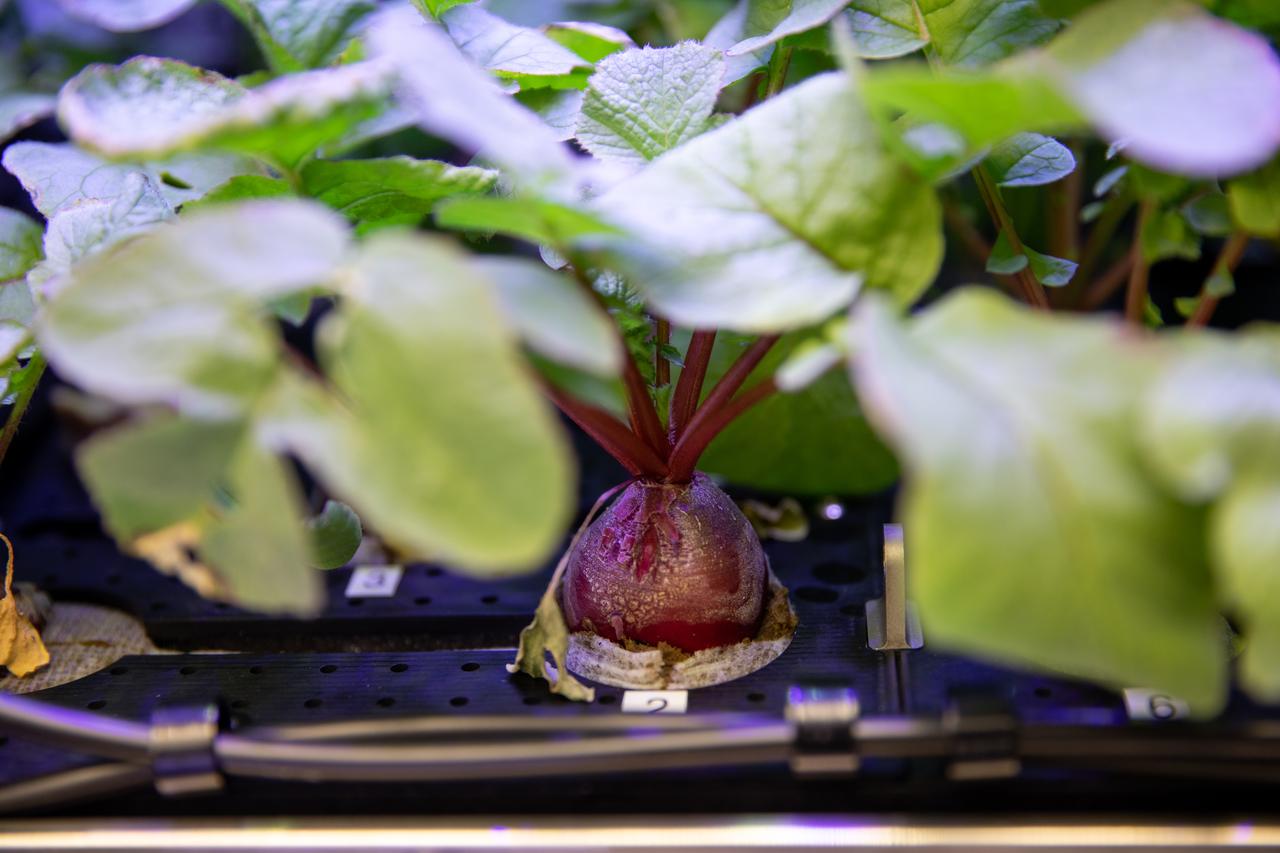
A view of radishes growing in the Advanced Plant Habitat (APH) ground unit inside the Space Station Processing Facility at NASA’s Kennedy Space Center in Florida on Dec. 14, 2020. The radishes are a ground control crop for the Plant Habitat-02 (PH-02) experiment. The experiment also involves growing two similar radish crops inside the International Space Station’s APH. NASA astronaut Kate Rubins harvested the first crop on Nov. 30, and the second harvest aboard the orbiting laboratory is planned for Dec. 30. Once samples return to Earth, researchers will compare those grown in space to the radishes grown here on Earth to better understand how microgravity affects plant growth.
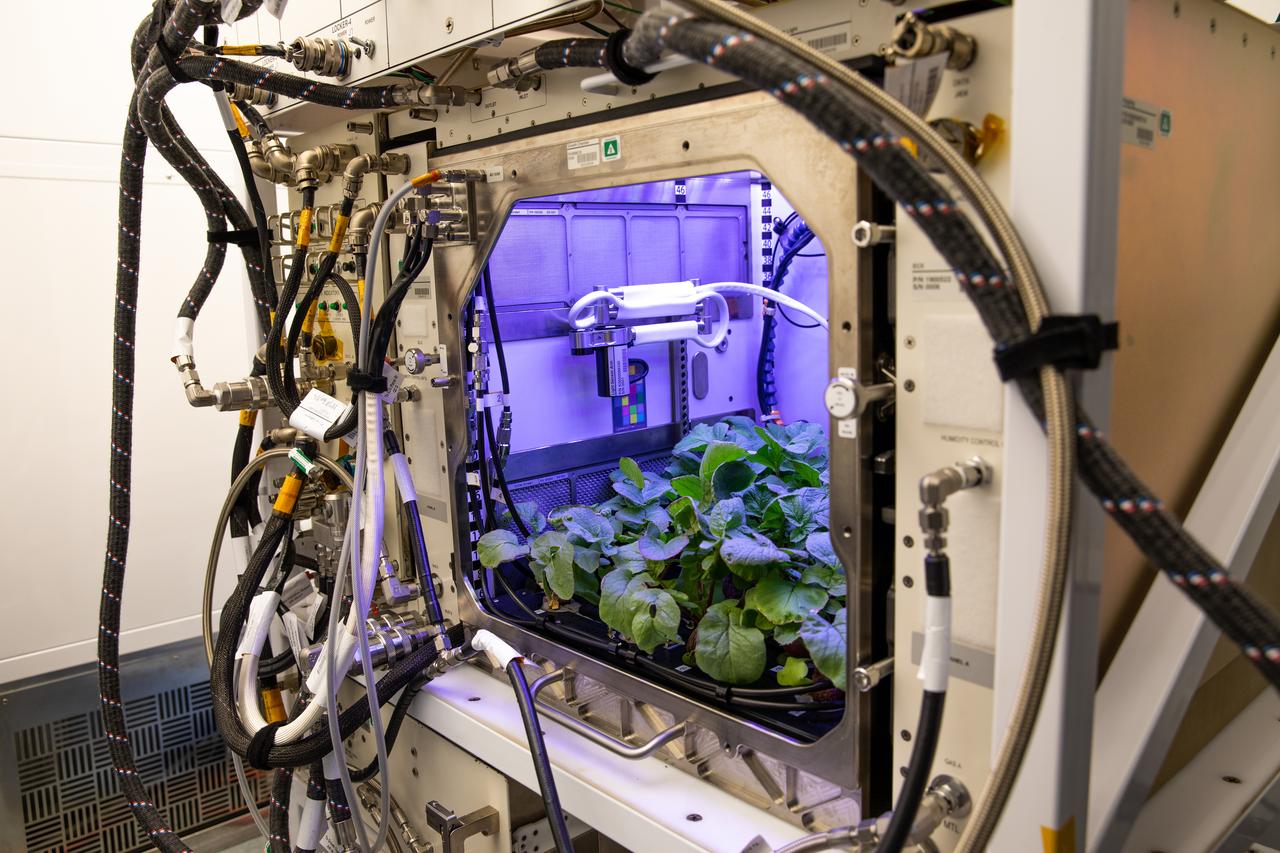
A view of radishes growing in the Advanced Plant Habitat (APH) ground unit inside the Space Station Processing Facility at NASA’s Kennedy Space Center in Florida on Dec. 14, 2020. The radishes are a ground control crop for the Plant Habitat-02 (PH-02) experiment, which also involves growing two similar radish crops inside the International Space Station’s APH. NASA astronaut Kate Rubins harvested the first crop on Nov. 30, and the second harvest aboard the orbiting laboratory is planned for Dec. 30. Once samples return to Earth, researchers will compare those grown in space to the radishes grown here on Earth to better understand how microgravity affects plant growth.
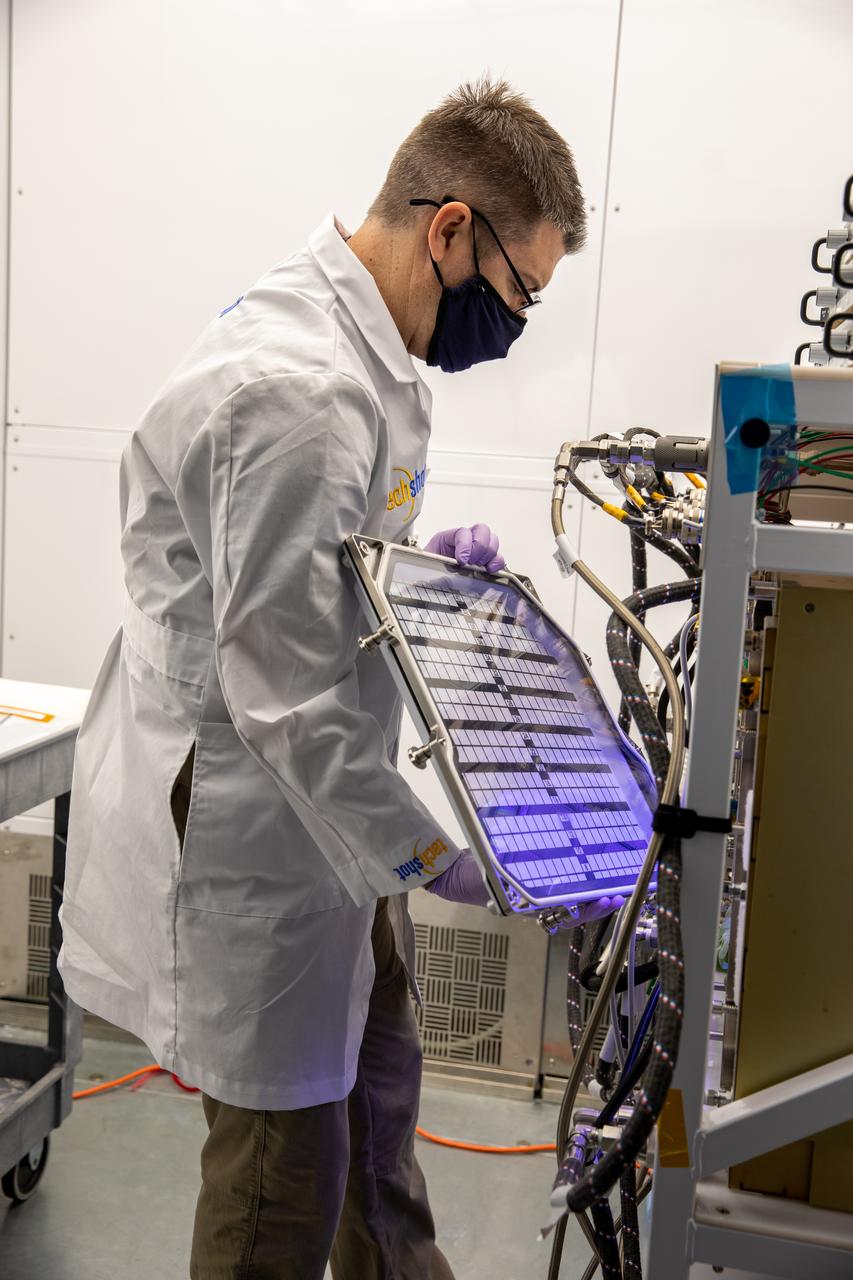
A researcher prepares to harvest radishes grown in the Advanced Plant Habitat (APH) ground unit inside the Space Station Processing Facility at NASA’s Kennedy Space Center in Florida on Dec. 14, 2020. The radishes are a ground control crop for the Plant Habitat-02 (PH-02) experiment, which also involves growing two radish crops inside the International Space Station’s APH. NASA astronaut Kate Rubins harvested the first crop on Nov. 30, and the second harvest aboard the orbiting laboratory is planned for Dec. 30. Once samples return to Earth, researchers will compare those grown in space to the radishes grown here on Earth to better understand how microgravity affects plant growth.
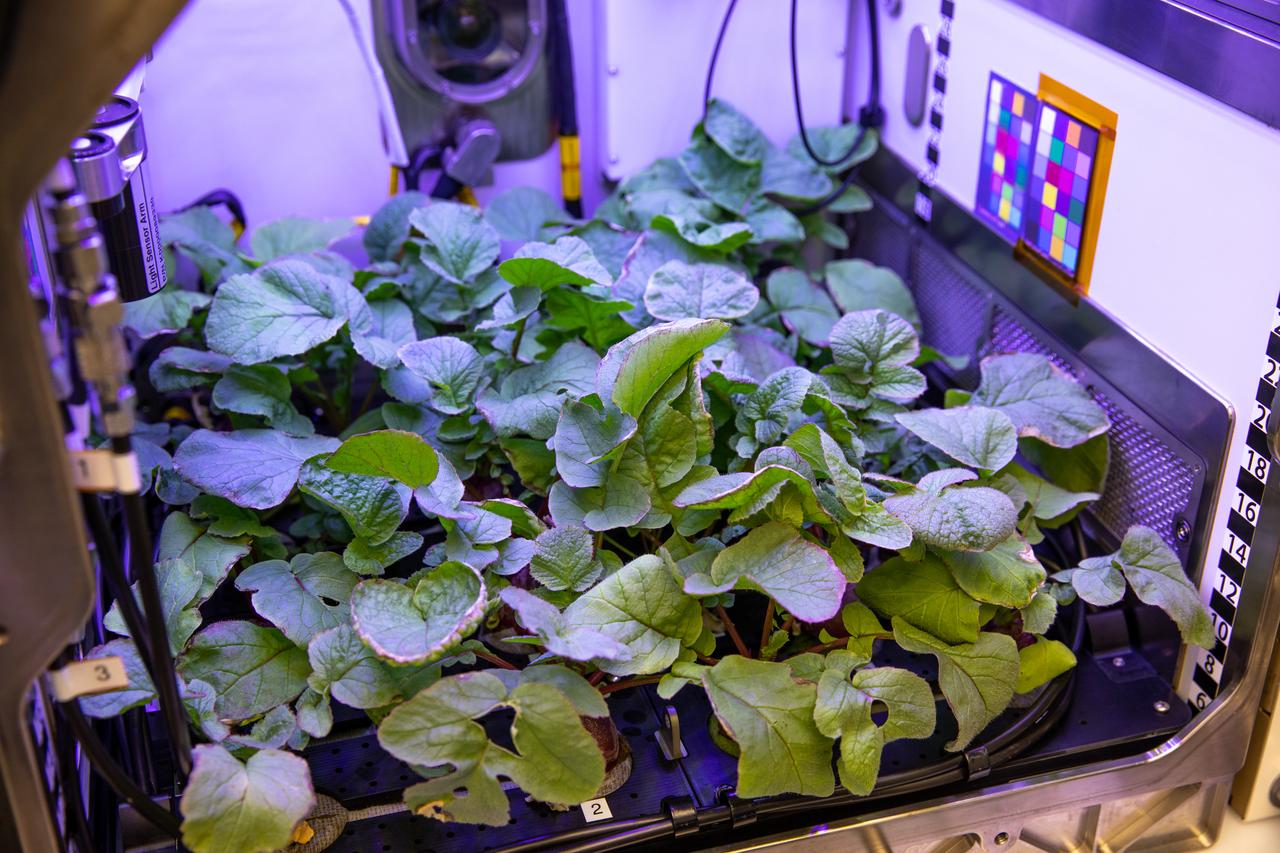
A view of radishes growing in the Advanced Plant Habitat (APH) ground unit inside the Space Station Processing Facility at NASA’s Kennedy Space Center in Florida on Dec. 14, 2020. The radishes are a ground control crop for the Plant Habitat-02 (PH-02) experiment. The experiment also involves growing two similar radish crops inside the International Space Station’s APH. NASA astronaut Kate Rubins harvested the first crop on Nov. 30, and the second harvest aboard the orbiting laboratory is planned for Dec. 30. Once samples return to Earth, researchers will compare those grown in space to the radishes grown here on Earth to better understand how microgravity affects plant growth.
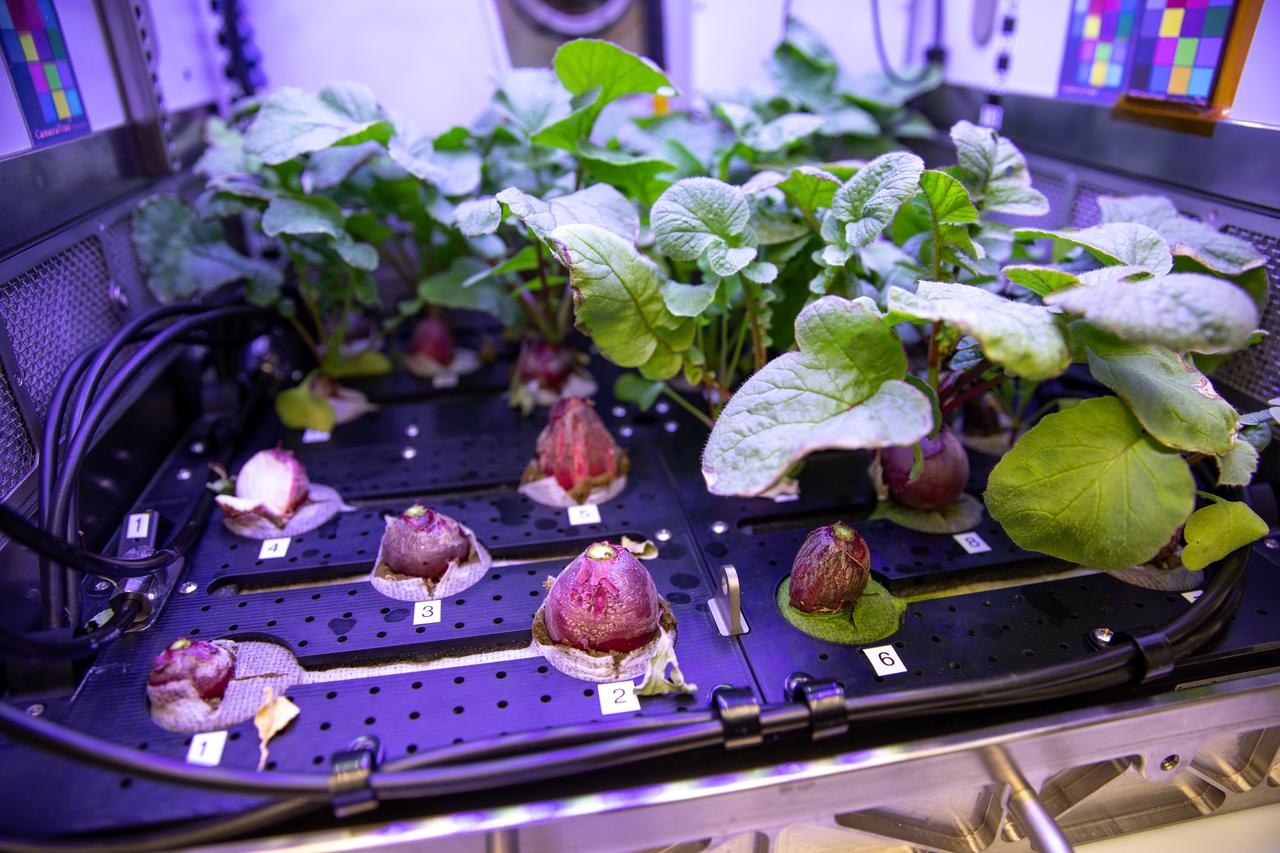
A view of radishes growing in the Advanced Plant Habitat (APH) ground unit inside the Space Station Processing Facility at NASA’s Kennedy Space Center in Florida on Dec. 14, 2020. The radishes are a ground control crop for the Plant Habitat-02 (PH-02) experiment. The experiment also involves growing two similar radish crops inside the International Space Station’s APH. NASA astronaut Kate Rubins harvested the first crop on Nov. 30, and the second harvest aboard the orbiting laboratory is planned for Dec. 30. Once samples return to Earth, researchers will compare those grown in space to the radishes grown here on Earth to better understand how microgravity affects plant growth.

A researcher takes measurements of a radish crop harvested from the Advanced Plant Habitat (APH) ground unit inside the Space Station Processing Facility at NASA’s Kennedy Space Center in Florida on Dec. 14, 2020. The radishes are a ground control crop for the Plant Habitat-02 (PH-02) experiment, which also involves growing two similar radish crops inside the International Space Station’s APH. NASA astronaut Kate Rubins harvested the first crop on Nov. 30, and the second harvest aboard the orbiting laboratory is planned for Dec. 30. Once samples return to Earth, researchers will compare those grown in space to the radishes grown here on Earth to better understand how microgravity affects plant growth.
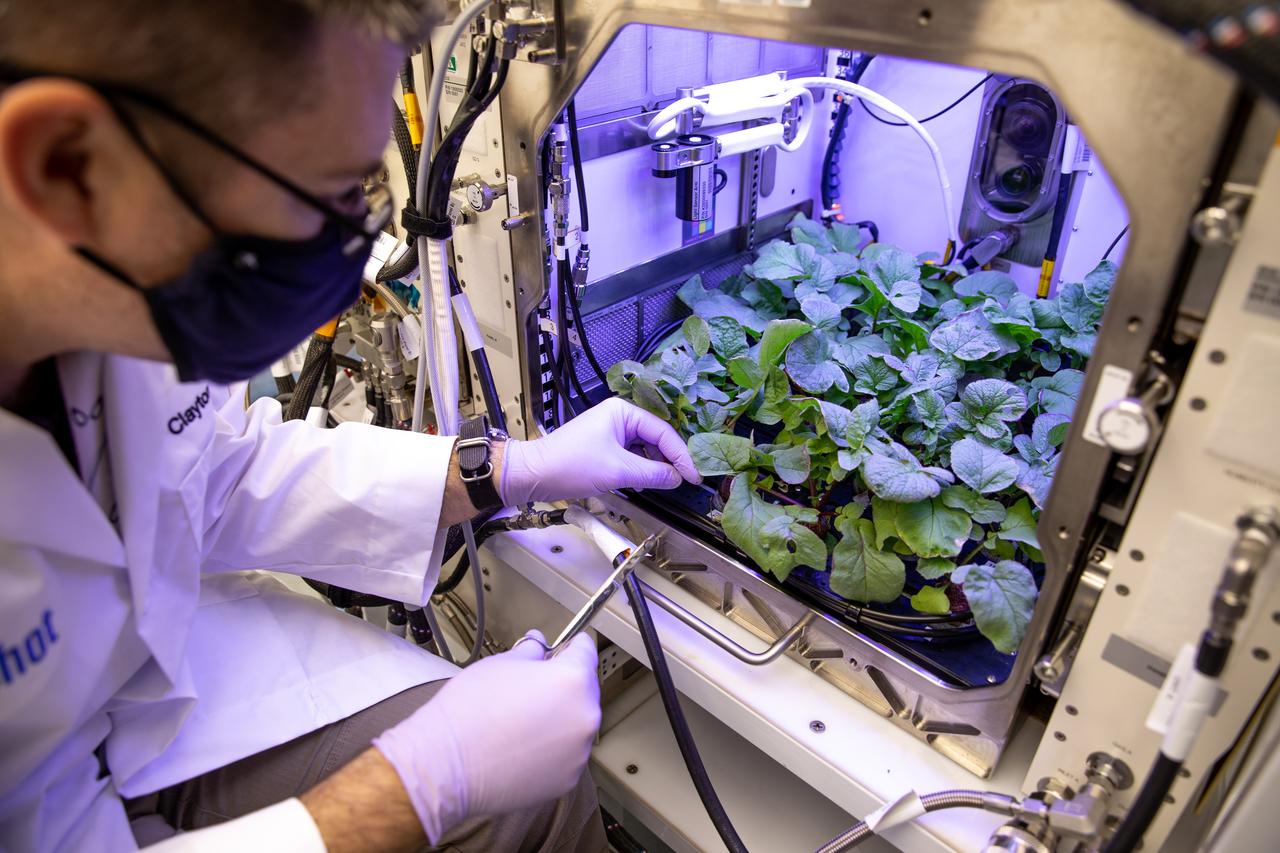
A research scientist harvests radishes grown in the Advanced Plant Habitat (APH) ground unit inside the Space Station Processing Facility at NASA’s Kennedy Space Center in Florida on Dec. 14, 2020. The radishes are a ground control crop for the Plant Habitat-02 (PH-02) experiment. The experiment also involves growing two similar radish crops inside the International Space Station’s APH. NASA astronaut Kate Rubins harvested the first crop on Nov. 30, and the second harvest aboard the orbiting laboratory is planned for Dec. 30. Once samples return to Earth, researchers will compare those grown in space to the radishes grown here on Earth to better understand how microgravity affects plant growth.
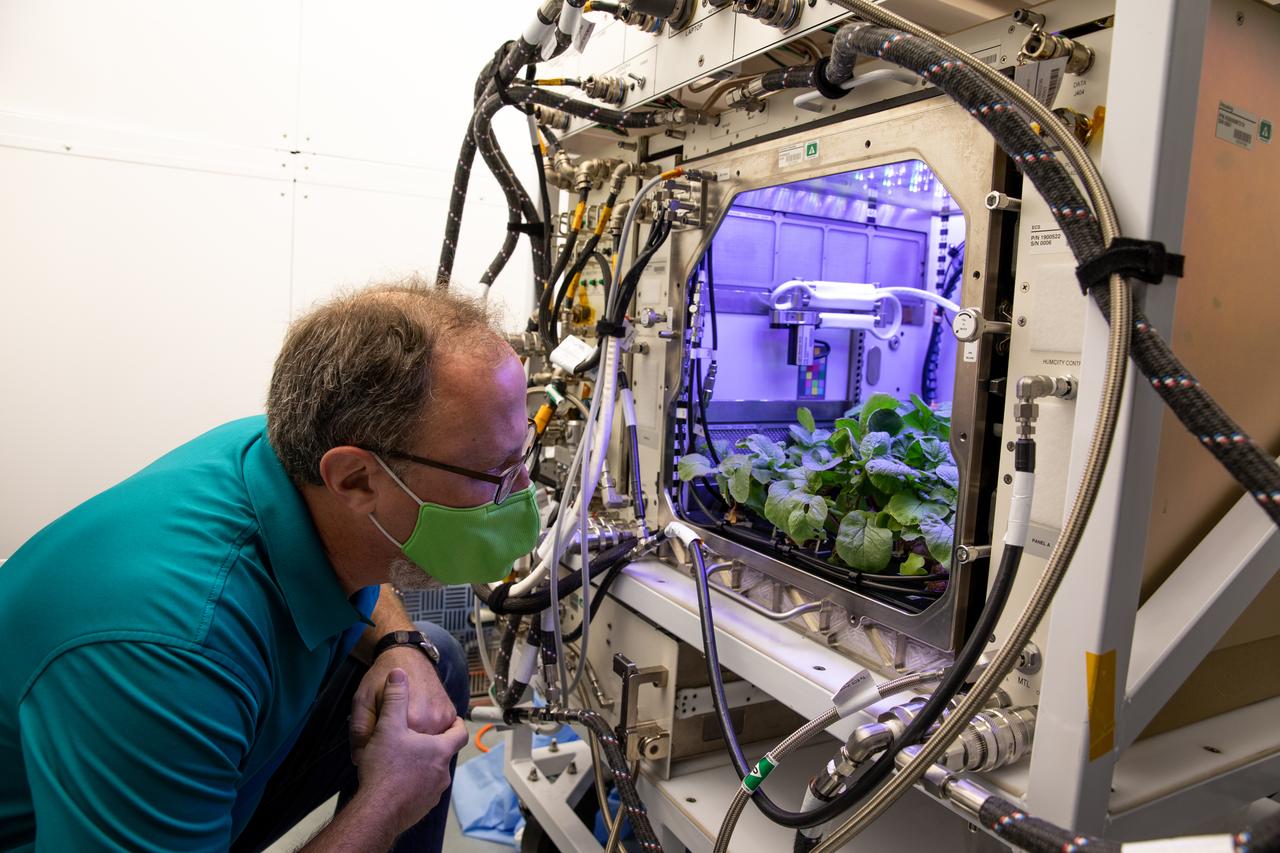
Dave Reed, Florida operations director for Techshot, Inc., observes radishes growing in the Advanced Plant Habitat (APH) ground unit inside the Space Station Processing Facility at NASA’s Kennedy Space Center in Florida on Dec. 14, 2020. The radishes are a ground control crop for the Plant Habitat-02 (PH-02) experiment, which also involves growing two similar radish crops inside the International Space Station’s APH. NASA astronaut Kate Rubins harvested the first crop on Nov. 30, and the second harvest aboard the orbiting laboratory is planned for Dec. 30. Once samples return to Earth, researchers will compare those grown in space to the radishes grown here on Earth to better understand how microgravity affects plant growth.
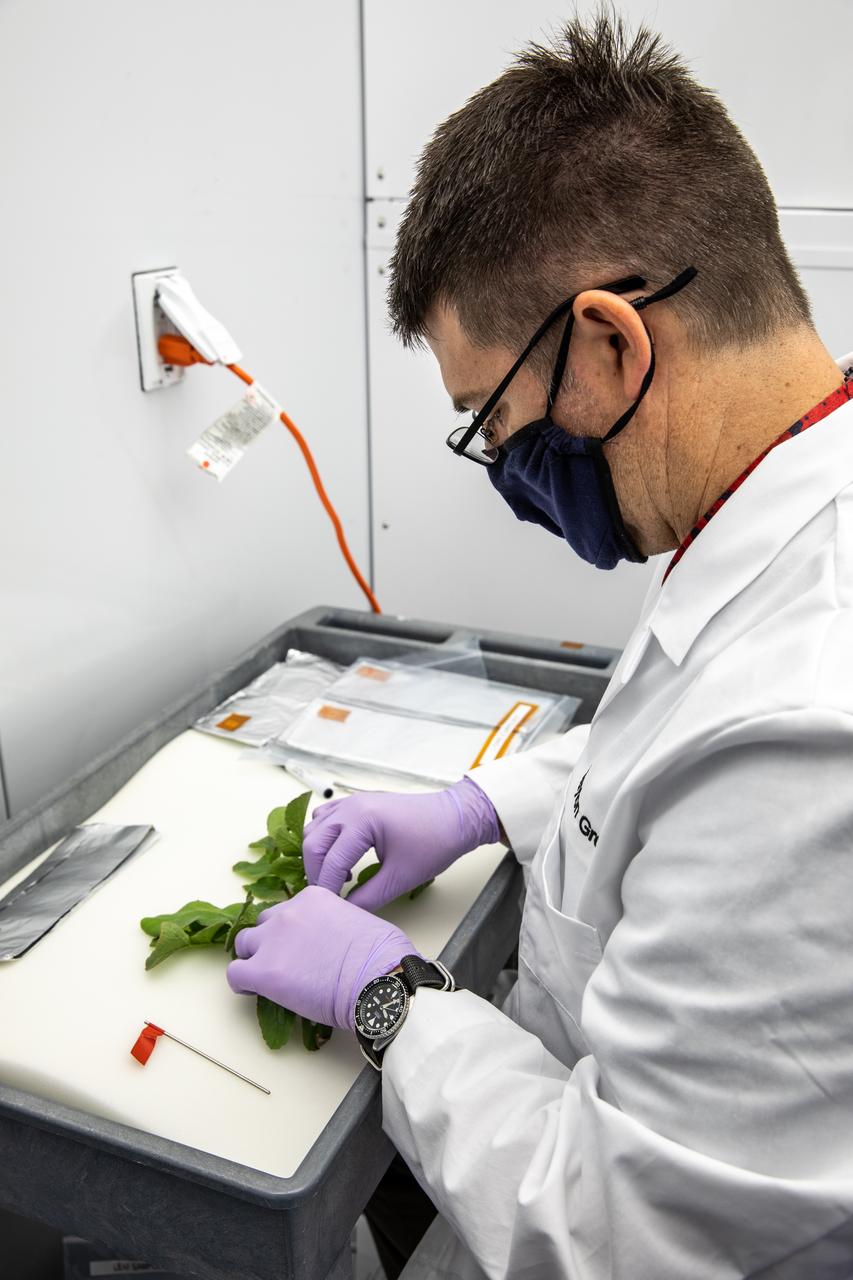
A research scientist collects measurements of radishes harvested from the Advanced Plant Habitat (APH) ground unit inside the Space Station Processing Facility at NASA’s Kennedy Space Center in Florida on Dec. 14, 2020. The radishes are a ground control crop for the Plant Habitat-02 (PH-02) experiment, which also involves growing two similar radish crops inside the International Space Station’s APH. NASA astronaut Kate Rubins harvested the first crop on Nov. 30, and the second harvest aboard the orbiting laboratory is planned for Dec. 30. Once samples return to Earth, researchers will compare those grown in space to the radishes grown here on Earth to better understand how microgravity affects plant growth.
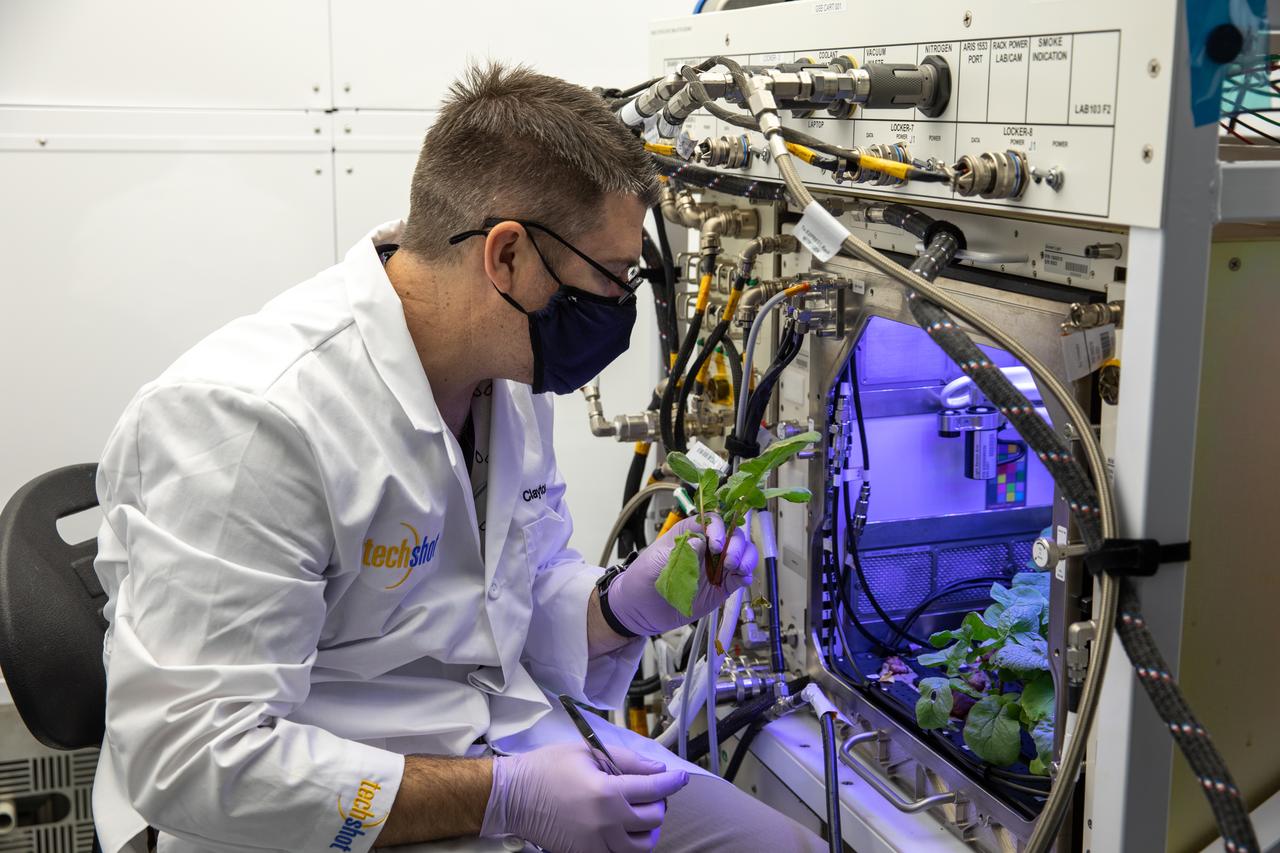
A research scientist harvests radishes grown in the Advanced Plant Habitat (APH) ground unit inside the Space Station Processing Facility at NASA’s Kennedy Space Center in Florida on Dec. 14, 2020. The radishes are a ground control crop for the Plant Habitat-02 (PH-02) experiment. The experiment also involves growing two similar radish crops inside the International Space Station’s APH. NASA astronaut Kate Rubins harvested the first crop on Nov. 30, and the second harvest aboard the orbiting laboratory is planned for Dec. 30. Once samples return to Earth, researchers will compare those grown in space to the radishes grown here on Earth to better understand how microgravity affects plant growth.
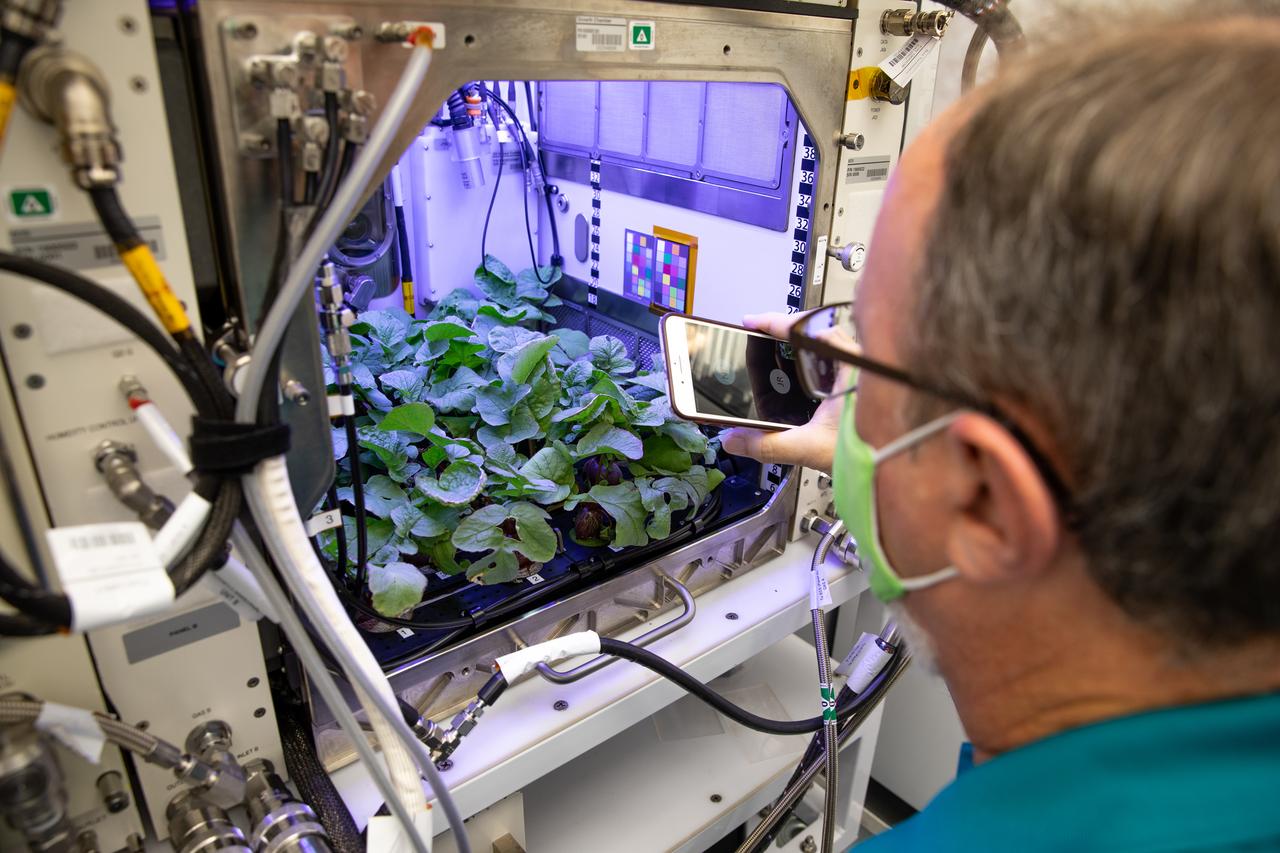
Dave Reed, Florida operations director for Techshot, Inc., observes radishes growing in the Advanced Plant Habitat (APH) ground unit inside the Space Station Processing Facility at NASA’s Kennedy Space Center in Florida on Dec. 14, 2020. The radishes are a ground control crop for the Plant Habitat-02 (PH-02) experiment. The experiment also involves growing two similar radish crops inside the International Space Station’s APH. NASA astronaut Kate Rubins harvested the first crop on Nov. 30, and the second harvest aboard the orbiting laboratory is planned for Dec. 30. Once samples return to Earth, researchers will compare those grown in space to the radishes grown here on Earth to better understand how microgravity affects plant growth.
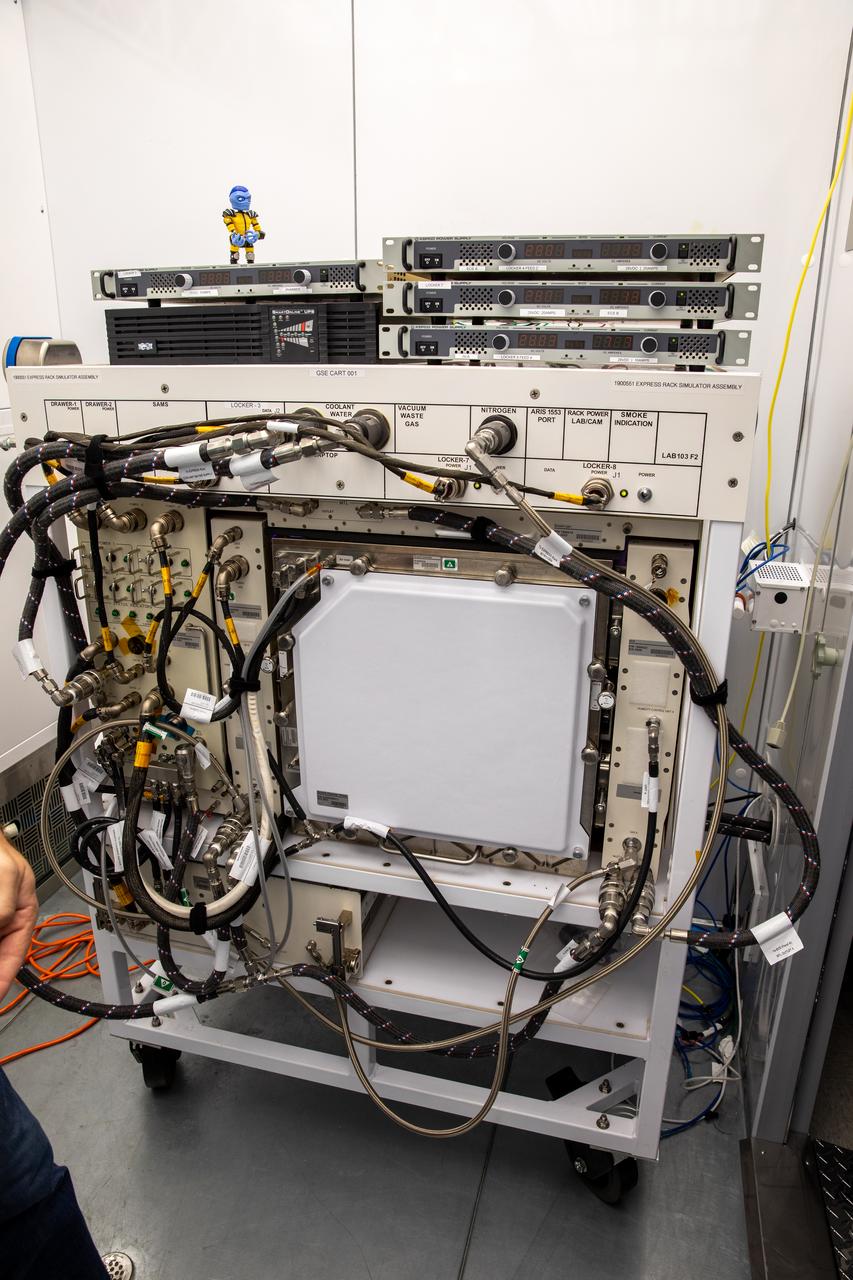
In view is the Advanced Plant Habitat (APH) ground unit inside the Space Station Processing Facility at NASA’s Kennedy Space Center in Florida on Dec. 14, 2020. Part of the Plant Habitat-02 (PH-02) experiment, a ground control crop of radishes was grown at Kennedy and harvested on Dec. 14. The experiment also involves growing two similar radish crops inside the International Space Station’s APH. NASA astronaut Kate Rubins harvested the first crop on Nov. 30, and the second harvest aboard the orbiting laboratory is planned for Dec. 30. Once samples return to Earth, researchers will compare those grown in space to the radishes grown here on Earth to better understand how microgravity affects plant growth.
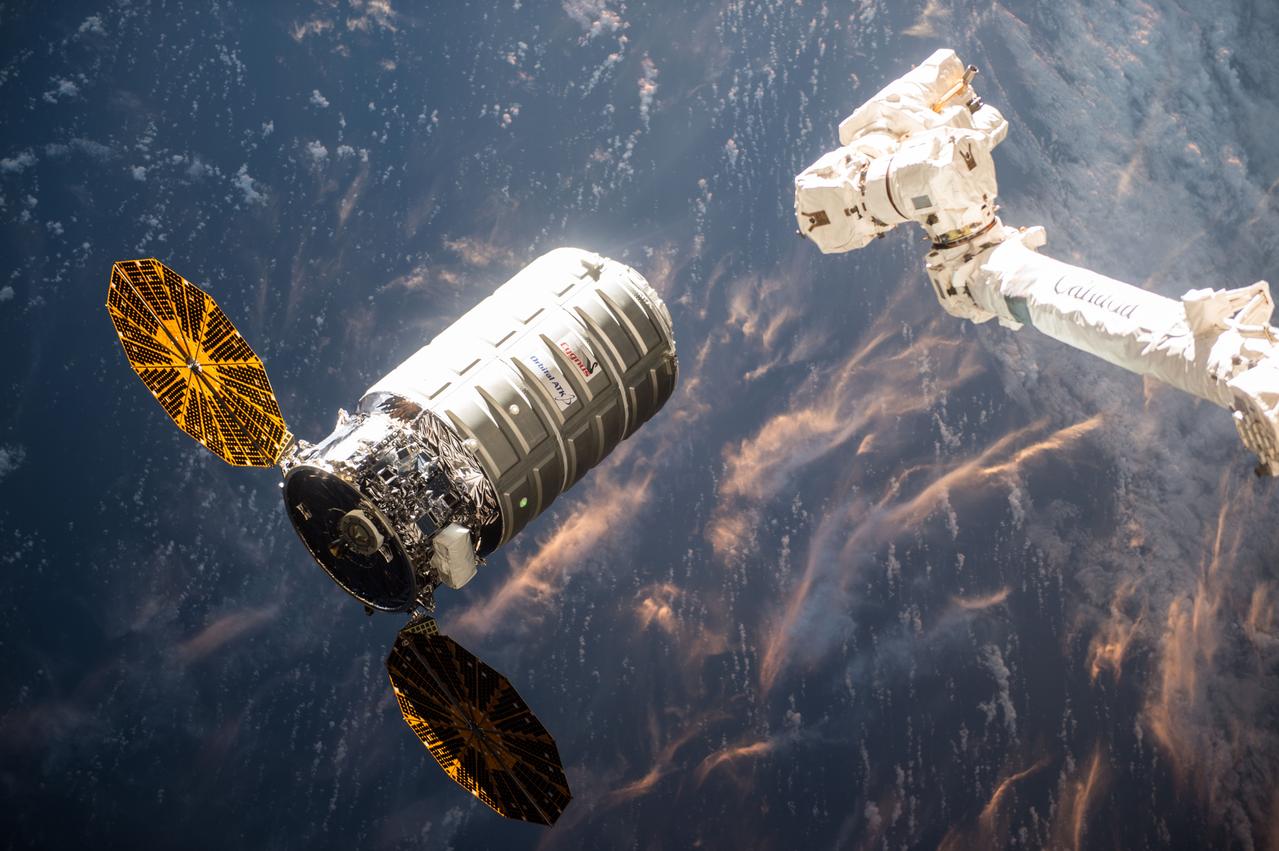
Expedition 47 robotic arm operator Tim Kopra of NASA commanded the International Space Station’s Canadarm2 robotic arm to release the Cygnus spacecraft at 9:30 a.m. EDT while the space station was flying above Paraguay. Earlier, ground controllers detached Cygnus from the station and maneuvered it into place for its departure. After Cygnus is a safe distance away, ground controllers at Glenn Research Center in Cleveland, Ohio will initiate the sequence for Saffire-1, and controllers at Orbital ATK in Dulles, Virginia, will activate the experiment. Cygnus will continue to orbit Earth for up to eight days as it transmits hi-resolution imagery and data from the Saffire experiment.
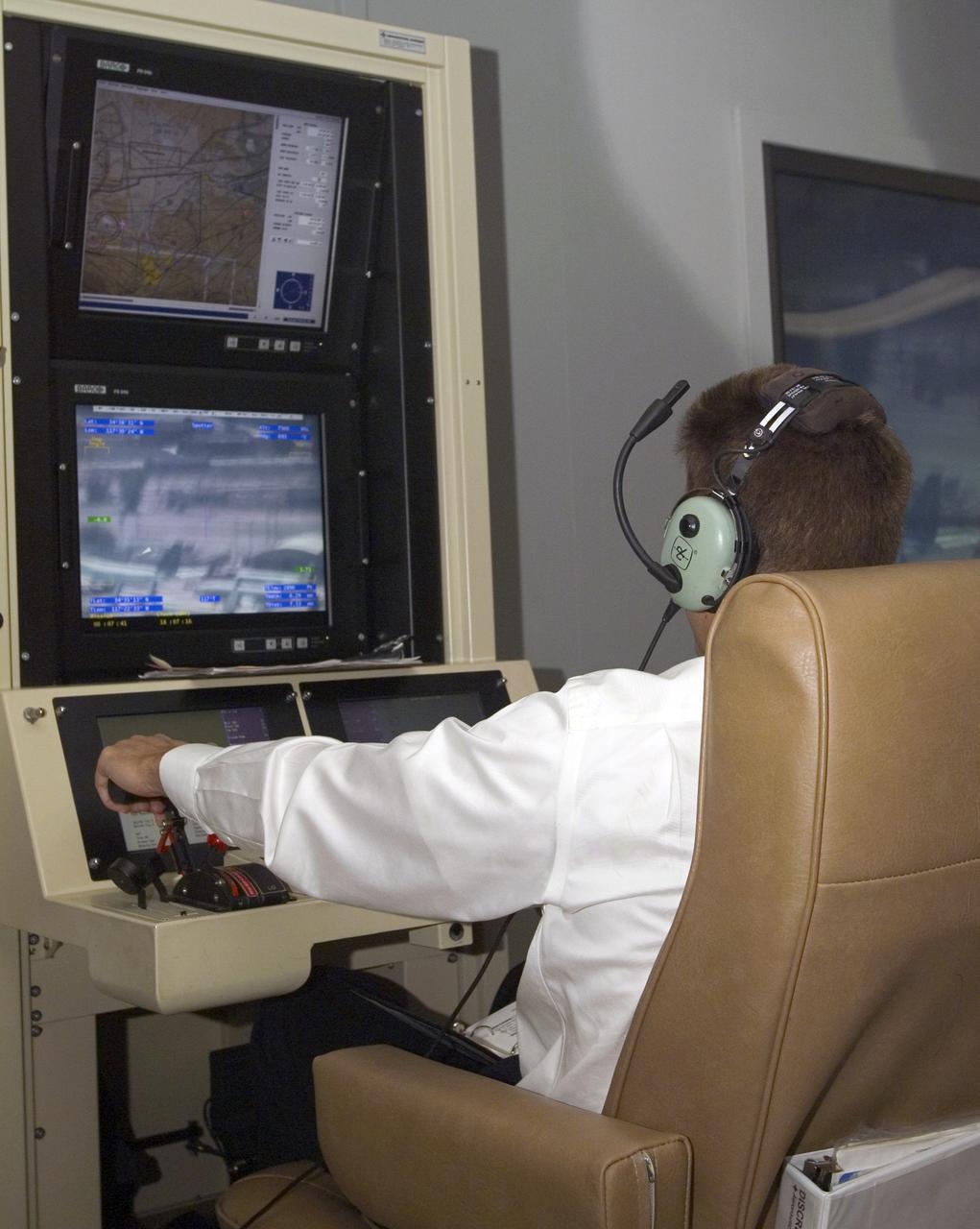
A pilot for General Atomics guides the Altair remotely operated aircraft from a ground control station using both visual and telemetered data.
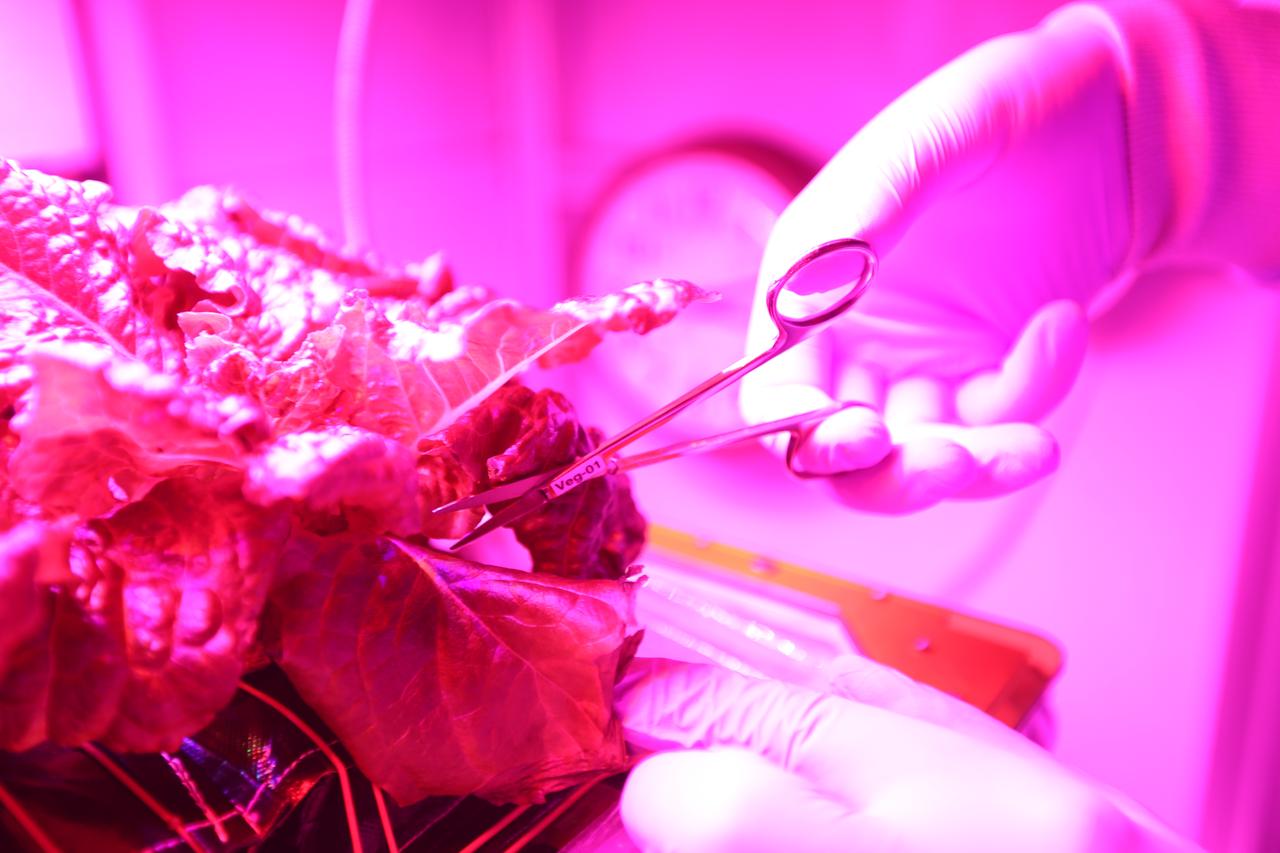
Inside the Veggie flight laboratory in the Space Station Processing Facility at NASA’s Kennedy Space Center in Florida, a research scientist harvests a portion of the 'Outredgeous' red romaine lettuce from the Veg-03 ground control unit. The purpose of the ground Veggie system is to provide a control group to compare against the lettuce grown in orbit on the International Space Station. Veg-03 will continue NASA’s deep space plant growth research to benefit the Earth and the agency’s journey to Mars.
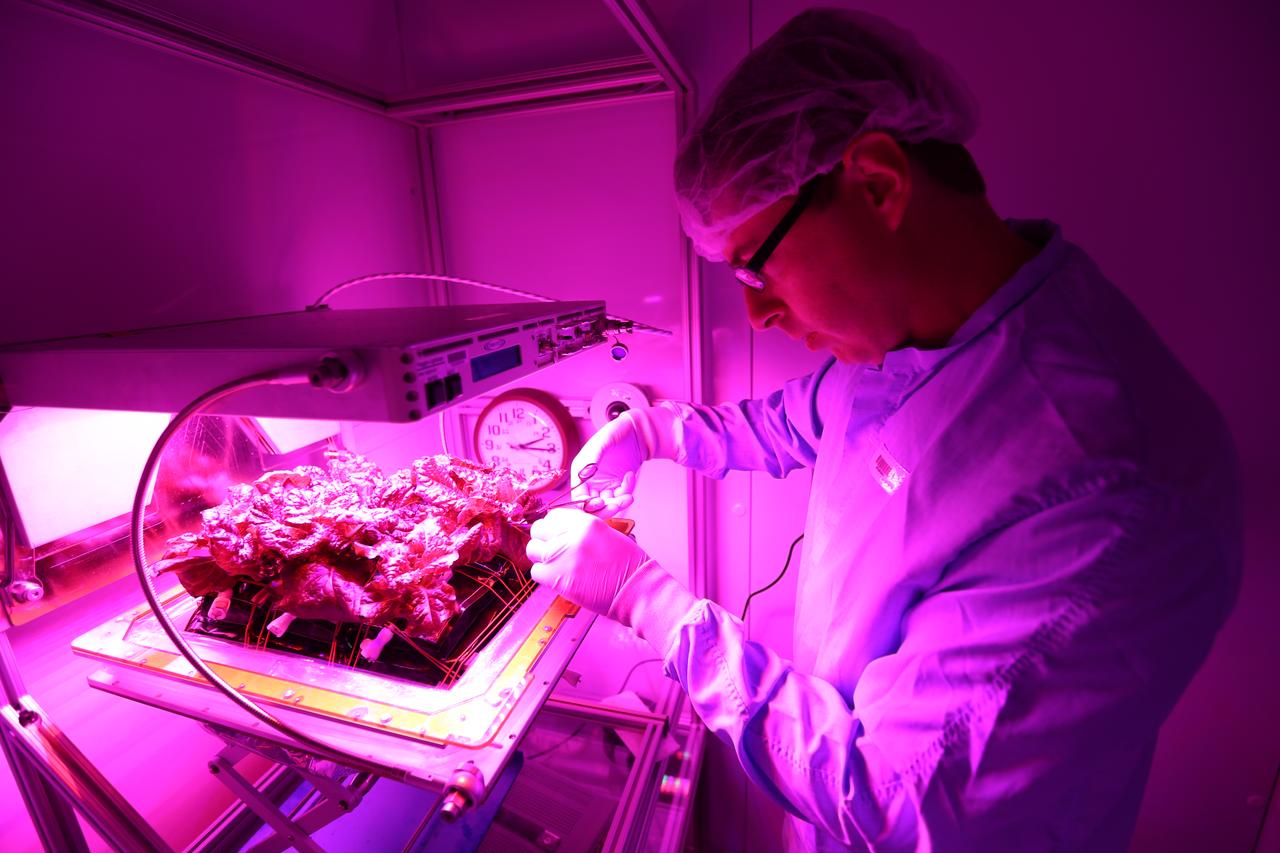
Inside the Veggie flight laboratory in the Space Station Processing Facility at NASA’s Kennedy Space Center in Florida, Matthew Romeyn, a NASA Pathways intern from the University of Edinburgh in Scotland, harvests a portion of the 'Outredgeous' red romaine lettuce from the Veg-03 ground control unit. The purpose of the ground Veggie system is to provide a control group to compare against the lettuce grown in orbit on the International Space Station. Veg-03 will continue NASA’s deep space plant growth research to benefit the Earth and the agency’s journey to Mars.
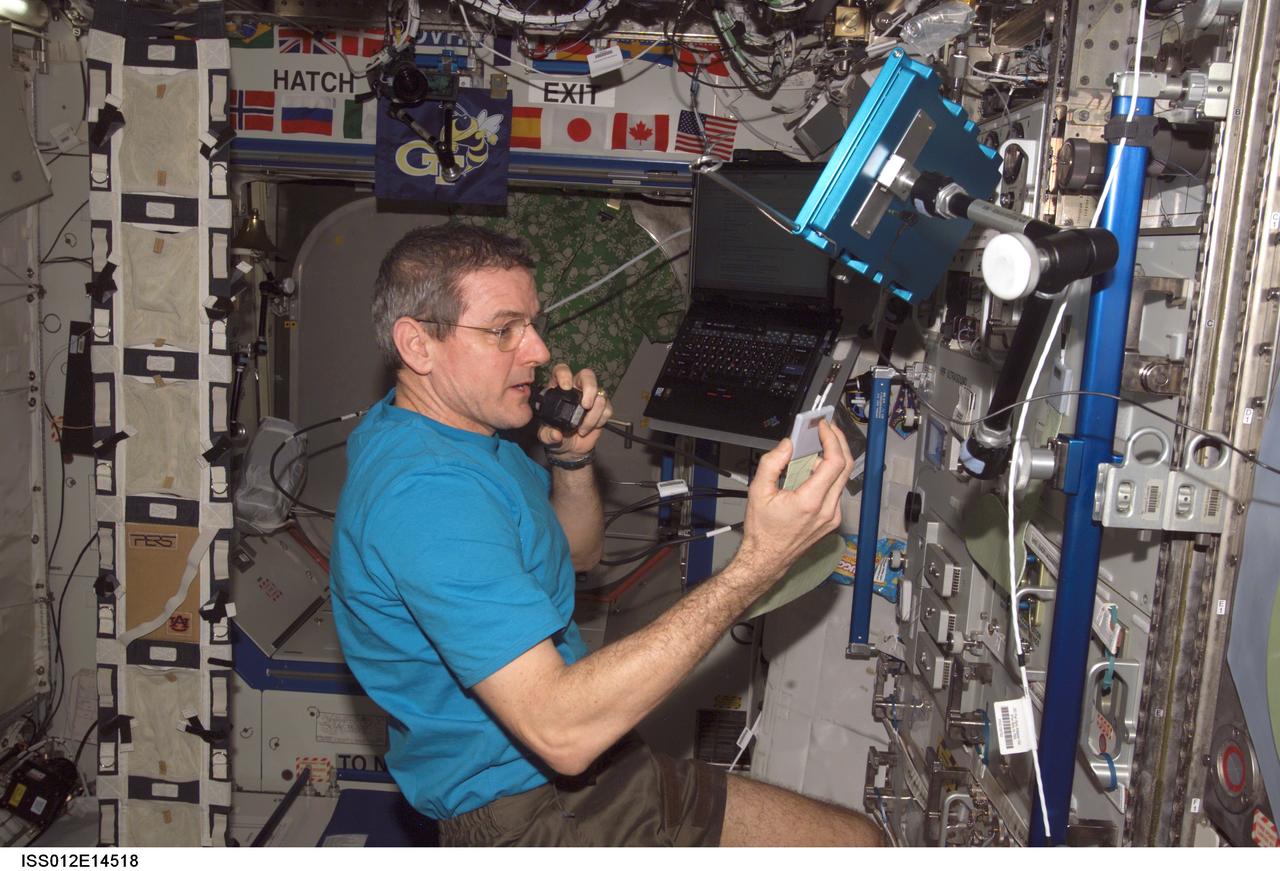
ISS012-E-14518 (10 Jan. 2006) --- Astronaut William S. (Bill) McArthur, Expedition 12 commander and NASA space station science officer, talks to Mission Control Center while holding the Total Force Foot Ground Interface (TF-FGI) during Foot/Ground Reaction Forces During Spaceflight (FOOT) experiment set-up operations in the Destiny laboratory of the International Space Station. The Foot Ground Interface Flight Calibration Unit (FGI-GCU) is visible at right.
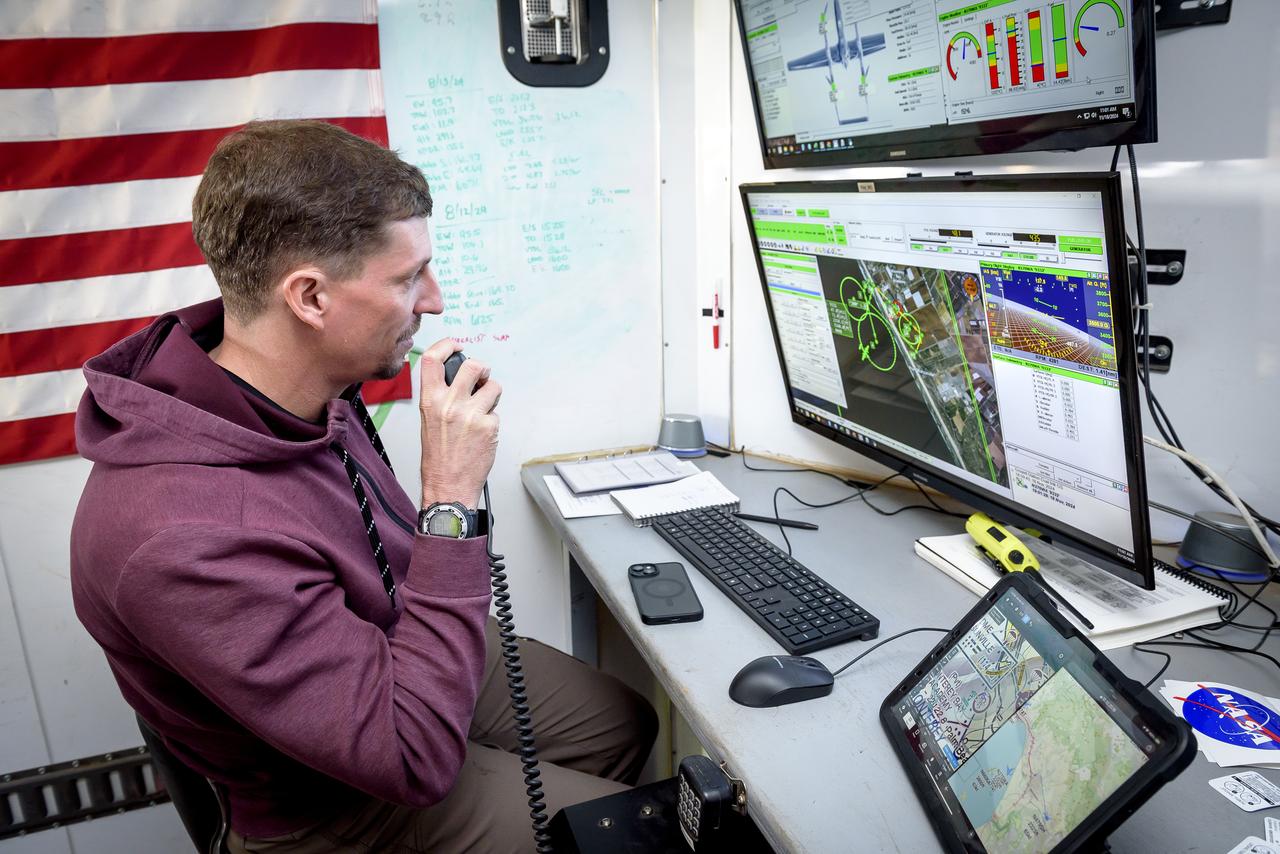
Co-founders of Overwatch Aero Chase Pietenpol, at the Ground Control Station (GCS) monitoring the flight of the L3Harris FVR90 Unmanned Aerial Vehicle (UAV) at the Monterey Bay Academy Airport near Watsonville, California.
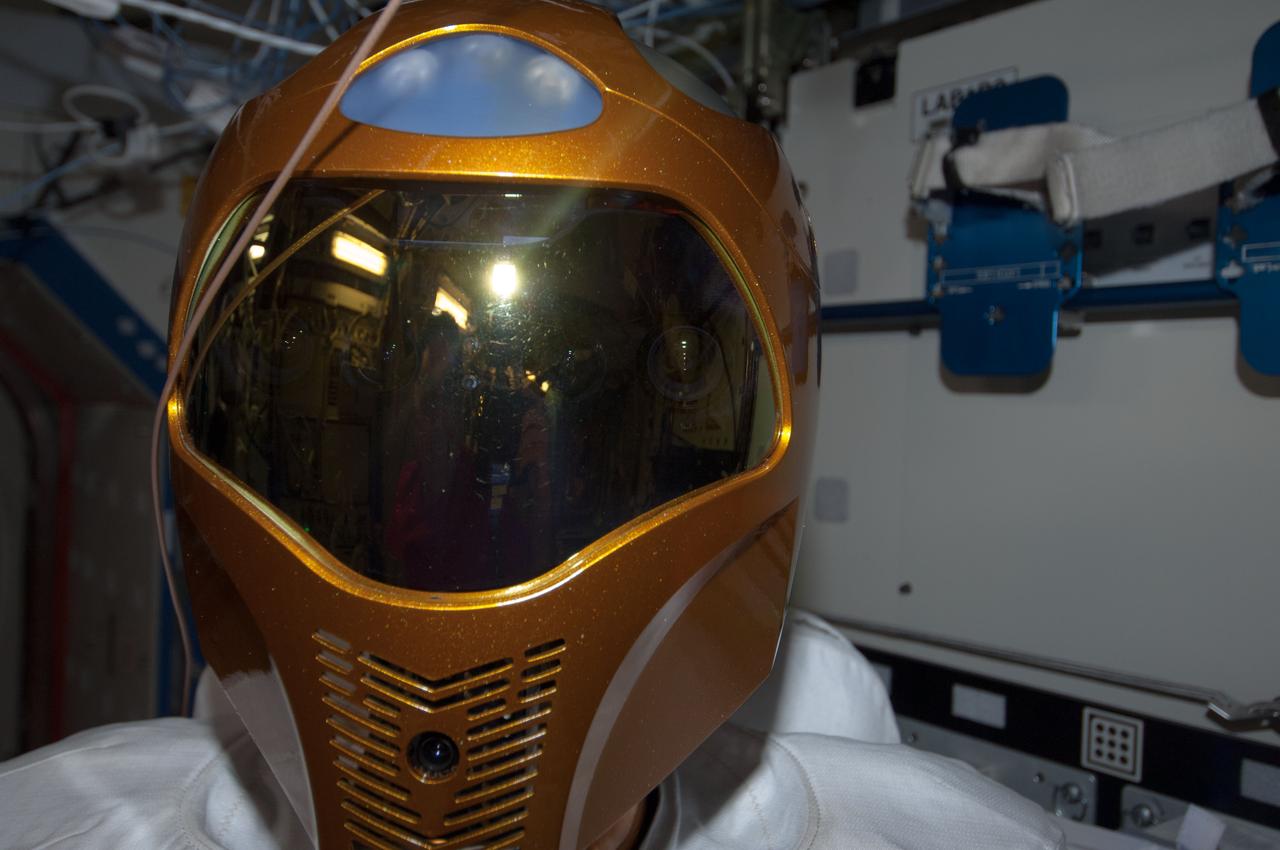
ISS035-E-016453 (9 April 2013) --- R-2 is busy in U.S. lab Destiny aboard the Earth-orbiting International Space Station during tele-operation (by ground controllers) to mimic movement of a crew member.
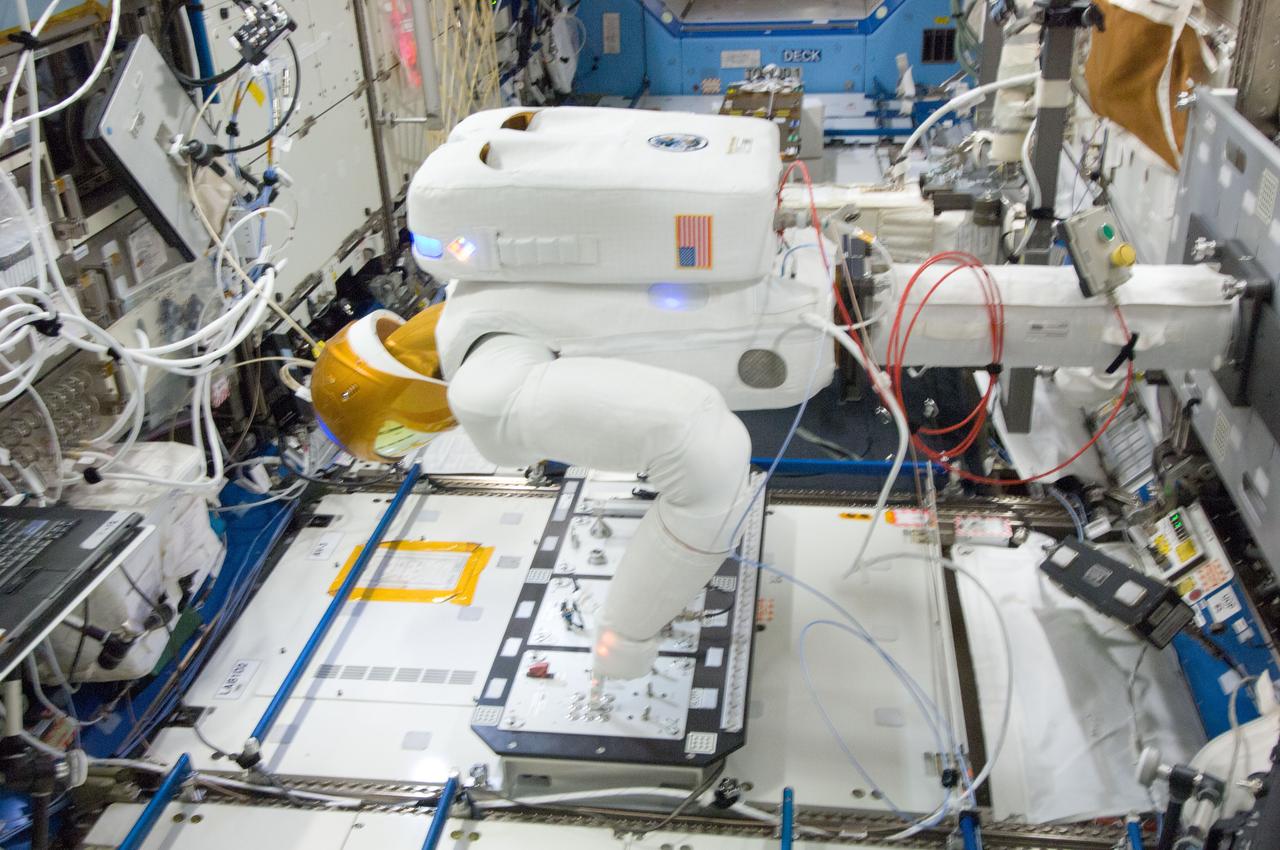
ISS031-E-031704 (1 May 2012) --- Controlled by teams on the ground, Robonaut 2 humanoid robot uses a task board during an arm and finger motions check out in the Destiny laboratory of the International Space Station.
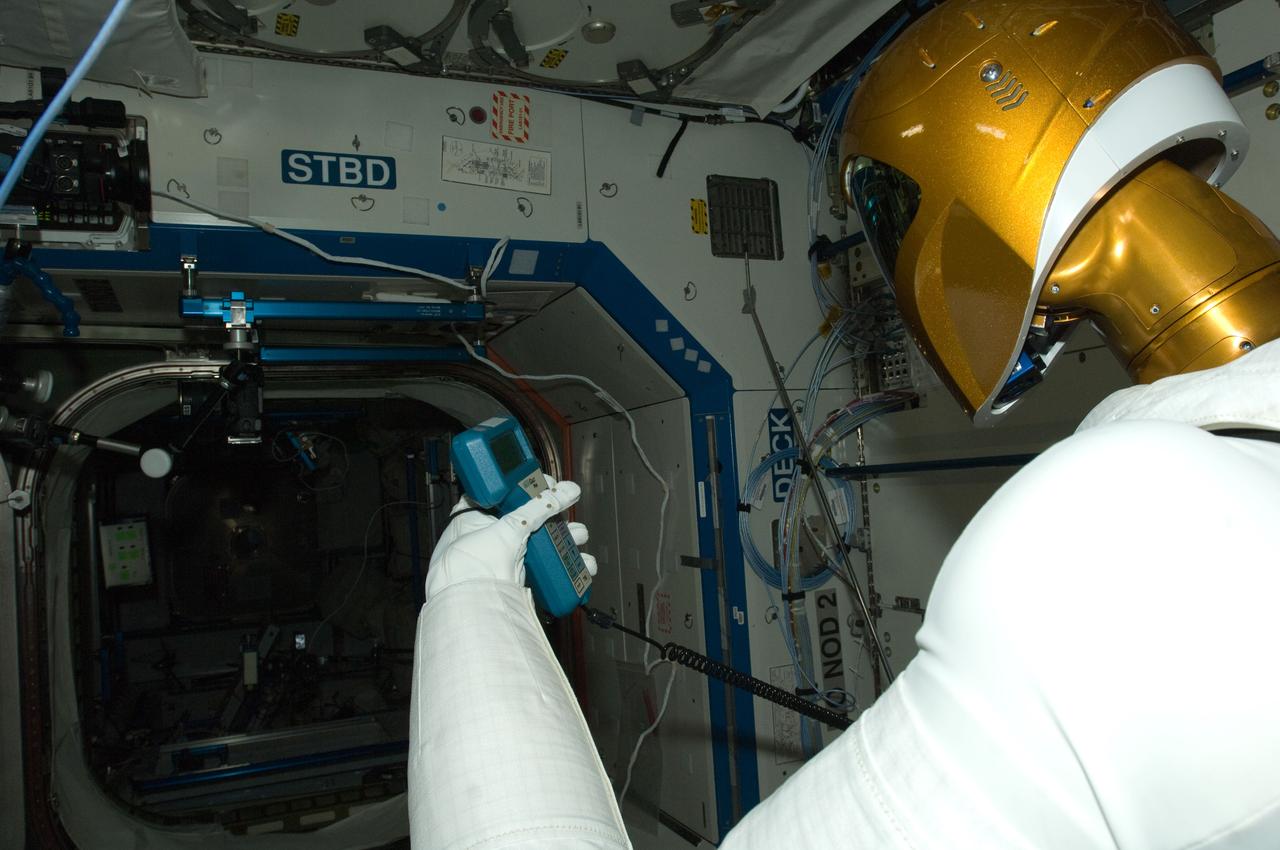
ISS030-E-142876 (14 March 2012) --- Controlled by teams on the ground, Robonaut 2 humanoid robot holds an instrument to measure air velocity during another system check out in the Destiny laboratory of the International Space Station.
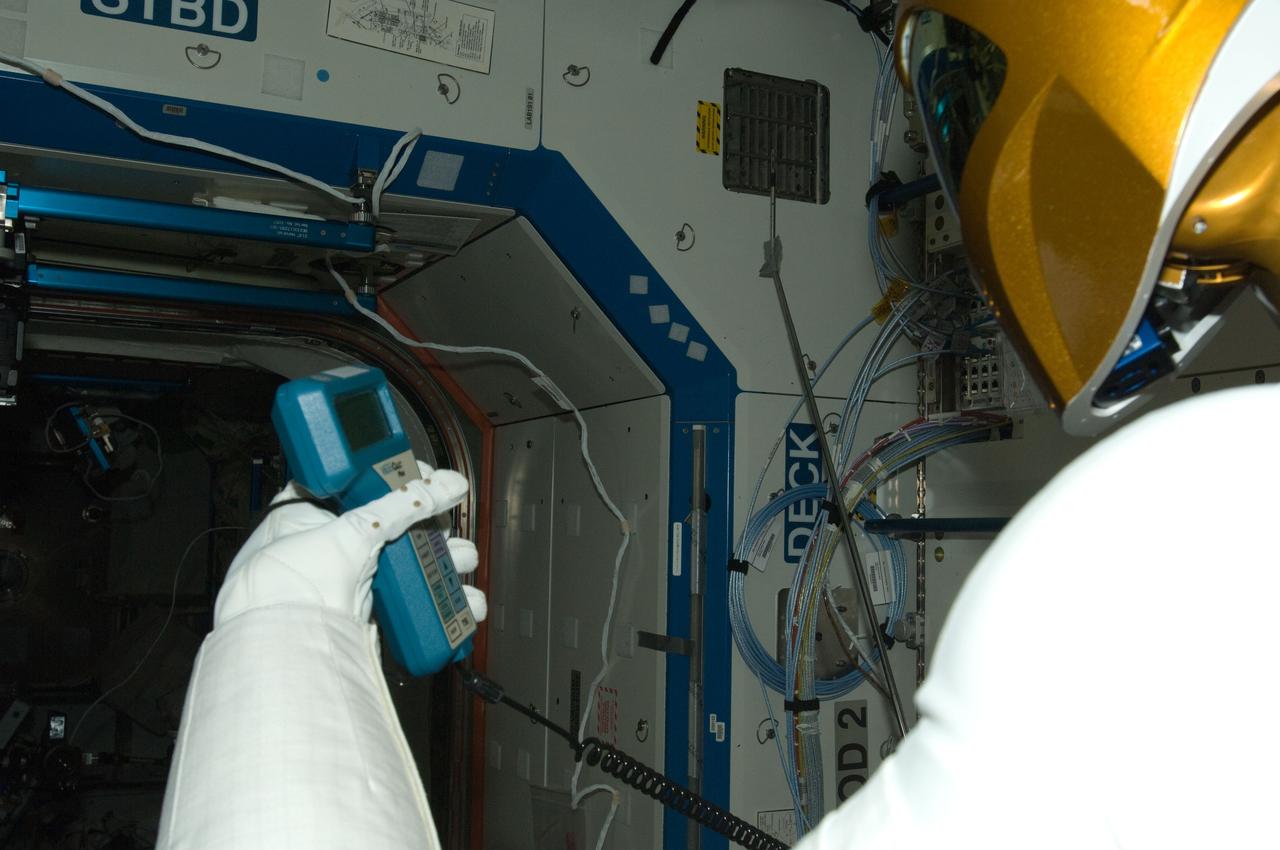
ISS030-E-142875 (14 March 2012) --- Controlled by teams on the ground, Robonaut 2 humanoid robot holds an instrument to measure air velocity during another system check out in the Destiny laboratory of the International Space Station.
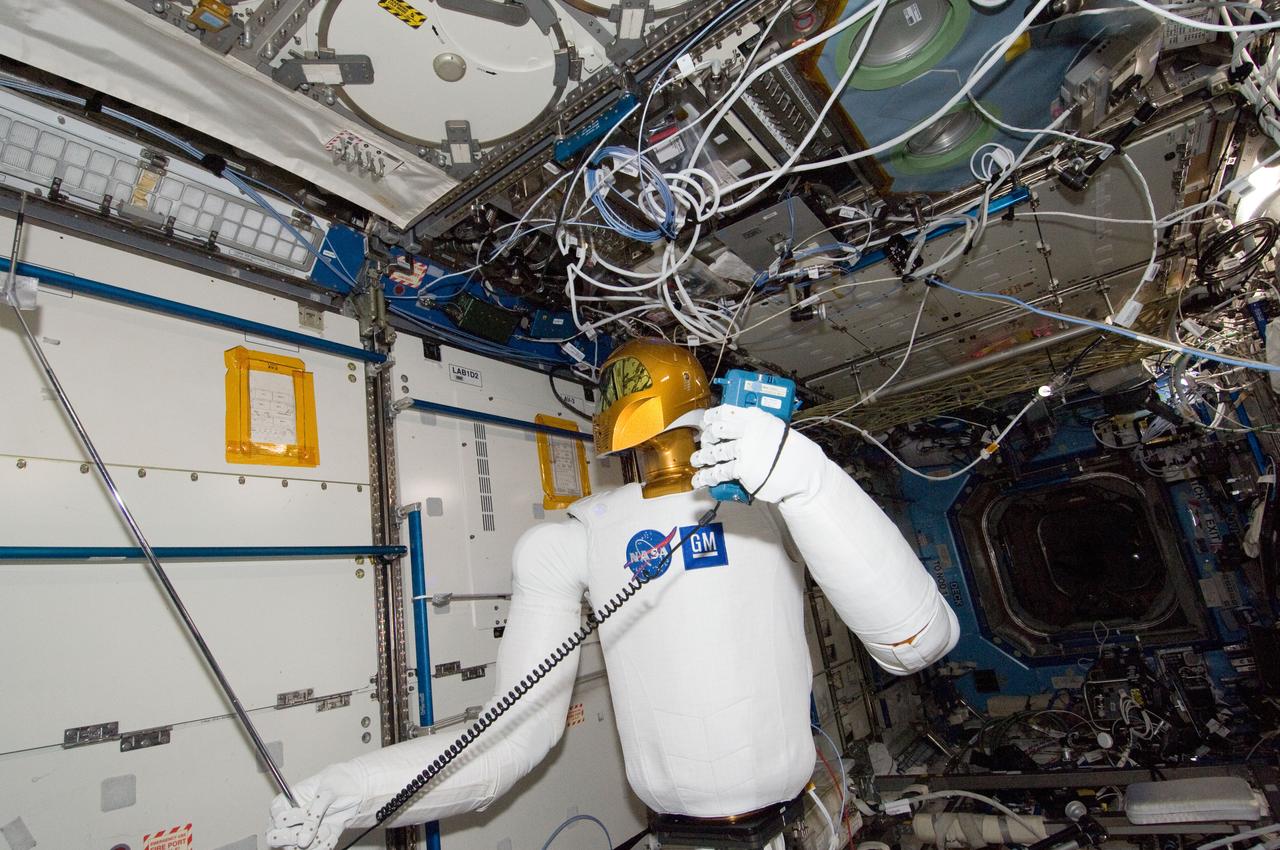
ISS030-E-148257 (14 March 2012) --- Controlled by teams on the ground, Robonaut 2 humanoid robot holds an instrument to measure air velocity during another system check out in the Destiny laboratory of the International Space Station.
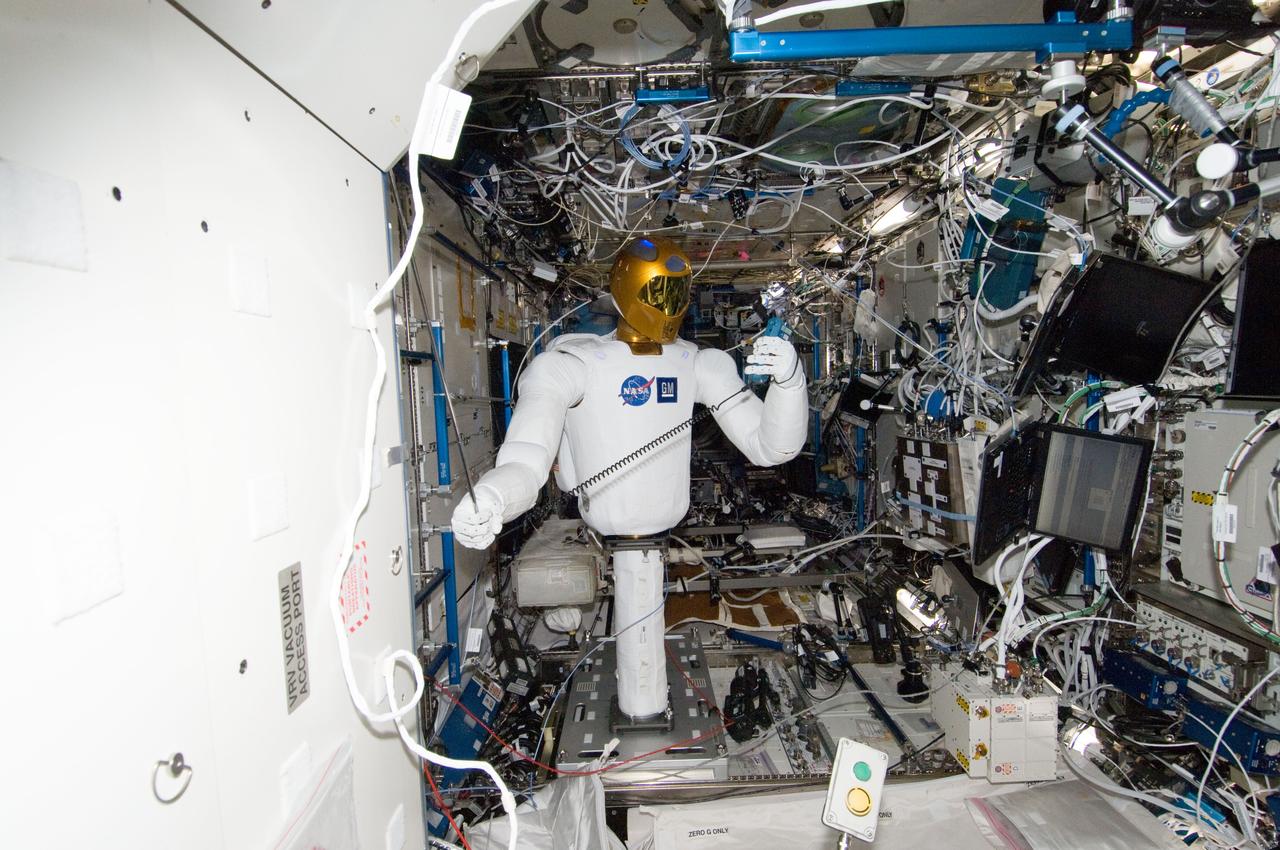
ISS030-E-148273 (14 March 2012) --- Controlled by teams on the ground, Robonaut 2 humanoid robot holds an instrument to measure air velocity during another system check out in the Destiny laboratory of the International Space Station.
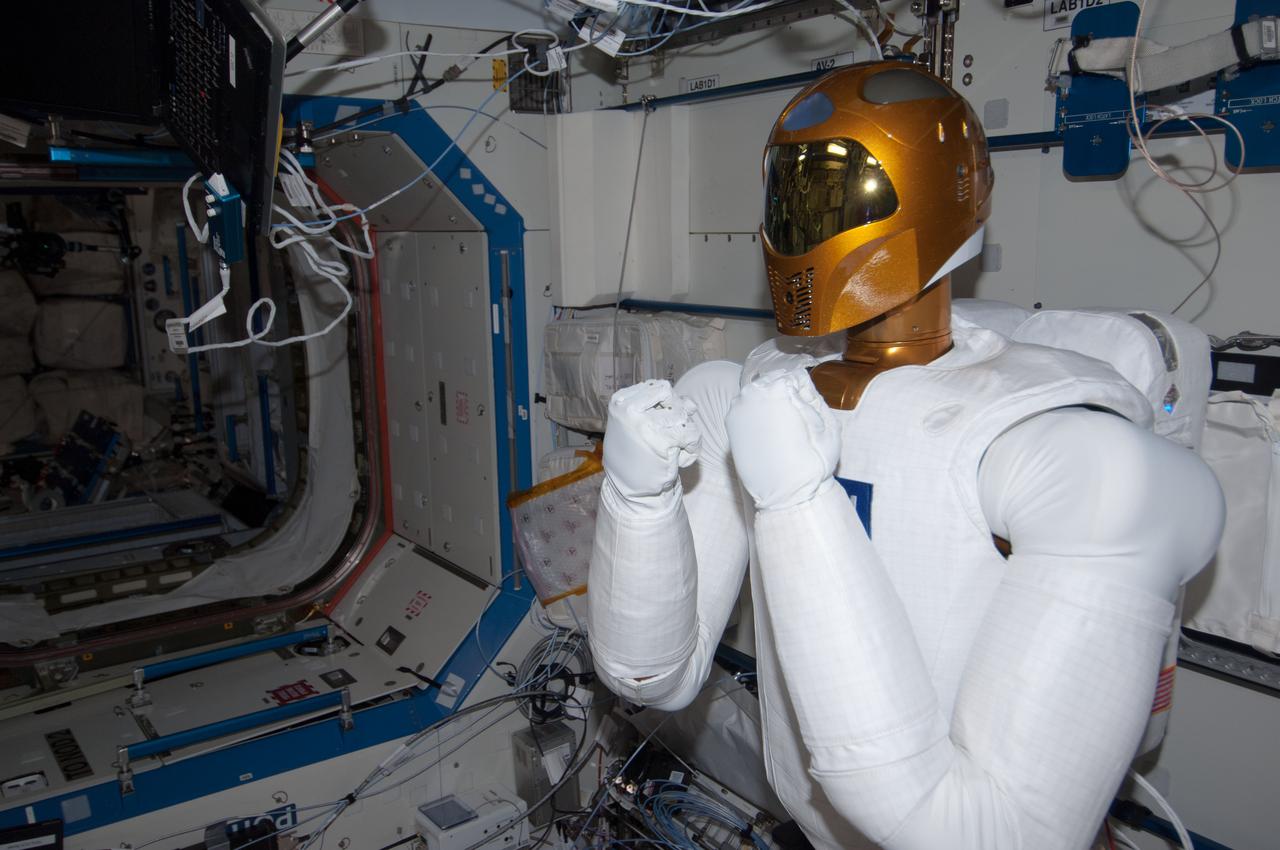
ISS035-E-016453 (9 April 2013) --- R-2 is busy in U.S. lab Destiny aboard the Earth-orbiting International Space Station during tele-operation (by ground controllers) to mimic movement of a crew member.
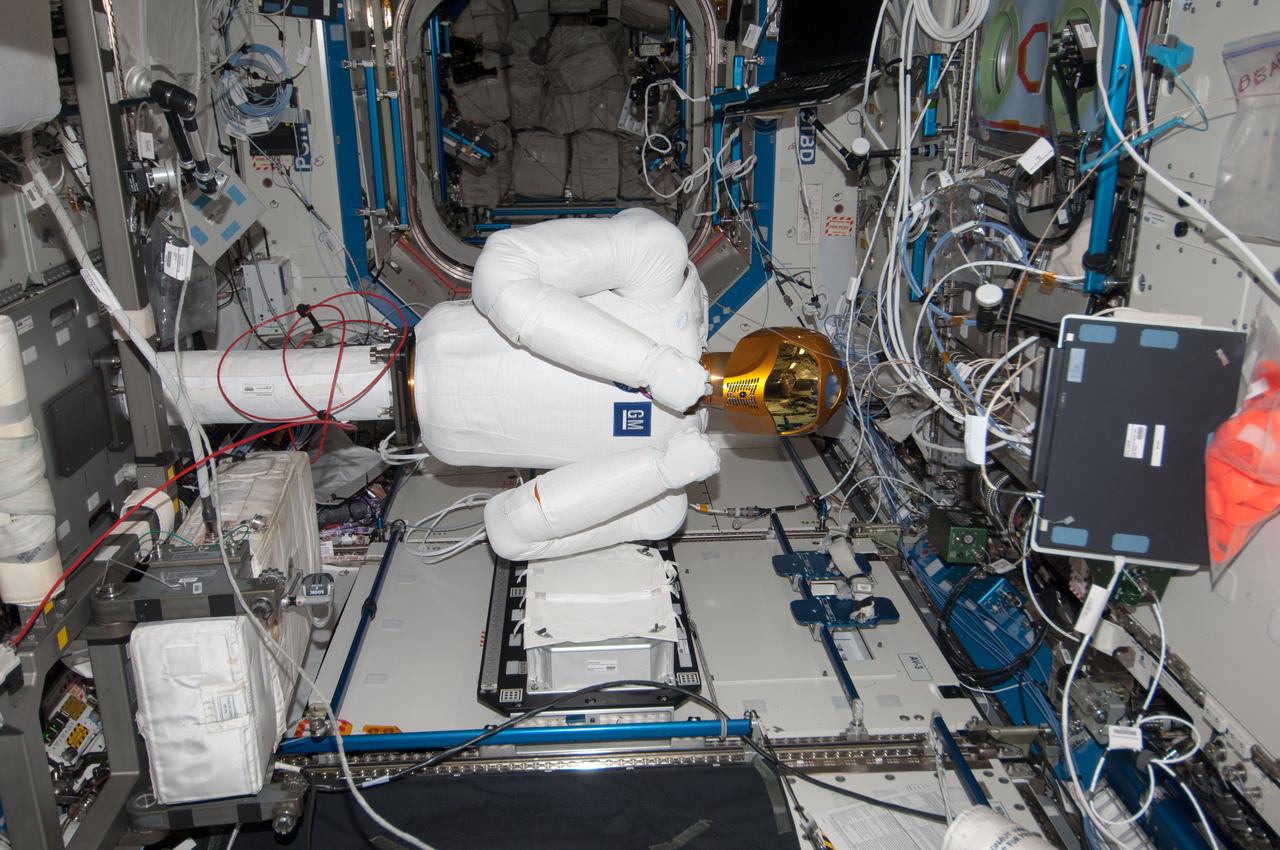
ISS035-E-016453 (9 April 2013) --- R-2 is busy in U.S. lab Destiny aboard the Earth-orbiting International Space Station during tele-operation (by ground controllers) to mimic movement of a crew member.
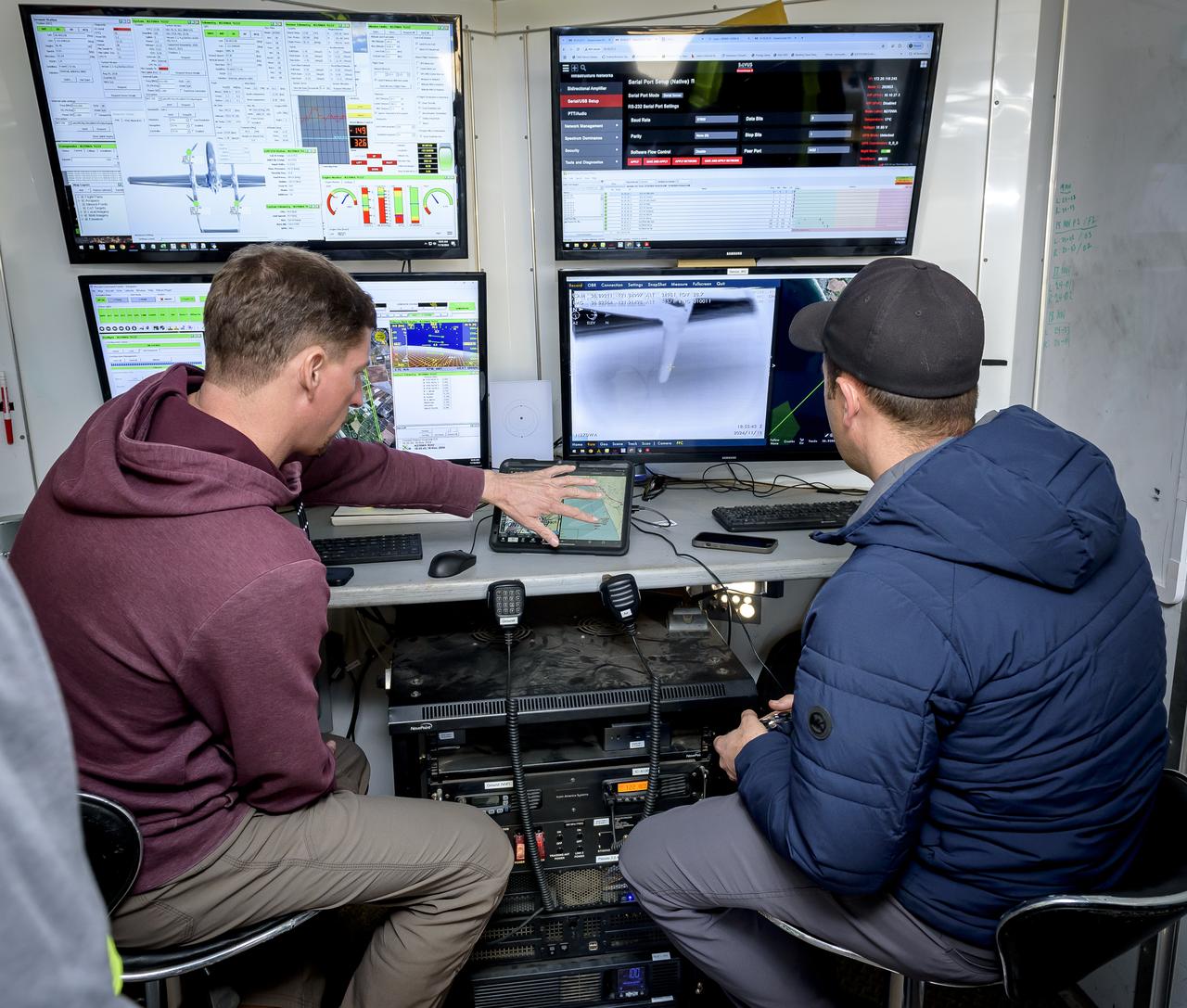
Co-founders of Overwatch Aero Chase Pietenpol, left, and Jordan Hahn at the Ground Control Station (GCS) monitoring the flight of the L3Harris FVR90 Unmanned Aerial Vehicle (UAV) at the Monterey Bay Academy Airport near Watsonville, California.
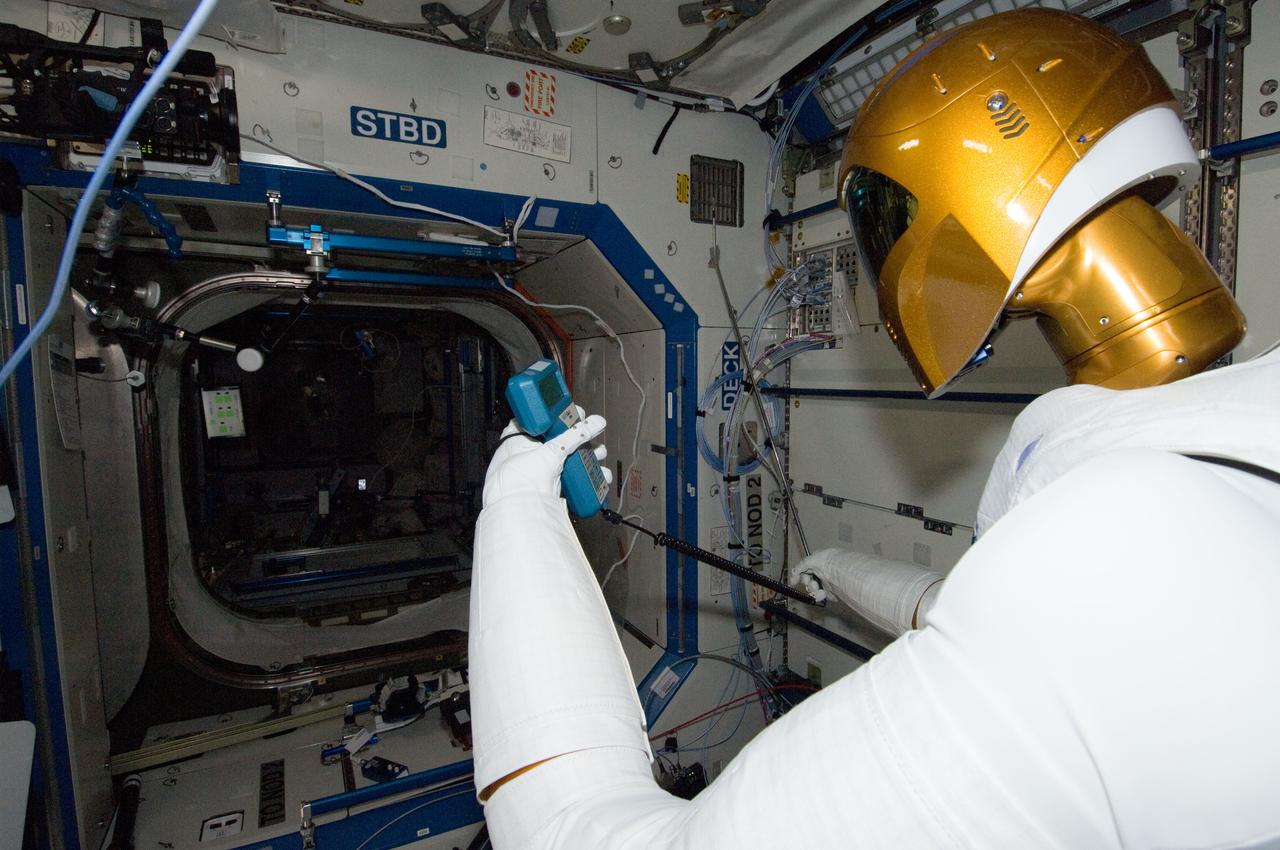
ISS030-E-148268 (14 March 2012) --- Controlled by teams on the ground, Robonaut 2 humanoid robot holds an instrument to measure air velocity during another system check out in the Destiny laboratory of the International Space Station.
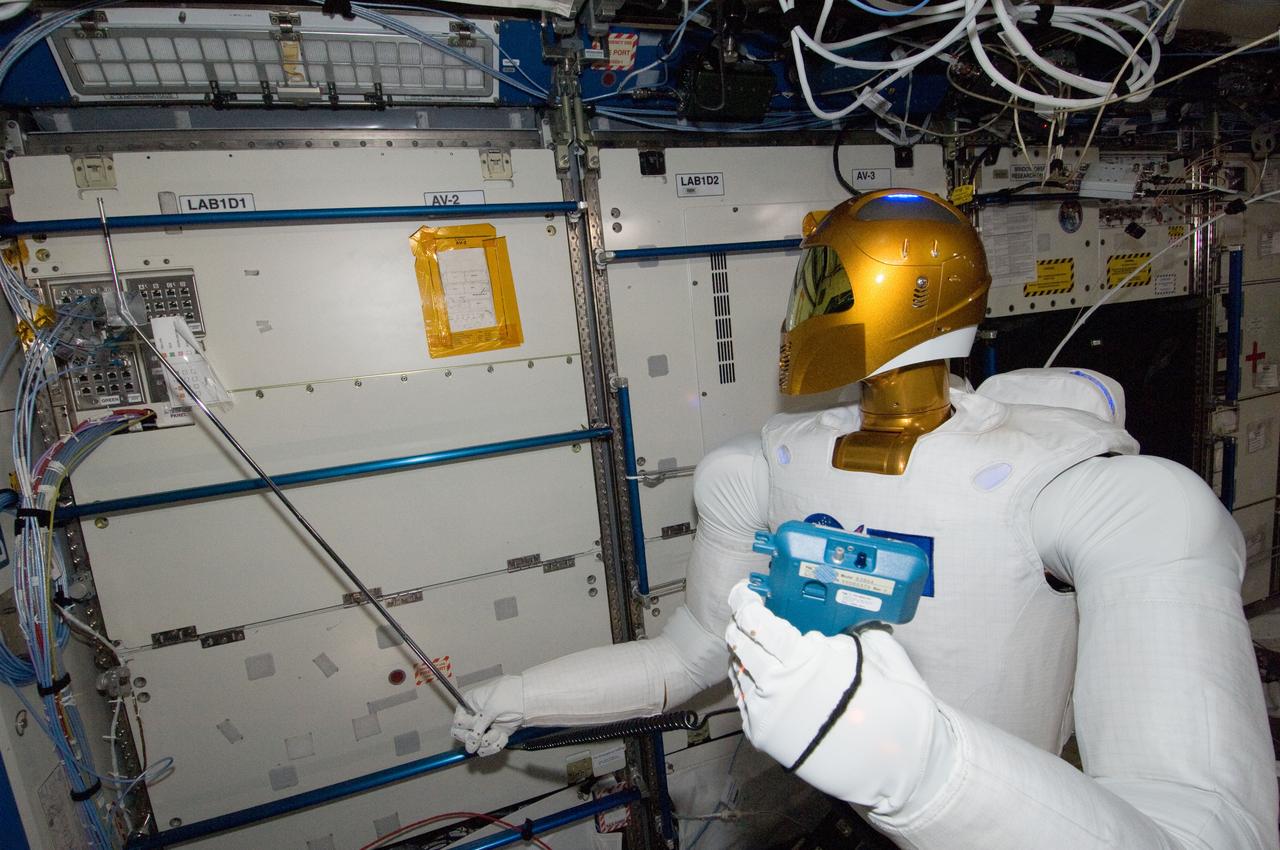
ISS030-E-148260 (14 March 2012) --- Controlled by teams on the ground, Robonaut 2 humanoid robot holds an instrument to measure air velocity during another system check out in the Destiny laboratory of the International Space Station.
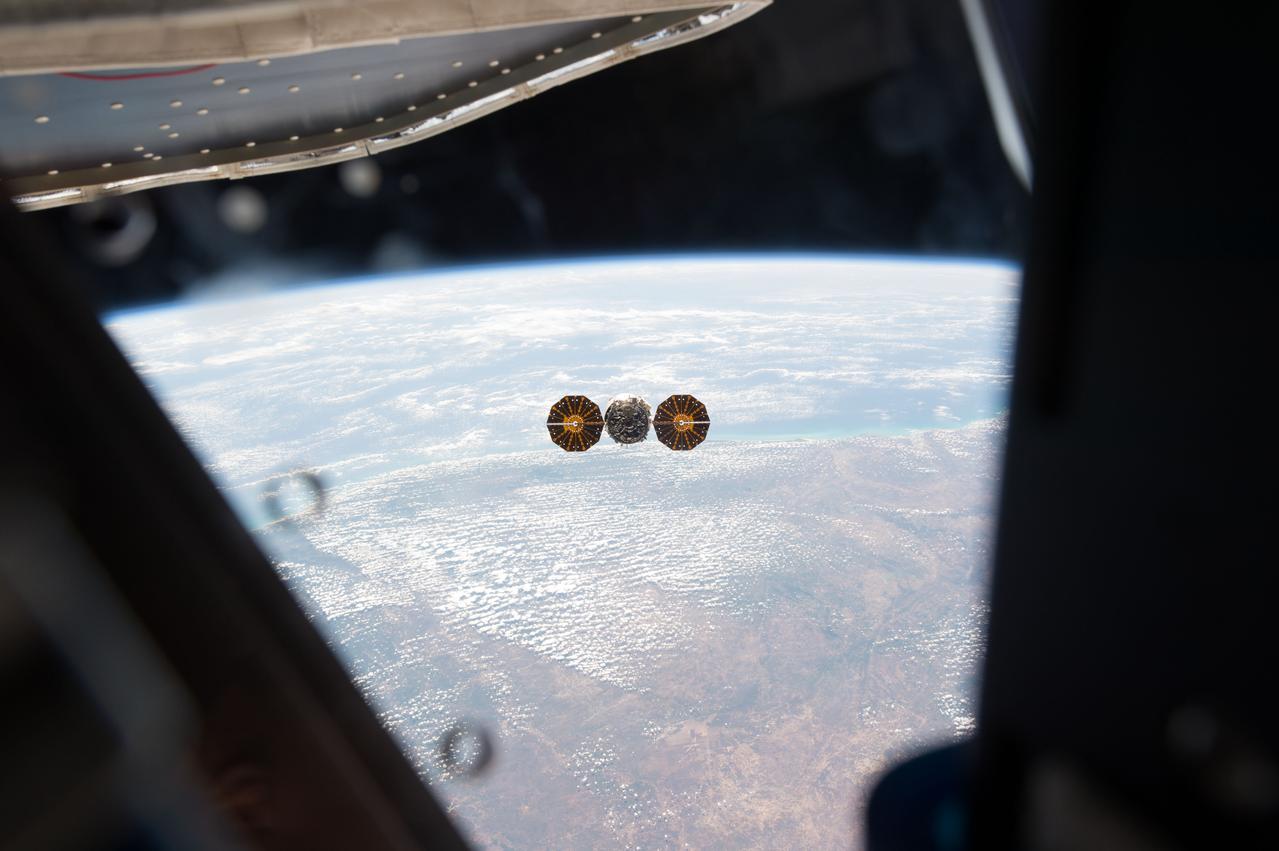
ISS047e152844 (06/14/2016) --- Expedition 47 robotic arm operator astronaut Tim Kopra of NASA commanded the International Space Station’s Canadarm2 robotic arm to release the Cygnus spacecraft at 9:30 a.m. EDT June 14, 2016 while the space station was flying above Paraguay. Earlier, ground controllers detached Cygnus from the station and maneuvered it into place for its departure. After Cygnus is a safe distance away, ground controllers at Glenn Research Center in Cleveland, Ohio will initiate the sequence for Saffire-1, and controllers at Orbital ATK in Dulles, Virginia, will activate the experiment. Cygnus will continue to orbit Earth for up to eight days as it transmits hi-resolution imagery and data from the Saffire experiment.
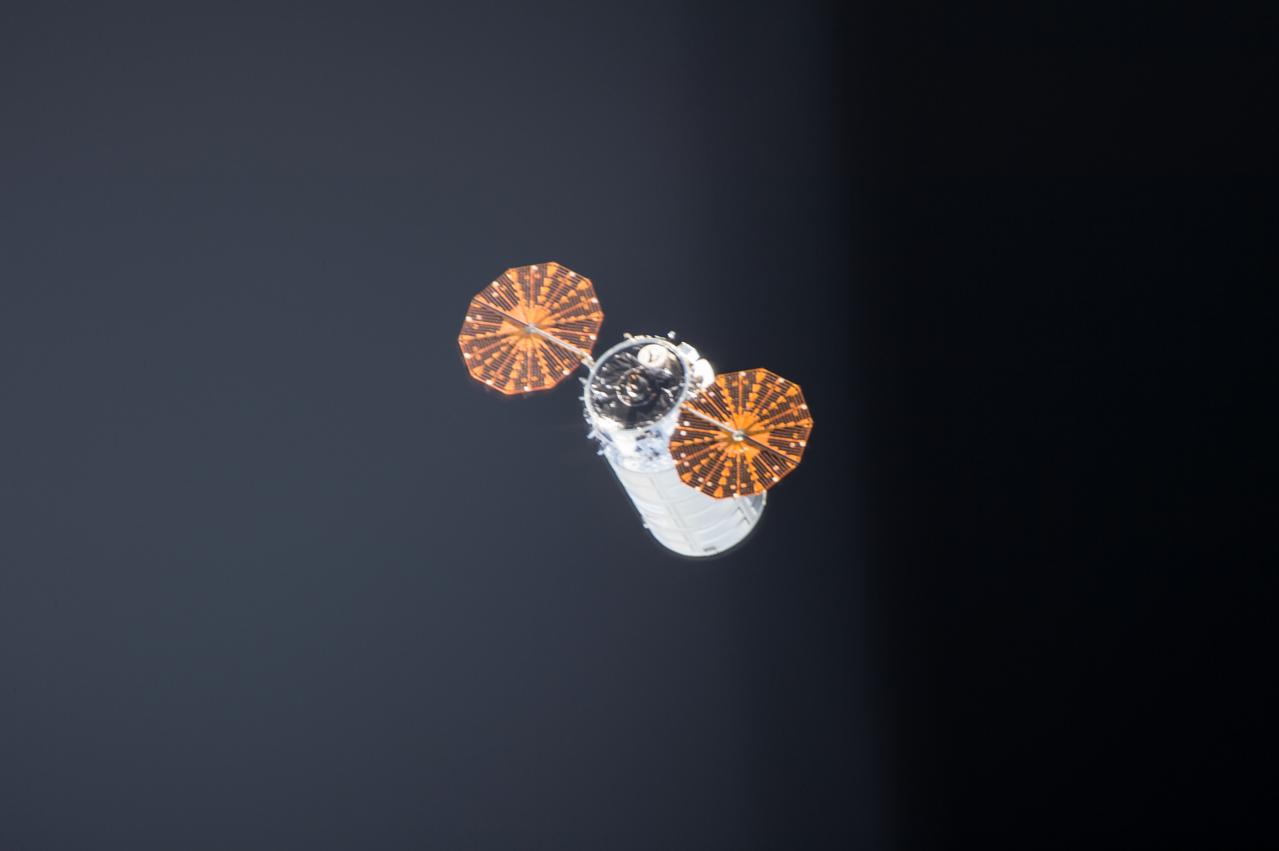
ISS047e152988 (06/14/2016) --- Cygnus Spacecraft on its way back to Earth. Expedition 47 robotic arm operator NASA astronaut Tim Kopra of NASA commanded the International Space Station’s Canadarm2 robotic arm to release the Cygnus spacecraft on 16 June 2016 while the space station was flying above Paraguay. Earlier, ground controllers detached Cygnus from the station and maneuvered it into place for its departure. After Cygnus is a safe distance away, ground controllers at Glenn Research Center in Cleveland, Ohio will initiate the sequence for Saffire-1, and controllers at Orbital ATK in Dulles, Virginia, will activate the experiment. Cygnus will continue to orbit Earth for up to eight days as it transmits hi-resolution imagery and data from the Saffire experiment.
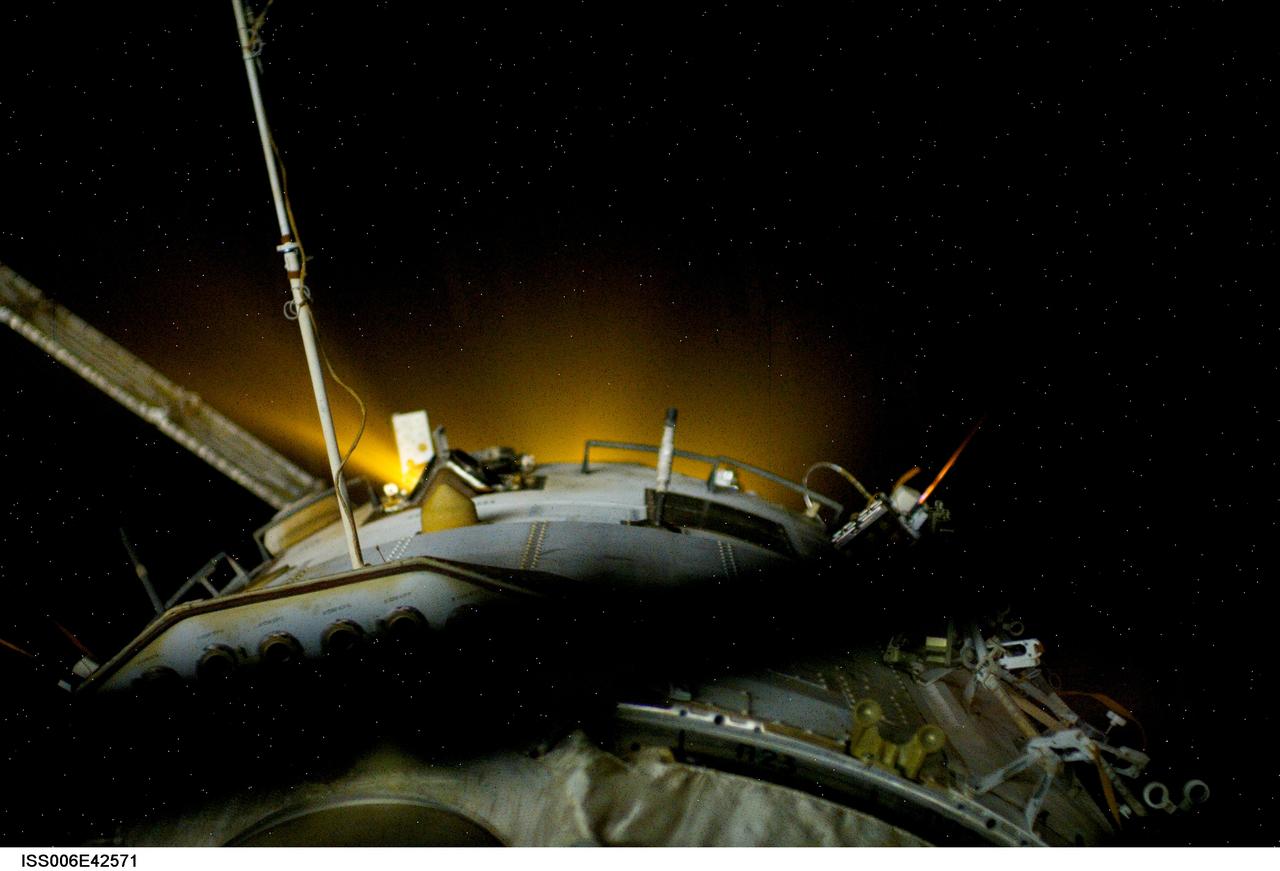
ISS006-E-42571 (4 April 2003) --- This view features a reboost of the International Space Station (ISS) in action. Ground controllers at Mission Control Moscow ignited the thrusters of a Progress rocket docked to the station’s Zvezda Service Module. The 14-minute firing raised the average altitude of the station by about 3 km. One of the Expedition 6 crewmembers captured this picture of the yellow-glowing thrusters from a window in the Service Module.
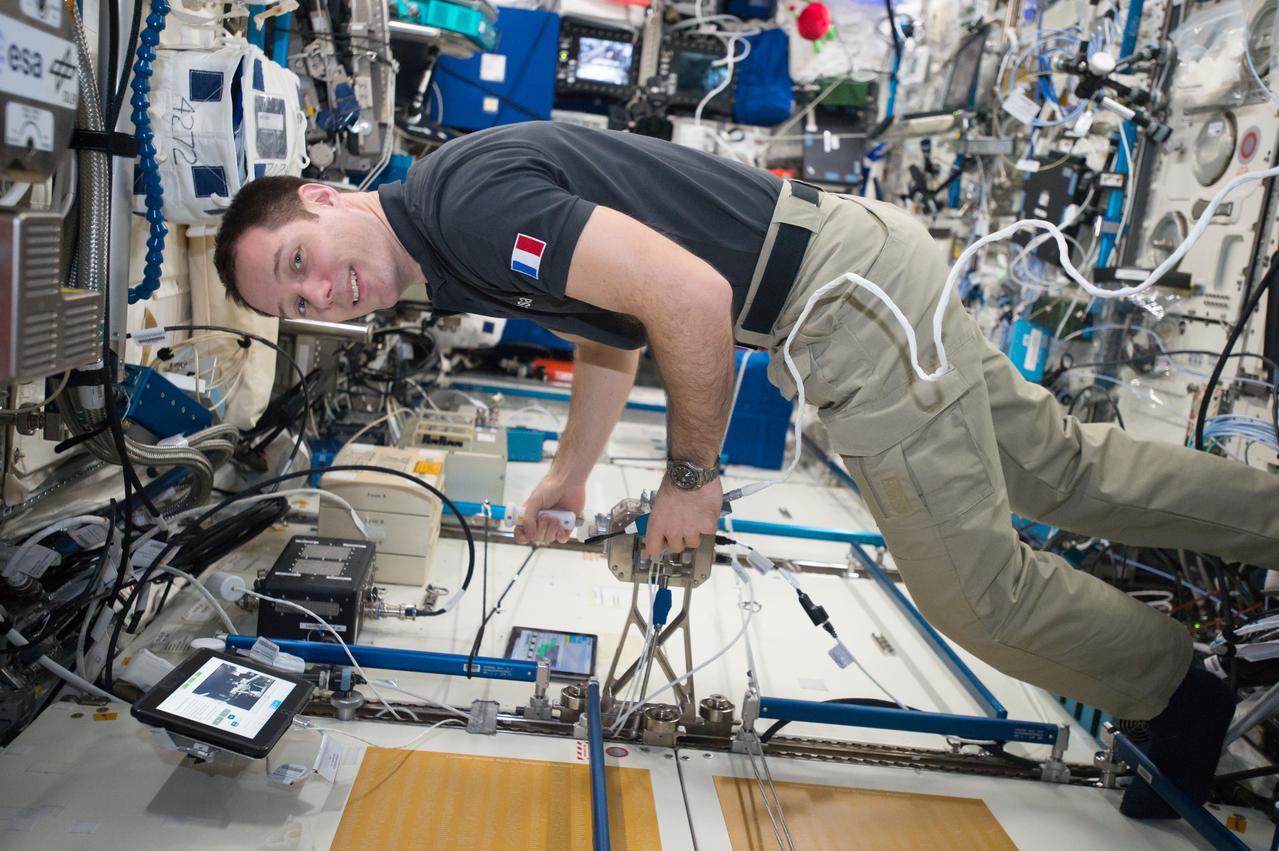
iss050e037304 (01/31/2017) --- ESA (European Space Agency) astronaut Thomas Pesquet works with controls for the European Haptics-2 experiment aboard the International Space Station. Haptics-2 is a technology demonstration experiment aimed at validating control interactions to take place between space and ground. In particular, this experiment allows for an astronaut crew in space to control, in real-time, robotic assets on Earth, using force feedback.
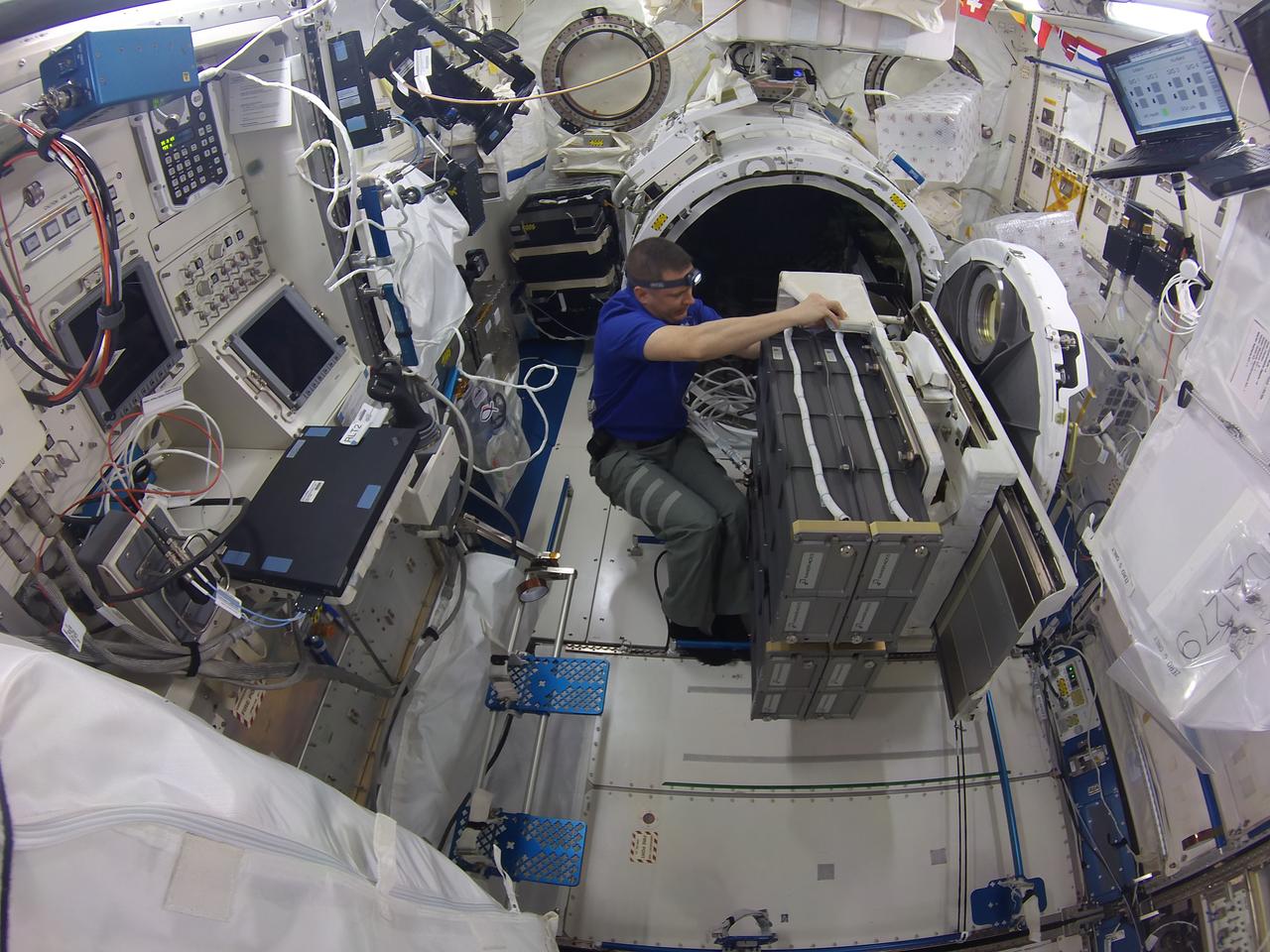
iss051e042749 (5/15/2017) -- NASA astronaut Jack Fischer loads the NanoRacks CubeSat Deployer in to an airlock in the Japanese Experiment Module on the International Space Station. When transferred to the outside of the station, ground crews took control, triggering deployment of the satellites into Earth orbit. Credits: NASA
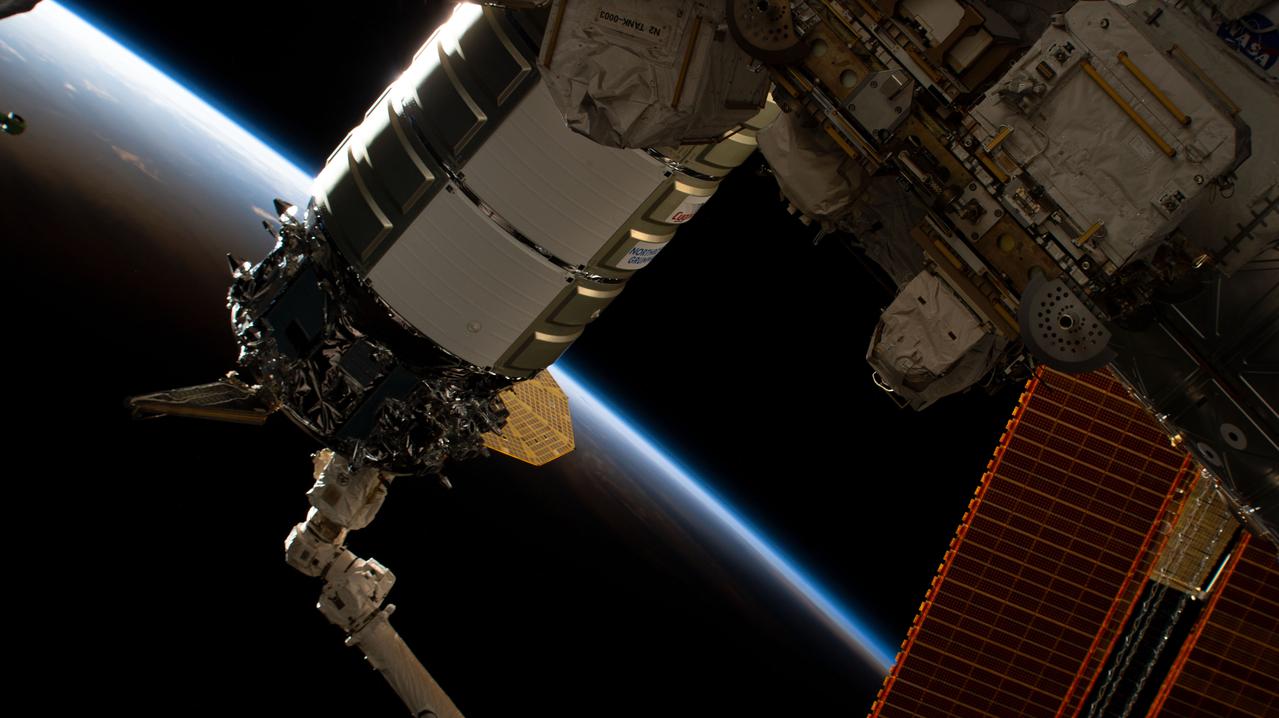
iss068e021452 (Nov. 9, 2022) --- The Northrop Grumman Cygnus space freighter is pictured in the grip of the Canadarm2 robotic arm as ground controllers remotely install the cargo craft to the International Space Station's Unity module. The space station was orbiting into a sunset 257 miles above the Indian Ocean off the coast of the African nation of Tanzania.
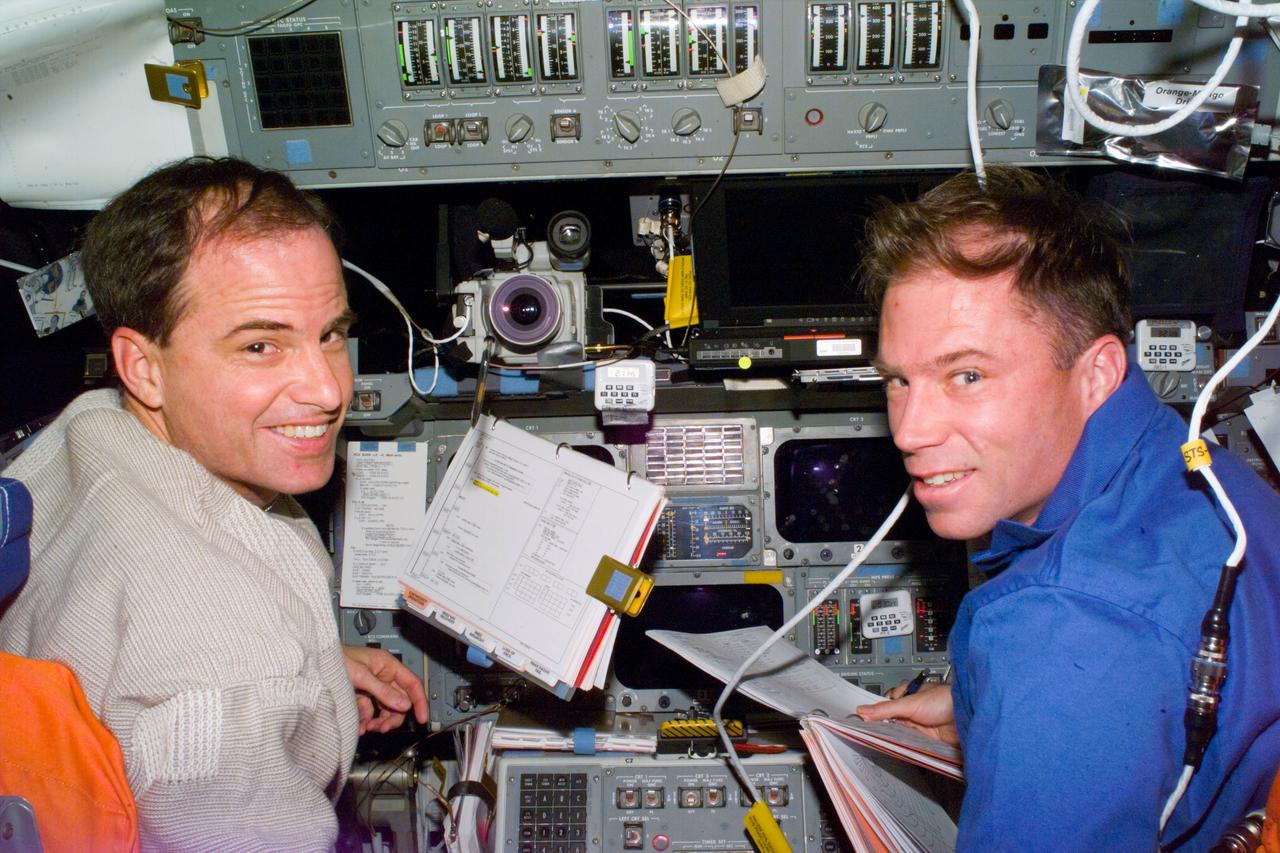
S76-E-5138 (24 March 1996) --- Astronauts Kevin P. Chilton (left) and Richard A. Searfoss man the commander and pilot stations, respectively, for the rendezvous and docking procedures with Russia's Mir Space Station. The image was recorded with a 35mm Electronic Still Camera (ESC) and downlinked at a later time to ground controllers in Houston, Texas.
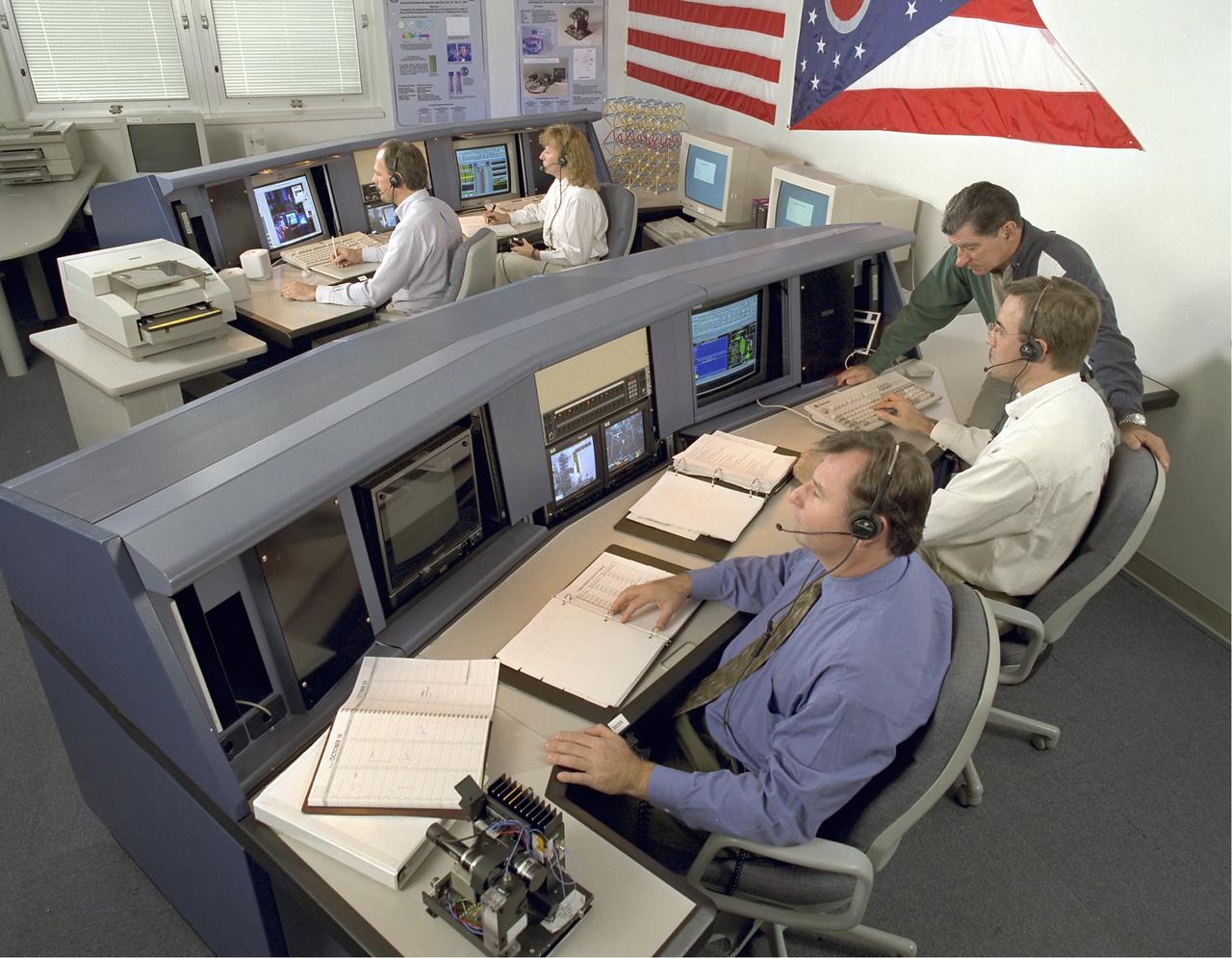
The Glenn Research Center (GRC) Telescience Support Center (TSC) is a NASA telescience ground facility that provides the capability to execute ground support operations of on-orbit International Space Station (ISS) and Space Shuttle payloads. This capability is provided with the coordination with the Marshall Space Flight Center (MSFC) Huntsville Operations Support Center (HOSC), the Johnson Space Center (JSC) Mission Control Center in Houston (MCC-H) and other remote ground control facilities. The concept of telescience is a result of NASA's vision to provide worldwide distributed ISS ground operations that will enable payload developers and scientists to control and monitor their on-board payloads from any location -- not necessarily a NASA site. This concept enhances the quality of scientific and technological data while decreasing operation costs of long-term support activities by providing ground operation services to a Principal Investigator and Engineering Team at their home site. The TSC acts as a hub in which users can either locate their operations staff within the walls of the TSC or request the TSC operation capabilities be extended to a location more convenient such as a university.
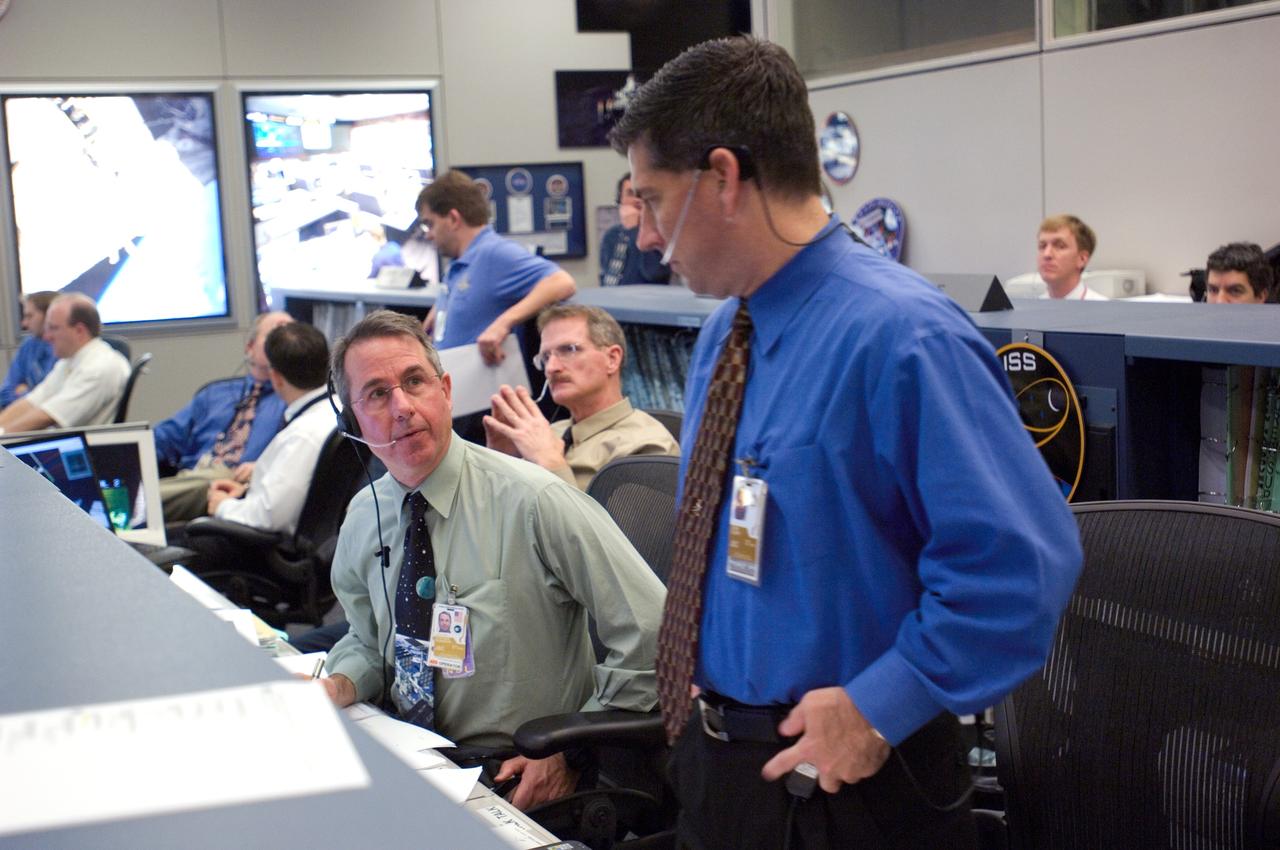
JSC2006-E-54436 (18 Dec. 2006) --- ISS lead flight director John Curry (right) and astronaut Stephen K. Robinson, at the CAPCOM console, represent part of the busy ground support effort for the add-on spacewalk by the STS-116 crew. Astronaut Joseph R. Tanner, who like Robinson is a veteran of multiple space walks, assisted with CAPCOM duties. While flight controllers in this space station flight control room were busy supporting the spacewalk, so were their counterparts in the space shuttle flight control room, not far away in the Johnson Space Center's Mission Control Center.
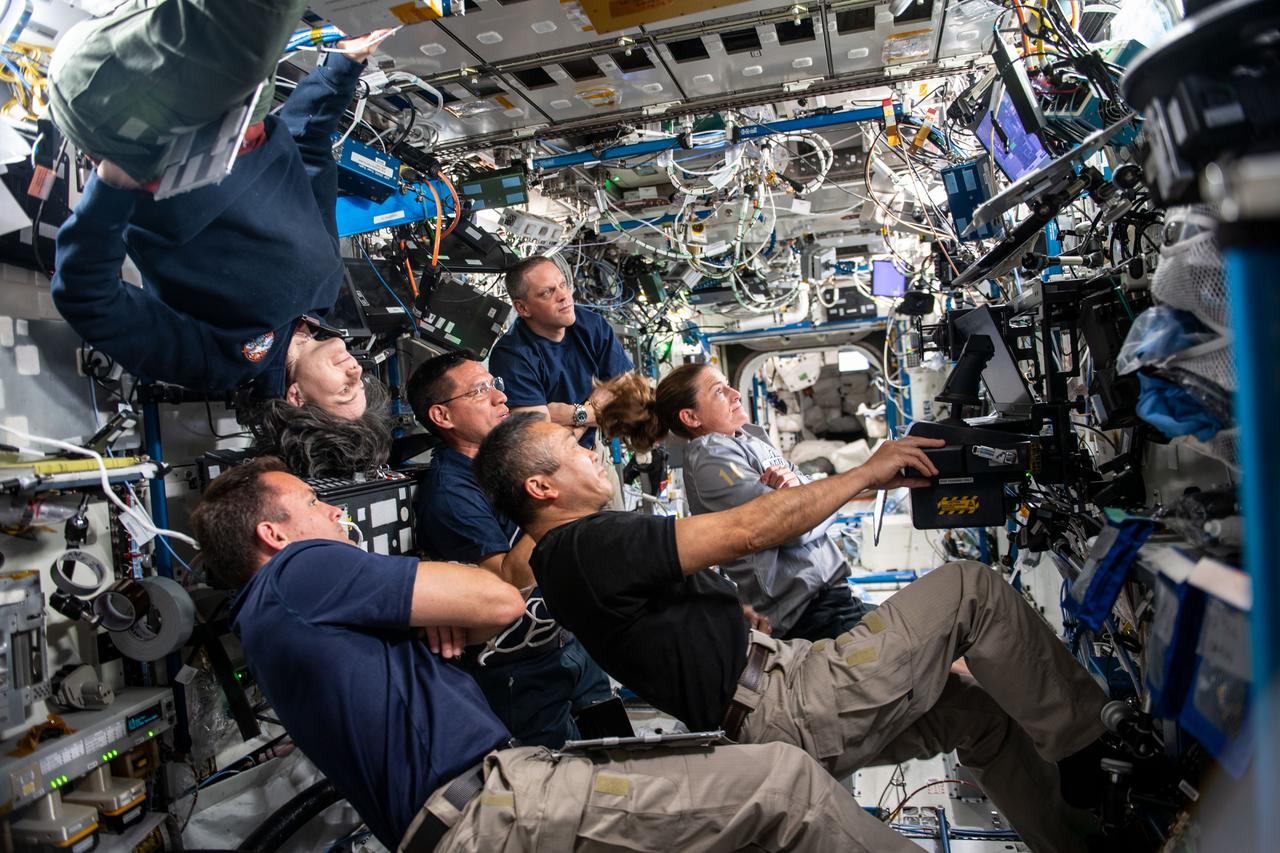
iss068e017203 (Oct. 13, 2022) --- Six Expedition 68 crew members gather in the U.S. Destiny laboratory module and participate in an evening conference with International Space Station mission controllers on the ground. From front to back, are astronauts Josh Cassada, Koichi Wakata, Samantha Cristoforetti, Frank Rubio, Nicole Mann, and Bob Hines.
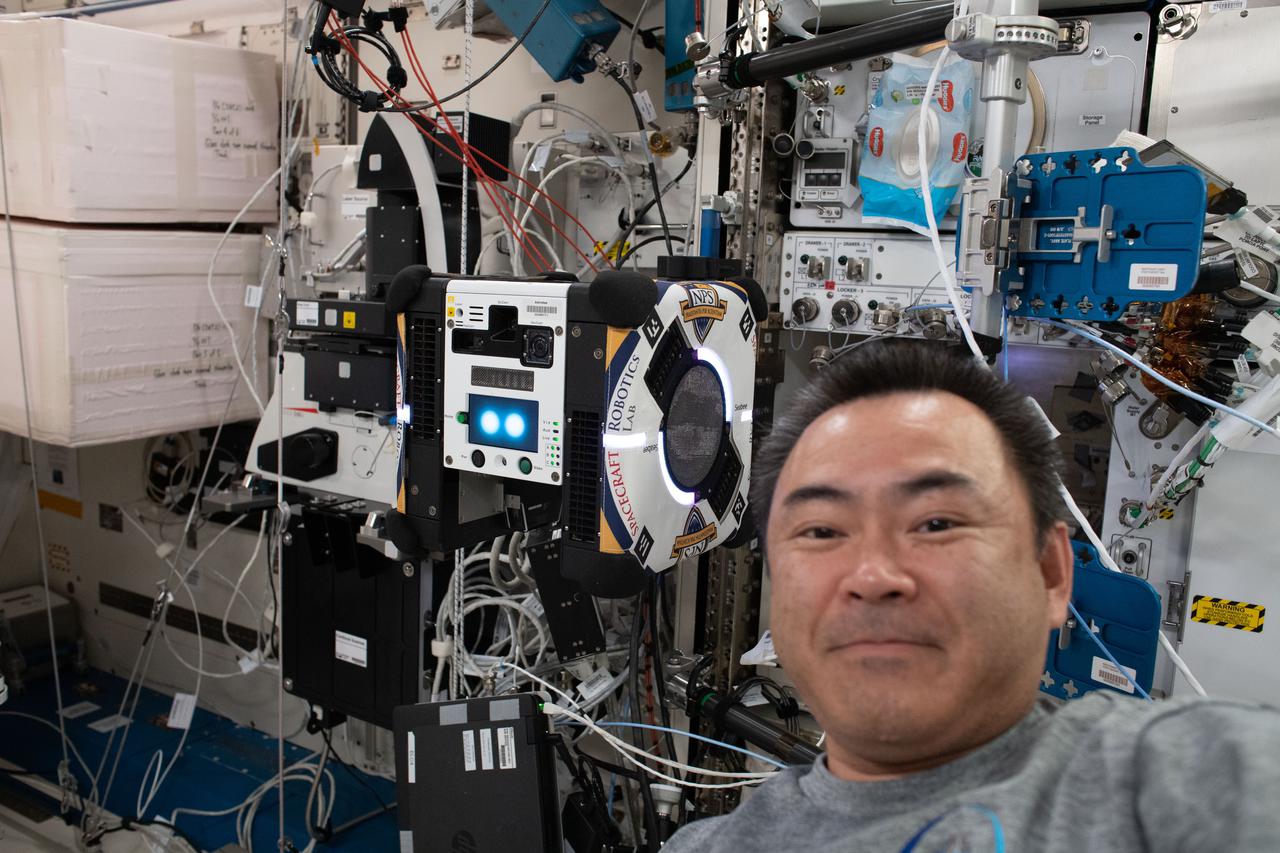
iss065e167804 (July 27, 2021) --- Expedition 65 Commander Akihiko Hoshide of the Japan Aerospace Exploration Agency (JAXA) poses for a portrait with an Astrobee robotic assistant behind him. The Astrobee is being tested for its ability to assist astronauts with routine chores and give ground controllers additional eyes and ears on the space station.
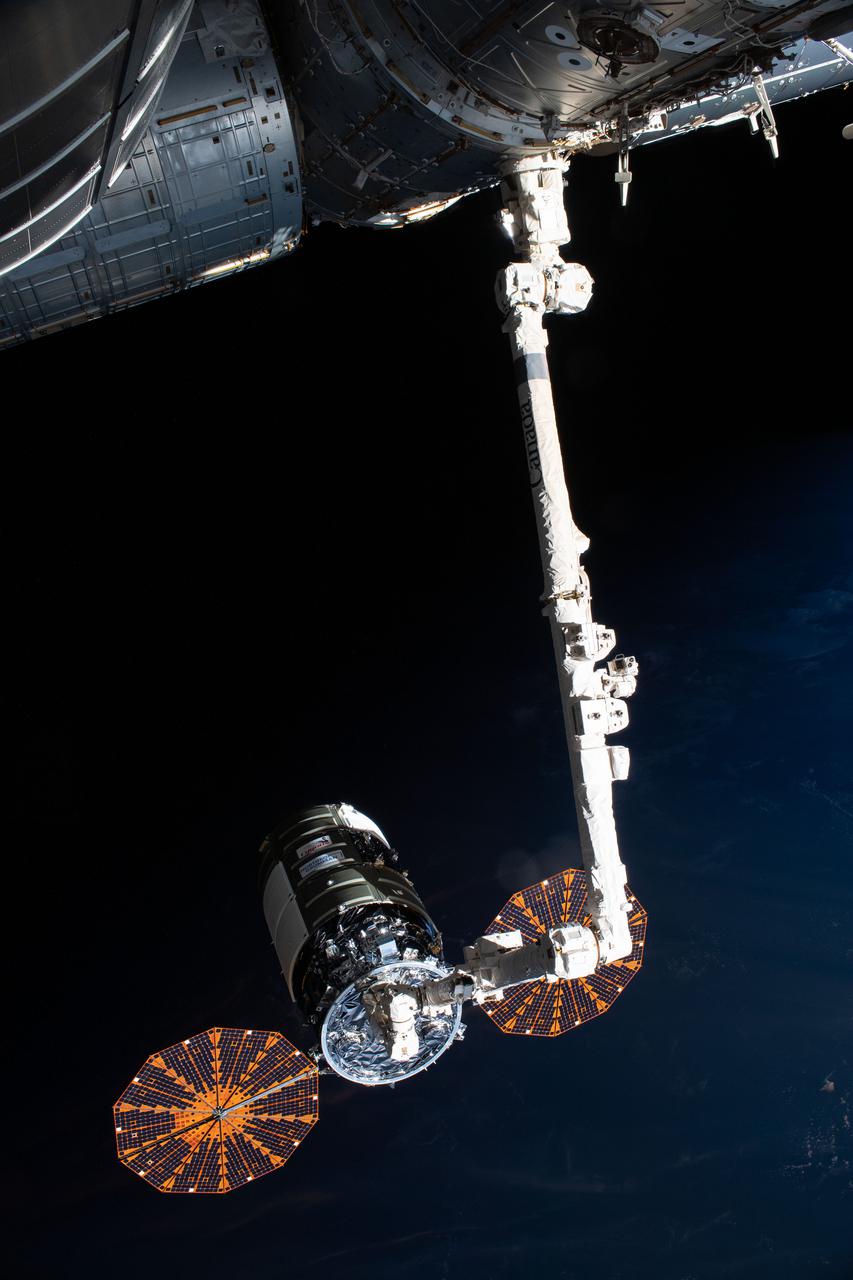
iss065e241403 (Aug. 12, 2021) --- Northrop Grumman's Cygnus space freighter, in the grips of the Canadarm2 robotic arm operated, is remotely maneuvered by ground controllers toward the International Space Station's Unity module where it was installed for three months of cargo operations.
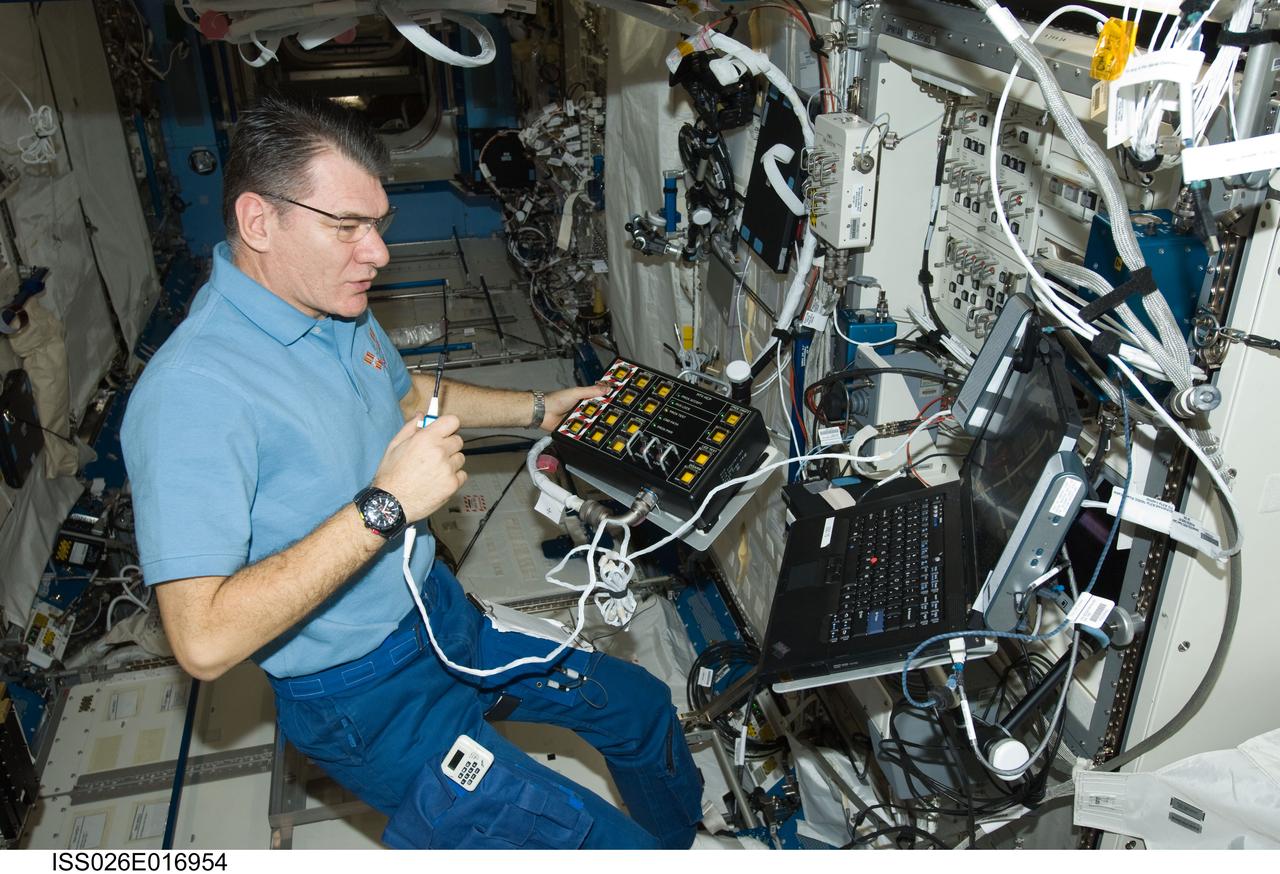
ISS026-E-016954 (11 Jan. 2011) --- European Space Agency astronaut Paolo Nespoli, Expedition 26 flight engineer, continues his board-side support of the on-going ground-controlled H-II Transfer Vehicle / Hardware Command Panel (HTV HCP) checkout activities in the Kibo laboratory of the International Space Station.
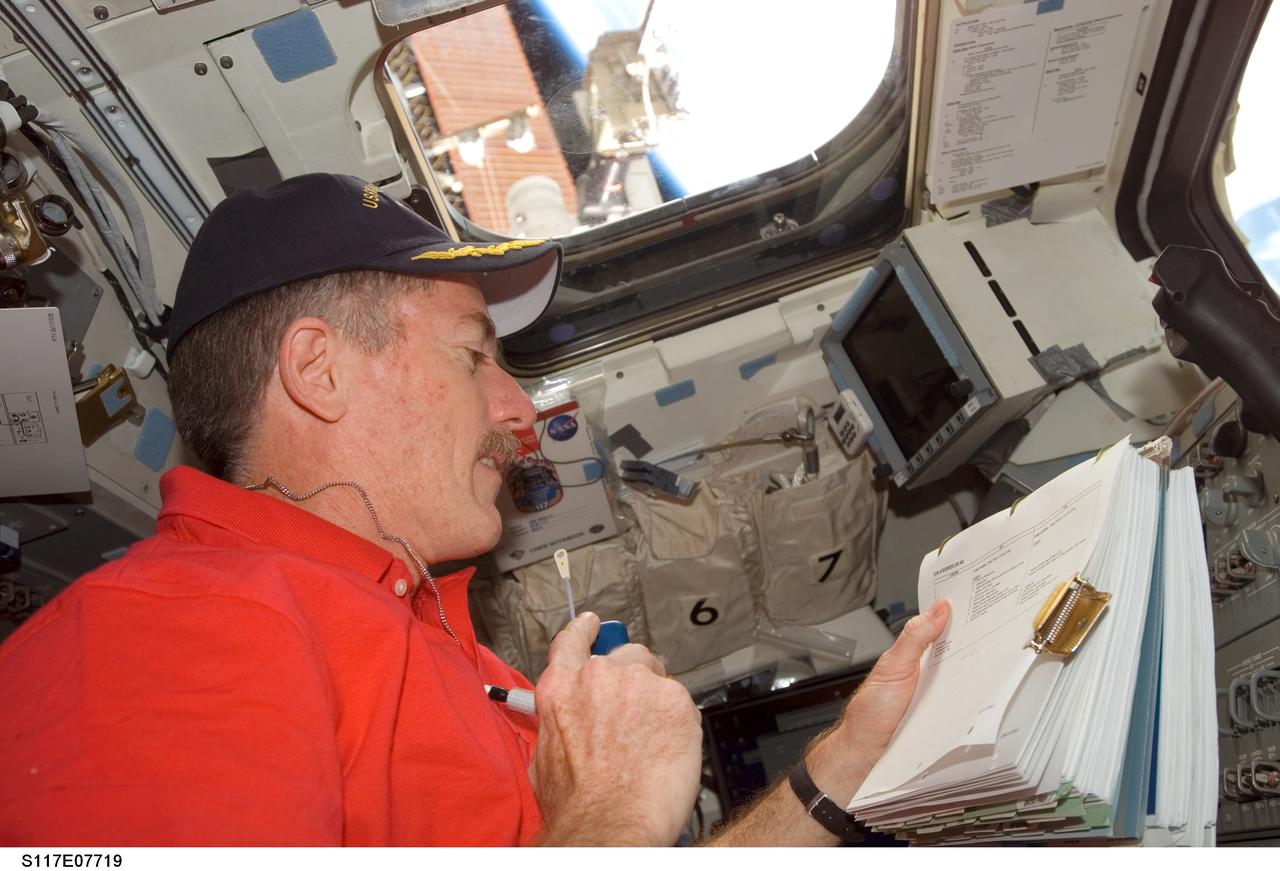
S117-E-07719 (17 June 2007) --- On the flight deck of Space Shuttle Atlantis, astronaut Jim Reilly, STS-117 mission specialist, talks to ground controllers while supporting two spacewalking crewmates during the mission's fourth and final session of extravehicular activity (EVA) while docked with the International Space Station.
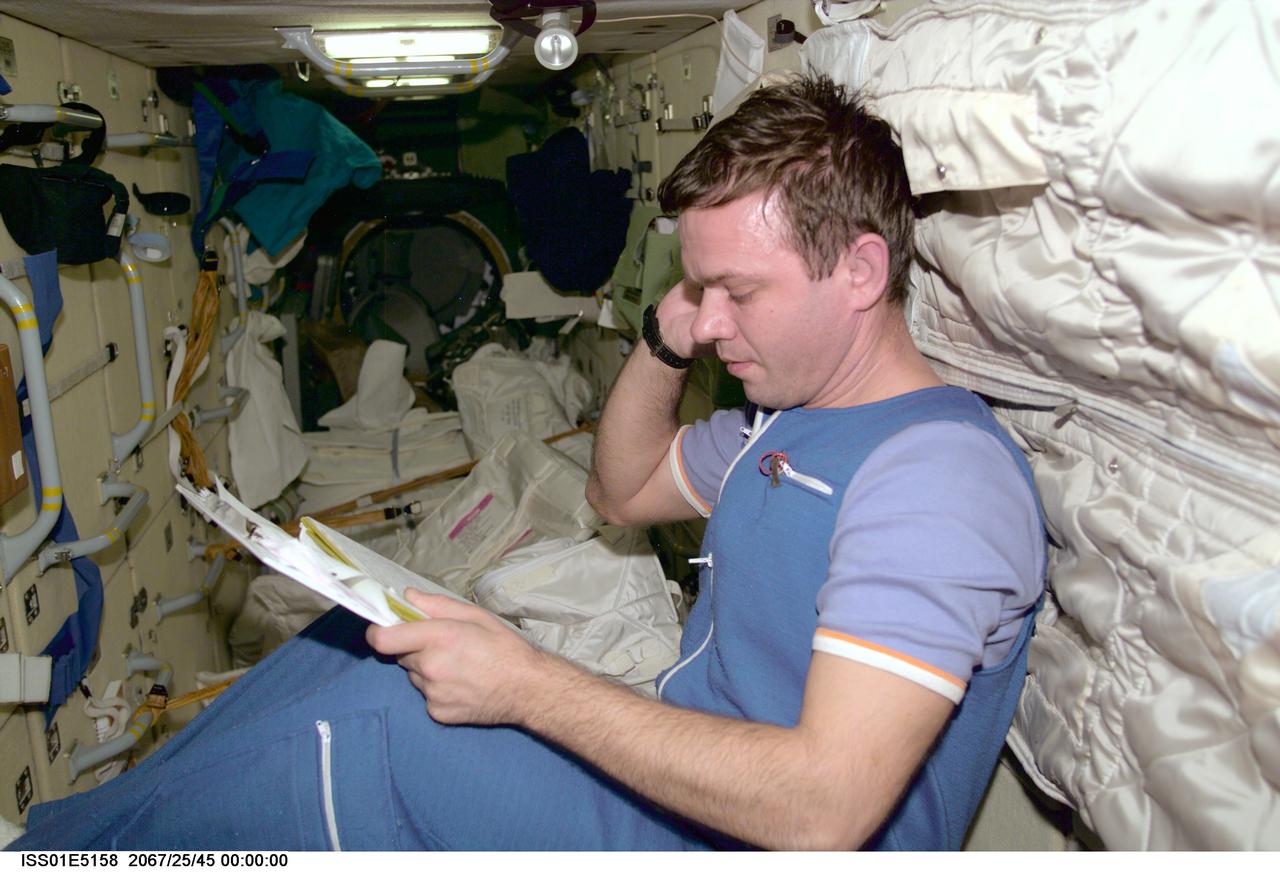
ISS01-E-5158 (December 2000) --- Cosmonaut Yuri P. Gidzenko, Expedition One Soyuz commander, looks over an ISS document on a clipboard in the Zarya Functional Cargo Block (FGB). The image was taken with a digital still camera and down linked from the station to ground controllers in Houston.

STS088-359-029 (4-15 Dec. 1998) --- Astronauts James H. Newman and Nancy J. Currie, both mission specialists, work in the FGB or Zarya Module of the International Space Station (ISS). The two were using the computers to confer with ground controllers about tasks they were attempting to perform in Zarya.
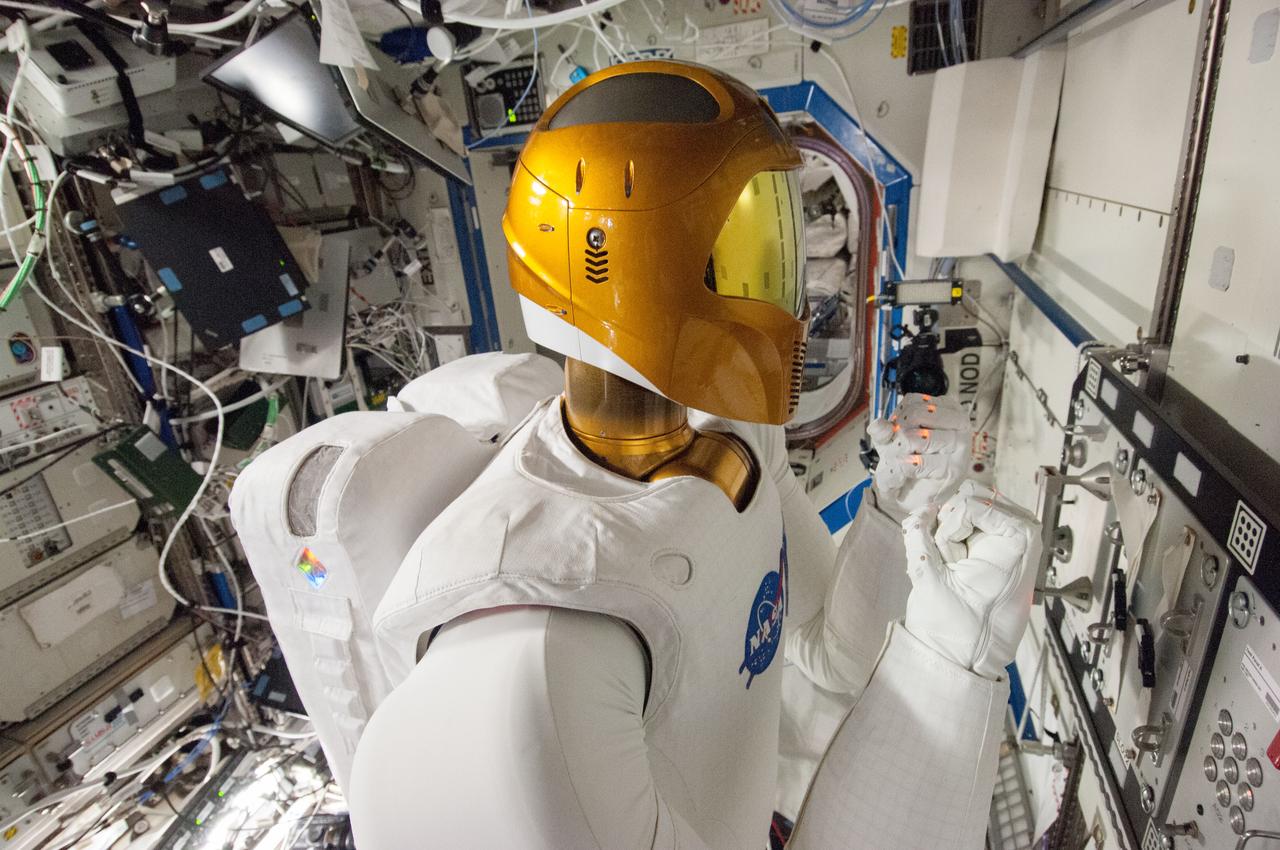
ISS034-E-037352 (31 Jan. 2013) --- Robonaut 2, the first humanoid robot in space, is pictured in this image photographed by an Expedition 34 crew member in the International Space Station’s Destiny laboratory. R2 was powered up so ground controllers could run it through a series of tests and configuration checks.
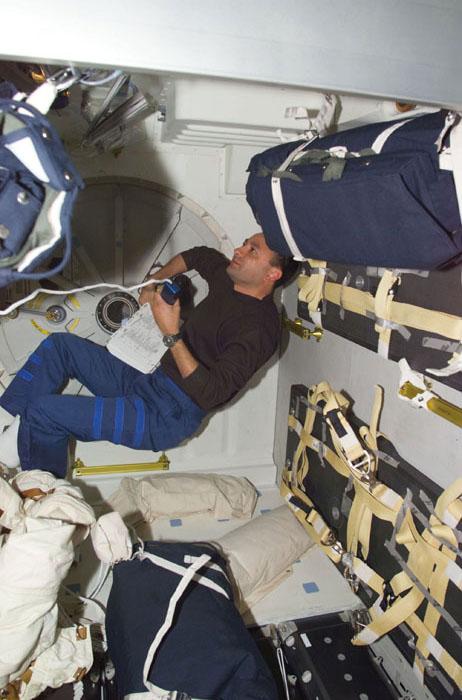
STS98-E-5088 (10 February 2001) --- Astronaut Mark L. Polansky, SS-98 pilot, communicates with ground controllers from the mid deck of the Space Shuttle Atlantis. Parts of at least two sleep stations are visible in the digital still camera's scene.
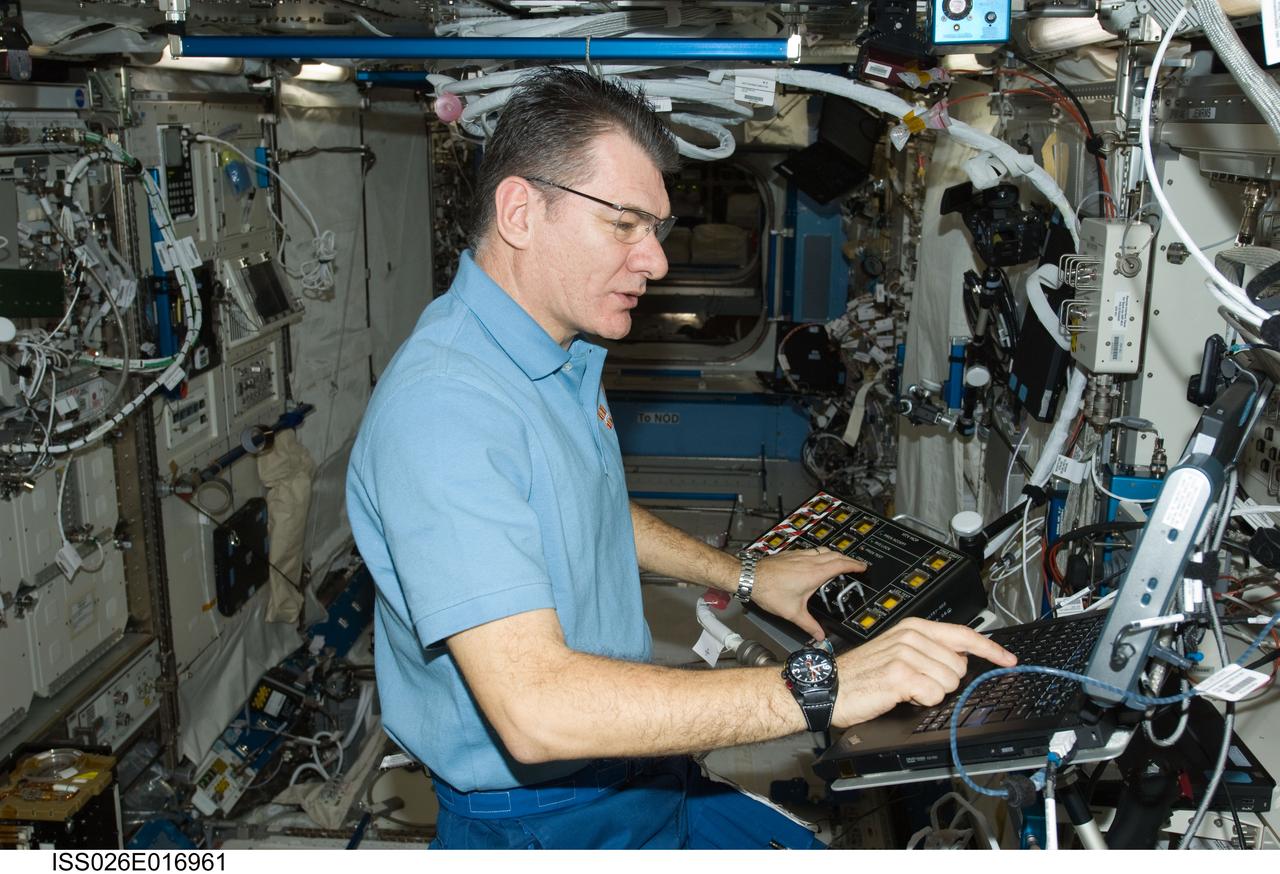
ISS026-E-016961 (11 Jan. 2011) --- European Space Agency astronaut Paolo Nespoli, Expedition 26 flight engineer, continues his board-side support of the on-going ground-controlled H-II Transfer Vehicle / Hardware Command Panel (HTV HCP) checkout activities in the Kibo laboratory of the International Space Station.
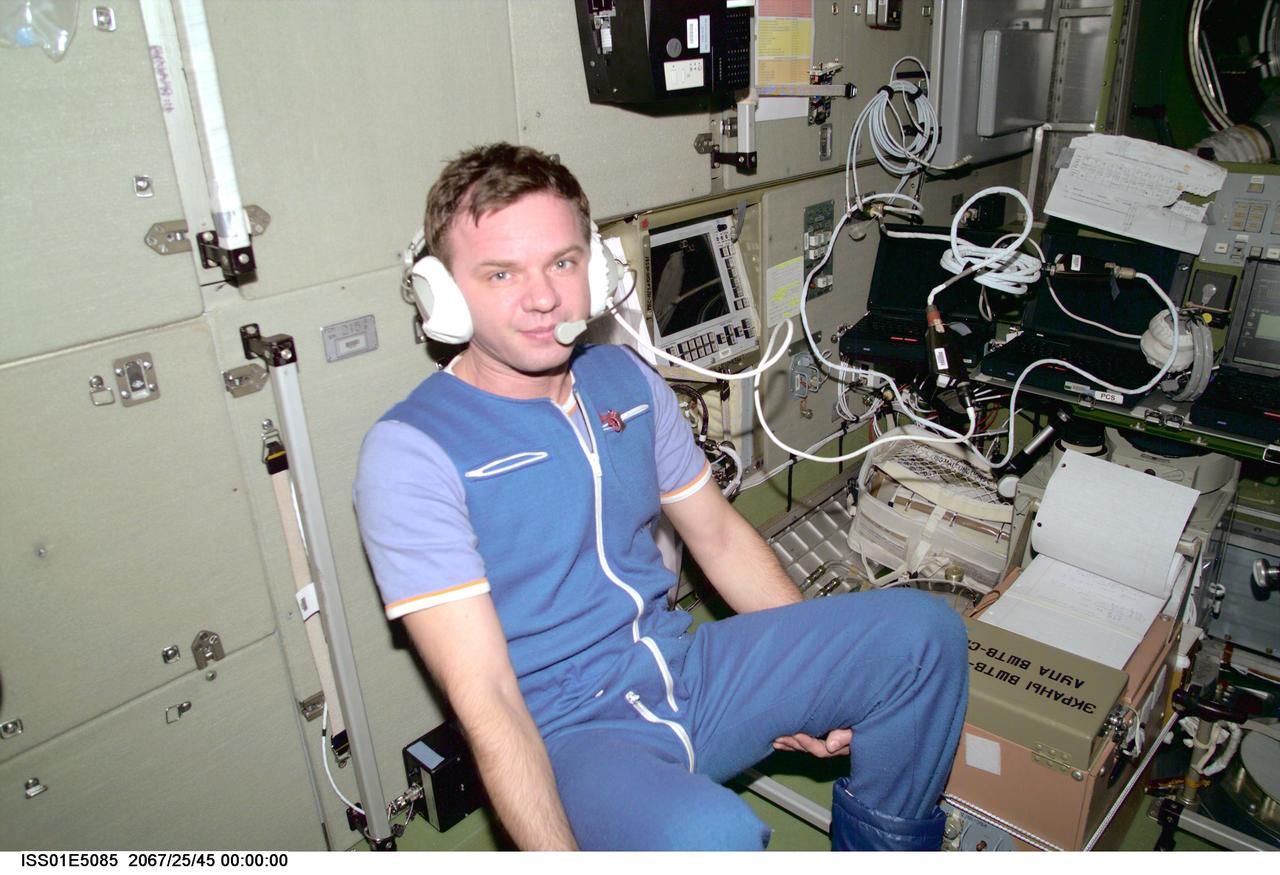
ISS01-E-5085 (December 2000) --- Cosmonaut Yuri P. Gidzenko, Soyuz commander for Expedition One, communicates with ground controllers from onboard the Zvezda Service Module, one of the components of the Earth-orbiting Internation Space Station (ISS).
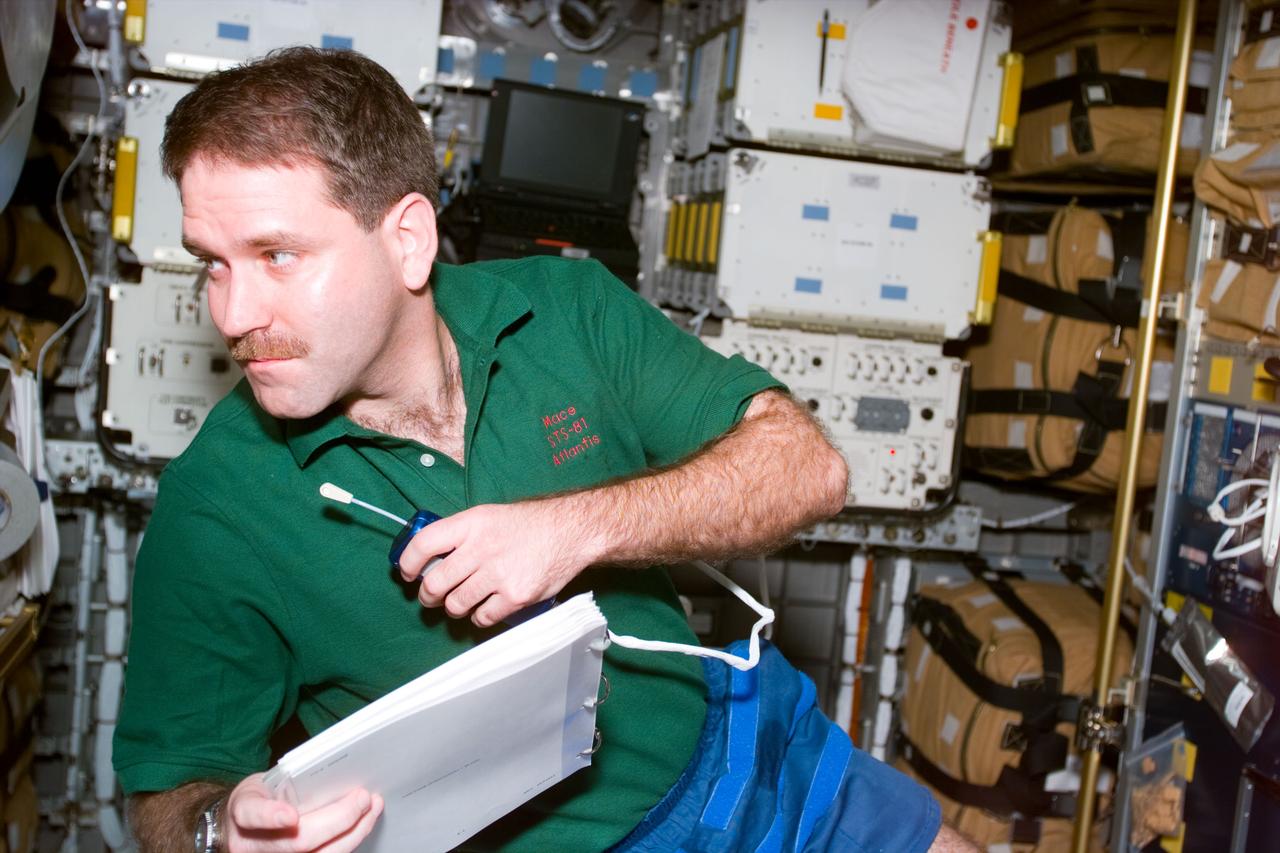
STS081-E-05144 (13 Jan. 1997) --- Making sure everything is in its place is no easy task as witnessed by the serious countenance of astronaut John M. Grunsfeld, mission specialist. Grunsfeld communicates with ground controllers as he checks progress of item transfers in the Spacehab Double Module (DM). This image was recorded with an Electronic Still Camera (ESC) and was later downlinked to flight controllers in Houston, Texas. Grunsfeld and five astronaut crew mates are preparing for a scheduled mid-week docking with Russia's Mir Space Station.
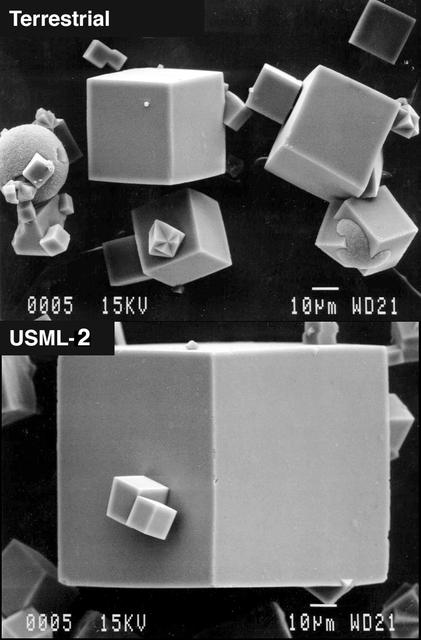
The Center for Advanced Microgravity Materials Processing (CAMMP), a NASA-sponsored Research Partnership Center, is working to improve zeolite materials for storing hydrogen fuel. CAMMP is also applying zeolites to detergents, optical cables, gas and vapor detection for environmental monitoring and control, and chemical production techniques that significantly reduce by-products that are hazardous to the environment. Shown here are zeolite crystals (top) grown in a ground control experiment and grown in microgravity on the USML-2 mission (bottom). Zeolite experiments have also been conducted aboard the International Space Station.
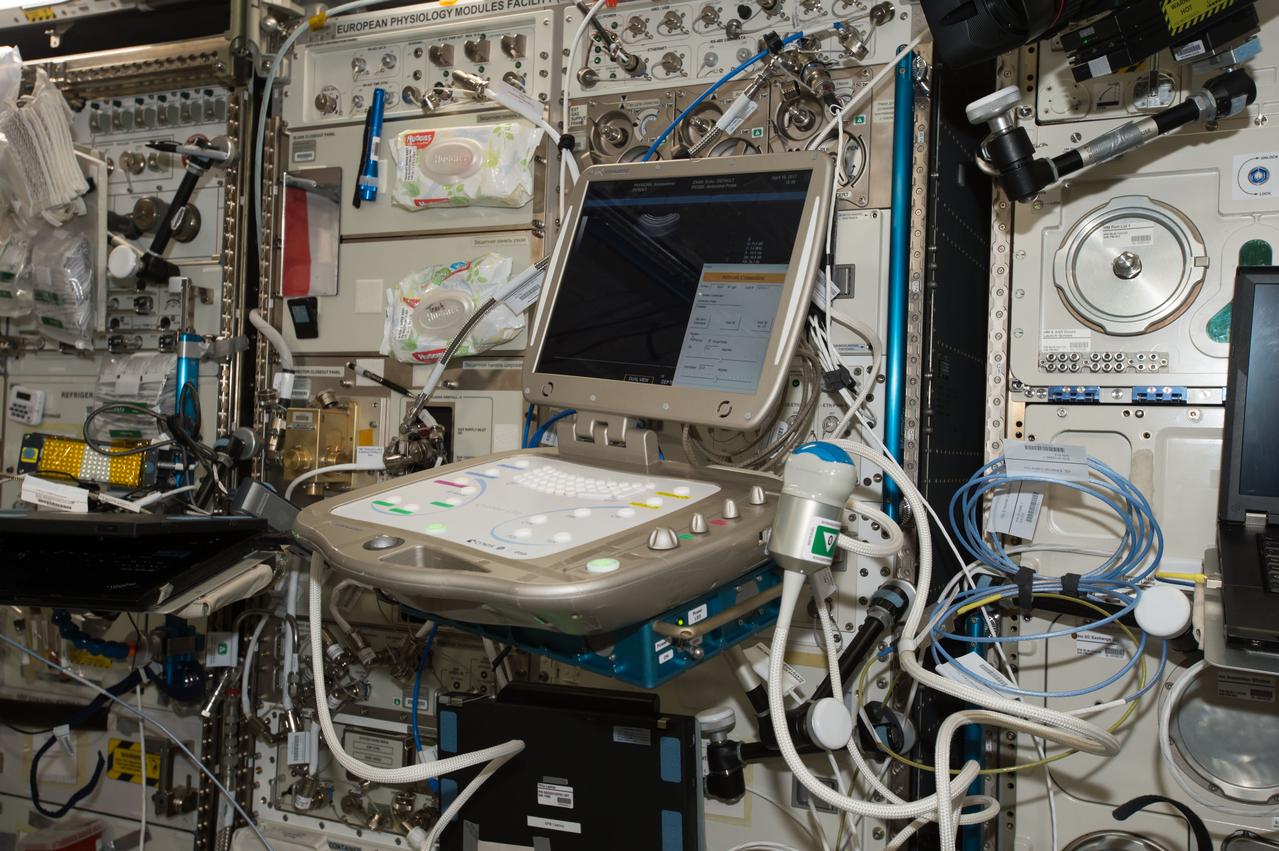
iss051e018997 (4/18/2017) --- Photo documentation of the Echo Unit during setup for Echo experiment commissioning operations (OPS) in the Columbus module aboard the International Space Station (ISS). The purpose of the ECHO investigation is to evaluate a tele-operated ultrasound system, equipped with motorized probes that are controlled by flight controllers on the ground. Additionally, this investigation serves to perform the commissioning of the Echo instrument, which is planned to be used for the Vascular Echo experiment in the future.
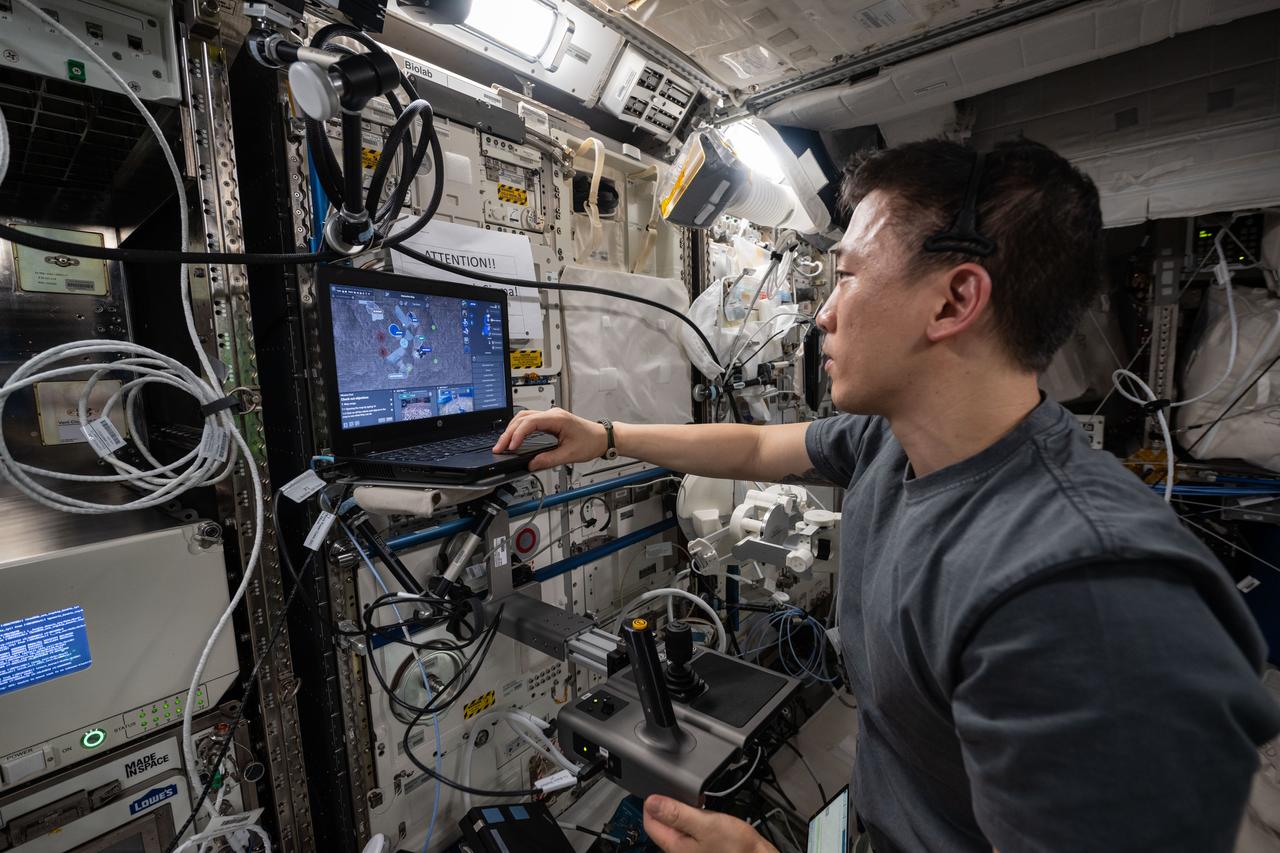
iss073e0416906 (July 21, 2025) --- NASA astronaut and Expedition 73 Flight Engineer Jonny Kim tests space-to-ground robotic controlling methods on a laptop computer inside the International Space Station's Columbus laboratory module. The Surface Avatar experiment explores ways to control robotic vehicles on a planetary surface from an orbiting spacecraft using a variety of technologies including consoles, touchscreens, haptics, and virtual reality goggles that may benefit future space exploration.
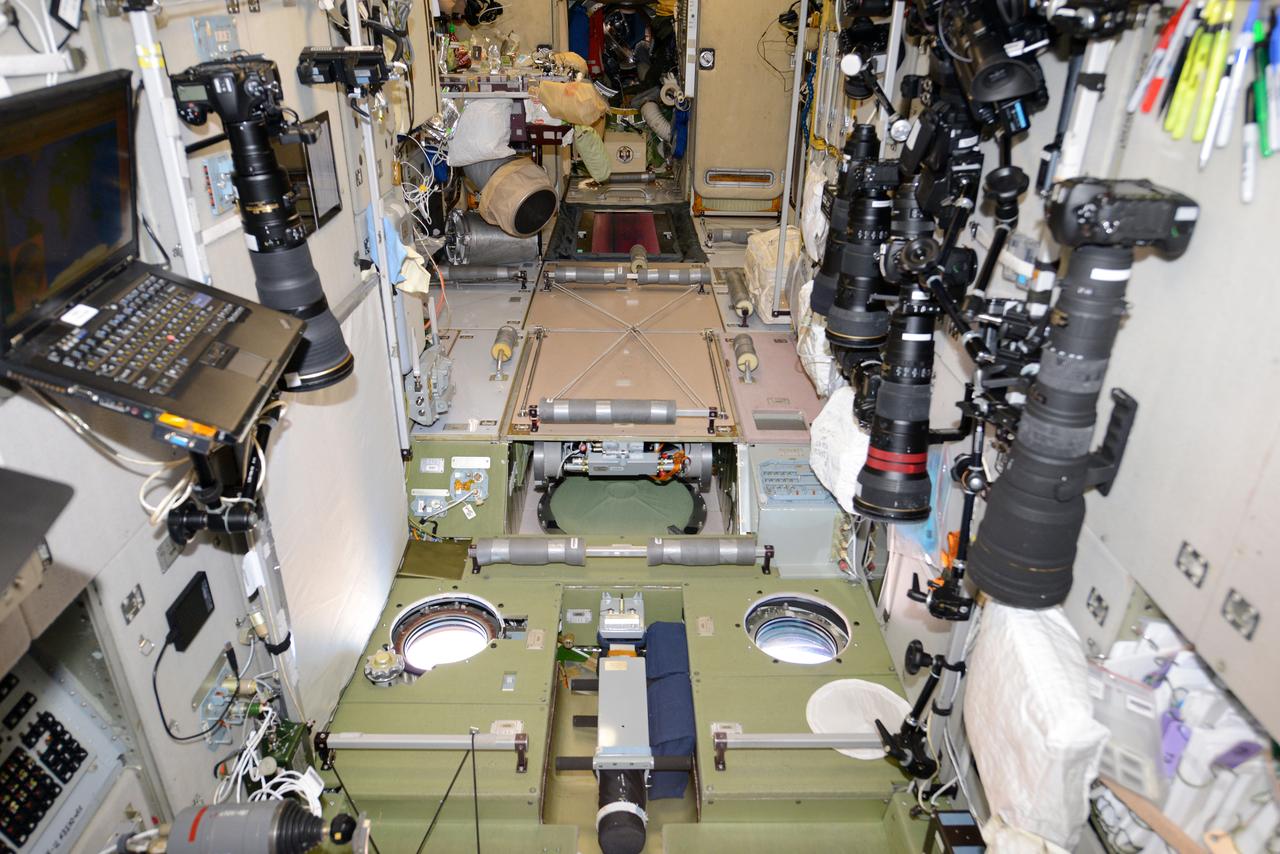
iss061e013837 (10/28/2019) --- A view of the Zvezda Service Module (SM) aboard the International Space Station (ISS). The Zvezda Service Module was the first fully Russian contribution to the International Space Station and served as the early cornerstone for the first human habitation of the station. The module provides station living quarters, life support systems, electrical power distribution, data processing systems, flight control systems and propulsion systems. It provides a communications system that includes remote command capabilities from ground flight controllers, and a docking port for Russian Soyuz and Progress spacecraft.
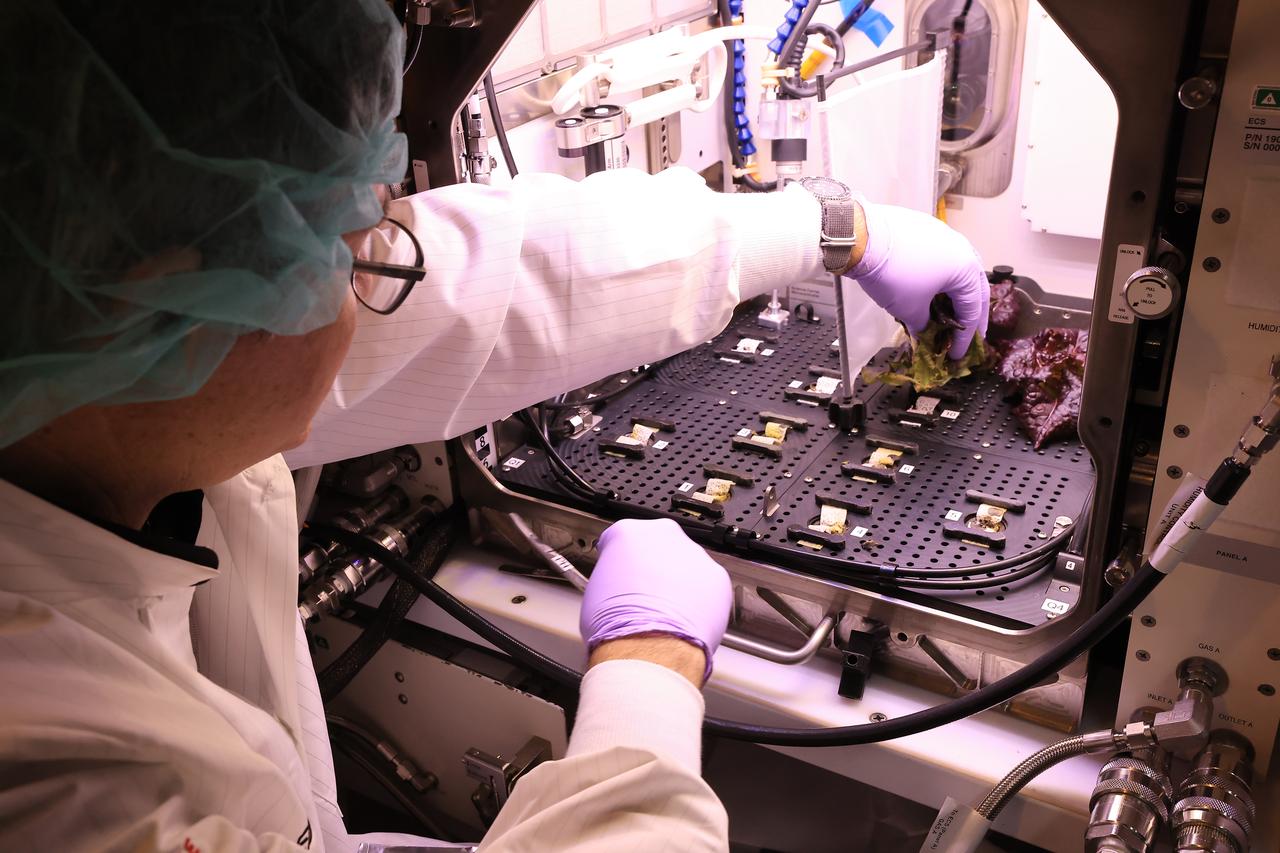
Inside a laboratory in the Space Systems Processing Facility at NASA’s Kennedy Space Center in Florida, a plant biologist harvests Outredgeous romaine lettuce growing in the Advanced Plant Habitat ground unit as the ground control portion of the Plant Habitat-07 (PH-07) experiment on Thursday, April 24, 2025. PH-07 was sent to the International Space Station on NASA’s SpaceX 31st commercial resupply services mission to study how optimal and suboptimal moisture conditions impact plant growth, nutrient content, and the plant microbiome.
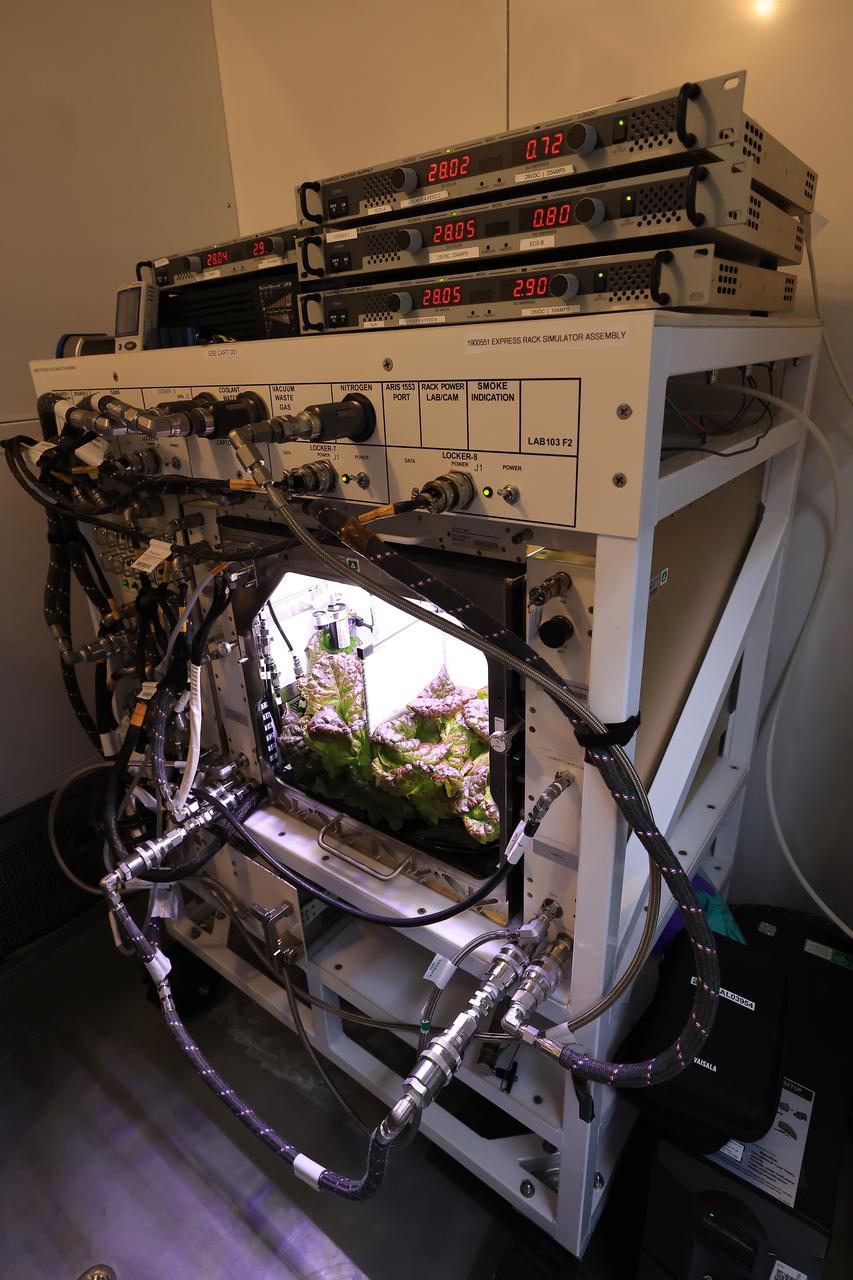
Plant biologists inside a laboratory in the Space Systems Processing Facility at NASA’s Kennedy Space Center in Florida, prepare to harvest Outredgeous romaine lettuce growing in the Advanced Plant Habitat ground unit as the ground control portion of the Plant Habitat-07 (PH-07) experiment on Thursday, April 24, 2025. PH-07 was sent to the International Space Station on NASA’s SpaceX 31st commercial resupply services mission to study how optimal and suboptimal moisture conditions impact plant growth, nutrient content, and the plant microbiome.
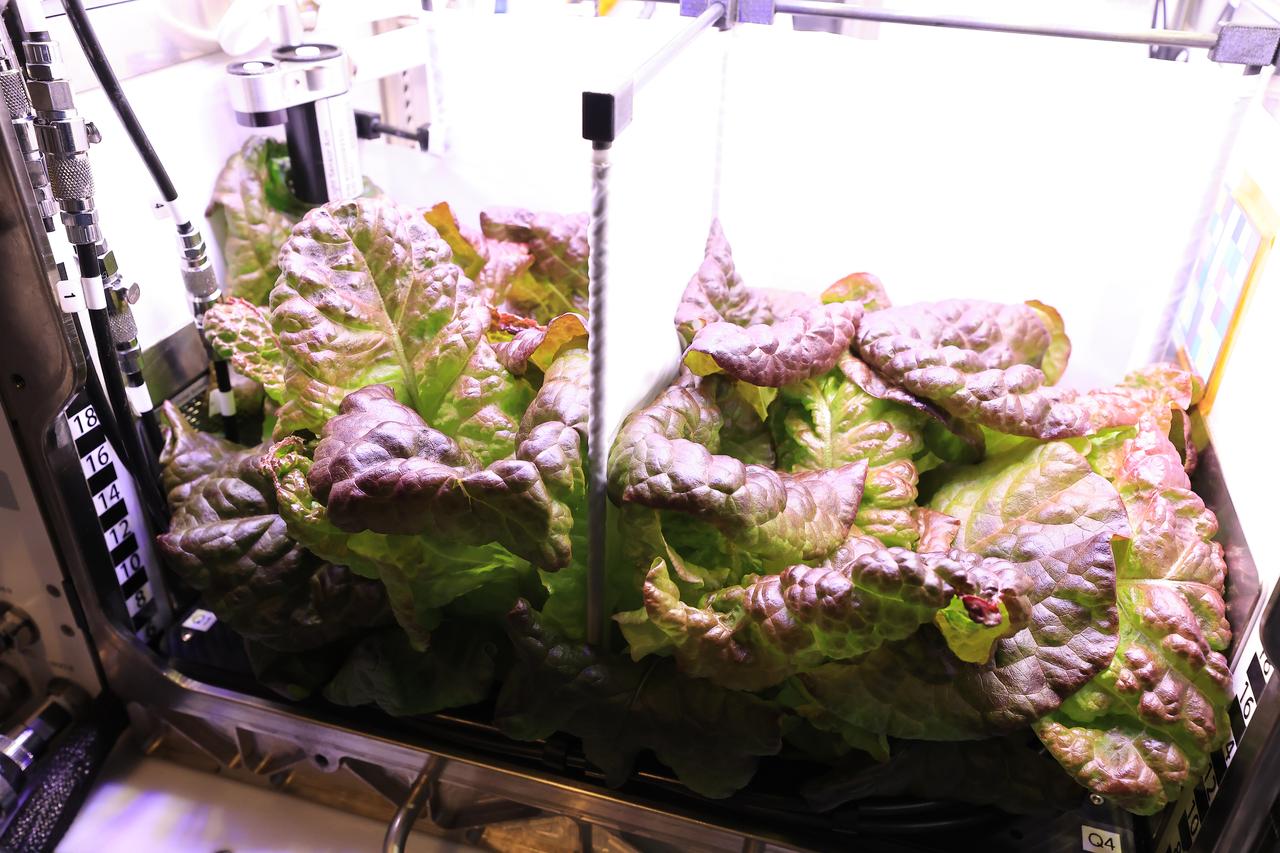
Plant biologists inside a laboratory in the Space Systems Processing Facility at NASA’s Kennedy Space Center in Florida, prepare to harvest Outredgeous romaine lettuce growing in the Advanced Plant Habitat ground unit as the ground control portion of the Plant Habitat-07 (PH-07) experiment on Thursday, April 24, 2025. PH-07 was sent to the International Space Station on NASA’s SpaceX 31st commercial resupply services mission to study how optimal and suboptimal moisture conditions impact plant growth, nutrient content, and the plant microbiome.
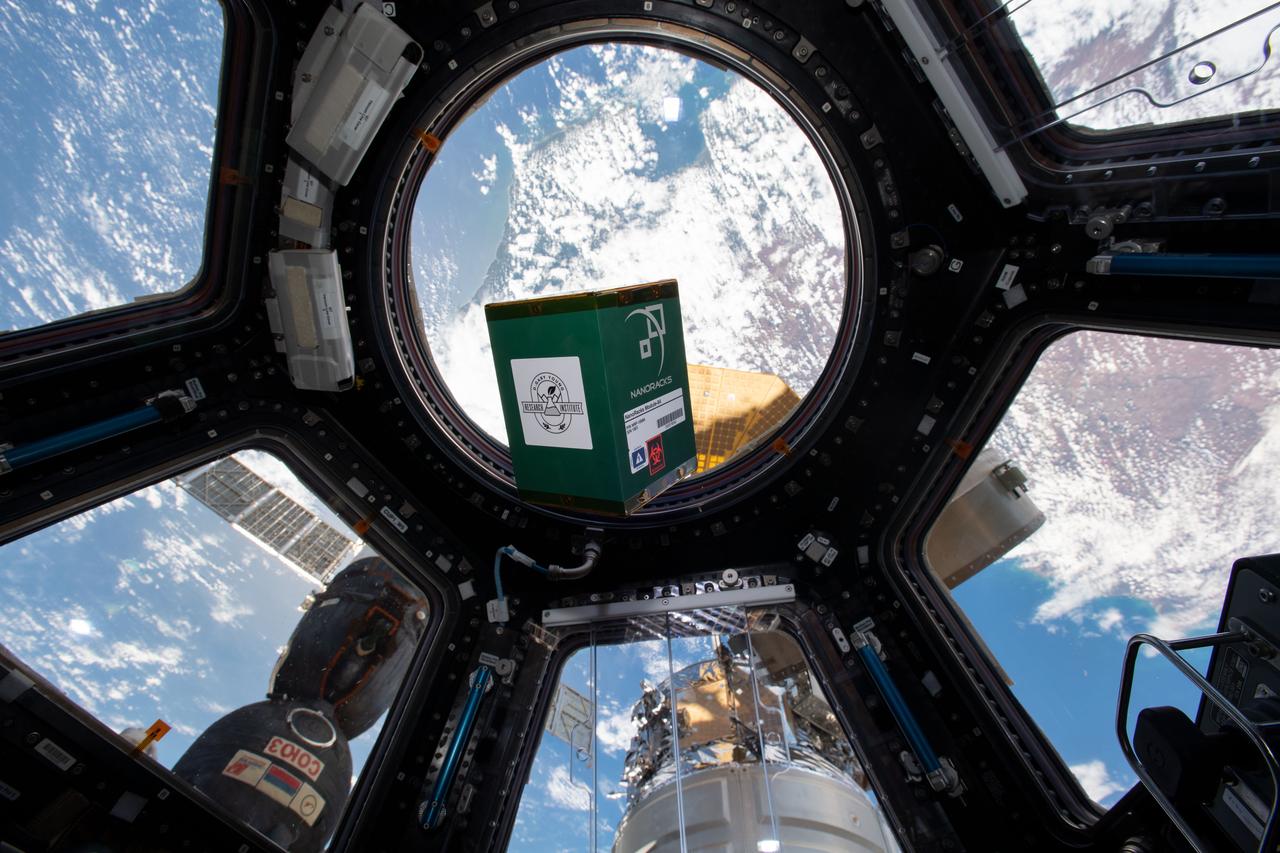
iss060e020116 (7/31/2019) --- A view of the NanoLab containing the Young Living investigation in the Cupola window aboard the International Space Station (ISS). The Young Living investigation studies the effects of exposure to the extraterrestrial environment on plant seeds and essential oils. Researchers expose seeds to the space environment then germinate and grow them to maturity on the ground and extract essential oils. The plant growth and composition of essential oils are compared to those from controls kept on the ground.
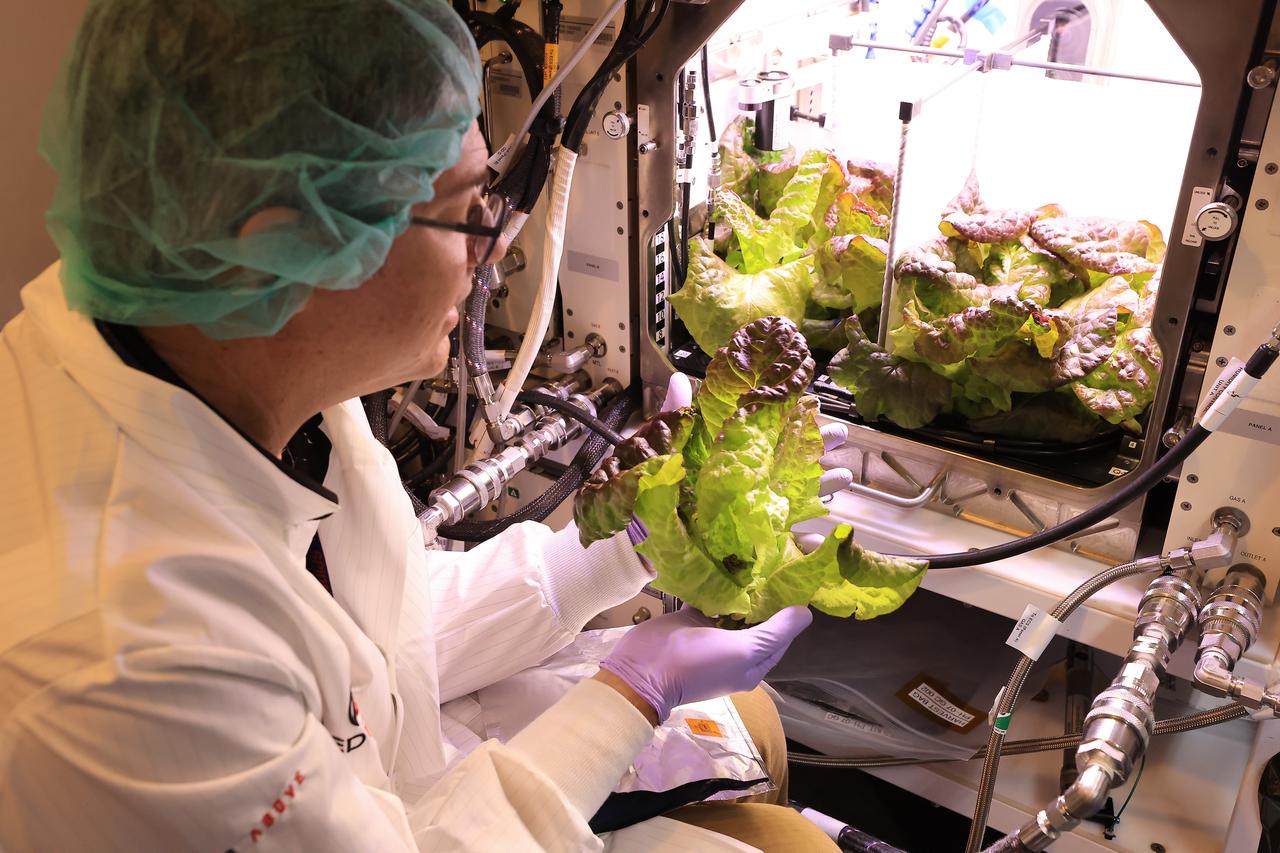
Inside a laboratory in the Space Systems Processing Facility at NASA’s Kennedy Space Center in Florida, a plant biologist harvests Outredgeous romaine lettuce growing in the Advanced Plant Habitat ground unit as the ground control portion of the Plant Habitat-07 (PH-07) experiment on Thursday, April 24, 2025. PH-07 was sent to the International Space Station on NASA’s SpaceX 31st commercial resupply services mission to study how optimal and suboptimal moisture conditions impact plant growth, nutrient content, and the plant microbiome.
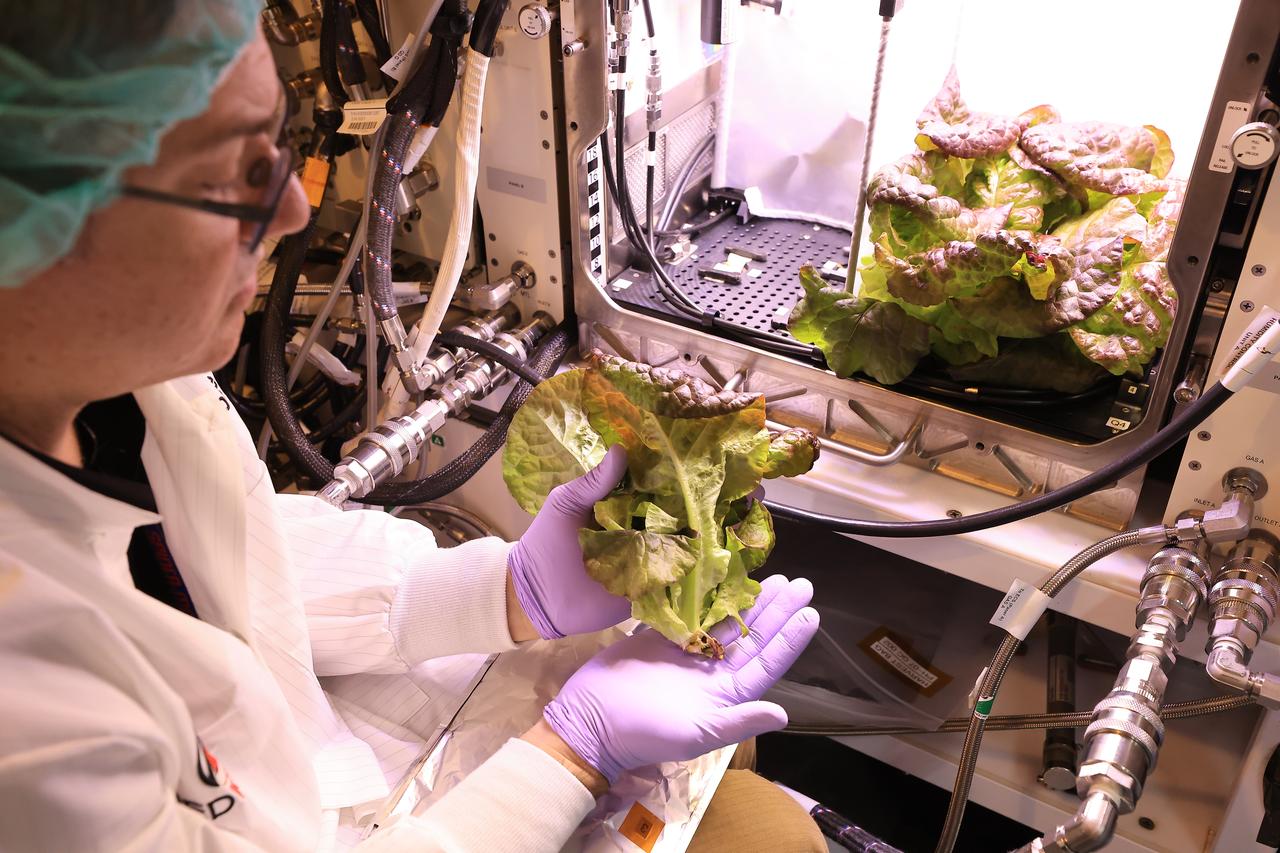
Inside a laboratory in the Space Systems Processing Facility at NASA’s Kennedy Space Center in Florida, a plant biologist harvests Outredgeous romaine lettuce growing in the Advanced Plant Habitat ground unit as the ground control portion of the Plant Habitat-07 (PH-07) experiment on Thursday, April 24, 2025. PH-07 was sent to the International Space Station on NASA’s SpaceX 31st commercial resupply services mission to study how optimal and suboptimal moisture conditions impact plant growth, nutrient content, and the plant microbiome.
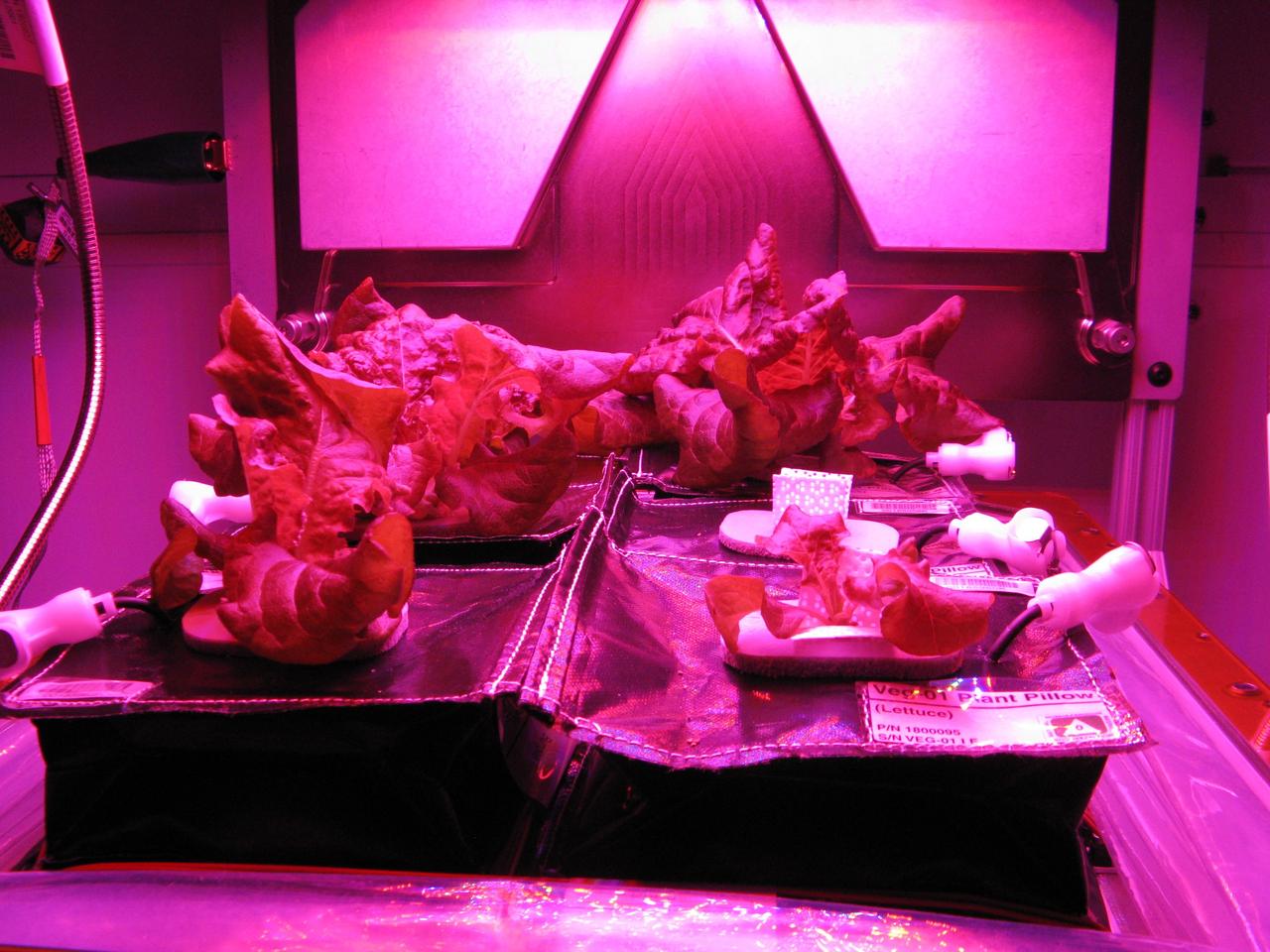
CAPE CANAVERAL, Fla. -- Researchers document the growth of the ground control plants in the Veggie plant growth system inside a control chamber at the Space Station Processing Facility at NASA's Kennedy Space Center in Florida prior to thinning them to one plant each. The growth chamber is being used as a control unit and procedures are being followed identical to those being performed on Veggie and the Veg-01 experiment on the International Space Station. Veggie and Veg-01 were delivered to the space station aboard the SpaceX-3 mission. Veggie is the first fresh food production system delivered to the station. Six plant pillows, each containing outredgeous red romaine lettuce seeds and a root mat were inserted into Veggie. The plant chamber's red, blue and green LED lights were activated. The plant growth was monitored for 28 days. At the end of the cycle, the plants will be carefully harvested, frozen and stored for return to Earth. Photo credit: NASA/Charles Spern
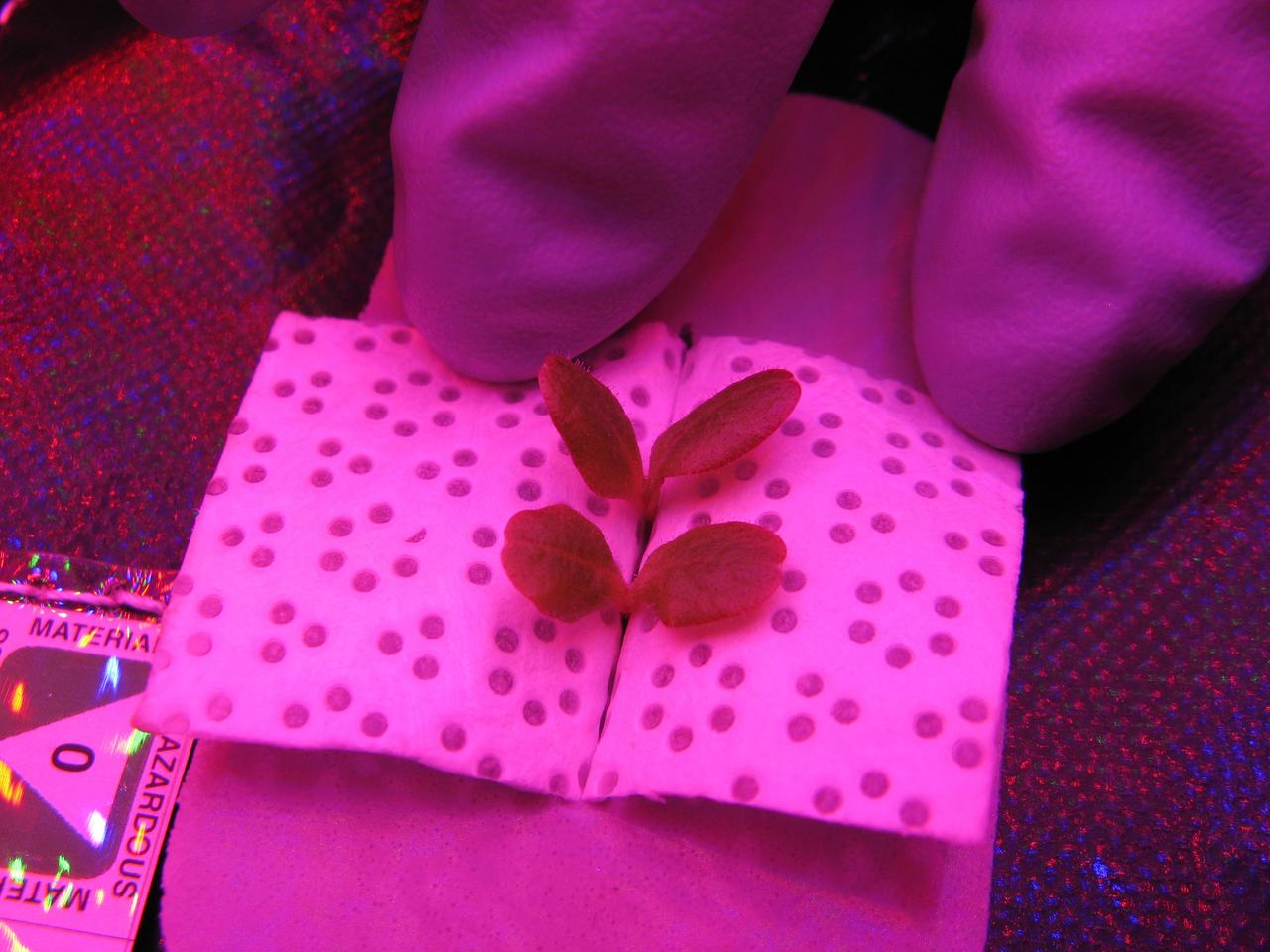
CAPE CANAVERAL, Fla. -- Researchers document the ground control plant pillows in the Veggie plant growth system inside a control chamber at the Space Station Processing Facility at NASA's Kennedy Space Center in Florida prior to thinning them to one plant each. The growth chamber is being used as a control unit and procedures are being followed identical to those being performed on Veggie and the Veg-01 experiment on the International Space Station. Veggie and Veg-01 were delivered to the space station aboard the SpaceX-3 mission. Veggie is the first fresh food production system delivered to the station. Six plant pillows, each containing outredgeous red romaine lettuce seeds and a root mat were inserted into Veggie. The plant chamber's red, blue and green LED lights were activated. The plant growth was monitored for 28 days. At the end of the cycle, the plants will be carefully harvested, frozen and stored for return to Earth. Photo credit: NASA/Charles Spern
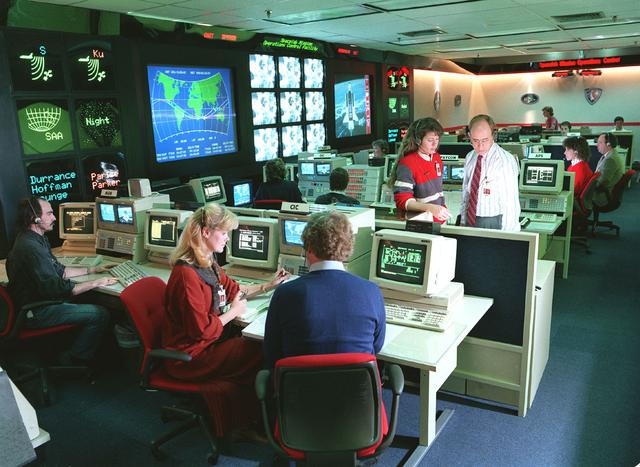
Activities in the Spacelab Mission Operations Control facility at the Marshall Space Flight Center (MSFC) are shown in this photograph. All NASA Spacelab science missions were controlled from and the science astronauts were supported by this facility during the missions. Teams of flight controllers and researchers at the MSFC Space Mission Operations Control Center directed all NASA science operations, sent commands directly to the crew of Spacelab, and received and analyzed data from experiments on board the Spacelab. The facility used the air/ground communications charnels between the astronauts and ground control teams during the Spacelab missions. Spacelab science operations were a cooperative effort between the science astronaut crew in orbit and their colleagues in the Space Mission Operations Control Center. Though the crew and the instrument science teams were separated by many miles, they interacted with one another to evaluate observations and solve problems in much the same way as they would when working side by side in a ground-based laboratory. Most of the action was centered in two work areas: The payload control area from which the overall payload was monitored and controlled and the science operations area where teams of scientists monitored their instruments and direct experiment activities. This facility is no longer operational since the last Spacelab mission, U.S. Microgravity Payload-4 in December 1997, and has become one of the historical sites at MSFC. The facility was reopened as the International Space Station Payload Operations Center in March 2001.
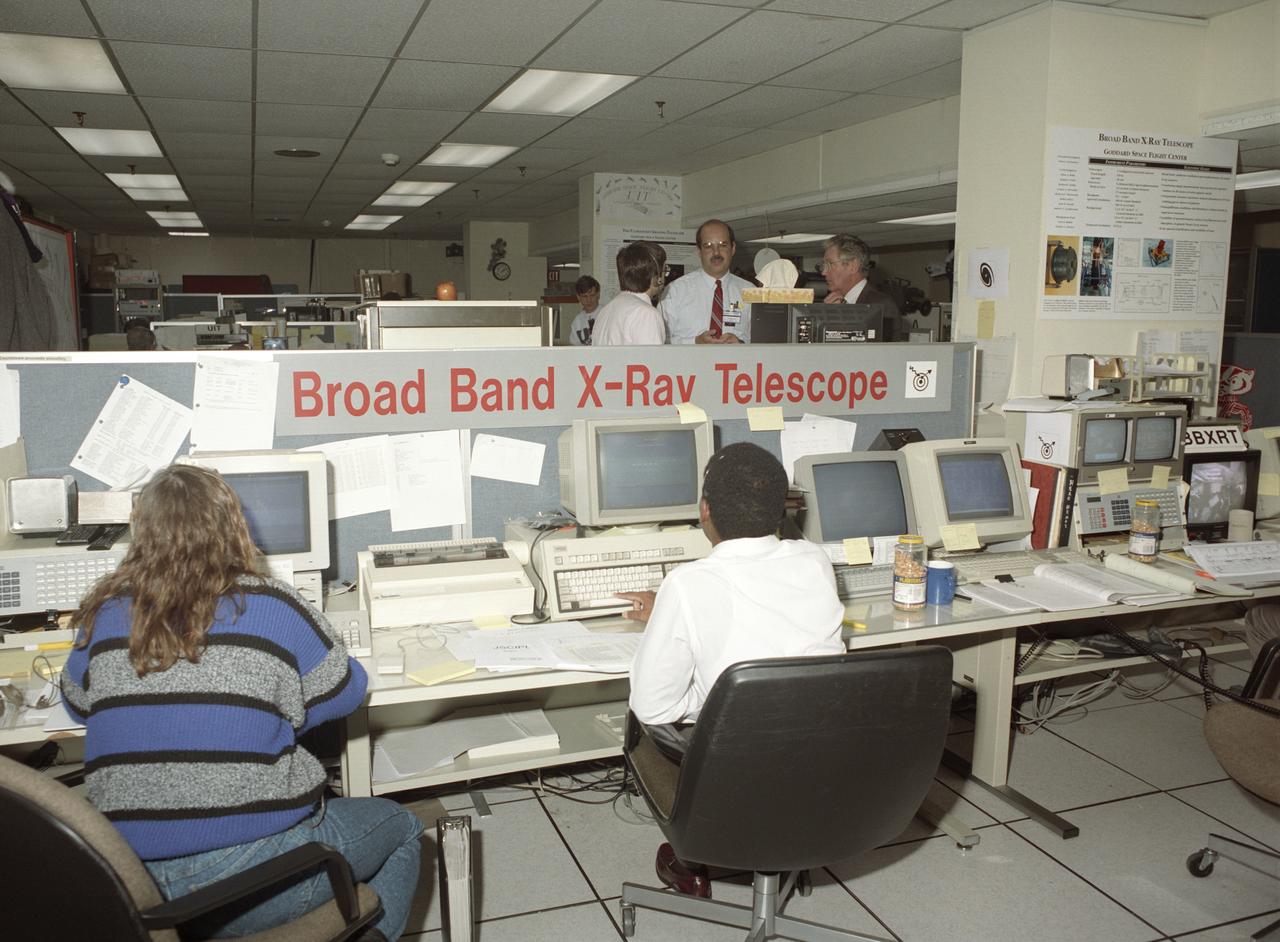
The primary objective of the STS-35 mission was round the clock observation of the celestial sphere in ultraviolet and X-Ray astronomy with the Astro-1 observatory which consisted of four telescopes: the Hopkins Ultraviolet Telescope (HUT); the Wisconsin Ultraviolet Photo-Polarimeter Experiment (WUPPE); the Ultraviolet Imaging Telescope (UIT); and the Broad Band X-Ray Telescope (BBXRT). The Huntsville Operations Support Center (HOSC) Spacelab Payload Operations Control Center (SL POCC) at the Marshall Space Flight Center (MSFC) was the air/ground communication channel used between the astronauts and ground control teams during the Spacelab missions. Teams of controllers and researchers directed on-orbit science operations, sent commands to the spacecraft, received data from experiments aboard the Space Shuttle, adjusted mission schedules to take advantage of unexpected science opportunities or unexpected results, and worked with crew members to resolve problems with their experiments. Due to loss of data used for pointing and operating the ultraviolet telescopes, MSFC ground teams were forced to aim the telescopes with fine tuning by the flight crew. This photo captures the activity of WUPPE (Wisconsin Ultraviolet Photo-Polarimeter Experiment) data review at the Science Operations Area during the mission. This image shows mission activities at the Broad Band X-Ray Telescope (BBXRT) Work Station in the Science Operations Area (SOA).
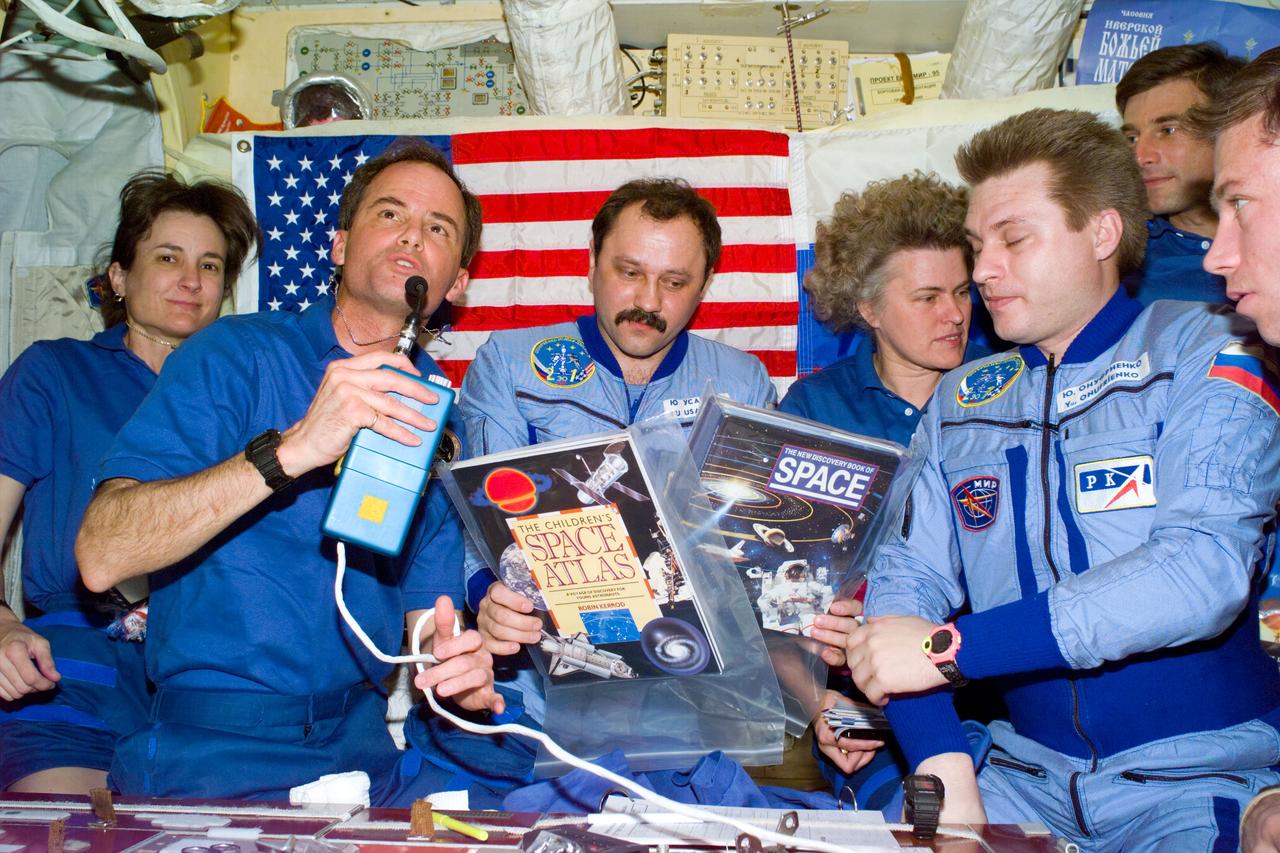
S76-E-5157 (24 March 1996) --- Two Russian cosmonauts and five of six NASA astronauts exchange gifts soon after reuniting in the Base Block Module of Russia's Mir Space Station. From the left are Linda M. Godwin, Kevin P. Chilton, Yury V. Usachev, Shannon W. Lucid, Yury I. Onufrienko, Ronald M. Sega and Richard A. Searfoss. Not pictured is astronaut Michael R. (Rich) Clifford. In a light moment around this time, ground controllers informed Chilton, the STS-76 mission commander, that Lucid, who will spend several months onboard Mir as a cosmonaut guest researcher, should now be considered a Mir-21 crew member, along with Onufrienko and Usachev, Mir-21 flight engineer. The image was recorded with a 35mm Electronic Still Camera (ESC) and downlinked at a later time to ground controllers in Houston, Texas.
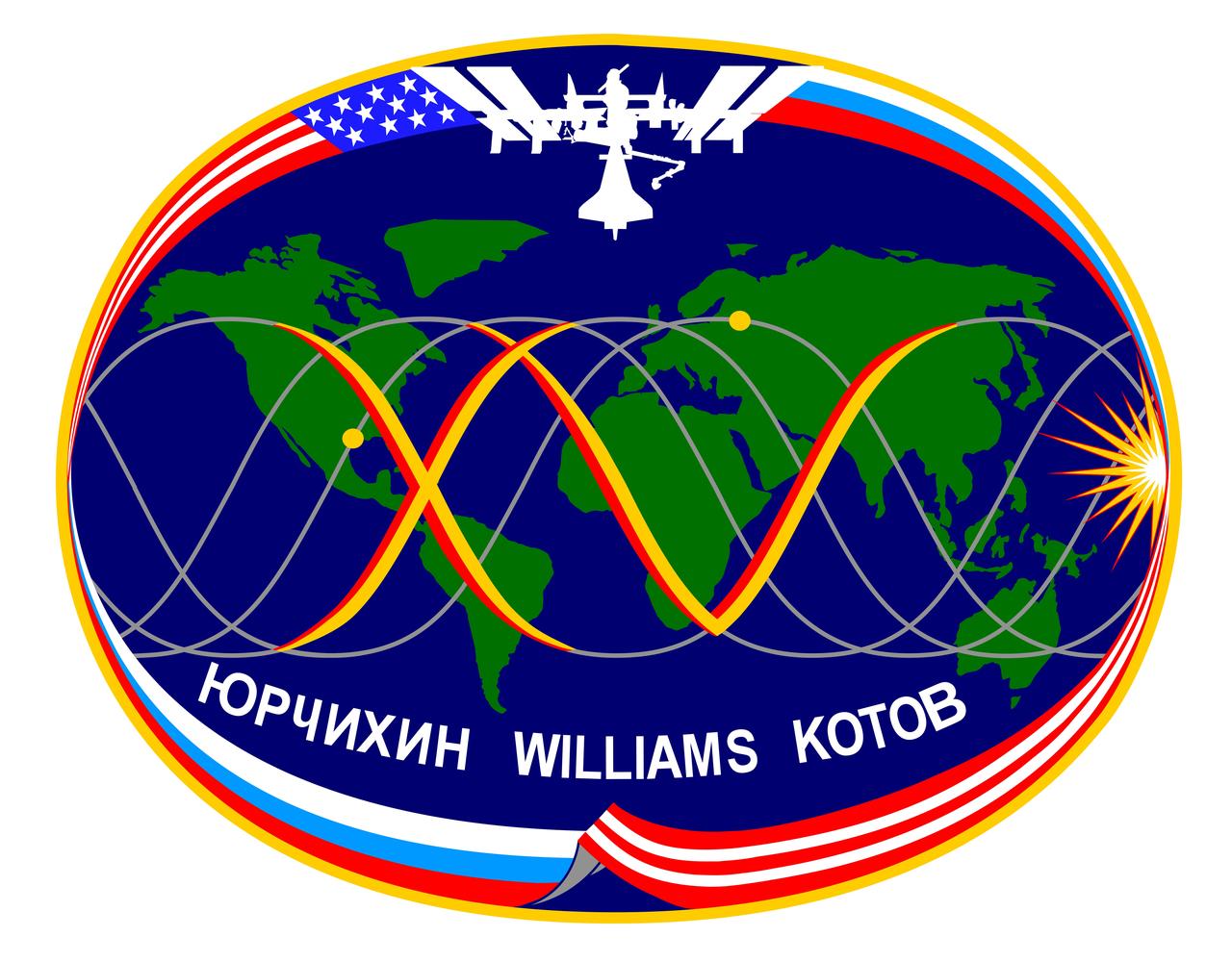
ISS015-S-001A (Nov. 2006) --- The operational teamwork between human space flight controllers and the on-orbit crew take center stage in this emblem. Against a backdrop familiar to all flight controllers, past and present, independent of any nationality, the fifteenth expedition to the ISS is represented in Roman numeral form as part of the ground track traces emblazoned on the Mercator projection of the home planet Earth. The ISS, shown in its fully operational, assembly complete configuration, unfurls and then reunites the flags of this Russian and American crew in a show of our continuing international cooperation. Golden spheres placed strategically on the ground track near the flight control centers of the United States and Russia serve to symbolize both the joint efforts from each nation's team of flight controllers and the shuttle and Soyuz crew vehicles in their chase orbit as they rendezvous with the ISS. A rising sun provides a classic touch to the emblem signifying the perpetual nature of manned space flight operations and their origin in these two space-faring nations. The NASA insignia design for shuttle and space station flights is reserved for use by the astronauts and for other official use as the NASA Administrator may authorize. Public availability has been approved only in the forms of illustrations by the various news media. When and if there is any change in this policy, which is not anticipated, the change will be publicly announced.
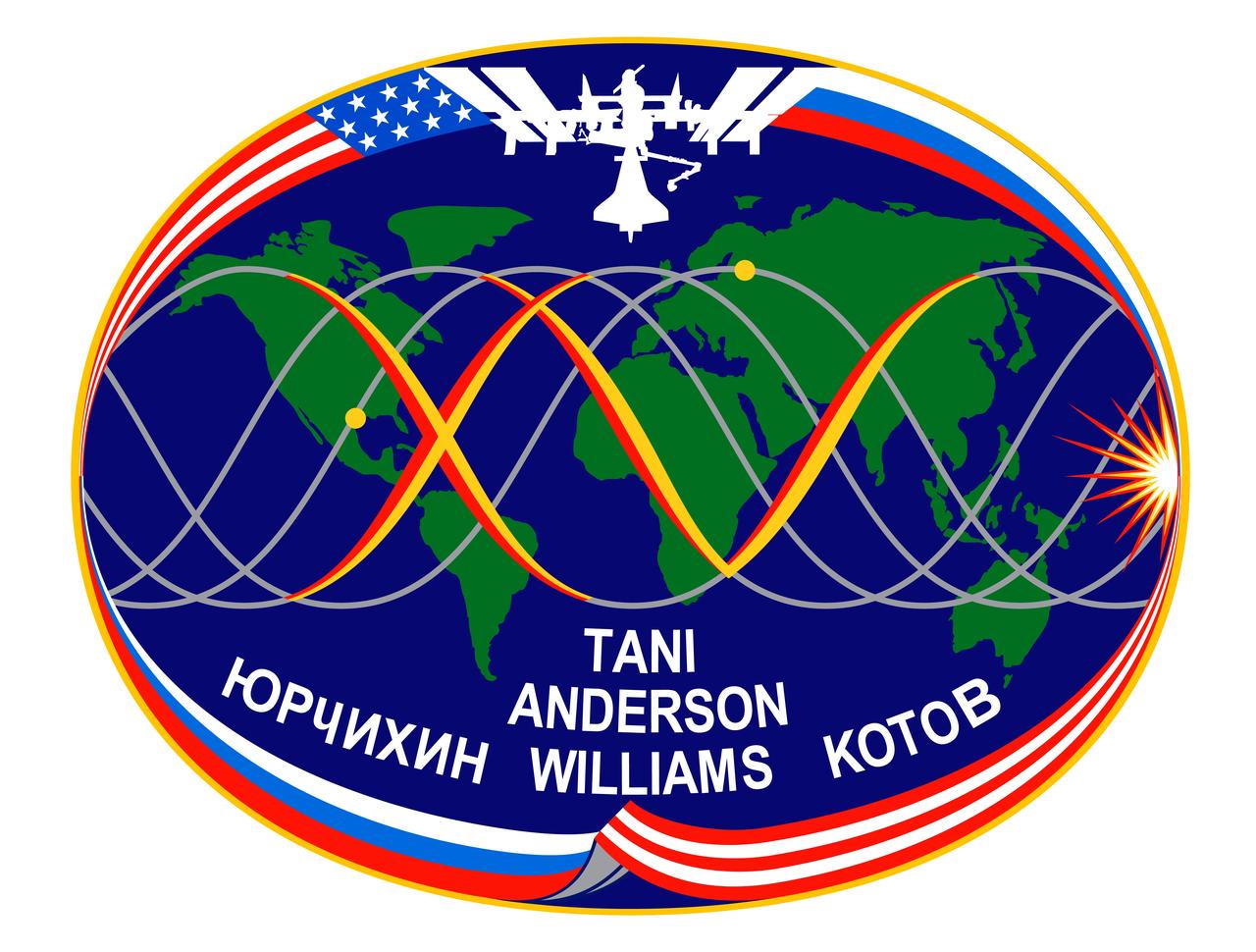
ISS015-S-001F (November 2006) --- The operational teamwork between human space flight controllers and the on-orbit crew take center stage in this emblem. Against a backdrop familiar to all flight controllers, past and present, independent of any nationality, the fifteenth expedition to the ISS is represented in Roman numeral form as part of the ground track traces emblazoned on the Mercator projection of the home planet Earth. The ISS, shown in its fully operational, assembly complete configuration, unfurls and then reunites the flags of this Russian and American crew in a show of our continuing international cooperation. Golden spheres placed strategically on the ground track near the flight control centers of the United States and Russia serve to symbolize both the joint efforts from each nation's team of flight controllers and the shuttle and Soyuz crew vehicles in their chase orbit as they rendezvous with the ISS. A rising sun provides a classic touch to the emblem signifying the perpetual nature of manned space flight operations and their origin in these two space-faring nations. The NASA insignia design for shuttle and space station flights is reserved for use by the astronauts and for other official use as the NASA Administrator may authorize. Public availability has been approved only in the forms of illustrations by the various news media. When and if there is any change in this policy, which is not anticipated, the change will be publicly announced.
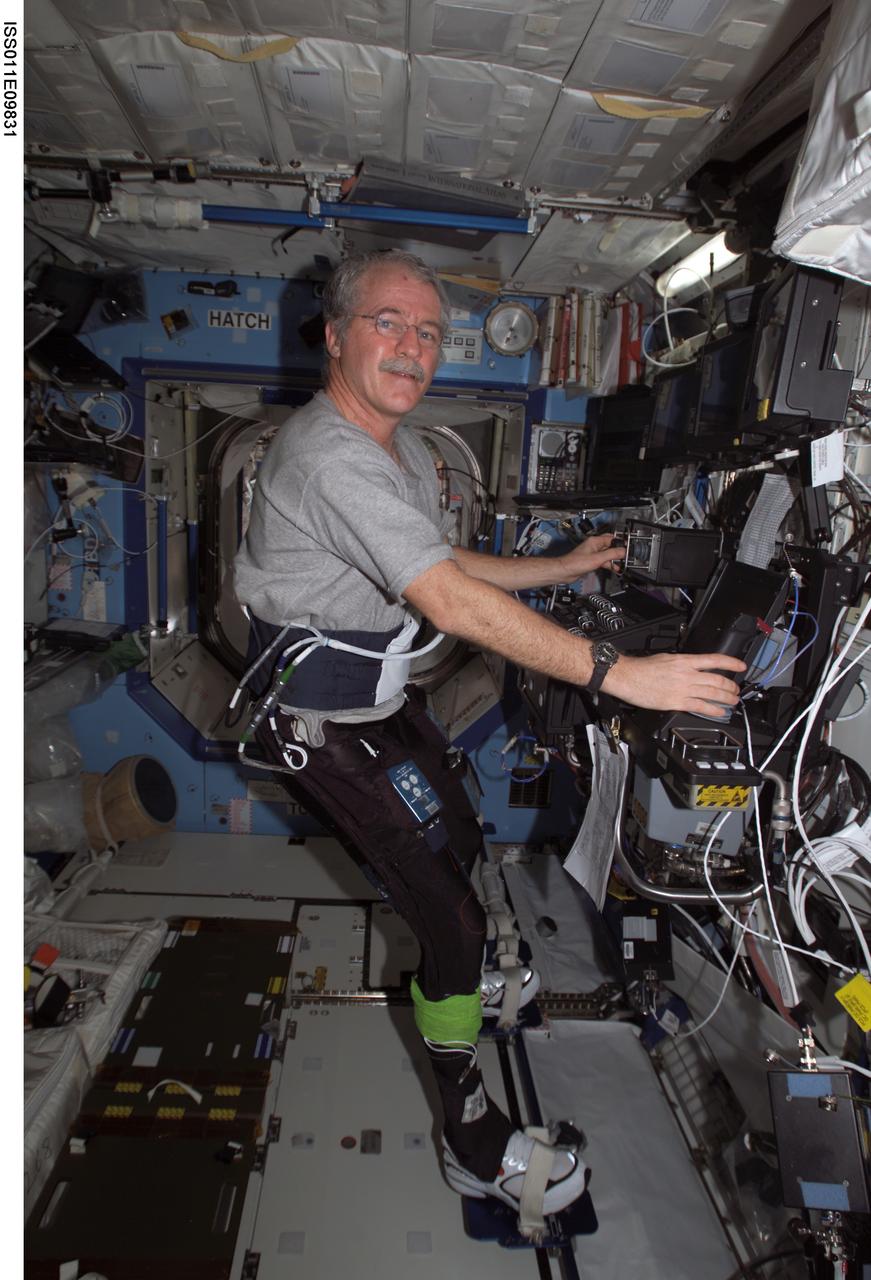
ISS011-E-09831 (29 June 2005) --- Astronaut John L. Phillips, Expedition 11 NASA Space Station science officer and flight engineer, works at the Canadarm2 controls while participating in the Foot/Ground Reaction Forces During Spaceflight (FOOT) experiment in the Destiny laboratory of the International Space Station. Phillips wore the specially instrumented Lower Extremity Monitoring Suit (LEMS), cycling tights outfitted with sensors, during the experiment.
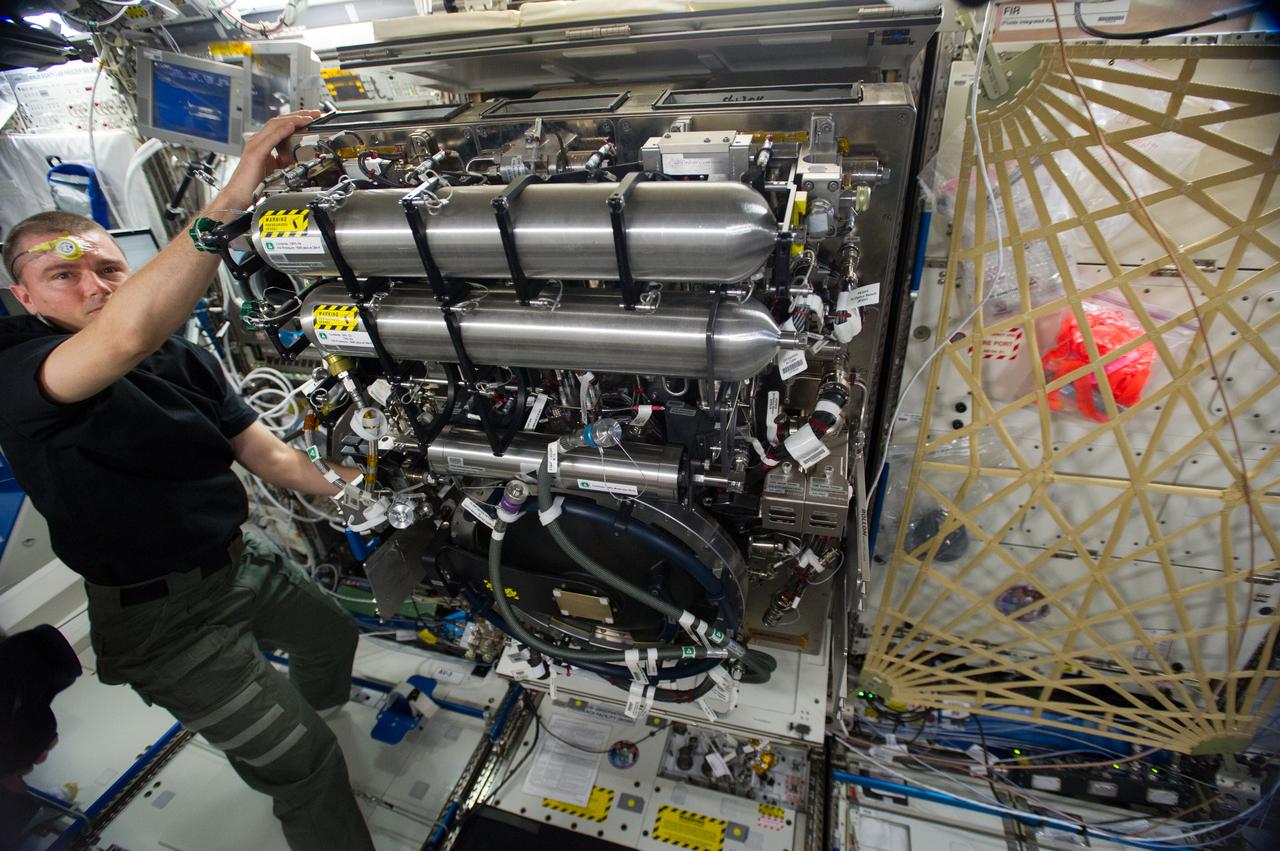
ISS040-E-072156 (21 July 2014) --- In the International Space Station’s Destiny laboratory, NASA astronaut Reid Wiseman, Expedition 40 flight engineer, sets up the Combustion Integrated Rack (CIR) for more ground-commanded tests. This facility, which includes an optics bench, combustion chamber, fuel and oxidizer control and five different cameras, allows a variety of combustion experiments to be performed safely aboard the station.
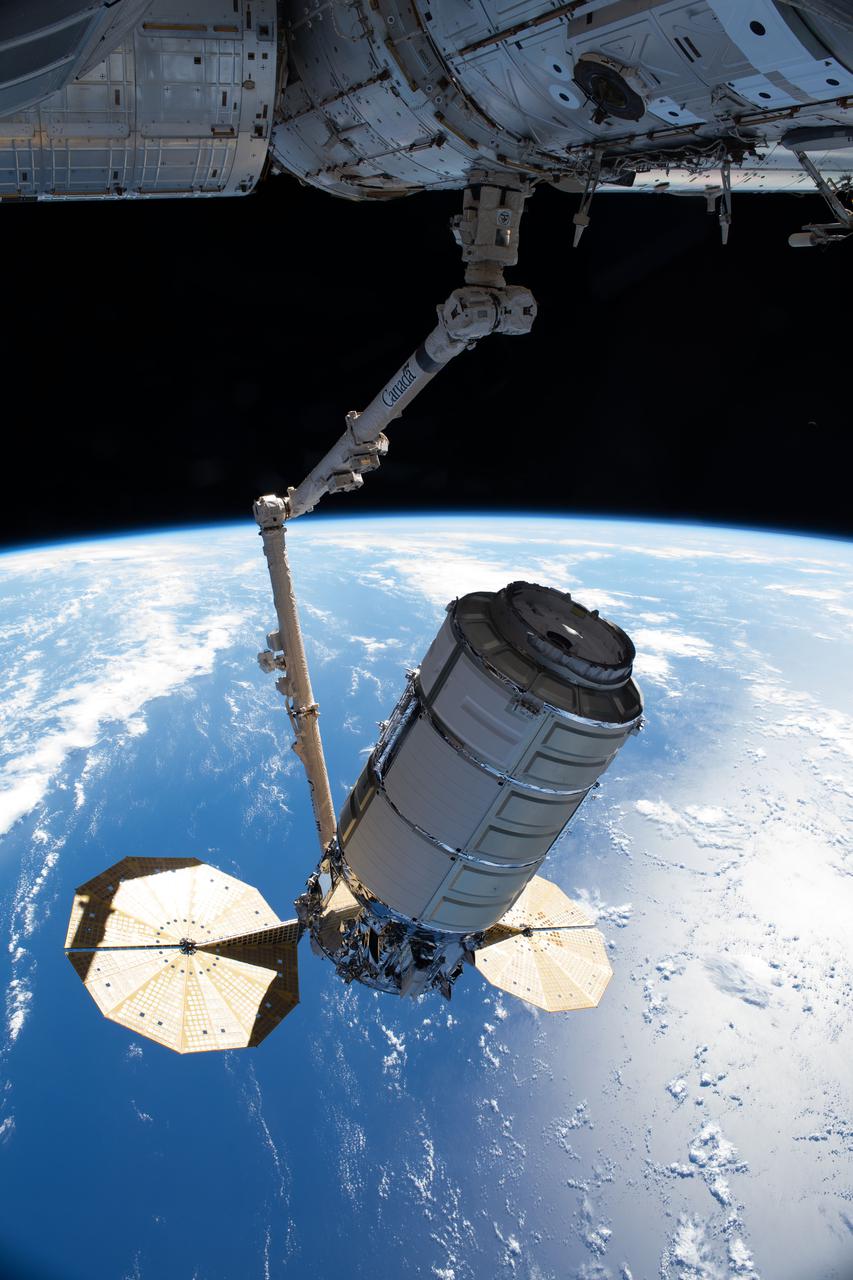
iss065e241472 (Aug. 12, 2021) --- Northrop Grumman's Cygnus space freighter, in the grips of the Canadarm2 robotic arm, is remotely maneuvered by ground controllers toward the International Space Station's Unity module where it was installed for three months of cargo operations. The International Space Station was orbiting 261 miles above the Atlantic Ocean near the Caribbean Sea at the time of this photograph.
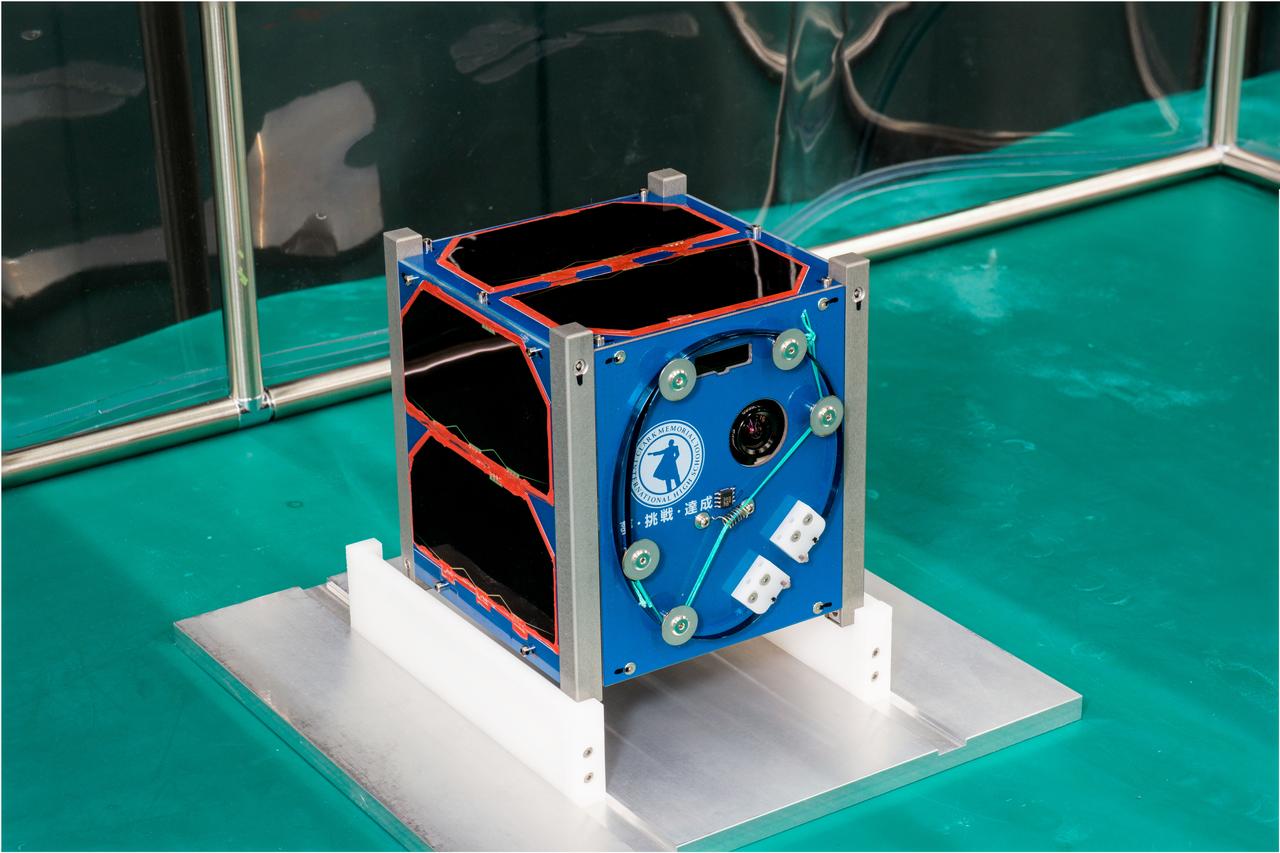
jsc2023e054750 (9/27/2023) --- Clark sat-1 is a 1U size cubesat. The satellite will send voice messages and image data recorded by high school students themselves to ground control stations and general amateur stations. These data will encourage organizations and individuals working on environmental issues on Earth and in space. Image Credit: ArkEdge Space Inc..

ISS034-E-031125 (17 Jan. 2013) --- In the International Space Station's Destiny laboratory, Robonaut 2 is pictured during a round of testing for the first humanoid robot in space. Ground teams put Robonaut through its paces as they remotely commanded it to operate valves on a task board. Robonaut is a testbed for exploring new robotic capabilities in space, and its form and dexterity allow it to use the same tools and control panels as its human counterparts do aboard the station.
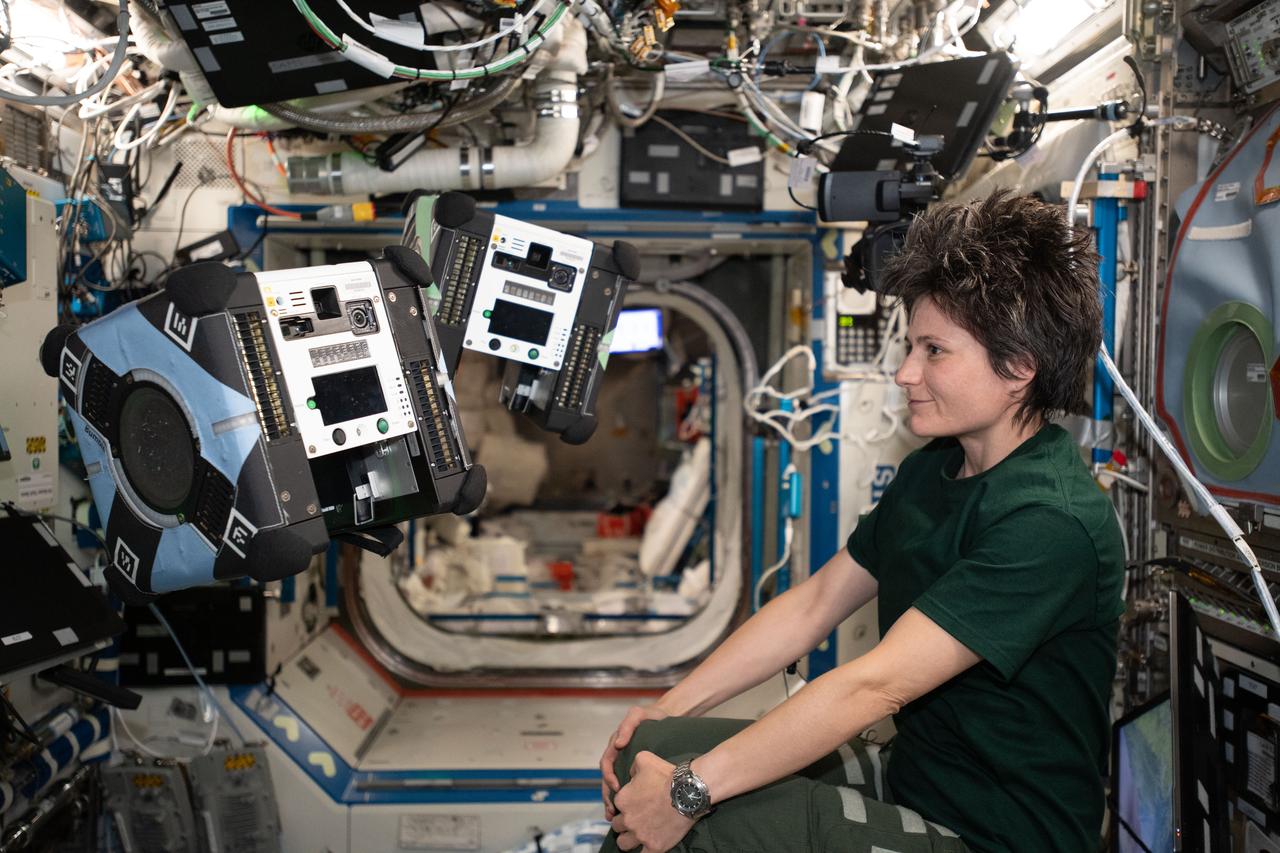
iss067e059518 (May 18, 2022) --- ESA (European Space Agency) astronaut and Expedition 67 Flight Engineer Samantha Cristoforetti monitors a pair of Astrobee robotic free-flyers performing autonomous maneuvers inside the International Space Station. The cube-shaped, toaster-sized robots are designed to help scientists and engineers develop and test technologies for use in microgravity to assist astronauts with routine chores, and give ground controllers additional eyes and ears on the space station.
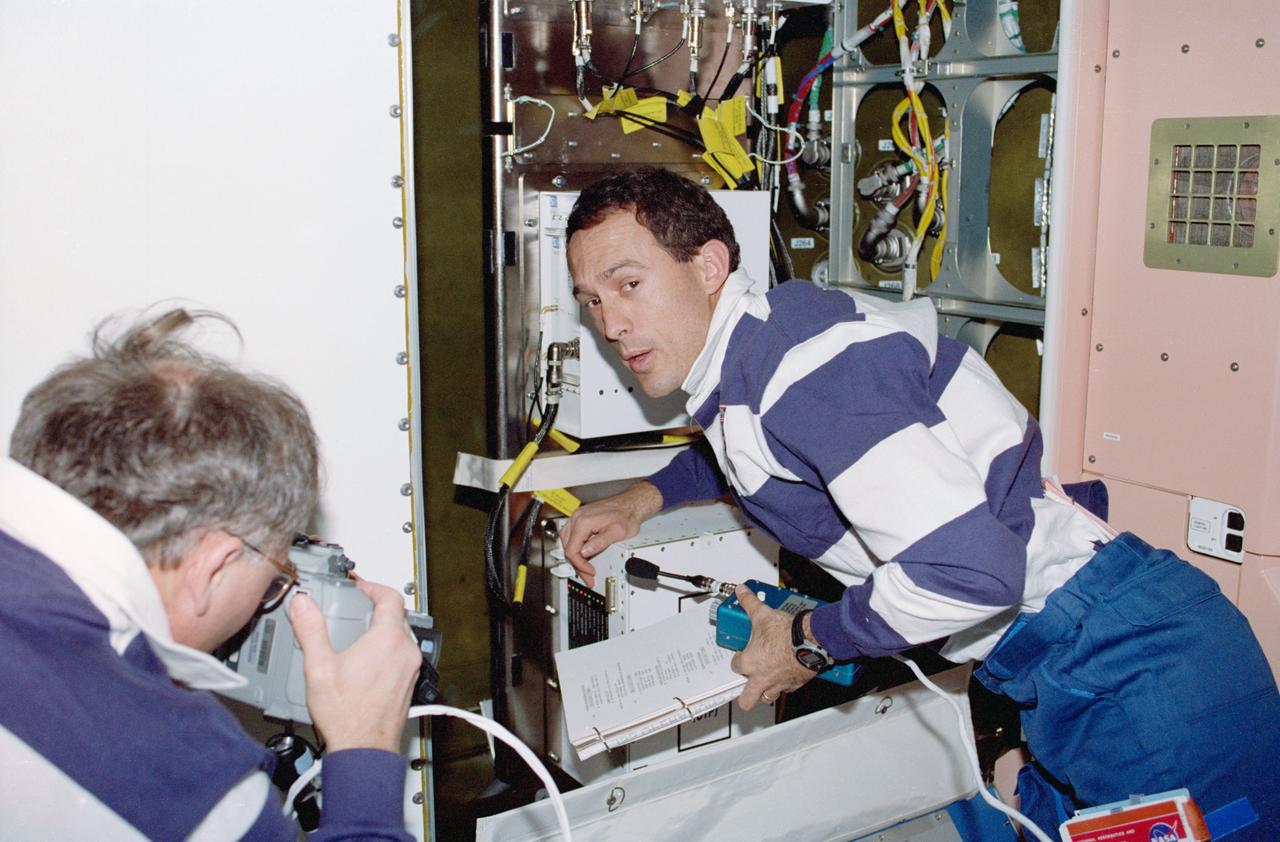
STS088-334-033 (4-15 Dec. 1998) --- Astronauts Jerry L. Ross (on left with camera) and James H. Newman, both mission specialists, work in the Unity Module (Node 1). This task was designed to complete the assembly of an early S-band communications system that will allow flight controllers in Houston, Texas, to send commands to Unity's systems and to keep tabs on the health of the station with a more extensive communications capability than exists through Russian ground stations.
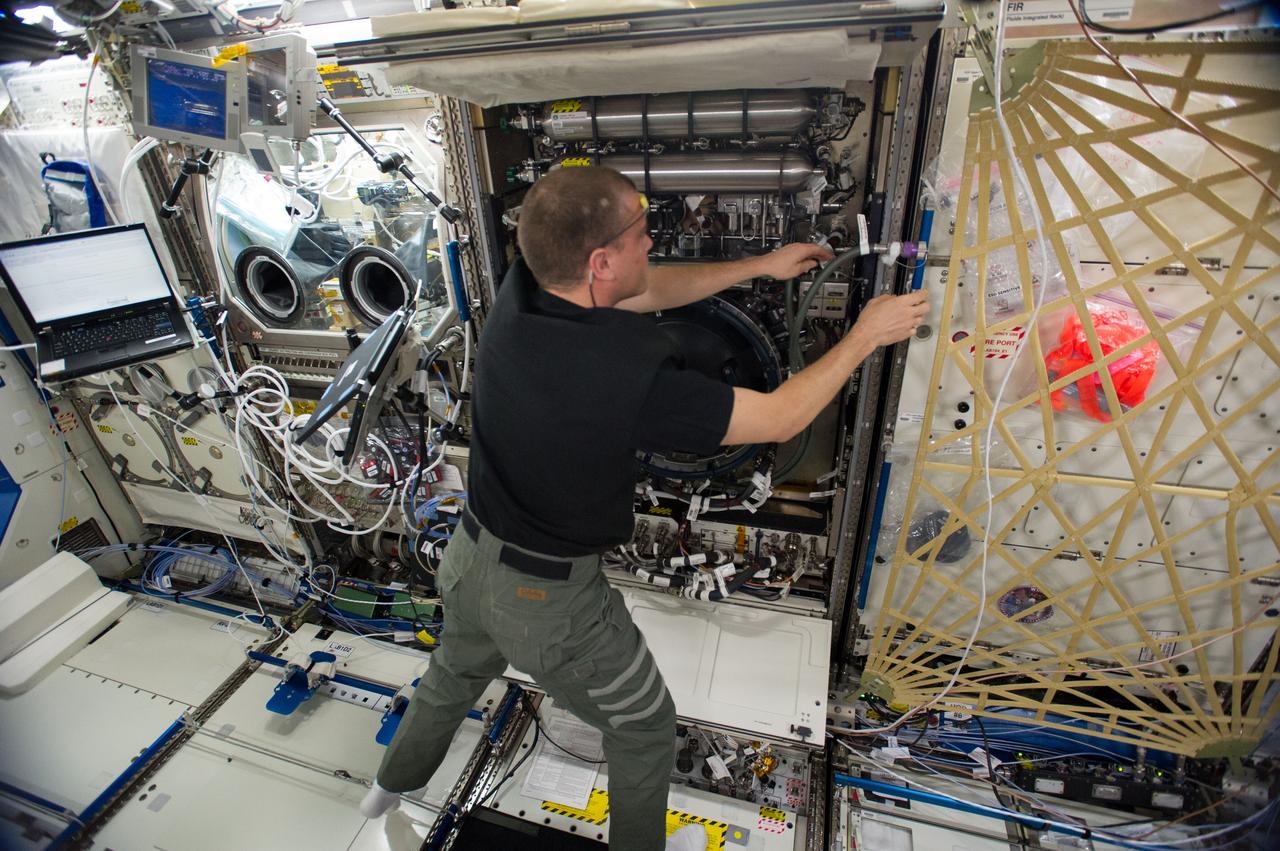
ISS040-E-071994 (21 July 2014) --- In the International Space Station’s Destiny laboratory, NASA astronaut Reid Wiseman, Expedition 40 flight engineer, sets up the Combustion Integrated Rack (CIR) for more ground-commanded tests. This facility, which includes an optics bench, combustion chamber, fuel and oxidizer control and five different cameras, allows a variety of combustion experiments to be performed safely aboard the station.
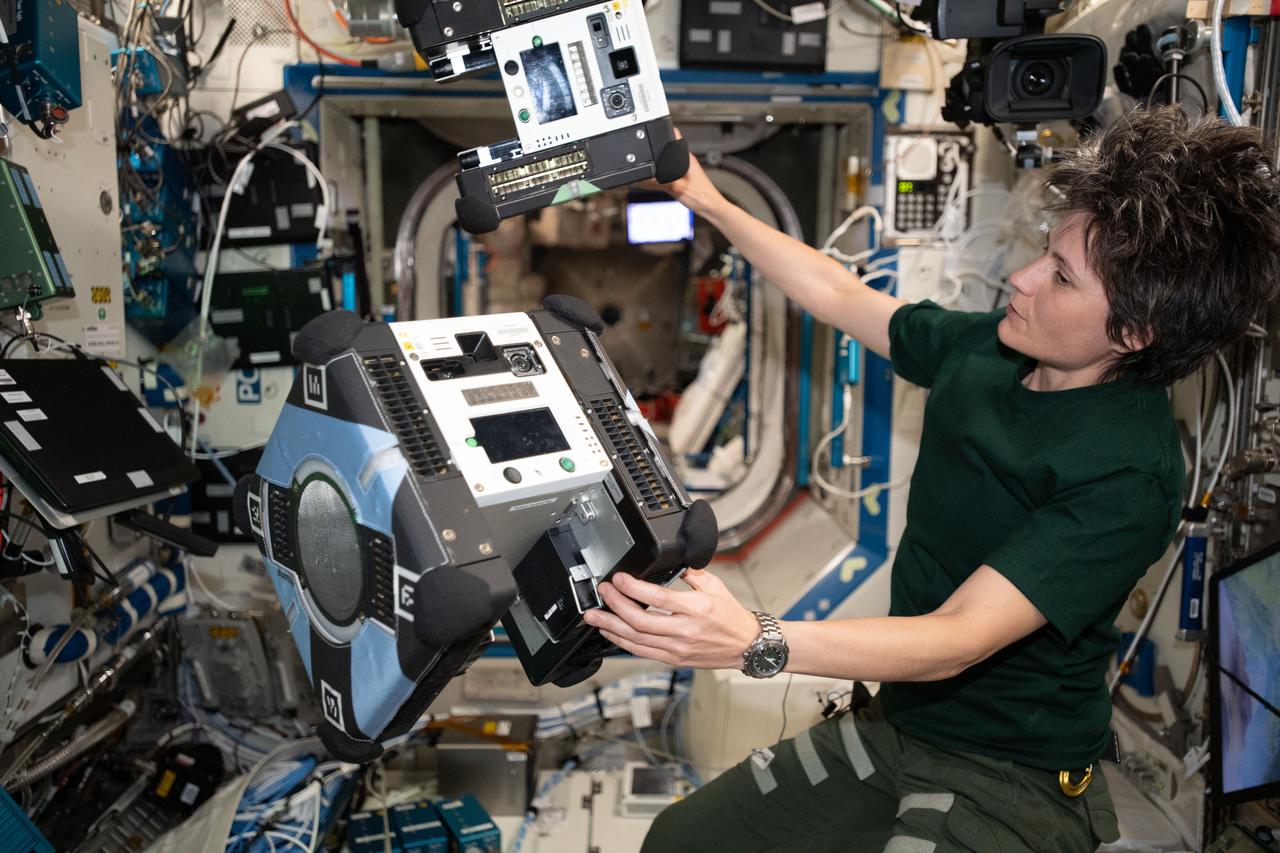
iss067e059514 (May 18, 2022) --- ESA (European Space Agency) astronaut and Expedition 67 Flight Engineer Samantha Cristoforetti monitors a pair of Astrobee robotic free-flyers performing autonomous maneuvers inside the International Space Station. The cube-shaped, toaster-sized robots are designed to help scientists and engineers develop and test technologies for use in microgravity to assist astronauts with routine chores, and give ground controllers additional eyes and ears on the space station.
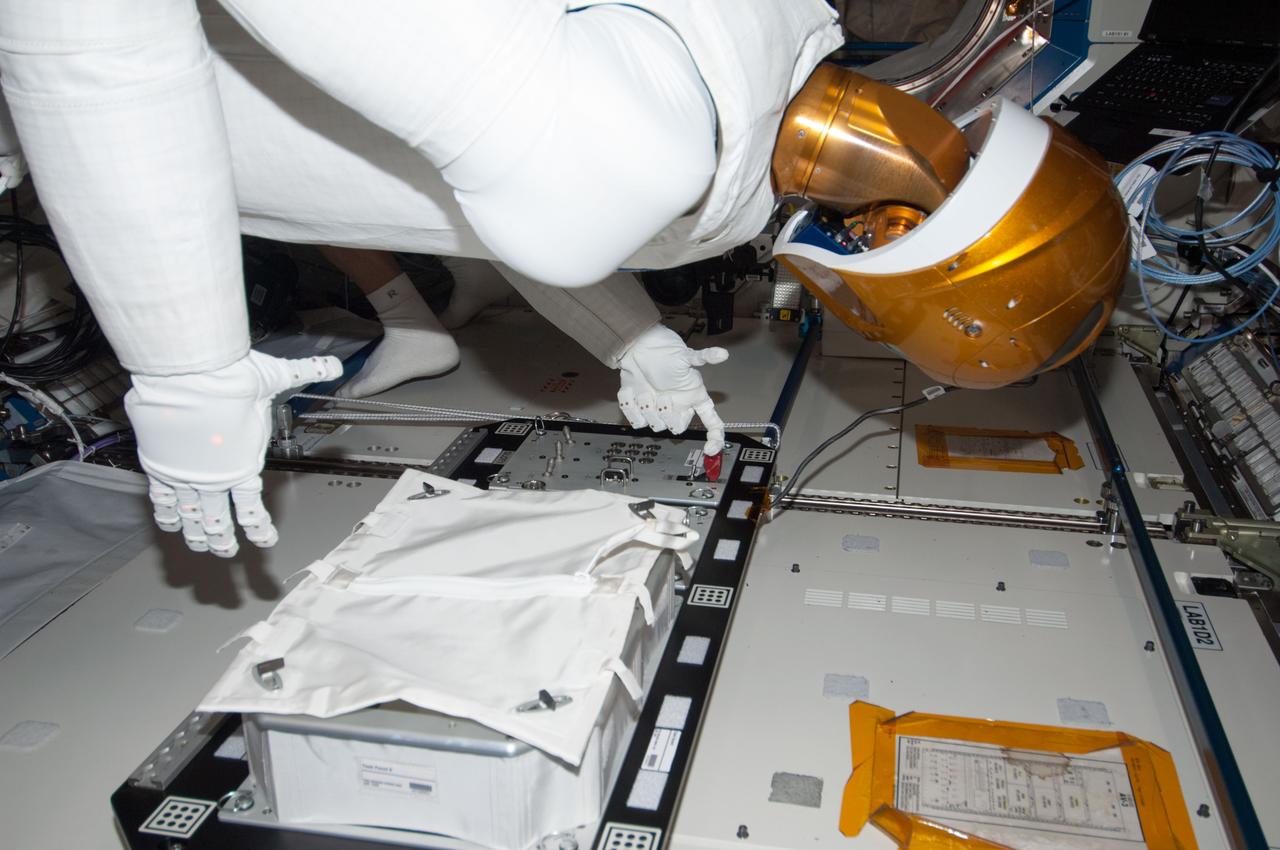
ISS034-E-031124 (17 Jan. 2013) --- In the International Space Station's Destiny laboratory, Robonaut 2 is pictured during a round of testing for the first humanoid robot in space. Ground teams put Robonaut through its paces as they remotely commanded it to operate valves on a task board. Robonaut is a testbed for exploring new robotic capabilities in space, and its form and dexterity allow it to use the same tools and control panels as its human counterparts do aboard the station.
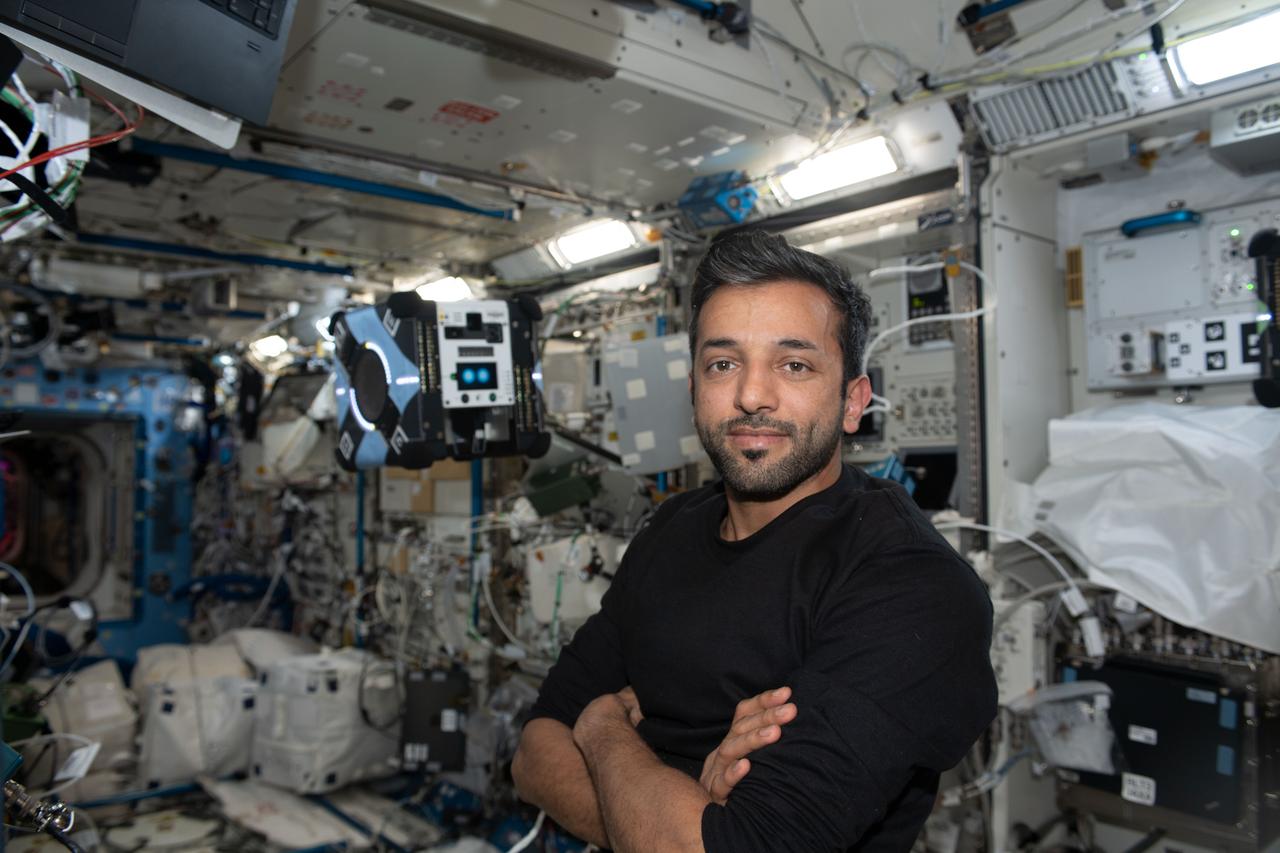
iss068e076362 (March 24, 2023) --- UAE (United Arab Emirates) astronaut and Expedition 68 Flight Engineer Sultan Alneyadi poses with a free-flying AstroBee robotic helper inside the International Space Station's Kibo laboratory module. The AstroBee is a cube-shaped, toaster-sized robotic device that is being tested for its ability to assist astronauts with routine chores, and give ground controllers additional eyes and ears on the space station.
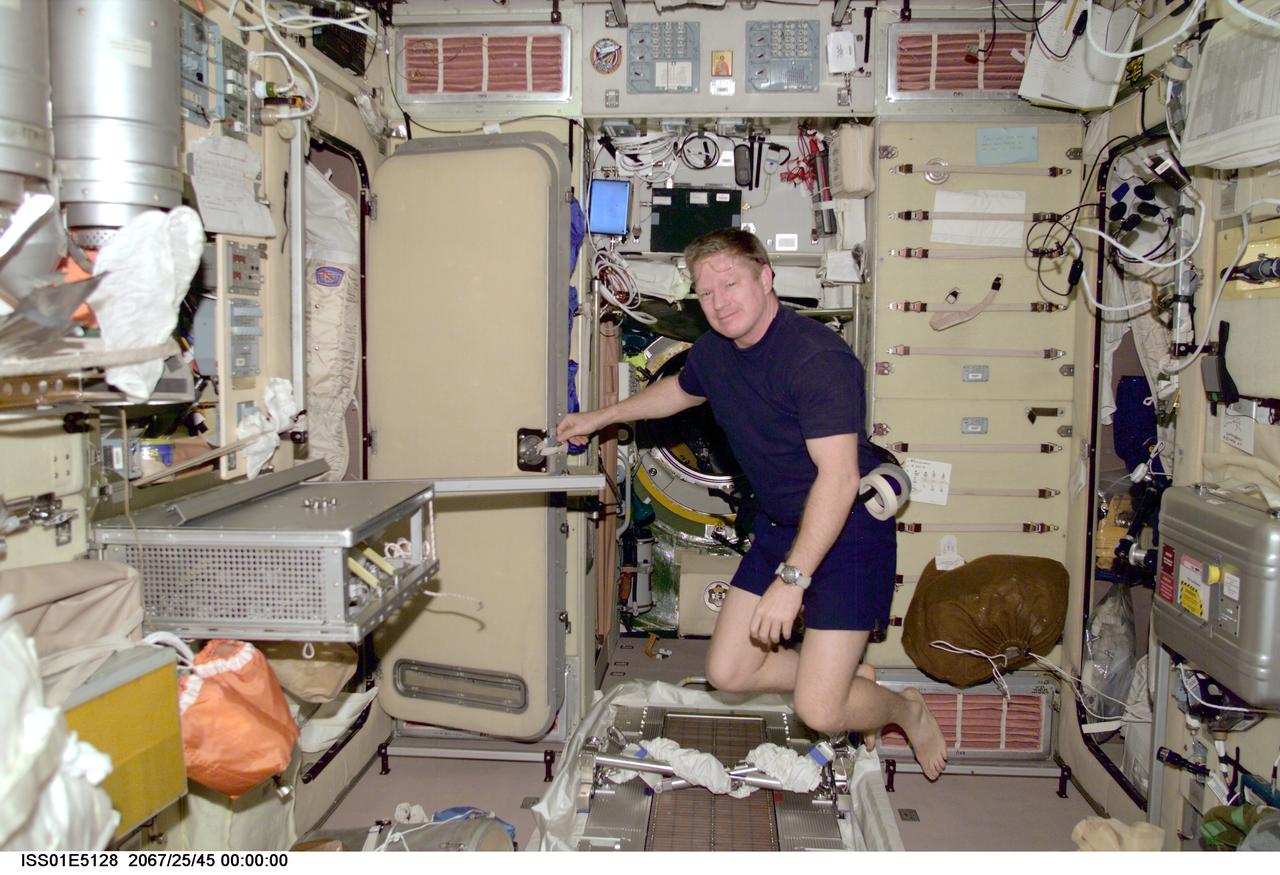
ISS01-E-5128 (December 2000) --- Astronaut William M. Shepherd, commander for the Expedition One mission, floats in the microgravity, shirt-sleeve environment of the International Space Station's Zvezda Service Module. Shepherd was taking a brief break from work to install various furnishings for the SM. The image was taken with a digital still camera and down linked from the station to ground controllers in Houston.
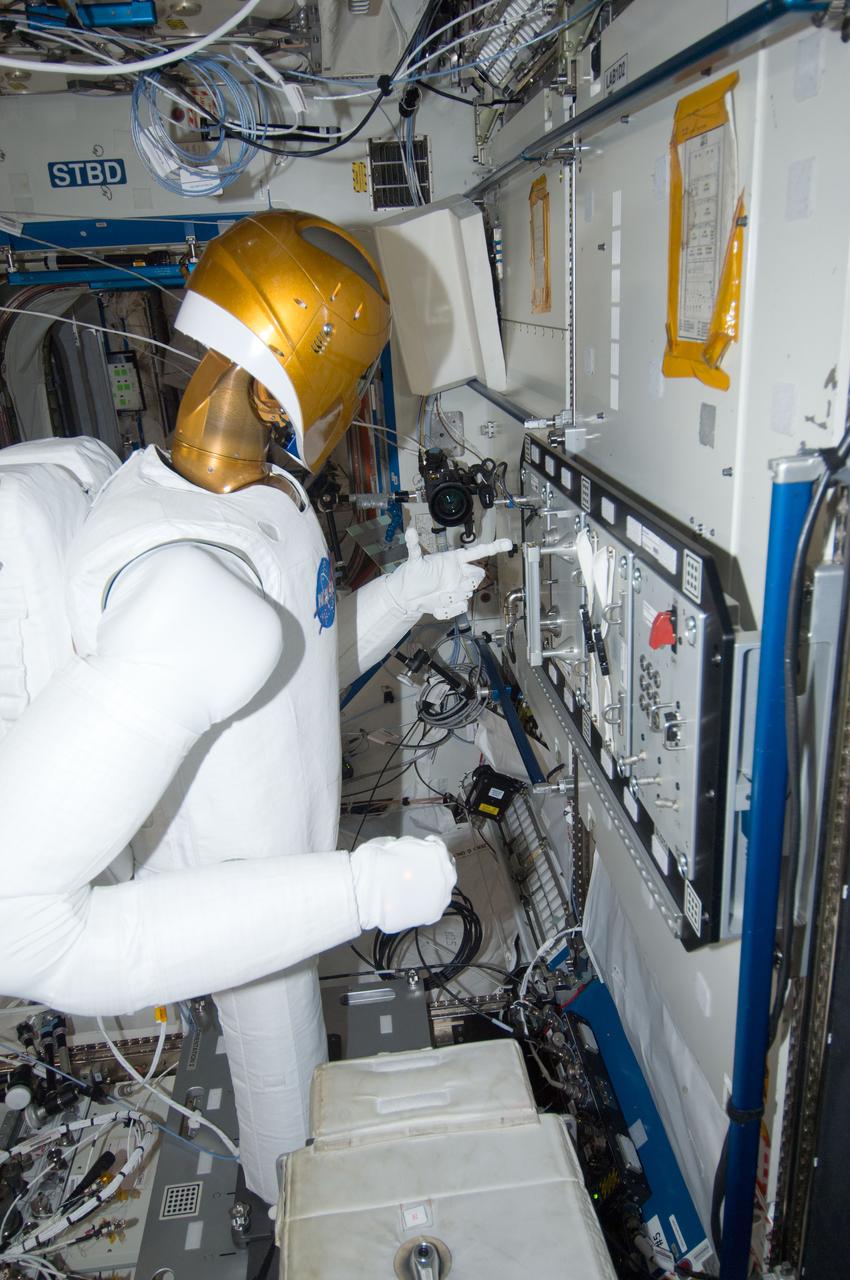
ISS034-E-013990 (2 Jan. 2013) --- In the International Space Station’s Destiny laboratory, Robonaut 2 is pictured during a round of testing for the first humanoid robot in space. Ground teams put Robonaut through its paces as they remotely commanded it to operate valves on a task board. Robonaut is a testbed for exploring new robotic capabilities in space, and its form and dexterity allow it to use the same tools and control panels as its human counterparts do aboard the station.
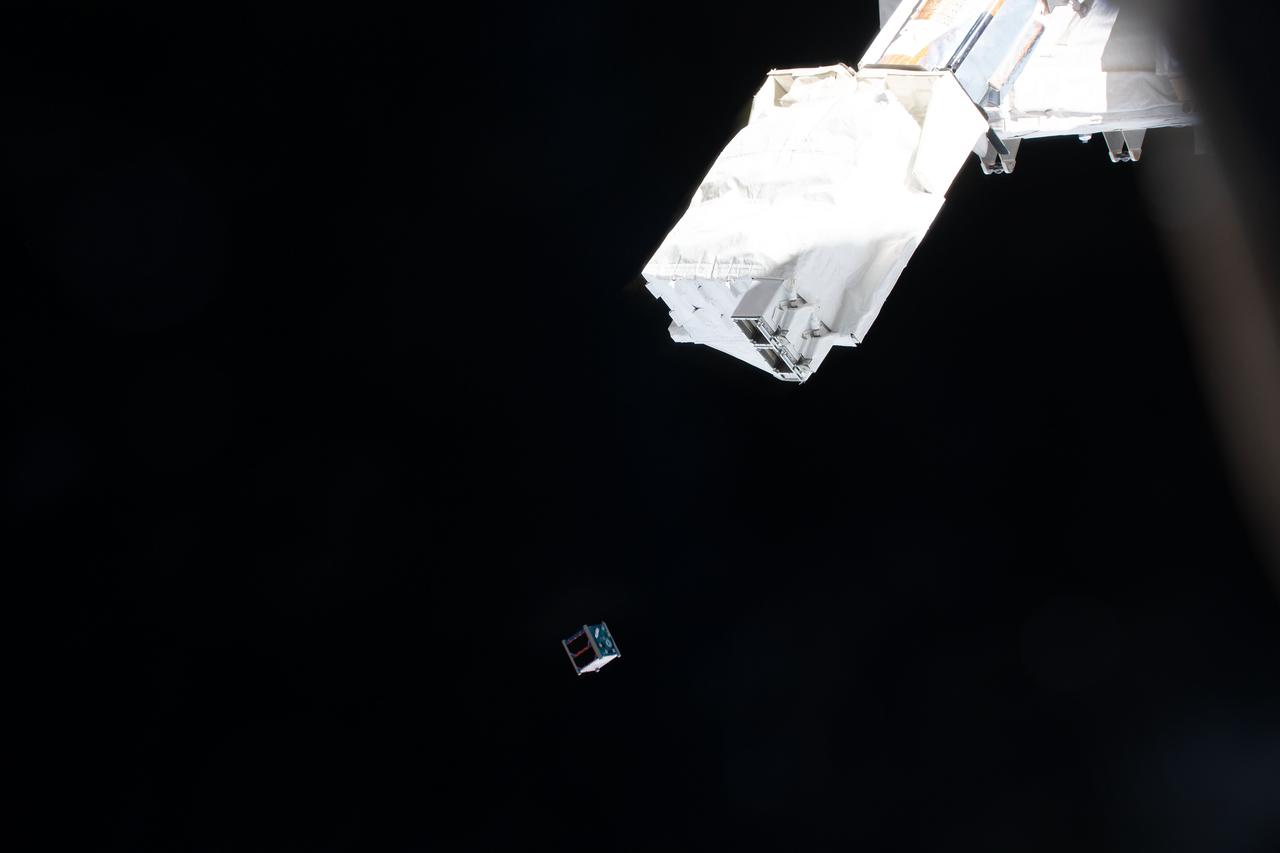
iss070e041245 (Dec. 18, 2023) --- The Clark sat-1 CubeSat is deployed from a small satellie deployer in the grips of the Japanese robotic arm attached to the Kibo laboratory module. Clark sat-1, launched to the Interational Space Station aboard the SpaceX Dragon cargo spacecraft, was developed by students at Clark Next High School in Tokyo, Japan, and its primary mission is to transmit voice and imagery data to ground control stations on Earth.

ISS040-E-072228 (21 July 2014) --- In the International Space Station’s Destiny laboratory, NASA astronaut Reid Wiseman, Expedition 40 flight engineer, sets up the Combustion Integrated Rack (CIR) for more ground-commanded tests. This facility, which includes an optics bench, combustion chamber, fuel and oxidizer control and five different cameras, allows a variety of combustion experiments to be performed safely aboard the station.
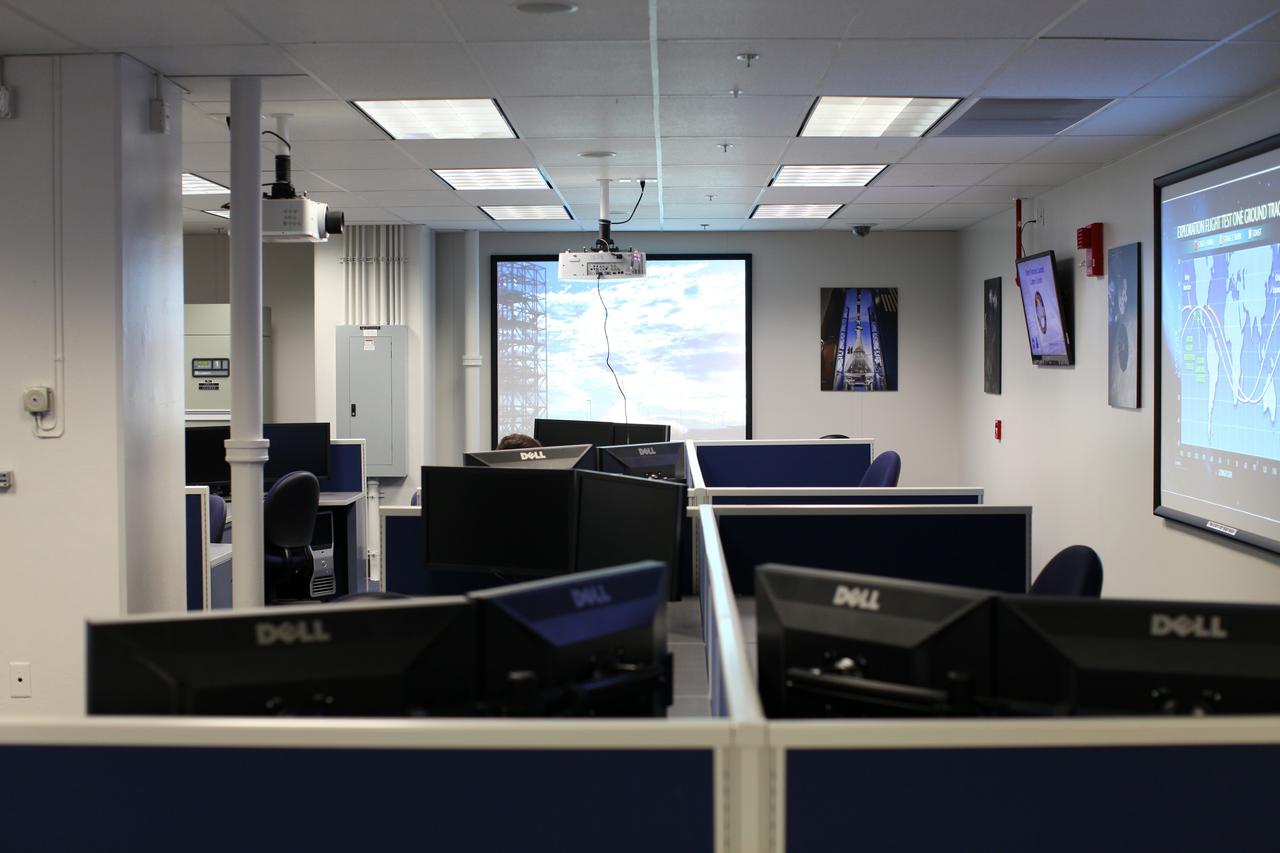
CAPE CANAVERAL, Fla. – Inside the Operations and Checkout Building at NASA’s Kennedy Space Center in Florida, media tour the new Orion Test and Launch Control Center. During a tour of the facility, media representatives viewed Orion, several processing stations, and the Orion Test and Launch Control Center. The ground test vehicle will remain at Kennedy for acoustic and modal testing. The heat shield on the bottom of the module will be removed and replaced with a more flight-like heat shield that was built by Lockheed Martin in Denver and will be shipped to Kennedy for installation. The test vehicle will then be in its vehicle configuration for the splashdown test at Langley as NASA prepares for Exploration Flight Test-1. Photo credit: NASA/Frankie Martin
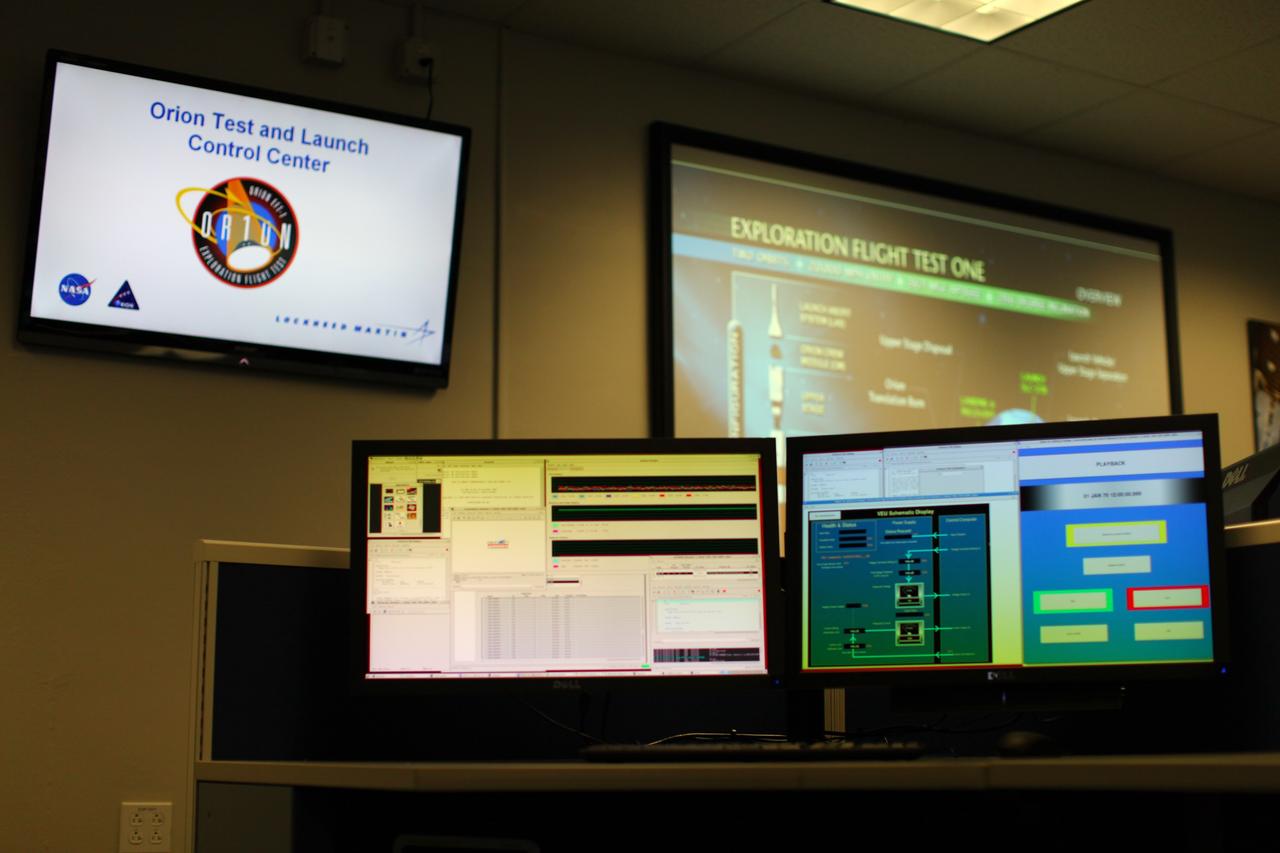
CAPE CANAVERAL, Fla. – Inside the Operations and Checkout Building at NASA’s Kennedy Space Center in Florida, media tour the new Orion Test and Launch Control Center. During a tour of the facility, media representatives viewed Orion, several processing stations, and the Orion Test and Launch Control Center. The ground test vehicle will remain at Kennedy for acoustic and modal testing. The heat shield on the bottom of the module will be removed and replaced with a more flight-like heat shield that was built by Lockheed Martin in Denver and will be shipped to Kennedy for installation. The test vehicle will then be in its vehicle configuration for the splashdown test at Langley as NASA prepares for Exploration Flight Test-1. Photo credit: NASA/Frankie Martin
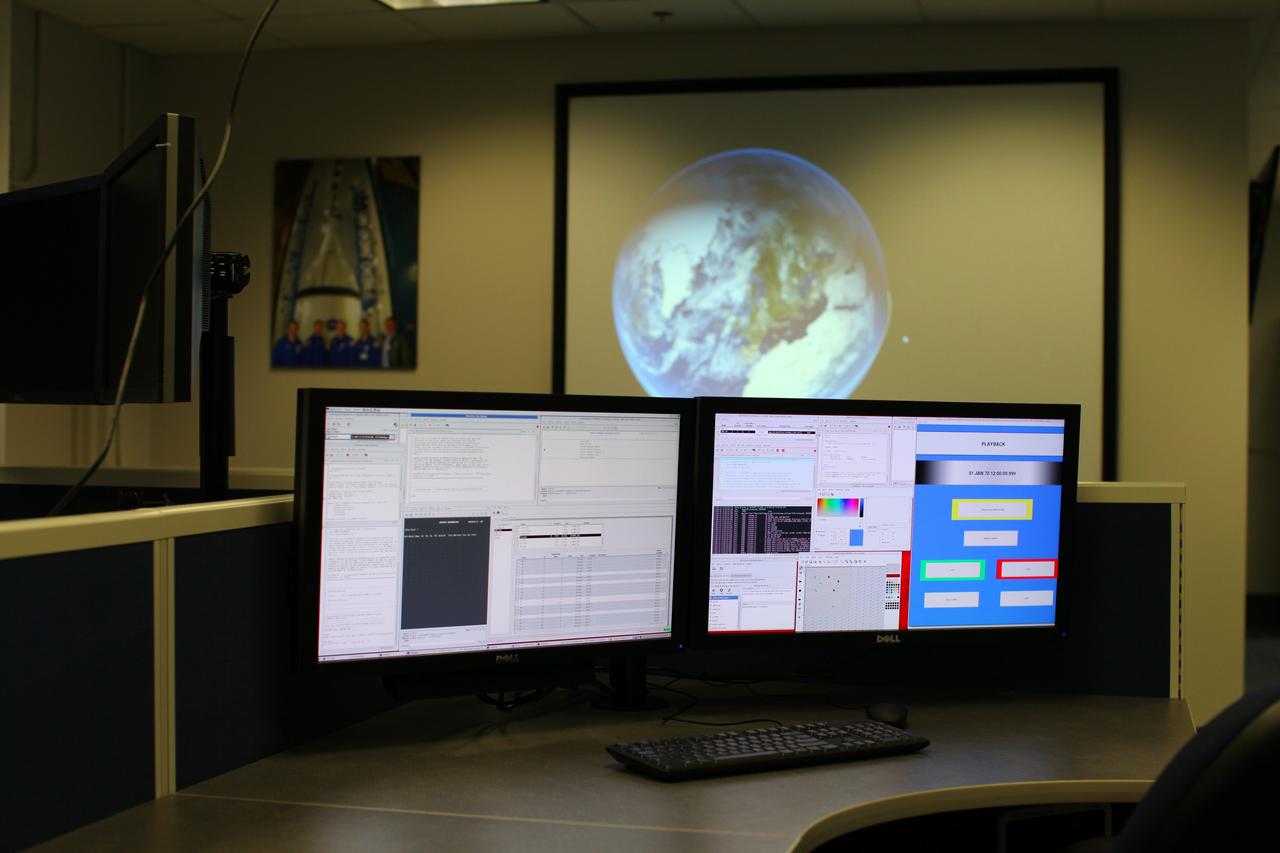
CAPE CANAVERAL, Fla. – Inside the Operations and Checkout Building at NASA’s Kennedy Space Center in Florida, media tour the new Orion Test and Launch Control Center. During a tour of the facility, media representatives viewed Orion, several processing stations, and the Orion Test and Launch Control Center. The ground test vehicle will remain at Kennedy for acoustic and modal testing. The heat shield on the bottom of the module will be removed and replaced with a more flight-like heat shield that was built by Lockheed Martin in Denver and will be shipped to Kennedy for installation. The test vehicle will then be in its vehicle configuration for the splashdown test at Langley as NASA prepares for Exploration Flight Test-1. Photo credit: NASA/Frankie Martin
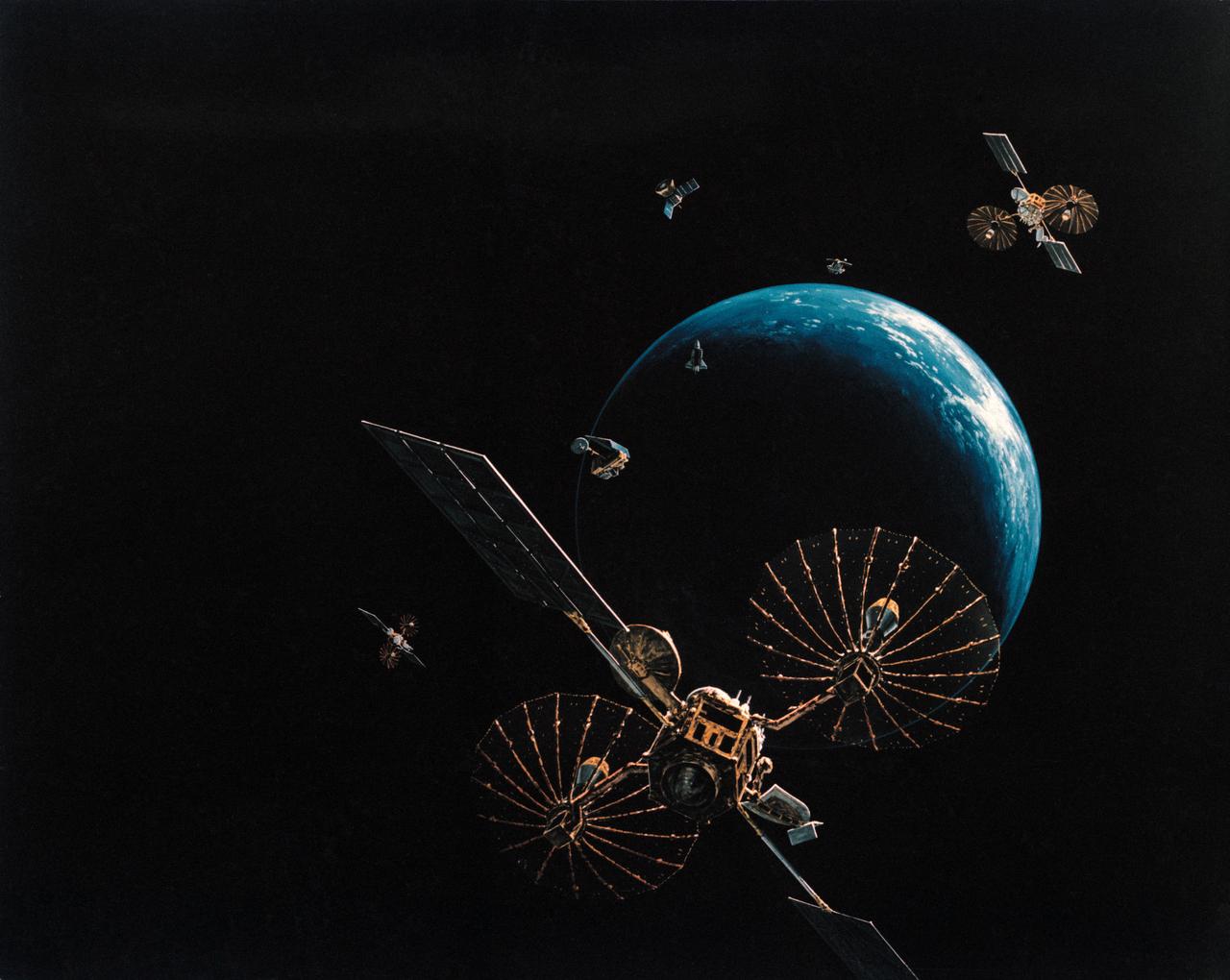
Artist concept shows the Tracking and Data Relay Satellite E (TDRS-E) augmenting a sophisticated TDRS system (TDRSS) communications network after deployment during STS-43 from Atlantis, Orbiter Vehicle (OV) 104. TDRS, built by TRW, will be placed in a geosynchronous orbit and after onorbit testing, which requires several weeks, will be designated TDRS-5. The communications satellite will replace TDRS-3 at 174 degrees West longitude. The backbone of NASA's space-to-ground communications, the TDRSs have increased NASA's ability to send and receive data to spacecraft in low-earth orbit to more than 85 percent of the time. Before TDRS, NASA relied solely on a system of ground stations that permitted communications only 15 percent of the time. Increased coverage has allowed onorbit repairs, live television broadcast from space and continuous dialogues between astronaut crews and ground control during critical periods such as Space Shuttle landings.
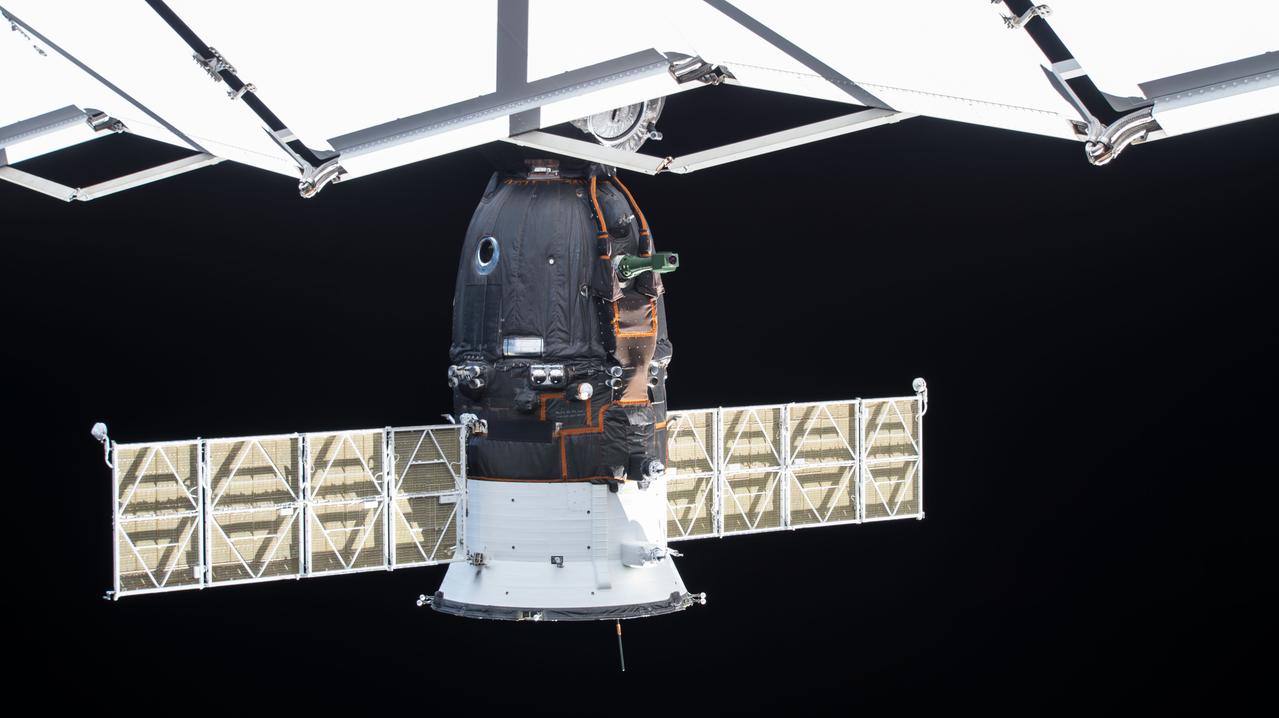
iss057e114163 (Dec. 7, 2018) --- The Soyuz MS-11 spacecraft docked to the Poisk module is pictured from a ground-controlled external high definition camera. The Soyuz crew ship arrived at the International Space Station Dec. 3 with three new crewmembers, including Soyuz Commander Oleg Kononenko and Flight Engineers Anne McClain and David Saint-Jacques. It will return the same three crewmembers to a parachute-assisted landing in Kazakhstan on June 24.
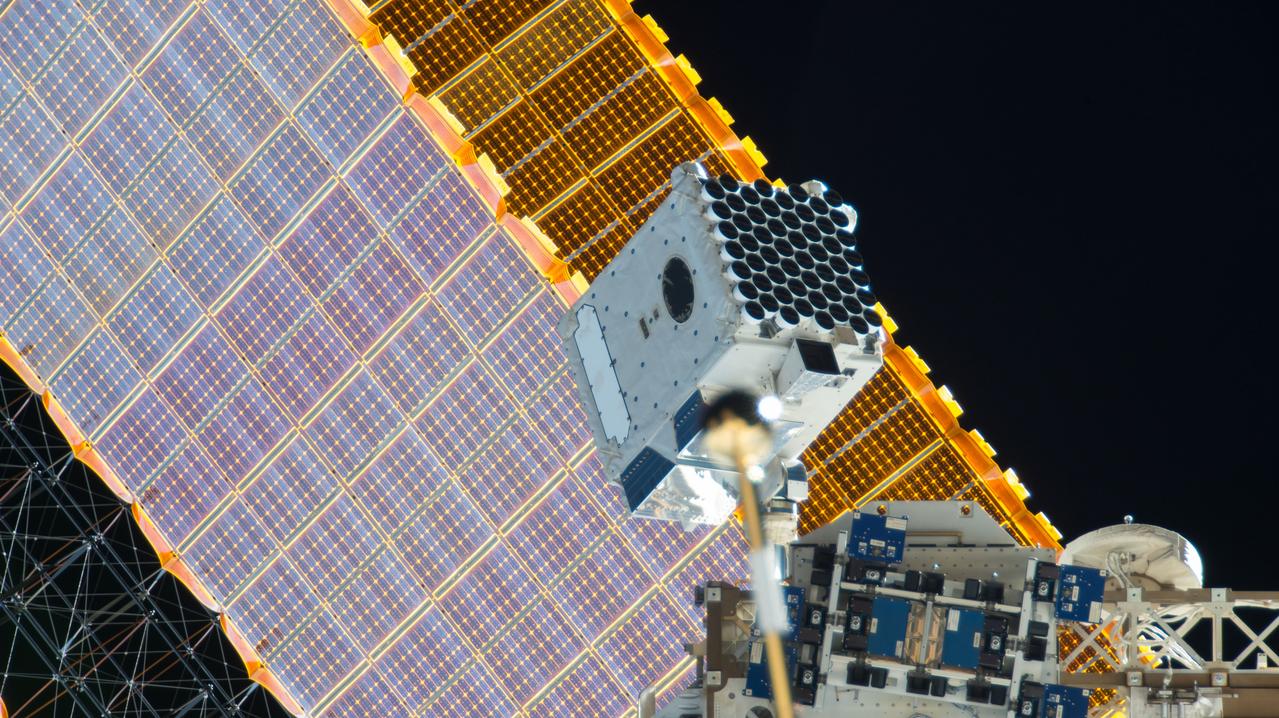
iss057e055500 (10/22/2018) --- View of the Neutron Star Interior Composition ExploreR (NICER) payload, attached to ExPRESS (Expedite the Processing of Experiments to Space Station) Logistics Carrier-2 (ELC-2) on the S3 Truss. Photo was taken by the ground-controlled External High Definition Camera 1 (EHDC1). NICER's primary mission to perform an in-depth study of neutron stars offers unrivaled astrophysics knowledge and can revolutionize the understanding of ultra-dense matter.
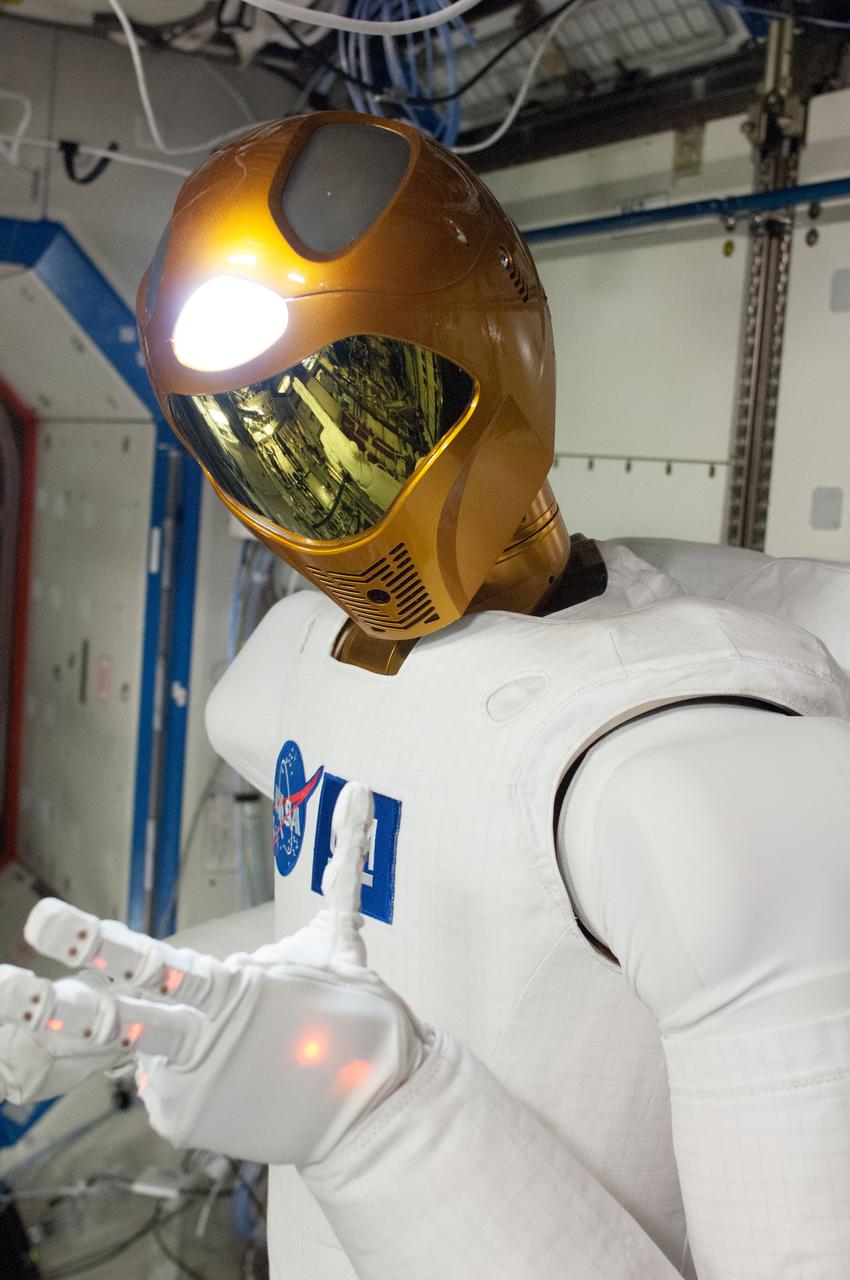
ISS034-E-039162 (1 Feb. 2013) --- Robonaut 2, the first humanoid robot in space, is pictured in this image photographed by an Expedition 34 crew member in the International Space Station’s Destiny laboratory. R2 was powered up so ground controllers could run it through a series of tests and configuration checks after a recent software upgrade.
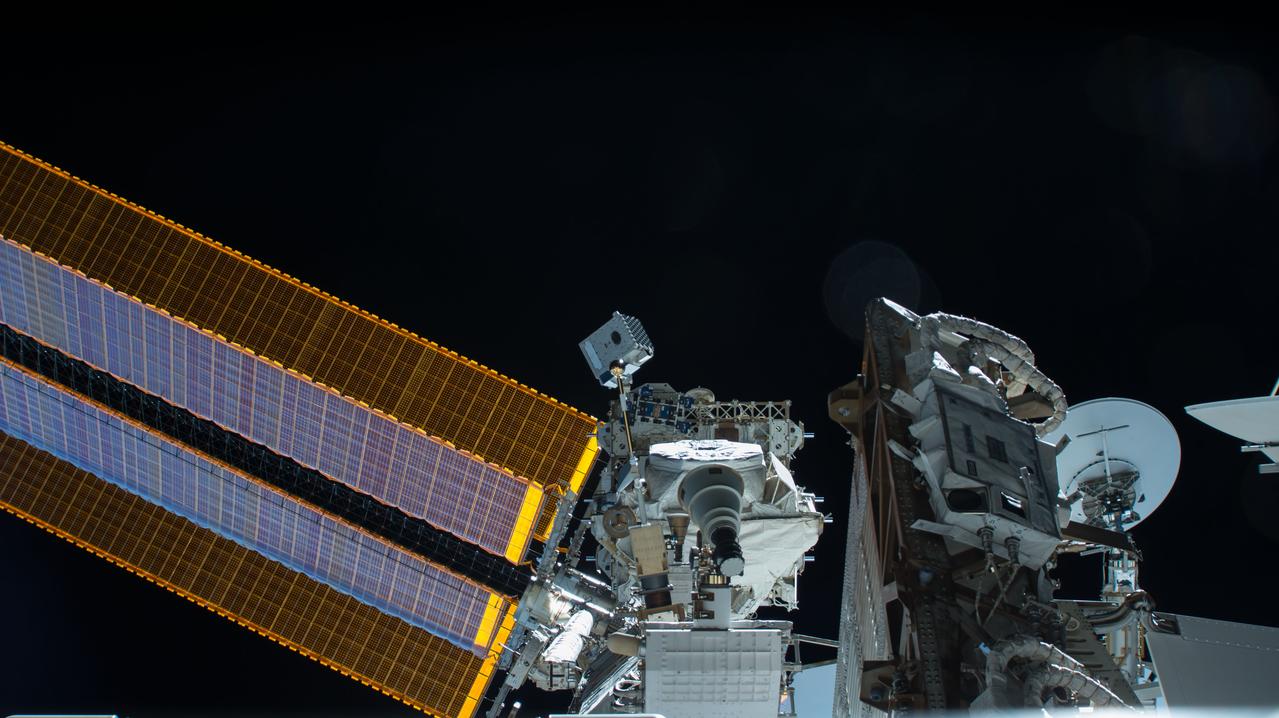
iss057e055440 (10/22/2018) --- View of the Neutron Star Interior Composition ExploreR (NICER) payload, attached to ExPRESS (Expedite the Processing of Experiments to Space Station) Logistics Carrier-2 (ELC-2) on the S3 Truss. Photo was taken by the ground-controlled External High Definition Camera 1 (EHDC1). NICER's primary mission to perform an in-depth study of neutron stars offers unrivaled astrophysics knowledge and can revolutionize the understanding of ultra-dense matter.
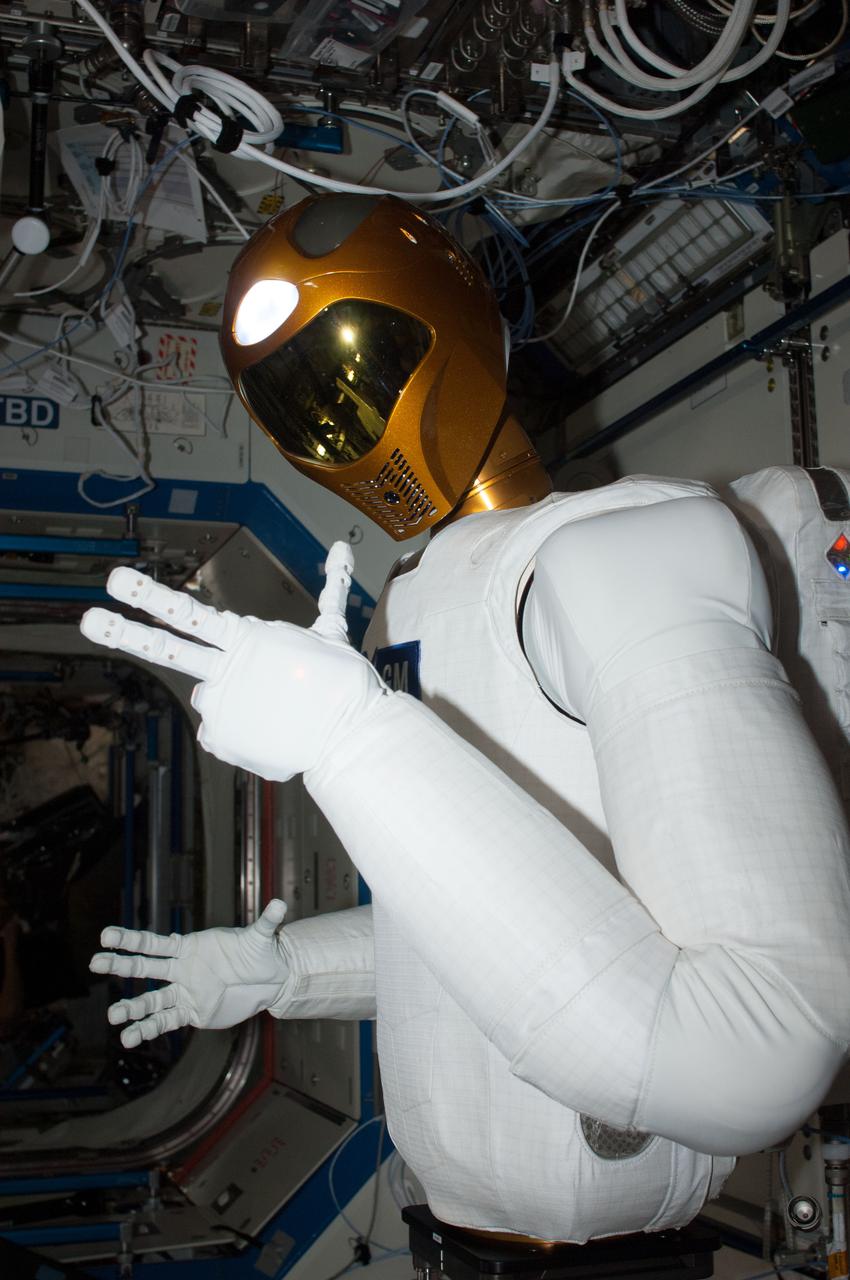
ISS034-E-039157 (1 Feb. 2013) --- Robonaut 2, the first humanoid robot in space, is pictured in this image photographed by an Expedition 34 crew member in the International Space Station’s Destiny laboratory. R2 was powered up so ground controllers could run it through a series of tests and configuration checks after a recent software upgrade.
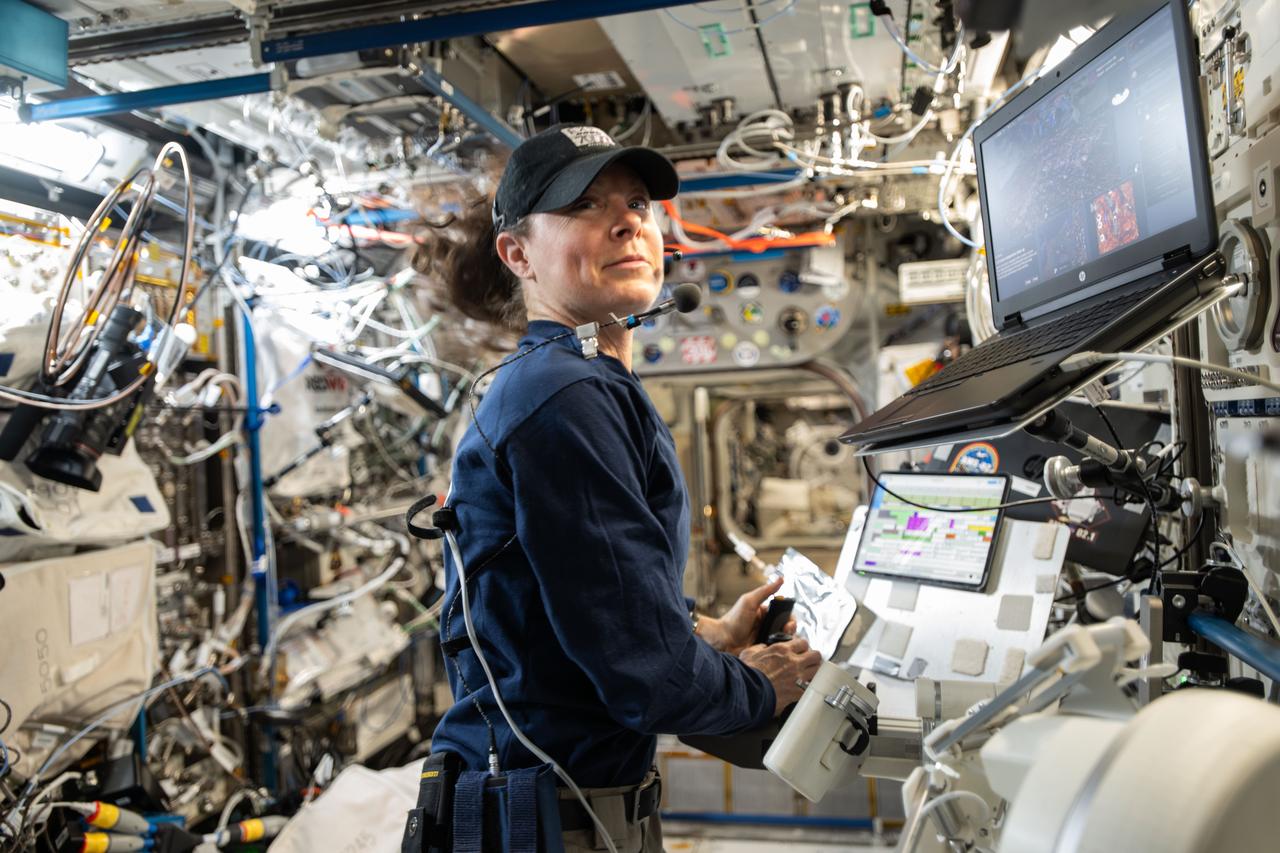
iss071e297582 (July 9, 2024) --- NASA astronaut and Expedition 71 Flight Engineer Tracy C. Dyson is pictured inside the International Space Station's Columbus laboratory module. She was exploring ways to control a robot on the ground from a spacecraft. Dyson coordinated with robotics engineers on Earth remotely manipulating a robot using a computer while testing its ergonomic features and haptic feedback for conditions such as wind and gravity. Results may inform future exploration missions to the Moon, Mars, and beyond.

ISS018-E-046317 (4 April 2009) --- Cosmonaut Gennady Padalka (center), Expedition 19 commander; NASA astronaut Michael Barratt (right), Expedition 19 flight engineer; and Japan Aerospace Exploration Agency (JAXA) astronaut Koichi Wakata, Expedition 18/19 flight engineer, are pictured in the Zvezda Service Module of the International Space Station while communicating with ground controllers.
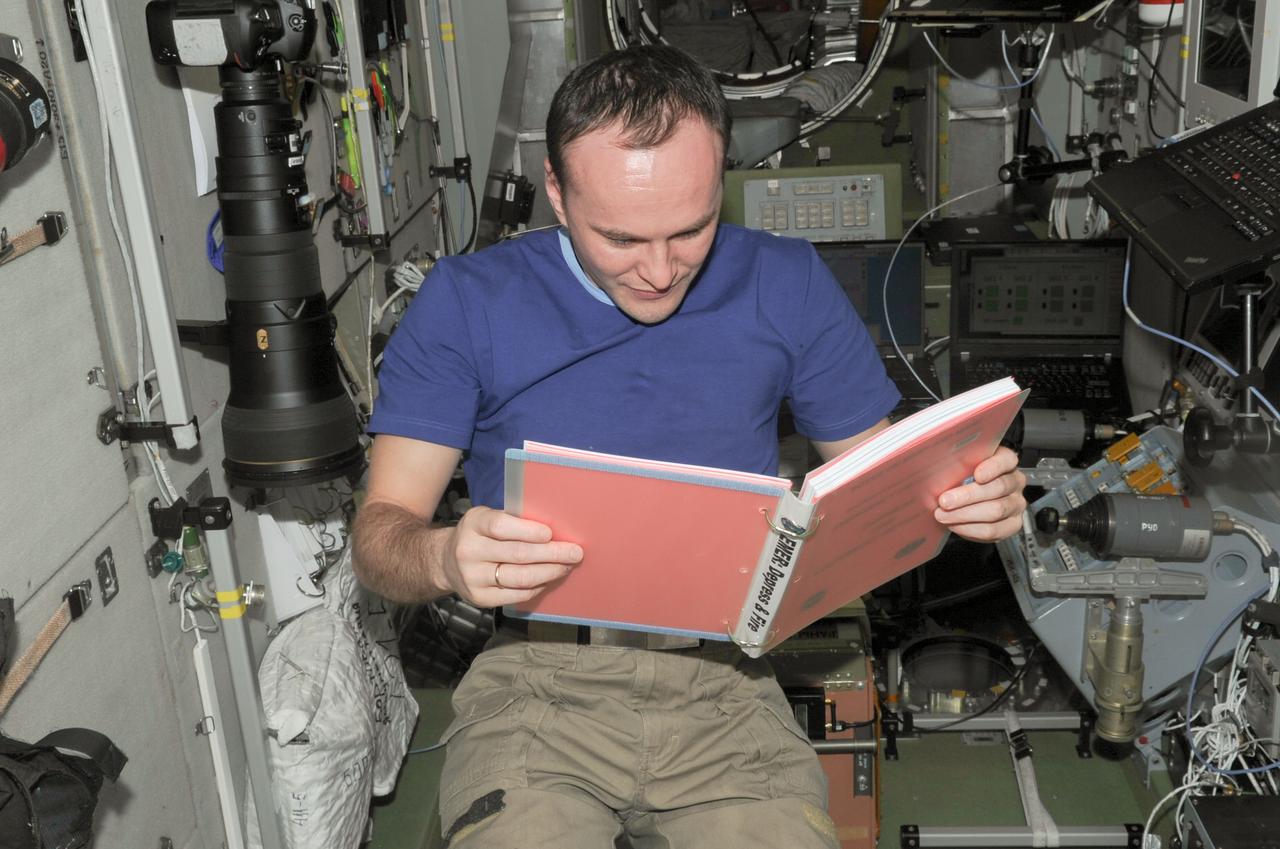
ISS038-E-011708 (4 Dec. 2013) --- In the International Space Station?s Zvezda Service Module, Russian cosmonaut Sergey Ryazanskiy, Expedition 38 flight engineer, reads a procedures checklist during an emergency simulation drill with participation from flight controllers on the ground. During the exercise, the crew practiced emergency communication and procedures in response to a predetermined scenario such as pressure leak.
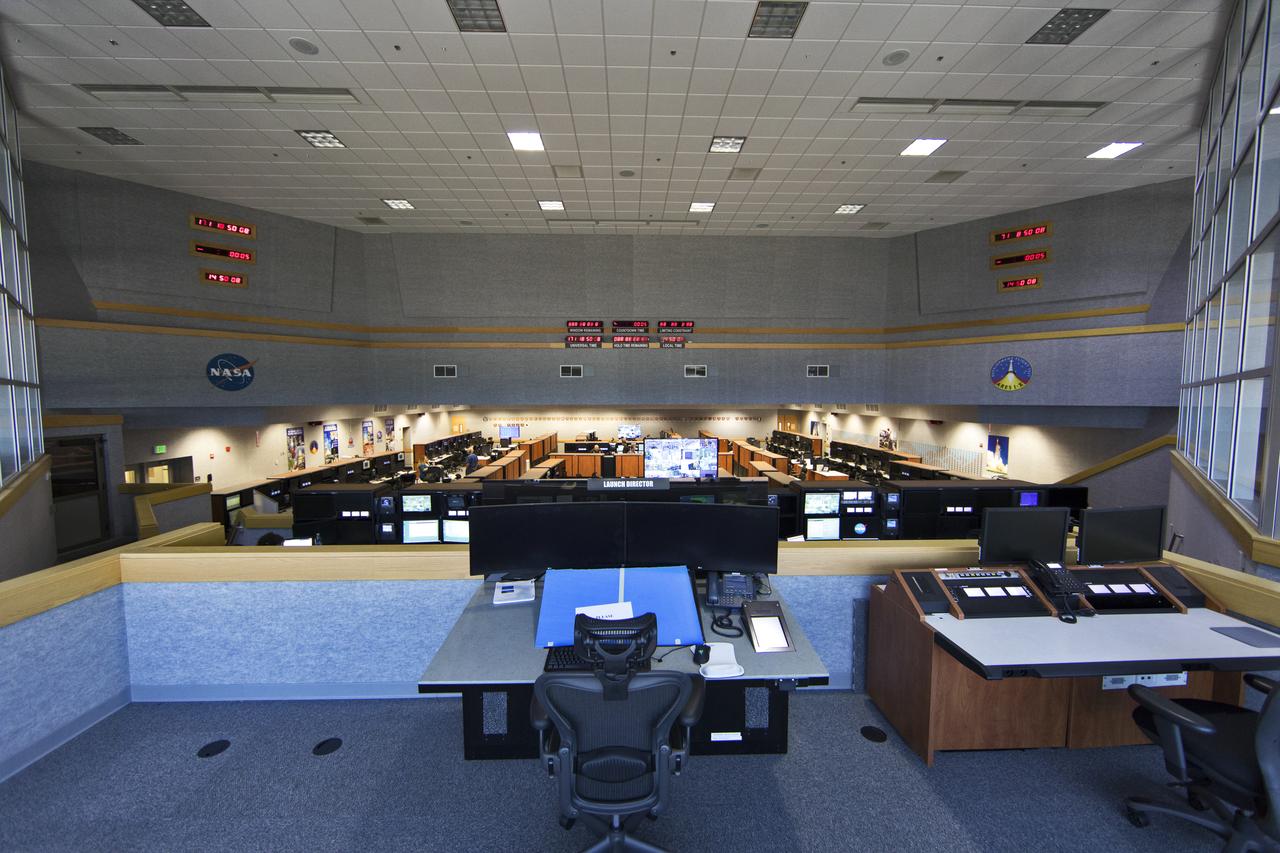
A view of Firing Room 1 in the Launch Control Center (LCC) at NASA's Kennedy Space Center in Florida. The Apollo and shuttle-era firing rooms in the LCC have been upgraded. The upper deck includes a work station in development for the EM-1 launch director. Exploration Ground Systems upgraded Firing Room 1 to support the launch of NASA's Space Launch System rocket and Orion spacecraft on Exploration Mission-1 and deep space missions.

iss072e157843 (Nov. 11, 2024) --- The Canadarm2 robotic arm with its fine-tuned robotic hand Dextre, or the Special Purpose Dexterous Manipulator, attached is pictured after maneuvering and installing scientific hardware on the International Space Station. Dextre is remotely operated by robotics controllers on the ground providing precise handling capabilities reducing the need for spacewalks giving astronauts more time to conduct science.