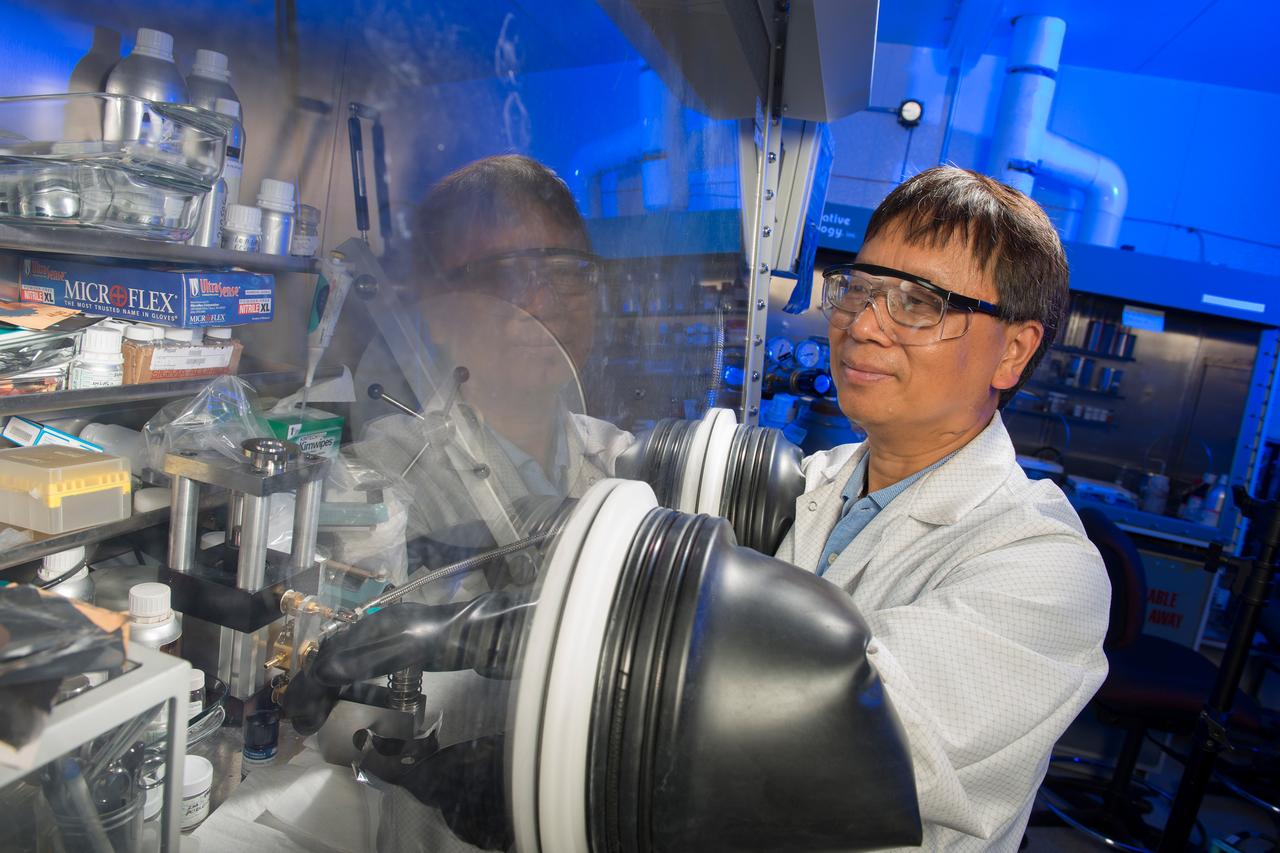
NASA Glenn Researcher James Wu assembles a lithium-metal based battery lab cell incorporating a new solid polymer nanocomposite electrolyte developed at the center.
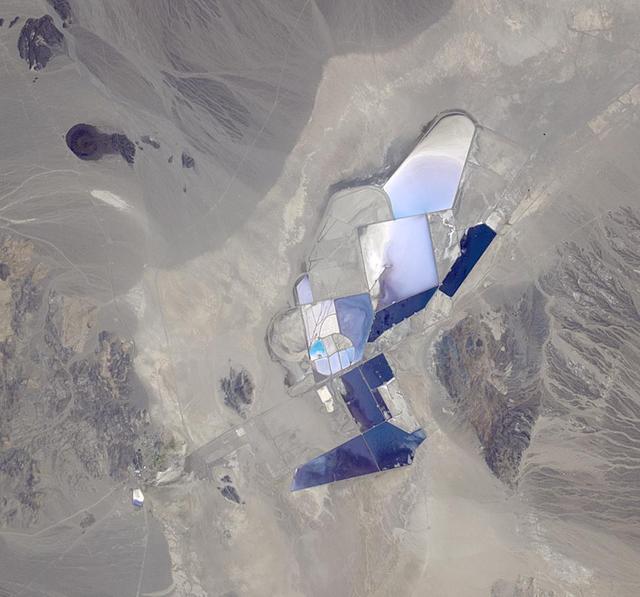
This image from NASA Terra spacecraft shows the once-abandoned mining town of Silver Peak, Nevada, which began to thrive again when Foote Mineral Company began extracting lithium from brine below the floor of Clayton Valley in 1966.
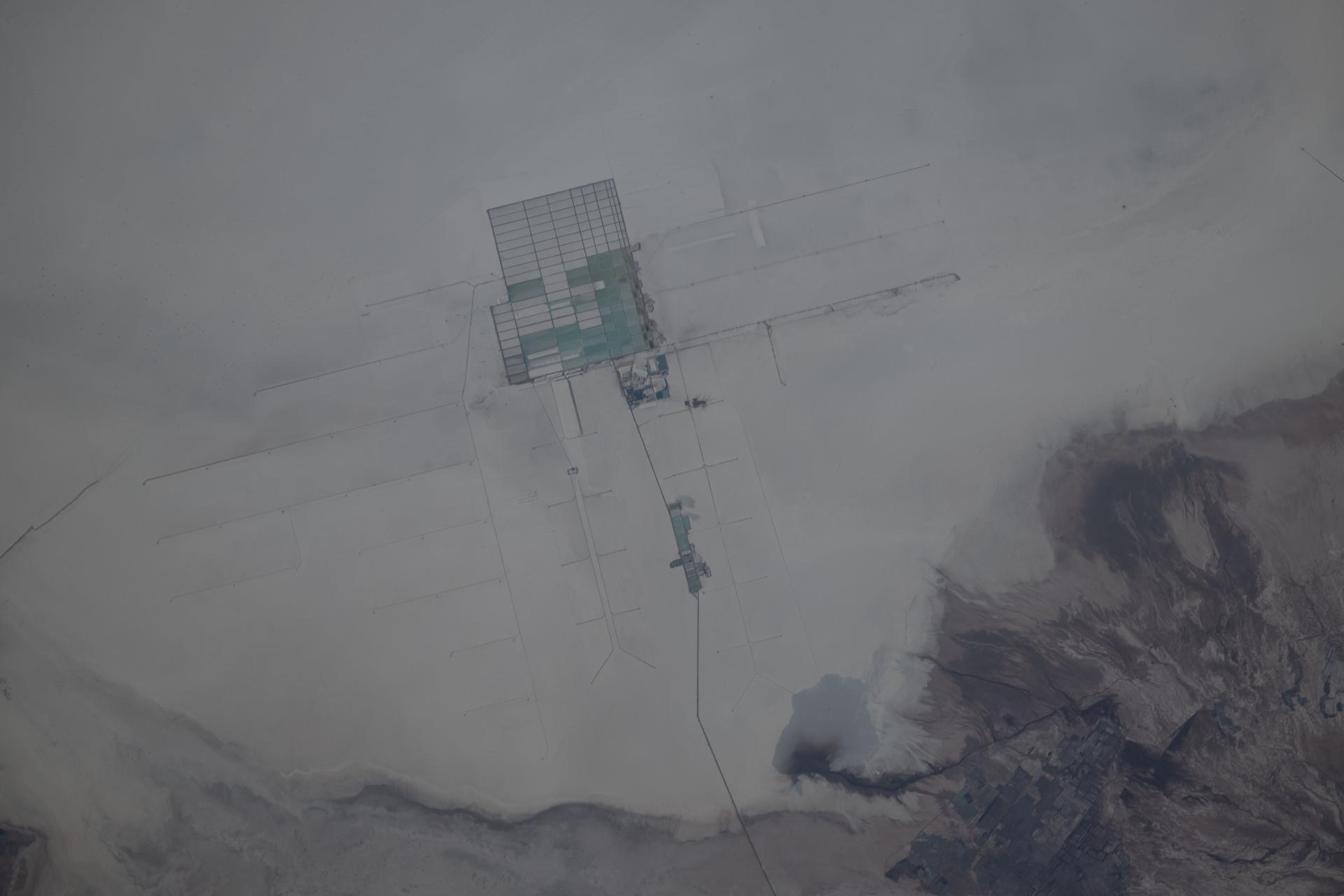
iss074e0796207 (July 7, 2026) --- A lithium extraction facility in Bolivia's Salar de Uyuni, the world's largest salt flat and the flattest surface on Earth, is pictured from the International Space Station as it orbited 263 miles above the South American nation. Credit: NASA/Chris Williams
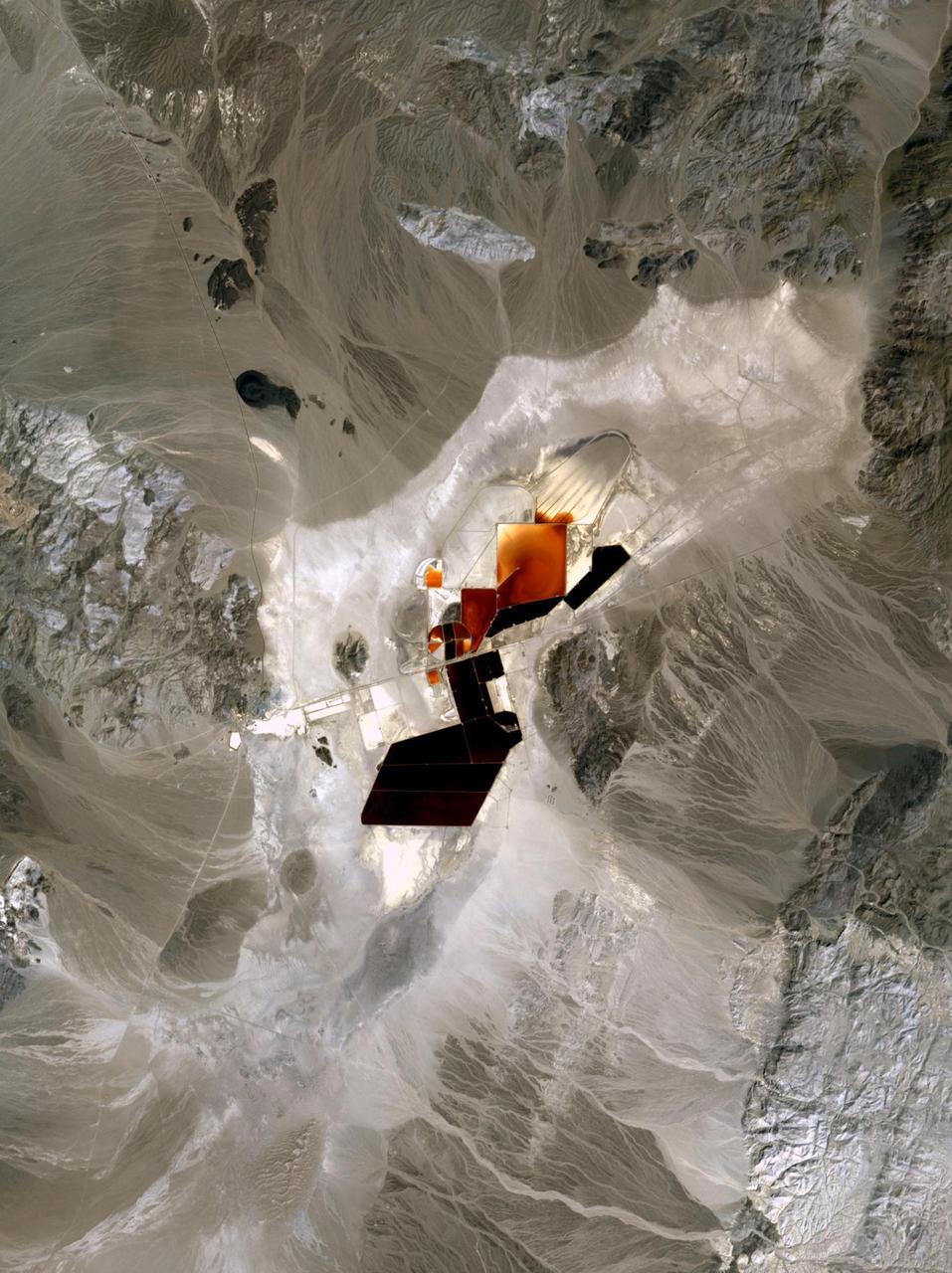
In Clayton Valley, Nevada, lithium has been produced since 1966. Currently it is produced by pumping lithium-rich brine to the surface to evaporate, or processed through direct lithium extraction. About 5,000 metric tons of lithium carbonate are produced annually at Nevada's only lithium-producing site. In the future, newly discovered deposits will produce more lithium than any other state. The image was acquired April 23, 2023, covers an area of 21.5 by 28.8 km, and is located at 37.75 degrees north, 117.6 degrees west. https://photojournal.jpl.nasa.gov/catalog/PIA26505
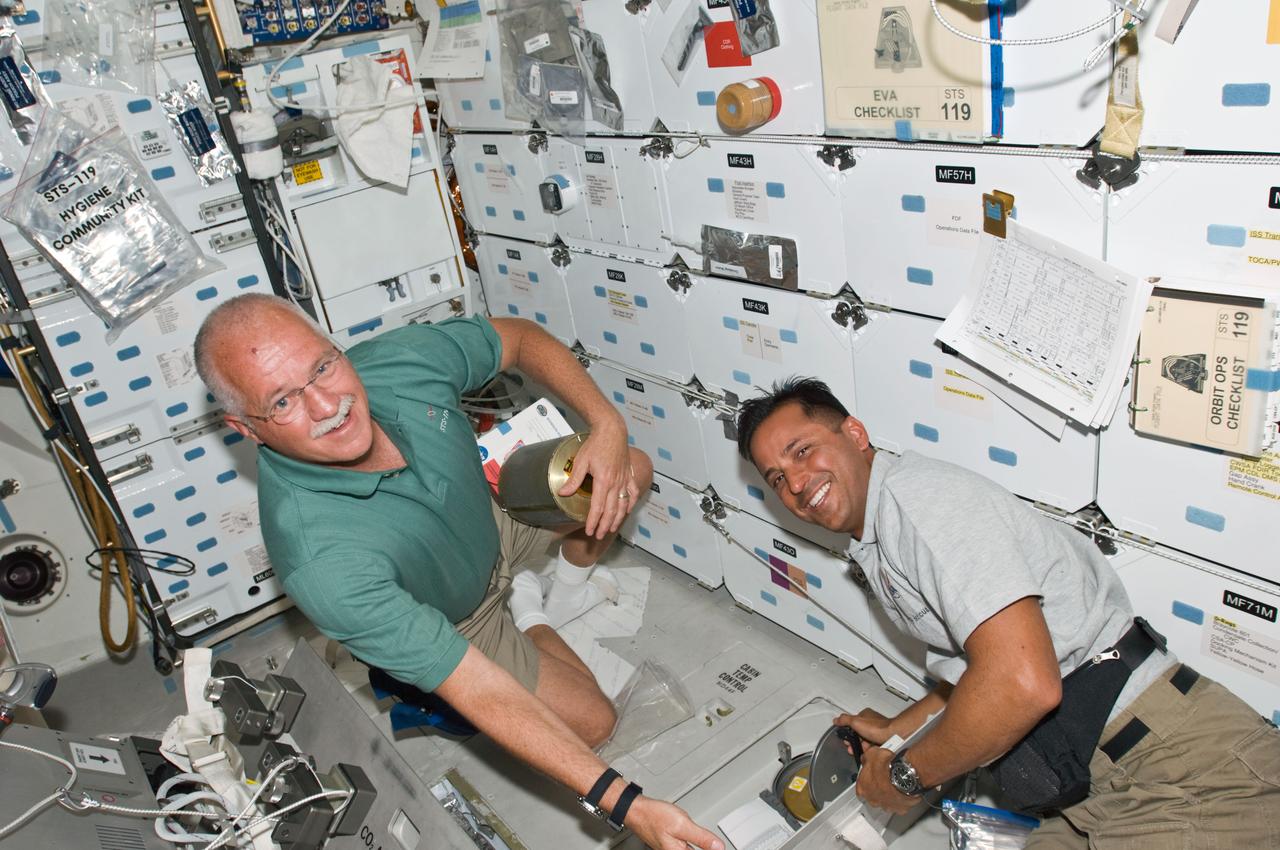
S119-E-006645 (19 March 2009) --- Astronauts John Phillips (left) and Joseph Acaba, both STS-119 mission specialists, work with the lithium hydroxide (LiOH) canisters beneath Space Shuttle Discovery's middeck while docked with the International Space Station.
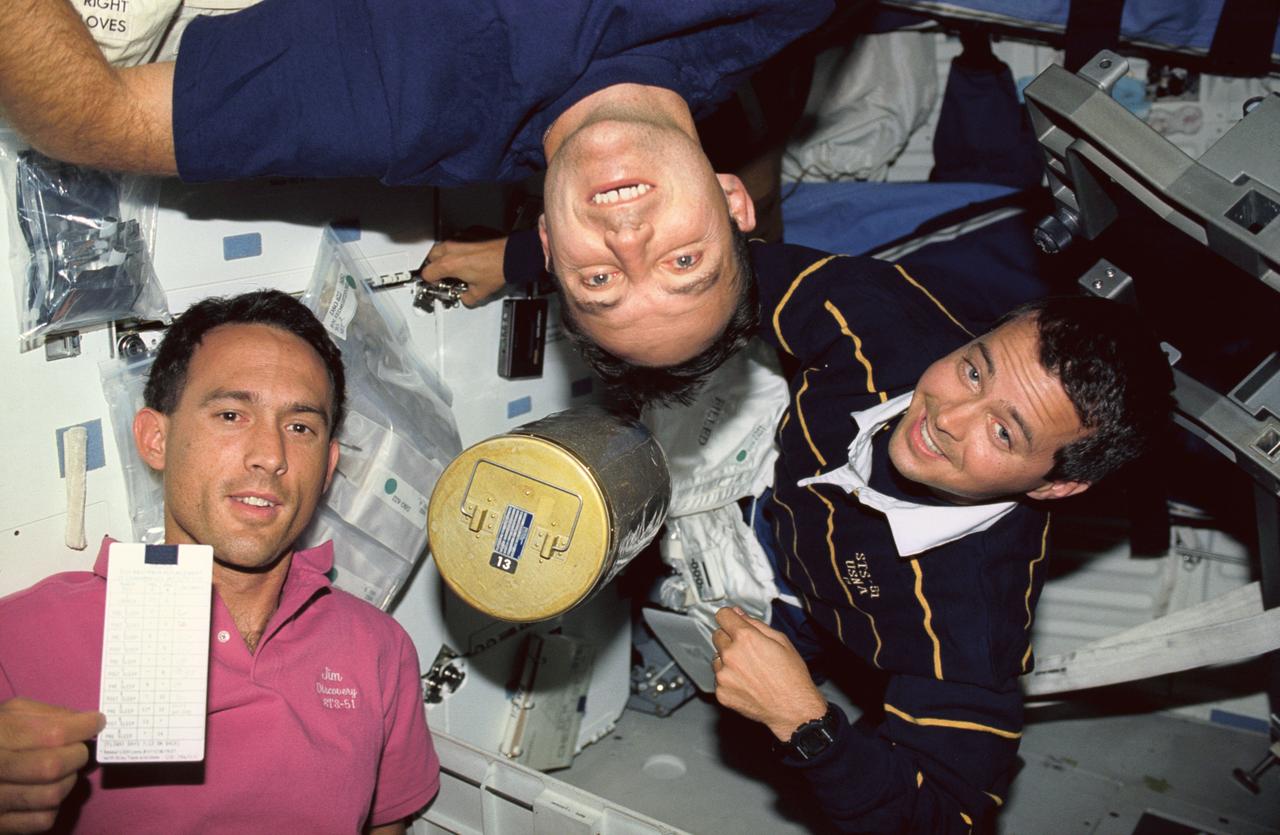
STS051-08-037 (12-22 Sept 1993) --- Three members of the astronaut class of 1990 change out a lithium hydroxide canister beneath Discovery's middeck. Left to right are astronauts James H. Newman, Carl E. Walz and Daniel W. Bursch, all mission specialists.
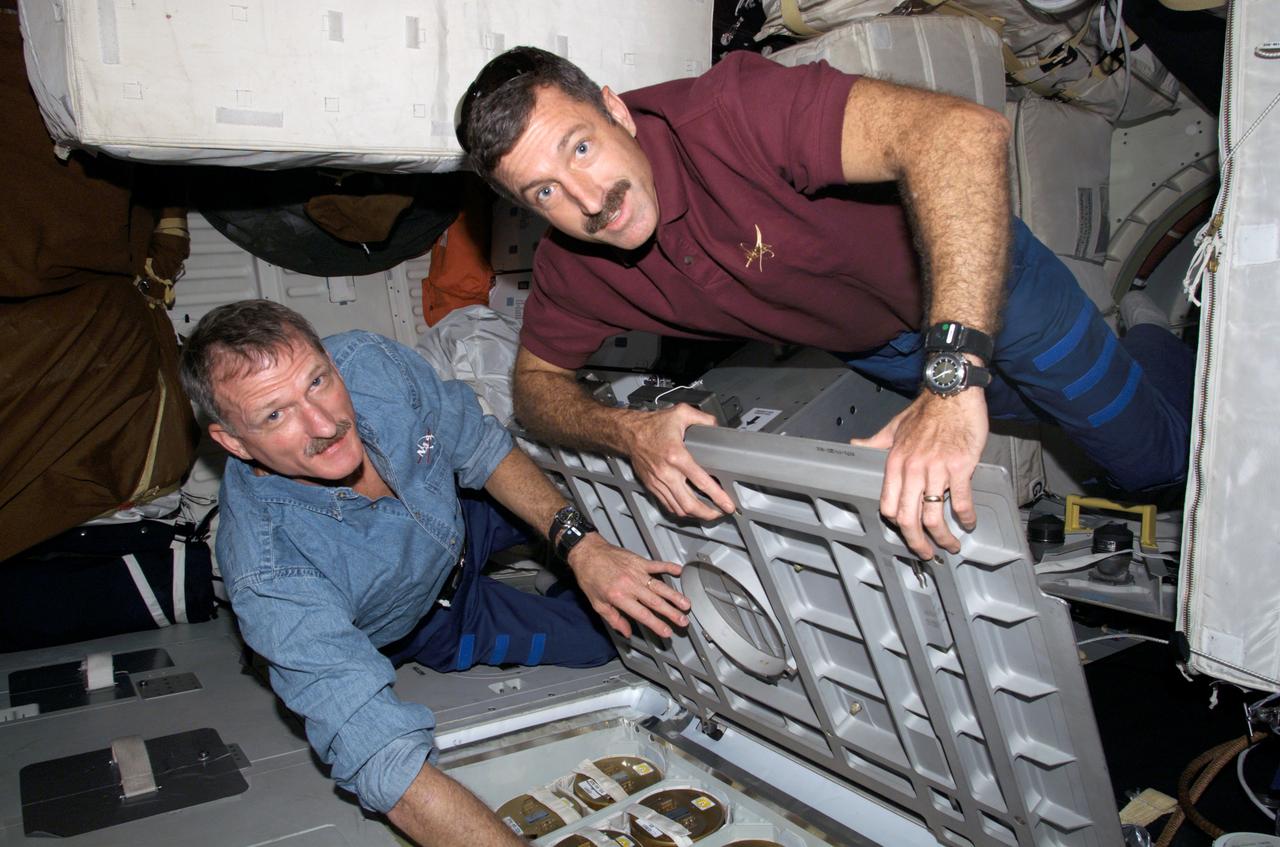
S115-E-06528 (9-21 Sept. 2006) --- Astronauts Joseph R. Tanner (left) and Daniel C. Burbank, both STS-115 mission specialists, work with the lithium hydroxide (LiOH) canisters beneath Space Shuttle Atlantis' middeck.
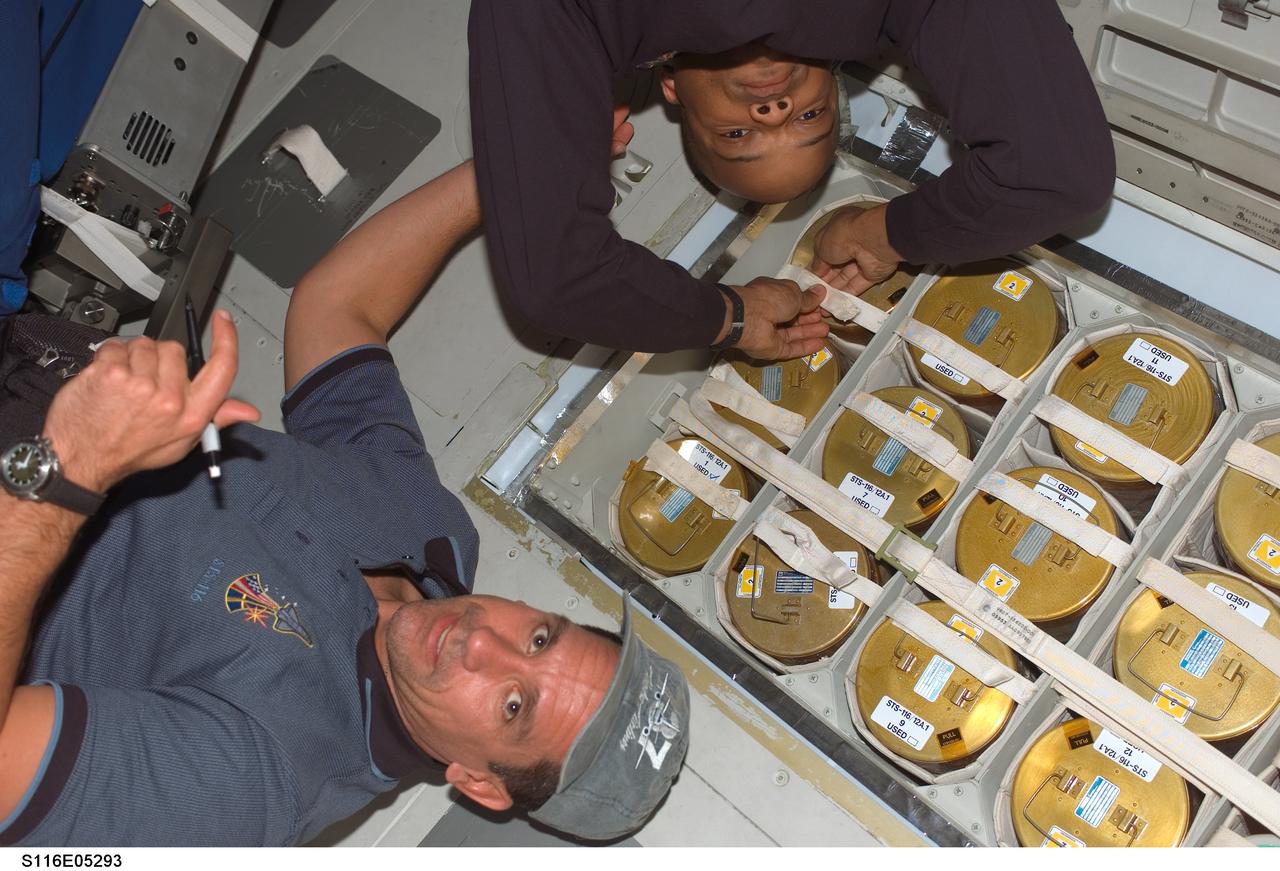
S116-E-05293 (10 Dec. 2006) --- Astronauts William A. (Bill) Oefelein (bottom) and Robert L. Curbeam, Jr., STS-116 pilot and mission specialist, respectively, work with the lithium hydroxide (LiOH) canisters beneath Space Shuttle Discovery's middeck.

S115-E-06526 (9-21 Sept. 2006) --- Astronaut Christopher J. Ferguson, STS-115 pilot, changes out a lithium hydroxide (LiOH) canister beneath Space Shuttle Atlantis' middeck.
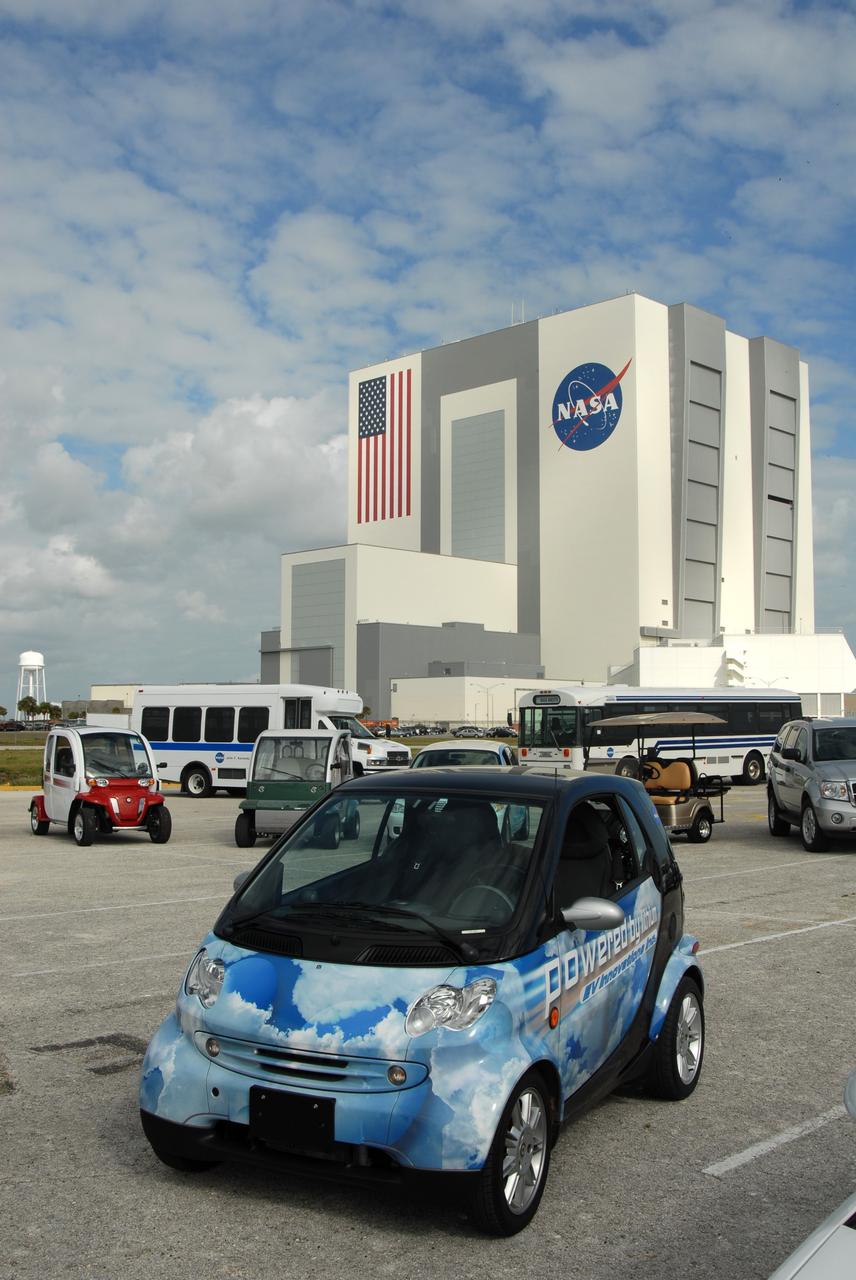
CAPE CANAVERAL, Fla. –– On display at NASA's Kennedy Space Center in Florida is one of the variety of alternative fuel vehicles driven around the center in an effort to reduce gasoline consumption and conserve energy. This car is a LiV Dash, a lithium vehicle Smart Car that uses lithium batteries. The other vehicles include compressed natural gas, bi-fuel, diesel fuel and flex fuel vehicles. Photo credit: NASA/Jim Grossmann
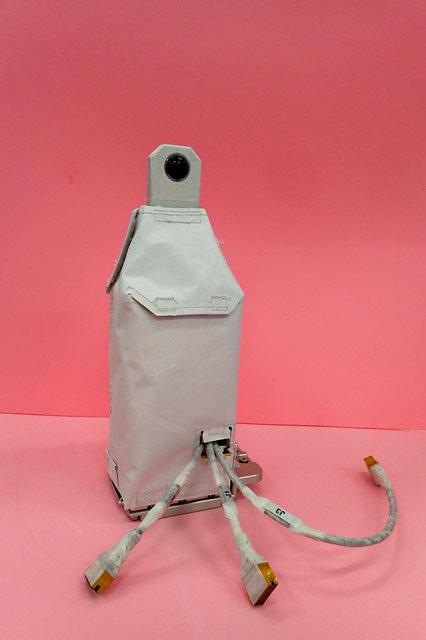
jsc2021e052199 (9/7/2021) --- A preflight view of the Space Demonstration for All Solid-state Lithium Ion Battery (Space AS-Lib) demonstration configured for exposure to the space environment. Space AS-Lib demonstrates operation of a Lithium-ion secondary battery capable of safe, stable operation under extreme temperatures and in a vacuum environment. Image Credit: ©JAXA, Hitz
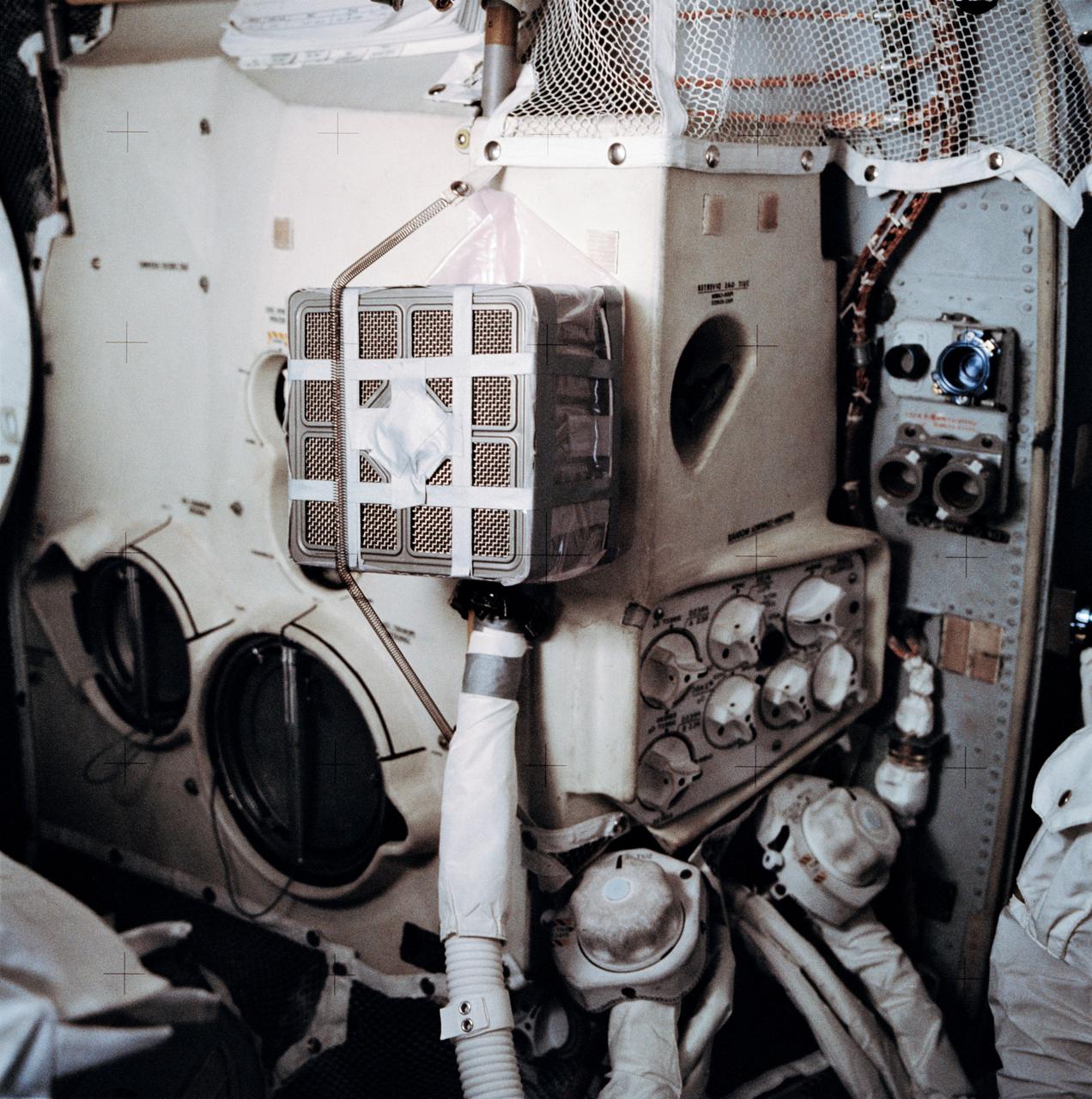
AS13-62-8929 (11-17 April 1970) --- Interior view of the Apollo 13 Lunar Module (LM) showing the "mail box," a jury-rigged arrangement which the Apollo 13 astronauts built to use the Command Module (CM) lithium hydroxide canisters to purge carbon dioxide from the LM. Lithium hydroxide is used to scrub CO2 from the spacecraft's atmosphere. Since there was a limited amount of lithium hydroxide in the LM, this arrangement was rigged up to utilize the canisters from the CM. The "mail box" was designed and tested on the ground at the Manned Spacecraft Center (MSC) before it was suggested to the problem-plagued Apollo 13 crew men. Because of the explosion of one of the oxygen tanks in the Service Module (SM), the three crew men had to use the LM as a "lifeboat".
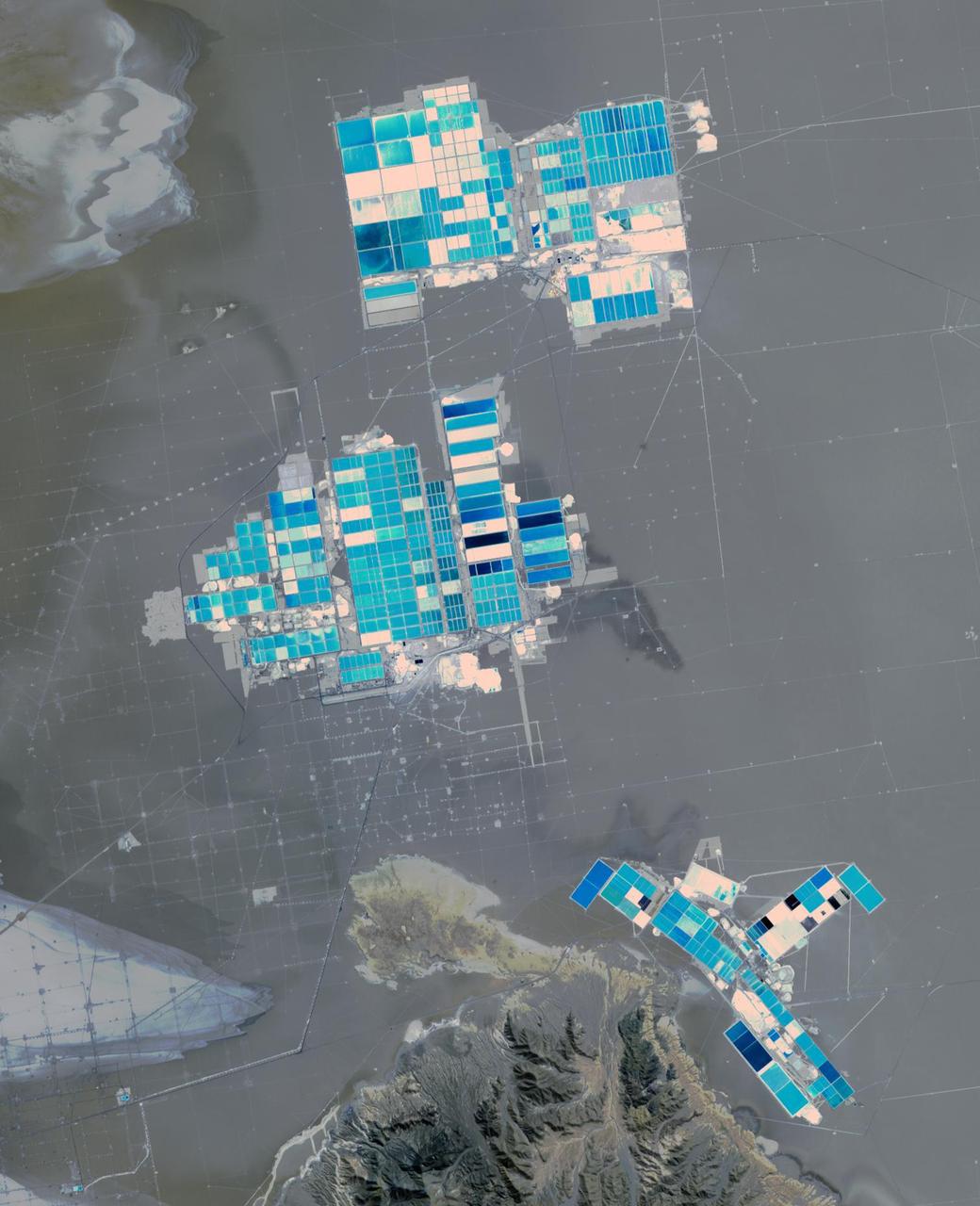
Salar de Atacama (Atacama salt flats) in Chile's Atacama Desert receives 2 mm rain per year. Its attraction are the brines 40 m below ground. They are pumped to the surface into large evaporation pans. After the water has vanished, a yellowish greasy solution is left behind that contains lithium. In fact, Salar de Atacama produces 27% of the world's annual supply. Mining lithium here is less expensive to produce than from neighboring Salar de Uyuni, which is estimated to have half of the lithium reserves in the world. The image was acquired August 21, 2017, covers an area of 22.5 by 27.8 km, and is located at 23.5 degrees south, 68.3 degrees west. https://photojournal.jpl.nasa.gov/catalog/PIA23420

S126-E-011514 (26 Nov. 2008) --- Astronaut Eric Boe, STS-126 pilot, checks on the lithium hydroxide canisters beneath the middeck of the Space Shuttle Endeavour.
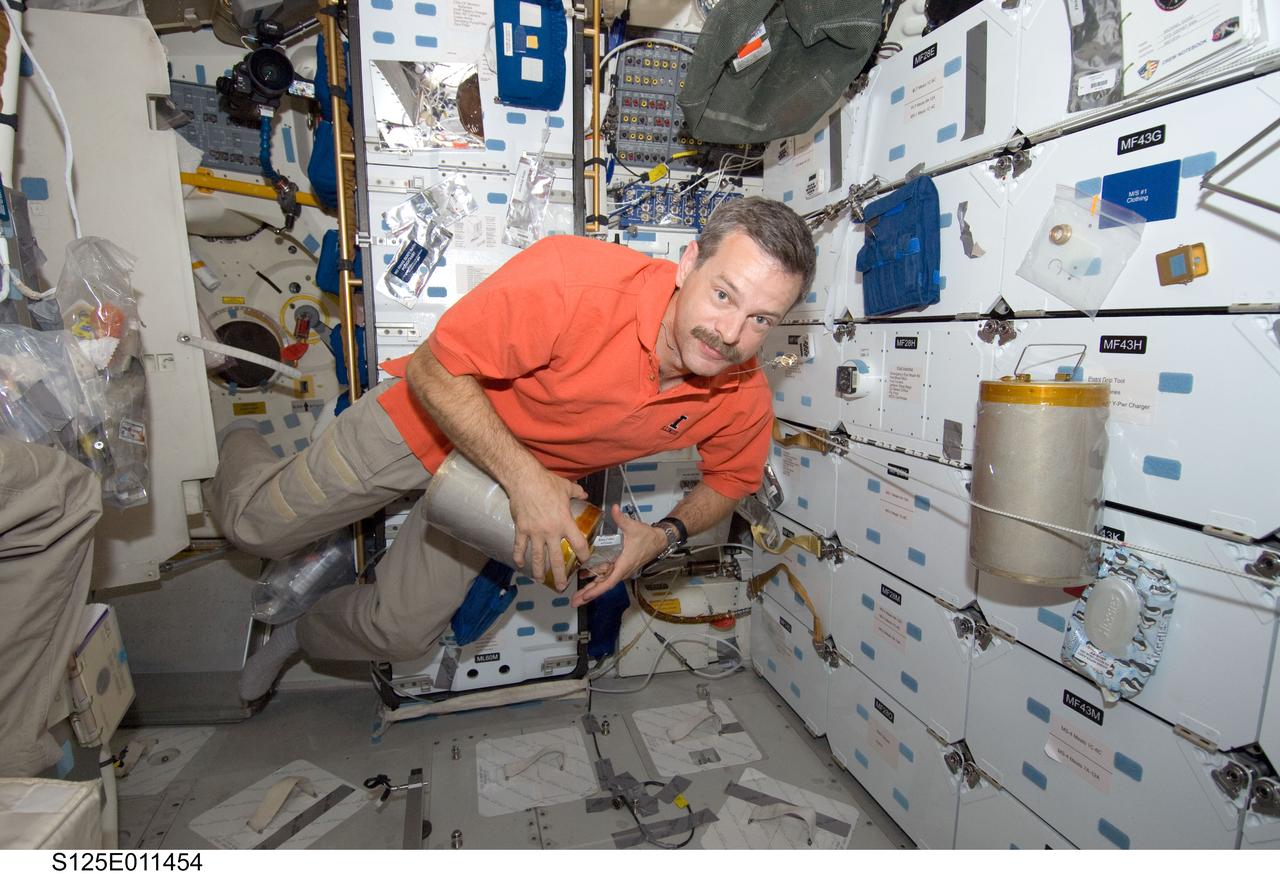
S125-E-011454 (18 May 2009) --- Astronaut Scott Altman, STS-125 commander, works with lithium hydroxide (LiOH) canisters from beneath Space Shuttle Atlantis' middeck during flight day eight activities.
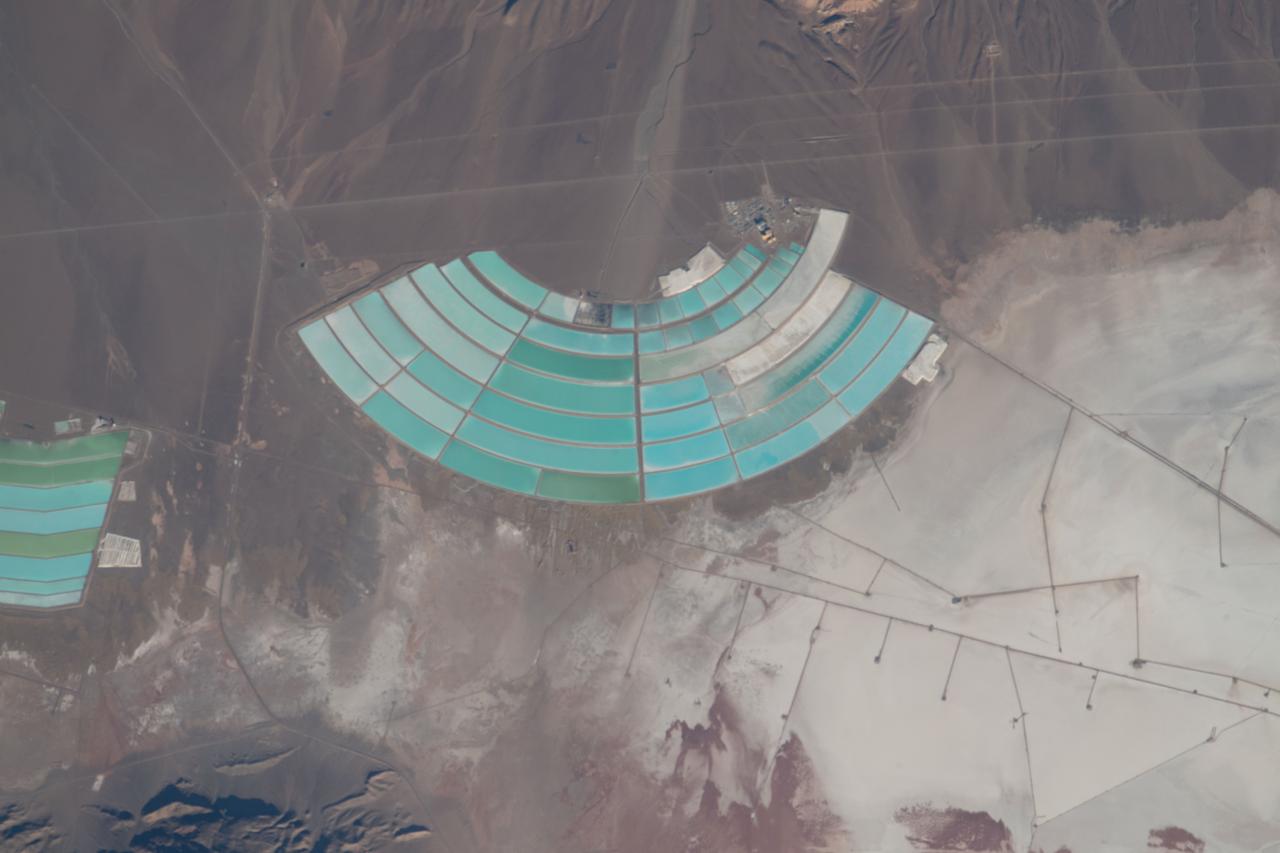
iss069e086485 (Sept. 11, 2023) --- Lithium mining activities are pictured in northern Argentina from the International Space Station as it orbited 266 miles above the South American continent.
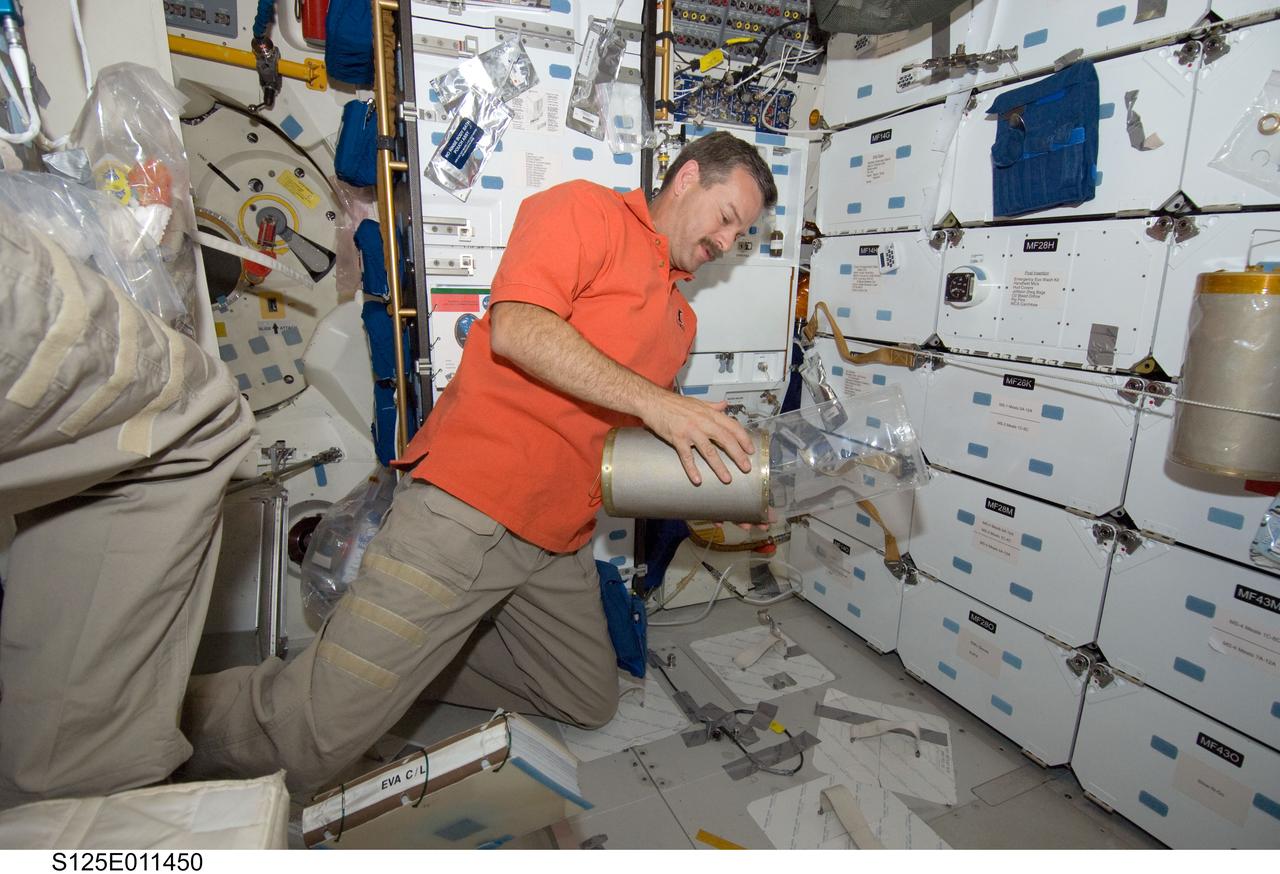
S125-E-011450 (18 May 2009) --- Astronaut Scott Altman, STS-125 commander, works with lithium hydroxide (LiOH) canisters from beneath Space Shuttle Atlantis' middeck during flight day eight activities.
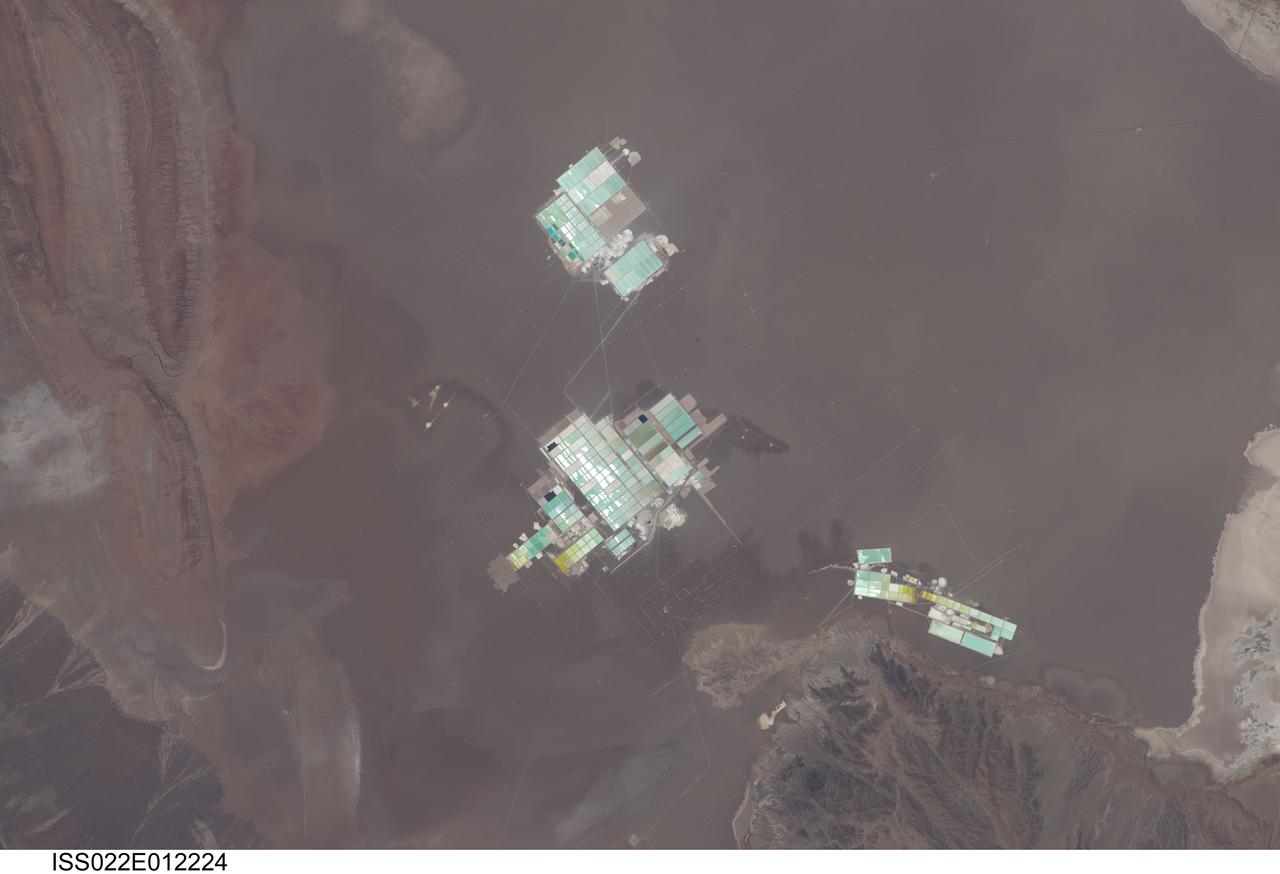
ISS022-E-012224 (15 Dec. 2009) --- Evaporation ponds in the Salar de Atacama, Chile are featured in this image photographed by an Expedition 22 crew member on the International Space Station. The Salar (salt flat) de Atacama in Chile is an enclosed basin with no drainage outlets. While the grey-brown surface of the Salar is flat and desiccated, mineral-rich brines - water with a high percentage of dissolved salts - are located below the surface. The subsurface brines of the Salar de Atacama are particularly rich in lithium salts. Lithium is an essential component of advanced batteries and medicines, among many other uses. The brines are pumped to the surface through a network of wells and into large shallow evaporation ponds ? three such evaporation pond facilities are visible in the center of the image. Color variations in the ponds are due to varying amounts of salts relative to water. The dry and windy climate enhances evaporation of the water, leaving concentrated salts behind for extraction of the lithium. The Salar de Atacama is located in the southern half of the Atacama Desert ? with no historical or current records of rainfall in some parts of this desert, it is considered to be one of the driest places on Earth. This photograph illustrates the central portion of the Salar de Atacama. It is bounded by brown to grey-brown folded and faulted strata of the Cordillera de la Sal to the northwest (upper left) and darker bedrock of the Cordon de Lila to the south (lower right).

iss061e001616 (Oct. 6, 2019) --- NASA astronaut Andrew Morgan is suited up in a U.S. spacesuit before beginning a seven hour and one minute spacewalk to upgrade the station's large nickel-hydrogen batteries with newer, more powerful lithium-ion batteries.
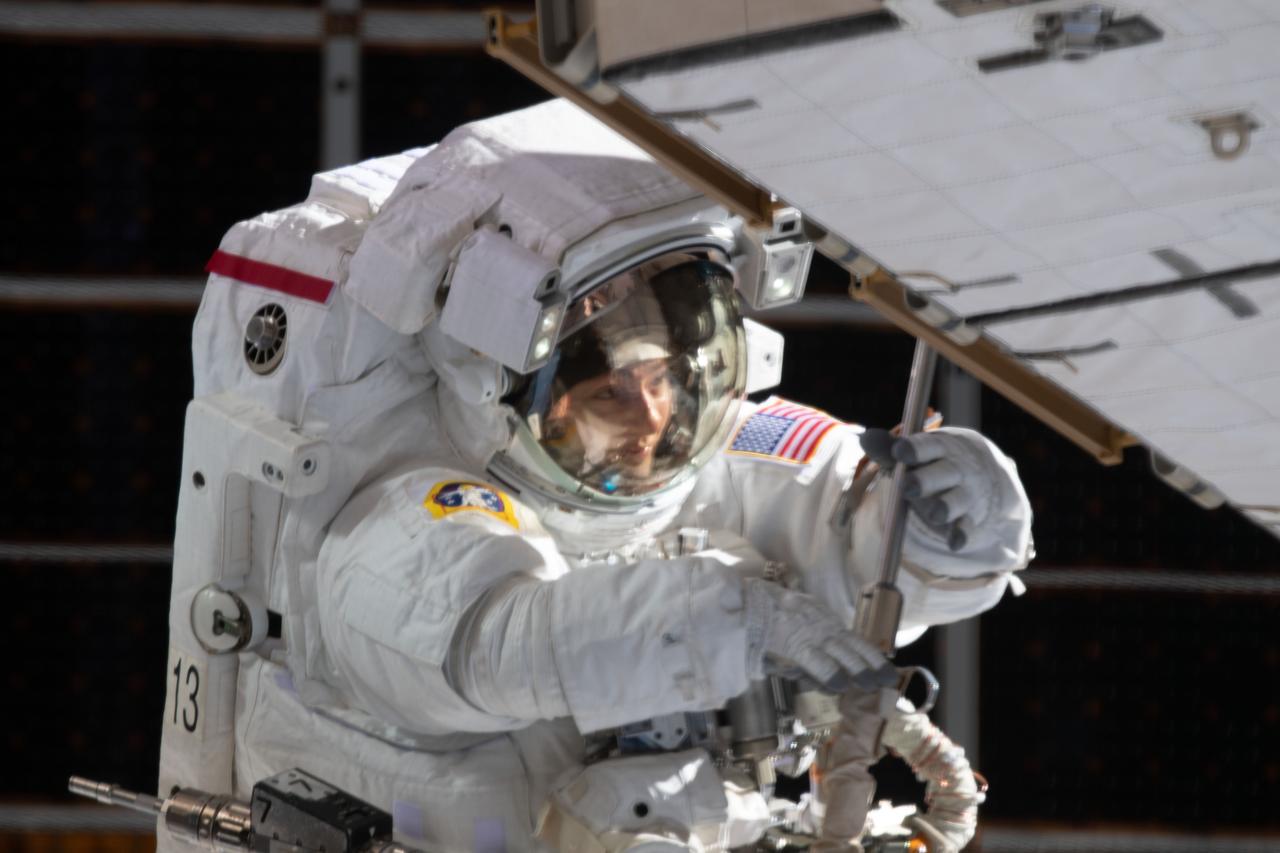
iss061e126405 (Jan. 15, 2020) --- NASA astronaut Jessica Meir is pictured during a spacewalk she conducted with NASA astronaut Christina Koch (out of frame) to install new lithium-ion batteries that store and distribute power collected from solar arrays on the station’s Port-6 truss structure.
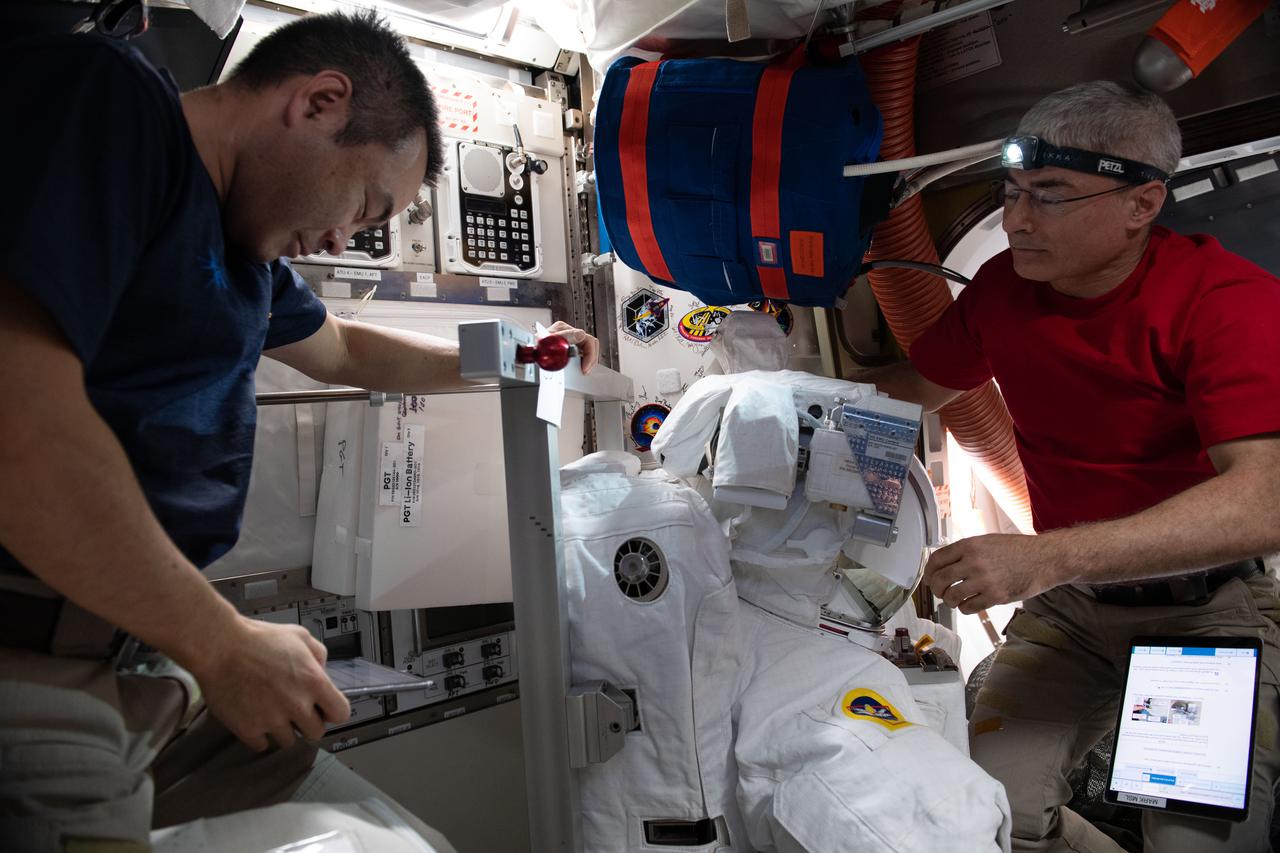
iss065e206754 (June 26, 2021) --- (From left) Expedition 65 Commander Akihiko Hoshide and Flight Engineer Mark Vande Hei install a high-definition camera assembly and lithium-ion power adapters on a U.S. spacesuit inside the International Space Station's Quest airlock.
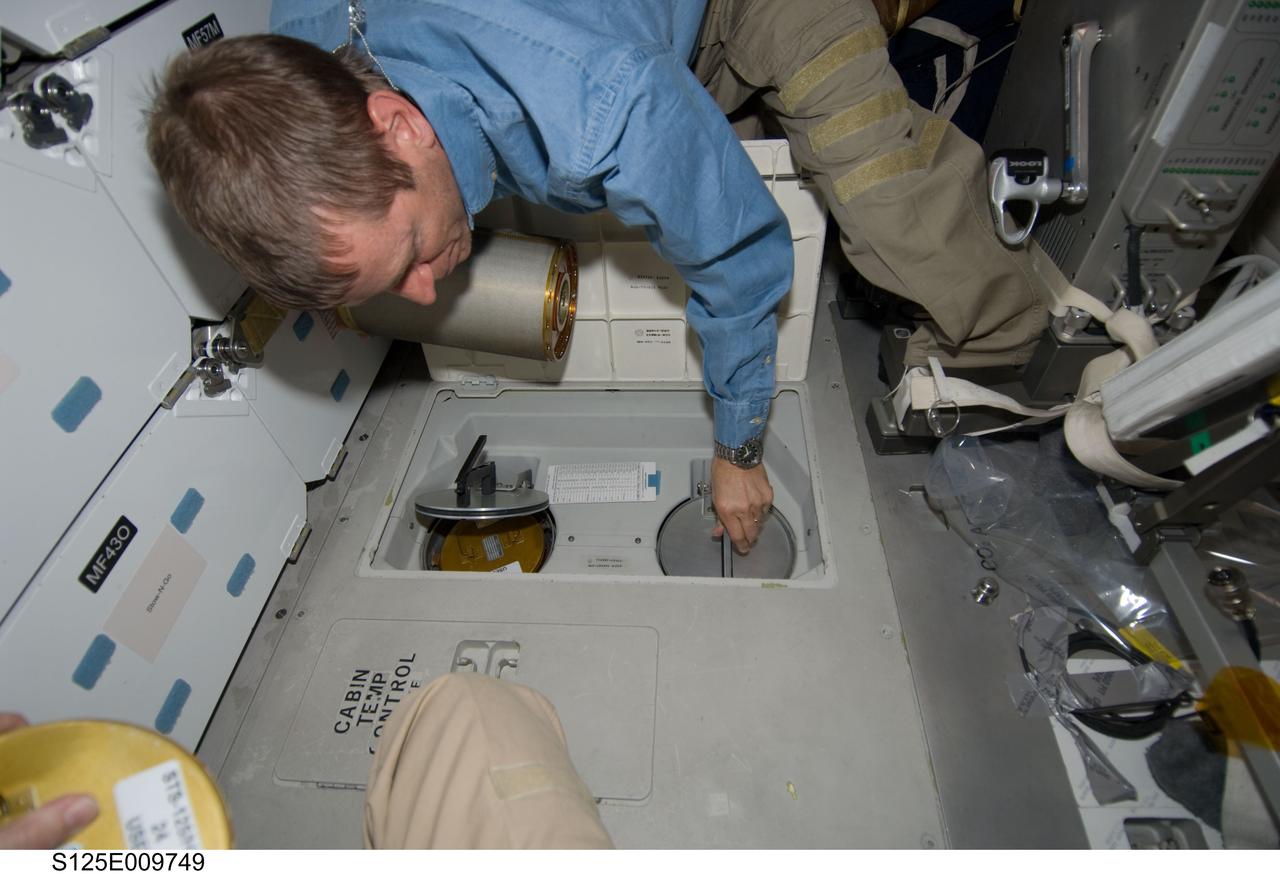
S125-E-009749 (18 May 2009) --- Astronaut Gregory C. Johnson, STS-125 pilot, works with lithium hydroxide (LiOH) canisters from beneath Space Shuttle Atlantis' middeck during flight day eight activities.
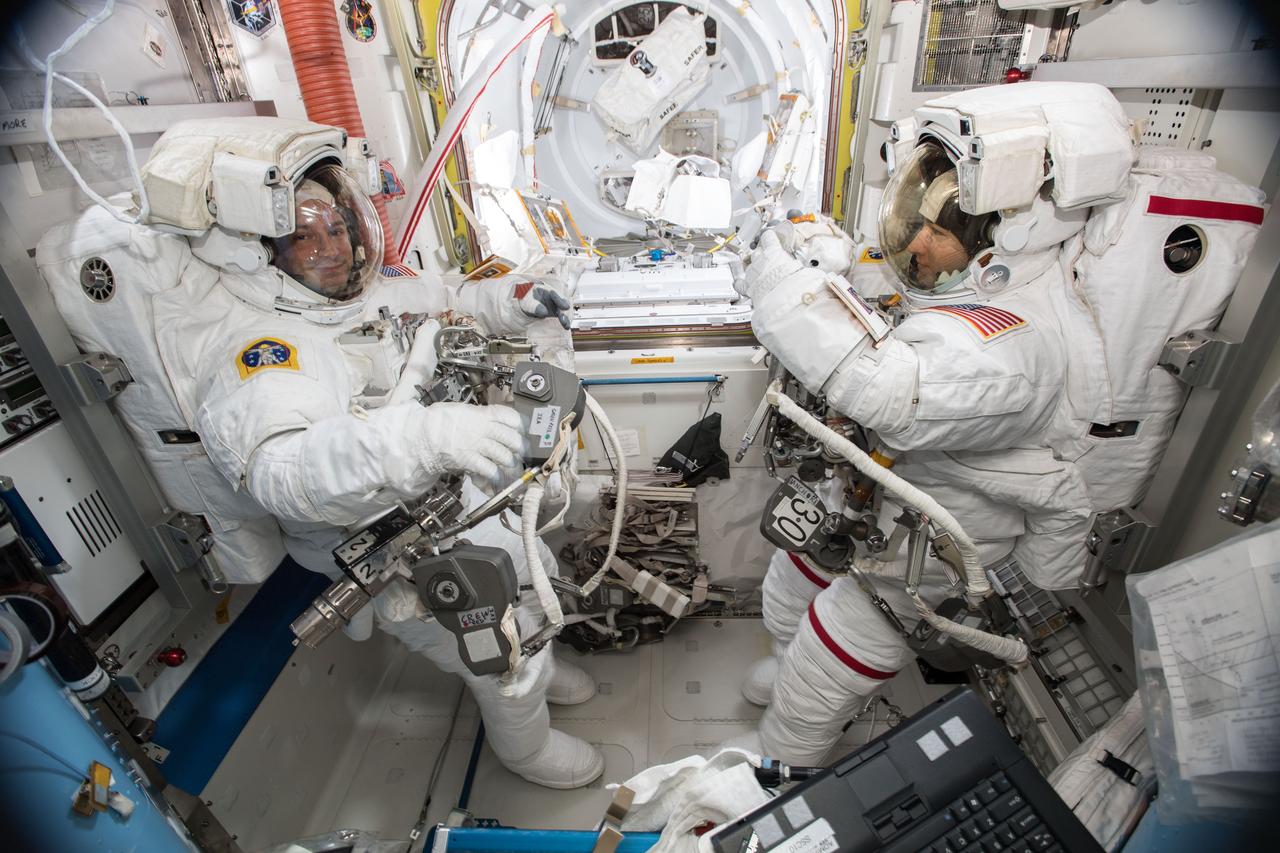
iss061e001577 (Oct. 6, 2019) --- NASA astronauts Andrew Morgan (left) and Christina Koch (right) are suited up in U.S. spacesuits inside the Quest airlock before beginning a seven hour and one minute spacewalk to upgrade the station's large nickel-hydrogen batteries with newer, more powerful lithium-ion batteries.
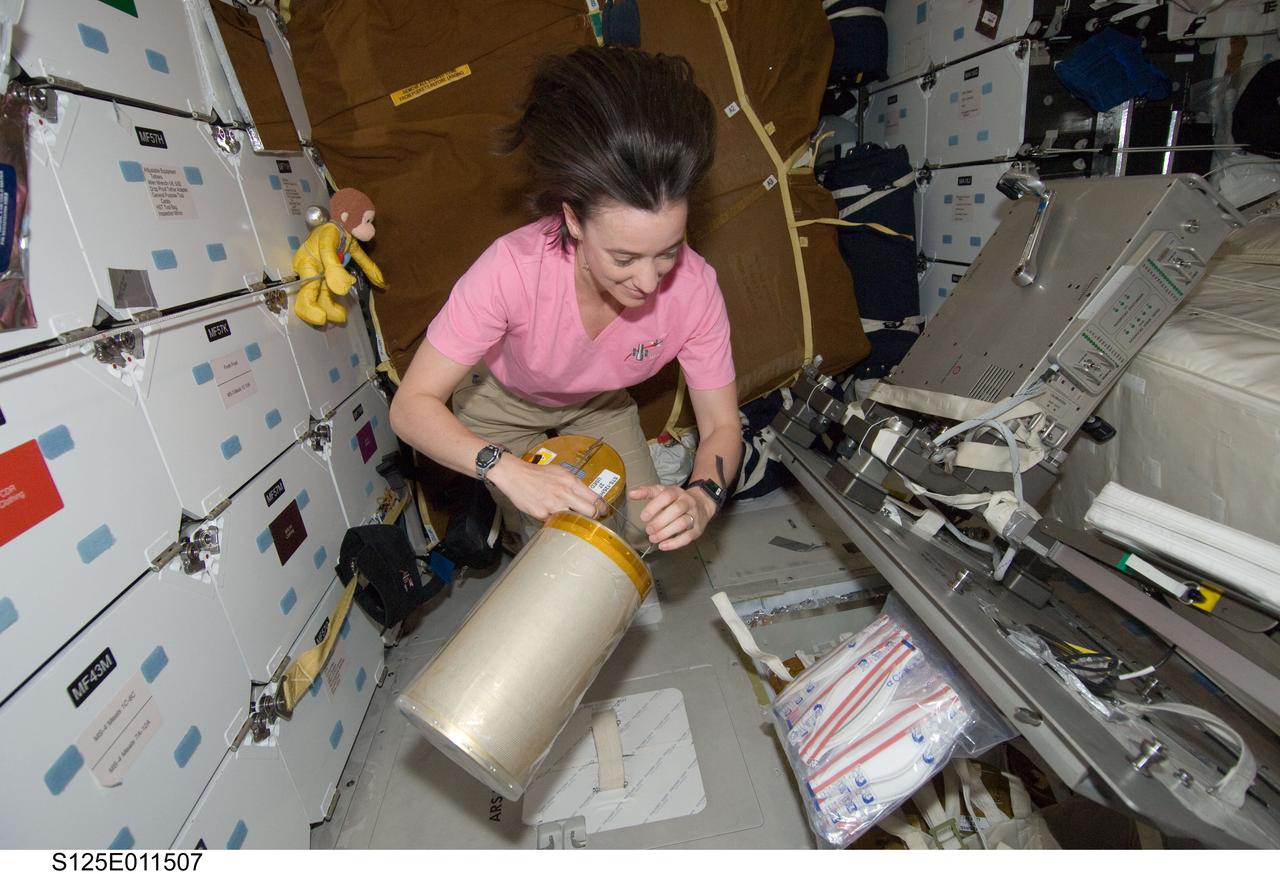
S125-E-011507 (19 May 2009) --- Astronaut Megan McArthur, STS-125 mission specialist, works with lithium hydroxide (LiOH) canisters from beneath Space Shuttle Atlantis' middeck during flight day nine activities.
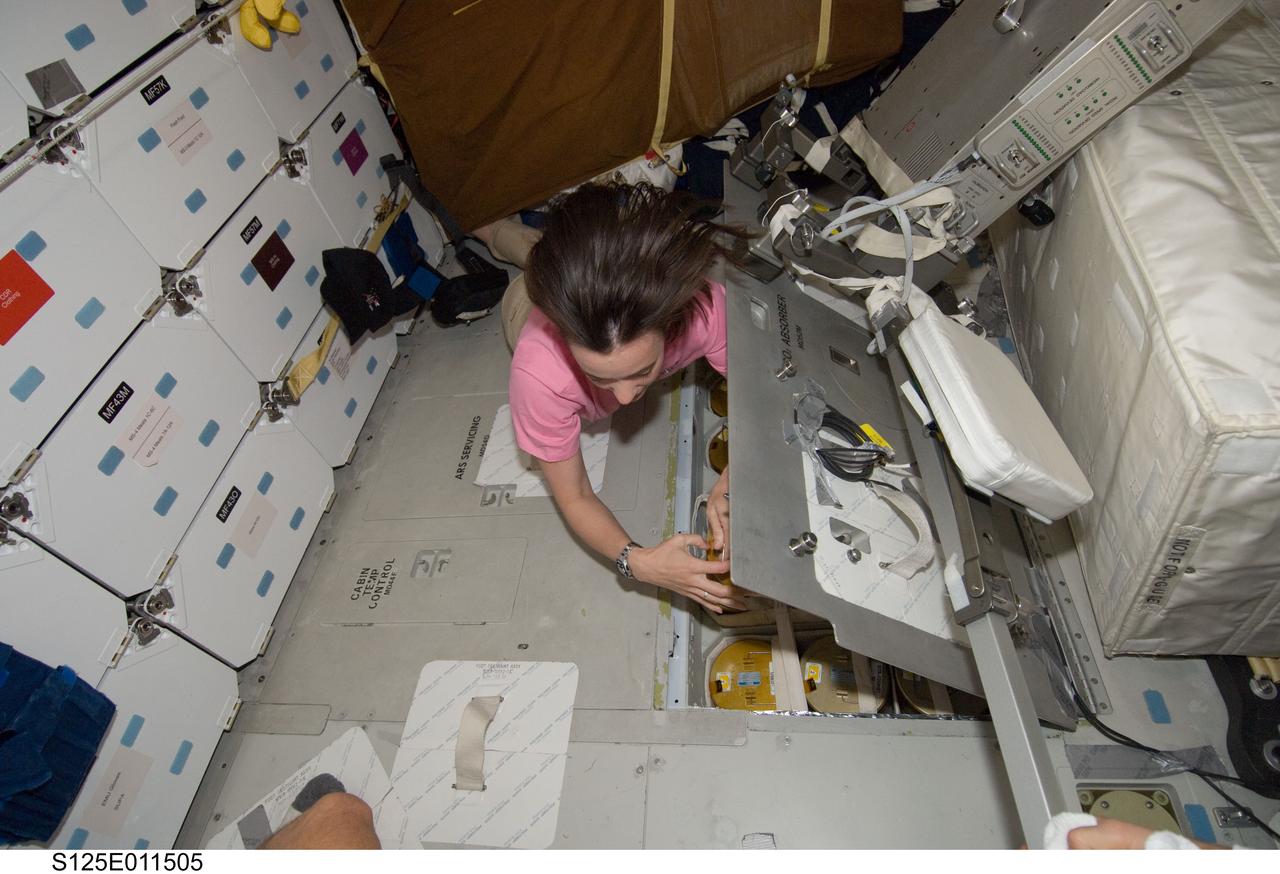
S125-E-011505 (19 May 2009) --- Astronaut Megan McArthur, STS-125 mission specialist, works with lithium hydroxide (LiOH) canisters from beneath Space Shuttle Atlantis' middeck during flight day nine activities.
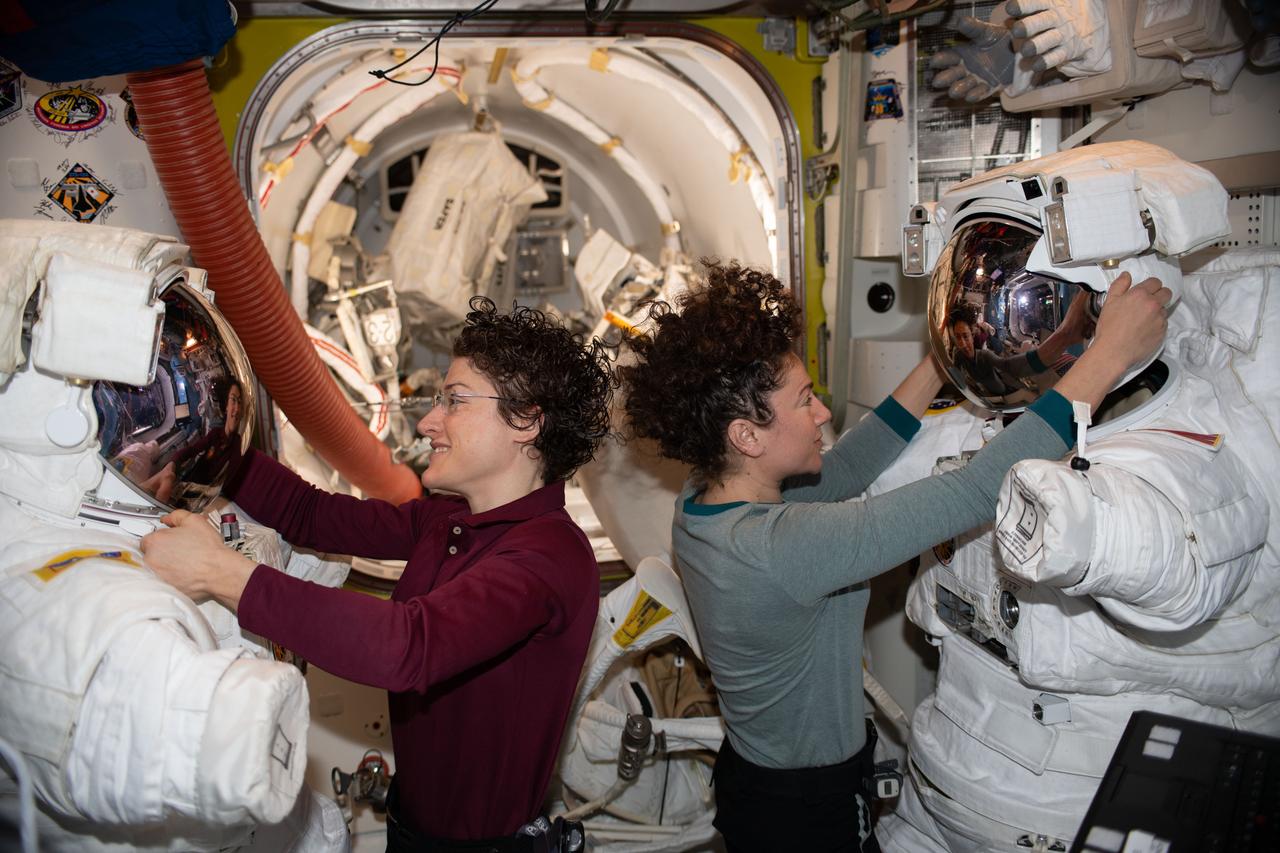
iss061e121950 (Jan. 15, 2020) --- NASA astronauts Christina Koch (left) and Jessica Meir work on their U.S. spacesuits ahead of a spacewalk they conducted to install new lithium-ion batteries that store and distribute power collected from solar arrays on the station’s Port-6 truss structure.
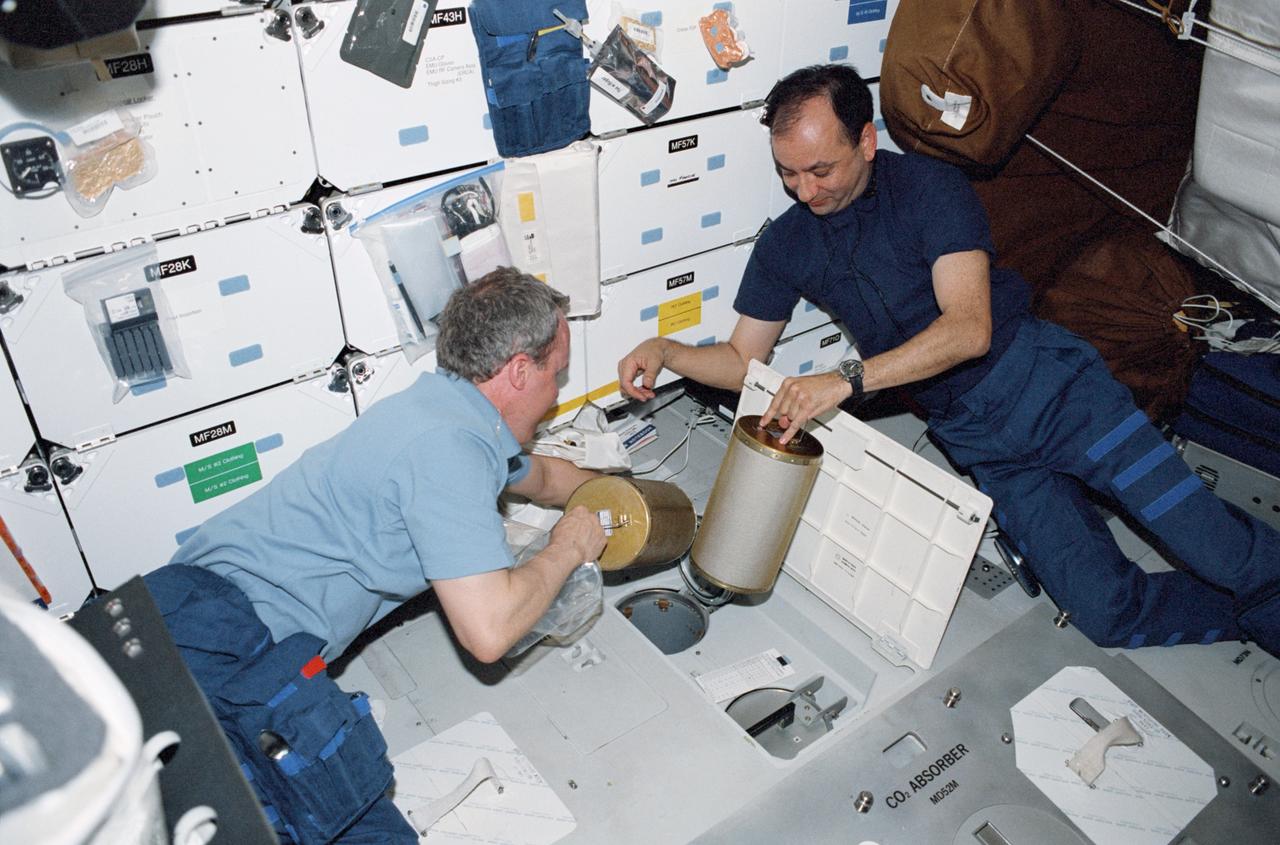
STS098-345-028 (7-20 February 2001) --- Astronauts Thomas D. Jones, mission specialist, and Mark L. Polansky, pilot, change out lithium hydroxide canisters on the mid deck of the Earth-orbiting Space Shuttle Atlantis.
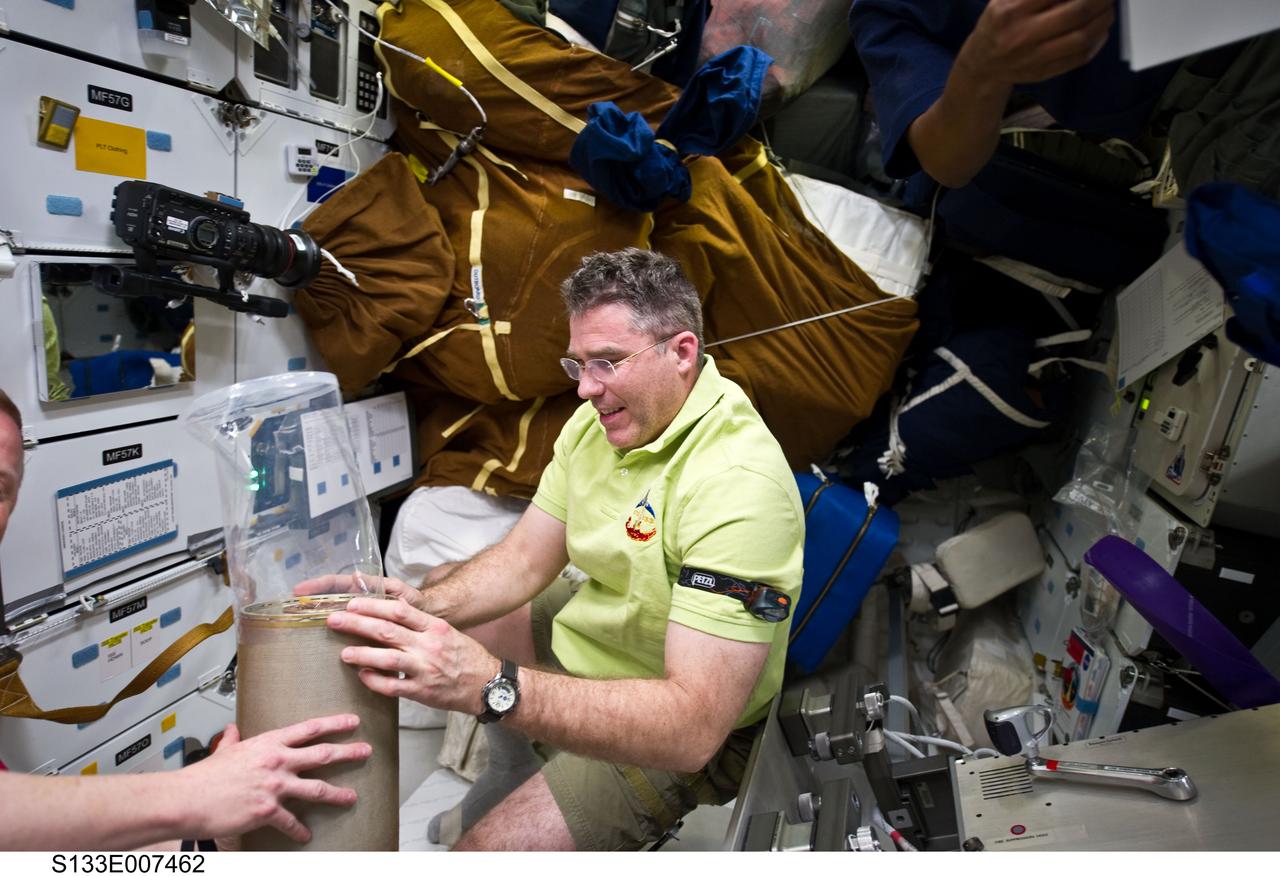
S133-E-007462 (28 Feb. 2011) --- NASA astronaut Steve Bowen, STS-133 mission specialist, works with lithium hydroxide (LiOH) canisters from beneath space shuttle Discovery’s middeck while docked with the International Space Station. Photo credit: NASA or National Aeronautics and Space Administration
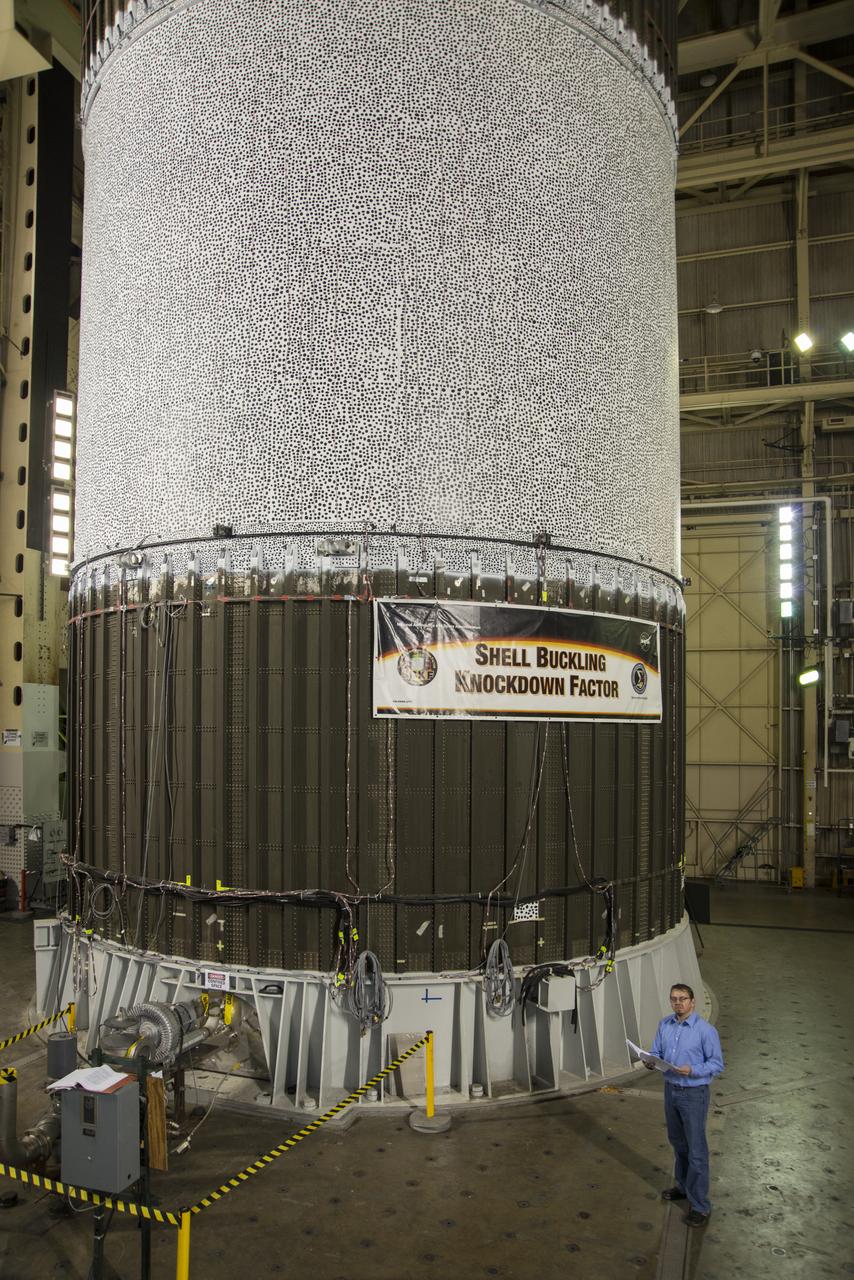
MARK HILBURGER, PROJECT ENGINEER FROM LANGLEY RESEARCH CENTER (LARC) WITH THE ALUMINUM-LITHIUM CYLINDER USED IN THE SHELL BUCKLE KNOCKDOWN FACTOR TESTING. DURING THE TESTING FORCE AND PRESSURE WERE INCREASINGLY APPLIED TO THE TOP OF AN EMPTY BUT PRESSURIZED ROCKET FUEL TANK TO EVALUATE ITS STRUCTURAL INTEGRITY.
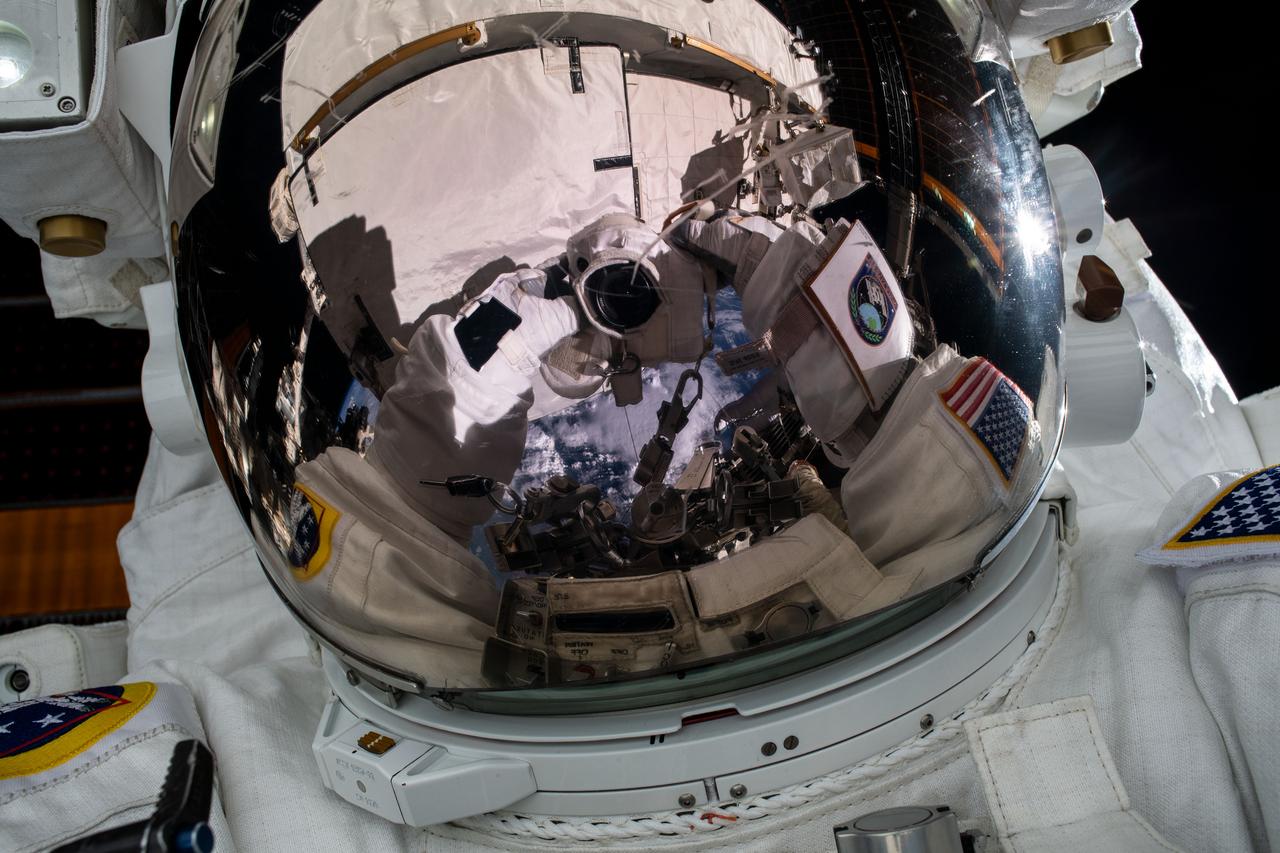
iss061e126557 (Jan. 15, 2020) --- NASA astronaut Jessica Meir takes an out-of-this-world "space-selfie" during a spacewalk she conducted with NASA astronaut Christina Koch (out of frame) to install new lithium-ion batteries that store and distribute power collected from solar arrays on the station’s Port-6 truss structure.
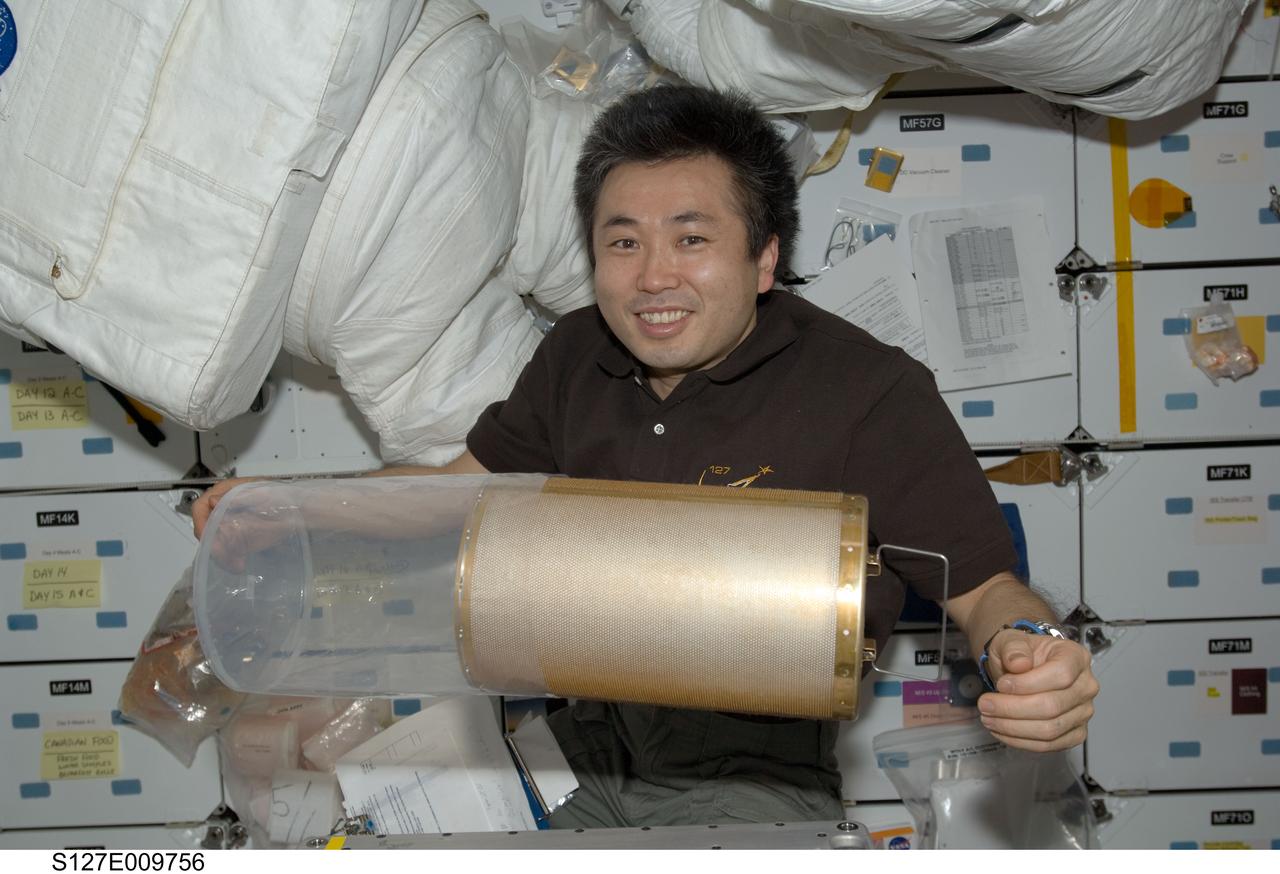
S127-E-009756 (28 July 2009) --- Japan Aerospace Exploration Agency (JAXA) astronaut Koichi Wakata, STS-127 mission specialist, is pictured near a lithium hydroxide (LiOH) canister floating freely on the middeck of Space Shuttle Endeavour during flight day 14 activities.
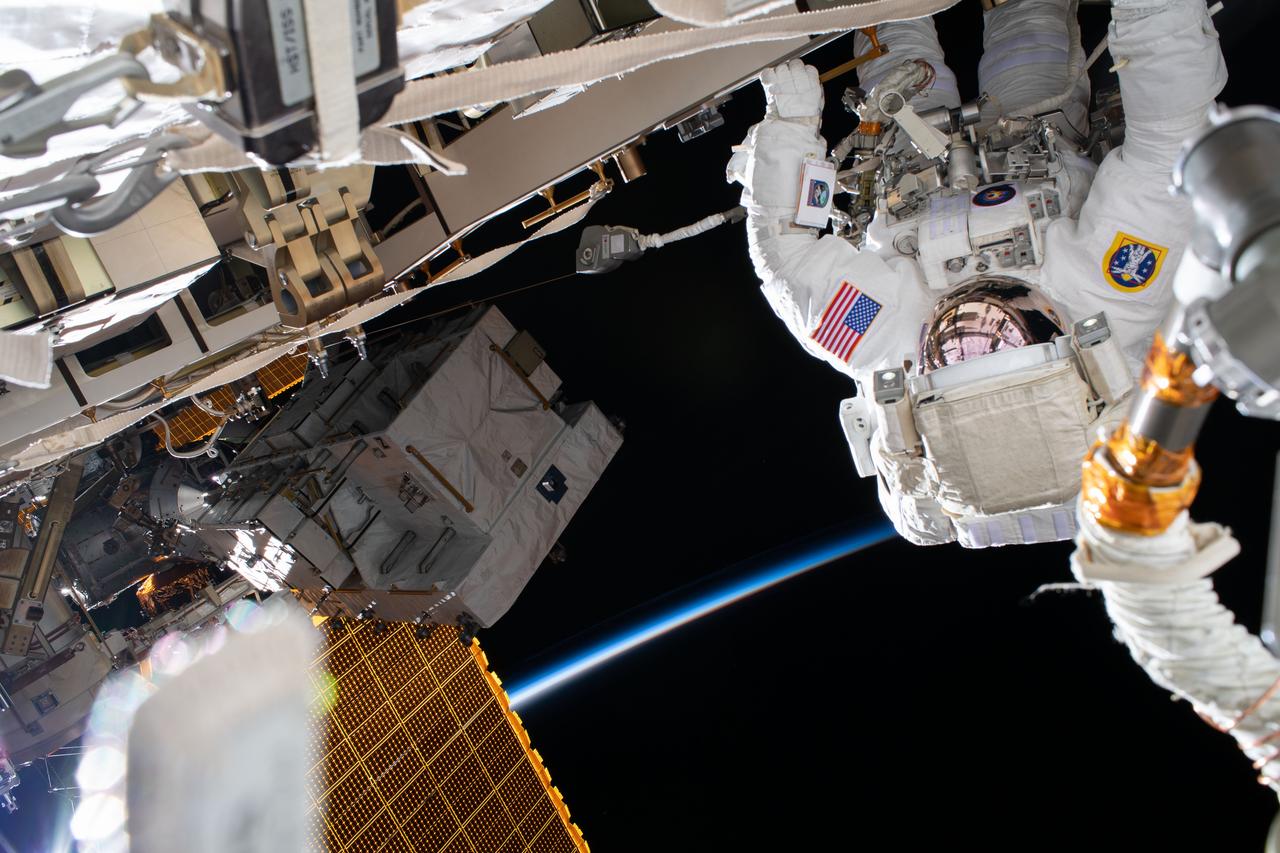
iss063e049941 (July 16, 2020) --- NASA astronaut Chris Cassidy works during a six-hour spacewalk to install three lithium-ion batteries on the International Space Station's truss structure. The orbiting lab was above the North Pacific Ocean off the coast of Russia flying into an orbital sunrise at the time this photograph was taken.
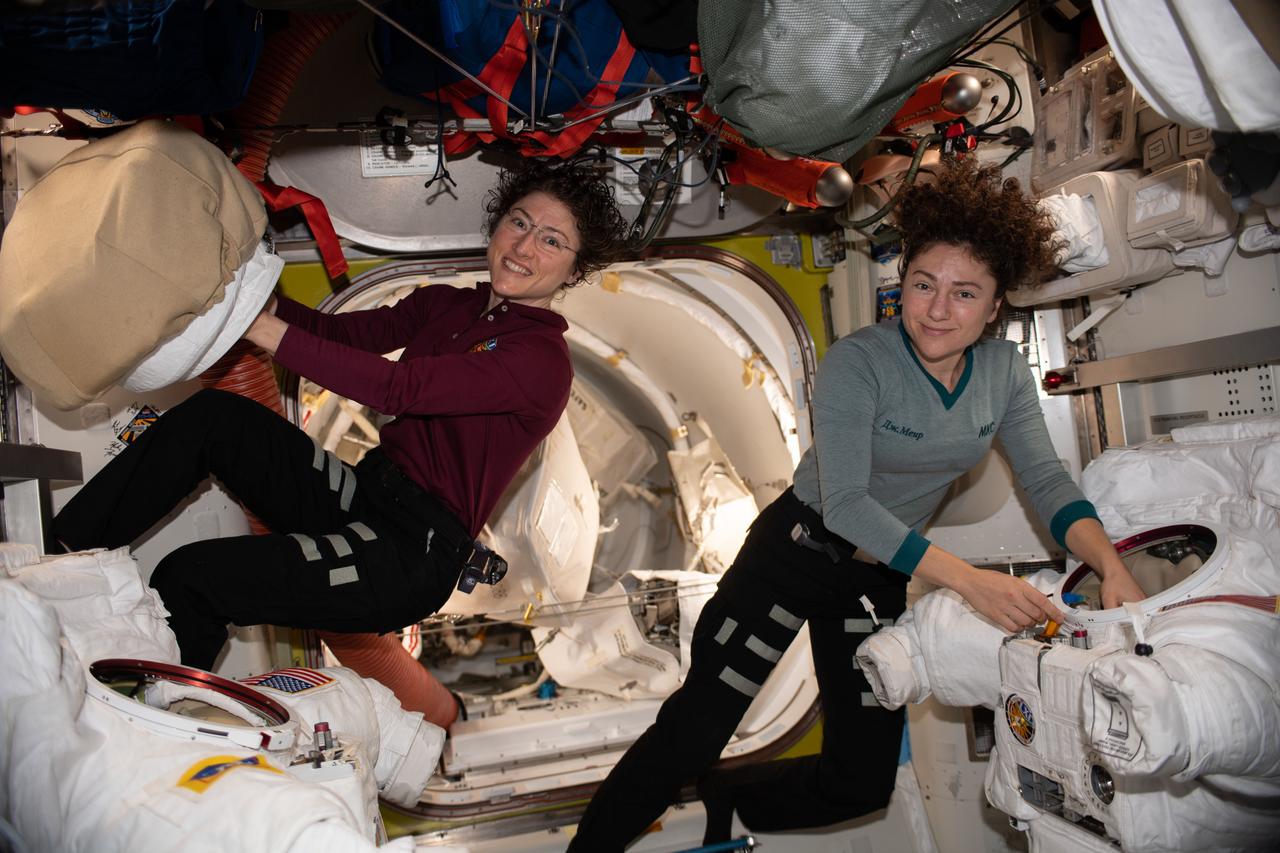
iss061e121931 (Jan. 15, 2020) --- NASA astronauts Christina Koch (left) and Jessica Meir work on their U.S. spacesuits ahead of a spacewalk they conducted to install new lithium-ion batteries that store and distribute power collected from solar arrays on the station’s Port-6 truss structure.
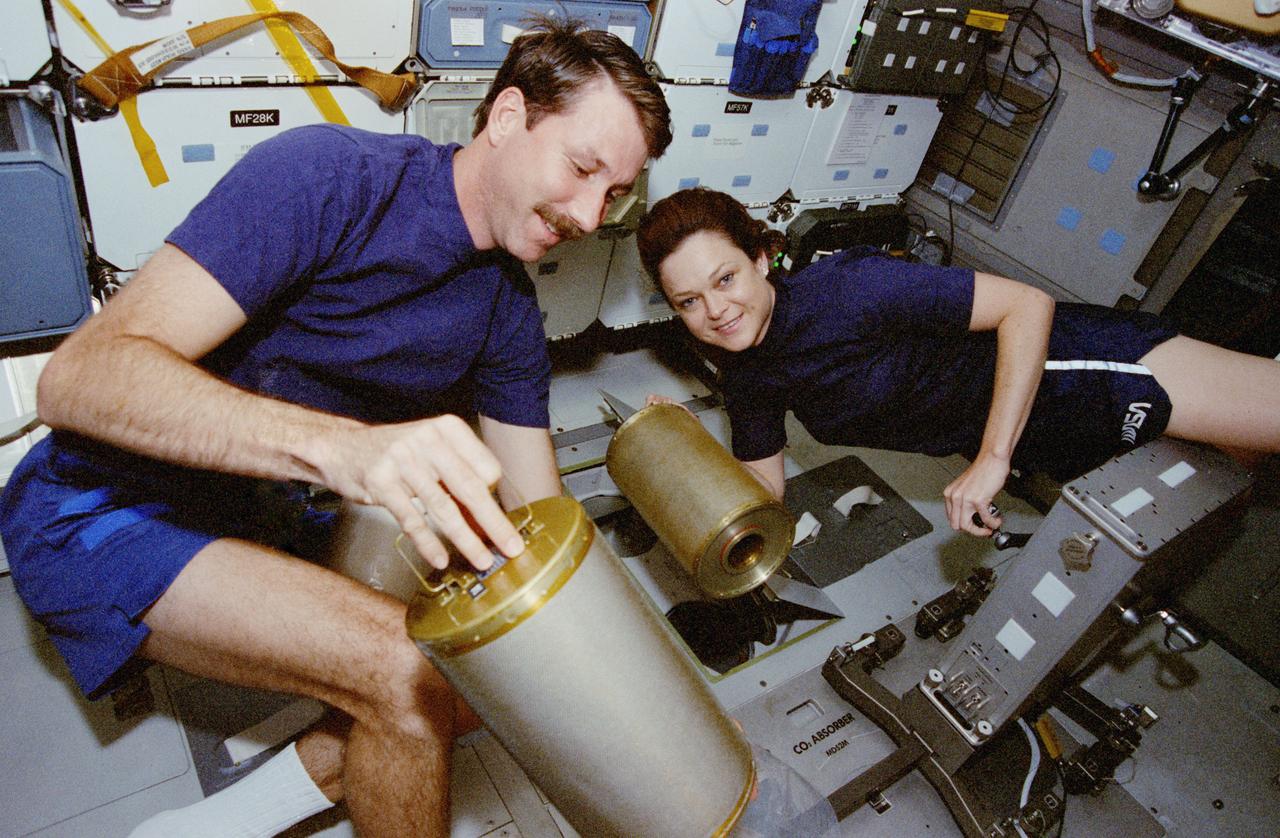
STS080-331-030 (19 Nov.-7 Dec. 1996) --- Astronauts Kent V. Rominger, STS-80 pilot, and Tamara E. Jernigan, mission specialist, perform a routine housekeeping chore during the space shuttle Columbia's record stay in Earth-orbit. The two are changing out the lithium hydroxide canisters beneath the middeck.
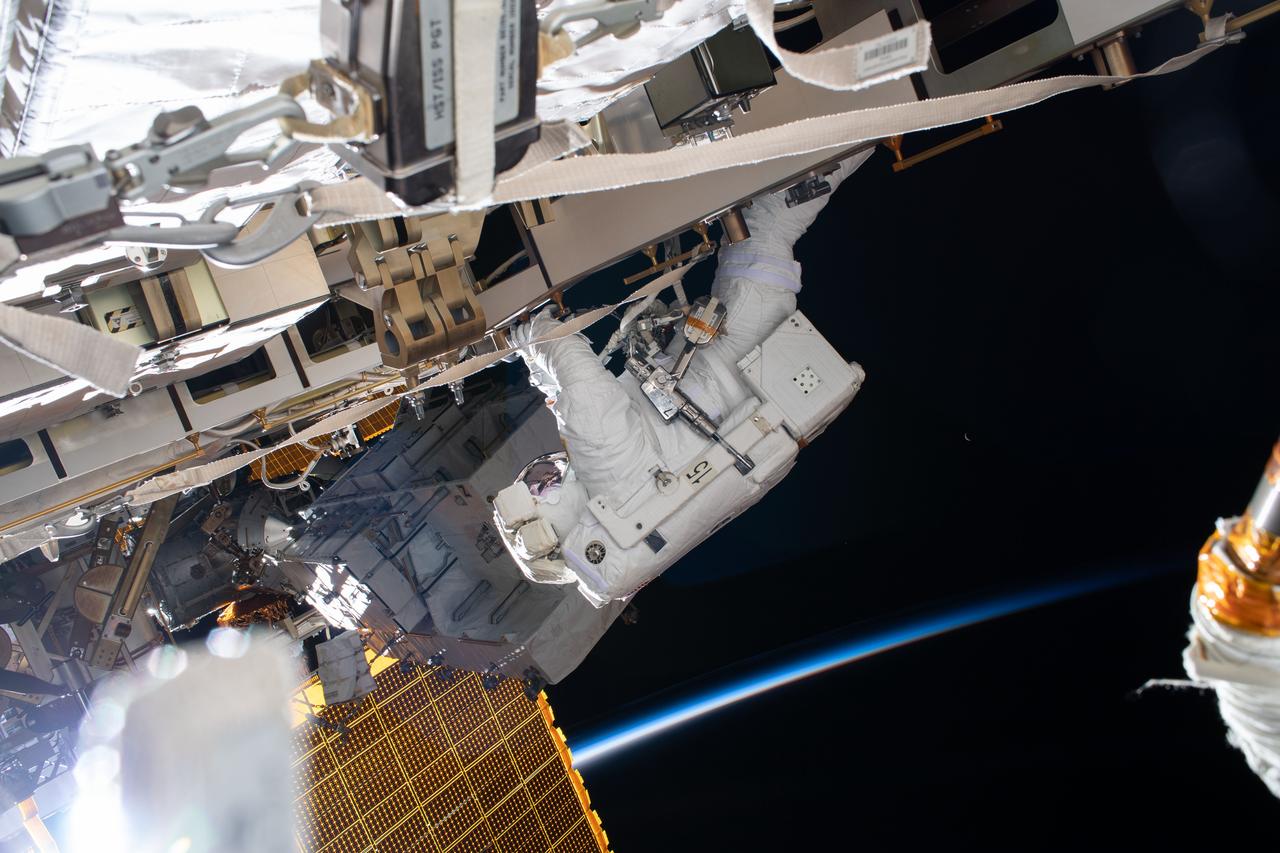
iss063e049933 (July 16, 2020) --- NASA astronaut Chris Cassidy works during a six-hour spacewalk to install lithium-ion batteries on the International Space Station's truss structure. The orbiting lab was above the north Pacific Ocean flying into a sunrise with a tiny waning crescent Moon in the background at the time this photograph was taken.
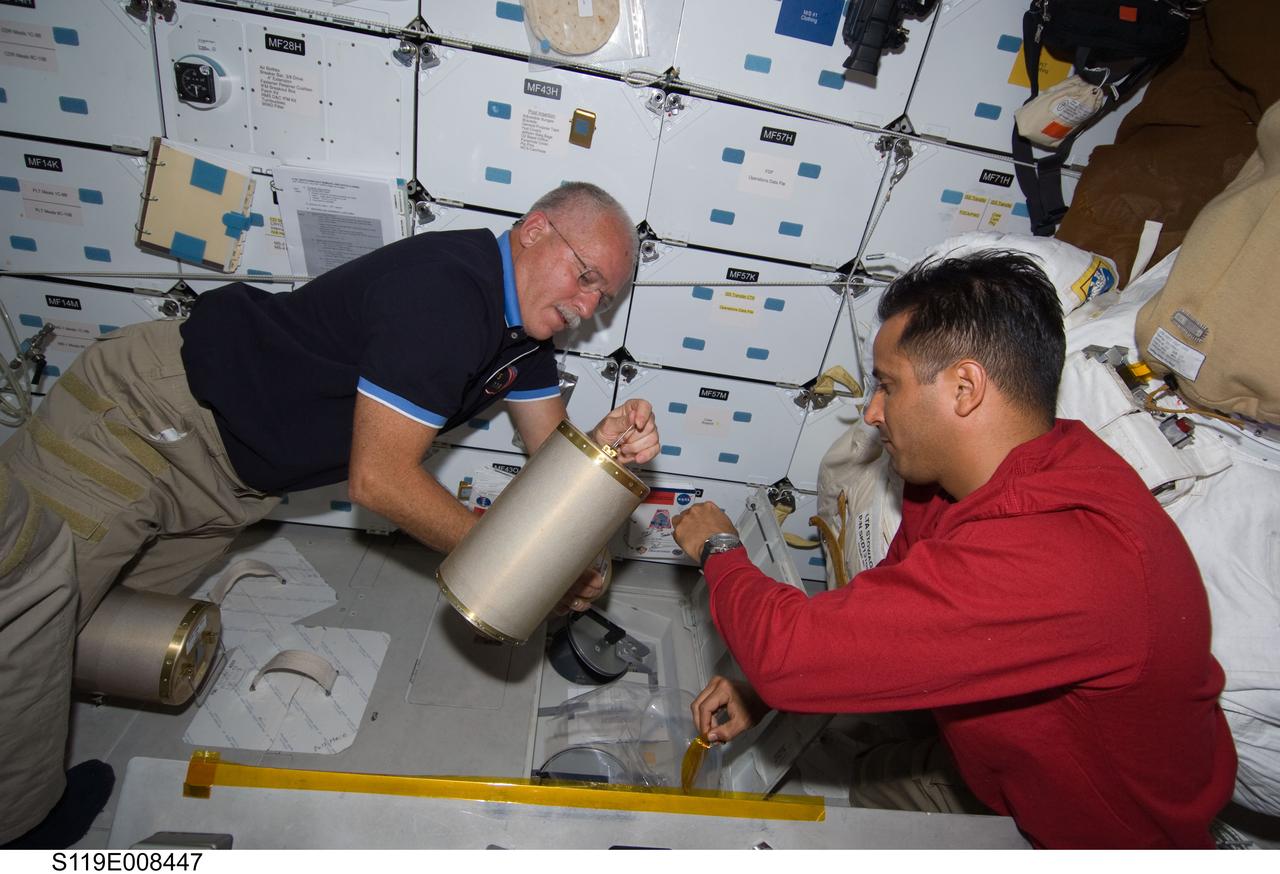
S119-E-008447 (25 March 2009) --- Astronaut John Phillips (left) and Joseph Acaba, both STS-119 mission specialists, work with the lithium hydroxide (LiOH) canisters beneath Space Shuttle Discovery's middeck during flight day 11 activities.
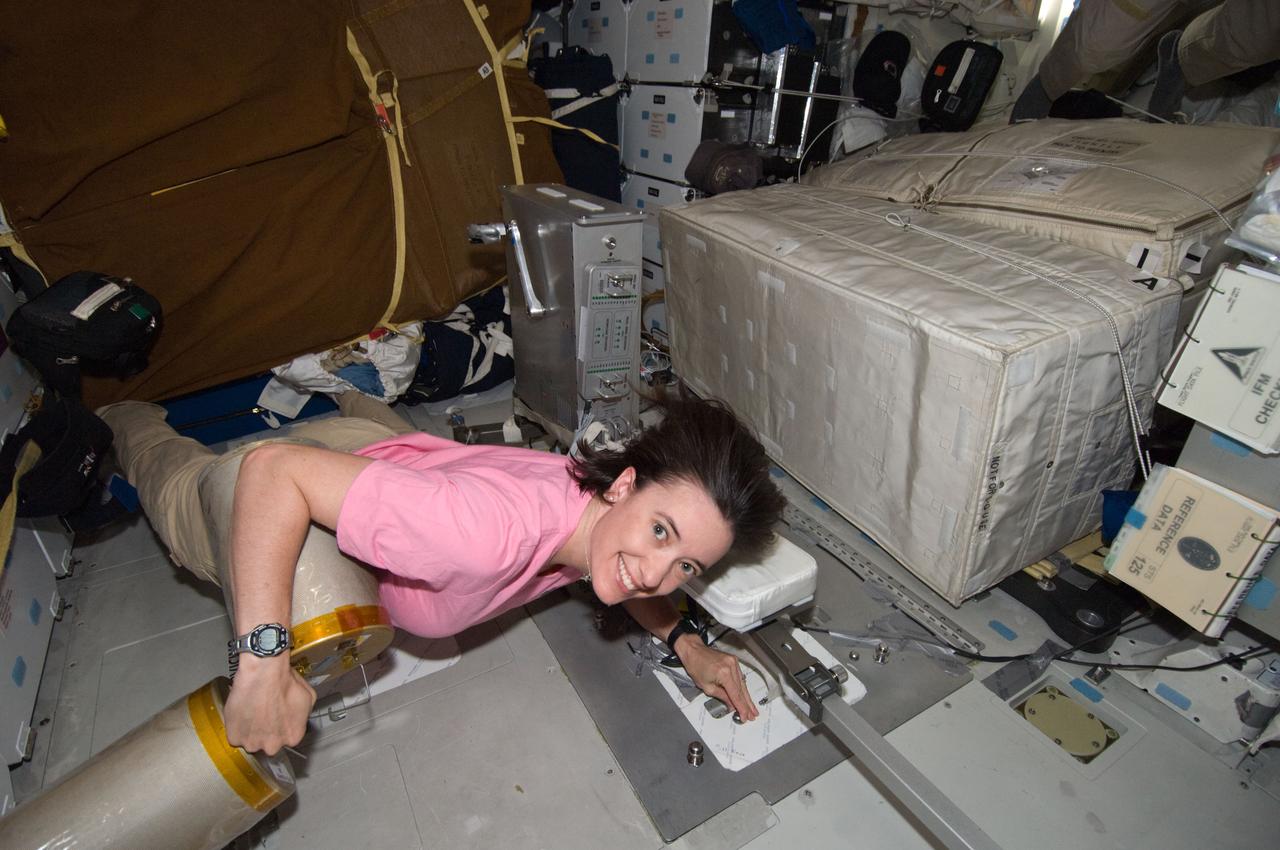
S125-E-011510 (19 May 2009) --- Astronaut Megan McArthur, STS-125 mission specialist, works with lithium hydroxide (LiOH) canisters from beneath Space Shuttle Atlantis' middeck during flight day nine activities.
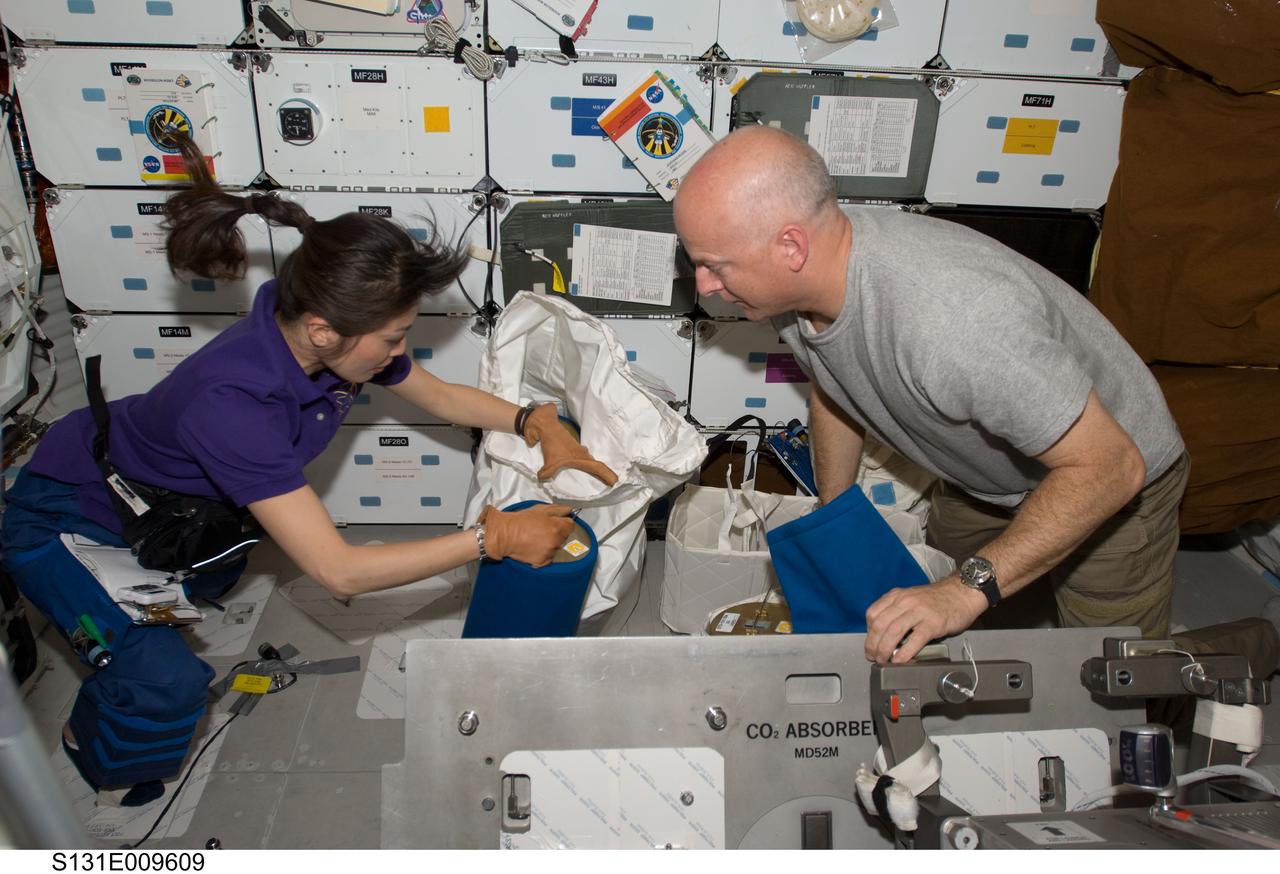
S131-E-009609 (13 April 2010) --- NASA astronaut Alan Poindexter, STS-131 commander; and Japan Aerospace Exploration Agency (JAXA) astronaut Naoko Yamazaki, mission specialist, work with lithium hydroxide (LiOH) canisters on space shuttle Discovery’s middeck while docked with the International Space Station.
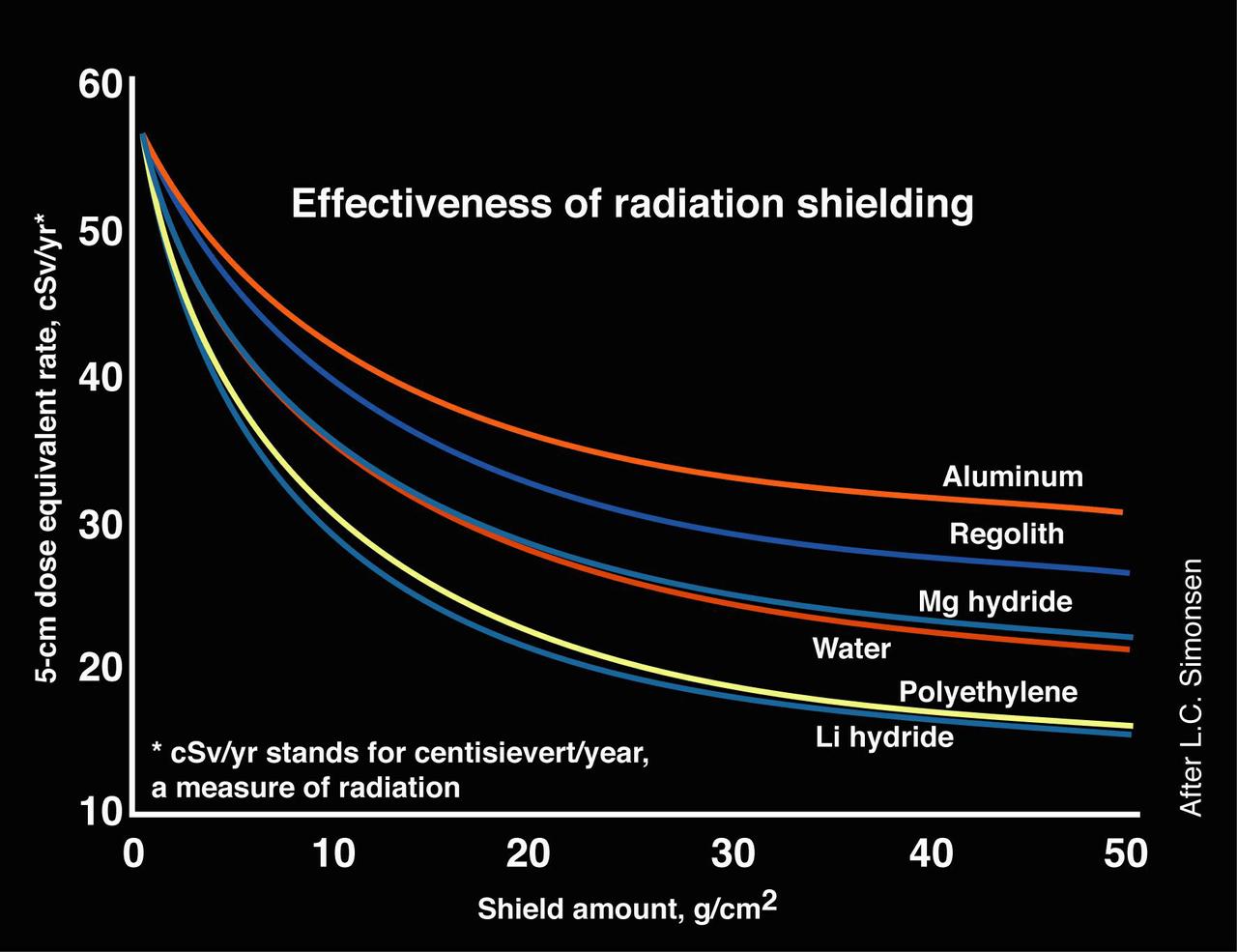
Materials with a smaller mean atomic mass, such as lithium (Li) hydride and polyethylene, make the best radiation shields for astronauts. The materials have a higher density of nuclei and are better able to block incoming radiation. Also, they tend to produce fewer and less dangerous secondary particles after impact with incoming radiation.
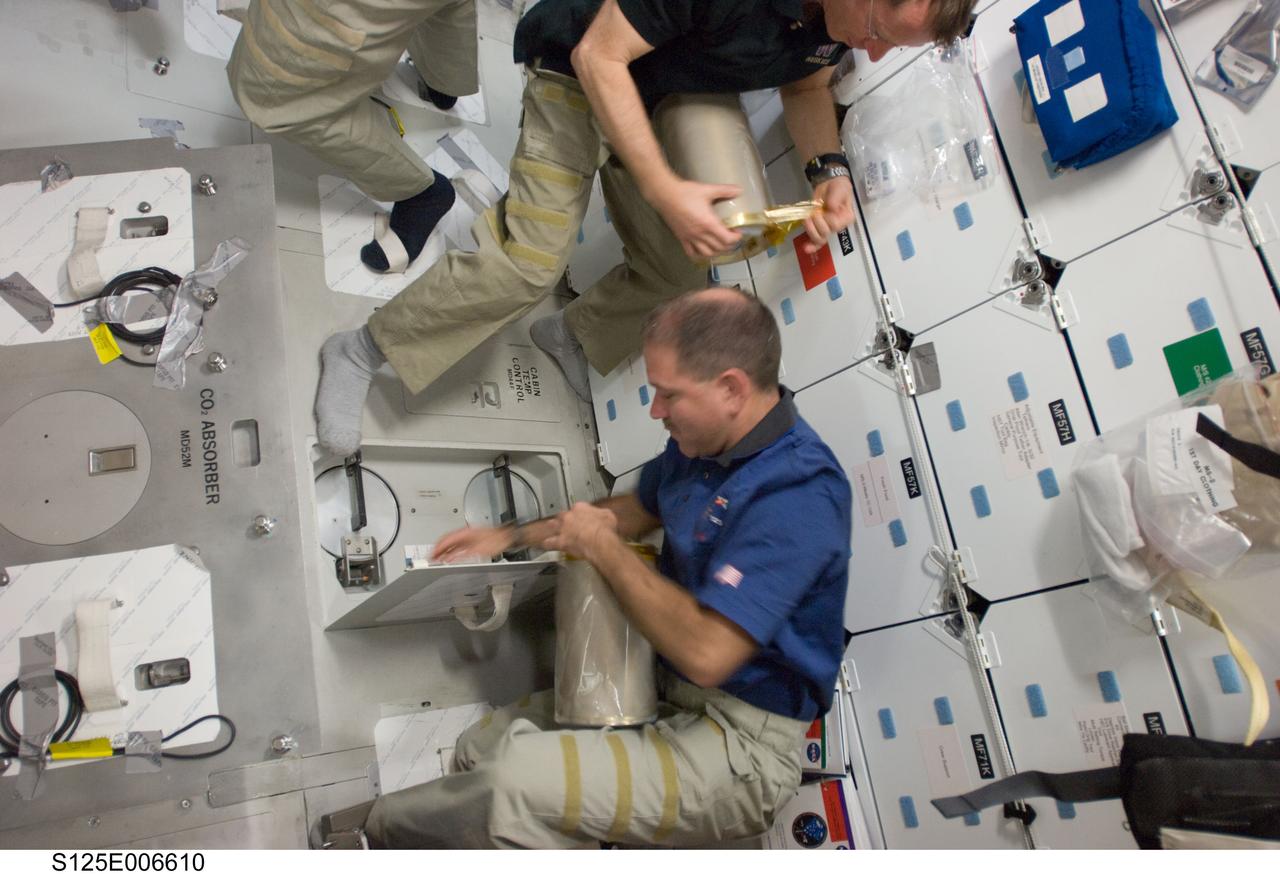
S125-E-006610 (13 May 2009) --- Astronauts John Grunsfeld (bottom), STS-125 mission specialist; and Gregory C. Johnson (partially out of frame), pilot, work with lithium hydroxide (LiOH) canisters from beneath Space Shuttle Atlantis' middeck during flight day three activities.
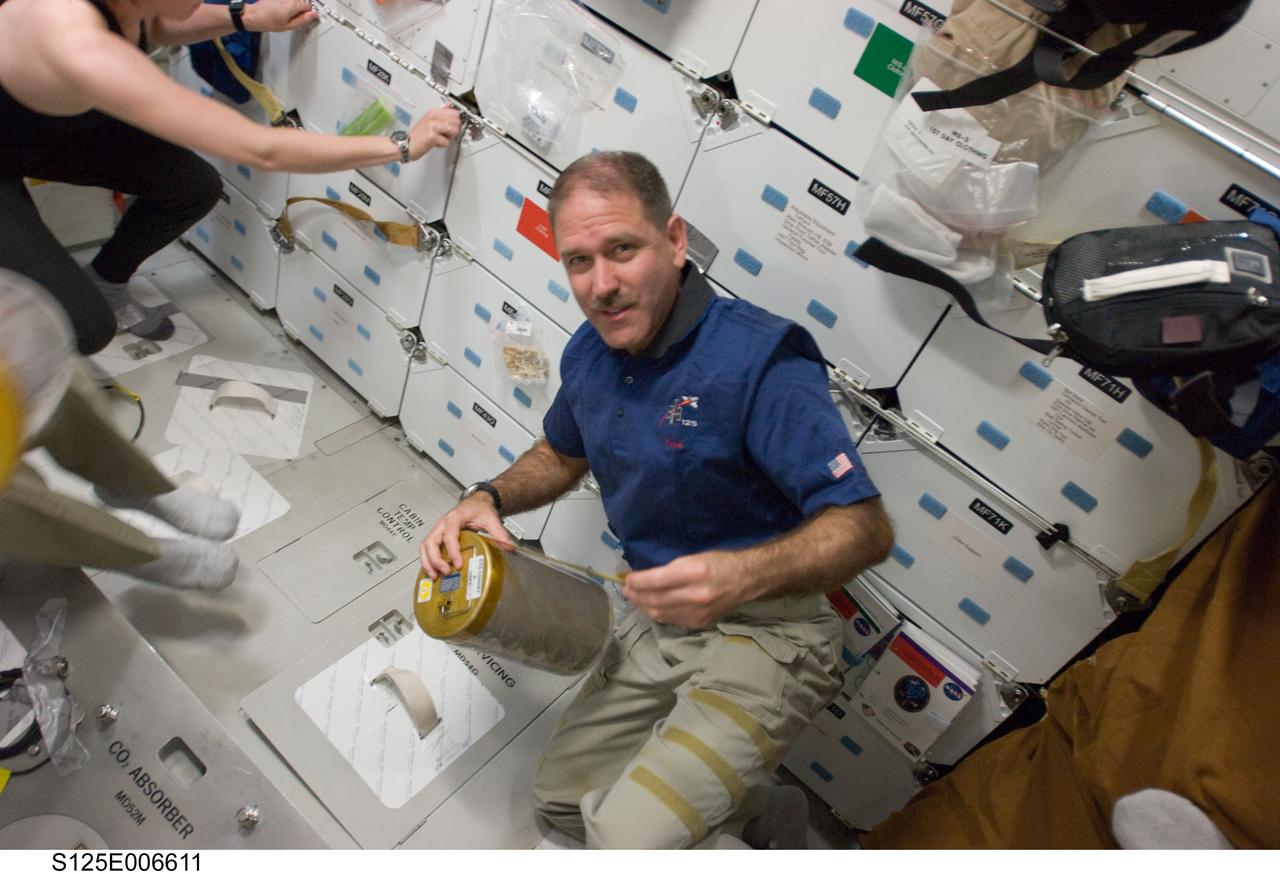
S125-E-006611 (13 May 2009) --- Astronaut John Grunsfeld, STS-125 mission specialist, works with lithium hydroxide (LiOH) canisters from beneath Space Shuttle Atlantis' middeck during flight day three activities.
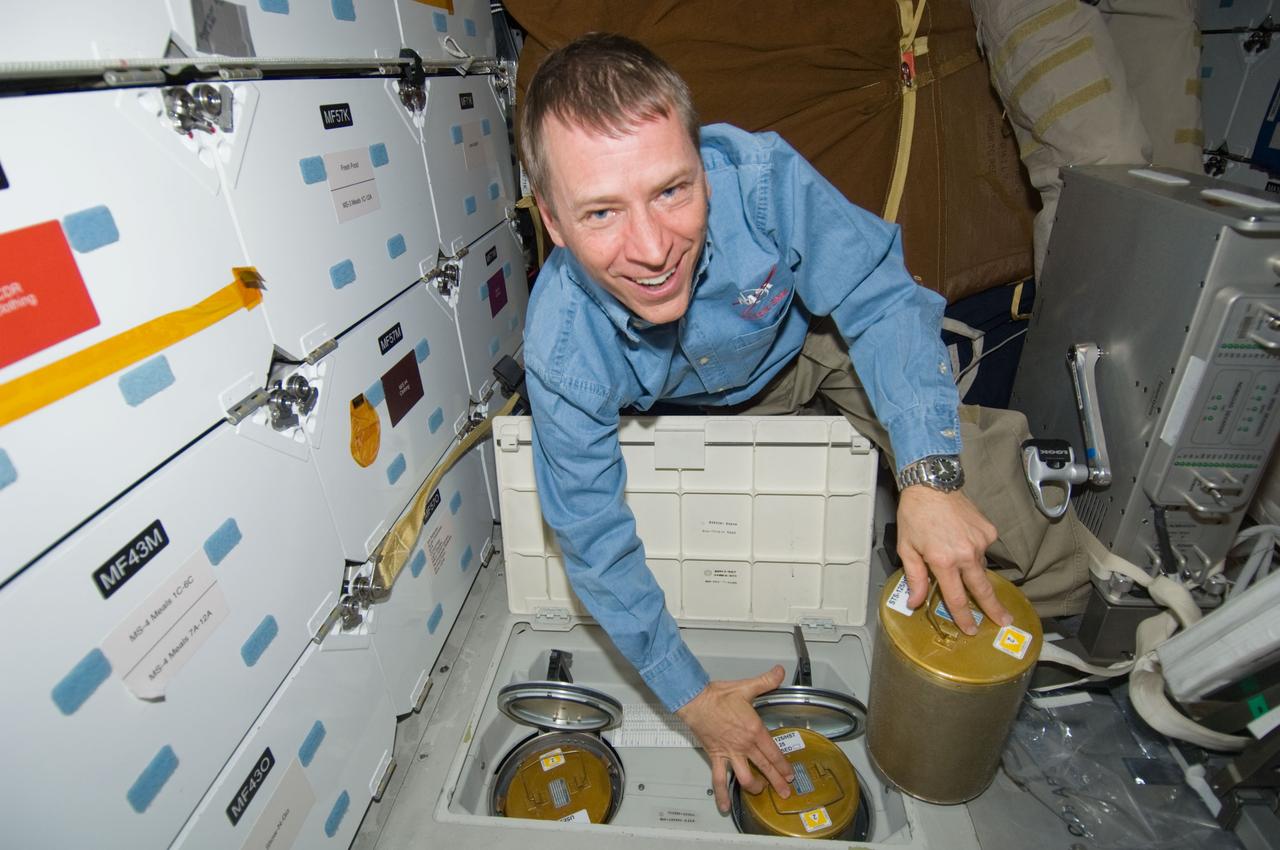
S125-E-009752 (18 May 2009) --- Astronaut Gregory C. Johnson, STS-125 pilot, works with lithium hydroxide (LiOH) canisters from beneath Space Shuttle Atlantis' middeck during flight day eight activities.
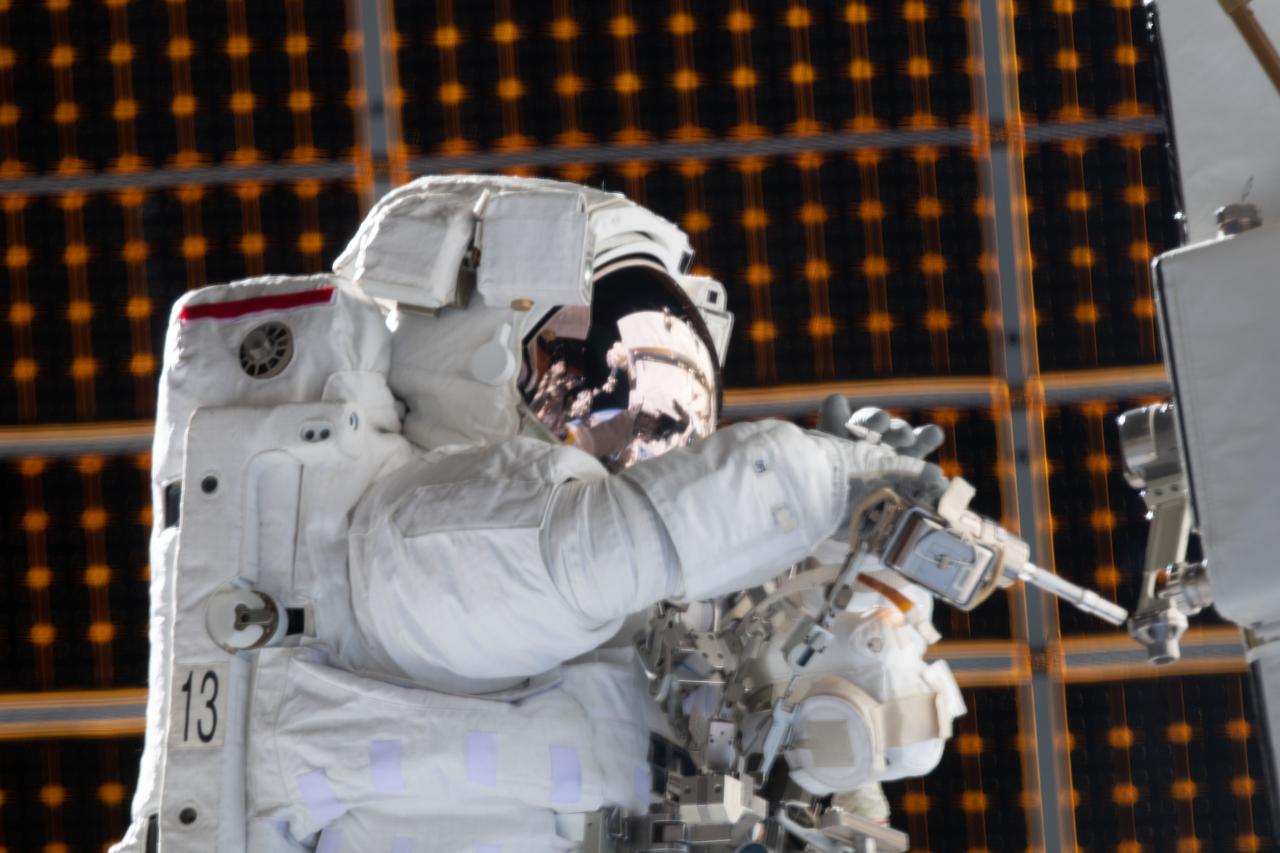
iss061e126136 (Jan. 15, 2020) --- NASA astronaut Jessica Meir is pictured during a spacewalk she conducted with NASA astronaut Christina Koch Jessica Meir (out of frame) to install new lithium-ion batteries that store and distribute power collected from solar arrays on the station’s Port-6 truss structure.
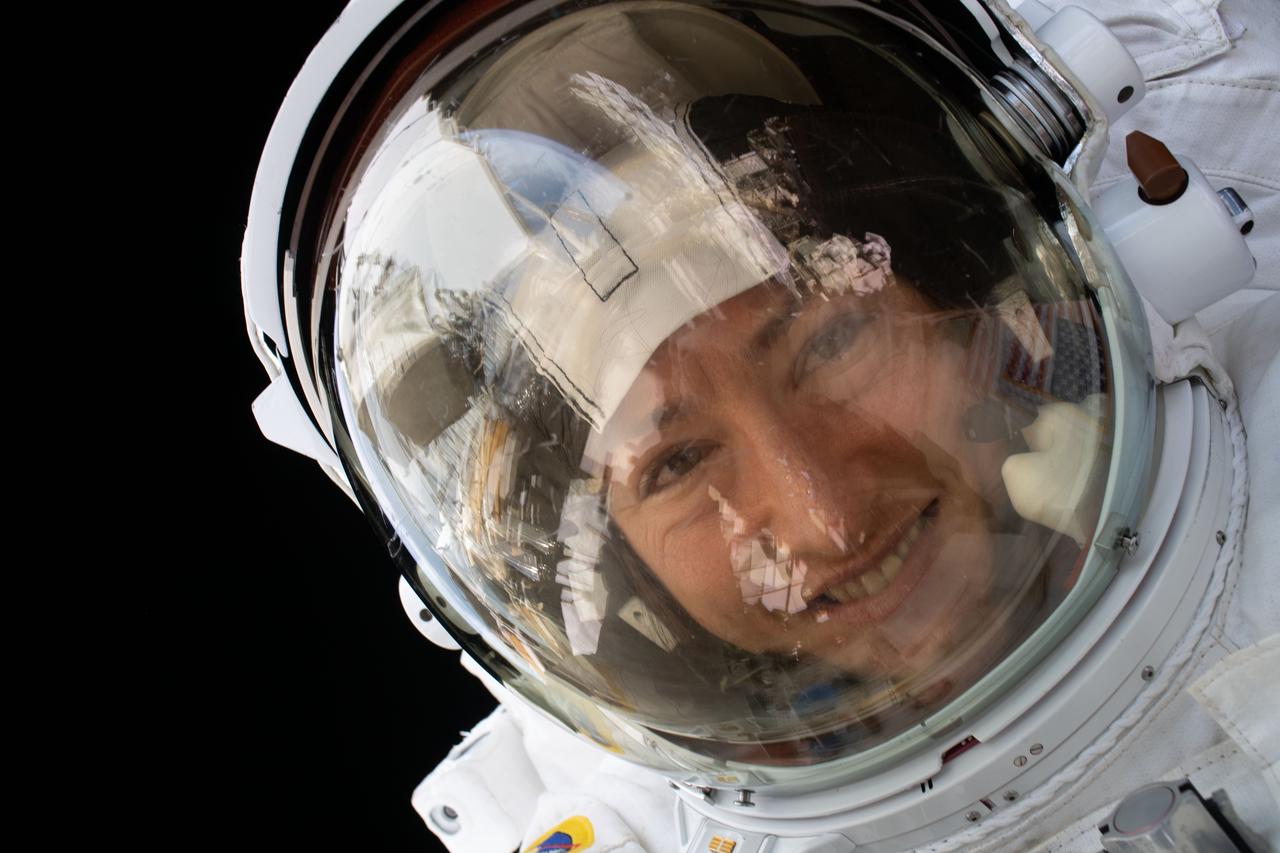
iss061e126557 (Jan. 15, 2020) --- NASA astronaut Christina Koch is pictured during a spacewalk she conducted with NASA astronaut Jessica Meir (out of frame) to install new lithium-ion batteries that store and distribute power collected from solar arrays on the station’s Port-6 truss structure.
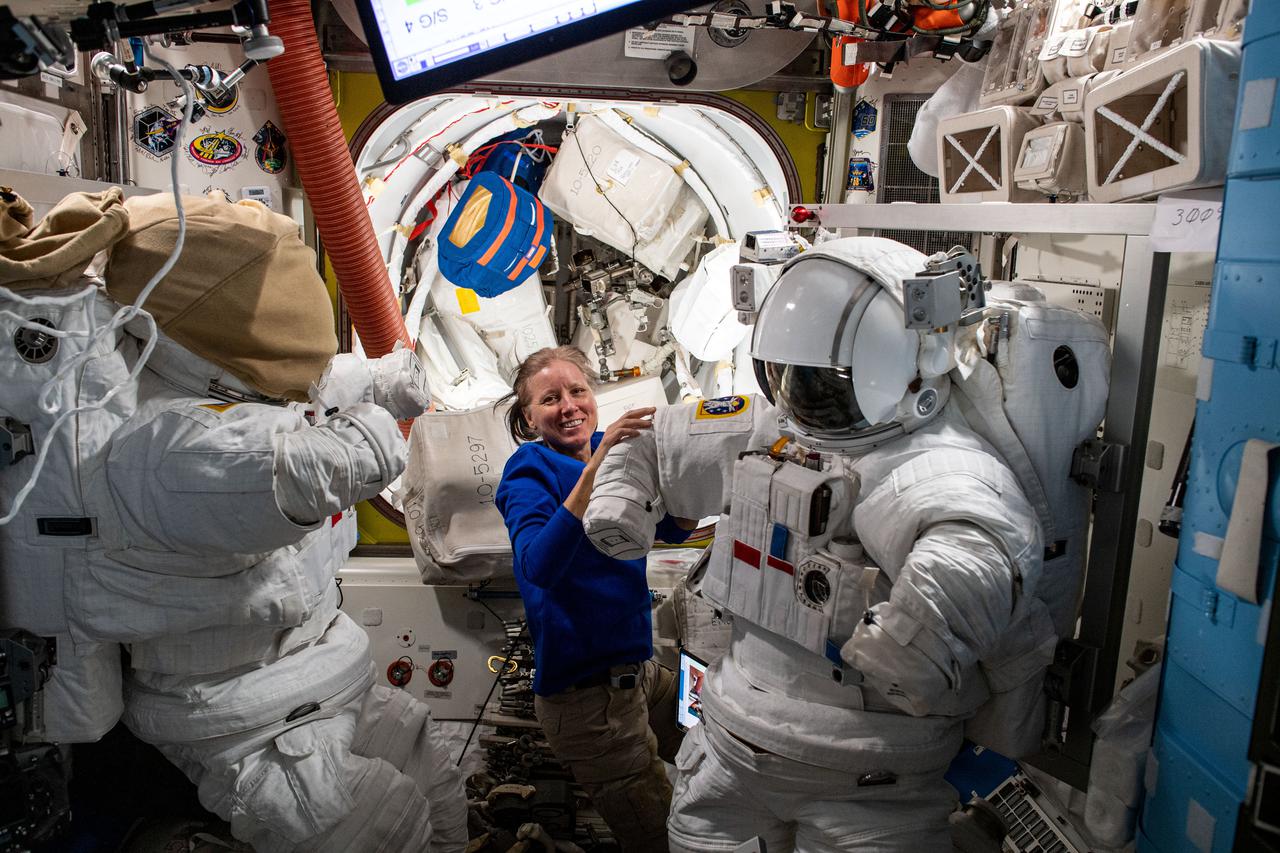
iss064e044598 (March 19, 2021) --- Astronaut and Expedition 64 Flight Engineer Shannon Walker of NASA installs high-definition video cameras and lithium-ion power adapters on U.S. spacesuits located inside the International Space Station's Quest airlock.
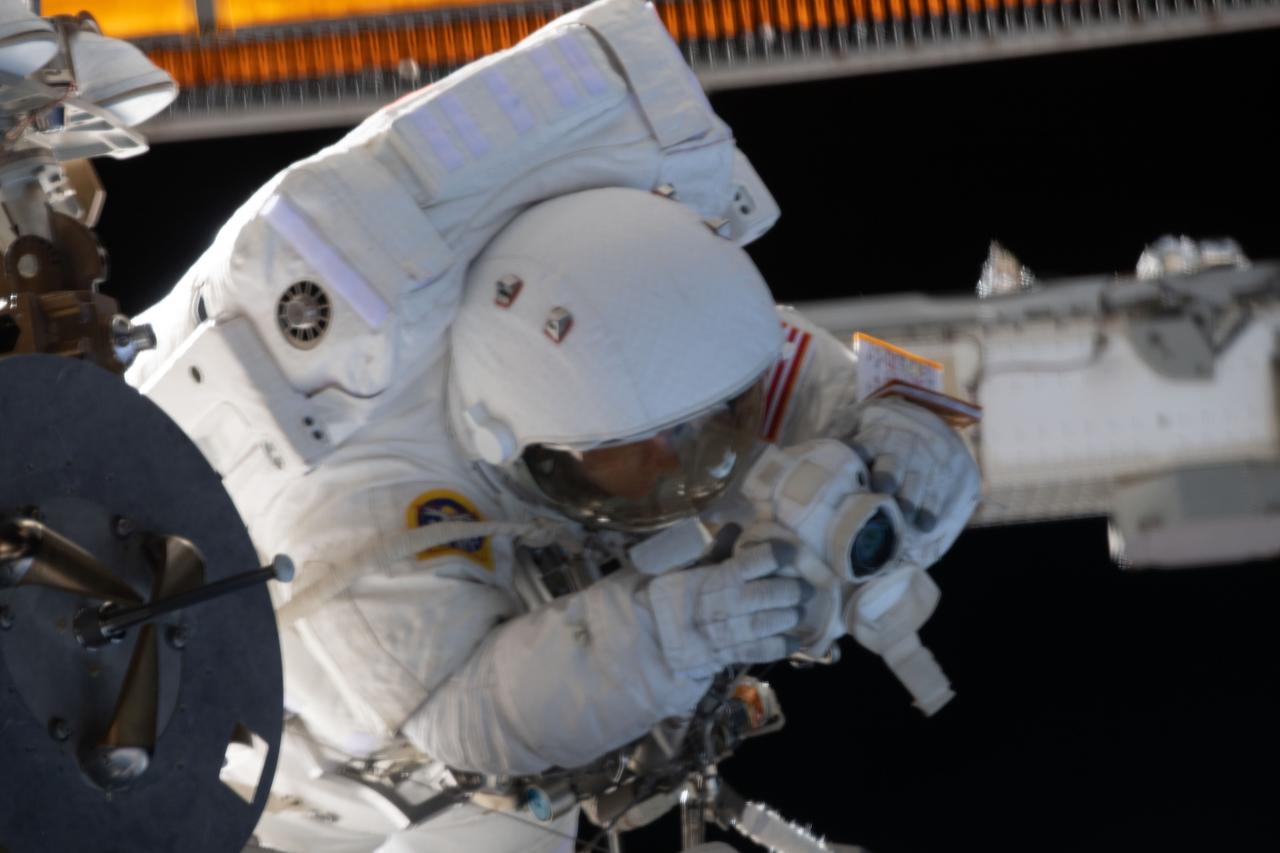
iss061e126154 (Jan. 15, 2020) --- NASA astronaut Christina Koch is pictured during a spacewalk she conducted with NASA astronaut Jessica Meir (out of frame) to install new lithium-ion batteries that store and distribute power collected from solar arrays on the station’s Port-6 truss structure.
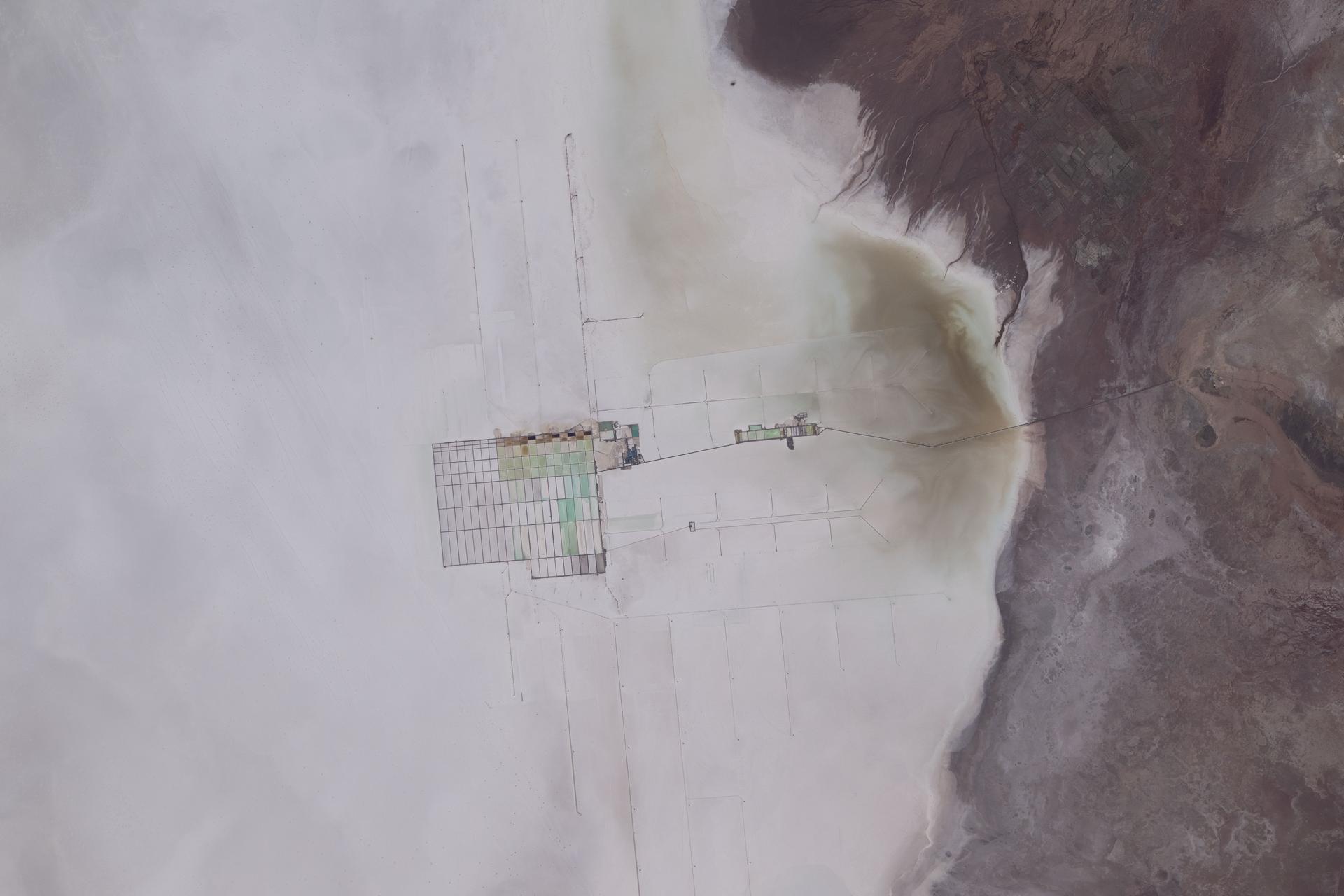
iss074e0319935 (Feb. 21, 2026) --- The Salar de Uyuni in Bolivia is the world's largest salt flat and one of the flattest surfaces on Earth. At the center of the photograph is a mining operation extracting extensive lithium deposits across the salt flat. Credit: NASA/Jessica Meir
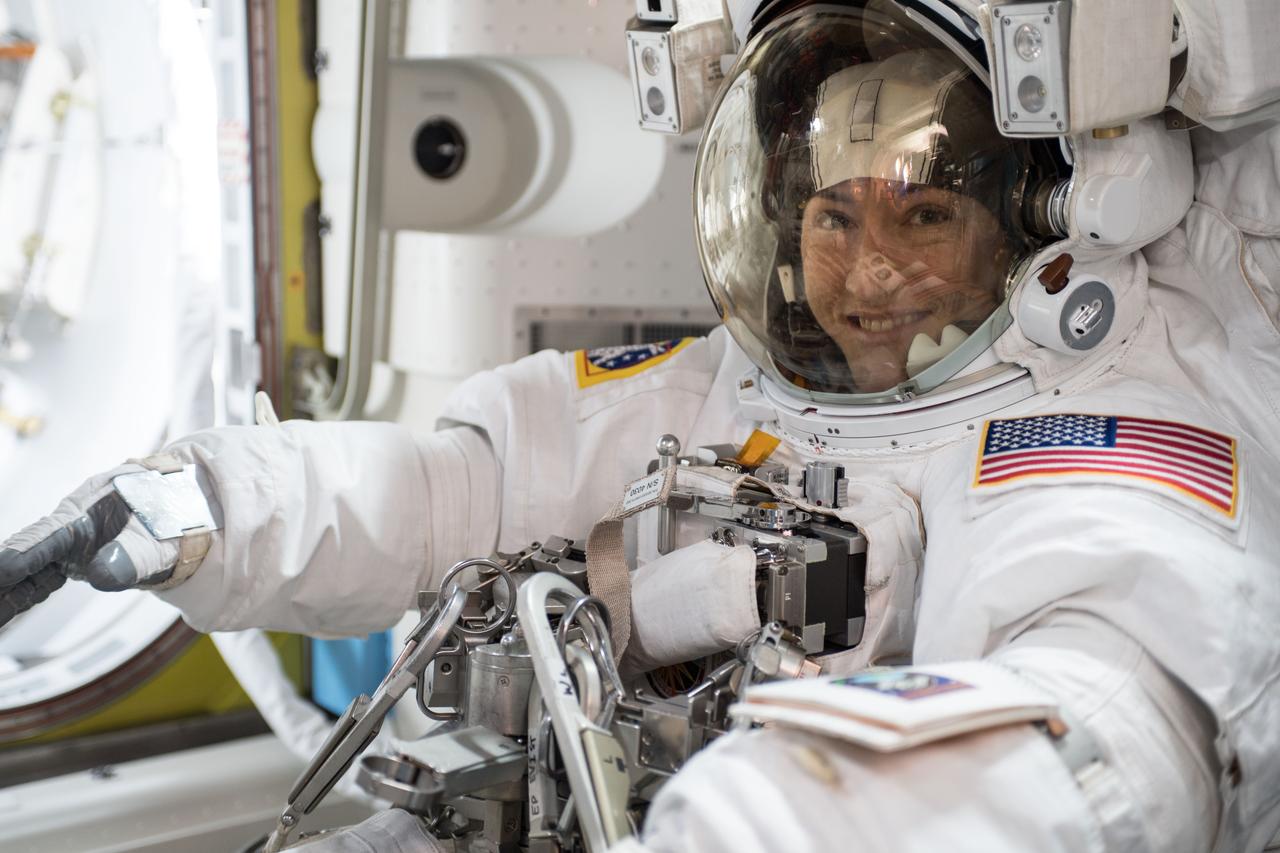
iss061e001614 (Oct. 6, 2019) --- NASA astronaut Christina Koch is suited up in a U.S. spacesuit before beginning a seven hour and one minute spacewalk to upgrade the station's large nickel-hydrogen batteries with newer, more powerful lithium-ion batteries.
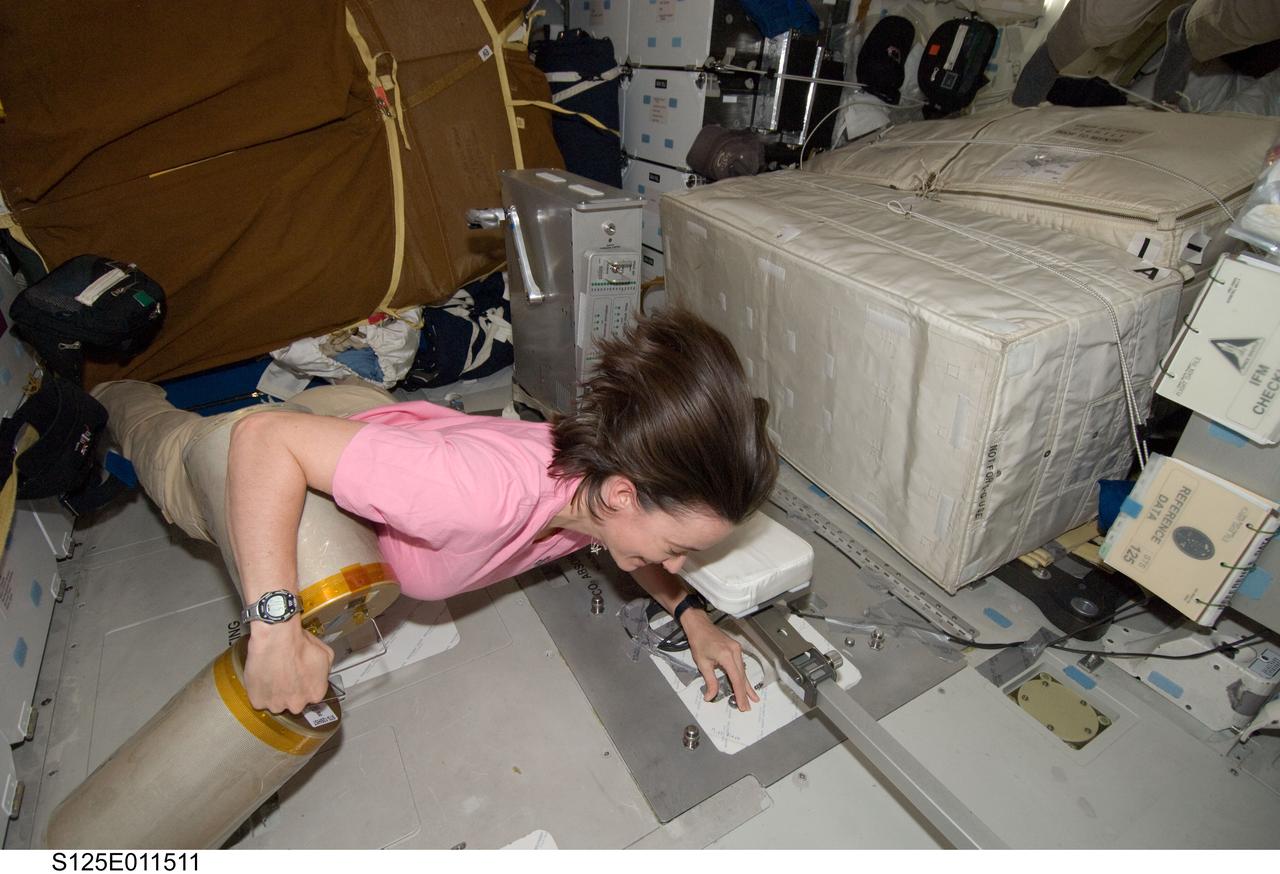
S125-E-011511 (19 May 2009) --- Astronaut Megan McArthur, STS-125 mission specialist, works with lithium hydroxide (LiOH) canisters from beneath Space Shuttle Atlantis' middeck during flight day nine activities.
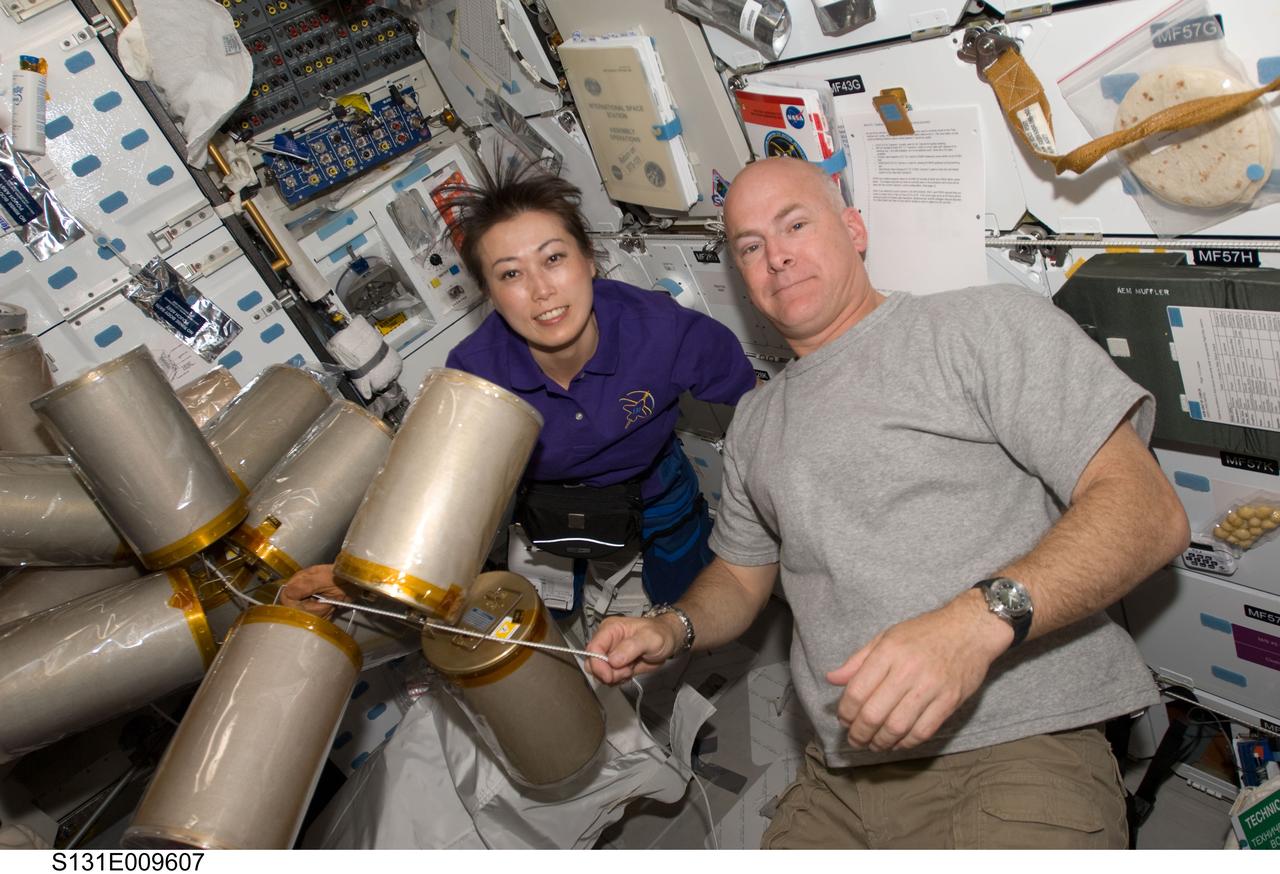
S131-E-009607 (13 April 2010) --- NASA astronaut Alan Poindexter, STS-131 commander; and Japan Aerospace Exploration Agency (JAXA) astronaut Naoko Yamazaki, mission specialist, work with lithium hydroxide (LiOH) canisters on space shuttle Discovery’s middeck while docked with the International Space Station.
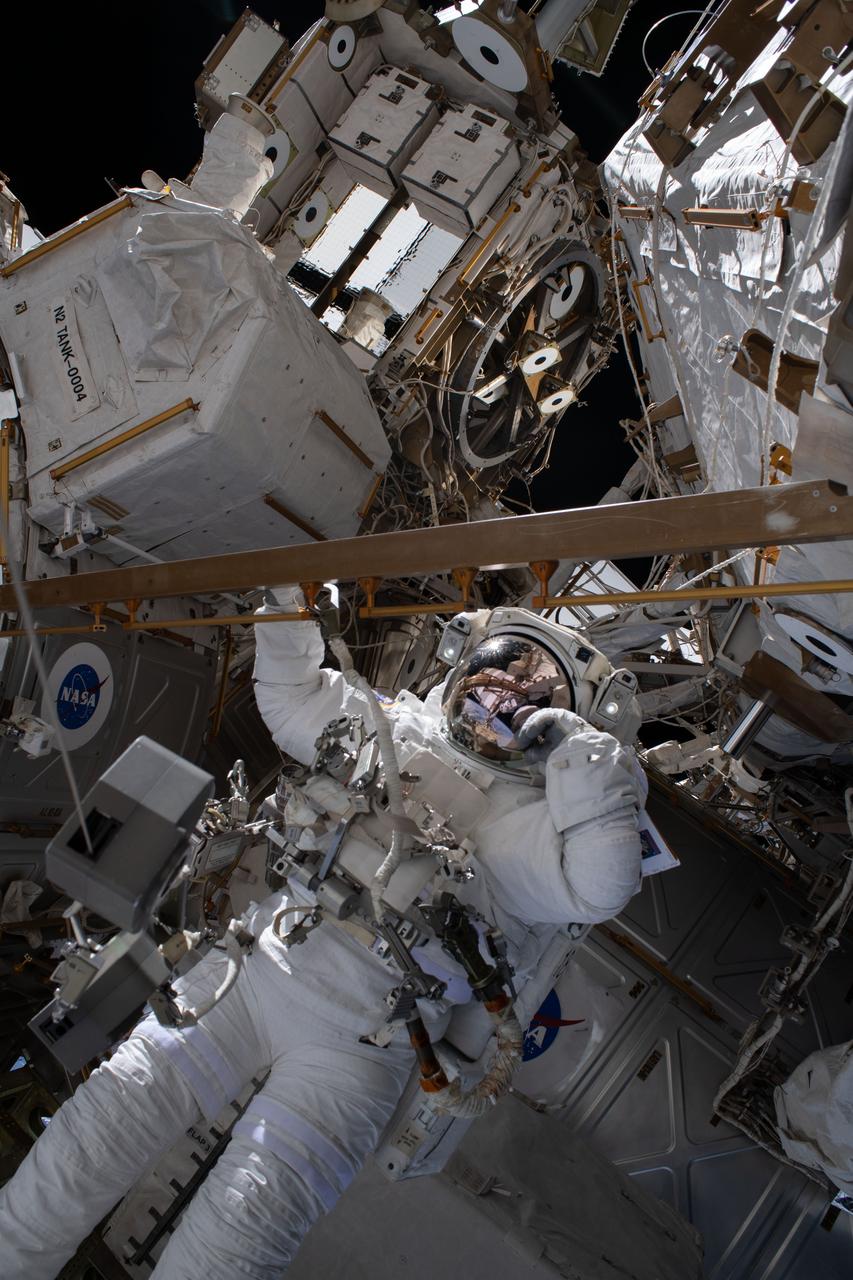
iss063e034203 (July 1, 2020) --- NASA astronaut and Expedition 63 Flight Engineer Bob Behnken works during a six-hour and one-minute spacewalk to swap an aging nickel-hydrogen battery for a new lithium-ion battery on the International Space Station's Starboard-6 truss structure.
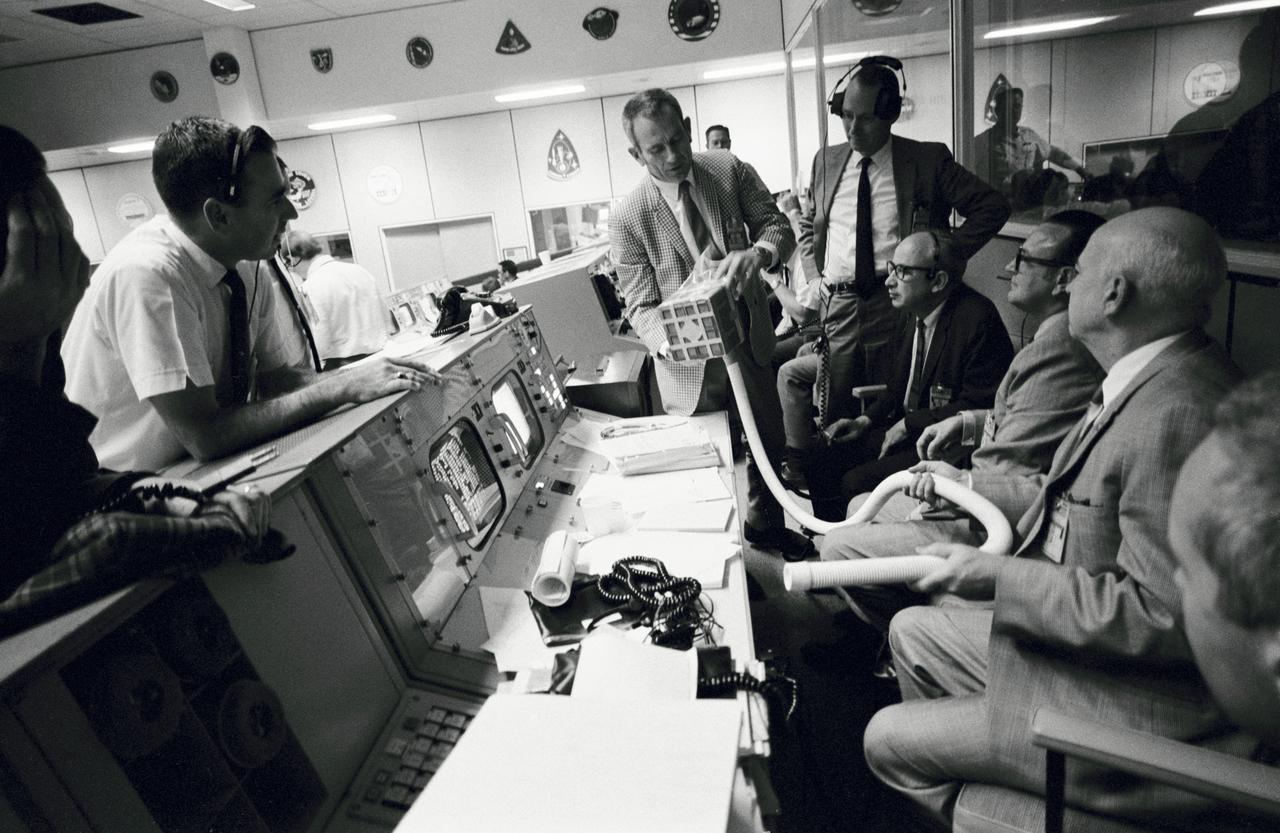
S70-35013 (15 April 1970) --- Prototype of the "mail box" constructed at the Manned Spacecraft Center (MSC) to remove carbon dioxide from the Apollo 13 Command Module (CM) is displayed in the Mission Control Center (MCC). The "mail box" was constructed when it became apparent CO2 was prevalent in the CM and the spacecraft's lithium hydroxide system was not removing it sufficiently. A space suit exhaust hose is connected to a lithium hydroxide canister to purge the cabin air. There are 16 such canisters in the CM and each will last approximately 12 hours. Looking at the "mail box" are (from the left): Milton L. Windler, shift 1 flight director; Dr. Donald K. (Deke) Slayton, director of flight crew operations, MSC; Howard W. Tindall, deputy director, flight operations, MSC; Sigurd A. Sjoberg, director, flight operations, MSC; Dr. Christopher C. Kraft, deputy director, MSC; and Dr. Robert R. Gilruth, director, MSC.
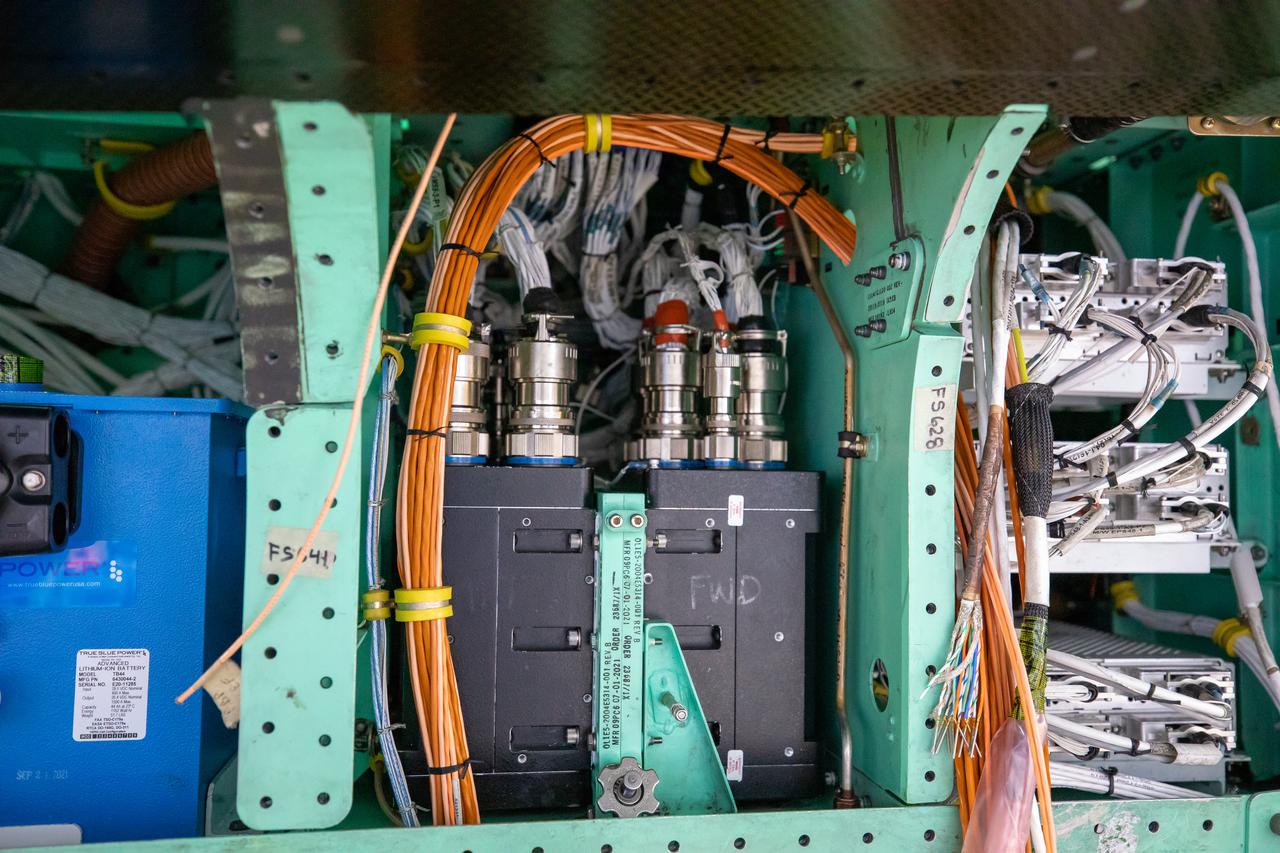
This is a closeup view of the inner workings of the X-59 aircraft. Visible are one the plane’s three lithium-ion batteries (blue box), electrical power system and other wiring components including the vehicle management systems computers (two black boxes) and the white wirings which assist in providing the power that is needed for the aircraft to function in flight. All of these components are essential to maintaining and monitoring the X-59 once it takes to the skies. The X-59 is the centerpiece of the Quesst mission which plans to help enable commercial supersonic air travel over land.

iss061e005307 (Oct. 11, 2019) --- NASA astronaut Christina Koch works while tethered near the Port 6 truss segment of the International Space Station to replace older hydrogen-nickel batteries with newer, more powerful lithium-ion batteries. Fellow NASA astronaut Andrew Morgan (out of frame) assisted Koch during the six-hour and 45-minute spacewalk.
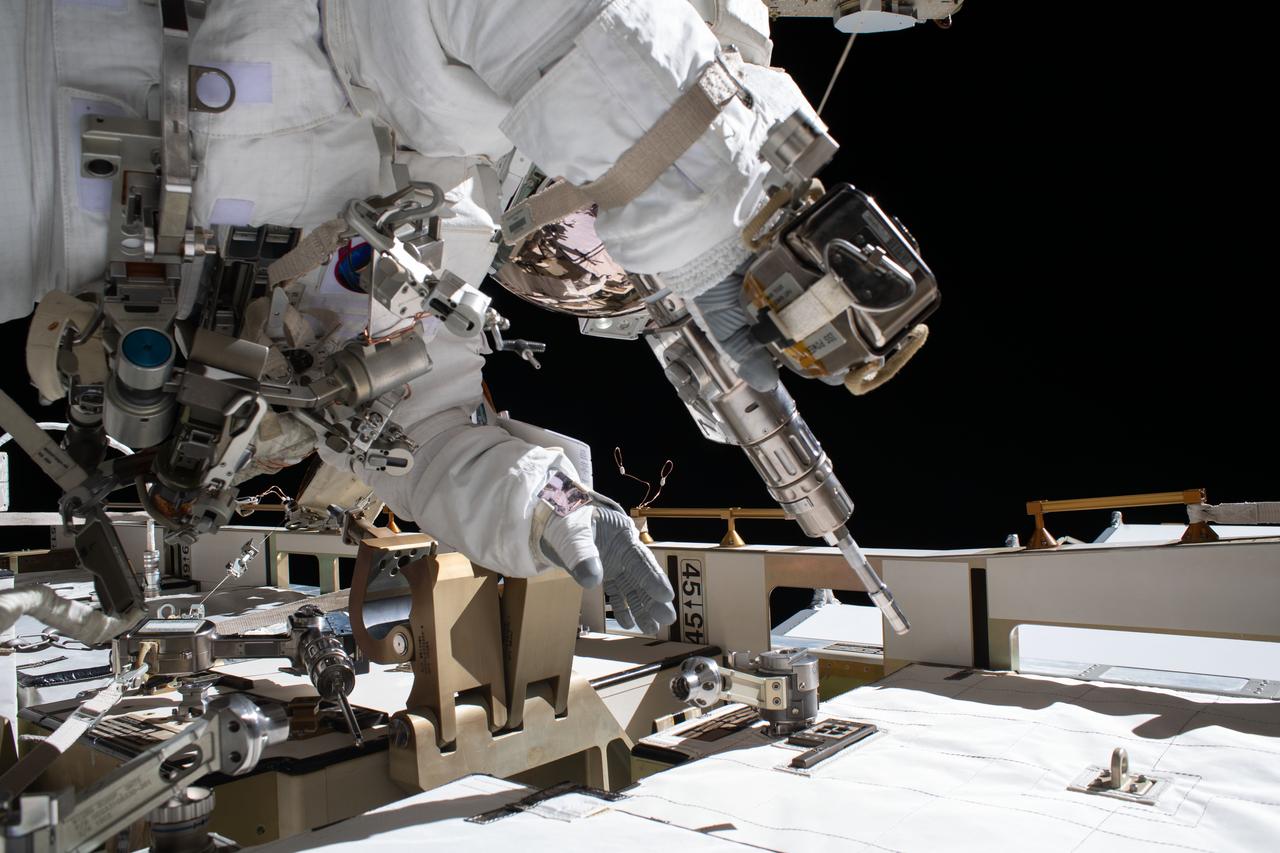
iss063e034013 (July 1, 2020) --- NASA astronaut and Expedition 63 Flight Engineer Bob Behnken works during a six-hour and one-minute spacewalk to swap an aging nickel-hydrogen battery for a new lithium-ion battery on the International Space Station's Starboard-6 truss structure. Behnken is pictured holding a pistol grip tool he used to remove and attach bolts that hold the batteries in place.
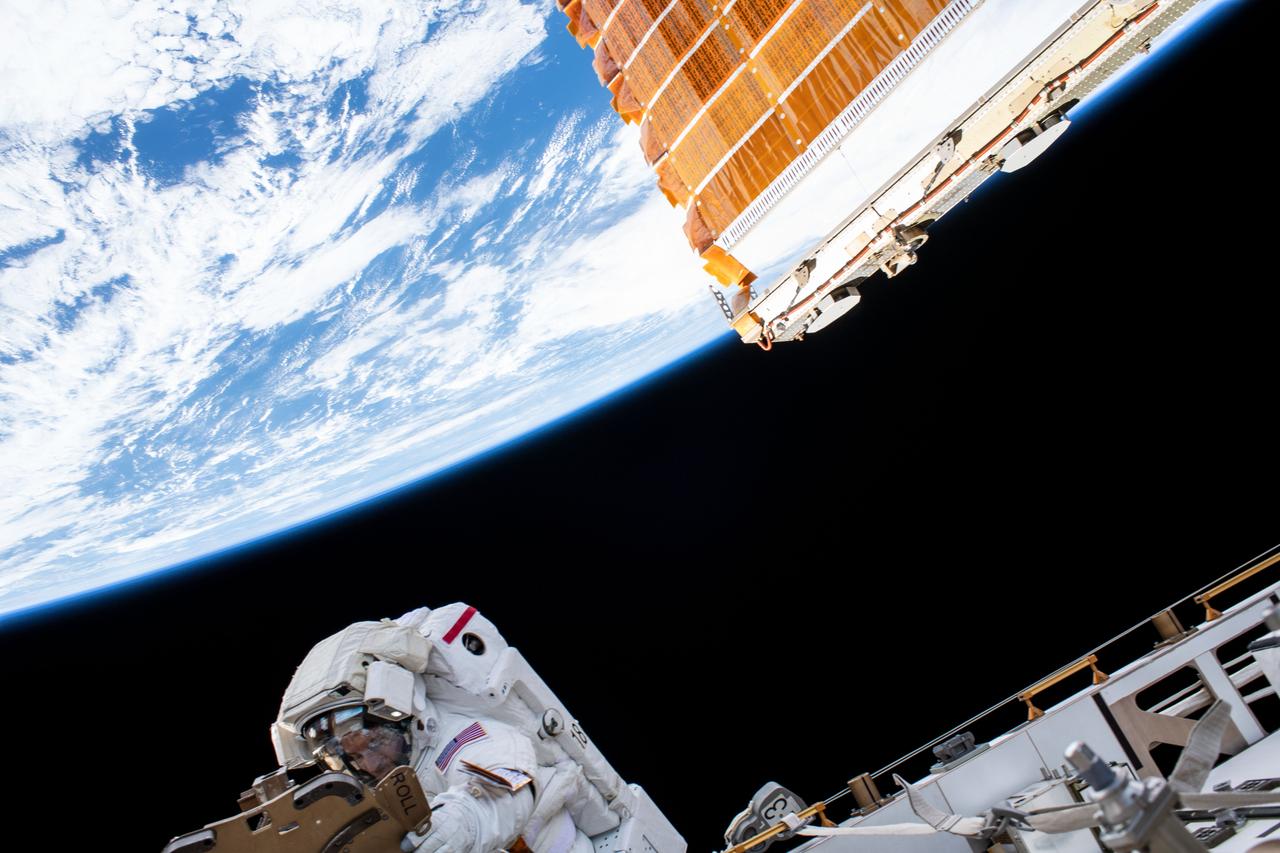
iss061e005514 (Oct. 11, 2019) --- With the Earth 250 miles below him, NASA astronaut Andrew Morgan works on the Port 6 truss segment of the International Space Station to replace older hydrogen-nickel batteries with newer, more powerful lithium-ion batteries. Fellow NASA astronaut Christina Koch (out of frame) assisted Morgan during the six-hour and 45-minute spacewalk.

iss064e041250 (March 11, 2021) --- An external pallet packed with old nickel-hydrogen batteries is released from the Canadarm2 robotic arm as the International Space Station orbited 260 miles above the Pacific Ocean west of Central America. Mission controllers in Houston commanded the Canadarm2 to release the external pallet into space where it will orbit Earth between two to four years before burning up harmlessly in the atmosphere. The batteries were removed during previous spacewalks and replaced with newer lithium-ion batteries to continue powering the station's systems.
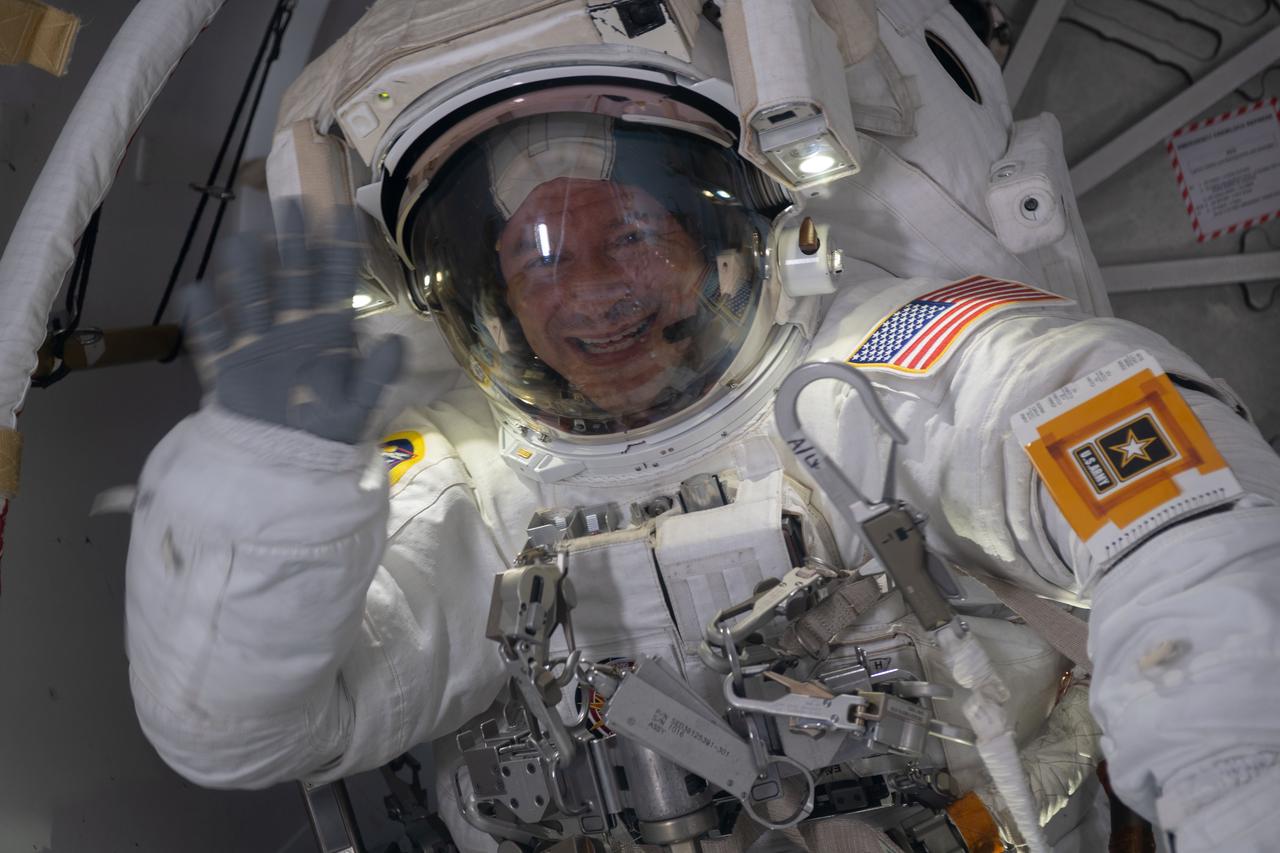
iss061e003683 (Oct. 6, 2019) --- NASA astronaut Andrew Morgan waves from inside the crew lock portion of the Quest airlock where spacewalks in U.S. spacesuits are staged. He would go on to conduct a seven hour and one minute spacewalk with NASA astronaut Christina Koch to begin the latest round of upgrading the station's large nickel-hydrogen batteries with newer, more powerful lithium-ion batteries.
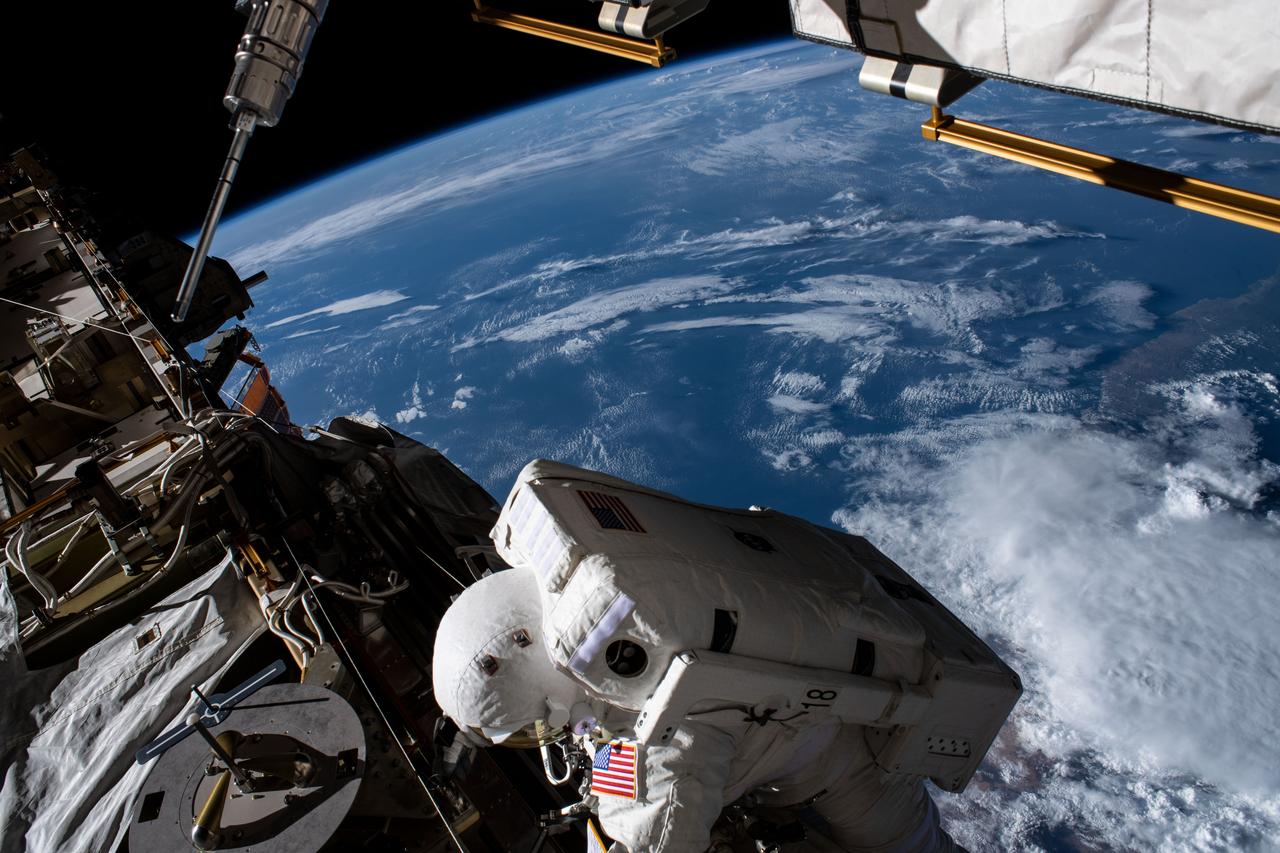
iss061e129986 (Jan. 15, 2020) --- NASA astronaut Christina Koch is pictured working in the vacuum of space 265 miles above the Atlantic Ocean off the coast of Africa. She and NASA astronaut Jessica Meir (out of frame) conducted a spacewalk to install new lithium-ion batteries that store and distribute power collected from solar arrays on the station’s Port-6 truss structure.
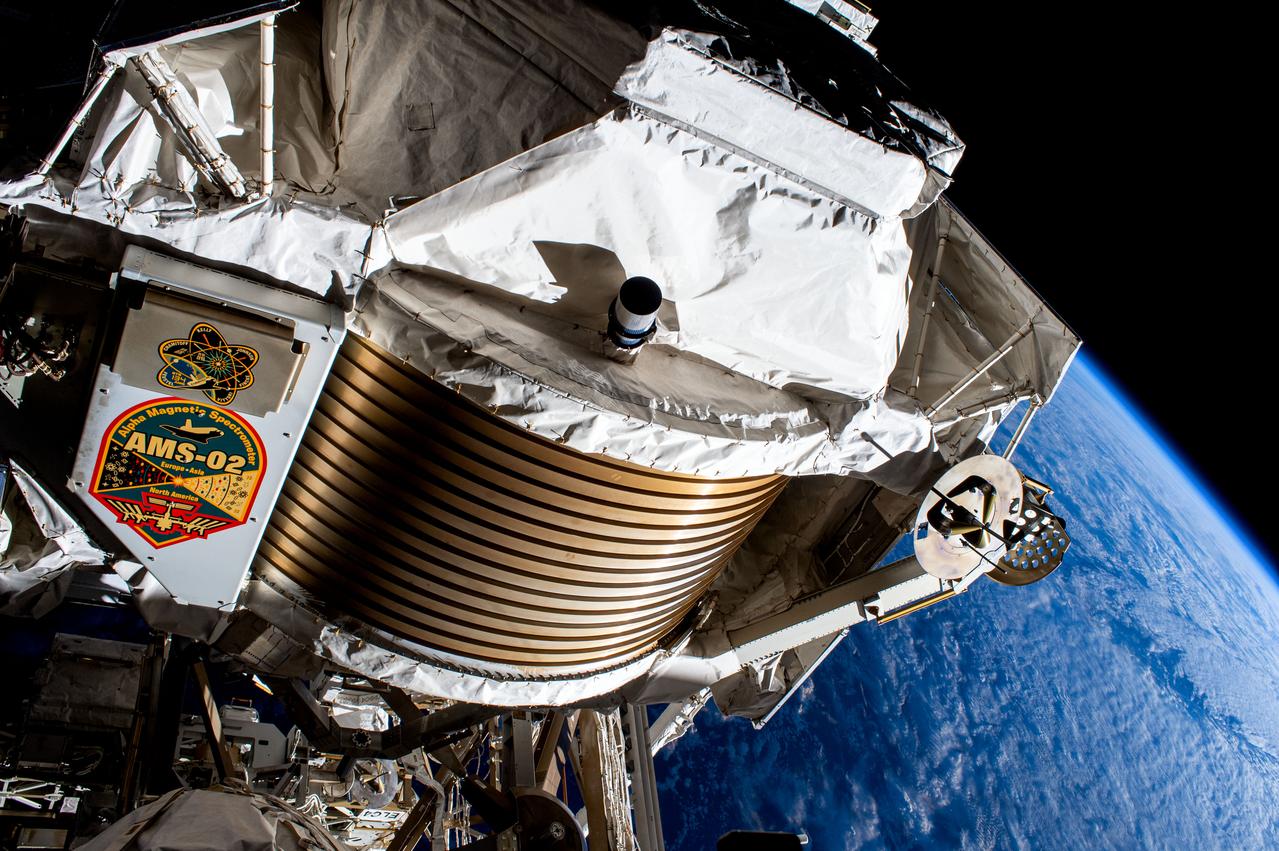
The Alpha Magnetic Spectrometer was photographed during a spacewalk in January 2017. NASA astronauts Shane Kimbrough and Peggy Whitson successfully installed three new adapter plates and hooked up electrical connections for three of the six new lithium-ion batteries on the International Space Station. They also accomplished several get-ahead tasks, including a photo survey of the Alpha Magnetic Spectrometer.
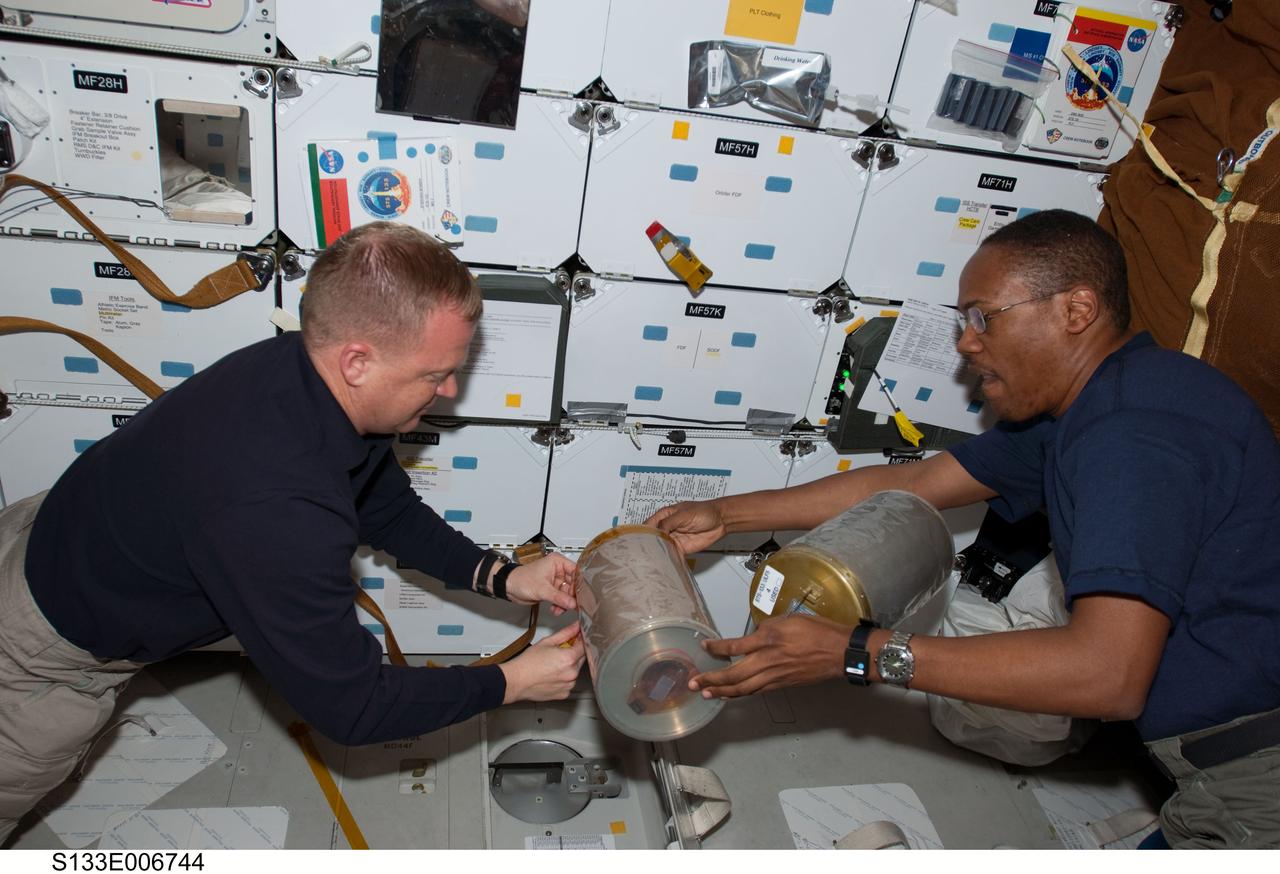
S133-E-006744 (26 Feb. 2011) --- On space shuttle Discovery's middeck, astronauts Eric Boe (left), STS-133 pilot; and Alvin Drew, mission specialist, work with lithium hydroxide canisters beneath the floor, performing the same house-keeping chore accomplished by many astronauts in the 30-year history of the Space Shuttle Program. Photo credit: NASA or National Aeronautics and Space Administration
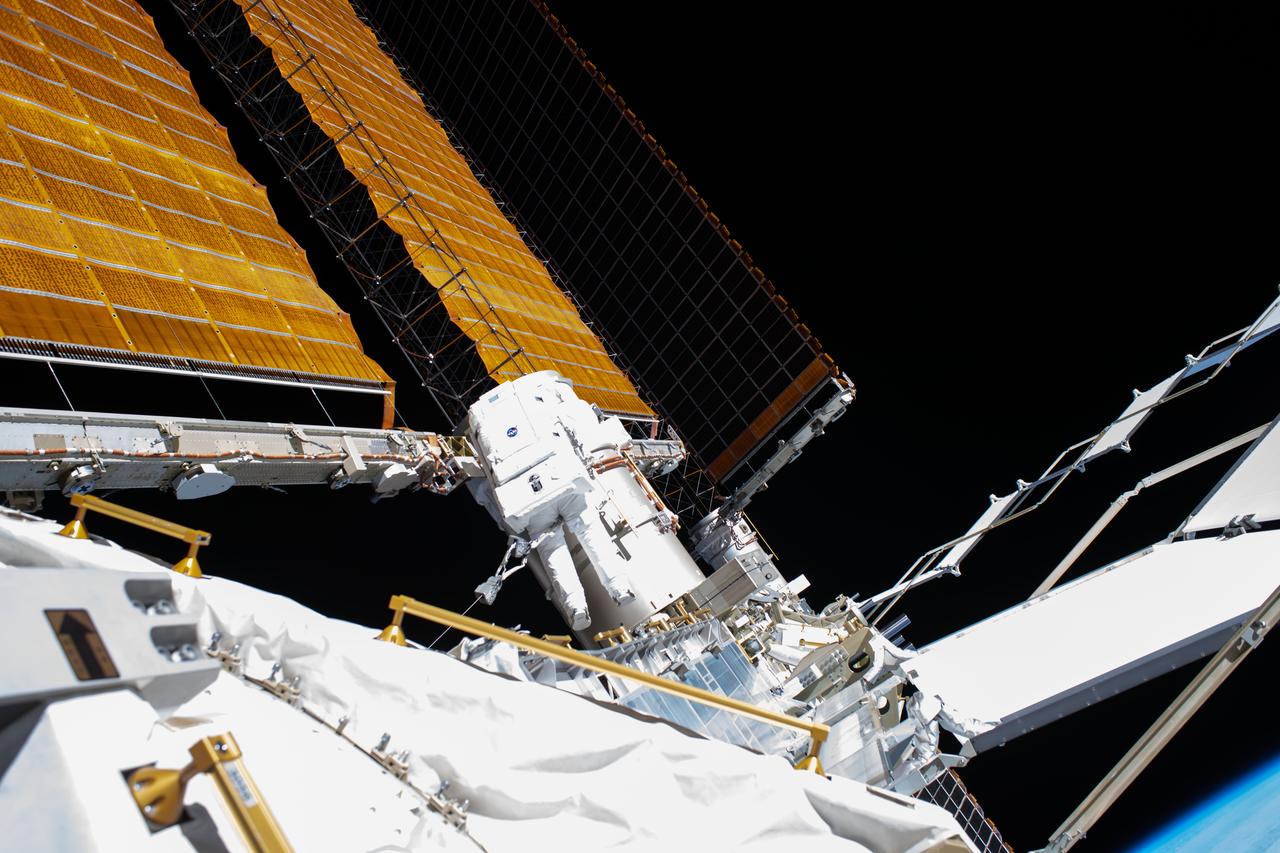
iss063e034124 (July 1, 2020) --- NASA astronaut and Expedition 63 Flight Engineer Bob Behnken (center) works during a six-hour and one-minute spacewalk to swap an aging nickel-hydrogen battery for a new lithium-ion battery on the International Space Station's Starboard-6 truss structure. Protruding diagonally towards the upper left are the station's main solar arrays which are the length of basketball court.
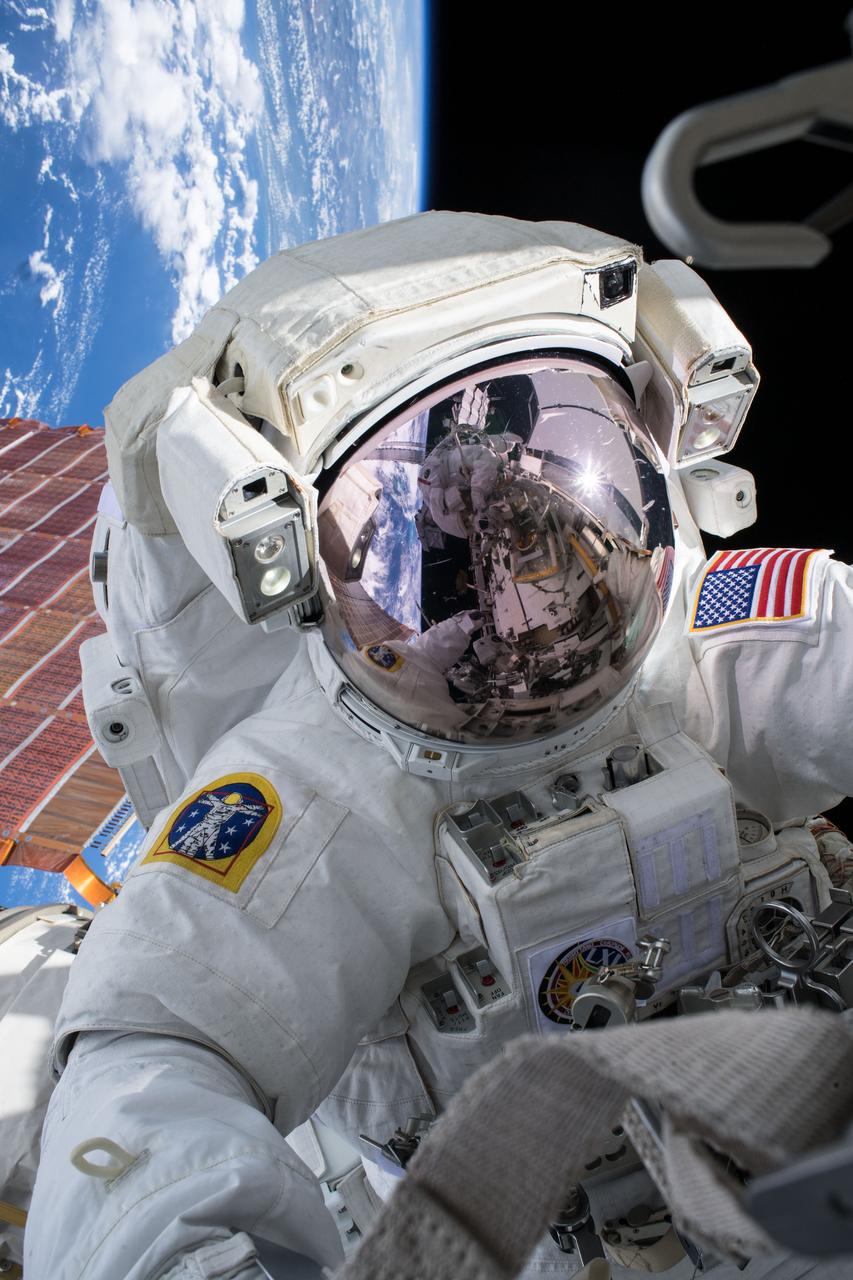
iss061e003293 (Oct. 6, 2019) --- NASA astronaut Andrew Morgan conducts a spacewalk at the Port- 6 (P6) truss structure work site to upgrade International Space Station power systems. He was photographed by fellow NASA astronaut Christina Koch as they worked outside in the vacuum of space for seven hours and one minute to begin the latest round of upgrading the station's large nickel-hydrogen batteries with newer, more powerful lithium-ion batteries.
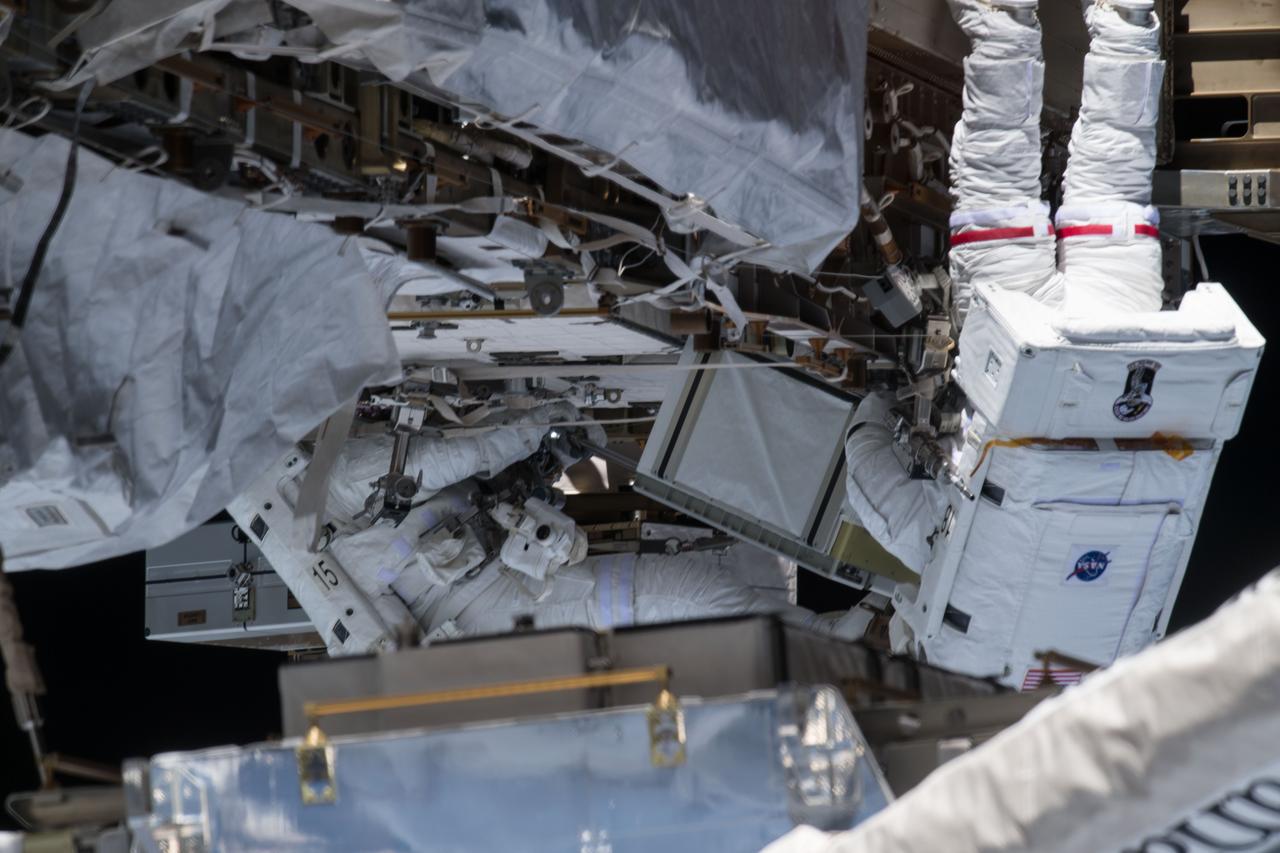
iss061e001727 (Oct. 6, 2019) --- NASA astronaut Christina Koch (right) conducts a spacewalk at the Port-6 (P6) truss structure work site to upgrade International Space Station power systems. She and fellow NASA astronaut Andrew Morgan (left) worked outside in the vacuum of space for seven hours and one minute to begin the latest round of upgrading the station's large nickel-hydrogen batteries with newer, more powerful lithium-ion batteries.
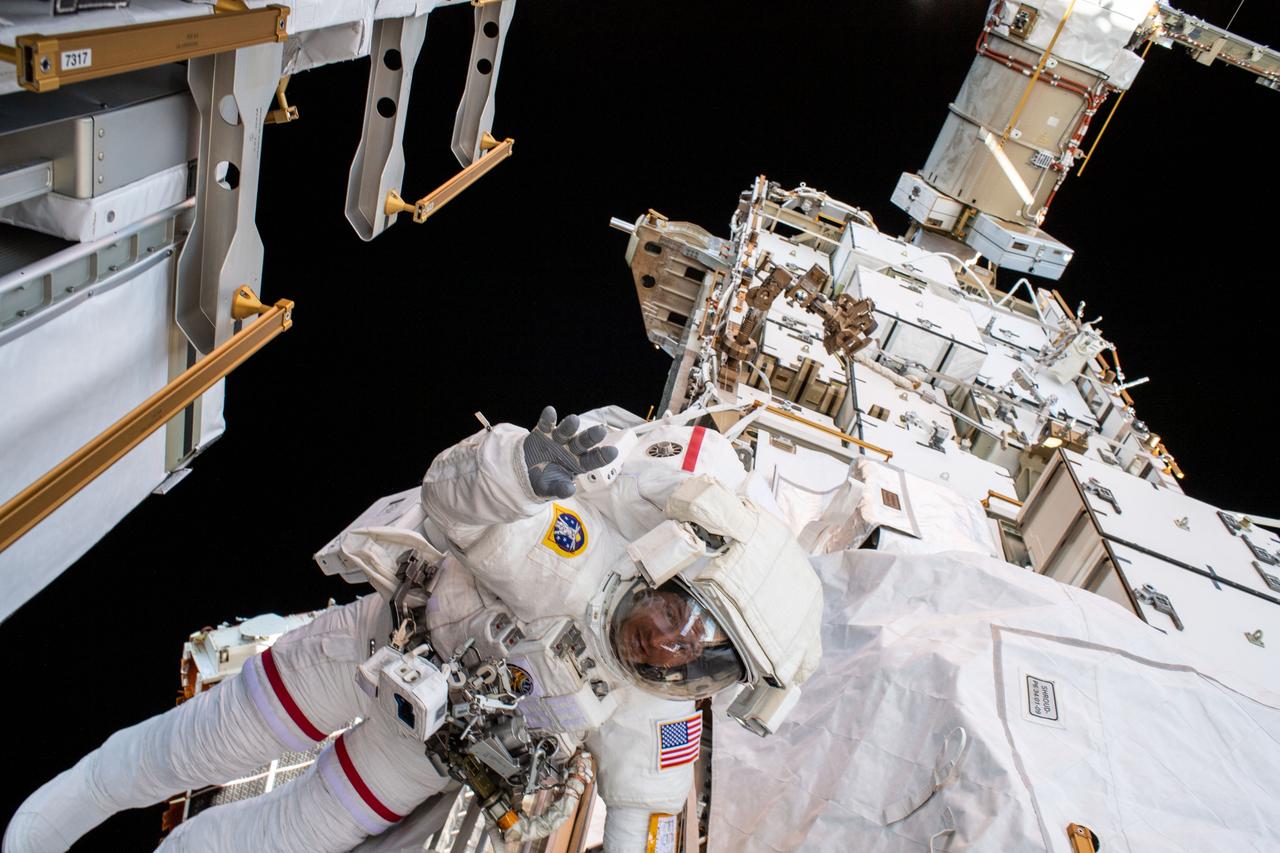
iss061e005520 (Oct. 11, 2019) --- NASA astronaut Andrew Morgan waves to the camera while tethered on the Port 6 (P6) truss segment of the International Space Stations. He and fellow NASA astronaut Christina Koch (out of frame) worked to replace older hydrogen-nickel batteries with newer, more powerful lithium-ion batteries on the P6 truss during the six-hour and 45-minute spacewalk.
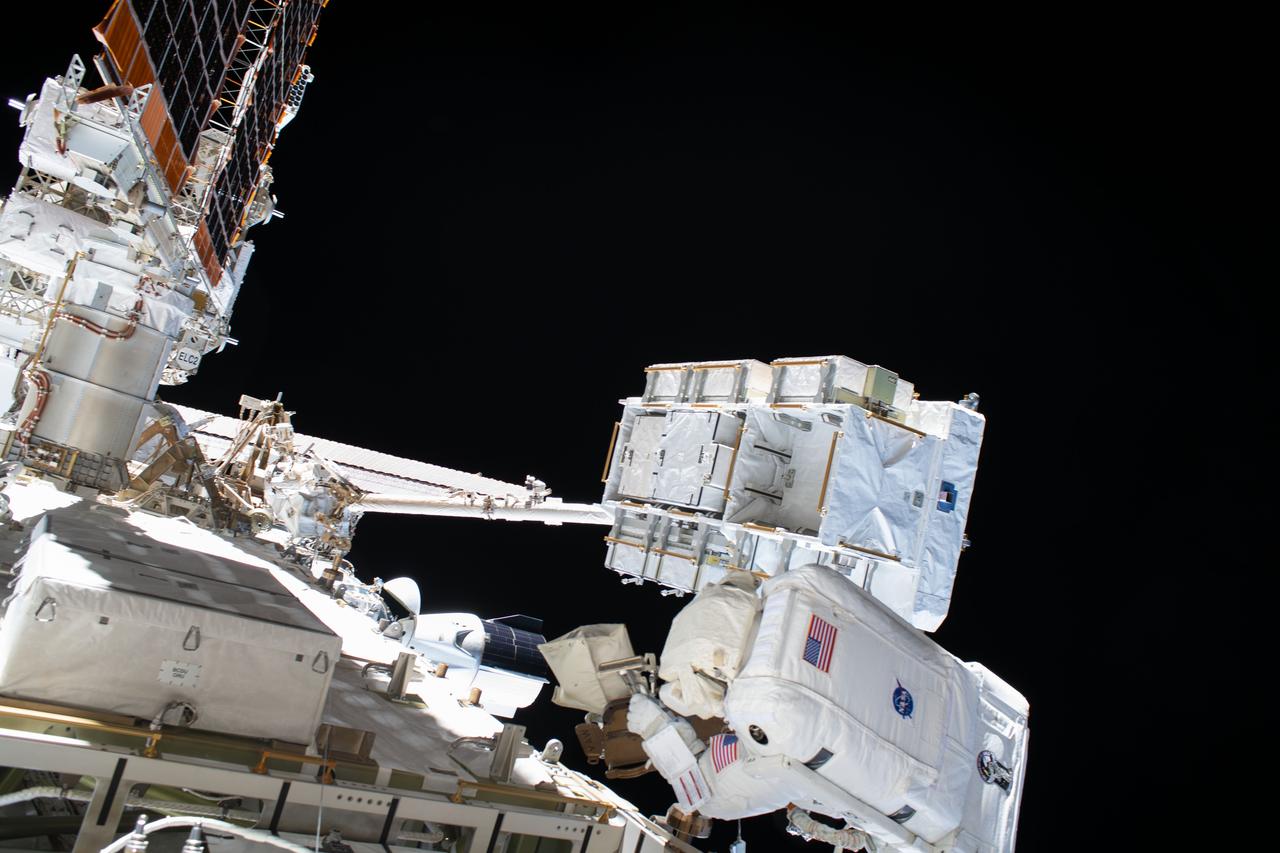
iss063e034050 (July 1, 2020) --- NASA astronaut and Expedition 63 Flight Engineer Bob Behnken (bottom right) works during a six-hour and one-minute spacewalk to swap an aging nickel-hydrogen battery for a new lithium-ion battery on the International Space Station's Starboard-6 truss structure. Behind Behnken is an external pallet, attached to the Canadarm2 robotic arm, where the batteries were stowed.
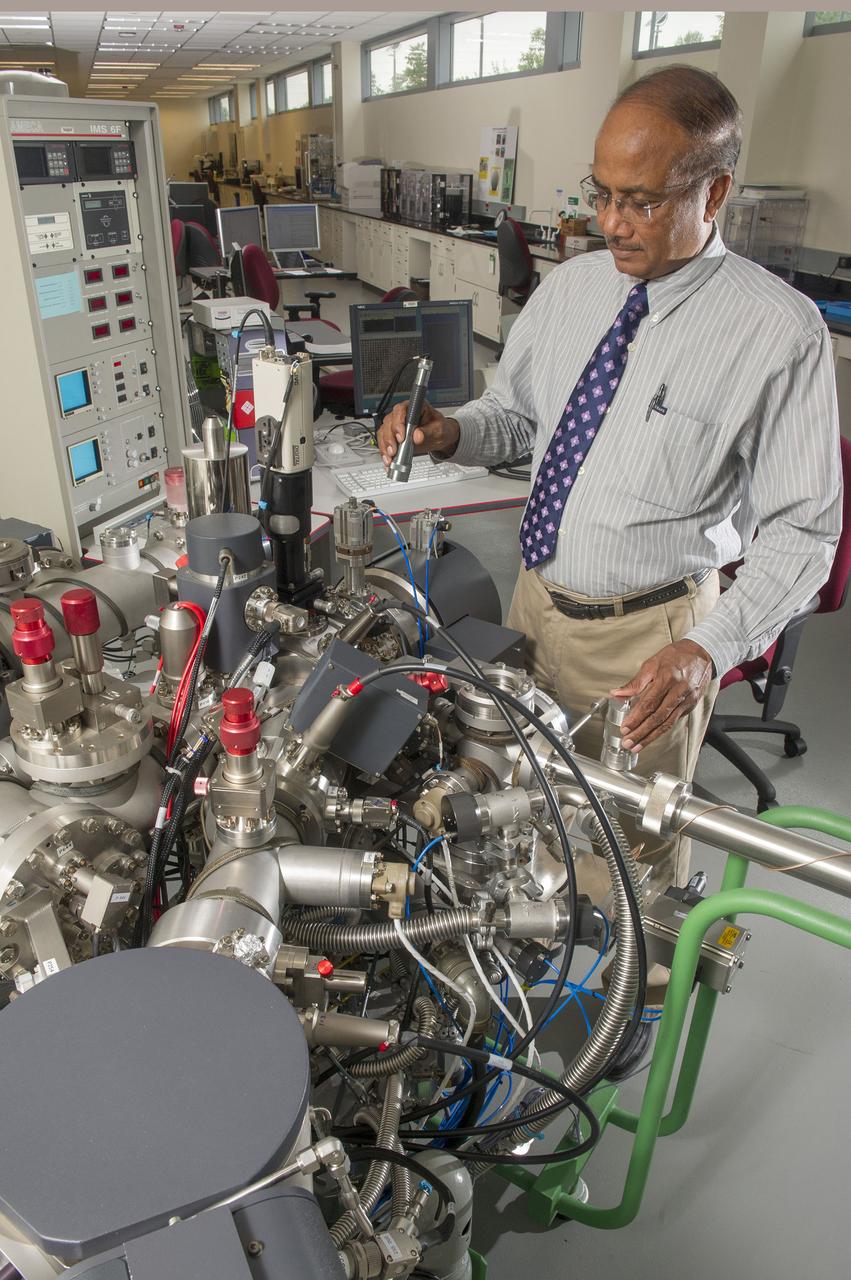
DR. BINAYAK PANDA LOADS A SAMPLE IN THE IMS-6F SECONDARY ION MASS SPECTROSCOPE’S ULTRA HIGH VACUUM CHAMBER. IT IS CAPABLE OF ANALYZING VERY LIGHT ELEMENTS SUCH AS HYDROGEN AND LITHIUM IN ALLOYS. IT CAN ALSO ANALYZE VERY SMALL QUANTITIES OF IMPURITIES IN MATERIALS AT PARTS PER MILLION LEVELS, AND DETERMINE ISOTOPE RATIOS OF ELEMENTS, ALL IN SOLID SAMPLES.
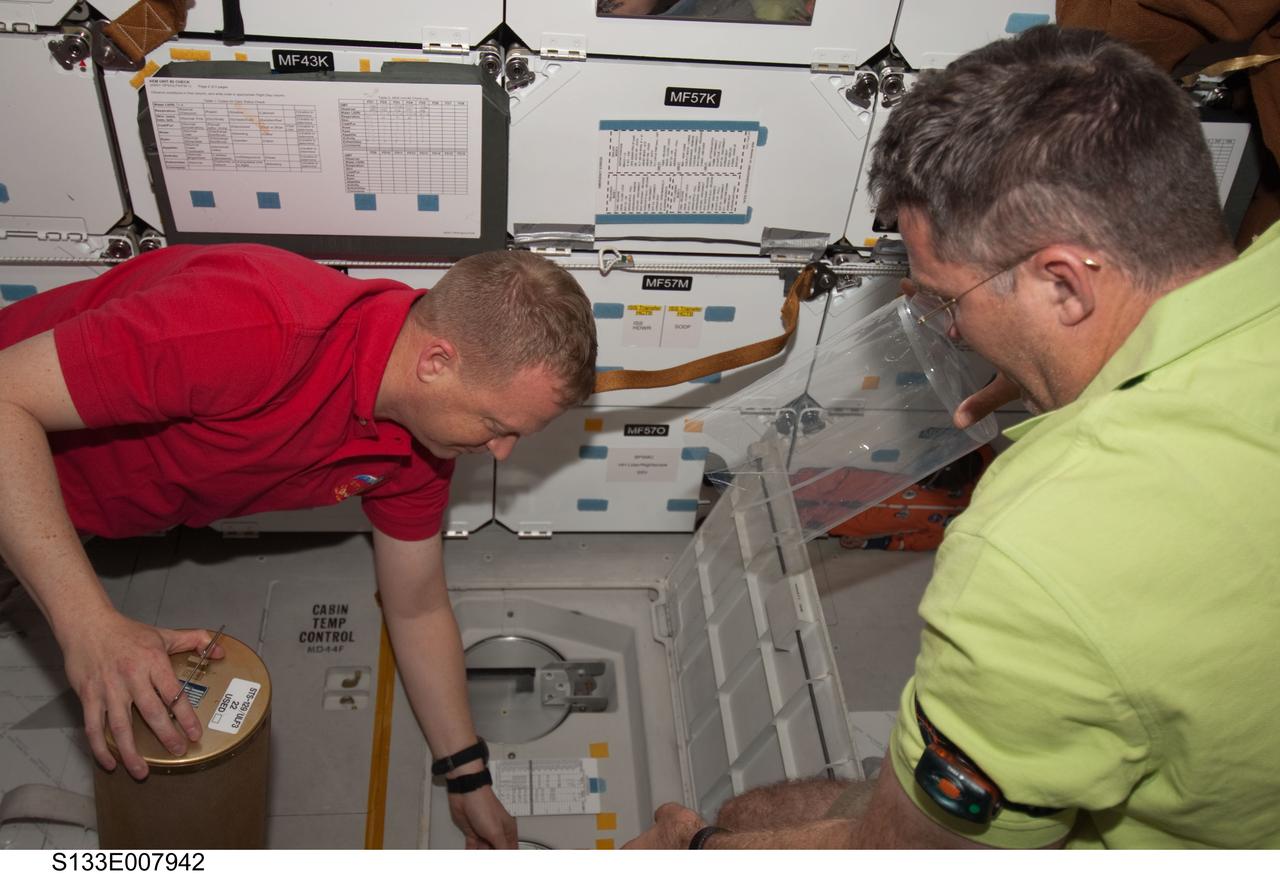
S133-E-007942 (28 Feb. 2011) --- NASA astronauts Eric Boe (left), STS-133 pilot; and Steve Bowen, mission specialist, work with lithium hydroxide (LiOH) canisters from beneath space shuttle Discovery’s middeck while docked with the International Space Station. Photo credit: NASA or National Aeronautics and Space Administration
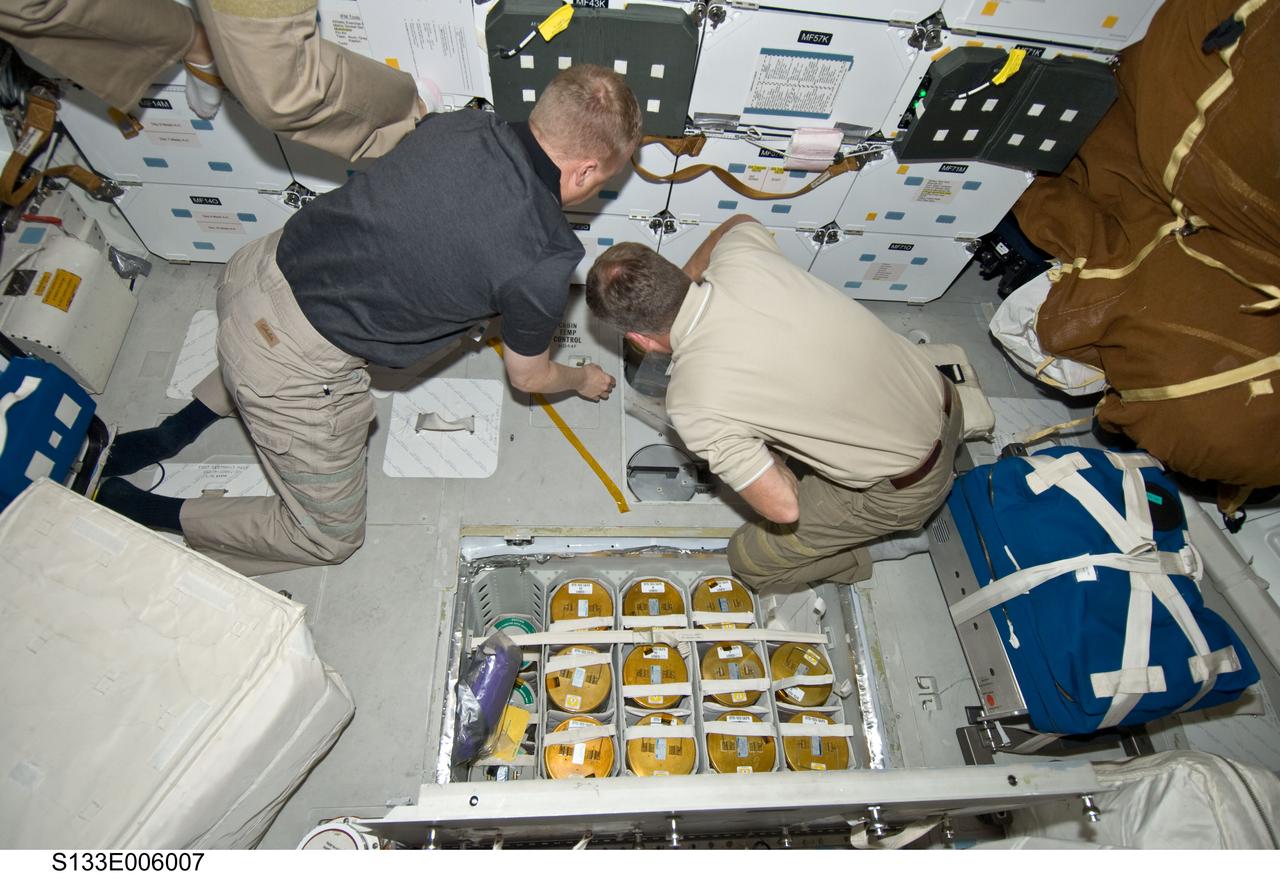
S133-E-006007 (25 Feb. 2011) --- On space shuttle Discovery’s middeck, astronauts Steve Lindsey (right), STS-133 commander, and Eric Boe, pilot, work with lithium hydroxide canisters beneath the floor, performing the same house-keeping chore accomplished by many astronauts in the 30-year history of the Space Shuttle Program. Photo credit: NASA or National Aeronautics and Space Administration
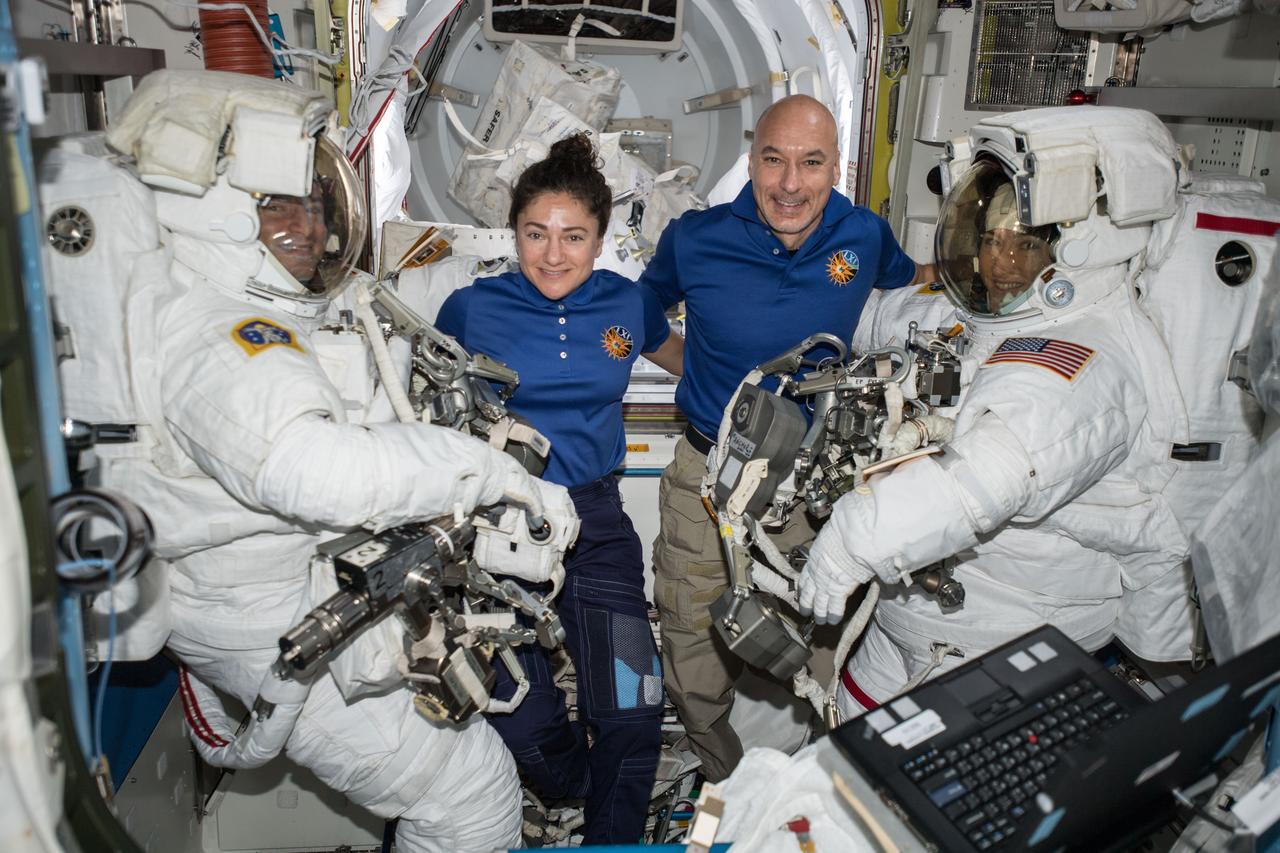
iss061e001608 (Oct. 6, 2019) --- NASA astronauts Andrew Morgan (left) and Christina Koch (right) are suited up in U.S. spacesuits before beginning a seven hour and one minute spacewalk to upgrade the station's large nickel-hydrogen batteries with newer, more powerful lithium-ion batteries. In the center, NASA Flight Engineer Jessica Meir and Commander Luca Parmitano of ESA (European Space Agency) assist the spacewalking duo.
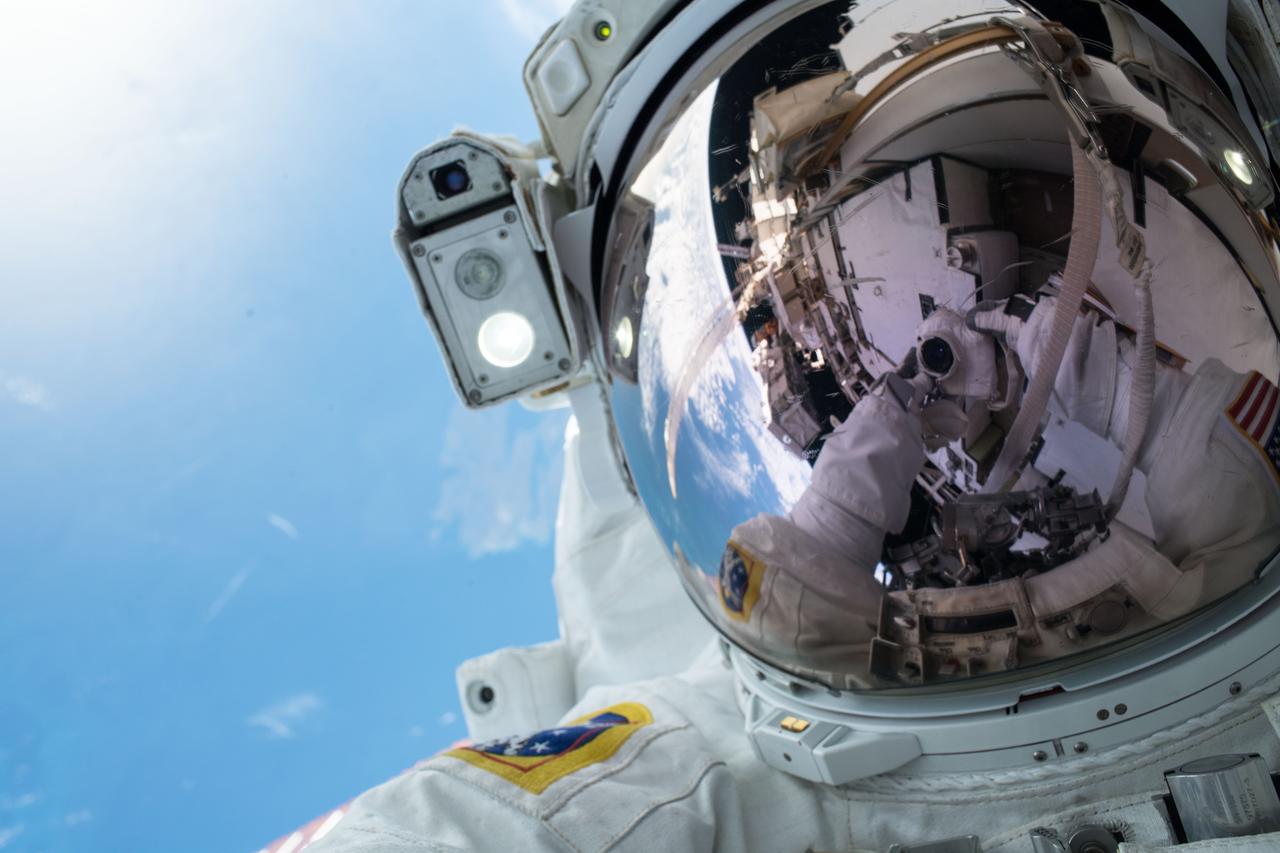
iss061e003499 (Oct. 6, 2019) --- NASA astronaut Andrew Morgan takes an out-of-this-world "space-selfie" during a spacewalk to upgrade International Space Station power systems on the Port- 6 (P6) truss structure. He and fellow NASA astronaut Christina Koch (out of frame) worked outside in the vacuum of space for seven hours and one minute to begin the latest round of upgrading the station's large nickel-hydrogen batteries with newer, more powerful lithium-ion batteries.
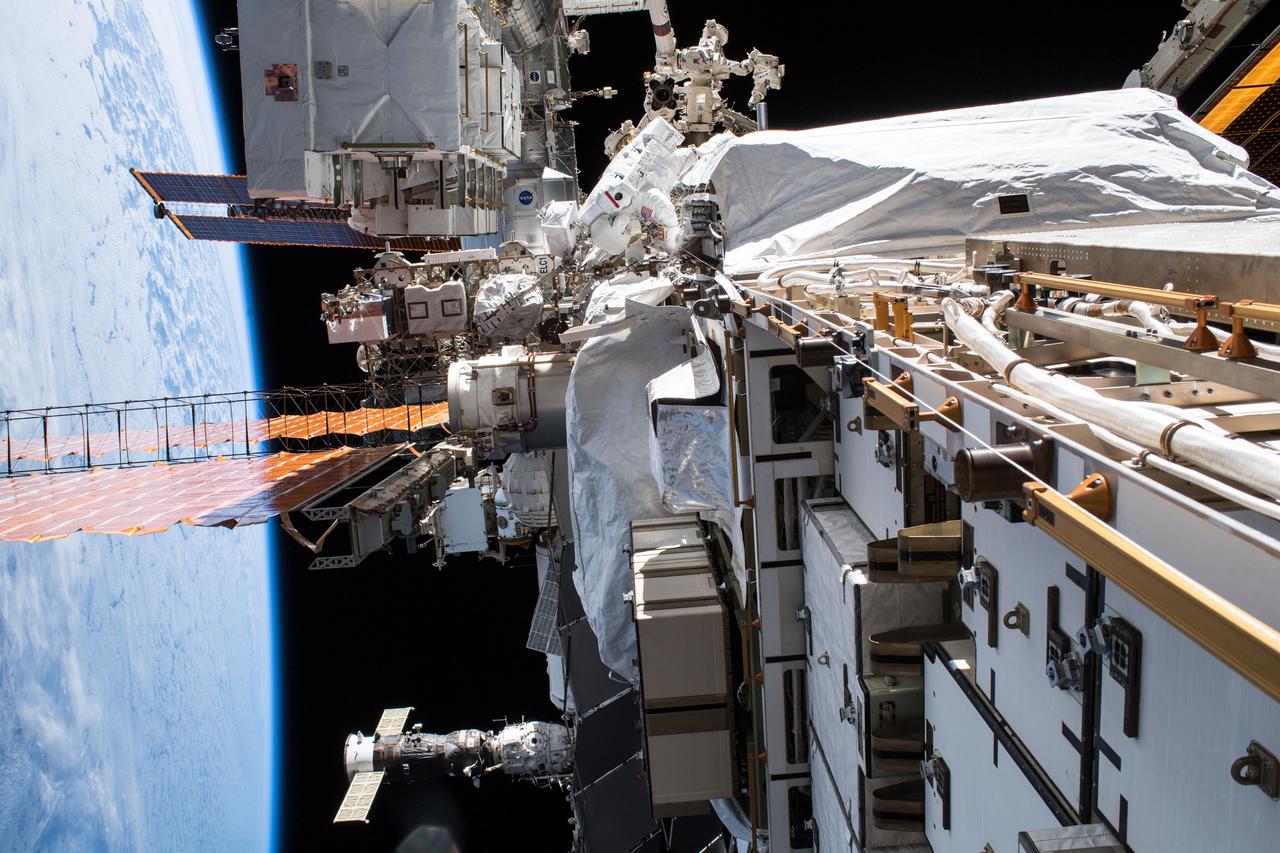
iss061e003327 (Oct. 6, 2019) --- NASA astronaut Christina Koch (top center) conducts a spacewalk at the Port-6 (P6) truss structure work site to upgrade International Space Station power systems. She and fellow NASA astronaut Andrew Morgan (out of frame) worked outside in the vacuum of space for seven hours and one minute to begin the latest round of upgrading the station's large nickel-hydrogen batteries with newer, more powerful lithium-ion batteries.
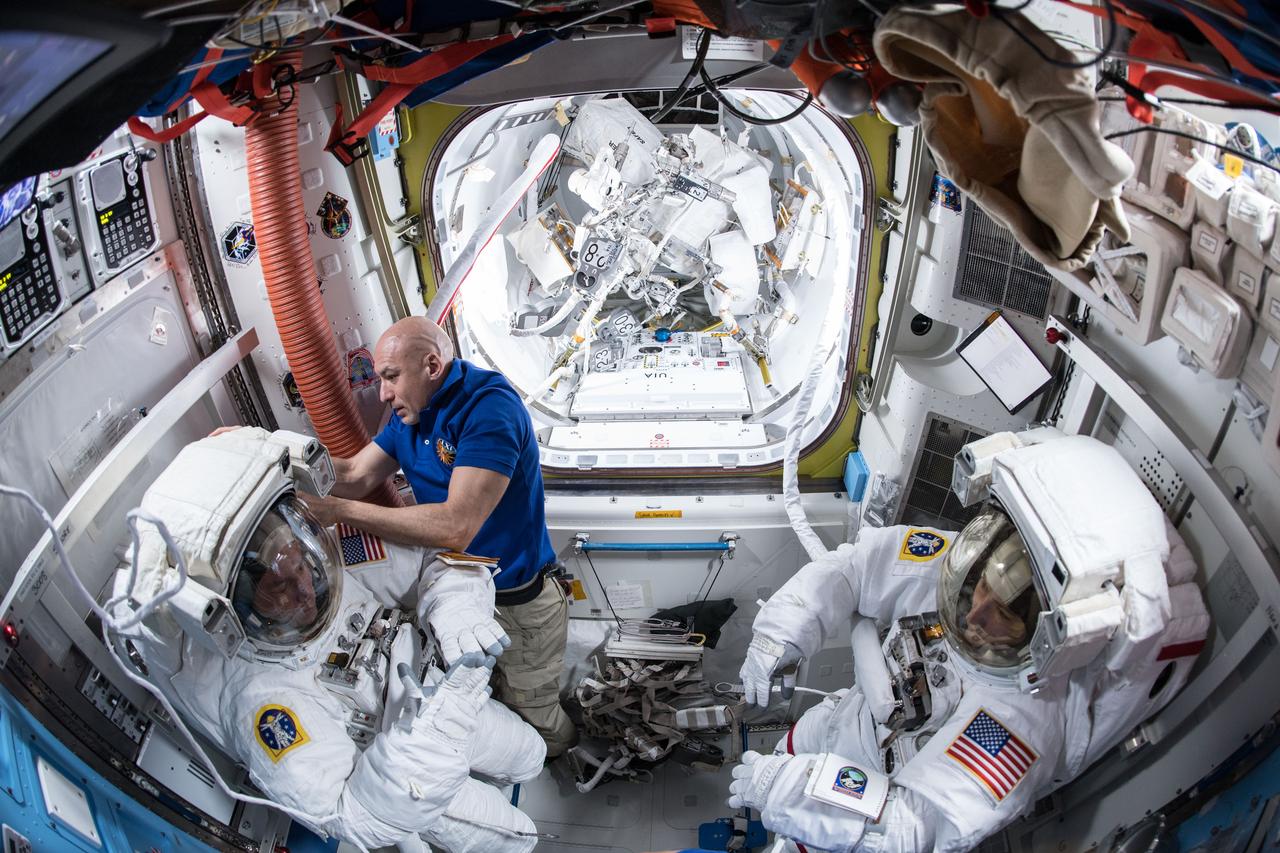
iss061e003210 (Oct. 6, 2019) --- Expedition 61 Commander Luca Parmitano of ESA (European Space Agency) assists NASA astronauts Andrew Morgan (left) and Christina Koch (right) in their U.S. spacesuits. The NASA spacewalkers would go on to conduct a seven hour and one minute spacewalk to begin the latest round of upgrading the station's large nickel-hydrogen batteries with newer, more powerful lithium-ion batteries.
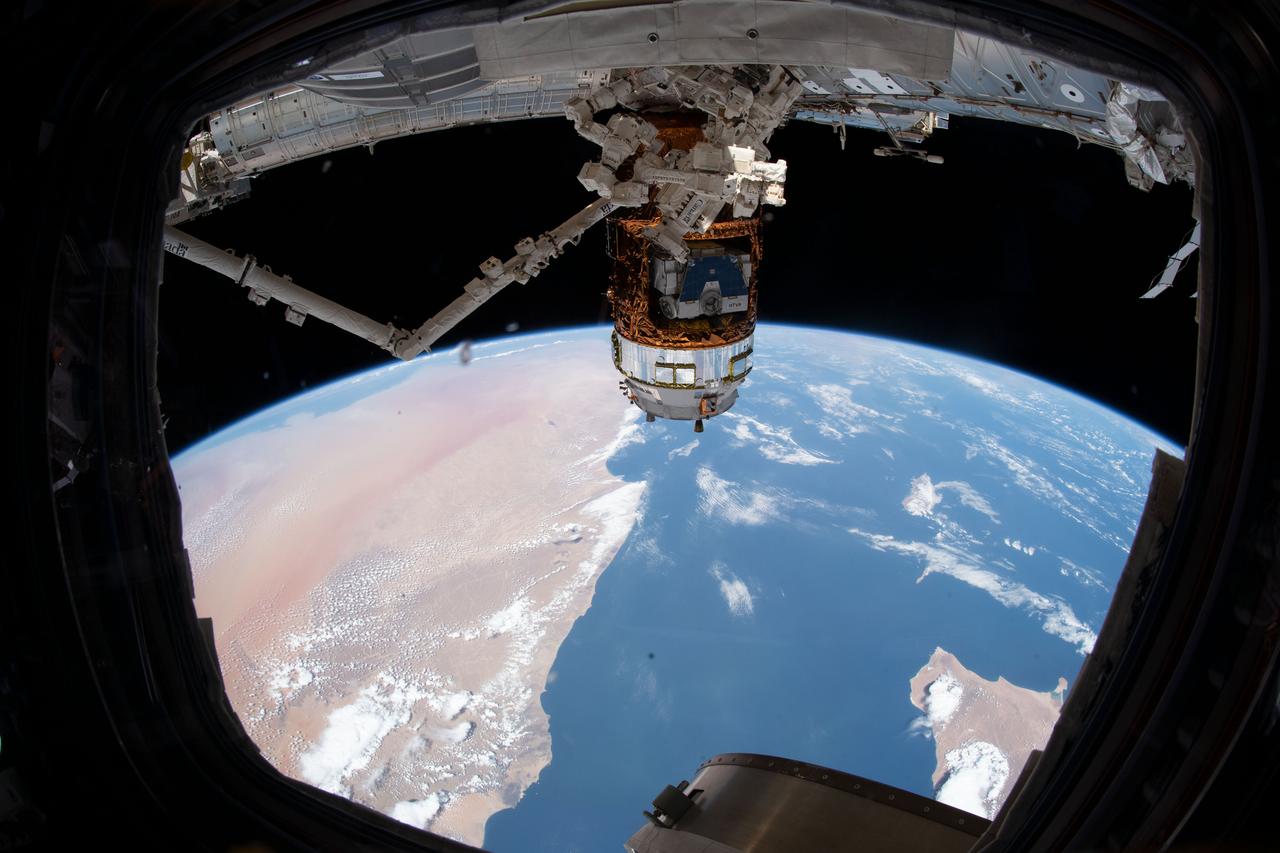
iss060e081678 (Sept. 29, 2019) --- The H-II Transfer Vehicle-8 (HTV-8) from the Japan Aerospace Exploration Agency is pictured attached to the International Space Station's Harmony module. The Canadarm2 robotic arm, with the Dextre "robotic hand" attached, is poised to remove the HTV-8 exposed pallet loaded with new lithium-ion batteries for installation and activation on the station during a series of spacewalks. The orbiting complex was flying 258 miles above Sudan about to cross the Gulf of Aden.
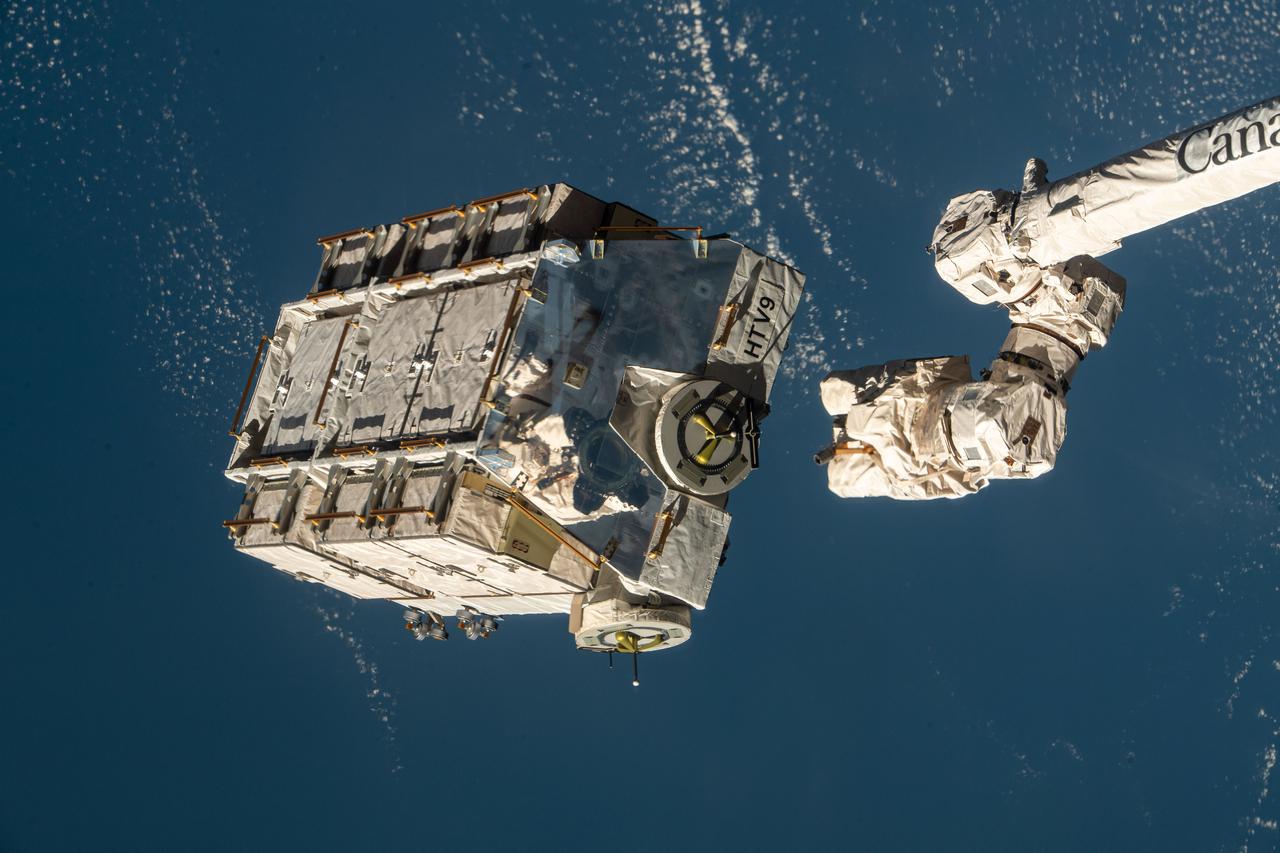
iss064e041512 (March 11, 2021) --- An external pallet packed with old nickel-hydrogen batteries is released from the Canadarm2 robotic arm as the International Space Station orbited 260 miles above the Pacific Ocean west of Central America. Mission controllers in Houston commanded the Canadarm2 to release the external pallet into space where it will orbit Earth between two to four years before burning up harmlessly in the atmosphere. The batteries were removed during previous spacewalks and replaced with newer lithium-ion batteries to continue powering the station's systems.
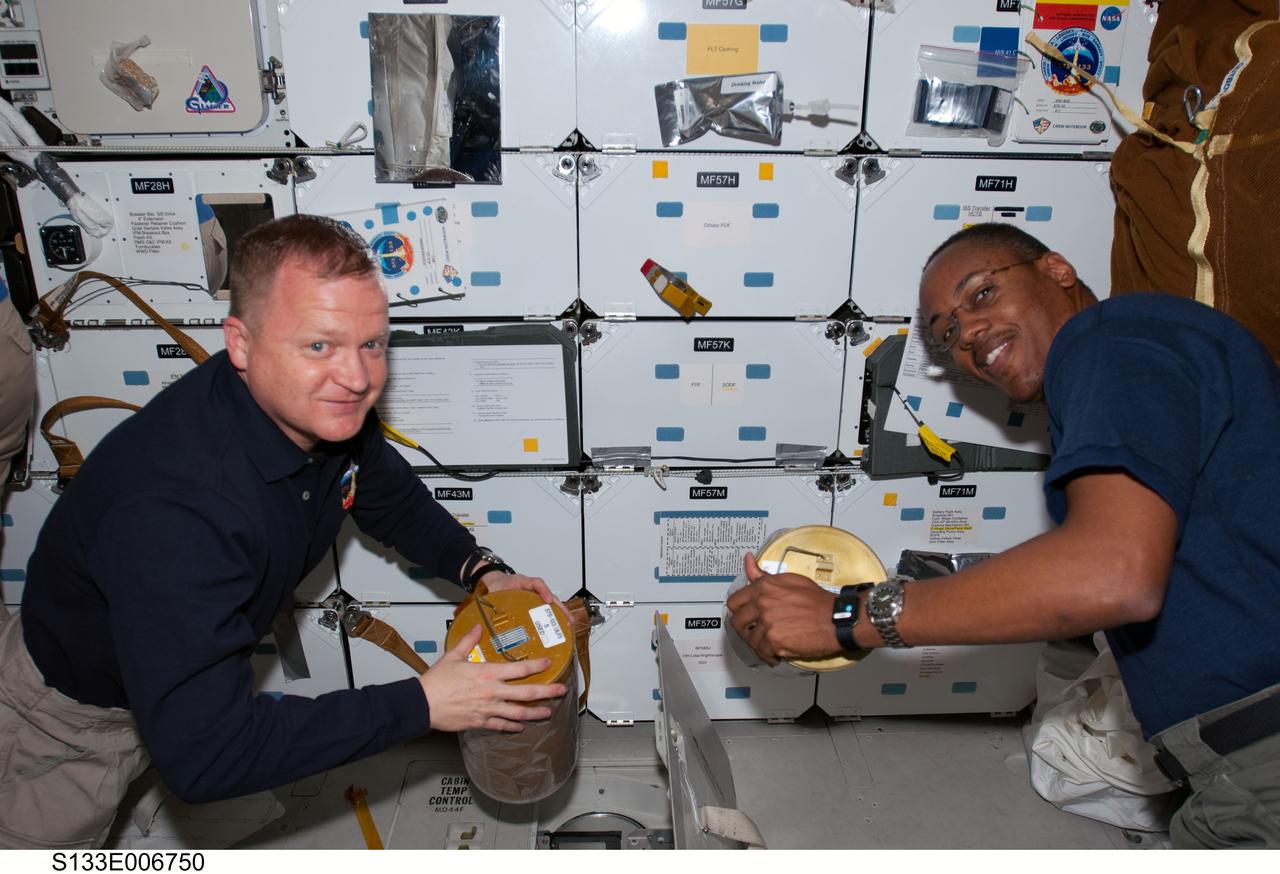
S133-E-006750 (26 Feb. 2011) --- On space shuttle Discovery's middeck, astronauts Eric Boe (left), STS-133 pilot; and Alvin Drew, mission specialist, work with lithium hydroxide canisters beneath the floor, performing the same house-keeping chore accomplished by many astronauts in the 30-year history of the Space Shuttle Program. Photo credit: NASA or National Aeronautics and Space Administration
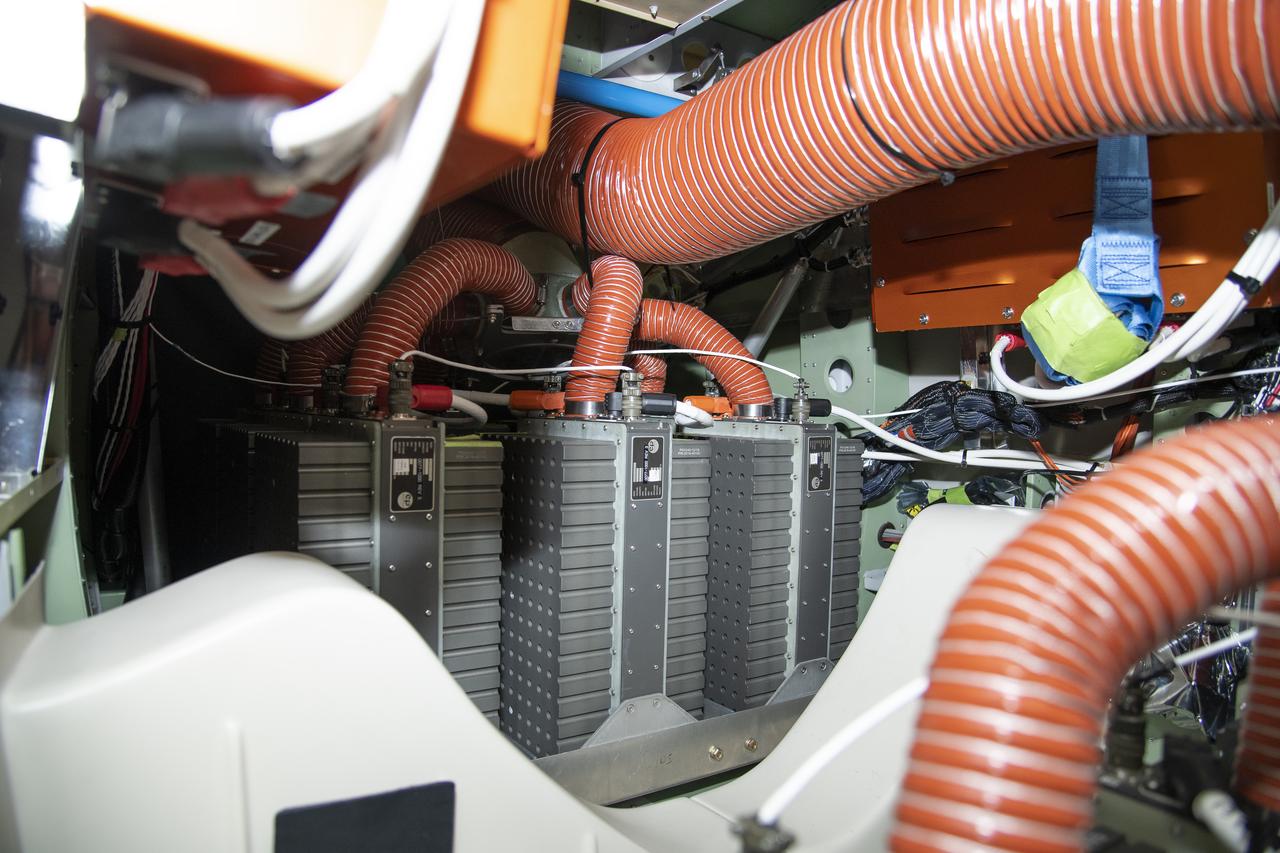
NASA's all-electric X-57 project team installed two 400-pound lithium-ion battery packs in the cabin of the plane in 2022 at NASA's Armstrong Flight Research Center in California. The X-57 project team repeatedly tested the batteries to ensure they can safely power the aircraft for an entire flight, and designed custom, lightweight cases to keep the batteries secure.
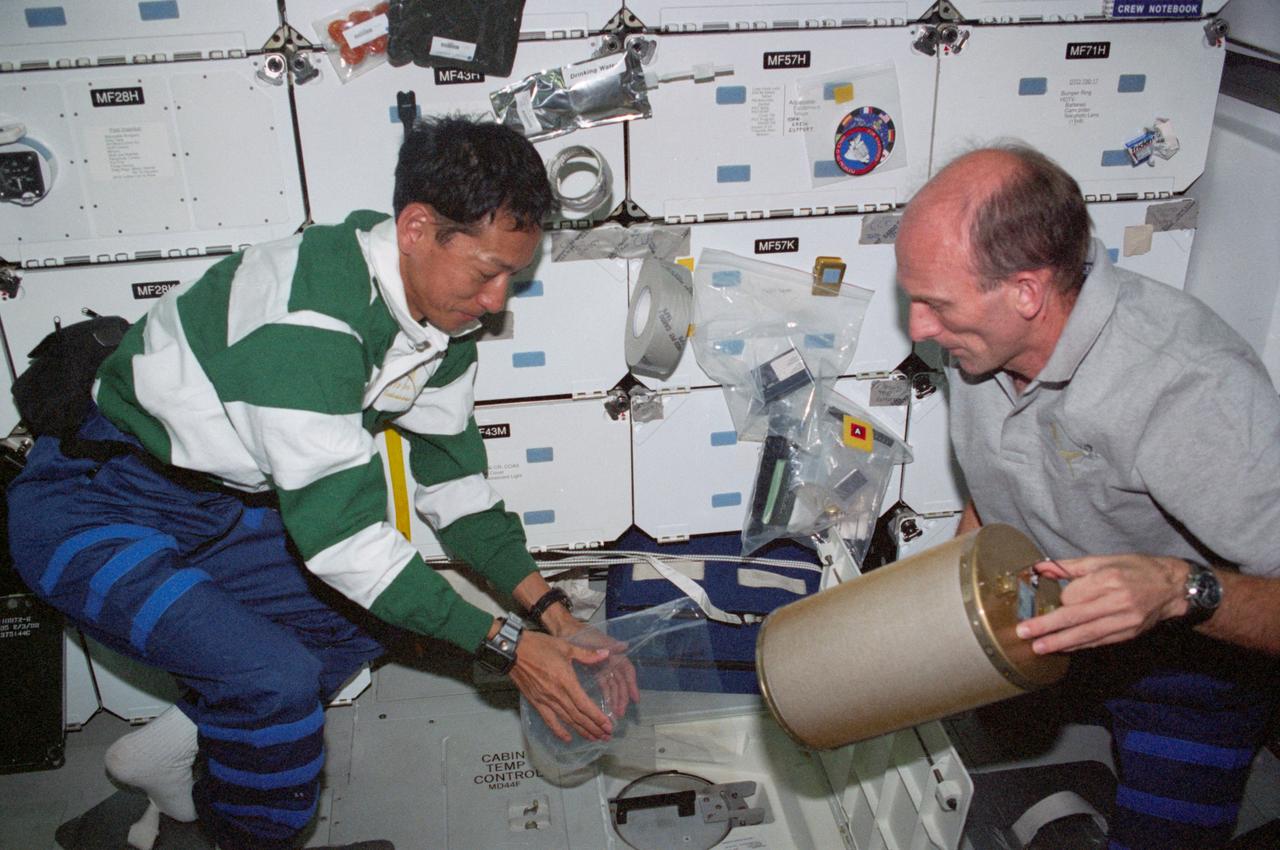
STS099-311-026 (11-22 February 2000) ---Astronauts Mamoru Mohri (left) and Gerhard P. J. Thiele, both mission specialists, change out lithium hydroxide canisters on the middeck of the Earth-orbiting Space Shuttle Endeavour. Mohri represents Japan?s National Space Development Agency (NASDA) and Thiele represents the European Space Agency (ESA).

iss063e034131 (July 1, 2020) --- NASA astronaut and Expedition 63 Flight Engineer Bob Behnken (upper left) works during a six-hour and one-minute spacewalk to swap an aging nickel-hydrogen battery for a new lithium-ion battery on the International Space Station's Starboard-6 truss structure. Protruding horizontally from the truss are the Thermal Control System radiators that dispel heat generated by the orbiting lab's power systems.
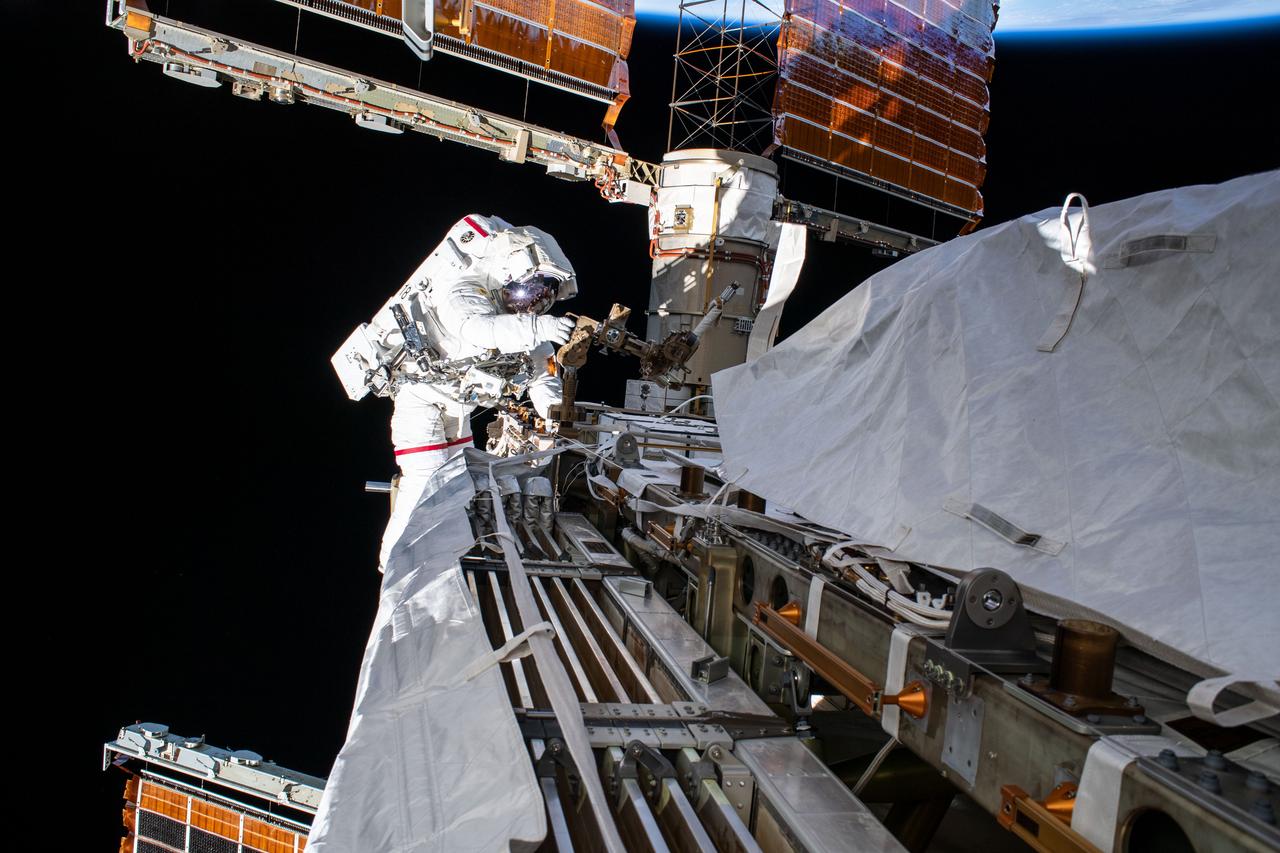
iss061e005535 (Oct. 11, 2019) --- NASA astronaut Andrew Morgan works while tethered on the Port 6 truss segment of the International Space Station to replace older hydrogen-nickel batteries with newer, more powerful lithium-ion batteries. The batteries store and distribute power collected from the station's basketball court-sized solar arrays directly behind Morgan.
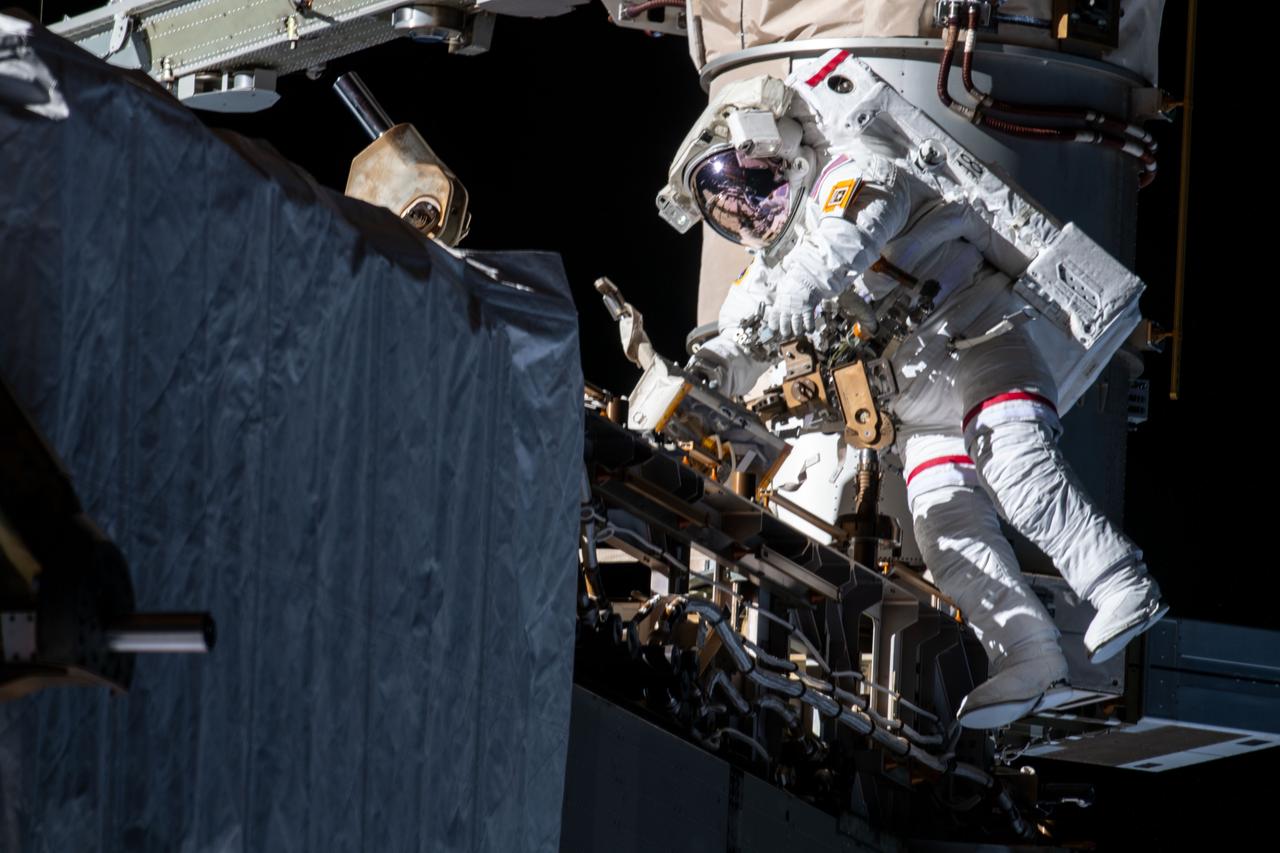
iss061e005428 (Oct. 11, 2019) --- NASA astronaut Andrew Morgan works while tethered on the Port 6 truss segment of the International Space Station to replace older hydrogen-nickel batteries with newer, more powerful lithium-ion batteries. Fellow NASA astronaut Christina Koch (out of frame) assisted Morgan during the six-hour and 45-minute spacewalk.
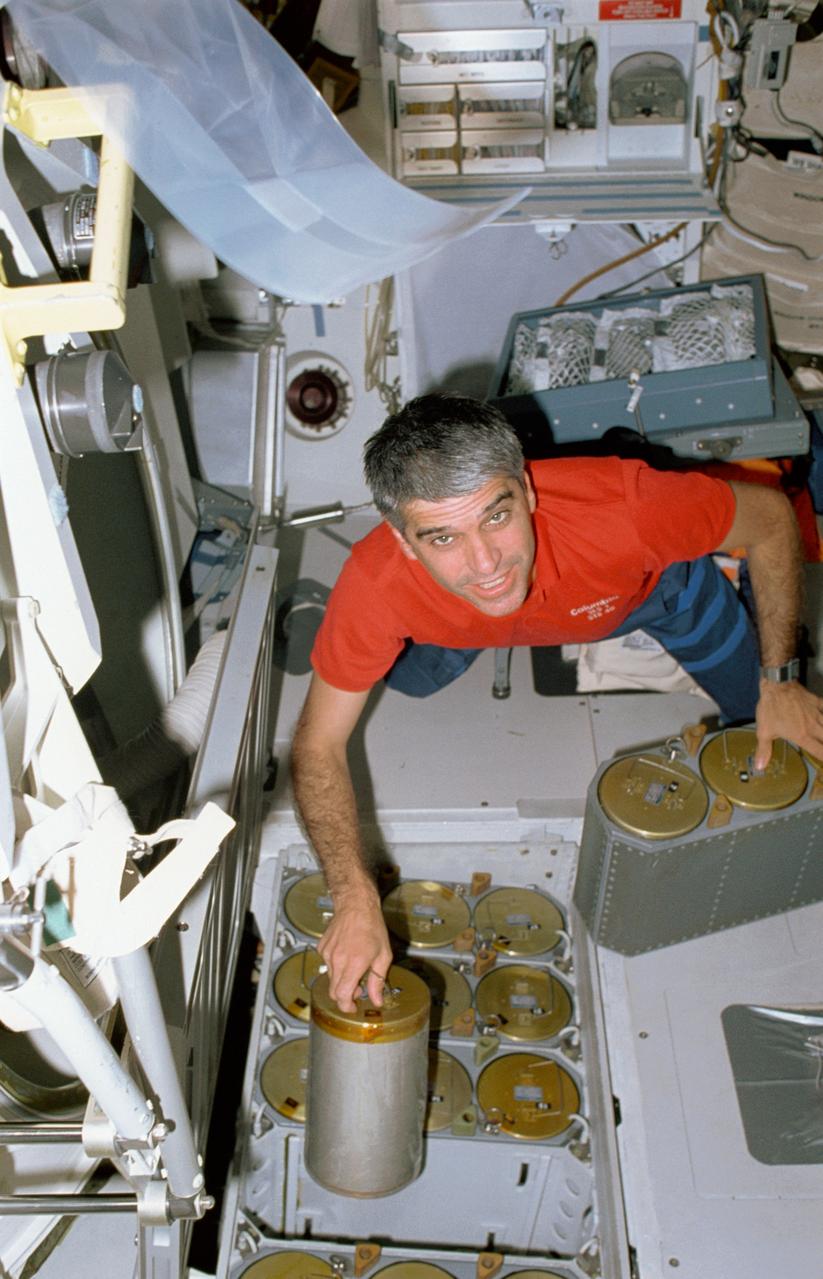
STS040-43-026 (5-14 June 1991) --- Astronaut Sidney M. Gutierrez, pilot, changes out the lithium hydroxide canisters on the Space Shuttle Columbia's middeck. Gutierrez, making his first flight into space, was joined by six other crew members for the nine-day Spacelab Life Sciences (SLS-1) mission, devoted to life sciences research. This middeck scene was photographed with a 35mm camera.
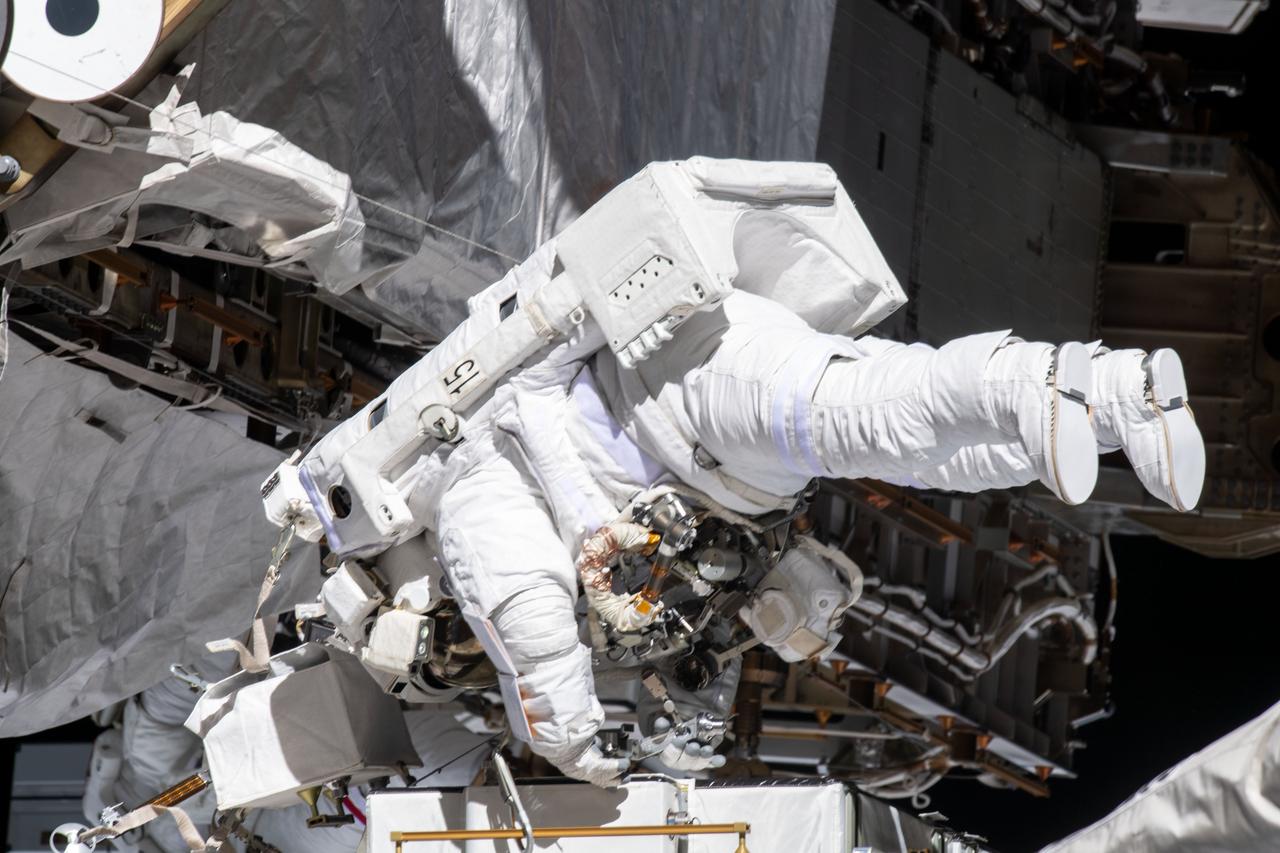
iss061e005311 (Oct. 11, 2019) --- NASA astronaut Christina Koch works while tethered near the Port 6 truss segment of the International Space Station to replace older hydrogen-nickel batteries with newer, more powerful lithium-ion batteries. Fellow NASA astronaut Andrew Morgan (out of frame) assisted Koch during the six-hour and 45-minute spacewalk.
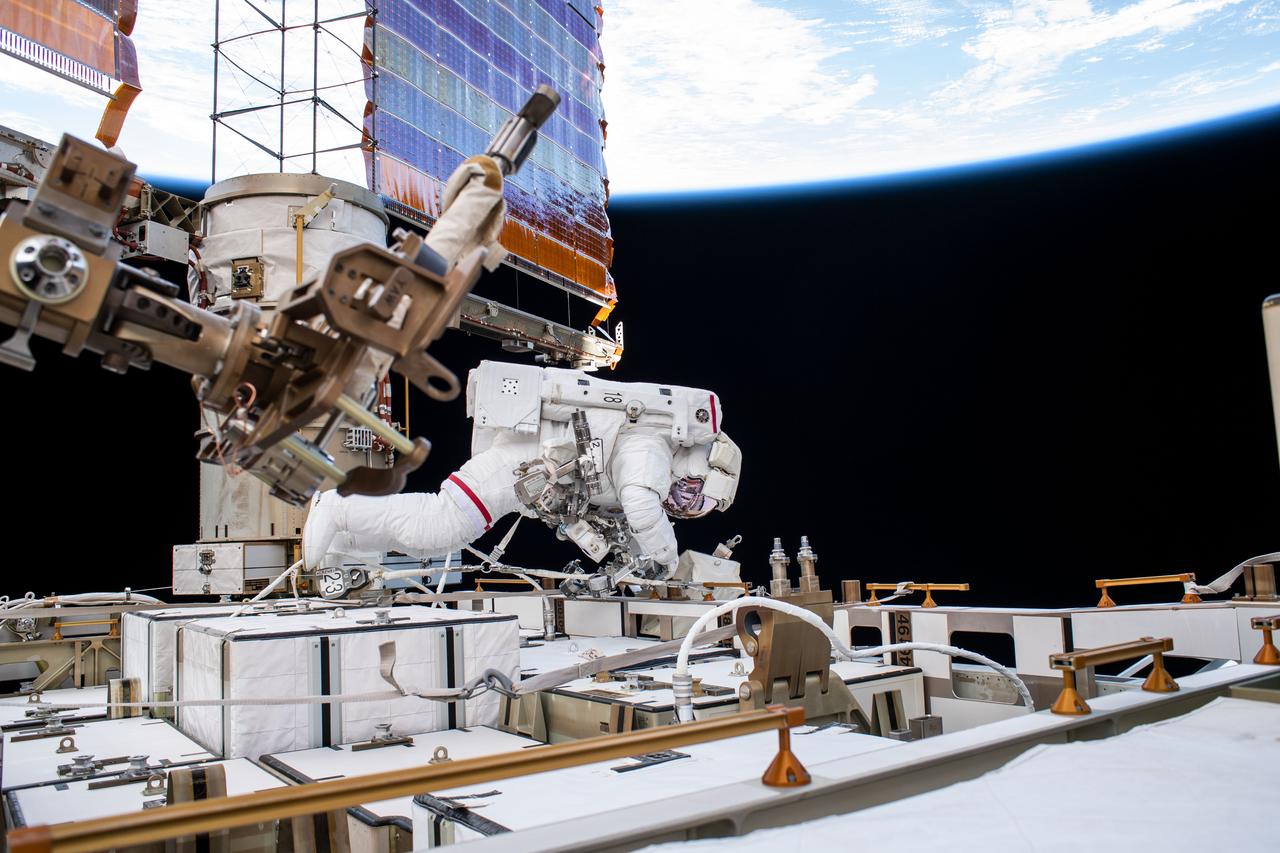
iss061e005542 (Oct. 11, 2019) --- NASA astronaut Andrew Morgan works while tethered on the Port 6 truss segment of the International Space Station to replace older hydrogen-nickel batteries with newer, more powerful lithium-ion batteries. The batteries store and distribute power collected from the station's basketball court-sized solar arrays, one of which is directly behind Morgan.
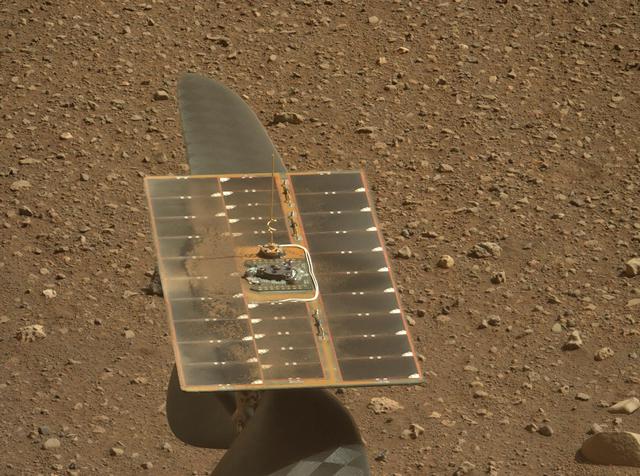
The solar panel of NASA's Ingenuity Mars Helicopter's solar panel as seen by Mastcam-Z, a pair of zoomable cameras aboard NASA's Perseverance Mars rover. Roughly 6.5 by 17 inches (425 mm by 165 mm), the panel charges six lithium-ion batteries inside the helicopter. The small amount of dust on the panel may have accumulated above the helicopter during landing and fallen onto it during helicopter deployment. This dust has had no adverse impact on the helicopter's power. Solar cells in the array are optimized for the solar spectrum encountered at Mars, and the stored energy is used to operate heaters for the cold Martian nights as well as power the helicopter during flight operations. Power expended by the helicopter during an up-to-90-second flight is about 350 watts. The image is not white balanced; instead it is displayed in a preliminary calibrated version of a natural-color composite, approximately simulating the colors of the scene that we would see if we were there viewing it ourselves. Arizona State University in Tempe leads the operations of the Mastcam-Z instrument, working in collaboration with Malin Space Science Systems in San Diego. A key objective for Perseverance's mission on Mars is astrobiology, including the search for signs of ancient microbial life. The rover will characterize the planet's geology and past climate, pave the way for human exploration of the Red Planet, and be the first mission to collect and cache Martian rock and regolith (broken rock and dust). Subsequent NASA missions, in cooperation with ESA (European Space Agency), would send spacecraft to Mars to collect these sealed samples from the surface and return them to Earth for in-depth analysis. The Mars 2020 Perseverance mission is part of NASA's Moon to Mars exploration approach, which includes Artemis missions to the Moon that will help prepare for human exploration of the Red Planet. https://photojournal.jpl.nasa.gov/catalog/PIA24545
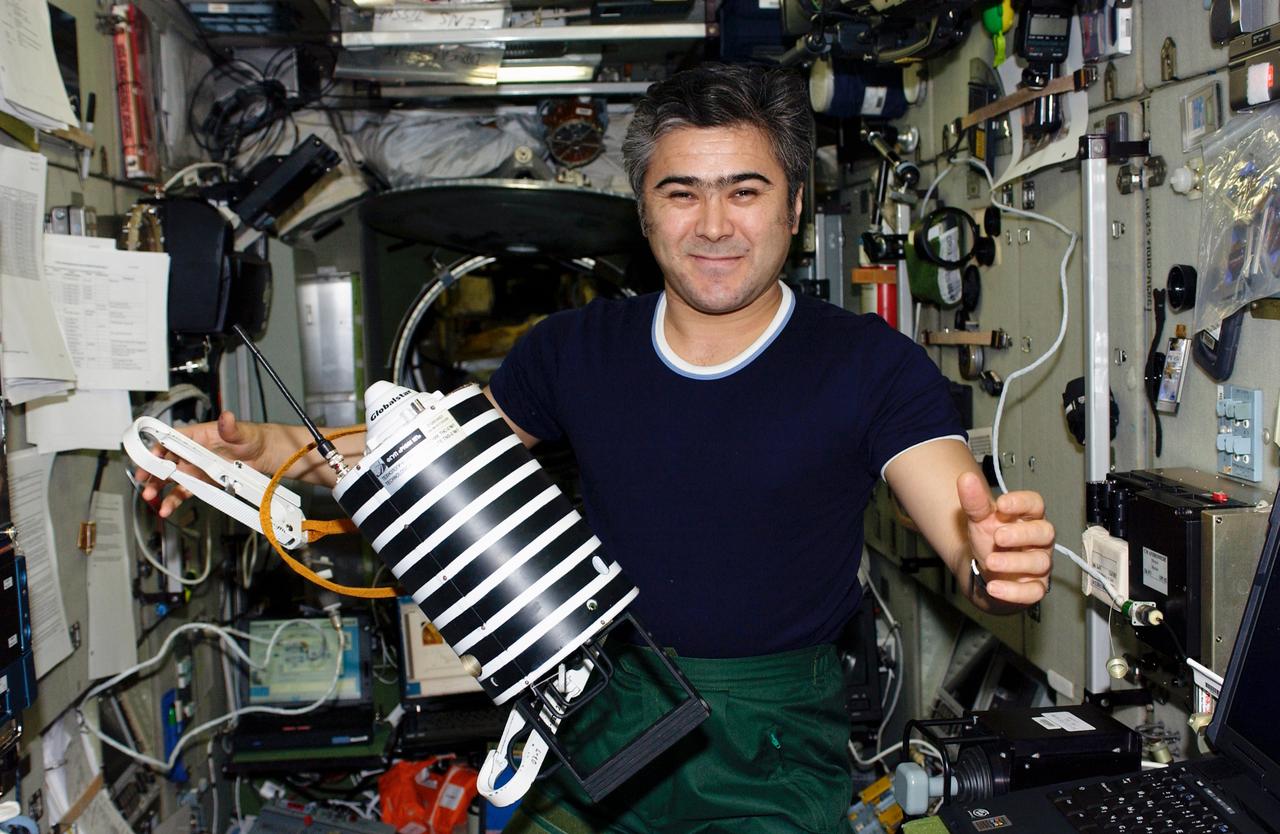
ISS010-E-20722 (21 March 2005) --- Cosmonaut Salizhan S. Sharipov, Expedition 10 flight engineer representing Russia's Federal Space Agency, holds “Nanosputnik” (TEKh-42) in the Zvezda Service Module of the International Space Station (ISS). This small (5 kilogram mass) satellite, powered by 10 lithium thionyl chloride batteries, will be activated by Sharipov after his egress from the Pirs Docking Compartment and later “launched” into its own orbit during the spacewalk scheduled for March 28. The purpose of Nanosputnik is to support development of satellite control techniques, monitoring of satellite operations, and research on new attitude system sensors and other components.
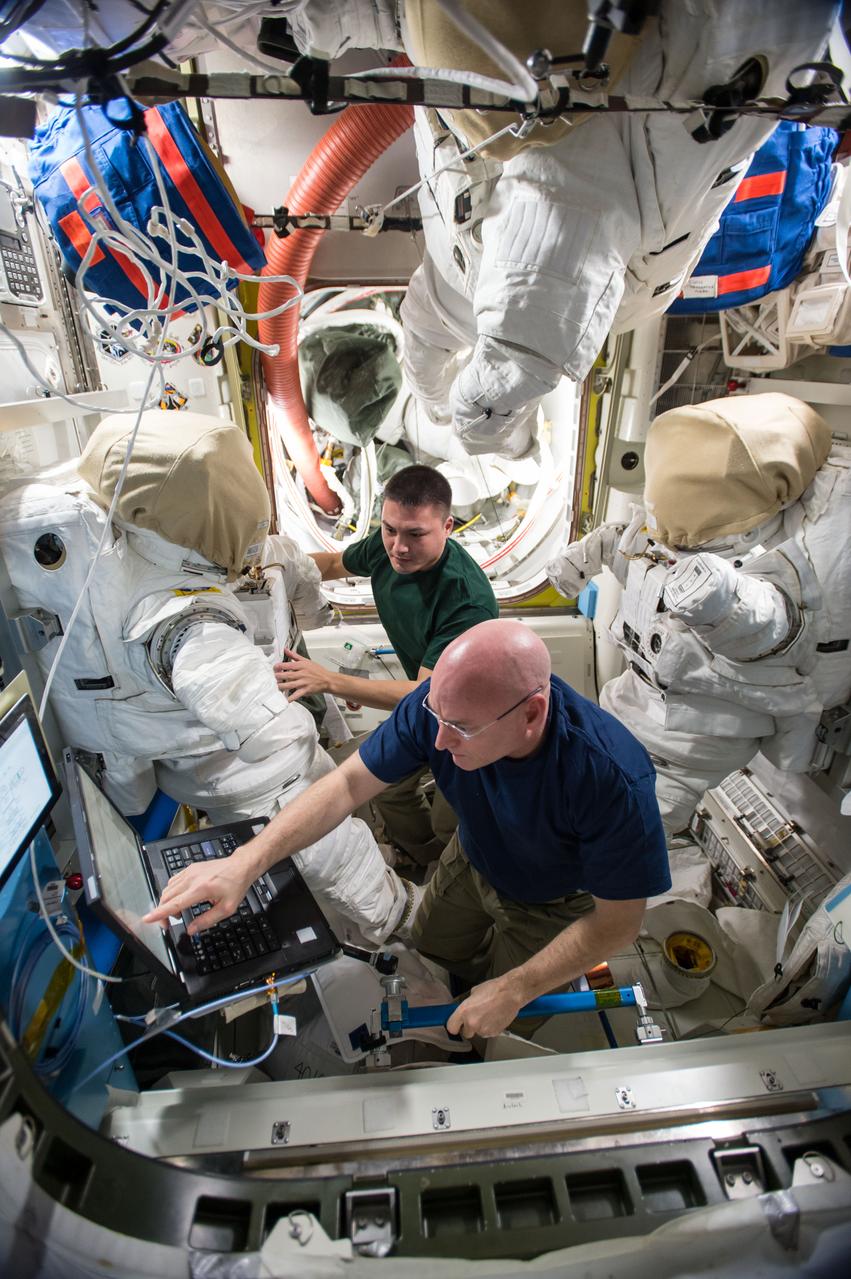
ISS045E050652 (10/07/2015) --- US astronauts Scott Kelly (bottom)and Kjell Lindgren (top) are counting down to a pair of spacewalks, now targeted for Oct. 28 and Nov. 6. The duo serviced their spacesuits replacing lithium batteries, checking their gloves and verifying power to video cameras. On the first spacewalk, the spacewalkers will lubricate the tip of the robotic arm Canadarm2, route power cables and place a thermal shroud over the Alpha Magnetic Spectrometer. During the second spacewalk, Kelly and Lindgren will refill coolant reservoirs and configure the port truss cooling system back to its original configuration after repair work completed back in 2012.
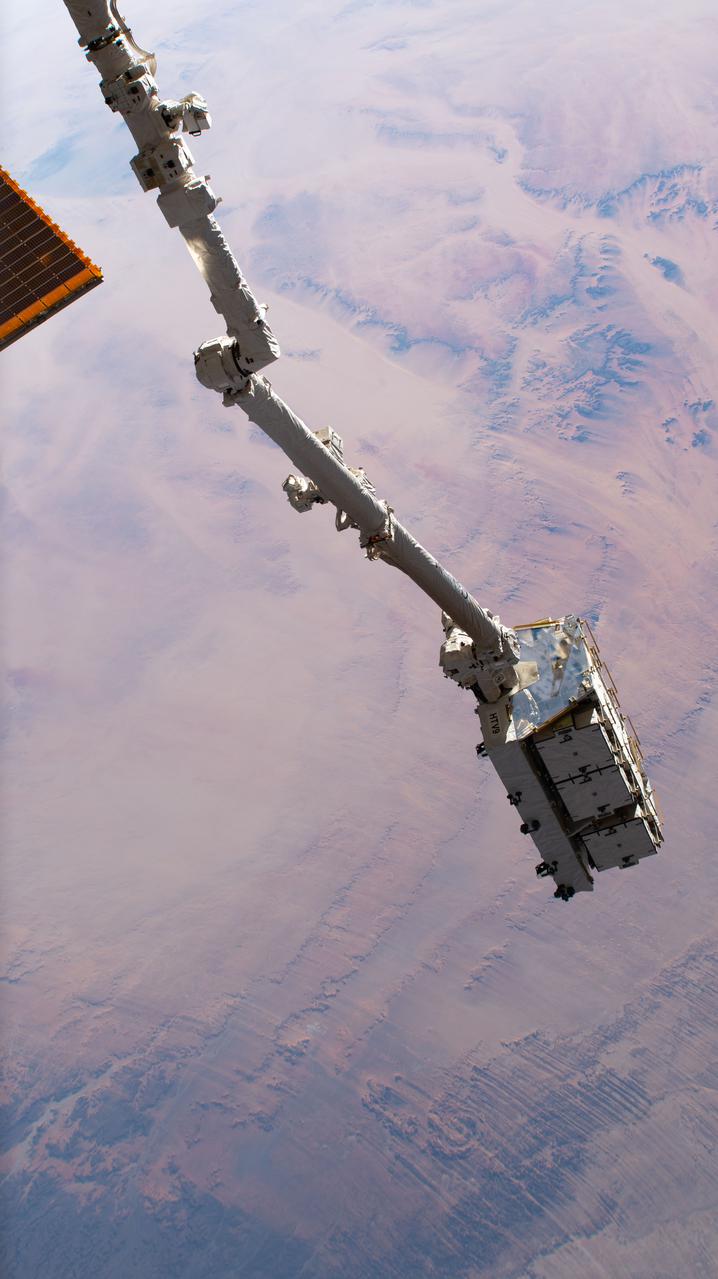
iss064e041189 (March 11, 2021) --- The Canadarm2 robotic arm, with an external pallet packed with old nickel-hydrogen batteries in its grip, is pictured as the International Space Station orbited 260 miles above the Sahara in the African nation of Chad. Mission controllers in Houston later commanded the Canadarm2 to release the external pallet into space where it will orbit Earth between two to four years before burning up harmlessly in the atmosphere. The batteries were removed during previous spacewalks and replaced with newer lithium-ion batteries to continue powering the station's systems.
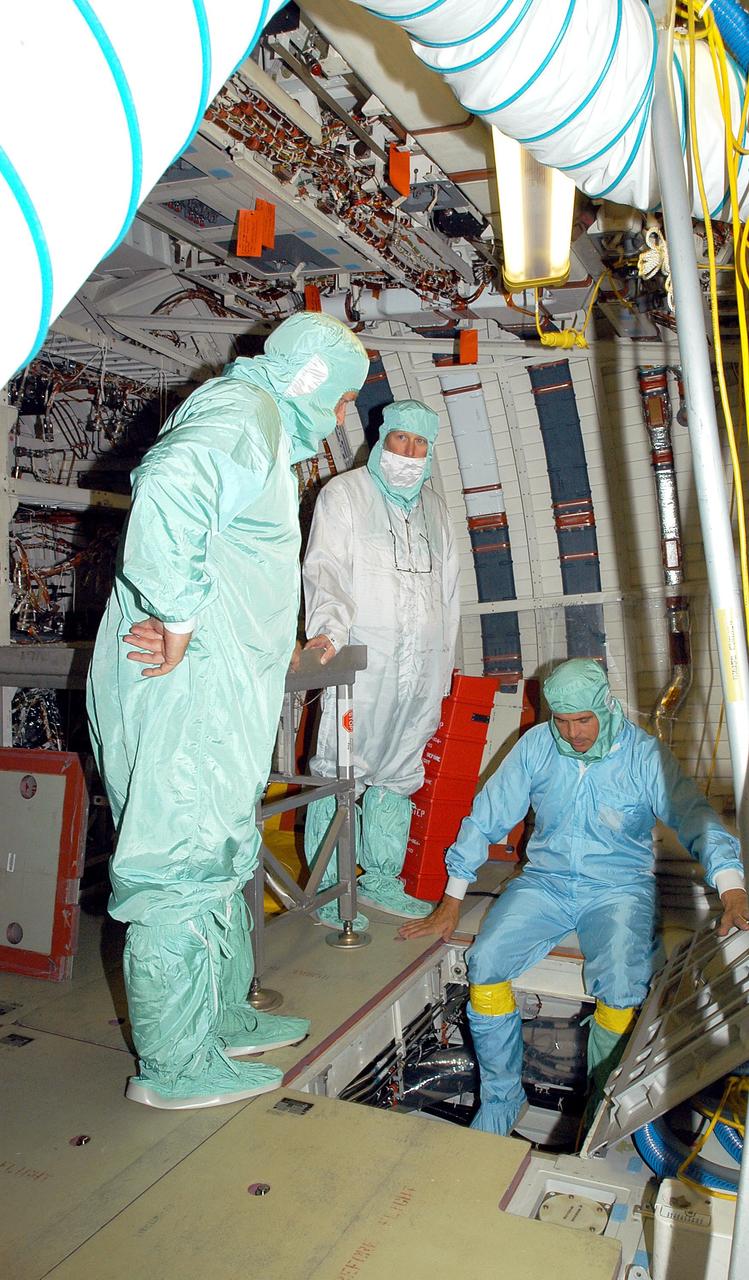
KENNEDY SPACE CENTER, FLA. - In the middeck of Endeavour, in the Orbiter Processing Facility, Center Director Jim Kennedy (far left) watches as a technician gets ready to lower himself through the LiOH door into the Environmental Control and Life Support System (ECLSS) bay. LiOH refers to lithium hydroxide, canisters of which are stored in the ECLSS bay under the middeck floor. During flight, cabin air from the cabin fan is ducted to two LiOH canisters, where carbon dioxide is removed and activated charcoal removes odors and trace contaminants. Kennedy is taking an opportunity to learn first-hand what workers are doing to enable Return to Flight. Endeavour is in an Orbiter Major Modification period.
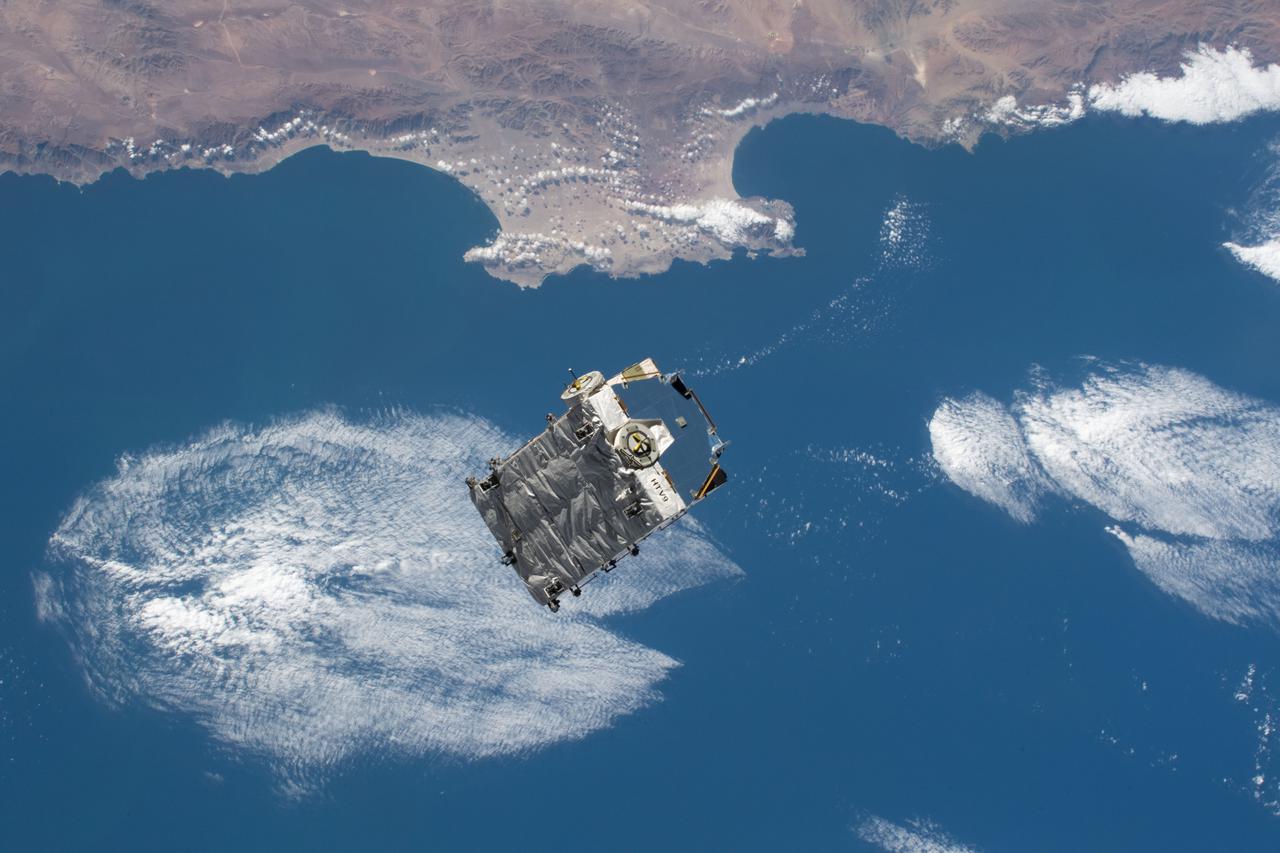
iss064e041315 (March 11, 2021) --- An external pallet packed with old nickel-hydrogen batteries is pictured shortly after mission controllers in Houston commanded the Canadarm2 robotic arm to release it into space. The International Space Station was orbiting 265 miles above the north coast of Chile in South America at the time this photograph was taken. The external pallet will orbit Earth between two to four years before burning up harmlessly in the atmosphere. The batteries were removed during previous spacewalks and replaced with newer lithium-ion batteries to continue powering the station's systems.

iss064e041526 (March 11, 2021) --- An external pallet packed with old nickel-hydrogen batteries is pictured shortly after mission controllers in Houston commanded the Canadarm2 robotic arm to release it into space. The International Space Station was orbiting 260 miles above the Pacific Ocean west of central America at the time this photograph was taken. The external pallet will orbit Earth between two to four years before burning up harmlessly in the atmosphere. The batteries were removed during previous spacewalks and replaced with newer lithium-ion batteries to continue powering the station's systems.
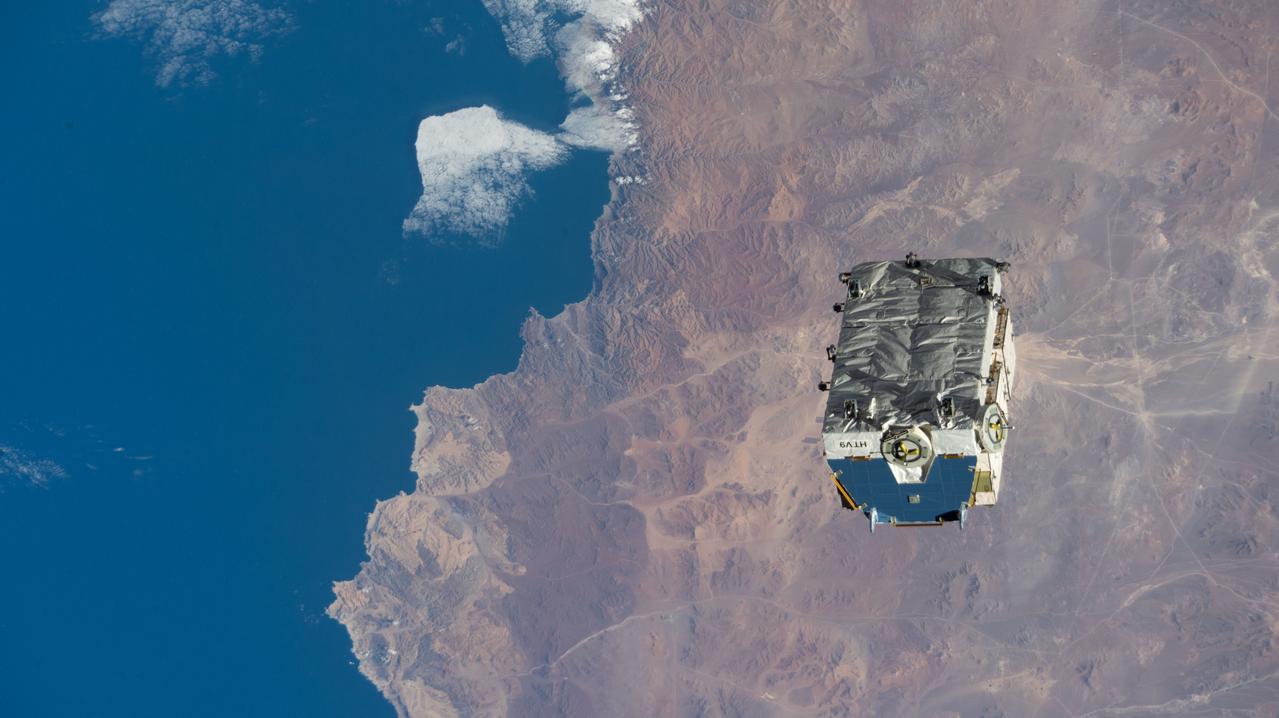
iss064e041189 (March 11, 2021) --- An external pallet packed with old nickel-hydrogen batteries is pictured shortly after mission controllers in Houston commanded the Canadarm2 robotic arm to release it into space. The International Space Station was orbiting 265 miles above the north coast of Chile in South America at the time this photograph was taken. The external pallet will orbit Earth between two to four years before burning up harmlessly in the atmosphere. The batteries were removed during previous spacewalks and replaced with newer lithium-ion batteries to continue powering the station's systems.
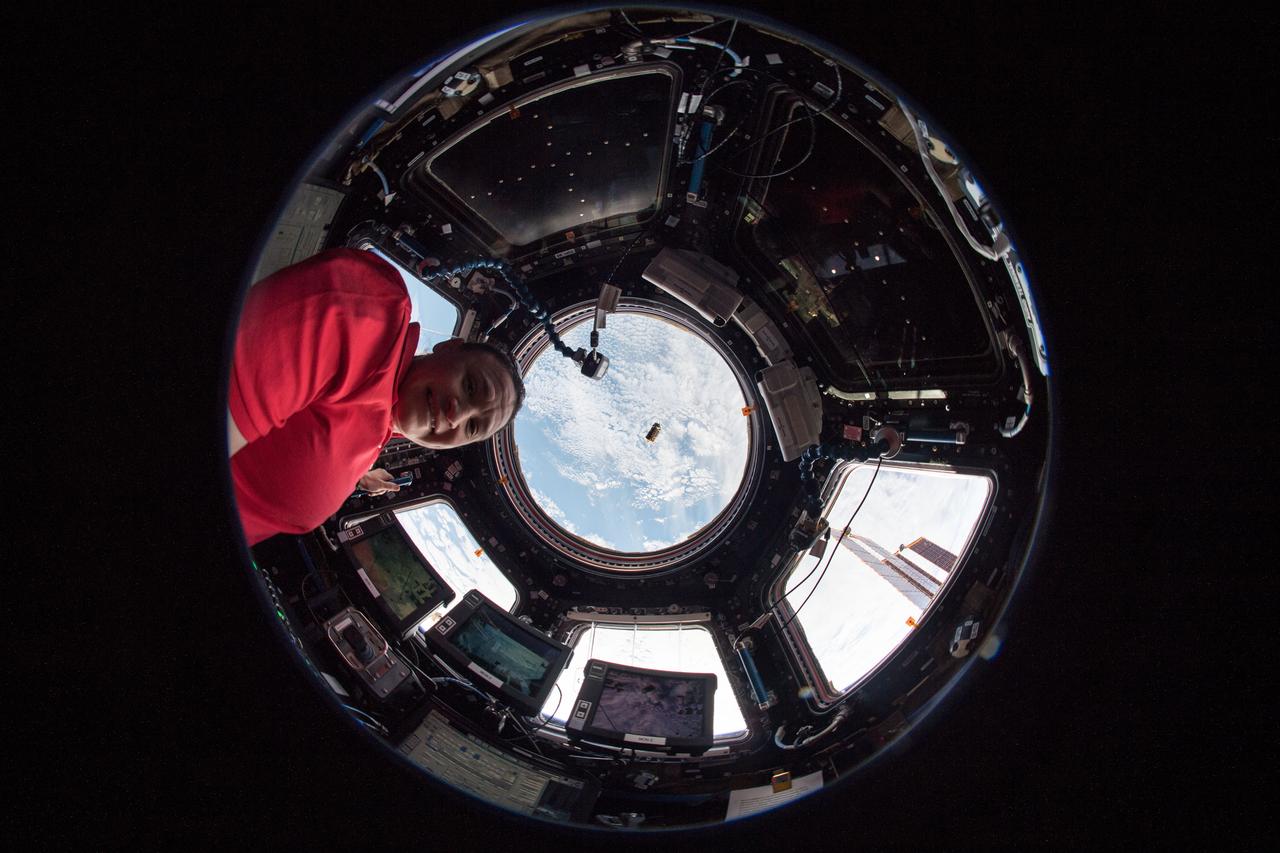
iss056e195892 (Sept. 27, 2018) --- Flight Engineer Serena Auñón-Chancellor of NASA monitors the arrival of the H-II Transfer Vehicle-7 (HTV-7) before it was captured during Expedition 56 by Commander Drew Feustel operating the Canadarm2 robotic arm. The HTV-7 from the Japan Aerospace Exploration Agency (JAXA) delivered six new lithium-ion batteries and adapter plates to upgrade the International Space Station's power systems. The Japanese resupply ship also delivered science experiments and research hardware including a new sample holder for the Electrostatic Levitation Furnace (JAXA-ELF), a protein crystal growth experiment at low temperatures (JAXA LT PCG), an investigation that looks at the effect of microgravity on bone marrow (MARROW), a Life Sciences Glovebox, and additional EXPRESS Racks.
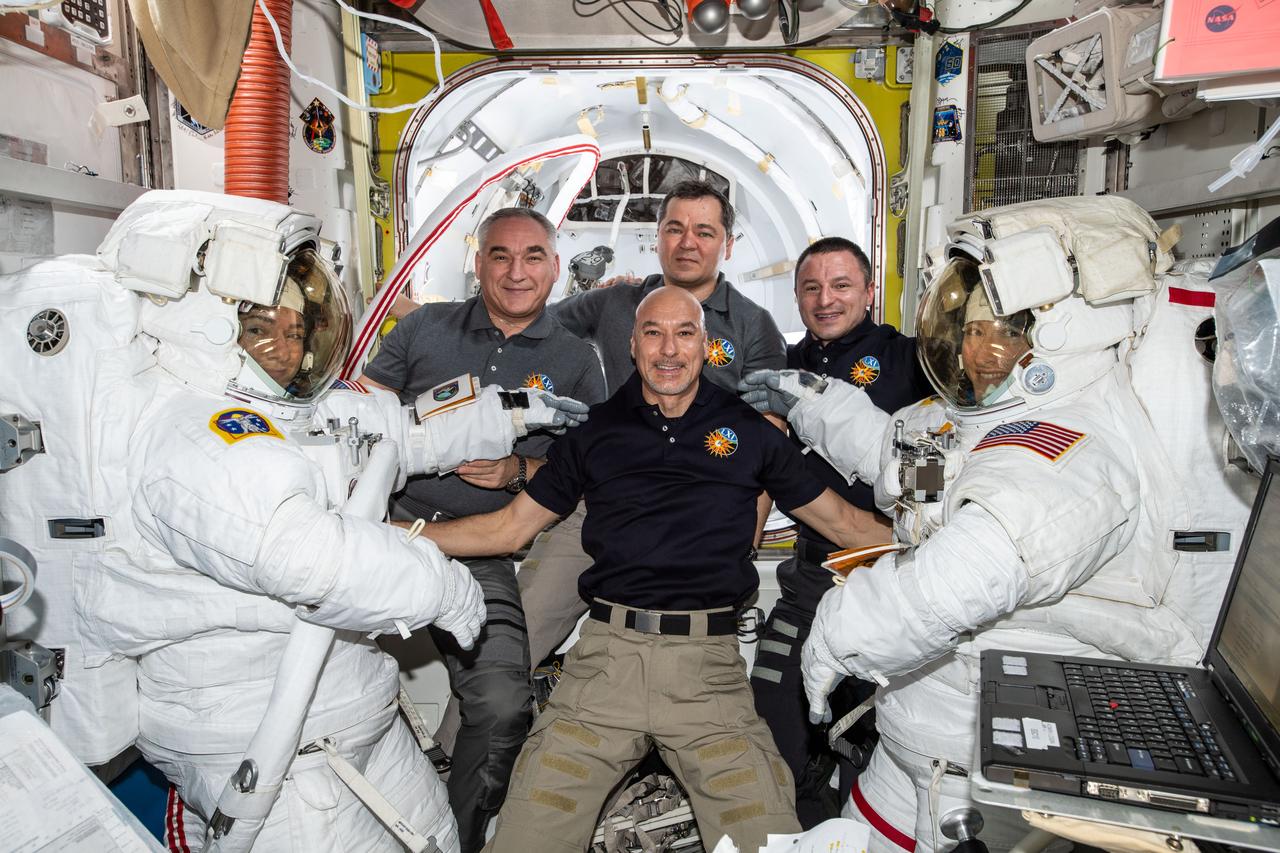
The International Space Station Expedition 61 crew pauses for a photo as NASA Astronauts Jessica Meir and Christina Koch prepare to exit the space station to begin the first all-female spacewalk in history on Oct. 18, 2019. The astronauts replaced a faulty battery charge/discharge unit (BCDU) that failed to activate following the Oct. 11 installation of new lithium-ion batteries on the space station’s exterior structure. The BCDUs regulate the amount of charge put into the batteries that collect energy from the station’s solar arrays to power station systems during periods when the station orbits during nighttime passes around Earth. Though the BCDU failure has not impacted station operations or crew safety, it does prevent the new batteries from providing increased station power.
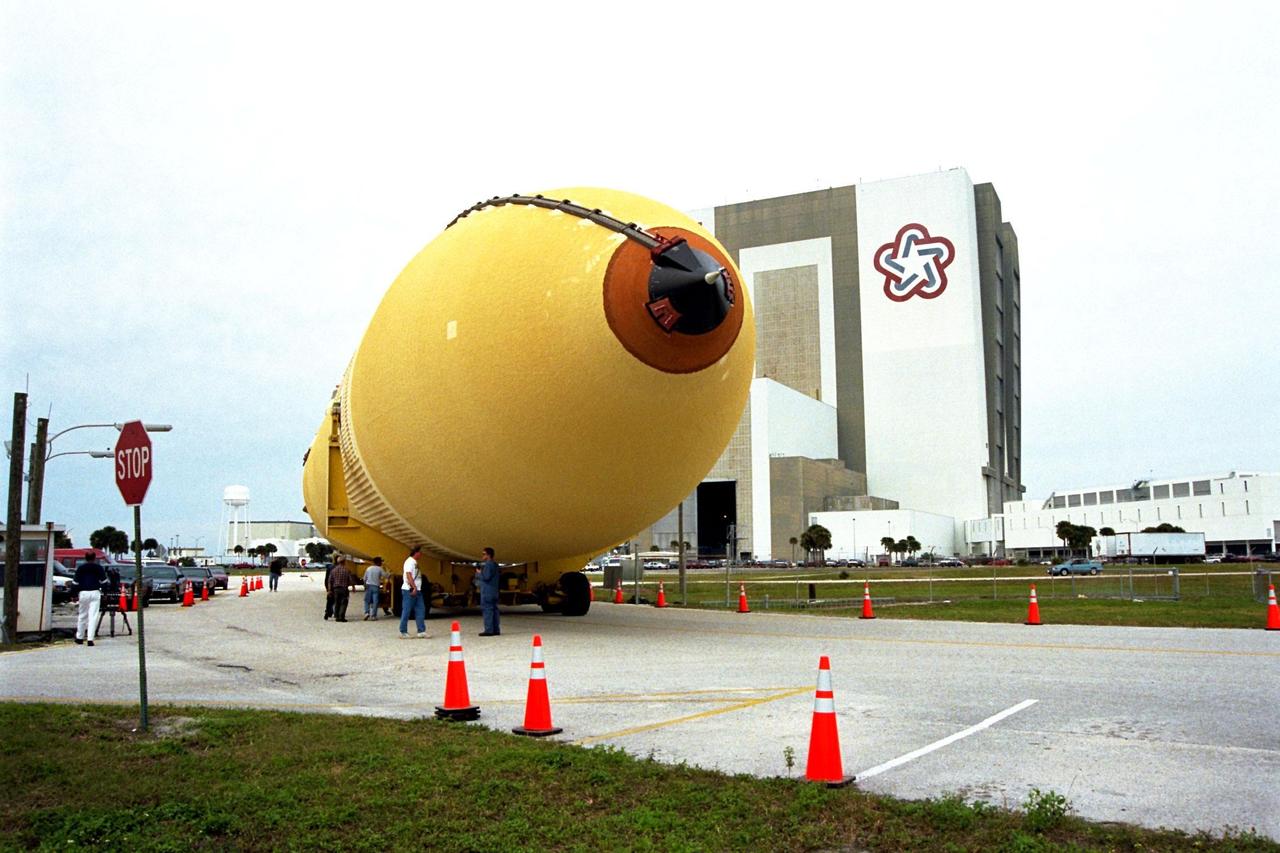
KENNEDY SPACE CENTER, FLA. -- The Space Shuttle's first super lightweight external tank is on its way to Kennedy Space Center's Vehicle Assembly Building for processing. The tank, which is scheduled for flight on STS-91 in late May, arrived Feb. 3 in Port Canaveral, where it remained until Feb. 6 due to high winds. The improved tank is 7,500 pounds lighter than its predecessors and was developed to increase the Shuttle payload capacity on International Space Station assembly flights. Major changes to the lighter tank include the use of new materials and a revised internal design. The new liquid oxygen and liquid hydrogen tanks are constructed of aluminum lithium a lighter, stronger material than the metal alloy currently used. The redesigned walls of the liquid hydrogen tank were machined to provide additional strength and stability as well
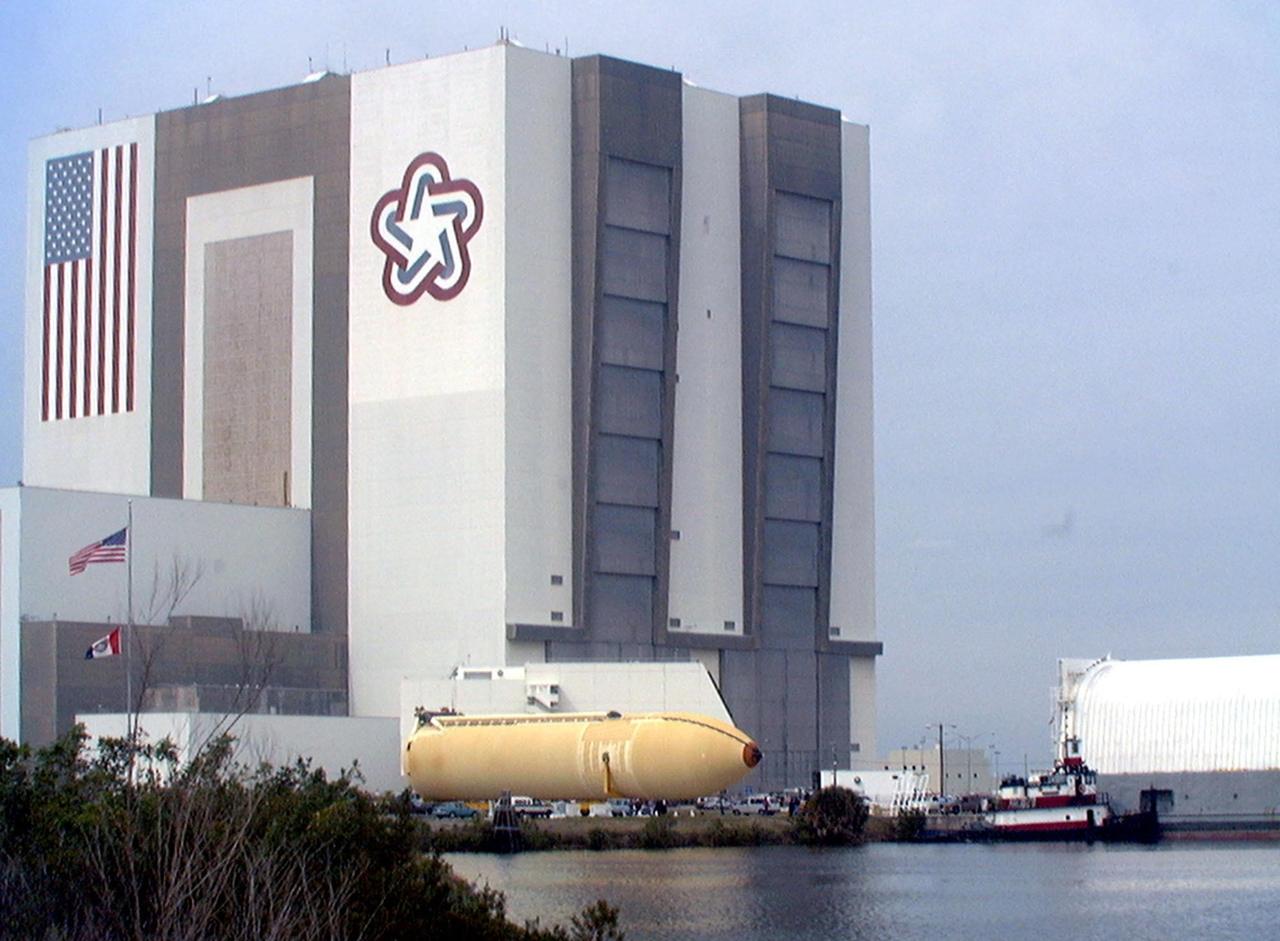
The Space Shuttle's first super lightweight external tank is on its way to Kennedy Space Center's Vehicle Assembly Building for processing. The tank, which is scheduled for flight on STS-91 in late May, arrived Feb. 3 in Port Canaveral, where it remained until Feb. 6 due to high winds. The improved tank is 7,500 pounds lighter than its predecessors and was developed to increase the Shuttle payload capacity on International Space Station assembly flights. Major changes to the lighter tank include the use of new materials and a revised internal design. The new liquid oxygen and liquid hydrogen tanks are constructed of aluminum lithium a lighter, stronger material than the metal alloy currently used. The redesigned walls of the liquid hydrogen tank were machined to provide additional strength and stability as well
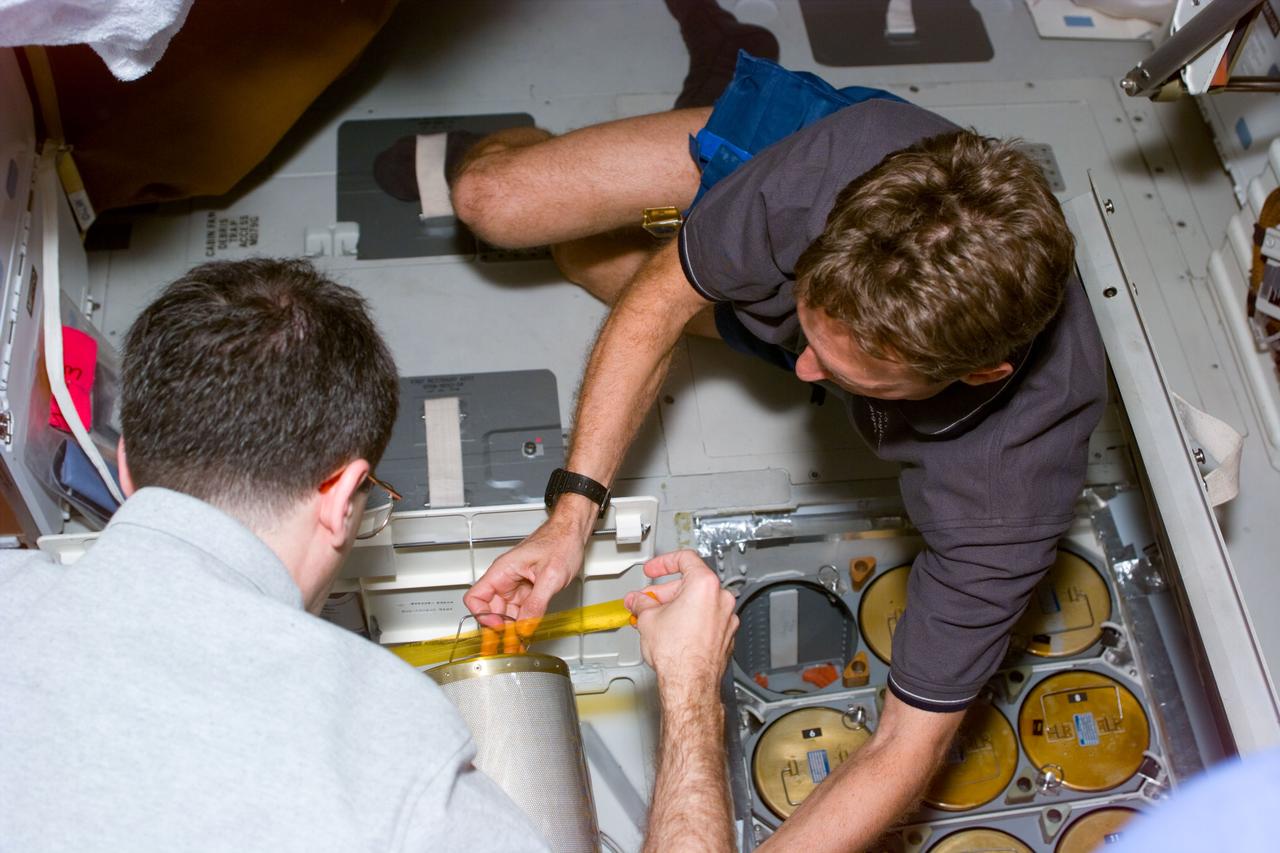
STS081-E-5007 (12 Jan. 1997) --- Astronauts Peter J. K. (Jeff) Wisoff (left) and Jerry M. Linenger begin early housekeeping by putting in fresh lithium hydroxide canisters beneath the Space Shuttle Atlantis' middeck. Not far away in Atlantis' cargo bay, the two mission specialists and their four crew mates are flying the Spacehab Double Module (DM), replete with supplies for the three-man crew aboard Russia's Mir Space Station with which Atlantis will be docking later in the week. Linenger will trade places with John E. Blaha, marking the second such exchange of American astronaut - cosmonaut guest researcher's aboard Mir. Blaha had replaced Shannon W. Lucid in September of 1996. The scene was recorded with an Electronic Still Camera (ESC) and later downlinked to flight controllers in Houston, Texas.
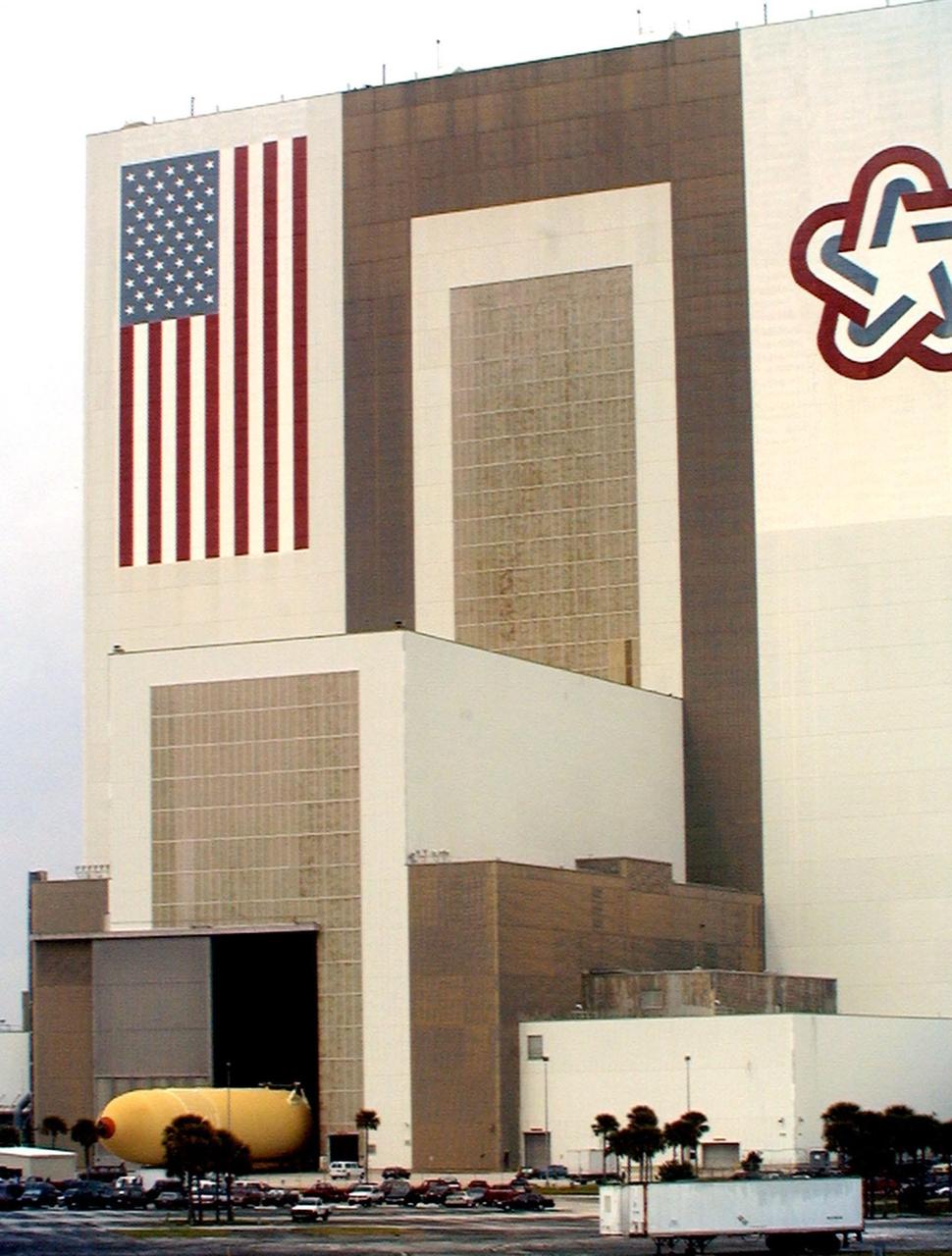
The Space Shuttle's first super lightweight external tank is on its way to Kennedy Space Center's Vehicle Assembly Building for processing. The tank, which is scheduled for flight on STS-91 in late May, arrived Feb. 3 in Port Canaveral, where it remained until Feb. 6 due to high winds. The improved tank is 7,500 pounds lighter than its predecessors and was developed to increase the Shuttle payload capacity on International Space Station assembly flights. Major changes to the lighter tank include the use of new materials and a revised internal design. The new liquid oxygen and liquid hydrogen tanks are constructed of aluminum lithium a lighter, stronger material than the metal alloy currently used. The redesigned walls of the liquid hydrogen tank were machined to provide additional strength and stability as well

The Space Shuttle's first super lightweight external tank is on its way to Kennedy Space Center's Vehicle Assembly Building for processing. The tank, which is scheduled for flight on STS-91 in late May, arrived Feb. 3 in Port Canaveral, where it remained until Feb. 6 due to high winds. The improved tank is 7,500 pounds lighter than its predecessors and was developed to increase the Shuttle payload capacity on International Space Station assembly flights. Major changes to the lighter tank include the use of new materials and a revised internal design. The new liquid oxygen and liquid hydrogen tanks are constructed of aluminum lithium a lighter, stronger material than the metal alloy currently used. The redesigned walls of the liquid hydrogen tank were machined to provide additional strength and stability as well
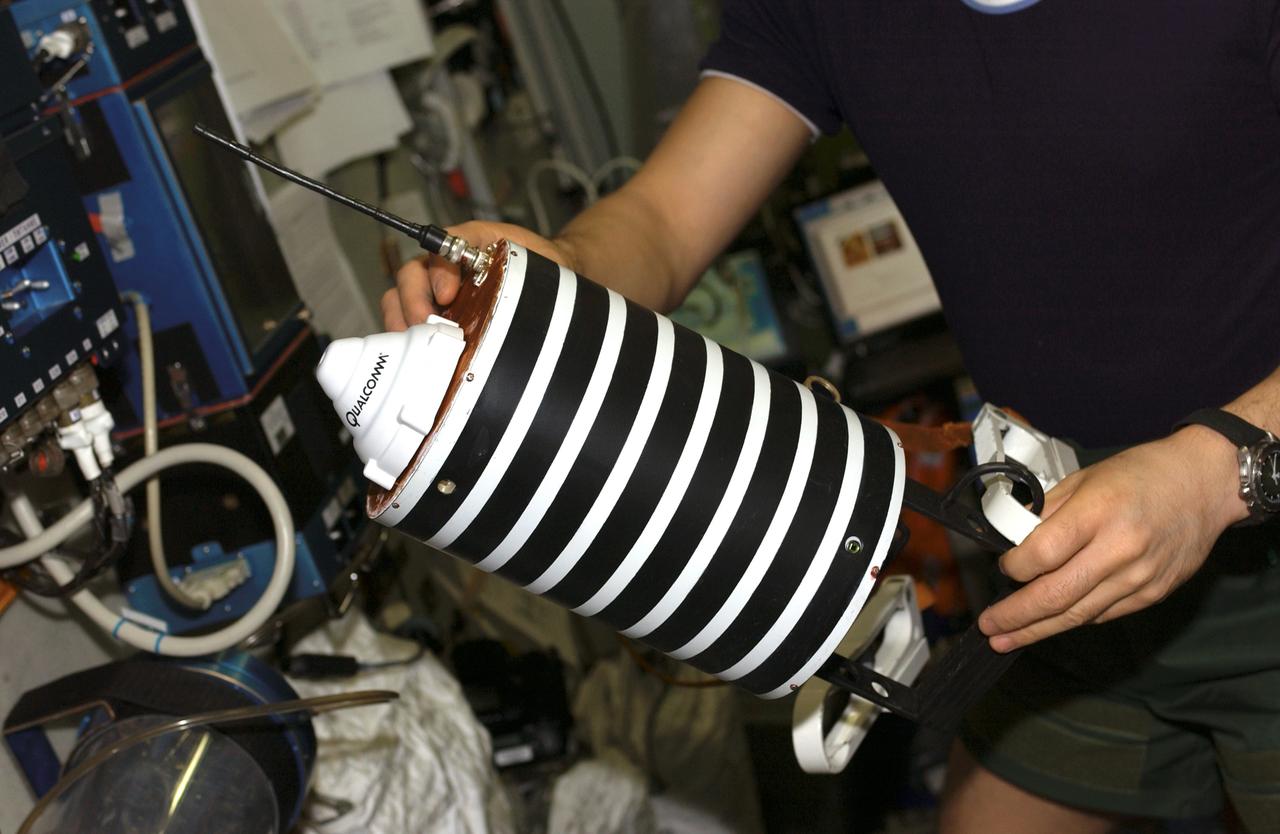
ISS010-E-20726 (21 March 2005) --- This close-up view of “Nanosputnik” (TEKh-42), held by cosmonaut Salizhan S. Sharipov (partially out of frame), Expedition 10 flight engineer representing Russia's Federal Space Agency, was photographed in the Zvezda Service Module of the International Space Station (ISS). This small (5 kilogram mass) satellite, powered by 10 lithium thionyl chloride batteries, will be activated by Sharipov after his egress from the Pirs Docking Compartment and later “launched” into its own orbit during the spacewalk scheduled for March 28. The purpose of Nanosputnik is to support development of satellite control techniques, monitoring of satellite operations, and research on new attitude system sensors and other components.