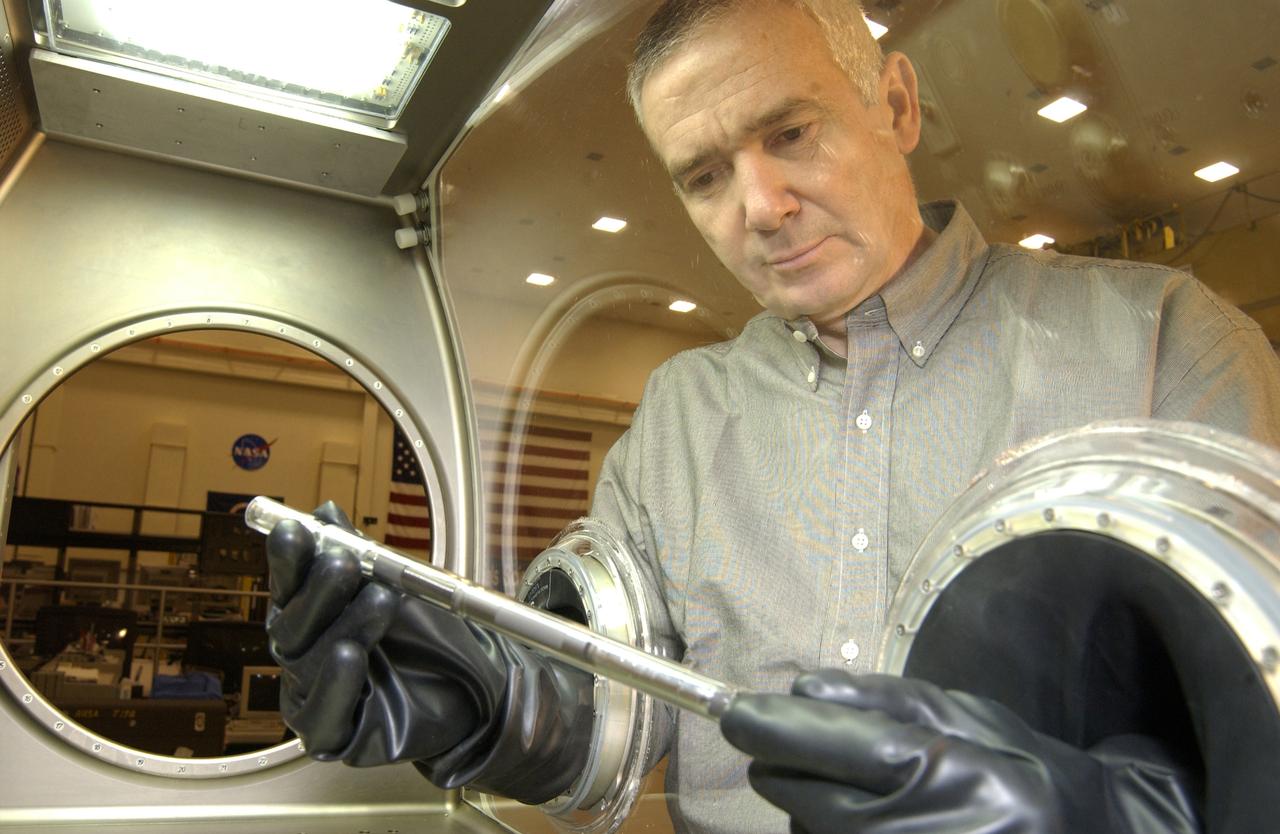
One of the first materials science experiments on the International Space Station -- the Solidification Using a Baffle in Sealed Ampoules (SUBSA) -- will be conducted during Expedition Five inside the Microgravity Science Glovebox. The glovebox is the first dedicated facility delivered to the Station for microgravity physical science research, and this experiment will be the first one operated inside the glovebox. The glovebox's sealed work environment makes it an ideal place for the furnace that will be used to melt semiconductor crystals. Astronauts can change out samples and manipulate the experiment by inserting their hands into a pair of gloves that reach inside the sealed box. Dr. Aleksandar Ostrogorsky, a materials scientist from the Rensselaer Polytechnic Institute, Troy, N.Y., and the principal investigator for the SUBSA experiment, uses the gloves to examine an ampoule like the ones used for his experiment inside the glovebox's work area. The Microgravity Science Glovebox and the SUBSA experiment are managed by NASA's Marshall Space Flight Center in Huntsville, Ala.
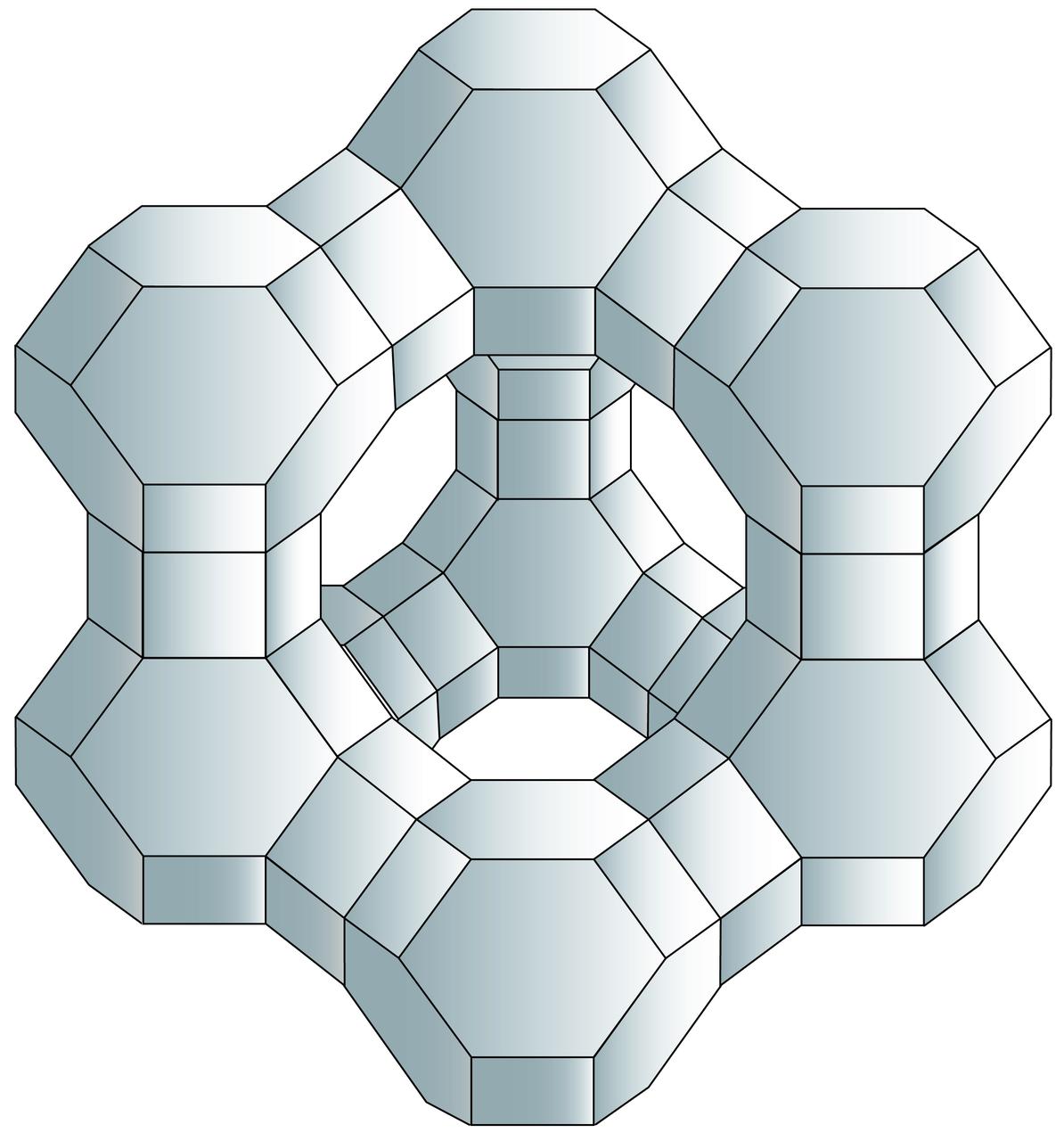
The Center for Advanced Microgravity Materials Processing (CAMMP) in Cambridge, MA, a NASA-sponsored Commercial Space Center, is working to improve zeolite materials for storing hydrogen fuel. CAMMP is also applying zeolites to detergents, optical cables, gas and vapor detection for environmental monitoring and control, and chemical production techniques that significantly reduce by-products that are hazardous to the environment. Depicted here is one of the many here complex geometric shapes which make them highly absorbent. Zeolite experiments have also been conducted aboard the International Space Station
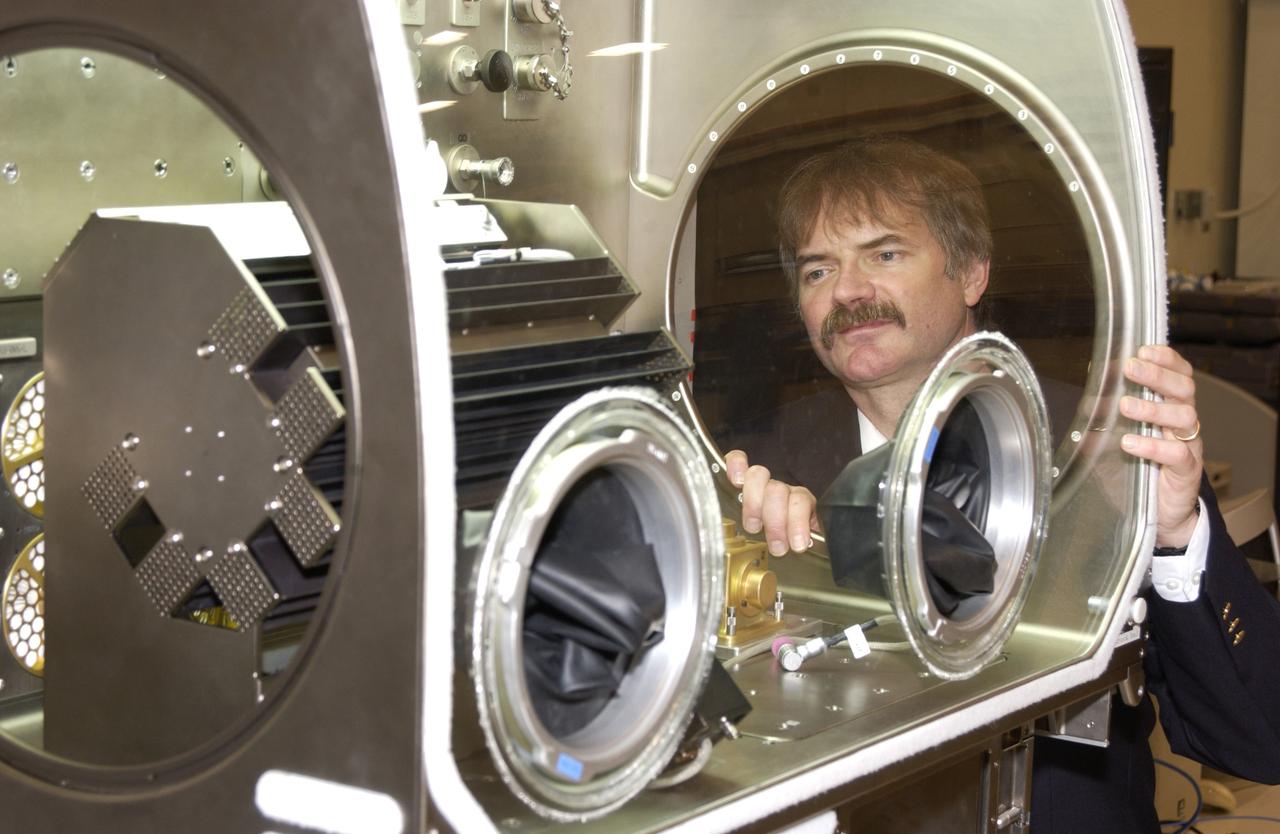
Dr. Richard Grugel, a materials scientist at NASA's Marshall Space Flight in Huntsville, Ala., examines the furnace used to conduct his Pore Formation and Mobility Investigation -- one of the first two materials science experiments to be conducted on the International Space Station. This experiment studies materials processes similar to those used to make components used in jet engines. Grugel's furnace was installed in the Microgravity Science Glovebox through the circular port on the side. In space, crewmembers are able to change out samples using the gloves on the front of the facility's work area.
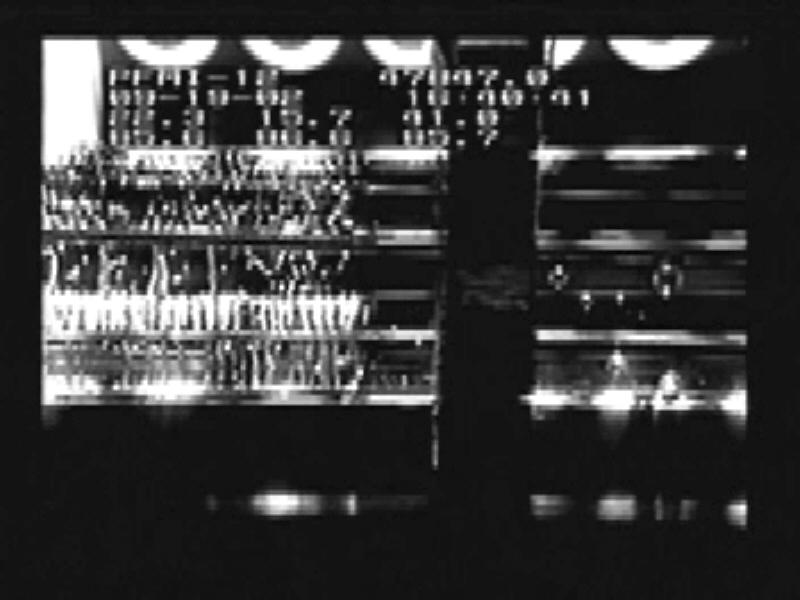
Video images sent to the ground allow scientists to watch the behavior of the bubbles as they control the melting and freezing of the material during the Pore Formation and Mobility Investigation (PFMI) in the Microgravity Science Glovebox aboard the International Space Station. While the investigation studies the way that metals behave at the microscopic scale on Earth -- and how voids form -- the experiment uses a transparent material called succinonitrile that behaves like a metal to study this problem. The bubbles do not float to the top of the material in microgravity, so they can study their interactions.
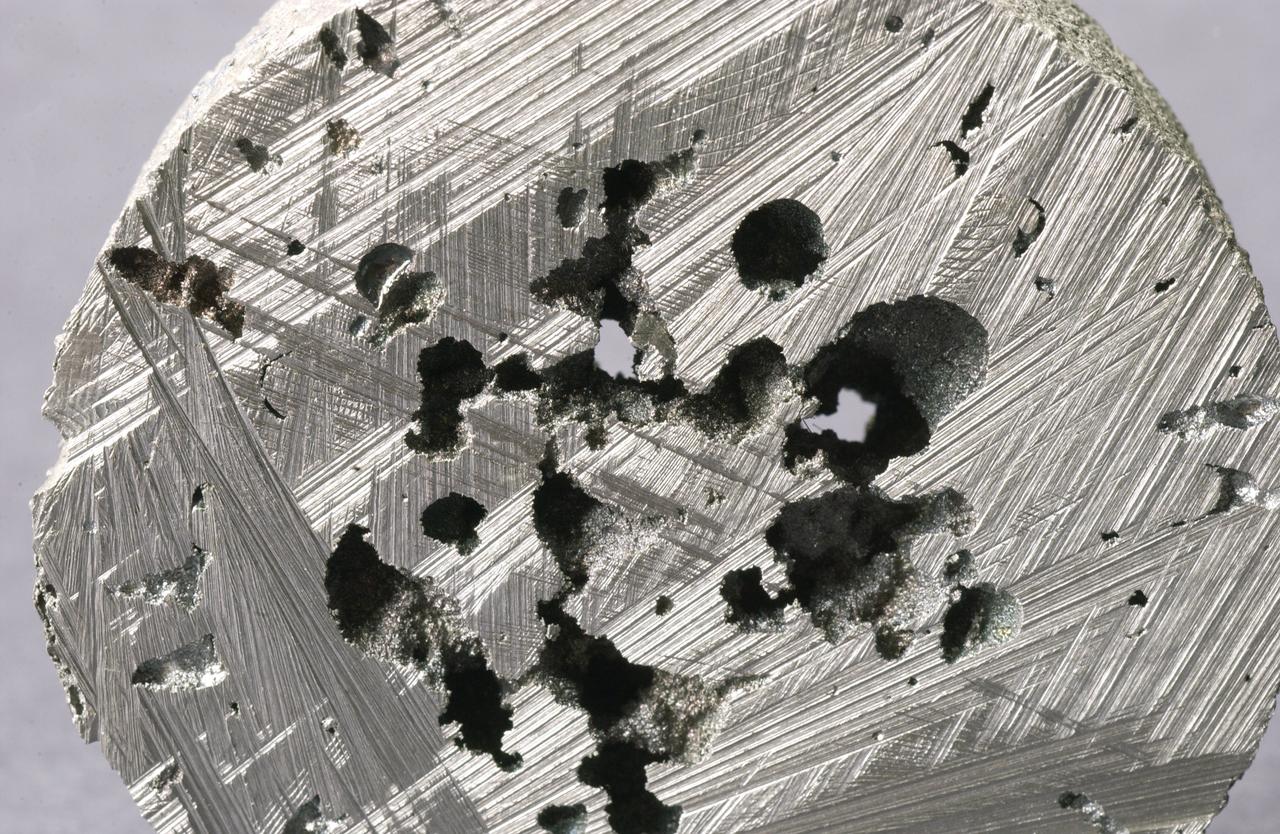
Pores and voids often form in metal castings on Earth (above) making them useless. A transparent material that behaves at a large scale in microgravity the way that metals behave at the microscopic scale on Earth, will help show how voids form and learn how to prevent them. Scientists are using the microgravity environment on the International Space Station to study how these bubbles form, move and interact. The Pore Formation and Mobility Investigation (PFMI) in the Microgravity Science Glovebox aboard the International Space Station uses a transparent material called succinonitrile that behaves like a metal to study this problem. Video images sent to the ground allow scientists to watch the behavior of the bubbles as they control the melting and freezing of the material. The bubbles do not float to the top of the material in microgravity, so they can study their interactions.
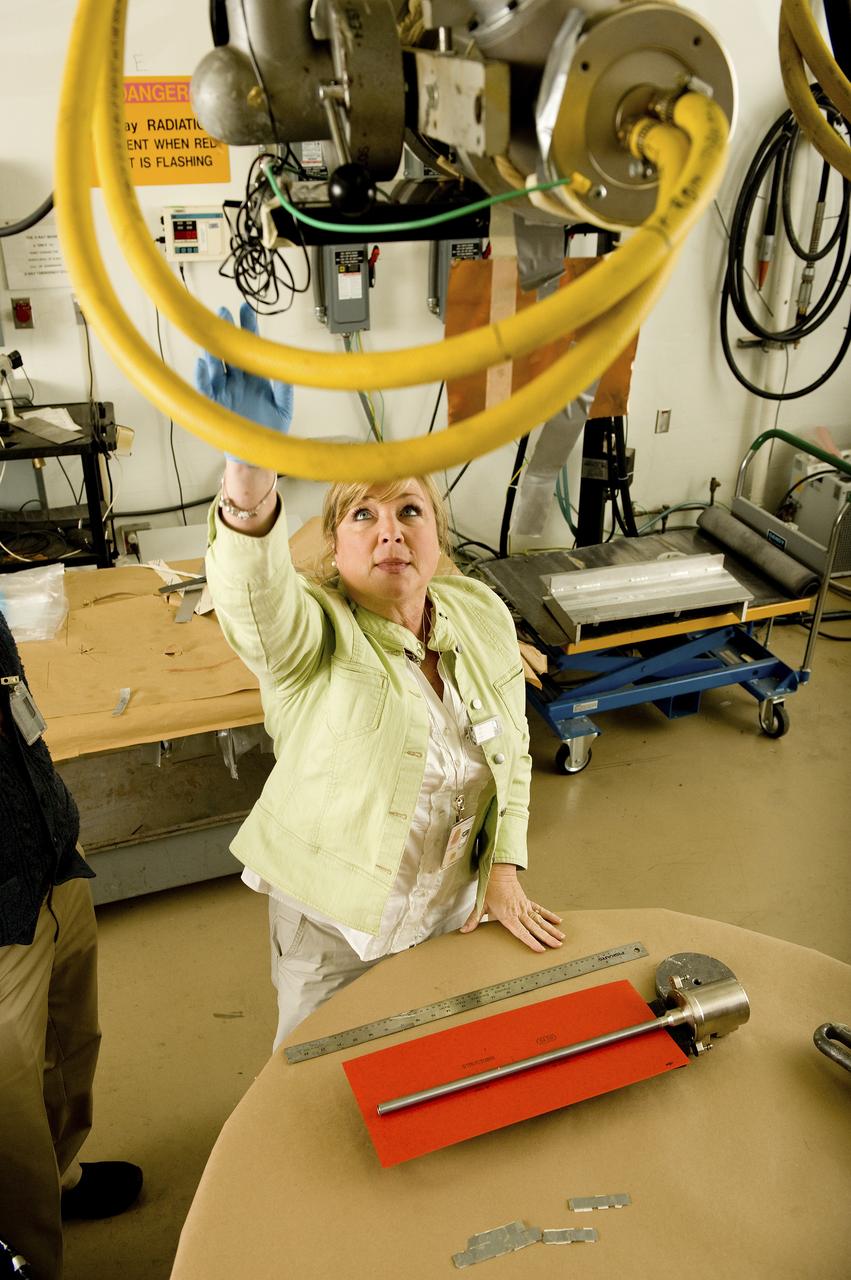
RHONDA LASH, A MATERIALS ENGINEER, PREPARES A SAMPLE CARTRIDGE FOR X-RAY. THE CARTRIDGE WAS TESTED ON THE MATERIAL SCIENCE RESEARCH RACK

Dr. Jan Rogers, project scientist for the Electrostatic Levitator (ESL) at NASA's Marshall Space Flight Center(MSFC). The ESL uses static electricity to suspend an obejct (about 2-3 mm in diameter) inside a vacuum chamber while a laser heats the sample until it melts. This lets scientists record a wide range of physical properties without the sample contacting the container or any instruments, conditions that would alter the readings. The Electrostatic Levitator is one of several tools used in NASA's microgravity materials sciences program.
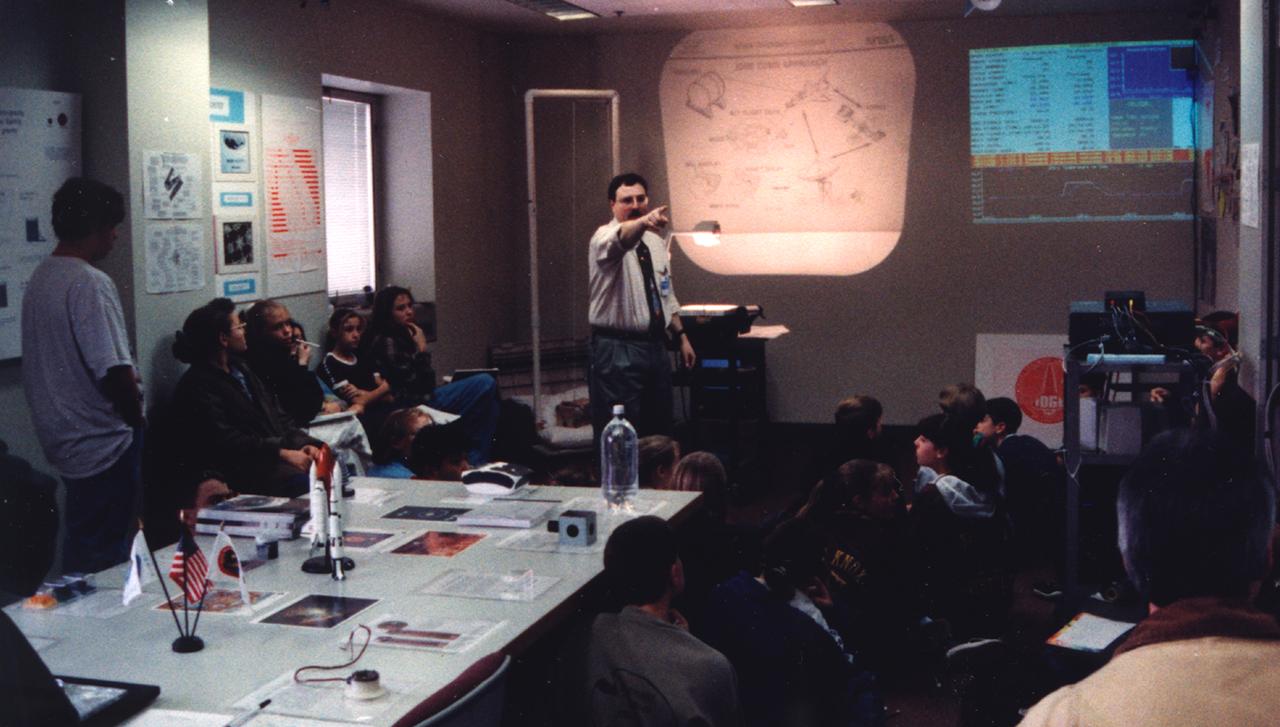
Matthew Koss lectures middle-school students about materials science research in space during the U.S. Microgravity Payload-4 (USMP-4) mission (STS-87, Nov. 19 - Dec. 5, 1997) in the visitor's center set up by the Isothermal Dendritic Growth Experiment (IDGE) team at Rensselaer Polytechnic Institute (RPI)in Troy, NY. IDGE, flown on three Space Shuttle missions, is yielding new insights into virtually all industrially relevant metal and alloy forming operations. Photo credit: RPI
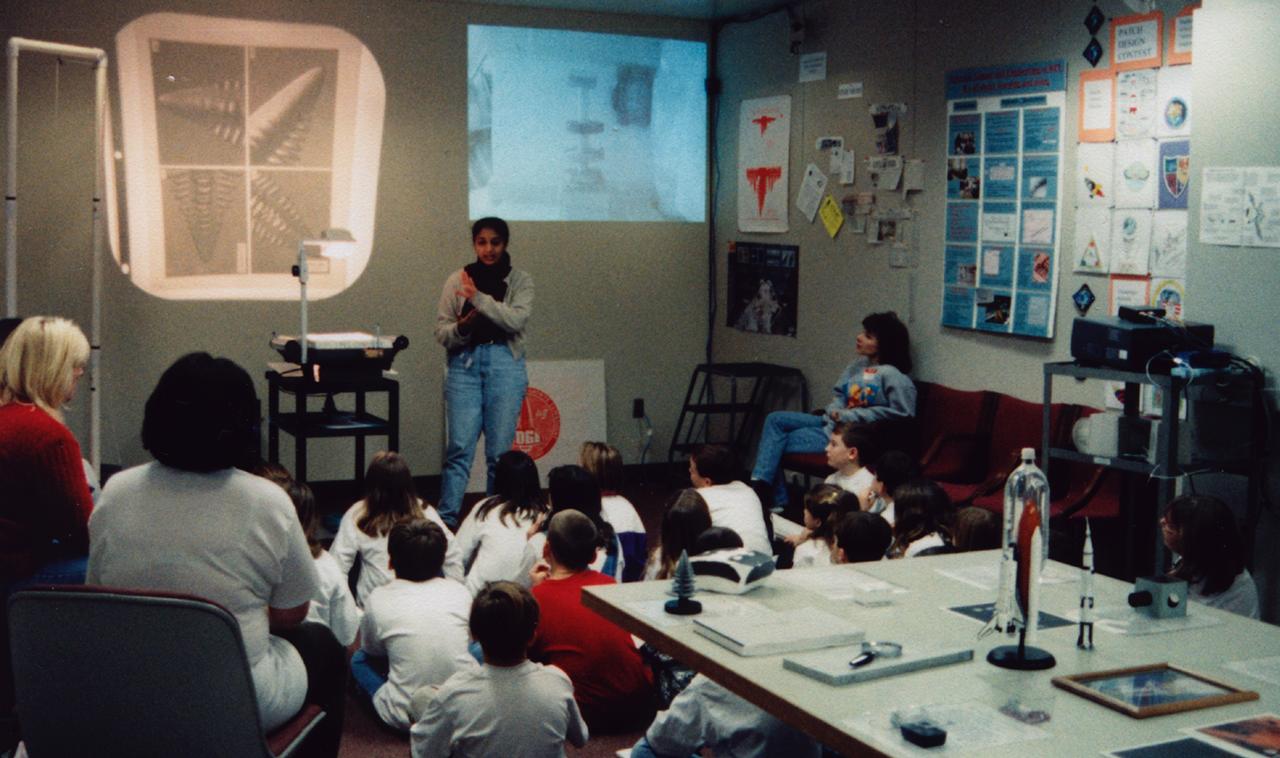
Pratima Rao lectures students about materials science research in space during the U.S. Microgravity Payload-4 (USMP-4) mission (STS-87, Nov. 19 - Dec. 5, 1997) in the visitor's center set up by the Isothermal Dendritic Growth Experiment (IDGE) team at Rensselaer Polytechnic Institute (RPI) in Troy, NY. IDGE, flown on three Space Shuttle missions, is yielding new insights into virtually all industrially relevant metal and alloy forming operations. Photo credit: RPI
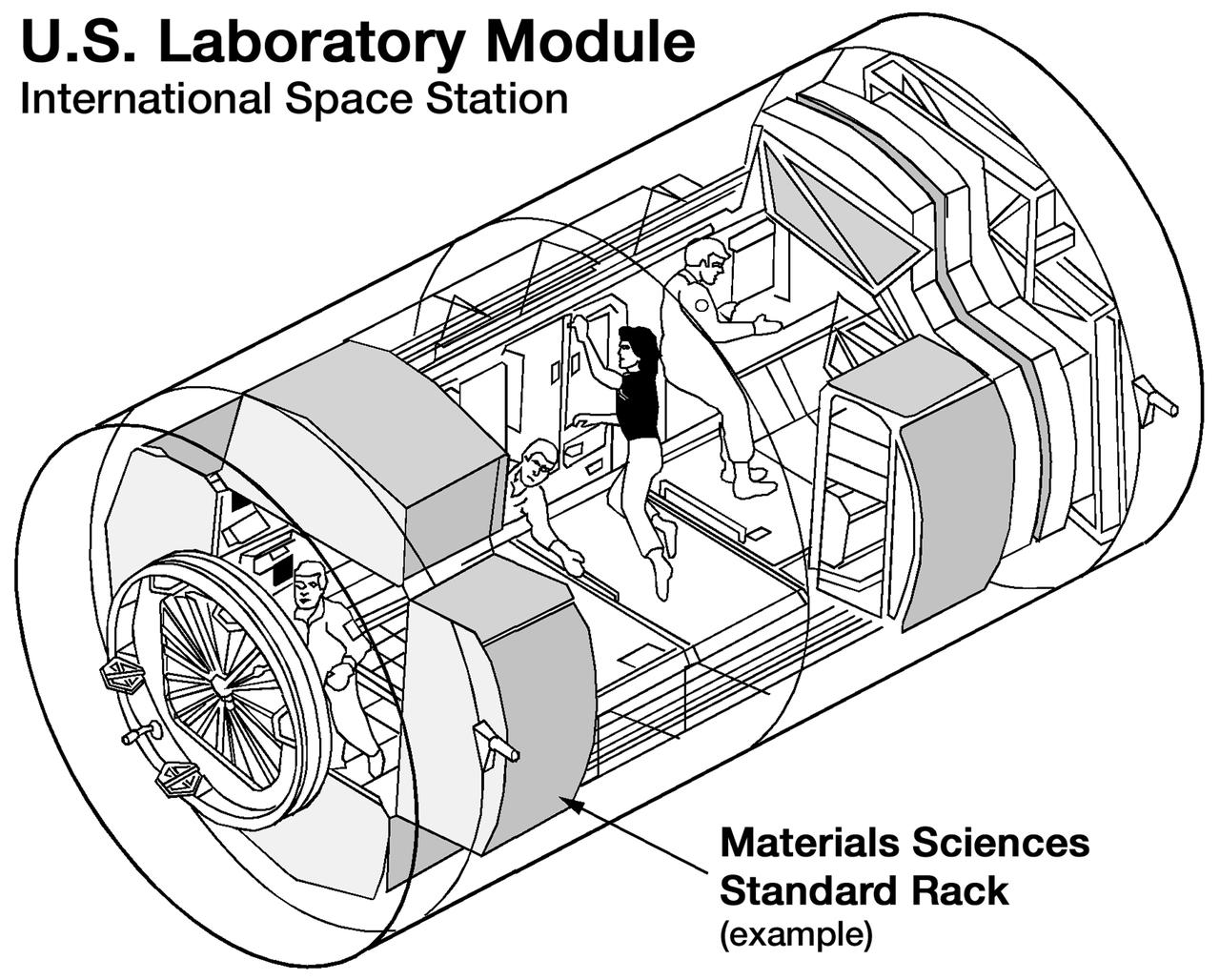
Line drawing depicts the location of one of three racks that will make up the Materials Science Research Facility in the U.S. Destiny laboratory module to be attached to the International Space Station (ISS). Other positions will be occupied by a variety of racks supporting research in combustion, fluids, biotechnology, and human physiology, and racks to support lab and station opertions. The Materials Science Research Facility is managed by NASA's Marshall Space Flight Center. Photo credit: NASA/Marshall Space Flight Center
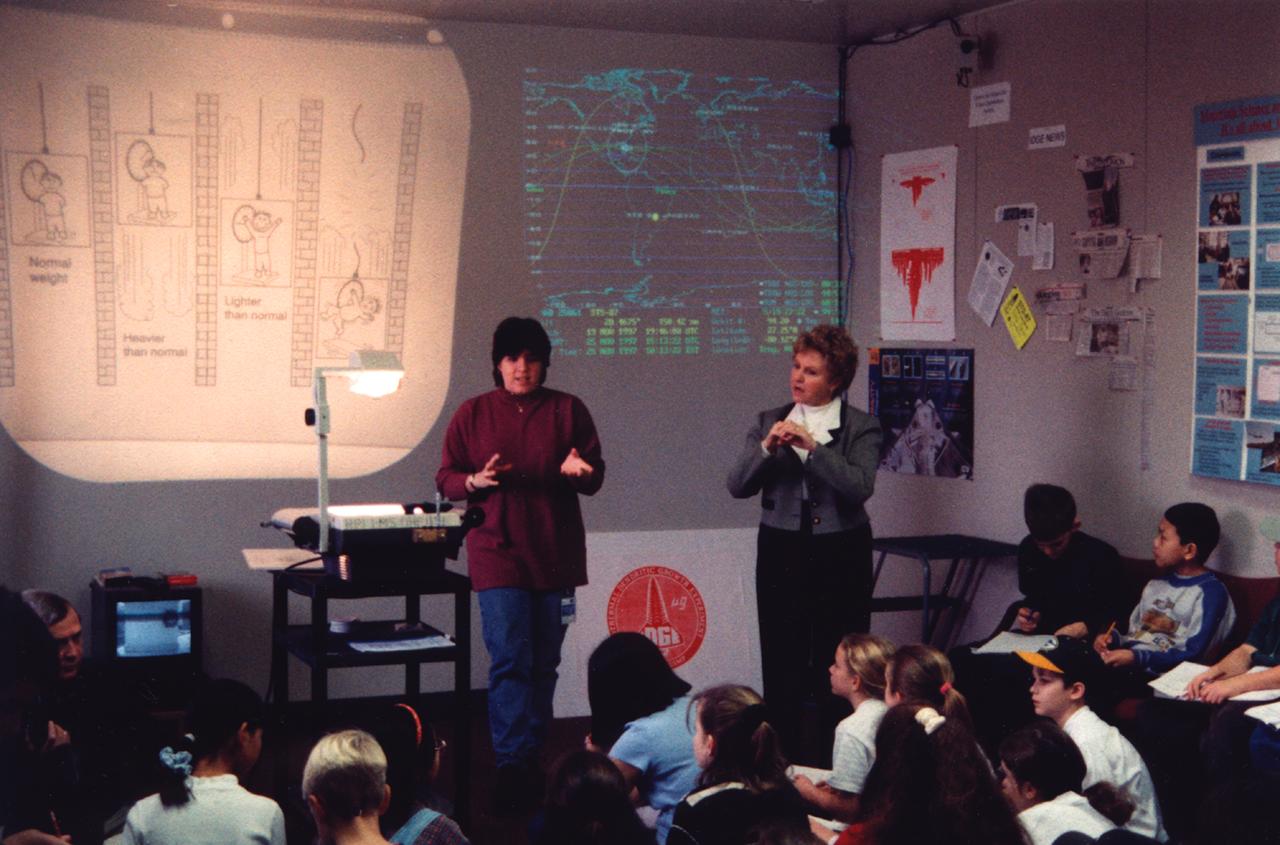
Paula Crawford (assisted by an American Sign Language interpreter) lectures students about materials science research in space during the U.S. Microgravity Payload-4 mission (STS-87, Nov. 19 - Dec. 5, 1997) in the visitor's center set up by the Isothermal Dendritic Growth Experiment (IDGE) team at Rensselaer Polytechnic Institute (RPI) in Troy, NY. IDGE, flown on three Space Shuttle mission, is yielding new insights into virtually all industrially relevant metal and alloy forming operation. Photo credit: Rensselaer Polytechnic Institute (RPI)
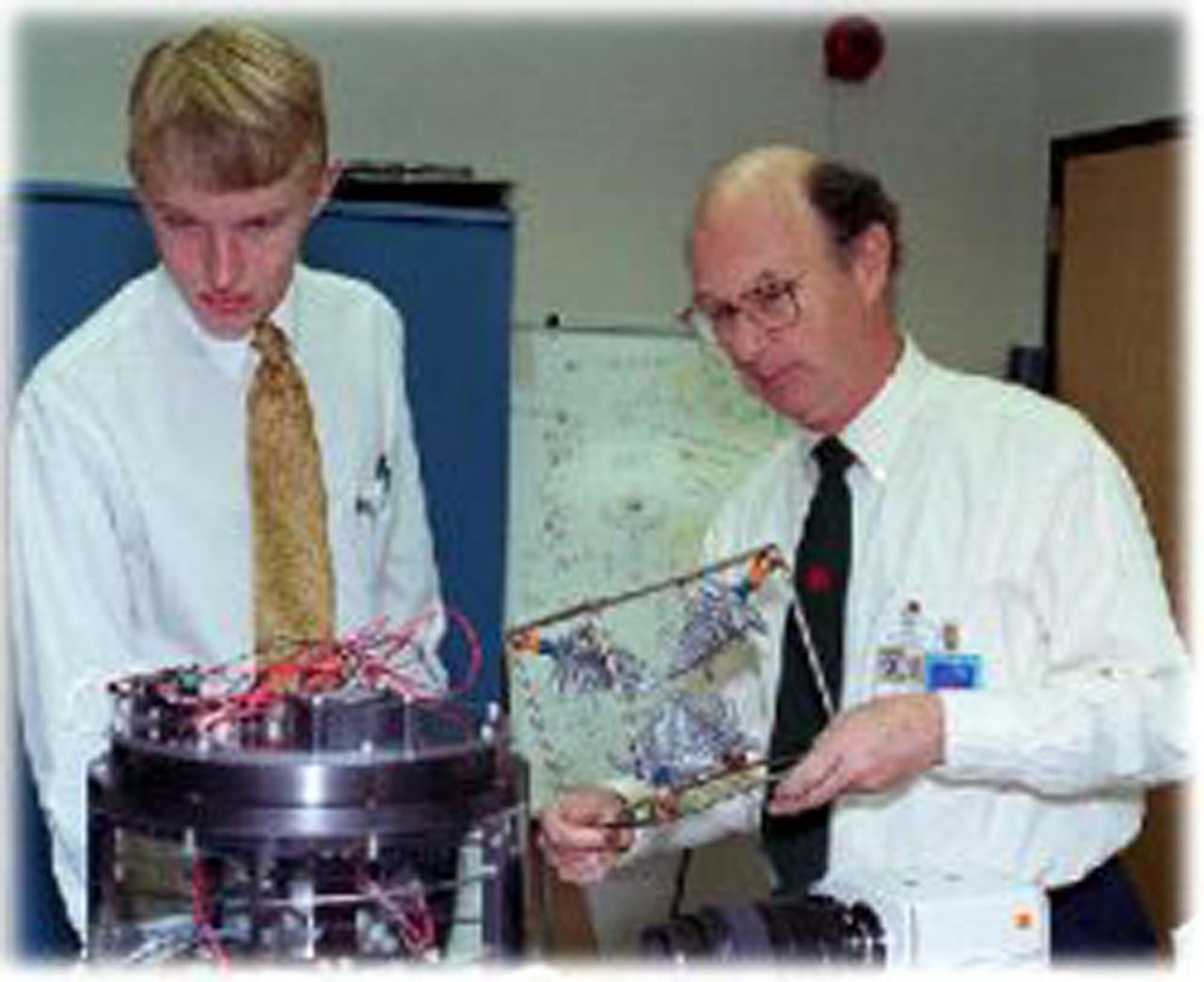
Dr. Donald Gilles, the Discipline Scientist for Materials Science in NASA's Microgravity Materials Science and Applications Department, demonstrates to Carl Dohrman a model of dendrites, the branch-like structures found in many metals and alloys. Dohrman was recently selected by the American Society for Metals International as their 1999 ASM International Foundation National Merit Scholar. The University of Illinois at Urbana-Champaign freshman recently toured NASA's materials science facilities at the Marshall Space Flight Center.
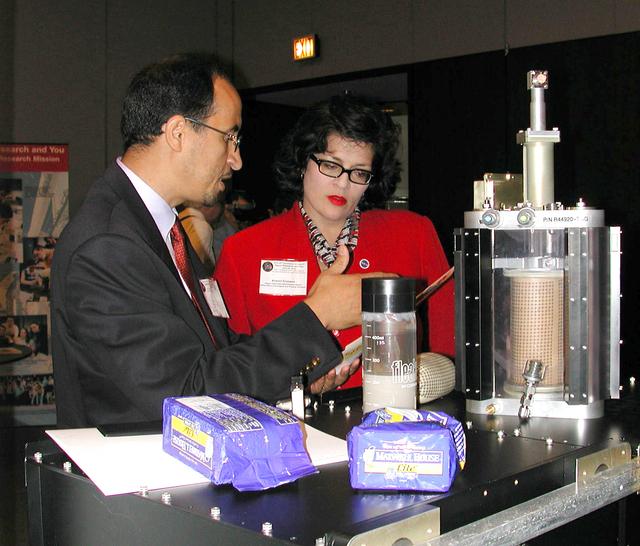
Khalid Alshibli of Louisiana State University, project scientist for the Mechanics of Granular Materials (MGM-III) experiment, explains the MGM experiment to Kristen Erickson, acting deputy associate administrator in NASA's Office of Biological and Physical Research. A training model of the test cell is at right. The activity was part of the Space Research and You education event held by NASA's Office of Biological and Physical Research on June 25, 2002, in Arlington, VA, to highlight the research that will be conducted on STS-107.
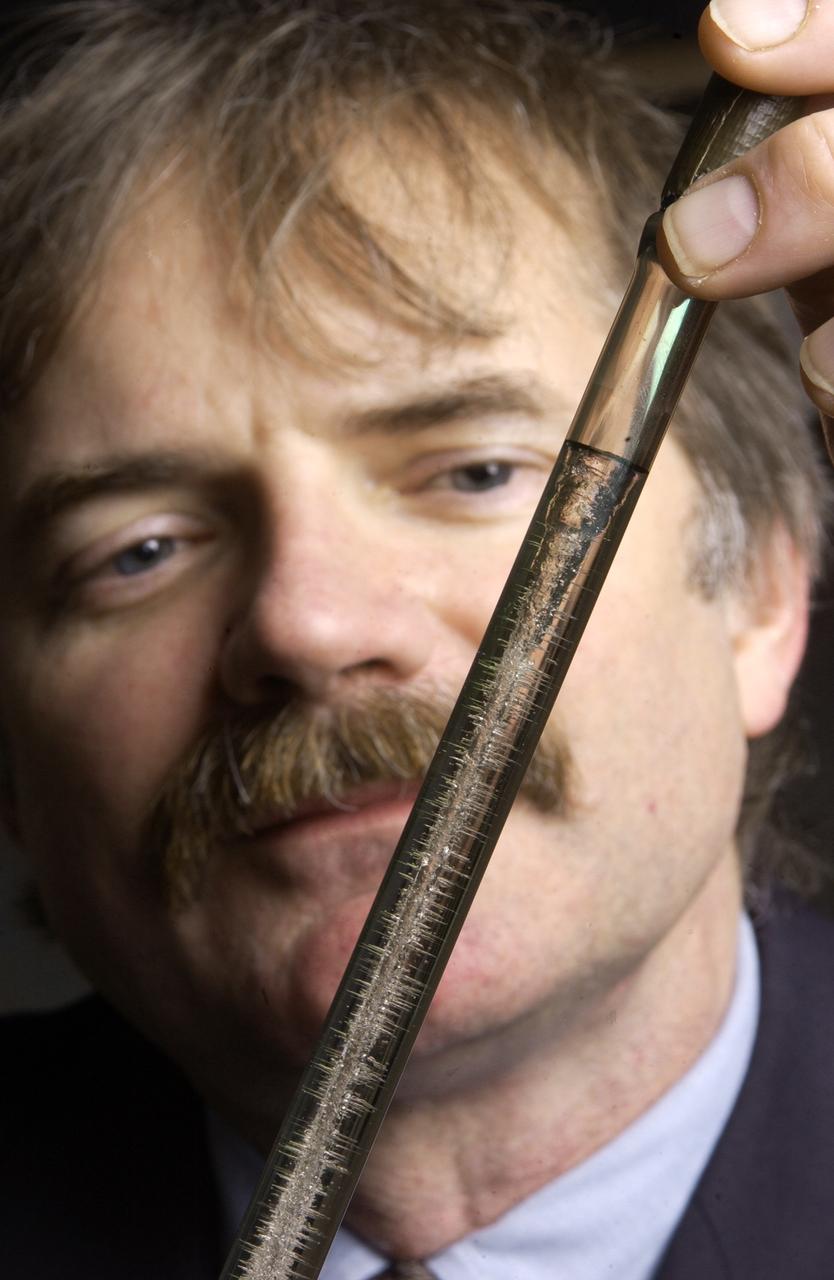
On Earth when scientists melt metals, bubbles that form in the molten material can rise to the surface, pop and disappear. In microgravity -- the near-weightless environment created as the International Space Station orbits Earth -- the lighter bubbles do not rise and disappear. Prior space experiments have shown that bubbles often become trapped in the final metal or crystal sample -similar to the bubbles trapped in this sample. In the solid, these bubbles, or porosity, are defects that diminish both the material's strength and usefulness. The Pore Formation and Mobility Investigation will melt samples of a transparent modeling material, succinonitrile and succinonitrile water mixtures, shown here in an ampoule being examined by Dr. Richard Grugel, the principal investigator for the experiment at NASA's Marshall Space Flight Center in Huntsville, Ala. As the samples are processed in space, Grugel will be able to observe how bubbles form in the samples and study their movements and interactions.
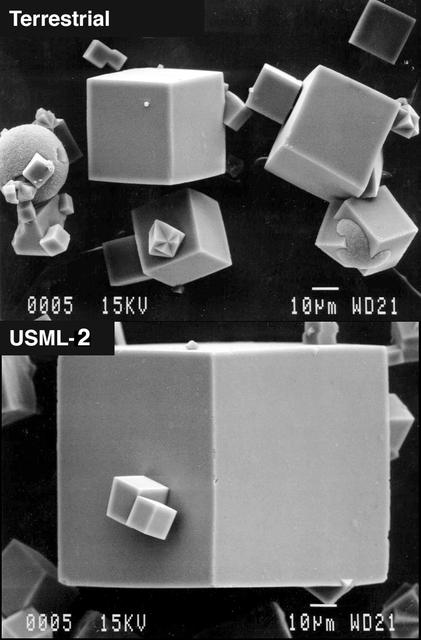
The Center for Advanced Microgravity Materials Processing (CAMMP), a NASA-sponsored Research Partnership Center, is working to improve zeolite materials for storing hydrogen fuel. CAMMP is also applying zeolites to detergents, optical cables, gas and vapor detection for environmental monitoring and control, and chemical production techniques that significantly reduce by-products that are hazardous to the environment. Shown here are zeolite crystals (top) grown in a ground control experiment and grown in microgravity on the USML-2 mission (bottom). Zeolite experiments have also been conducted aboard the International Space Station.
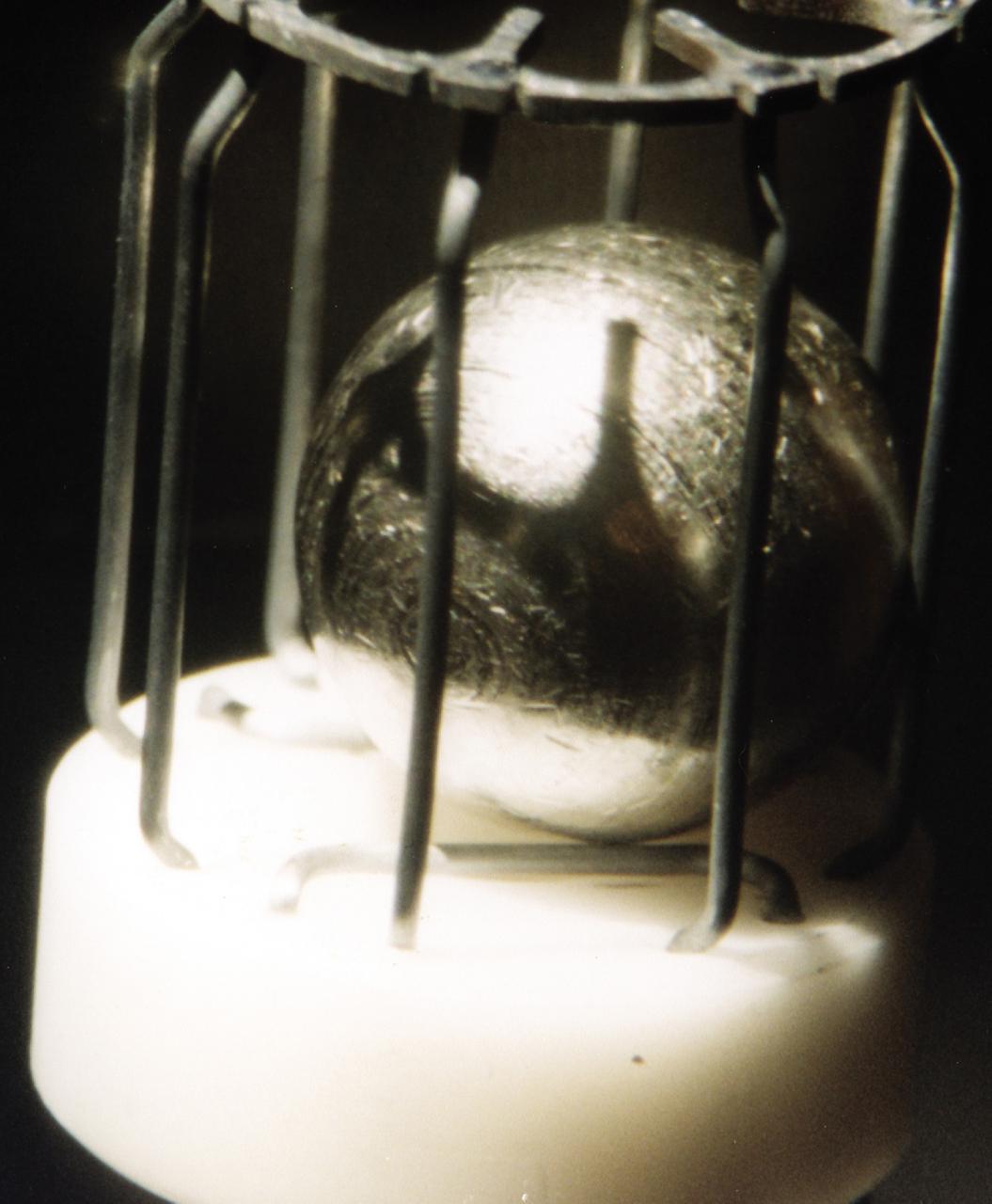
This metal sample, which is approximately 1 cm in diameter, is typical of the metals that were studied using the German designed electromagnetic containerless processing facility. The series of experiments that use this device is known as TEMPUS which is the acronym that stands for the German Tiegelfreies Elektromanetisches Prozessieren Unter Schwerelosigkeit. Most of the TEMPUS experiments focused on various aspects of undercooling liquid metal and alloys. Undercooling is the process of melting a material and then cooling it to a temperature that is below its normal freezing or solidification point. The TEMPUS experiments that used the metal cages as shown in the photograph, often studied bulk metallic glass, a solid material with no crystalline structures. We study metals and alloys not only to build things in space, but to improve things that are made on Earth. Metals and alloys are everywhere around us; in our automobiles, in the engines of aircraft, in our power-plants, and elsewhere. Despite their presence in everyday life, there are many scientific aspects of metals that we do not understand.
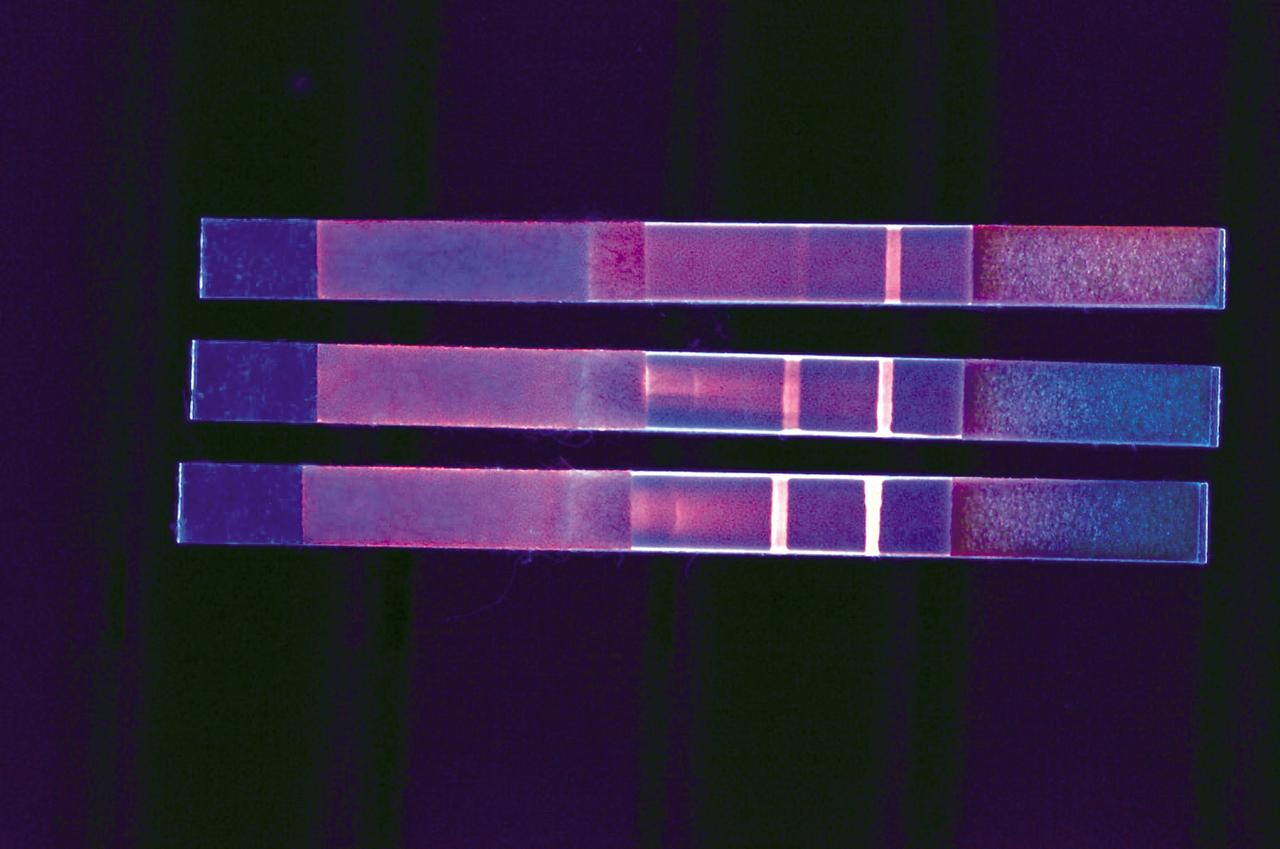
As easy to read as a home pregnancy test, three Quantifiable Lateral Flow Assay (QLFA) strips used to test water for E. coli show different results. The brightly glowing control line on the far right of each strip indicates that all three tests ran successfully. But the glowing test line on the middle left and bottom strips reveal their samples were contaminated with E. coli bacteria at two different concentrations. The color intensity correlates with concentration of contamination.
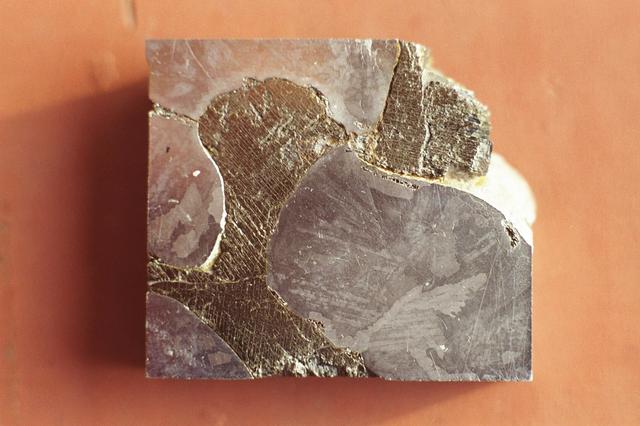
This is a macro photograph of an etched surface of the Mundrabilla meteorite, a small piece of the approximately 3.9 billion-year-old meteorite that was first discovered in Western Australia in 1911. Two more giant chunks, together weighing about 17 tons, were found in 1966. Researchers can learn much from this natural crystal growth experiment since it has spent several hundred million years cooling, and would be impossible to emulate in a lab. This single slice, taken from a 6 ton piece recovered in 1966, measures only 2 square inches. The macro photograph shows a metallic iron-nickel alloy phase of kamcite (38% Ni) and taenite (6% Ni) at bottom right, bottom left, and top left. The darker material is an iron sulfide (FeS or troilite) with a parallel precipitates of duabreelite (iron chromium sulfide (FeCr2S4).
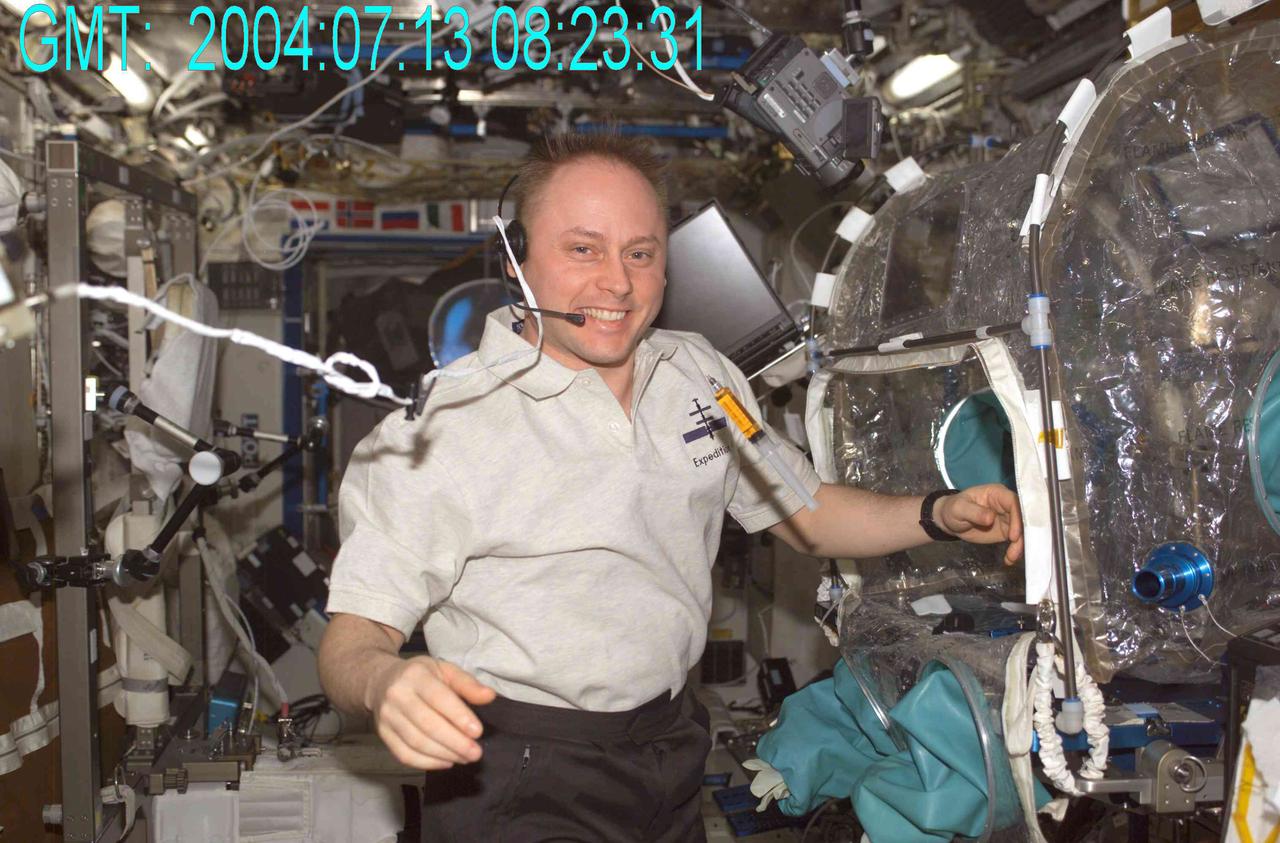
Astronaut Mike Fincke places droplets of honey onto the strings for the Fluid Merging Viscosity Measurement (FMVM) investigation onboard the International Space Station (ISS). The FMVM experiment measures the time it takes for two individual highly viscous fluid droplets to coalesce or merge into one droplet. Different fluids and droplet size combinations were tested in the series of experiments. By using the microgravity environment, researchers can measure the viscosity or "thickness" of fluids without the influence of containers and gravity using this new technique. Understanding viscosity could help scientists understand industrially important materials such as paints, emulsions, polymer melts and even foams used to produce pharmaceutical, food, and cosmetic products.
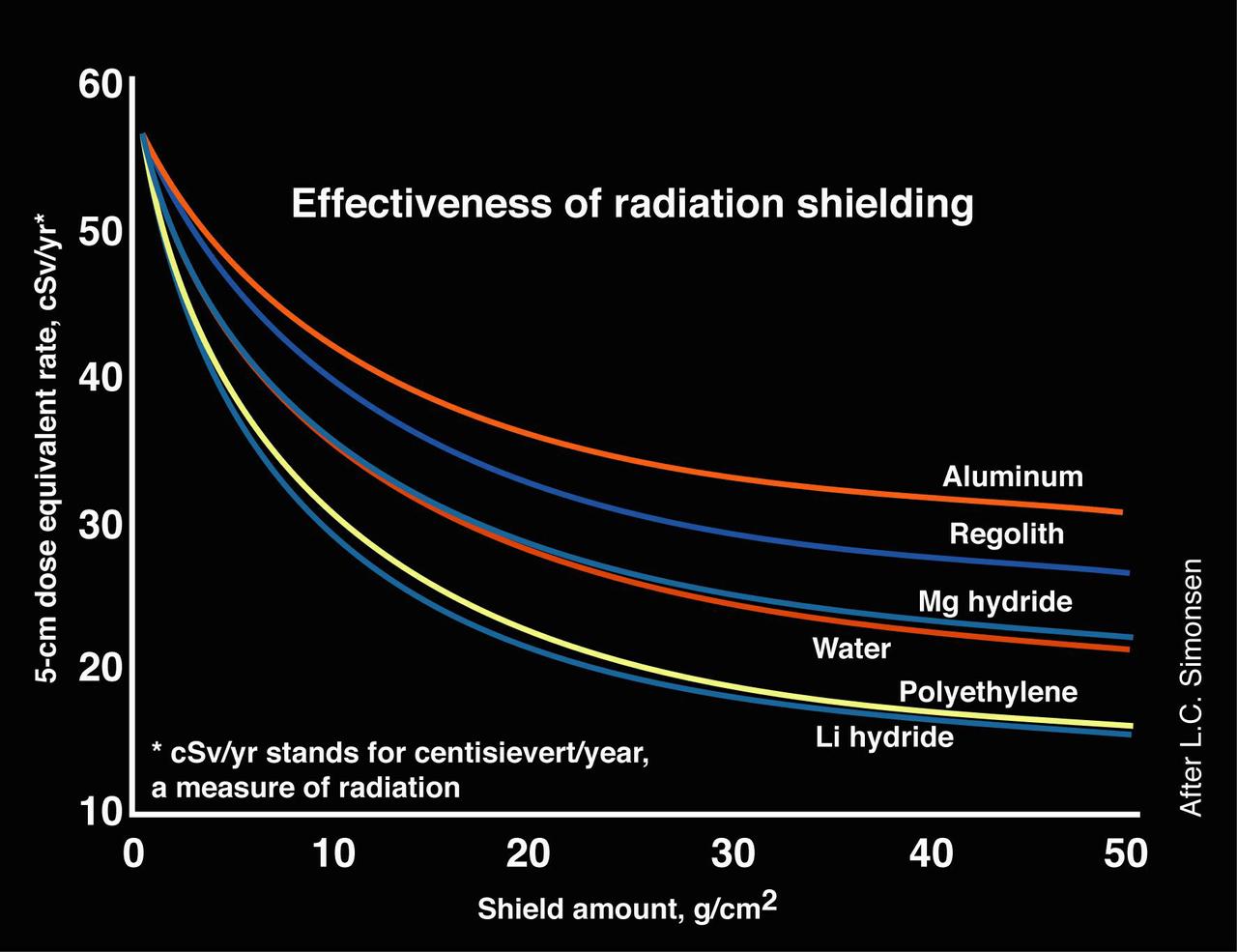
Materials with a smaller mean atomic mass, such as lithium (Li) hydride and polyethylene, make the best radiation shields for astronauts. The materials have a higher density of nuclei and are better able to block incoming radiation. Also, they tend to produce fewer and less dangerous secondary particles after impact with incoming radiation.
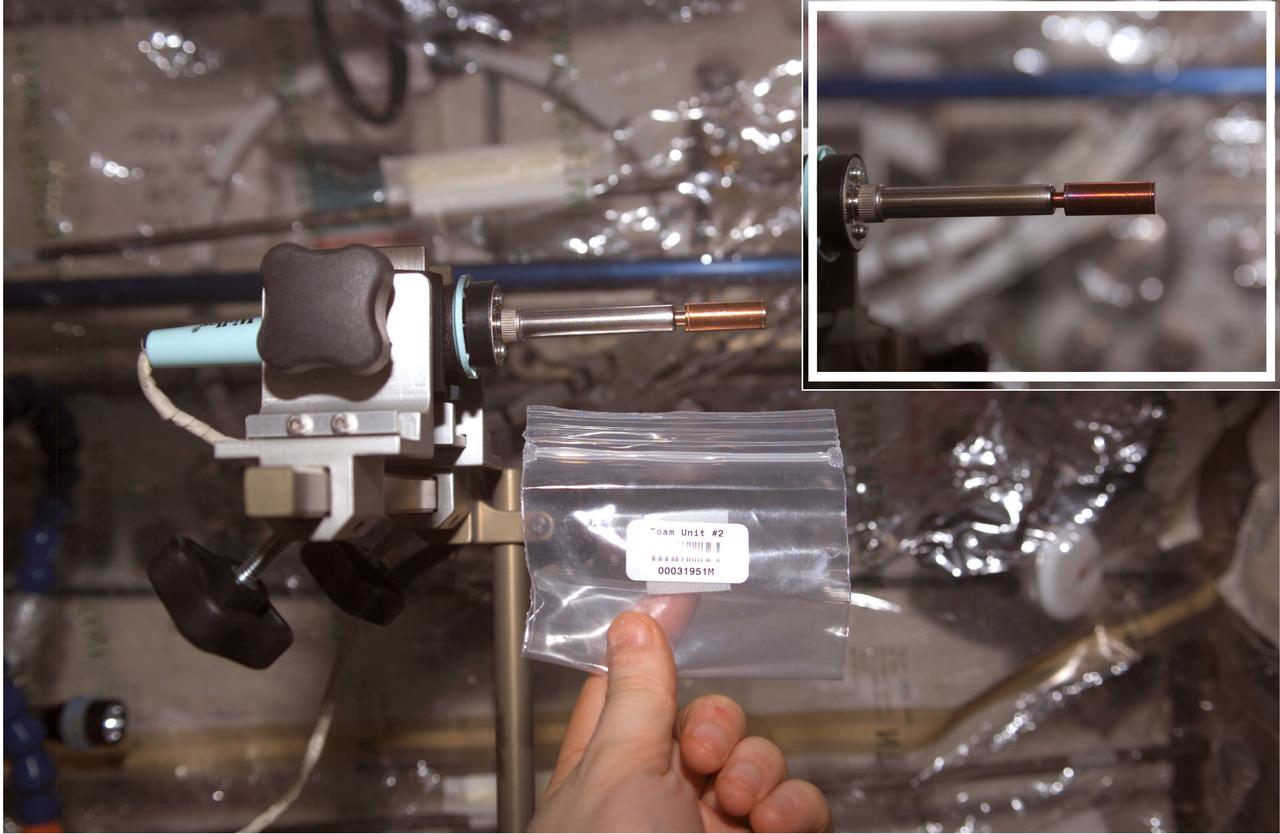
This soldering iron has an evacuated copper capsule at the tip that contains a pellet of Bulk Metallic Glass (BMG) aboard the International Space Station (ISS). Prior to flight, researchers sealed a pellet of bulk metallic glass mixed with microscopic gas-generating particles into the copper ampoule under vacuum. Once heated in space, such as in this photograph, the particles generated gas and the BMG becomes a viscous liquid. The released gas made the sample foam within the capsule where each microscopic particle formed a gas-filled pore within the foam. The inset image shows the oxidation of the sample after several minutes of applying heat. Although hidden within the brass sleeve, the sample retained the foam shape when cooled, because the viscosity increased during cooling until it was solid.
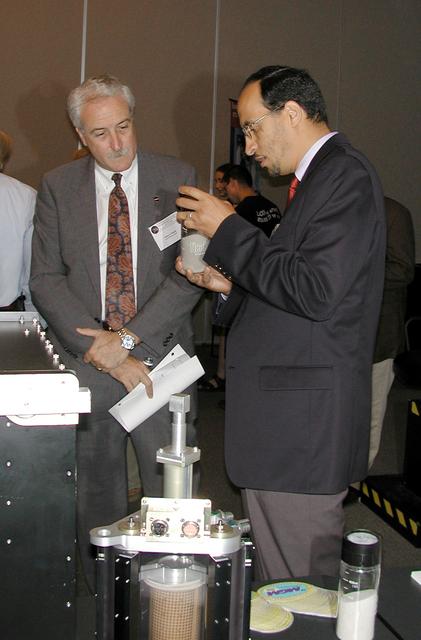
Khalid Alshibli of Louisiana State University, project scientist for the Mechanics of Granular Materials (MGM-III) experiment, uses a jar of sand as he explains MGM to NASA Administrator Sean O'Keefe. A training model of an MGM test cell is in the foreground. The activity was part of the Space Research and You education event held by NASA's Office of Biological and Physical Research on June 25, 2002, in Arlington, VA, to highlight the research that will be conducted on STS-107.
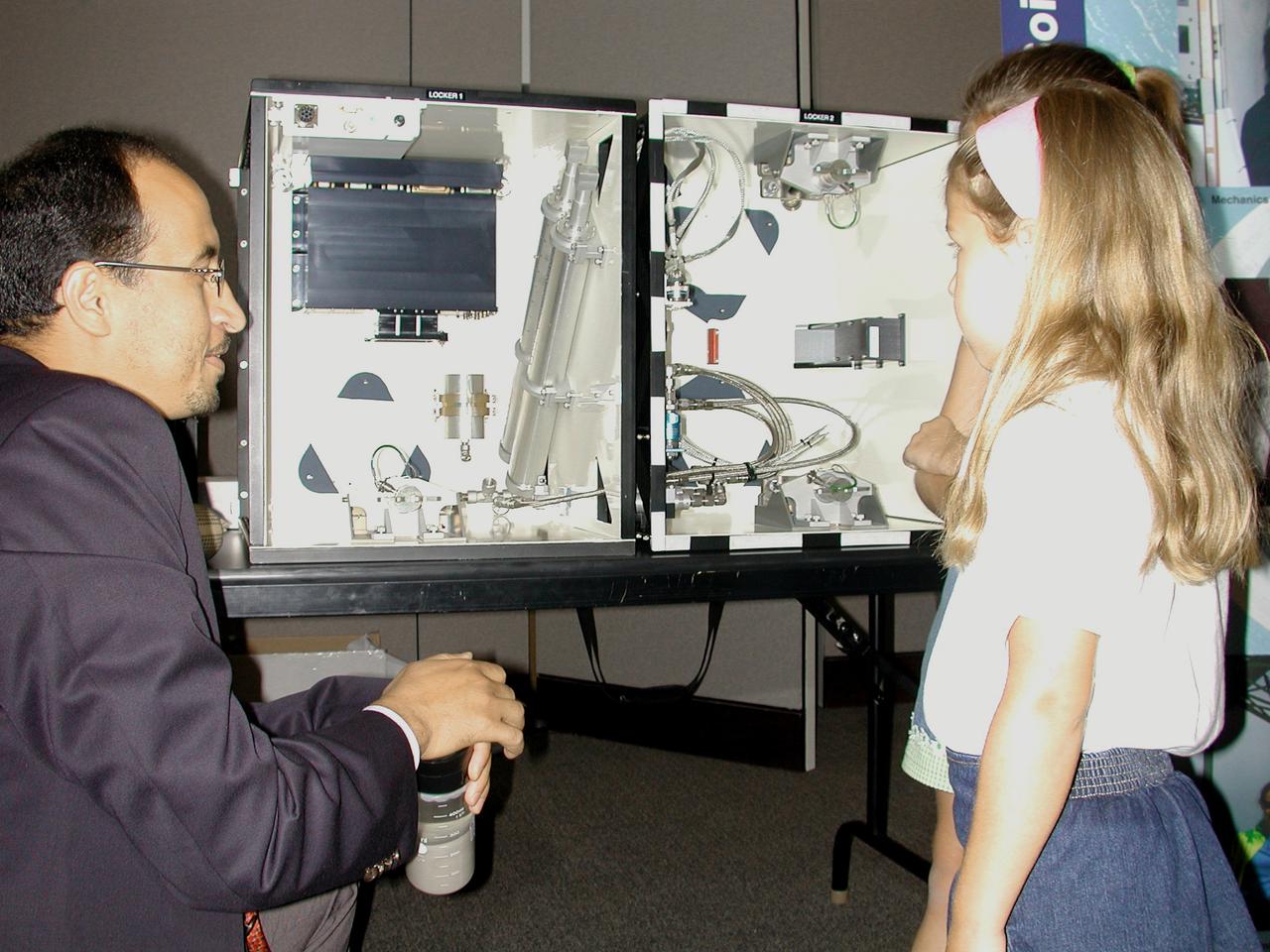
Khalid Alshibli of Louisiana State University, project scientist for the Mechanics of Granular Materials (MGM-III) experiment, uses a jar of sand and a training model of the MGM apparatus to explain the experiment to two young Virginia students. The activity was part of the Space Research and You education event held by NASA's Office of Biological and Physical Research on June 25, 2002, in Arlington, VA, to highlight the research that will be conducted on STS-107.
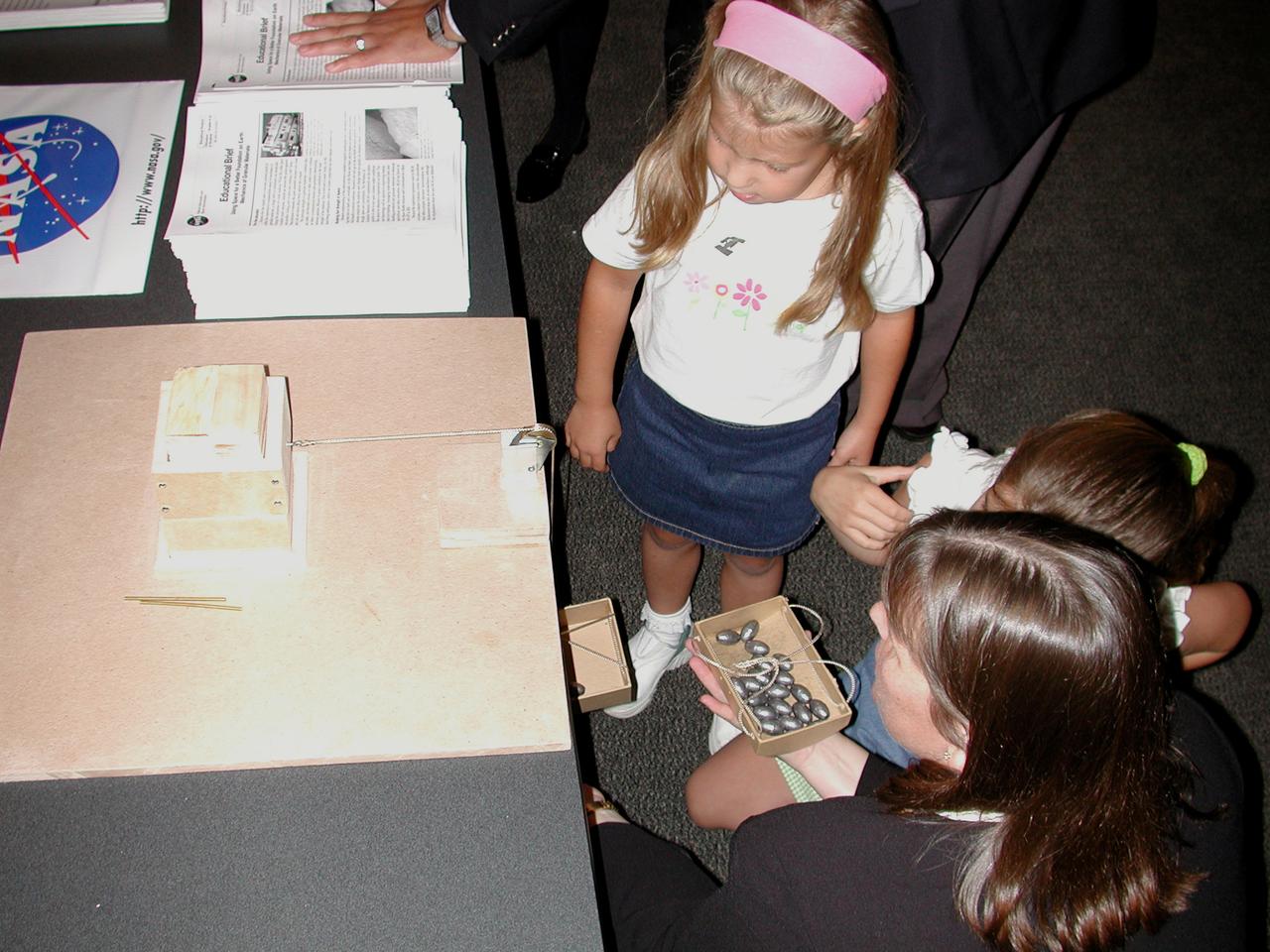
Twila Schneider of Infinity Technology in Huntsville, AL, uses a small sand displacement box to explain the principles of the Mechanics of Granular Materials (MGM-III) experiment to two young Virginia students. The activity was part of the Space Research and You education event held by NASA's Office of Biological and Physical Research on June 25, 2002, in Arlington, VA, to highlight the research that will be conducted on STS-107.
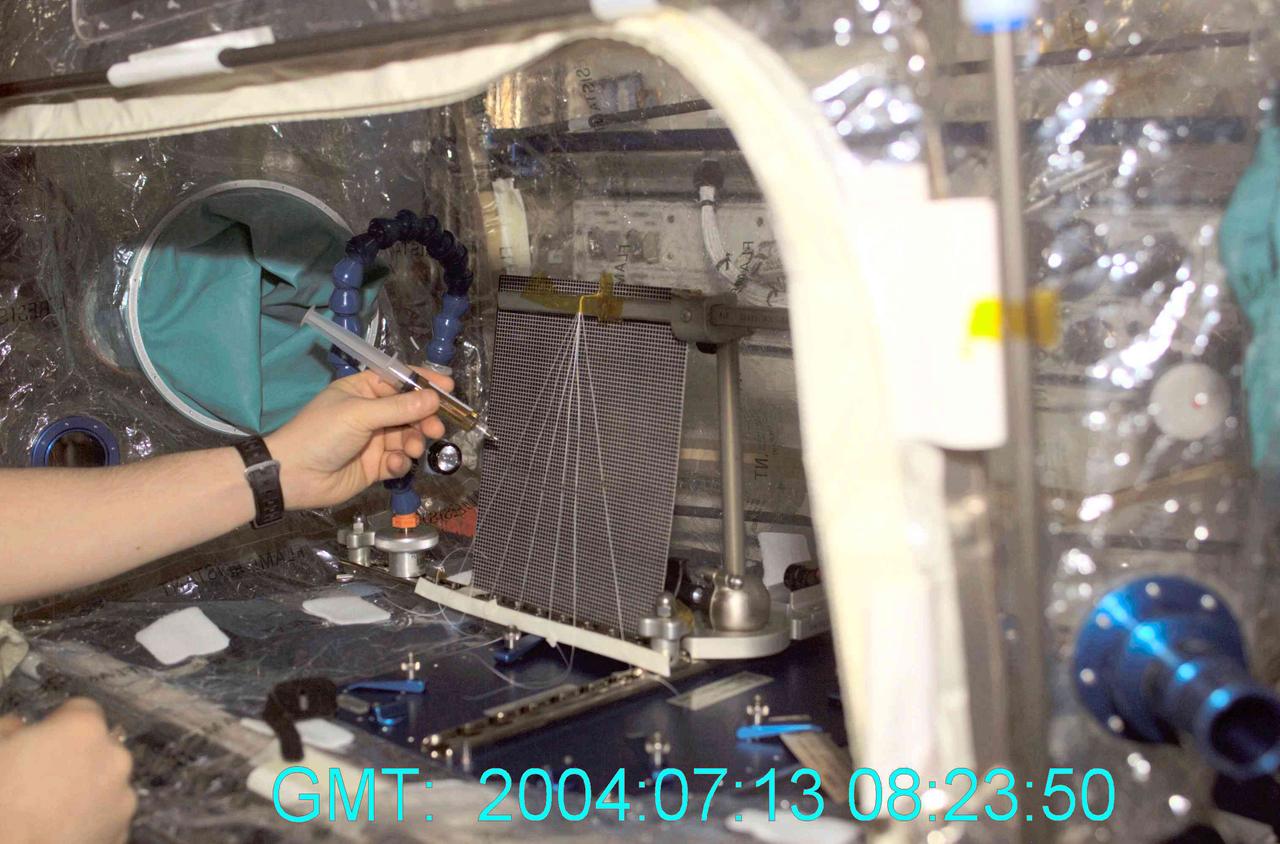
Astronaut Mike Fincke places droplets of honey onto the strings for the Fluid Merging Viscosity Measurement (FMVM) investigation onboard the International Space Station (ISS). The FMVM experiment measures the time it takes for two individual highly viscous fluid droplets to coalesce or merge into one droplet. Different fluids and droplet size combinations were tested in the series of experiments. By using the microgravity environment, researchers can measure the viscosity or "thickness" of fluids without the influence of containers and gravity using this new technique. Understanding viscosity could help scientists understand industrially important materials such as paints, emulsions, polymer melts and even foams used to produce pharmaceutical, food, and cosmetic products.
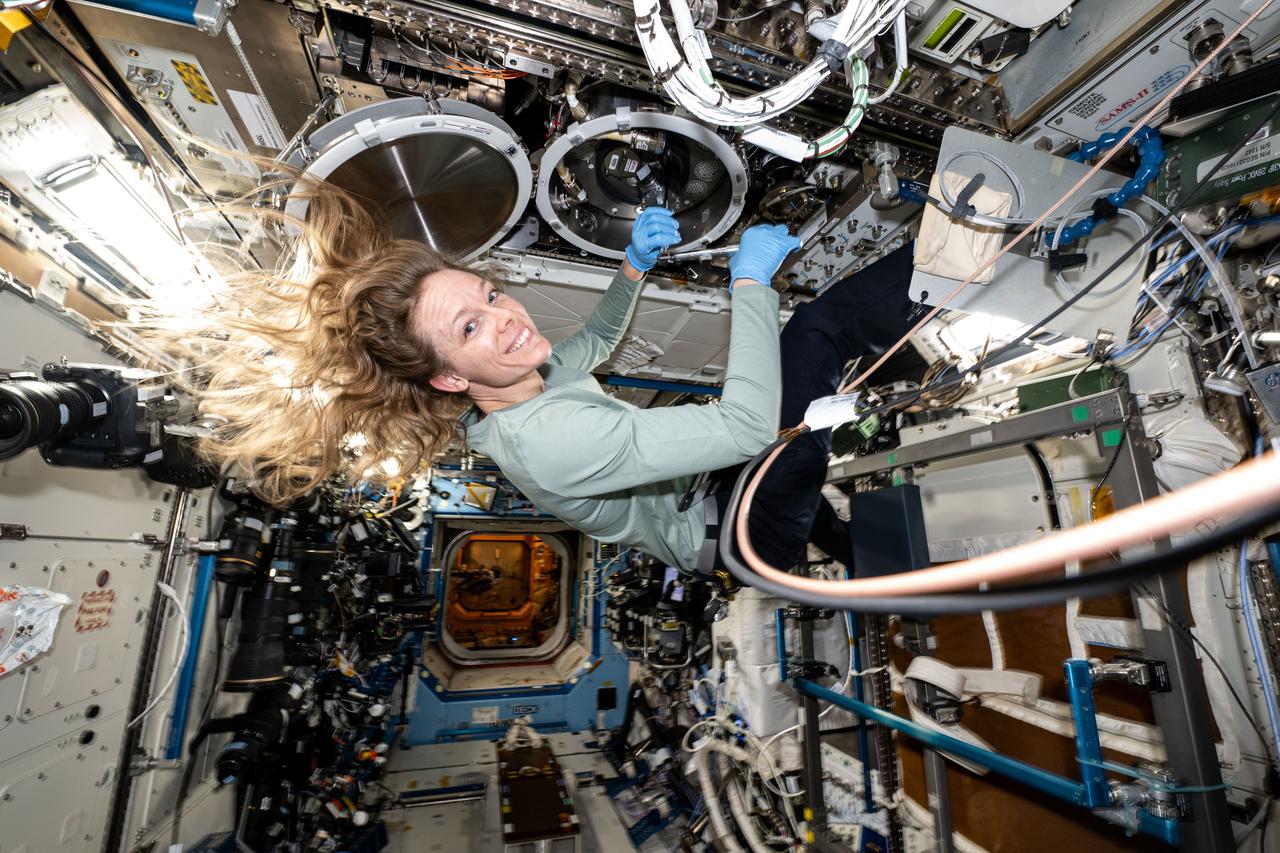
iss073e0071487 (May 15, 2025) --- NASA astronaut and Expedition 73 Flight Engineer Nichole Ayers swaps sample cartridges inside the Material Science Laboratory (MSL) that supports high temperature space physics research using furnaces aboard the International Space Station's Destiny laboratory module. The properties of many types of materials such as metals, alloys, polymers, semiconductors, ceramics, crystals, and glasses, can be studied in the MSL to discover new applications for existing materials and new or improved materials.
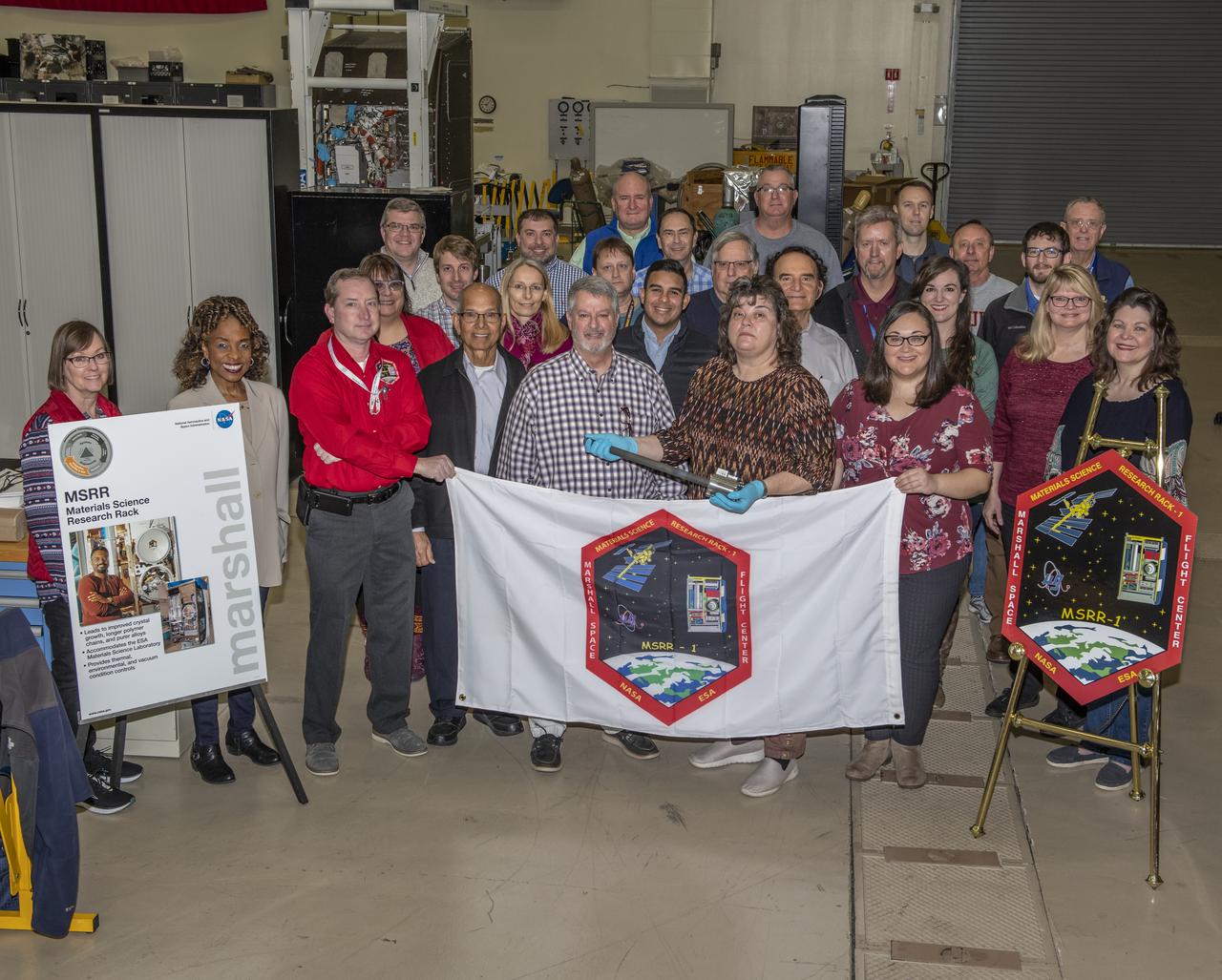
NASA's first Sample Cartridge Assembly (SCA) project designed and validated a payload containing a materials research sample in a sealed environment. The SCA was heated in the European Space Agency's (ESA) Low Gradient Furnace (LGF) that is housed inside the Material Science Research Rack (MSRR) located on the International Space Station (ISS). Sintered metals and crystal growth experiments in microgravity are examples of some of the types of materials research that may be performed with a SCA.
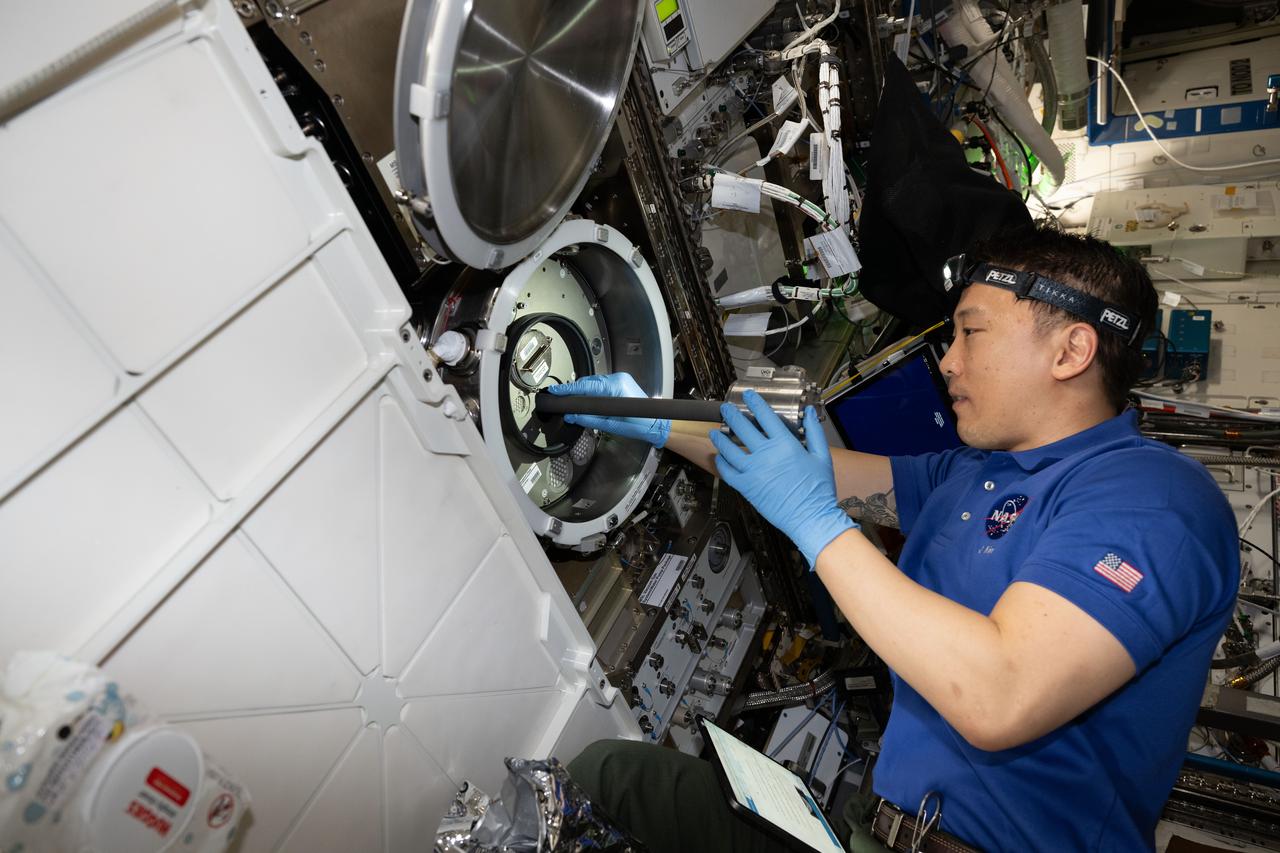
iss073e0222456 (June 27, 2025) --- NASA astronaut and Expedition 73 Flight Engineer Jonny Kim removes research hardware from inside the Materials Science Laboratory (MSL) located inside the International Space Station's Destiny laboratory module. The MSL uses two different furnaces that operate one at a time to discover new applications for existing materials, such as metals, alloys, polymers, and new or improved materials.
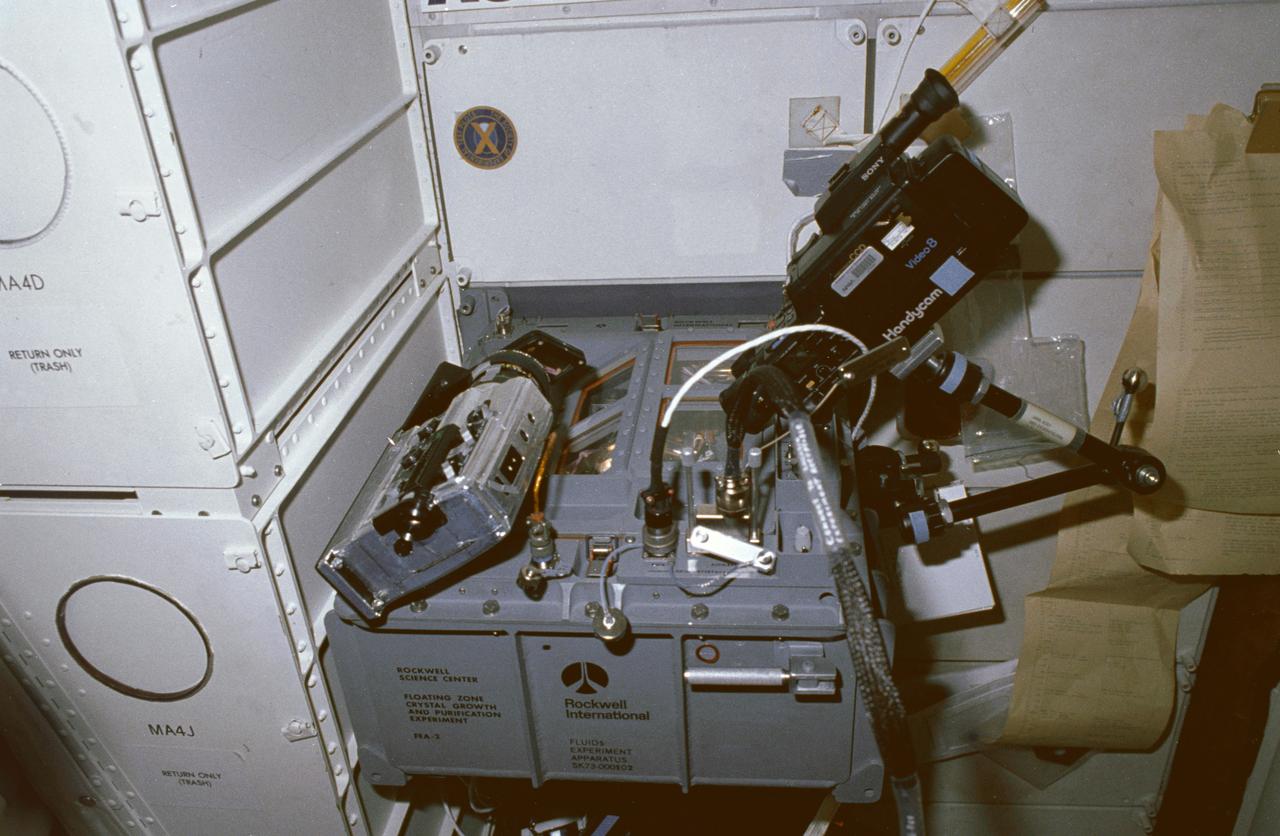
STS030-10-003 (4-8 May 1989) --- An overall scene of the onboard materials science project for STS-30. Seen is the fluids experiment apparatus, supported by an accompanying computer and an 8mm camcorder for its operation. Another major component of the project-- Astronaut Mary L. Cleave, who devoted a great deal of STS-30 monitoring various experiments--is out of frame.
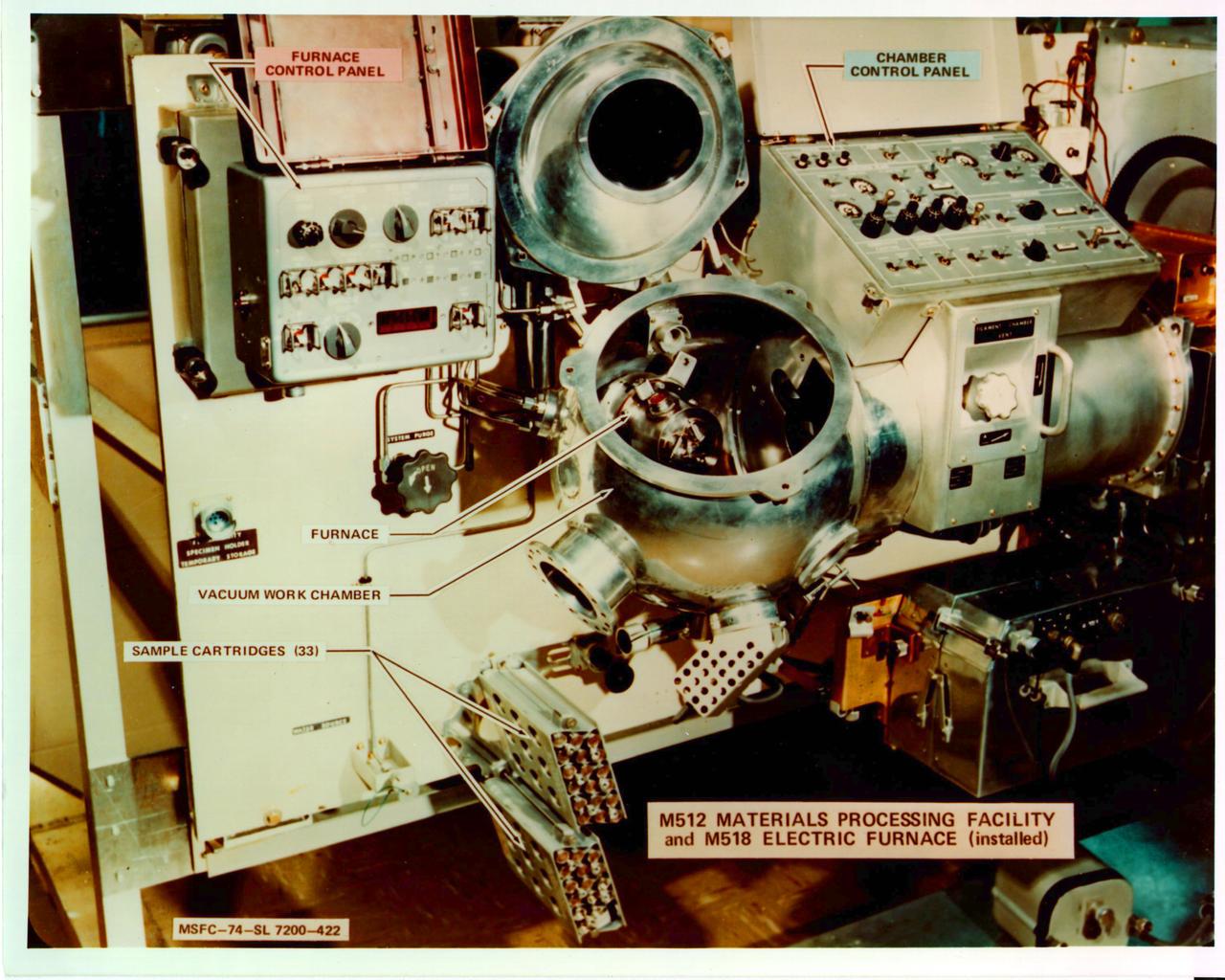
The M512 Materials Processing Facility (MPF) with the M518 Multipurpose Electric Facility (MEF) tested and demonstrated a facility approach for materials process experimentation in space. It also provided a basic apparatus and a common interface for a group of metallic and nonmetallic materials experiments. The MPF consisted of a vacuum work chamber and associated mechanical and electrical controls. The M518 Multipurpose Electric Furnace (MEF) was an electric furnace system in which solidification, crystal growth, and other experiments involving phase changes were performed.
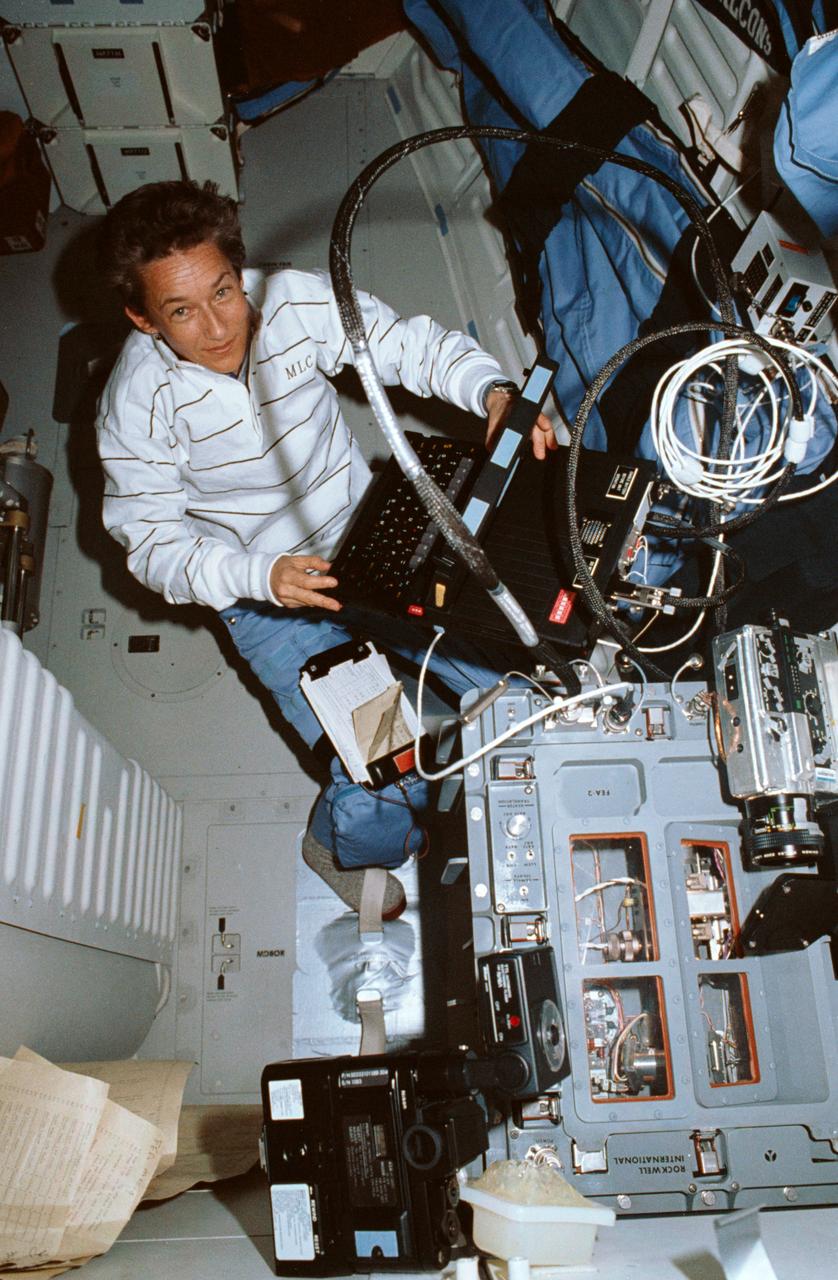
STS030-02-018 (4-8 May 1989) --- A 35mm overall scene of the operations devoted to the fluids experiment apparatus (FEA) aboard Atlantis for NASA’s STS-30 mission. Astronaut Mary L. Cleave, mission specialist, is seen with the computer which is instrumental in the carrying out of a variety of materials science experiments. Rockwell International is engaged in a joint endeavor agreement with NASA’s Office of Commercial Programs in the field of floating zone crystal growth and purification research. The March 1987 agreement provides for microgravity experiments to be performed in the company’s Microgravity Laboratory, the FEA. An 8 mm camcorder which documented details inside the apparatus is visible at bottom of the frame.

Miria Finckenor, a researcher at NASA’s Marshall Space Flight Center in Huntsville, Alabama, shows off the 15th Materials International Space Station Experiment, or MISSE, an external science payload berthed on the International Space Station since 2001
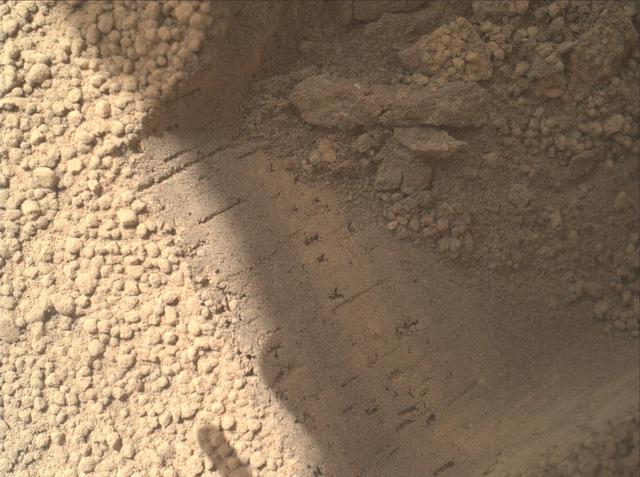
This image contributed to an interpretation by NASA Mars rover Curiosity science team that some of the bright particles on the ground near the rover are native Martian material.
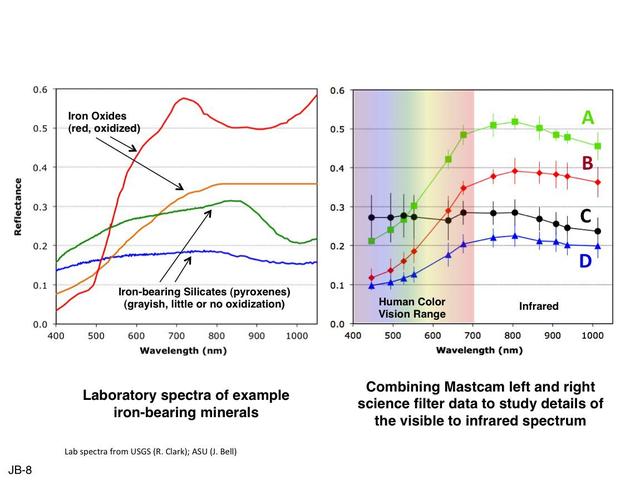
This set of images illustrates how the science filters of the Mast Camera Mastcam on NASA Mars rover Curiosity can be used to investigate aspects of the composition and mineralogy of materials on Mars.
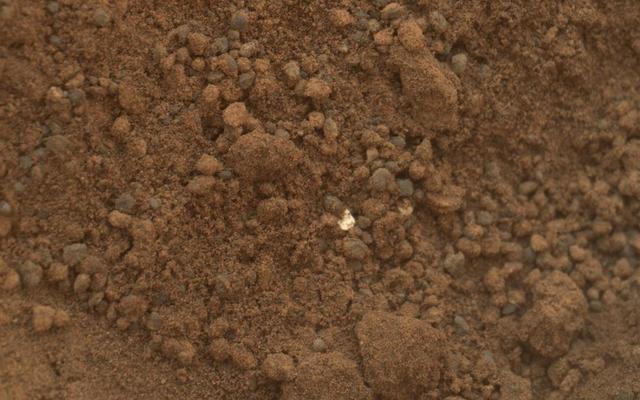
The mission science team assessed the bright particles in this scooped pit to be native Martian material rather than spacecraft debris as seen in this image from NASA Mars rover Curiosity as it collected its second scoop of Martian soil.
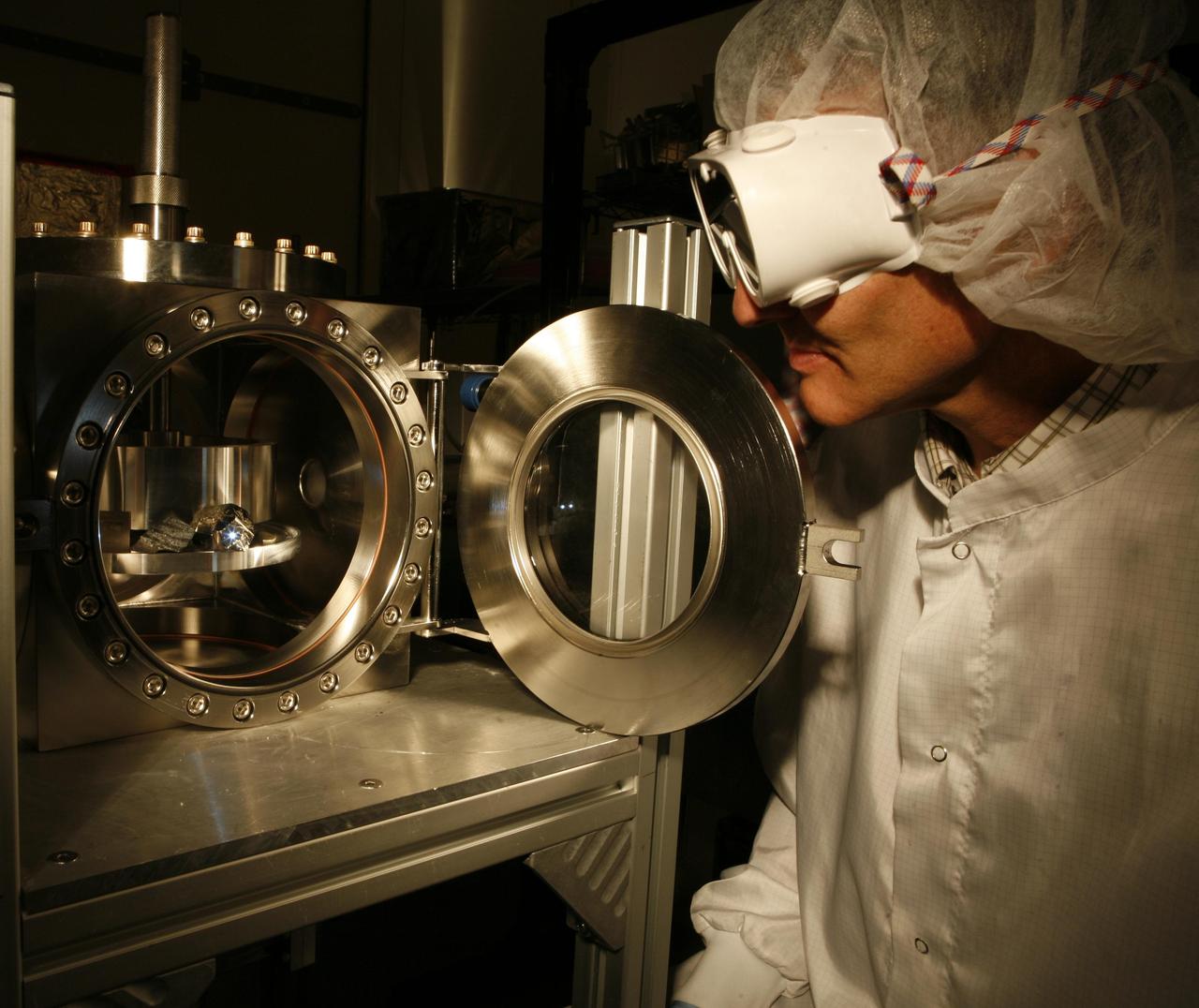
The ChemCam instrument for NASA Mars Science Laboratory mission uses a pulsed laser beam to vaporize a pinhead-size target, producing a flash of light from the ionized material plasma that can be analyzed to identify chemical elements in the target.
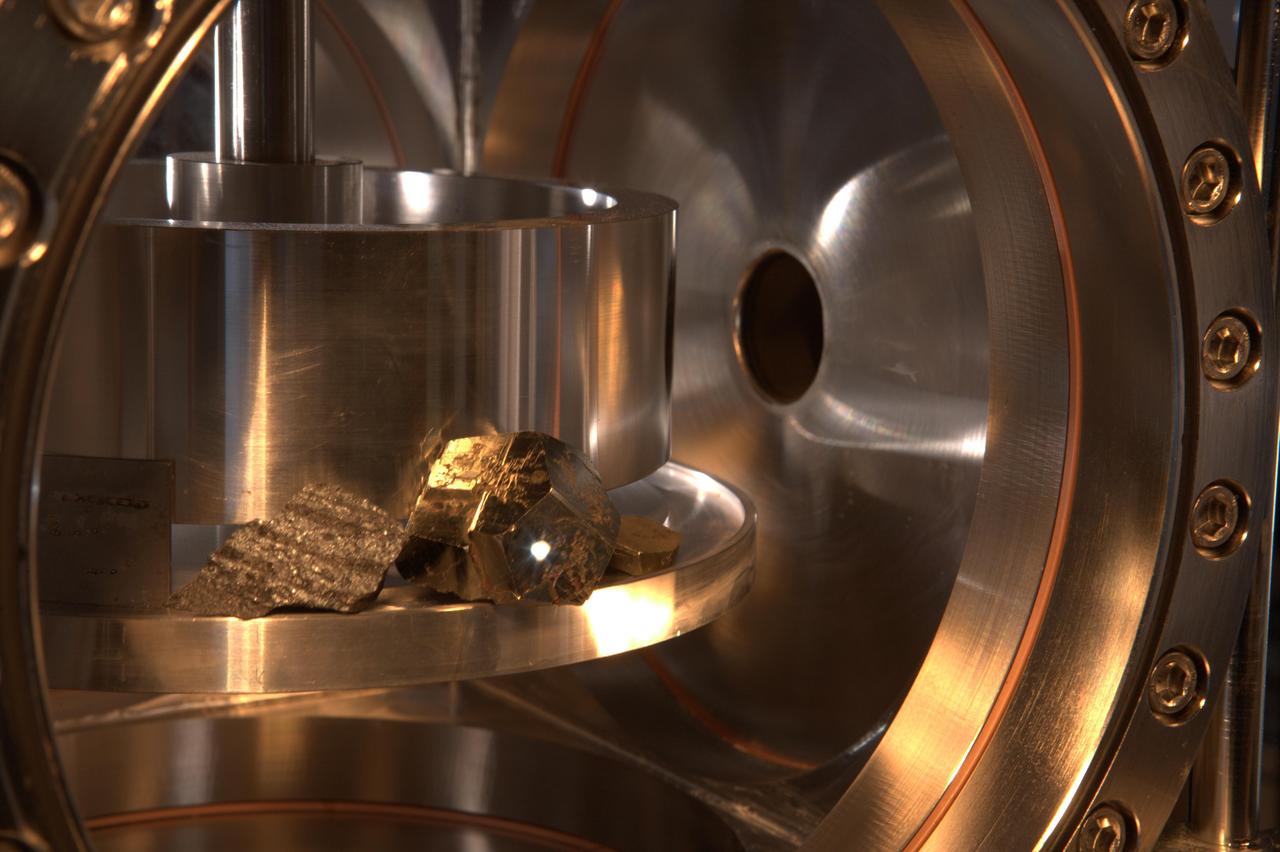
The ChemCam instrument for NASA Mars Science Laboratory mission uses a pulsed laser beam to vaporize a pinhead-size target, producing a flash of light from the ionized material plasma that can be analyzed to identify chemical elements in the target.
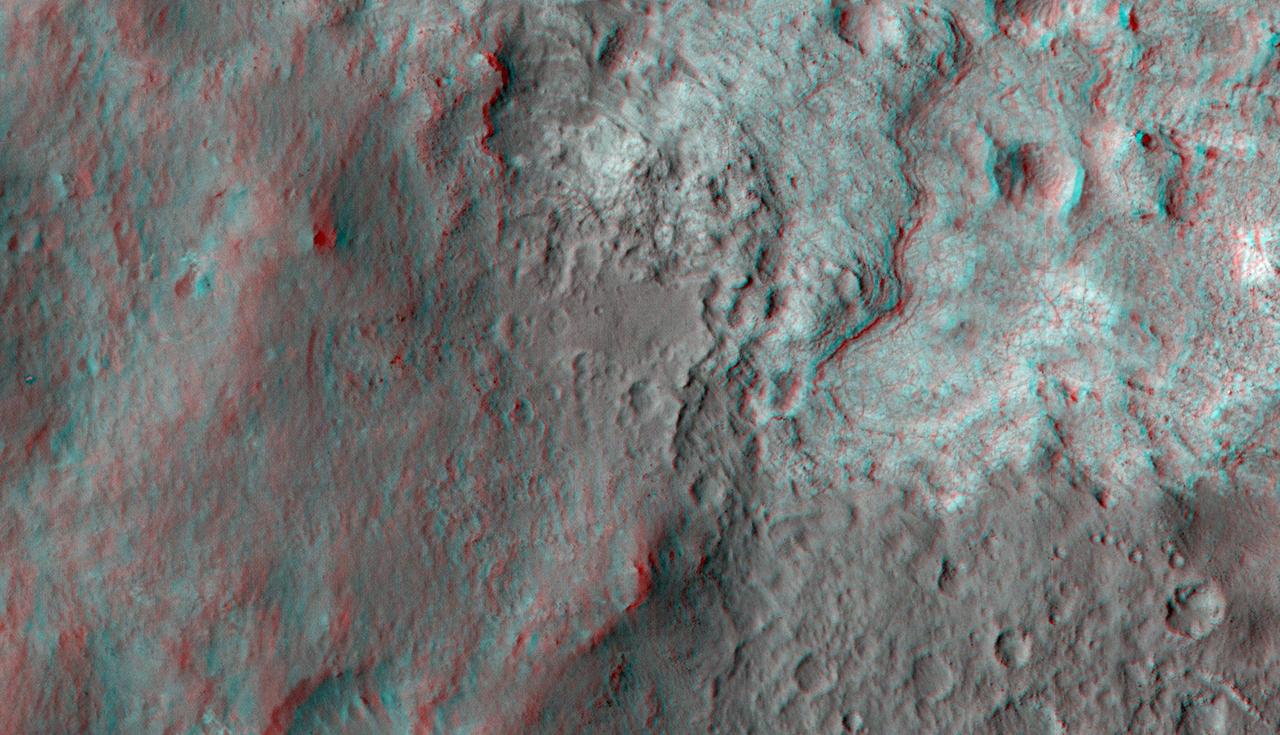
This 3-D image shows the upcoming science destination for NASA Mars rover Curiosity, a region dubbed Glenelg, where three different types of material seen from orbit come together.
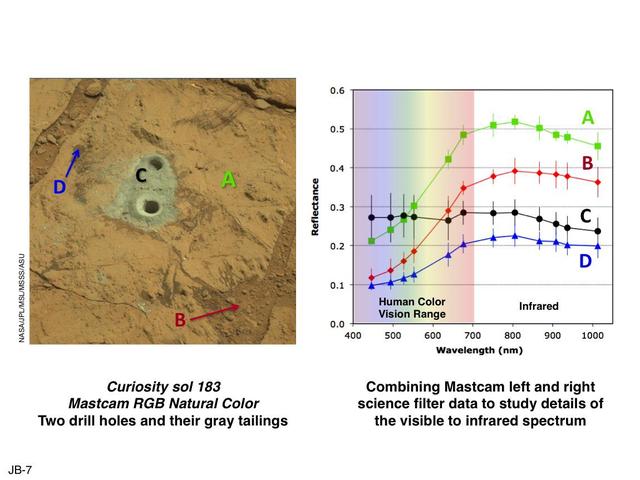
This set of images illustrates how the science filters of the Mast Camera Mastcam on NASA Mars rover Curiosity can be used to investigate aspects of the composition and mineralogy of materials on Mars.

iss071e195867 (June 17, 2024) --- NASA astronaut and Expedition 71 Flight Engineer Jeanette Epps works on the Materials Science Laboratory (MSL), a component of the Destiny laboratory module's Materials Science Research Rack. The MSL is a research facility used to discover new applications for existing materials and new or improved materials.
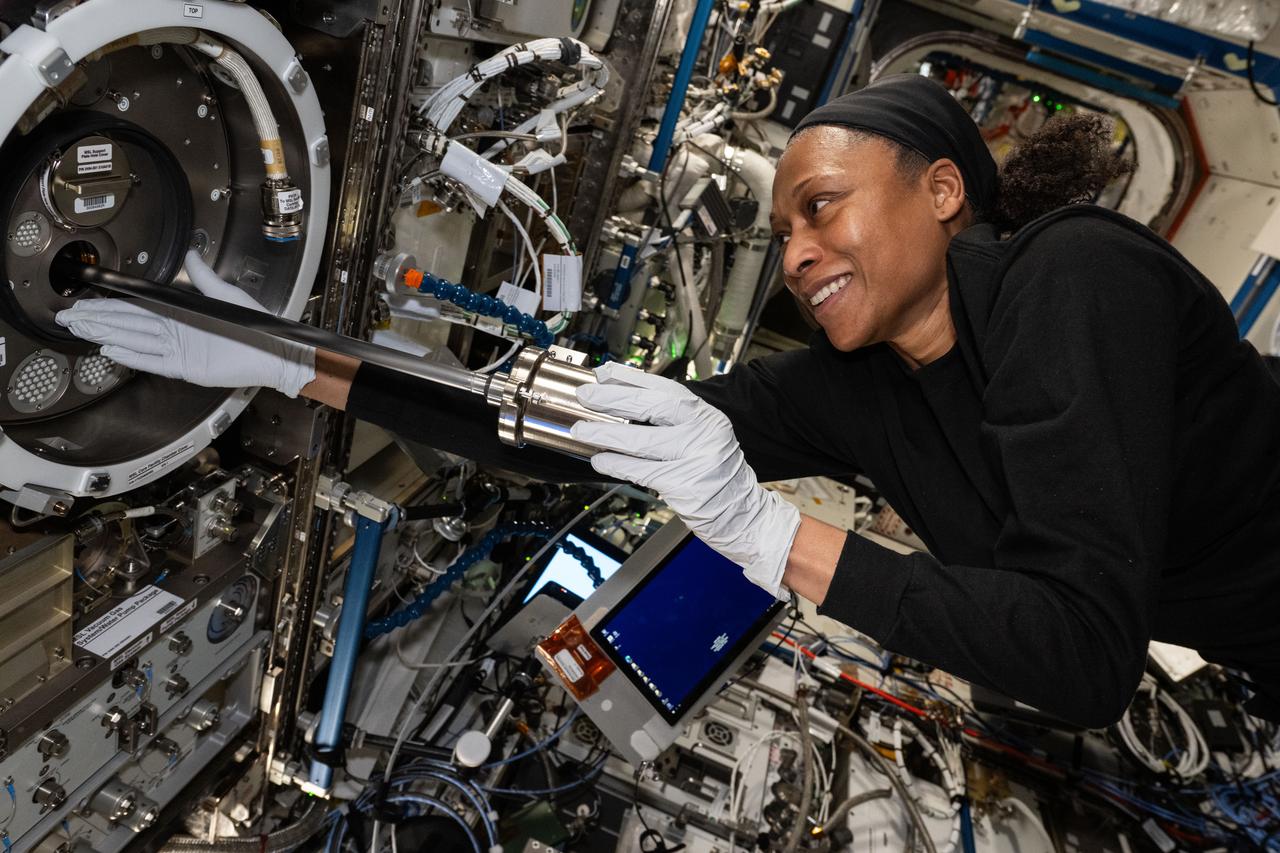
iss071e195867 (June 17, 2024) --- NASA astronaut and Expedition 71 Flight Engineer Jeanette Epps works on the Materials Science Laboratory (MSL), a component of the Destiny laboratory module's Materials Science Research Rack. The MSL is a research facility used to discover new applications for existing materials and new or improved materials.
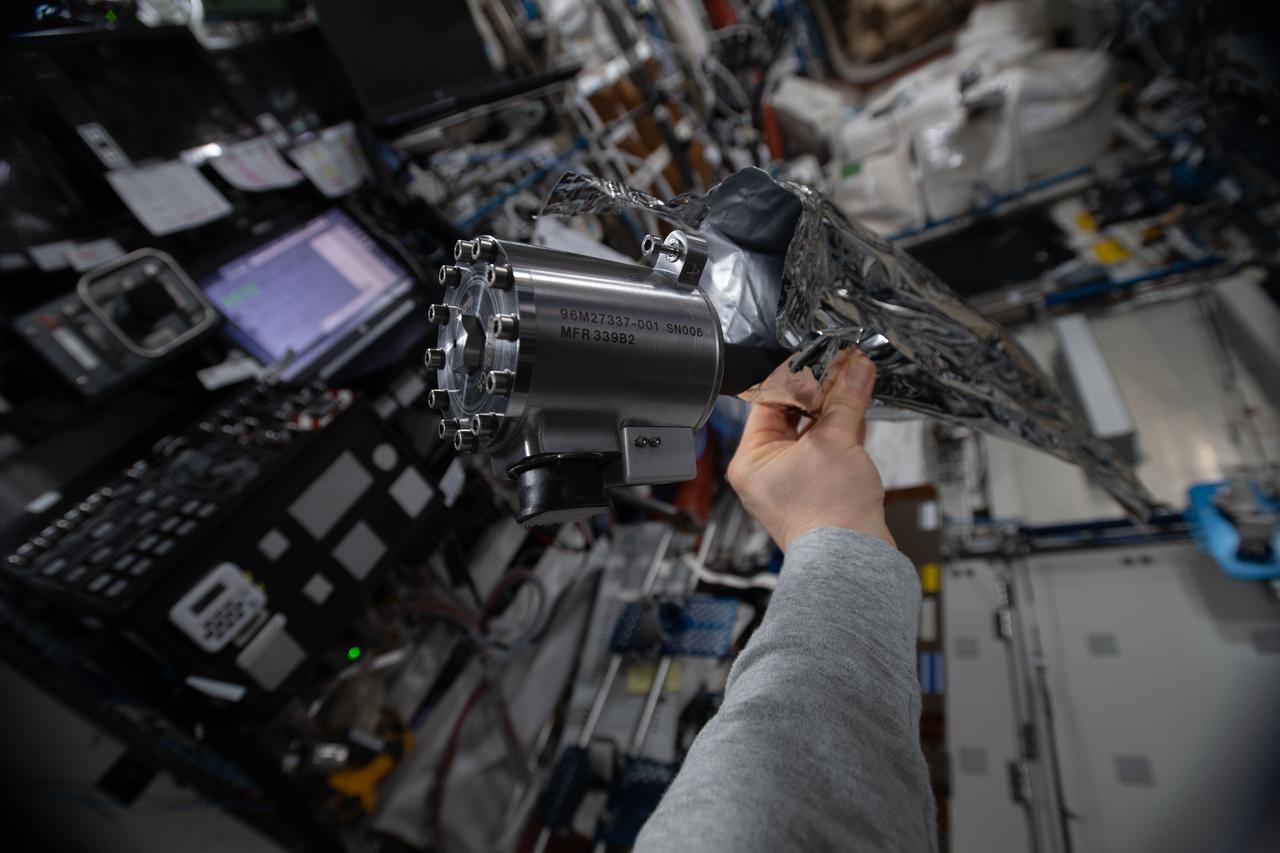
iss061e092274 (12/18/2019) --- A view of the Materials Science Laboratory (MSL) Sample Cartridge Assembly (SCA) in the Destiny module aboard the International Space Station (ISS). The Materials Science Laboratory (MSL) is used for basic materials research in the microgravity environment of the International Space Station (ISS). The MSL can accommodate and support diverse Experiment Modules. In this way many material types, such as metals, alloys, polymers, semiconductors, ceramics, crystals, and glasses, can be studied to discover new applications for existing materials and new or improved materials.

L TO R: DR. FRANCIS CHIARAMONTE, PROGRAM EXECUTIVE FOR PHYSICAL SCIENCES, ISS RESEARCH PROJECT, NASA HEADQUARTERS; DR. RAYMOND CLINTON, ACTING MANAGER FOR SCIENCE AND MISSION SYSTEMS OFFICE, NASA MARSHALL; DR. FRANK SZOFRAN, MICROGRAVITY MATERIALS SCIENCE PROJECT MANAGER AND DISCIPLINE SCIENTIST MATERIALS AND PROCESSES LABORATORY AT MSFC.
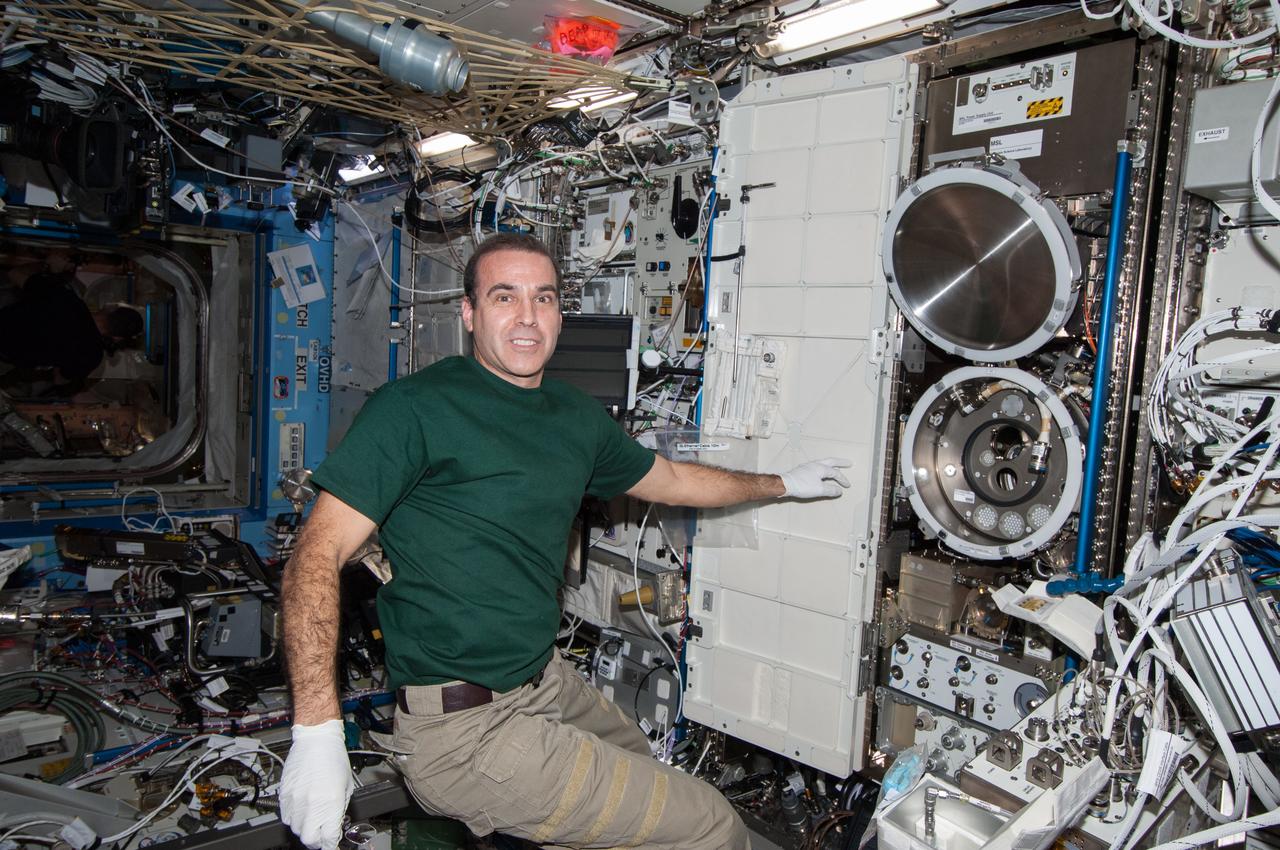
ss038e008298 (11/26/2013) --- A view of NASA astronaut Rick Mastracchio, during the Material Science Laboratory (MSL) Solidification and Quench Furnace (SQF) Sample Cartridge Exchange aboard the International Space Station (ISS). The Materials Science Laboratory (MSL) is used for basic materials research in the microgravity environment of the ISS. The MSL can accommodate and support diverse Experiment Modules. In this way many material types, such as metals, alloys, polymers, semiconductors, ceramics, crystals, and glasses, can be studied to discover new applications for existing materials and new or improved materials.
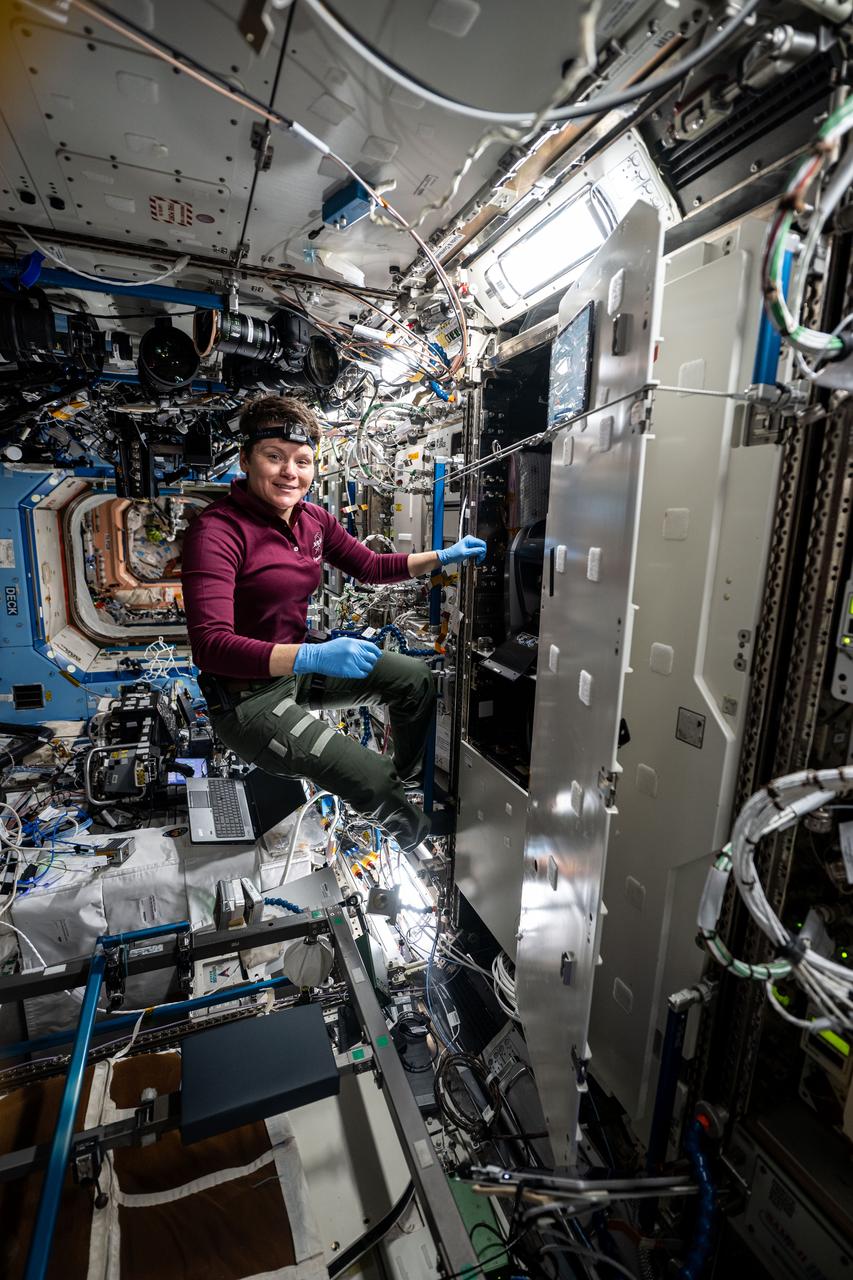
iss073e0118086 (May 29, 2025) --- NASA astronaut and Expedition 73 Flight Engineer Anne McClain works inside the Destiny laboratory module's Materials Science Research Rack and swaps filters inside the Kermit microscope. Kermit is an all-in-one fluorescence microscope system used to conduct biological, physical, and materials science research.
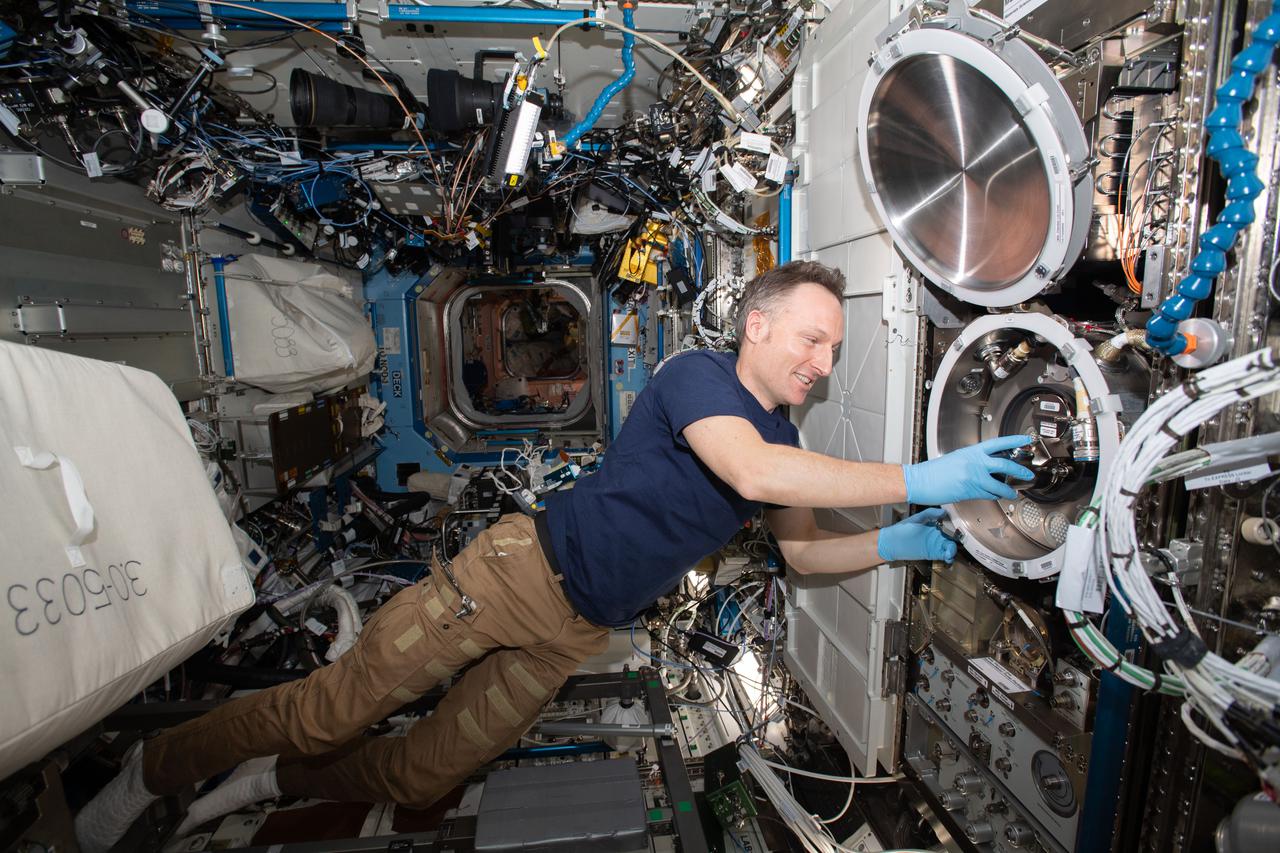
iss066e114140 (Jan. 12, 2022) --- ESA (European Space Agency) astronaut and Expedition 66 Flight Engineer Matthias Maurer swaps samples inside the Materials Science Laboratory, a physics research device that observes metals, alloys, polymers, semiconductors, ceramics, crystals, and glasses, to discover new applications for existing materials and new or improved materials.

The Electrostatic Levitator (ESL) Facility established at Marshall Space Flight Center (MSFC) supports NASA's Microgravity Materials Science Research Program. NASA materials science investigations include ground-based, flight definition and flight projects. Flight definition projects, with demanding science concept review schedules, receive highest priority for scheduling experiment time in the Electrostatic Levitator (ESL) Facility.
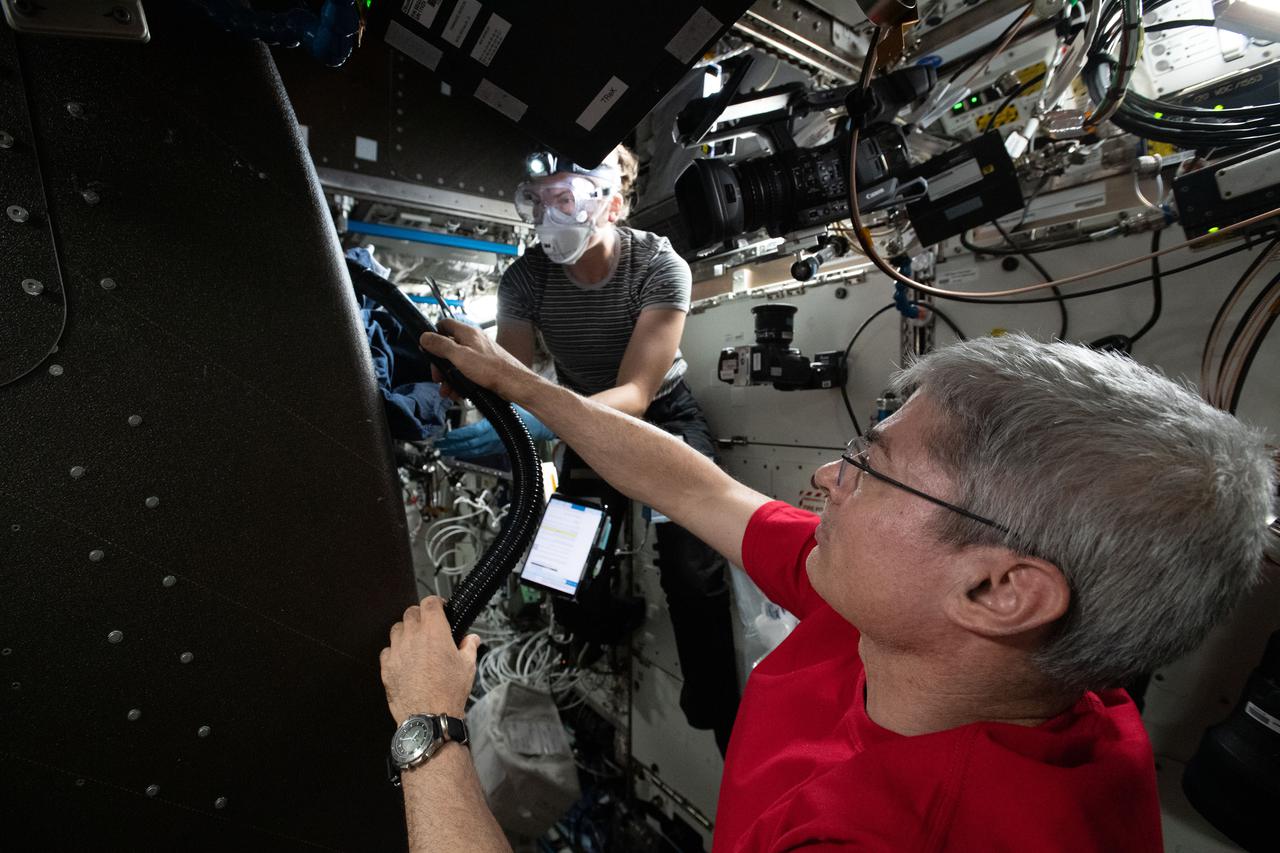
iss066e086431 (Dec. 4, 2021) --- NASA astronauts and Expedition 66 Flight Engineers Mark Vande Hei and Kayla Barron inspect cables inside the Materials Science Research Rack. The space physics device enables the observation of many material types, such as metals, alloys, polymers, semiconductors, ceramics, crystals, and glasses, to study and discover new applications for existing materials and new or improved materials.
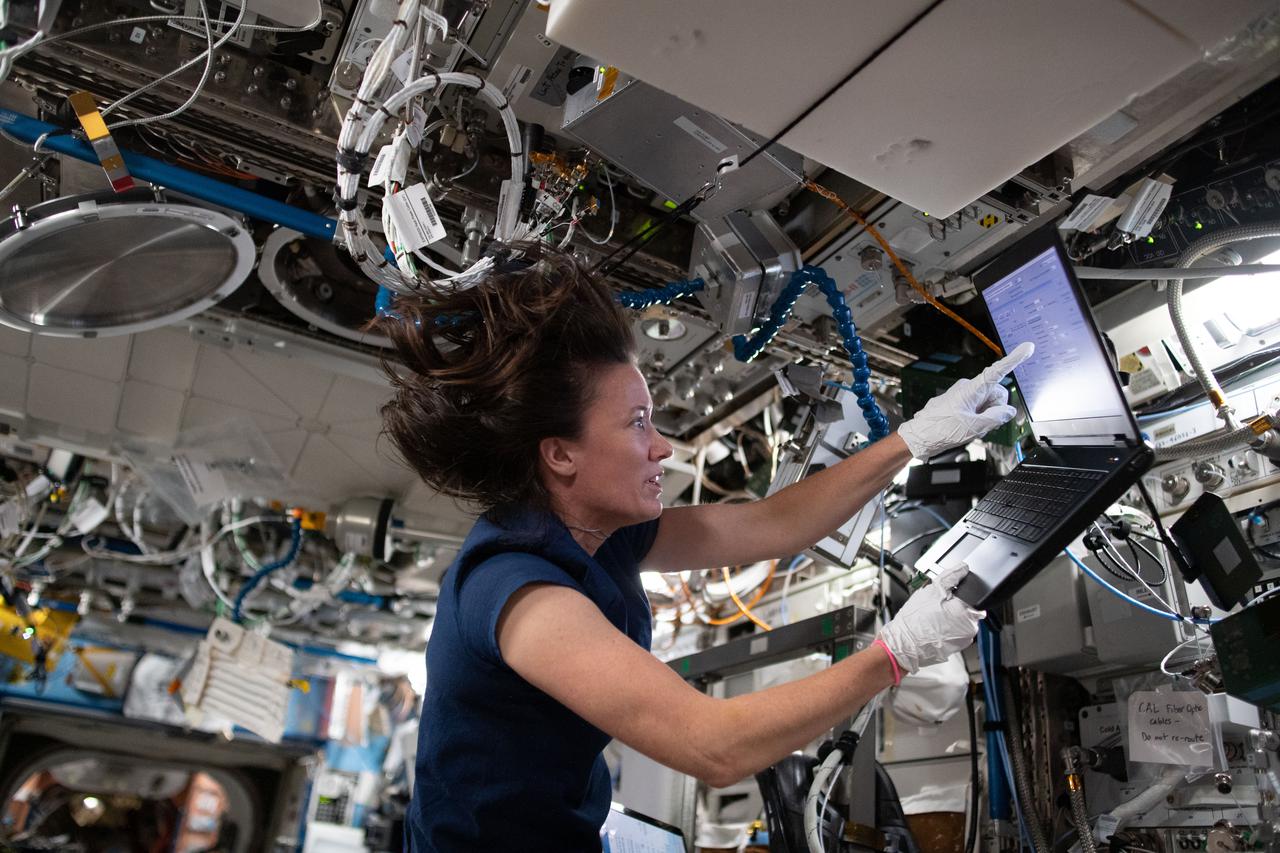
iss065e081296 (May 28, 2021) --- NASA astronaut and Expedition 65 Flight Engineer Megan McArthur reviews procedures to swap sample cartridges inside the Materials Science Laboratory (MSL). The MSL enables research into microgravity's affects on materials such as metals, alloys, polymers, semiconductors, ceramics, crystals, and glasses. Observations may reveal new applications for existing materials and new or improved materials.
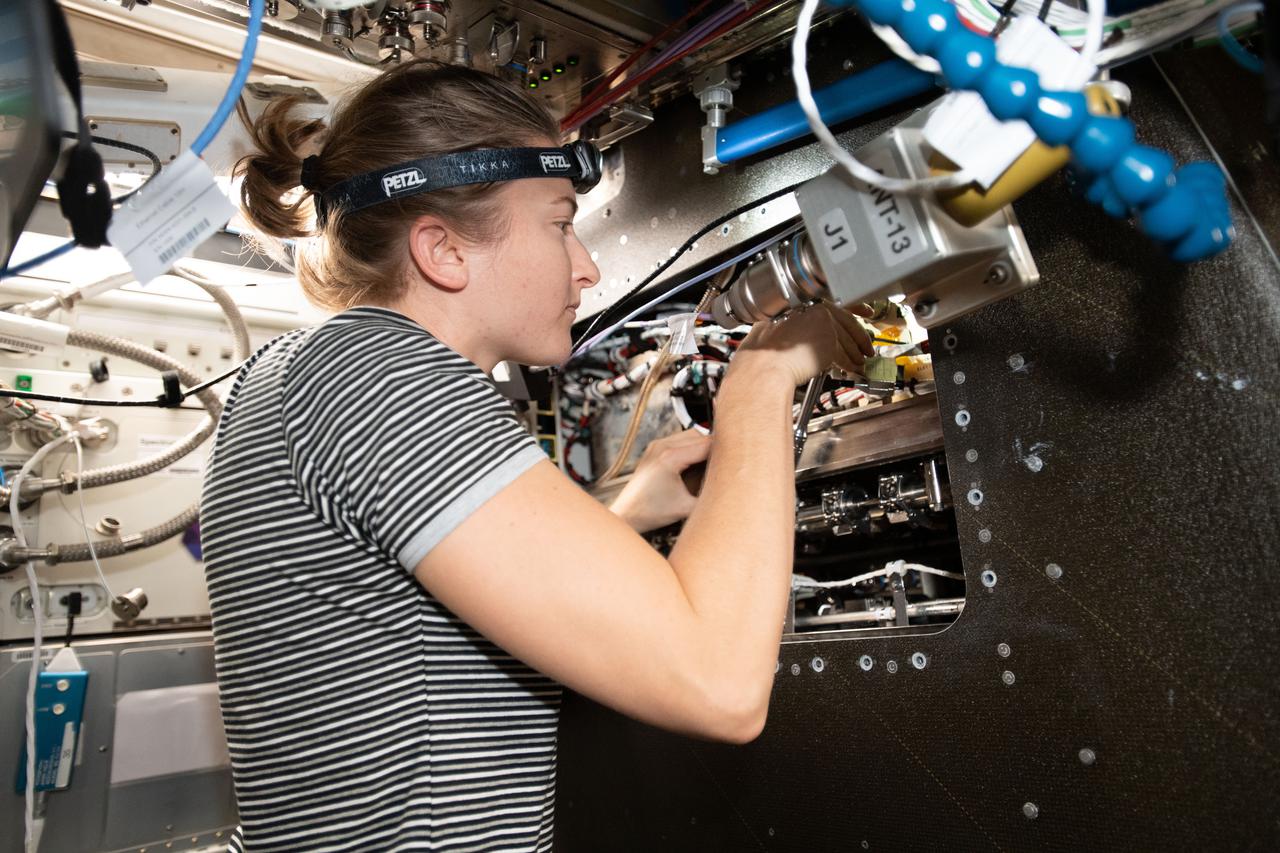
iss066e086417 (Dec. 4, 2021) --- NASA astronaut and Expedition 66 Flight Engineer Kayla Barron inspects cables inside the Materials Science Research Rack. The space physics research device enables the observation of many material types, such as metals, alloys, polymers, semiconductors, ceramics, crystals, and glasses, to study and discover new applications for existing materials and new or improved materials.
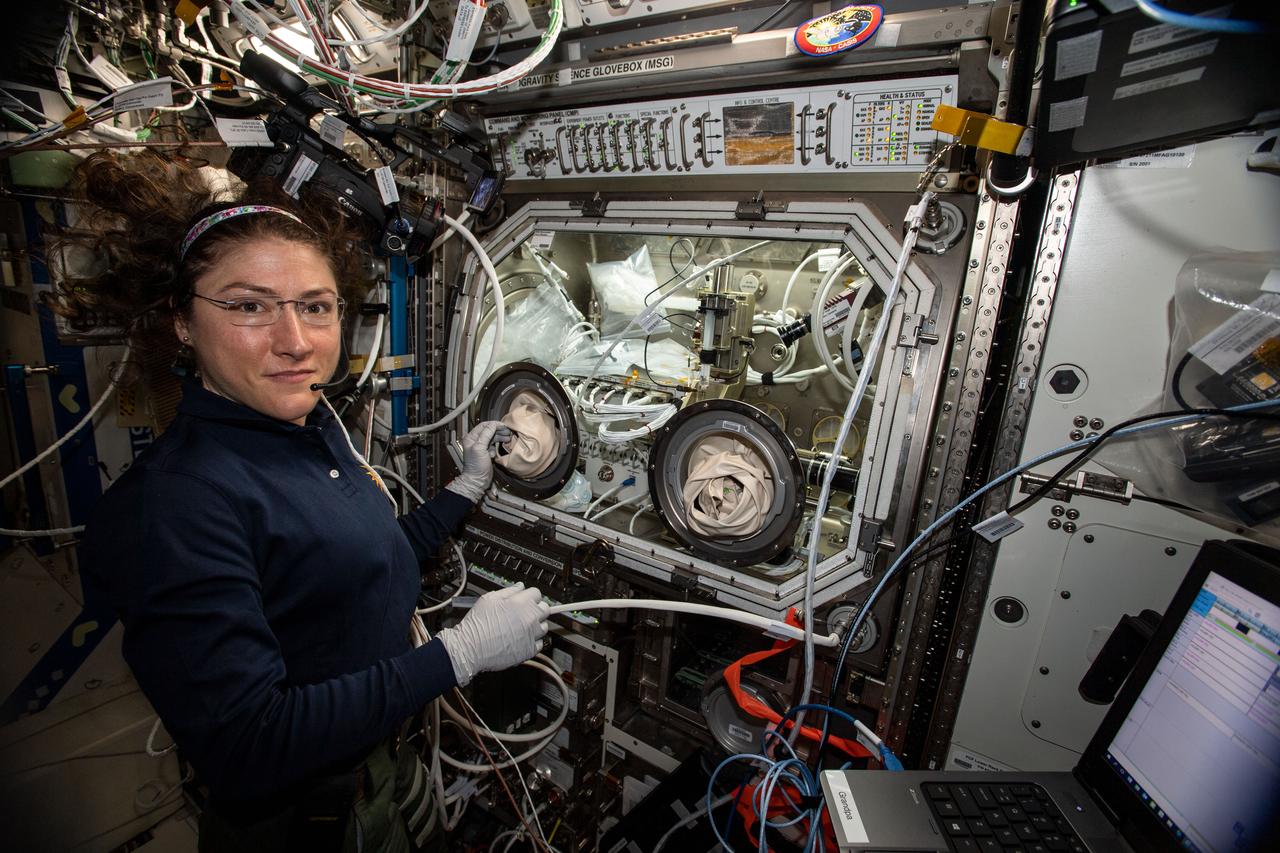
iss061e012803 (Oct. 22, 2019) --- NASA astronaut Christina Koch performs science operations in the Microgravity Science Glovebox for the Ring Sheared Drop human health and advanced materials investigation.
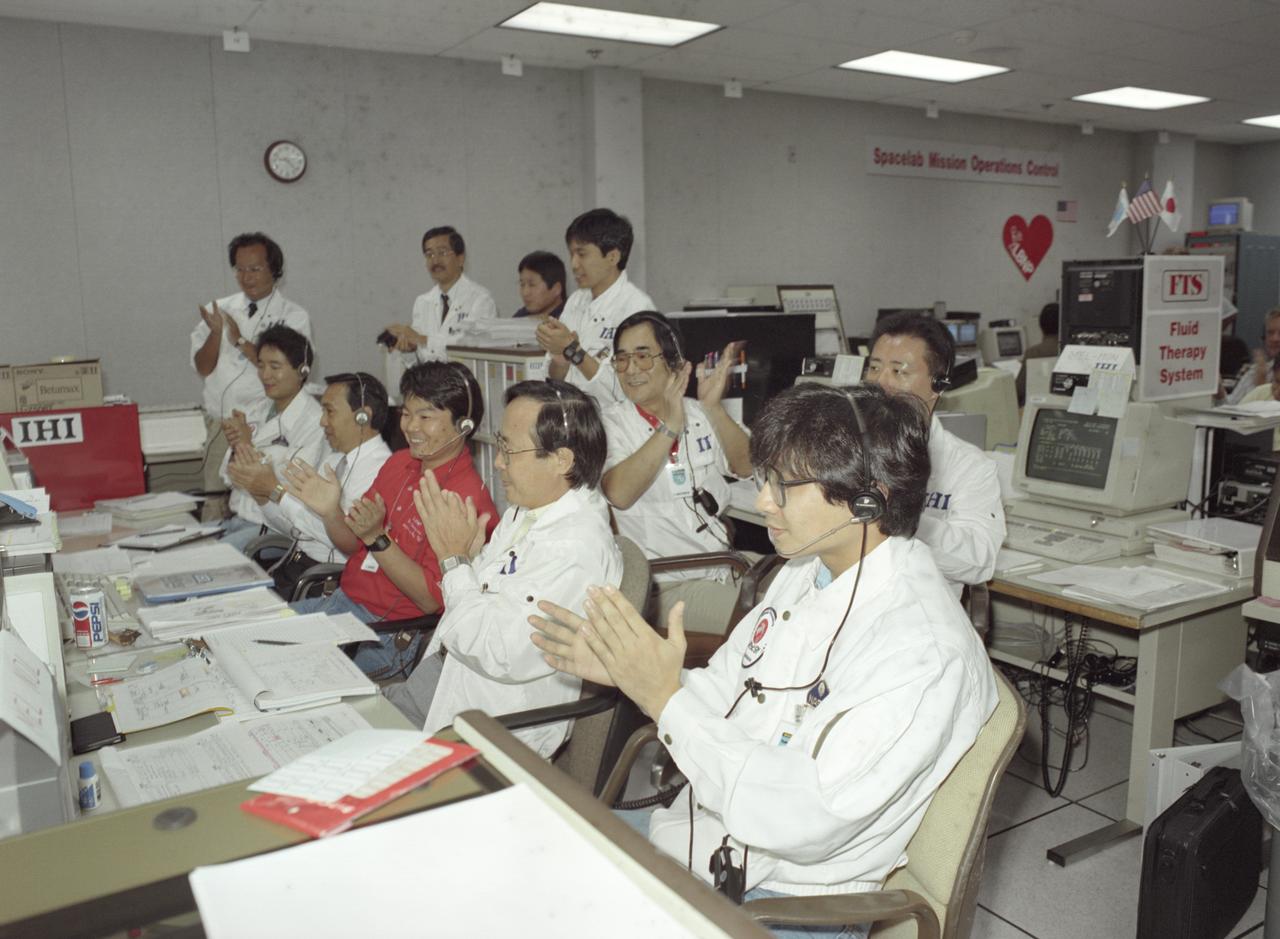
The science laboratory, Spacelab-J (SL-J), flown aboard the STS-47 flight was a joint venture between NASA and the National Space Development Agency of Japan (NASDA) utilizing a manned Spacelab module. The mission conducted 24 materials science and 20 life science experiments, of which 35 were sponsored by NASDA, 7 by NASA, and two collaborative efforts. Materials science investigations covered such fields as biotechnology, electronic materials, fluid dynamics and transport phenomena, glasses and ceramics, metals and alloys, and acceleration measurements. Life sciences included experiments on human health, cell separation and biology, developmental biology, animal and human physiology and behavior, space radiation, and biological rhythms. Test subjects included the crew, Japanese koi fish (carp), cultured animal and plant cells, chicken embryos, fruit flies, fungi and plant seeds, and frogs and frog eggs. Featured together in the Science Operation Area (SOA) are payload specialists’ first Materials Processing Test during NASA/NASDA joint ground activities at the Huntsville Operations Support Center (HOSC) Spacelab Payload Operations Control Center (SL POCC) at Marshall Space Flight Center (MSFC).
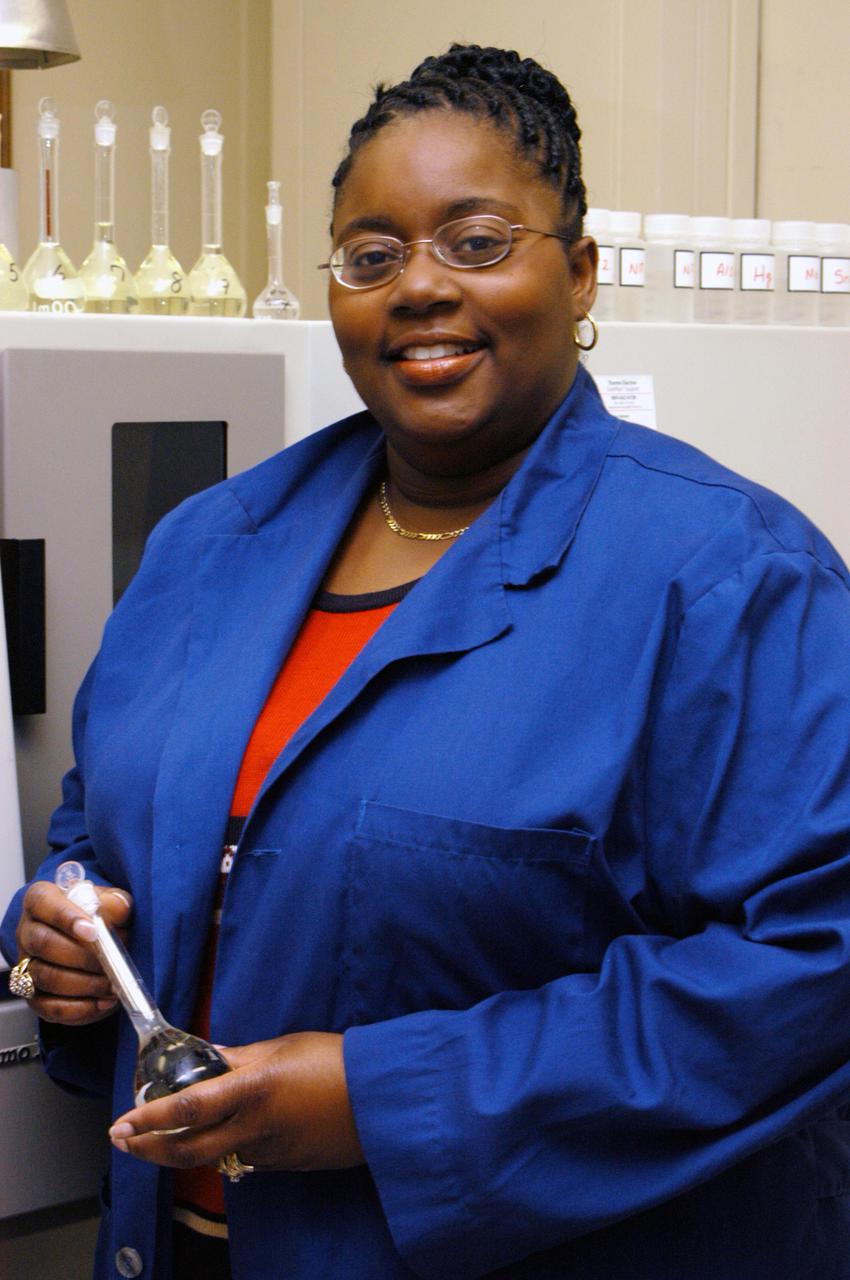
KENNEDY SPACE CENTER, FLA. - Dionne B. Jackson is a Materials Science engineer in the Spaceport Engineering and Technology Directorate. She is responsible for testing and identifying materials and chemicals that are used for the Shuttle Program, International Space Station Program and the Launch Services Program. Jackson has been a permanent NASA KSC employee since 1991.
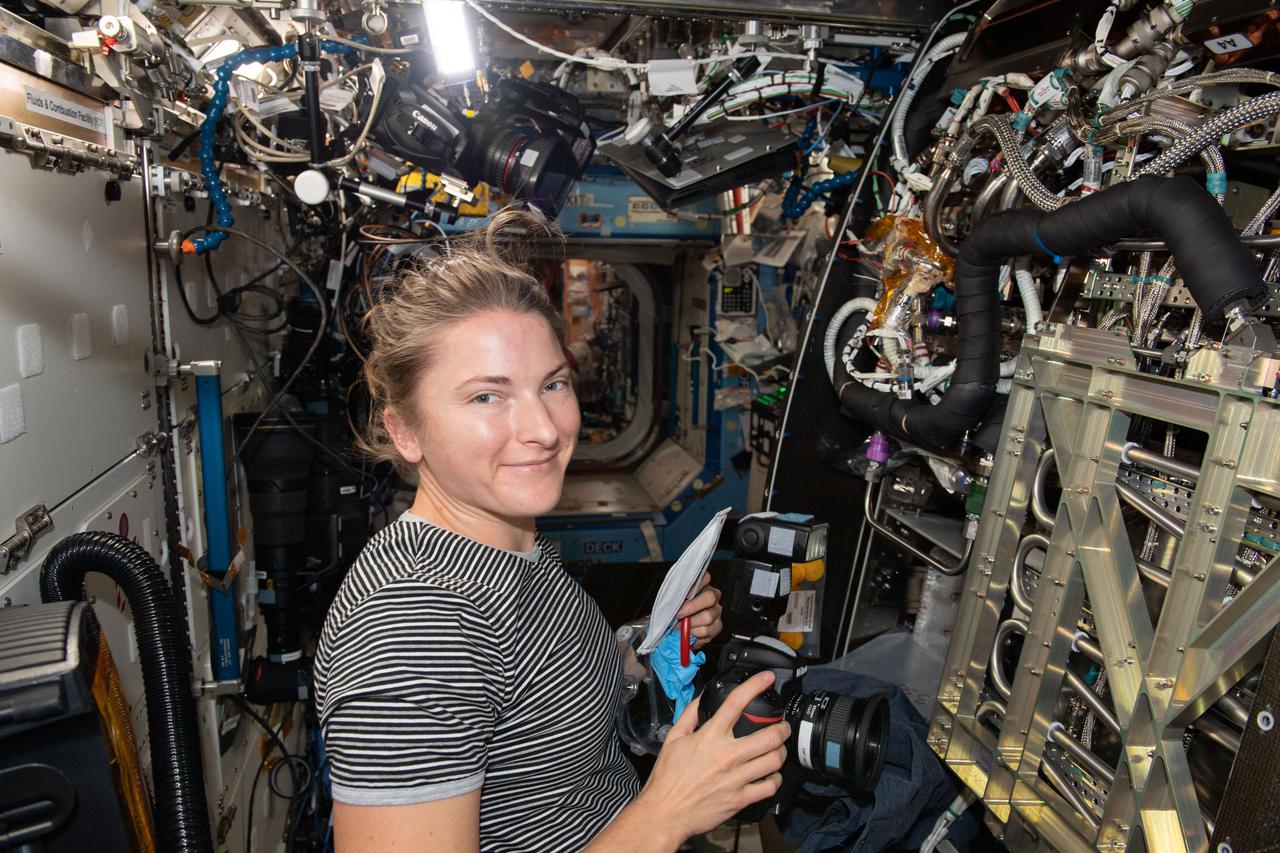
iss066e086562 (Dec. 4, 2021) --- NASA astronaut and Expedition 66 Flight Engineer Kayla Barron is pictured inspecting and photographing components inside the Materials Science Research Rack that enables the observation of chemical and thermal properties of materials free from the effects of gravity.
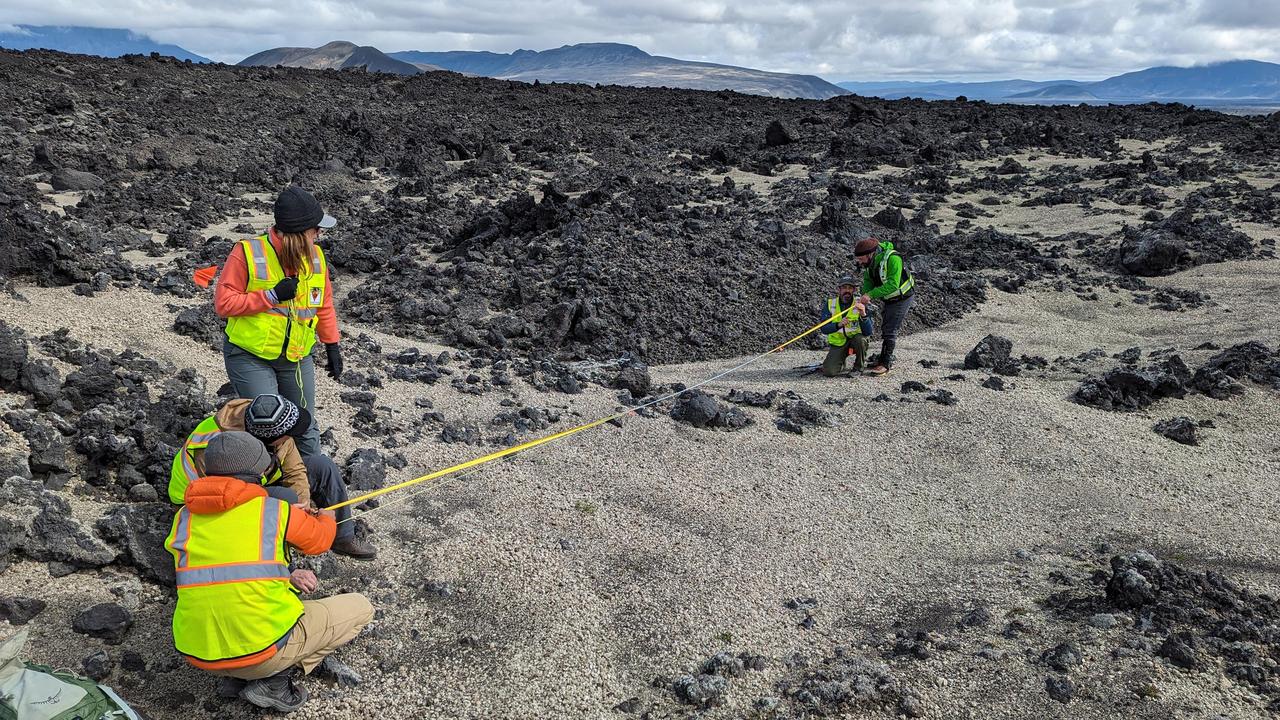
During their August 2023 Iceland field campaign, international science team members of NASA's VERITAS (Venus Emissivity, Radio science, InSAR, Topography, And Spectroscopy) mission prepare for lidar (Light Detection and Ranging) imaging of rocks at a study area. Lidar measurements of rocky terrain can provide information about the material, such as surface roughness. While the science team led by NASA's Jet Propulsion Laboratory gathered lidar data on the ground, their partners from the German Aerospace Center (Deutsches Zentrum für Luft- und Raumfahrt, or DLR) carried out overflights to gather radar observations of the same study areas. By doing this, the team was able to ground-truth the radar data that will be used to help inform the science that VERITAS will do at Venus. VERITAS will peer through the planet's thick atmosphere with a suite of powerful science instruments to create global maps of Venus' surface – including topography, radar images, rock type, and gravity measurements – as well as detect surface changes. VERITAS is designed to understand what processes are currently active, search for evidence of past and current interior water, and understand the geologic evolution of the planet, illuminating how rocky planets throughout the galaxy evolve. https://photojournal.jpl.nasa.gov/catalog/PIA25839
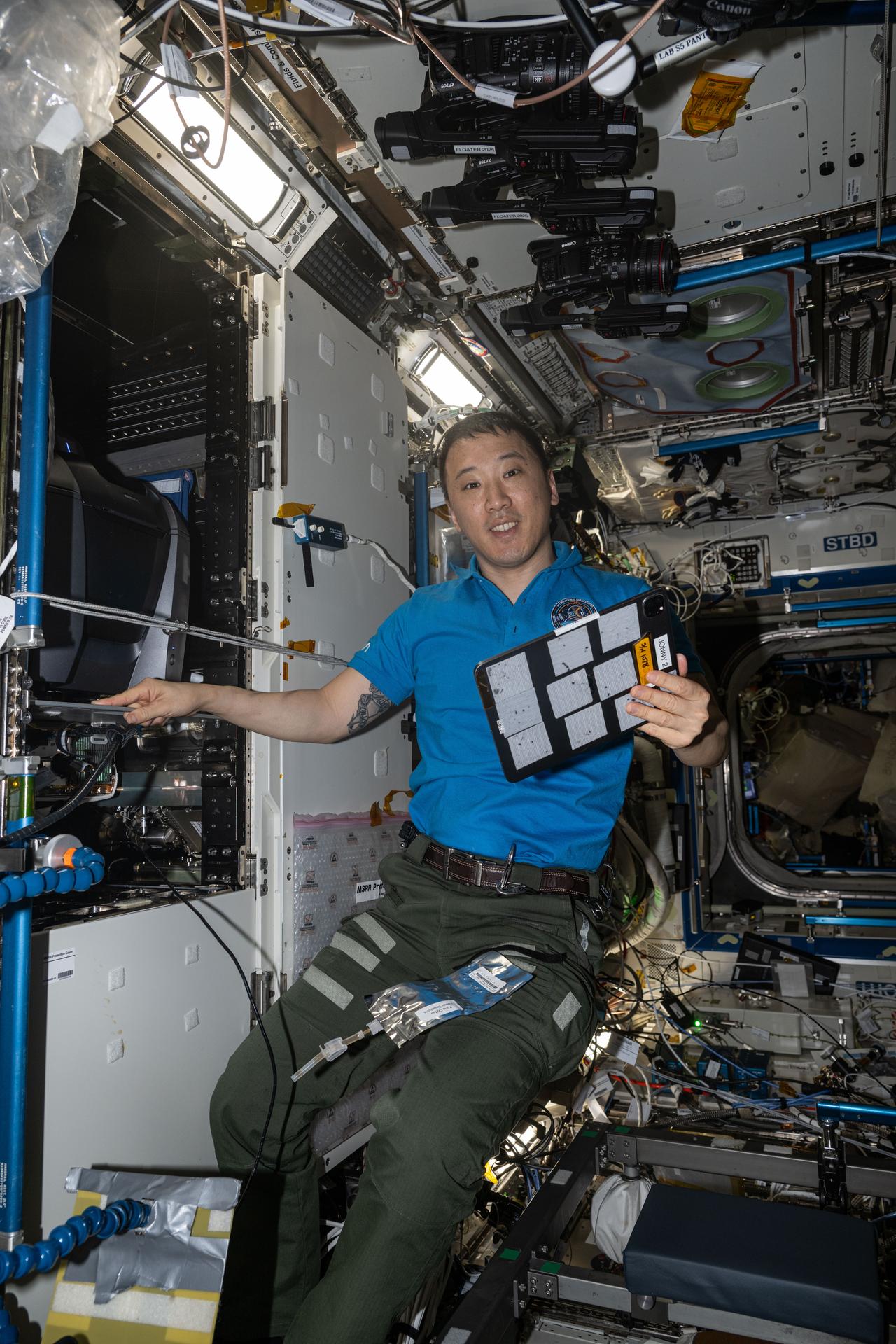
iss073e1049692 (Nov. 6, 2025) --- NASA astronaut and Expedition 73 Flight Engineer Jonny Kim poses for a portrait while servicing the KERMIT (Keyence Research Microscope Testbed) fluorescence microscope inside the Materials Science Research Rack aboard the International Space Station’s Destiny laboratory module. KERMIT is a commercial off-the-shelf microscope that provides researchers with essential imaging capabilities for biological, physical, and materials science research in microgravity.
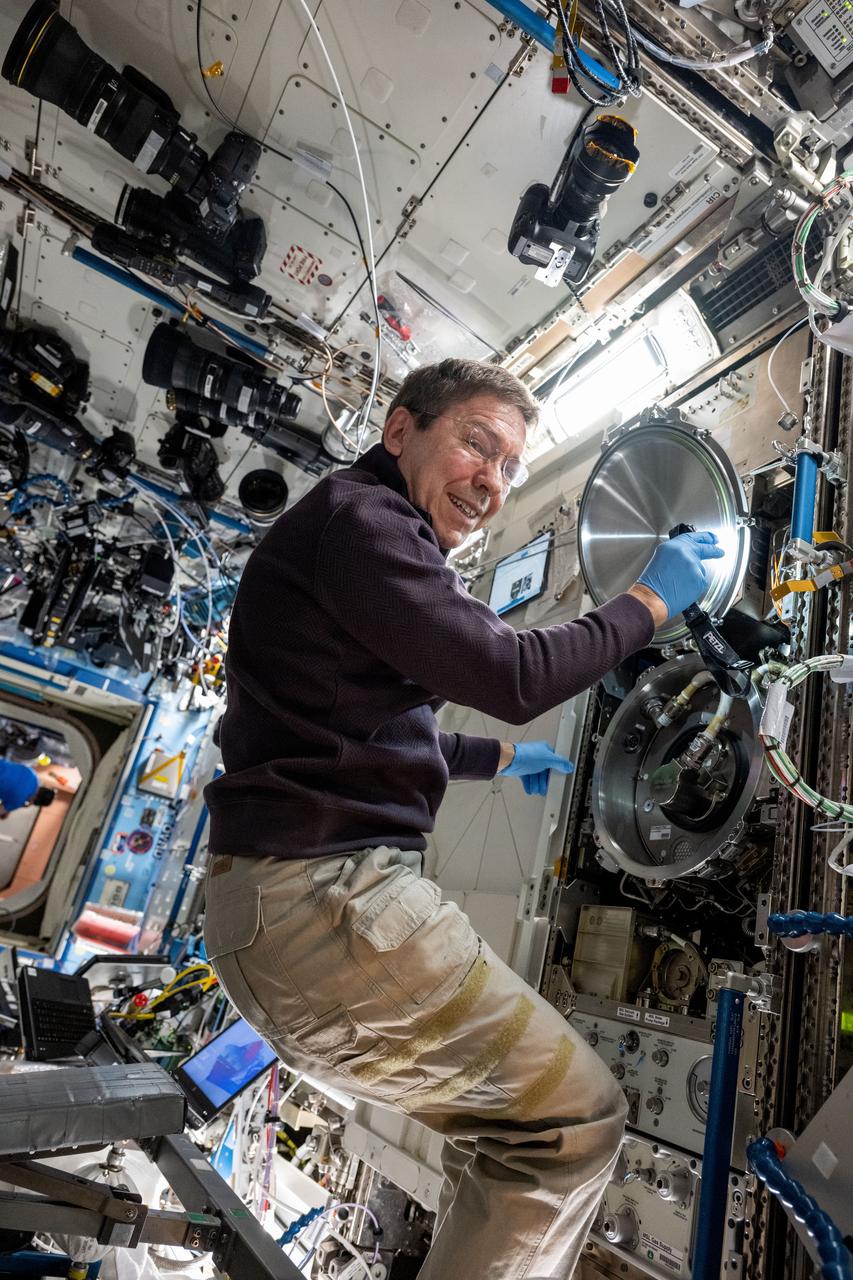
iss071e522745 (Aug. 19, 2024) --- NASA astronaut and Expedition 71 Flight Engineer Mike Barratt swaps sample cartridges inside the Materials Science Laboratory (MSL), a research furnace facilitating discoveries of new and improved materials as well as new uses for existing materials such as metals, alloys, polymers, and more. The MSL is located inside the International Space Station's Destiny laboratory module.
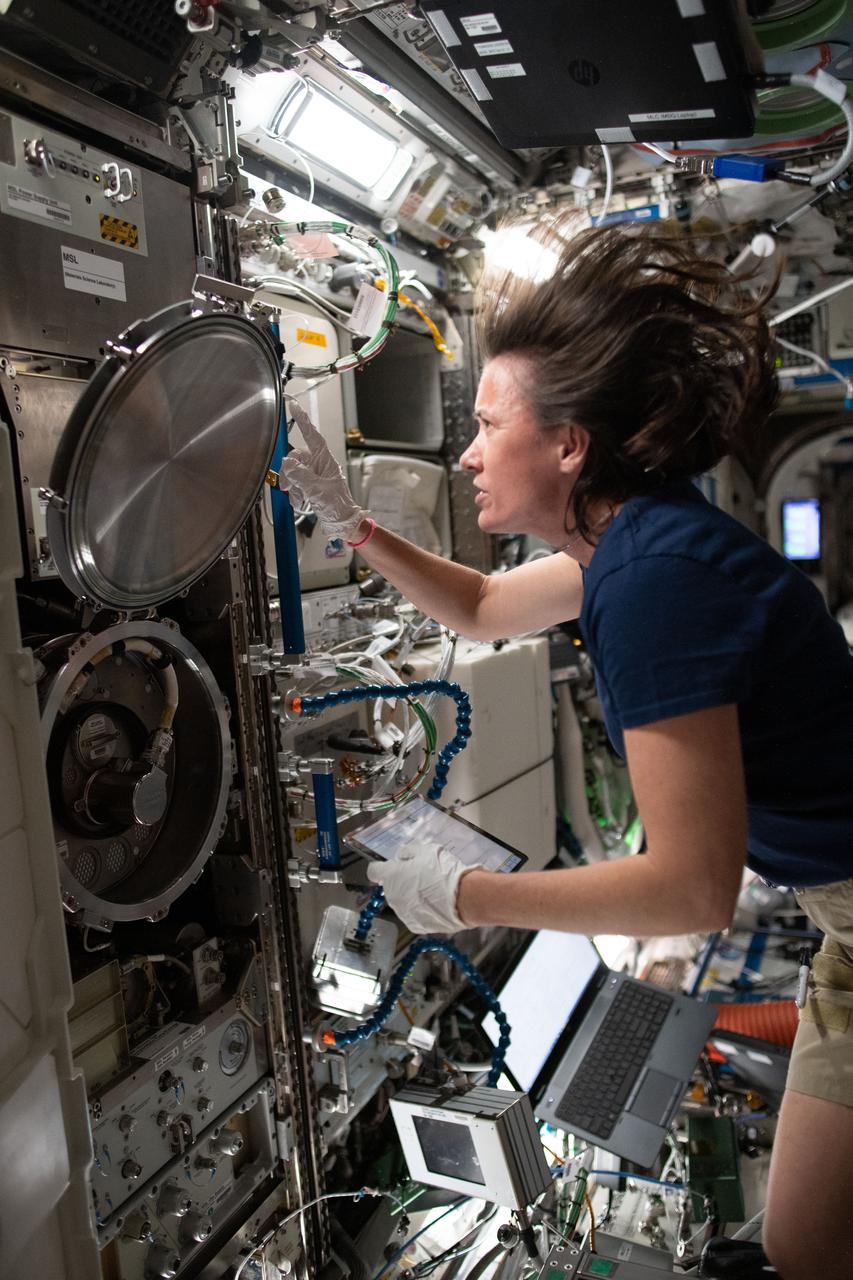
iss065e081297 (May 28, 2021) --- NASA astronaut and Expedition 65 Flight Engineer Megan McArthur swaps sample cartridges inside the Materials Science Laboratory (MSL) rack. The MSL enables observations of microgravity's impact on a variety metals, alloys, polymers, semiconductors, ceramics, crystals, and glasses, to discover new applications for existing materials and new or improved materials.
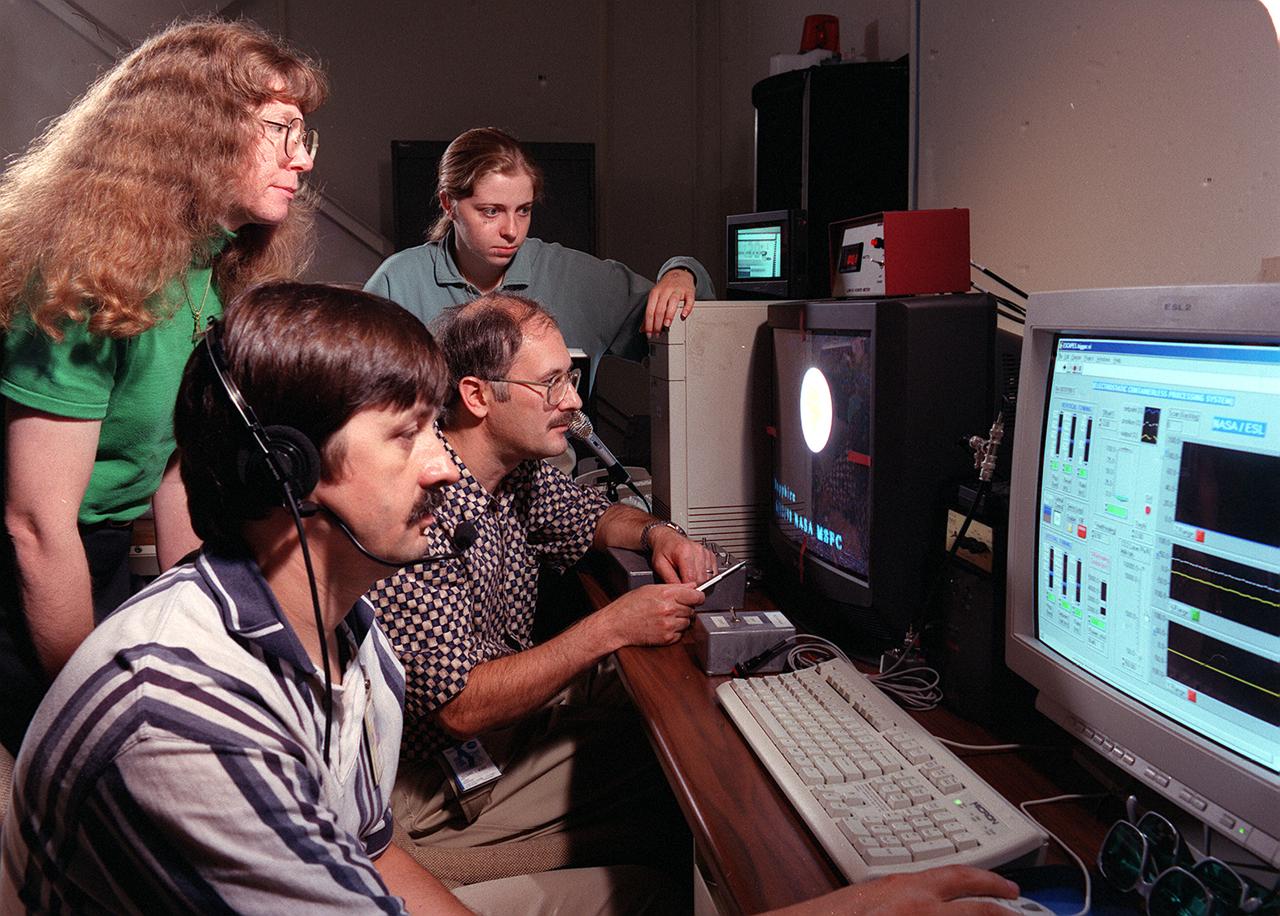
Dr. Jan Rogers (left) and Larry Savage (foreground) of the Science Directorate at NASA's Marshall Space Flight Center (MSFC) are joined by Dr. Richard Weber (center) and April Hixon of Containerless Research Inc. of Evanston, Ill., in conducting an experiment run of the Electrostatic Levitator (ESL) using insulating materials. Materials researchers use unique capabilities of the facility to levitate and study the properties of various materials important in manufacturing processes.
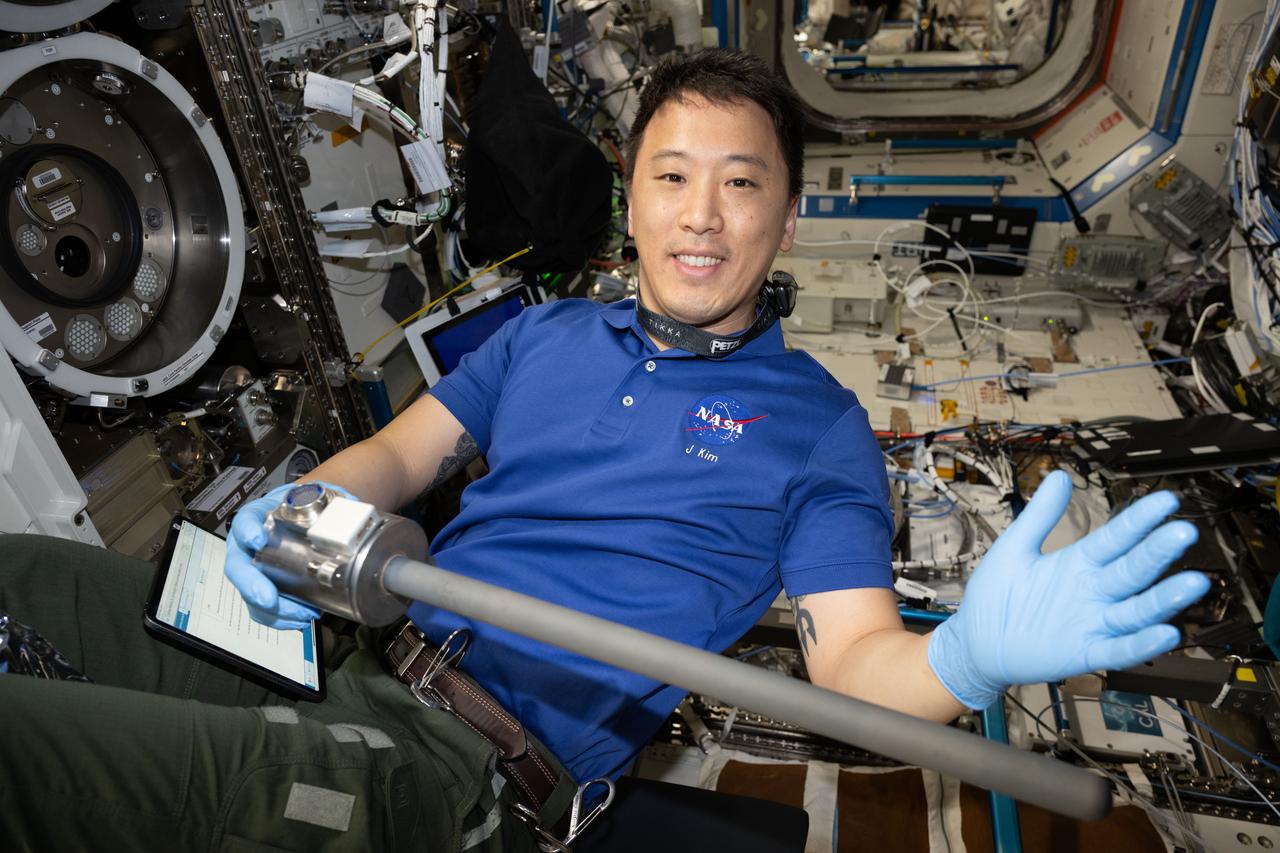
iss073e0222463 (June 16, 2025) --- NASA astronaut and Expedition 73 Flight Engineer Jonny Kim waves for a portrait while removing research hardware from inside the Materials Science Laboratory (MSL) located inside the International Space Station's Destiny laboratory module. The MSL uses two different furnaces that operate one at a time to discover new applications for existing materials, such as metals, alloys, polymers, and new or improved materials.
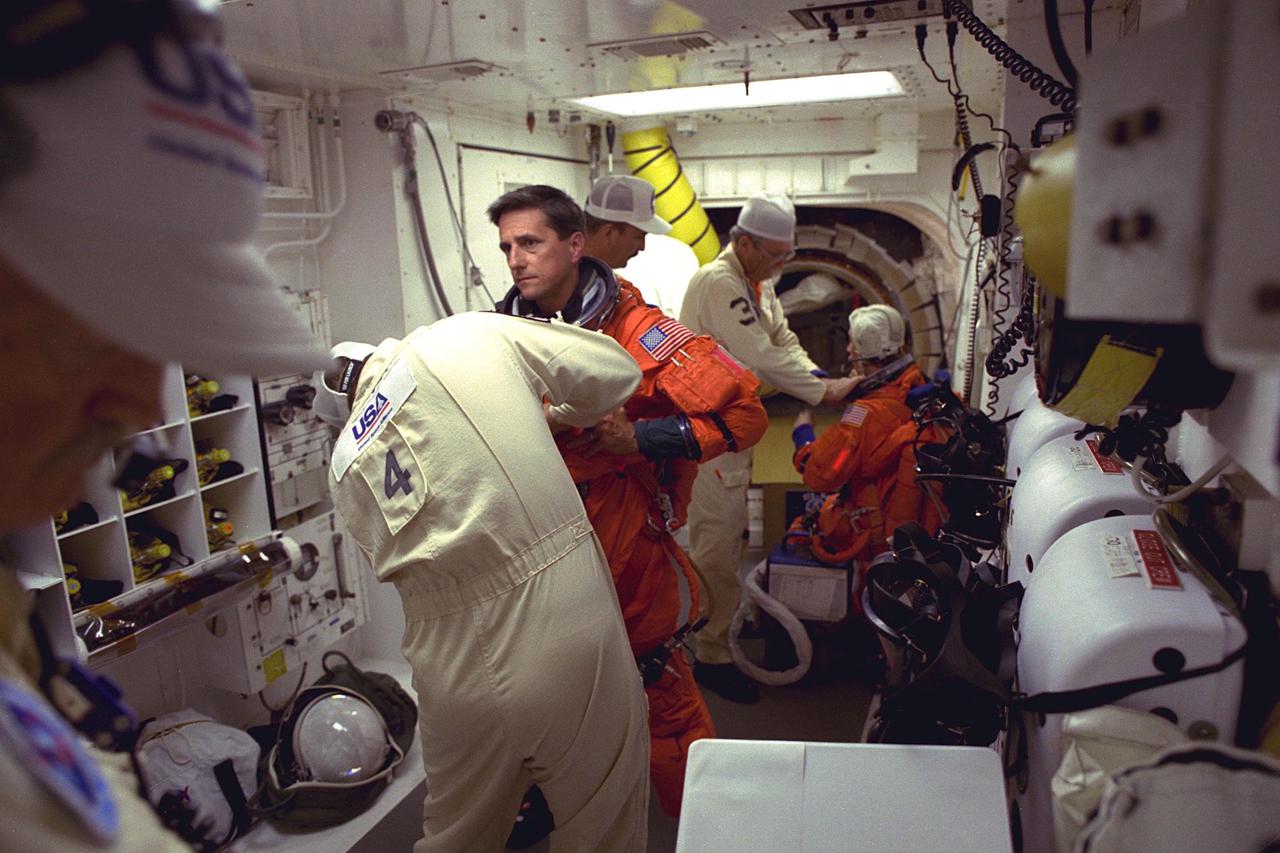
STS-94 Mission Specialist Donald A. Thomas prepares to enter the Space Shuttle Columbia at Launch Pad 39A in preparation for launch. He has flown on STS-83, STS-70 and STS-65. He holds a doctorate in materials science and has been the Principal Investigator for a Space Shuttle crystal growth experiment. Because of his background in materials science, Thomas will be concentrating his efforts during the Red shift on the five experiments in this discipline in the Large Isothermal Furnace. He also will work on the ten materials science investigations in the Electromagnetic Containerless Processing Facility and four that will be measuring the effects of microgravity and motion in the orbiter on the experiments. Thomas and six fellow crew members will lift off during a launch window that opens at 1:50 p.m. EDT, July 1. The launch window will open 47 minutes early to improve the opportunity to lift off before Florida summer rain showers reach the space center
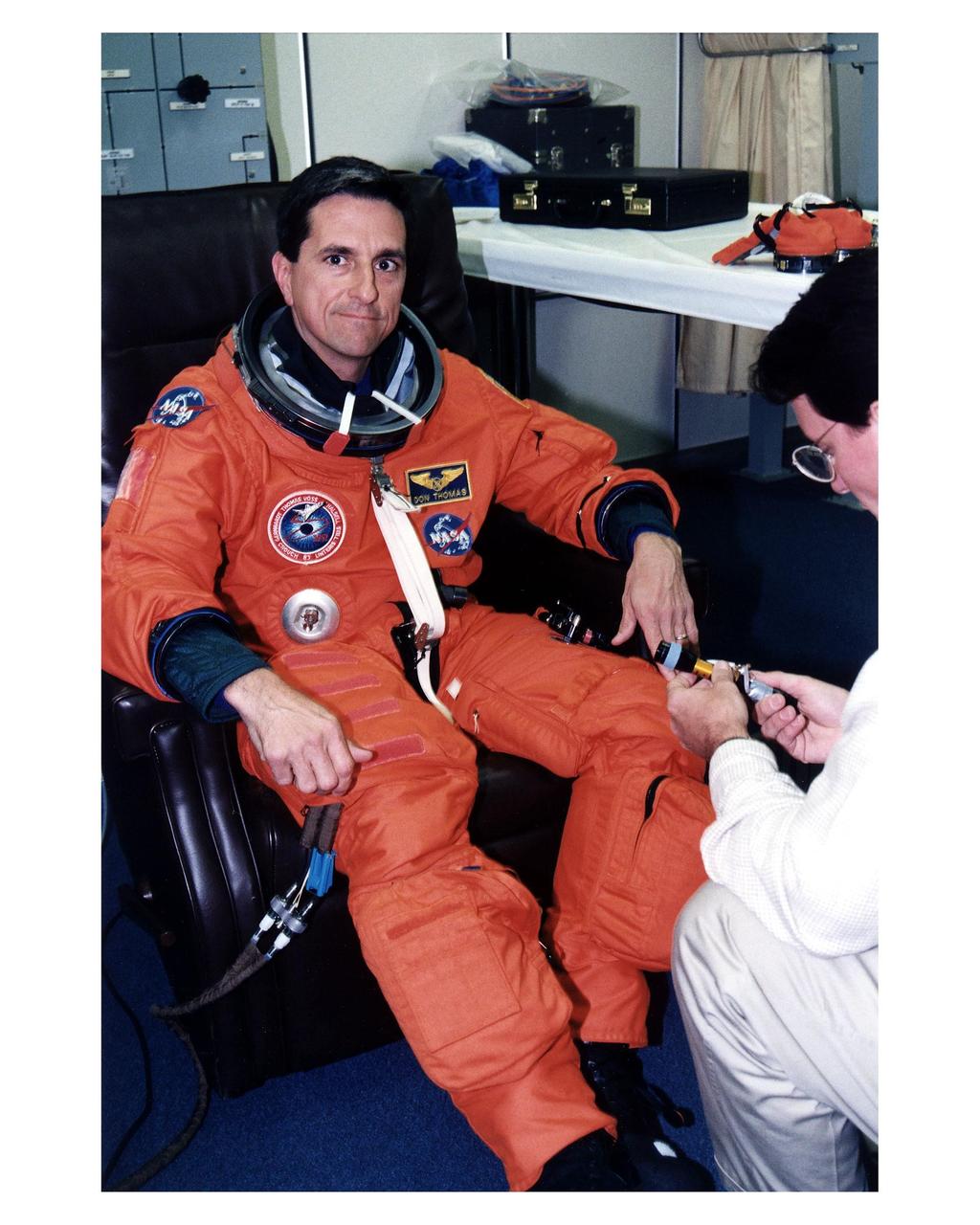
STS-83 Mission Specialist Donald A. Thomas is assisted into his launch/entry suit in the Operations and Checkout (O&C) Building. He has flown on both STS-70 and STS-65. He holds a doctorate in materials science and has been the Principal Investigator for a Space Shuttle crystal growth experiment. Because of his background in materials science, Thomas will be concentrating his efforts during the Red shift on the five experiments in this discipline in the large Isothermal Furnace. He also will work on the ten materials science investigations in the Electromagnetic Containerless Processing Facility and four that will be measuring the effects of microgravity and motion in the orbiter on the experiments. Thomas and six fellow crew members will shortly depart the O&C and head for Launch Pad 39A, where the Space Shuttle Columbia will lift off during a launch window that opens at 2:00 pm EST, April 4
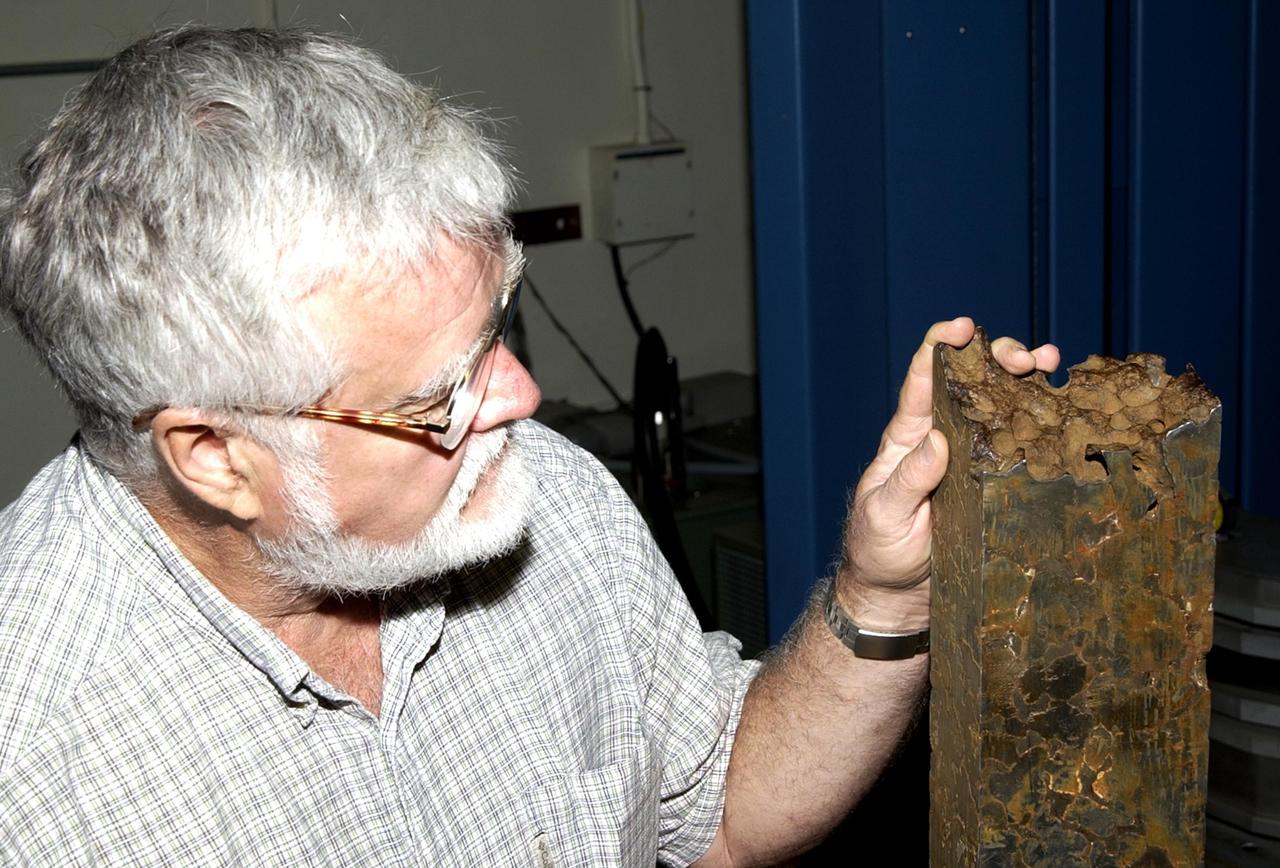
KENNEDY SPACE CENTER, FLA. -- Pete Engel, an engineering specialist in Wyle Laboratory's Nondestructive Testing Laboratory at KSC, explains the testing being performed on a 100-pound Mundrabilla meteorite sample. The one-of-a-kind meteorite was found 36 years ago in Australia and is on loan to Marshall Space Flight Center (MSFC) from the Smithsonian Institution's National Museum of Natural History. Dr. Donald Gillies, discipline scientist for materials science at MSFC's Microgravity Science and Applications Department, is the Principal Investigator. The studies may help provide the science community and industry with fundamental knowledge for use in the design of advanced materials.
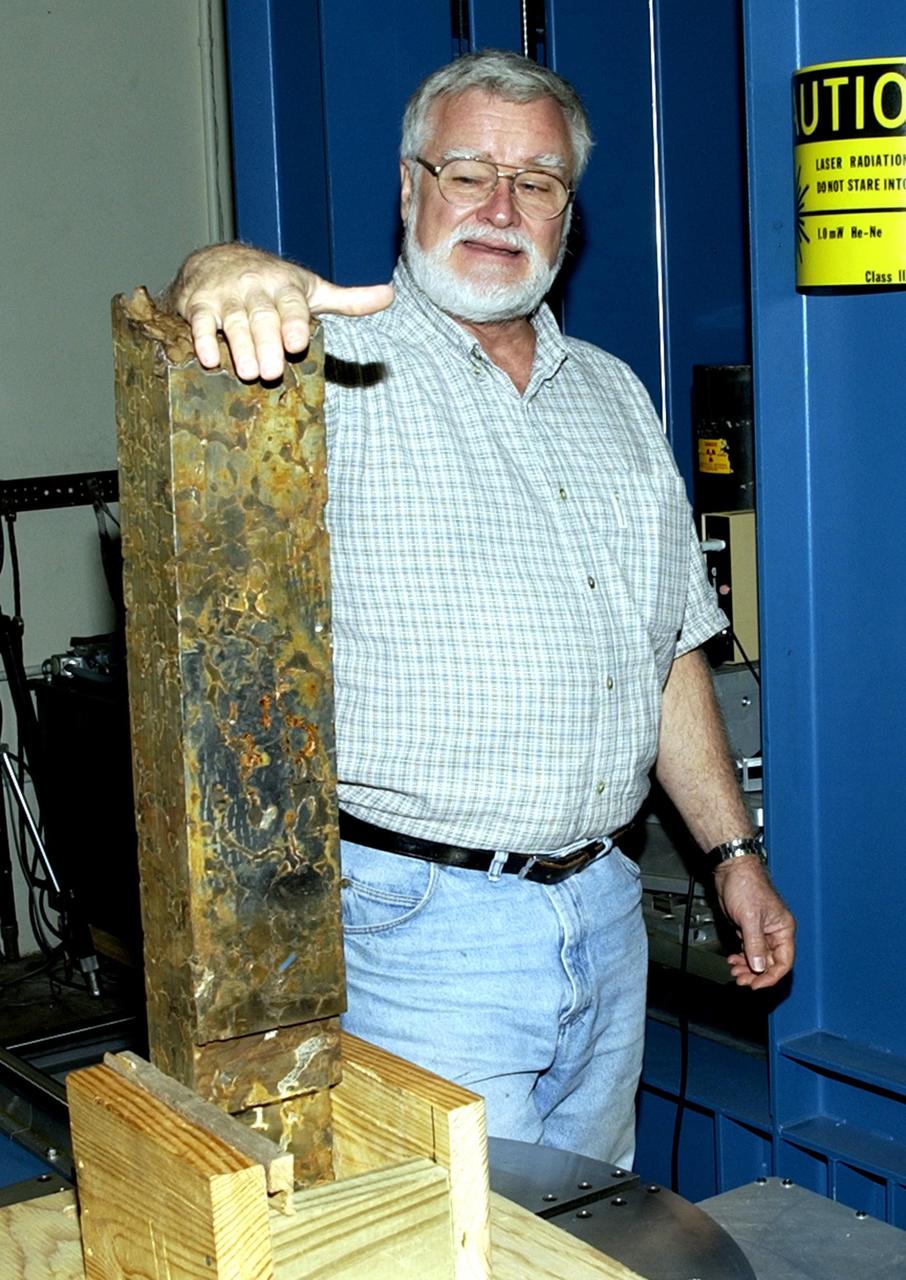
KENNEDY SPACE CENTER, FLA. -- Pete Engel, an engineering specialist in Wyle Laboratory's Nondestructive Testing Laboratory at KSC, explains the testing being performed on a 100-pound Mundrabilla meteorite sample. The one-of-a-kind meteorite was found 36 years ago in Australia and is on loan to Marshall Space Flight Center (MSFC) from the Smithsonian Institution's National Museum of Natural History. Dr. Donald Gillies, discipline scientist for materials science at MSFC's Microgravity Science and Applications Department, is the Principal Investigator. The studies may help provide the science community and industry with fundamental knowledge for use in the design of advanced materials.
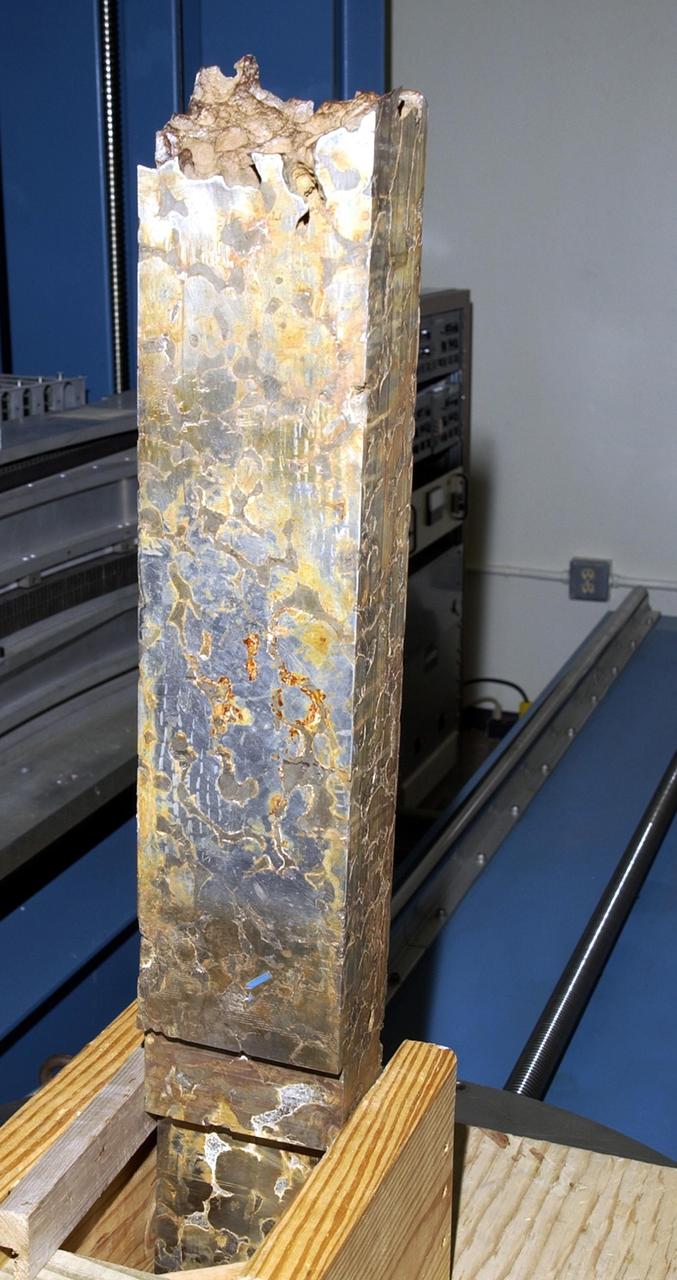
KENNEDY SPACE CENTER, FLA. -- This 100-pound Mundrabilla meteorite sample is being studied in Wyle Laboratory's Nondestructive Testing Laboratory at KSC. The one-of-a-kind meteorite was found 36 years ago in Australia and is on loan to Marshall Space Flight Center (MSFC) from the Smithsonian Institution's National Museum of Natural History. Dr. Donald Gillies, discipline scientist for materials science at MSFC's Microgravity Science and Applications Department, is the Principal Investigator. The studies may help provide the science community and industry with fundamental knowledge for use in the design of advanced materials.
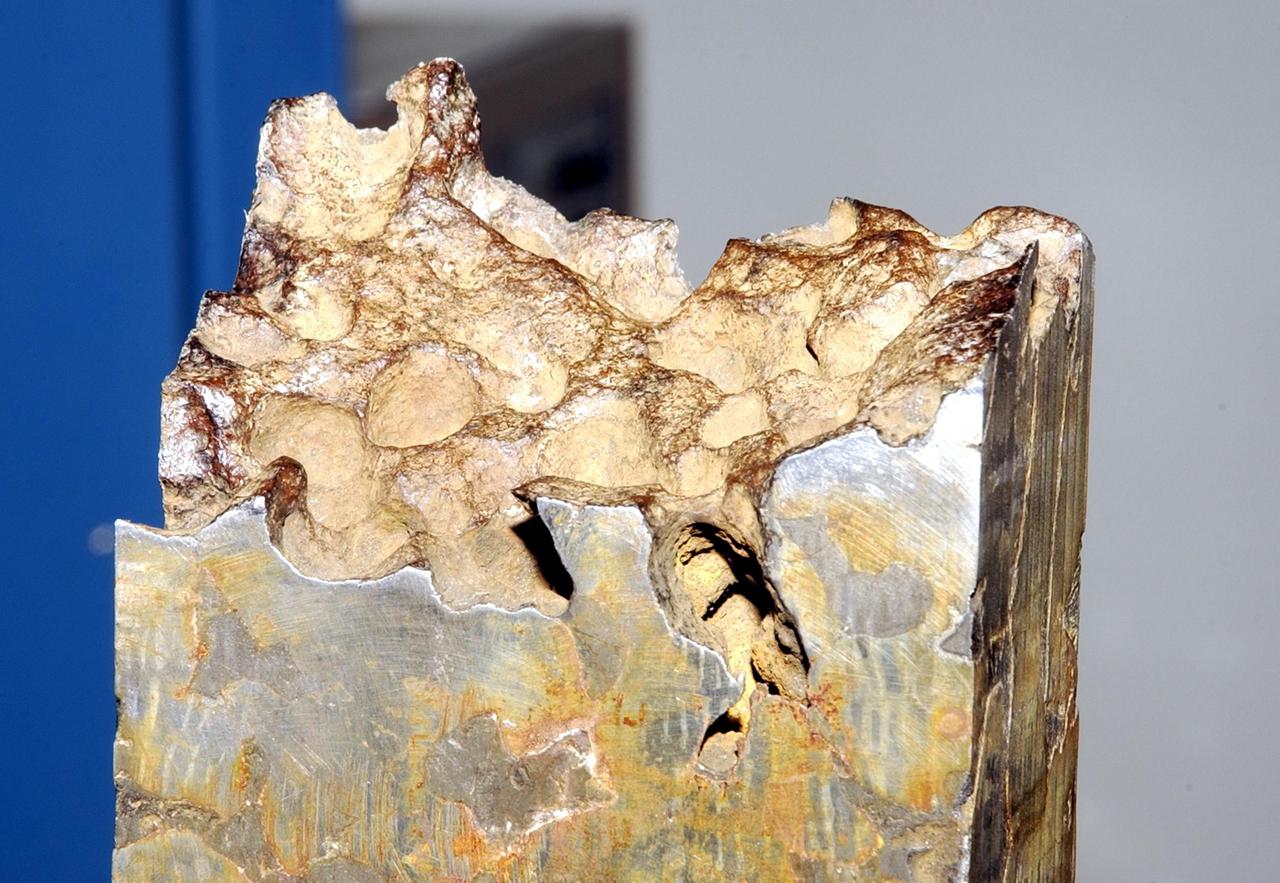
KENNEDY SPACE CENTER, FLA. -- This 100-pound Mundrabilla meteorite sample is being studied in Wyle Laboratory's Nondestructive Testing Laboratory at KSC. The one-of-a-kind meteorite was found 36 years ago in Australia and is on loan to Marshall Space Flight Center (MSFC) from the Smithsonian Institution's National Museum of Natural History. Dr. Donald Gillies, discipline scientist for materials science at MSFC's Microgravity Science and Applications Department, is the Principal Investigator. The studies may help provide the science community and industry with fundamental knowledge for use in the design of advanced materials.
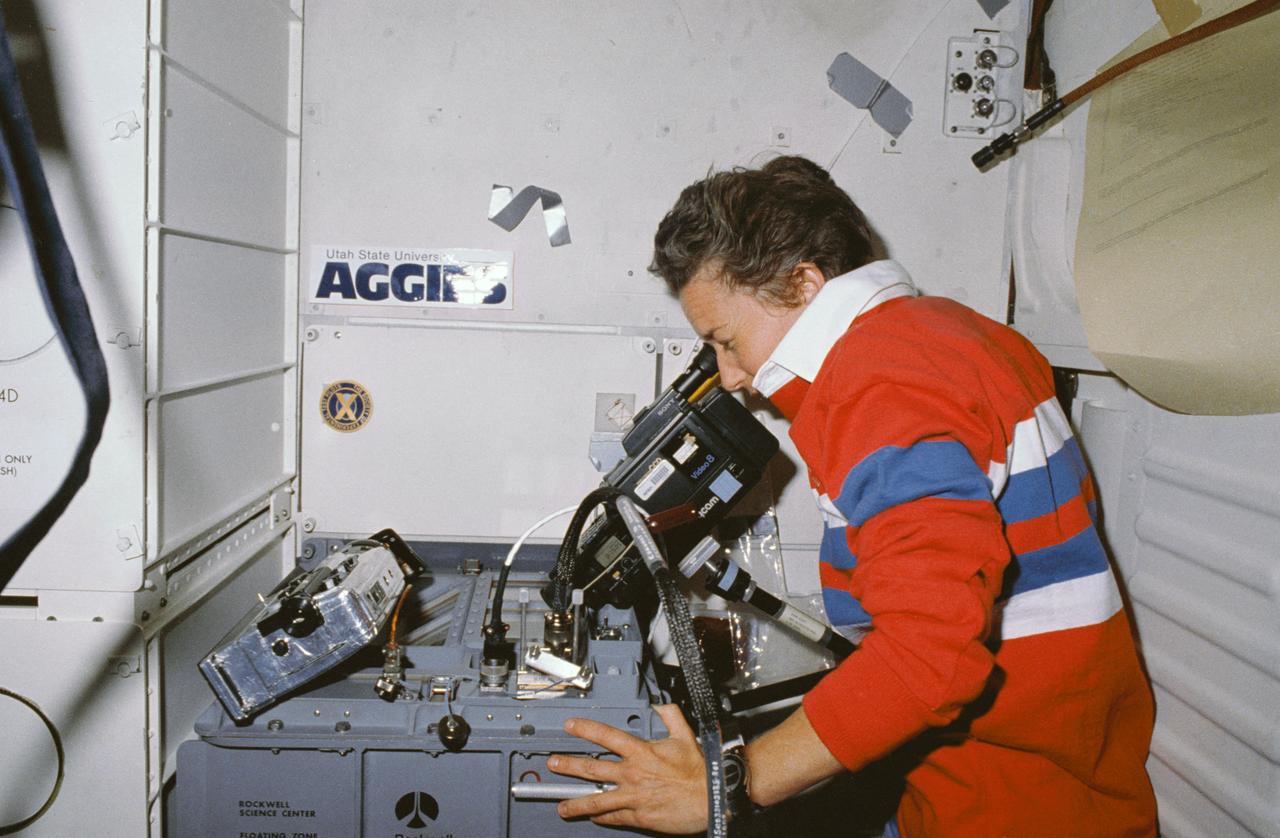
STS030-10-002 (8 May 1989) --- STS-30 Mission Specialist Mary L. Cleave operates 8mm video camcorder at Fluids Experiment Apparatus 2 (FEA-2) (SK73-000102) unit located in aft middeck locker onboard Atlantis, Orbiter Vehicle (OV) 103. Two 8mm video camcorders are positioned above FEA-2 unit to record experiment titled "Floating Zone Crystal Growth and Purification". Rockwell International (RI) through its Space Transportation Systems Division, Downey, California, is engaged in a joint endeavor agreement (JEA) with NASA's Office of Commercial Programs in the field for floating zone crystal growth research. Utah State University Aggies decal appears on aft bulkhead above FEA-2 unit.
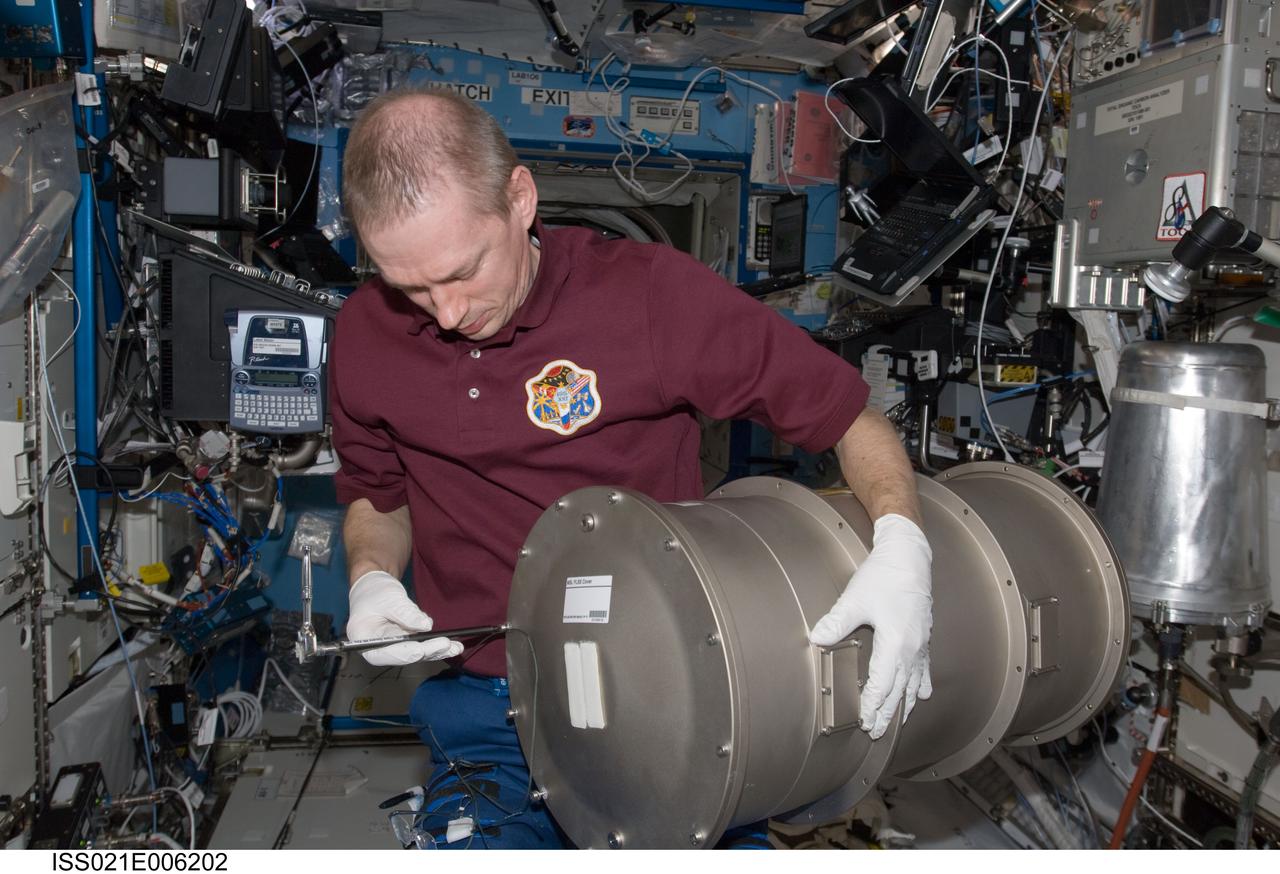
ISS021-E-006202 (14 Oct. 2009) --- European Space Agency astronaut Frank De Winne, Expedition 21 commander, works with Materials Science Laboratory (MSL) hardware in the Destiny laboratory of the International Space Station.
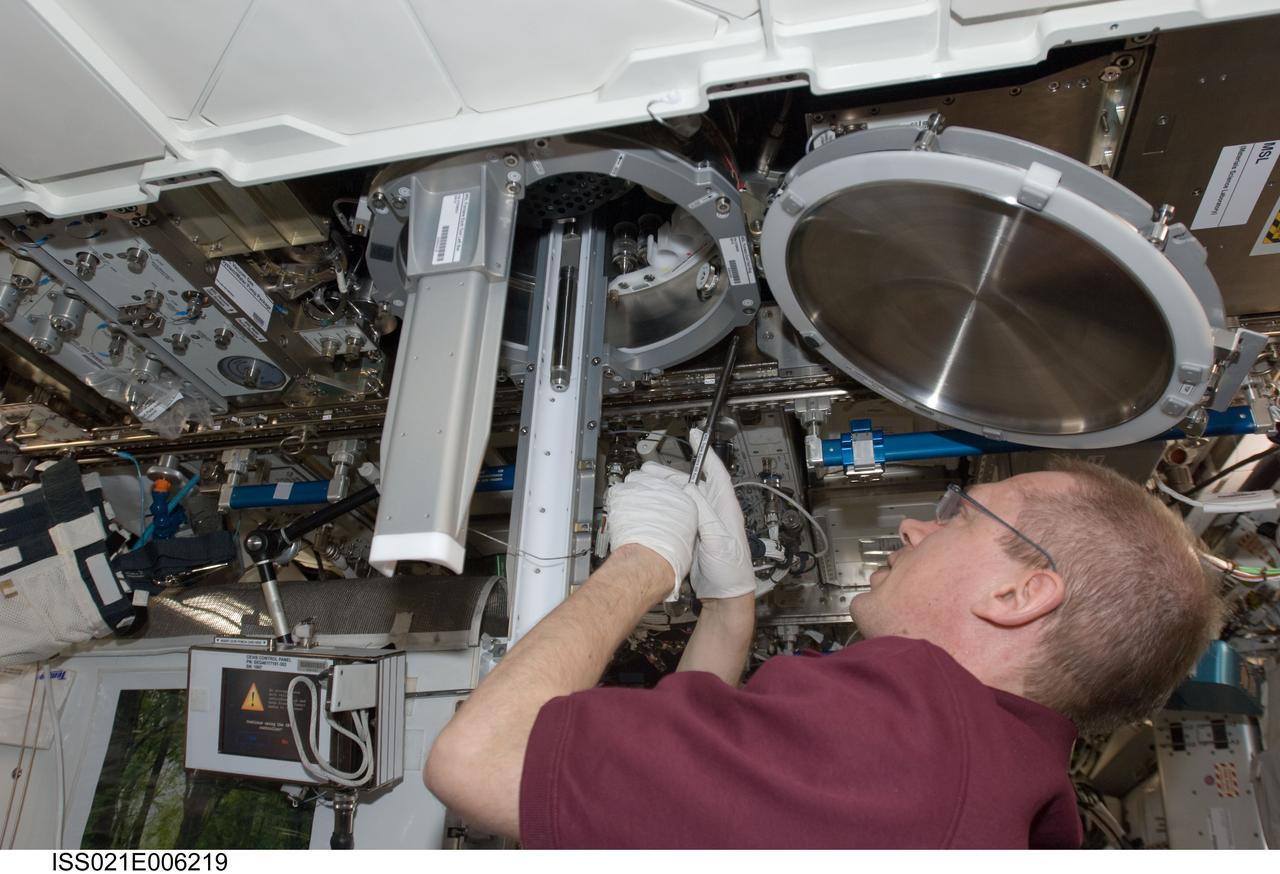
ISS021-E-006219 (14 Oct. 2009) --- European Space Agency astronaut Frank De Winne, Expedition 21 commander, works with Materials Science Laboratory (MSL) hardware in the Destiny laboratory of the International Space Station.
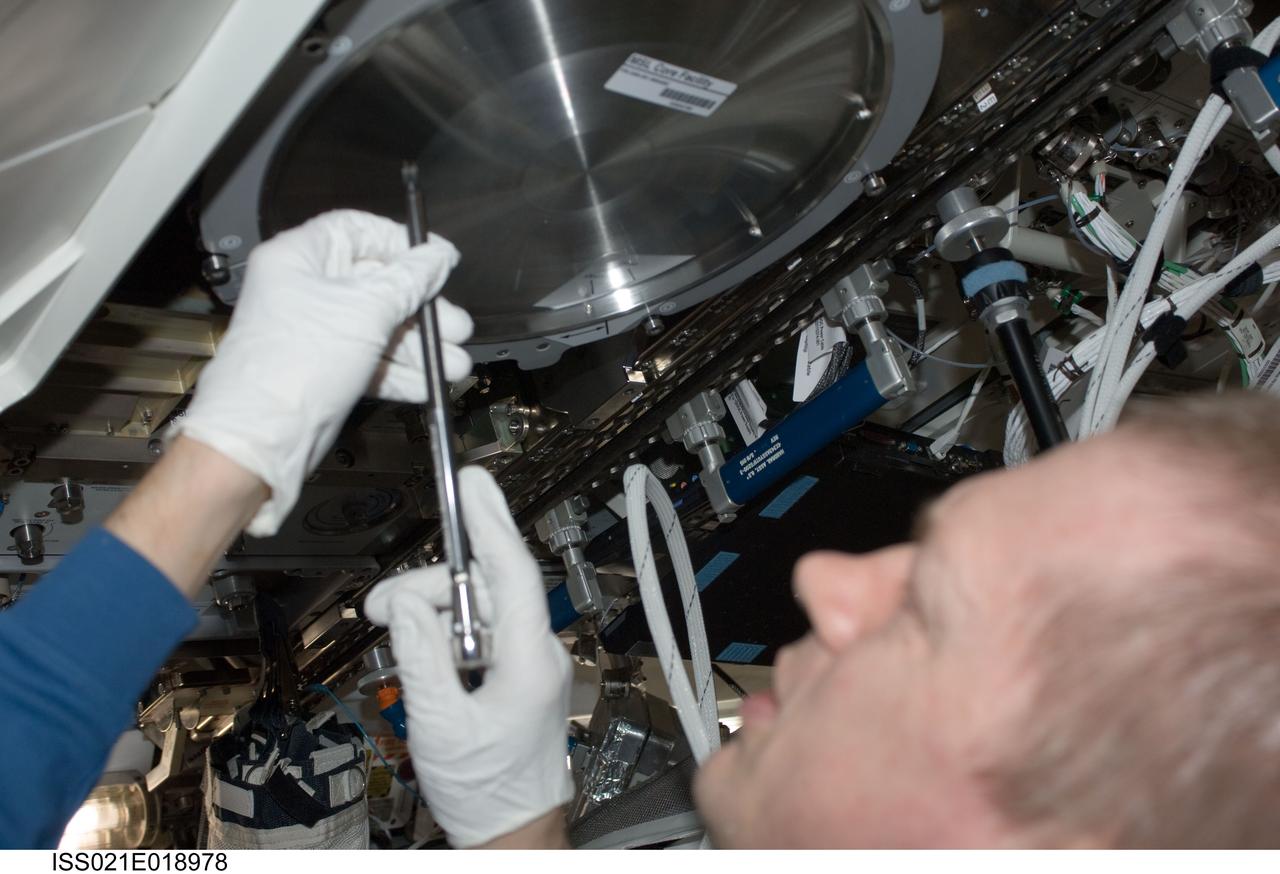
ISS021-E-018978 (2 Nov. 2009) --- European Space Agency astronaut Frank De Winne, Expedition 21 commander, works with Materials Science Laboratory (MSL) hardware in the Destiny laboratory of the International Space Station.
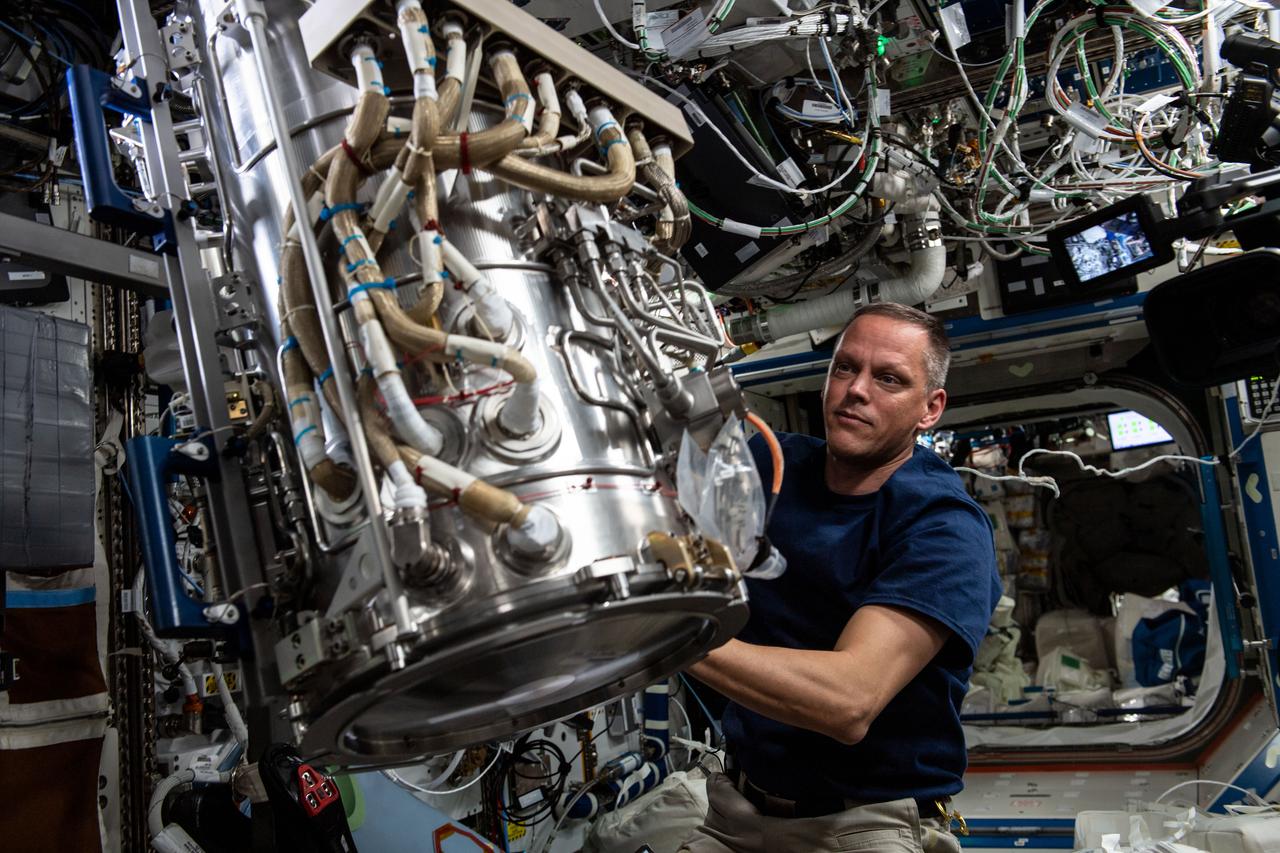
iss067e189903 (July 20, 2022) --- NASA astronaut and Expedition 67 Flight Engineer Bob Hines works to remove and replace the Material Science Laboratory's vacuum sensor inside the International Space Station's U.S. Destiny laboratory module.
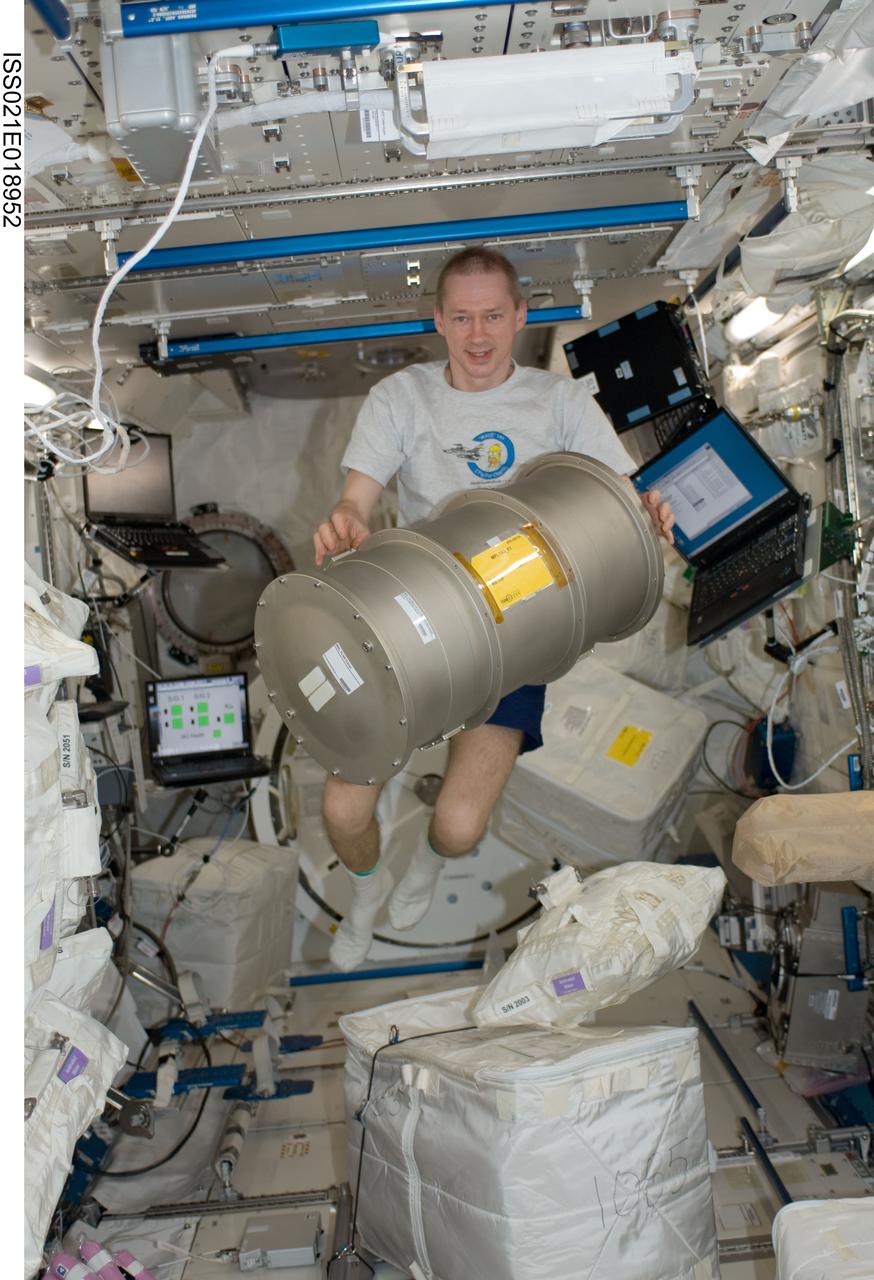
ISS021-E-018952 (14 Oct. 2009) --- European Space Agency astronaut Frank De Winne, Expedition 21 commander, is pictured with Materials Science Laboratory (MSL) hardware in the Kibo laboratory of the International Space Station.
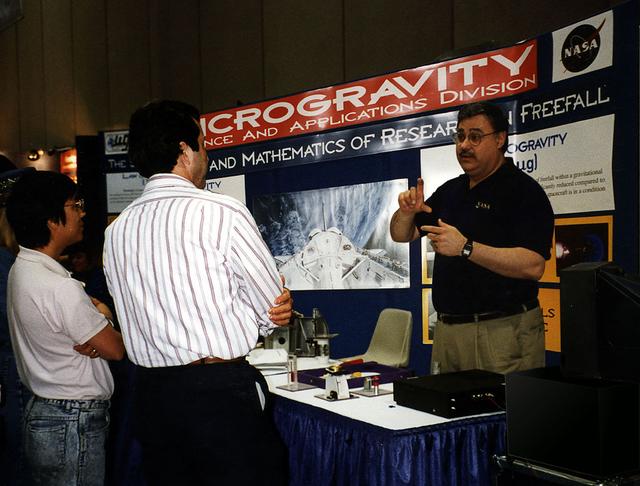
Dr. Michael Wargo, program scientist for materials science at NASA headquarters, explains the math and physics principles associated with freefall research to attendees at the arnual conference of the National Council of Teachers of Mathematics.
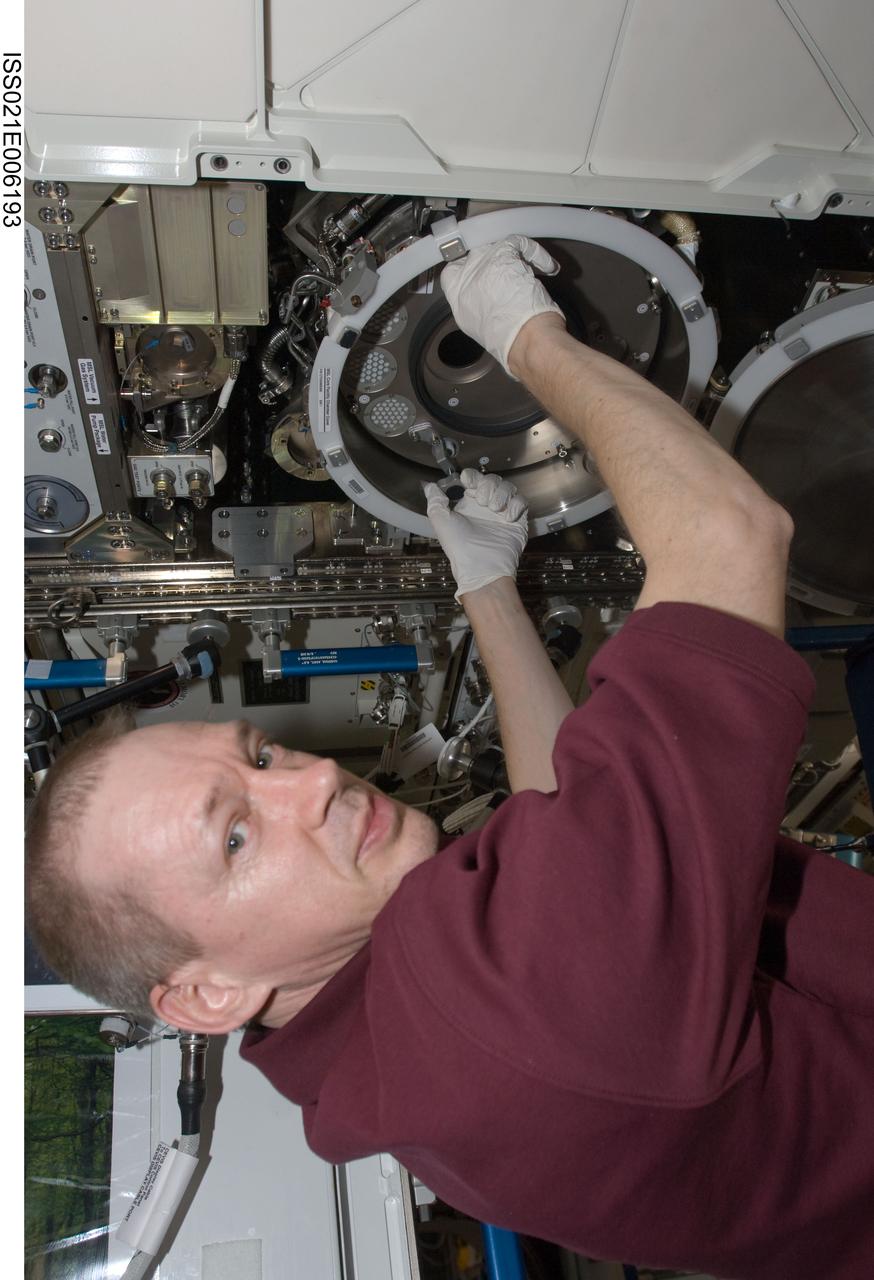
ISS021-E-006193 (14 Oct. 2009) --- European Space Agency astronaut Frank De Winne, Expedition 21 commander, works with a Materials Science Laboratory (MSL) chamber in the Destiny laboratory of the International Space Station.
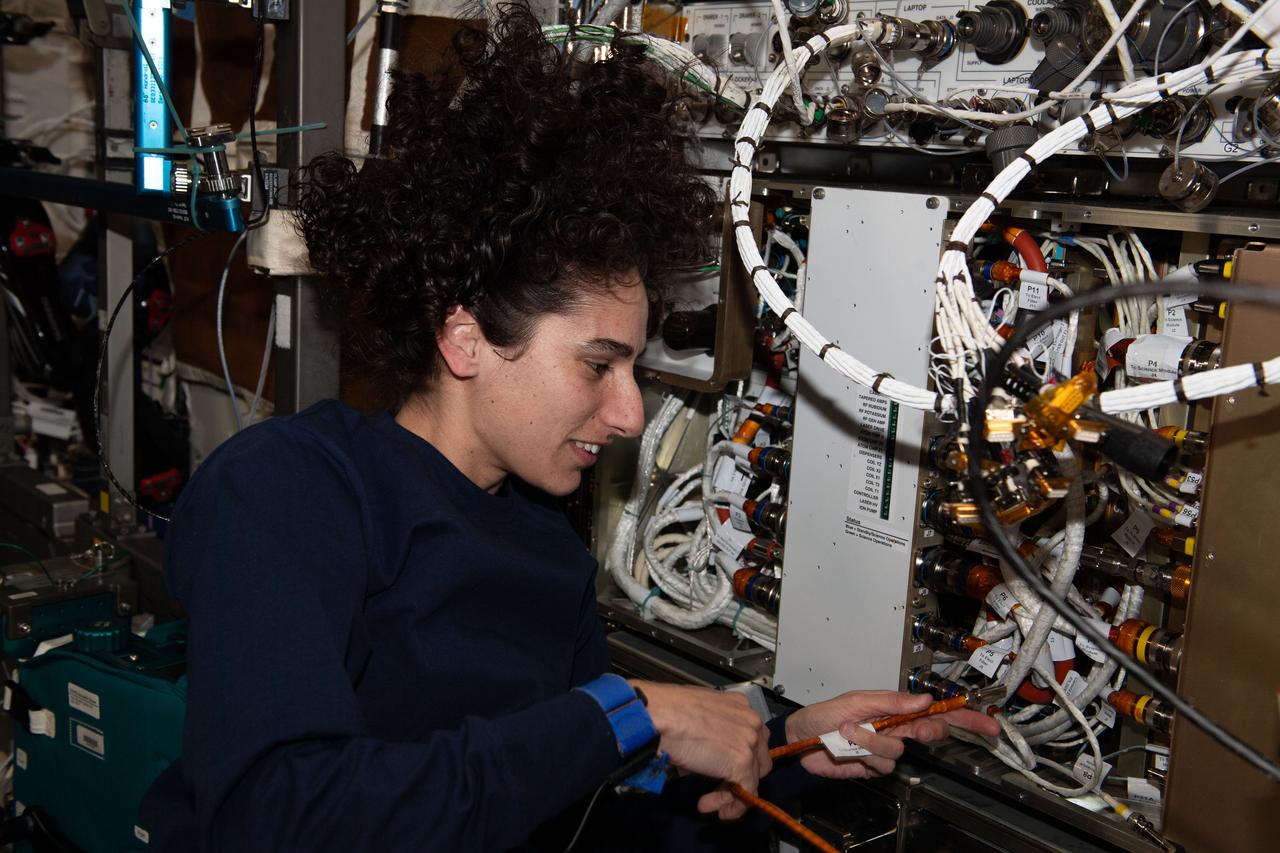
iss070e030810 (Nov. 27, 2023) --- NASA astronaut and Expedition 70 Flight Engineer Jasmin Moghbeli works on the Materials Science Laboratory, a physics research facility, located in the International Space Station's Destiny laboratory module.

iss065e148265 (June 28, 2021) --- NASA astronaut and Expedition 65 Flight Engineer Shane Kimbrough sets up the Microgravity Science Glovebox for the InSpace-4 physics study that will explore advanced materials and manufacturing techniques.
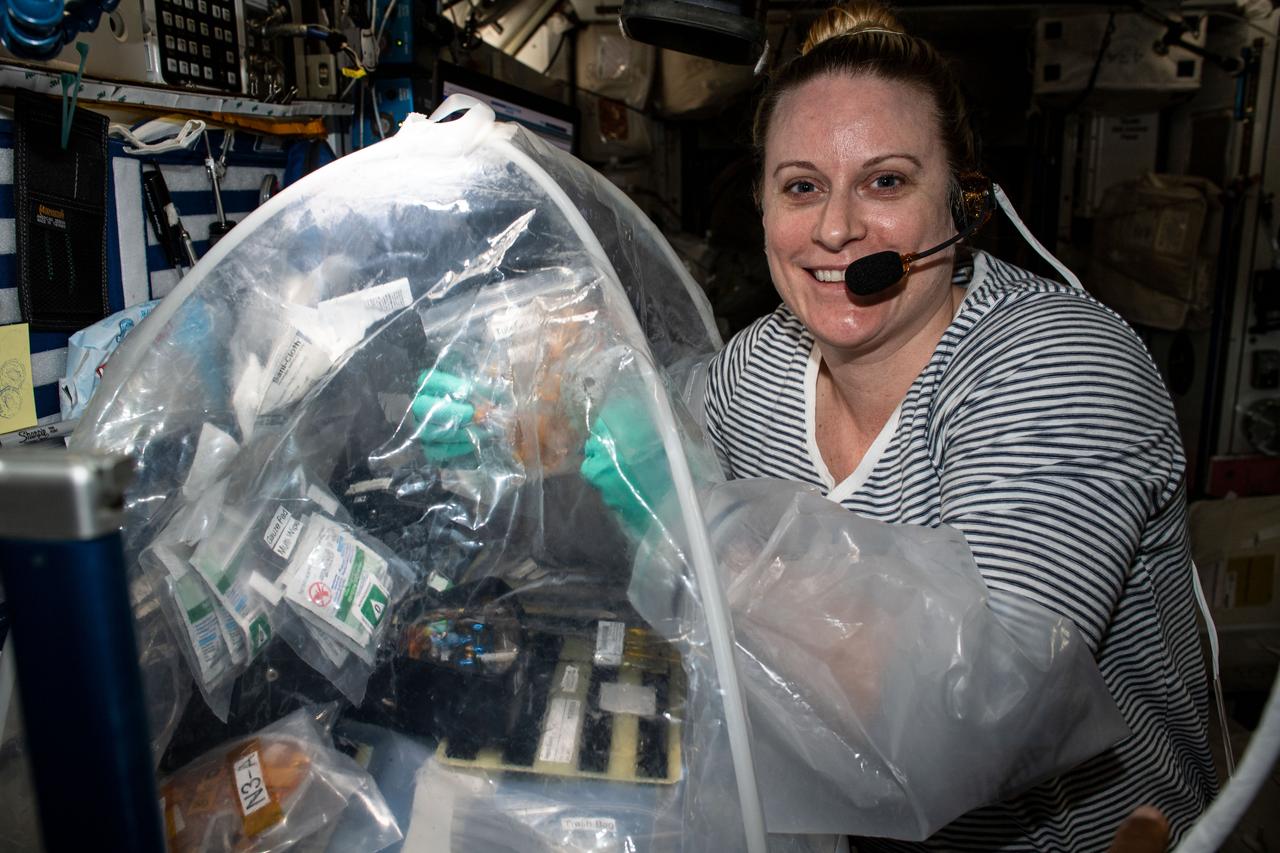
iss064e016824 (Dec. 30, 2020) --- NASA astronaut Kate Rubins is pictured conducting science operations inside the portable glovebox to contain the accidental spillage of materials and prevent exposing the International Space Station's environment to biological samples.
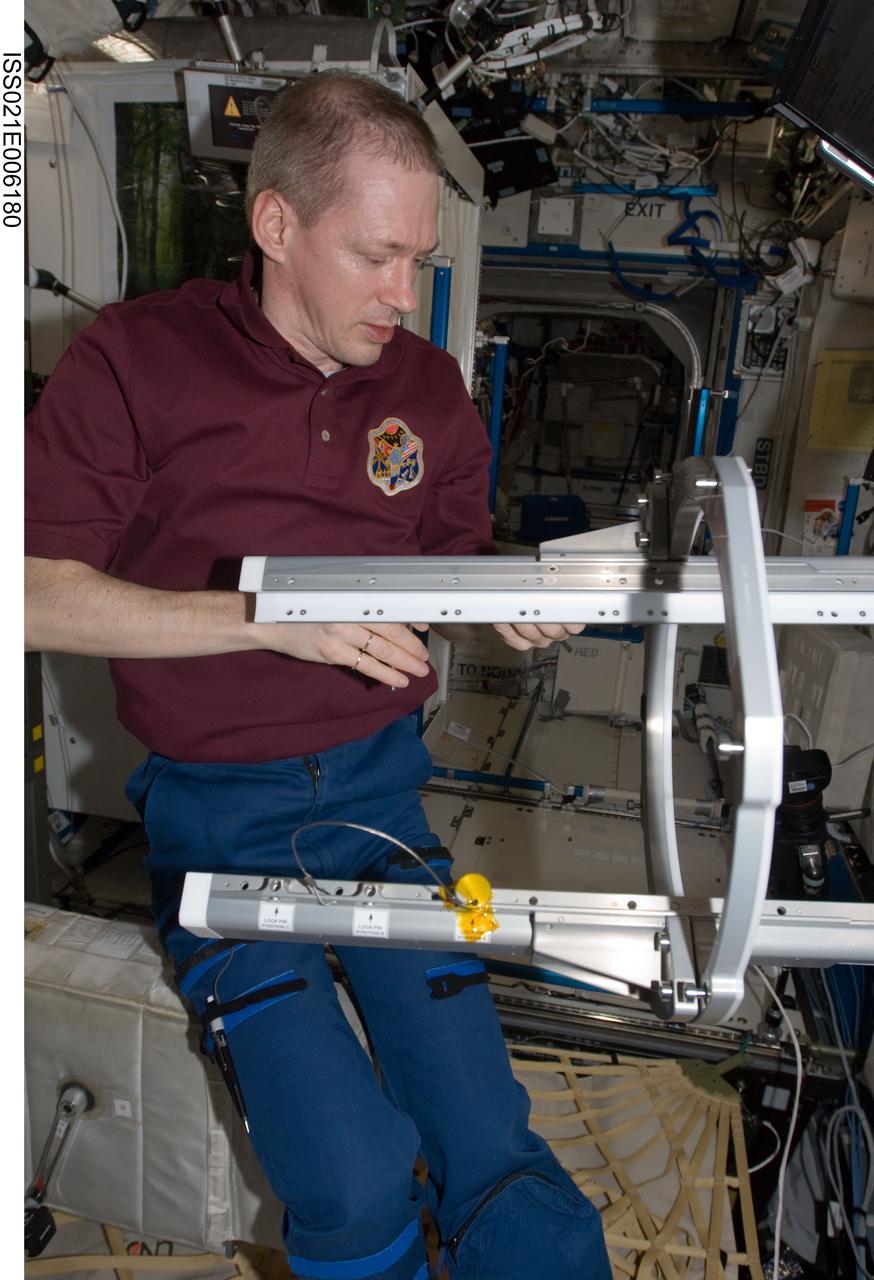
ISS021-E-006180 (14 Oct. 2009) --- European Space Agency astronaut Frank De Winne, Expedition 21 commander, works with Materials Science Laboratory (MSL) hardware in the Destiny laboratory of the International Space Station.
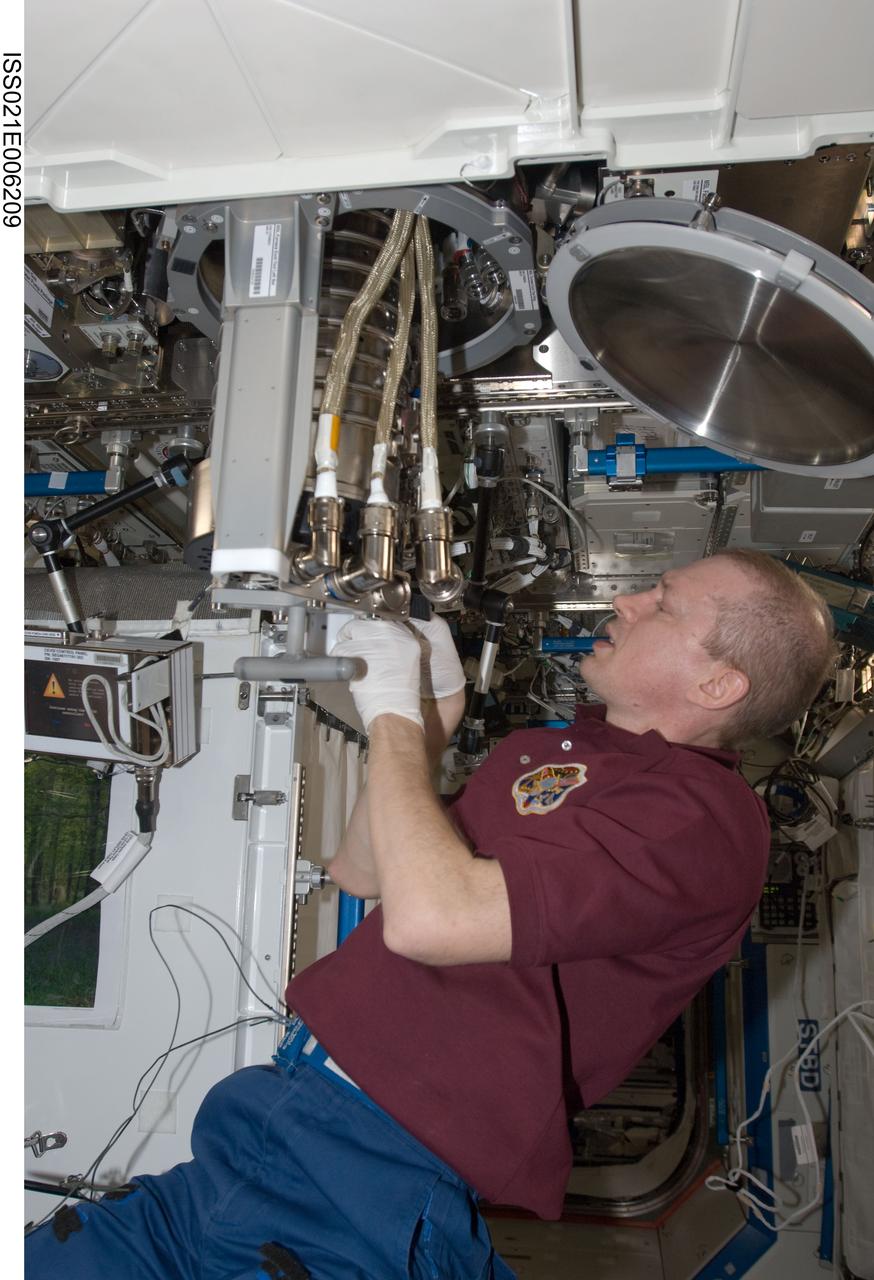
ISS021-E-006209 (14 Oct. 2009) --- European Space Agency astronaut Frank De Winne, Expedition 21 commander, works with Materials Science Laboratory (MSL) hardware in the Destiny laboratory of the International Space Station.
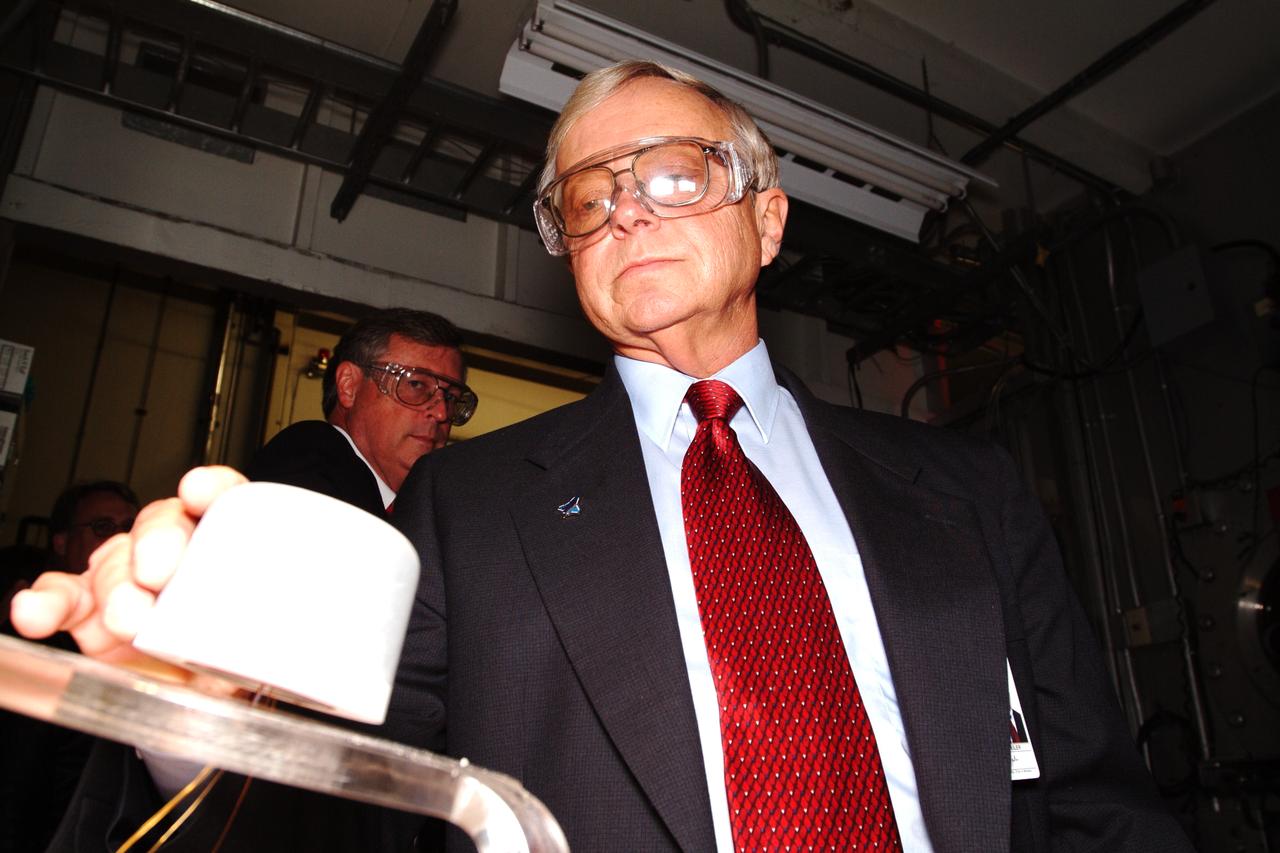
NASA Space Science Advisory Committee Chairman Ed Wiler visit to Ames Research Center: checks out test material while on tour of the Arc Jet Facility
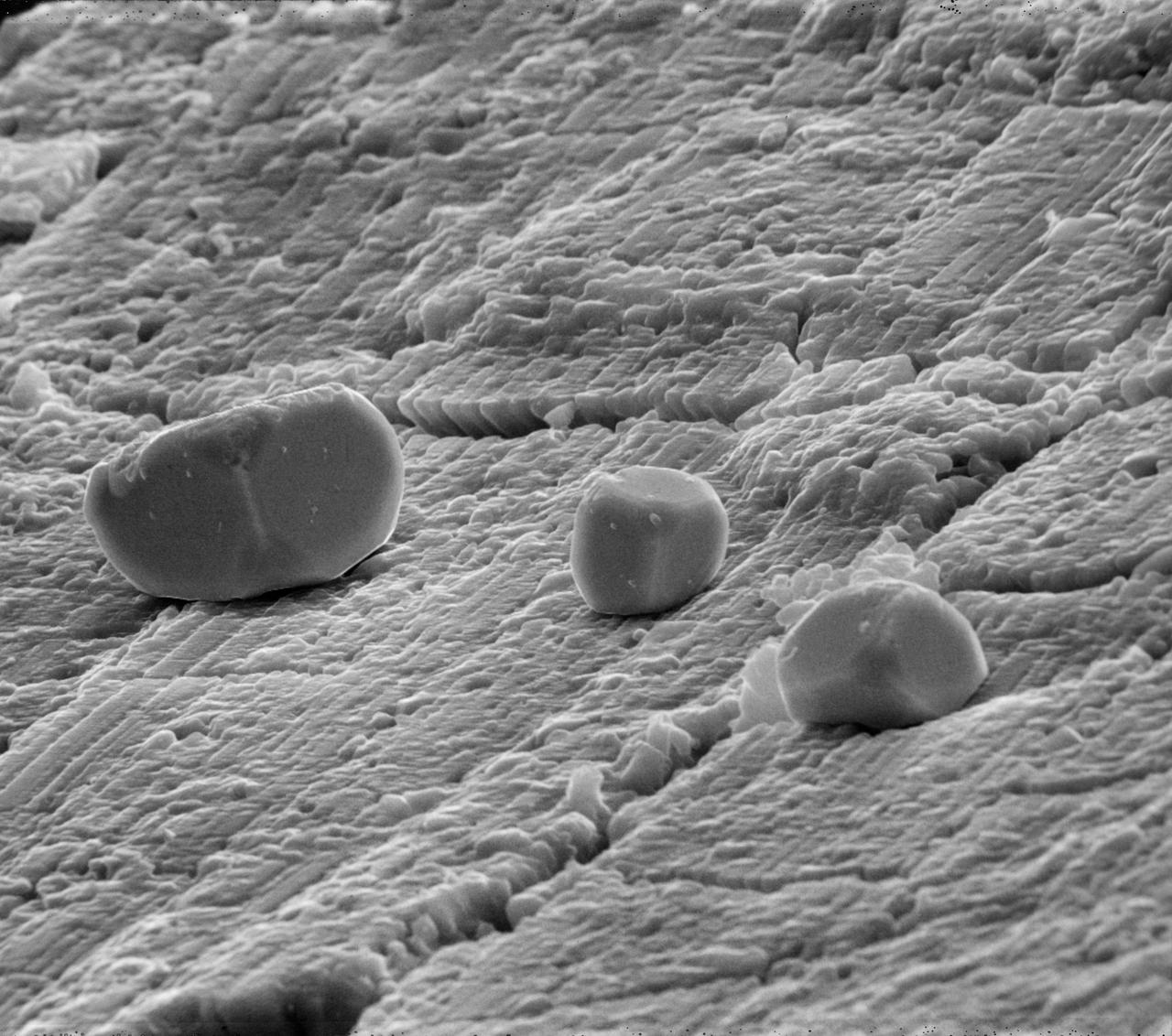
PHOTOMICROPHOTOGRAPHY -GEOLOGY (SEM) High magnification and resolution views of lunar, meteorite and terrestrial materials using the Scanning Electron MIcroscope (SEM), Bldg. 31 Planetary and Earth Science Laboratory.

ISS021-E-006196 (14 Oct. 2009) --- European Space Agency astronaut Frank De Winne, Expedition 21 commander, works with Materials Science Laboratory (MSL) hardware in the Destiny laboratory of the International Space Station.
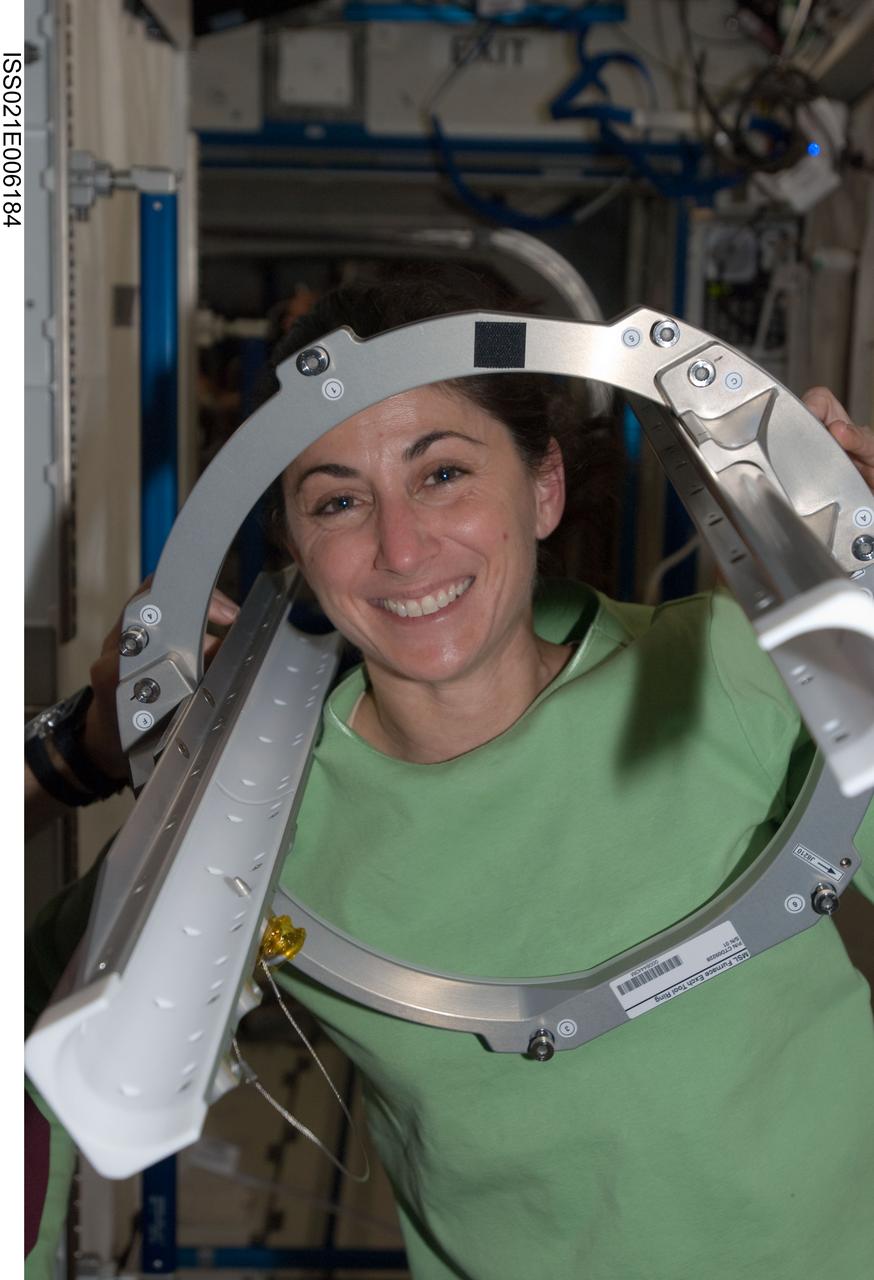
ISS021-E-006184 (14 Oct. 2009) --- NASA astronaut Nicole Stott, Expedition 21 flight engineer, works with Materials Science Laboratory (MSL) hardware in the Destiny laboratory of the International Space Station.
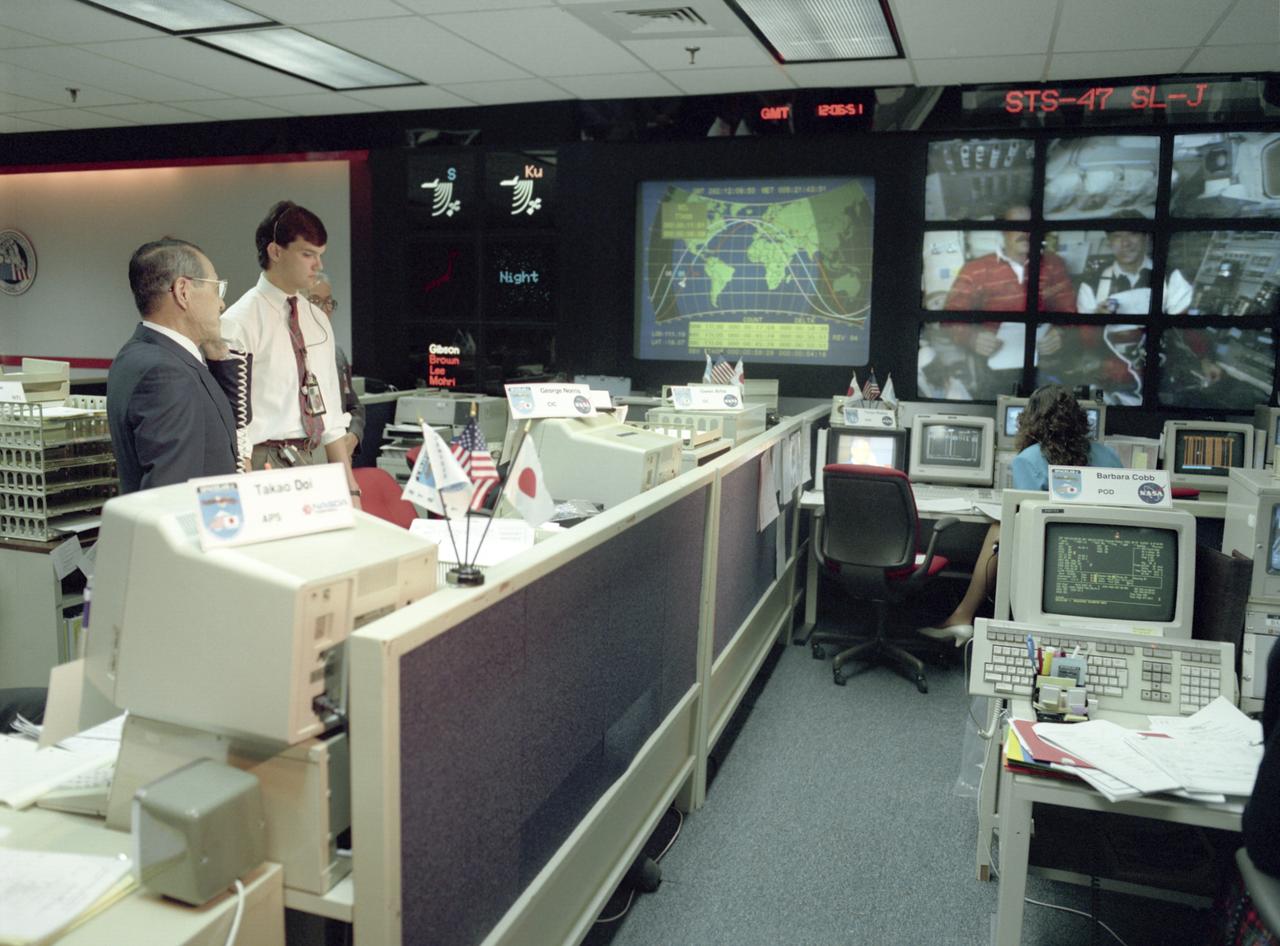
The science laboratory, Spacelab-J (SL-J), flown aboard the STS-47 flight was a joint venture between NASA and the National Space Development Agency of Japan (NASDA) utilizing a manned Spacelab module. The mission conducted 24 materials science and 20 life science experiments, of which 35 were sponsored by NASDA, 7 by NASA, and two collaborative efforts. Materials science investigations covered such fields as biotechnology, electronic materials, fluid dynamics and transport phenomena, glasses and ceramics, metals and alloys, and acceleration measurements. Life sciences included experiments on human health, cell separation and biology, developmental biology, animal and human physiology and behavior, space radiation, and biological rhythms. Test subjects included the crew, Japanese koi fish (carp), cultured animal and plant cells, chicken embryos, fruit flies, fungi and plant seeds, and frogs and frog eggs. From the Huntsville Operations Support Center (HOSC) Spacelab Payload Operations Control Center (SL POCC), NASDA President, Mr. Yamano, speaks to Payload Specialist Mamoru Mohri, a Japanese crew member aboard the STS-47 Spacelab J mission.
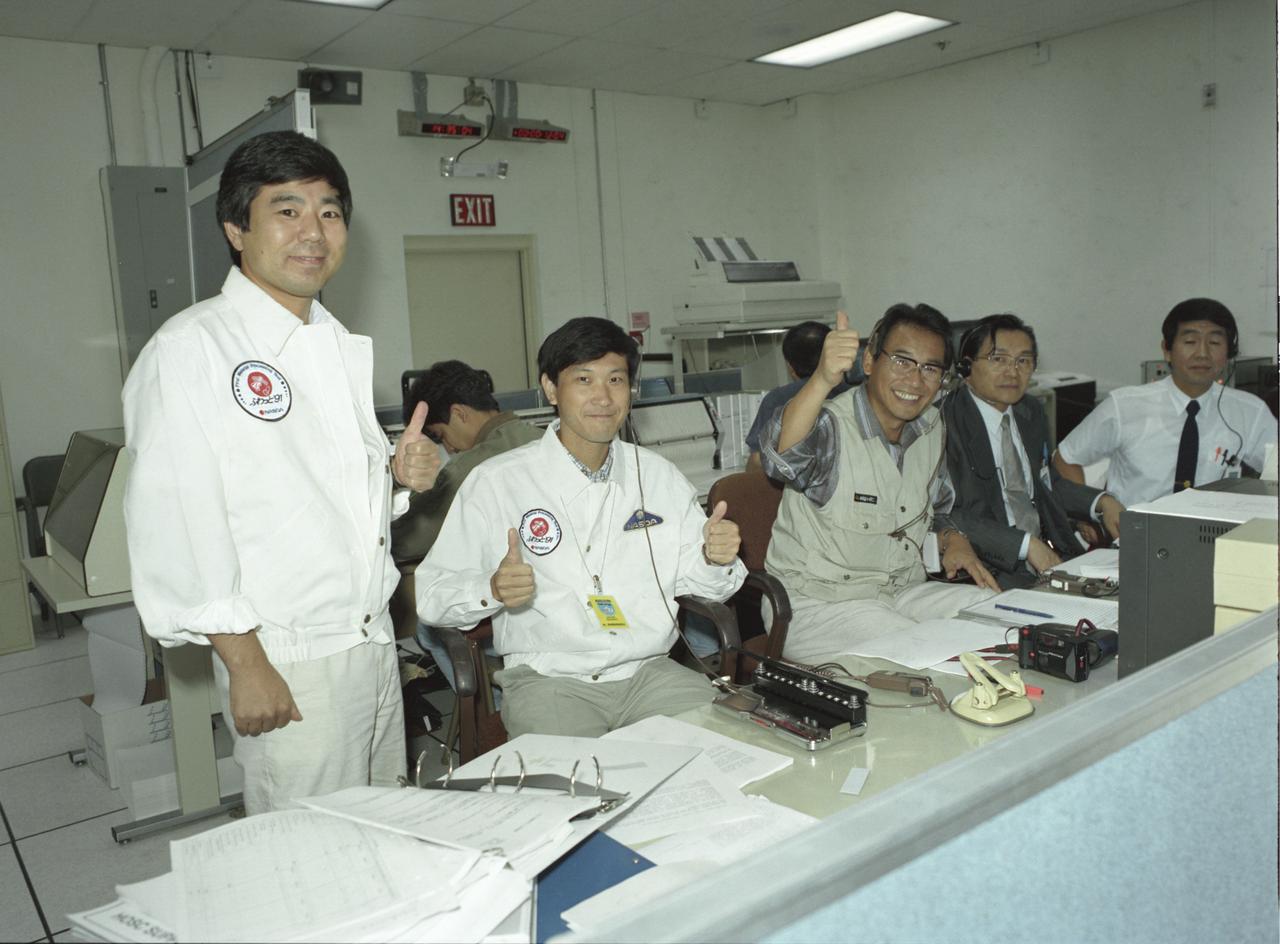
The group of Japanese researchers of the Spacelab-J (SL-J) were thumbs-up in the Payload Operations Control Center (POCC) at the Marshall Space Flight Center after the successful launch of Space Shuttle Orbiter Endeavour that carried their experiments. The SL-J was a joint mission of NASA and the National Space Development Agency of Japan (NASDA) utilizing a marned Spacelab module. The mission conducted microgravity investigations in materials and life sciences. Materials science investigations covered such fields as biotechnology, electronic materials, fluid dynamics and transport phenomena, glasses and ceramics, metals and alloys, and acceleration measurements. Life sciences included experiments on human health, cell separation and biology, developmental biology, animal and human physiology and behavior, space radiation, and biological rhythms. Test subjects included the crew, Japanese koi fish (carp), cultured animal and plant cells, chicken embryos, fruit flies, fungi and plant seeds, frogs, and frog eggs. The POCC was the air/ground communications channel between the astronauts and ground control teams during the Spacelab missions. The Spacelab science operations were a cooperative effort between the science astronaut crew in orbit and their colleagues in the POCC. Spacelab-J was launched aboard the Space Shuttle Orbiter Endeavour on September 12, 1992.
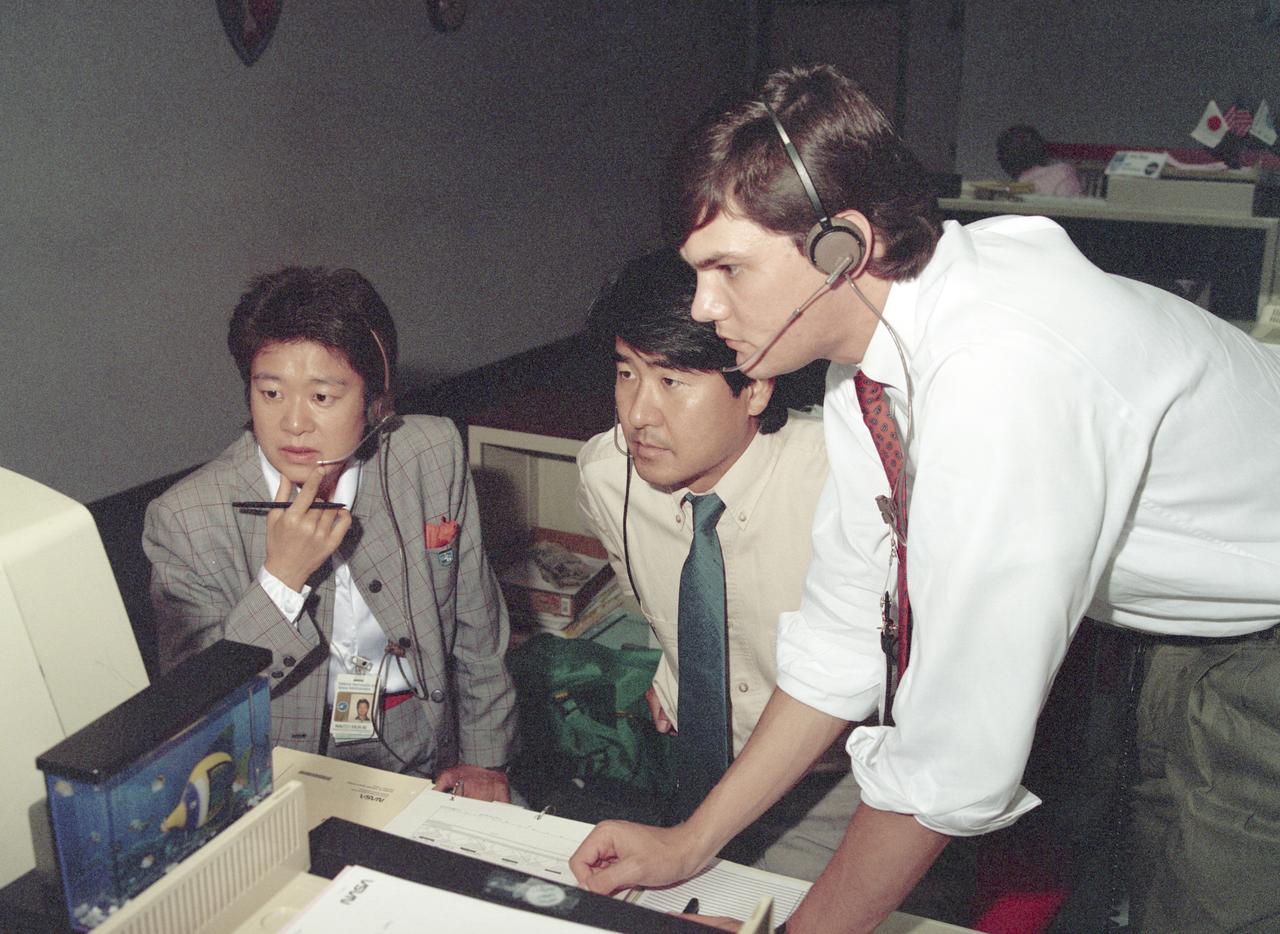
The science laboratory, Spacelab-J (SL-J), flown aboard the STS-47 flight was a joint venture between NASA and the National Space Development Agency of Japan (NASDA) utilizing a manned Spacelab module. The mission conducted 24 materials science and 20 life science experiments, of which 35 were sponsored by NASDA, 7 by NASA, and two collaborative efforts. Materials science investigations covered such fields as biotechnology, electronic materials, fluid dynamics and transport phenomena, glasses and ceramics, metals and alloys, and acceleration measurements. Life sciences included experiments on human health, cell separation and biology, developmental biology, animal and human physiology and behavior, space radiation, and biological rhythms. Test subjects included the crew, Japanese koi fish (carp), cultured animal and plant cells, chicken embryos, fruit flies, fungi and plant seeds, and frogs and frog eggs. Pictured along with George Norris in the Huntsville Operations Support Center (HOSC) Spacelab Payload Operations Control Center (SL POCC) at Marshall Space Flight Center (MSFC) are NASDA alternate payload specialists Dr. Doi and Dr. Mukai.
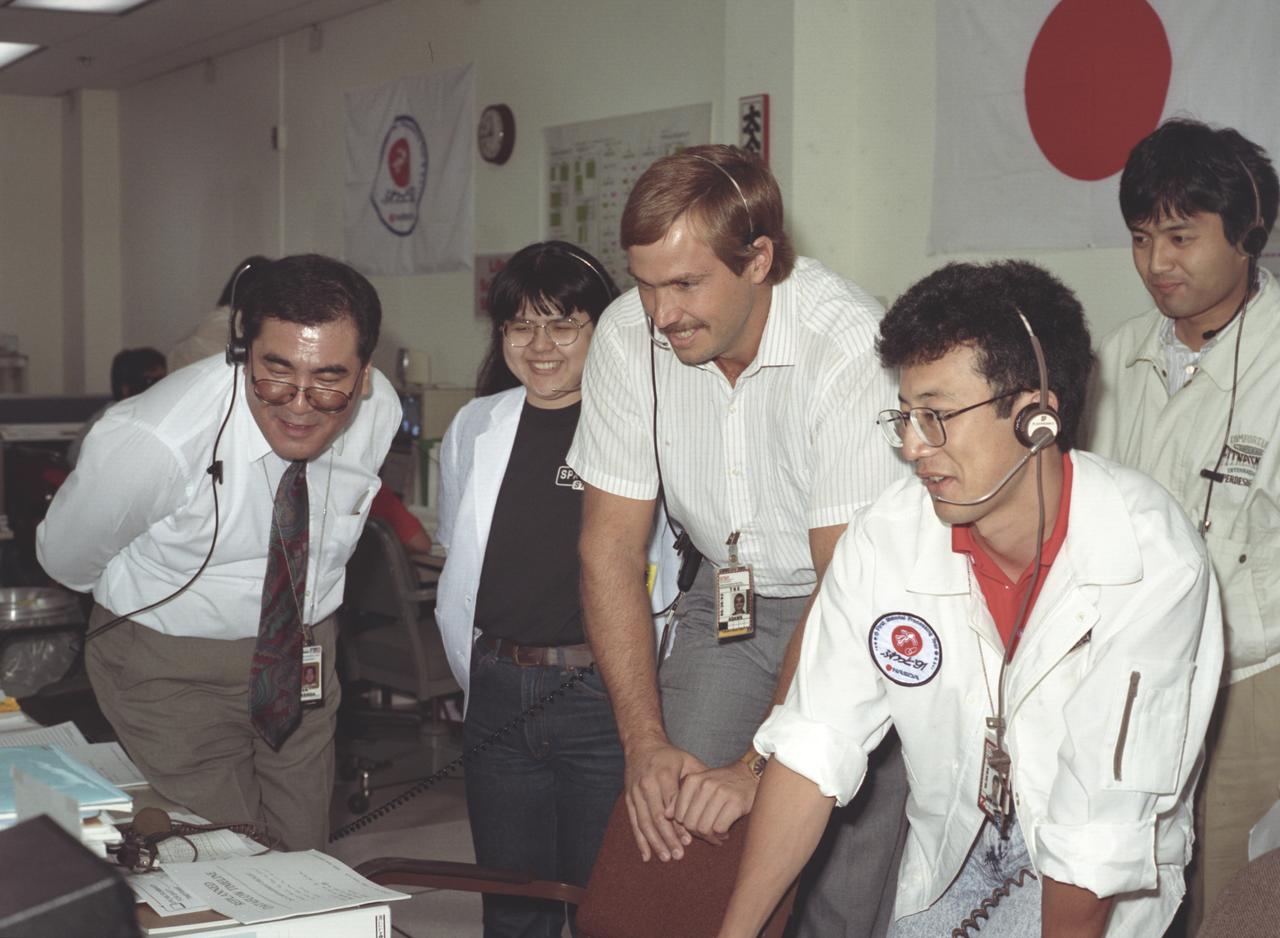
The science laboratory, Spacelab-J (SL-J), flown aboard the STS-47 flight was a joint venture between NASA and the National Space Development Agency of Japan (NASDA) utilizing a manned Spacelab module. The mission conducted 24 materials science and 20 life science experiments, of which 35 were sponsored by NASDA, 7 by NASA, and two collaborative efforts. Materials science investigations covered such fields as biotechnology, electronic materials, fluid dynamics and transport phenomena, glasses and ceramics, metals and alloys, and acceleration measurements. Life sciences included experiments on human health, cell separation and biology, developmental biology, animal and human physiology and behavior, space radiation, and biological rhythms. Test subjects included the crew, Japanese koi fish (carp), cultured animal and plant cells, chicken embryos, fruit flies, fungi and plant seeds, and frogs and frog eggs. Featured together in joint ground activities during the SL-J mission are NASA/NASDA personnel at the Huntsville Operations Support Center (HOSC) Spacelab Payload Operations Control Center (SL POCC) at Marshall Space Flight Center (MSFC).
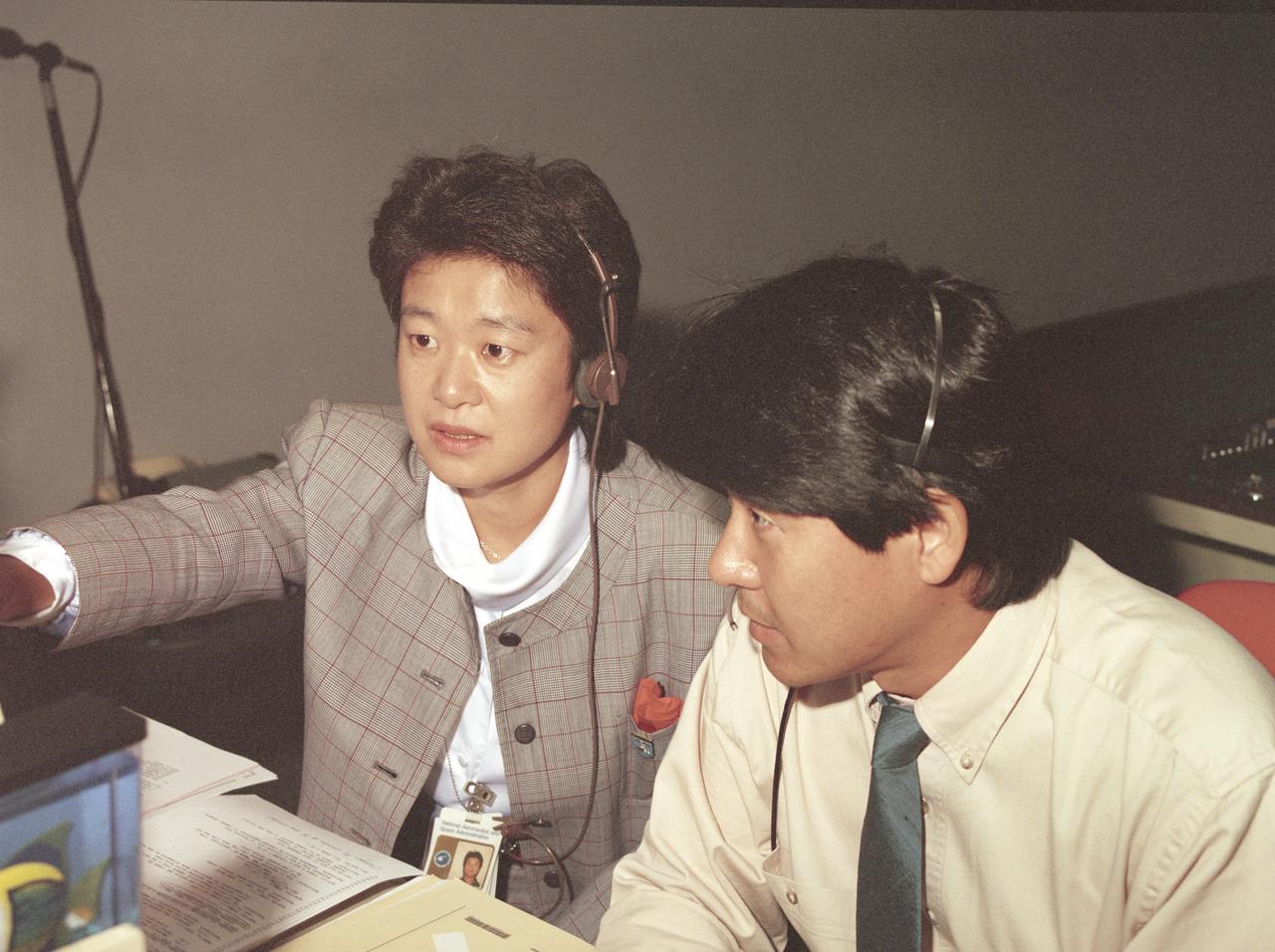
The science laboratory, Spacelab-J (SL-J), flown aboard the STS-47 flight was a joint venture between NASA and the National Space Development Agency of Japan (NASDA) utilizing a manned Spacelab module. The mission conducted 24 materials science and 20 life science experiments, of which 35 were sponsored by NASDA, 7 by NASA, and two collaborative efforts. Materials science investigations covered such fields as biotechnology, electronic materials, fluid dynamics and transport phenomena, glasses and ceramics, metals and alloys, and acceleration measurements. Life sciences included experiments on human health, cell separation and biology, developmental biology, animal and human physiology and behavior, space radiation, and biological rhythms. Test subjects included the crew, Japanese koi fish (carp), cultured animal and plant cells, chicken embryos, fruit flies, fungi and plant seeds, and frogs and frog eggs. Pictured in the Huntsville Operations Support Center (HOSC) Spacelab Payload Operations Control Center (SL POCC) of Marshall Space Flight Center (MSFC) are NASDA alternate payload specialists Dr. Doi and Dr. Mukai.
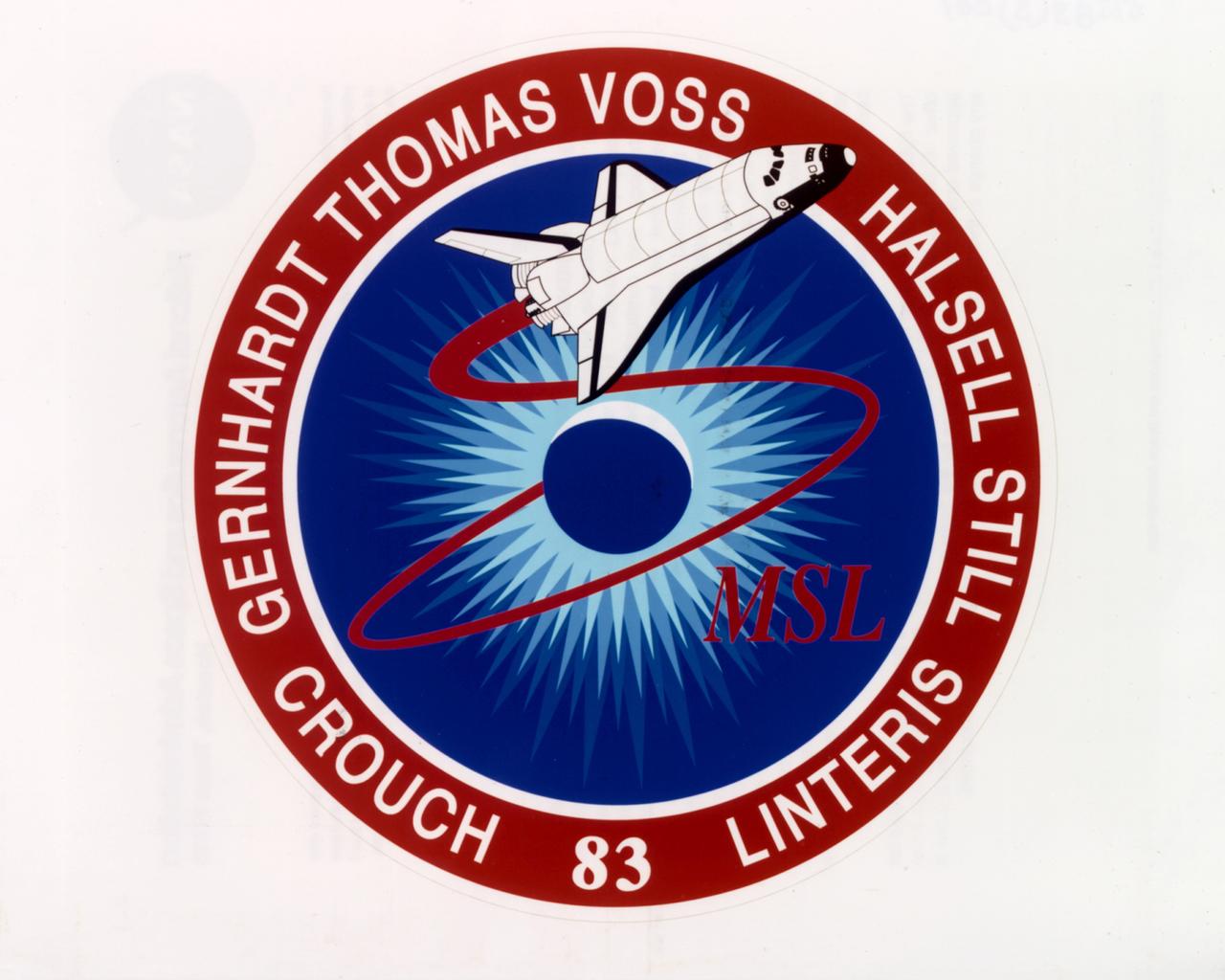
The crew patch for NASA's STS-83 mission depicts the Space Shuttle Columbia launching into space for the first Microgravity Sciences Laboratory 1 (MSL-1) mission. MSL-1 investigated materials science, fluid dynamics, biotechnology, and combustion science in the microgravity environment of space, experiments that were conducted in the Spacelab Module in the Space Shuttle Columbia's cargo bay. The center circle symbolizes a free liquid under microgravity conditions representing various fluid and materials science experiments. Symbolic of the combustion experiments is the surrounding starburst of a blue flame burning in space. The 3-lobed shape of the outermost starburst ring traces the dot pattern of a transmission Laue photograph typical of biotechnology experiments. The numerical designation for the mission is shown at bottom center. As a forerunner to missions involving International Space Station (ISS), STS-83 represented the hope that scientific results and knowledge gained during the flight will be applied to solving problems on Earth for the benefit and advancement of humankind.
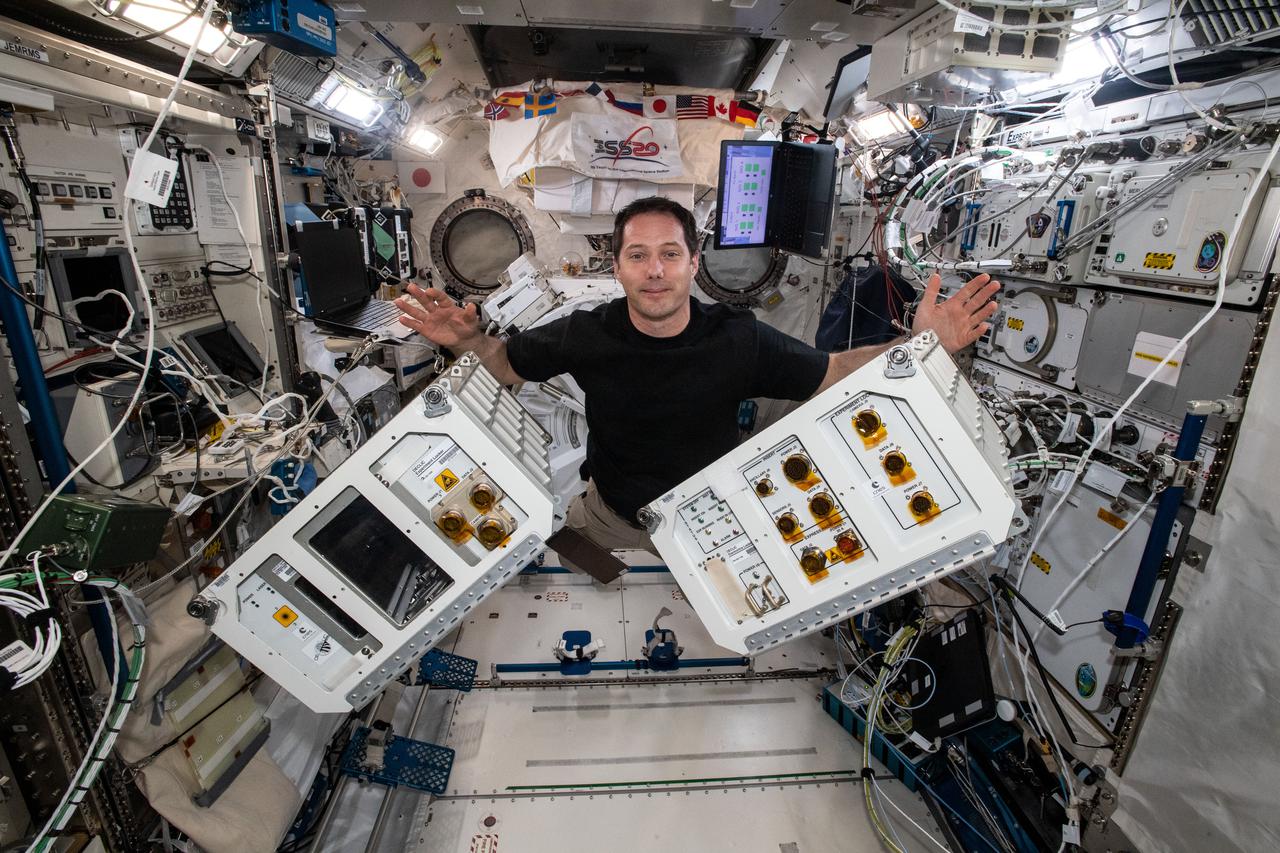
iss065e442803 (10/7/2021) --- European Space Agency (ESA) astronaut Thomas Pesquet gathers fluid physics and materials research hardware inside the International Space Station's Kibo laboratory module. Device for the Study of Critical Liquids and Crystallization (DECLIC) is a multi-user facility developed by the agency Centre National d’Etudes Spatiales (French Space Agency, CNES) and flown in collaboration with NASA. It is designed to support experiments in the fields of fluid physics and materials science. Special inserts allow researchers to study both ambient temperature critical point fluids and high temperature super-critical fluids. Another class of insert studies the dynamics and morphology of the fronts that form as a liquid material solidifies.
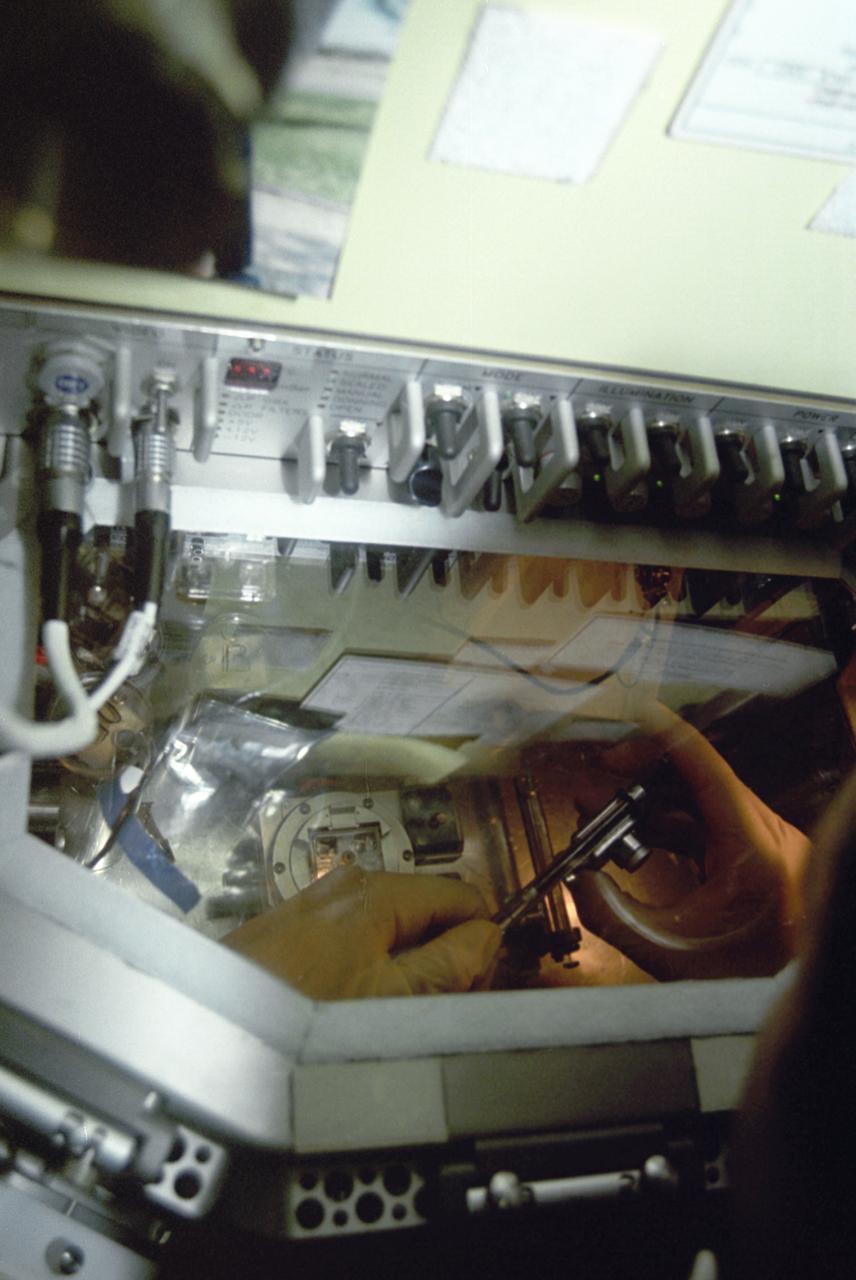
The first United States Microgravity Laboratory (USML-1) provided scientific research in materials science, fluid dynamics, biotechnology, and combustion science in a weightless environment inside the Spacelab module. This photograph is a close-up view of the Glovebox in operation during the mission. The Spacelab Glovebox, provided by the European Space Agency, offers experimenters new capabilities to test and develop science procedures and technologies in microgravity. It enables crewmembers to handle, transfer, and otherwise manipulate materials in ways that are impractical in the open Spacelab. The facility is equipped with three doors: a central port through which experiments are placed in the Glovebox and two glovedoors on both sides with an attachment for gloves or adjustable cuffs and adapters for cameras. The Glovebox has an enclosed compartment that offers a clean working space and minimizes the contamination risks to both Spacelab and experiment samples. Although fluid containment and ease of cleanup are major benefits provided by the facility, it can also contain powders and bioparticles; toxic, irritating, or potentially infectious materials; and other debris produced during experiment operations. The facility is equipped with photographic/video capabilities and permits mounting a microscope. For the USML-1 mission, the Glovebox experiments fell into four basic categories: fluid dynamics, combustion science, crystal growth, and technology demonstration. The USML-1 flew aboard the STS-50 mission in June 1992.
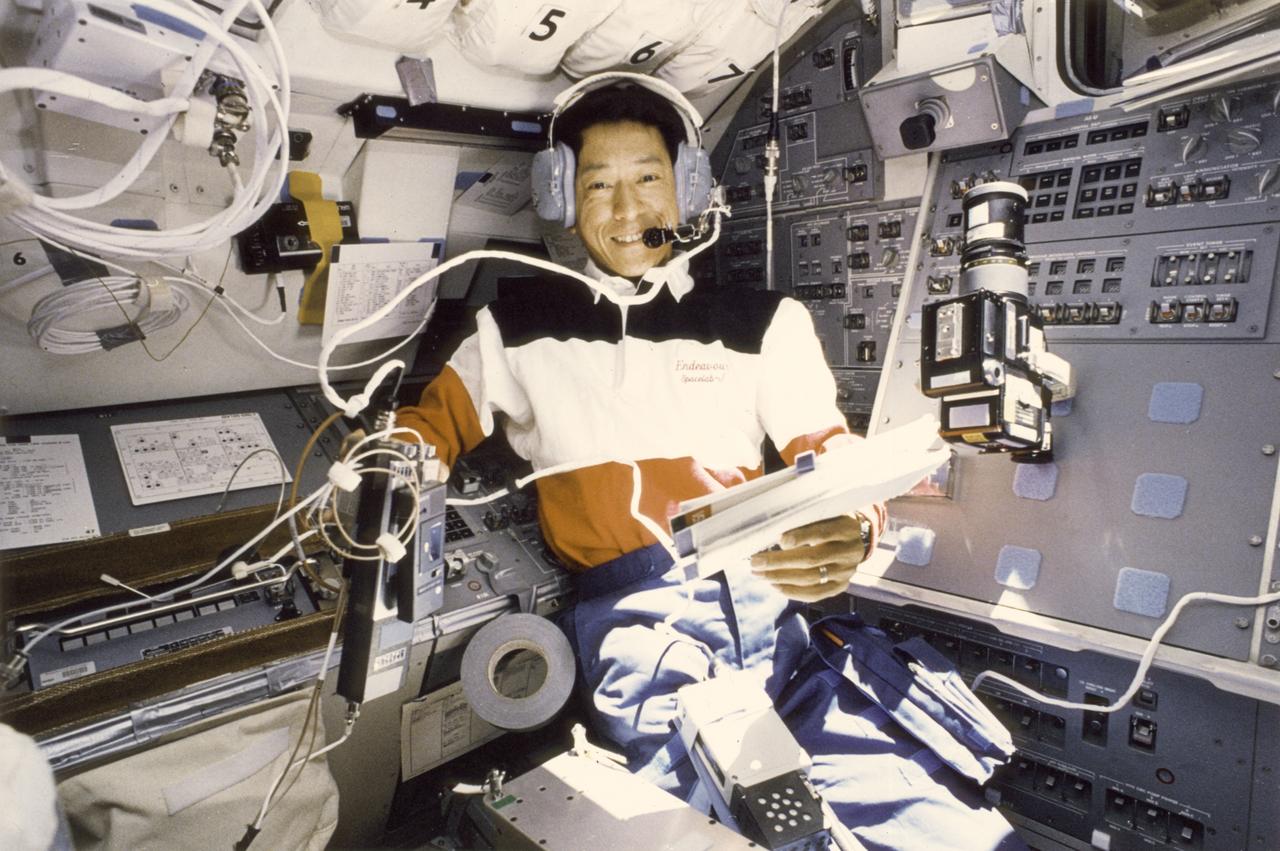
Japanese astronaut, Mamoru Mohri, talks to Japanese students from the aft flight deck of the Space Shuttle Orbiter Endeavour during the Spacelab-J (SL-J) mission. The SL-J mission was a joint venture between NASA and the National Space Development Agency of Japan (NASDA) utilizing a marned Spacelab module. The mission conducted 24 materials science and 20 life science experiments, of which 35 were sponsored by NASDA, 7 by NASA, and two collaborative efforts. Materials science investigations covered such fields as biotechnology, electronic materials, fluid dynamics and transport phenomena, glasses and ceramics, metals and alloys, and acceleration measurements. Life sciences included experiments on human health, cell separation and biology, developmental biology, animal and human physiology and behavior, space radiation, and biological rhythms. Test subjects included the crew, Japanese koi fish (carp), cultured animal and plant cells, chicken embryos, fruit flies, fungi and plant seeds, and frogs and frog eggs. Spacelab-J was launched aboard the Space Shuttle Orbiter Endeavour on September 12, 1992.
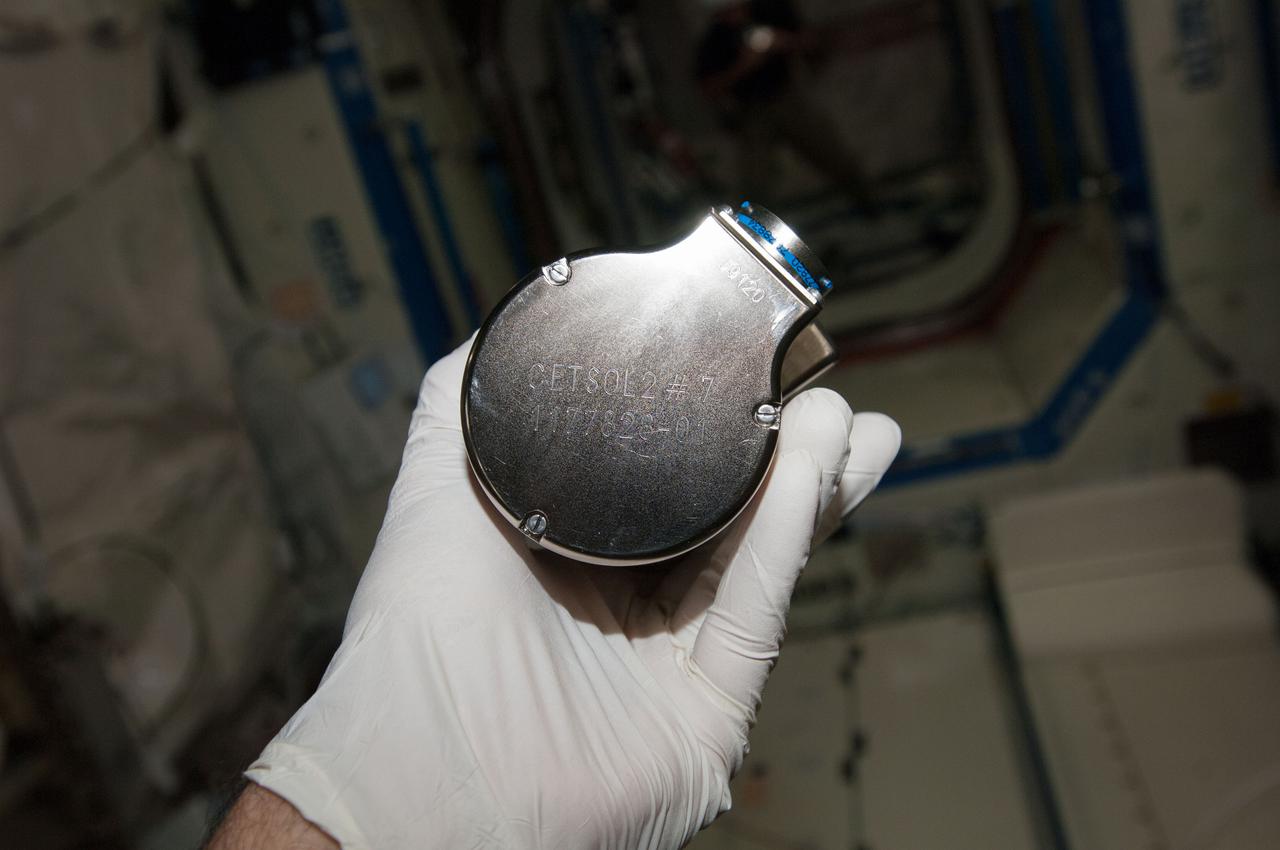
iss038e045758 (2/12/2014) --- A view of Columnar-to-Equiaxed Transition in Solidification Processing-2 (CETSOL-2) test sample 7 which is to be installed into the Material Science Laboratory (MSL) Solidification and Quench Furnace (SQF). This investigation aims to deepen the understanding of the physical principles that govern solidification processes in metal alloys. The patterns of the crystals resulting from transitions of liquids to solids is important for processes used to produce materials such as solar cells, thermoelectrics, and metal alloys.

This enhanced color composite image from Dawn's visible and infrared mapping spectrometer shows the area around Ernutet Crater on Ceres. The instrument detected the evidence of organic materials in this area, as reported in a 2017 study in the journal Science. In this view, areas that appear pink with respect to the background appear to be rich in organics, and green areas are where organic material appears to be less abundant. Light with a wavelength of 2000 nanometers is shown in blue, 3400 nanometers is shown in green and 1700 nanometers is shown in red. http://photojournal.jpl.nasa.gov/catalog/PIA21420
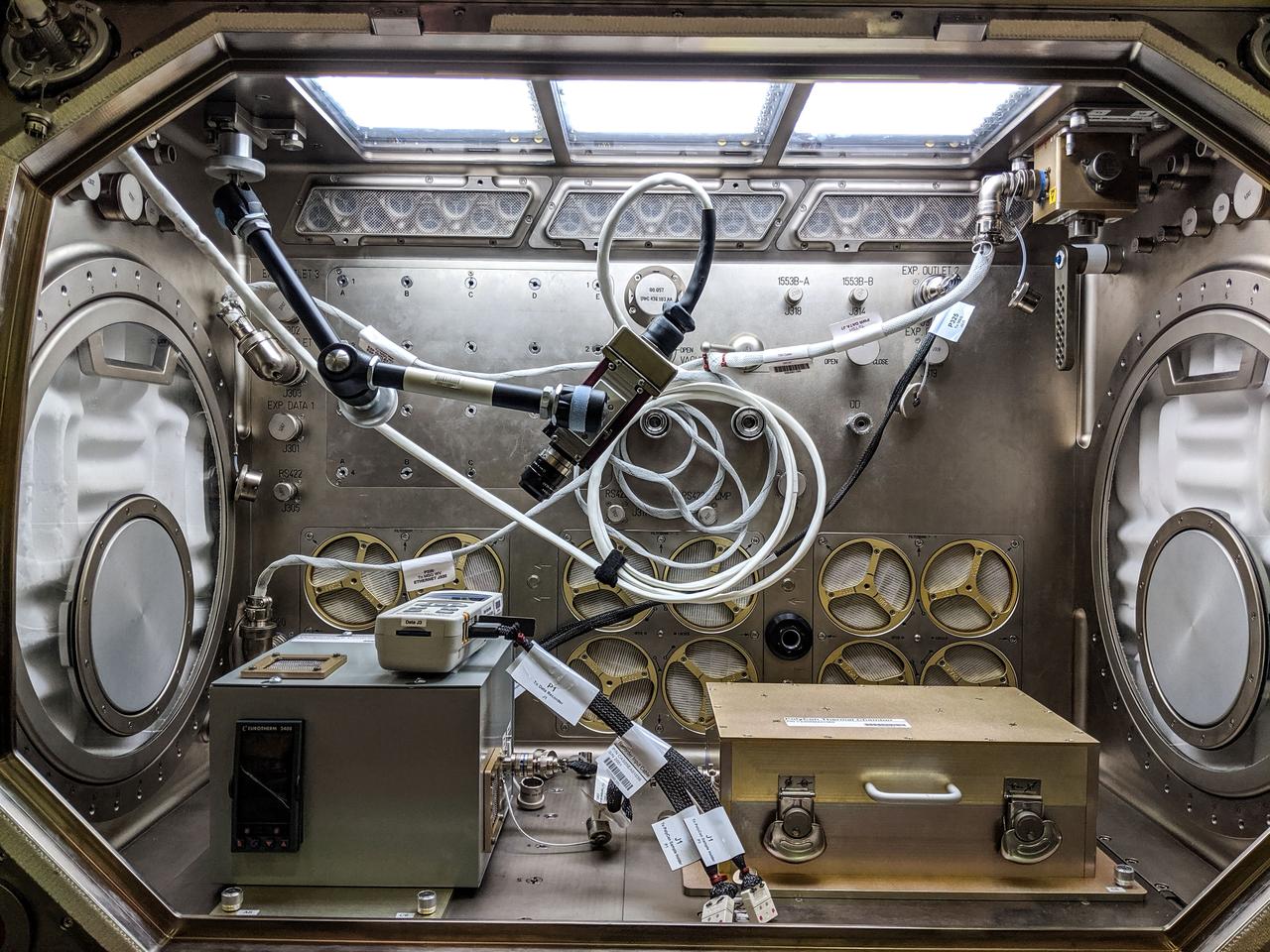
jsc2020e003407 (9/27/2019) --- A preflight image of the Polymer Convection investigation the the Microgravity Science Glovebox (MSG). Polymer Convection examines the effect of gravity on formation and crystallization of Broadband Angular Selective Material (BASM). An optical material with the ability to control the reflection and absorption of light, BASM has applications in polymer packaging, optical films, solar power, and electronic displays. Improved fabrication methods could produce BASM films that are more durable and have better optical and mechanical properties.
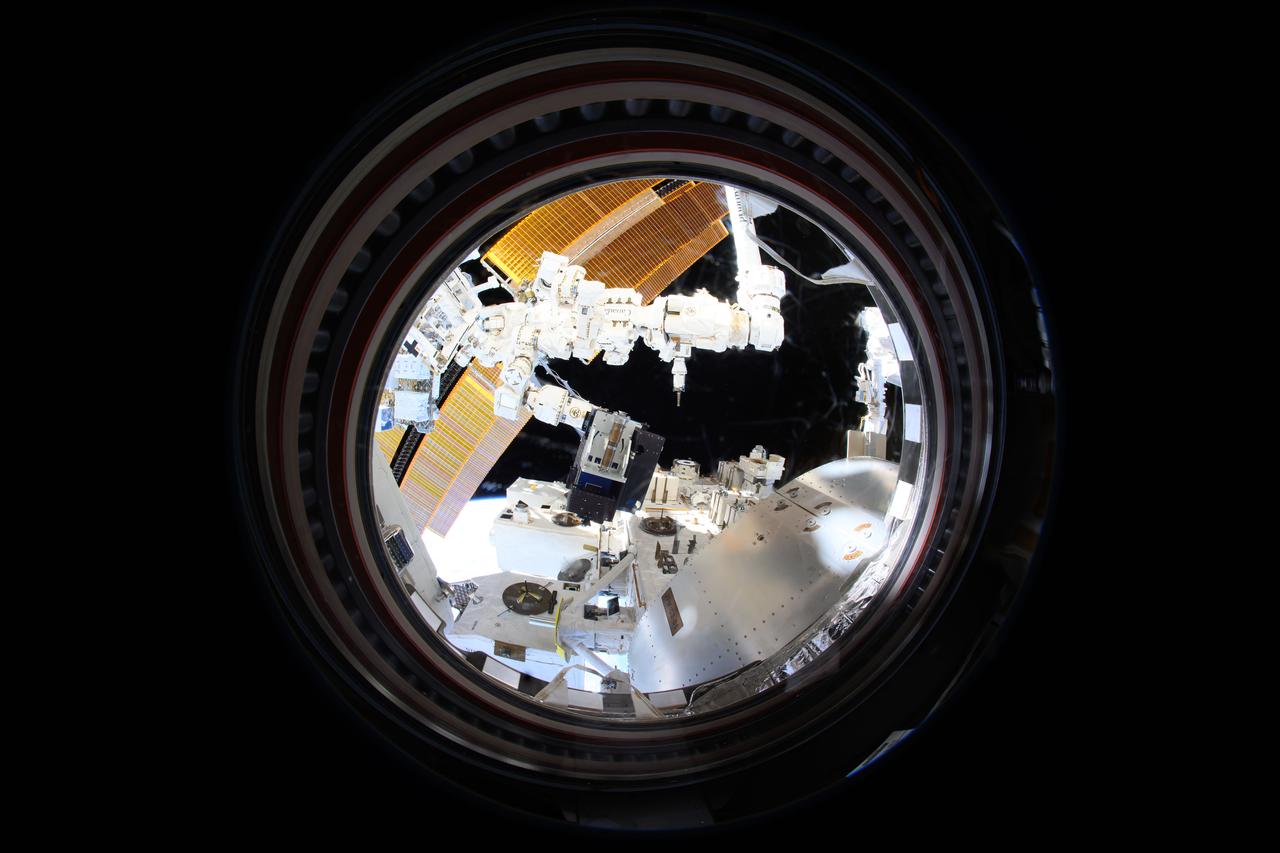
iss072e189789 (11/16/2024) --- The Canadarm2 robotic arm removes Materials ISS Experiment (MISSE) science carriers from the Kibo laboratory module's airlock. The MISSE Flight Facility mounted outside the International Space Station allows researchers to test the performance and durability of materials and devices. This is done by exposing items of interest to everything that makes the space environment harsh, including radiation, highly reactive atomic oxygen, microgravity, and extreme temperatures.
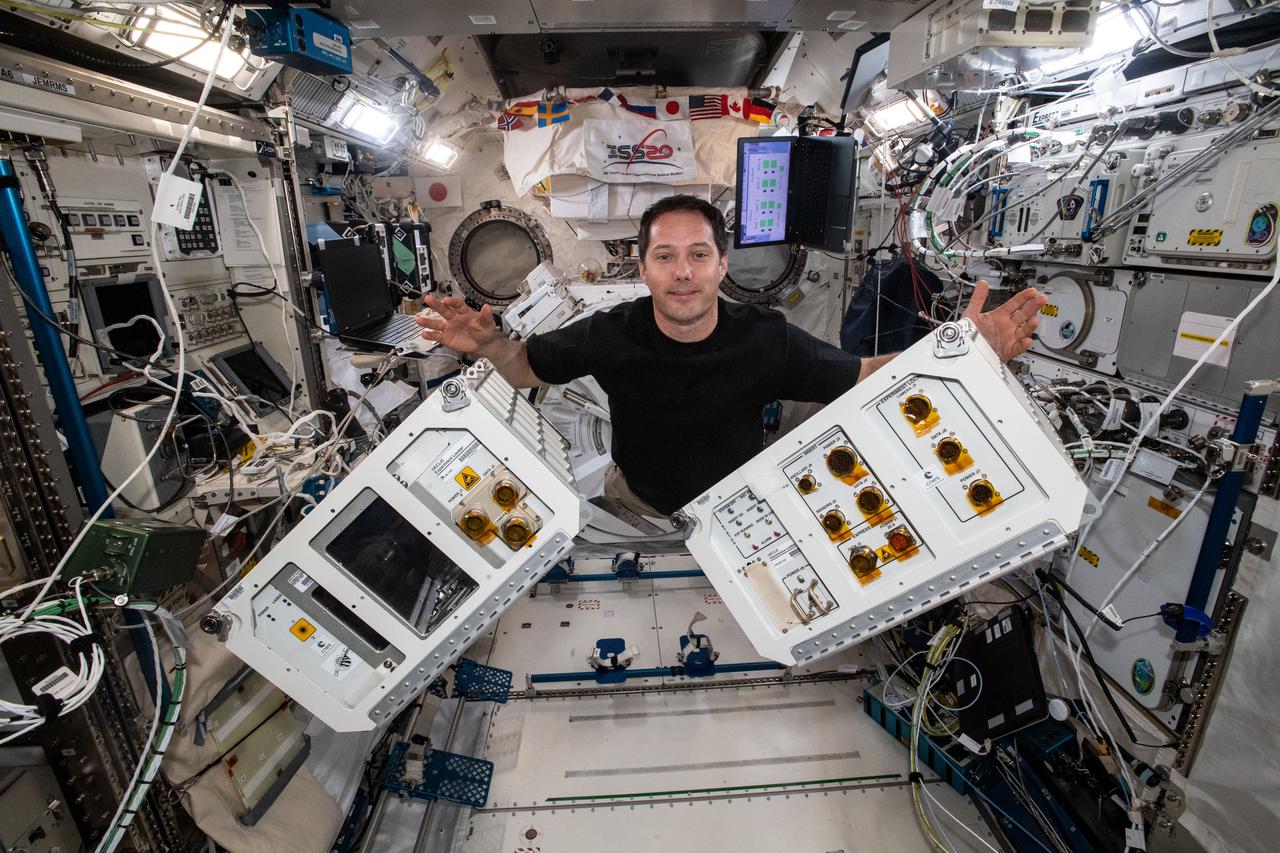
iss065e442804 (Oct. 7, 2021) --- Expedition 65 Commander Thomas Pesquet of ESA (European Space Agency) gathers fluid physics and materials research hardware inside the International Space Station's Kibo laboratory module. Also called DECLIC, or Device for the Study of Critical Liquids and Crystallization, the science gear allows researchers to study ambient temperature critical point fluids, high temperature super-critical fluids, and the dynamics and morphology of the fronts that form as a liquid material solidifies.
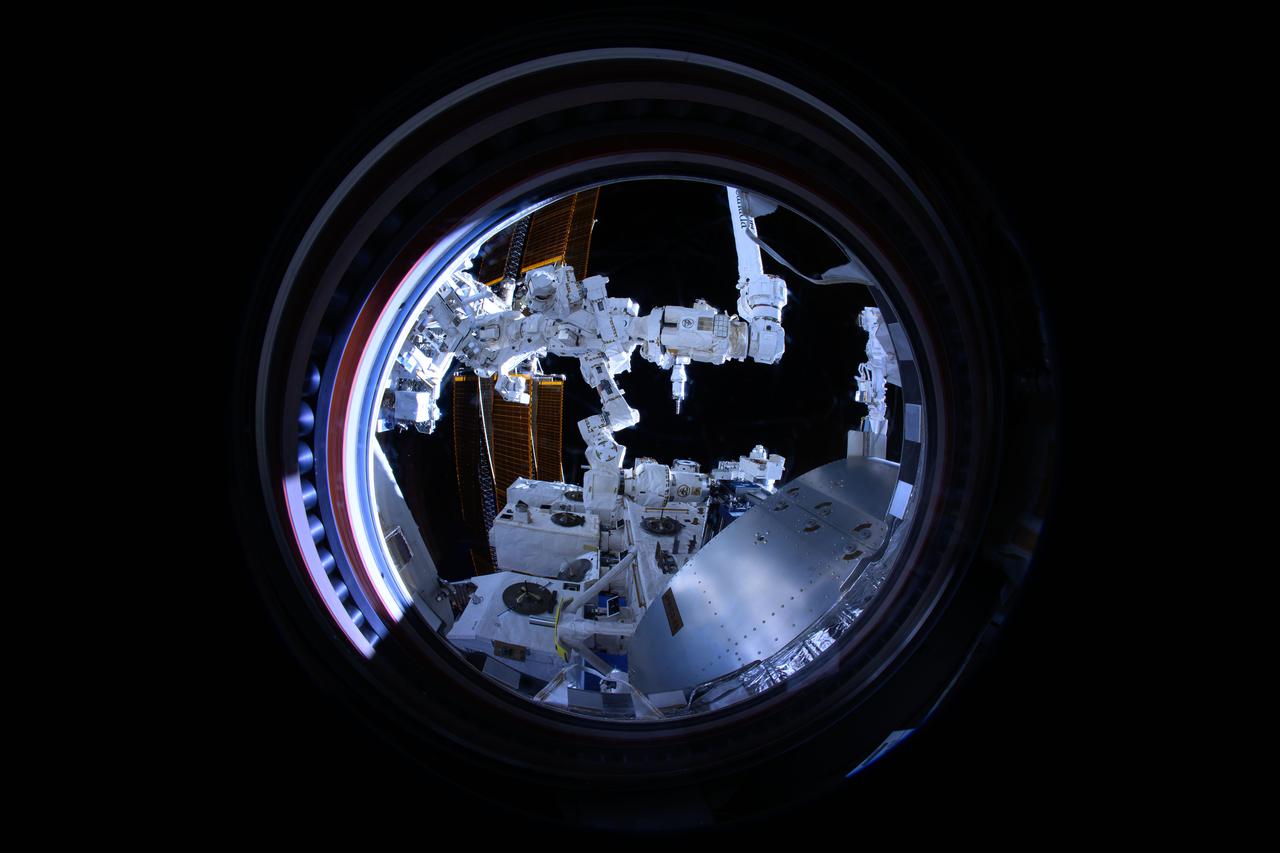
iss072e189571 (11/16/2024) --- The Canadarm2 robotic arm removes Materials ISS Experiment (MISSE) science carriers from the Kibo laboratory module's airlock. The MISSE Flight Facility mounted outside the International Space Station allows researchers to test the performance and durability of materials and devices. This is done by exposing items of interest to everything that makes the space environment harsh, including radiation, highly reactive atomic oxygen, microgravity, and extreme temperatures.
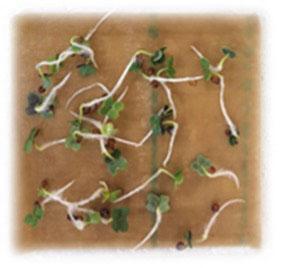
jsc2021e009428 (3/2/2021) --- Materials International Space Station Experiment-14-NASA (MISSE-14-NASA) continues a series of tests by NASA Glenn Research Center on how the harsh environment of space affects the performance and durability of various materials. Example of germination test prior to MISSE-Seed science integration. Image courtesy of Jeff Richards.
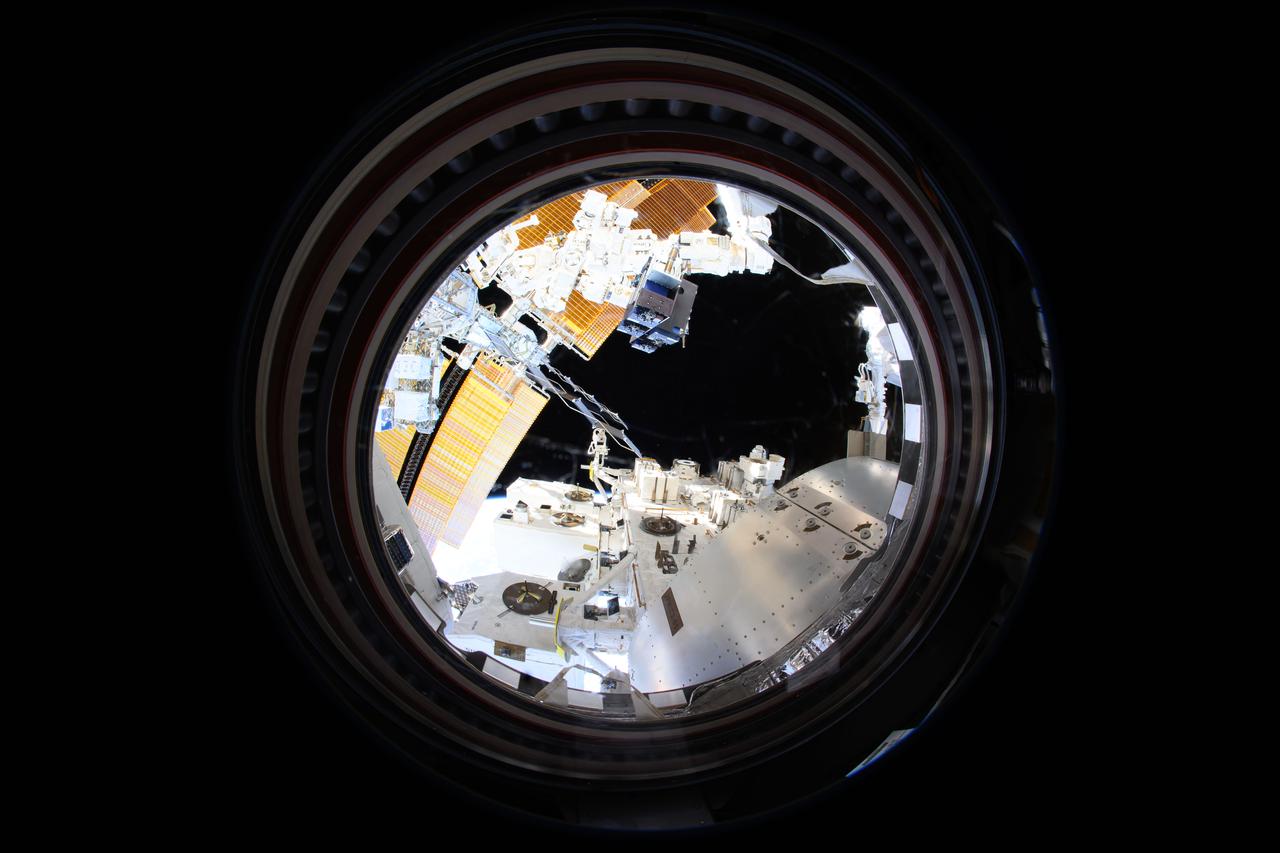
iss072e189797 (11/16/2024) --- The Canadarm2 robotic arm removes Materials ISS Experiment (MISSE) science carriers from the Kibo laboratory module's airlock. The MISSE Flight Facility mounted outside the International Space Station allows researchers to test the performance and durability of materials and devices. This is done by exposing items of interest to everything that makes the space environment harsh, including radiation, highly reactive atomic oxygen, microgravity, and extreme temperatures.