
Saturn Outer C Ring
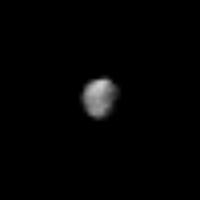
Saturn Outer Satellite, Phoebe
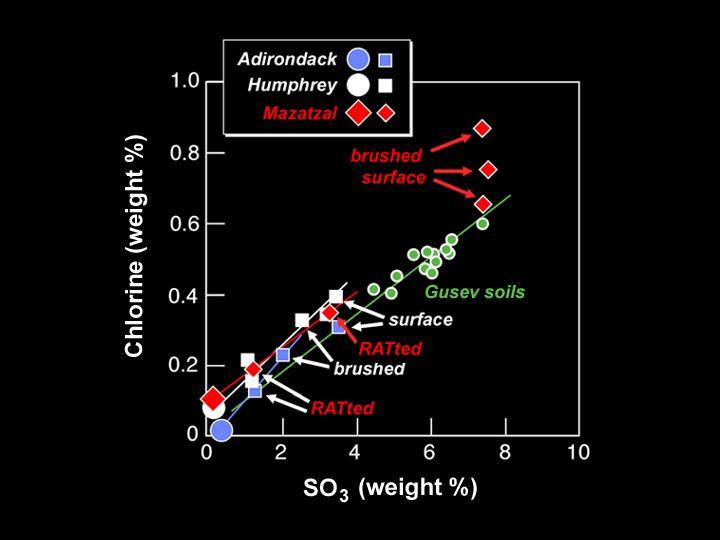
Outer Appearances Can Be Deceiving
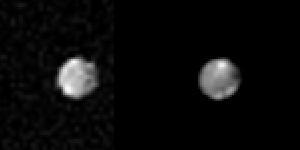
Saturn outer satellite - Phoebe
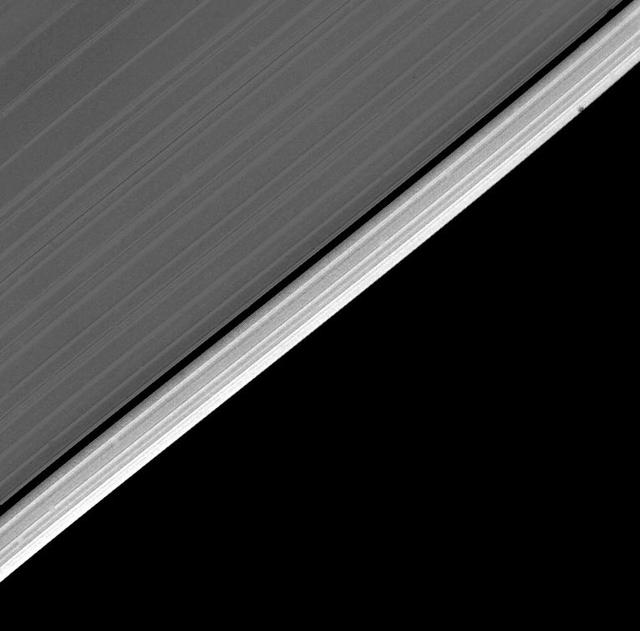
Outer Edge of Saturn A-ring

Outer C Ring Detail

Outer edge of Saturn B-ring
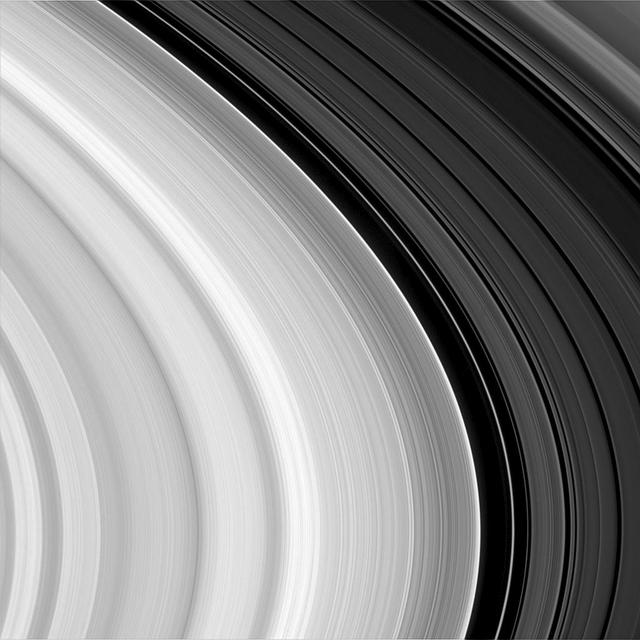
This image NASA Cassini spacecraft shows subtle, wavelike patterns, hundreds of narrow features resembling a record grooves in Saturn outer B-ring, and a noticeable abrupt change in overall brightness beyond the dark gap near the right.
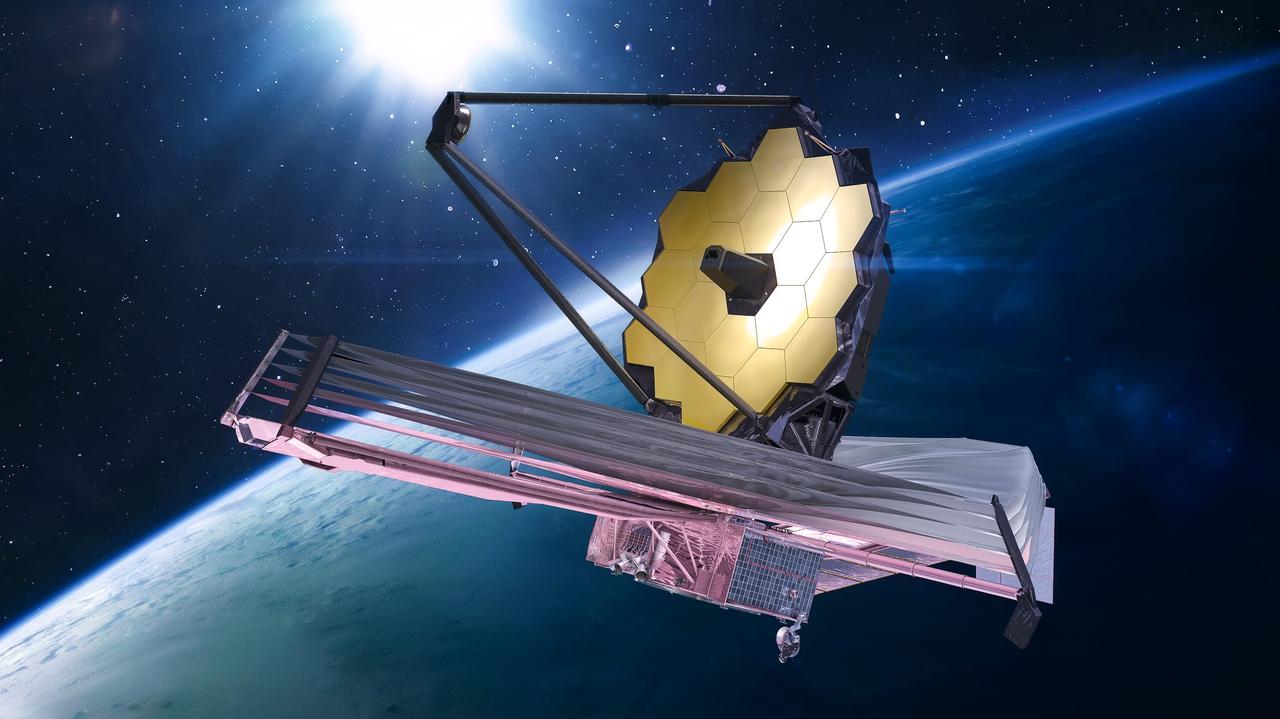
JWST in space near Earth. James Webb telescope far galaxies and planets explore. Sci-fi space collage. Astronomy science. Elements of this image furnished by NASA (url: https://www.nasa.gov/sites/default/files/styles/full_width_feature/public/thumbnails/image/iss066e123388.jpg https://www.nasa.gov/sites/default/files/styles/full_width_feature/public/thumbnails/image/755409main_webb.jpg)
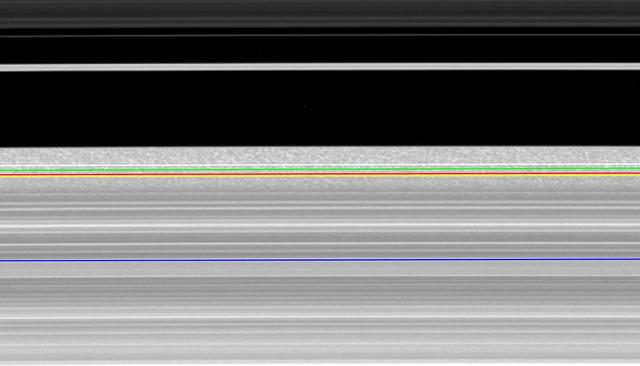
Keeping a close watch on the outer portion of Saturn B ring, NASA Cassini spacecraft records the complex inward and outward movement of the edge of the ring. This ring movement resembles the suspected behavior of spiral disk galaxies.
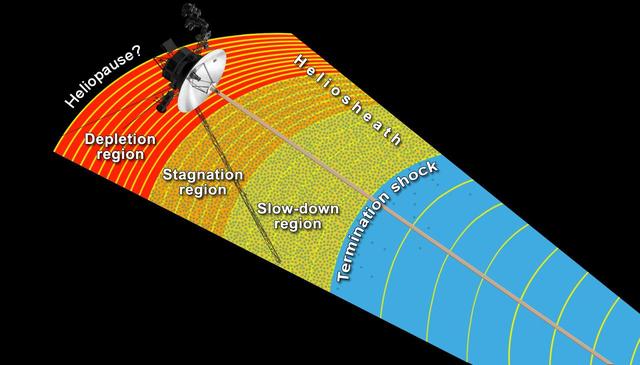
This artist concept shows NASA Voyager 1 spacecraft exploring a region called the depletion region or magnetic highway at the outer limits of our heliosphere, the bubble the sun blows around itself.
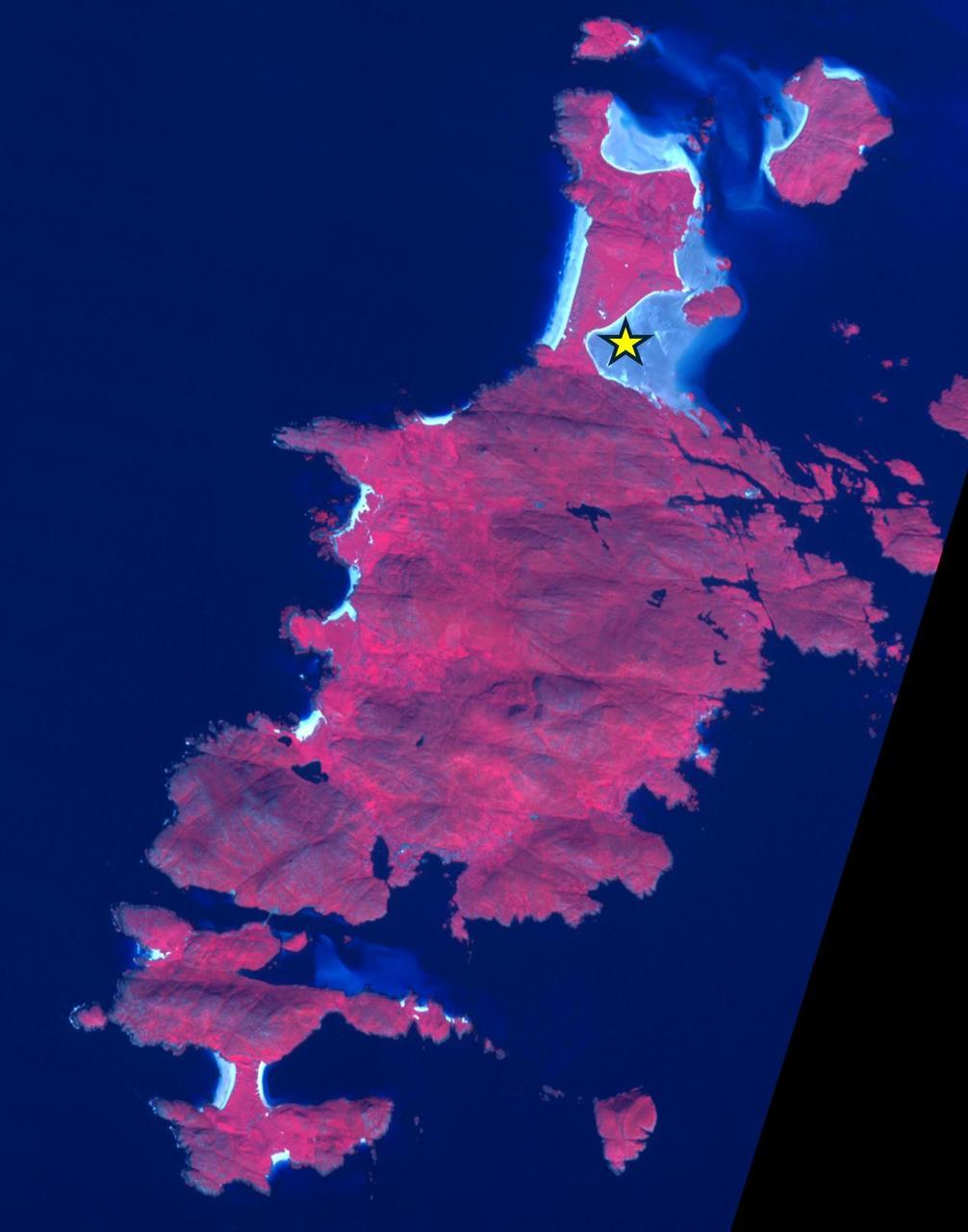
Barra Island Eoligarry Airport is located in the Outer Hebrides, Scotland, U.K. The airport is the only beach runway on the earth, relying on low tide to be open for take-offs and landings. Opened in 1936, there are now two daily flights between Barra and Glasgow. The image was acquired august 24, 2021, covers an area of 15 by 19.5 km, and is located at 57 degrees north, 7.45 degrees west. https://photojournal.jpl.nasa.gov/catalog/PIA26502
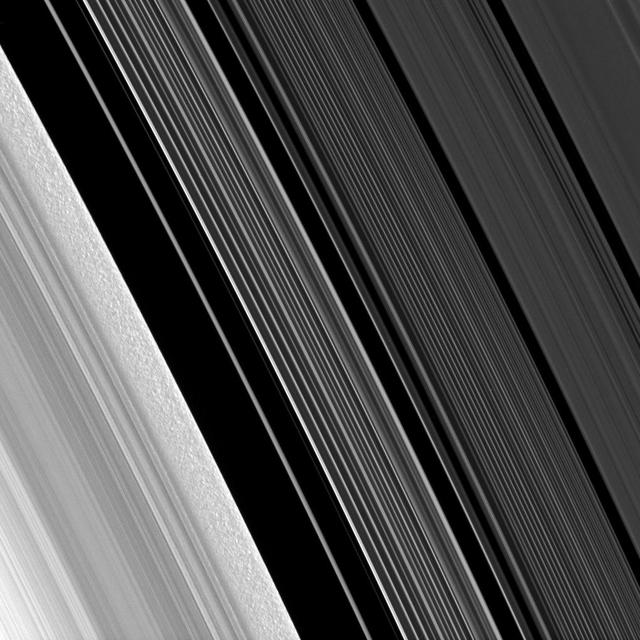
The Cassini spacecraft looks closely at the outer B ring and the Cassini Division, revealing clump-like structures in the outer edge of the B ring.

Ms. Simonetta Di Pippo, Director, United Nations Office of Outer Space Affairs and NASA Administrator Bill Nelson pose for a photograph prior to a meeting during the Space Symposium, Wednesday, Aug. 25, 2021, in Colorado Springs, Colorado. Photo Credit: (NASA/Bill Ingalls)

This MOC image shows the outer edge of the south polar residual cap of Mars
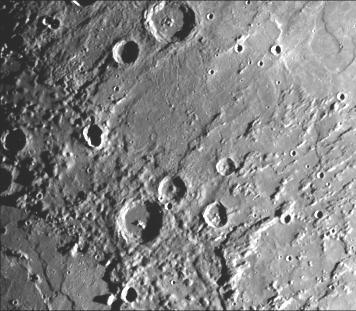
This image, from NASA Mariner 10 spacecraft which launched in 1974, is of the northeastern quadrant of the Caloris basin and shows the smooth hills and domes between the inner and outer scarps and the well-developed radial system east of the outer scarp
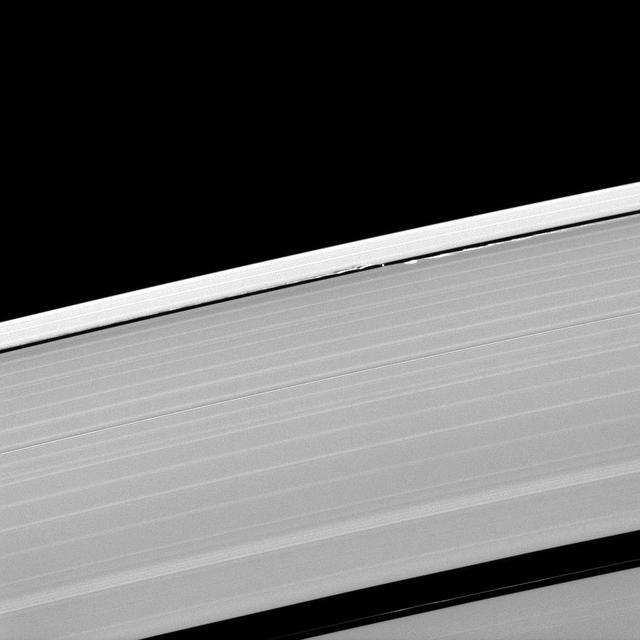
A scalloped look is created in the edges of the Keeler Gap in Saturn outer A ring as the moon Daphnis orbits in the gap.
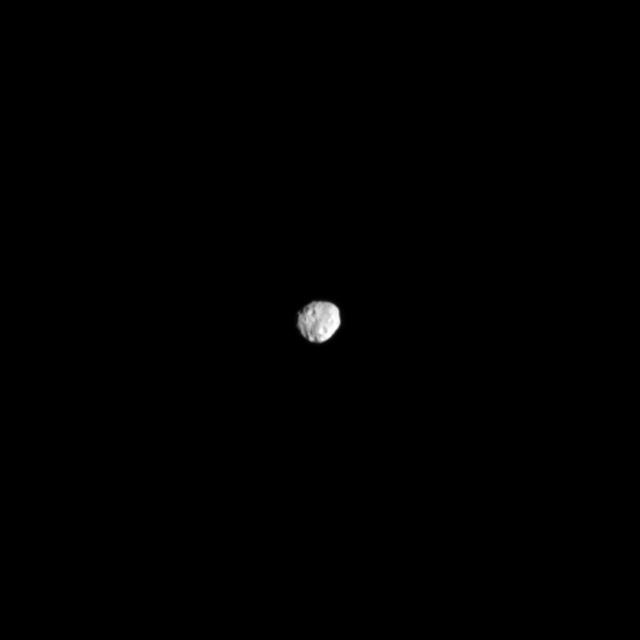
NASA Cassini spacecraft captures Saturn tiny irregular moon Janus surrounded by the vast, dark expanse of the outer solar system.

This MOC image shows the outer edge of the south polar residual cap of Mars during southern summer
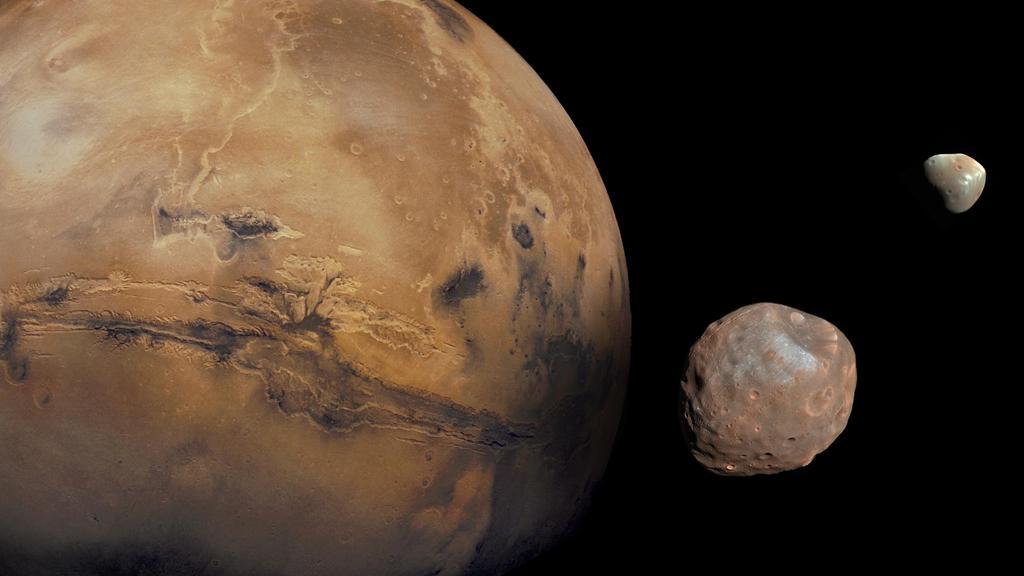
Mars is kept company by two cratered moons -- an inner moon named Phobos and an outer moon named Deimos.
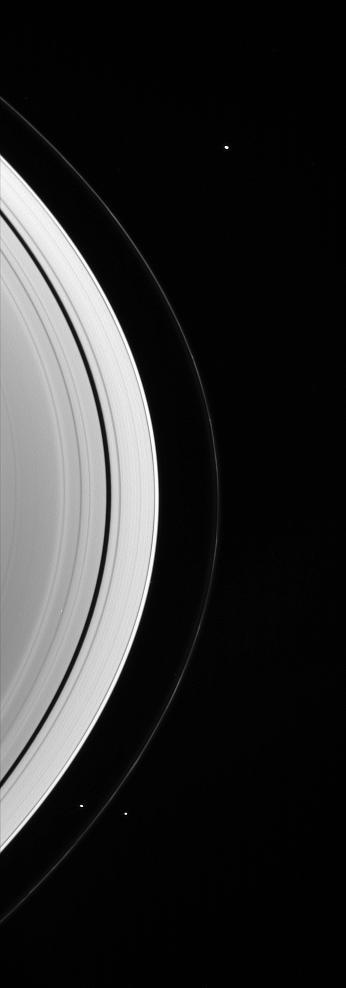
Three of the small worlds that hug the outer edges of Saturn immense ring system are captured in this Cassini spacecraft portrait
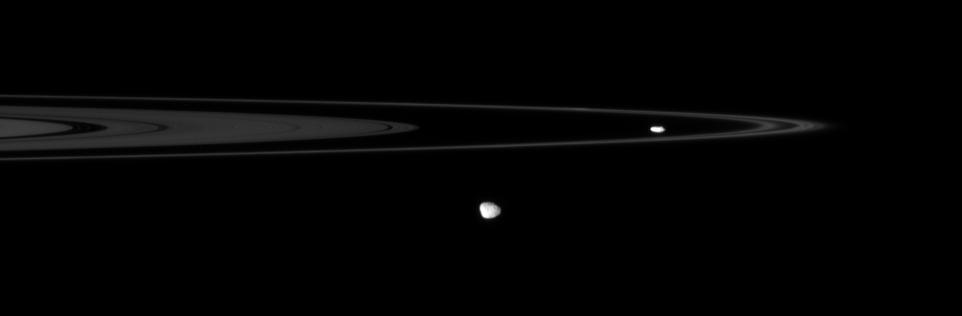
The Cassini spacecraft spies two of the small, irregular moons that patrol the outer edges of Saturn main rings
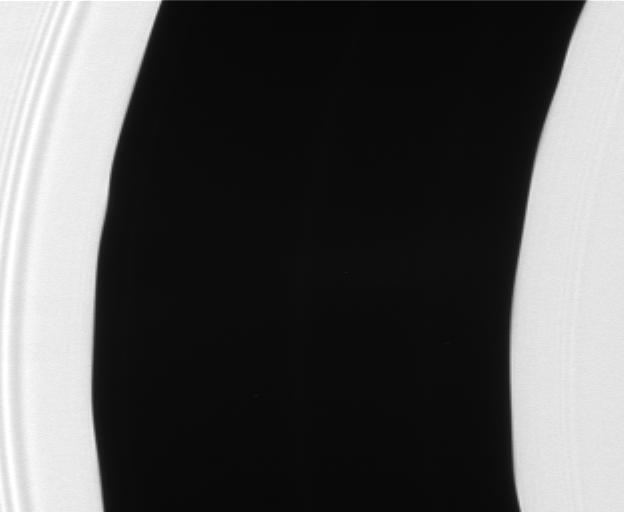
The Encke gap displays gentle waves in its inner and outer edges that are caused by gravitational tugs from the small moon Pan
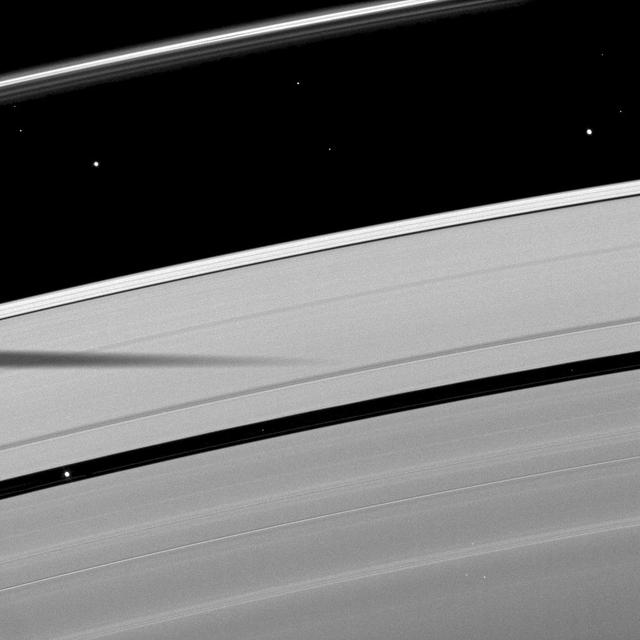
The shadow of the moon Mimas is cast on Saturn outer A ring in this image which also shows a couple of moons and a collection of stars.
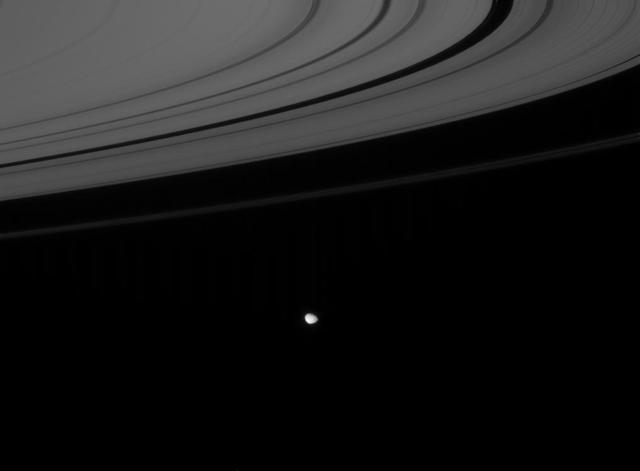
Cassini gazes down toward Saturn unilluminated ringplane to find Janus hugging the outer edge of rings

This Mars MOC image shows the very edge of the south polar residual cap of Mars. The bright areas, which appear somewhat like pieces of sliced Swiss cheese, are composed mainly of frozen carbon dioxide
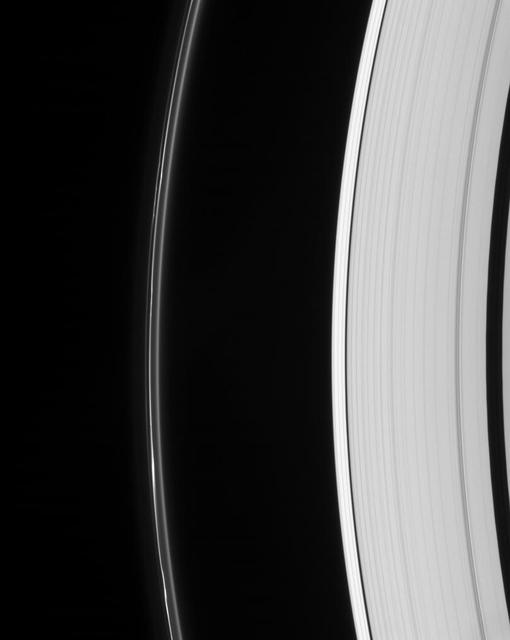
Saturn odd but ever-intriguing F ring displays multiple lanes and several bright clumps. The Keeler and Encke gaps are visible in the outer A ring, at right
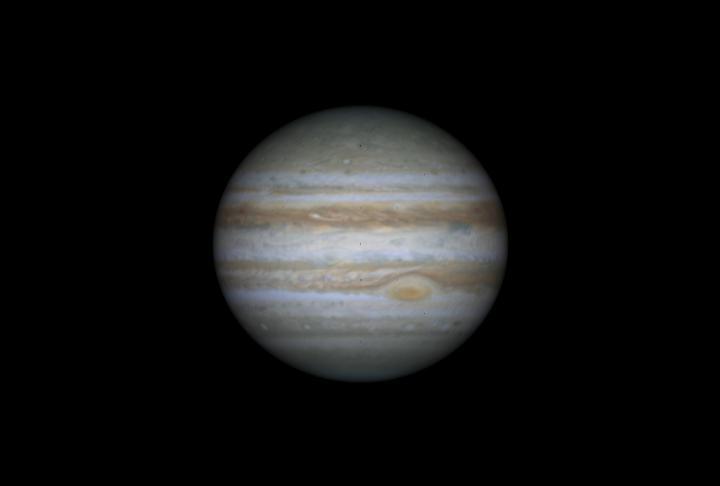
NASA Cassini spacecraft took narrow-angle images of Jupiter outer atmosphere, showing the giant planet as if it were constantly bathed in sunlight.
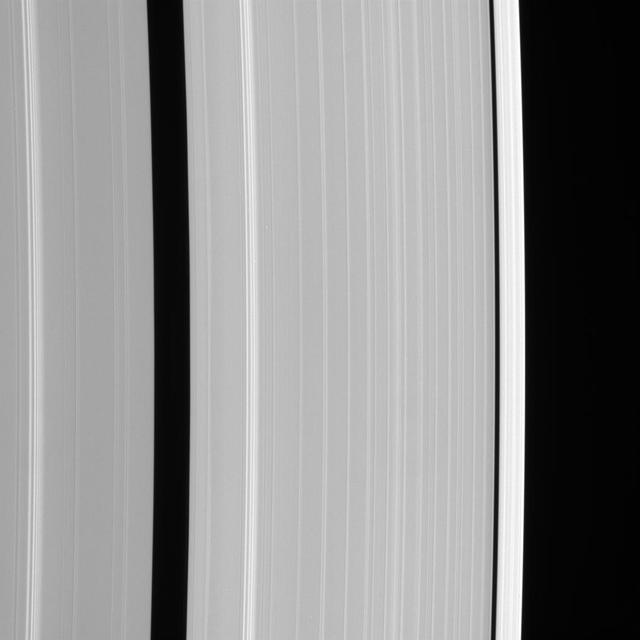
This Cassini spacecraft view shows details of Saturn outer A ring, including the Encke and Keeler gaps. The A ring brightens substantially outside the Keeler Gap

This image of Baltisk Crater shows a sand sheet on the crater floor and channels dissecting the outer rim as seen by NASA 2001 Mars Odyssey spacecraft.
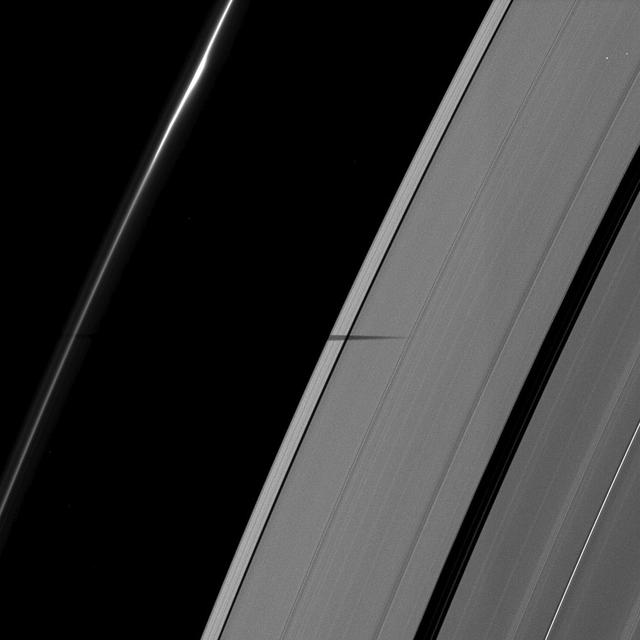
The shadow of the moon Epimetheus is cast onto Saturn rings, striking the outer-most part of the A ring and only just nipping the F ring.
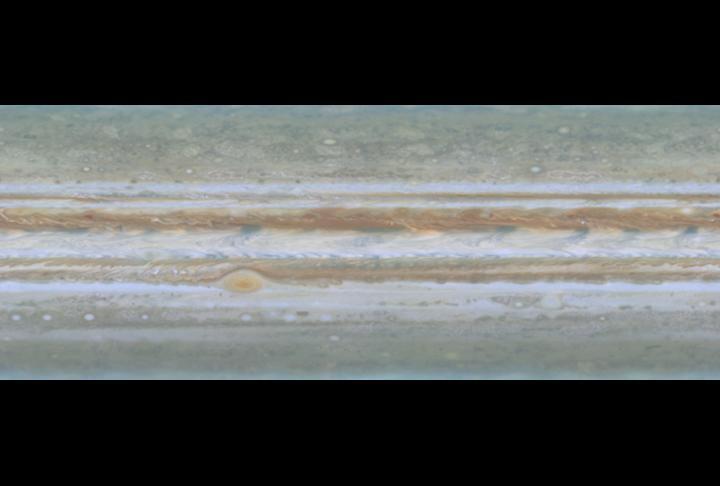
NASA Cassini spacecraft took narrow-angle images of Jupiter outer atmosphere, showing the giant planet as if it were constantly bathed in sunlight.
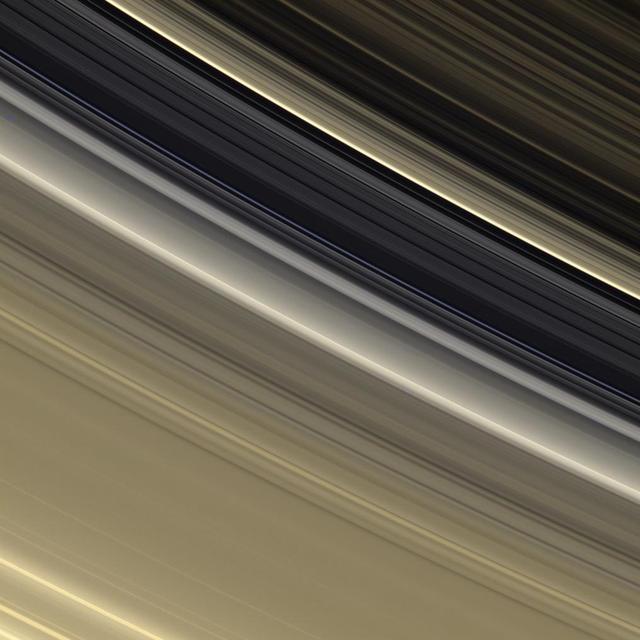
The rings are awash in subtle tones of gold and cream in this view which shows the outer B ring, the Cassini Division and the inner part of the A ring
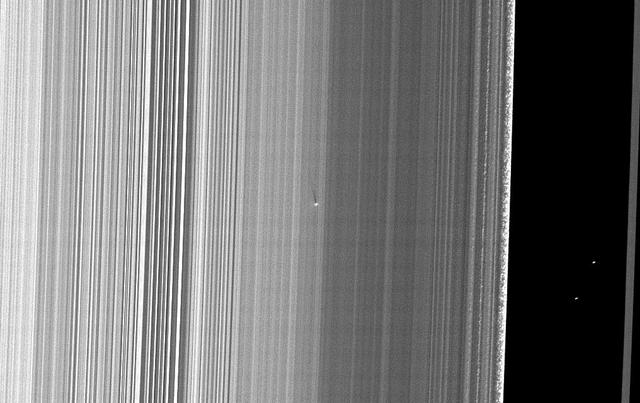
The Cassini spacecraft captured this image of a small object in the outer portion of Saturn B ring casting a shadow on the rings as Saturn approaches its August 2009 equinox.
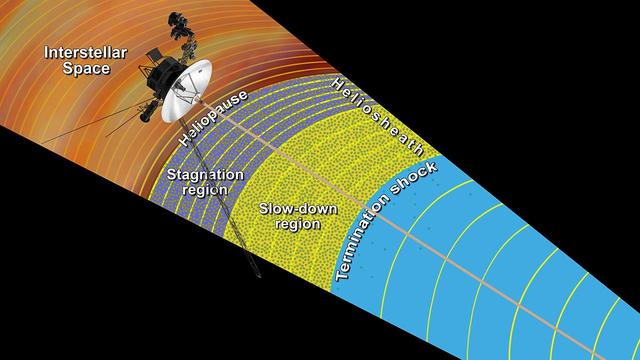
This artist concept shows the outer layers of our solar bubble, or heliosphere, and nearby interstellar space. NASA Voyager 1 is currently exploring a region of interstellar space.
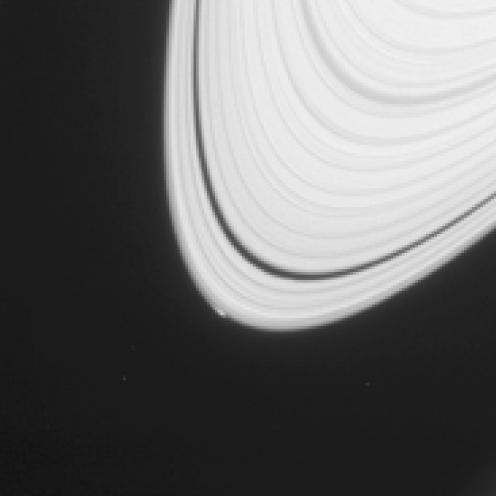
The disturbance visible at the outer edge of Saturn A ring in this image from NASA Cassini spacecraft could be caused by an object replaying the birth process of icy moons.
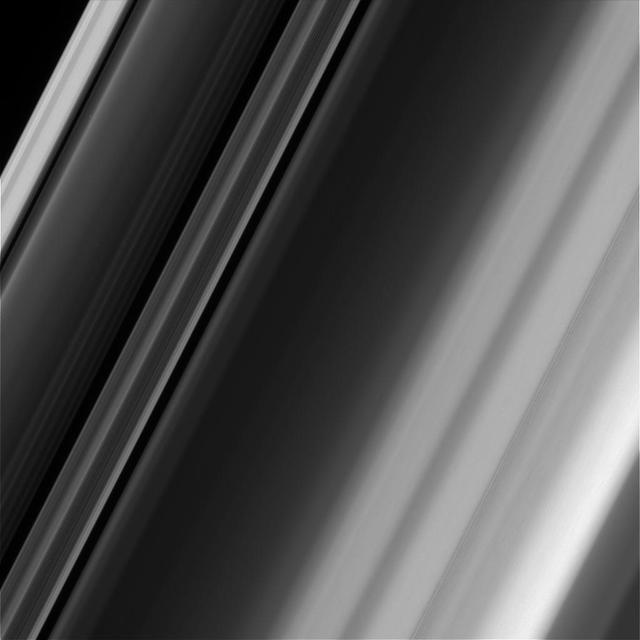
This image of Saturn's rings illustrates how textures in the rings can differ, even in close proximity. The image was taken at a distance of approximately 70,000 miles (113,000 kilometers) from the rings and at a phase angle of 52 degrees. Image scale is 2,300 feet (690 meters) per pixel. https://photojournal.jpl.nasa.gov/catalog/PIA23171

Sara Susca, deputy payload manager and payload systems engineer for the NASA's SPHEREx mission, looks up at one of the spacecraft's photon shields at the agency's Jet Propulsion Laboratory in Southern California in October 2023. Short for Specto-Photometer for the History of the Universe, Epoch of Reionization and Ices Explorer, SPHEREx will create a map of the cosmos like no other, imaging the entire sky and gathering information about millions of galaxies. With this map, scientists will study what happened in the first fraction of a second after the big bang, the history of galaxy evolution, and the origins of water in planetary systems in our galaxy. Three concentric photon shields will surround the SPHEREx telescope to protect it from nearby light sources that could overwhelm its detectors. The shields will primarily block light from the Sun and the Earth. They also block heat; SPHEREx needs to be kept cold – below minus 350 degrees Fahrenheit (about minus 210 degrees Celsius). That's because SPHEREx detects infrared light, which is sometimes called heat radiation because it's emitted by anything warm. The heat from SPHEREx's own detectors could overwhelm their ability to image faint cosmic objects, so the spacecraft needs a way to cool the detectors down. The spacecraft stands almost 8.5 feet tall (2.6 meters) and stretches nearly 10.5 feet (3.2 meters) wide. https://photojournal.jpl.nasa.gov/catalog/PIA25784

Illustration of the evolved SLS Block 1B Crew variant outer mold line. This configuration of the rocket, with the Exploration Upper Stage, will provide in-space propulsion to send astronauts in NASA’s Orion spacecraft and heavy cargo on a precise trajectory to the Moon. The evolution of the rocket to SLS Block 1B configuration with EUS enables SLS to launch 40% more cargo to the Moon along with the crew. Manufacturing both the core stage and Exploration Upper Stage is a collaborative effort between NASA and Boeing, the lead contractor for EUS and the SLS core stage. SLS is the only rocket that can send Orion, astronauts, and supplies to the Moon in a single mission. The SLS rocket, NASA’s Orion spacecraft, Gateway, and human landing system are part of NASA’s backbone for deep space exploration. Under the Artemis program, NASA is working to land the first woman and the next man on the Moon to pave the way for sustainable exploration at the Moon and future missions to Mars. (NASA)

NASA CloudSat passed over Sandy at 10:32 a.m. EDT on Oct. 27, 2012. Light to moderate precipitation associated with parts of the outer bands of Hurricane Sandy were moving on shore into parts of North Carolina.
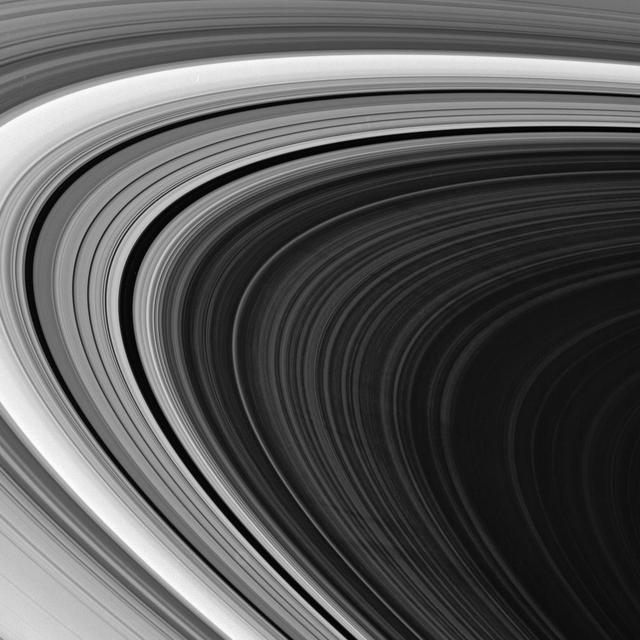
The Cassini spacecraft spies multiple spokes in Saturn outer B ring. The precise origin and evolution of these transient features continue to provide ring scientists with intriguing puzzles to solve
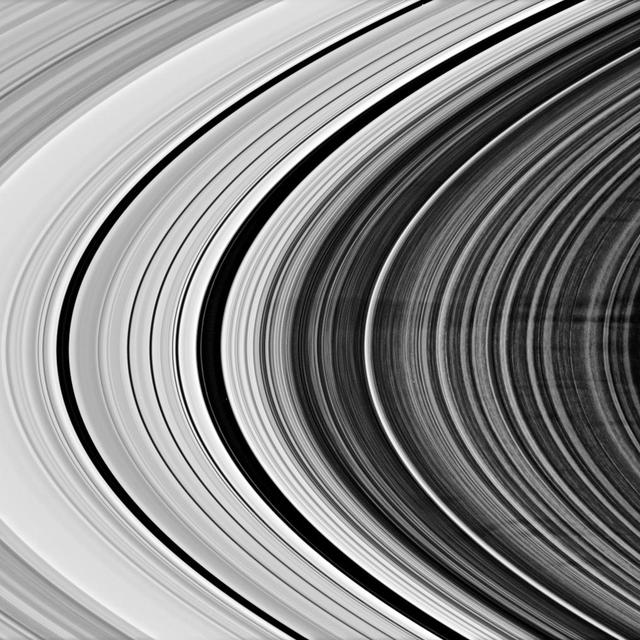
This Cassini spacecraft view shows a group of more than a dozen spokes in Saturn outer B ring. The B ring displays the azimuthal asymmetry, or variation with longitude around the planet, that is characteristic of the spoke-forming region
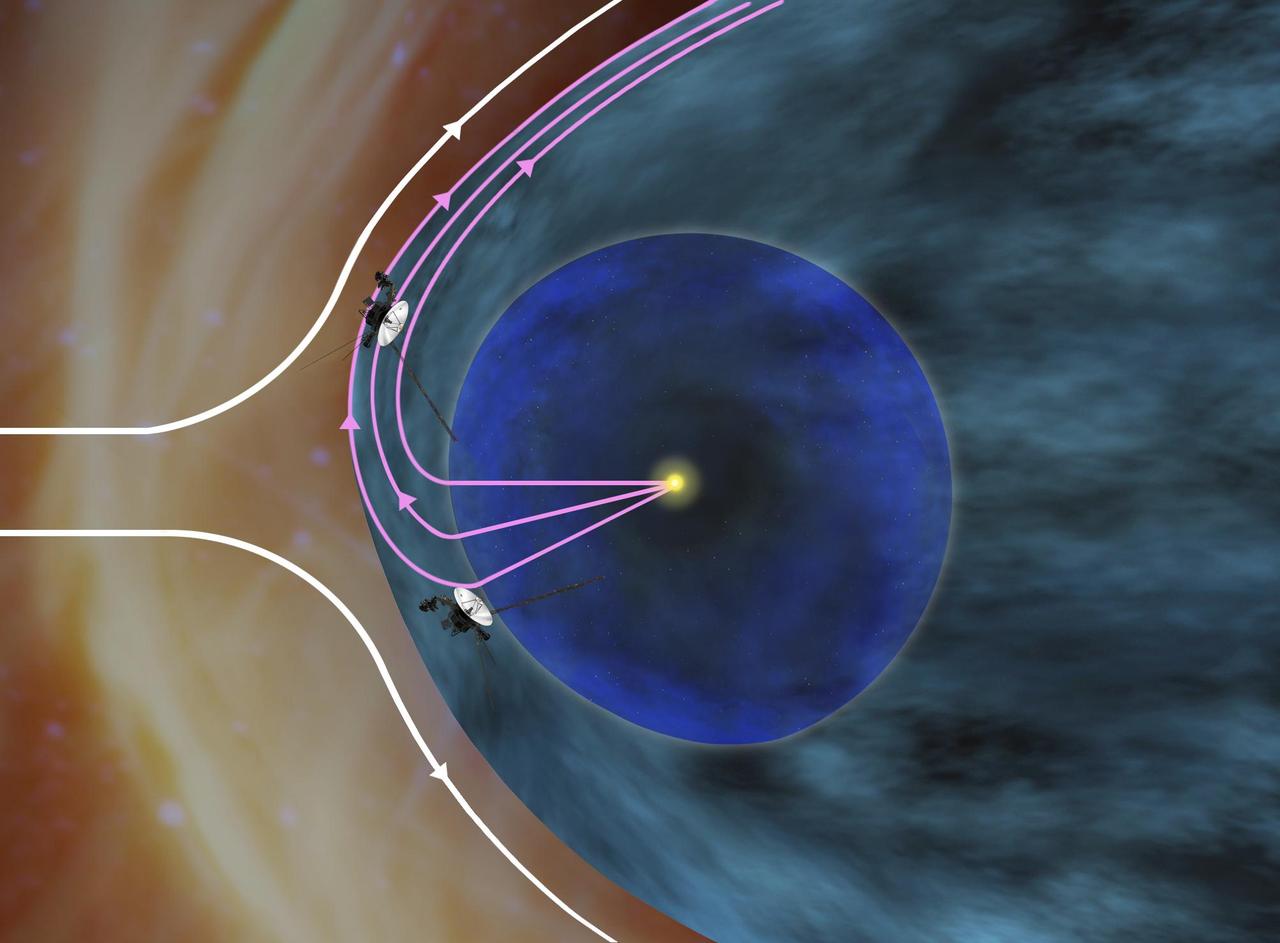
This artist concept shows how NASA Voyager 1 spacecraft is bathed in solar wind from the southern hemisphere flowing northward. This phenomenon creates a layer of giant bubble of solar ions just inside the outer boundary of the heliosphere.
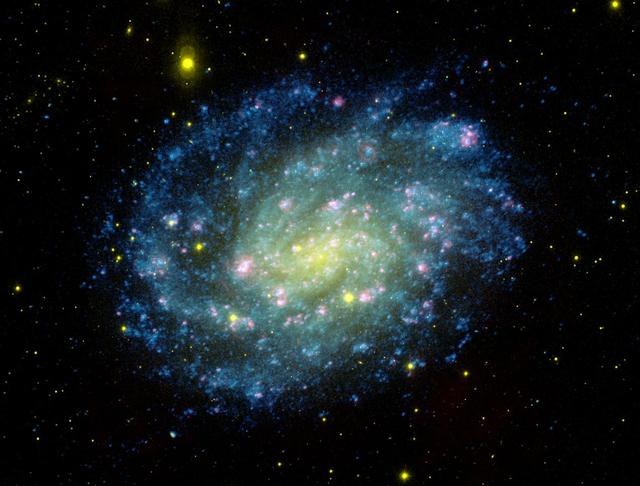
Young hot blue stars dominate the outer spiral arms of nearby galaxy NGC 300, while the older stars congregate in the nuclear regions which appear yellow-green in this image from NASA Galaxy Evolution Explorer.
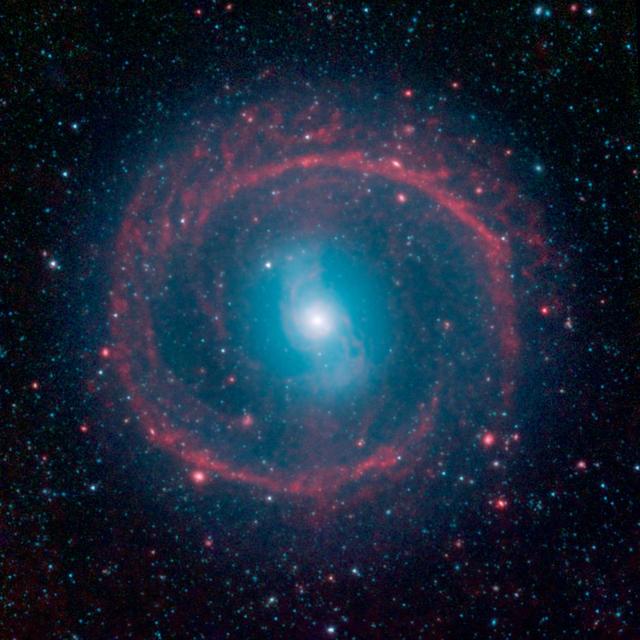
This image from NASA Spitzer Space Telescope shows where the action is taking place in galaxy NGC 1291. The outer ring, colored red, is filled with new stars that are igniting and heating up dust that glows with infrared light.

NASA Spitzer Space Telescope finds a delicate flower in the Ring Nebula, as shown in this image. The outer shell of this planetary nebula looks surprisingly similar to the delicate petals of a camellia blossom.
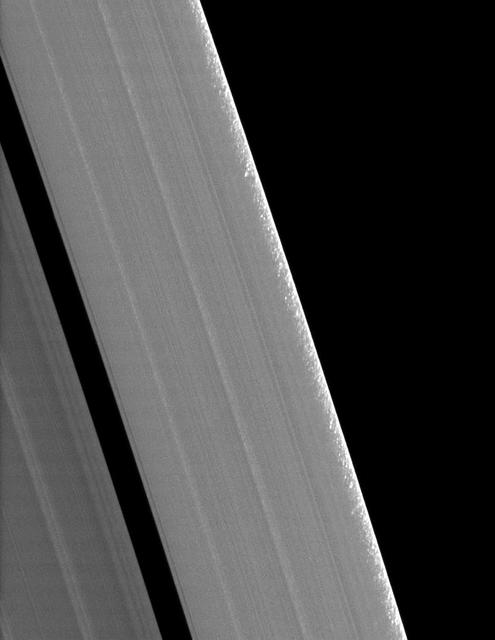
Clumps of ring material are revealed along the edge of Saturn A ring in this image taken during the planet August 2009 equinox. The granular appearance of the outer edge of the A ring is likely created by gravitational clumping of particles there.
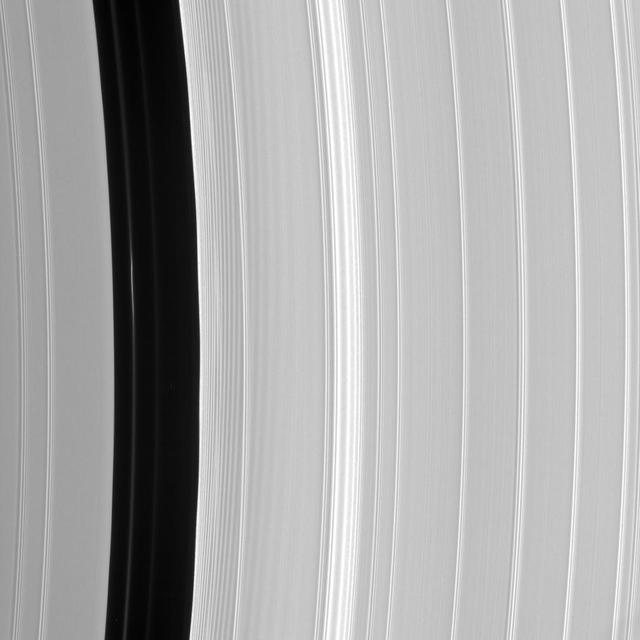
Although the embedded moon Pan is nowhere to be seen, there is a bright clump-like feature visible here, within the Encke Division. Also discernable are periodic brightness variations along the outer right side gap edge
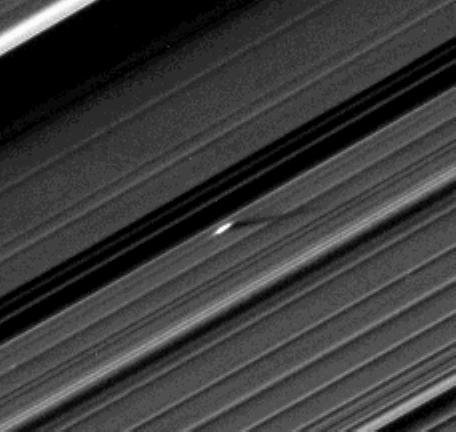
An unusually large propeller feature is detected just beyond the Encke Gap in this Cassini image of Saturn’s outer A ring taken a couple days after the planet’s August 2009 equinox.
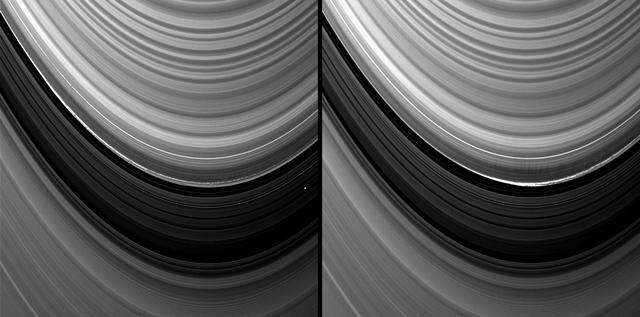
Vertical structures in the variable outer edge of Saturn B ring cast shadows in these two images captured by NASA Cassini spacecraft shortly after the planet August 2009 northern vernal equinox.
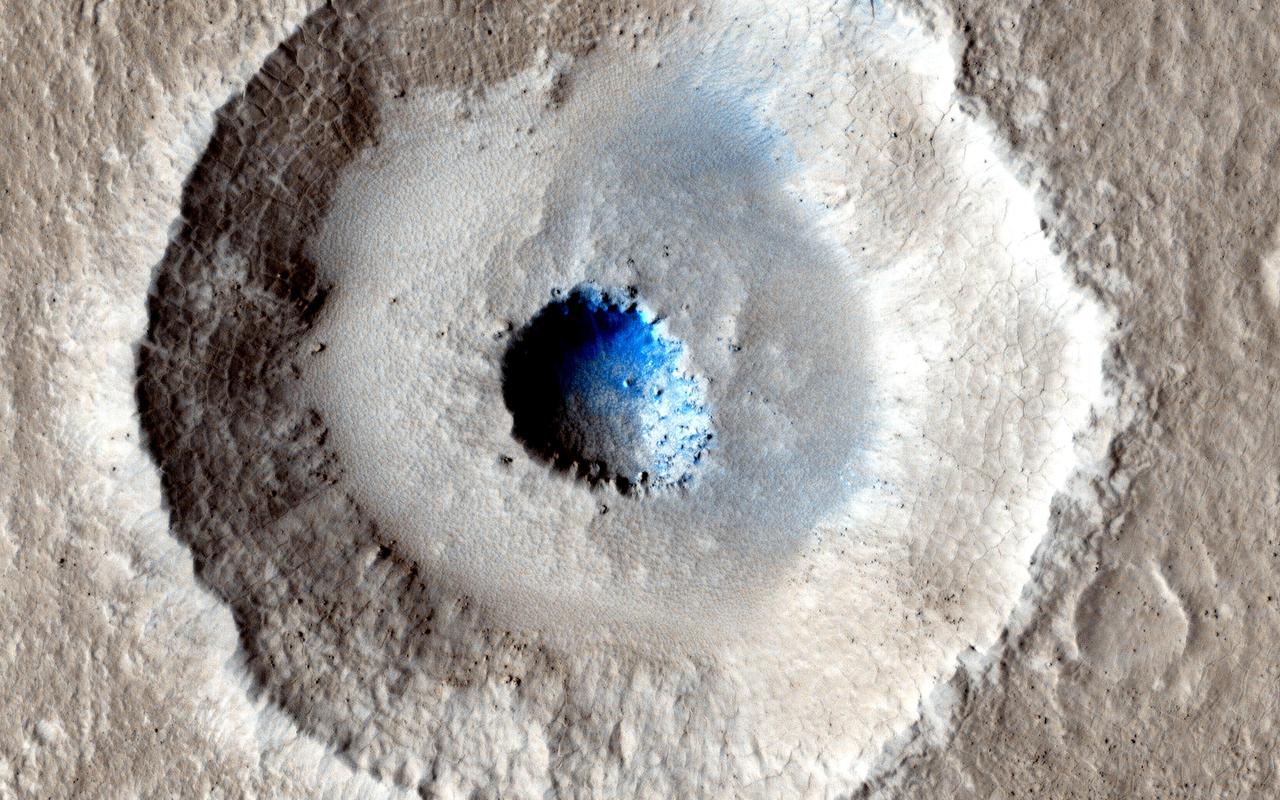
The crater in the center of this HiRISE image from NASA Mars Reconnaissance Orbiter is unusual because there is a wide, flat bench, or terrace, between the outer rim and the inner section, making it appear somewhat like a bullseye.
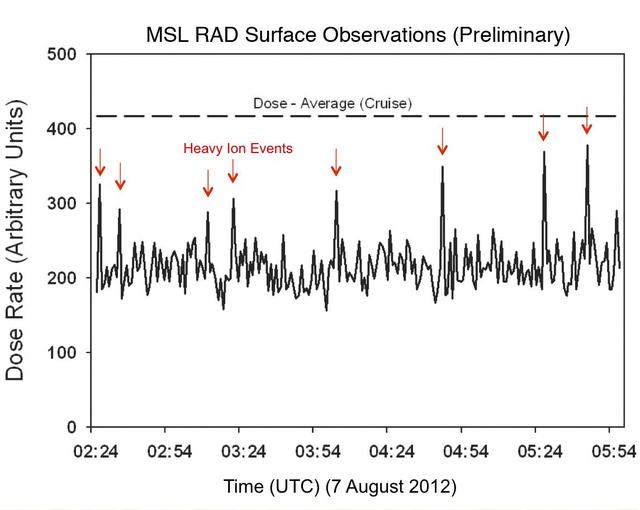
Like a human working in a radiation environment, NASA Curiosity rover carries its own version of a dosimeter to measure radiation from outer space and the sun. This graphic shows the flux of radiation detected the rover Radiation Assessment Detector.
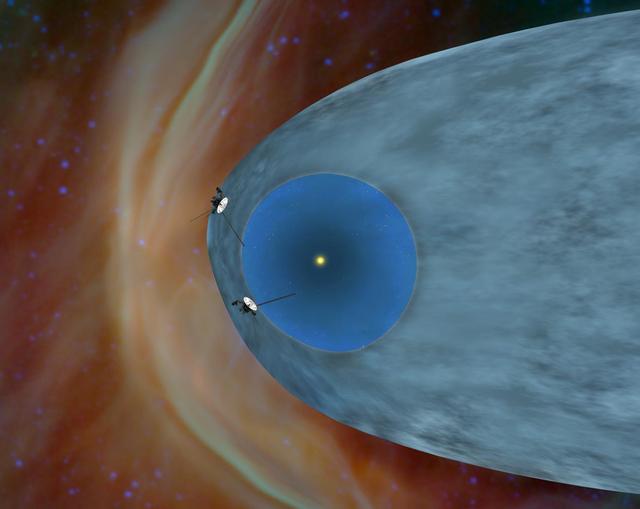
This artist concept shows NASA two Voyager spacecraft exploring a turbulent region of space known as the heliosheath, the outer shell of the bubble of charged particles around our sun.
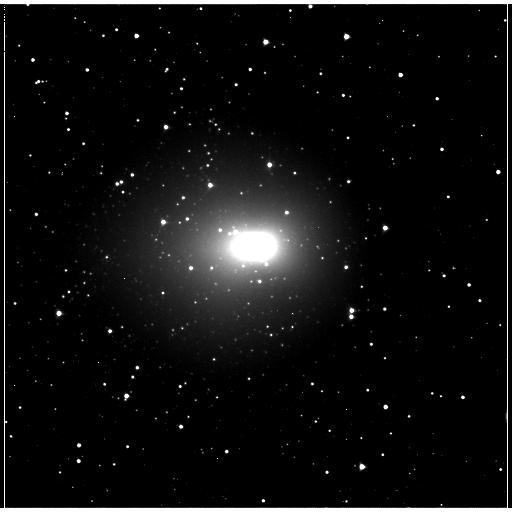
NASA EPOXI mission took this image of comet Hartley 2 on Nov. 2, 2010. The spacecraft will fly by the comet on Nov. 4, 2010. The white blob and the halo around it are the comet outer cloud of gas and dust, called a coma.
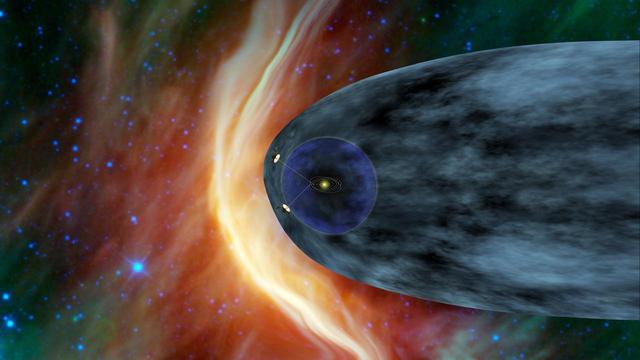
This artist concept shows NASA two Voyager spacecraft exploring a turbulent region of space known as the heliosheath, the outer shell of the bubble of charged particles around our sun. The Voyagers have been in space 33 years.
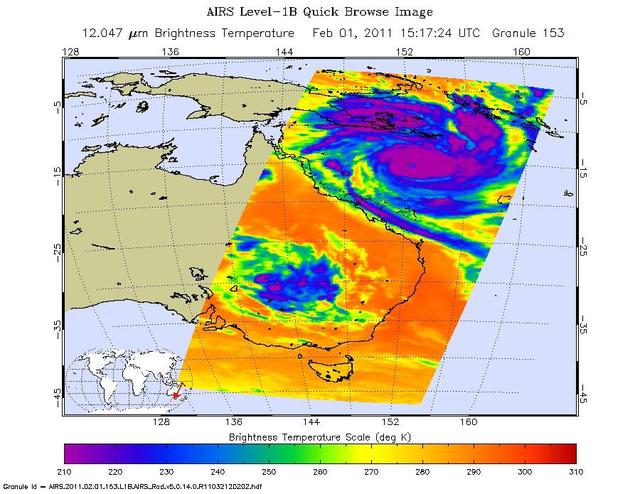
Shown here is the latest infrared image of Yasi from NASA Aqua satellite, taken on Feb. 1, 2011. A distinct eye is visible, and the outer bands of the storm can be seen nearing the Australian coast.

This false-color composite image shows the Cartwheel galaxy as seen by NASA Galaxy Evolution Explorer, where the first ripple appears as an ultraviolet-bright blue outer ring.
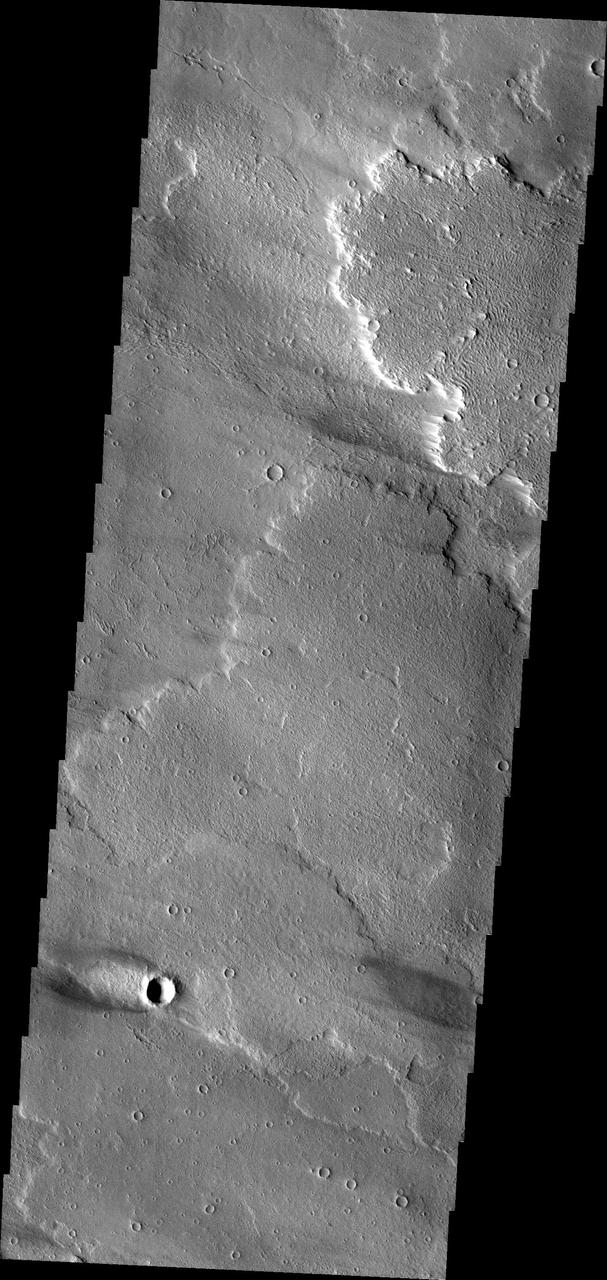
This windstreak is located on the volcanic plains of Daedalia Planum as seen by NASA Mars Odyssey. The dark outer margin is the region of dust being removed from the surface. The inner bright part is where dust is being deposited.
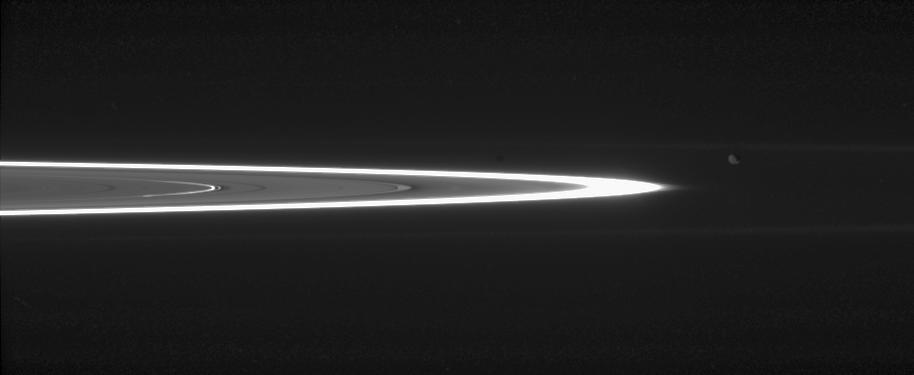
Tiny, dust-sized particles in Saturn rings become much easier to see at high phase angle -- the angle formed by the Sun, the rings and the spacecraft. The brightest ring is the F ring; the next feature to the left is the outer edge of the A ring
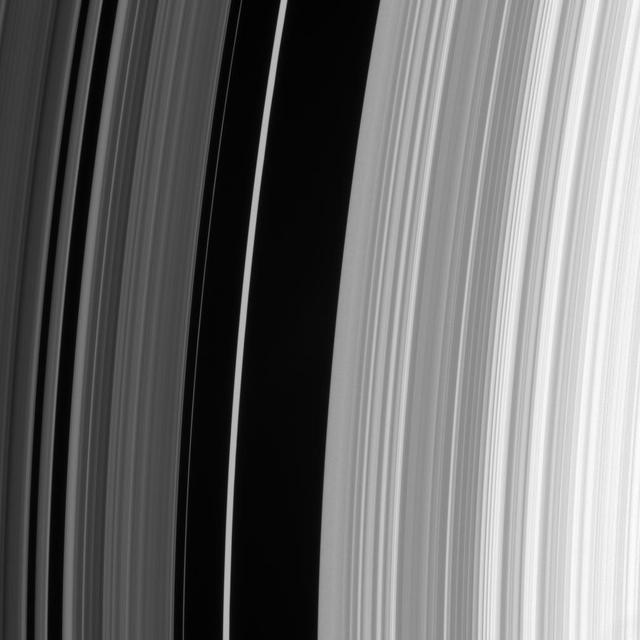
The sharp outer boundary of Saturn B ring, which is the bright ring region seen to the right in this image, is maintained by a strong resonance with the moon Mimas. For every two orbits made by particles at this distance from Saturn

A massive star left, which has created elements as heavy as iron in its interior, blows up in a tremendous explosion middle, scattering its outer layers in a structure called a supernova remnant right.
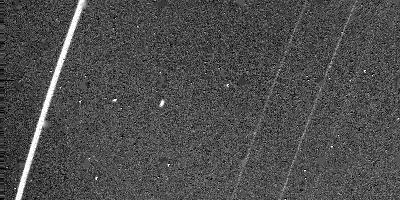
The outer rings of Uranus are visible in this image, obtained by NASA Voyager 2 on Jan. 23, 1986. The outermost and brightest ring, called epsilon, is visible along with the fainter and narrower delta and gamma rings from left.
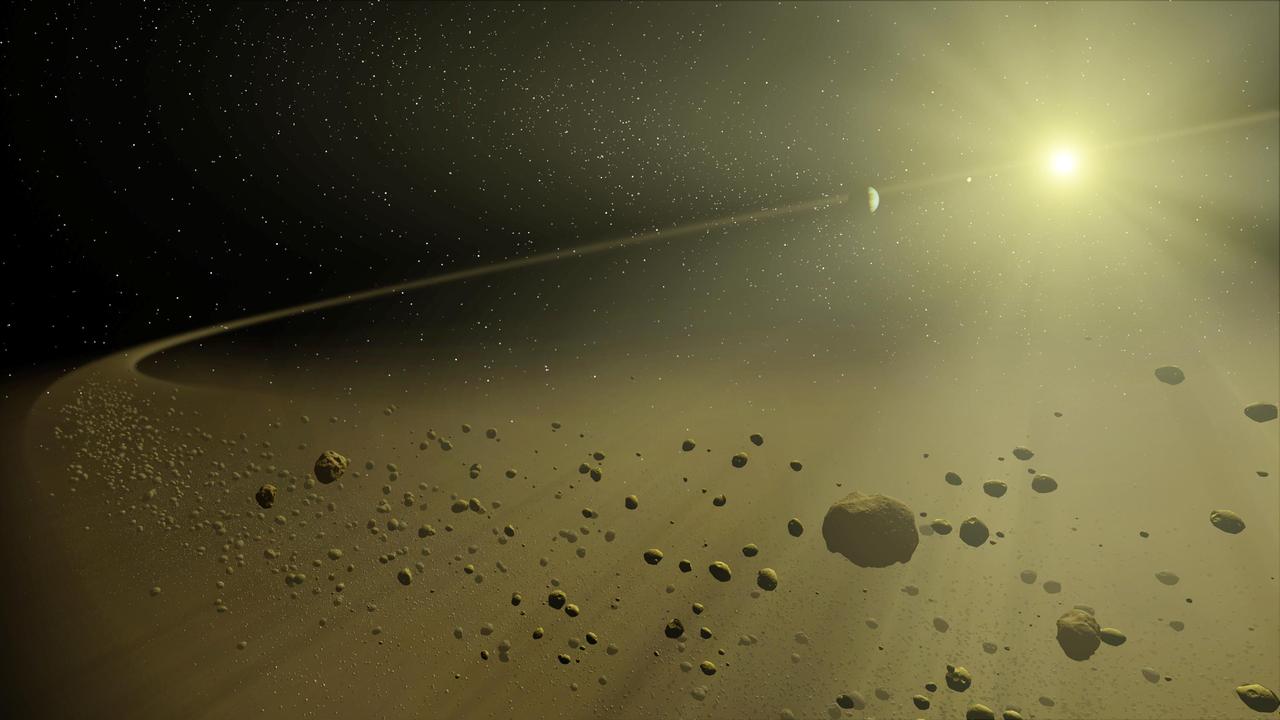
This artist concept depicts a distant hypothetical solar system, similar in age to our own. Looking inward from the system outer fringes, a ring of dusty debris can be seen, and within it, planets circling a star the size of our Sun. This debris is all that remains of the planet-forming disk from which the planets evolved. Planets are formed when dusty material in a large disk surrounding a young star clumps together. Leftover material is eventually blown out by solar wind or pushed out by gravitational interactions with planets. Billions of years later, only an outer disk of debris remains. These outer debris disks are too faint to be imaged by visible-light telescopes. They are washed out by the glare of the Sun. However, NASA's Spitzer Space Telescope can detect their heat, or excess thermal emission, in infrared light. This allows astronomers to study the aftermath of planet building in distant solar systems like our own. http://photojournal.jpl.nasa.gov/catalog/PIA07096
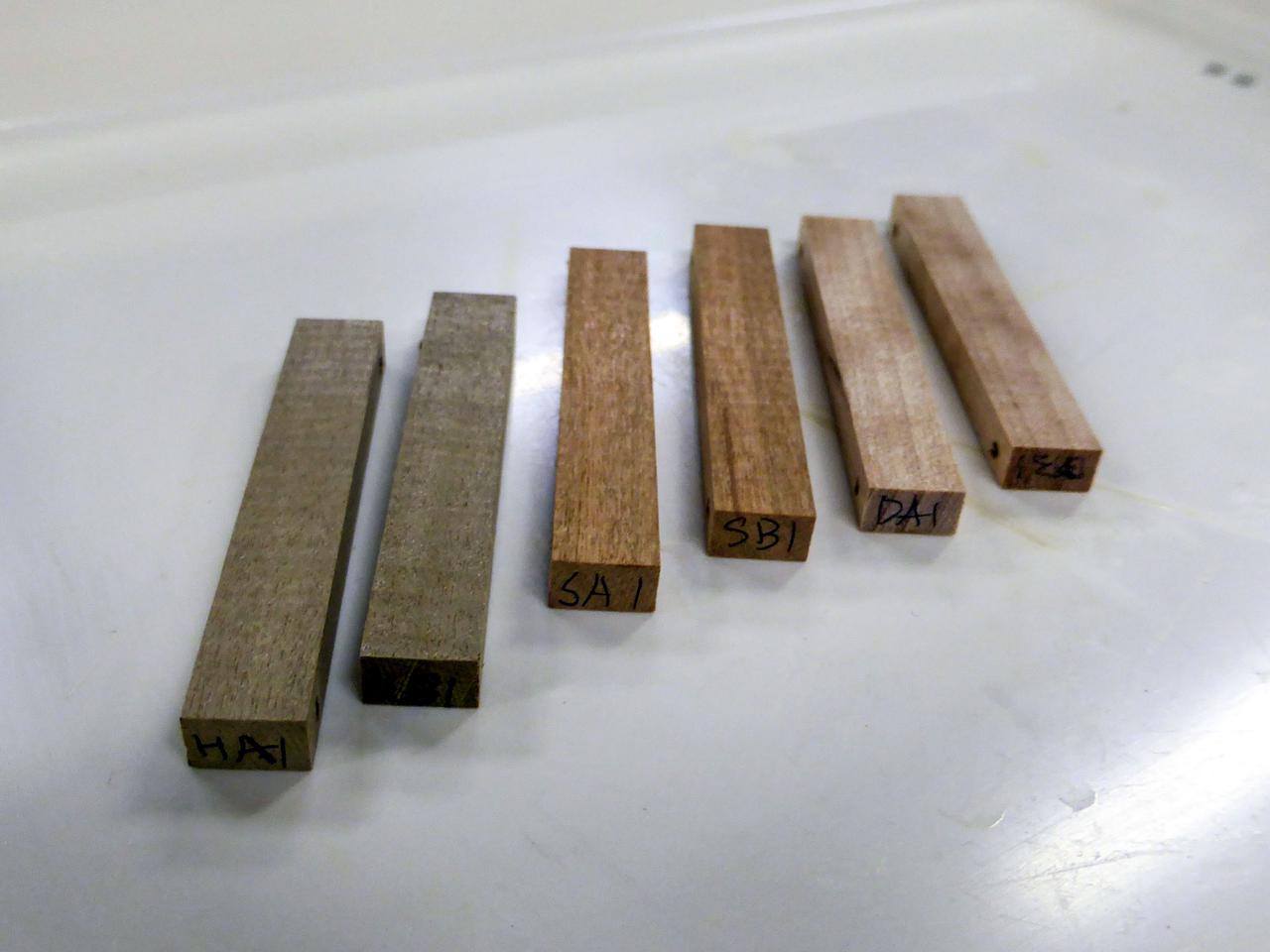
jsc2021e066968 (8/27/2021) --- A preflight view of materialtesting for the design of wooden artificial satellites (LignoSats). It is exposed to outer space of small pieces of three kinds of tree species (magnolia obovata, Cerasus jamasakura, and Betula ermanii). The aim of the Exposure Experiment of Wooden Specimen to Outer Space on the International Space Station (Exposure of Wood to Outer Space) investigation is to demonstrate if wood can be utilized as a building material for artificial satellites in space.
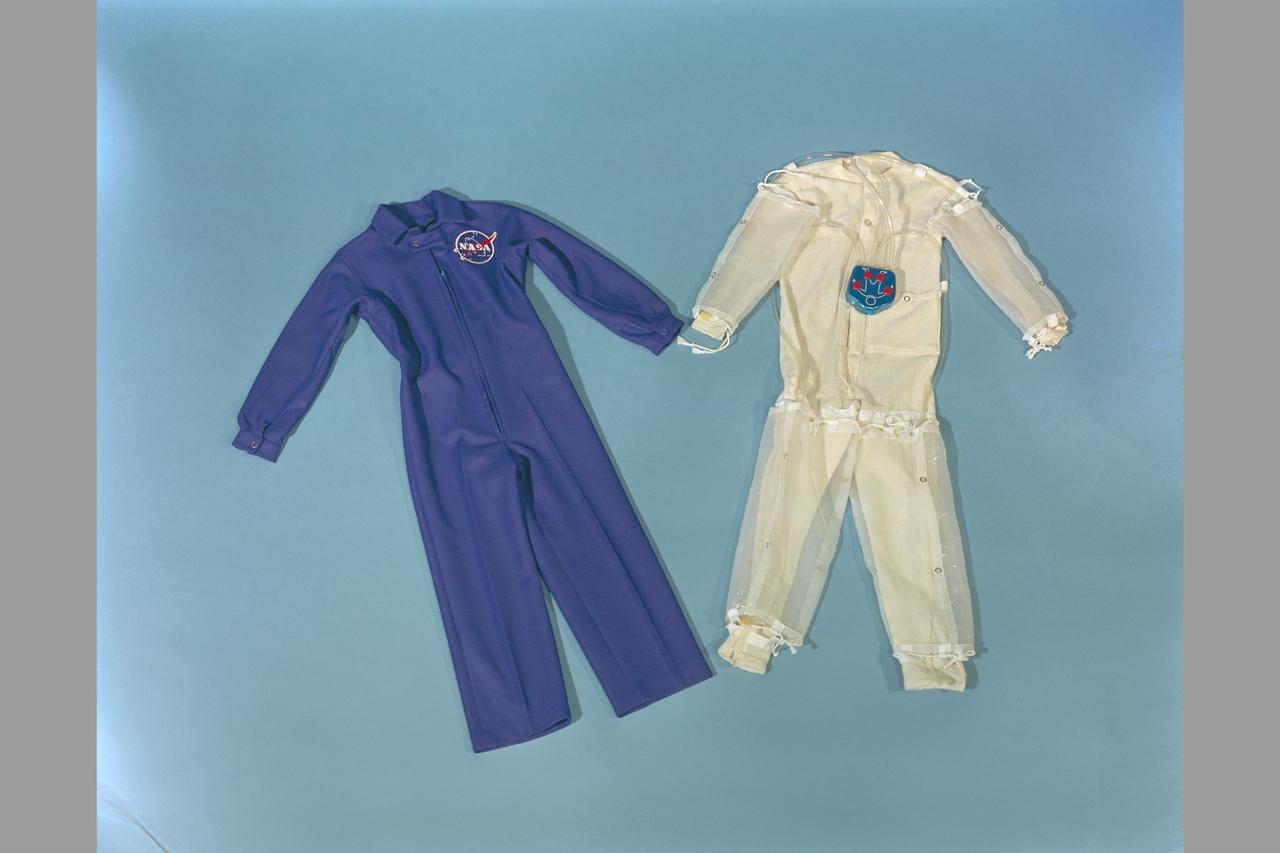
LCG: Anti-Hemophilia G-Suit - outer and inner garment assembled
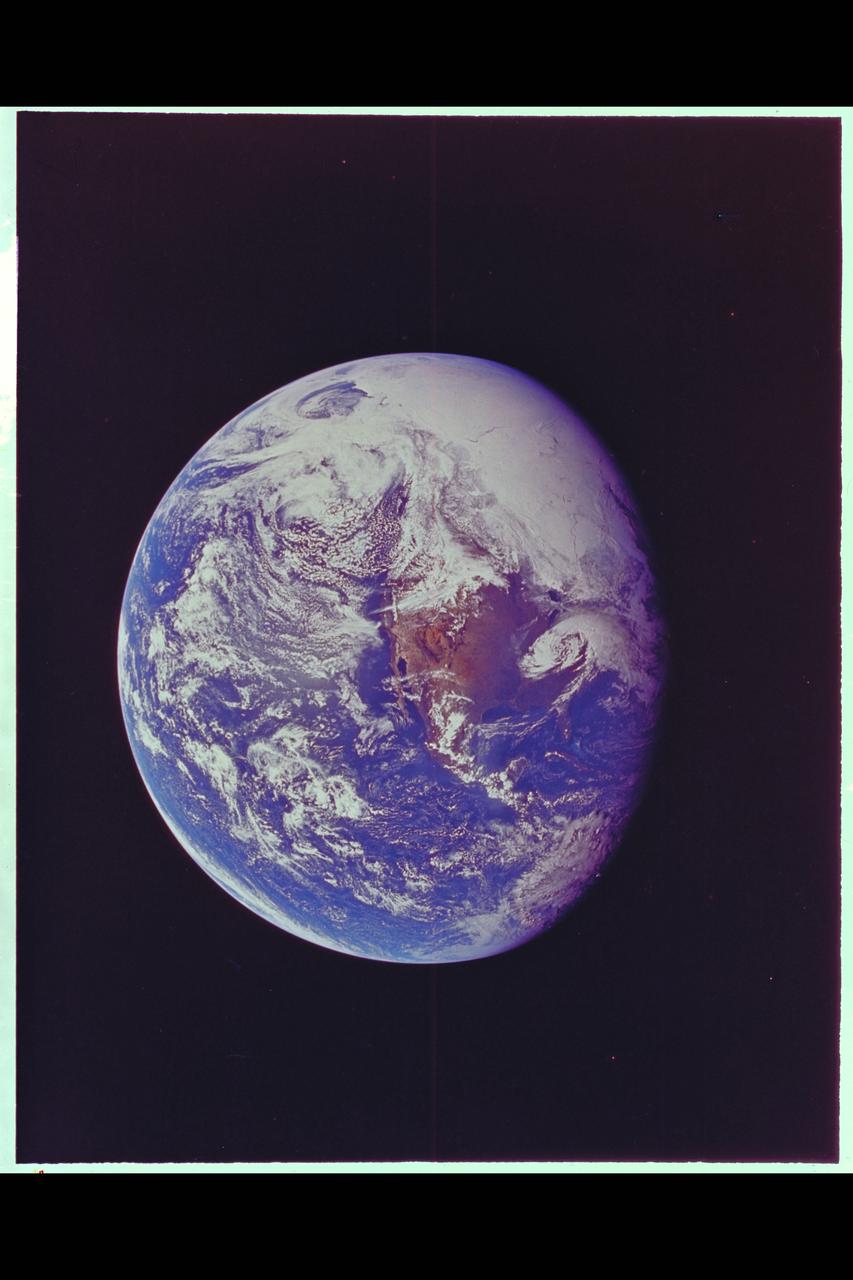
Earth showing California and the Western United States from outer space.
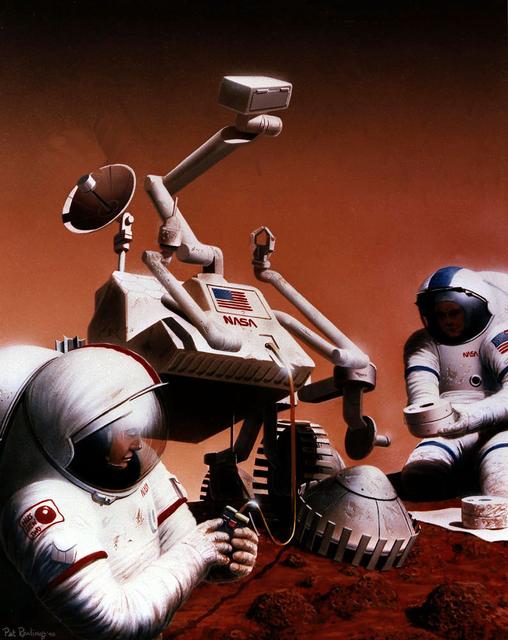
Artist Pat Rawlings' concept of the type of work and hazards future astronauts will encounter on outer worlds: Mars Rover Repair
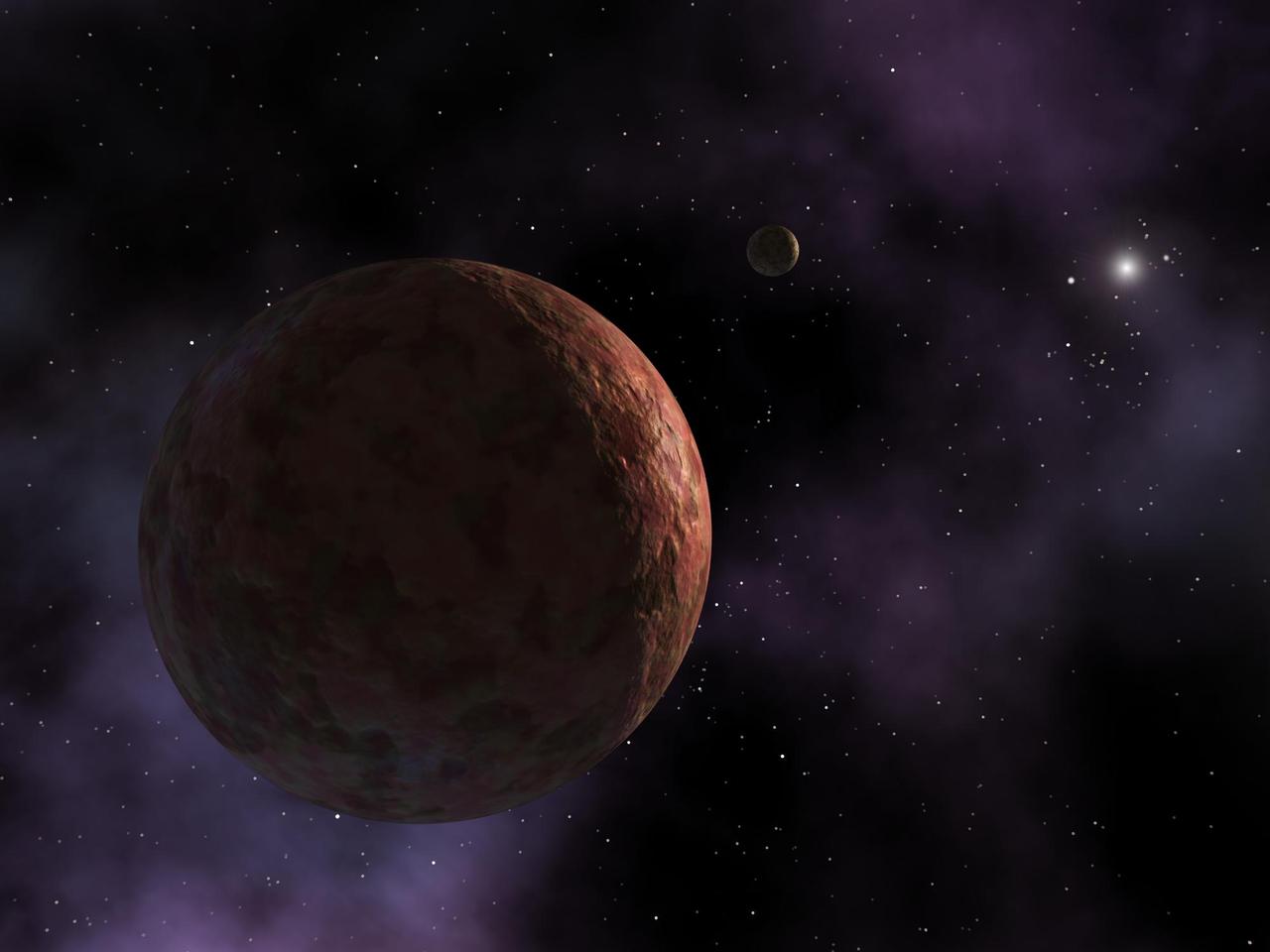
In this artist's visualization, the newly discovered planet-like object, dubbed "Sedna," is shown where it resides at the outer edges of the known solar system. The object is so far away that the Sun appears as an extremely bright star instead of a large, warm disc observed from Earth. All that is known about Sedna's appearance is that it has a reddish hue, almost as red and reflective as the planet Mars. In the distance is a hypothetical small moon, which scientists believe may be orbiting this distant body. http://photojournal.jpl.nasa.gov/catalog/PIA05566
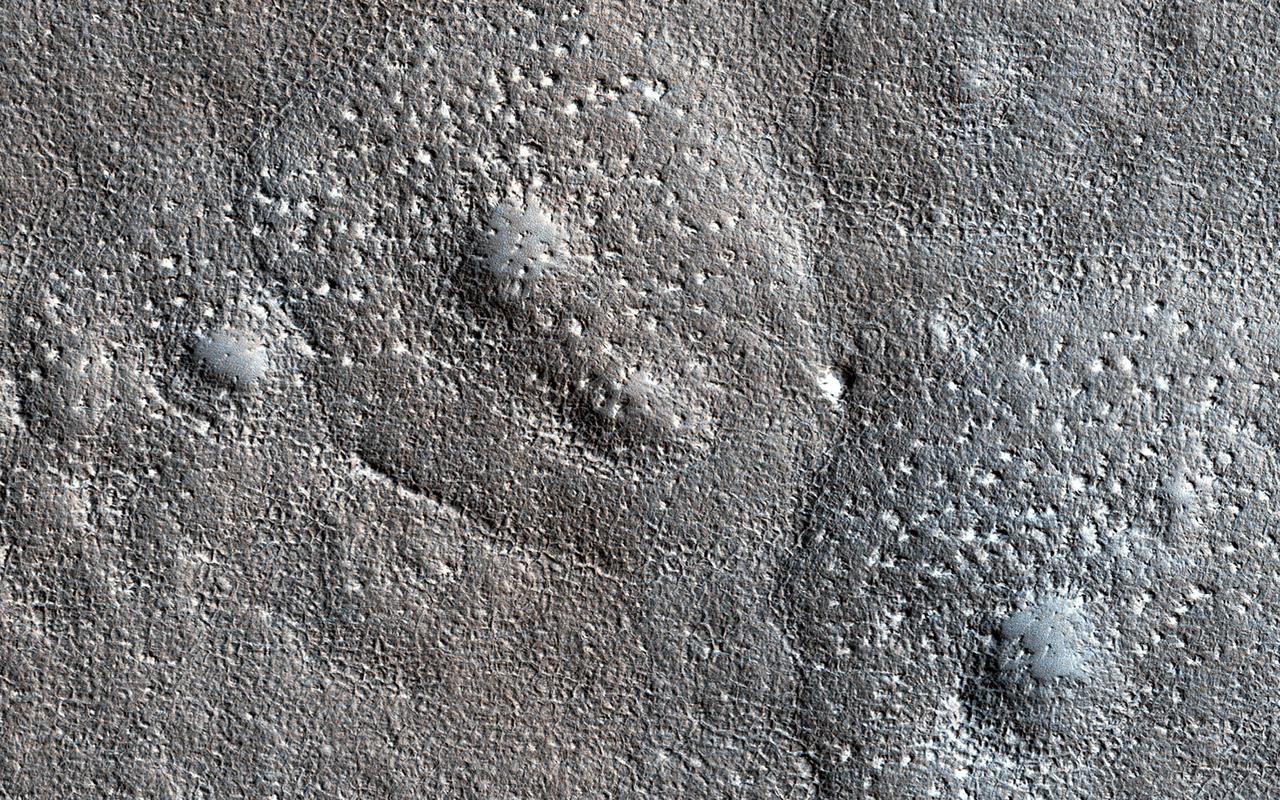
Expanded craters on Mars are thought to occur when the upper slopes of an impact crater in an ice-rich target sublimate (going directly from a solid to a gaseous state). The vaporizing ice makes the walls retreat while the lower slopes are armored by dust and debris, resulting in a funnel-shaped formation. The expanded craters in this image have an unusually bumpy texture in the outer apron where the sublimation occurred. The bumps are too large to be boulders. This suggests that the ice had concentrations of other material. https://photojournal.jpl.nasa.gov/catalog/PIA25900
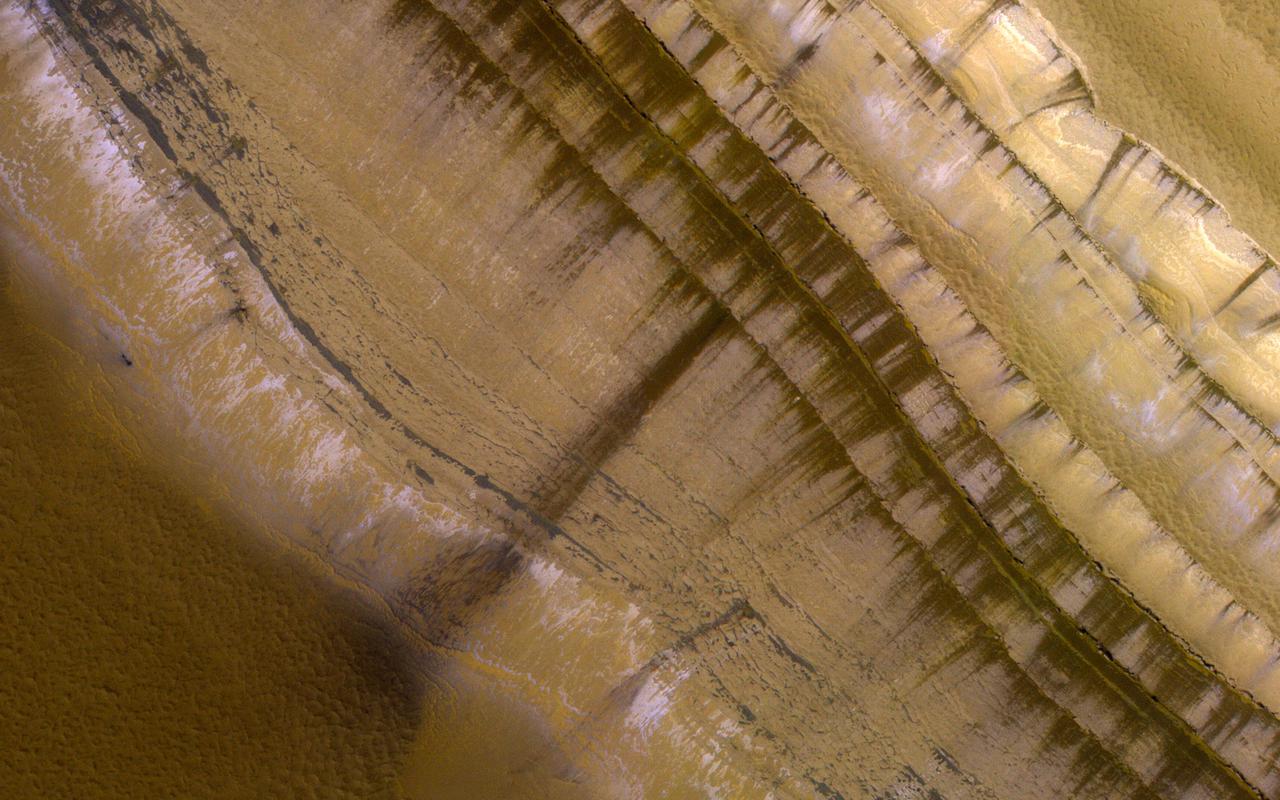
This image shows the very steep outer scarp of the north polar layered deposits. Every year there is a lot of slope activity in the springtime when sunlight warms these slopes. In this image we can see many dark streaks extending down the slope, but no sign yet of larger avalanches that were common in past years. https://photojournal.jpl.nasa.gov/catalog/PIA24695
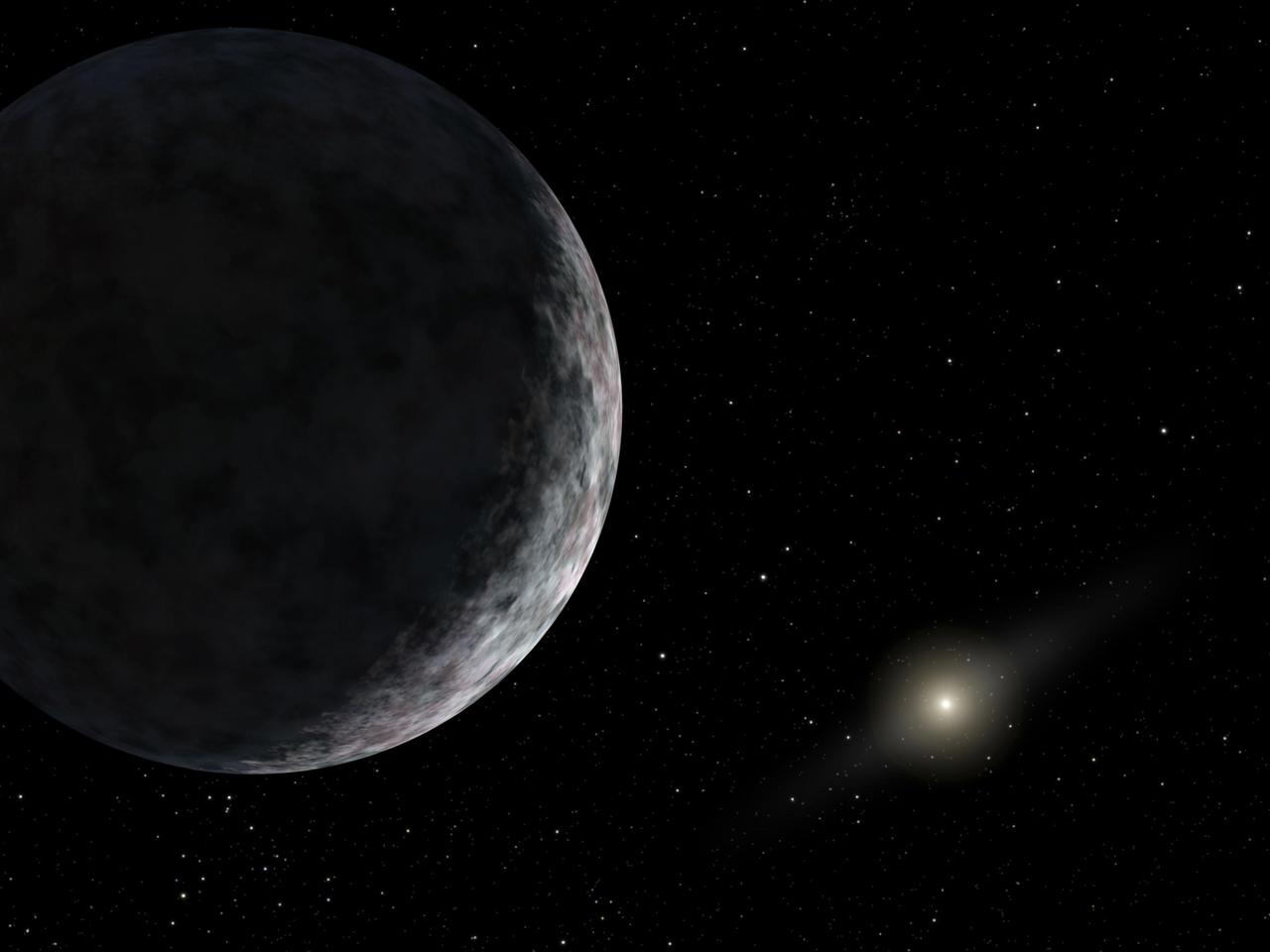
This artist concept shows the planet catalogued as 2003UB313 at the lonely outer fringes of our solar system. Our Sun can be seen in the distance. The new planet is at least as big as Pluto and about three times farther away from the Sun than Pluto.
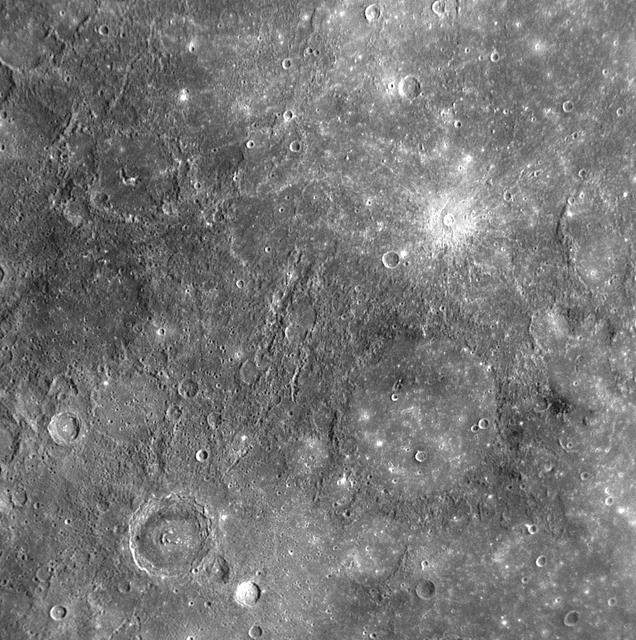
The crater identified in this NAC image was named in November 2008 for Ronald Moody, a 20th century Jamaican sculptor and painter. Moody features a central peak or peak-ring structure and an annulus of dark material on its outer floor green arrows.
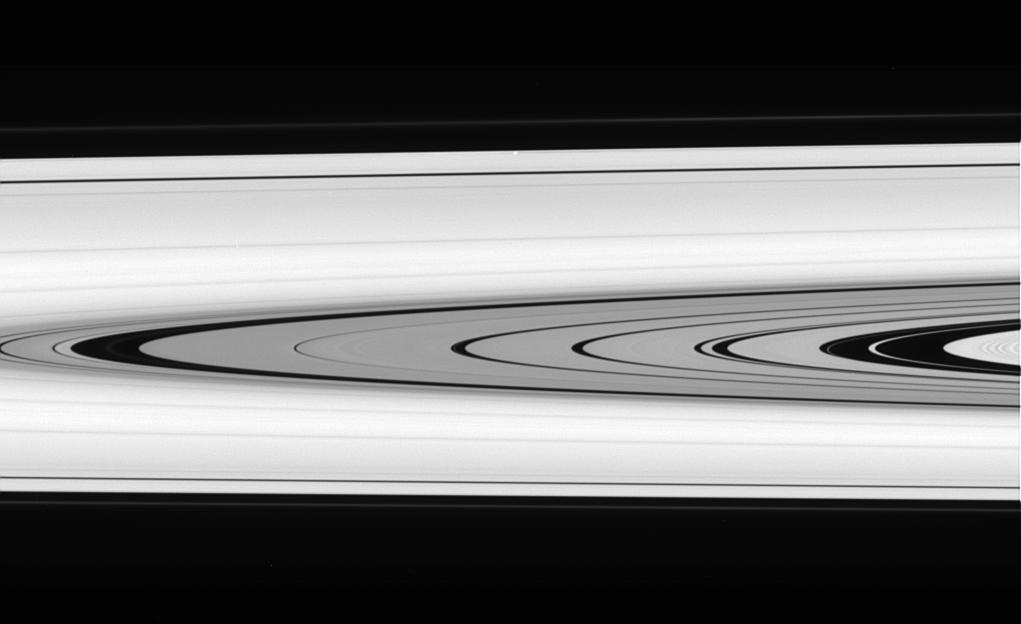
This splendid view offers a detailed look at the faint rings within the Cassini Division as well as a rare glimpse of the Keeler gap moon, Daphnis. The small, ring embedded moon is a bright unresolved speck above center, near outer edge of A ring
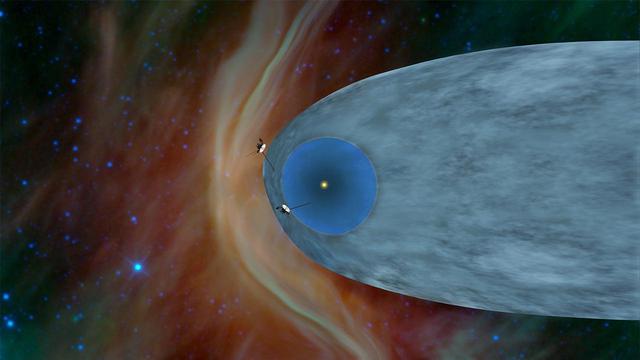
This artist concept shows the general locations of NASA two Voyager spacecraft. Voyager 1 top has sailed beyond our solar bubble into interstellar space. Voyager 2 bottom is still exploring the outer layer of the solar bubble.
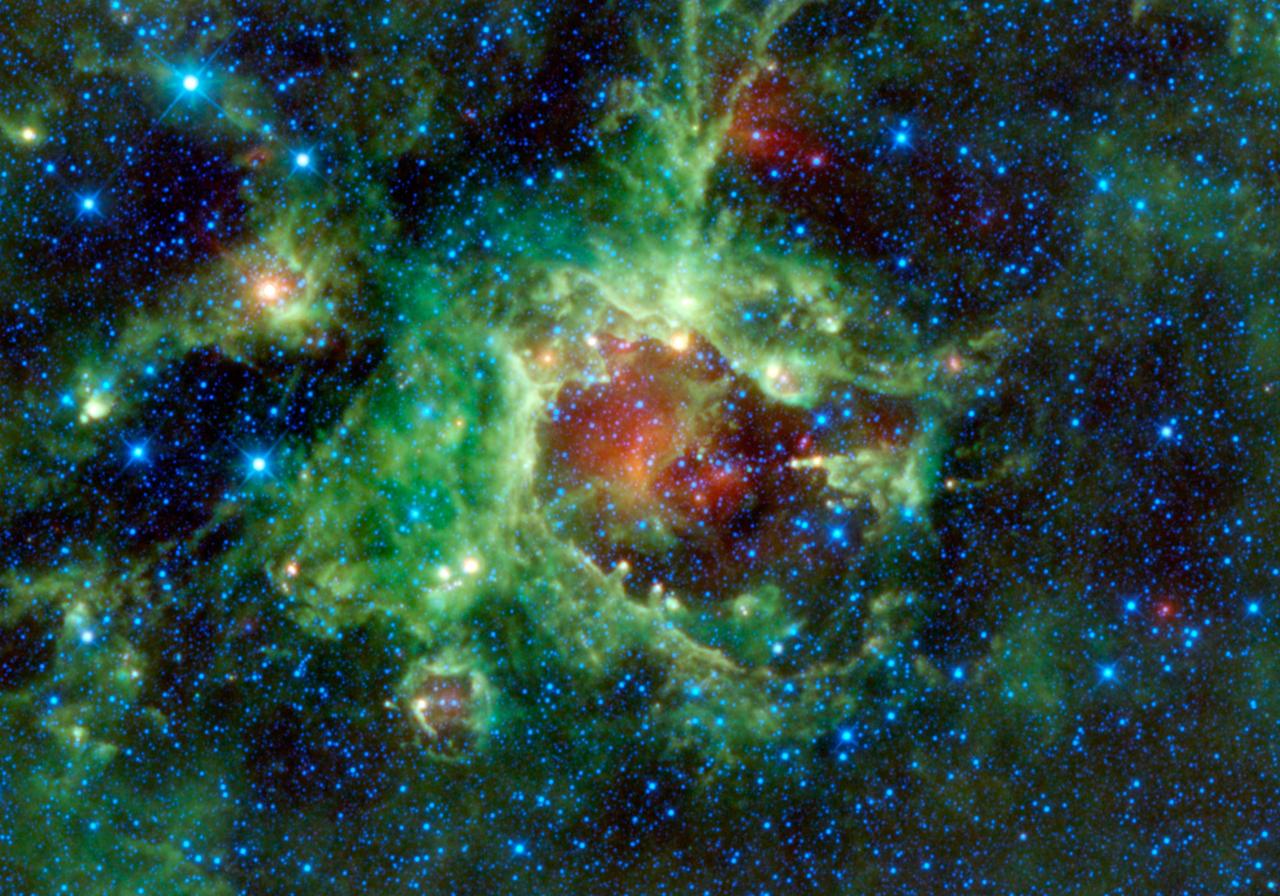
NASA Wide-field Infrared Survey Explorer, captured this image of a star-forming cloud of dust and gas located in the constellation of Monoceros. Sh2-284 is relatively isolated at the very end of an outer spiral arm of our Milky Way galaxy.
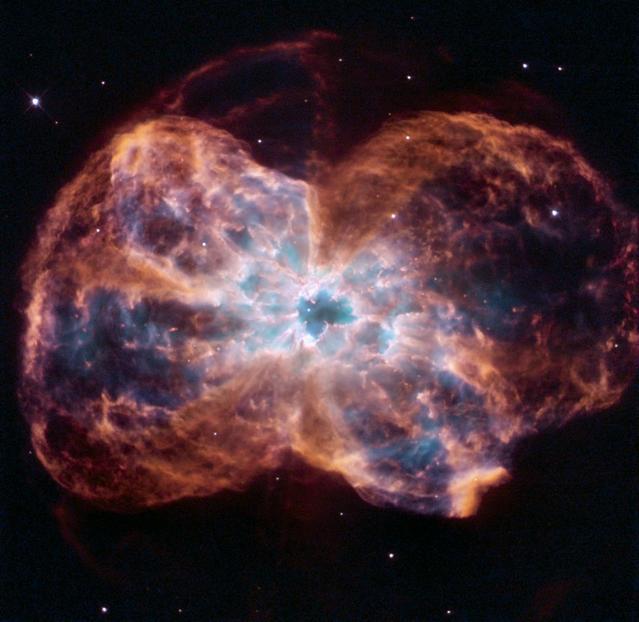
This image, taken by NASA Hubble Space Telescope, shows the colorful last hurrah of a star like our Sun. The star is ending its life by casting off its outer layers of gas, which formed a cocoon around the star remaining core.
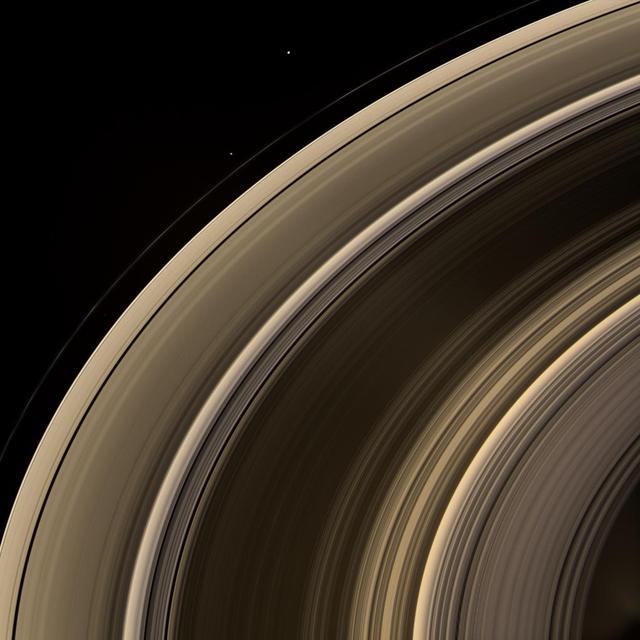
From on high, the Cassini spacecraft spies a group of three ring moons in their travels around Saturn. Janus is seen at top, while Pandora hugs the outer edge of the narrow F ring. More difficult to spot is Pan, which is a mere speck in this view.
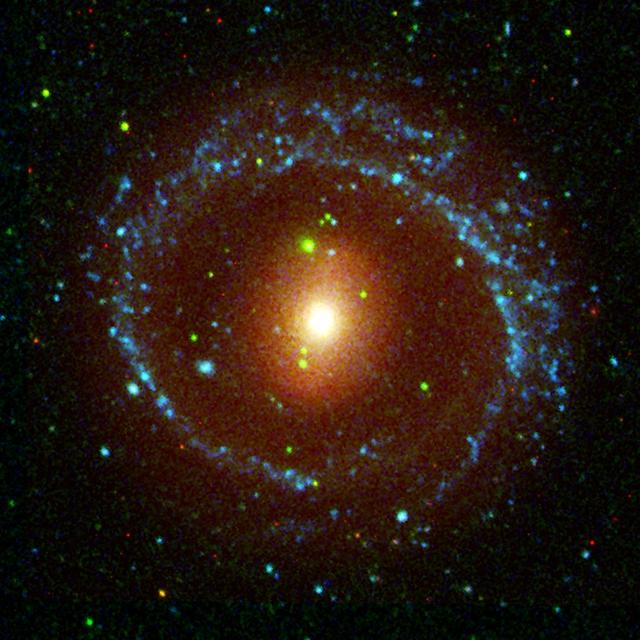
This image from NASA Galaxy Evolution Explorer shows the galaxy NGC 1291, located about 33 million light-years away in the constellation Eridanus. NGC 1291 is notable for its unusual inner bar and outer ring structure.

This image from NASA Spitzer and GALEX shows the Helix nebula, a dying star throwing a cosmic tantrum. In death, the star dusty outer layers are unraveling into space, glowing from the intense UV radiation being pumped out by the hot stellar core.
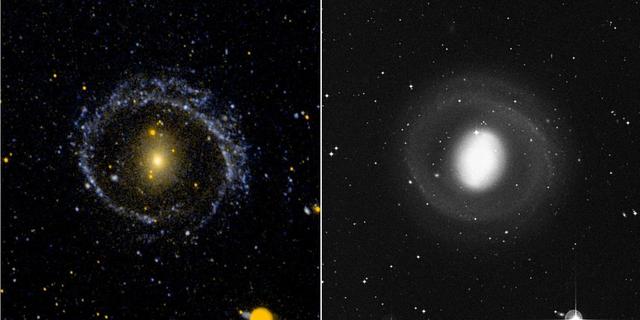
This ultraviolet image left and visual image right from NASA Galaxy Evolution Explorer is of the barred ring galaxy NGC 1291. The VIS image is dominated by the inner disk and bar. The UV image is dominated by the low surface brightness outer arms.
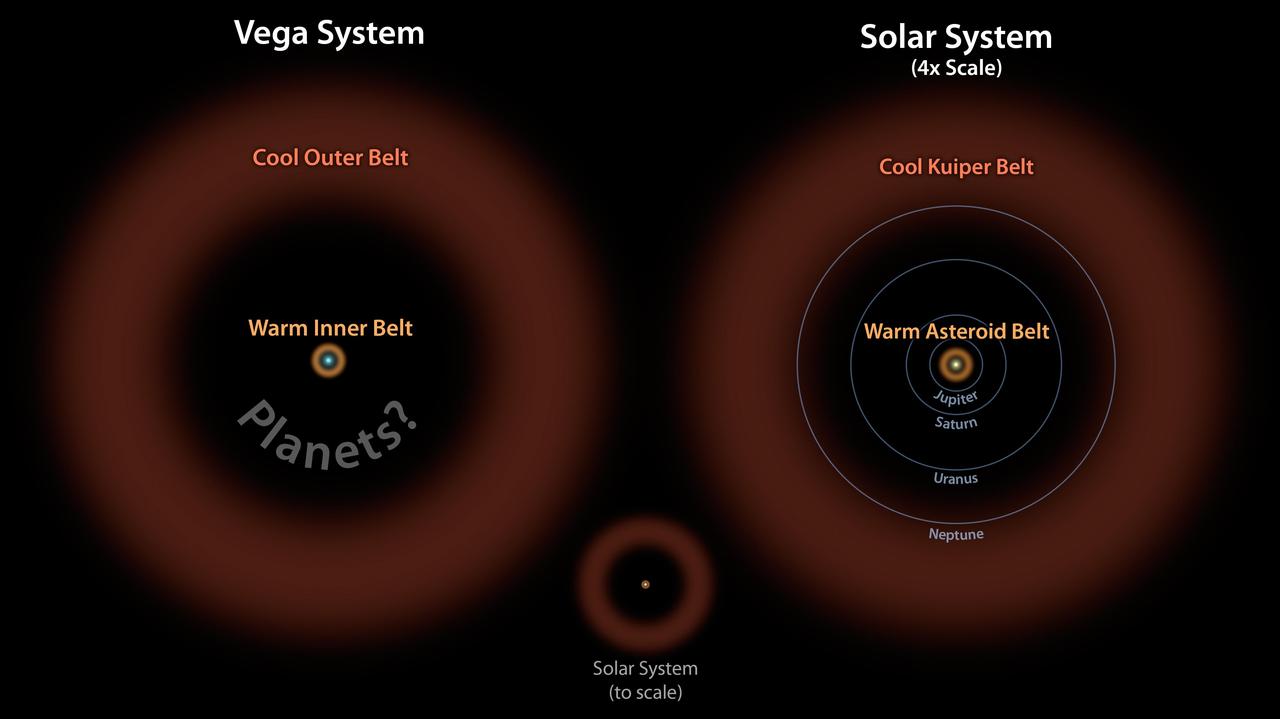
In this diagram, the Vega system, which was already known to have a cooler outer belt of comets orange, is compared to our solar system with its asteroid and Kuiper belts. The ring of warm, rocky debris was detected using NASA Spitzer Space Telescope,
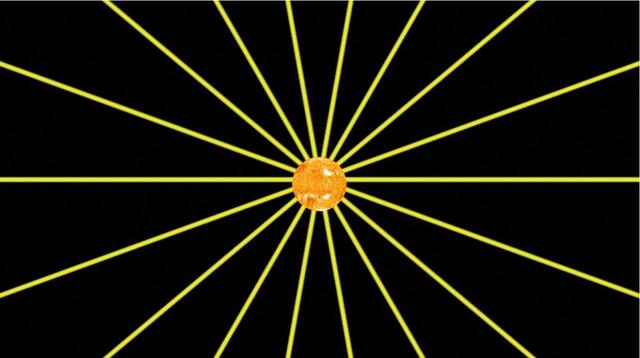
This frame from an animation shows how the magnetic field lines emanating from our sun spiral out into the solar system as the sun rotates. NASA Voyager 1 is in an area scientists are calling the stagnation region, at the outer layer of the heliosphere.
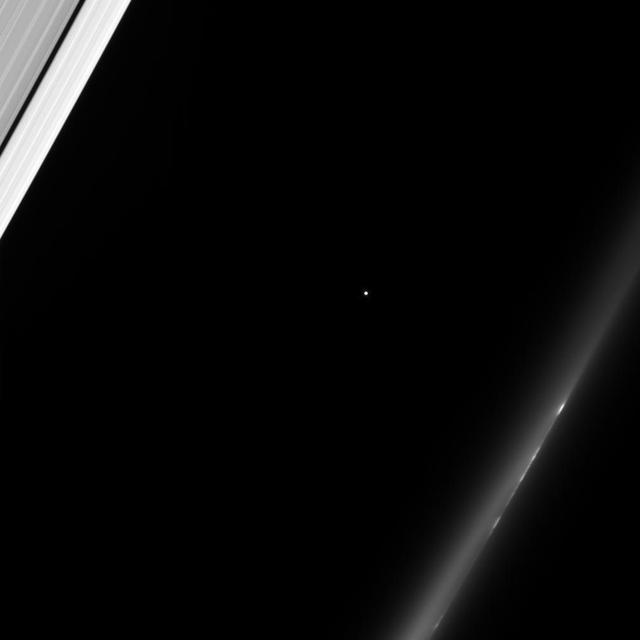
The Cassini spacecraft gazes toward a distant star as Saturn rings slip past in the foreground. At upper left is the outer A ring, with its dark Keeler Gap. At lower right, a train of bright clumps shuttles past in the wispy F ring
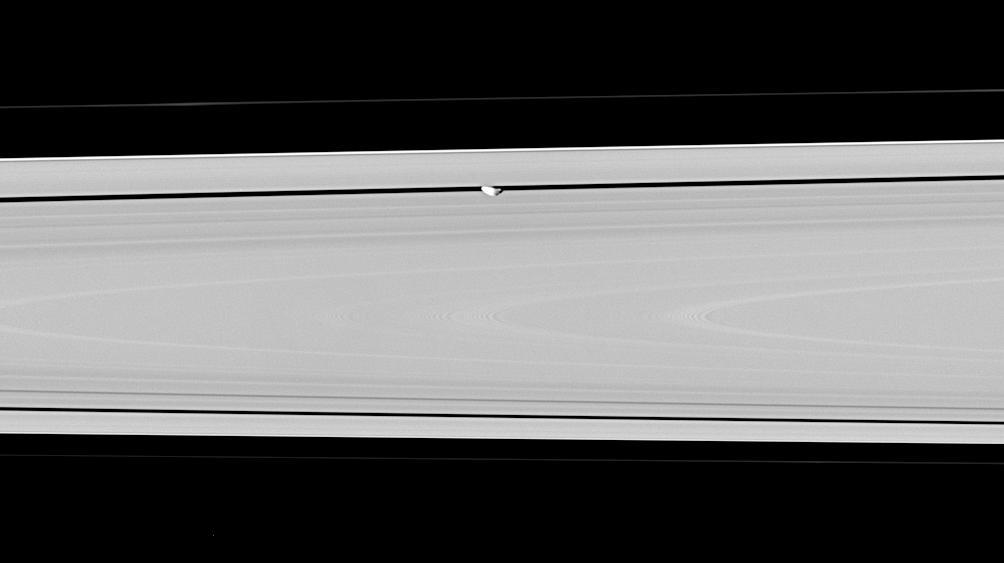
Hiding within the Encke gap is the small moon Pan, partly in shadow and party cut off by the outer A ring in this view. Similar to Atlas, Pan appears to have a slight ridge around its middle; and like Atlas, Pan orbit also coincides with a faint ringlet
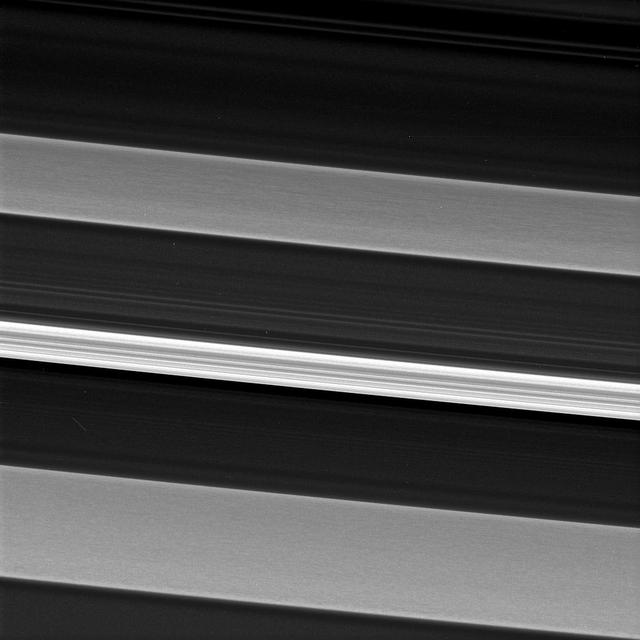
Saturn's C ring is home to a surprisingly rich array of structures and textures. Much of the structure seen in the outer portions of Saturn's rings is the result of gravitational perturbations on ring particles by moons of Saturn. Such interactions are called resonances. However, scientists are not clear as to the origin of the structures seen in this image which has captured an inner ring region sparsely populated with particles, making interactions between ring particles rare, and with few satellite resonances. In this image, a bright and narrow ringlet located toward the outer edge of the C ring is flanked by two broader features called plateaus, each about 100 miles (160 kilometers) wide. Plateaus are unique to the C ring. Cassini data indicates that the plateaus do not necessarily contain more ring material than the C ring at large, but the ring particles in the plateaus may be smaller, enhancing their brightness. This view looks toward the sunlit side of the rings from about 53 degrees above the ring plane. The image was taken in green light with the Cassini spacecraft narrow-angle camera on Aug. 14, 2017. The view was acquired at a distance of approximately 117,000 miles (189,000 kilometers) from Saturn and at a Sun-Saturn-spacecraft, or phase, angle of 74 degrees. Image scale is 3,000 feet (1 kilometer) per pixel. The Cassini spacecraft ended its mission on Sept. 15, 2017. https://photojournal.jpl.nasa.gov/catalog/PIA21356

NACA Photographer - North American XP-51B Airplane with outer wing panels removed and ready for testing in Ames 16 foot wind tunnel.
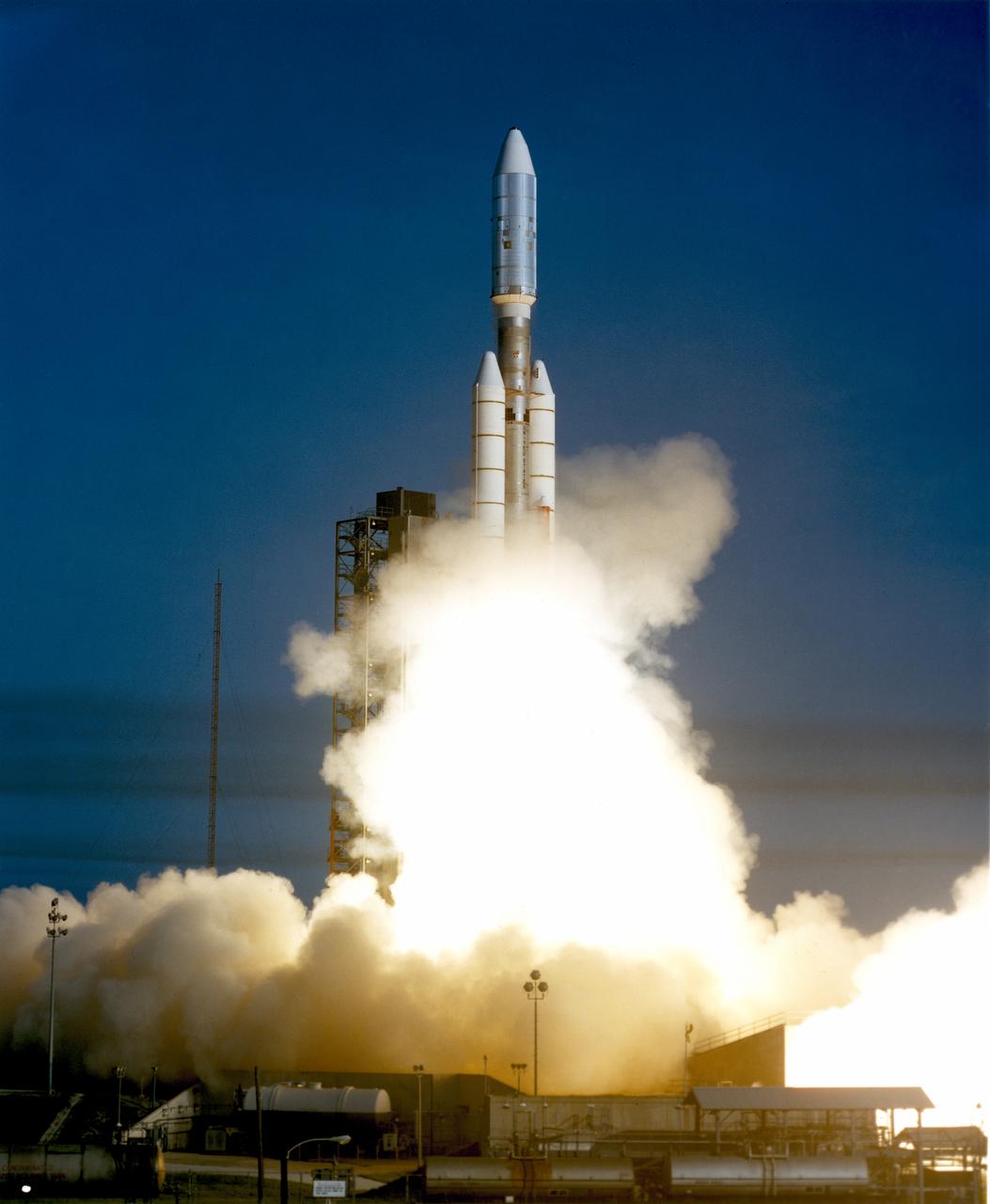
The Voyager 1 aboard the Titan III/Centaur lifted off on September 5, 1977, joining its sister spacecraft, the Voyager 2, on a mission to the outer planets.
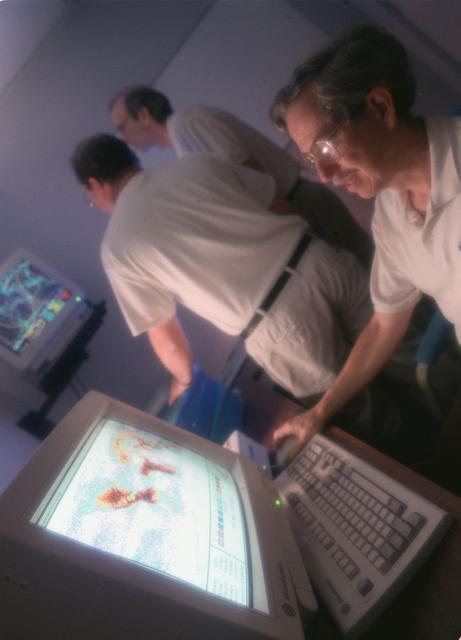
Marshall researchers conduct extensive analysis of weather patterns by using remote sensing on lightning and thunderstorms from outer space for the Mission to Planet Earth program.

S82-26645 (March 1982) --- Spacesuit inner gloves consist of pressure bladders covered by Beta Cloth. EVA outer gloves are made of Beta Cloth, Mylar and a metallic mesh hand area. The thumb and fingertips of the glove are molded of silicone rubber to permit a degree of sensitivity. The inner gloves attach to the suit by pressure sealing rings, similar to these used in helmet-to-suit connections. The outer gloves served as a cover to protect from micrometeorites, abrasions and heat.
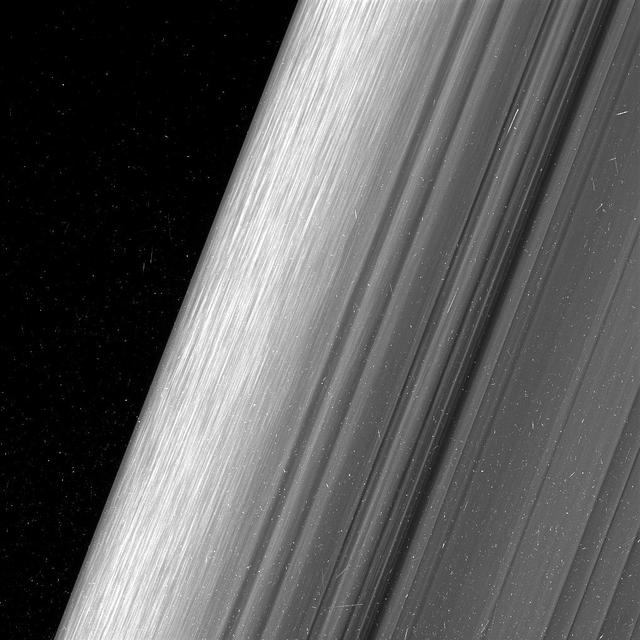
This image shows a region in Saturn's outer B ring. NASA's Cassini spacecraft viewed this area at a level of detail twice as high as it had ever been observed before. The view here is of the outer edge of the B ring, at left, which is perturbed by the most powerful gravitational resonance in the rings: the "2:1 resonance" with the icy moon Mimas. This means that, for every single orbit of Mimas, the ring particles at this specific distance from Saturn orbit the planet twice. This results in a regular tugging force that perturbs the particles in this location. A lot of structure is visible in the zone near the edge on the left. This is likely due to some combination of the gravity of embedded objects too small to see, or temporary clumping triggered by the action of the resonance itself. Scientists informally refer to this type of structure as "straw." This image was taken using a fairly long exposure, causing the embedded clumps to smear into streaks as they moved in their orbits. Later Cassini orbits will bring shorter exposures of the same region, which will give researchers a better idea of what these clumps look like. But in this case, the smearing does help provide a clearer idea of how the clumps are moving. This image is a lightly processed version, with minimal enhancement; this version preserves all original details present in the image. Another other version (Figure 1) has been processed to remove the small bright blemishes due to cosmic rays and charged particle radiation near the planet -- a more aesthetically pleasing image, but with a slight softening of the finest details. The image was taken in visible light with the Cassini spacecraft wide-angle camera on Dec. 18, 2016. The view was obtained at a distance of approximately 32,000 miles (52,000 kilometers) from the rings and looks toward the unilluminated side of the rings. Image scale is about a quarter-mile (360 meters) per pixel. http://photojournal.jpl.nasa.gov/catalog/PIA21057

Images of the Milky Way and the Large Magellanic Cloud (LMC) are overlaid on a map of the surrounding area, our galaxy's galactic halo. Dark blue represents a low concentration of stars; lighter blues indicate increasing stellar density. The map spans from about 200,000 light-years to 325,000 light-years from the galactic center and provides the first clear view of the major features in this region. The LMC is orbiting the Milky Way and will eventually merge with it. The high concentration in the lower half is a wake created by the LMC as it sails through the galactic halo. In the upper half of the image, astronomers observed an apparent excess of stars compared to the southern hemisphere. This is evidence that the Large Magellanic Cloud has pulled the Milky Way disk significantly off-center. The galactic halo can be thought of as a bubble surrounding the disk. The number of stars per area is highest near the center of the bubble, and drops off moving away from the center. If the Milky Way were in the center of the halo, astronomers would see an approximately equal number of stars in both hemispheres. But because the Milky Way has been pulled away from the center, when astronomers look into the northern hemisphere, they see more of the central, highly populated area. Comparing these two views, there is an apparent excess of stars in the northern hemisphere. The image of the Milky Way used here is from the ESA (European Space Agency) Gaia mission: https://www.eso.org/public/images/eso1908e/. https://photojournal.jpl.nasa.gov/catalog/PIA24571
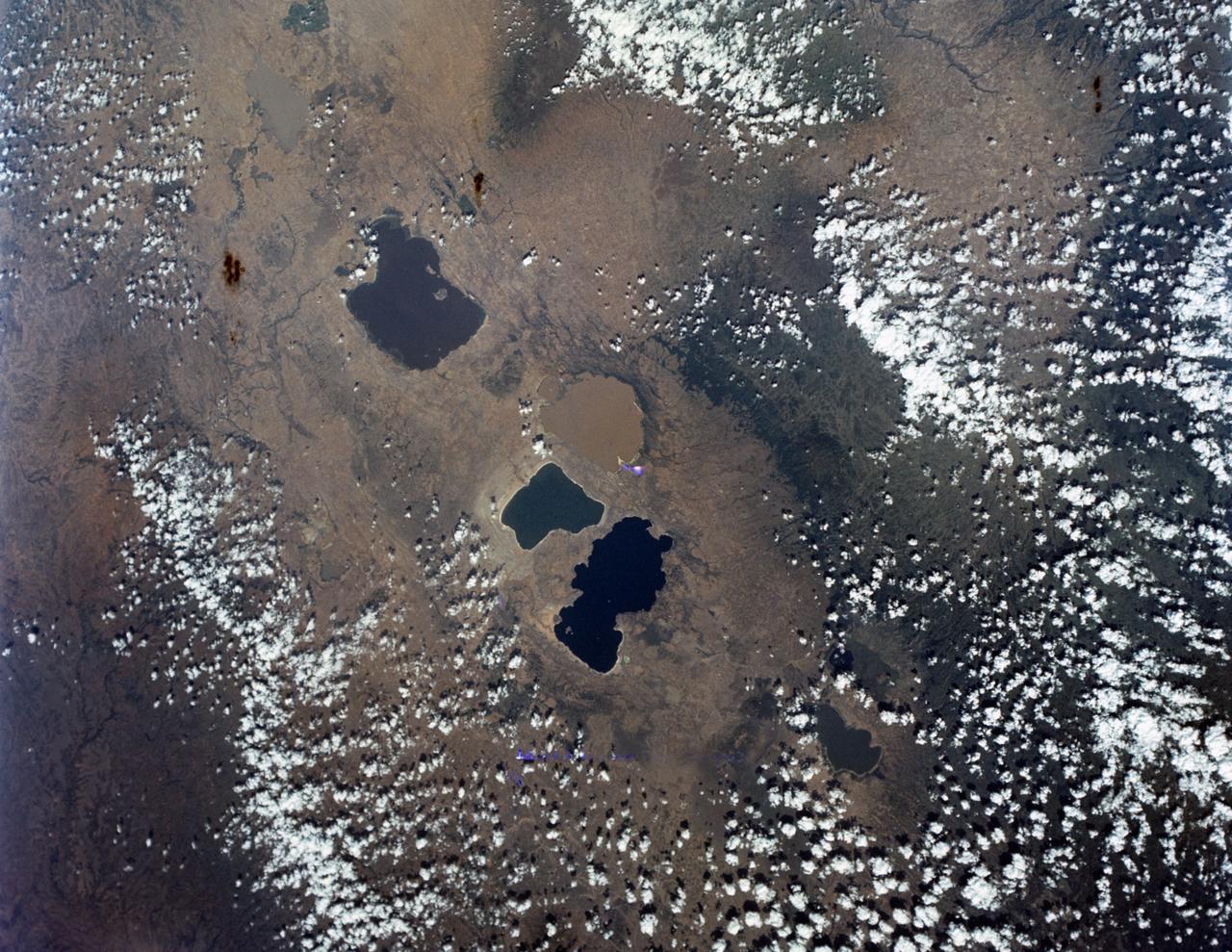
S65-63162 (16 Dec. 1965) --- Central area of Ethiopia, south of Addis Ababa, showing Lakes Zwai, Langana, and Shala, as seen from the Gemini-6 spacecraft during its 14th revolution of Earth. Photo credit: NASA or National Aeronautics and Space Administration

S81-39570 (12-14 Nov 1981) --- Astronaut Joe H. Engle, STS-2 commander, enjoys a rare in-space exercise session on a device called a treadmill, which is specially designed for astronauts in zero gravity. He is in the mid-deck are of the Space Shuttle Columbia flying 160 miles (226 kilometers) above the Earth. The STS-2 mission of Astronauts Engle and Richard H. Truly, pilot, lasted a total of two days, six hours, 13 minutes and 10 seconds. Truly took the picture with a 35mm camera.
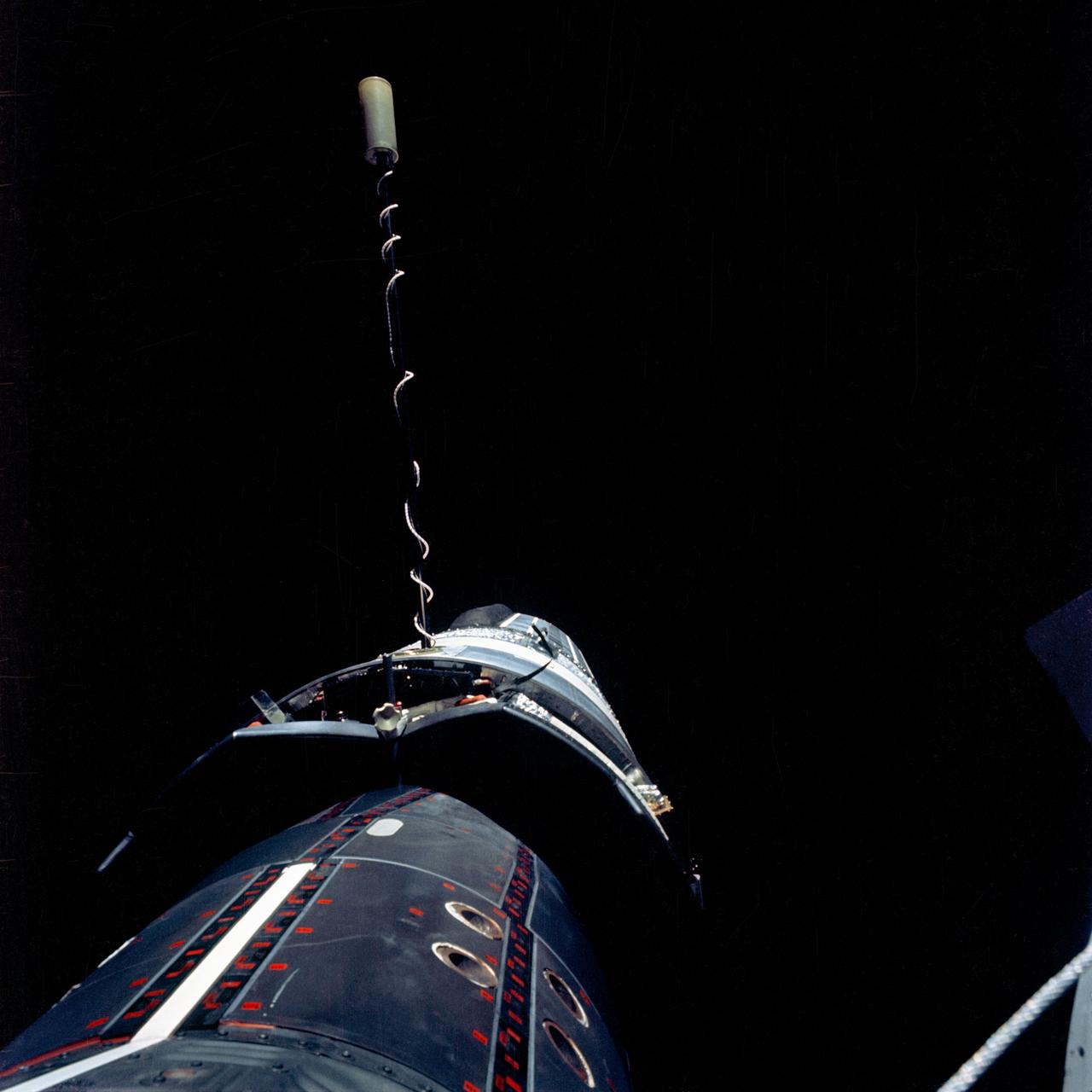
S66-54555 (14 Sept. 1966) --- The Gemini-11 spacecraft is docked to the Agena Target Vehicle in this photograph taken by astronaut Richard F. Gordon Jr., pilot, as he stood in the open hatch of the Gemini-11 spacecraft during his extravehicular activity (EVA). Note Agena's L-band antenna. Taken during Gemini-11's 29th revolution of Earth, using a modified 70mm Hasselblad camera, with Eastman Kodak, Ektachrome, MS (S.O. 368) color film. Photo credit: NASA

S66-25781 (16-17 March 1966) --- Closer view of the Agena Target Docking vehicle seen from the Gemini-8 spacecraft during rendezvous in space. Photo credit: NASA
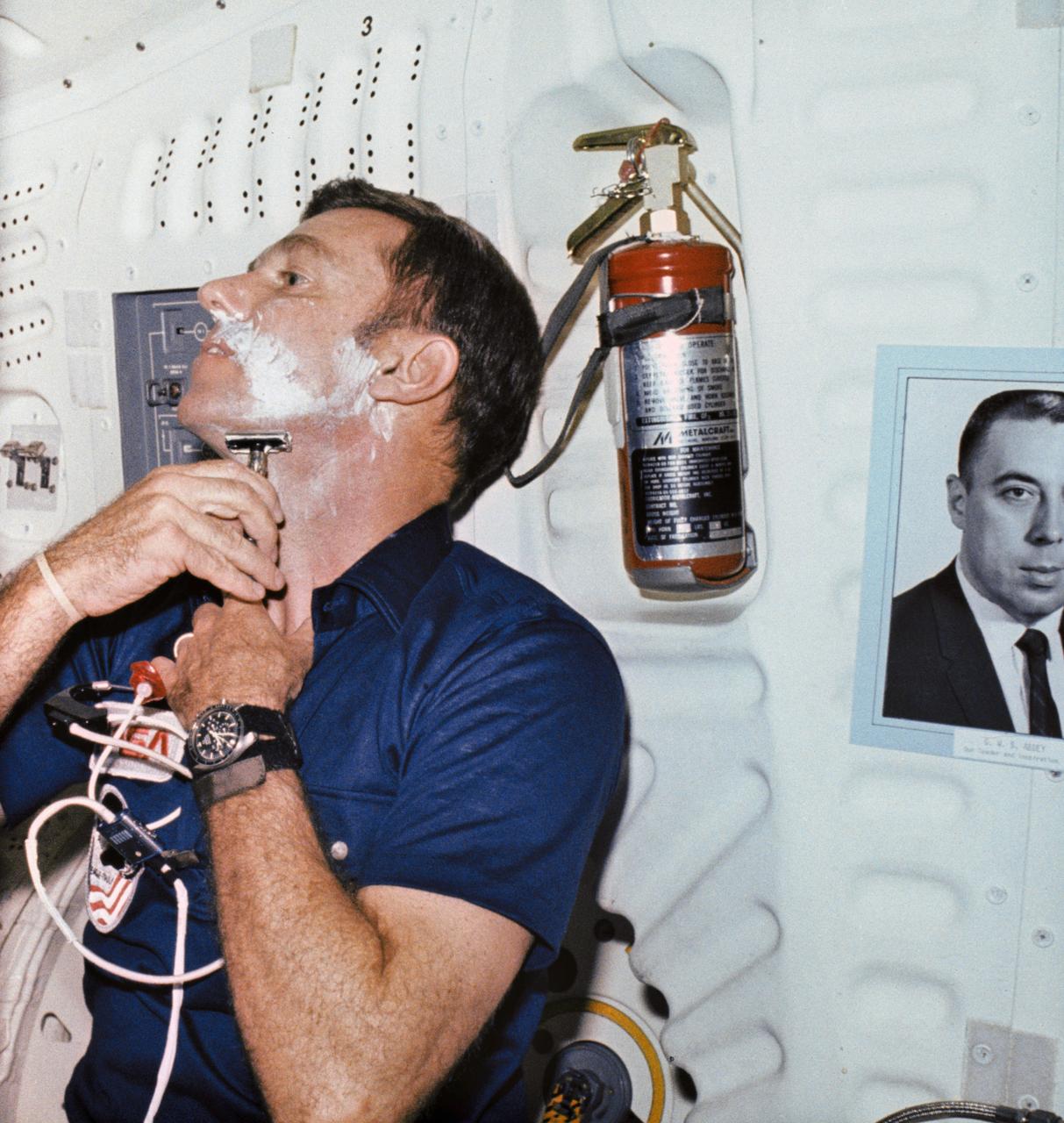
S81-39573 (12-14 Nov. 1981) --- This photograph was taken during a two-and a fourth-day stay in Earth orbit by astronauts Joe H. Engle, here shaving, and Richard H. Truly, photographer for this frame. A portion of that time was spent in the living area of middeck portion of the 122-ft-long (37 meters) vehicle as the astronauts ate, slept and took care of hygiene matters here. An onboard fire extinguisher is in upper right corner. Partially out of the frame at right edge is a photograph of George W. S. Abbey, Director of Flight Operations at Johnson Space Center. Engle is attired in an onboard constant wear type garment. Photo credit: NASA
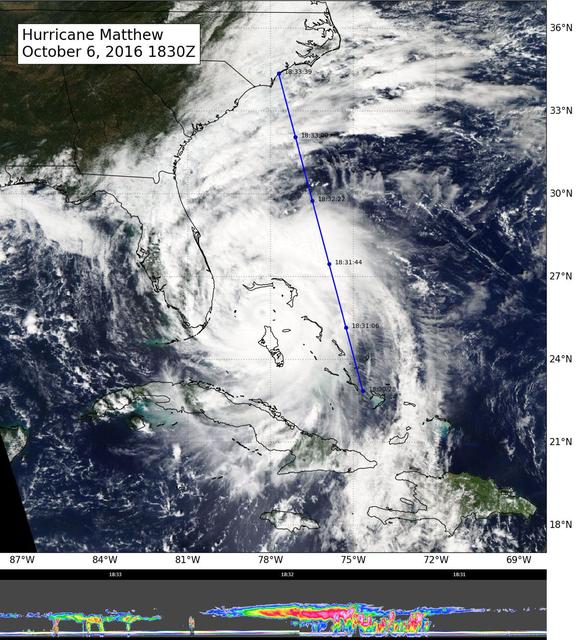
NASA's CloudSat flew east of Hurricane Matthew's center on Oct. 6 at 11:30 a.m. PDT (2:30 p.m. EDT), intersecting parts of Matthew's outer rain bands and revealing Matthew's anvil clouds (thick cirrus cloud cover), with cumulus and cumulonimbus clouds beneath (lower image). Reds/pinks are larger water/ice droplets. http://photojournal.jpl.nasa.gov/catalog/PIA21095
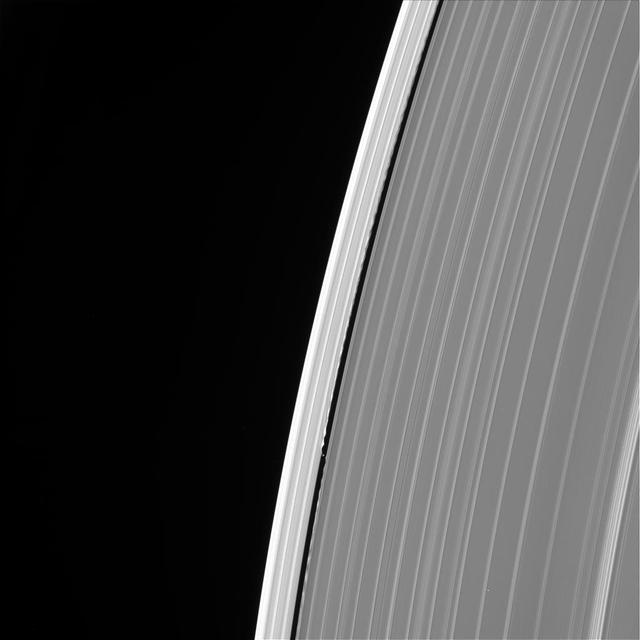
This image of Saturn's outer A ring features the small moon Daphnis and the waves it raises in the edges of the Keeler Gap. The image was taken by NASA's Cassini spacecraft on Sept. 13, 2017. It is among the last images Cassini sent back to Earth. The view was taken in visible light using the Cassini spacecraft wide-angle camera at a distance of 486,000 miles (782,000 kilometers) from Saturn. Image scale is 2.7 miles (4.3 kilometers). https://photojournal.jpl.nasa.gov/catalog/PIA21893

2016 ROVER CHALLENGE EVENTS AT THE U.S. SPACE AND ROCKET CENTER IN HUNTSVILLE, ALABAMA. NATIONAL AND INTERNATIONAL COLLEGE AND HIGH SCHOOL STUDENTS COME TOGETHER TO TEST THEIR ENGINEERING SKILLS OVER A SIMULATED OUTER PLANET OBSTACLE COURSE.

2016 ROVER CHALLENGE EVENTS AT THE U.S. SPACE AND ROCKET CENTER IN HUNTSVILLE, ALABAMA. NATIONAL AND INTERNATIONAL COLLEGE AND HIGH SCHOOL STUDENTS COME TOGETHER TO TEST THEIR ENGINEERING SKILLS OVER A SIMULATED OUTER PLANET OBSTACLE COURSE.