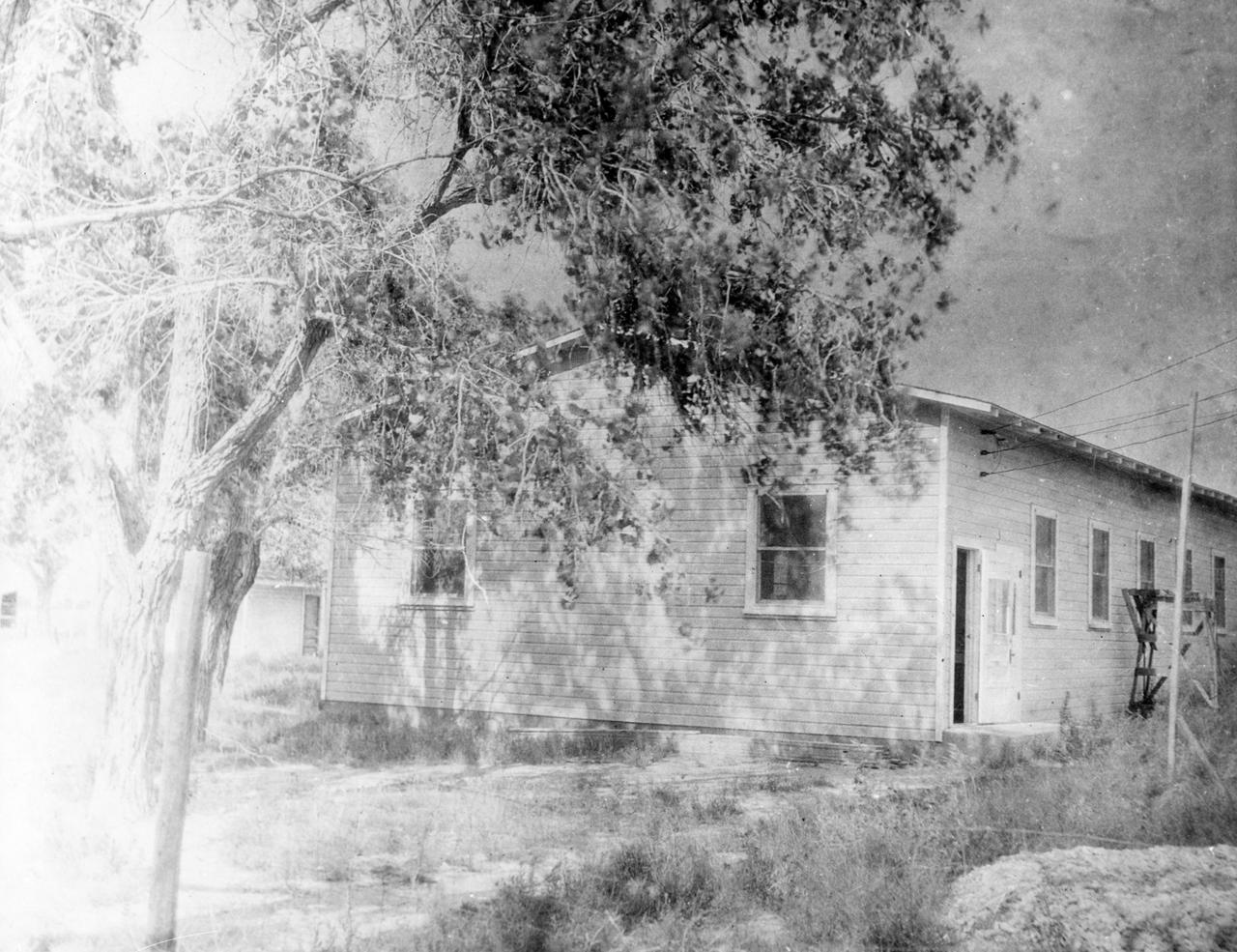
1930--Dr. Robert Goddard built this 30 by 60 ft. workshop for rocket construction at the Mescalero Ranch, 3 miles northeast of Roswell, New Mexico. <b><a href="http://www.nasa.gov/centers/goddard/home/index.html" rel="nofollow">NASA Goddard Space Flight Center</a></b> enables NASA’s mission through four scientific endeavors: Earth Science, Heliophysics, Solar System Exploration, and Astrophysics. Goddard plays a leading role in NASA’s accomplishments by contributing compelling scientific knowledge to advance the Agency’s mission. <b>Follow us on <a href="http://twitter.com/NASA_GoddardPix" rel="nofollow">Twitter</a></b> <b>Join us on <a href="http://www.facebook.com/pages/Greenbelt-MD/NASA-Goddard/395013845897?ref=tsd" rel="nofollow">Facebook</a></b>
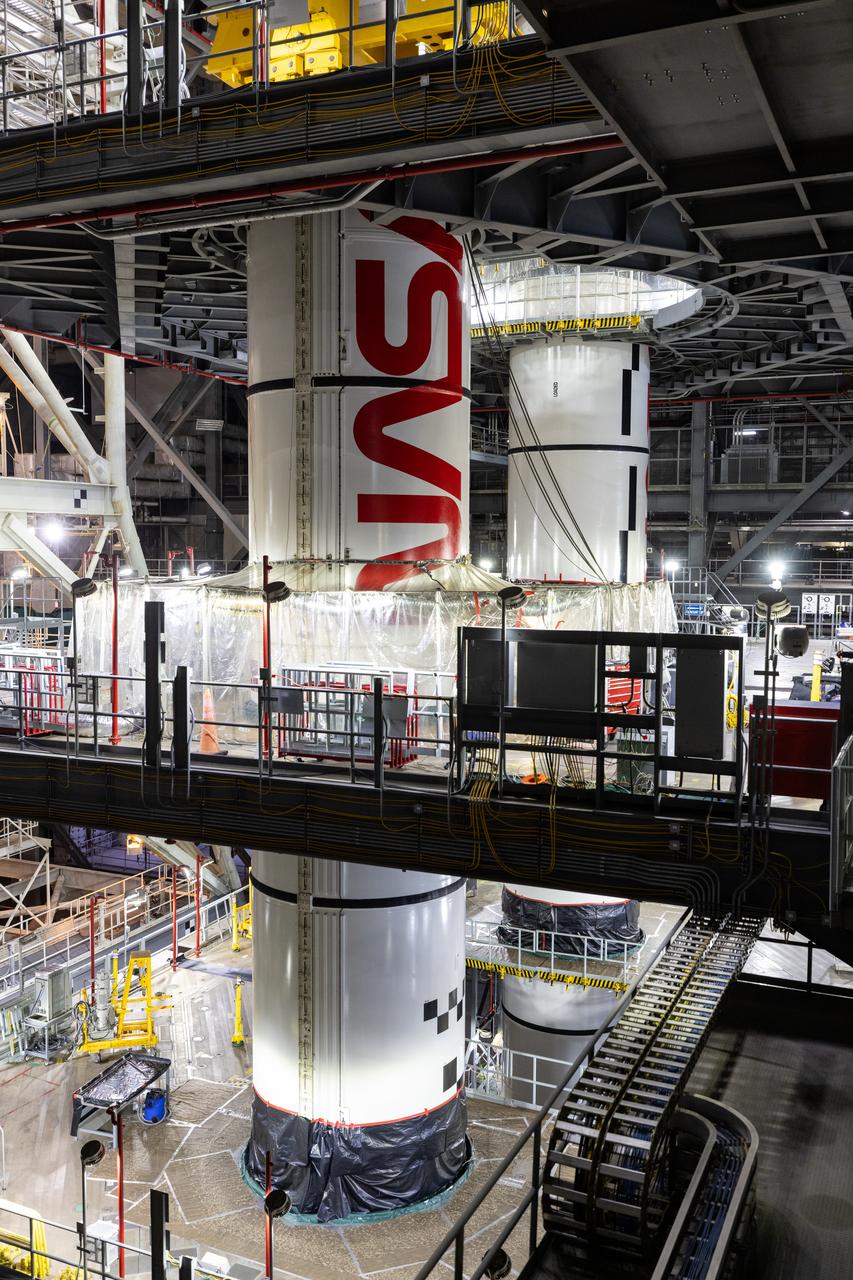
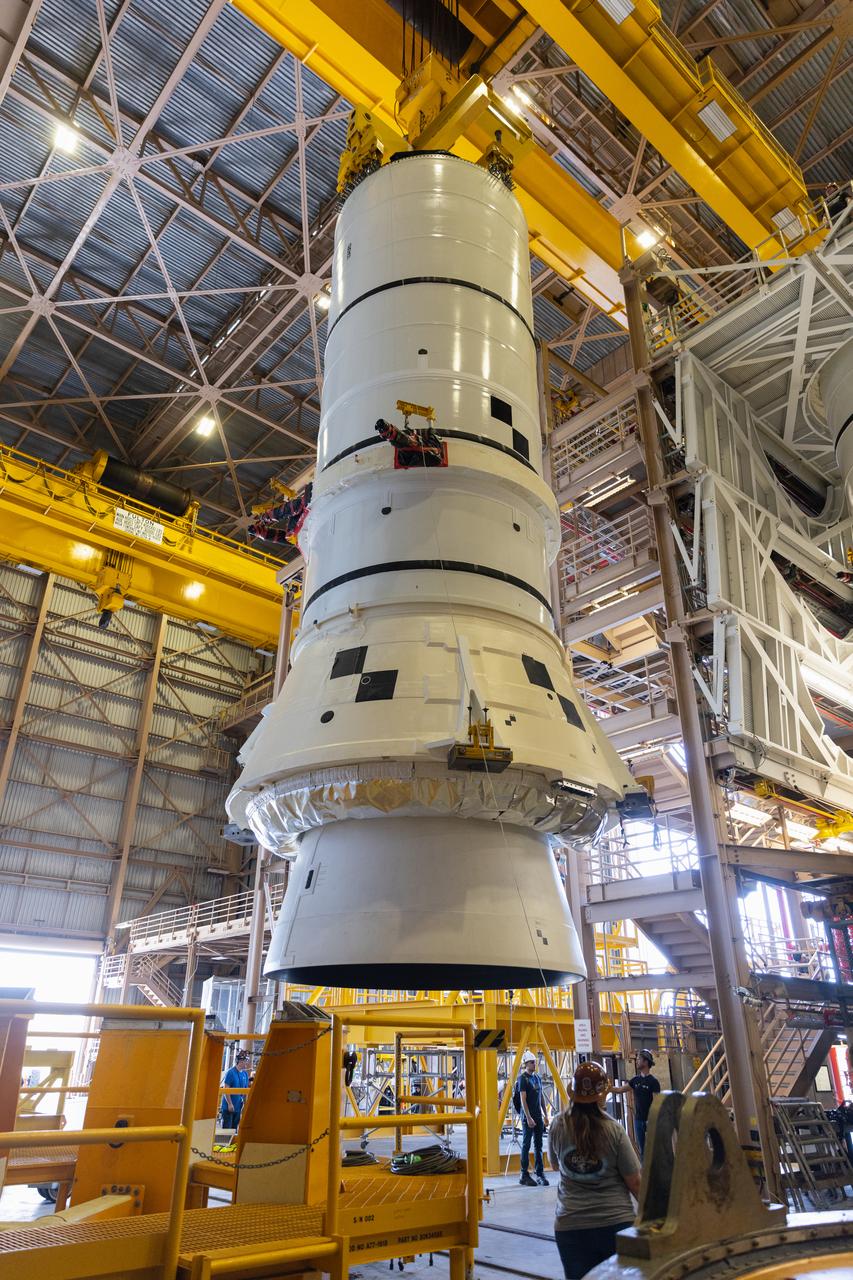
Inside High Bay 3 of the Vehicle Assembly Building at NASA’s Kennedy Space Center in Florida, technicians with the agency’s Exploration Ground Systems use a crane to lower the left center center booster segment for the NASA’s SLS (Space Launch System) rocket onto the left aft center segment atop the mobile launcher on Monday, Jan. 27, 2025. The NASA “worm” insignia can be seen on both the center center booster segments. The boosters will help support the remaining rocket components and the Orion spacecraft during final assembly of the Artemis II Moon rocket and provide more than 75 percent of the total SLS thrust during liftoff from NASA Kennedy’s Launch Pad 39B.
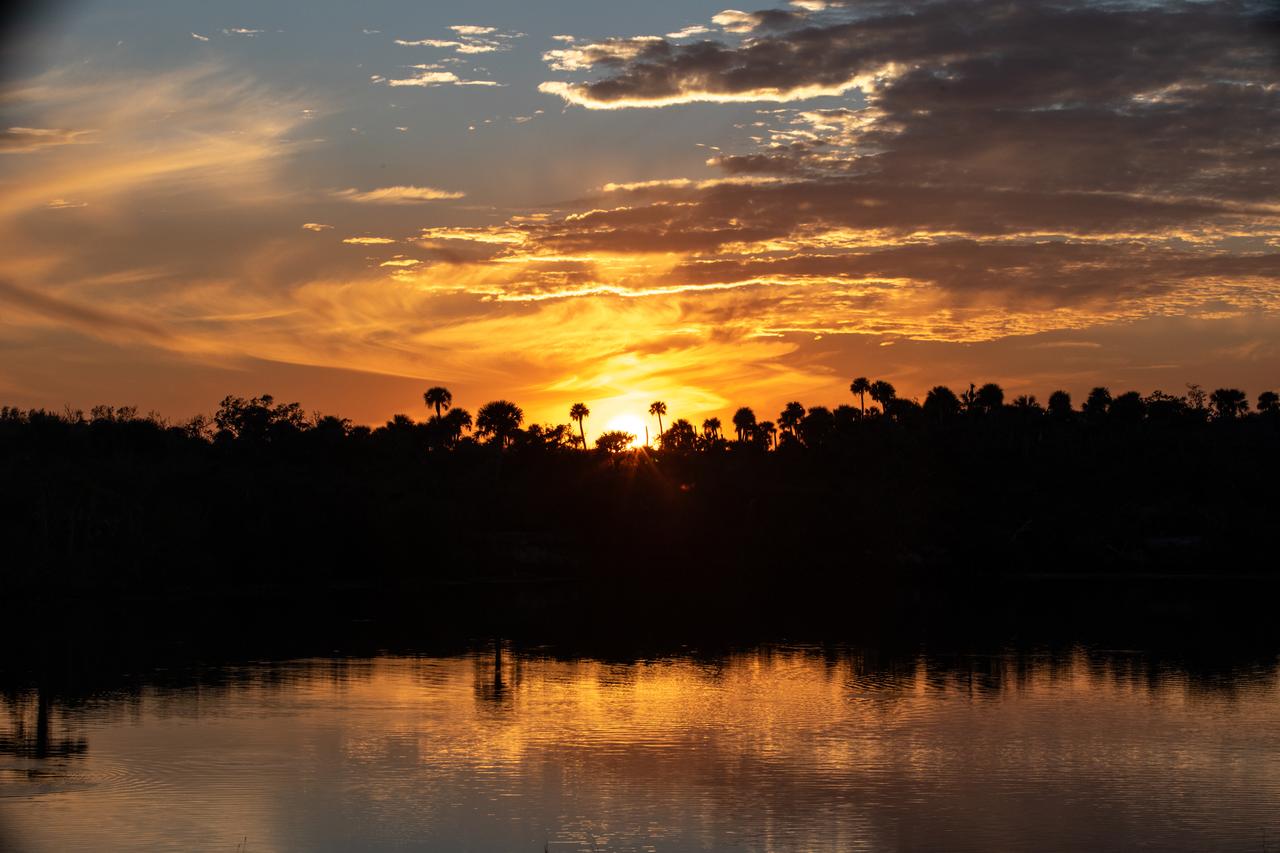
Photographers at NASA capture the sunset on Tuesday, Jan. 30, 2024, at the agency’s Kennedy Space Center in Florida.
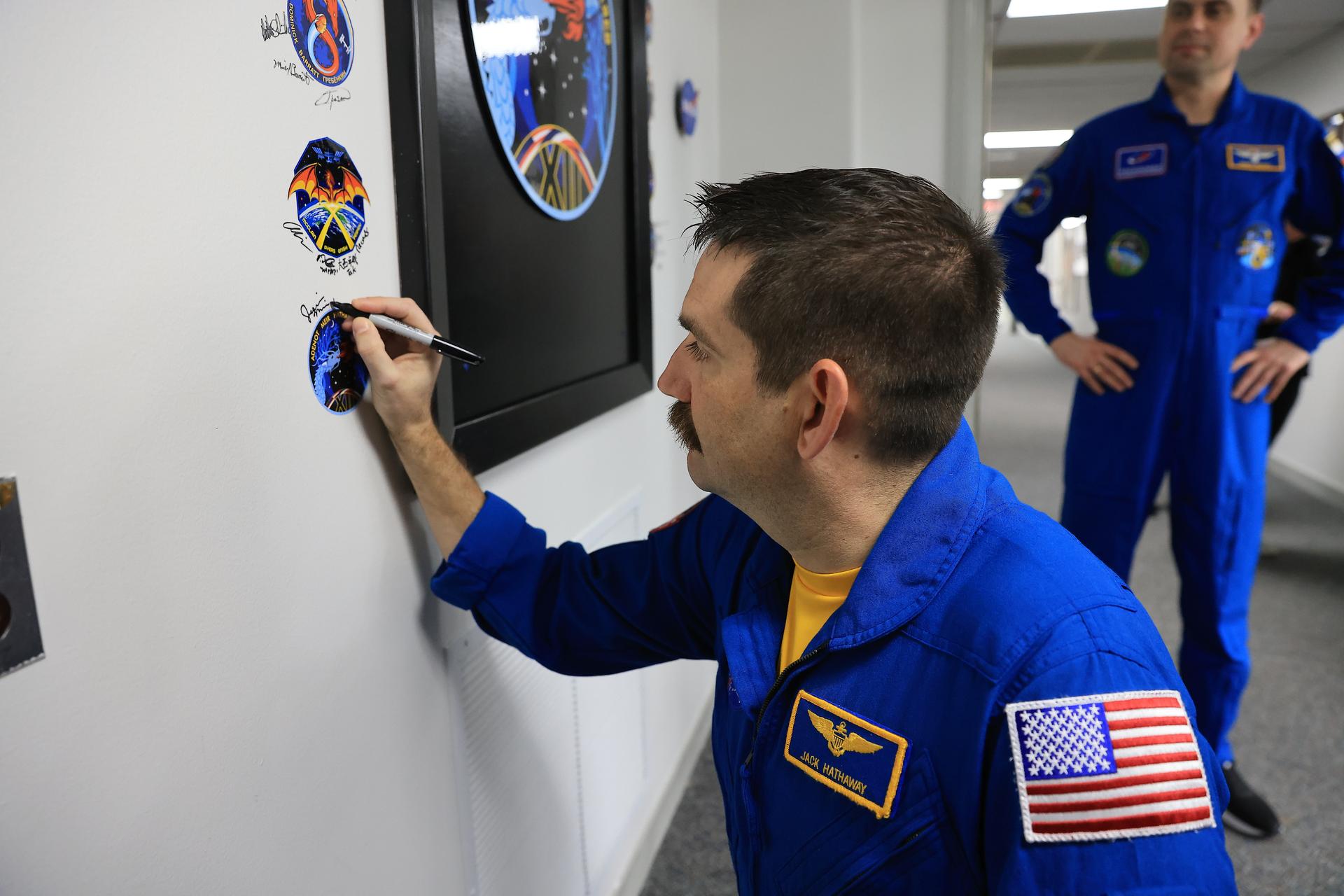
NASA astronaut Jack Hathaway signs his name next to the Crew-12 mission insignia inside the Astronaut Crew Quarters in the Neil A. Armstrong Operations and Checkout Building at NASA’s Kennedy Space Center in Florida on Monday, Feb. 9, 2026, ahead of NASA’s SpaceX Crew-12 mission. A SpaceX Dragon spacecraft and Falcon 9 rocket will send NASA astronauts Hathaway and Jessica Meir, ESA (European Space Agency) astronaut Sophie Adenot, and Roscosmos cosmonaut Andrey Fedyaev to the International Space Station no earlier than 5:15 a.m. EST on Friday, Feb. 13, from Cape Canaveral Space Force Station’s Space Launch Complex 40.
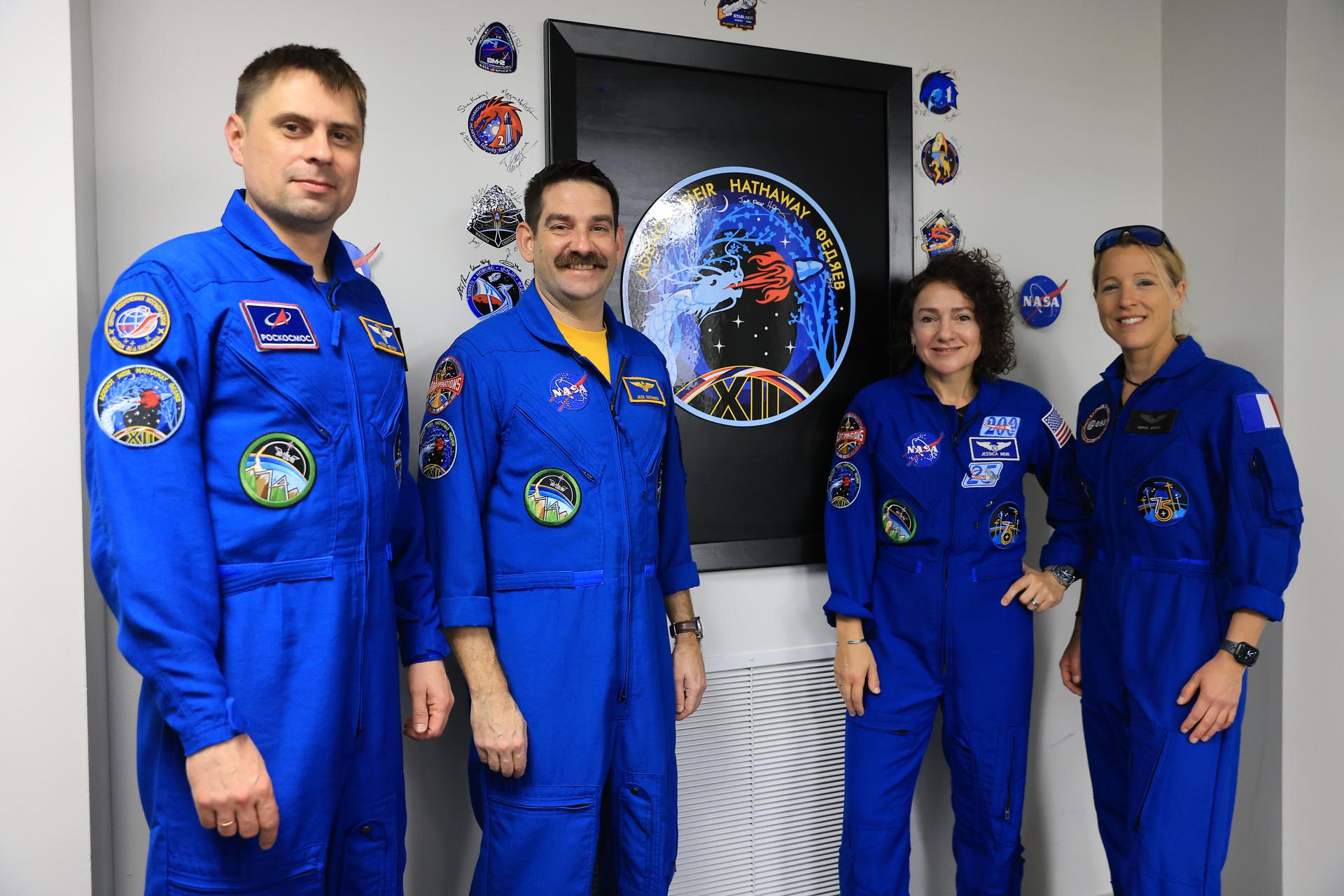
From left, Roscosmos cosmonaut Andrey Fedyaev, NASA astronauts Jack Hathaway and Jessica Meir, and ESA (European Space Agency) astronaut Sophie Adenot pose next to their mission insignia inside the Astronaut Crew Quarters in the Neil A. Armstrong Operations and Checkout Building at NASA’s Kennedy Space Center in Florida on Monday, Feb. 9, 2026. NASA’s SpaceX Crew-12 crew members will launch aboard a SpaceX Dragon spacecraft and Falcon 9 to the International Space Station no earlier than 5:15 a.m. EST on Friday, Feb. 13, from Cape Canaveral Space Force Station’s Space Launch Complex 40.
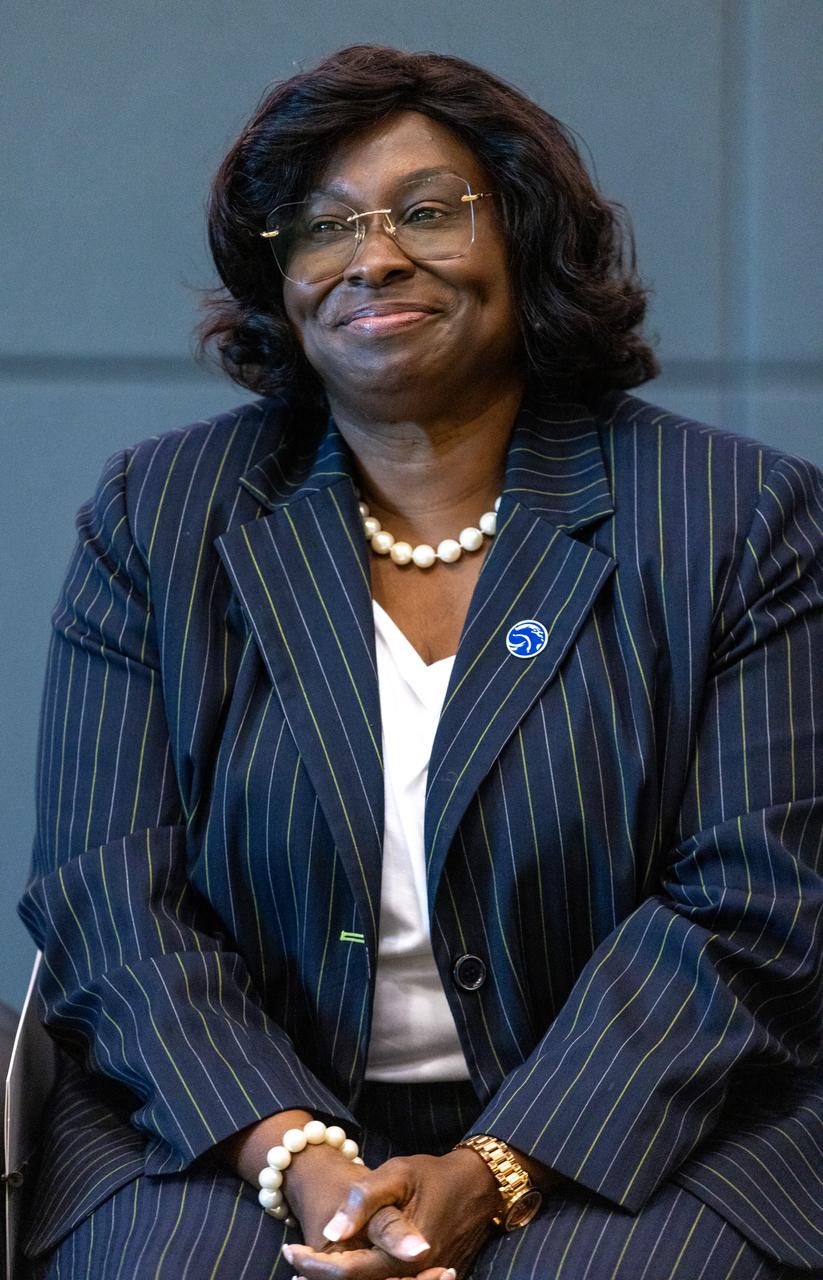
Kennedy Space Center Director of Center Engagement and Business Integration Services, Kim Carter, participates in a discussion in honor of Women's History Month held on Friday, March 15, 2024, inside the Operations Support Building II at the agency’s Kennedy Space Center in Florida. The Women Launching Women panel commemorates inspirational women and men who have lifted and helped others excel in their careers across the agency and offer words of advice for the current workforce.
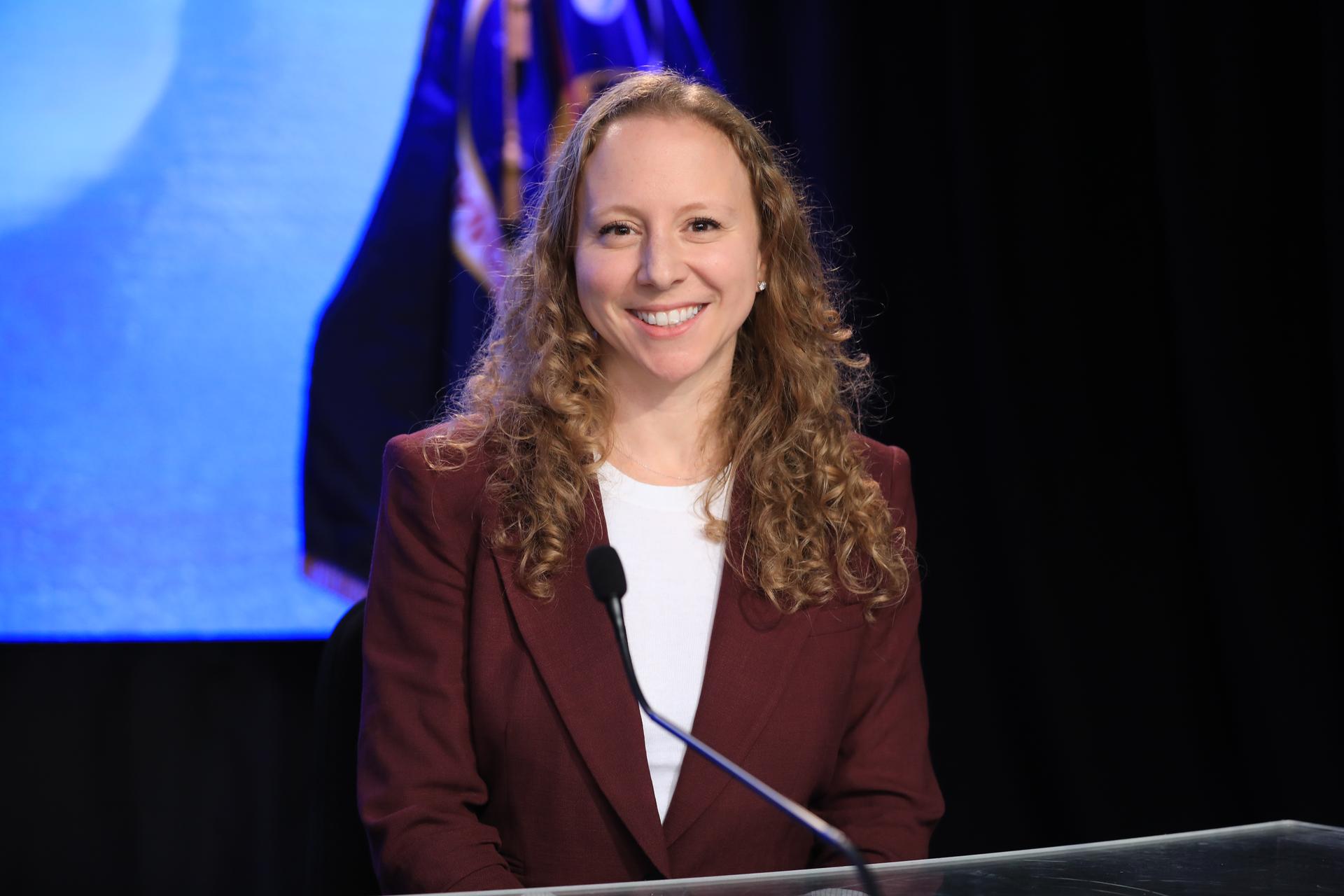
Julianna Scheiman, director, NASA Science and Dragon Programs, SpaceX, participates in a postlaunch news conference at the agency’s Kennedy Space Center in Florida on Friday, Feb. 13, 2026, following the launch of NASA’s SpaceX Crew-12 mission to the International Space Station. NASA astronauts Jessica Meir and Jack Hathaway, ESA (European Space Agency) astronaut Sophie Adenot, and Roscosmos cosmonaut Andrey Fedyaev launched to the International Space Station aboard SpaceX’s Dragon spacecraft and Falcon 9 rocket at 5:15 a.m. EST on the 12th crew rotation mission with SpaceX to the space station as part of NASA’s Commercial Crew Program.

Technicians transport the right forward segment for NASA’s SLS (Space Launch System) Moon rocket boosters from the Rotation Processing and Surge Facility to NASA’s Vehicle Assembly Building in Florida on Monday, Feb. 15, 2025. The right forward segment will be transferred into High Bay 3 where it will be attached to the center forward segment on mobile launcher 1. The twin solid boosters, five segments on each side, will help support the remaining rocket components and the Orion spacecraft during final assembly of the Artemis II Moon rocket and provide more than 75 percent of the total SLS thrust during liftoff from NASA Kennedy’s Launch Pad 39B.
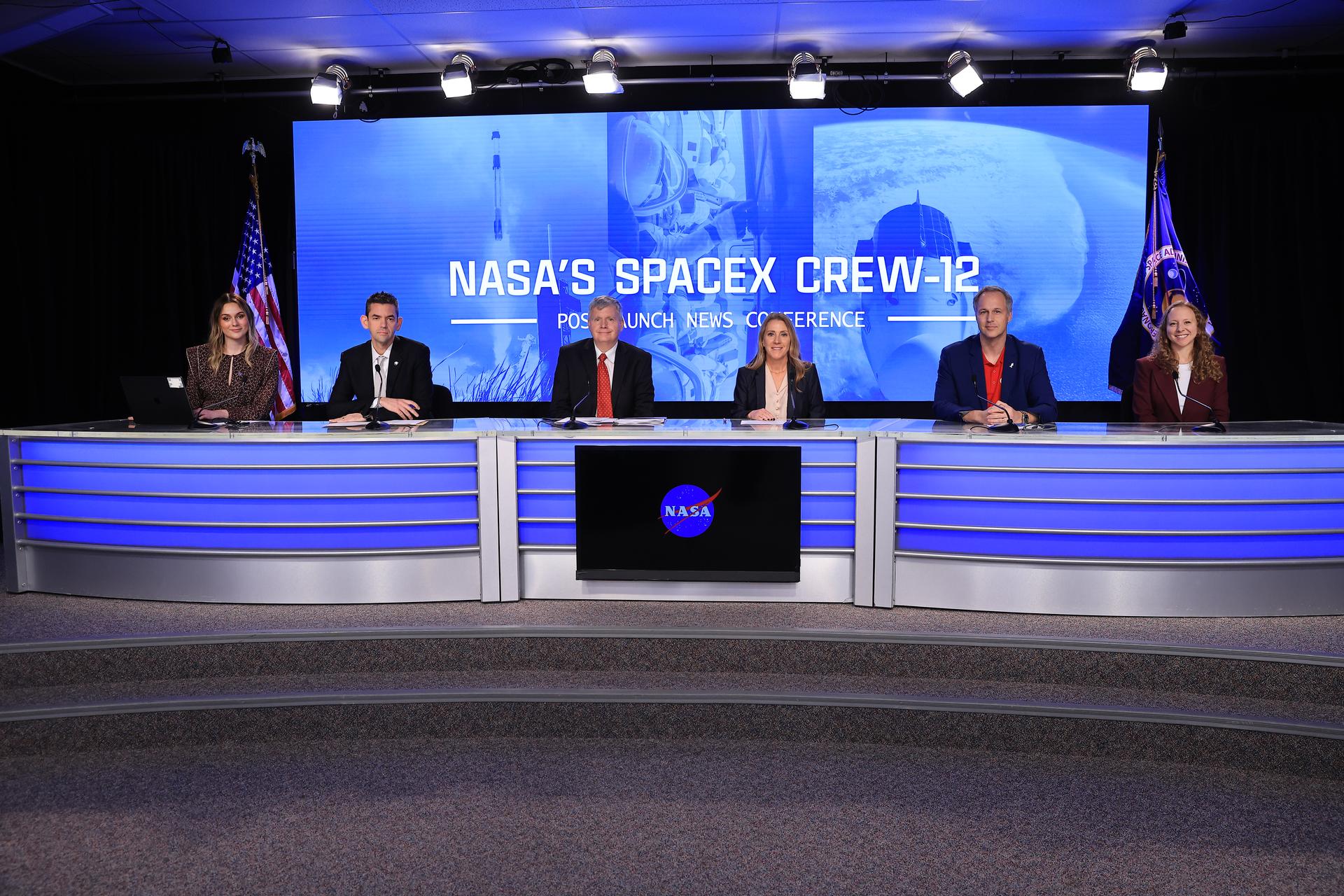
Members of the media attend a postlaunch news conference hosted at NASA’s Kennedy Space Center in Florida on Friday, Feb. 13, 2026, following the launch of NASA’s SpaceX Crew-12 mission to the International Space Station. From left to right, participants include Bethany Stevens, NASA press secretary; NASA Administrator Jared Isaacman; Steve Stich, manager, Commercial Crew Program, NASA; Dana Weigel, manager, International Space Station Program, NASA; Daniel Neuenschwander, director, Human and Robotic Exploration, ESA (European Space Agency); and Julianna Scheiman, director, NASA Science and Dragon Programs, SpaceX. NASA astronauts Jessica Meir and Jack Hathaway, ESA (European Space Agency) astronaut Sophie Adenot, and Roscosmos cosmonaut Andrey Fedyaev launched aboard SpaceX’s Dragon spacecraft and Falcon 9 rocket at 5:15 a.m. EST on the 12th crew rotation mission with SpaceX to the space station as part of NASA’s Commercial Crew Program.
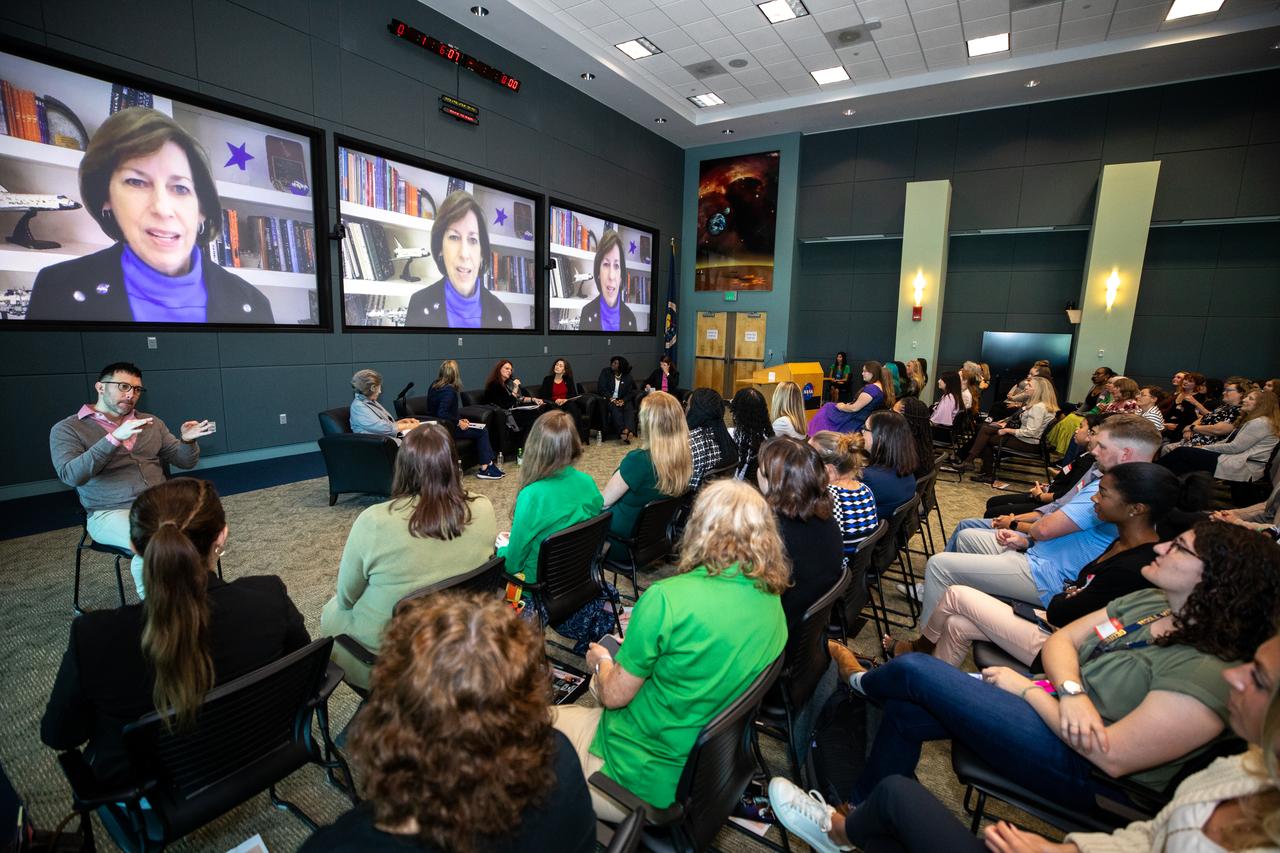
A panel discussion featuring women in leadership roles across NASA honors Women's History Month inside the Operations Support Building II at the agency’s Kennedy Space Center in Florida held on Friday, March 15, 2024. Participants in the Women Launching Women panel commemorate inspirational women and men who have lifted and helped others excel in their careers across the agency and offer words of advice for the current workforce include JoAnn Morgan, former associate director of Kennedy Space Center; Janet Petro, Kennedy Space Center director; Charlie Blackwell Thompson, NASA Artemis launch director; Lorna Kenna, vice president and program manager of Jacobs Space Operations Group; Kim Carter, Kennedy Space Center Office of Center Engagement and Business Integration Services director; and Casey Swails, NASA deputy associate administrator.

Engineers and technicians with the Exploration Ground Systems Program prepare to transfer one of the aft assemblies of the SLS (Space Launch System) solid rocket boosters for the Artemis II mission with an overhead crane inside the Rotation, Processing and Surge Facility at NASA’s Kennedy Space Center in Florida on Wednesday, Nov. 13, 2024. The booster segments are being transferred to the NASA Kennedy’s Vehicle Assembly Building via a transporter for stacking operations in preparation for launch of the Artemis II mission.
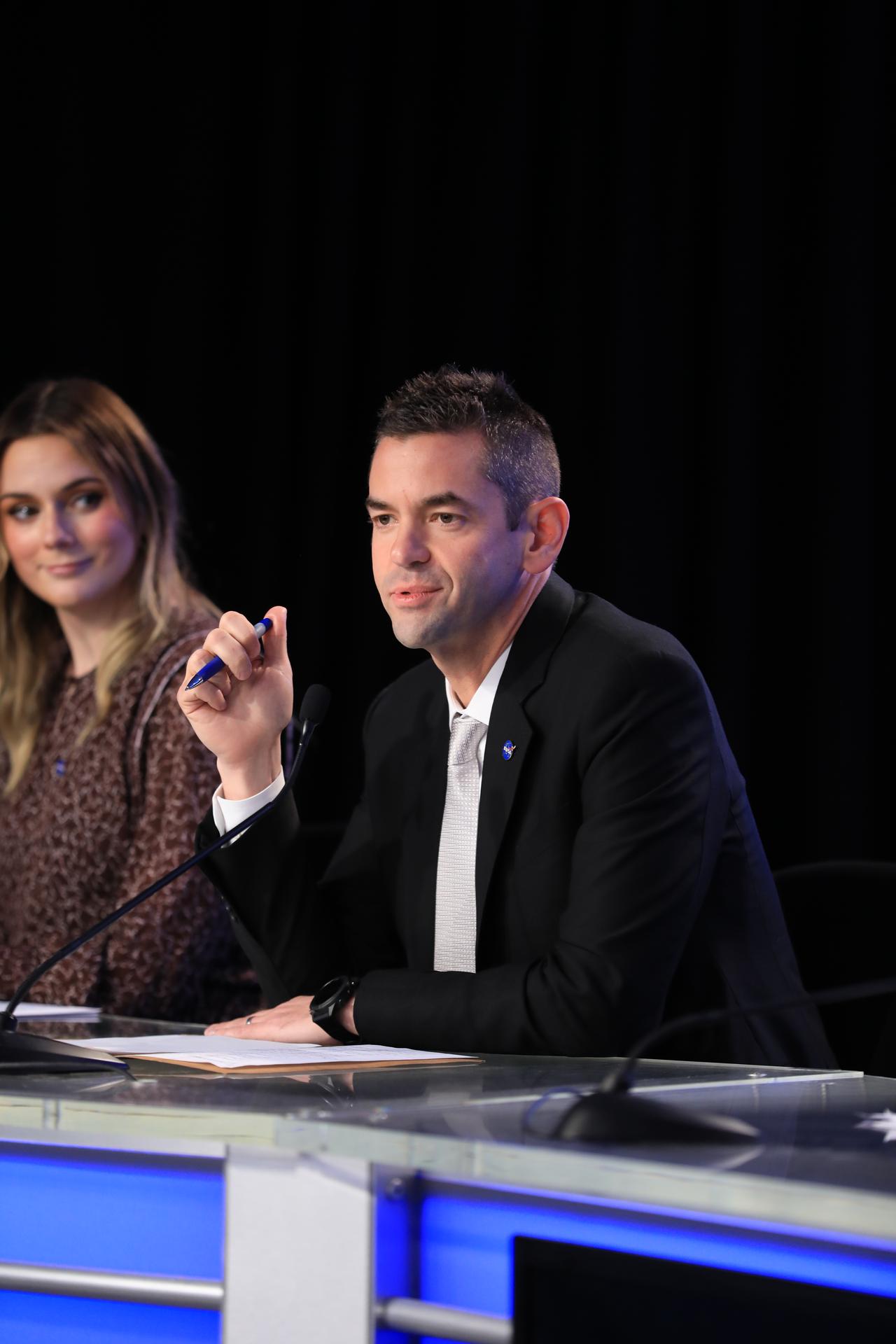
NASA Administrator Jared Isaacman participates in a postlaunch news conference at the agency’s Kennedy Space Center in Florida on Friday, Feb. 13, 2026, following the launch of NASA’s SpaceX Crew-12 mission to the International Space Station. NASA astronauts Jessica Meir and Jack Hathaway, ESA (European Space Agency) astronaut Sophie Adenot, and Roscosmos cosmonaut Andrey Fedyaev launched to the International Space Station aboard SpaceX’s Dragon spacecraft and Falcon 9 rocket at 5:15 a.m. EST on the 12th crew rotation mission with SpaceX to the space station as part of NASA’s Commercial Crew Program.
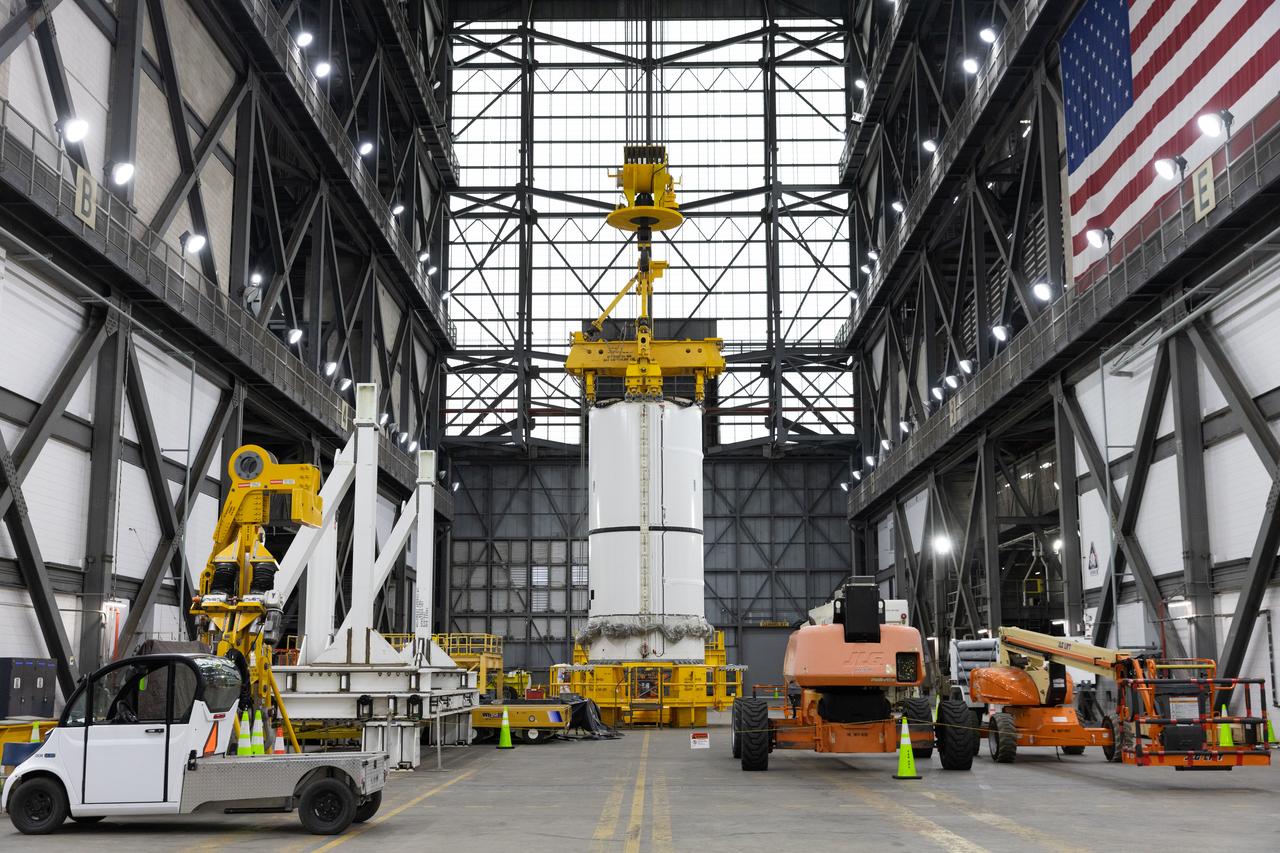
Engineers and technicians with NASA's Exploration Ground Systems Program transfer the right forward center segment to the Vehicle Assembly Building at NASA's Kennedy Space Center in Florida. The booster segment is shown attached to a lifting beam on Tuesday, Jan. 21, 2025 ahead of integration onto the Mobile Launcher 1. The boosters will help support the remaining rocket components and the Orion spacecraft during final assembly of the Artems II Moon rocket and provide more than 75 percent of the total SLS (Space Launch System) thrust during liftoff from NASA Kennedy's Launch Pad 39B.
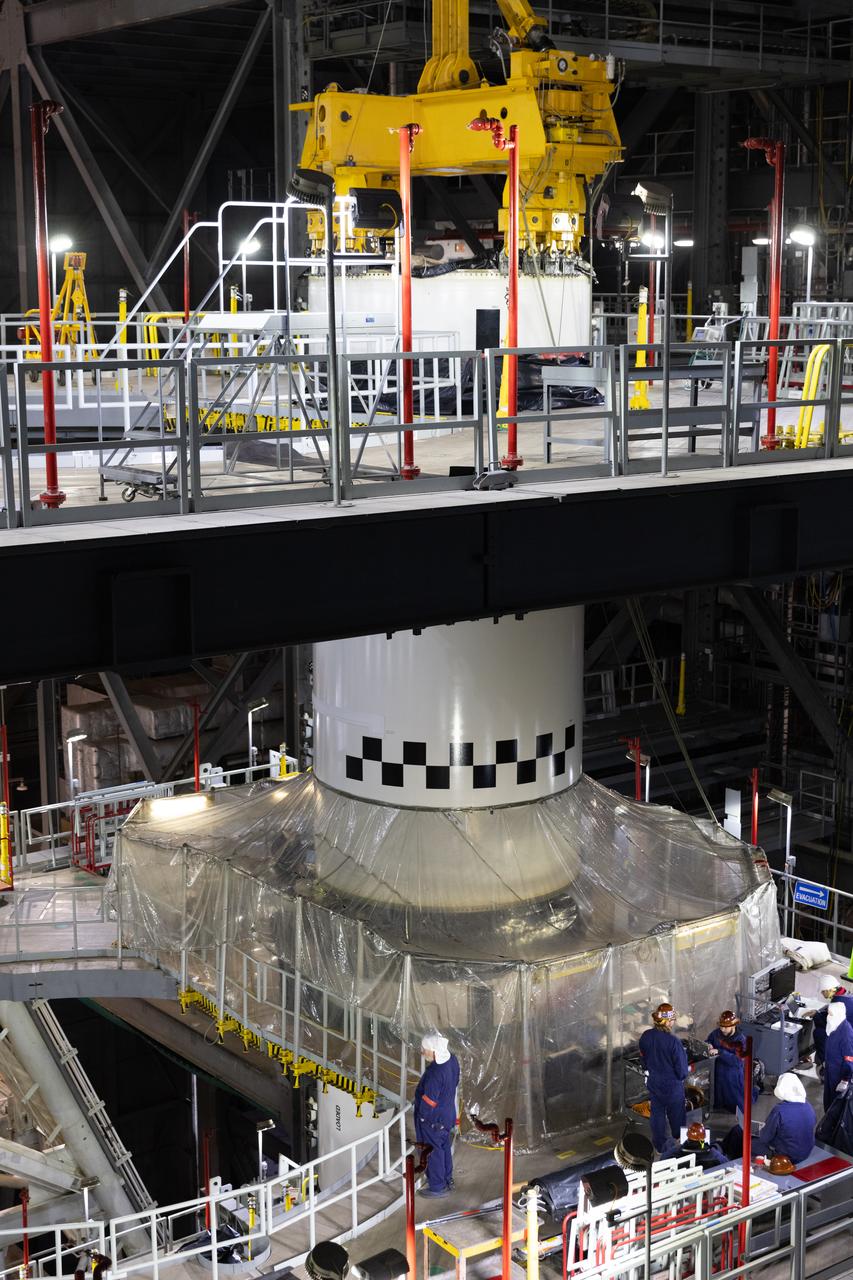
Engineers and technicians with NASA's Exploration Ground Systems Program transfer the right forward center segment to the Vehicle Assembly Building at NASA's Kennedy Space Center in Florida. The booster segment is shown attached to a lifting beam on Tuesday, Jan. 22, 2025 ahead of integration onto the Mobile Launcher 1. The boosters will help support the remaining rocket components and the Orion spacecraft during final assembly of the Artems II Moon rocket and provide more than 75 percent of the total SLS (Space Launch System) thrust during liftoff from NASA Kennedy's Launch Pad 39B.
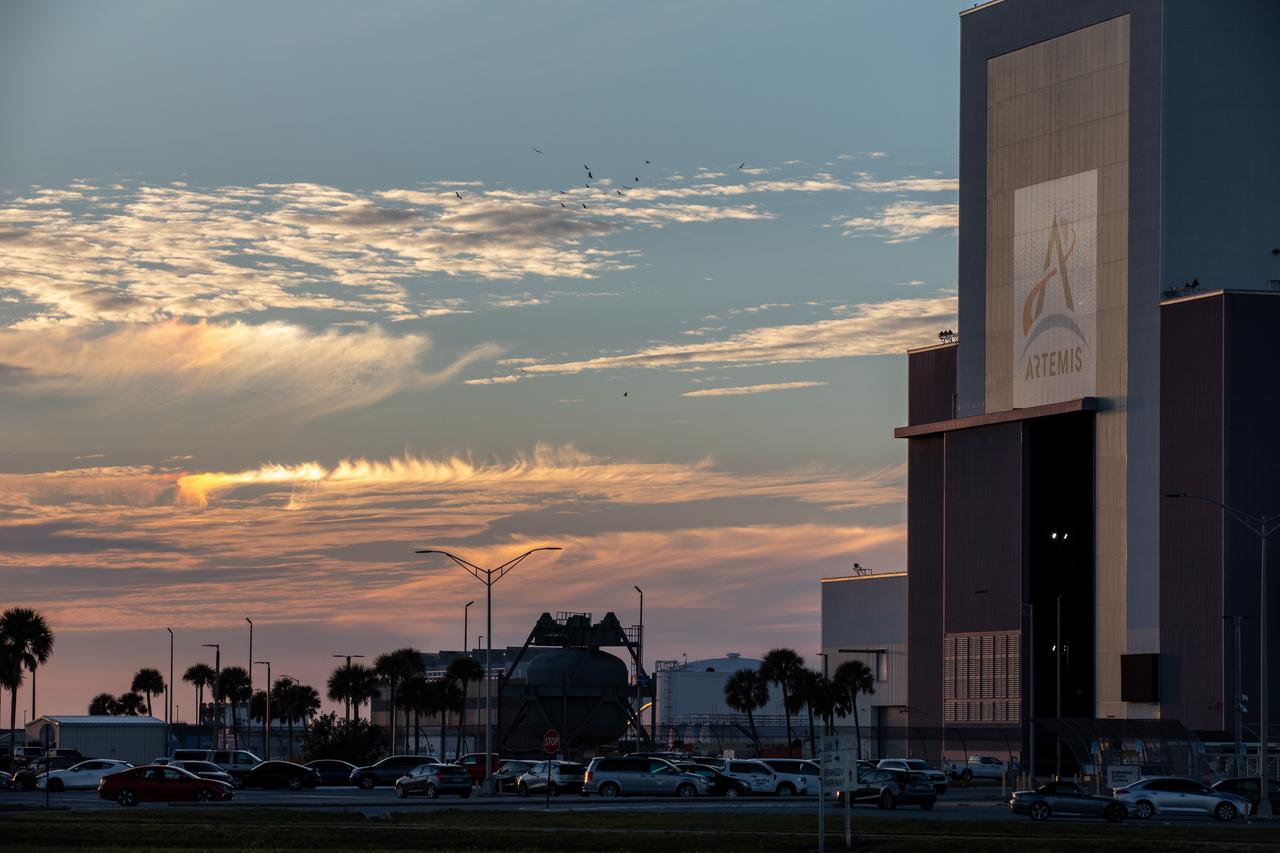
Photographers at NASA capture the sunset on Tuesday, Jan. 30, 2024, near Vehicle Assembly Building at the agency’s Kennedy Space Center in Florida. The iconic Vehicle Assembly Building, completed in 1966 and currently used for assembly of NASA’s Space Launch System rocket for Artemis missions, remains the only building in which rockets were assembled that carried humans to the surface of another world.
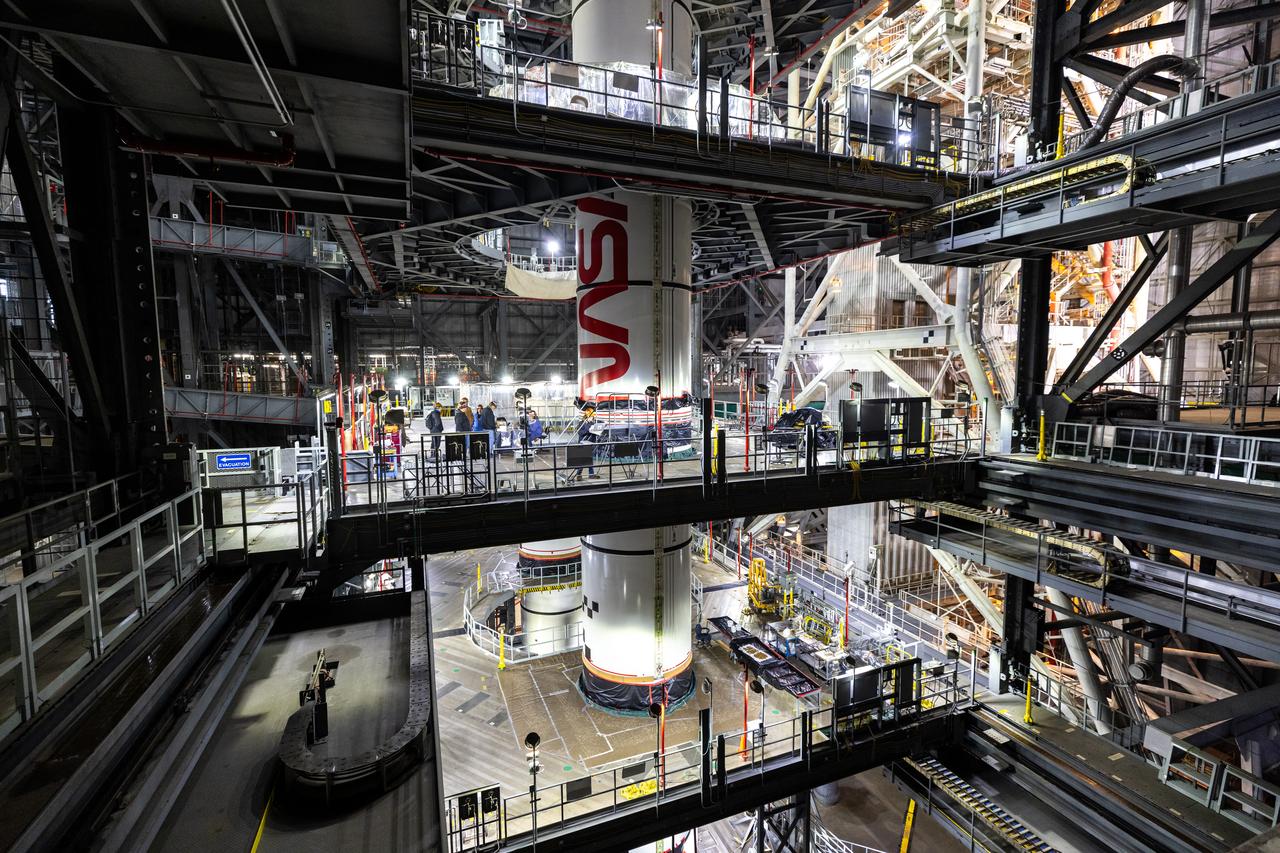
Inside High Bay 3 of the Vehicle Assembly Building at NASA’s Kennedy Space Center in Florida, technicians with the agency’s Exploration Ground Systems use a crane to lower the right forward center booster segment for the NASA’s SLS (Space Launch System) rocket onto the right center center segment with the iconic NASA “worm” insignia atop the mobile launcher on Monday, Jan. 27, 2025. The boosters will help support the remaining rocket components and the Orion spacecraft during final assembly of the Artemis II Moon rocket and provide more than 75 percent of the total SLS thrust during liftoff from NASA Kennedy’s Launch Pad 39B.
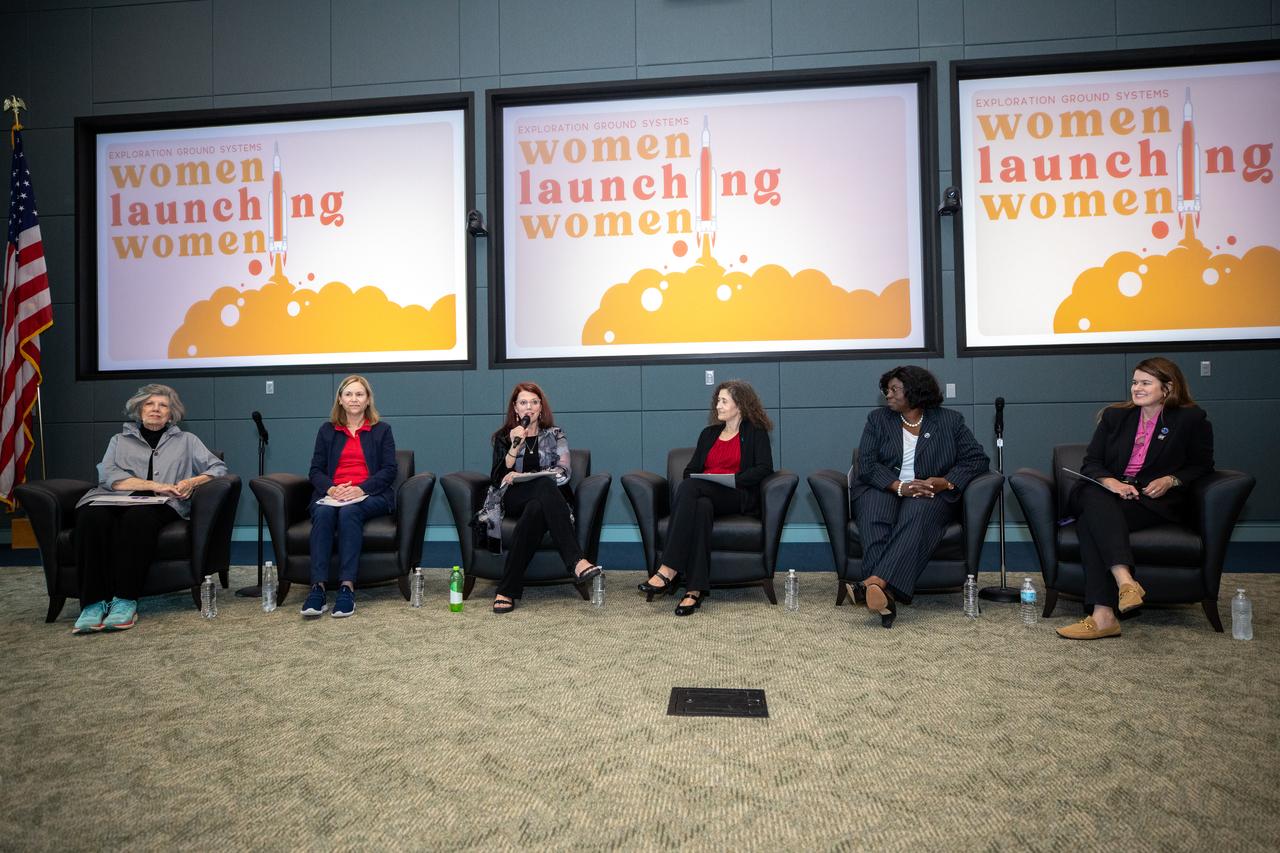
Women in leadership roles across NASA participate in a panel discussion in honor of Women's History Month on Friday, March 15, 2024, inside the Operations Support Building II at the agency’s Kennedy Space Center in Florida. Participants from left to right are, JoAnn Morgan, former associate director of Kennedy Space Center; Janet Petro, Kennedy Space Center director; Charlie Blackwell Thompson, NASA Artemis launch director; Lorna Kenna, vice president and program manager of Jacobs Space Operations Group; Kim Carter, Kennedy Space Center Office of Center Engagement and Business Integration Services director; and Casey Swails, NASA deputy associate administrator. The Women Launching Women panel commemorates inspirational women and men who have lifted and helped others excel in their careers across the agency and offer words of advice for the current workforce.
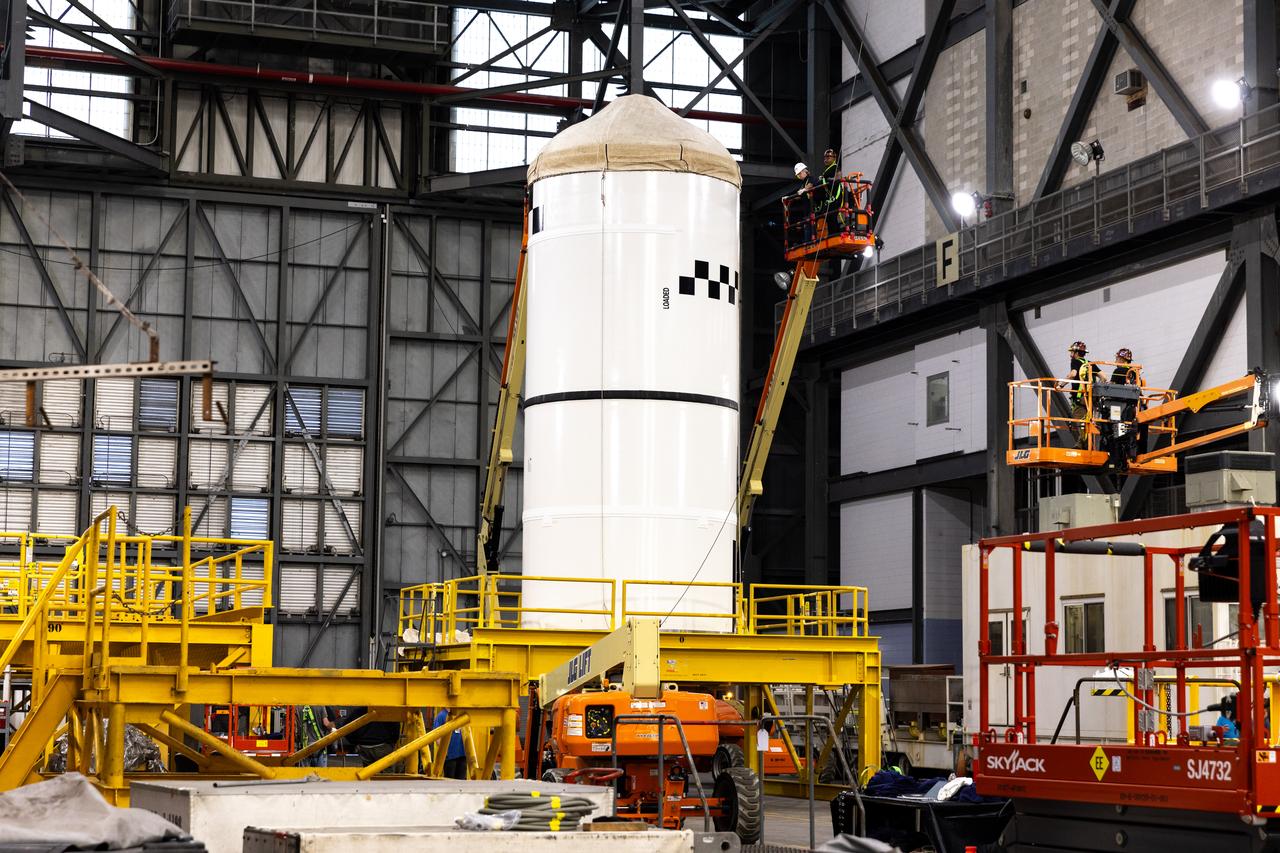
Technicians transport the right forward segment for NASA’s SLS (Space Launch System) Moon rocket boosters from the Rotation Processing and Surge Facility to NASA’s Vehicle Assembly Building in Florida on Monday, Feb. 15, 2025. The right forward segment will be transferred into High Bay 3 where it will be attached to the center forward segment on mobile launcher 1. The twin solid boosters, five segments on each side, will help support the remaining rocket components and the Orion spacecraft during final assembly of the Artemis II Moon rocket and provide more than 75 percent of the total SLS thrust during liftoff from NASA Kennedy’s Launch Pad 39B.
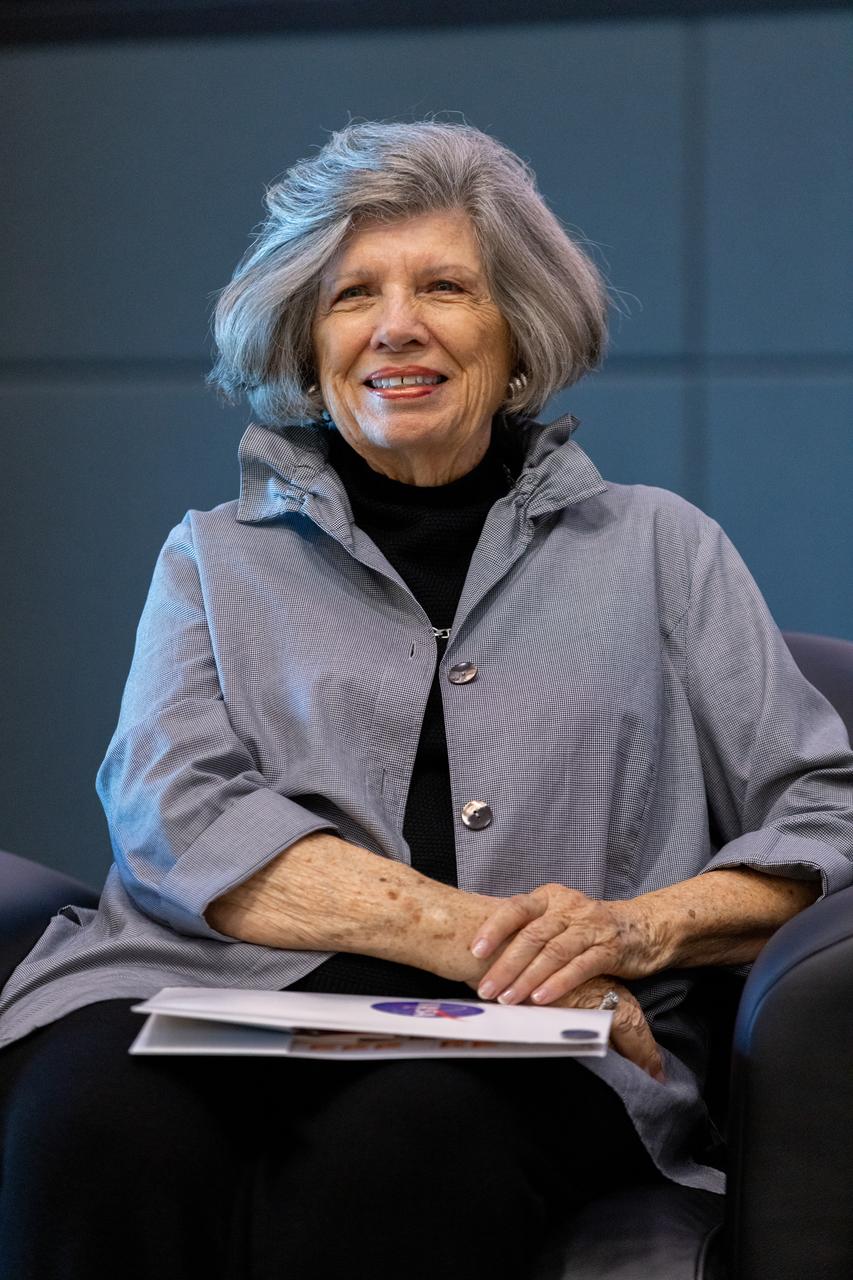
JoAnn Morgan, former associate director of NASA’s Kennedy Space Center in Florida, participates in a discussion in honor of Women's History Month held on Friday, March 15, 2024, inside Kennedy’s Operations Support Building II. The Women Launching Women panel commemorates inspirational women and men who have lifted and helped others excel in their careers across the agency and offer words of advice for the current workforce.
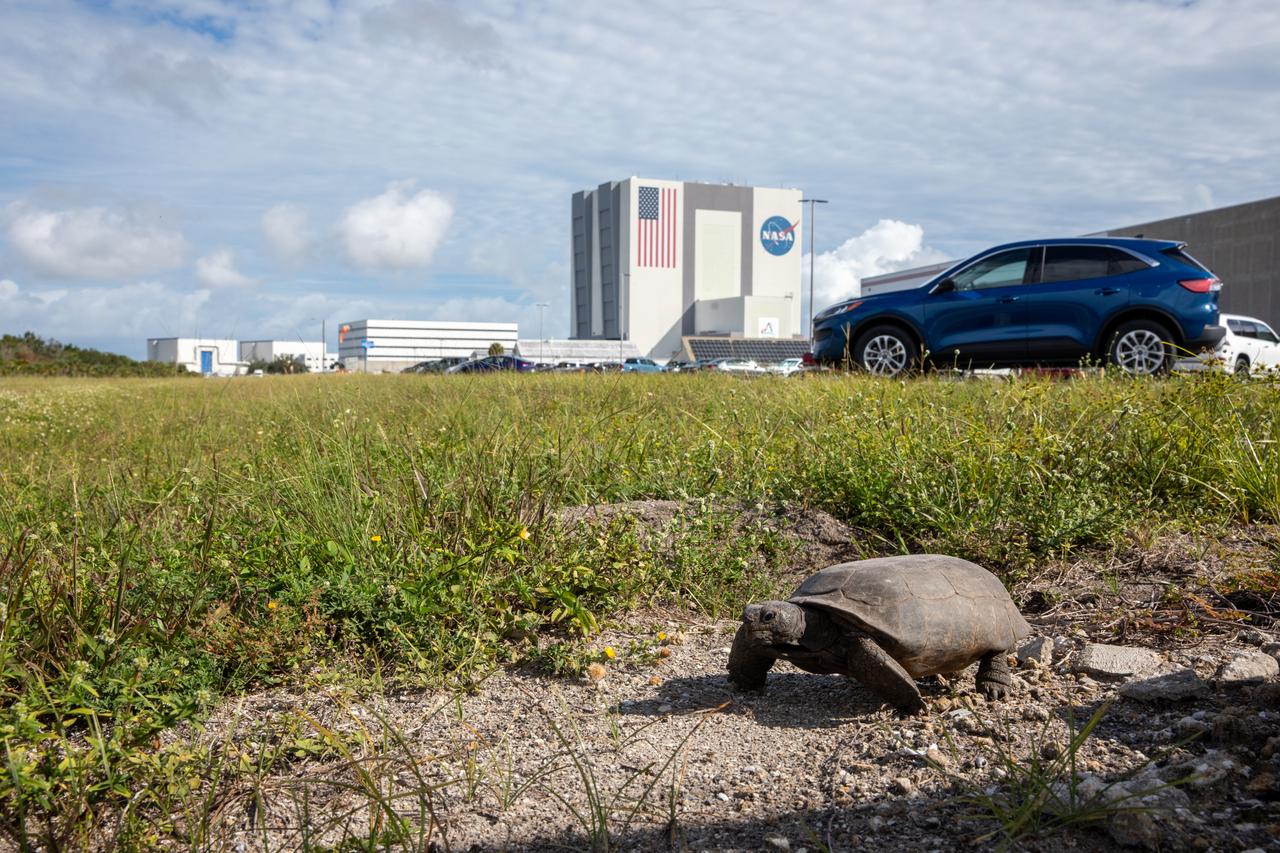
A tortoise walks through the grass at NASA's Kennedy Space Center in Florida on Monday, Sept. 25, 2023. In view in the background is the iconic Vehicle Assembly Building. The center shares over 140,000 acres with Canaveral National Seashore and Merritt Island National Wildlife Refuge, a diverse ecosystem and home to more than 1,000 species of plants, 117 species of fish, 68 species of amphibians and reptiles, 330 species of birds, and 31 different types of mammals.
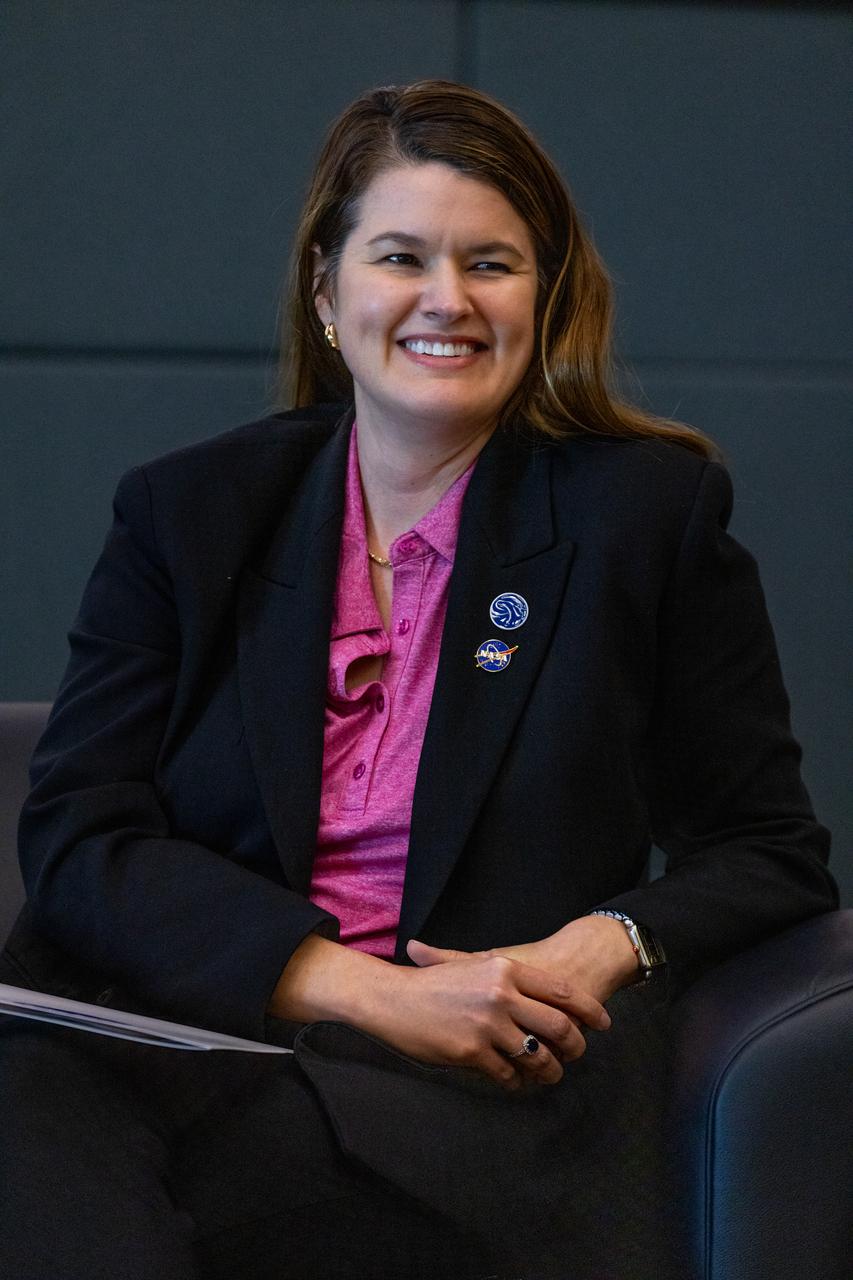
NASA deputy Associate Administrator, Casey Swails, participates in a discussion in honor of Women's History Month held on Friday, March 15, 2024, inside Kennedy’s Operations Support Building II. The Women Launching Women panel commemorates inspirational women and men who have lifted and helped others excel in their careers across the agency and offer words of advice for the current workforce.
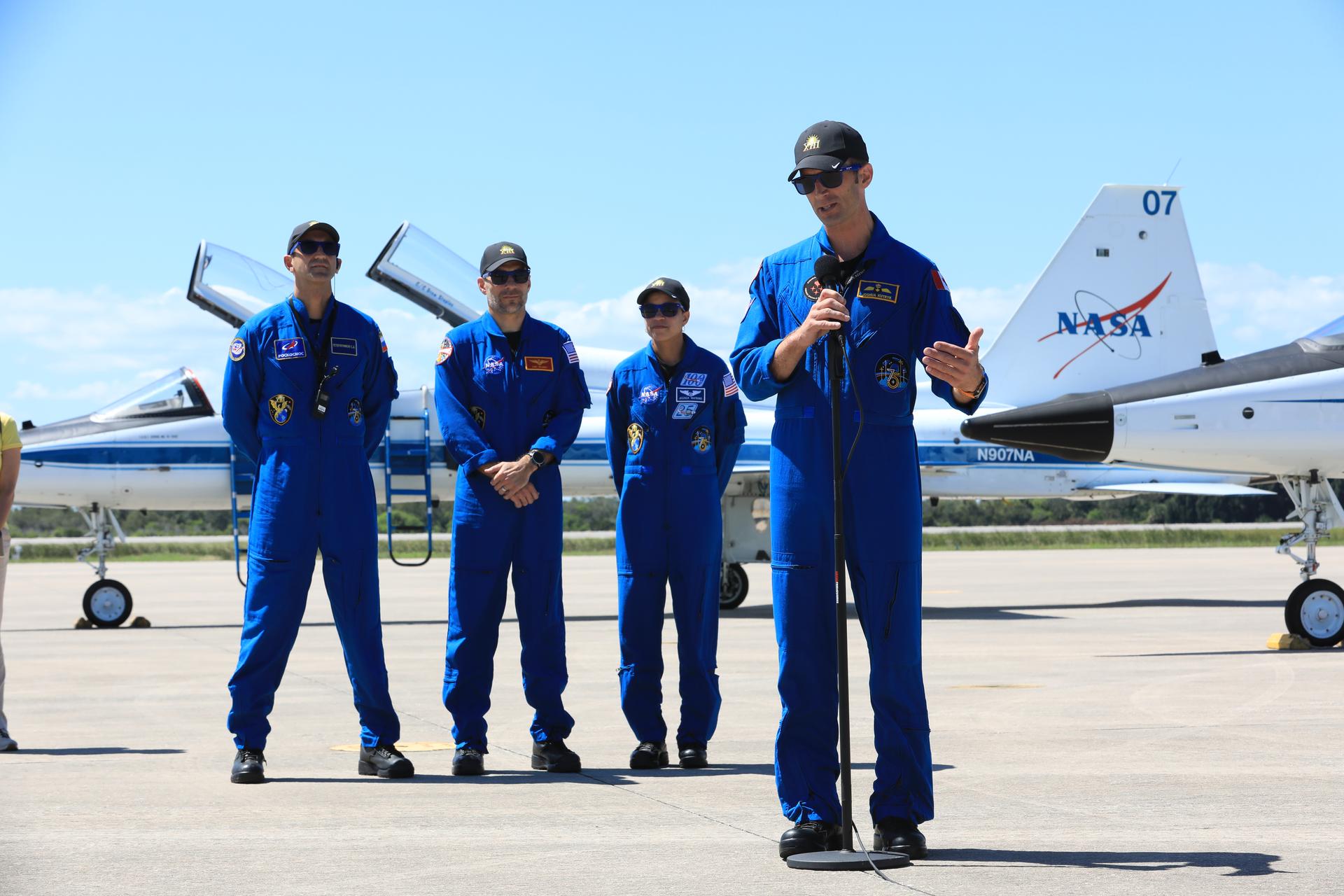
CSA (Canadian Space Agency) astronaut Joshua Kutryk, mission specialist, speaks to the news media during crew arrival for NASA’s SpaceX Crew-13 mission at the Shuttle Landing Facility at the agency’s Kennedy Space Center in Florida on Saturday, Sept. 26, 2026. NASA astronauts Jessica Watkins and Luke Delaney, and Roscosmos cosmonaut Sergey Teteryatnikov will launch along with Kutryk to the International Space Station aboard SpaceX’s Dragon spacecraft and Falcon 9 rocket at 11:10 a.m. EDT on Thursday, Oct. 1, from Cape Canaveral Space Force Station’s Space Launch Complex 40.
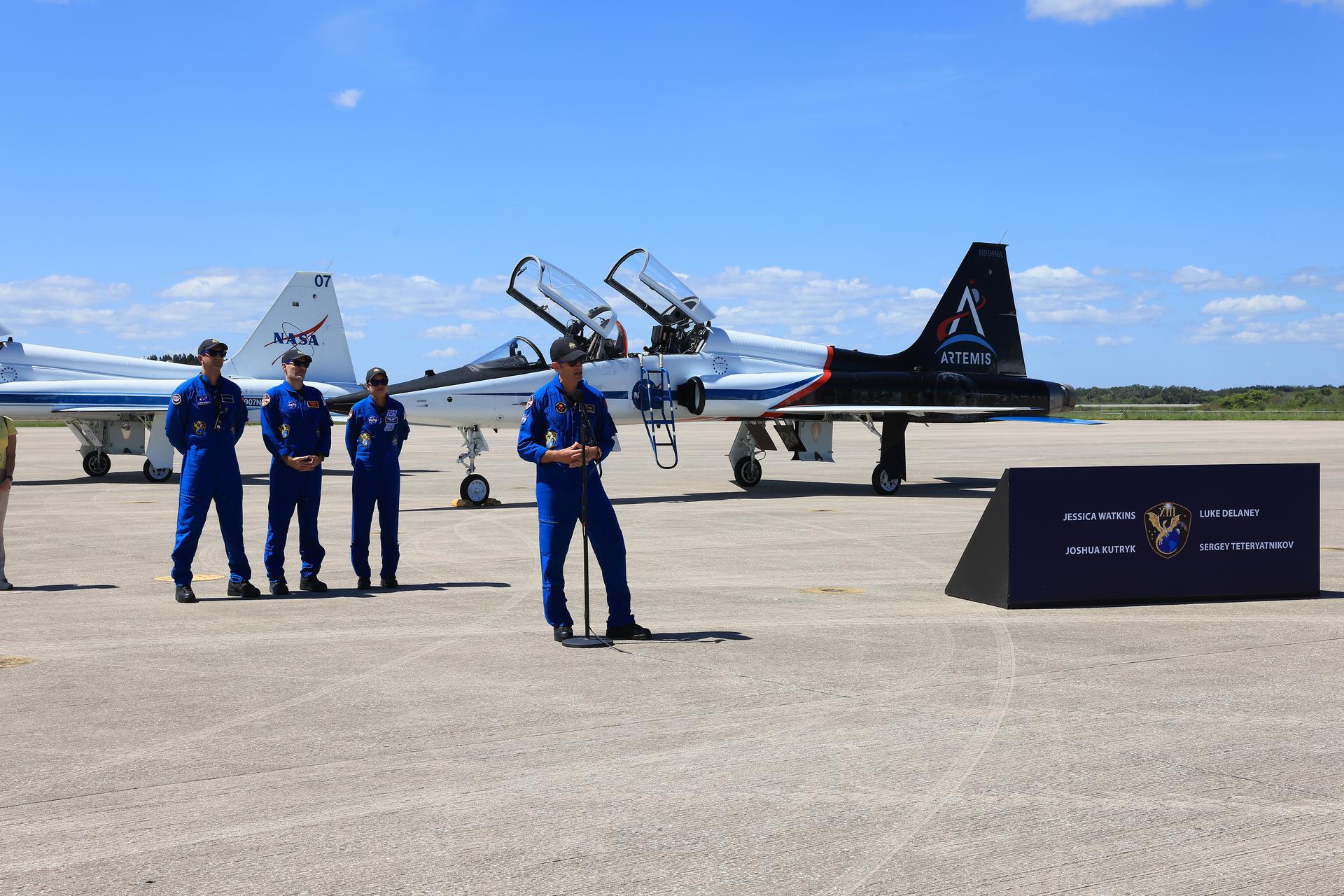
CSA (Canadian Space Agency) astronaut Joshua Kutryk, mission specialist, speaks to the news media during crew arrival for NASA’s SpaceX Crew-13 mission at the Shuttle Landing Facility at the agency’s Kennedy Space Center in Florida on Saturday, Sept. 26, 2026. NASA astronauts Jessica Watkins and Luke Delaney, and Roscosmos cosmonaut Sergey Teteryatnikov will launch along with Kutryk to the International Space Station aboard SpaceX’s Dragon spacecraft and Falcon 9 rocket at 11:10 a.m. EDT on Thursday, Oct. 1, from Cape Canaveral Space Force Station’s Space Launch Complex 40.
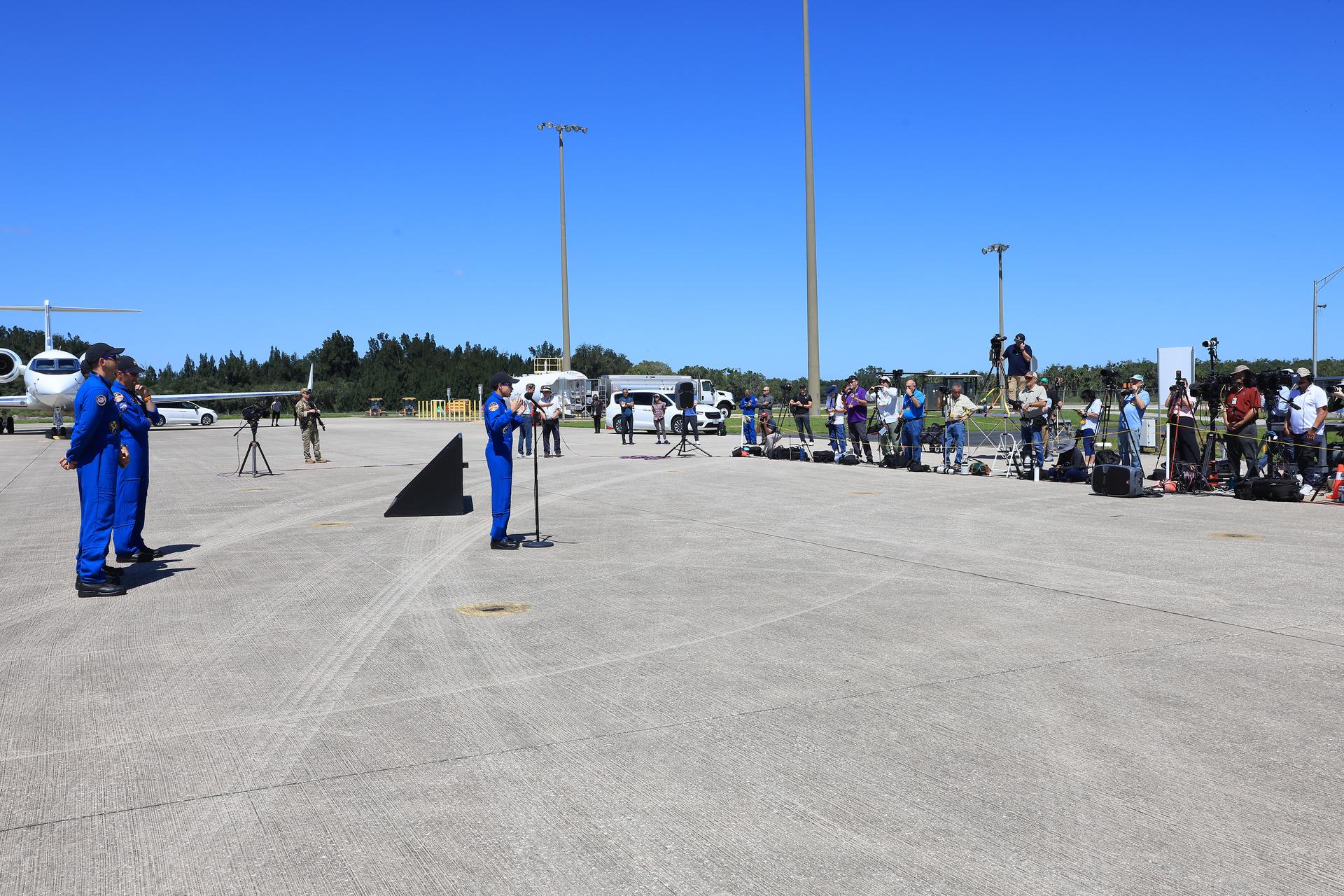
NASA astronaut Jessica Watkins, commander, speaks to the news media during crew arrival for NASA’s SpaceX Crew-13 mission at the Shuttle Landing Facility at the agency’s Kennedy Space Center in Florida on Saturday, Sept. 26, 2026. Watkins and fellow NASA astronaut Luke Delaney, along with CSA (Canadian Space Agency) astronaut Joshua Kutryk, and Roscosmos cosmonaut Sergey Teteryatnikov will launch to the International Space Station aboard SpaceX’s Dragon spacecraft and Falcon 9 rocket at 11:10 a.m. EDT on Thursday, Oct. 1, from Cape Canaveral Space Force Station’s Space Launch Complex 40.
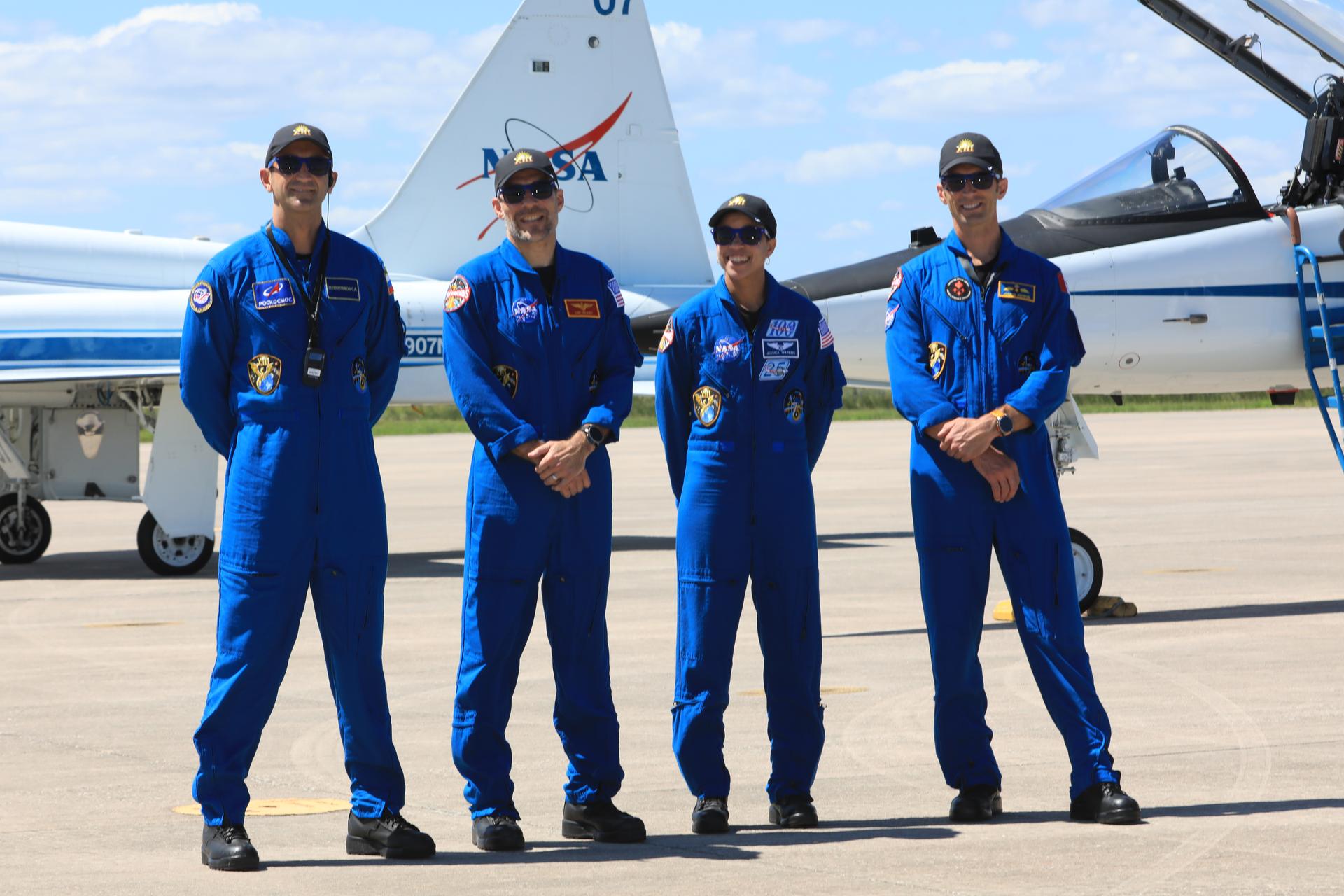
From left, crew members of NASA’s SpaceX Crew-13 mission, Roscosmos cosmonaut Sergey Teteryatnikov, NASA astronauts Luke Delaney and Jessica Watkins, and CSA (Canadian Space Agency) astronaut Joshua Kutryk arrive Saturday, Sept. 26, 2026, at the Shuttle Landing Facility at the agency’s Kennedy Space Center in Florida. The Crew-13 mission is slated to launch to the International Space Station aboard SpaceX’s Dragon spacecraft atop company’s Falcon 9 rocket from Cape Canaveral Space Force Station’s Space Launch Complex 40 at 11:10 a.m. EDT on Thursday, Oct. 1.
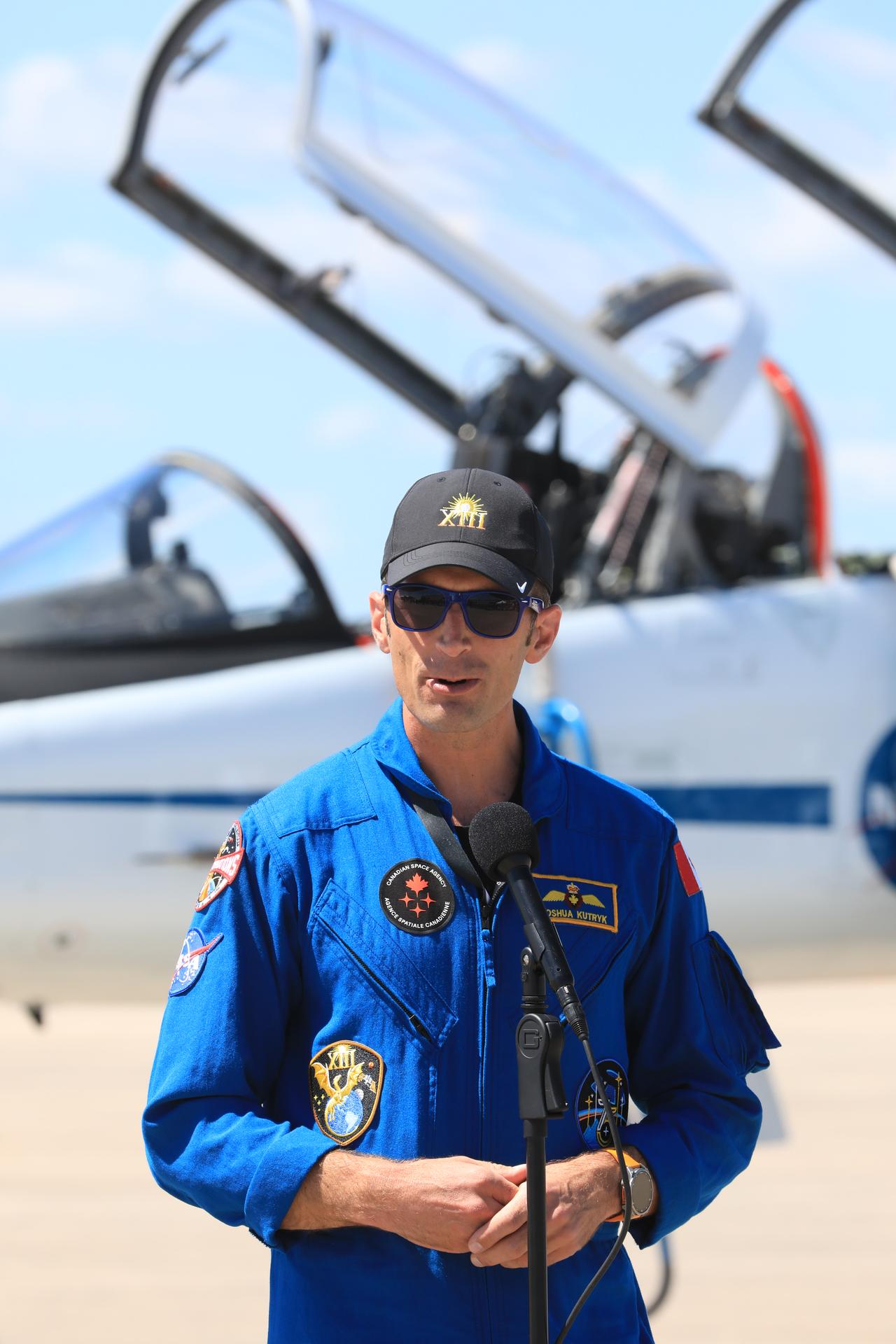
CSA (Canadian Space Agency) astronaut Joshua Kutryk, mission specialist, speaks to the news media during crew arrival for NASA’s SpaceX Crew-13 mission at the Shuttle Landing Facility at the agency’s Kennedy Space Center in Florida on Saturday, Sept. 26, 2026. NASA astronauts Jessica Watkins and Luke Delaney, and Roscosmos cosmonaut Sergey Teteryatnikov will launch along with Kutryk to the International Space Station aboard SpaceX’s Dragon spacecraft and Falcon 9 rocket at 11:10 a.m. EDT on Thursday, Oct. 1, from Cape Canaveral Space Force Station’s Space Launch Complex 40.
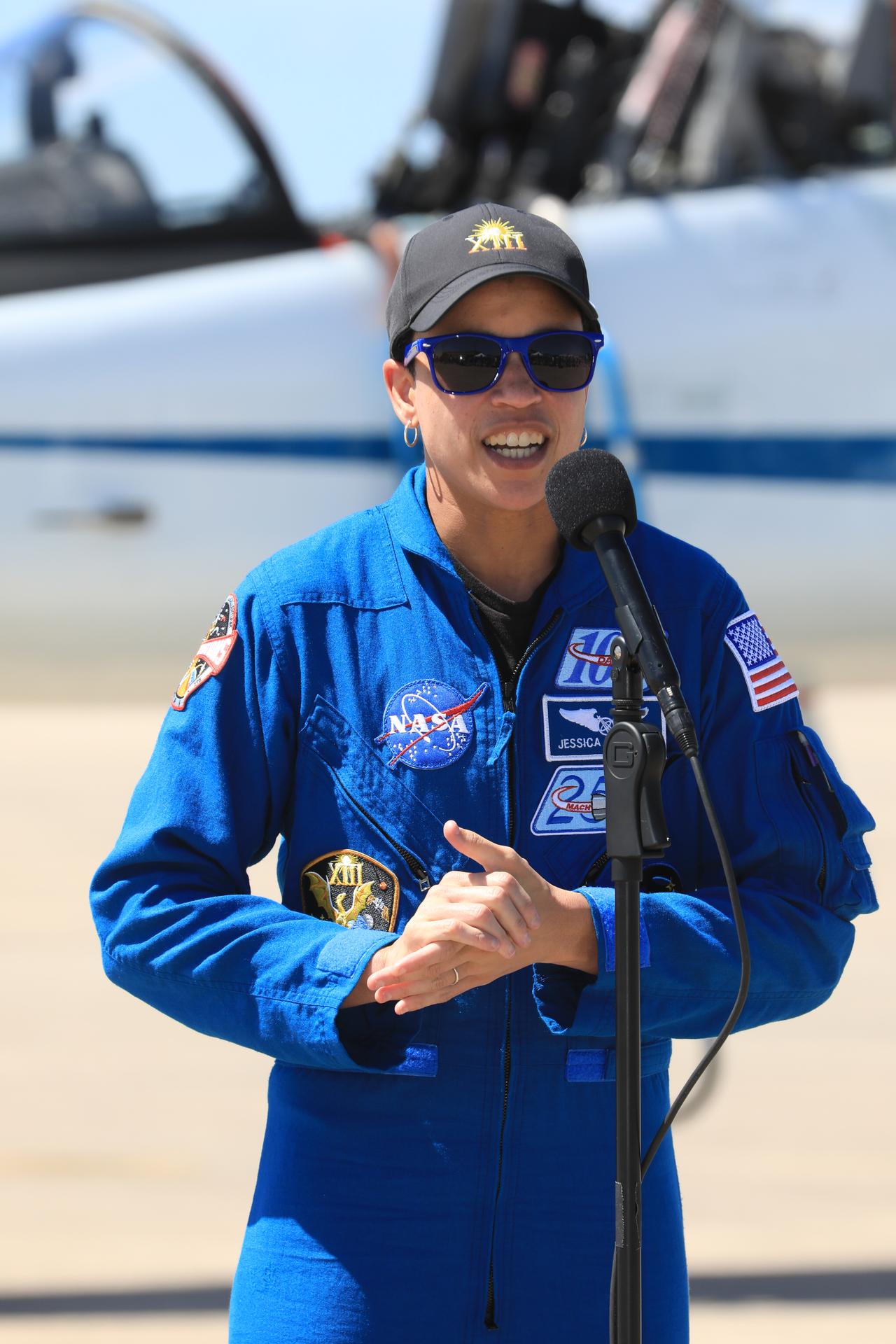
NASA astronaut Jessica Watkins, commander, speaks to the news media during crew arrival for NASA’s SpaceX Crew-13 mission at the Shuttle Landing Facility at the agency’s Kennedy Space Center in Florida on Saturday, Sept. 26, 2026. Watkins and fellow NASA astronaut Luke Delaney, along with CSA (Canadian Space Agency) astronaut Joshua Kutryk, and Roscosmos cosmonaut Sergey Teteryatnikov will launch to the International Space Station aboard SpaceX’s Dragon spacecraft and Falcon 9 rocket at 11:10 a.m. EDT on Thursday, Oct. 1, from Cape Canaveral Space Force Station’s Space Launch Complex 40.
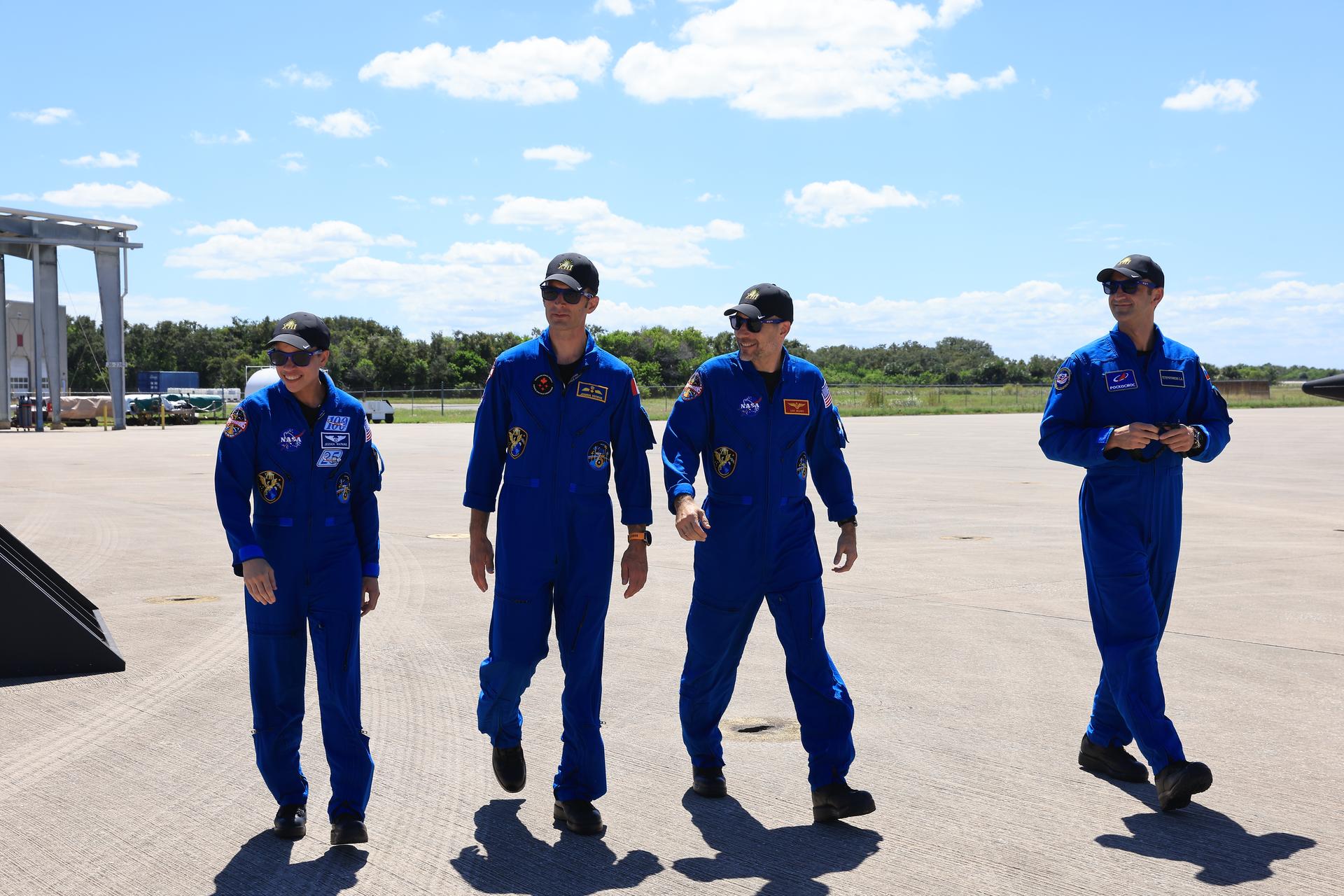
From left, crew members of NASA’s SpaceX Crew-13 mission, NASA astronaut Jessica Watkins, CSA (Canadian Space Agency) astronaut Joshua Kutryk, NASA astronaut Luke Delaney, and Roscosmos cosmonaut Sergey Teteryatnikov arrive Saturday, Sept. 26, 2026, at the Shuttle Landing Facility at the agency’s Kennedy Space Center in Florida. The Crew-13 mission is slated to launch to the International Space Station aboard SpaceX’s Dragon spacecraft atop company’s Falcon 9 rocket from Cape Canaveral Space Force Station’s Space Launch Complex 40 at 11:10 a.m. EDT on Thursday, Oct. 1.
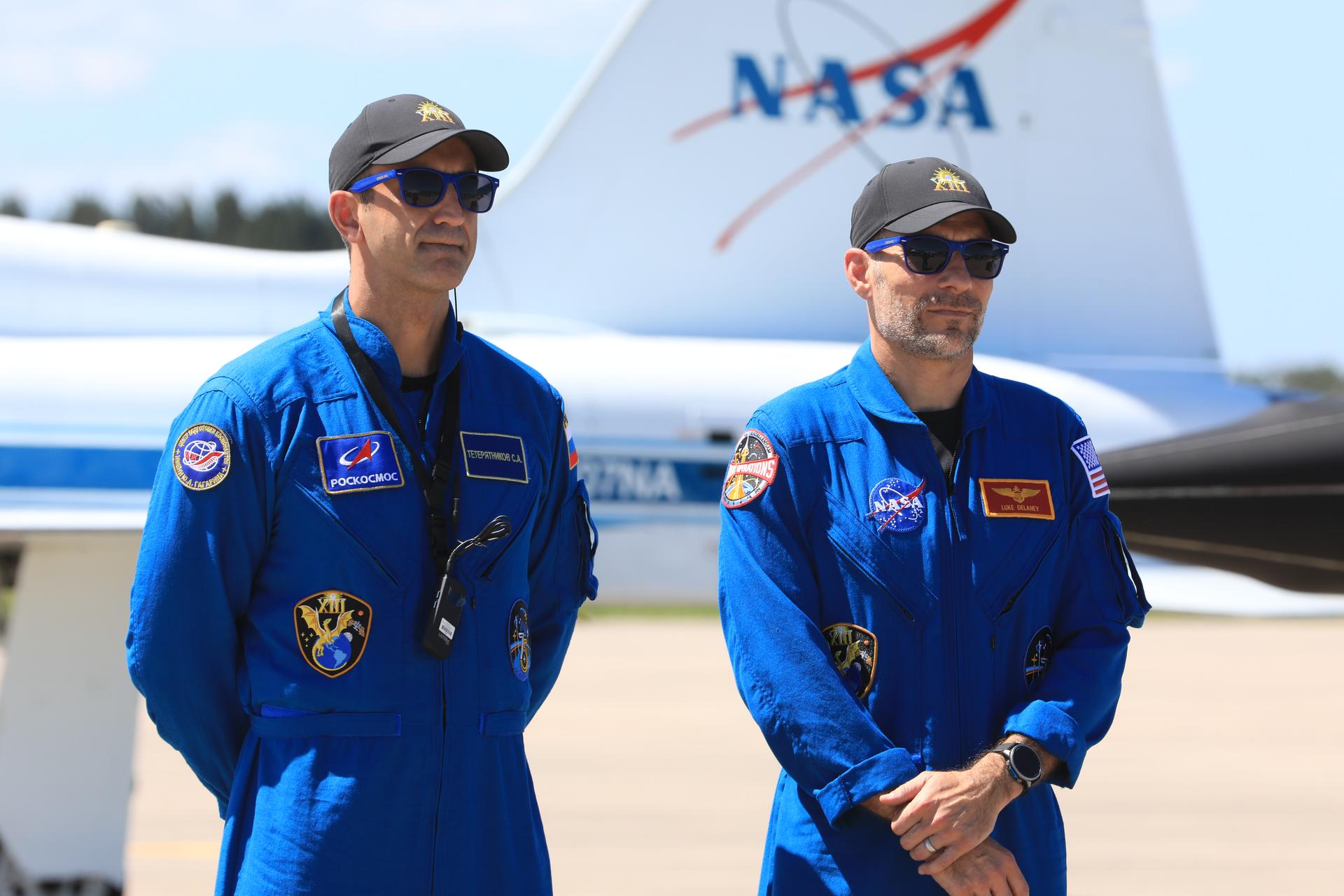
From left, Roscosmos cosmonaut mission specialist Sergey Teteryatnikov and NASA astronaut Luke Delaney participate in a news media event during crew arrival for NASA’s SpaceX Crew-13 mission at the Shuttle Landing Facility at the agency’s Kennedy Space Center in Florida on Saturday, Sept. 26, 2026. NASA astronauts Jessica Watkins and Delaney, along with CSA (Canadian Space Agency) astronaut Joshua Kutryk and Teteryatnikov will launch to the International Space Station aboard SpaceX’s Dragon spacecraft and Falcon 9 rocket at 11:10 a.m. EDT on Thursday, Oct. 1, from Cape Canaveral Space Force Station’s Space Launch Complex 40.
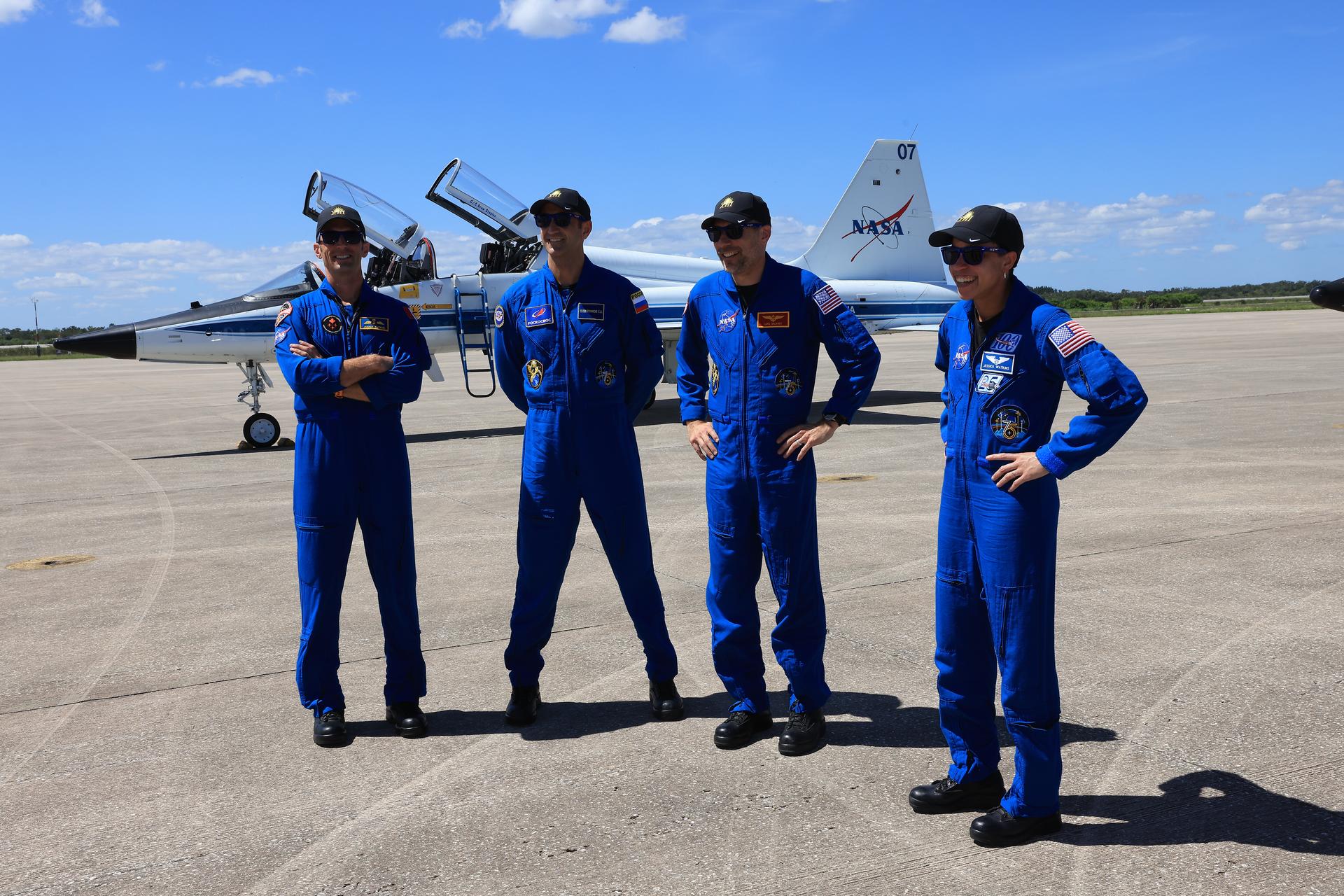
From left, crew members of NASA’s SpaceX Crew-13 mission, CSA (Canadian Space Agency) astronaut Joshua Kutryk, Roscosmos cosmonaut Sergey Teteryatnikov, and NASA astronauts Luke Delaney and Jessica Watkins arrive Saturday, Sept. 26, 2026, at the Shuttle Landing Facility at the agency’s Kennedy Space Center in Florida. The Crew-13 mission is slated to launch to the International Space Station aboard SpaceX’s Dragon spacecraft atop company’s Falcon 9 rocket from Cape Canaveral Space Force Station’s Space Launch Complex 40 at 11:10 a.m. EDT on Thursday, Oct. 1.
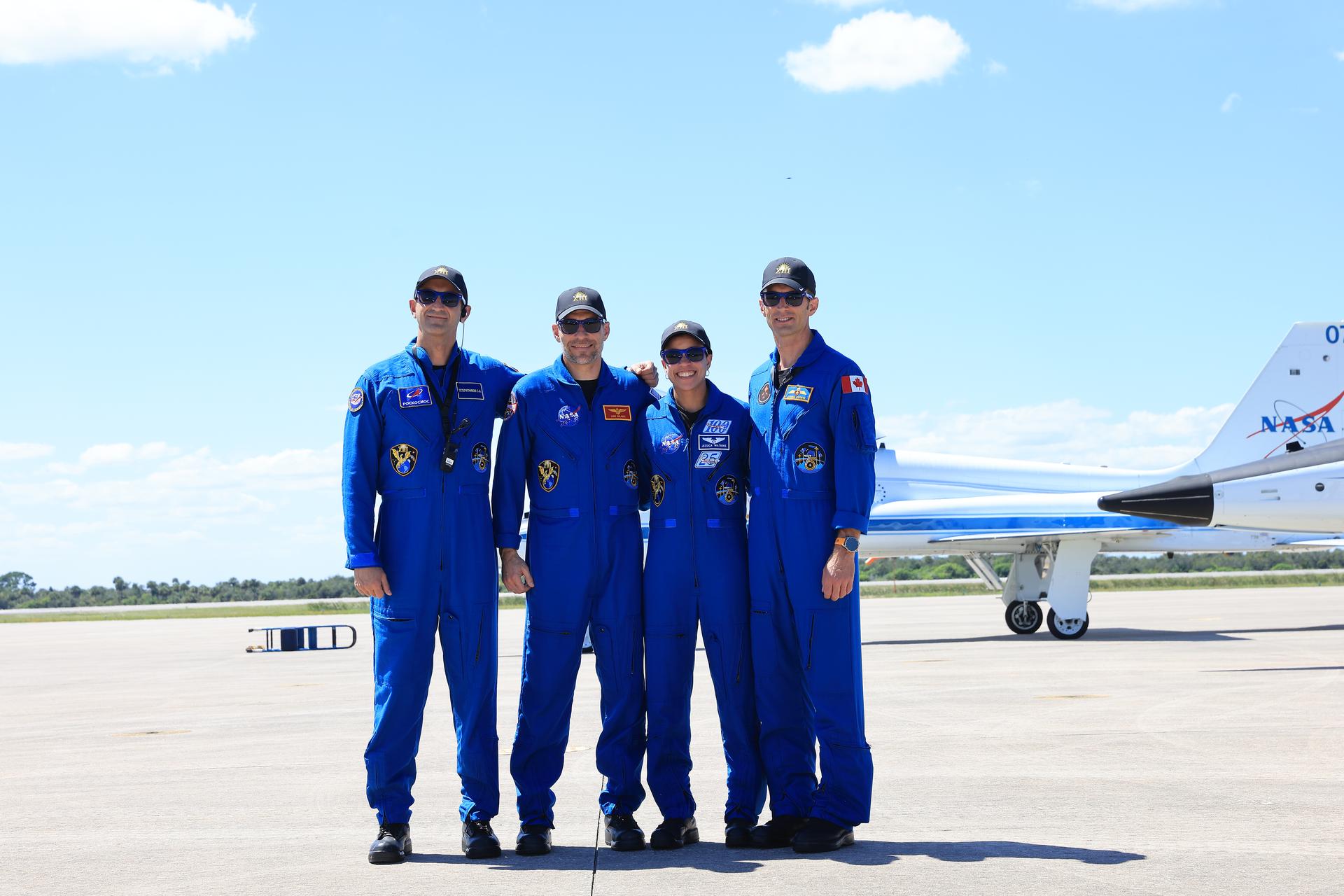
From left, crew members of NASA’s SpaceX Crew-13 mission, Roscosmos cosmonaut Sergey Teteryatnikov, NASA astronauts Luke Delaney and Jessica Watkins, and CSA (Canadian Space Agency) astronaut Joshua Kutryk arrive Saturday, Sept. 26, 2026, at the Shuttle Landing Facility at the agency’s Kennedy Space Center in Florida. The Crew-13 mission is slated to launch to the International Space Station aboard SpaceX’s Dragon spacecraft atop company’s Falcon 9 rocket from Cape Canaveral Space Force Station’s Space Launch Complex 40 at 11:10 a.m. EDT on Thursday, Oct. 1.
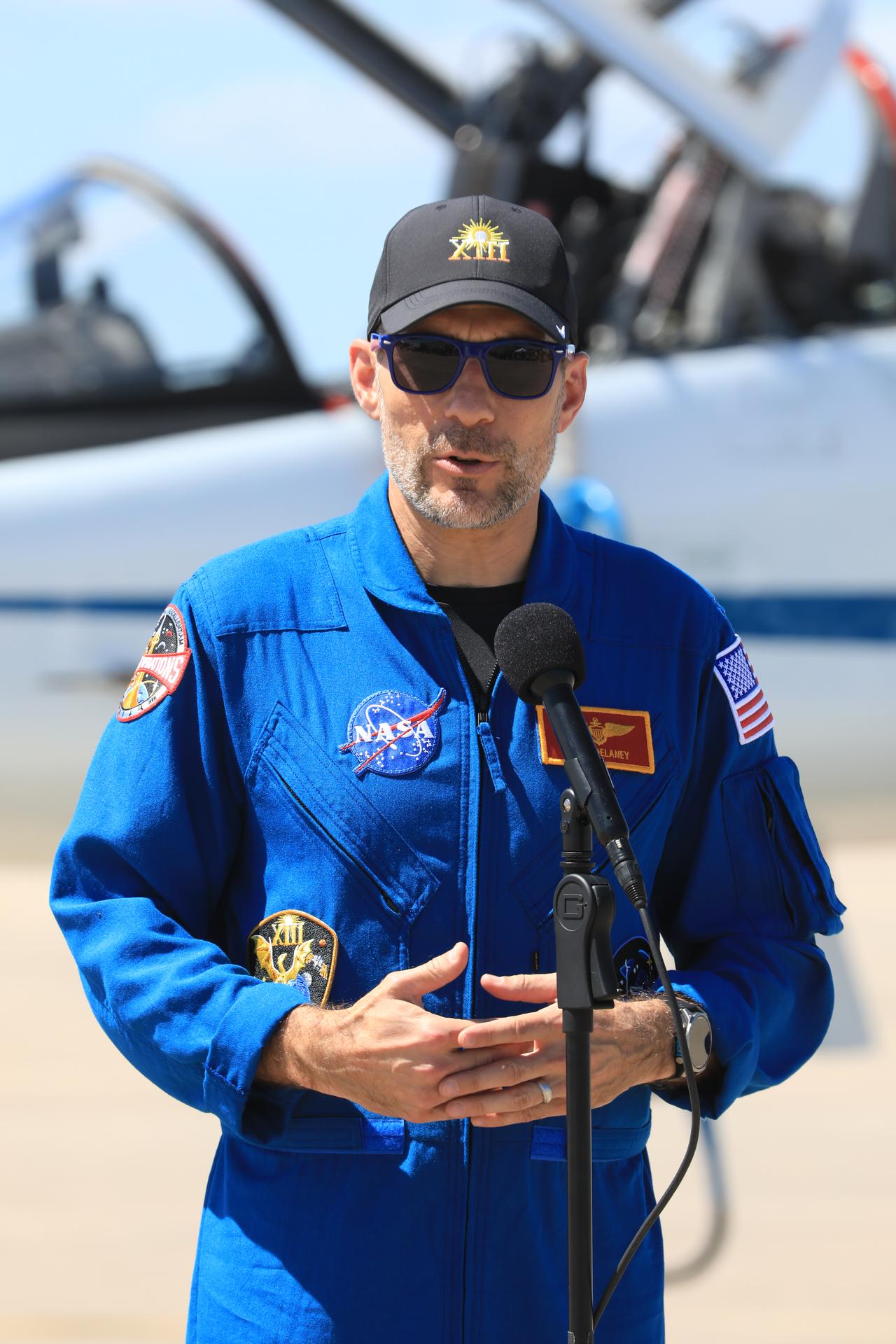
NASA astronaut Luke Delaney, pilot, speaks to the news media during crew arrival for NASA’s SpaceX Crew-13 mission at the Shuttle Landing Facility at the agency’s Kennedy Space Center in Florida on Saturday, Sept. 26, 2026. Delaney and fellow NASA astronaut Jessica Watkins, along with CSA (Canadian Space Agency) astronaut Joshua Kutryk, and Roscosmos cosmonaut Sergey Teteryatnikov will launch to the International Space Station aboard SpaceX’s Dragon spacecraft and Falcon 9 rocket at 11:10 a.m. EDT on Thursday, Oct. 1, from Cape Canaveral Space Force Station’s Space Launch Complex 40.
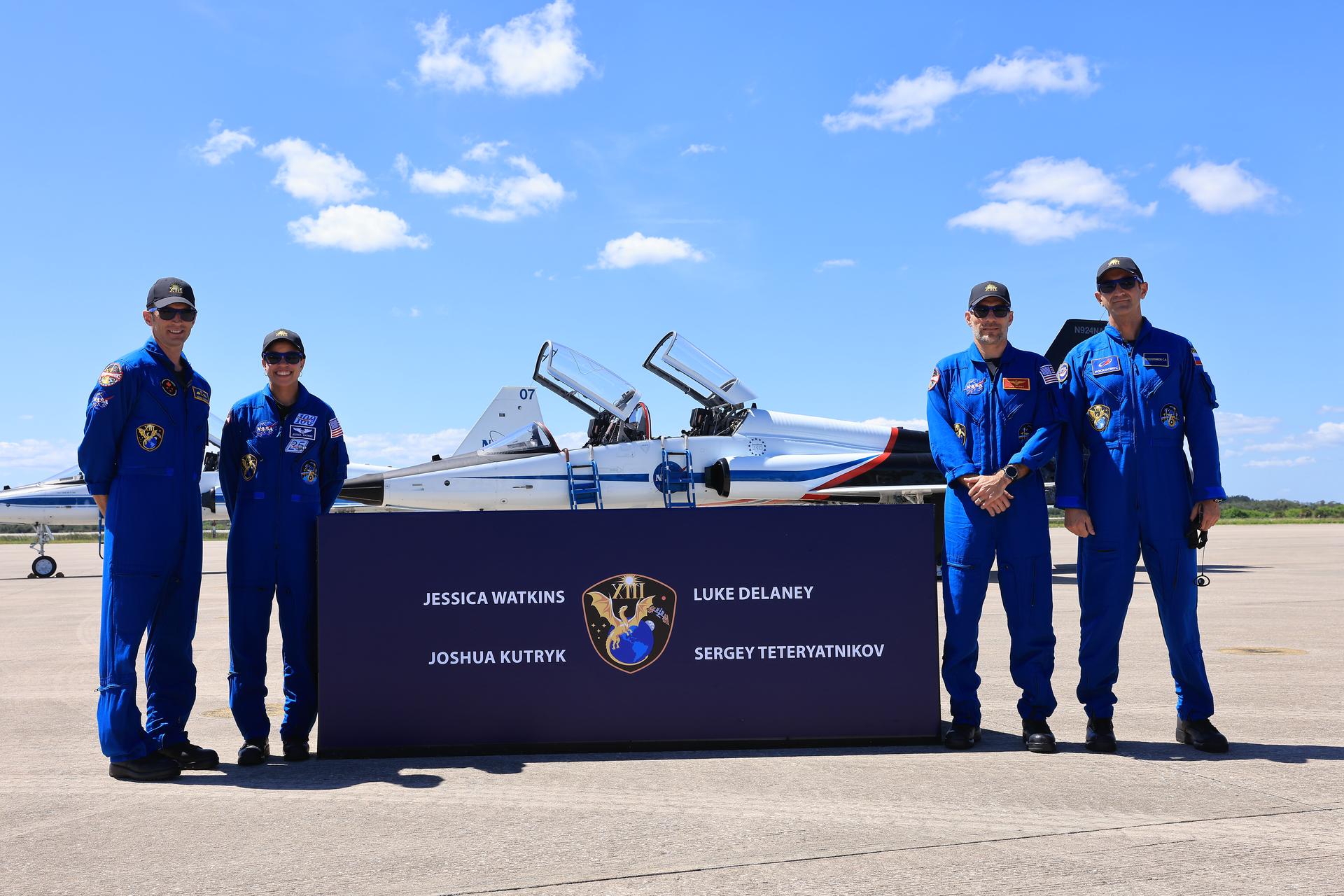
From left, crew members of NASA’s SpaceX Crew-13 mission, CSA (Canadian Space Agency) astronaut Joshua Kutryk, NASA astronaut Jessica Watkins, NASA astronaut Luke Delaney, and Roscosmos cosmonaut Sergey Teteryatnikov arrive Saturday, Sept. 26, 2026, at the Shuttle Landing Facility at the agency’s Kennedy Space Center in Florida. The Crew-13 mission is slated to launch to the International Space Station aboard SpaceX’s Dragon spacecraft atop company’s Falcon 9 rocket from Cape Canaveral Space Force Station’s Space Launch Complex 40 at 11:10 a.m. EDT on Thursday, Oct. 1.
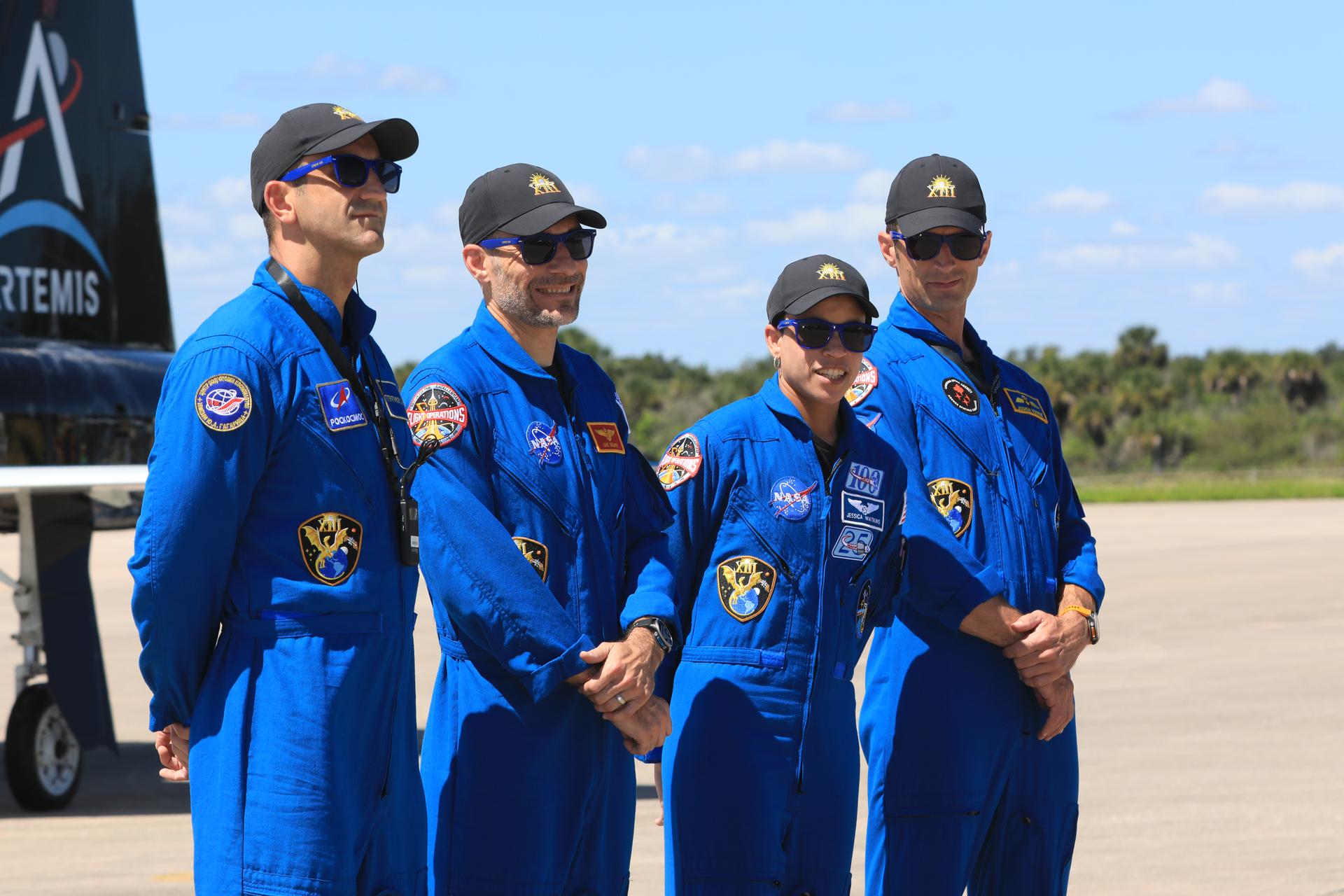
From left, crew members of NASA’s SpaceX Crew-13 mission, Roscosmos cosmonaut Sergey Teteryatnikov, NASA astronauts Luke Delaney and Jessica Watkins, and CSA (Canadian Space Agency) astronaut Joshua Kutryk arrive Saturday, Sept. 26, 2026, at the Shuttle Landing Facility at the agency’s Kennedy Space Center in Florida. The Crew-13 mission is slated to launch to the International Space Station aboard SpaceX’s Dragon spacecraft atop company’s Falcon 9 rocket from Cape Canaveral Space Force Station’s Space Launch Complex 40 at 11:10 a.m. EDT on Thursday, Oct. 1.
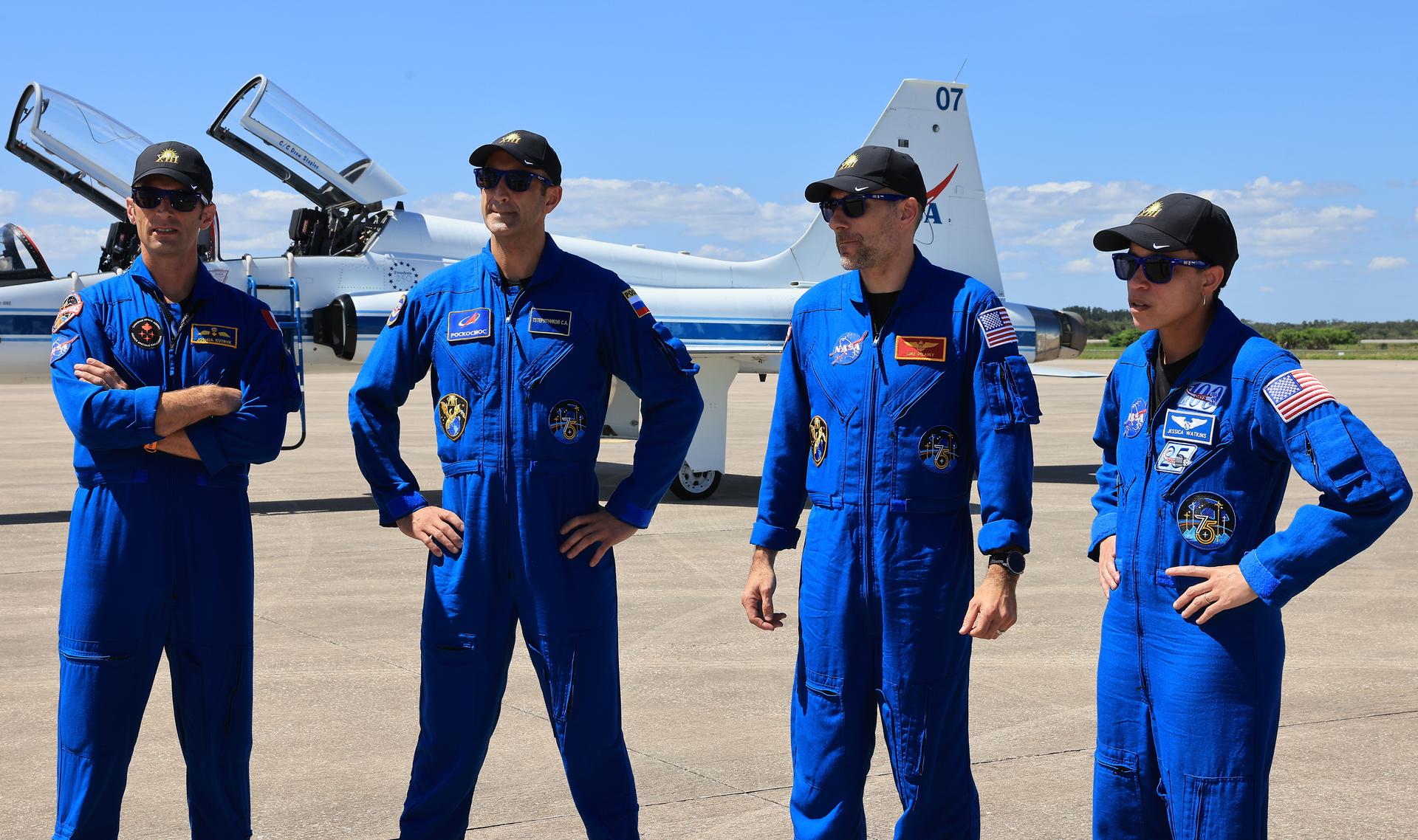
From left, crew members of NASA’s SpaceX Crew-13 mission, CSA (Canadian Space Agency) astronaut Joshua Kutryk, Roscosmos cosmonaut Sergey Teteryatnikov, and NASA astronauts Luke Delaney and Jessica Watkins arrive Saturday, Sept. 26, 2026, at the Shuttle Landing Facility at the agency’s Kennedy Space Center in Florida. The Crew-13 mission is slated to launch to the International Space Station aboard SpaceX’s Dragon spacecraft atop company’s Falcon 9 rocket from Cape Canaveral Space Force Station’s Space Launch Complex 40 at 11:10 a.m. EDT on Thursday, Oct. 1.
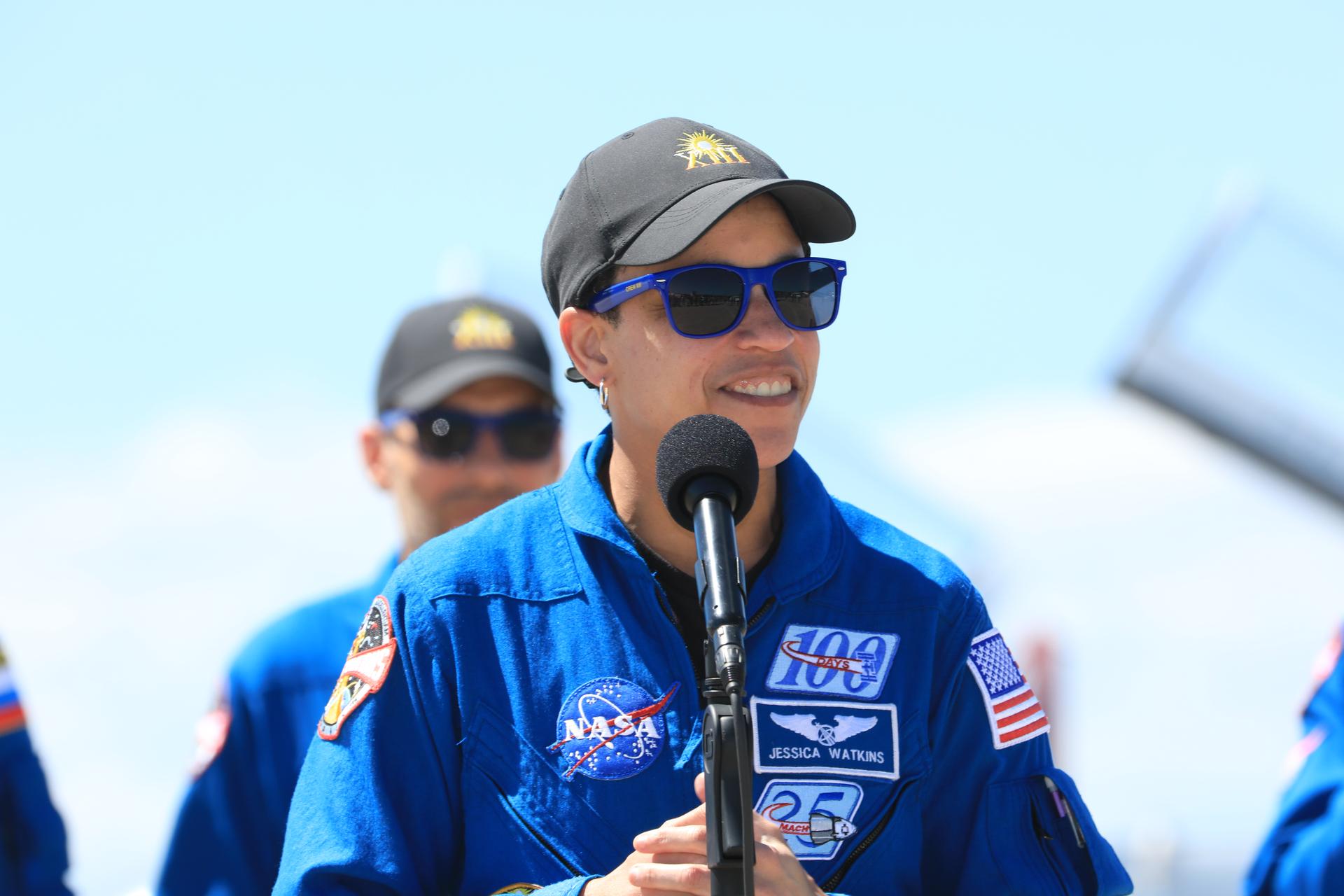
NASA astronaut Jessica Watkins, commander, speaks to the news media during crew arrival for NASA’s SpaceX Crew-13 mission at the Shuttle Landing Facility at the agency’s Kennedy Space Center in Florida on Saturday, Sept. 26, 2026. Watkins and fellow NASA astronaut Luke Delaney, along with CSA (Canadian Space Agency) astronaut Joshua Kutryk, and Roscosmos cosmonaut Sergey Teteryatnikov will launch to the International Space Station aboard SpaceX’s Dragon spacecraft and Falcon 9 rocket at 11:10 a.m. EDT on Thursday, Oct. 1, from Cape Canaveral Space Force Station’s Space Launch Complex 40.
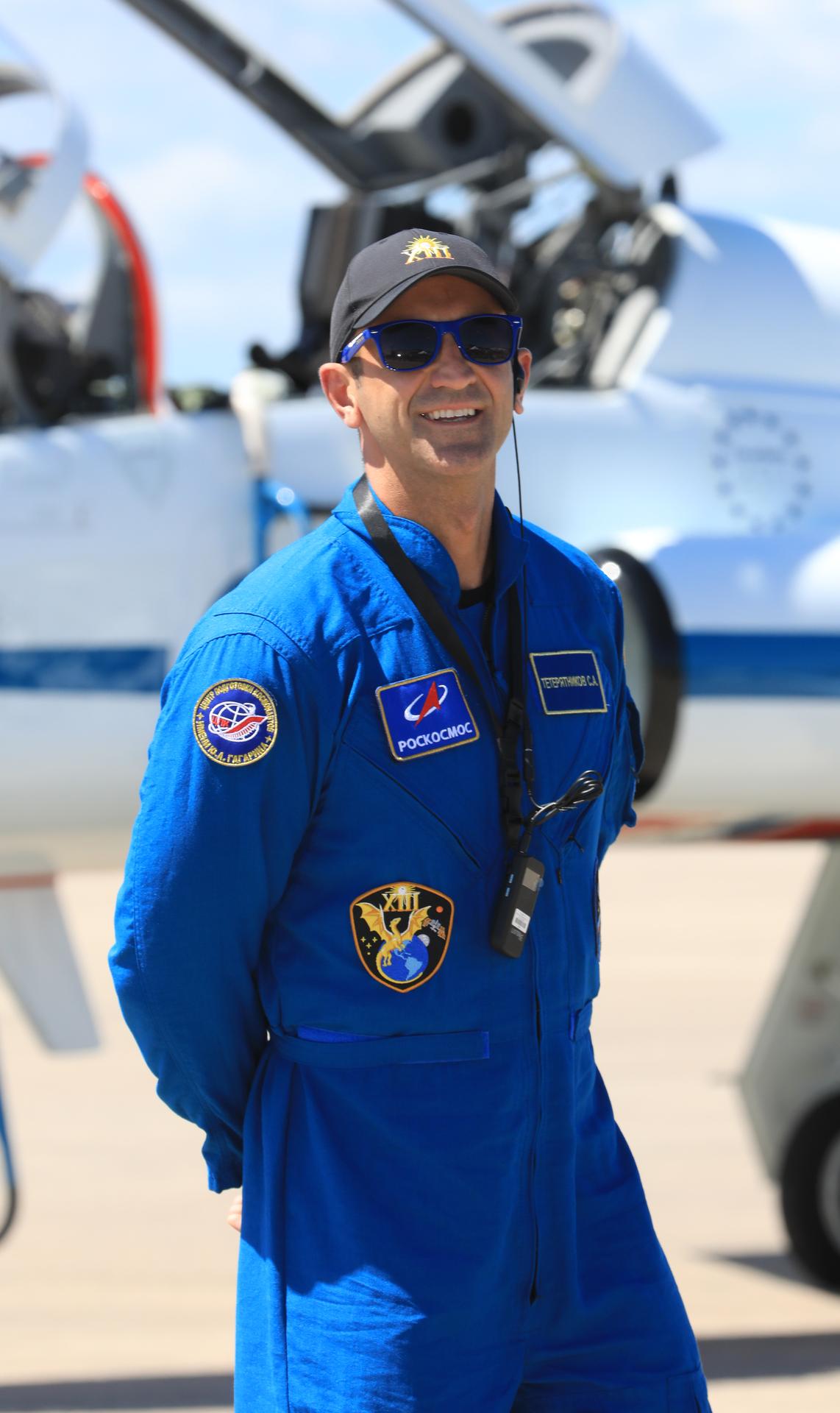
Roscosmos cosmonaut mission specialist Sergey Teteryatnikov participates in a news media event during crew arrival for NASA’s SpaceX Crew-13 mission at the Shuttle Landing Facility at the agency’s Kennedy Space Center in Florida on Saturday, Sept. 26, 2026. NASA astronauts NASA astronauts Jessica Watkins and Luke Delaney, and CSA (Canadian Space Agency) astronaut Joshua Kutryk will launch along with Teteryatnikov to the International Space Station aboard SpaceX’s Dragon spacecraft and Falcon 9 rocket at 11:10 a.m. EDT on Thursday, Oct. 1, from Cape Canaveral Space Force Station’s Space Launch Complex 40.
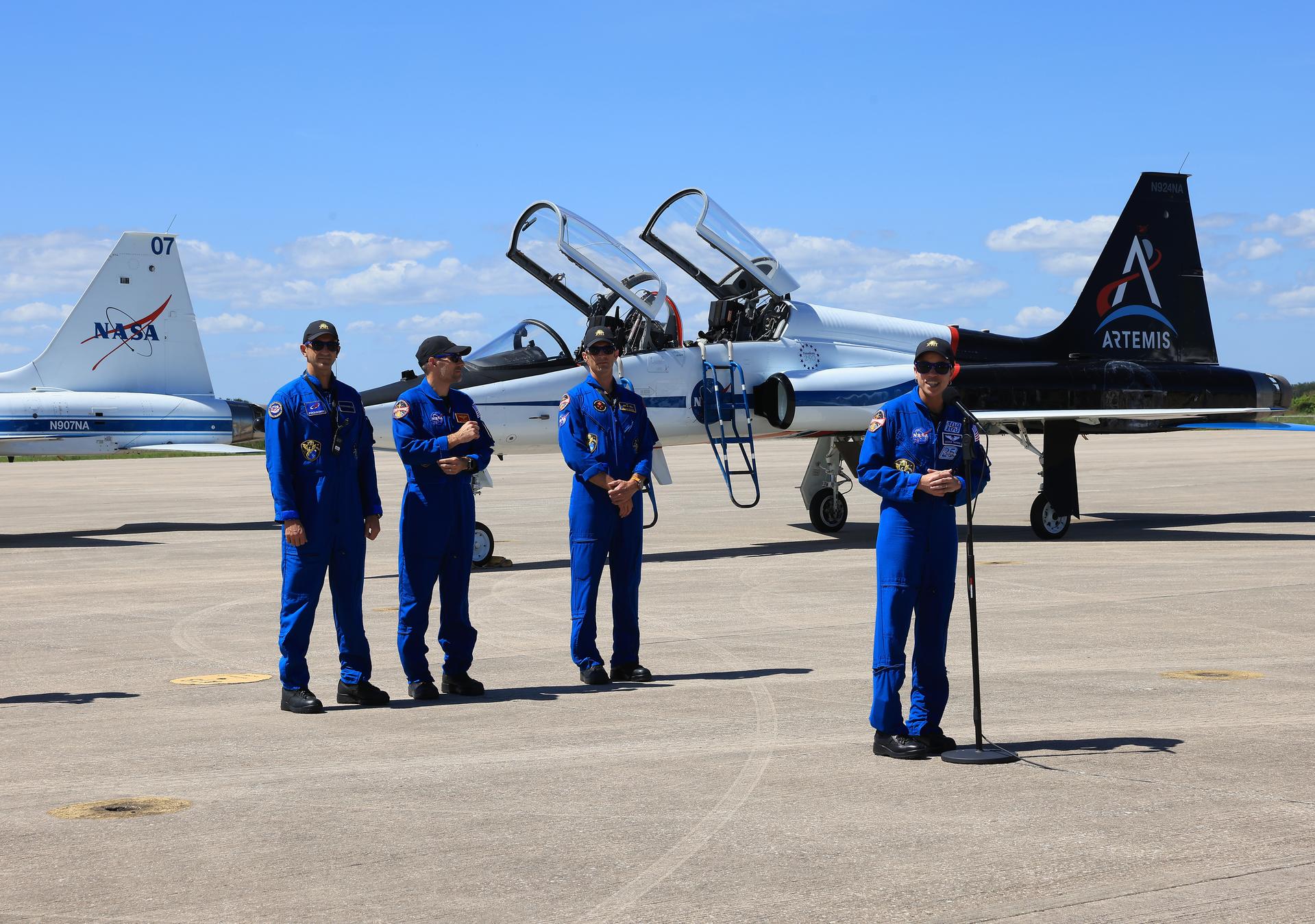
NASA astronaut Jessica Watkins, commander, speaks to the news media during crew arrival for NASA’s SpaceX Crew-13 mission at the Shuttle Landing Facility at the agency’s Kennedy Space Center in Florida on Saturday, Sept. 26, 2026. Watkins and fellow NASA astronaut Luke Delaney, along with CSA (Canadian Space Agency) astronaut Joshua Kutryk, and Roscosmos cosmonaut Sergey Teteryatnikov will launch to the International Space Station aboard SpaceX’s Dragon spacecraft and Falcon 9 rocket at 11:10 a.m. EDT on Thursday, Oct. 1, from Cape Canaveral Space Force Station’s Space Launch Complex 40.
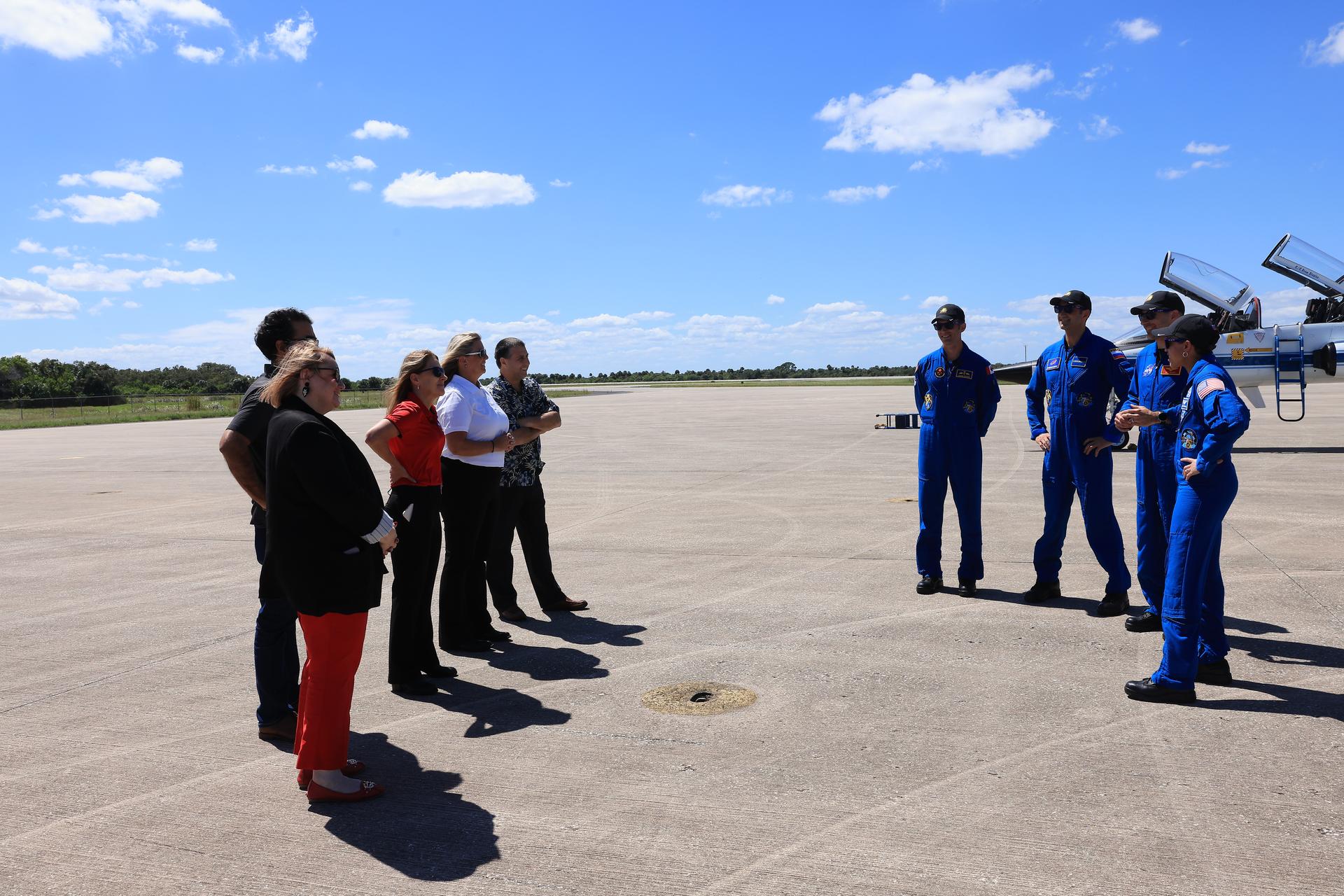
Crew members of NASA’s SpaceX Crew-13 mission NASA astronauts Jessica Watkins and Luke Delaney, CSA (Canadian Space Agency) astronaut Joshua Kutryk, and Roscosmos cosmonaut Sergey Teteryatnikov arrive Saturday, Sept. 26, 2026, at the Shuttle Landing Facility at the agency’s Kennedy Space Center in Florida. The Crew-13 mission is slated to launch to the International Space Station aboard SpaceX’s Dragon spacecraft atop company’s Falcon 9 rocket from Cape Canaveral Space Force Station’s Space Launch Complex 40 at 11:10 a.m. EDT on Thursday, Oct. 1.
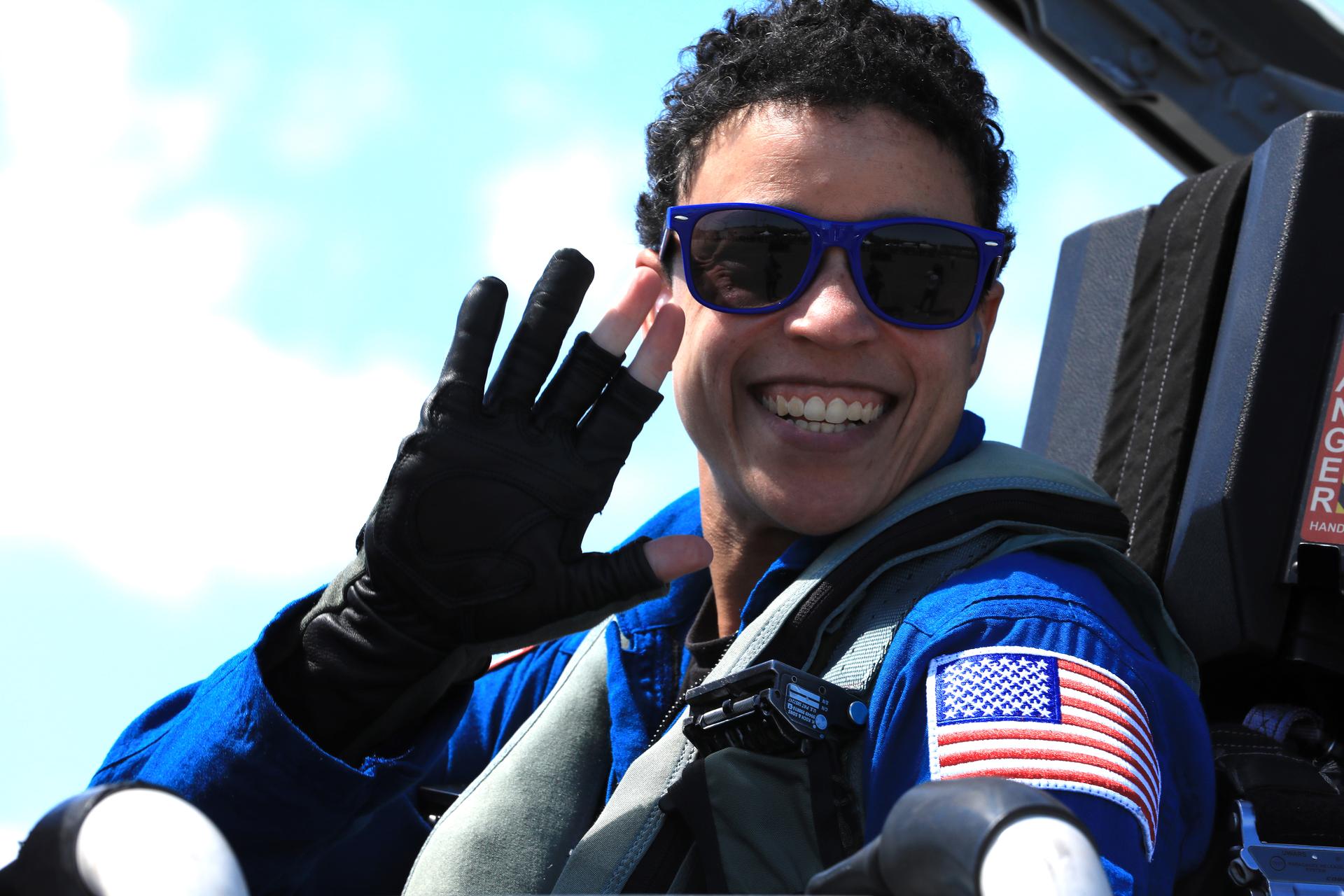
NASA astronaut Jessica Watkins, commander, waves from a T-38 jet during crew arrival for NASA’s SpaceX Crew-13 mission at the Shuttle Landing Facility at the agency’s Kennedy Space Center in Florida on Saturday, Sept. 26, 2026. Watkins and fellow NASA astronaut Luke Delaney, along with CSA (Canadian Space Agency) astronaut Joshua Kutryk, and Roscosmos cosmonaut Sergey Teteryatnikov will launch to the International Space Station aboard SpaceX’s Dragon spacecraft and Falcon 9 rocket at 11:10 a.m. EDT on Thursday, Oct. 1, from Cape Canaveral Space Force Station’s Space Launch Complex 40.
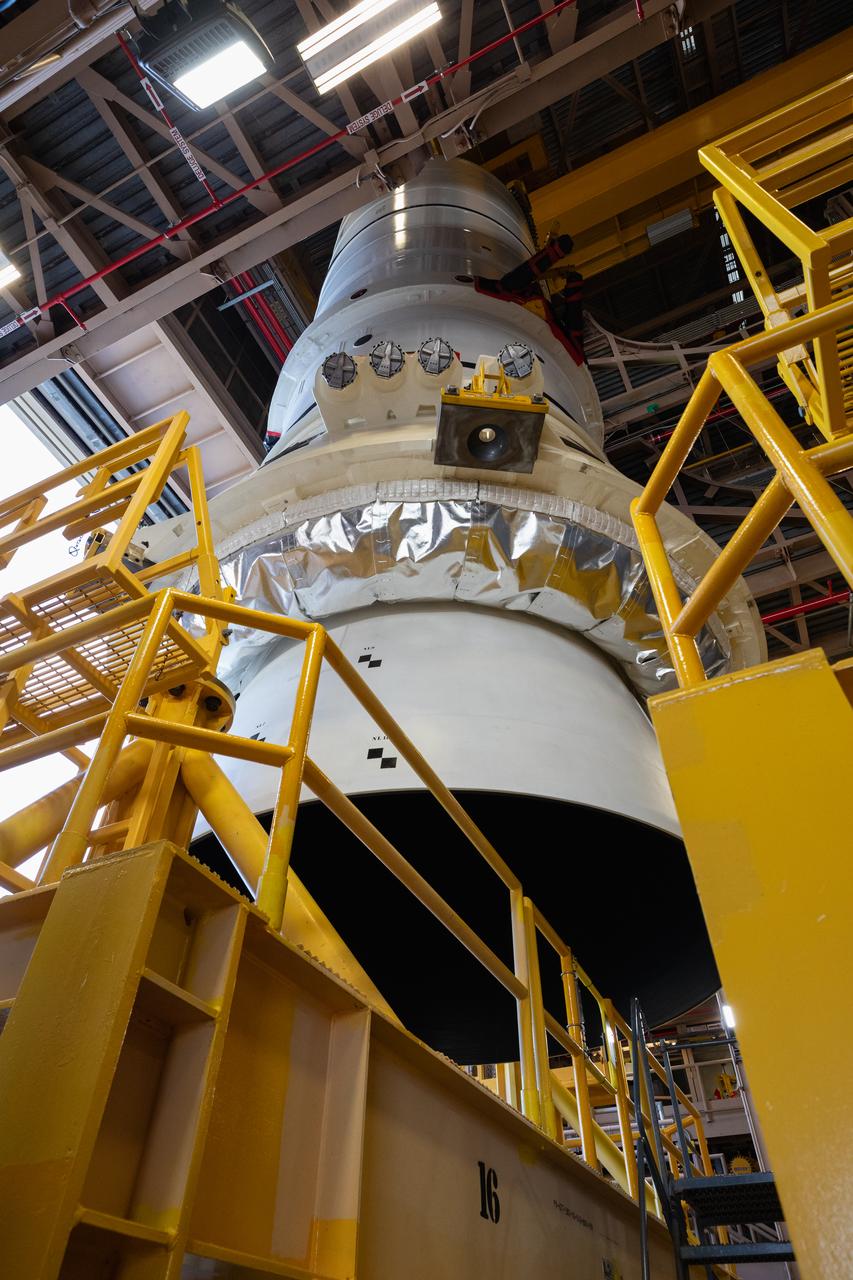
Engineers and technicians with the Exploration Ground Systems Program prepare to transfer one of the aft assemblies of the SLS (Space Launch System) solid rocket boosters for the Artemis II mission with an overhead crane inside the Rotation, Processing and Surge Facility at NASA’s Kennedy Space Center in Florida on Wednesday, Nov. 13, 2024. The booster segments are being transferred to the NASA Kennedy’s Vehicle Assembly Building via a transporter for stacking operations in preparation for launch of the Artemis II mission.
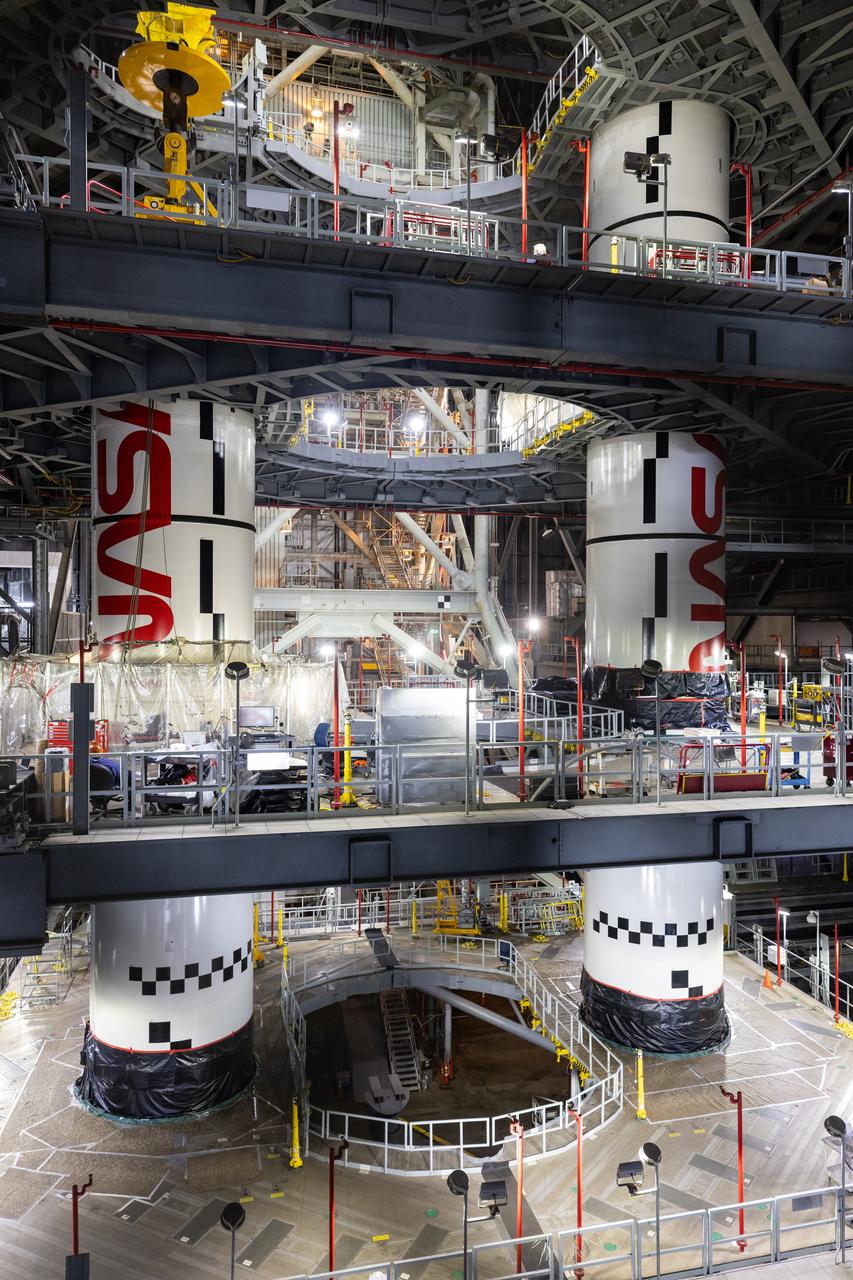
Inside High Bay 3 of the Vehicle Assembly Building at NASA’s Kennedy Space Center in Florida, technicians with the agency’s Exploration Ground Systems use a crane to lower the left center center booster segment for the NASA’s SLS (Space Launch System) rocket onto the left aft center segment atop the mobile launcher on Monday, Jan. 27, 2025. The NASA “worm” insignia can be seen on both the center center booster segments. The boosters will help support the remaining rocket components and the Orion spacecraft during final assembly of the Artemis II Moon rocket and provide more than 75 percent of the total SLS thrust during liftoff from NASA Kennedy’s Launch Pad 39B.
Engineers and technicians with the Exploration Ground Systems Program prepare to transfer one of the aft assemblies of the SLS (Space Launch System) solid rocket boosters for the Artemis II mission with an overhead crane inside the Rotation, Processing and Surge Facility at NASA’s Kennedy Space Center in Florida on Wednesday, Nov. 13, 2024. The booster segments are being transferred to the NASA Kennedy’s Vehicle Assembly Building via a transporter for stacking operations in preparation for launch of the Artemis II mission.
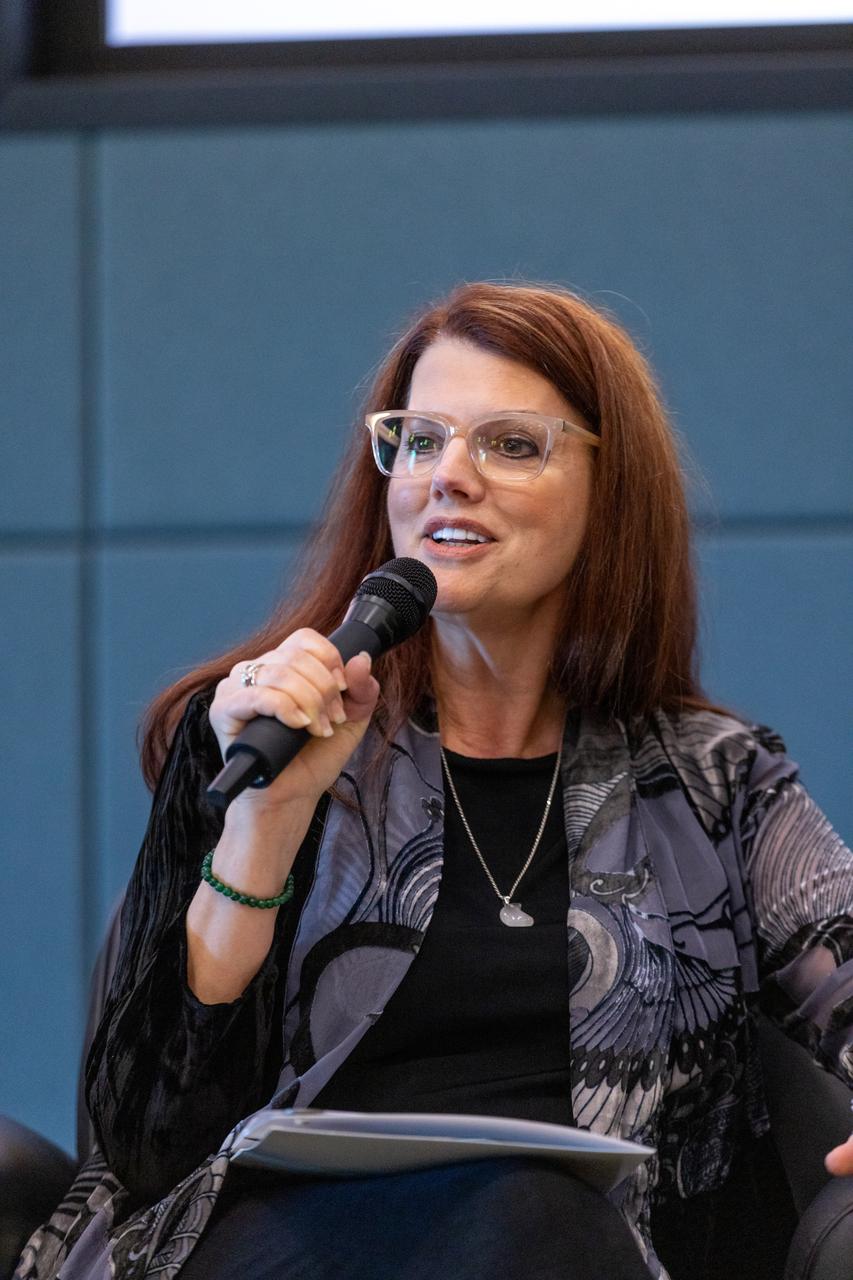
NASA Artemis Launch Director Charlie Blackwell Thompson participates in a discussion in honor of Women's History Month held on Friday, March 15, 2024, inside the Operations Support Building II at the agency’s Kennedy Space Center in Florida. The Women Launching Women panel commemorates inspirational women and men who have lifted and helped others excel in their careers across the agency and offer words of advice for the current workforce.

Engineers and technicians with NASA’s Exploration Ground Systems Program prepare to lift the left center center booster segment shown with the iconic NASA “worm” insignia for the agency’s SLS (Space Launch System) rocket to the Vehicle Assembly Building at NASA's Kennedy Space Center in Florida on Friday, Jan. 24, 2025. The booster segment is shown attached to a lifting beam ahead of integration onto the mobile launcher. The boosters will help support the remaining rocket components and the Orion spacecraft during final assembly of the Artemis II Moon rocket and provide more than 75 percent of the total SLS thrust during liftoff from NASA Kennedy’s Launch Pad 39B.
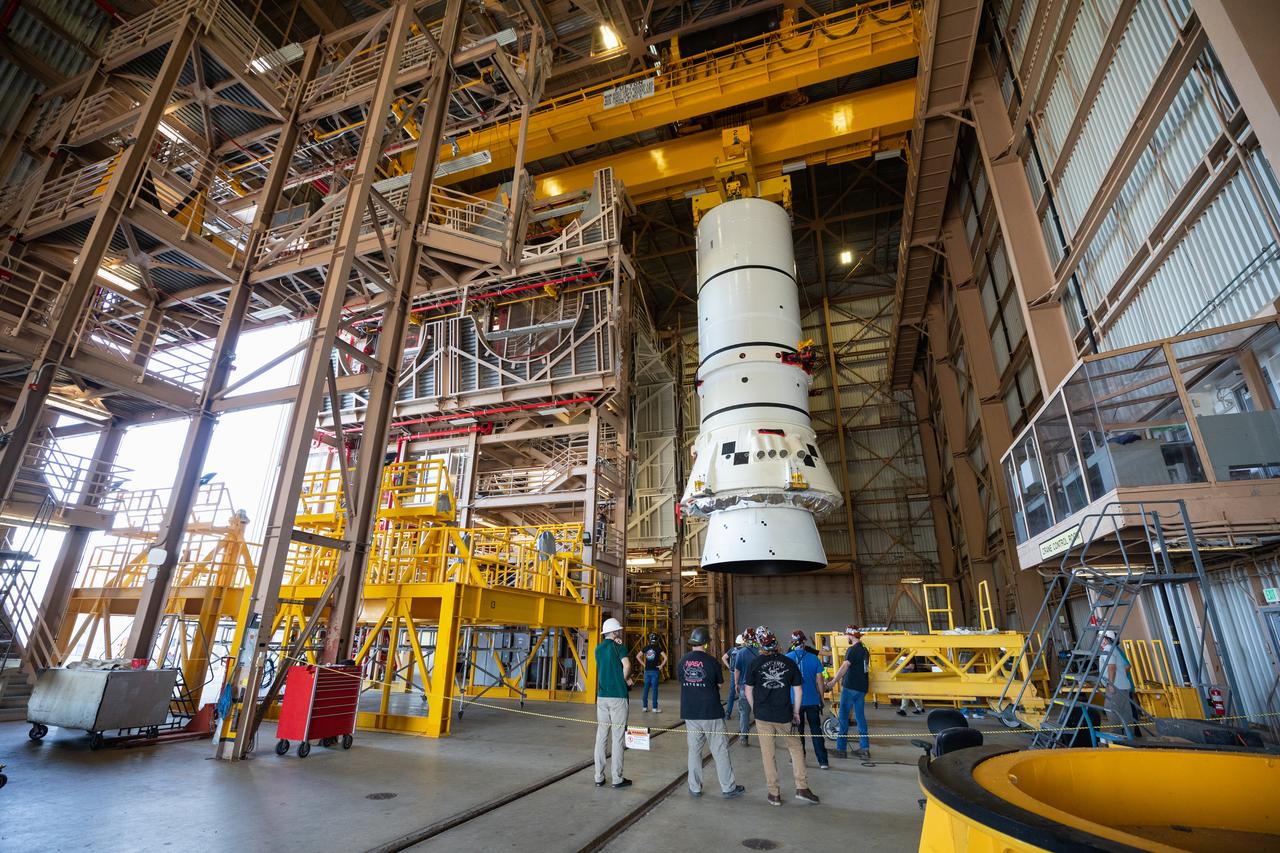
Engineers and technicians with the Exploration Ground Systems Program prepare to transfer one of the aft assemblies of the SLS (Space Launch System) solid rocket boosters for the Artemis II mission with an overhead crane inside the Rotation, Processing and Surge Facility at NASA’s Kennedy Space Center in Florida on Wednesday, Nov. 13, 2024. The booster segments are being transferred to the NASA Kennedy’s Vehicle Assembly Building via a transporter for stacking operations in preparation for launch of the Artemis II mission.

Engineers and technicians with the Exploration Ground Systems Program prepare to move the aft assemblies of the SLS (Space Launch System) solid rocket boosters for the Artemis II mission with an overhead crane inside the Rotation, Processing and Surge Facility at NASA’s Kennedy Space Center in Florida on Wednesday, Nov. 13, 2024. The booster segments are being transferred to the NASA Kennedy’s Vehicle Assembly Building via a transporter for stacking operations in preparation for launch of the Artemis II mission.

Engineers and technicians with NASA's Exploration Ground Systems Program transfer the right forward center segment to the Vehicle Assembly Building at NASA's Kennedy Space Center in Florida. The booster segment is shown attached to a lifting beam on Tuesday, Jan. 22, 2025 ahead of integration onto the Mobile Launcher 1. The boosters will help support the remaining rocket components and the Orion spacecraft during final assembly of the Artems II Moon rocket and provide more than 75 percent of the total SLS (Space Launch System) thrust during liftoff from NASA Kennedy's Launch Pad 39B.
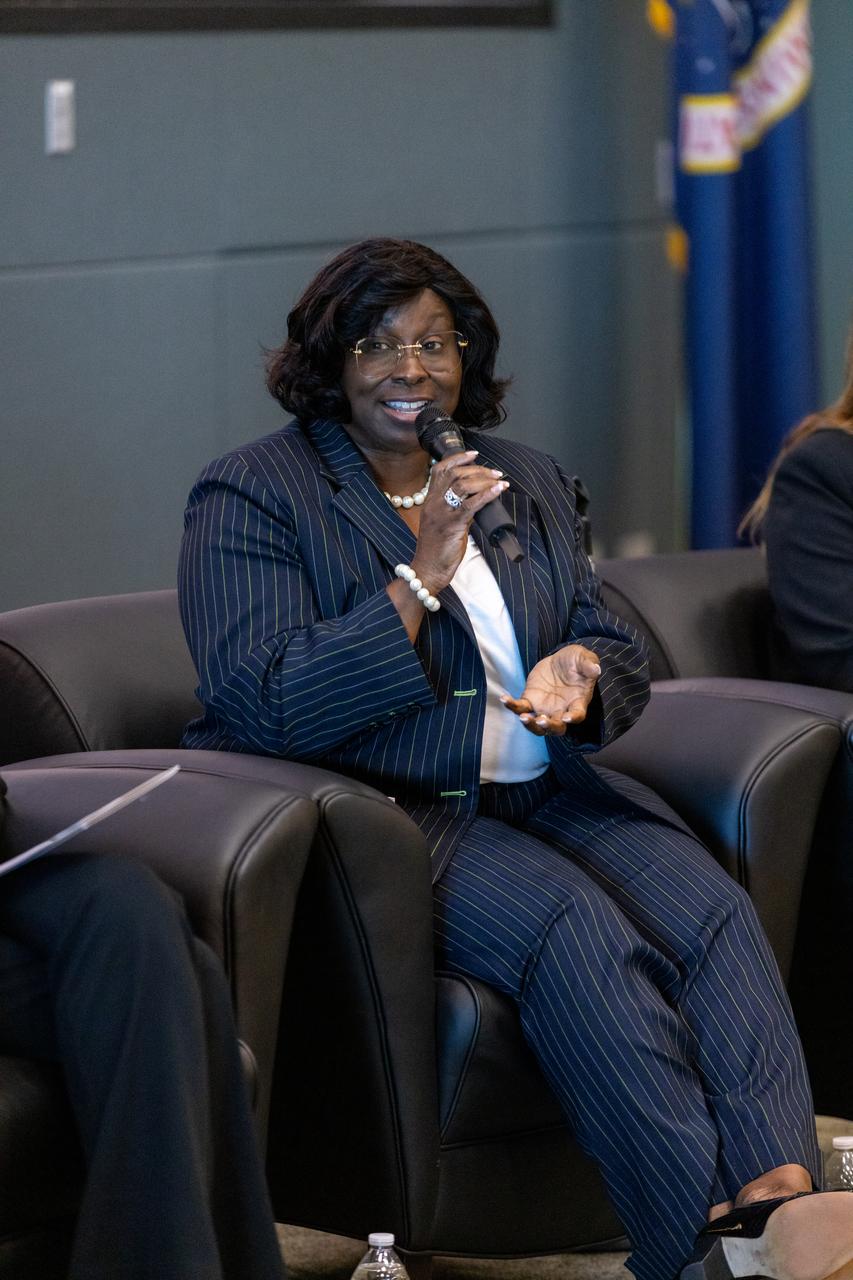
Kennedy Space Center Director of Center Engagement and Business Integration Services, Kim Carter, participates in a discussion in honor of Women's History Month held on Friday, March 15, 2024, inside the Operations Support Building II at the agency’s Kennedy Space Center in Florida. The Women Launching Women panel commemorates inspirational women and men who have lifted and helped others excel in their careers across the agency and offer words of advice for the current workforce.

Bethany Stevens, NASA press secretary, participates in a postlaunch news conference at the agency’s Kennedy Space Center in Florida on Friday, Feb. 13, 2026, following the launch of NASA’s SpaceX Crew-12 mission to the International Space Station. NASA astronauts Jessica Meir and Jack Hathaway, ESA (European Space Agency) astronaut Sophie Adenot, and Roscosmos cosmonaut Andrey Fedyaev launched to the International Space Station aboard SpaceX’s Dragon spacecraft and Falcon 9 rocket at 5:15 a.m. EST on the 12th crew rotation mission with SpaceX to the space station as part of NASA’s Commercial Crew Program.
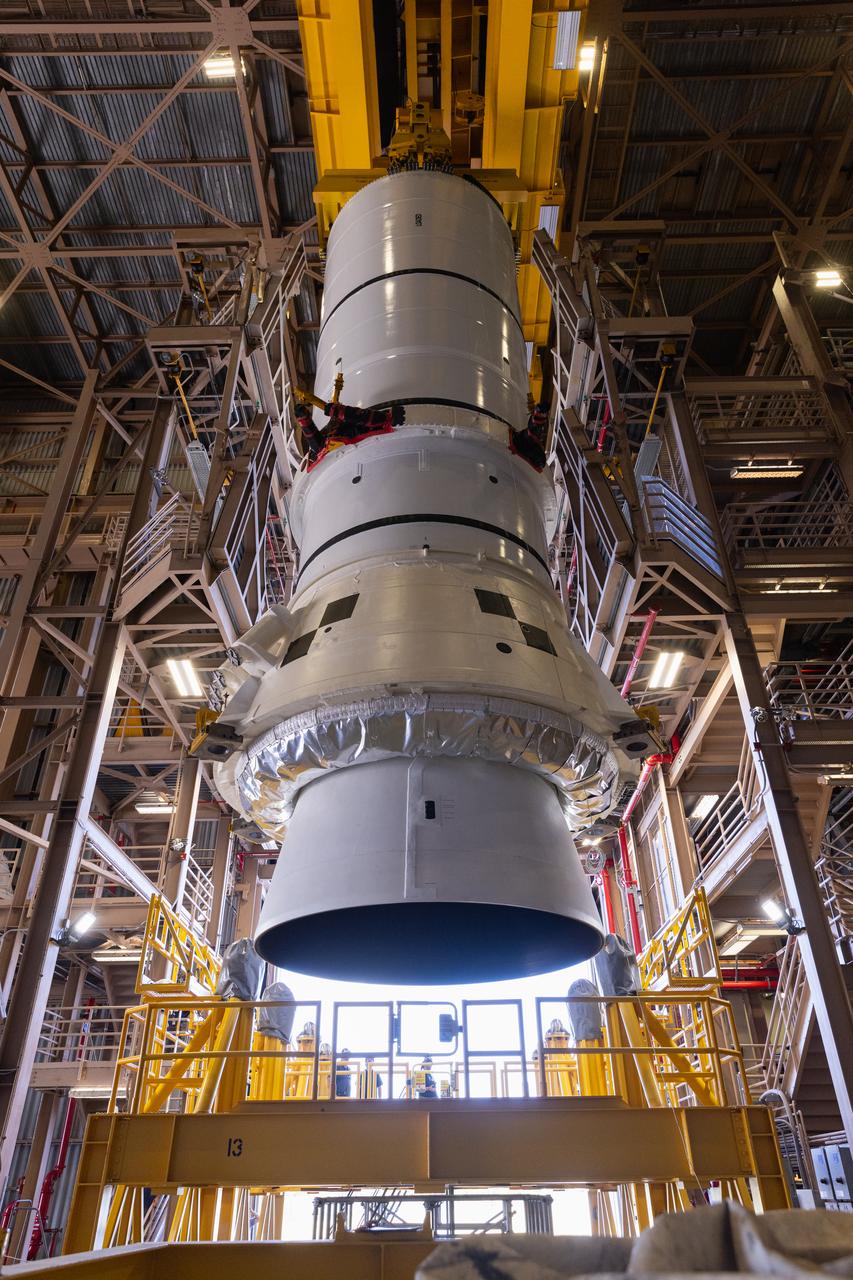
Engineers and technicians with the Exploration Ground Systems Program prepare to transfer one of the aft assemblies of the SLS (Space Launch System) solid rocket boosters for the Artemis II mission with an overhead crane inside the Rotation, Processing and Surge Facility at NASA’s Kennedy Space Center in Florida on Wednesday, Nov. 13, 2024. The booster segments are being transferred to the NASA Kennedy’s Vehicle Assembly Building via a transporter for stacking operations in preparation for launch of the Artemis II mission.

Photographers at NASA capture the sunset on Tuesday, Jan. 30, 2024, near the headquarters building of the agency’s Kennedy Space Center in Florida.
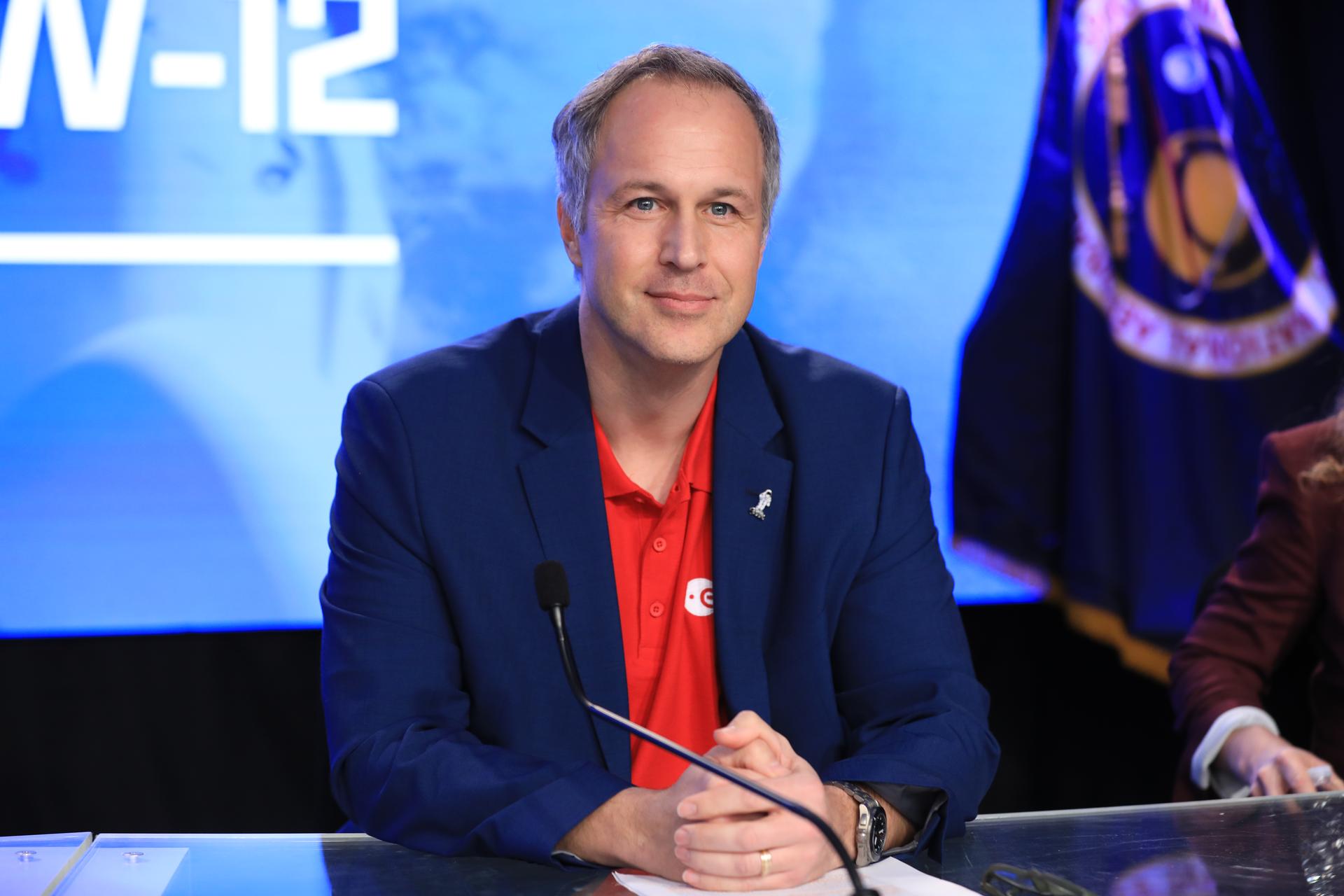
Daniel Neuenschwander, director, Human and Robotic Exploration, ESA (European Space Agency) participates in a postlaunch news conference at the agency’s Kennedy Space Center in Florida on Friday, Feb. 13, 2026, following the launch of NASA’s SpaceX Crew-12 mission to the International Space Station. NASA astronauts Jessica Meir and Jack Hathaway, ESA (European Space Agency) astronaut Sophie Adenot, and Roscosmos cosmonaut Andrey Fedyaev launched to the International Space Station aboard SpaceX’s Dragon spacecraft and Falcon 9 rocket at 5:15 a.m. EST on the 12th crew rotation mission with SpaceX to the space station as part of NASA’s Commercial Crew Program.
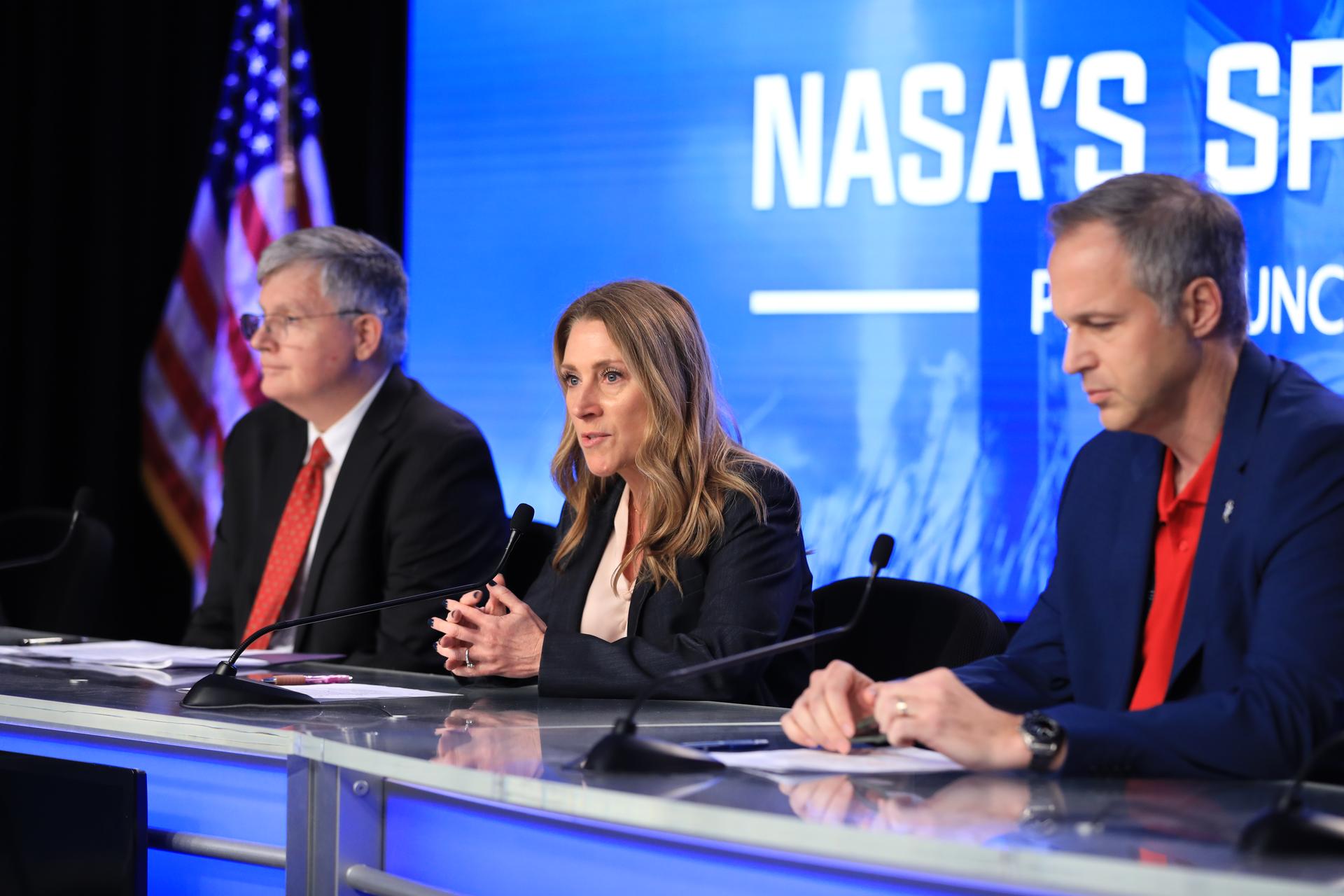
Dana Weigel (center), manager, NASA’s International Space Station Program, participates in a postlaunch news conference with leadership from NASA, ESA (European Space Agency), and SpaceX at the agency’s Kennedy Space Center in Florida on Friday, Feb. 13, 2026, following the launch of NASA’s SpaceX Crew-12 mission to the International Space Station. NASA astronauts Jessica Meir and Jack Hathaway, ESA astronaut Sophie Adenot, and Roscosmos cosmonaut Andrey Fedyaev launched to the International Space Station aboard SpaceX’s Dragon spacecraft and Falcon 9 rocket at 5:15 a.m. EST on the 12th crew rotation mission with SpaceX to the space station as part of NASA’s Commercial Crew Program.
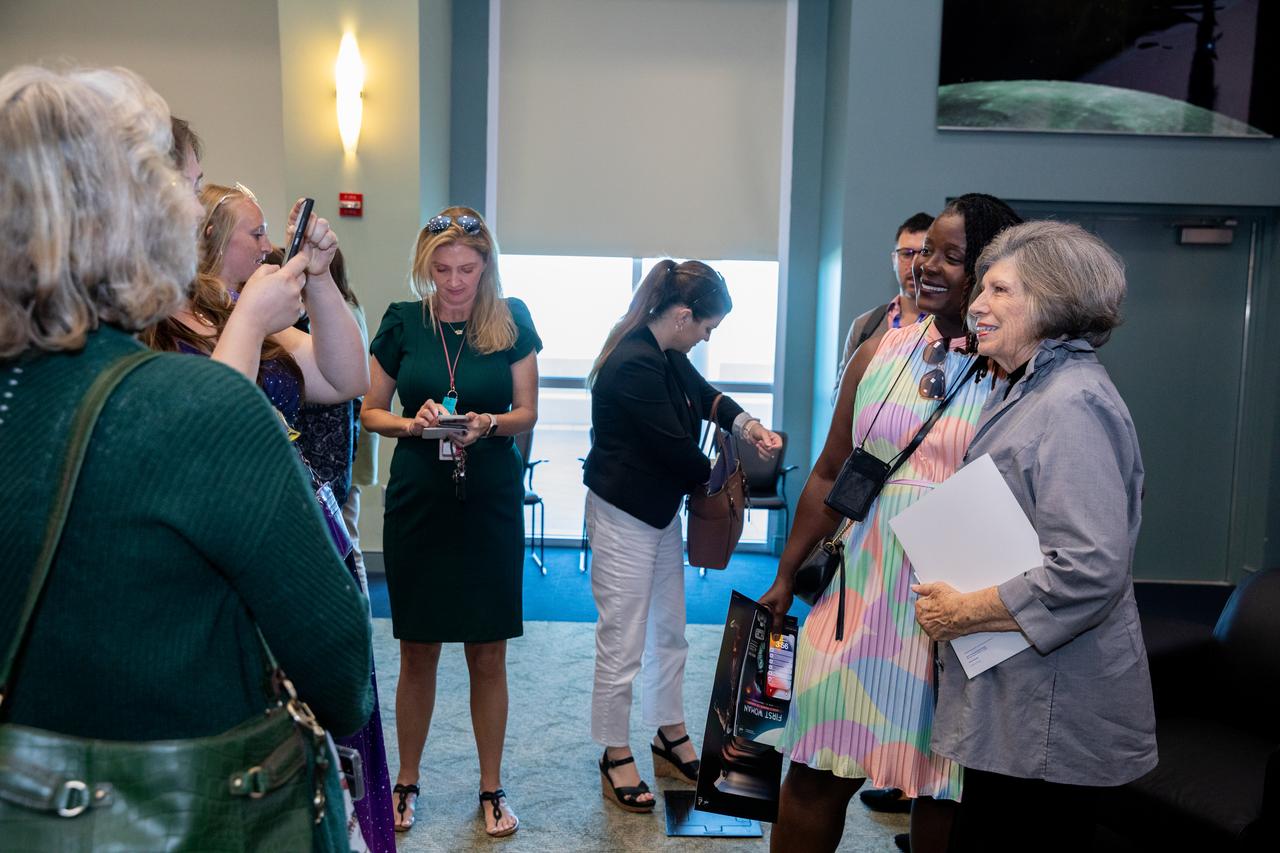
JoAnn Morgan, former associate director of NASA Kennedy Space Center, poses for photos with attendees of a panel discussion honoring Women's History Month held on Friday, March 15, 2024, inside the Operations Support Building II at the agency’s Kennedy Space Center in Florida. The Women Launching Women panel commemorates inspirational women and men who have lifted and helped others excel in their careers across the agency and offer words of advice for the current workforce.
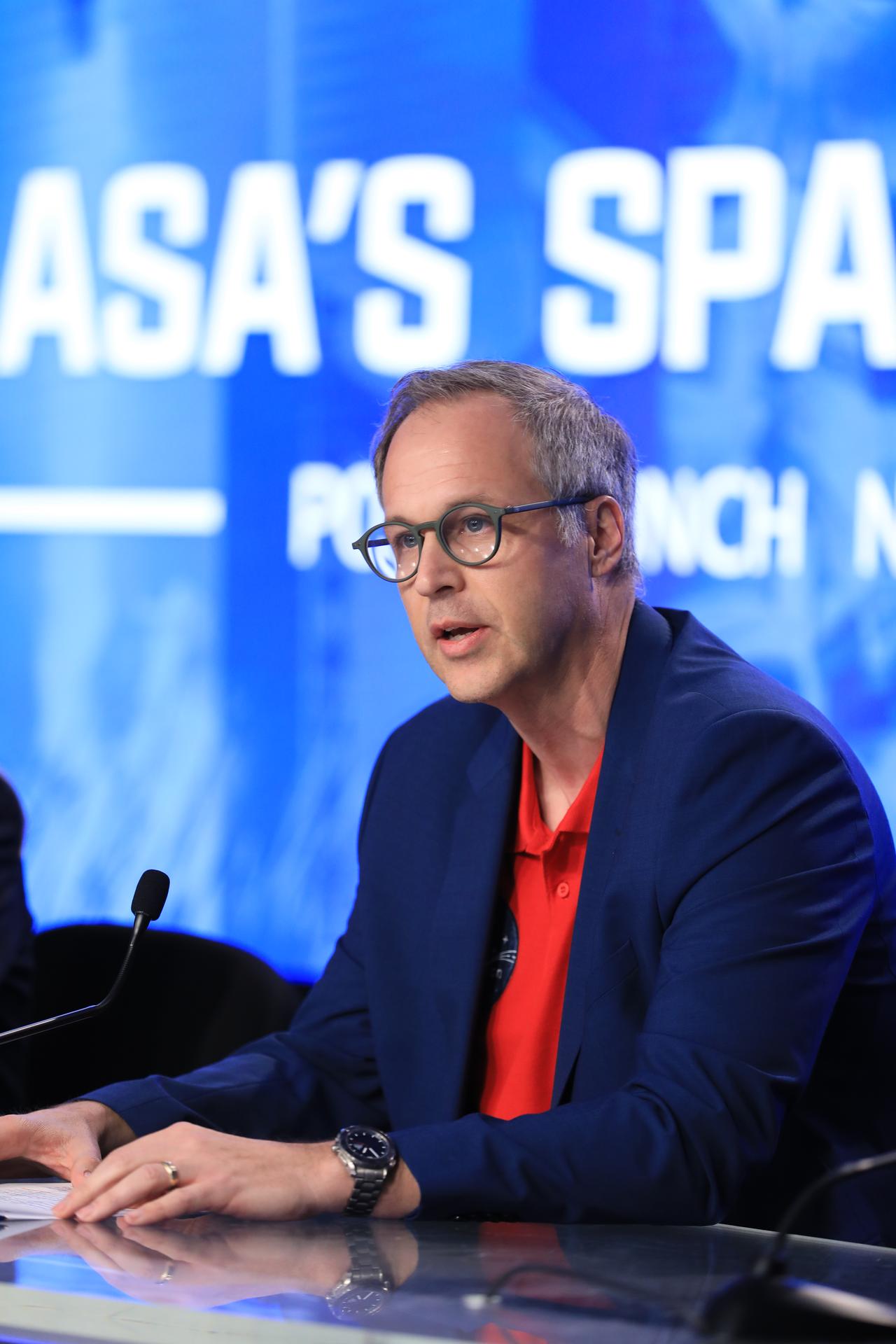
Daniel Neuenschwander, director, Human and Robotic Exploration, ESA (European Space Agency) participates in a postlaunch news conference at the agency’s Kennedy Space Center in Florida on Friday, Feb. 13, 2026, following the launch of NASA’s SpaceX Crew-12 mission to the International Space Station. NASA astronauts Jessica Meir and Jack Hathaway, ESA (European Space Agency) astronaut Sophie Adenot, and Roscosmos cosmonaut Andrey Fedyaev launched to the International Space Station aboard SpaceX’s Dragon spacecraft and Falcon 9 rocket at 5:15 a.m. EST on the 12th crew rotation mission with SpaceX to the space station as part of NASA’s Commercial Crew Program.
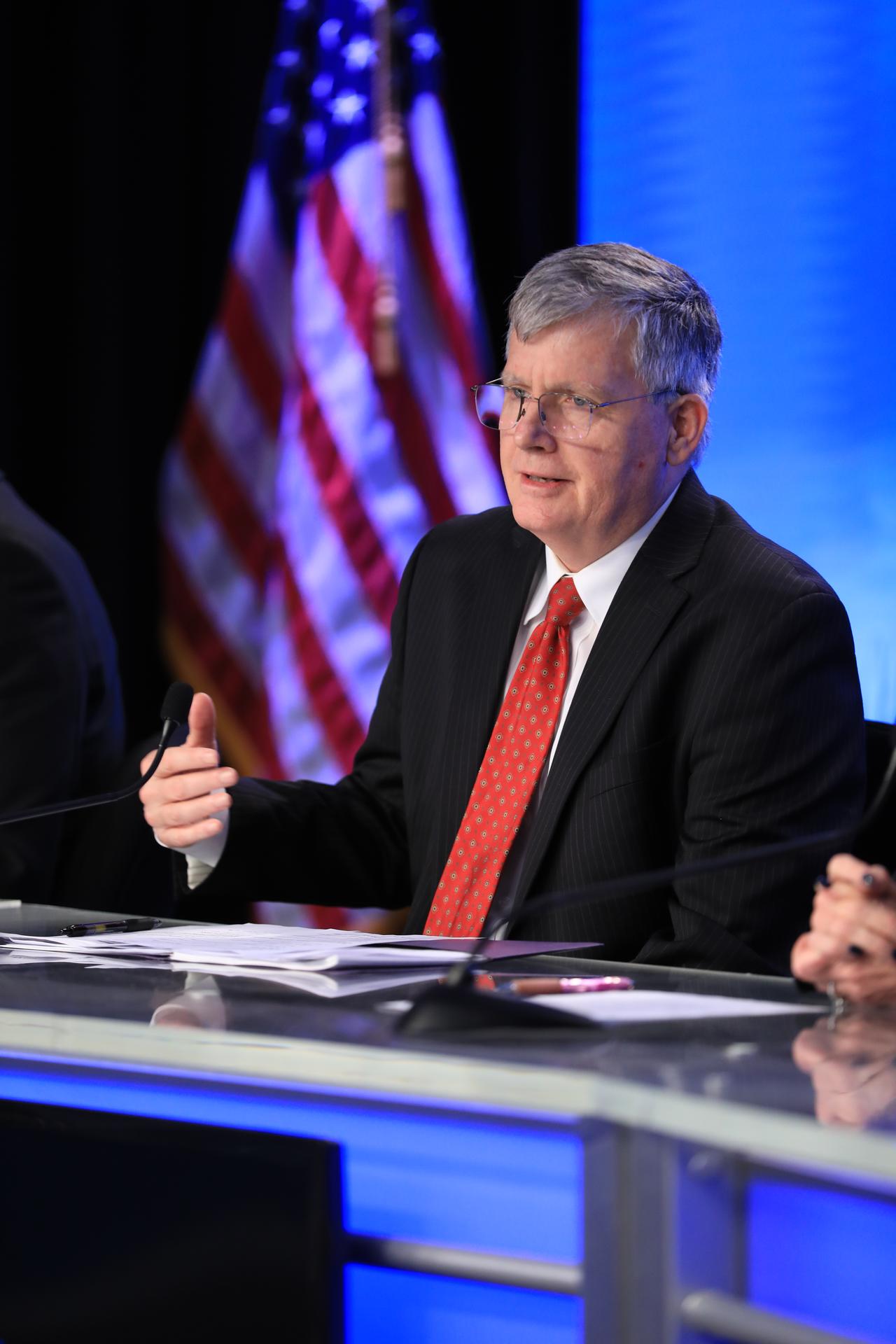
Steve Stich, manager, NASA’s Commercial Crew Program, participates in a postlaunch news conference at the agency’s Kennedy Space Center in Florida on Friday, Feb. 13, 2026, following the launch of NASA’s SpaceX Crew-12 mission to the International Space Station. NASA astronauts Jessica Meir and Jack Hathaway, ESA (European Space Agency) astronaut Sophie Adenot, and Roscosmos cosmonaut Andrey Fedyaev launched to the International Space Station aboard SpaceX’s Dragon spacecraft and Falcon 9 rocket at 5:15 a.m. EST on the 12th crew rotation mission with SpaceX to the space station as part of NASA’s Commercial Crew Program.

JoAnn Morgan, former associate director of NASA’s Kennedy Space Center in Florida, participates in a discussion in honor of Women's History Month held on Friday, March 15, 2024, inside Kennedy’s Operations Support Building II. The Women Launching Women panel commemorates inspirational women and men who have lifted and helped others excel in their careers across the agency and offer words of advice for the current workforce.
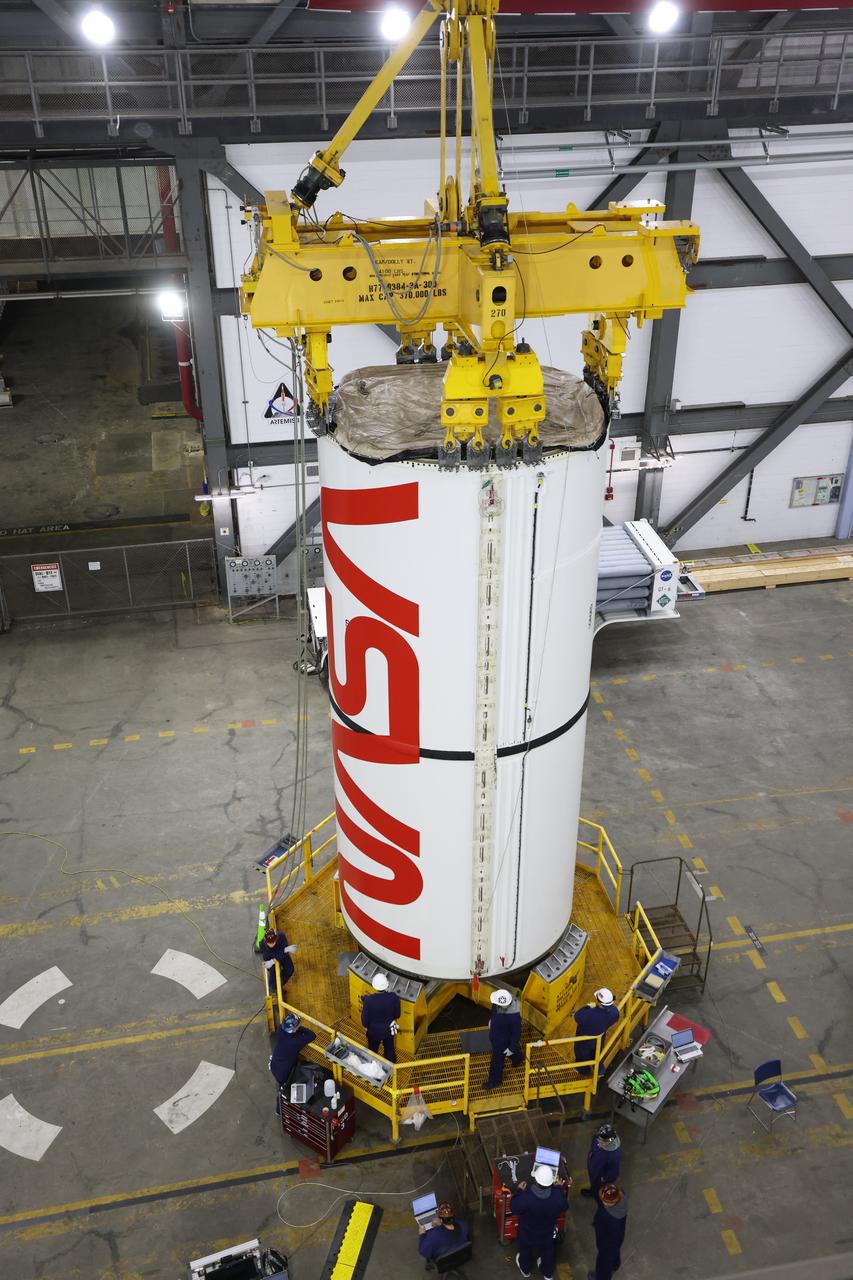
Engineers and technicians with NASA’s Exploration Ground Systems Program transfer the right center center segment with the NASA worm insignia to the Vehicle Assembly Building at NASA's Kennedy Space Center in Florida on Tuesday, Jan. 14, 2025. The booster segment is shown attached to a lifting beam ahead of integration onto the mobile launcher. The boosters will help support the remaining rocket components and the Orion spacecraft during final assembly of the Artemis II Moon rocket and provide more than 75 percent of the total SLS (Space Launch System) thrust during liftoff from NASA Kennedy’s Launch Pad 39B.

Inside High Bay 3 of the Vehicle Assembly Building at NASA’s Kennedy Space Center in Florida, technicians with the agency’s Exploration Ground Systems use a crane to lower the left center center booster segment for the NASA’s SLS (Space Launch System) rocket onto the left aft center segment atop the mobile launcher on Monday, Jan. 27, 2025. The NASA “worm” insignia can be seen on both the center center booster segments. The boosters will help support the remaining rocket components and the Orion spacecraft during final assembly of the Artemis II Moon rocket and provide more than 75 percent of the total SLS thrust during liftoff from NASA Kennedy’s Launch Pad 39B.
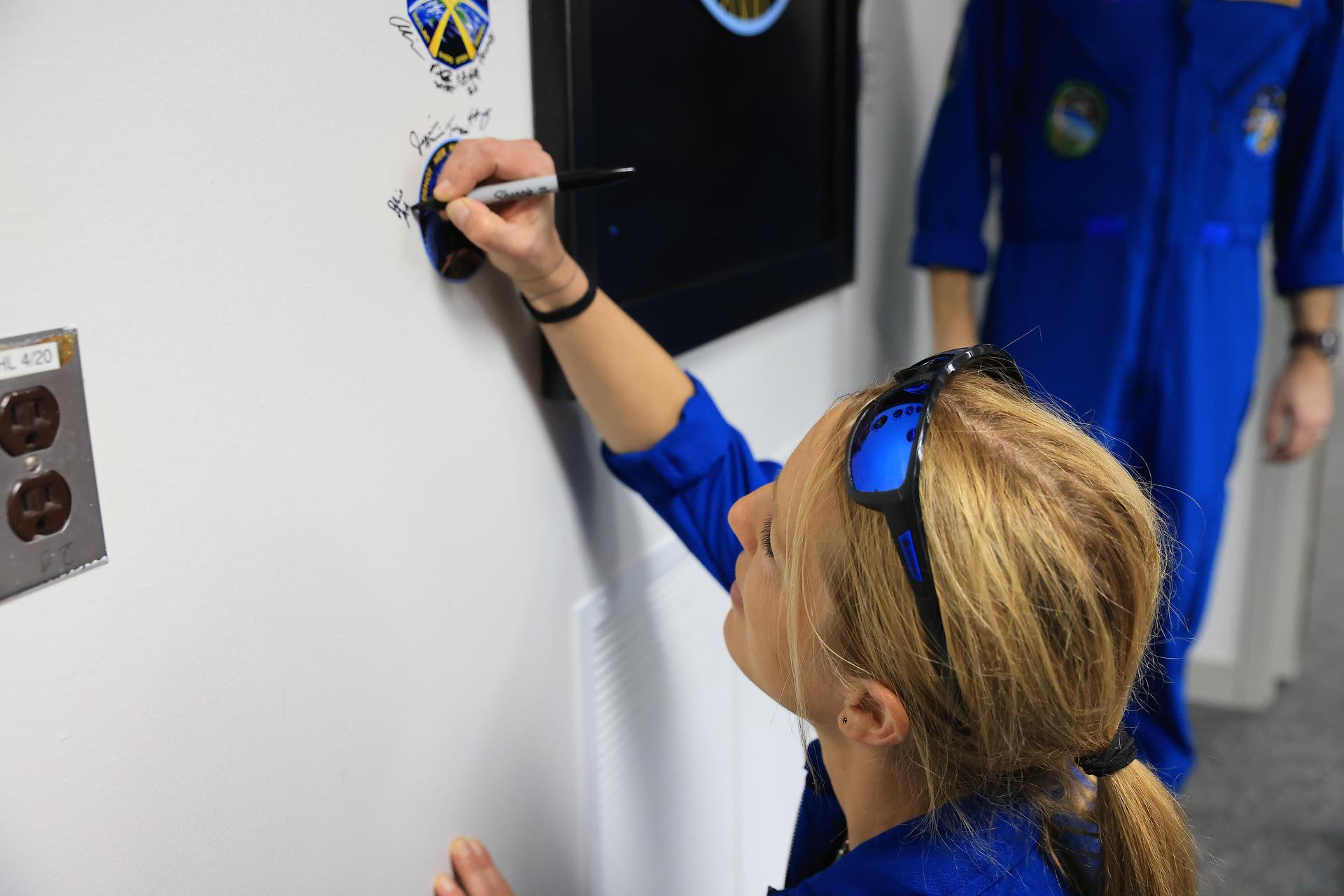
ESA (European Space Agency) astronaut Sophie Adenot signs her name next to the Crew-12 mission insignia inside the Astronaut Crew Quarters in the Neil A. Armstrong Operations and Checkout Building at NASA’s Kennedy Space Center in Florida on Monday, Feb. 9, 2026, ahead of NASA’s SpaceX Crew-12 mission. A SpaceX Dragon spacecraft and Falcon 9 rocket will send Adenot, NASA astronauts Hathaway and Jessica Meir, and Roscosmos cosmonaut Andrey Fedyaev to the International Space Station no earlier than 5:15 a.m. EST on Friday, Feb. 13, from Cape Canaveral Space Force Station’s Space Launch Complex 40.

Kennedy Space Center Director Janet Petro participates in a discussion in honor of Women's History Month held on Friday, March 15, 2024, inside the Operations Support Building II at the agency’s Kennedy Space Center in Florida. The Women Launching Women panel commemorates inspirational women and men who have lifted and helped others excel in their careers across the agency and offer words of advice for the current workforce.
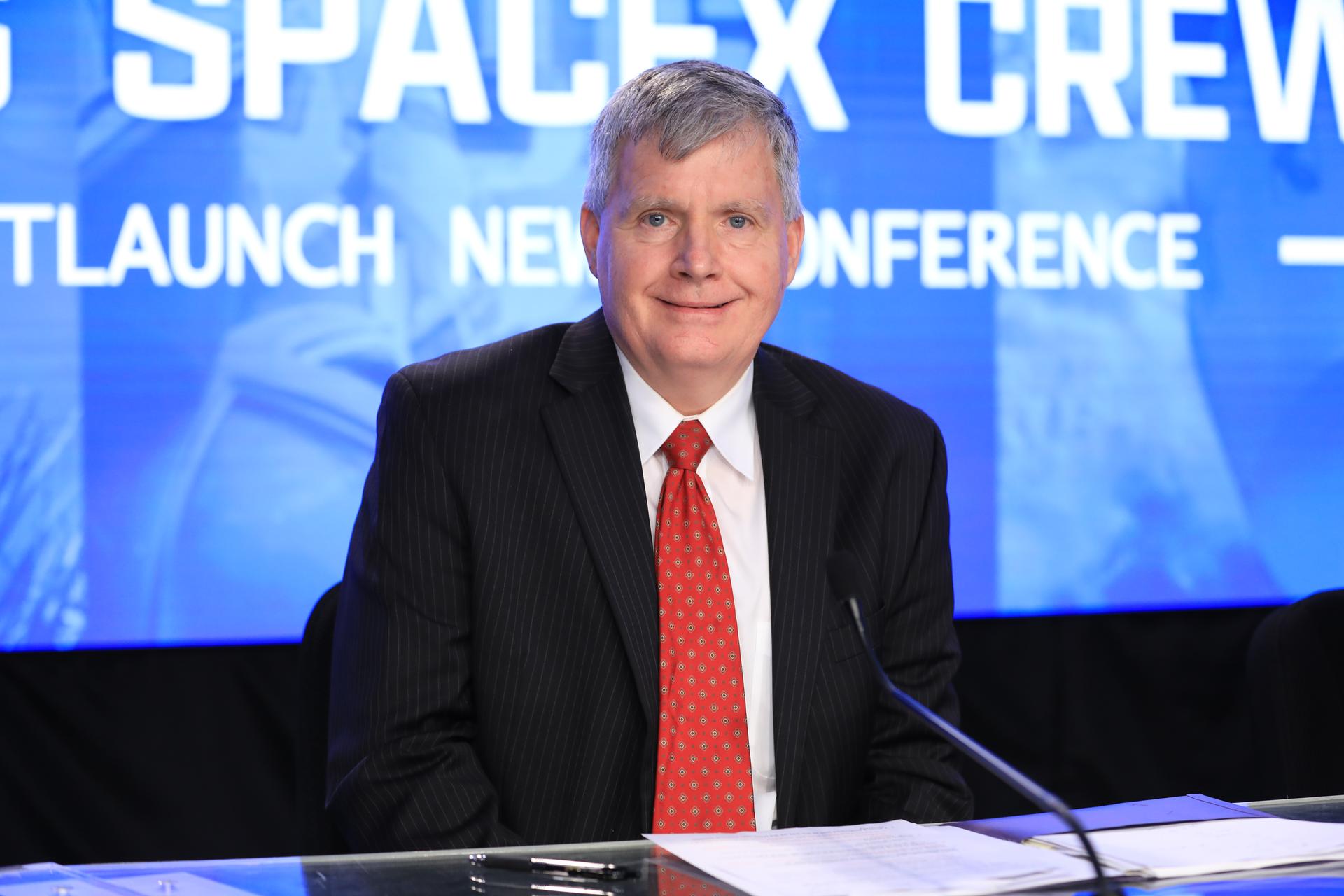
Steve Stich, manager, NASA’s Commercial Crew Program, participates in a postlaunch news conference at the agency’s Kennedy Space Center in Florida on Friday, Feb. 13, 2026, following the launch of NASA’s SpaceX Crew-12 mission to the International Space Station. NASA astronauts Jessica Meir and Jack Hathaway, ESA (European Space Agency) astronaut Sophie Adenot, and Roscosmos cosmonaut Andrey Fedyaev launched to the International Space Station aboard SpaceX’s Dragon spacecraft and Falcon 9 rocket at 5:15 a.m. EST on the 12th crew rotation mission with SpaceX to the space station as part of NASA’s Commercial Crew Program.
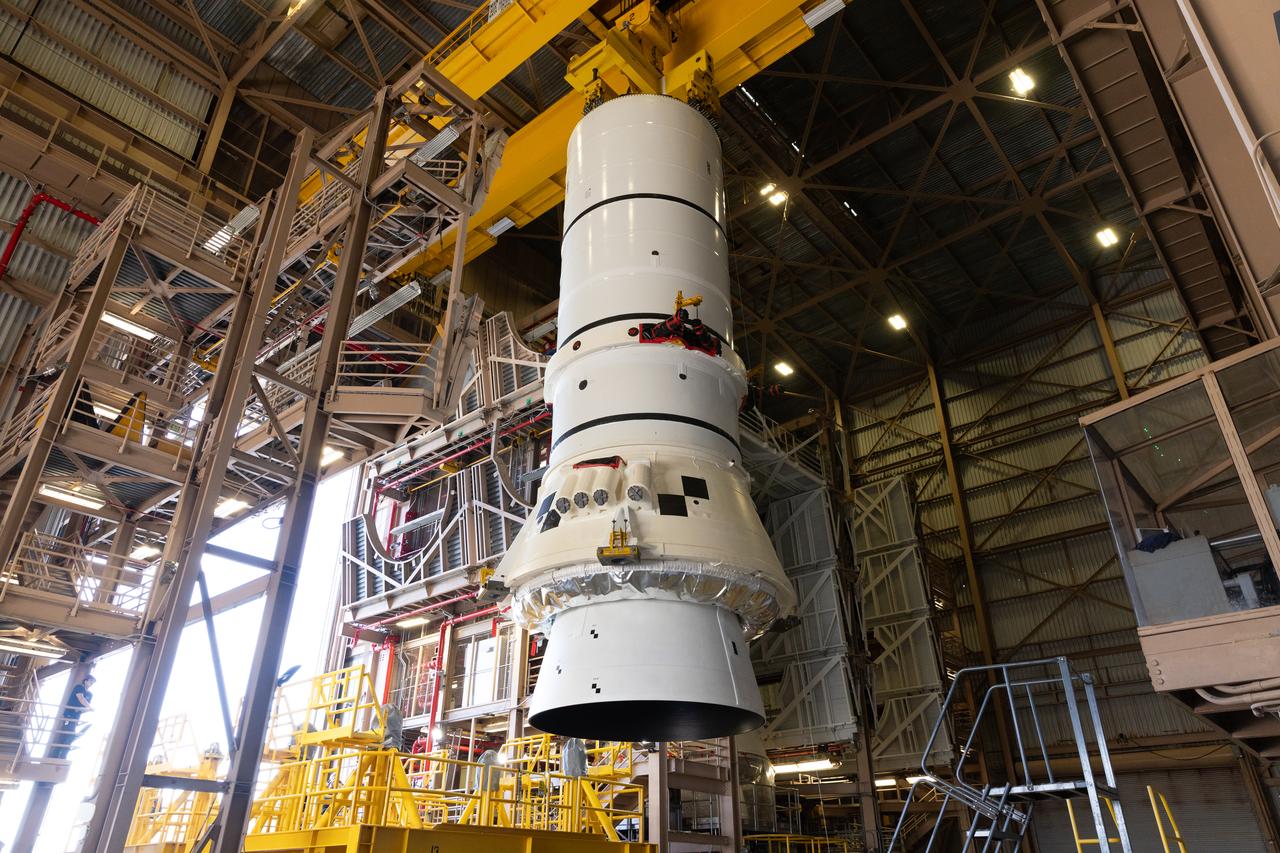
Engineers and technicians with the Exploration Ground Systems Program prepare to transfer one of the aft assemblies of the SLS (Space Launch System) solid rocket boosters for the Artemis II mission with an overhead crane inside the Rotation, Processing and Surge Facility at NASA’s Kennedy Space Center in Florida on Wednesday, Nov. 13, 2024. The booster segments are being transferred to the NASA Kennedy’s Vehicle Assembly Building via a transporter for stacking operations in preparation for launch of the Artemis II mission.

Photographers at NASA capture the sunset on Tuesday, Jan. 30, 2024, near the headquarters building of the agency’s Kennedy Space Center in Florida.
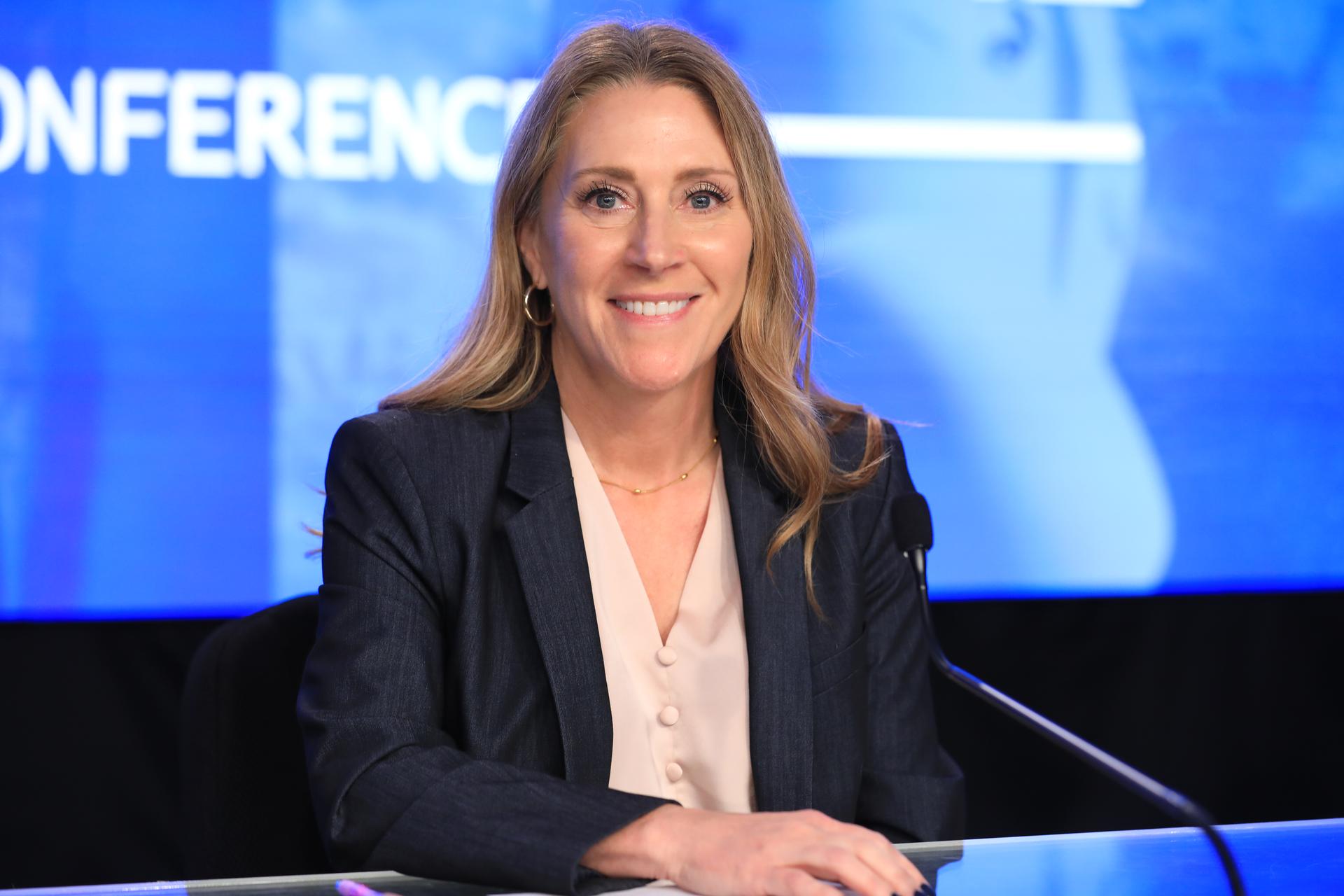
Dana Weigel, manager, NASA’s International Space Station Program, participates in a postlaunch news conference at the agency’s Kennedy Space Center in Florida on Friday, Feb. 13, 2026, following the launch of NASA’s SpaceX Crew-12 mission to the International Space Station. NASA astronauts Jessica Meir and Jack Hathaway, ESA (European Space Agency) astronaut Sophie Adenot, and Roscosmos cosmonaut Andrey Fedyaev launched to the International Space Station aboard SpaceX’s Dragon spacecraft and Falcon 9 rocket at 5:15 a.m. EST on the 12th crew rotation mission with SpaceX to the space station as part of NASA’s Commercial Crew Program.
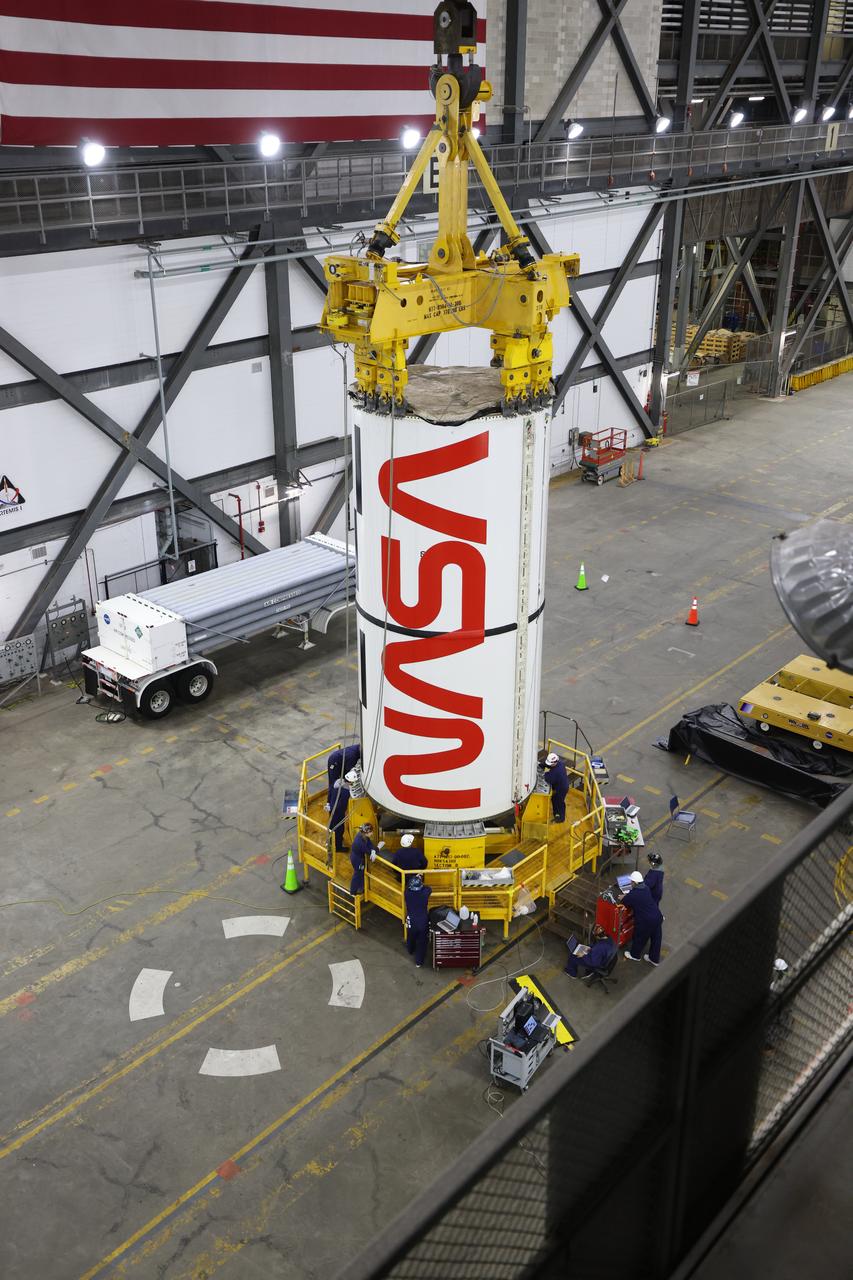
Engineers and technicians with NASA’s Exploration Ground Systems Program transfer the right center center segment with the NASA worm insignia to the Vehicle Assembly Building at NASA's Kennedy Space Center in Florida on Tuesday, Jan. 14, 2025. The booster segment is shown attached to a lifting beam ahead of integration onto the mobile launcher. The boosters will help support the remaining rocket components and the Orion spacecraft during final assembly of the Artemis II Moon rocket and provide more than 75 percent of the total SLS (Space Launch System) thrust during liftoff from NASA Kennedy’s Launch Pad 39B.
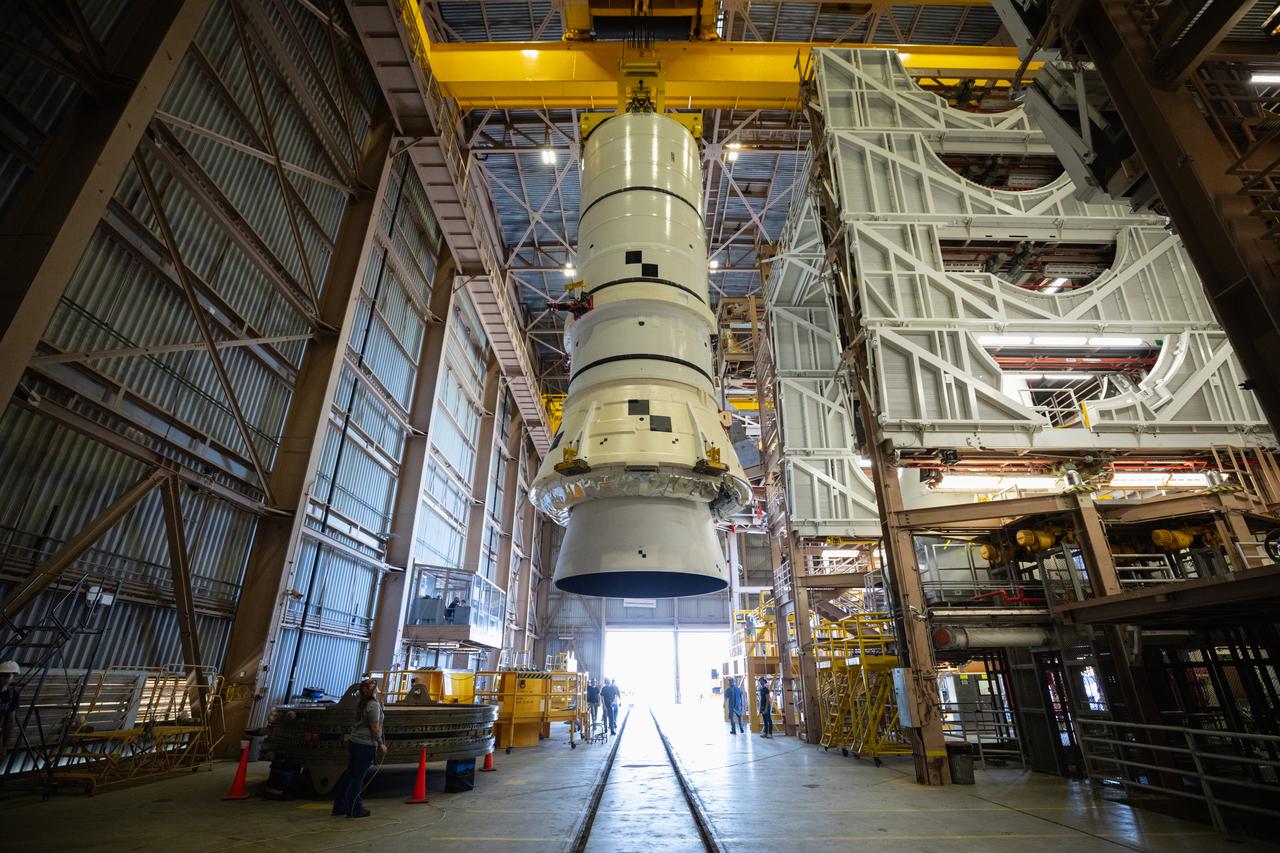
Engineers and technicians with the Exploration Ground Systems Program prepare to transfer one of the aft assemblies of the SLS (Space Launch System) solid rocket boosters for the Artemis II mission with an overhead crane inside the Rotation, Processing and Surge Facility at NASA’s Kennedy Space Center in Florida on Wednesday, Nov. 13, 2024. The booster segments are being transferred to the NASA Kennedy’s Vehicle Assembly Building via a transporter for stacking operations in preparation for launch of the Artemis II mission.
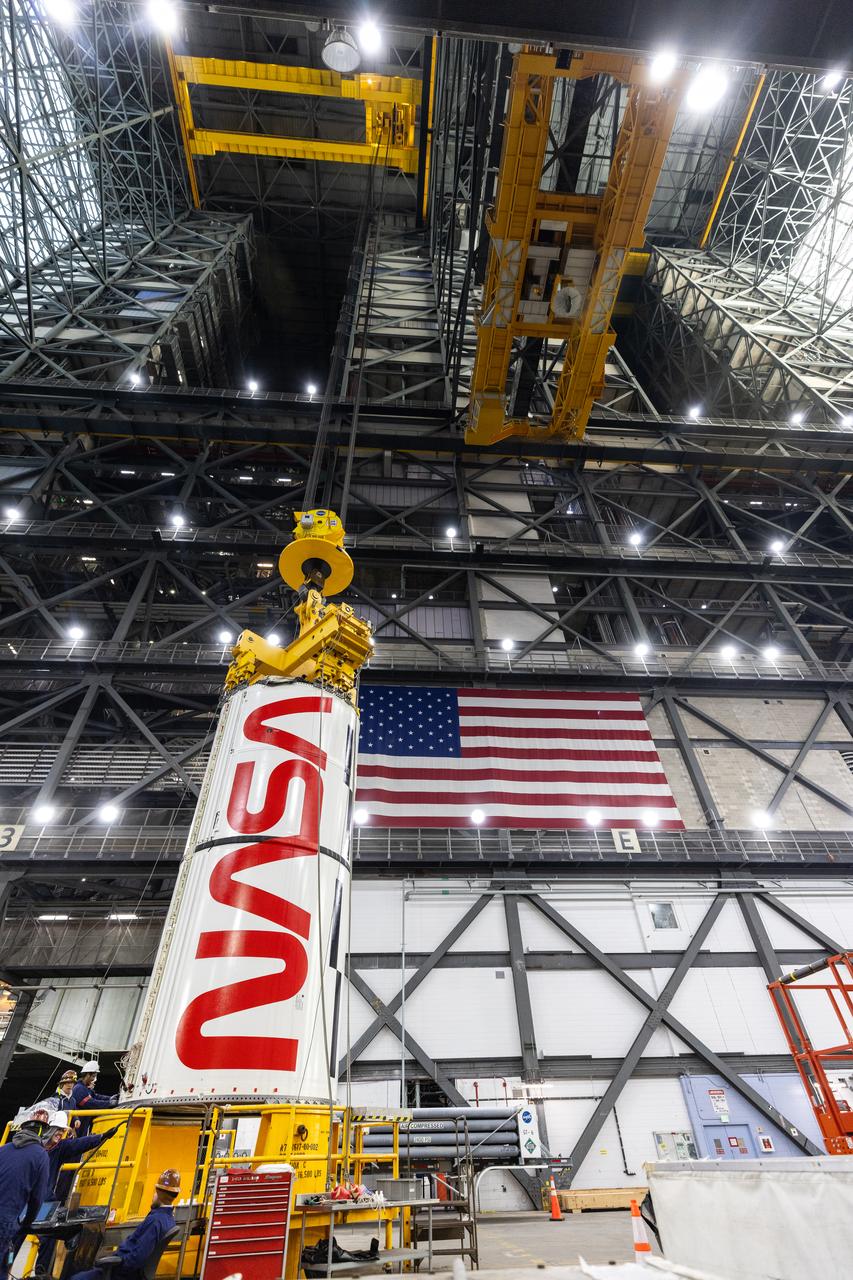
Engineers and technicians with NASA’s Exploration Ground Systems Program prepare to lift the left center center booster segment shown with the iconic NASA “worm” insignia for the agency’s SLS (Space Launch System) rocket to the Vehicle Assembly Building at NASA's Kennedy Space Center in Florida on Friday, Jan. 24, 2025. The booster segment is shown attached to a lifting beam ahead of integration onto the mobile launcher. The boosters will help support the remaining rocket components and the Orion spacecraft during final assembly of the Artemis II Moon rocket and provide more than 75 percent of the total SLS thrust during liftoff from NASA Kennedy’s Launch Pad 39B.
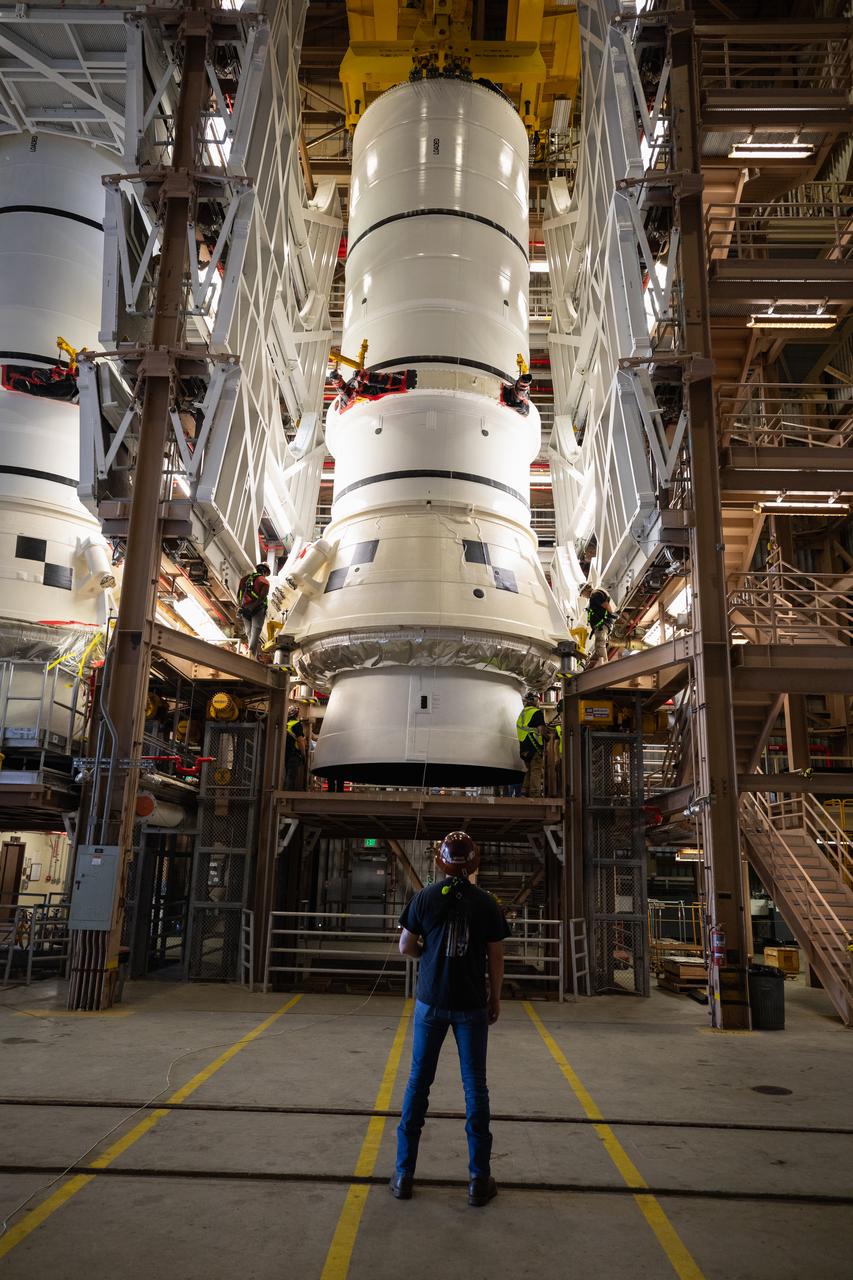
Engineers and technicians with the Exploration Ground Systems Program prepare to transfer one of the aft assemblies of the SLS (Space Launch System) solid rocket boosters for the Artemis II mission with an overhead crane inside the Rotation, Processing and Surge Facility at NASA’s Kennedy Space Center in Florida on Wednesday, Nov. 13, 2024. The booster segments are being transferred to the NASA Kennedy’s Vehicle Assembly Building via a transporter for stacking operations in preparation for launch of the Artemis II mission.
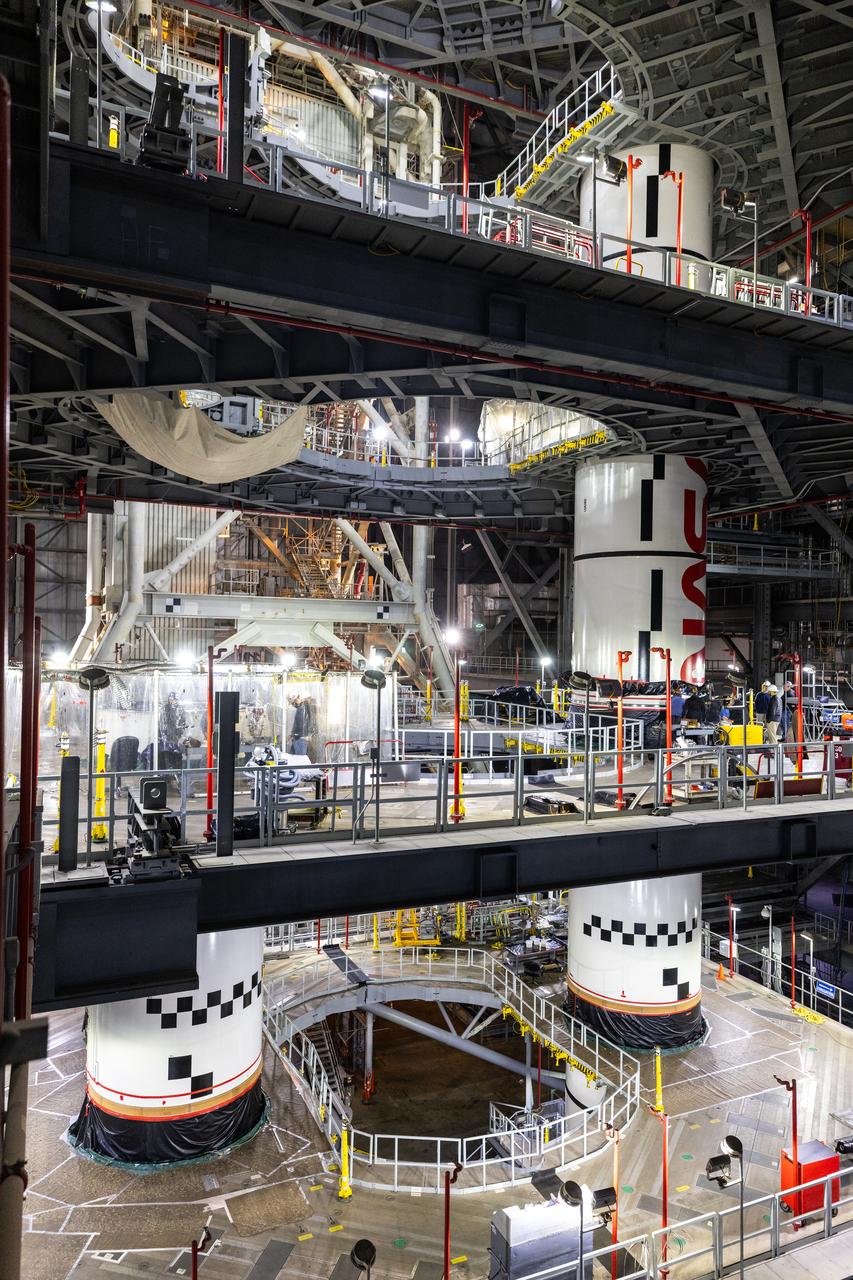
Inside High Bay 3 of the Vehicle Assembly Building at NASA’s Kennedy Space Center in Florida, technicians with the agency’s Exploration Ground Systems use a crane to lower the right forward center booster segment for the NASA’s SLS (Space Launch System) rocket onto the right center center segment with the iconic NASA “worm” insignia atop the mobile launcher on Monday, Jan. 27, 2025. The boosters will help support the remaining rocket components and the Orion spacecraft during final assembly of the Artemis II Moon rocket and provide more than 75 percent of the total SLS thrust during liftoff from NASA Kennedy’s Launch Pad 39B.
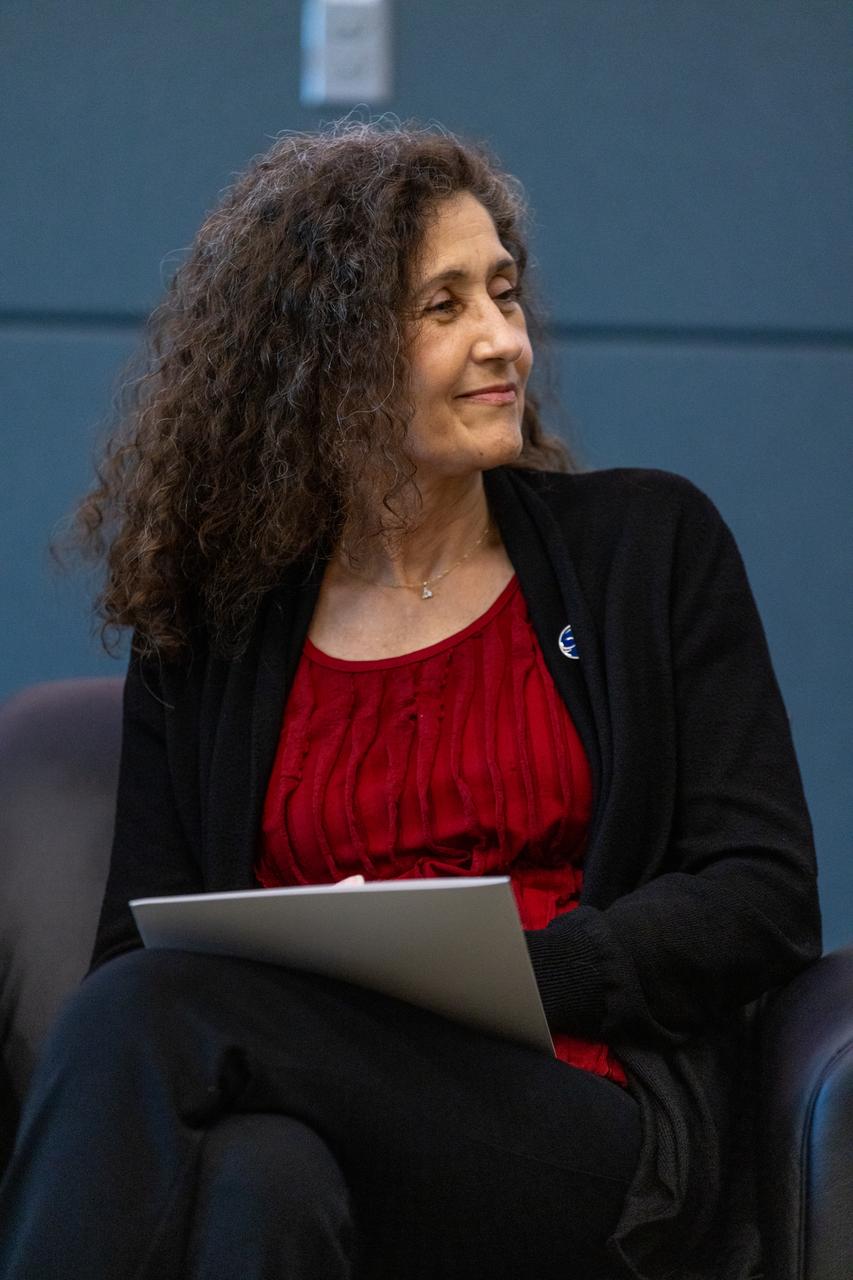
Lorna Kenna, vice president and program manager of Jacobs Space Operations Group at NASA’s Kennedy Space Center in Florida, participates in a discussion in honor of Women's History Month held on Friday, March 15, 2024, inside Kennedy’s Operations Support Building II. The Women Launching Women panel commemorates inspirational women and men who have lifted and helped others excel in their careers across the agency and offer words of advice for the current workforce.
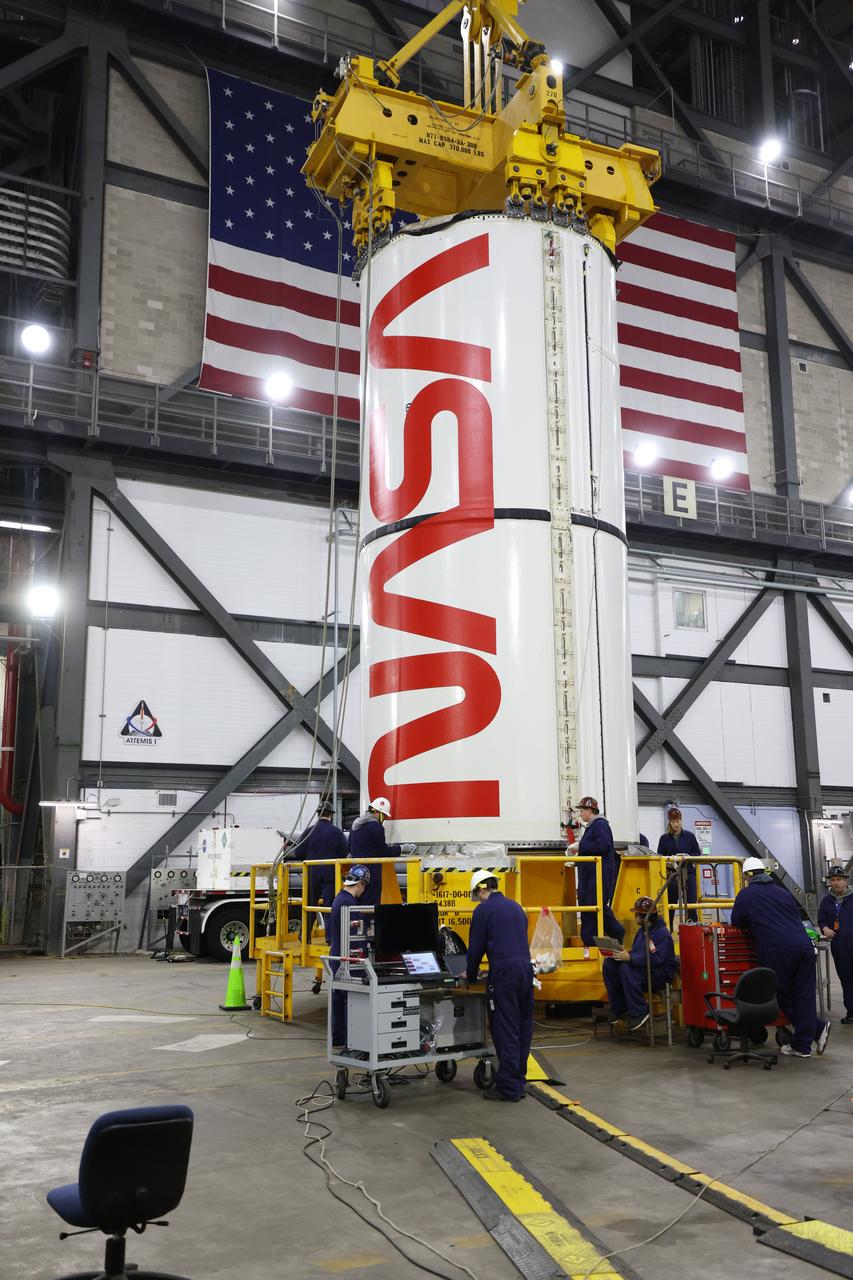
Engineers and technicians with NASA’s Exploration Ground Systems Program transfer the right center center segment with the NASA worm insignia to the Vehicle Assembly Building at NASA's Kennedy Space Center in Florida on Tuesday, Jan. 14, 2025. The booster segment is shown attached to a lifting beam ahead of integration onto the mobile launcher. The boosters will help support the remaining rocket components and the Orion spacecraft during final assembly of the Artemis II Moon rocket and provide more than 75 percent of the total SLS (Space Launch System) thrust during liftoff from NASA Kennedy’s Launch Pad 39B.
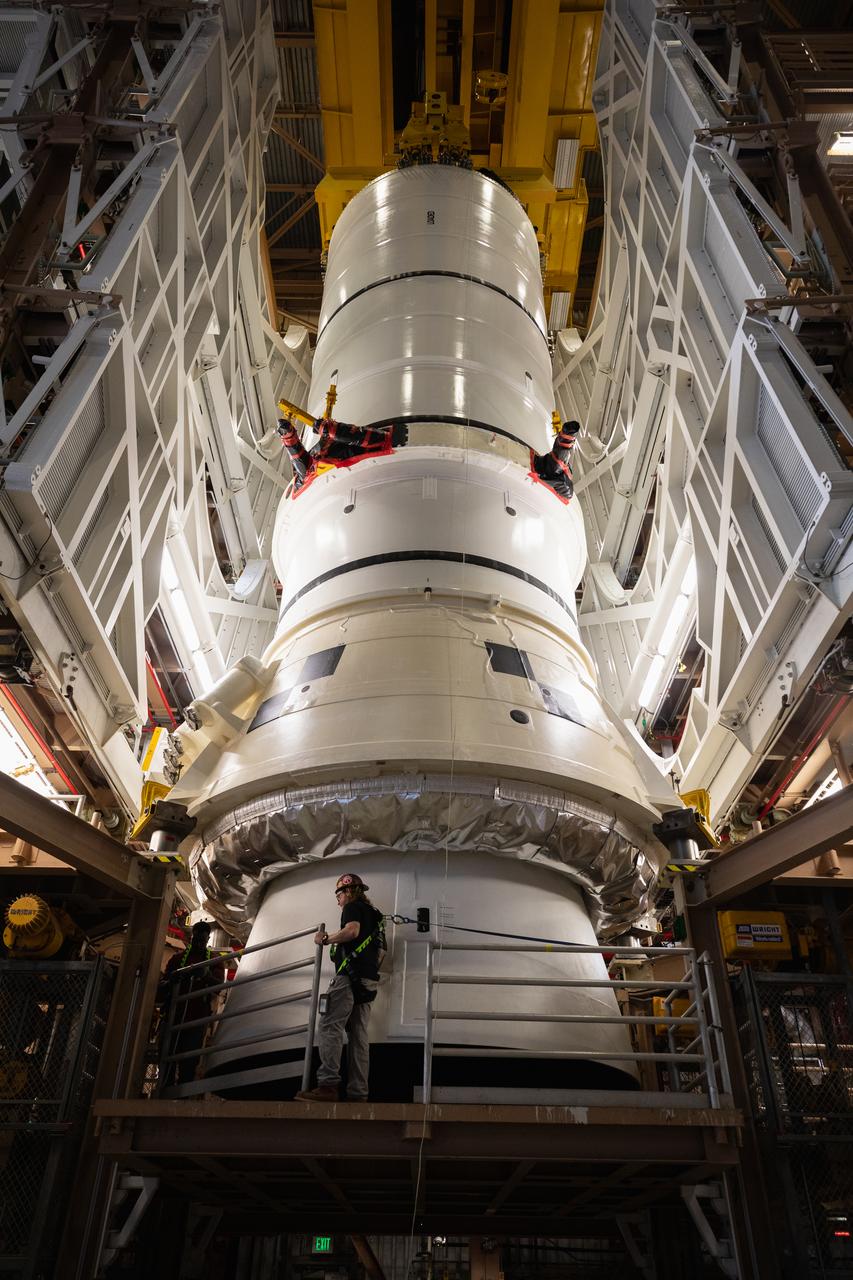
Engineers and technicians with the Exploration Ground Systems Program prepare to transfer one of the aft assemblies of the SLS (Space Launch System) solid rocket boosters for the Artemis II mission with an overhead crane inside the Rotation, Processing and Surge Facility at NASA’s Kennedy Space Center in Florida on Wednesday, Nov. 13, 2024. The booster segments are being transferred to the NASA Kennedy’s Vehicle Assembly Building via a transporter for stacking operations in preparation for launch of the Artemis II mission.
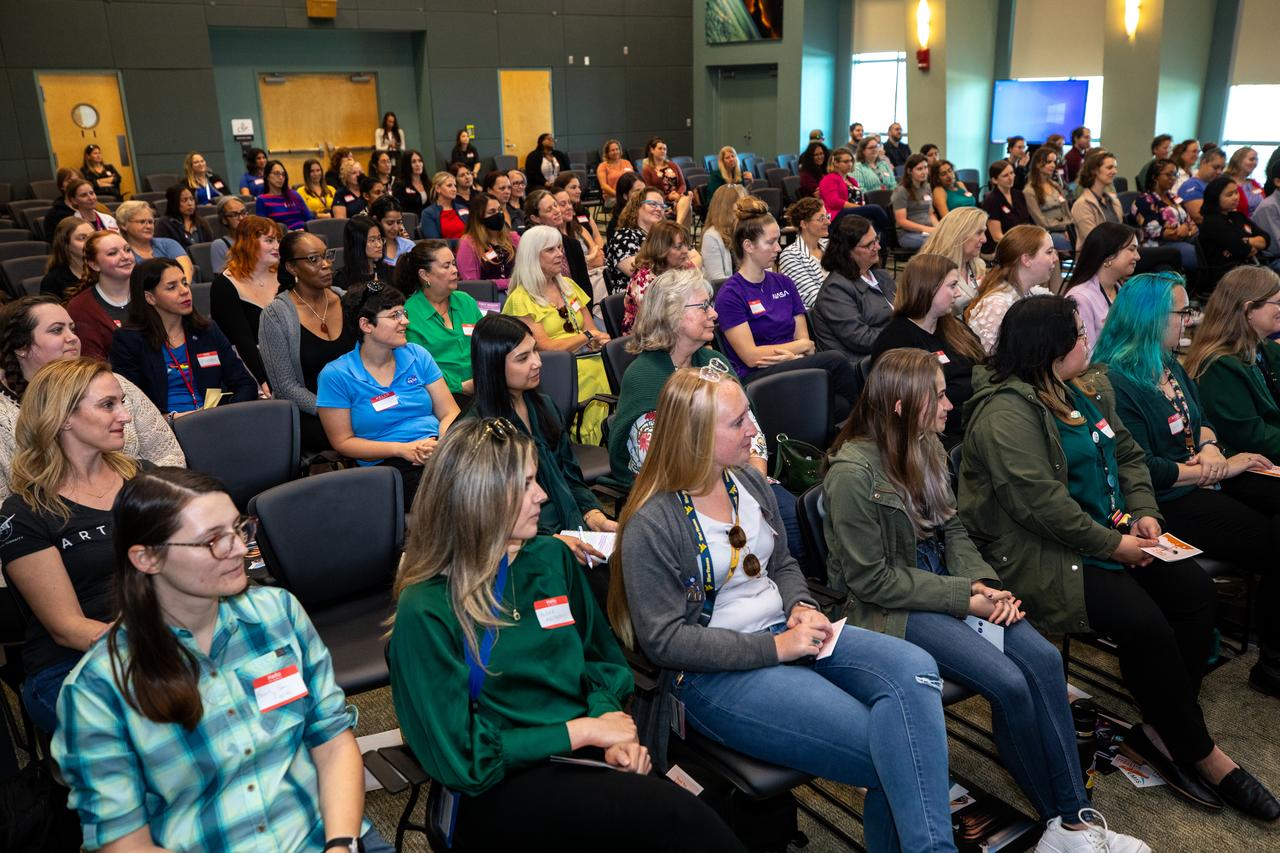
Employees from NASA’s Kennedy Space Center in Florida attend a panel discussion featuring women in leadership roles across NASA in honor of Women's History Month inside the Operations Support Building II at the agency’s Kennedy Space Center in Florida held on Friday, March 15, 2024. Participants in the Women Launching Women panel commemorate inspirational women and men who have lifted and helped others excel in their careers across the agency and offer words of advice for the current workforce include JoAnn Morgan, former associate director of Kennedy Space Center; Janet Petro, Kennedy Space Center director; Charlie Blackwell Thompson, NASA Artemis launch director; Lorna Kenna, vice president and program manager of Jacobs Space Operations Group; Kim Carter, Kennedy Space Center Office of Center Engagement and Business Integration Services director; and Casey Swails, NASA deputy associate administrator.
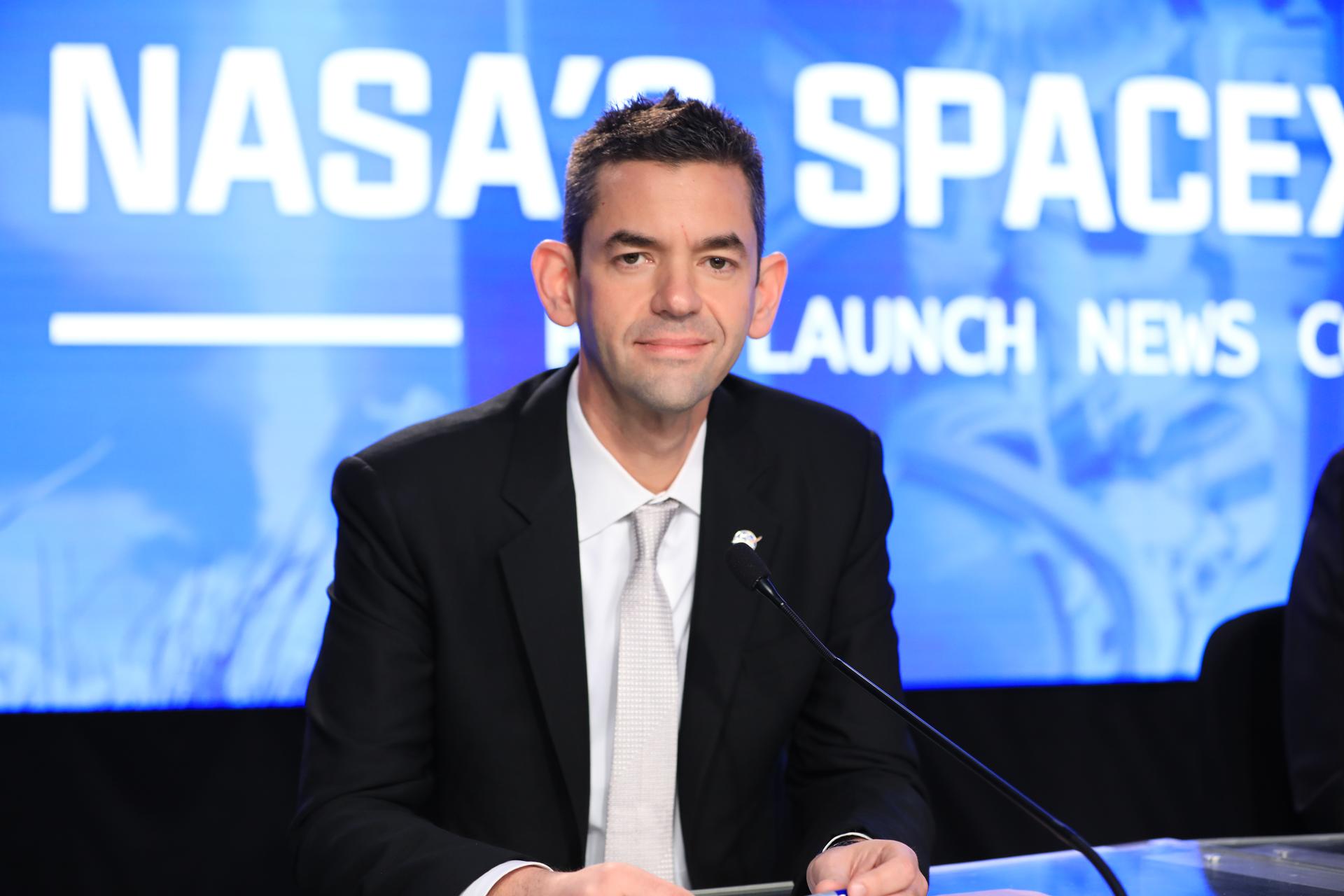
NASA Administrator Jared Isaacman participates in a postlaunch news conference at the agency’s Kennedy Space Center in Florida on Friday, Feb. 13, 2026, following the launch of NASA’s SpaceX Crew-12 mission to the International Space Station. NASA astronauts Jessica Meir and Jack Hathaway, ESA (European Space Agency) astronaut Sophie Adenot, and Roscosmos cosmonaut Andrey Fedyaev launched to the International Space Station aboard SpaceX’s Dragon spacecraft and Falcon 9 rocket at 5:15 a.m. EST on the 12th crew rotation mission with SpaceX to the space station as part of NASA’s Commercial Crew Program.
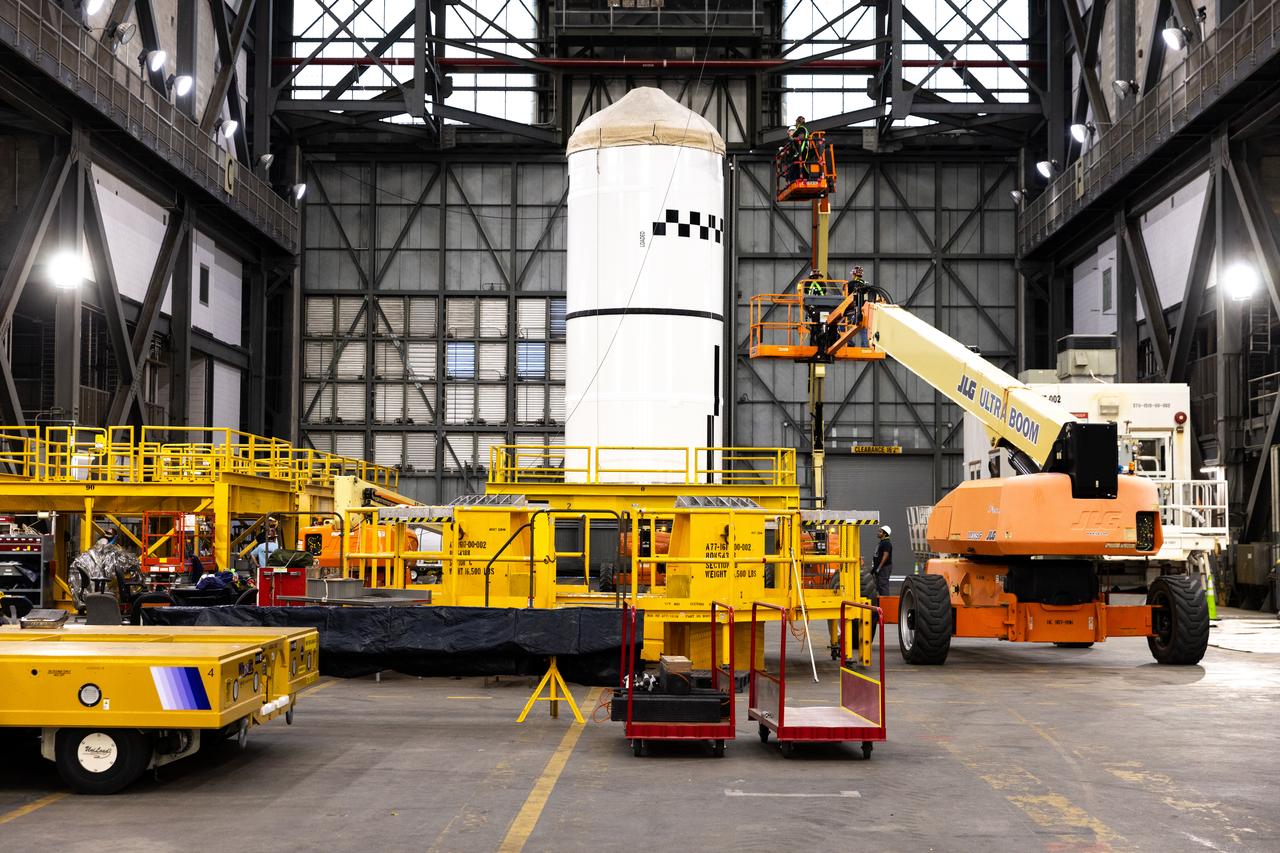
Technicians transport the right forward segment for NASA’s SLS (Space Launch System) Moon rocket boosters from the Rotation Processing and Surge Facility to NASA’s Vehicle Assembly Building in Florida on Monday, Feb. 15, 2025. The right forward segment will be transferred into High Bay 3 where it will be attached to the center forward segment on mobile launcher 1. The twin solid boosters, five segments on each side, will help support the remaining rocket components and the Orion spacecraft during final assembly of the Artemis II Moon rocket and provide more than 75 percent of the total SLS thrust during liftoff from NASA Kennedy’s Launch Pad 39B.
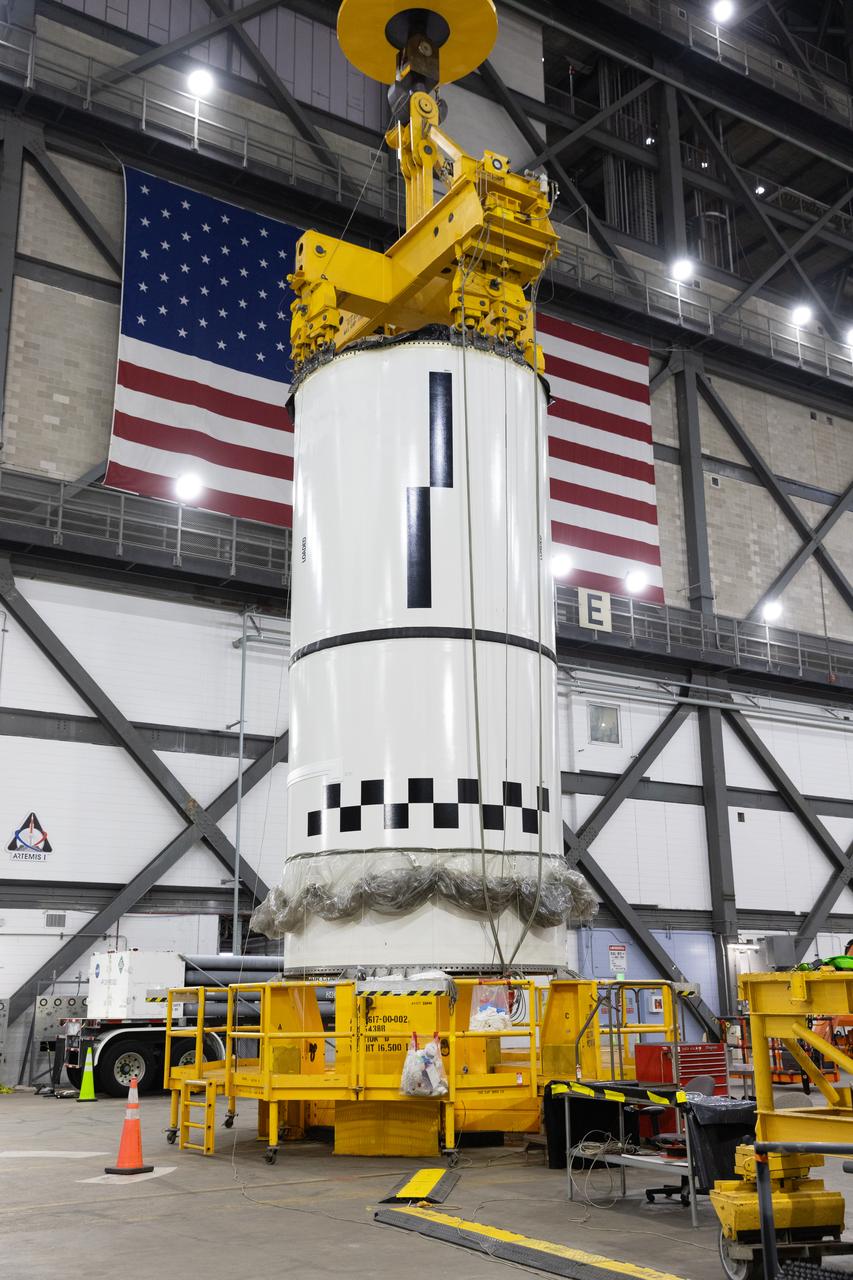
Engineers and technicians with NASA's Exploration Ground Systems Program transfer the right forward center segment to the Vehicle Assembly Building at NASA's Kennedy Space Center in Florida. The booster segment is shown attached to a lifting beam on Tuesday, Jan. 21, 2025 ahead of integration onto the Mobile Launcher 1. The boosters will help support the remaining rocket components and the Orion spacecraft during final assembly of the Artems II Moon rocket and provide more than 75 percent of the total SLS (Space Launch System) thrust during liftoff from NASA Kennedy's Launch Pad 39B.
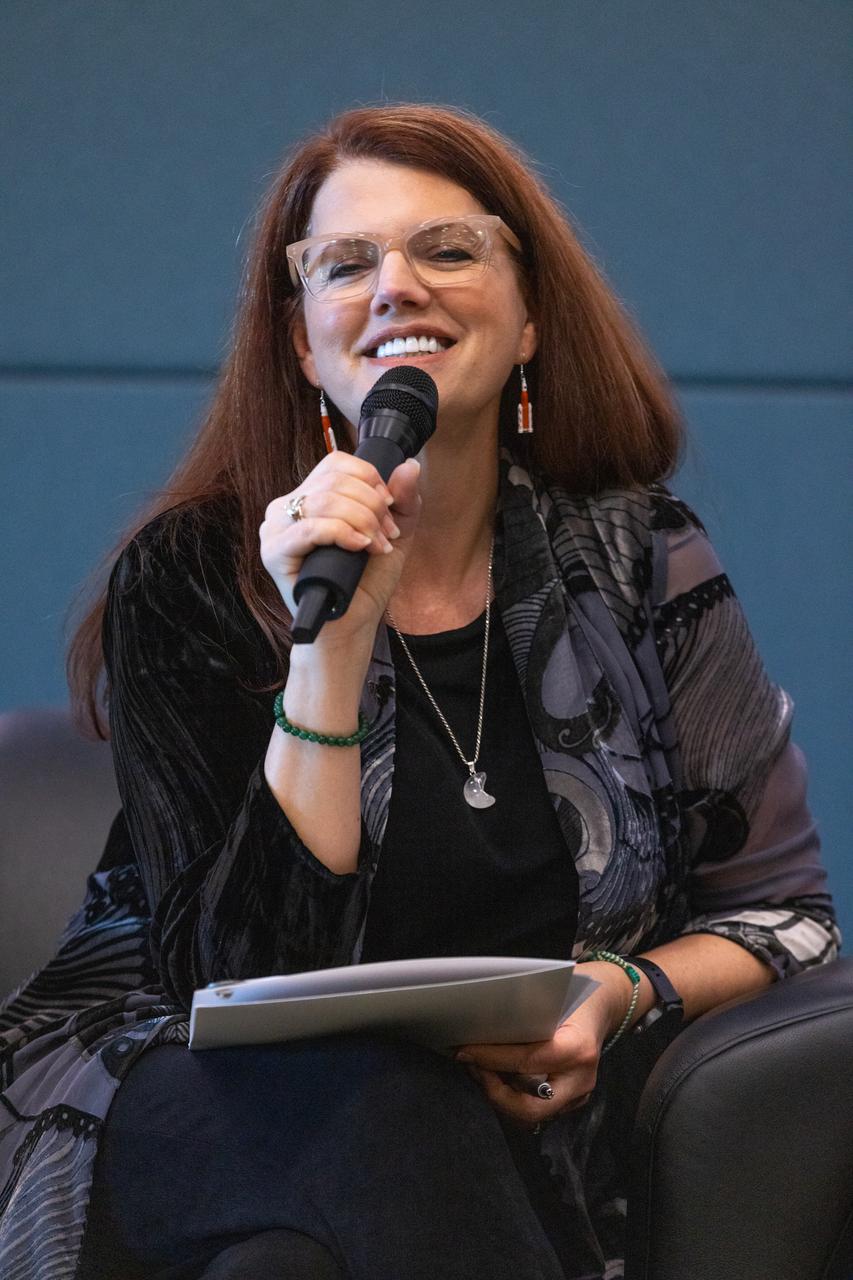
NASA Artemis Launch Director Charlie Blackwell Thompson participates in a discussion in honor of Women's History Month held on Friday, March 15, 2024, inside the Operations Support Building II at the agency’s Kennedy Space Center in Florida. The Women Launching Women panel commemorates inspirational women and men who have lifted and helped others excel in their careers across the agency and offer words of advice for the current workforce.
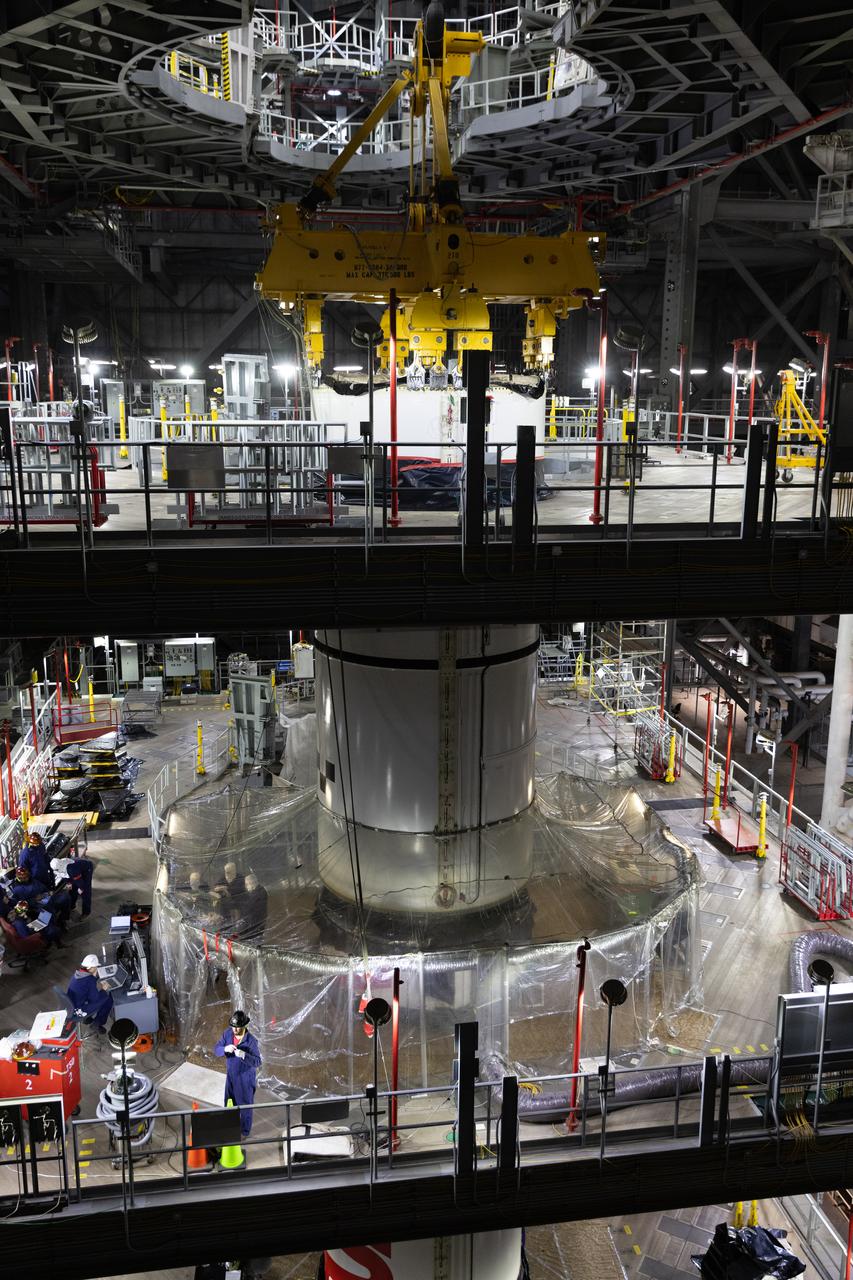
Engineers and technicians with NASA's Exploration Ground Systems Program transfer the right forward center segment to the Vehicle Assembly Building at NASA's Kennedy Space Center in Florida. The booster segment is shown attached to a lifting beam on Tuesday, Jan. 22, 2025 ahead of integration onto the Mobile Launcher 1. The boosters will help support the remaining rocket components and the Orion spacecraft during final assembly of the Artems II Moon rocket and provide more than 75 percent of the total SLS (Space Launch System) thrust during liftoff from NASA Kennedy's Launch Pad 39B.
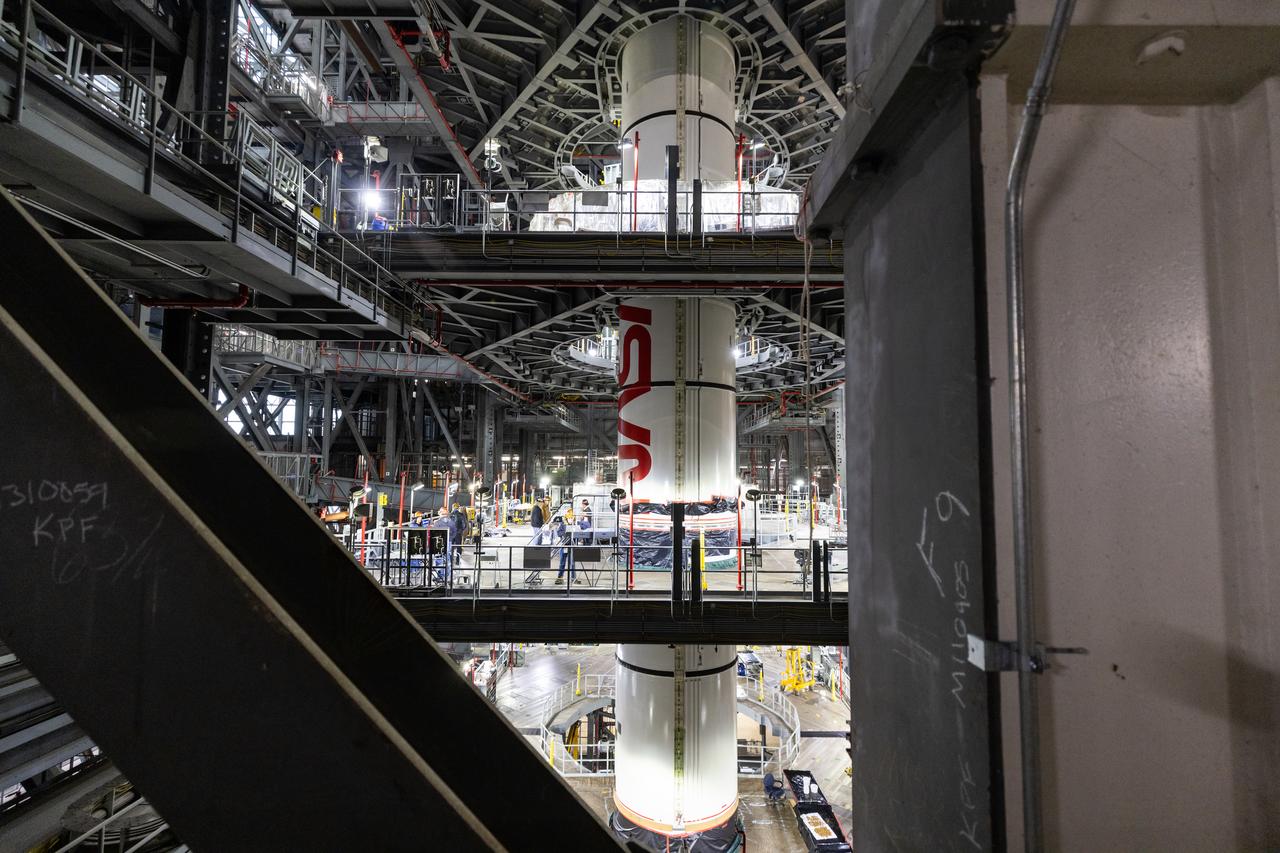
Inside High Bay 3 of the Vehicle Assembly Building at NASA’s Kennedy Space Center in Florida, technicians with the agency’s Exploration Ground Systems use a crane to lower the right forward center booster segment for the NASA’s SLS (Space Launch System) rocket onto the right center center segment with the iconic NASA “worm” insignia atop the mobile launcher on Monday, Jan. 27, 2025. The boosters will help support the remaining rocket components and the Orion spacecraft during final assembly of the Artemis II Moon rocket and provide more than 75 percent of the total SLS thrust during liftoff from NASA Kennedy’s Launch Pad 39B.
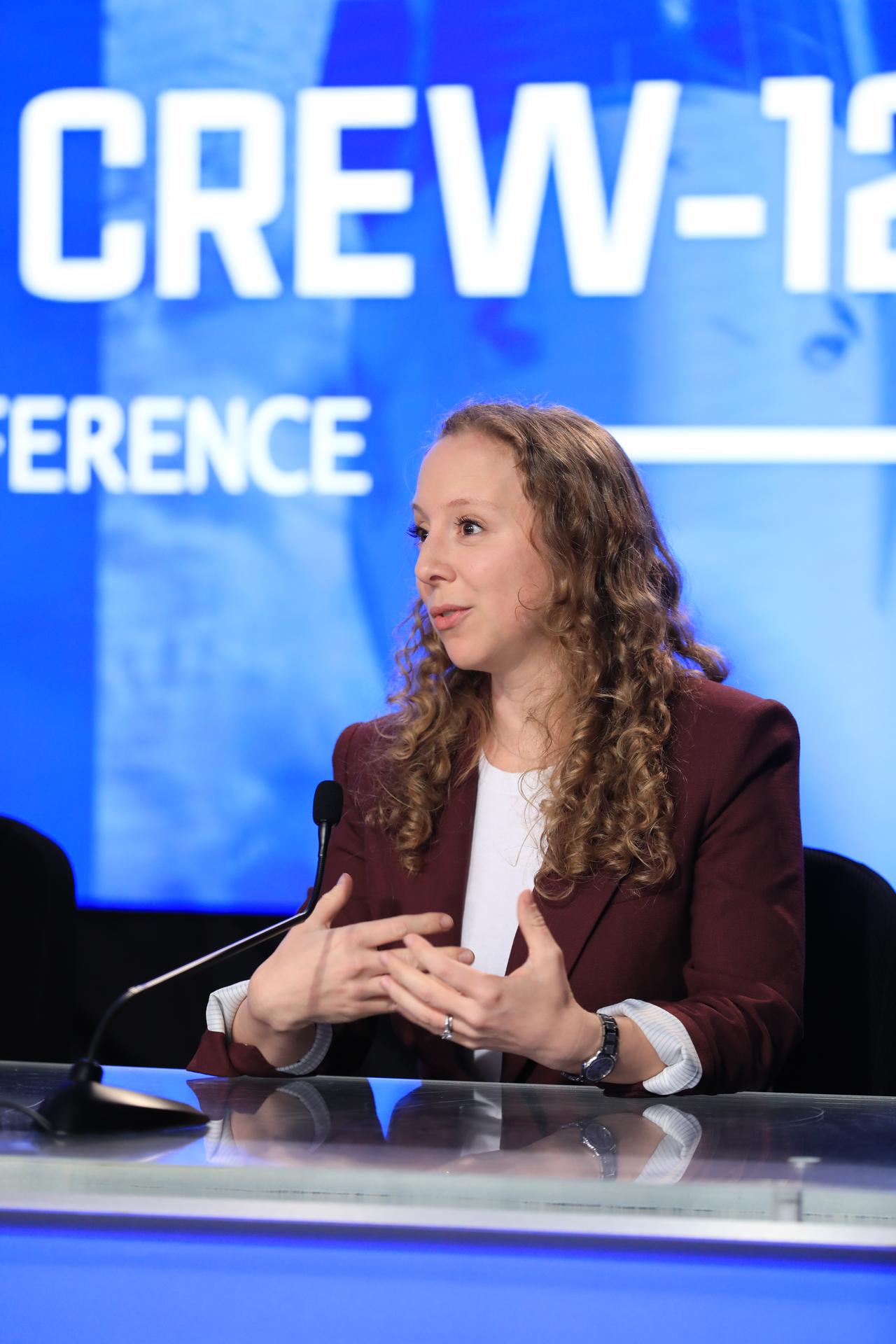
Julianna Scheiman, director, NASA Science and Dragon Programs, SpaceX, participates in a postlaunch news conference at the agency’s Kennedy Space Center in Florida on Friday, Feb. 13, 2026, following the launch of NASA’s SpaceX Crew-12 mission to the International Space Station. NASA astronauts Jessica Meir and Jack Hathaway, ESA (European Space Agency) astronaut Sophie Adenot, and Roscosmos cosmonaut Andrey Fedyaev launched to the International Space Station aboard SpaceX’s Dragon spacecraft and Falcon 9 rocket at 5:15 a.m. EST on the 12th crew rotation mission with SpaceX to the space station as part of NASA’s Commercial Crew Program.
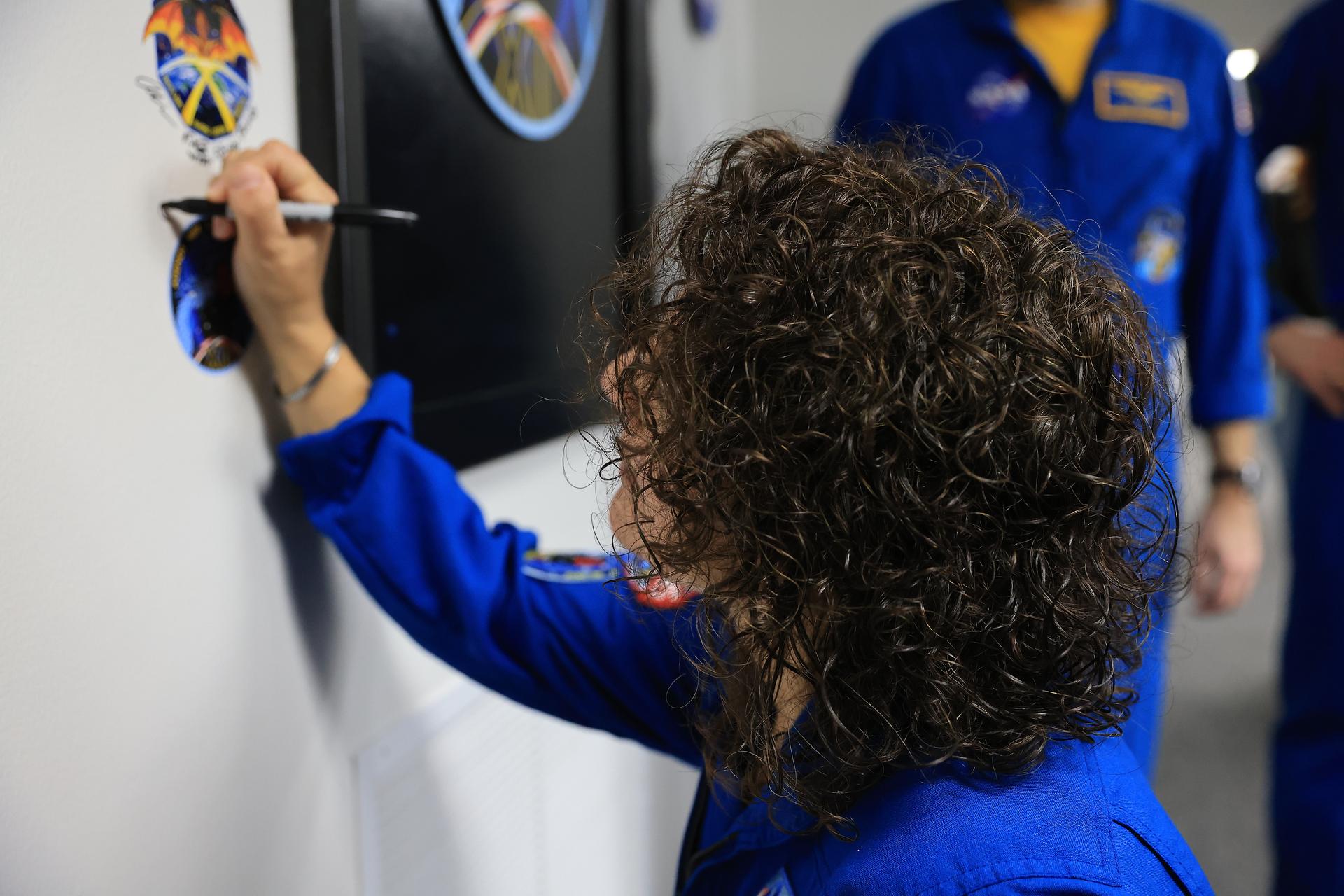
NASA astronaut Jessica Meir signs her name next to the Crew-12 mission insignia inside the Astronaut Crew Quarters in the Neil A. Armstrong Operations and Checkout Building at NASA’s Kennedy Space Center in Florida on Monday, Feb. 9, 2026, ahead of NASA’s SpaceX Crew-12 mission. A SpaceX Dragon spacecraft and Falcon 9 rocket will send NASA astronauts Meir and Jack Hathaway, ESA (European Space Agency) astronaut Sophie Adenot, and Roscosmos cosmonaut Andrey Fedyaev to the International Space Station no earlier than 5:15 a.m. EST on Friday, Feb. 13, from Cape Canaveral Space Force Station’s Space Launch Complex 40.
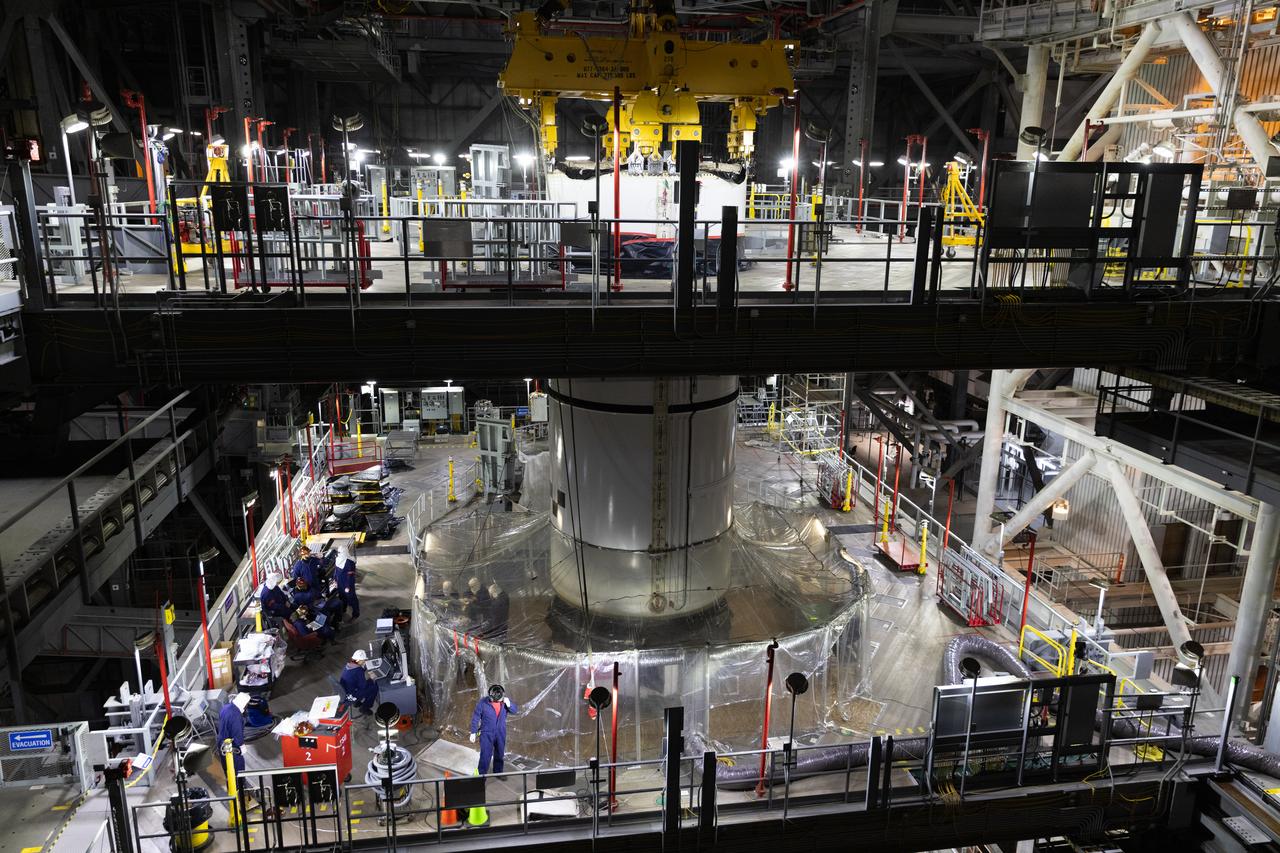
Engineers and technicians with NASA's Exploration Ground Systems Program transfer the right forward center segment to the Vehicle Assembly Building at NASA's Kennedy Space Center in Florida. The booster segment is shown attached to a lifting beam on Tuesday, Jan. 22, 2025 ahead of integration onto the Mobile Launcher 1. The boosters will help support the remaining rocket components and the Orion spacecraft during final assembly of the Artems II Moon rocket and provide more than 75 percent of the total SLS (Space Launch System) thrust during liftoff from NASA Kennedy's Launch Pad 39B.
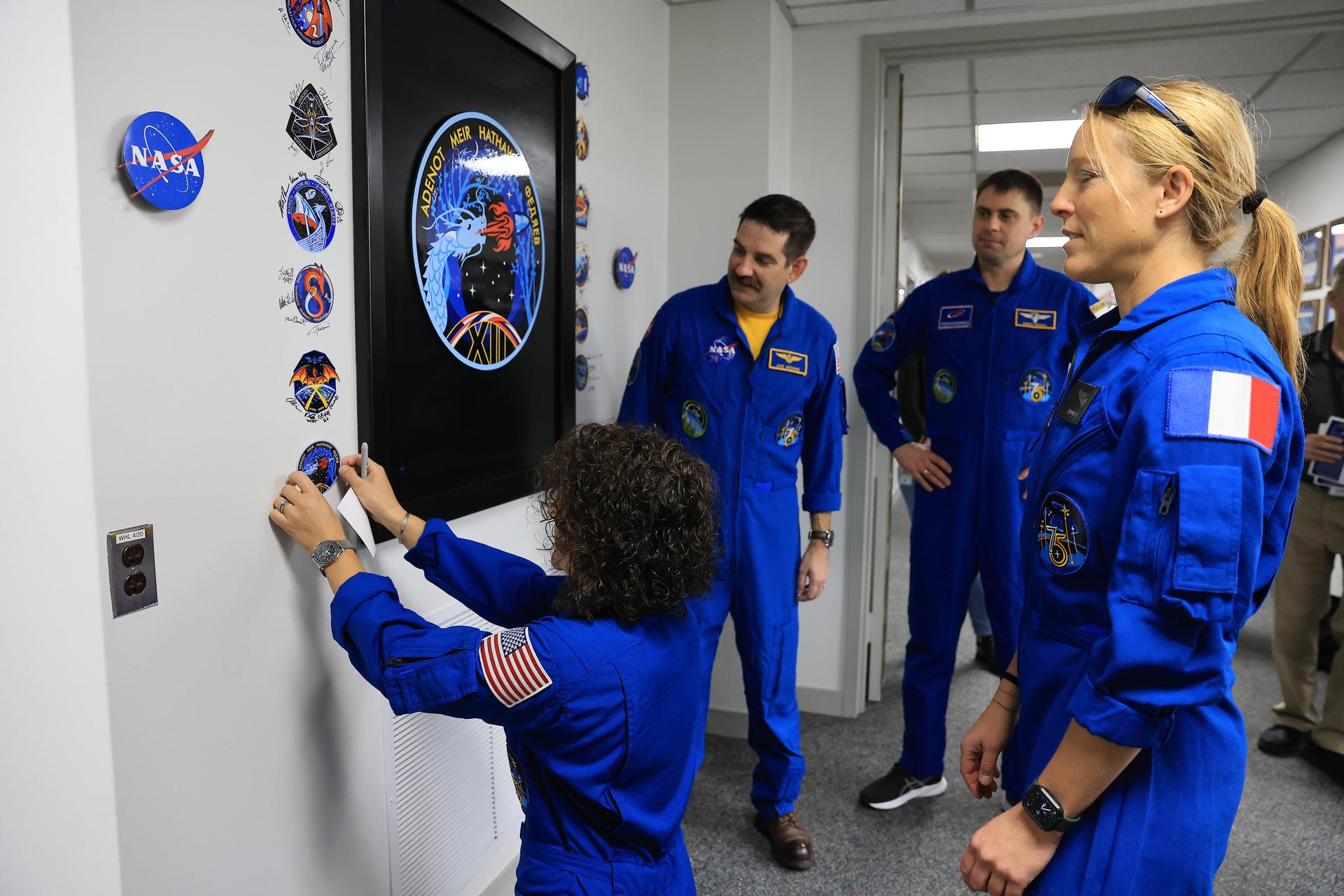
From left, NASA astronauts Jessica Meir and Jack Hathaway, Roscosmos cosmonaut Andrey Fedyaev, and ESA (European Space Agency) astronaut Sophie Adenot attach their mission insignia to the wall inside the Astronaut Crew Quarters in the Neil A. Armstrong Operations and Checkout Building at NASA’s Kennedy Space Center in Florida on Monday, Feb. 9, 2026. NASA’s SpaceX Crew-12 crew members will launch aboard a SpaceX Dragon spacecraft and Falcon 9 to the International Space Station no earlier than 5:15 a.m. EST on Friday, Feb. 13, from Cape Canaveral Space Force Station’s Space Launch Complex 40.
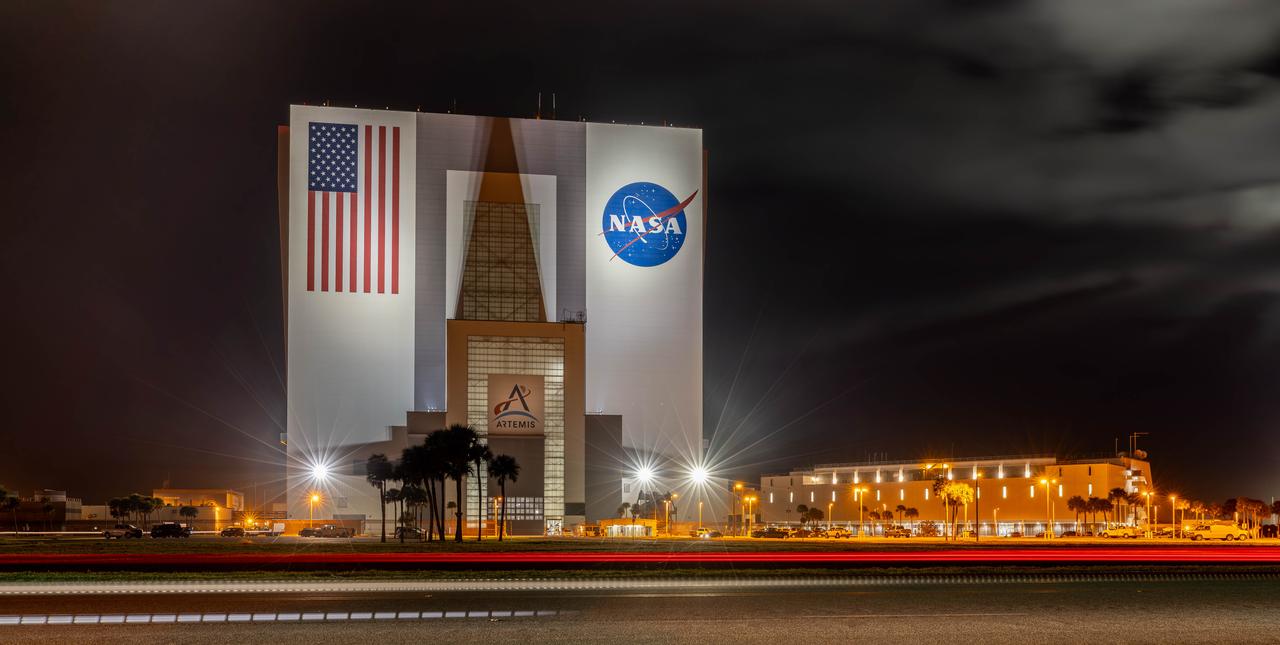
A long-exposure image captures a streak of light produced by passing vehicles in front of the Vehicle Assembly Building at NASA's Kennedy Space Center in Florida on Wednesday, Feb. 7, 2024. The iconic Vehicle Assembly Building, completed in 1966 and currently used for assembly of NASA's Space Launch System rocket for Artemis missions, remains the only building in which rockets were assembled that carried humans to the surface of another world.

Photographers at NASA capture the sunset on Tuesday, Jan. 30, 2024, near Vehicle Assembly Building at the agency’s Kennedy Space Center in Florida. The iconic Vehicle Assembly Building, completed in 1966 and currently used for assembly of NASA’s Space Launch System rocket for Artemis missions, remains the only building in which rockets were assembled that carried humans to the surface of another world.
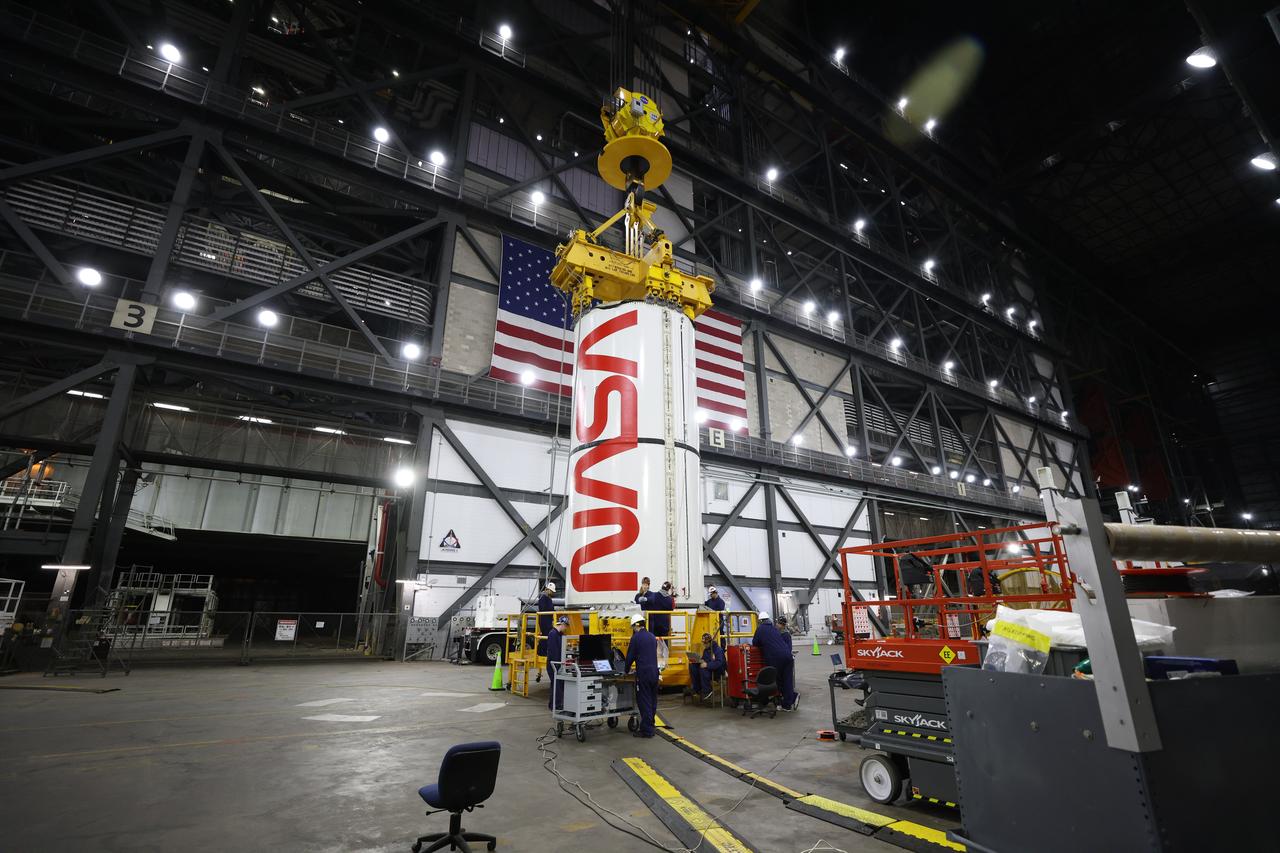
Engineers and technicians with NASA’s Exploration Ground Systems Program transfer the right center center segment with the NASA worm insignia to the Vehicle Assembly Building at NASA's Kennedy Space Center in Florida on Tuesday, Jan. 14, 2025. The booster segment is shown attached to a lifting beam ahead of integration onto the mobile launcher. The boosters will help support the remaining rocket components and the Orion spacecraft during final assembly of the Artemis II Moon rocket and provide more than 75 percent of the total SLS (Space Launch System) thrust during liftoff from NASA Kennedy’s Launch Pad 39B.
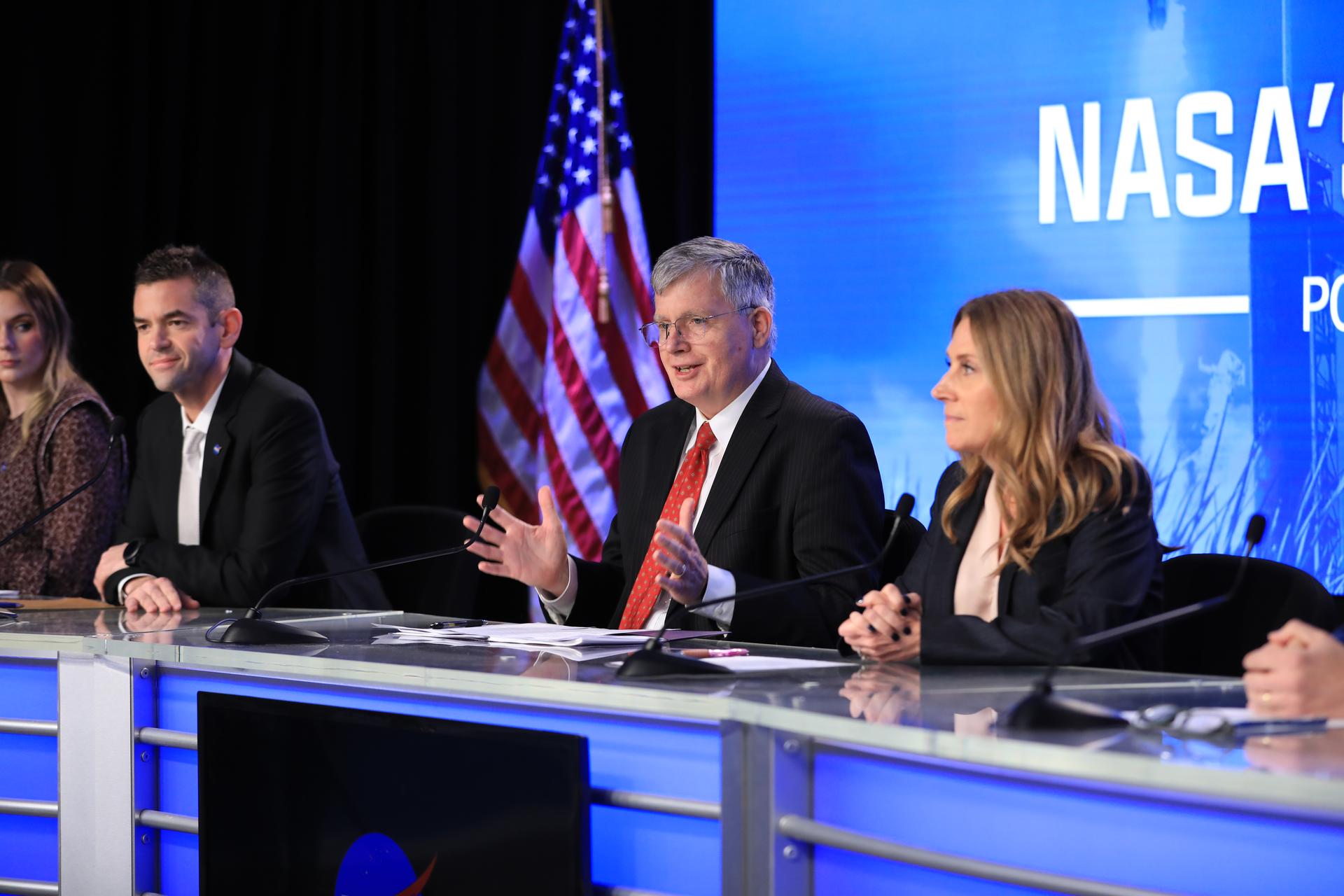
Steve Stich (center), manager, NASA’s Commercial Crew Program, participates in a postlaunch news conference with leadership from NASA, ESA (European Space Agency), and SpaceX at the agency’s Kennedy Space Center in Florida on Friday, Feb. 13, 2026, following the launch of NASA’s SpaceX Crew-12 mission to the International Space Station. NASA astronauts Jessica Meir and Jack Hathaway, ESA astronaut Sophie Adenot, and Roscosmos cosmonaut Andrey Fedyaev launched to the International Space Station aboard SpaceX’s Dragon spacecraft and Falcon 9 rocket at 5:15 a.m. EST on the 12th crew rotation mission with SpaceX to the space station as part of NASA’s Commercial Crew Program.

Photographers at NASA capture the sunset on Tuesday, Jan. 30, 2024, near Vehicle Assembly Building at the agency’s Kennedy Space Center in Florida. The iconic Vehicle Assembly Building, completed in 1966 and currently used for assembly of NASA’s Space Launch System rocket for Artemis missions, remains the only building in which rockets were assembled that carried humans to the surface of another world.
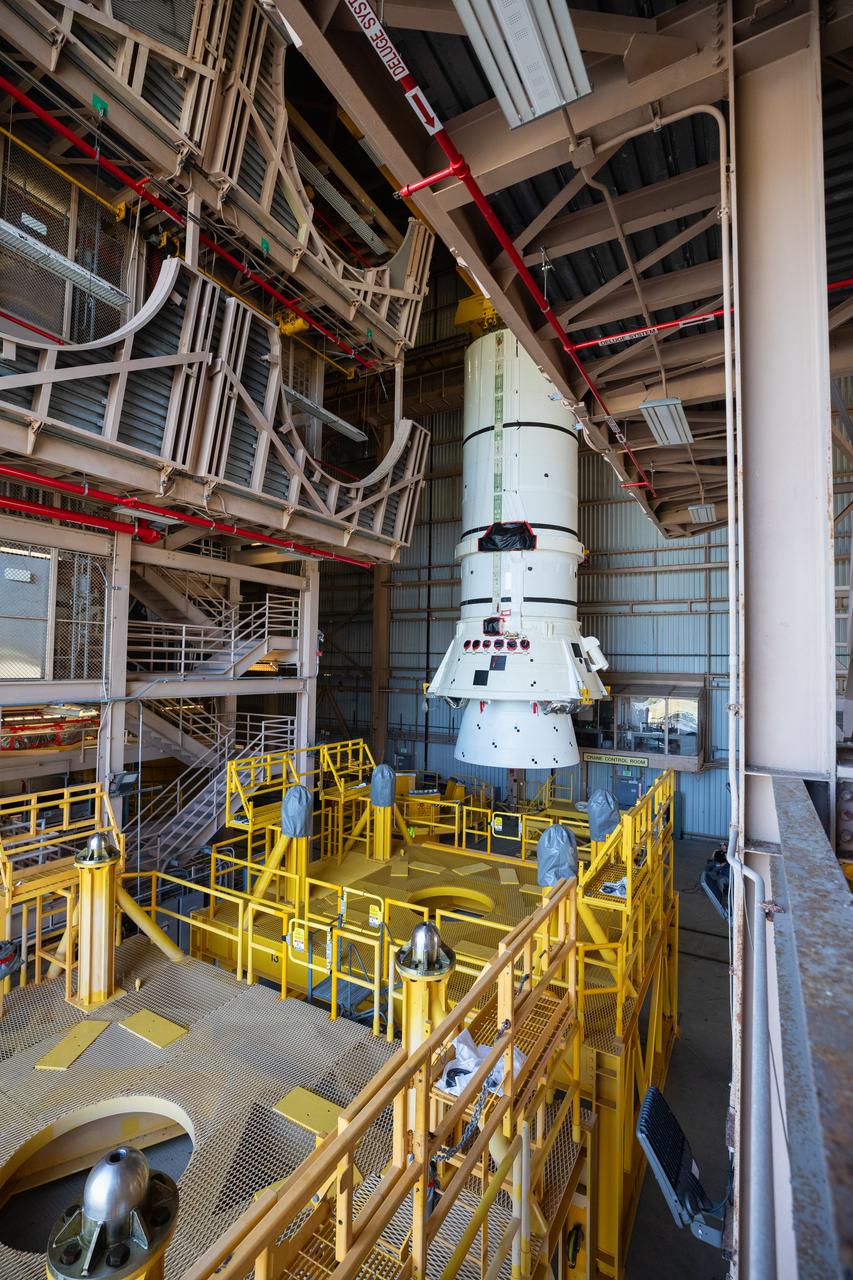
Engineers and technicians with the Exploration Ground Systems Program prepare to transfer one of the aft assemblies of the SLS (Space Launch System) solid rocket boosters for the Artemis II mission with an overhead crane inside the Rotation, Processing and Surge Facility at NASA’s Kennedy Space Center in Florida on Wednesday, Nov. 13, 2024. The booster segments are being transferred to the NASA Kennedy’s Vehicle Assembly Building via a transporter for stacking operations in preparation for launch of the Artemis II mission.
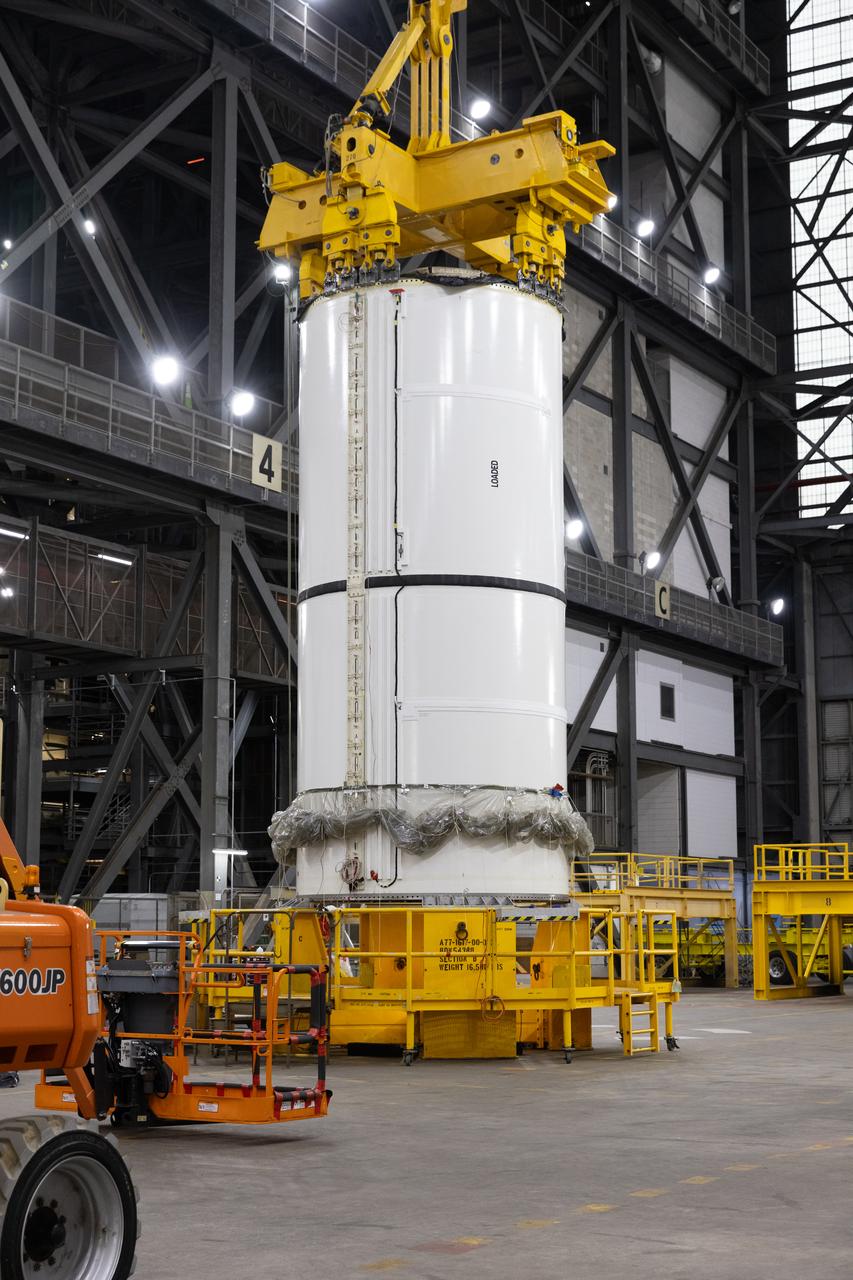
Engineers and technicians with NASA's Exploration Ground Systems Program transfer the right forward center segment to the Vehicle Assembly Building at NASA's Kennedy Space Center in Florida. The booster segment is shown attached to a lifting beam on Tuesday, Jan. 21, 2025 ahead of integration onto the Mobile Launcher 1. The boosters will help support the remaining rocket components and the Orion spacecraft during final assembly of the Artems II Moon rocket and provide more than 75 percent of the total SLS (Space Launch System) thrust during liftoff from NASA Kennedy's Launch Pad 39B.
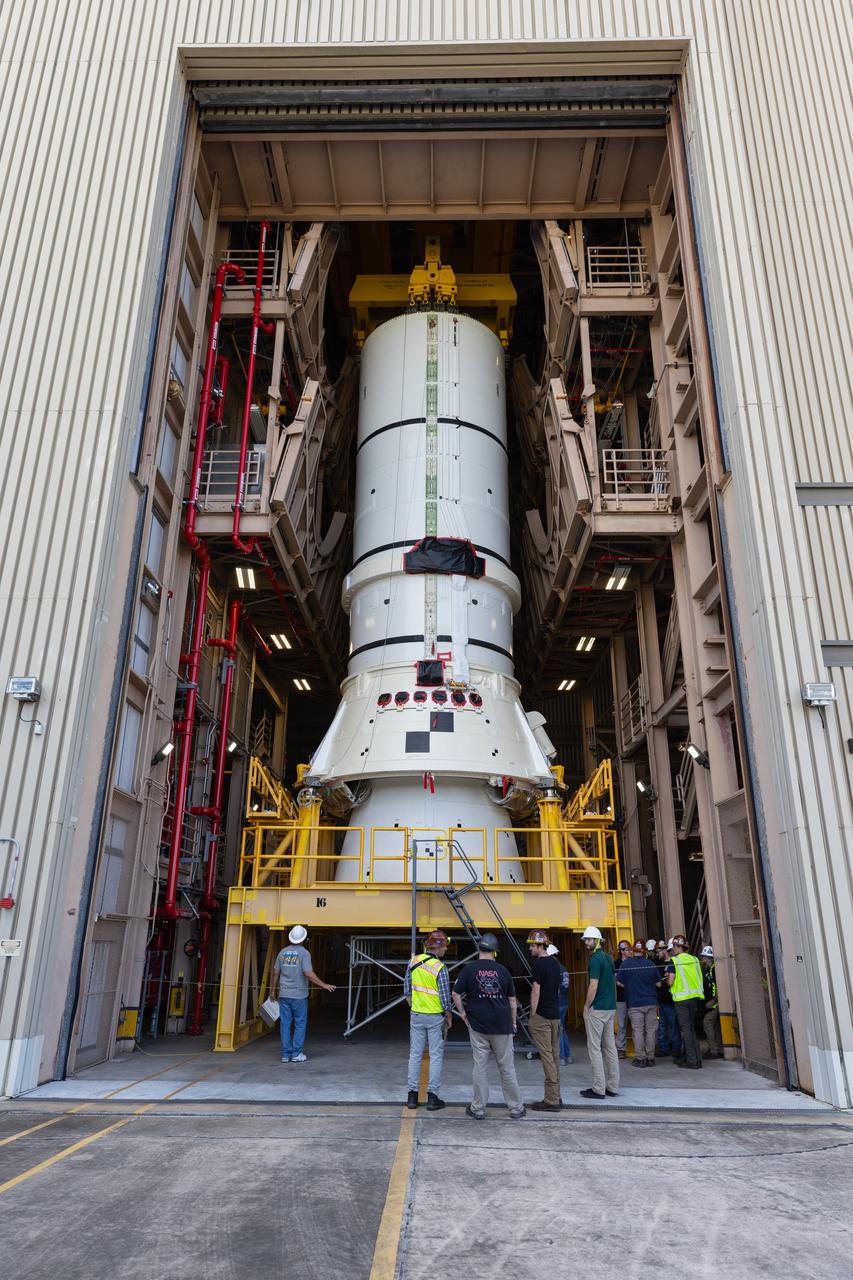
Engineers and technicians with the Exploration Ground Systems Program prepare to transfer one of the aft assemblies of the SLS (Space Launch System) solid rocket boosters for the Artemis II mission with an overhead crane inside the Rotation, Processing and Surge Facility at NASA’s Kennedy Space Center in Florida on Wednesday, Nov. 13, 2024. The booster segments are being transferred to the NASA Kennedy’s Vehicle Assembly Building via a transporter for stacking operations in preparation for launch of the Artemis II mission.
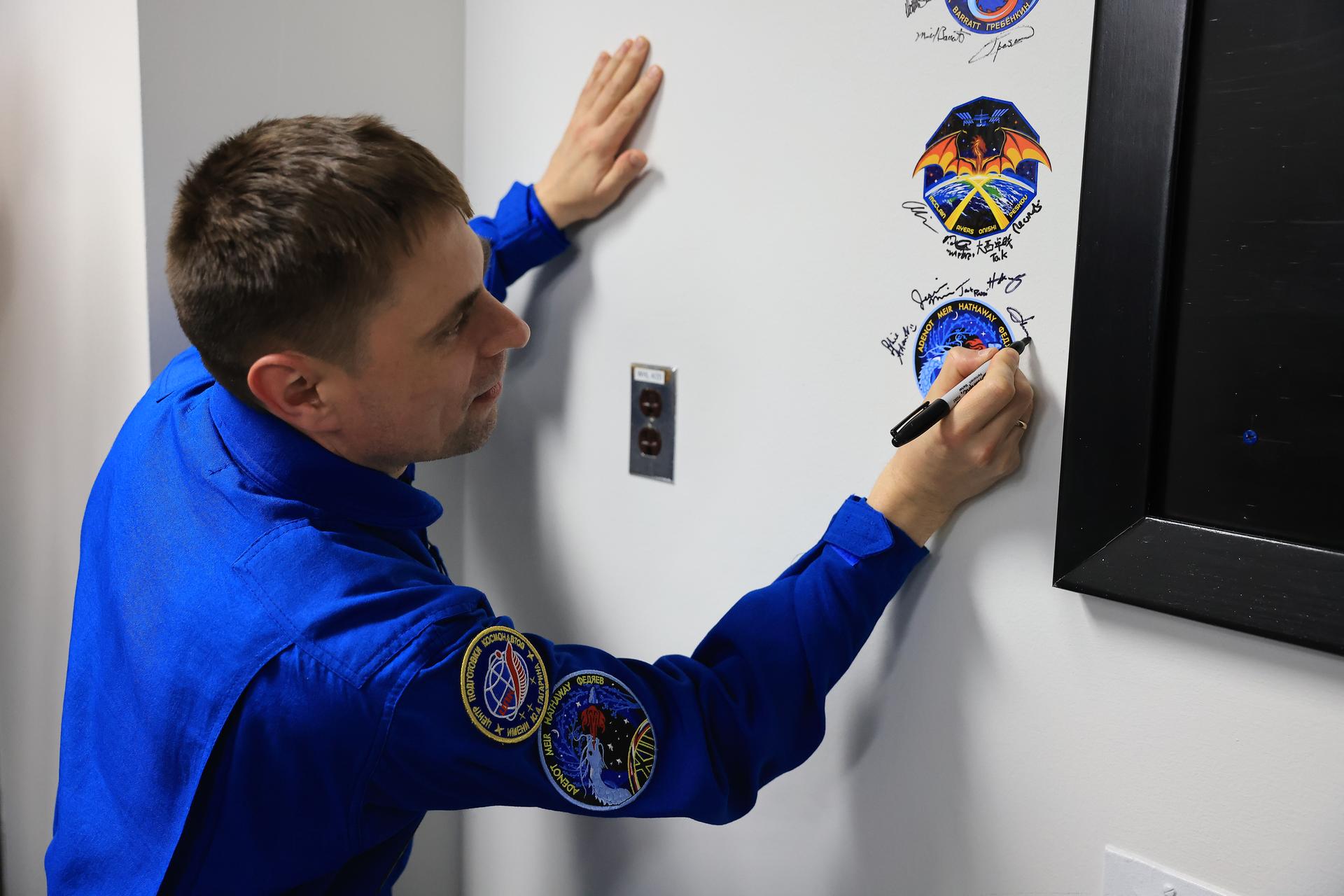
Roscosmos cosmonaut Andrey Fedyaev signs his name next to the Crew-12 mission insignia inside the Astronaut Crew Quarters in the Neil A. Armstrong Operations and Checkout Building at NASA’s Kennedy Space Center in Florida on Monday, Feb. 9, 2026, ahead of NASA’s SpaceX Crew-12 mission. A SpaceX Dragon spacecraft and Falcon 9 rocket will send Fedyaev, NASA astronauts Jessica Meir and Jack Hathaway, and ESA (European Space Agency) astronaut Sophie Adenot to the International Space Station no earlier than 5:15 a.m. EST on Friday, Feb. 13, from Cape Canaveral Space Force Station’s Space Launch Complex 40.

Engineers and technicians with the Exploration Ground Systems Program prepare to transfer one of the aft assemblies of the SLS (Space Launch System) solid rocket boosters for the Artemis II mission with an overhead crane inside the Rotation, Processing and Surge Facility at NASA’s Kennedy Space Center in Florida on Wednesday, Nov. 13, 2024. The booster segments are being transferred to the NASA Kennedy’s Vehicle Assembly Building via a transporter for stacking operations in preparation for launch of the Artemis II mission.
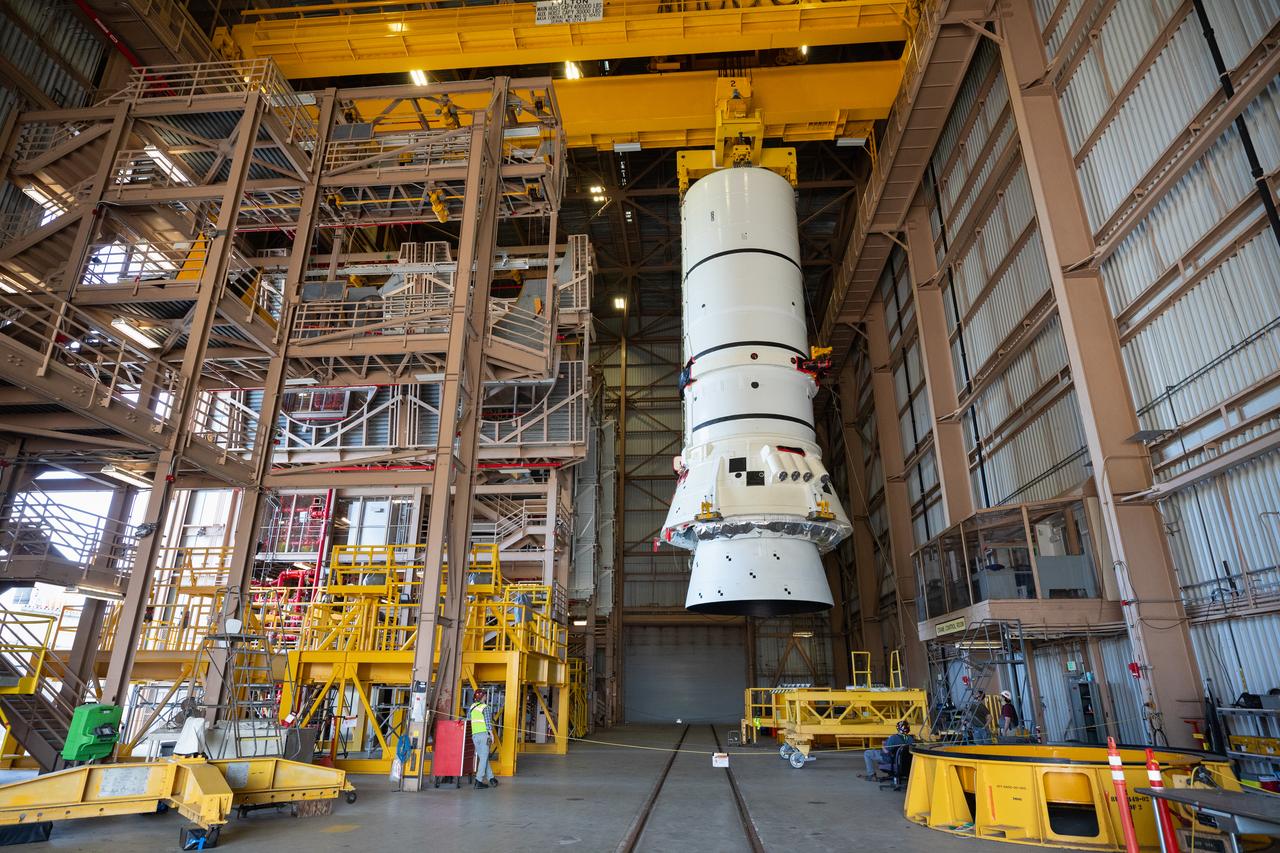
Engineers and technicians with the Exploration Ground Systems Program prepare to transfer one of the aft assemblies of the SLS (Space Launch System) solid rocket boosters for the Artemis II mission with an overhead crane inside the Rotation, Processing and Surge Facility at NASA’s Kennedy Space Center in Florida on Wednesday, Nov. 13, 2024. The booster segments are being transferred to the NASA Kennedy’s Vehicle Assembly Building via a transporter for stacking operations in preparation for launch of the Artemis II mission.
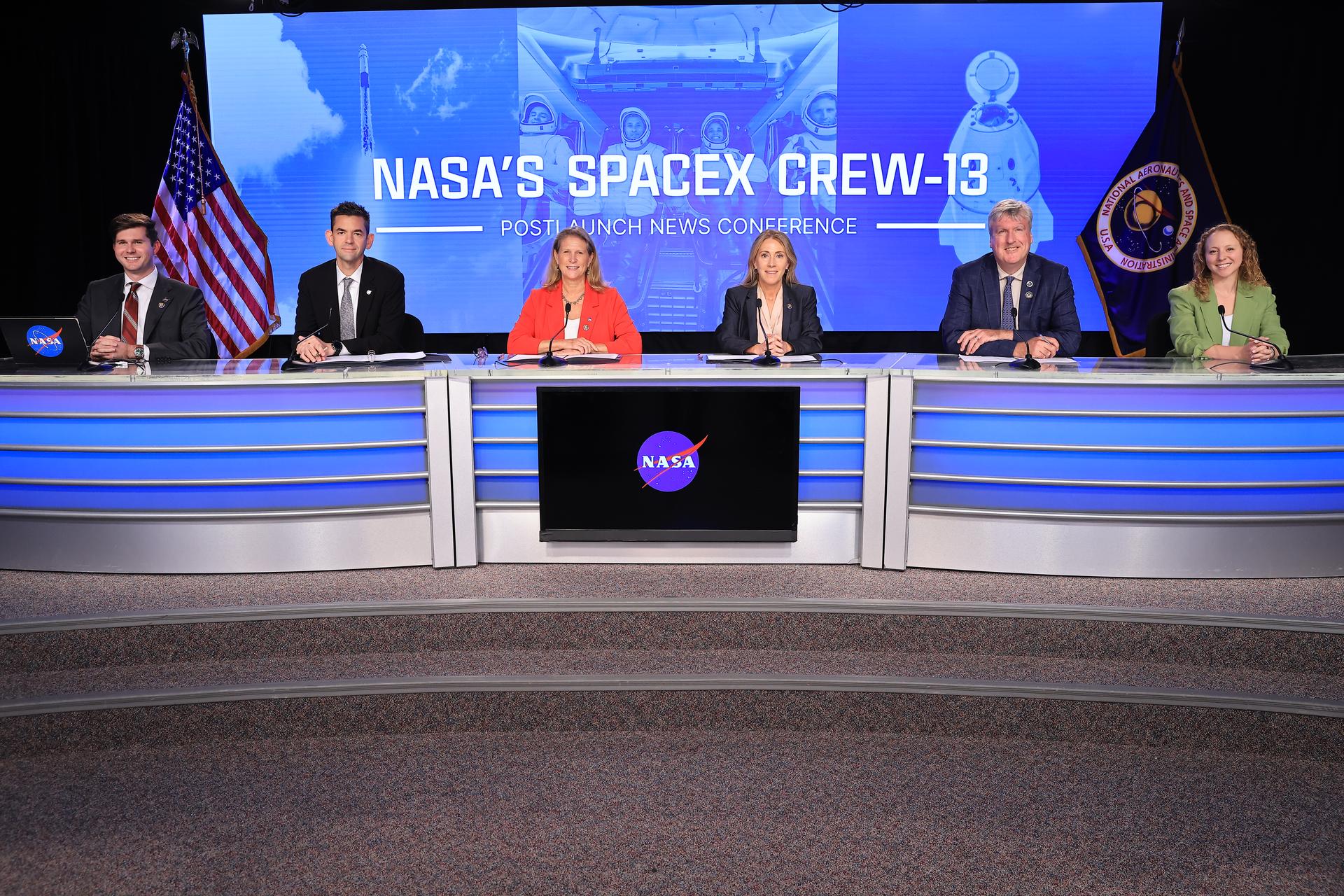
From left to right, George Alderman, deputy press secretary, NASA communications; NASA Administrator Jared Isaacman; Dr. Lori Glaze, associate administrator, NASA’s Human Spaceflight Mission Directorate; Dana Weigel, Low Earth Orbit Program, NASA’s Johnson Space Center in Houston; Mathieu Caron, director, Astronauts, Life Sciences, and Space Medicine, CSA (Canadian Space Agency); and Julianna Scheiman, director, NASA Science and Dragon Programs, SpaceX, participate in a postlaunch news conference at the agency’s Kennedy Space Center in Florida on Thursday, Oct. 1, 2026, following the launch of NASA’s SpaceX Crew-13 mission to the International Space Station. NASA astronauts Jessica Watkins and Luke Delaney, CSA (Canadian Space Agency) astronaut Joshua Kutryk, and Roscosmos cosmonaut Sergey Teteryatnikov launched to the International Space Station aboard SpaceX’s Dragon spacecraft and Falcon 9 rocket at 11:10 a.m. EDT on the 13th crew rotation mission with SpaceX to the space station.
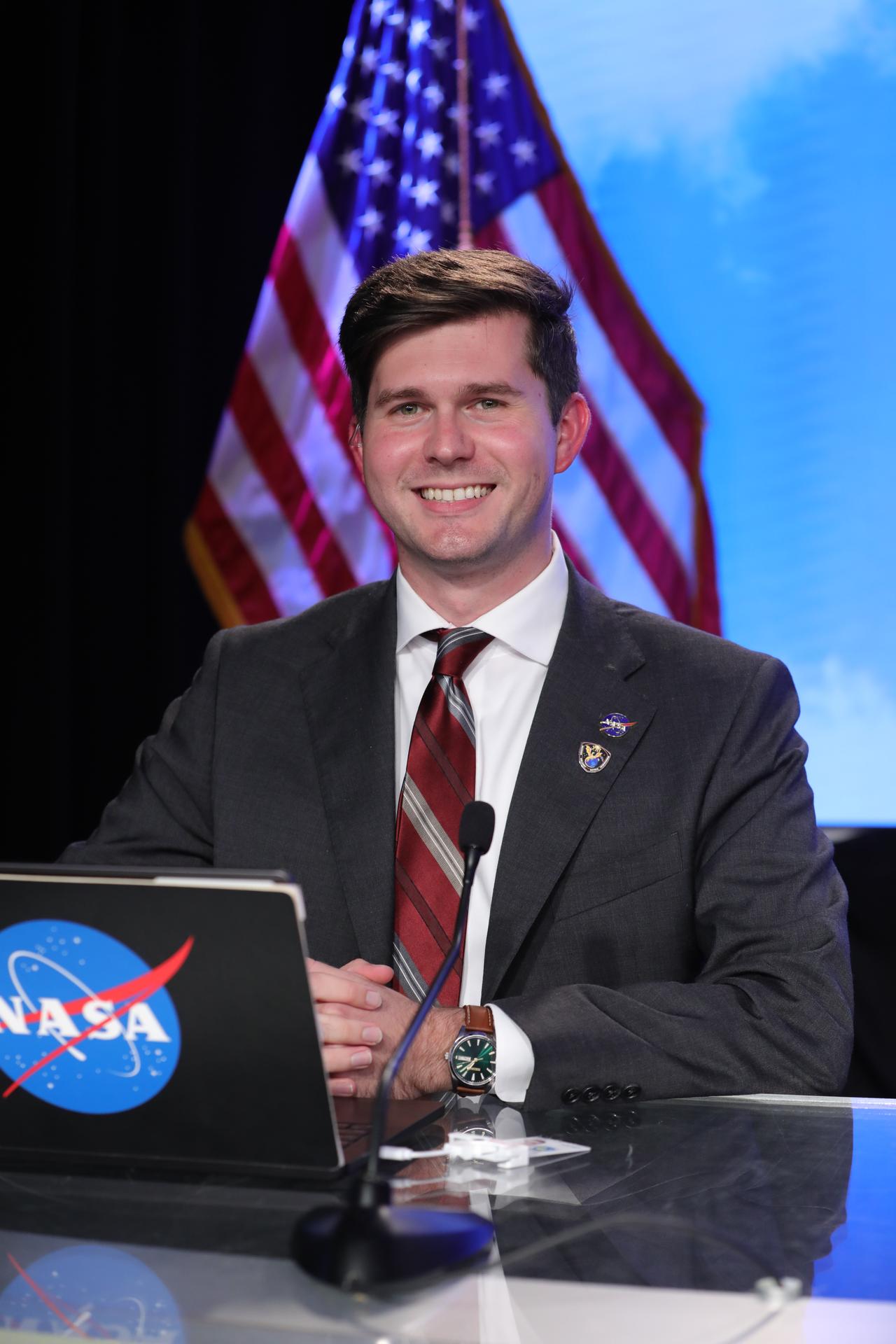
George Alderman, deputy press secretary, participates in a postlaunch news conference at the agency’s Kennedy Space Center in Florida on Thursday, Oct. 1, 2026, following the launch of NASA’s SpaceX Crew-13 mission to the International Space Station. NASA astronauts Jessica Watkins and Luke Delaney, CSA (Canadian Space Agency) astronaut Joshua Kutryk, and Roscosmos cosmonaut Sergey Teteryatnikov launched to the International Space Station aboard SpaceX’s Dragon spacecraft and Falcon 9 rocket at 11:10 a.m. EDT on the 13th crew rotation mission with SpaceX to the space station.
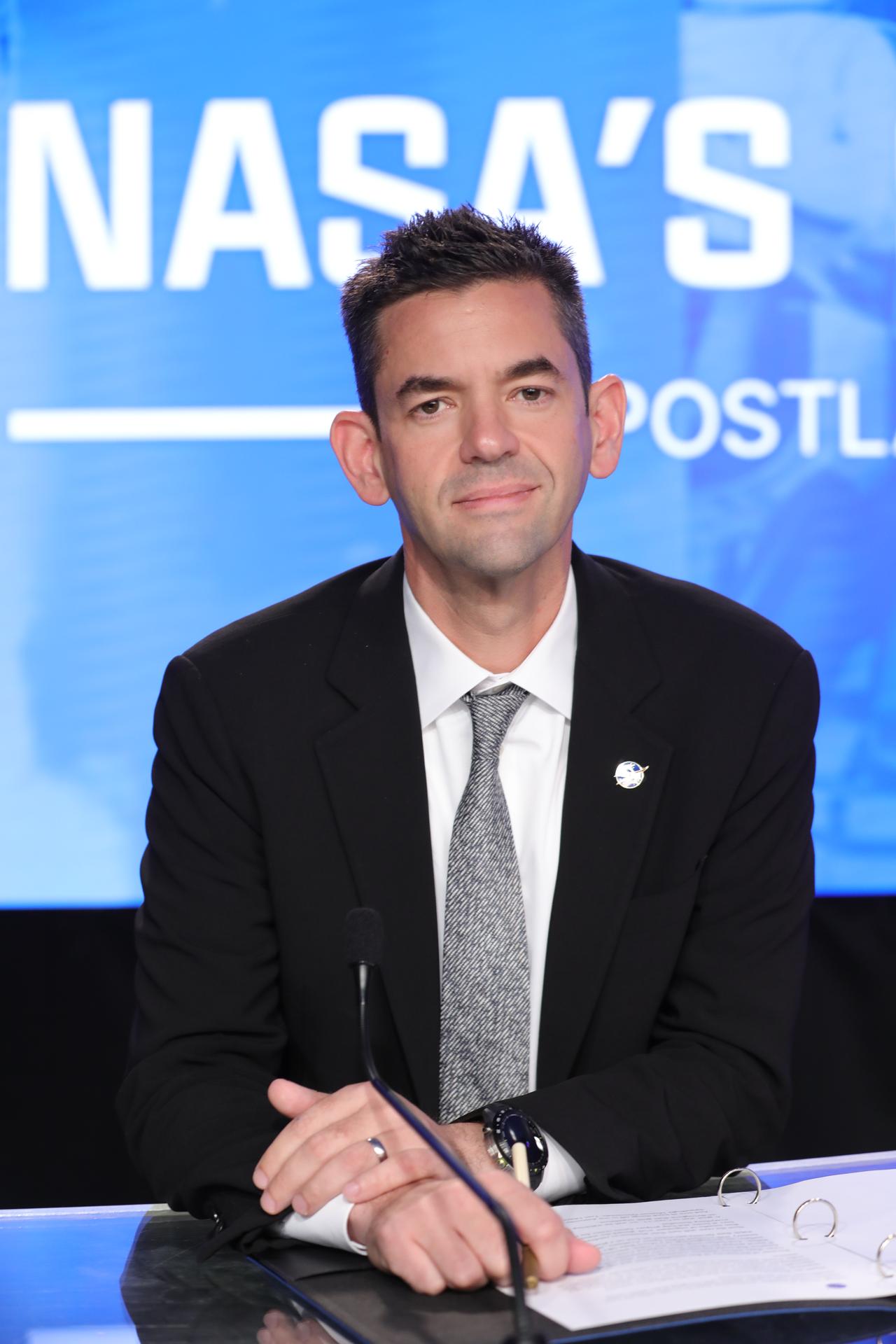
NASA Administrator Jared Isaacman participates in a postlaunch news conference at the agency’s Kennedy Space Center in Florida on Thursday, Oct. 1, 2026, following the launch of NASA’s SpaceX Crew-13 mission to the International Space Station. NASA astronauts Jessica Watkins and Luke Delaney, CSA (Canadian Space Agency) astronaut Joshua Kutryk, and Roscosmos cosmonaut Sergey Teteryatnikov launched to the International Space Station aboard SpaceX’s Dragon spacecraft and Falcon 9 rocket at 11:10 a.m. EDT on the 13th crew rotation mission with SpaceX to the space station.
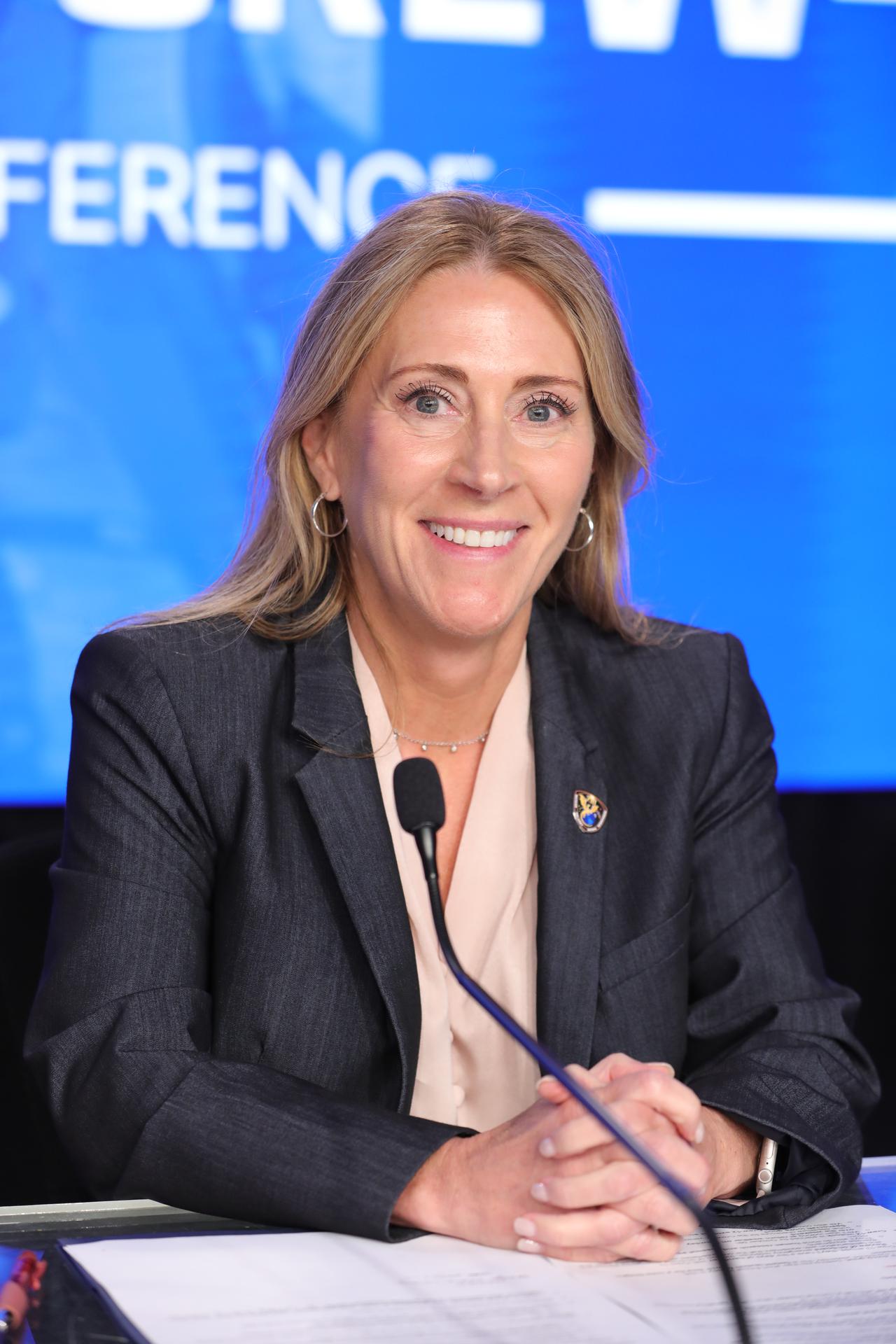
Dana Weigel, manager, Low Earth Orbit Program, NASA’s Johnson Space Center in Houston, participates in a postlaunch news conference at the agency’s Kennedy Space Center in Florida on Thursday, Oct. 1, 2026, following the launch of NASA’s SpaceX Crew-13 mission to the International Space Station. NASA astronauts Jessica Watkins and Luke Delaney, CSA (Canadian Space Agency) astronaut Joshua Kutryk, and Roscosmos cosmonaut Sergey Teteryatnikov launched to the International Space Station aboard SpaceX’s Dragon spacecraft and Falcon 9 rocket at 11:10 a.m. EDT on the 13th crew rotation mission with SpaceX to the space station.