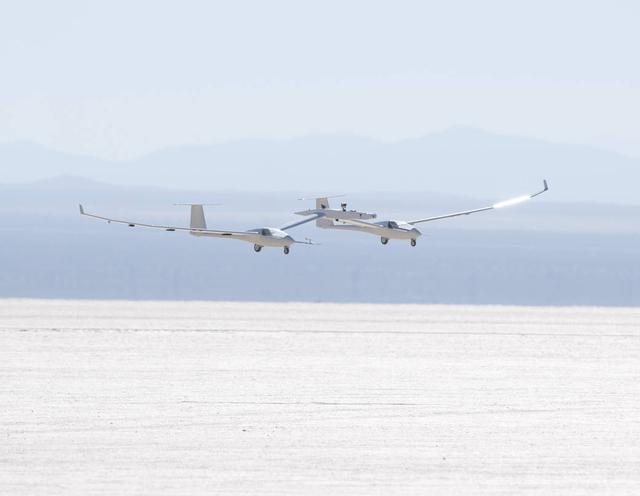
The one-third scale twin-fuselage towed glider glides in for landing on Rogers Dry Lake after its successful first test flight.
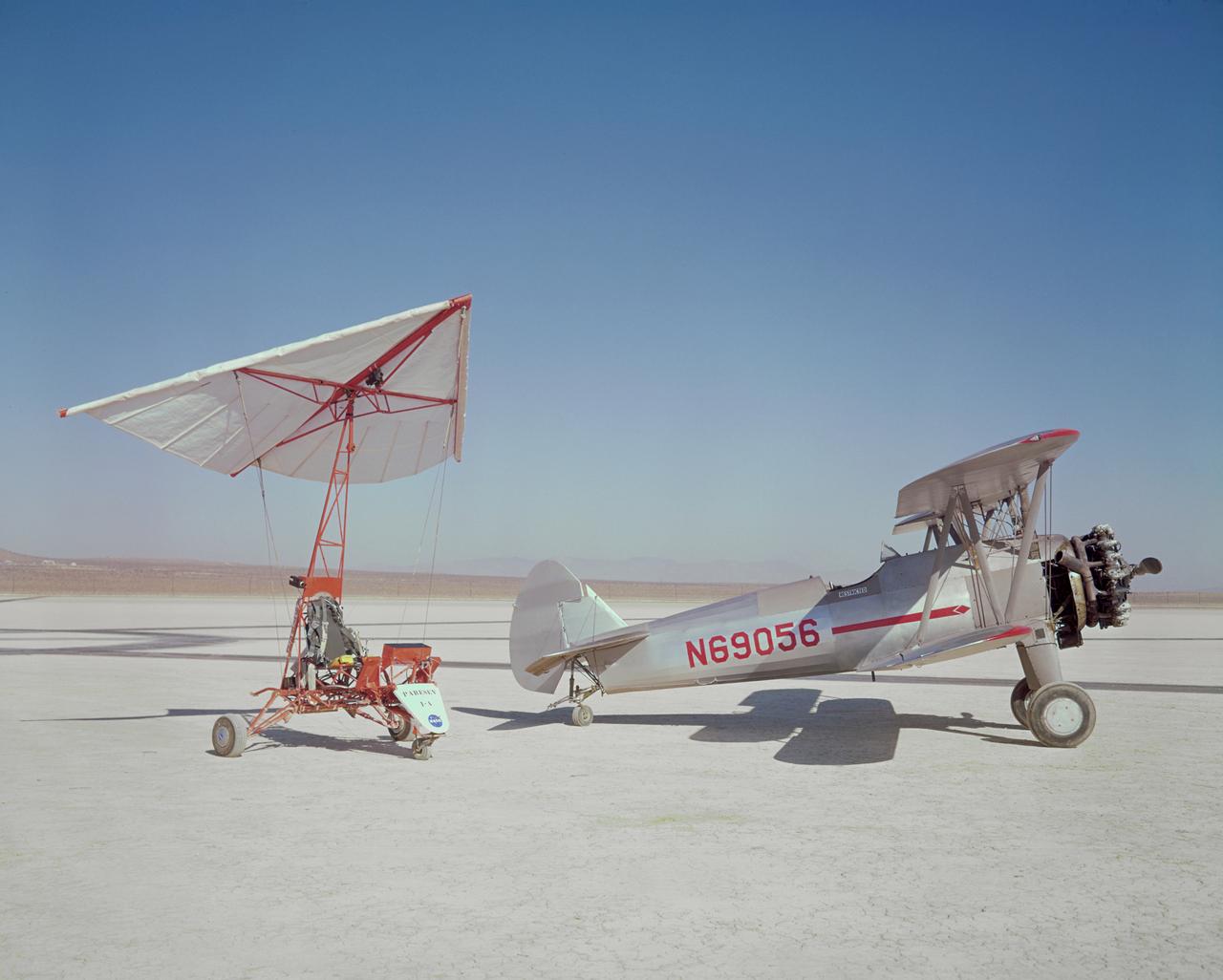
Paresev 1A and Stearman tow plane on lakebed.
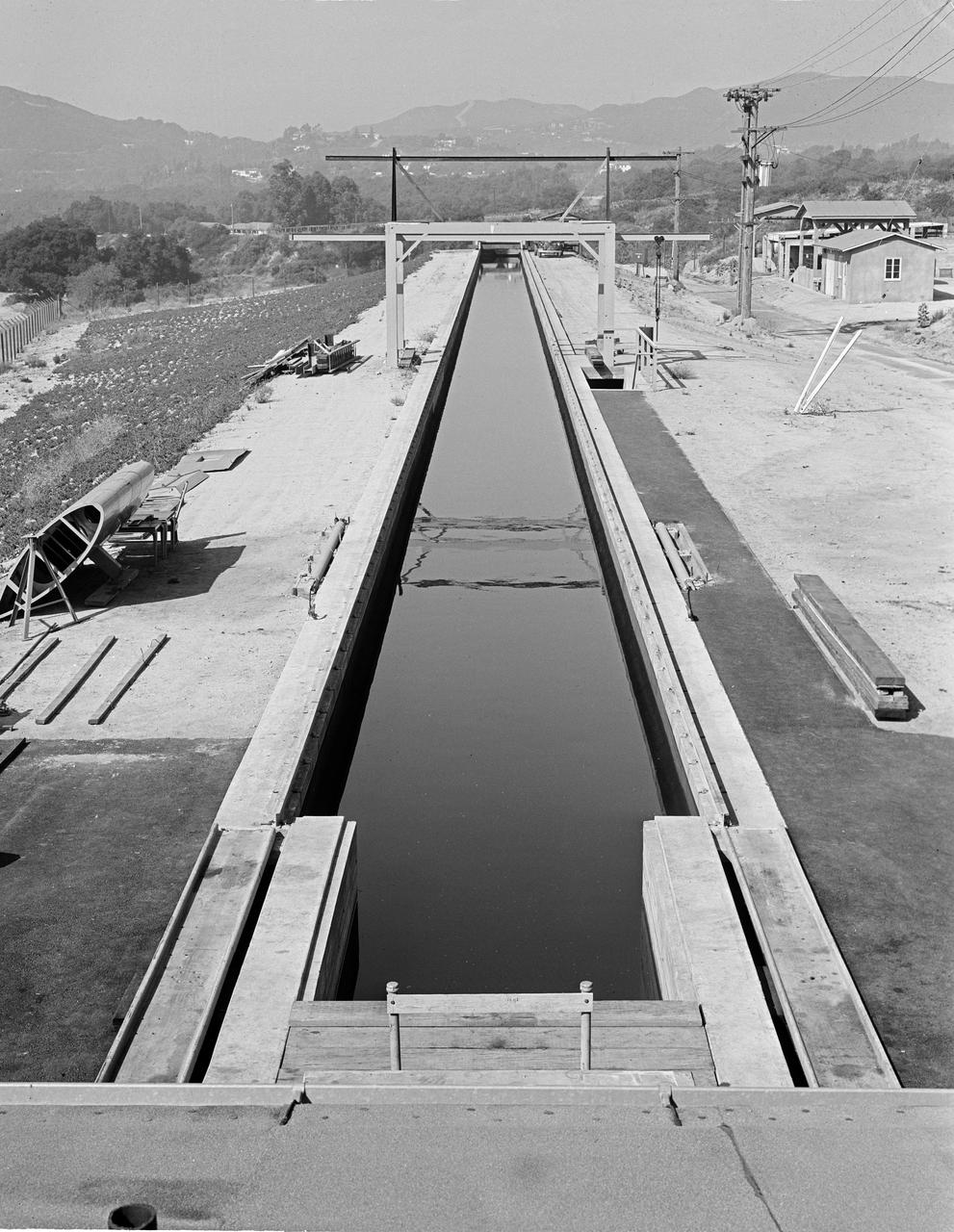
This archival image was released as part of a gallery comparing JPL's past and present, commemorating the 80th anniversary of NASA's Jet Propulsion Laboratory on Oct. 31, 2016. During World War II, the Jet Propulsion Laboratory had a contract with the U.S. Army to develop rocket torpedoes. This picture from August 1944 shows the test facility, known as the "Tow Channel." It was used for storage for many years before being torn out to make space for the Earth and Space Science Laboratory (Building 300) and the Microdevices Laboratory (Building 302). http://photojournal.jpl.nasa.gov/catalog/PIA21124
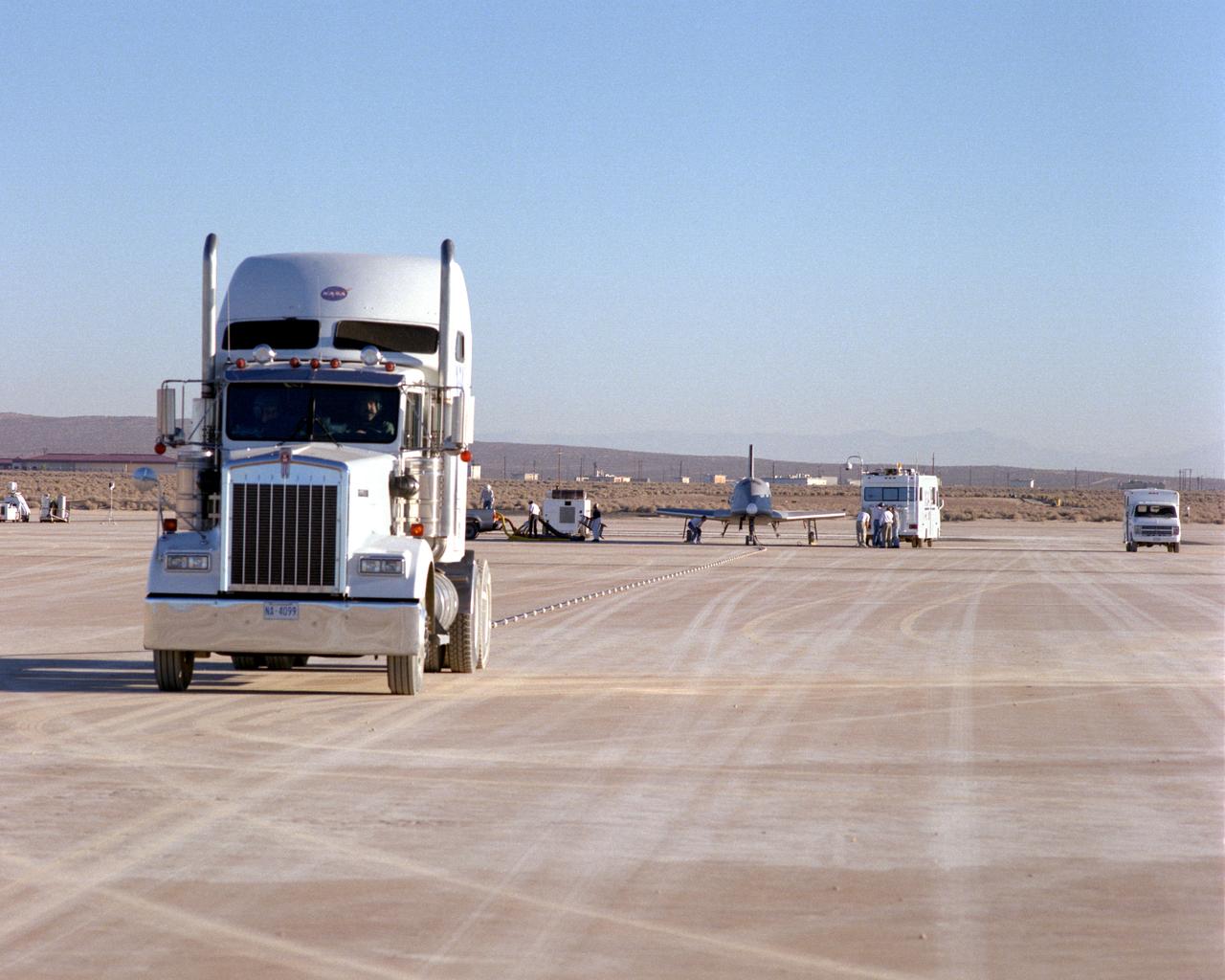
Following initial captive flight tests last year at NASA's Dryden Flight Research Center, Edwards Air Force Base, California, the X-34 technology demonstrator began a new series of tests last week in which it is being towed behind a semi-truck and released to coast on the Edwards dry lakebed. On July 20, 2000, it was towed and released twice at speeds of five and 10 miles per hour. On July 24, 2000, it was towed and released twice at 10 and 30 miles per hour. Twelve tests are planned during which the X-34 will be towed for distances up to 10,000 feet and released at speeds up to 80 miles per hour. The test series is expected to last at least six weeks.
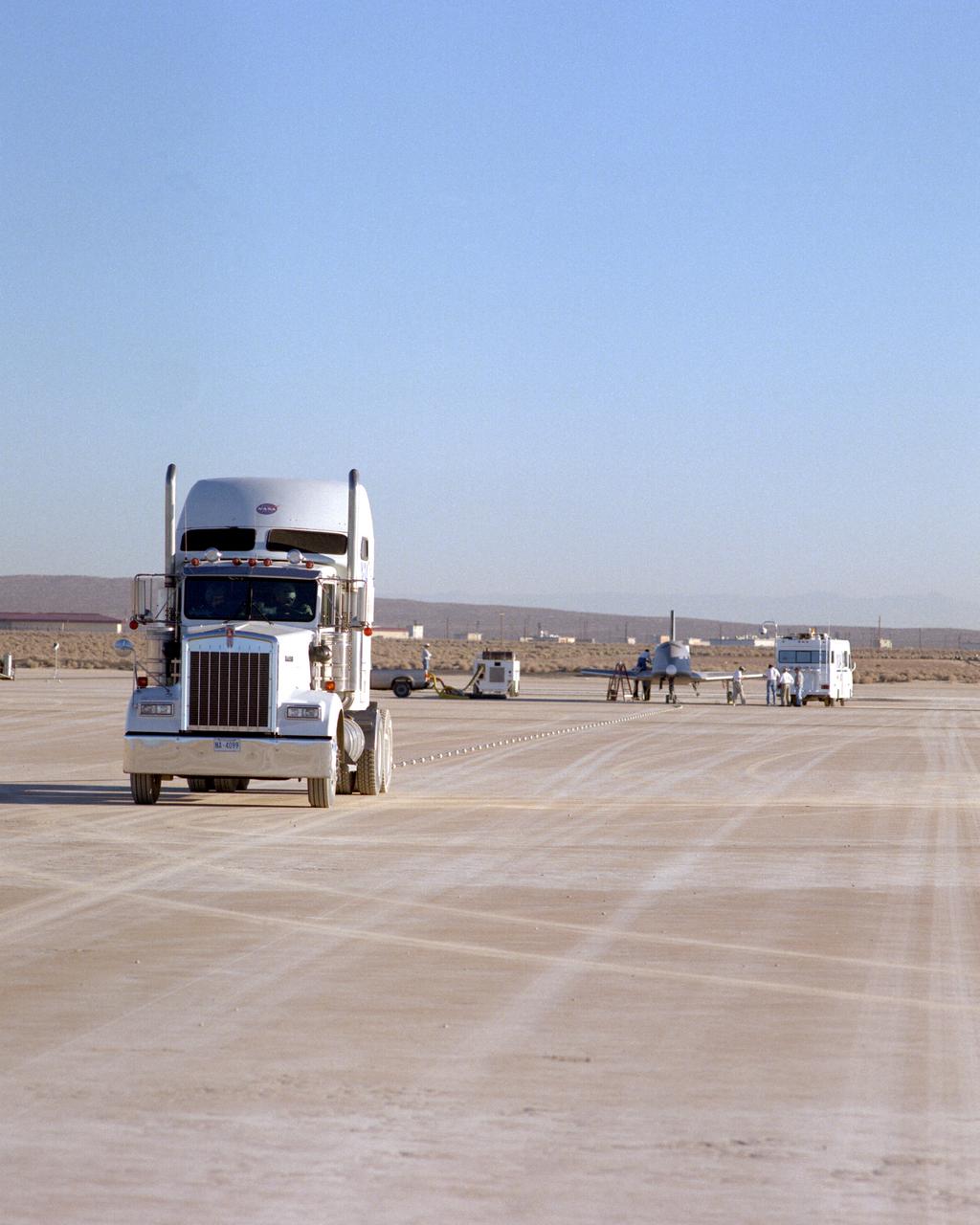
Following initial captive flight tests last year at NASA's Dryden Flight Research Center, Edwards Air Force Base, California, the X-34 technology demonstrator began a new series of tests last week in which it is being towed behind a semi-truck and released to coast on the Edwards dry lakebed. On July 20, 2000, it was towed and released twice at speeds of five and 10 miles per hour. On July 24, 2000, it was towed and released twice at 10 and 30 miles per hour. Twelve tests are planned during which the X-34 will be towed for distances up to 10,000 feet and released at speeds up to 80 miles per hour. The test series is expected to last at least six weeks.
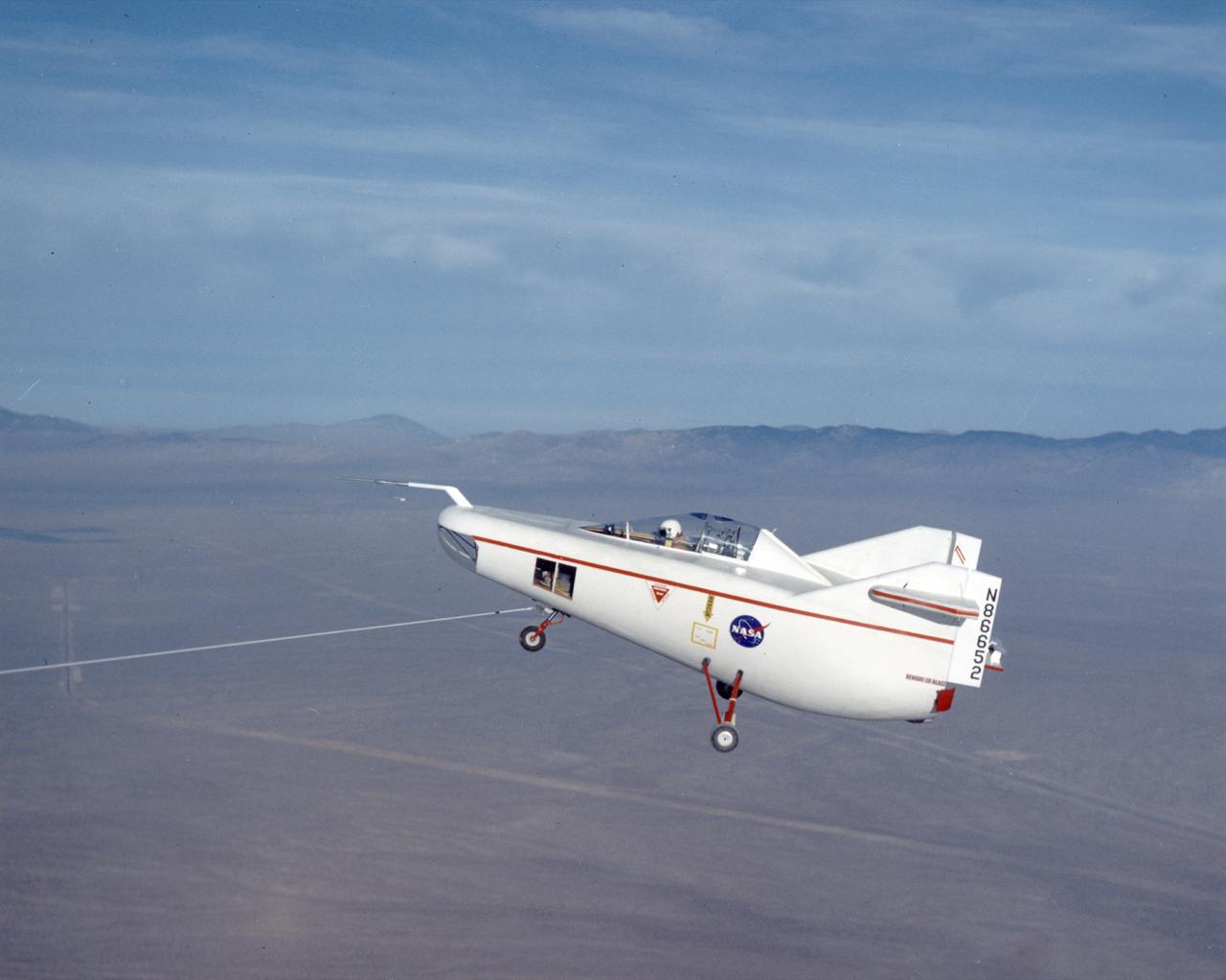
After initial ground-tow flights of the M2-F1 using the Pontiac as a tow vehicle, the way was clear to make air tows behind a C-47. The first air tow took place on 16 August 1963. Pilot Milt Thompson found that the M2-F1 flew well, with good control. This first flight lasted less than two minutes from tow-line release to touchdown. The descent rate was 4,000 feet per minute.
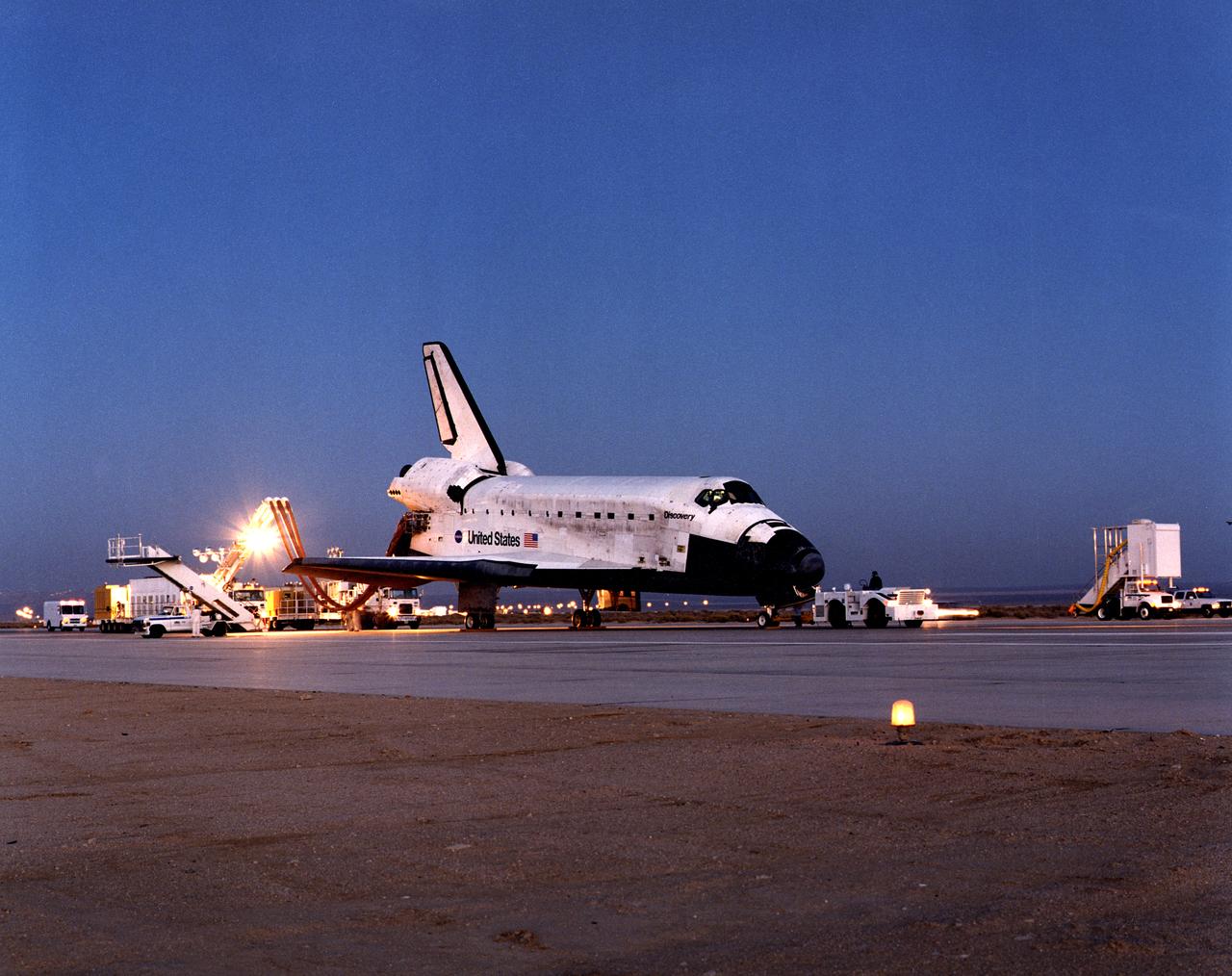
Ground crews worked into the evening to prepare the Space Shuttle Discovery for towing back to NASA’s Dryden Flight Research Center after its landing at Edwards Air Force Base on October 24, 2000. The landing marked the end of the STS-92 mission.
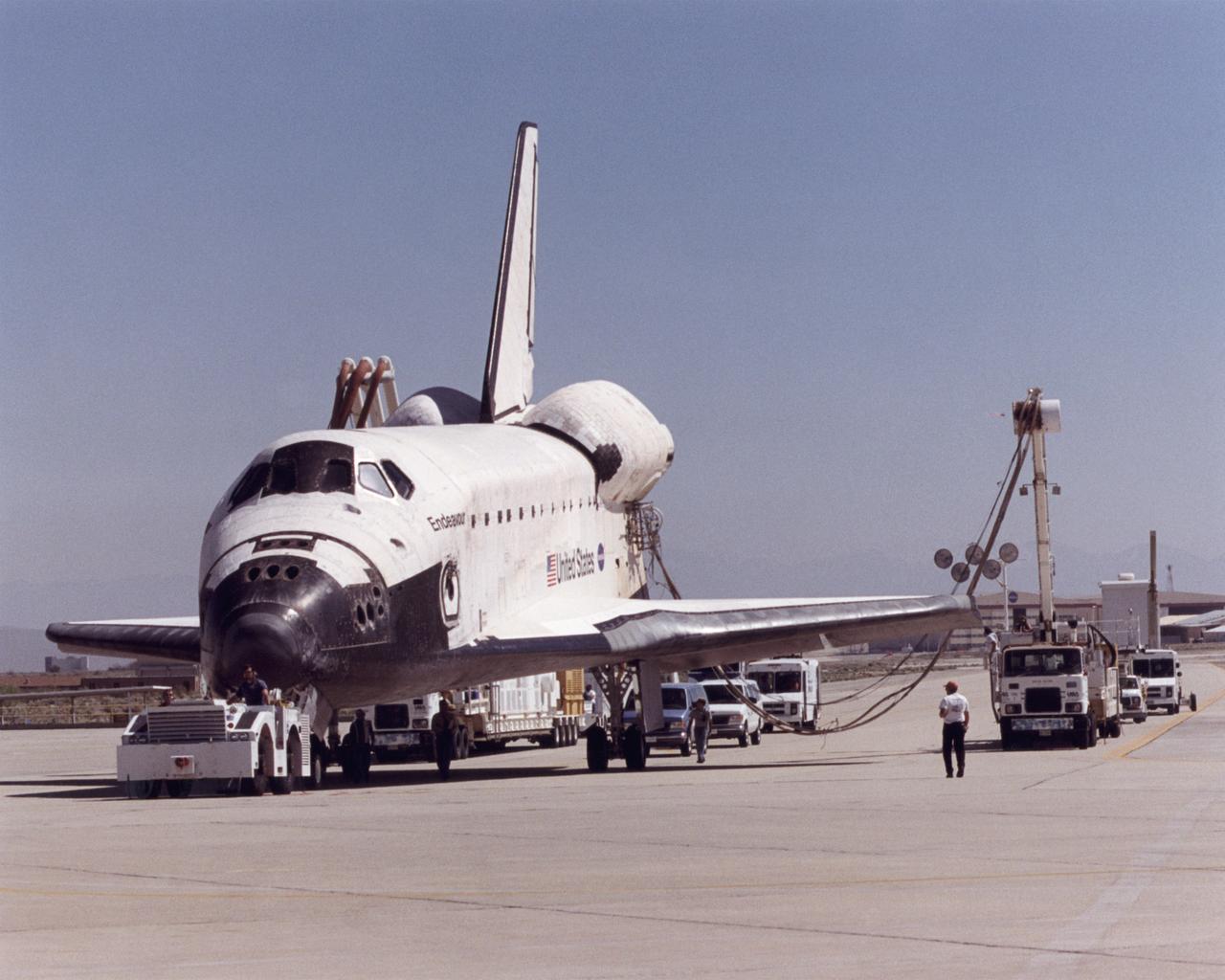
A convoy of specialized support vehicles follow the Space Shuttle Endeavour as it is towed up a taxiway at NASA's Dryden Flight Research Center on Edwards Air Force Base, California, after landing on May 1, 2001. The two largest vehicles trailing the shuttle provide electrical power and air conditioning to the shuttle's systems during post-flight recovery operations. The Endeavour had just completed mission STS-100, an almost 12-day mission to install the Canadarm 2 robotic arm and deliver some three tons of supplies and experiments to the International Space Station. The landing was the 48th shuttle landing at Edwards since shuttle flights began in 1981. After post-flight processing, the Endeavour was mounted atop one of NASA's modified Boeing 747 shuttle carrier aircraft and ferried back to the Kennedy Space Center in Florida on May 8, 2001.
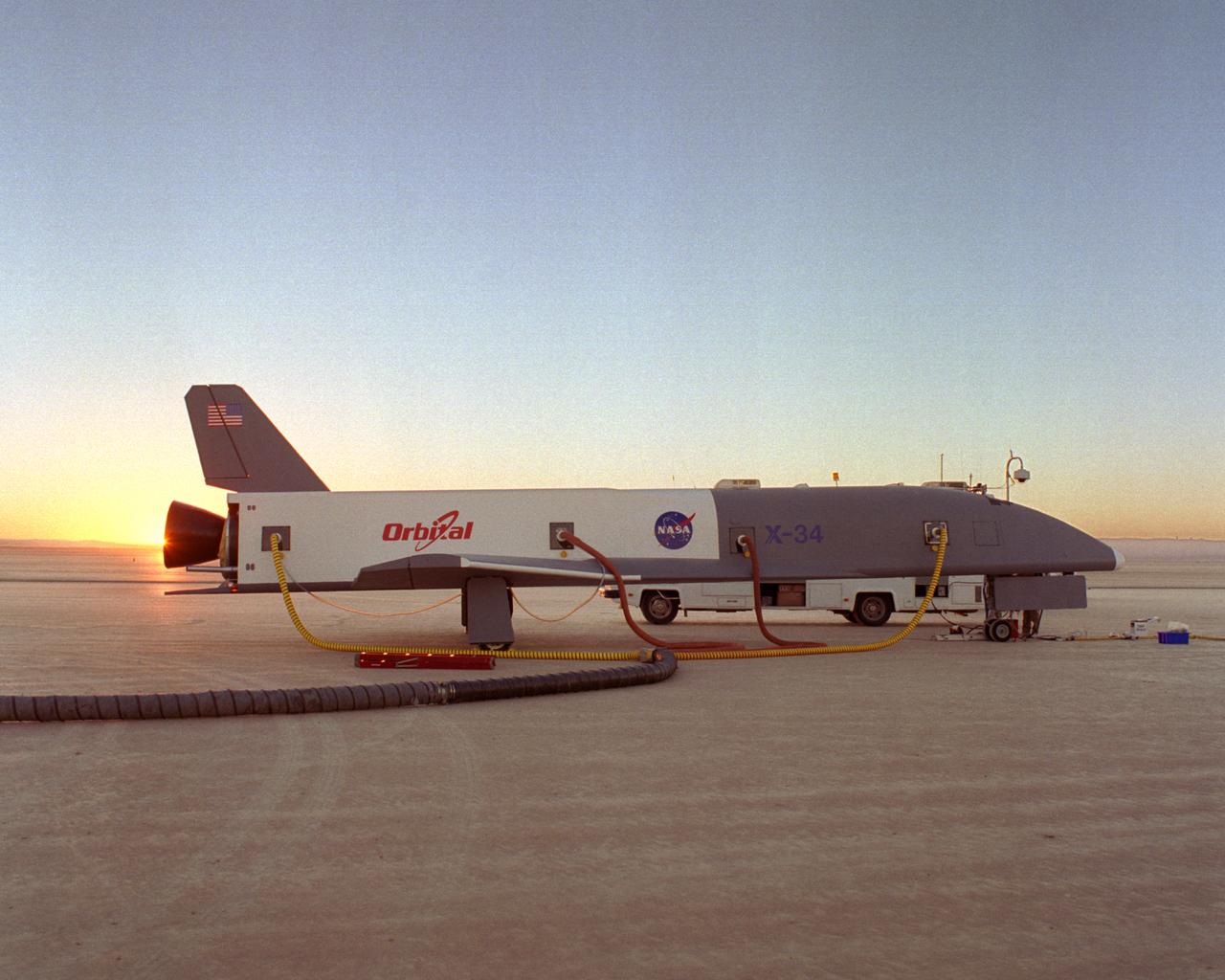
Following initial captive flight tests last year at NASA's Dryden Flight Research Center, Edwards Air Force Base, California, the X-34 technology demonstrator began a new series of tests last week in which it is being towed behind a semi-truck and released to coast on the Edwards dry lakebed. On July 20, 2000, it was towed and released twice at speeds of five and 10 miles per hour. On July 24, 2000, it was towed and released twice at 10 and 30 miles per hour. Twelve tests are planned during which the X-34 will be towed for distances up to 10,000 feet and released at speeds up to 80 miles per hour. The test series is expected to last at least six weeks.
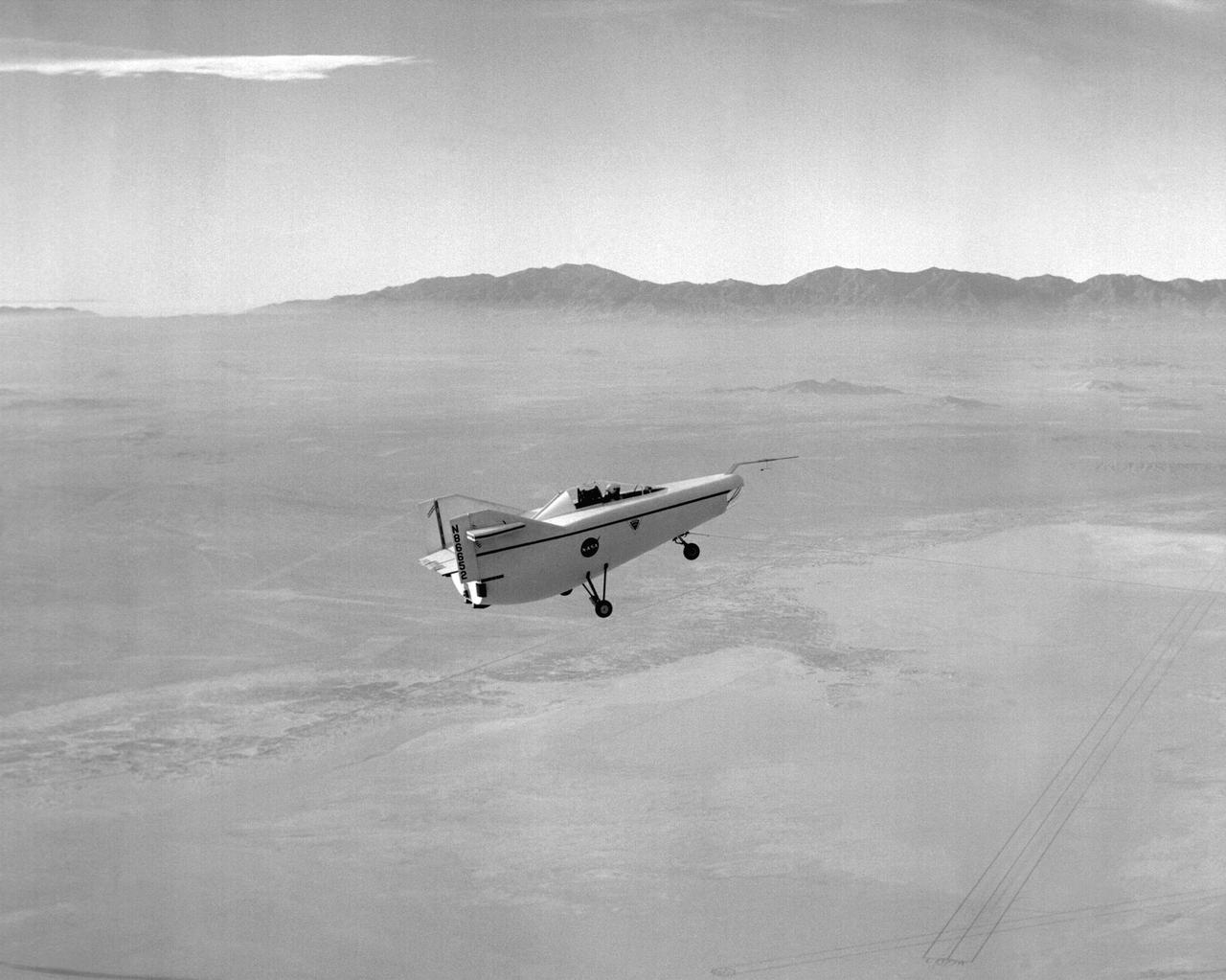
Following the first M2-F1 airtow flight on 16 August 1963, the Flight Research Center used the vehicle for both research flights and to check out new lifting-body pilots. These included Bruce Peterson, Don Mallick, Fred Haise, and Bill Dana from NASA. Air Force pilots who flew the M2-F1 included Chuck Yeager, Jerry Gentry, Joe Engle, Jim Wood, and Don Sorlie, although Wood, Haise, and Engle only flew on car tows. In the three years between the first and last flights of the M2-F1, it made about 400 car tows and 77 air tows.
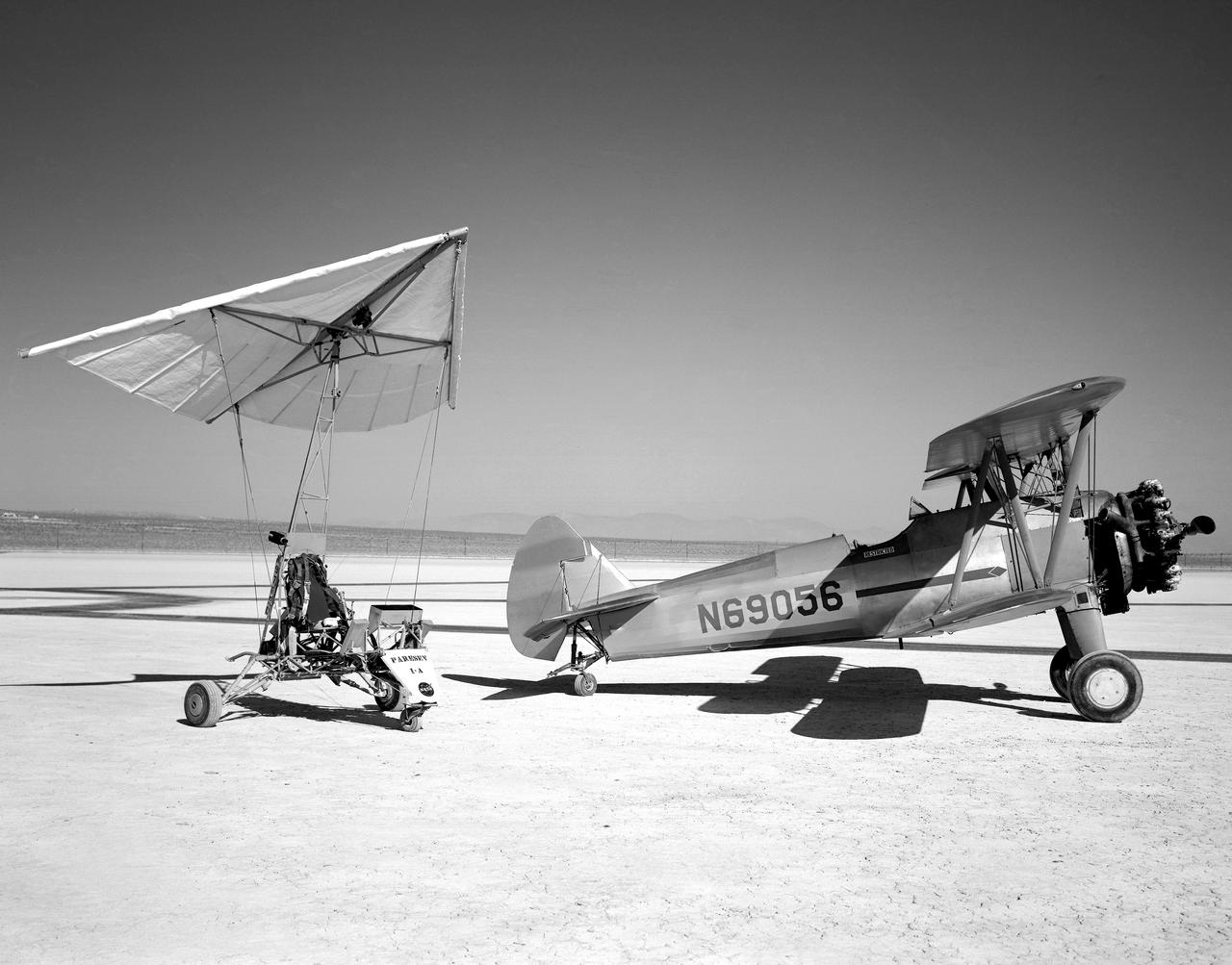
The Paresev 1-A (Paraglider Research Vehicle) and the tow airplane, 450-hp Stearman sport Biplane, sitting on Rogers dry lakebed, Edwards, California. The control system in the Paresev 1-A had a more conventional control stick position and was cable-operated; the main landing gear used shocks and bungees with the 100-square-foot wing membrane being made of 6-ounce unsealed Dacron.
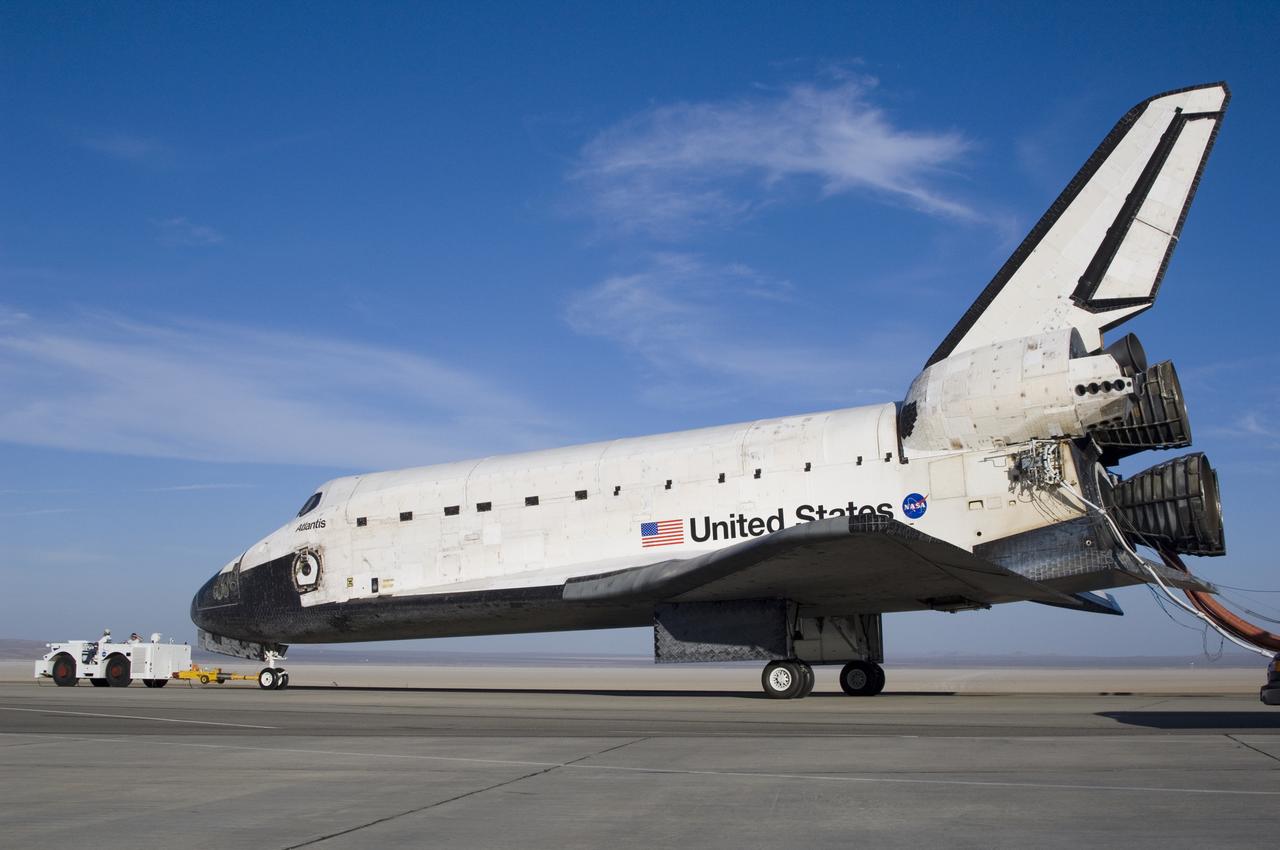
Following its landing on June 22, 2007, the Space Shuttle Atlantis is towed from the runway at Edwards Air Force Base to NASA Dryden's Mate-Demate Device (MDD) for post-flight processing in preparation for its return to the Kennedy Space Center in Florida.
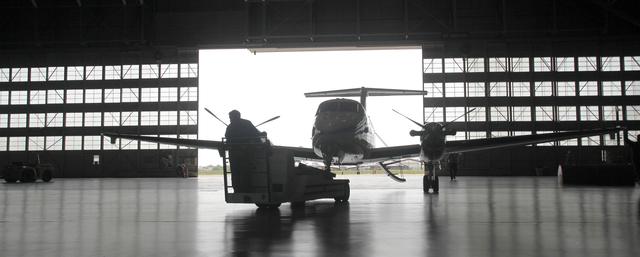
The NASA Langley's twin-engine turboprop, Beechcraft King Air B200 aircraft is towed through the large doors and inside the hangar of the Research Center, Building 1244.
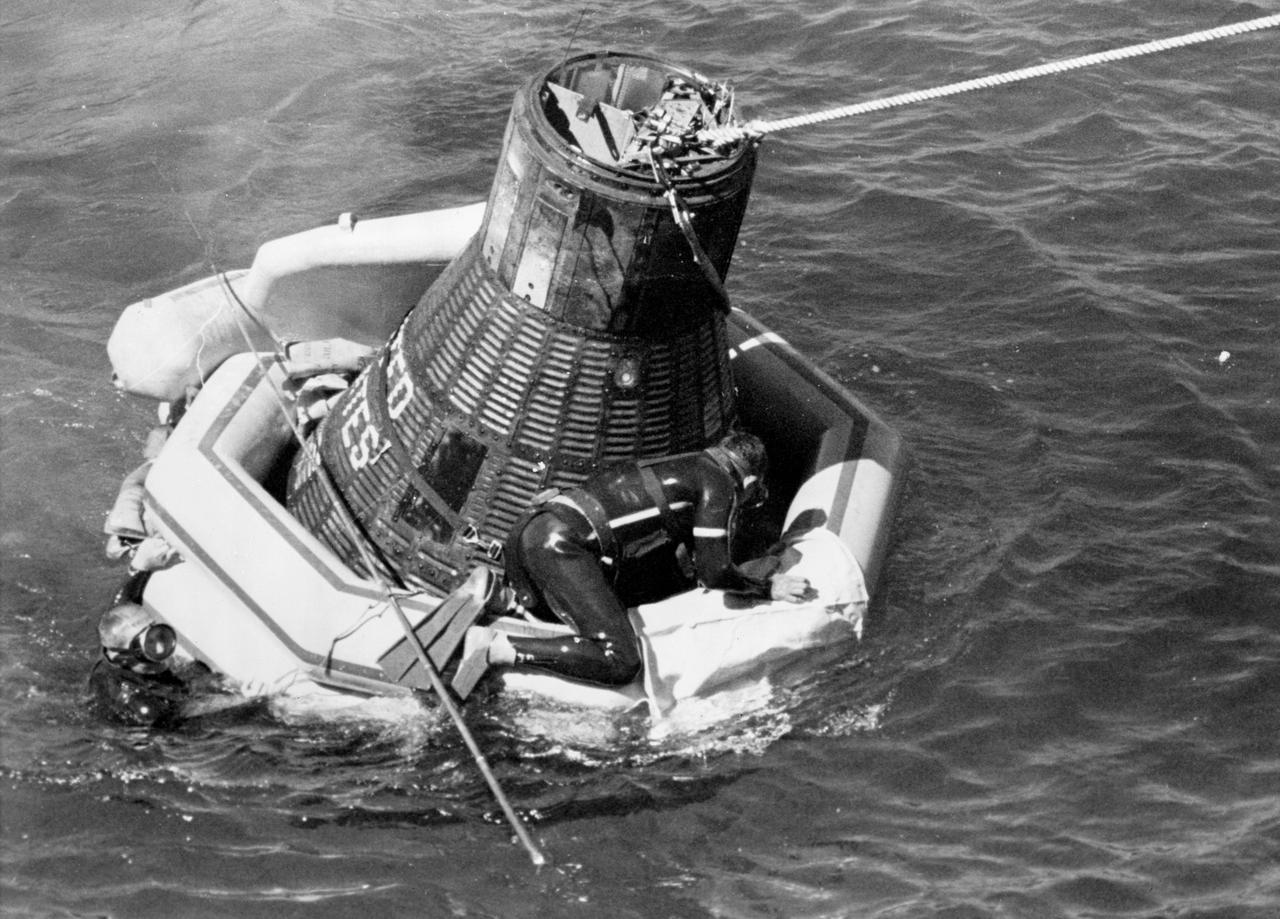
S62-061060 (3 Oct. 1962) --- Navy frogman astride Mercury-Atlas 8 caspule, the Sigma 7, floatation collar to secure tow line for recovery by USS Kearsarge. Photo credit: NASA
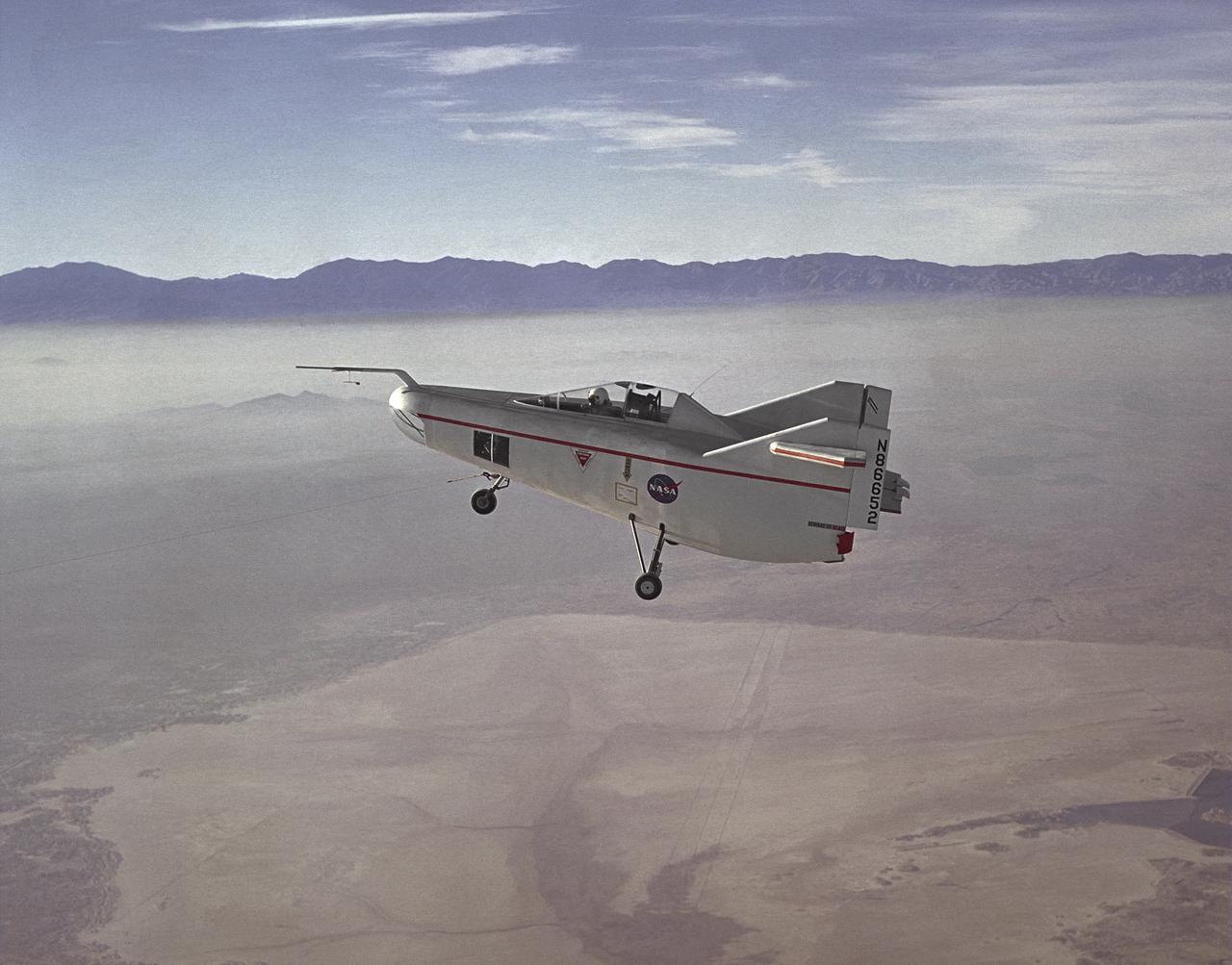
The M2-F1 Lifting Body is seen here under tow, high above Rogers Dry Lake near the Flight Research Center (later redesignated the Dryden Flight Research Center), Edwards, California. R. Dale Reed effectively advocated the project with the support of NASA research pilot Milt Thompson. Together, they gained the support of Flight Research Center Director Paul Bikle. After a six-month feasibility study, Bikle gave approval in the fall of 1962 for the M2-F1 to be built.

A NASA F/A-18 is towed to the apron at NASA's Armstrong Flight Research Center in Edwards, California during sunrise over Rogers Dry Lake. The F/A-18 was used to test a transmitter for an air navigation system, called the Airborne Location Integrating Geospatial Navigation System, or ALIGNS. This system, designed to allow pilots to position their aircraft at precise distances to each other, will be critical for acoustic validation efforts of NASA's next supersonic X-plane, the X-59 Quiet SuperSonic Technology.
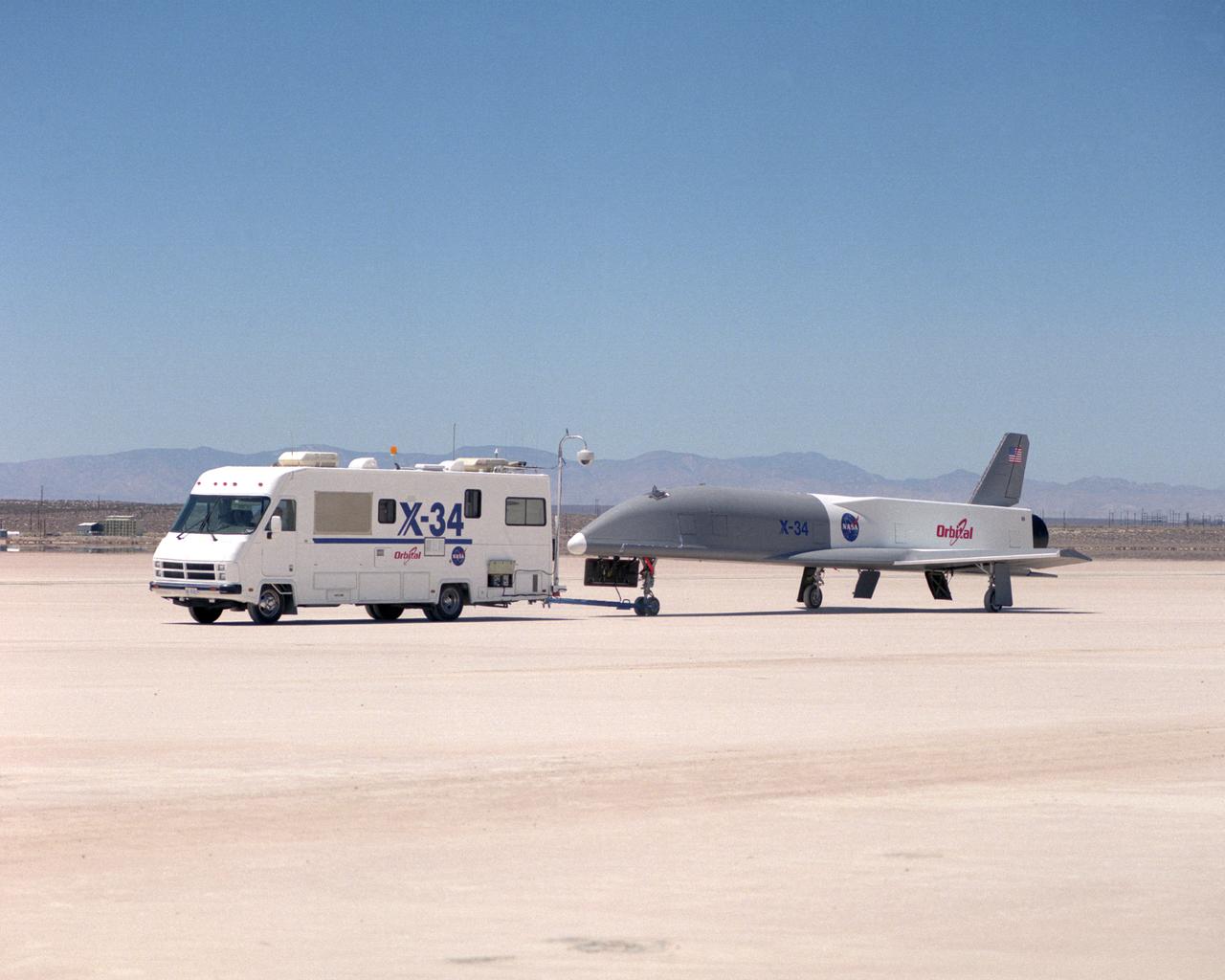
Following initial captive flight tests last year at NASA's Dryden Flight Research Center, Edwards Air Force Base, California, the X-34 technology demonstrator began a new series of tests last week in which it is being towed behind a semi-truck and released to coast on the Edwards dry lakebed. On July 20, 2000, it was towed and released twice at speeds of five and 10 miles per hour. On July 24, 2000, it was towed and released twice at 10 and 30 miles per hour. Twelve tests are planned during which the X-34 will be towed for distances up to 10,000 feet and released at speeds up to 80 miles per hour. The test series is expected to last at least six weeks.
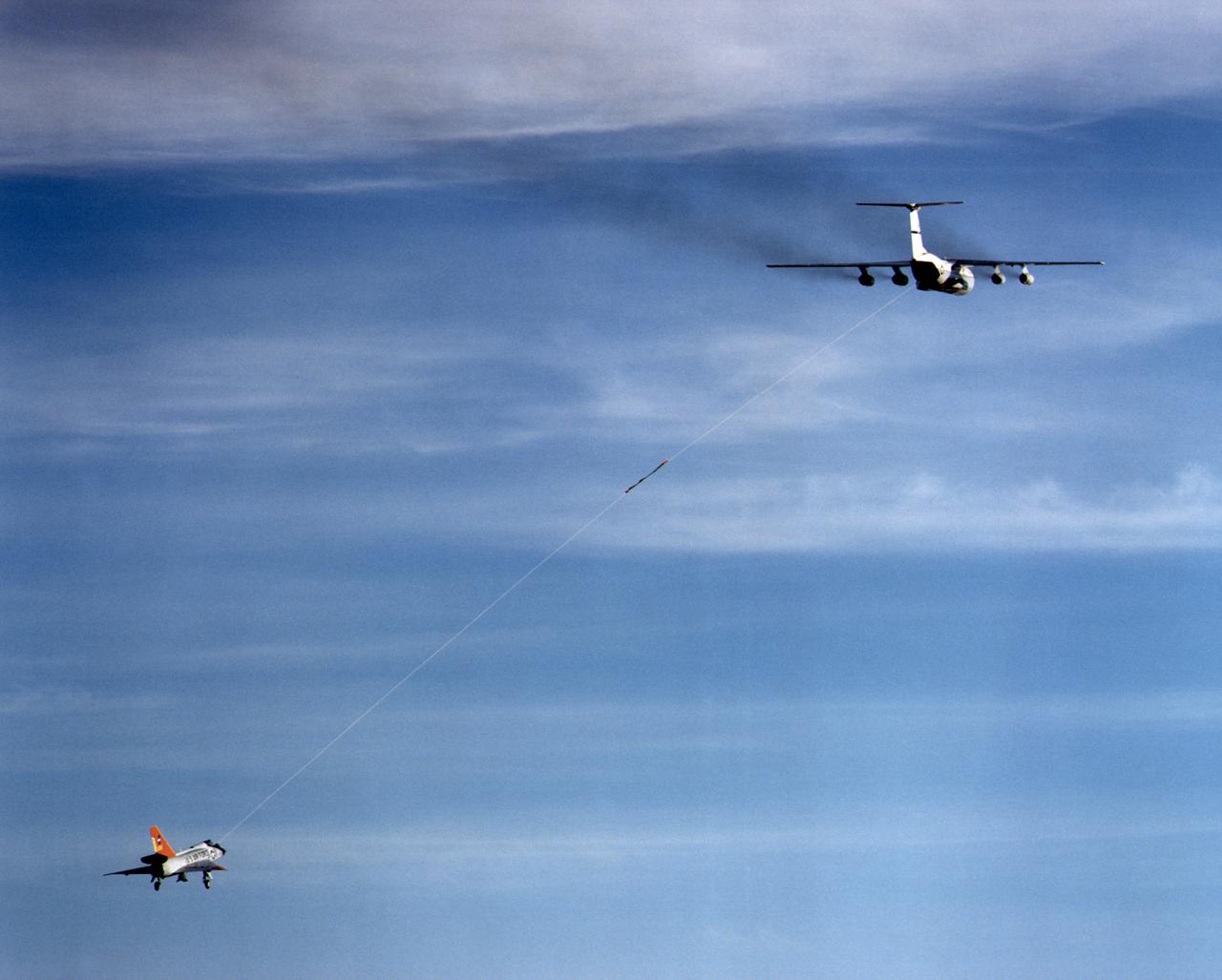
Eclipse project QF-106 and C-141A climbs out under tow on first tethered flight December 20, 1997
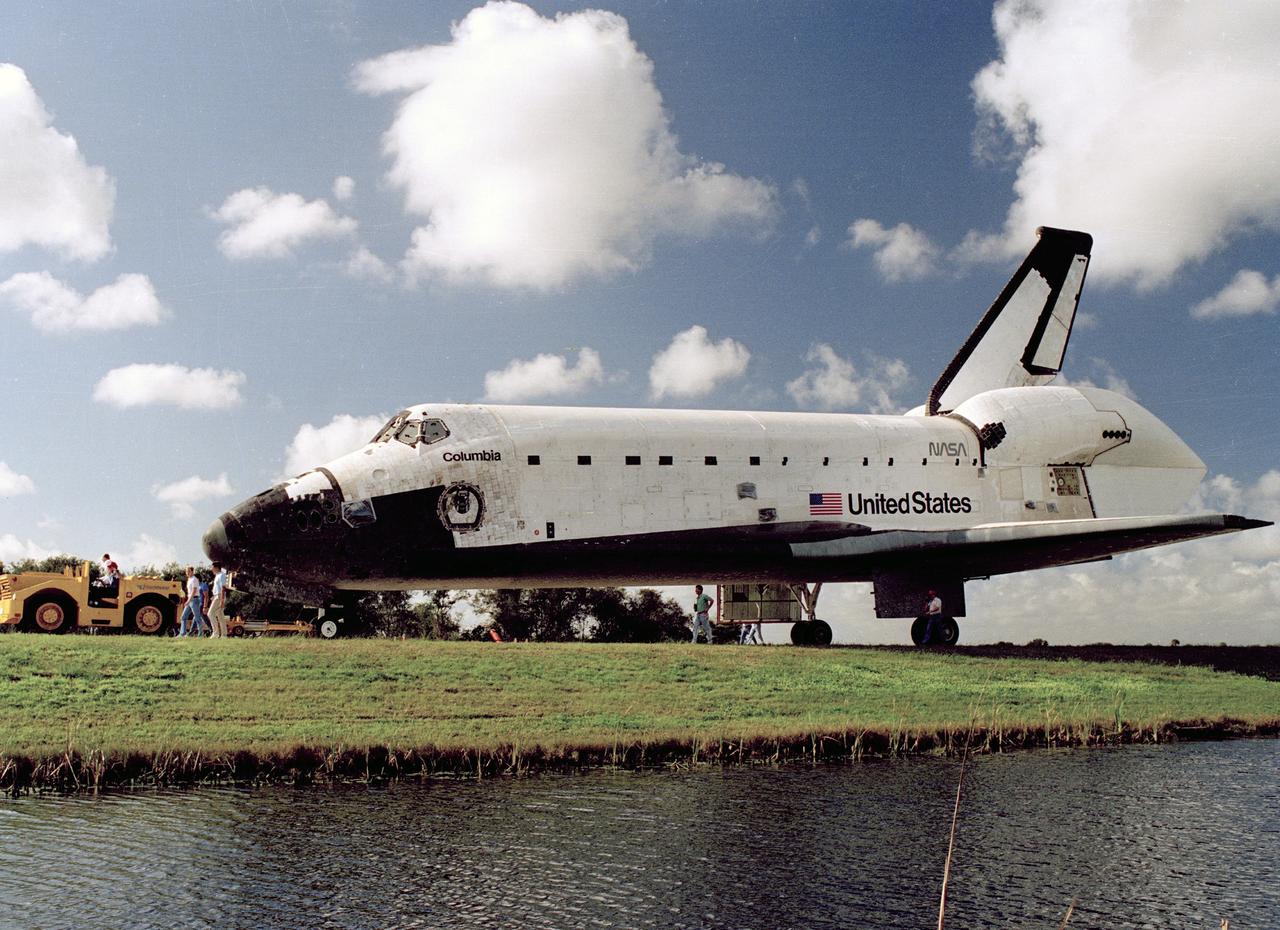
CAPE CANAVERAL, Fla. – The orbiter Columbia heads for the Vehicle Assembly Building following its arrival at the Shuttle Landing Facility. OV-102's return brings full circle mission STS-35, a nine-day flight to study astrophysics. Photo credit: NASA
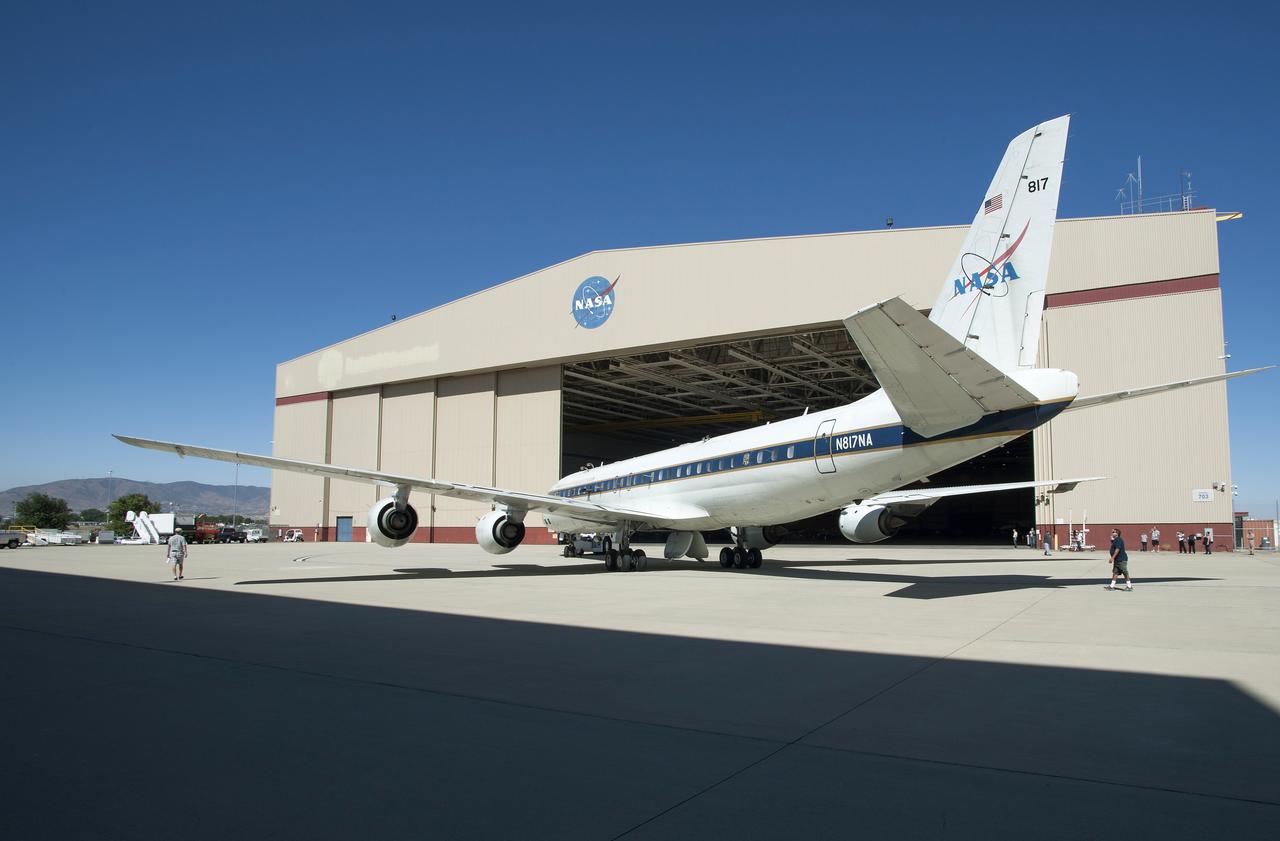
Media observe as ground crews tow NASA’s DC-8 airborne laboratory into its Palmdale, California hangar.
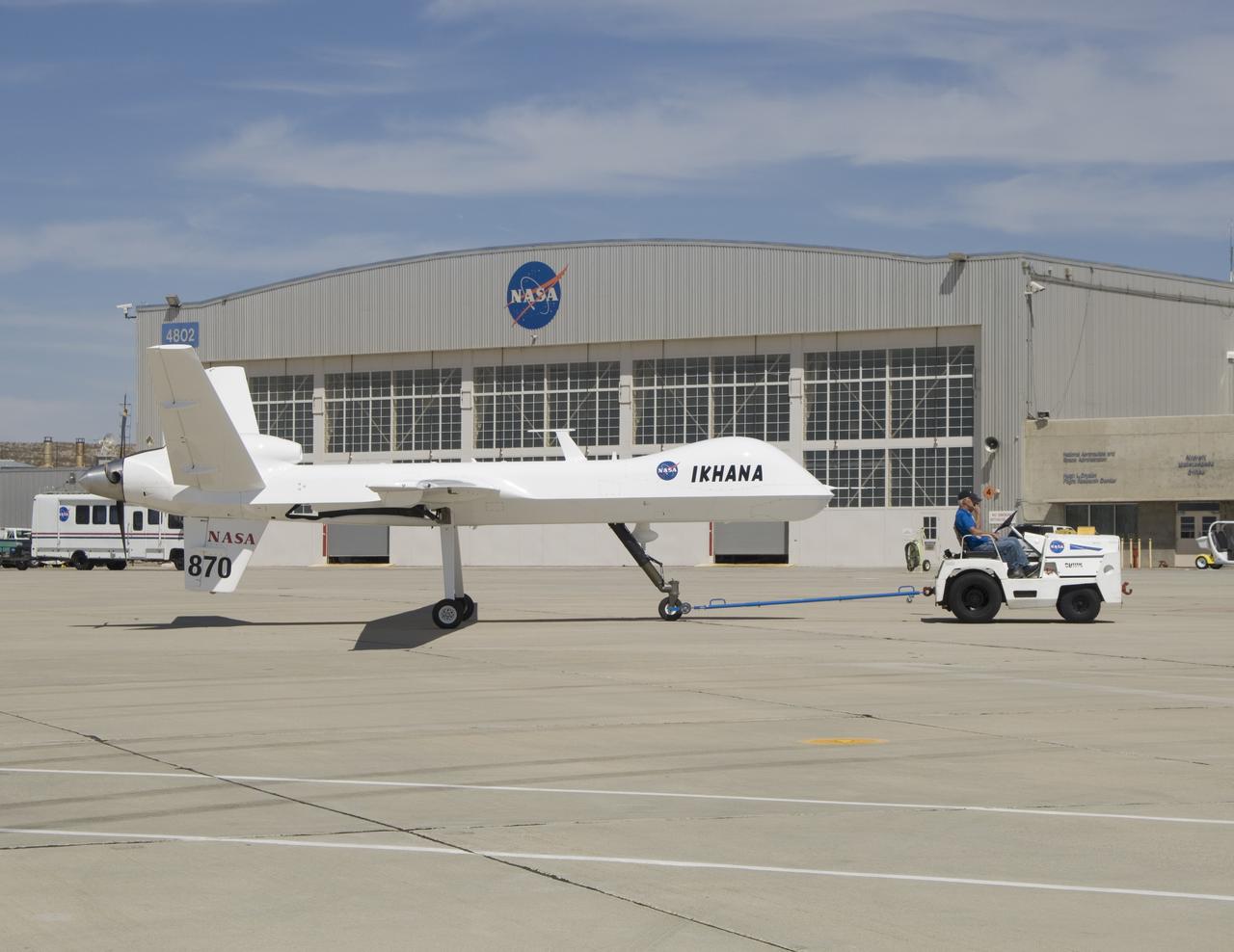
After arriving via a ferry flight on June 23, 2007, NASA's Ikhana unmanned science demonstration aircraft is towed to a hangar at its new home, the Dryden Flight Research Center in Southern California.
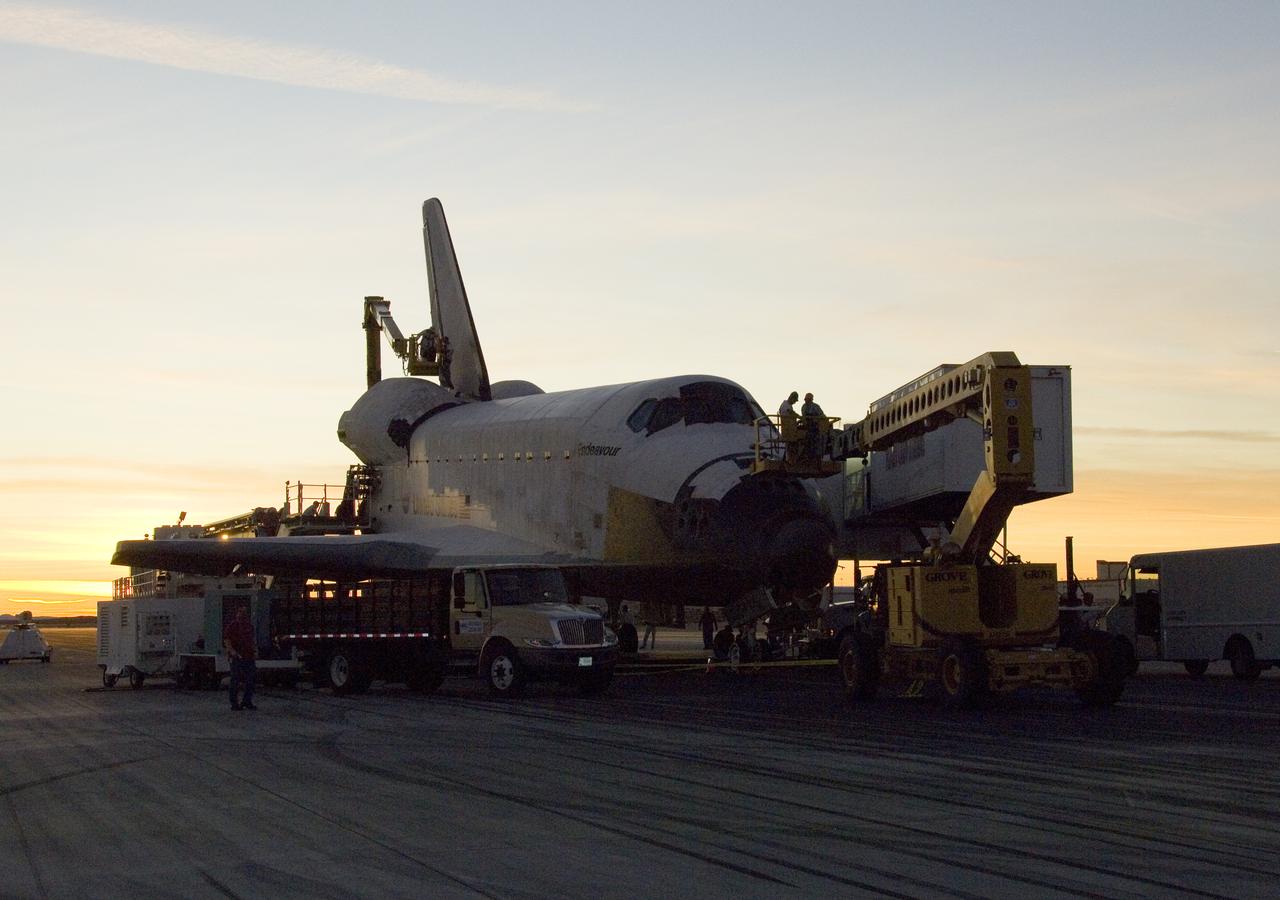
As the sun sets over the high desert, NASA technicians on mobile high-lifts prepare the shuttle Endeavour for towing off the Edwards Air Force Base runway.
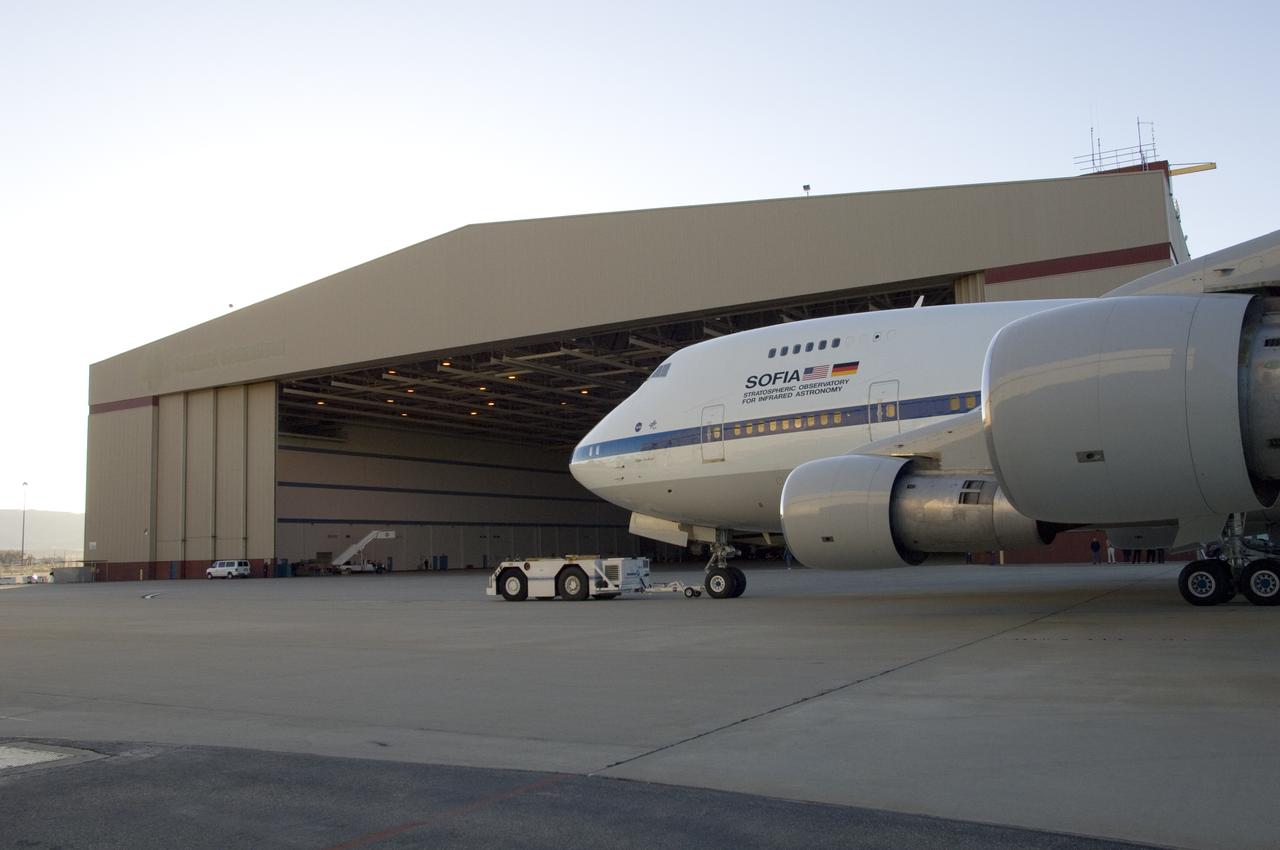
An aircraft tug tows NASA's SOFIA infrared observatory 747SP into Hangar 703 upon arrival at its base, the Dryden Aircraft Operations Facility in Palmdale, Calif.
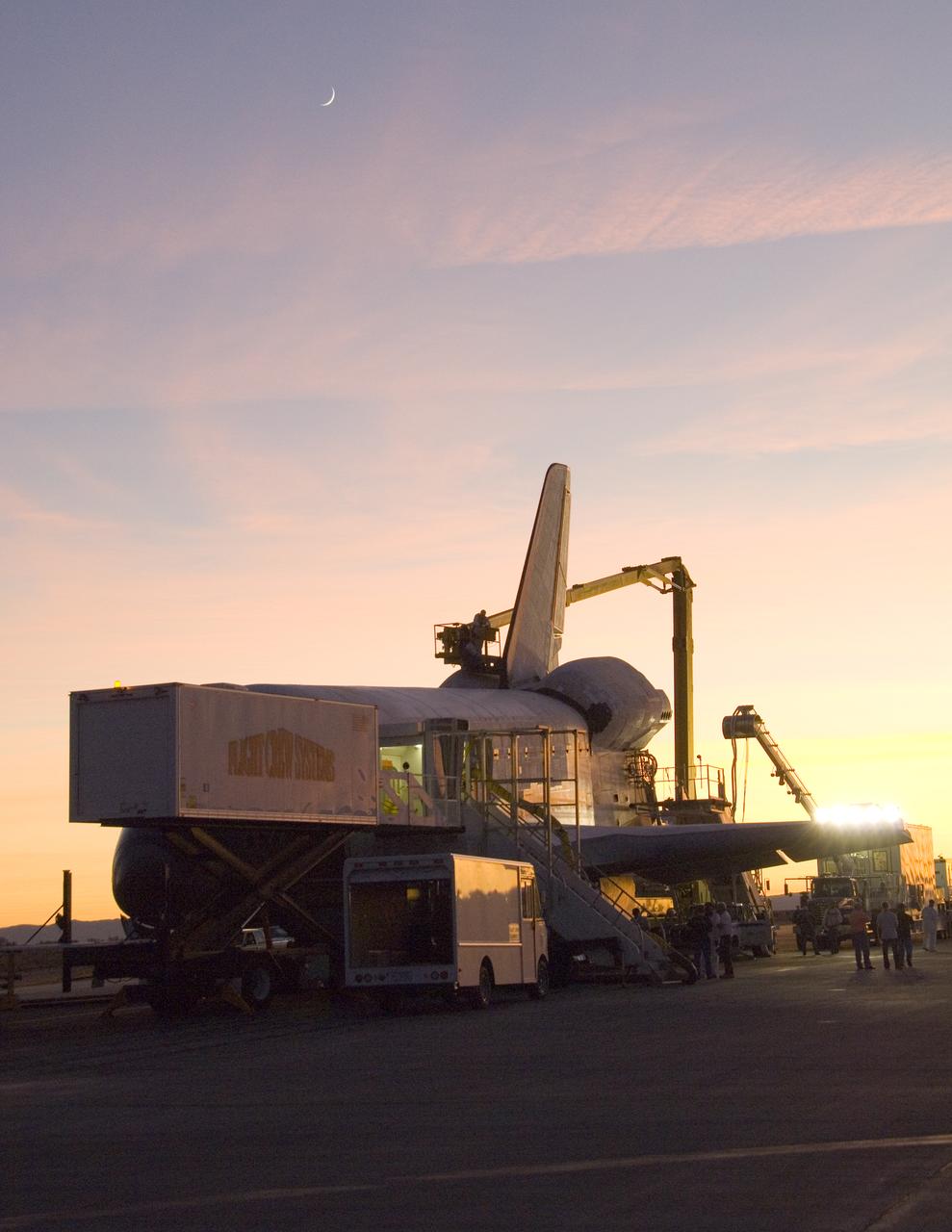
Its STS-126 mission over, Space Shuttle Endeavour is surrounded by recovery equipment before being towed off the Edwards Air Force Base runway.
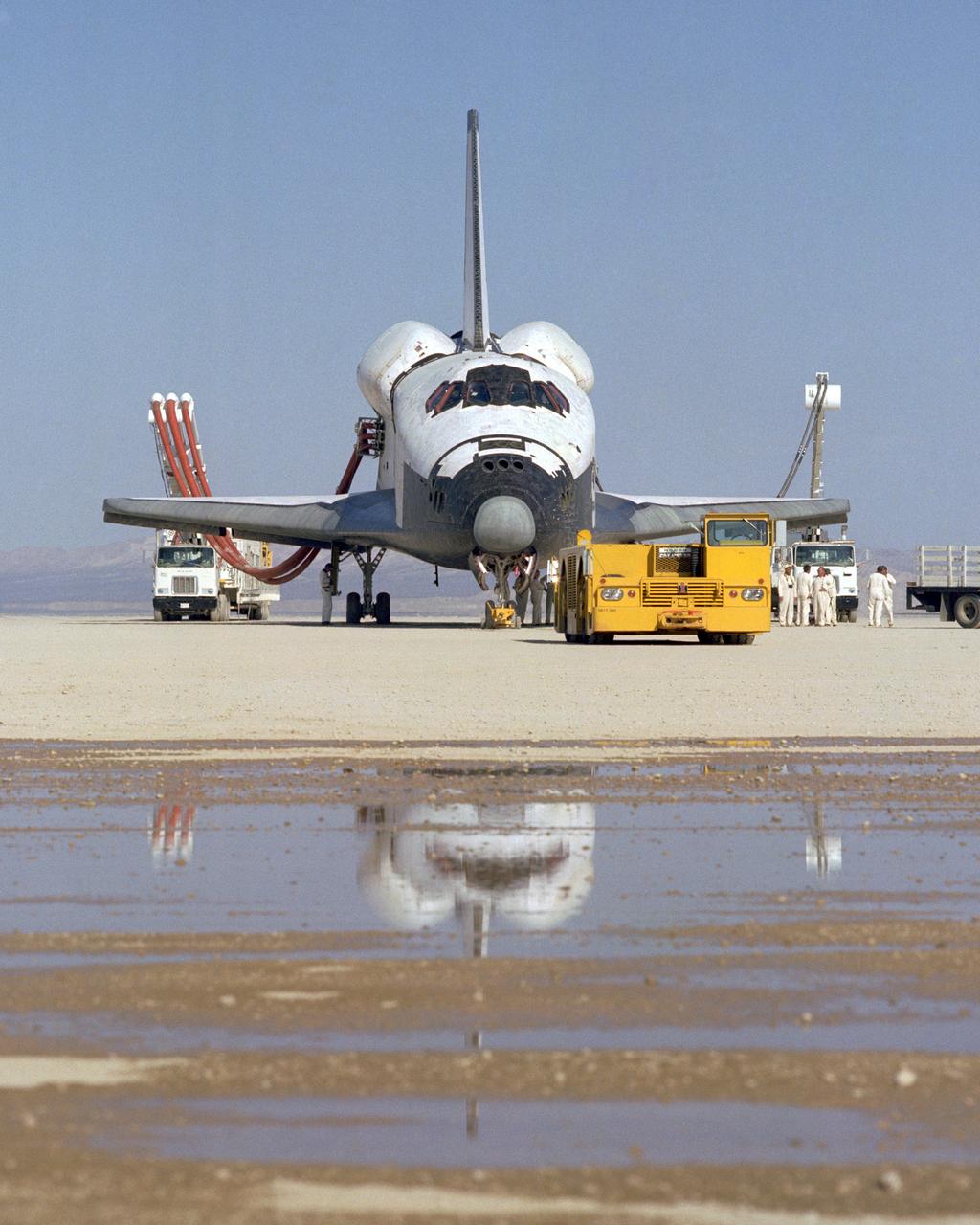
The Space Shuttle Columbia on Rogers Dry lakebed at Edwards AFB after landing to complete its first orbital mission on April 14, 1981. Technicians towed the Shuttle back to the NASA Dryden Flight Research Center for post-flight processing and preparation for a return ferry flight atop a modified 747 to Kennedy Space Center in Florida.
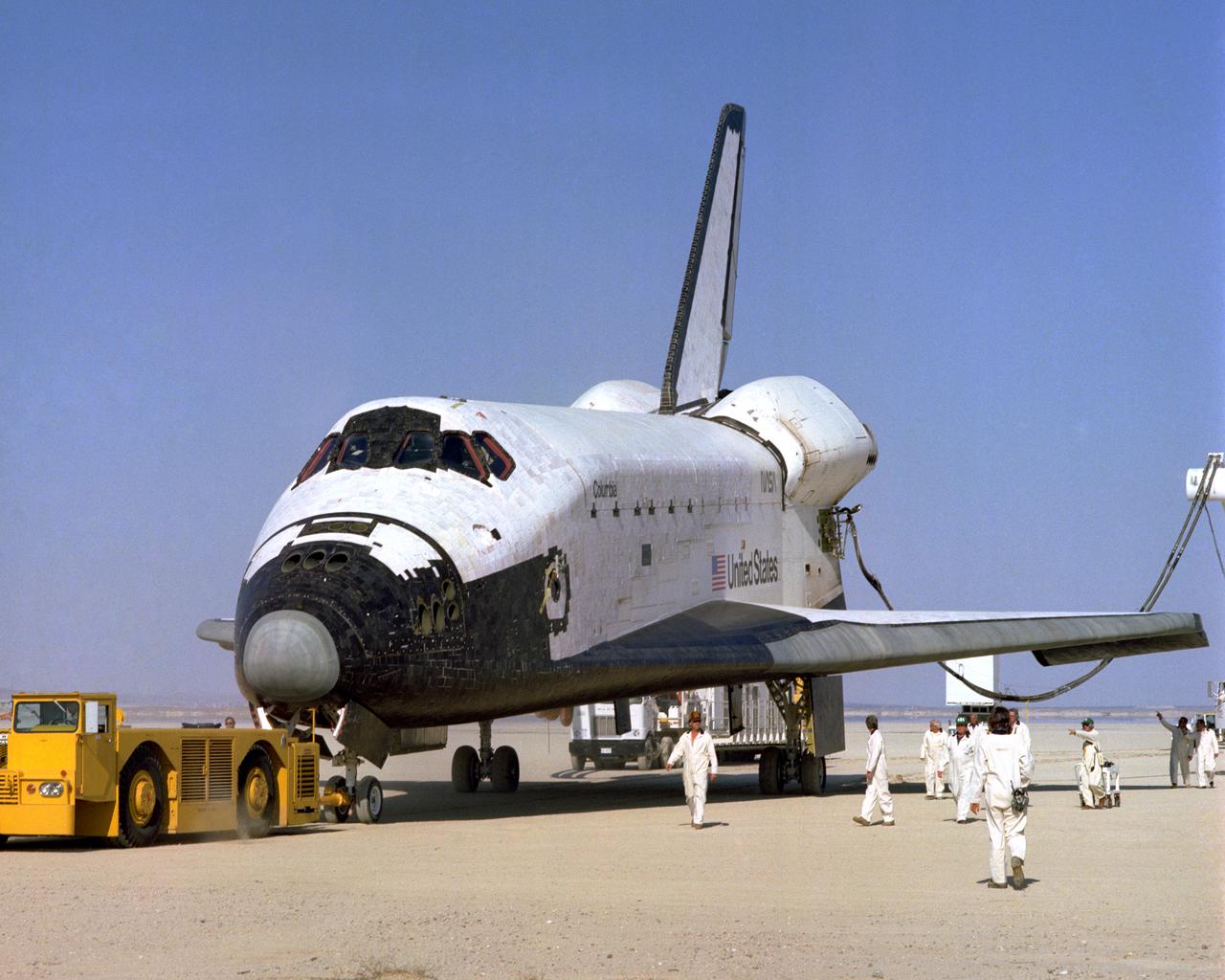
The Space Shuttle Columbia on Rogers Dry lakebed at Edwards AFB after landing to complete its first orbital mission on April 14, 1981. Technicians towed the Shuttle back to the NASA Dryden Flight Research Center for post-flight processing and preparation for a return ferry flight atop a modified 747 to Kennedy Space Center in Florida.
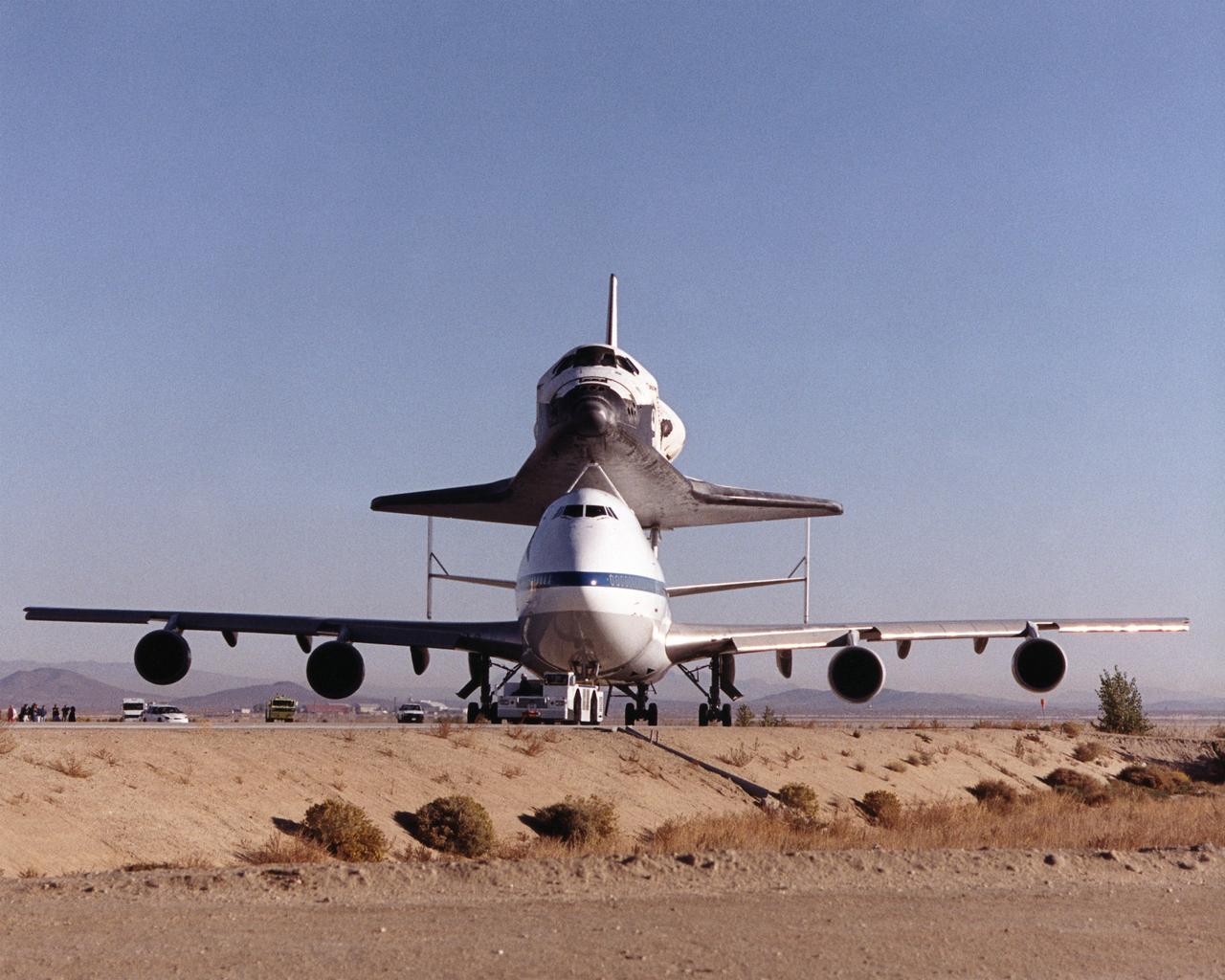
The Space Shuttle Discovery sits atop one of NASA’s modified Boeing 747 Shuttle Carrier Aircraft as the unusual piggyback duo is towed along a taxiway at NASA’s Dryden Flight Research Center at Edwards, California. The Discovery was ferried from NASA Dryden to NASA’s Kennedy Space Center in Florida on November 2, 2000, after extensive pre-ferry servicing and preparations.
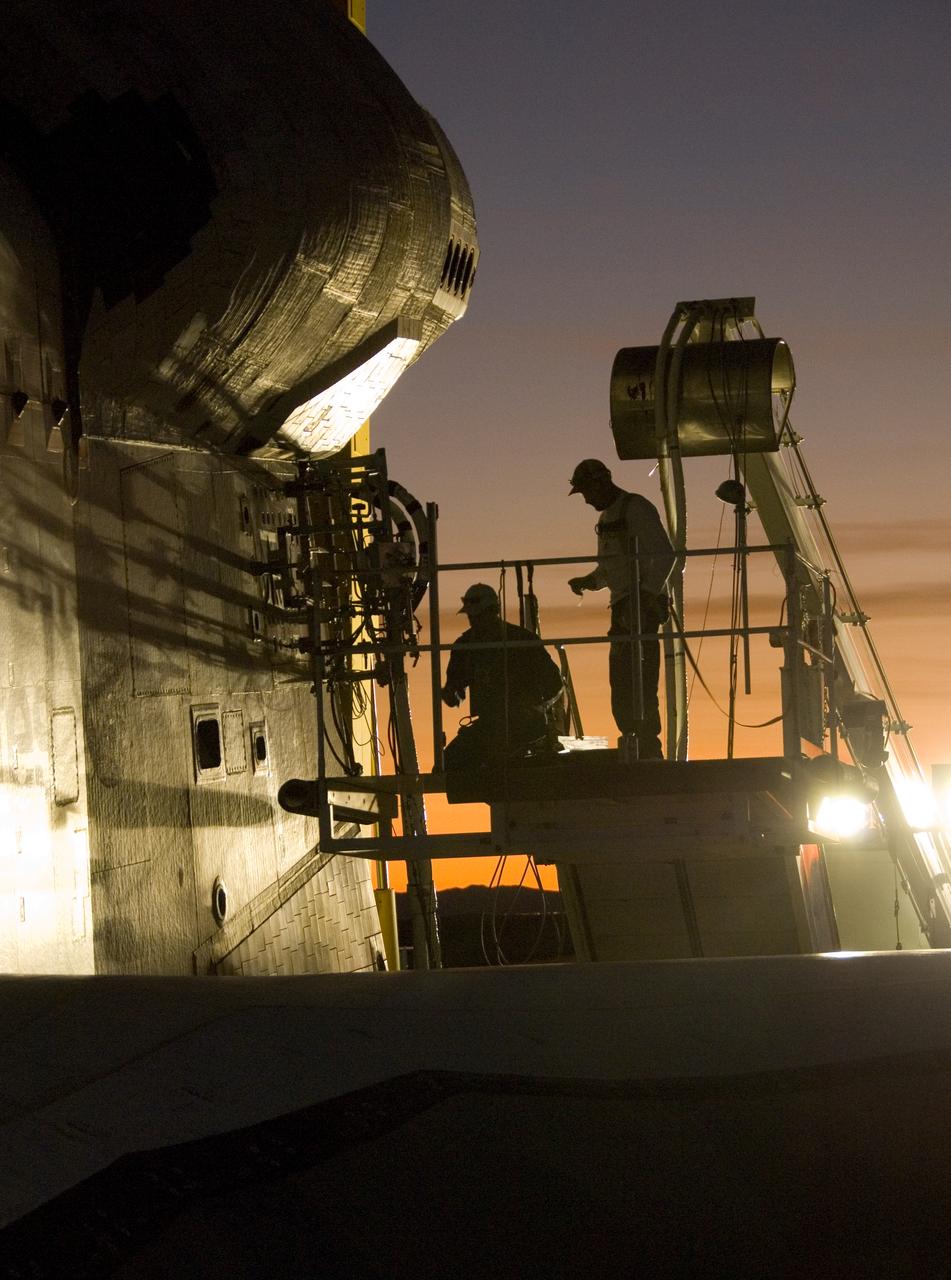
As dusk settles over Edwards Air Force Base, NASA technicians hook up various ground-support systems before shuttle Endeavour is towed off the landing runway.
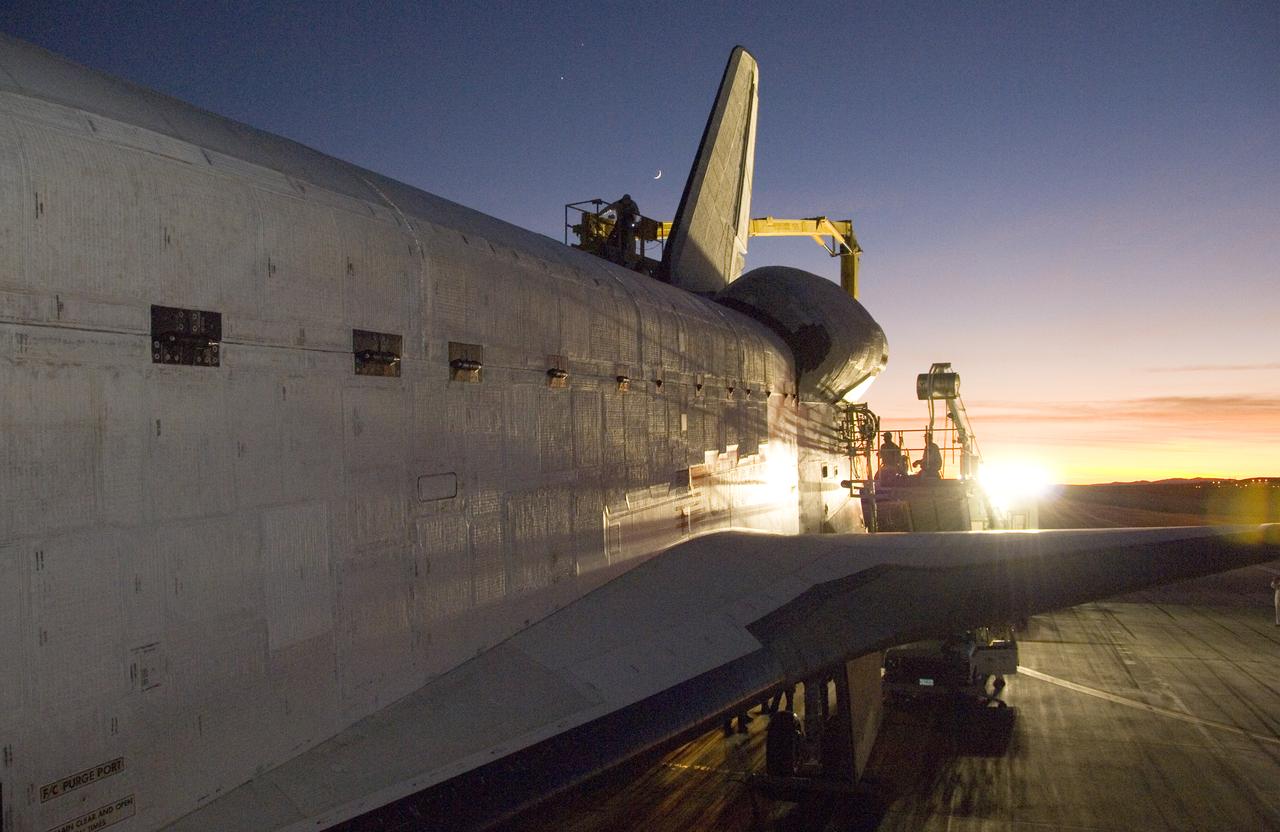
The setting sun casts long shadows over shuttle Endeavour as technicians prepare to tow the orbiter from the Edwards Air Force Base runway after landing Nov. 30.
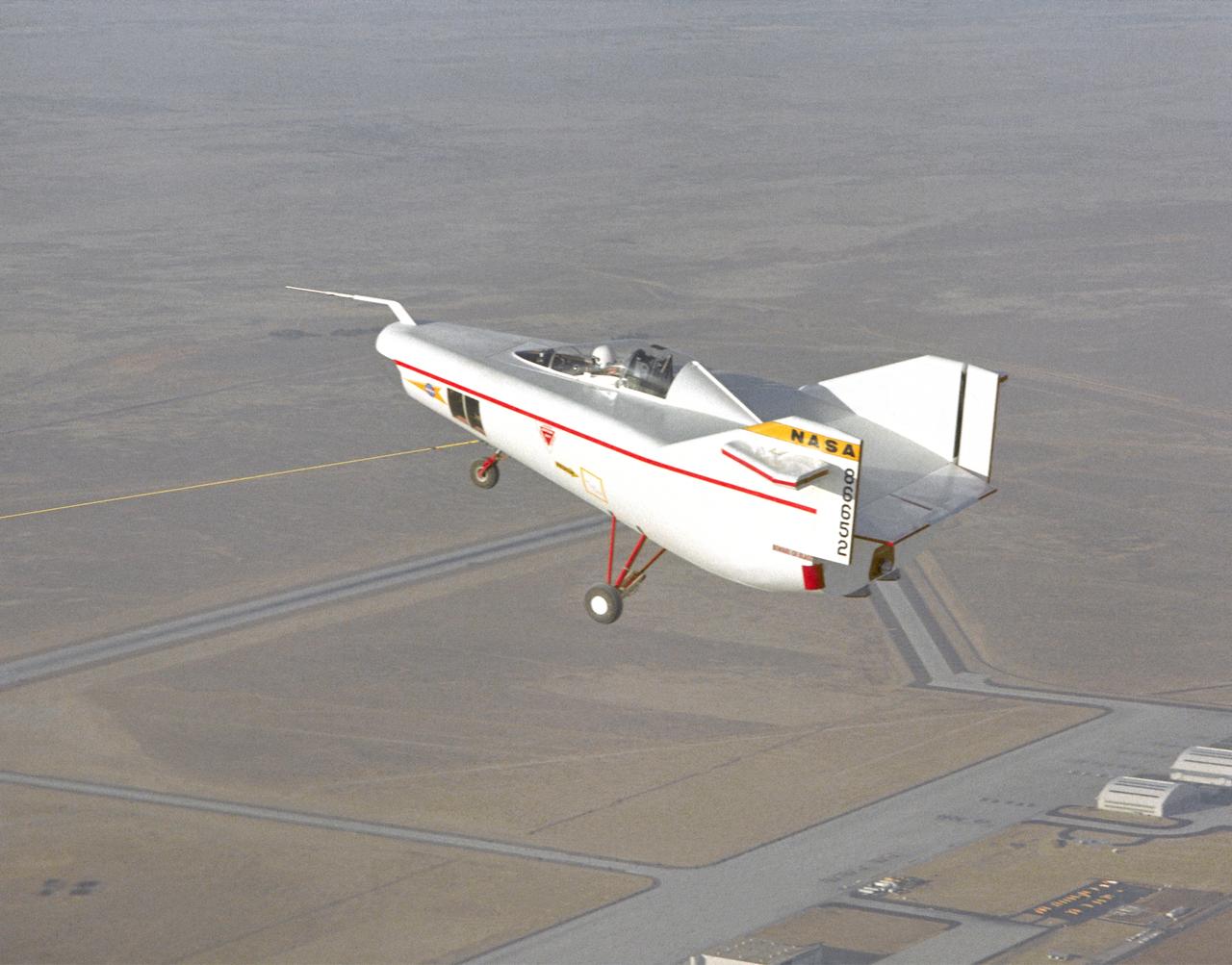
The M2-F1 Lifting Body is seen here under tow by an unseen C-47 at the NASA Flight Research Center (later redesignated the Dryden Flight Research Center), Edwards, California. The low-cost vehicle was the first piloted lifting body to be test flown. The lifting-body concept originated in the mid-1950s at the National Advisory Committee for Aeronautics' Ames Aeronautical Laboratory, Mountain View California. By February 1962, a series of possible shapes had been developed, and R. Dale Reed was working to gain support for a research vehicle.
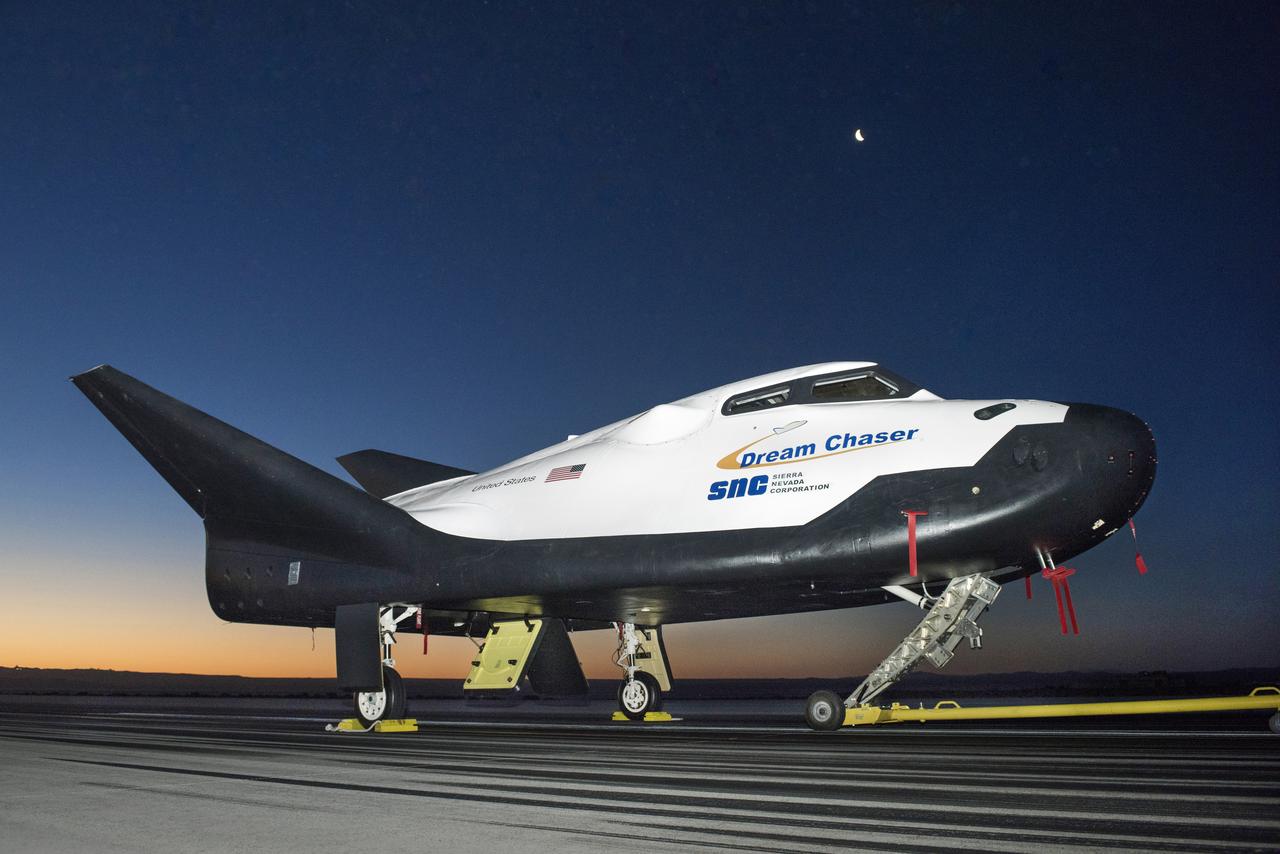
Sierra Nevada Corporation's (SNC) Dream Chaser® spacecraft shown on the runway at NASA's Armstrong Flight Research Center on May 20 preparing for a tow-test. The spacecraft is undergoing ground tests leading up to a free flight test later this year.
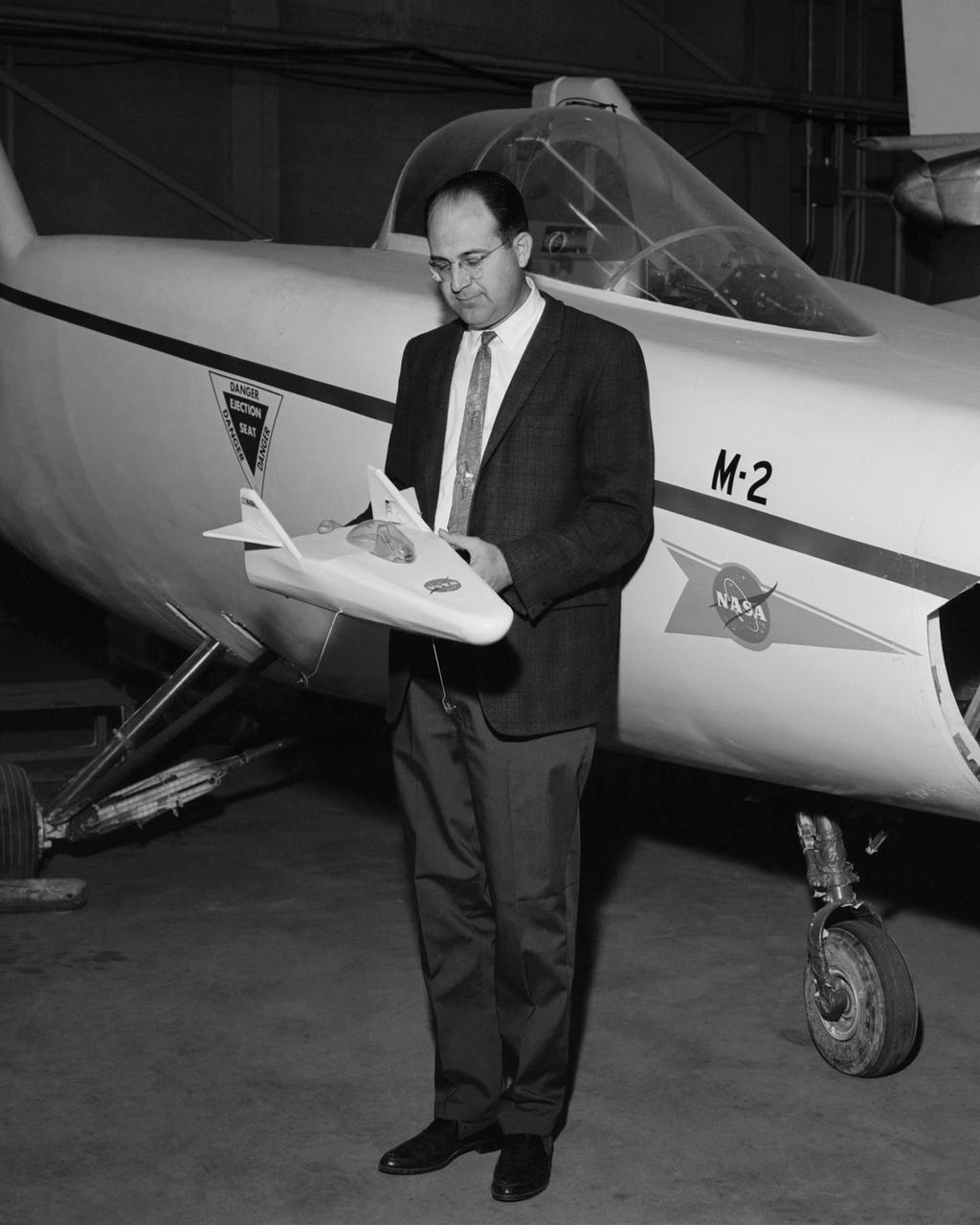
Dale Reed with a model of the M2-F1 in front of the actual lifting body. Reed used the model to show the potential of the lifting bodies. He first flew it into tall grass to test stability and trim, then hand-launched it from buildings for longer flights. Finally, he towed the lifting-body model aloft using a powered model airplane known as the "Mothership." A timer released the model and it glided to a landing. Dale's wife Donna used a 9 mm. camera to film the flights of the model. Its stability as it glided--despite its lack of wings--convinced Milt Thompson and some Flight Research Center engineers including the center director, Paul Bikle, that a piloted lifting body was possible.
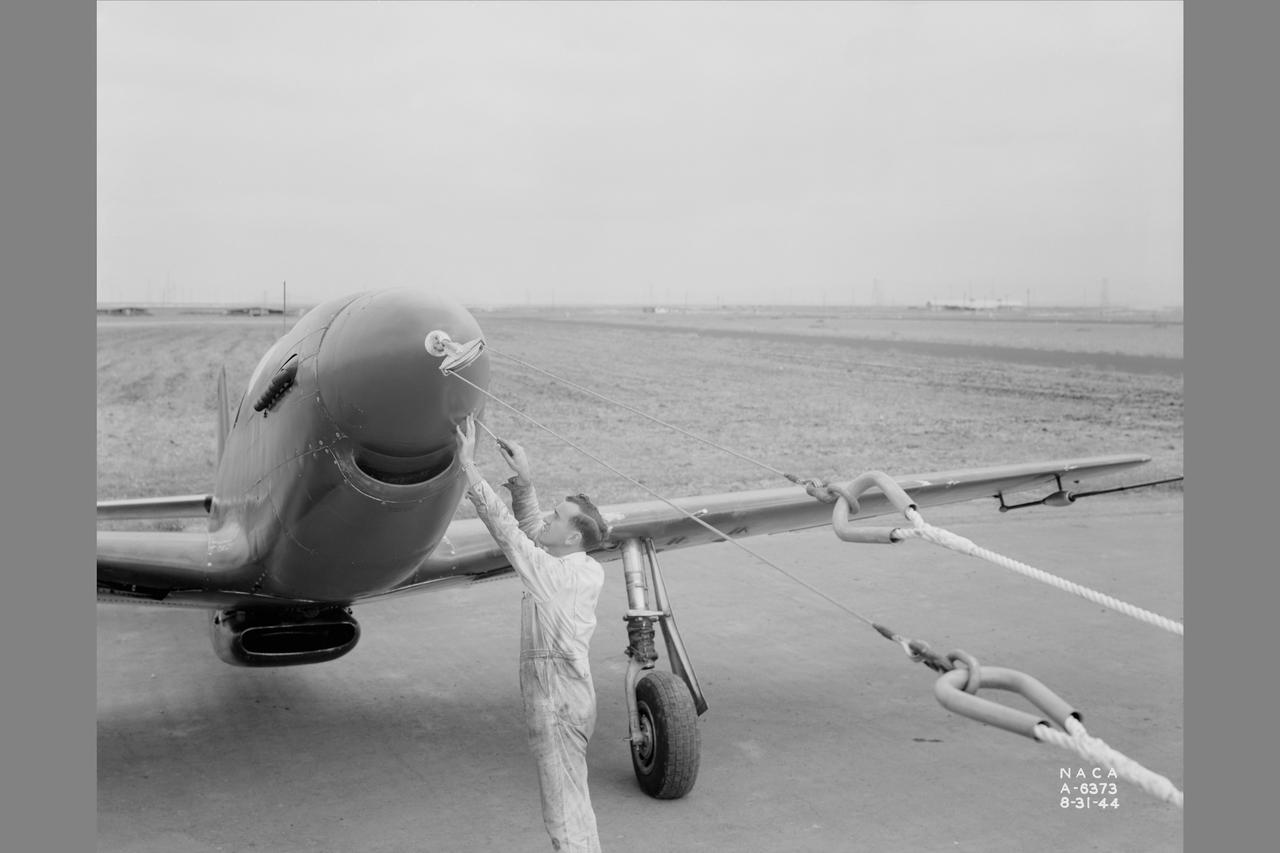
Towing installations on P-51 airplane for propeller off tests on the P-51 Front view of P-51 in towing position with P-61A preparing for take off at NACA Ames Research Center, Moffett Field, California
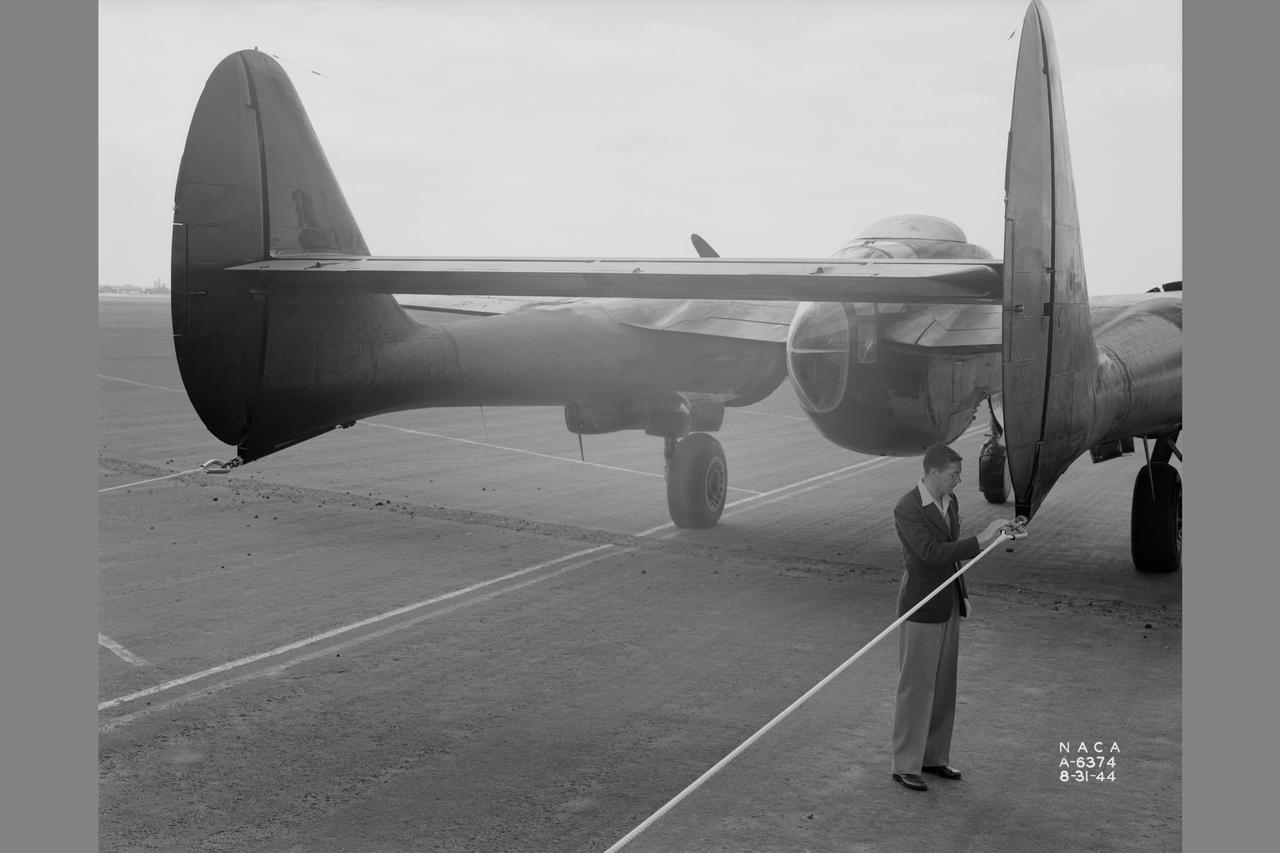
Towing installations on P-51 and P-61 airplanes for propeller off tests on the P-51. Rear view of P-61 in towing position preparing for take off at NACA Ames Research Center, Moffett Field, California
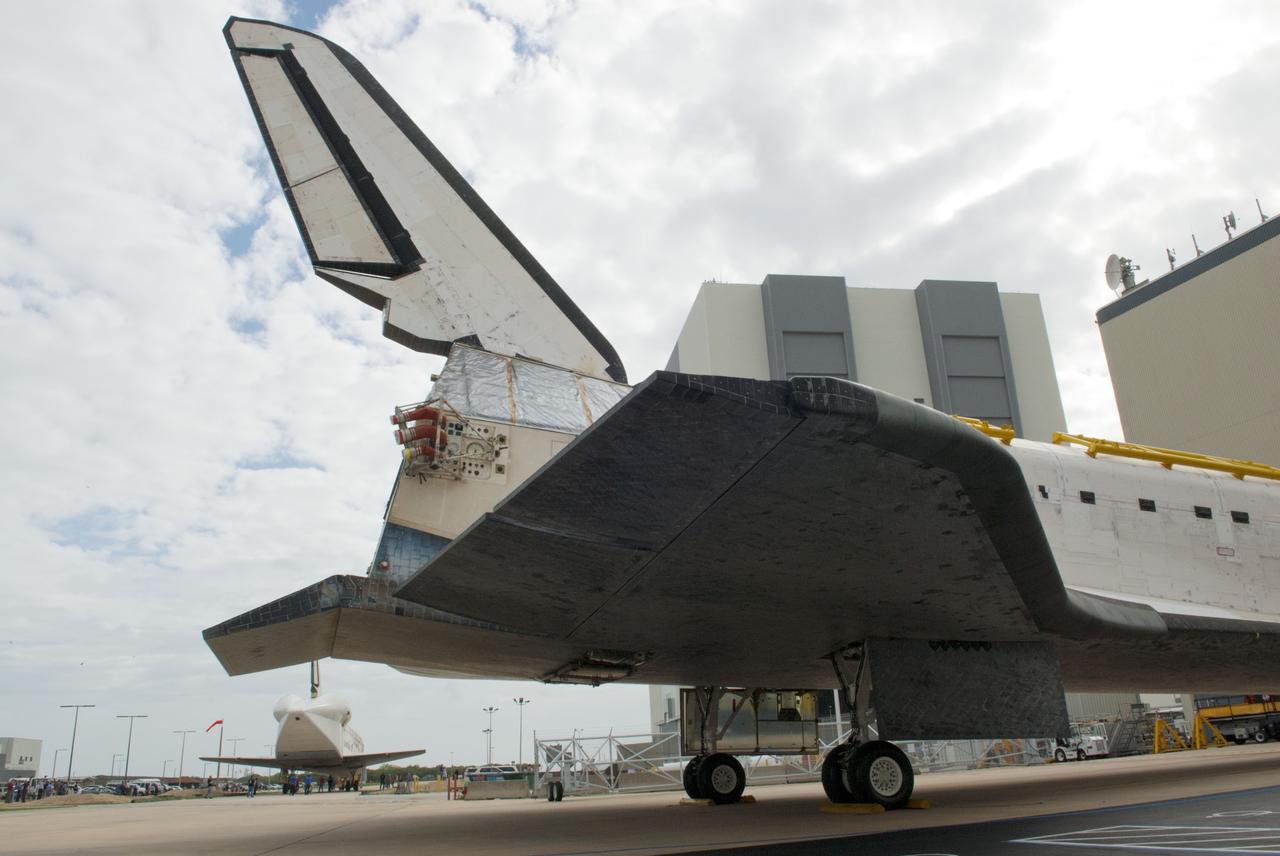
CAPE CANAVERAL, Fla. – At NASA’s Kennedy Space Center in Florida, space shuttle Atlantis has been towed to the doors of Orbiter Processing Facility-1 OPF-1 after being towed from the Vehicle Assembly Building VAB. At left, space shuttle Discovery is being towed to the VAB after being towed out of OPF-1. The tail cone protects Discovery’s three replica shuttle main engines. The work is part of the Space Shuttle Program’s transition and retirement processing of the three space shuttles. Atlantis is being prepared for display at the Kennedy Space Center Visitor Complex and is scheduled to rollover to the complex in November. Photo credit: NASA/Tim Jacobs
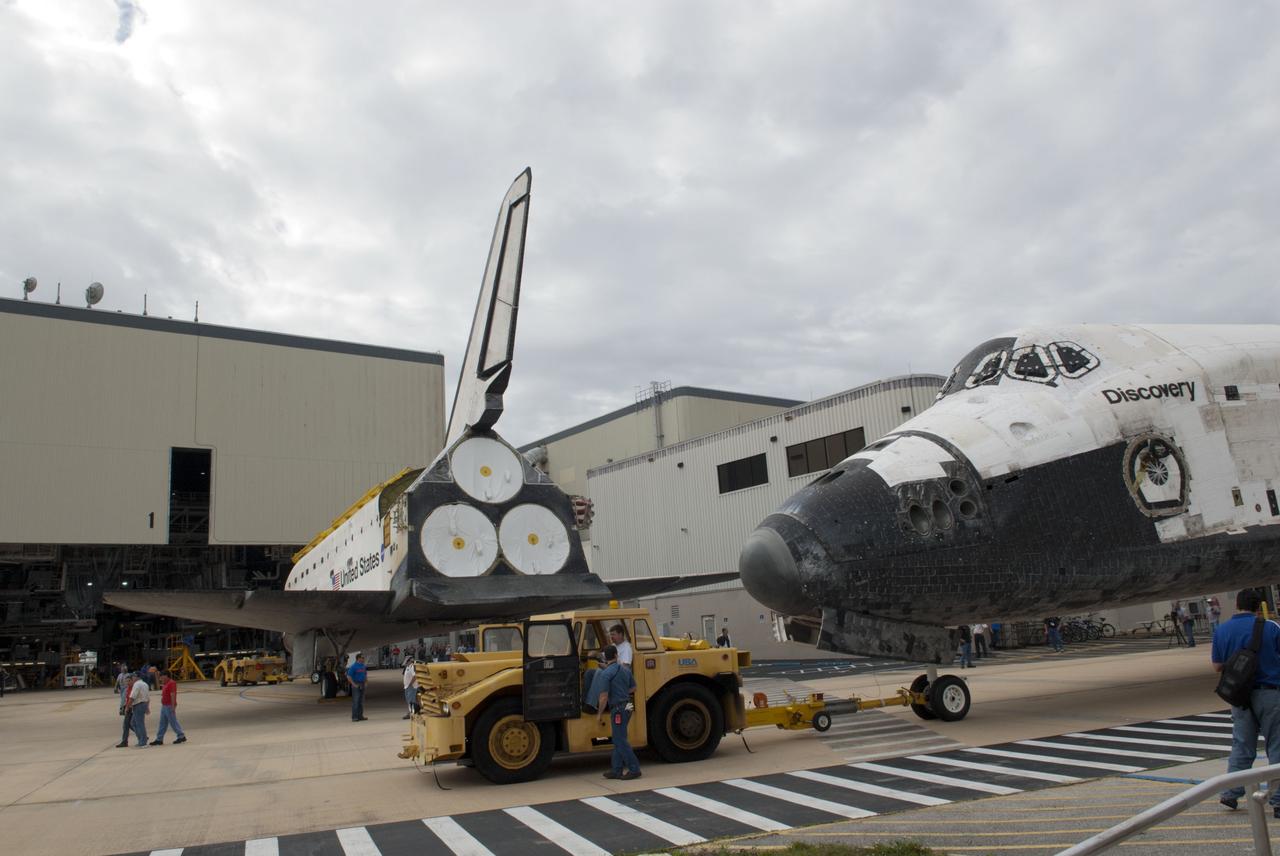
CAPE CANAVERAL, Fla. – At NASA’s Kennedy Space Center in Florida, space shuttle Atlantis is towed toward Orbiter Processing Facility-1 OPF-1 after being towed from the Vehicle Assembly Building VAB. In the foreground, space shuttle Discovery is being towed to the VAB after being towed out of OPF-1. The work is part of the Space Shuttle Program’s transition and retirement processing of the three space shuttles. Atlantis is being prepared for display at the Kennedy Space Center Visitor Complex and is scheduled to rollover to the complex in November. Photo credit: NASA/Tim Jacobs

CAPE CANAVERAL, Fla. – At NASA’s Kennedy Space Center in Florida, space shuttle Atlantis is towed toward Orbiter Processing Facility-1 OPF-1 after being towed from the Vehicle Assembly Building VAB. At left, space shuttle Discovery is being towed to the VAB after being towed out of OPF-1. The tail cone protects Discovery’s three replica shuttle main engines. The work is part of the Space Shuttle Program’s transition and retirement processing of the three space shuttles. Atlantis is being prepared for display at the Kennedy Space Center Visitor Complex and is scheduled to rollover to the complex in November. Photo credit: NASA/Tim Jacobs
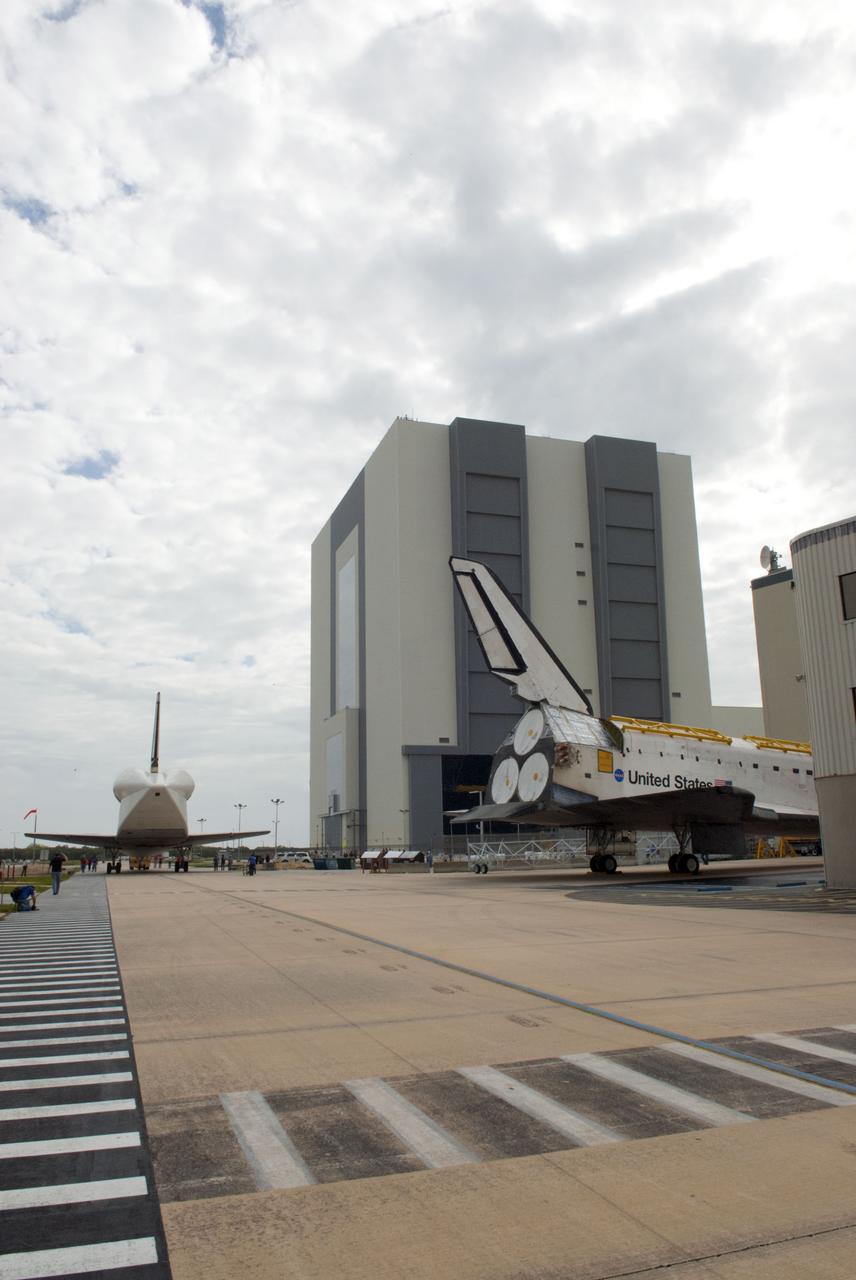
CAPE CANAVERAL, Fla. – At NASA’s Kennedy Space Center in Florida, space shuttle Atlantis is towed toward Orbiter Processing Facility-1 OPF-1 after being towed from the Vehicle Assembly Building VAB. At left, space shuttle Discovery is being towed to the VAB after being towed out of OPF-1. The tail cone protects Discovery’s three replica shuttle main engines. The work is part of the Space Shuttle Program’s transition and retirement processing of the three space shuttles. Atlantis is being prepared for display at the Kennedy Space Center Visitor Complex and is scheduled to rollover to the complex in November. Photo credit: NASA/Tim Jacobs
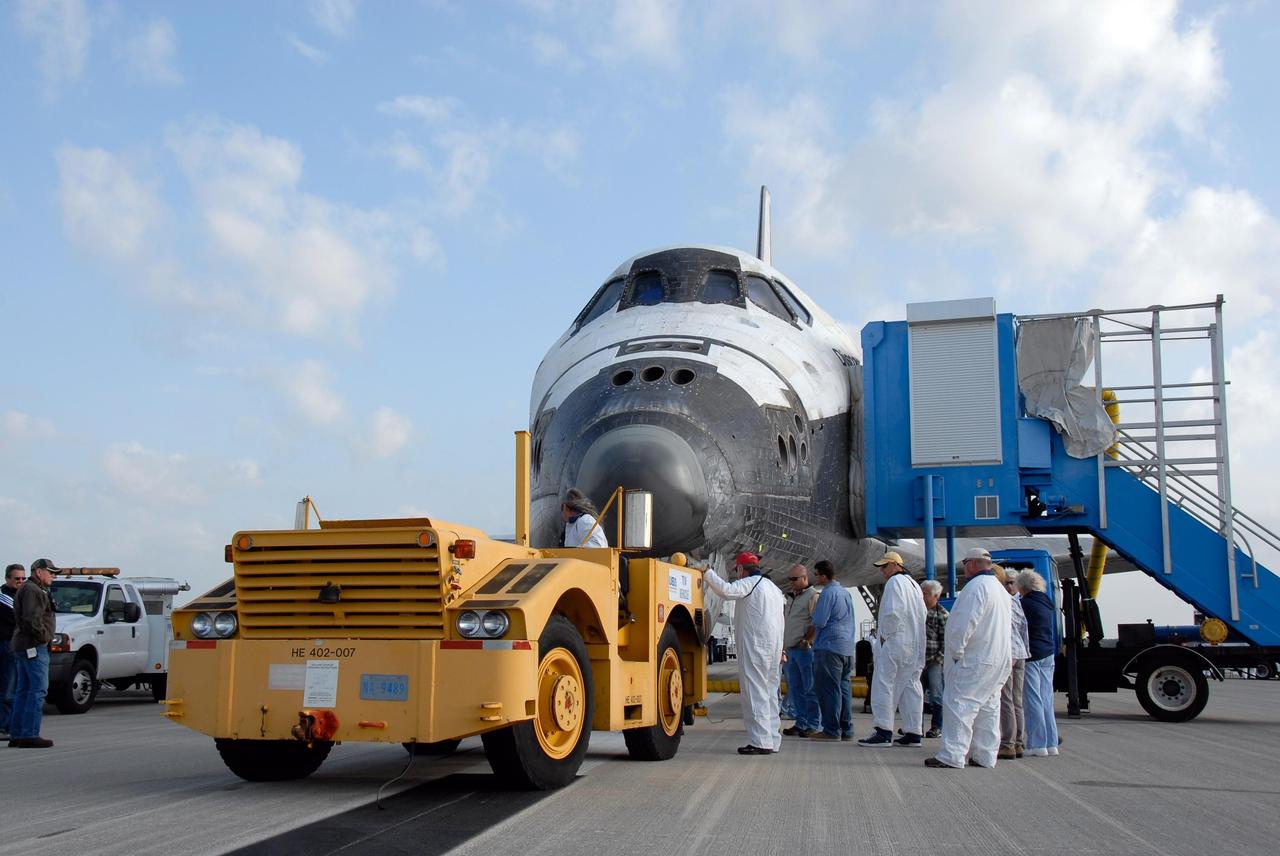
KENNEDY SPACE CENTER, FLA. -- On the Shuttle Landing Facility at NASA's Kennedy Space Center, a tractor tow vehicle is backed up to space shuttle Discovery. Towing normally begins approximately within four hours after landing and is completed within six hours unless removal of time-sensitive experiments require an additional period on the runway. Umbilicals are attached to purge the vehicle of any possible residual explosive or toxic fumes. The tractor tow vehicle will pull Discovery along a two-mile tow-way to the Orbiter Processing Facility, or OPF, where processing Discovery for another flight begins. The tow vehicle is very much like the typical towing units used for large aircraft, but it is equipped with a special towing bar designed specifically for the orbiter. In the OPF, turnaround processing procedures on Discovery will include various post-flight deservicing and maintenance functions, which are carried out in parallel with payload removal and the installation of equipment needed for the next mission. Before post-flight deservicing can continue beyond initial safing operations, certain vehicle systems must be mechanically secured and access platforms installed. Discovery completed mission STS-120 with an on-time landing at 1:01 p.m. EST. Photo credit: NASA/Kim Shiflett
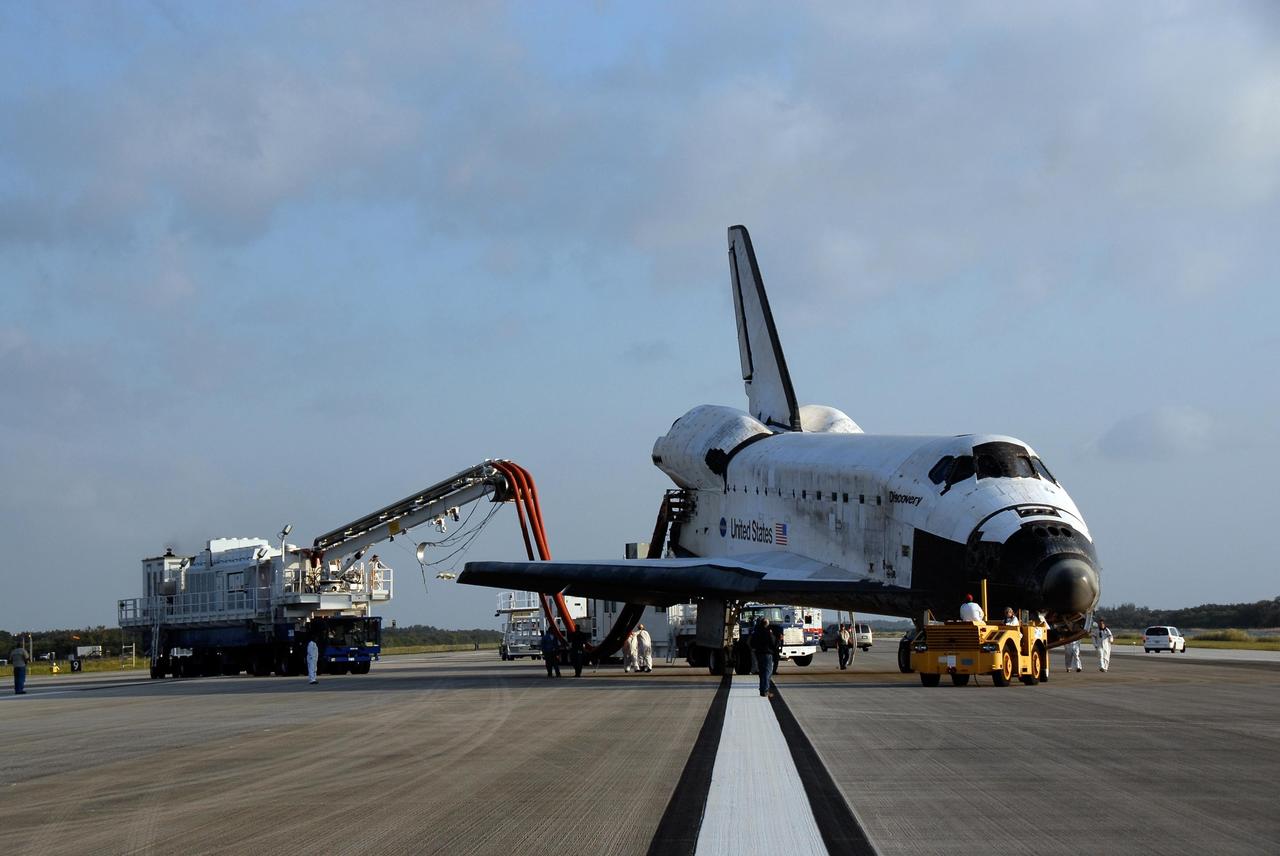
KENNEDY SPACE CENTER, FLA. -- On the Shuttle Landing Facility at NASA's Kennedy Space Center, space shuttle Discovery is ready for towing to the Orbiter Processing Facility, or OPF. Towing normally begins approximately within four hours after landing and is completed within six hours unless removal of time-sensitive experiments require an additional period on the runway. Umbilicals are attached to purge the vehicle of any possible residual explosive or toxic fumes. The tractor tow vehicle will pull Discovery along a two-mile tow-way to the OPF, where processing Discovery for another flight begins. The tow vehicle is very much like the typical towing units used for large aircraft, but it is equipped with a special towing bar designed specifically for the orbiter. In the OPF, turnaround processing procedures on Discovery will include various post-flight deservicing and maintenance functions, which are carried out in parallel with payload removal and the installation of equipment needed for the next mission. Before post-flight deservicing can continue beyond initial safing operations, certain vehicle systems must be mechanically secured and access platforms installed. Discovery completed mission STS-120 with an on-time landing at 1:01 p.m. EST. Photo credit: NASA/Kim Shiflett

KENNEDY SPACE CENTER, FLA. -- On the Shuttle Landing Facility at NASA's Kennedy Space Center, a tractor tow vehicle is backed up to space shuttle Discovery. Towing normally begins approximately within four hours after landing and is completed within six hours unless removal of time-sensitive experiments require an additional period on the runway. Umbilicals are attached to purge the vehicle of any possible residual explosive or toxic fumes. The tractor tow vehicle will pull Discovery along a two-mile tow-way to the Orbiter Processing Facility, or OPF, where processing Discovery for another flight begins. The tow vehicle is very much like the typical towing units used for large aircraft, but it is equipped with a special towing bar designed specifically for the orbiter. In the OPF, turnaround processing procedures on Discovery will include various post-flight deservicing and maintenance functions, which are carried out in parallel with payload removal and the installation of equipment needed for the next mission. Before post-flight deservicing can continue beyond initial safing operations, certain vehicle systems must be mechanically secured and access platforms installed. Discovery completed mission STS-120 with an on-time landing at 1:01 p.m. EST. Photo credit: NASA/Kim Shiflett
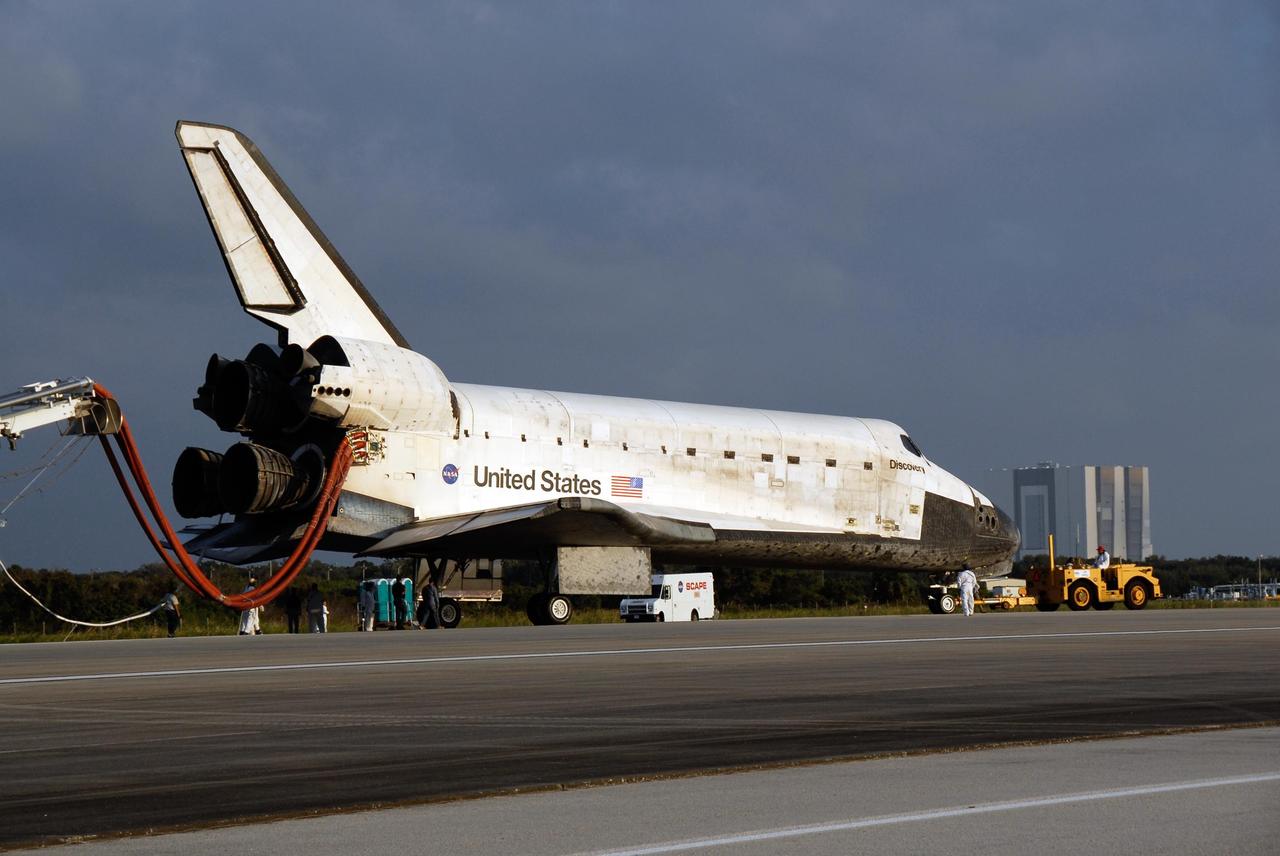
KENNEDY SPACE CENTER, FLA. -- On the Shuttle Landing Facility at NASA's Kennedy Space Center, space shuttle Discovery is towed to the Orbiter Processing Facility, or OPF. Towing normally begins approximately within four hours after landing and is completed within six hours unless removal of time-sensitive experiments requires an additional period on the runway. Umbilicals are attached to purge the vehicle of any possible residual explosive or toxic fumes. The tractor tow vehicle will pull Discovery along a two-mile tow-way to the OPF, where processing Discovery for another flight begins. The tow vehicle is very much like the typical towing units used for large aircraft, but it is equipped with a special towing bar designed specifically for the orbiter. In the OPF, turnaround processing procedures on Discovery will include various post-flight deservicing and maintenance functions, which are carried out in parallel with payload removal and the installation of equipment needed for the next mission. Before post-flight deservicing can continue beyond initial safing operations, certain vehicle systems must be mechanically secured and access platforms installed. Discovery completed mission STS-120 with an on-time landing at 1:01 p.m. EST. Photo credit: NASA/Kim Shiflett
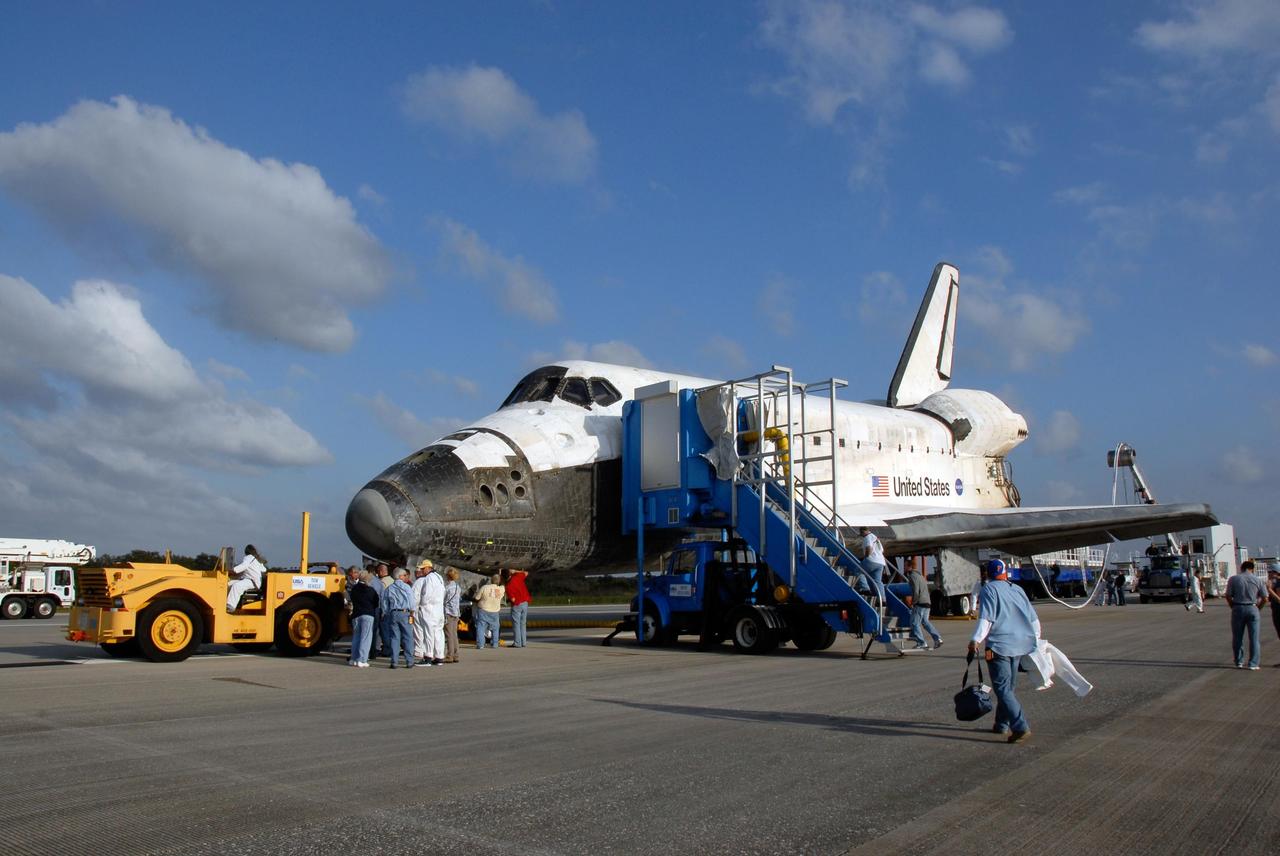
KENNEDY SPACE CENTER, FLA. -- On the Shuttle Landing Facility at NASA's Kennedy Space Center, a tractor tow vehicle is backed up to space shuttle Discovery. Towing normally begins approximately within four hours after landing and is completed within six hours unless removal of time-sensitive experiments require an additional period on the runway. Umbilicals are attached to purge the vehicle of any possible residual explosive or toxic fumes. The tractor tow vehicle will pull Discovery along a two-mile tow-way to the Orbiter Processing Facility, or OPF, where processing Discovery for another flight begins. The tow vehicle is very much like the typical towing units used for large aircraft, but it is equipped with a special towing bar designed specifically for the orbiter. In the OPF, turnaround processing procedures on Discovery will include various post-flight deservicing and maintenance functions, which are carried out in parallel with payload removal and the installation of equipment needed for the next mission. Before post-flight deservicing can continue beyond initial safing operations, certain vehicle systems must be mechanically secured and access platforms installed. Discovery completed mission STS-120 with an on-time landing at 1:01 p.m. EST. Photo credit: NASA/Kim Shiflett
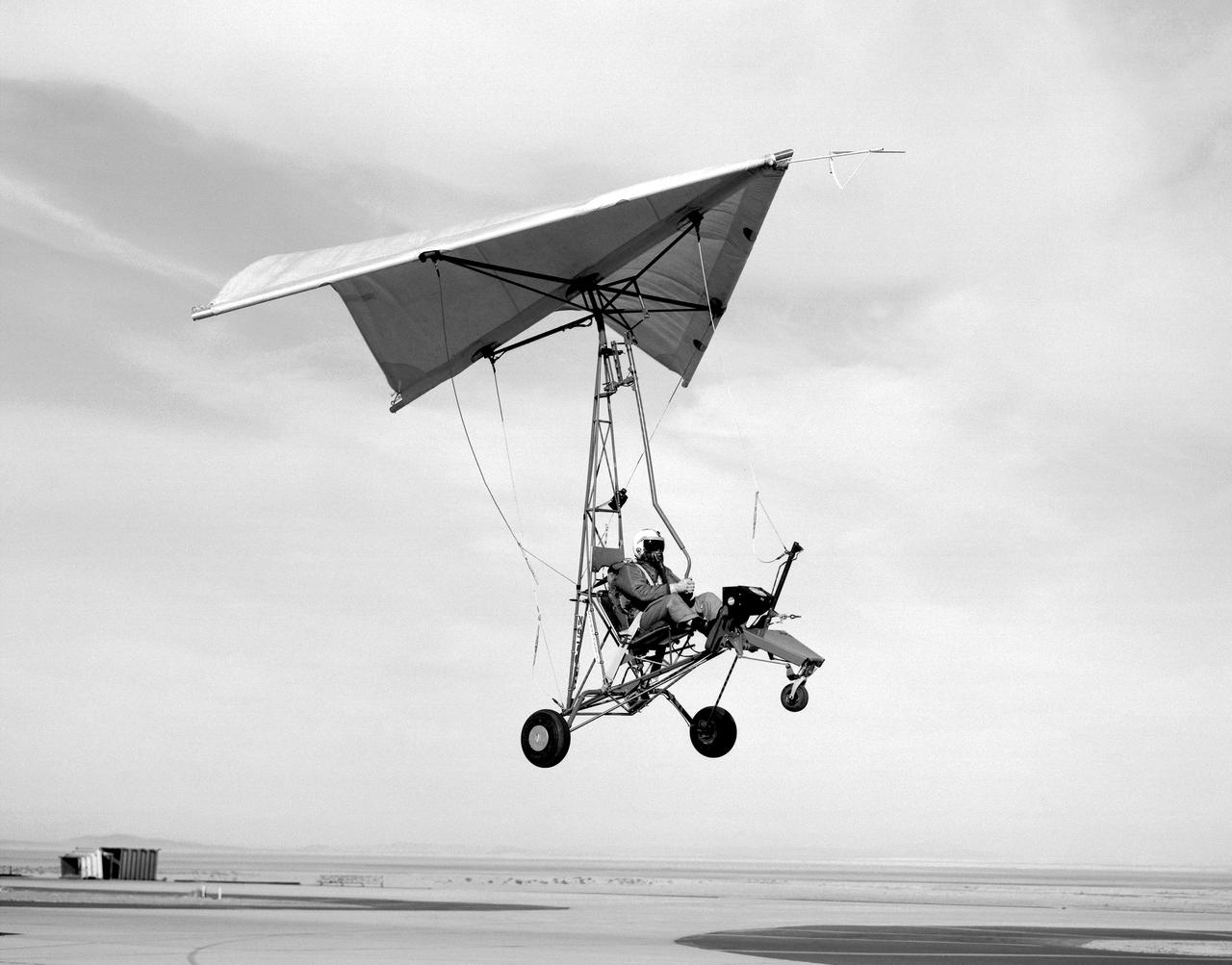
Pilot and Paresev 1 preparing for a landing on the Rogers dry lakebed in 1962 at Edwards Air Force Base, California. The flight program began with ground tow tests. Several tows were made before liftoff was attempted to check the control rigging and to familiarize the pilot with the vehicle’s ground stability. As the pilot’s confidence and experience increased, tow speeds were also increased until liftoff was attained. Liftoff was at about 40 knots indicated airspeed (kias).
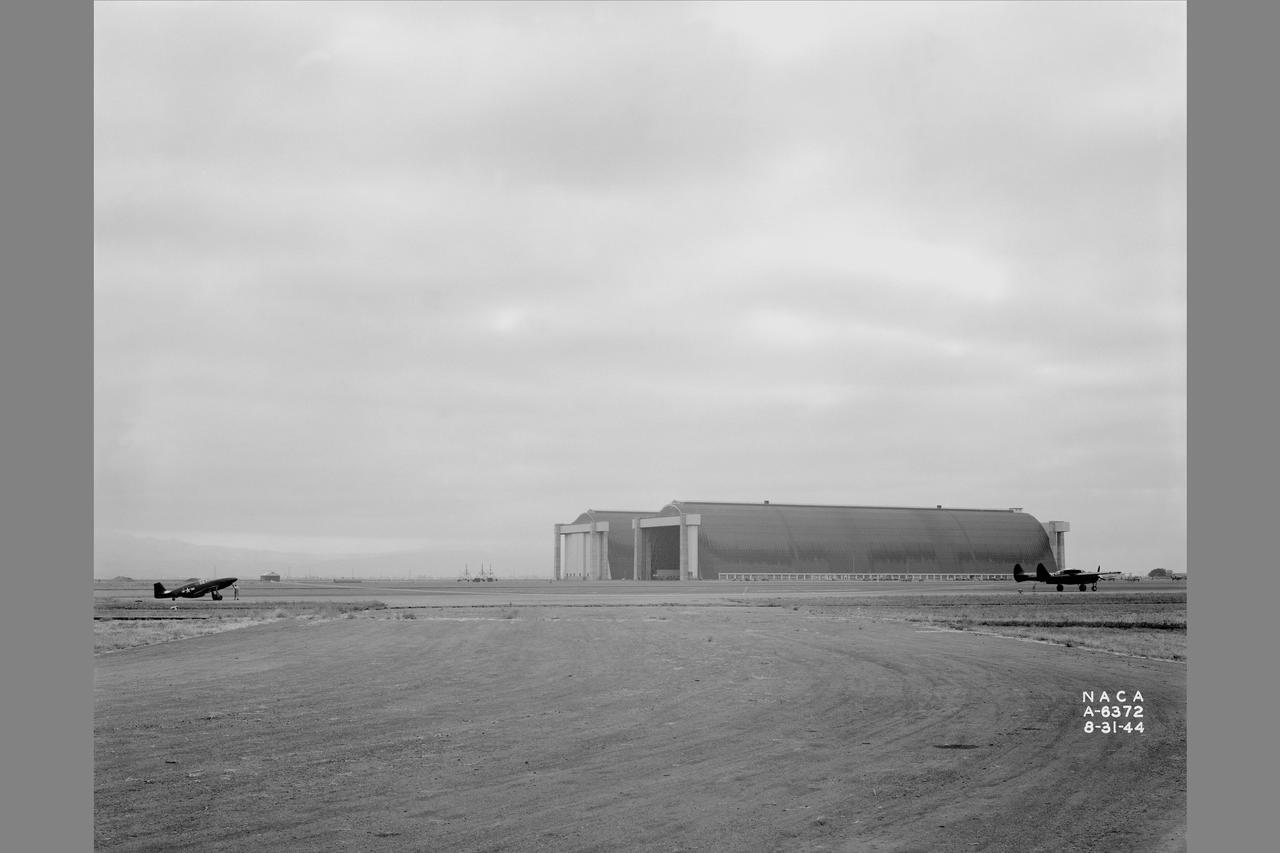
Towing installations on P-51 and P-61 airplanes for propeller off tests on the P-51 Front view of P-51 & P-61 in towing position preparing for take off at NACA Ames Research Center, Moffett Field, California
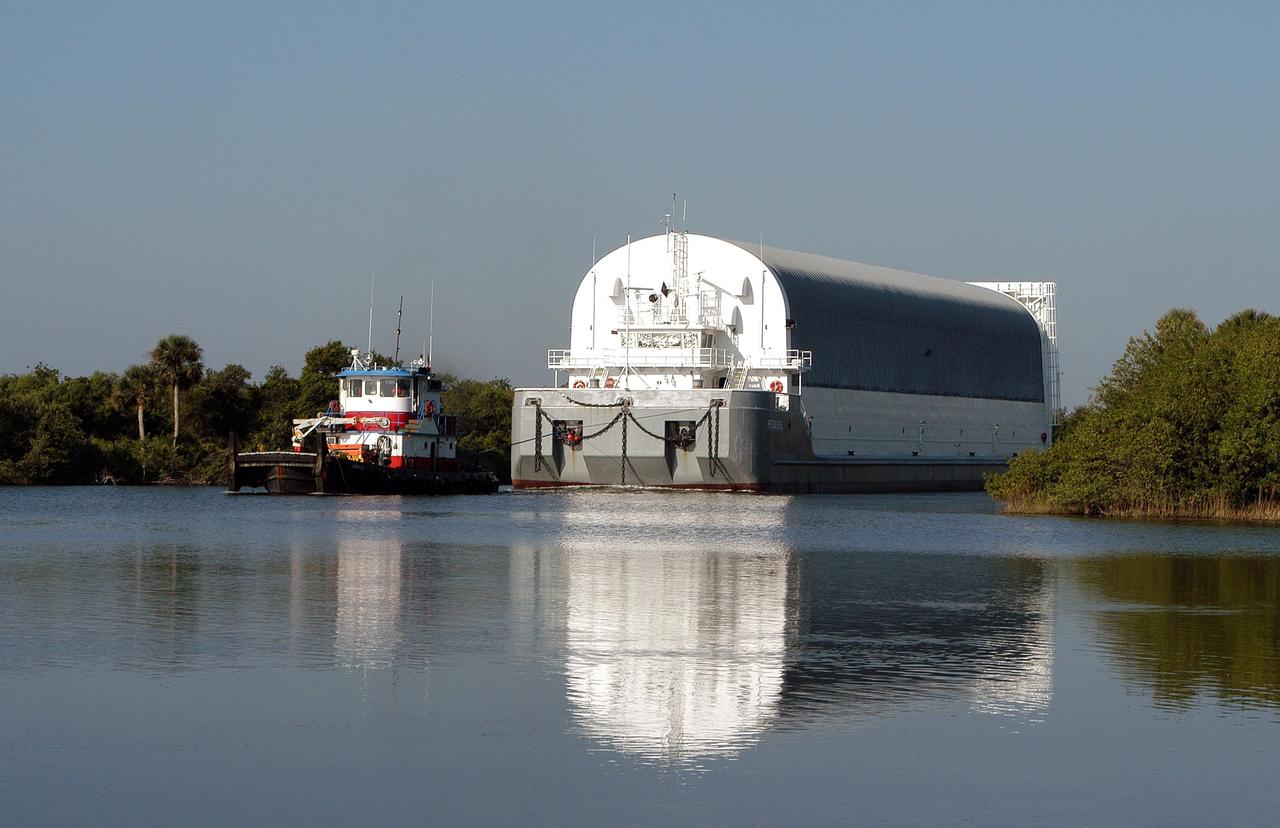
KENNEDY SPACE CENTER, FLA. - A tug boat begins towing the barge containing an External Tank (ET) to Port Canaveral. There one of the SRB Retrieval Ships will take over and tow the ET to the Michoud Space Systems Assembly Facility near New Orleans where redesign of the external tank is underway for Return to Flight.
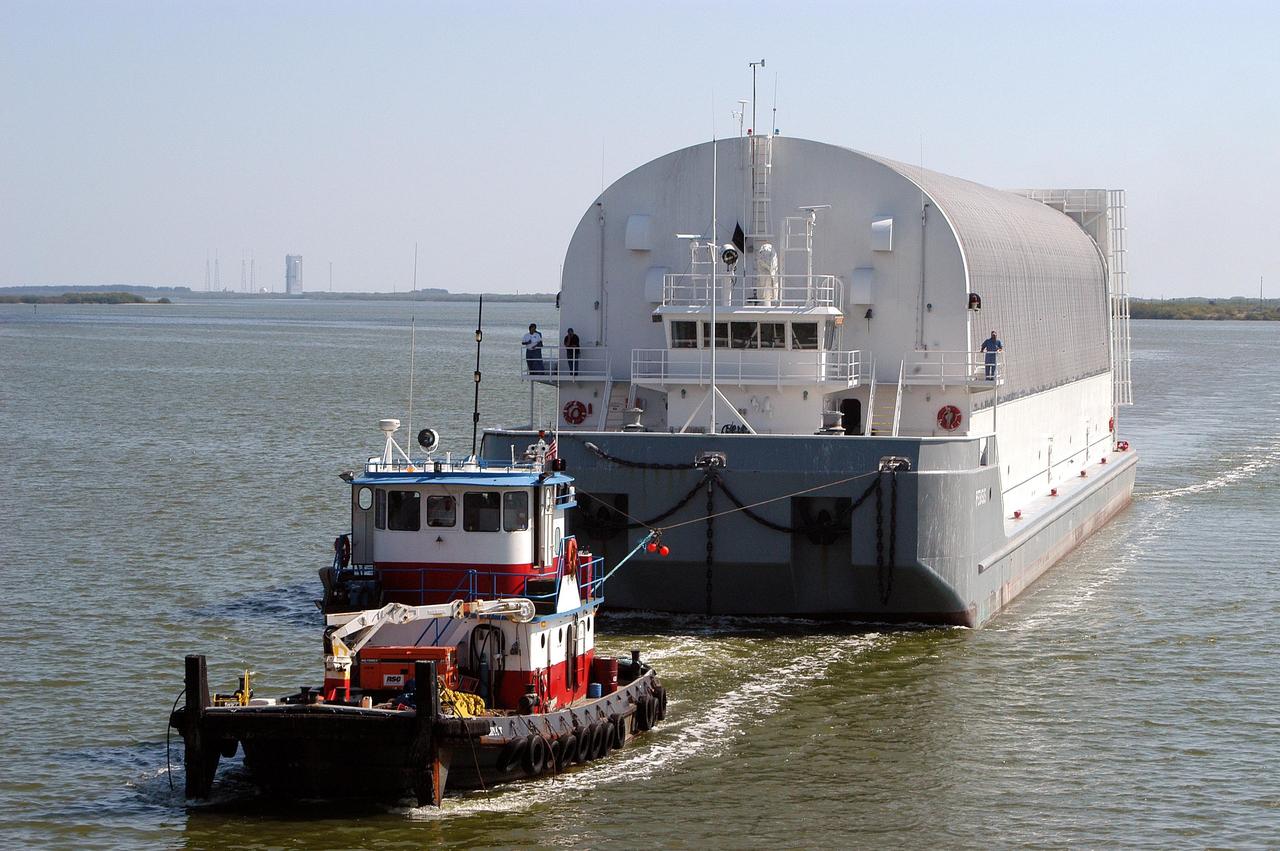
KENNEDY SPACE CENTER, FLA. - A tug boat tows the barge containing an External Tank (ET) to Port Canaveral. There one of the SRB Retrieval Ships will take over and tow the ET to the Michoud Space Systems Assembly Facility near New Orleans where redesign of the external tank is underway for Return to Flight.
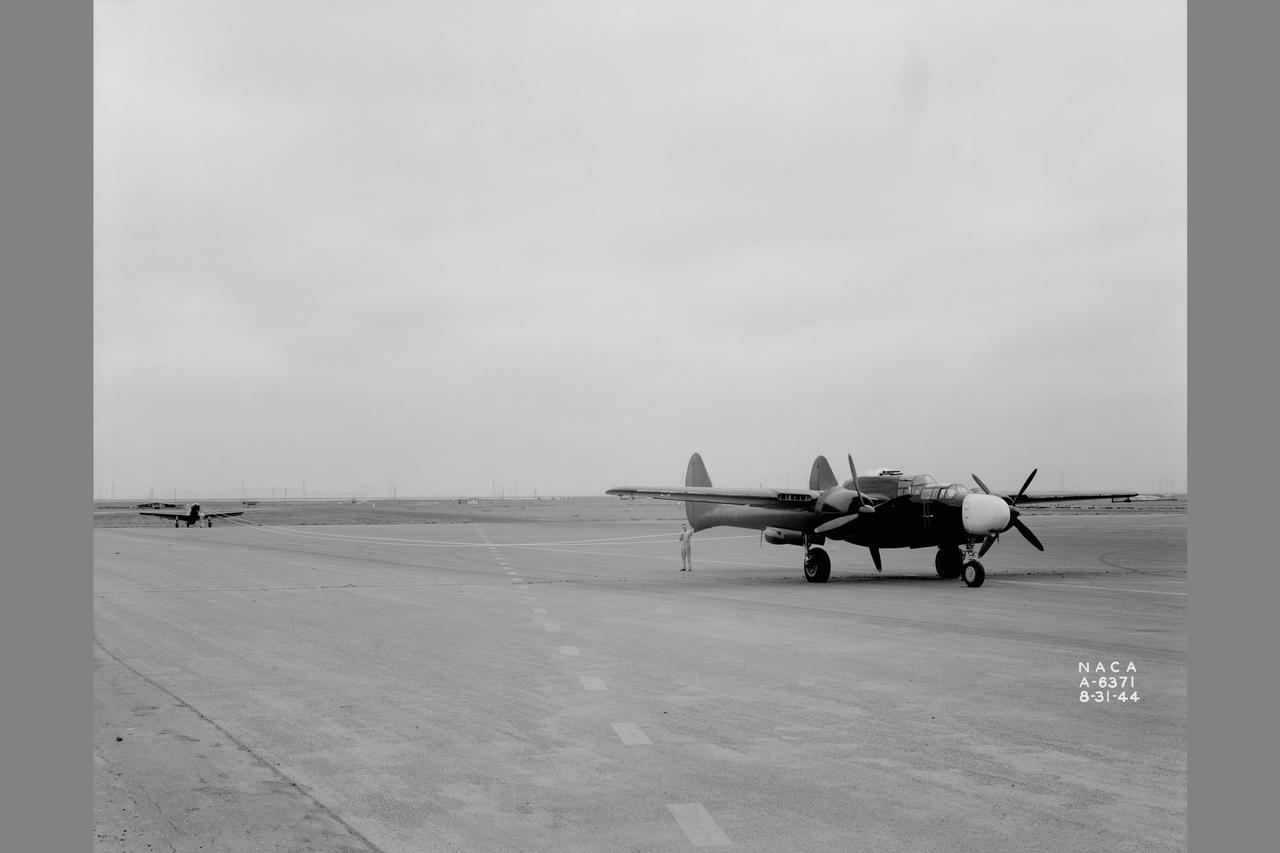
Towing installations on P-51 and P-61 airplanes for propeller off tests on the P-51 Front view of P-51 & P-61 in towing position preparing for take off at NACA Ames Research Center, Moffett Field, California
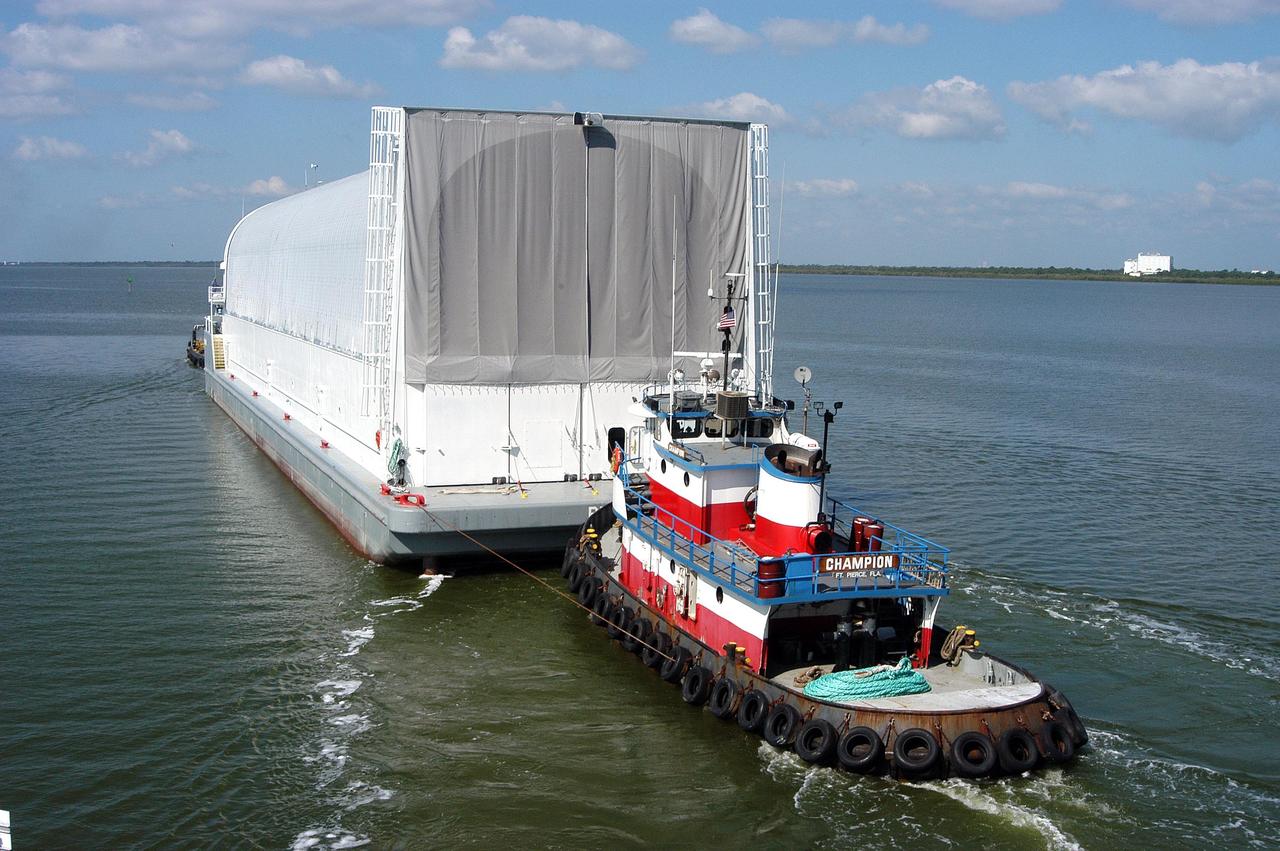
KENNEDY SPACE CENTER, FLA. - A tug boat tows the barge containing an External Tank (ET) to Port Canaveral. There one of the SRB Retrieval Ships will take over and tow the ET to the Michoud Space Systems Assembly Facility near New Orleans where redesign of the external tank is underway for Return to Flight.
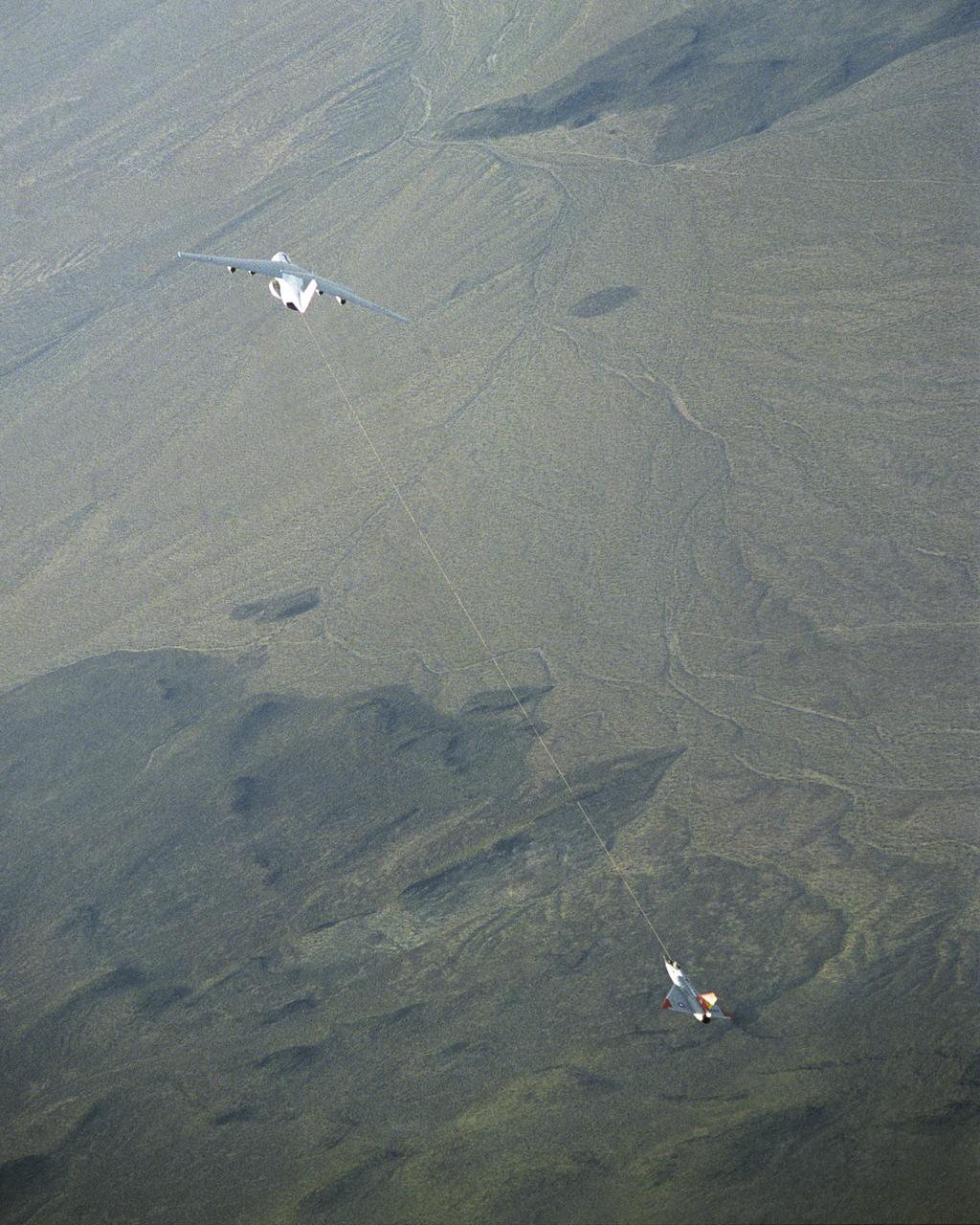
The Eclipse projectís modified QF-106 under tow by a USAF C-141A.
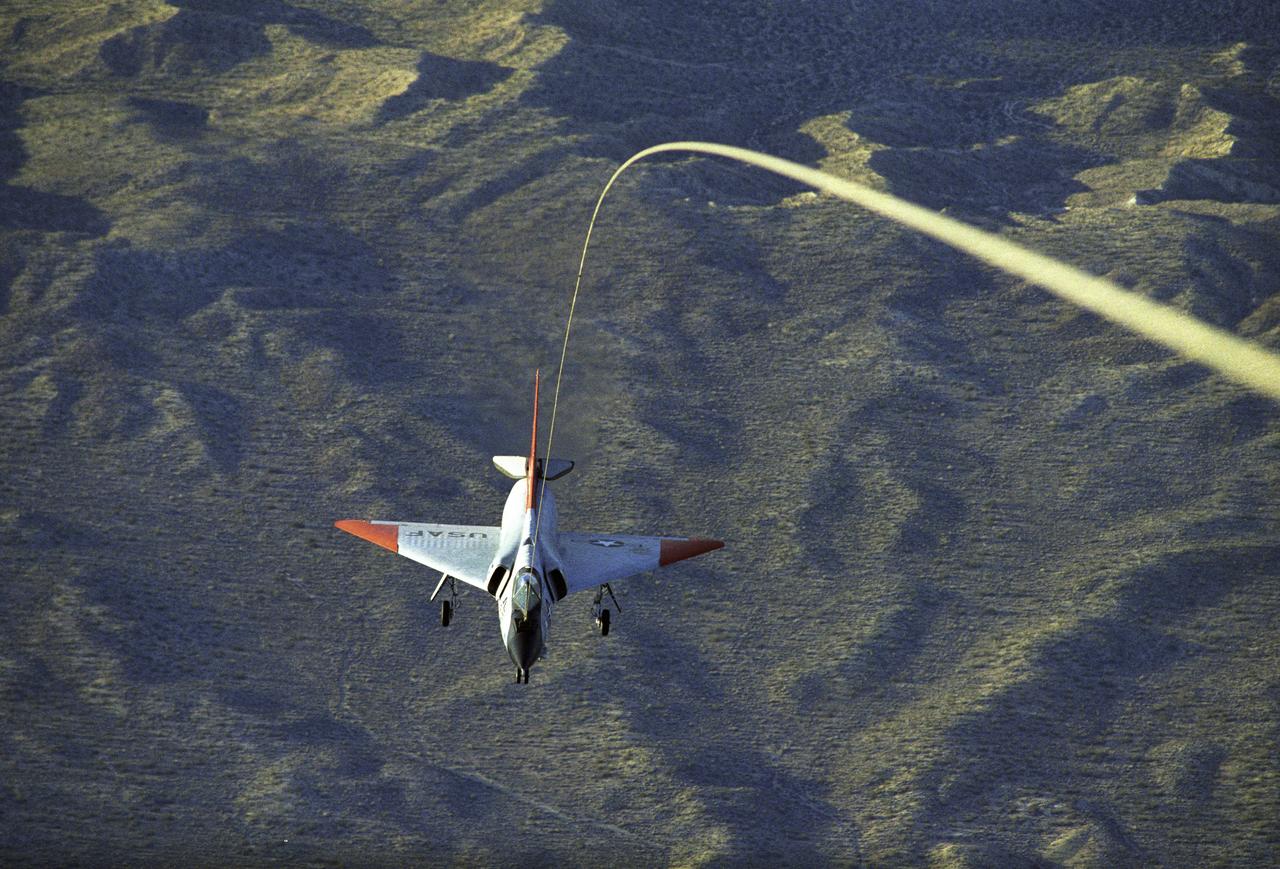
Eclipse project F-106 under tow on January 23, 1998
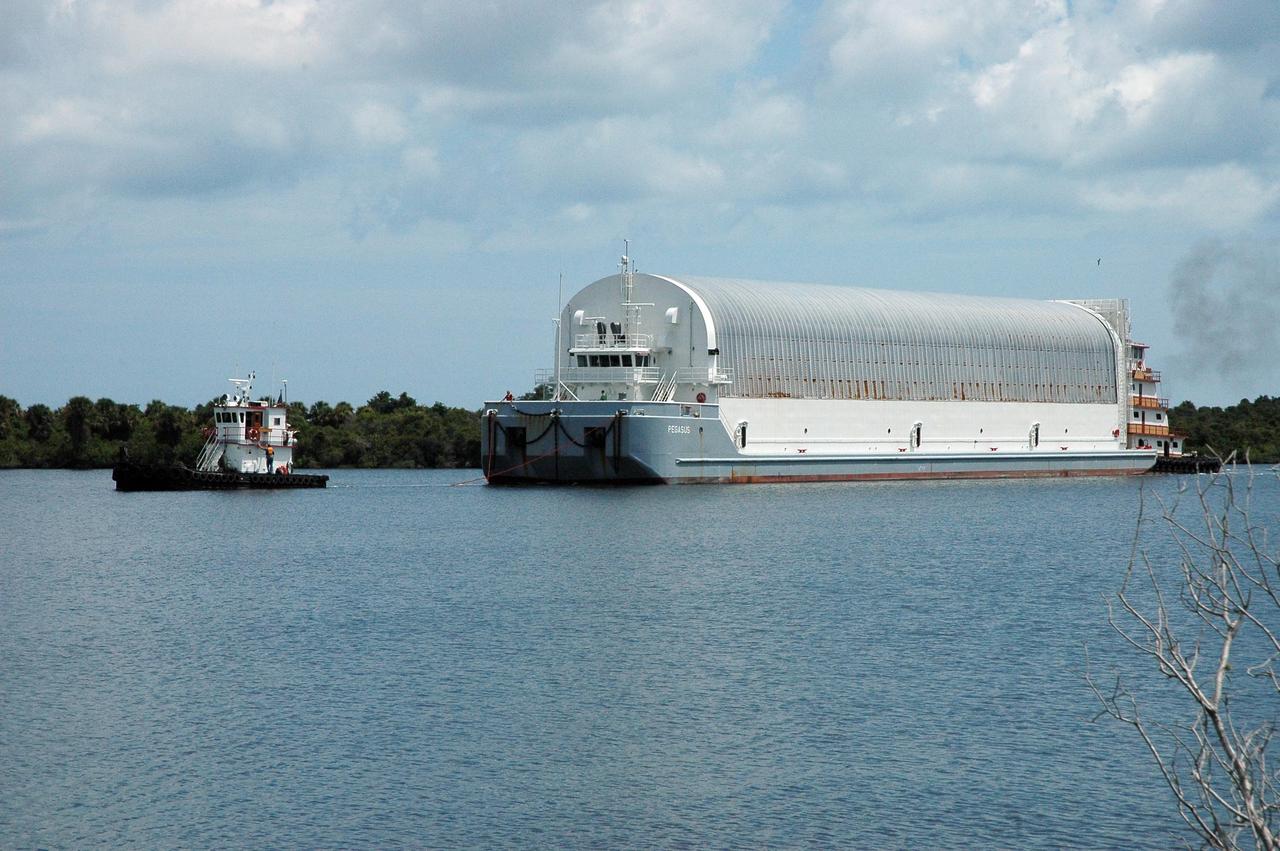
KENNEDY SPACE CENTER, FLA. -- The Pegasus barge is towed into the Launch Complex 39 Area turn basin. The cargo onboard is external tank No. 120, to be used for launching Space Shuttle Discovery on mission STS-120 in October. The barge has carried the tank from the Michoud Assembly Facility near New Orleans, making the journey around the Florida peninsula in tow by the JA Bisso II tugboat to Port Canaveral and Kennedy Space Center. After the tank is offloaded, it will be towed to the Vehicle Assembly Building for lifting into a checkout cell. NASA/Amanda Diller

KENNEDY SPACE CENTER, FLA. -- Tugboats tow the Pegasus barge to the landing dock in the Launch Complex 39 Area. The barge carries external tank No. 120, to be used for launching Space Shuttle Discovery on mission STS-120 in October. The barge has carried the tank from the Michoud Assembly Facility near New Orleans, making the journey around the Florida peninsula in tow by the JA Bisso II tugboat, to Port Canaveral and Kennedy Space Center. After the tank is offloaded, it will be towed to the Vehicle Assembly Building for lifting into a checkout cell. NASA/Amanda Diller
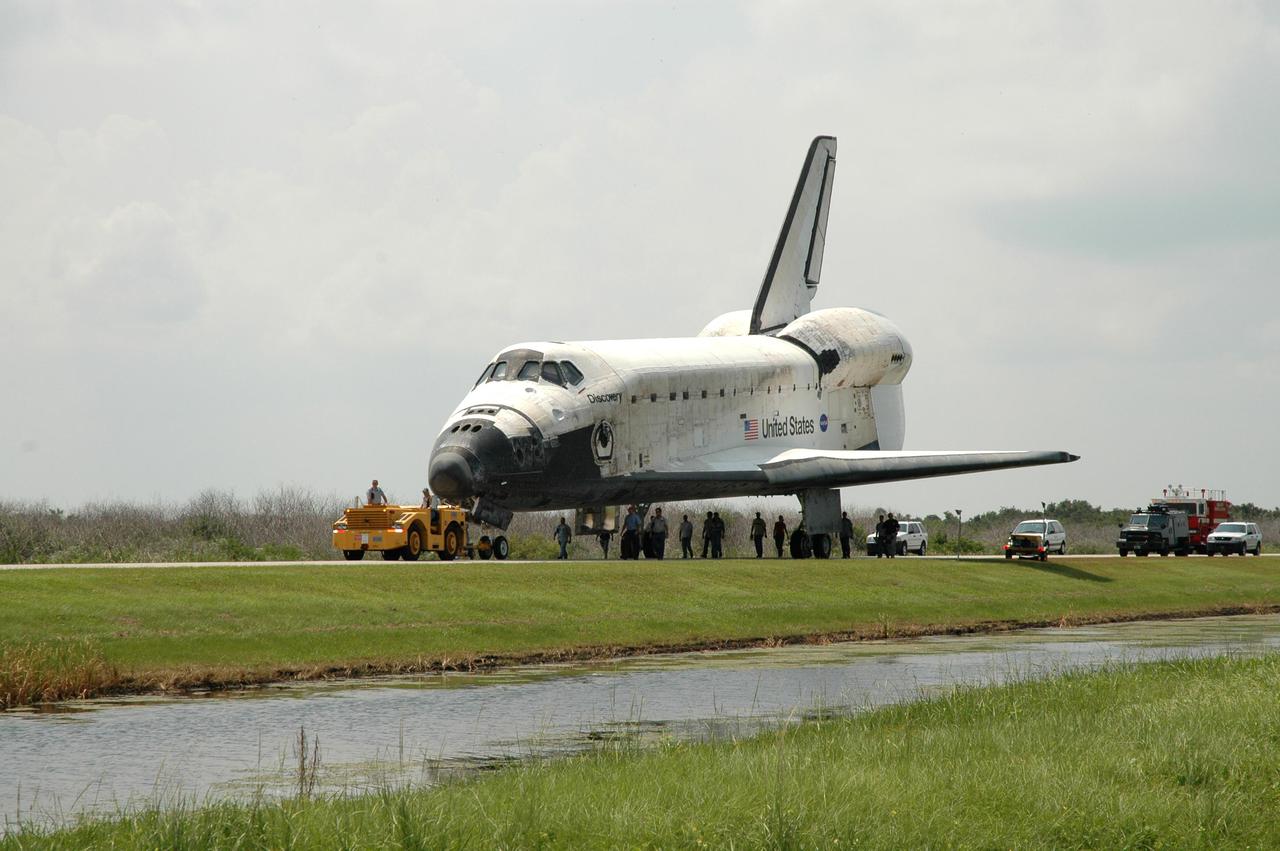
KENNEDY SPACE CENTER, FLA. - Discovery is towed along the tow-way from NASA Kennedy Space Center’s Shuttle Landing Facility to the Orbiter Processing Facility. Discovery was returned to NASA Kennedy Space Center on a ferry flight atop the Shuttle Carrier Aircraft (SCA) from Edwards Air Force Base in California, arriving Aug. 21. Discovery will be towed to the Orbiter Processing Facility where the Multi-Purpose Logistics Module Raffaello still inside will be removed from the payload bay and transferred to the Space Station Processing Facility. The orbiter will then begin processing for the second Return to Flight mission, STS-121, scheduled for launch no earlier than March 2006.
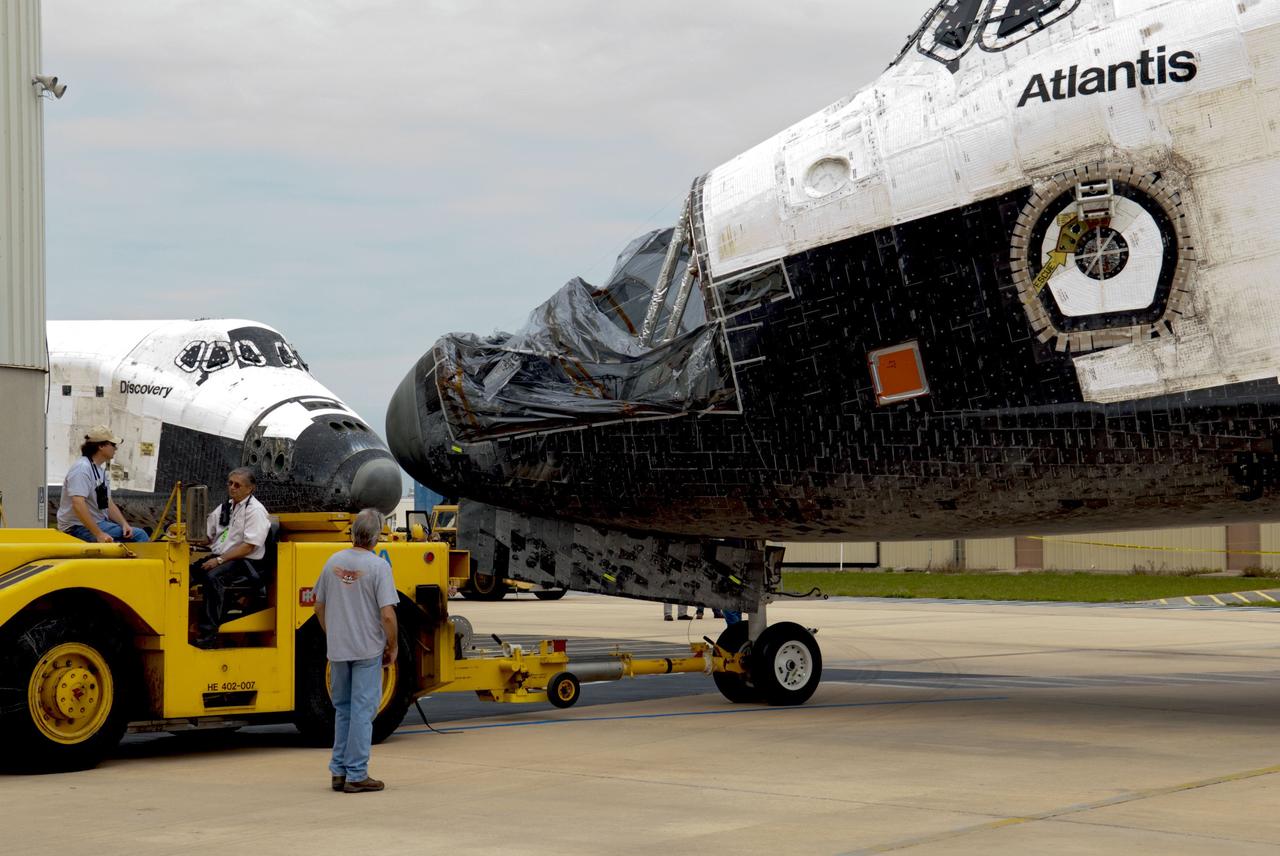
CAPE CANAVERAL, Fla. – At NASA’s Kennedy Space Center in Florida, space shuttles Atlantis foreground and Discovery appear to be nose to nose. Atlantis was towed from the Vehicle Assembly Building VAB and is being towed to Orbiter Processing Facility-1 OPF-1. Discovery was towed out of OPF-1 for its trip to the VAB. The work is part of the Space Shuttle Program’s transition and retirement processing of the three space shuttles. Atlantis is being prepared for display at the Kennedy Space Center Visitor Complex and is scheduled to rollover to the complex in November. Photo credit: NASA/Tim Jacobs

CAPE CANAVERAL, Fla. – At NASA’s Kennedy Space Center in Florida, space shuttles Atlantis foreground and Discovery appear to be nose to nose. Atlantis was towed from the Vehicle Assembly Building VAB and is being towed to Orbiter Processing Facility-1 OPF-1. Discovery was towed out of OPF-1 for its trip to the VAB. The work is part of the Space Shuttle Program’s transition and retirement processing of the three space shuttles. Atlantis is being prepared for display at the Kennedy Space Center Visitor Complex and is scheduled to rollover to the complex in November. Photo credit: NASA/Tim Jacobs
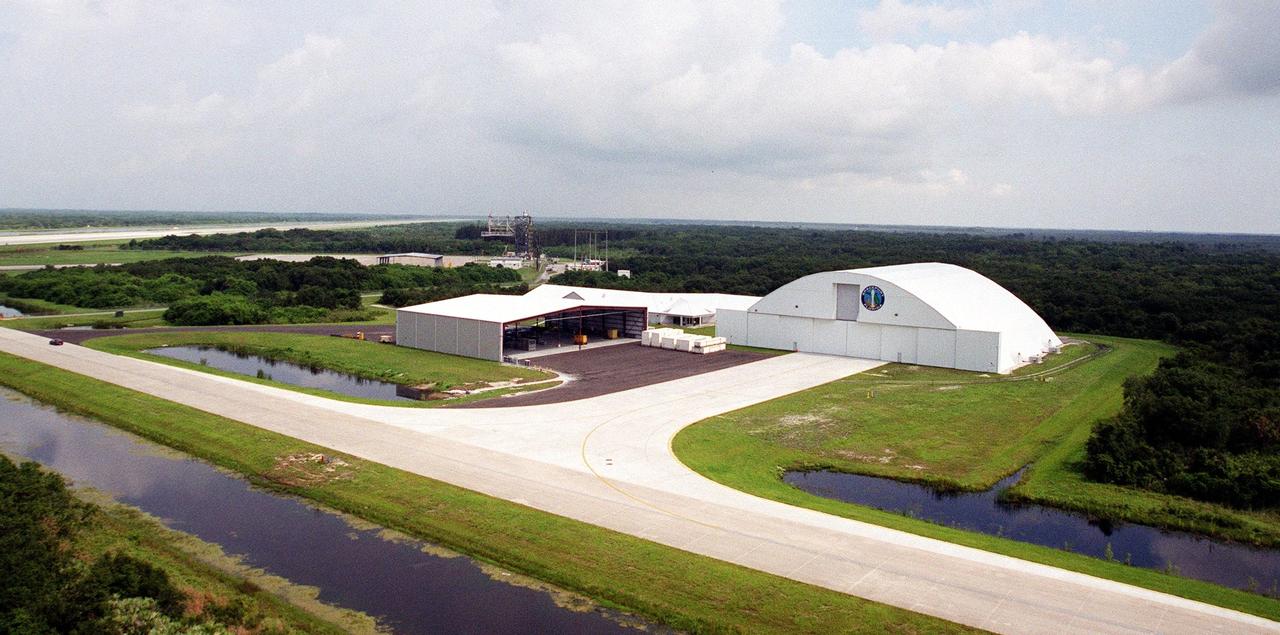
KENNEDY SPACE CENTER, Fla. -- An aerial view shows in the foreground the recently completed Reusable Launch Vehicle (RLV) Support Complex. Located on the tow-way at the south end of the Shuttle Landing Facility, the complex includes a multi-purpose RLV hangar (right) and adjacent facilities for related ground support equipment and administrative/technical support. The gate to the SLF is at the end of the tow-way to the left. The SLF runway is on the left horizon. At the other end can be seen the mate/demate device, with the office building below it. A drainage canal lies on either side of the tow-way
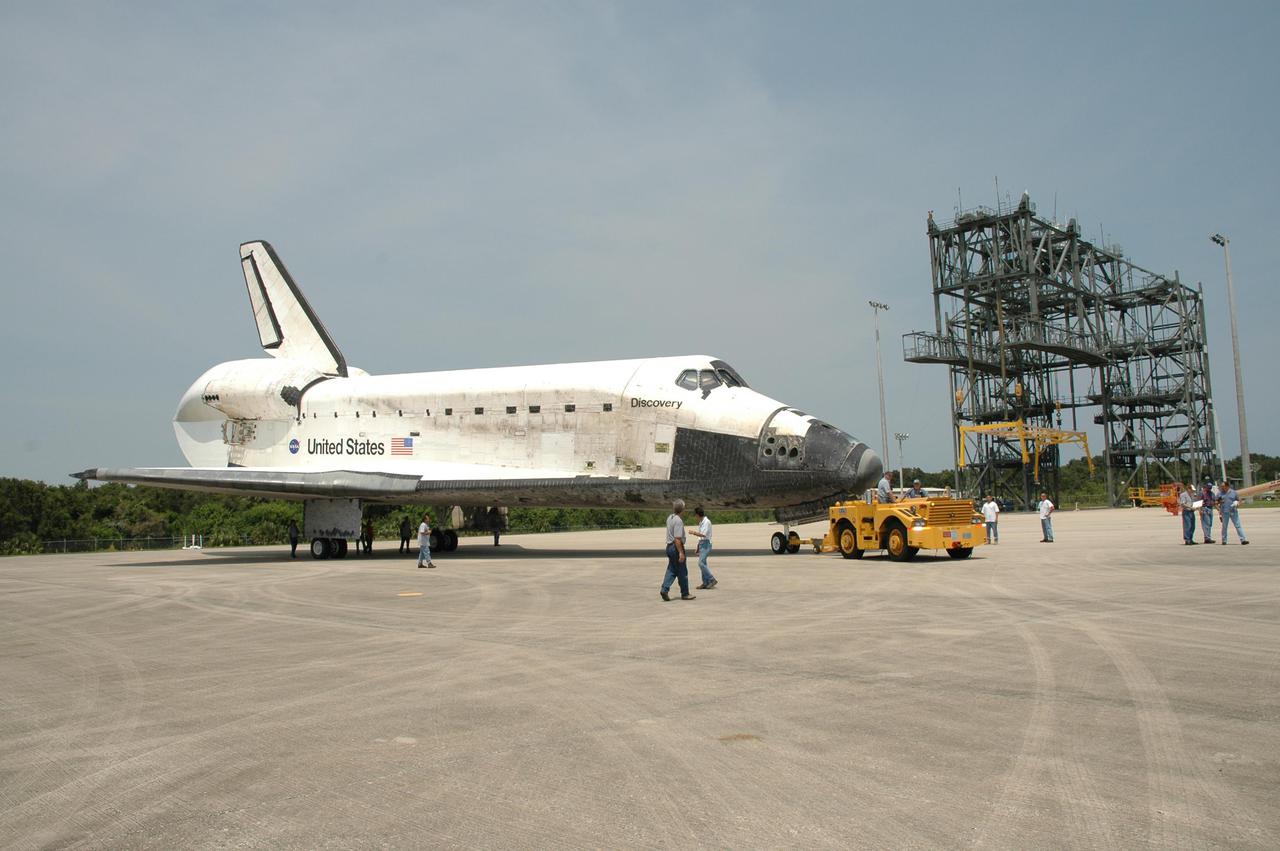
KENNEDY SPACE CENTER, FLA. - A tow vehicle maneuvers Discovery on NASA Kennedy Space Center’s Shuttle Landing Facility into a position for towing. Discovery was returned to NASA Kennedy Space Center on a ferry flight atop the Shuttle Carrier Aircraft (SCA) from Edwards Air Force Base in California, arriving Aug. 21. Discovery will be towed to the Orbiter Processing Facility where the Multi-Purpose Logistics Module Raffaello still inside will be removed from the payload bay and transferred to the Space Station Processing Facility. The orbiter will then begin processing for the second Return to Flight mission, STS-121, scheduled for launch no earlier than March 2006.
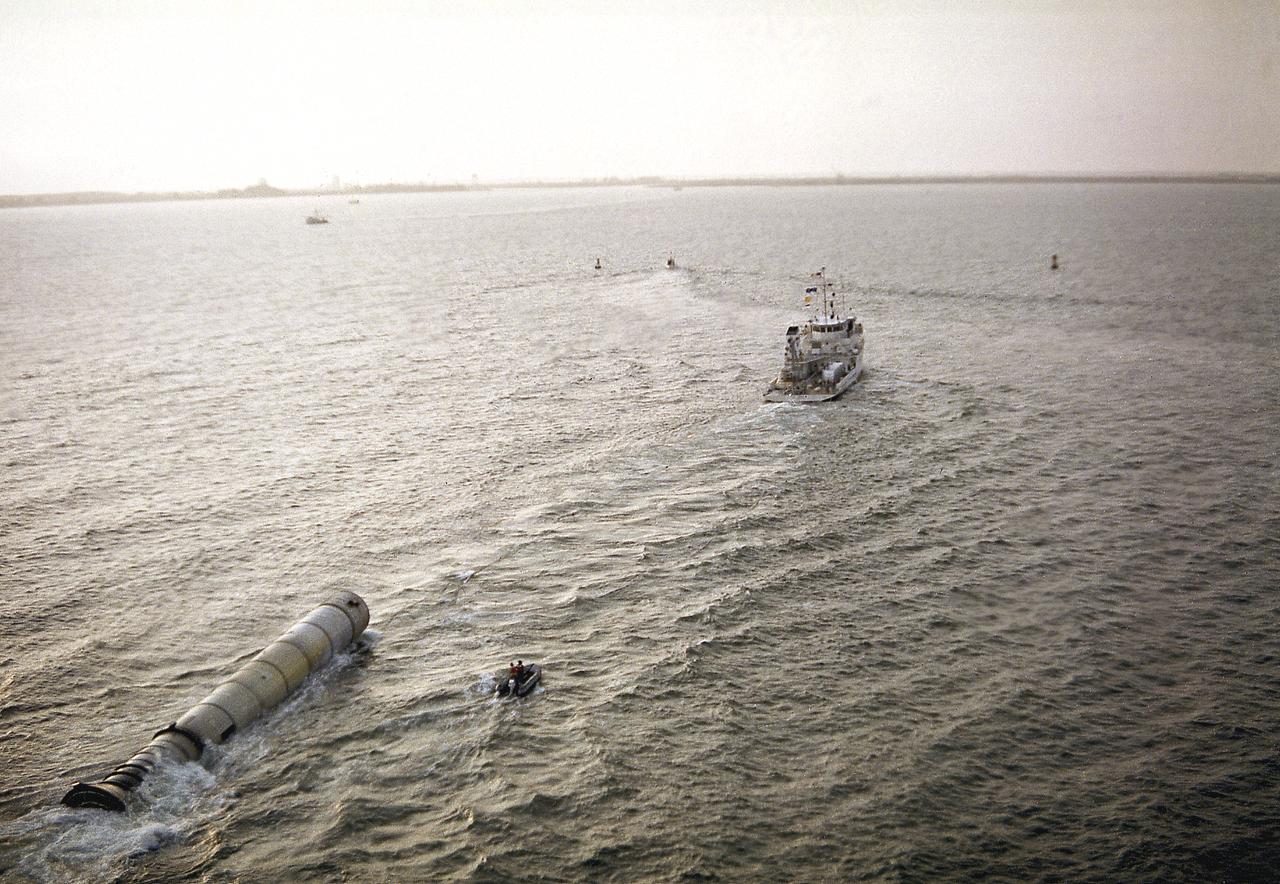
The towing ship, Liberty, towed a recovered solid rocket booster (SRB) for the STS-3 mission to Port Canaveral, Florida. The recovered SRB would be inspected and refurbished for reuse. The Shuttle's SRB's and solid rocket motors (SRM's) are the largest ever built and the first designed for refurbishment and reuse. Standing nearly 150-feet high, the twin boosters provide the majority of thrust for the first two minutes of flight, about 5.8 million pounds. The requirement for reusability dictated durable materials and construction to preclude corrosion of the hardware exposed to the harsh seawater environment. The SRB contains a complete recovery subsystem that includes parachutes, beacons, lights, and tow fixture.
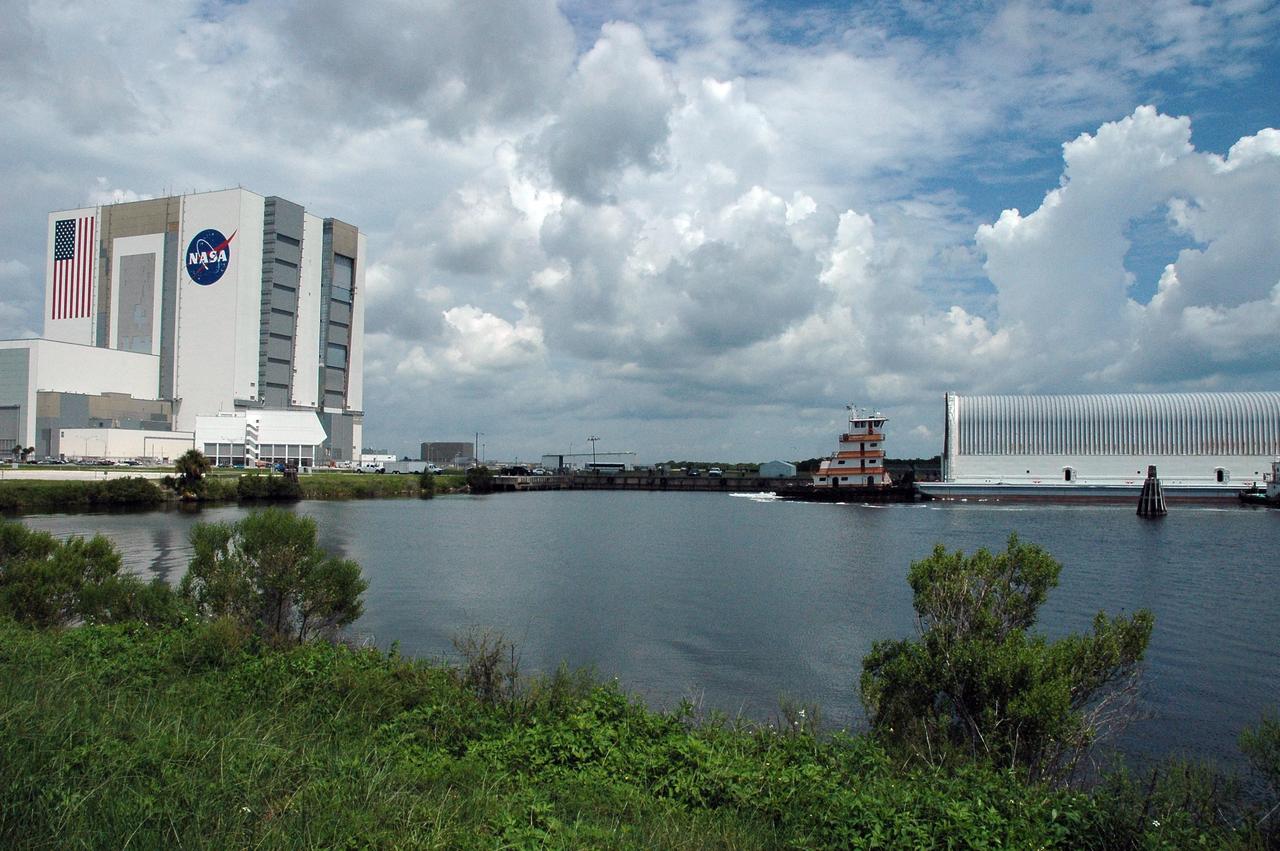
KENNEDY SPACE CENTER, FLA. -- The Pegasus barge, at right, is towed toward the landing dock in the Launch Complex 39 Area. The barge carries external tank No. 120, to be used for launching Space Shuttle Discovery on mission STS-120 in October. At left is the Vehicle Assembly Building. The barge has carried the tank from the Michoud Assembly Facility near New Orleans, making the journey around the Florida peninsula in tow by the JA Bisso II tugboat, to Port Canaveral and Kennedy Space Center. After the tank is offloaded, it will be towed to the Vehicle Assembly Building for lifting into a checkout cell. NASA/Amanda Diller
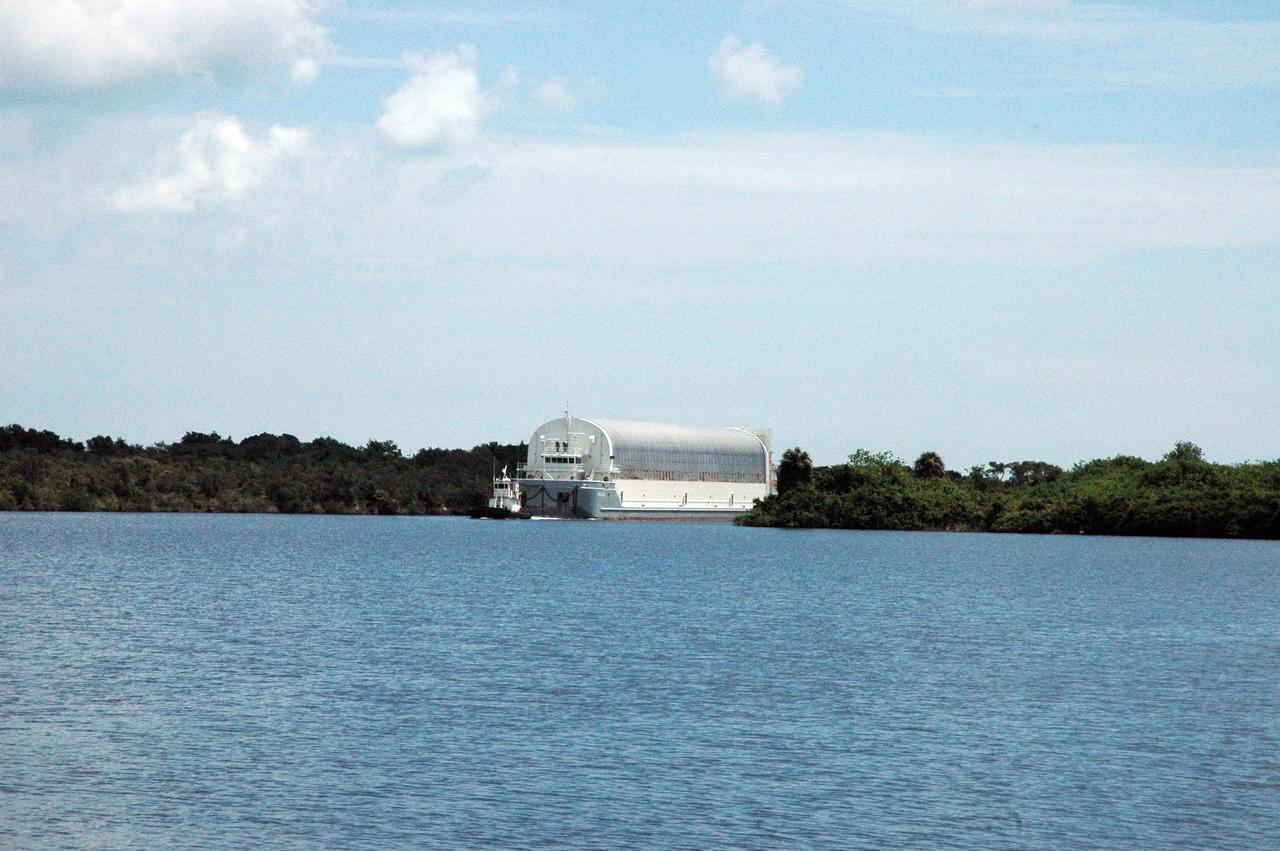
KENNEDY SPACE CENTER, FLA. -- The Pegasus barge is towed into the Launch Complex 39 Area turn basin. The cargo onboard is external tank No. 120, to be used for launching Space Shuttle Discovery on mission STS-120 in October. The barge has carried the tank from the Michoud Assembly Facility near New Orleans, making the journey around the Florida peninsula in tow by the JA Bisso II tugboat to Port Canaveral and Kennedy Space Center. After the tank is offloaded, it will be towed to the Vehicle Assembly Building for lifting into a checkout cell. NASA/Amanda Diller
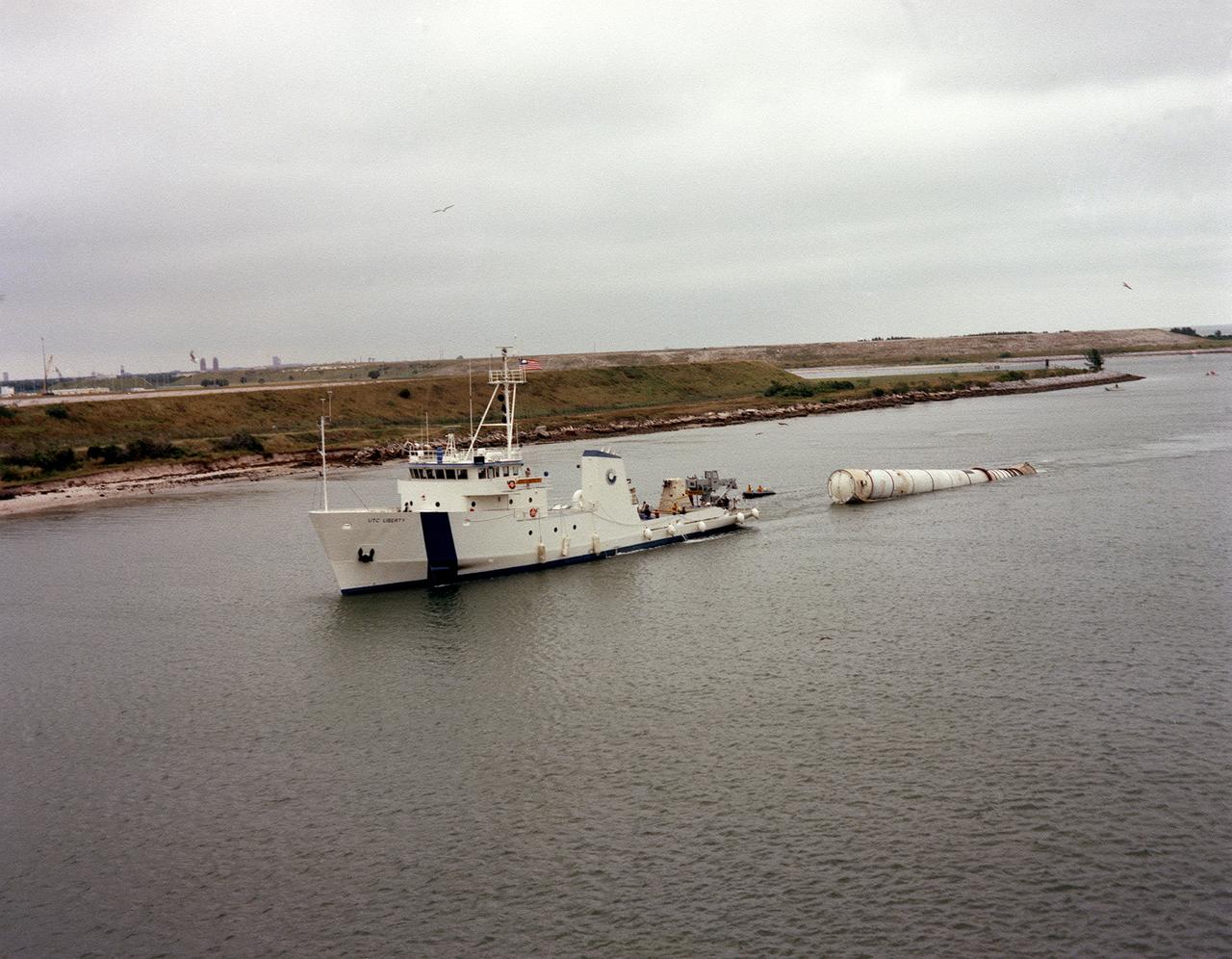
The towing ship, Liberty, towed a recovered solid rocket booster (SRB) for the STS-5 mission to Port Canaveral, Florida. The recovered SRB would be inspected and refurbished for reuse. The Shuttle's SRB's and solid rocket motors (SRM's) are the largest ever built and the first designed for refurbishment and reuse. Standing nearly 150-feet high, the twin boosters provide the majority of thrust for the first two minutes of flight, about 5.8 million pounds. The requirement for reusability dictated durable materials and construction to preclude corrosion of the hardware exposed to the harsh seawater environment. The SRB contains a complete recovery subsystem that includes parachutes, beacons, lights, and tow fixture.
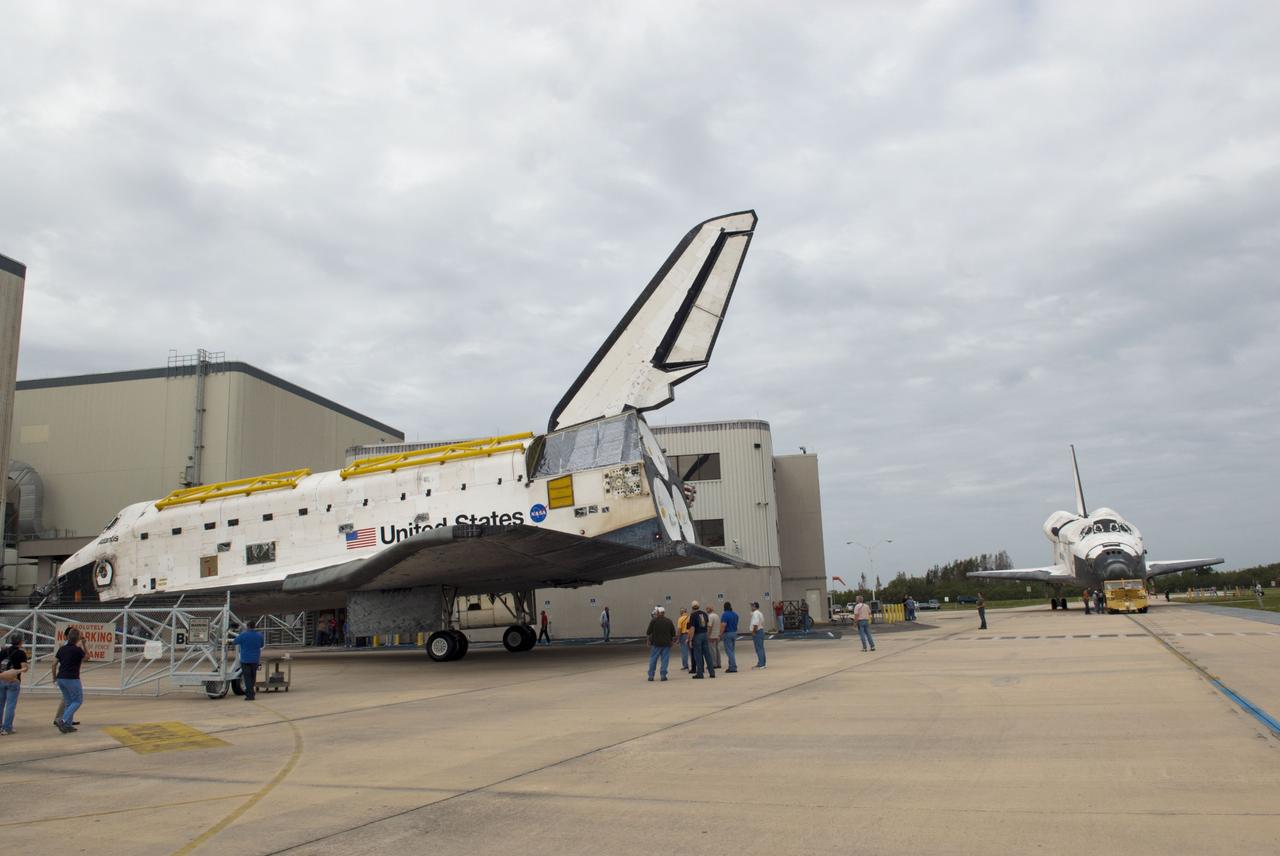
CAPE CANAVERAL, Fla. – At NASA’s Kennedy Space Center in Florida, space shuttle Atlantis is towed toward Orbiter Processing Facility-1 OPF-1 after being towed from the Vehicle Assembly Building VAB. In the background, space shuttle Discovery waits for its move to the VAB after being towed out of OPF-1. The work is part of the Space Shuttle Program’s transition and retirement processing of the three space shuttles. Atlantis is being prepared for display at the Kennedy Space Center Visitor Complex and is scheduled to rollover to the complex in November. Photo credit: NASA/Tim Jacobs
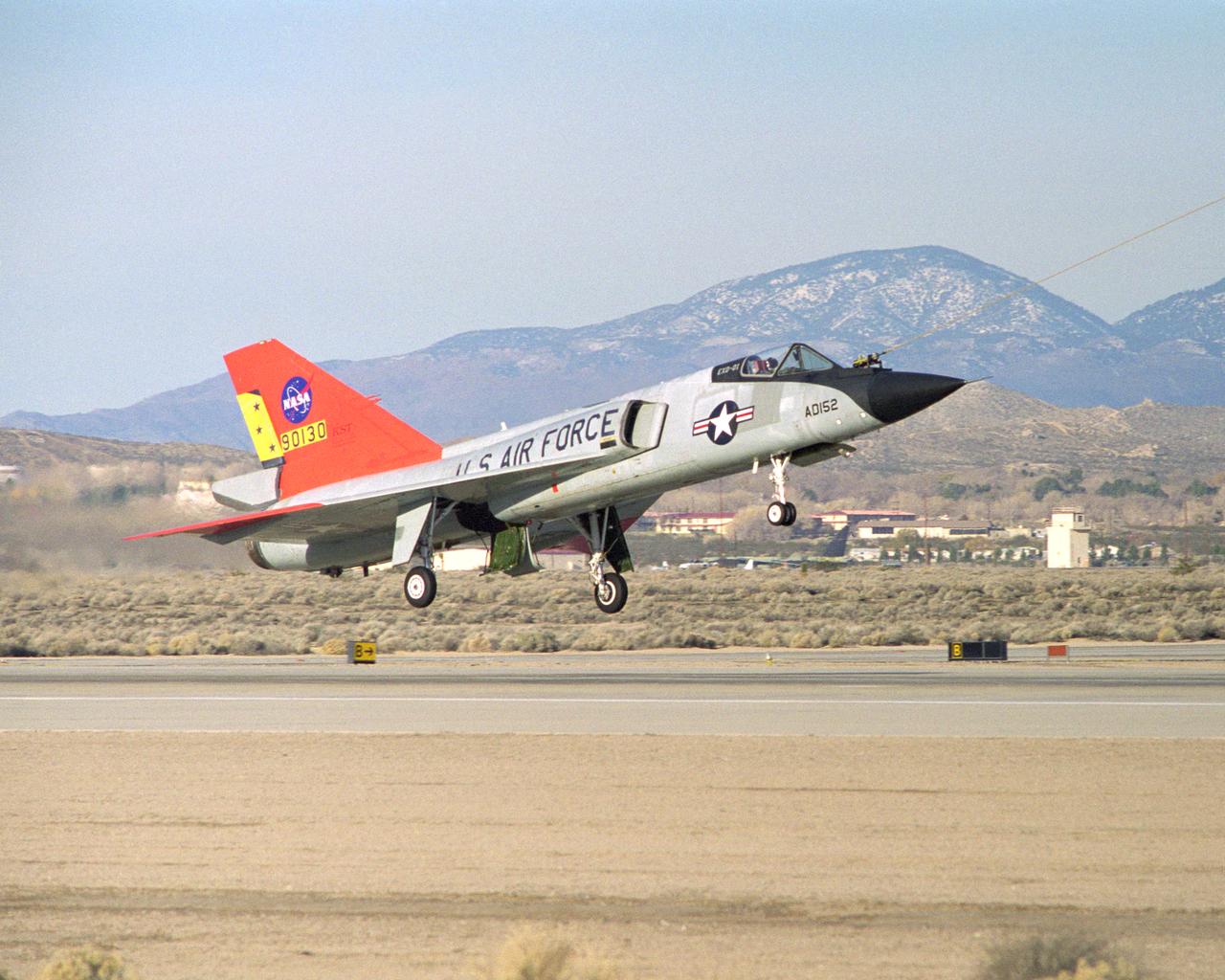
Eclipse project closeup of QF-106 under tow on takeoff on first flight December 20, 1997

CAPE CANAVERAL, Fla. – Orbiter Columbia tow from OPF to VAB. Photo credit: NASA

CAPE CANAVERAL, Fla. – Orbiter creeps toward the VAB during its tow from the OPF. Photo credit: NASA
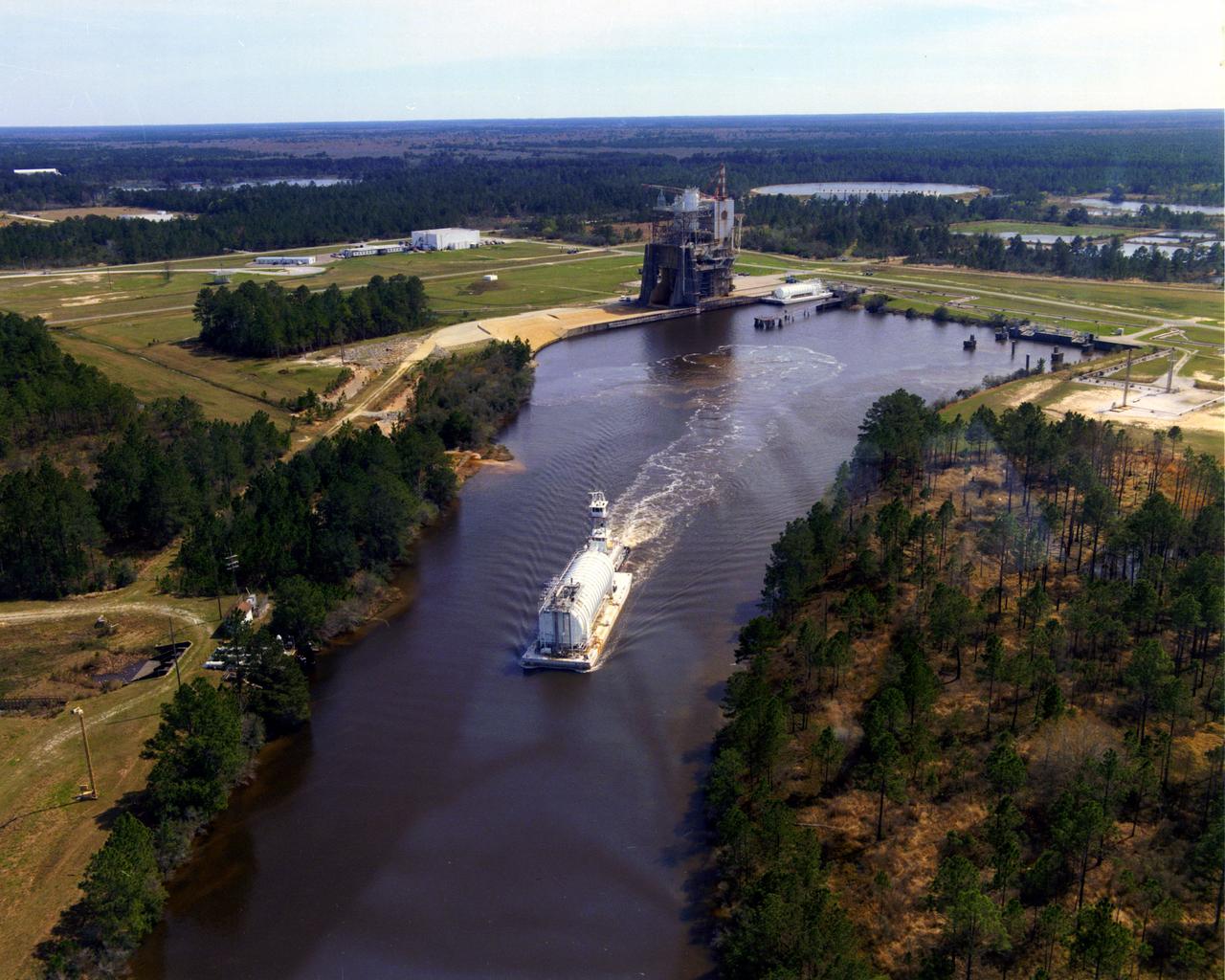
In this aerial view, a barge can be seen towing a container away from a test stand at the John C. Stennis Space Center.
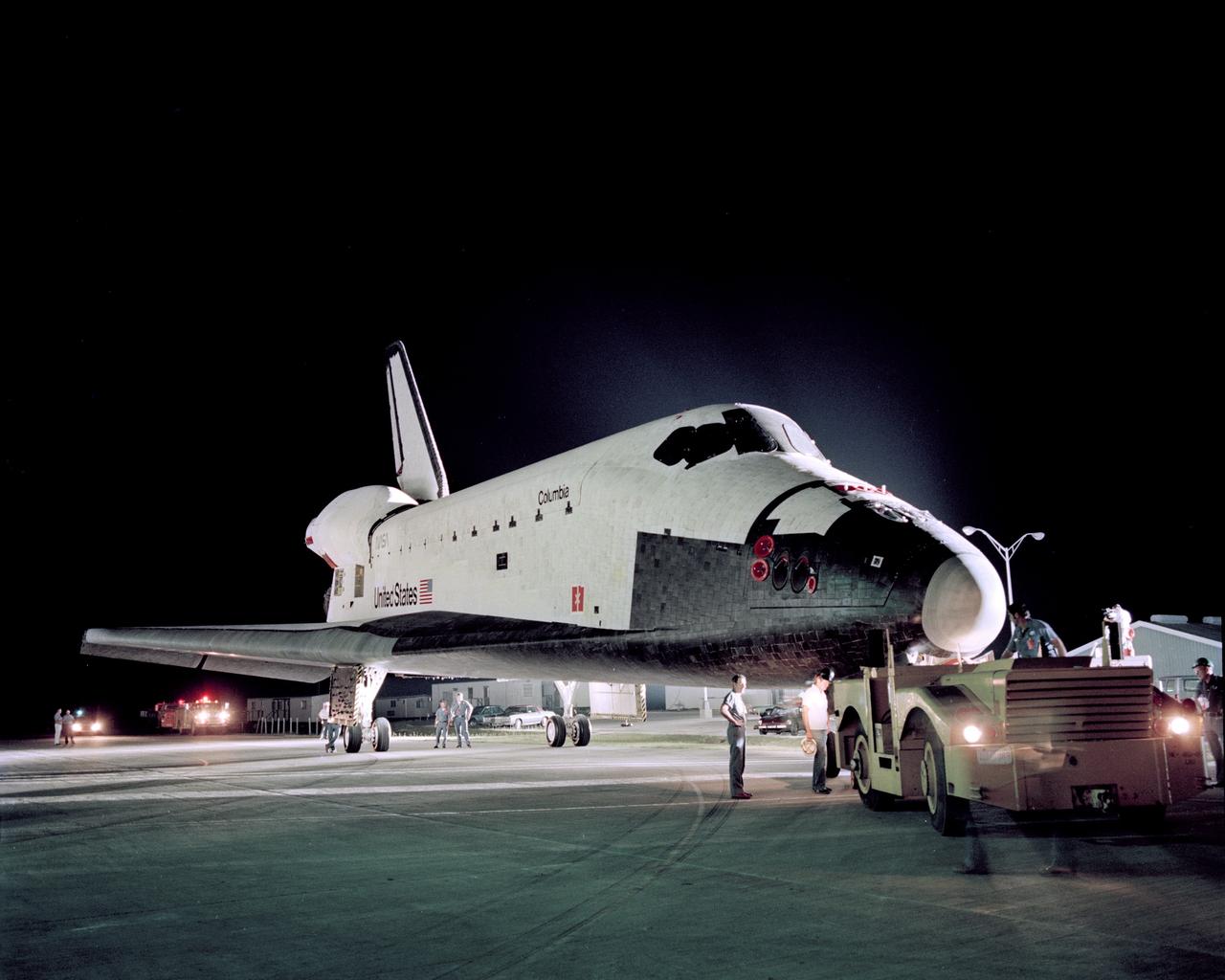
CAPE CANAVERAL, Fla. – Orbiter Columbia tow from OPF to VAB. Photo credit: NASA
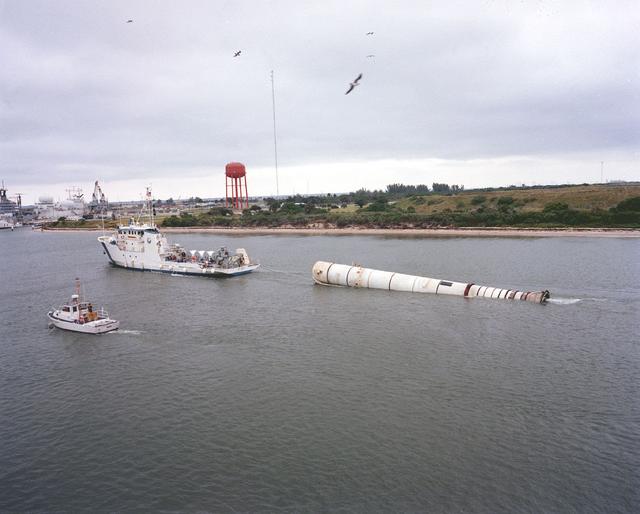
This is a photo of the recovery ship, UTC Liberty, towing the left booster of the STS-5 flight vehicle into Port Canaveral.

The Space Shuttle Endeavour, accompanied by a convoy of recovery vehicles, is towed up the taxiway at NASA's Dryden Flight Research Center at Edwards Air Force Base, California, following its landing on June 19, 2002. The landing, the 49th to occur at Edwards, concluded mission STS-111 to the International Space Station. It was the 18th orbital mission of Endeavour and the 110th space shuttle mission overall.

A Pilatus PC-12 aircraft, tail number 606, is being towed and pushed by a crew at NASA’s Armstrong Flight Research Center in Edwards, California, on Feb. 11, 2026. This aircraft is now housed at NASA Armstrong to continue supporting research at NASA’s Glenn Research Center, among other agency efforts.
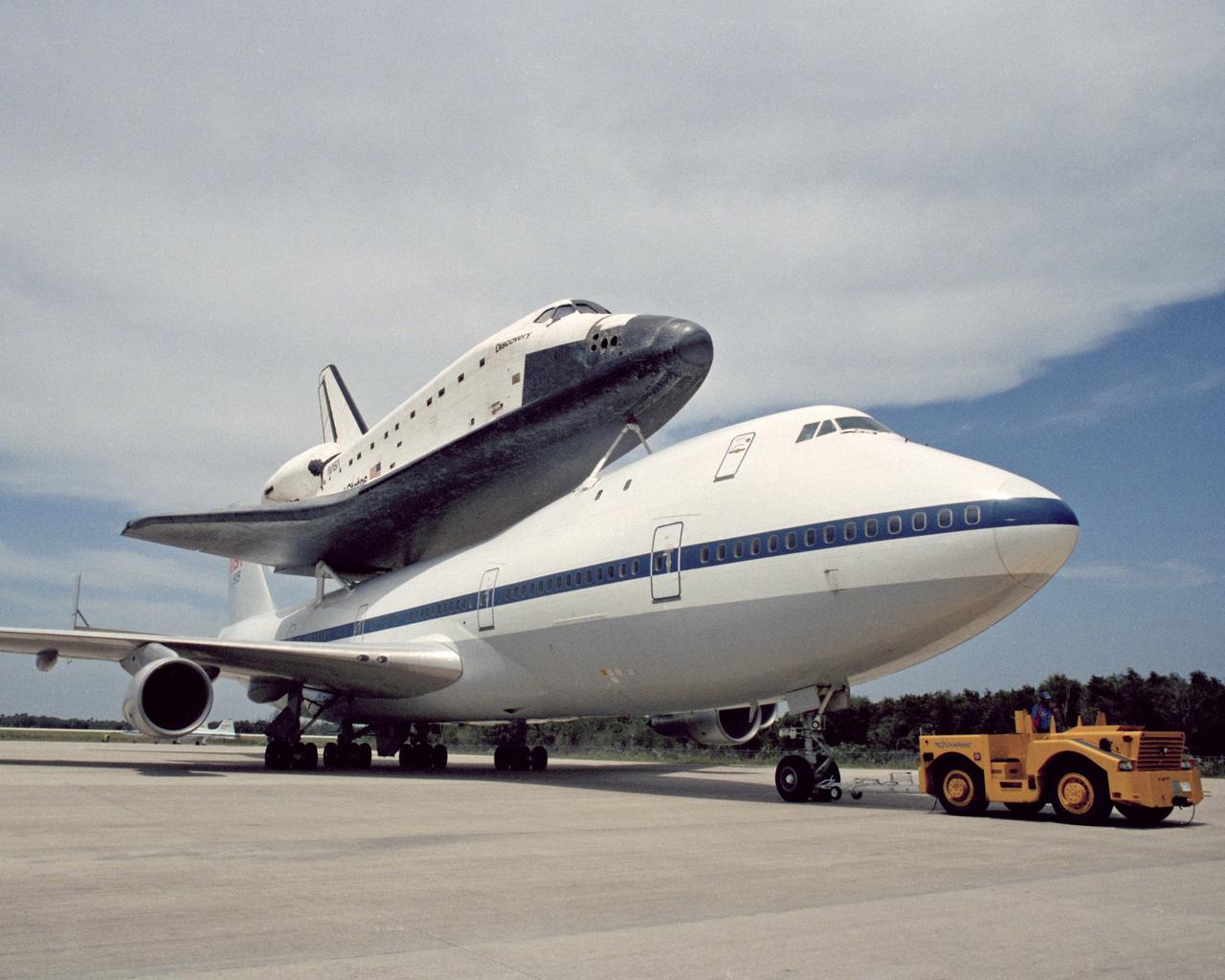
CAPE CANAVERAL, Fla. -- STS-31. Return of the space shuttle Discovery at the SLF and towed into the mate/demate device. Photo credit: NASA
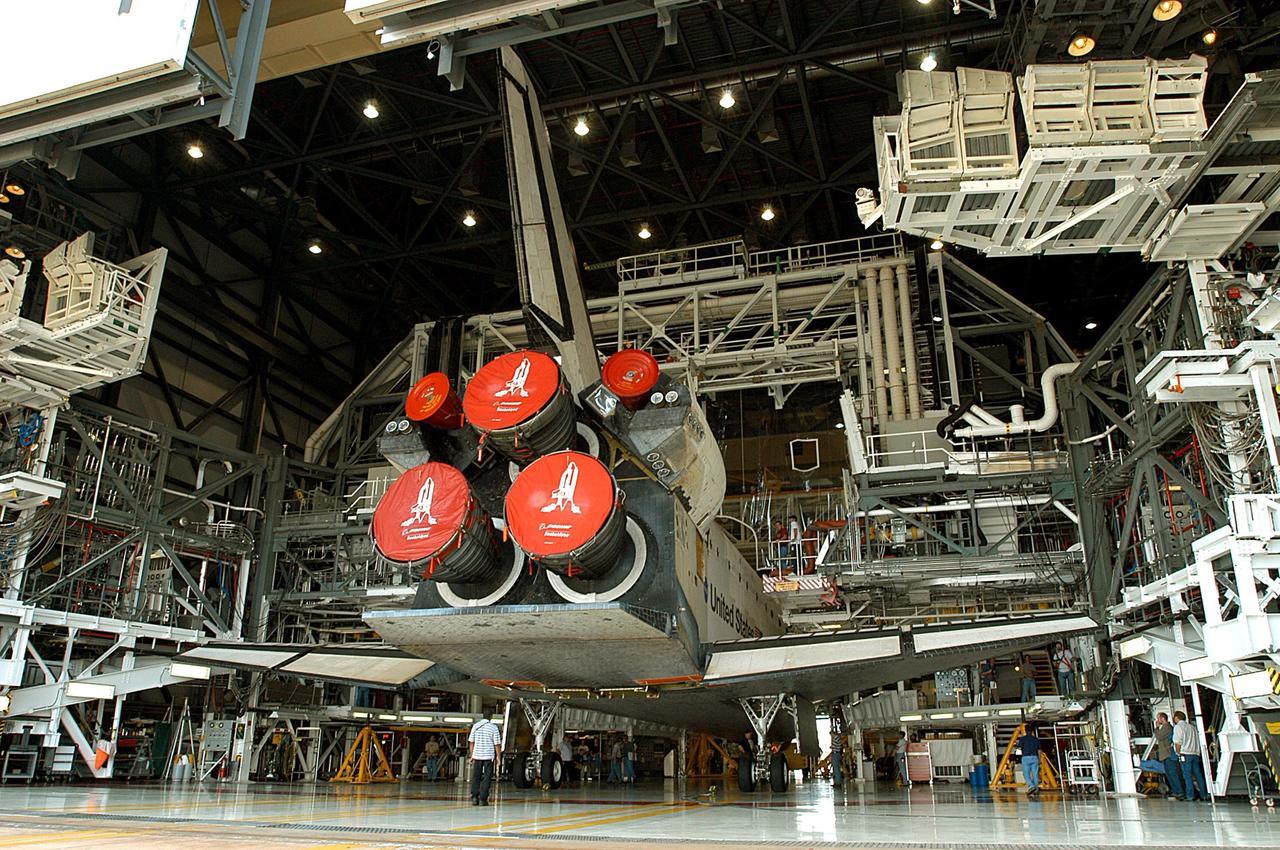
KENNEDY SPACE CENTER, Fla. - Atlantis is towed into the Orbiter Processing Facility. Not currently in preparation for flight, the orbiter was moved from the Vehicle Assembly Building.
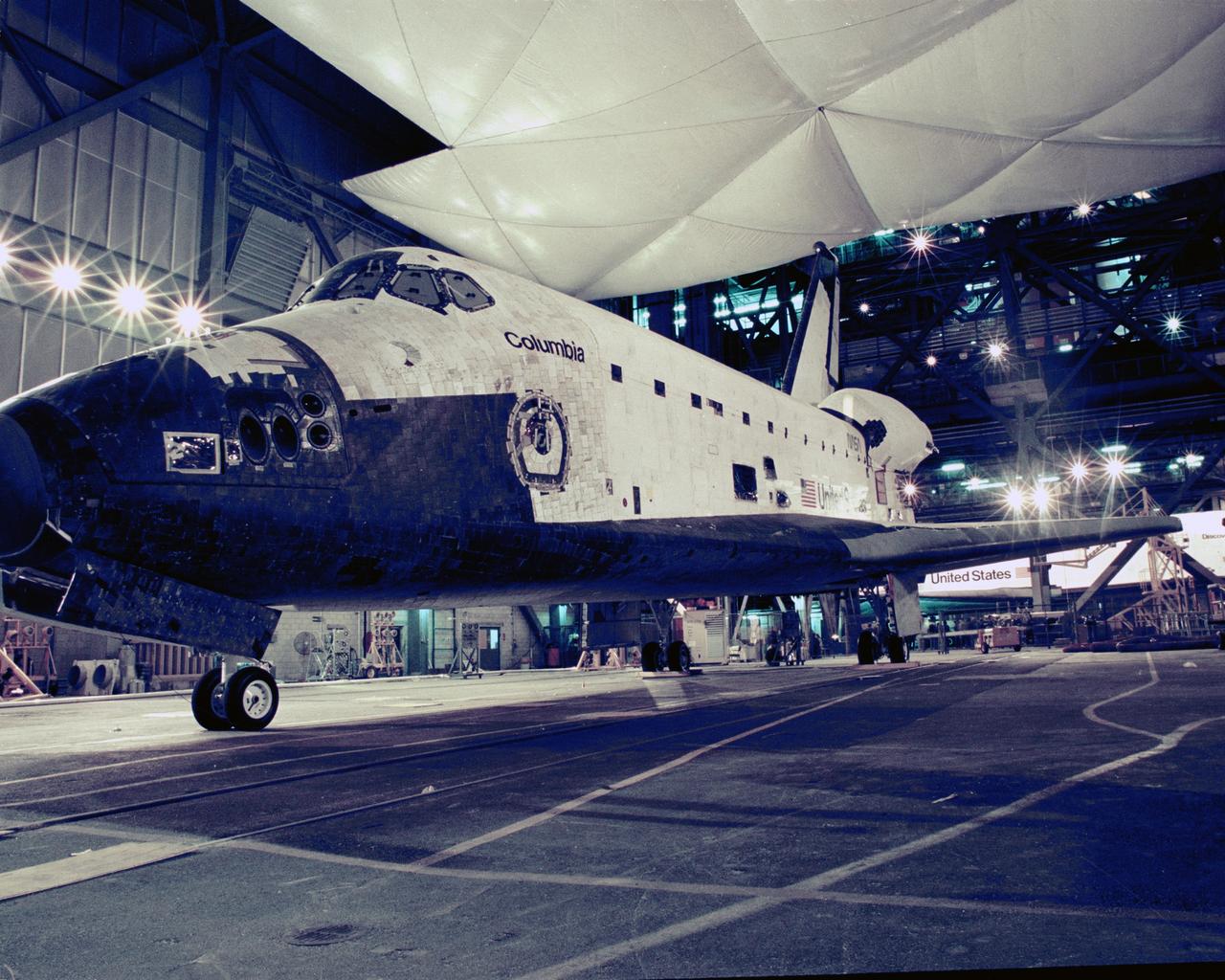
CAPE CANAVERAL, Fla. – Two space planes pass inside the VAB as the orbiter Discovery is towed past its sister ship, Columbia. Photo credit: NASA
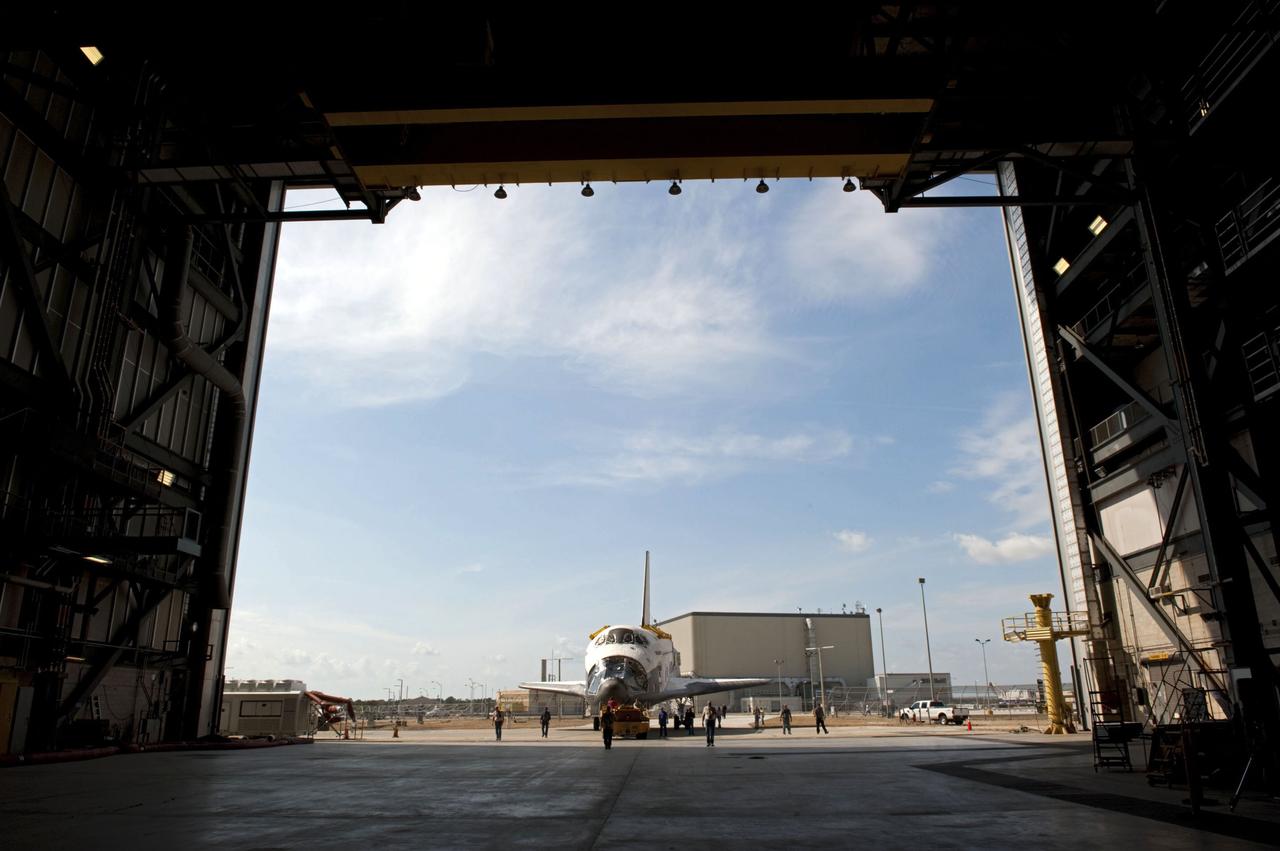
CAPE CANAVERAL, Fla. – At NASA’s Kennedy Space Center in Florida, space shuttle Atlantis is towed toward the Vehicle Assembly Building (VAB) high bay 4 doors after being towed around from the VAB transfer aisle. Shuttle Atlantis will remain in temporary storage in high bay 4, while Space Shuttle Program transition and retirement work continues on Discovery and Endeavour in the orbiter processing facilities. Atlantis is being prepared for display at the Kennedy Space Center Visitor Complex. Photo credit: NASA/Kim Shiflett
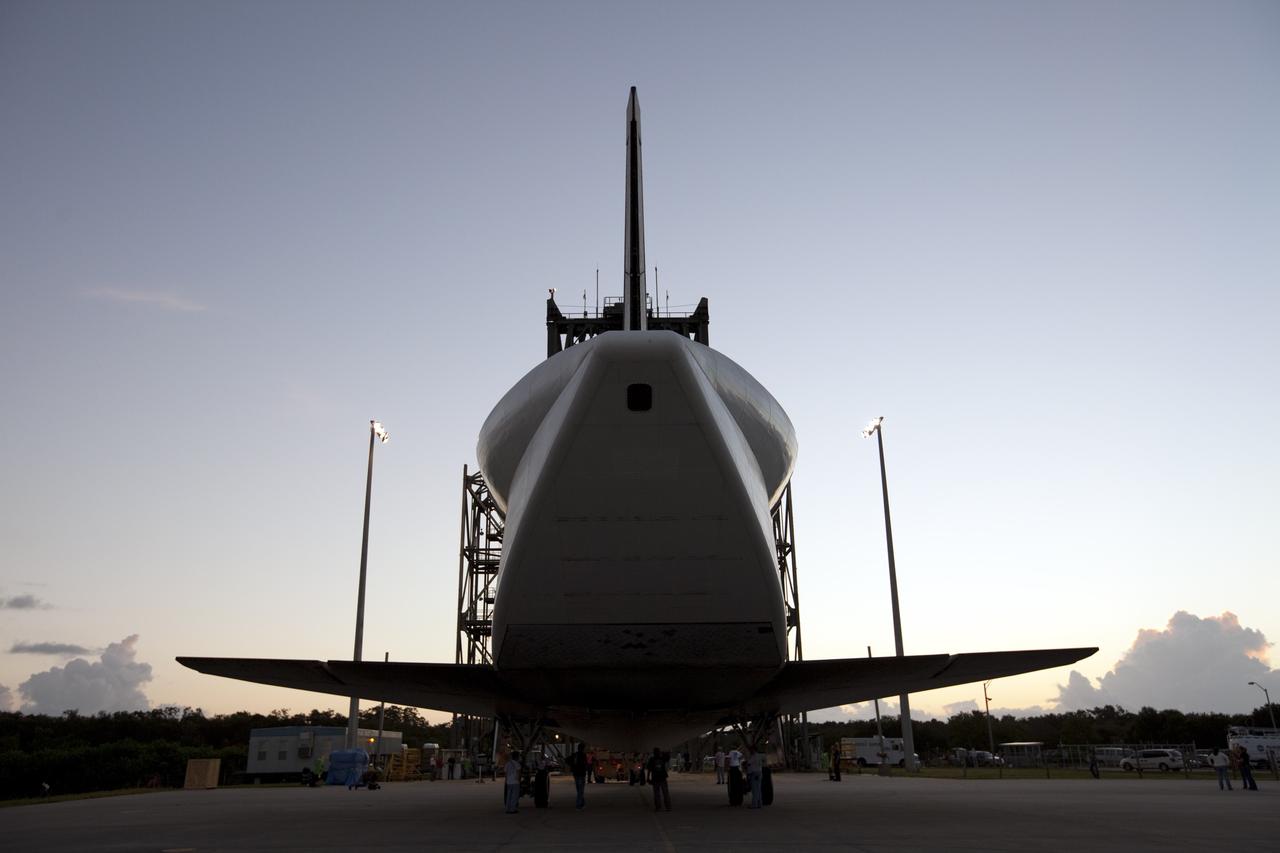
CAPE CANAVERAL, Fla. – Space shuttle Endeavour is towed into the Mate-Demate Device, or MDD, at NASA's Kennedy Space Center in Florida. The MDD will be used to lift and connect the shuttle to the top of NASA's Shuttle Carrier Aircraft SCA, a modified 747 jetliner. The shuttle has been fitted with an aerodynamic tailcone for its flight aboard the SCA to Los Angeles where it will be placed on public display. The shuttle was towed from the Vehicle Assembly Building. Photo credit: NASA/Kim Shiflett
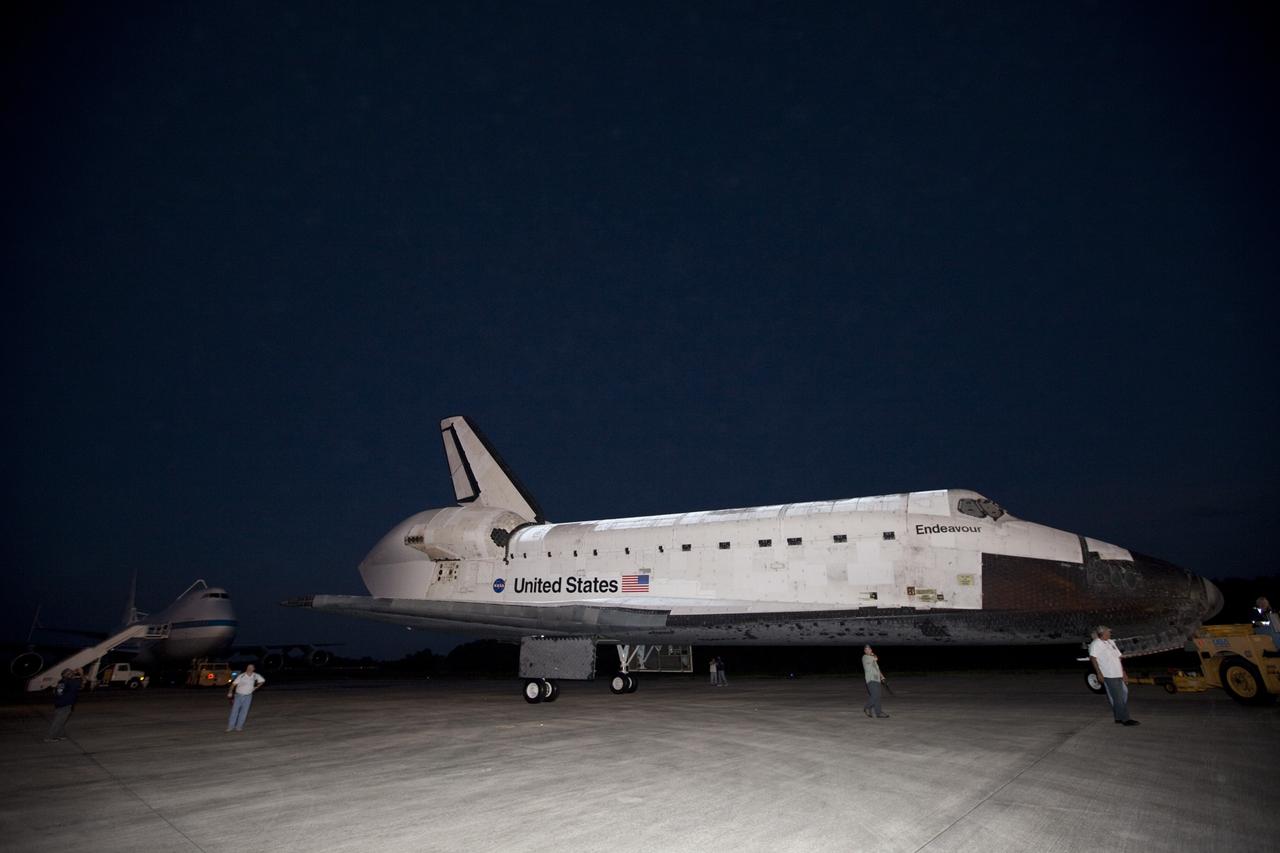
CAPE CANAVERAL, Fla. – Workers watch the arrival of space shuttle Endeavour at the Shuttle Landing Facility after the shuttle was towed from the Vehicle Assembly Building at NASA's Kennedy Space Center in Florida. Endeavour was towed to the Mate-Demate Device, or MDD, where the shuttle will be lifted and connected to the top of NASA's Shuttle Carrier Aircraft SCA, a modified 747 jetliner. The shuttle has been fitted with an aerodynamic tailcone for its flight aboard the SCA to Los Angeles where it will be placed on public display. Photo credit: NASA/Kim Shiflett
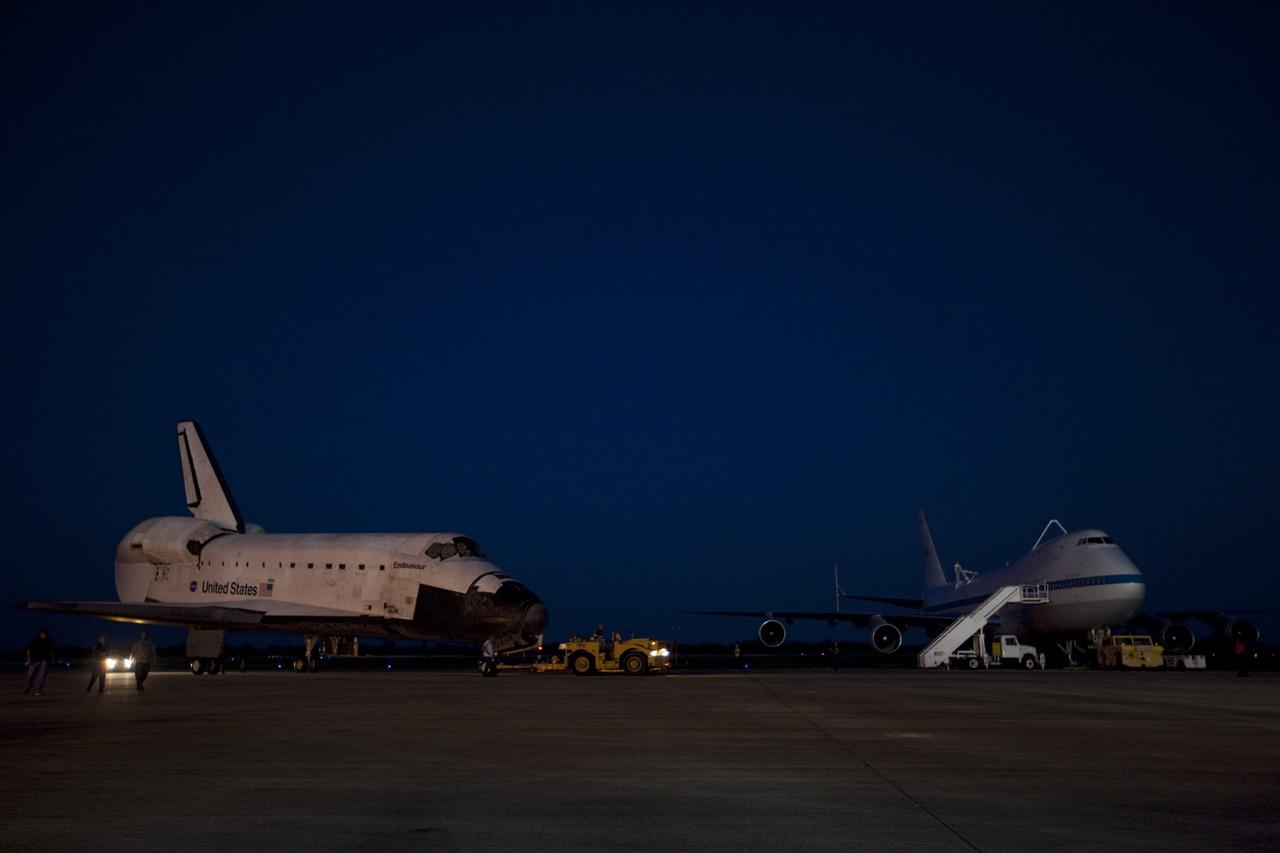
CAPE CANAVERAL, Fla. – Space shuttle Endeavour arrives at the Shuttle Landing Facility after the shuttle was towed from the Vehicle Assembly Building at NASA's Kennedy Space Center in Florida. Endeavour was towed to the Mate-Demate Device, or MDD, where the shuttle will be lifted and connected to the top of NASA's Shuttle Carrier Aircraft SCA, a modified 747 jetliner. The shuttle has been fitted with an aerodynamic tailcone for its flight aboard the SCA to Los Angeles where it will be placed on public display. Photo credit: NASA/Kim Shiflett
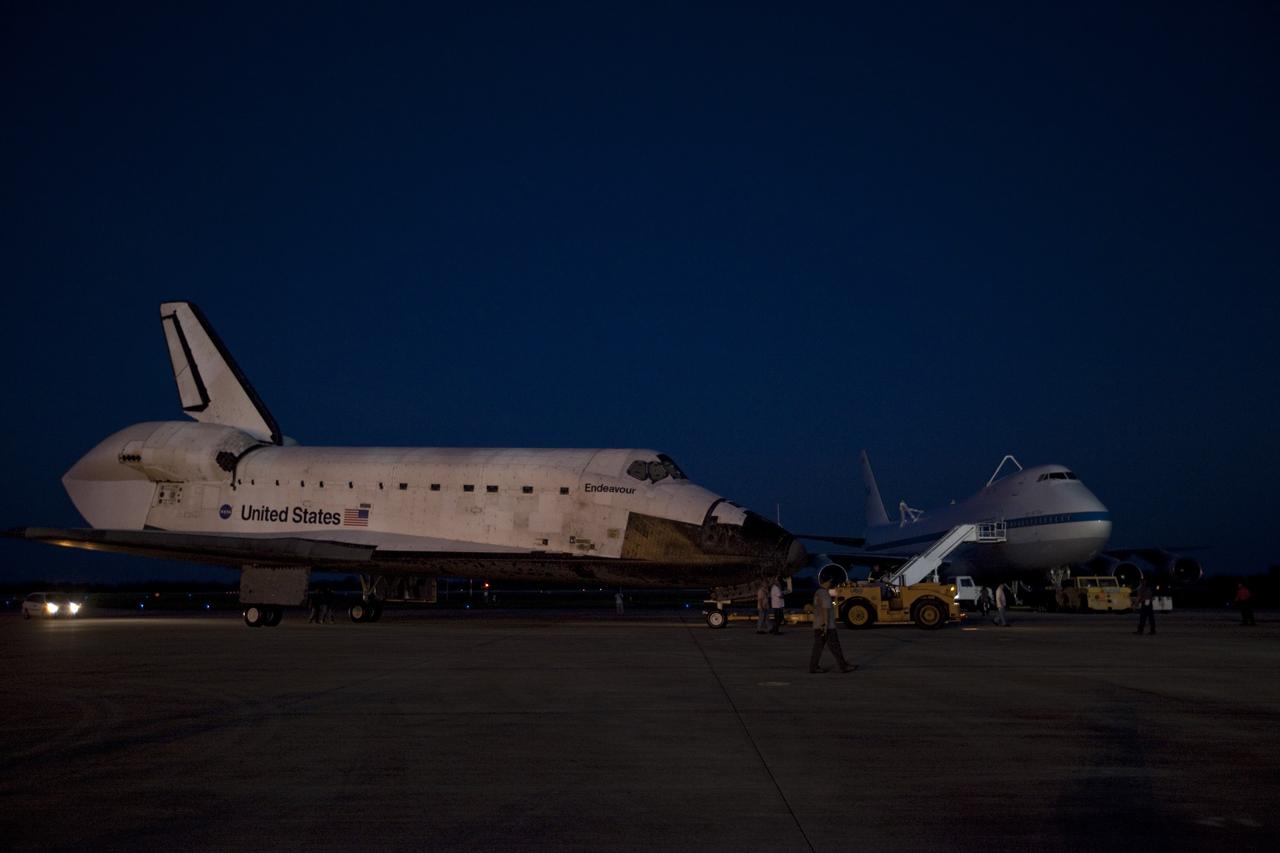
CAPE CANAVERAL, Fla. – Space shuttle Endeavour arrives at the Shuttle Landing Facility after the shuttle was towed from the Vehicle Assembly Building at NASA's Kennedy Space Center in Florida. Endeavour was towed to the Mate-Demate Device, or MDD, where the shuttle will be lifted and connected to the top of NASA's Shuttle Carrier Aircraft SCA, a modified 747 jetliner. The shuttle has been fitted with an aerodynamic tailcone for its flight aboard the SCA to Los Angeles where it will be placed on public display. Photo credit: NASA/Kim Shiflett
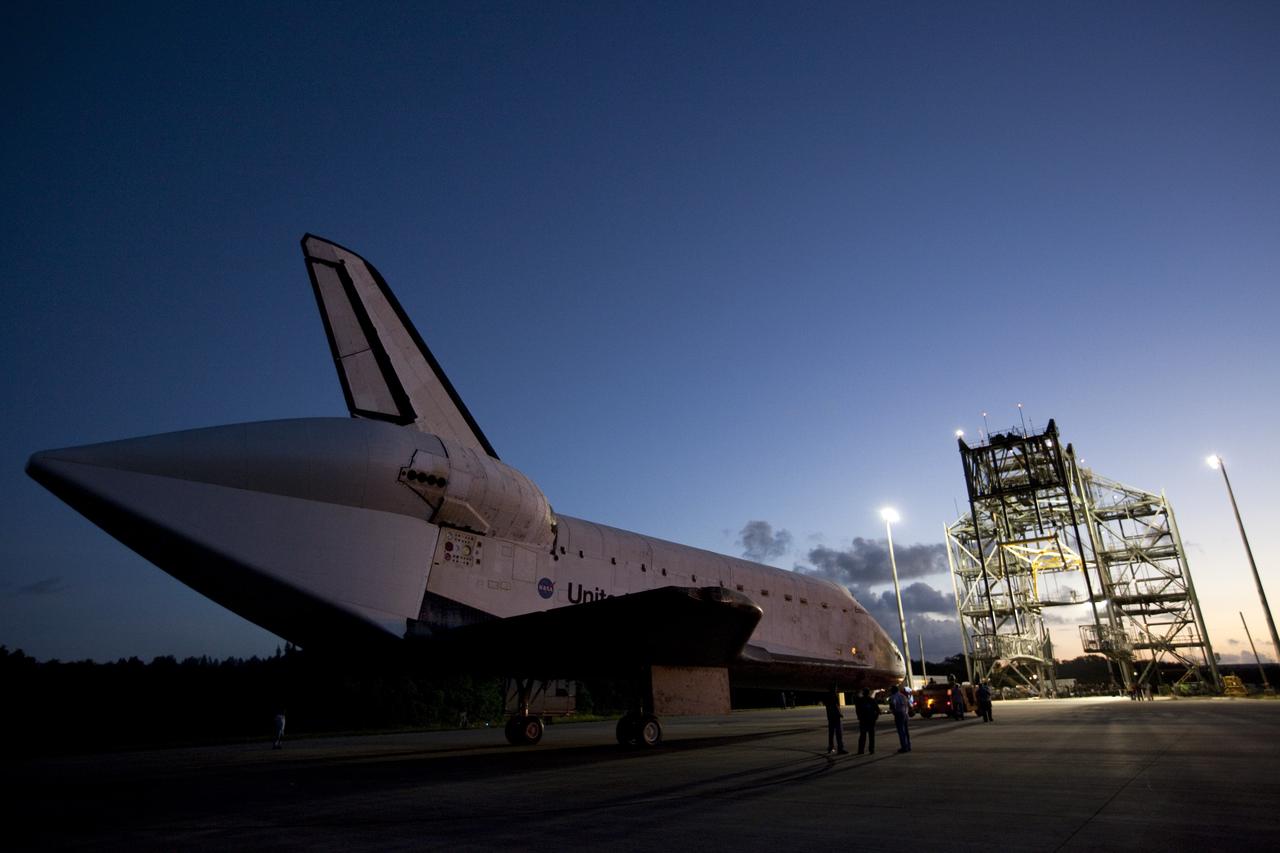
CAPE CANAVERAL, Fla. – Workers watch the arrival of space shuttle Endeavour at the Shuttle Landing Facility after the shuttle was towed from the Vehicle Assembly Building at NASA's Kennedy Space Center in Florida. Endeavour was towed to the Mate-Demate Device, or MDD, where the shuttle will be lifted and connected to the top of NASA's Shuttle Carrier Aircraft SCA, a modified 747 jetliner. The shuttle has been fitted with an aerodynamic tailcone for its flight aboard the SCA to Los Angeles where it will be placed on public display. Photo credit: NASA/Kim Shiflett
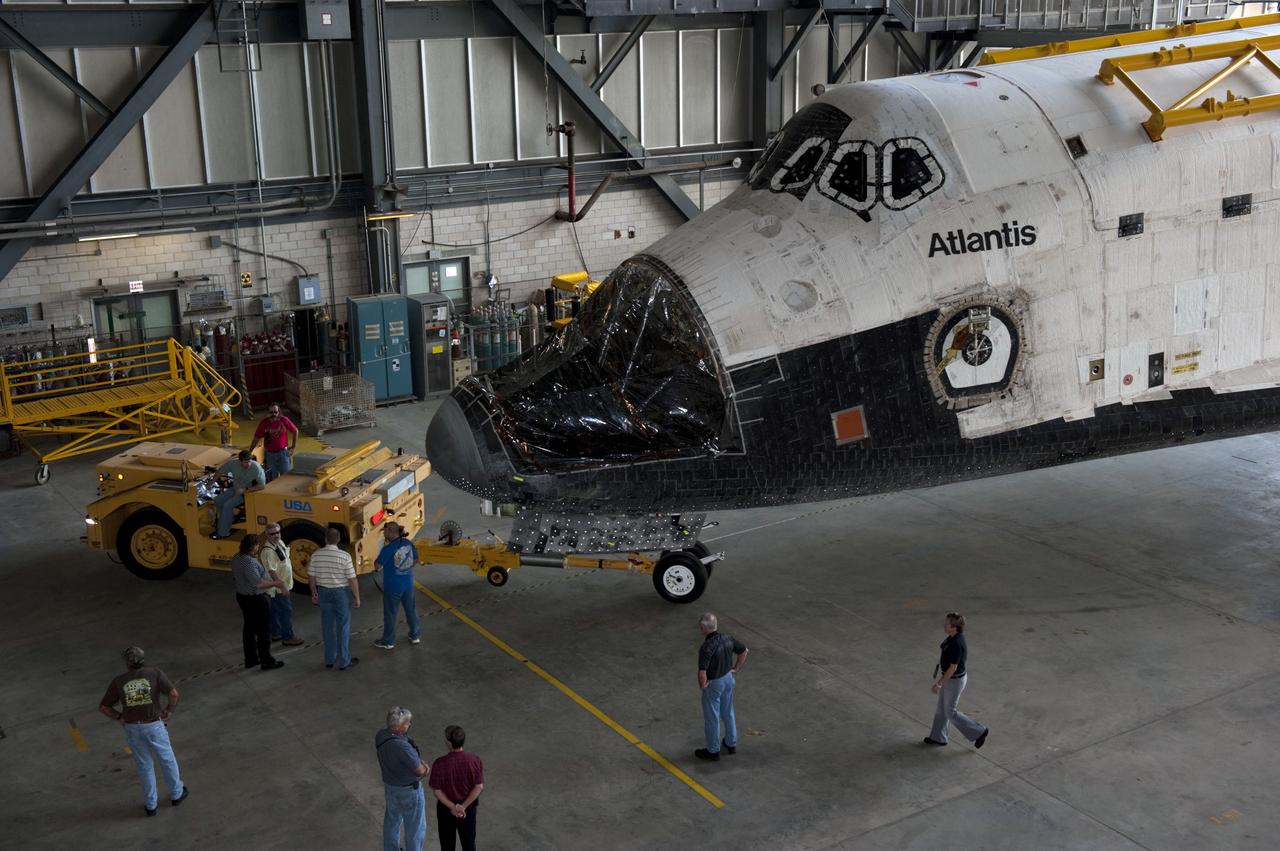
CAPE CANAVERAL, Fla. – At NASA’s Kennedy Space Center in Florida, space shuttle Atlantis is towed into the Vehicle Assembly Building (VAB) high bay 4 after being towed around from the VAB transfer aisle. Shuttle Atlantis will remain in temporary storage in high bay 4, while Space Shuttle Program transition and retirement work continues on Discovery and Endeavour in the orbiter processing facilities. Atlantis is being prepared for display at the Kennedy Space Center Visitor Complex. Photo credit: NASA/Kim Shiflett
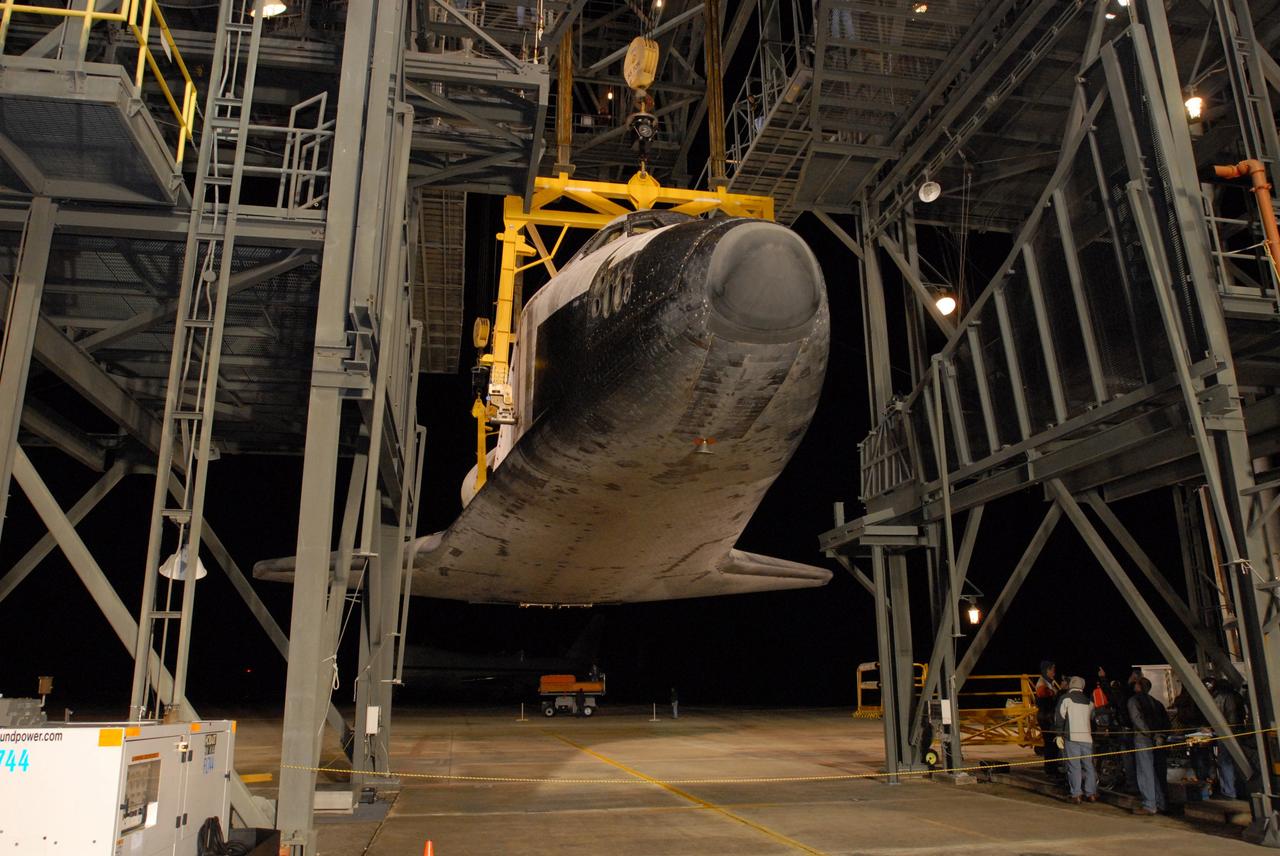
CAPE CANAVERAL, Fla. -- Before dawn, at the Shuttle Landing Facility, or SLF, at NASA's Kennedy Space Center in Florida, space shuttle Endeavour is lowered toward the ground by the sling in the mate/demate device. After Endeavour is on the ground, it will be towed via the two-mile tow-way from the SLF by a diesel-powered tractor to the Orbiter Processing Facility where it will begin preparations for its next mission, STS-127, targeted for May 2009. Photo credit: NASA/Jim Grossmann
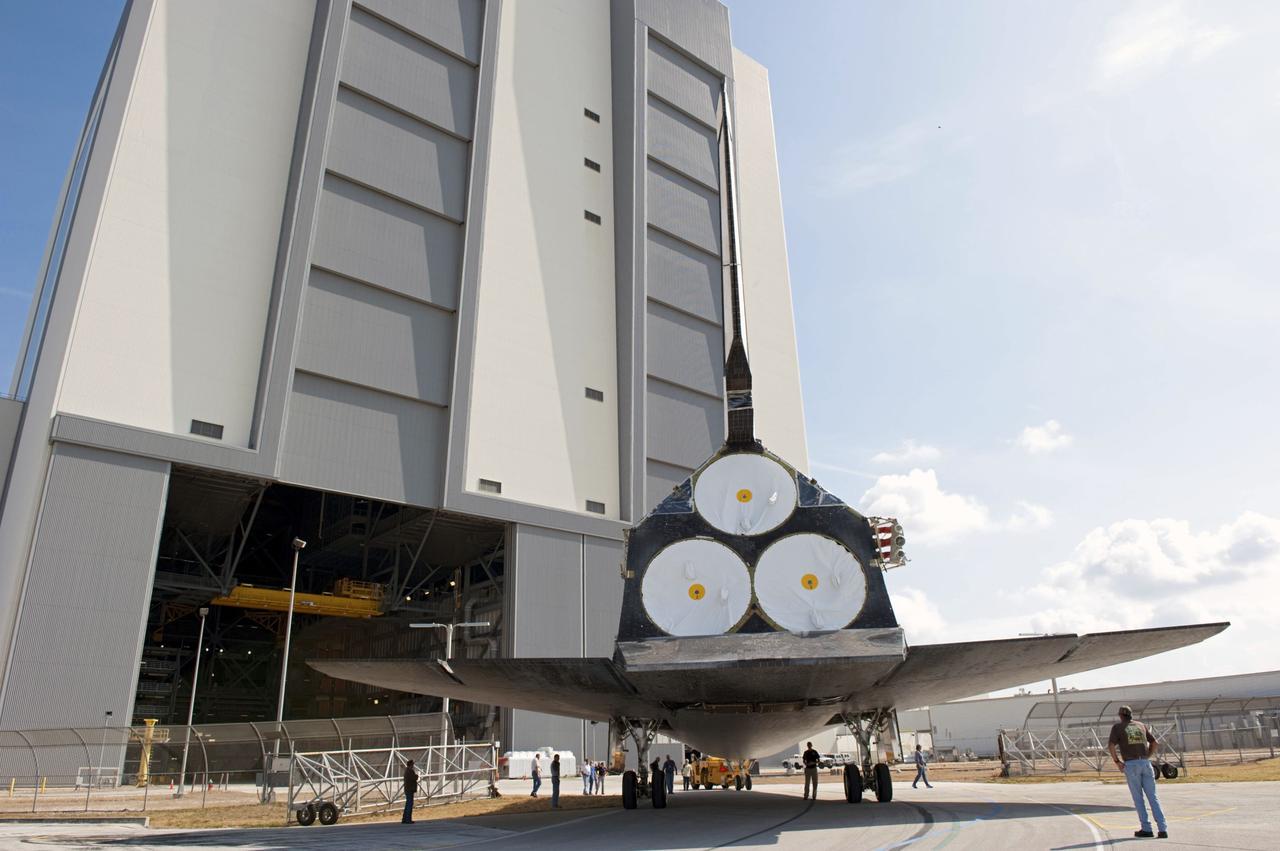
CAPE CANAVERAL, Fla. – At NASA’s Kennedy Space Center in Florida, space shuttle Atlantis is towed toward the Vehicle Assembly Building (VAB) high bay 4 doors after being towed around from the VAB transfer aisle. Shuttle Atlantis will remain in temporary storage in high bay 4, while Space Shuttle Program transition and retirement work continues on Discovery and Endeavour in the orbiter processing facilities. Atlantis is being prepared for display at the Kennedy Space Center Visitor Complex. Photo credit: NASA/Kim Shiflett
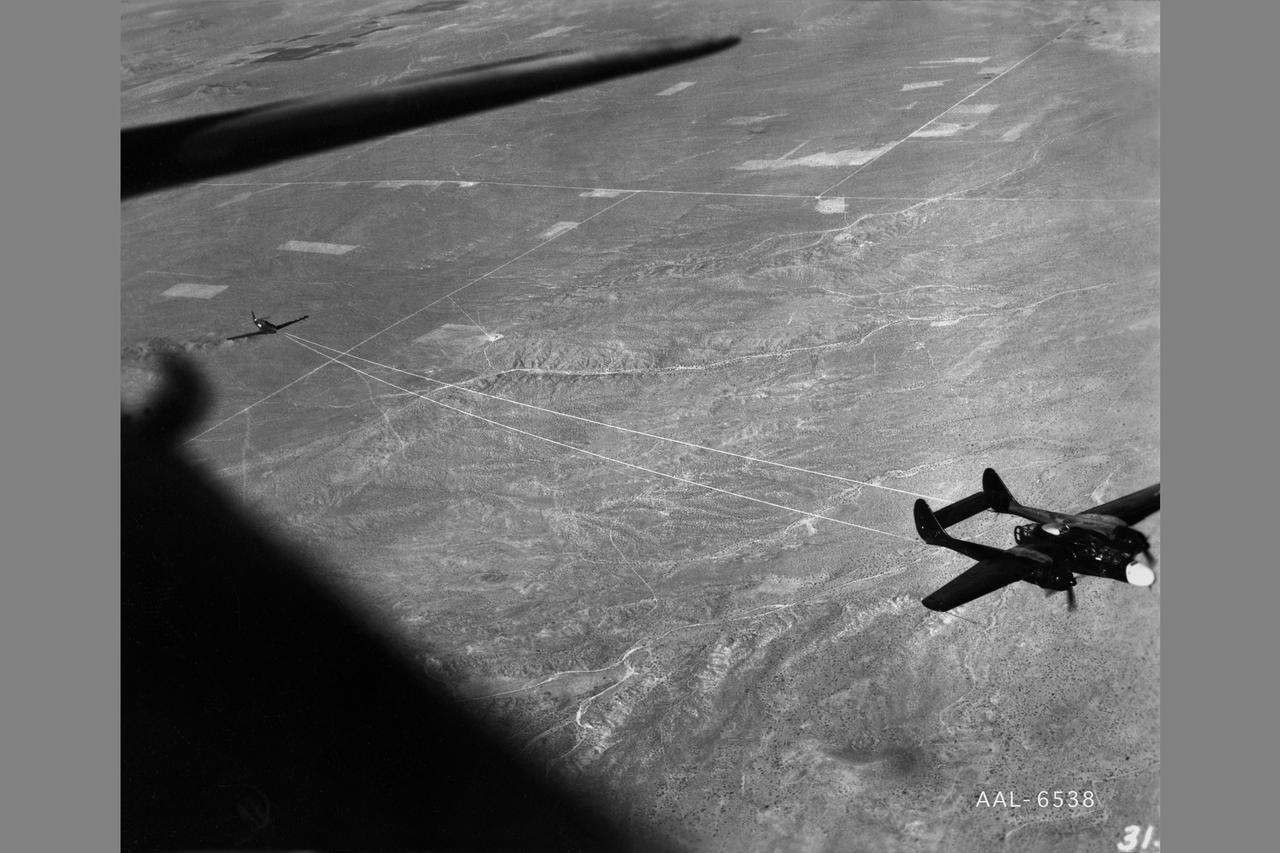
NACA photographer Northrop P-61A Black Widow towing P-51B to release altitude of 28,000 ft over Muroc Dry Lake, California for in flight validating of wind tunnel measurements of drag. After the pilot released the tow cable, drag measurementrs were obtained at various airspeeds in a 20-minute unpowered flight. Note: Used in publication in Flight Research at Ames; 57 Years of Development and Validation of Aeronautical Technology NASA SP-1998-3300 Fig. 17
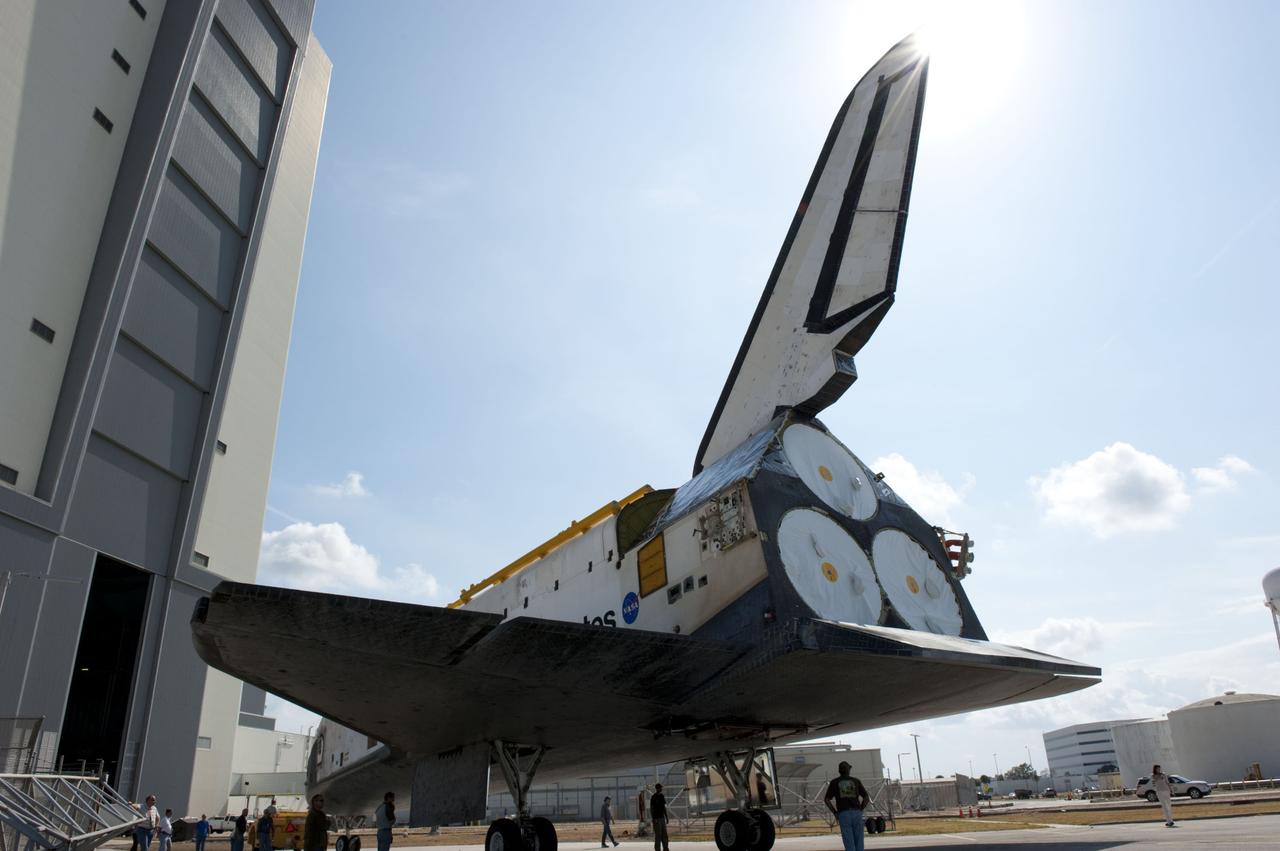
CAPE CANAVERAL, Fla. – At NASA’s Kennedy Space Center in Florida, space shuttle Atlantis is towed toward the Vehicle Assembly Building (VAB) high bay 4 doors after being towed around from the VAB transfer aisle. Shuttle Atlantis will remain in temporary storage in high bay 4, while Space Shuttle Program transition and retirement work continues on Discovery and Endeavour in the orbiter processing facilities. Atlantis is being prepared for display at the Kennedy Space Center Visitor Complex. Photo credit: NASA/Kim Shiflett

CAPE CANAVERAL, Fla. – Space shuttle Endeavour is towed into the Mate-Demate Device, or MDD, at NASA's Kennedy Space Center in Florida. The MDD will be used to lift and connect the shuttle to the top of NASA's Shuttle Carrier Aircraft SCA, a modified 747 jetliner. The shuttle has been fitted with an aerodynamic tailcone for its flight aboard the SCA to Los Angeles where it will be placed on public display. The shuttle was towed from the Vehicle Assembly Building. Photo credit: NASA/Kim Shiflett
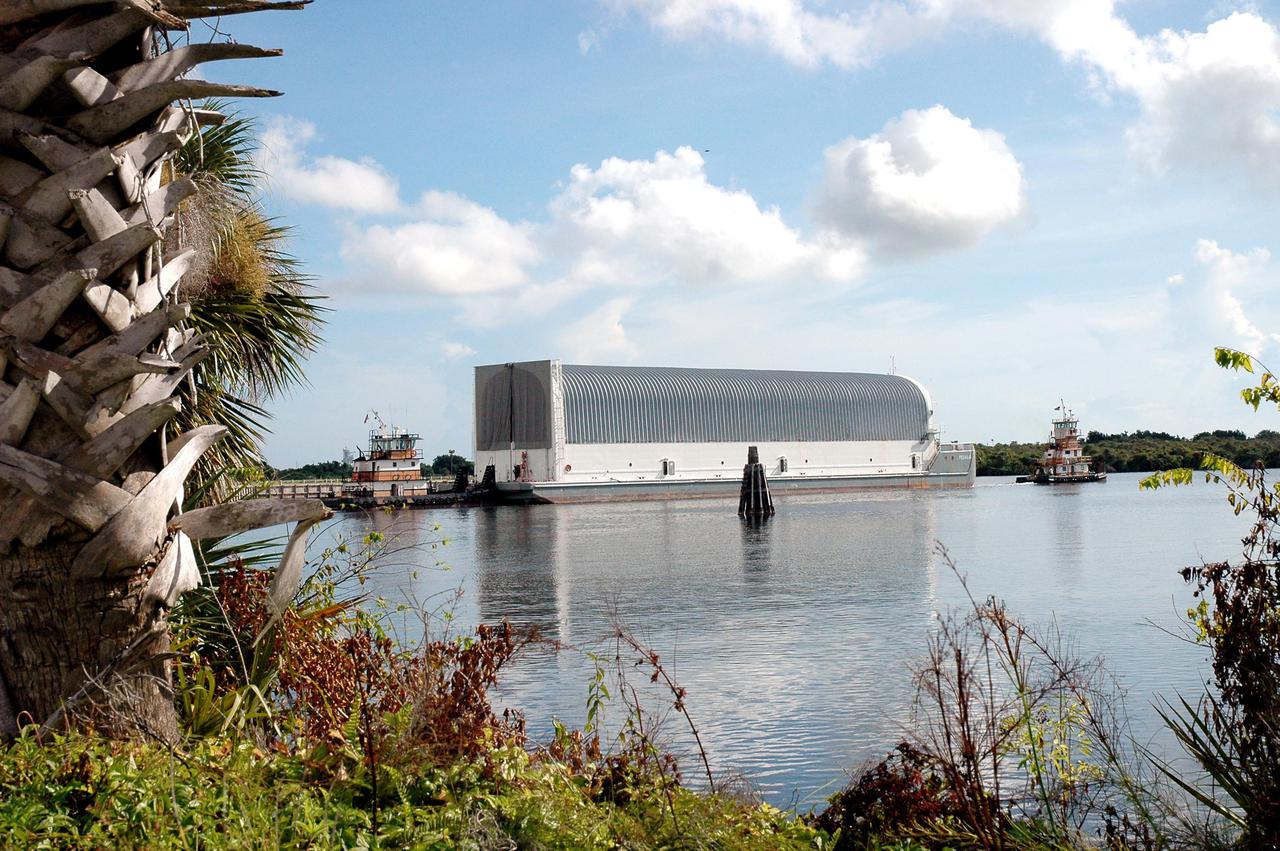
KENNEDY SPACE CENTER, FLA. - Viewed across the Turn Basin at NASA Kennedy Space Center, the barge Pegasus is towed away from the dock on the other side. It is being towed to Port Canaveral where it will join one of the Solid Rocket Booster Recovery Ships and begin its journey around the Florida peninsula to Michoud Assembly Facility in New Orleans. The barge’s cargo is External Tank 119. Delivered to KSC in June, ET-119 is the third newly redesigned tank.
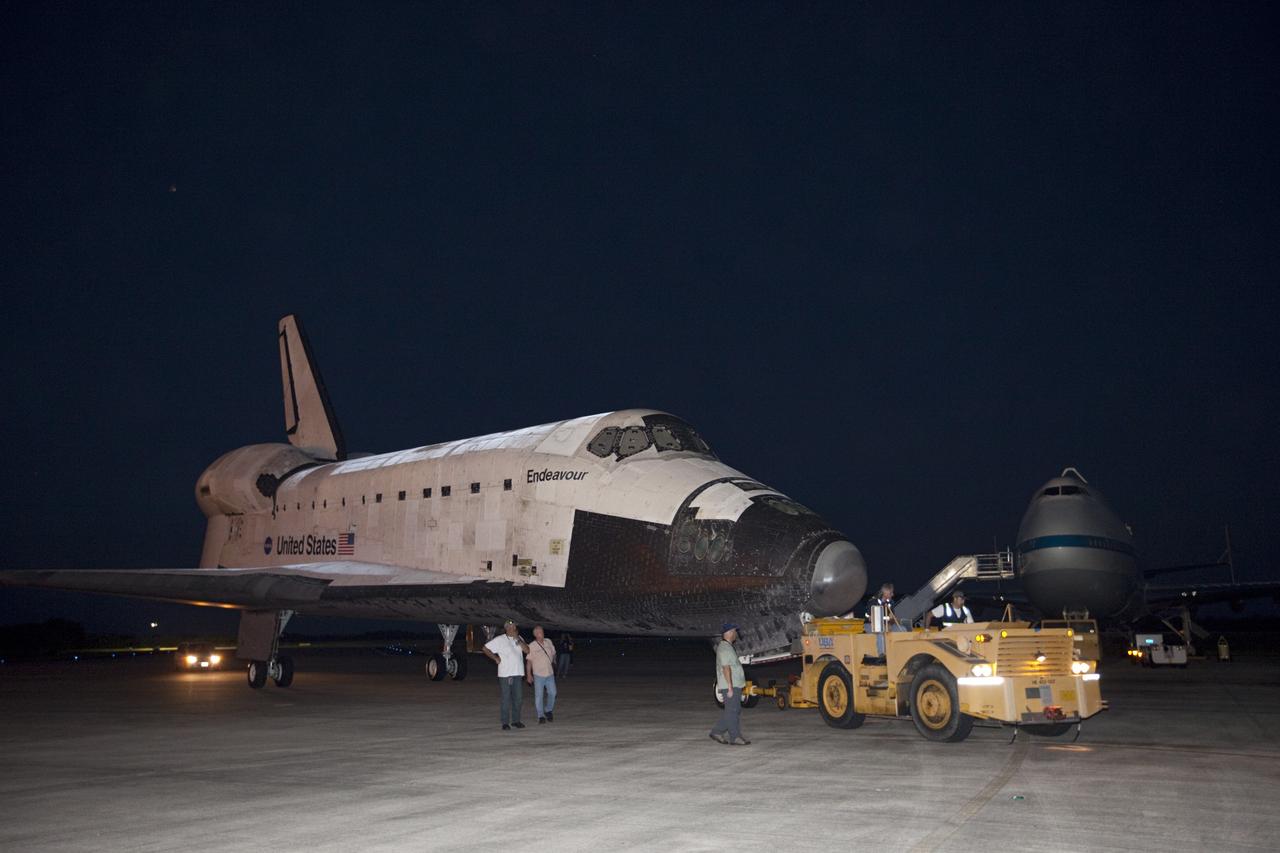
CAPE CANAVERAL, Fla. – Workers watch the arrival of space shuttle Endeavour at the Shuttle Landing Facility after the shuttle was towed from the Vehicle Assembly Building at NASA's Kennedy Space Center in Florida. Endeavour was towed to the Mate-Demate Device, or MDD, where the shuttle will be lifted and connected to the top of NASA's Shuttle Carrier Aircraft SCA, a modified 747 jetliner. The shuttle has been fitted with an aerodynamic tailcone for its flight aboard the SCA to Los Angeles where it will be placed on public display. Photo credit: NASA/Kim Shiflett
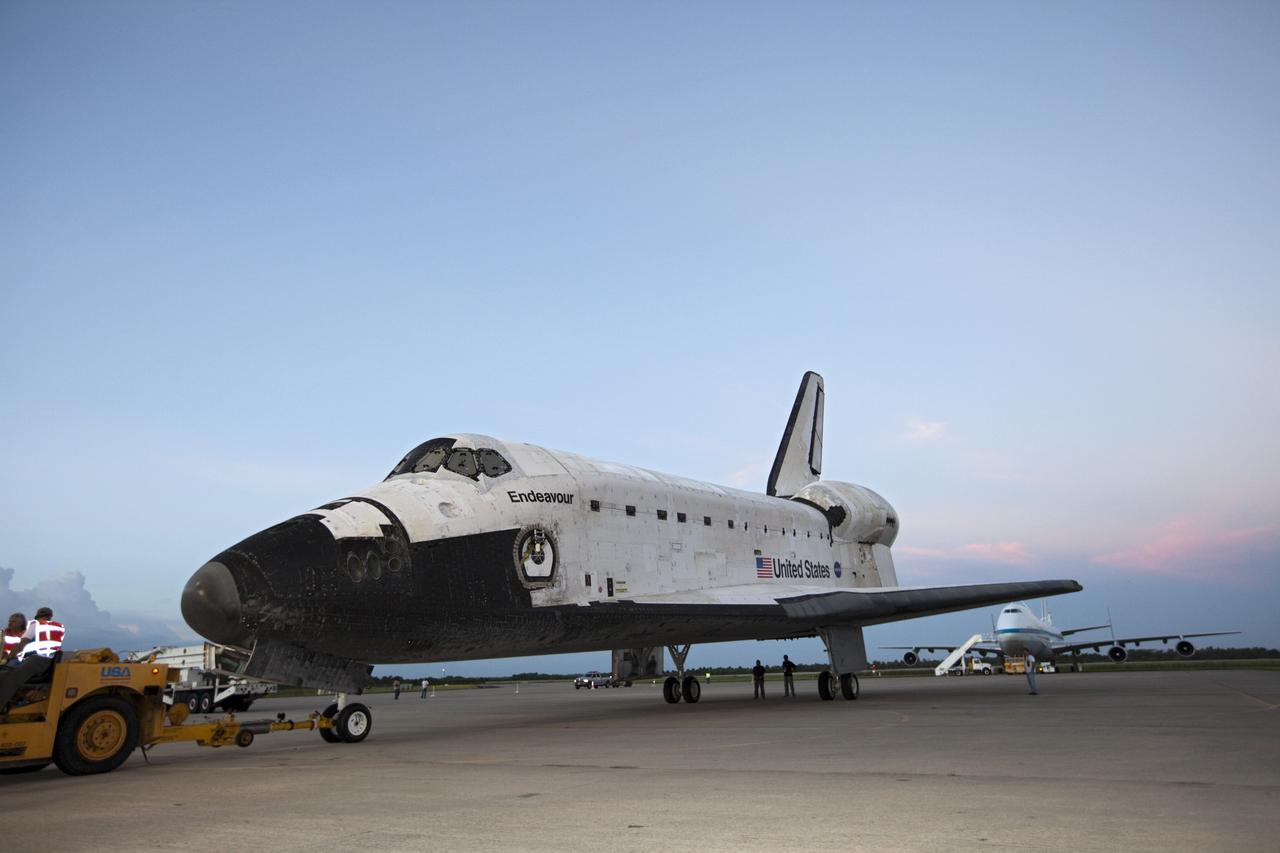
CAPE CANAVERAL, Fla. – Space shuttle Endeavour is towed into the Mate-Demate Device, or MDD, at NASA's Kennedy Space Center in Florida. The MDD will be used to lift and connect the shuttle to the top of NASA's Shuttle Carrier Aircraft SCA, a modified 747 jetliner. The shuttle has been fitted with an aerodynamic tailcone for its flight aboard the SCA to Los Angeles where it will be placed on public display. The shuttle was towed from the Vehicle Assembly Building. Photo credit: NASA/Kim Shiflett
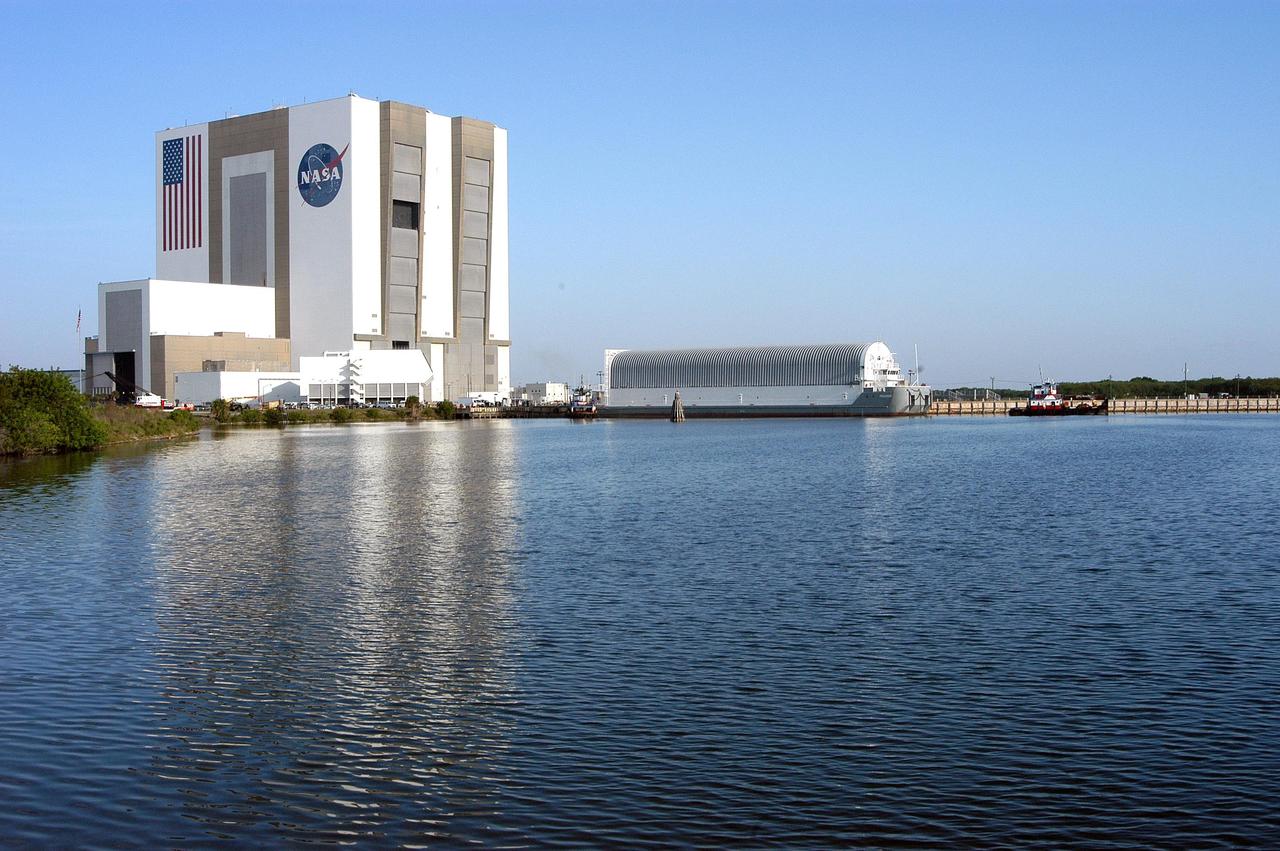
KENNEDY SPACE CENTER, FLA. - Viewed across the turn basin in the Launch Complex 39 Area at KSC, the barge containing an External Tank (ET) waits to be towed to Port Canaveral. There one of the SRB Retrieval Ships will take over and tow the ET to the Michoud Space Systems Assembly Facility near New Orleans where redesign of the external tank is underway for Return to Flight.
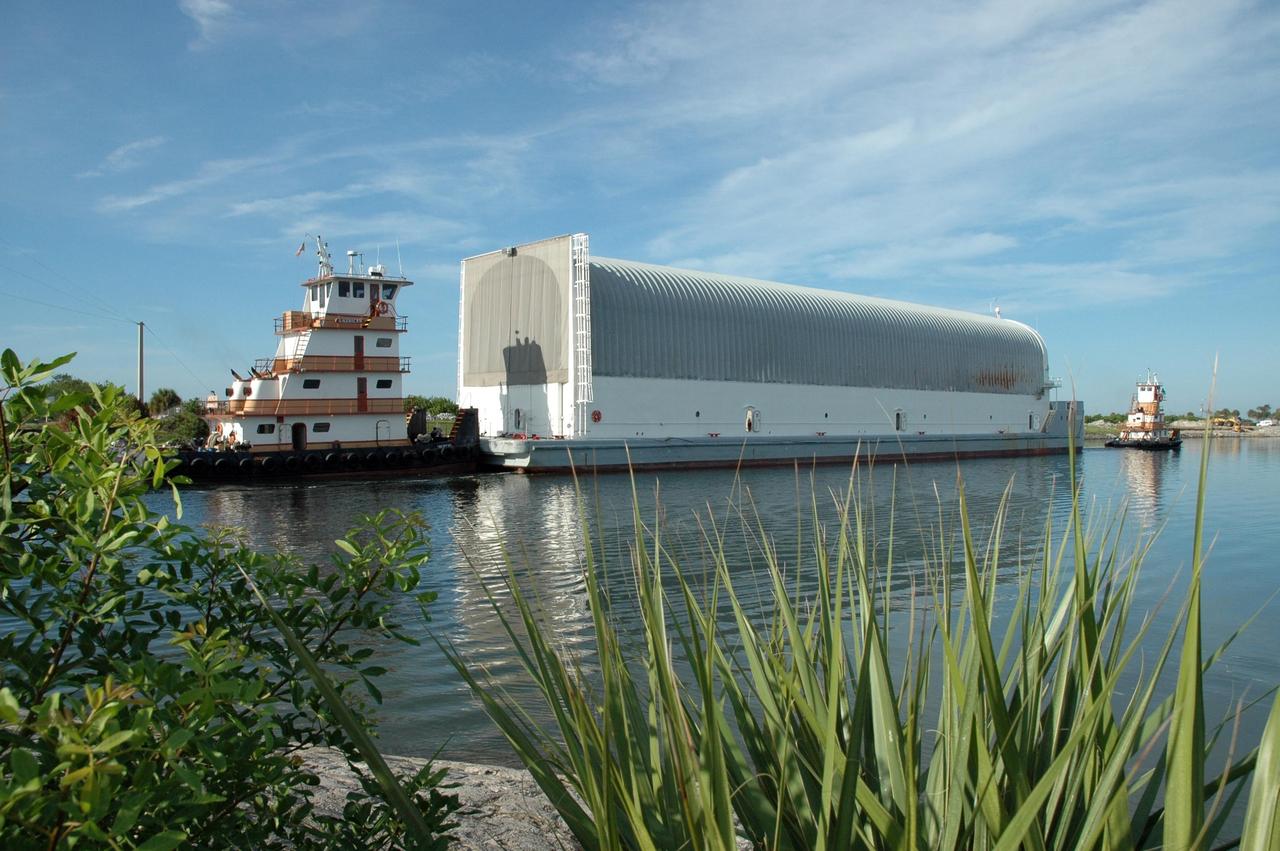
KENNEDY SPACE CENTER, FLA. -- Tugboats tow the Pegasus barge, with its cargo of external tank No. 125, on the Banana River. The barge is being towed to the turn basin in the Launch Complex 39 Area where the external tank will be offloaded and moved to the Vehicle Assembly Building. The external tank will be used on space shuttle Atlantis for mission STS-122 targeted for launch on Dec. 6. Photo credit: NASA/Troy Cryder
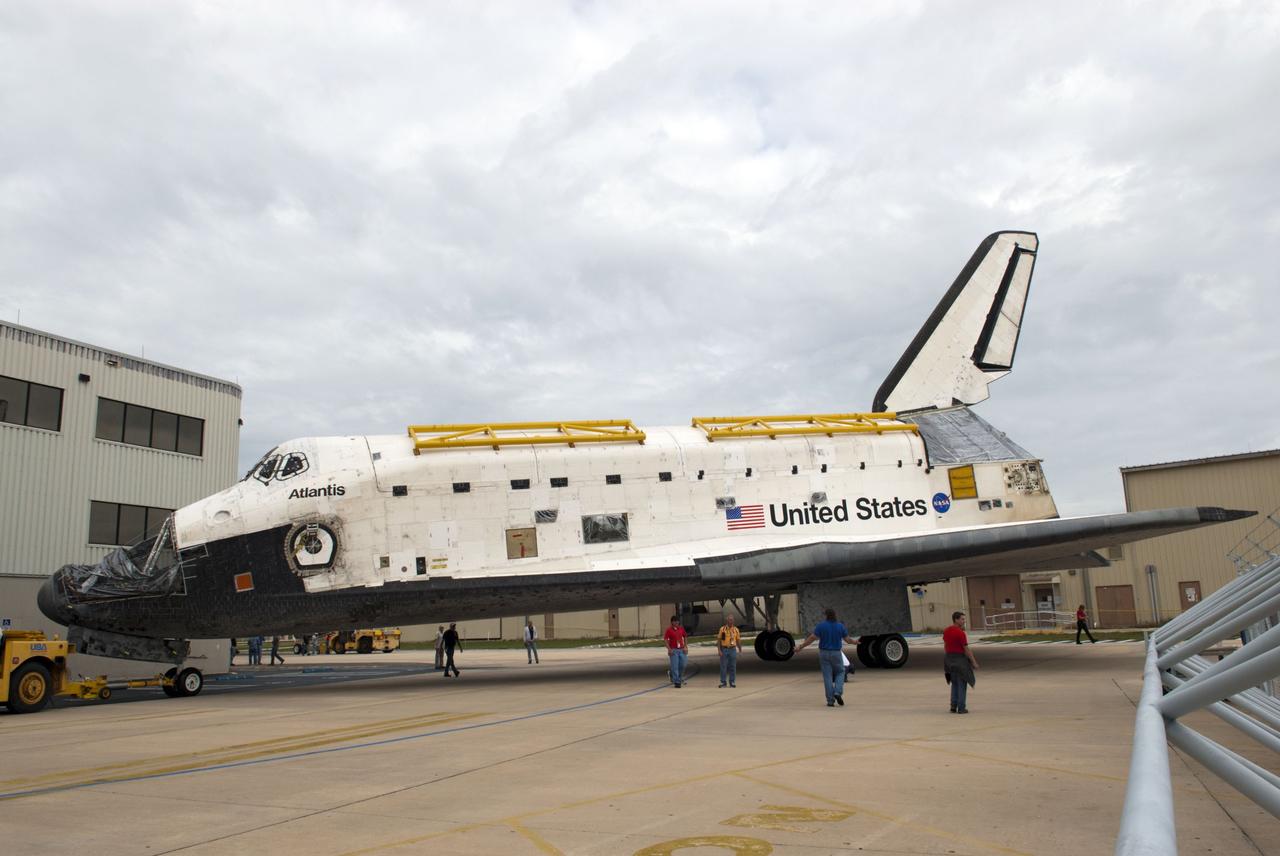
CAPE CANAVERAL, Fla. – At NASA’s Kennedy Space Center in Florida, space shuttle Atlantis is towed toward Orbiter Processing Facility-1 after being towed from the Vehicle Assembly Building. The work is part of the Space Shuttle Program’s transition and retirement processing of the three space shuttles. Atlantis is being prepared for display at the Kennedy Space Center Visitor Complex and is scheduled to rollover to the complex in November. Photo credit: NASA/Tim Jacobs
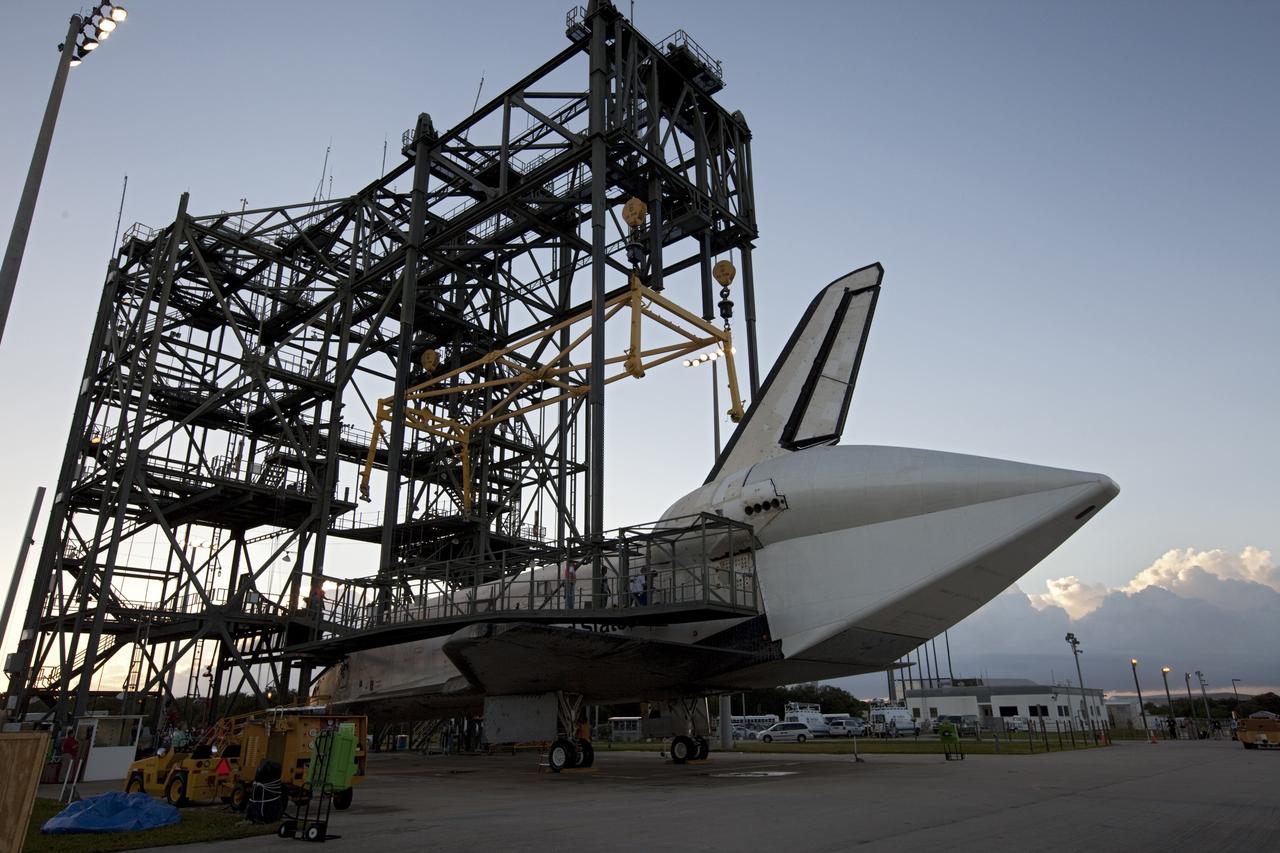
CAPE CANAVERAL, Fla. – Space shuttle Endeavour is towed into the Mate-Demate Device, or MDD, at NASA's Kennedy Space Center in Florida. The MDD will be used to lift and connect the shuttle to the top of NASA's Shuttle Carrier Aircraft SCA, a modified 747 jetliner. The shuttle has been fitted with an aerodynamic tailcone for its flight aboard the SCA to Los Angeles where it will be placed on public display. The shuttle was towed from the Vehicle Assembly Building. Photo credit: NASA/Kim Shiflett
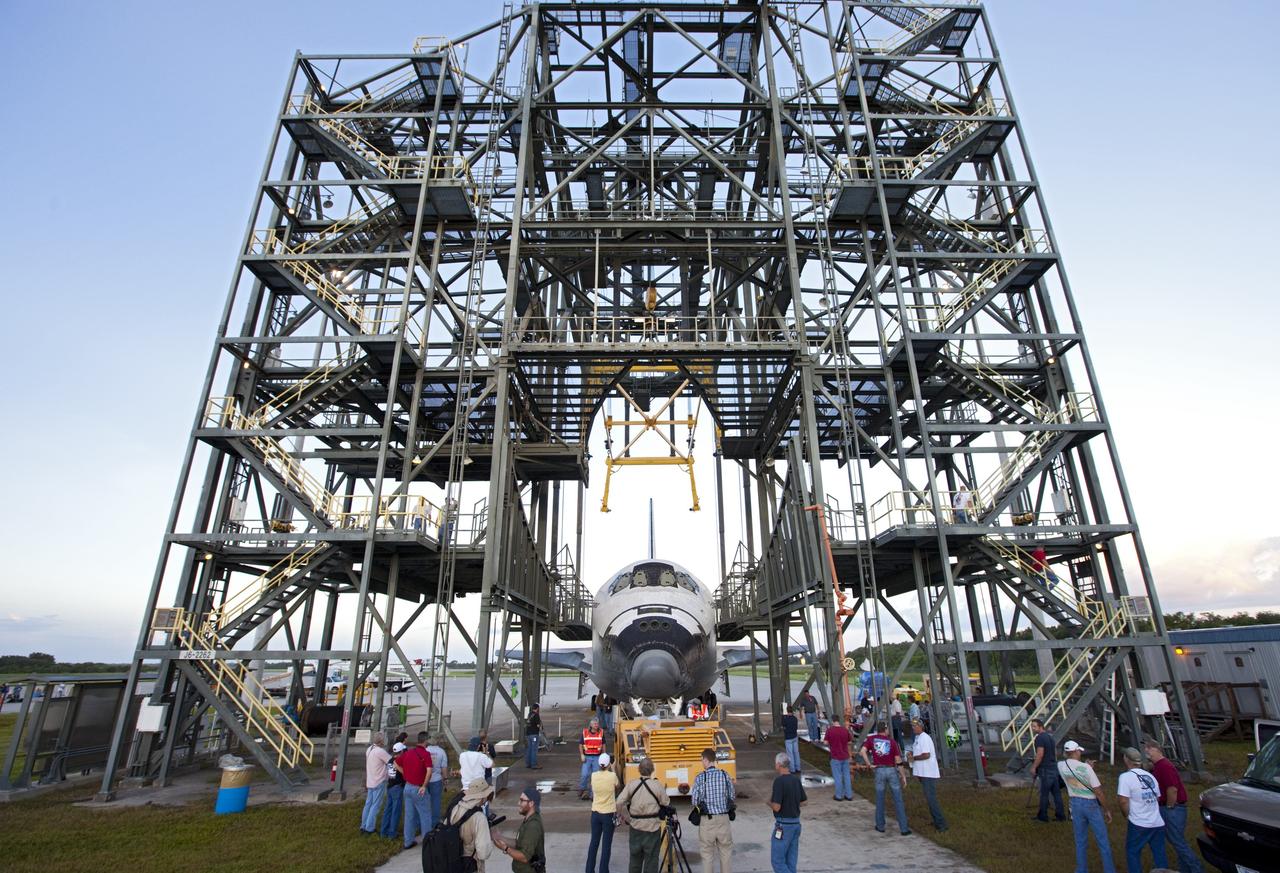
CAPE CANAVERAL, Fla. – Workers watch as space shuttle Endeavour is towed into the Mate-Demate Device, or MDD, at NASA's Kennedy Space Center in Florida. The MDD will be used to lift and connect the shuttle to the top of NASA's Shuttle Carrier Aircraft SCA, a modified 747 jetliner. The shuttle has been fitted with an aerodynamic tailcone for its flight aboard the SCA to Los Angeles where it will be placed on public display. The shuttle was towed from the Vehicle Assembly Building. Photo credit: NASA/Kim Shiflett
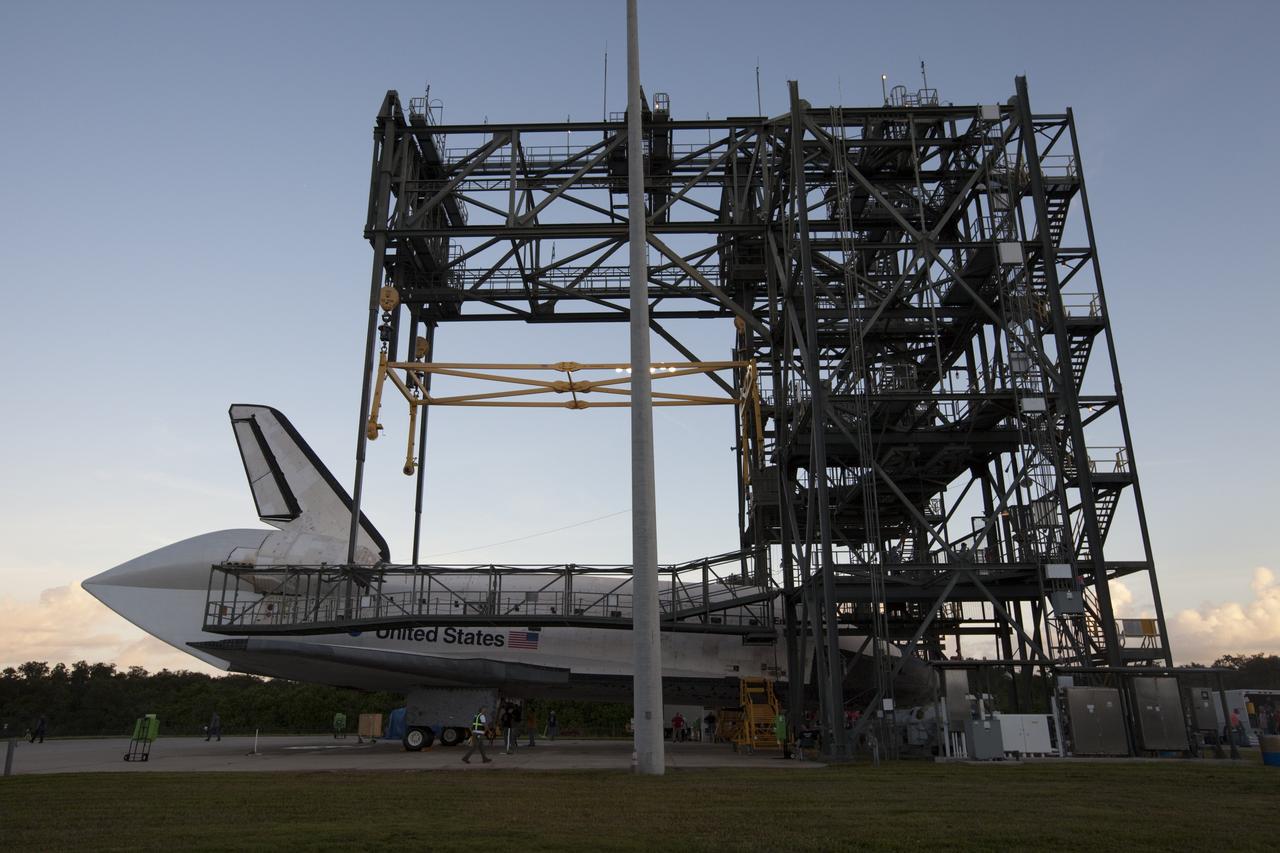
CAPE CANAVERAL, Fla. – Workers watch as space shuttle Endeavour is towed into the Mate-Demate Device, or MDD, at NASA's Kennedy Space Center in Florida. The MDD will be used to lift and connect the shuttle to the top of NASA's Shuttle Carrier Aircraft SCA, a modified 747 jetliner. The shuttle has been fitted with an aerodynamic tailcone for its flight aboard the SCA to Los Angeles where it will be placed on public display. The shuttle was towed from the Vehicle Assembly Building. Photo credit: NASA/Kim Shiflett
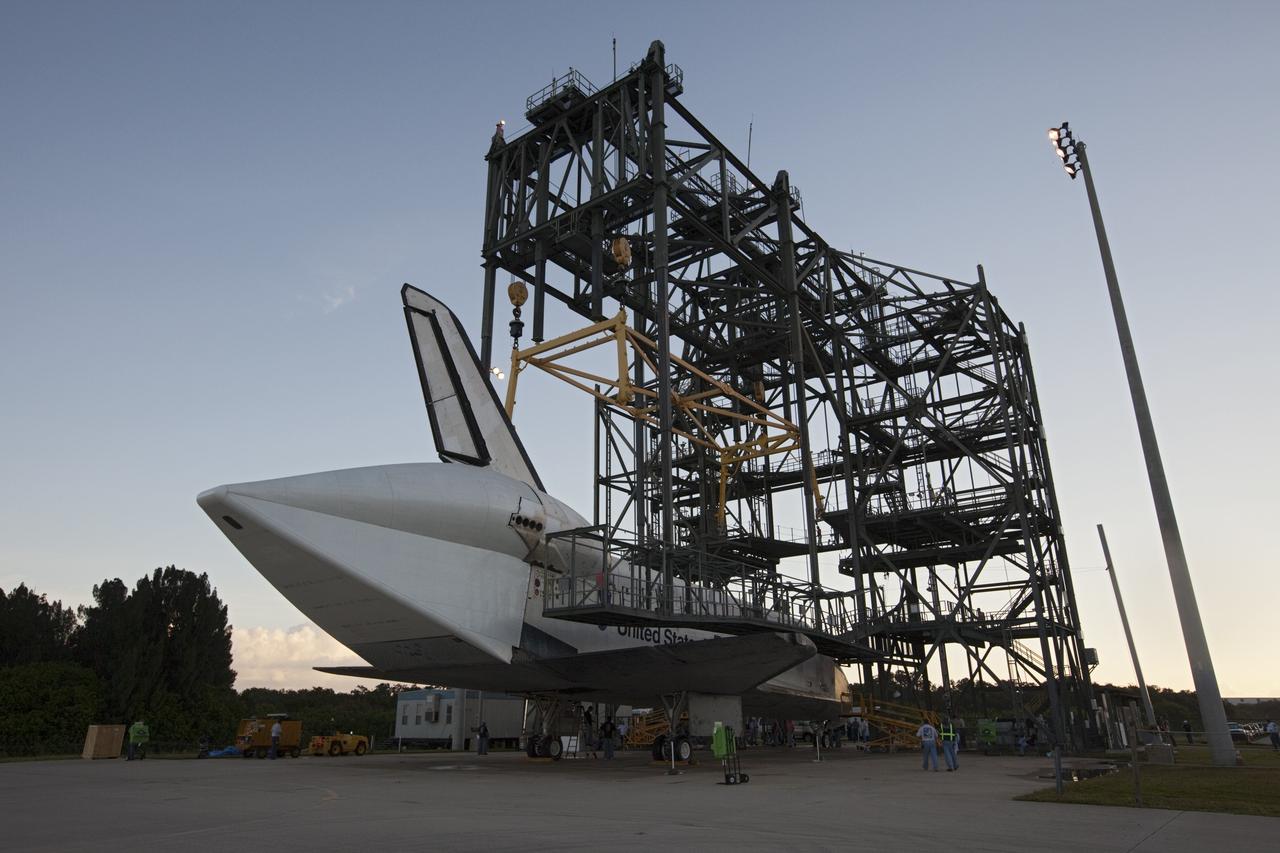
CAPE CANAVERAL, Fla. – Workers watch as space shuttle Endeavour is towed into the Mate-Demate Device, or MDD, at NASA's Kennedy Space Center in Florida. The MDD will be used to lift and connect the shuttle to the top of NASA's Shuttle Carrier Aircraft SCA, a modified 747 jetliner. The shuttle has been fitted with an aerodynamic tailcone for its flight aboard the SCA to Los Angeles where it will be placed on public display. The shuttle was towed from the Vehicle Assembly Building. Photo credit: NASA/Kim Shiflett
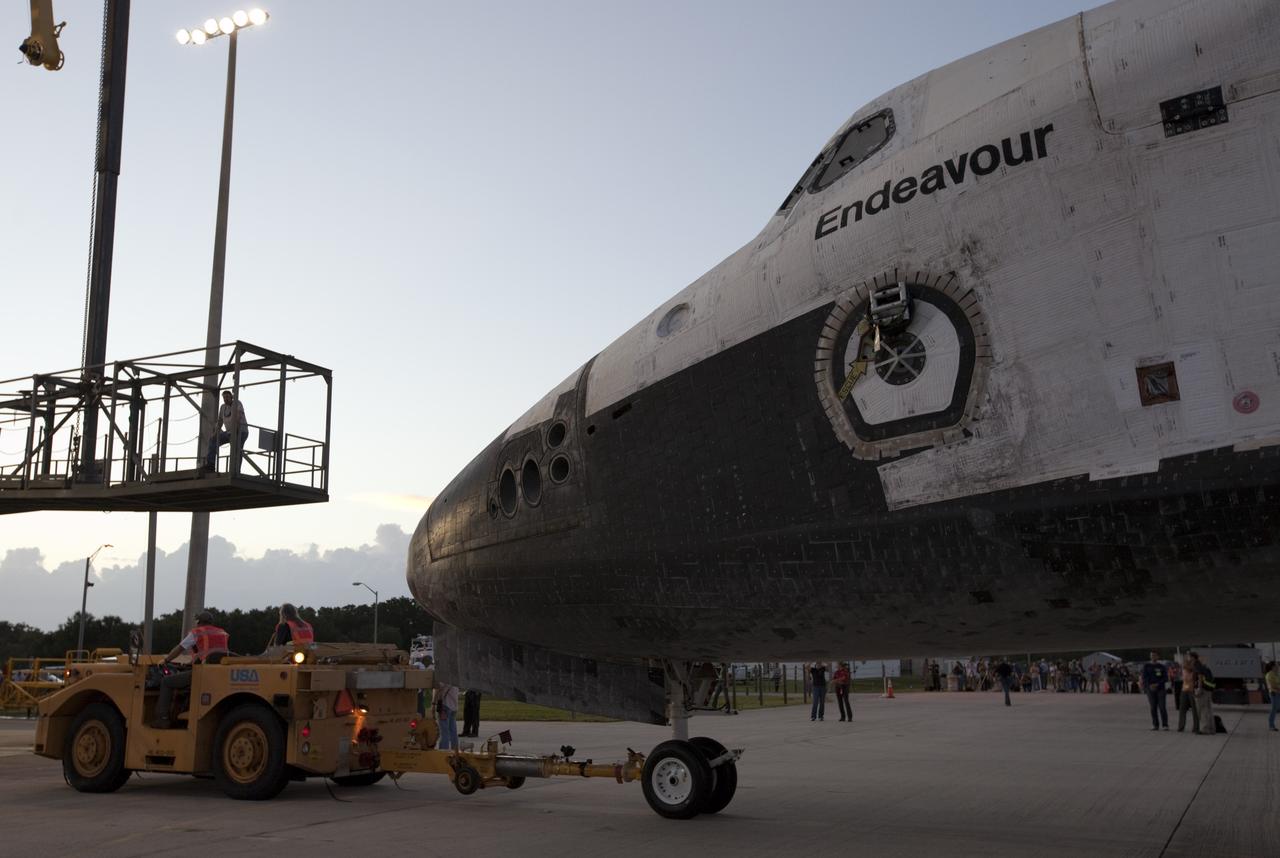
CAPE CANAVERAL, Fla. – Space shuttle Endeavour is towed into the Mate-Demate Device, or MDD, at NASA's Kennedy Space Center in Florida. The MDD will be used to lift and connect the shuttle to the top of NASA's Shuttle Carrier Aircraft SCA, a modified 747 jetliner. The shuttle has been fitted with an aerodynamic tailcone for its flight aboard the SCA to Los Angeles where it will be placed on public display. The shuttle was towed from the Vehicle Assembly Building. Photo credit: NASA/Kim Shiflett
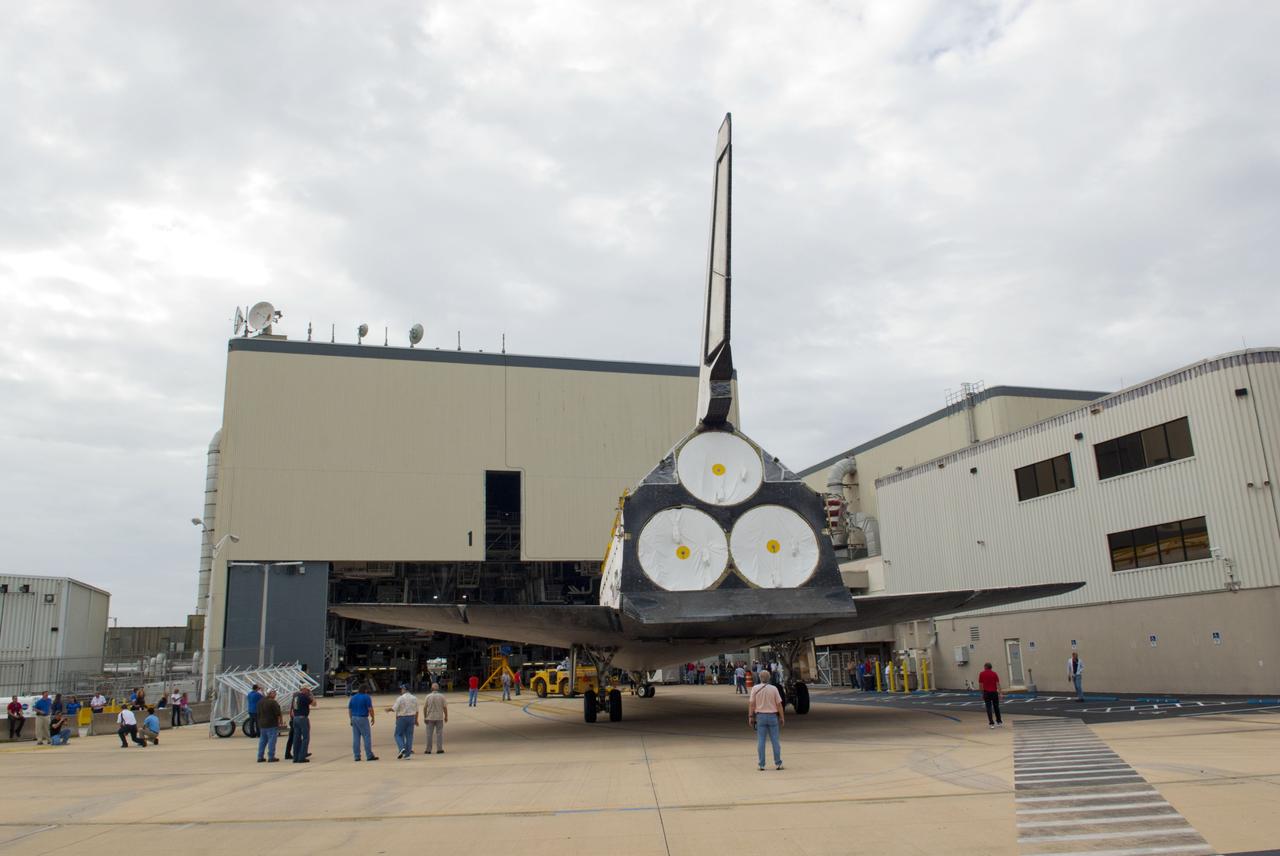
CAPE CANAVERAL, Fla. – At NASA’s Kennedy Space Center in Florida, workers monitor the progress as space shuttle Atlantis is towed toward Orbiter Processing Facility-1 after being towed from the Vehicle Assembly Building. The work is part of the Space Shuttle Program’s transition and retirement processing of the three space shuttles. Atlantis is being prepared for display at the Kennedy Space Center Visitor Complex and is scheduled to rollover to the complex in November. Photo credit: NASA/Tim Jacobs
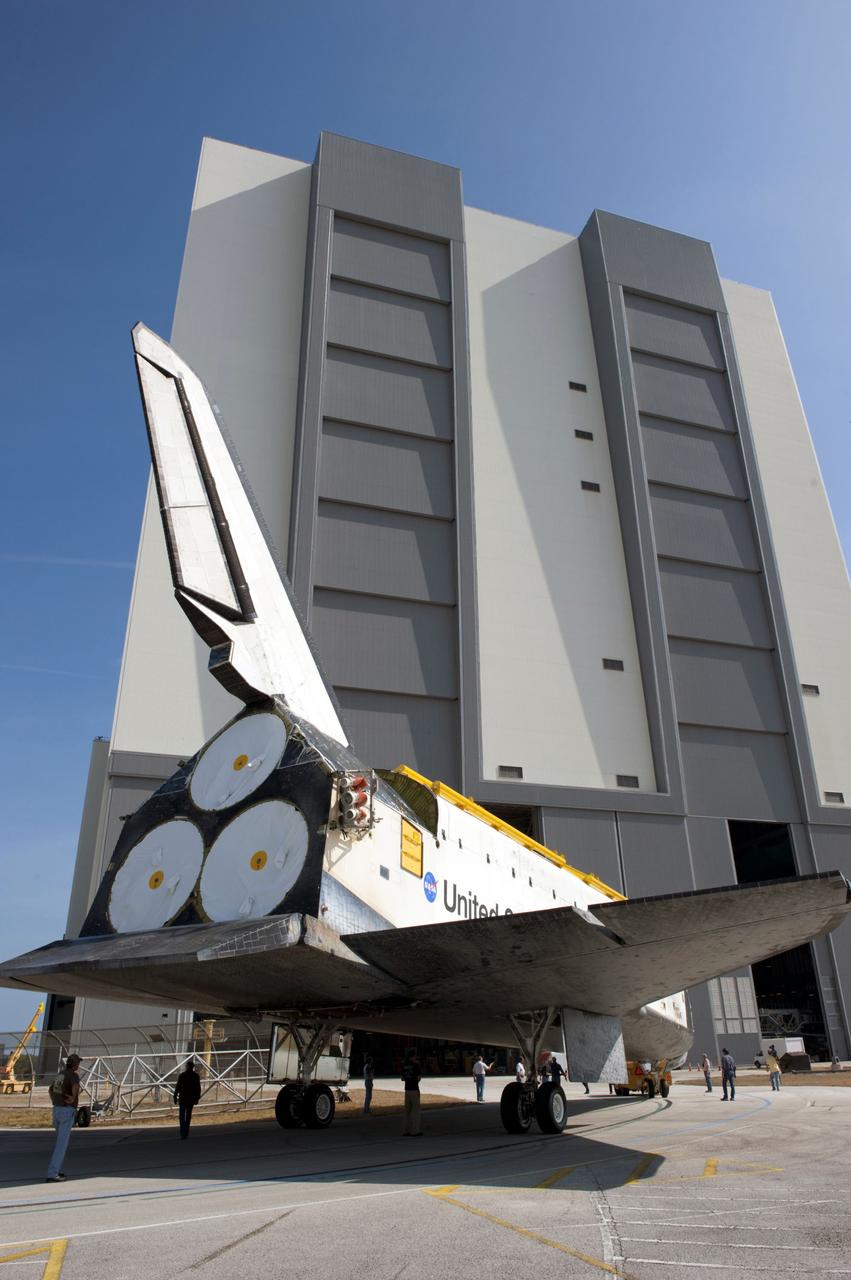
CAPE CANAVERAL, Fla. – At NASA’s Kennedy Space Center in Florida, space shuttle Atlantis is towed toward the Vehicle Assembly Building (VAB) high bay 4 doors after being towed around from the VAB transfer aisle. Shuttle Atlantis will remain in temporary storage in high bay 4, while Space Shuttle Program transition and retirement work continues on Discovery and Endeavour in the orbiter processing facilities. Atlantis is being prepared for display at the Kennedy Space Center Visitor Complex. Photo credit: NASA/Kim Shiflett
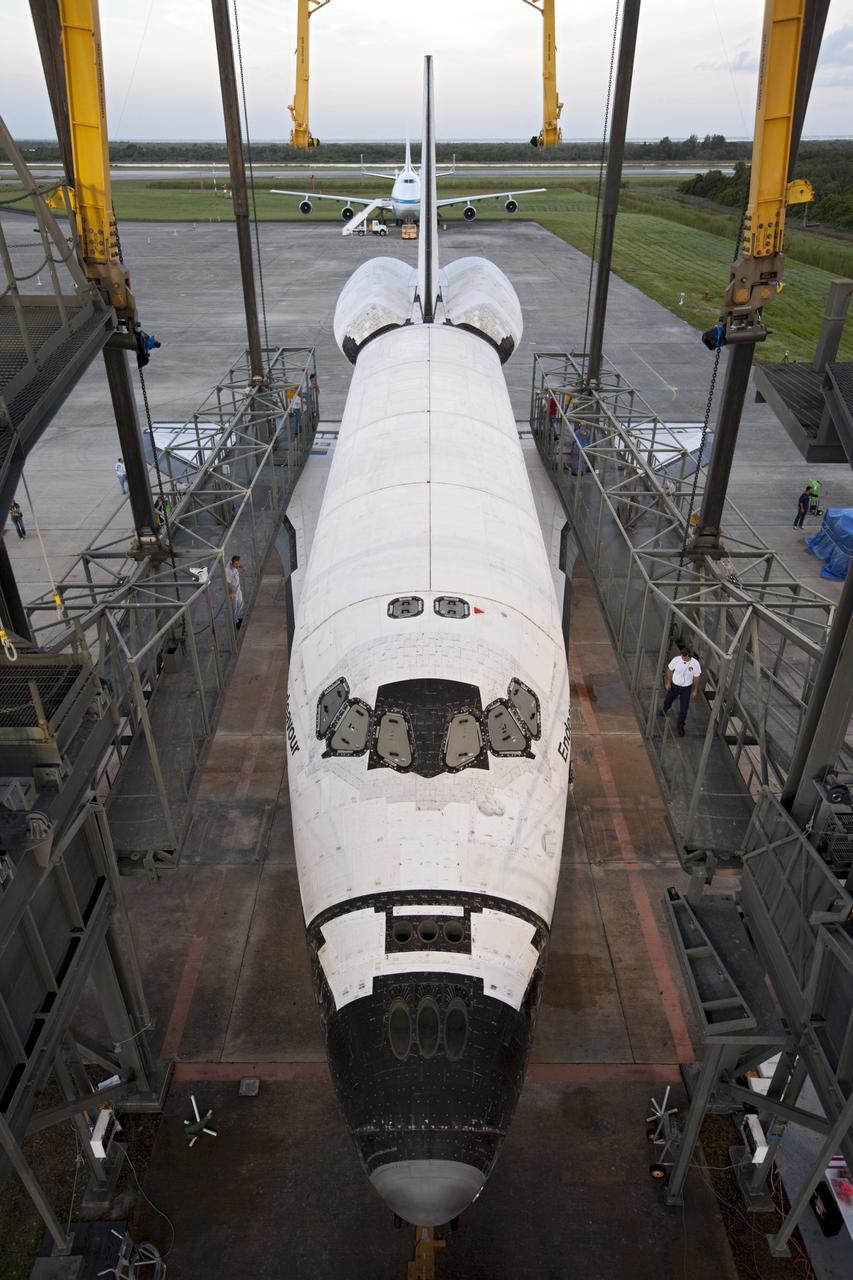
CAPE CANAVERAL, Fla. – Space shuttle Endeavour is towed into the Mate-Demate Device, or MDD, at NASA's Kennedy Space Center in Florida. The MDD will be used to lift and connect the shuttle to the top of NASA's Shuttle Carrier Aircraft SCA, a modified 747 jetliner. The shuttle has been fitted with an aerodynamic tailcone for its flight aboard the SCA to Los Angeles where it will be placed on public display. The shuttle was towed from the Vehicle Assembly Building. Photo credit: NASA/Kim Shiflett