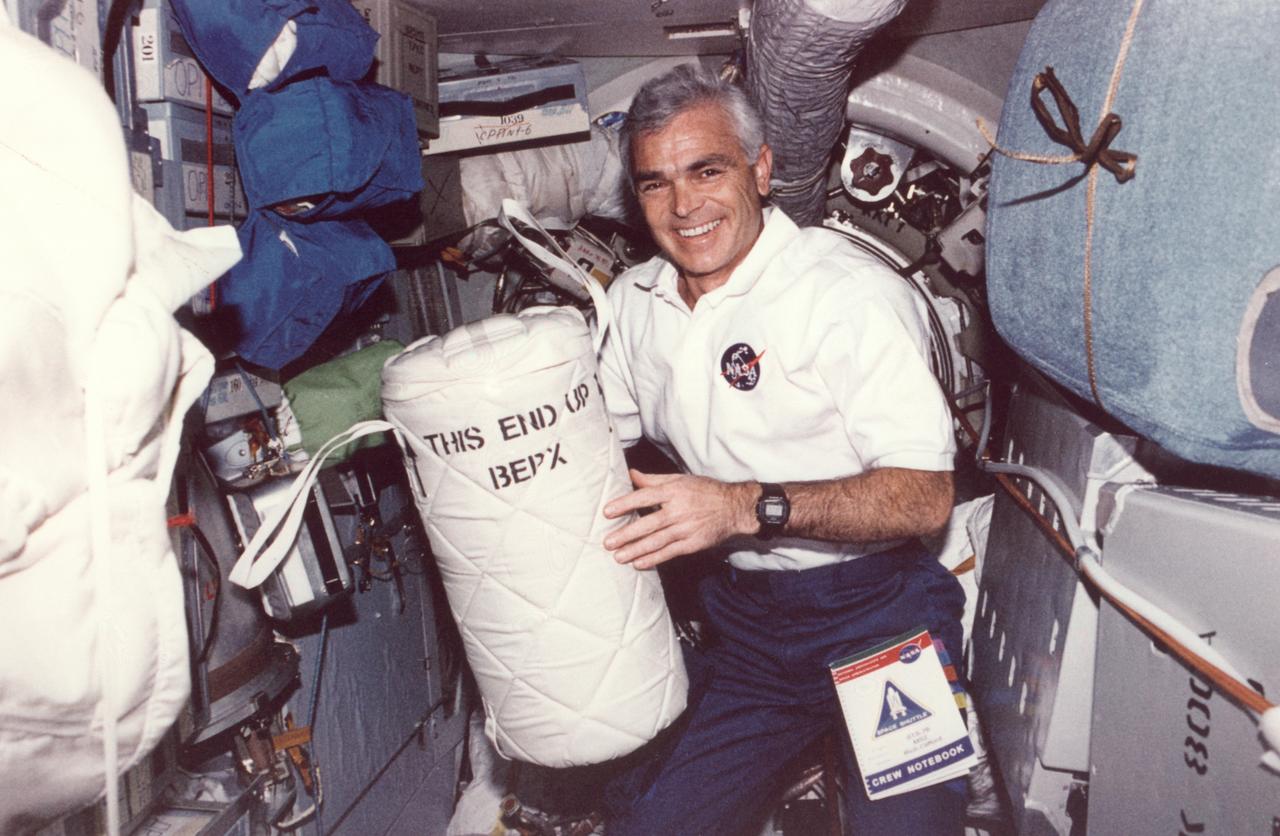
Astronaut Michael Clifford places a liquid nitrogen Dewar containing frozen protein solutions aboard Russia's space station Mir during a visit by the Space Shuttle (STS-76). The protein samples were flash-frozen on Earth and will be allowed to thaw and crystallize in the microgravity environment on Mir Space Station. A later crew will return the Dewar to Earth for sample analysis. Dr. Alexander McPherson of the University of California at Riverside is the principal investigator. Photo credit: NASA/Johnson Space Center.
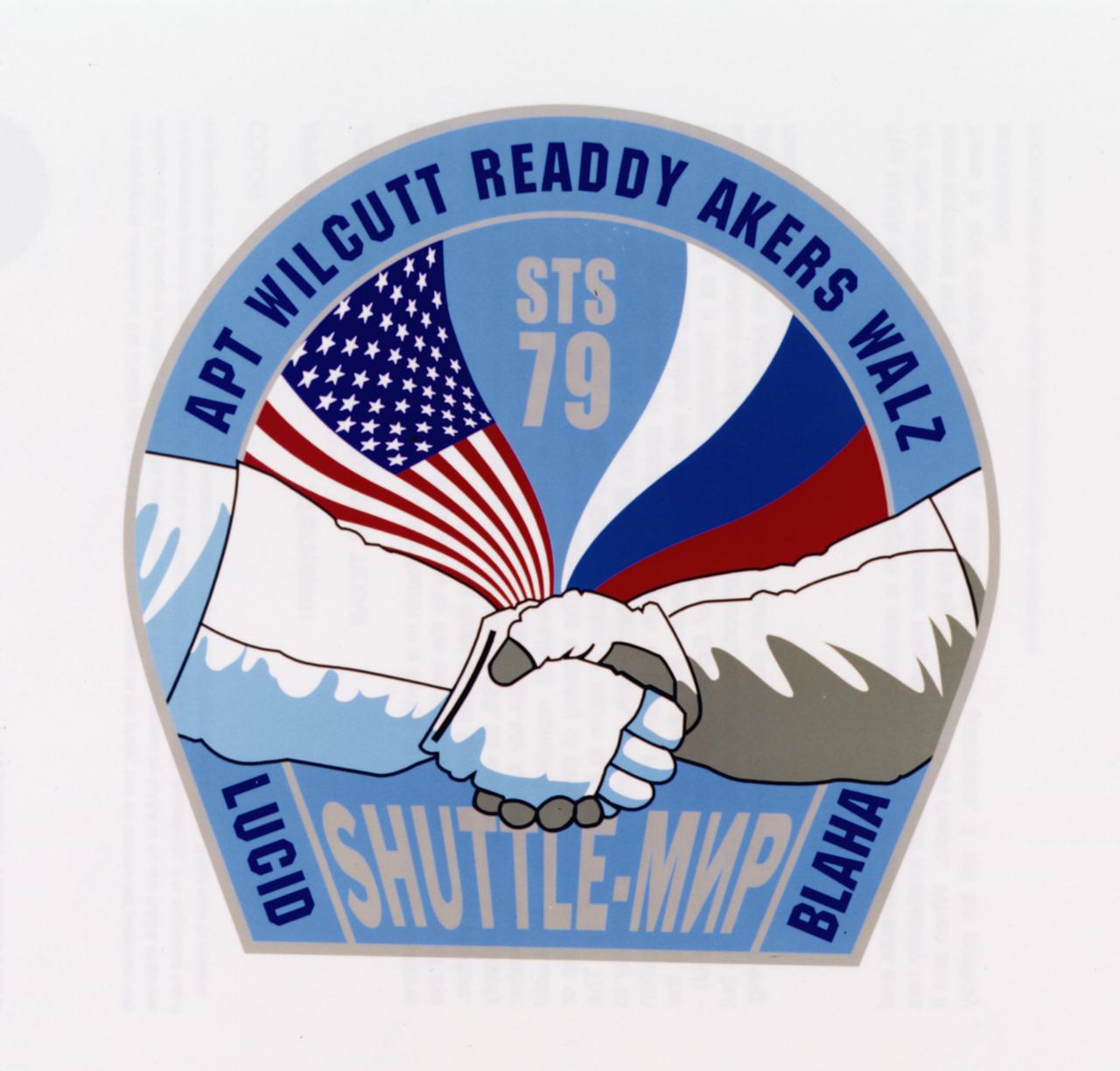
STS-79 was the fourth in a series of NASA docking missions to the Russian Mir Space Station, leading up to the construction and operation of the International Space Station (ISS). As the first flight of the Spacehab Double Module, STS-79 encompassed research, test and evaluation of ISS, as well as logistics resupply for the Mir Space Station. STS-79 was also the first NASA-Mir American crew member exchange mission, with John E. Blaha (NASA-Mir-3) replacing Shannon W. Lucid (NASA-Mir-2) aboard the Mir Space Station. The lettering of their names either up or down denotes transport up to the Mir Space Station or return to Earth on STS-79. The patch is in the shape of the Space Shuttle’s airlock hatch, symbolizing the gateway to international cooperation in space. The patch illustrates the historic cooperation between the United States and Russia in space. With the flags of Russia and the United States as a backdrop, the handshake of Extravehicular Mobility Unit (EMU) which are suited crew members symbolizes mission teamwork, not only of the crew members but also the teamwork between both countries space personnel in science, engineering, medicine and logistics.
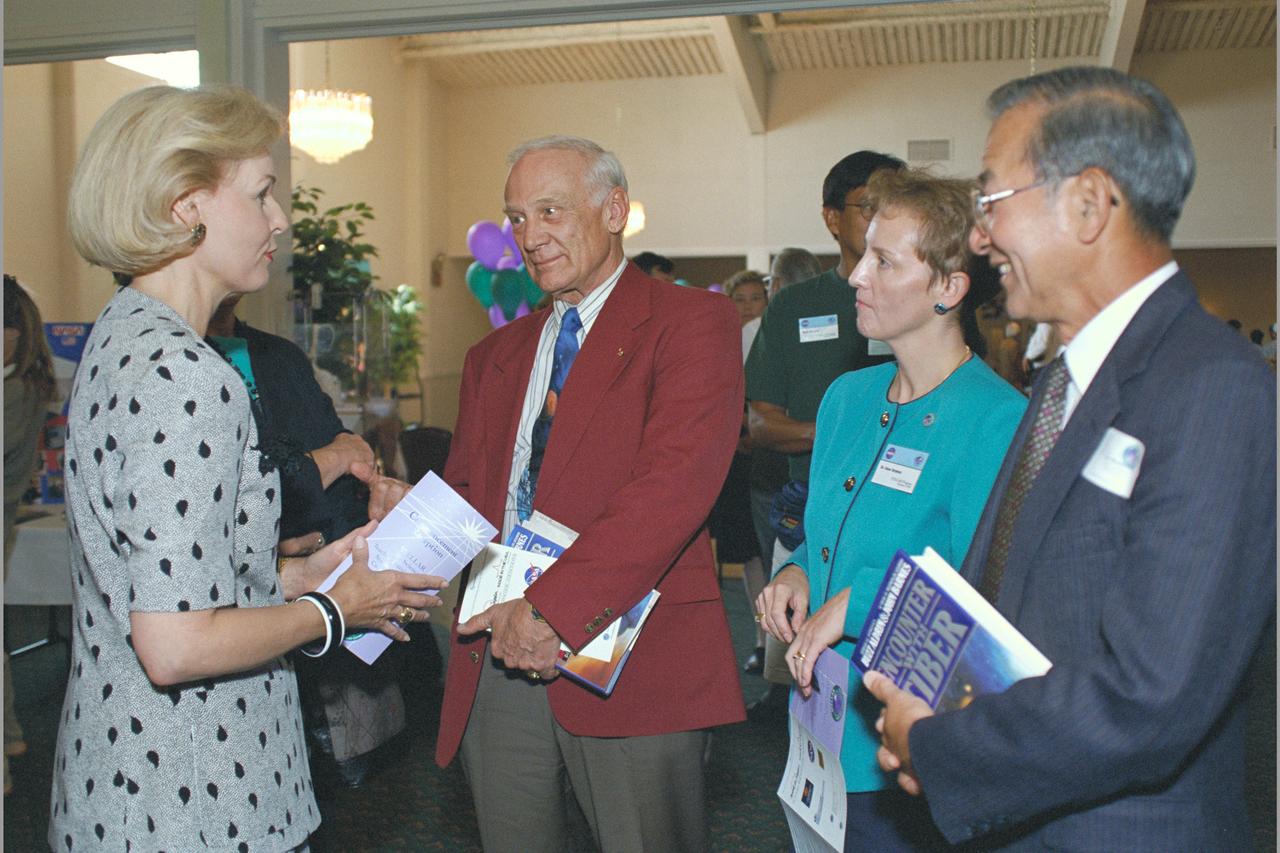
1996 'STELLAR' and MCP summer programs commencement. Apollo Astronaut Buzz Aldren drops by after attending his book signing at US Space Camp eariler in the day is shown here with Gayle Wilson (governor's wife) and Ken Munechika (R) and Dr. Rose Grymes (center)
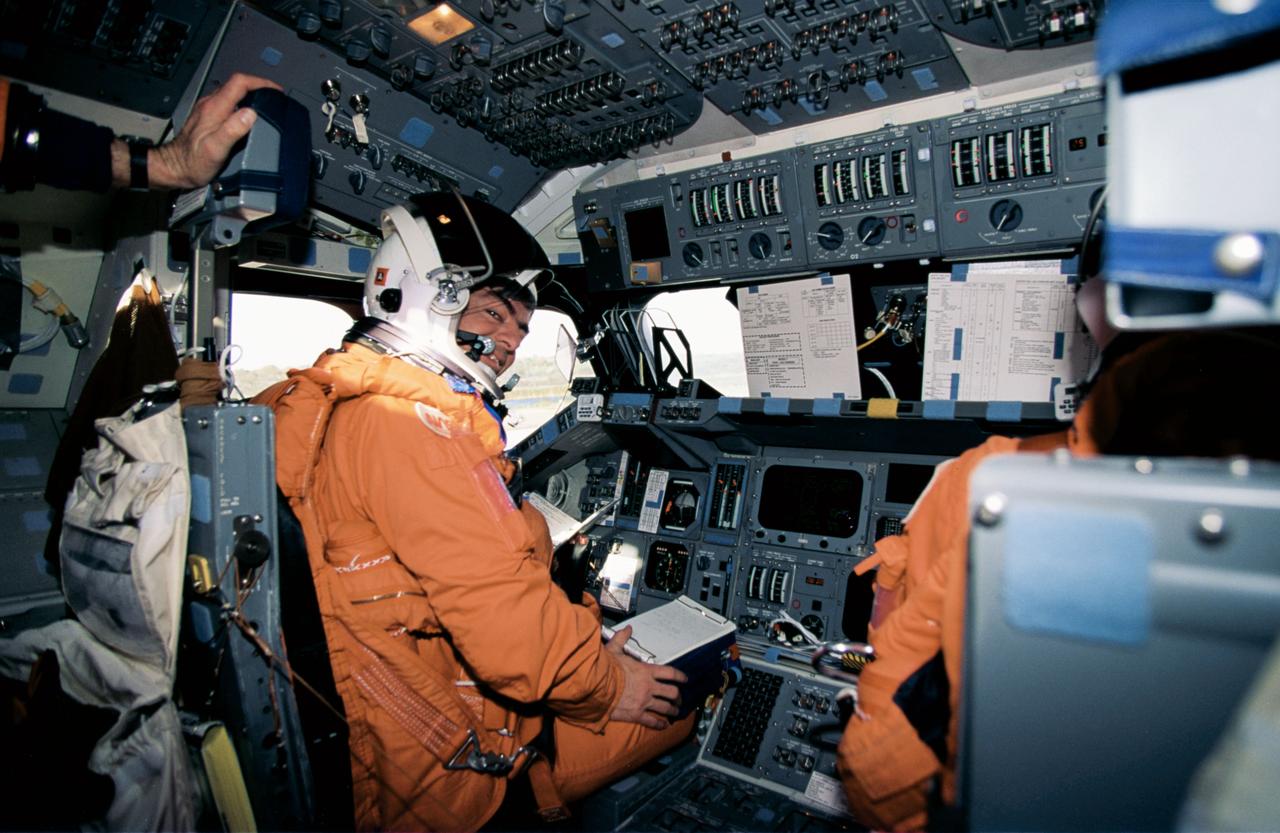
STS075-303-007 (9 March 1996) --- Astronauts Andrew M. Allen (left), mission commander, and Scott J. Horowitz (partially visible at right), pilot, have just completed the landing phase of the STS-75 flight. The Space Shuttle Columbia is now securely on Runway 33 at the Kennedy Space Center (KSC).
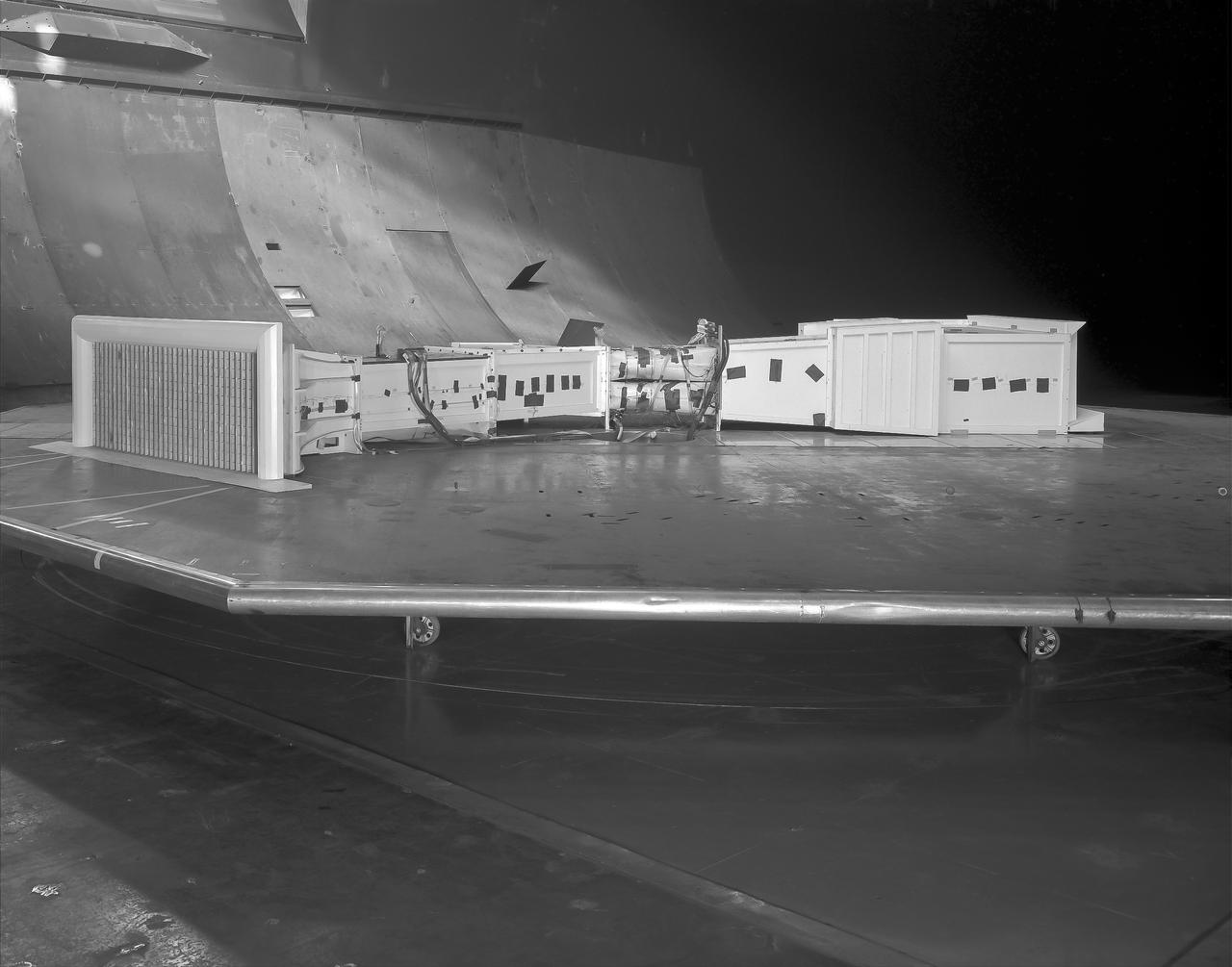
(03/12/1976) 1/50 scale model of the 80x120 foot wind tunnel model (NFAC) in the test section of the 40x80 foot wind tunnel. Model mounted on a rotating ground board designed for this test, viewed from the west, oriented for North wind.
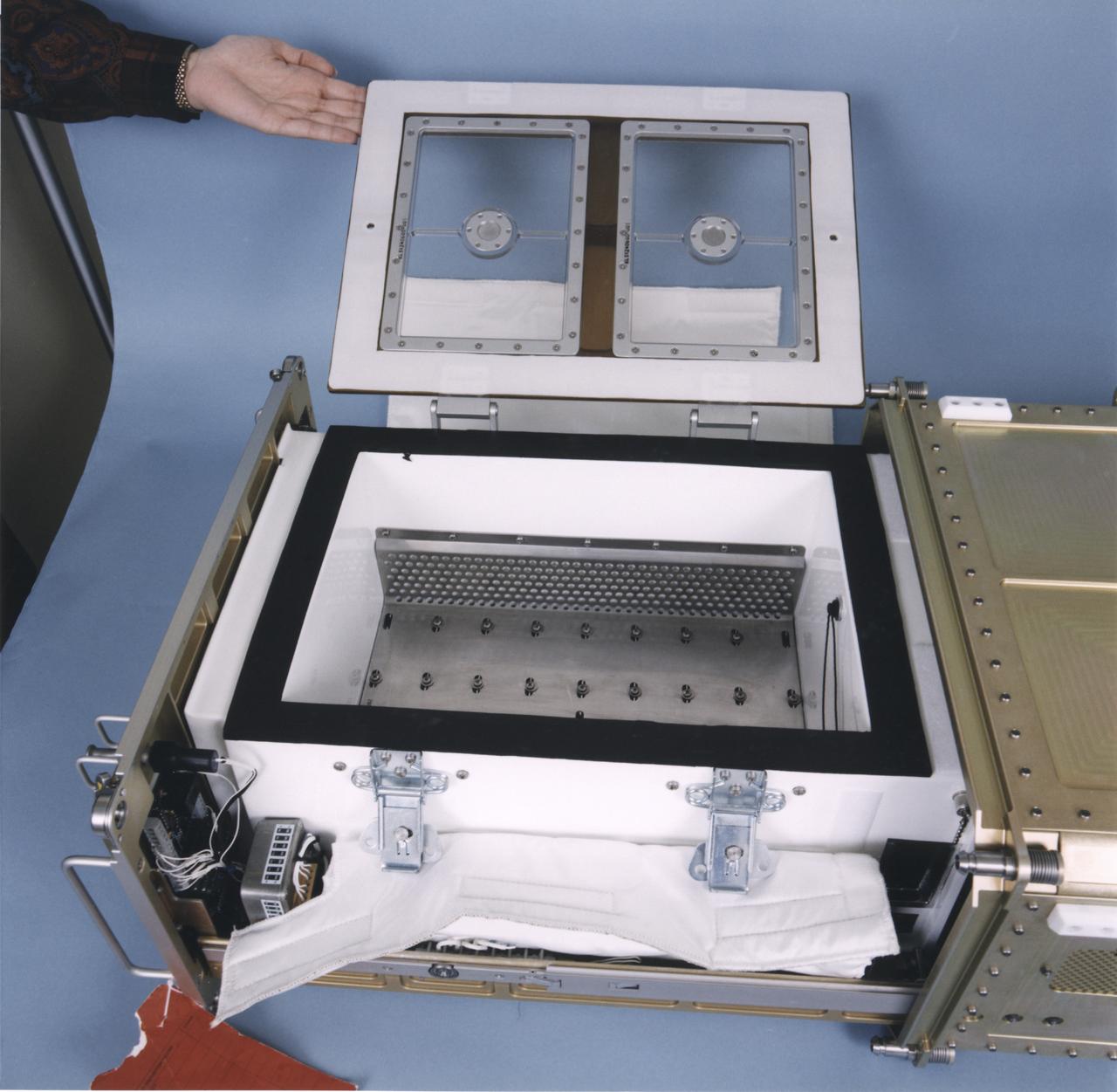
Interior of a Biotechnology Refrigerator that preserves samples for use in (or after culturing in) the NASA Bioreactor. The unit is shown extracted from a middeck locker shell. The NASA Bioreactor provides a low turbulence culture environment which promotes the formation of large, three-dimensional cell clusters. The Bioreactor is rotated to provide gentle mixing of fresh and spent nutrient without inducing shear forces that would damage the cells. Due to their high level of cellular organization and specialization, samples constructed in the bioreactor more closely resemble the original tumor or tissue found in the body. The work is sponsored by NASA's Office of Biological and Physical Research. The bioreactor is managed by the Biotechnology Cell Science Program at NASA's Johnson Space Center (JSC). NASA-sponsored bioreactor research has been instrumental in helping scientists to better understand normal and cancerous tissue development. In cooperation with the medical community, the bioreactor design is being used to prepare better models of human colon, prostate, breast and ovarian tumors. Cartilage, bone marrow, heart muscle, skeletal muscle, pancreatic islet cells, liver and kidney are just a few of the normal tissues being cultured in rotating bioreactors by investigators.
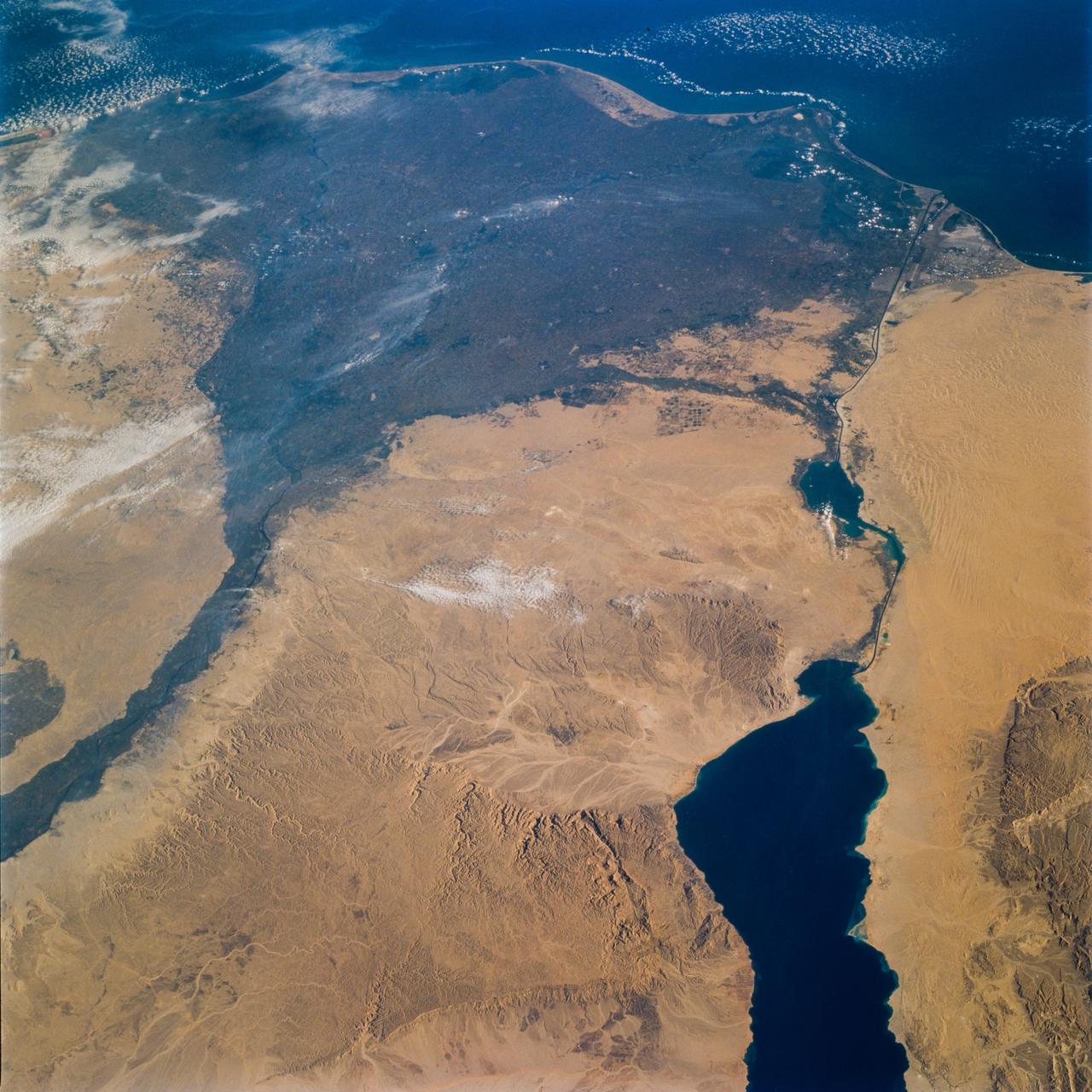
STS077-732-089 (19-29 May 1996) --- This photograph encompasses an area comprising 99 percent of the Egyptian population of close to 60 million people. North is roughly to the right side of the photograph. Cairo, the capital and principal city, lies at the apex of the Nile Delta. Alexandria is in the top right corner of the frame. The Suez Canal connects the Red Sea and the Mediterranean Sea and is in the bottom of the photograph. The Delta itself is 100 miles long and 160 miles wide at the coast. This view brings out the details of the Eastern Desert that rises abruptly from the Nile valley. This desert supports some vegetation in contrast to the sandier Western desert. It has more relief with some of the peaks rising to 6,000 feet. Rainfall in the region ranges from a high of 7 inches at Alexandria to 0.1 inch in the Eastern Desert. Most of Egypt’s mineral resources are concentrated in this area.
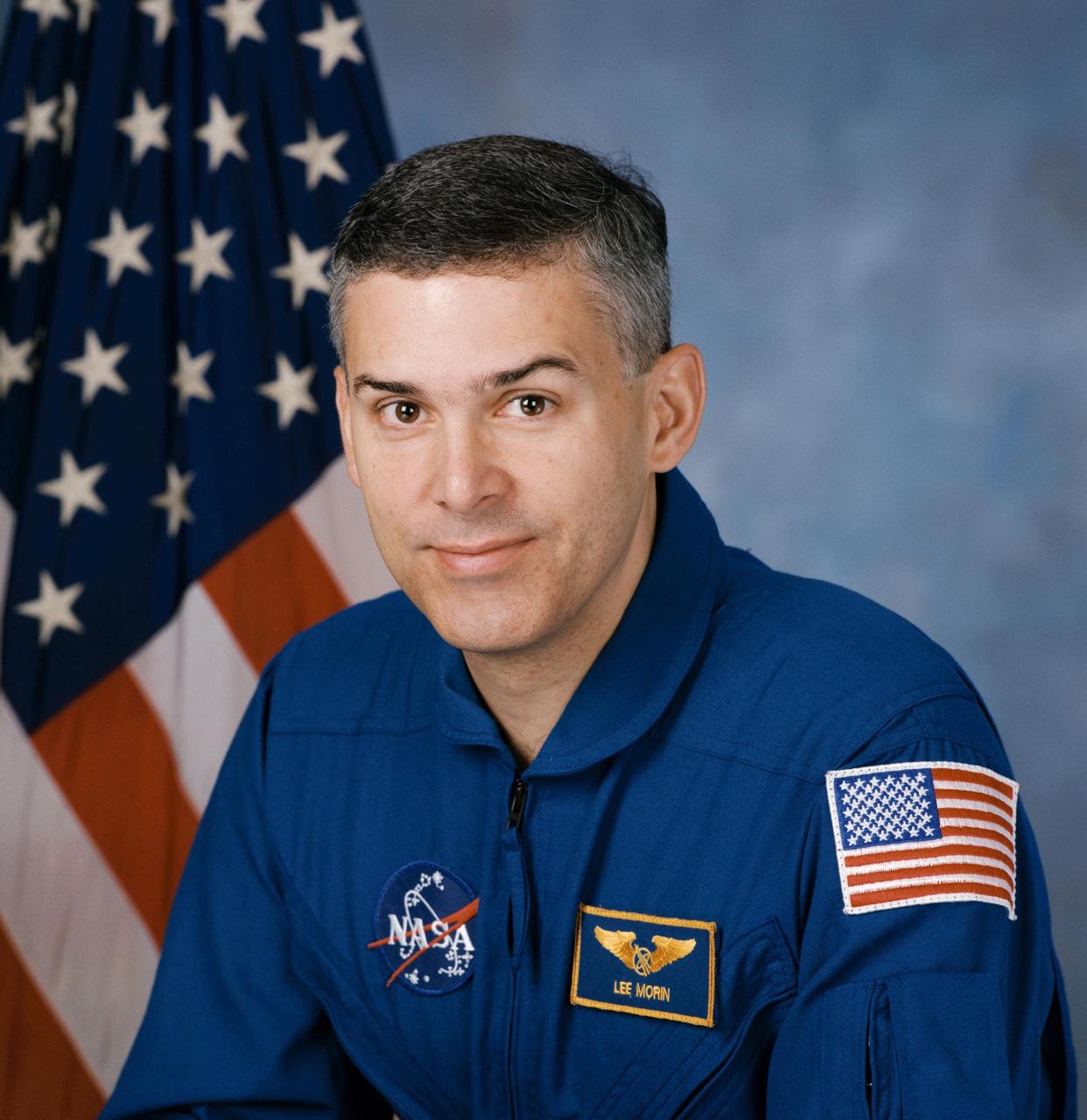
JOHNSON SPACE CENTER, HOUSTON, TEXAS. -- (JSC 596-14779) -- Official portrait of astronaut Lee M. Morin, mission specialist
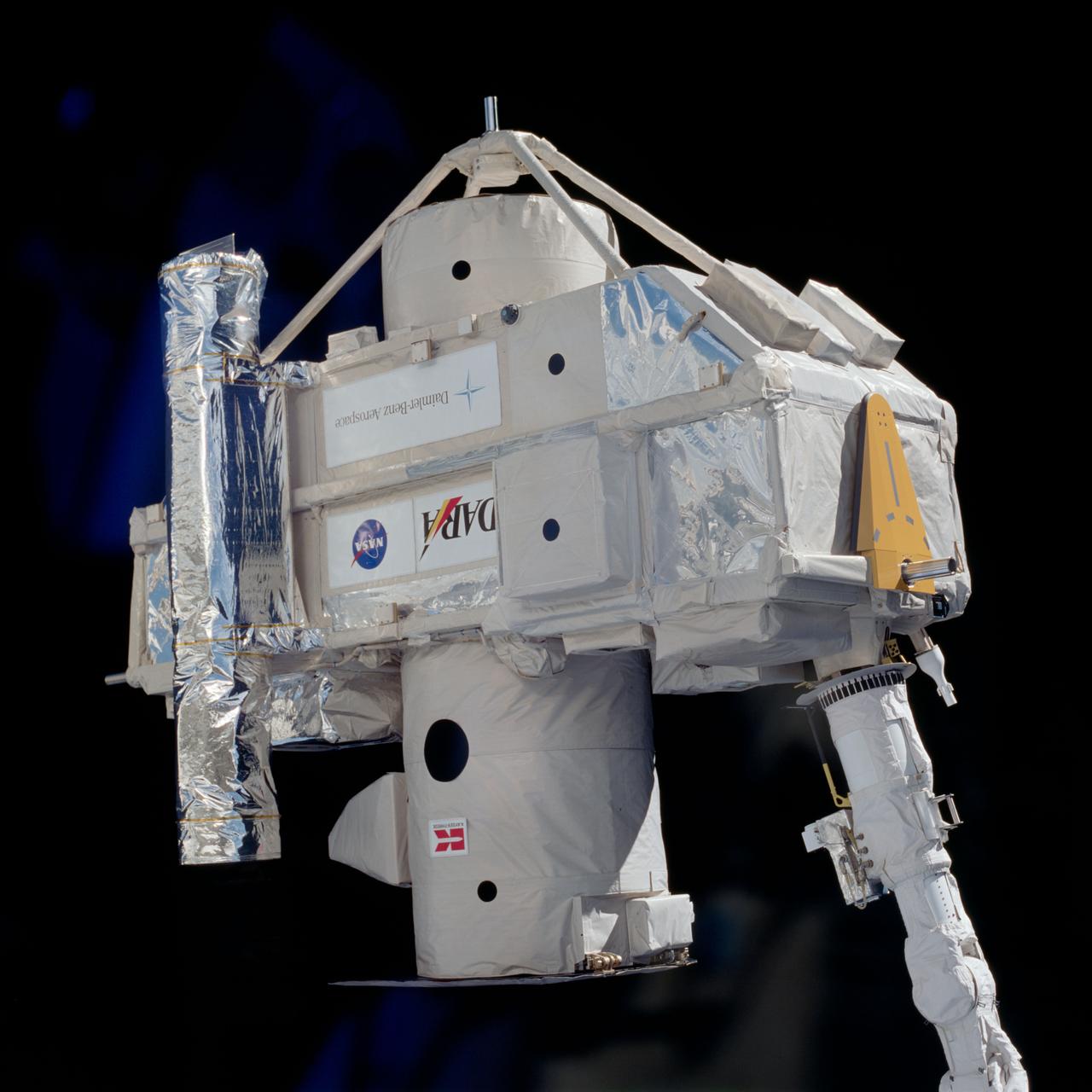
STS080-704-008 (19 Nov.-7 Dec. 1996) --- Backdropped against the blackness of space, the ORPHEUS - Shuttle Pallet Satellite (SPAS) spacecraft is held in the grasp of the space shuttle Columbia's Remote Manipulator System (RMS) during deploy operations in Earth-orbit.
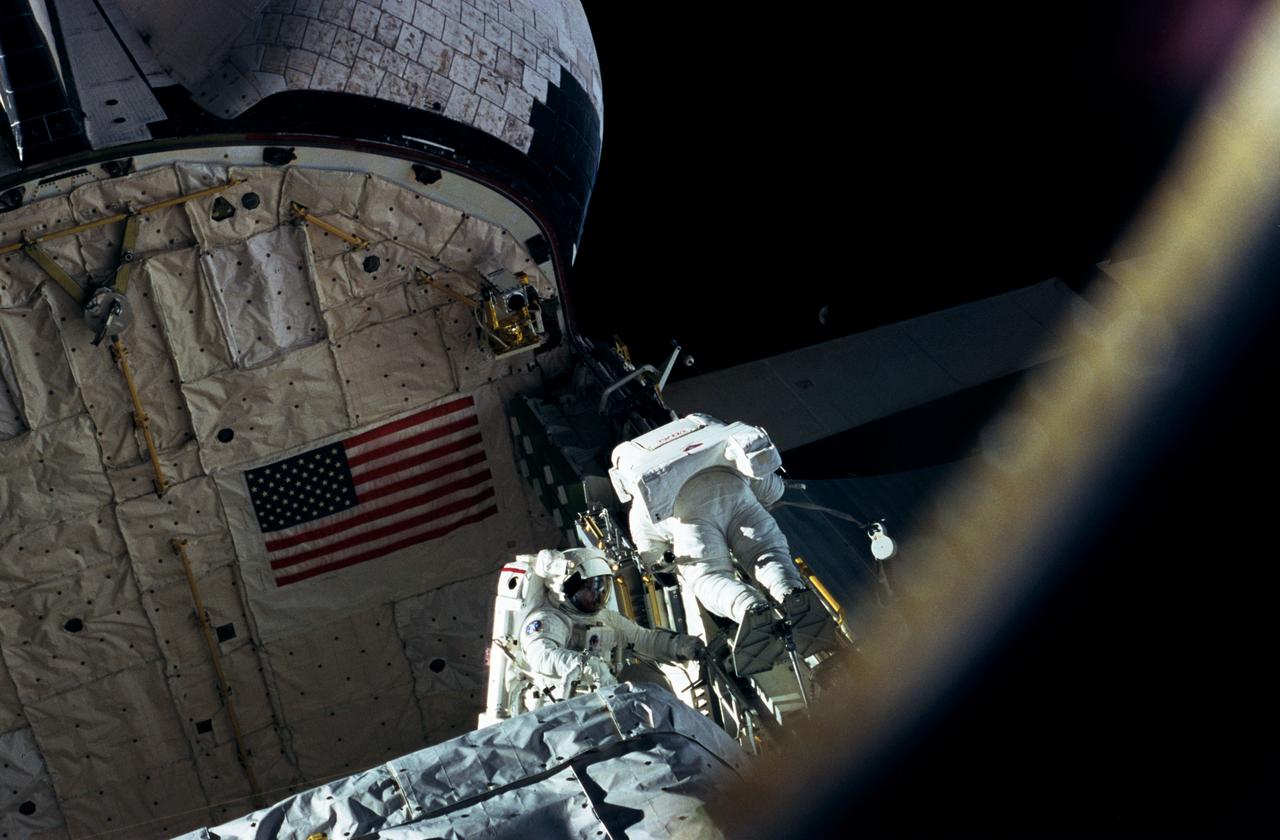
STS076-401-036 (27 March 1996) --- Astronauts Michael R. (Rich) Clifford (right) and Linda M. Godwin (red stripe) work together on the port side of the Space Shuttle Atlantis' aft cargo bay during a March 27, 1996, Extravehicular Activity (EVA). The EVA of the two mission specialists marks the first EVA while Russia's Mir Space Station was docked with the Space Shuttle Atlantis. This is the third of a series of docking missions involving Mir and the Space Shuttle Atlantis. A half Moon can faintly be seen in the upper right hand quadrant of the 35mm frame.
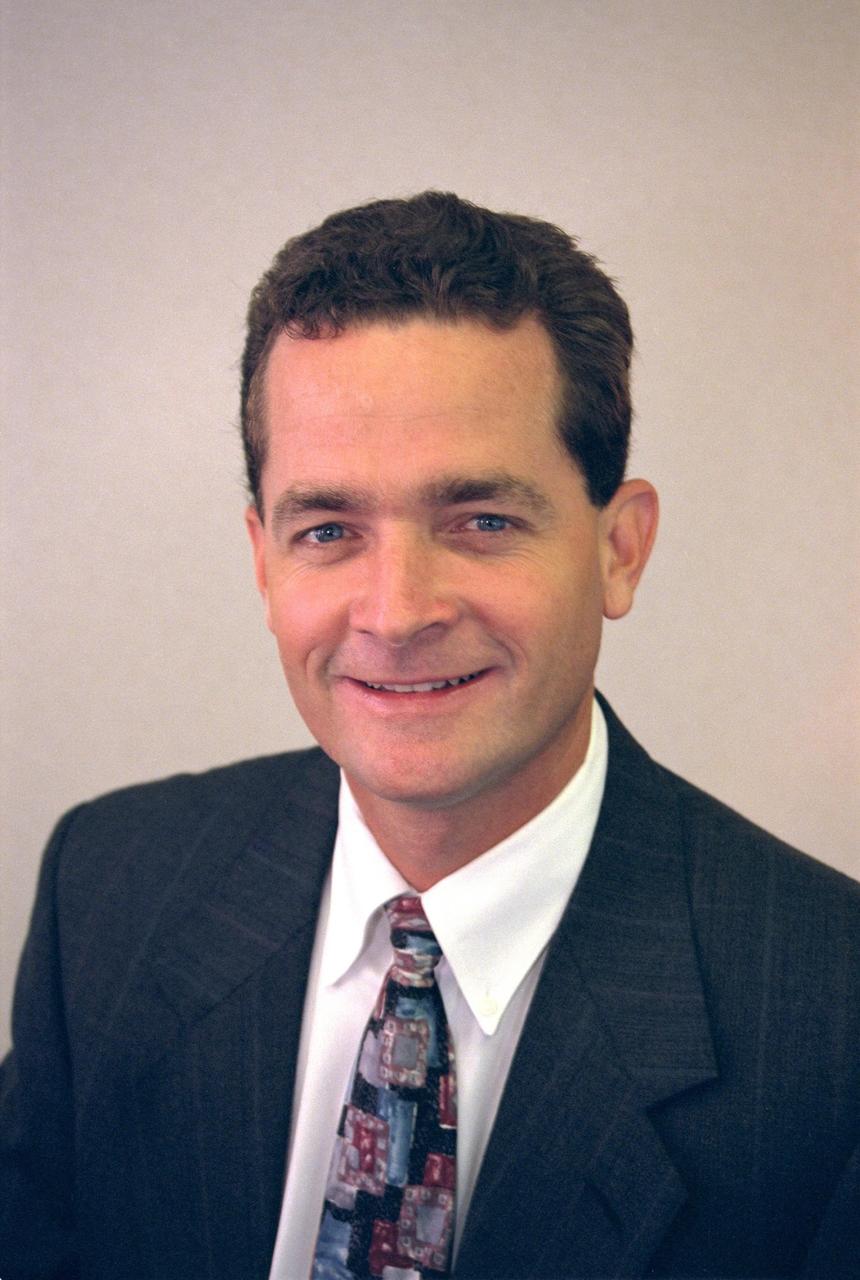
KENNEDY SPACE CENTER, FLA. -- Official portrait of David A. King, director, Shuttle Processing.
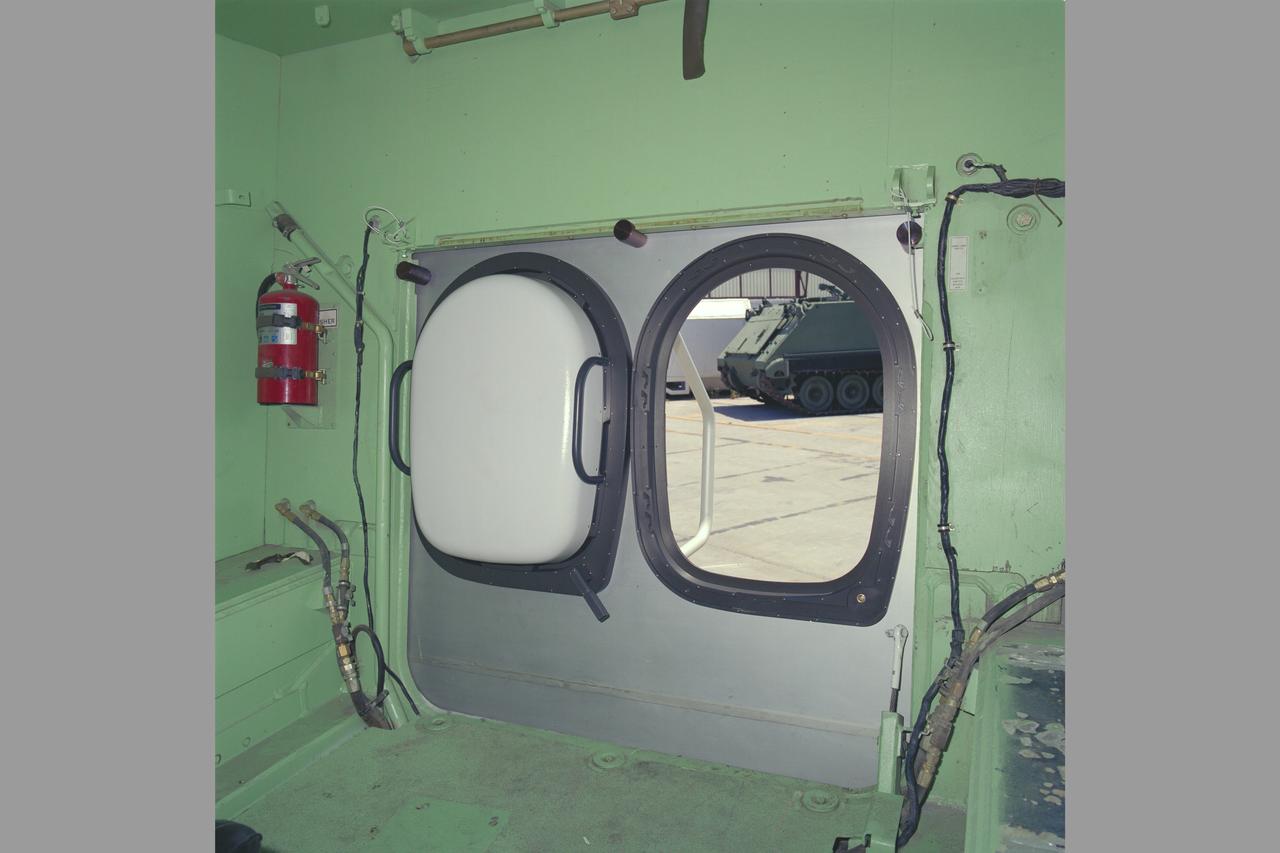
HAZMAT Vehicle interior at FMC PLS Pack donning station
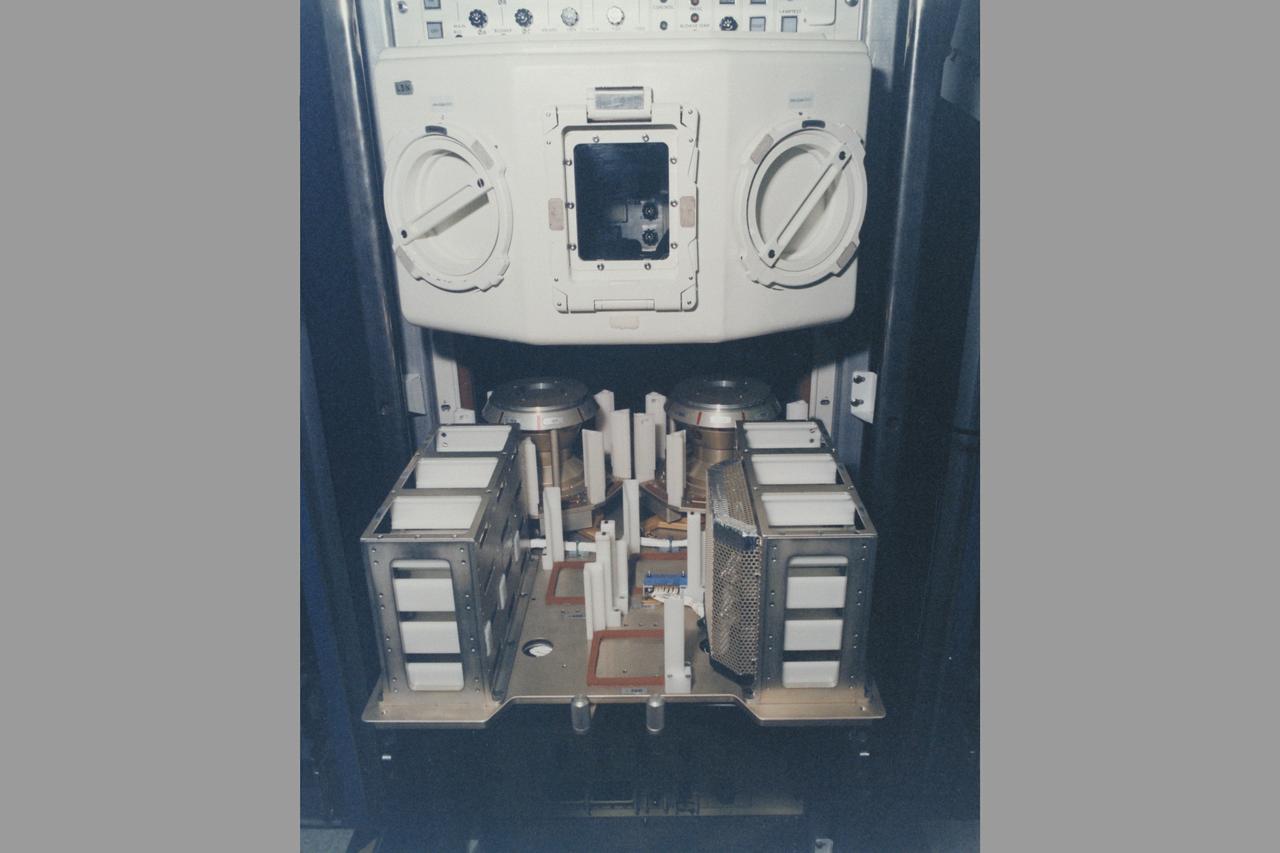
European Space Agency's Biorack incubator (37deg C)
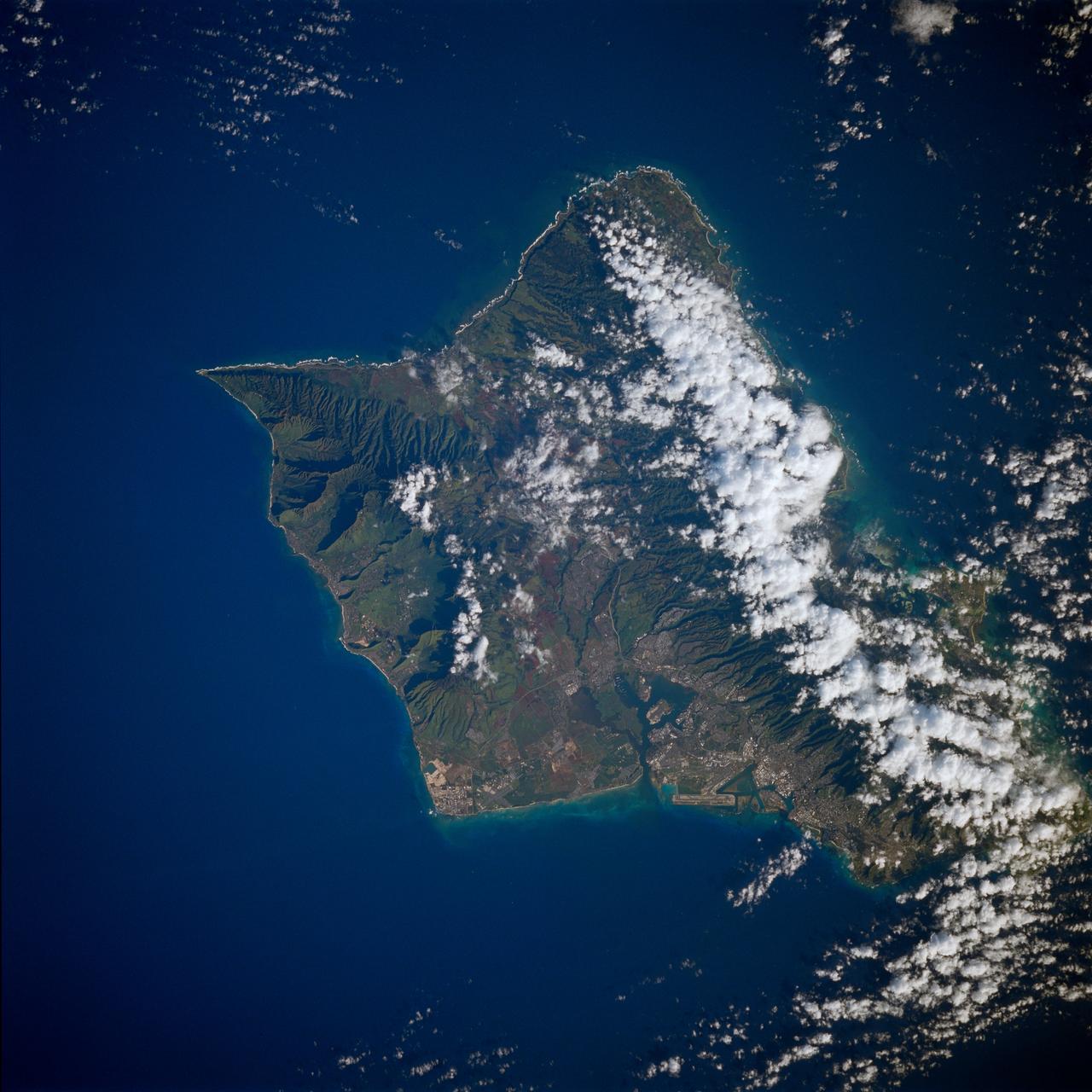
STS080-758-065 (19 Nov.-7 Dec. 1996) --- The island of Oahu, state of Hawaii was photographed by the crew members aboard the Earth-orbiting Space Shuttle Columbia. The western portion (lower part of photograph) of the well eroded extinct volcano is quite clear. The northeastern coastal area and Koolau Range of mountains, which runs the length of the island (30 miles) are cloud covered. This is an unusual case. This is the windward side of the island (great for surfing) and the warm moist Pacific winds sweep up the mountains thus causing the clouds and an unusually high rainfall. The city of Honolulu is along the right side with the Honolulu International Airport clearly seen. Below the airport is the narrow entrance to Pearl Harbor and nearby Hickam Air Force Base. The narrow sand beaches of the Waikiki Beach resort area, just above Diamond Head - on the lower right, appear as narrow white lines along the coast above the airport and port of Honolulu. The sharp point at the lower portion of the photo is Kaena Point. The cliffs there are so steep that there is no developed roadway although a narrow gauge railway was carved into the cliffs and operated the first half of the century.
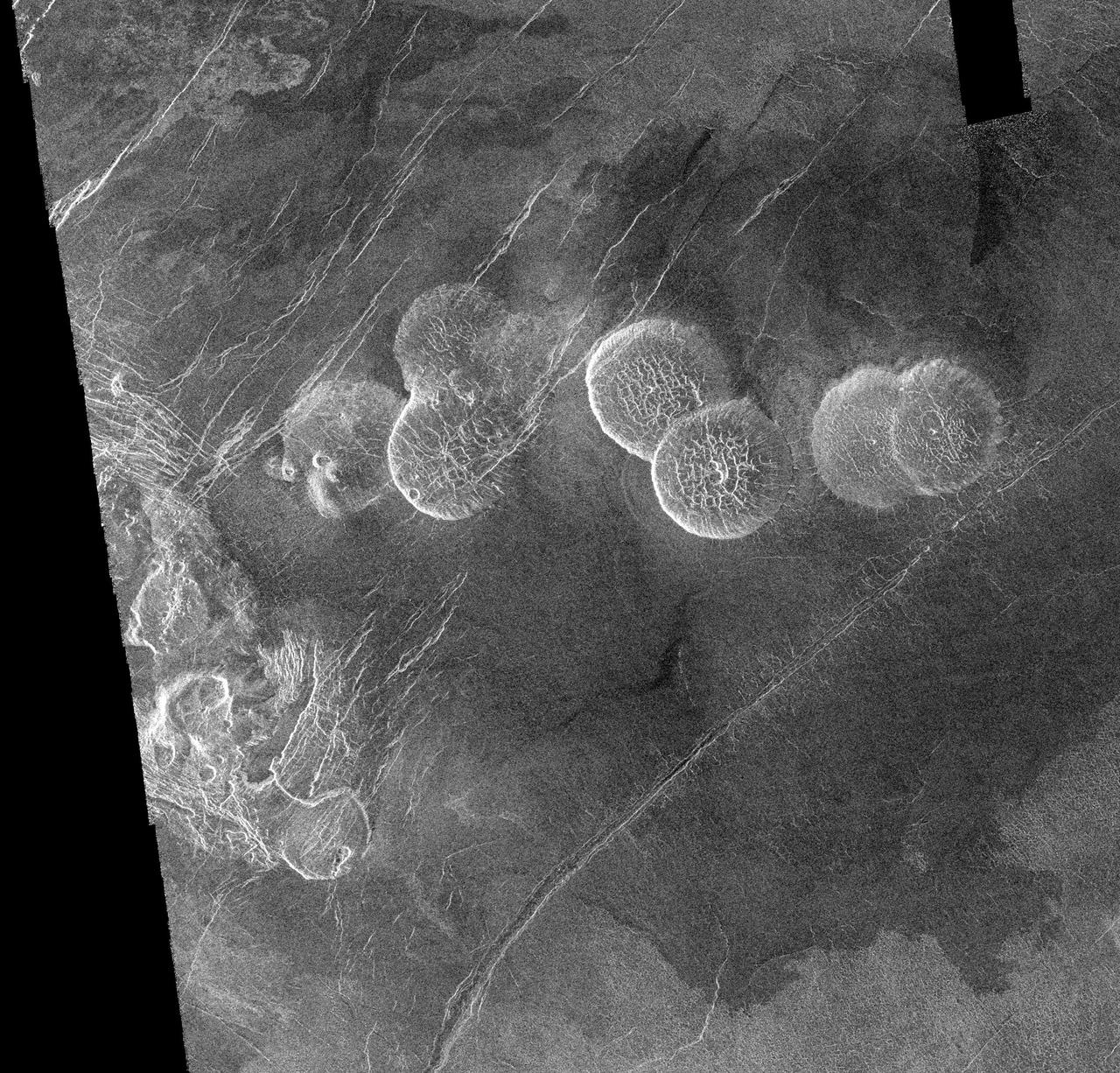
The eastern edge of Alpha Regio is shown in this image from NASA Magellan spacecraft. http://photojournal.jpl.nasa.gov/catalog/PIA00215
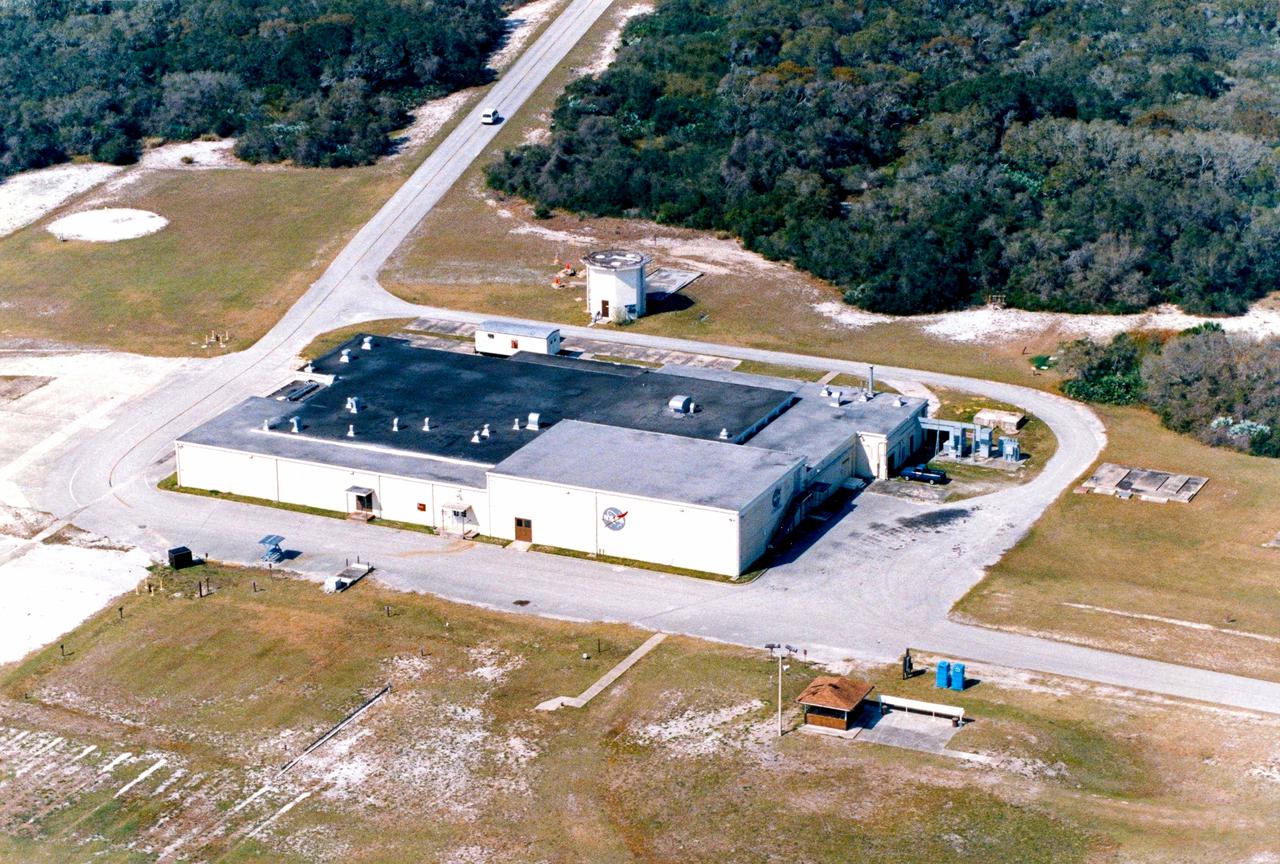
CAPE CANAVERAL, Fla. - With its operational days behind, on June 1, 1967, the Mission Control Center became a stop on the public tour of NASA facilities offered through the Kennedy Space Center Visitor’s Center, now called the Visitor Complex. Tours of the facility continued until the mid-90s. The Mercury Mission Control Center in Florida played a key role in the United States' early spaceflight program. Located at Cape Canaveral Air Force Station, the original part of the building was constructed between 1956 and 1958, with additions in 1959 and 1963. The facility officially was transferred to NASA on Dec. 26, 1963, and served as mission control during all the Project Mercury missions, as well as the first three flights of the Gemini Program, when it was renamed Mission Control Center. In 1999, much of the equipment and furnishings from the Flight Control Area were moved to the Kennedy Space Center Visitor Complex where they became part of the exhibit there. The building was demolished in spring 2010. Photo credit: NASA

This image from NASA Magellan spacecraft shows a relatively flat plains region composed of many lava flows. http://photojournal.jpl.nasa.gov/catalog/PIA00082
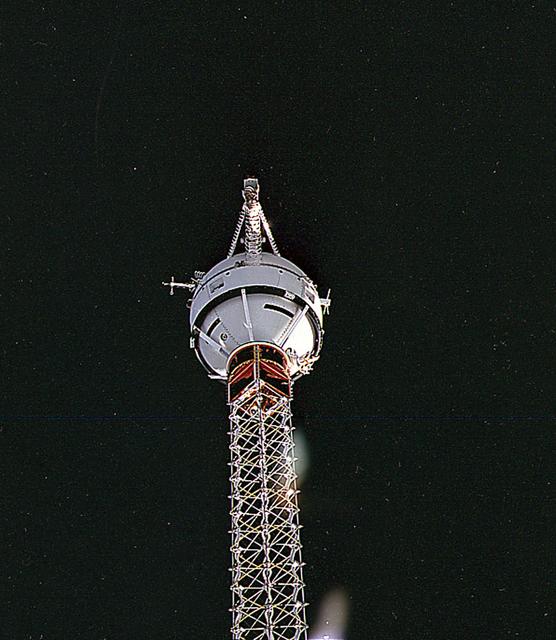
An STS-75 onboard photo of the Tethered Satellite System-1 Reflight (TSS-1R) atop its extended boom. The TSS-1R was a reflight of TSS-1, which was flown on the Space Shuttle in July/August, 1992. Building on the knowledge gained on the TSS-1 about tether dynamics, the TSS will circle the Earth at an altitude of 296 kilometers (184 miles), placing the tether system well within the rarefield, electrically charged layer of the atmosphere known as the ionosphere. The satellite was plarned to be deployed 20.7 kilometers (12.9 miles) above the Shuttle. The conducting tether, generating high voltage and electrical currents as it moves through the ionosphere cutting magnetic field lines, would allow scientists to examine the electrodynamics of a conducting tether system. In addition, the TSS would increase our understanding of physical processes in the near-Earth space environment, such as plasma waves and currents. The tether on the TSS broke as the Satellite was nearing the full extent of its 12.5 mile deployment from the Shuttle. The TSS was a cooperative development effort by the Italian Space Agency (ASI) and NASA, and was managed by scientists at the Marshall Space Flight Center.
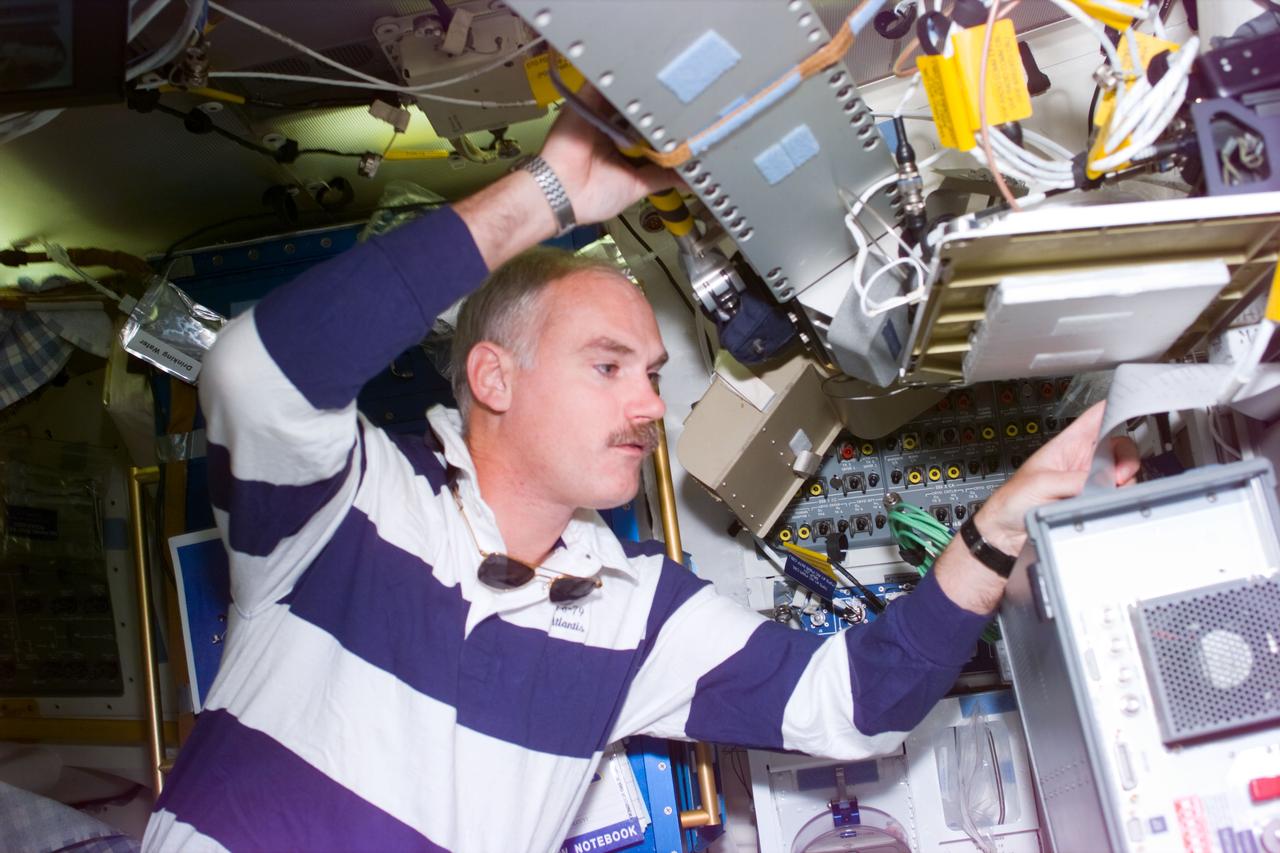
STS79-E-5022 (18 September 1996) --- William F. Readdy, mission commander, checks on Spacehab prior to preparing for Day 4 docking of the Space Shuttle Atlantis with Russia's Mir Space Station, on flight day 3.

MTPV - MOBILE TELEVISION PRODUCTION VEHICLE - NIGHT VIEW ON THE RAMP AT THE HANGAR
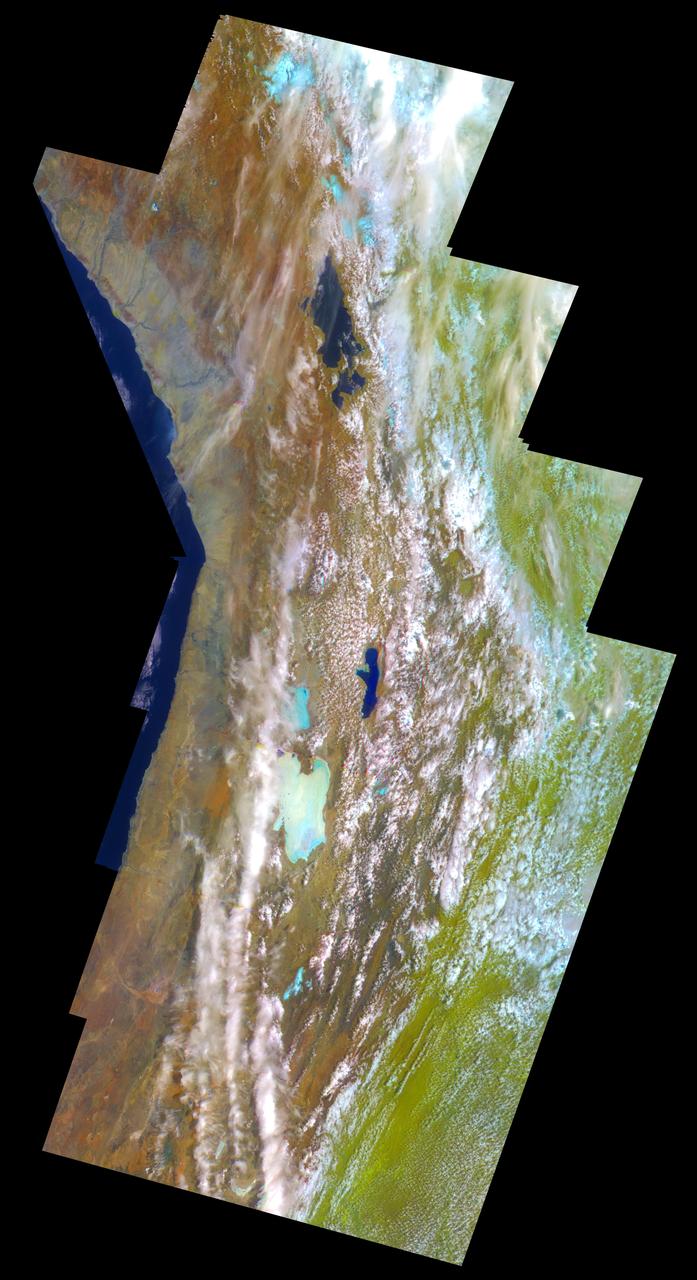
This false-color mosaic of the central part of the Andes mountains of South America 70 degrees w. longitude, 19 degrees s. latitude is made up of 42 images acquired by NASA’s Galileo spacecraft from an altitude of about 25,000 kilometers 15,000 miles. http://photojournal.jpl.nasa.gov/catalog/PIA00133
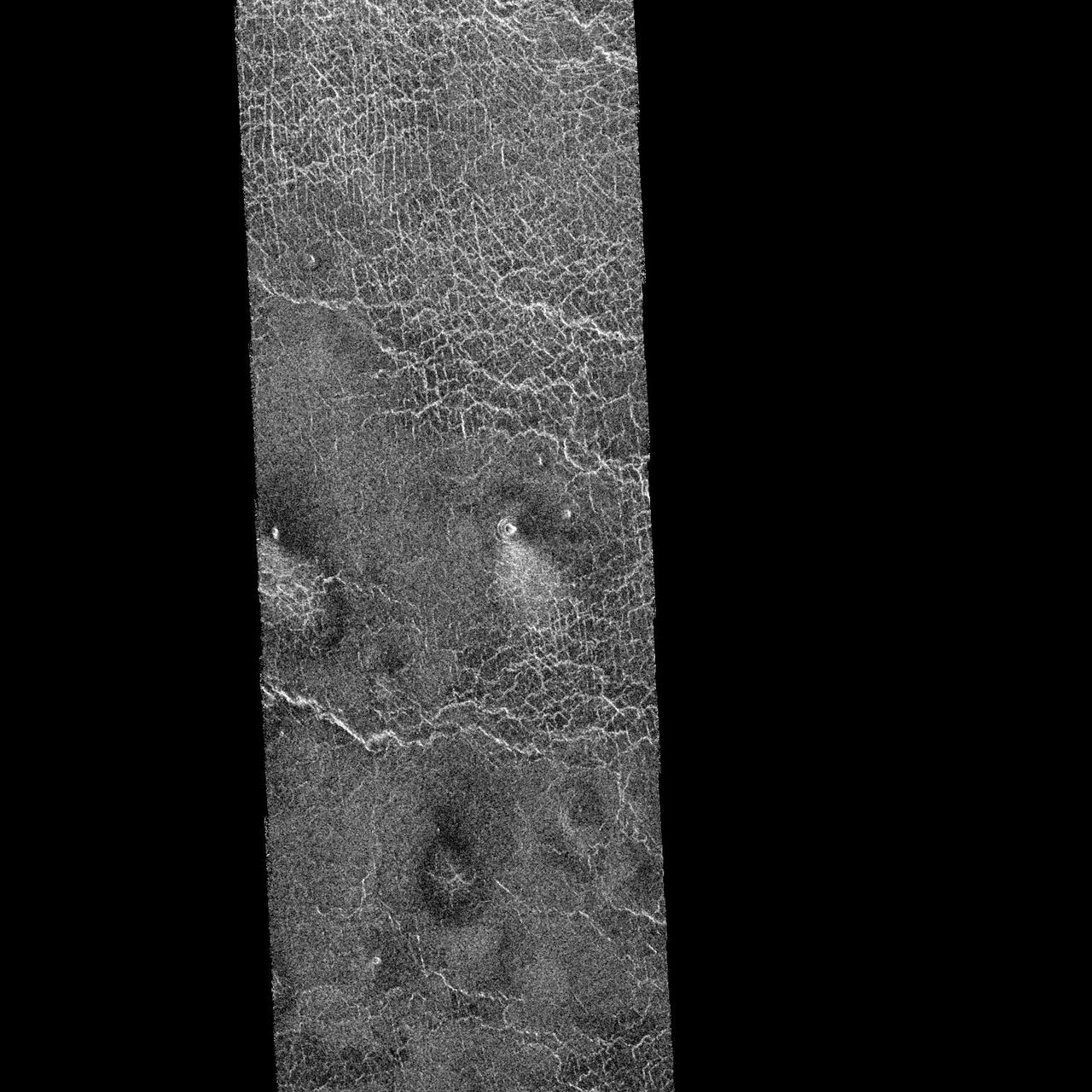
This area of Venus northeast of Ushas Mons measures 40 by 112 kilometers 25 by 70 miles and shows evidence of possible explosive volcanism as seen by NASA Magellan spacecraft. http://photojournal.jpl.nasa.gov/catalog/PIA00213
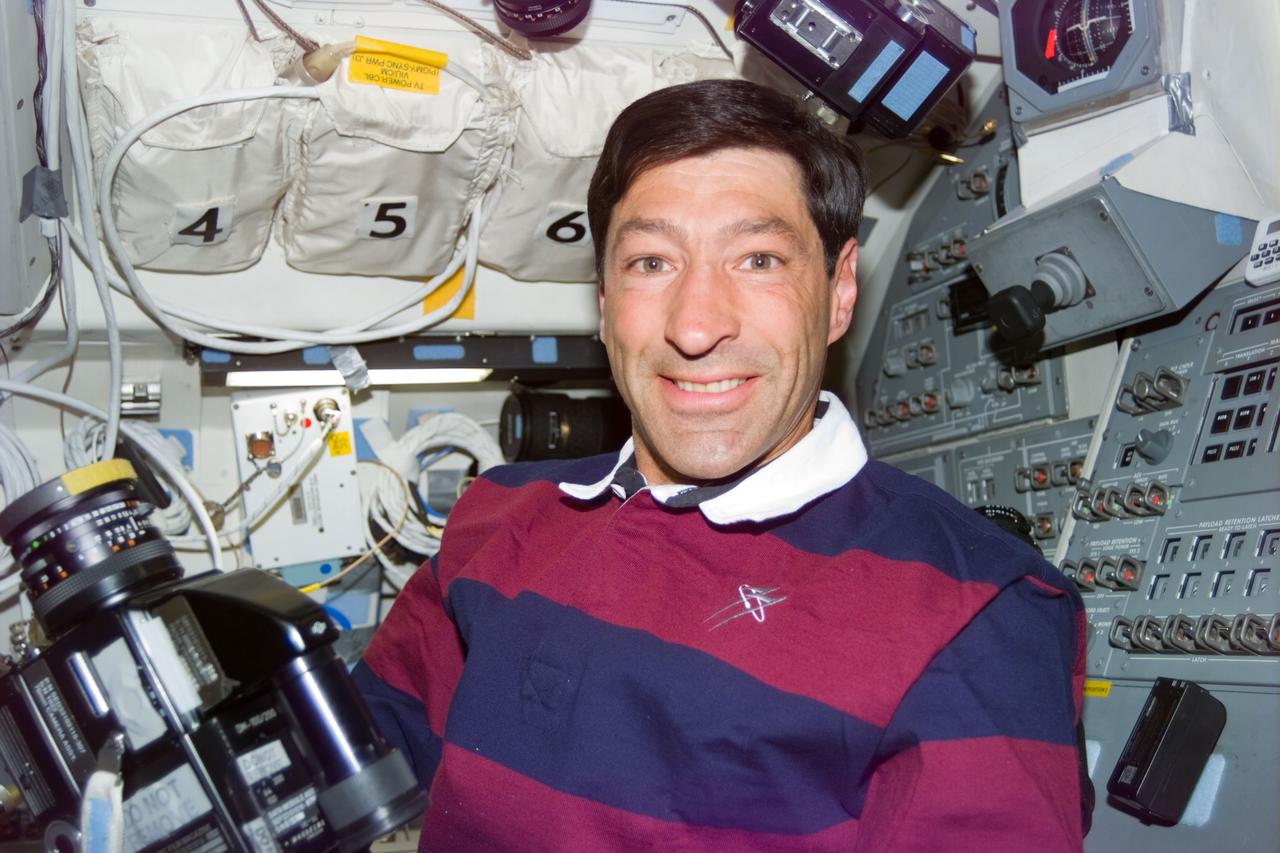
S77-E-5078 (24 May 1996) --- On the Space Shuttle Endeavour's aft flight deck, astronaut Mario Runco, Jr., mission specialist, grabs a hand-held 70mm camera and prepares to take still pictures of an Earth observation target of opportunity. A pair of windows just out of frame above Runco's head provide the crew members with a prime operating perspective of Earth observation targets. A crew mate exposed the image with an Electronic Still Camera (ESC).
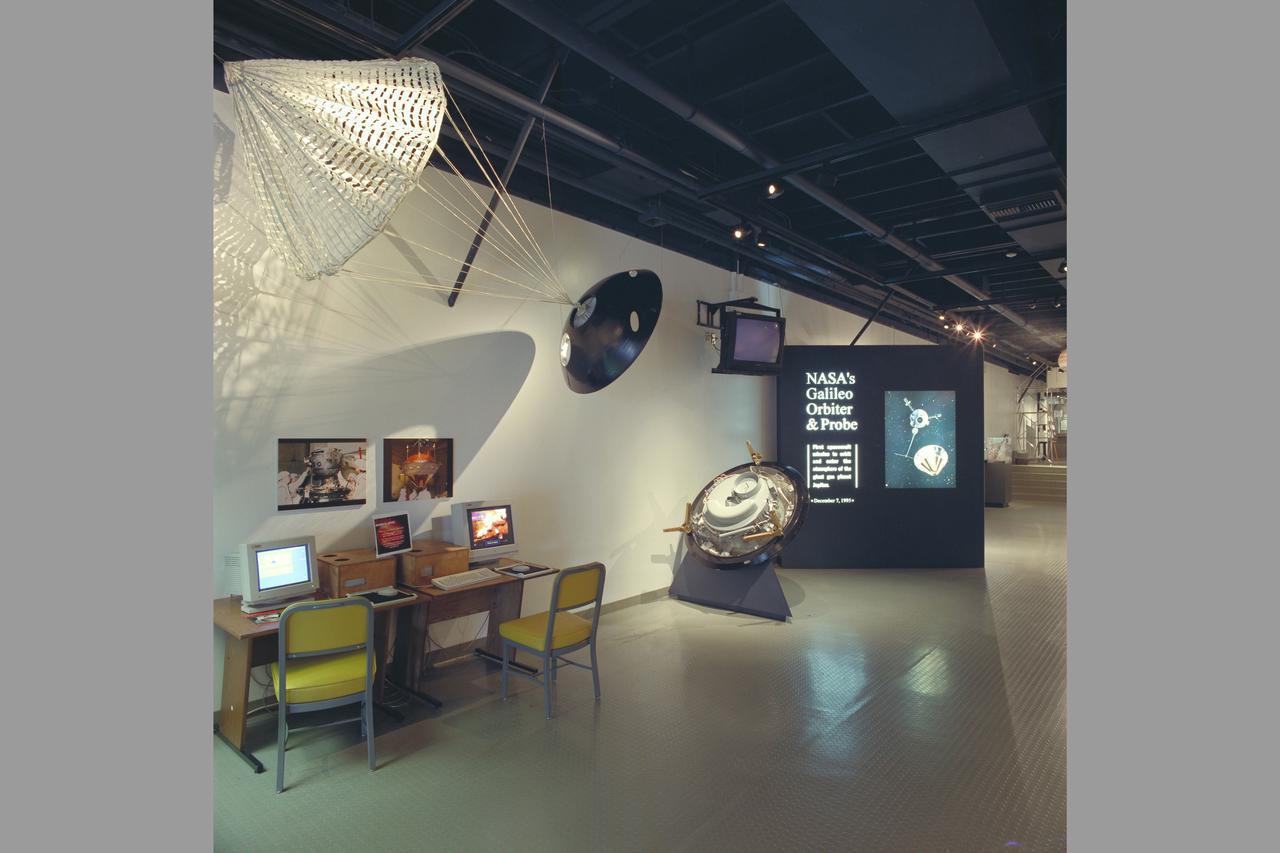
N-233 Visitor Information Center (VIC): Galileo Exhibit
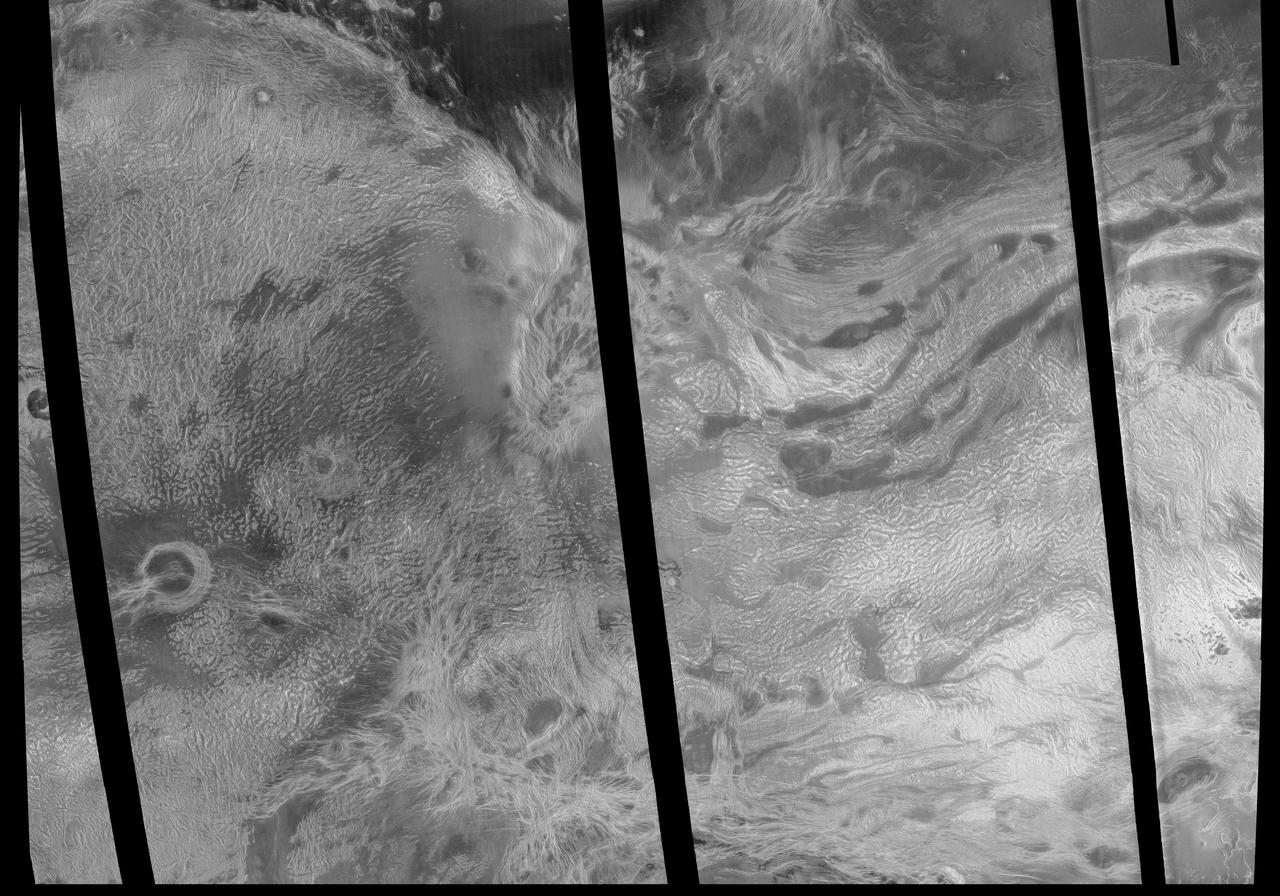
This image covers much of Ovda Regio, which forms the western part of Aphrodite Terra. It covers an area about 2,250 kilometers (1,386 miles) wide by 1,300 kilometers (800 miles) north to south, and ranges in latitude from 8 degrees north to 12 degrees south and in longitude from 62 degrees east to 90 degrees east. Ovda Regio is a highland region that rises over 4 kilometers (2.5 miles) above the surrounding plain. Magellan images show a complex surface, with several generations of structures. A pervasive fabric of irregular broad domes and ridges and associated curvilinear valleys was flooded by lava, then fractured. The circular feature surrounded by dark lava flows in the western part of the image is a caldera, or large volcanic collapse pit. Late-stage extension created long graben, or fault-bounded valleys, is best seen near the center of the image. The northern boundary of Ovda Regio is a steep, curvilinear mountain belt made up of long, narrow, rounded ridges. These ridges are similar in appearance to folded mountain belts on Earth. Several impact craters, such as the circular features on the western margin of the image, are scattered across the area. The bright area in the southeast part of the image indicates the presence of a radar-reflective mineral such as pyrite. Most of the highland areas on Venus display a similar bright signal. Each pixel of this image covers an area on the surface 675 meters (2,215 feet) across, representing a 9- times reduction in resolution compared to full-scale resolution data. http://photojournal.jpl.nasa.gov/catalog/PIA00146
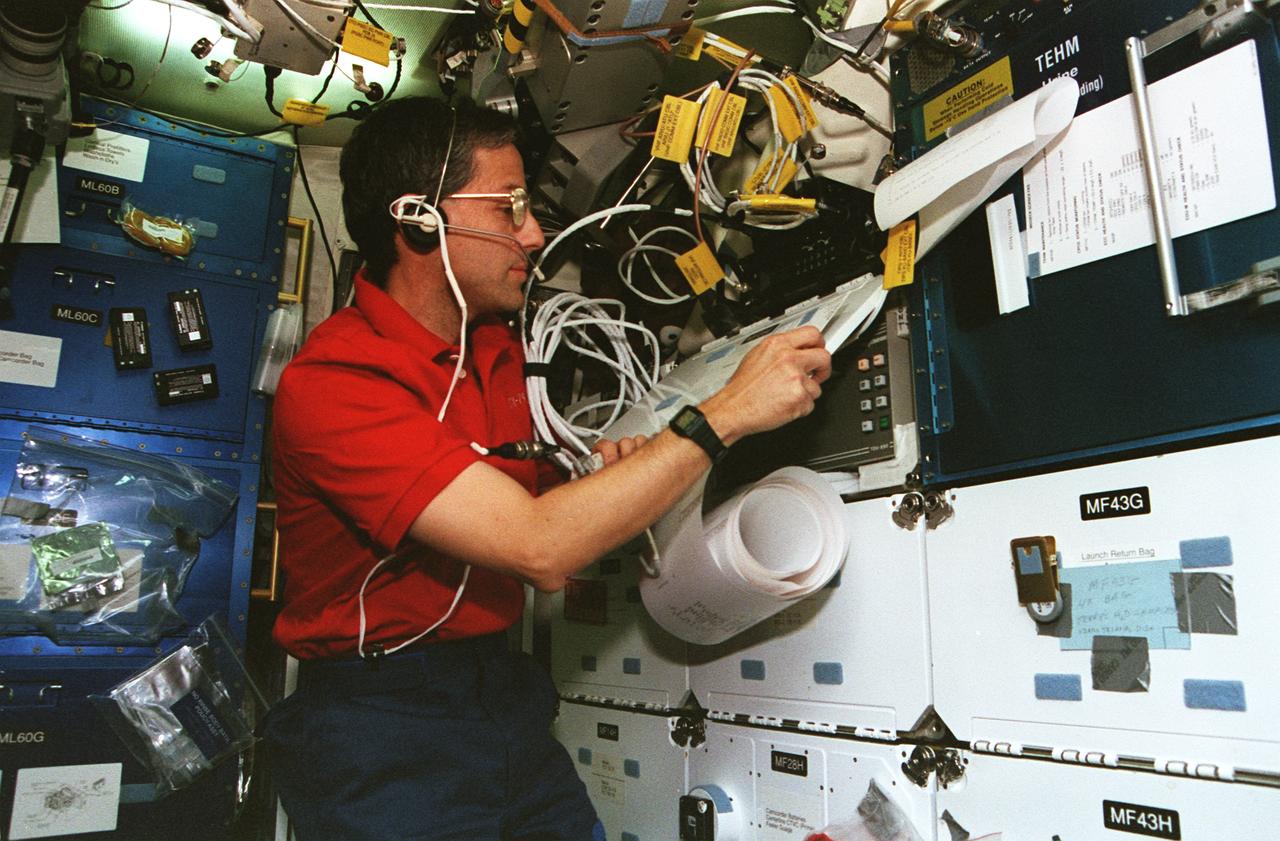
STS079-365-004 (16-26 Sept. 1996) --- During off-duty time, Jerome (Jay) Apt, a licensed amateur radio operator, talks to ground contacts via the Shuttle Amateur Radio Experiment (SAREX). The radio was also used for communications between the Space Shuttle Atlantis and Russia's Mir Space Station during docking and undocking activities. This photograph is one of fifteen 35mm frames (along with four 70mm frames) of still photography documenting the activities of NASA's STS-79 mission, which began with a September 16, 1996, liftoff from Launch Pad 39A the Kennedy Space Center (KSC) and ended with a landing at KSC on September 26, 1996. Onboard for the launch were astronauts William F. Readdy, commander; Terrence W. Wilcutt, pilot; John E. Blaha, Apt, Thomas D. Akers and Carl E. Walz, all mission specialists. On flight day 4, the crew docked with Mir. Shannon W. Lucid, who had spent six months aboard Mir, switched cosmonaut guest researcher roles with Blaha. The latter joined fellow Mir-22 crew members Valeri G. Korzun, commander, and Aleksandr Y. Kaleri, flight engineer.
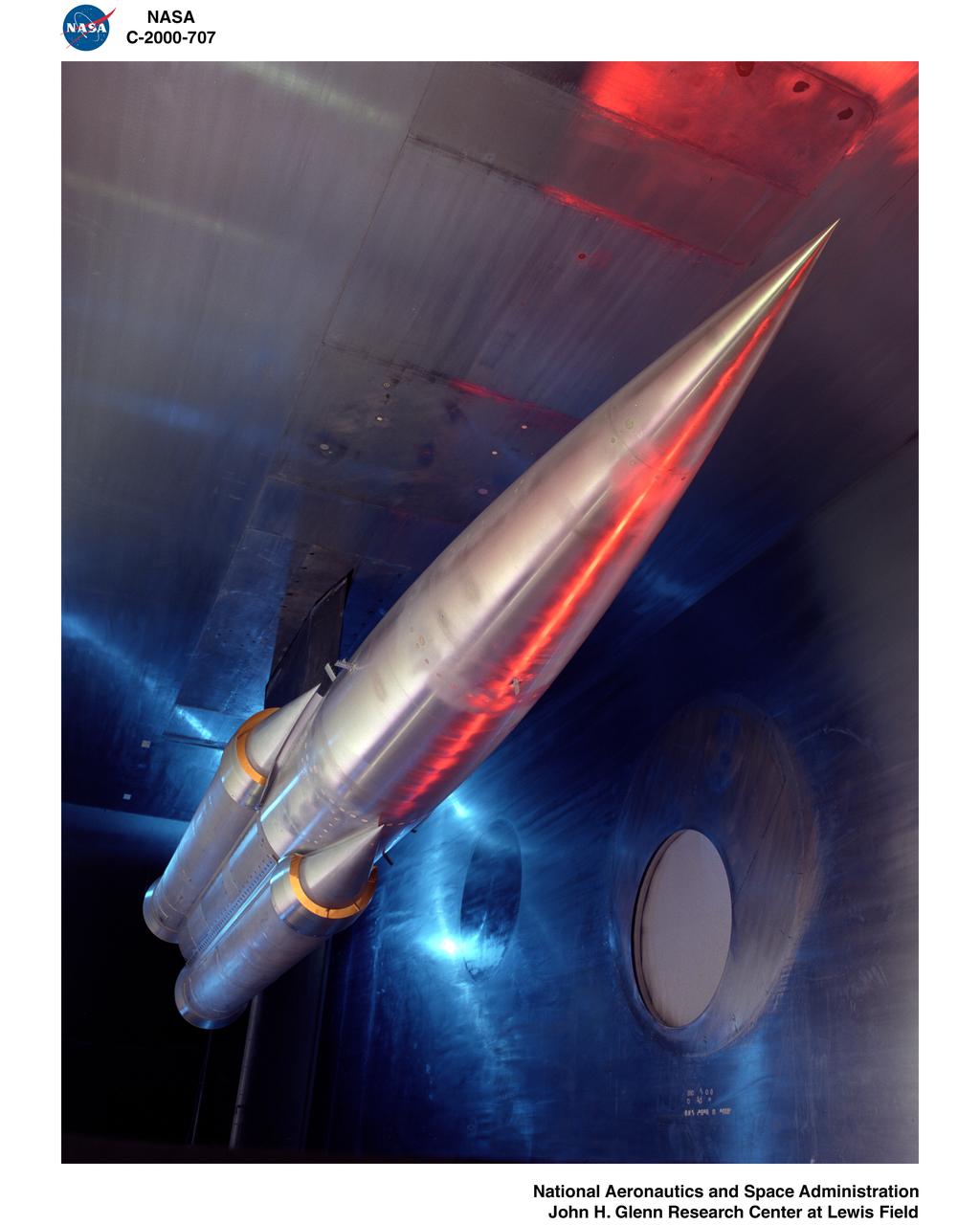
ROCKET BASED COMBINED CYCLE - RBCC - RIG 3.1 MODEL INSTALLED IN 10X10 FOOT SUPERSONIC WIND TUNNEL TEST SECTION
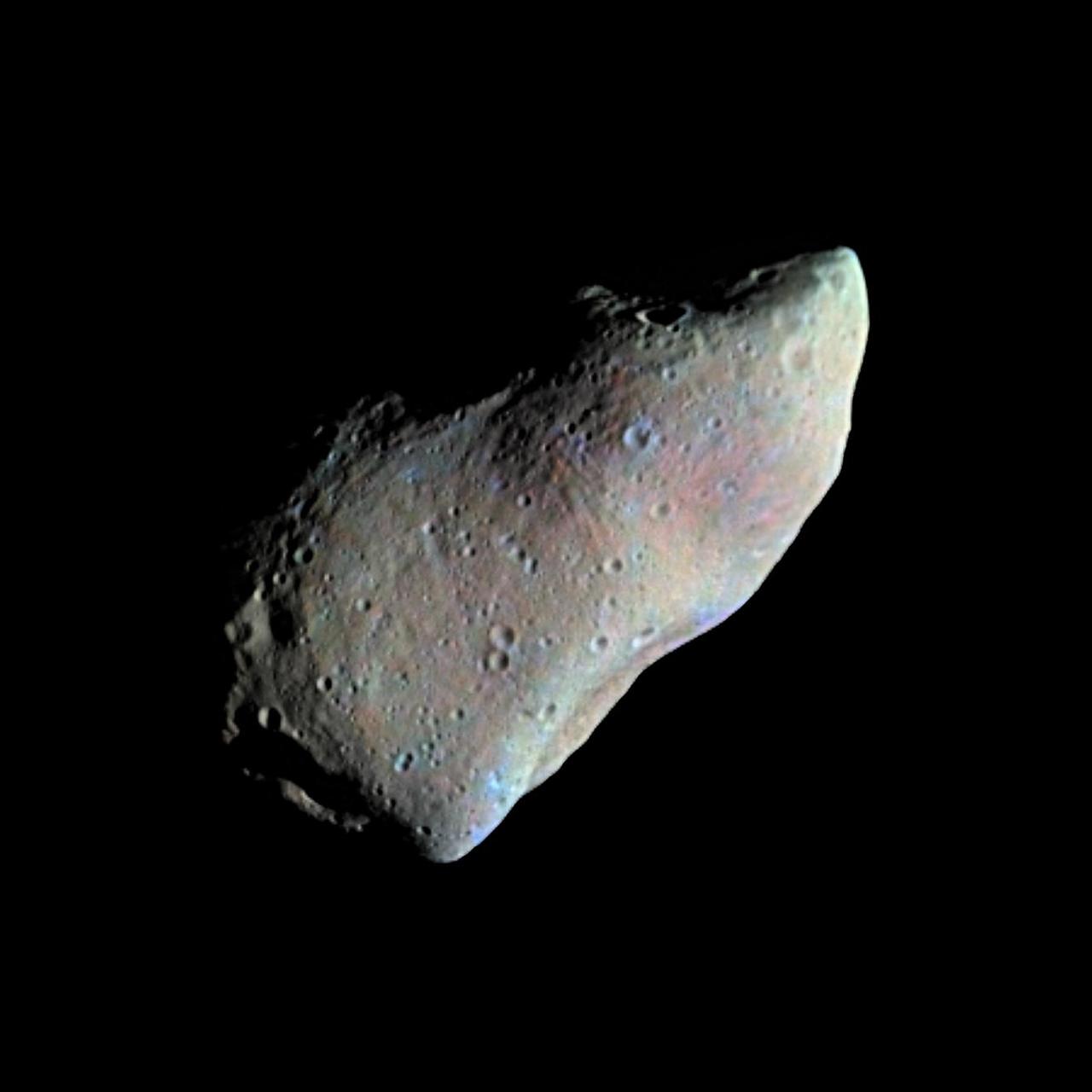
This picture of asteroid 951 Gaspra is a mosaic of two images taken by NASA's Galileo spacecraft from a range of 5,300 kilometers 3,300 miles, some 10 minutes before closest approach on October 29, 1991. http://photojournal.jpl.nasa.gov/catalog/PIA00119
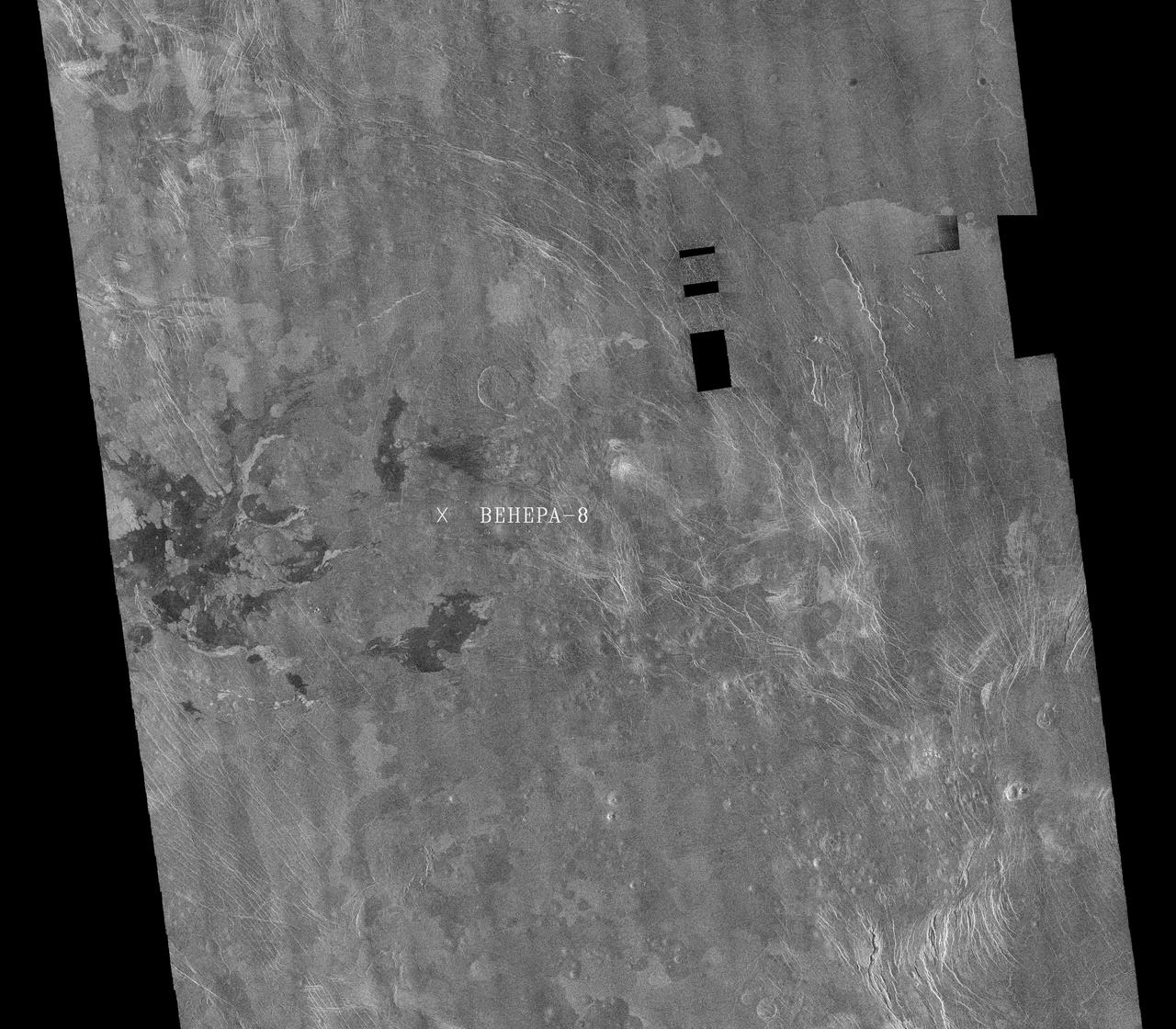
This image is a mosaic of 24 orbits of the Navka region of Venus. The image is centered at about 10 degrees south latitude and 335 degrees east longitude. The image is about 400 km (240 miles) across. 'Behepa 8' marks the approximate landing site of the Soviet Venera 8 lander, which took measurements at the surface of Venus in 1972. The Venera 8 lander measured granitic or continental-like materials at the landing site. Magellan data reveals the landing site to lie in a region of plains cut by tectonic ridges and troughs. Volcanic domes and flows are seen throughout the region. Studying the regional setting of the Venera landing sites is important in linking information about surface composition to surface morphology seen in radar images. Resolution of the Magellan data is about 120 meters (400 feet). http://photojournal.jpl.nasa.gov/catalog/PIA00460
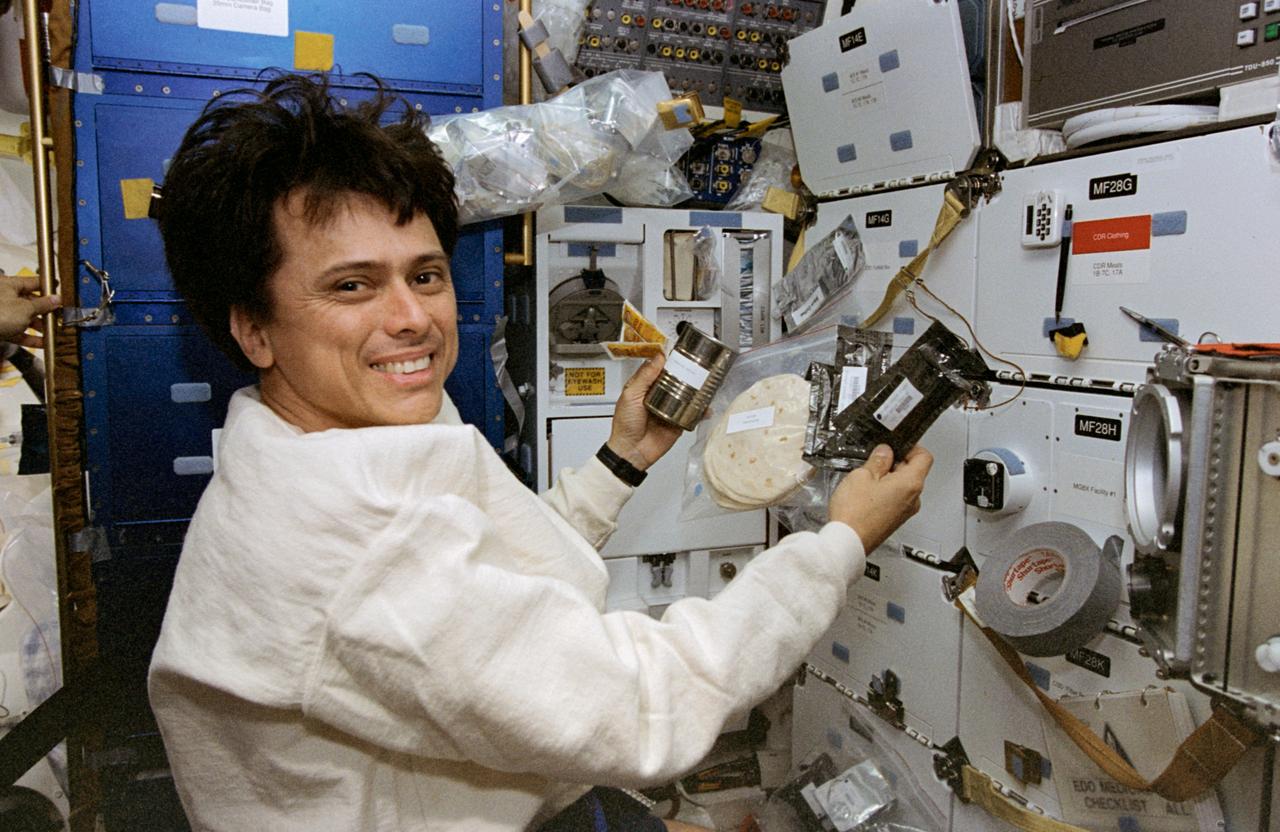
STS075-350-030 (22 Feb.-9 March 1996) --- Astronaut Franklin R. Chang-Diaz, STS-75 payload commander, holds food items at the galley on the middeck of the Earth-orbiting space shuttle Columbia. Photo credit: NASA or National Aeronautics and Space Administration
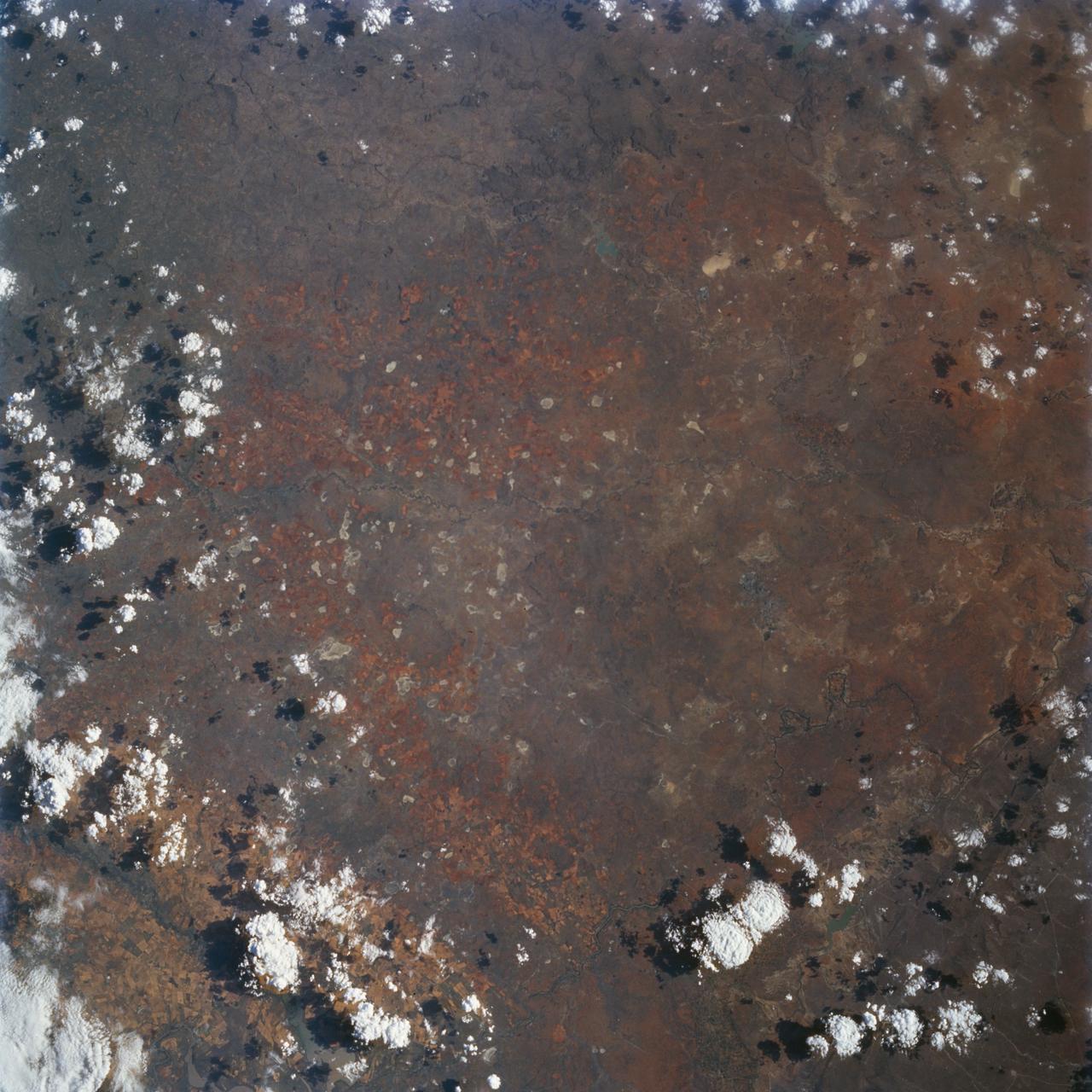
STS072-727-059 (11-20 Jan. 1996) --- Plains of the Orange Free State, South Africa are featured in this 70mm frame exposed from the Space Shuttle Endeavour. If the photograph is oriented with the largest clouds at the top edge, so that the cloud shadows fall to the upper right of each cloud, then north is to the top. The Vaal River flows along the top and through the upper left of the photograph; the reservoir of the Bloemhofdam on the Sand River can be seen between clouds at the upper right of the photograph. Kimberley can be seen as a gray smudge southeast of a contorted set of bends in the Vaal river (upper left center). With high magnification four dark dots, large open-pit mine shafts, can be seen within the gray smudge of the city. Kimberley, the capital of Northern Cape Province, was founded in 1878 after the discovery of diamonds in 1969 - 71, and reached by railway in 1885. Diamond mining and gem cutting remain prominent in the economy. The reddish soil and scattered salt pans (playa lakes) across the plateau suggest the semi-arid climate, suitable for cattle ranching. Reservoirs on most streams now provide water for the towns as well as irrigation for agriculture.
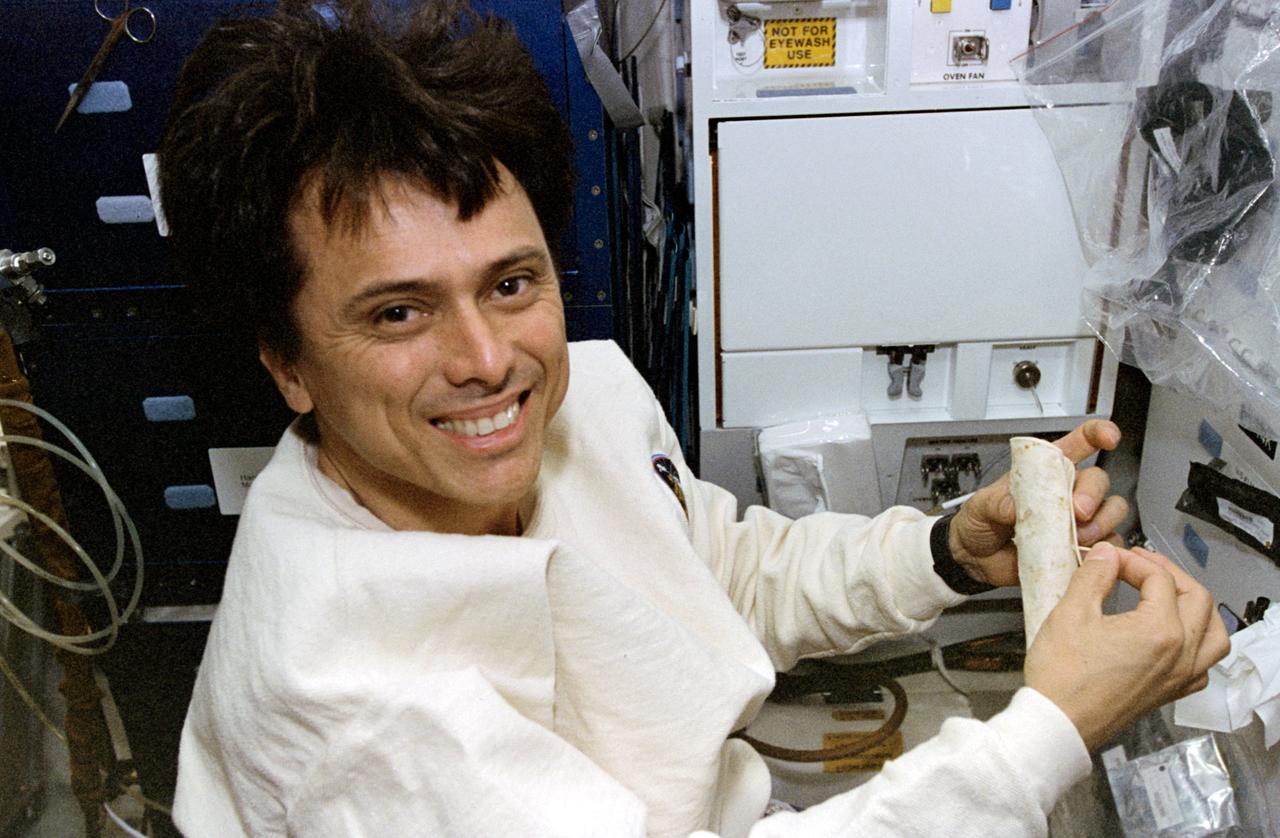
STS075-350-035 (22 Feb.-9 March 1996) --- Astronaut Franklin R. Chang-Diaz, STS-75 payload commander, holds a taco at the galley on the middeck of the Earth-orbiting space shuttle Columbia. Photo credit: NASA or National Aeronautics and Space Administration

NM21-401-012 (28 March 1996) --- The Space Shuttle Atlantis is backdropped over the darkness of space, and partially over clouds and open ocean waters on Earth, as it and Russia’s Mir Space Station begin their relative separation following several days of joint operations. This 35mm film was exposed by astronaut Shannon W. Lucid as she was beginning her record-setting stay aboard Mir, as a cosmonaut guest researcher. Onboard with Lucid were her Mir-21 crew mates, cosmonauts Yuriy I. Onufriyenko, commander; and Yuriy V. Usachov, flight engineer. Onboard Atlantis were Kevin P. Chilton, STS-76 mission commander; Richard A. Searfoss, pilot; along with Linda M. Godwin, Ronald M. Sega and Michael R. (Rich) Clifford, mission specialists.
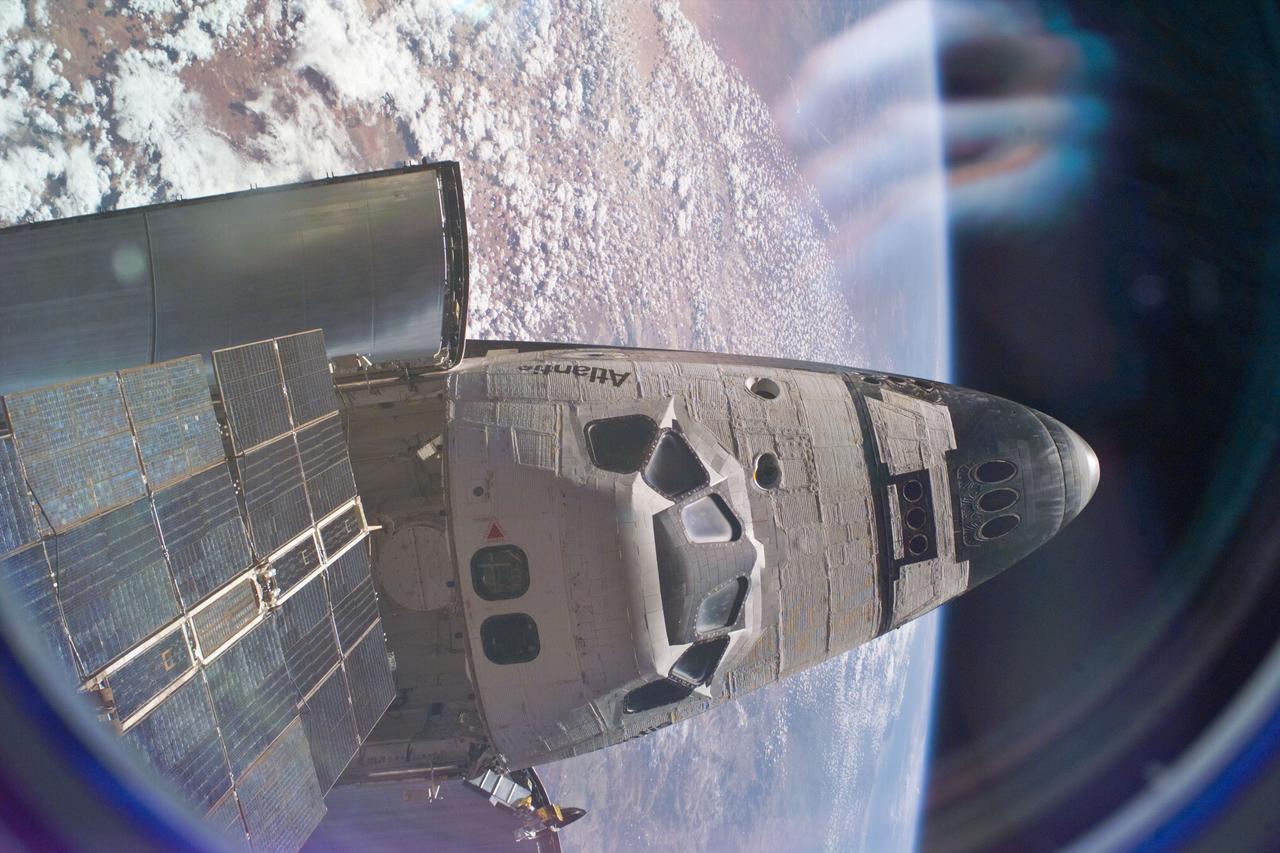
S76-E-5156 (24 March 1996) --- The forward cargo bay and the entire top exterior of the crew cabin of the Space Shuttle Atlantis can be seen in this image, recorded with a 35mm Electronic Still Camera (ESC), positioned in one of the windows aboard Russia's Mir Space Station.
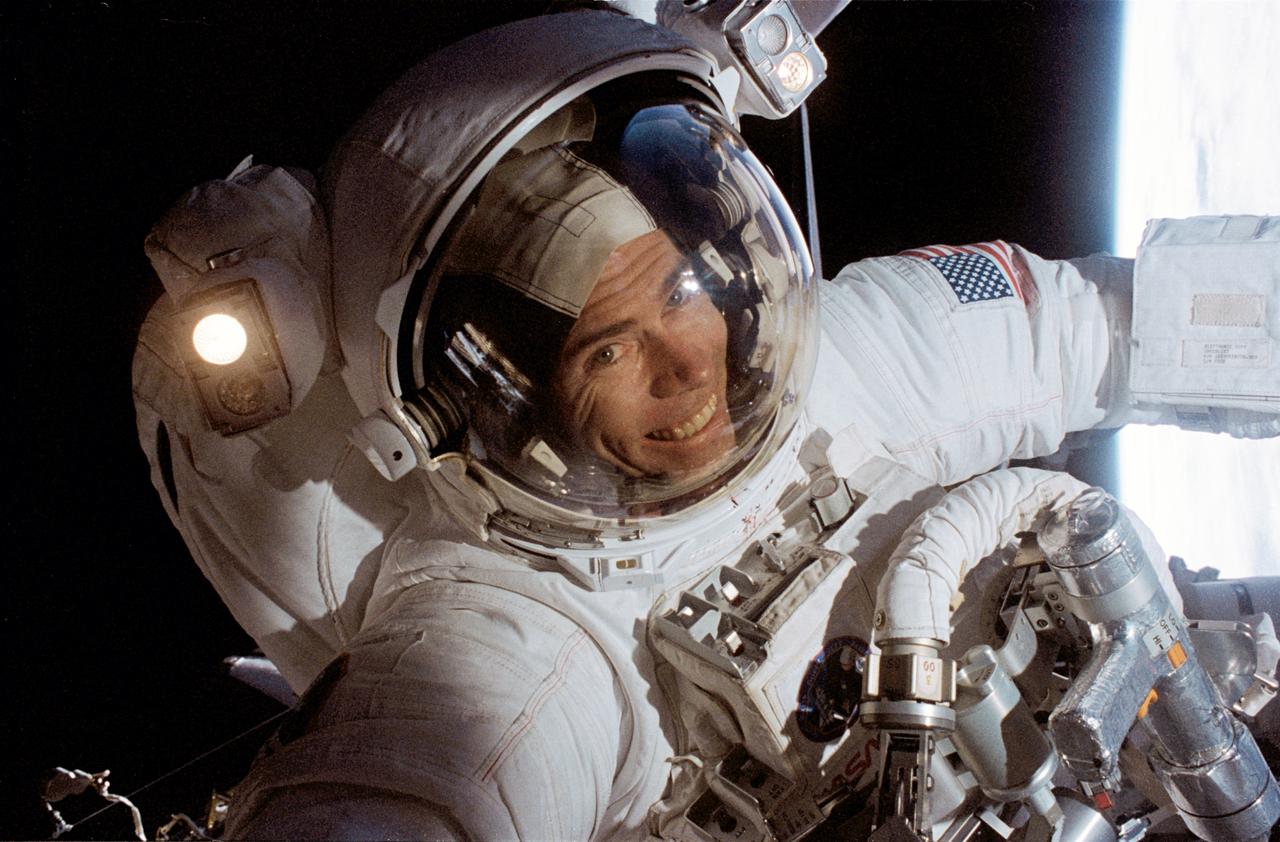
STS072-305-034 (15 Jan. 1996) --- Astronaut Daniel T. Barry, mission specialist, works in the cargo bay of the Space Shuttle Endeavour during the first of two extravehicular activities (EVA). Barry was joined by astronaut Leroy Chiao for the EVA. The two joined four other NASA astronauts for a week and a half aboard Endeavour.

This photograph of Neptune southern hemisphere was taken by the narrow-angle camera on NASA Voyager 2 when the spacecraft was 4.2 million km 2.6 million miles from the planet. http://photojournal.jpl.nasa.gov/catalog/PIA00050
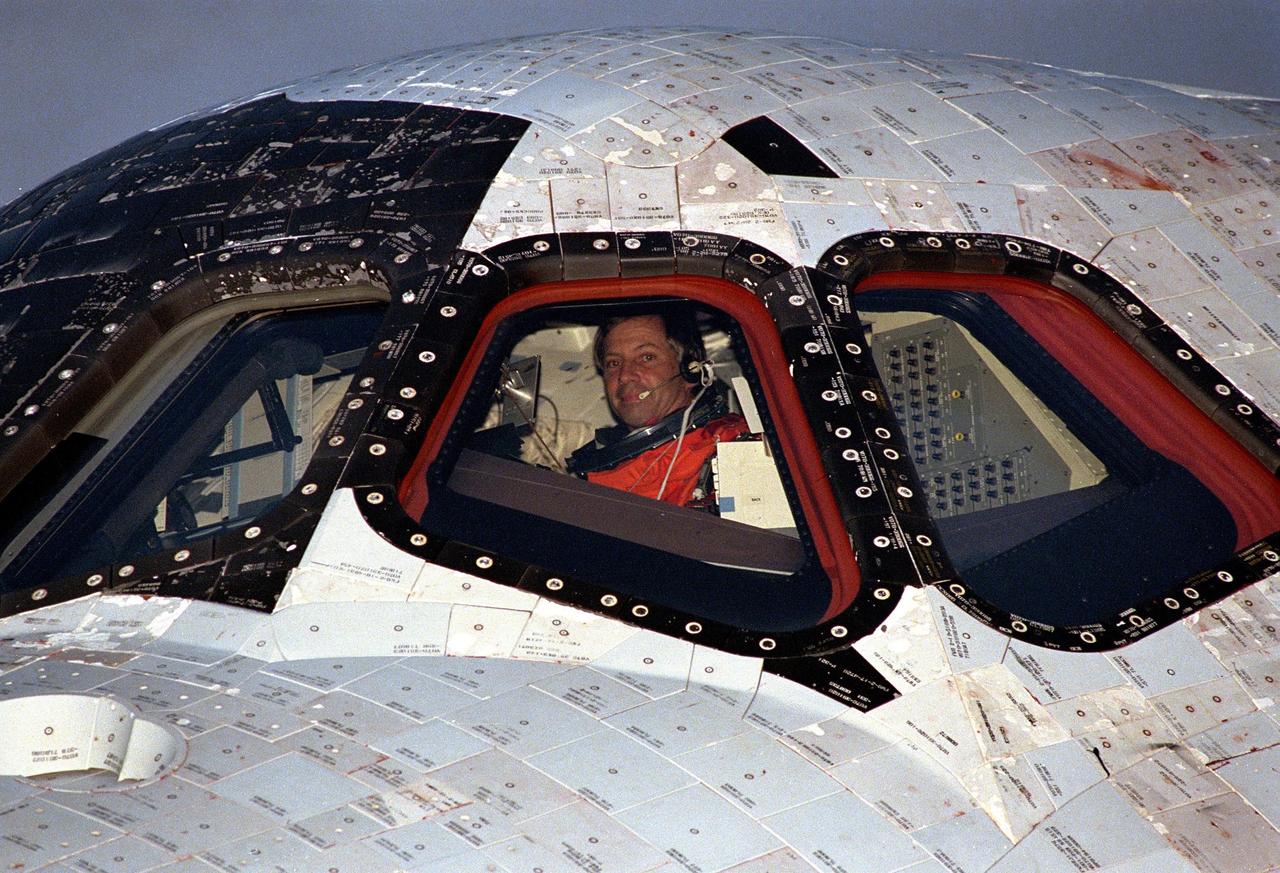
KENNEDY SPACE CENTER, FLA. -- STS-80 Commander Kenneth D. Cockrell peers out the window of the orbiter Columbia minutes after guiding the spacecraft to a successful landing on KSC’s Runway 33. Main gear touchdown occurred at 6:49:04 a.m. EST, Dec. 7. On board with Cockrell are four fellow crew members, Pilot Kent V. Rominger, and Mission Specialists Story Musgrave, Thomas D. Jones, and Tamara E. Jernigan, and the two primary payloads of the mission, the Wake Shield Facility-3 (WSF-3) and the Orbiting and Retrievable Far and Extreme Ultraviolet Spectrometer-Shuttle Pallet Satellite II (ORFEUS-SPAS II).
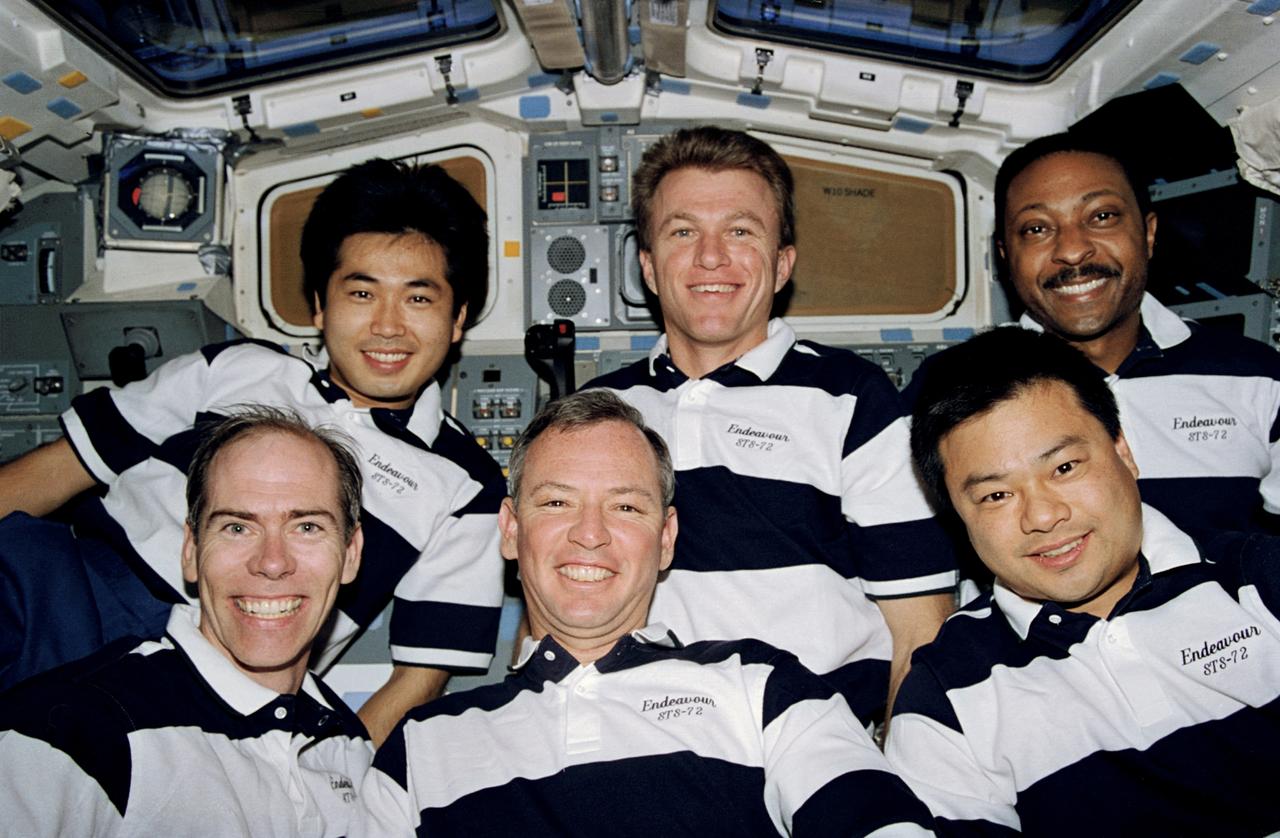
STS072-410-007 (11-20 Jan. 1996) --- The crewmembers selected the aft flight deck for the site of their inflight crew portrait aboard the Earth-orbiting Space Shuttle Endeavour. In front are, left to right, astronauts Daniel T. Barry, mission specialist; Brian Duffy, mission commander; and Leroy Chiao, mission specialist. In the rear are (left to right) Koichi Wakata, mission specialist representing Japan's National Space Development Agency (NASDA); Brent W. Jett Jr., pilot; and Winston E. Scott, mission specialist.
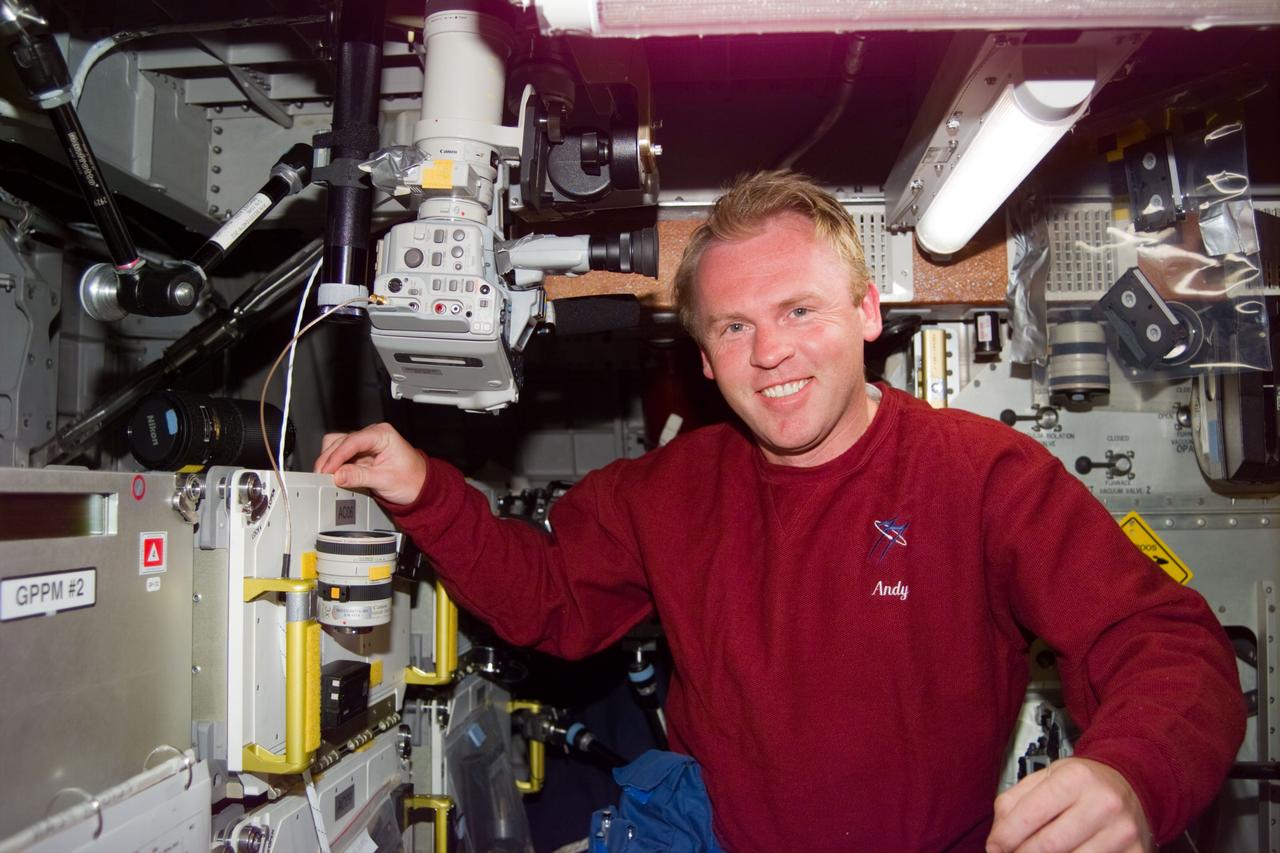
S77-E-5089 (25 May 1996) --- Astronaut Andrew S. W. Thomas, mission specialist, interrupts a Spacehab task to pose for an Electronic Still Camera (ESC) snapshot inside the Spacehab Module onboard the Earth-orbiting Space Shuttle Endeavour. In upper left is the view port which crew members had used for viewing and photographing operations with the Spartan 207/Inflatable Antenna Experiment (IAE). Thomas has his hand on an aft-bulkhead-mounted locker. The Space Experiment Facility (SEF), designed and managed by the University of Alabama, is just behind his left shoulder.
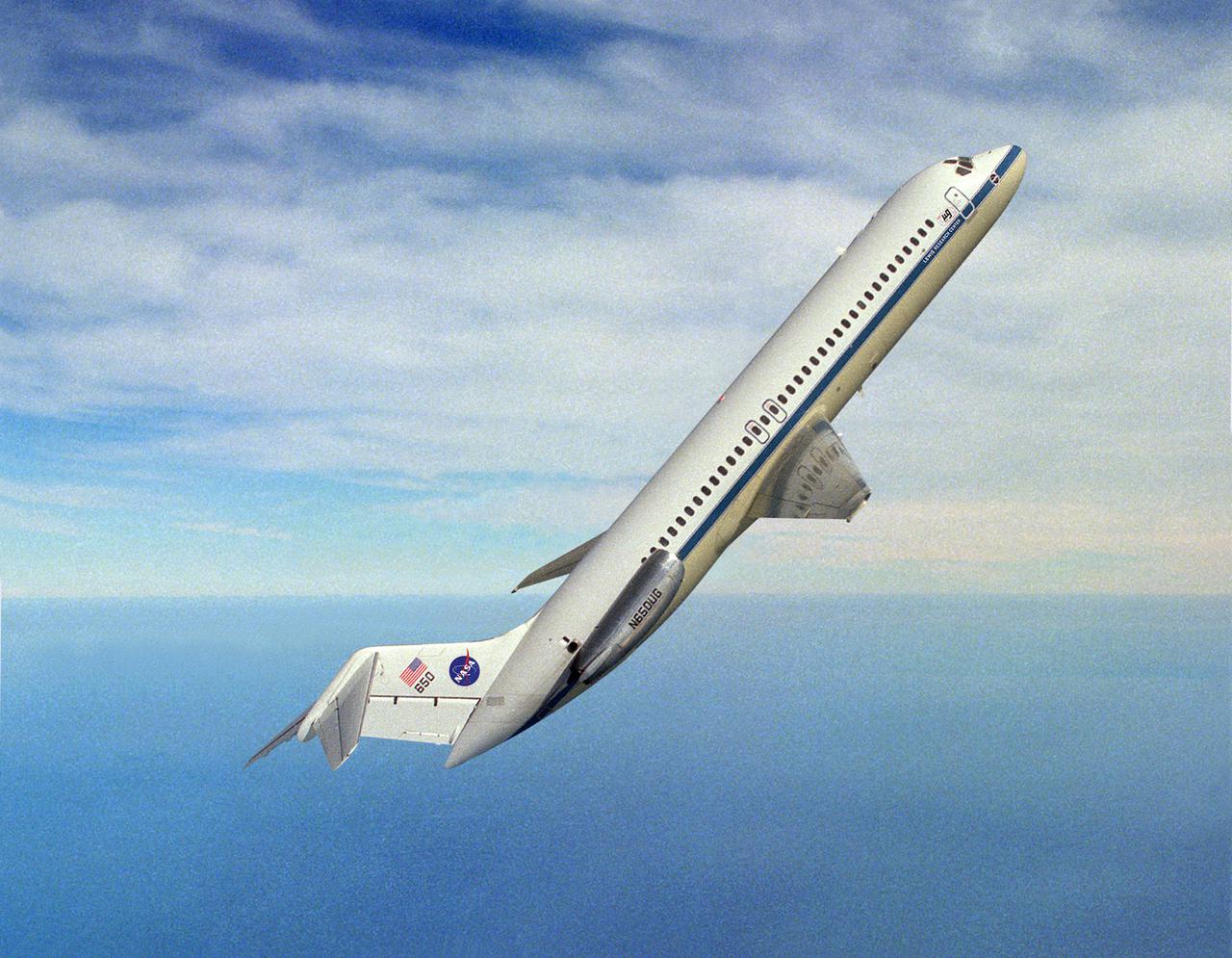
DC-9 AIRPLANE IN FLIGHT AT 50 DEGREES ANGLE OVER HORIZON
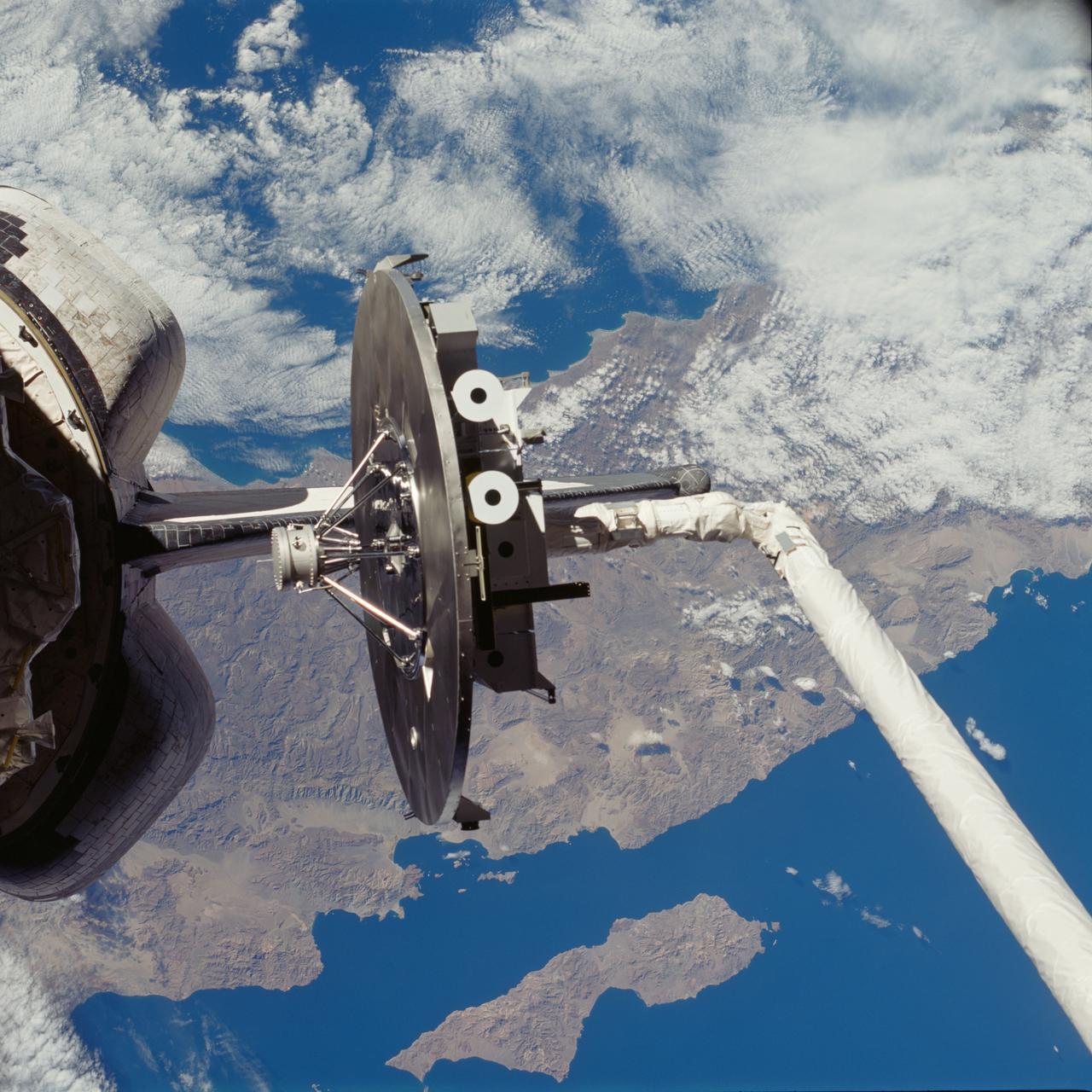
STS080-708-065 (19 Nov.-7 Dec. 1996) --- Backdropped against part of Baja California, the Wake Shield Facility (WSF) is about to be re-berthed in the cargo bay of the Earth-orbiting space shuttle Columbia. Columbia's Remote Manipulator System (RMS) was used extensively during operations with the experiment.
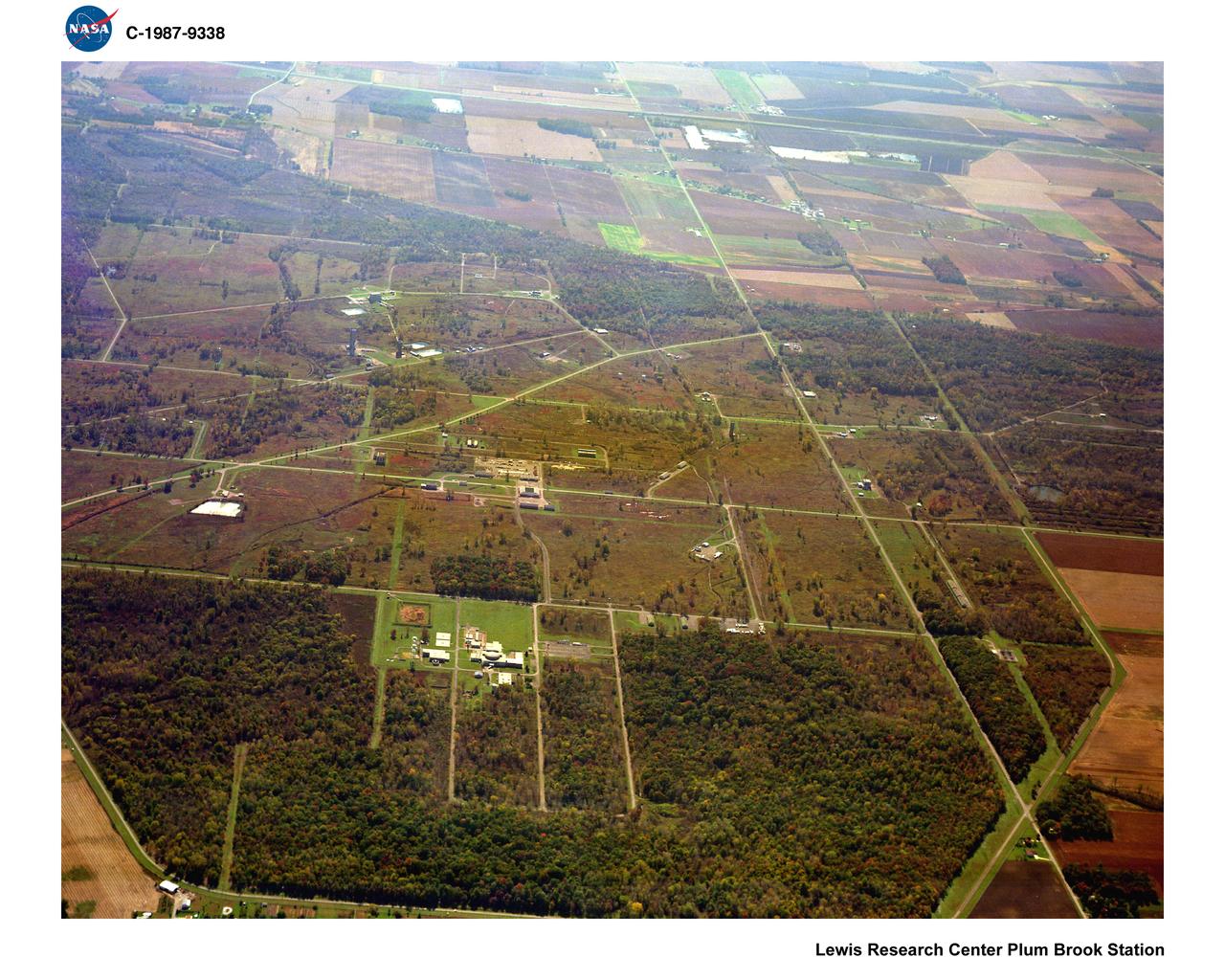
PLUMBROOK AERIALS
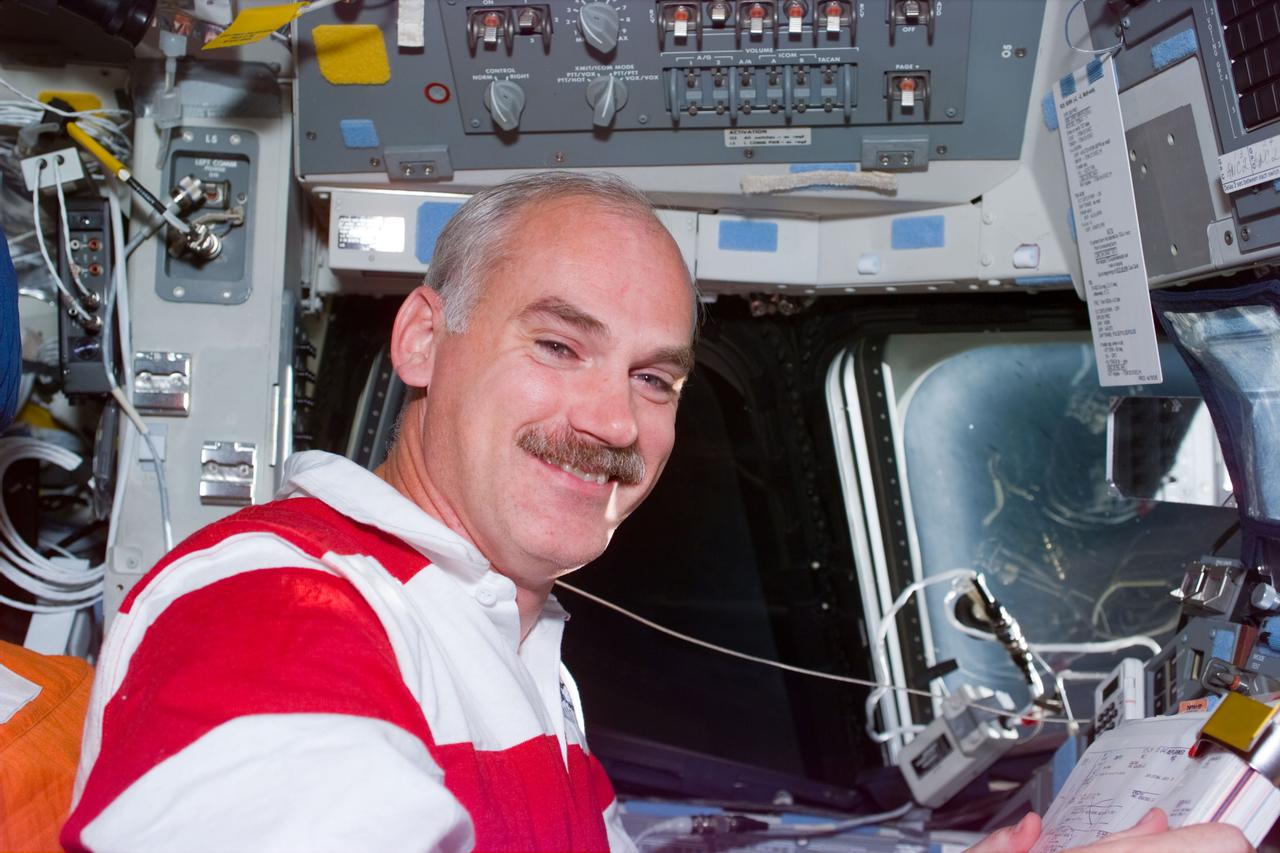
STS79-E-5058 (19 September 1996) --- During operations to catch up with Russia's Mir Space Station, astronaut William F. Readdy, mission commander, commands the Space Shuttle Atlantis from the left hand station on the forward flight deck, during Flight Day 4.
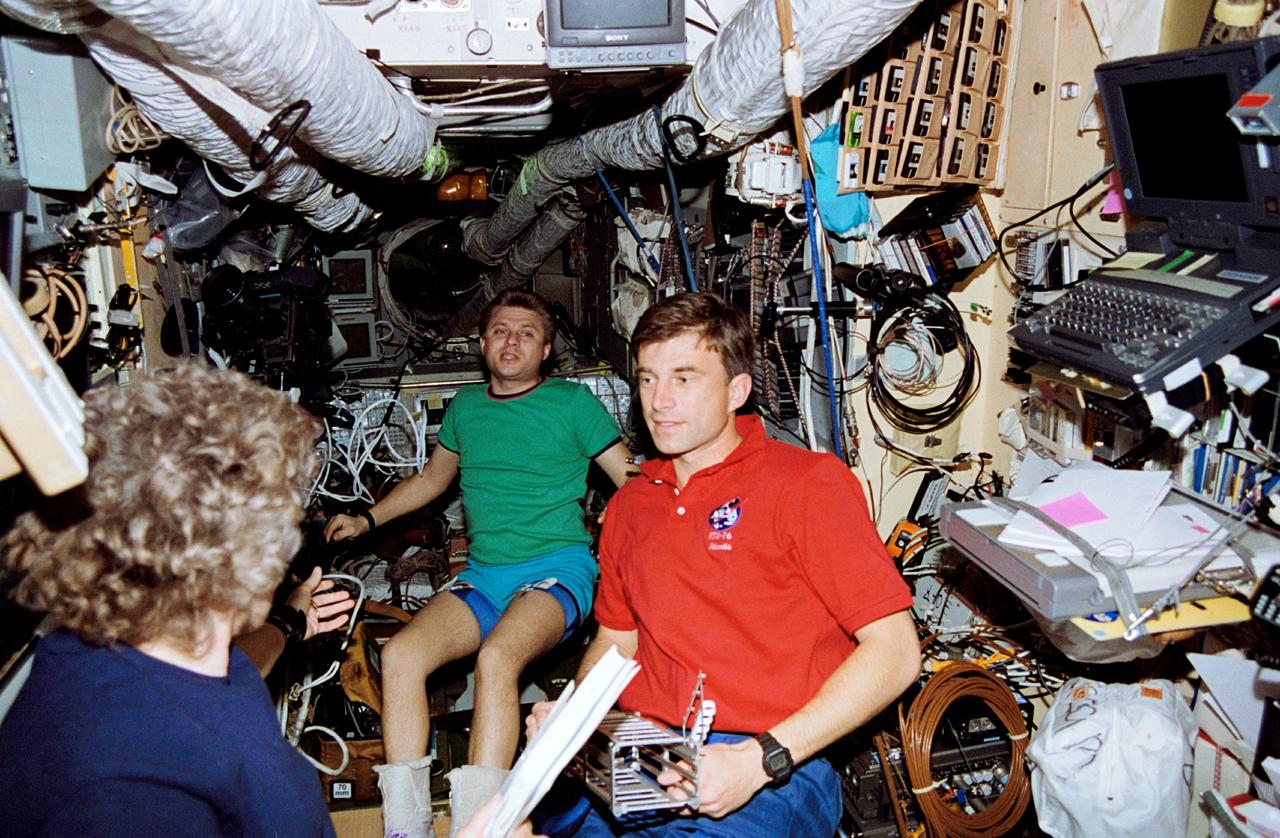
STS076-461-004 (22-31 March 1996) --- Onboard the Base Block Module of Russia's Mir Space Station, astronauts Shannon W. Lucid and Ronald M. Sega, payload commander, discuss final activities between the STS-76 and Mir-21 crews as cosmonaut Yury I. Onufrienko (center) listens. Yury V. Usachev (out of frame) is Mir-21 flight engineer. The Space Shuttle Atlantis docked with Mir on March 23, 1996, and remained linked until March 28, 1996. Lucid was in the process of transferring from STS-76 to the Mir-21 crew, which thereby grew from two to three members. She will remain aboard Mir for approximately 140 days.

Photographs documenting International Space Station (ISS) Phase One activities at the Russian Space Agency's (RSA) Gagarin Cosmonaut Training Center, Korolov Mission Control Center and Zvezda; and ISS and Soyuz manufacturing at RSA's Khrunichev Design Center and RSC Energiya in Moscow, Russia, the French Space Agency's (CNES) INTESPACE facility in Toulouse, France, and the Italian Space Agency's (ASI) Alenia Spazio facility in Torino, Italy. Photographs were taken by Johnson Space Center Imagery and Publications Office contractors travelling from October 7 to November 4, 1996. Includes: VIEWS FROM RSC ENERGIYA'S SPACE MUSEUM: Room with a Buran model and photographic displays (17372-374). Salyut Space Station mock-up (17376). Russian propulsion engines on display (17377-378). Russian spacecraft on display (17375, 17387-398). Graphic displays (17399-405). VIEWS FROM RSC ENERGIYA MANUFACTURING FACILITIES: Unidentified facility (17379). Mir 24 crew member Michael C. Foale, suited in a Soyuz pressure suit, ingresses the Soyuz TM-26 flight article at RSC Energiya for a fit check (17380-381). Closeups of Foale inside the Soyuz during the fit check (17382-383, 17466-467). Overhead views of RSC Energiya's Building 444 manufacturing floor where docking modules and Soyuz TM spacecraft are built (17495-498). Technicians on the Building 444 manufacturing floor assembling probe and drogue docking modules (17499-500, 17504). Technicians assembling Soyuz spacecraft (17437-439). Views of other Soyuz spacecraft (17440-441). Androgynous Peripheral Docking System (APDS) mock-up (17501-503). Closeups of a control panel, possibly for the APDS mock-up (17519-528). VIEWS FROM ZVEZDA, RSA CONTRACTOR FOR SUIT DESIGN AND SOYUZ SEAT LINERS: Mir 24 crew member Foale dons a "penguin" flight suit for a fit check (17454-456). Zvezda personnel adjust Foale's Soyuz seat and seat liner (17442). Closeup of Foale, suited in a Soyuz pressure suit, sitting on a chair (17444). Zvezda personnel strap pressure-suited Foale into his Soyuz seat (17443, 17445, 17450). Views of Foale in his Soyuz seat during a pressurized pressure suit fit check (17451-453). Views looking into a vacuum chamber where Foale, wearing pressure suit, is strapped into his Soyuz seat (17466-467). Views of Zvezda personnel working at the vacuum chamber control station during the vacuum chamber suit test (17468-471). VIEWS FROM KHRUNICHEV DESIGN CENTER: Views of a green ISS Functional Cargo Block (FGB) test article on the manufacturing floor (17529, 17532-536, 17540-544). Views of an ISS Service Module (SM) test article on the manufacturing floor (17530-531, 17537, 17539). Closeup of the SM test article docking sphere (17538). Views of the FGB flight article on the manufacturing floor during systems tests (17545-548, 17550-567). Views of technicians conducting the FGB systems tests (17549, 17557). VIEWS FROM GAGARIN COSMONAUT TRAINING CENTER: NASA astronauts work out in the cosmonaut gym at Gagarin: Closeup of ISS 2R Expedition Commander William Shepherd on a weight machine (17384). Shepherd and an unidentified man with back to camera work out with dumbbells (17386). Shepherd does pull-ups (17447). Closeup of Foale on an exercise machine (17385). Closeups of Foale exercising arms on a cycle ergometer and a weight machine (17415, 17448-449). Foale exercises on a Nordic Track (17416). Closeup of Mir 23 crew member Jerry Linenger exercising arms (17417). Wendy Lawrence exercises with dumbbells (17418). Closeup of Lawrence in a handstand position (17419). David Wolf works out on a leg press machine (17446). Views of the Mir Space Station mock-up at Gagarin: Interior views of the Mir Base Module mock-up looking toward the transfer compartment (17421-425). Mir Base Module living area mock-up (17420). Overall views of the Base Module mock-up central control station (17426-427, 17505). Closeups of switch panels on the central control station (17428-436, 17506-518). Other views from Gagarin: Personnel work at an unidentified test/trainer control station (17472-473). Linenger sits at a table next to an RSA trainer during a Mir 23 meeting (17475-476). Out-of-focus view of two subjects in the Soyuz trainer (17474). Foale examines a Mir Complex EVA Suit (Orlan) with RSA trainers during an EVA suit training class (17492-494). VIEWS FROM KOROLOV MISSION CONTROL CENTER: Various views of personnel working in the NASA Consulting Room and/or PAO Consulting Room at Korolov Mission Control Center (17457-463). VIEWS FROM INTESPACE: Exterior views of an ISS Mini Pressurized Logistics Module (MPLM) structural test article (STA) during testing at INTESPACE (17406-409, 17477, 17482-484). Technicians install hatch on the MPLM STA (17410-414). Interior views of the MPLM STA (17478-481). VIEWS FROM ALENIA SPAZIO: Closeups of MPLM flight article #1 side panels during milling and refining at Alenia Spazio (17485-488). Workers process MPLM parts at milling machines (17489-491).
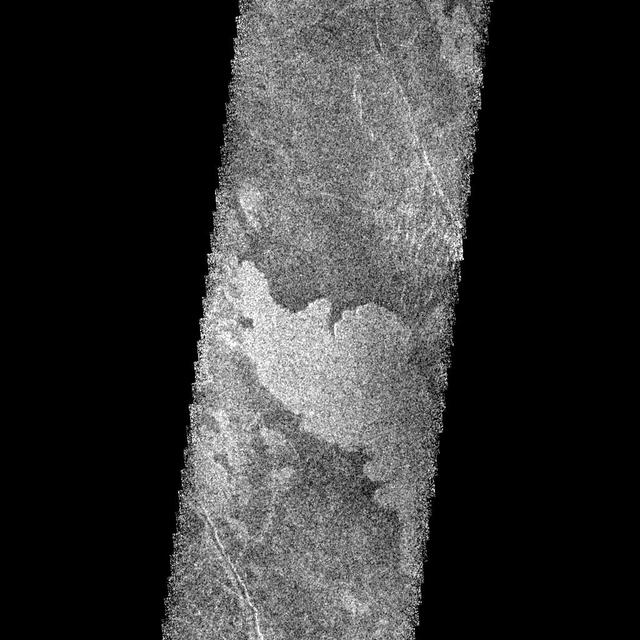
This radar image from NASA Magellan is of part of the Phoebe region of Venus. It is a mosaic of parts of revolutions 146 and 147 acquired in the first radar test on Aug. 16, 1990. http://photojournal.jpl.nasa.gov/catalog/PIA00212

STS079-813-023 (16-26 Sept. 1996) --- The docked Russian Mir Space Station is partially visible through the Spacehab viewing port, onboard the space shuttle Atlantis. This photograph is one of four 70mm frames (along with fifteen 35mm frames) of still photography documenting the activities of NASA's STS-79 mission, which began with a Sept. 16, 1996, liftoff from Launch Pad 39A the Kennedy Space Center (KSC) and ended with a landing at KSC on Sept. 26, 1996. Onboard for the launch were astronauts William F. Readdy, commander; Terrence W. Wilcutt, pilot; John E. Blaha, Jerome (Jay) Apt, Thomas D. Akers and Carl E. Walz, all mission specialists. On flight day 4, the crew docked with the Mir Space Station. Shannon W. Lucid, who had spent six months aboard Mir, switched cosmonaut guest researcher roles with Blaha. The latter joined fellow Mir-22 crewmembers Valeri G. Korzun, commander, and Aleksandr Y. Kaleri, flight engineer.

These four images of the Moon are from data acquired by NASA Galileo spacecraft Near-Earth Mapping Spectrometer during Galileo December 1992 Earth/Moon flyby. http://photojournal.jpl.nasa.gov/catalog/PIA00231
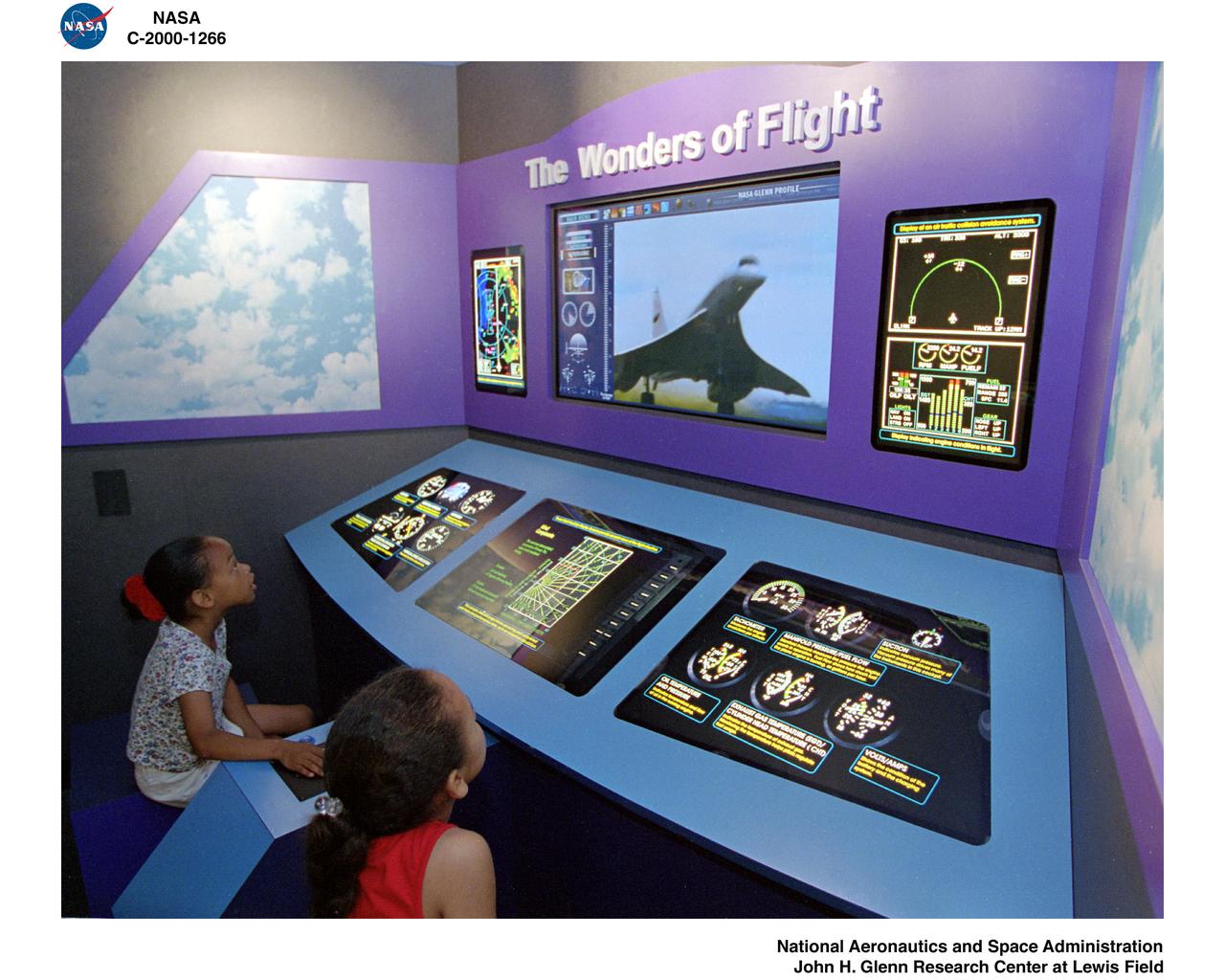
CHILDREN AT THE WONDERS OF FLIGHT
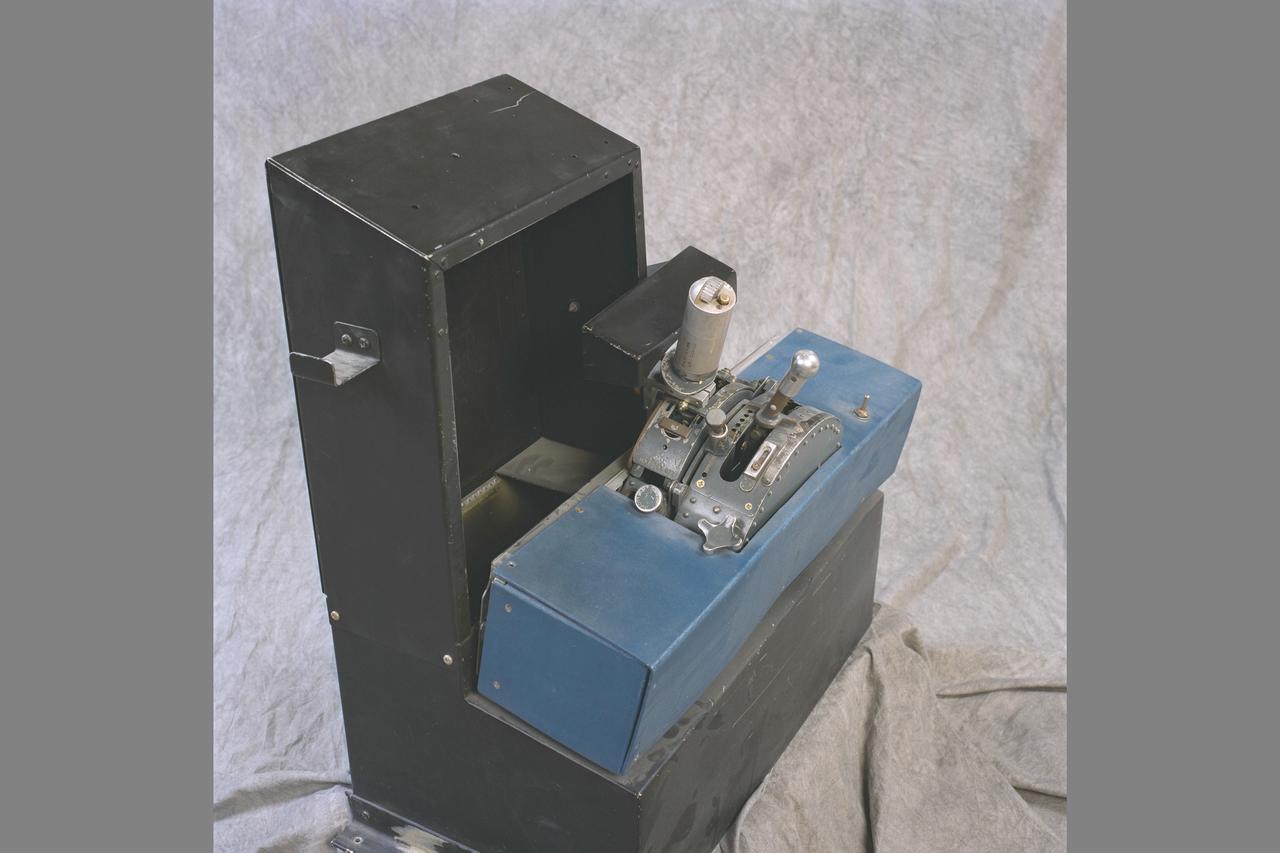
NASA Ames VMS (Vertical Motion Simulator): S-CAB, THROTTLE CONSOLE studio shoot
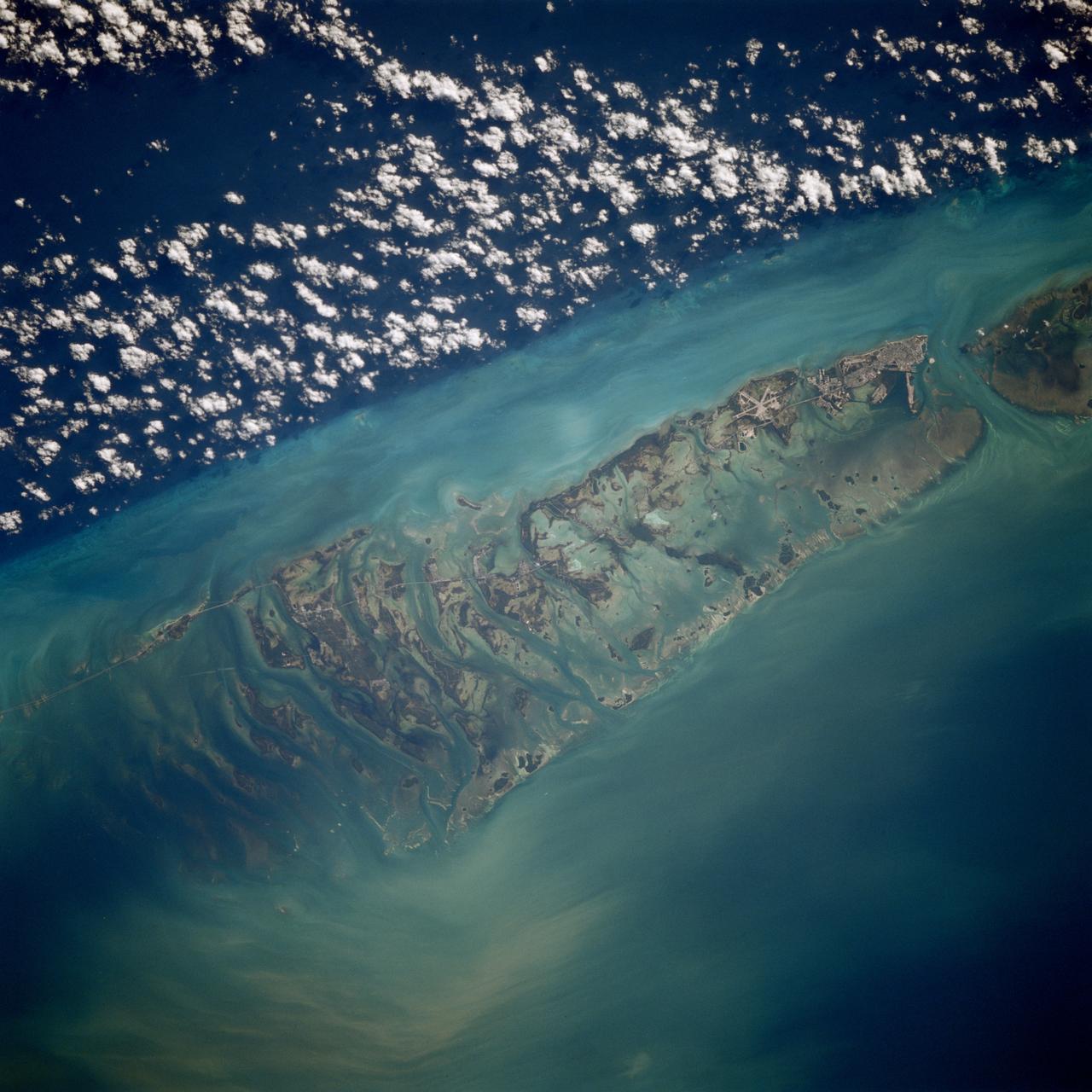
STS080-709-094 (19 Nov.-7 Dec. 1996) --- This is a view of the western portion of the Florida Keys. The view shows the city of Key West, bottom mid-right, with Marathon Key, near top middle left, and the edge of the Straits of Florida, the dark water on the right edge. Clouds form over the cooler waters of the strait. The runways at Boca Chica Key Naval Air Station are seen near Key West. The bottom can be seen clearly in the shallow water, the deeper water has depths of over a half a mile. The thin line of the Overseas Highway can be traced east from Key West. Prior to a hurricane in 1935, this route was a railway line.
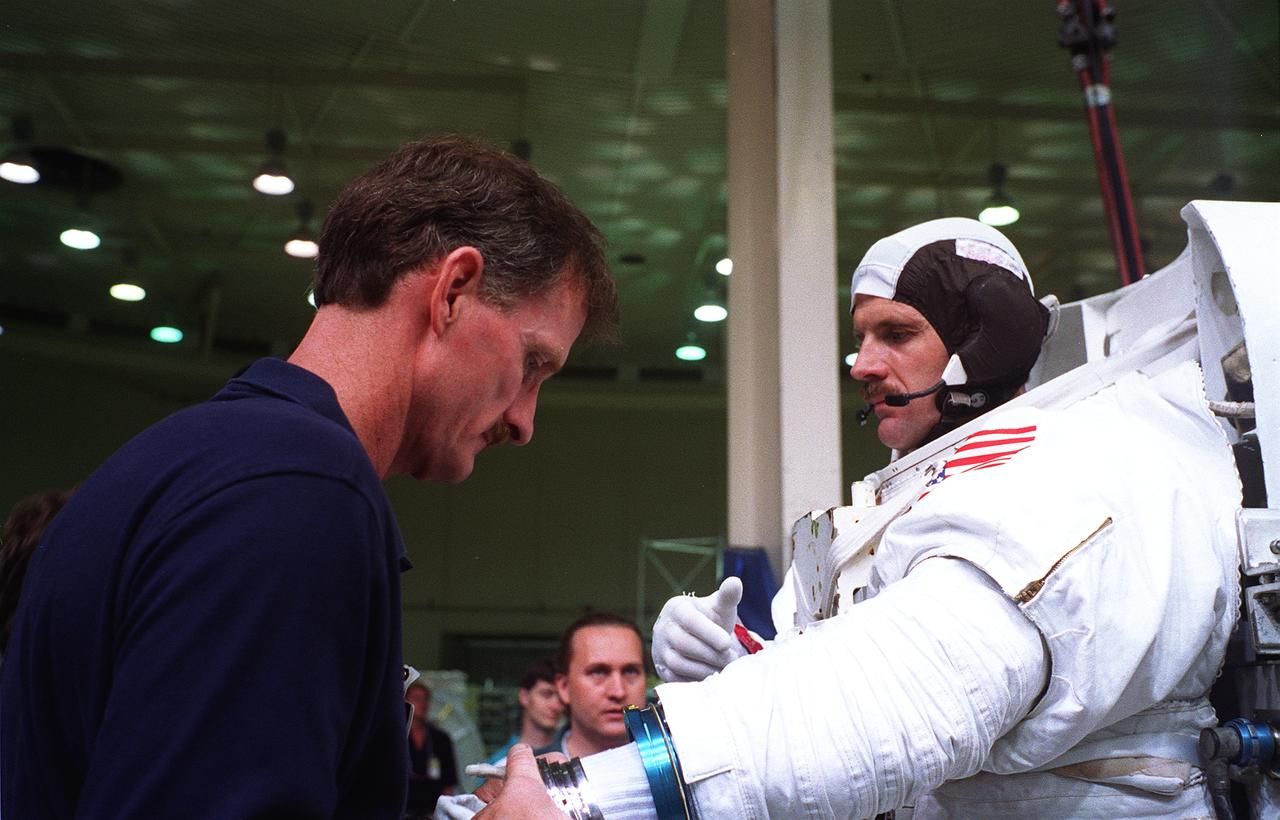
S96-11807 (10 June 1996) --- Astronaut Steven L. Smith (right), STS-82 mission specialist assigned to extravehicular activity (EVA) involved with the servicing of the Hubble Space Telescope (HST), gets help with the final touches of suit donning from crewmate Joseph R. Tanner. Minutes later, Smith was underwater in a nearby tank and neutrally buoyant, rehearsing some of the HST servicing chores with a crewmate.
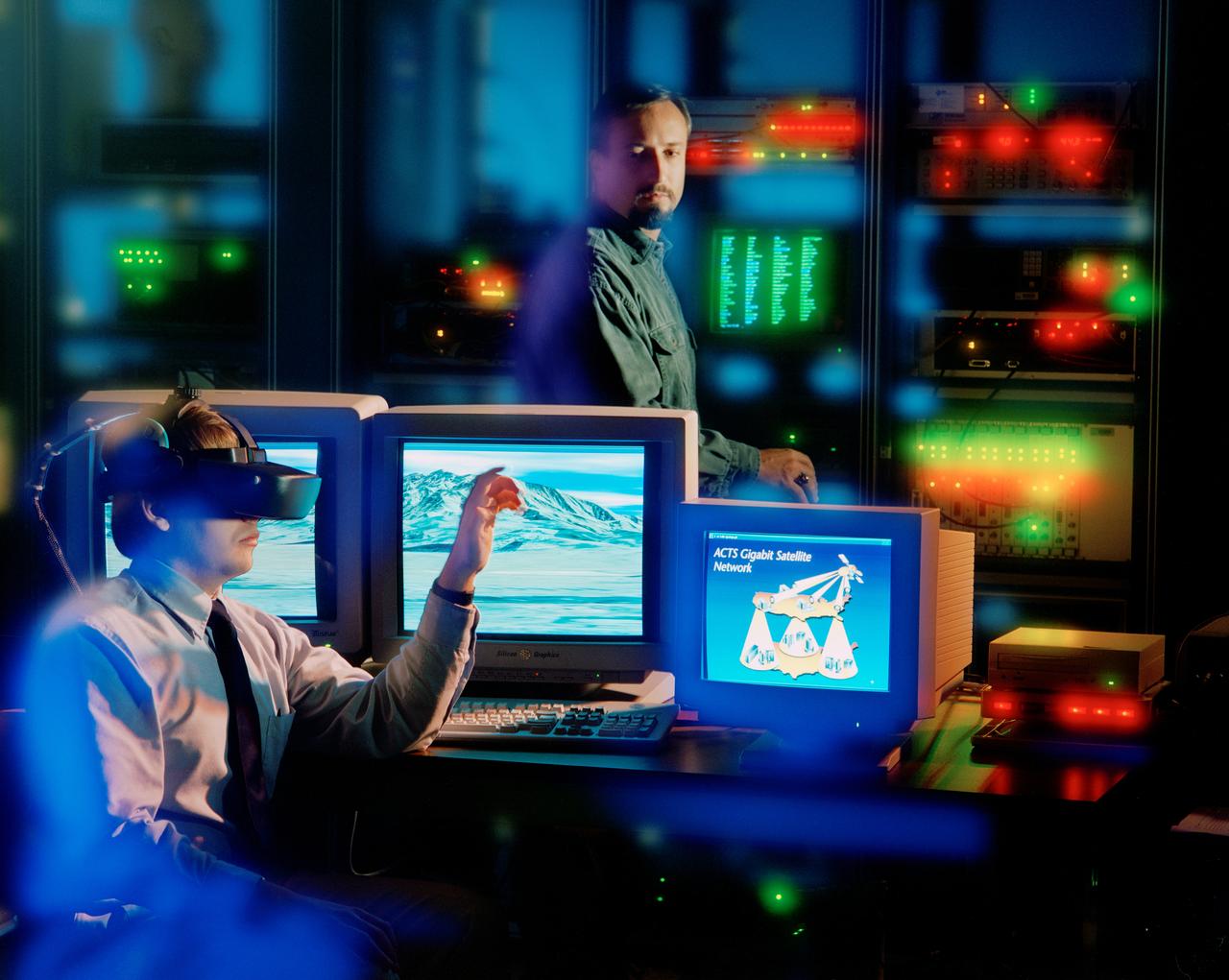
CRAY AND SP-2 COMPUTERS
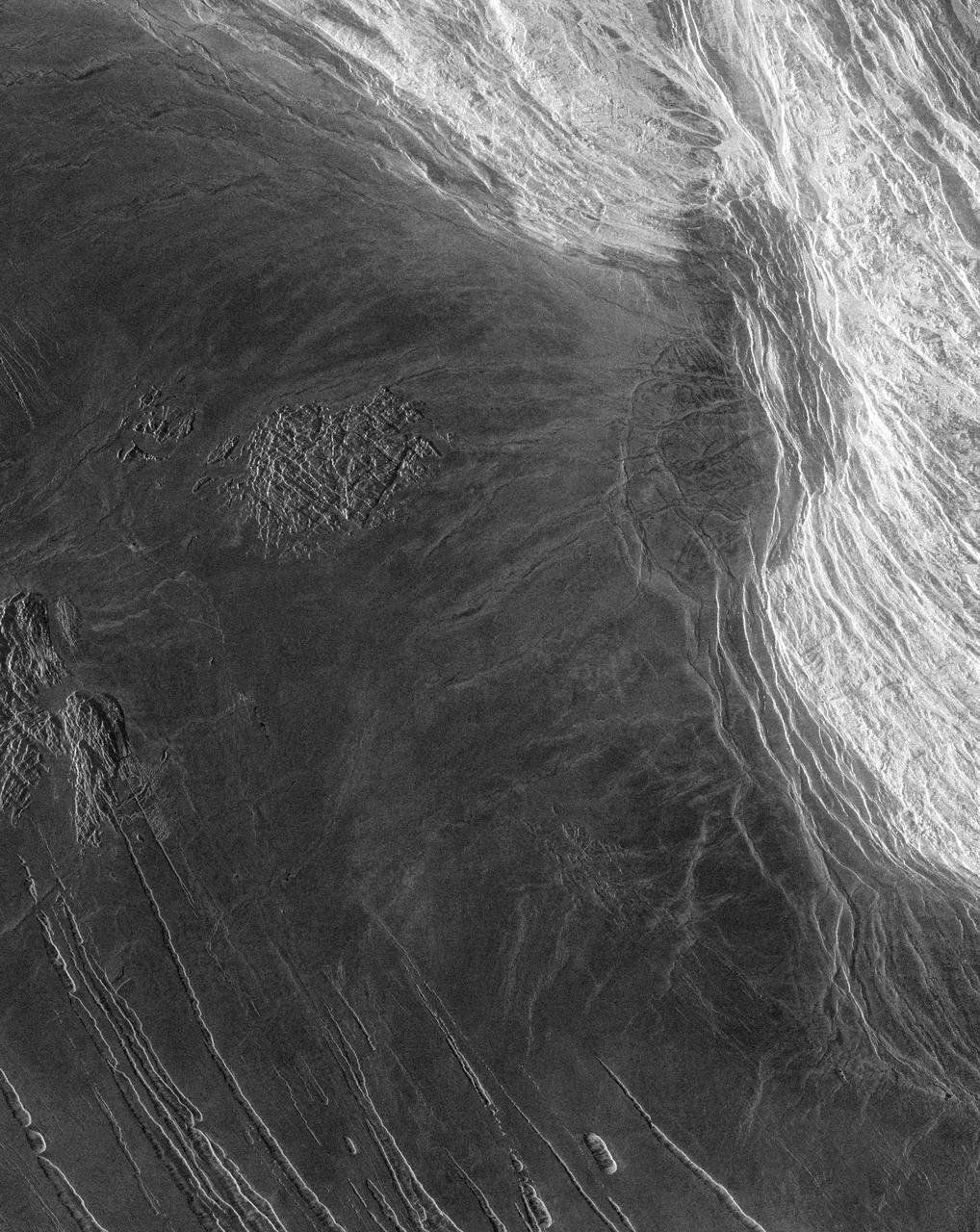
This full resolution radar image from NASA Magellan spacecraft is centered along the eastern edge of Lakshmi Planum and the western edge of Maxwell Montes. http://photojournal.jpl.nasa.gov/catalog/PIA00241
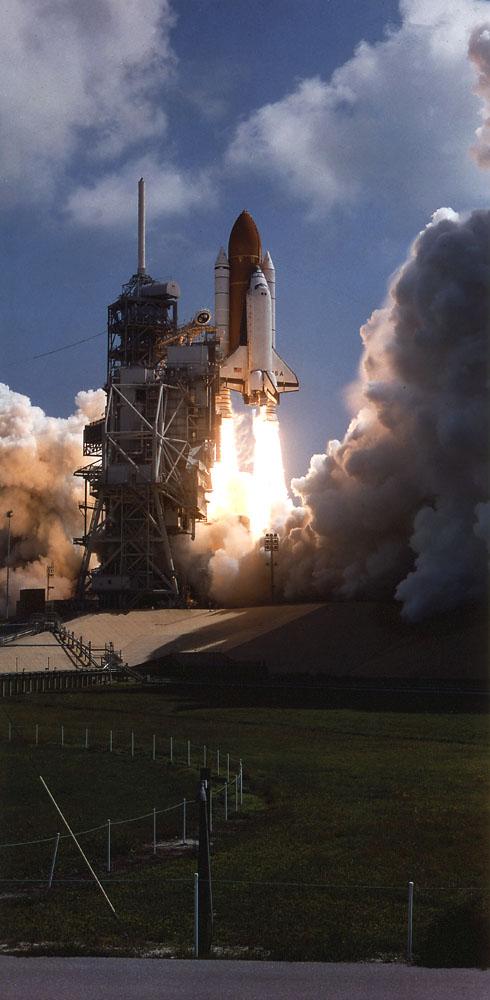
Midmorning proved the perfect time for a Space Shuttle launch as the thunderstorms that characteristically develop later in the day during hot Florida summers held off long enough to allow a flawless liftoff for the Space Shuttle Columbia (STS-78) and her crew of seven and the Life and Microgravity Spacelab (LMS), managed by Marshall Space Flight Center. During the 17 day spaceflight, the crew conducted a diverse slate of experiments divided into a mix of life science and microgravity investigations; and, in a marner very similar to future international space station operations, LMS researchers from the United States and their European counterparts shared resources such as crew time and equipment.
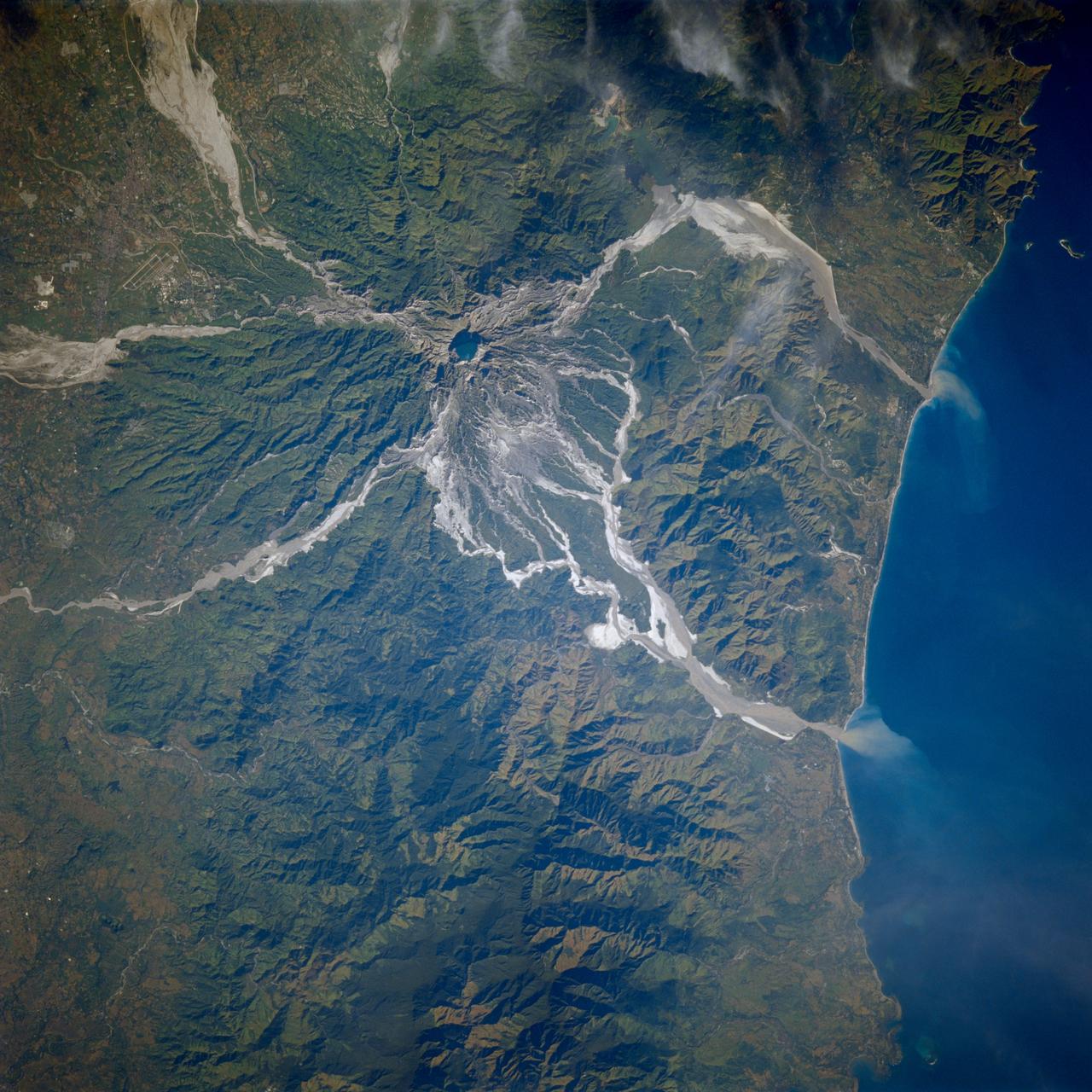
STS080-706-044 (19 Nov.-7 Dec. 1996) --- This view shows Mount Pinatubo, an active volcano in the Zambales Mountains range of western Luzon, the main island of the Philippines. Mud flows radiate out from the active volcano, which has erupted in recent years, coming down the mountain. After the eruption a lot of the vegetation was removed, causing the mountain to erode at a more rapid pace than an older mountain that has its vegetation in place. In two cases the flows reach the South China Sea, and flow down three valleys to the east. The now abandoned Clark Air Force Base is to the upper left corner. Pinatubo is about 80 miles northwest of Manila.
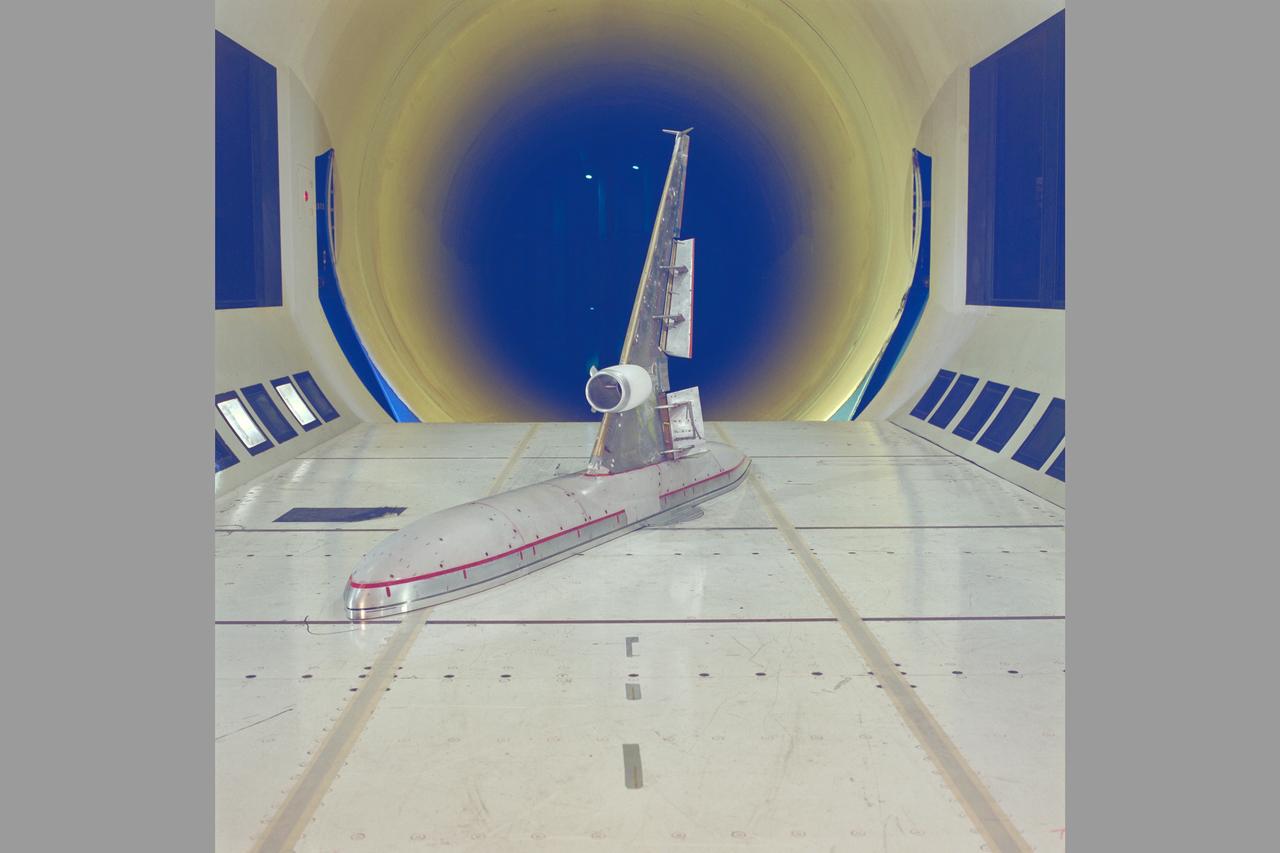
McDonnell-Douglas MD-11 Semi-span model test-12-0016 in 12ft WT
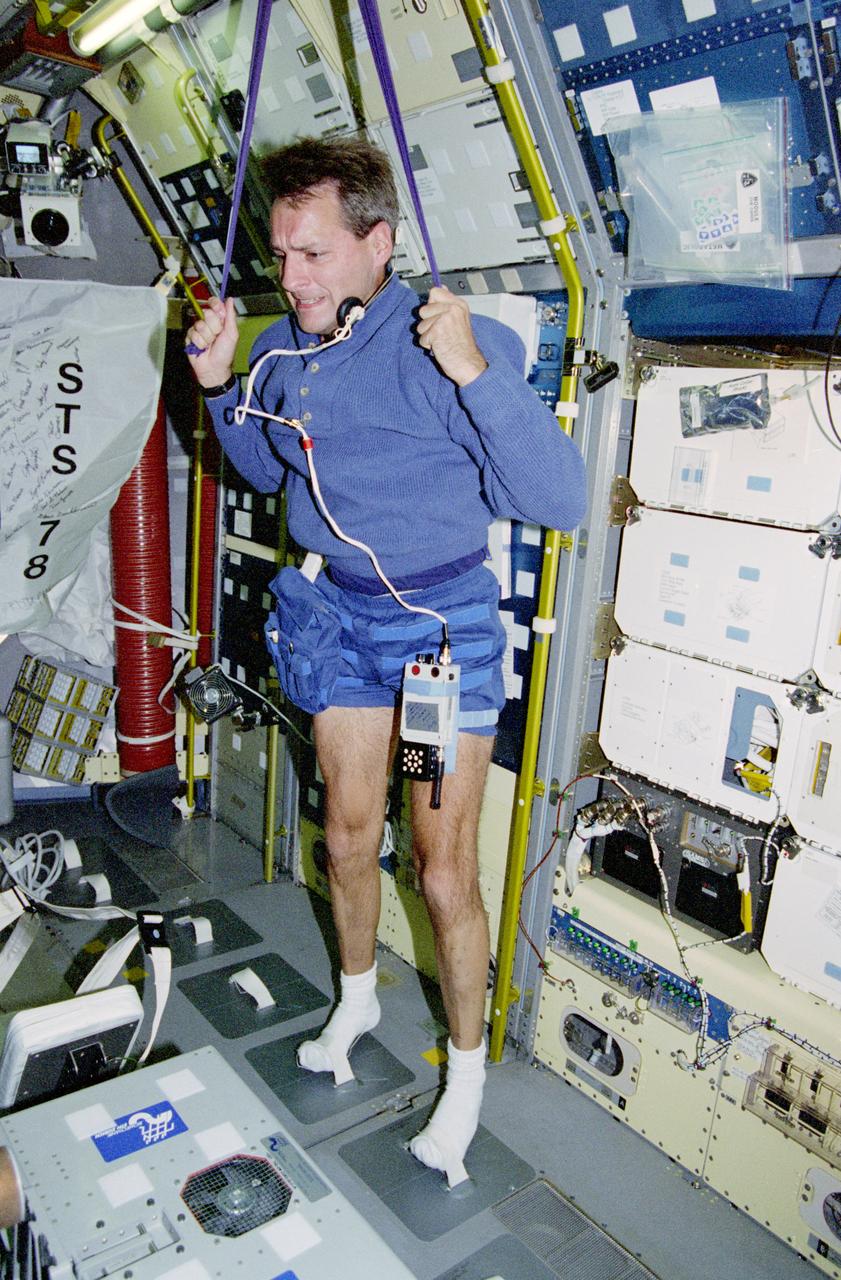
STS078-305-022 (20 June-7 July 1996) --- Astronaut Richard M. Linnehan, mission specialist, works out in the Life and Microgravity Spacelab (LMS-1) Science Module aboard the Earth-orbiting Space Shuttle Columbia. With an almost 17-day mission away from Earth?s gravity, crew members maintained an exercise regimen above and beyond their assigned LMS-1 duty assignments.
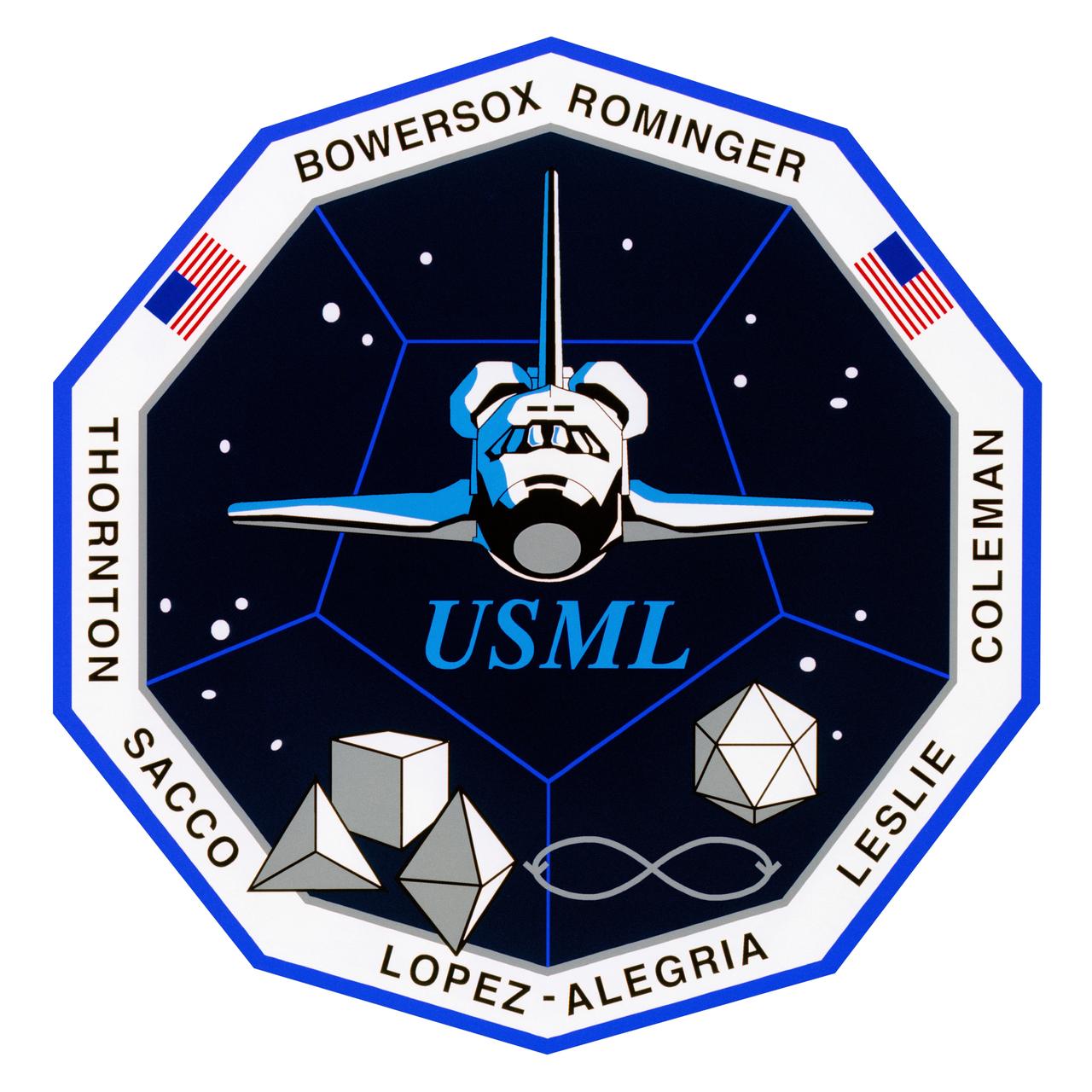
STS073-S-001 (May 1995) --- The crew patch of STS-73, the second flight of the United States Microgravity Laboratory (USML-2), depicts the space shuttle Columbia in the vastness of space. In the foreground are the classic regular polyhedrons that were investigated by Plato and later Euclid. The Pythagoreans were also fascinated by the symmetrical three-dimensional objects whose sides are the same regular polygon. The tetrahedron, the cube, the octahedron, and the icosahedron were each associated with the "Natural Elements" of that time: fire (on this mission represented as combustion science); Earth (crystallography), air and water (fluid physics). An additional icon shown as the infinity symbol was added to further convey the discipline of fluid mechanics. The shape of the emblem represents a fifth polyhedron, a dodecahedron, which the Pythagoreans thought corresponded to a fifth element that represented the cosmos. The NASA insignia design for space shuttle flights is reserved for use by the astronauts and for other official use as the NASA Administrator may authorize. Public availability has been approved only in the forms of illustrations by the various news media. When and if there is any change in this policy, which is not anticipated, the change will be publicly announced. Photo credit: NASA
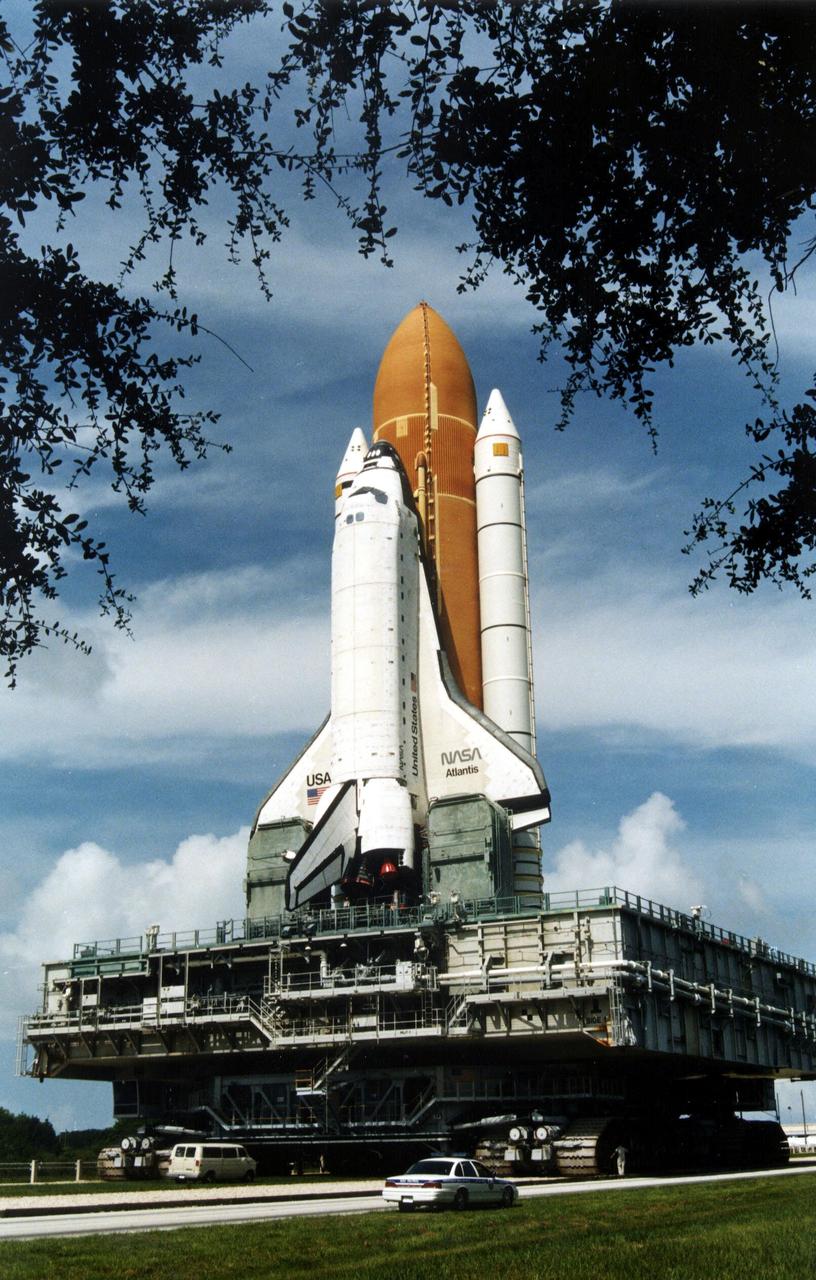
KENNEDY SPACE CENTER, FLA. -- Atlantis, with its new external tank/solid rocket booster stack, rolls out to Pad 39A on August 20, 1996, in preparation for launch of STS-79 on the fourth Mir docking mission. Atlantis will return Astronaut Shannon Lucid to Earth after her record-breaking stay by an American on the Russian space station. Lucid has completed 21 weeks in space this week. Astronaut John Blaha will trade places with Lucid for a planned four-month stay aboard Mir. Atlantis will also carry the first SPACEHAB Double Module
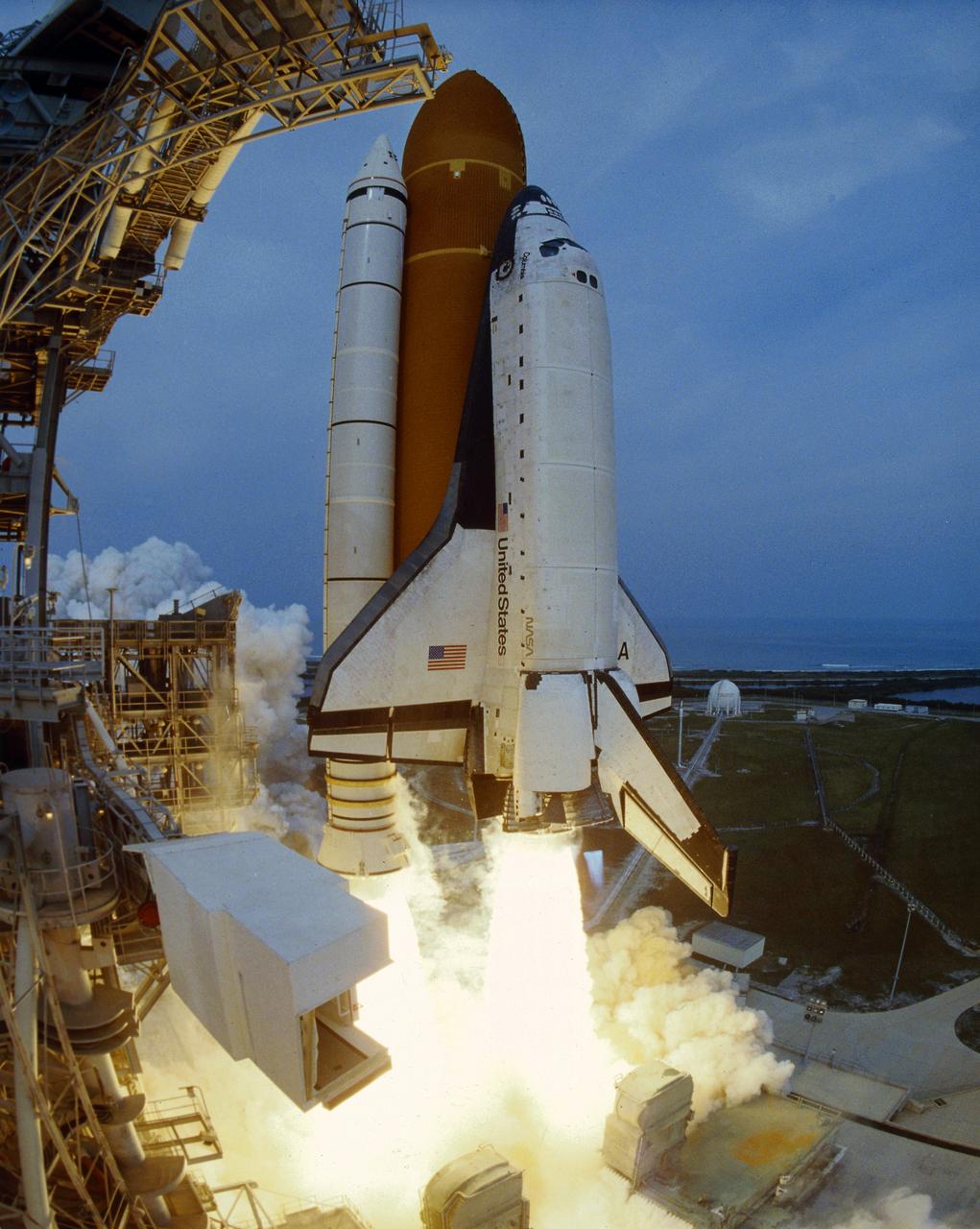
The Space Shuttle Columbia (STS-75) cleared the tower following an on-time liftoff from Launch Pad 39B. Visible at lower left is the white room on the orbiter access arm through which the flight crew entered the orbiter earlier. Columbia's mission lasted 14 days and included retesting of the Tethered Satellite System (TSS-1R) and the third flight of the United States Microgravity Payload (USMP-3), both of which are managed by scientist at Marshall Space Flight Center. Included in Columbia's flight crew were members of the European Space Agency (ESA) and the Italian Space Agency (ASI), Mission Specialists Maurizio Cheli, Claude Nicollier and Payload Specialist Umberto Guidoni, respectively.
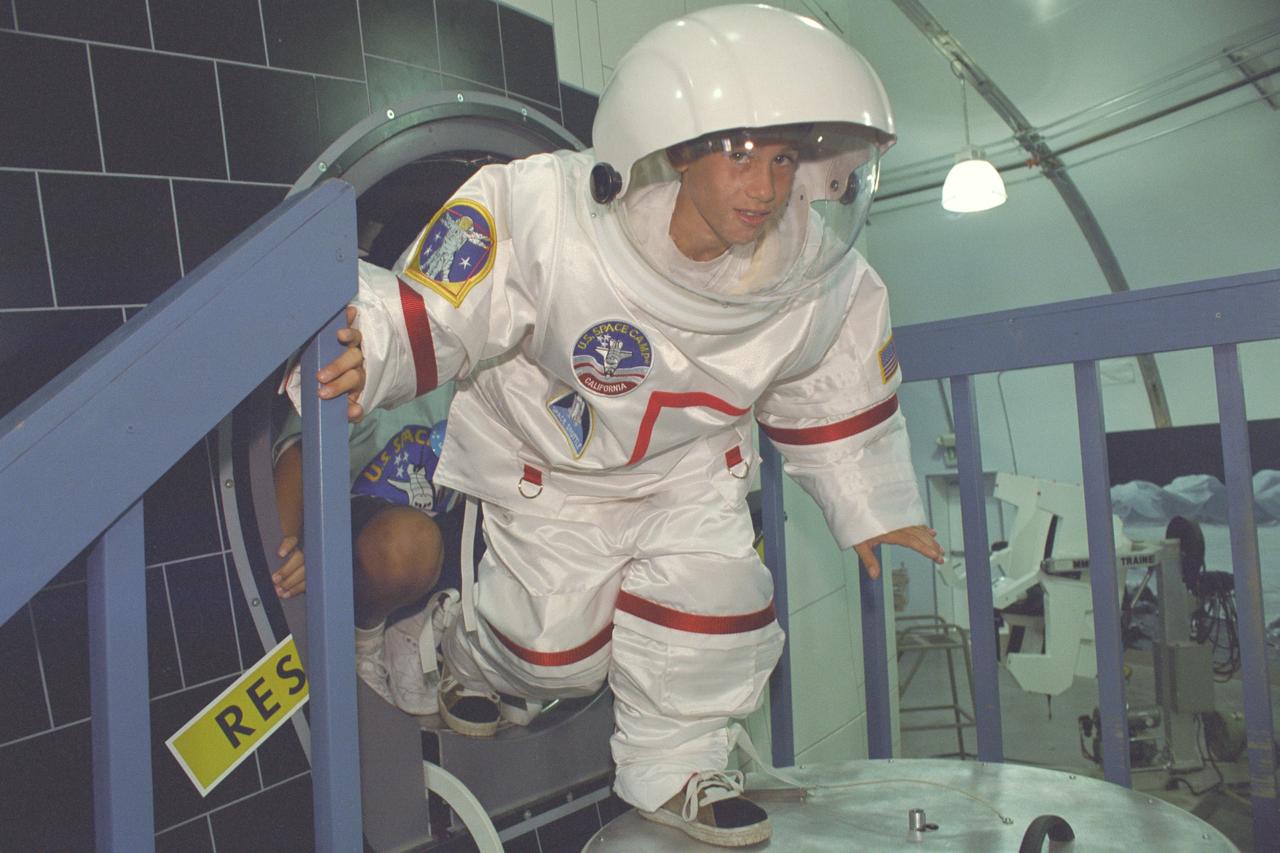
U.S. Space Camp California 'Day Camp' Grand Opening - student tries out space suit and shuttle mockup
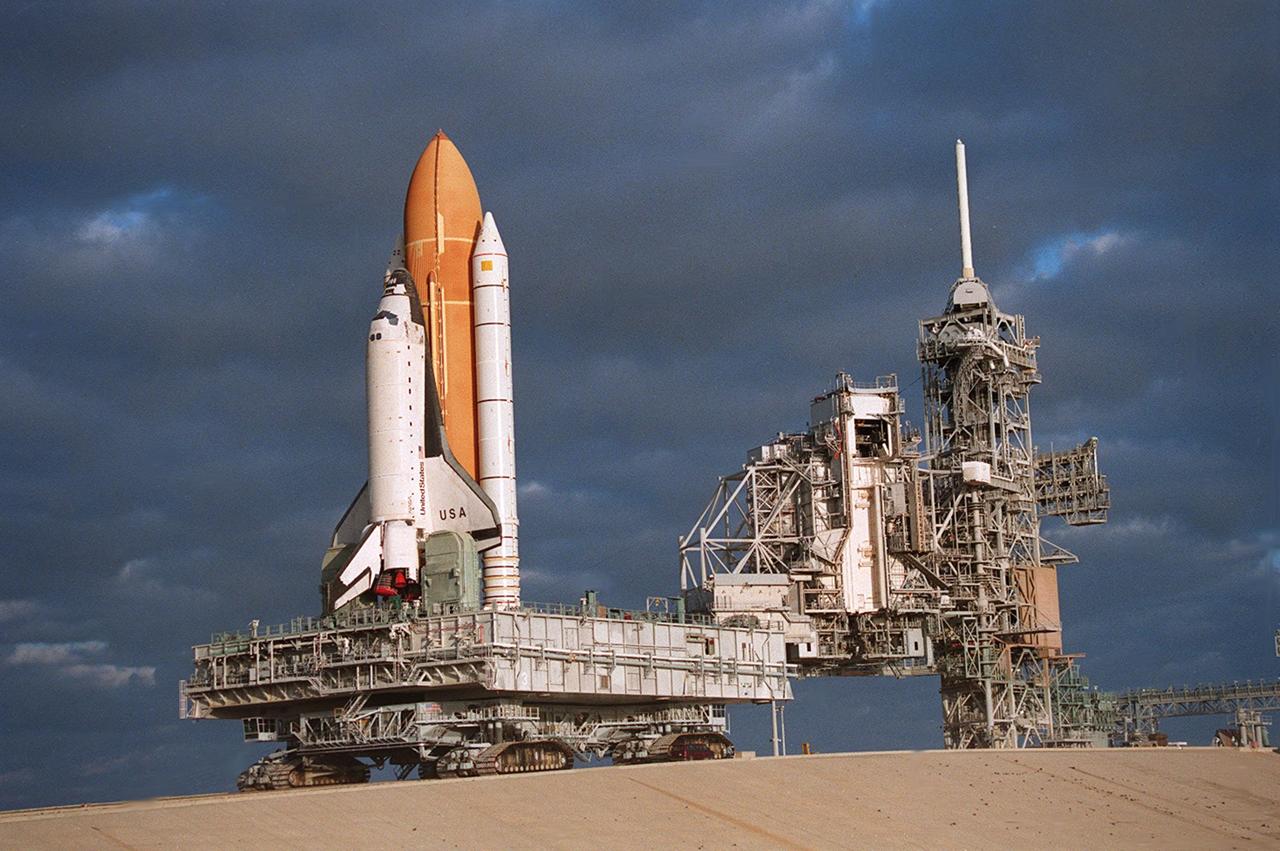
KENNEDY SPACE CENTER, FLA. -- The Space Shuttle Columbia arrives at Launch Pad 39B following an approximate seven-hour journey from the Vehicle Assembly Building. Columbia is being prepared for a targeted Feb. 22 liftoff on Mission STS-75, which will feature a re-flight of the Tethered Satellite System (TSS-1R) and the third flight of the U.S. Microgravity Payload (USMP-3)
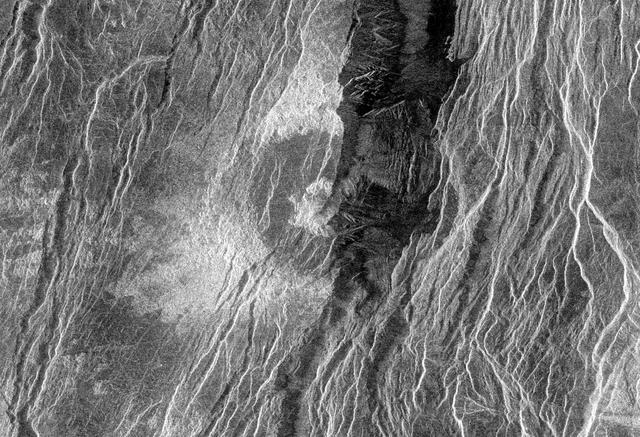
This radar image from NASA's Magellan spacecraft is of a half crater located in the rift between Rhea and Theia Montes in Beta Regio on Venus and has been cut by many fractures or faults since it was formed by the impact of a large asteroid. http://photojournal.jpl.nasa.gov/catalog/PIA00100
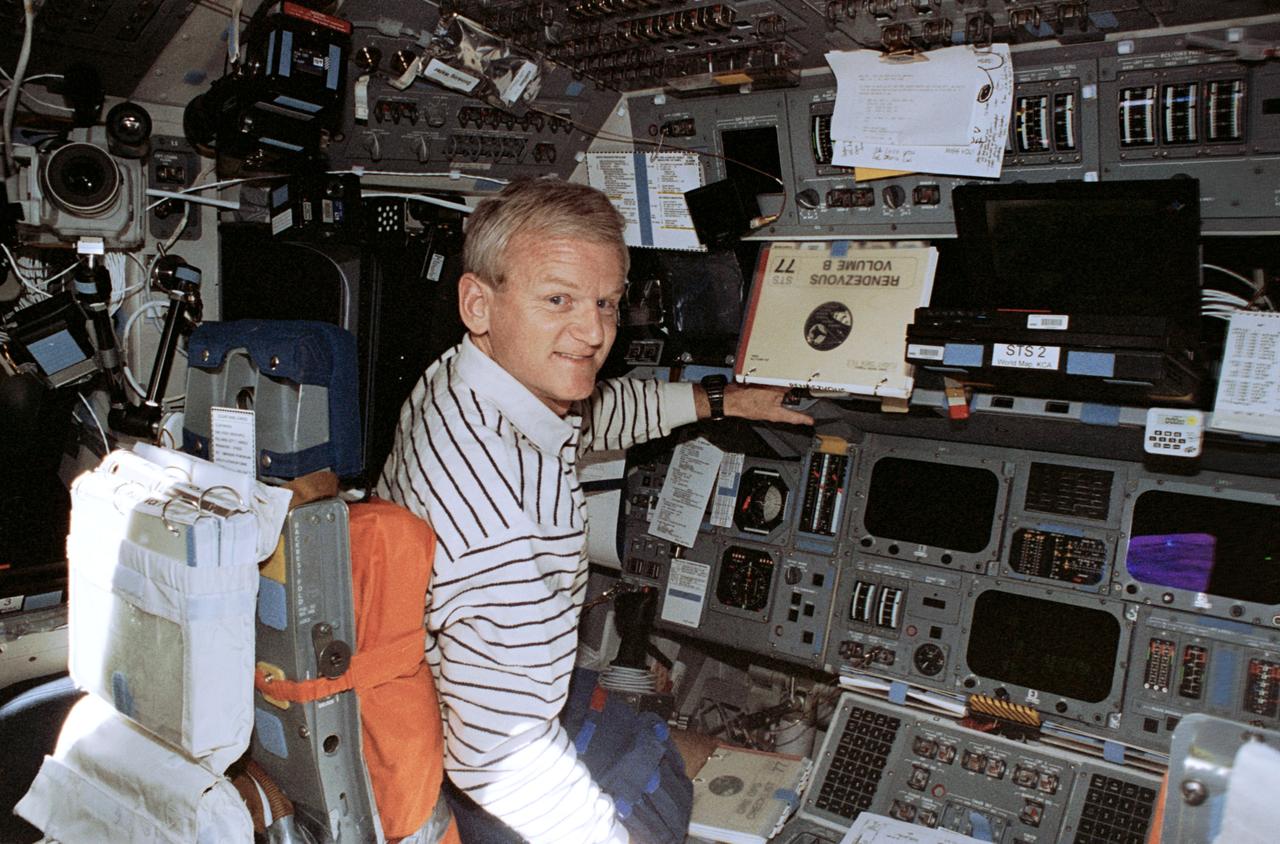
STS077-364-037 (19-29 May 1996) --- Astronaut John H. Casper, mission commander, mans the commander?s station during rendezvous operations. During the flight, the six-member crew was involved in deployment and rendezvous operations with the Spartan 207/Inflatable Antenna Experiment (IAE) as well as the Passive Aerodynamically Stabilized Magnetically Damped Satellite (PAMS)/Satellite Test Unit (STU).
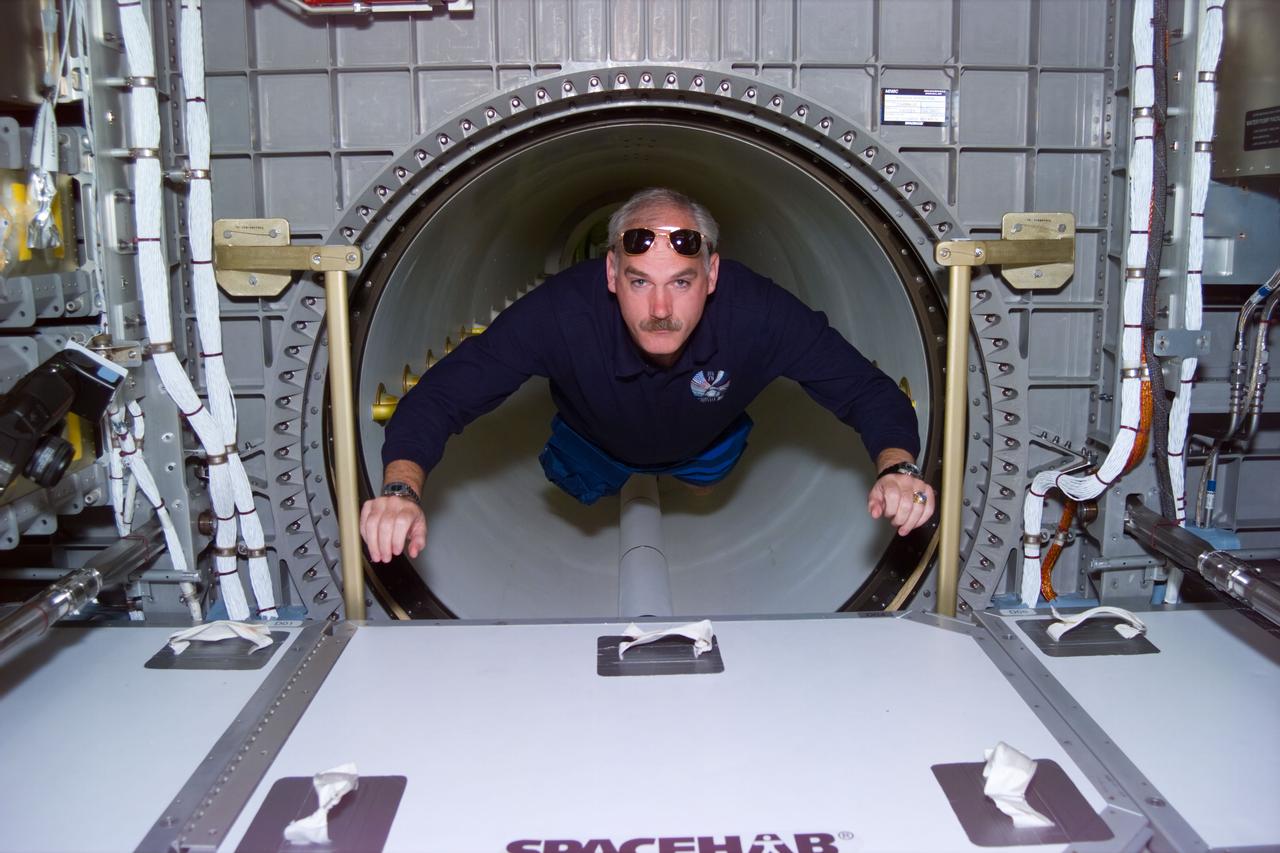
STS79-E-5008 (17 September 1996) --- Astronaut William F. Readdy, mission commander, floats through tunnel into Spacehab Module, onboard the Space Shuttle Atlantis on Flight Day 2.
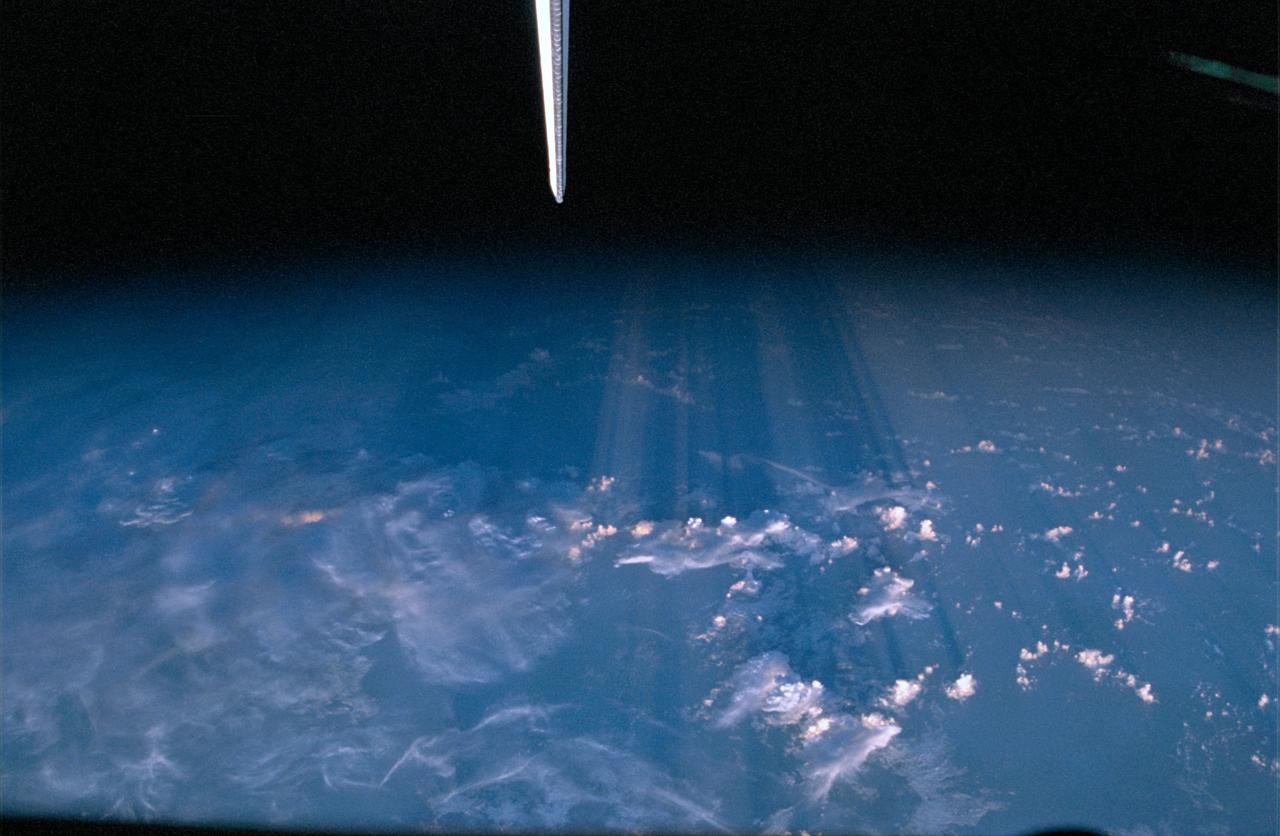
STS072-308-033 (11-20 Jan. 1996) --- The vertical stabilizer of the Space Shuttle Endeavour almost appears to be pointing out the odd phenomenon of sun streaks and shadows on clouds over the southwestern United States. This was one of seventeen still images shown by the crew members for NASA employees and guests following their stay in space aboard the Endeavour.
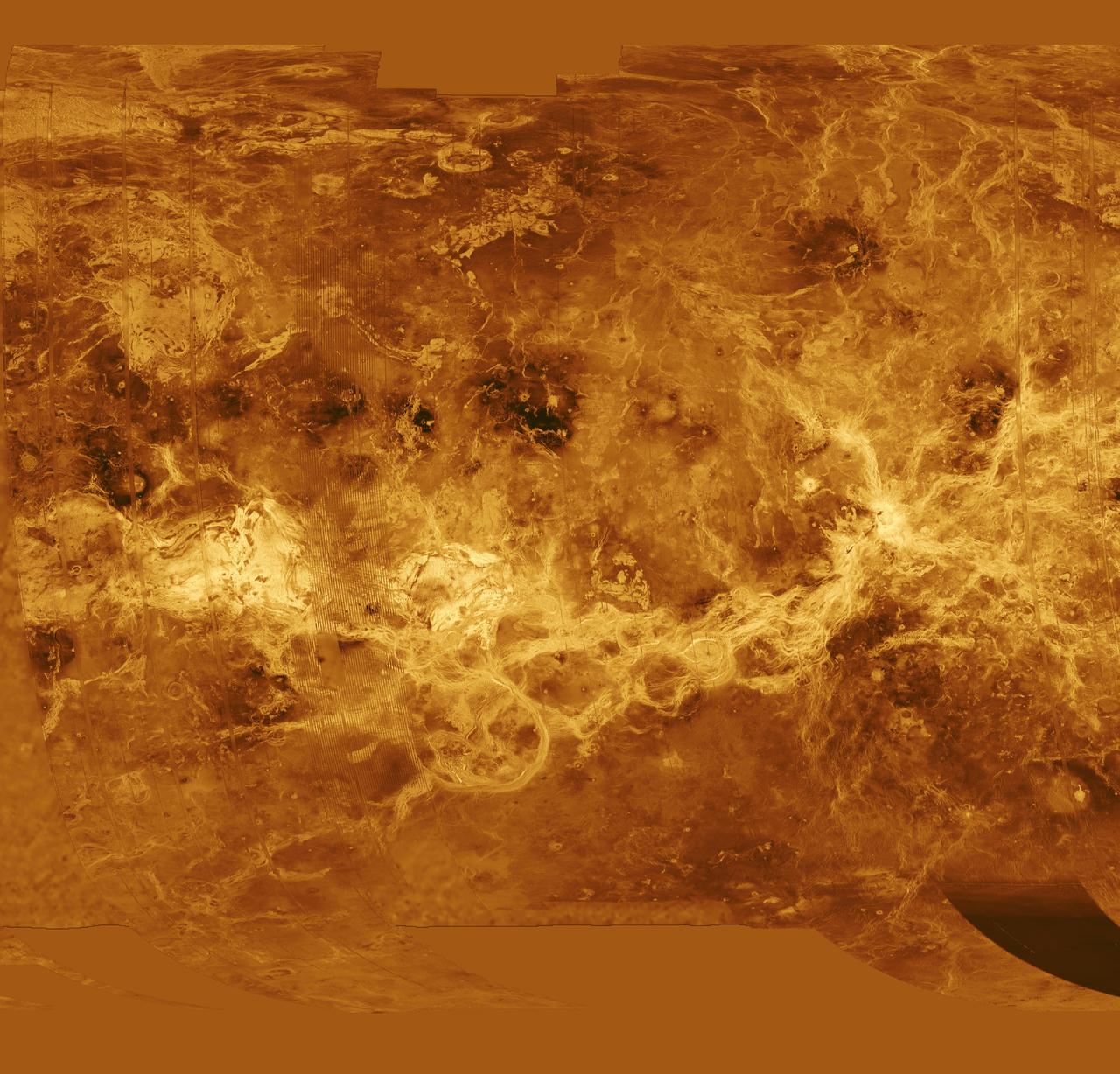
The eastern half of the planet is displayed in this simple cylindrical map of the surface of Venus obtained by NASA Magellan spacecraft. http://photojournal.jpl.nasa.gov/catalog/PIA00256

STS79-E-5366 (16-26 September 1996) --- Astronaut Carl E. Walz handles the IMAX in-cabin motion picture camera, which was used to capture some of the same imagery seen in this series of Electronic Still Camera (ESC) views.
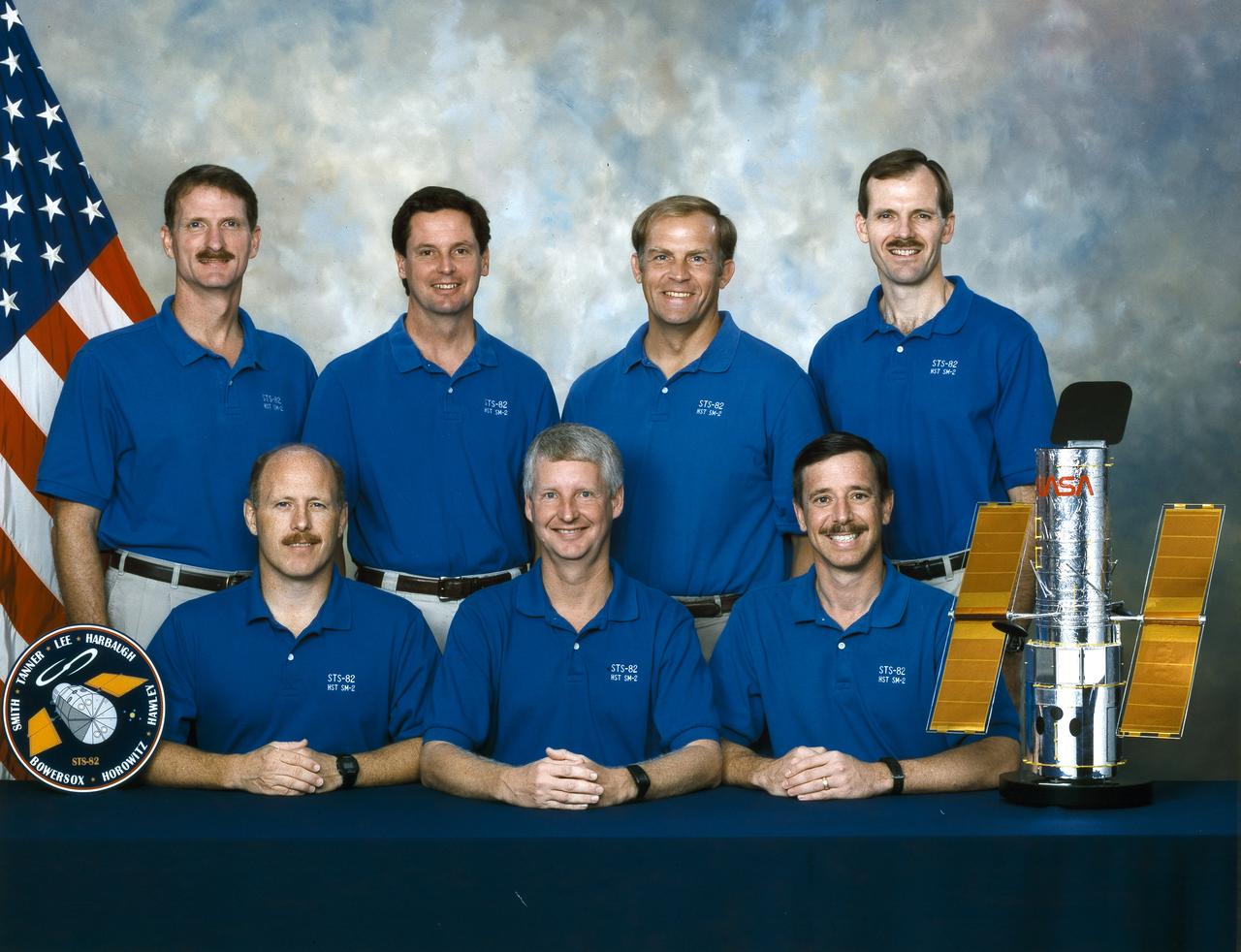
The crew assigned to the STS-82 mission included (seated front left to right) Kenneth D. Bowersox, commander; Steven A. Hawley, mission specialist; and Scott J. Horowitz, pilot. On the back row (left to right) are Joseph R. Tanner, mission specialist; Gregory J. Harbaugh, mission specialist; Mark C. Lee, payload commander; and Steven L. Smith, mission specialist. Launched aboard the Space Shuttle Discovery on February 11, 1997 at 3:55:17 am (EST), the STS-82 mission served as the second Hubble Space telescope servicing mission.
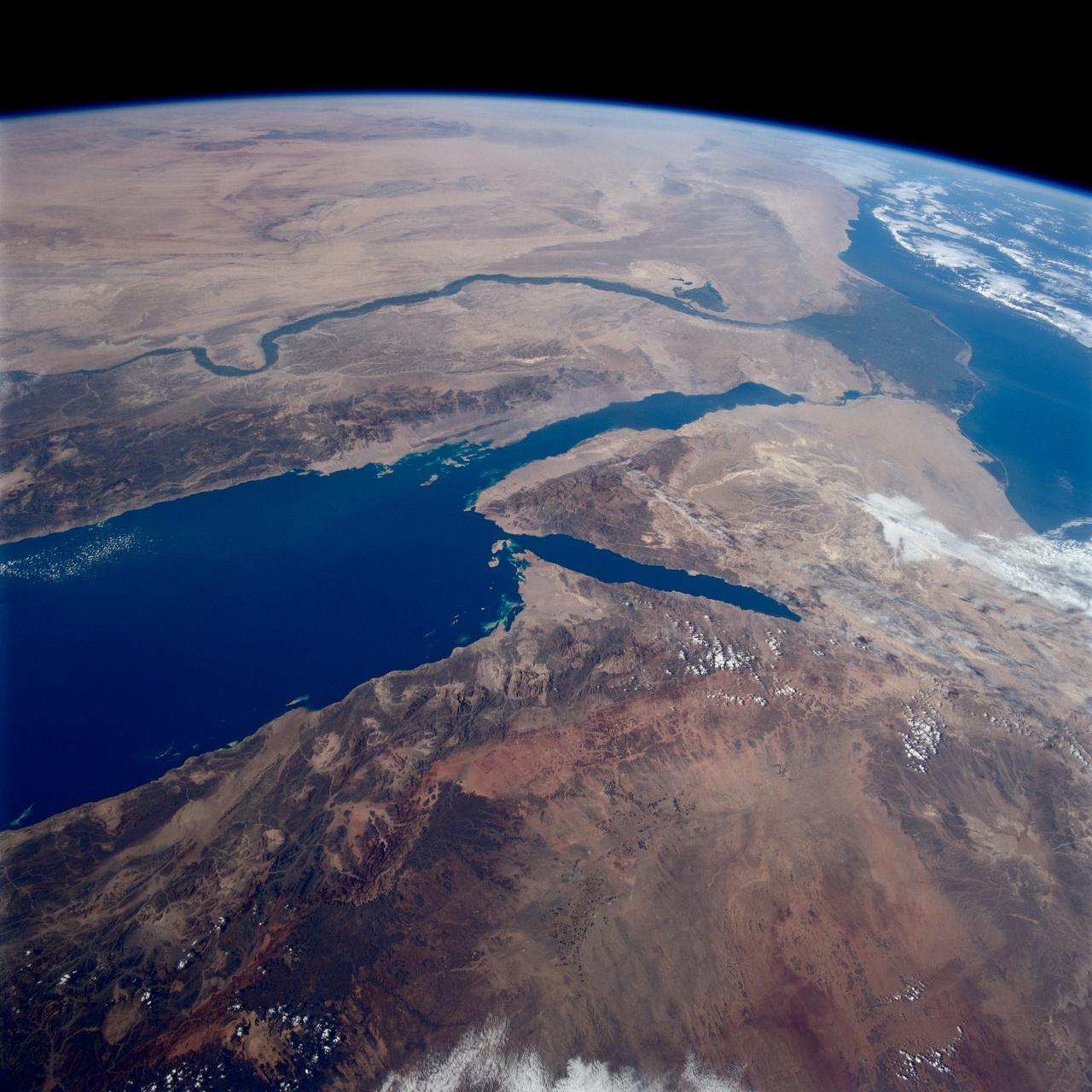
STS080-745-004 (19 Nov.-7 Dec. 1996) --- A view to the west showing Asia in the foreground and Africa in the background, as photographed by the space shuttle Columbia crewmembers. The Mediterranean Sea is to the upper right and the Red Sea to the lower left (holding photograph with NASA numbers on left). Sinai Peninsula is between the two with the Gulf of Suez above and the Gulf of Aqaba below. The Suez Canal connects the Gulf of Suez with the Mediterranean Sea. The triangular shaped dark area beyond is the Nile River Delta. The thin green fertile valley of the Nile crosses the photograph from a point at Cairo (near dark triangle area) past the great bend at Luxor with Thebes and the Valley of the Kings, and on the left into the Nubian Desert with the Aswan High Dam at the very left edge of the photograph. To the horizon is the Western Desert of Egypt and Libya. The foreground is the northwest portion of Saudi Arabia, an area known as the Hejaz with the southern portions of Israel and Jordan to the lower right.

This mosaic picture of the Moon was compiled from 18 images taken with a green filter NASA's Galileo imaging system during the spacecraft flyby on December 7, 1992, some 11 hours before its Earth flyby. http://photojournal.jpl.nasa.gov/catalog/PIA00128

STS080-708-084 (19 Nov.-7 Dec. 1996) --- Backdropped against the blackness of space and a cloud covered portion of Earth, the Wake Shield Facility (WSF) is turned loose by the space shuttle Columbia's Remote Manipulator System (RMS) to begin a period of free-flight. The image was photographed with a handheld 70mm camera aimed through windows on Columbia's aft flight deck.
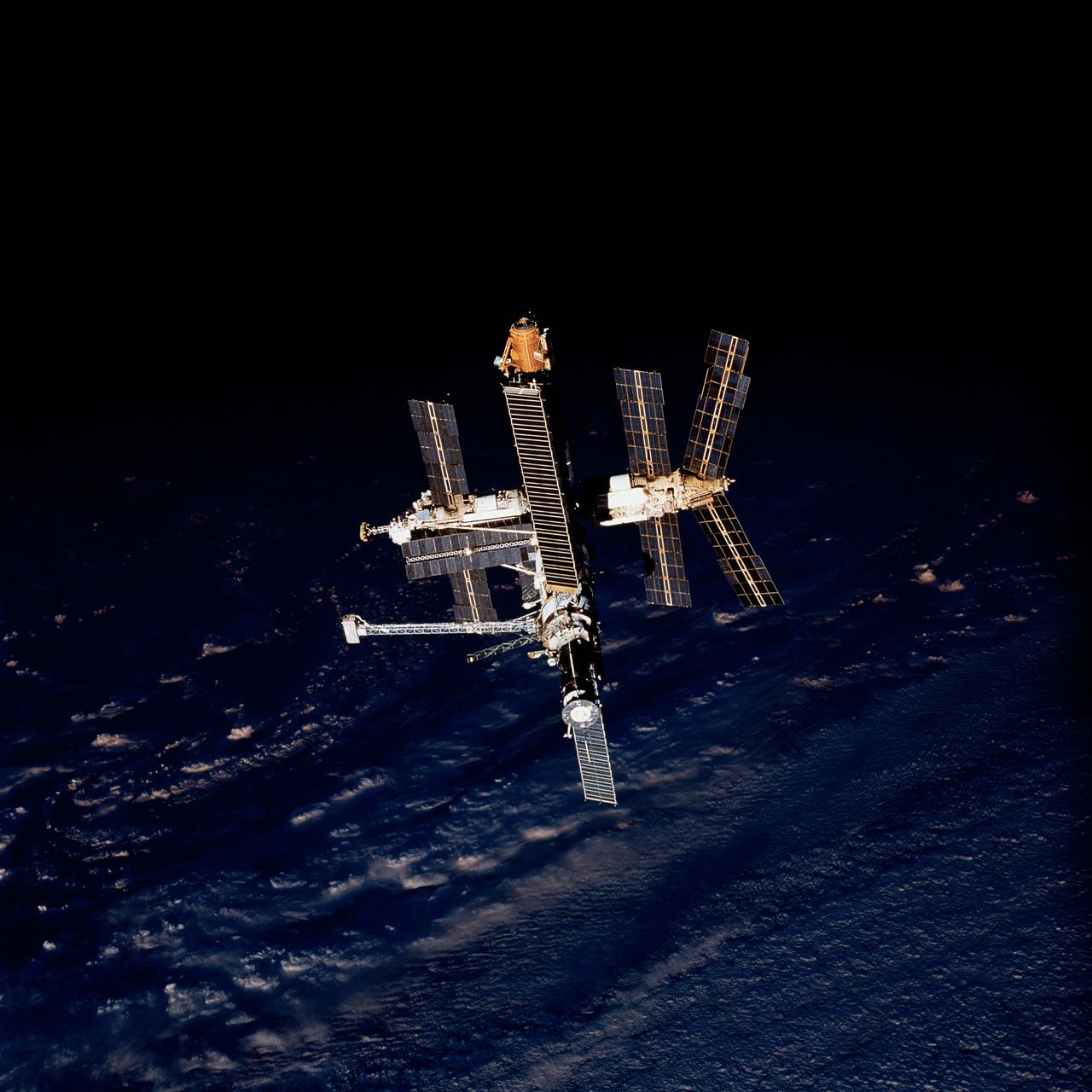
STS079-821-036 (16-26 Sept. 1996) --- Following the Space Shuttle Atlantis - Russian Mir Space Station undocking activities, a crew member captured this 70mm frame of Mir as the two crews shared their final common sunset scene. This photograph is one of four 70mm frames (along with fifteen 35mm frames) of still photography documenting the activities of NASA's STS-79 mission, which began with a September 16, 1996, liftoff from Launch Pad 39A the Kennedy Space Center (KSC) and ended with a landing at KSC on September 26, 1996. Onboard for the launch were astronauts William F. Readdy, commander; Terrence W. Wilcutt, pilot; John E. Blaha, Jerome (Jay) Apt, Thomas D. Akers and Carl E. Walz, all mission specialists. On flight day 4, the crew docked with Mir. Shannon W. Lucid, who had spent six months aboard Mir, switched cosmonaut guest researcher roles with Blaha. The latter joined fellow Mir-22 crew members Valeri G. Korzun, commander, and Aleksandr Y. Kaleri, flight engineer.
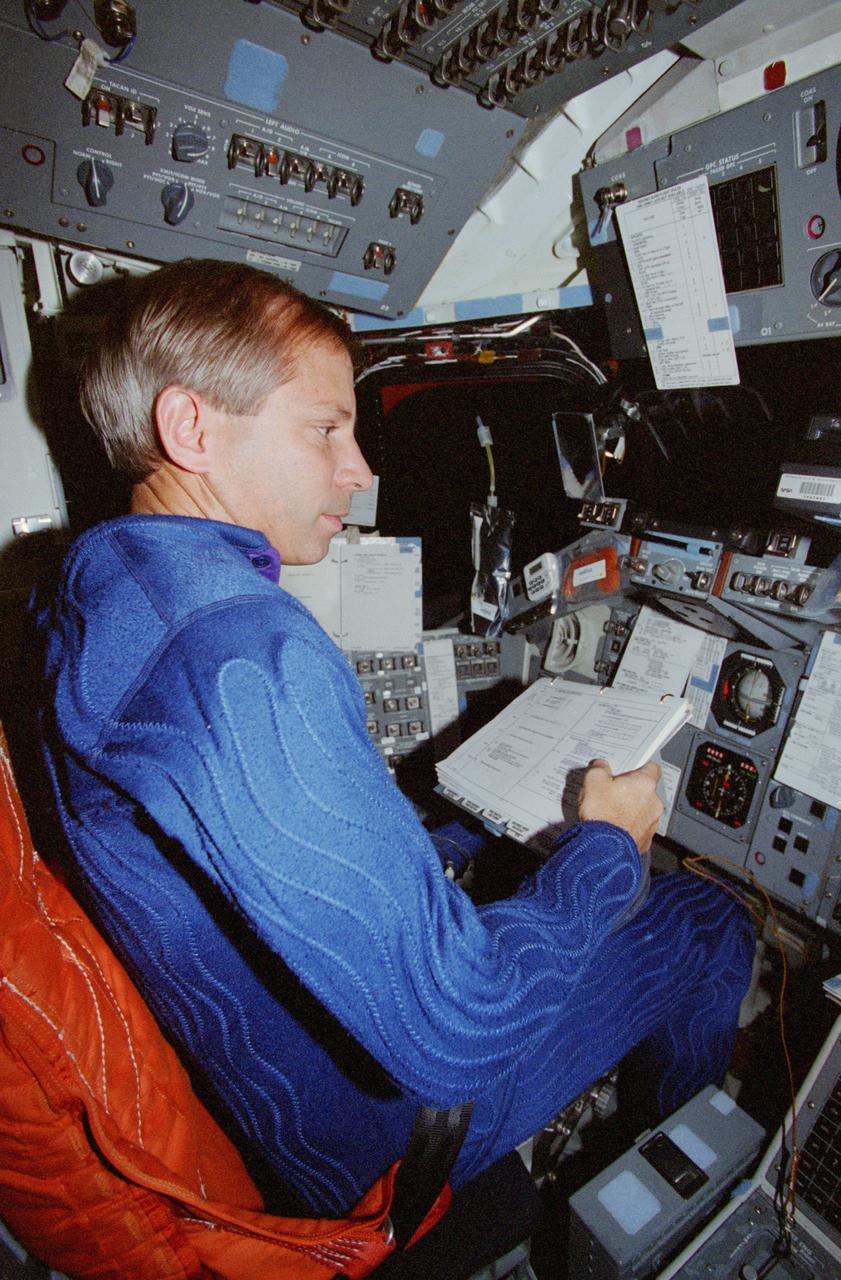
STS080-360-002 (19 Nov.-7 Dec. 1996) --- From the commander's station on the port side of the space shuttle Columbia's forward flight deck, astronaut Kenneth D. Cockrell prepares for a minor firing of Reaction Control System (RCS) engines during operations with the Wake Shield Facility (WSF). The activity was recorded with a 35mm camera on flight day seven. The commander is attired in a liquid-cooled biological garment.
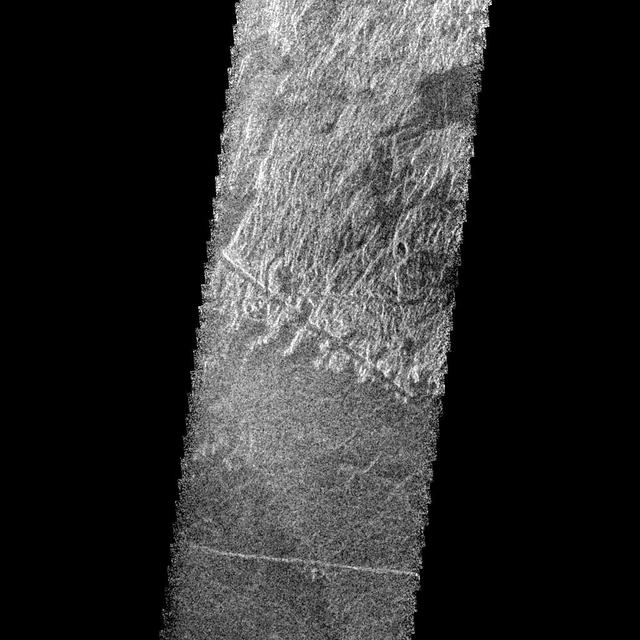
This radar image from NASA Magellan is of part of the Phoebe region of Venus. It is a mosaic of parts of revolutions 146 and 147 acquired in the first radar test on Aug. 16, 1990. http://photojournal.jpl.nasa.gov/catalog/PIA00211
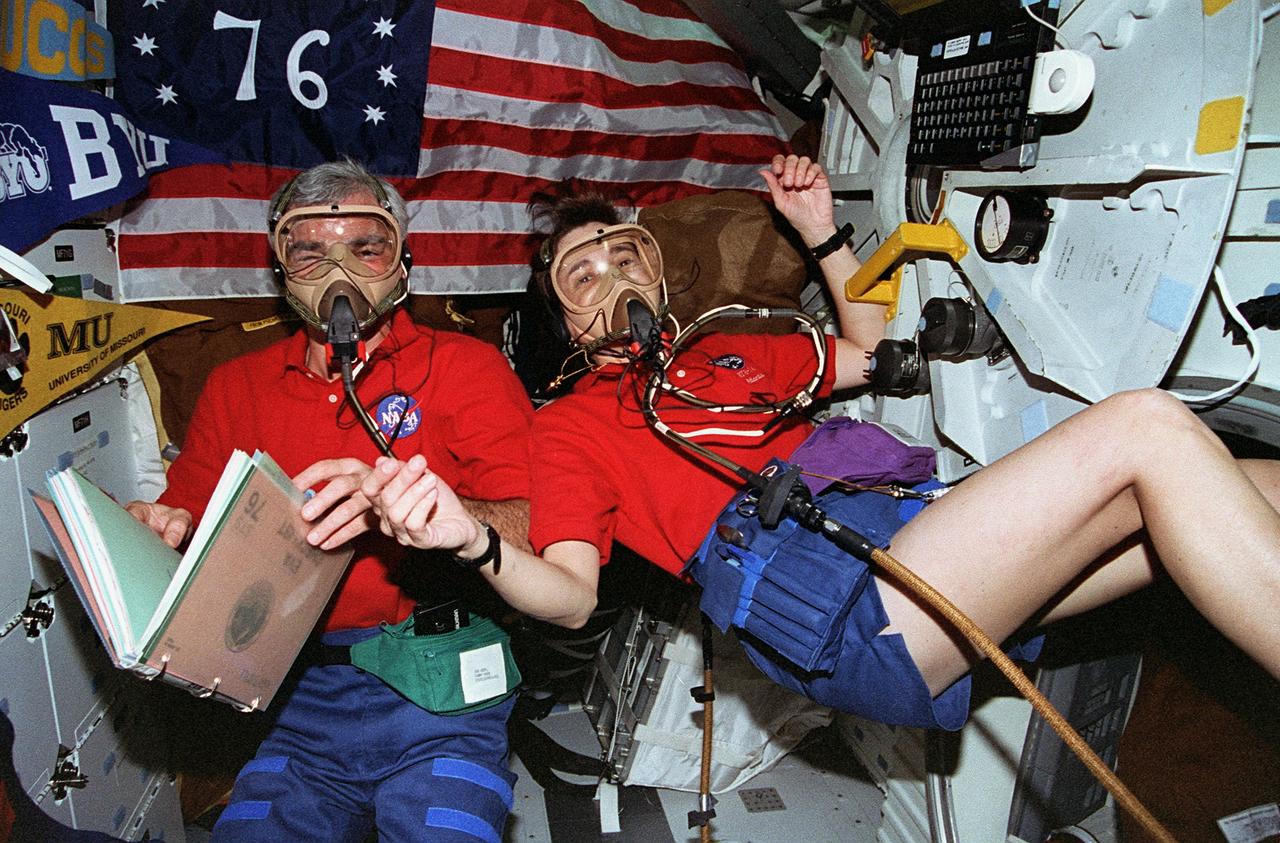
STS076-346-017 (22-31 March 1996) --- Astronauts Michael R. (Rich) Clifford and Linda M. Godwin, the assigned space-walking mission specialists for STS-76, go through a "pre-breathing" period on the Space Shuttle Atlantis' middeck. This practice is normal procedure for space-walkers in preparation for their Extravehicular Activity (EVA) and the wearing of their Extravehicular Mobility Units (EMU). The photograph was taken with a 35mm camera by one of the crew members.
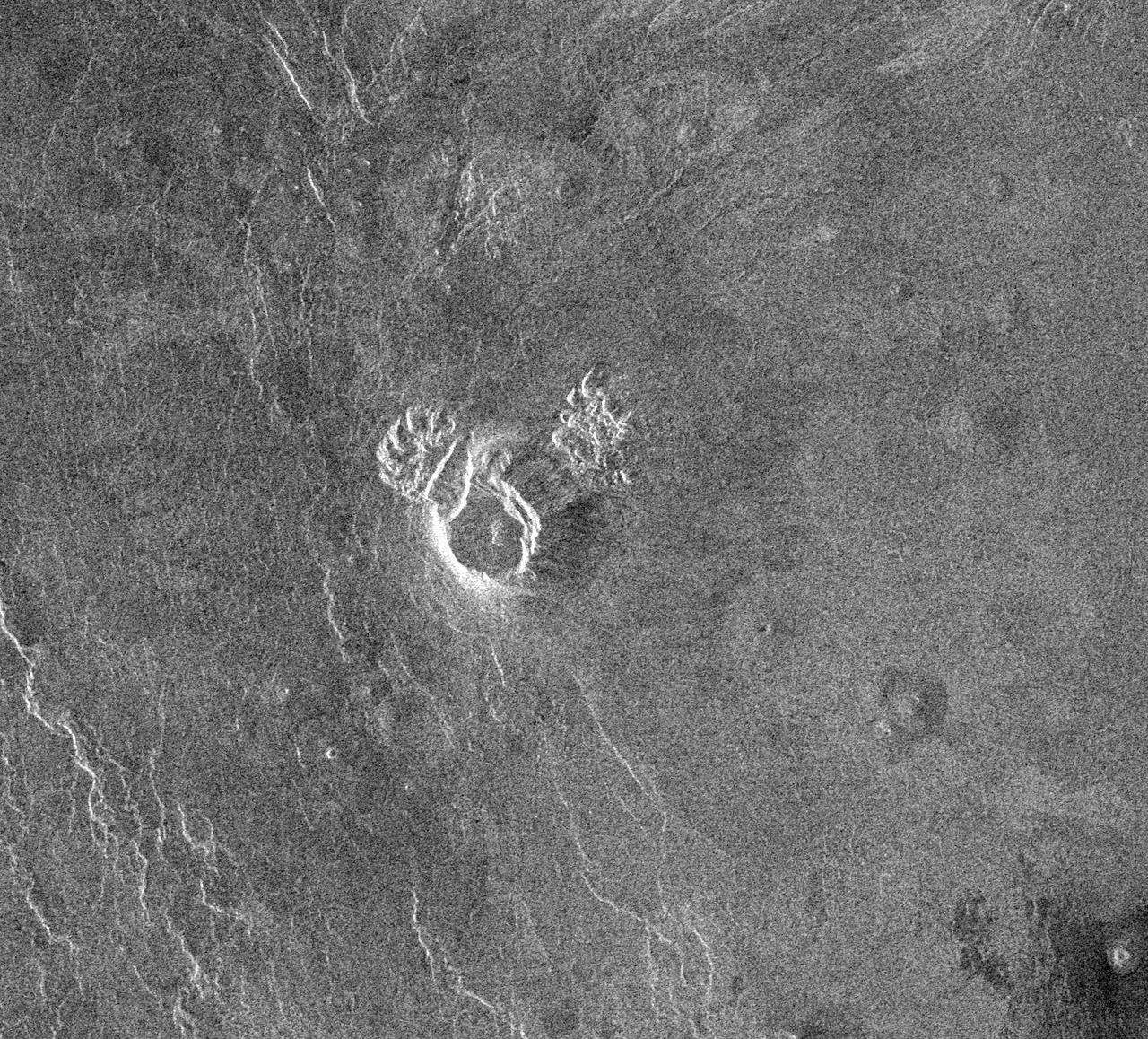
NASA Magellan spacecraft observed remnant landslide deposits apparently resulting from the collapse of volcanic structures. This radar image is centered in the southwestern Navka Region of Venus. http://photojournal.jpl.nasa.gov/catalog/PIA00262
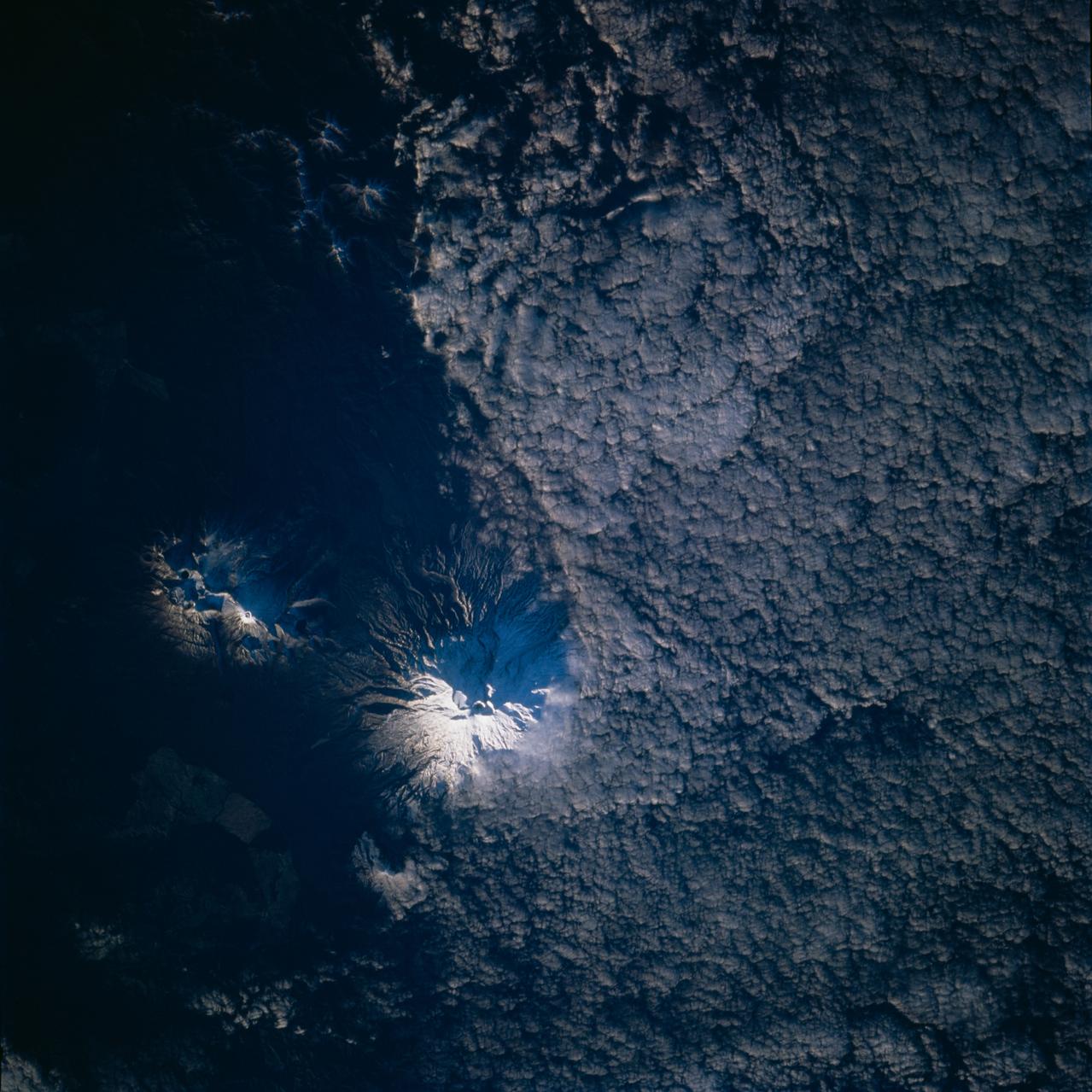
STS077-715-037 (19-29 May 1996) --- According to NASA scientists, Ruapehu, on New Zealand?s North Island, is one of the most active volcanoes in the South Pacific. Prior to the flight, crew members scheduled this site as one of their photographic targets. The volcano endured a significant eruption in late September, 1995. This view is the first image of the crater region since that eruption. Since then, numerous landslides and secondary explosions in the summit area has produced changes. In this view, recent mudflows extend from the summit region and down the mountain flank which is in the shadow. Ruapehu is also one of New Zealand?s high points - the mountain supports a glacier and permanent ice fields, and volcanic activity necessarily involves mixing hot volcanic products with snow and ice. Recent activity has produced destructive lahars (mudslides which are slurries of volcanic material with ice and water) downslope. A hazard warning to skiers is still in effect.
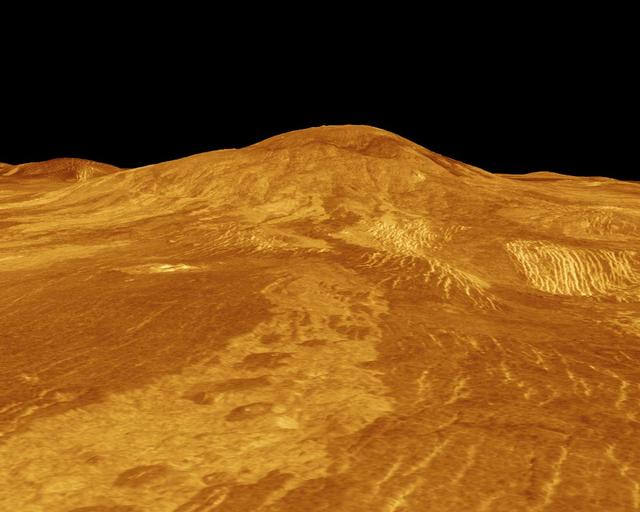
Sif Mons is displayed in this computer-simulated view obtained by NASA's Magellan spacecraft of the surface of Venus. http://photojournal.jpl.nasa.gov/catalog/PIA00108
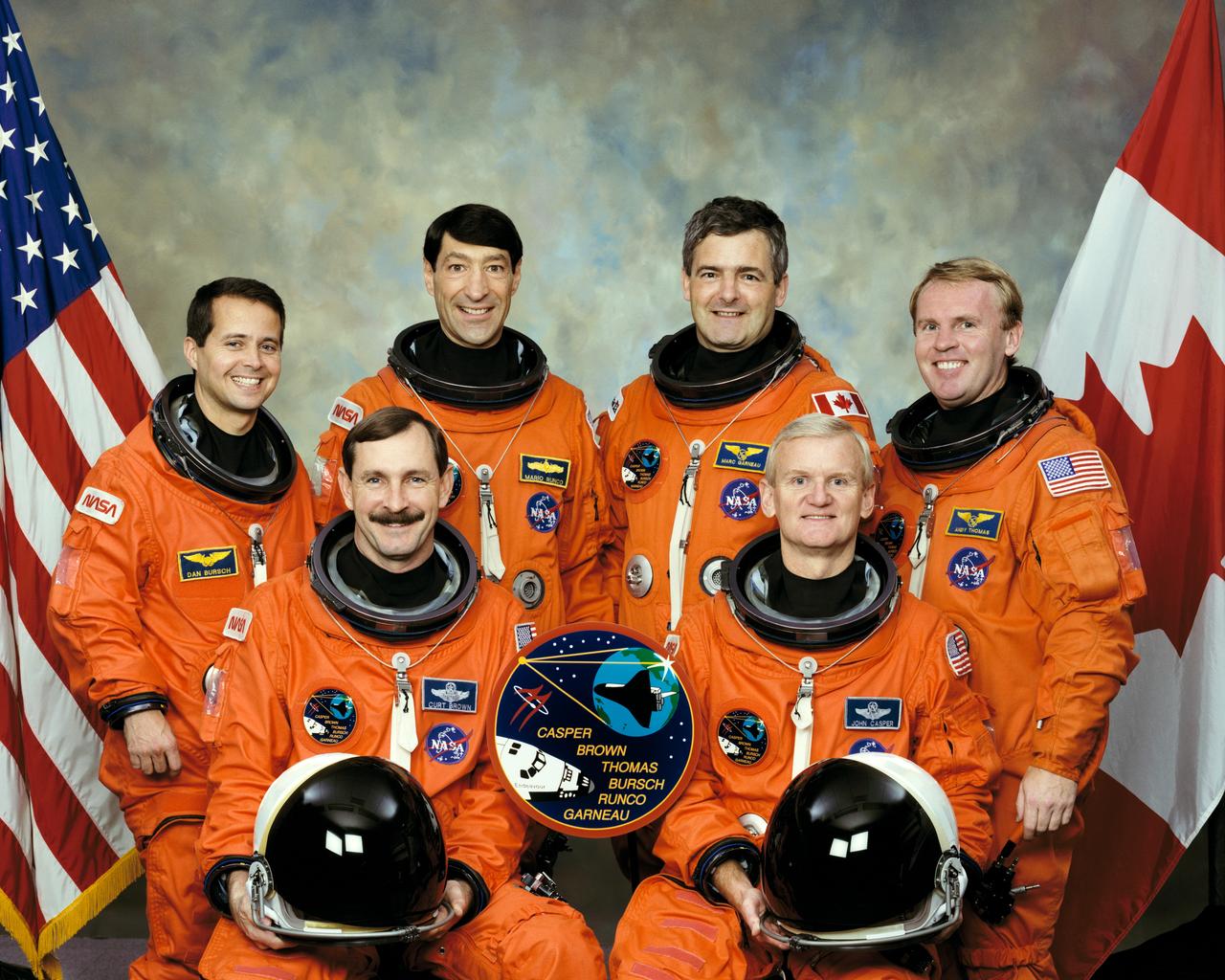
STS077-S-002 (February 1996) --- These six astronauts have been named to fly aboard the Space Shuttle Endeavour in support of the Spacehab-04 mission, scheduled for launch in May of this year. On the front row are astronauts John H. Casper (right), mission commander; and Curtis L. Brown Jr., pilot. In the rear, from the left, are astronauts Daniel W. Bursch, Mario Runco Jr., Marc Garneau and Andrew S. W. Thomas, all mission specialists. Garneau represents the Canadian Space Agency (CSA).
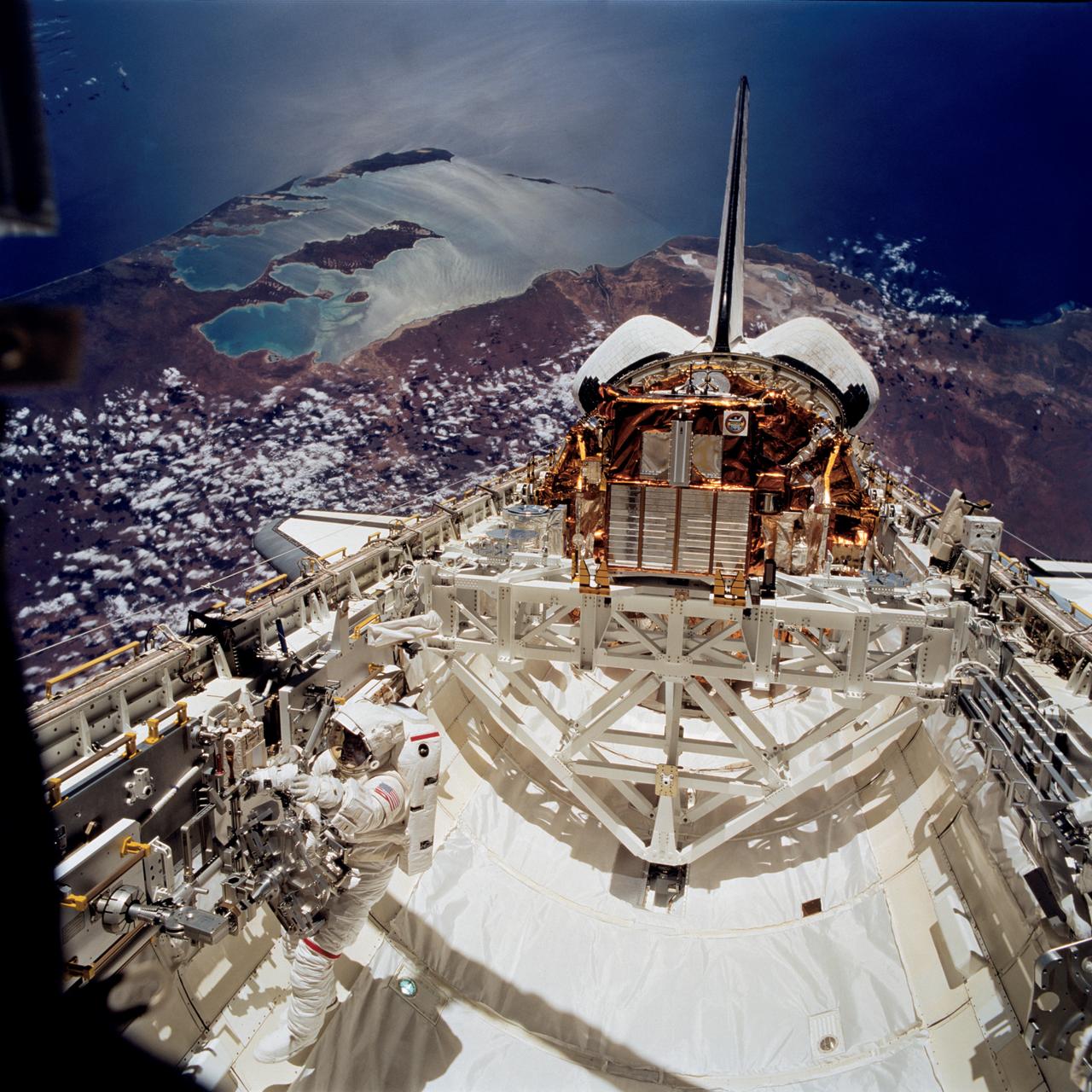
STS072-740-044 (17 Jan. 1996) --- Backdropped against Australia's Shark Bay, this panoramic scene of the Space Shuttle Endeavour in Earth-orbit was recorded during the mission's second Extravehicular Activity (EVA-2) on January 17, 1996. Astronaut Leroy Chiao works with a Mobile Foot Restraint (MFR) at bottom left. The Japanese Space Flyer Unit (SFU) satellite and the Office of Aeronautics and Space Technology (OAST) Flyer satellite are seen in their stowed positions in the aft cargo bay.
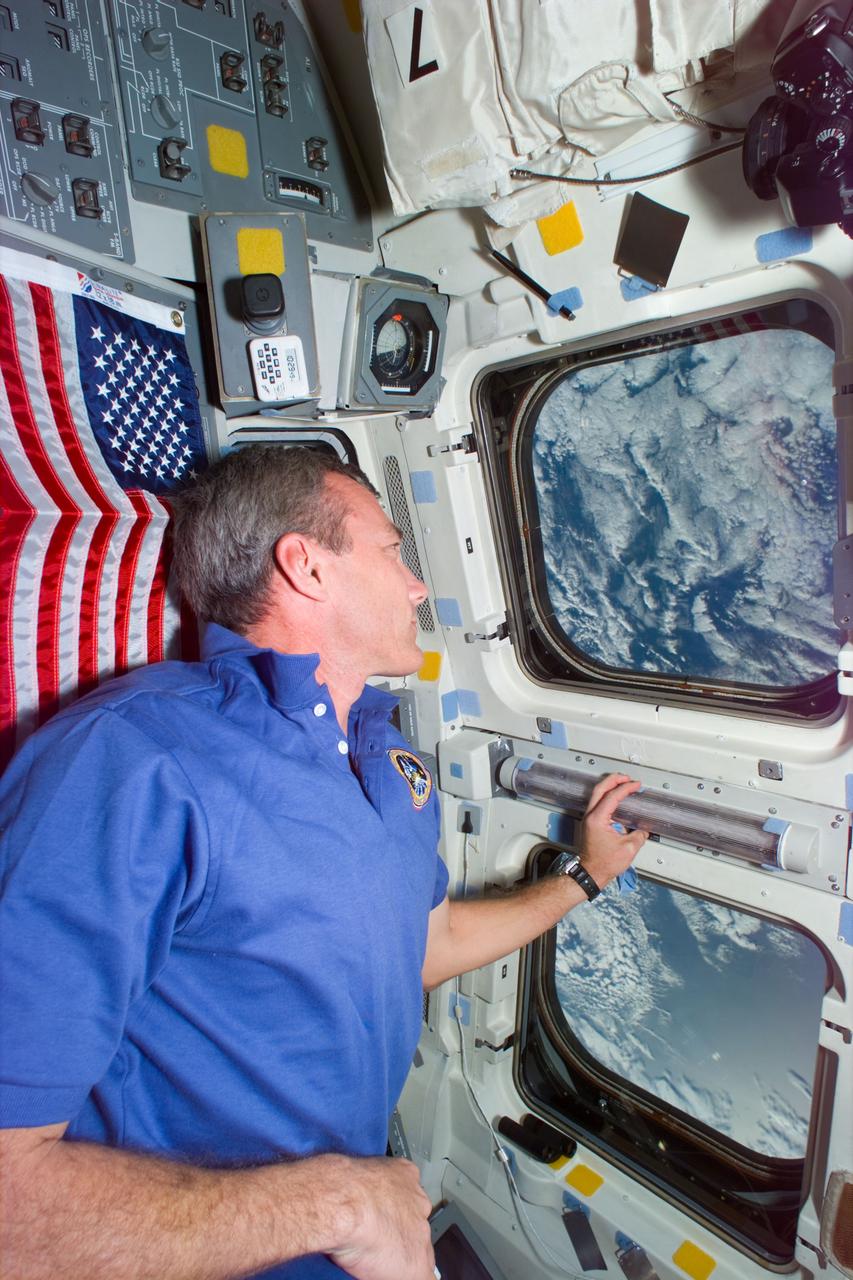
STS79-E-5379 (24 September 1996) --- Astronaut Terrence W. Wilcutt, pilot, watches the Russia's Mir Space Station, with fellow astronaut John E. Blaha, cosmonaut guest researcher onboard, gradually getting further and further away from the Space Shuttle Atlantis, during Flight Day 9.

KENNEDY SPACE CENTER, FLA. -- KSC's Press Site serves as the stage for makers of "The Cape," a pilot television movie starring Corbin Bernsen (third from front).
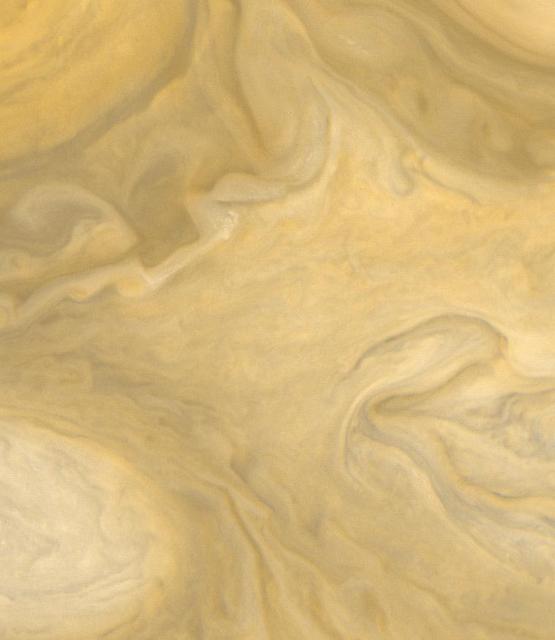
This view of the region just to the Southeast of the Great Red Spot was taken by NASA Voyager 1 on March 4, 1979 at a distance of 1,100,000 miles 1,800,000 km. http://photojournal.jpl.nasa.gov/catalog/PIA00017
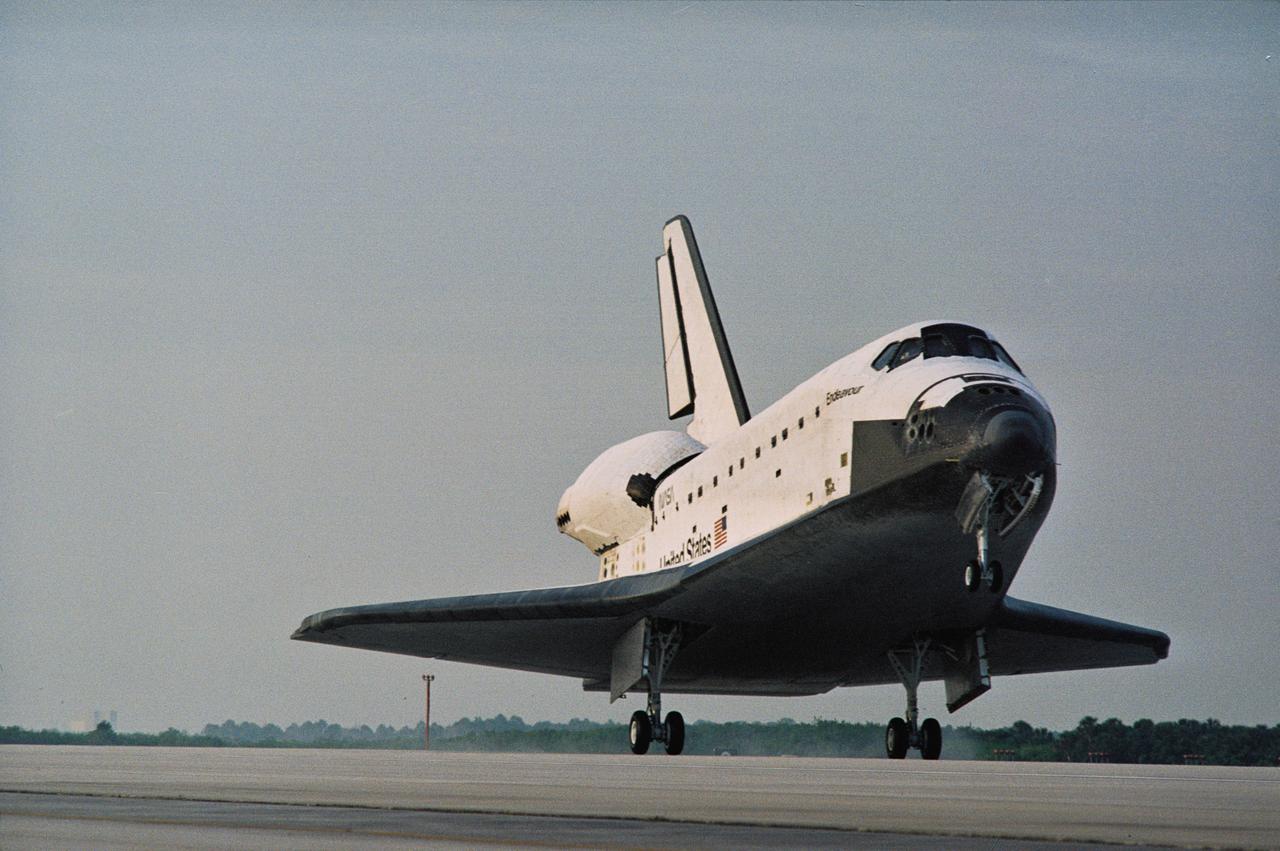
STS077-S-011 (29 May 1996) --- As its main landing gear touches down on Runway 33 at the Kennedy Space Center (KSC), the Space Shuttle Endeavour returns to Florida following a ten-day mission in space. Touchdown came at 7:09 a.m. (EDT), May 29, 1996. Leading the crew onboard was astronaut John H. Casper, mission commander. Other crew members were astronauts Curtis L. Brown, Jr., pilot; along with Daniel W. Bursch, Mario Runco, Jr., Andrew S. W. Thomas and Marc Garneau, all mission specialists. Garneau represents the Canadian Space Agency (CSA). During the approximately 10-day mission, the crew performed a variety of payload activities, including microgravity research aboard the Spacehab 4 Module, deployment and retrieval of the Spartan 207 and deployment and rendezvous with the Passive Aerodynamically-Stabilized Magnetically-Damped Satellite (PAMS).
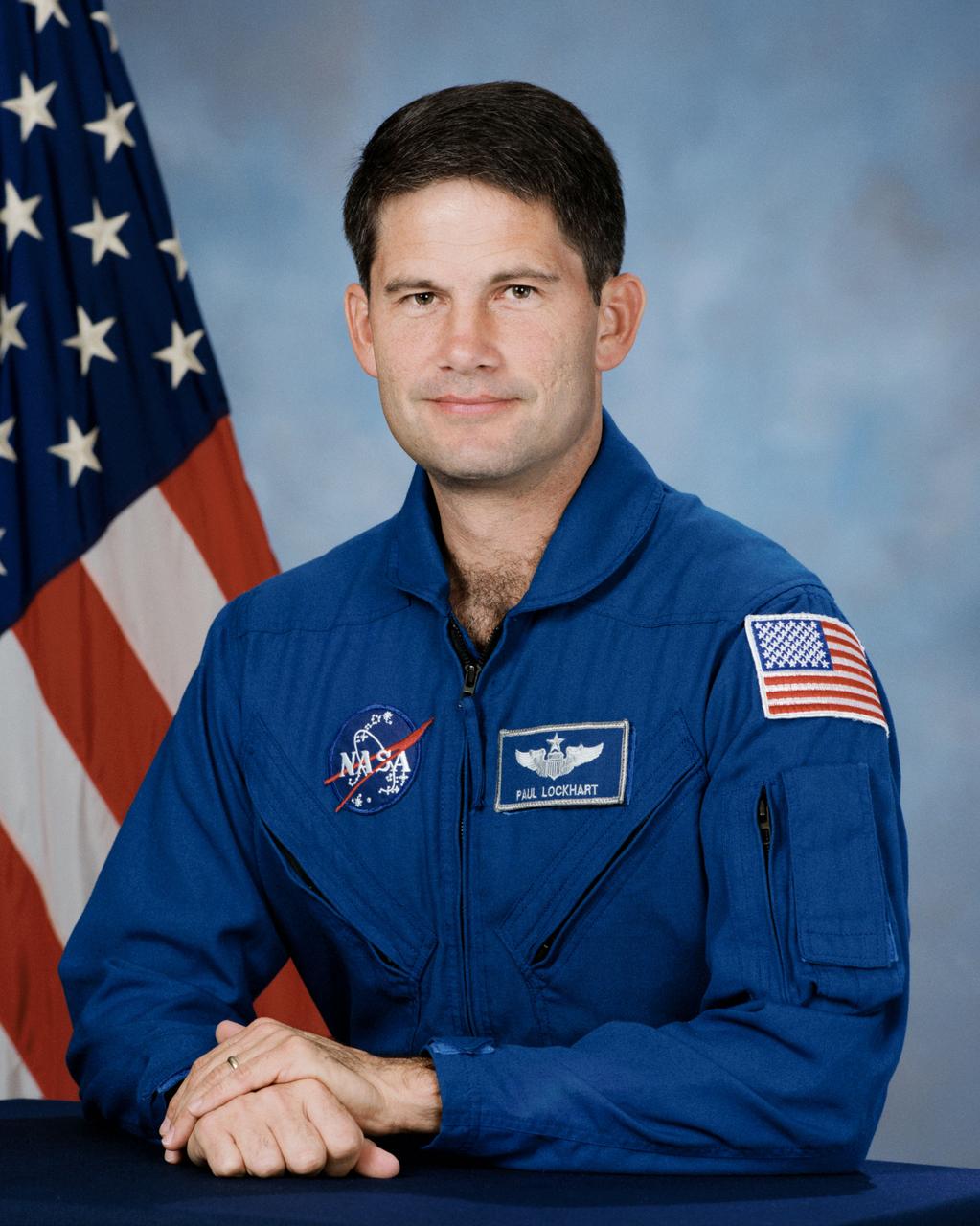
S96-19099 (19 Aug 1996) --- Astronaut Paul S. Lockhart, 1996 ASCAN/pilot.
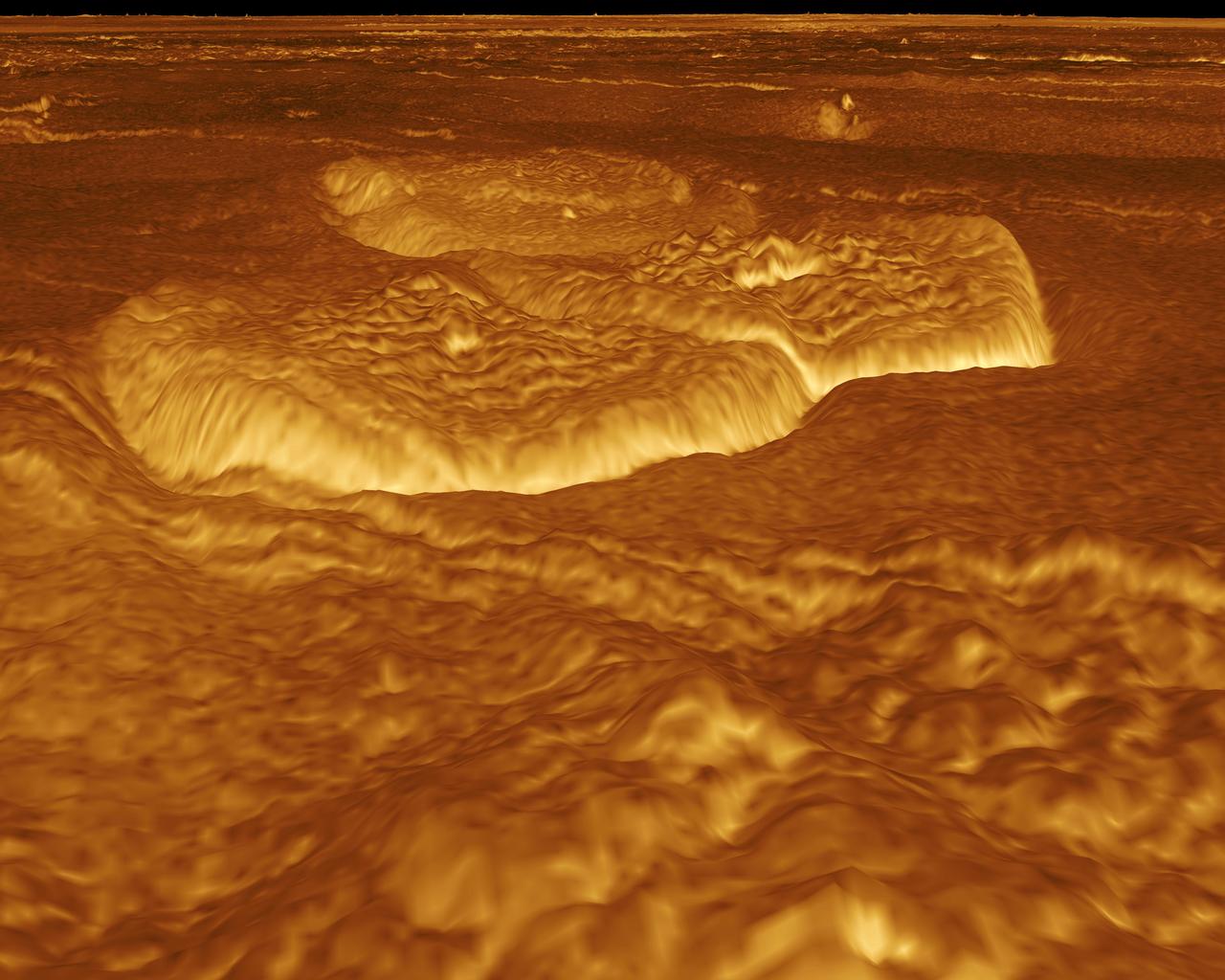
A portion of the eastern edge of Alpha Regio is displayed in this three-dimensional perspective view of the surface of Venus from NASA Magellan spacecraft. http://photojournal.jpl.nasa.gov/catalog/PIA00246
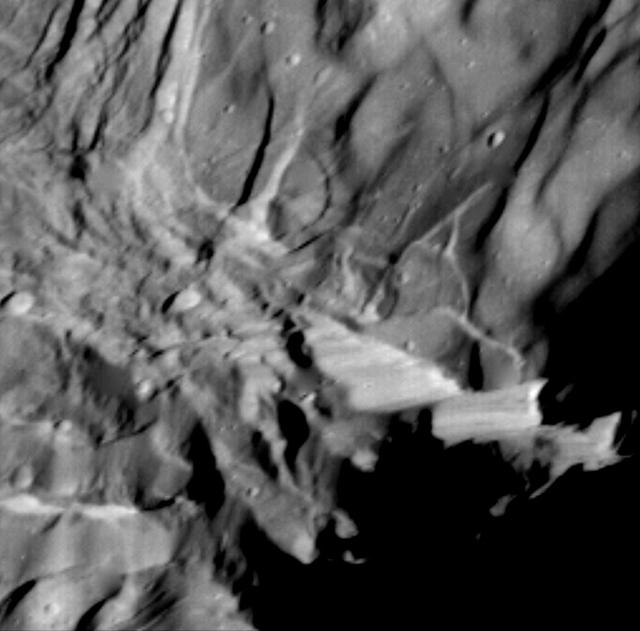
This image of Miranda, Uranus moon, was acquired by NASA Voyager 2 on Jan. 24, 1986. Miranda displays a dramatically varied surface. Well shown are numerous ridges and valleys -- a topography that was probably produced by compressional tectonics. http://photojournal.jpl.nasa.gov/catalog/PIA00044
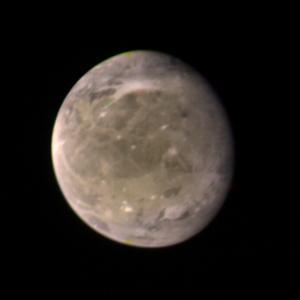
Ganymede at 3.4 million miles http://photojournal.jpl.nasa.gov/catalog/PIA00352
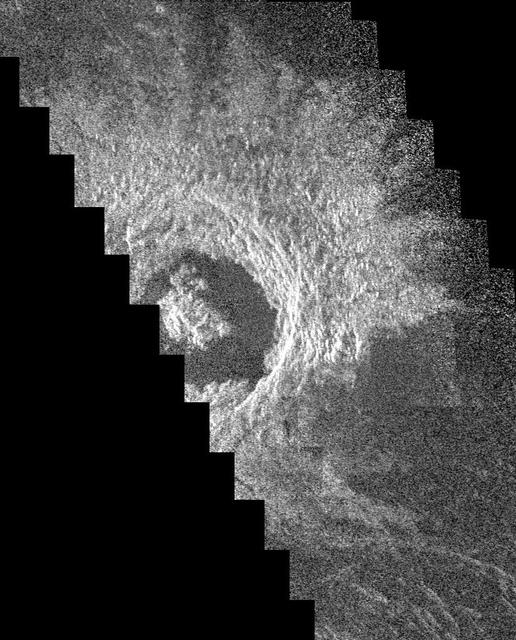
This image mosaic from NASA Magellan spacecraft shows the impact crater Golubkina. http://photojournal.jpl.nasa.gov/catalog/PIA00236
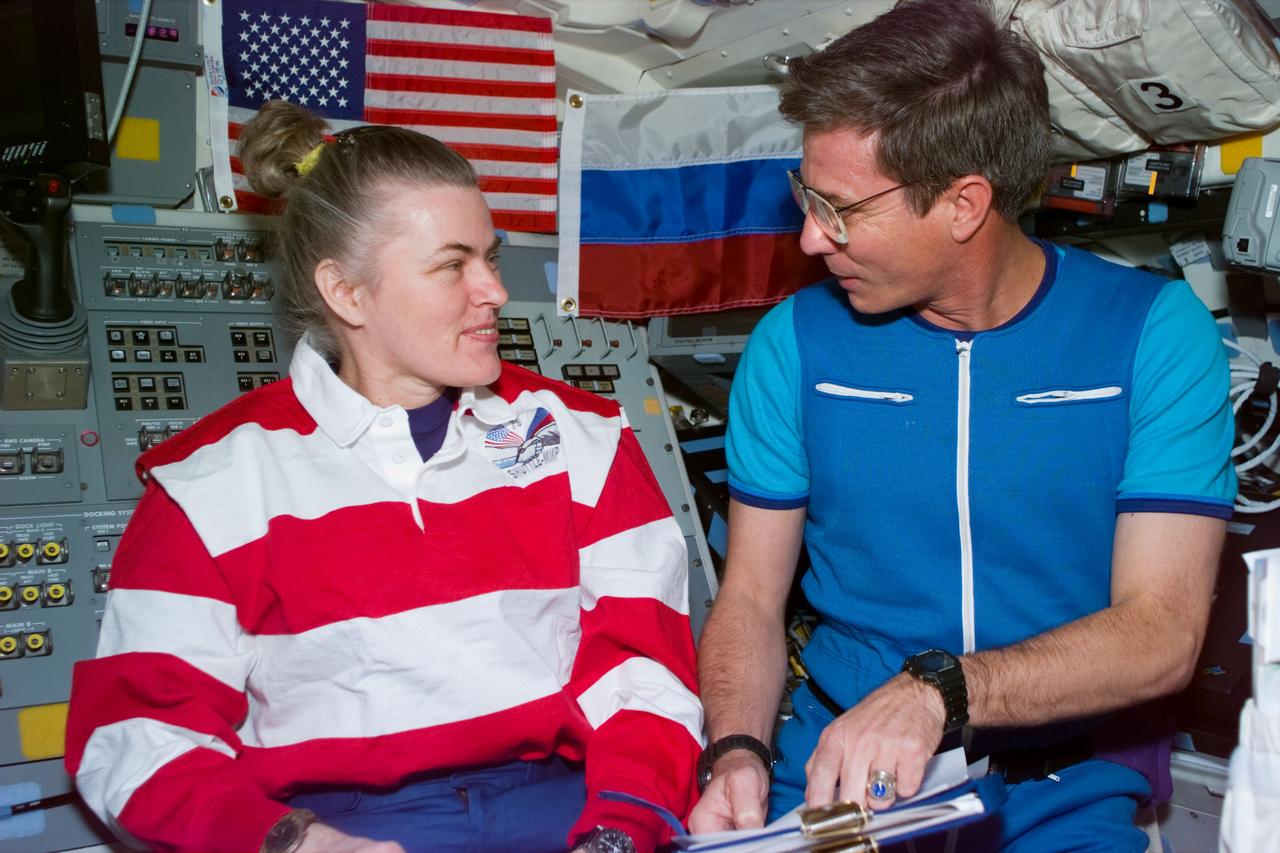
STS79-E-5131 (20 September 1996) --- Astronauts Shannon W. Lucid and John E. Blaha, sharing a third flight together in Earth-orbit (twice on the Space Shuttle Atlantis, once on the Space Shuttle Columbia), hold a brief-debrief session about their soon-to-be exchanged roles, during Flight Day 5. Blaha becomes a Mir-22 cosmonaut guest researcher for several months and Lucid ends a period of over six months aboard Mir as a cosmonaut guest researcher, having spent time with two Mir crews.
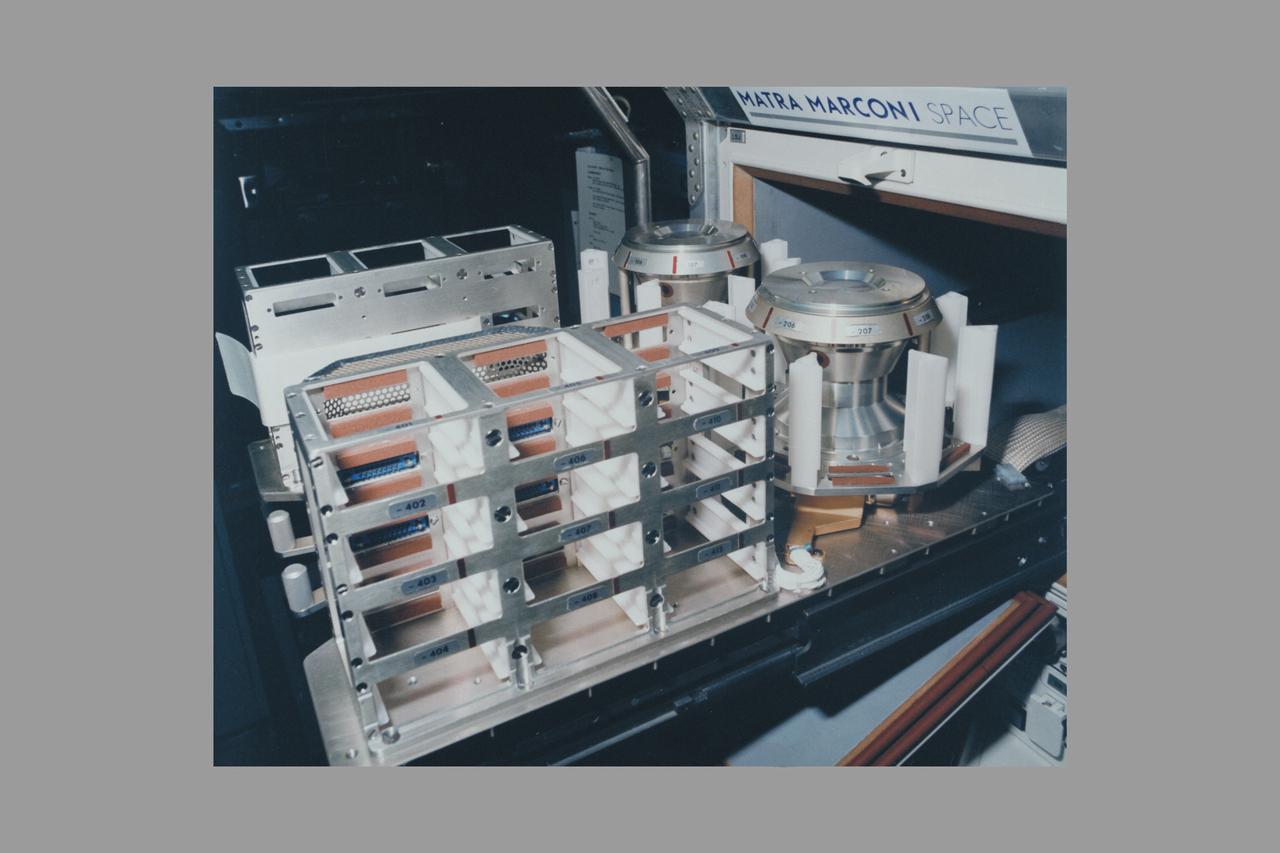
European Space Agency's Biorack incubator A (22deg C)
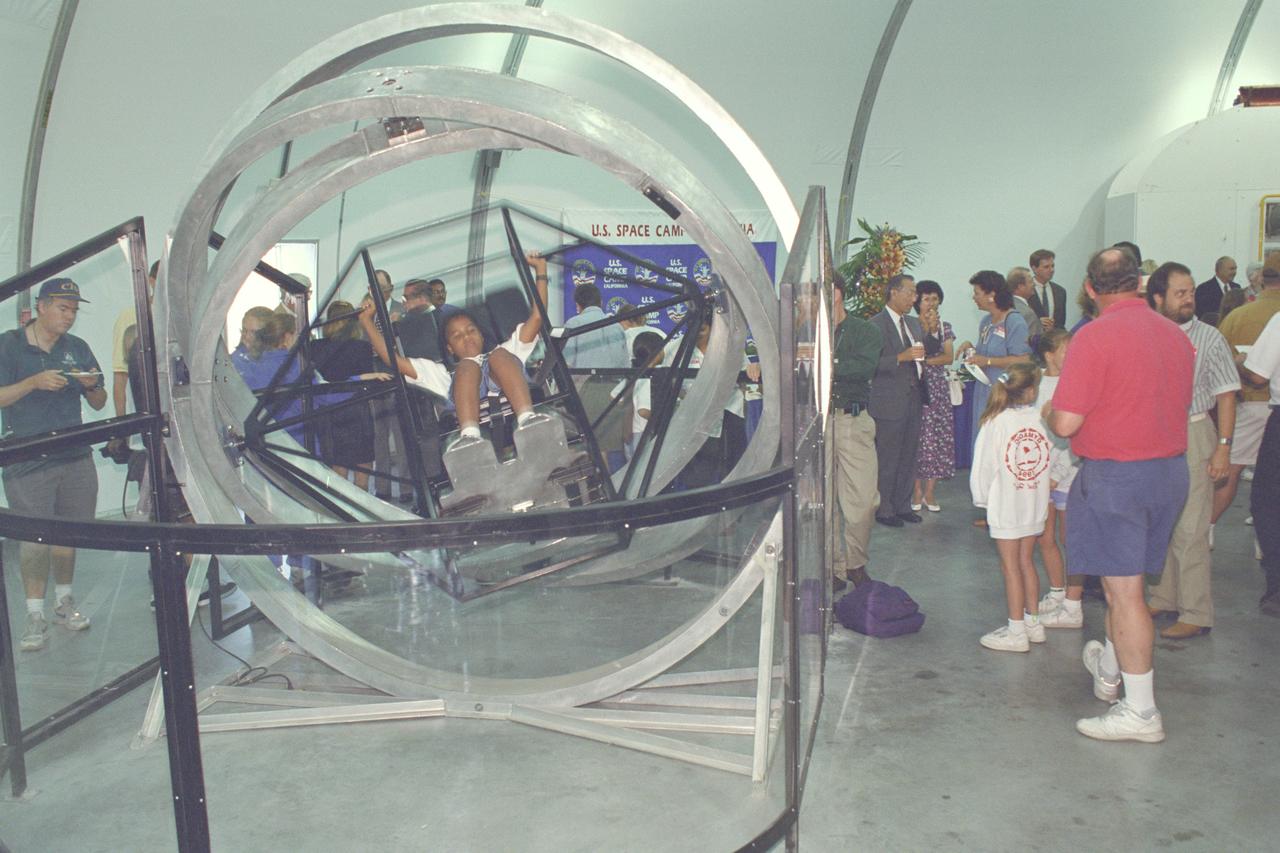
U.S. Space Camp California 'Day Camp' Grand Opening student tries out gyro chair

U.S. Space Camp California 'Day Camp' Grand Opening with Kenin Jones (Whisman School) Lucretia Sutherlin (McNair School) and Rachael Quiring (Camp Staff)
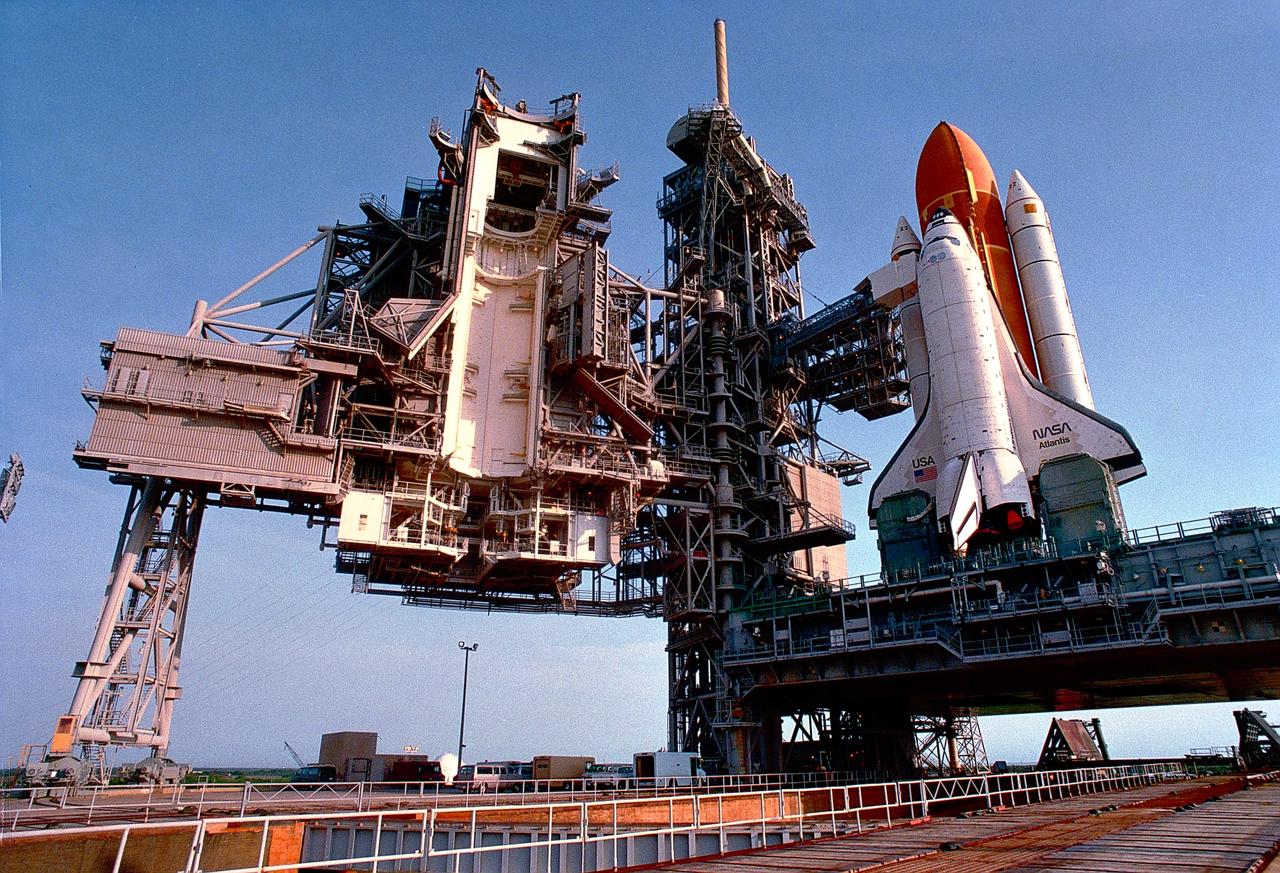
S96-11816 (1 June 1996) --- The space shuttle Atlantis completes the final Earth-bound leg of its journey into space, arriving at the top of the hardstand at Launch Pad 39A. Atlantis is slated for liftoff later this year on the STS-79 mission, the fourth United States Space Shuttle and Russian Mir Space Station docking flight.
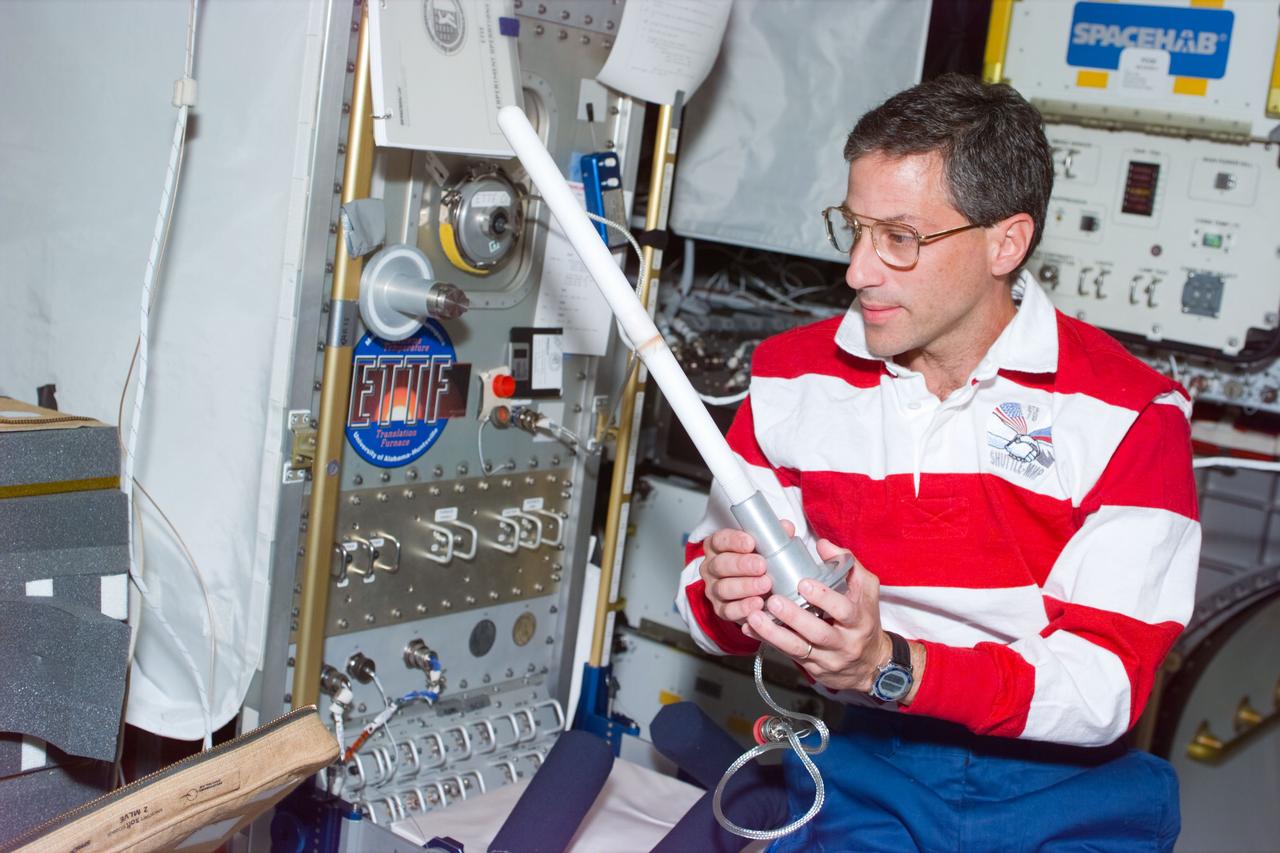
STS79-E-5275 (16 - 26 September 1996) --- Aboard the Spacehab double module in the Space Shuttle Atlantis' cargo bay, astronaut Jerome (Jay) Apt, mission specialist, checks a sample from the Extreme Temperature Translation Furnace (ETTF) experiment. The photograph was taken with the Electronic Still Camera (ESC).
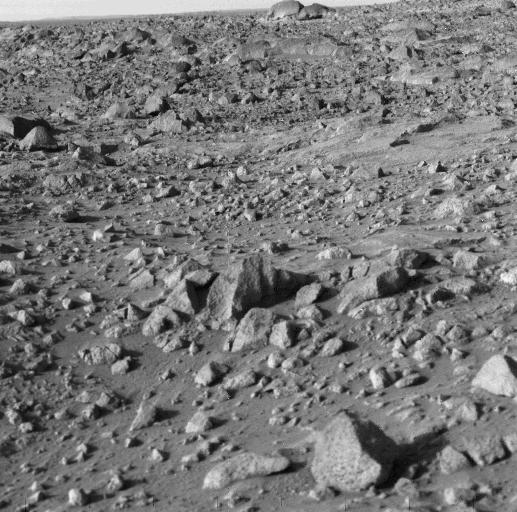
NASA's Viking 1 took this high-resolution picture today, its third day on Mars. Distance from the camera to the nearfield (bottom) is about 4 meters (13 feet); to the horizon, about 3 kilometers (1.8 miles). The photo shows numerous angular blocks ranging in size from a few centimeters to several meters. The surface between the blocks is composed of fine-grained material. Accumulation of some fine-grained material behind blocks indicates wind deposition of dust and sand downwind of obstacles. The large block on the horizon is about 4 meters (13 feet) wide. Distance across the horizon is about 34 meters (110 feet). http://photojournal.jpl.nasa.gov/catalog/PIA00385
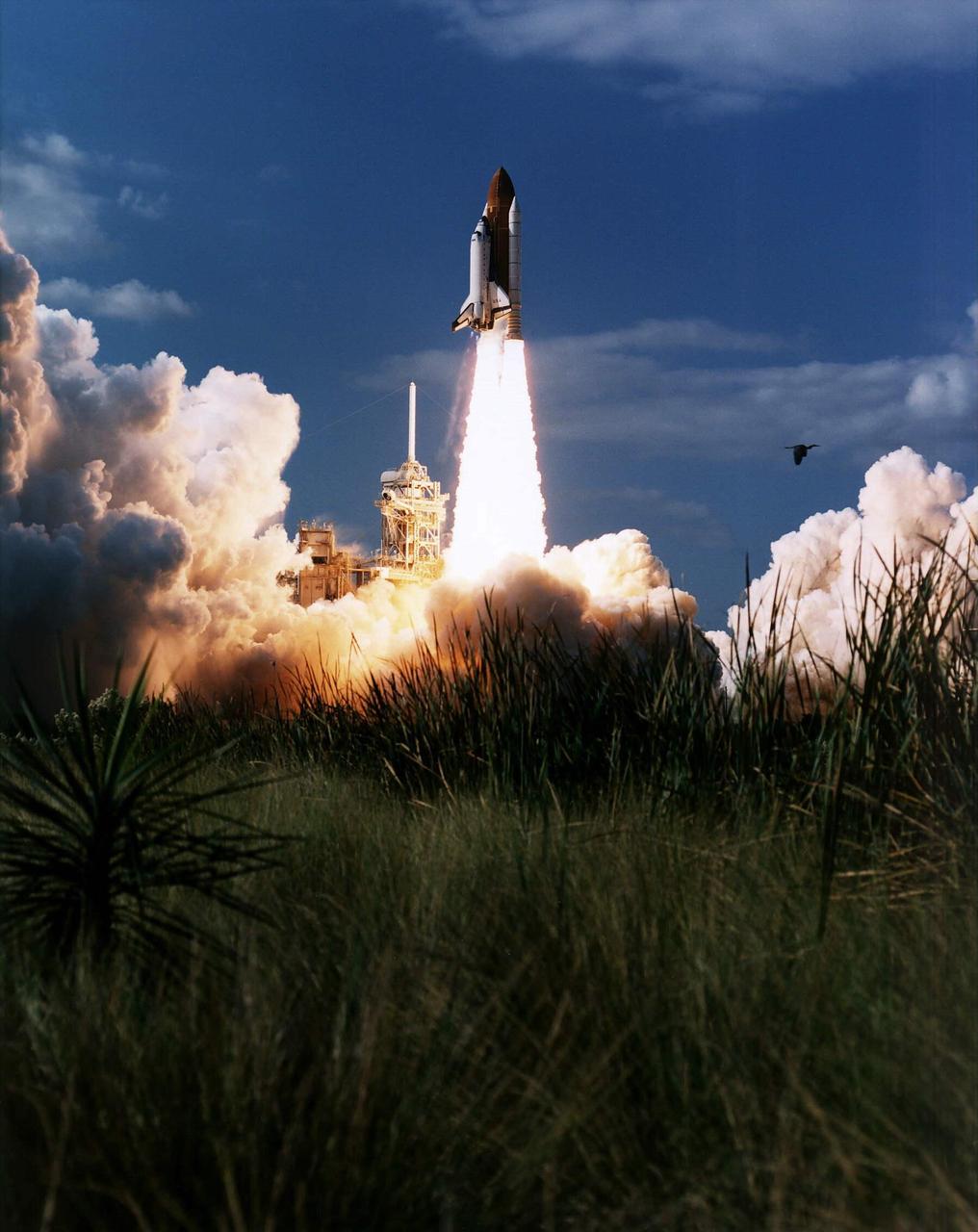
KENNEDY SPACE CENTER, FLA. -- Vividly framed by a tranquil Florida landscape, the Space Shuttle Columbia lifts off from Launch Pad 39B at 2:55:47 p.m. EST, Nov. 19, 1996. Leading the veteran crew of Mission STS-80 is Commander Kenneth D. Cockrell; Kent V. Rominger is the pilot and the three mission specialists are Tamara E. Jernigan, Story Musgrave and Thomas D. Jones. At age 61, Musgrave becomes the oldest person ever to fly in space; he also ties astronaut John Young’s record for most number of spaceflights by a human being, and in embarking on his sixth Shuttle flight Musgrave has logged the most flights ever aboard NASA’s reusable space vehicle. The two primary payloads for STS-80 are the Wake Shield Facility-3 (WSF-3) and the Orbiting and Retrievable Far and Extreme Ultraviolet Spectrometer-Shuttle Pallet Satellite II (ORFEUS-SPAS II). Two spacewalks also will be performed during the nearly 16-day mission. Mission STS-80 closes out the Shuttle flight schedule for 1996; it marks the 21st flight for Columbia and the 80th in Shuttle program history.
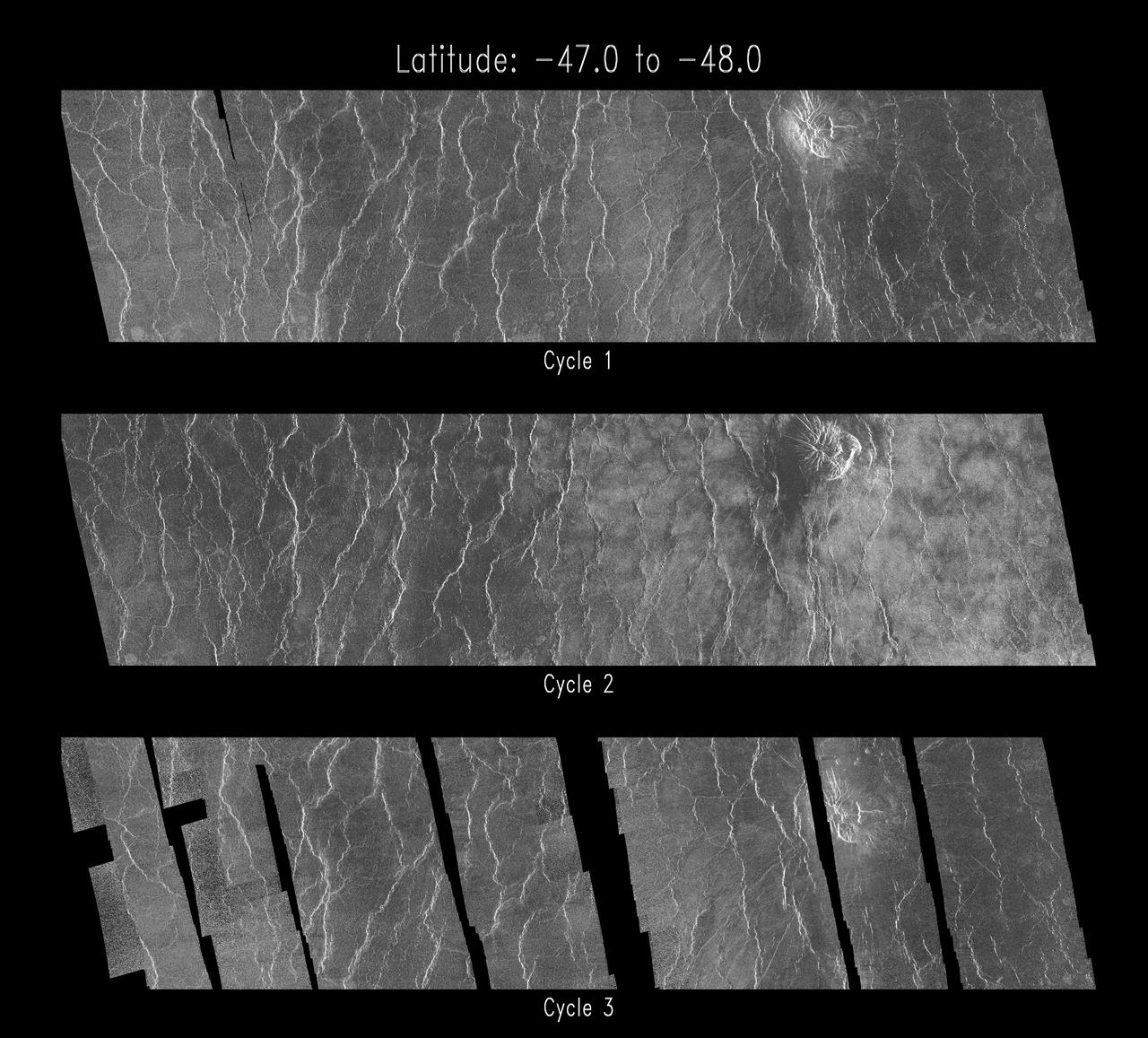
This set of three images from NASA Magellan spacecraft, shows a small volcano, lava plains distorted into wrinkle ridges, and some unusual wispy-appearing surface deposits. http://photojournal.jpl.nasa.gov/catalog/PIA00267