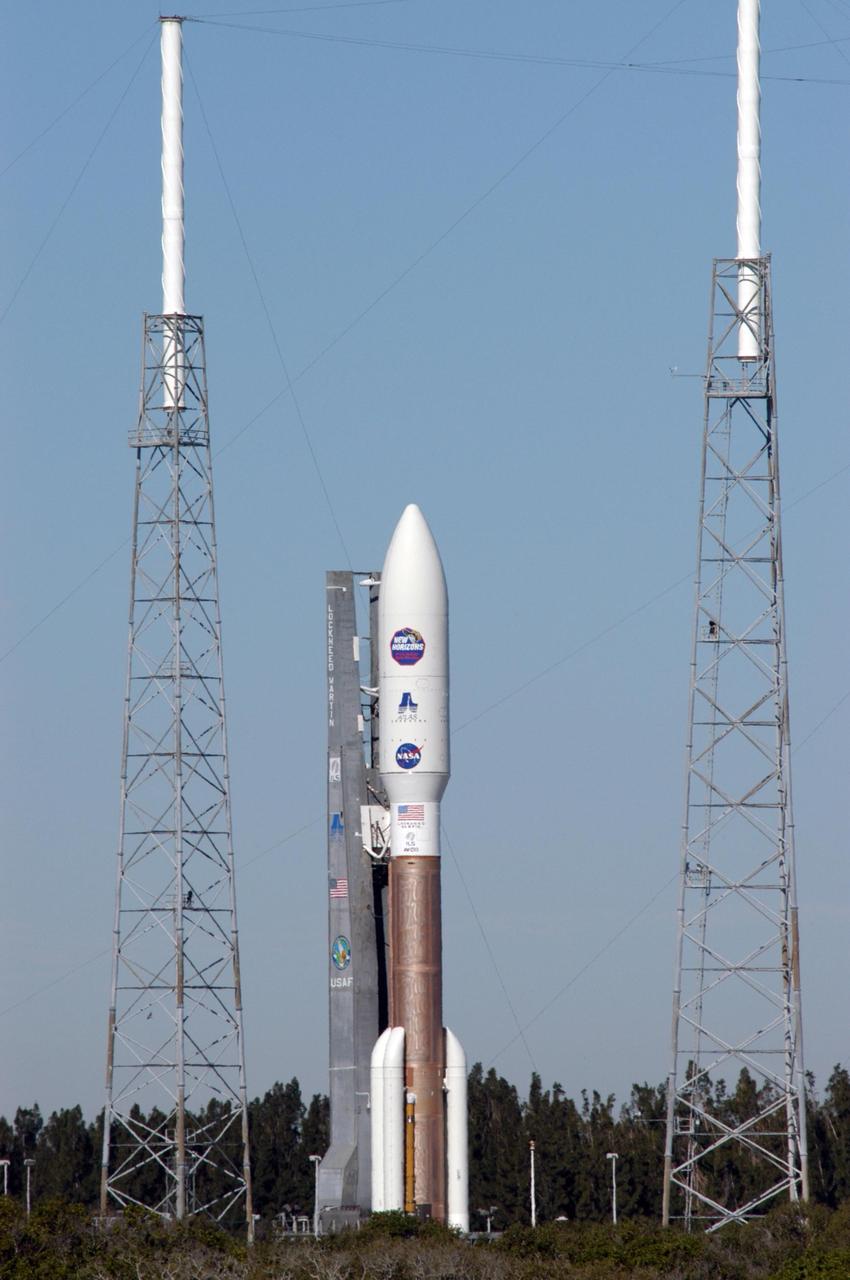
KENNEDY SPACE CENTER, FLA. - On Complex 41 at Cape Canaveral Air Force Station, the Atlas V expendable launch vehicle with the New Horizons spacecraft moves with the launcher umbilical tower between lightning masts on its way to the launch pad. The liftoff is scheduled for 1:24 p.m. EST Jan. 17. After its launch aboard the Atlas V, the compact, 1,050-pound piano-sized probe will get a boost from a kick-stage solid propellant motor for its journey to Pluto. New Horizons will be the fastest spacecraft ever launched, reaching lunar orbit distance in just nine hours and passing Jupiter 13 months later. The New Horizons science payload, developed under direction of Southwest Research Institute, includes imaging infrared and ultraviolet spectrometers, a multi-color camera, a long-range telescopic camera, two particle spectrometers, a space-dust detector and a radio science experiment. The dust counter was designed and built by students at the University of Colorado, Boulder. A launch before Feb. 3 allows New Horizons to fly past Jupiter in early 2007 and use the planet’s gravity as a slingshot toward Pluto. The Jupiter flyby trims the trip to Pluto by as many as five years and provides opportunities to test the spacecraft’s instruments and flyby capabilities on the Jupiter system. New Horizons could reach the Pluto system as early as mid-2015, conducting a five-month-long study possible only from the close-up vantage of a spacecraft.

As Cassini watches the rings pass in front of the bright red giant star Aldebaran, the star light fluctuates, providing information about the concentrations of ring particles within the various radial features in the rings
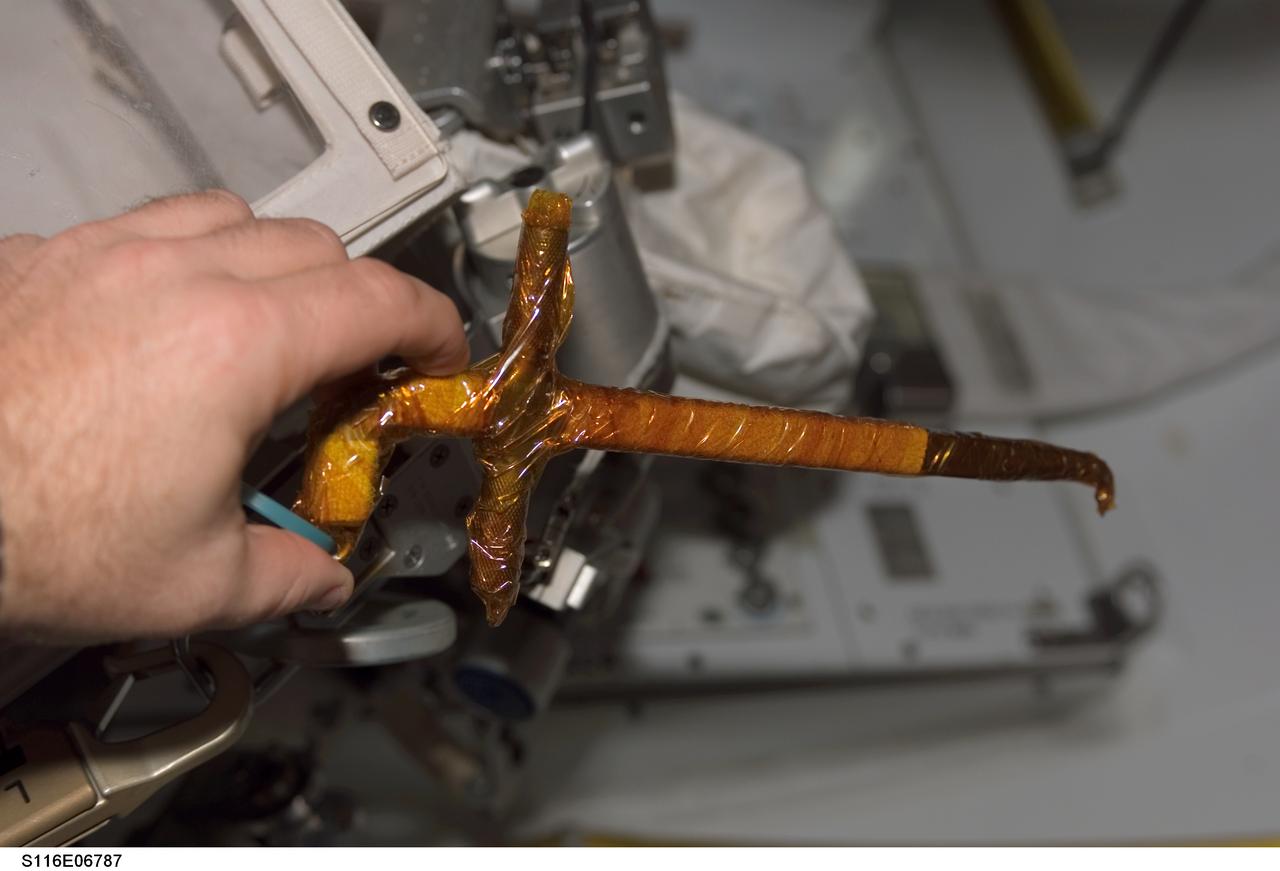
S116-E-06787 (18 Dec. 2006) --- A view of a loop-pin-puller wrapped in insulating tape onboard Space Shuttle Discovery, scheduled for use during STS-116 extravehicular activity (EVA) as construction resumes on the International Space Station.
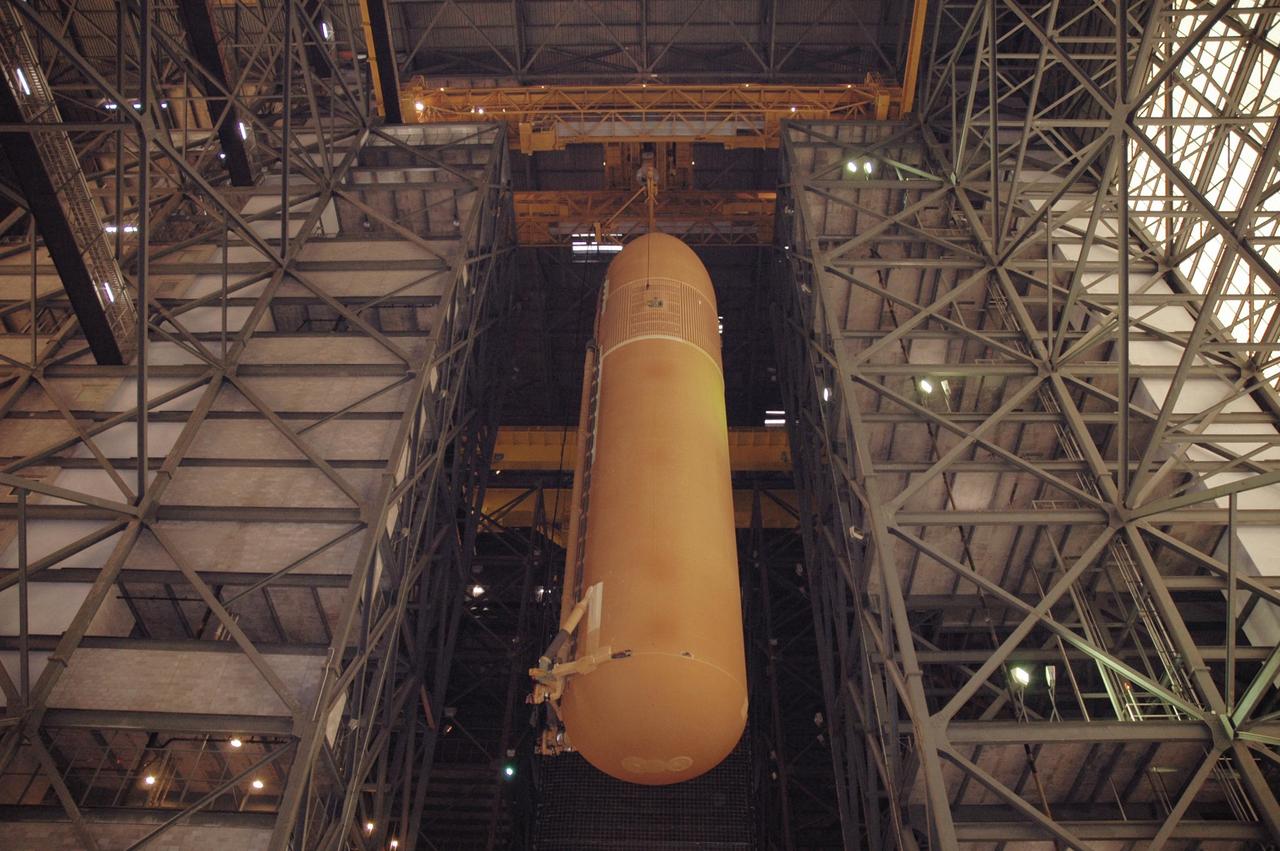
KENNEDY SPACE CENTER, FLA. - In the upper regions of NASA Kennedy Space Center's Vehicle Assembly Building, the newly delivered external tank is moved over a crossbeam toward a checkout cell for further work. Designated ET-119, the 154-foot tank will be lifted into a checkout cell for further work. The tank, which will launch space shuttle Discovery on mission STS-121, will fly with many major safety changes, including the removal of the protuberance air load ramps. A large piece of foam from a ramp came off during the last shuttle launch in July 2005. The ramps were removed to eliminate a potential source of damaging debris to the space shuttle. The next launch of Discovery is scheduled for May 2006. Photo credit: NASA/Jim Grossmann
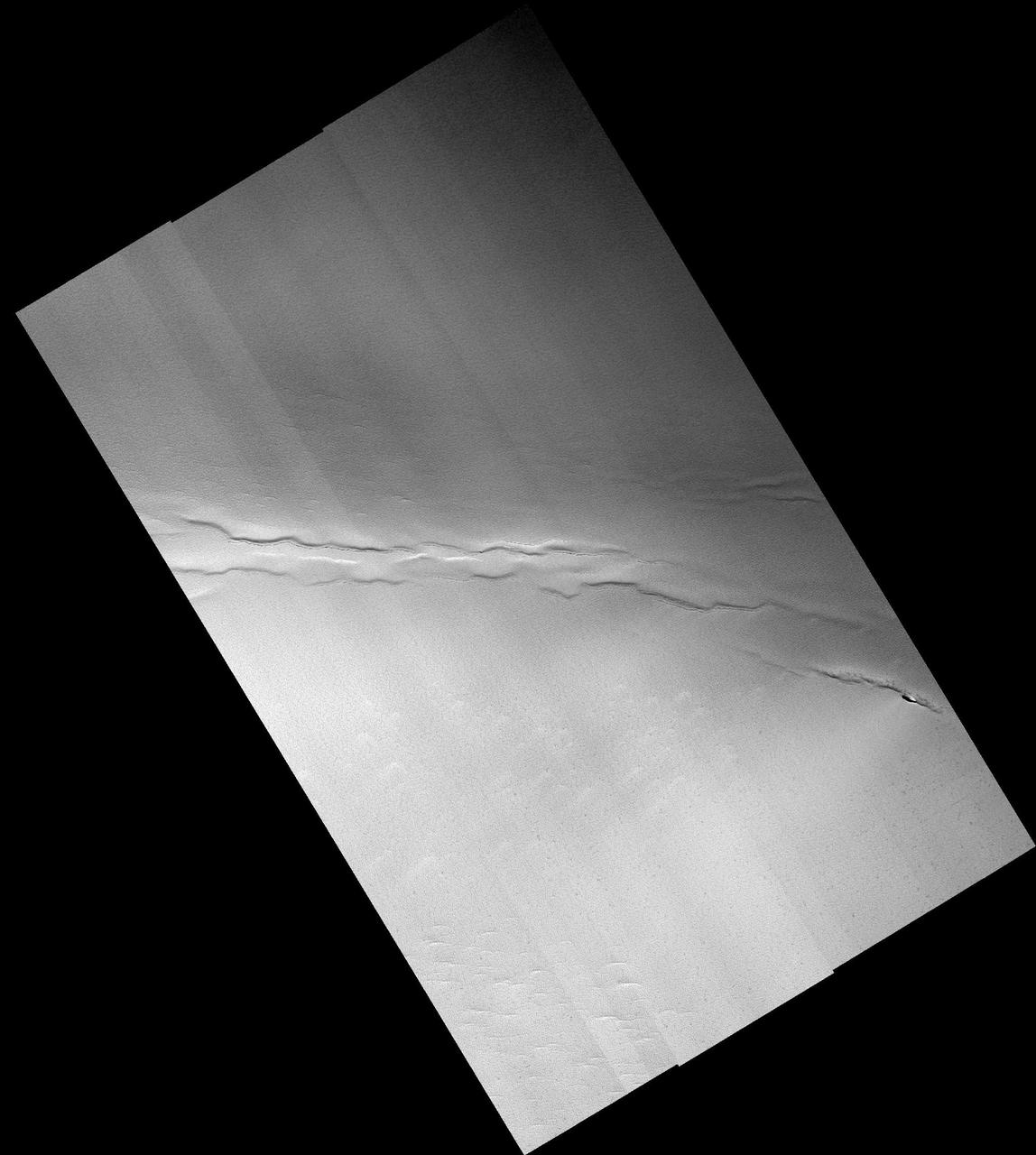
Faults and Pits in the North Polar Residual Ice Cap
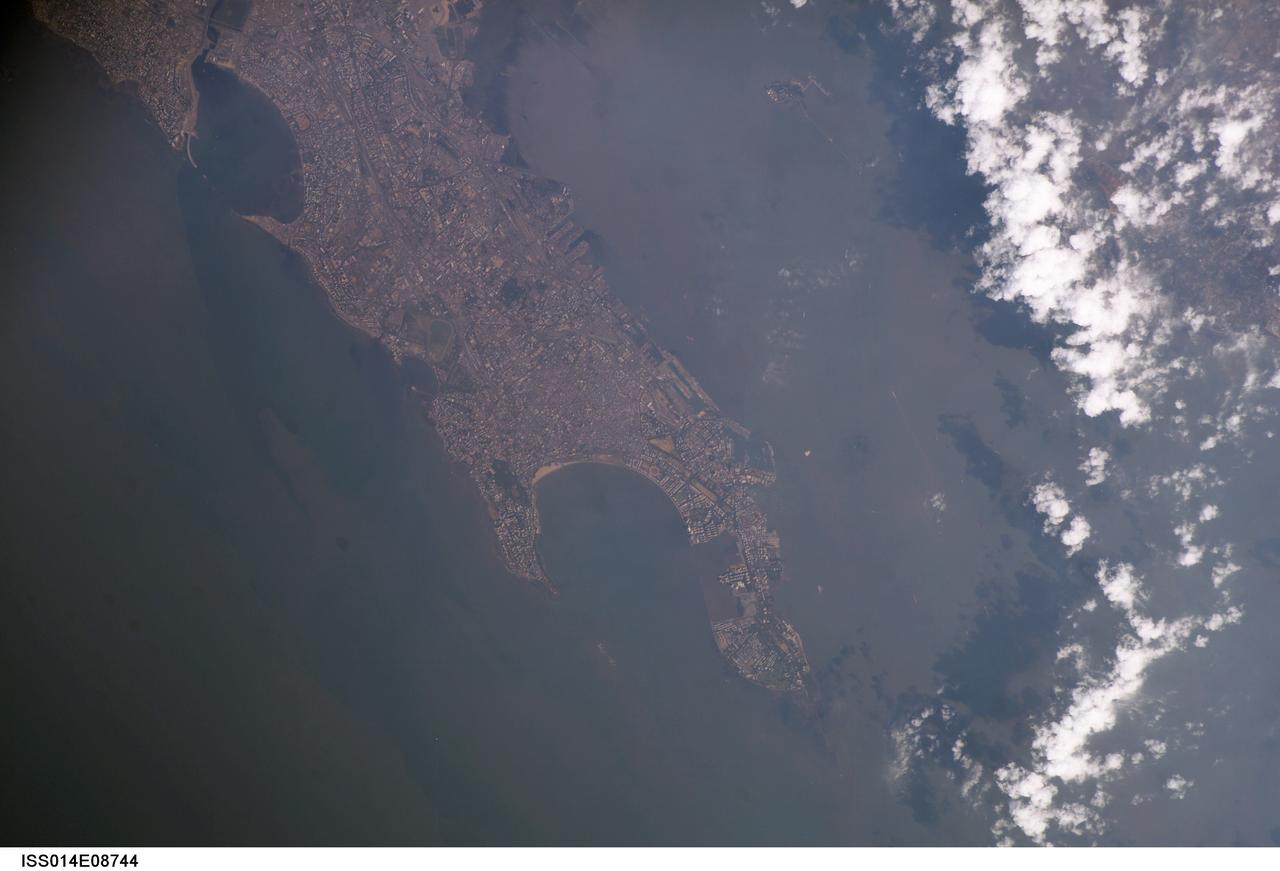
ISS014-E-08744 (28 Nov. 2006) --- Mumbai Harbor, India is featured in this image photographed by an Expedition 14 crewmember on the International Space Station. This view is one of three (frames 8741, 8742 and 8744) acquired within ten seconds of each other as the station passed over India. Mumbai (formerly known as Bombay) is a so-called mega city, with over 21 million people living in the greater Mumbai metropolitan region. Mega cities like Tokyo, New York, Sao Paulo, and Mumbai are also known as conurbations -- large contiguous areas of urban land cover formed from the growth and merging together of previously separate and distinct urban centers. The Mumbai conurbation includes several municipal entities including Bhiwandi, Kalyan, Thane, and Ulhasnagar. Located along the coast of western India on Salsette Island, Mumbai is generally considered to be the most modern of India's cities and is a major economic, transportation, and cultural center. Almost cloud-free conditions reveal the continuous urban land cover of the mega city extending north to south across Salsette Island -- a distance of nearly 50 kilometers.

KENNEDY SPACE CENTER, FLA. - Crawler-transporter No. 2 makes its way toward Launch Pad 39B (in the background). The crawler is being moved nearby in the event the mission management team decides to roll back Space Shuttle Atlantis due to Hurricane Ernesto. The hurricane has been forecast on a heading north and east from Cuba, taking it along the eastern coast of Florida. NASA's lighted launch window extends to Sept. 13, but mission managers are hoping to launch on mission STS-115 by Sept. 7 to avoid a conflict with a Russian Soyuz rocket also bound for the International Space Station. The crawler is 131 feet long, 113 feet wide and 20 feet high. It weights 5.5 million pounds unloaded. The combined weight of crawler, mobile launcher platform and a space shuttle is 12 million pounds. Unloaded, the crawler moves at 2 mph. Loaded, the snail's pace slows to 1 mph. Photo credit: NASA/Kim Shiflett
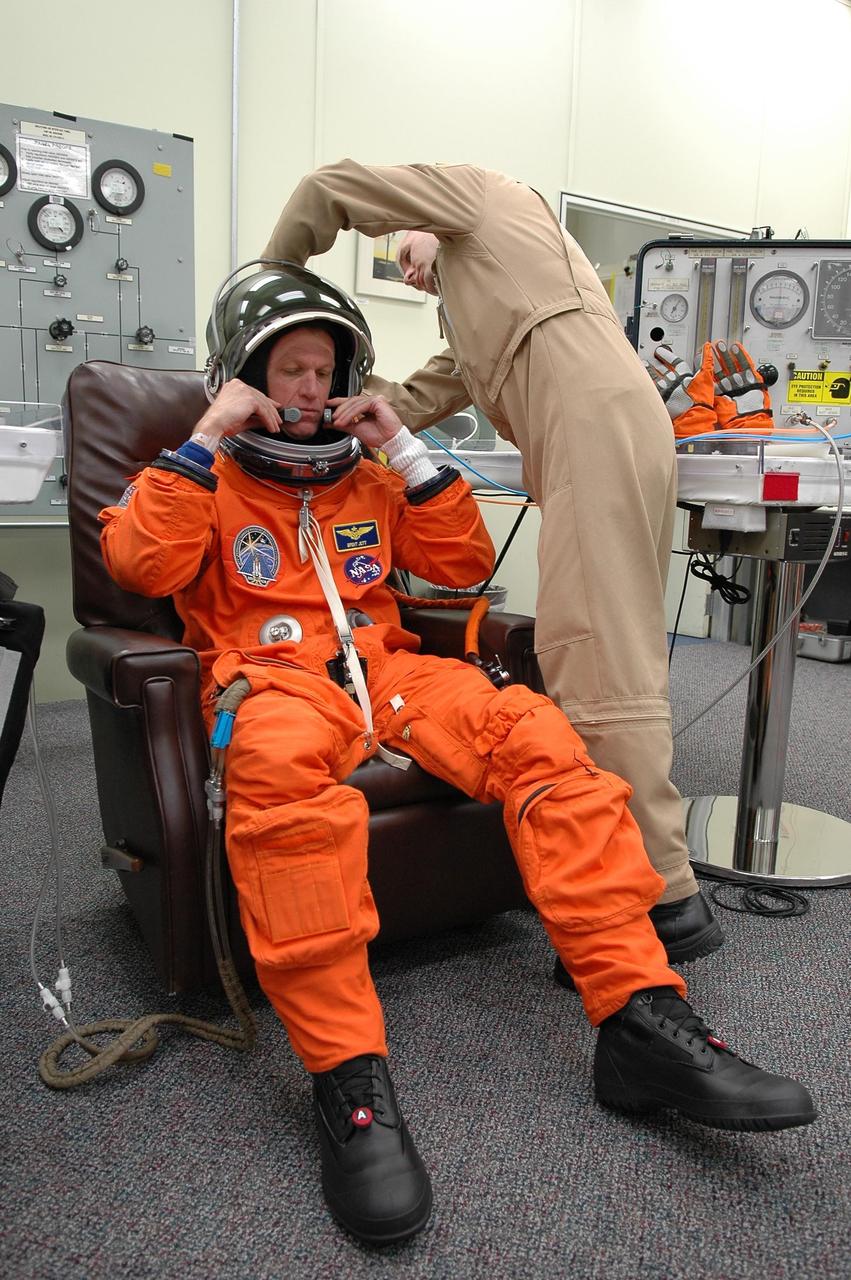
KENNEDY SPACE CENTER, FLA. - In the Operations and Checkout Building at NASA Kennedy Space Center, STS-115 Commander Brent Jett dons his launch and re-entry suit before heading to the launch pad. Jett is making his fourth shuttle flight on this mission to the International Space Station aboard Space Shuttle Atlantis. On its second attempt for launch, Atlantis is scheduled to lift off at 11:41 a.m. EDT today from Launch Pad 39B. During the STS-115 mission, Atlantis' astronauts will deliver and install the 17.5-ton, bus-sized P3/P4 integrated truss segment on the station. The girder-like truss includes a set of giant solar arrays, batteries and associated electronics and will provide one-fourth of the total power-generation capability for the completed station. This mission is the 116th space shuttle flight, the 27th flight for orbiter Atlantis, and the 19th U.S. flight to the ISS. STS-115 is scheduled to last 11 days with a planned landing at KSC. Photo credit: NASA/Kim Shiflett
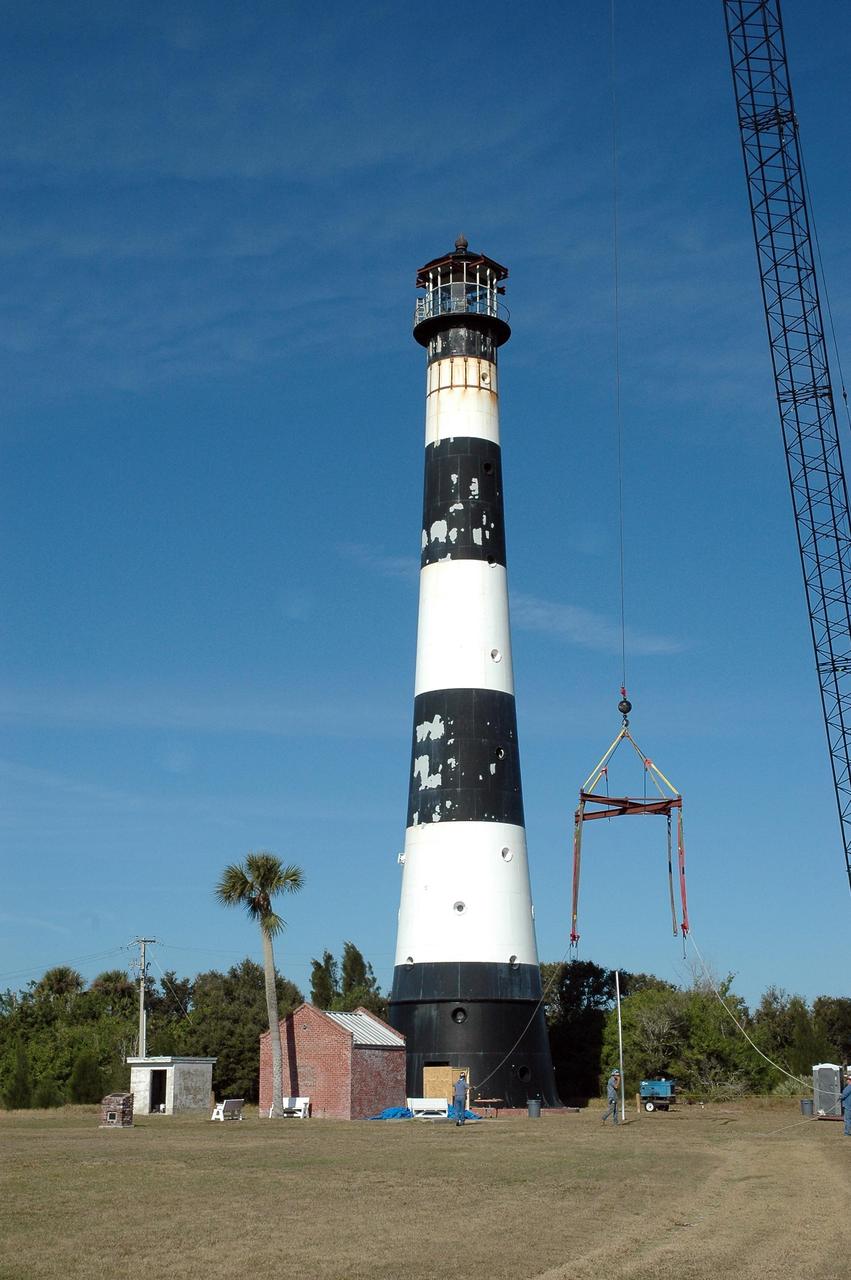
KENNEDY SPACE CENTER, FLA. - At Cape Canaveral Air Force Station, a crane is lifted near the Cape Canaveral Lighthouse for use in removing the lamp room at top. Leaks in the roof allowed moisture to seep in. The lamp room is being removed for repairs and refurbishment. In addition, the original brass roof will be restored and put back in place. The Cape Canaveral Lighthouse is the only operational lighthouse owned by the Air Force. It was first erected in 1868 near the edge of the Atlantic Ocean. Photo credit: NASA/Jack Pfaller
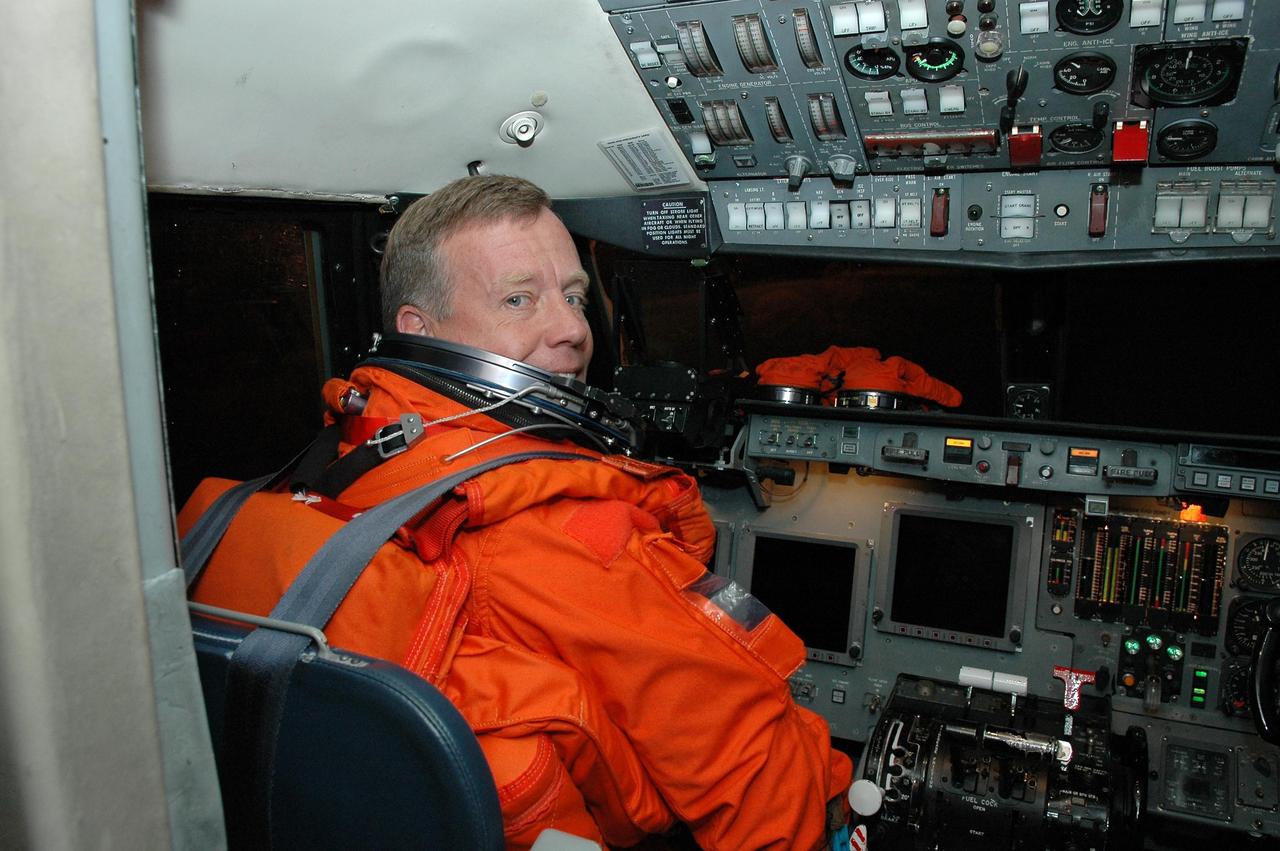
KENNEDY SPACE CENTER, FLA. - Inside the Shuttle Training Aircraft (STA), STS-121 Commander Steven Lindsey settles into his seat in the cockpit. Lindsey and Pilot Mark Kelly will be making practice landings in preparation for the July 1 launch of Space Shuttle Discovery. The STA is a Grumman American Aviation-built Gulf Stream II jet that was modified to simulate an orbiter’s cockpit, motion and visual cues, and handling qualities. In flight, the STA duplicates the orbiter’s atmospheric descent trajectory from approximately 35,000 feet altitude to landing on a runway. Because the orbiter is unpowered during re-entry and landing, its high-speed glide must be perfectly executed the first time. Photo credit: NASA/Kim Shiflett
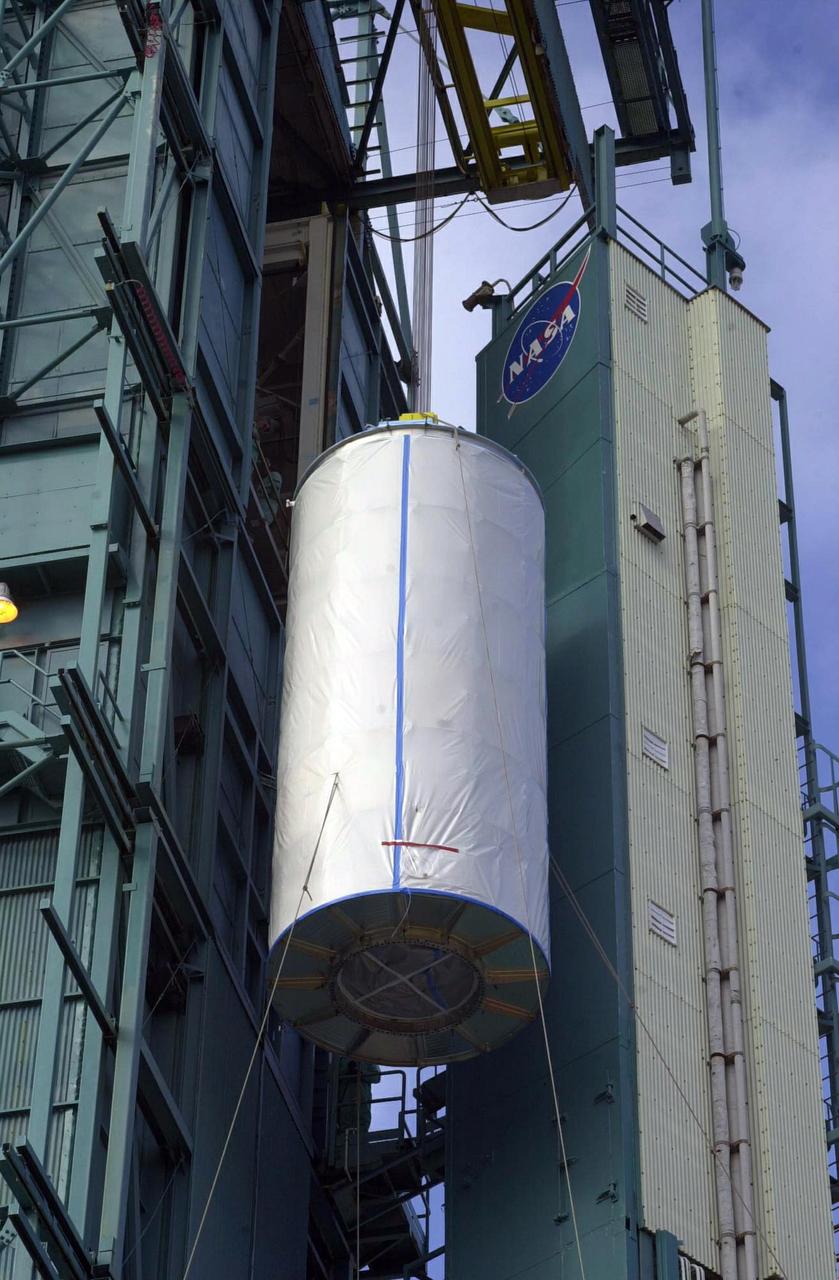
VANDENBERG AIR FORCE BASE, CALIF. - NASA's CALIPSO/CloudSat spacecraft are lifted at Space Launch Complex 2 at Vandenberg Air Force Base in preparation for integration with the Boeing Delta II launch vehicle. Launch of the dual spacecraft is scheduled for April 21. CALIPSO stands for Cloud-Aerosol Lidar and Infrared Pathfinder Satellite Observation. It will fly in combination with the CloudSat satellite to provide never-before-seen 3-D perspectives of how clouds and aerosols form, evolve, and affect weather and climate. CALIPSO and CloudSat will join three other satellites in orbit to enhance understanding of climate systems.

LCROSS (Lunar Crater Observation Sensing Satellite) Near InfraRed Spectrometer shake test in Ames N-244 high bay EEL Lab - with Kimberly Ennico, Anthony Colaprete and Lynn Hofland
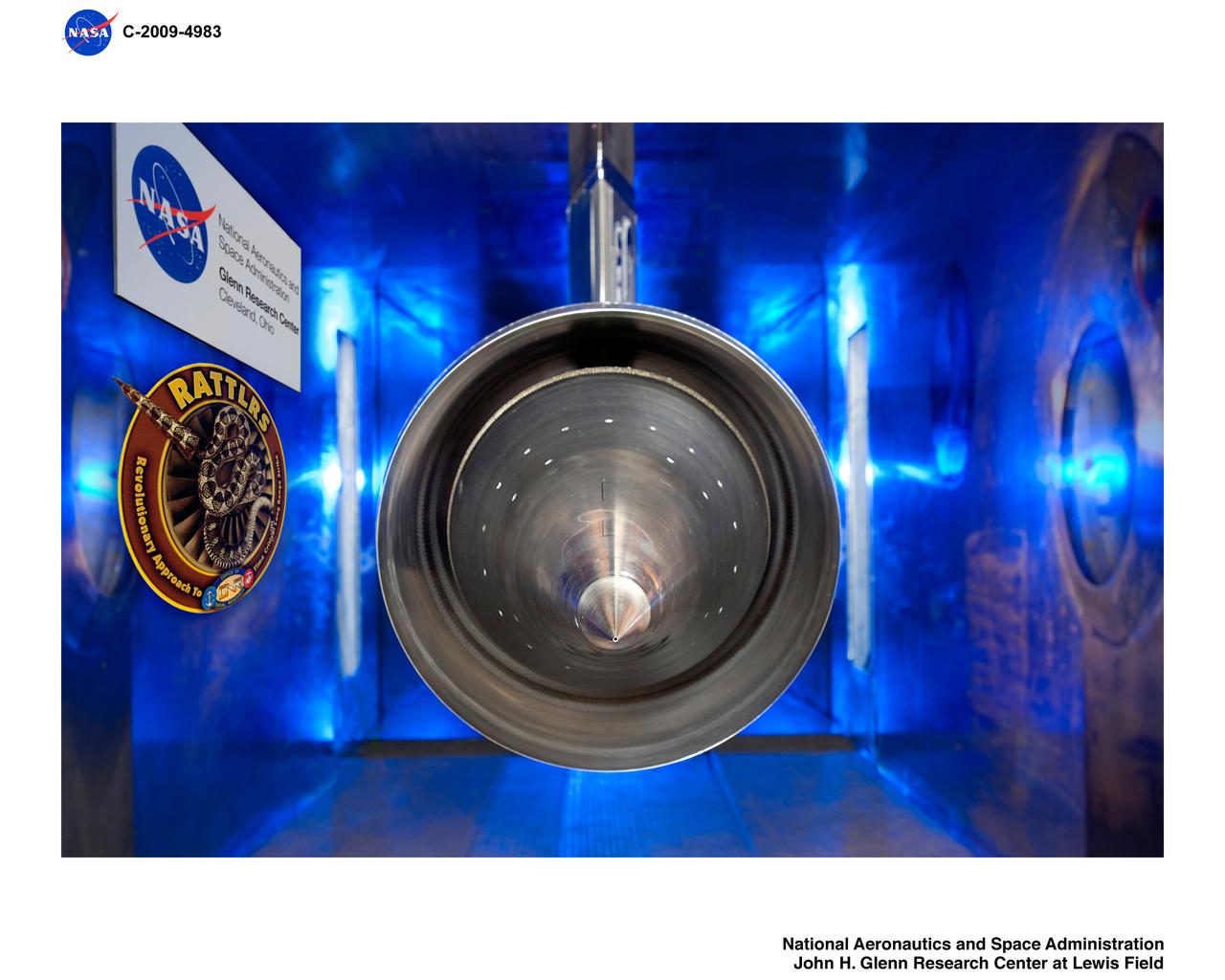
hardware test in the 10x10 wind tunnel at NASA Glenn Research Center
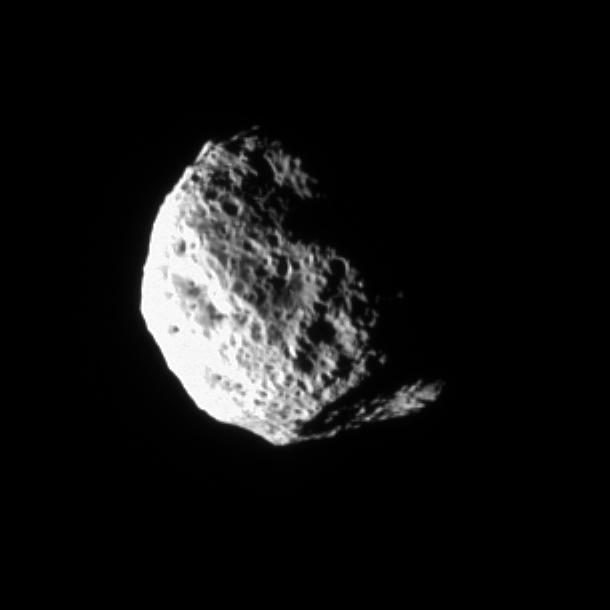
The tumbling and irregularly shaped moon Hyperion rotates away from the Cassini spacecraft in this movie taken during a distant encounter in Dec. 2005. A shadow closes over the large crater at bottom as the movie progresses. Hyperion (280 kilometers, or 174 miles across) is covered with closely packed and deeply etched pits. The warming action of the Sun on water ice lying beneath a darkened layer of surface material apparently has deepened and exaggerated the depressions already created by impacts. Cassini scientists now think that Hyperion’s unusual appearance can be attributed to the fact that it has an unusually low density for such a large object, giving it weak surface gravity and high porosity. These characteristics help preserve the original shapes of Hyperion’s craters by limiting the amount of impact ejecta coating the moon’s surface. Impactors tend to make craters by compressing the surface material, rather than blasting it out. Further, Hyperion’s weak gravity, and correspondingly low escape velocity, means that what little ejecta is produced has a good chance of escaping the moon altogether. The images were taken in visible light with the Cassini spacecraft narrow-angle camera on Dec. 23, 2005 at distances ranging from 228,000 kilometers (142,000 miles) to 238,000 kilometers (148,000 miles) from Hyperion and at a Sun-Hyperion-spacecraft, or phase, angle ranging from 77 to 86 degrees. Resolution in the original images was about 1.4 kilometers (0.9 mile) per pixel. The images have been magnified by a factor of two and contrast-enhanced to aid visibility. An animation is available at http://photojournal.jpl.nasa.gov/catalog/PIA07683
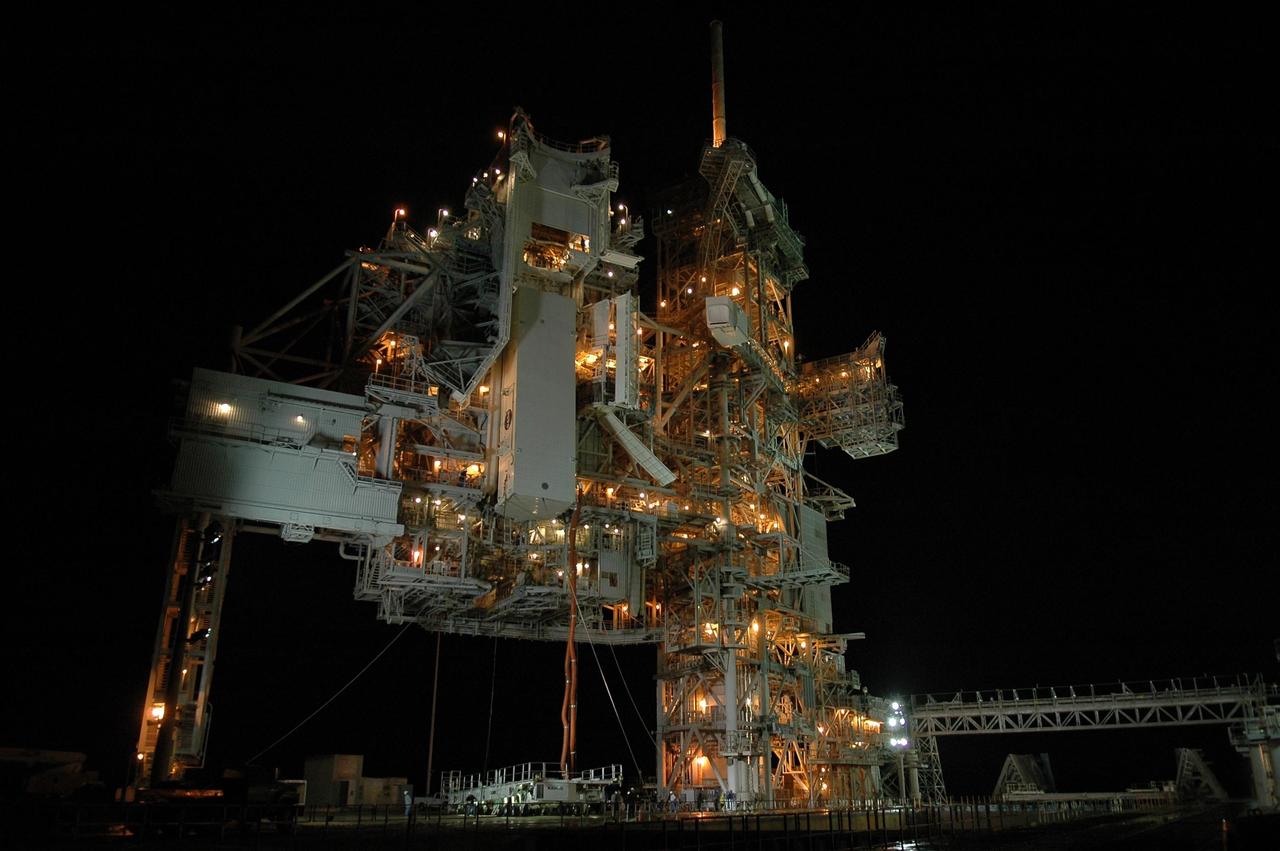
KENNEDY SPACE CENTER, FLA. -- With umbilical lines still attached, the payload canister is lifted up to the payload changeout room (PCR) on the rotating service structure (RSS) on Launch Pad 39B. Inside the canister are the SPACEHAB module and the port 5 truss segment for mission STS-116. Once inside the PCR, they will be transferred into Space Shuttle Discovery's payload bay once the vehicle has rolled out to the pad. On the right is the fixed service structure. The PCR is the enclosed, environmentally controlled portion of the RSS that supports cargo delivery to the pad and subsequent vertical installation into the orbiter payload bay. Seals around the mating surface of the PCR fit against the orbiter and allow the opening of the payload bay or canister doors and removal of the cargo without exposure to outside air and contaminants. A clean-air purge in the PCR maintains environmental control during PCR cargo operations. Cargo is removed from the payload canister and installed vertically in the orbiter by the payload ground handling mechanism (PGHM). Photo credit: NASA/Kim Shiflett
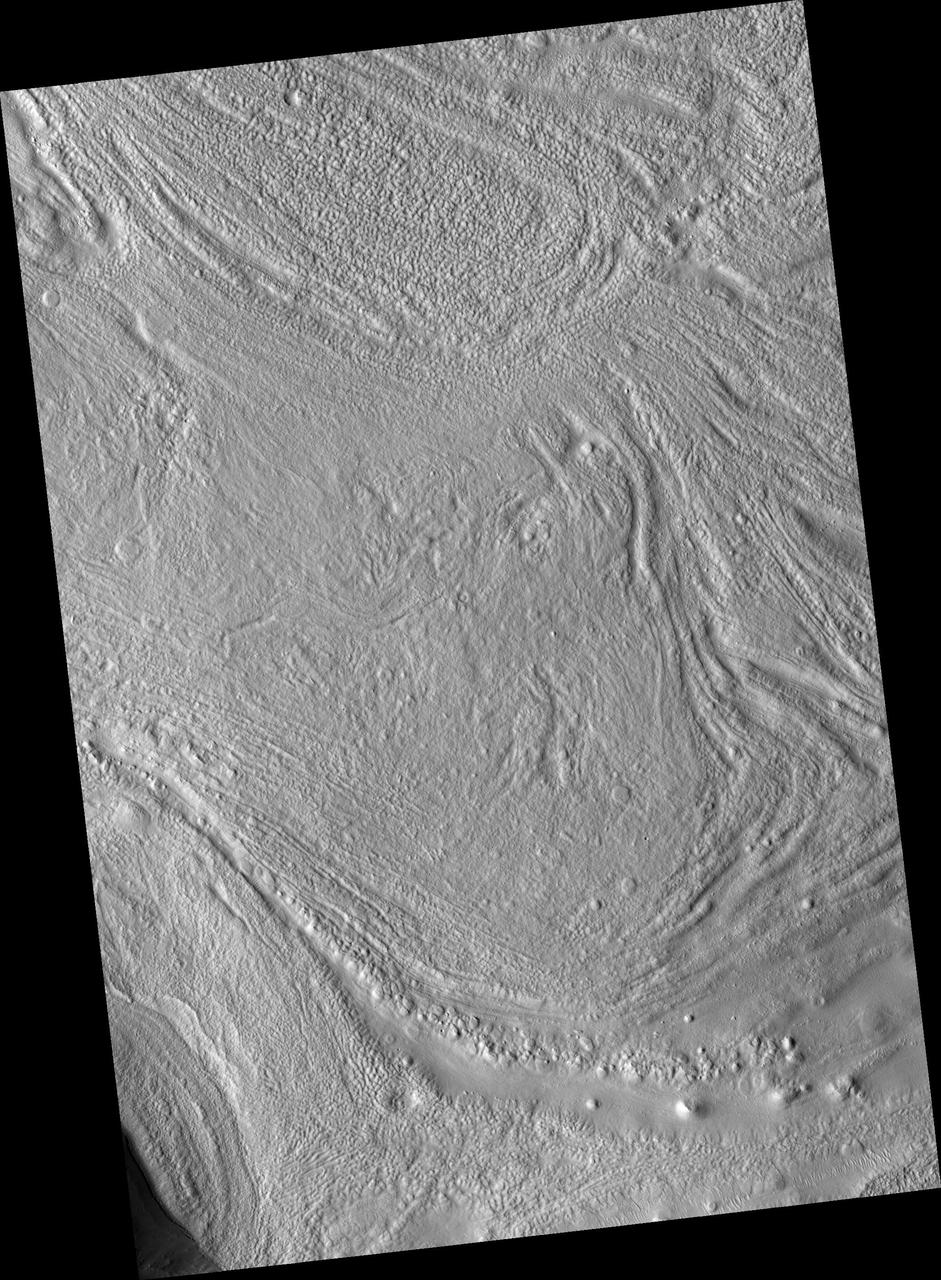
Juncture of Valleys with Lineated Fill
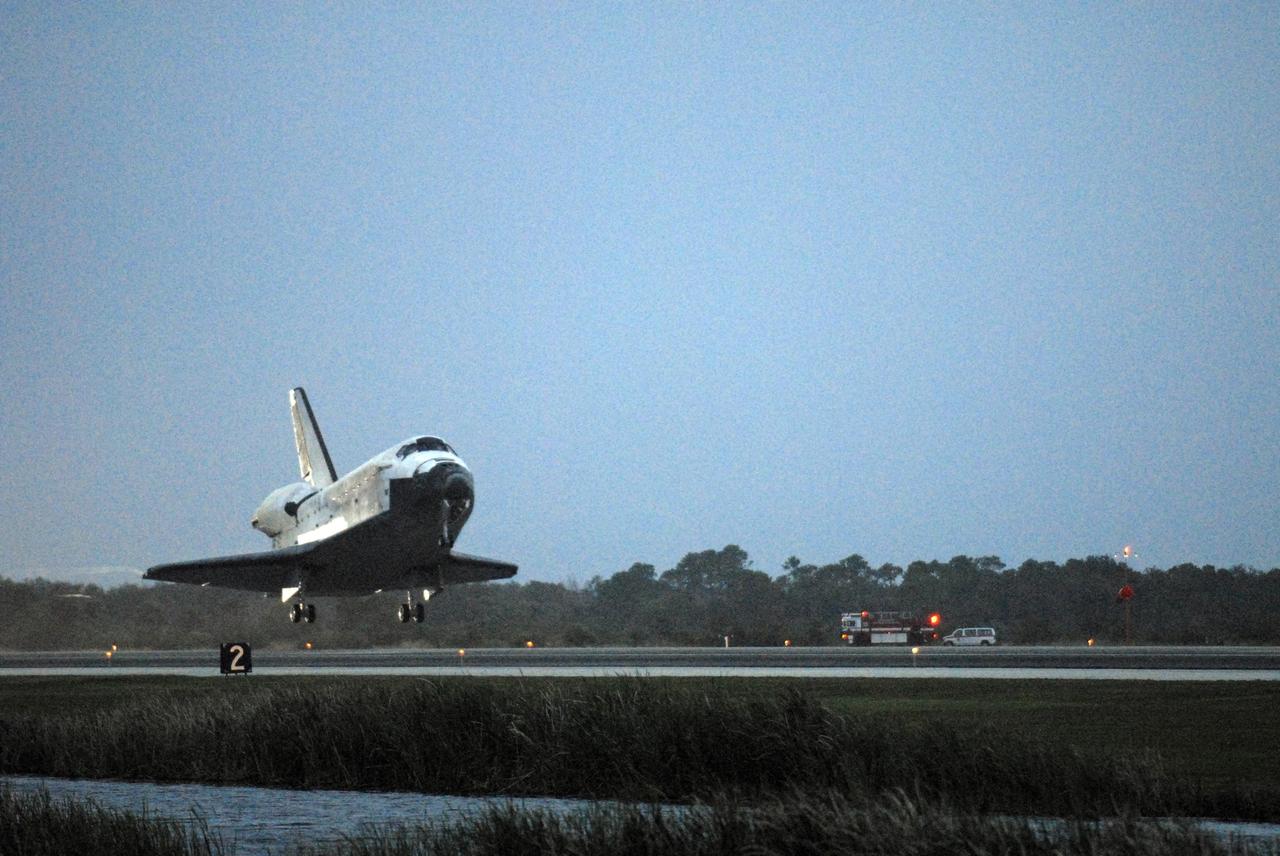
KENNEDY SPACE CENTER, FLA. -- On the shortest day of the year, Discovery touches down at sunset on Runway 15 at NASA Kennedy Space Center's Shuttle Landing Facility as the sun sets, concluding mission STS-116. The rescue vehicles in the background are in position in the unlikely event they are needed during post-landing operations. Aboard are Commander Mark Polansky, Pilot William Oefelein, and Mission Specialists Robert Curbeam, Joan Higginbotham, Nicholas Patrick and Christer Fuglesang, who represents the European Space Agency, as well as Thomas Reiter, who is returning from a 6-month stay on the International Space Station. During the mission, three spacewalks attached the P5 integrated truss structure to the station, and completed the rewiring of the orbiting laboratory's power system. A fourth spacewalk retracted a stubborn solar array. Main gear touchdown was at 5:32 p.m. EST. Nose gear touchdown was at 5:32:12 p.m. and wheel stop was at 5:32:52 p.m. At touchdown -- nominally about 2,500 ft. beyond the runway threshold -- the orbiter is traveling at a speed ranging from 213 to 226 mph. Discovery traveled 5,330,000 miles, landing on orbit 204. Mission elapsed time was 12 days, 20 hours, 44 minutes and 16 seconds. This is the 64th landing at KSC. Photo credit: NASA/Tom Joseph
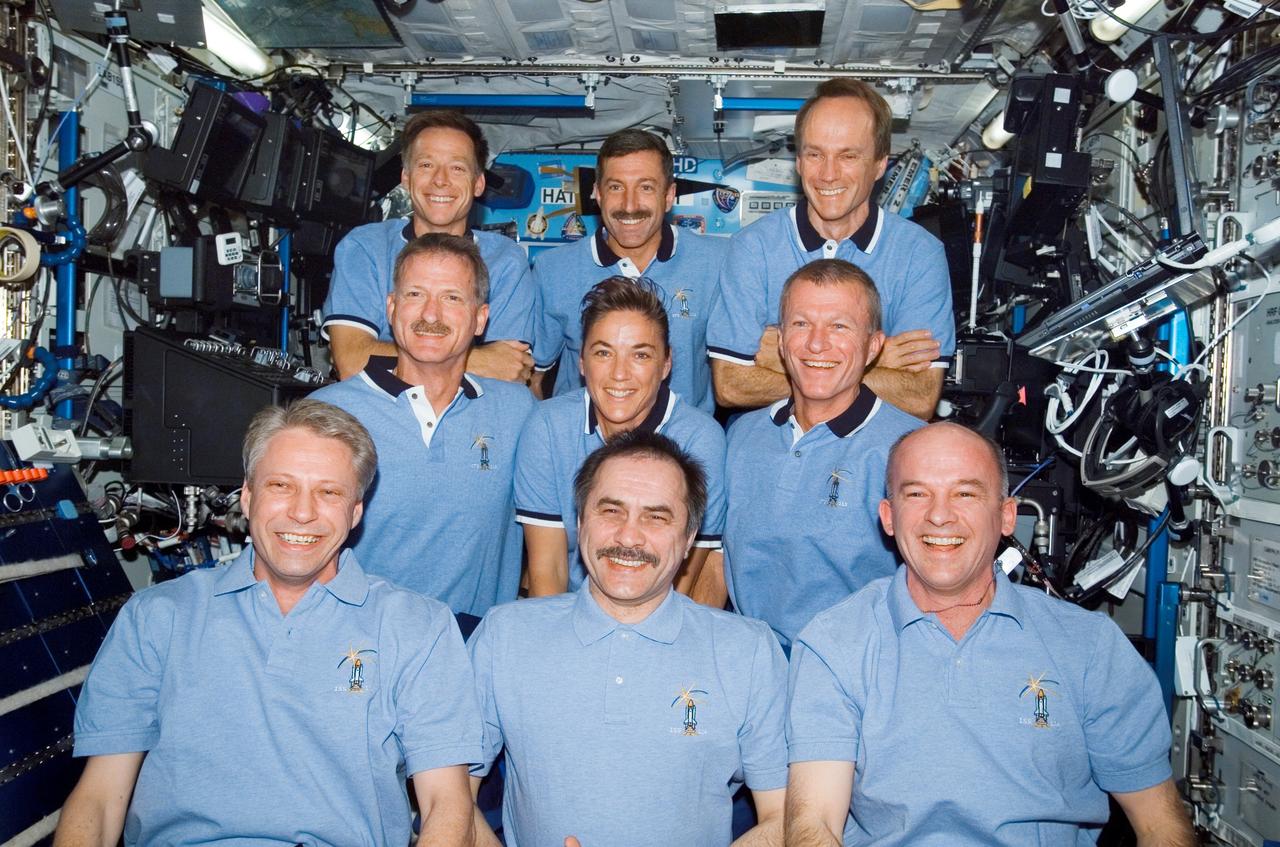
ISS013-E-81630 (16 Sept. 2006) --- The Expedition 13 and STS-115 crewmembers gather for a group portrait during a joint crew press conference in the Destiny laboratory of the International Space Station while Space Shuttle Atlantis was docked with the station. From the left (front row) are European Space Agency (ESA) astronaut Thomas Reiter, Expedition 13 flight engineer; cosmonaut Pavel V. Vinogradov, commander representing Russia's Federal Space Agency; and astronaut Jeffrey N. Williams, NASA space station science officer and flight engineer. From the left (second row) are astronauts Joseph R. Tanner, Heidemarie M. Stefanyshyn-Piper, both STS-115 mission specialists; and Brent W. Jett, Jr., STS-115 commander. From the left (top row) are astronauts Christopher J. Ferguson, pilot; Daniel C. Burbank and Canadian Space Agency astronaut Steven G. MacLean, both mission specialists.
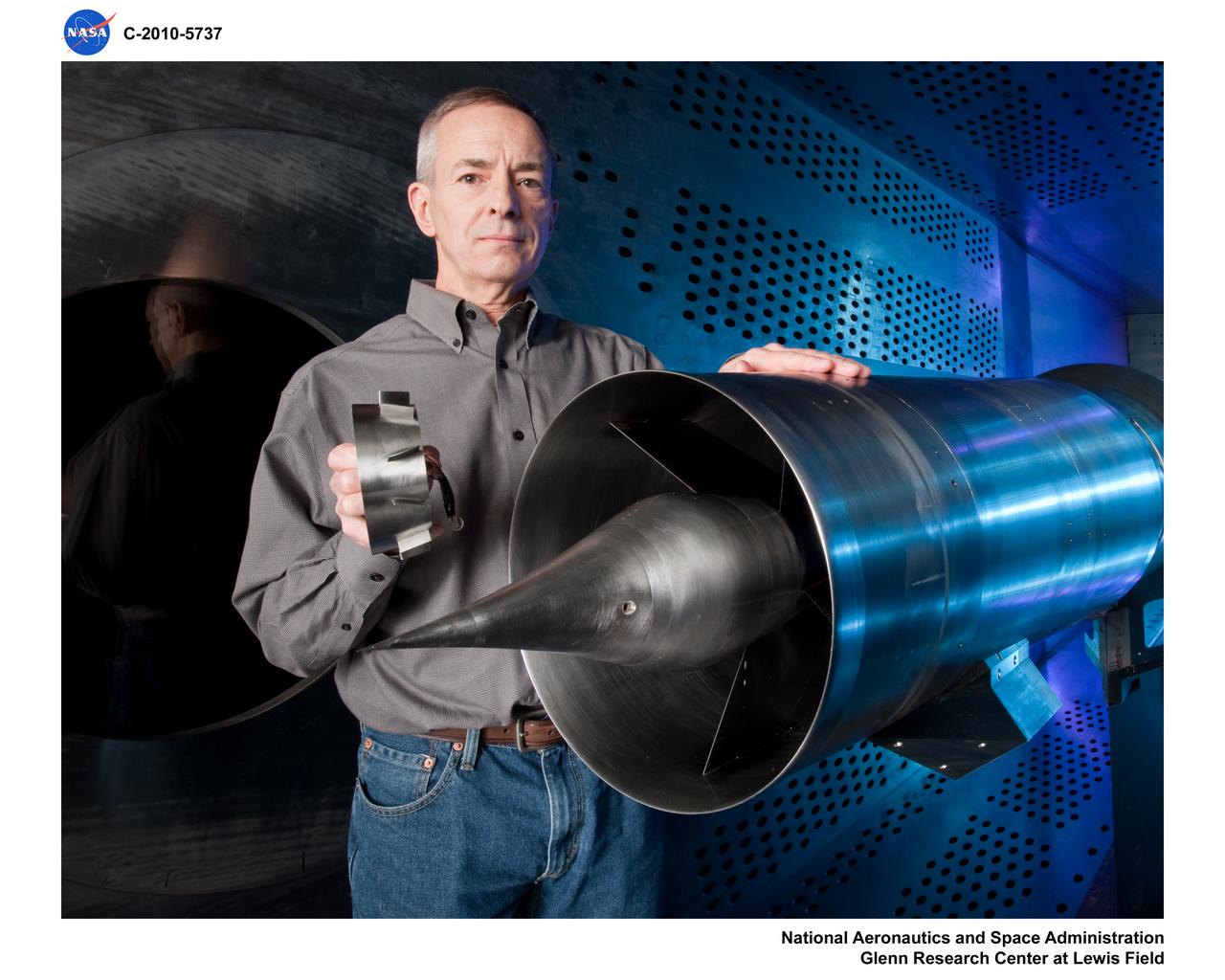
Large-Scale Low-Boom Inlet Test Single Stream Inlet in 8x6 foot Supersonic Wind Tunnel
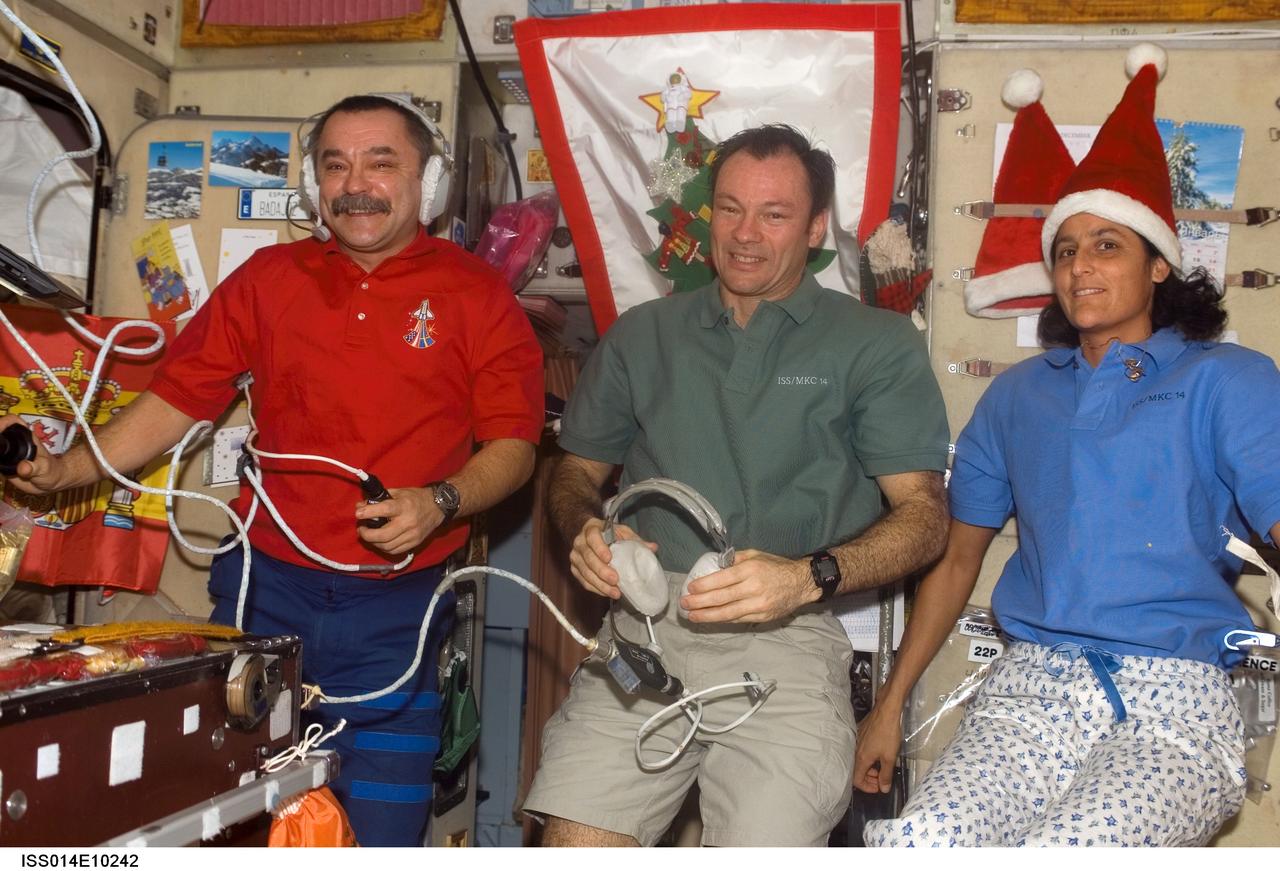
ISS014-E-10242 (25 Dec. 2006) --- Cosmonaut Mikhail Tyurin (left), Expedition 14 flight engineer representing Russia's Federal Space Agency; astronaut Michael E. Lopez-Alegria, commander and NASA space station science officer; and astronaut Sunita L. Williams, flight engineer, conduct a teleconference with the Moscow Support Group for the Russian New Year celebration, via Ku- and S-band, with audio and video relayed to the Mission Control Center at Johnson Space Center.

KENNEDY SPACE CENTER, FLA. - A worker uncovers instrumentation on one of NASA's Solar Terrestrial Relations Observatory (STEREO) spacecraft in the clean room at Astrotech, a payload processing facility near Kennedy Space Center in Florida. The spacecraft arrived on May 3 and will now undergo final preparations and testing for launch. Liftoff will occur aboard a Boeing Delta II rocket from Launch Complex 17 on Cape Canaveral Air Force Station in the summer. STEREO consists of two spacecraft whose mission is the first to take measurements of the sun and solar wind in 3-D. This new view will improve our understanding of space weather and its impact on the Earth. Photo credit: NASA/Jim Grossmann
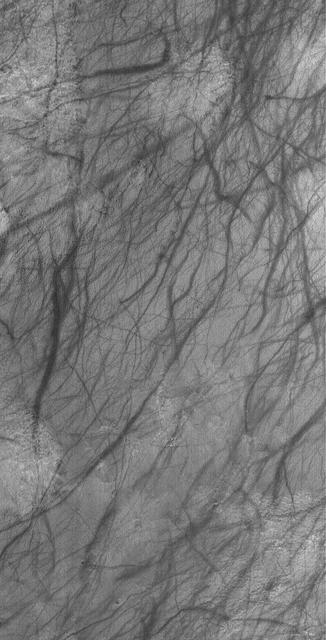
This Mars Global Surveyor MGS Mars Orbiter Camera MOC image shows a dust-mantled plain streaked by spring and summertime dust devils in southern Noachis Terra

KENNEDY SPACE CENTER, FLA. -- In the Orbiter Processing Facility, STS-117 Mission Specialists (left) Patrick Forrester, Steven Swanson and (right) James Reilly take a close look at the wheel well on orbiter Atlantis, their vehicle for the mission. They and other crew members are at KSC to take part in a Crew Equipment Interface Test that allows them opportunities to become familiar with equipment and hardware for their mission. STS-117 will deliver the S3/S4 and another pair of solar arrays to the space station. The 21st shuttle mission to the International Space Station, STS-117 is scheduled to launch no earlier than March 16. Photo credit: NASA/Kim Shiflett
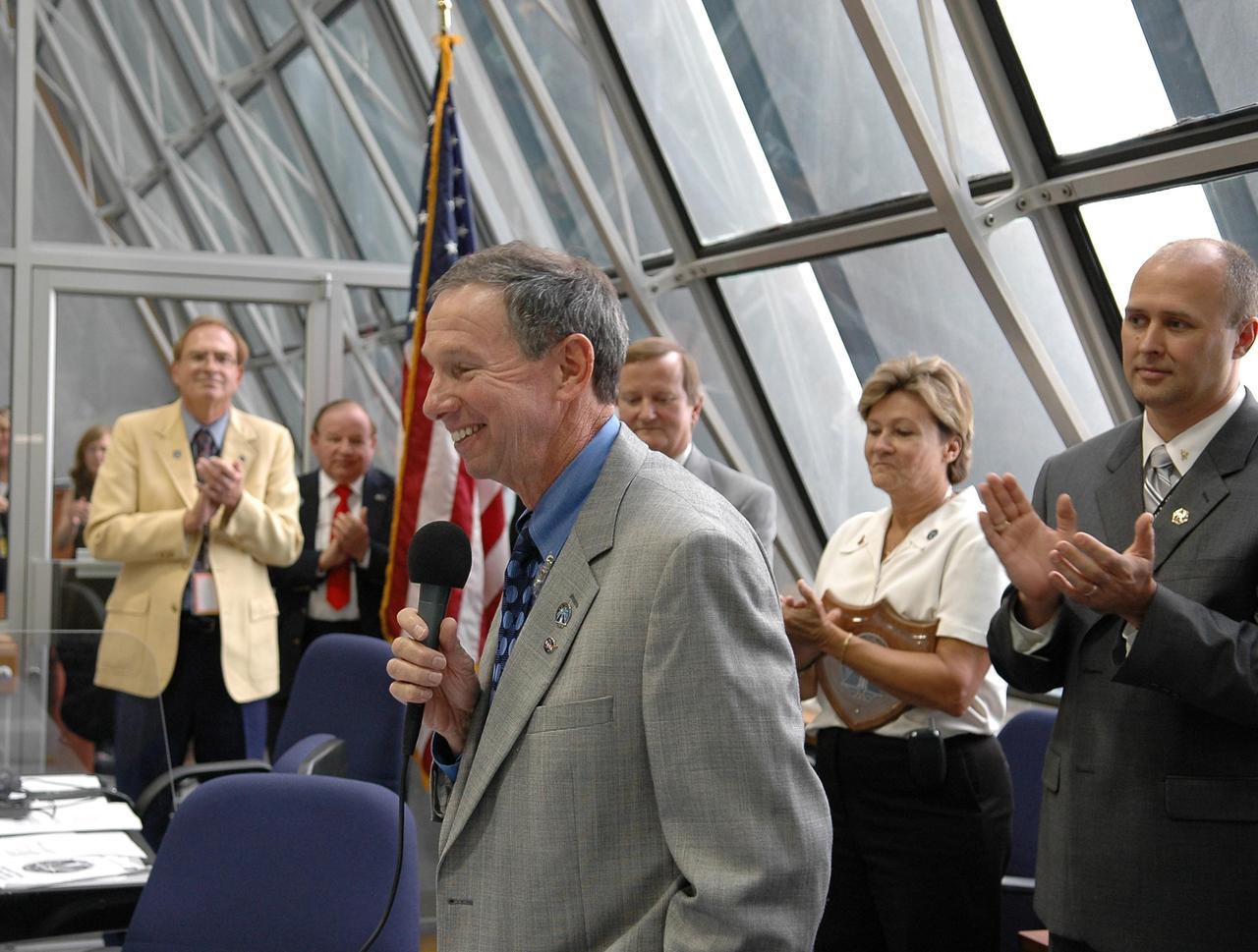
KENNEDY SPACE CENTER, FLA. - Inside the Launch Control Center, NASA Administrator Michael Griffin congratulates the launch team after the liftoff of Space Shuttle Atlantis on mission STS-115. Behind him are (left to right) Shuttle Launch Director Mike Leinbach, Pat Leslie and Robbie Ashley, STS-115 payload manager. Mission STS-115 is the 116th space shuttle flight, the 27th flight for orbiter Atlantis, and the 19th U.S. flight to the International Space Station. Mission STS-115 is scheduled to last 11 days with a planned landing at KSC. Photo credit: NASA/Kim Shiflett
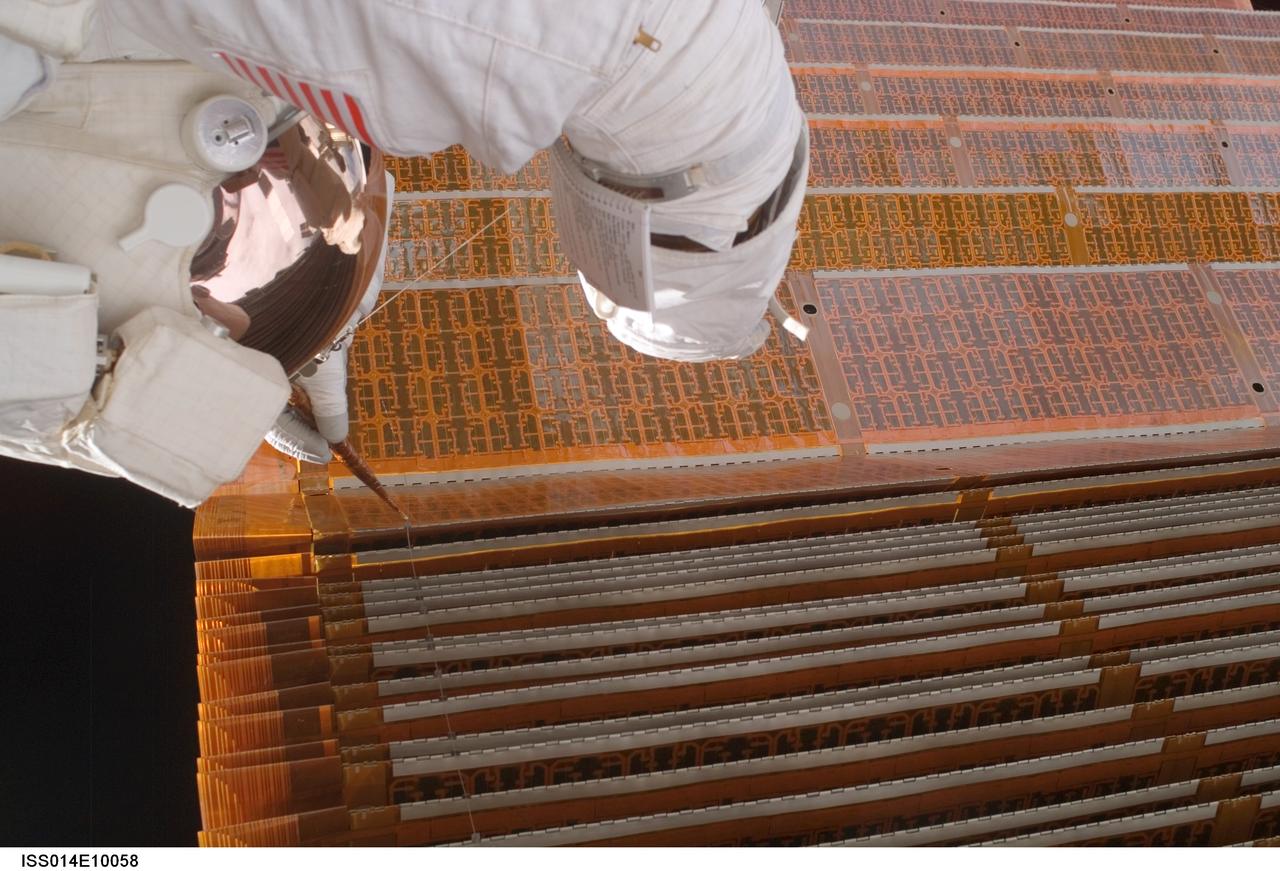
ISS014-E-10058 (18 Dec. 2006) --- Astronaut Robert L. Curbeam Jr., STS-116 mission specialist, works with the port overhead solar array wing on the International Space Station's P6 truss during the mission's fourth session of extravehicular activity (EVA). European Space Agency (ESA) astronaut Christer Fuglesang (out of frame), mission specialist, worked in tandem with Curbeam, using specially prepared, tape-insulated tools, to guide the array wing neatly inside its blanket box during the 6-hour, 38-minute spacewalk.

NASA Mars Exploration Rover Opportunity used its navigation camera to take the images combined into this stereo view of the rover surroundings on sol or Martian day 959 of its surface mission

Rings Against a Dark Planet
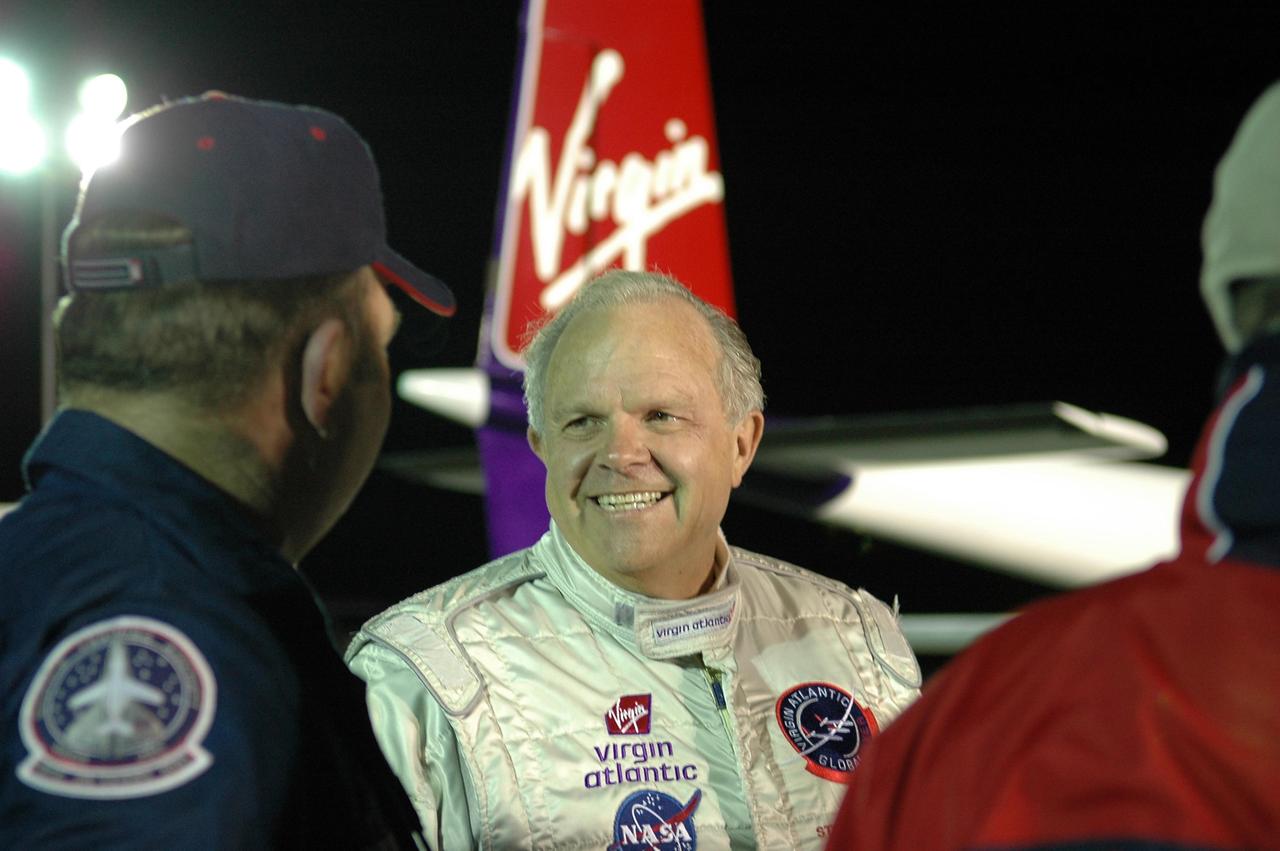
KENNEDY SPACE CENTER, FLA. - Before dawn on NASA Kennedy Space Center’s Shuttle Landing Facility (SLF), Steve Fossett talks to the media about the anticipated flight of the Virgin Atlantic GlobalFlyer. Fossett will pilot the GlobalFlyer on a record-breaking attempt by flying solo, non-stop without refueling, to surpass the current record for the longest flight of any aircraft. Fossett is expected to take off from the KSC SLF. Later, takeoff of the GlobalFlyer was postponed due to a fuel leak that appeared during the last moments of loading. The next planned takeoff attempt is 7 a.m. Feb. 8 from the SLF. Photo credit: NASA/Kim Shiflett
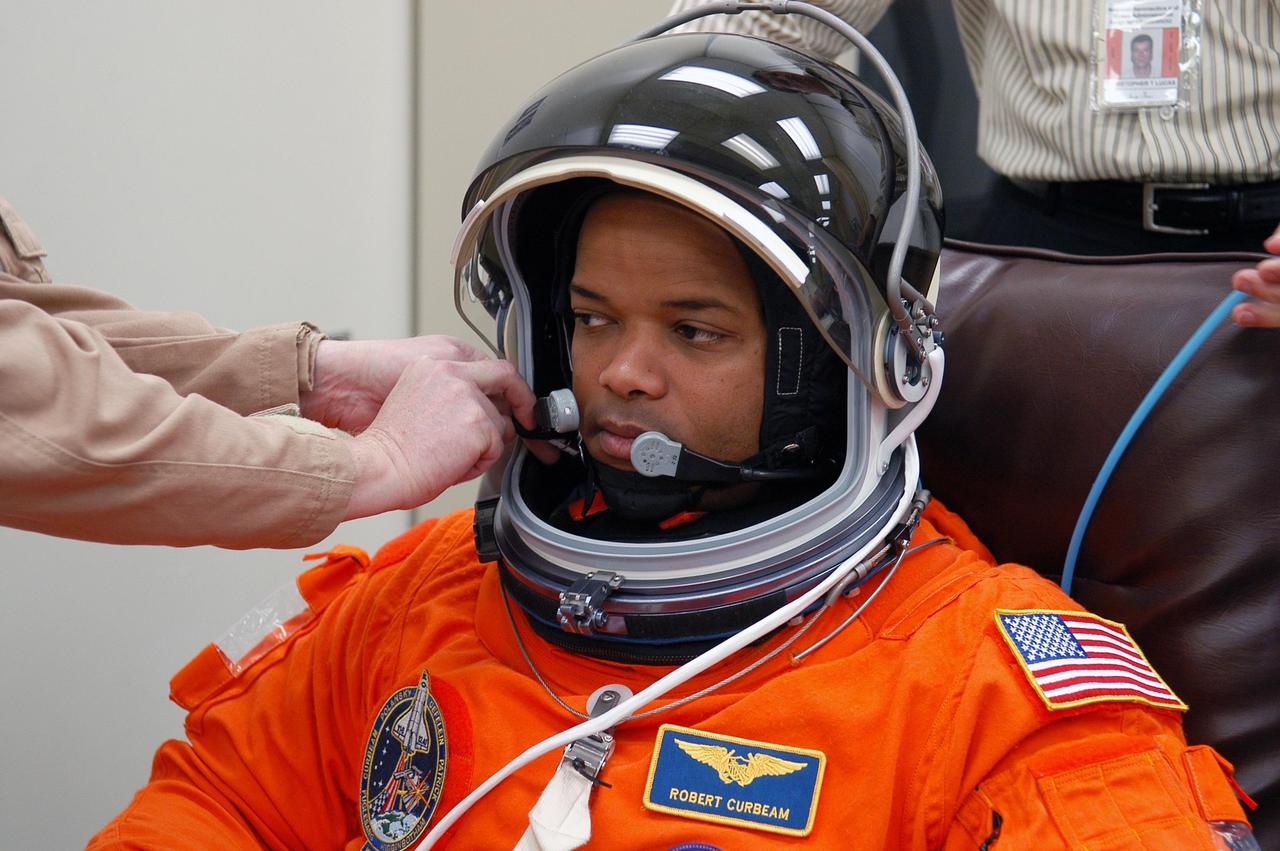
KENNEDY SPACE CENTER, FLA. -- The STS-116 mission crew practices for launch with a simulation of activities, from crew breakfast and suit-up to countdown in the orbiter. In this photo Mission Specialist Robert Curbeam has his helmet adjusted before heading to Launch Pad 39B. The STS-116 mission is No. 20 to the International Space Station and construction flight 12A.1. The mission payload is the SPACEHAB module, the P5 integrated truss structure and other key components. Launch is scheduled for no earlier than Dec. 7. Photo credit: NASA/Kim Shiflett
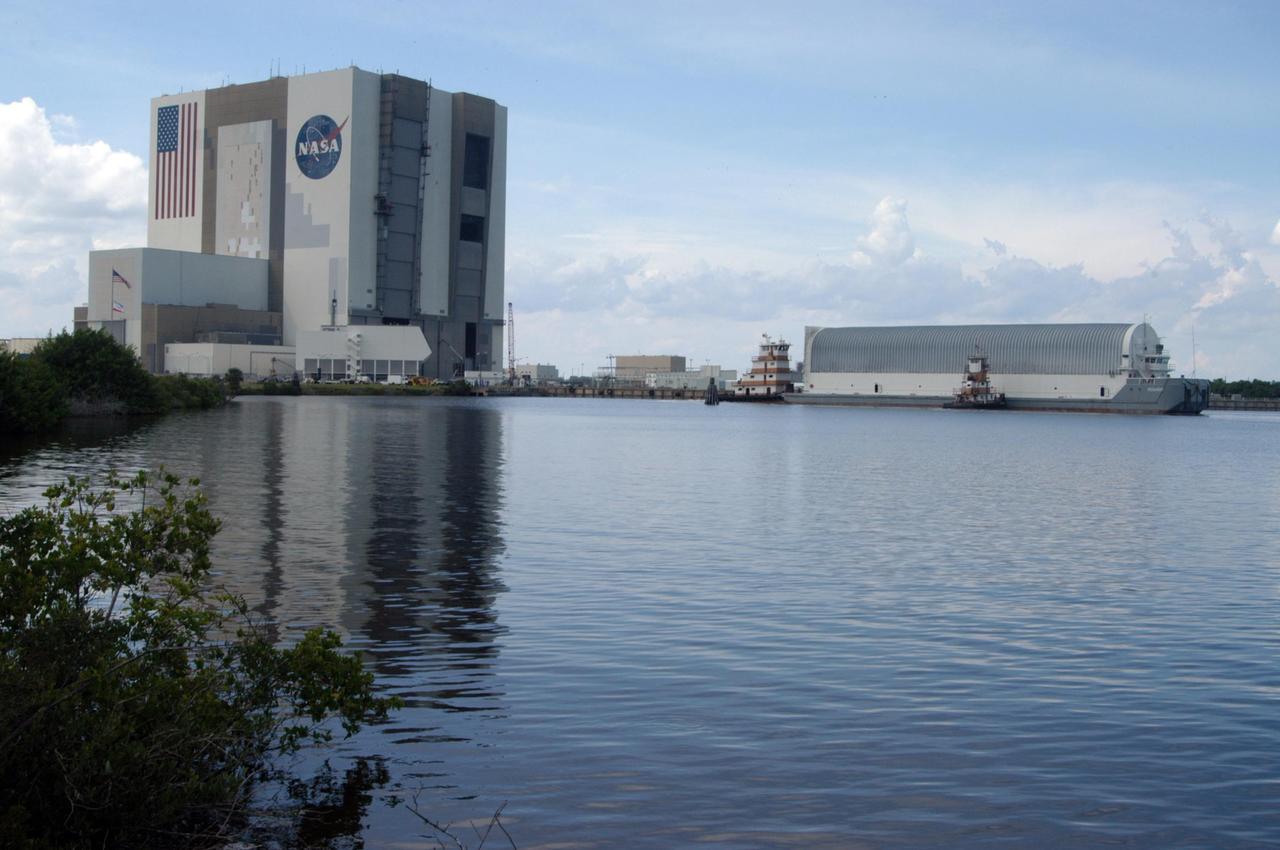
KENNEDY SPACE CENTER, FLA. - The Pegasus barge approaches the turn basin dock in the Launch Complex 39 Area at NASA's Kennedy Space Center. Onboard the barge is the external tank No. 123, designated to launch Space Shuttle Discovery on mission STS-116 in December. At left is the 525-foot-high Vehicle Assembly Building where the external tank will go after offloading from the barge. The tank, which was shipped from NASA's Michoud Assembly Facility in New Orleans, has undergone major safety changes, including removal of the protuberance air load ramps. Mission STS-116 will deliver the P5 truss segment, a SPACEHAB module and other key components to the International Space Station. Launch is currently scheduled no earlier than Dec. 14. Photo credit: NASA/George Shelton
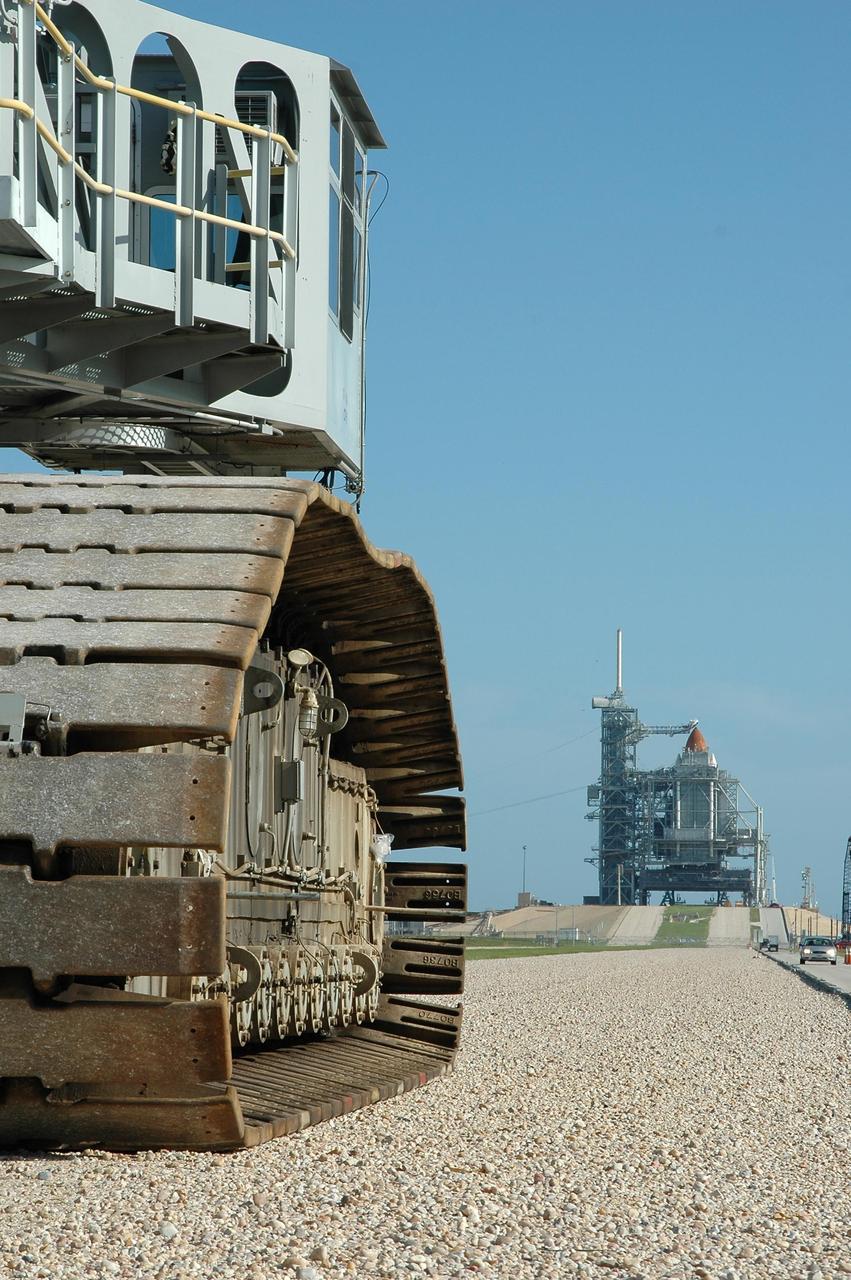
KENNEDY SPACE CENTER, FLA. - Crawler-transporter No. 2 nears Launch Pad 39B (in the background, right). The tip of the orange external tank can be seen above the rotating service structure surrounding the shuttle. The crawler is being moved nearby in the event the mission management team decides to roll back Space Shuttle Atlantis due to Hurricane Ernesto. The hurricane has been forecast on a heading north and east from Cuba, taking it along the eastern coast of Florida. NASA's lighted launch window extends to Sept. 13, but mission managers are hoping to launch on mission STS-115 by Sept. 7 to avoid a conflict with a Russian Soyuz rocket also bound for the International Space Station. The crawler is 131 feet long, 113 feet wide and 20 feet high. It weights 5.5 million pounds unloaded. The combined weight of crawler, mobile launcher platform and a space shuttle is 12 million pounds. Unloaded, the crawler moves at 2 mph. Loaded, the snail's pace slows to 1 mph. Photo credit: NASA/Kim Shiflett

KENNEDY SPACE CENTER, FLA. -- Seen from below, the orbiter Discovery is lifted into the upper levels of high bay 3 in the Vehicle Assembly Building. There it will be lowered onto the mobile launcher platform where the external tank and solid rocket boosters are already stacked. Space Shuttle Discovery is scheduled to roll out to Launch Pad 39B no earlier than Nov. 7 for mission STS-116. The mission is No. 20 to the International Space Station and construction flight 12A.1. The mission payload is the SPACEHAB module, the P5 integrated truss structure and other key components. The launch window for mission STS-116 opens Dec. 7. Photo credit: NASA/Kim Shiflett
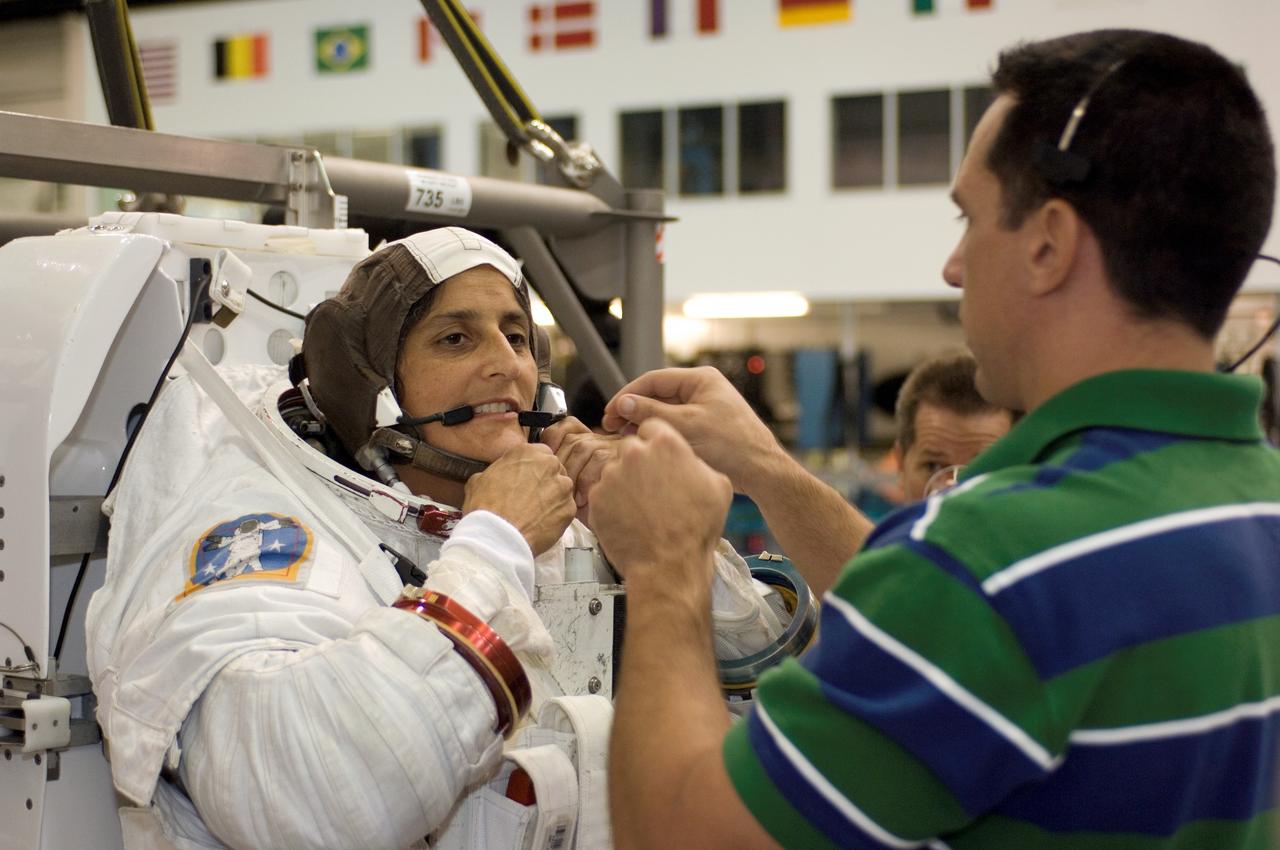
JSC2006-E-46464 (25 Oct. 2006) --- Astronaut Sunita L. Williams, Expedition 14 flight engineer, dons a training version of the Extravehicular Mobility Unit (EMU) spacesuit prior to being submerged in the waters of the Neutral Buoyancy Laboratory (NBL) near Johnson Space Center. Astronaut William A. (Bill) Oefelein, STS-116 pilot, assisted Williams.
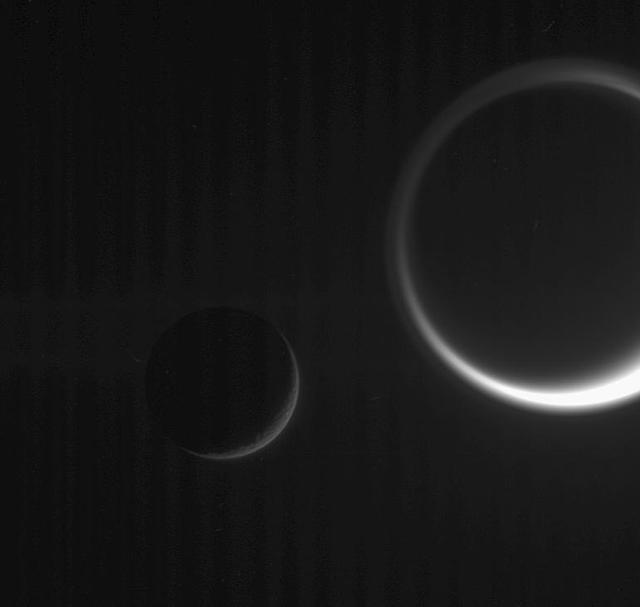
Saturnian Specters

NASA Administrator Michael Griffin, seated left, Scott Horowitz, NASA Associate Administrator for Exploration Systems and Jeff Hanley, Constellation Program Manager, right, are seen during a press conference outlining specific center responsibilities associated with the Constellation Program for robotic and human moon and Mars exploration, Monday, June 5, 2006, at NASA Headquarters in Washington. Dean Acosta, NASA Deputy Assistant Administrator and Press Secretary, far left, moderates the program. Photo Credit (NASA/Bill Ingalls)
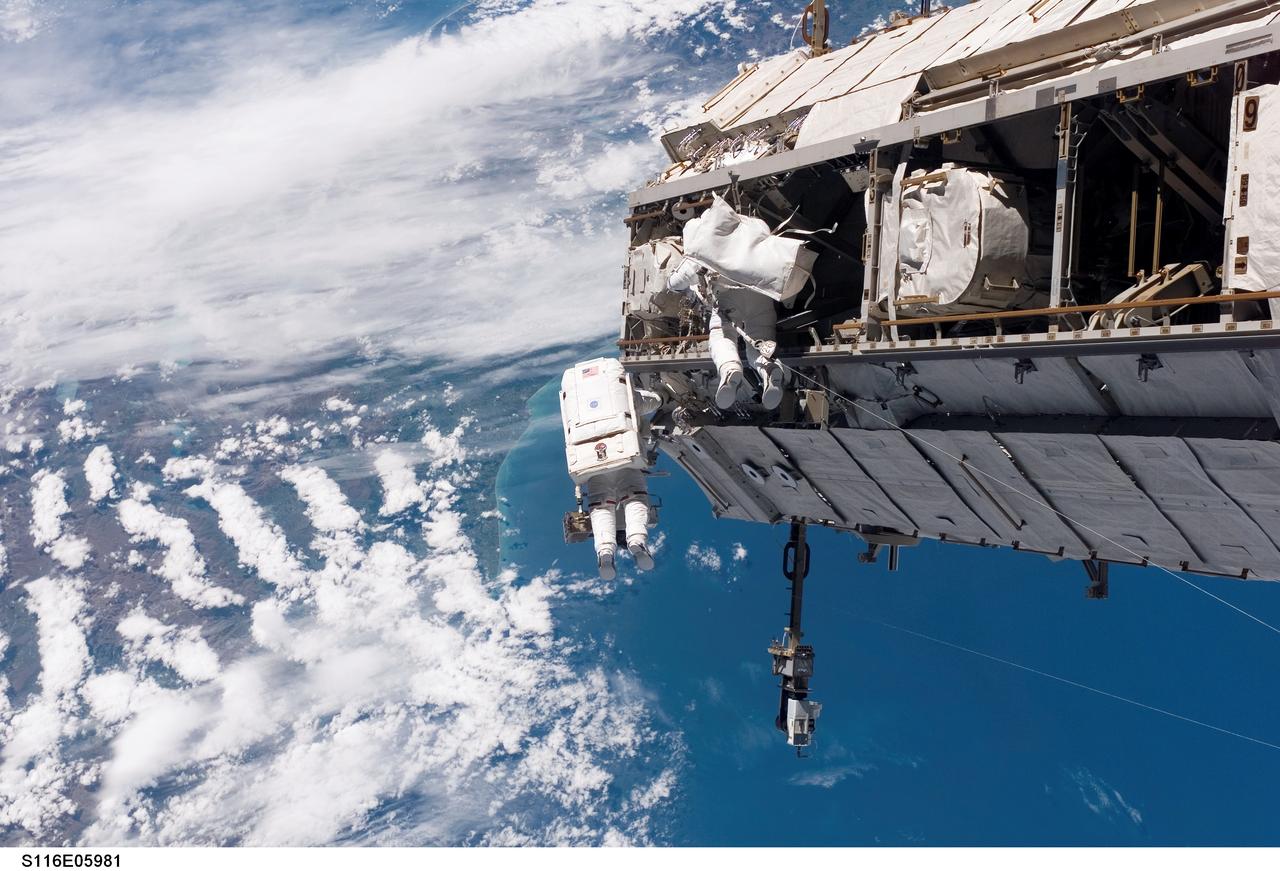
S116-E-05981 (12 Dec. 2006) --- Backdropped by a colorful Earth, including land mass that covers parts of New Zealand, astronaut Robert L. Curbeam, Jr. (left) and European Space Agency (ESA) astronaut Christer Fuglesang, both STS-116 mission specialists, participate in the mission's first of three planned sessions of extravehicular activity (EVA) as construction resumes on the International Space Station. Photo credit: NASA
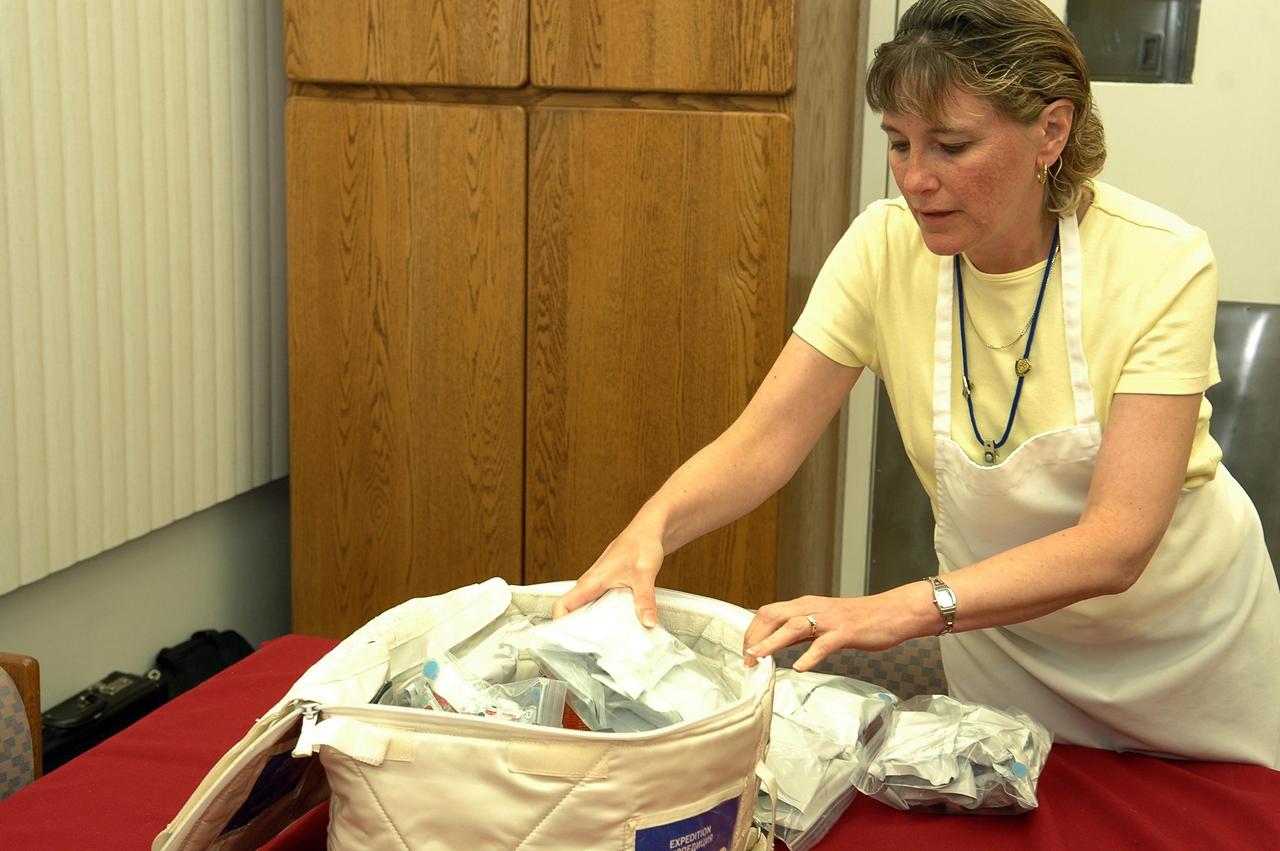
KENNEDY SPACE CENTER, FLA. - In the Operations and Checkout Building, Michele Perchonok stows packages of food that the STS-121 crew will eat on the 12-day mission. Perchonok is a NASA Subsystem manager for Shuttle Food Systems from Johnson Space Center. Astronauts select their own menus from a large array of food items. Astronauts are supplied with three balanced meals, plus snacks. Diets are designed to supply each astronaut with 100 percent of the daily value of vitamins and minerals necessary for the environment of space. Foods flown on space missions are researched and developed at the Space Food Systems Laboratory at the Johnson Space Center (JSC) in Houston, which is staffed by food scientists, dietitians and engineers. Foods are analyzed through nutritional analysis, sensory evaluation, storage studies, packaging evaluations and many other methods. Each astronaut’s food is stored aboard the space shuttle and is identified by a colored dot affixed to each package. A supplementary food supply (pantry) consisting of two extra days per person is stowed aboard the space shuttle for each flight. Pantry items are flown in addition to the menu in case the flight is unexpectedly extended because of bad weather at the landing site or for some other unforeseen reason. Photo credit: NASA/Kim Shiflett
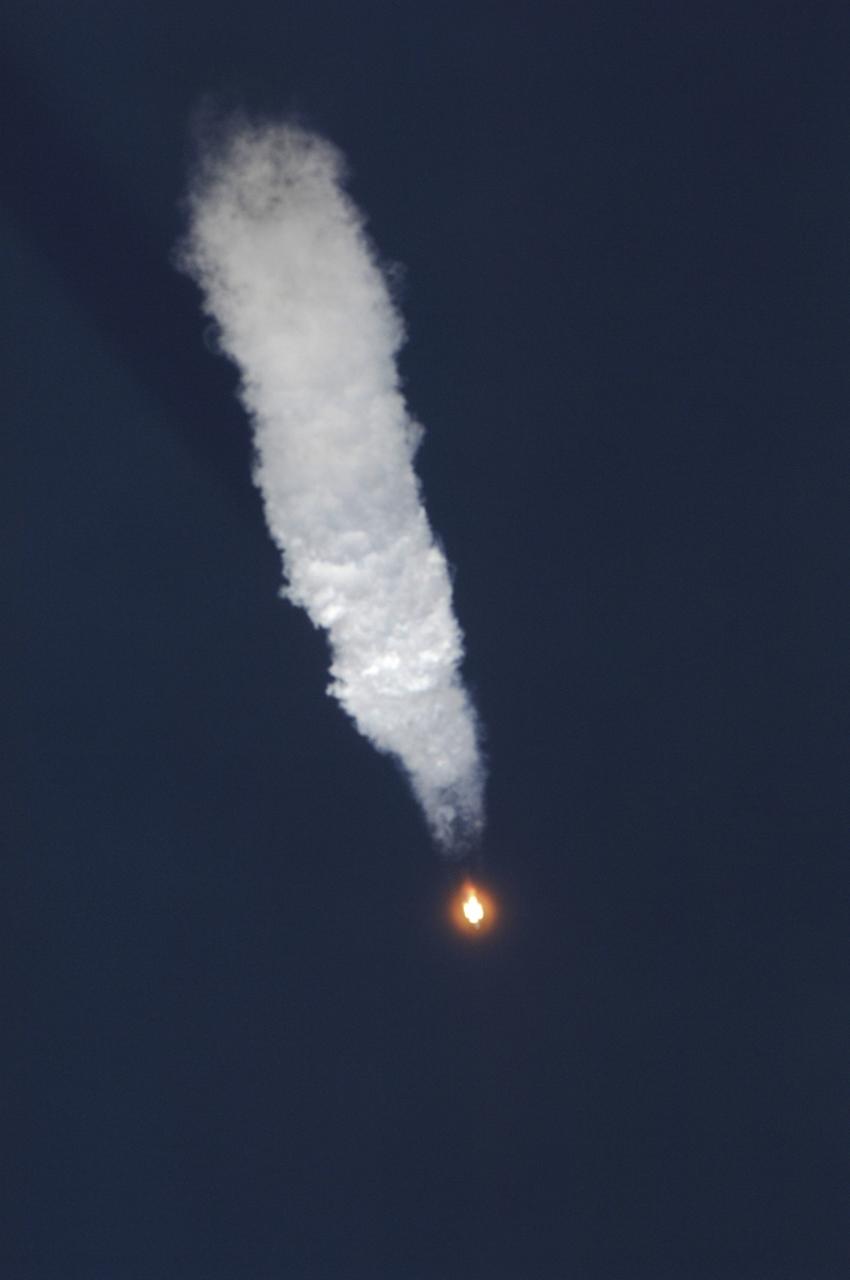
The Soyuz TMA-8 rocket launched from the Baikonur Cosmodrome in Baikonur, Kazakhstan on Wednesday, March 29, 2006 at 9:30 p.m. EST, (Thursday, March 30, 2006, 8:30 a.m. Kazakhstan time). Aboard the spacecraft are Expedition 13 Commander Pavel V. Vinogradov, Science Officer and Flight Engineer Jeffrey N. Williams, and Brazilian Space Agency Soyuz crew member Marcos Pontes. Photo Credit: (NASA/Bill Ingalls)
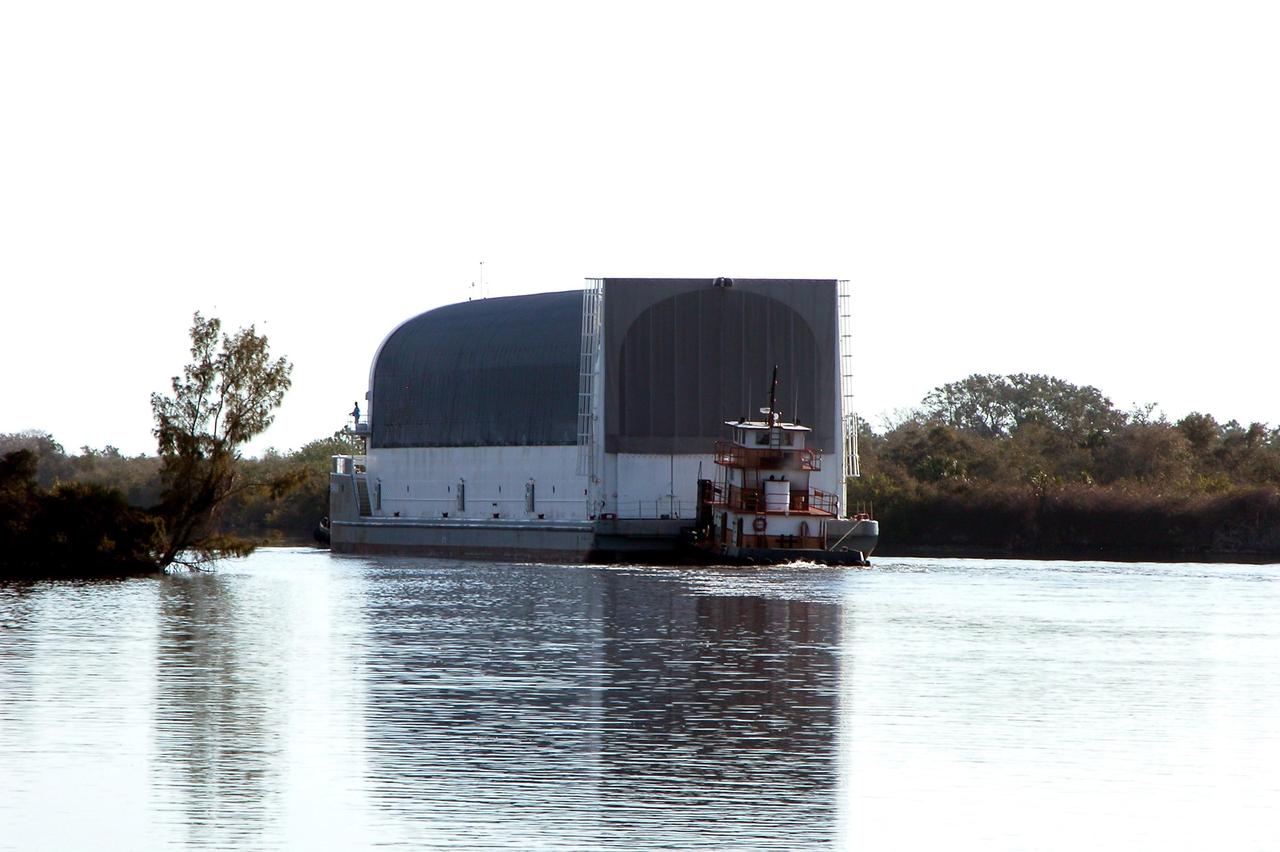
KENNEDY SPACE CENTER, FLA. - Tugboats in front and behind maneuver the Pegasus barge in the Turn Basin toward the Banana River and Port Canaveral. The Pegasus is leaving NASA Kennedy Space Center for the Michoud Assembly Plant in Mississippi to get the external tank for the next shuttle mission, STS-121. To make the round trip from the port, the barge is towed by one of the solid rocket booster retrieval ships. The tank has been undergoing inspection and maintenance at the assembly plant. Space Shuttle Discovery is scheduled to launch in May. Photo credit: NASA/Debbie Kiger

The Opportunity Rover at Victoria Crater
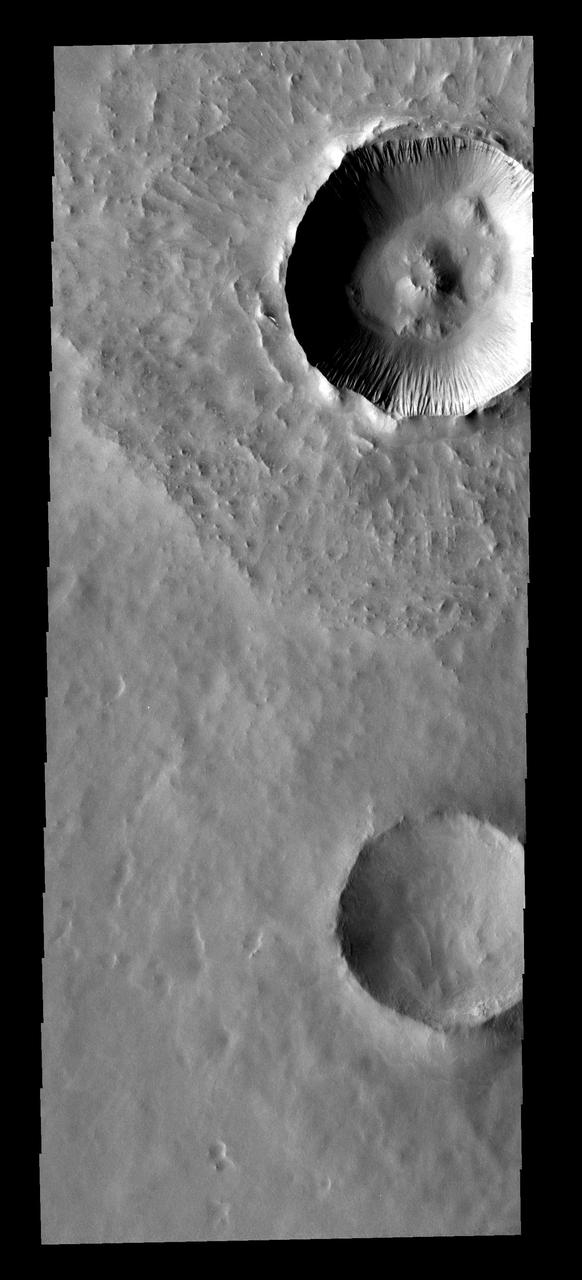
There appear to be layers in the rim of this northern crater
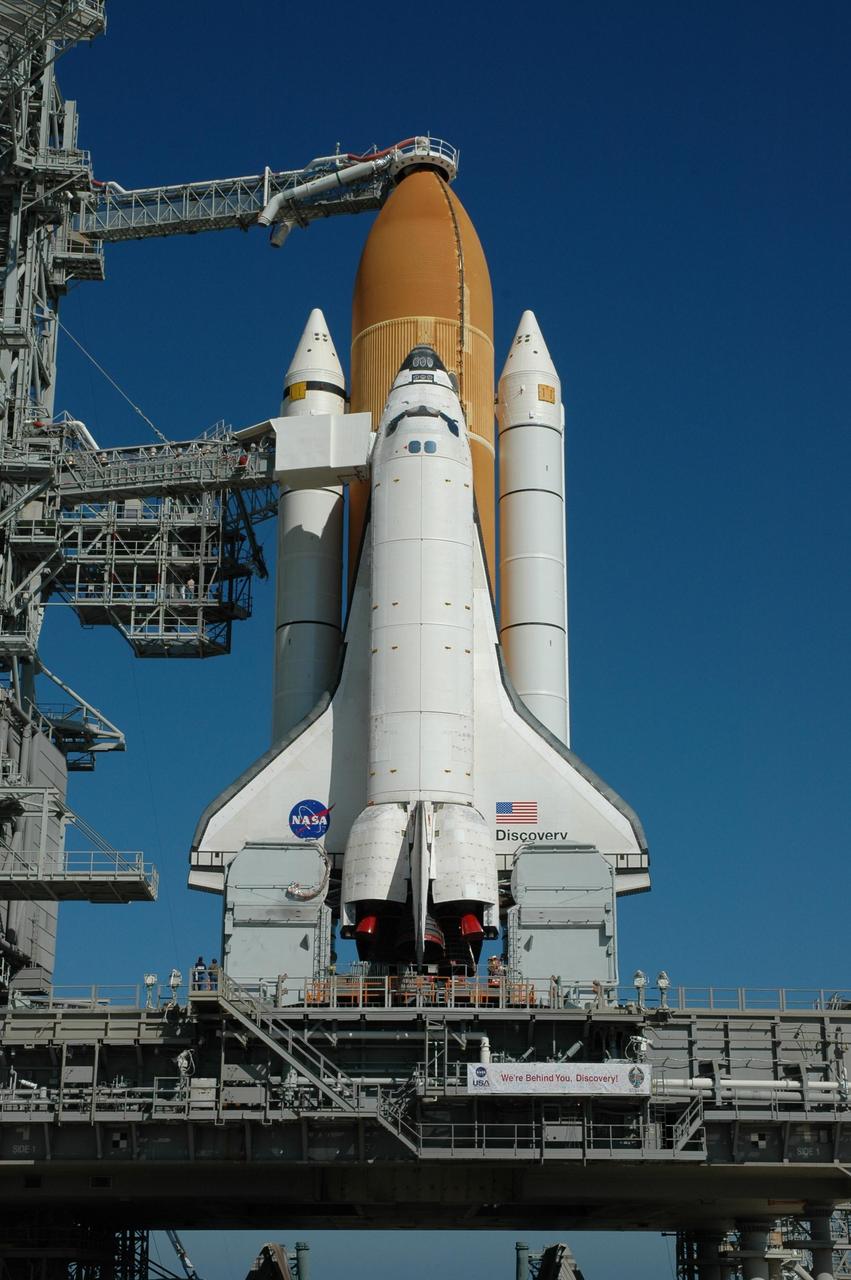
KENNEDY SPACE CENTER, FLA. -- Space Shuttle Discovery and the mobile launcher platform sit on Launch Pad 39B. The shuttle's external tank is capped by the oxygen vent hood (at top). Below it is the orbiter access arm which swings out from the fixed service structure to the orbiter crew compartment hatch to allow personnel to enter the crew compartment. The outer end of the access arm ends in an environmental chamber (white room) that mates with the orbiter and holds six persons. The arm remains in the extended position until seven minutes 24 seconds before launch to provide emergency egress for the flight crew. The rollout of Discovery from the Vehicle Assembly Building began at 12:29 a.m. The shuttle was harddown on the pad at 9:03 a.m. The mission is No. 20 to the International Space Station and construction flight 12A.1. The mission payload is the SPACEHAB module, the P5 integrated truss structure and other key components. The launch window for mission STS-116 opens Dec. 7. Photo credit: NASA/Jim Grossmann

KENNEDY SPACE CENTER, FLA. - On Complex 41 at Cape Canaveral Air Force Station, the Atlas V expendable launch vehicle with the New Horizons spacecraft rolls out of the Vertical Integration Facility (left) on its way to the launch pad. Liftoff is scheduled for 1:24 p.m. EST Jan. 17. After its launch aboard the Atlas V, the compact, 1,050-pound piano-sized probe will get a boost from a kick-stage solid propellant motor for its journey to Pluto. New Horizons will be the fastest spacecraft ever launched, reaching lunar orbit distance in just nine hours and passing Jupiter 13 months later. The New Horizons science payload, developed under direction of Southwest Research Institute, includes imaging infrared and ultraviolet spectrometers, a multi-color camera, a long-range telescopic camera, two particle spectrometers, a space-dust detector and a radio science experiment. The dust counter was designed and built by students at the University of Colorado, Boulder. A launch before Feb. 3 allows New Horizons to fly past Jupiter in early 2007 and use the planet’s gravity as a slingshot toward Pluto. The Jupiter flyby trims the trip to Pluto by as many as five years and provides opportunities to test the spacecraft’s instruments and flyby capabilities on the Jupiter system. New Horizons could reach the Pluto system as early as mid-2015, conducting a five-month-long study possible only from the close-up vantage of a spacecraft.
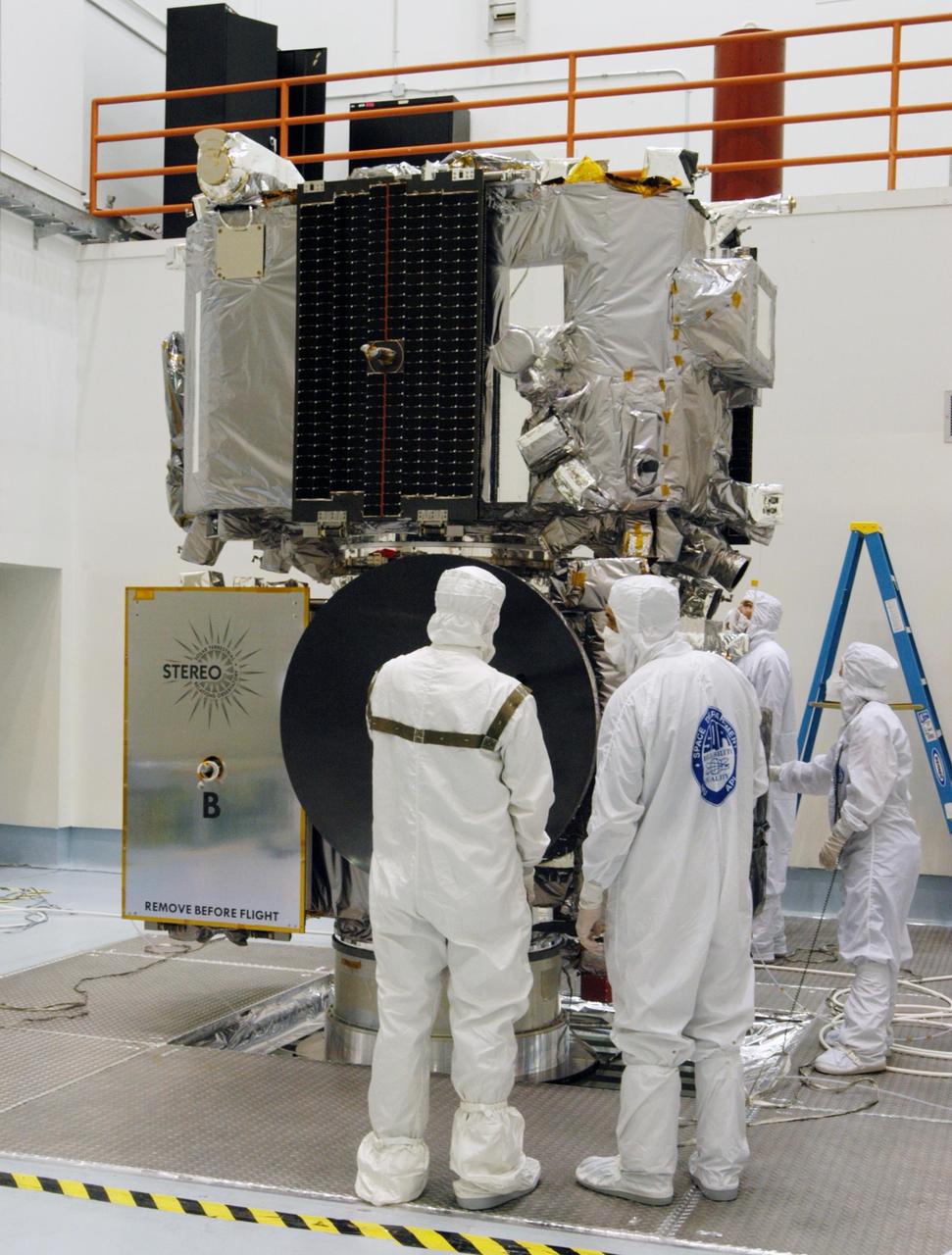
KENNEDY SPACE CENTER, FLA. - The STEREO observatories are the focus of attention at a media viewing held at Astrotech Space Operations in Titusville, Fla., on Aug. 11. The two observatories were mated for launch but will separate into different orbits for their mission. STEREO stands for Solar Terrestrial Relations Observatory. The STEREO mission is the first to take measurements of the sun and solar wind in 3-dimension. This new view will improve our understanding of space weather and its impact on the Earth. STEREO is expected to lift off on Aug. 31, from Launch Pad 17-B on Cape Canaveral Air Force Station in Florida. Photo credit: NASA/George Shelton.

JSC2006-E-43505 (October 2006) --- Computer-generated artist's rendering of the International Space Station after flight 1J/A. Kibo Japanese Experiment Logistics Module - Pressurized Section (ELM-PS) is installed on top of Node 2. Canadian Special Purpose Dexterous Manipulator (SPDM) - Dextre - is installed.
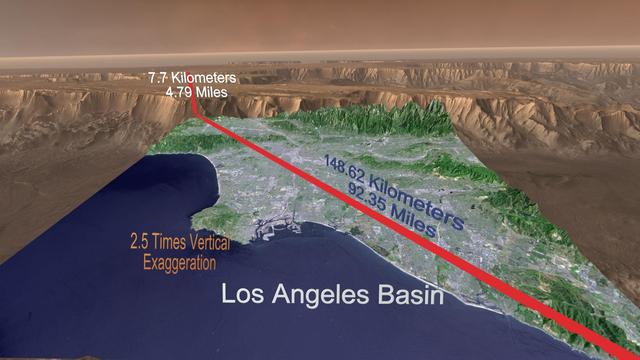
A Grand Canyon of Mars slices across the Red Planet near its equator. This canyon -- Valles Marineris, or the Mariner Valley -- is 10 times longer and deeper than Arizona Grand Canyon, and 20 times wider
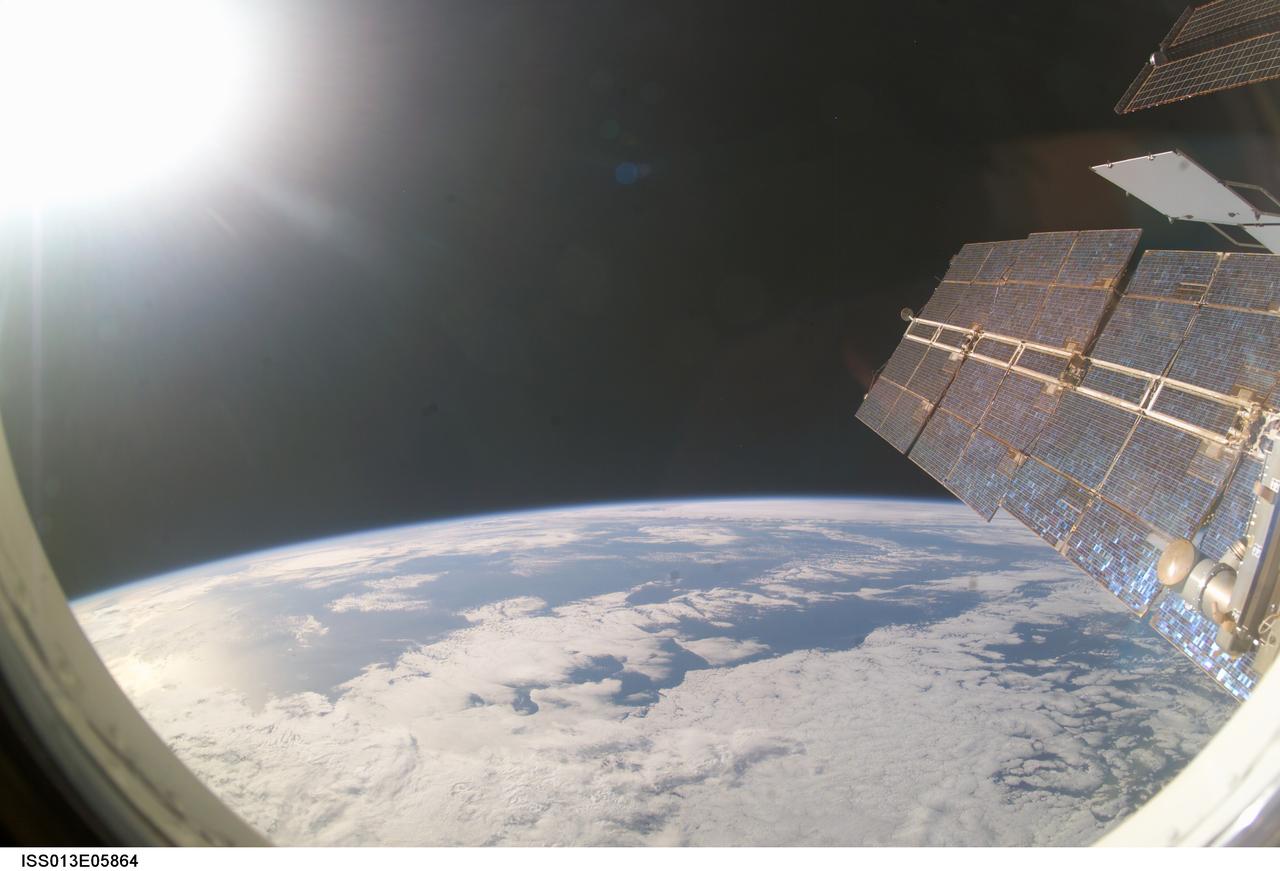
ISS013-E-05864 (11 April 2006) --- A setting sun on Earth’s horizon and station solar array panels are featured in this image photographed by an Expedition 13 crewmember from a window on the International Space Station.
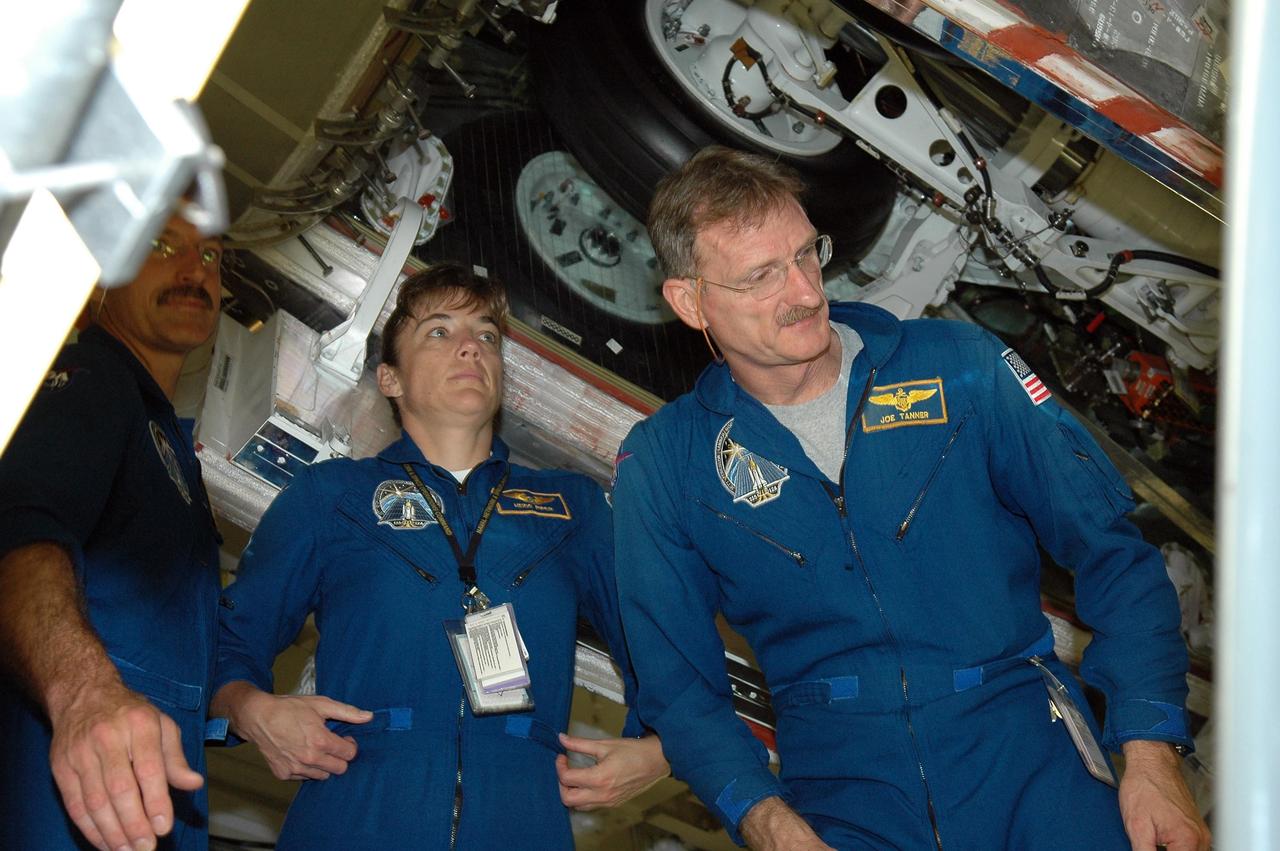
KENNEDY SPACE CENTER, FLA. - In the Orbiter Processing Facility, STS-115 crew members are examining the orbiter Atlantis, the designated launch vehicle for their mission. From left are Mission Specialists Daniel Burbank, Heidemarie Stefanyshyn-Piper and Joseph Tanner. The crew is at the center for Crew Equipment Interface Test activities, which involves equipment familiarization, a routine part of astronaut training and launch preparations. The mission will deliver the second port truss segment, the P3/P4 Truss, to attach to the first port truss segment, the P1 Truss, as well as deploy solar array set 2A and 4A. Launch on Space Shuttle Atlantis is scheduled for late August. Photo credit: NASA/Kim Shiflett
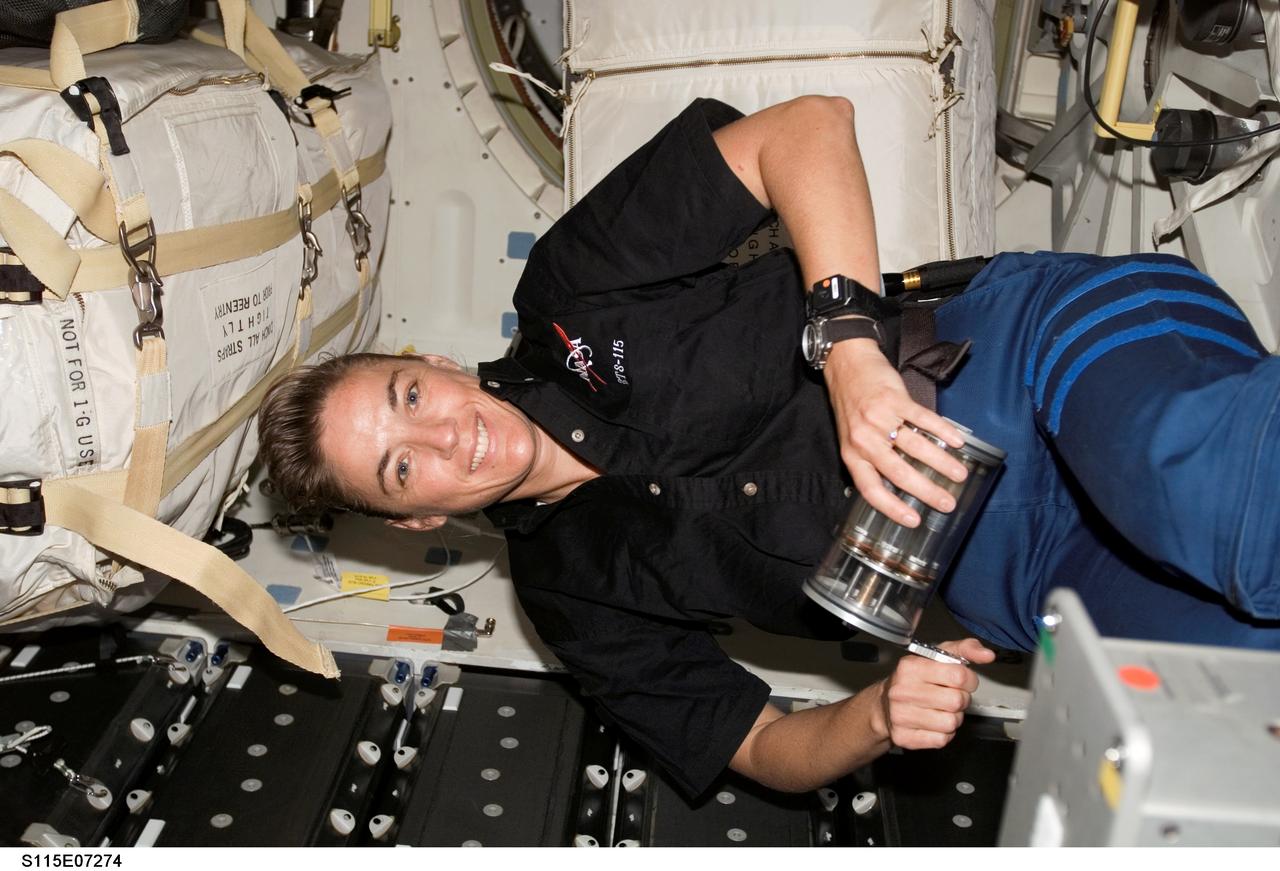
S115-E-07274 (9-21 Sept. 2006) --- Astronaut Heidemarie M. Stefanyshyn-Piper, STS-115 mission specialist, works with the Yeast-Group Activation Packs (Yeast-GAP) on the middeck of Space Shuttle Atlantis. Yeast-GAP experiment studies the effects of genetic changes of yeast cells exposed to the space environment. The results will help scientists to understand how cells respond to radiation and microgravity.
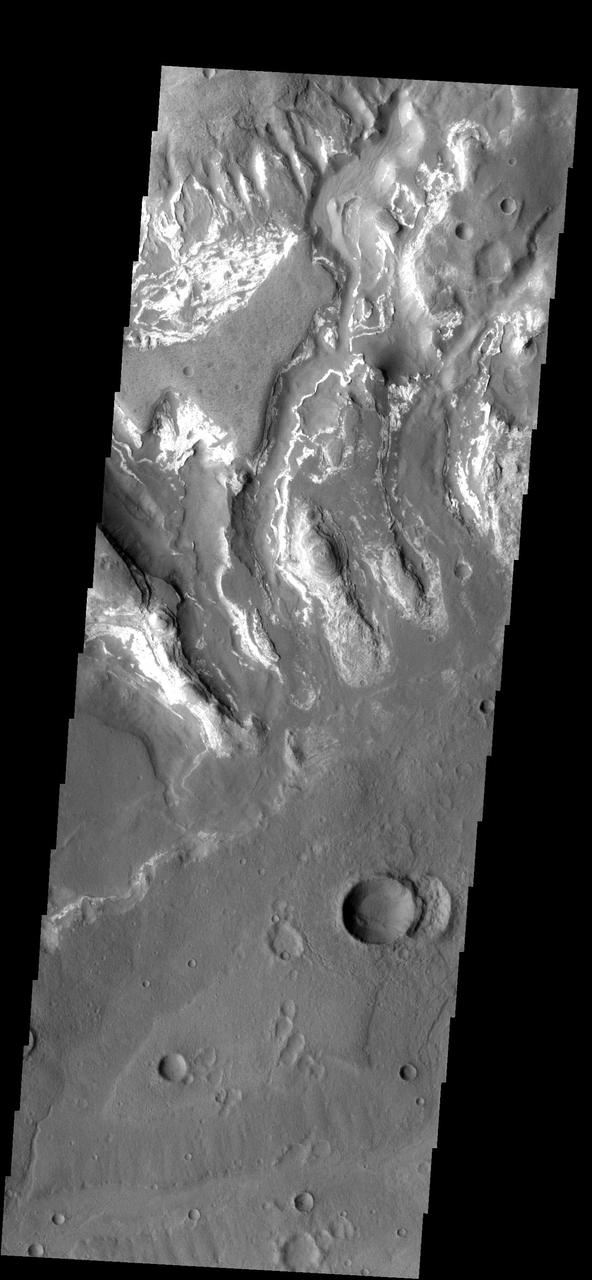
This image is located in the Tyrrhena Terra region. The cause of the bright markings/material is unknown. It is possible that the formation of the channels are exposing a series of bright layered material

KENNEDY SPACE CENTER, FLA. - A Beluga aircraft parks near the mate/demate device at the Shuttle Landing Facility on NASA's Kennedy Space Center. The Beluga carries the European Space Agency's research laboratory, designated Columbus, flown to Kennedy from its manufacturer in Germany. The module will be prepared for delivery to the International Space Station on a future space shuttle mission. Columbus will expand the research facilities of the station and provide researchers with the ability to conduct numerous experiments in the area of life, physical and materials sciences. Photo credit: NASA/Jim Grossmann

KENNEDY SPACE CENTER, FLA. -- At Astrotech Space Operations in Titusville, Fla., the five probes of the THEMIS spacecraft remain under cover. The probes will undergo weeks of testing and launch preparations. This includes a functional performance test to verify the state of health of each of the five probes, installation of bolt cutters that will separate each probe from the payload carrier, and pressurization and leak checks of the reaction control systems. THEMIS consists of five identical probes, the largest number of scientific satellites ever launched into orbit aboard a single rocket. This unique constellation of satellites will resolve the tantalizing mystery of what causes the spectacular sudden brightening of the aurora borealis and aurora australis - the fiery skies over the Earth's northern and southern polar regions. These lights are the visible manifestations of invisible energy releases, called geomagnetic substorms, in near-Earth space. THEMIS will not only seek to answer where and when substorms start, but will also provide clues as to how and why these space storms create havoc on satellites, terrestrial power grids, and communication systems. THEMIS is scheduled to launch Feb. 15 from Cape Canaveral Air Force Station. Photo credit: NASA/Jack Pfaller

KENNEDY SPACE CENTER, FLA. - In the payload changeout room on Launch Pad 39B, one of the doors of the payload canister is open, revealing its cargo, the Port 3/4 truss segment for mission STS-115. The payload will be removed from the canister and later installed in Space Shuttle Atlantis' payload bay. Atlantis' launch window begins Aug. 28. During its 11-day mission to the International Space Station, the STS-115 crew of six astronauts will install the truss, a 17-ton segment of the space station's truss backbone. Photo credit: NASA/Jack Pfaller
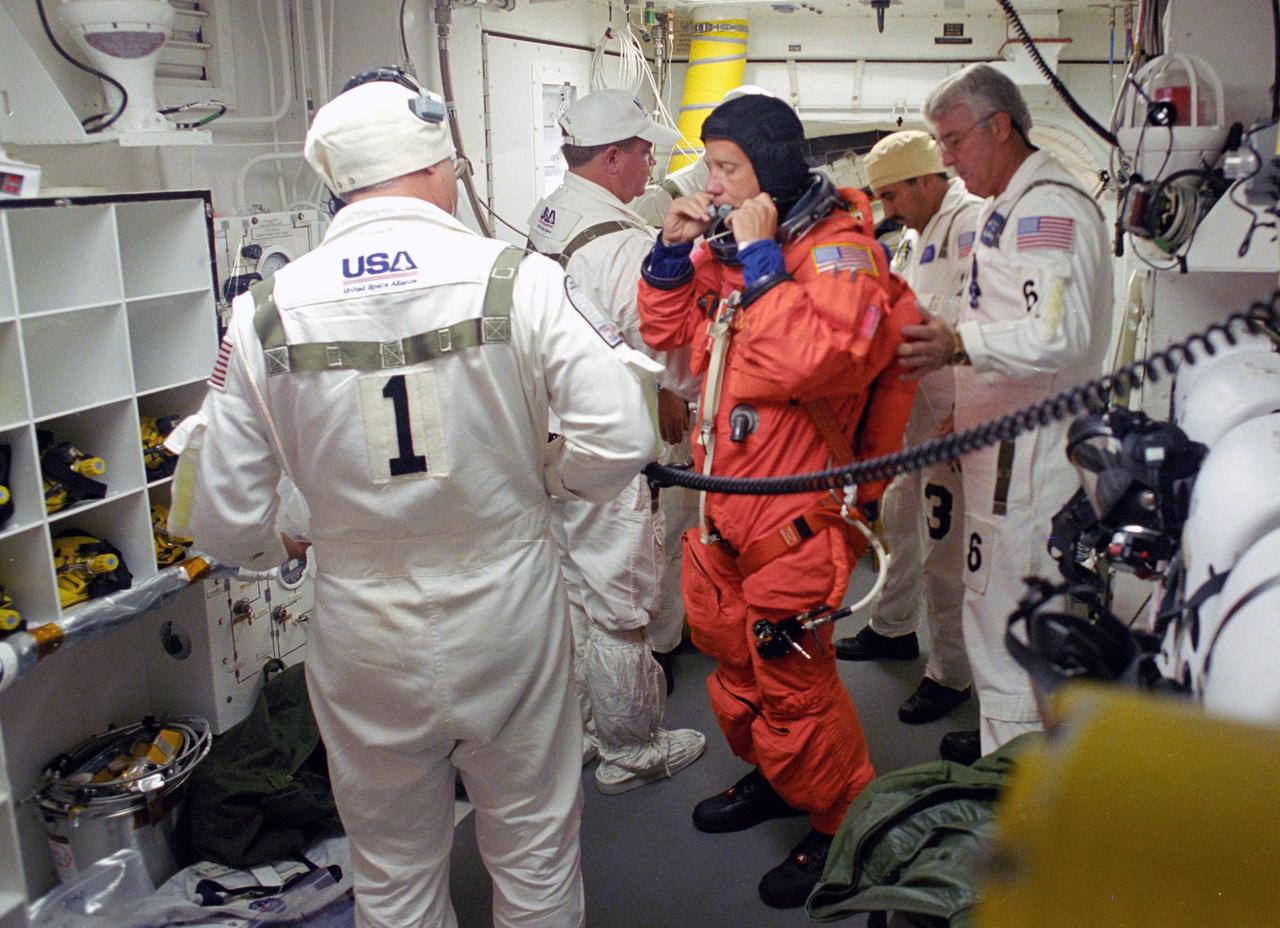
KENNEDY SPACE CENTER, FLA. - In the White Room on Launch Pad 39B, STS-121 Commander Steven Lindsey is helped by the Closeout Crew to prepare his launch suit for entering Discovery and the launch. Situated on the end of the orbiter access arm, the White Room provides access into the orbiter on the pad. The crew is preparing for the third launch attempt in four days; previous attempts were scrubbed due to weather concerns. During the 12-day mission, the STS-121 crew will test new equipment and procedures to improve shuttle safety, as well as deliver supplies and make repairs to the International Space Station. The launch of Space Shuttle Discovery on mission STS-121 is the 115th shuttle flight and the 18th U.S. flight to the International Space Station. Photo credit: NASA/Regina Mitchell-Ryall & Tony Gray
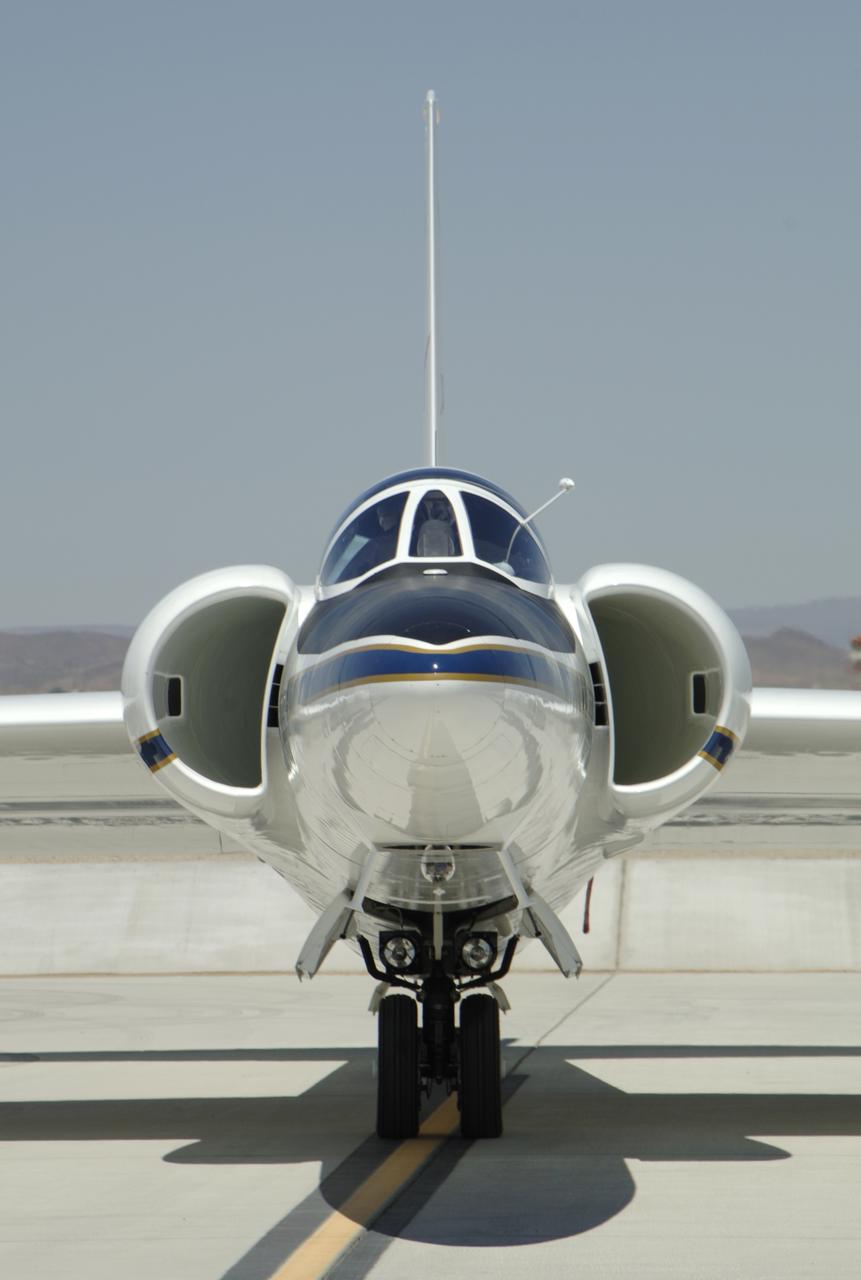
The large air intakes for its powerful engine are obvious as NASA's high-flying ER-2 #806 Earth resources aircraft taxies out for another science mission.
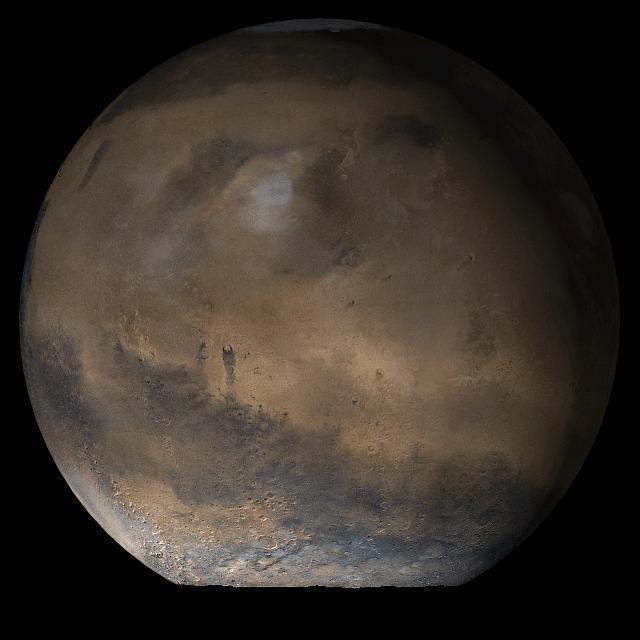
Mars at Ls 66?: Elysium/Mare Cimmerium
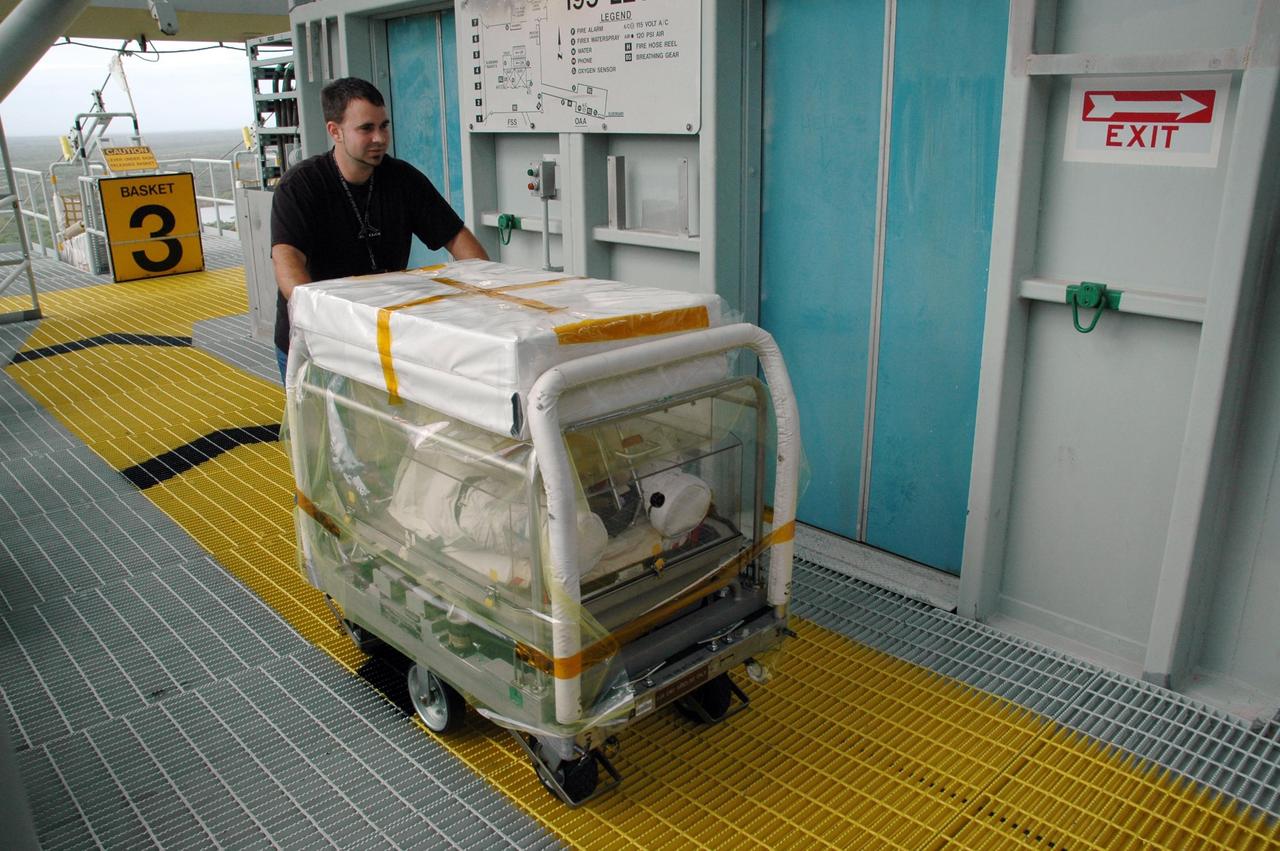
KENNEDY SPACE CENTER, FLA. -- A worker on Launch Pad 39B arrives on the 195-foot level of the fixed service structure with a cart containing the extravehicular mobility units (or spacewalk suits) to be used on mission STS-116. The suits will be stored inside Space Shuttle Discovery. Launch of Discovery is scheduled for 9:35 p.m. Dec. 7. The crew will deliver the P5 integrated truss to the International Space Station and install it during one or more extravehicular activities. Photo credit: NASA/Jack Pfaller
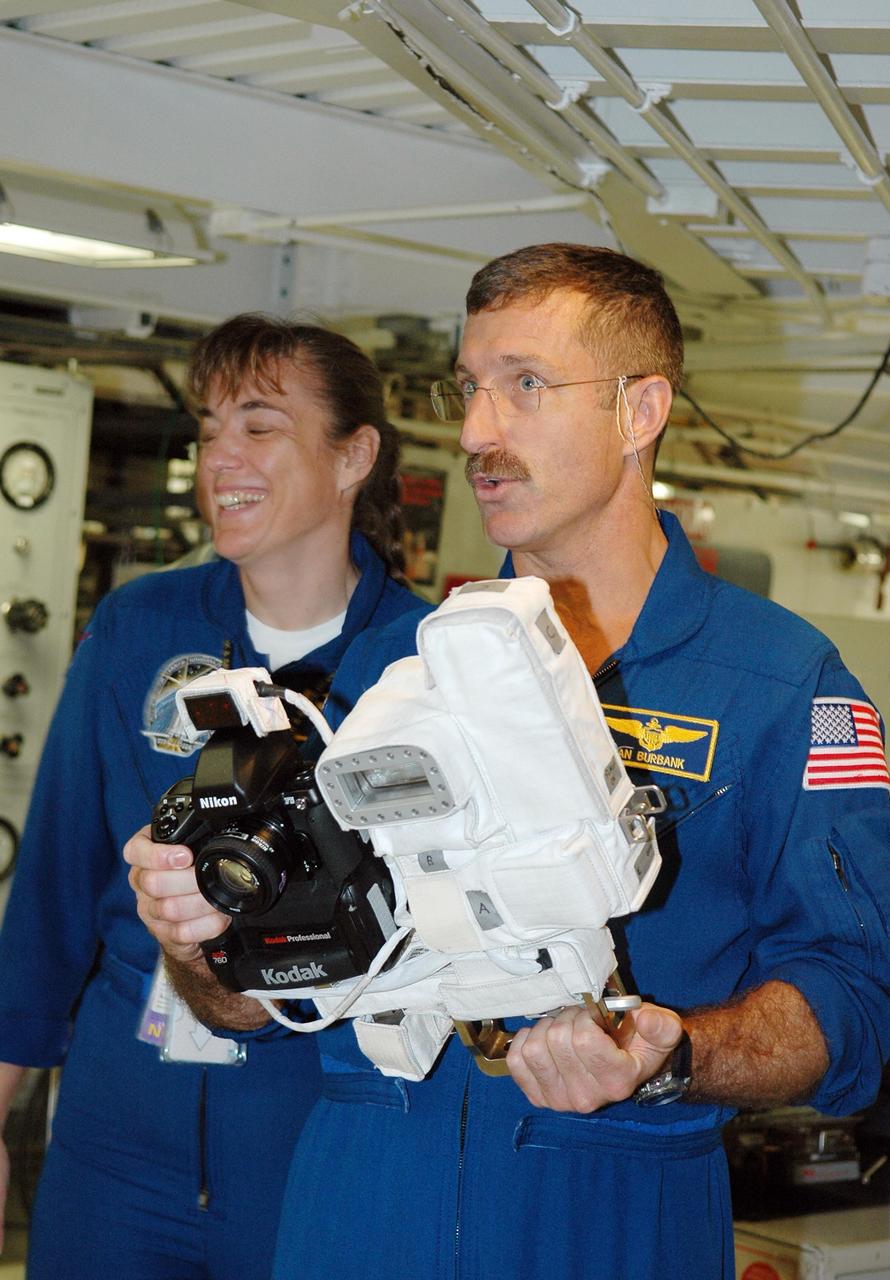
KENNEDY SPACE CENTER, FLA. - In the Orbiter Processing Facility, STS-115 Mission Specialist Daniel Burbank holds a camera that is a mockup of one the crew will use to take photographs on-orbit. At left is Mission Specialist Heidemarie Stefanyshyn-Piper. The crew is at the center for Crew Equipment Interface Test activities, which involves equipment familiarization, a routine part of astronaut training and launch preparations. The mission will deliver the second port truss segment, the P3/P4 Truss, to attach to the first port truss segment, the P1 Truss, as well as deploy solar array set 2A and 4A. Launch on Space Shuttle Atlantis is scheduled for late August. Photo credit: NASA/Kim Shiflett
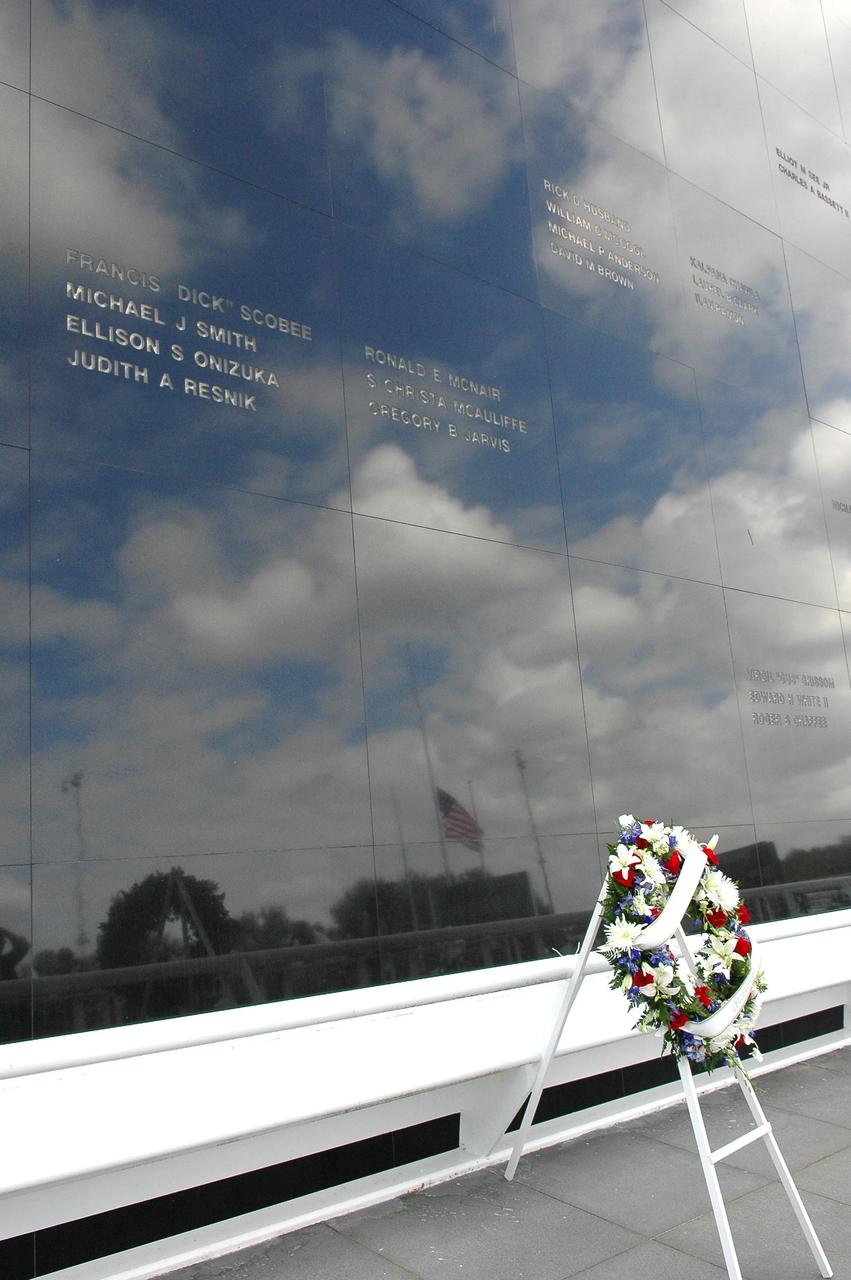
KENNEDY SPACE CENTER, FLA. — Following the Challenger memorial ceremony held Jan. 28 in front of the Space Memorial Mirror at NASA Kennedy Space Center’s Visitor Complex, this wreath remains as a reminder of the fallen heroes. It was placed there by June Scobee Rodgers, widow of Dick Scobee, commander of Challenger, and William Gerstenmaier, associate administrator for Space Operations at NASA. They were participants in the ceremony, along with Dr. Mick Ukleja, who gave the invocation; Dr. Stephen Feldman, president of the Astronauts Memorial Foundation; Rep. Dave Weldon and Rep. Tom Feeney; William Potter, chairman of the Board of Directors of the Astronauts Memorial Foundation; William Gerstenmaier, associate administrator for Space Operations at NASA; Jim Kennedy (second from left), center director of KSC; June Scobee Rodgers, widow of Dick Scobee, commander of Challenger; Col. Richard Scobee, son of Dick Scobee and June Scobee Rodgers; Capt. Frederick Hauck, commander of the first mission after Challenger; Dr. Joseph Allen, astronaut and scientist and chairman of the Board of the Challenger Centers for Space Science. June Scobee Rodgers and Gerstenmaier placed a wreath at the base of the memorial. Photo credit: NASA/Kim Shiflett
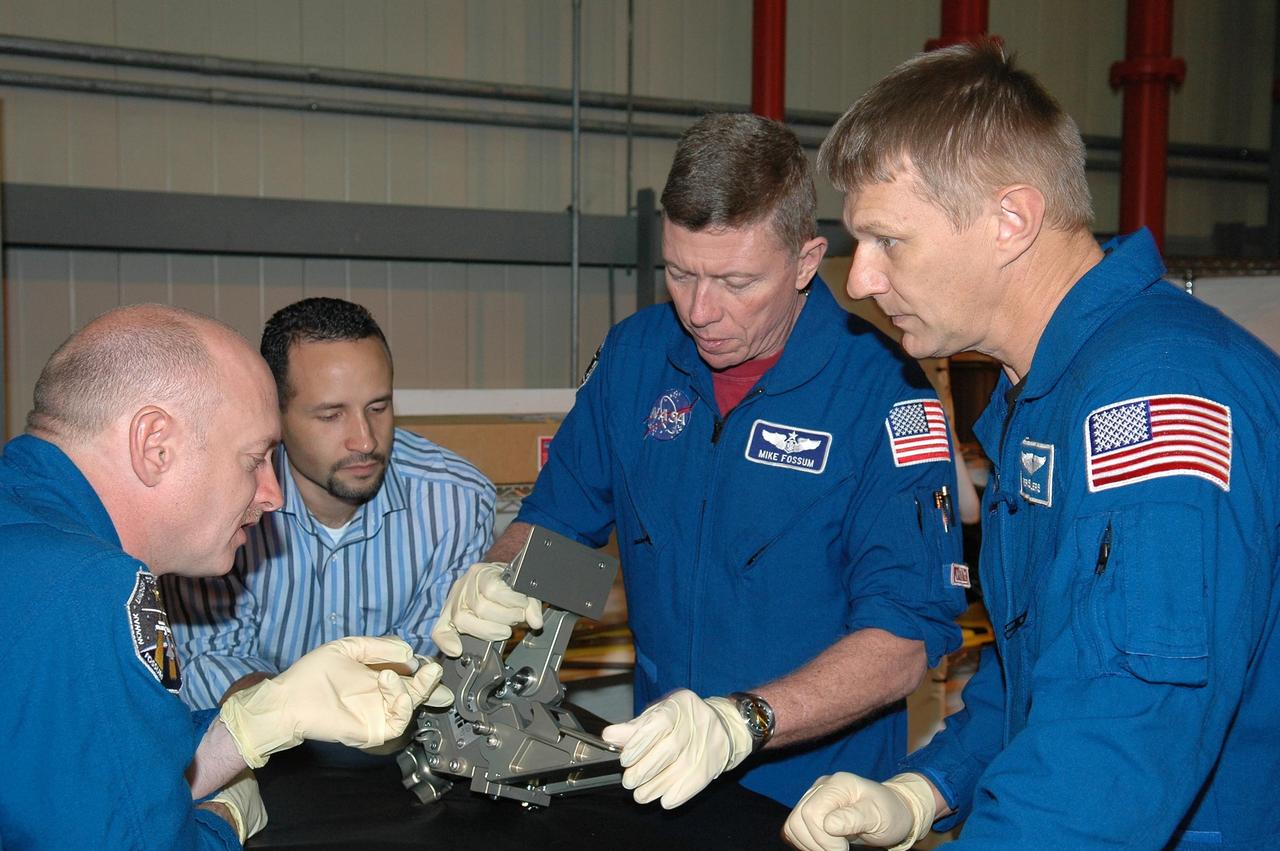
KENNEDY SPACE CENTER, FLA. - In NASA Kennedy Space Center's Orbiter Processing Facility bay 3, members of the STS-121 crew practice working with hardware for the mission under the watchful eyes of Tomas Gonzalez-Torres, with NASA's Johnson Space Center. At left is Pilot Mark Kelly; at right are Mission Specialists Michael Fossum and Piers Sellers. The crew is at Kennedy to take part in the crew equipment interface test, which provides hands-on experience with equipment to be used on-orbit. Launch of Space Shuttle Discovery on mission STS-121, the second return-to-flight mission, is scheduled no earlier than May.

KENNEDY SPACE CENTER, FLA. - At Astrotech Space Operations in Titusville, Fla., a technician covers one of the STEREO observatories to be covered before its move to the Hazardous Processing Facility for fueling. STEREO, which stands for Solar Terrestrial Relations Observatory, consists of two spacecraft whose mission is to take measurements of the sun and solar wind in 3-D, for the first time. This new view will improve our understanding of space weather and its impact on the Earth. Preparations are under way for a liftoff aboard a Delta rocket no earlier than Aug. 1. Photo credit: NASA/George Shelton
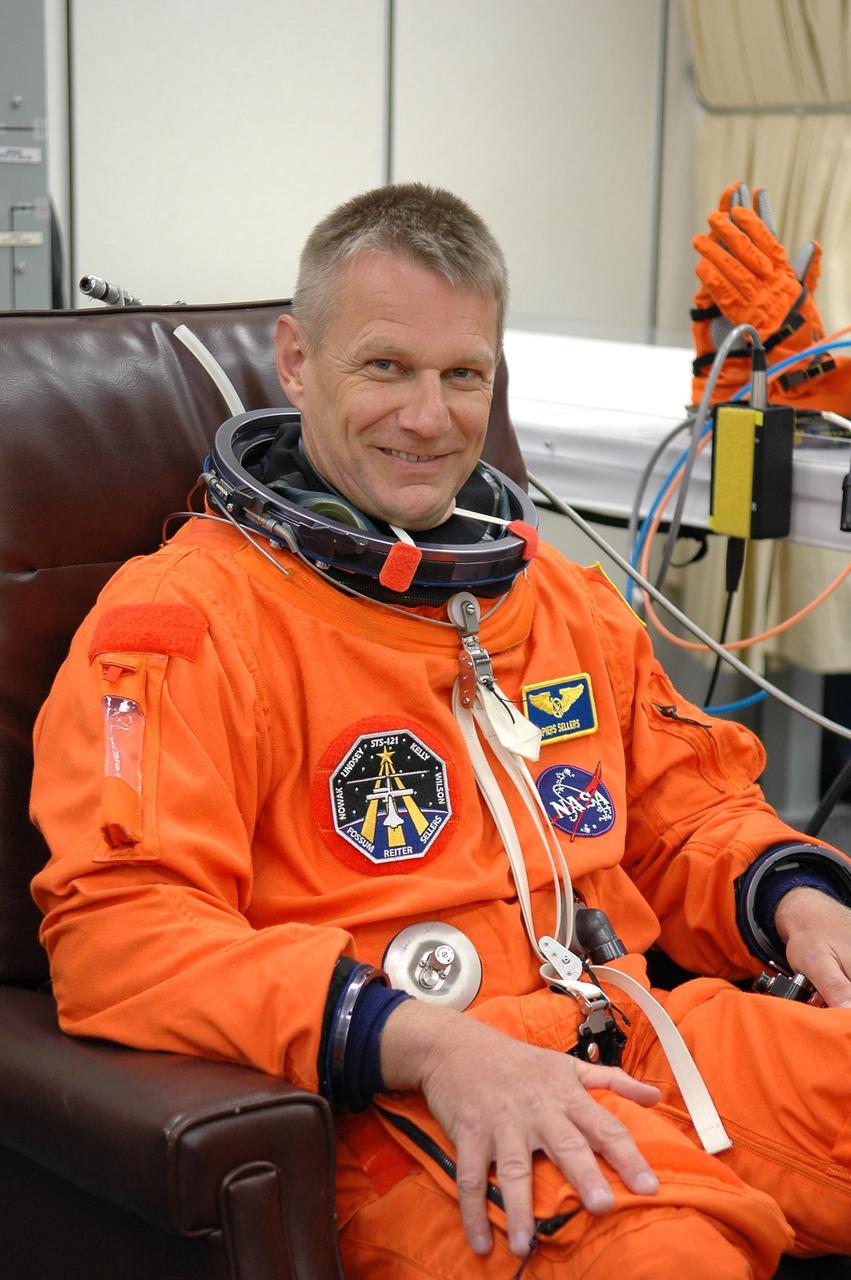
KENNEDY SPACE CENTER, FLA. - STS-121 Mission Specialist Piers Sellers is eager for launch as he suits up before heading to Launch Pad 39B and liftoff. The launch is the 115th shuttle flight and the 18th U.S. flight to the International Space Station. During the 12-day mission, the STS-121 crew will test new equipment and procedures to improve shuttle safety, as well as deliver supplies and make repairs to the International Space Station. Photo credit: NASA/Kim Shiflett
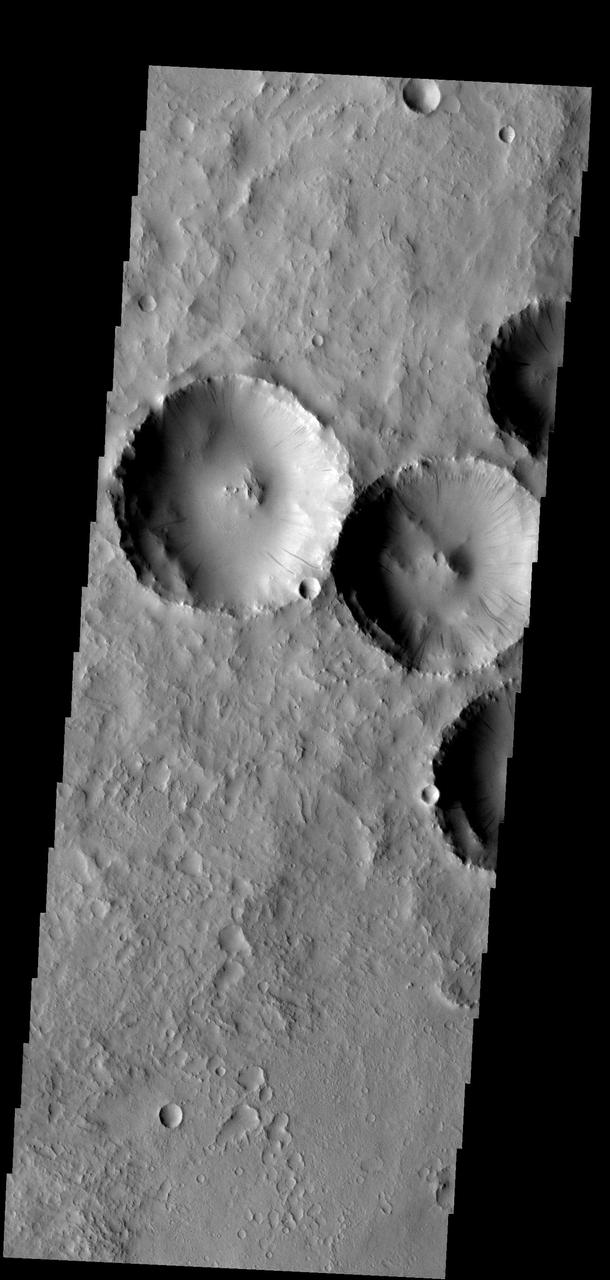
Dust slides occur within the larger craters in this image
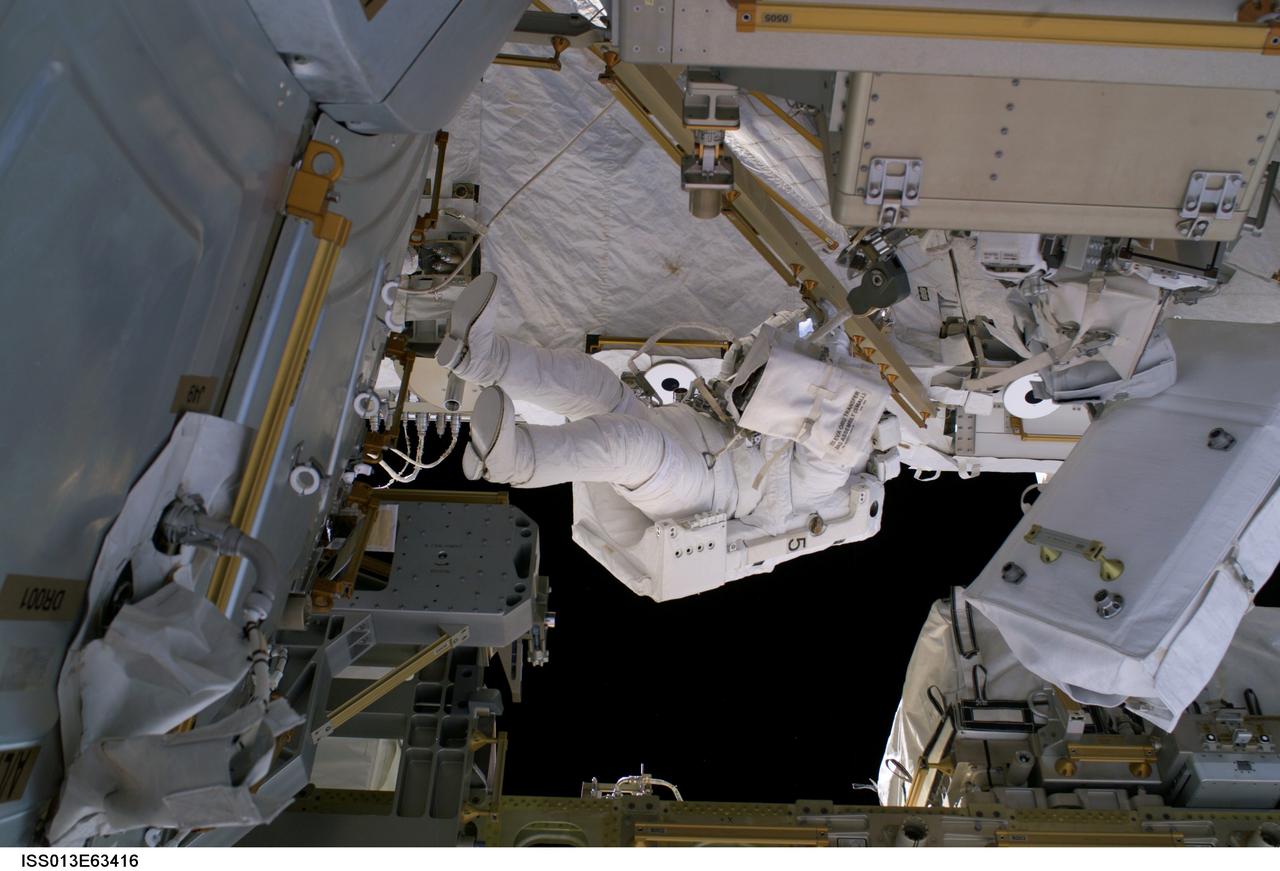
ISS013-E-63416 (3 August 2006) --- Astronaut Thomas Reiter, who represents the European Space Agency on the Expedition 13 crew, translates near a targeted vent valve on the Destiny laboratory of the International Space during a 5-hour, 54-minute spacewalk.
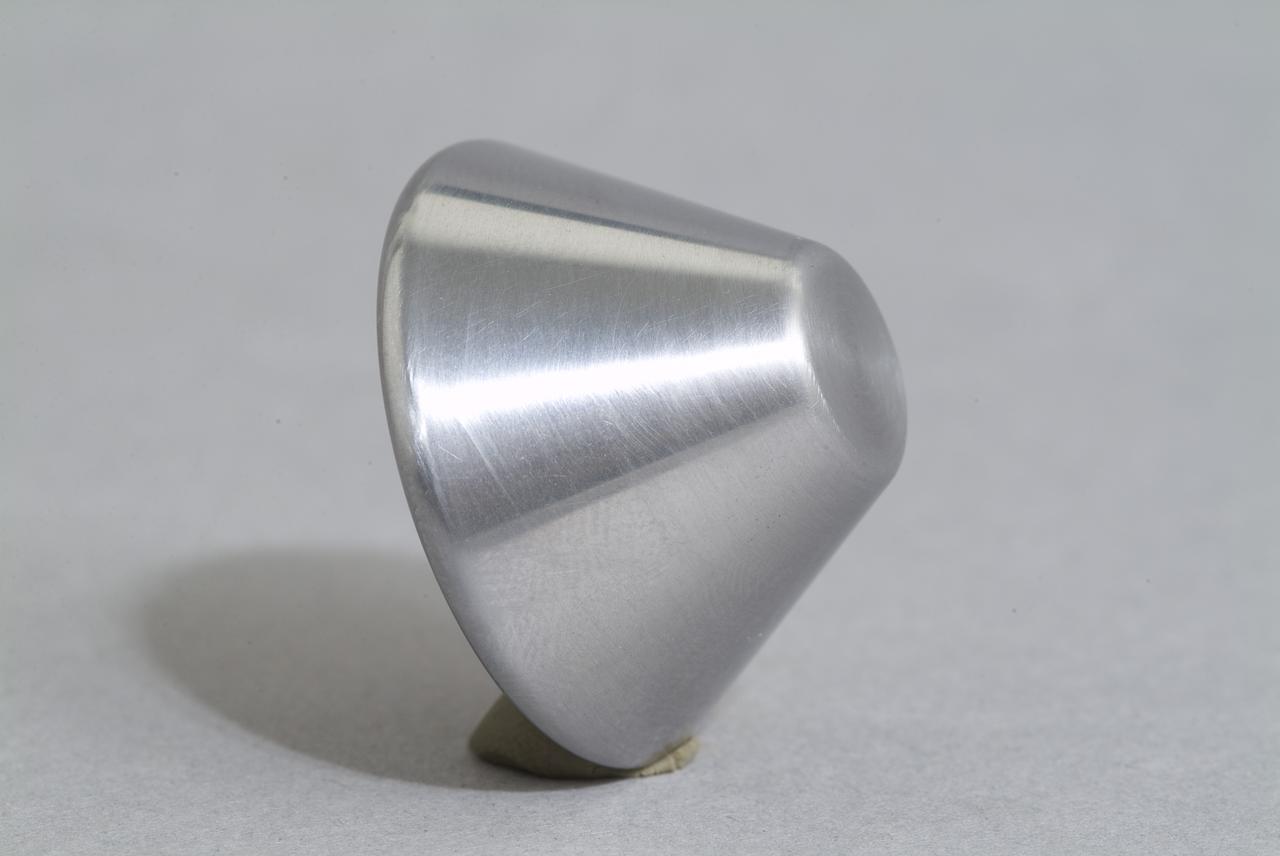
CEV (Crew Escape Vehicle) capsule Balistic Range testing to examine static and dynamic stability characteristics (at the Hypervelocity Free-Flight Facility) HFF
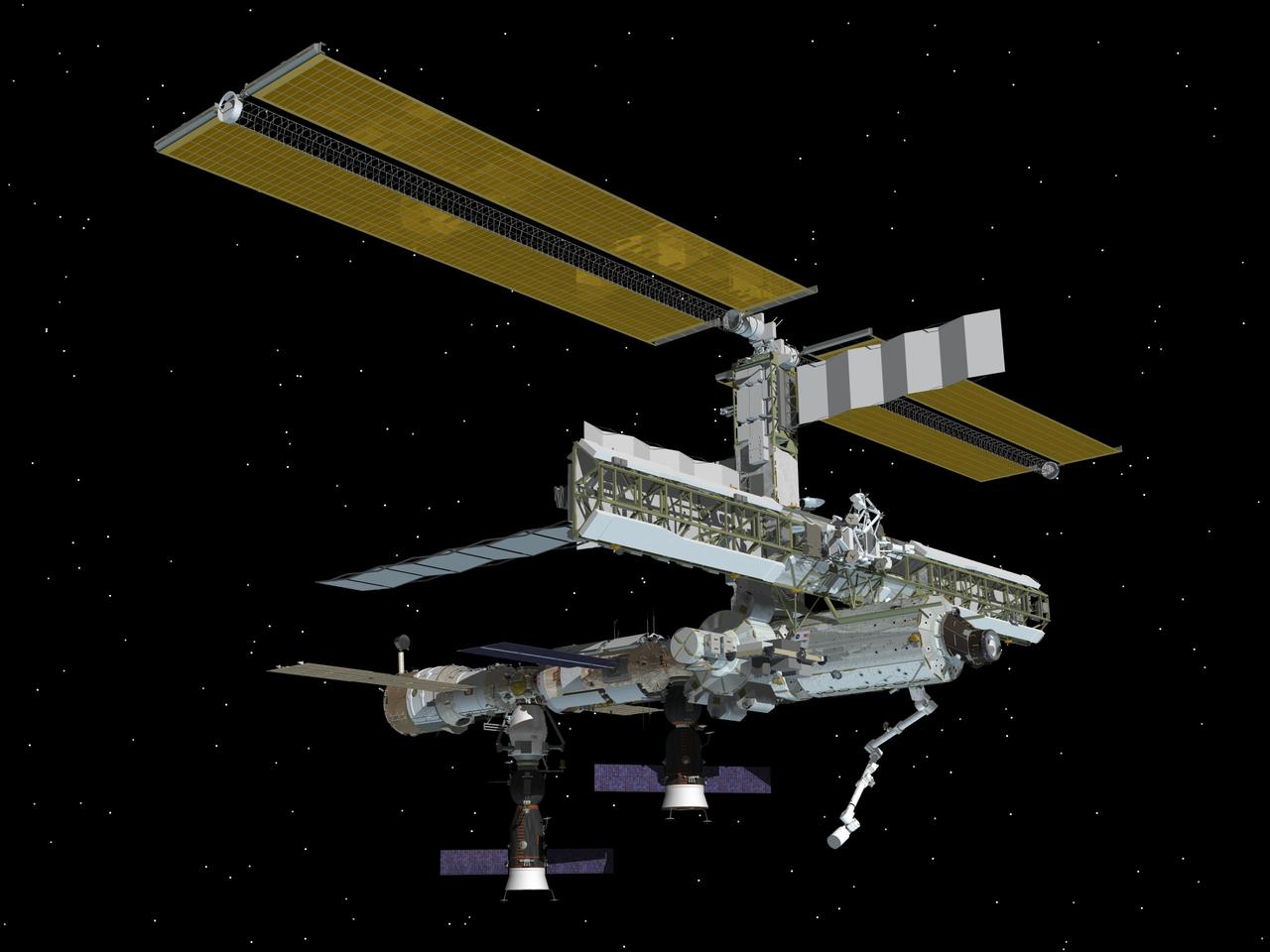
JSC2006-E-05926 (March 2006) --- Computer-generated artist’s rendering of the International Space Station following scheduled activities of March 3, 2006. This angle shows the starboard side view of the orbiting complex. Progress 19 resupply vehicle undocks from the Zvezda Service Module. Soyuz 11 remains docked to the nadir port of the Zarya Module and Progress 20 resupply vehicle remains docked to the Pirs Docking Compartment.
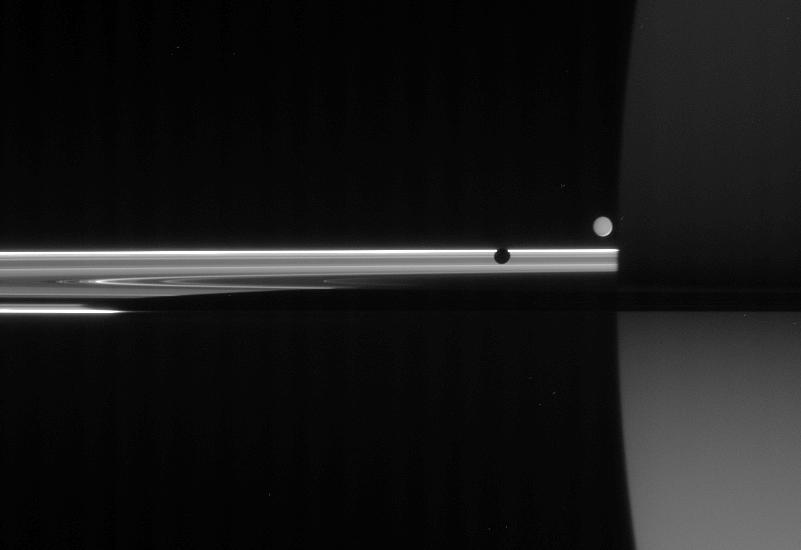
Light from Many Paths
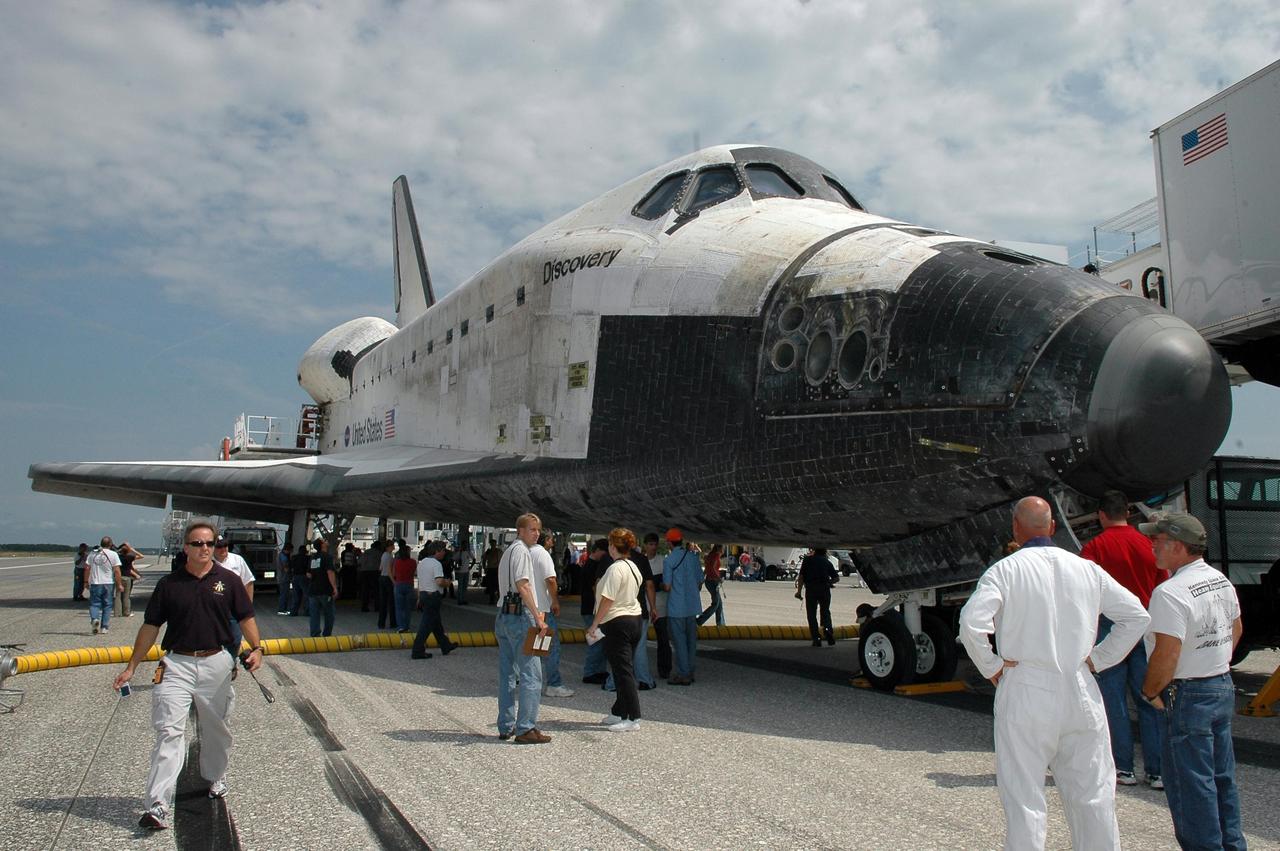
KENNEDY SPACE CENTER, FLA. - Workers and media at NASA's Kennedy Space Center watch while the orbiter Discovery, following the landing from mission STS-121, is prepared for the roll to the Orbiter Processing Facility. Discovery's smooth and perfect landing was on time at 9:14 a.m. EDT on Runway 15 of NASA's Shuttle Landing Facility after traveling 5.3 million miles on 202 orbits. Mission elapsed time was 12 days, 18 hours, 37 minutes and 54 seconds. The landing is the 62nd at Kennedy Space Center and the 32nd for Discovery. Photo credit: NASA/Kim Shiflett
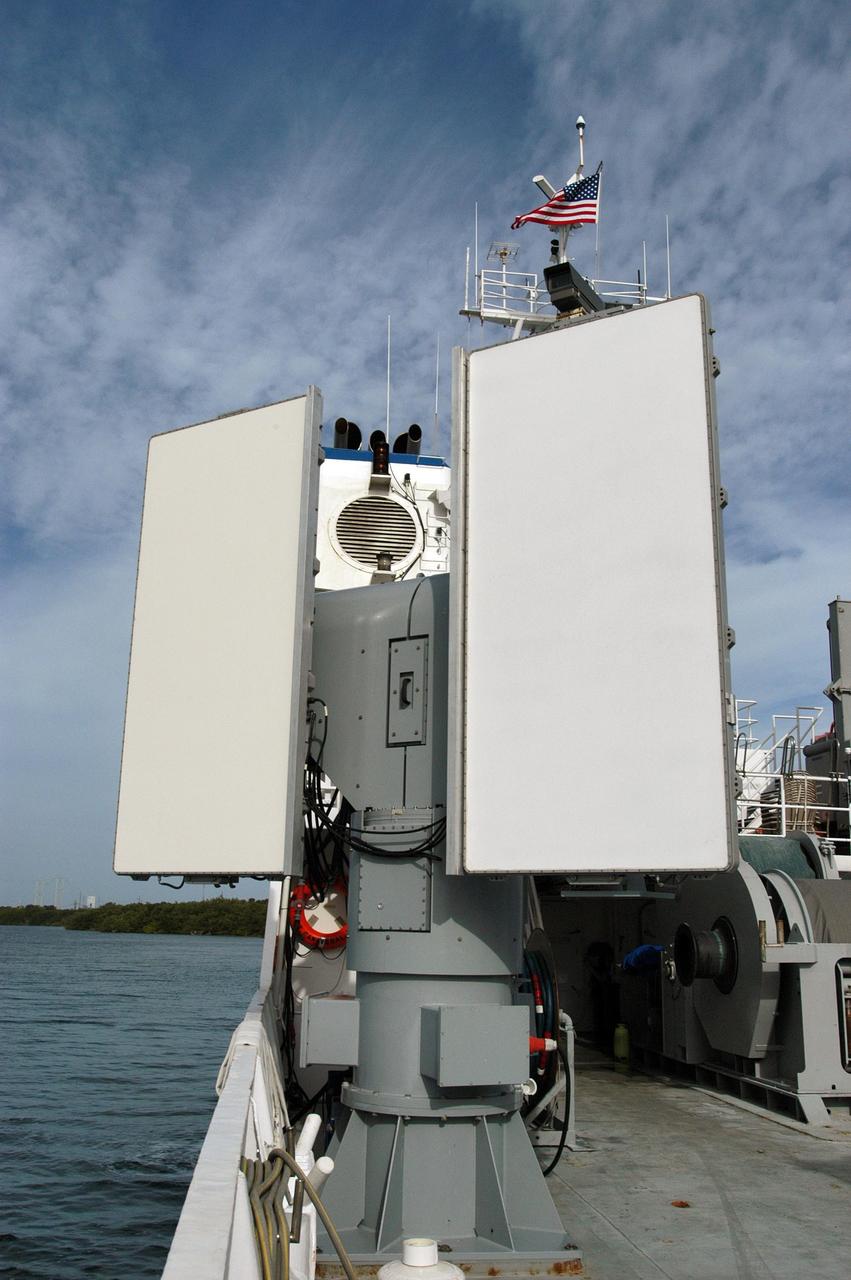
KENNEDY SPACE CENTER, FLA. -- The X-band radar array is installed on the solid rocket booster retrieval ship Liberty before launch of Space Shuttle Discovery. It is one of two Weibel Continuous Pulse Doppler X-band radars located on each of the two SRB retrieval ships. This one will be located downrange of the launch site. Working with the land-based C-band radar, the X-band radars provide velocity and differential shuttle/debris motion information during launch. The radar data will be sent from the ships via satellite link and analyzed at the C-band radar site located on north Kennedy Space Center. Photo credit: NASA/George Shelton

NOAA Administrator, Vice Admiral Conrad C. Lautenbacher, Jr., U.S. Navy (Ret.), is seen on a television monitor as he testifies before the House Committee on Science and Technology regarding the future of the National Polar-orbiting Operational Environmental Satellite System (NPOESS) and results of the Nunn-McCurdy review of NOAA’s weather satellite program, Thursday, June 8, 2006, at the Rayburn House Office Building in Washington. Photo Credit: (NASA/Bill Ingalls)
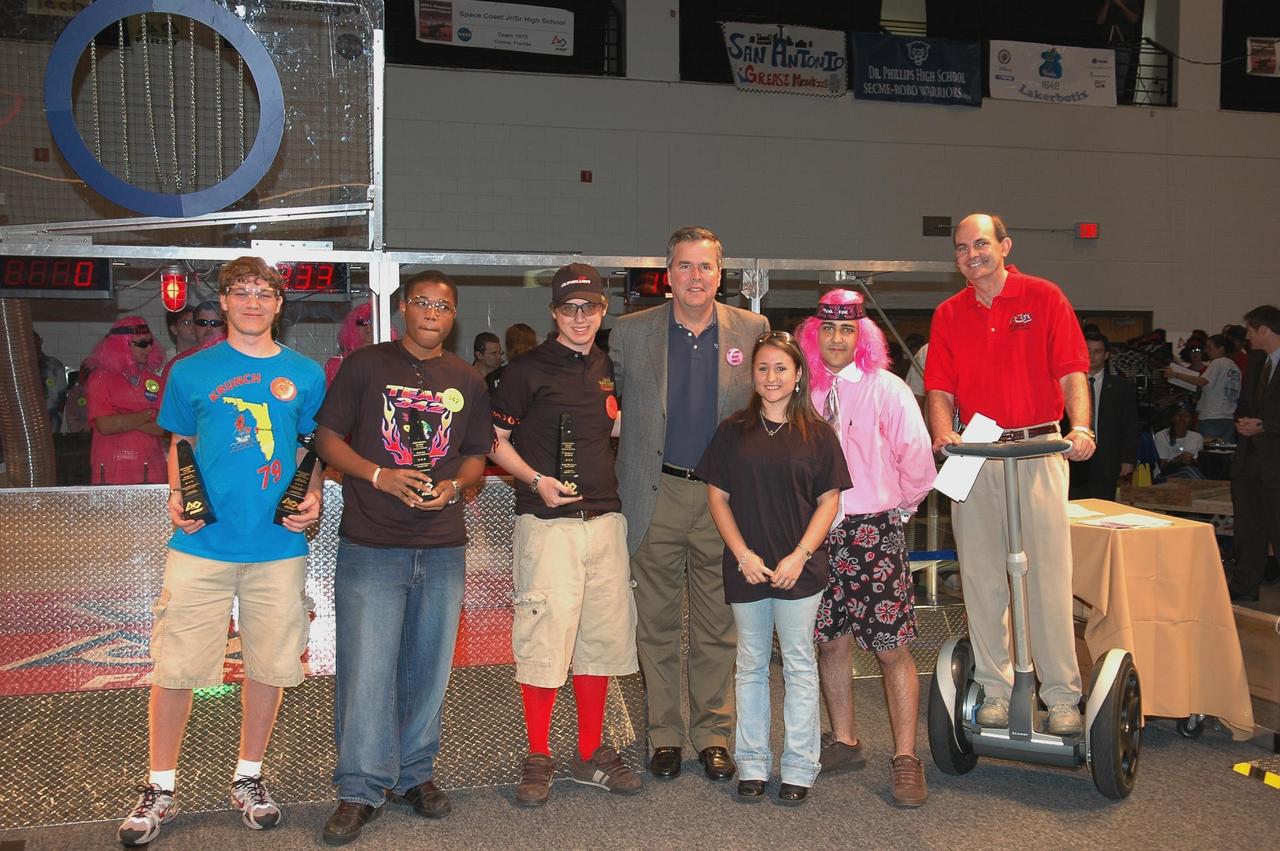
KENNEDY SPACE CENTER, FLA. - During opening ceremonies of the 2006 FIRST Robotics Regional Competition held March 9-11 at the University of Central Florida in Orlando, Florida Governor Jeb Bush poses with recipients of the Governor's Award trophy. The FIRST Robotics Competition challenges teams of young people and their mentors to solve a common problem in a six-week timeframe using a standard "kit of parts" and a common set of rules. Teams build robots from the parts and enter them in a series of competitions. FIRST, which is based on "For Inspiration and Recognition of Science and Technology," redefines winning for these students. Teams are rewarded for excellence in design, demonstrated team spirit, gracious professionalism and maturity, and ability to overcome obstacles. Scoring the most points is a secondary goal. Winning means building partnerships that last. NASA and the University of Central Florida are co-sponsors of the regional event, which this year included more than 50 teams. Photo credit: NASA/Kim Shiflett

Three-Frame Movie of Opportunity Rover at Victoria Crater
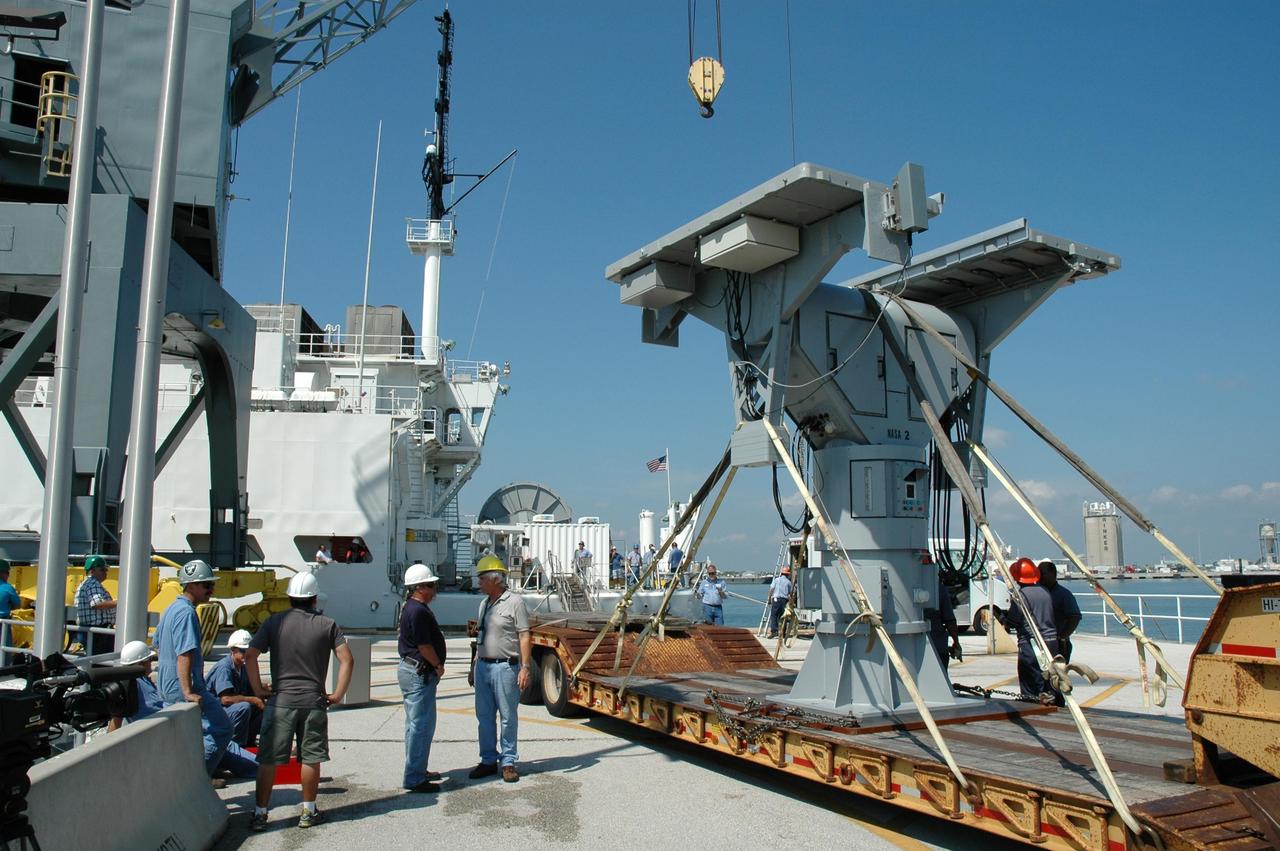
KENNEDY SPACE CENTER, FLA. - An X-band radar is ready to be loaded on the U.S. Naval Ship Hayes at Port Canaveral in Florida to support the July 1 launch of Space Shuttle Discovery on mission STS-121. There are two Continuous Pulse Doppler X-band radars located on ships for the STS-121 launch. The other one is mounted on a booster recovery ship downrange of the launch site. The two radars provide velocity and differential Shuttle/debris motion information. Combined with the C-band radar located at the Haulover Canal near the launch site, they provide high definition images of any debris that might fall from the external tank/shuttle. The X-band data (screen captures) will be sent from the ships via satellite link to the National Center for Atmospheric Research site. Photo credit: NASA/Jim Grossmann
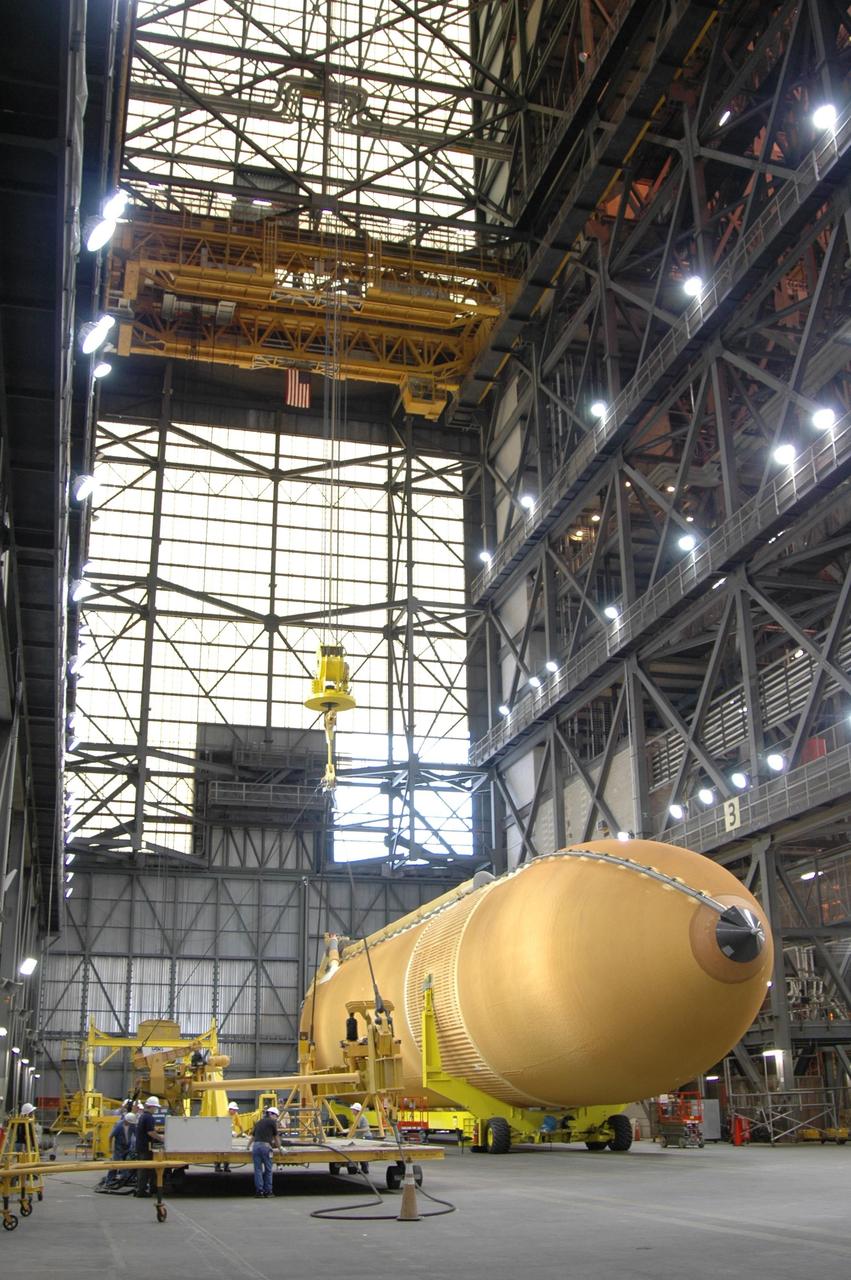
KENNEDY SPACE CENTER, FLA. - External tank No. 118 waits in the Vehicle Assembly Building for a crane to be attached that will raise it to vertical and lifted into high bay 3 for mating with solid rocket boosters stacked there. The tank is designated to fly on mission STS-115 with Atlantis. It will fly with many major safety changes, including the removal of the protuberance air load ramps. The mission will deliver the second port truss segment, the P3/P4 Truss, to attach to the first port truss segment, the P1 Truss, as well as deploy solar array set 2A and 4A. Launch of Space Shuttle Atlantis is scheduled for late August. Photo credit: NASA/Jim Grossmann
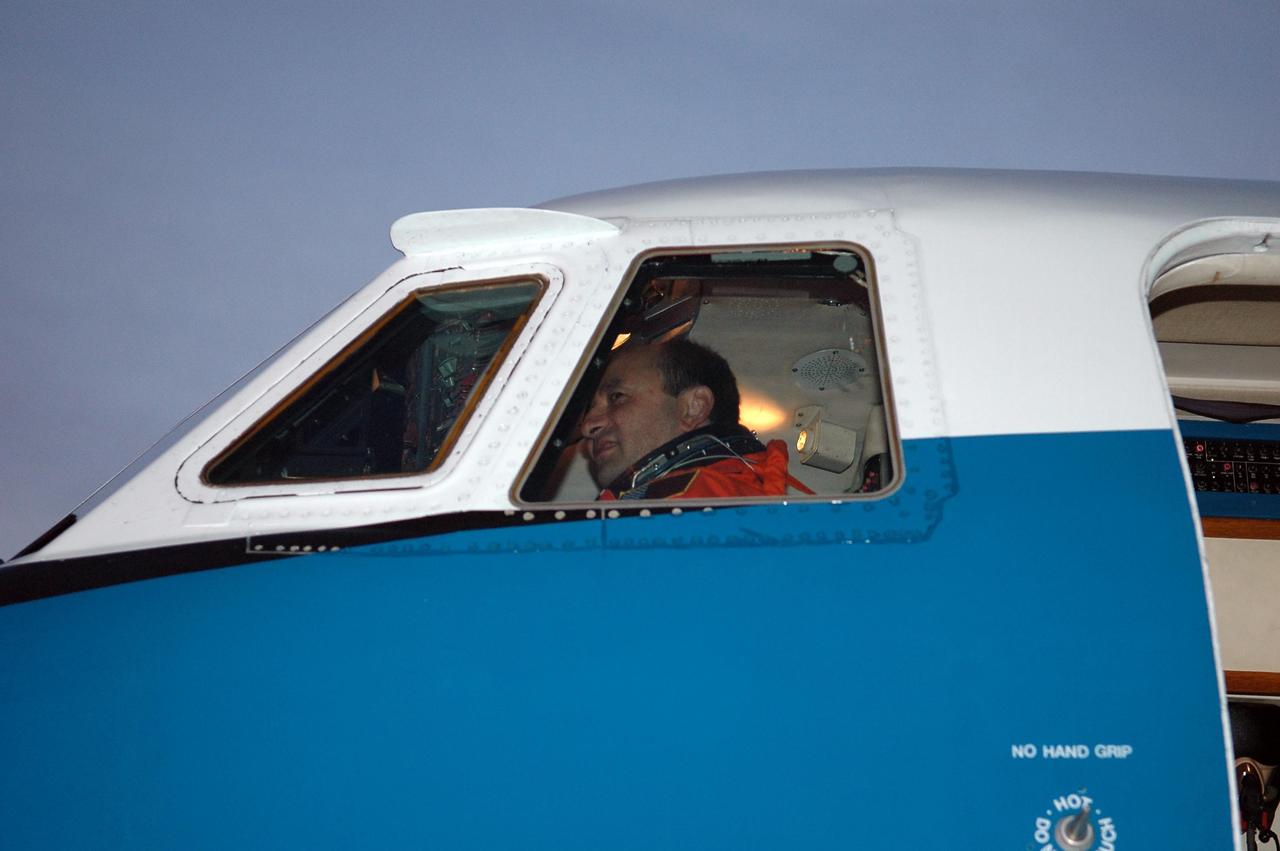
KENNEDY SPACE CENTER, FLA. -- At the Shuttle Landing Facility, STS-116 Commander Mark Polansky is in the pilot's seat of the shuttle training aircraft (STA), getting ready to practice landing the orbiter. The mission crew is at KSC for the terminal countdown demonstration test, which are prelaunch preparations that include a simulated launch countdown. STA practice is part of the TCDT. The STA is a Grumman American Aviation-built Gulf Stream II jet that was modified to simulate an orbiter's cockpit, motion and visual cues, and handling qualities. In flight, the STA duplicates the orbiter's atmospheric descent trajectory from approximately 35,000 feet altitude to landing on a runway. Because the orbiter is unpowered during re-entry and landing, its high-speed glide must be perfectly executed the first time. Photo credit: NASA/Kim Shiflett
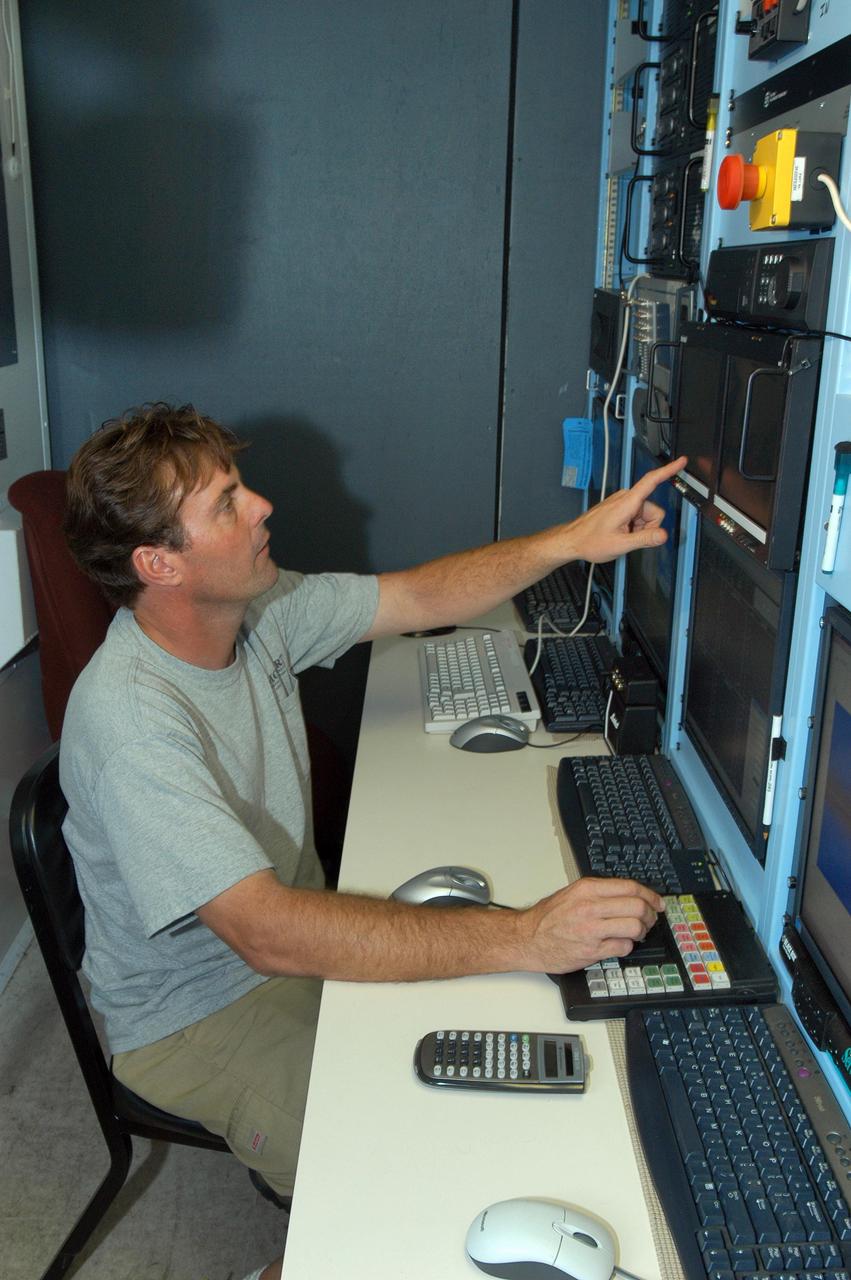
KENNEDY SPACE CENTER, FLA. -- Radar operator Scott Peabody tests the X-band radar array installed on the solid rocket booster retrieval ship Liberty before launch of Space Shuttle Discovery. It is one of two Weibel Continuous Pulse Doppler X-band radars located on each of the two SRB retrieval ships. This one will be located downrange of the launch site. It is one of two Weibel Continuous Pulse Doppler X-band radars located on each of the two SRB retrieval ships. This one will be located downrange of the launch site. Working with the land-based C-band radar, the X-band radars provide velocity and differential shuttle/debris motion information during launch. The radar data will be sent from the ships via satellite link and analyzed at the C-band radar site located on north Kennedy Space Center. Photo credit: NASA/George Shelton
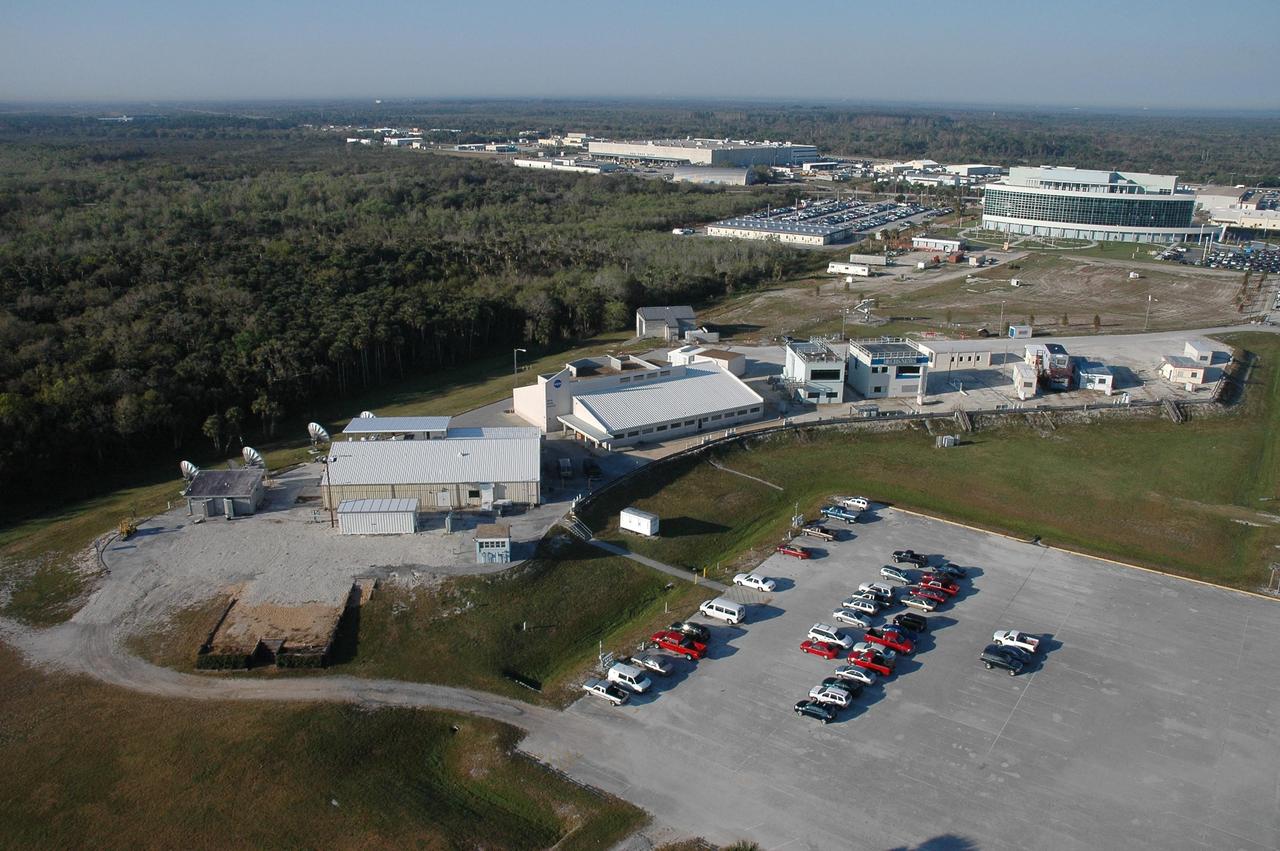
KENNEDY SPACE CENTER, FLA. - This aerial view shows the Press Site (in the foreground) comprising the NASA TV studio, the NASA News Center behind it, buildings used by local NBC and CBS television stations, and newly erected prefabricated buildings for local newspapers and correspondents for CNN, AP and others. A year-long project removed and replaced hurricane-damaged trailers and grandstands from the site. In the background, at right, is the newly built Operations Support Building II, which replaced modular housing and trailers in the Launch Complex 39 area. Photo credit: Cory Huston
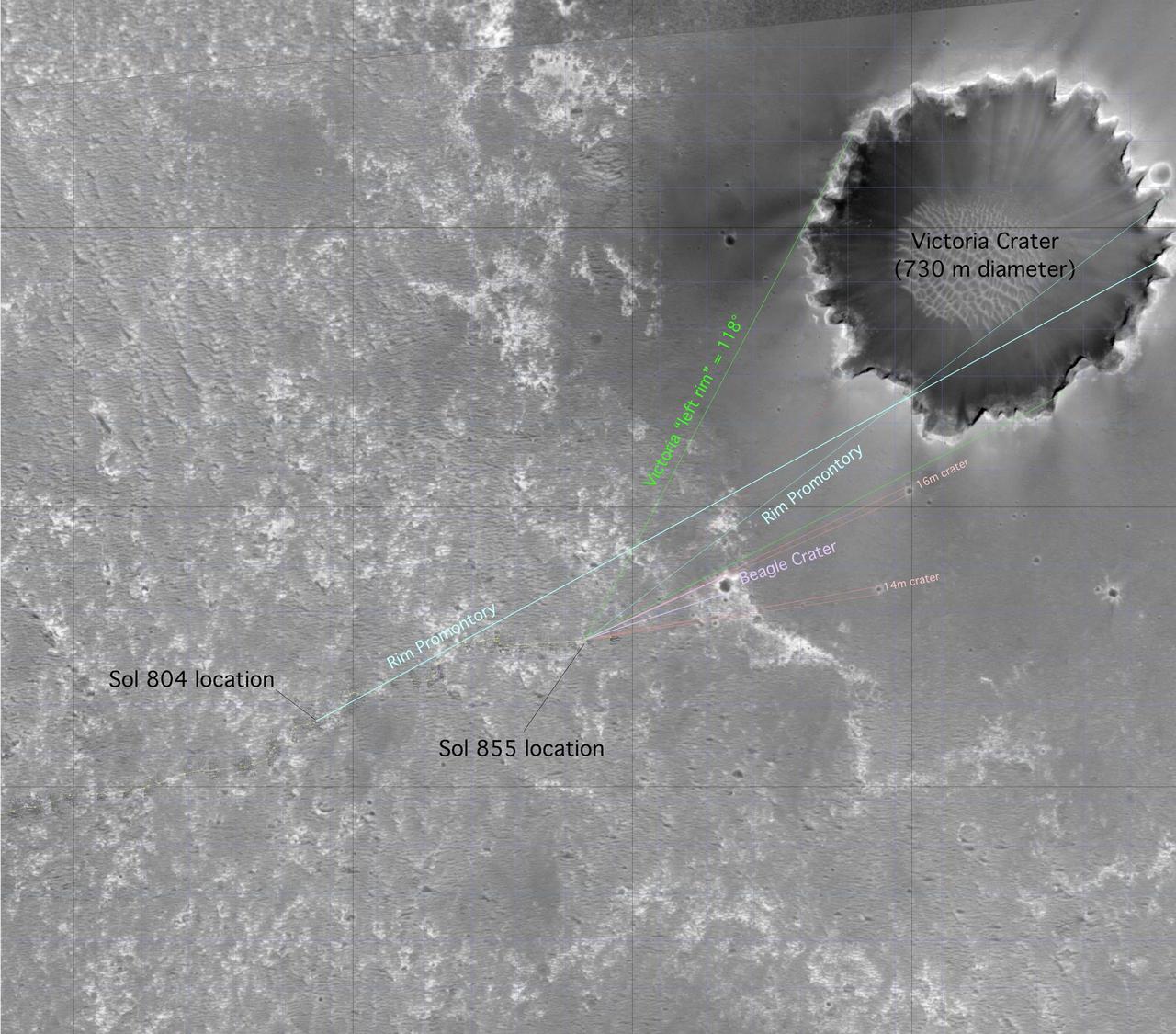
Beagle Crater on Opportunity Horizon Orbital View
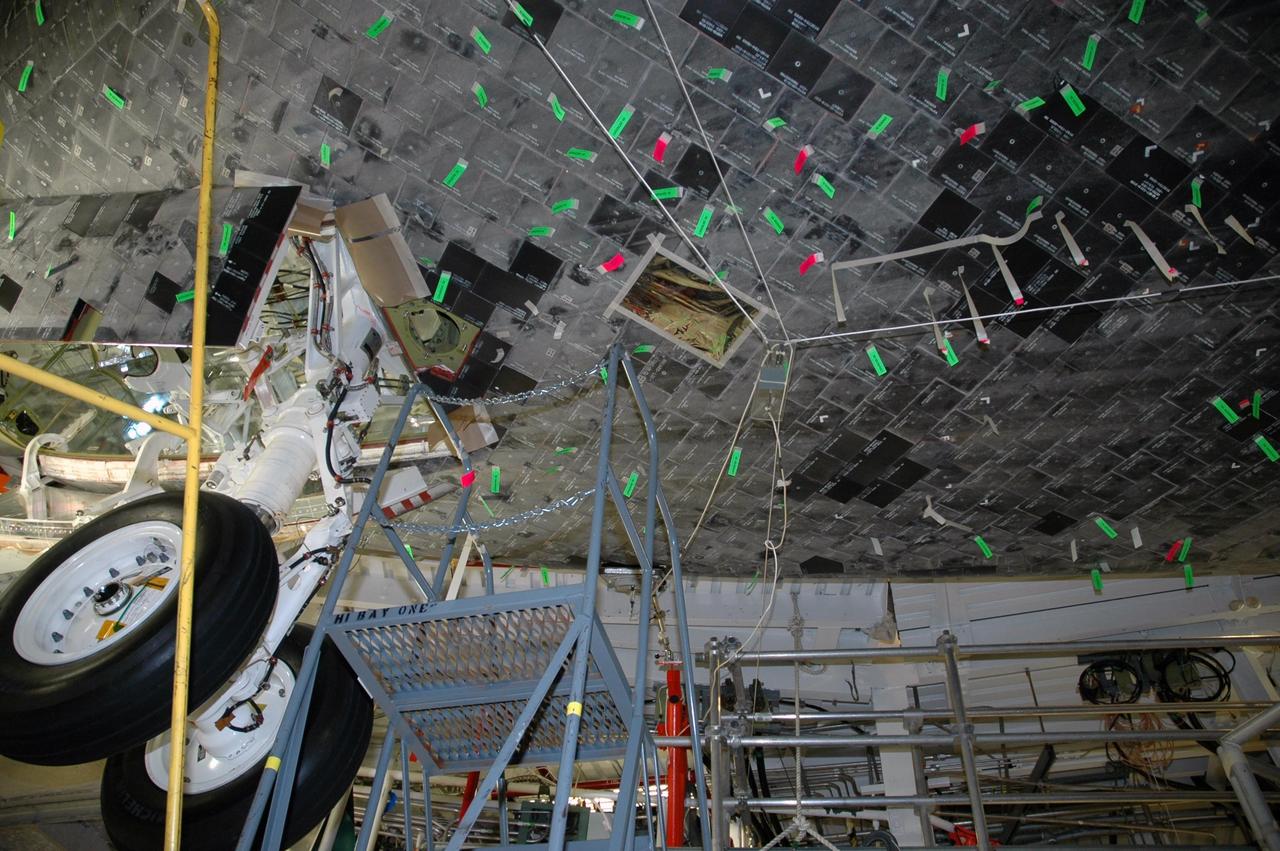
KENNEDY SPACE CENTER, FLA. - In bay 3 of the Orbiter Processing Facility, the thermal protection system tiles on the underside of Atlantis are marked for post-flight inspection. Atlantis returned from mission STS-115 on Sept. 21 and is being prepared for her next mission, STS-117. The mission will be the 21st to the International Space Station and construction flight 13A. The mission payload comprises the starboard arrays 3 and 4. Launch is scheduled for no earlier than Feb. 22, 2007. Photo credit: NASA/Jack Pfaller
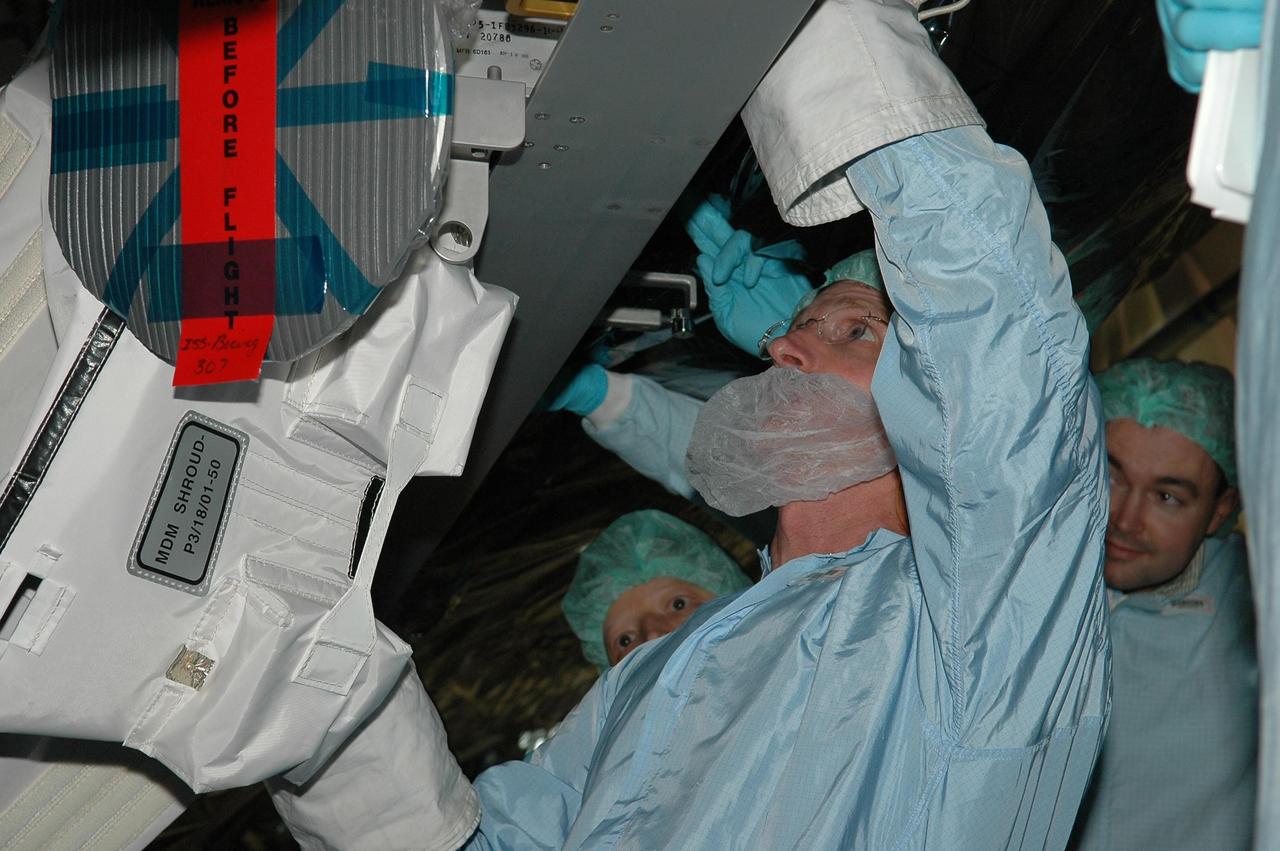
KENNEDY SPACE CENTER, FLA. - In the Space Station Processing Facility at NASA's Kennedy Space Center, STS-115 Mission Specialist Joe Tanner is removing the P3 truss multiplexer-demultiplexer launch to activation multilayer installation blanket. He and other crew members are at the center for Crew Equipment Interface Test activities. Equipment familiarization is a routine part of astronaut training and launch preparations. The mission will deliver the second port truss segment, the P3/P4 Truss, to attach to the first port truss segment, the P1 Truss, as well as deploy solar array set 2A and 4A. Launch on Space Shuttle Atlantis is scheduled for late August. Photo credit: NASA/Kim Shiflett
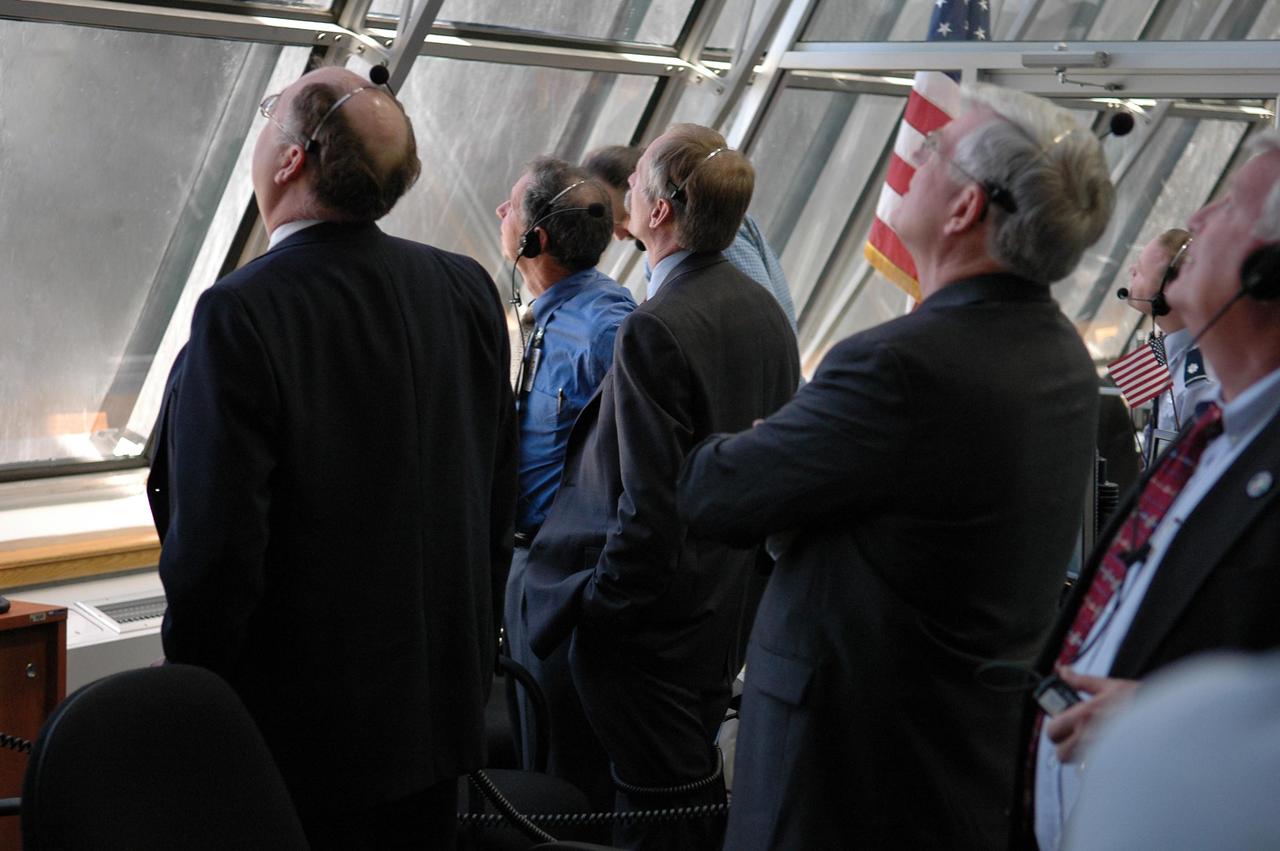
KENNEDY SPACE CENTER, FLA. - In Firing Room 4 of the Launch Control Center, Shuttle Program manager Wayne Hale (far left), NASA Associate Administrator for Space Operations Mission Bill Gerstenmaier (third from left) and Center Director Jim Kennedy (far right) watch the historic ride of Space Shuttle Discovery as it rockets through the sky on mission STS-121 -- the first ever Independence Day launch of a space shuttle. Liftoff was on-time at 2:38 p.m. EDT. During the 12-day mission, the STS-121 crew of seven will test new equipment and procedures to improve shuttle safety, as well as deliver supplies and make repairs to the International Space Station. Landing is scheduled for July 16 or 17 at Kennedy's Shuttle Landing Facility. Photo credit: NASA/Kim Shiflett
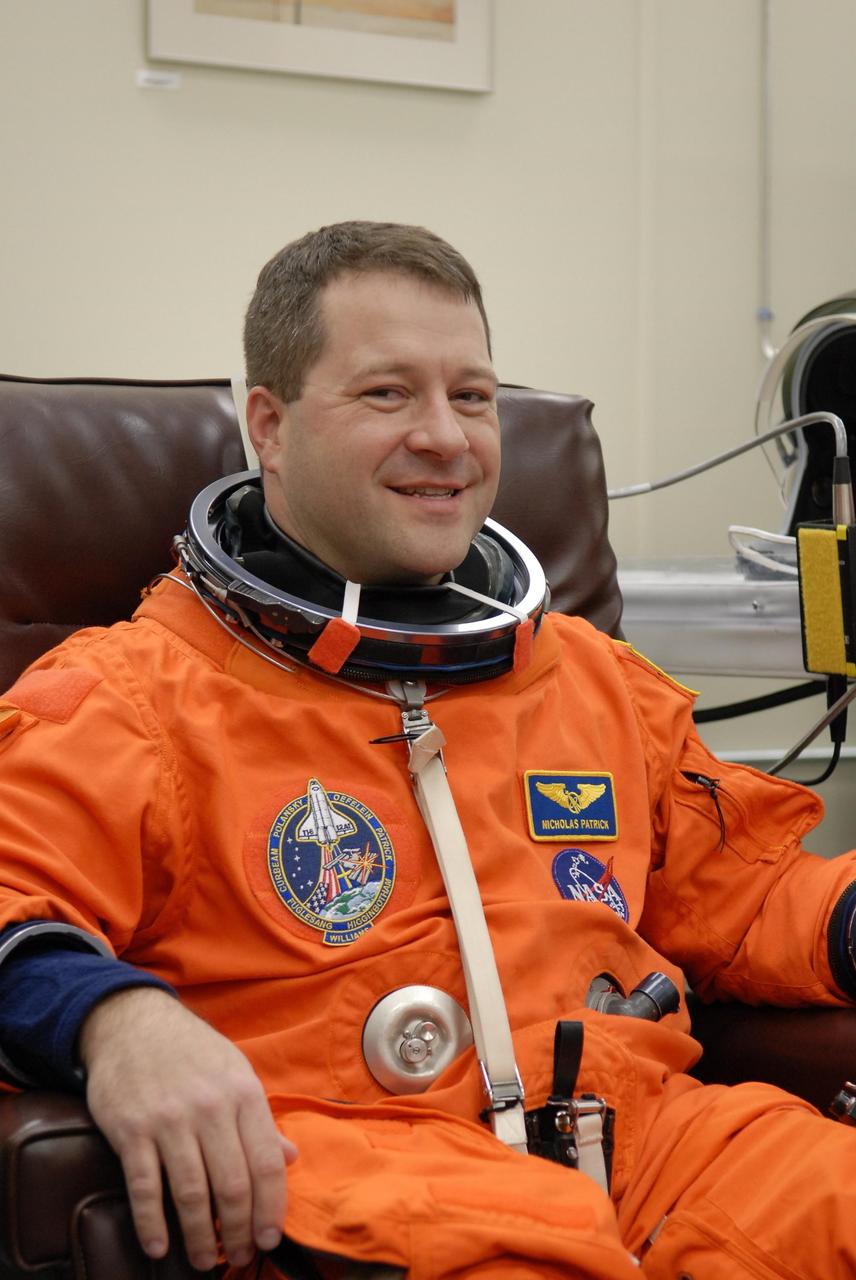
KENNEDY SPACE CENTER, FLA. -- The crew members of mission STS-116 are suiting up for a second launch attempt at 8:47 p.m. EST from Launch Pad 39B aboard Space Shuttle Discovery. Pictured here is Mission Specialist Nicholas Patrick, who will be making his first shuttle flight. The first launch attempt of STS-116 on Dec. 7 was postponed due a low cloud ceiling over Kennedy Space Center. This is Discovery's 33rd mission and the first night launch since 2002. The 20th shuttle mission to the International Space Station, STS-116 carries another truss segment, P5. It will serve as a spacer, mated to the P4 truss that was attached in September. After installing the P5, the crew will reconfigure and redistribute the power generated by two pairs of U.S. solar arrays. Landing is expected Dec. 19 at KSC. Photo credit: NASA/Kim Shiflett
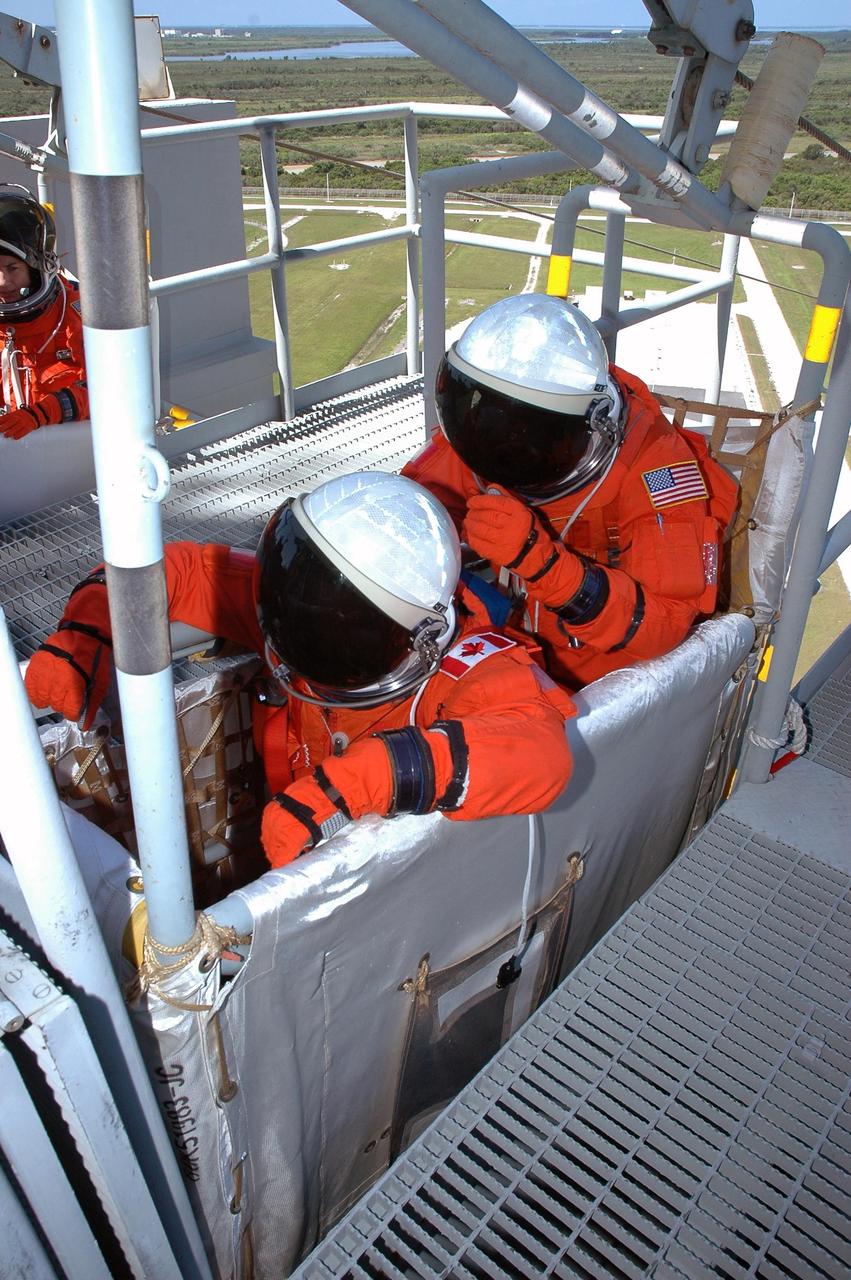
KENNEDY SPACE CENTER, FLA. - STS-115 Mission Specialists Steven MacLean (left) and Joseph Tanner are ready to release the slidewire basket on Launch Pad 39B, practicing emergency egress procedures. The activity follows a simulated launch countdown, part of Terminal Countdown Demonstration Test activities. The TCDT is a prelaunch preparation for the mission that is scheduled to lift off in a window opening Aug. 27. During their 11-day mission to the International Space Station, the STS-115 crew will continue construction of the station and attach the payload elements, the Port 3/4 truss segment with its two large solar arrays. Photo credit: NASA/Cory Huston

KENNEDY SPACE CENTER, FLA. - In NASA Kennedy Space Center's Space Station Processing Facility (SSPF), the multi-purpose logistics module Donatello is being prepared for a move to a payload canister. Donatello is being transferred to the Operations and Checkout Building to make room in the SSPF for the arrival of elements for future flights from other ISS partners. Photo credit: NASA/Jim Grossmann
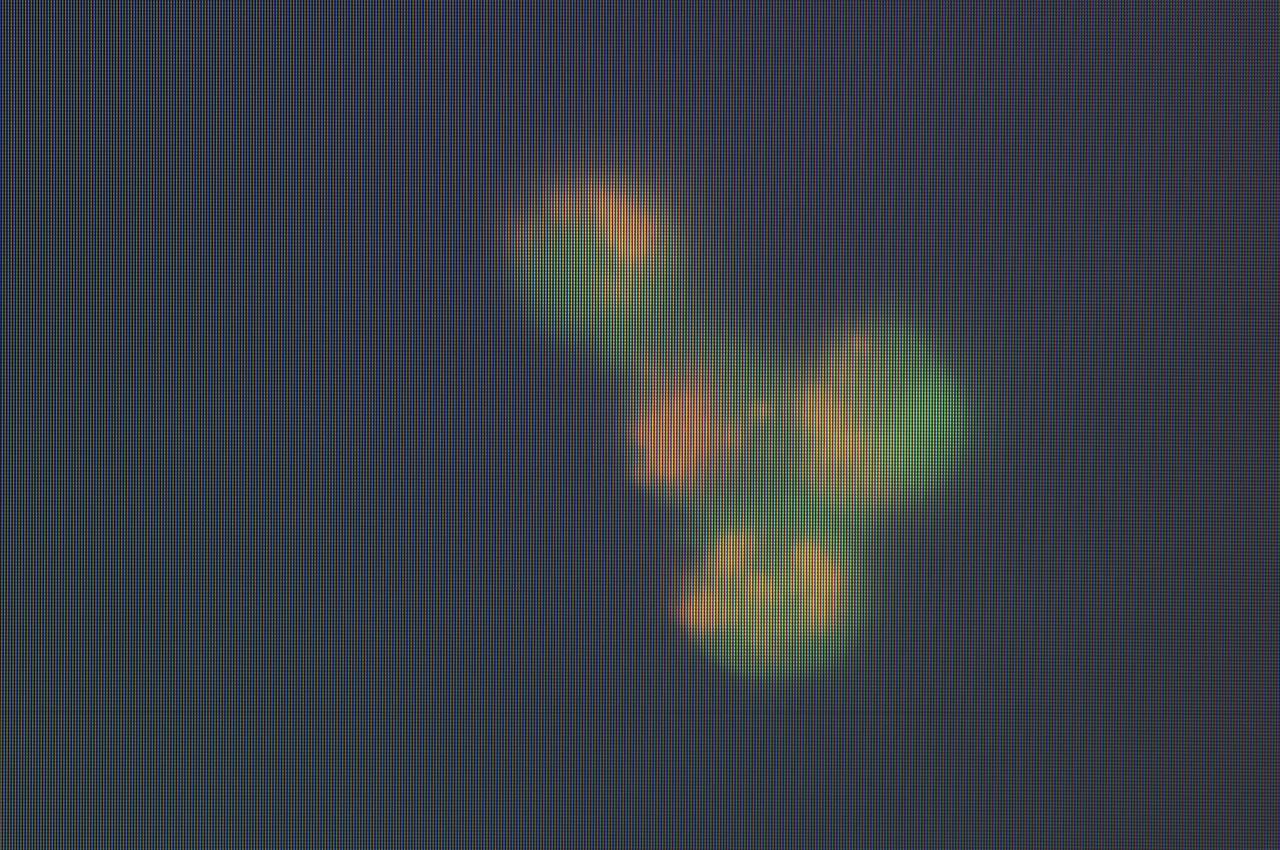
Space shuttle STS-121 FIT (Fly Immunity and Tumors) payload. Using Drosophila (fruit fly) to complete the experiments. Computer screen showing green fluorescent protein used to visualize blood cells in Drosophila (fruit fly).
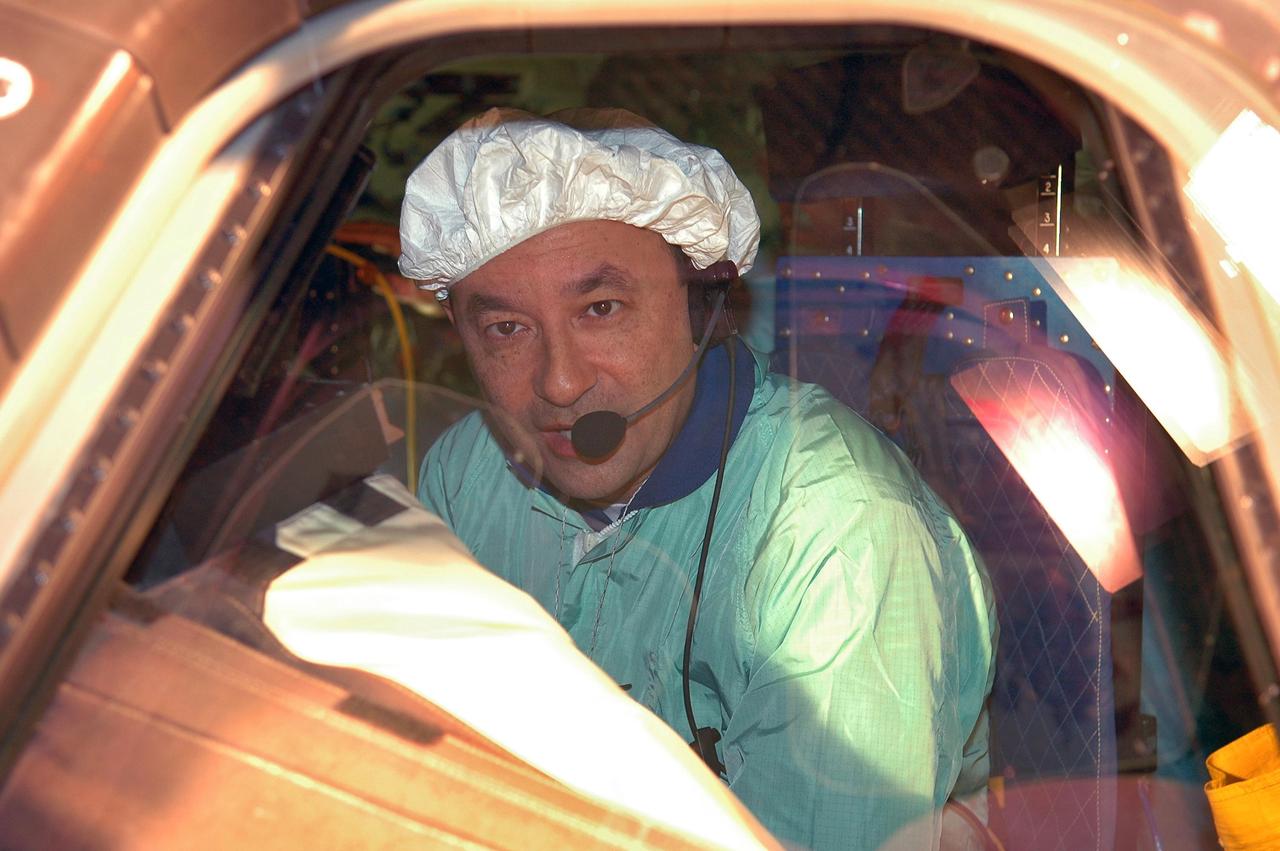
KENNEDY SPACE CENTER, FLA. - In the Orbiter Processing Facility, STS-116 Commander Mark Polansky checks the cockpit window of Discovery as part of a Crew Equipment Interface Test (CEIT). A CEIT allows astronauts to become familiar with equipment and hardware they will use on the mission. STS-116 will be mission No. 20 to the International Space Station and construction flight 12A.1. The mission payload is the SPACEHAB module, the P5 integrated truss structure and other key components. Launch is scheduled for no earlier than Dec. 7. Photo credit: NASA/Kim Shiflett

VANDENBERG AIR FORCE BASE, CALIF. -- An overhead crane lifts the probe carrier assembly on the THEMIS spacecraft to a dolly. Visible are some of the solar array covers. THEMIS, which stands for Time History of Events and Macroscale Interactions during Substorms, comprises five identical probes that will study the dynamic and colorful eruptions of auroras. THEMIS is scheduled to launch Oct. 19 from Cape Canaveral Air Force Station in Florida.
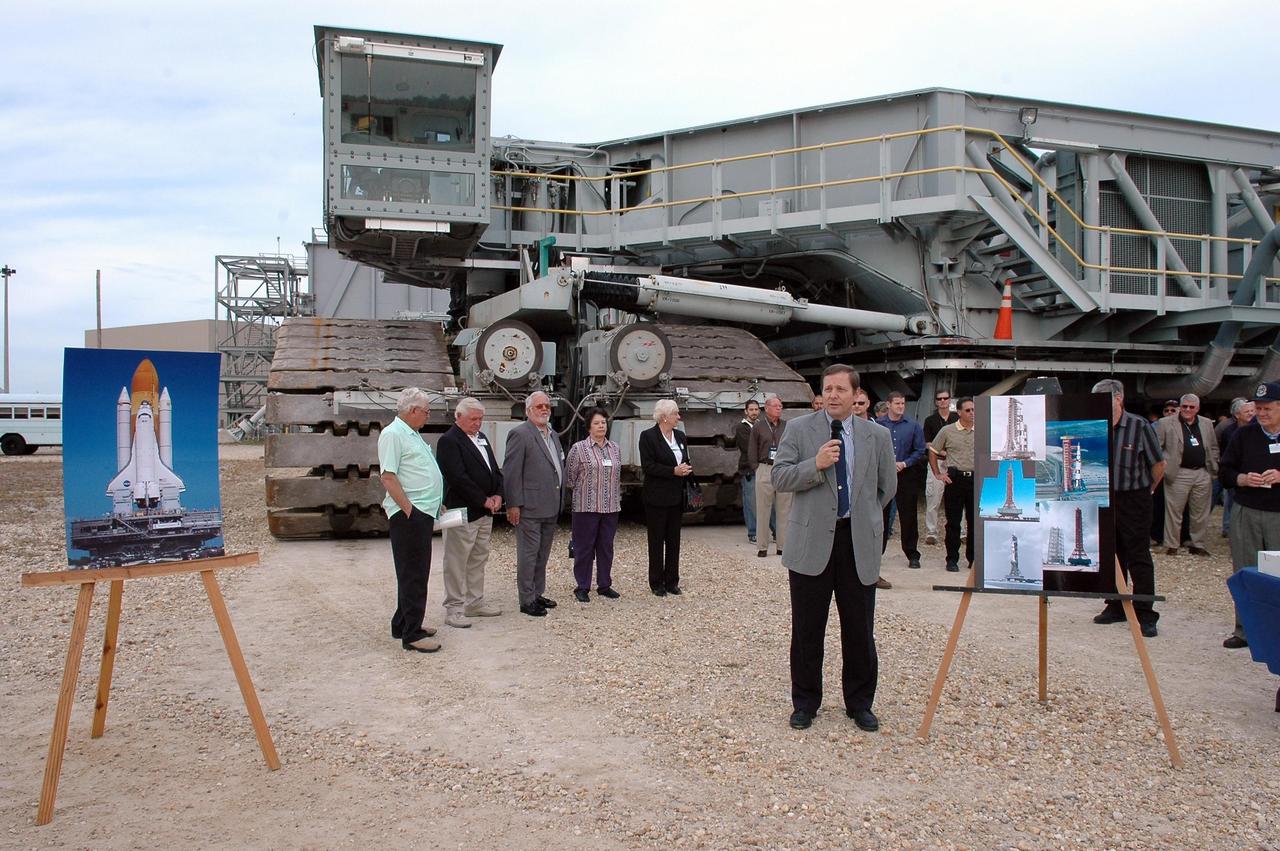
KENNEDY SPACE CENTER, FLA. - Standing in front of one of the crawler transporters at NASA Kennedy Space Center, Director of Space Shuttle Processing Mike Wetmore addresses invited guests (behind him) and the media on the occasion of the 40th anniversary of the crawler transporters. Media representatives and invited guests had the opportunity to tour one of NASA's two crawlers. This included the driver cab and engine room. Guests included current drivers and operators, as well as drivers from the Apollo Program. In January 1966, the crawler completed its first successful move with a 10.6-million-pound launch umbilical tower. It moved three-quarters of a mile in about nine hours. Throughout 40 years of service, the two crawlers have moved more than 3,500 miles and carried seven vehicles.
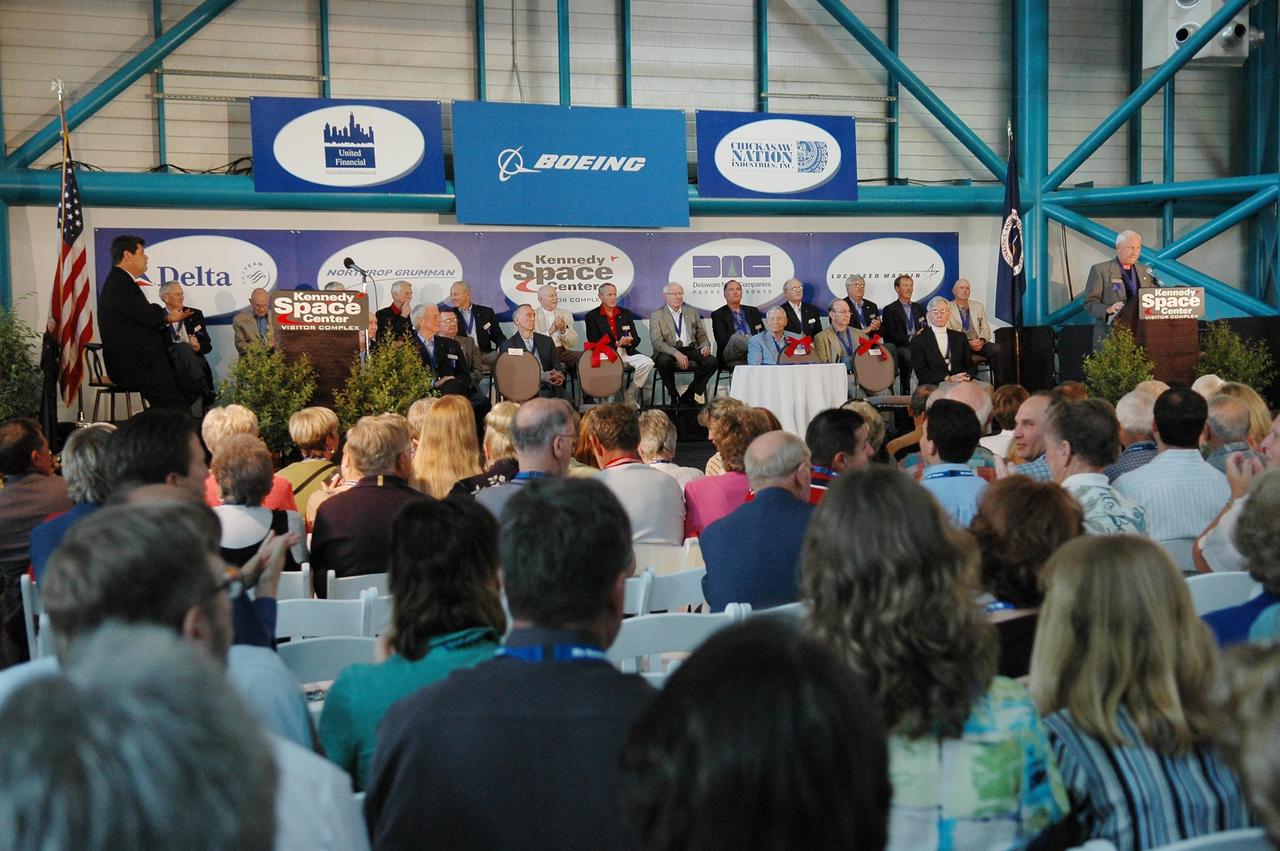
KENNEDY SPACE CENTER, FLA. - The stage in the Apollo/Saturn V Center is lined with former NASA astronauts attending the 2006 induction ceremony for the U.S. Astronaut Hall of Fame. All of them had been previously inducted to the U.S. Astronaut Hall of Fame. They came to welcome the inductees for 2006: Henry "Hank" Hartsfield Jr., Brewster H. Shaw Jr. and Charles F. Bolden Jr. The U.S. Astronaut Hall of Fame now includes 63 space explorers. Photo credit: NASA/Kim Shiflett
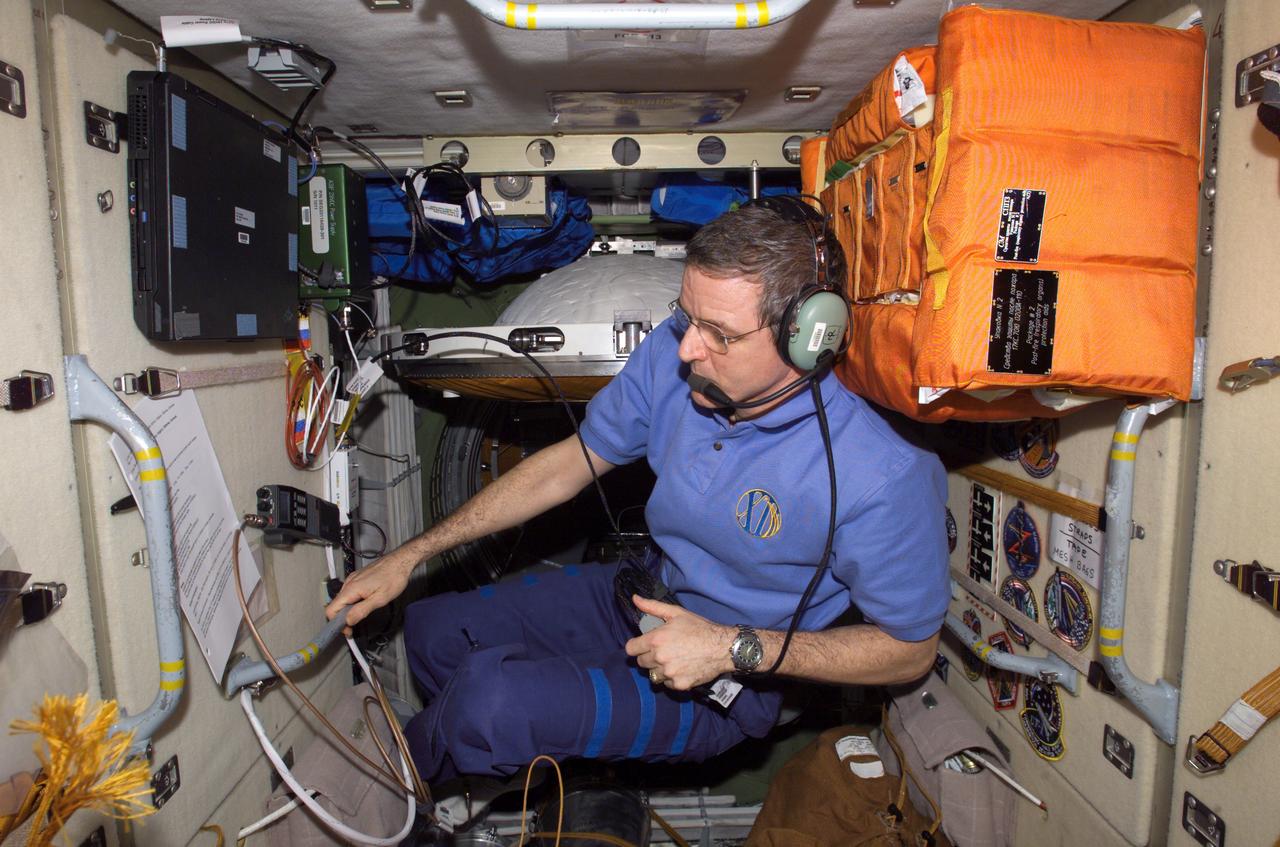
ISS012-E-21181 (21 March 2006) --- Astronaut William S. McArthur Jr., Expedition 12 commander and NASA science officer, talks on the ARISS (Amateur Radio on the International Space Station) inside the Zarya Functional Cargo Block during his scheduled amateur radio session. This session is with the Sir James Lougheed Elementary School, Calgary, Alberta, Canada.
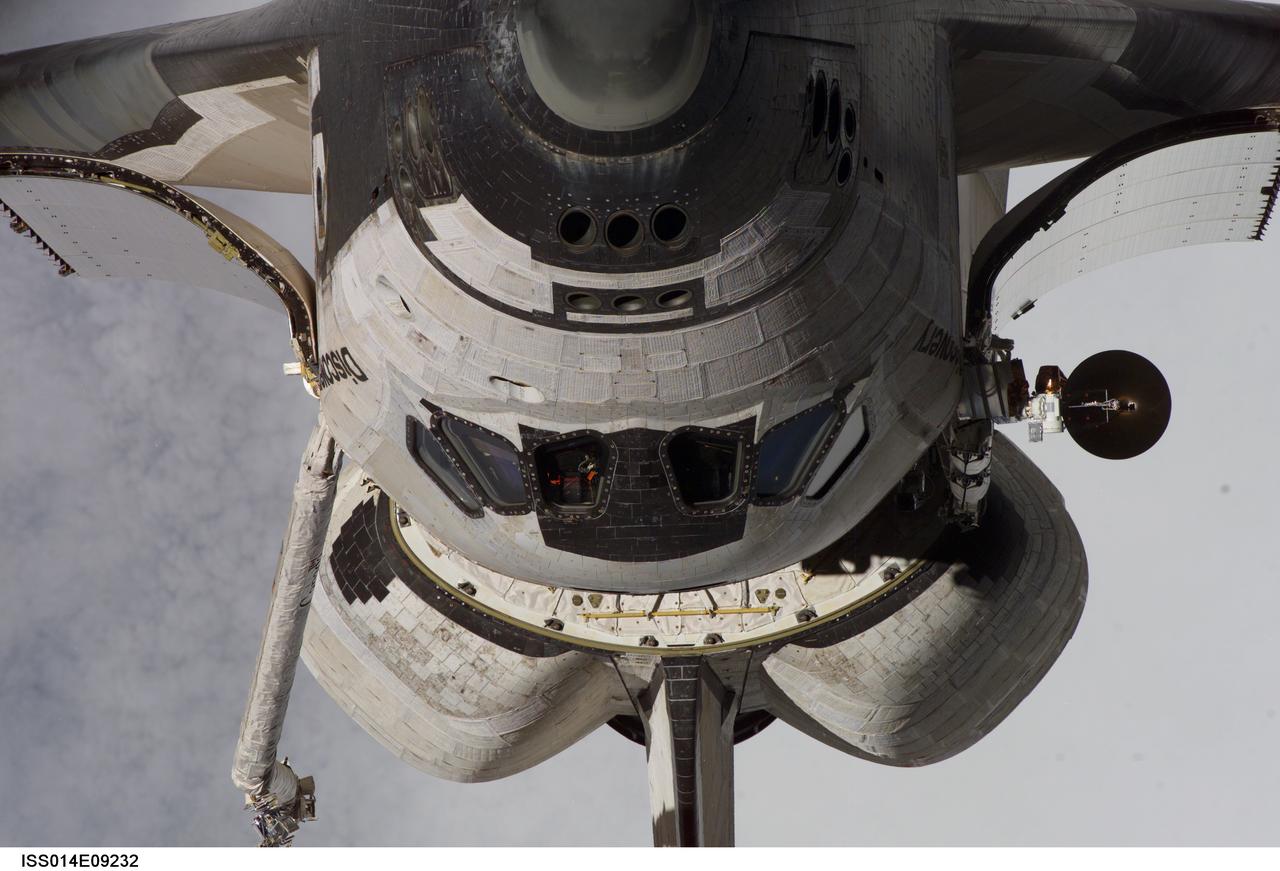
ISS014-E-09232 (11 Dec. 2006) --- This view of the nose and part of the crew cabin of Space Shuttle Discovery was provided by an Expedition 14 crewmember during a back-flip performed by the approaching STS-116 crew to the International Space Station. The Ku-band antenna, very instrumental in communications operations, is visible on the port side of the orbiter.

JSC2006-E-46471 (25 Oct. 2006) --- Astronaut Robert L. Curbeam, STS-116 mission specialist, attired in a training version of the Extravehicular Mobility Unit (EMU) spacesuit, awaits a training session in the waters of the Neutral Buoyancy Laboratory (NBL) near Johnson Space Center.
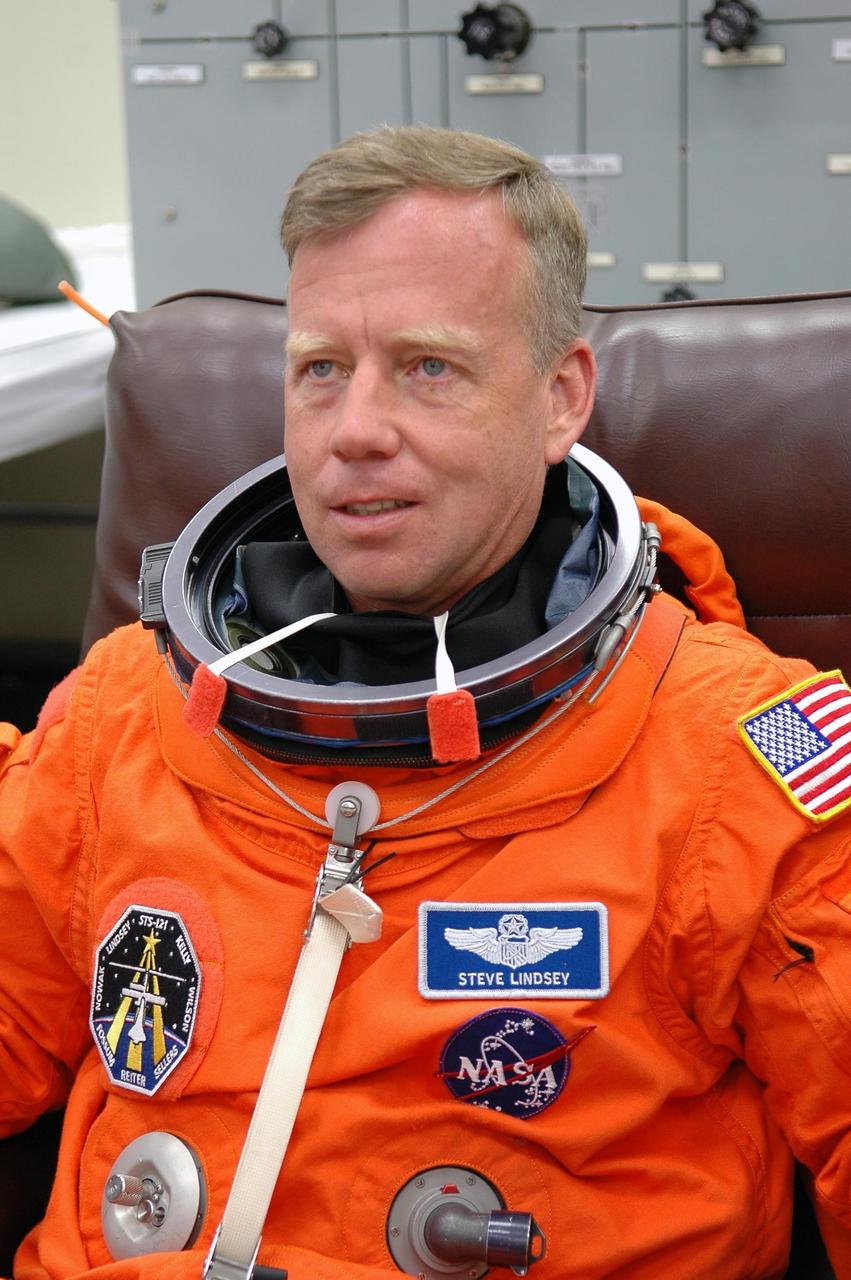
KENNEDY SPACE CENTER, FLA. - STS-121 Commander Steven Lindsey is donning his launch and entry suit for launch today on Space Shuttle Discovery. Lindsey is making his fourth space flight. The launch is the 115th shuttle flight and the 18th U.S. flight to the International Space Station. During the 12-day mission, the STS-121 crew will test new equipment and procedures to improve shuttle safety, as well as deliver supplies and make repairs to the International Space Station. Photo credit: NASA/Kim Shiflett
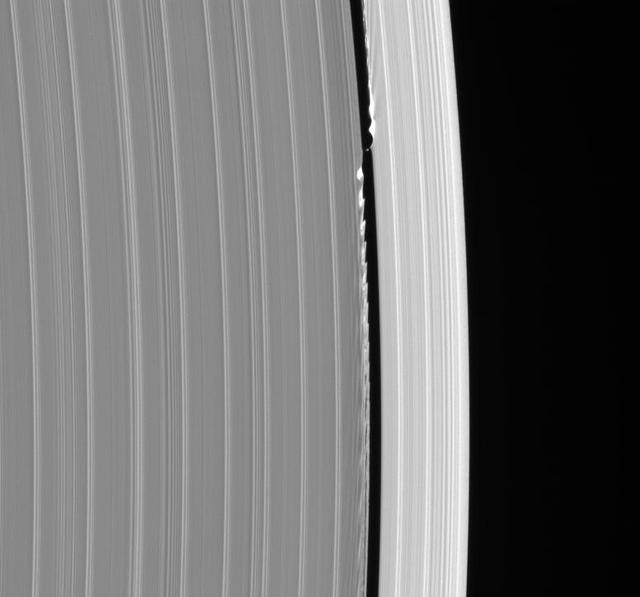
Daphnis At Work
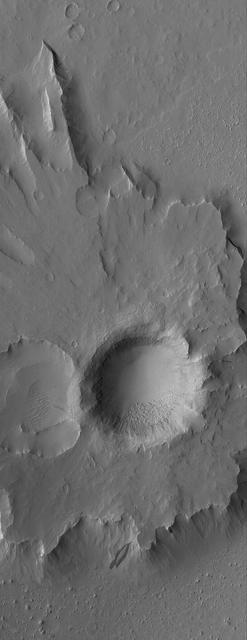
This MOC image shows a pedestal crater in the Eumenides Dorsum region of Mars

KENNEDY SPACE CENTER, FLA. -- On the 195-foot level of the fixed service structure on Launch Pad 39B, STS-116 Pilot William Oefelein (left) and Commander Mark Polansky head for the slidewire baskets, part of the emergency egress system. They and other crew members are practicing the procedure to get off the pad that are part of the prelaunch preparations known as terminal countdown demonstration test. The TCDT includes a simulated launch countdown and payload familiarization. The STS-116 mission is No. 20 to the International Space Station and construction flight 12A.1. The mission payload is the SPACEHAB module, the P5 integrated truss structure and other key components. Launch is scheduled for no earlier than Dec. 7. Photo credit: NASA/Kim Shiflett
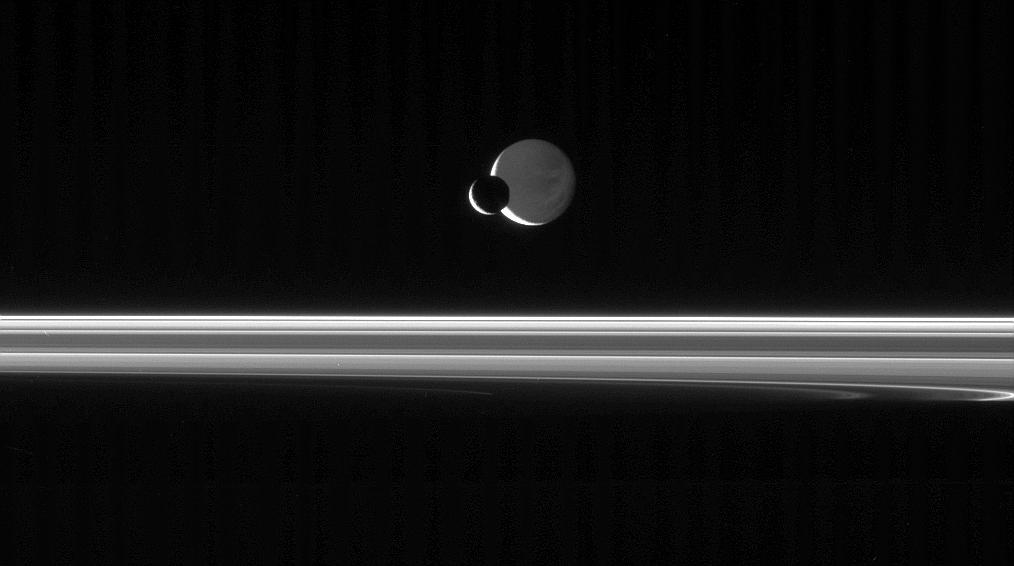
The Cassini spacecraft looks across the unlit ringplane as Mimas glides silently in front of Dione
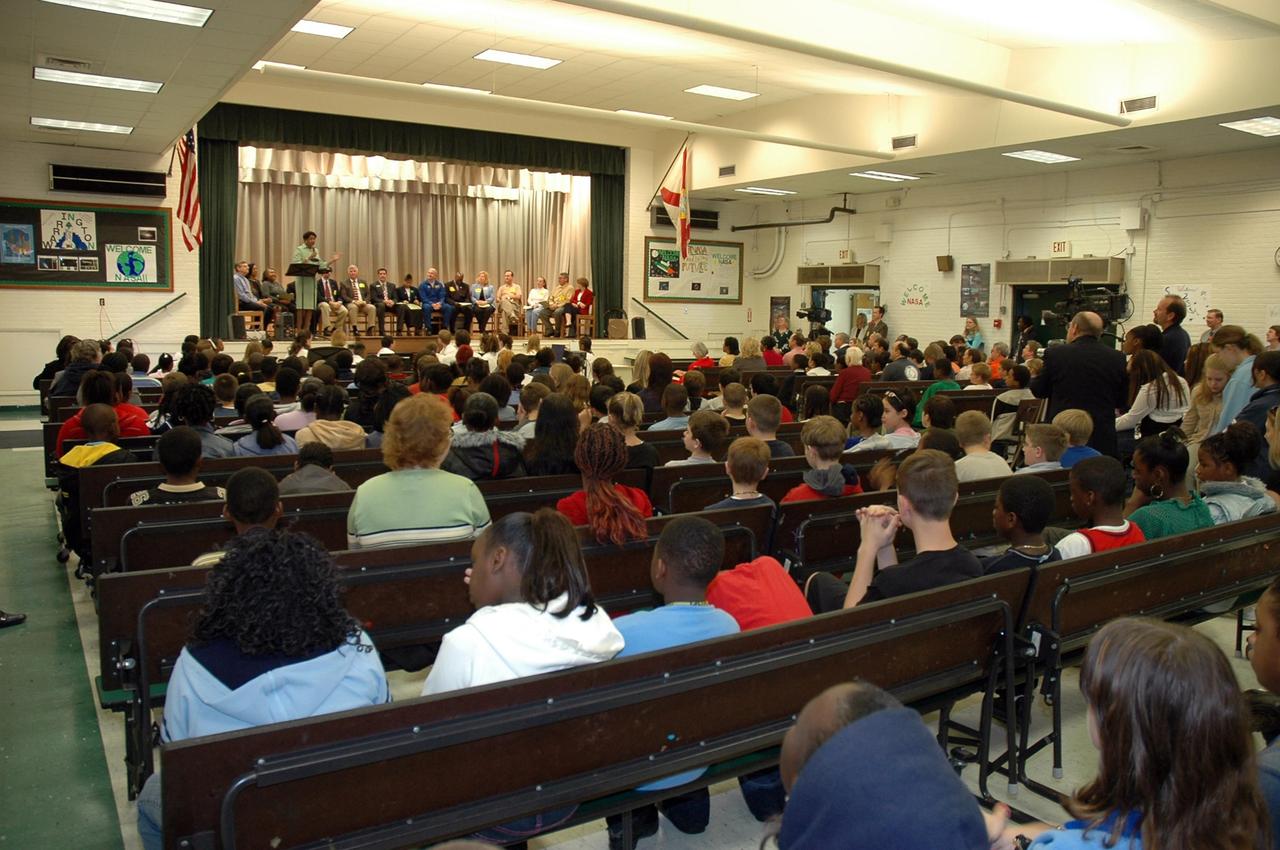
KENNEDY SPACE CENTER, FLA. — Christine Nixon, principal of Warrington Middle School in Pensacola, Fla., introduces guests on stage to the audience of students and faculty. The occasion is the kickoff of the NASA Explorer School program at the school. Among those seated on stage are Jim Paul, superintendent of Escambia County Schools; Denise Jamison, the school’s NASA Team facilitator; Les Gold, NASA aerospace specialist; Gregg Buckingham, NASA official; Jim Kennedy, director of Kennedy Space Center; Charles Baire, District representative, representing Congressman Jeff Miller; Letitia Wheeler, student at Warrington Middle School; and Alan Poindexter, NASA astronaut. Kennedy is visiting the school to share the vision for space exploration with the next generation. He is talking with students about our destiny as explorers, NASA’s stepping stone approach to exploring Earth, the moon, Mars and beyond, how space impacts our lives, and how people and machines rely on each other in space. NES establishes a three-year partnership annually between NASA and 50 NASA Explorer School teams, consisting of teachers and education administrators from diverse communities nationwide. Photo credit: NASA/Cory Huston
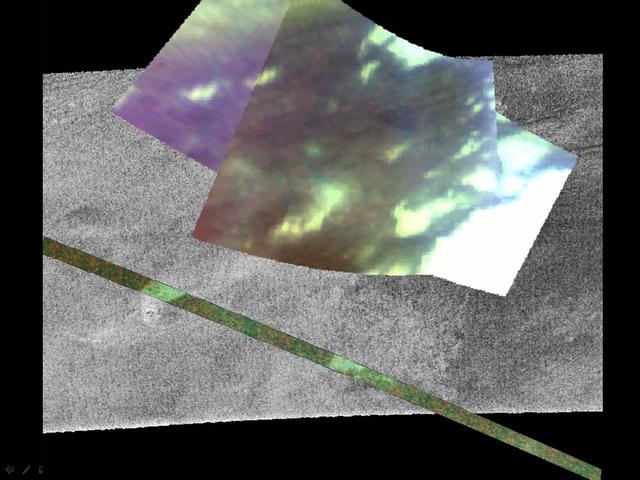
Infrared and Radar Views of Titan #2
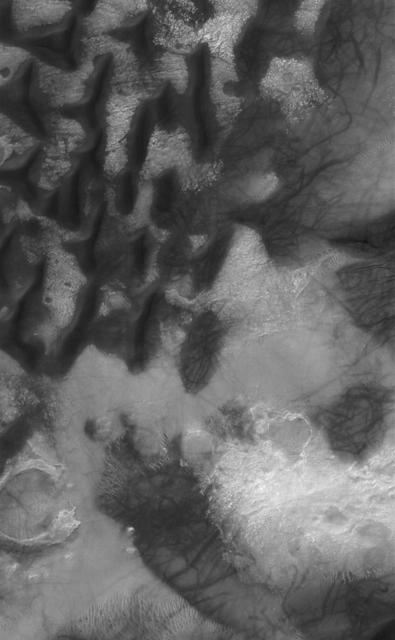
Russell Extravaganza