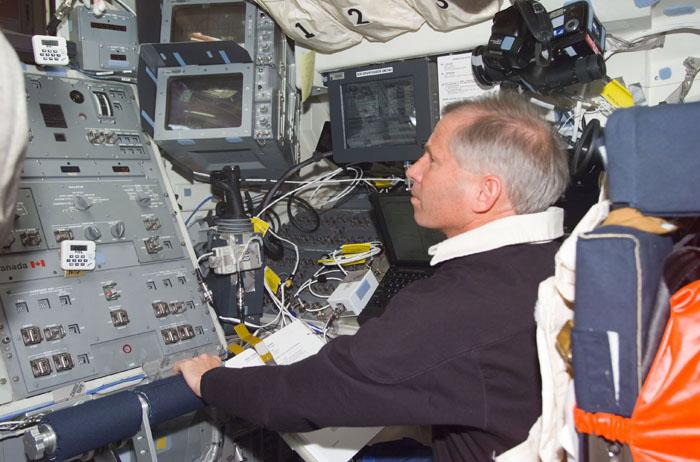
STS98-E-5083 (10 February 2001) --- Astronaut Kenneth D. Cockrell, STS-98 mission commander, is pictured on the flight deck of the Space Shuttle Atlantis. Cockrell is reading a document dealing with the Unity node on the International Space Station. The scene was recorded with a digital still camera.
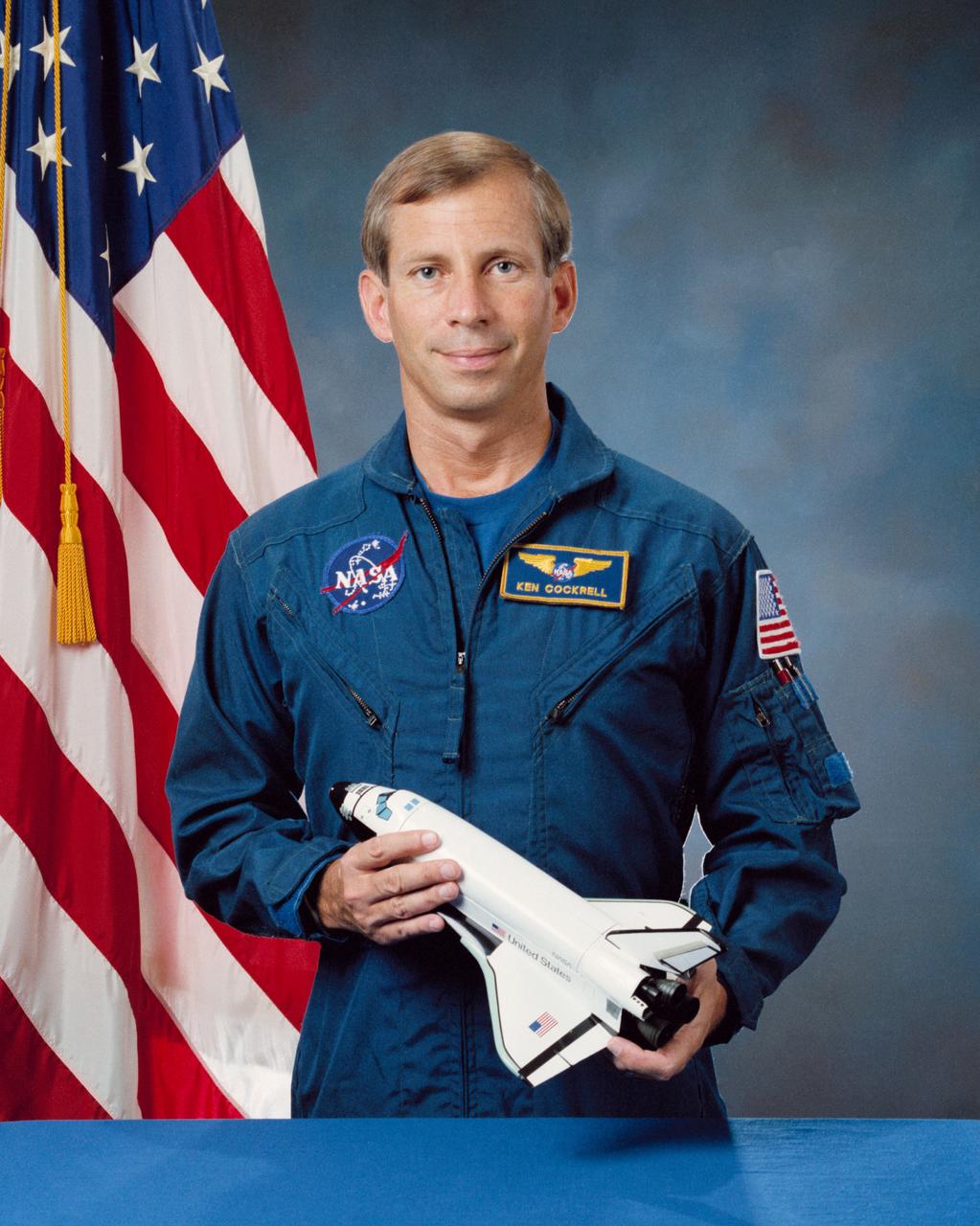
Official portrait of astronaut candidate Kenneth D. Cockrell, a member of Astronaut Class 13 (1990) and a space shuttle pilot candidate. Cockrell wears a navy blue flight suit and holds space shuttle model.
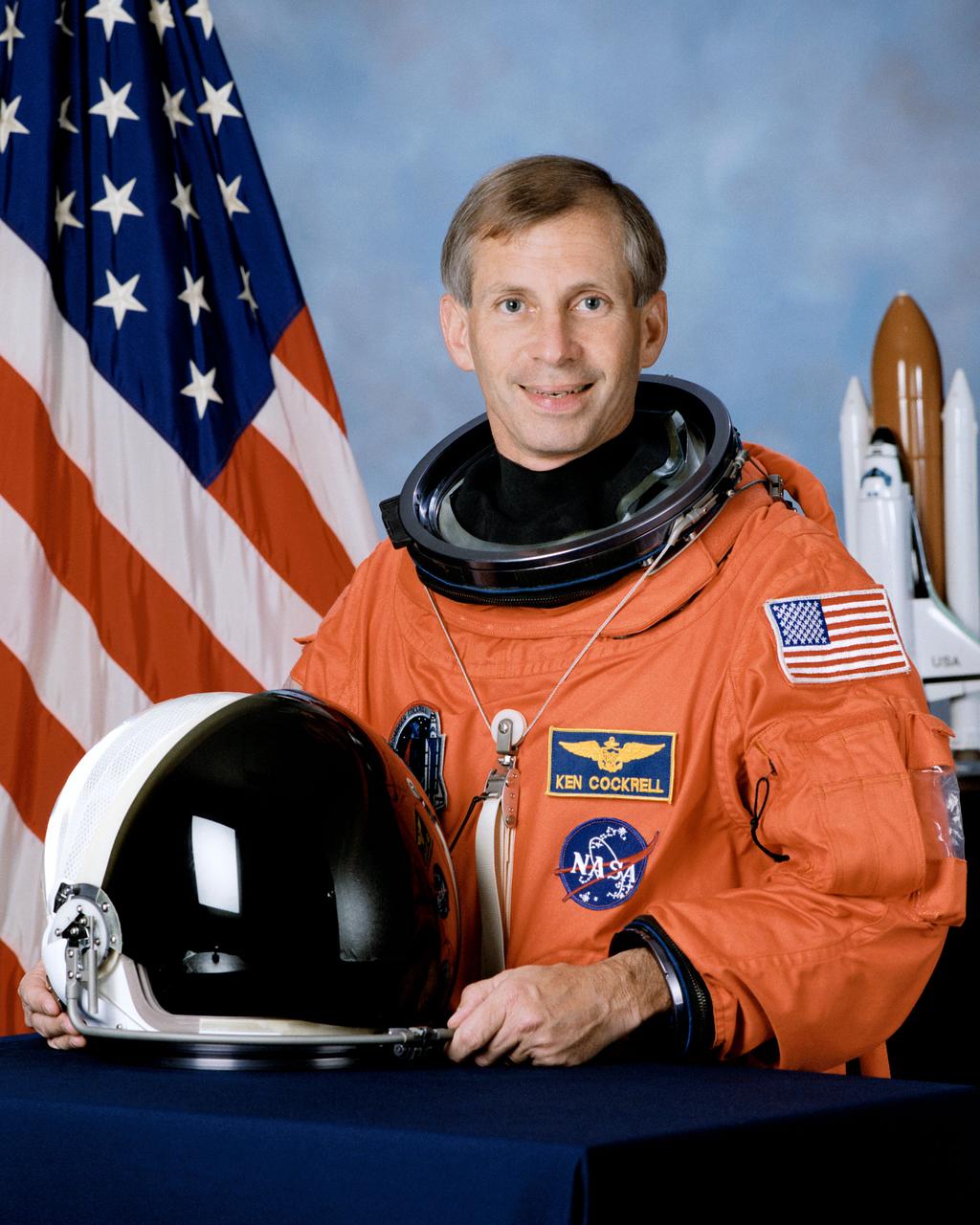
S97-06616 (30 April 1997) --- Astronaut Kenneth D. Cockrell, pilot.

STS98-E-5006 (8 February 2001) --- Astronaut Kenneth D. Cockrell, mission commander, prepares to use a camera on the mid deck of the Space Shuttle Atlantis during early stages of the STS-98 mission. The scene was recorded with a digital still camera.
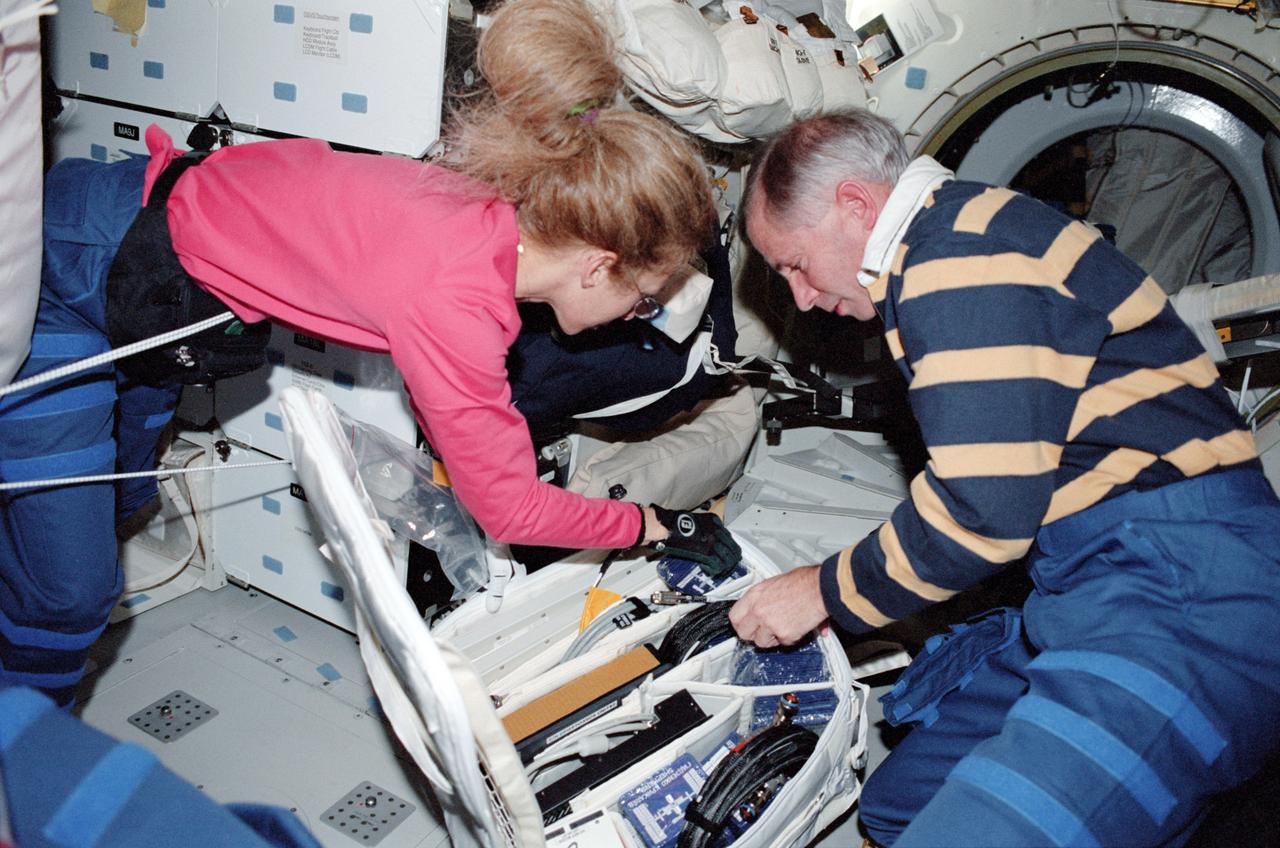
STS098-348-030 (7-20 February 2001) --- Astronauts Marsha S. Ivins (left), mission specialist, and Kenneth D. Cockrell, mission commander, prepare to transfer cables and miscellaneous equipment from the mid deck of the Space Shuttle Atlantis to the International Space Station (ISS).
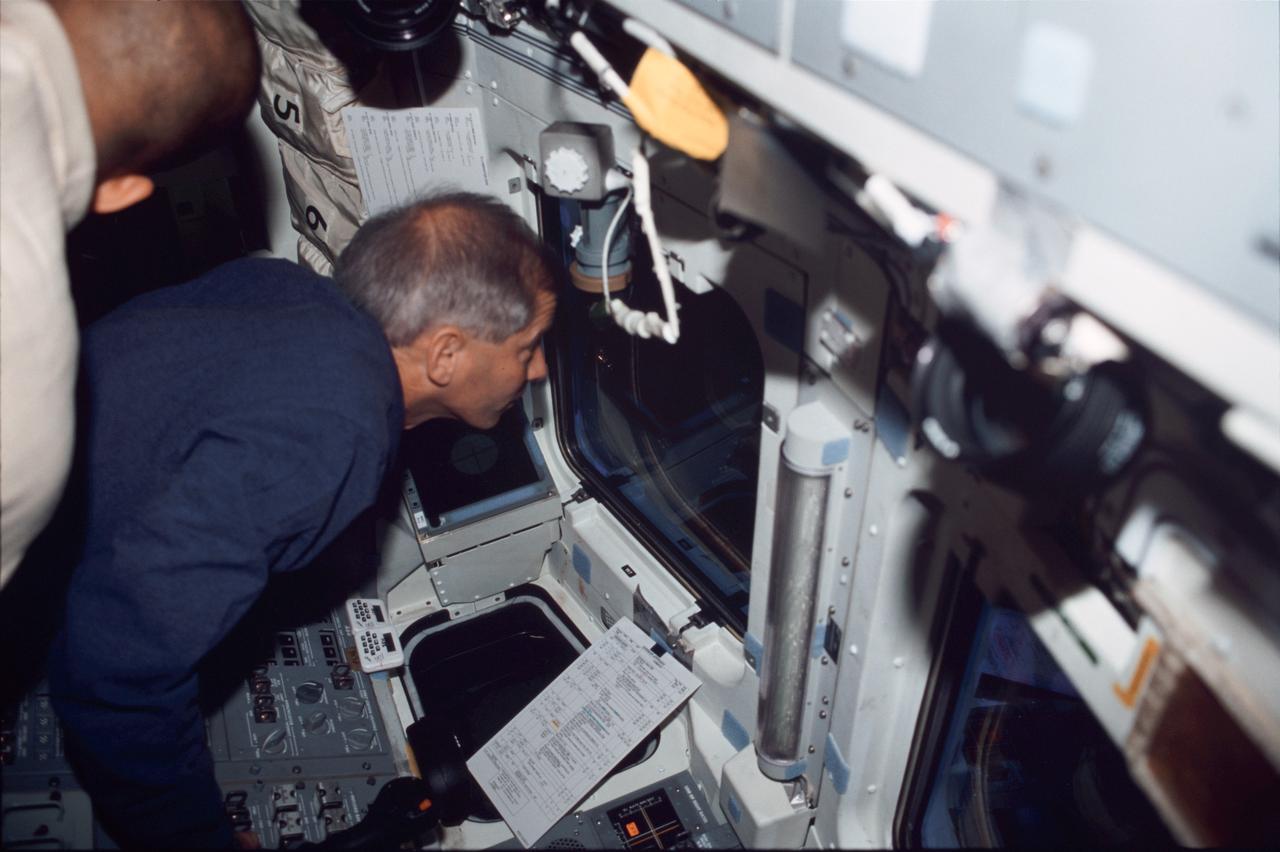
STS098-326-023 (7-20 February 2001) --- Astronaut Kenneth D. Cockrell, mission commander, controls the intricate maneuvers of the shuttle during docking procedures with the International Space Station (ISS) from the aft flight deck of the Space Shuttle Atlantis. Robert L. Curbeam (partially out of frame), mission specialist, can also be seen in this image.

STS080-312-004 (19 Nov.-7 Dec. 1996) --- Astronaut Kenneth D. Cockrell, STS-80 mission commander, washes his hair on the middeck of the Earth-orbiting space shuttle Columbia. Displaying a sense of humor, the commander asked astronaut Story Musgrave, who is bald, to address this visual during a briefing with Johnson Space Center (JSC) employees on Jan. 14, 1997. Equal to the task, Musgrave cracked a number of bald jokes and remarked that it was much easier to polish a head in zero gravity than to wash one.
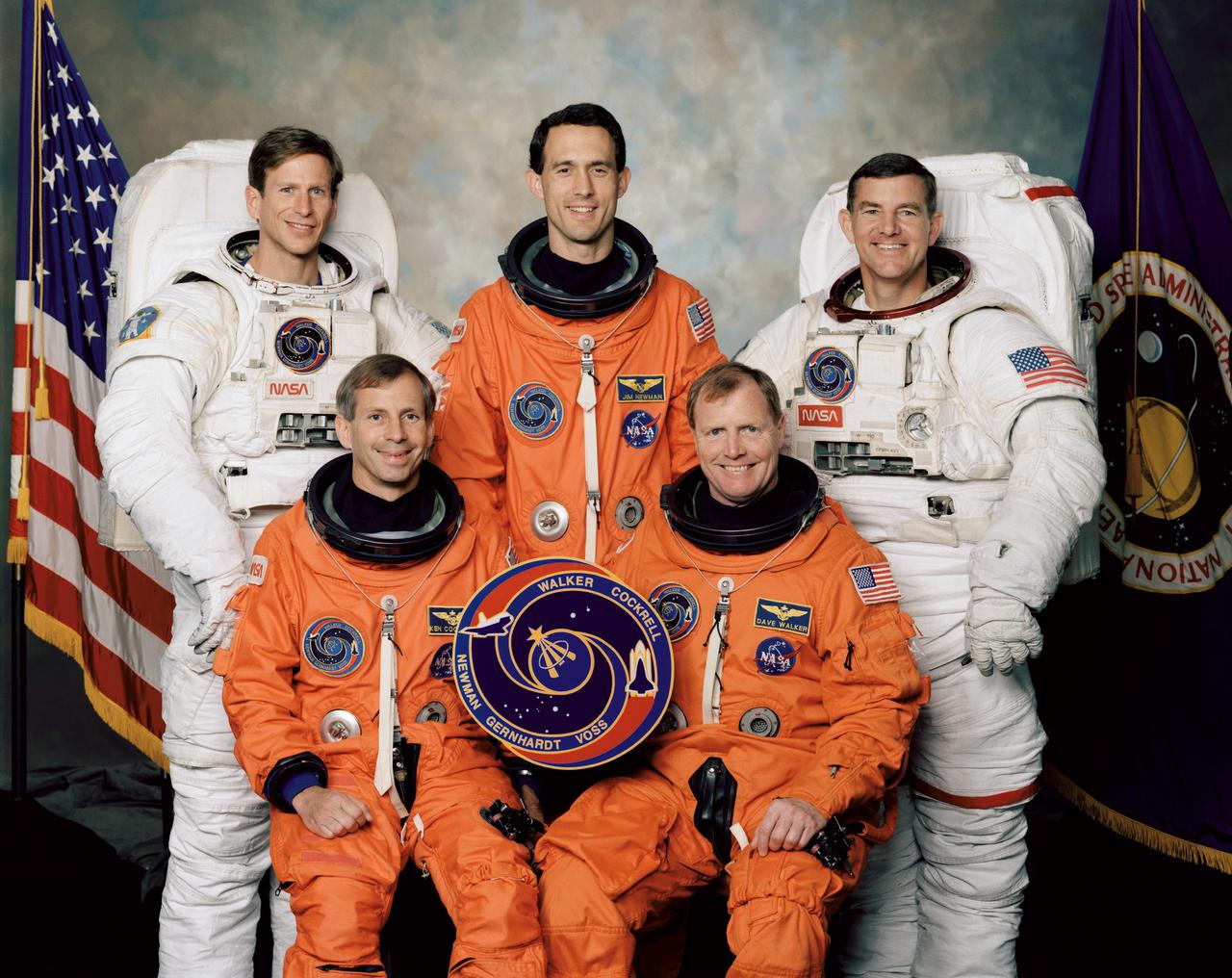
These five NASA astronauts were the crew members for the STS-69 mission that launched aboard the Space Shuttle Endeavour September 7, 1995. Pictured on the front row (left to right) are David M. Walker, mission commander; and Kenneth D. Cockrell, pilot. On the back row (left to right) are Michael L. Gernhardt and James H. Newman, both mission specialists; and James S. Voss, payload commander. The mission’s two primary payloads included the Spartan 201-3 and Wake Shield Facility-2 (WSF-2).
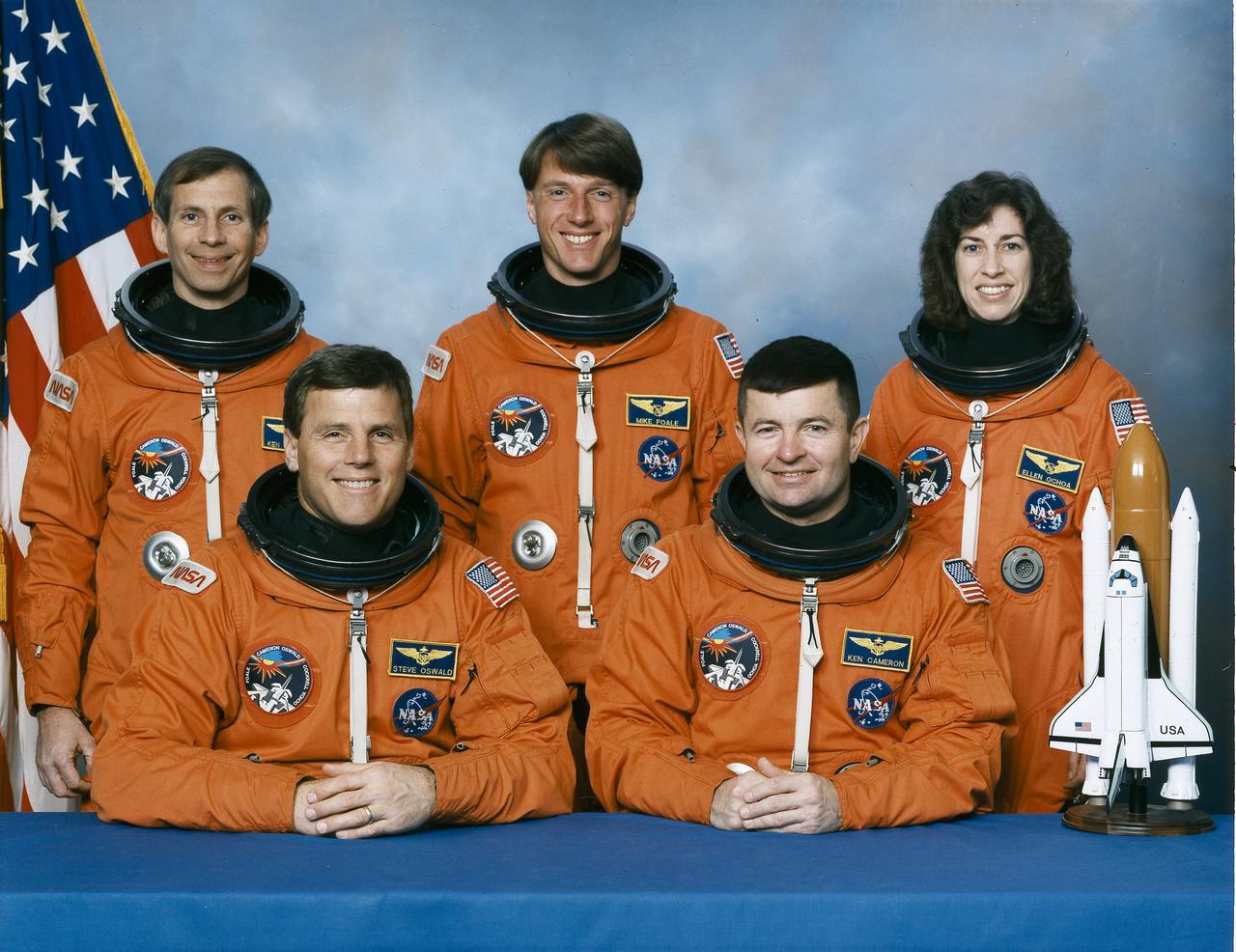
The STS-56 crew portrait includes five astronauts. Seated from the left are Stephen S. Oswald, pilot; and Kenneth D. Cameron, commander. Standing, from the left, are mission specialists Kenneth D. Cockrell, C. Michael Foal, and Ellen Ochoa. The crew launched aboard the Space Shuttle Discovery on April 8, 1993 at 1:29:00 am (EDT) with the Atmospheric Laboratory for Applications and Science-2 (ATLAS-2) as the primary payload.
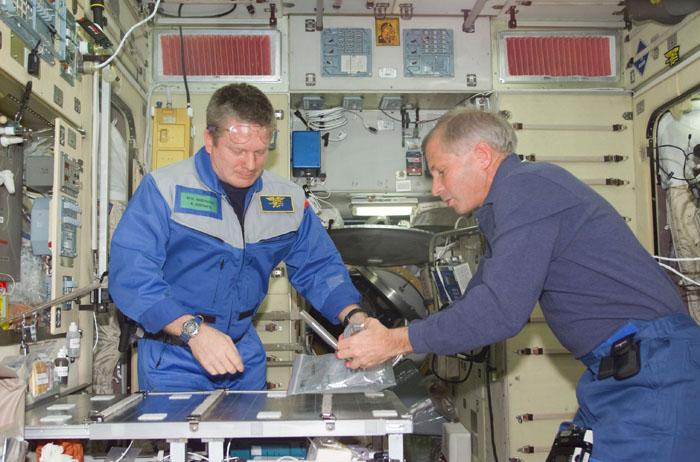
STS98-E-5062 (9 February 2001) --- The shuttle and station commanders are pictured at the "kitchen" table onboard the International Space Station in this digital still camera's view, recorded not long after the two crews reunited aboard the outpost. Astronaut William M. (Bill) Shepherd (left) is Expedition One commander and astronaut Kenneth D. Cockrell serves as mission commander for the five-member STS-98 crew.

STS98-E-5073 (10 February 2001) --- Astronauts Kenneth D. Cockrell (foreground), STS-98 mission commander, and Mark L. Polansky, pilot, share a mirror in order to shave their faces on the mid deck of the Space Shuttle Atlantis. The scene was recorded with a digital still camera.
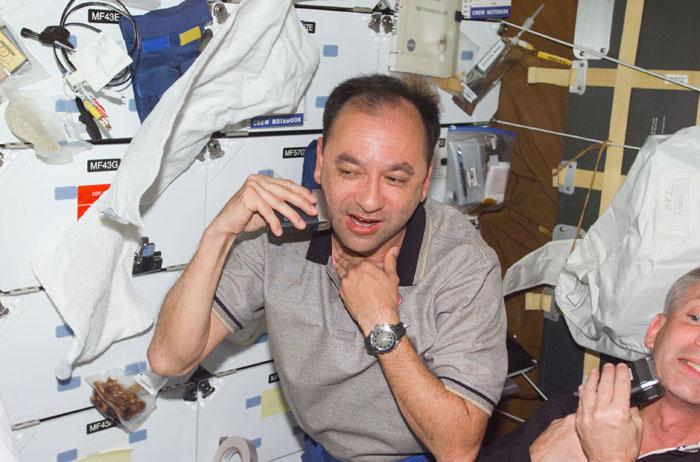
STS98-E-5071 (10 February 2001) --- Astronauts Mark L. Polansky, STS-98 pilot, and Kenneth D. Cockrell (partially visible at right), mission commander, shave their faces on the mid deck of the Space Shuttle Atlantis. The scene was recorded with a digital still camera.
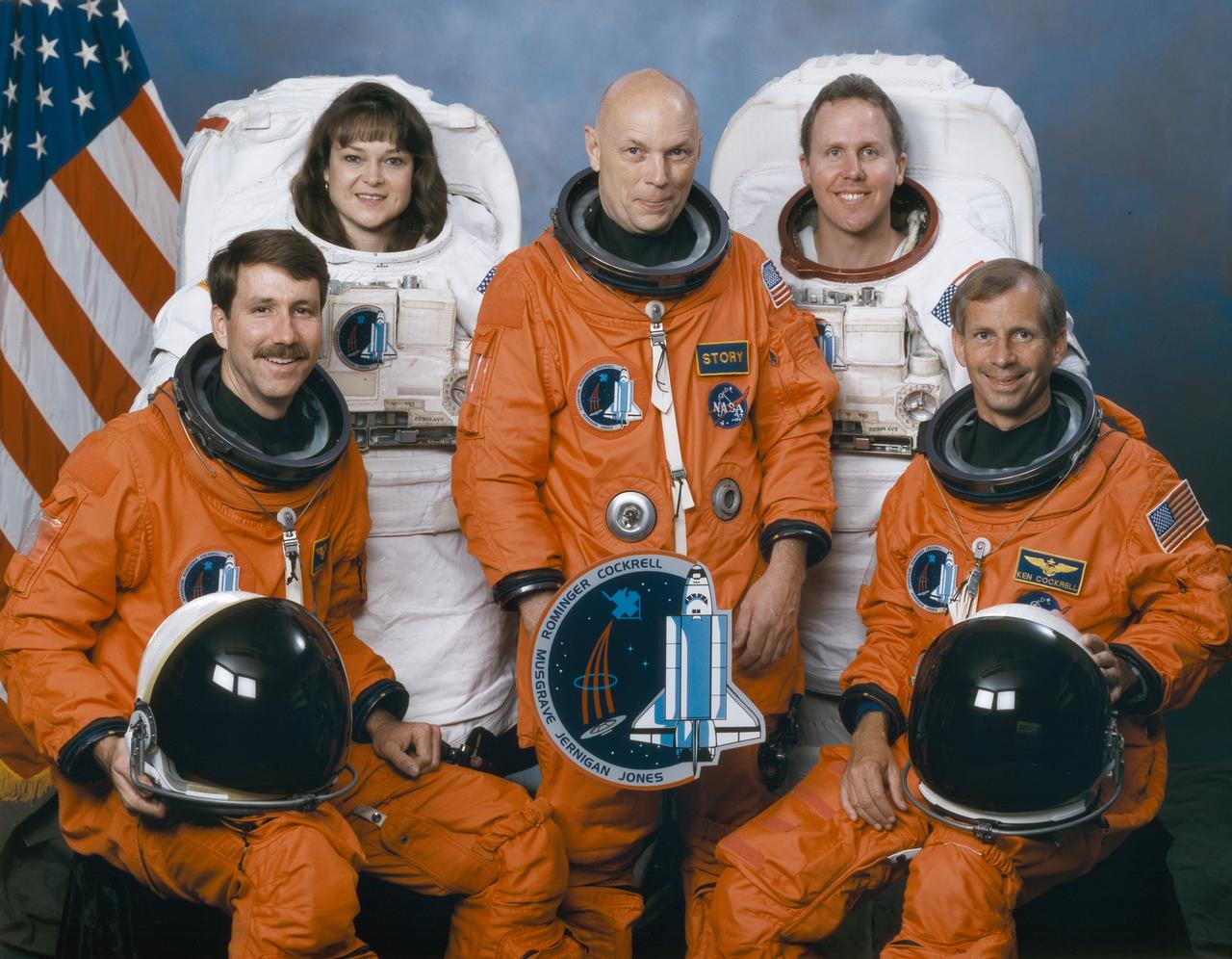
The crew assigned to the STS-79 mission included (seated left to right) Kent V. Rominger, pilot; and Kenneth D. Cockrell, commander. Standing (left to right) are mission specialists Tamara E. Jernigan, F. Story Musgrave, and Thomas D. Jones. Launched aboard the Space Shuttle Columbia on November 19, 1996 at 2:55:47 pm (EST), the STS-80 mission marked the final flight of 1996. The crew successfully deployed and operated the Orbiting and Retrievable Far and Extreme Ultraviolet Spectrometer-Shuttle Pallet Satellite II (ORFEUS-SPAS II), and deployed and retrieved the Wake Shield Facility-3 (WSF-3).
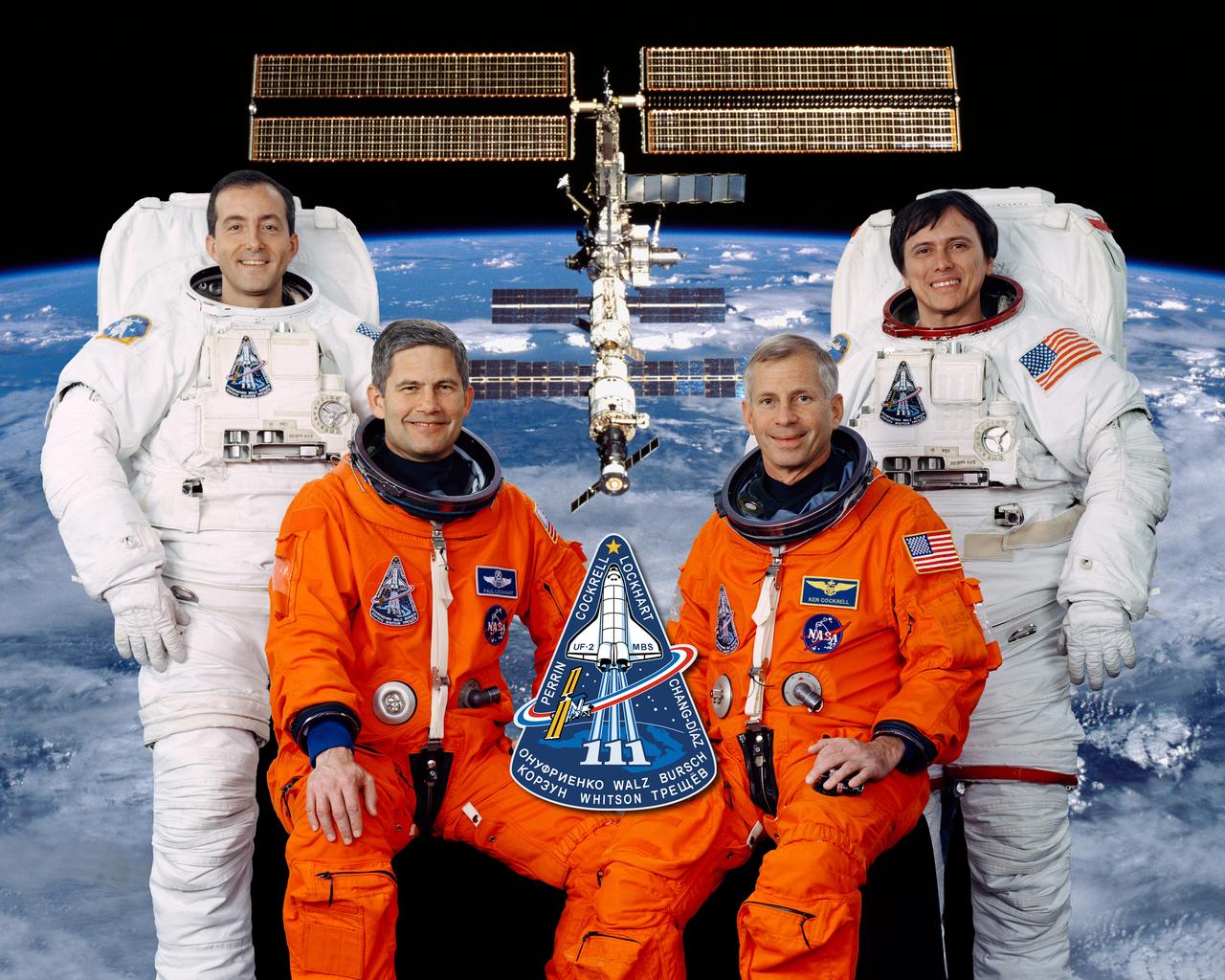
Launched aboard the Space Shuttle Endeavor on June 6, 2002, these four astronauts comprised the prime crew for NASA's STS-111 mission. Astronaut Kenneth D. Cockrell (front right) was mission commander, and astronaut Paul S. Lockhart (front left) was pilot. Astronauts Philippe Perrin (rear left), representing the French Space Agency, and Franklin R. Chang-Diaz were mission specialists assigned to extravehicular activity (EVA) work on the International Space Station (ISS). In addition to the delivery and installation of the Mobile Base System (MBS), this crew dropped off the Expedition Five crew members at the orbital outpost, and brought back the Expedition Four trio at mission's end.
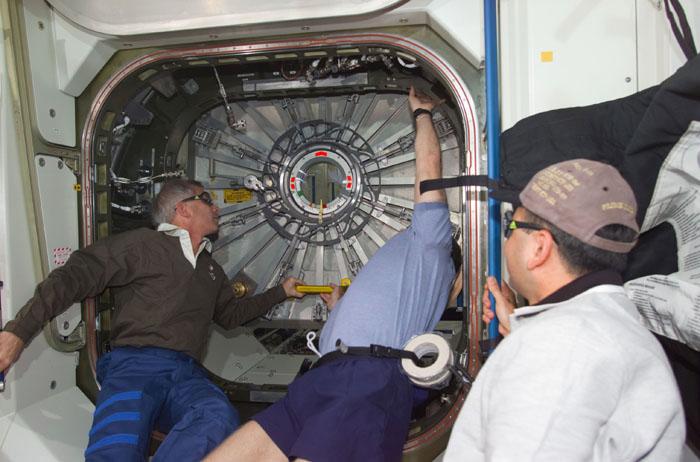
STS98-E-5131 (11 February 2001) --- The crews of Atlantis and the International Space Station open the Destiny laboratory on February 11 in this digital still camera view. From the left are astronauts Kenneth D. Cockrell, STS-98 commander; William M. (Bill) Shepherd, Expedition One commander; and Mark L. Polansky, STS-98 pilot. Later, the astronauts and cosmonauts spent the first full day of what are planned to be years of work ahead inside the orbiting science and command center. After Shepherd opened the Destiny hatch, he and Cockrell ventured inside at 8:38 a.m. (CST). As depicted in subsequent digital images in this series, members of both crews went to work quickly inside the new module, activating air systems, fire extinguishers, alarm systems, computers and internal communications. The crew also continued equipment transfers from the shuttle to the station.
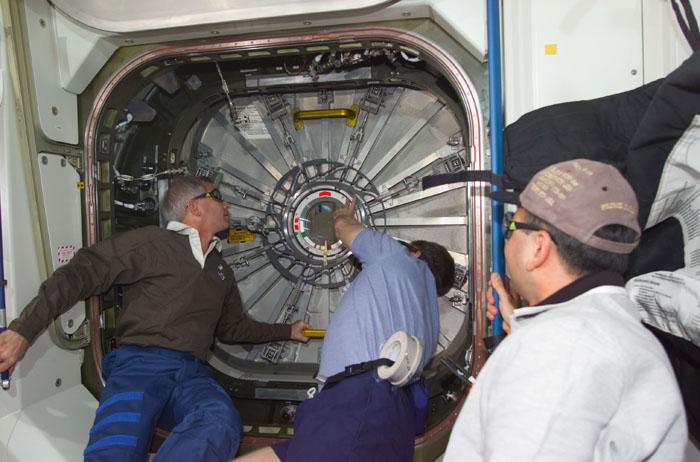
STS98-E-5130 (11 February 2001) --- The crews of Atlantis and the International Space Station open the Destiny laboratory on February 11 in this digital still camera view. From the left are astronauts Kenneth D. Cockrell, STS-98 commander; William M. (Bill) Shepherd, Expedition One commander; and Mark L. Polansky, STS-98 pilot. Later, the astronauts and cosmonauts spent the first full day of what are planned to be years of work ahead inside the orbiting science and command center. After Shepherd opened the Destiny hatch, he and Cockrell ventured inside at 8:38 a.m. (CST). As depicted in subsequent digital images in this series, members of both crews went to work quickly inside the new module, activating air systems, fire extinguishers, alarm systems, computers and internal communications. The crew also continued equipment transfers from the shuttle to the station.
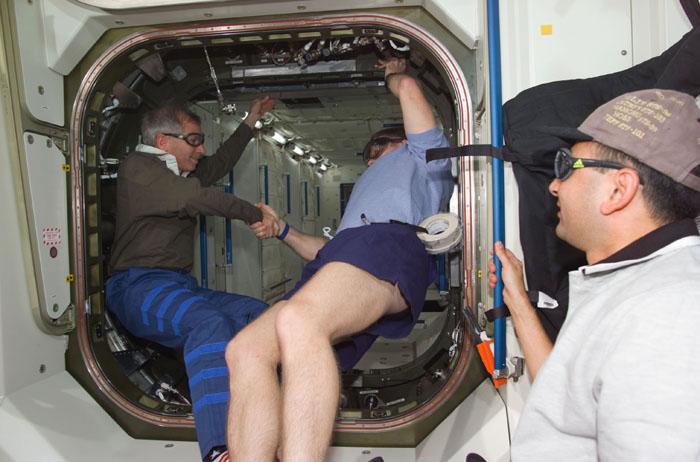
STS98-E-5133 (11 February 2001) --- The crew commanders of Atlantis and the International Space Station shake hands following the opening of the Destiny laboratory on February 11 in this digital still camera view. From the left are astronauts Kenneth D. Cockrell, STS-98 commander; William M. (Bill) Shepherd, Expedition One commander; and Mark L. Polansky, STS-98 pilot. Later, the astronauts and cosmonauts spent the first full day of what are planned to be years of work ahead inside the orbiting science and command center. After Shepherd opened the Destiny hatch, he and Cockrell ventured inside at 8:38 a.m. (CST). As depicted in subsequent digital images in this series, members of both crews went to work quickly inside the new module, activating air systems, fire extinguishers, alarm systems, computers and internal communications. The crew also continued equipment transfers from the shuttle to the station.
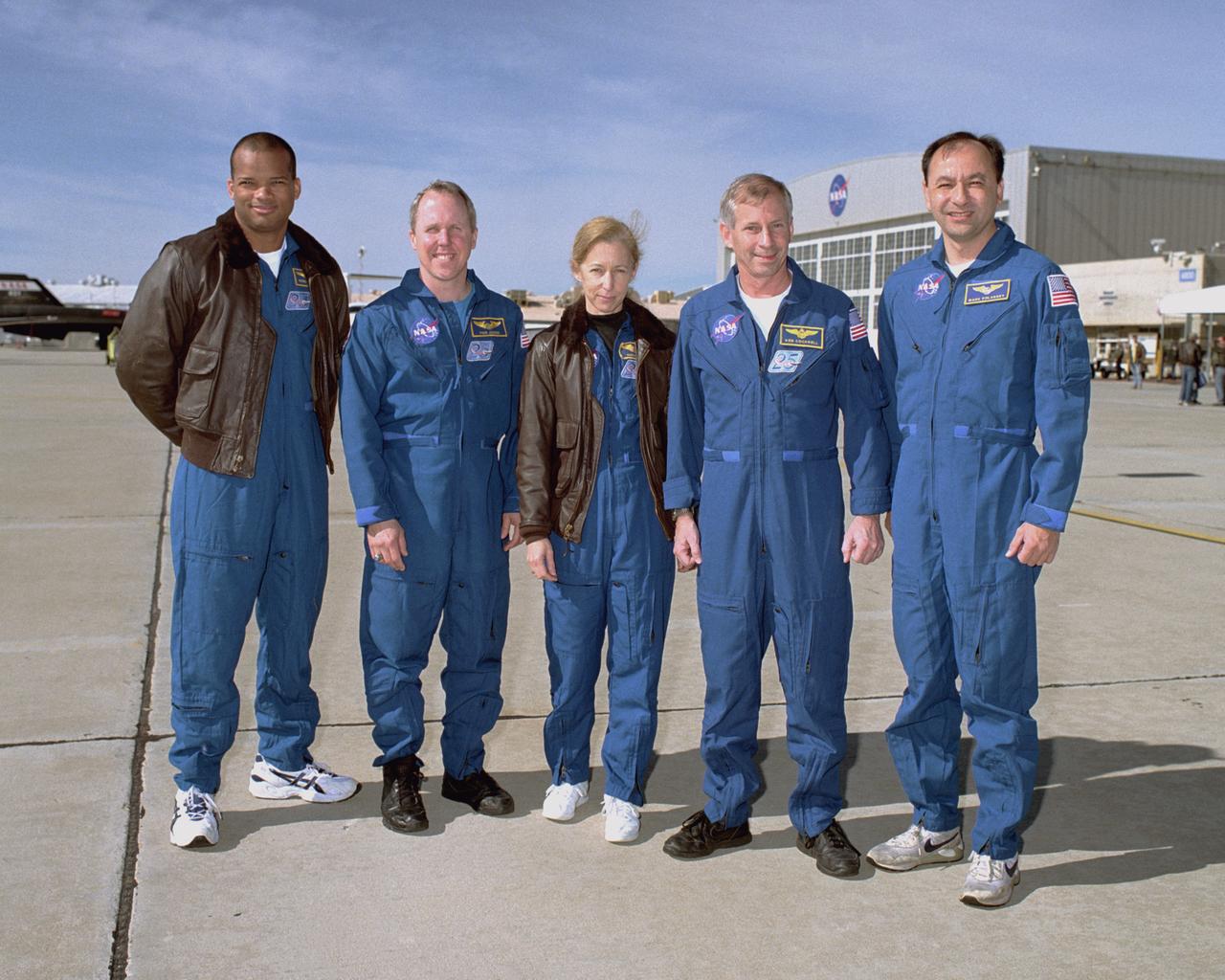
The crew of STS-98 poses for a group photo shortly before leaving NASA's Dryden Flight Research Center after a successful landing of the Space Shuttle Atlantis the day before. L to R: Mission Specialists Robert L. Curbeam, Thomas D. Jones, and Marsha S. Ivins, Commander Kenneth D. Cockrell, and Pilot Mark L. Polansky.
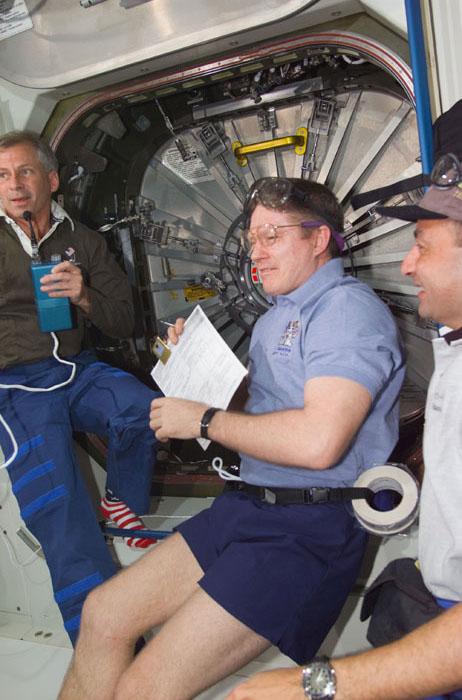
STS98-E-5127 (11 February 2001) --- Inside the Unity node, astronaut William M. (Bill) Shepherd (center), Expedition One commander, prepares to sign a document of receipt of the U.S. laboratory, called Destiny, as part of the International Space Station (ISS). Looking on are astronauts Kenneth D. Cockrell (left) and Mark L. Polansky, commander and pilot, respectively, for STS-98. The hatch to Destiny, not yet opened, is in the background. This scene was recorded with a digital still camera.
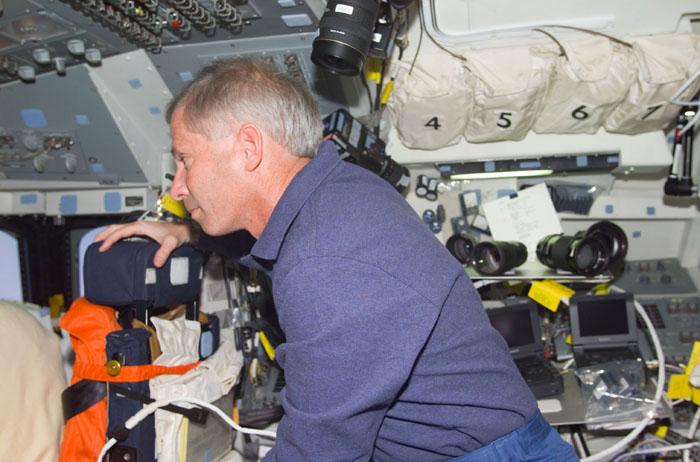
STS98-E-5028 (9 February 2001) --- Astronaut Kenneth D. Cockrell, STS-98 mission commander, looks at displays (out of frame) on the forward flight deck as he stands behind the pilot's station on the Space Shuttle Atlantis. The crew was preparing for its rendezvous and docking with the International Space Station (ISS). The scene was recorded with a digital still camera.
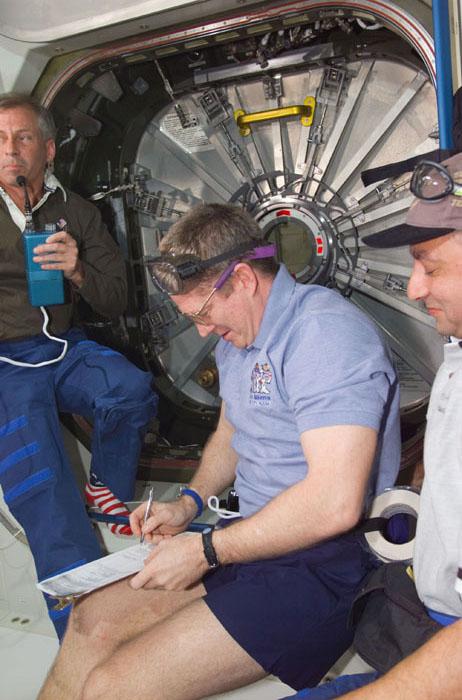
STS98-E-5125 (11 February 2001) --- Inside the Unity node, astronaut William M. (Bill) Shepherd (center), Expedition One commander, signs a document of receipt of the U.S. laboratory, called Destiny, as part of the International Space Station (ISS). Looking on are astronauts Kenneth D. Cockrell (left) and Mark L. Polansky, commander and pilot, respectively, for STS-98. The hatch to Destiny, not yet opened, is in the background. This scene was recorded with a digital still camera.
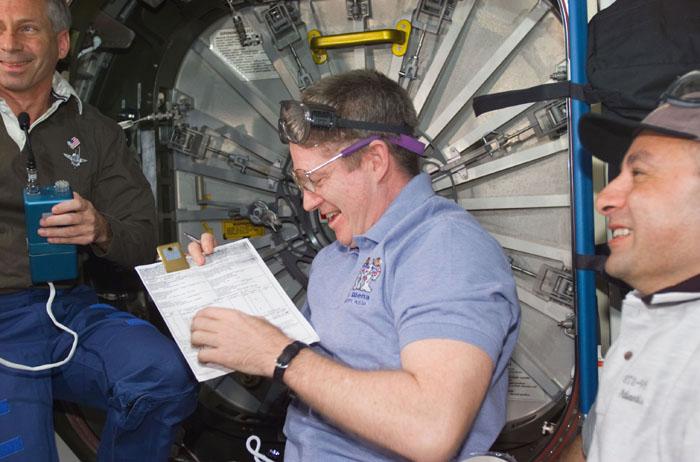
STS98-E-5129 (11 February 2001) --- Inside the Unity node, astronaut William M. (Bill) Shepherd (center), Expedition One commander, signs a document of receipt of the U.S. laboratory, called Destiny, as part of the International Space Station (ISS). Looking on are astronauts Kenneth D. Cockrell (left) and Mark L. Polansky, commander and pilot, respectively, for STS-98. The hatch to Destiny, not yet opened, is in the background. This scene was recorded with a digital still camera.
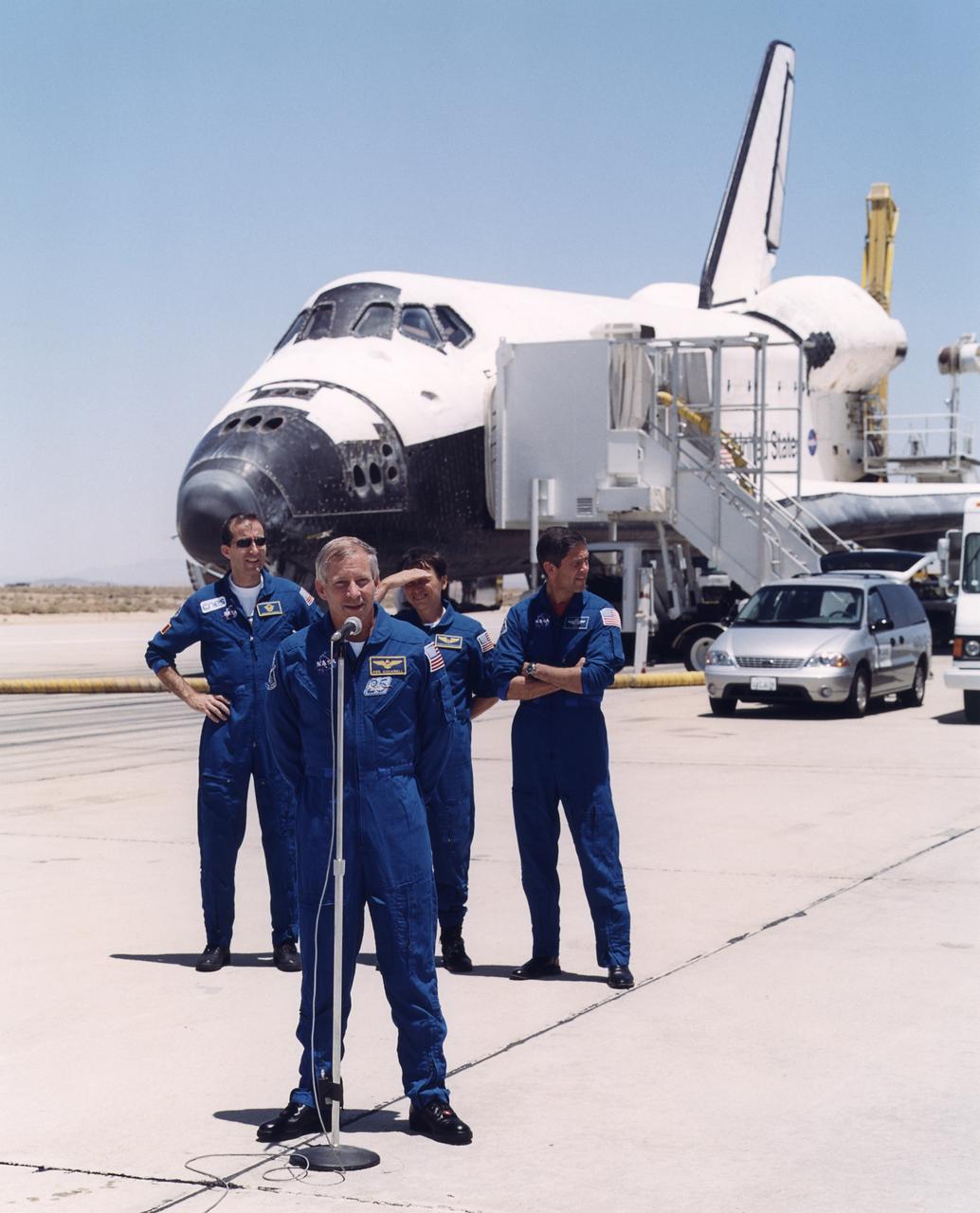
STS-111 commander Ken Cockrell greets dignitaries and recovery technicians on the runway at Edwards Air Force Base following the landing of the space shuttle Endeavour on June 19, 2002. Behind Cockrell are (from left) mission specialists Philippe Perrin and Franklin Chang-Diaz and Shuttle pilot Paul Lockhart.
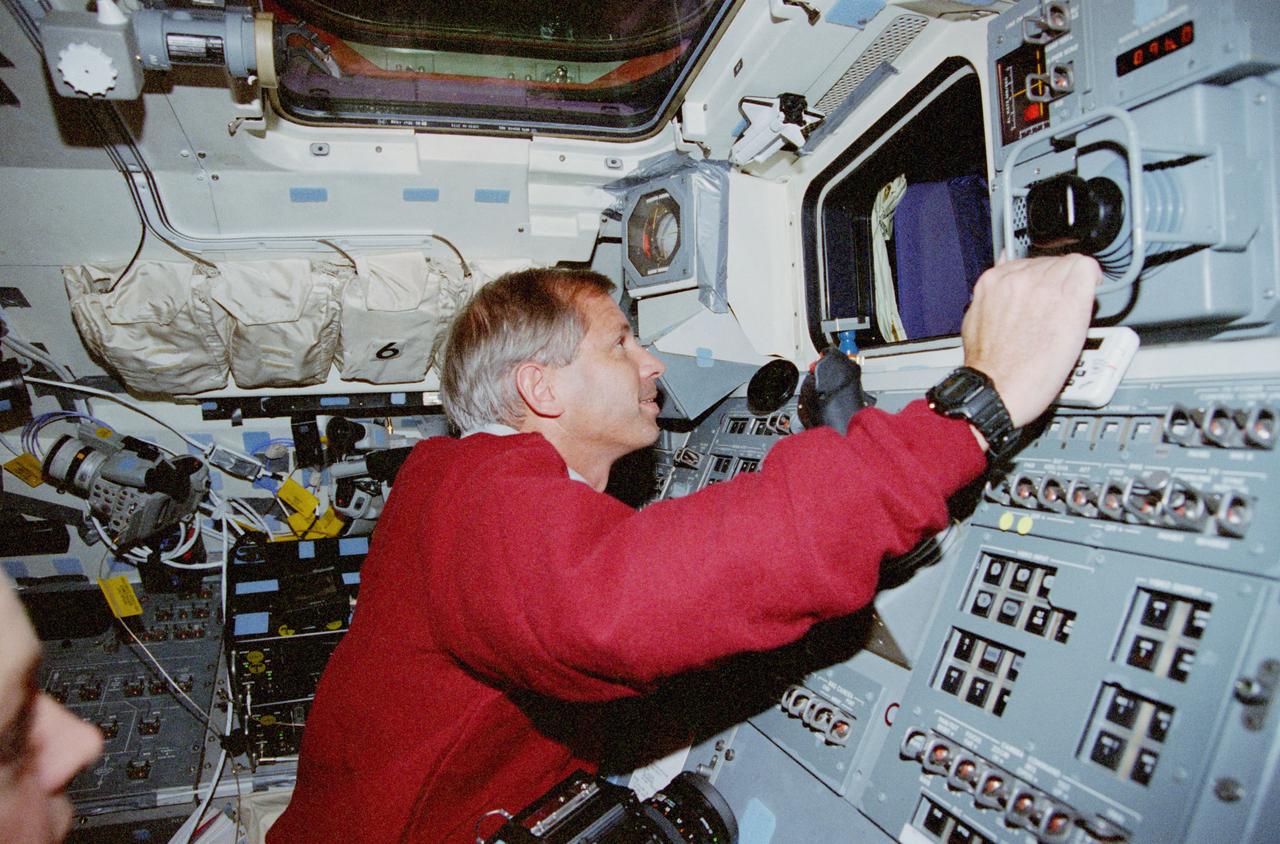
STS080-334-002 (19 Nov.-7 Dec. 1996) --- Astronaut Kenneth D. Cockrell, STS-80 mission commander, looks through a window on the space shuttle Columbia's aft flight deck during rendezvous operations with the Wake Shield Facility (WSF).
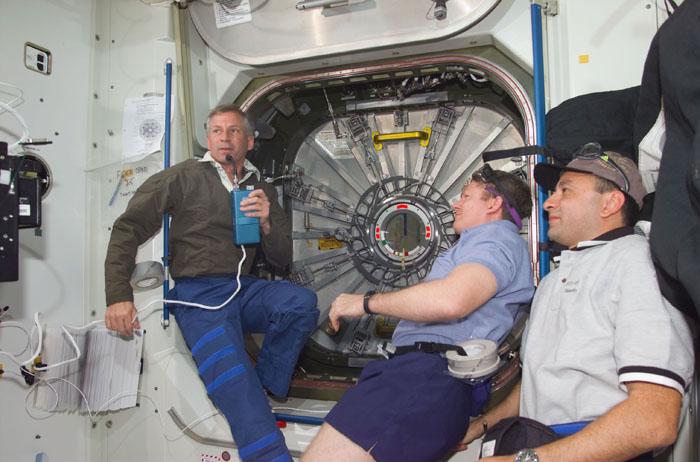
STS98-E-5123 (11 February 2001) --- This digital still camera shot shows STS-98 mission commander Kenneth D. Cockrell (from left), Expedition One commander William M. (Bill) Shepherd and STS-98 pilot Mark L. Polansky pausing at Unity's closed hatch to the newly attached Destiny laboratory. The crews of Atlantis and the International Space Station opened the laboratory shortly after this photo was made on Feb. 11; and the astronauts and cosmonauts spent the first full day of what are planned to be years of work ahead inside the orbiting science and command center. Shepherd opened the Destiny hatch, and he and shuttle commander Cockrell ventured inside at 8:38 a.m. (CST), Feb. 11. As depicted in subsequent digital images in this series, members of both crews went to work quickly inside the new module, activating air systems, fire extinguishers, alarm systems, computers and internal communications. The crew also continued equipment transfers from the shuttle to the station.
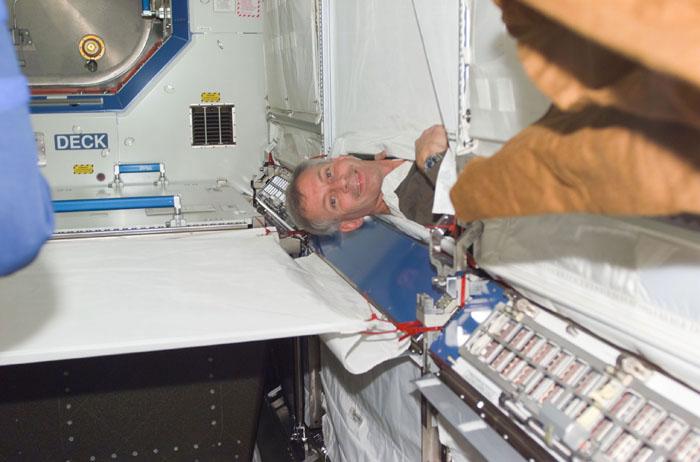
STS98-E-5149 (11 February 2001) --- Astronaut Kenneth D. Cockrell, STS-98 commander, emerges from behind temporary covering in the newly attached Destiny laboratory onboard the International Space Station (ISS). After the Destiny hatch was opened early in the day, members of both crews went to work quickly inside the new module, activating air systems, fire extinguishers, alarm systems, computers and internal communications. The crews also took some photos and continued equipment transfers from the shuttle to the station. The scene was taken with a digital still camera.
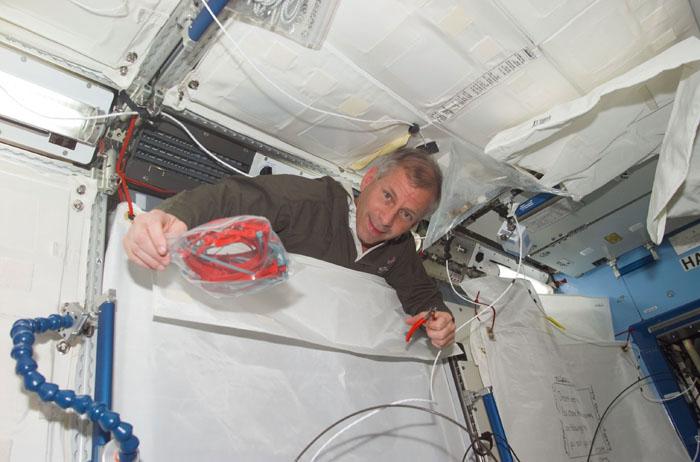
STS98-E-5150 (11 February 2001) --- Astronaut Kenneth D. Cockrell, STS-98 commander, emerges from behind wall covering in the newly attached Destiny laboratory onboard the International Space Station (ISS). After the Destiny hatch was opened early in the day, members of both crews went to work quickly inside the new module, activating air systems, fire extinguishers, alarm systems, computers and internal communications. The crews also took some photos and continued equipment transfers from the shuttle to the station. The scene was taken with a digital still camera.
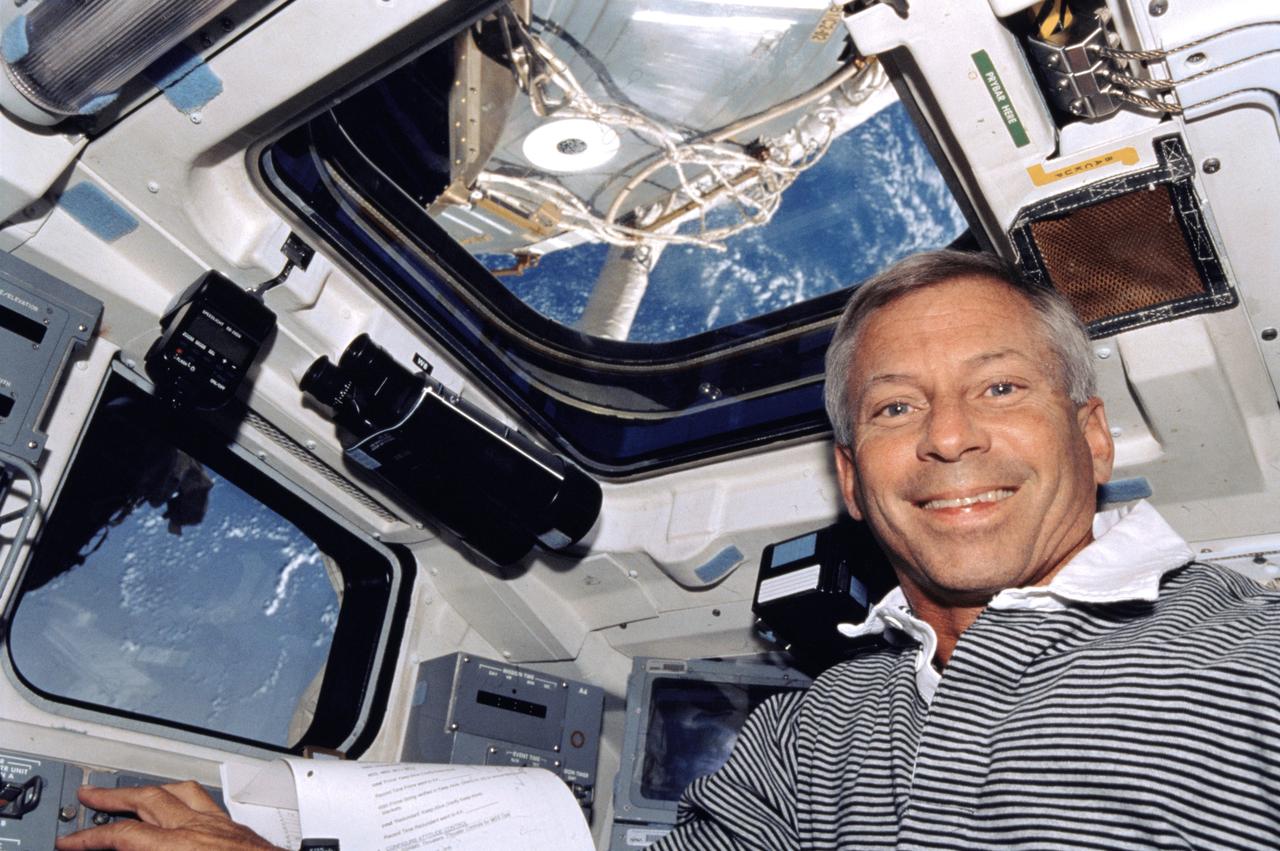
ISS004-327-017 (5-19 June 2002) --- Astronaut Kenneth D. Cockrell, STS-111 mission commander, is photographed on the aft flight deck of the Space Shuttle Endeavour while docked with the International Space Station (ISS).
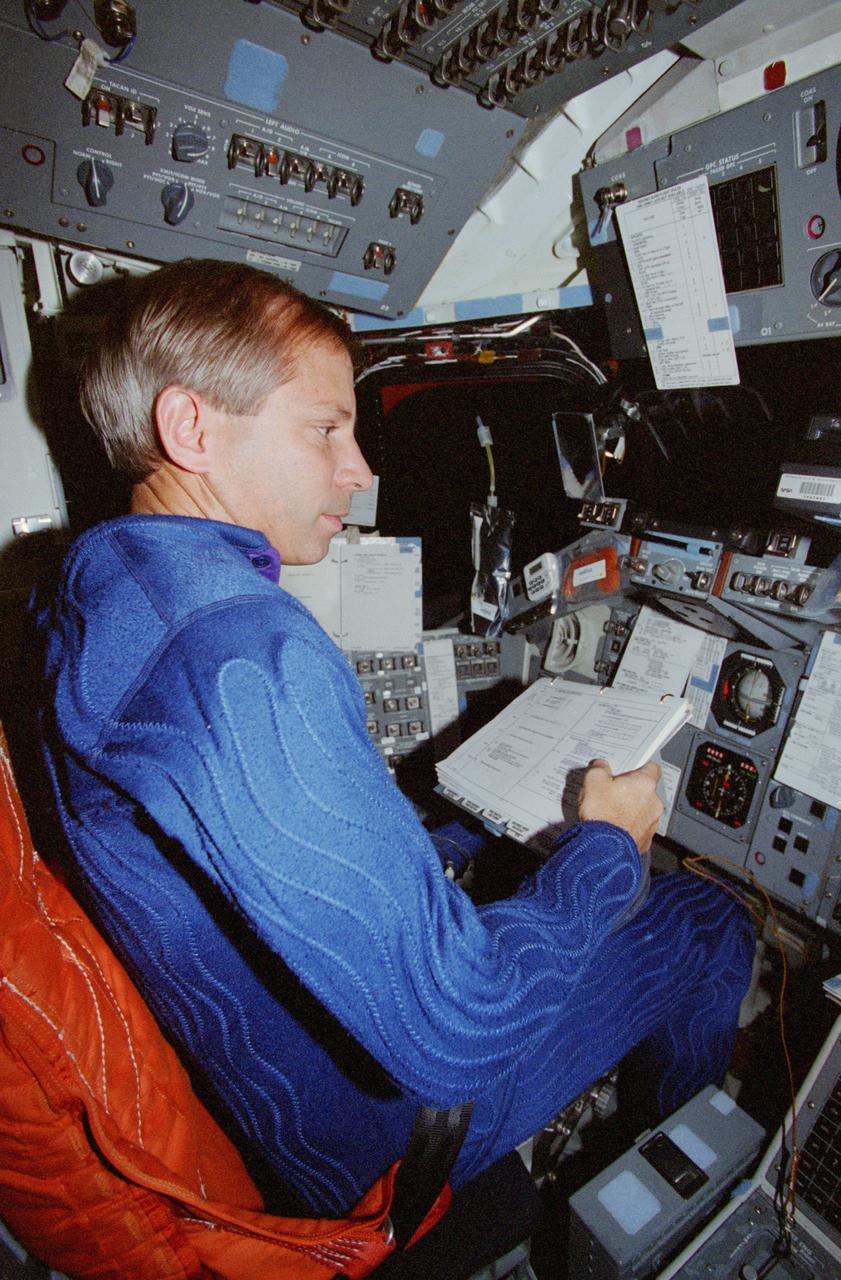
STS080-360-002 (19 Nov.-7 Dec. 1996) --- From the commander's station on the port side of the space shuttle Columbia's forward flight deck, astronaut Kenneth D. Cockrell prepares for a minor firing of Reaction Control System (RCS) engines during operations with the Wake Shield Facility (WSF). The activity was recorded with a 35mm camera on flight day seven. The commander is attired in a liquid-cooled biological garment.
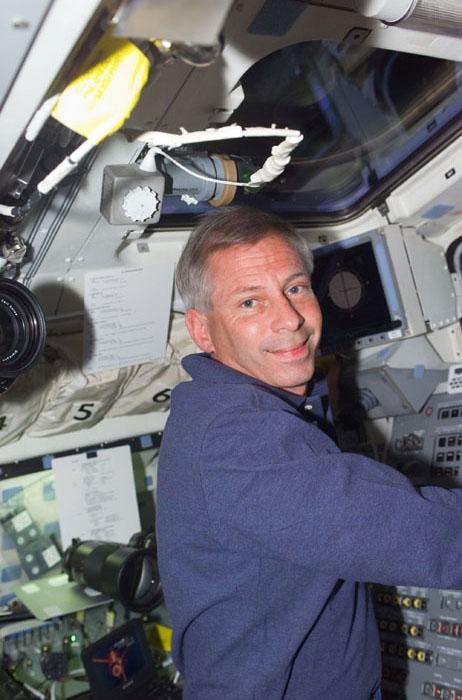
STS98-E-5036 (9 February 2001) --- Astronaut Kenneth D. Cockrell, mission commander, is pictured at Atlantis' aft flight deck console during rendezvous operations between the Space Shuttle Atlantis and the International Space Station (ISS). Atlantis went on to dock with the station on schedule at 10:51 a.m. (CST), Feb. 9. A digital still camera was used to record the scene.
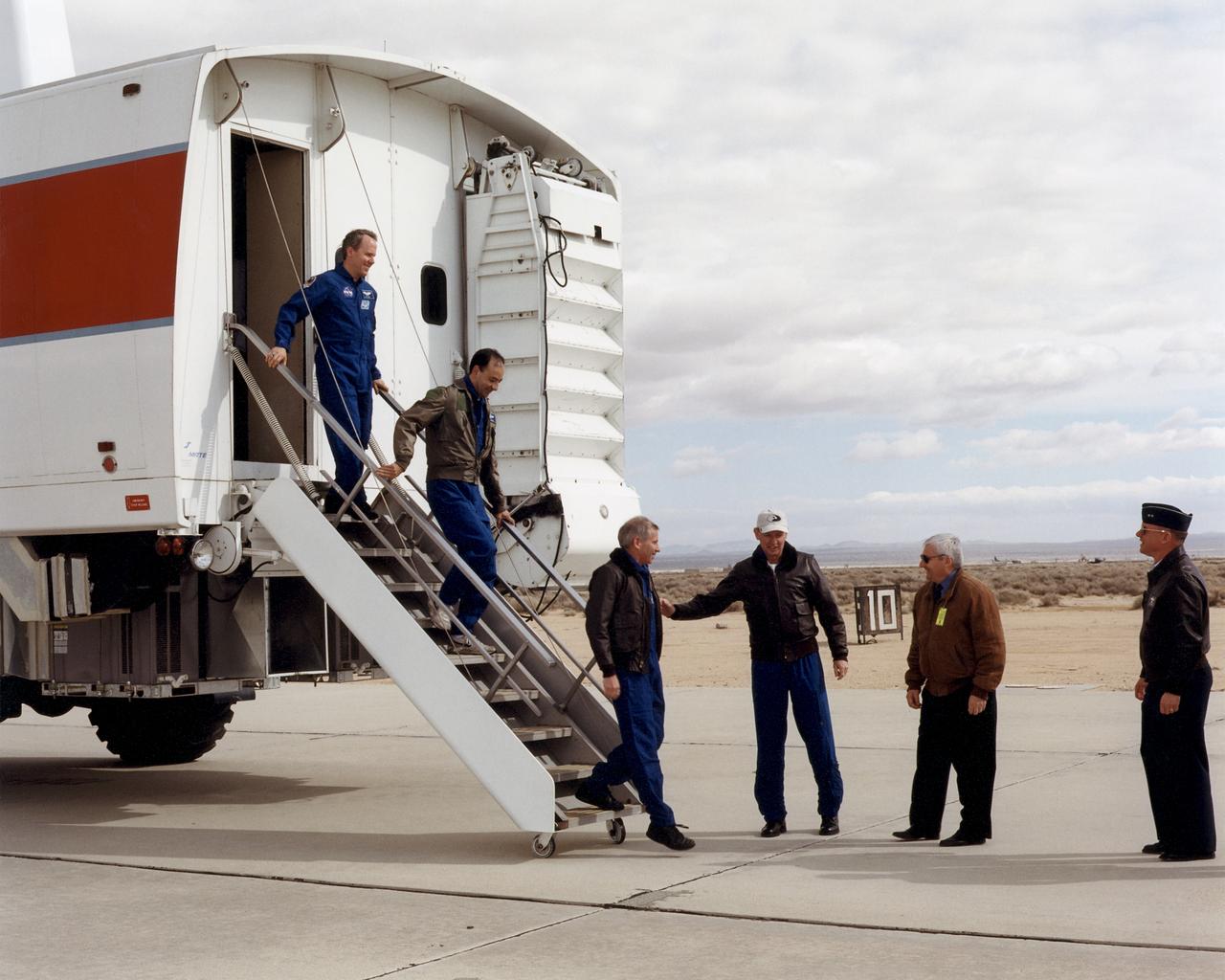
L to R: STS-98 Mission Specialist Thomas Jones, Pilot Mark Polansky, and Commander Kenneth Cockrell greet STS-92 Commander Brian Duffy, Dryden Center Director Kevin Petersen, and AFFTC Commander Major General Richard Reynolds after landing on the runway at Edwards Air Force Base, California, where NASA's Dryden Flight Research Center is located.
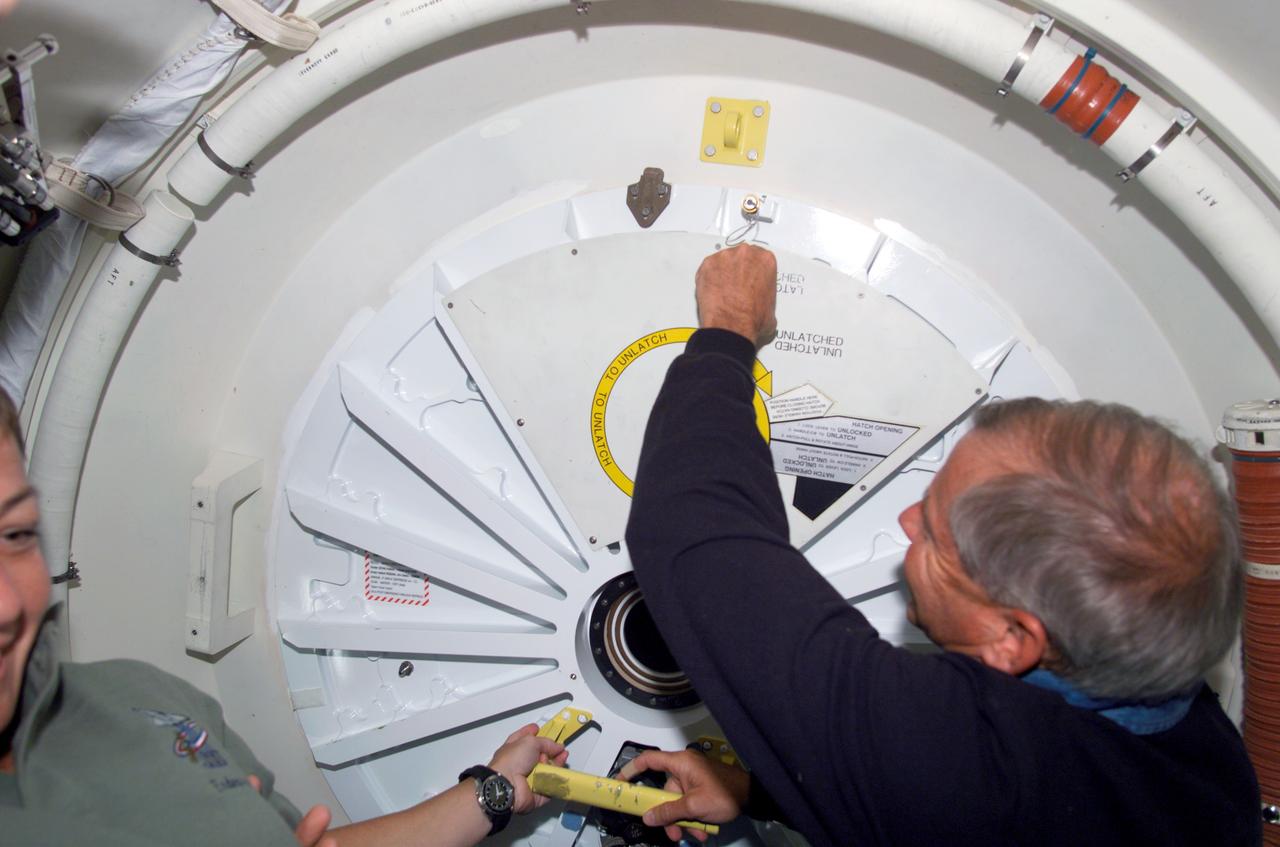
STS111-E-5088 (7 June 2002) --- Astronaut Kenneth D. Cockrell, STS-111 mission commander, prepares to open hatchway to the International Space Station (ISS) shortly after the Space Shuttle Endeavour docked with the orbital outpost.
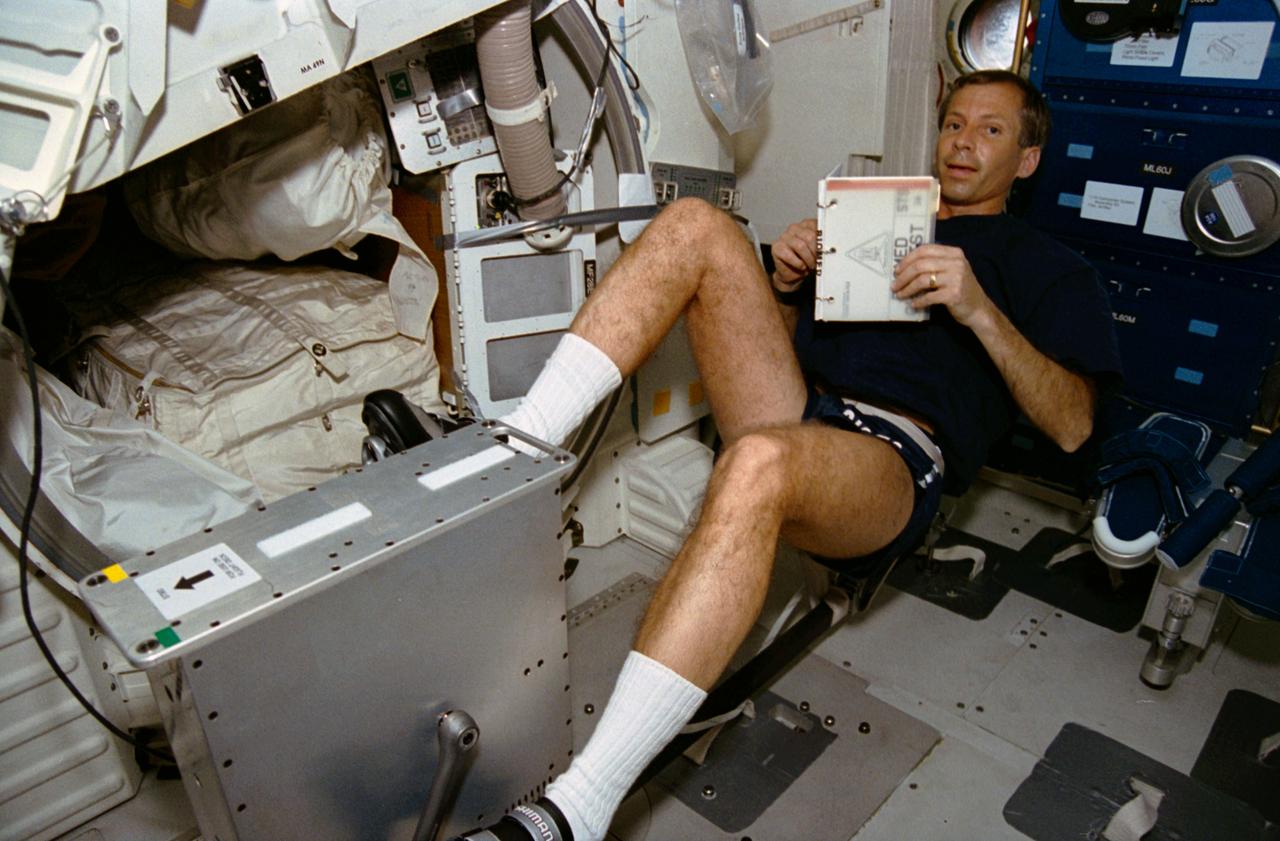
STS056-13-004 (8-17 April 1993) --- Astronaut Kenneth D. Cockrell pedals the bicycle ergometer on Discovery's middeck. The mission specialist, along with four other NASA astronauts, spent nine days in space in support of the ATLAS 2 mission.
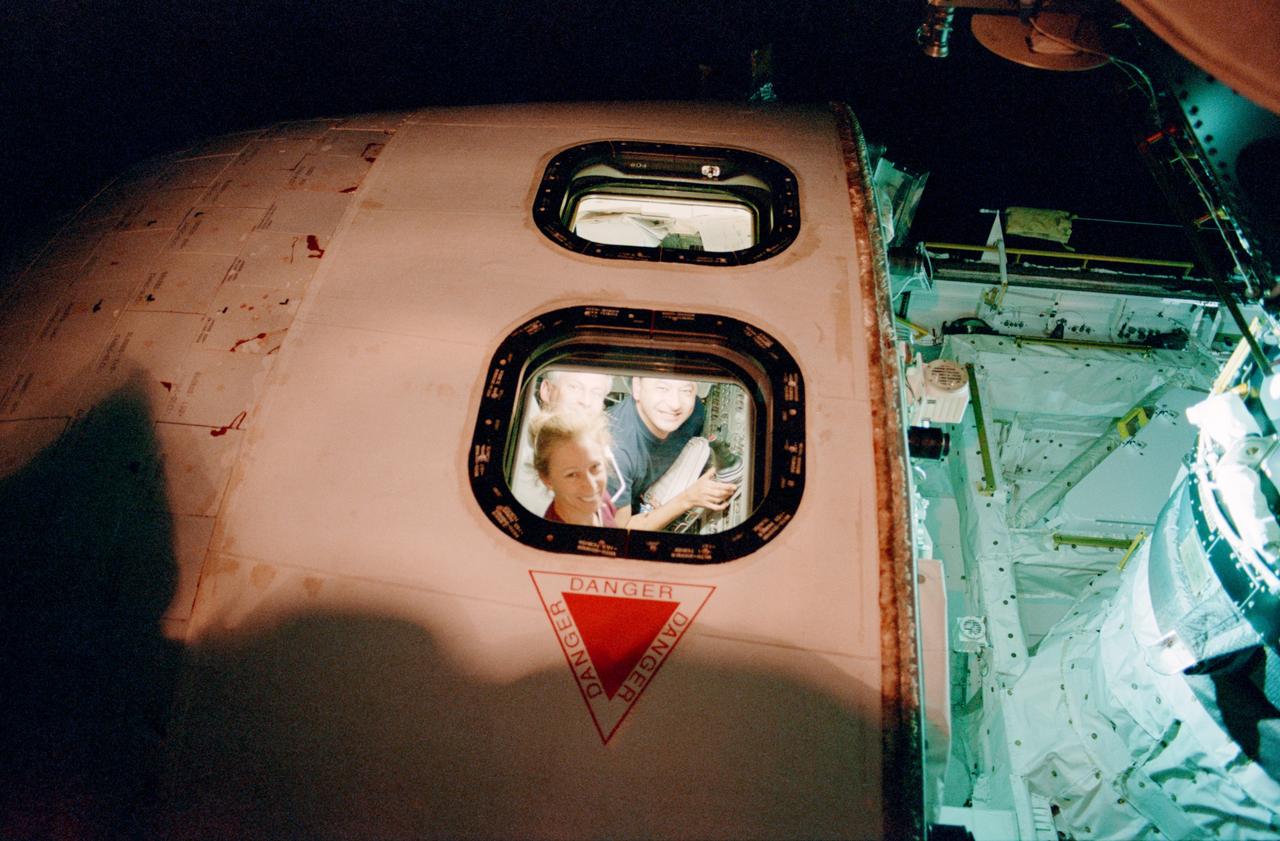
STS098-335-0028 (7-20 February 2001) --- From the aft flight deck of the Space Shuttle Atlantis, astronaut Marsha S. Ivins, STS-98 mission specialist, looks through an overhead window toward her space walking colleagues, who exposed this 35mm frame. Also visible in the window are astronauts Kenneth D. Cockrell and Mark L. Polansky, commander and pilot for the STS-98/5a mission.
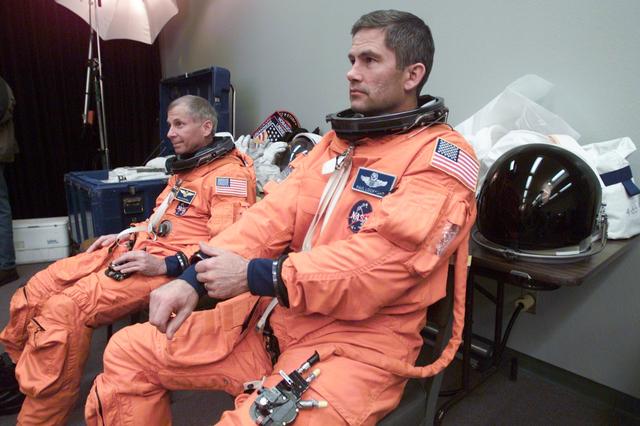
JSC2002-E-07961 (22 February 2002) --- Astronauts Kenneth D. Cockrell (left) and Paul S. Lockhart, STS-111 mission commander and pilot, respectively, wait for a photo session in a studio at Johnson Space Center (JSC). Cockrell and Lockhart are attired in training versions of the launch and entry garment.
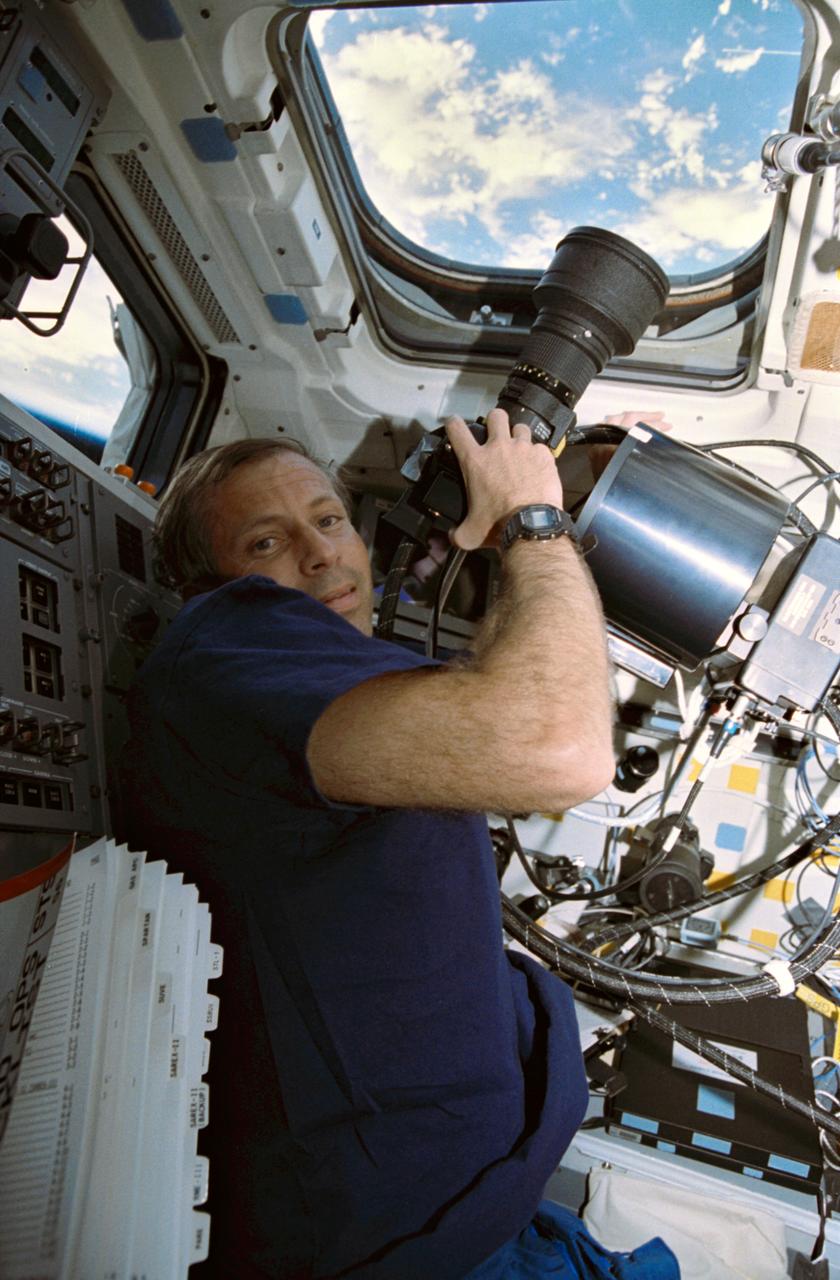
STS056-08-018 (8-17 April 1993) --- Aboard Discovery, astronaut Kenneth D. Cockrell, mission specialist, records Earth imagery with the Hand-Held, Earth-Oriented, Real-Time, Cooperative, User-Friendly, Location-Targeting and Environmental System (HERCULES). HERCULES is a device that makes it simple for Shuttle crew members to take pictures of Earth, as they merely point a modified 35mm camera and shoot any interesting feature, whose latitude and longitude are automatically determined in real-time. The powder-box shaped attachment is the Inertial Measurement Unit (IMU) for the system. The STS-56 crew downlinked a number of the still images during the flight, while others are likely to be stored on disc and returned to Earth with the crew.
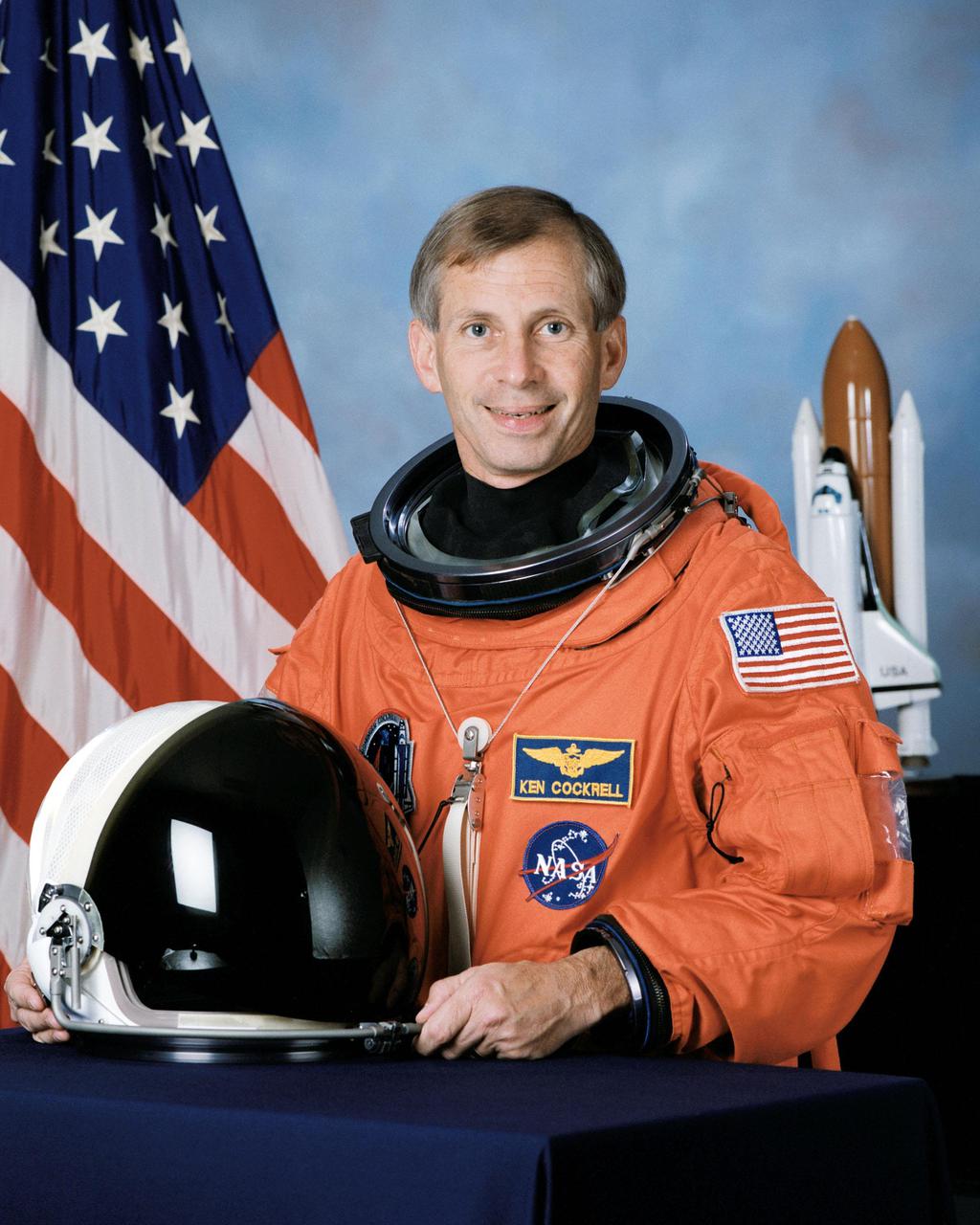
JOHNSON SPACE CENTER, HOUSTON, TX -- (JSC 597-06616) --Official Portrait of astronaut Kenneth D. Cockrell, STS-111 mission commander
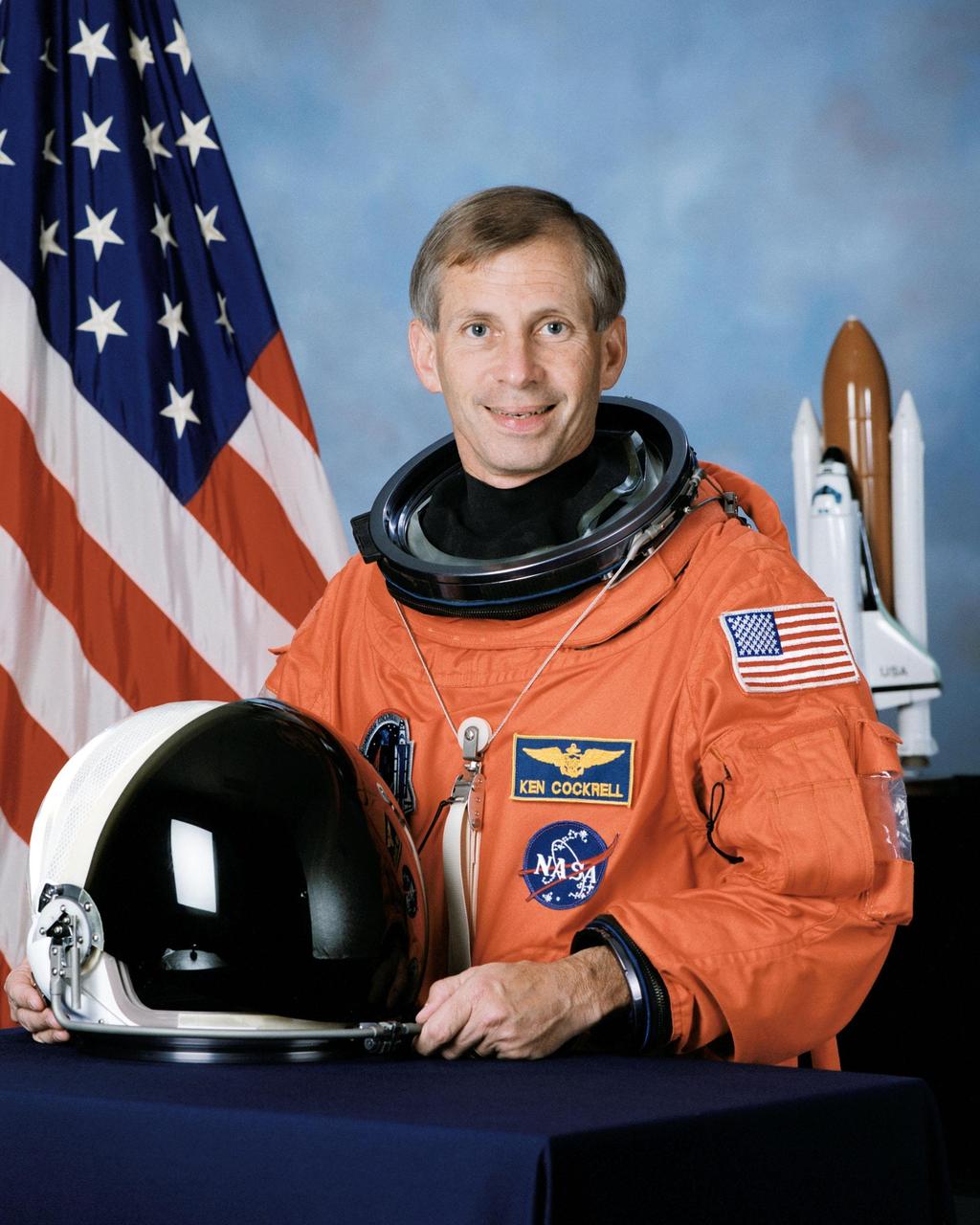
JOHNSON SPACE CENTER, HOUSTON, TX -- (JSC 597-06616) --Official Portrait of astronaut Kenneth D. Cockrell, STS-111 mission commander
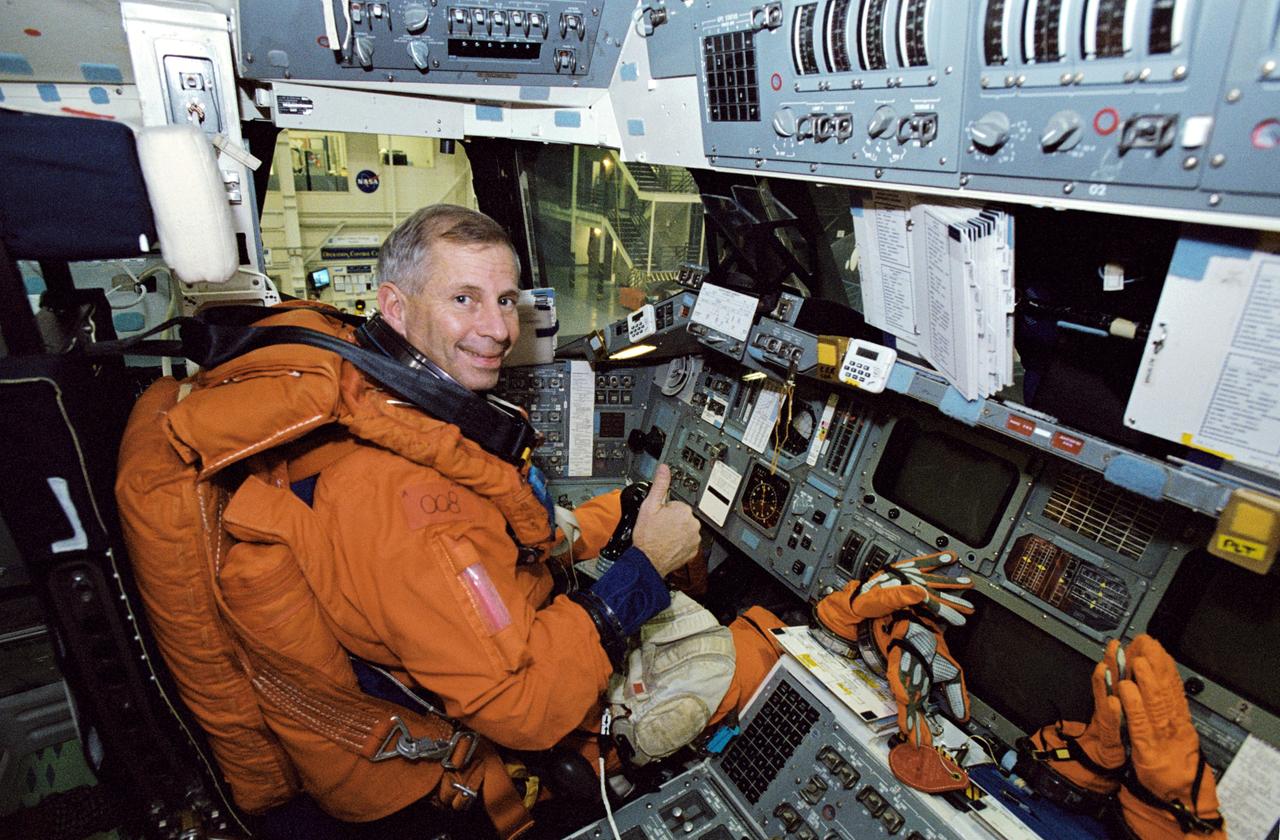
JSC2001-02992 (5 December 2001) --- Astronaut Kenneth D. Cockrell, STS-111 mission commander, occupies the commander’s station during a mission training session in the Space Vehicle Mockup Facility at the Johnson Space Center (JSC). Cockrell is attired in a training version of the shuttle launch and entry garment. STS-111 will be the 14th shuttle mission to visit the International Space Station (ISS).
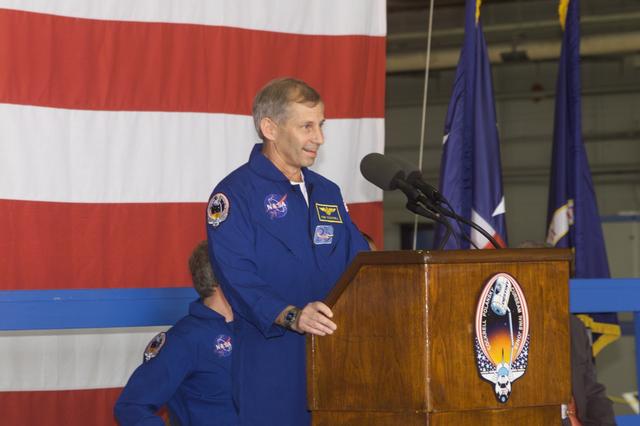
JSC2001-E-04806 (21 February 2001) --- Astronaut Kenneth D. Cockrell, mission commander, speaks to a crowd at the welcome home ceremony for the five STS-98 astronauts.
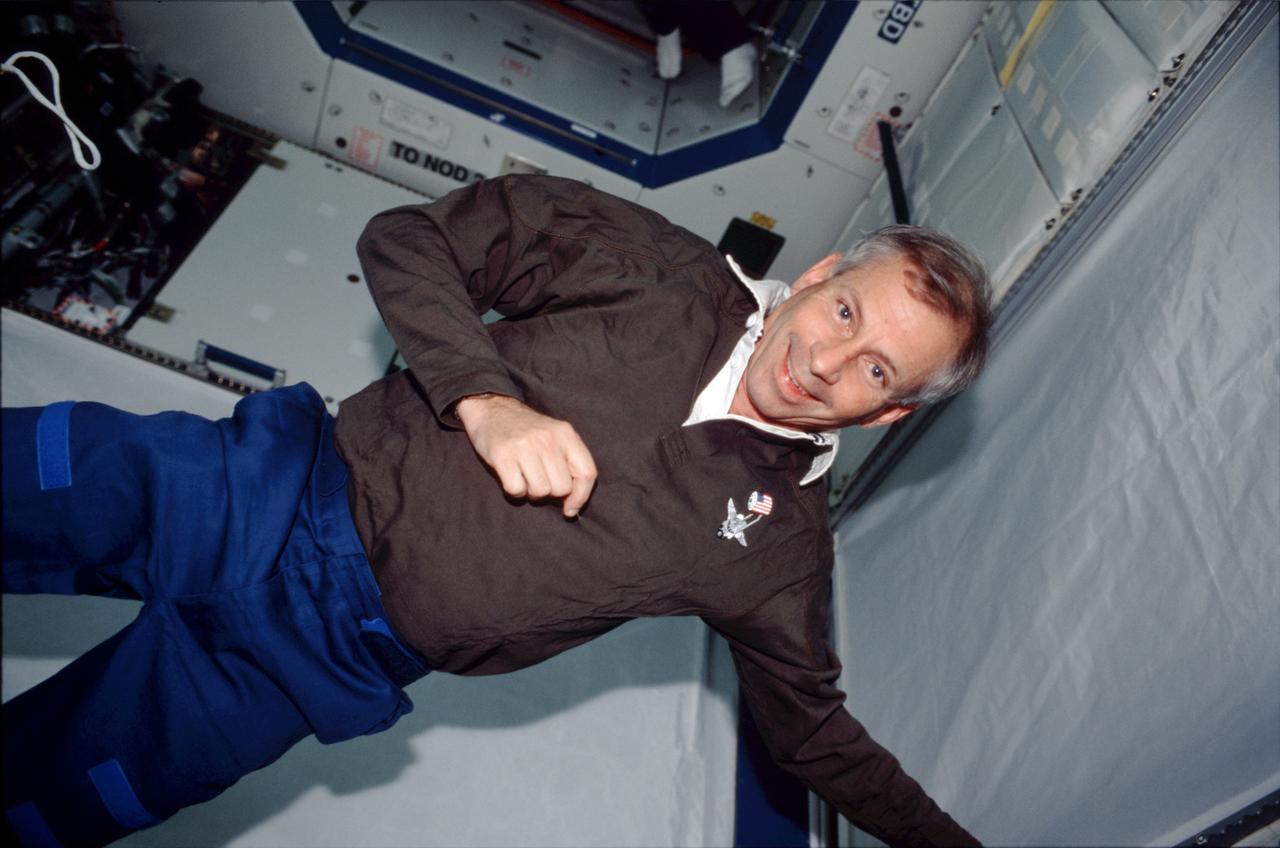
STS098-323-0005 (7-20 February 2001) --- Astronaut Kenneth D. Cockrell, STS-98 mission commander, floats in the newly attached Destiny laboratory onboard the International Space Station (ISS).
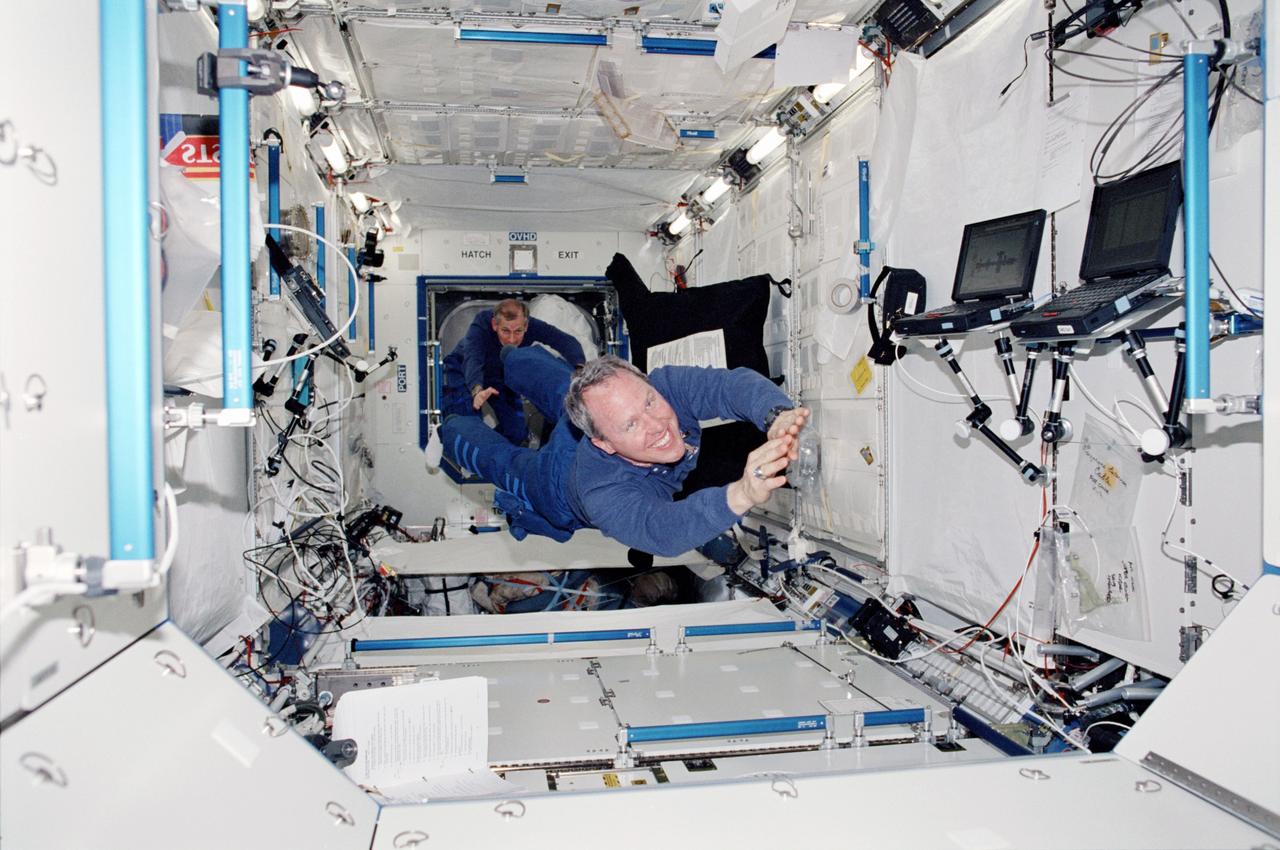
STS098-356-0026 (11 February 2001) --- Astronauts Thomas D. Jones (foreground), mission specialist; and Kenneth D. Cockrell, mission commander, float in the newly installed Destiny laboratory aboard the International Space Station.
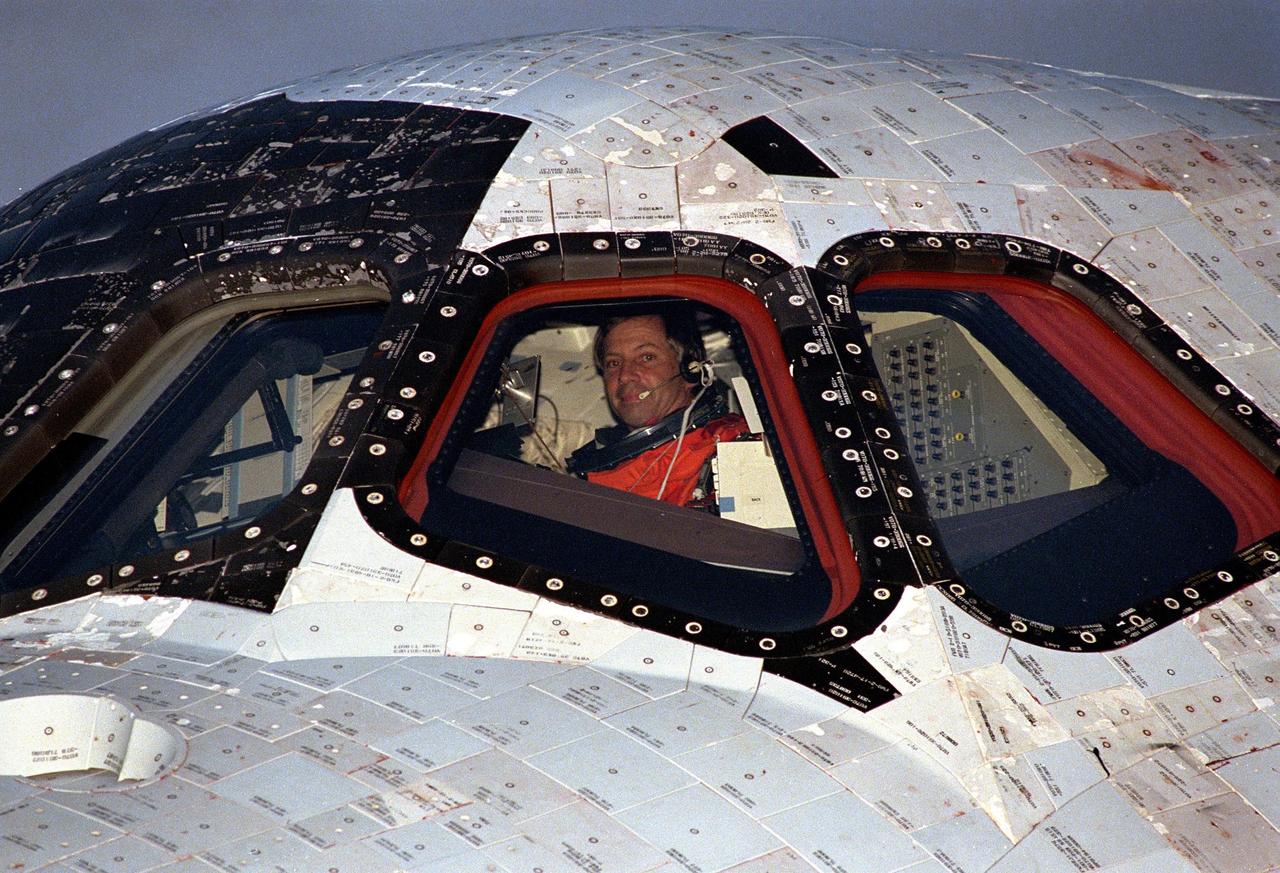
KENNEDY SPACE CENTER, FLA. -- STS-80 Commander Kenneth D. Cockrell peers out the window of the orbiter Columbia minutes after guiding the spacecraft to a successful landing on KSC’s Runway 33. Main gear touchdown occurred at 6:49:04 a.m. EST, Dec. 7. On board with Cockrell are four fellow crew members, Pilot Kent V. Rominger, and Mission Specialists Story Musgrave, Thomas D. Jones, and Tamara E. Jernigan, and the two primary payloads of the mission, the Wake Shield Facility-3 (WSF-3) and the Orbiting and Retrievable Far and Extreme Ultraviolet Spectrometer-Shuttle Pallet Satellite II (ORFEUS-SPAS II).
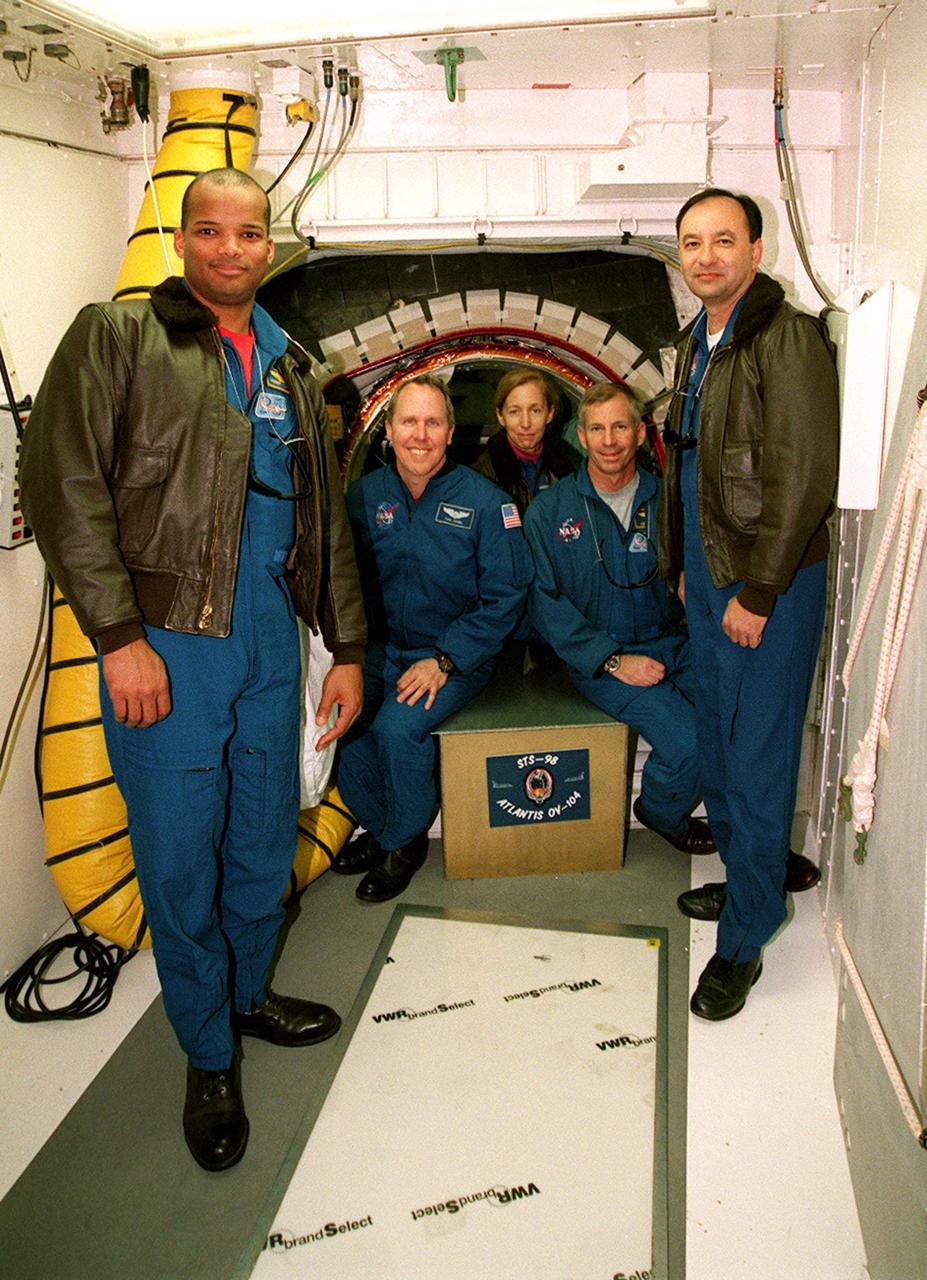
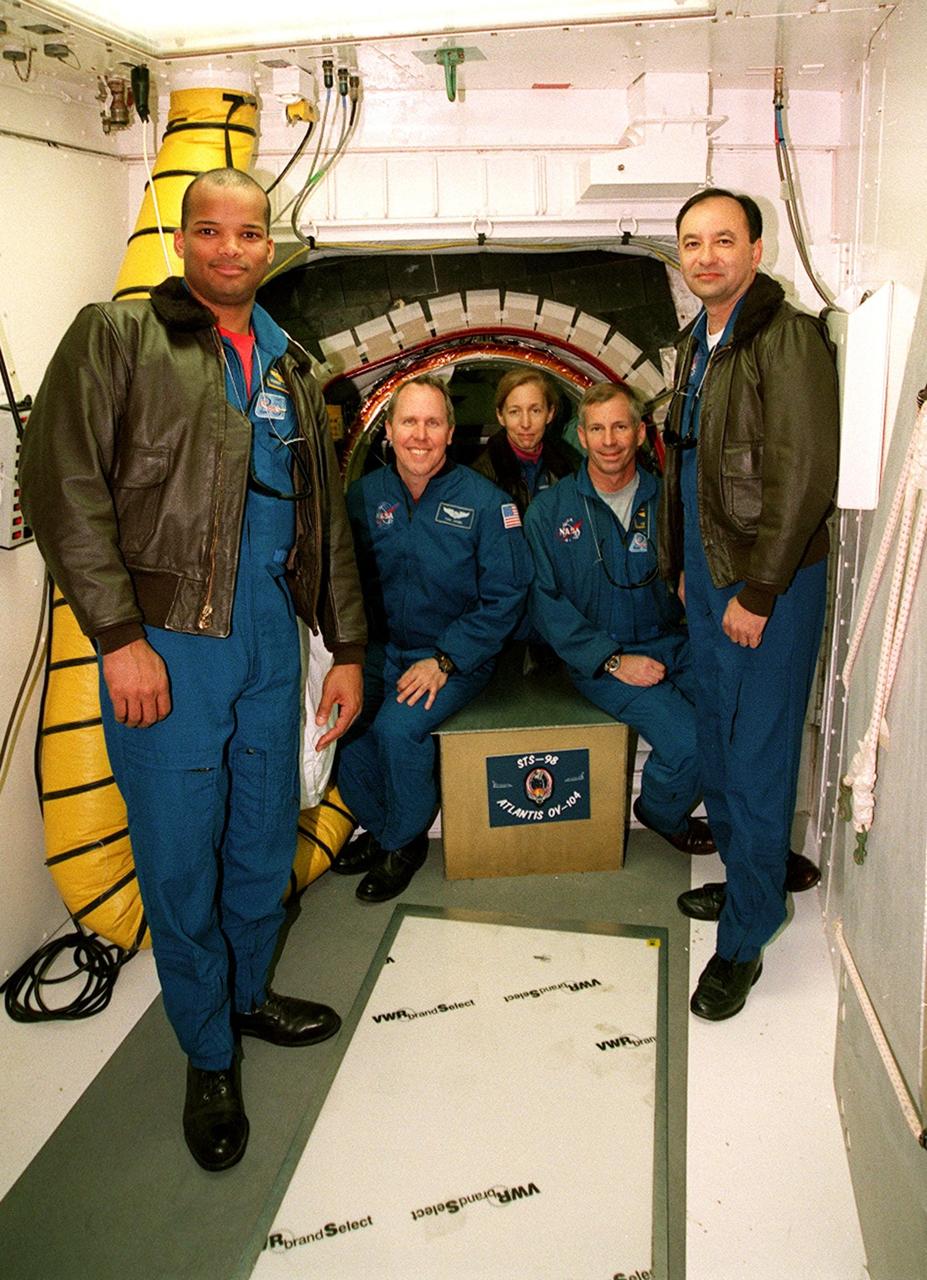
KENNEDY SPACE CENTER, FLA. -- Sitting in the entrance to the orbiter Atlantis are (left to right) STS-98 Mission Specialists Thomas Jones and Marsha Ivins and Commander Ken Cockrell. Below them is the mission patch just placed there by Cockrell. Standing at left is Mission Specialist Robert Curbeam and at right Pilot Mark Polansky. The crew is at KSC to take part in Terminal Countdown Demonstration Test activities, which include emergency egress training and a simulated launch countdown. STS-98 is the seventh construction flight to the International Space Station, carrying as payload the U.S. Lab Destiny, a key element in the construction of the ISS. Launch of STS-98 is scheduled for Jan. 19 at 2:11 a.m
KENNEDY SPACE CENTER, FLA. -- Sitting in the entrance to the orbiter Atlantis are (left to right) STS-98 Mission Specialists Thomas Jones and Marsha Ivins and Commander Ken Cockrell. Below them is the mission patch just placed there by Cockrell. Standing at left is Mission Specialist Robert Curbeam and at right Pilot Mark Polansky. The crew is at KSC to take part in Terminal Countdown Demonstration Test activities, which include emergency egress training and a simulated launch countdown. STS-98 is the seventh construction flight to the International Space Station, carrying as payload the U.S. Lab Destiny, a key element in the construction of the ISS. Launch of STS-98 is scheduled for Jan. 19 at 2:11 a.m
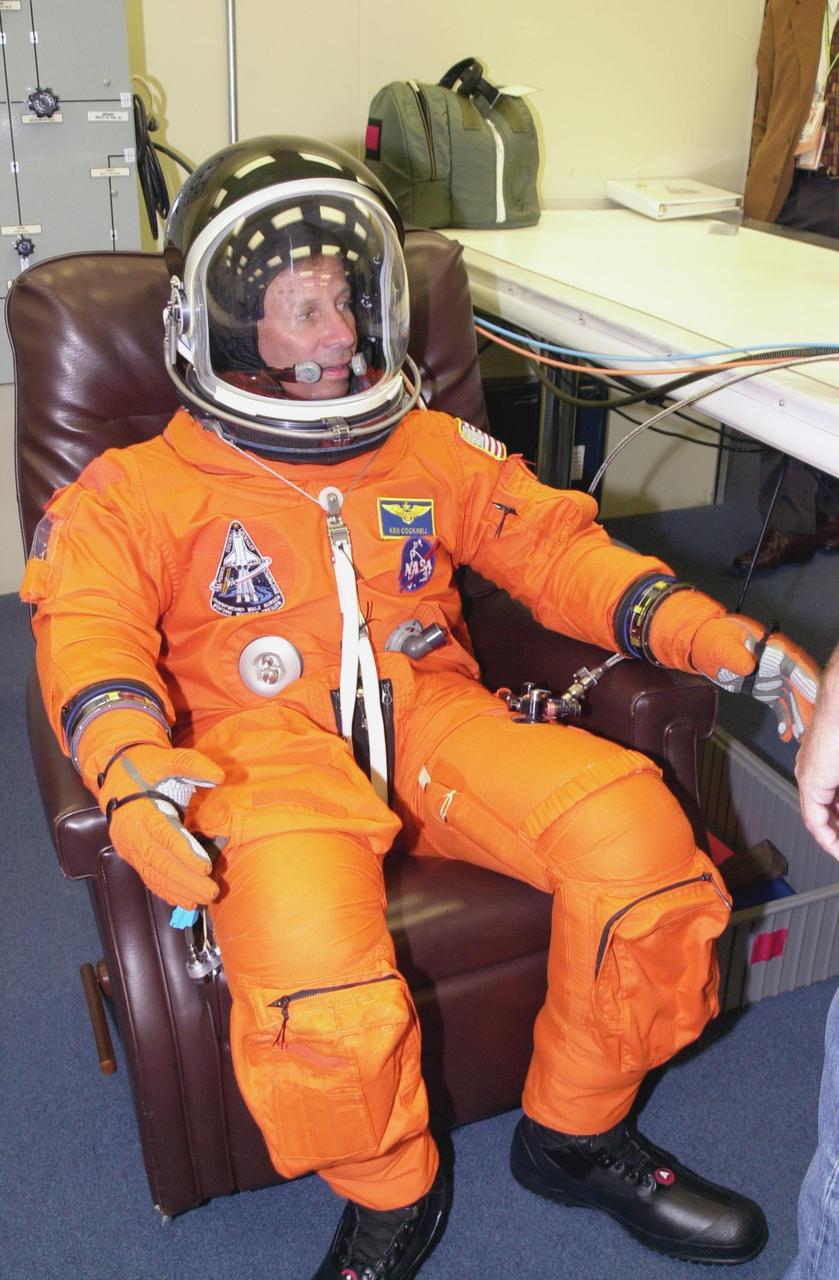
KENNEDY SPACE CENTER, FLA. - STS-111 Commander Kenneth Cockrell suits up for the scheduled liftoff of Space Shuttle Endeavour at 7:44 p.m. EDT. This is Cockrell's fifth Shuttle flight. STS-111 is the second Utilization Flight to the International Space Station, carrying the Multi-Purpose Logistics Module Leonardo, the Mobile Base System (MBS), and a replacement wrist/roll joint for the Canadarm 2. The MBS will be installed on the Mobile Transporter to complete the Canadian Mobile Servicing System, or MSS. In addition, Expedition 5 is traveling on mission STS-111 to the International Space Station to replace the current resident crew, Expedition 4, who will return to Earth with the STS-111 crew
![KENNEDY SPACE CENTER, FLA. -- STS-98 Commander Ken Cockrell answers a question from the media during a briefing at Launch Pad 39A. Other crew members present are Pilot Mark Polansky, Mission Specialist Thomas Jones, [Cockrell], and Mission Specialists Marsha Ivins and Robert Curbeam. All are at KSC to take part in Terminal Countdown Demonstration Test activities, which include emergency egress training and a simulated launch countdown. STS-98 is the seventh construction flight to the International Space Station, carrying as payload the U.S. Lab Destiny, a key element in the construction of the ISS. Launch of STS-98 is scheduled for Jan. 19 at 2:11 a.m](https://images-assets.nasa.gov/image/01pp0044/01pp0044~medium.jpg)
KENNEDY SPACE CENTER, FLA. -- STS-98 Commander Ken Cockrell answers a question from the media during a briefing at Launch Pad 39A. Other crew members present are Pilot Mark Polansky, Mission Specialist Thomas Jones, [Cockrell], and Mission Specialists Marsha Ivins and Robert Curbeam. All are at KSC to take part in Terminal Countdown Demonstration Test activities, which include emergency egress training and a simulated launch countdown. STS-98 is the seventh construction flight to the International Space Station, carrying as payload the U.S. Lab Destiny, a key element in the construction of the ISS. Launch of STS-98 is scheduled for Jan. 19 at 2:11 a.m
![KENNEDY SPACE CENTER, Fla. -- The STS-98 crew talks to the press at a briefing at Launch Pad 39A. With the microphone is Commander Ken Cockrell, who discusses the EVAs on the mission. The other crew members are (left to right) Pilot Mark Polansky, Mission Specialist Thomas Jones, [Cockrell], and Mission Specialists Marsha Ivins and Robert Curbeam. They are at KSC to take part in Terminal Countdown Demonstration Test activities, which also include a simulated launch countdown. STS-98 is the seventh construction flight to the International Space Station, carrying as payload the U.S. Lab Destiny, a key element in the construction of the ISS. Launch of STS-98 is scheduled for Jan. 19 at 2:11 a.m](https://images-assets.nasa.gov/image/KSC01padig014/KSC01padig014~medium.jpg)
KENNEDY SPACE CENTER, Fla. -- The STS-98 crew talks to the press at a briefing at Launch Pad 39A. With the microphone is Commander Ken Cockrell, who discusses the EVAs on the mission. The other crew members are (left to right) Pilot Mark Polansky, Mission Specialist Thomas Jones, [Cockrell], and Mission Specialists Marsha Ivins and Robert Curbeam. They are at KSC to take part in Terminal Countdown Demonstration Test activities, which also include a simulated launch countdown. STS-98 is the seventh construction flight to the International Space Station, carrying as payload the U.S. Lab Destiny, a key element in the construction of the ISS. Launch of STS-98 is scheduled for Jan. 19 at 2:11 a.m
![KENNEDY SPACE CENTER, Fla. -- The STS-98 crew talks to the press at a briefing at Launch Pad 39A. With the microphone is Commander Ken Cockrell, who discusses the EVAs on the mission. The other crew members are (left to right) Pilot Mark Polansky, Mission Specialist Thomas Jones, [Cockrell], and Mission Specialists Marsha Ivins and Robert Curbeam. They are at KSC to take part in Terminal Countdown Demonstration Test activities, which also include a simulated launch countdown. STS-98 is the seventh construction flight to the International Space Station, carrying as payload the U.S. Lab Destiny, a key element in the construction of the ISS. Launch of STS-98 is scheduled for Jan. 19 at 2:11 a.m](https://images-assets.nasa.gov/image/01padig014/01padig014~medium.jpg)
KENNEDY SPACE CENTER, Fla. -- The STS-98 crew talks to the press at a briefing at Launch Pad 39A. With the microphone is Commander Ken Cockrell, who discusses the EVAs on the mission. The other crew members are (left to right) Pilot Mark Polansky, Mission Specialist Thomas Jones, [Cockrell], and Mission Specialists Marsha Ivins and Robert Curbeam. They are at KSC to take part in Terminal Countdown Demonstration Test activities, which also include a simulated launch countdown. STS-98 is the seventh construction flight to the International Space Station, carrying as payload the U.S. Lab Destiny, a key element in the construction of the ISS. Launch of STS-98 is scheduled for Jan. 19 at 2:11 a.m
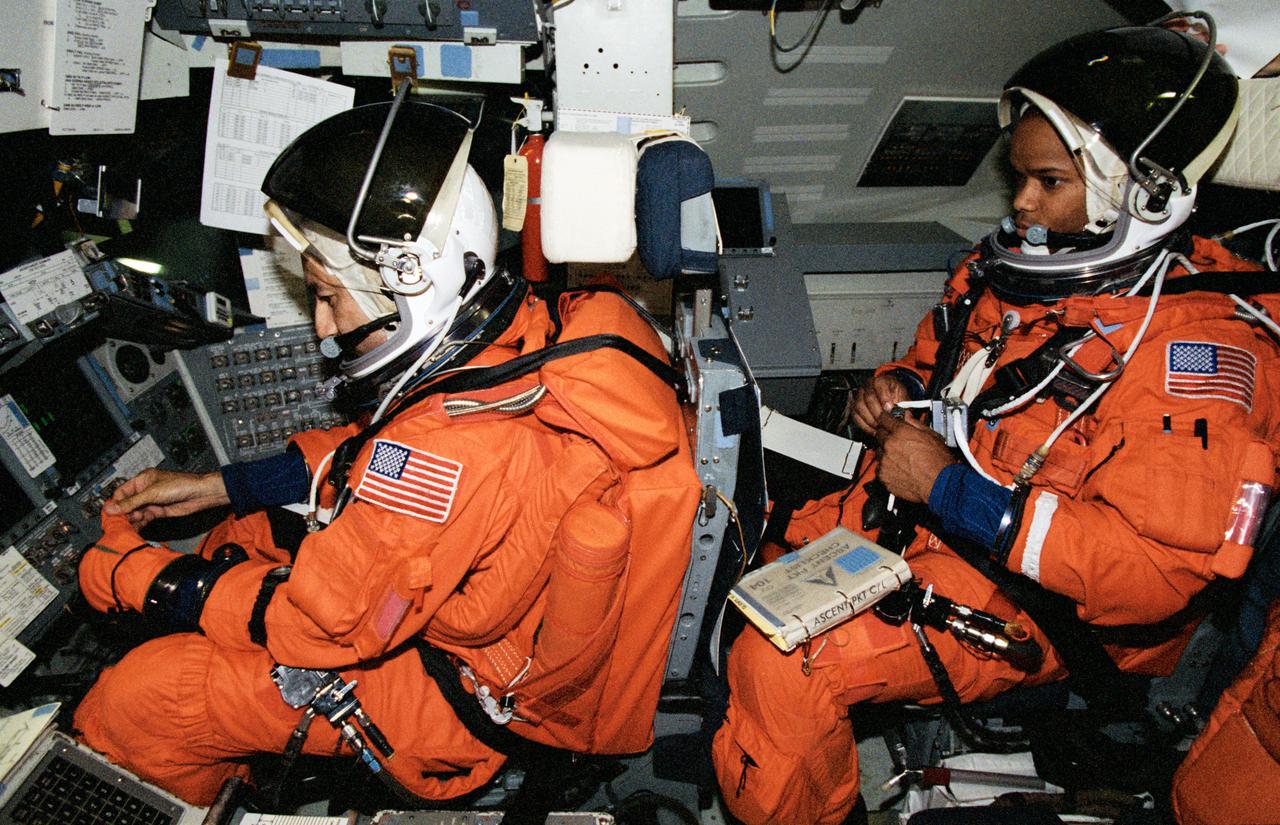
Photographic documentation showing STS-98 crewmembers engaging in preflight training in bldg. 5. Views include: STS-98 mission commander Kenneth D. Cockrell, wearing a Launch Entry Suit (LES) and a helmet, sits in the commanders station on the flight deck of the mobile-based Shuttle Mission Simulator (SMS) (04774); STS-98 pilot Mark L. Polansky, wearing LES and helmet, sits in the pilots station, with STS-98 Mission Specialist (MS) Robert L. Curbeam seated behind him on the flight deck (04775); Polansky in the pilots station (04776); Curbeam in a LES and wearing a Communications Carrier Assembly (CCA) (04777); Polansky and Curbeam pose, wearing LES and no helmets, in bldg. 5 (04778); Polansky, wearing a LES, fastens his CCA (04779); Cockrell, Polansky, Curbeam and STS-98 MS Marsha S. Ivins, wearing LES, sit in locker room (04780); Ivins and suit techs (04781); suit techs and Polansky (04782); suit techs and Cockrell (04783).
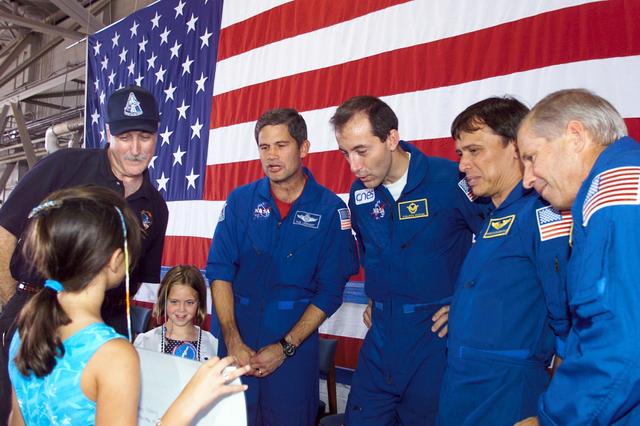
JSC2002-E-25983 (21 June 2002) --- NASA Administrator Sean O'Keefe (from left), astronauts Paul S. Lockhart, Philippe Perrin, Franklin R. Chang-Diaz and Kenneth D. Cockrell check out the welcome home sign of a young greeter during crew return ceremonies in Hangar 990 at Elligngton Field.
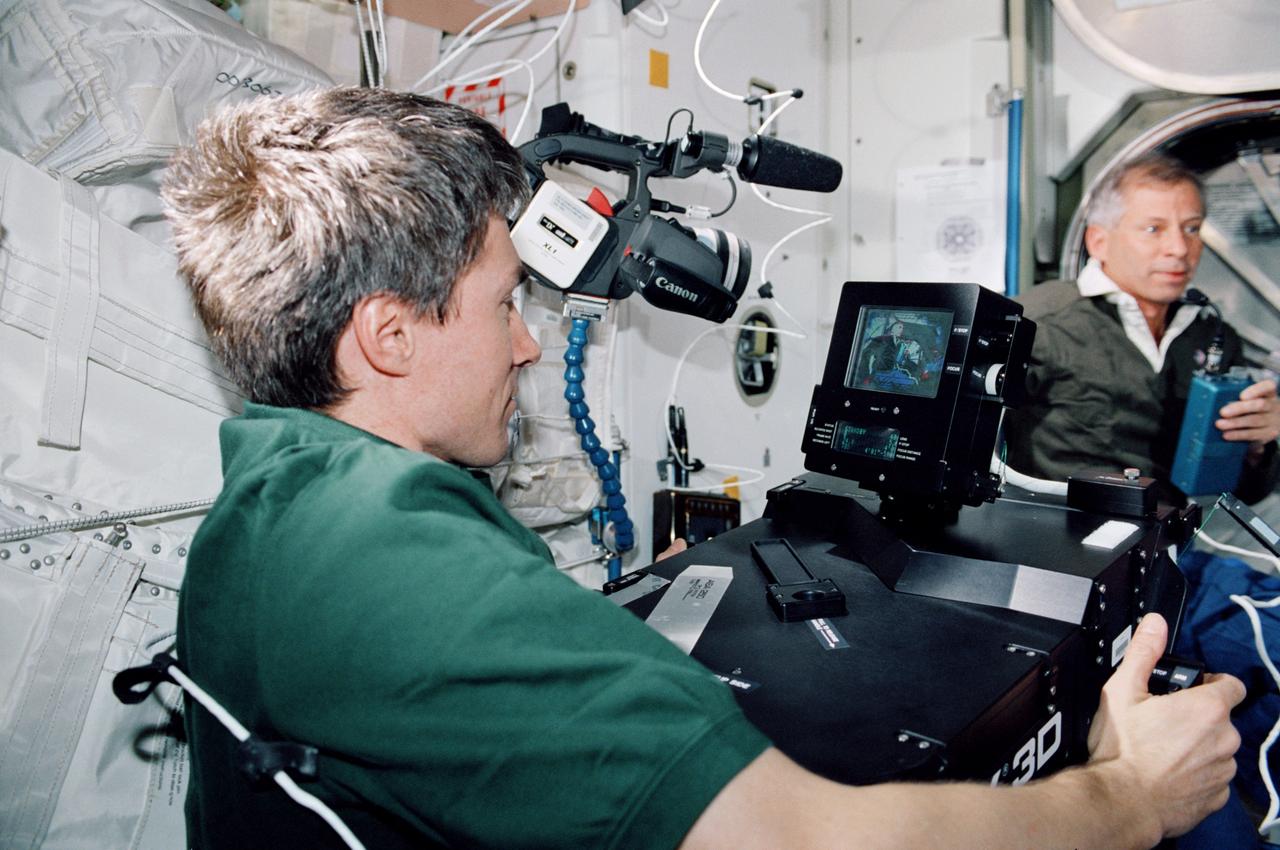
STS098-352-021 (7-20 February 2001) --- Cosmonaut Sergei K. Krikalev, Expedition One flight engineer, photographs astronaut Kenneth D. Cockrell, STS-98 mission commander, using an IMAX camera aboard the newly-attached Destiny laboratory on the International Space Station (ISS). Krikalev represents Rosaviakosmos.
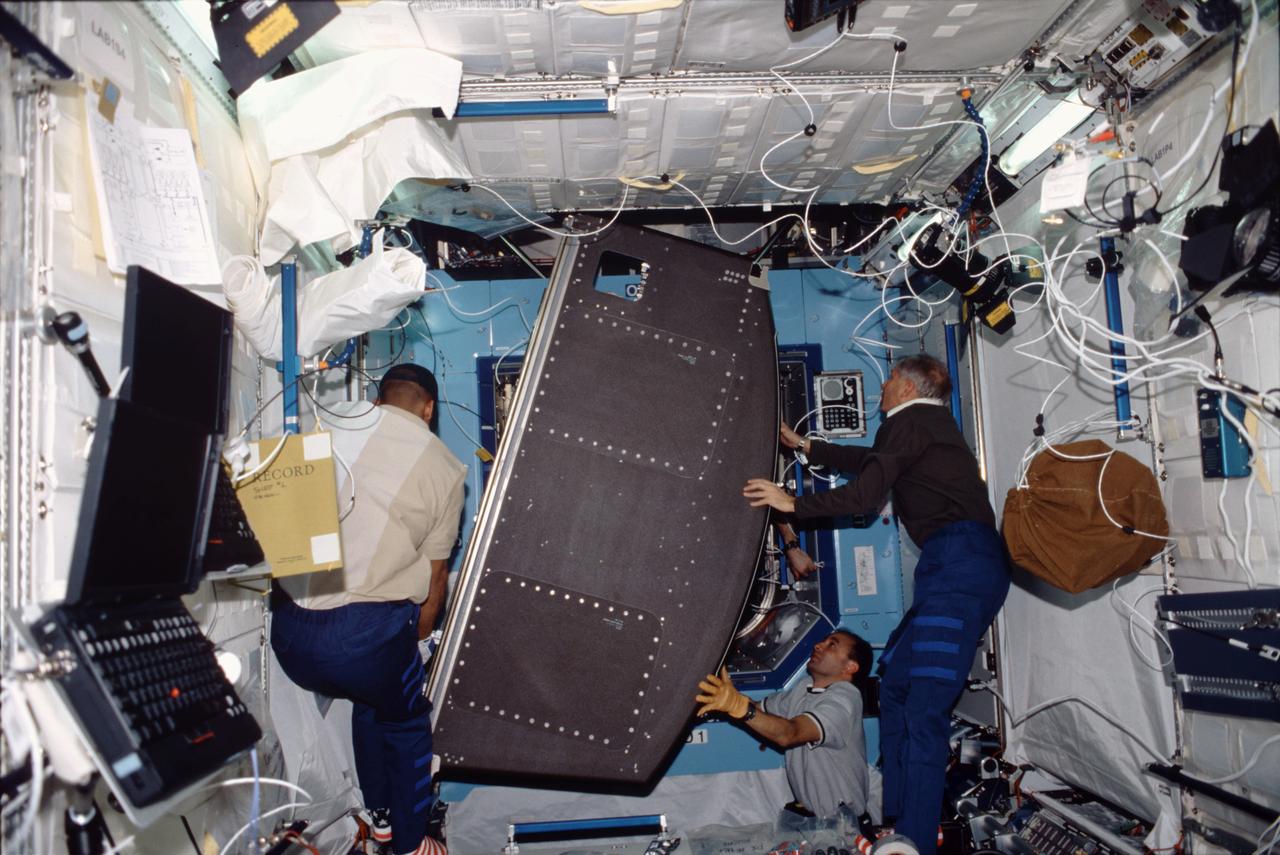
STS098-322-0001 (7-20 February 2001) --- Three STS-98 astronauts move a rack into position aboard the newly attached Destiny laboratory. From the left to right are astronauts Robert L. Curbeam, mission specialist; Mark L. Polansky, pilot; and Kenneth D. Cockrell, mission commander.
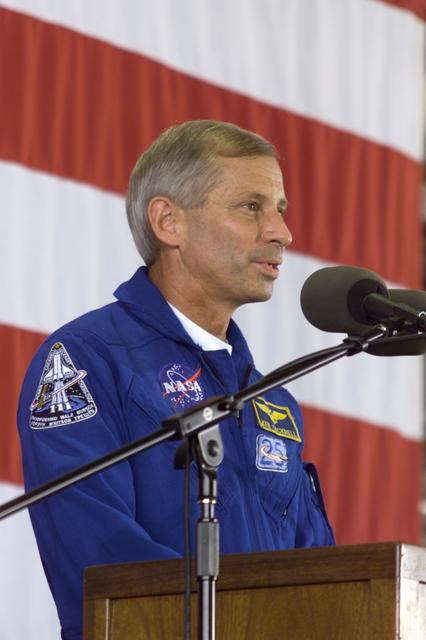
JSC2002-E-26031 (21 June 2002) --- Astronaut Kenneth D. Cockrell, STS-111 mission commander, speaks from the lectern in Hangar 990 at Ellington Field during the STS-111 and Expedition Four crew return ceremonies.
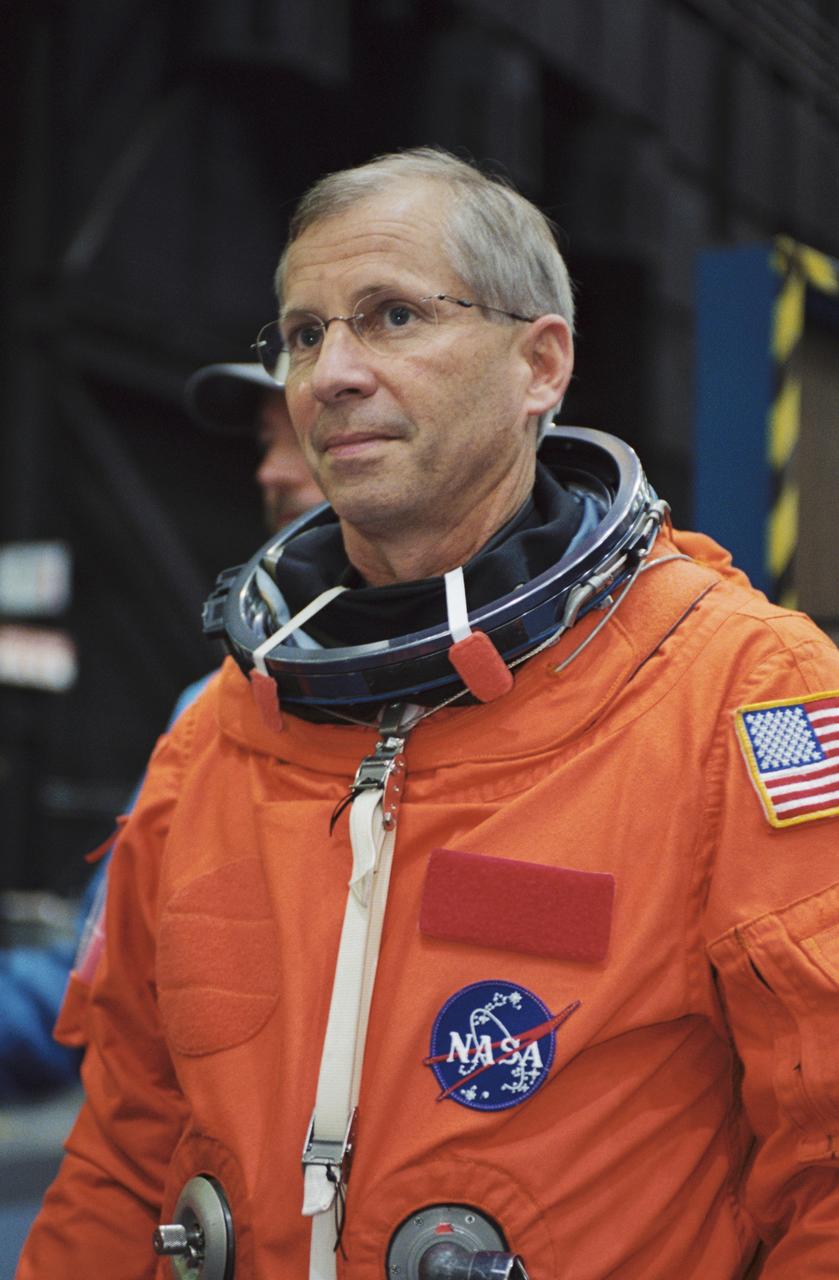
JSC2002-00725 (29 March 2002) --- Astronaut Kenneth D. Cockrell, STS-111 mission commander, attired in a training version of the shuttle launch and entry suit, awaits a mission training session in the Space Vehicle Mockup Facility at Johnson Space Center (JSC).
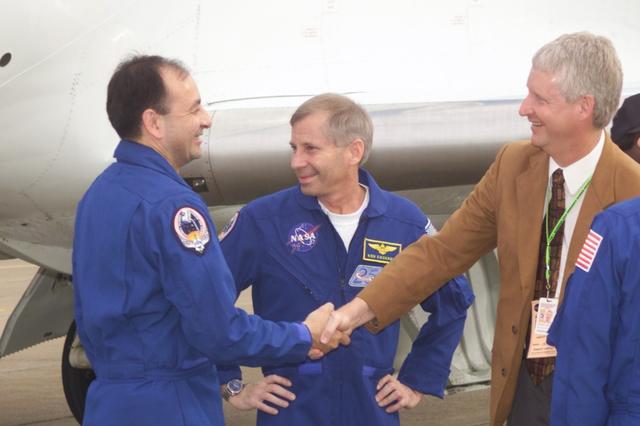
JSC2001-E-04804 (21 February 2001) --- Astronauts Mark L. Polansky (left) and Kenneth D. Cockrell (center), pilot and commander, respectively, for the STS-98 mission, are greeted by Steven A. Hawley of the Flight Crew Operations Directorate upon their return to Houston. The greetings took place prior to a welcoming ceremony at Ellington Field.
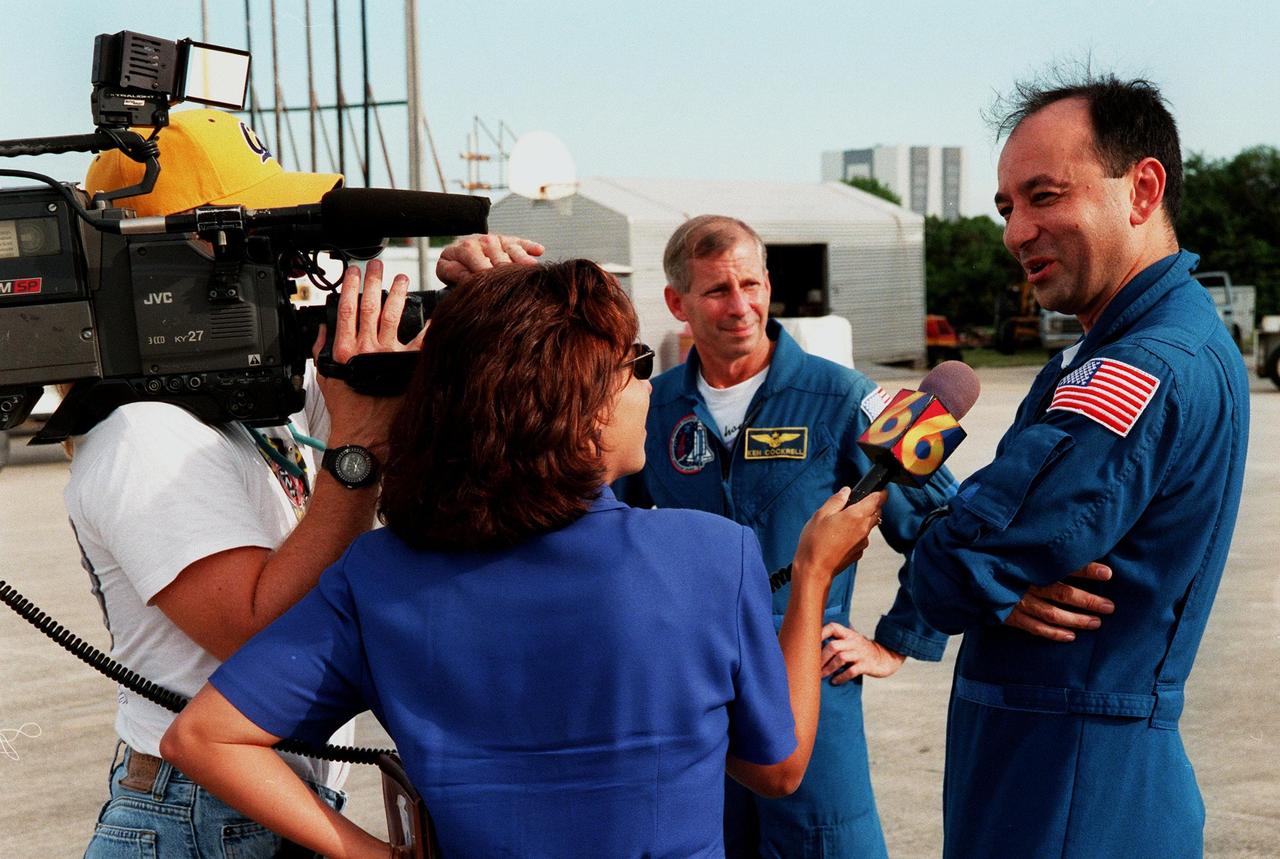
KENNEDY SPACE CENTER, FLA. -- After landing at the Shuttle Landing Facility aboard T-38 trainers, STS-98 Pilot Mark Polansky (right) and Mission Commander Ken Cockrell (center, background) are interviewed by media representatives. Polansky, Cockrell and Mission Specialist Marsha Ivins (not shown) accompanied the U.S. Laboratory module on its transport from Marshall Space Flight Center, Huntsville, to Kennedy aboard NASA's "Super Guppy" aircraft. Scheduled for launch aboard the Shuttle Endeavour on mission STS-98, the laboratory comprises three cylindrical sections with two end cones. Each end-cone contains a hatch opening for entering and exiting the lab. The lab will provide a shirtsleeve environment for research in the areas of life science, microgravity science, Earth science and space science. Designated Flight 5A, this mission is targeted for launch in early 2000
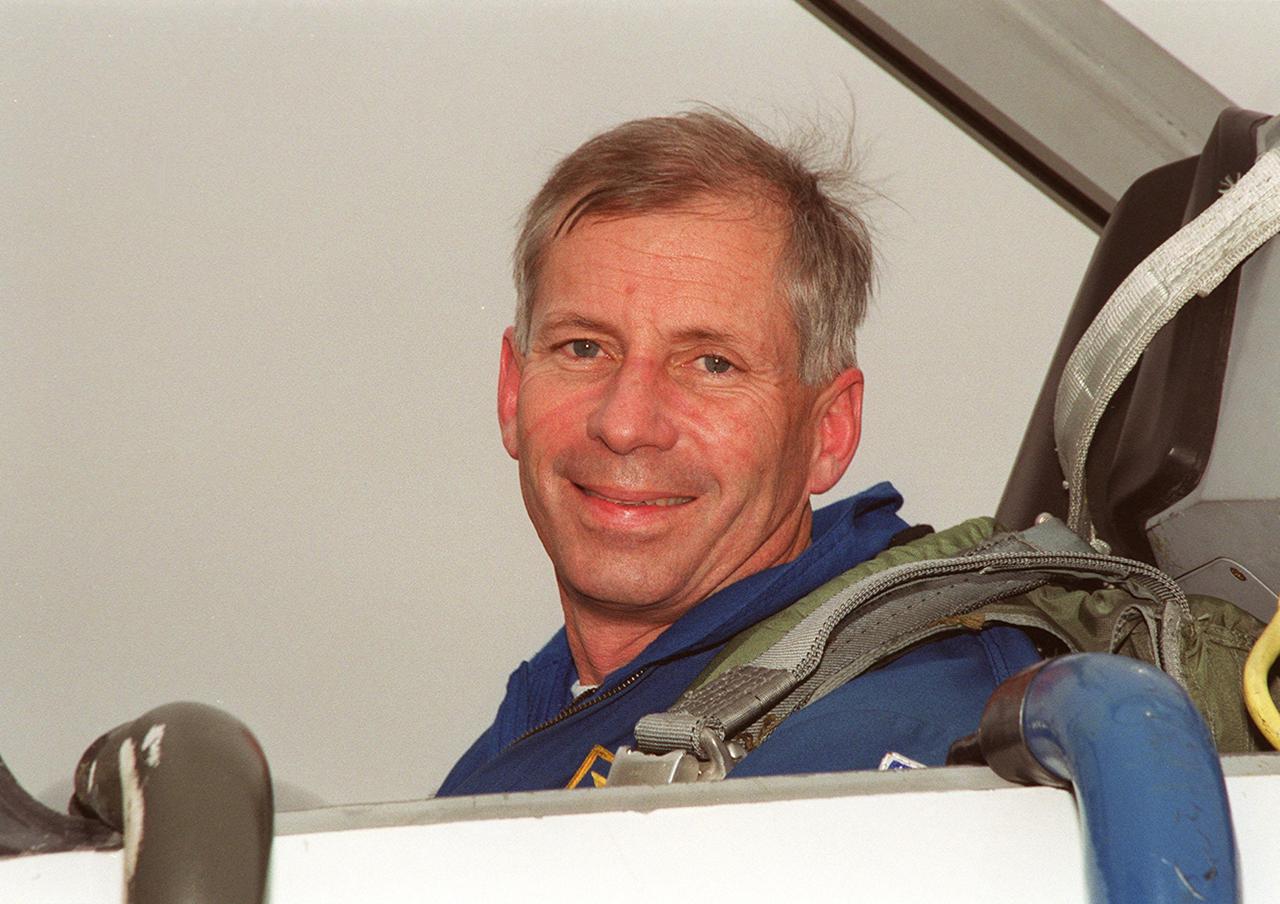
STS-98 Commander Ken Cockrell arrives at the Shuttle Landing Facility in a T-38 jet aircraft. He and other crew members Pilot Mark Polansky and Mission Specialists Robert Curbeam, Thomas Jones and Marsha Ivins have returned to KSC to prepare for their launch to the International Space Station. The seventh construction flight to the Space Station, STS-98 will carry the U.S. Laboratory Destiny, a key module for space experiments. The 11-day mission includes three spacewalks to complete outside assembly and connection of electrical and plumbing lines between the laboratory, Station and a relocated Shuttle docking port. STS-98 is Cockrell’s fourth space flight. Launch is targeted for Feb. 7 at 6:11 p.m. EST
![KENNEDY SPACE CENTER, FLA. -- The STS-98 crew talks to the press at a briefing at Launch Pad 39A. Holding the microphone is Commander Ken Cockrell, who answers a question about the mission. The other crew members are (left to right) Pilot Mark Polansky, Mission Specialist Thomas Jones, [Cockrell], and Mission Specialists Marsha Ivins and Robert Curbeam. They are at KSC to take part in Terminal Countdown Demonstration Test activities, which include emergency egress training and a simulated launch countdown. STS-98 is the seventh construction flight to the International Space Station, carrying as payload the U.S. Lab Destiny, a key element in the construction of the ISS. Launch of STS-98 is scheduled for Jan. 19 at 2:11 a.m](https://images-assets.nasa.gov/image/KSC01pp0043/KSC01pp0043~medium.jpg)
KENNEDY SPACE CENTER, FLA. -- The STS-98 crew talks to the press at a briefing at Launch Pad 39A. Holding the microphone is Commander Ken Cockrell, who answers a question about the mission. The other crew members are (left to right) Pilot Mark Polansky, Mission Specialist Thomas Jones, [Cockrell], and Mission Specialists Marsha Ivins and Robert Curbeam. They are at KSC to take part in Terminal Countdown Demonstration Test activities, which include emergency egress training and a simulated launch countdown. STS-98 is the seventh construction flight to the International Space Station, carrying as payload the U.S. Lab Destiny, a key element in the construction of the ISS. Launch of STS-98 is scheduled for Jan. 19 at 2:11 a.m

STS98-E-5143 (11 February 2001) --- Astronauts Marsha S. Ivins (from the left), STS-98 mission specialist, Kenneth D. Cockrell, STS-98 mission commander; and William M. Shepherd, Expedition One mission commander, discuss the organizational "game plan" onboard the newly opened Destiny laboratory on the International Space Station (ISS). After Shepherd opened the Destiny hatch, he and Cockrell ventured inside at 8:38 a.m. (CST), February 11, 2001. As depicted in subsequent digital images in this series, members of both crews went to work quickly inside the new module, activating air systems, fire extinguishers, alarm systems, computers and internal communications. The crew also took some photos and continued equipment transfers from the shuttle to the station.
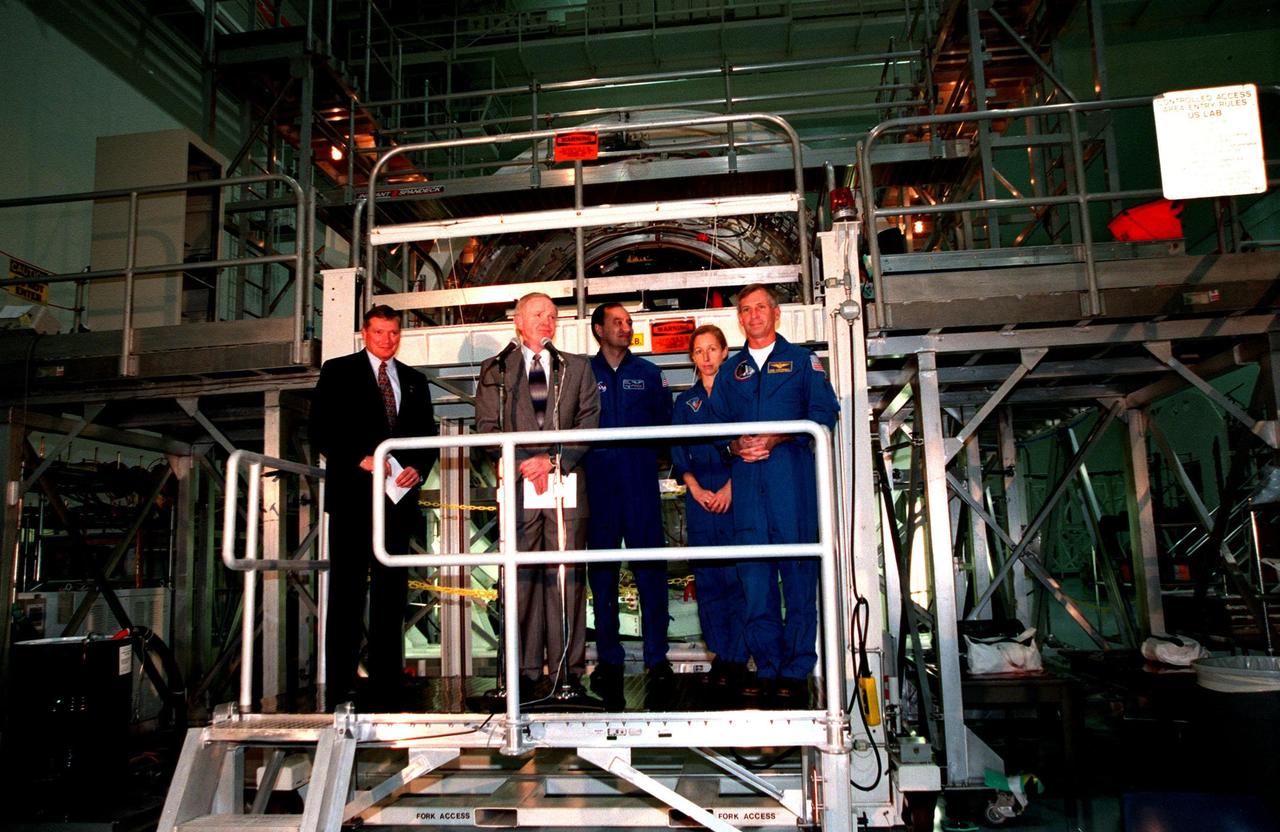
KENNEDY SPACE CENTER, FLA. -- In the Space Station Processing Facility, Center Director Roy Bridges (left), Program Manager of the International Space Station (ISS) Randy Brinkley (second from left) and (right) STS-98 Commander Ken Cockrell applaud the unveiling of the name Destiny given the U.S. Lab module. The lab, which is behind them on a workstand, is scheduled to be launched on Space Shuttle Endeavour in early 2000. It will become the centerpiece of scientific research on the ISS. Cockrell is part of the five-member crew expected to be aboard. The Shuttle will spend six days docked to the station while the laboratory is attached and three space walks are conducted to complete its assembly. The laboratory will be launched with five equipment racks aboard, which will provide essential functions for station systems, including high data-rate communications, and maintain the station's orientation using control gyroscopes launched earlier. Additional equipment and research racks will be installed in the laboratory on subsequent Shuttle flights
![KENNEDY SPACE CENTER, FLA. -- The STS-98 crew talks to the press at a briefing at Launch Pad 39A. Holding the microphone is Commander Ken Cockrell, who answers a question about the mission. The other crew members are (left to right) Pilot Mark Polansky, Mission Specialist Thomas Jones, [Cockrell], and Mission Specialists Marsha Ivins and Robert Curbeam. They are at KSC to take part in Terminal Countdown Demonstration Test activities, which include emergency egress training and a simulated launch countdown. STS-98 is the seventh construction flight to the International Space Station, carrying as payload the U.S. Lab Destiny, a key element in the construction of the ISS. Launch of STS-98 is scheduled for Jan. 19 at 2:11 a.m](https://images-assets.nasa.gov/image/01pp0043/01pp0043~medium.jpg)
KENNEDY SPACE CENTER, FLA. -- The STS-98 crew talks to the press at a briefing at Launch Pad 39A. Holding the microphone is Commander Ken Cockrell, who answers a question about the mission. The other crew members are (left to right) Pilot Mark Polansky, Mission Specialist Thomas Jones, [Cockrell], and Mission Specialists Marsha Ivins and Robert Curbeam. They are at KSC to take part in Terminal Countdown Demonstration Test activities, which include emergency egress training and a simulated launch countdown. STS-98 is the seventh construction flight to the International Space Station, carrying as payload the U.S. Lab Destiny, a key element in the construction of the ISS. Launch of STS-98 is scheduled for Jan. 19 at 2:11 a.m

STS111-E-5018 (7 June 2002) --- This closeup view of the forward docking port on the International Space Station (ISS) was photographed with a digital still camera by one the STS-111 crew members just prior to docking. The Space Shuttle Endeavour went on to gently dock with the station 240 miles over the South Pacific, setting the stage for eight days of docked operations highlighted by three scheduled spacewalks and the exchange of resident crews aboard the outpost. Astronaut Kenneth D. Cockrell, mission commander, guided the shuttle to a linkup with the forward docking port of the station’s Destiny Laboratory at 11:25 a.m. (CDT), June 7, 2002. The docking culminated a textbook rendezvous executed by astronauts Cockrell and Paul S. Lockhart, pilot.
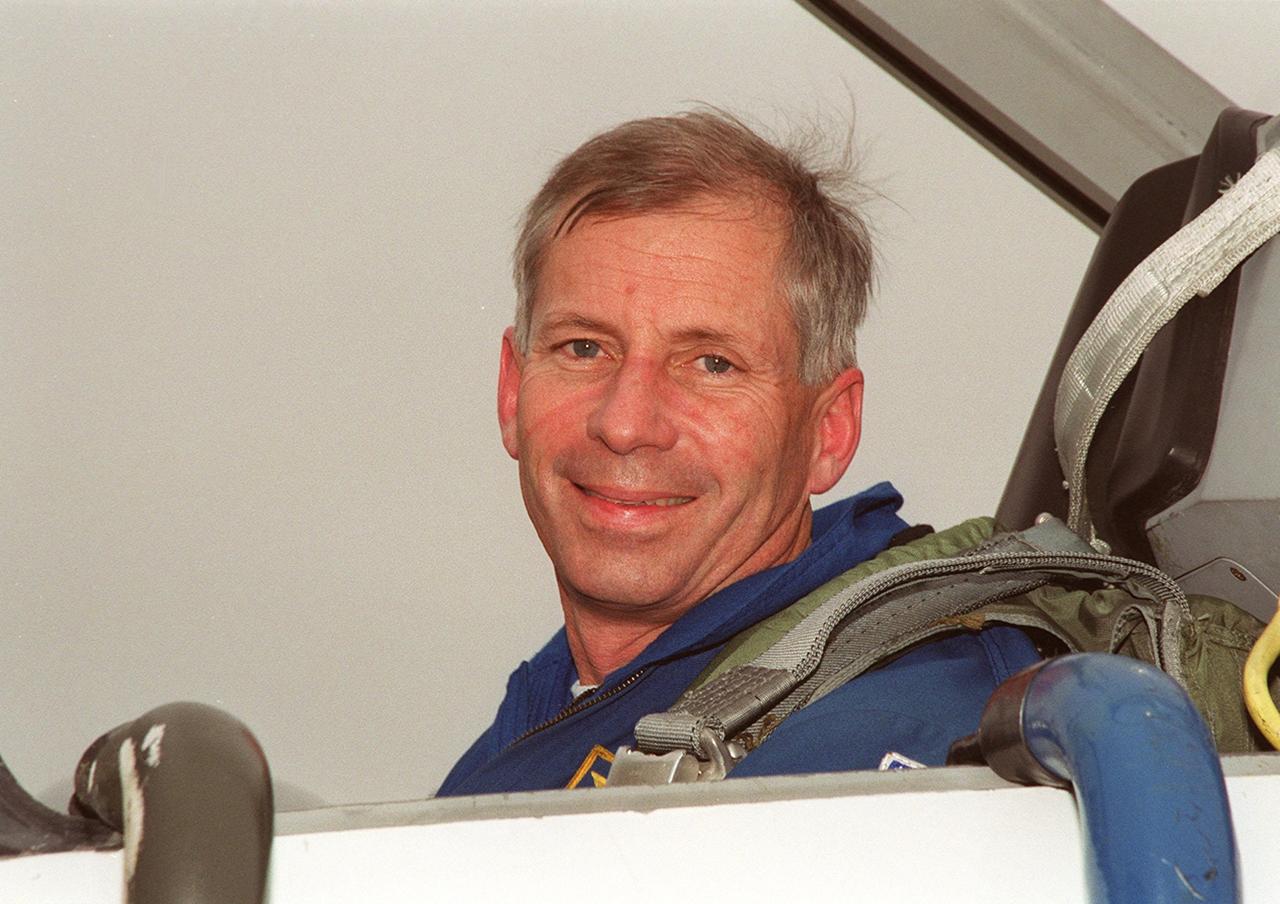
STS-98 Commander Ken Cockrell arrives at the Shuttle Landing Facility in a T-38 jet aircraft. He and other crew members Pilot Mark Polansky and Mission Specialists Robert Curbeam, Thomas Jones and Marsha Ivins have returned to KSC to prepare for their launch to the International Space Station. The seventh construction flight to the Space Station, STS-98 will carry the U.S. Laboratory Destiny, a key module for space experiments. The 11-day mission includes three spacewalks to complete outside assembly and connection of electrical and plumbing lines between the laboratory, Station and a relocated Shuttle docking port. STS-98 is Cockrell’s fourth space flight. Launch is targeted for Feb. 7 at 6:11 p.m. EST
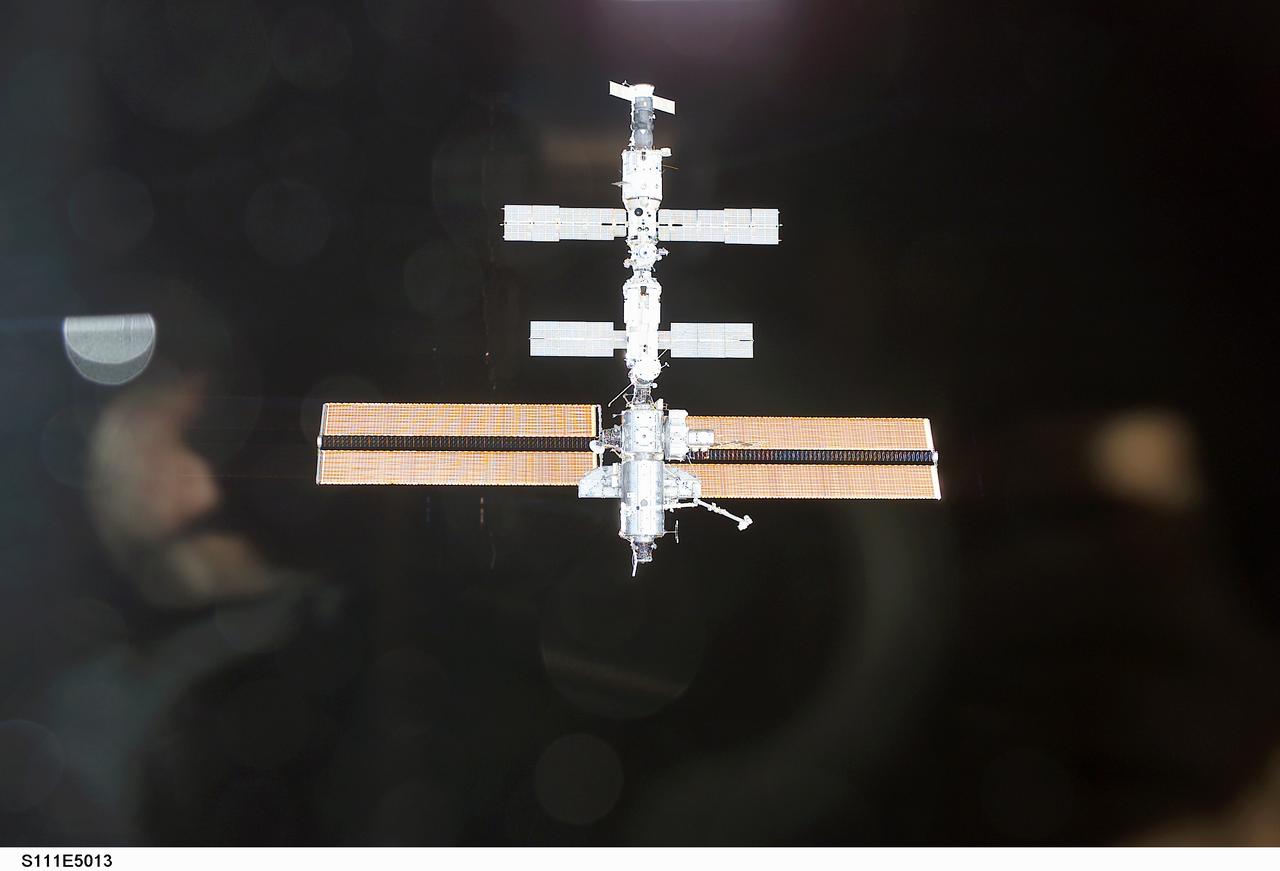
STS111-E-5013 (7 June 2002) --- This view of the International Space Station (ISS), backdropped against the blackness of space, was photographed with a digital still camera by one the STS-111 crew members as the Space Shuttle Endeavour approached the station for docking. The shuttle went on to gently dock with the station 240 miles over the South Pacific, setting the stage for eight days of docked operations highlighted by three scheduled spacewalks and the exchange of resident crews aboard the outpost. Astronaut Kenneth D. Cockrell, mission commander, guided the shuttle to a linkup with the forward docking port of the station’s Destiny Laboratory at 11:25 a.m. (CDT), June 7, 2002. The docking culminated a textbook rendezvous executed by astronauts Cockrell and Paul S. Lockhart, pilot.
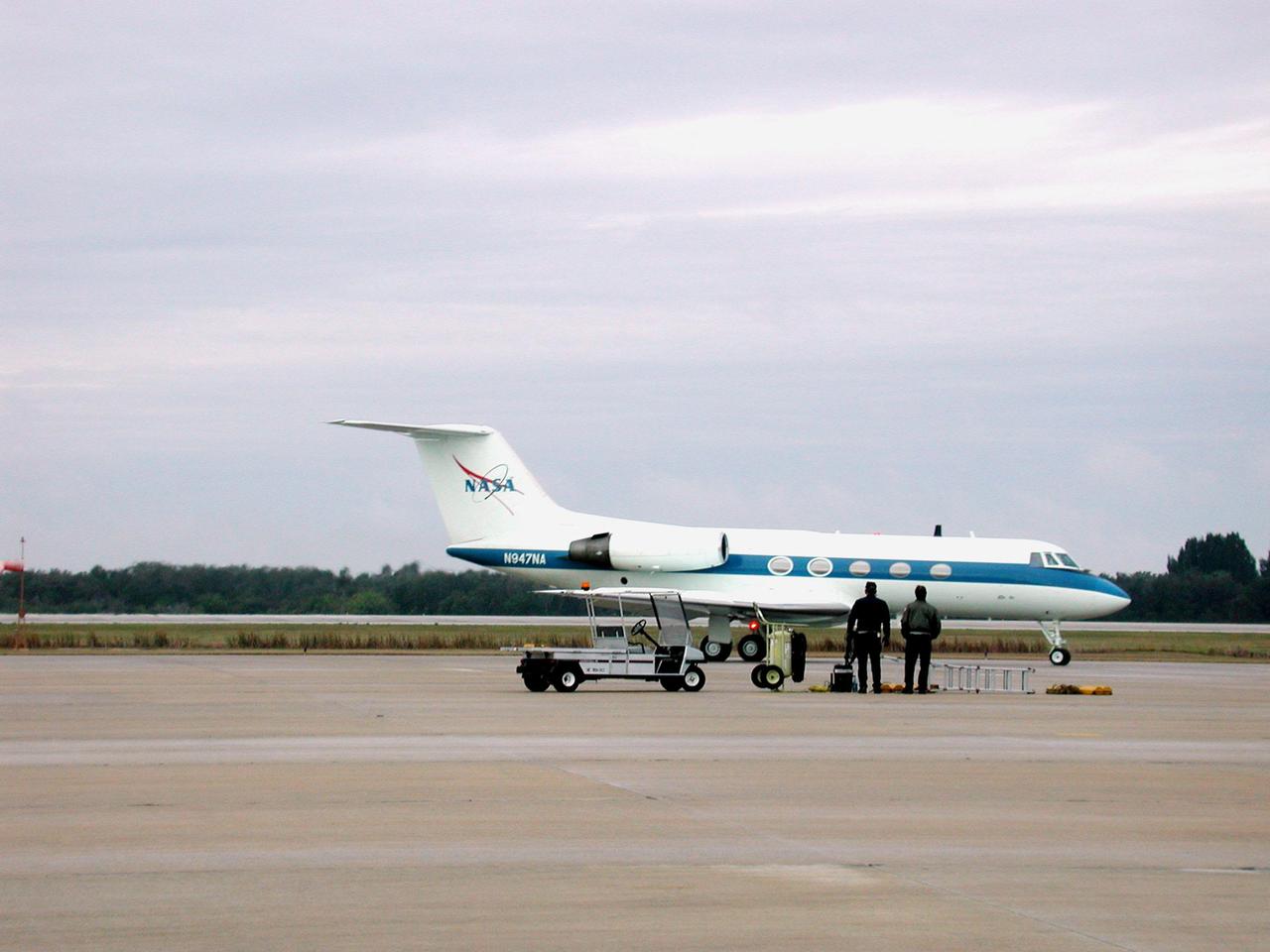
KENNEDY SPACE CENTER, FLA. -- A Shuttle Training Aircraft, piloted by STS-98 Commander Ken Cockrell, taxis into line at the KSC Shuttle Landing Facility. The cockpit of the plane is outfitted like the Shuttle, which provides practice at the controls, especially for landing. The STS-98 crew recently arrived at KSC to prepare for their launch Feb. 7 to the International Space Station. The seventh construction flight to the Space Station, it will carry the U.S. Laboratory Destiny, a key module for space experiments
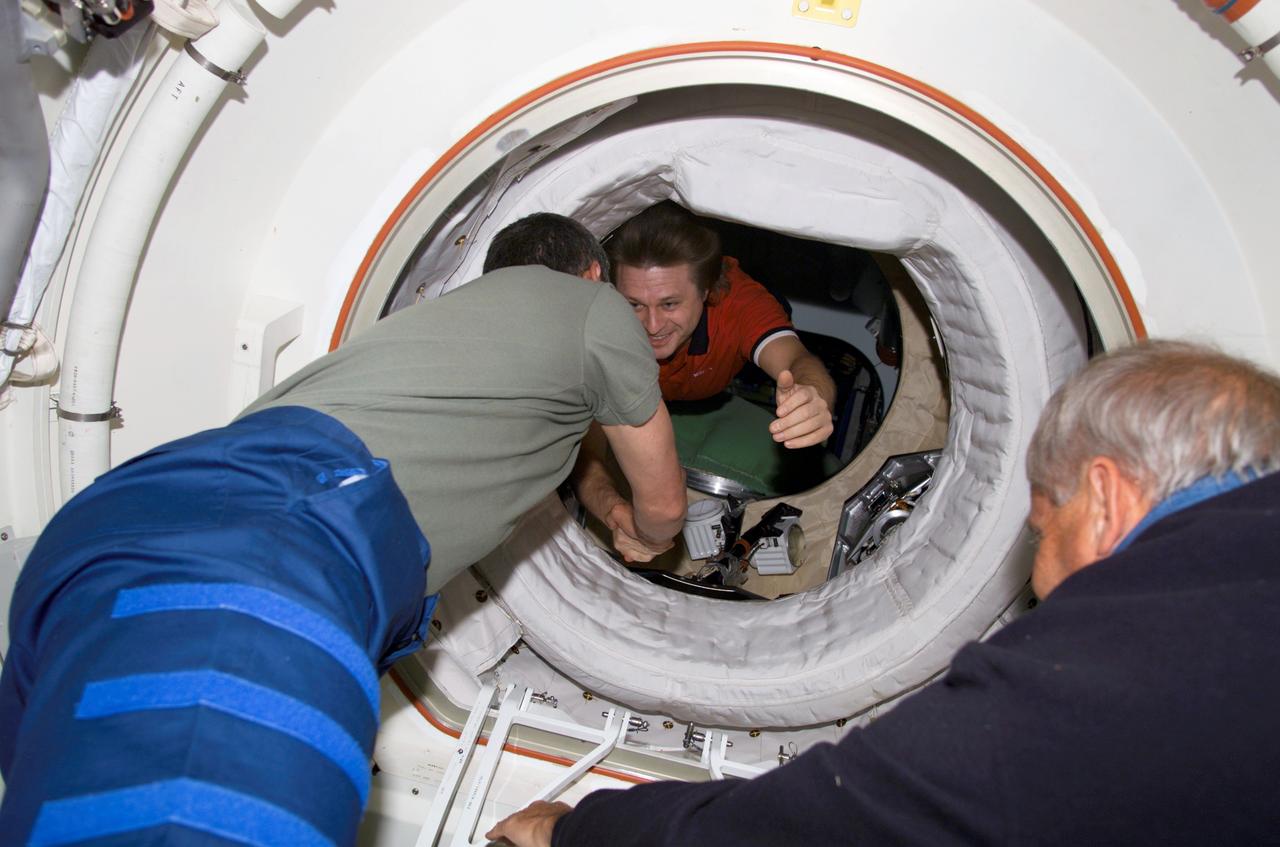
STS111-E-5095 (7 June 2002) --- Cosmonaut Yury I. Onufrienko, Expedition Four mission commander, greets cosmonaut Valery G. Korzun (back to camera), Expedition Five mission commander, when the hatch to the Pressurized Mating Adapter 2 (PMA-2) on the International Space Station (ISS) was opened for the STS-111 ingress. Astronaut Kenneth D. Cockrell, STS-111 mission commander, is partially visible on the right of Korzun. Onufrienko and Korzun represent Rosaviakosmos.
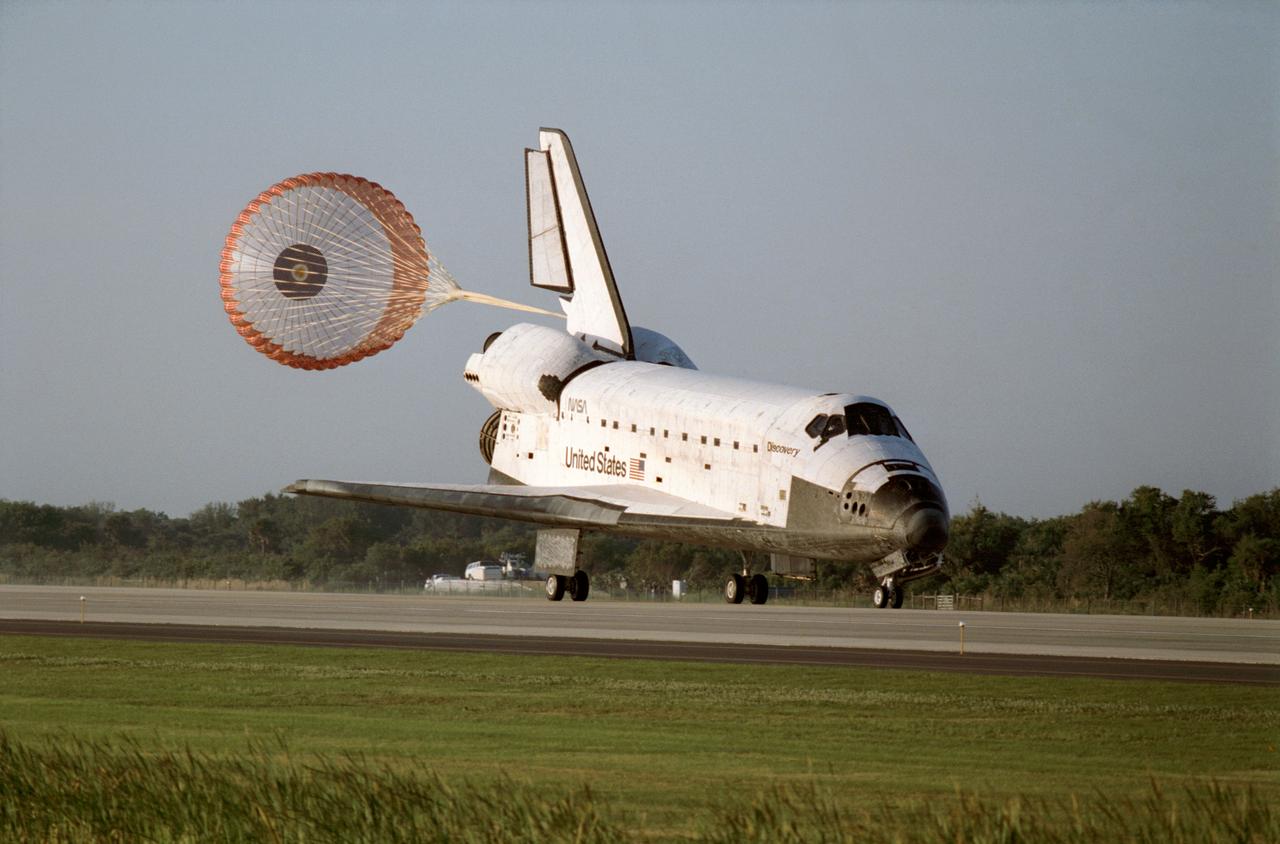
STS056-S-098 (17 April 1993) --- The drag chute is deployed following landing of the Space Shuttle Discovery on the Shuttle landing facility at the Kennedy Space Center to complete the STS-56\Atlas 2 mission. Touchdown occurred at 7:37 a.m. (EDT). Onboard the spacecraft were astronauts Kenneth D. Cameron, commander; Stephen S. Oswald, pilot; and C. Michael Foale, Ellen Ochoa and Kenneth D. Cockrell, mission specialists.
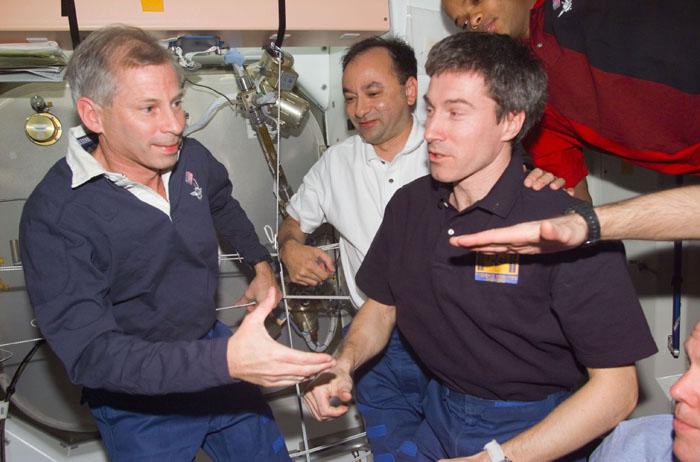
STS98-E-5295 (16 February 2001) --- Astronaut Kenneth D. Cockrell (left), STS-98 mission commander, participates in farewells with Expedition One crew members. Cosmonaut Sergei K. Krikalev (right foreground), Expedition One flight engineer, is one of three crew members who will stay behind for several weeks prior to return to Earth. Astronauts Mark L. Polansky, STS-98 pilot, and Robert L. Curbeam, mission specialist, are also pictured. The scene was recorded with a digital still camera.
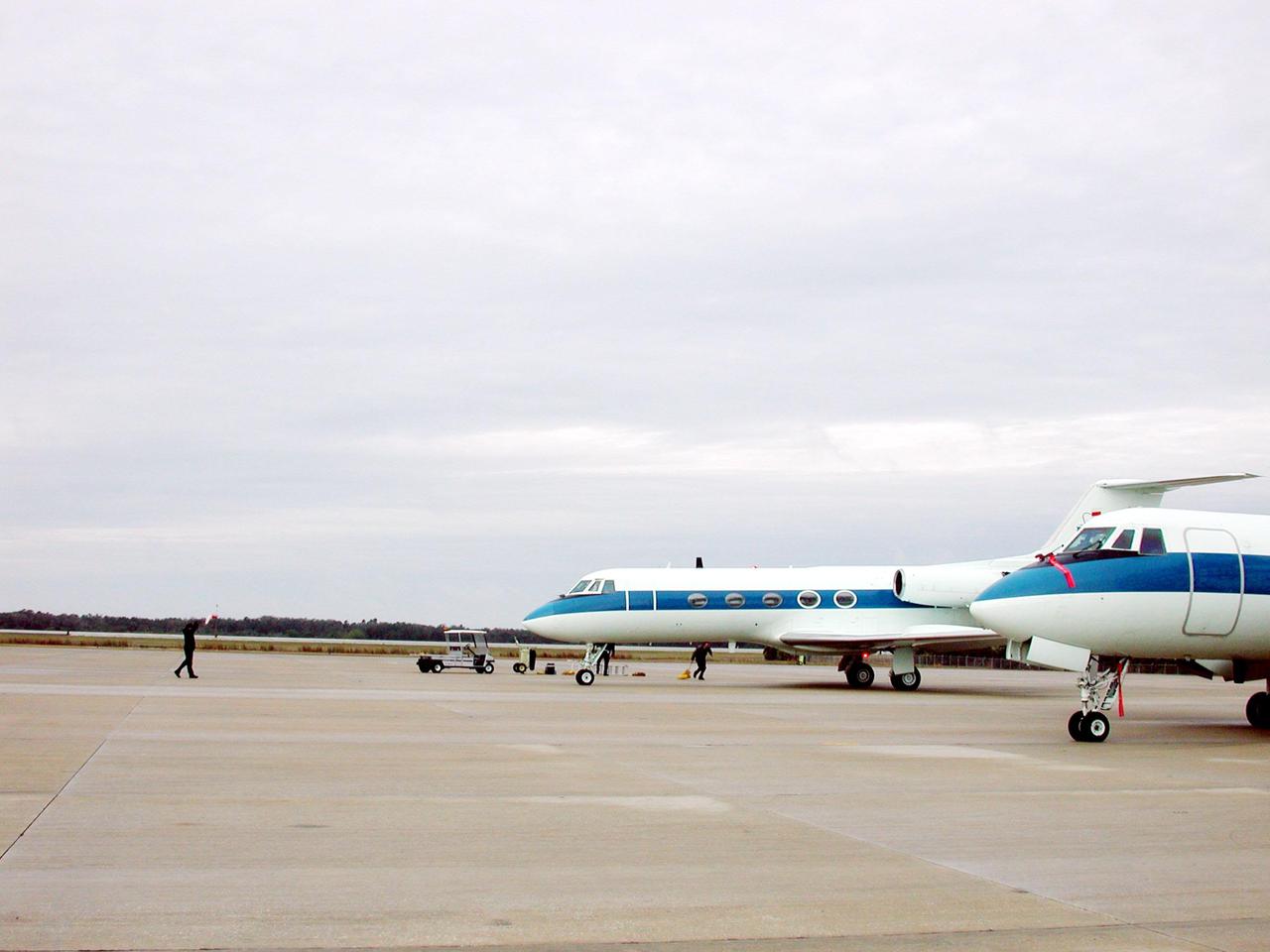
KENNEDY SPACE CENTER, FLA. -- A Shuttle Training Aircraft, piloted by STS-98 Commander Ken Cockrell, rolls to a stop in line next to another STA at the KSC Shuttle Landing Facility. The cockpit of the STA is outfitted like the Shuttle, which provides practice at the controls, especially for landing. The STS-98 crew recently arrived at KSC to prepare for their launch Feb. 7 to the International Space Station. The seventh construction flight to the Space Station, it will carry the U.S. Laboratory Destiny, a key module for space experiments
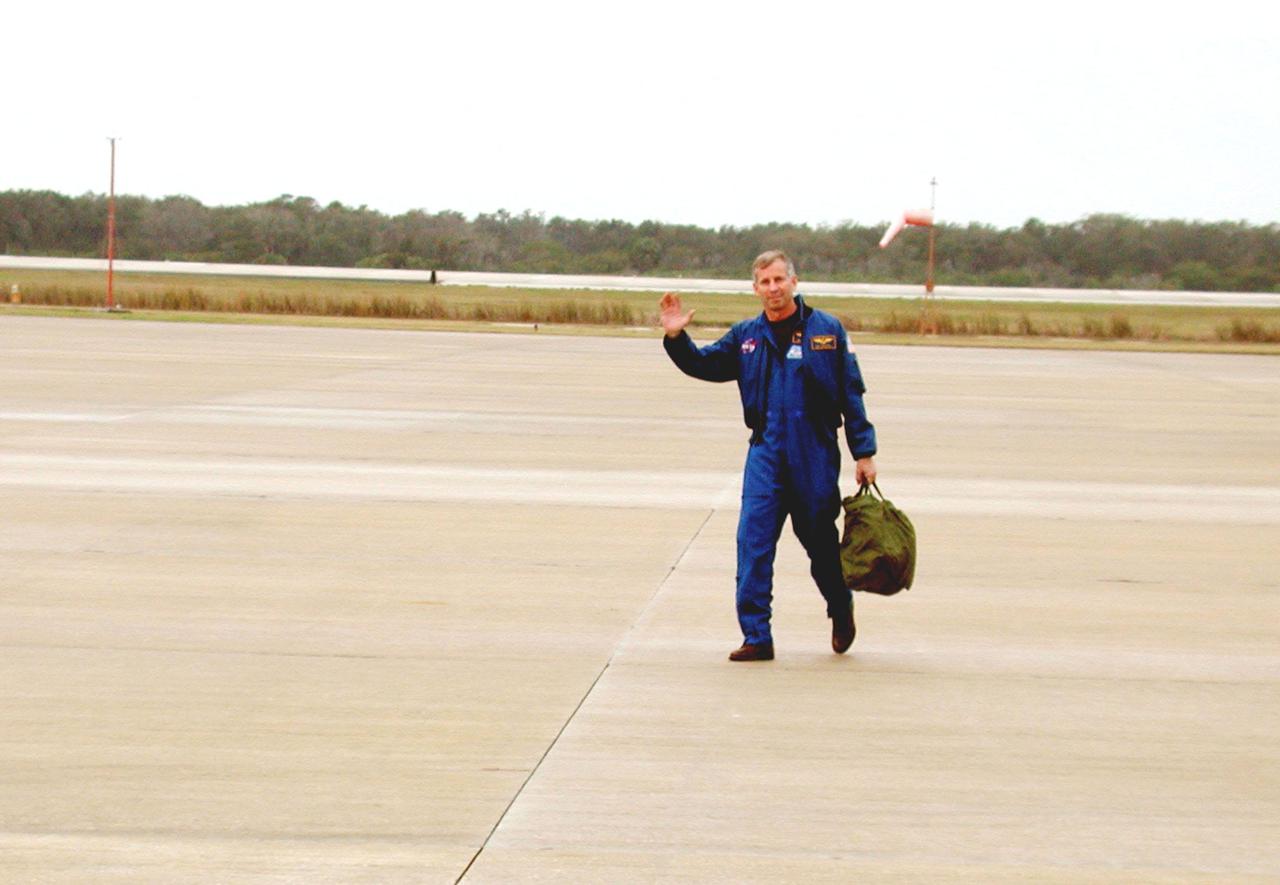
KENNEDY SPACE CENTER, FLA. -- STS-98 Commander Ken Cockrell waves as he crosses the parking apron of the Shuttle Landing Facility after a flight on the Shuttle Training Aircraft. The cockpit of the STA is outfitted like the Shuttle, which provides practice at the controls, especially for landing. The STS-98 crew recently arrived at KSC to prepare for their launch Feb. 7 to the International Space Station. The seventh construction flight to the Space Station, it will carry the U.S. Laboratory Destiny, a key module for space experiments
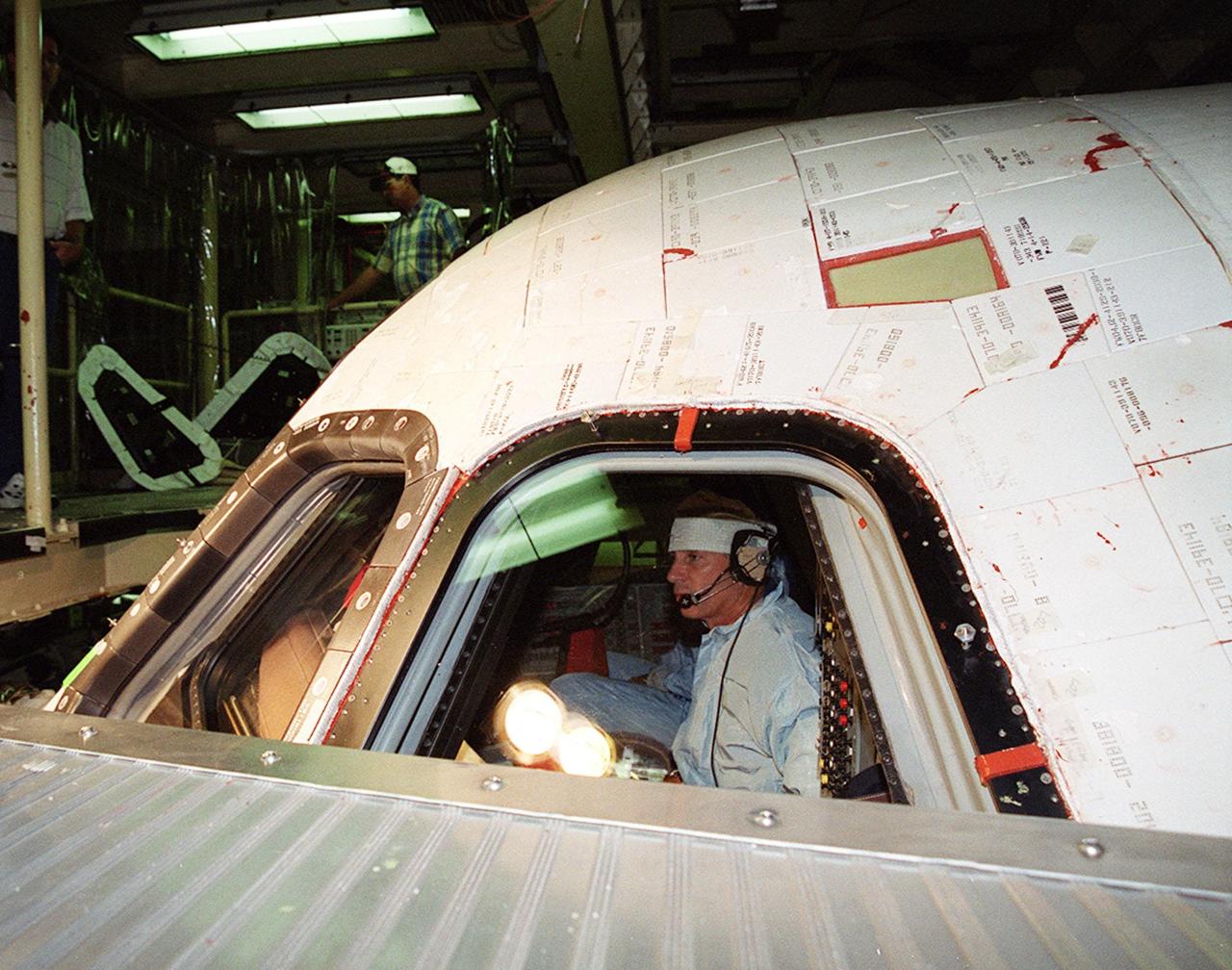
KENNEDY SPACE CENTER, FLA. -- In Orbiter Processing Facility bay 3, STS-98 Commander Ken Cockrell conducts window inspection, checking for leaks, in the cockpit of Atlantis. He and the rest of the crew are at KSC for Crew Equipment Interface Test activities. Launch on mission STS-98 is scheduled for Jan. 18, 2001. It will be transporting the U.S. Lab, Destiny, to the International Space Station with five system racks already installed inside of the module. After delivery of electronics in the lab, electrically powered attitude control for Control Moment Gyroscopes will be activated
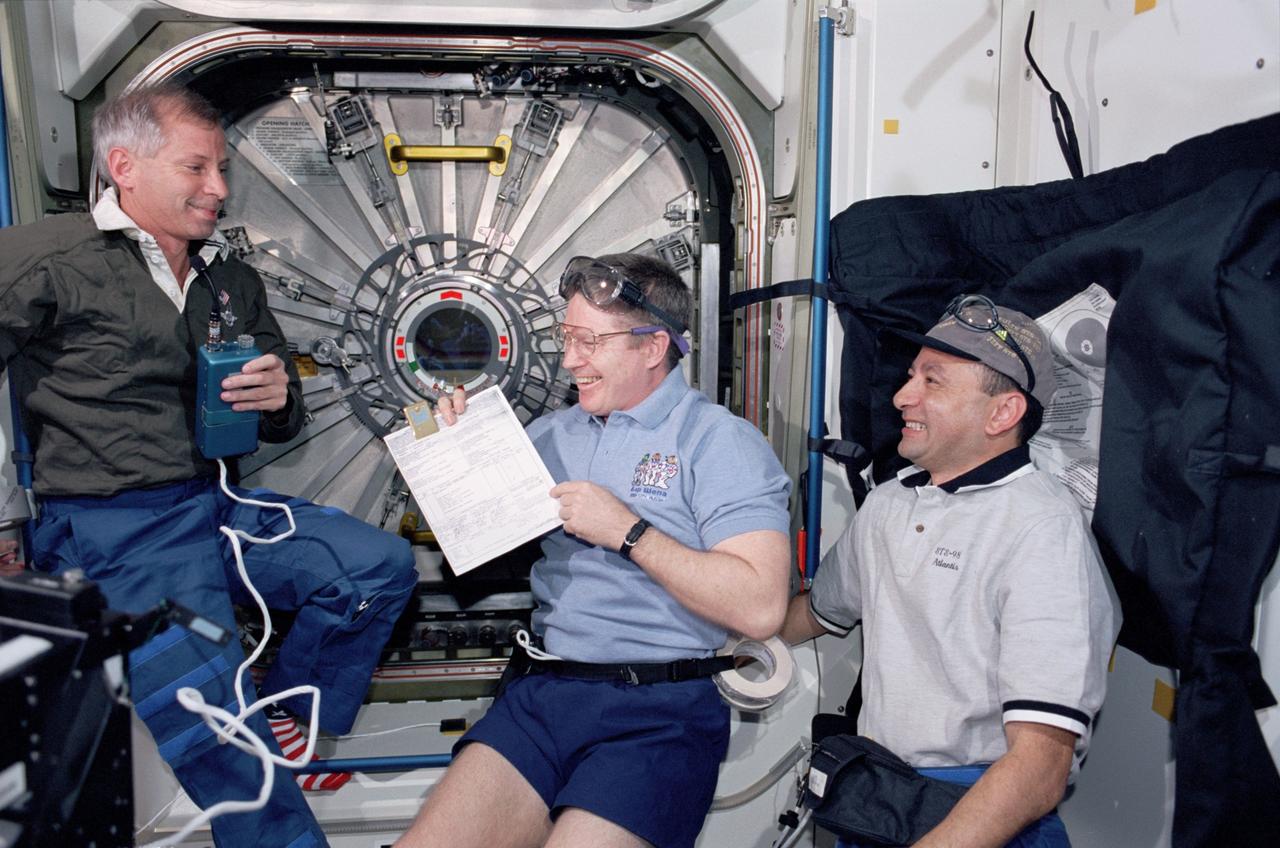
STS098-352-0019 (11 February 2001) --- Inside the Unity node, astronaut William M. (Bill) Shepherd (center), Expedition One commander, holds a document of receipt of the U.S. laboratory, called Destiny, as part of the International Space Station (ISS). Looking on are astronauts Kenneth D. Cockrell (left) and Mark L. Polansky, commander and pilot, respectively, for STS-98. The hatch to Destiny, not yet opened, is in the background.

STS080-701-004 (19 Nov.-7 Dec. 1996) --- The STS-80 crew used a pre-set 70mm camera onboard the space shuttle Columbia's middeck to record its traditional inflight crew portrait. Back row, left to right, astronauts Kenneth D. Cockrell, mission commander; Tamara E. Jernigan, mission specialist; and Kent V. Rominger, pilot. Front row, astronauts Thomas D. Jones (left) and Story Musgrave, both mission specialists.
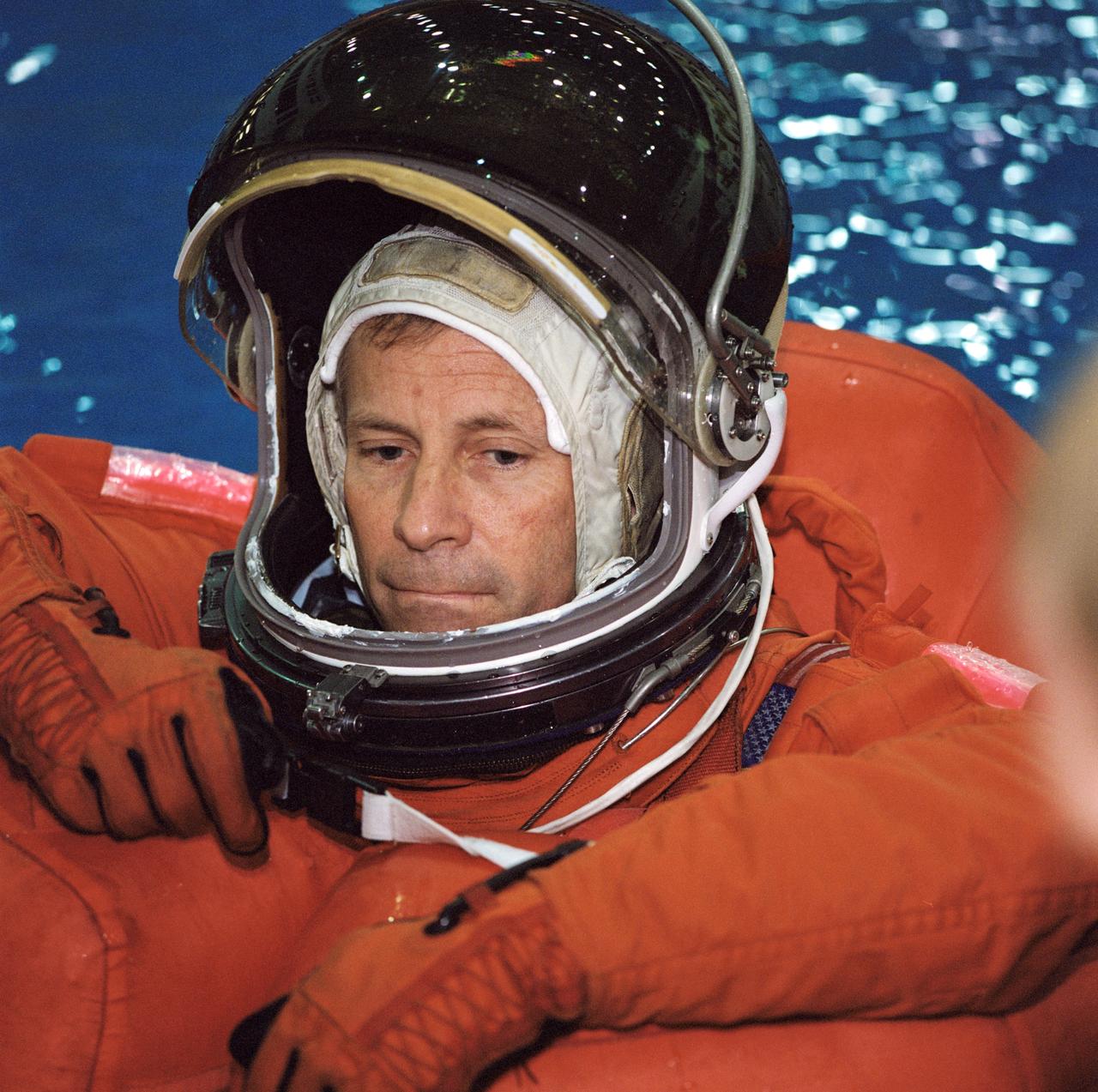
JSC2002-00403 (4 February 2002) --- Astronaut Kenneth D. Cockrell, STS-111 mission commander, attired in a training version of the shuttle launch and entry garment, floats in the deep pool during a training session at the Neutral Buoyancy Laboratory (NBL) near the Johnson Space Center (JSC). STS-111 will be the 14th shuttle mission to visit the International Space Station (ISS).
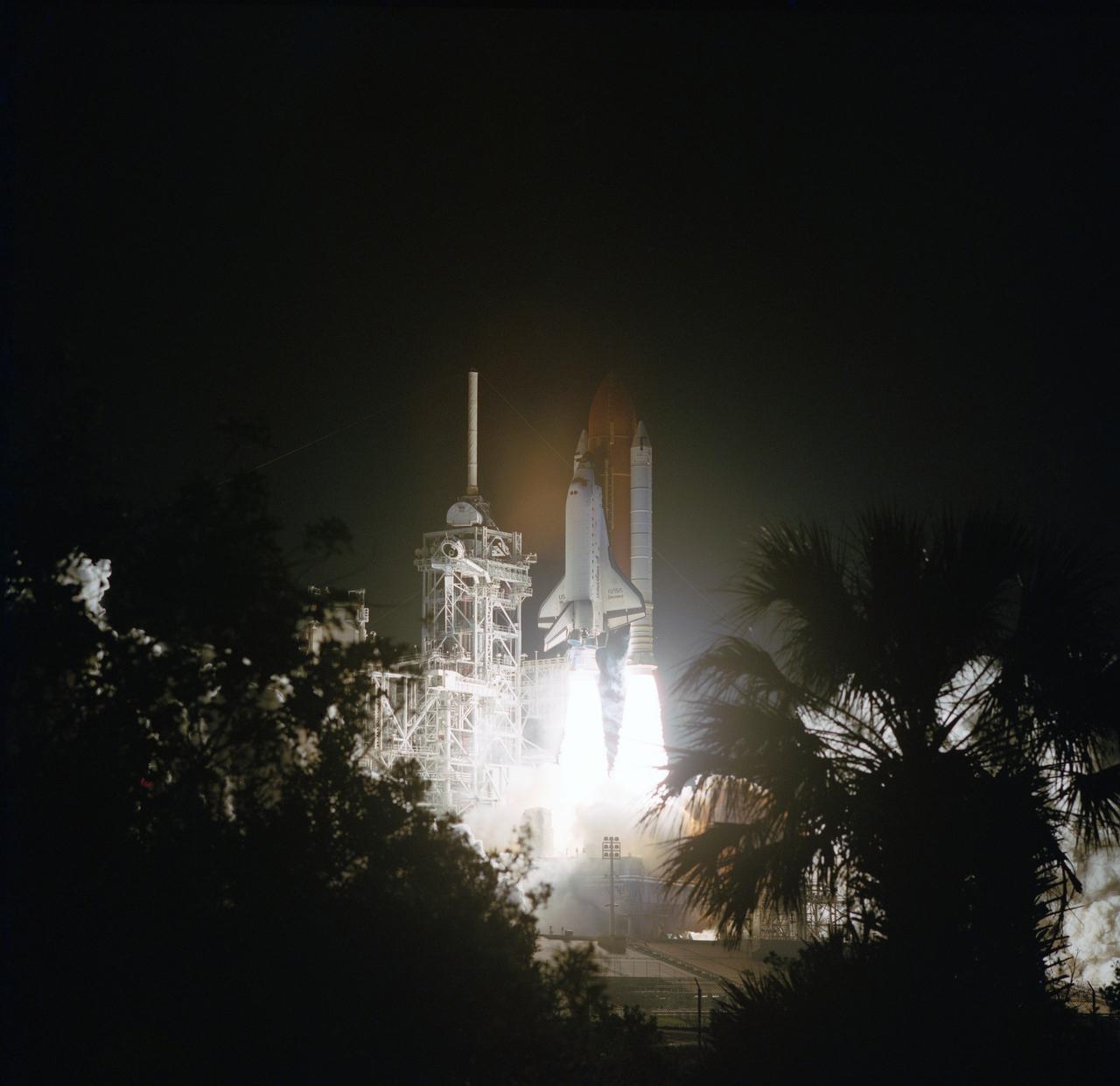
STS056-S-052 (8 April 1993) --- A nocturnal scene shows the Space Shuttle Discovery leaving the Launch Pad to begin the Atlas-2 mission in Earth-orbit. Launch occurred at 1:29 a.m. (EDT), April 8. Onboard were astronauts Kenneth D. Cameron, Stephen S. Oswald, C. Michael Foale, Kenneth D. Cockrell and Ellen Ochoa.
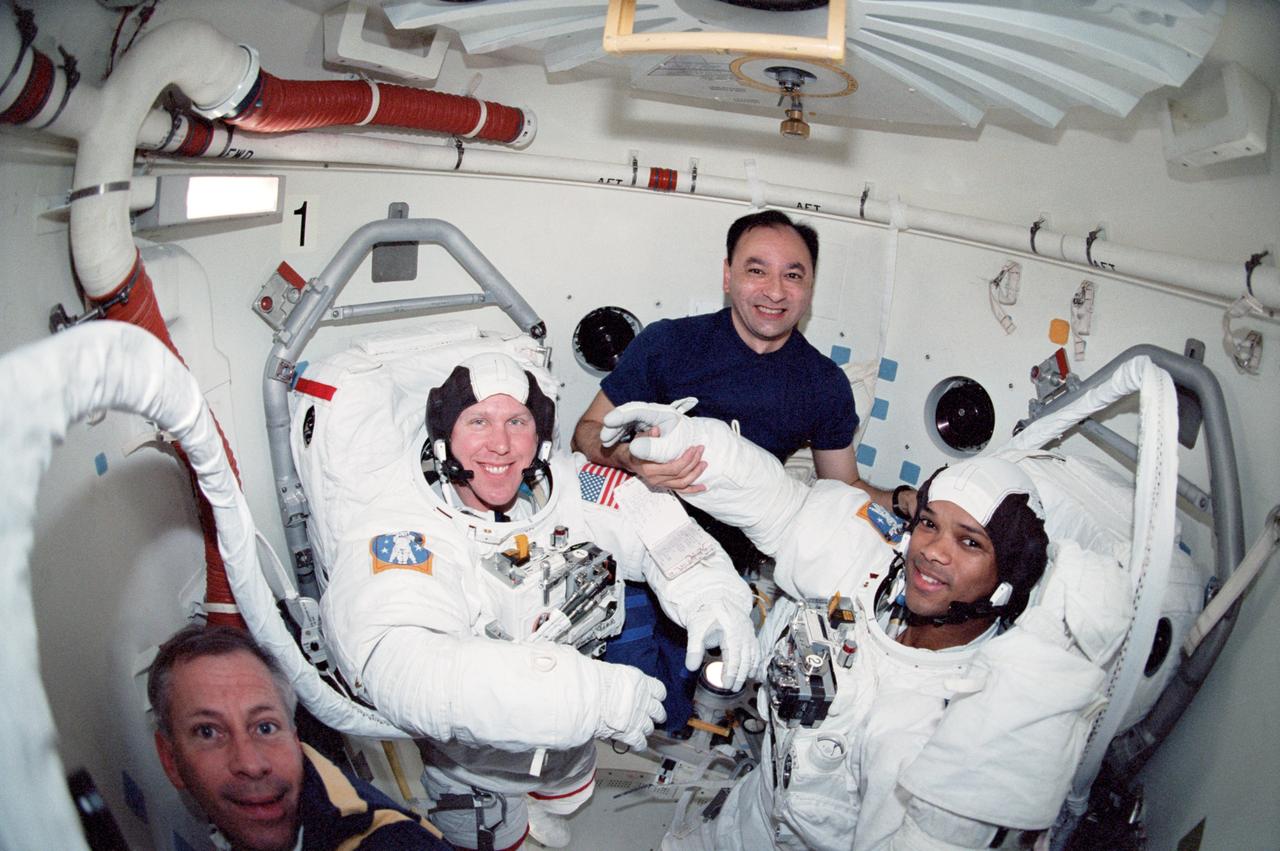
STS098-349-004 (7-20 February 2001) --- Astronauts Thomas D. Jones (second left) and Robert L. Curbeam, both mission specialists, prepare for one of the three STS-98 sessions of extravehicular activity (EVA). Astronauts Kenneth D. Cockrell (lower left), mission commander, and Mark L. Polansky, mission specialist, assist Jones and Curbeam as they don their Extravehicular Mobility Unit (EMU) space suits in the airlock of the Space Shuttle Atlantis.
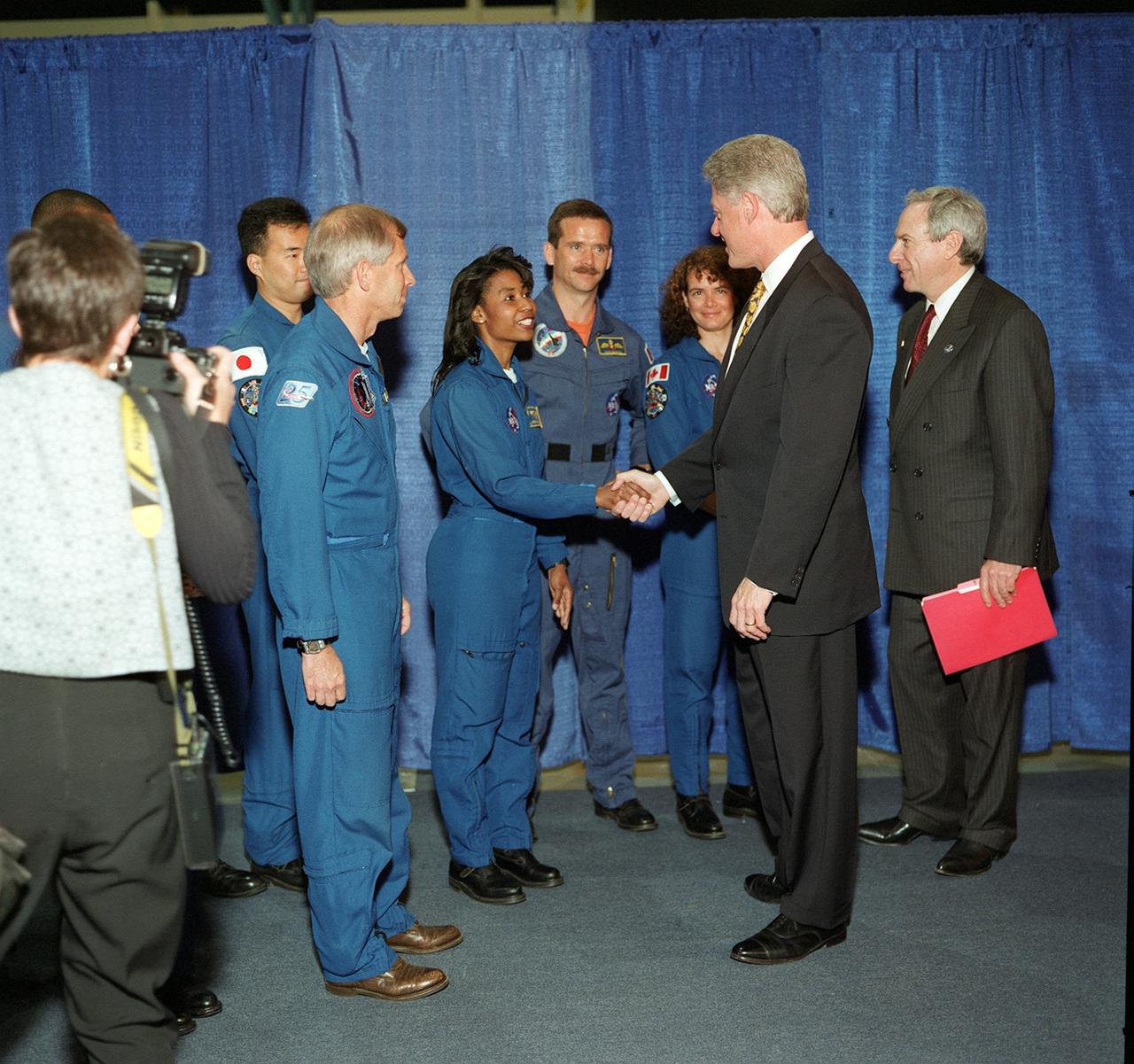
S98-05014 (14 April 1998) --- President Bill Clinton greets several NASA astronauts upon his arrival at the systems integration facility at the Johnson Space Center (JSC). The astronauts, from the left, are Soichi Noguchi, Kenneth D. Cockrell, Stephanie Wilson, Chris Hadfield and Julie Payette. Payette and Hadfield are with the Canadian Space Agency (CSA)and Noguchi is with the National Space Development Agency (NSADA) of Japan. Looking on is NASA Administrator Daniel Goldin. Photo Credit: NASA or the National Aeronautics and Space Administration.
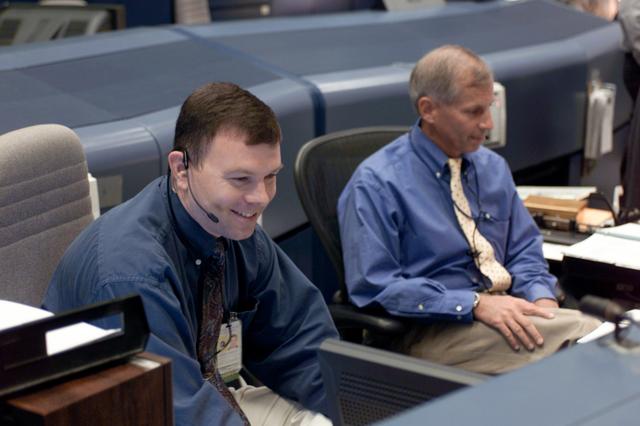
JSC2001-E-25513 (22 August 2001) --- Astronauts James M. Kelly (left) and Kenneth D. Cockrell, both spacecraft communicators (CAPCOM), monitor data at their consoles in the shuttle flight control room (WFCR) in Houston’s Mission Control Center (MCC). At the time this photo was taken the Space Shuttle Discovery was about to land at Kennedy Space Center, Florida, to mark the end of a successful mission to the International Space Station (ISS).
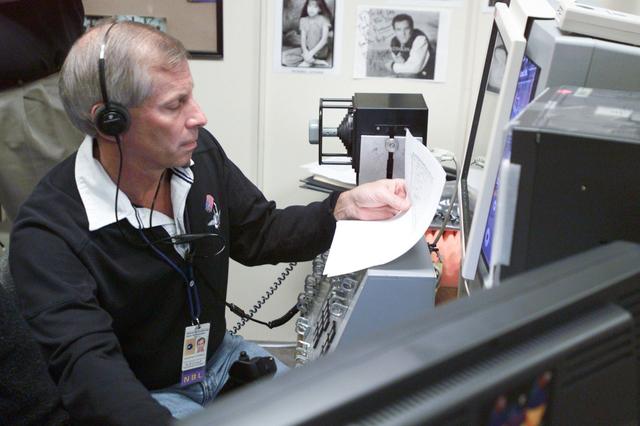
JSC2001-E-39087 (18 October 2001) --- Astronaut Kenneth D. Cockrell, STS-111 mission commander, uses the virtual reality lab at the Johnson Space Center (JSC) to train for his duties aboard the Space Shuttle Endeavour. This type of computer interface paired with virtual reality training hardware and software helps the entire team for dealing with ISS elements.
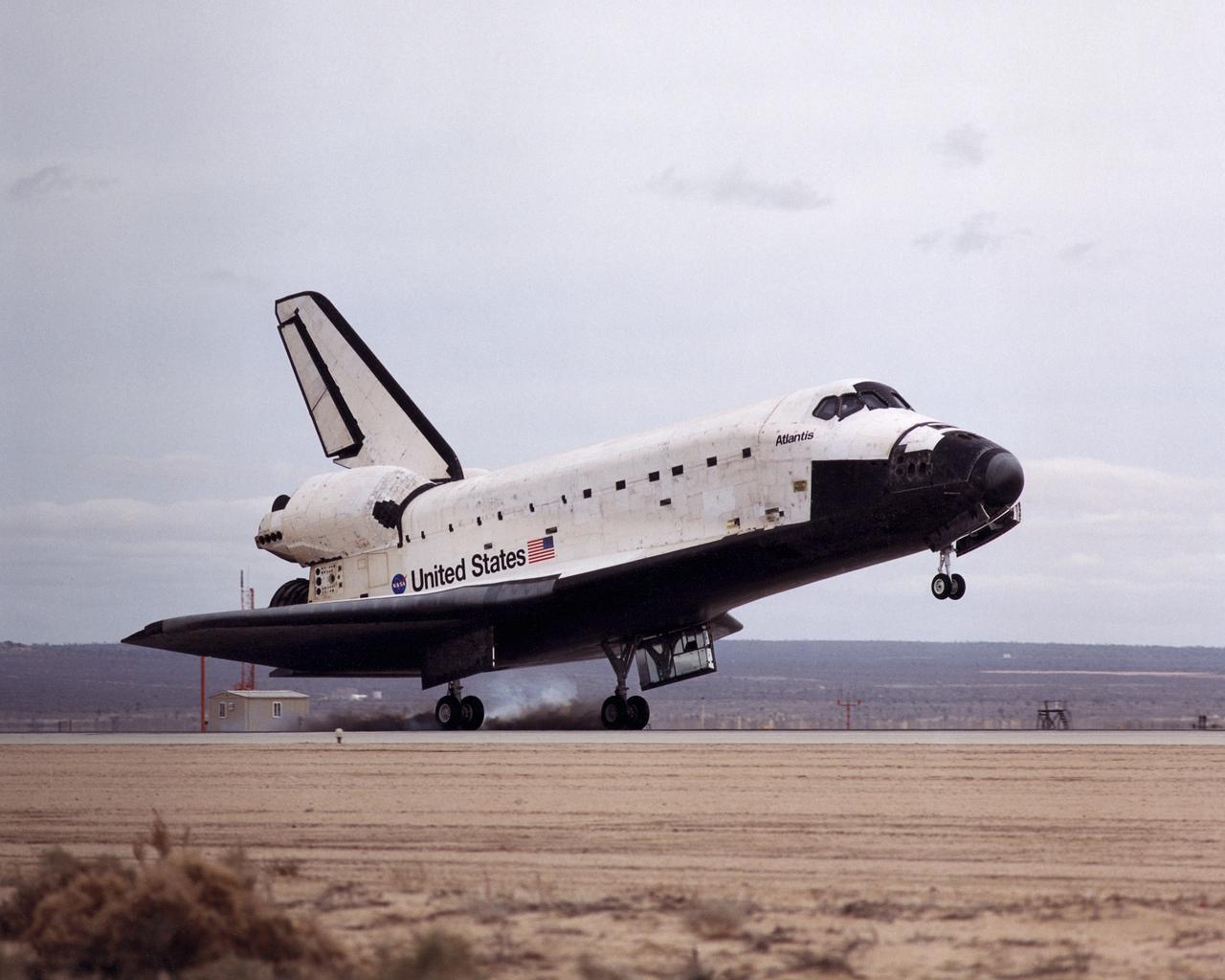
STS098-S-015 (20 Feb. 2001) --- The main landing gear on the space shuttle Atlantis touches down to mark mission completion at Edwards Air Force Base in the Mojave Desert of California.Onboard were astronauts Kenneth Cockrell, Mark Polansky, Robert Curbeam, Thomas Jones and Marsha Ivins. Atlantis touched down on Edward?s concrete runway at 2:33 p.m. (CST), Feb. 20, for a mission elapsed time of 12 days, 21 hours and 20 minutes. Photo credit: NASA
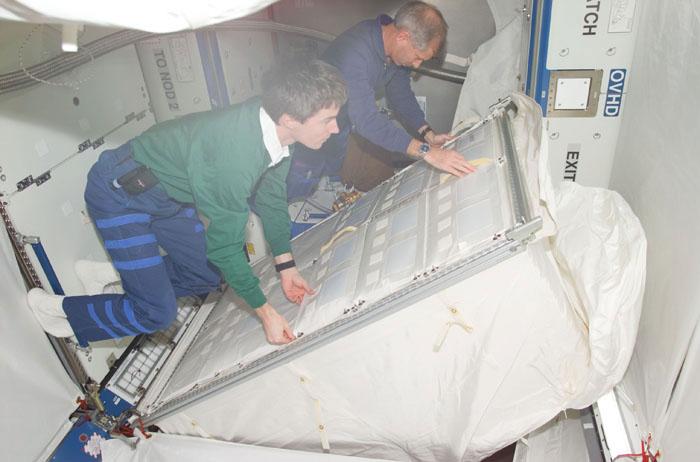
STS98-E-5250 (15 February 2001) --- Astronaut Kenneth D. Cockrell (left), STS-98 mission commander, teams with cosmonaut Sergei K. Krikalev, Expedition One flight engineer in setting up hardware aboard the newly opened Destiny laboratory onboard the International Space Station (ISS). This photo was recorded with a digital still camera.
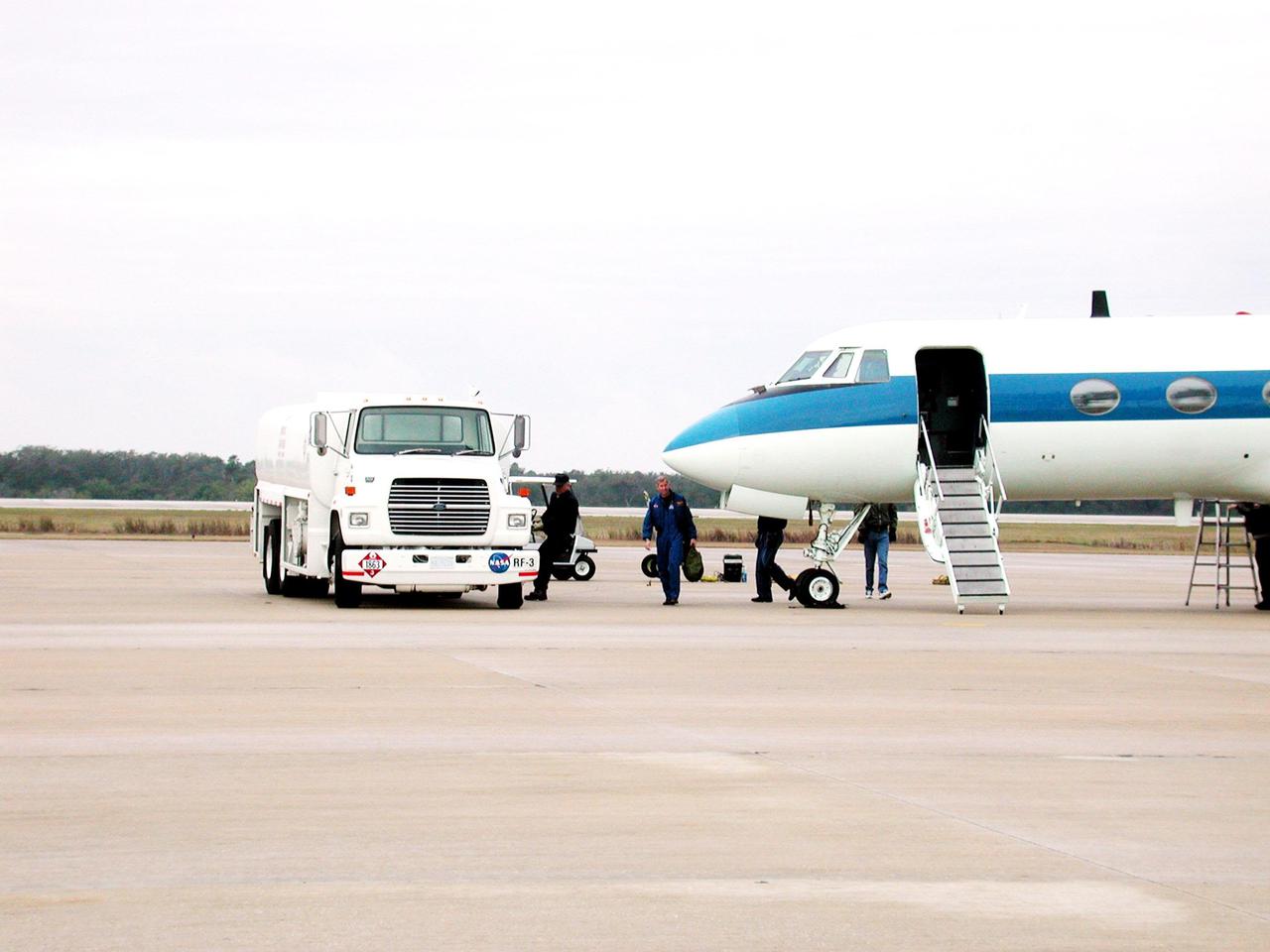
KENNEDY SPACE CENTER, FLA. -- STS-98 Commander Ken Cockrell, near the nose of the Shuttle Training Aircraft he just landed, makes his way across the parking apron of the Shuttle Landing Facility. The cockpit of the STA is outfitted like the Shuttle, which provides practice at the controls, especially for landing. The STS-98 crew recently arrived at KSC to prepare for their launch Feb. 7 to the International Space Station. The seventh construction flight to the Space Station, it will carry the U.S. Laboratory Destiny, a key module for space experiments
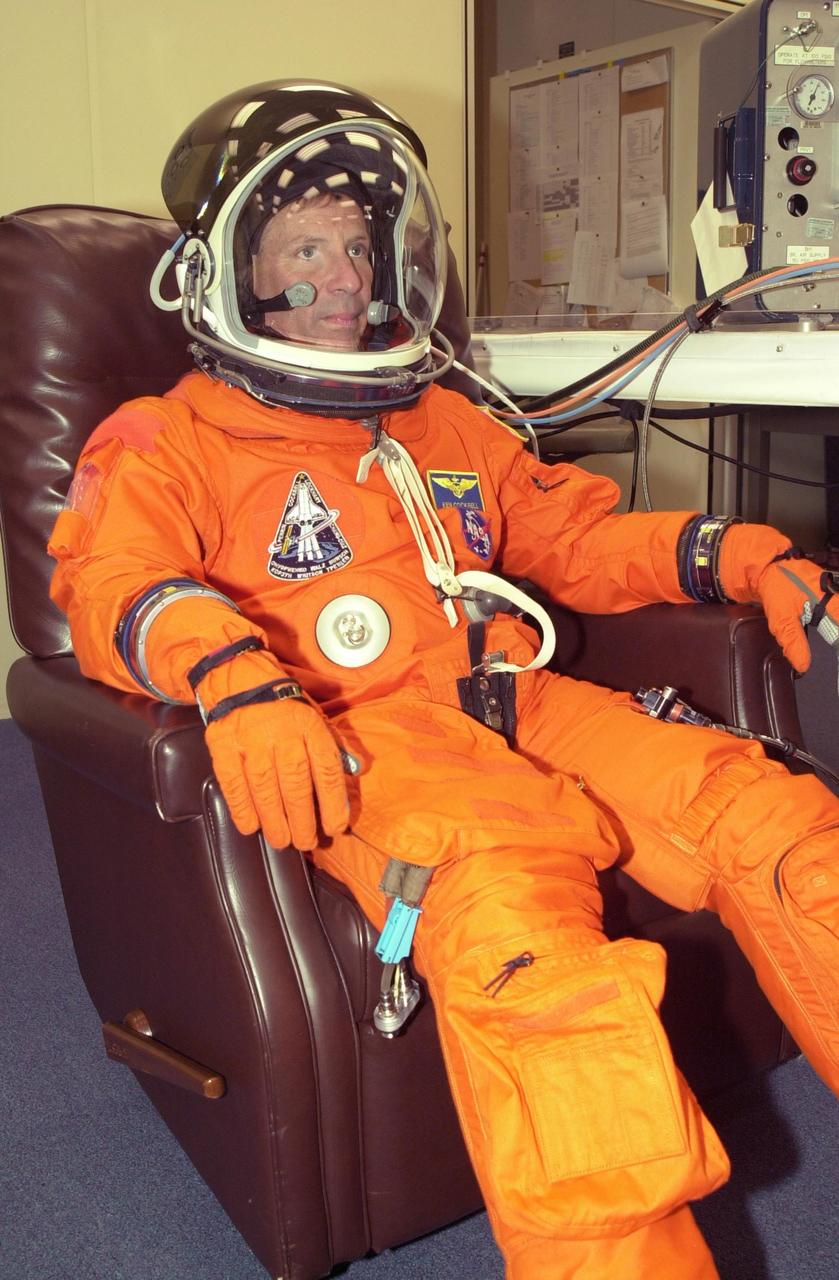
KENNEDY SPACE CENTER, FLA. - STS-111 Commander Kenneth Cockrell has suited up in preparation for a simulated launch countdown at the pad. The simulation is part of STS-111 Terminal Countdown Demonstration Test activities for the crew and Expedition 5. The payload on the mission to the International Space Station includes the Mobile Base System, an Orbital Replacement Unit and Multi-Purpose Logistics Module Leonardo. The Expedition 5 crew is traveling on Endeavour to replace the Expedition 4 crew on the Station. Launch of Endeavour is scheduled for May 30, 2002
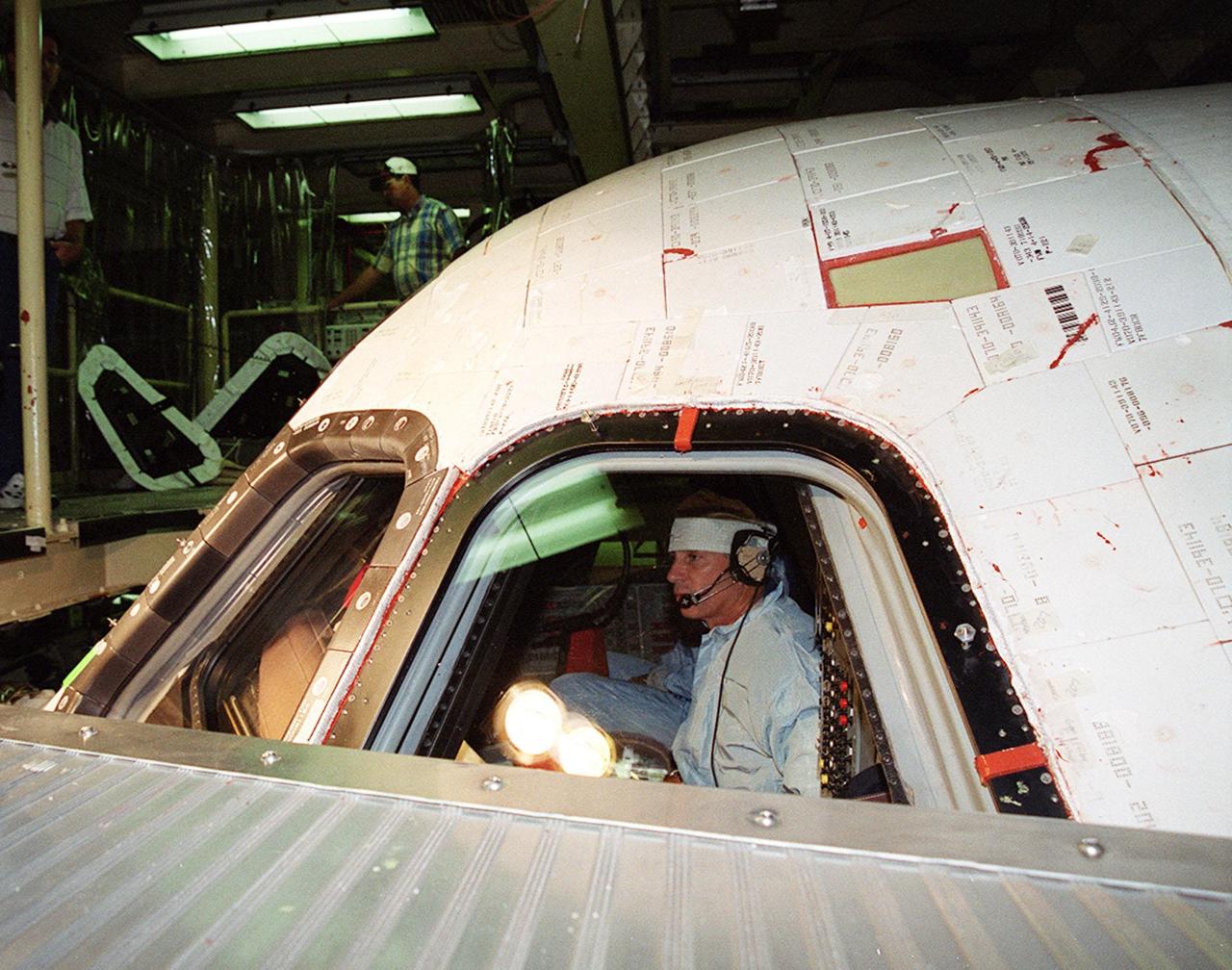
KENNEDY SPACE CENTER, FLA. -- In Orbiter Processing Facility bay 3, STS-98 Commander Ken Cockrell conducts window inspection, checking for leaks, in the cockpit of Atlantis. He and the rest of the crew are at KSC for Crew Equipment Interface Test activities. Launch on mission STS-98 is scheduled for Jan. 18, 2001. It will be transporting the U.S. Lab, Destiny, to the International Space Station with five system racks already installed inside of the module. After delivery of electronics in the lab, electrically powered attitude control for Control Moment Gyroscopes will be activated
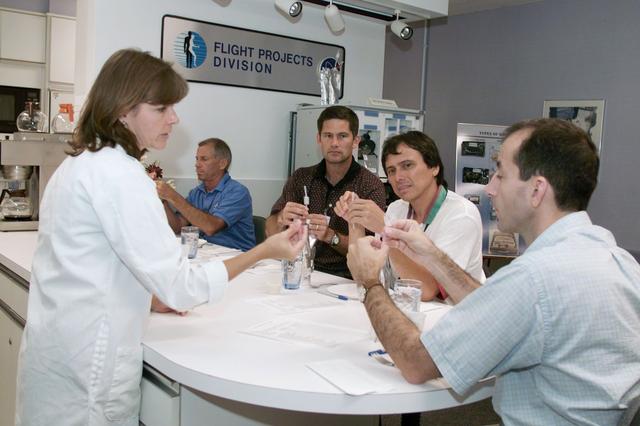
JSC2001-E-25712 (27 August 2001) --- The STS-111 crewmembers are briefed by dietitian Gloria Mongan with Lockheed Martin Space Operations during food testing in the Flight Projects Division Laboratory at the Johnson Space Center (JSC). From back to front are astronauts Kenneth D. Cockrell and Paul S. Lockhart, mission commander and pilot, respectively, and Franklin R. Chang-Diaz and Philippe Perrin, both mission specialists. Perrin represents CNES, the French Space Agency.
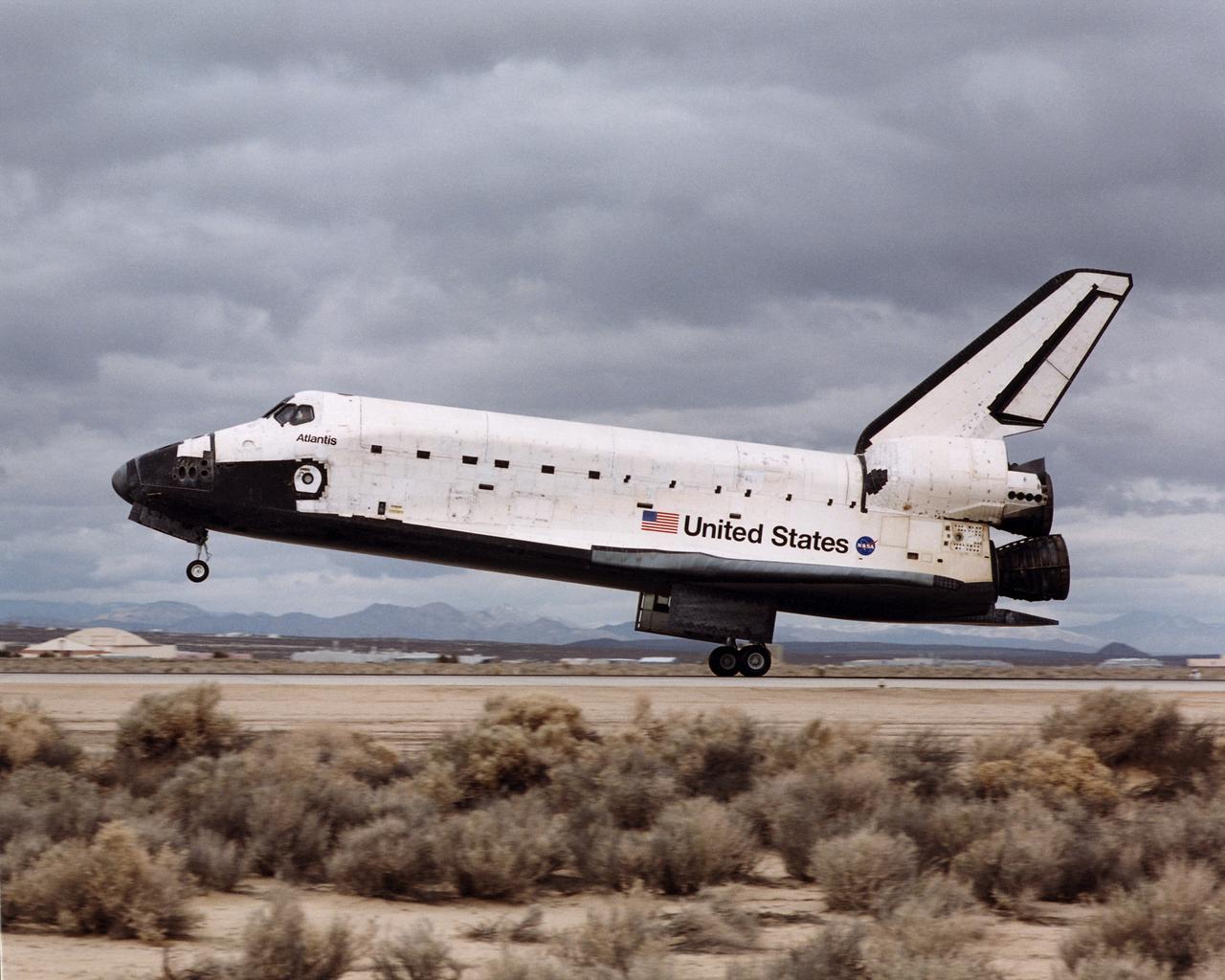
STS098-S-016 (20 Feb. 2001) --- The main landing gear on the space shuttle Atlantis touches down to mark mission completion at Edwards Air Force Base in the Mojave Desert of California.Onboard were astronauts Kenneth Cockrell, Mark Polansky, Robert Curbeam, Thomas Jones and Marsha Ivins. Atlantis touched down on Edward?s concrete runway at 2:33 p.m. (CST), Feb. 20, for a mission elapsed time of 12 days, 21 hours and 20 minutes. Photo credit: NASA
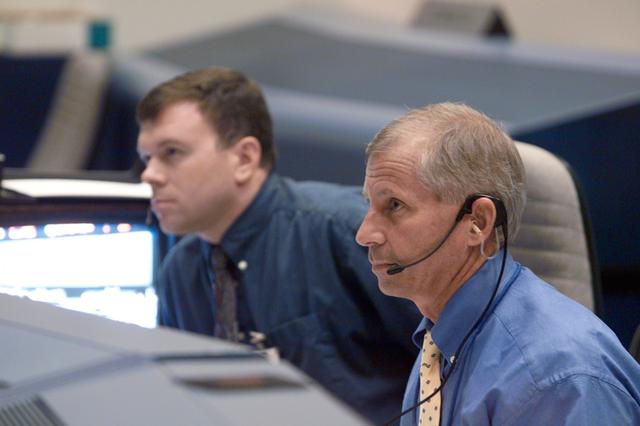
JSC2001-E-25519 (22 August 2001) --- Astronauts James M. Kelly and Kenneth D. Cockrell, both STS-105 spacecraft communicators (CAPCOM), watch the large screens from their consoles in the shuttle flight control room (WFCR) in Houston’s Mission Control Center (MCC). At the time this photo was taken the Space Shuttle Discovery was about to land at Kennedy Space Center, Florida, to mark the end of a successful mission to the International Space Station (ISS).
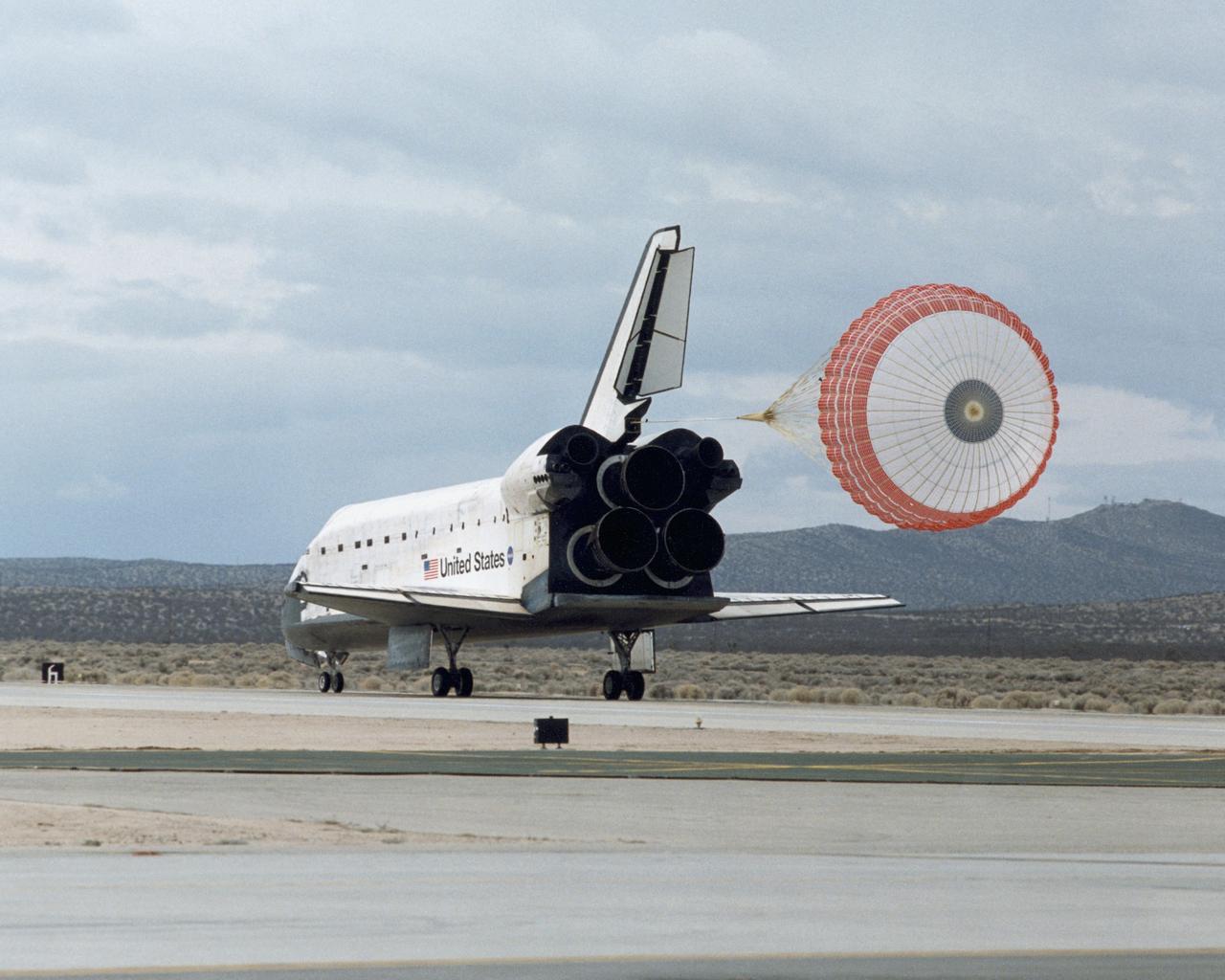
STS098-S-017 (20 Feb. 2001) --- A drag chute slows down the space shuttle Atlantis following its touchdown to mark mission completion at Edwards Air Force Base in the Mojave Desert of California. Onboard were astronauts Kenneth Cockrell, Mark Polansky, Robert Curbeam, Thomas Jones and Marsha Ivins. Atlantis touched down on Edward?s concrete runway at 2:33 p.m. (CST), Feb. 20, for a mission elapsed time of 12 days, 21 hours and 20 minutes. Photo credit: NASA
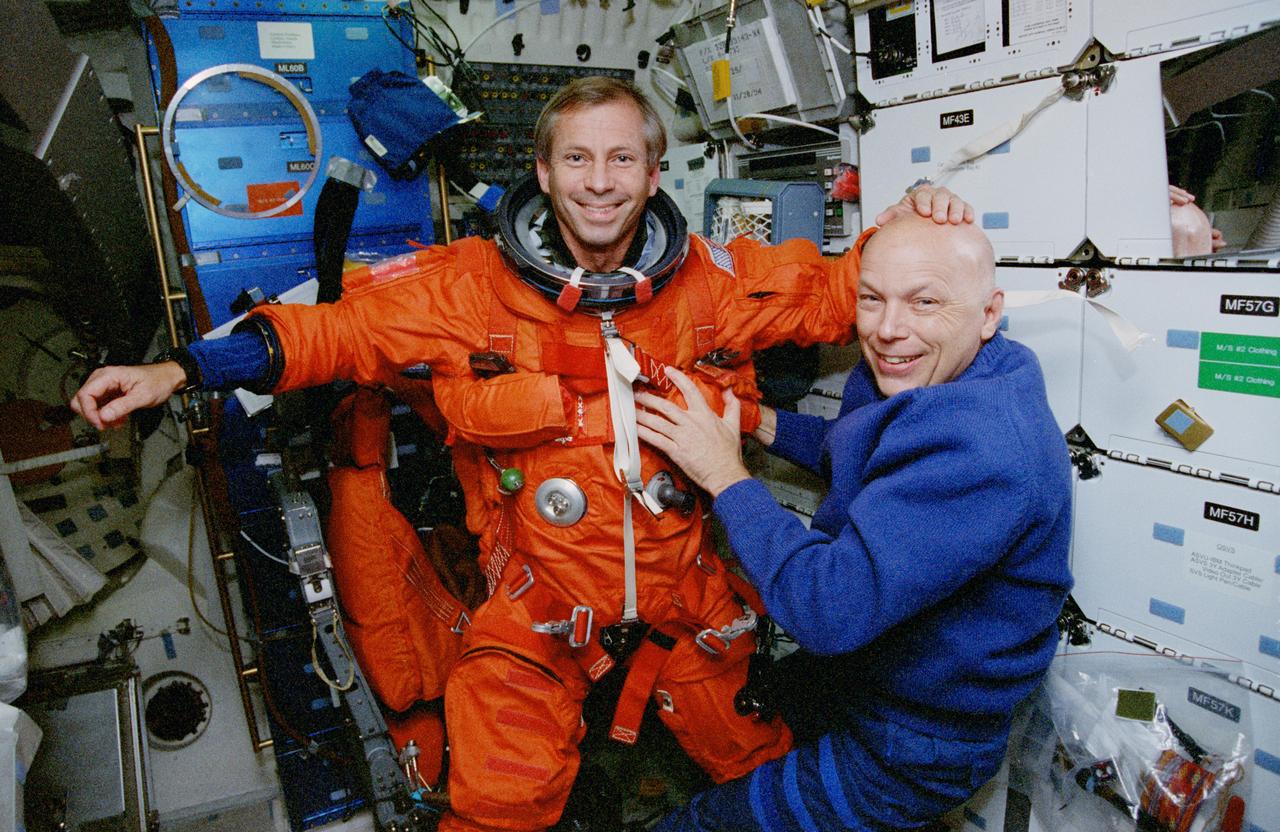
STS080-375-029 (6 Dec. 1996) --- On the middeck of the Earth-orbiting space shuttle Columbia, astronaut Story Musgrave helps with the final touches of suit donning for astronaut Kenneth D. Cockrell, STS-80 mission commander. The orange suit is a partial pressure launch and entry garment. The crew, initially waved off from its scheduled landing, eventually brought the Columbia home on Dec. 7, 1996.
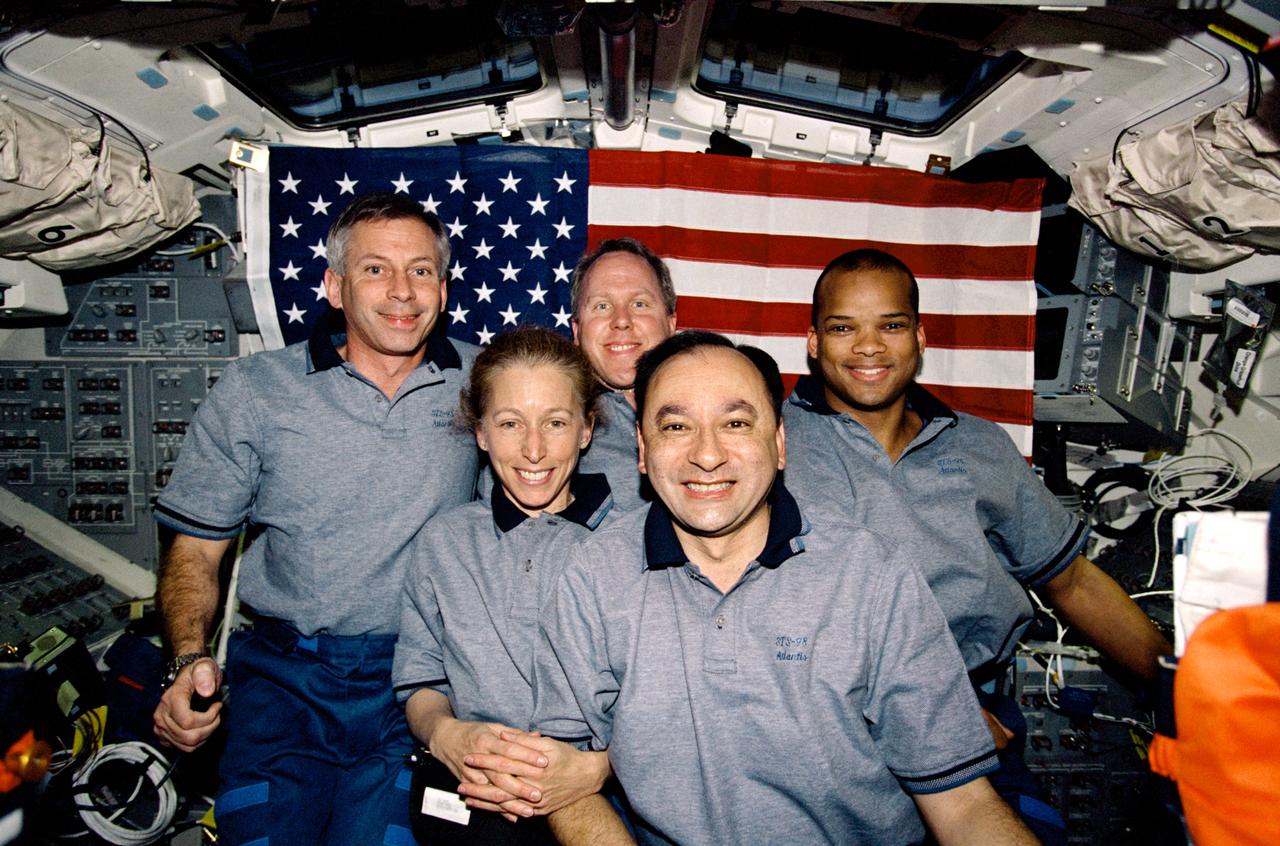
STS098-365-0034 (7-20 February 2001) --- The crew of the STS-98 mission poses for the traditional inflight portrait on the flight deck of the Space Shuttle Atlantis. From left are astronauts Kenneth D. Cockrell, mission commander; Marsha S. Ivins, mission specialist; Thomas D. Jones, mission specialist; Mark L. Polansky, pilot; and Robert L. Curbeam, mission specialist.
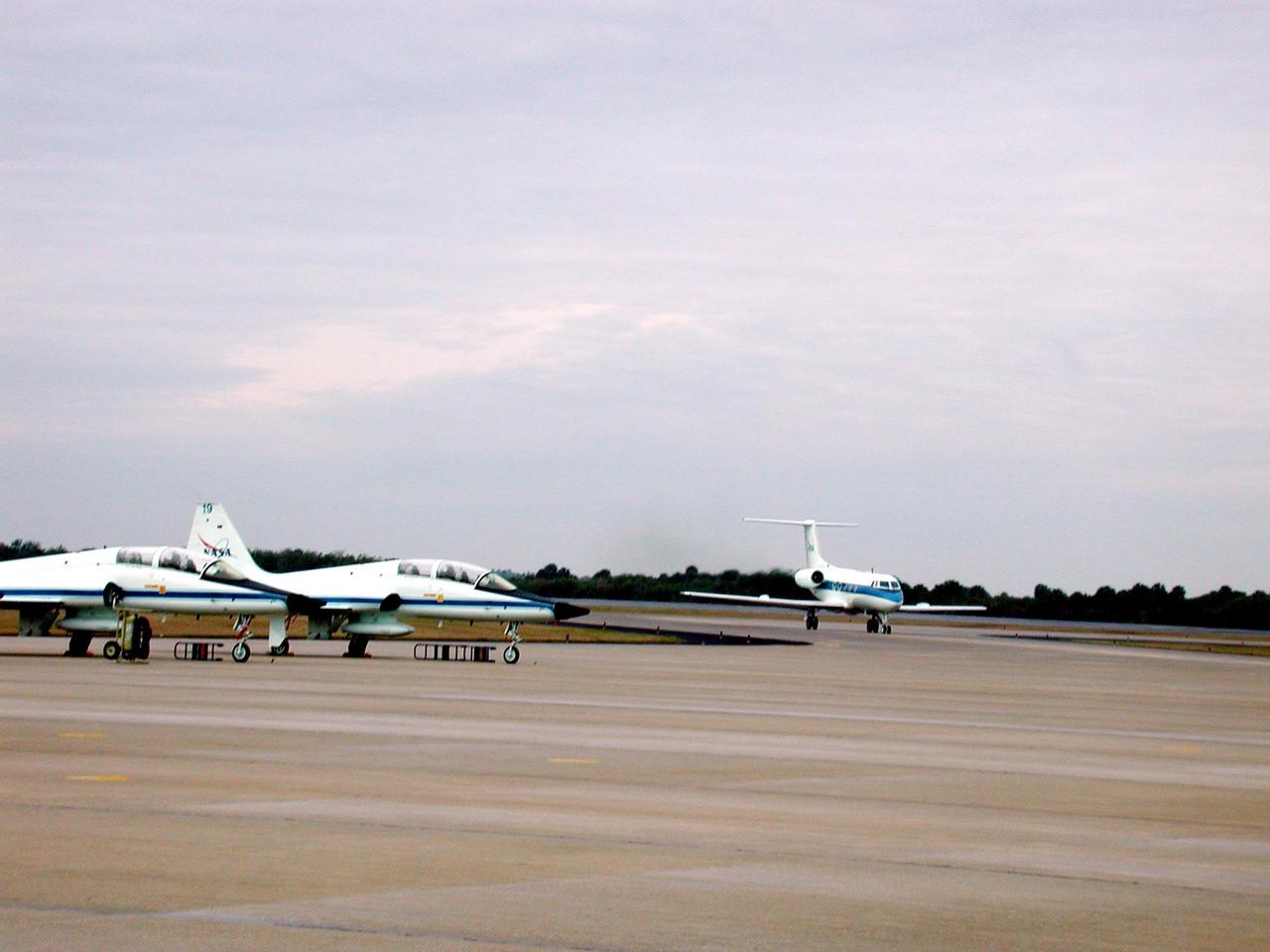
KENNEDY SPACE CENTER, FLA. -- A Shuttle Training Aircraft, piloted by STS-98 Commander Ken Cockrell, lands at the KSC Shuttle Landing Facility. The cockpit of the plane is outfitted like the Shuttle, which provides practice at the controls, especially for landing. The STS-98 crew recently arrived at KSC to prepare for their launch Feb. 7 to the International Space Station. The seventh construction flight to the Space Station, it will carry the U.S. Laboratory Destiny, a key module for space experiments
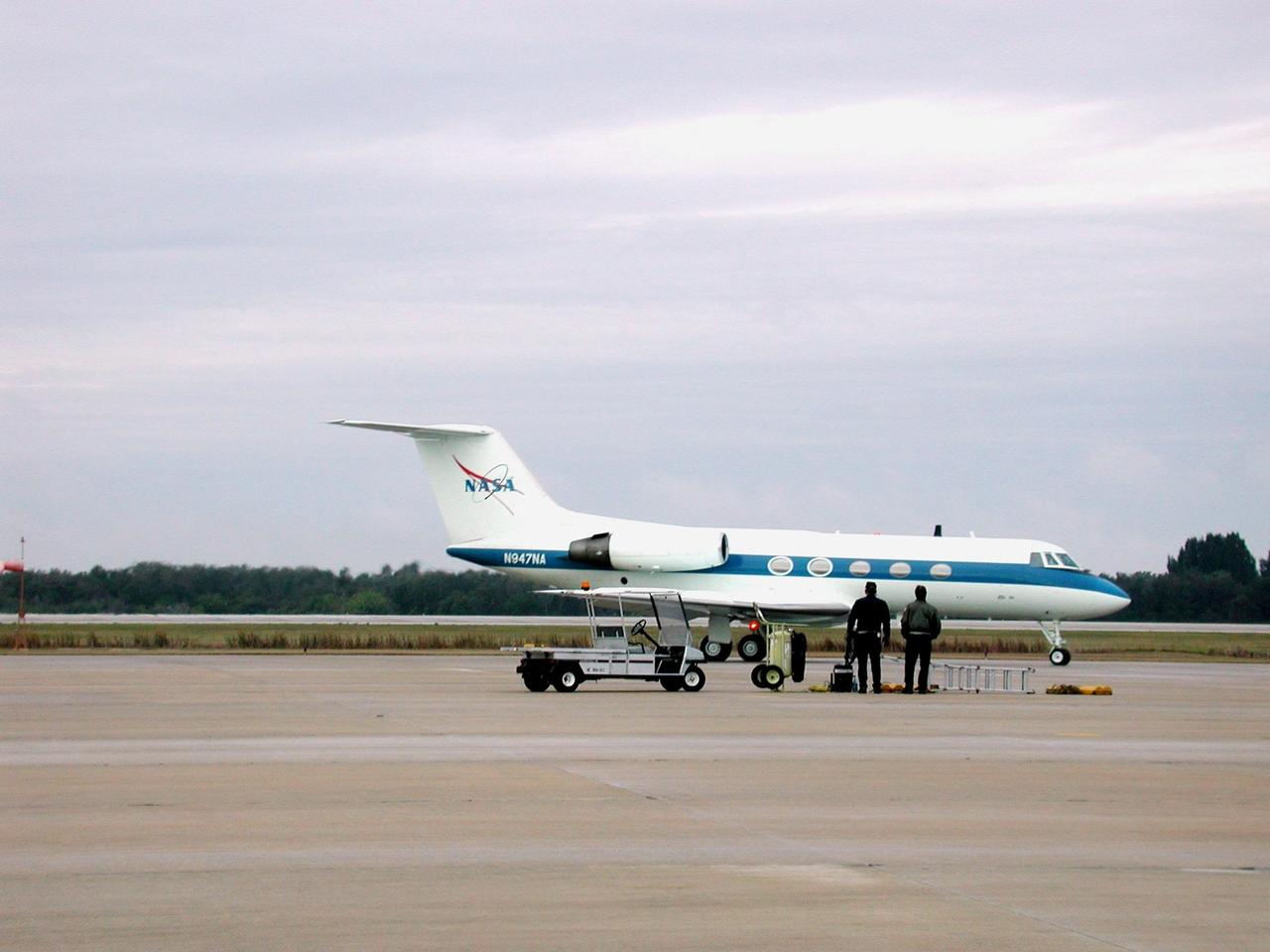
KENNEDY SPACE CENTER, FLA. -- A Shuttle Training Aircraft, piloted by STS-98 Commander Ken Cockrell, taxis into line at the KSC Shuttle Landing Facility. The cockpit of the plane is outfitted like the Shuttle, which provides practice at the controls, especially for landing. The STS-98 crew recently arrived at KSC to prepare for their launch Feb. 7 to the International Space Station. The seventh construction flight to the Space Station, it will carry the U.S. Laboratory Destiny, a key module for space experiments
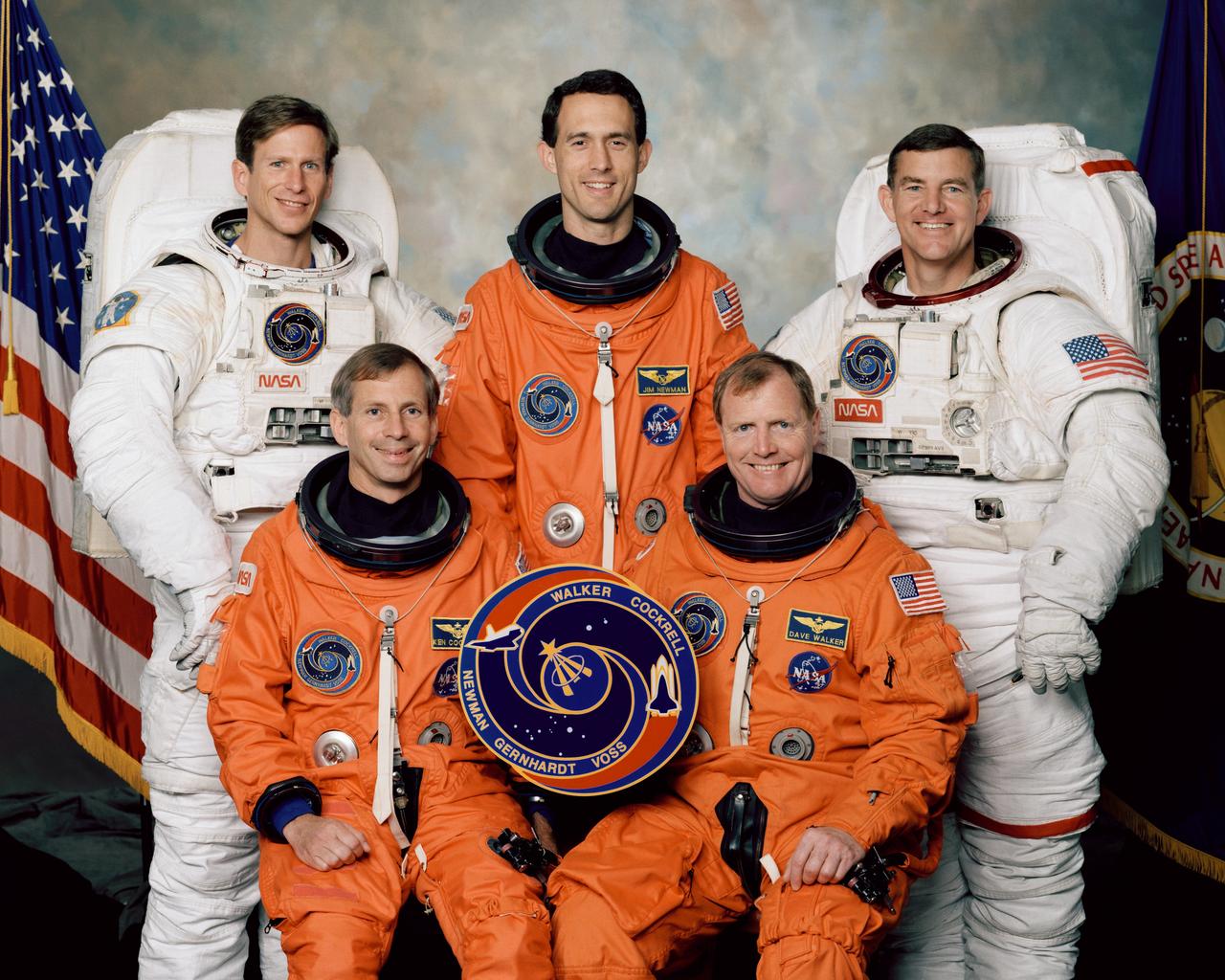
STS069-S-002 (June 1995) --- These five NASA astronauts have been named as crewmembers for the STS-69 mission, scheduled onboard the Space Shuttle Endeavour in late July of 1995. David M. Walker (right front) is mission commander; with Kenneth D. Cockrell (left front) scheduled to serve as pilot. On the back row are (left to right) Michael L. Gernhardt and James H. Newman, both mission specialists; and James S. Voss, payload commander.
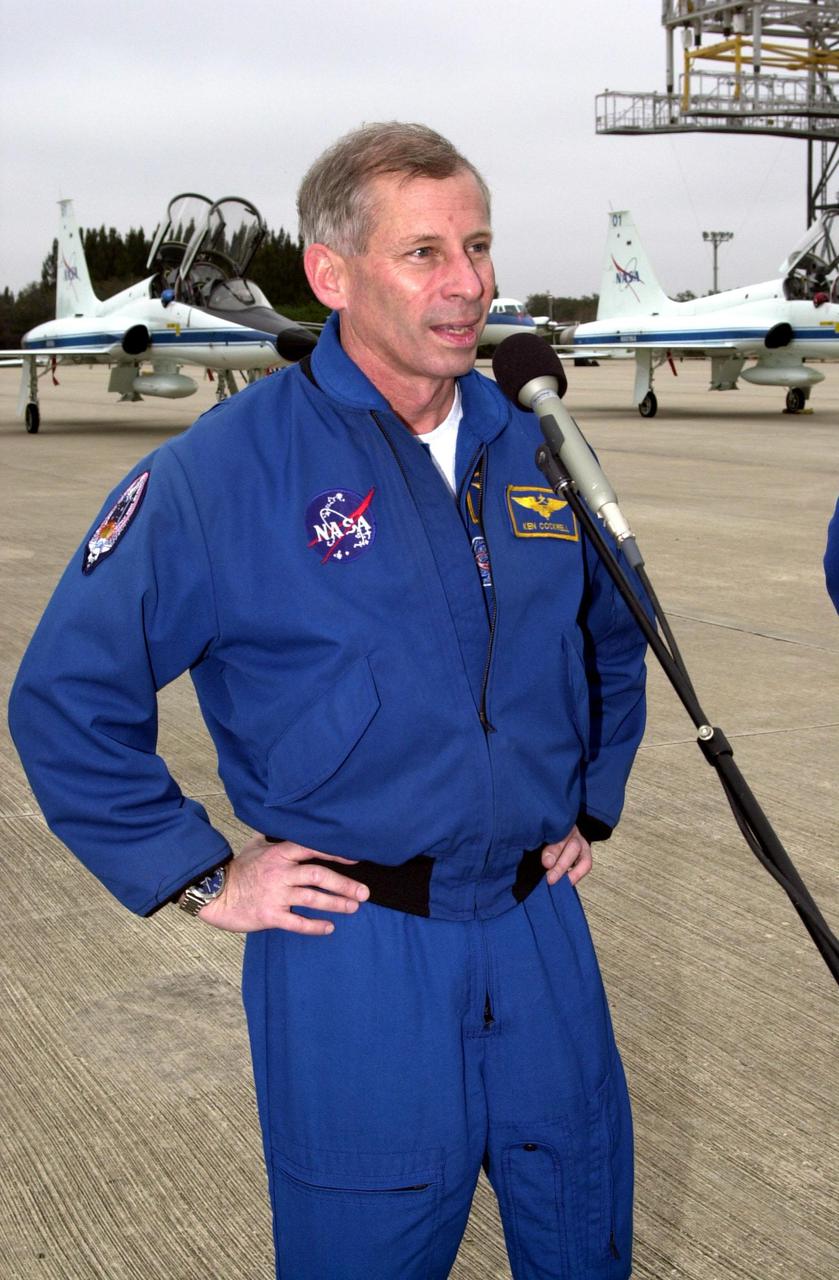
KENNEDY SPACE CENTER, FLA. -- STS-98 Mission Commander Kenneth Cockrell speaks to the media at the Shuttle Landing Facility after the crew's arrival Sunday to complete preparations for launch. The crew also includes Pilot Mark Polansky and Mission Specialists Thomas Jones, Marsha Ivins and Robert Curbeam.; STS-98 is the seventh construction flight to the International Space Station, carrying as payload the U.S. Lab Destiny, a key element in the construction of the ISS. Launch of STS-98 is scheduled for Feb. 7 at 6:11 p.m. EST

STS080-S-002 (August 1996) --- These five NASA astronauts are in training for the STS-80 mission, scheduled for launch aboard the Space Shuttle Columbia in the fall of this year. From the left are astronauts Kent V. Rominger, pilot; Tamara E. Jernigan, Story Musgrave and Thomas D. Jones, all mission specialists; and Kenneth D. Cockrell, mission commander.
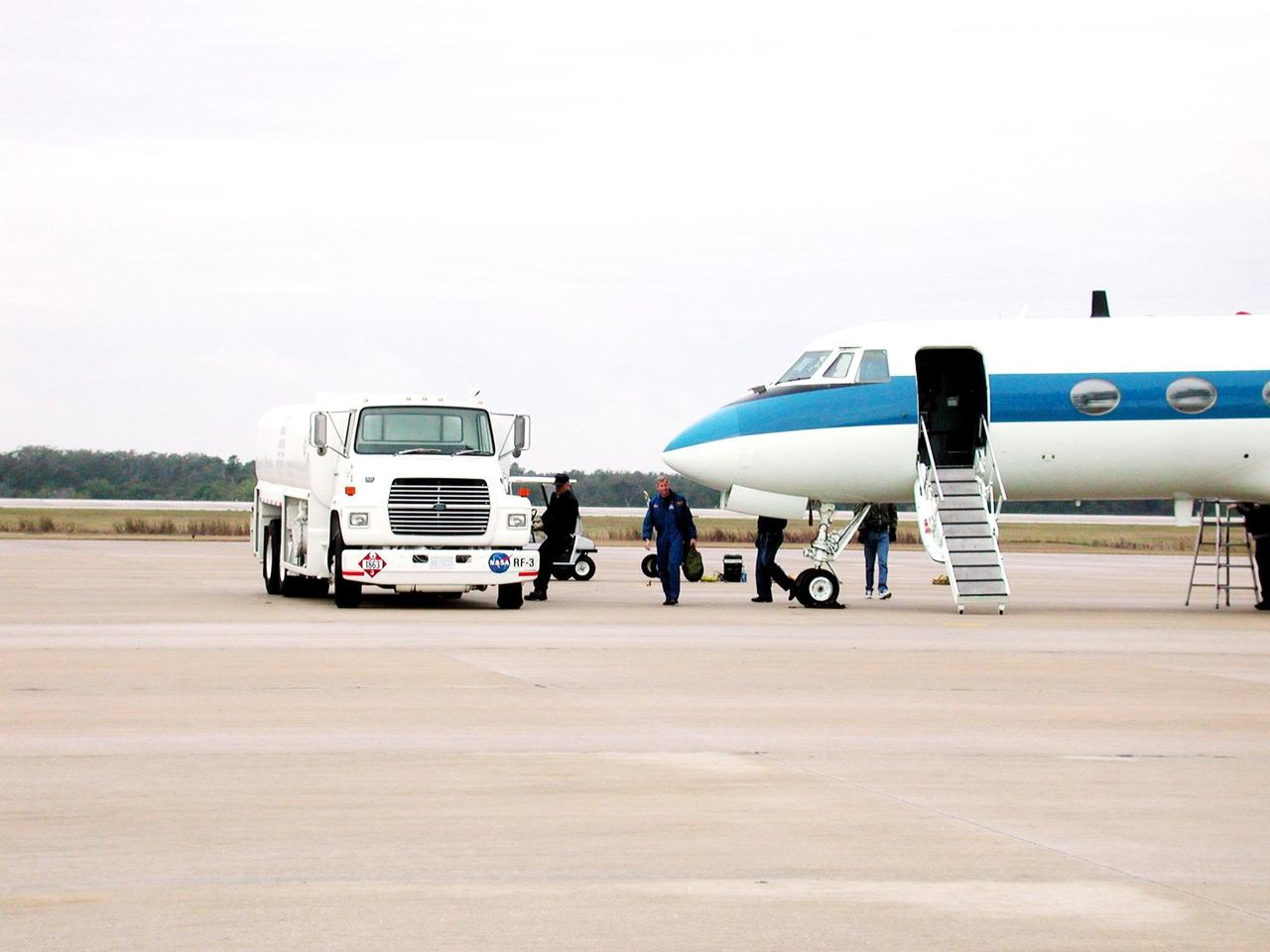
KENNEDY SPACE CENTER, FLA. -- STS-98 Commander Ken Cockrell, near the nose of the Shuttle Training Aircraft he just landed, makes his way across the parking apron of the Shuttle Landing Facility. The cockpit of the STA is outfitted like the Shuttle, which provides practice at the controls, especially for landing. The STS-98 crew recently arrived at KSC to prepare for their launch Feb. 7 to the International Space Station. The seventh construction flight to the Space Station, it will carry the U.S. Laboratory Destiny, a key module for space experiments
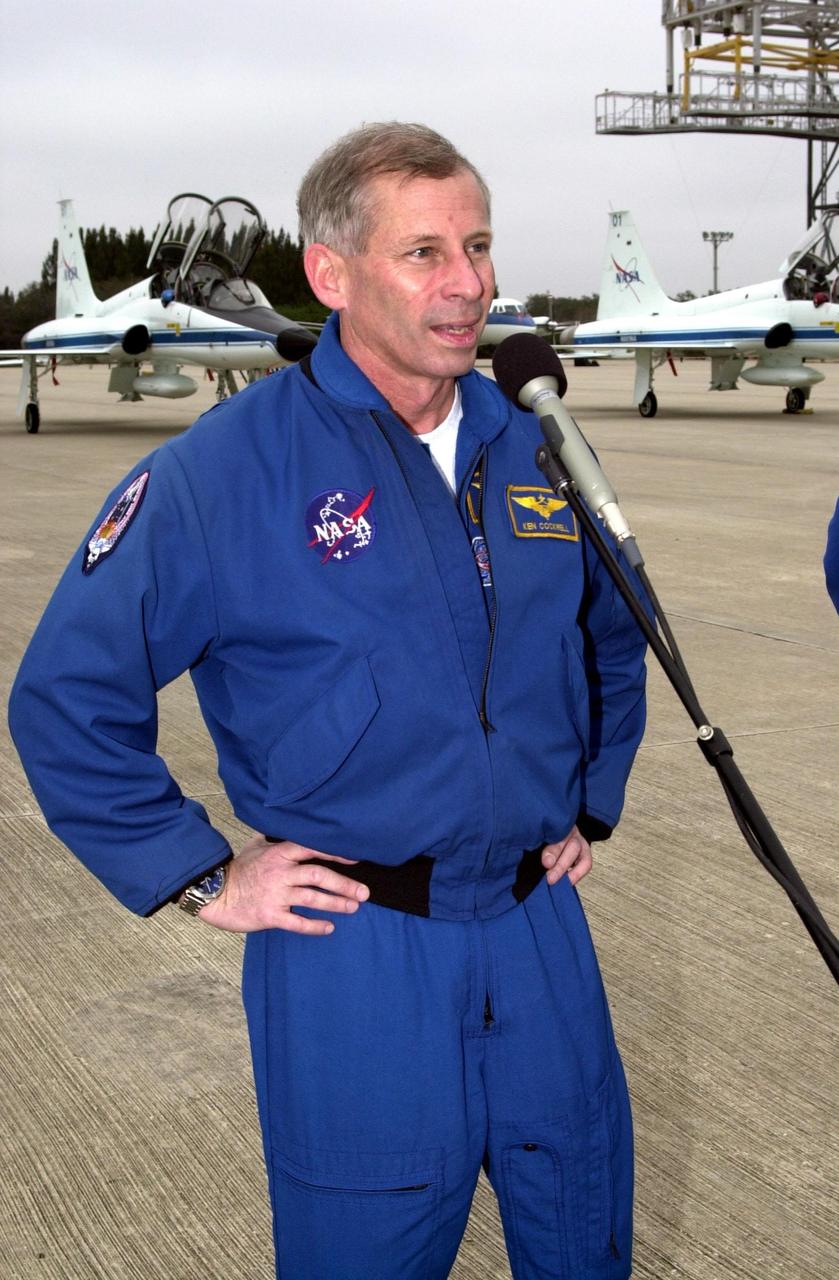
KENNEDY SPACE CENTER, FLA. -- STS-98 Mission Commander Kenneth Cockrell speaks to the media at the Shuttle Landing Facility after the crew's arrival Sunday to complete preparations for launch. The crew also includes Pilot Mark Polansky and Mission Specialists Thomas Jones, Marsha Ivins and Robert Curbeam.; STS-98 is the seventh construction flight to the International Space Station, carrying as payload the U.S. Lab Destiny, a key element in the construction of the ISS. Launch of STS-98 is scheduled for Feb. 7 at 6:11 p.m. EST
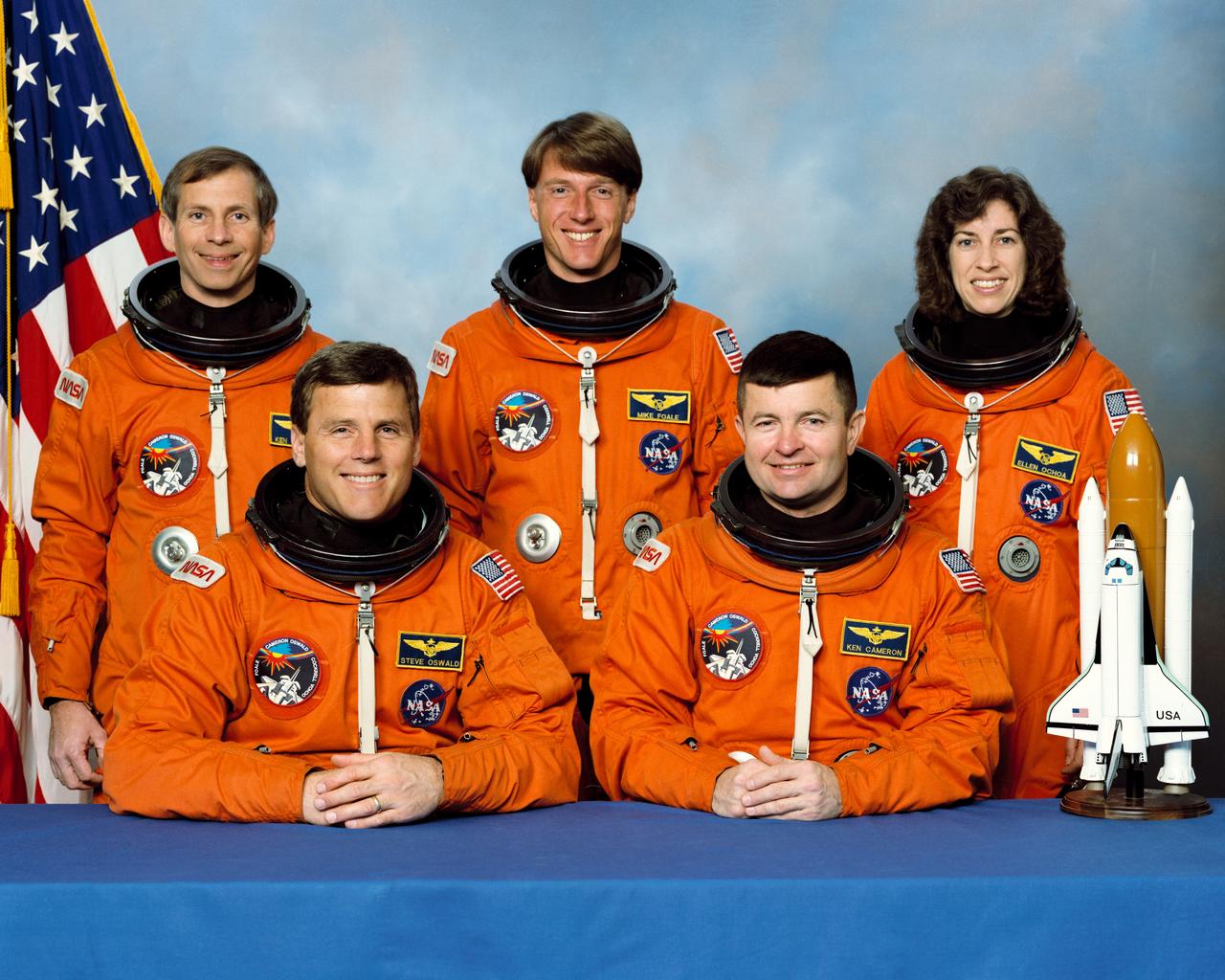
STS056-S-002 (January 1993) --- The five NASA astronauts assigned to fly aboard the Space Shuttle Discovery for the STS-56\Atlas-2 mission are pictured in training versions of their partial-pressure launch and entry garments. Left to right are astronauts Kenneth D. Cockrell, Steven S. Oswald, C. Michael Foale, Kenneth D. Cameron and Ellen Ochoa. Cameron is mission commander; Oswald, pilot; while the other three will serve as mission specialists.
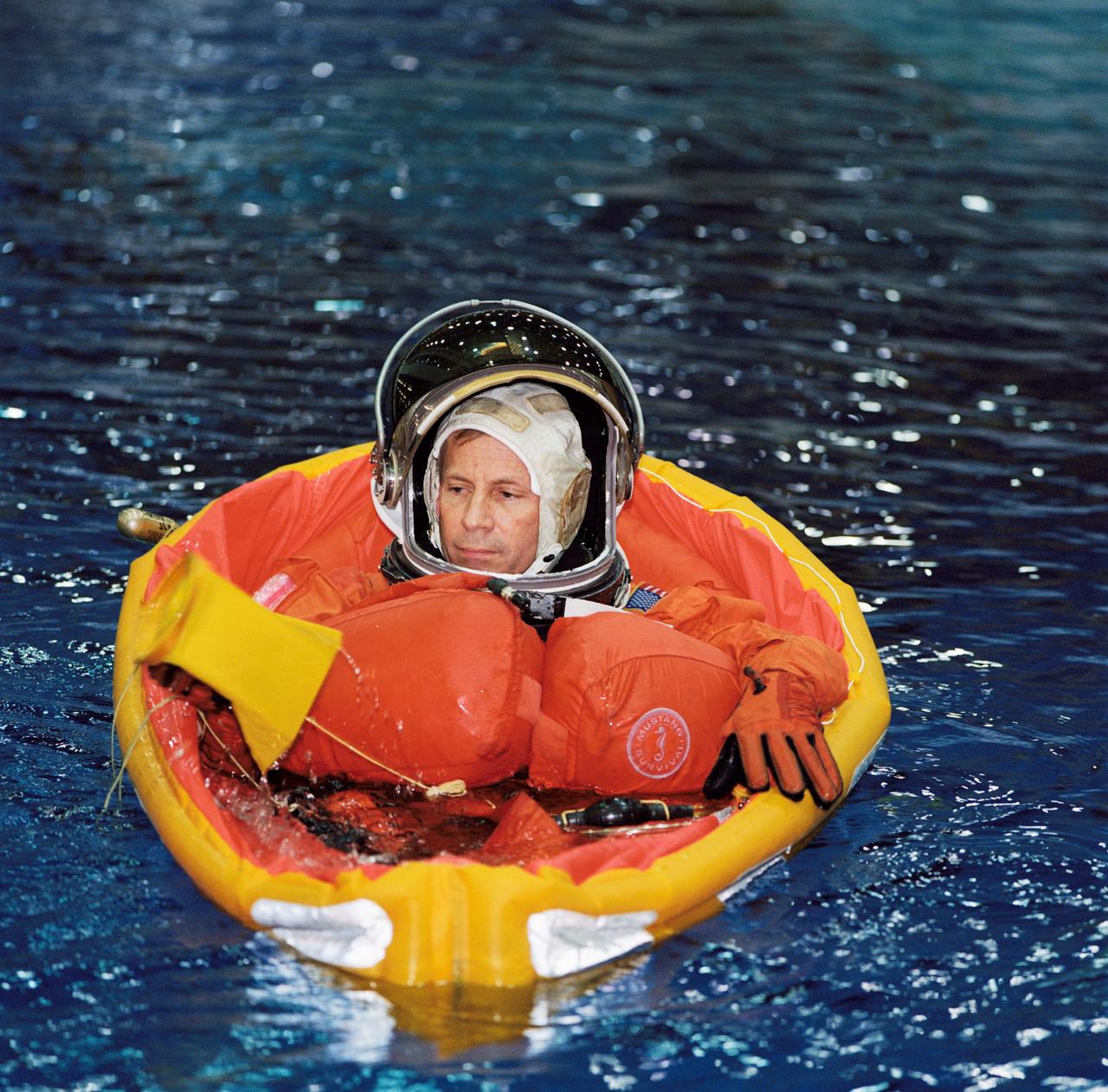
JSC2002-00413 (4 February 2002) --- Astronaut Kenneth D. Cockrell, STS-111 mission commander, floats in a small life raft during an emergency bailout training session in the Neutral Buoyancy Laboratory (NBL) near the Johnson Space Center (JSC). STS-111 will be the 14th shuttle mission to visit the International Space Station (ISS).