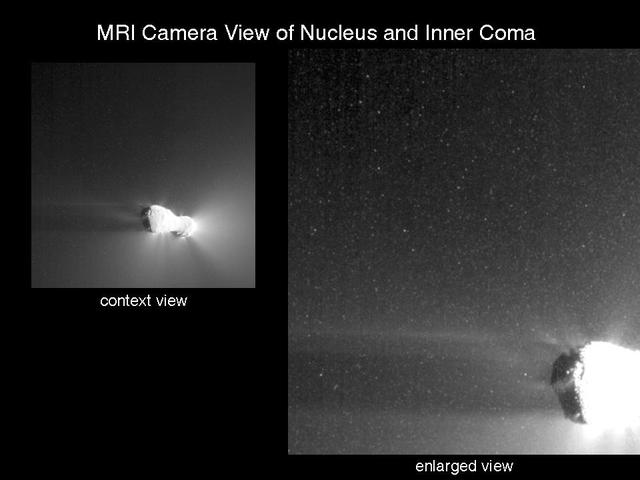
NASA EPOXI mission spacecraft obtained these views of the icy particle cloud around comet Hartley 2. The image on the left is the full image of comet Hartley 2 for context, and the image on the right was enlarged and cropped.
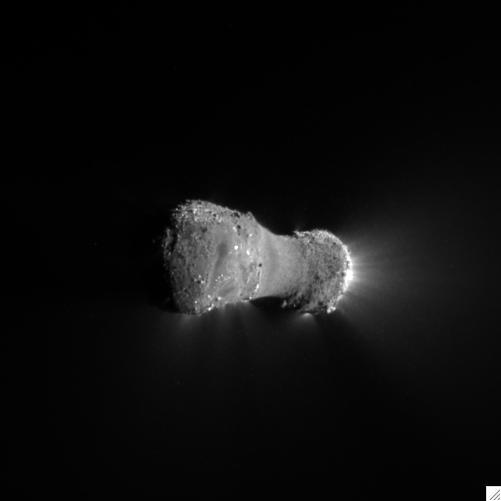
This close-up view of comet Hartley 2 was taken as NASA EPOXI mission approached the comet at 6:59 a.m. PDT 9:59 a.m. EDT.
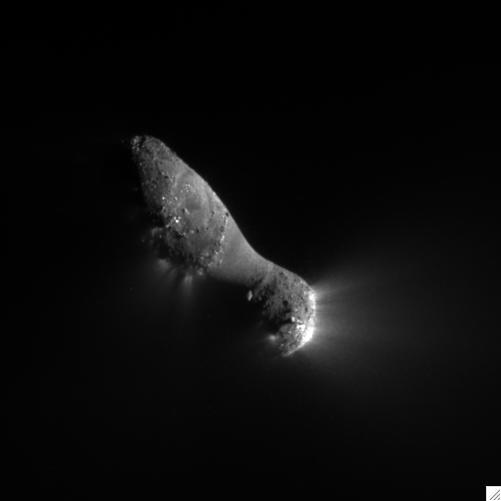
This close-up view of comet Hartley 2 was taken at 7:00 a.m. PDT 10 a.m. EDT, after NASA EPOXI mission flew by.
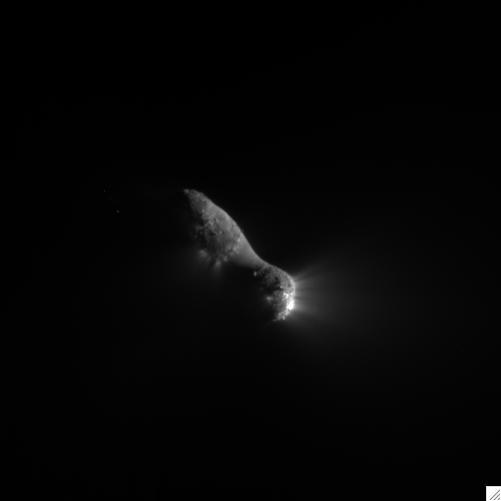
This close-up view of comet Hartley 2 was taken at 7:00 a.m. PDT 10 a.m. EDT, after NASA EPOXI mission flew by.
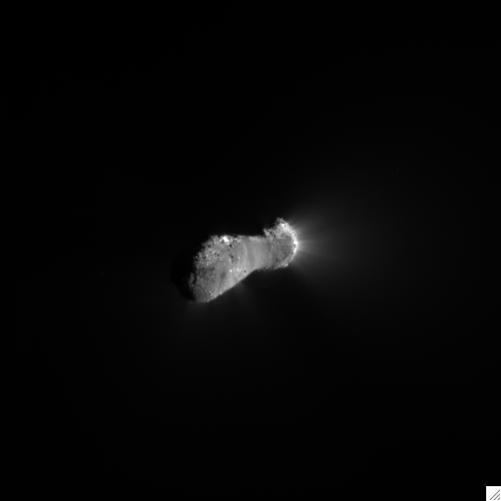
This close-up view of comet Hartley 2 was taken as NASA EPOXI mission approached the comet at 6:58 a.m. PDT 9:58 a.m. EDT.

This image montage shows comet Hartley 2 as NASA EPOXI mission approached and flew under the comet. The images progress in time clockwise, starting at the top left.
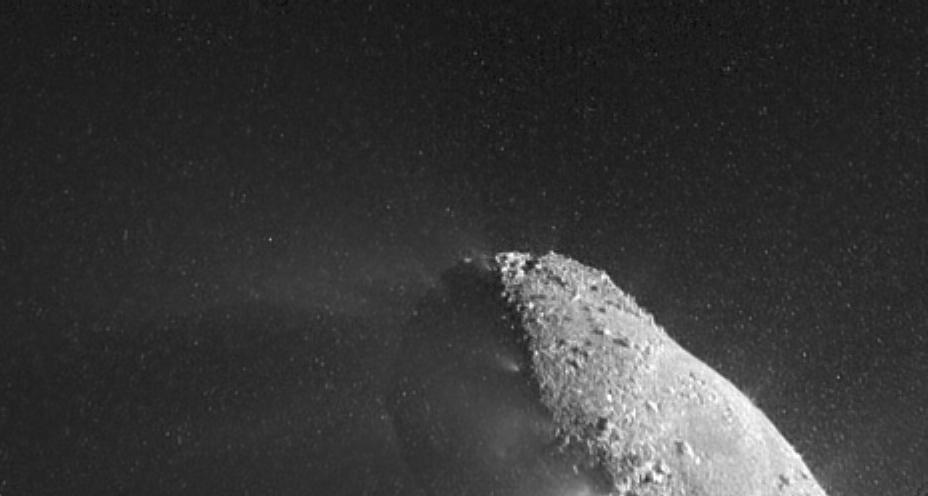
This image from the High-Resolution Instrument on NASA EPOXI mission spacecraft shows part of the nucleus of comet Hartley 2. The sun is illuminating the nucleus from the right. A distinct cloud of individual particles is visible.
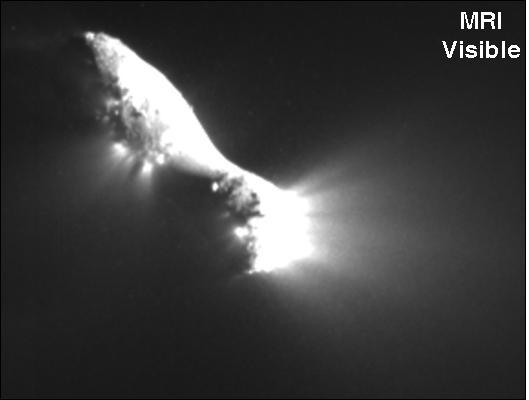
Infrared scans of comet Hartley 2 by NASA EPOXI mission spacecraft show carbon dioxide, dust, and ice being distributed in a similar way and emanating from apparently the same locations on the nucleus.
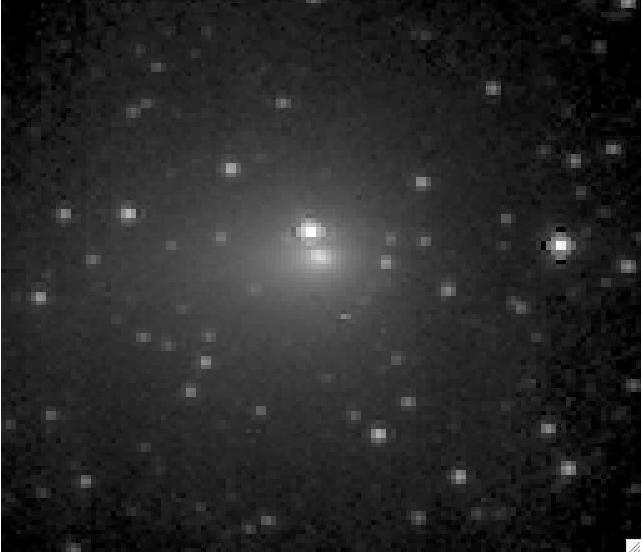
This image from NASA EPOXI mission shows Hartley 2 moving across the background field of stars. The coma, or cloud of gas and dust around the comet, expands and brightens over this time period. Animation available at the Photojournal.
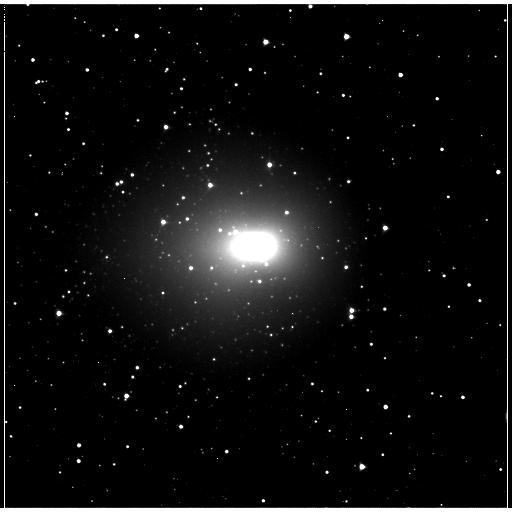
NASA EPOXI mission took this image of comet Hartley 2 on Nov. 2, 2010. The spacecraft will fly by the comet on Nov. 4, 2010. The white blob and the halo around it are the comet outer cloud of gas and dust, called a coma.
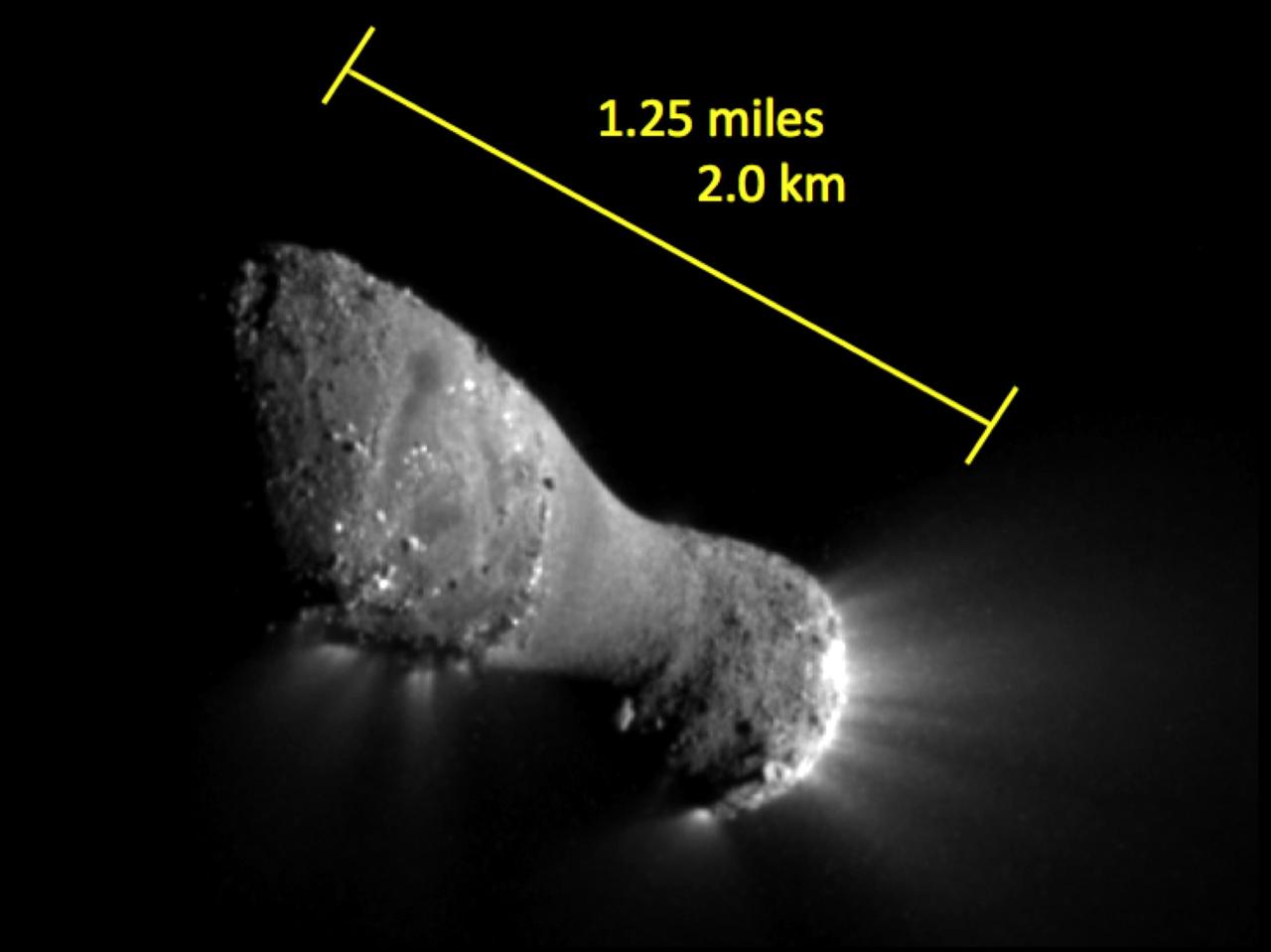
This image, one of the closest taken of comet Hartley 2 by NASA EPOXI mission, shows many features across the comet surface. The length of the comet is equal to the distance between the Capitol building and the Washington Monument in Washington.
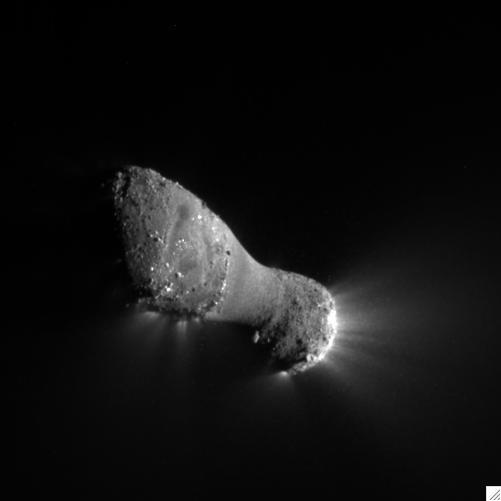
Comet Hartley 2 can be seen in glorious detail in this image from NASA EPOXI mission. It was taken as the spacecraft flew by around 6:59 a.m. PDT 9:59 a.m. EDT, from a distance of about 700 kilometers 435 miles.
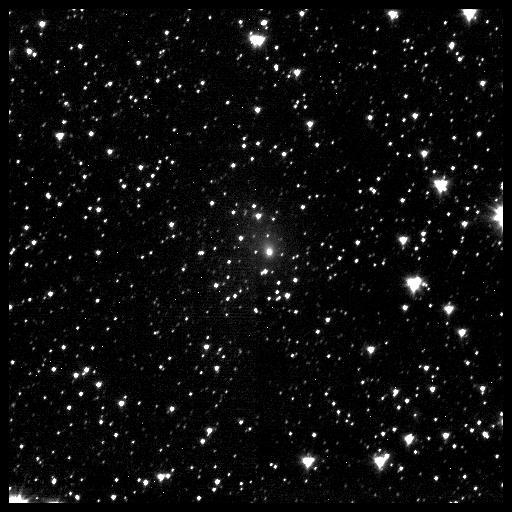
This first image of comet 103P/Hartley 2 was taken from NASA Deep Impact spacecraft 60 days prior to the spacecraft flyby of the comet.
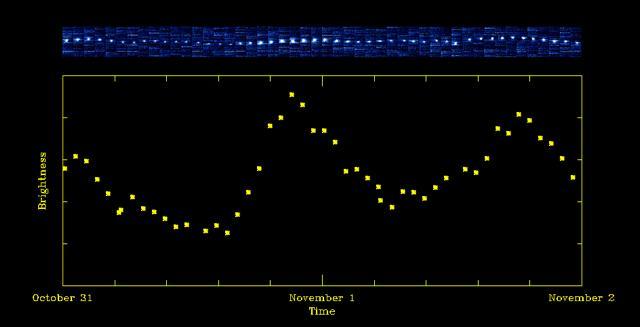
The upper panel of this figure shows small images of comet Hartley 2 taken by NASA EPOXI mission over time. The lower panel is a graph showing the variation of total brightness, and the variation of the total amount of carbon dioxide, during the time.
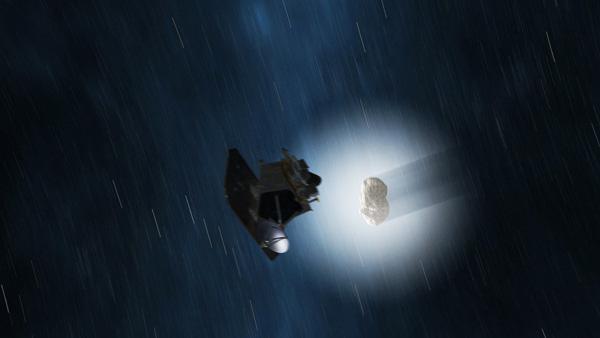
This artist concept shows a view of NASA EPOXI mission spacecraft during its Nov. 4, 2010 flyby of comet Hartley 2. The fluffy shell around the comet, called a coma, is made up of gas and dust that blew off the comet core, or nucleus.
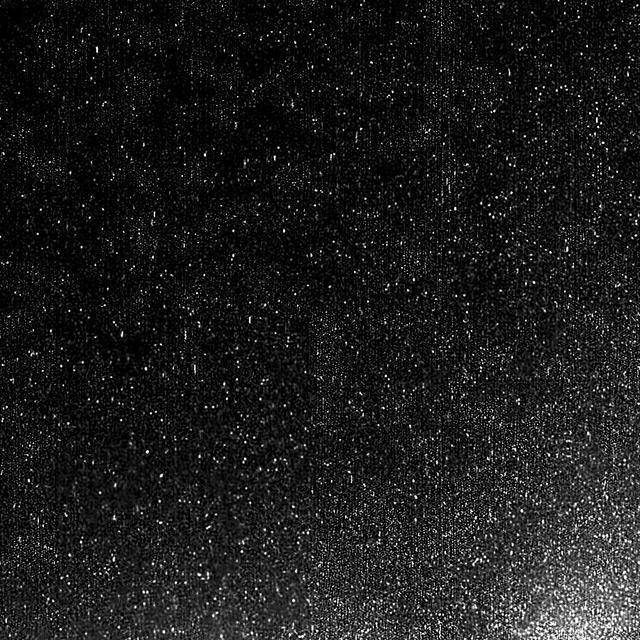
This zoomed-in image from the High-Resolution Instrument on NASA EPOXI mission spacecraft shows the particles swirling in a now storm around the nucleus of comet Hartley 2.
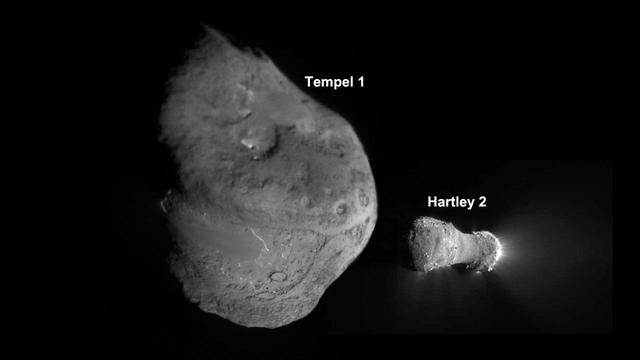
This image shows the nuclei of comets Tempel 1 and Hartley 2, as imaged by NASA Deep Impact spacecraft, which continued as an extended mission known as EPOXI.
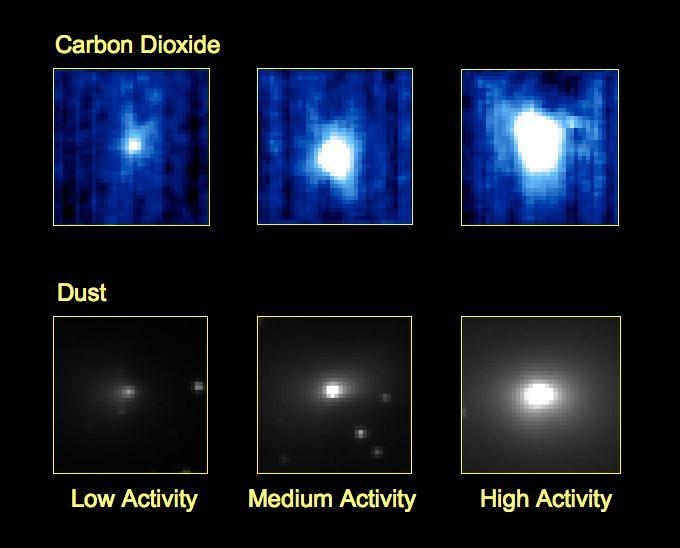
These three pairs of images from NASA EPOXI mission demonstrate that a dust jet and gaseous carbon dioxide are being released from comet Hartley 2 at the same time, and from the same location on the comet.
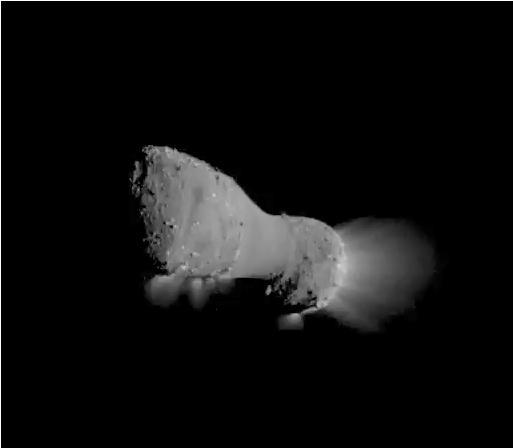
Image taken by NASA EPOXI mission spacecraft during its flyby of comet Hartley 2 on Nov. 4, 2010. The spacecraft came within about 700 kilometers 435 miles of the comet nucleus at the time of closest approach.

This montage from NASA EPOXI mission shows the only five comets imaged up close with spacecraft. The comets vary in shape and size. Comet Hartley 2 is by far the smallest and the most active of small comets.
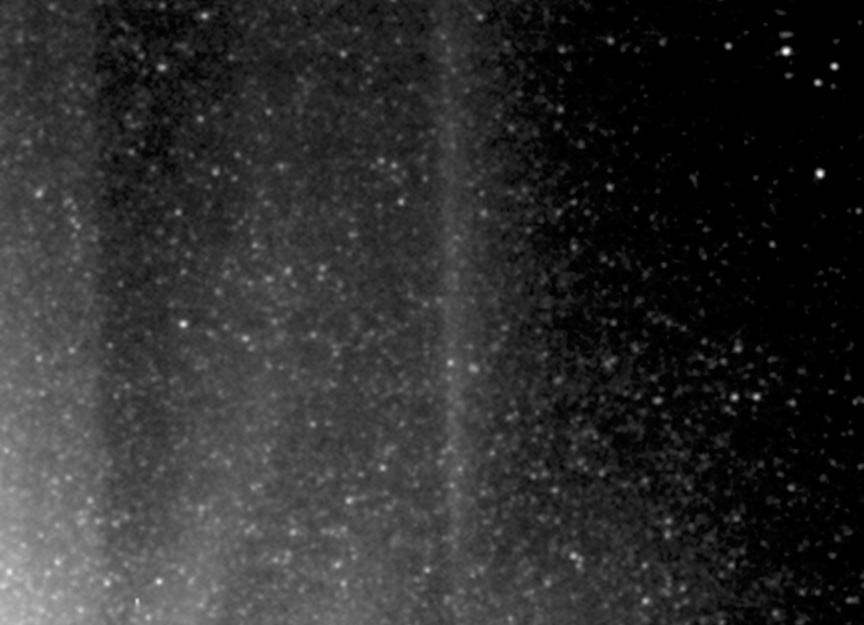
Icy particles in the cloud around Hartley 2, as seen by NASA EPOXI mission spacecraft. A star moving through the background is marked with red and moves in a particular direction, with a particular speed; icy particles move in random directions.
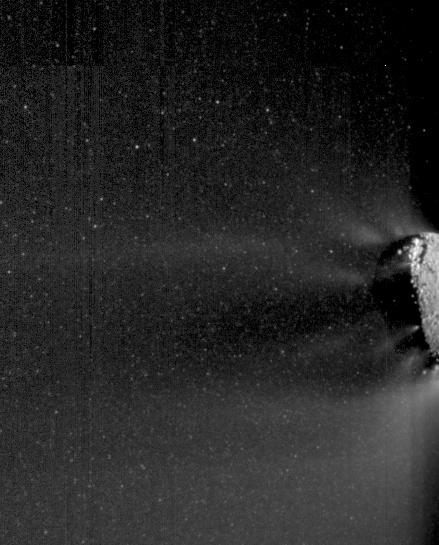
Images obtained by NASA EPOXI mission spacecraft show an active end of the nucleus of comet Hartley 2. Icy particles spew from the surface. Most of these particles are traveling with the nucleus; fluffy nowballs about 3 centimeters to 30 centimeters.
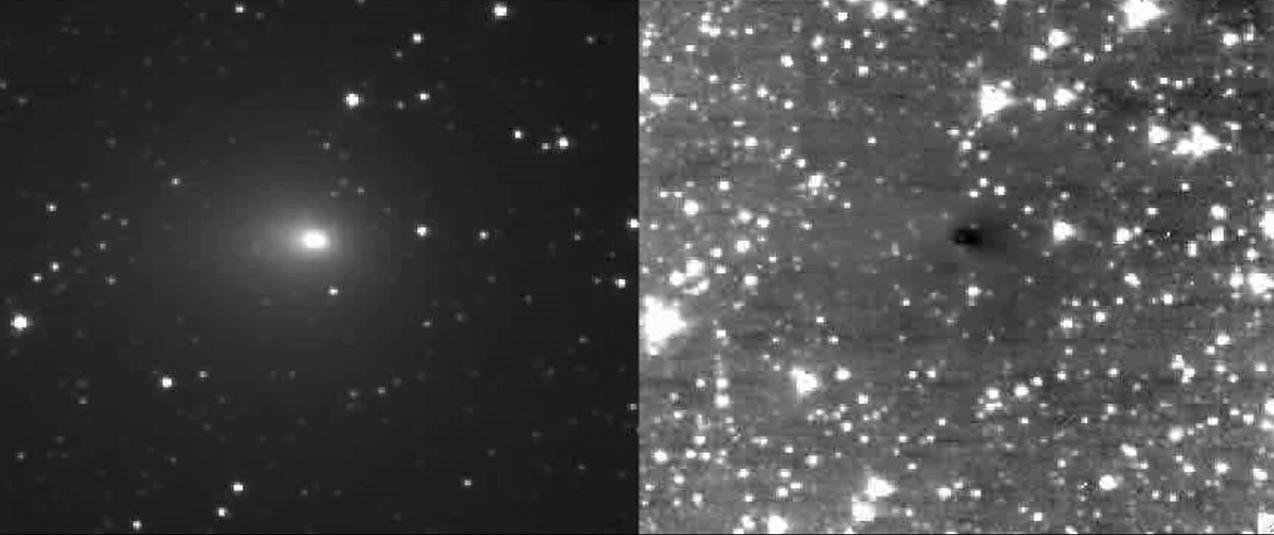
NASA Deep Impact spacecraft High- and Medium-Resolution Imagers HRI and MRI captured multiple jets emanating from comet Hartley 2 turning on and off while the spacecraft is 8 million kilometers 5 million miles away from the comet.
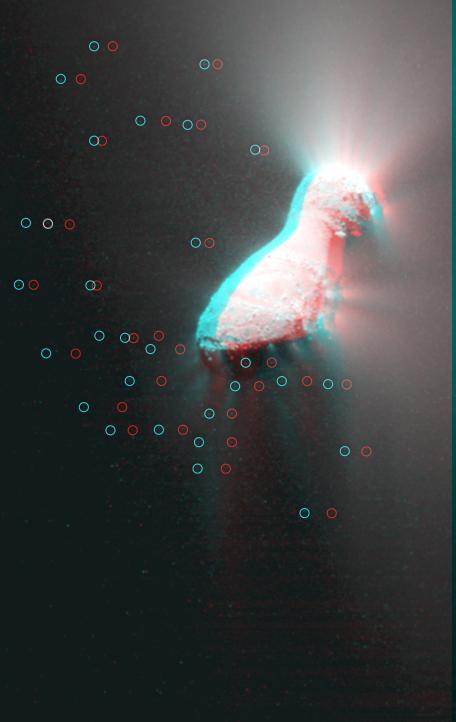
This 3-D image shows the region where NASA Deep Impact mission sent a probe into the surface of comet Tempel 1 in 2005. This picture was taken six years after the Deep Impact collision. 3D glasses are necessary to view this image.
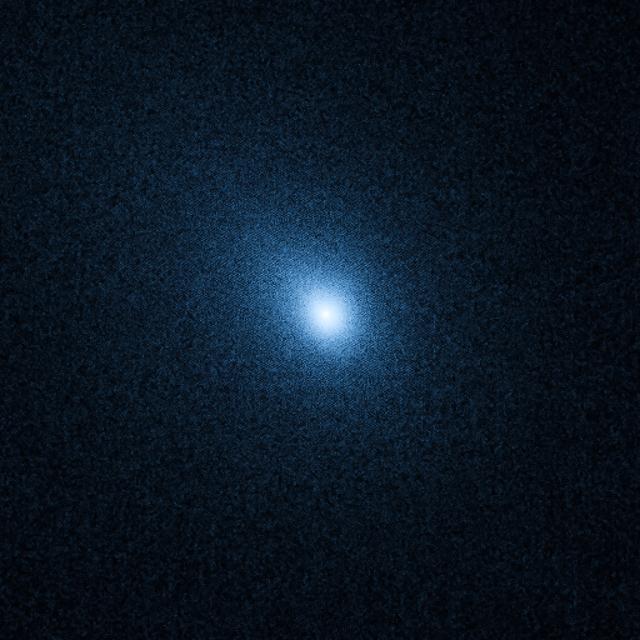
NASA image release October 5, 2010 Hubble Space Telescope observations of comet 103P/Hartley 2, taken on September 25, are helping in the planning for a November 4 flyby of the comet by NASA's Deep Impact eXtended Investigation (DIXI) spacecraft. Analysis of the new Hubble data shows that the nucleus has a diameter of approximately 0.93 miles (1.5 km), which is consistent with previous estimates. The comet is in a highly active state, as it approaches the Sun. The Hubble data show that the coma is remarkably uniform, with no evidence for the types of outgassing jets seen from most "Jupiter Family" comets, of which Hartley 2 is a member. Jets can be produced when the dust emanates from a few specific icy regions, while most of the surface is covered with relatively inert, meteoritic-like material. In stark contrast, the activity from Hartley 2's nucleus appears to be more uniformly distributed over its entire surface, perhaps indicating a relatively "young" surface that hasn't yet been crusted over. Hubble's spectrographs - the Cosmic Origins Spectrograph (COS) and the Space Telescope Imaging Spectrograph (STIS) -- are expected to provide unique information about the comet's chemical composition that might not be obtainable any other way, including measurements by DIXI. The Hubble team is specifically searching for emissions from carbon monoxide (CO) and diatomic sulfur (S2). These molecules have been seen in other comets but have not yet been detected in 103P/Hartley 2. 103P/Hartley has an orbital period of 6.46 years. It was discovered by Malcolm Hartley in 1986 at the Schmidt Telescope Unit in Siding Spring, Australia. The comet will pass within 11 million miles of Earth (about 45 times the distance to the Moon) on October 20. During that time the comet may be visible to the naked eye as a 5th magnitude "fuzzy star" in the constellation Auriga. Credit: NASA, ESA, and H. Weaver (The Johns Hopkins University/Applied Physics Lab) The Hubble Space Telescope is a project of international cooperation between NASA and the European Space Agency. NASA's Goddard Space Flight Center manages the telescope. The Space Telescope Science Institute (STScI) conducts Hubble science operations. STScI is operated for NASA by the Association of Universities for Research in Astronomy, Inc., in Washington, D.C. <b><a href="http://www.nasa.gov/centers/goddard/home/index.html" rel="nofollow">NASA Goddard Space Flight Center</a></b> enables NASA’s mission through four scientific endeavors: Earth Science, Heliophysics, Solar System Exploration, and Astrophysics. Goddard plays a leading role in NASA’s accomplishments by contributing compelling scientific knowledge to advance the Agency’s mission. <b>Follow us on <a href="http://twitter.com/NASA_GoddardPix" rel="nofollow">Twitter</a></b> <b>Join us on <a href="http://www.facebook.com/pages/Greenbelt-MD/NASA-Goddard/395013845897?ref=tsd" rel="nofollow">Facebook</a></b>
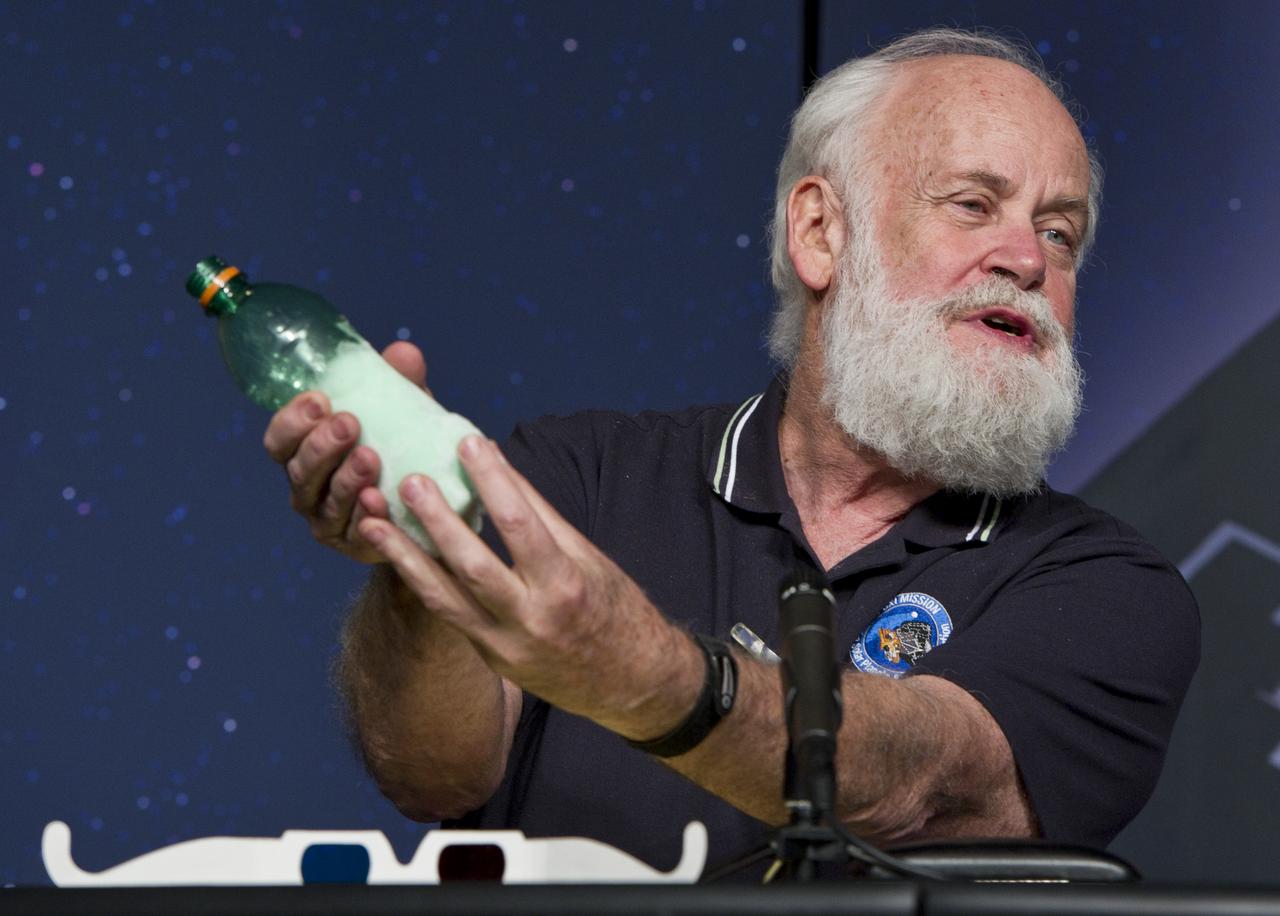
Michael A'Hearn, EPOXI Principal Investigator, University of Maryland, holds a plastic bottle containing ice to illustrate a point during a press conference, Thursday, Nov. 18, 2010, at NASA Headquarters in Washington. The press conference was held to discuss the Nov. 4 successful flyby of Comet Hartley 2 by NASA's EPOXI Mission Spacecraft. Images from the flyby provided scientists the most extensive observations of a comet in history. Photo Credit: (NASA/Paul E. Alers)
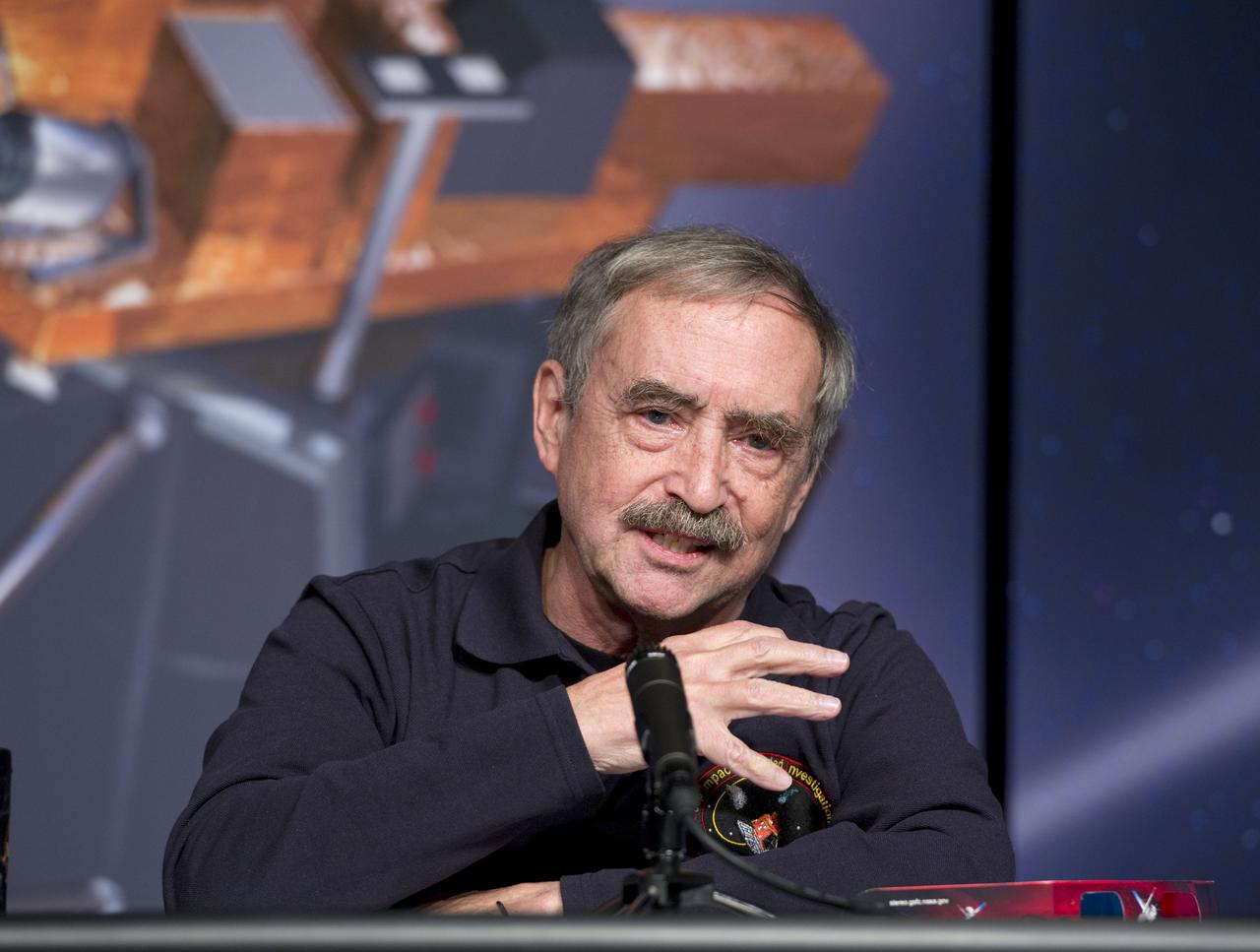
Pete Schultz, EPOXI scientist from Brown University, makes a point during a press conference, Thursday, Nov. 18, 2010, at NASA Headquarters in Washington. The press conference was held to discuss the Nov. 4 successful flyby of Comet Hartley 2 by NASA's EPOXI Mission Spacecraft. Images from the flyby provided scientists the most extensive observations of a comet in history. Photo Credit: (NASA/Paul E. Alers)
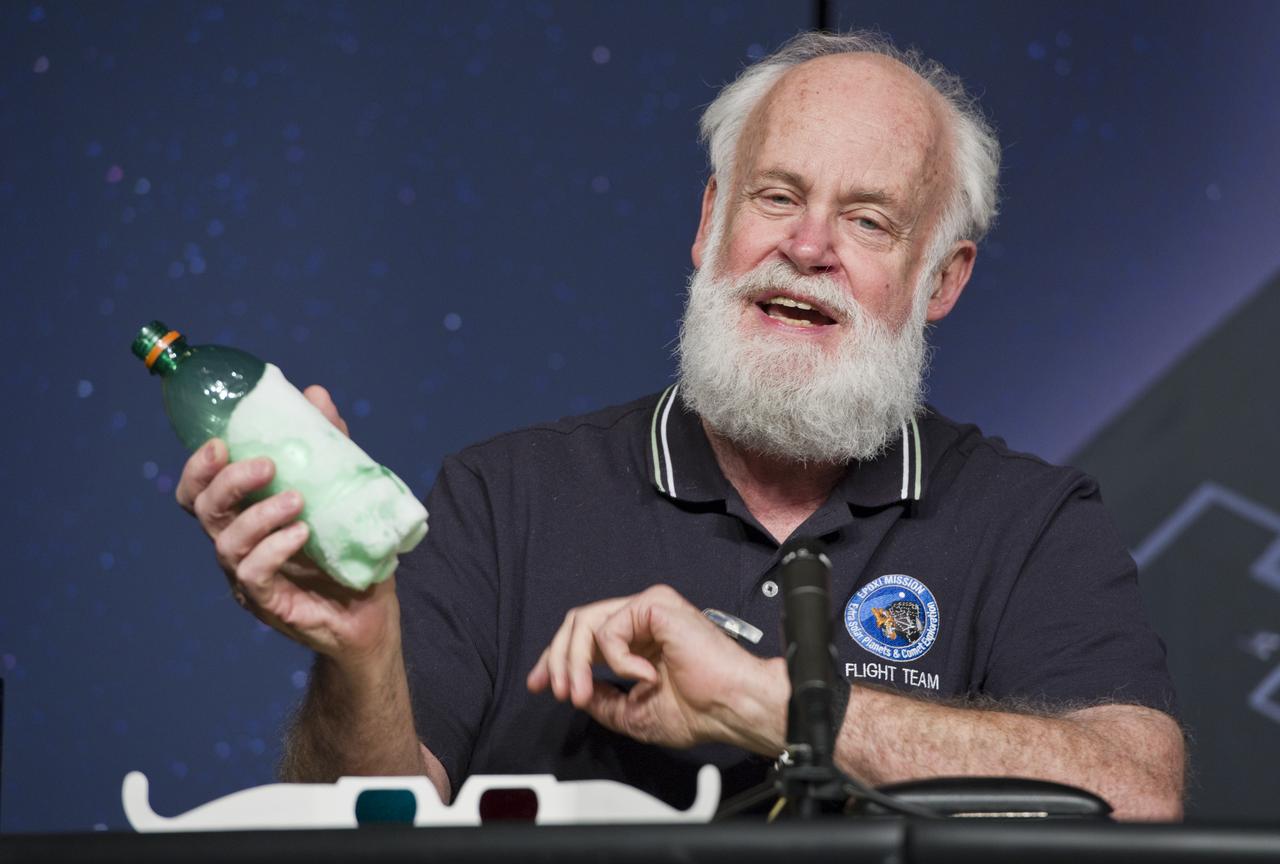
Michael A'Hearn, EPOXI Principal Investigator, University of Maryland, holds a plastic bottle containing ice to illustrate a point during a press conference, Thursday, Nov. 18, 2010, at NASA Headquarters in Washington. The press conference was held to discuss the Nov. 4 successful flyby of Comet Hartley 2 by NASA's EPOXI Mission Spacecraft. Images from the flyby provided scientists the most extensive observations of a comet in history. Photo Credit: (NASA/Paul E. Alers)

Jessica Sunshine, EPOXI Deputy Principal Investigator, University of Maryland, far right, discusses imagery sent back from the EPOXI Mission spacecraft during a press conference, Thursday, Nov. 18, 2010, at NASA Headquarters in Washington. The press conference was held to discuss the Nov. 4 successful flyby of Comet Hartley 2 by NASA's EPOXI Mission Spacecraft. Images from the flyby provided scientists the most extensive observations of a comet in history. Photo Credit: (NASA/Paul E. Alers)
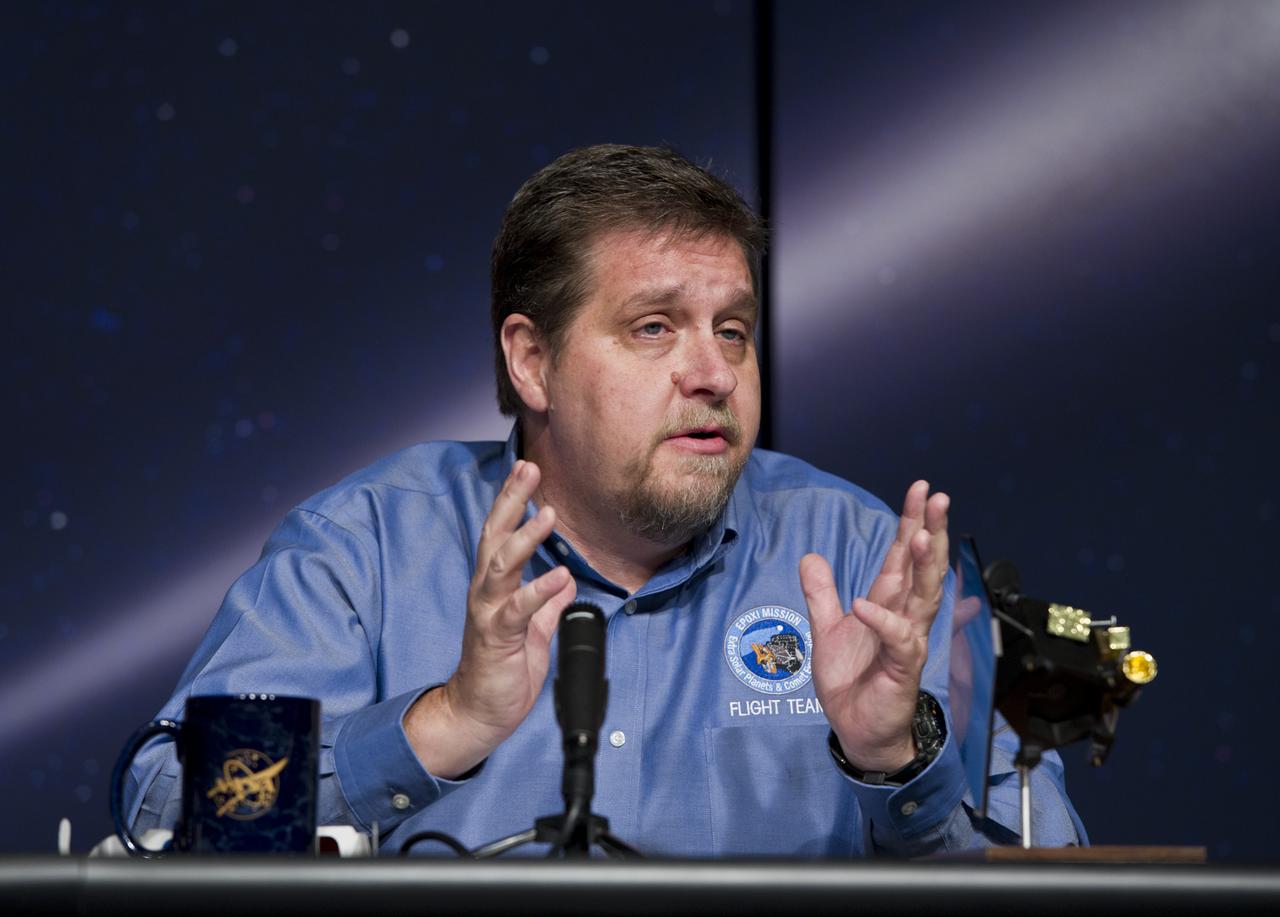
Tim Larson, EPOXI Project Manager from the Jet Propulsion Laboratory in Pasadena, Calif., speaks during a press conference, Thursday, Nov. 18, 2010, at NASA Headquarters in Washington. The press conference was held to discuss the Nov. 4 successful flyby of Comet Hartley 2 by NASA's EPOXI Mission Spacecraft. Images from the flyby provided scientists the most extensive observations of a comet in history. Photo Credit: (NASA/Paul E. Alers)
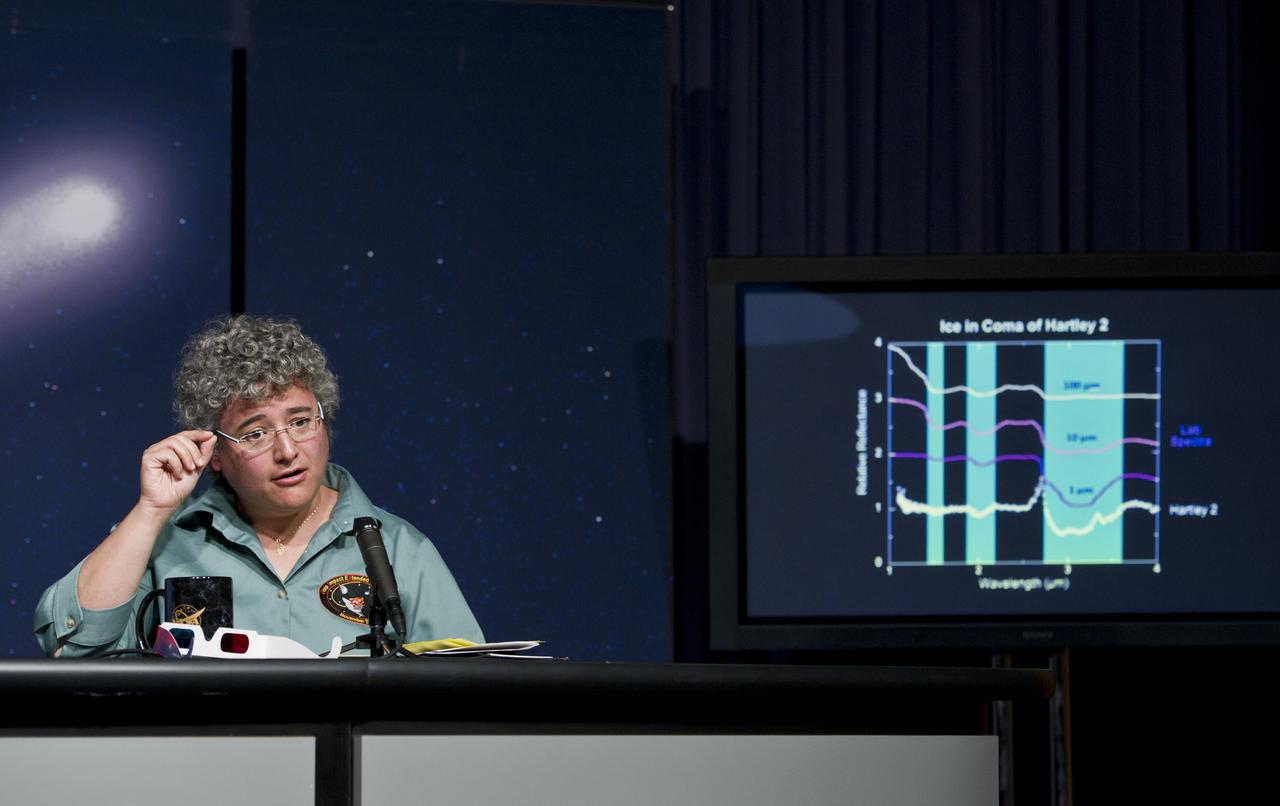
Jessica Sunshine, EPOXI Deputy Principal Investigator, University of Maryland, far right, discusses imagery sent back from the EPOXI Mission spacecraft during a press conference, Thursday, Nov. 18, 2010, at NASA Headquarters in Washington. The press conference was held to discuss the Nov. 4 successful flyby of Comet Hartley 2 by NASA's EPOXI Mission Spacecraft. Images from the flyby provided scientists the most extensive observations of a comet in history. Photo Credit: (NASA/Paul E. Alers)
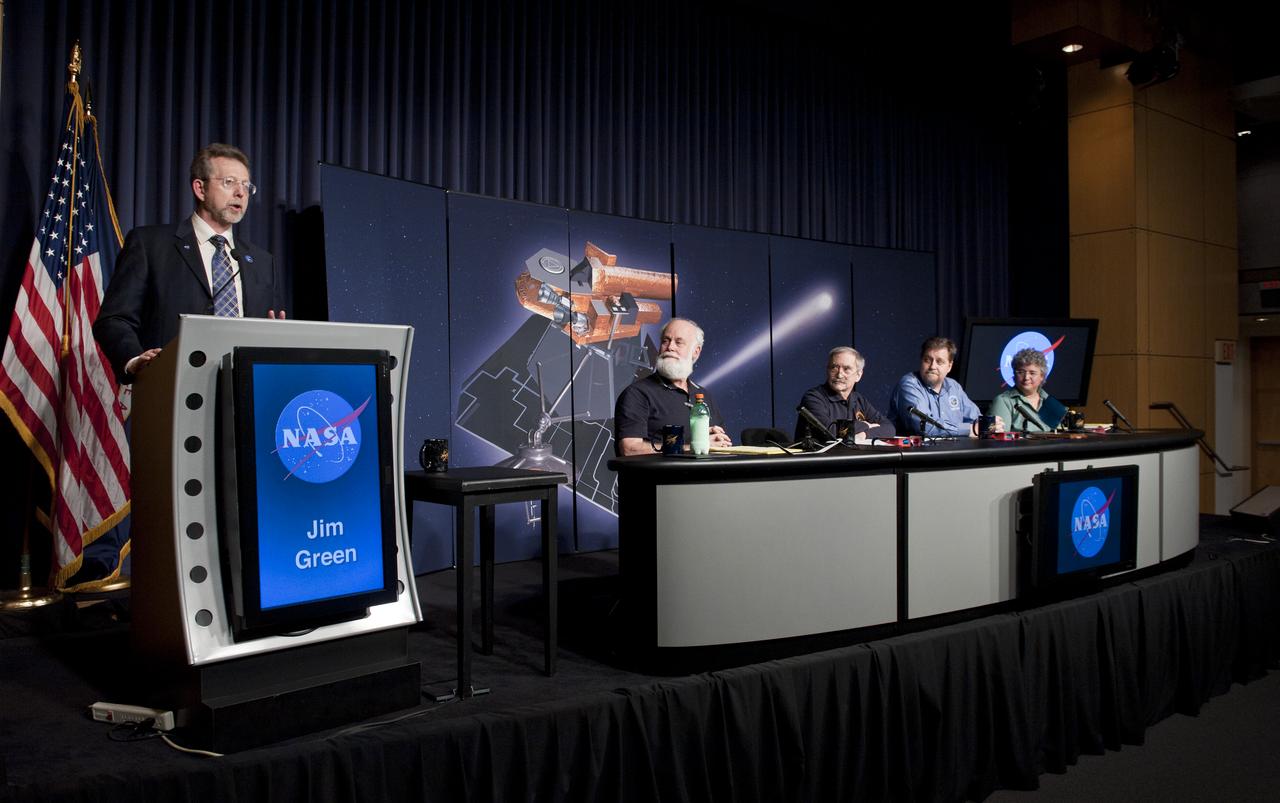
Dr. James Green, Director of Planetary Science, NASA Headquarters, at podium, speaks during a press conference, Thursday, Nov. 18, 2010, at NASA Headquarters in Washington. The press conference was held to discuss the Nov. 4 successful flyby of Comet Hartley 2 by NASA's EPOXI Mission Spacecraft. Images from the flyby provided scientists the most extensive observations of a comet in history. Photo Credit: (NASA/Paul E. Alers)
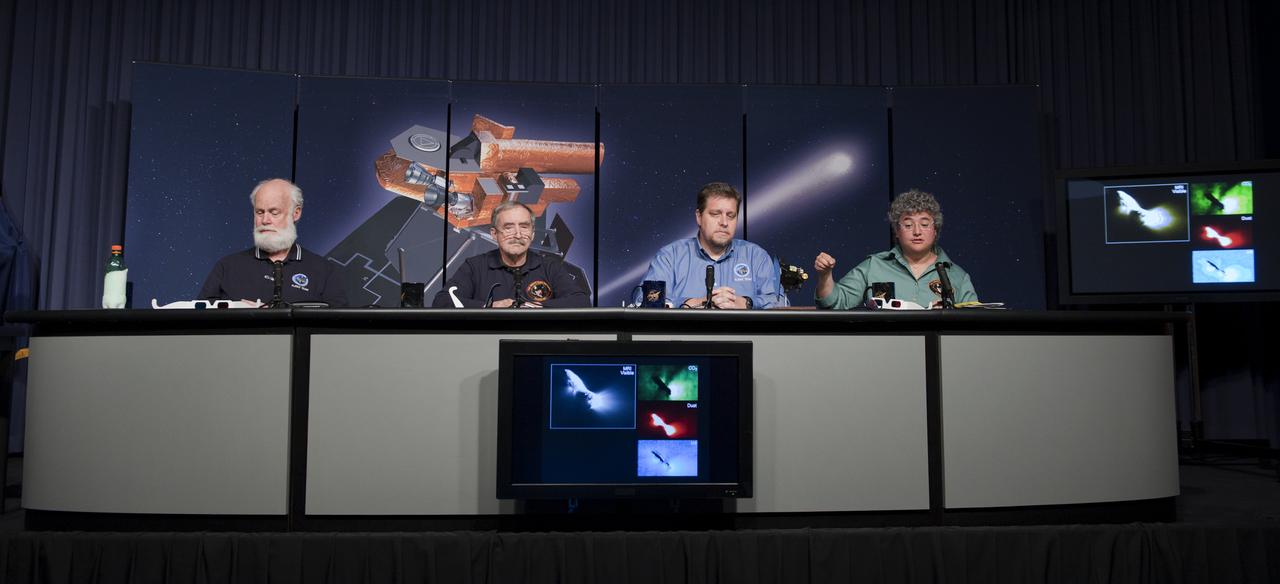
Jessica Sunshine, EPOXI Deputy Principal Investigator, University of Maryland, far right, discusses imagery sent back from the EPOXI Mission spacecraft during a press conference, Thursday, Nov. 18, 2010, at NASA Headquarters in Washington. The press conference was held to discuss the Nov. 4 successful flyby of Comet Hartley 2 by NASA's EPOXI Mission Spacecraft. Images from the flyby provided scientists the most extensive observations of a comet in history. Photo Credit: (NASA/Paul E. Alers)
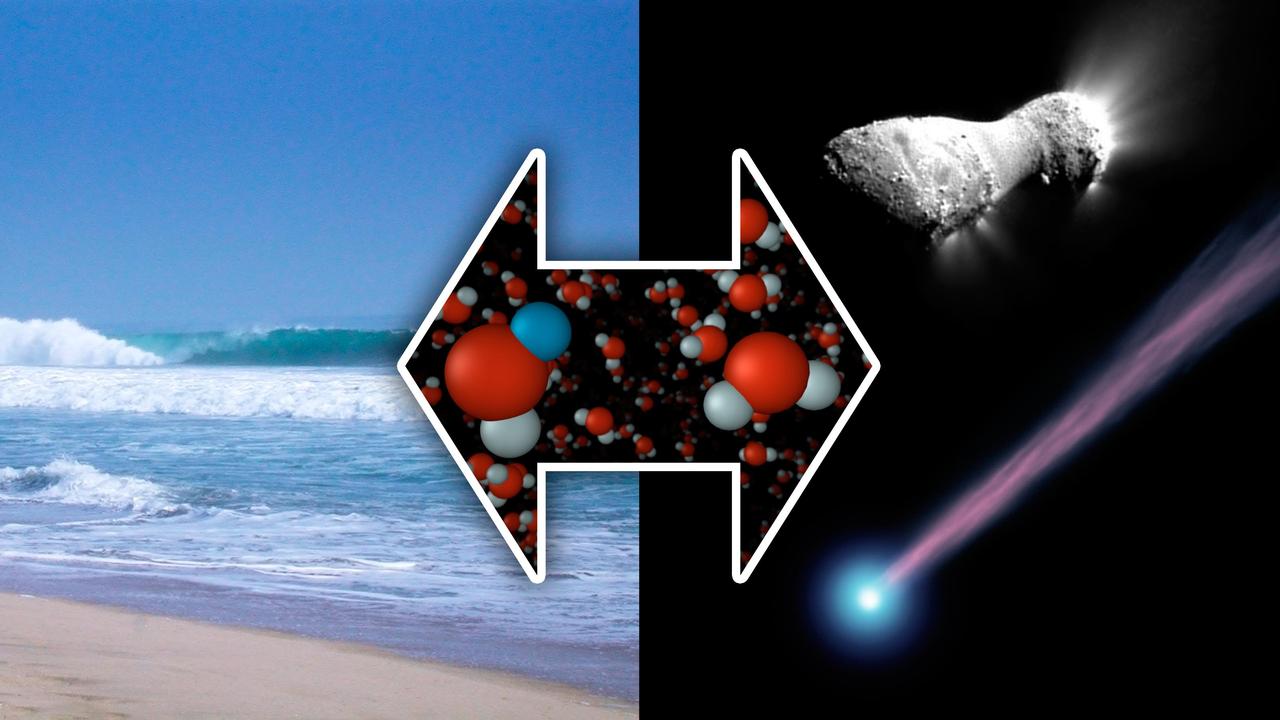
New measurements from NASA Herschel Space Observatory have discovered water with the same chemical signature as our oceans in a comet called Hartley 2 pictured at right. The image at bottom right is an artist concept of a comet.

Using NASA Herschel Space Observatory, astronomers have discovered that comet Hartley 2 possesses a ratio of heavy water to light, or normal, water that matches what found in Earth oceans.
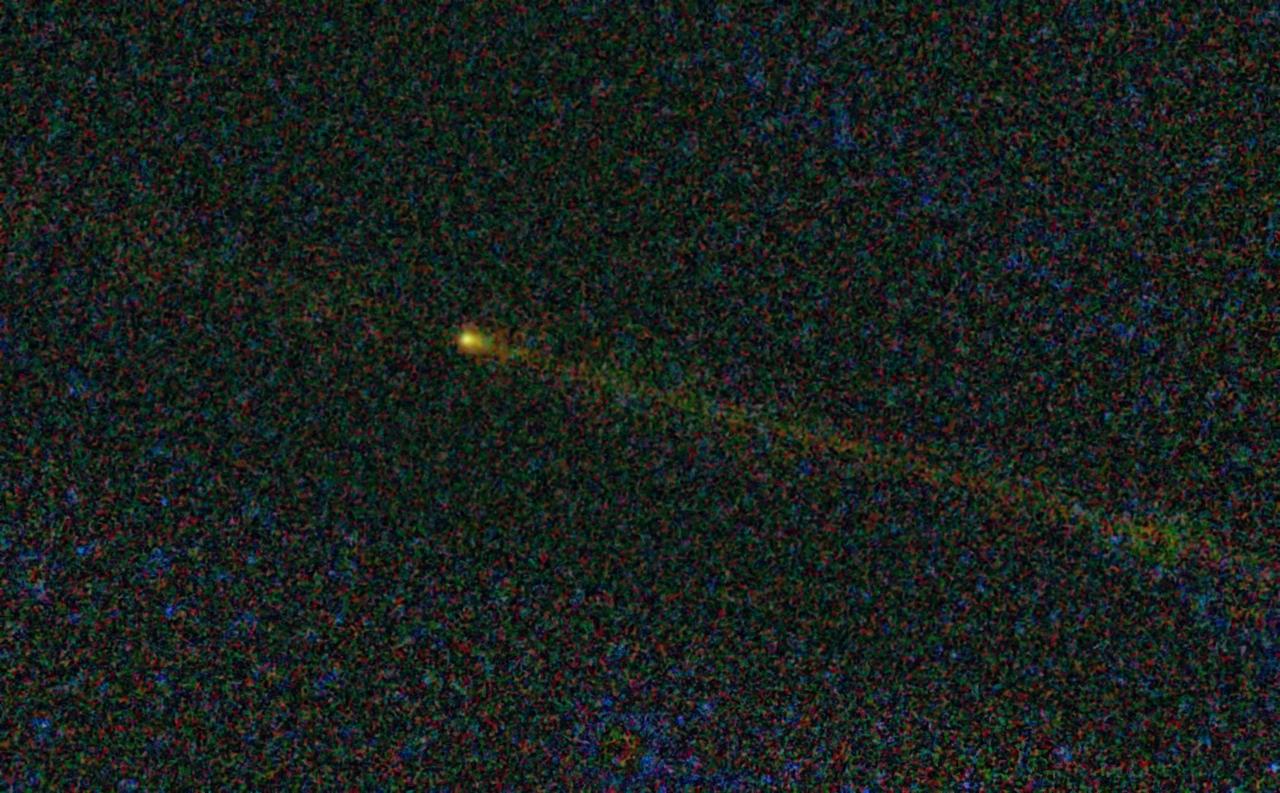
This visitor from deep space, seen here by NASA Wide-field Infrared Survey Explorer, is comet Hartley 2, the destination for NASA EPOXI mission. The comet tail is seen here as a fuzzy streak to the right of the comet.
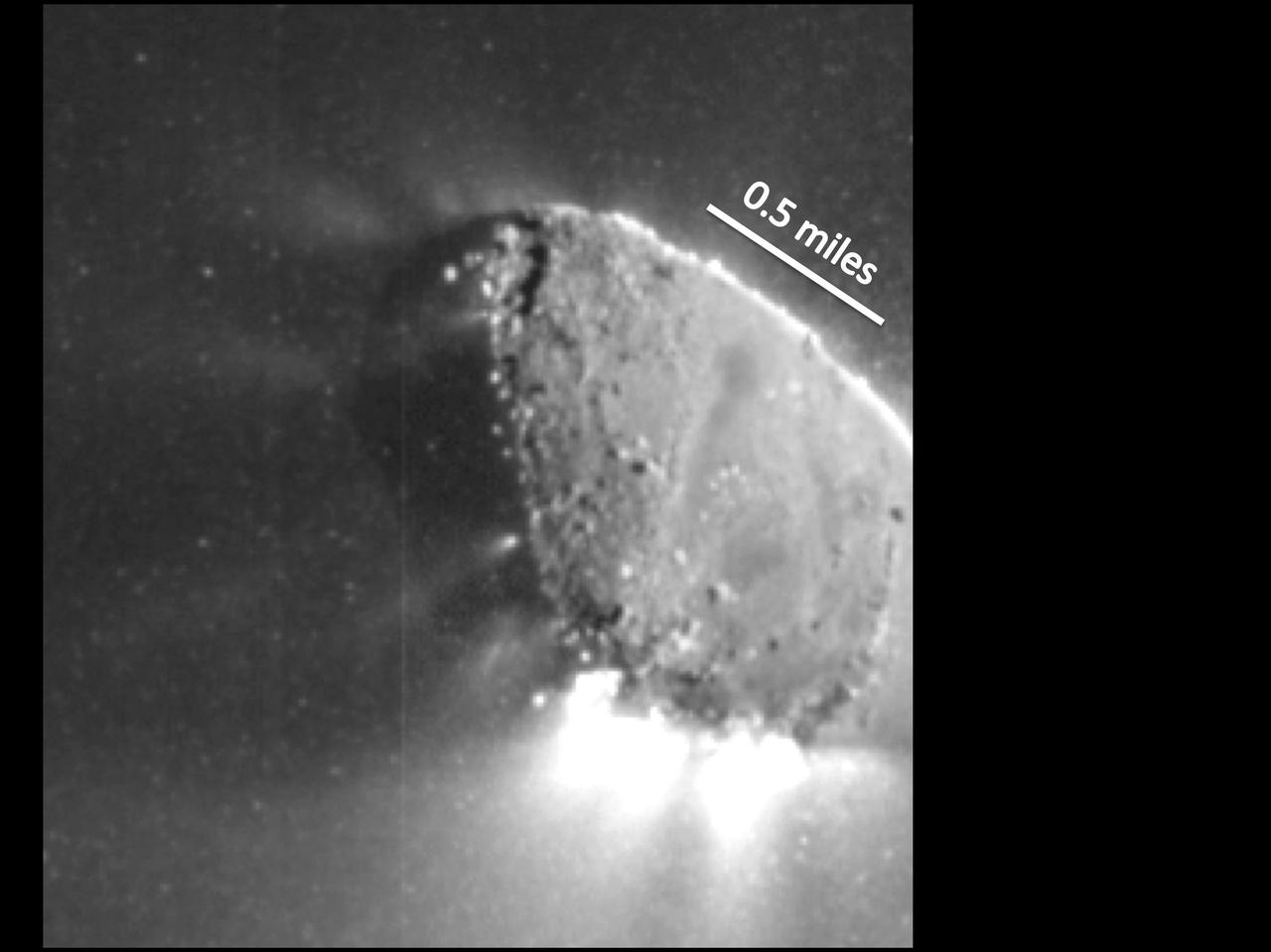
This enhanced image, one of the closest taken of comet Harley 2 by NASA EPOXI mission, shows jets and where they originate from the surface. There are jets outgassing from the sunward side, the night side, and along the terminator.
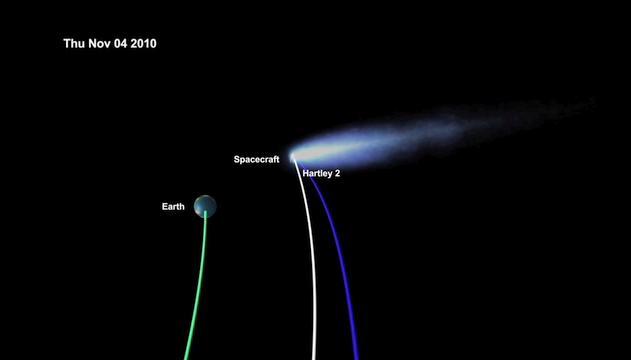
This frame from a movie begins with the launch of NASA Deep Impact on Jan. 12, 2005, from Cape Canaveral, Fla. On July 4, 2005, the mission released a probe into Comet Tempel 1, revealing its pristine, inner material.