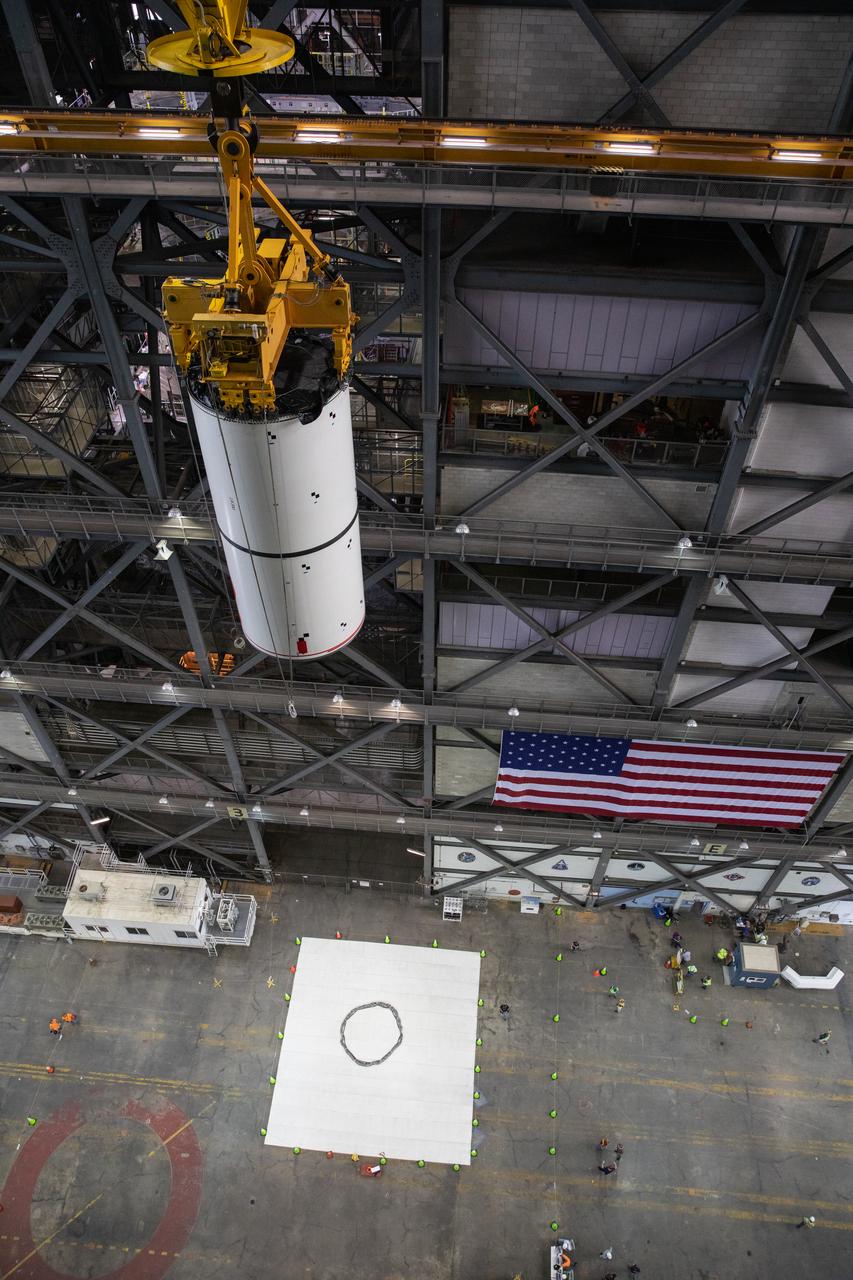
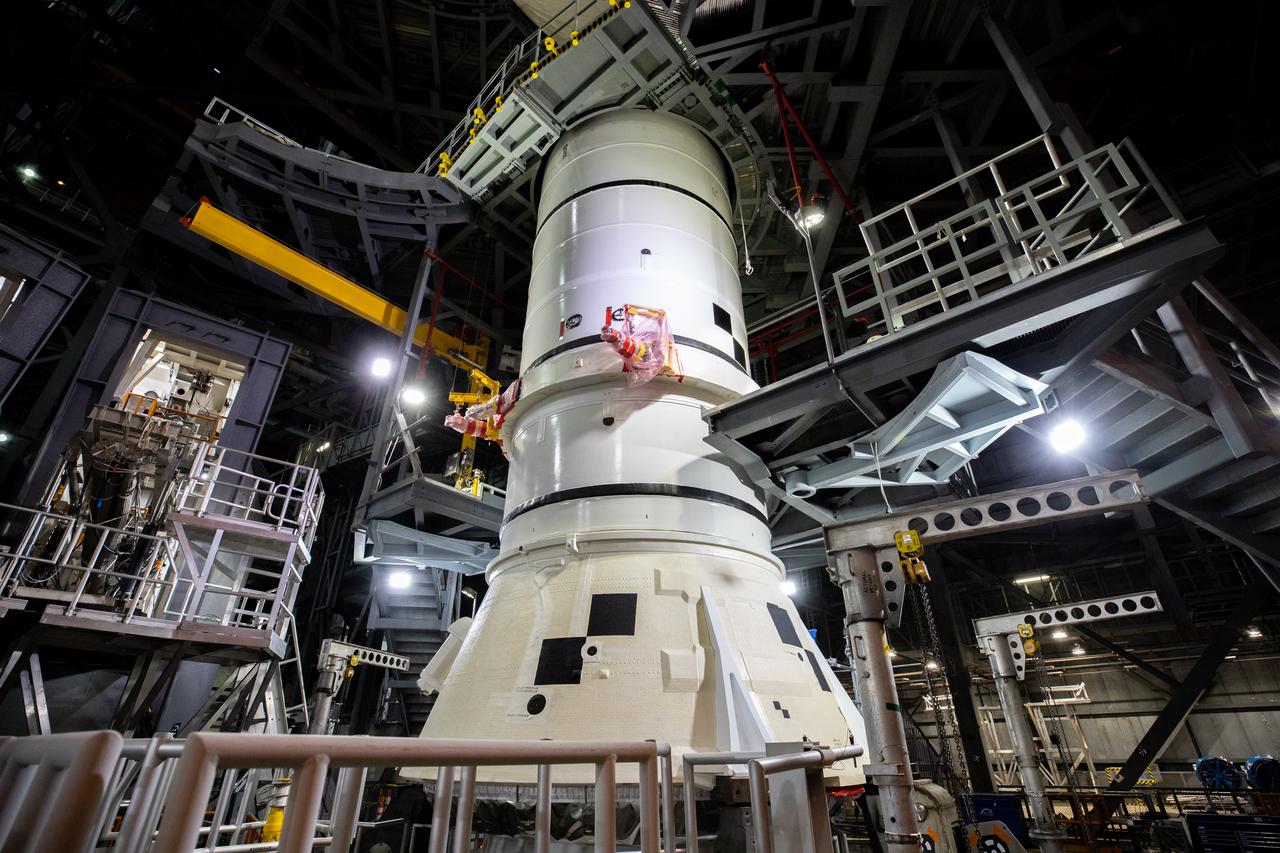
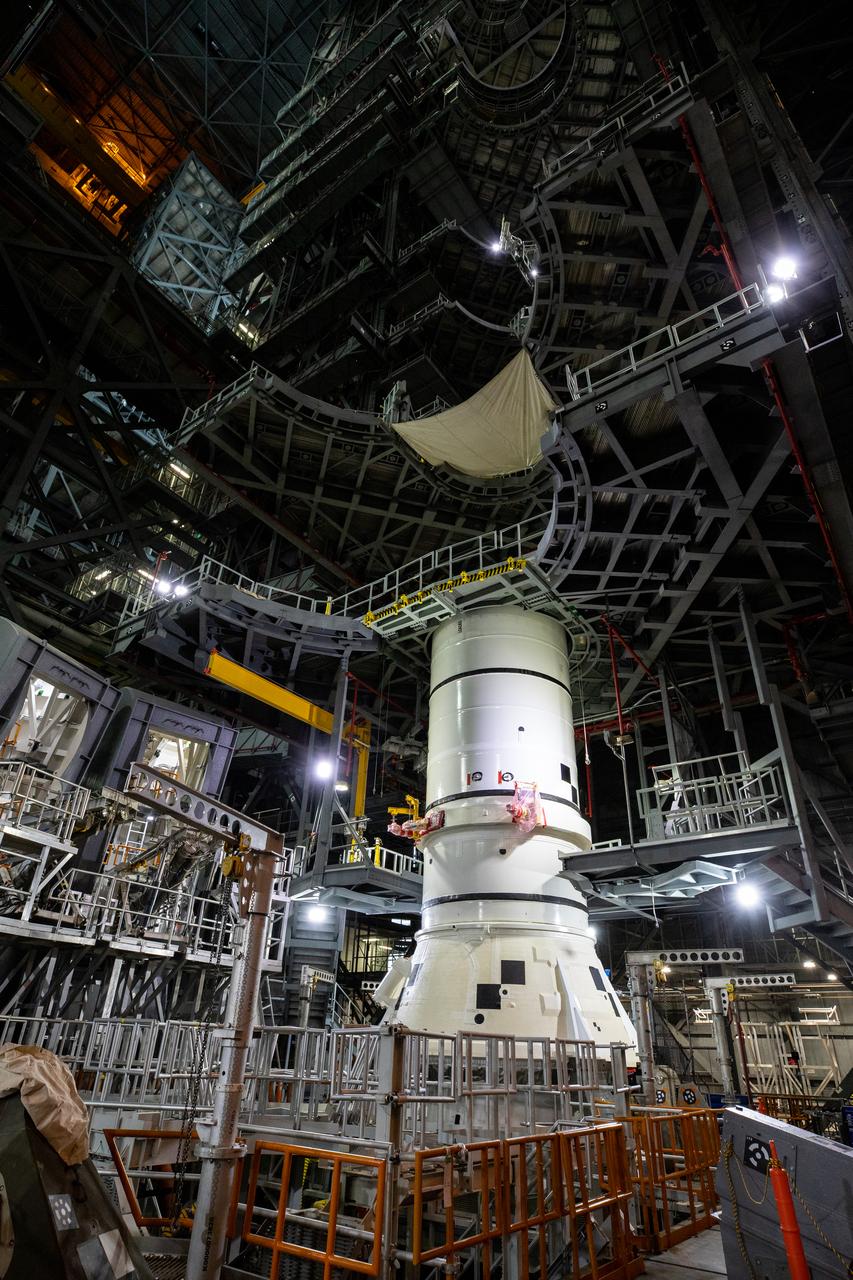
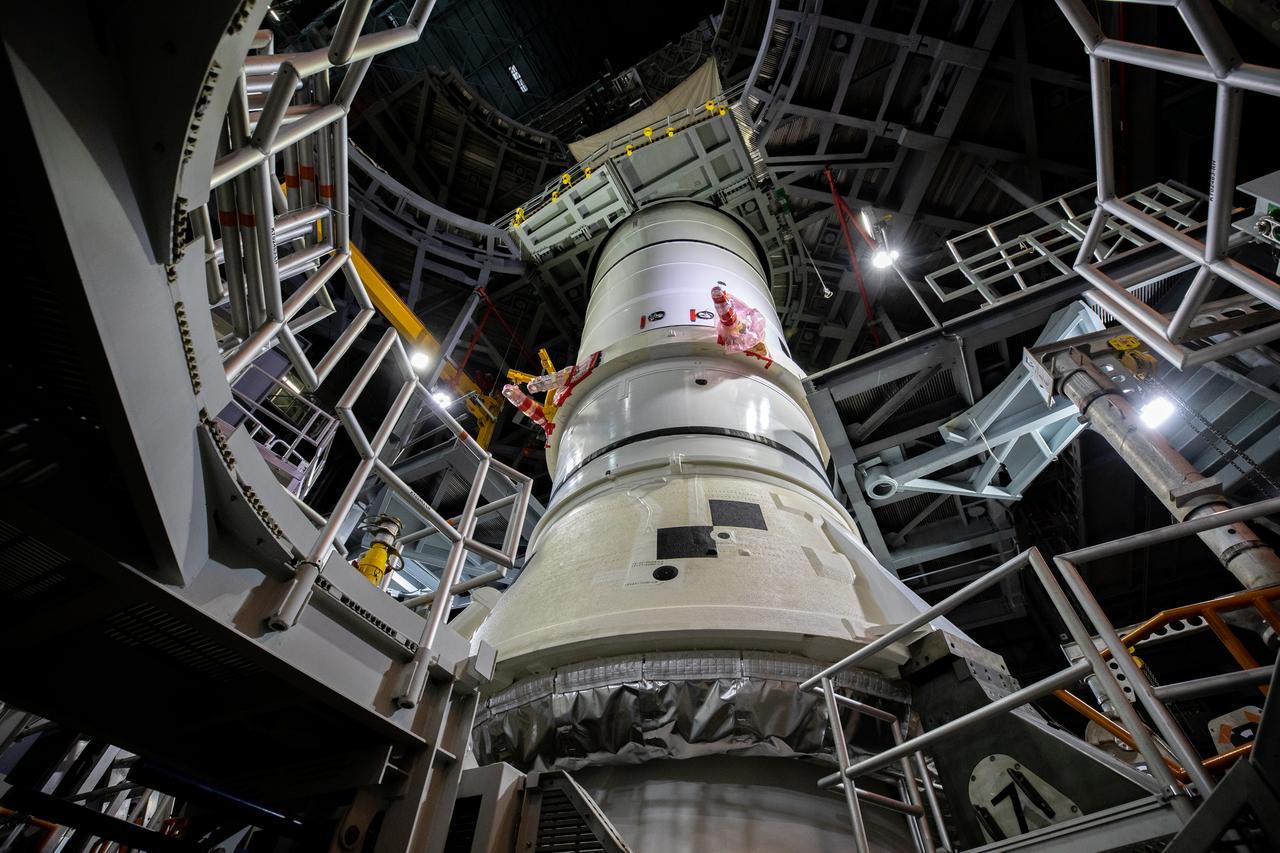
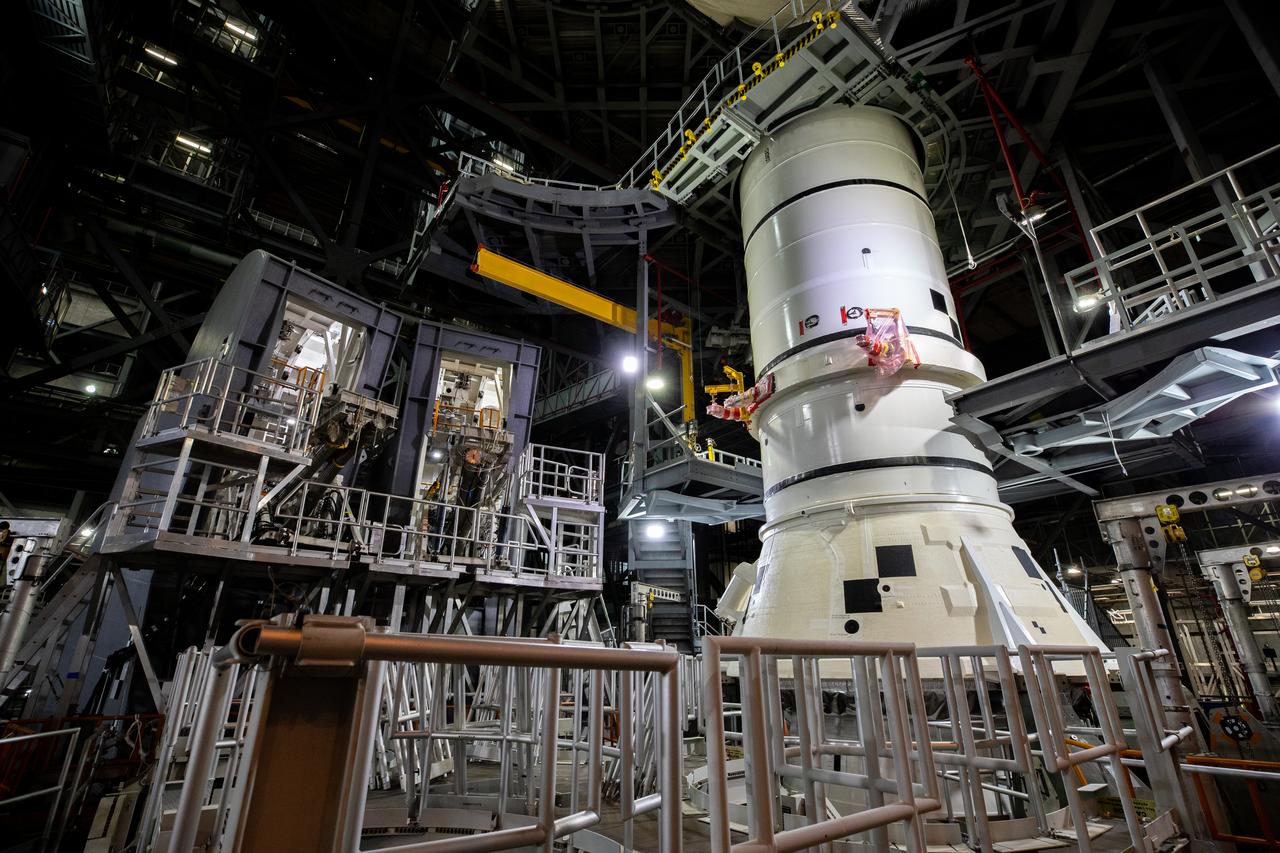
Technicians with NASA’s Exploration Ground Systems rehearse booster stacking operations inside the Vehicle Assembly Building (VAB) at the agency’s Kennedy Space Center in Florida on Sept. 14, 2020, in preparation for Artemis I. The exercise involved using booster segment mock-ups, referred to as pathfinders. During the rehearsal, an aft pathfinder segment was prepared in High Bay 4 of the VAB, after which a team of crane operators moved it over to High Bay 3, where it was placed on the mobile launcher. Careful measurements were then taken before the team added a center pathfinder to the stack. Stacking of the actual Space Launch System (SLS) booster segments will occur later this year, when the rocket’s core stage arrives at Kennedy. Artemis I is the first in a series of increasingly complex missions that will test SLS and the Orion spacecraft as an integrated system prior to crewed flights to the Moon.
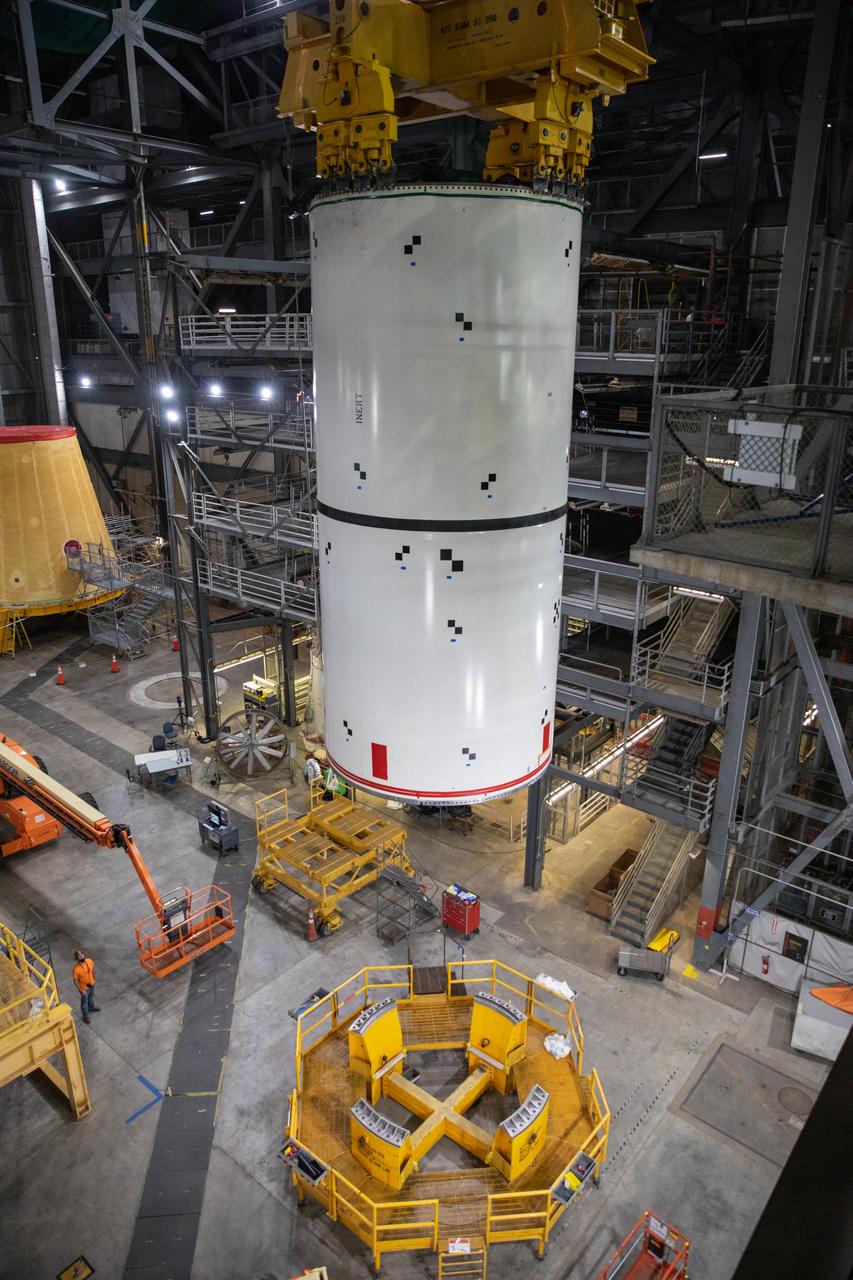
Technicians with NASA’s Exploration Ground Systems rehearse booster stacking operations inside the Vehicle Assembly Building (VAB) at the agency’s Kennedy Space Center in Florida on Sept. 14, 2020, in preparation for Artemis I. The exercise involved using booster segment mock-ups, referred to as pathfinders. During the rehearsal, an aft pathfinder segment was prepared in High Bay 4 of the VAB, after which a team of crane operators moved it over to High Bay 3, where it was placed on the mobile launcher. Careful measurements were then taken before the team added a center pathfinder to the stack. Stacking of the actual Space Launch System (SLS) booster segments will occur later this year, when the rocket’s core stage arrives at Kennedy. Artemis I is the first in a series of increasingly complex missions that will test SLS and the Orion spacecraft as an integrated system prior to crewed flights to the Moon.
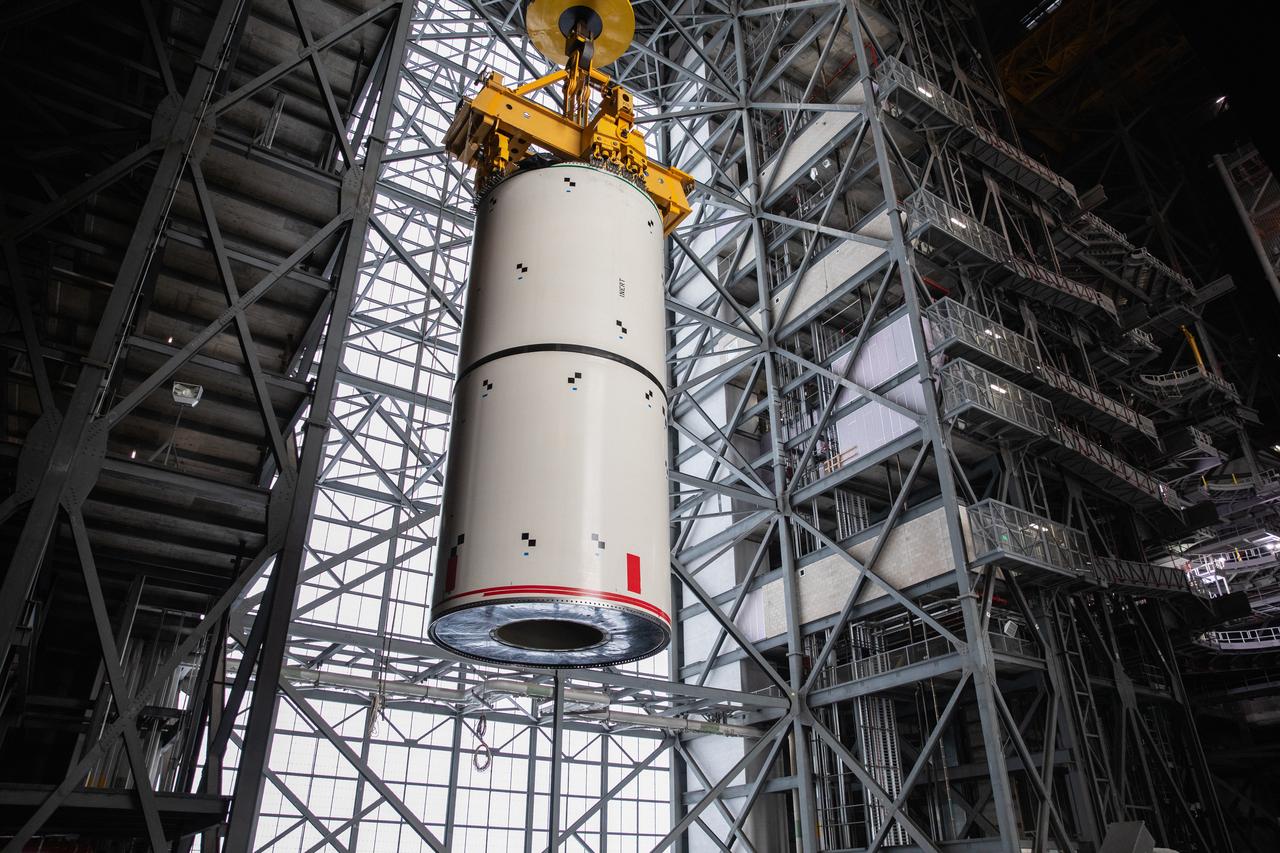
Technicians with NASA’s Exploration Ground Systems rehearse booster stacking operations inside the Vehicle Assembly Building (VAB) at the agency’s Kennedy Space Center in Florida on Sept. 14, 2020, in preparation for Artemis I. The exercise involved using booster segment mock-ups, referred to as pathfinders. During the rehearsal, an aft pathfinder segment was prepared in High Bay 4 of the VAB, after which a team of crane operators moved it over to High Bay 3, where it was placed on the mobile launcher. Careful measurements were then taken before the team added a center pathfinder to the stack. Stacking of the actual Space Launch System (SLS) booster segments will occur later this year, when the rocket’s core stage arrives at Kennedy. Artemis I is the first in a series of increasingly complex missions that will test SLS and the Orion spacecraft as an integrated system prior to crewed flights to the Moon.
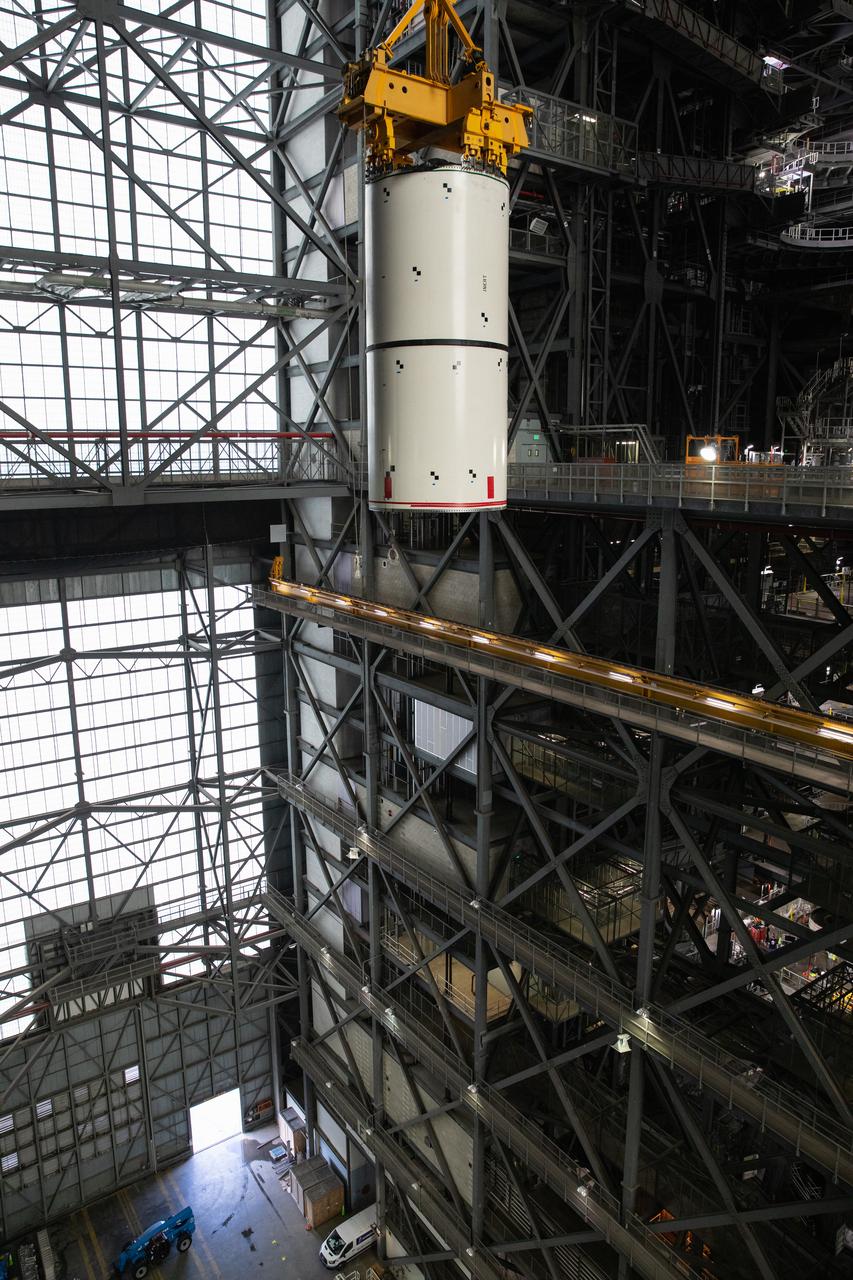
Technicians with NASA’s Exploration Ground Systems rehearse booster stacking operations inside the Vehicle Assembly Building (VAB) at the agency’s Kennedy Space Center in Florida on Sept. 14, 2020, in preparation for Artemis I. The exercise involved using booster segment mock-ups, referred to as pathfinders. During the rehearsal, an aft pathfinder segment was prepared in High Bay 4 of the VAB, after which a team of crane operators moved it over to High Bay 3, where it was placed on the mobile launcher. Careful measurements were then taken before the team added a center pathfinder to the stack. Stacking of the actual Space Launch System (SLS) booster segments will occur later this year, when the rocket’s core stage arrives at Kennedy. Artemis I is the first in a series of increasingly complex missions that will test SLS and the Orion spacecraft as an integrated system prior to crewed flights to the Moon.
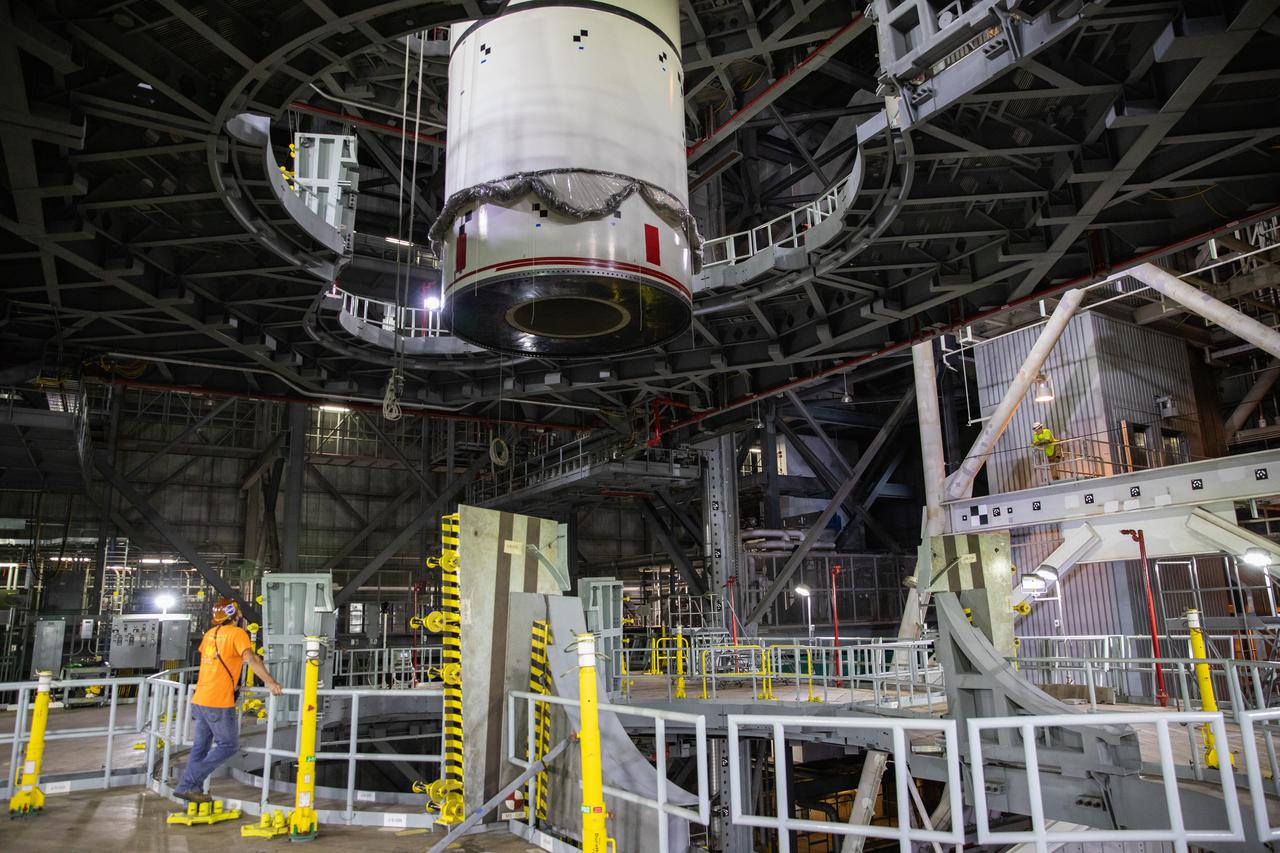
Technicians with NASA’s Exploration Ground Systems lower a mock-up, or pathfinder, of the Space Launch System’s (SLS) center booster segment onto an aft pathfinder segment inside the Vehicle Assembly Building (VAB) at the agency’s Kennedy Space Center in Florida on Sept. 14, 2020. Teams rehearsed stacking both pathfinder segments on top of the mobile launcher in High Bay 3 of the VAB in preparation for the Artemis I launch. Stacking of the actual SLS booster segments will occur later this year, when the rocket’s core stage arrives at Kennedy. Artemis I is the first in a series of increasingly complex missions that will test SLS and the Orion spacecraft as an integrated system prior to crewed flights to the Moon.
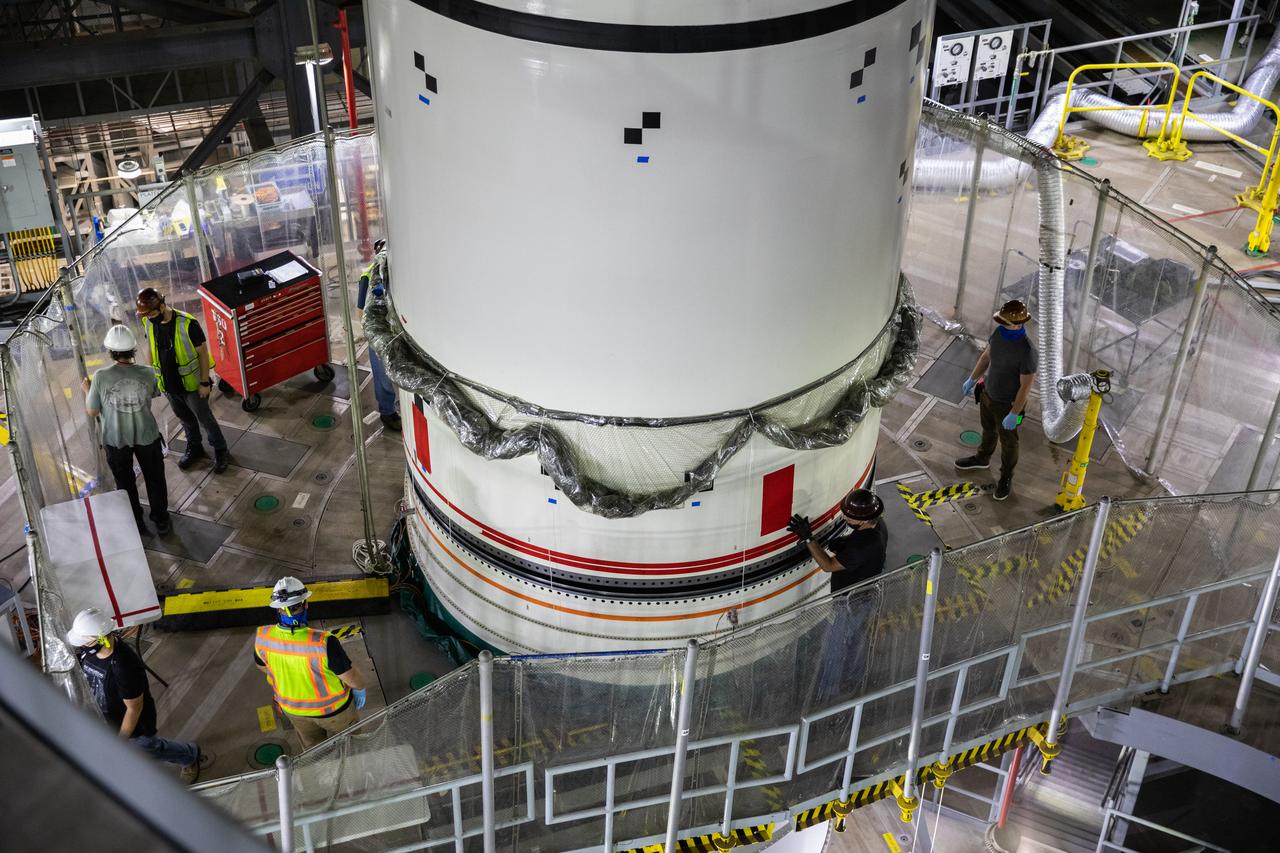
Technicians with NASA’s Exploration Ground Systems lower a mock-up, or pathfinder, of the Space Launch System’s (SLS) center booster segment onto an aft pathfinder segment inside the Vehicle Assembly Building (VAB) at the agency’s Kennedy Space Center in Florida on Sept. 14, 2020. Teams rehearsed stacking both pathfinder segments on top of the mobile launcher in High Bay 3 of the VAB in preparation for the Artemis I launch. Stacking of the actual SLS booster segments will occur later this year, when the rocket’s core stage arrives at Kennedy. Artemis I is the first in a series of increasingly complex missions that will test SLS and the Orion spacecraft as an integrated system prior to crewed flights to the Moon.
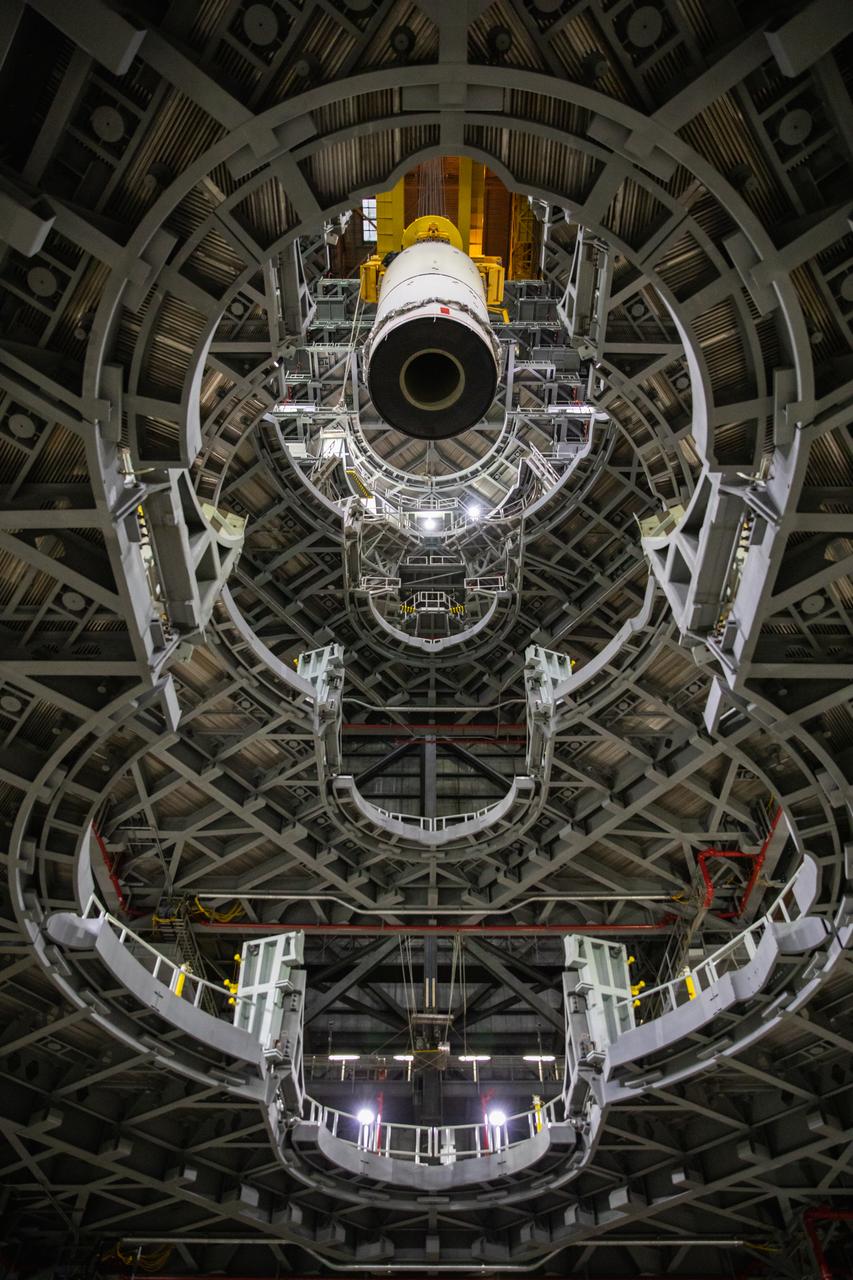
Technicians with NASA’s Exploration Ground Systems prepare to lower a mock-up, or pathfinder, of the Space Launch System’s (SLS) center booster segment onto an aft pathfinder segment inside the Vehicle Assembly Building (VAB) at the agency’s Kennedy Space Center in Florida on Sept. 14, 2020. Teams rehearsed stacking both pathfinder segments on top of the mobile launcher in High Bay 3 of the VAB in preparation for the Artemis I launch. Stacking of the actual SLS booster segments will occur later this year, when the rocket’s core stage arrives at Kennedy. Artemis I is the first in a series of increasingly complex missions that will test SLS and the Orion spacecraft as an integrated system prior to crewed flights to the Moon.
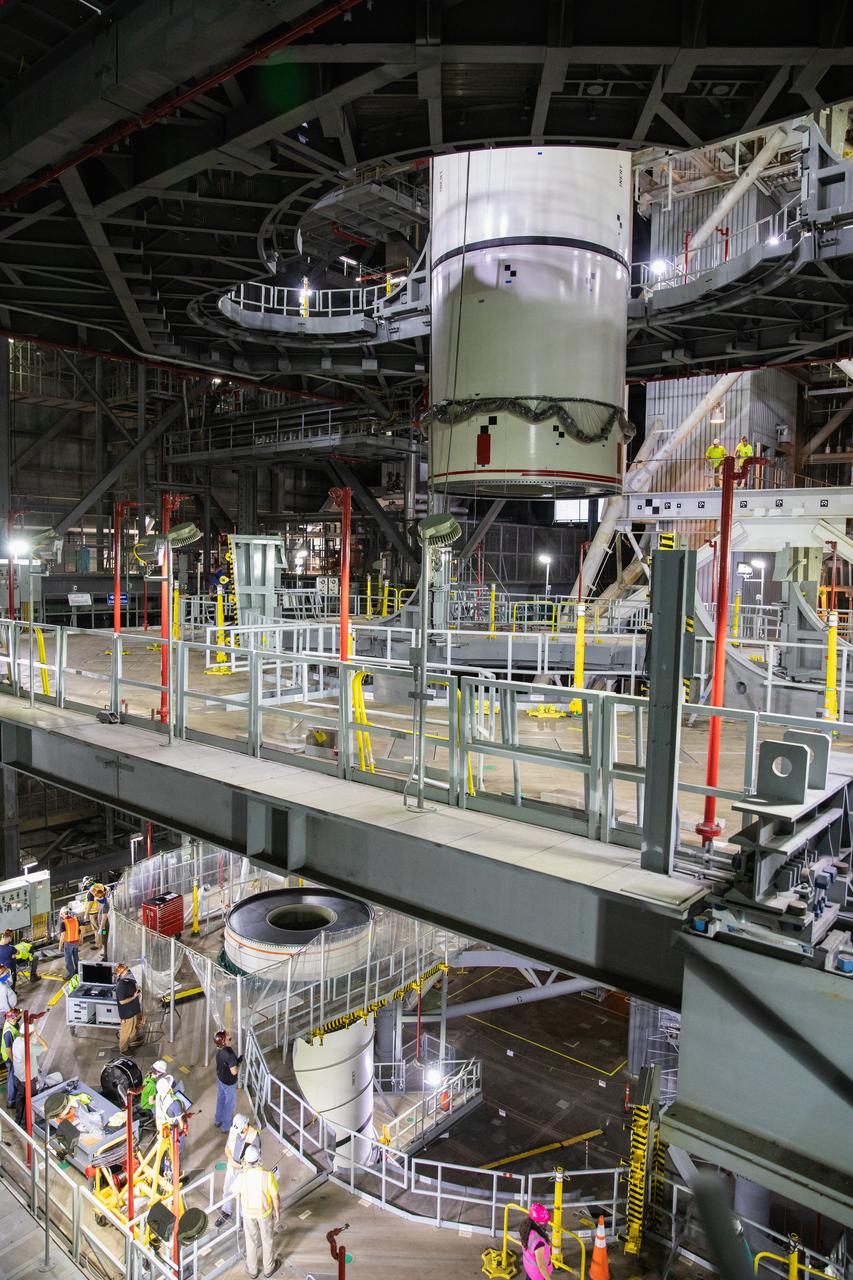
Technicians with NASA’s Exploration Ground Systems lower a mock-up, or pathfinder, of the Space Launch System’s (SLS) center booster segment onto an aft pathfinder segment inside the Vehicle Assembly Building (VAB) at the agency’s Kennedy Space Center in Florida on Sept. 14, 2020. Teams rehearsed stacking both pathfinder segments on top of the mobile launcher in High Bay 3 of the VAB in preparation for the Artemis I launch. Stacking of the actual SLS booster segments will occur later this year, when the rocket’s core stage arrives at Kennedy. Artemis I is the first in a series of increasingly complex missions that will test SLS and the Orion spacecraft as an integrated system prior to crewed flights to the Moon.
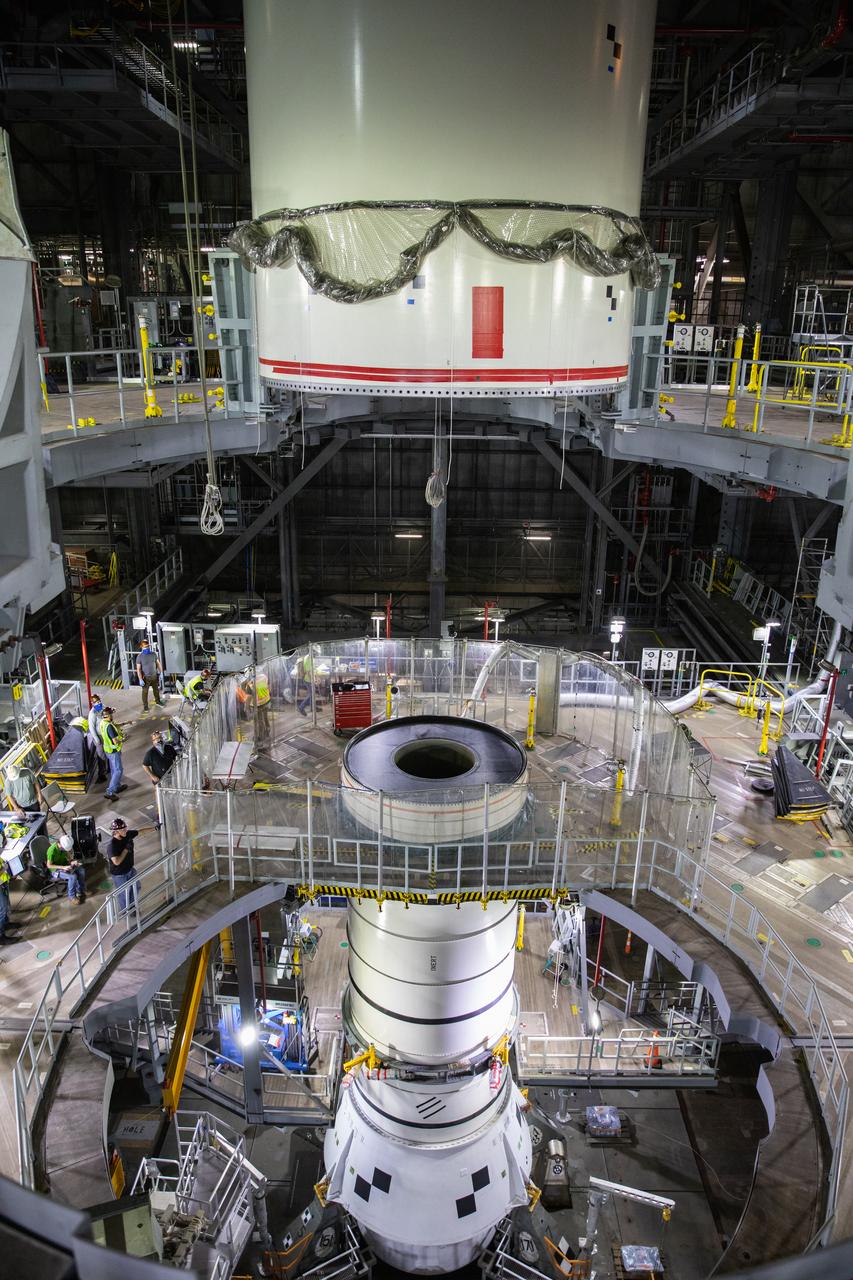
Technicians with NASA’s Exploration Ground Systems lower a mock-up, or pathfinder, of the Space Launch System’s (SLS) center booster segment onto an aft pathfinder segment inside the Vehicle Assembly Building (VAB) at the agency’s Kennedy Space Center in Florida on Sept. 14, 2020. Teams rehearsed stacking both pathfinder segments on top of the mobile launcher in High Bay 3 of the VAB in preparation for the Artemis I launch. Stacking of the actual SLS booster segments will occur later this year, when the rocket’s core stage arrives at Kennedy. Artemis I is the first in a series of increasingly complex missions that will test SLS and the Orion spacecraft as an integrated system prior to crewed flights to the Moon.

Technicians with NASA’s Exploration Ground Systems lower a mock-up, or pathfinder, of the Space Launch System’s (SLS) center booster segment onto an aft pathfinder segment inside the Vehicle Assembly Building (VAB) at the agency’s Kennedy Space Center in Florida on Sept. 14, 2020. Teams rehearsed stacking both pathfinder segments on top of the mobile launcher in High Bay 3 of the VAB in preparation for the Artemis I launch. Stacking of the actual SLS booster segments will occur later this year, when the rocket’s core stage arrives at Kennedy. Artemis I is the first in a series of increasingly complex missions that will test SLS and the Orion spacecraft as an integrated system prior to crewed flights to the Moon.
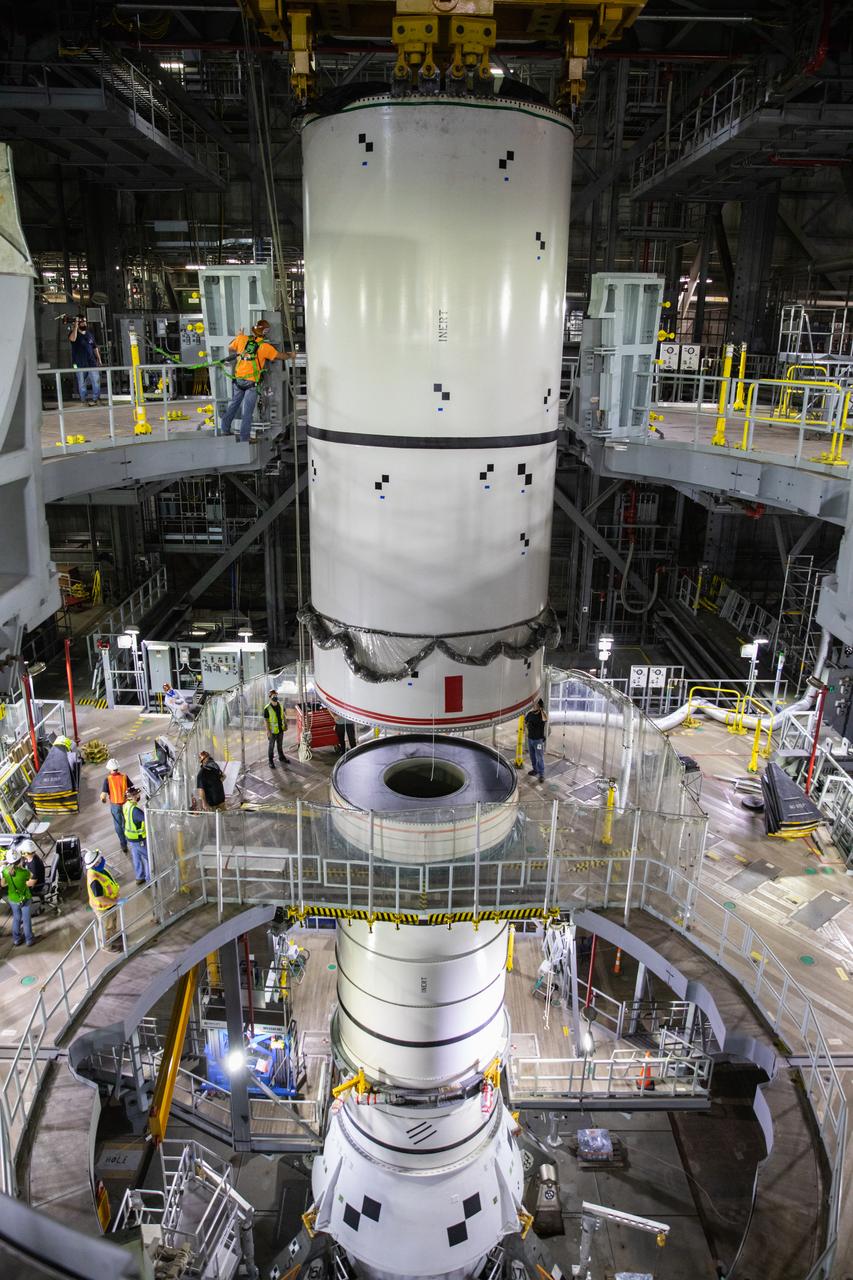
Technicians with NASA’s Exploration Ground Systems lower a mock-up, or pathfinder, of the Space Launch System’s (SLS) center booster segment onto an aft pathfinder segment inside the Vehicle Assembly Building (VAB) at the agency’s Kennedy Space Center in Florida on Sept. 14, 2020. Teams rehearsed stacking both pathfinder segments on top of the mobile launcher in High Bay 3 of the VAB in preparation for the Artemis I launch. Stacking of the actual SLS booster segments will occur later this year, when the rocket’s core stage arrives at Kennedy. Artemis I is the first in a series of increasingly complex missions that will test SLS and the Orion spacecraft as an integrated system prior to crewed flights to the Moon.
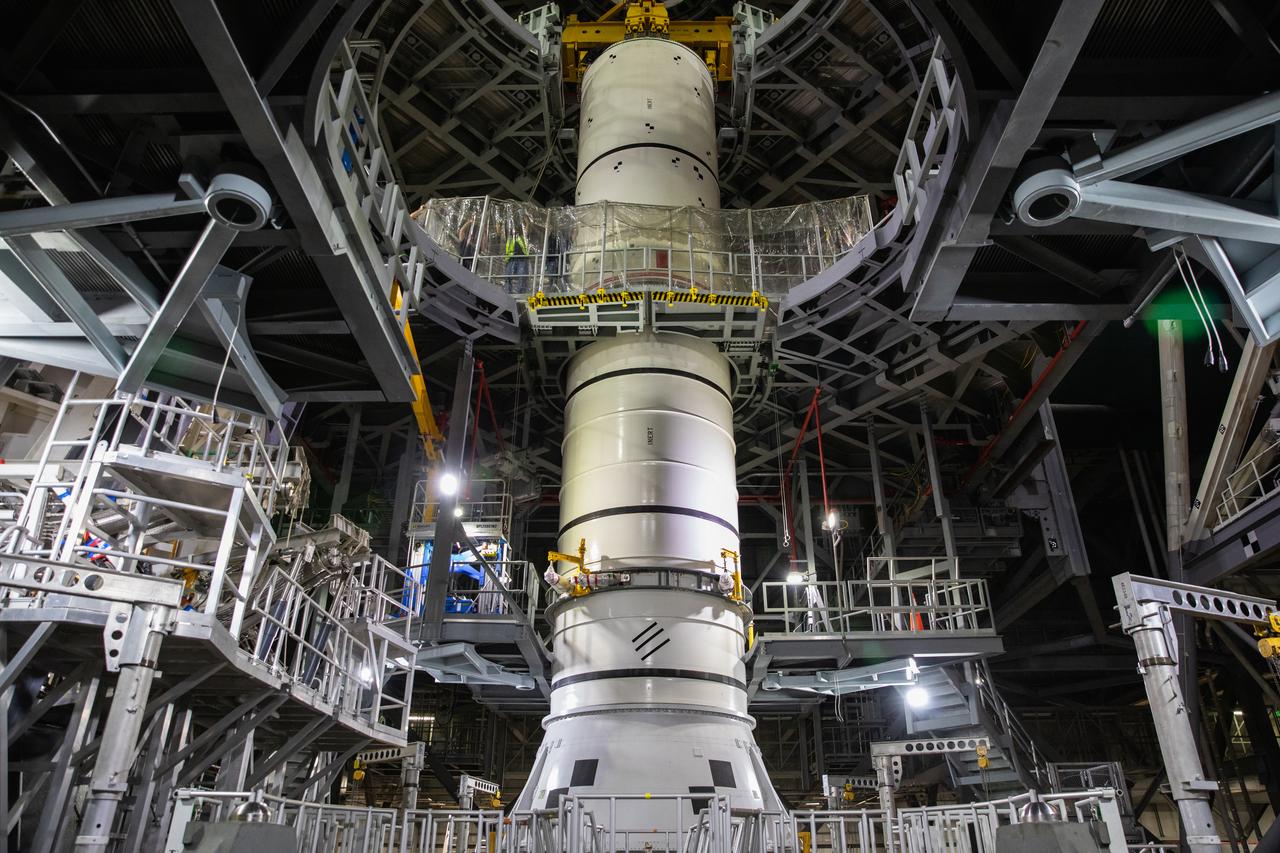
Technicians with NASA’s Exploration Ground Systems lower a mock-up, or pathfinder, of the Space Launch System’s (SLS) center booster segment onto an aft pathfinder segment inside the Vehicle Assembly Building (VAB) at the agency’s Kennedy Space Center in Florida on Sept. 14, 2020. Teams rehearsed stacking both pathfinder segments on top of the mobile launcher in High Bay 3 of the VAB in preparation for the Artemis I launch. Stacking of the actual SLS booster segments will occur later this year, when the rocket’s core stage arrives at Kennedy. Artemis I is the first in a series of increasingly complex missions that will test SLS and the Orion spacecraft as an integrated system prior to crewed flights to the Moon.
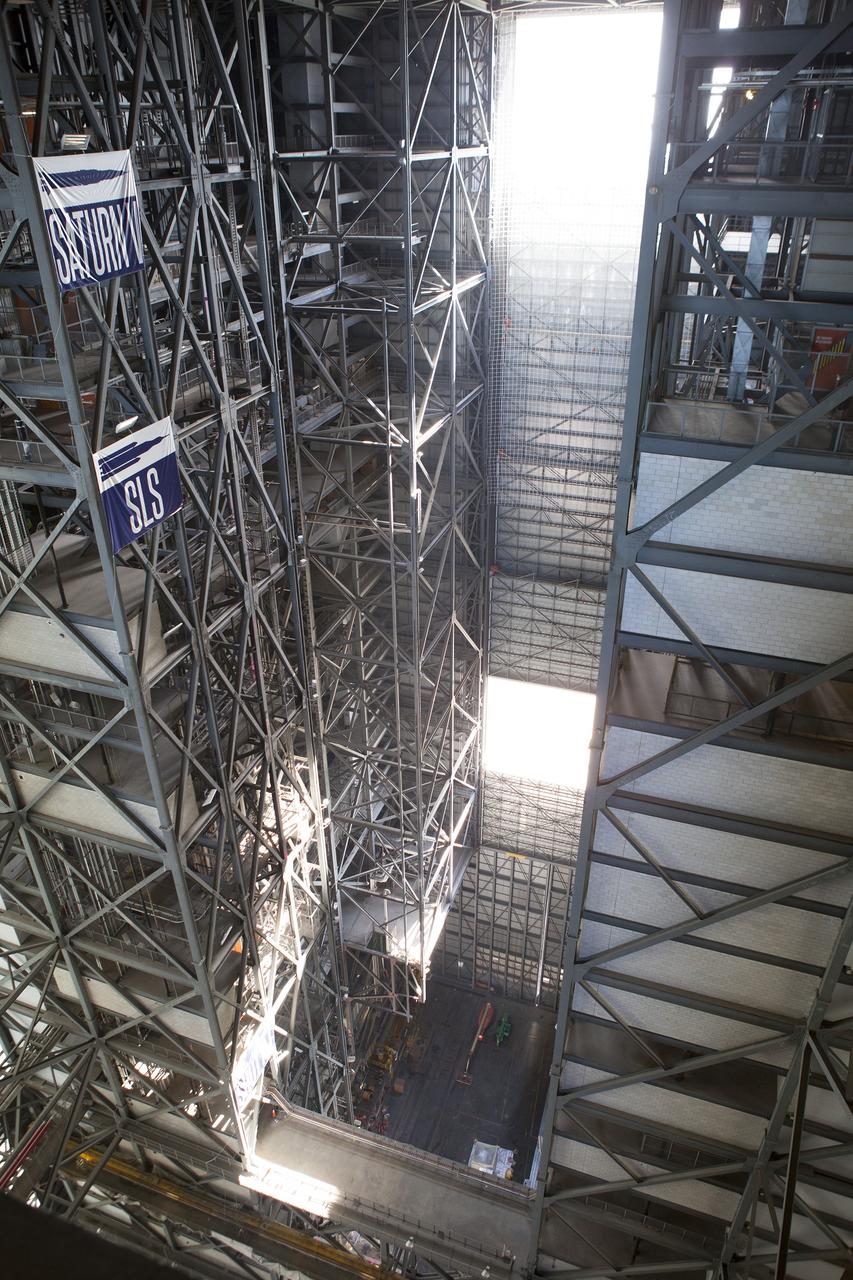
CAPE CANAVERAL, Fla. – A view looking down from one of the higher levels in the Vehicle Assembly Building, or VAB, reveals High Bay 3 at NASA’s Kennedy Space Center in Florida. Banners note the heights of the Saturn V, Space Launch System, or SLS, and shuttle on the steel structure. Modifications are underway to prepare High Bay 3 for a new platform system. The modifications are part of a centerwide refurbishment initiative under the Ground Systems Development and Operations Program. High bay 3 is being refurbished to accommodate NASA’s Space Launch System and a variety of other spacecraft. For more information, visit http://www.nasa.gov/exploration/systems/ground/index.html. Photo credit: NASA/Dimitri Gerondidakis
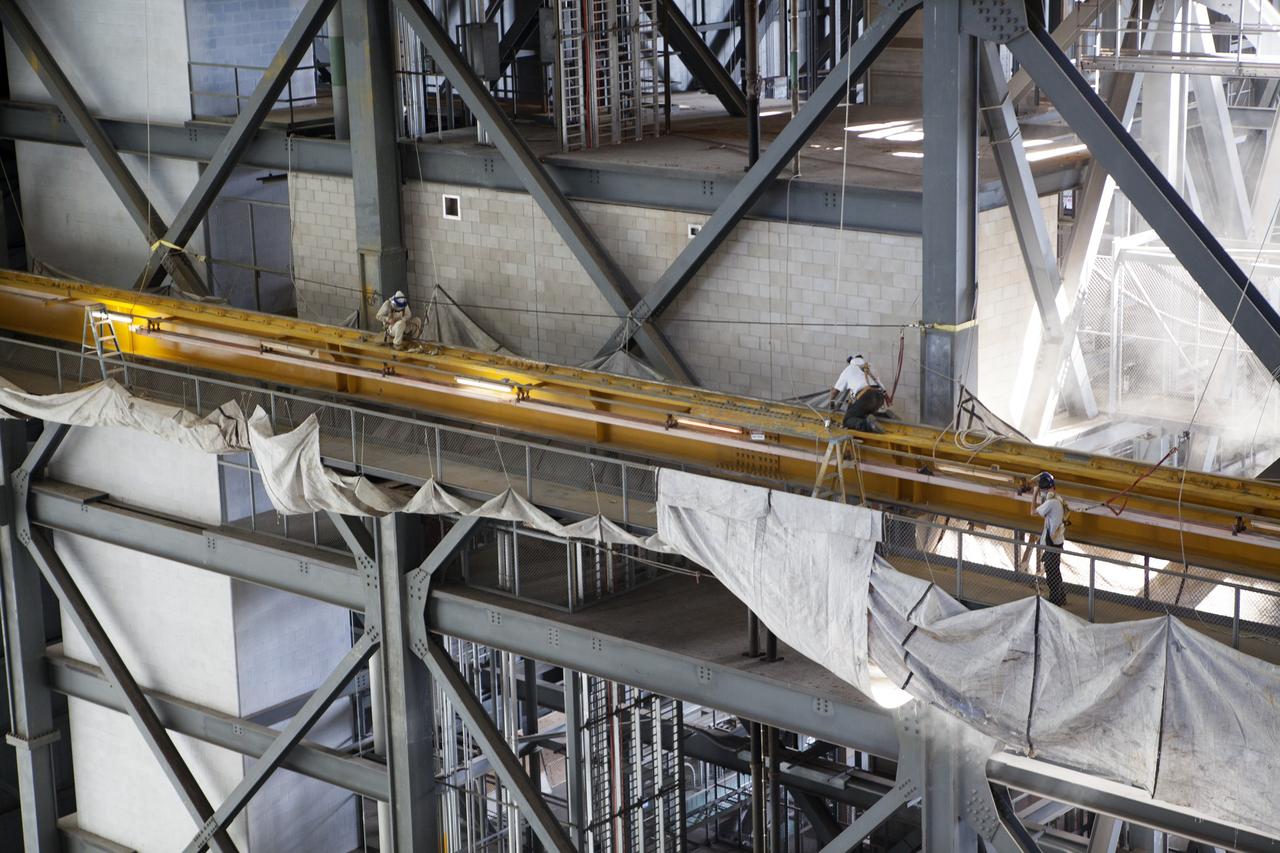
CAPE CANAVERAL, Fla. – Inside the Vehicle Assembly Building, or VAB, at NASA’s Kennedy Space Center in Florida, construction workers are hanging protective cloths around a work level near High Bay 3. Modifications are underway in the VAB to prepare High Bay 3 for a new platform system. The modifications are part of a centerwide refurbishment initiative under the Ground Systems Development and Operations Program. High bay 3 is being refurbished to accommodate NASA’s Space Launch System and a variety of other spacecraft. For more information, visit http://www.nasa.gov/exploration/systems/ground/index.html. Photo credit: NASA/Dimitri Gerondidakis
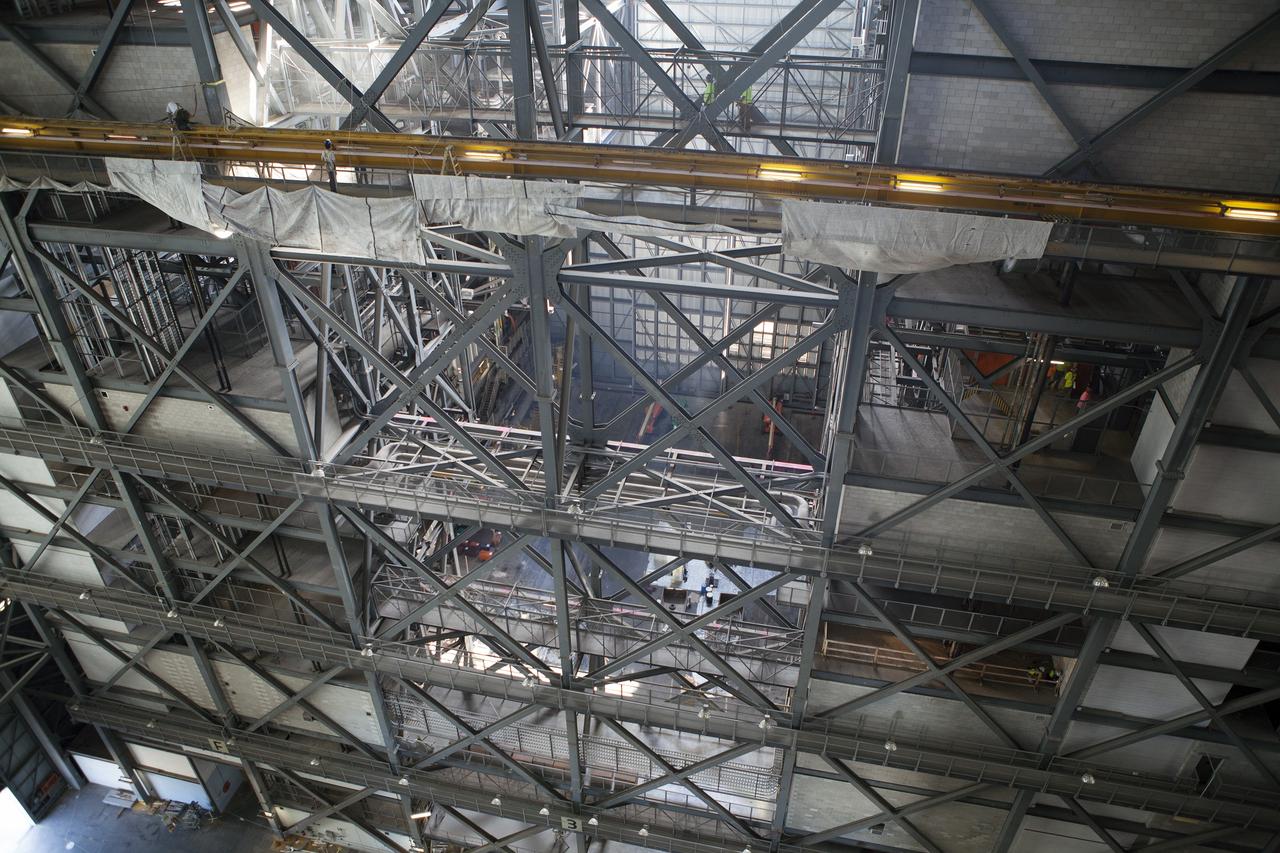
CAPE CANAVERAL, Fla. – Inside the Vehicle Assembly Building, or VAB, at NASA’s Kennedy Space Center in Florida, protective cloths are being placed around a work level near High Bay 3. Modifications are underway in the VAB to prepare High Bay 3 for a new platform system. The modifications are part of a centerwide refurbishment initiative under the Ground Systems Development and Operations Program. High bay 3 is being refurbished to accommodate NASA’s Space Launch System and a variety of other spacecraft. For more information, visit http://www.nasa.gov/exploration/systems/ground/index.html. Photo credit: NASA/Dimitri Gerondidakis
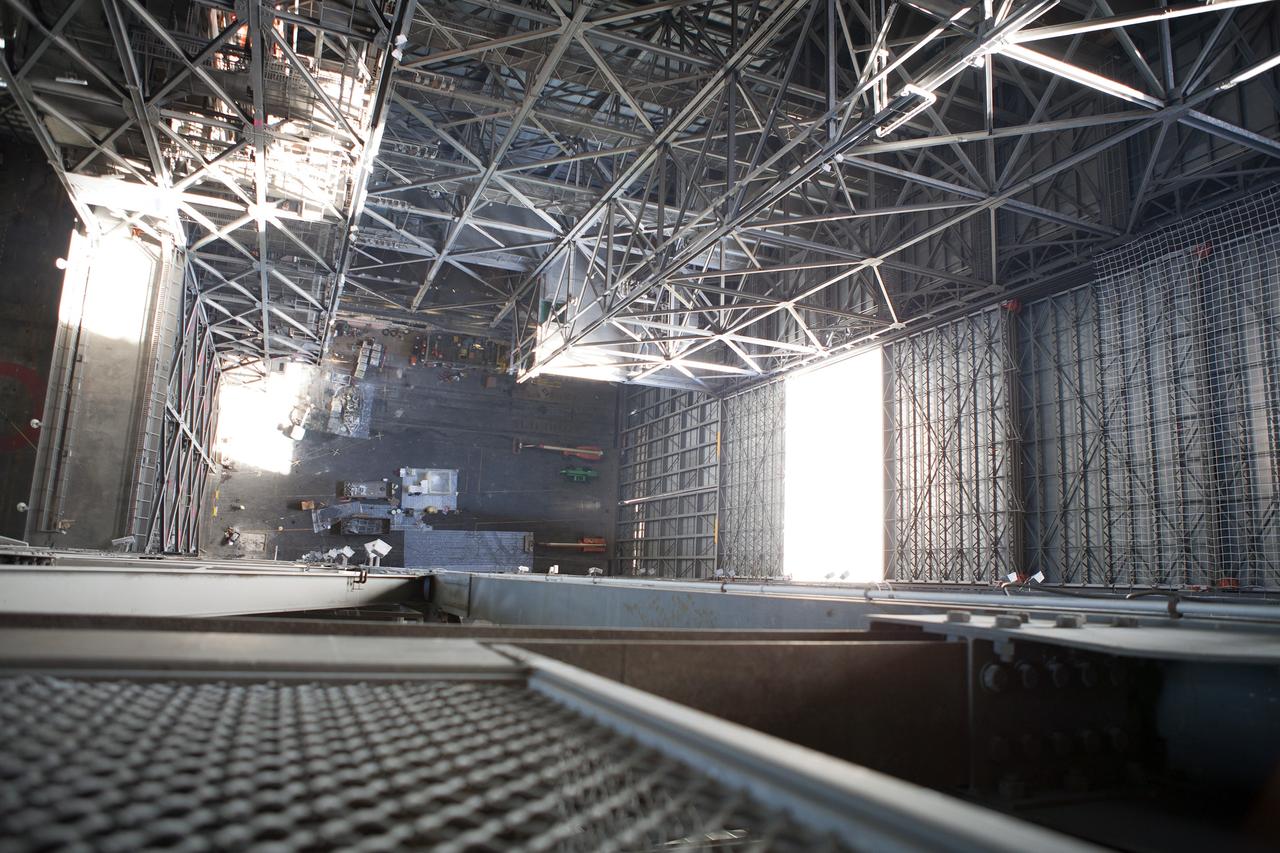
CAPE CANAVERAL, Fla. – A view looking down from one of the higher levels in the Vehicle Assembly Building, or VAB, reveals High Bay 3 at NASA’s Kennedy Space Center in Florida. Modifications are underway in the VAB to prepare High Bay 3 for a new platform system. The modifications are part of a centerwide refurbishment initiative under the Ground Systems Development and Operations Program. High bay 3 is being refurbished to accommodate NASA’s Space Launch System and a variety of other spacecraft. For more information, visit http://www.nasa.gov/exploration/systems/ground/index.html. Photo credit: NASA/Dimitri Gerondidakis
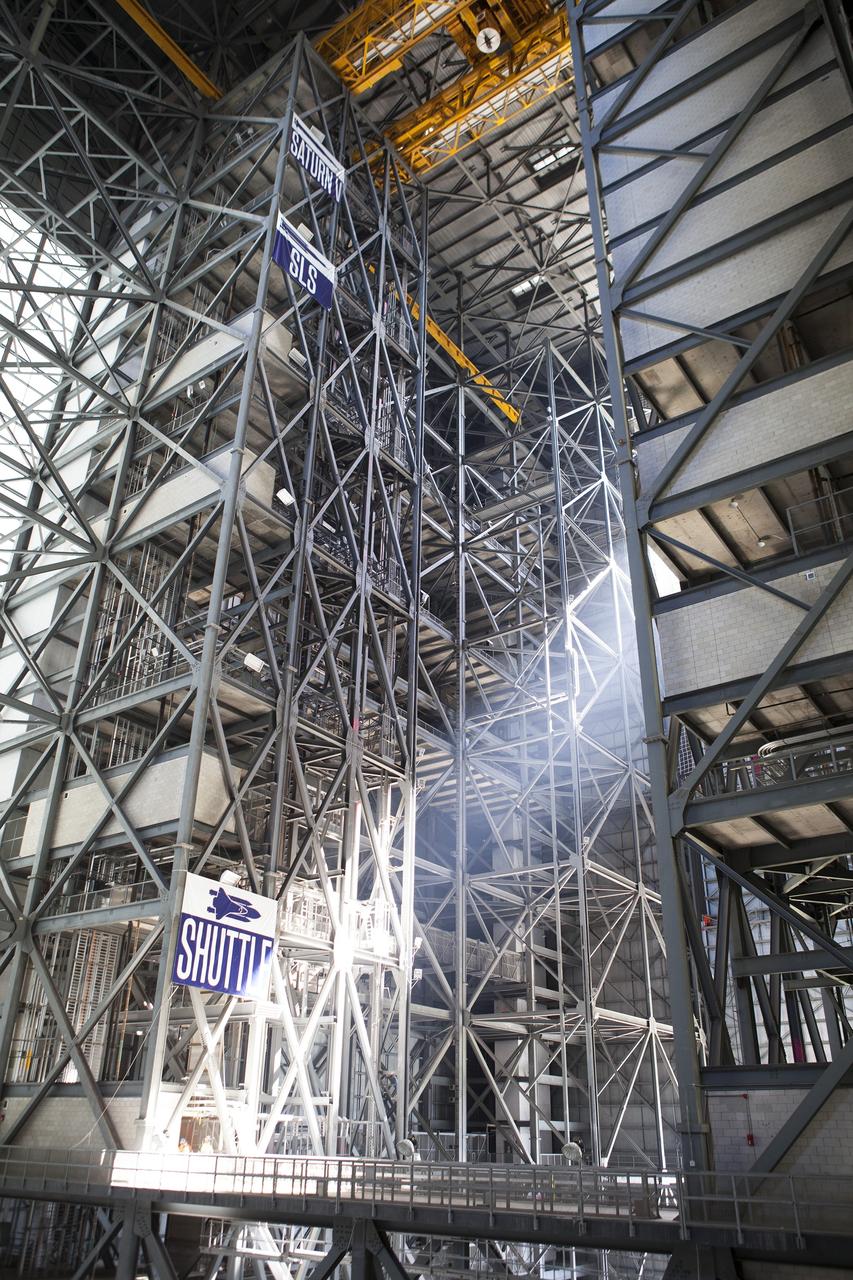
CAPE CANAVERAL, Fla. – Steel structures surround High Bay 3 inside the Vehicle Assembly Building, or VAB, at NASA’s Kennedy Space Center in Florida. In view, high above, is the 175-ton crane. Banners note the heights of the Saturn V, Space Launch System, or SLS, and shuttle on the steel structure. Modifications are underway in the VAB to prepare High Bay 3 for a new platform system. The modifications are part of a centerwide refurbishment initiative under the Ground Systems Development and Operations Program. High bay 3 is being refurbished to accommodate NASA’s Space Launch System and a variety of other spacecraft. For more information, visit http://www.nasa.gov/exploration/systems/ground/index.html. Photo credit: NASA/Dimitri Gerondidakis
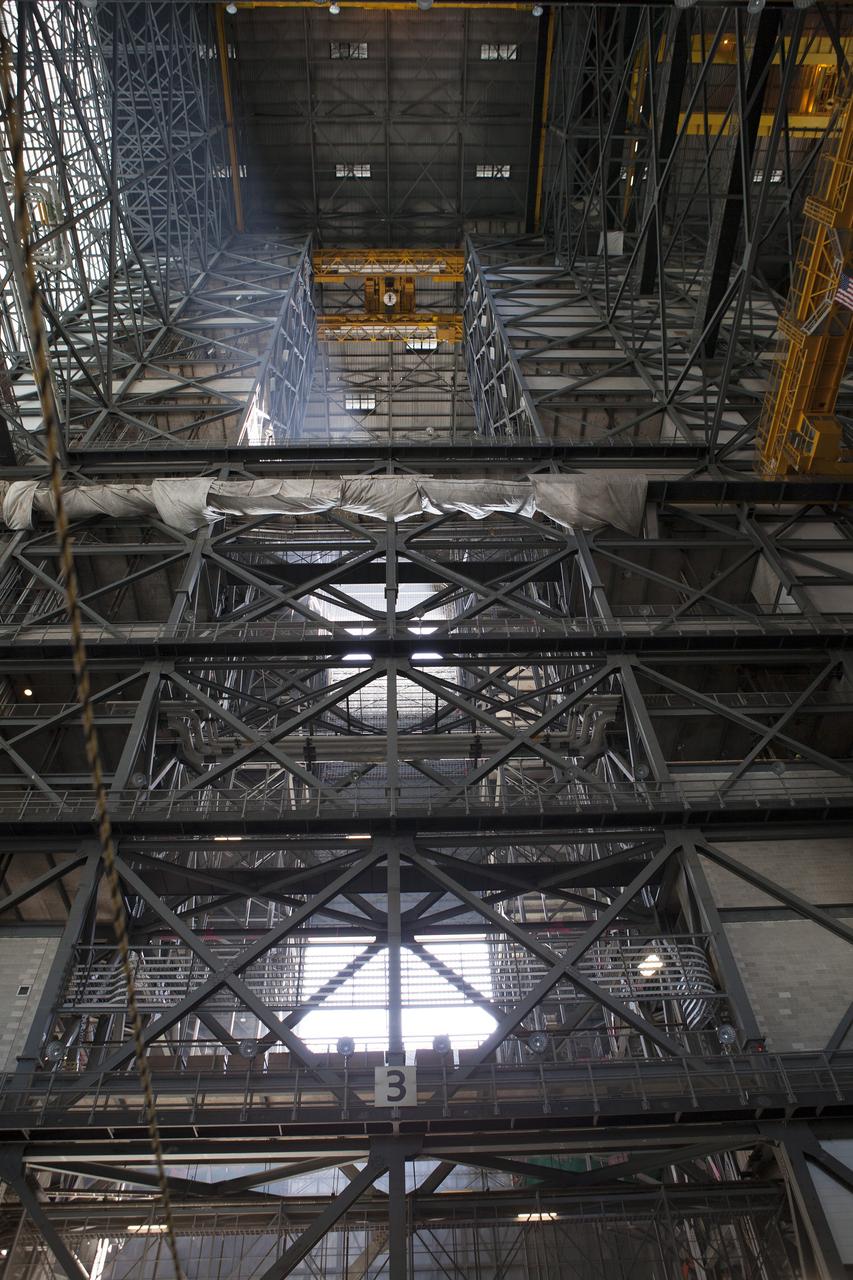
CAPE CANAVERAL, Fla. – A view looking up from the ground level inside the Vehicle Assembly Building, or VAB, at NASA’s Kennedy Space Center in Florida. High above is the 175-ton crane. Modifications are underway inside the VAB to prepare High Bay 3 for a new platform system. The modifications are part of a centerwide refurbishment initiative under the Ground Systems Development and Operations Program. High bay 3 is being refurbished to accommodate NASA’s Space Launch System and a variety of other spacecraft. For more information, visit http://www.nasa.gov/exploration/systems/ground/index.html. Photo credit: NASA/Dimitri Gerondidakis
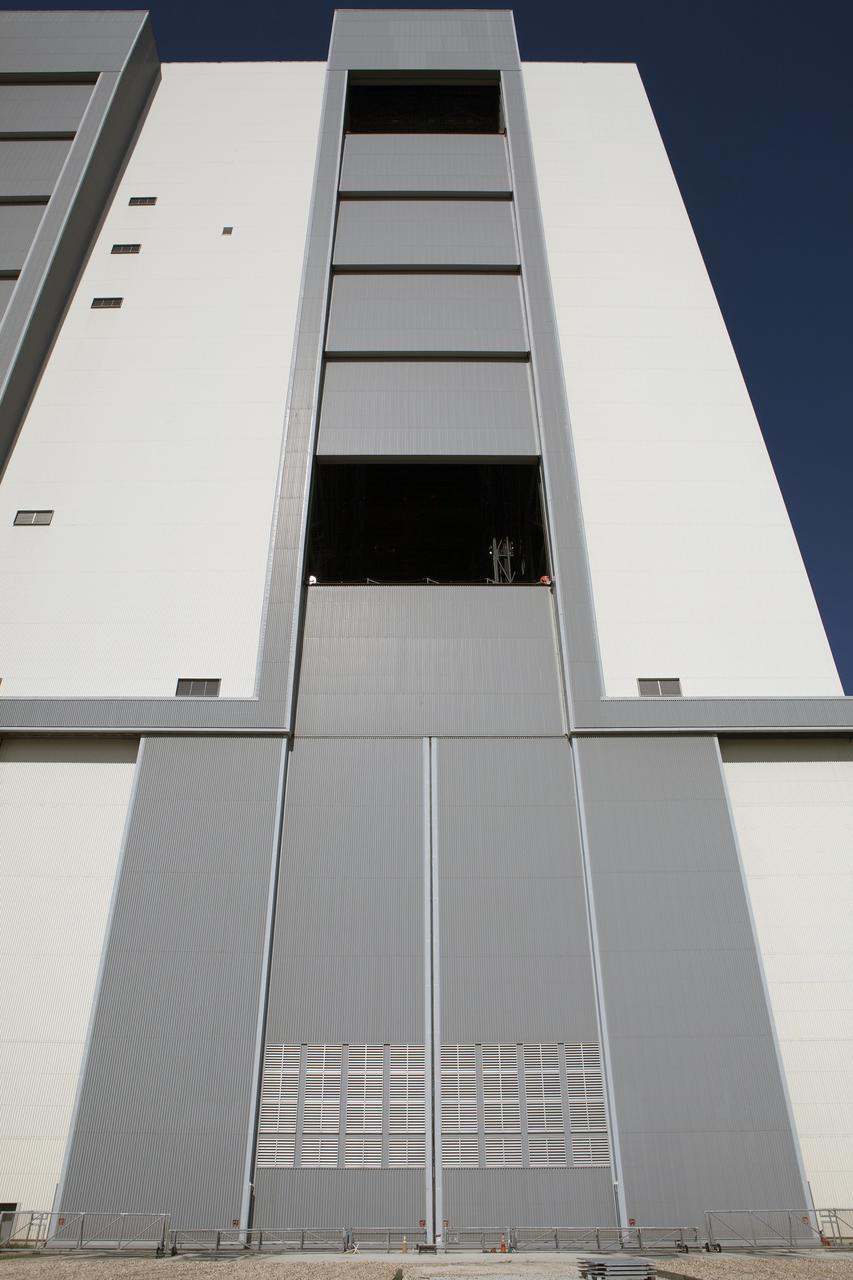
CAPE CANAVERAL, Fla. – An up close view of one of the large vertical lift doors on the east side of the Vehicle Assembly Building, or VAB, at NASA’s Kennedy Space Center in Florida. Inside the VAB, modifications are underway to prepare High Bay 3 for a new platform system. The modifications are part of a centerwide refurbishment initiative under the Ground Systems Development and Operations Program. High bay 3 is being refurbished to accommodate NASA’s Space Launch System and a variety of other spacecraft. For more information, visit http://www.nasa.gov/exploration/systems/ground/index.html. Photo credit: NASA/Dimitri Gerondidakis
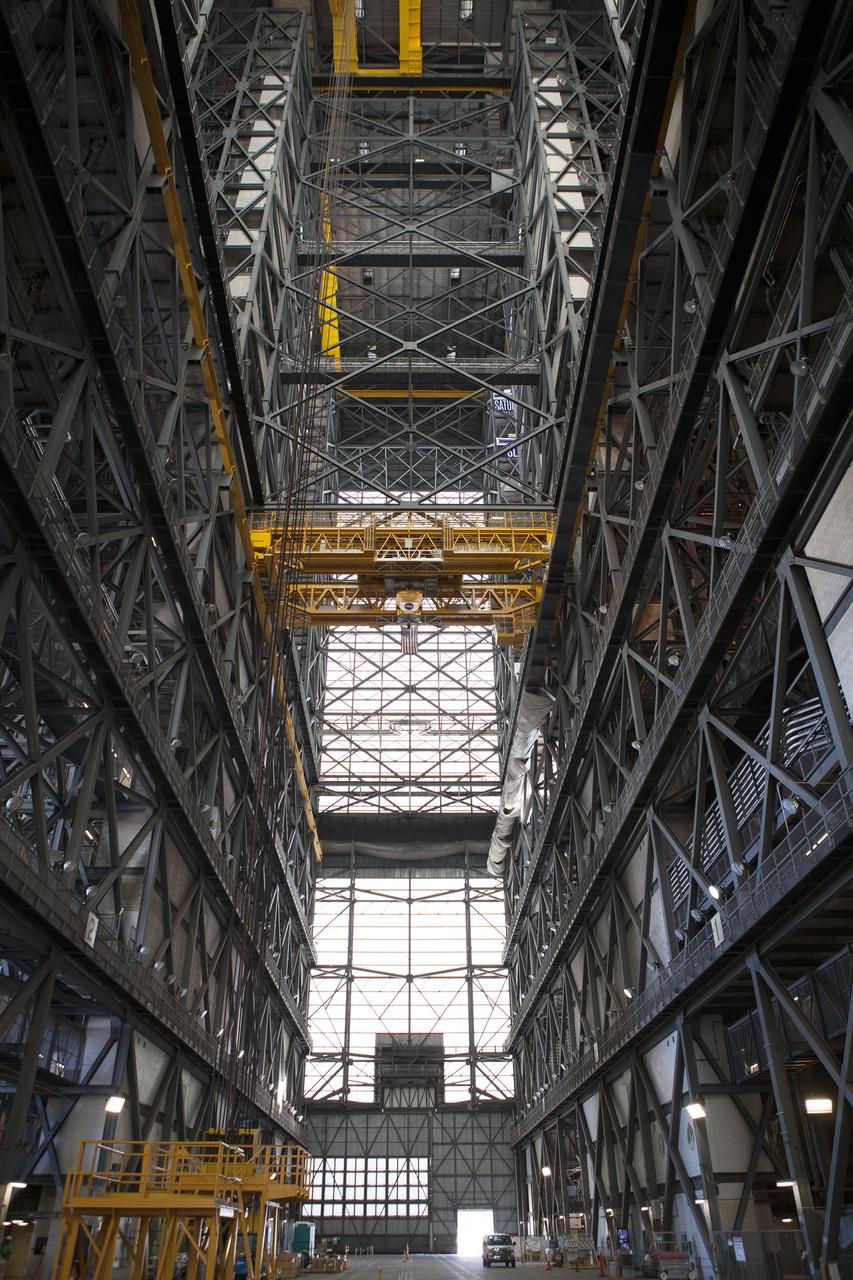
CAPE CANAVERAL, Fla. – A view looking down the transfer aisle inside the Vehicle Assembly Building at NASA’s Kennedy Space Center in Florida. In view above is the 175-ton crane. Modifications are underway in the VAB to prepare High Bay 3 for a new platform system. The modifications are part of a centerwide refurbishment initiative under the Ground Systems Development and Operations Program. High bay 3 is being refurbished to accommodate NASA’s Space Launch System and a variety of other spacecraft. For more information, visit http://www.nasa.gov/exploration/systems/ground/index.html. Photo credit: NASA/Dimitri Gerondidakis
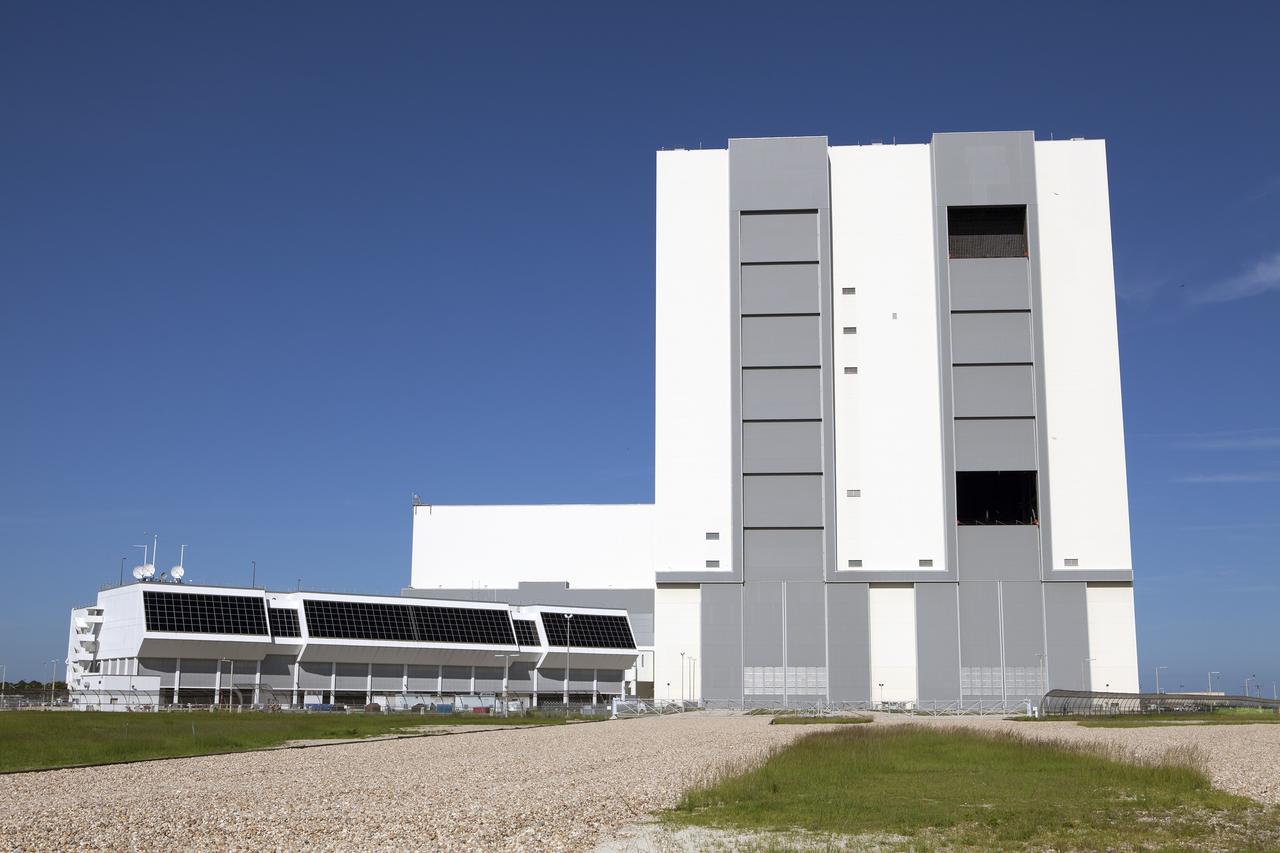
CAPE CANAVERAL, Fla. – The Vehicle Assembly Building, or VAB, and Launch Control Center stand out against a bright blue sky at NASA’s Kennedy Space Center in Florida. Modifications are underway inside the VAB to prepare High Bay 3 for a new platform system. The modifications are part of a centerwide refurbishment initiative under the Ground Systems Development and Operations Program. High bay 3 is being refurbished to accommodate NASA’s Space Launch System and a variety of other spacecraft. For more information, visit http://www.nasa.gov/exploration/systems/ground/index.html. Photo credit: NASA/Dimitri Gerondidakis

The view members of NASA’s Engineering Management Board had in looking up the Vehicle Assembly Building’s High Bay 3 at Kennedy Space Center in Florida. The platforms in High Bay 3, including the one on which the board members are standing, were designed to surround and provide access to NASA’s Space Launch System and Orion spacecraft. The Engineering Management Board toured integral areas of Kennedy to help the agencywide group reach its goal of unifying engineering work across NASA.
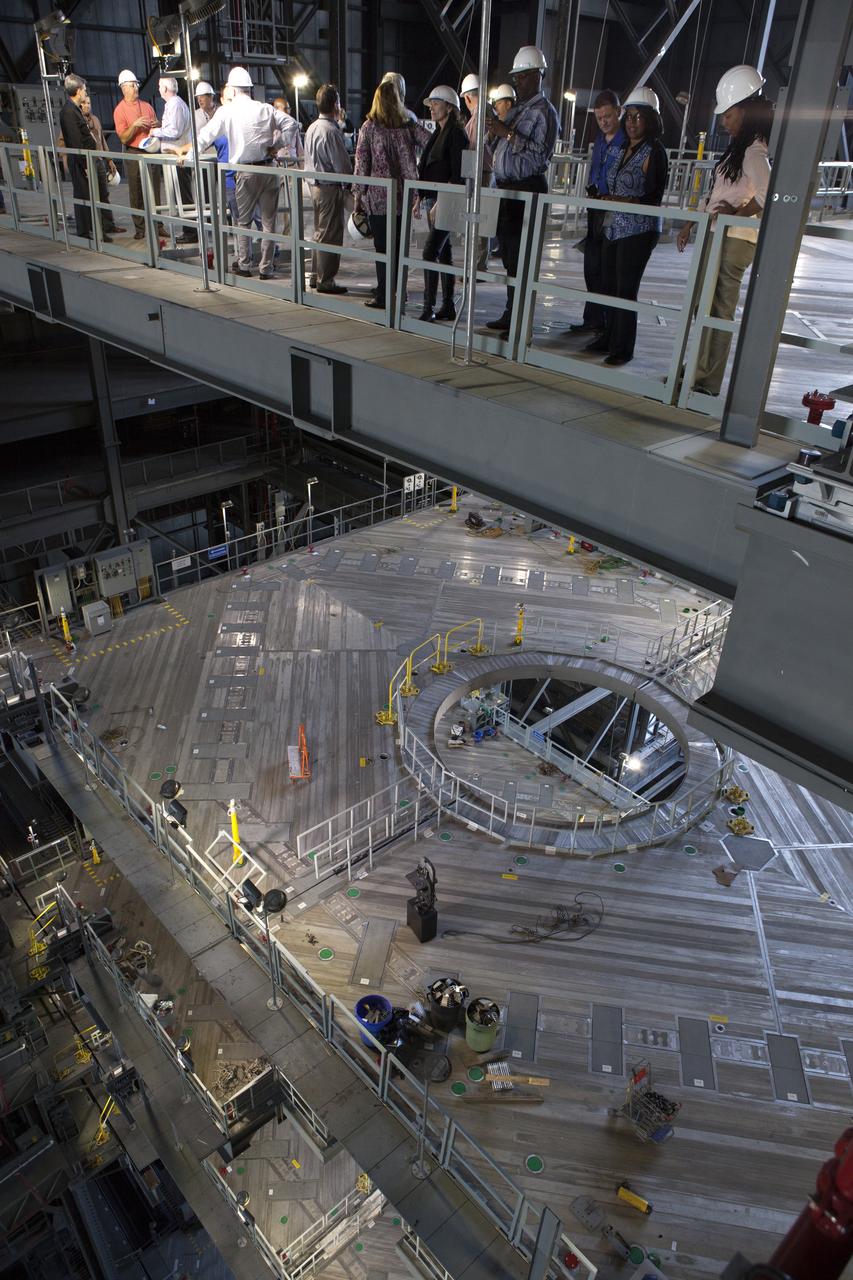
Members of NASA’s Engineering Management Board visit the Vehicle Assembly Building’s High Bay 3 at Kennedy Space Center in Florida. The platforms in High Bay 3, including the one on which the board members are standing, were designed to surround and provide access to NASA’s Space Launch System and Orion spacecraft. The Engineering Management Board toured integral areas of Kennedy to help the agencywide group reach its goal of unifying engineering work across NASA.
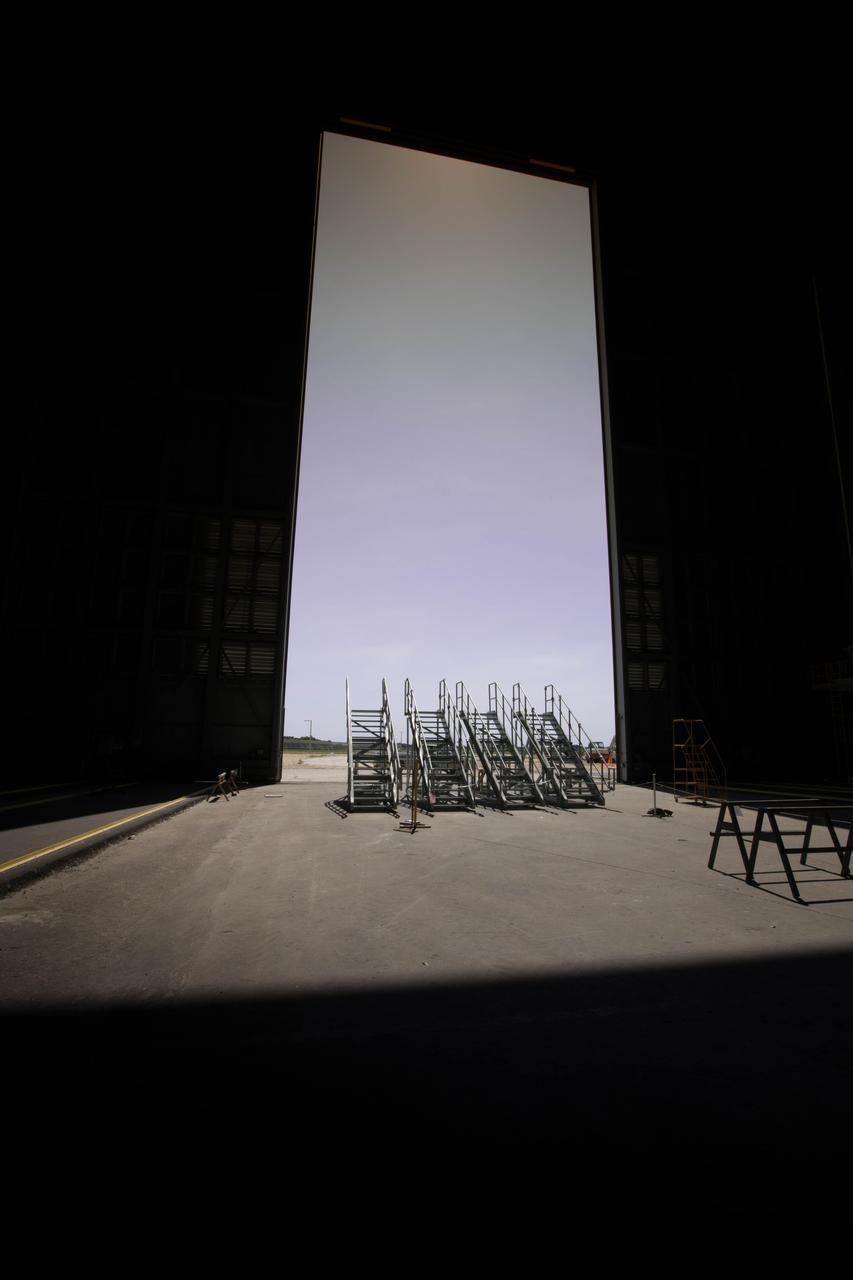
A view looking at High Bay 3 in the Vehicle Assembly Building (VAB) at NASA's Kennedy Space Center in Florida. Ten levels of new work platforms have been installed in High Bay 3. They will surround and provide access for service and processing of NASA's Space Launch System rocket and Orion spacecraft. Exploration Ground Systems oversaw the upgrades and installation of the new work platforms to support the launch of the SLS and Orion on Exploration Mission-1 and deep space missions.
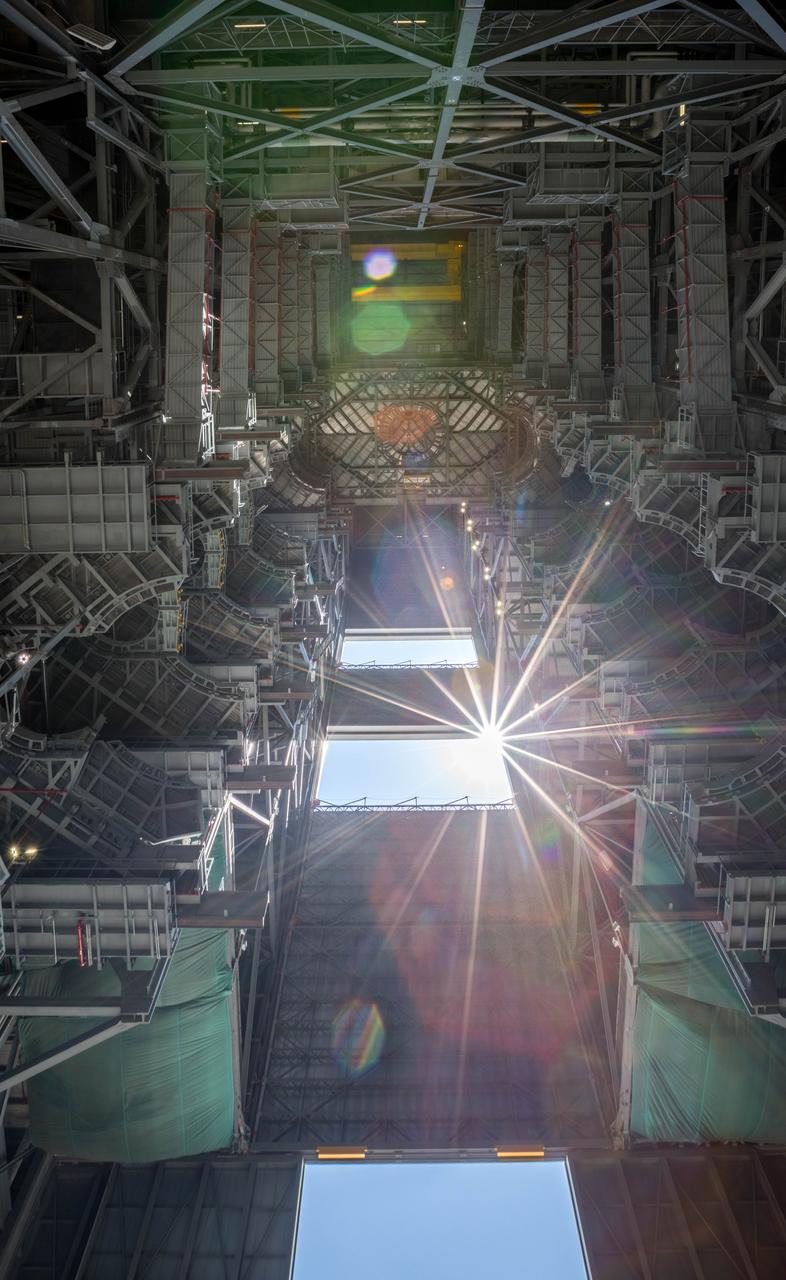
A brilliant sun shines through the doors of High Bay 3 in the Vehicle Assembly Building (VAB) at NASA's Kennedy Space Center in Florida. In view are ten levels of new work platforms that were installed in the high bay. They will surround and provide access for service and processing of NASA's Space Launch System rocket and Orion spacecraft. Exploration Ground Systems oversaw the upgrades and installation of the new work platforms to support the launch of the SLS and Orion on Exploration Mission-1 (EM-1) and deep space missions.

Orbiter Processing Facility High Bay No. 3, 13 platforms and payload bay, looking northeast, July 31, 2006
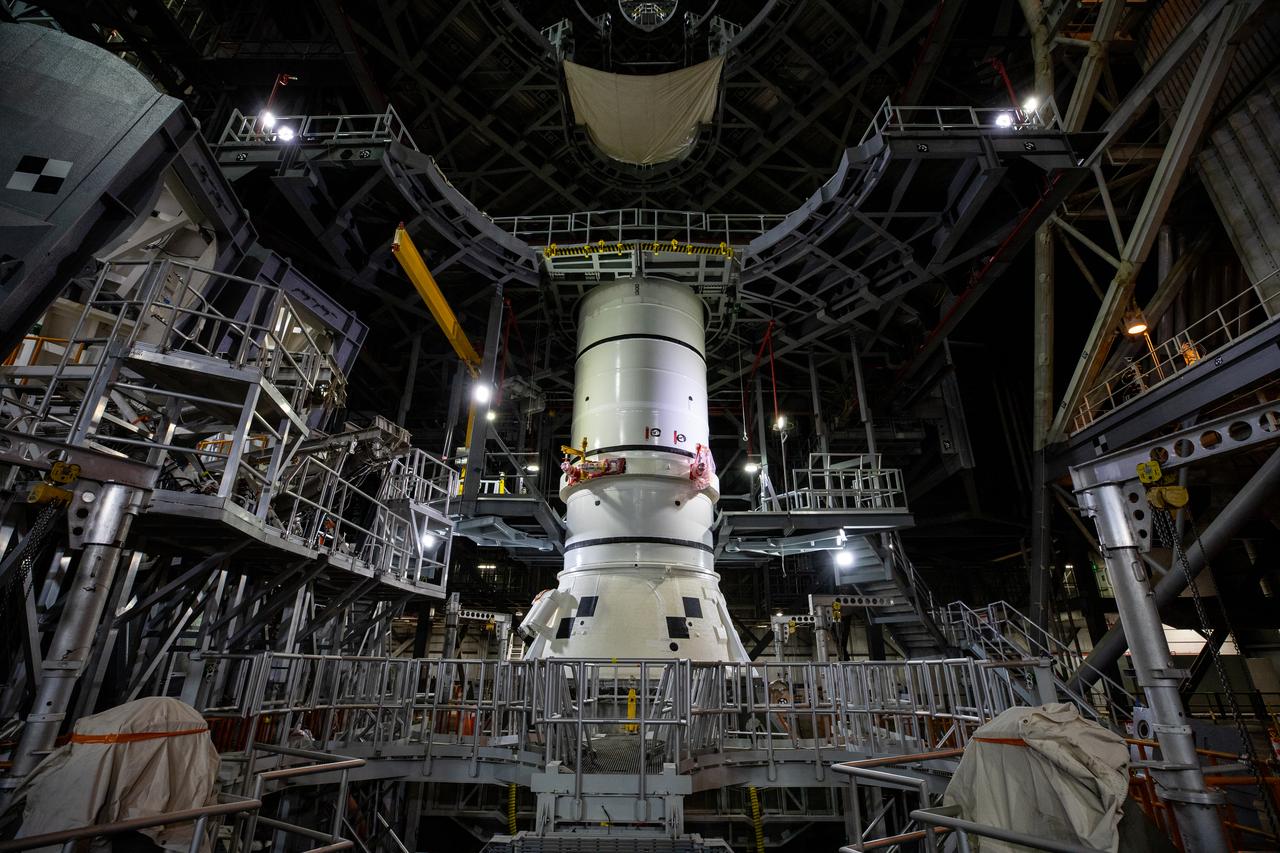
The first of two Artemis I aft booster segments for the Space Launch System is lowered onto the mobile launcher in High Bay 3 of the Vehicle Assembly Building (VAB) at NASA’s Kennedy Space Center in Florida on Nov. 23, 2020. Workers with Exploration Ground Systems and contractor Jacobs teams will stack the twin five-segment boosters on the mobile launcher in High Bay 3 over a number of weeks. When the core stage arrives, it will join the boosters on the mobile launcher, followed by the interim cryogenic propulsion stage and Orion spacecraft. Manufactured by Northrop Grumman in Utah, the twin boosters provide more than 75 percent of the total SLS thrust at launch. The SLS is managed by Marshall Space Flight Center in Huntsville, Alabama. Under the Artemis program, NASA will land the first woman and the next man on the Moon by 2024. The first in a series of increasingly complex missions, Artemis I will test the Orion spacecraft and SLS as an integrated system ahead of crewed flights to the Moon.
The first of two Artemis I aft booster segments for the Space Launch System is secured onto the mobile launcher in High Bay 3 of the Vehicle Assembly Building (VAB) at NASA’s Kennedy Space Center in Florida on Nov. 23, 2020. Workers with Exploration Ground Systems and contractor Jacobs teams will stack the twin five-segment boosters on the mobile launcher in High Bay 3 over a number of weeks. When the core stage arrives, it will join the boosters on the mobile launcher, followed by the interim cryogenic propulsion stage and Orion spacecraft. Manufactured by Northrop Grumman in Utah, the twin boosters provide more than 75 percent of the total SLS thrust at launch. The SLS is managed by Marshall Space Flight Center in Huntsville, Alabama. Under the Artemis program, NASA will land the first woman and the next man on the Moon by 2024. The first in a series of increasingly complex missions, Artemis I will test the Orion spacecraft and SLS as an integrated system ahead of crewed flights to the Moon.
The first of two Artemis I aft booster segments for the Space Launch System is secured onto the mobile launcher in High Bay 3 of the Vehicle Assembly Building (VAB) at NASA’s Kennedy Space Center in Florida on Nov. 23, 2020. Workers with Exploration Ground Systems and contractor Jacobs teams will stack the twin five-segment boosters on the mobile launcher in High Bay 3 over a number of weeks. When the core stage arrives, it will join the boosters on the mobile launcher, followed by the interim cryogenic propulsion stage and Orion spacecraft. Manufactured by Northrop Grumman in Utah, the twin boosters provide more than 75 percent of the total SLS thrust at launch. The SLS is managed by Marshall Space Flight Center in Huntsville, Alabama. Under the Artemis program, NASA will land the first woman and the next man on the Moon by 2024. The first in a series of increasingly complex missions, Artemis I will test the Orion spacecraft and SLS as an integrated system ahead of crewed flights to the Moon.
The first of two Artemis I aft booster segments for the Space Launch System is lowered onto the mobile launcher in High Bay 3 of the Vehicle Assembly Building (VAB) at NASA’s Kennedy Space Center in Florida on Nov. 23, 2020. Workers with Exploration Ground Systems and contractor Jacobs teams will stack the twin five-segment boosters on the mobile launcher in High Bay 3 over a number of weeks. When the core stage arrives, it will join the boosters on the mobile launcher, followed by the interim cryogenic propulsion stage and Orion spacecraft. Manufactured by Northrop Grumman in Utah, the twin boosters provide more than 75 percent of the total SLS thrust at launch. The SLS is managed by Marshall Space Flight Center in Huntsville, Alabama. Under the Artemis program, NASA will land the first woman and the next man on the Moon by 2024. The first in a series of increasingly complex missions, Artemis I will test the Orion spacecraft and SLS as an integrated system ahead of crewed flights to the Moon.
The first of two Artemis I aft booster segments for the Space Launch System is lowered onto the mobile launcher in High Bay 3 of the Vehicle Assembly Building (VAB) at NASA’s Kennedy Space Center in Florida on Nov. 23, 2020. Workers with Exploration Ground Systems and contractor Jacobs teams will stack the twin five-segment boosters on the mobile launcher in High Bay 3 over a number of weeks. When the core stage arrives, it will join the boosters on the mobile launcher, followed by the interim cryogenic propulsion stage and Orion spacecraft. Manufactured by Northrop Grumman in Utah, the twin boosters provide more than 75 percent of the total SLS thrust at launch. The SLS is managed by Marshall Space Flight Center in Huntsville, Alabama. Under the Artemis program, NASA will land the first woman and the next man on the Moon by 2024. The first in a series of increasingly complex missions, Artemis I will test the Orion spacecraft and SLS as an integrated system ahead of crewed flights to the Moon.
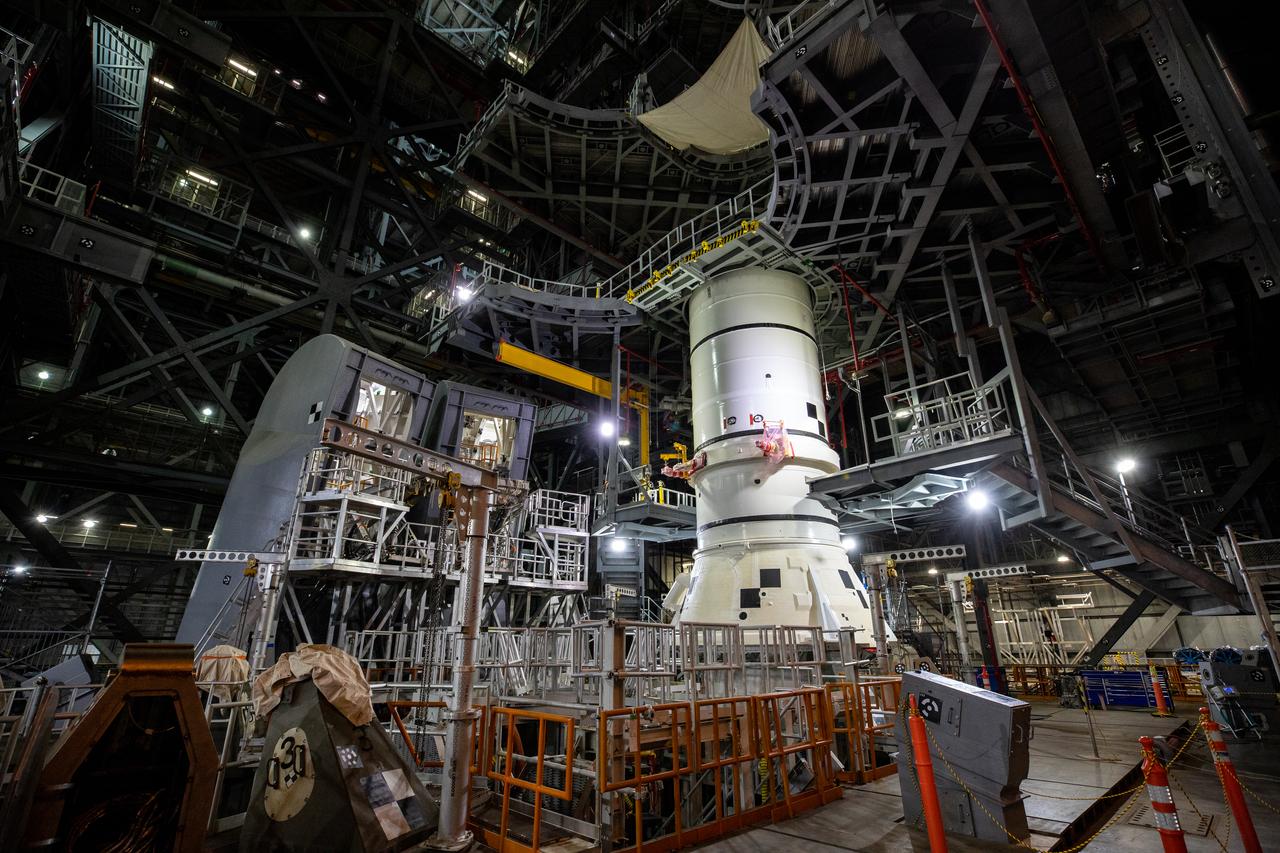
The first of two Artemis I aft booster segments for the Space Launch System is lowered onto the mobile launcher in High Bay 3 of the Vehicle Assembly Building (VAB) at NASA’s Kennedy Space Center in Florida on Nov. 23, 2020. Workers with Exploration Ground Systems and contractor Jacobs teams will stack the twin five-segment boosters on the mobile launcher in High Bay 3 over a number of weeks. When the core stage arrives, it will join the boosters on the mobile launcher, followed by the interim cryogenic propulsion stage and Orion spacecraft. Manufactured by Northrop Grumman in Utah, the twin boosters provide more than 75 percent of the total SLS thrust at launch. The SLS is managed by Marshall Space Flight Center in Huntsville, Alabama. Under the Artemis program, NASA will land the first woman and the next man on the Moon by 2024. The first in a series of increasingly complex missions, Artemis I will test the Orion spacecraft and SLS as an integrated system ahead of crewed flights to the Moon.
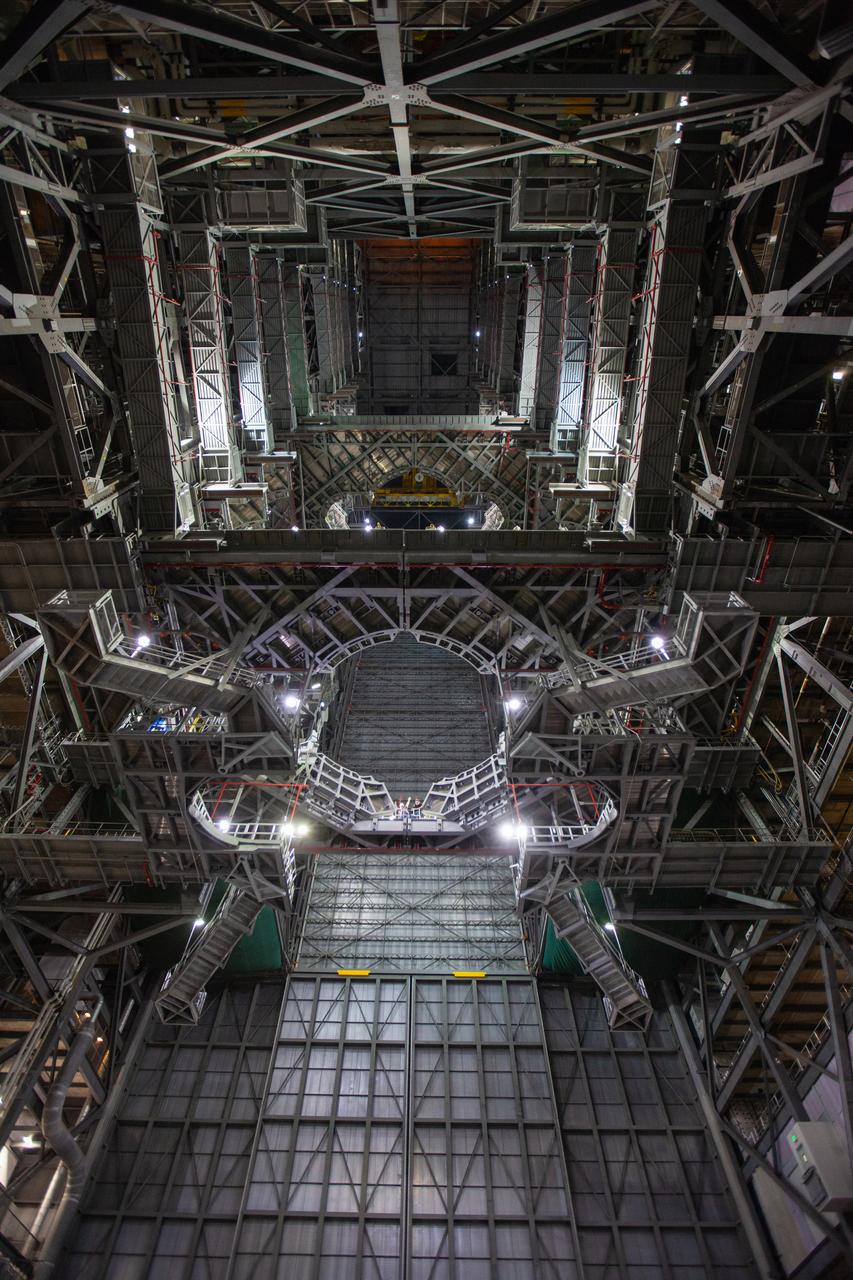
A view looking up in High Bay 3 inside the Vehicle Assembly Building at NASA’s Kennedy Space Center in Florida. The Space Launch System (SLS) Core Stage pathfinder will be lowered into the bay after being lifted high up in the vertical position in the transfer aisle on Oct. 16, 2019. The 212-foot-long core stage pathfinder arrived on NASA's Pegasus Barge at Kennedy’s Launch Complex 39 turn basin wharf on Sept. 27, 2019. The Pegasus Barge made its first delivery to Kennedy in support of the agency's Artemis missions. The pathfinder is being used by Exploration Ground Systems and its contractor, Jacobs, to practice offloading, moving and stacking maneuvers, using important ground support equipment to train employees and certify all the equipment works properly. The pathfinder will stay at Kennedy through at least the month of October before trekking back to NASA's Michoud Assembly Facility in Louisiana.
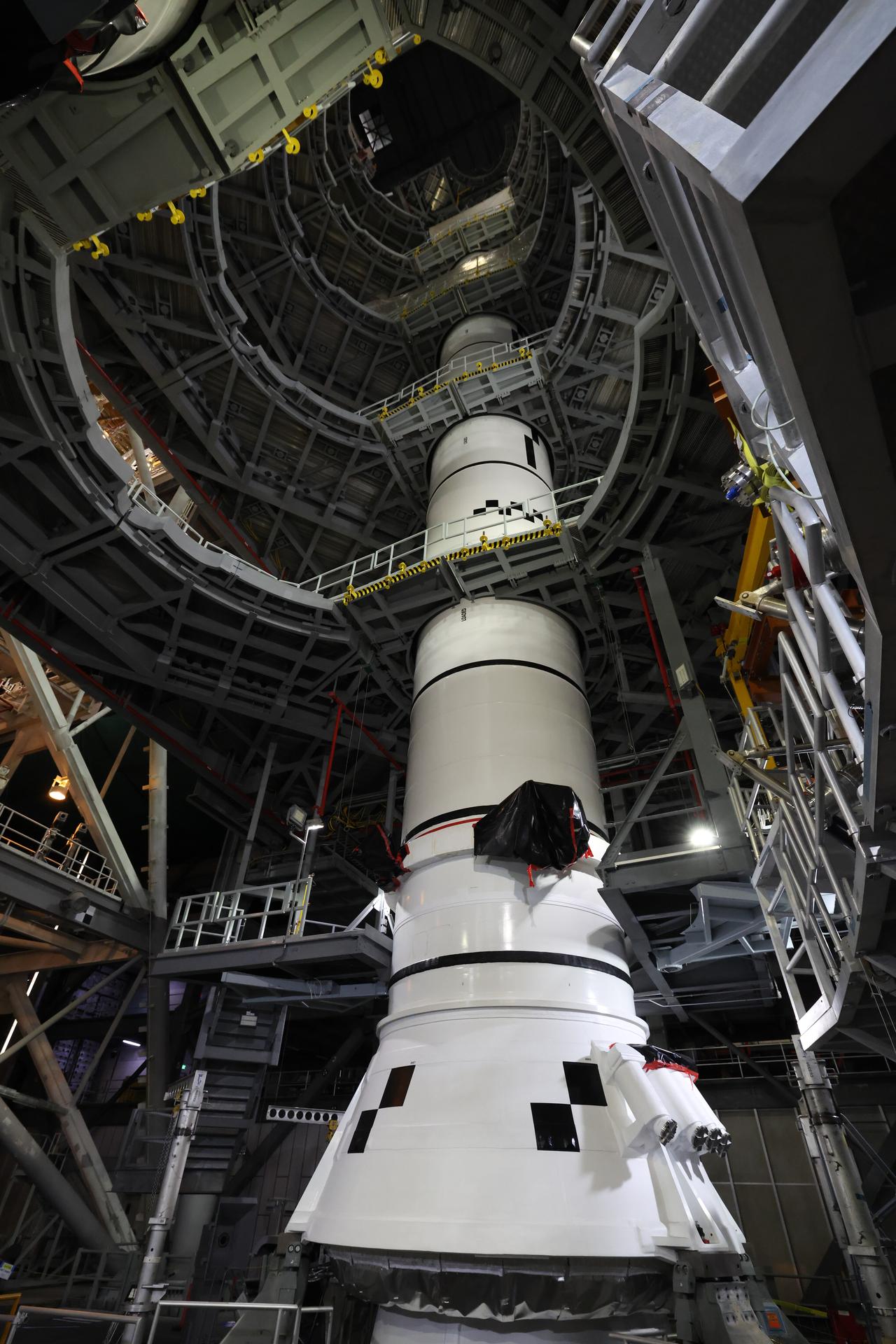
In High Bay 3 of the Vehicle Assembly Building at NASA’s Kennedy Space Center in Florida, the right forward center booster for Artemis III is integrated onto the right booster segments on the mobile launcher for the SLS (Space Launch System) rocket on Friday, Sept. 11, 2026. The twin boosters, comprising of five segments each manufactured by Northrop Grumman in Utah, will provide more than 75 percent of the SLS rocket’s total thrust at launch. The Artemis III mission will launch crew in the Orion spacecraft on top of the SLS rocket to test rendezvous and docking capabilities between Orion and commercial spacecraft needed to land astronauts on the Moon.
In High Bay 3 of the Vehicle Assembly Building at NASA’s Kennedy Space Center in Florida, the right forward center booster for Artemis III is integrated onto the right booster segments on the mobile launcher for the SLS (Space Launch System) rocket on Friday, Sept. 11, 2026. The twin boosters, comprising of five segments each manufactured by Northrop Grumman in Utah, will provide more than 75 percent of the SLS rocket’s total thrust at launch. The Artemis III mission will launch crew in the Orion spacecraft on top of the SLS rocket to test rendezvous and docking capabilities between Orion and commercial spacecraft needed to land astronauts on the Moon.
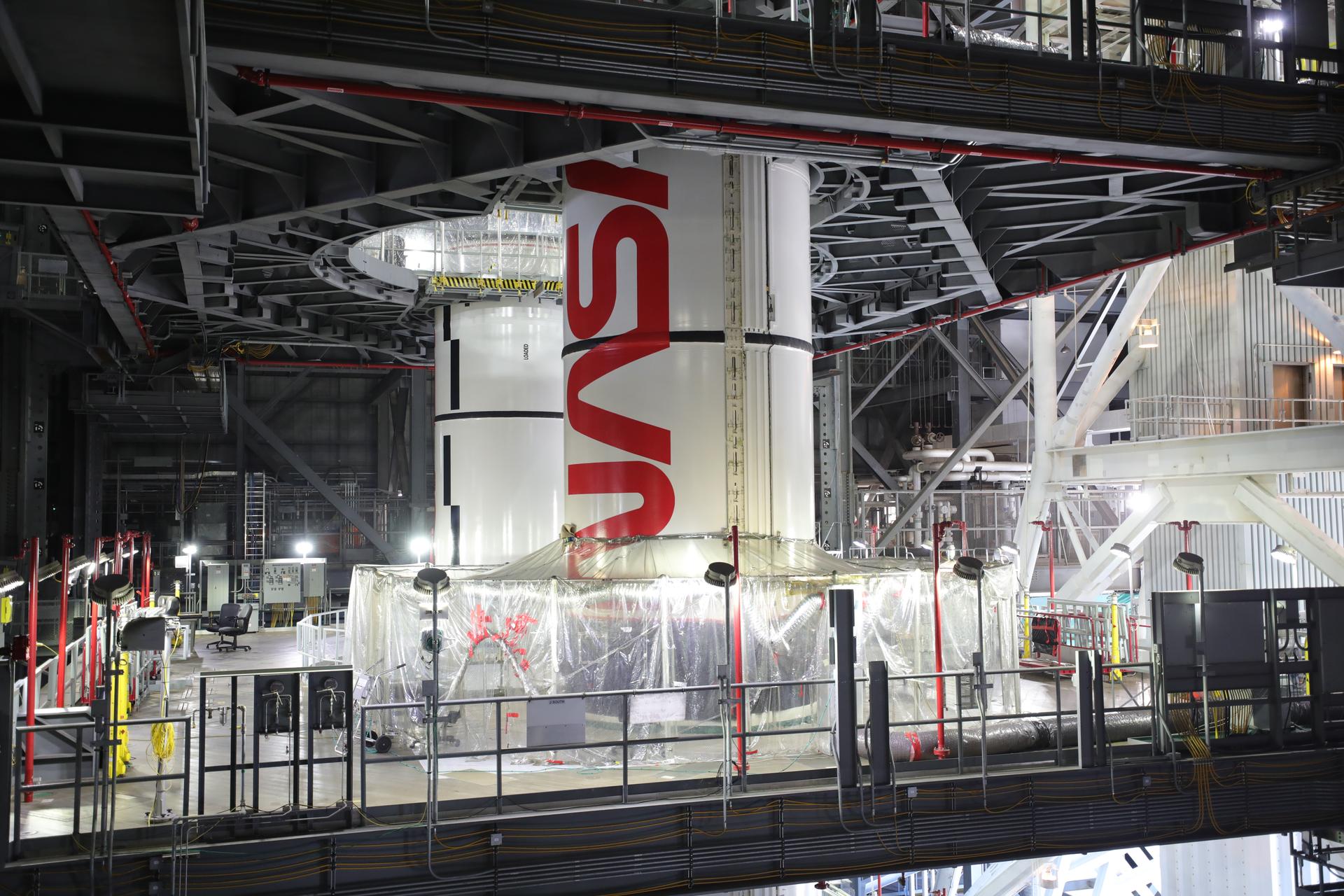
During integration operations inside the Vehicle Assembly Building at NASA’s Kennedy Space Center in Florida, the NASA “worm” is visible on the left and right center center solid rocket booster segments for the Artemis III SLS (Space Launch System) rocket on the mobile launcher inside High Bay 3 on Tuesday, Sept. 1, 2026. The twin boosters, comprising of five segments each manufactured by Northrop Grumman in Utah, will provide more than 75 percent of the SLS rocket’s total thrust at launch. The Artemis III mission will launch crew in the Orion spacecraft on top of the SLS rocket to test rendezvous and docking capabilities between Orion and commercial spacecraft needed to land astronauts on the Moon.
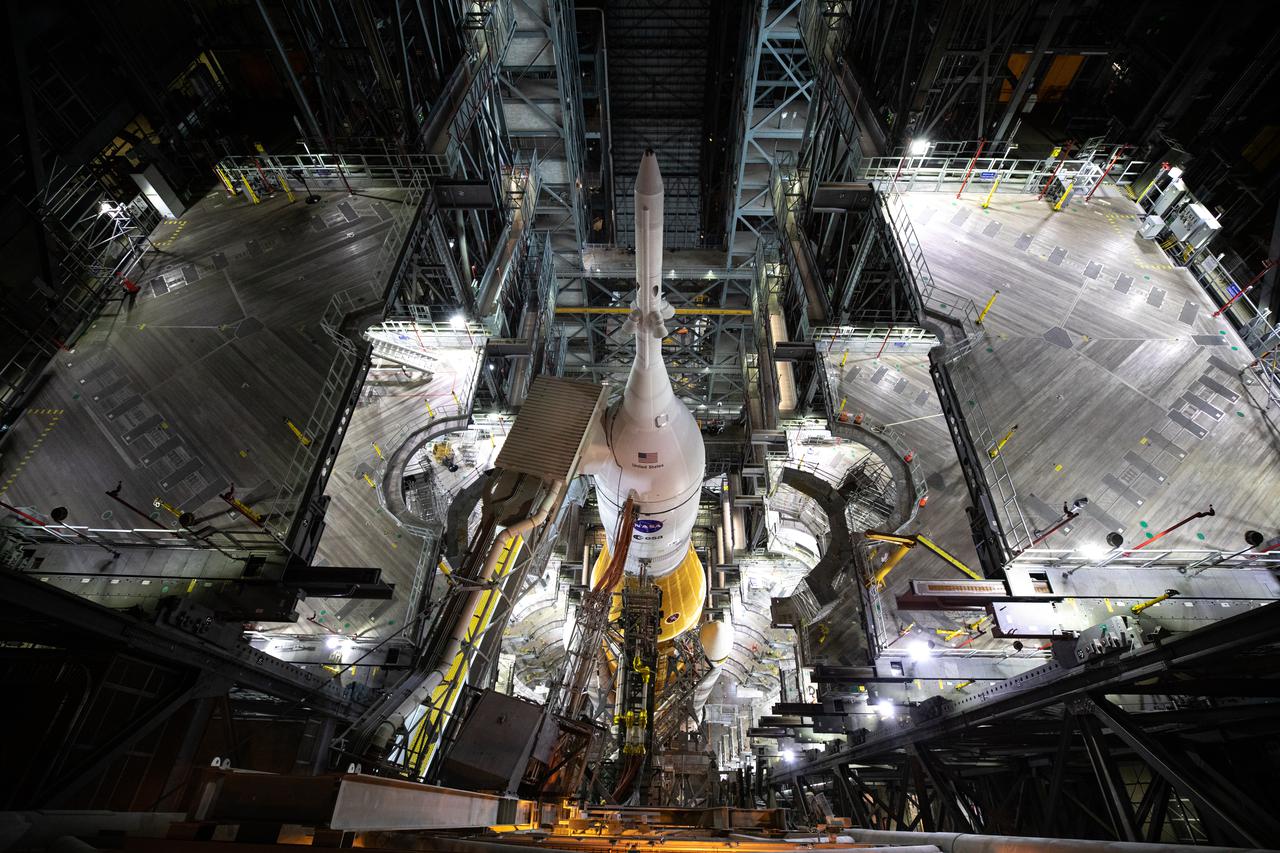
In this view looking down in High Bay 3 of the Vehicle Assembly Building at NASA’s Kennedy Space Center in Florida, the Artemis I Space Launch System (SLS) and Orion spacecraft can be seen without any work platforms surrounding them on March 17, 2022. The Artemis I stack atop the mobile launcher will roll out to Launch Complex 39B atop the crawler-transporter 2 for a wet dress rehearsal ahead of launch. Artemis I will be the first integrated test of the SLS and Orion spacecraft. In later missions, NASA will land the first woman the first person of color on the surface of the Moon, paving the way for a long-term lunar presence and serving as a steppingstone on the way to Mars.
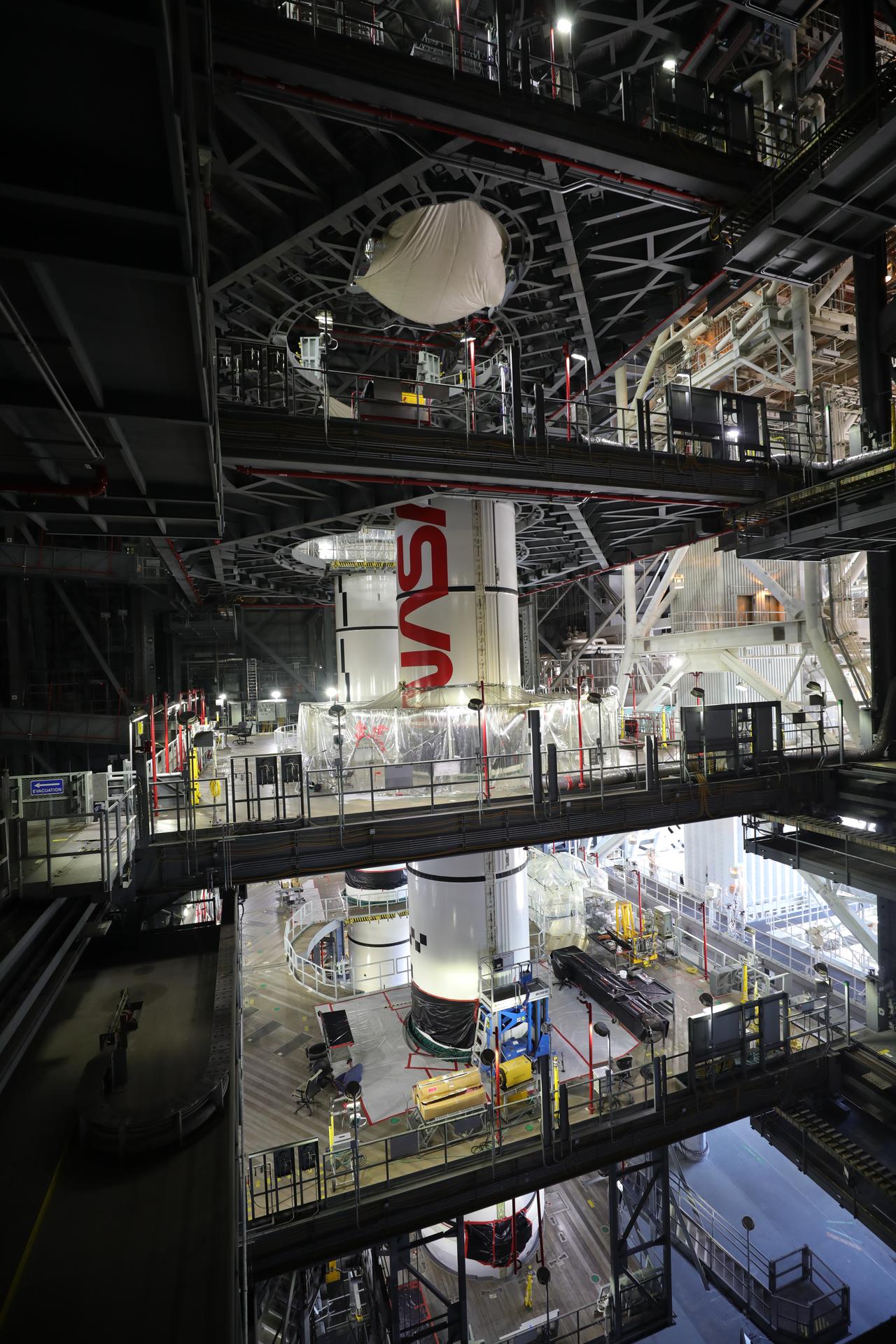
During integration operations inside the Vehicle Assembly Building at NASA’s Kennedy Space Center in Florida, the NASA “worm” is visible on the left and right center center solid rocket booster segments for the Artemis III SLS (Space Launch System) rocket on the mobile launcher inside High Bay 3 on Tuesday, Sept. 1, 2026. The twin boosters, comprising of five segments each manufactured by Northrop Grumman in Utah, will provide more than 75 percent of the SLS rocket’s total thrust at launch. The Artemis III mission will launch crew in the Orion spacecraft on top of the SLS rocket to test rendezvous and docking capabilities between Orion and commercial spacecraft needed to land astronauts on the Moon.
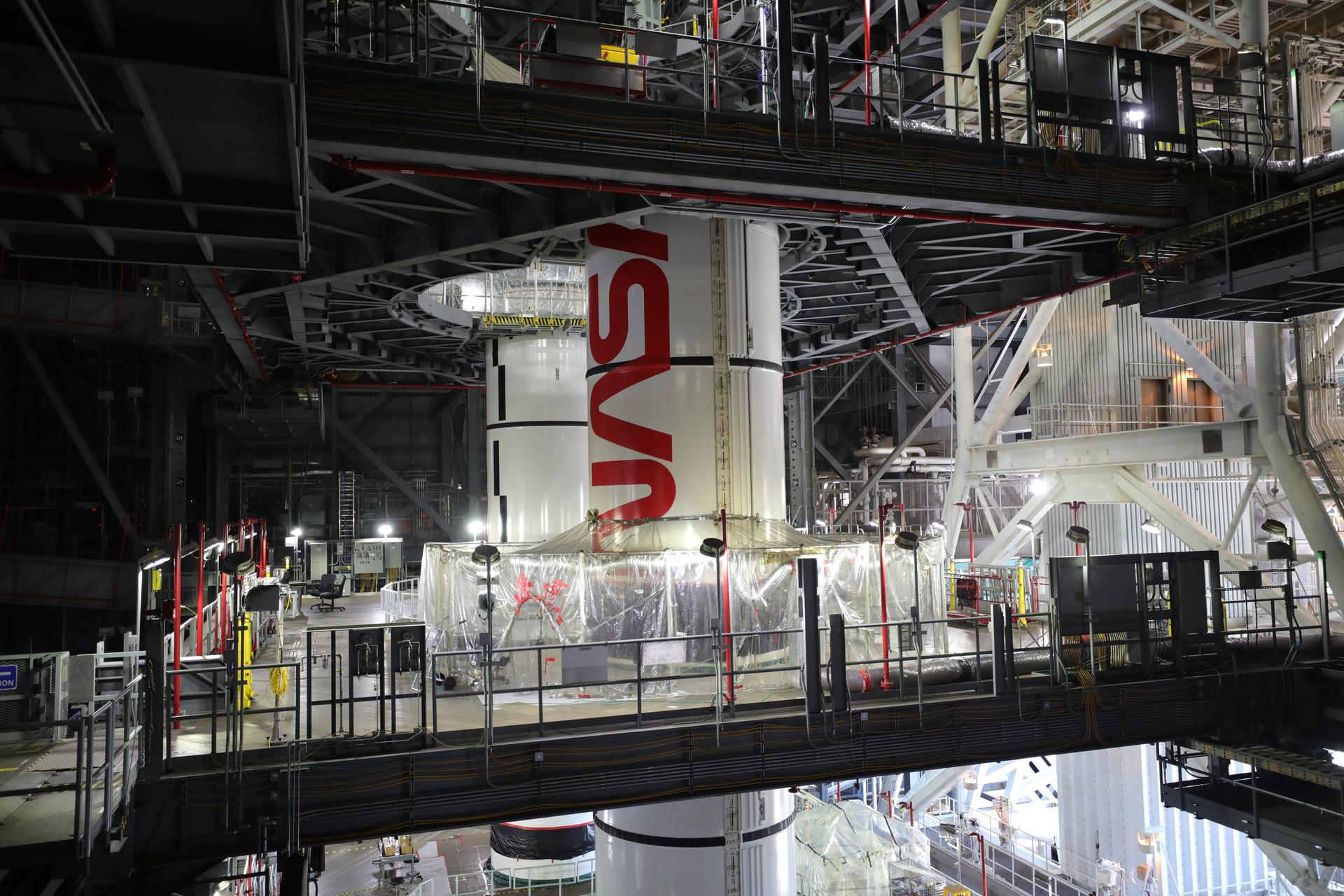
During integration operations inside the Vehicle Assembly Building at NASA’s Kennedy Space Center in Florida, the NASA “worm” is visible on the left and right center center solid rocket booster segments for the Artemis III SLS (Space Launch System) rocket on the mobile launcher inside High Bay 3 on Tuesday, Sept. 1, 2026. The twin boosters, comprising of five segments each manufactured by Northrop Grumman in Utah, will provide more than 75 percent of the SLS rocket’s total thrust at launch. The Artemis III mission will launch crew in the Orion spacecraft on top of the SLS rocket to test rendezvous and docking capabilities between Orion and commercial spacecraft needed to land astronauts on the Moon.

Inside High Bay 3 of the Vehicle Assembly Building at NASA’s Kennedy Space Center in Florida, technicians with the agency’s Exploration Ground Systems integrate the left forward center booster segment for the NASA’s SLS (Space Launch System) rocket onto the left center center segment atop the mobile launcher on Thursday, Jan. 30, 2025. The NASA “worm” insignia can be seen on both the center center booster segments. The boosters will help support the remaining rocket components and the Orion spacecraft during final assembly of the Artemis II Moon rocket and provide more than 75 percent of the total SLS thrust during liftoff from NASA Kennedy’s Launch Pad 39B.
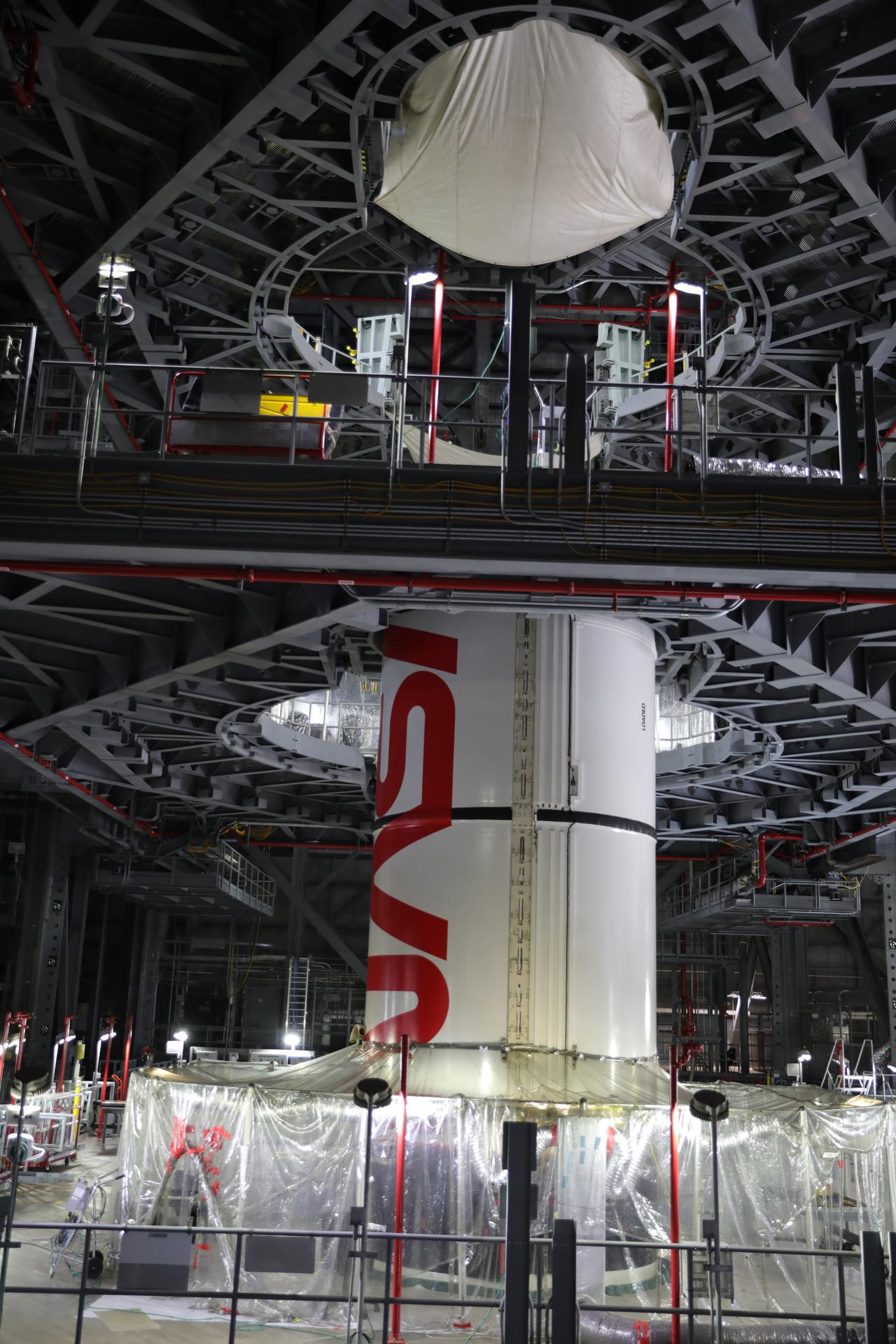
During integration operations inside the Vehicle Assembly Building at NASA’s Kennedy Space Center in Florida, the NASA “worm” is visible on the left and right center center solid rocket booster segments for the Artemis III SLS (Space Launch System) rocket on the mobile launcher inside High Bay 3 on Tuesday, Sept. 1, 2026. The twin boosters, comprising of five segments each manufactured by Northrop Grumman in Utah, will provide more than 75 percent of the SLS rocket’s total thrust at launch. The Artemis III mission will launch crew in the Orion spacecraft on top of the SLS rocket to test rendezvous and docking capabilities between Orion and commercial spacecraft needed to land astronauts on the Moon.
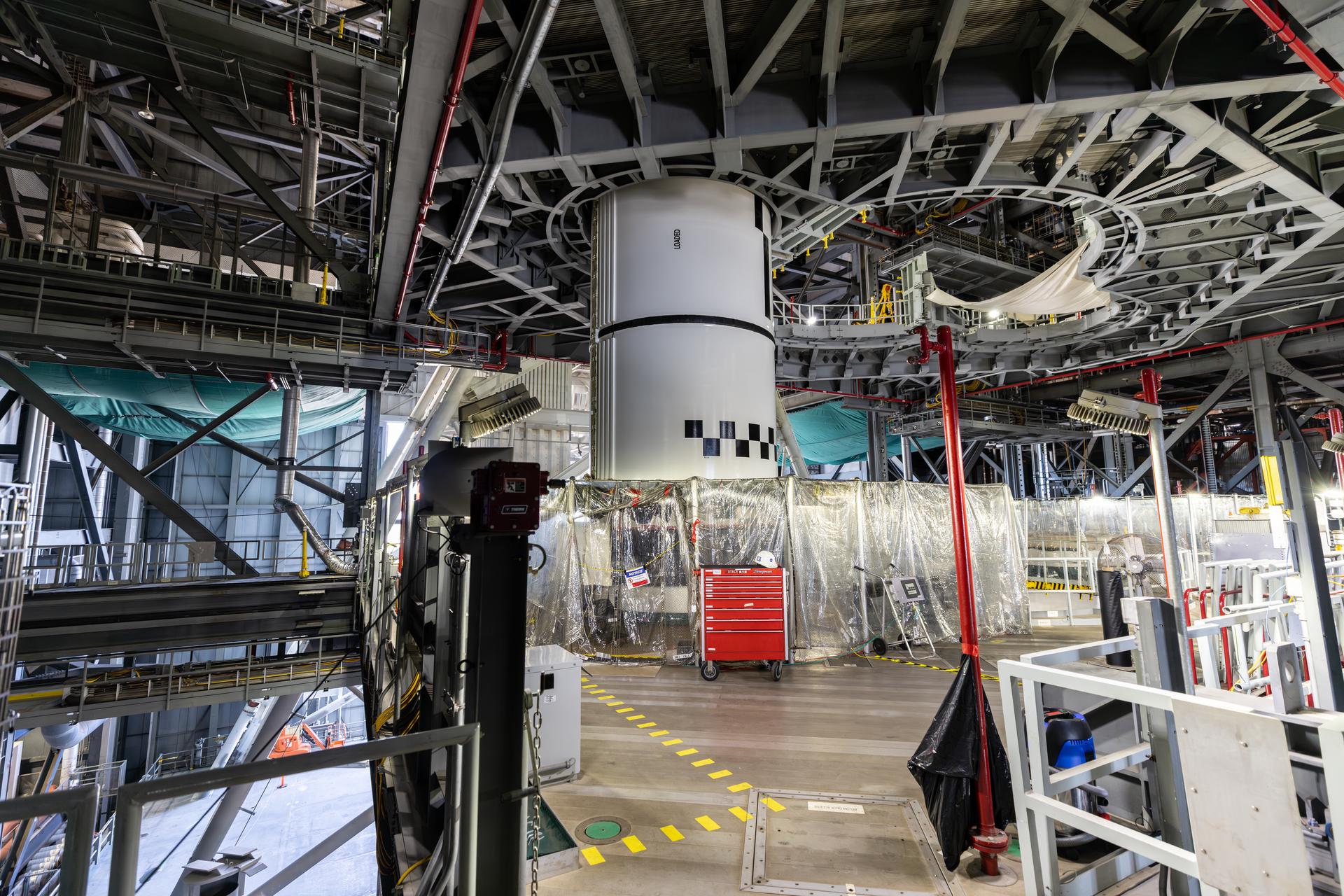
In High Bay 3 of the Vehicle Assembly Building at NASA’s Kennedy Space Center in Florida, the left aft center booster segment for Artemis III is integrated onto its aft assembly segment on the mobile launcher for the SLS (Space Launch System) rocket on Monday, Aug. 12, 2026. The twin boosters, comprising of five segments each manufactured by Northrop Grumman in Utah, will provide more than 75 percent of the SLS rocket’s total thrust at launch. The Artemis III mission will launch crew in the Orion spacecraft on top of the SLS rocket to test rendezvous and docking capabilities between Orion and commercial spacecraft needed to land astronauts on the Moon.
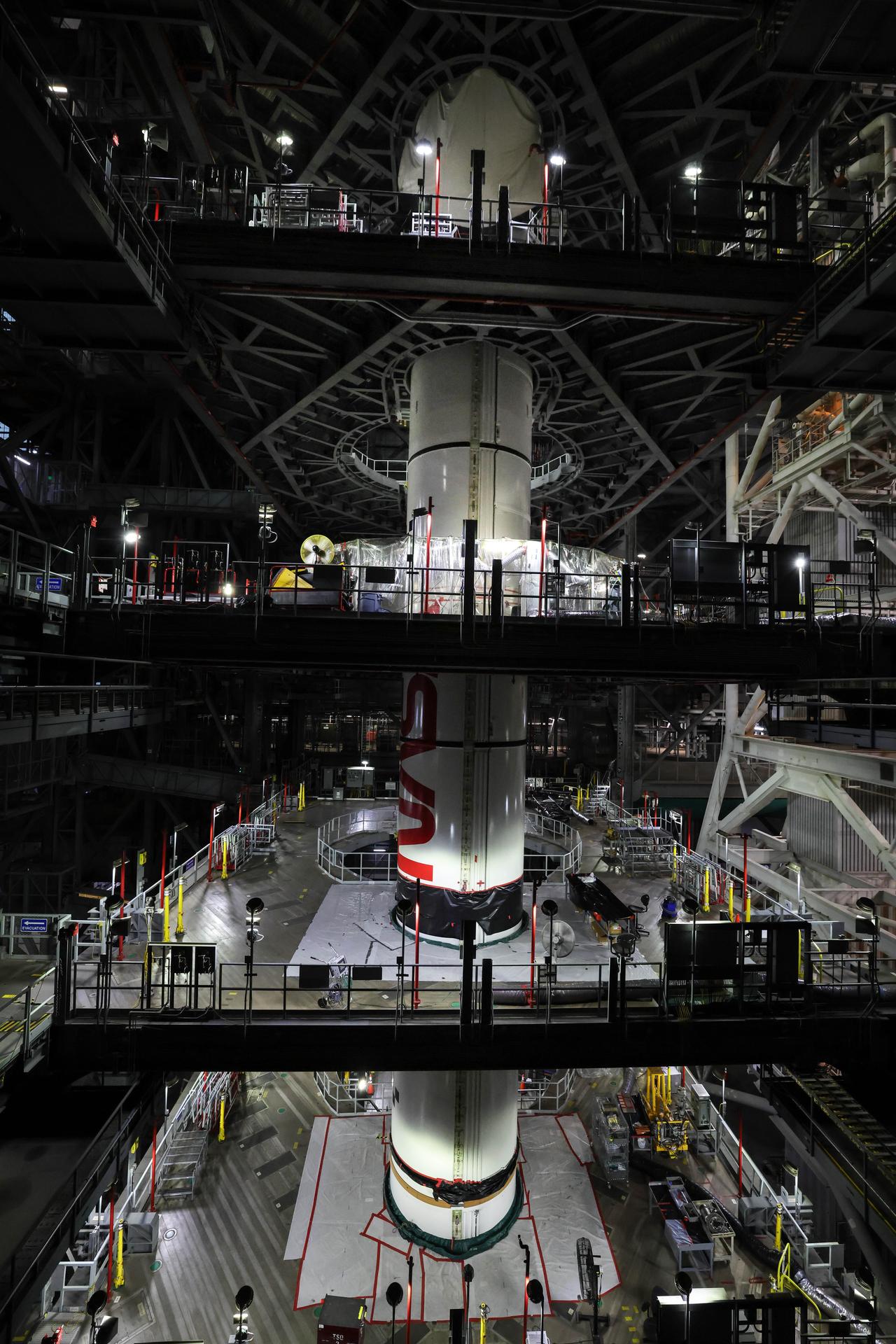
In High Bay 3 of the Vehicle Assembly Building at NASA’s Kennedy Space Center in Florida, the right forward center booster for Artemis III is integrated onto the right booster segments on the mobile launcher for the SLS (Space Launch System) rocket on Friday, Sept. 11, 2026. The twin boosters, comprising of five segments each manufactured by Northrop Grumman in Utah, will provide more than 75 percent of the SLS rocket’s total thrust at launch. The Artemis III mission will launch crew in the Orion spacecraft on top of the SLS rocket to test rendezvous and docking capabilities between Orion and commercial spacecraft needed to land astronauts on the Moon.
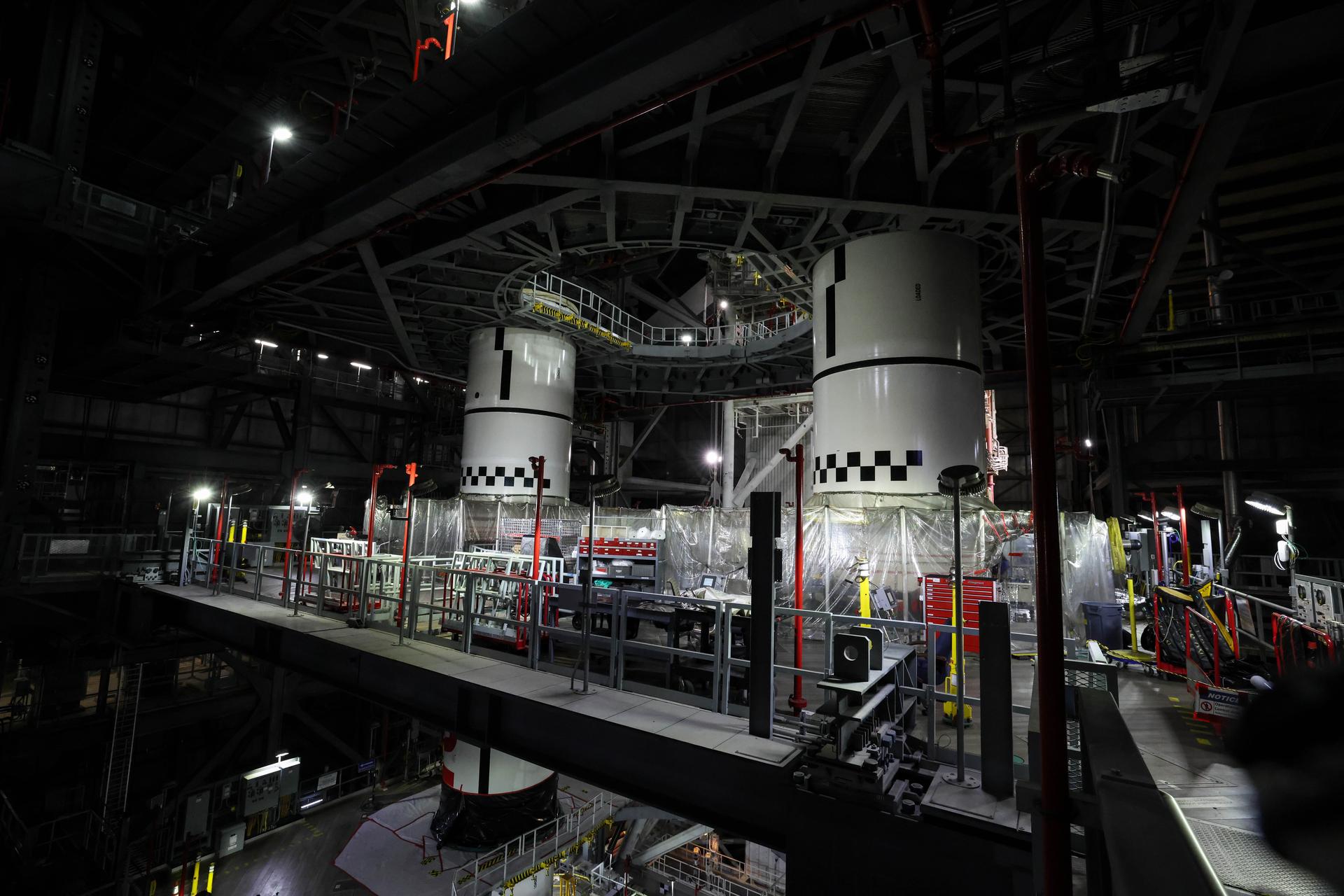
In High Bay 3 of the Vehicle Assembly Building at NASA’s Kennedy Space Center in Florida, the left and right forward center boosters for Artemis III are integrated onto the booster segments on the mobile launcher for the SLS (Space Launch System) rocket on Friday, Sept. 11, 2026. The twin boosters, comprising of five segments each manufactured by Northrop Grumman in Utah, will provide more than 75 percent of the SLS rocket’s total thrust at launch. The Artemis III mission will launch crew in the Orion spacecraft on top of the SLS rocket to test rendezvous and docking capabilities between Orion and commercial spacecraft needed to land astronauts on the Moon.
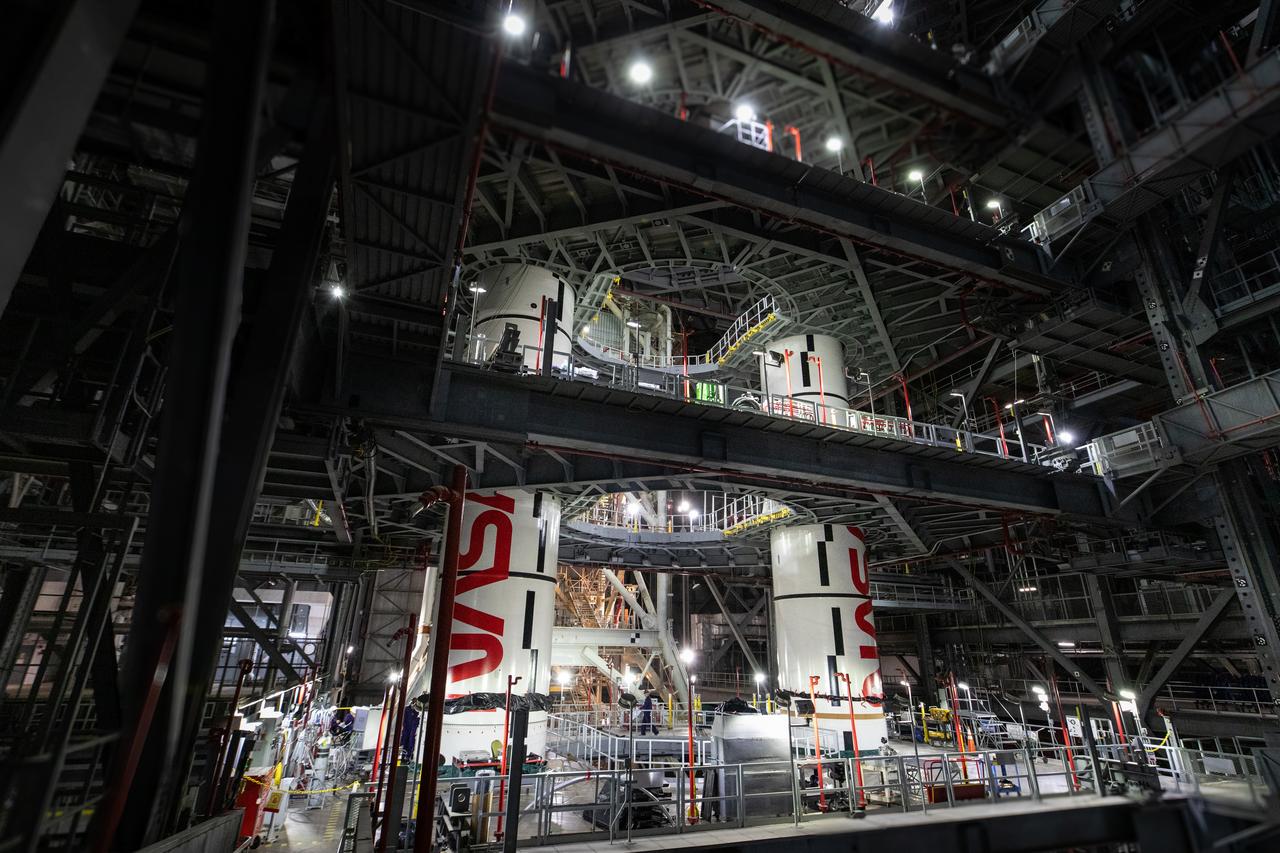
Inside High Bay 3 of the Vehicle Assembly Building at NASA’s Kennedy Space Center in Florida, technicians with the agency’s Exploration Ground Systems integrate the left forward center booster segment for the NASA’s SLS (Space Launch System) rocket onto the left center center segment atop the mobile launcher on Thursday, Jan. 30, 2025. The NASA “worm” insignia can be seen on both the center center booster segments. The boosters will help support the remaining rocket components and the Orion spacecraft during final assembly of the Artemis II Moon rocket and provide more than 75 percent of the total SLS thrust during liftoff from NASA Kennedy’s Launch Pad 39B.
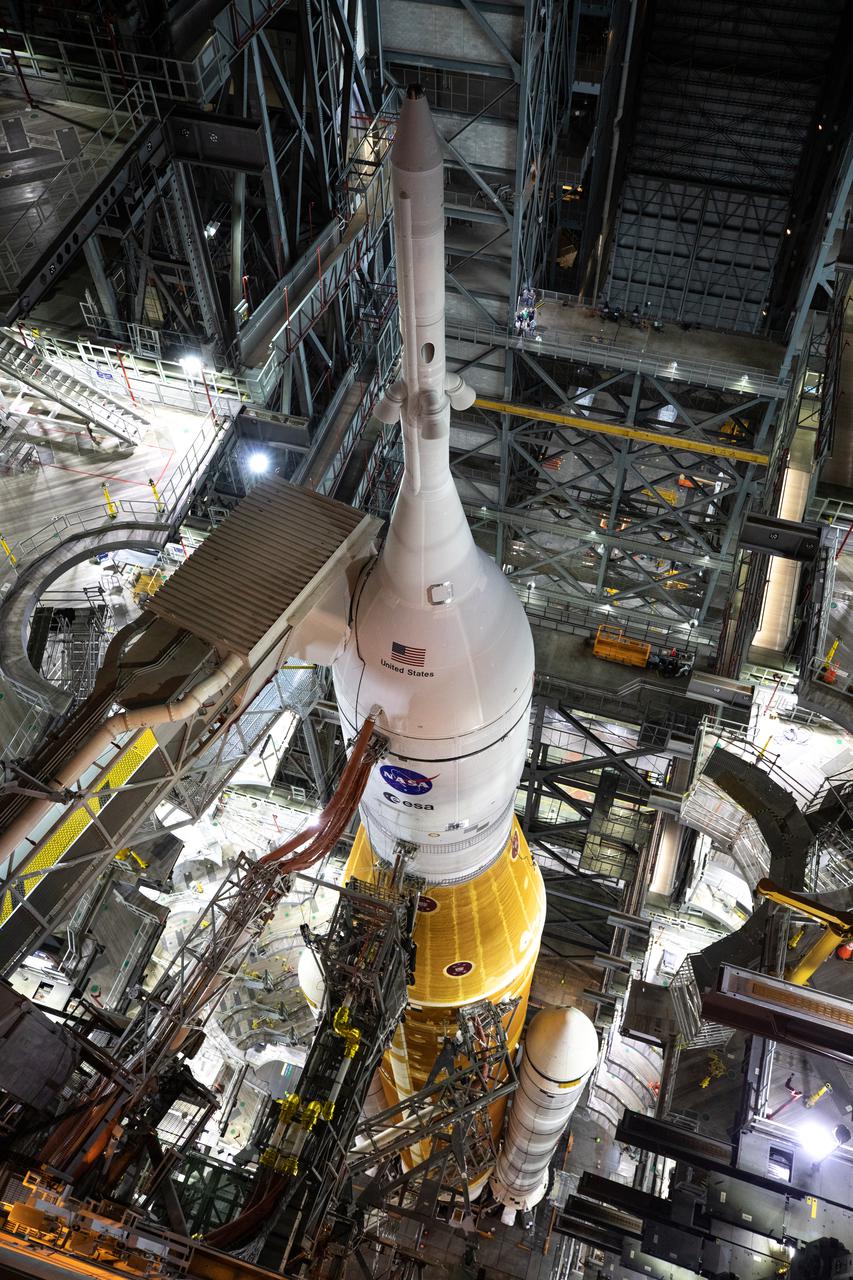
In this view looking down in High Bay 3 of the Vehicle Assembly Building at NASA’s Kennedy Space Center in Florida, the Artemis I Space Launch System (SLS) and Orion spacecraft can be seen without any work platforms surrounding them on March 17, 2022. The Artemis I stack atop the mobile launcher will roll out to Launch Complex 39B atop the crawler-transporter 2 for a wet dress rehearsal ahead of launch. Artemis I will be the first integrated test of the SLS and Orion spacecraft. In later missions, NASA will land the first woman the first person of color on the surface of the Moon, paving the way for a long-term lunar presence and serving as a steppingstone on the way to Mars.
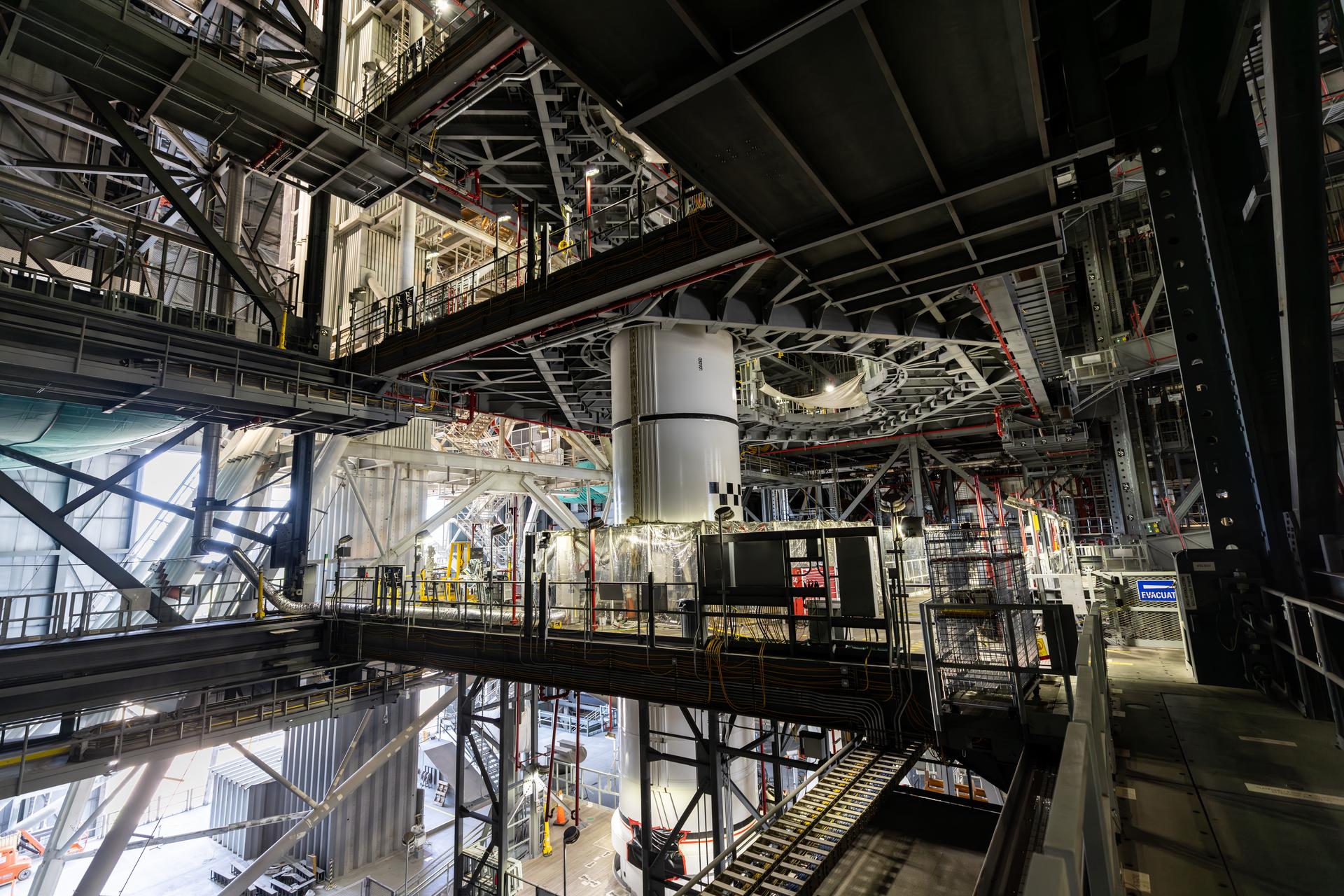
In High Bay 3 of the Vehicle Assembly Building at NASA’s Kennedy Space Center in Florida, the left aft center booster segment for Artemis III is integrated onto its aft assembly segment on the mobile launcher for the SLS (Space Launch System) rocket on Monday, Aug. 12, 2026. The twin boosters, comprising of five segments each manufactured by Northrop Grumman in Utah, will provide more than 75 percent of the SLS rocket’s total thrust at launch. The Artemis III mission will launch crew in the Orion spacecraft on top of the SLS rocket to test rendezvous and docking capabilities between Orion and commercial spacecraft needed to land astronauts on the Moon.
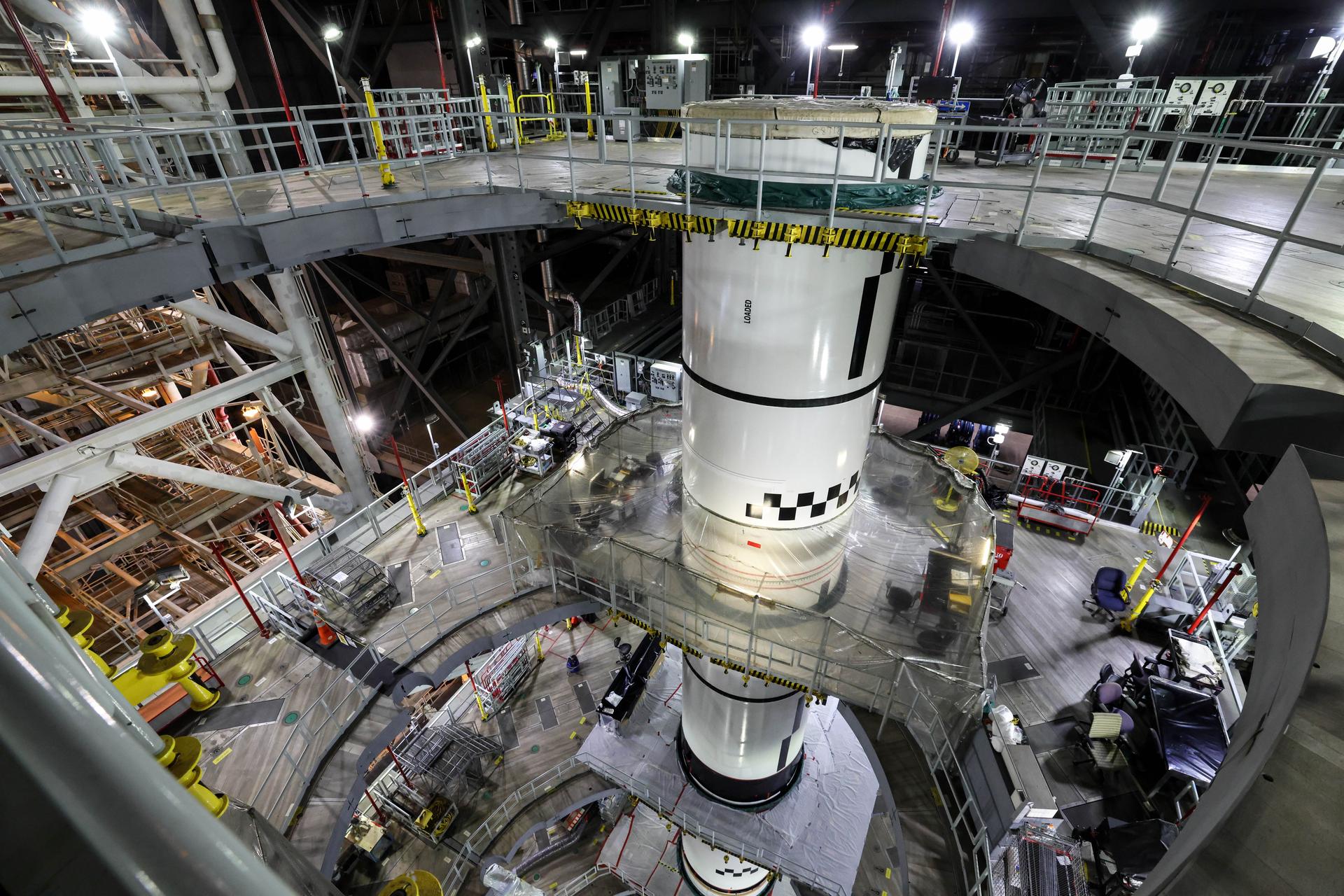
In High Bay 3 of the Vehicle Assembly Building at NASA’s Kennedy Space Center in Florida, the right forward center booster for Artemis III is integrated onto the right booster segments on the mobile launcher for the SLS (Space Launch System) rocket on Friday, Sept. 11, 2026. The twin boosters, comprising of five segments each manufactured by Northrop Grumman in Utah, will provide more than 75 percent of the SLS rocket’s total thrust at launch. The Artemis III mission will launch crew in the Orion spacecraft on top of the SLS rocket to test rendezvous and docking capabilities between Orion and commercial spacecraft needed to land astronauts on the Moon.

Inside High Bay 3 of the Vehicle Assembly Building at NASA’s Kennedy Space Center in Florida, technicians with the agency’s Exploration Ground Systems integrate the left forward center booster segment for the NASA’s SLS (Space Launch System) rocket onto the left center center segment atop the mobile launcher on Thursday, Jan. 30, 2025. The NASA “worm” insignia can be seen on both the center center booster segments. The boosters will help support the remaining rocket components and the Orion spacecraft during final assembly of the Artemis II Moon rocket and provide more than 75 percent of the total SLS thrust during liftoff from NASA Kennedy’s Launch Pad 39B.
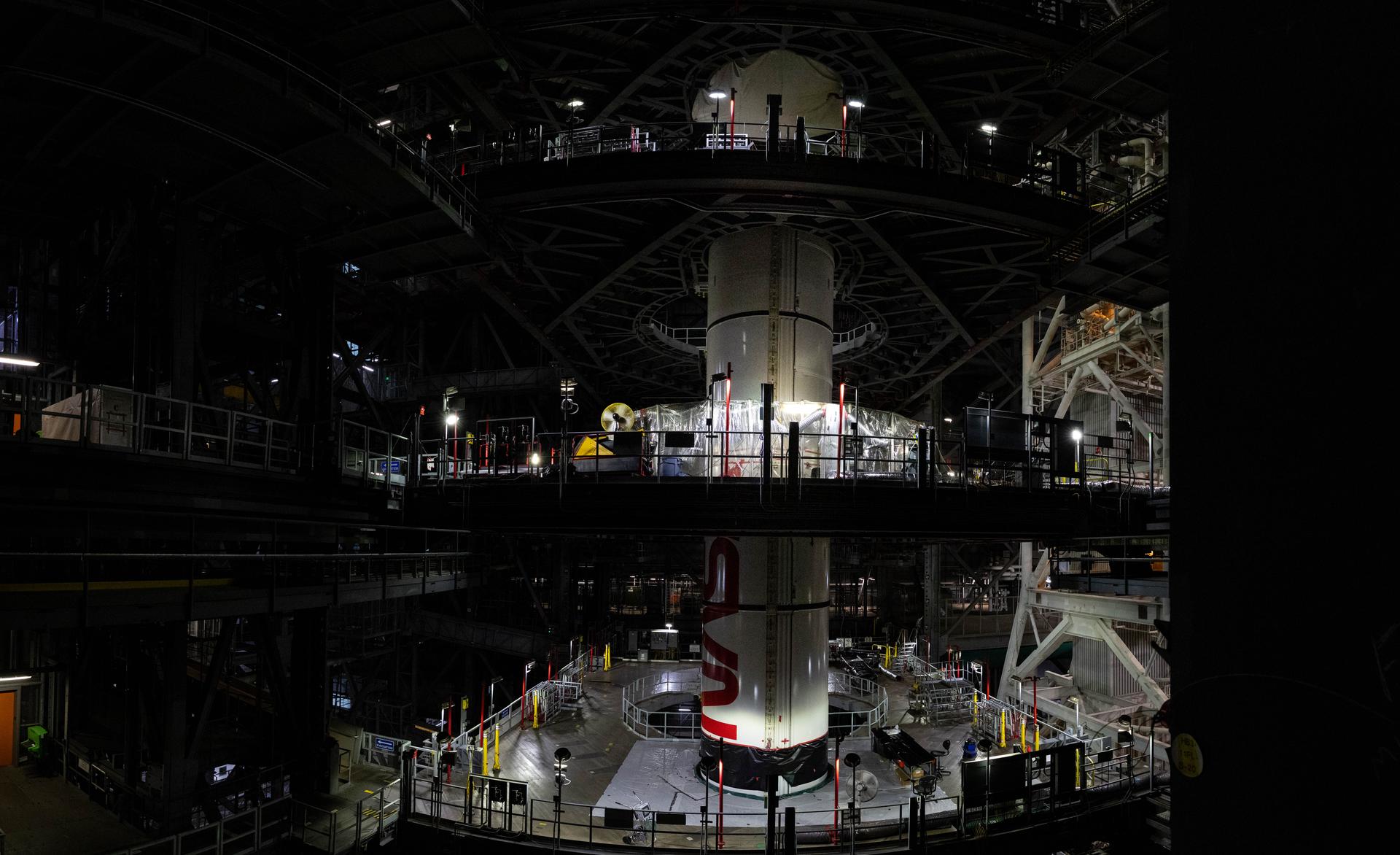
In High Bay 3 of the Vehicle Assembly Building at NASA’s Kennedy Space Center in Florida, the right forward center booster for Artemis III is integrated onto the right booster segments on the mobile launcher for the SLS (Space Launch System) rocket on Friday, Sept. 11, 2026. The twin boosters, comprising of five segments each manufactured by Northrop Grumman in Utah, will provide more than 75 percent of the SLS rocket’s total thrust at launch. The Artemis III mission will launch crew in the Orion spacecraft on top of the SLS rocket to test rendezvous and docking capabilities between Orion and commercial spacecraft needed to land astronauts on the Moon.
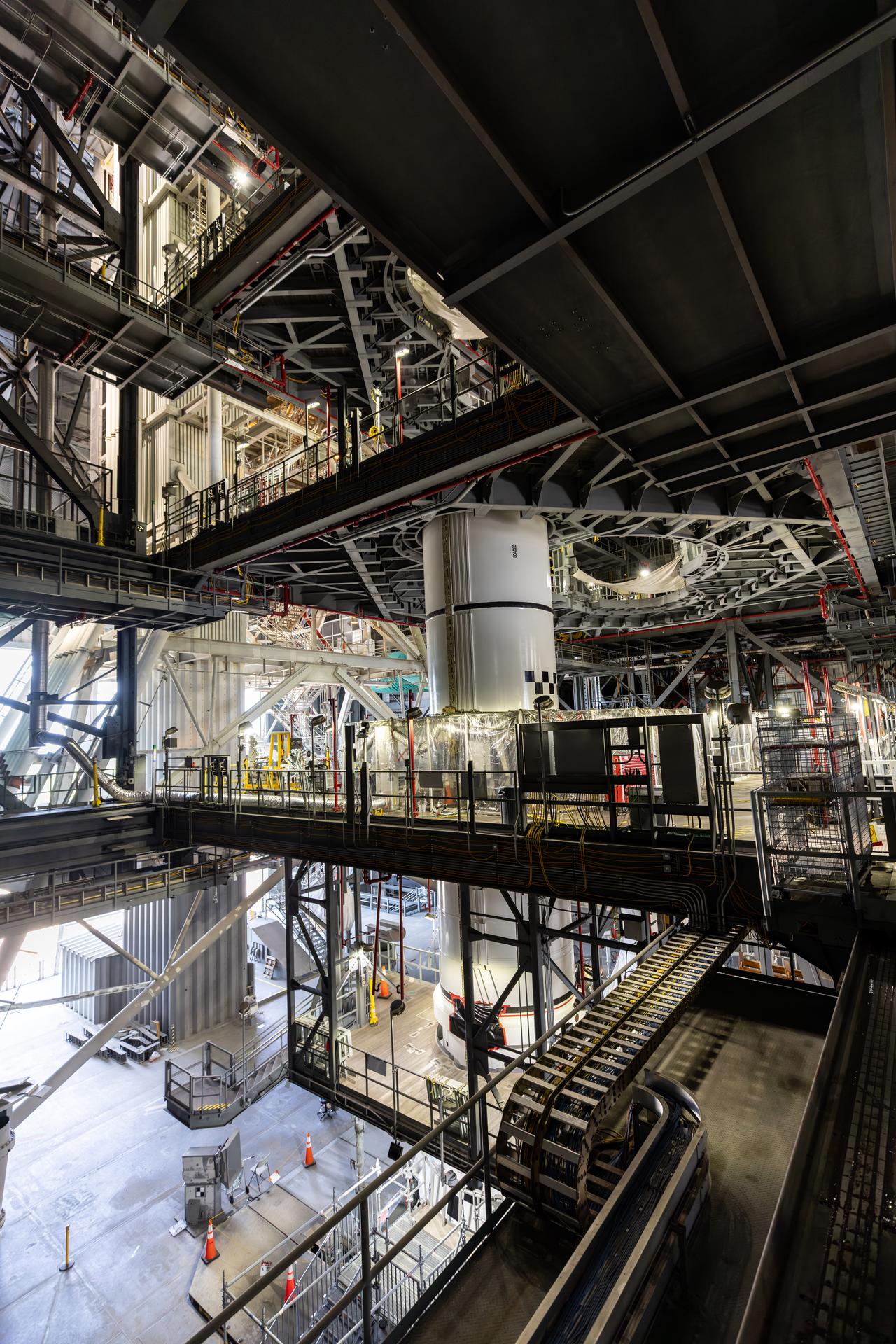
In High Bay 3 of the Vehicle Assembly Building at NASA’s Kennedy Space Center in Florida, the left aft center booster segment for Artemis III is integrated onto its aft assembly segment on the mobile launcher for the SLS (Space Launch System) rocket on Monday, Aug. 12, 2026. The twin boosters, comprising of five segments each manufactured by Northrop Grumman in Utah, will provide more than 75 percent of the SLS rocket’s total thrust at launch. The Artemis III mission will launch crew in the Orion spacecraft on top of the SLS rocket to test rendezvous and docking capabilities between Orion and commercial spacecraft needed to land astronauts on the Moon.
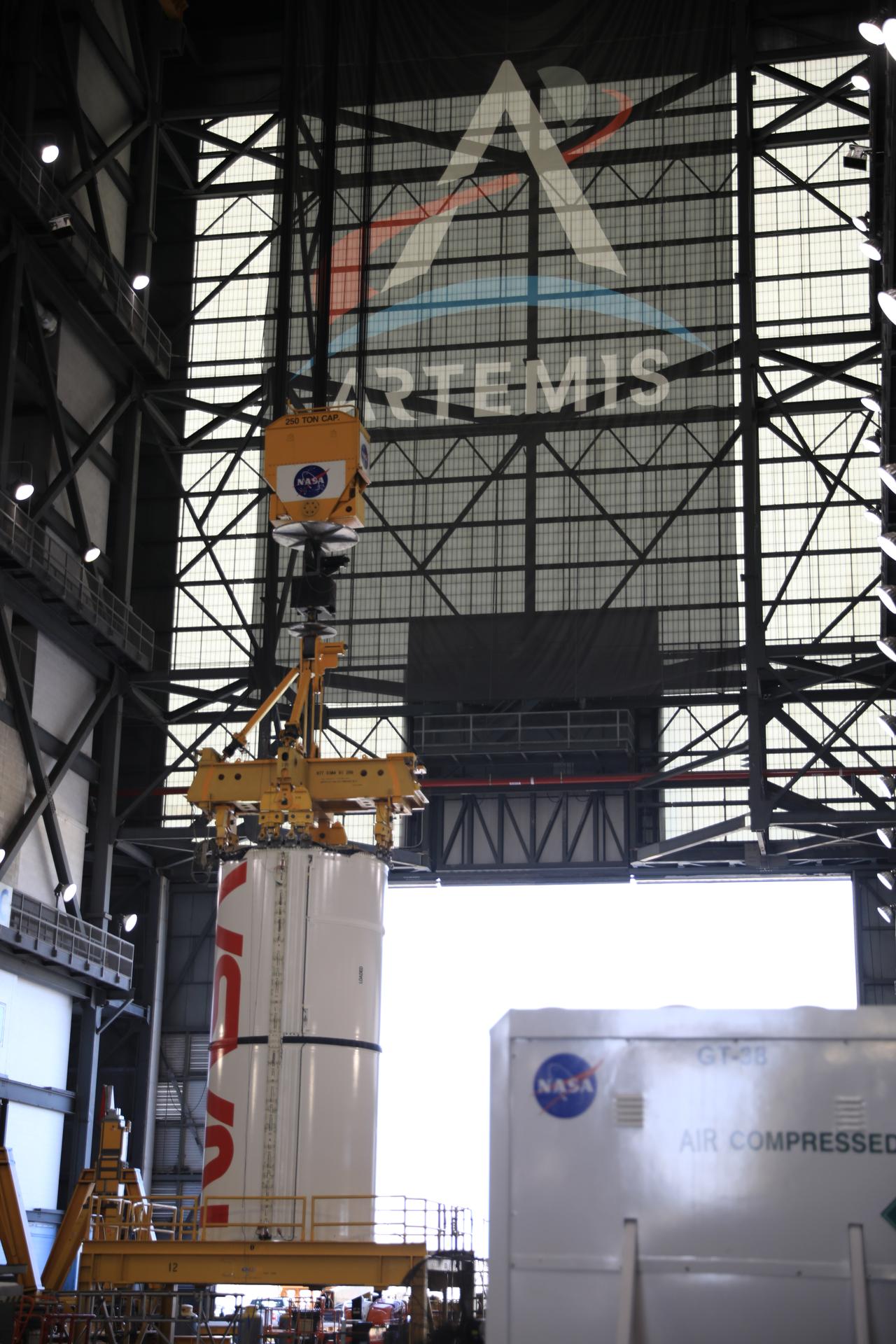
Technicians inside the Vehicle Assembly Building at NASA’s Kennedy Space Center in Florida connect a crane to the right center center booster segment for the Artemis III SLS (Space Launch System) rocket on Thursday, Aug. 20, 2026, ahead of integration onto the right aft center booster on the mobile launcher inside High Bay 3. The twin boosters, comprising of five segments each manufactured by Northrop Grumman in Utah, will provide more than 75 percent of the SLS rocket’s total thrust at launch. The Artemis III mission will launch crew in the Orion spacecraft on top of the SLS rocket to test rendezvous and docking capabilities between Orion and commercial spacecraft needed to land astronauts on the Moon.
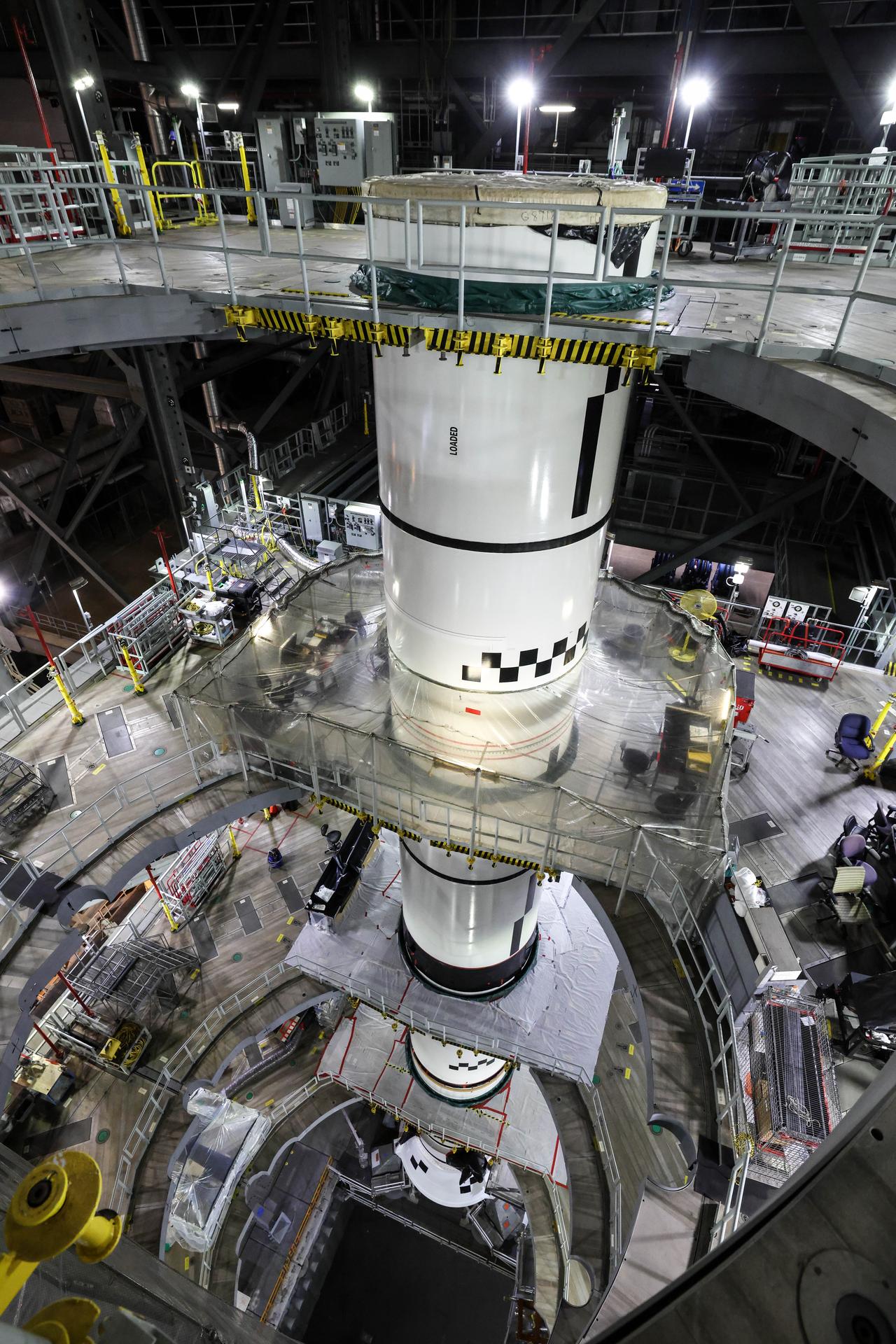
In High Bay 3 of the Vehicle Assembly Building at NASA’s Kennedy Space Center in Florida, the right forward center booster for Artemis III is integrated onto the right booster segments on the mobile launcher for the SLS (Space Launch System) rocket on Friday, Sept. 11, 2026. The twin boosters, comprising of five segments each manufactured by Northrop Grumman in Utah, will provide more than 75 percent of the SLS rocket’s total thrust at launch. The Artemis III mission will launch crew in the Orion spacecraft on top of the SLS rocket to test rendezvous and docking capabilities between Orion and commercial spacecraft needed to land astronauts on the Moon.
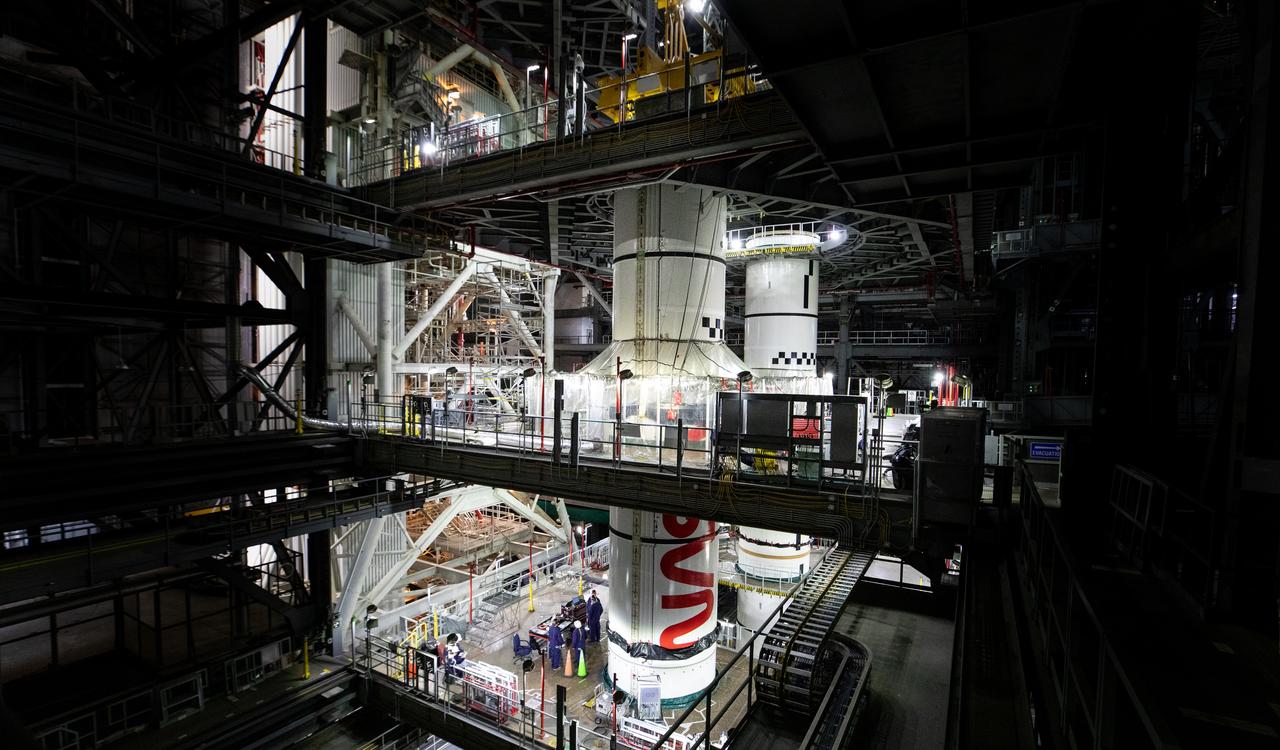
Inside High Bay 3 of the Vehicle Assembly Building at NASA’s Kennedy Space Center in Florida, technicians with the agency’s Exploration Ground Systems integrate the left forward center booster segment for the NASA’s SLS (Space Launch System) rocket onto the left center center segment atop the mobile launcher on Thursday, Jan. 30, 2025. The NASA “worm” insignia can be seen on both the center center booster segments. The boosters will help support the remaining rocket components and the Orion spacecraft during final assembly of the Artemis II Moon rocket and provide more than 75 percent of the total SLS thrust during liftoff from NASA Kennedy’s Launch Pad 39B.
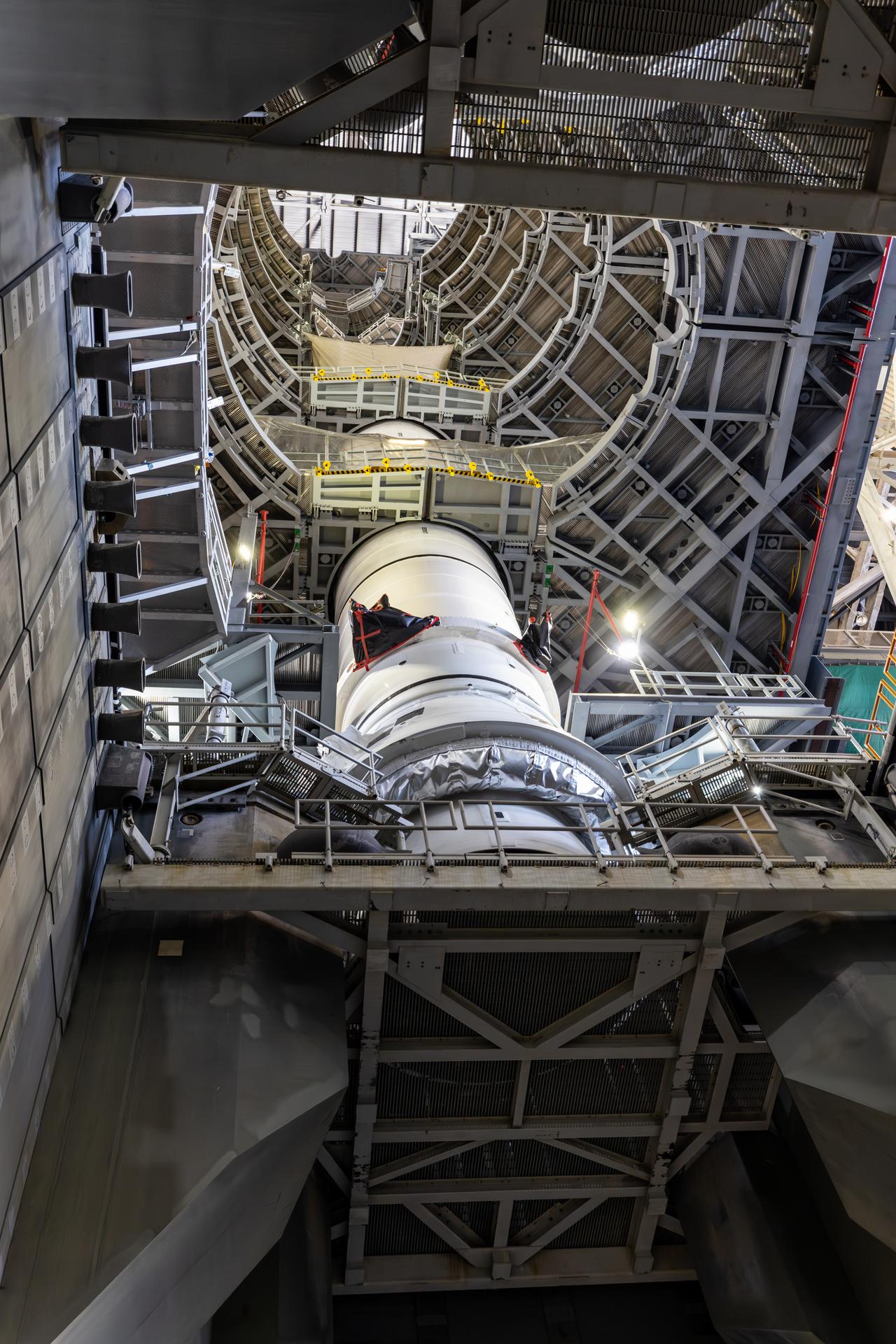
In High Bay 3 of the Vehicle Assembly Building at NASA’s Kennedy Space Center in Florida, the left aft center booster segment for Artemis III is integrated onto its aft assembly segment on the mobile launcher for the SLS (Space Launch System) rocket on Monday, Aug. 12, 2026. The twin boosters, comprising of five segments each manufactured by Northrop Grumman in Utah, will provide more than 75 percent of the SLS rocket’s total thrust at launch. The Artemis III mission will launch crew in the Orion spacecraft on top of the SLS rocket to test rendezvous and docking capabilities between Orion and commercial spacecraft needed to land astronauts on the Moon.
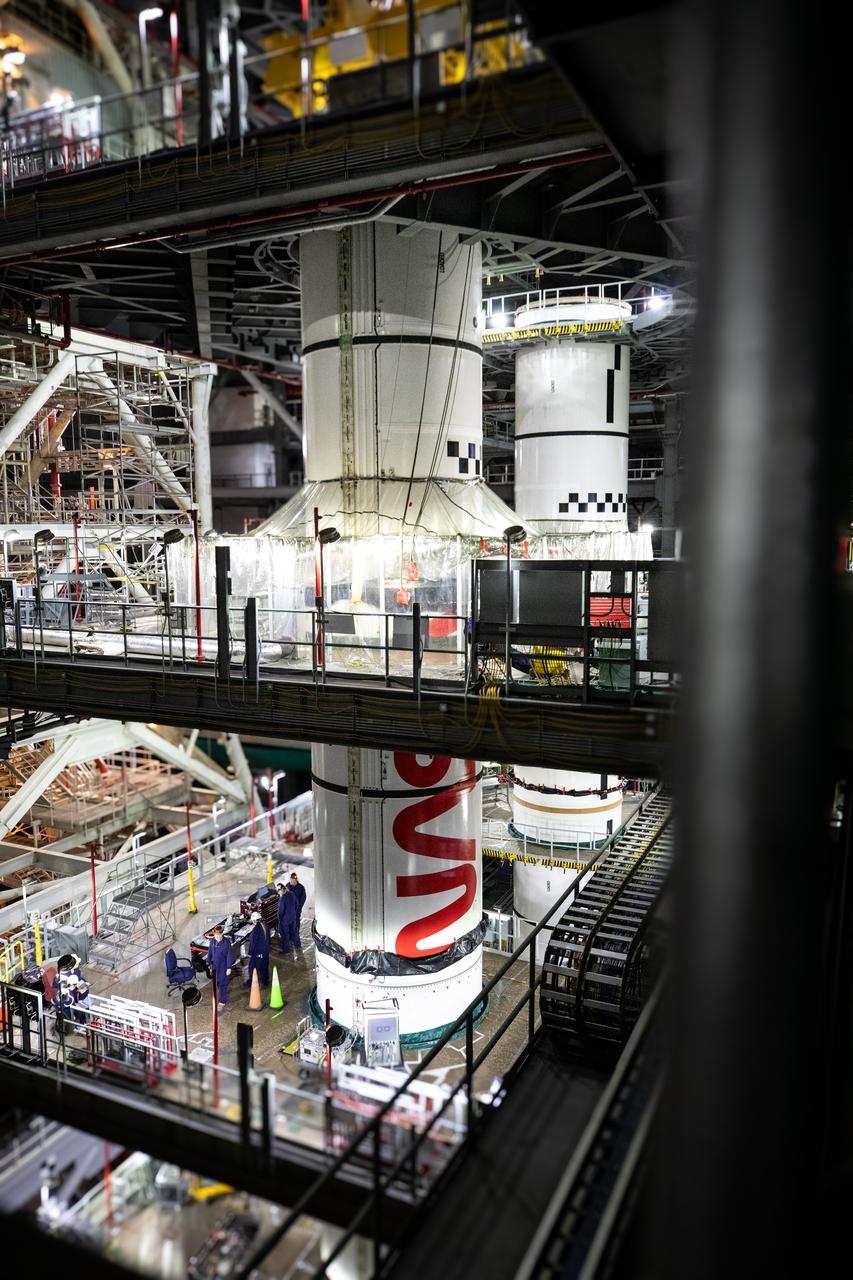
Inside High Bay 3 of the Vehicle Assembly Building at NASA’s Kennedy Space Center in Florida, technicians with the agency’s Exploration Ground Systems integrate the left forward center booster segment for the NASA’s SLS (Space Launch System) rocket onto the left center center segment atop the mobile launcher on Thursday, Jan. 30, 2025. The NASA “worm” insignia can be seen on both the center center booster segments. The boosters will help support the remaining rocket components and the Orion spacecraft during final assembly of the Artemis II Moon rocket and provide more than 75 percent of the total SLS thrust during liftoff from NASA Kennedy’s Launch Pad 39B.
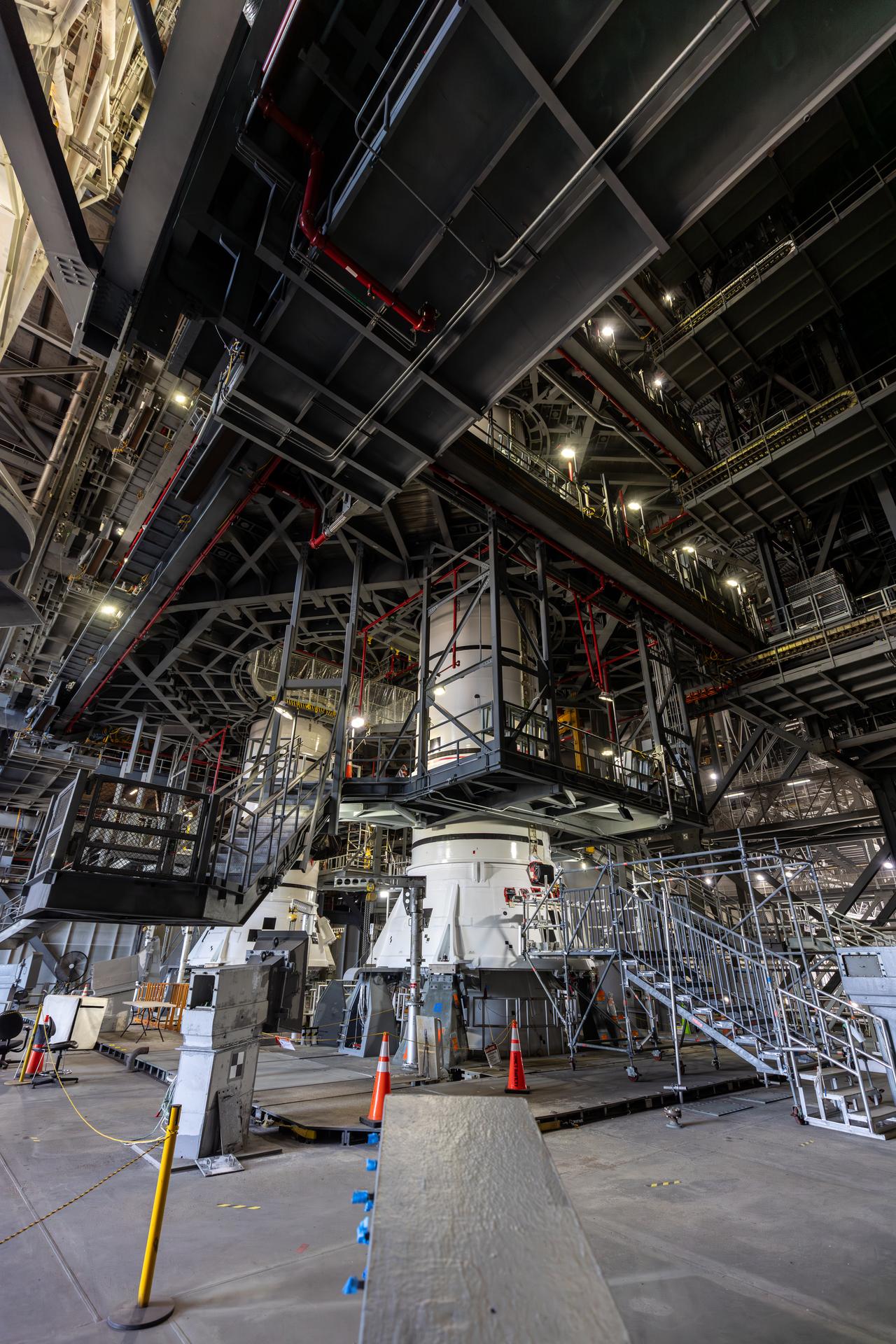
In High Bay 3 of the Vehicle Assembly Building at NASA’s Kennedy Space Center in Florida, the left and right segments for Artemis III prepare for integration onto their aft assembly segments on the mobile launcher for the SLS (Space Launch System) rocket on Monday, Aug. 12, 2026. The twin boosters, comprising of five segments each manufactured by Northrop Grumman in Utah, will provide more than 75 percent of the SLS rocket’s total thrust at launch. The Artemis III mission will launch crew in the Orion spacecraft on top of the SLS rocket to test rendezvous and docking capabilities between Orion and commercial spacecraft needed to land astronauts on the Moon.
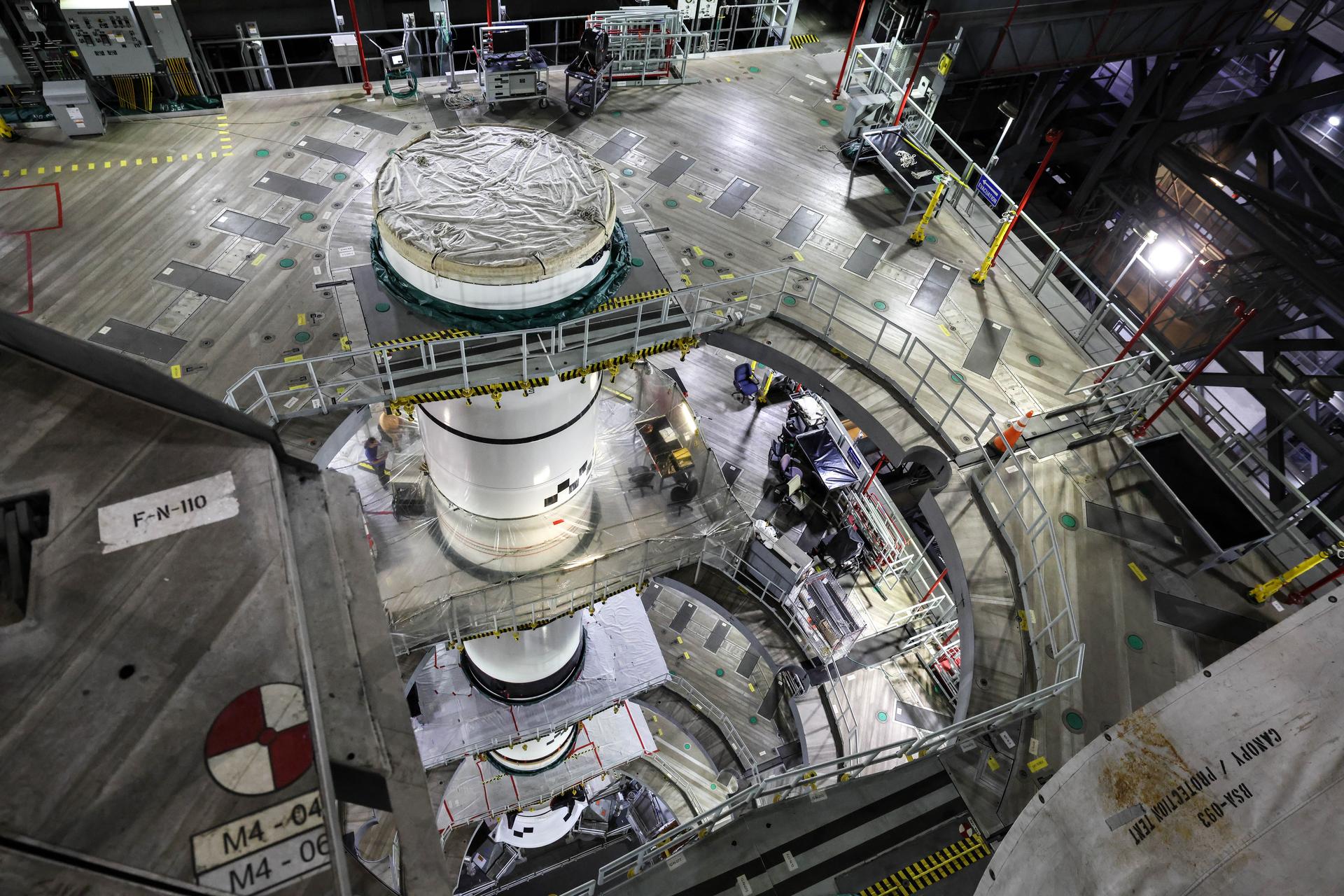
In High Bay 3 of the Vehicle Assembly Building at NASA’s Kennedy Space Center in Florida, the right forward center booster for Artemis III is integrated onto the right booster segments on the mobile launcher for the SLS (Space Launch System) rocket on Friday, Sept. 11, 2026. The twin boosters, comprising of five segments each manufactured by Northrop Grumman in Utah, will provide more than 75 percent of the SLS rocket’s total thrust at launch. The Artemis III mission will launch crew in the Orion spacecraft on top of the SLS rocket to test rendezvous and docking capabilities between Orion and commercial spacecraft needed to land astronauts on the Moon.
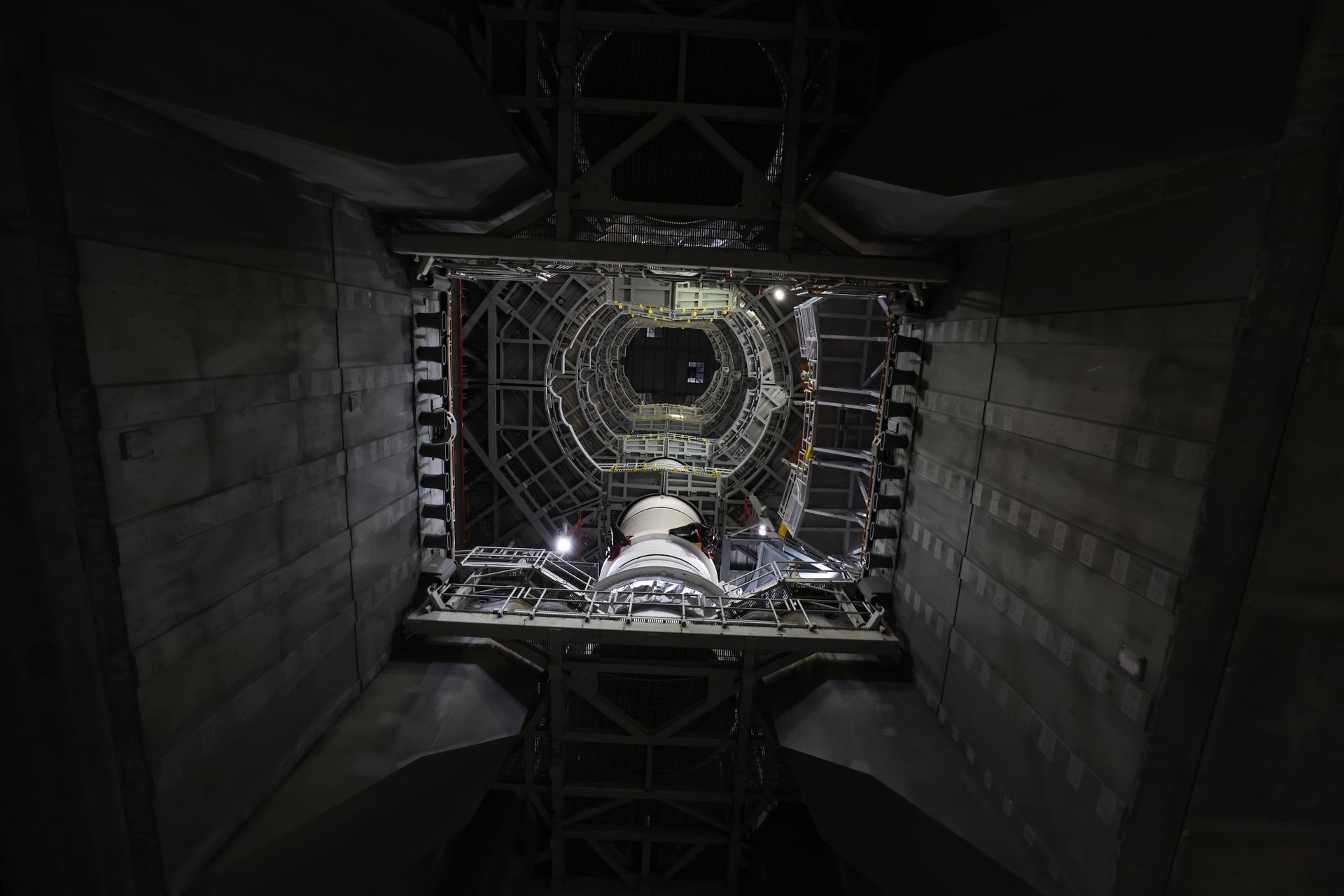
In High Bay 3 of the Vehicle Assembly Building at NASA’s Kennedy Space Center in Florida, portions of the solid rocket booster right forward center booster for Artemis III is integrated onto the right booster segments on the mobile launcher for the SLS (Space Launch System) rocket on Friday, Sept. 11, 2026. The twin boosters, comprising of five segments each manufactured by Northrop Grumman in Utah, will provide more than 75 percent of the SLS rocket’s total thrust at launch. The Artemis III mission will launch crew in the Orion spacecraft on top of the SLS rocket to test rendezvous and docking capabilities between Orion and commercial spacecraft needed to land astronauts on the Moon.
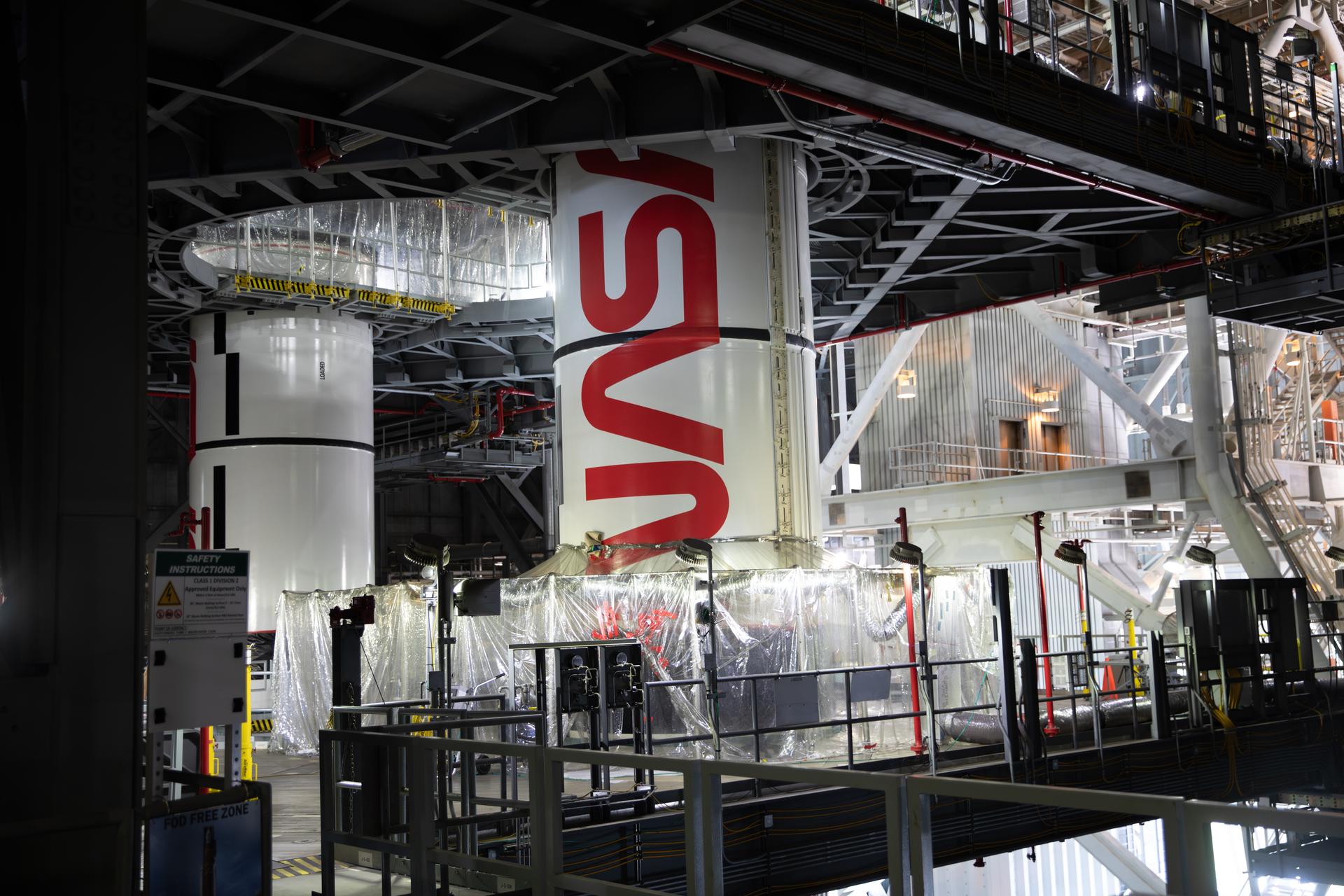
During integration operations inside the Vehicle Assembly Building at NASA’s Kennedy Space Center in Florida, the NASA “worm” is visible on the left and right center center solid rocket booster segments for the Artemis III SLS (Space Launch System) rocket on the mobile launcher inside High Bay 3 on Tuesday, Sept. 1, 2026. The twin boosters, comprising of five segments each manufactured by Northrop Grumman in Utah, will provide more than 75 percent of the SLS rocket’s total thrust at launch. The Artemis III mission will launch crew in the Orion spacecraft on top of the SLS rocket to test rendezvous and docking capabilities between Orion and commercial spacecraft needed to land astronauts on the Moon.
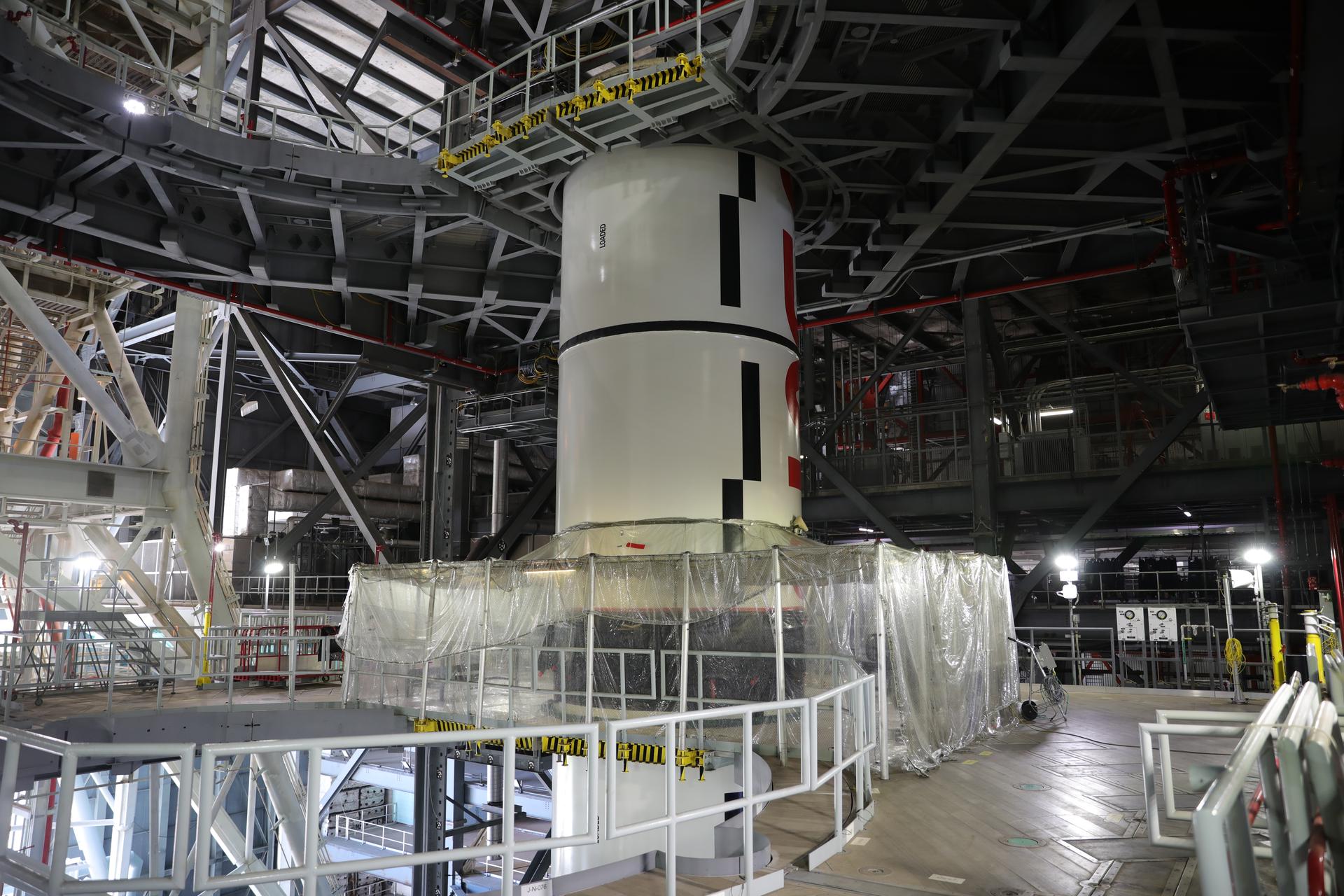
During integration operations inside the Vehicle Assembly Building at NASA’s Kennedy Space Center in Florida, the NASA “worm” is visible on the left and right center center solid rocket booster segments for the Artemis III SLS (Space Launch System) rocket on the mobile launcher inside High Bay 3 on Tuesday, Sept. 1, 2026. The twin boosters, comprising of five segments each manufactured by Northrop Grumman in Utah, will provide more than 75 percent of the SLS rocket’s total thrust at launch. The Artemis III mission will launch crew in the Orion spacecraft on top of the SLS rocket to test rendezvous and docking capabilities between Orion and commercial spacecraft needed to land astronauts on the Moon.
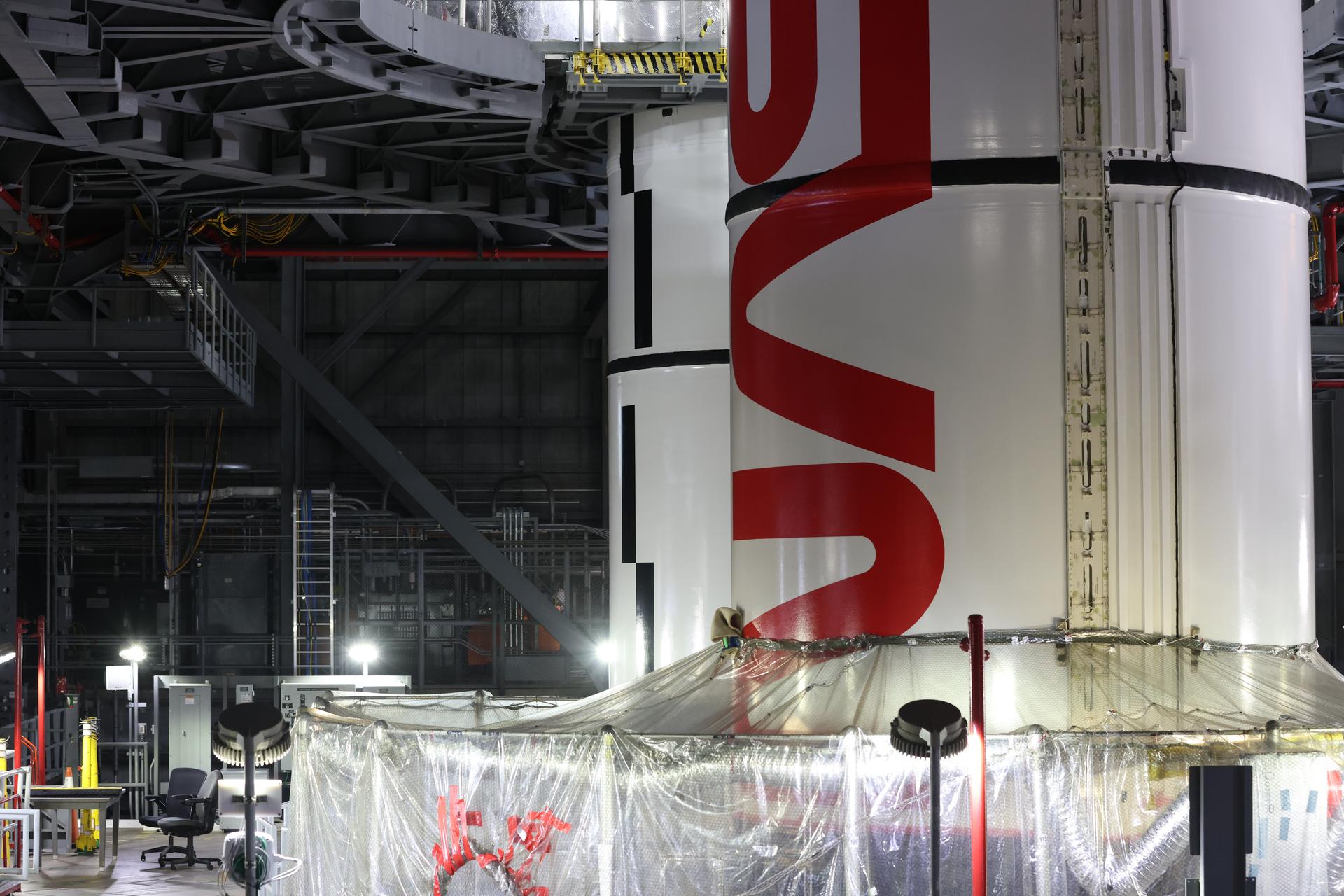
During integration operations inside the Vehicle Assembly Building at NASA’s Kennedy Space Center in Florida, the NASA “worm” is visible on the left and right center center solid rocket booster segments for the Artemis III SLS (Space Launch System) rocket on the mobile launcher inside High Bay 3 on Tuesday, Sept. 1, 2026. The twin boosters, comprising of five segments each manufactured by Northrop Grumman in Utah, will provide more than 75 percent of the SLS rocket’s total thrust at launch. The Artemis III mission will launch crew in the Orion spacecraft on top of the SLS rocket to test rendezvous and docking capabilities between Orion and commercial spacecraft needed to land astronauts on the Moon.
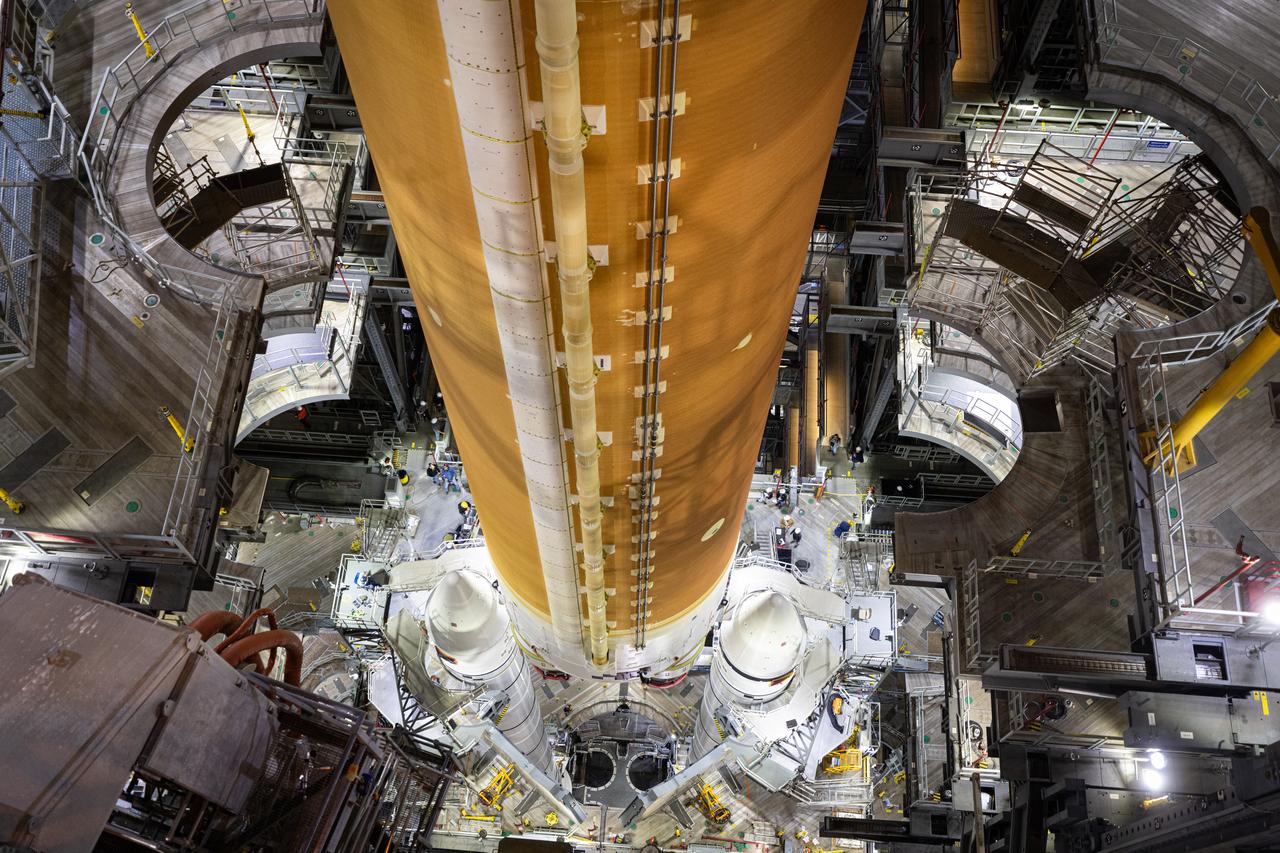
Teams with NASA’s Exploration Ground Systems and primary contractor Amentum, integrate the SLS (Space Launch System) Moon rocket with the solid rocket boosters onto mobile launcher 1 inside High Bay 3 of the Vehicle Assembly Building at NASA’s Kennedy Space Center on Sunday, March 23, 2025. Artemis II is the first crewed test flight under NASA’s Artemis campaign and is another step toward missions on the lunar surface and helping the agency prepare for future human missions to Mars.

Teams with NASA’s Exploration Ground Systems and primary contractor Amentum, integrate the SLS (Space Launch System) Moon rocket with the solid rocket boosters onto mobile launcher 1 inside High Bay 3 of the Vehicle Assembly Building at NASA’s Kennedy Space Center on Sunday, March 23, 2025. Artemis II is the first crewed test flight under NASA’s Artemis campaign and is another step toward missions on the lunar surface and helping the agency prepare for future human missions to Mars.

Teams with NASA’s Exploration Ground Systems and primary contractor Amentum, integrate the SLS (Space Launch System) Moon rocket with the solid rocket boosters onto mobile launcher 1 inside High Bay 3 of the Vehicle Assembly Building at NASA’s Kennedy Space Center on Sunday, March 23, 2025. Artemis II is the first crewed test flight under NASA’s Artemis campaign and is another step toward missions on the lunar surface and helping the agency prepare for future human missions to Mars.
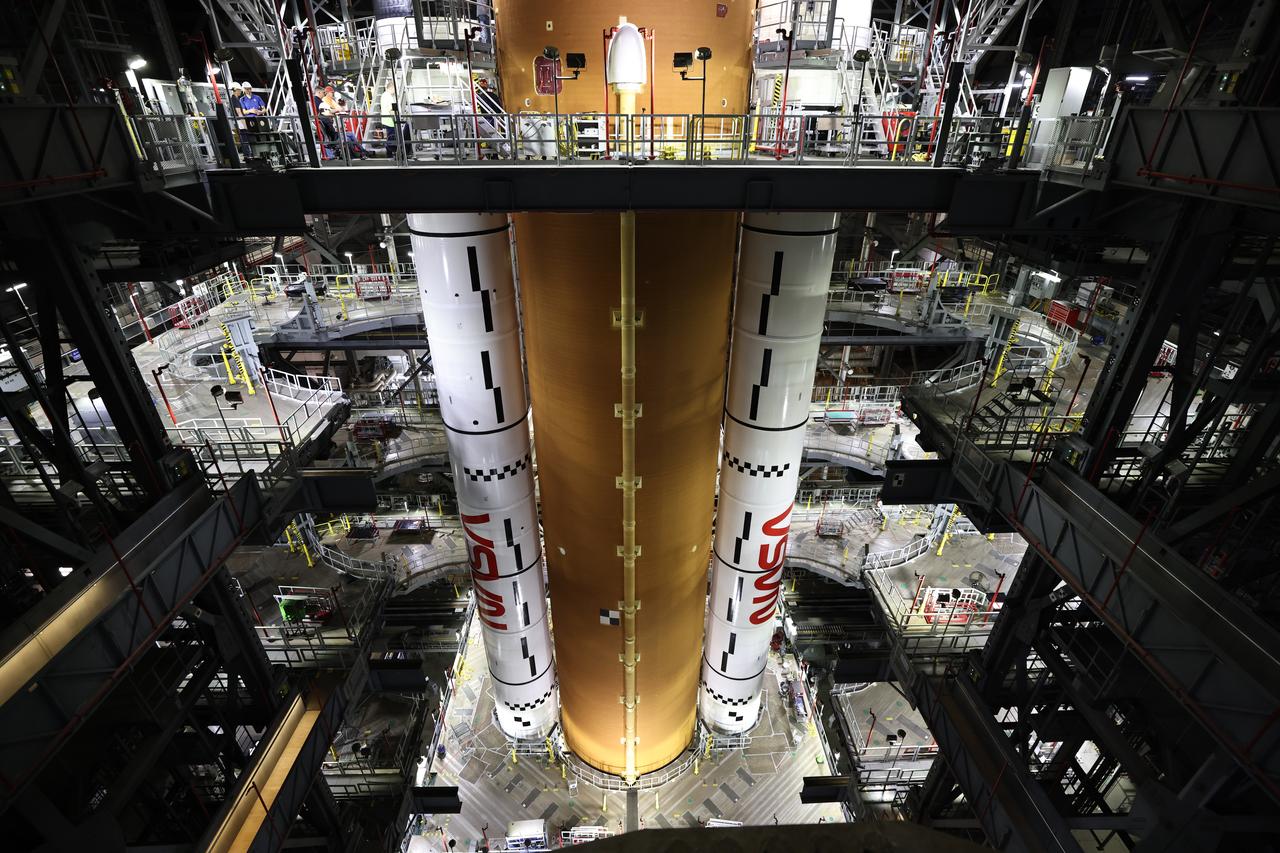
Teams with NASA’s Exploration Ground Systems and primary contractor Amentum, integrate the SLS (Space Launch System) Moon rocket with the solid rocket boosters onto mobile launcher 1 inside High Bay 3 of the Vehicle Assembly Building at NASA’s Kennedy Space Center on Sunday, March 23, 2025. Artemis II is the first crewed test flight under NASA’s Artemis campaign and is another step toward missions on the lunar surface and helping the agency prepare for future human missions to Mars.
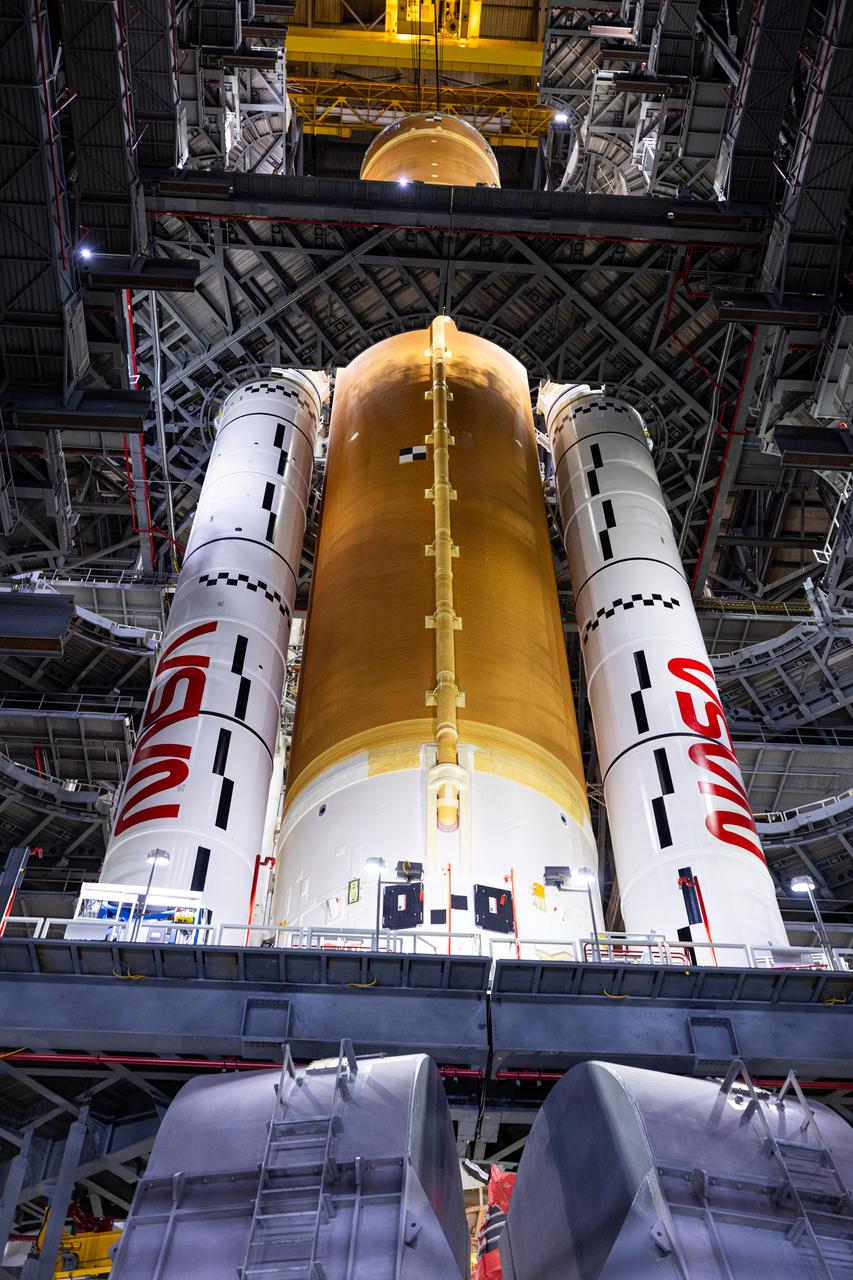
Teams with NASA’s Exploration Ground Systems and primary contractor Amentum, integrate the SLS (Space Launch System) Moon rocket with the solid rocket boosters onto mobile launcher 1 inside High Bay 3 of the Vehicle Assembly Building at NASA’s Kennedy Space Center on Sunday, March 23, 2025. Artemis II is the first crewed test flight under NASA’s Artemis campaign and is another step toward missions on the lunar surface and helping the agency prepare for future human missions to Mars.
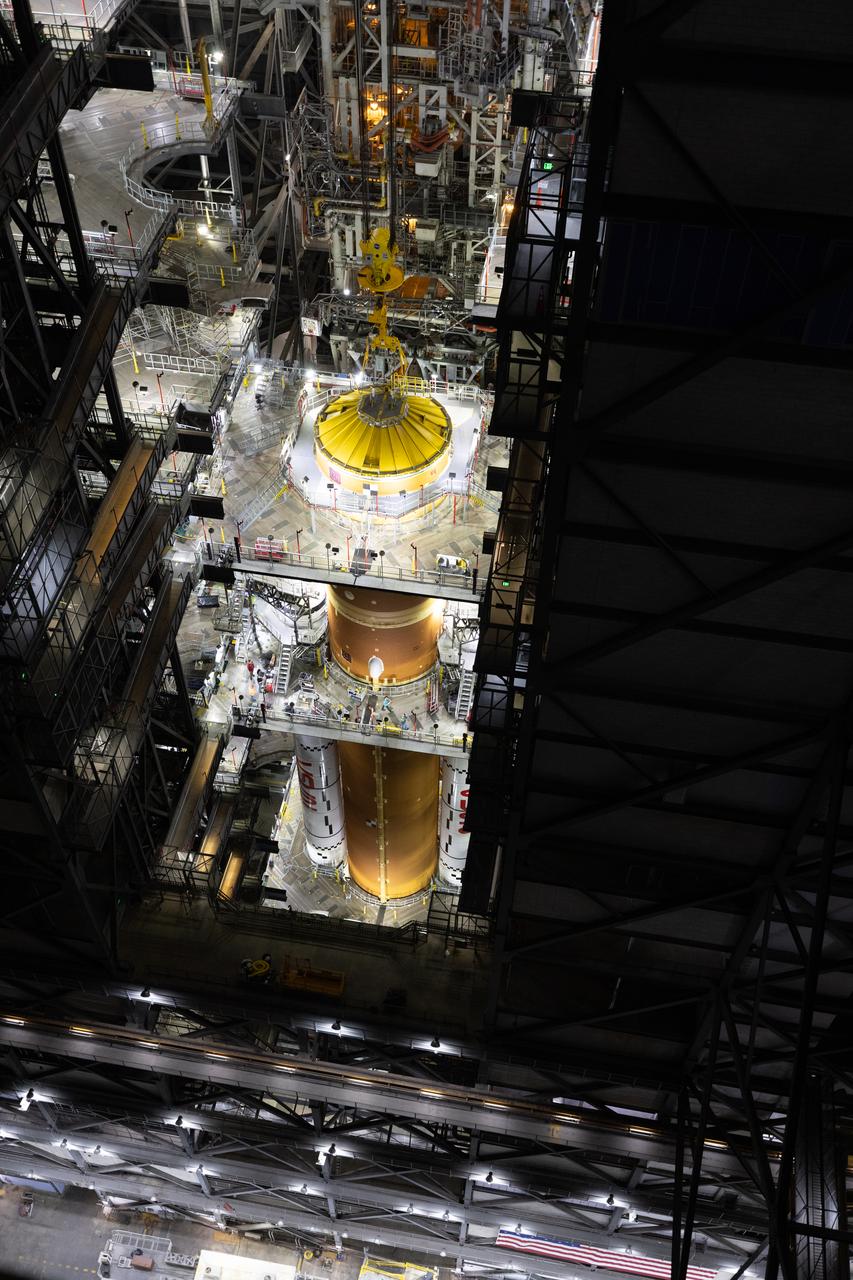
Teams with NASA’s Exploration Ground Systems and primary contractor Amentum, integrate the SLS (Space Launch System) Moon rocket with the solid rocket boosters onto mobile launcher 1 inside High Bay 3 of the Vehicle Assembly Building at NASA’s Kennedy Space Center on Sunday, March 23, 2025. Artemis II is the first crewed test flight under NASA’s Artemis campaign and is another step toward missions on the lunar surface and helping the agency prepare for future human missions to Mars.
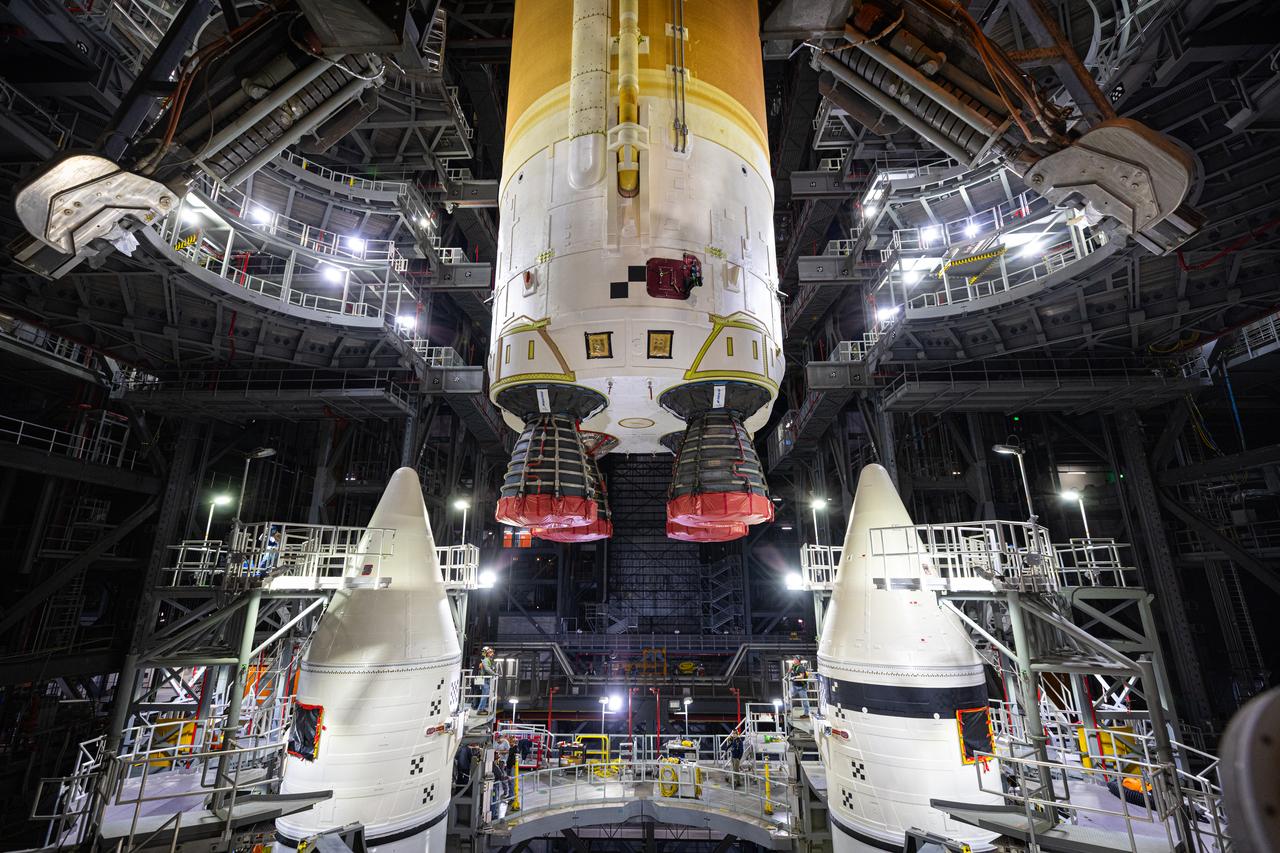
Teams with NASA’s Exploration Ground Systems and primary contractor Amentum, integrate the SLS (Space Launch System) Moon rocket with the solid rocket boosters onto mobile launcher 1 inside High Bay 3 of the Vehicle Assembly Building at NASA’s Kennedy Space Center on Sunday, March 23, 2025. Artemis II is the first crewed test flight under NASA’s Artemis campaign and is another step toward missions on the lunar surface and helping the agency prepare for future human missions to Mars.
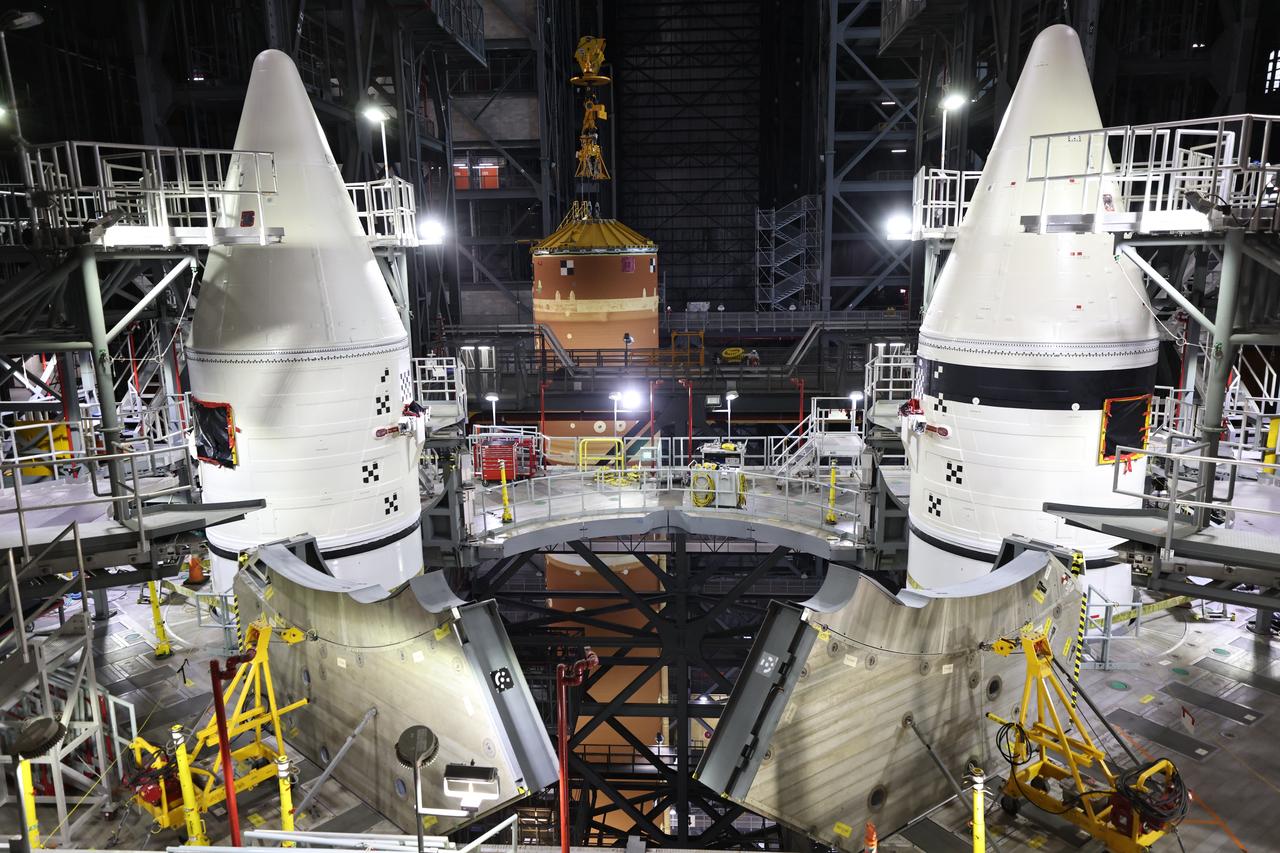
Teams with NASA’s Exploration Ground Systems and primary contractor Amentum, integrate the SLS (Space Launch System) Moon rocket with the solid rocket boosters onto mobile launcher 1 inside High Bay 3 of the Vehicle Assembly Building at NASA’s Kennedy Space Center on Sunday, March 23, 2025. Artemis II is the first crewed test flight under NASA’s Artemis campaign and is another step toward missions on the lunar surface and helping the agency prepare for future human missions to Mars.
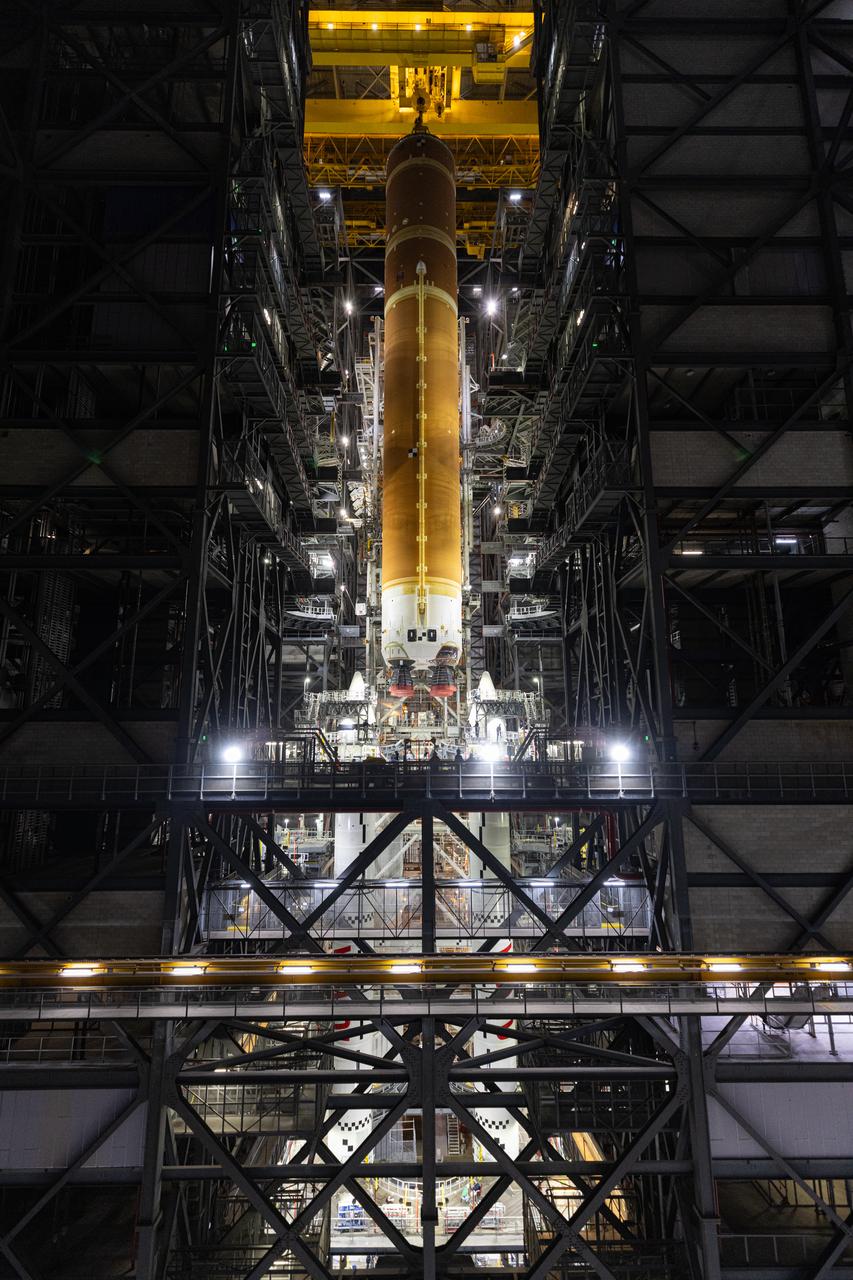
Teams with NASA’s Exploration Ground Systems and primary contractor Amentum, integrate the SLS (Space Launch System) Moon rocket with the solid rocket boosters onto mobile launcher 1 inside High Bay 3 of the Vehicle Assembly Building at NASA’s Kennedy Space Center on Sunday, March 23, 2025. Artemis II is the first crewed test flight under NASA’s Artemis campaign and is another step toward missions on the lunar surface and helping the agency prepare for future human missions to Mars.
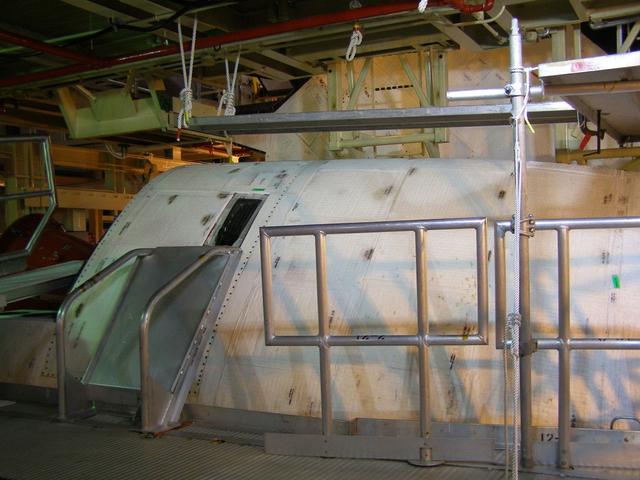
Orbiter Processing Facility High Bay No. 3, OMS pod with moveable platform, July 31, 2006
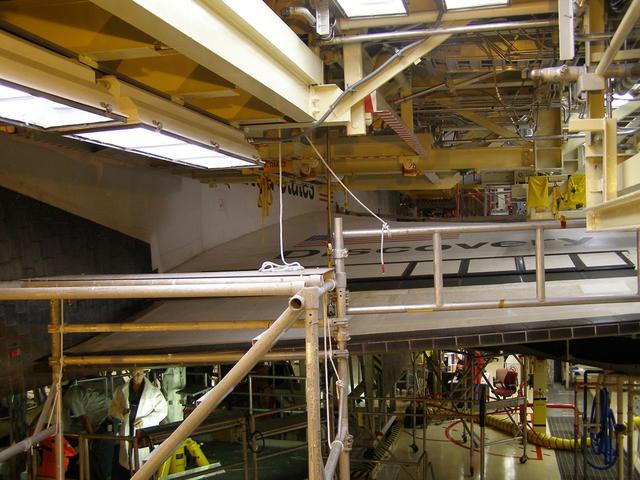
Orbiter Processing Facility High Bay No. 3, second level, looking northeast, July 31, 2006
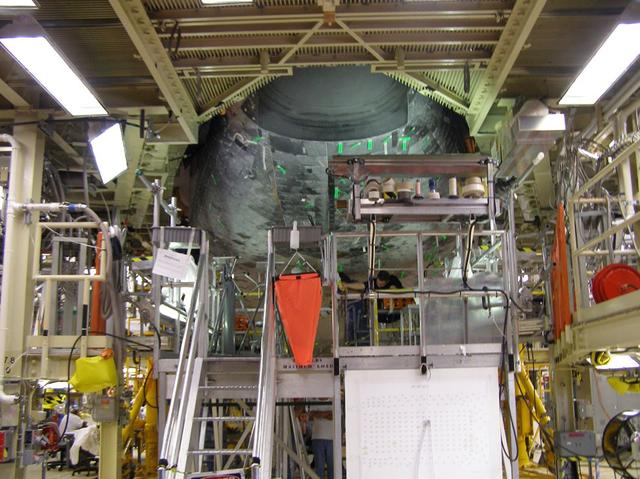
Orbiter Processing Facility High Bay No. 3, orbiter nose and platforms, looking south, July 31, 2006
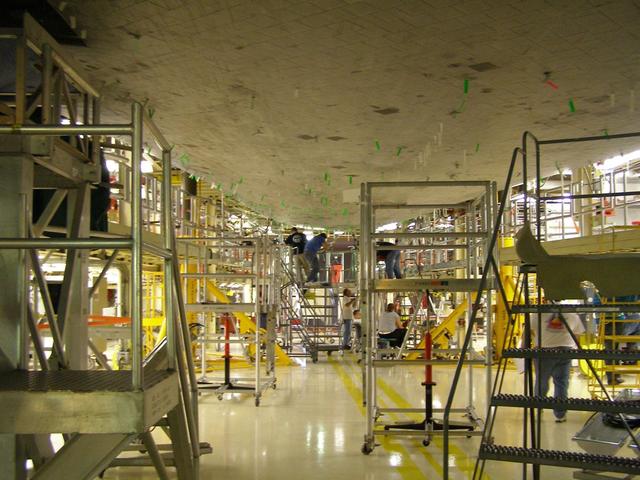
Orbiter Processing Facility High Bay No. 3, orbiter underside with moveable platforms, looking north, July 31, 2006
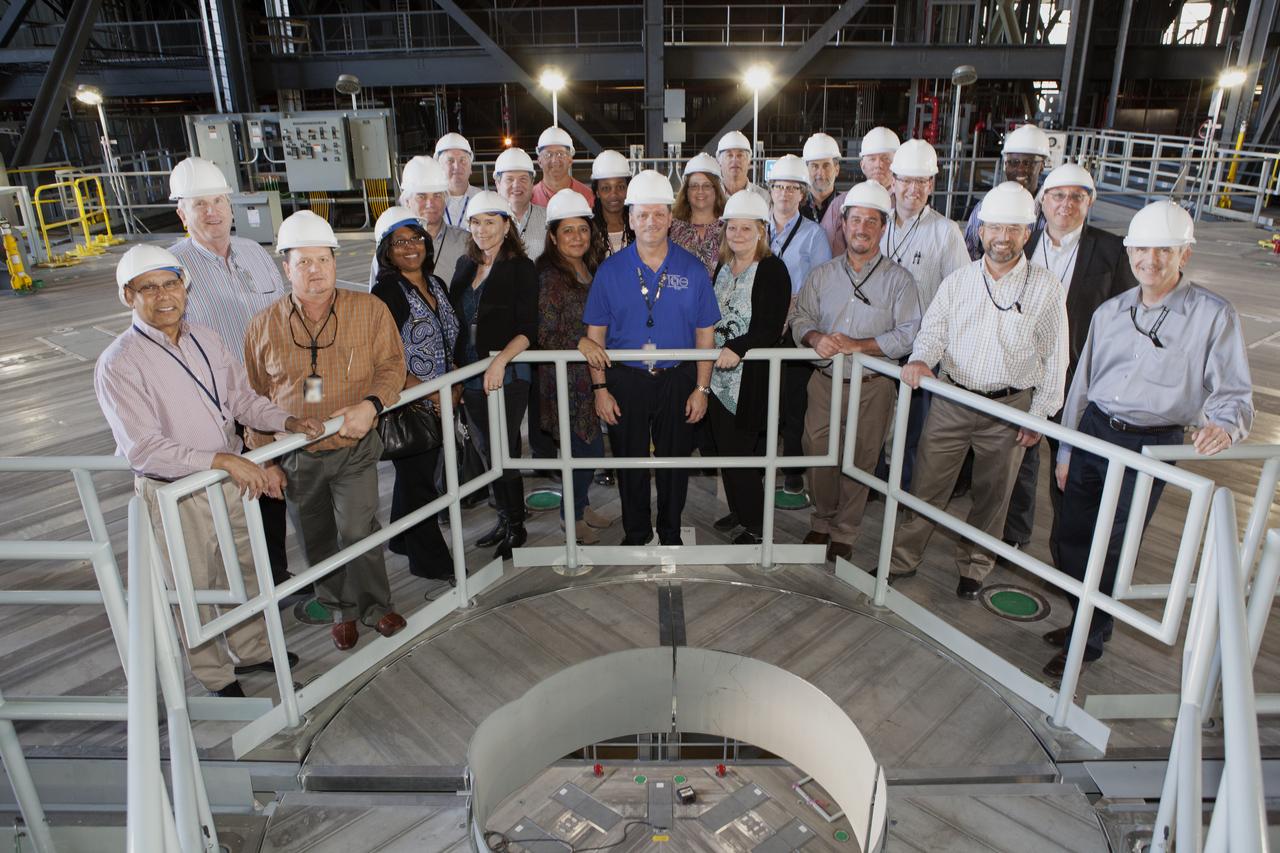
Members of NASA’s Engineering Management Board pause for a group photo during a tour of the Vehicle Assembly Building at Kennedy Space Center in Florida. The platforms in High Bay 3, including the one on which the board members are standing, were designed to surround and provide access to NASA’s Space Launch System and Orion spacecraft. The Engineering Management Board toured integral areas of Kennedy to help the agencywide group reach its goal of unifying engineering work across NASA.
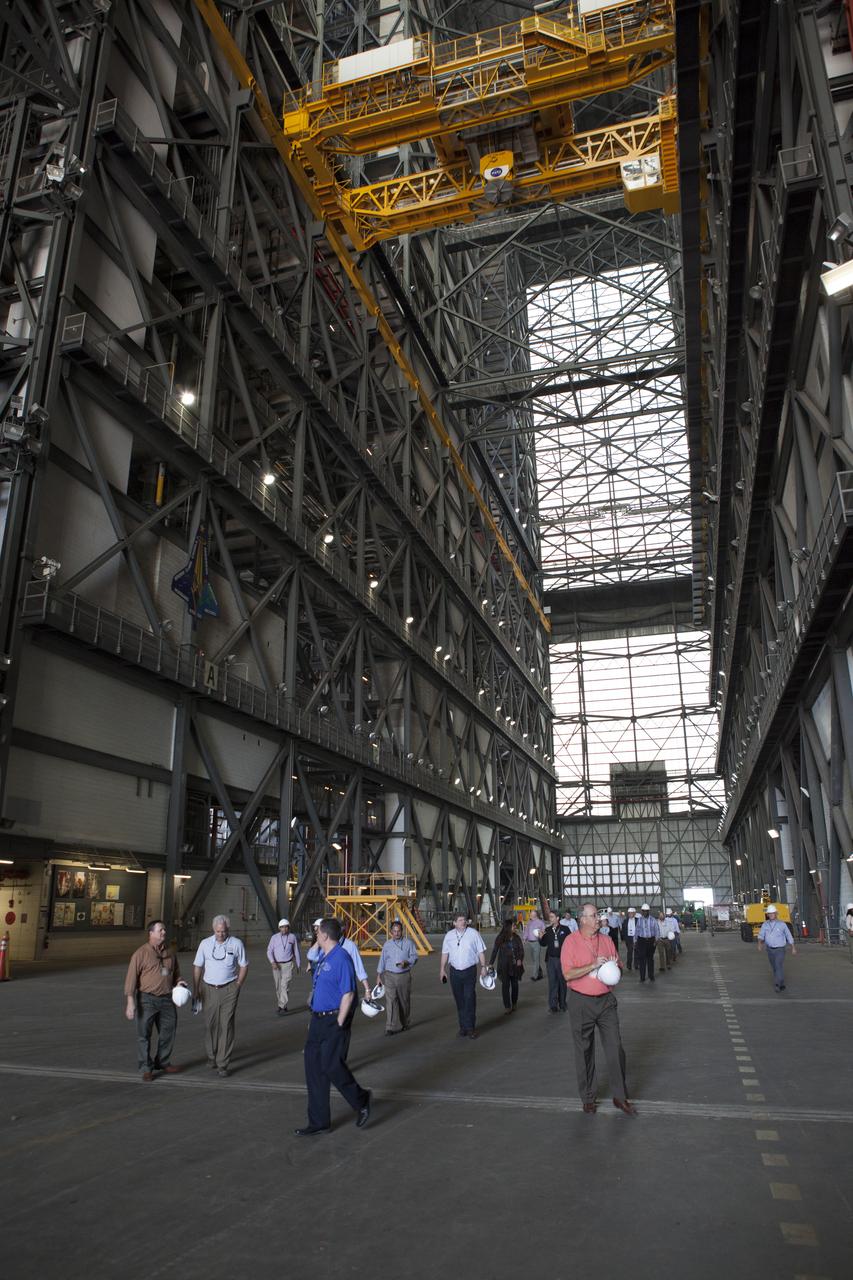
Members of NASA’s Engineering Management Board tour of the Vehicle Assembly Building at Kennedy Space Center in Florida. The platforms in High Bay 3, including the one on which the board members are standing, were designed to surround and provide access to NASA’s Space Launch System and Orion spacecraft. The Engineering Management Board toured integral areas of Kennedy to help the agencywide group reach its goal of unifying engineering work across NASA.
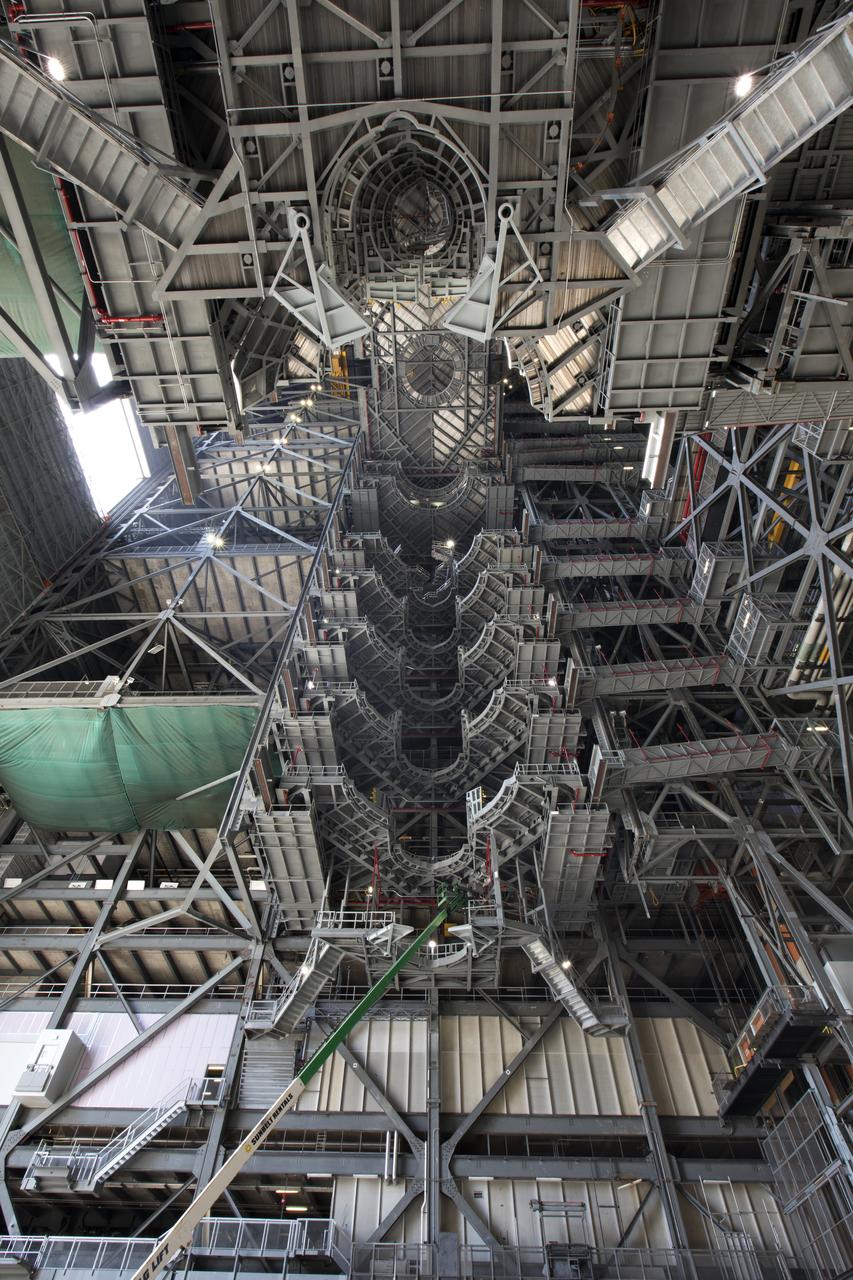
A view looking up at one side of the 10 levels of work platforms in High Bay 3 inside the Vehicle Assembly Building (VAB) at NASA's Kennedy Space Center in Florida. The work platforms will surround and provide access for service and processing of NASA's Space Launch System rocket and Orion spacecraft. Exploration Ground Systems oversaw the upgrades and installation of the new work platforms to support the launch of the SLS and Orion on Exploration Mission-1 and deep space missions.
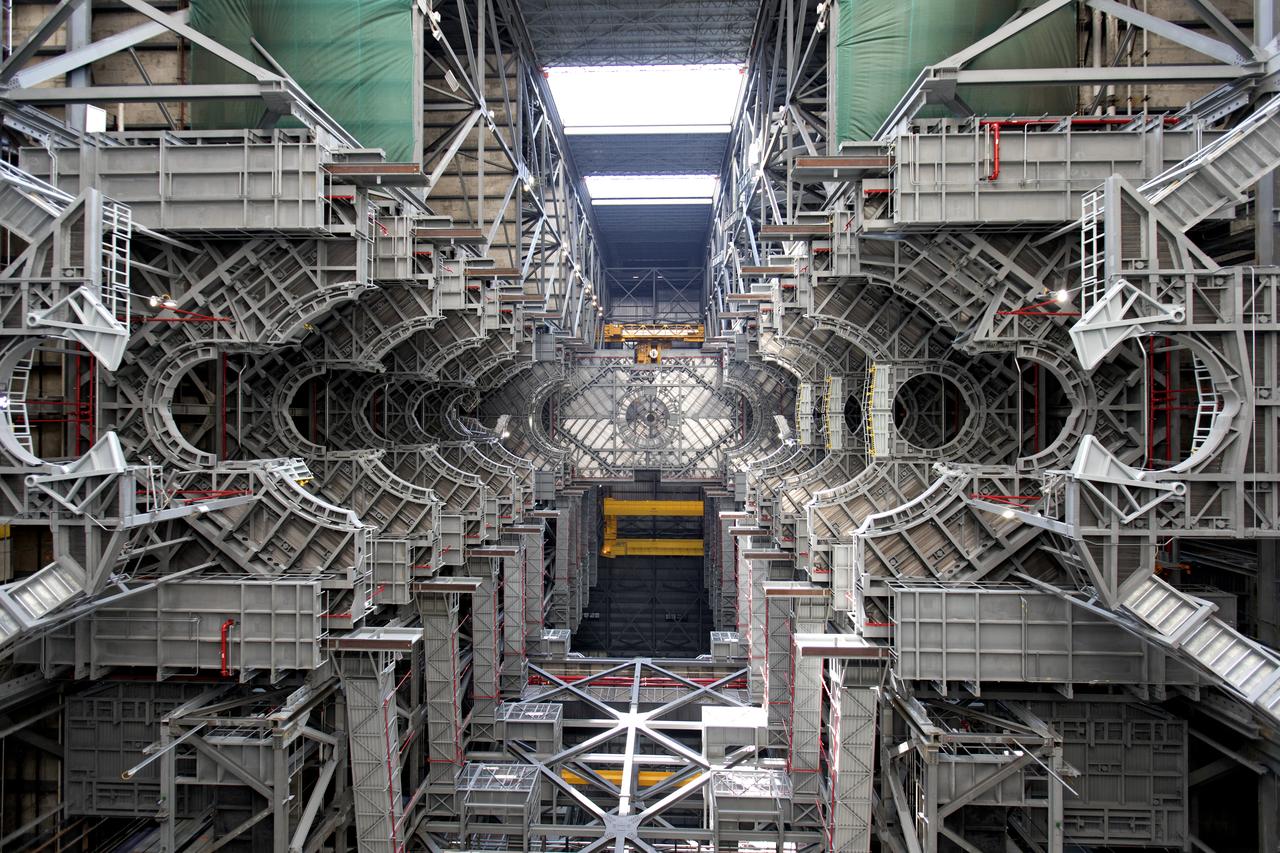
A view looking up at the 10 levels of work platforms in High Bay 3 inside the Vehicle Assembly Building (VAB) at NASA's Kennedy Space Center in Florida. The work platforms will surround and provide access for service and processing of NASA's Space Launch System rocket and Orion spacecraft. Exploration Ground Systems oversaw the upgrades and installation of the new work platforms to support the launch of the SLS and Orion on Exploration Mission-1 and deep space missions.
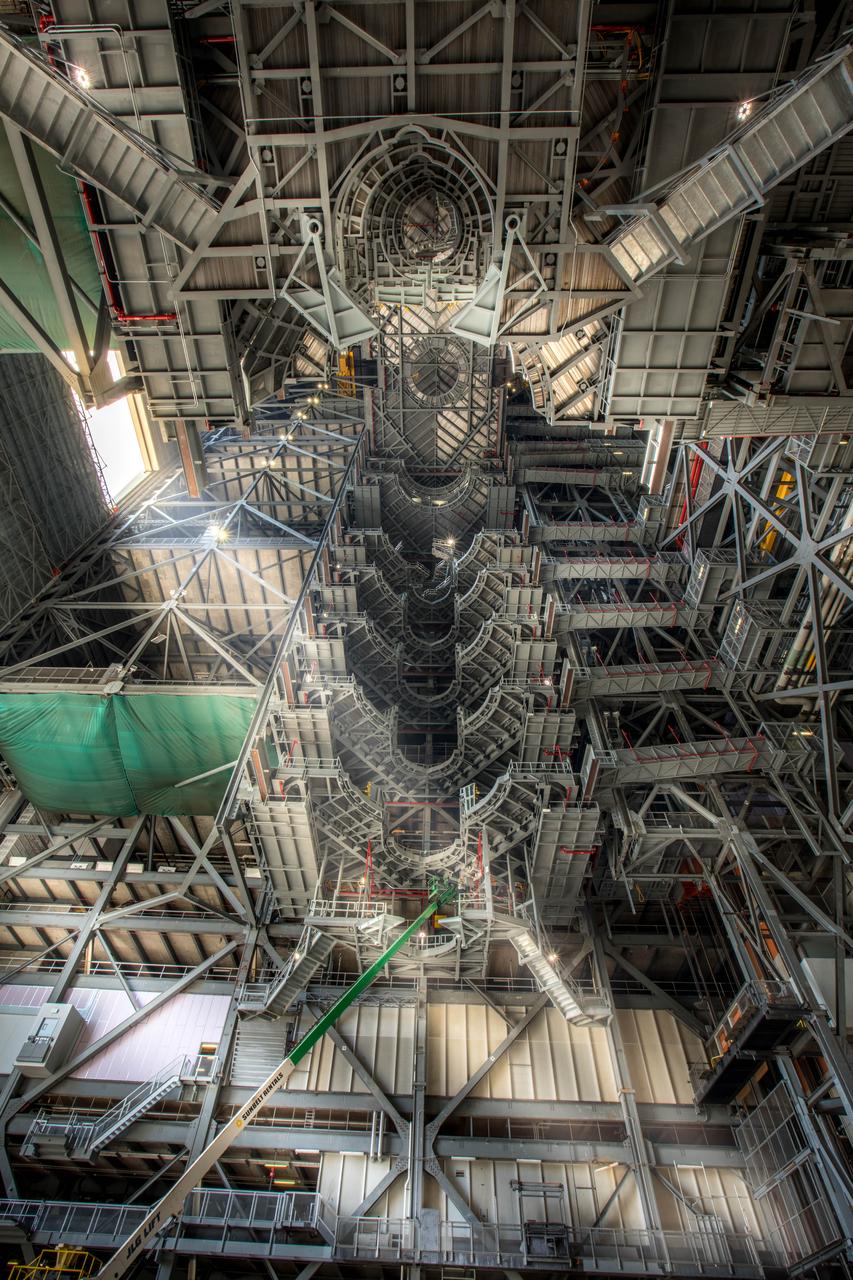
A view looking up at one side of the 10 levels of work platforms in High Bay 3 inside the Vehicle Assembly Building (VAB) at NASA's Kennedy Space Center in Florida. The work platforms will surround and provide access for service and processing of NASA's Space Launch System rocket and Orion spacecraft. Exploration Ground Systems oversaw the upgrades and installation of the new work platforms to support the launch of the SLS and Orion on Exploration Mission-1 and deep space missions.

A view looking up at the 10 levels of work platforms in High Bay 3 inside the Vehicle Assembly Building (VAB) at NASA's Kennedy Space Center in Florida. The work platforms will surround and provide access for service and processing of NASA's Space Launch System rocket and Orion spacecraft. Exploration Ground Systems oversaw the upgrades and installation of the new work platforms to support the launch of the SLS and Orion on Exploration Mission-1 and deep space missions.
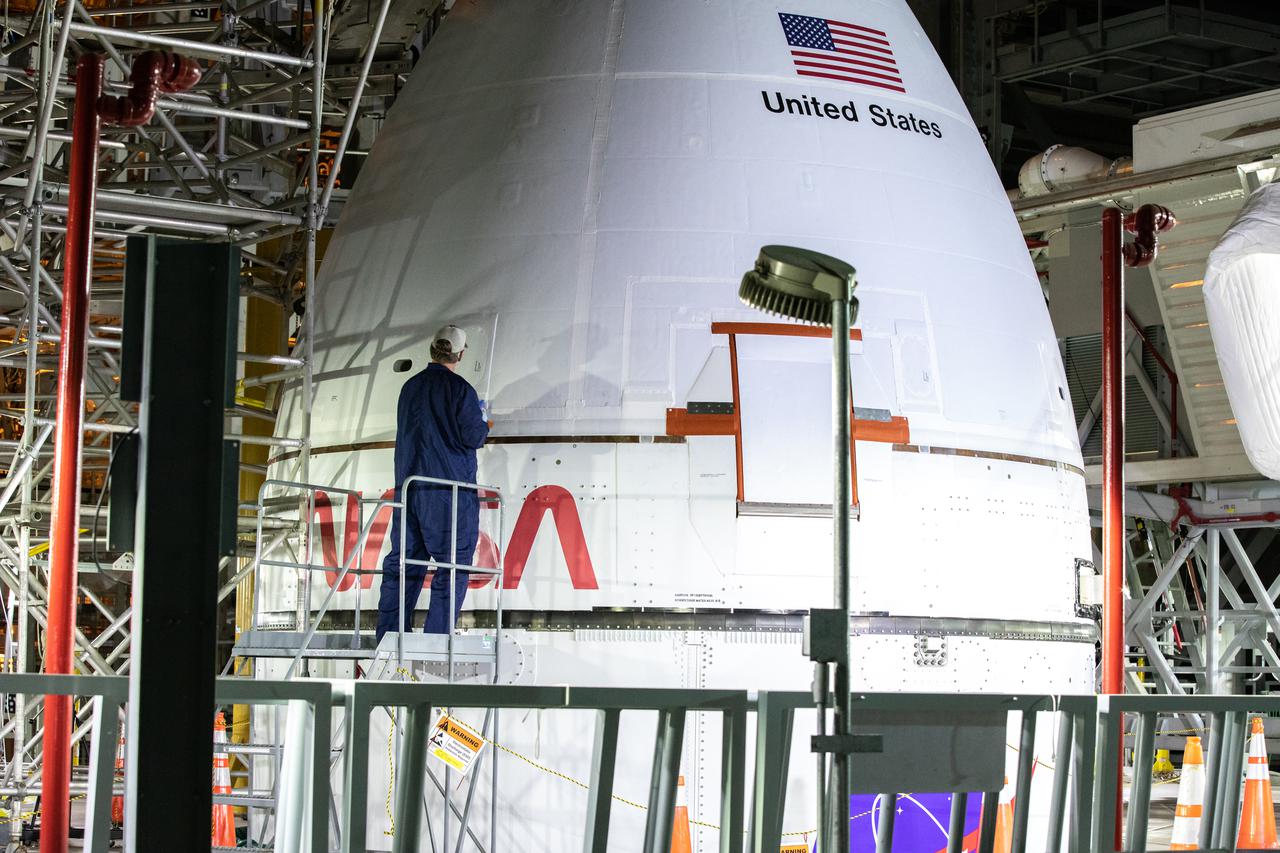
Inside High Bay 3 of the Vehicle Assembly Building at NASA’s Kennedy Space Center in Florida, a technician inspects a Space Launch System (SLS) booster cone for Artemis I on Jan. 10, 2022. The SLS and Orion spacecraft are stacked in the high bay. Artemis I will be the first integrated test of NASA’s deep space exploration systems: the Orion spacecraft, Space Launch System (SLS) rocket and the ground systems at Kennedy. In later missions, NASA will land the first woman and the first person of color on the surface of the Moon, paving the way for a long-term lunar presence and serving as a steppingstone on the way to Mars.
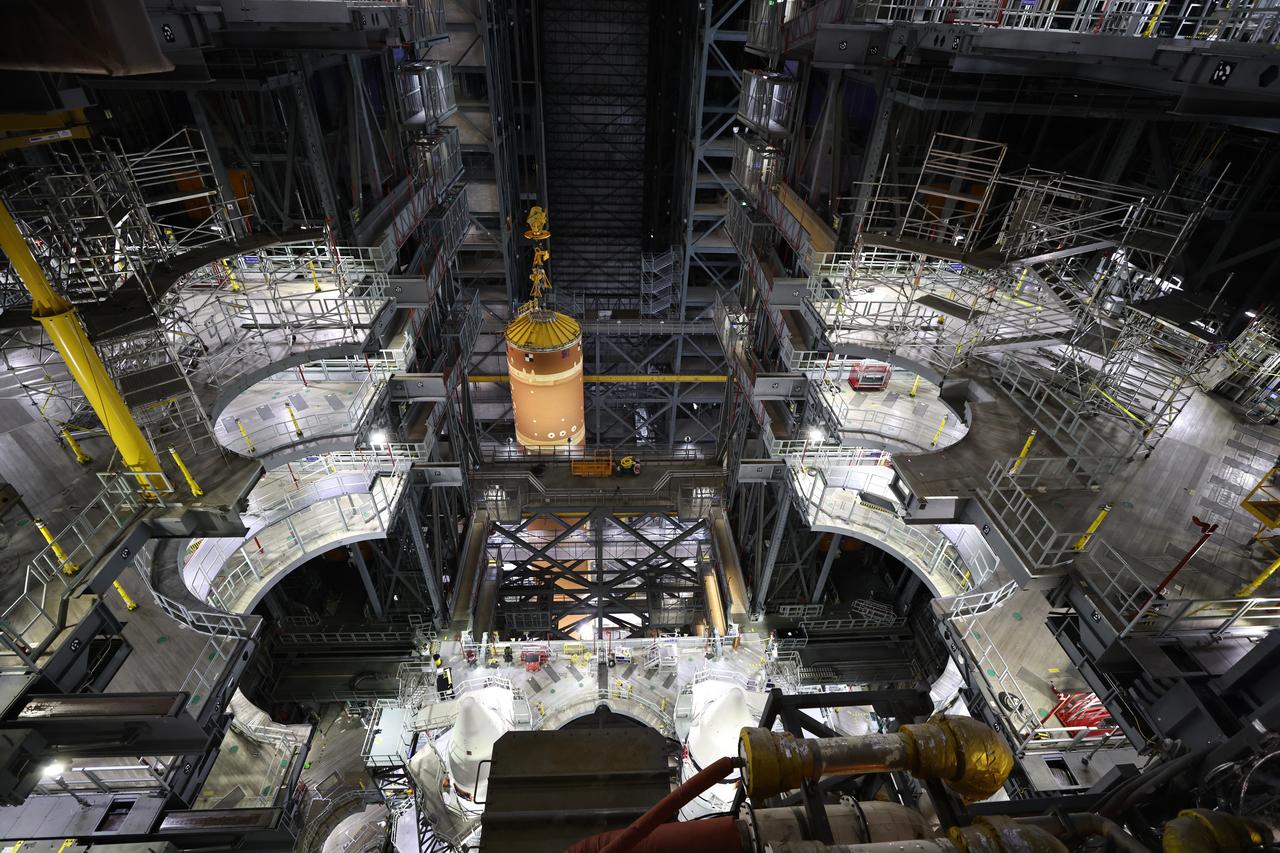
Teams with NASA’s Exploration Ground Systems and primary contractor Amentum, use a massive crane to lift to vertical the SLS (Space Launch System) Moon rocket for Artemis II on Saturday, March 22, 2025, inside the Vehicle Assembly Building at NASA’s Kennedy Space Center in Florida. The move from the facility’s transfer aisle into High Bay 3 allows technicians to integrate the 212-foot-tall core stage with the stacked solid rocket boosters onto mobile launcher 1. Artemis II is the first crewed test flight under NASA’s Artemis campaign and is another step toward missions on the lunar surface and helping the agency prepare for future human missions to Mars.
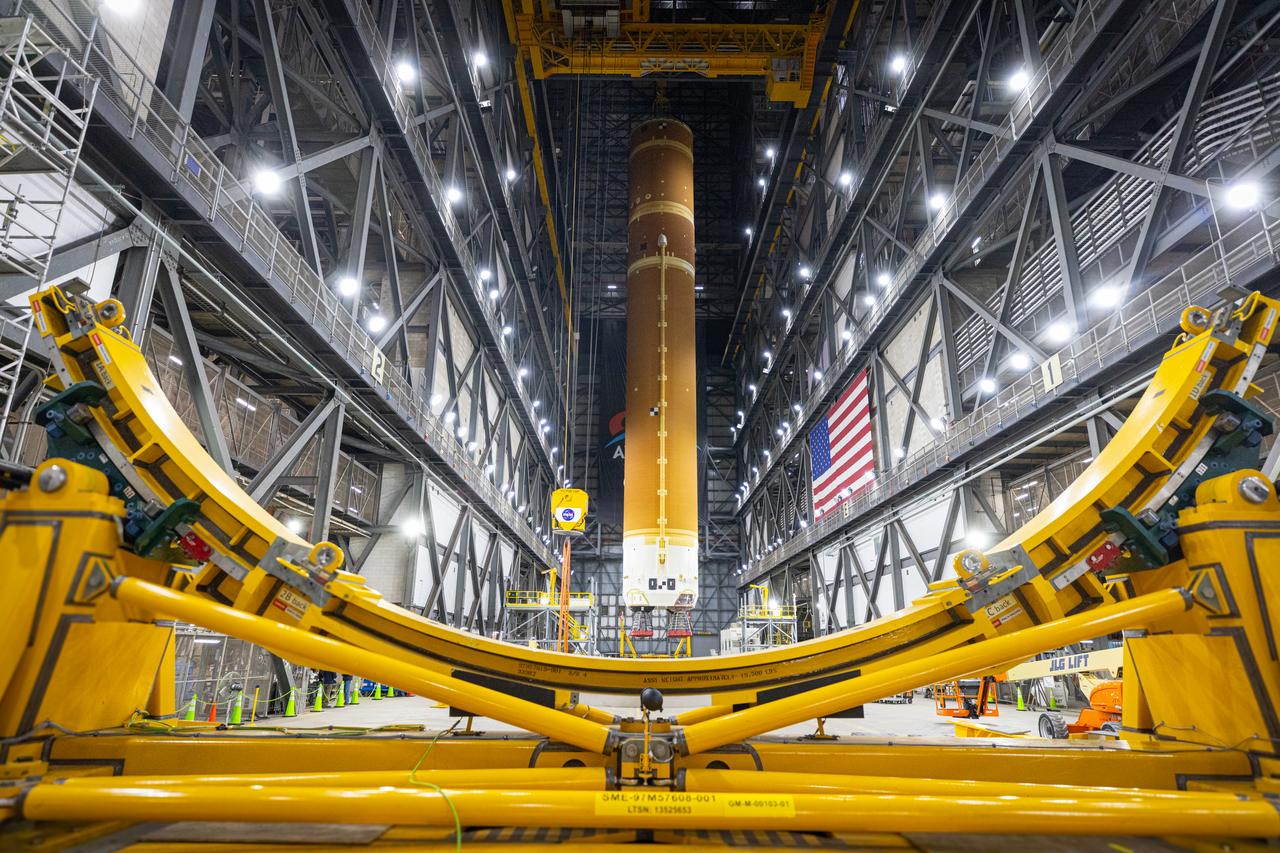
Teams with NASA’s Exploration Ground Systems and primary contractor Amentum, use a massive crane to lift to vertical the SLS (Space Launch System) Moon rocket for Artemis II on Saturday, March 22, 2025, inside the Vehicle Assembly Building at NASA’s Kennedy Space Center in Florida. The move from the facility’s transfer aisle into High Bay 3 allows technicians to integrate the 212-foot-tall core stage with the stacked solid rocket boosters onto mobile launcher 1. Artemis II is the first crewed test flight under NASA’s Artemis campaign and is another step toward missions on the lunar surface and helping the agency prepare for future human missions to Mars.
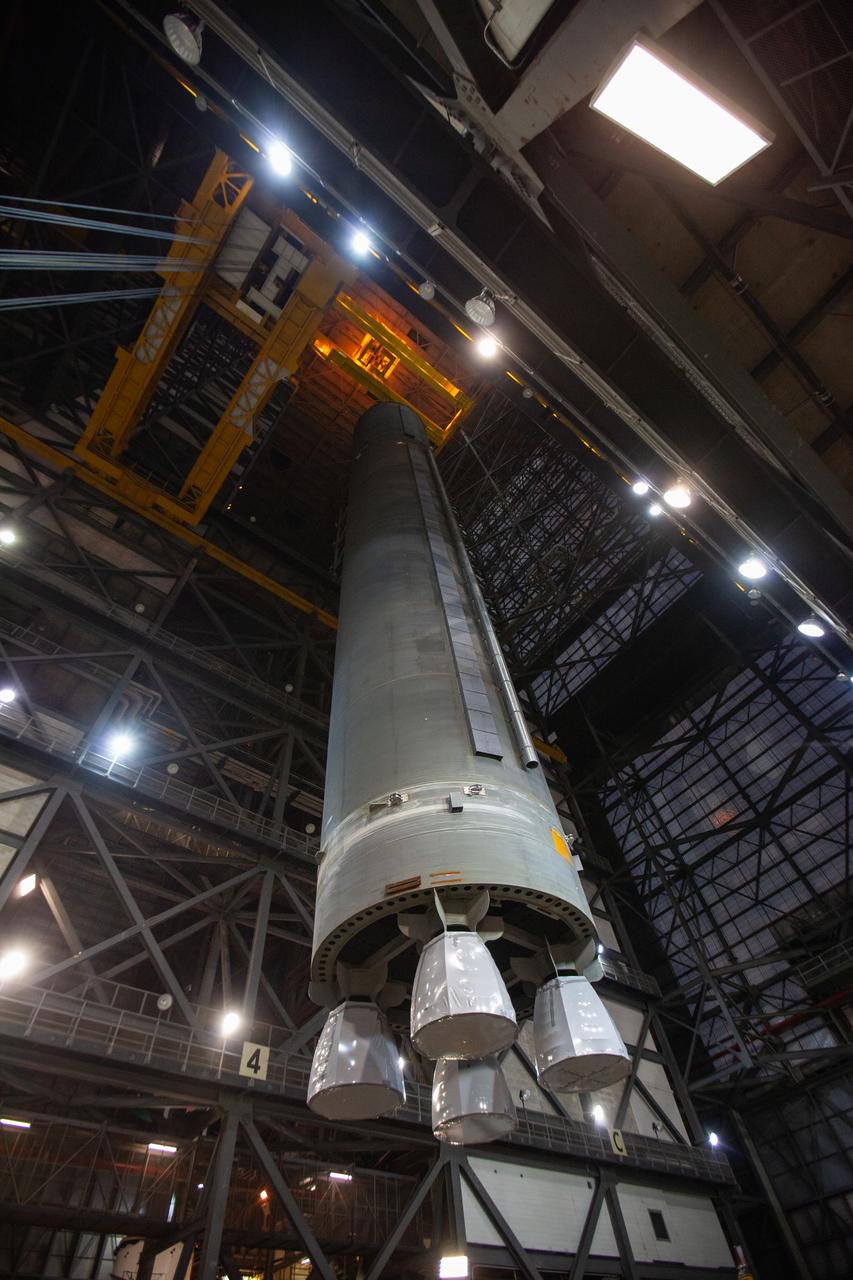
Inside the Vehicle Assembly Building at NASA’s Kennedy Space Center in Florida, a crane is used to lift the Space Launch System (SLS) Core Stage pathfinder high up in the transfer aisle on Oct. 16, 2019. The pathfinder will be lifted up to the 16th level and lowered into High Bay 3. The 212-foot-long core stage pathfinder arrived on NASA's Pegasus Barge at Kennedy’s Launch Complex 39 turn basin wharf on Sept. 27, 2019. The Pegasus Barge made its first delivery to Kennedy in support of the agency's Artemis missions. The pathfinder is being used by Exploration Ground Systems and its contractor, Jacobs, to practice offloading, moving and stacking maneuvers, using important ground support equipment to train employees and certify all the equipment works properly. The pathfinder will stay at Kennedy through at least the month of October before trekking back to NASA's Michoud Assembly Facility in Louisiana.
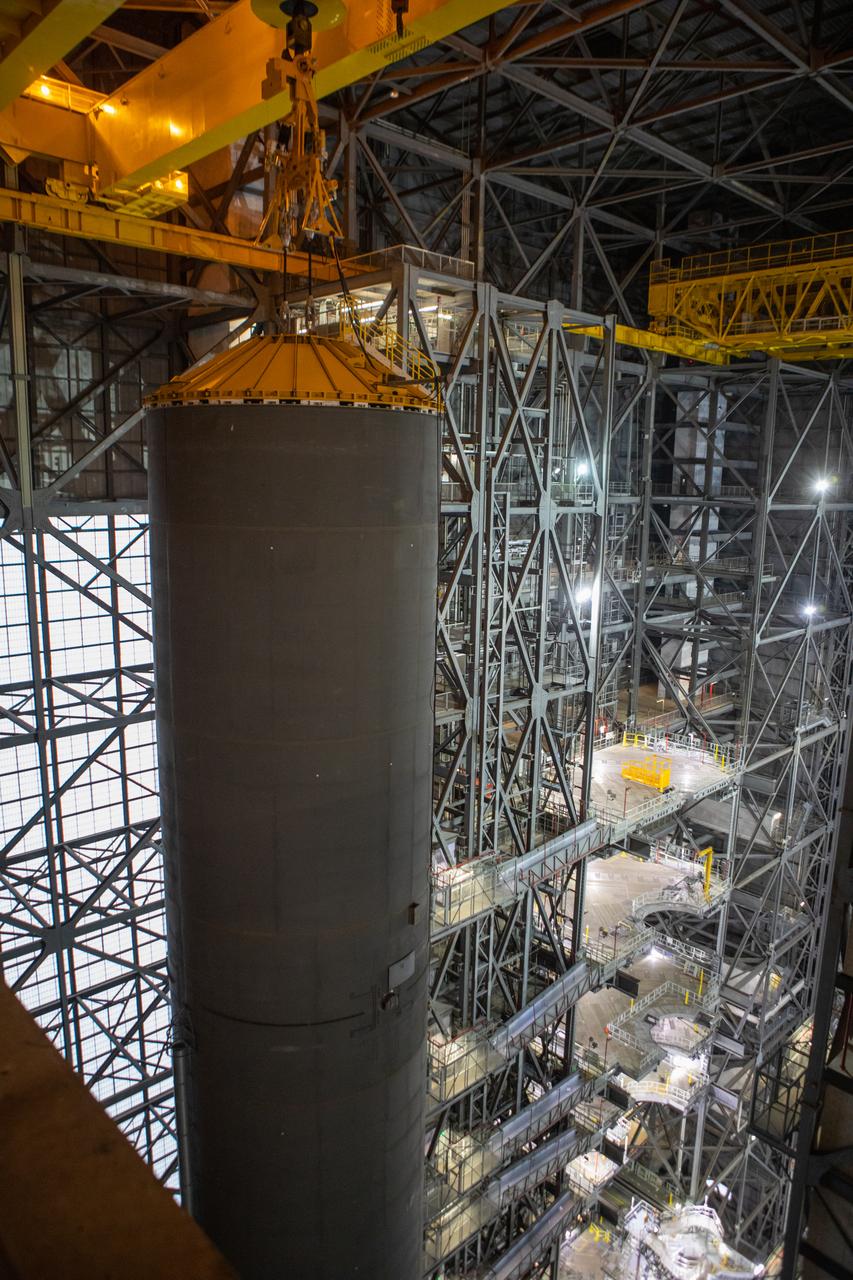
Inside the Vehicle Assembly Building at NASA’s Kennedy Space Center in Florida, a crane is used to lift the Space Launch System (SLS) Core Stage pathfinder high up in the transfer aisle on Oct. 16, 2019. The pathfinder is being lifted up to the 16th level and will be lowered into High Bay 3. The 212-foot-long core stage pathfinder arrived on NASA's Pegasus Barge at Kennedy’s Launch Complex 39 turn basin wharf on Sept. 27, 2019. The Pegasus Barge made its first delivery to Kennedy in support of the agency's Artemis missions. The pathfinder is being used by Exploration Ground Systems and its contractor, Jacobs, to practice offloading, moving and stacking maneuvers, using important ground support equipment to train employees and certify all the equipment works properly. The pathfinder will stay at Kennedy through at least the month of October before trekking back to NASA's Michoud Assembly Facility in Louisiana.
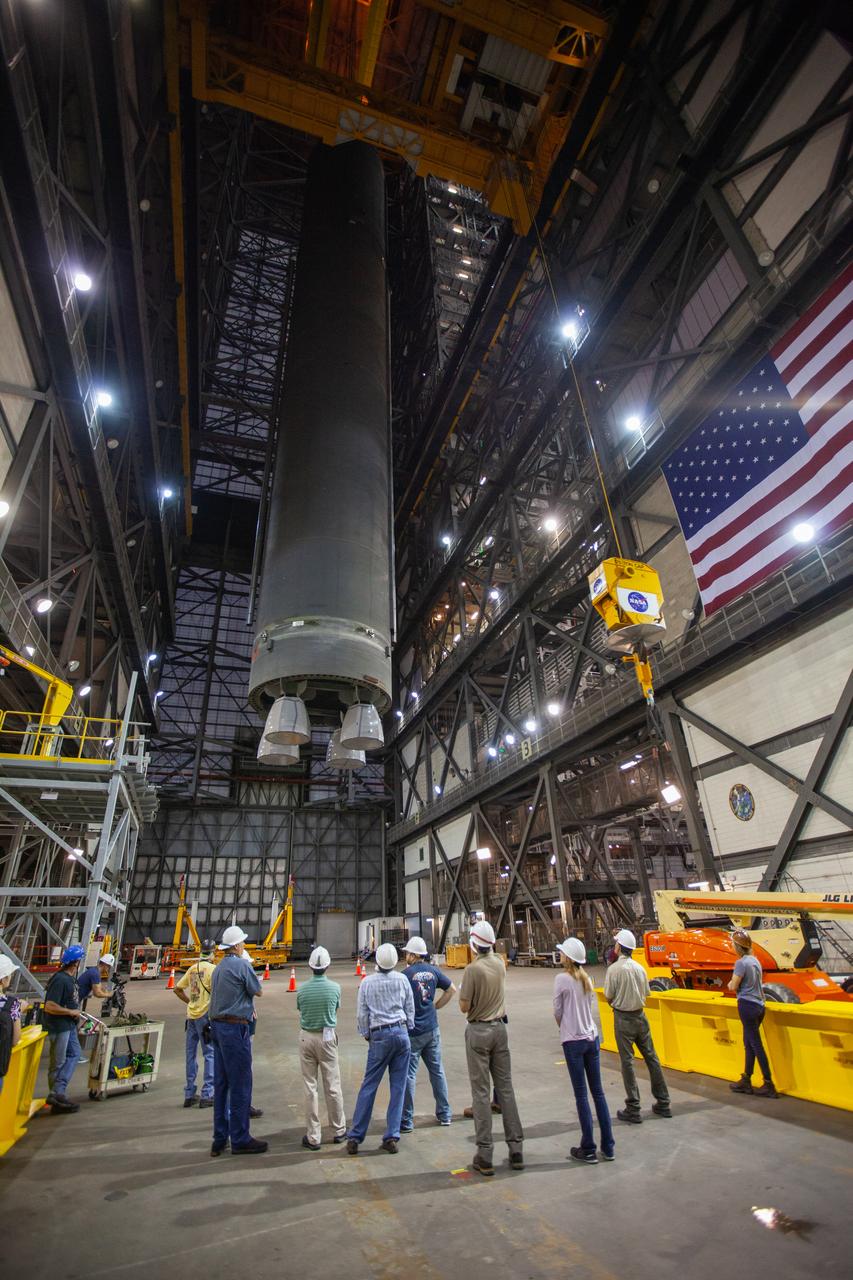
Inside the Vehicle Assembly Building at NASA’s Kennedy Space Center in Florida, workers watch as two cranes are used to lift the Space Launch System (SLS) Core Stage pathfinder high up in the transfer aisle on Oct. 16, 2019. The pathfinder will be lifted up to the 16th level and lowered into High Bay 3. The 212-foot-long core stage pathfinder arrived on NASA's Pegasus Barge at Kennedy’s Launch Complex 39 turn basin wharf on Sept. 27, 2019. The Pegasus Barge made its first delivery to Kennedy in support of the agency's Artemis missions. The pathfinder is being used by Exploration Ground Systems and its contractor, Jacobs, to practice offloading, moving and stacking maneuvers, using important ground support equipment to train employees and certify all the equipment works properly. The pathfinder will stay at Kennedy through at least the month of October before trekking back to NASA's Michoud Assembly Facility in Louisiana.
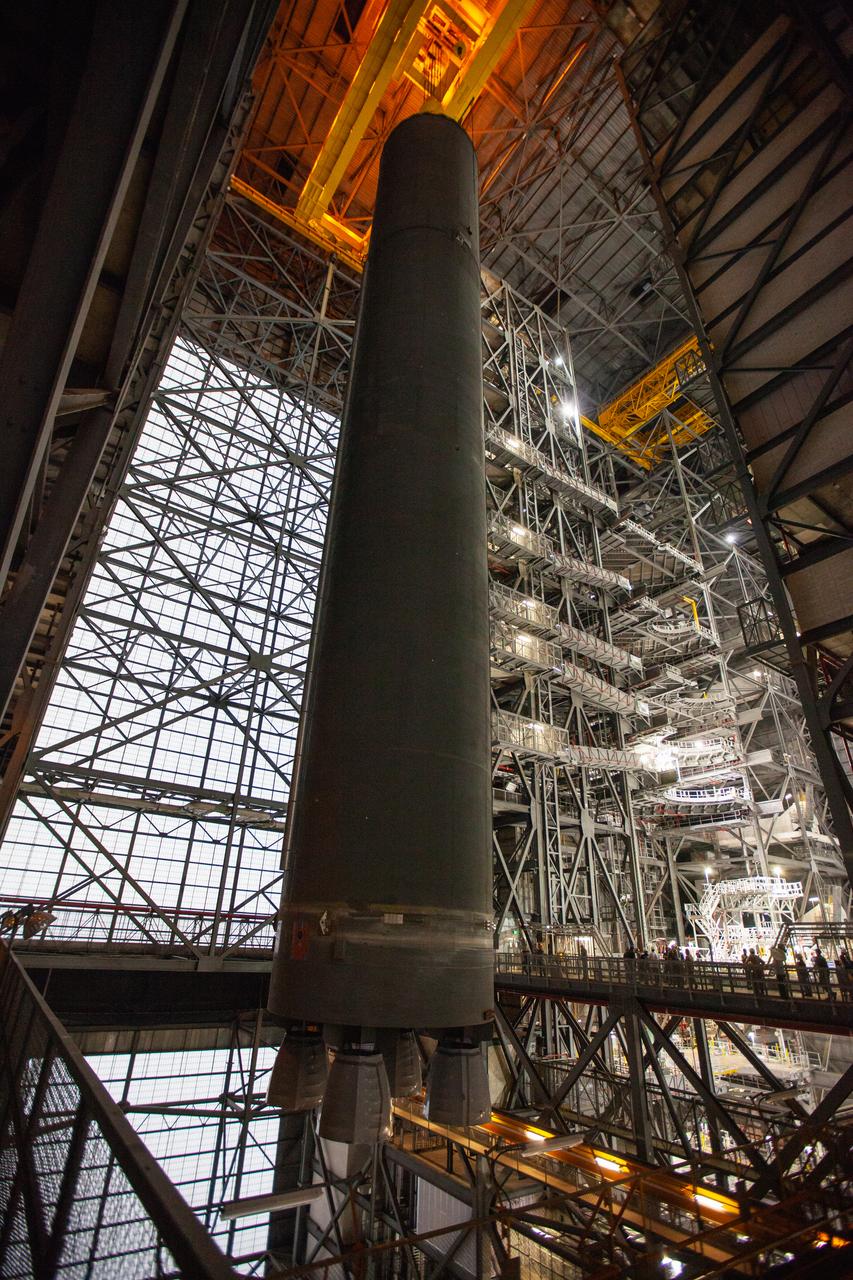
Inside the Vehicle Assembly Building at NASA’s Kennedy Space Center in Florida, a crane lifts the Space Launch System (SLS) Core Stage pathfinder high up in the transfer aisle on Oct. 16, 2019. The pathfinder will be lifted up to the 16th level and lowered into High Bay 3. The 212-foot-long core stage pathfinder arrived on NASA's Pegasus Barge at Kennedy’s Launch Complex 39 turn basin wharf on Sept. 27, 2019. The Pegasus Barge made its first delivery to Kennedy in support of the agency's Artemis missions. The pathfinder is being used by Exploration Ground Systems and its contractor, Jacobs, to practice offloading, moving and stacking maneuvers, using important ground support equipment to train employees and certify all the equipment works properly. The pathfinder will stay at Kennedy through at least the month of October before trekking back to NASA's Michoud Assembly Facility in Louisiana.
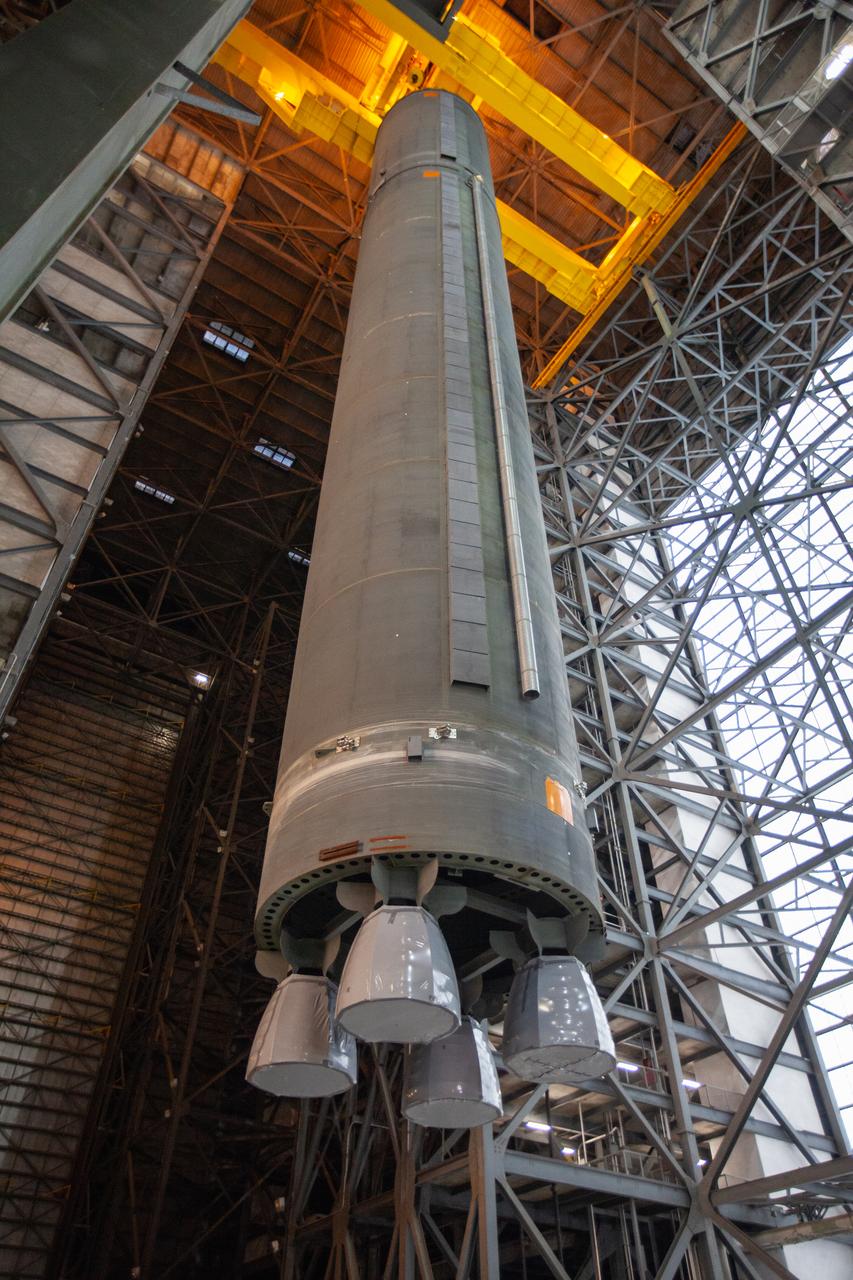
Inside the Vehicle Assembly Building at NASA’s Kennedy Space Center in Florida, a crane lifts the Space Launch System (SLS) Core Stage pathfinder high up in the transfer aisle on Oct. 16, 2019. The pathfinder will be lifted up to the 16th level and lowered into High Bay 3. The 212-foot-long core stage pathfinder arrived on NASA's Pegasus Barge at Kennedy’s Launch Complex 39 turn basin wharf on Sept. 27, 2019. The Pegasus Barge made its first delivery to Kennedy in support of the agency's Artemis missions. The pathfinder is being used by Exploration Ground Systems and its contractor, Jacobs, to practice offloading, moving and stacking maneuvers, using important ground support equipment to train employees and certify all the equipment works properly. The pathfinder will stay at Kennedy through at least the month of October before trekking back to NASA's Michoud Assembly Facility in Louisiana.
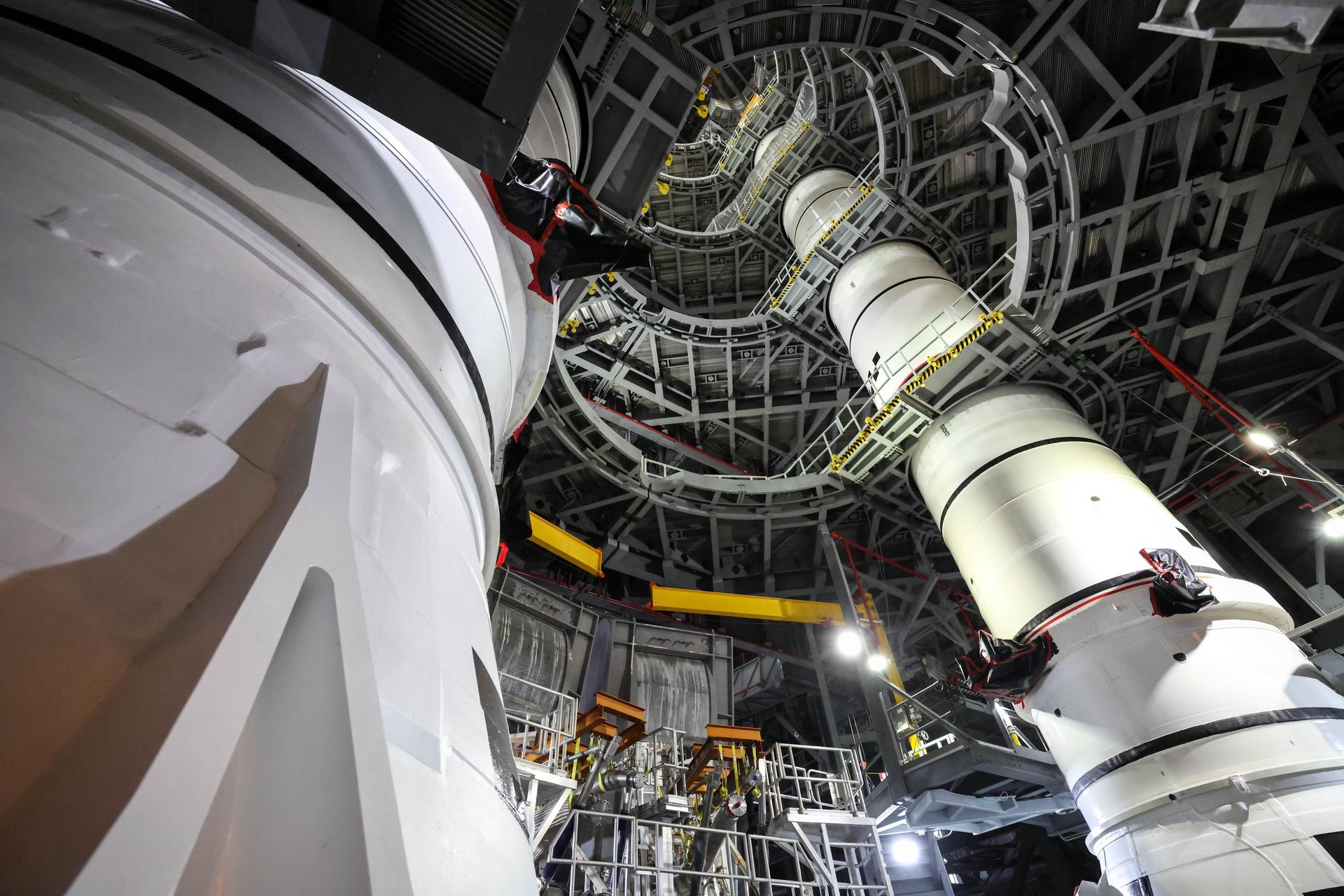
Technicians inside the Vehicle Assembly Building at NASA’s Kennedy Space Center in Florida complete integration of the left forward center solid rocket booster segment onto the left center center booster segment for the Artemis III SLS (Space Launch System) rocket on the mobile launcher inside High Bay 3 on Tuesday, Sept. 1, 2026. The twin boosters, comprising five segments each and manufactured by Northrop Grumman in Utah, provide more than 75 percent of the SLS rocket’s total thrust at liftoff. The Artemis III mission will launch crew in the Orion spacecraft on top of the SLS rocket to test rendezvous and docking capabilities between Orion and commercial spacecraft needed to land astronauts on the Moon.
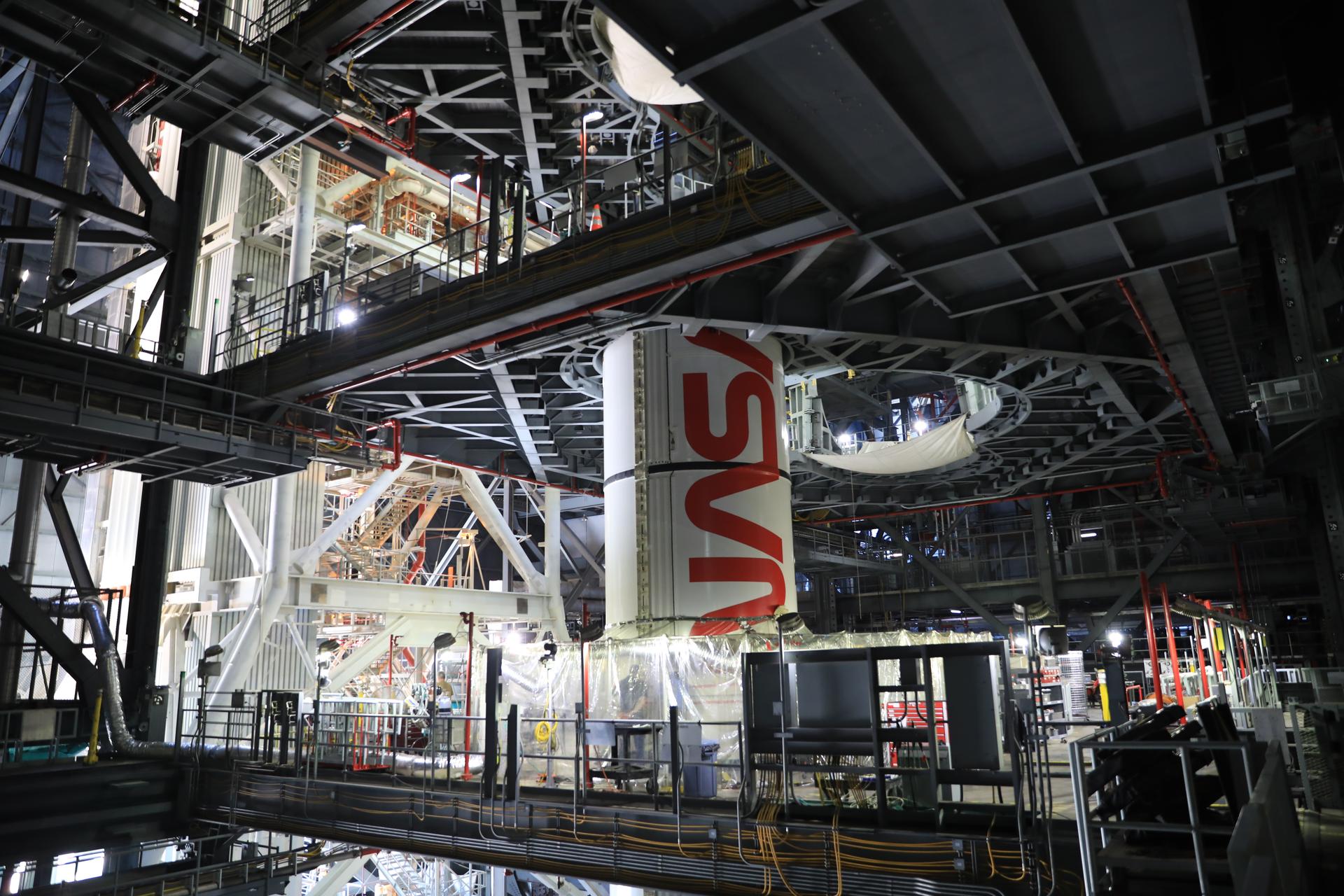
Technicians inside the Vehicle Assembly Building at NASA’s Kennedy Space Center in Florida complete integration of the left center center solid rocket booster segment onto the left aft center booster segment for the Artemis III SLS (Space Launch System) rocket on the mobile launcher inside High Bay 3 on Wednesday, Aug. 19, 2026. The twin boosters, comprising of five segments each manufactured by Northrop Grumman in Utah, will provide more than 75 percent of the SLS rocket’s total thrust at launch. The Artemis III mission will launch crew in the Orion spacecraft on top of the SLS rocket to test rendezvous and docking capabilities between Orion and commercial spacecraft needed to land astronauts on the Moon.
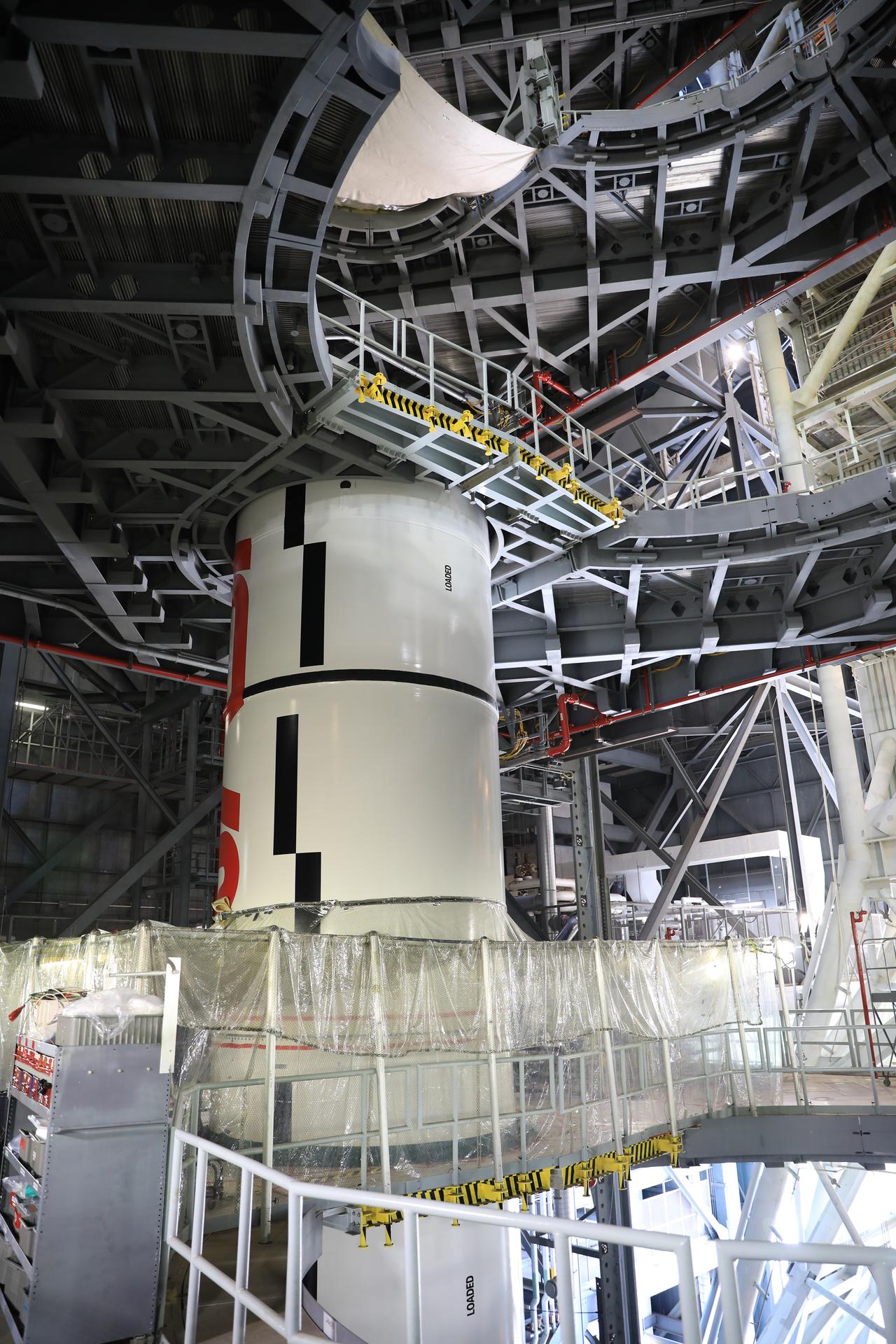
Technicians inside the Vehicle Assembly Building at NASA’s Kennedy Space Center in Florida complete integration of the left center center solid rocket booster segment onto the left aft center booster segment for the Artemis III SLS (Space Launch System) rocket on the mobile launcher inside High Bay 3 on Wednesday, Aug. 19, 2026. The twin boosters, comprising of five segments each manufactured by Northrop Grumman in Utah, will provide more than 75 percent of the SLS rocket’s total thrust at launch. The Artemis III mission will launch crew in the Orion spacecraft on top of the SLS rocket to test rendezvous and docking capabilities between Orion and commercial spacecraft needed to land astronauts on the Moon.
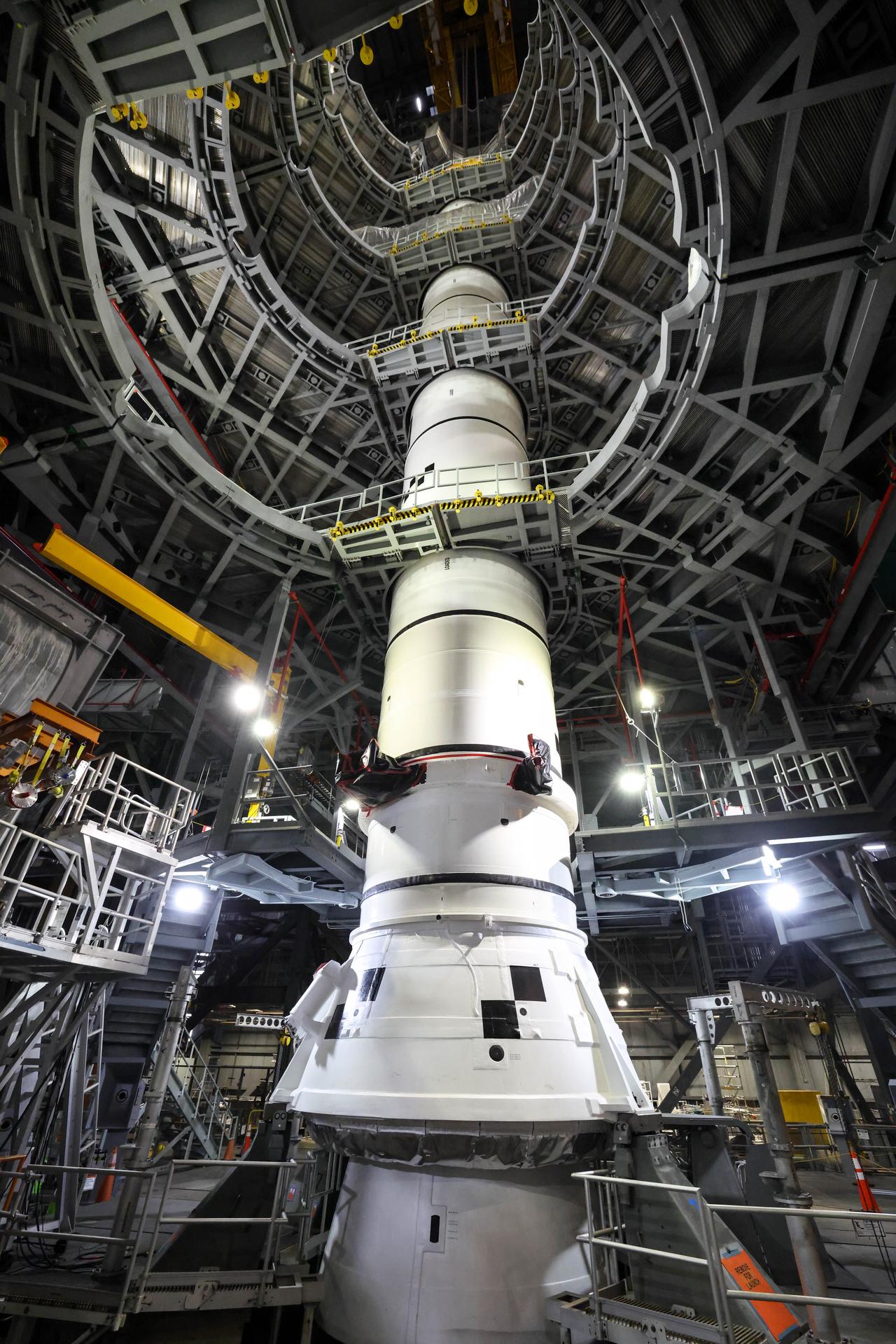
Technicians inside the Vehicle Assembly Building at NASA’s Kennedy Space Center in Florida complete integration of the left forward center solid rocket booster segment onto the left center center booster segment for the Artemis III SLS (Space Launch System) rocket on the mobile launcher inside High Bay 3 on Tuesday, Sept. 1, 2026. The twin boosters, comprising five segments each and manufactured by Northrop Grumman in Utah, provide more than 75 percent of the SLS rocket’s total thrust at liftoff. The Artemis III mission will launch crew in the Orion spacecraft on top of the SLS rocket to test rendezvous and docking capabilities between Orion and commercial spacecraft needed to land astronauts on the Moon.
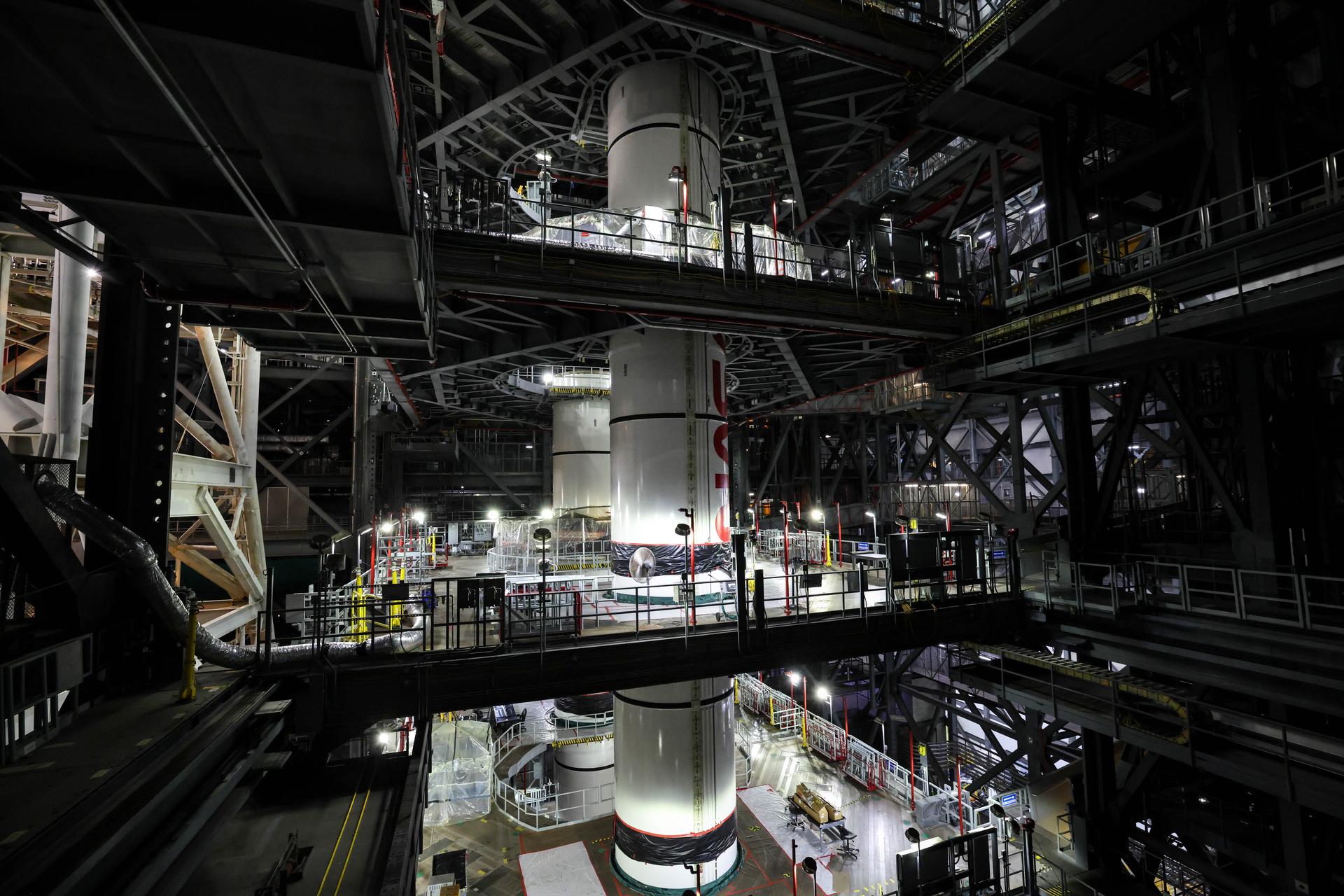
Technicians inside the Vehicle Assembly Building at NASA’s Kennedy Space Center in Florida complete integration of the left forward center solid rocket booster segment onto the left center center booster segment for the Artemis III SLS (Space Launch System) rocket on the mobile launcher inside High Bay 3 on Tuesday, Sept. 1, 2026. The twin boosters, comprising five segments each and manufactured by Northrop Grumman in Utah, provide more than 75 percent of the SLS rocket’s total thrust at liftoff. The Artemis III mission will launch crew in the Orion spacecraft on top of the SLS rocket to test rendezvous and docking capabilities between Orion and commercial spacecraft needed to land astronauts on the Moon.
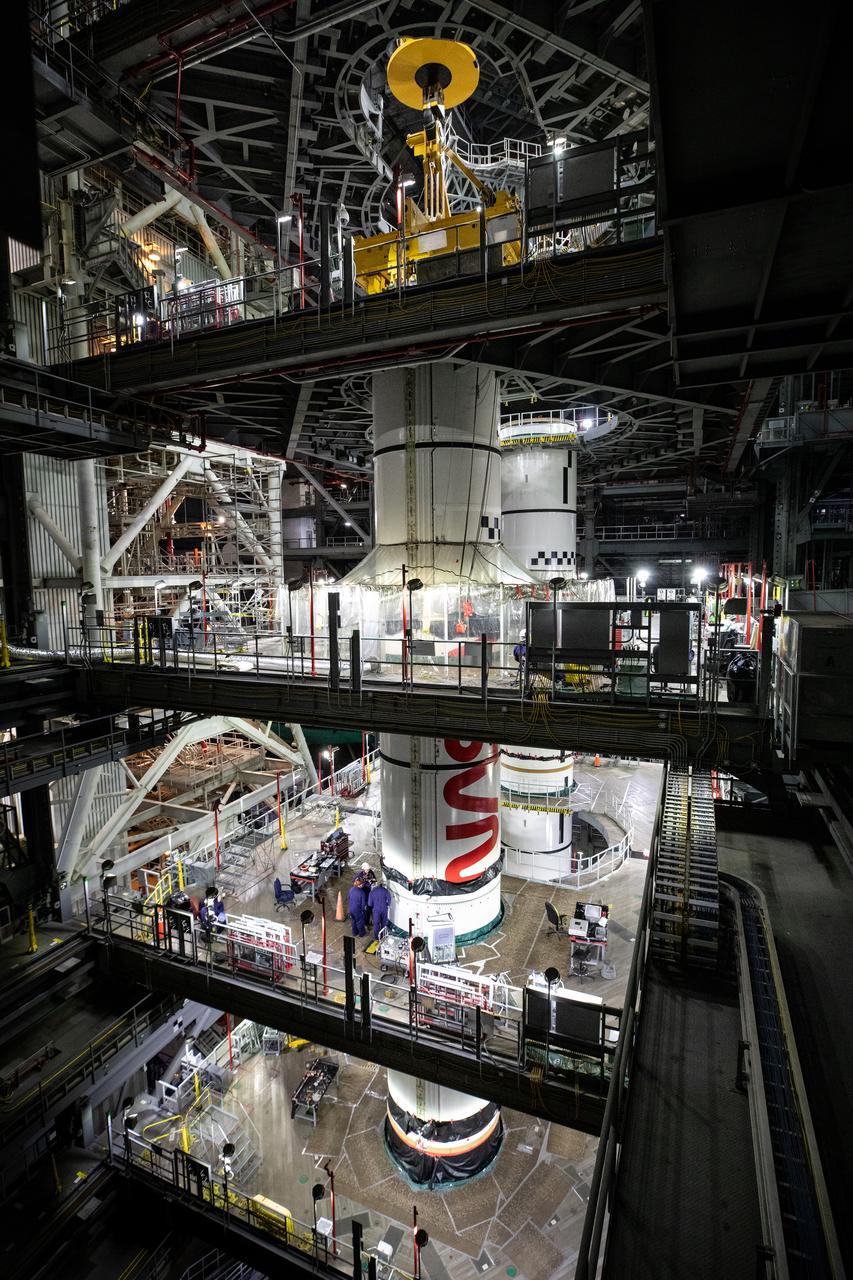
Inside High Bay 3 of the Vehicle Assembly Building at NASA’s Kennedy Space Center in Florida, technicians with the agency’s Exploration Ground Systems use a crane to lower the left forward center booster segment for the NASA’s SLS (Space Launch System) rocket onto the left center center segment atop the mobile launcher on Thursday, Jan. 30, 2025. The NASA “worm” insignia can be seen on both the center center booster segments. The boosters will help support the remaining rocket components and the Orion spacecraft during final assembly of the Artemis II Moon rocket and provide more than 75 percent of the total SLS thrust during liftoff from NASA Kennedy’s Launch Pad 39B.
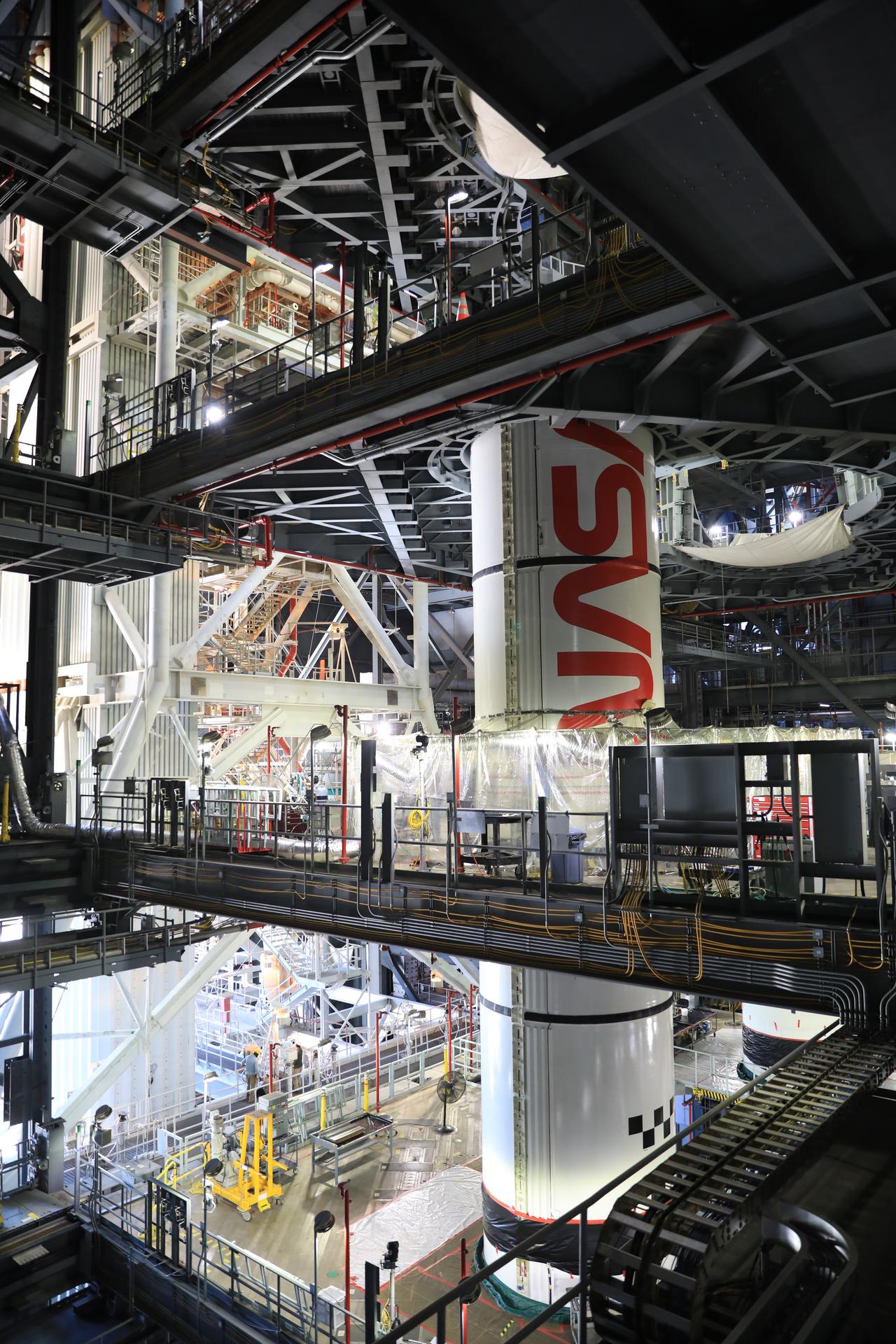
Technicians inside the Vehicle Assembly Building at NASA’s Kennedy Space Center in Florida complete integration of the left center center solid rocket booster segment onto the left aft center booster segment for the Artemis III SLS (Space Launch System) rocket on the mobile launcher inside High Bay 3 on Wednesday, Aug. 19, 2026. The twin boosters, comprising of five segments each manufactured by Northrop Grumman in Utah, will provide more than 75 percent of the SLS rocket’s total thrust at launch. The Artemis III mission will launch crew in the Orion spacecraft on top of the SLS rocket to test rendezvous and docking capabilities between Orion and commercial spacecraft needed to land astronauts on the Moon.
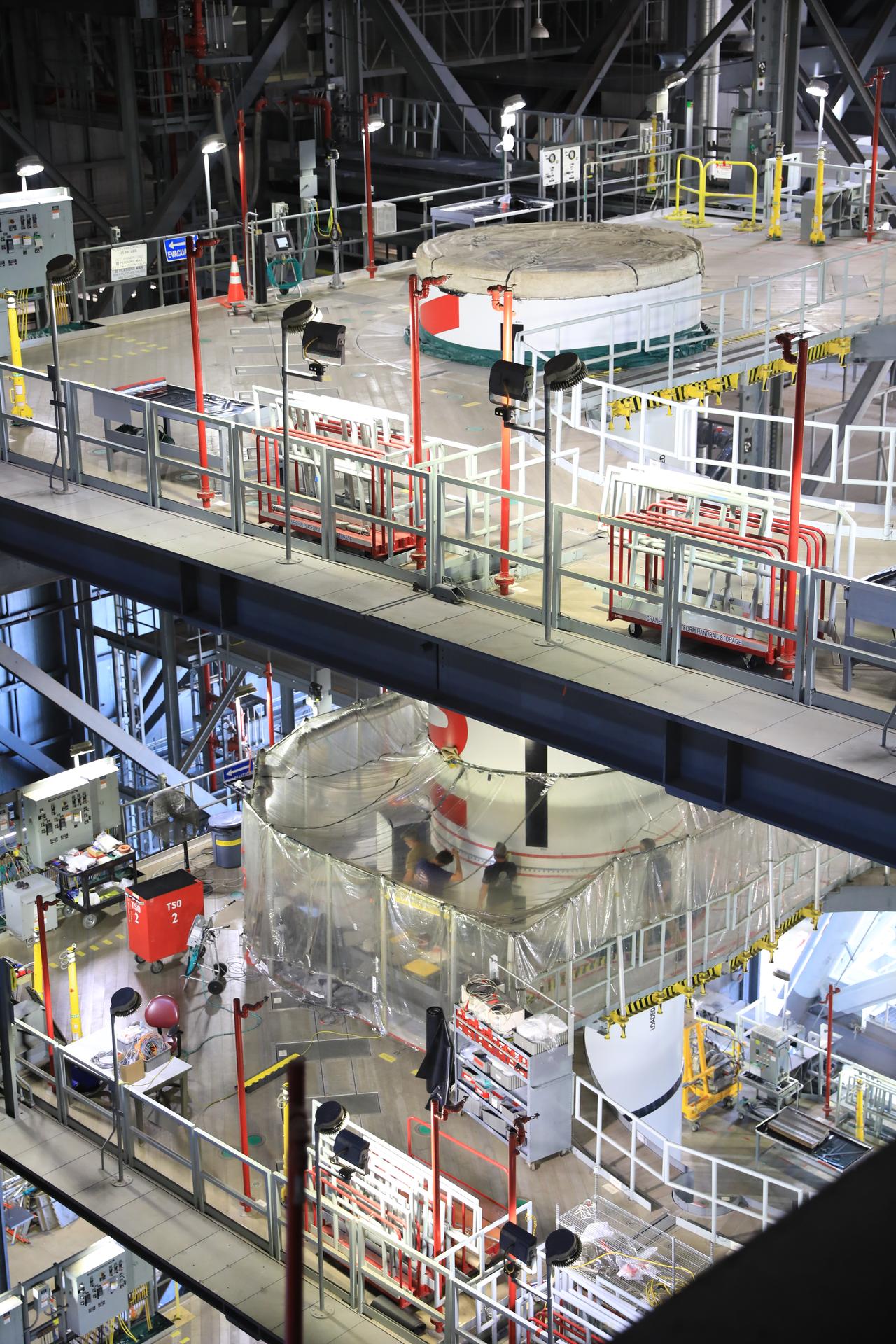
Technicians inside the Vehicle Assembly Building at NASA’s Kennedy Space Center in Florida complete integration of the left center center solid rocket booster segment onto the left aft center booster segment for the Artemis III SLS (Space Launch System) rocket on the mobile launcher inside High Bay 3 on Wednesday, Aug. 19, 2026. The twin boosters, comprising of five segments each manufactured by Northrop Grumman in Utah, will provide more than 75 percent of the SLS rocket’s total thrust at launch. The Artemis III mission will launch crew in the Orion spacecraft on top of the SLS rocket to test rendezvous and docking capabilities between Orion and commercial spacecraft needed to land astronauts on the Moon.
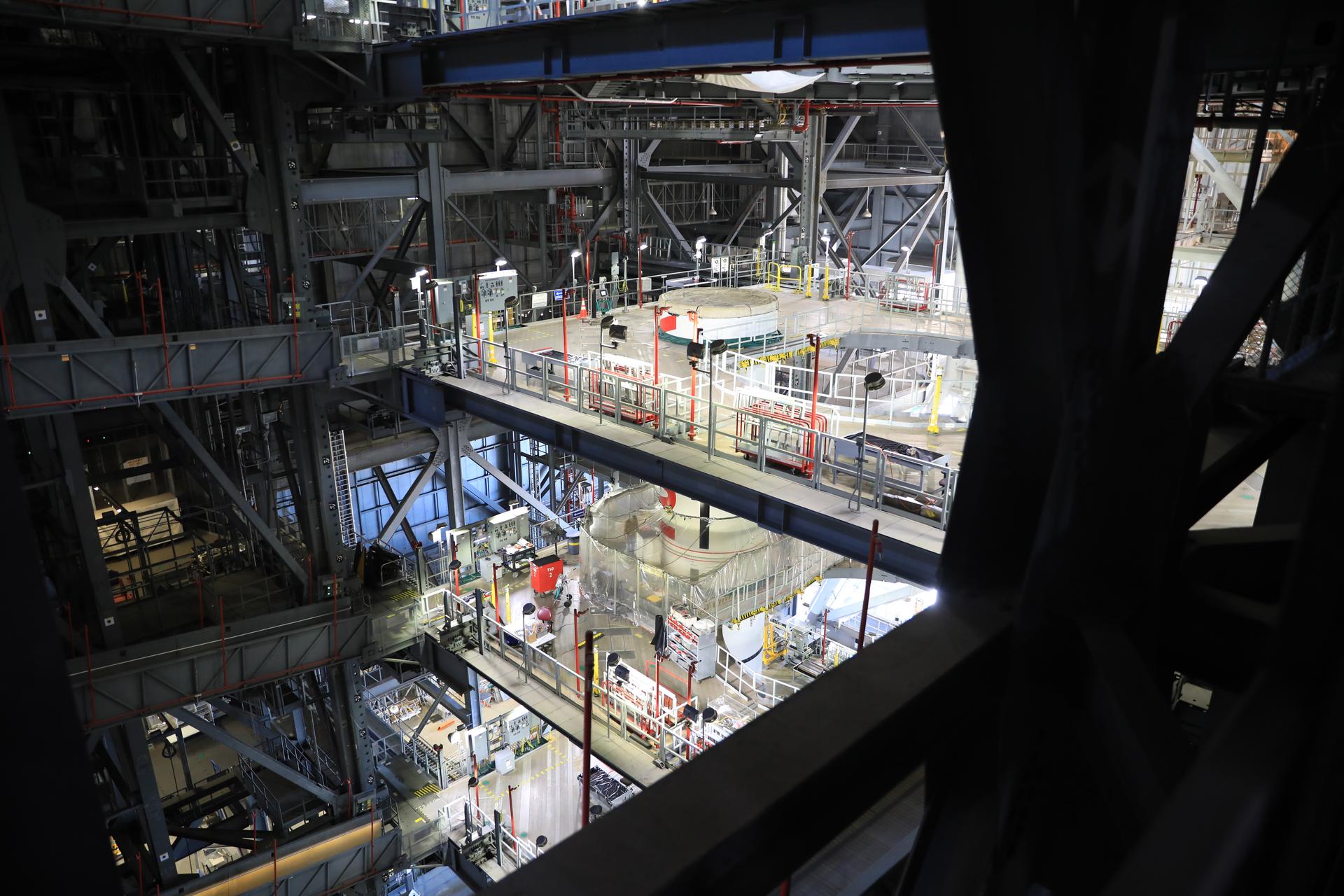
Technicians inside the Vehicle Assembly Building at NASA’s Kennedy Space Center in Florida complete integration of the left center center solid rocket booster segment onto the left aft center booster segment for the Artemis III SLS (Space Launch System) rocket on the mobile launcher inside High Bay 3 on Wednesday, Aug. 19, 2026. The twin boosters, comprising of five segments each manufactured by Northrop Grumman in Utah, will provide more than 75 percent of the SLS rocket’s total thrust at launch. The Artemis III mission will launch crew in the Orion spacecraft on top of the SLS rocket to test rendezvous and docking capabilities between Orion and commercial spacecraft needed to land astronauts on the Moon.
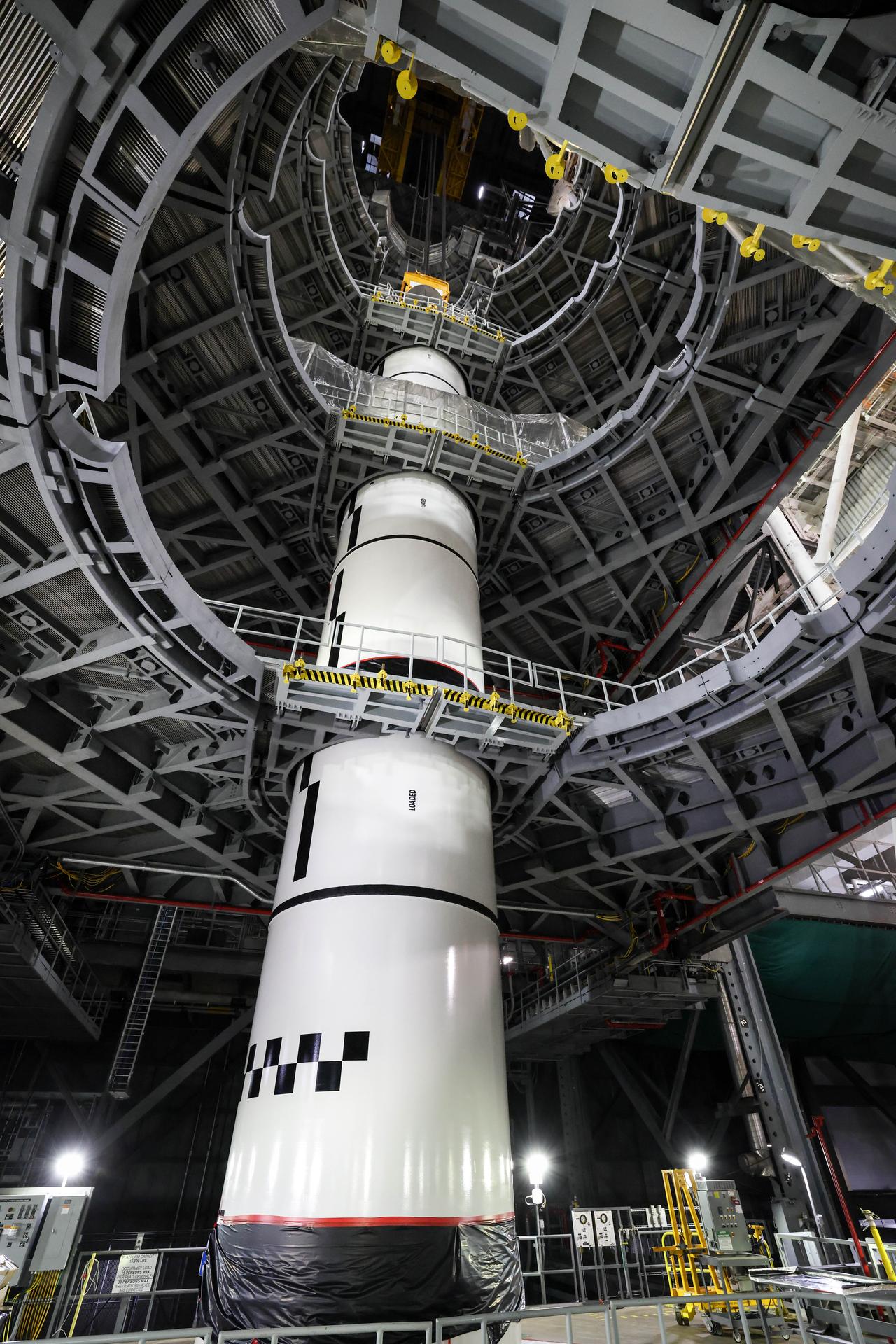
Technicians inside the Vehicle Assembly Building at NASA’s Kennedy Space Center in Florida complete integration of the left forward center solid rocket booster segment onto the left center center booster segment for the Artemis III SLS (Space Launch System) rocket on the mobile launcher inside High Bay 3 on Tuesday, Sept. 1, 2026. The twin boosters, comprising five segments each and manufactured by Northrop Grumman in Utah, provide more than 75 percent of the SLS rocket’s total thrust at liftoff. The Artemis III mission will launch crew in the Orion spacecraft on top of the SLS rocket to test rendezvous and docking capabilities between Orion and commercial spacecraft needed to land astronauts on the Moon.
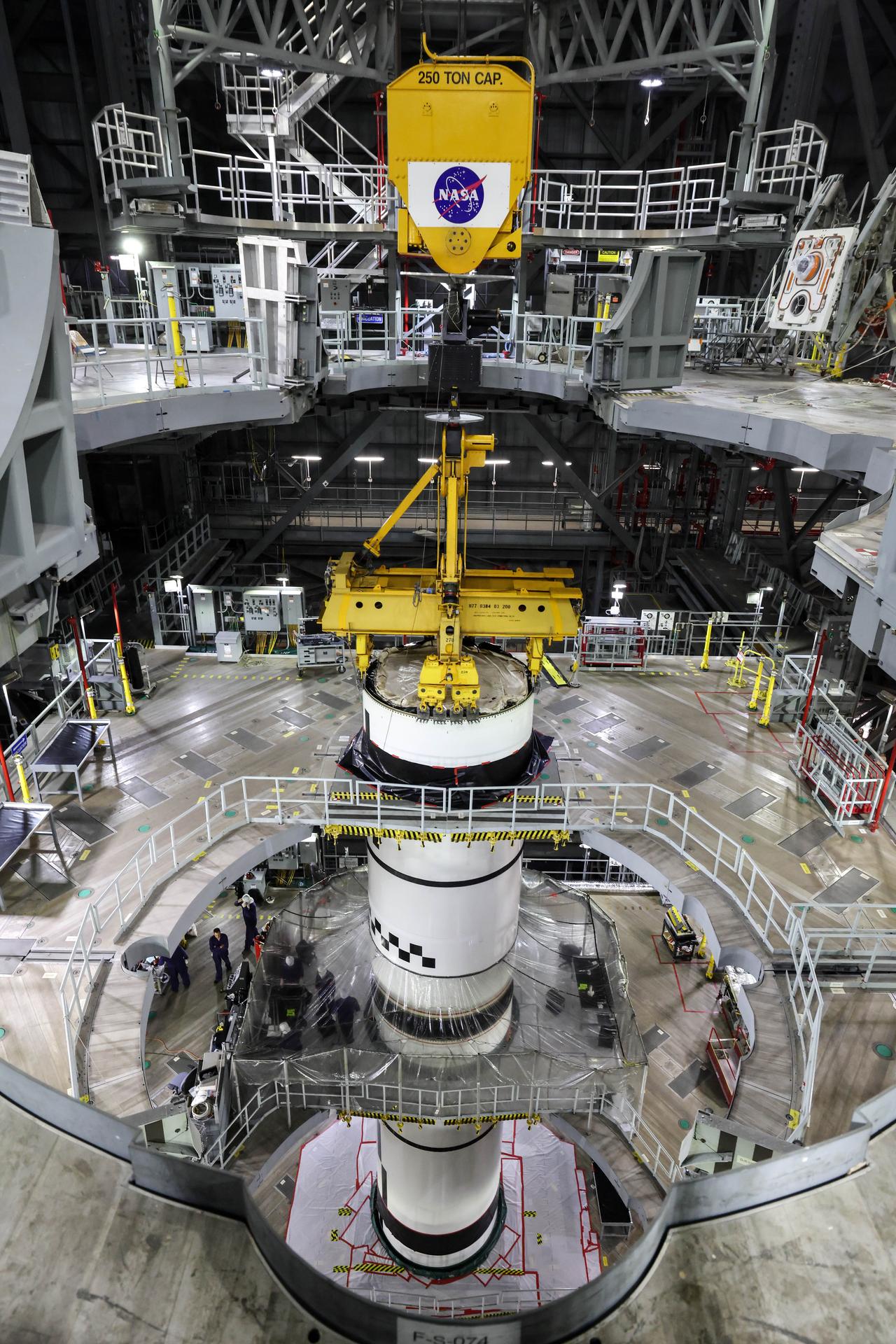
Technicians inside the Vehicle Assembly Building at NASA’s Kennedy Space Center in Florida complete integration of the left forward center solid rocket booster segment onto the left center center booster segment for the Artemis III SLS (Space Launch System) rocket on the mobile launcher inside High Bay 3 on Tuesday, Sept. 1, 2026. The twin boosters, comprising five segments each and manufactured by Northrop Grumman in Utah, provide more than 75 percent of the SLS rocket’s total thrust at liftoff. The Artemis III mission will launch crew in the Orion spacecraft on top of the SLS rocket to test rendezvous and docking capabilities between Orion and commercial spacecraft needed to land astronauts on the Moon.