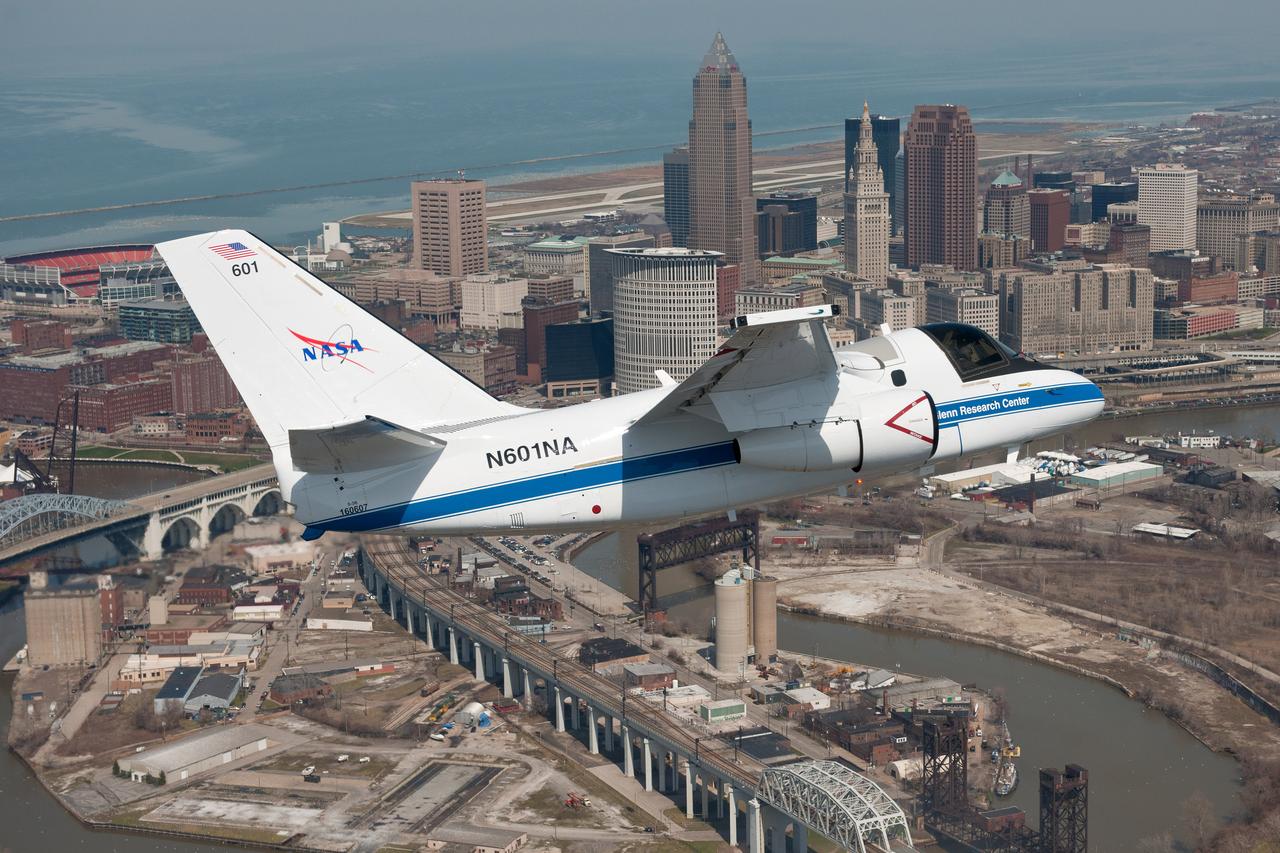
This photo shows NASA Glenn’s S-3 Viking Aircraft flying over downtown Cleveland, Ohio. The S-3 continues to conduct important research including regular flights over Lake Erie and other waterways to image algal blooms that have plagued the area’s waters.
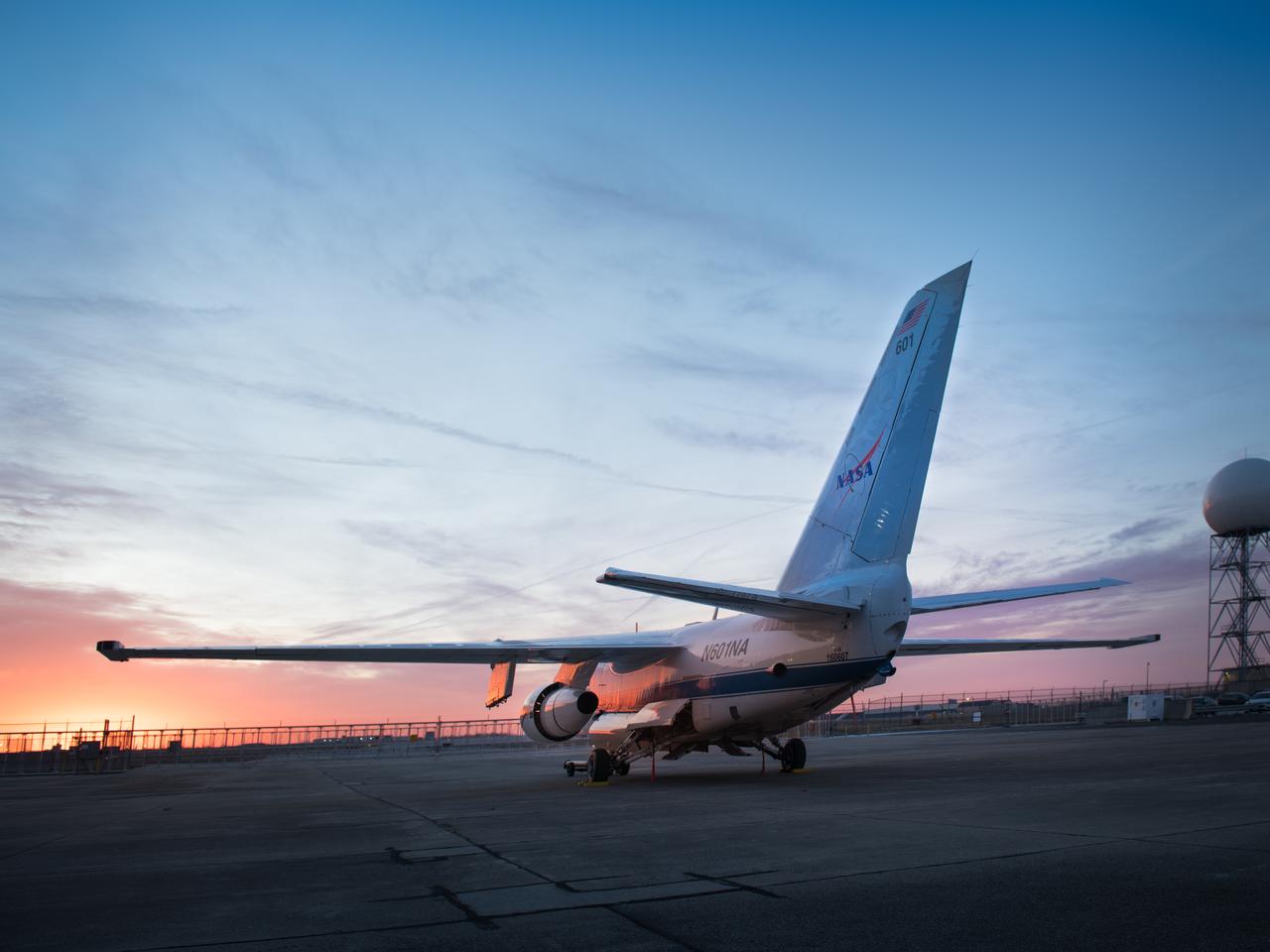
Glenn Research Center, Lockheed S-3 Viking Research Aircraft, N601NA at Sunrise
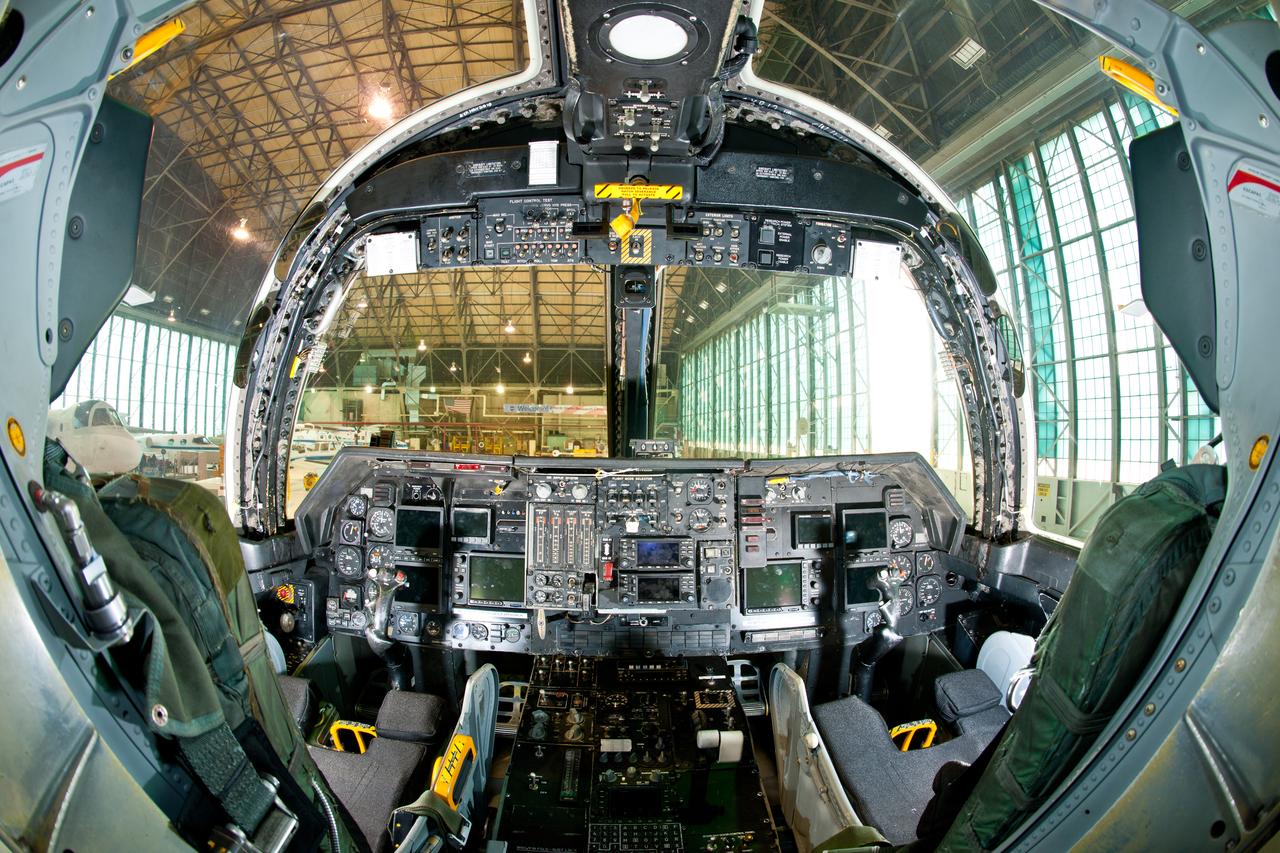
View from the cockpit of Glenn’s S–3 Viking
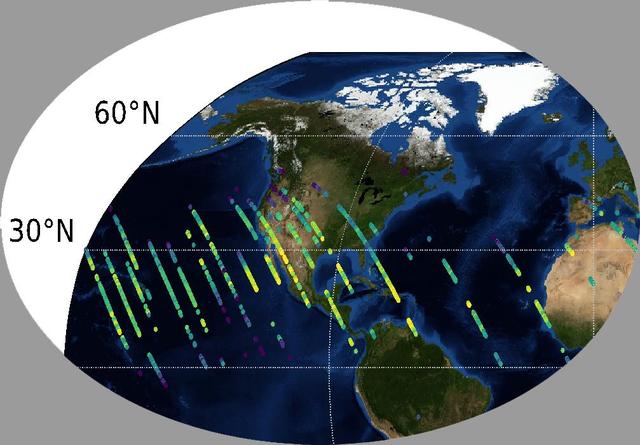
This image shows CO2 over the United States during OCO-3's first few days of science data collection. These initial measurements are consistent with measurements taken by OCO-3's older sibling, OCO-2, over the same area — meaning that even though OCO-3's instrument calibration is not yet complete, it is right on track to continue its (currently still operational) predecessor's data record. The mission team expects to complete OCO-3's in-orbit checkout phase — the period where they ensure all instruments and components are working and calibrated correctly — in August 2019. They are scheduled to release official CO2 and solar-induced fluorescence data to the science community a year later; however, this data will likely be available sooner given the quality of the measurements that OCO-3 is already making. https://photojournal.jpl.nasa.gov/catalog/PIA23352
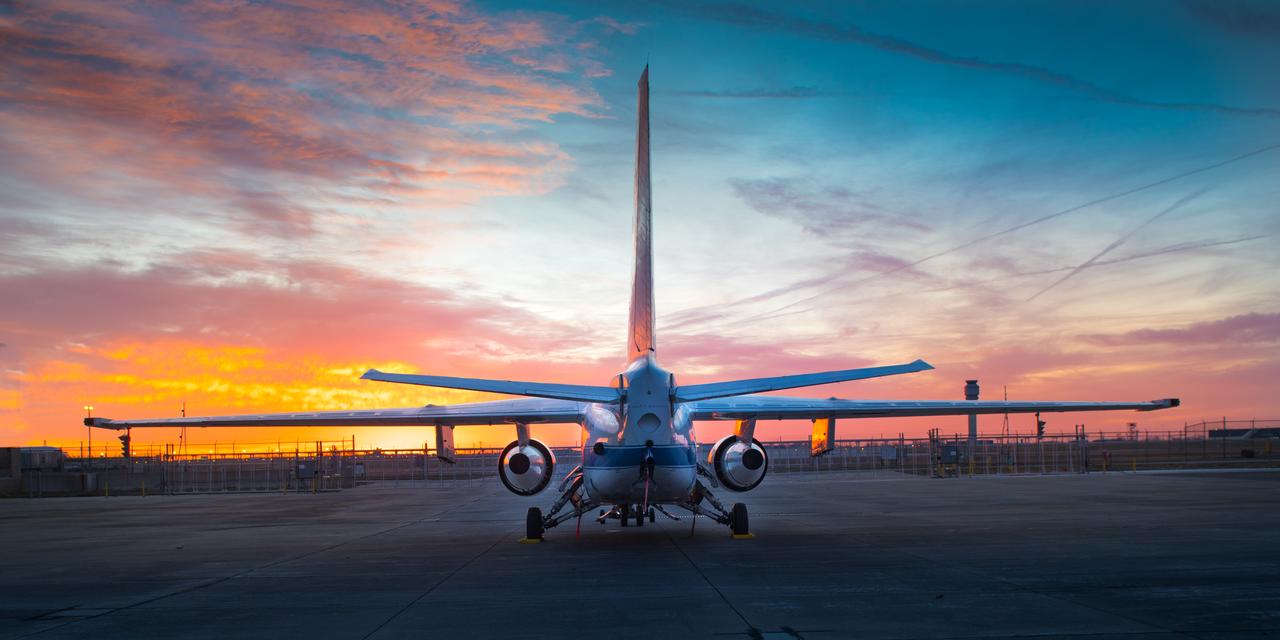
Lockheed S-3B Viking, N601NA at Sunrise on the Glenn Research Center Hangar Apron
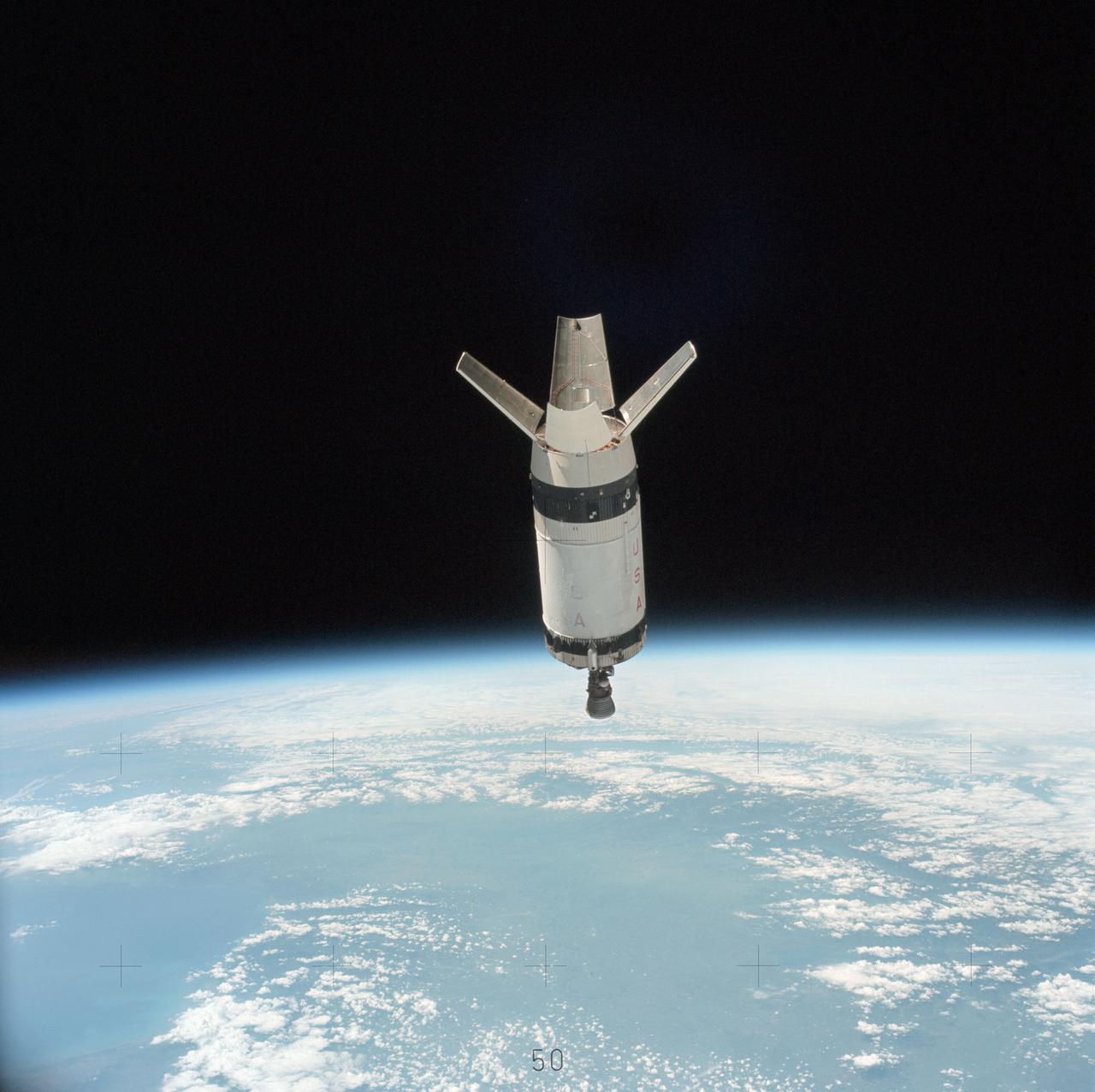
SL3-114-1625 (July-September 1973) --- An excellent view of the expended S-IVB second stage of the Skylab 3/Saturn 1B space vehicle is seen in this photograph taken from the Skylab 3 Command and Service Module (CSM) in Earth orbit. The land mass below is Italy and France, with part of the Mediterranean Sea visible. This photograph was taken with a handheld 70mm Hasselblad camera using a 100mm lens, and medium speed Ektachrome film. Photo credit: NASA
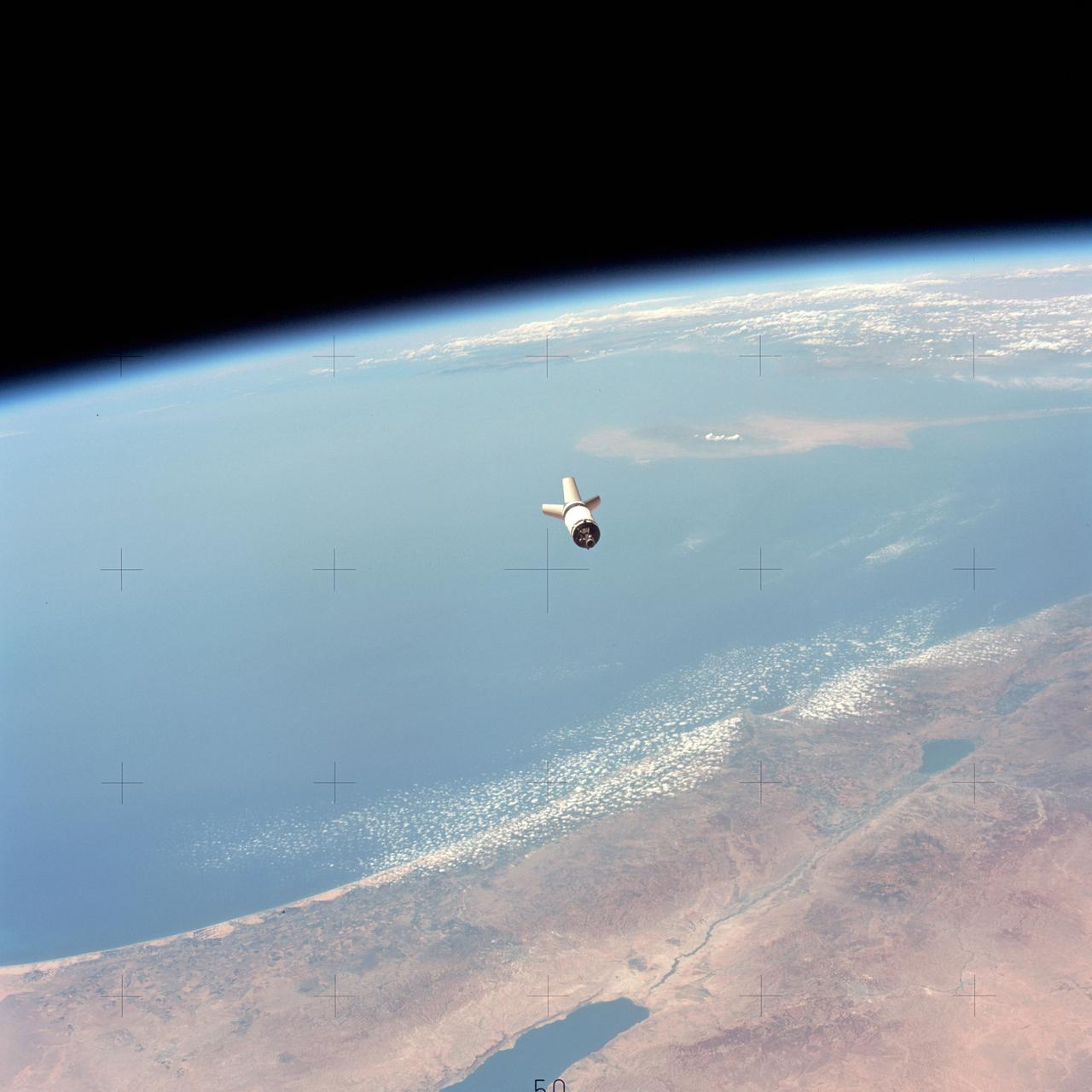
SL3-114-1634 (July-September 1973) --- Skylab 3, Saturn S-4B (S-IVB) stage falls away from the Command Module (CM) after separation. Earth limb in background, pass over Israel, the Dead Sea and the Mediterranean Sea. Photo credit: NASA
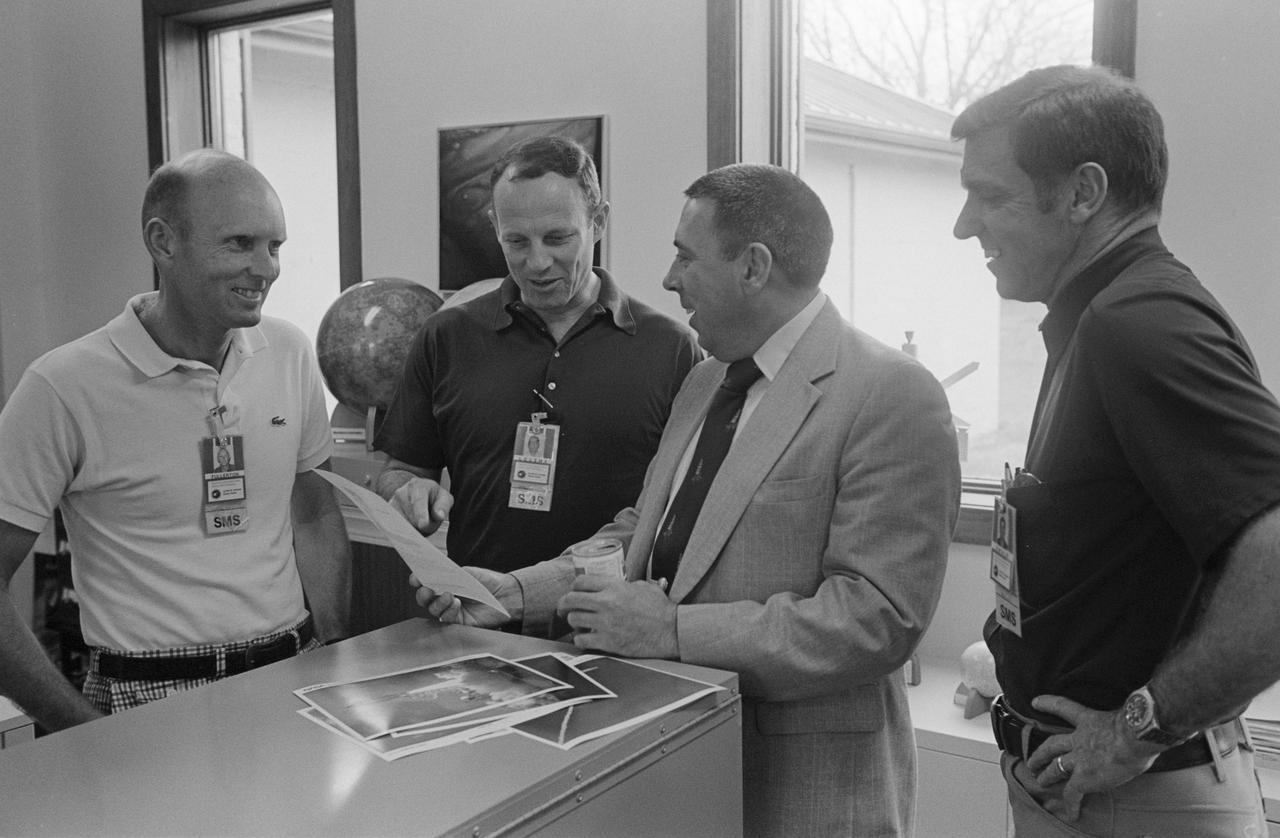
S82-28950 (1 April 1982) --- During a break from a debriefing session, the STS-3 crew members look over some of the photography of their launch from the Kennedy Space Center along with other participants of the meeting. Astronaut Jack R. Lousma is second from left; astronaut C. Gordon Fullerton is at left. They are commander and pilot, respectively, of STS-3. George W. S. Abbey, director of flight operations at JSC, is second from right, and astronaut Joe H. Engle, STS-2 commander, is at right. Photo credit: NASA
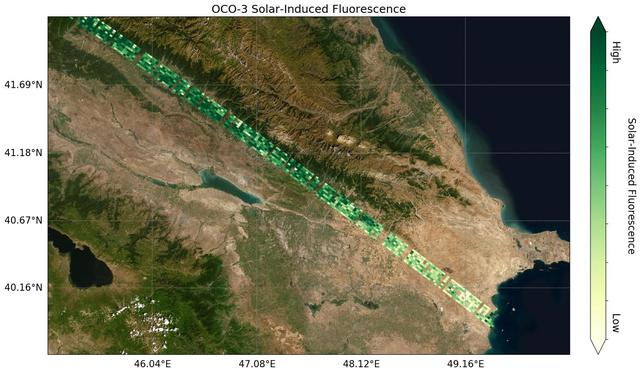
Image shows OCO-3's first preliminary solar-induced fluorescence (SIF) measurements over western Asia. Solar-induced fluorescence is the glow plants emit from photosynthesis — the process of plant growth that includes the capture of carbon from the atmosphere. Areas with lower photosynthesis activity are in shown in light green; areas with higher photosynthesis activity are shown in dark green. As expected, there is significant contrast in plant activity from areas of low vegetation near the Caspian Sea to areas of more dense vegetation like the forests and farms north and east of the Mingachevir Reservoir (near the center of the image). The mission team expects to complete OCO-3's In-orbit checkout phase — the period where they ensure all instruments and components are working and calibrated correctly — in August 2019. They are scheduled to release official CO2 and solar-induced fluorescence data to the science community a year later; however, the data will likely be available sooner given the quality of the measurements that OCO-3 is already making. https://photojournal.jpl.nasa.gov/catalog/PIA23353
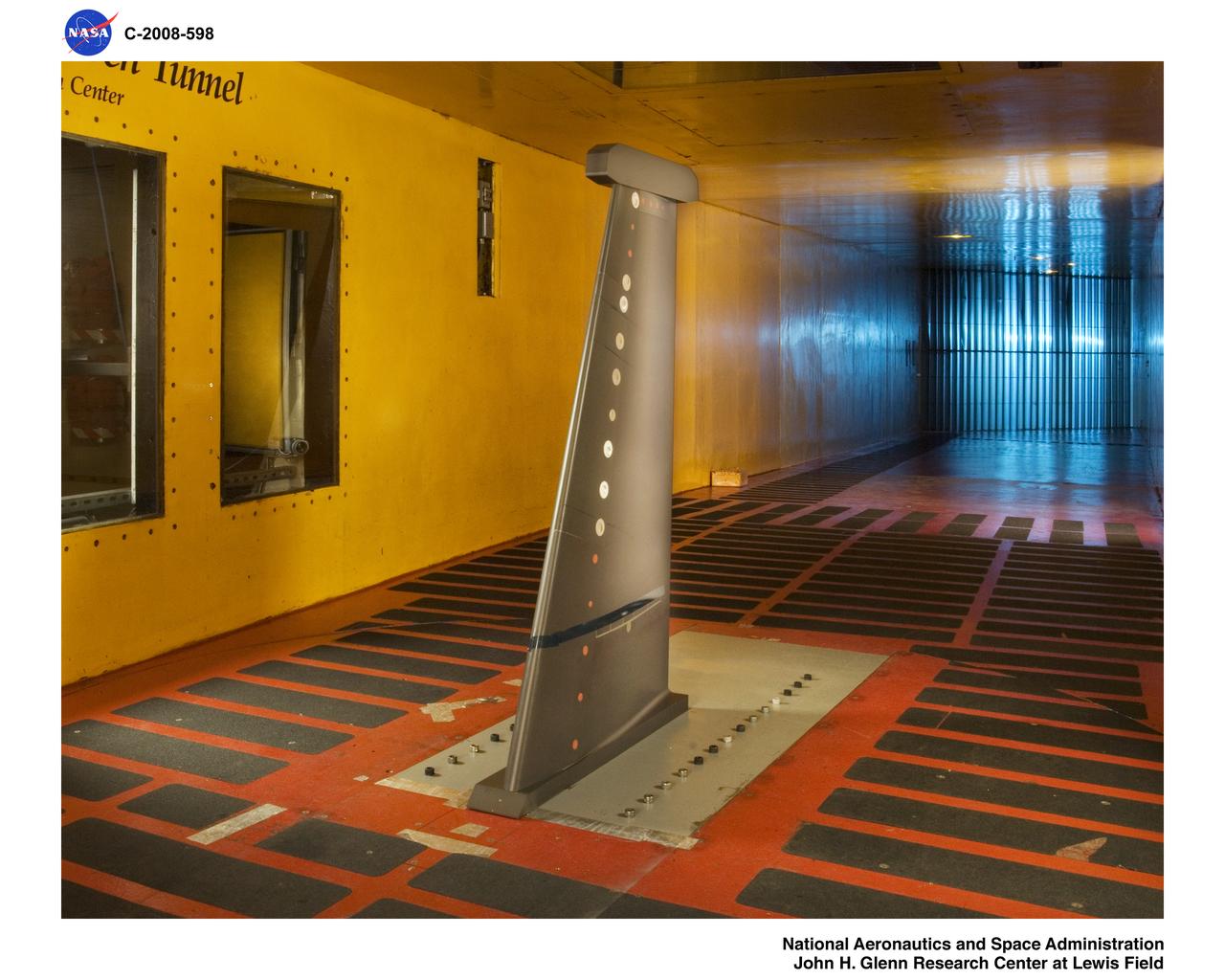
S-3 Viking 1/3 Wing Section in the Icing Research Tunnel
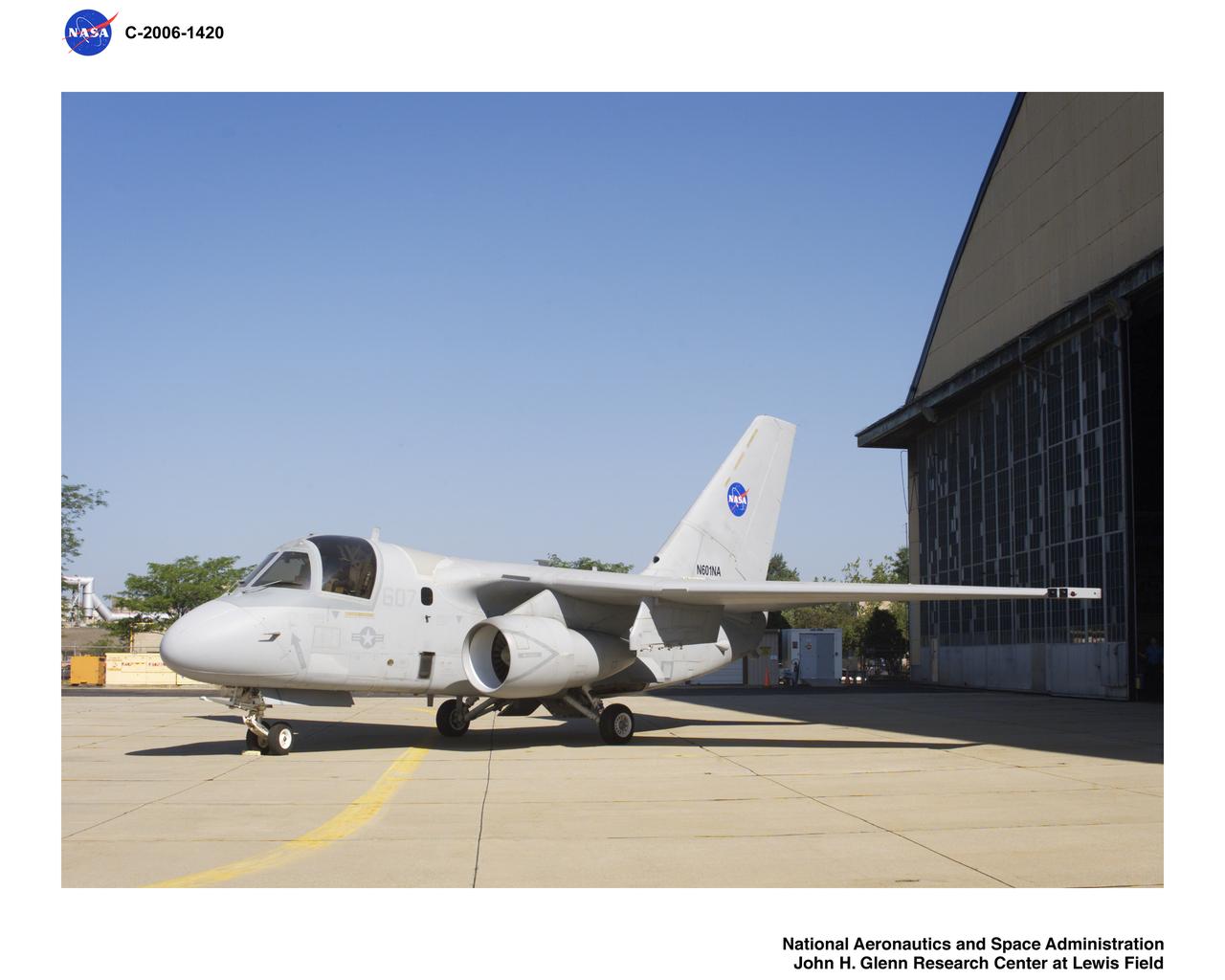
S-3 VIKING Aircraft
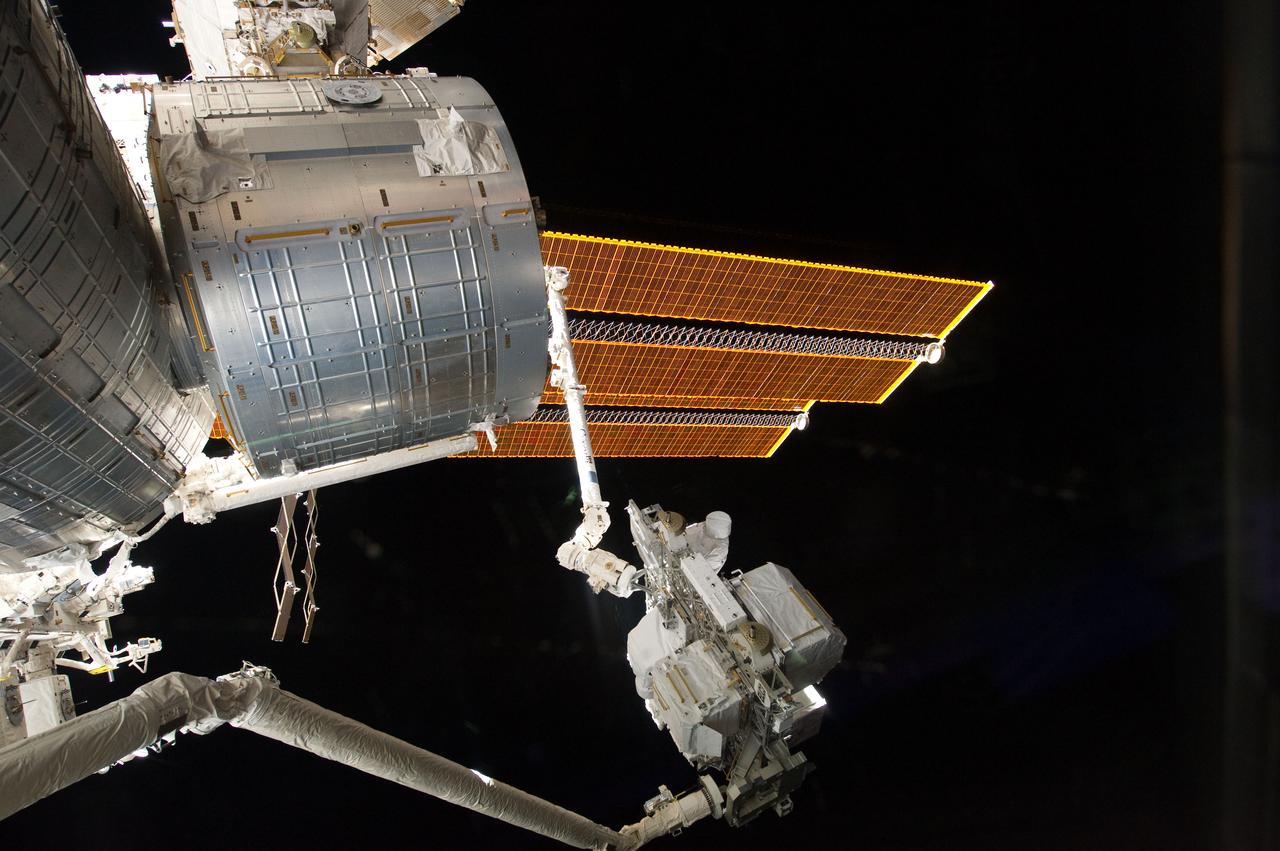
S134-E-007321 (18 May 2011) --- The handoff between space shuttle Endeavour?s robotic Canadarm and the International Space Station?s Canadarm2 of the Express Logistics Carrier-3 (ELC-3) is featured in this image photographed by an STS-134 crew member on the station. The ELC-3 was later installed on the left side of the station?s truss structure. ELC-3 holds spare hardware for future station use, including an ammonia tank, a high pressure gas tank, a cargo transport container, two S-band antenna assemblies and a spare arm for DEXTRE, the Special Purpose Dexterous Manipulator. Photo credit: NASA
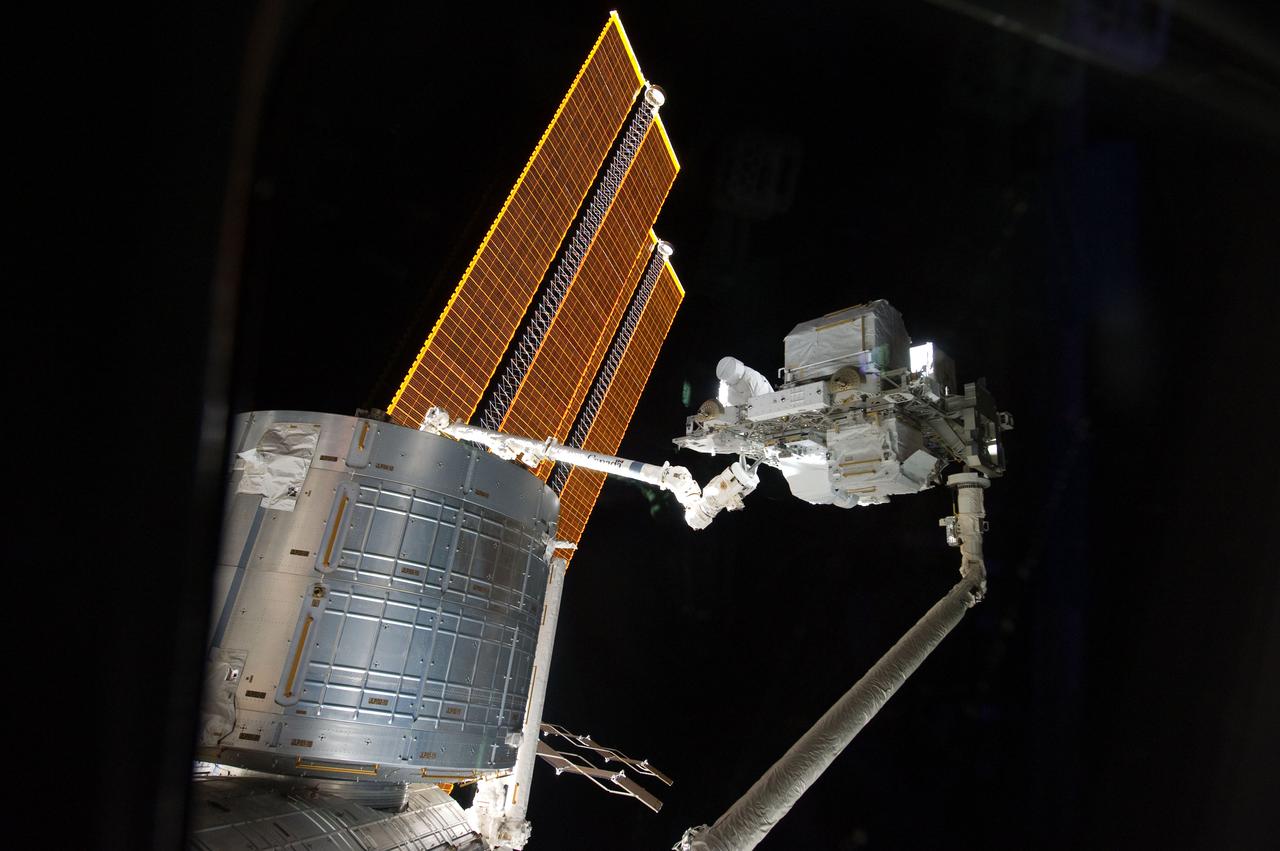
S134-E-007327 (18 May 2011) --- The handoff between space shuttle Endeavour?s robotic Canadarm and the International Space Station?s Canadarm2 of the Express Logistics Carrier-3 (ELC-3) is featured in this image photographed by an STS-134 crew member on the station. The ELC-3 was later installed on the left side of the station?s truss structure. ELC-3 holds spare hardware for future station use, including an ammonia tank, a high pressure gas tank, a cargo transport container, two S-band antenna assemblies and a spare arm for DEXTRE, the Special Purpose Dexterous Manipulator. Photo credit: NASA

S134-E-007314 (18 May 2011) --- The handoff between space shuttle Endeavour?s robotic Canadarm and the International Space Station?s Canadarm2 of the Express Logistics Carrier-3 (ELC-3) is featured in this image photographed by an STS-134 crew member on the station. The ELC-3 was later installed on the left side of the station?s truss structure. ELC-3 holds spare hardware for future station use, including an ammonia tank, a high pressure gas tank, a cargo transport container, two S-band antenna assemblies and a spare arm for DEXTRE, the Special Purpose Dexterous Manipulator. Photo credit: NASA
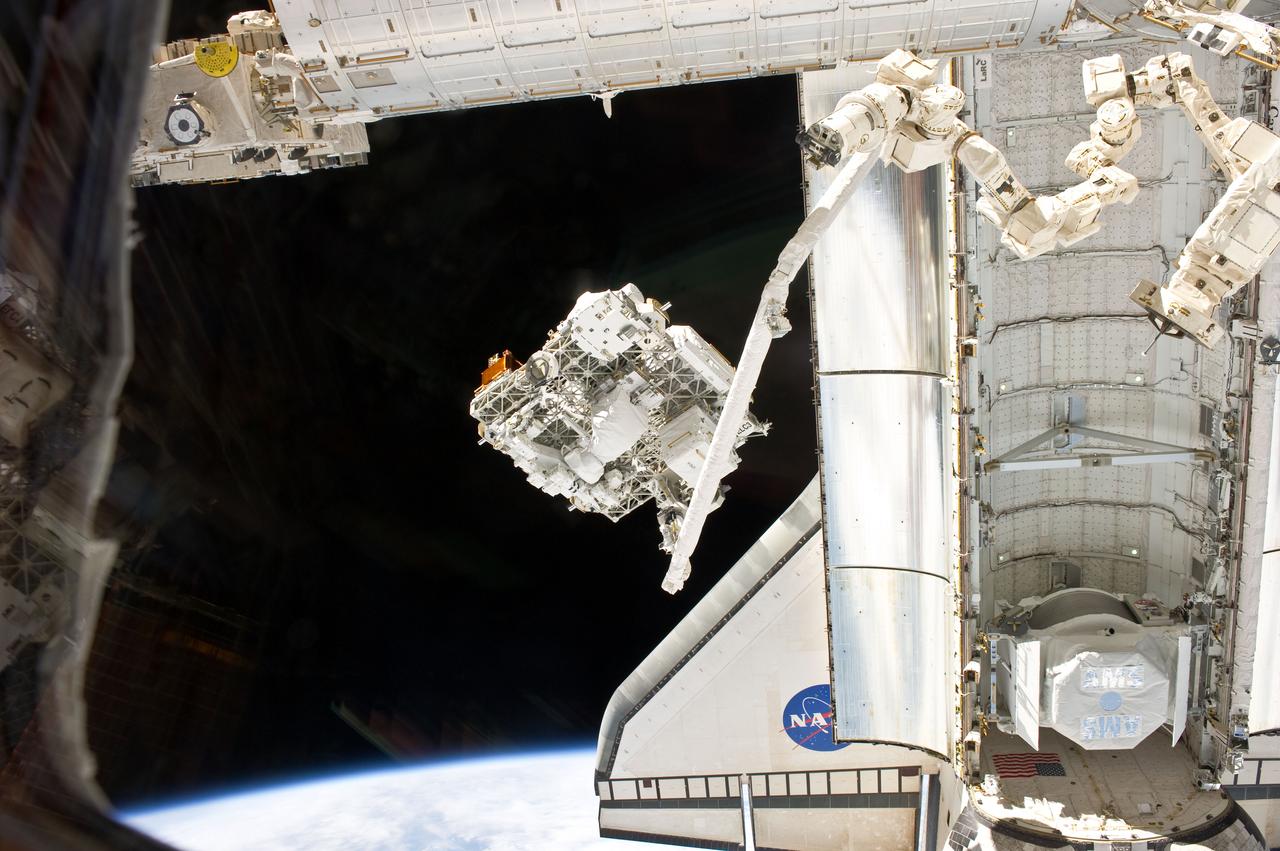
S134-E-007141 (18 May 2011) --- In the grasp of space shuttle Endeavour?s robotic Canadarm, the Express Logistics Carrier-3 (ELC-3) is transferred from Endeavour?s payload bay for hand off to the International Space Station?s Canadarm2 to be installed on the left side of the station?s truss structure. ELC-3 holds spare hardware for future station use, including an ammonia tank, a high pressure gas tank, a cargo transport container, two S-band antenna assemblies and a spare arm for DEXTRE, the Special Purpose Dexterous Manipulator. Photo credit: NASA
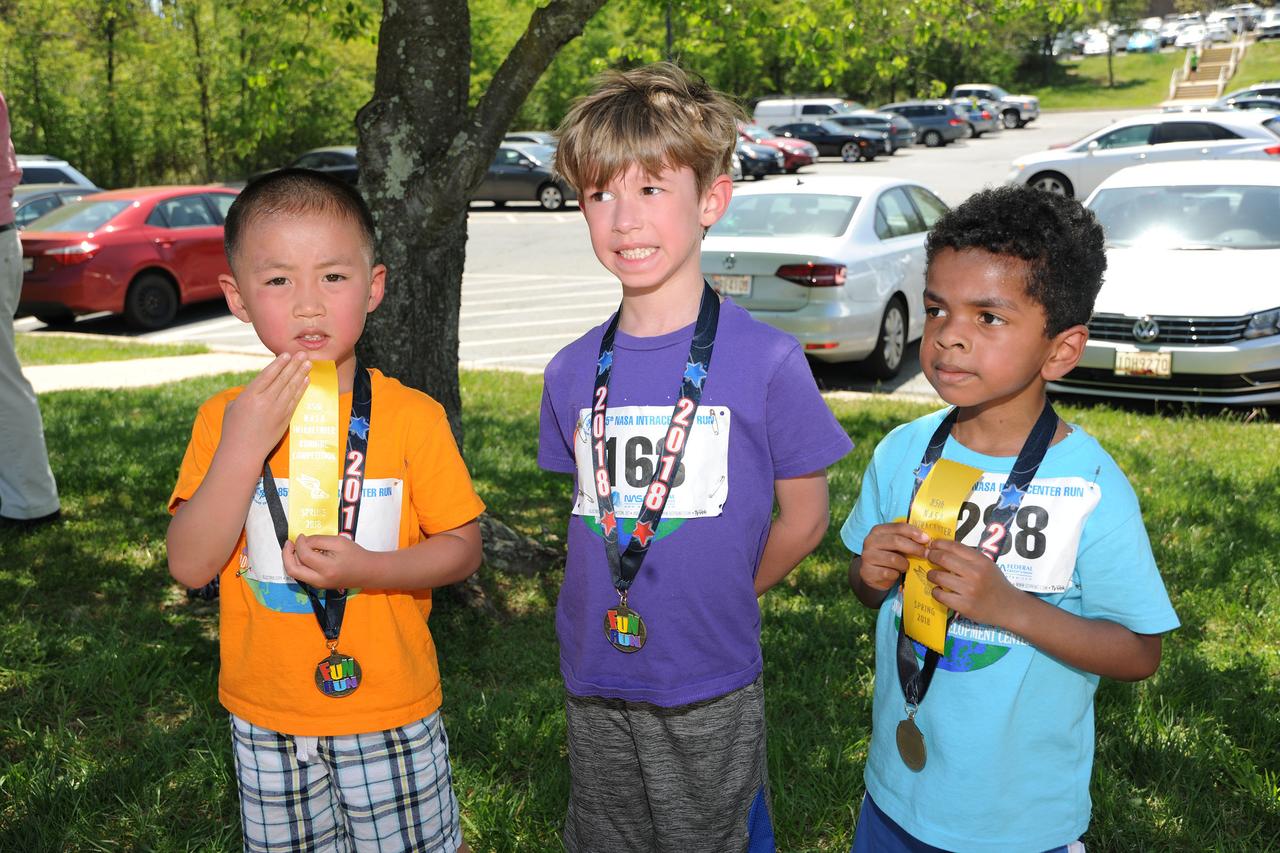
Goddard’s 85th Intracenter Run was held on May 2, 2018 near Child Development Center 1/2/3 place in Children’s race
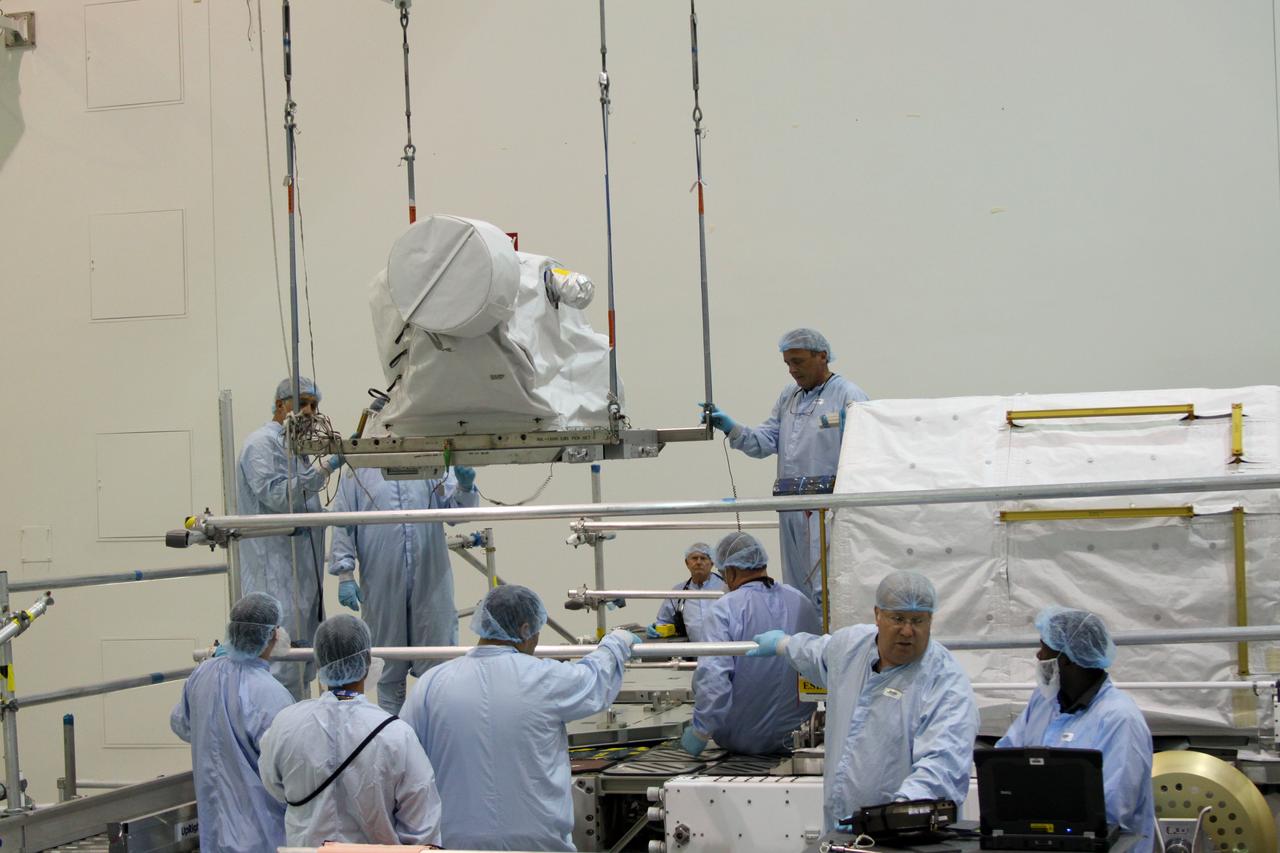
STS-134 S-Band Support Assembly (SASA) Lift to ELC-3
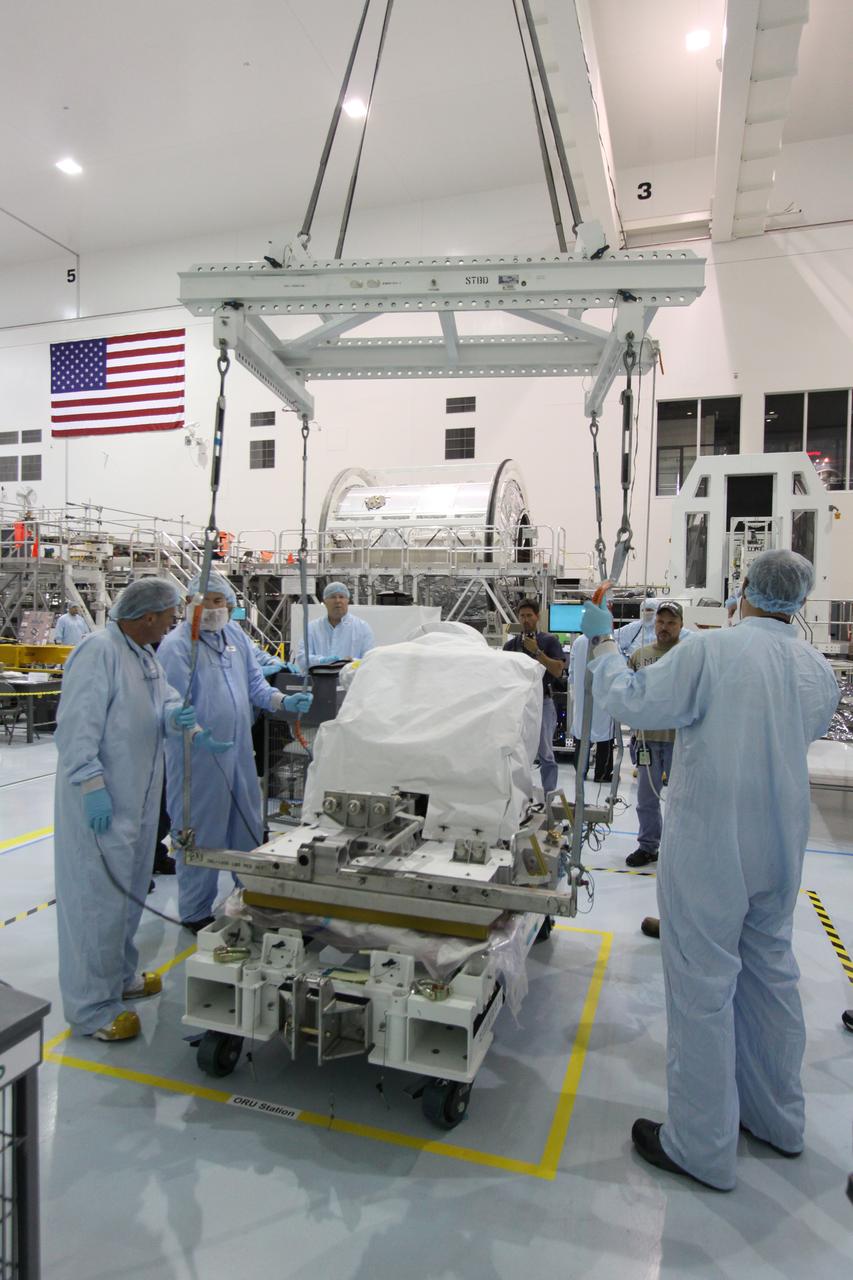
STS-134 S-Band Support Assembly (SASA) Lift to ELC-3
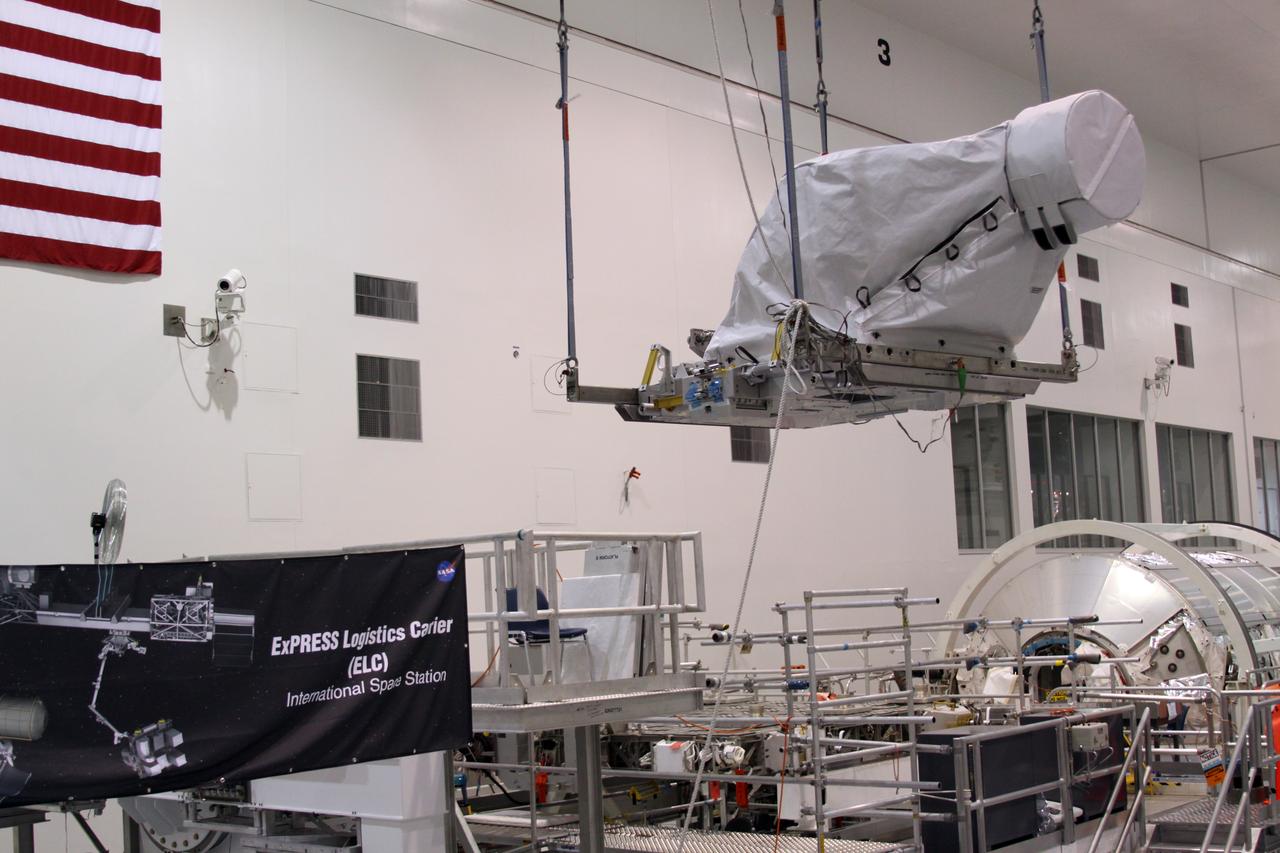
STS-134 S-Band Support Assembly (SASA) Lift to ELC-3
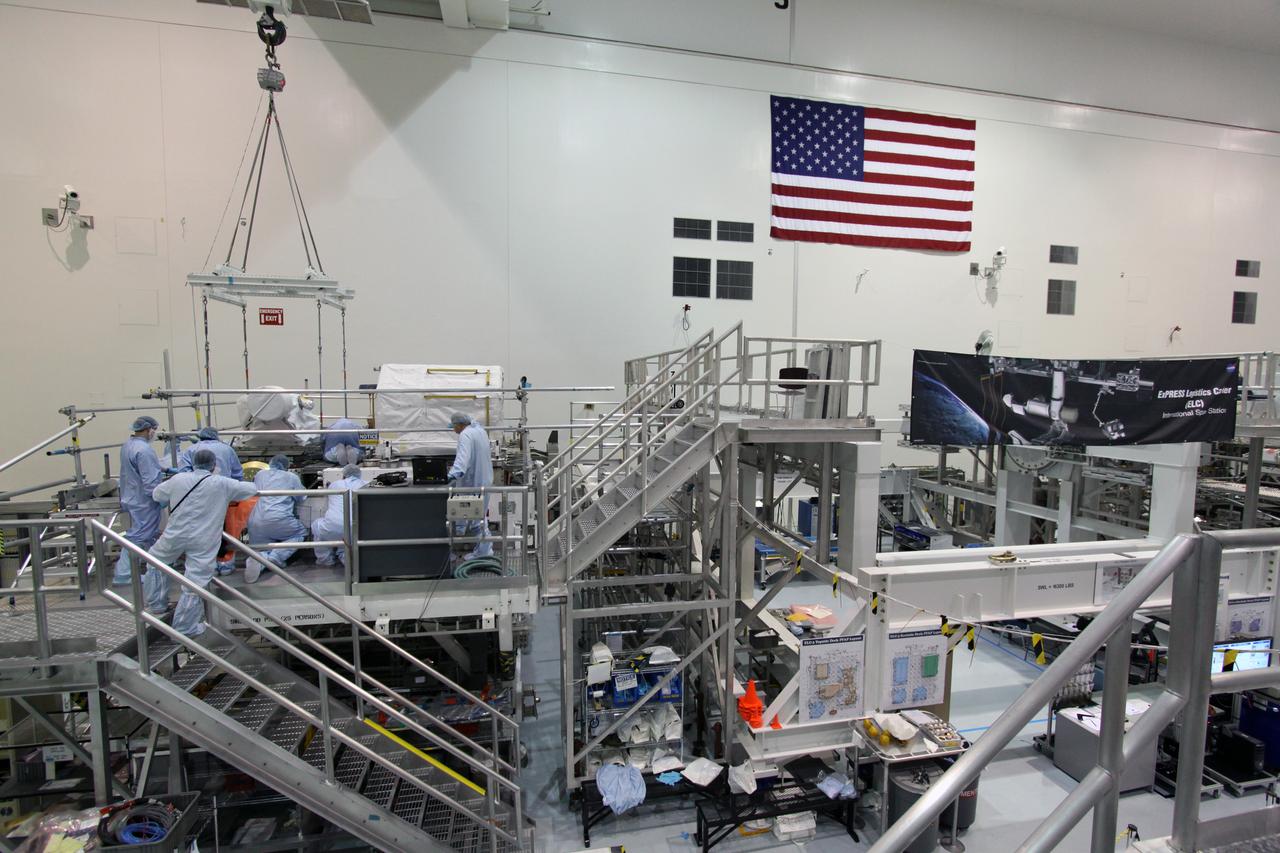
STS-134 S-Band Support Assembly (SASA) Lift to ELC-3
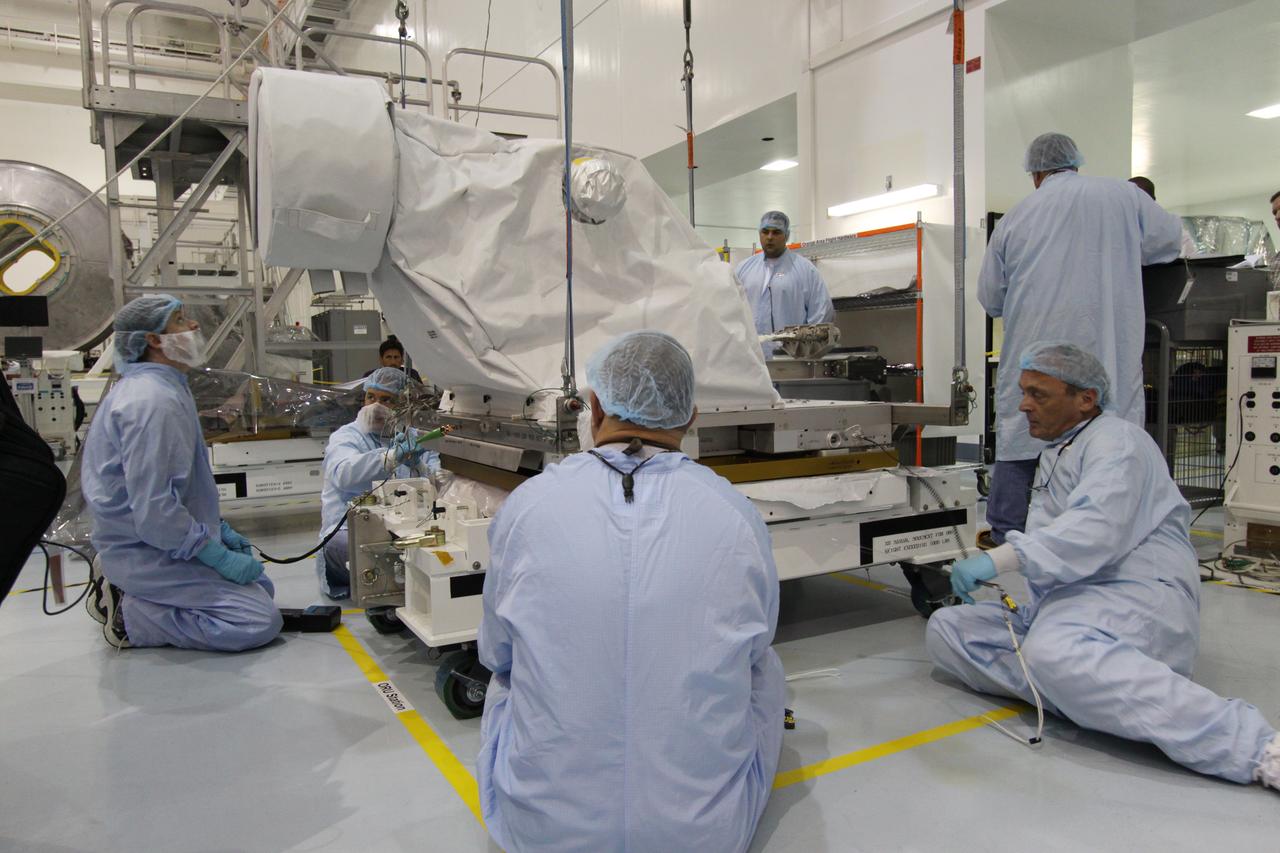
STS-134 S-Band Support Assembly (SASA) Lift to ELC-3
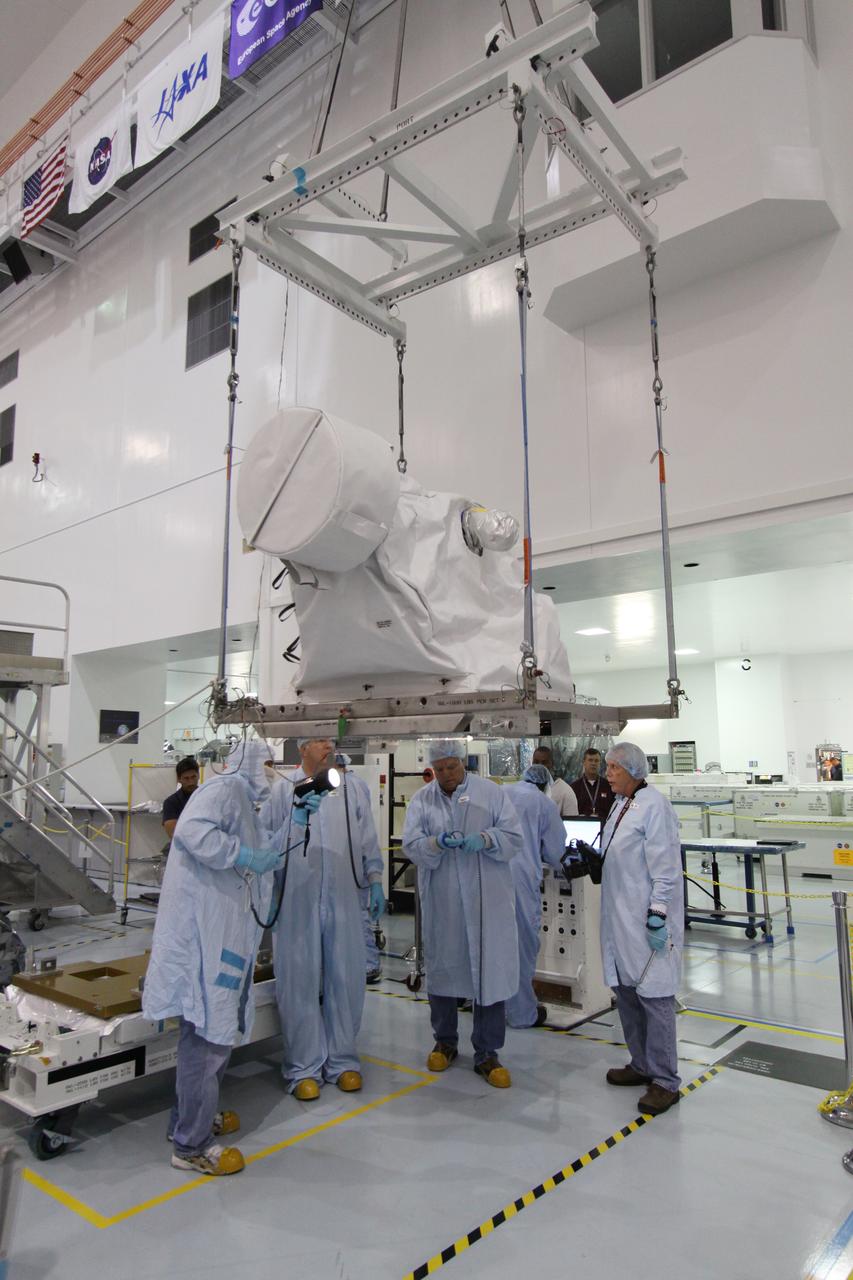
STS-134 S-Band Support Assembly (SASA) Lift to ELC-3
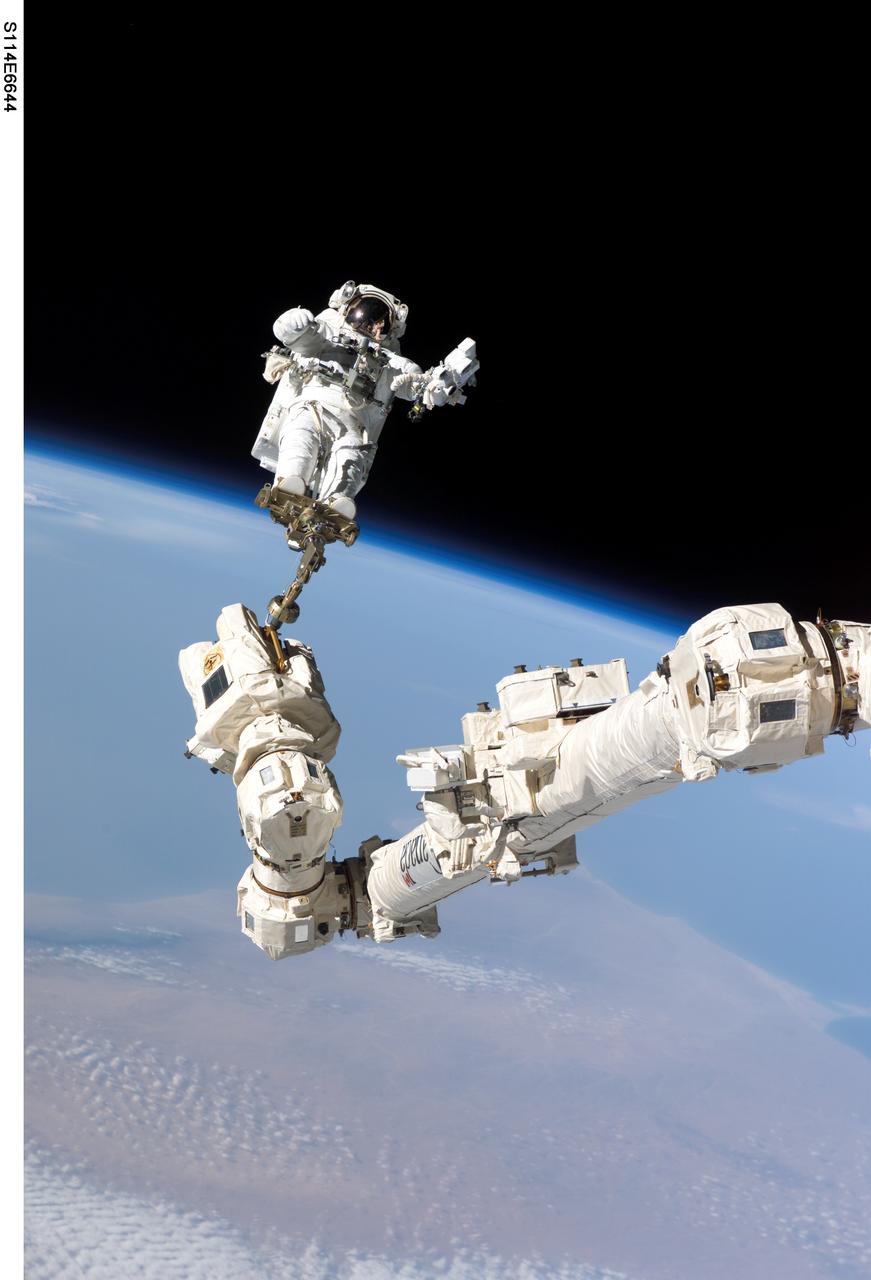
S114-E-6644 (3 August 2005) --- Astronaut Stephen K. Robinson, STS-114 mission specialist, anchored to a foot restraint on the International Space Station;s Canadarm2, participates in the mission;s third session of extravehicular activity (EVA). The blackness of space and Earth;s horizon form the backdrop for the image.
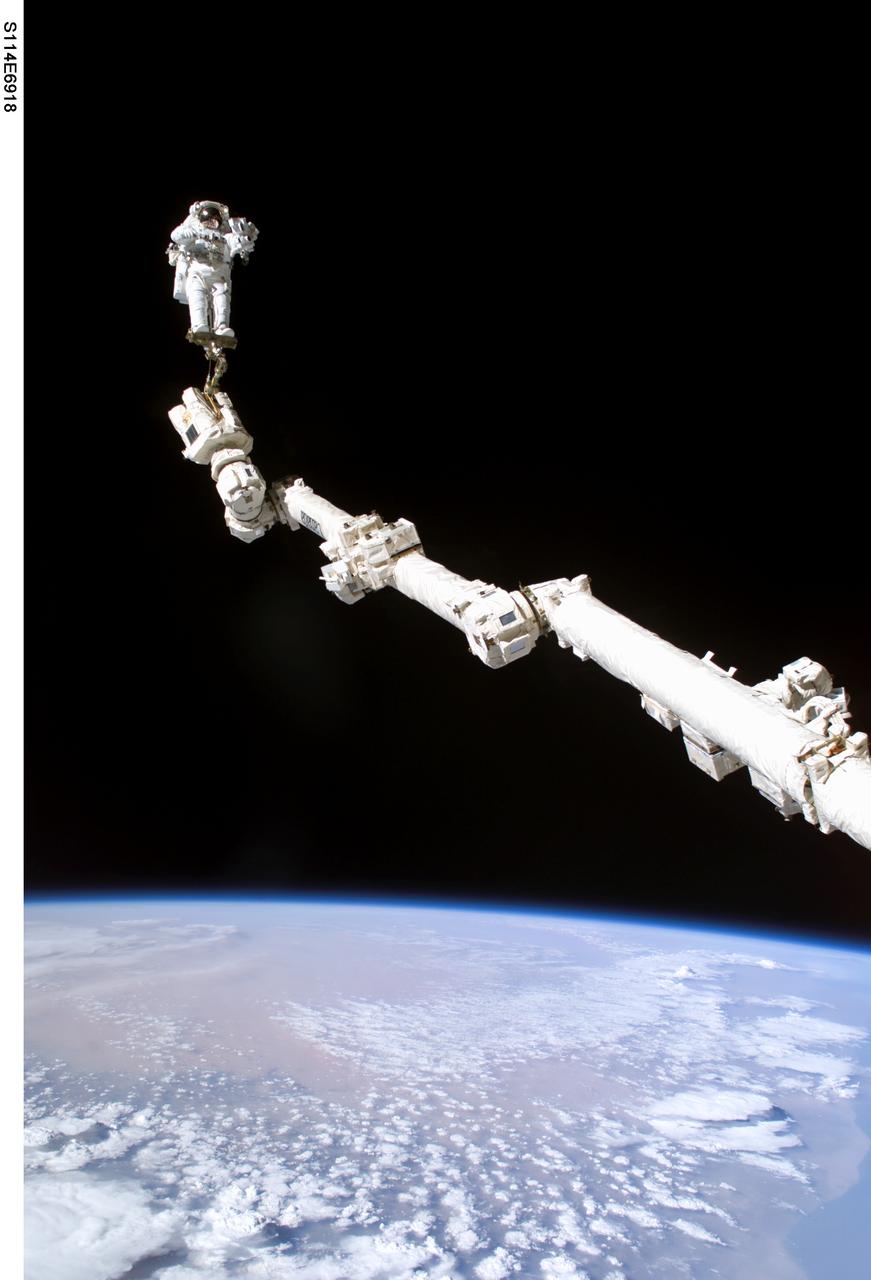
S114-E-6918 (3 August 2005) --- Astronaut Stephen K. Robinson, STS-114 mission specialist, anchored to a foot restraint on the extended International Space Station;s Canadarm2, participates in the mission;s third session of extravehicular activity (EVA). The blackness of space and Earth;s horizon form the backdrop for the image.
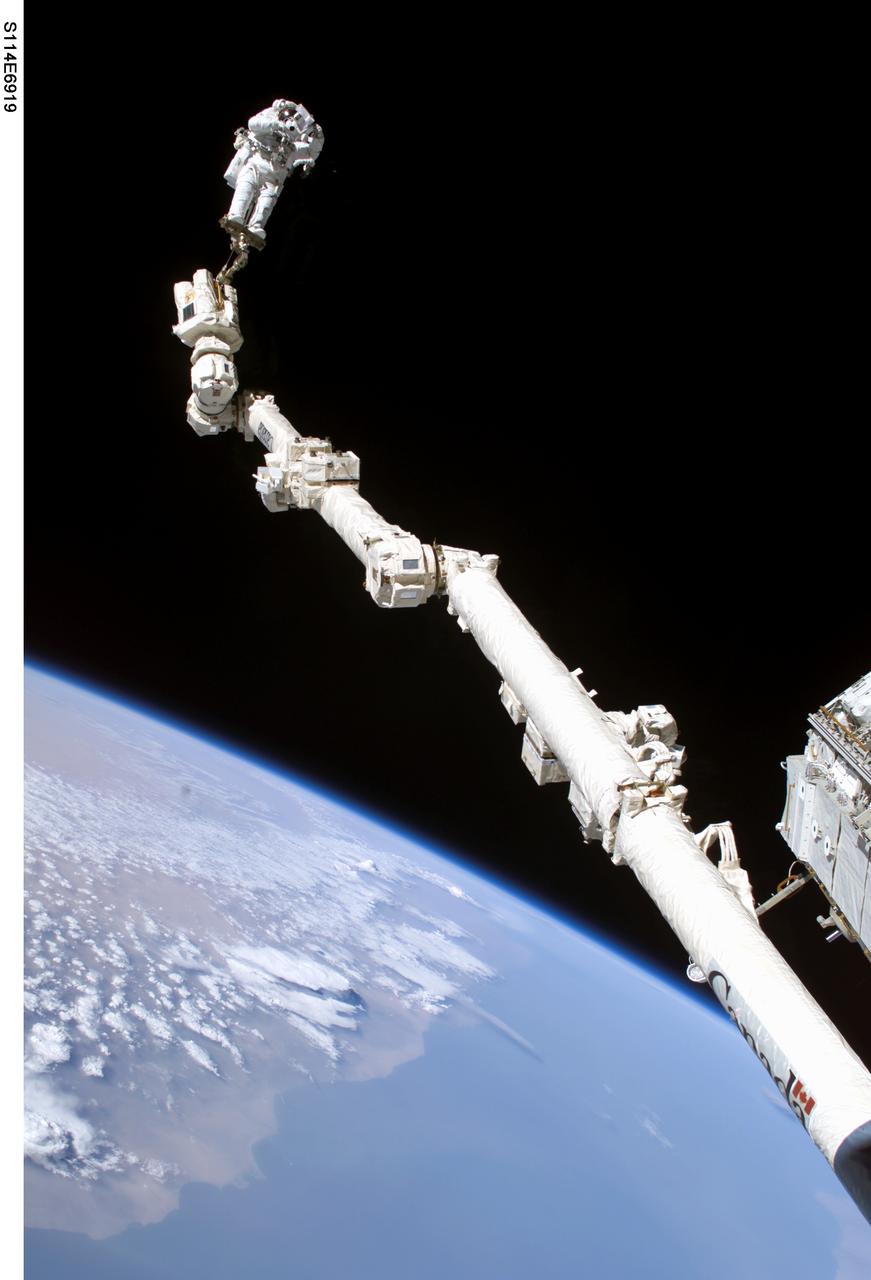
S114-E-06919 (3 Aug. 2005) --- Astronaut Stephen K. Robinson, STS-114 mission specialist, anchored to a foot restraint on the extended International Space Station;s Canadarm2, participates in the mission;s third session of extravehicular activity (EVA). The blackness of space and Earth;s horizon form the backdrop for the image.
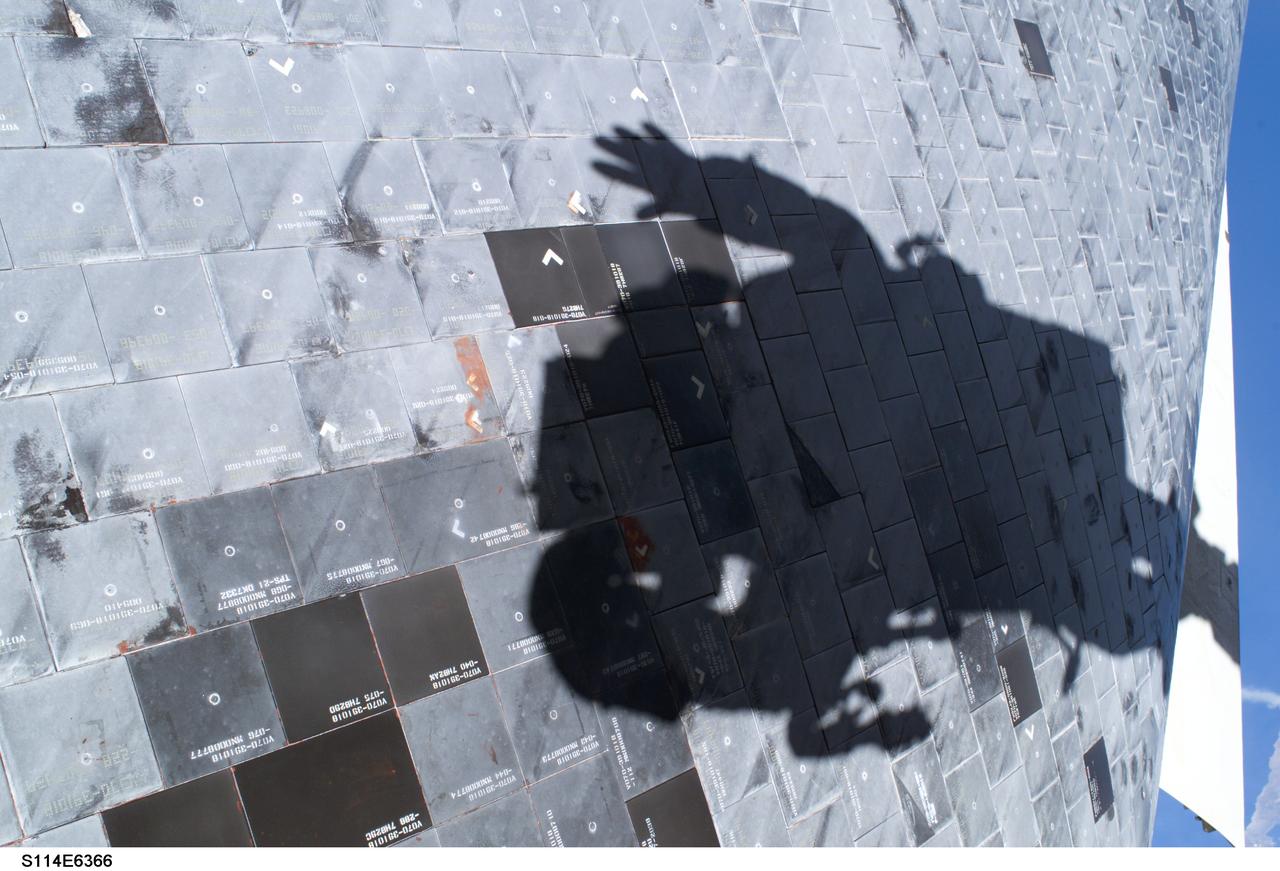
S114-E-6366 (3 August 2005) --- Space Shuttle Discovery’s underside is featured in this image photographed by astronaut Stephen K. Robinson, STS-114 mission specialist, during today’s extravehicular activities (EVA). Robinson’s shadow is visible on the thermal protection tiles.
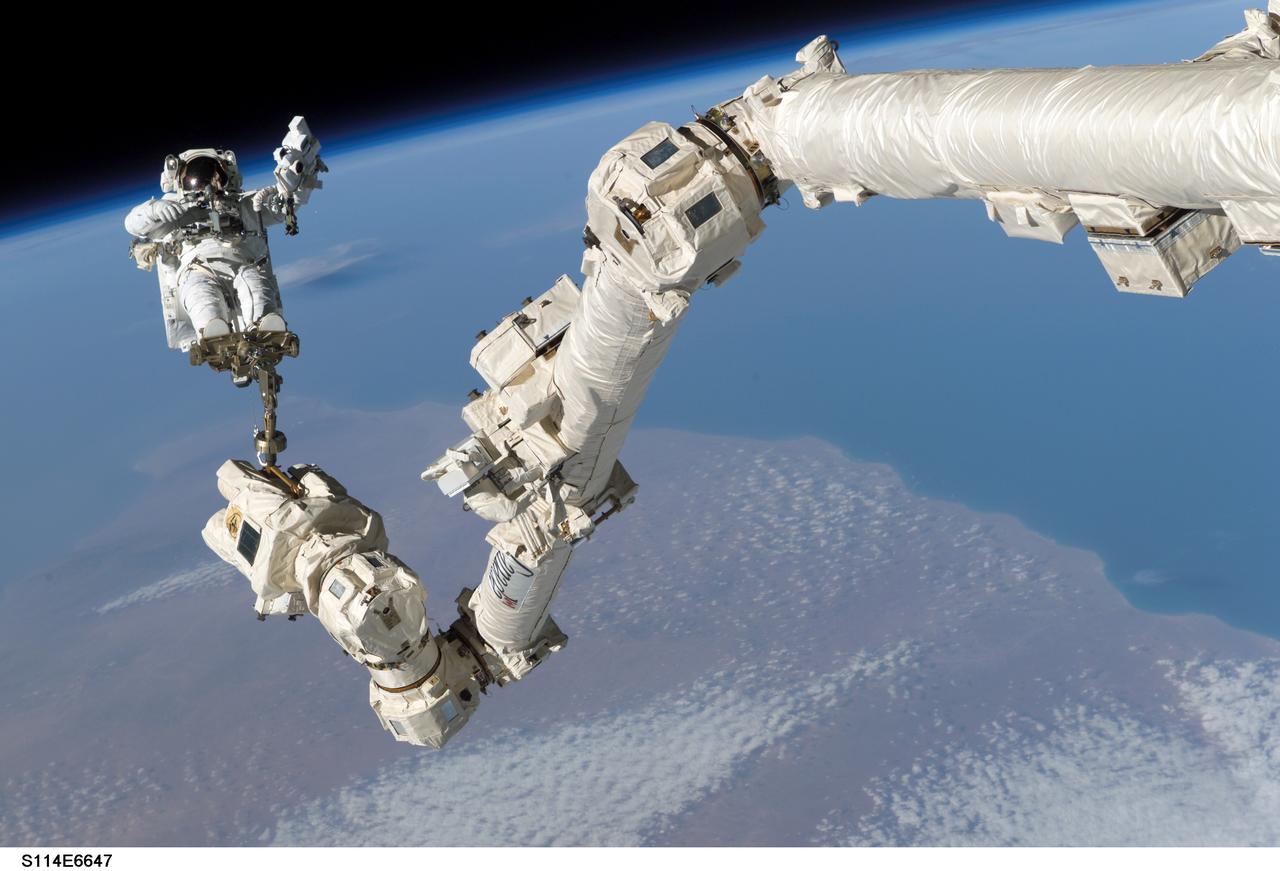
S114-E-6647 (3 August 2005) --- Astronaut Stephen K. Robinson, STS-114 mission specialist, anchored to a foot restraint on the International Space Station;s Canadarm2, participates in the mission;s third session of extravehicular activity (EVA). The blackness of space and Earth;s horizon form the backdrop for the image.
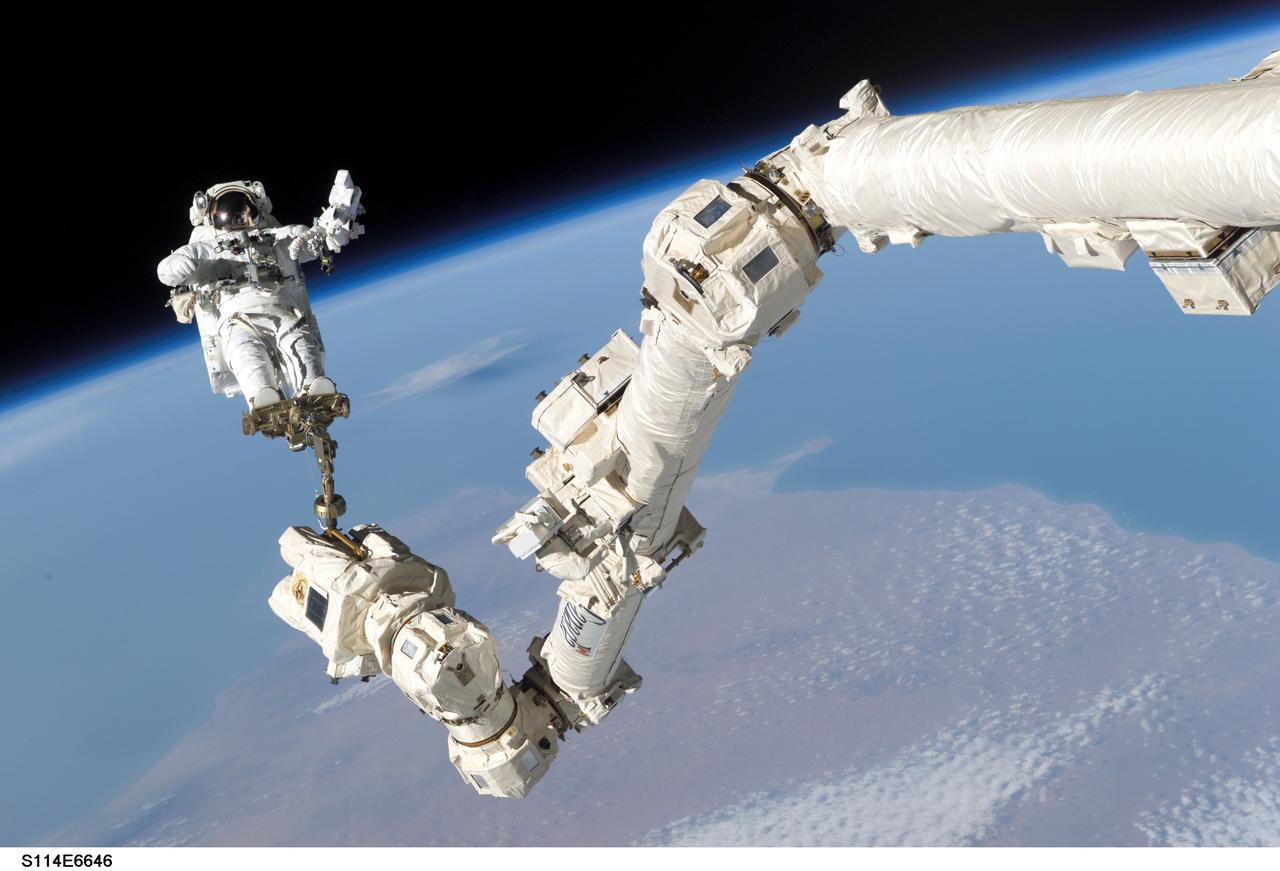
S114-E-6646 (3 August 2005) --- Astronaut Stephen K. Robinson, STS-114 mission specialist, anchored to a foot restraint on the International Space Station;s Canadarm2, participates in the mission;s third session of extravehicular activity (EVA). The blackness of space and Earth;s horizon form the backdrop for the image.
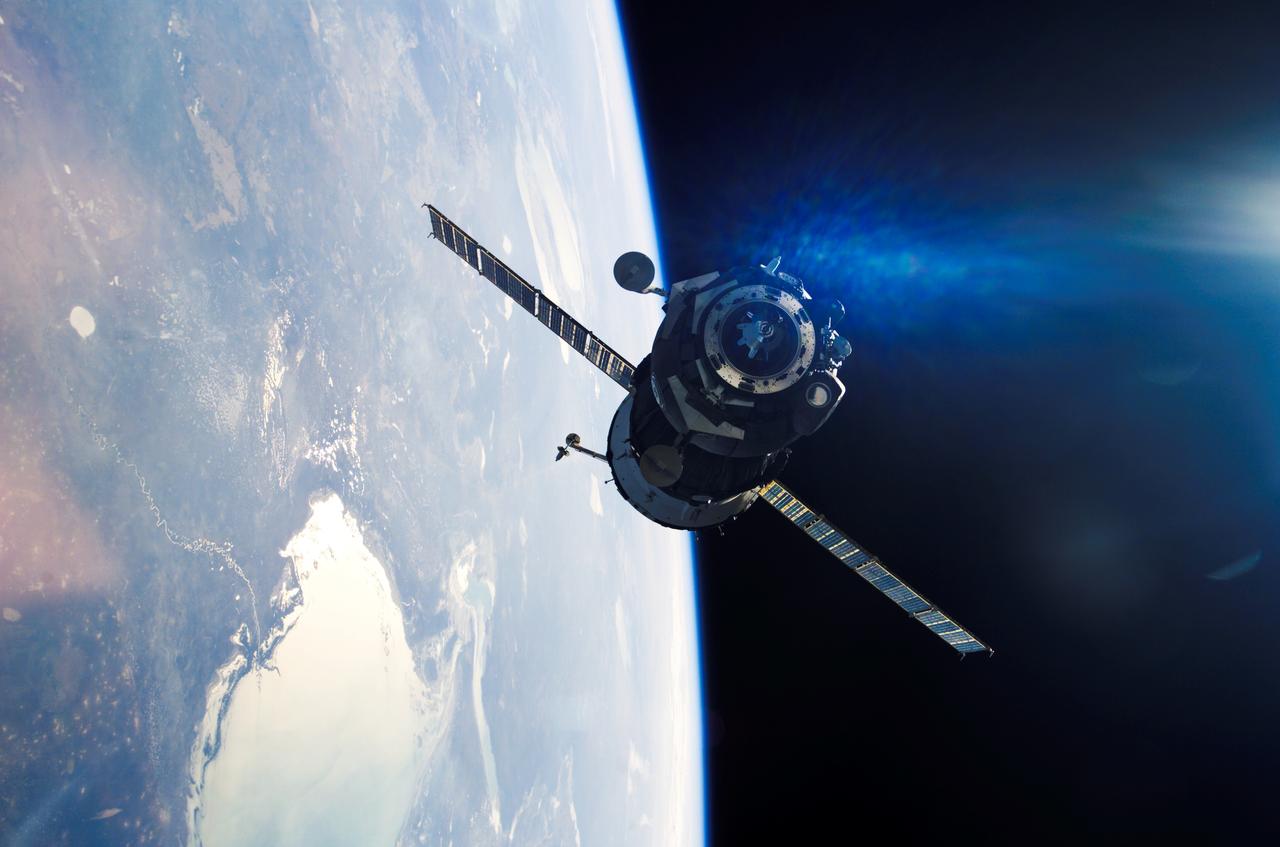
ISS011-E-14107 (3 Oct. 2005) --- Backdropped by the blackness of space and Earth’s horizon, the Soyuz TMA-7 spacecraft approaches the international space station. Onboard the spacecraft are astronaut William S. McArthur, Jr., Expedition 12 commander and NASA science officer; cosmonaut Valery I. Tokarev, Expedition 12 flight engineer and Soyuz commander; and U. S. Spaceflight Participant Gregory Olsen. The Soyuz linked up to the Pirs Docking Compartment at 12:27 a.m. (CDT) on Oct. 3, 2005 as the two spacecraft flew over eastern Asia. The docking followed Friday’s launch from Baikonur Cosmodrome in Kazakhstan.
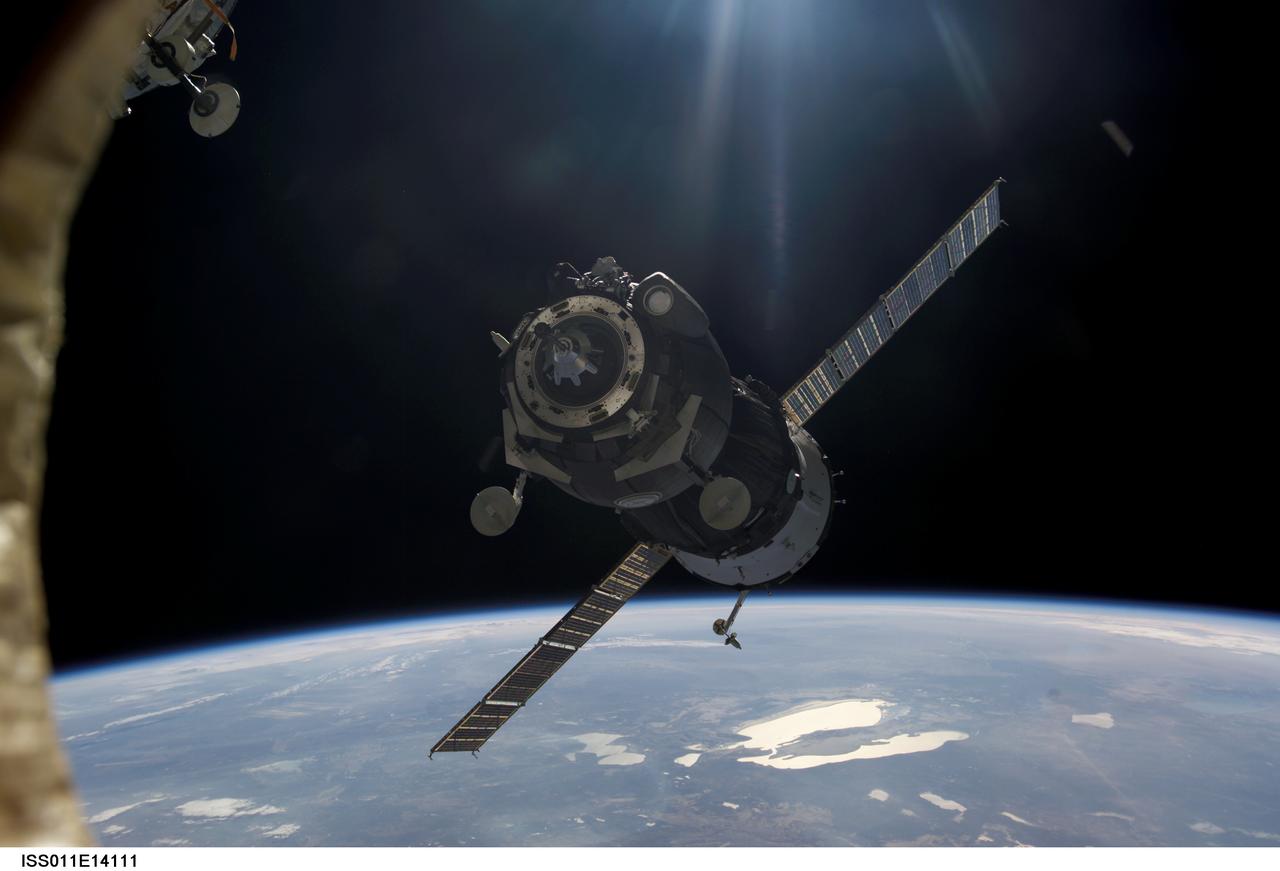
ISS011-E-14111 (3 October 2005) --- Backdropped by the blackness of space and Earth’s horizon, the Soyuz TMA-7 spacecraft approaches the international space station. Onboard the spacecraft are astronaut William S. McArthur, Jr., Expedition 12 commander and NASA science officer; cosmonaut Valery I. Tokarev, Expedition 12 flight engineer and Soyuz commander; and U. S. Spaceflight Participant Gregory Olsen. The Soyuz linked up to the Pirs Docking Compartment at 12:27 a.m. (CDT) on Oct. 3, 2005 as the two spacecraft flew over eastern Asia. The docking followed Friday’s launch from Baikonur Cosmodrome in Kazakhstan.
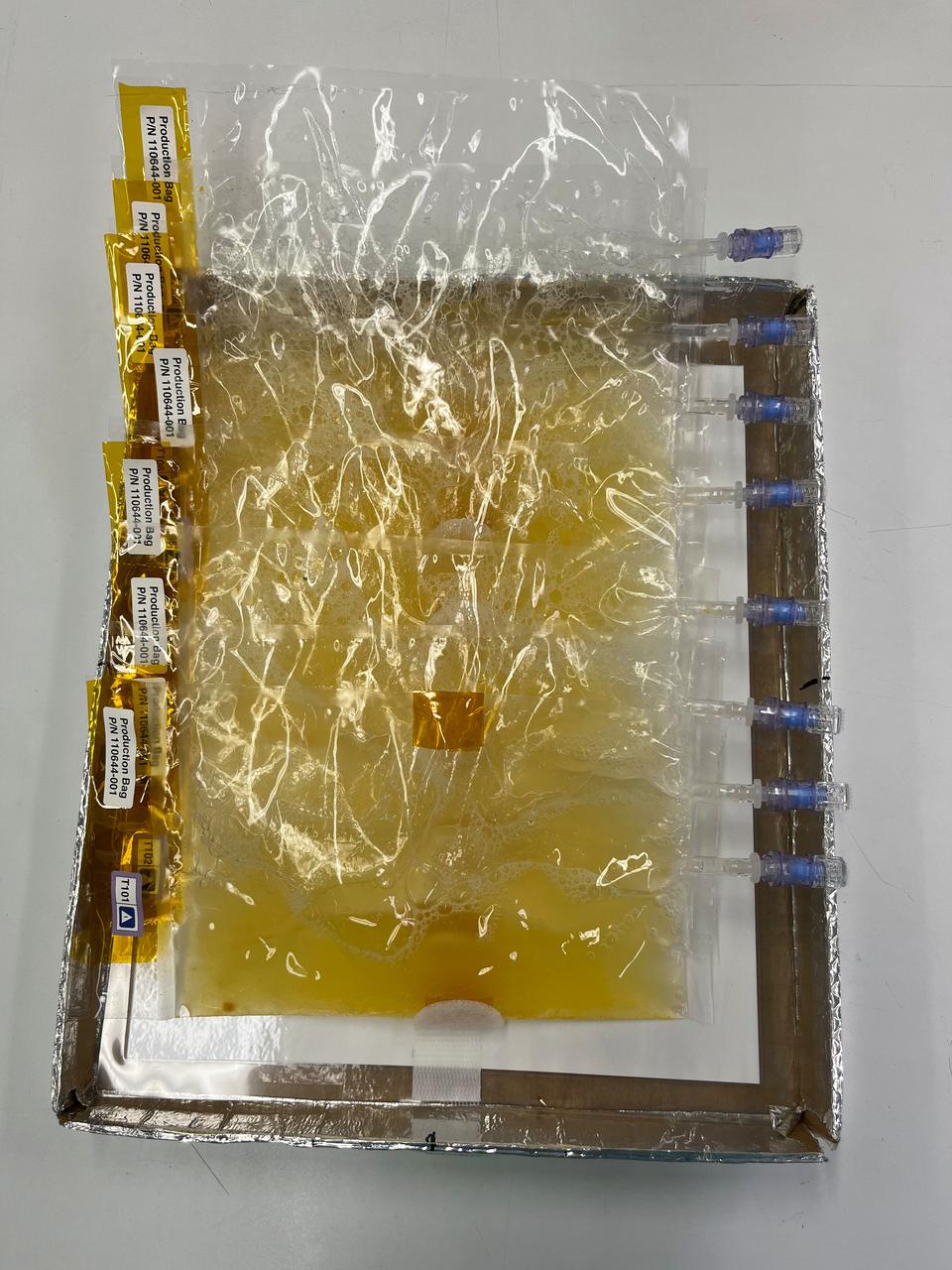
Eight BioNutrients-3 production bags containing yeast (S. cerevisiae Y55 strain 1034) attached to the SABL Tray mockup during the BioNutrients-3 Experiment Verification Test Photo Credit: NASA Ames
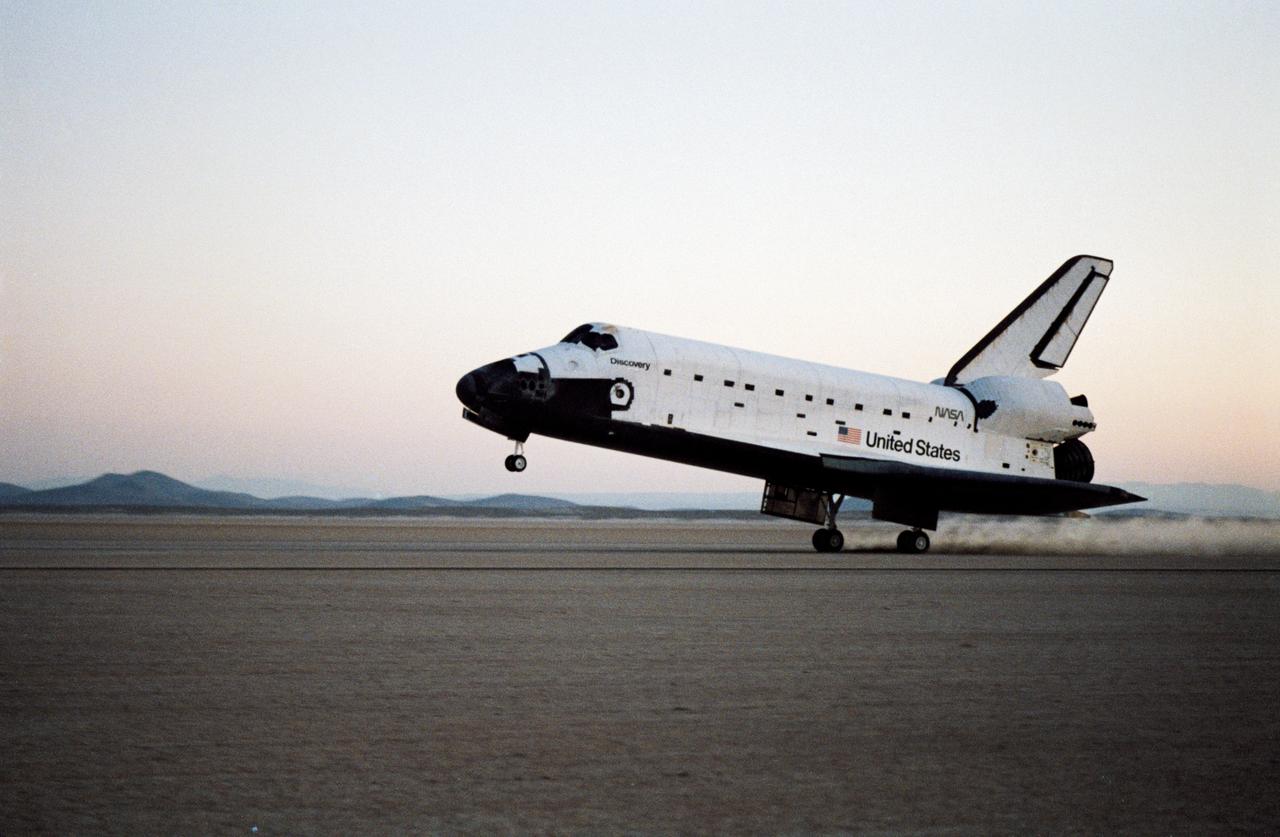
51I-S-225 (3 September 1985) --- The Space Shuttle Discovery lands on September 3, 1985 on Runway 23, Edwards Air Force Base, CA, to successfully complete the 51-I mission.
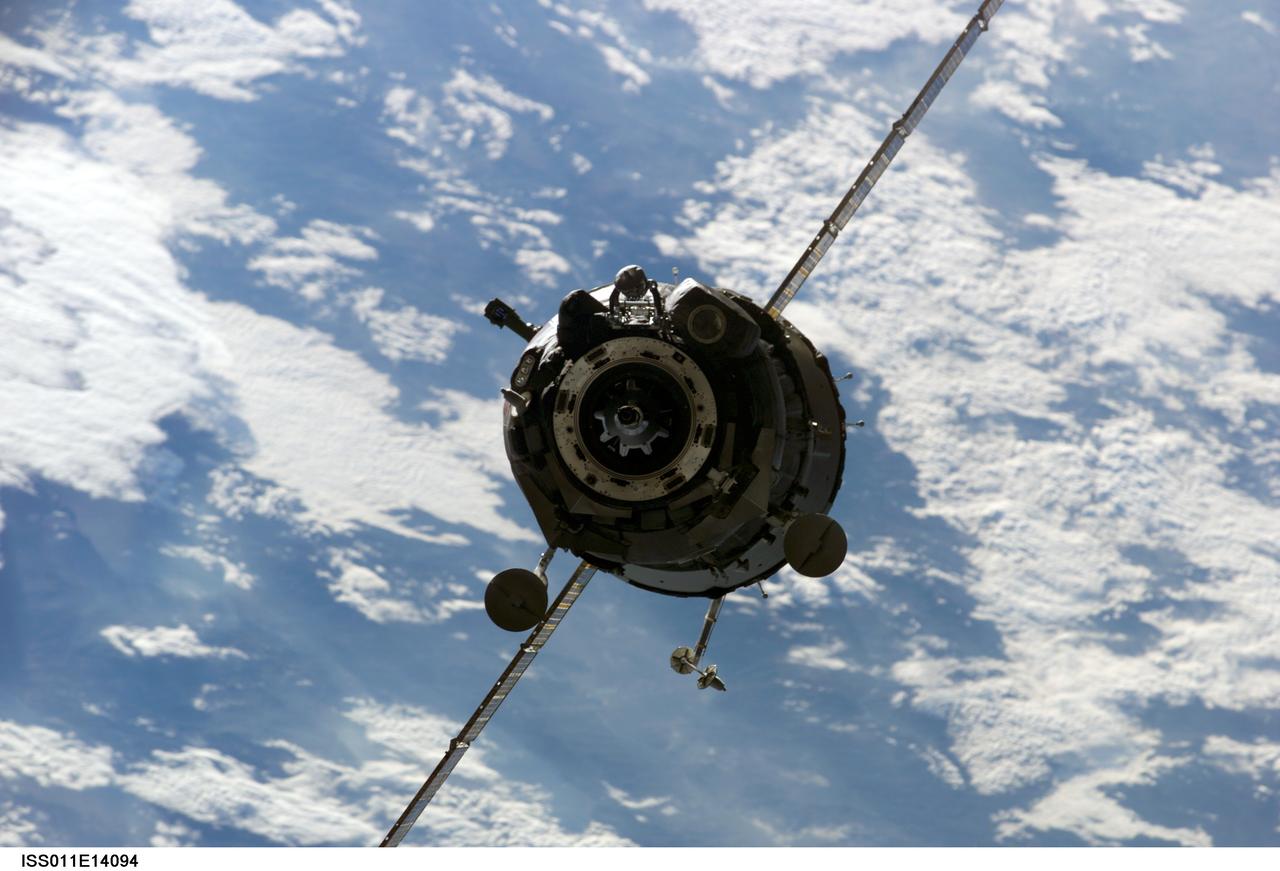
ISS011-E-14094 (3 October 2005) --- Backdropped by a blanket of clouds, the Soyuz TMA-7 spacecraft approaches the international space station. Onboard the spacecraft are astronaut William S. McArthur, Jr., Expedition 12 commander and NASA science officer; cosmonaut Valery I. Tokarev, Expedition 12 flight engineer and Soyuz commander; and U. S. Spaceflight Participant Gregory Olsen. The Soyuz linked up to the Pirs Docking Compartment at 12:27 a.m. (CDT) on Oct. 3, 2005 as the two spacecraft flew over eastern Asia. The docking followed Friday’s launch from Baikonur Cosmodrome in Kazakhstan.
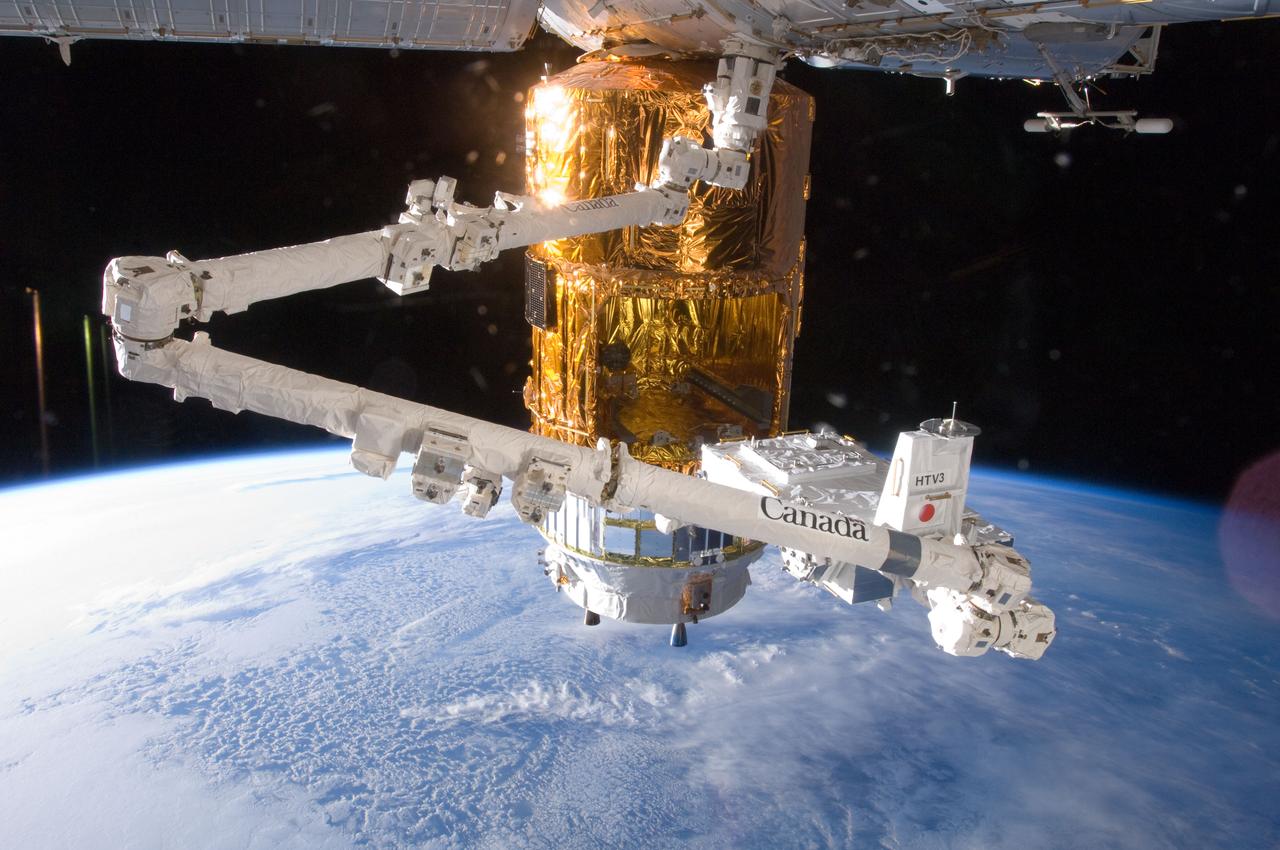
ISS032-E-016904 (10 Aug. 2012) --- In the grasp of the International Space Station?s robotic Canadarm2, the HTV-3 Exposed Pallet is moved for installation on the Japan Aerospace Exploration Agency (JAXA) H-II Transfer Vehicle (HTV-3) currently docked to the space station. Earth?s horizon and the blackness of space provide the backdrop for the scene.
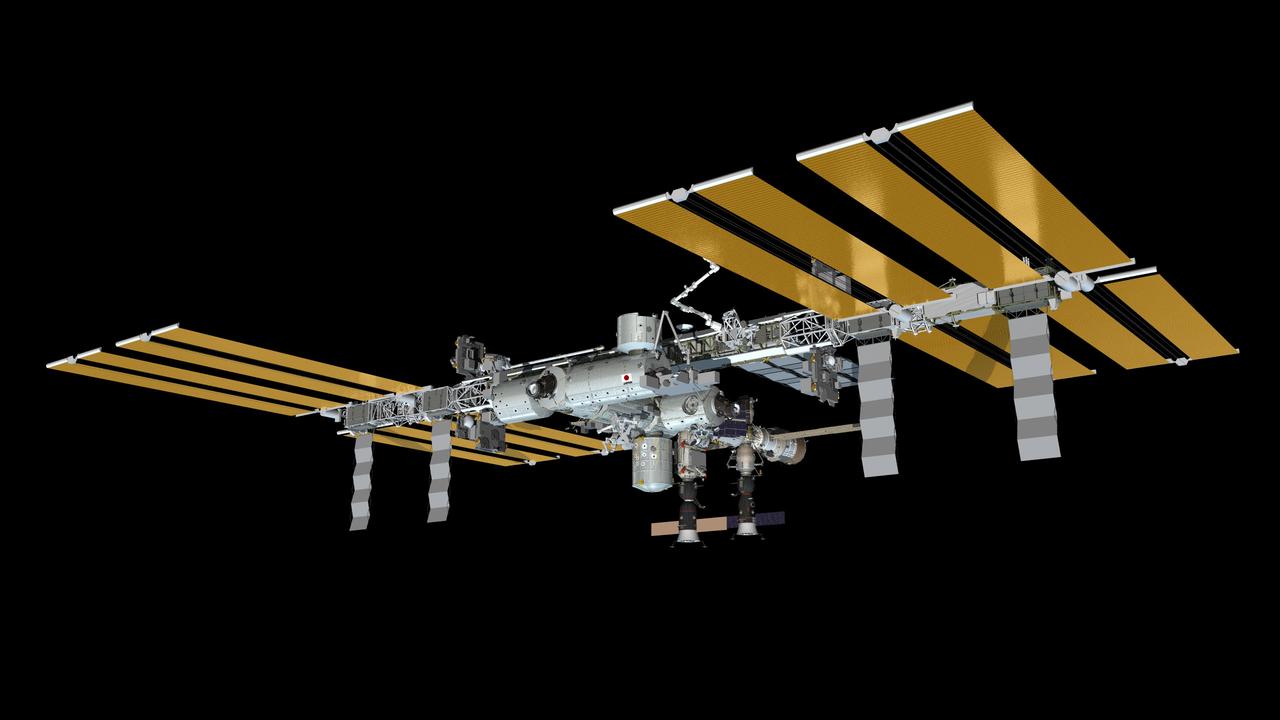
JSC2012-E-216827 (September 2012) --- Computer-generated artist?s rendering of the International Space Station as of Sept. 28, 2012. European Space Agency?s Automated Transfer Vehicle-3 (ATV-3) ?Edoardo Amaldi? undocks from the Zvezda Service Module. Progress 48 is docked to the Pirs Docking Compartment. Soyuz 31 (TMA-05M) is attached to the Rassvet Mini-Research Module 1 (MRM1). Photo credit: NASA
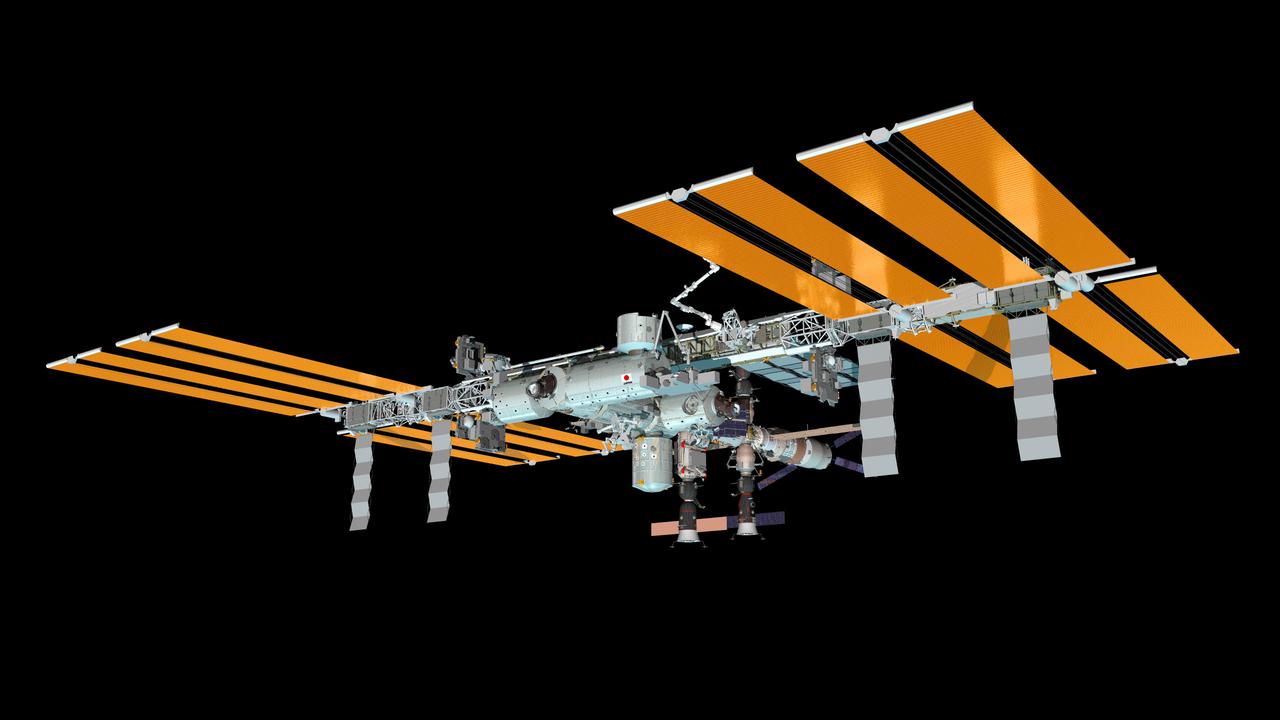
JSC2012-E-036590 (March 2012) --- Computer-generated artist?s rendering of the International Space Station as of March 28, 2012. European Space Agency?s Automated Transfer Vehicle-3 (ATV-3) ?Edoardo Amaldi? docks to the Zvezda Service Module. Progress 46 is linked to the Pirs Docking Compartment. Soyuz 29 (TMA-03M) is attached to the Rassvet Mini-Research Module 1 (MRM1) and Soyuz 28 (TMA-22) is docked to the Poisk Mini-Research Module 2 (MRM2). Photo credit: NASA
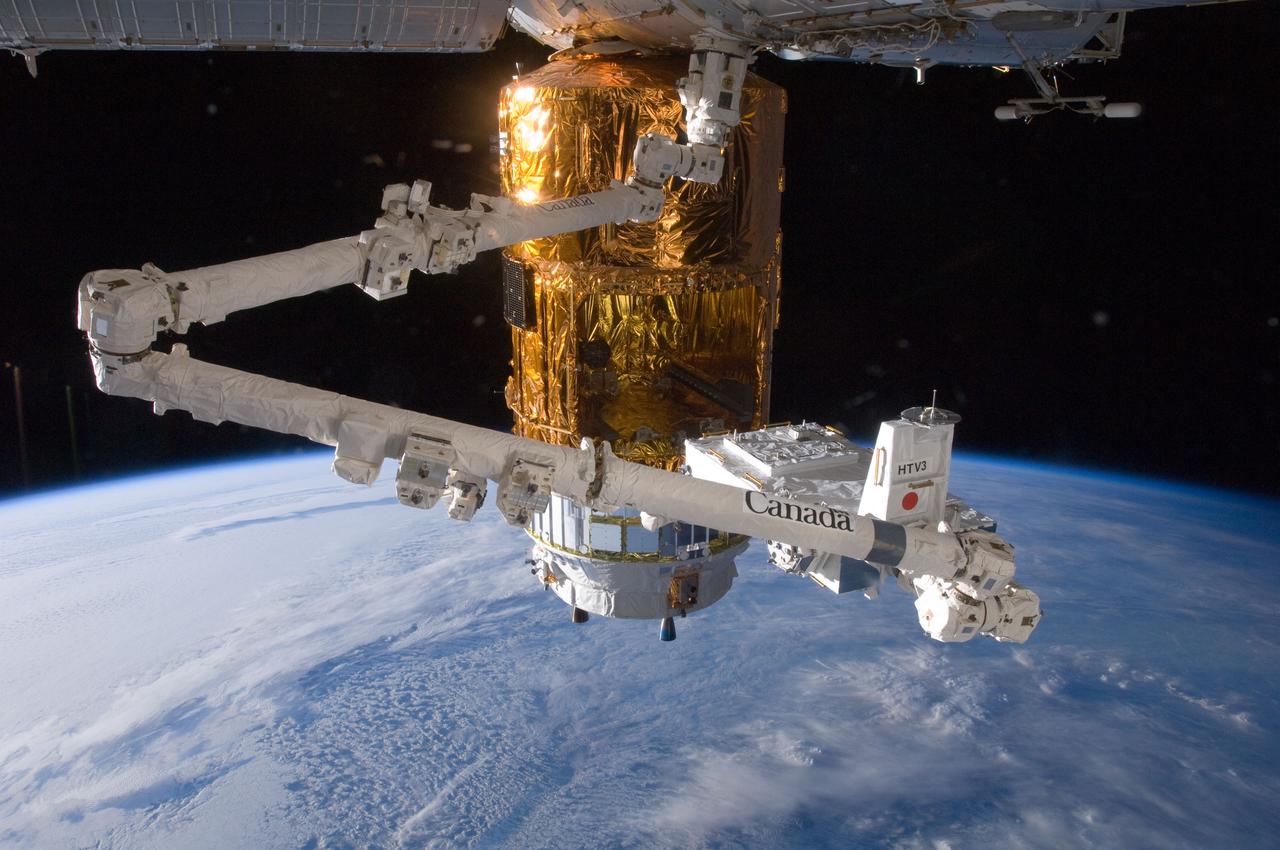
ISS032-E-016906 (10 Aug. 2012) --- In the grasp of the International Space Station?s robotic Canadarm2, the HTV-3 Exposed Pallet is moved for installation on the Japan Aerospace Exploration Agency (JAXA) H-II Transfer Vehicle (HTV-3) currently docked to the space station. Earth?s horizon and the blackness of space provide the backdrop for the scene.
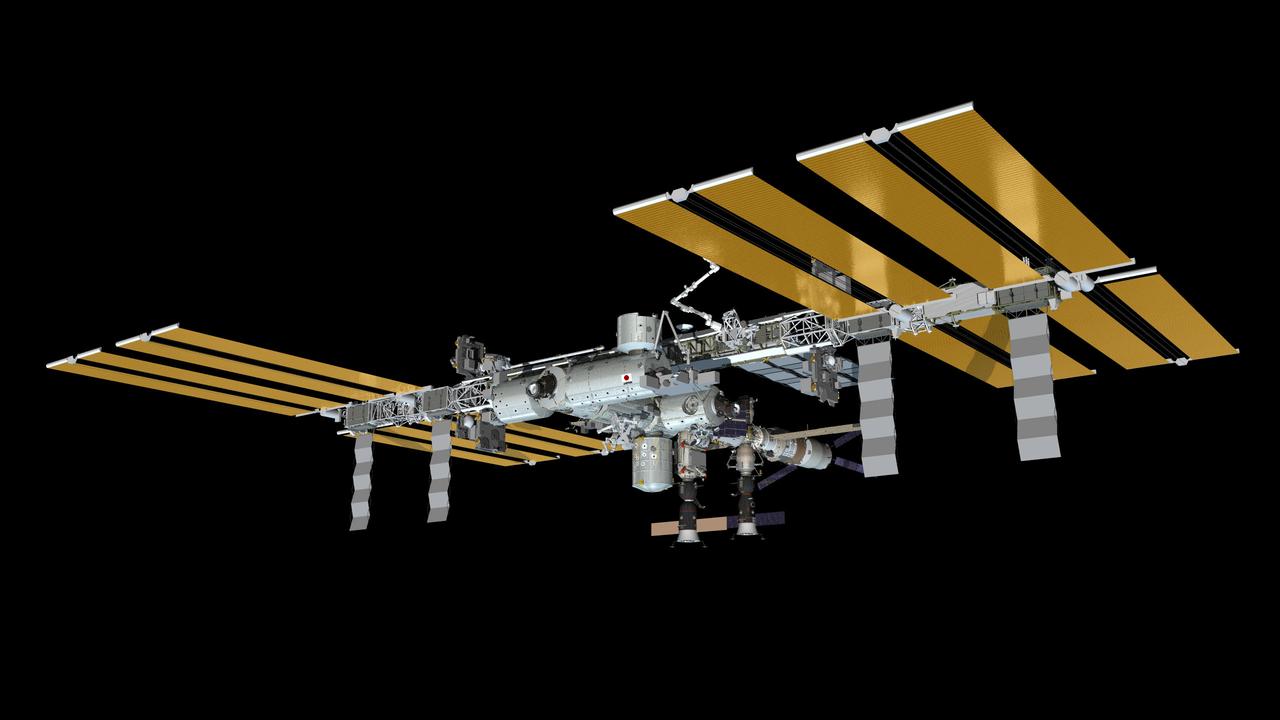
JSC2012-E-042223 (April 2012) --- Computer-generated artist?s rendering of the International Space Station as of April 27, 2012. Soyuz 28 (TMA-22) undocks from the Poisk Mini-Research Module 2 (MRM2). Progress 47 is docked to the Pirs Docking Compartment. European Space Agency?s Automated Transfer Vehicle-3 (ATV-3) ?Edoardo Amaldi? is attached to the Zvezda Service Module. Soyuz 29 (TMA-03M) is attached to the Rassvet Mini-Research Module 1 (MRM1). Photo credit: NASA
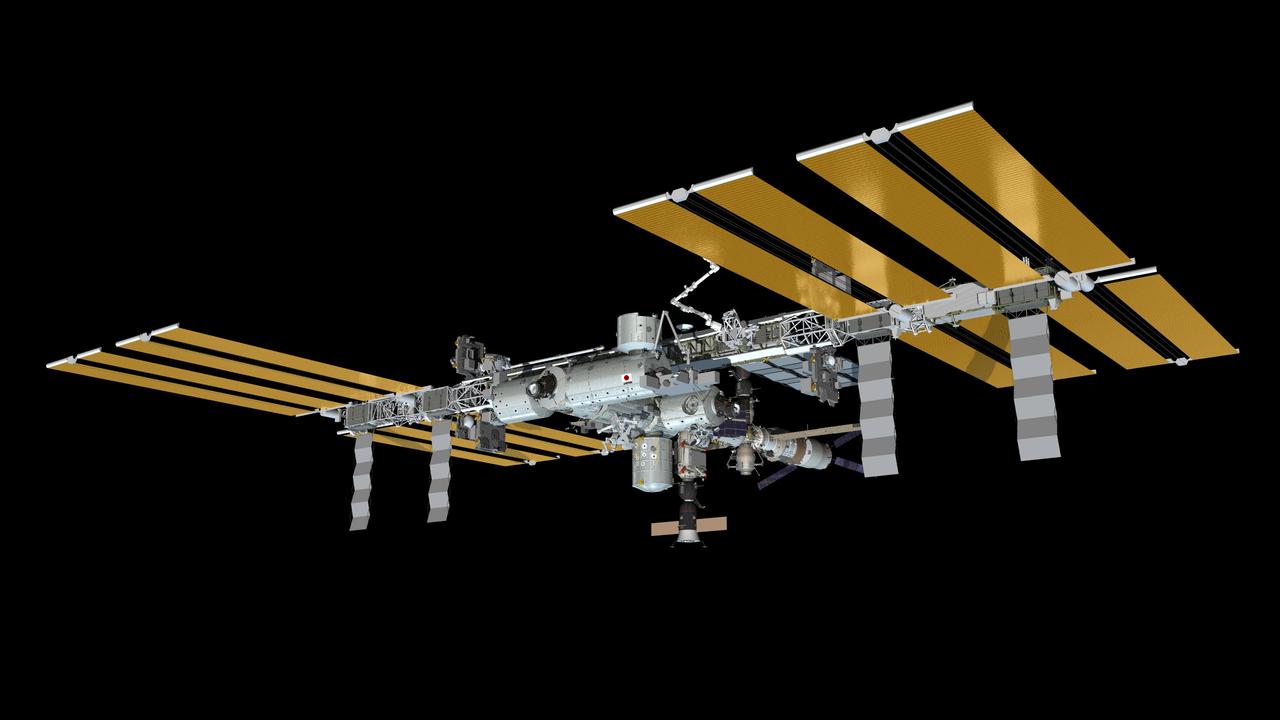
JSC2012-E-042221 (April 2012) --- Computer-generated artist?s rendering of the International Space Station as of April 19, 2012. Progress 46 undocks from the Pirs Docking Compartment. European Space Agency?s Automated Transfer Vehicle-3 (ATV-3) ?Edoardo Amaldi? is docked to the Zvezda Service Module. Soyuz 29 (TMA-03M) is attached to the Rassvet Mini-Research Module 1 (MRM1) and Soyuz 28 (TMA-22) is linked to the Poisk Mini-Research Module 2 (MRM2). Photo credit: NASA
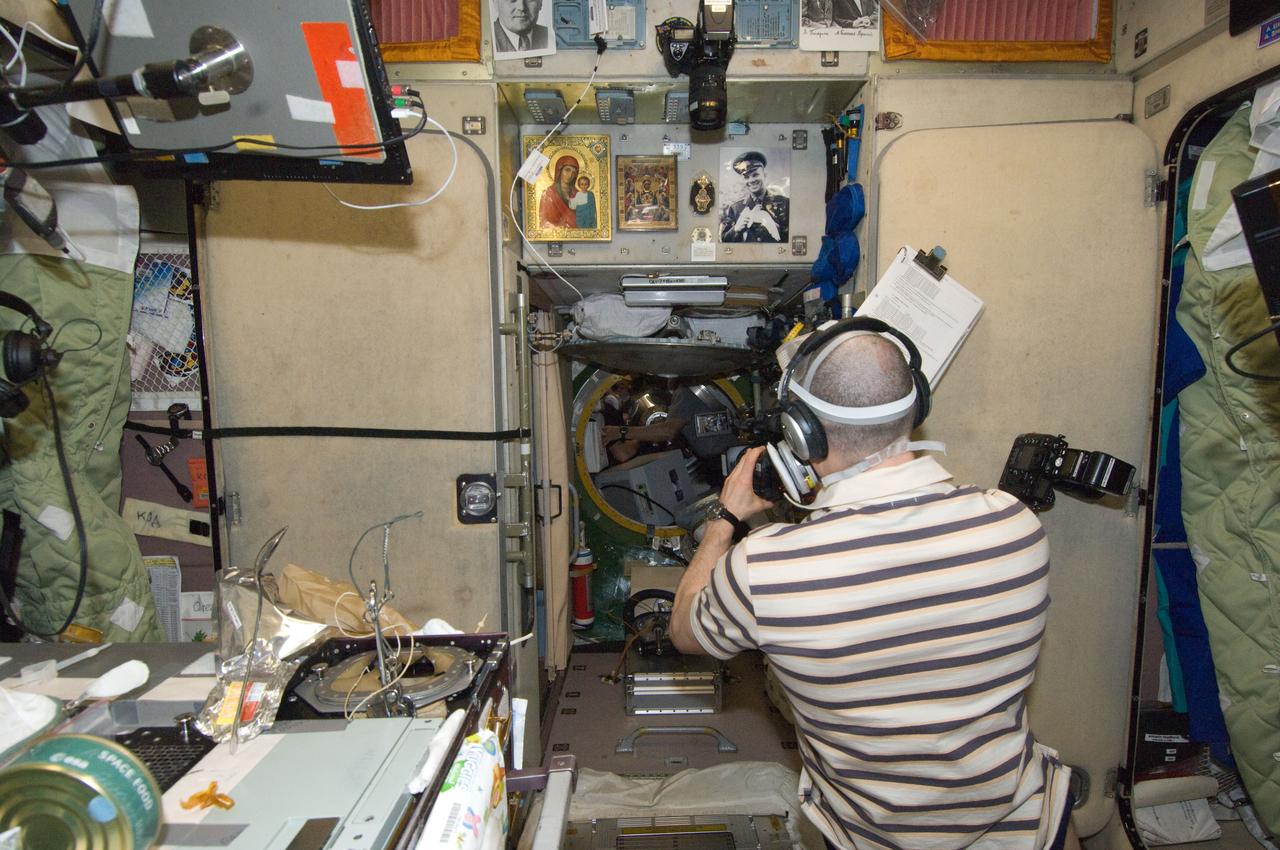
ISS030-E-177715 (29 March 2012) --- In the International Space Station?s Zvezda Service Module, Russian cosmonaut Anatoly Ivanishin, Expedition 30 flight engineer, uses a video camera as his crewmates prepare to open the hatch to European Space Agency?s ?Edoardo Amaldi? Automated Transfer Vehicle-3 (ATV-3). The ATV docked with the space station on March 28, 2012.
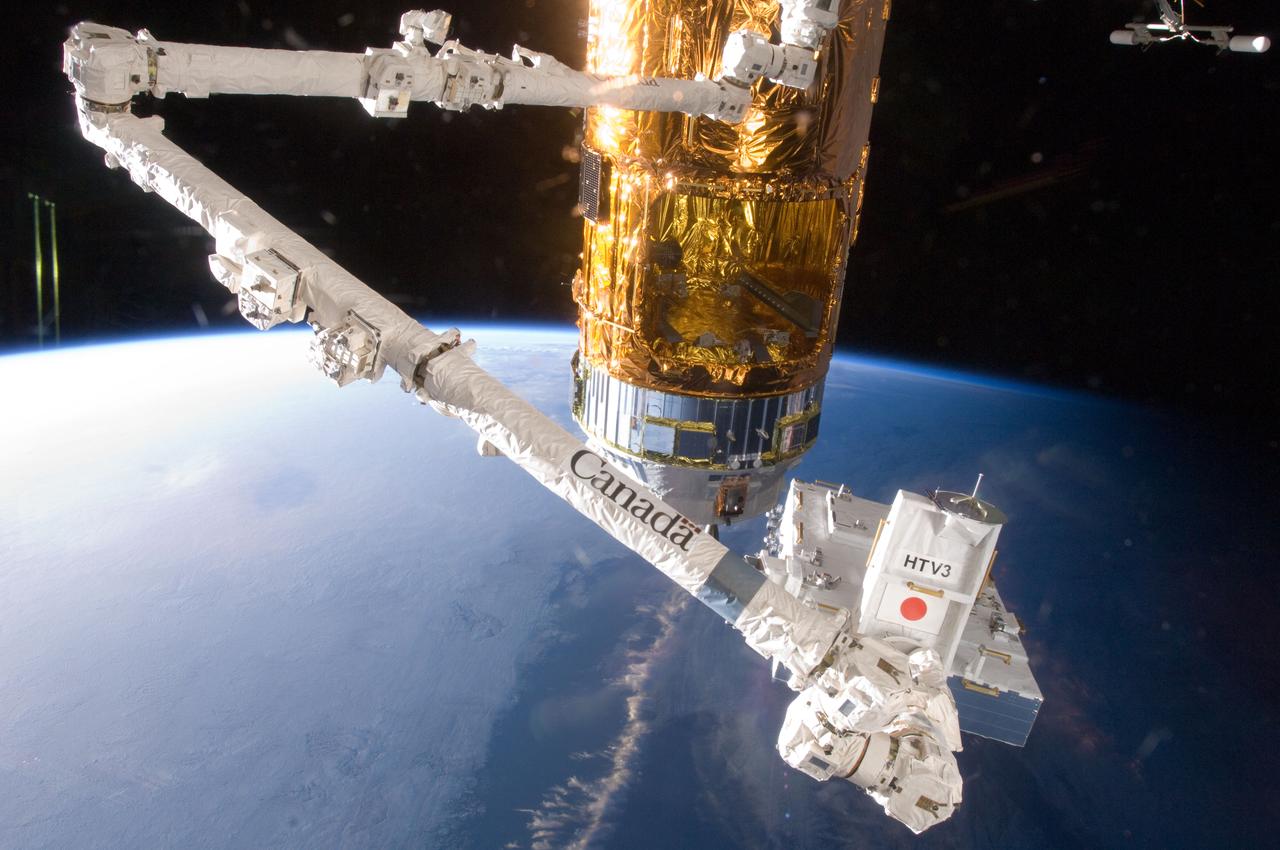
ISS032-E-016900 (10 Aug. 2012) --- In the grasp of the International Space Station?s robotic Canadarm2, the HTV-3 Exposed Pallet is moved for installation on the Japan Aerospace Exploration Agency (JAXA) H-II Transfer Vehicle (HTV-3) currently docked to the space station. Earth?s horizon and the blackness of space provide the backdrop for the scene.
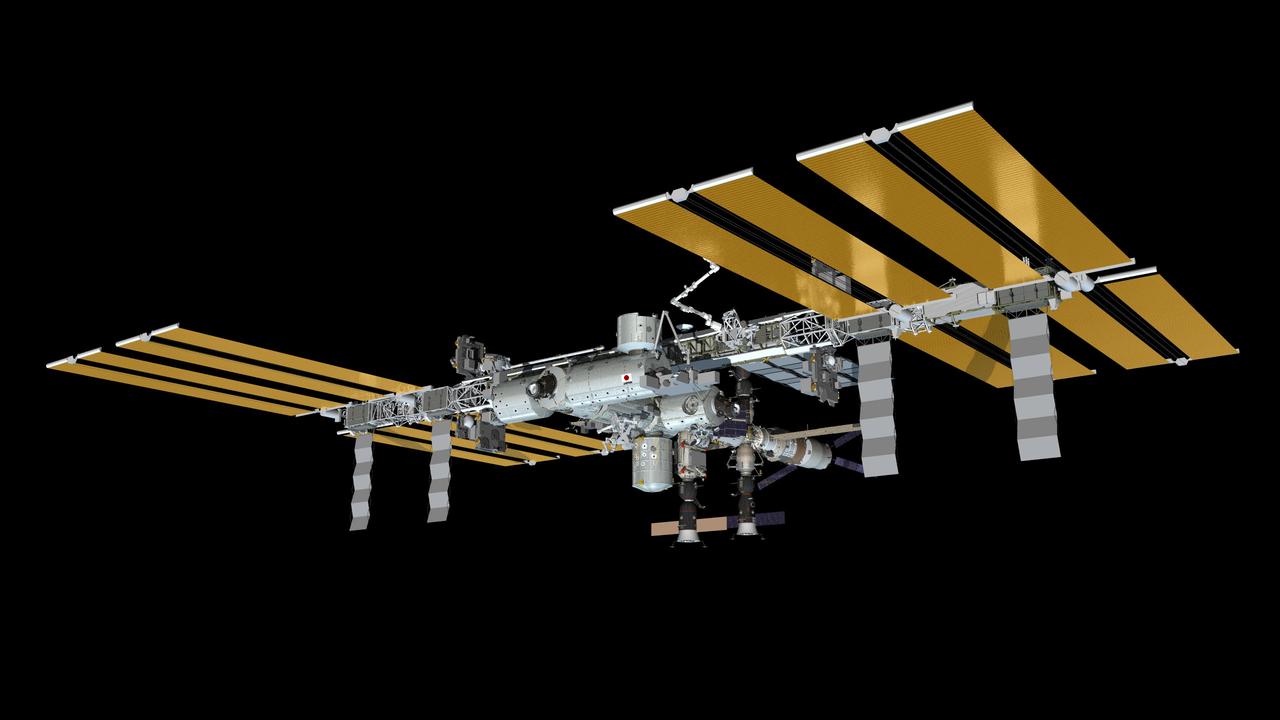
JSC2012-E-042222 (April 2012) --- Computer-generated artist?s rendering of the International Space Station as of April 22, 2012. Progress 47 docks to the Pirs Docking Compartment. European Space Agency?s Automated Transfer Vehicle-3 (ATV-3) ?Edoardo Amaldi? is docked to the Zvezda Service Module. Soyuz 29 (TMA-03M) is attached to the Rassvet Mini-Research Module 1 (MRM1) and Soyuz 28 (TMA-22) is linked to the Poisk Mini-Research Module 2 (MRM2). Photo credit: NASA
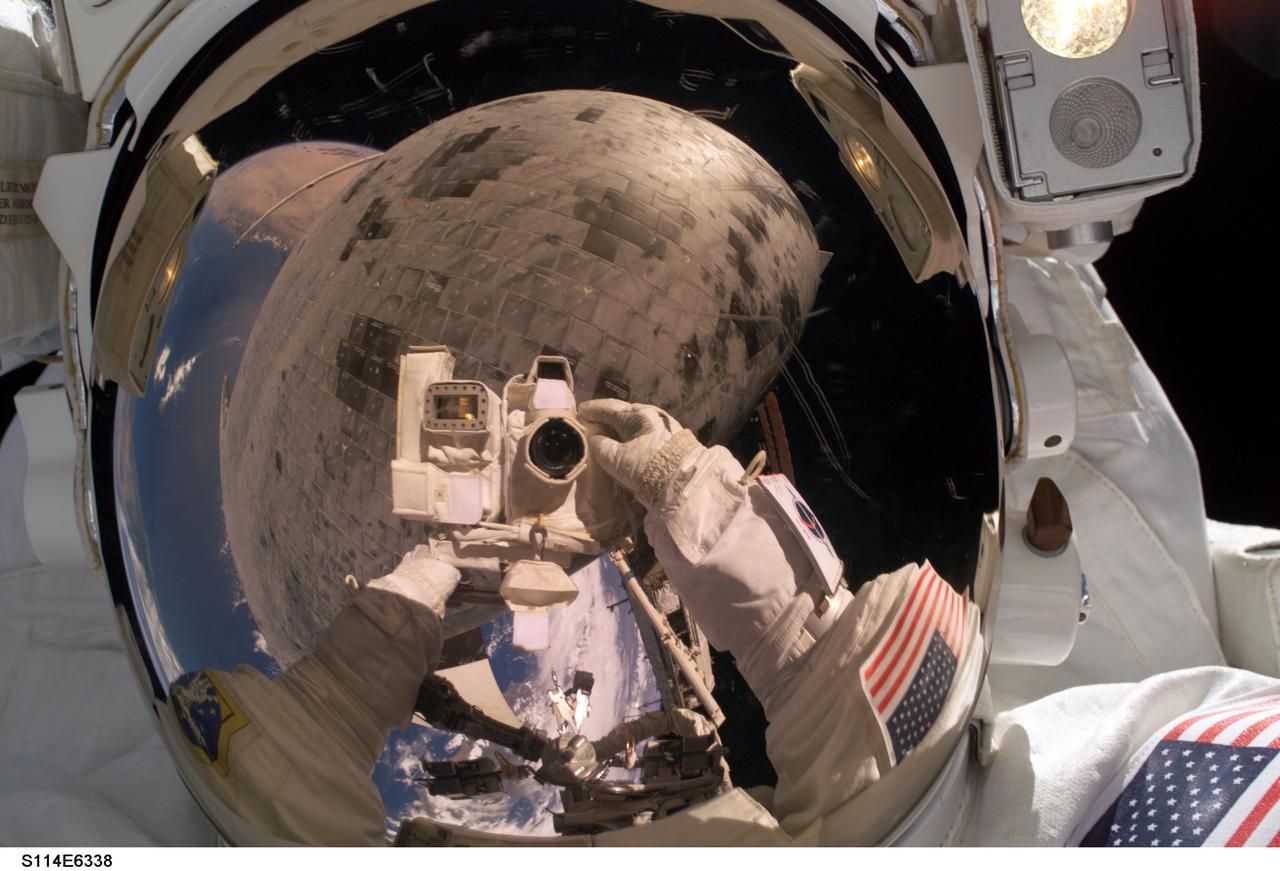
S114-E-6338 (3 August 2005) --- Astronaut Stephen K. Robinson, STS-114 mission specialist, used the pictured digital camera to expose a photo of his helmet visor during today;s extravehicular activities (EVA). Also visible in the reflection are thermal protection tiles on Space Shuttle Discovery;s underside.
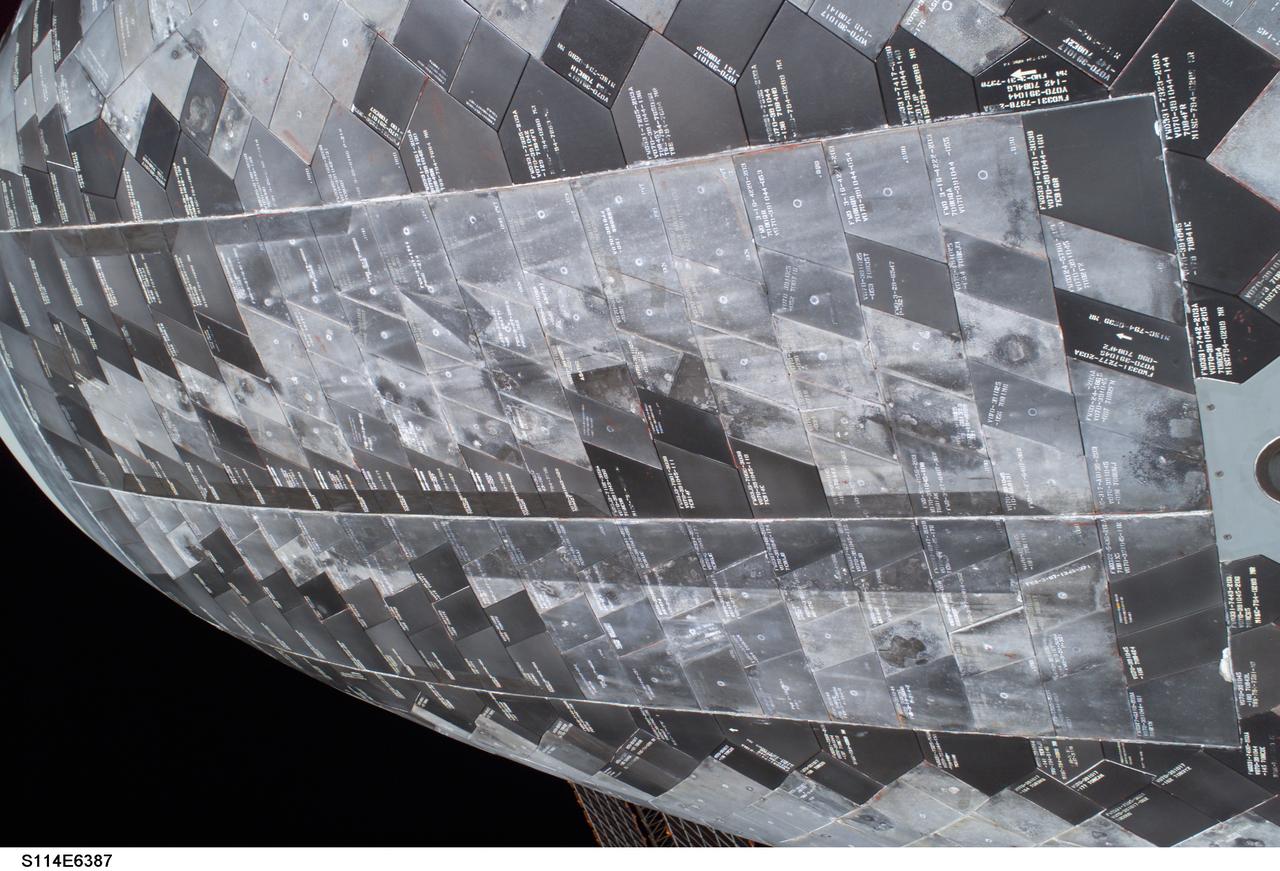
S114-E-6387 (3 August 2005) --- A close-up view of a portion of the thermal protection tiles on Space Shuttle Discovery’s underside is featured in this image photographed by astronaut Stephen K. Robinson, STS-114 mission specialist, during the mission’s third session of extravehicular activities (EVA).
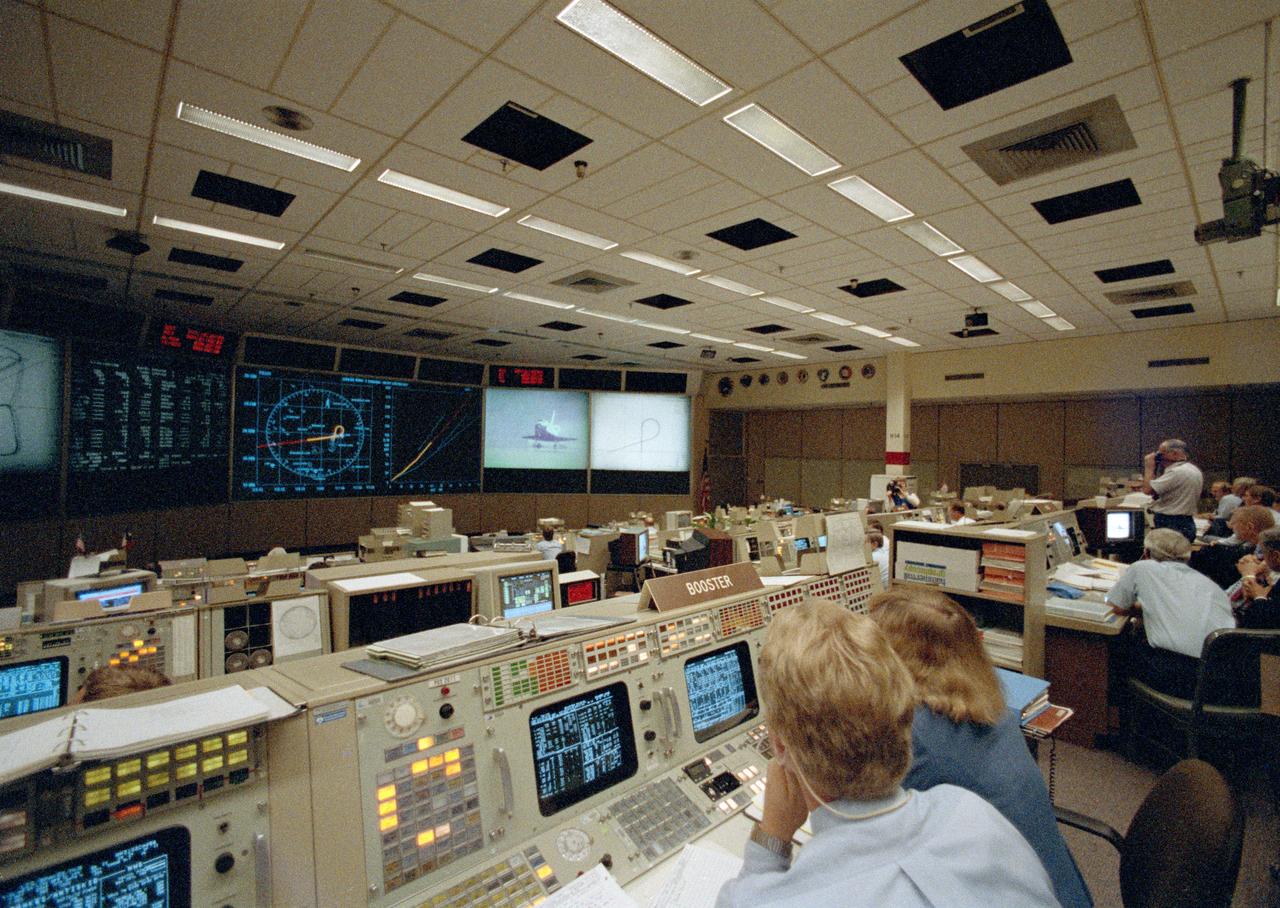
STS026-S-117 (3 Oct 1988) --- Flight controllers in Houston witness the landing of the Space Shuttle Discovery on a dry lake bed at NASA?s Dryden Flight Research Facility. The orbiter is seen on the giant screen in front of the flight control room just as the landing gear touches down.

S114-E-6412 (3 August 2005) --- Space Shuttle Discovery’s underside thermal protection tiles are featured in this image photographed by astronaut Stephen K. Robinson, STS-114 mission specialist, during the mission’s third session of extravehicular activities (EVA).
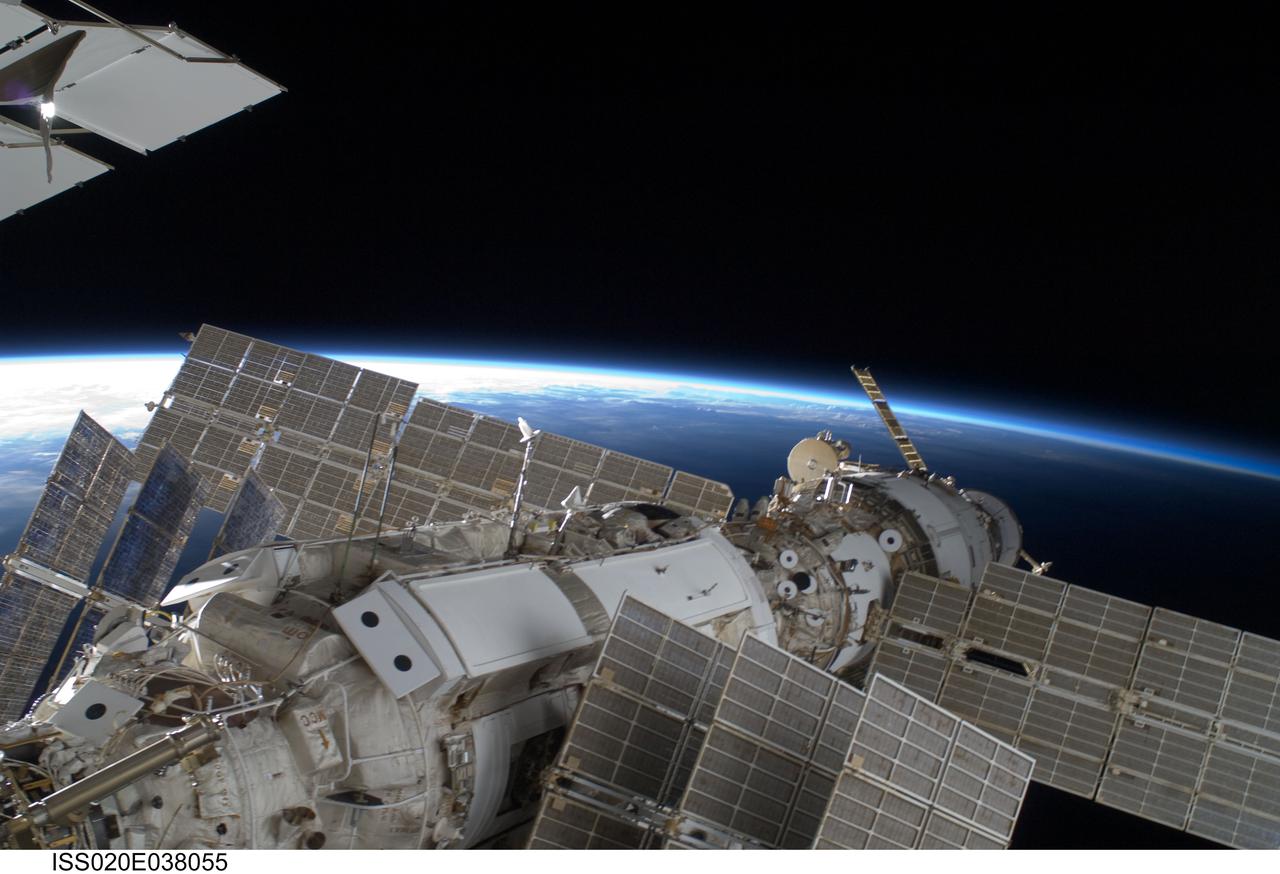
ISS020-E-038055 (3 Sept. 2009) --- A portion of the International Space Station is featured in this image photographed by a space walking astronaut during the STS-128 mission?s second session of extravehicular activity (EVA) as construction and maintenance continue on the station. The blackness of space and Earth?s horizon provide the backdrop for the scene.
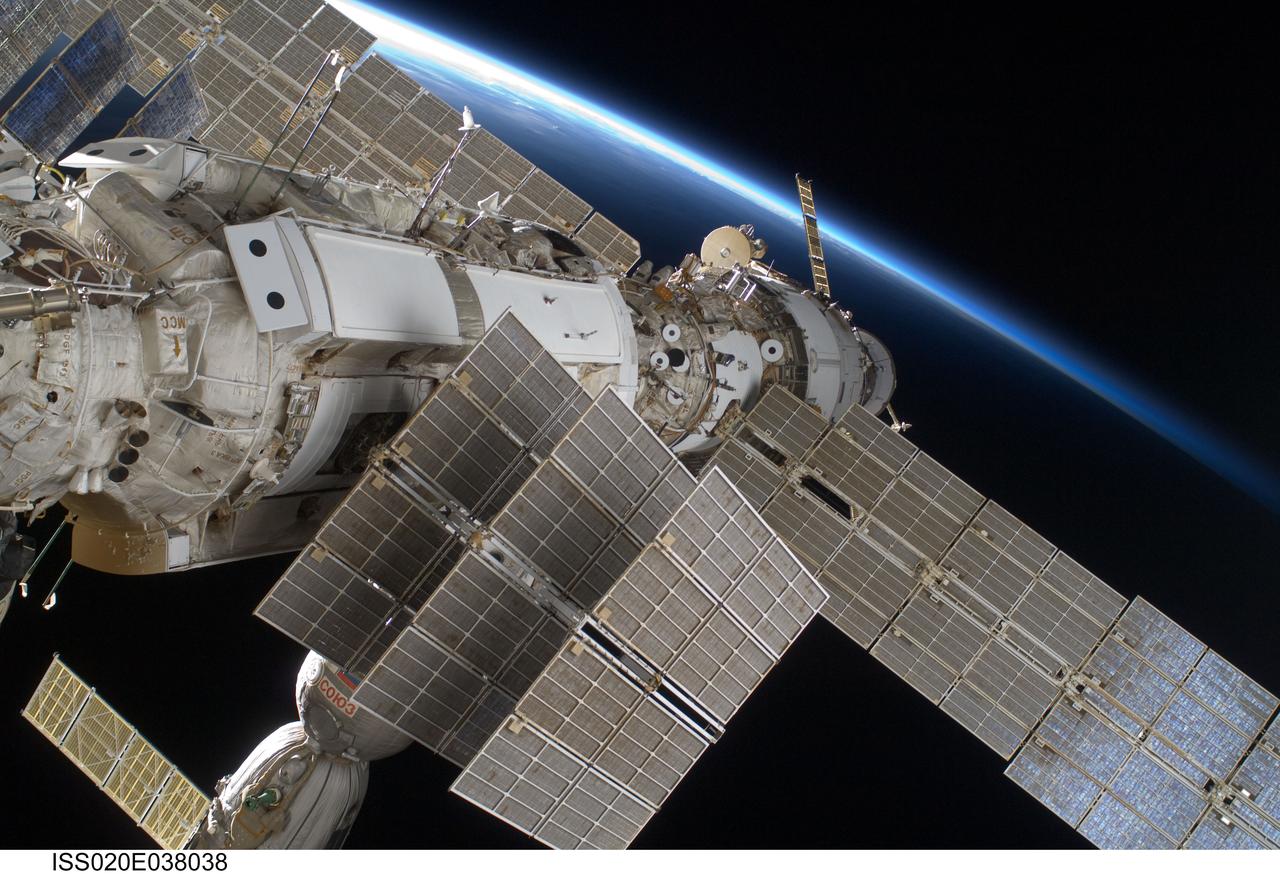
ISS020-E-038038 (3 Sept. 2009) --- A portion of the International Space Station is featured in this image photographed by a space walking astronaut during the STS-128 mission?s second session of extravehicular activity (EVA) as construction and maintenance continue on the station. The blackness of space and Earth?s horizon provide the backdrop for the scene.
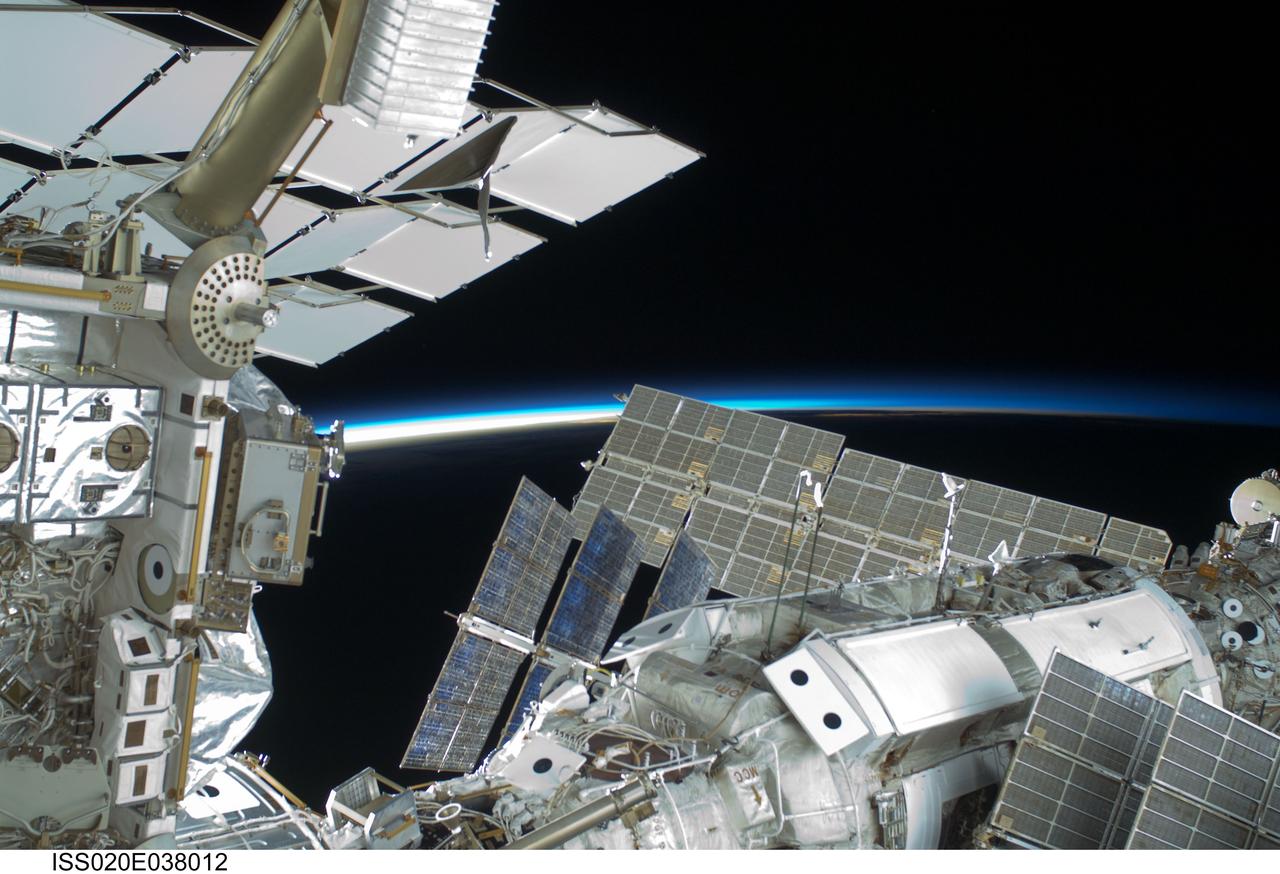
ISS020-E-038012 (3 Sept. 2009) --- A portion of the International Space Station is featured in this image photographed by a space walking astronaut during the STS-128 mission?s second session of extravehicular activity (EVA) as construction and maintenance continue on the station. The blackness of space and the thin line of Earth?s atmosphere provide the backdrop for the scene.
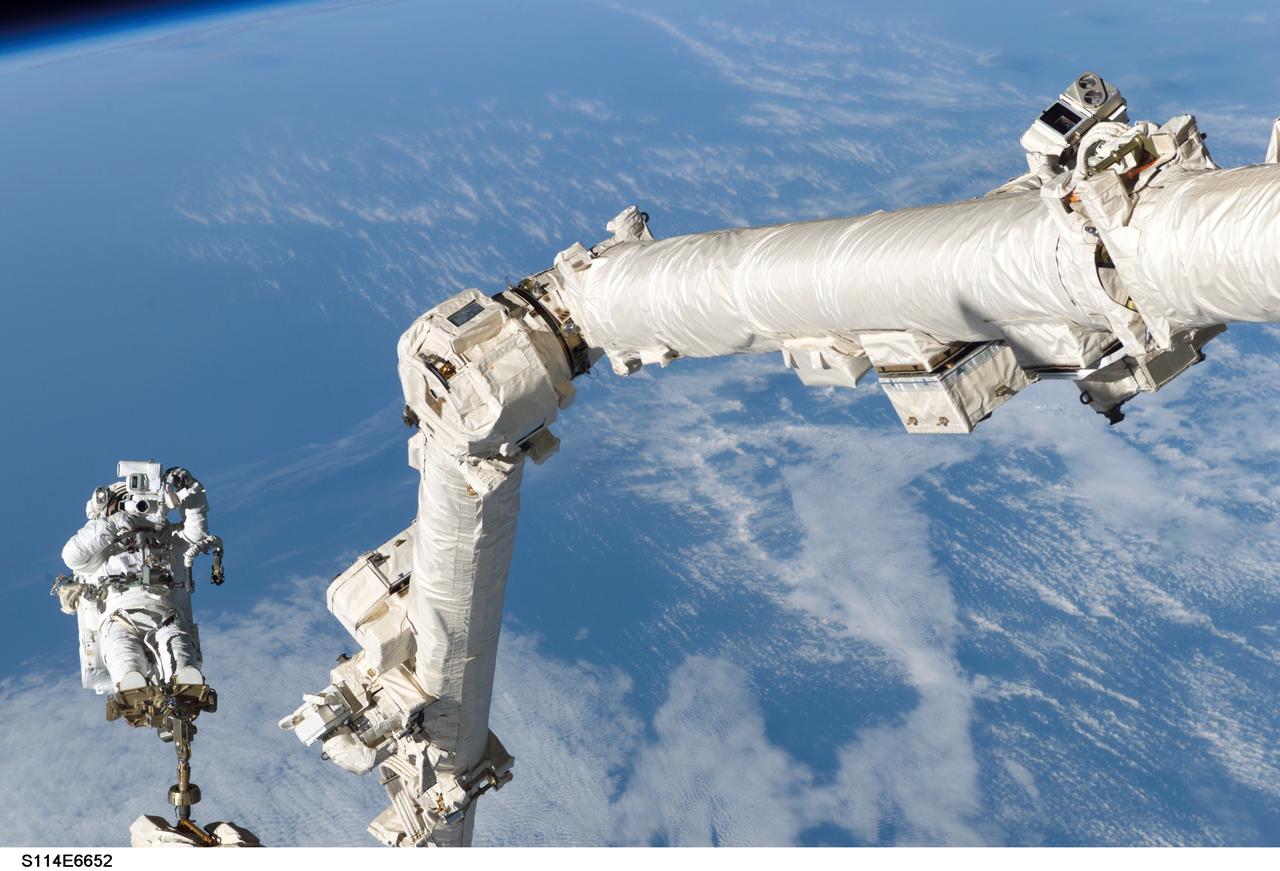
S114-E-6652 (3 August 2005) --- Astronaut Stephen K. Robinson, STS-114 mission specialist, anchored to a foot restraint on the International Space Station;s Canadarm2, participates in the mission;s third session of extravehicular activity (EVA). A blue and white Earth forms the backdrop for the image.
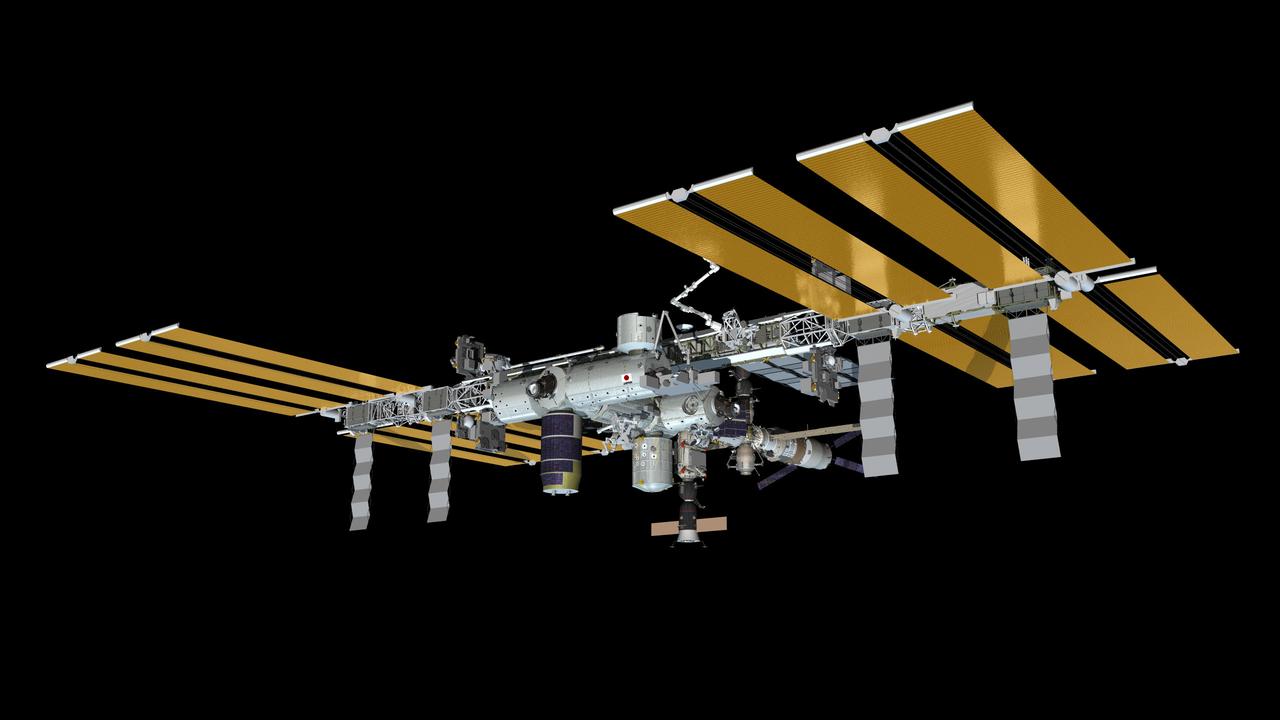
JSC2012-E-107187 (July 2012) --- Computer-generated artist?s rendering of the International Space Station as of July 27, 2012. Japan Aerospace Exploration Agency (JAXA) H-II Transfer Vehicle (HTV-3) is berthed to the Harmony nadir port. Soyuz 31 (TMA-05M) is docked to the Rassvet Mini-Research Module 1 (MRM1). European Space Agency?s Automated Transfer Vehicle-3 (ATV-3) ?Edoardo Amaldi? is attached to the Zvezda Service Module and Soyuz 30 (TMA-04M) is linked to the Poisk Mini-Research Module 2 (MRM2). Photo credit: NASA
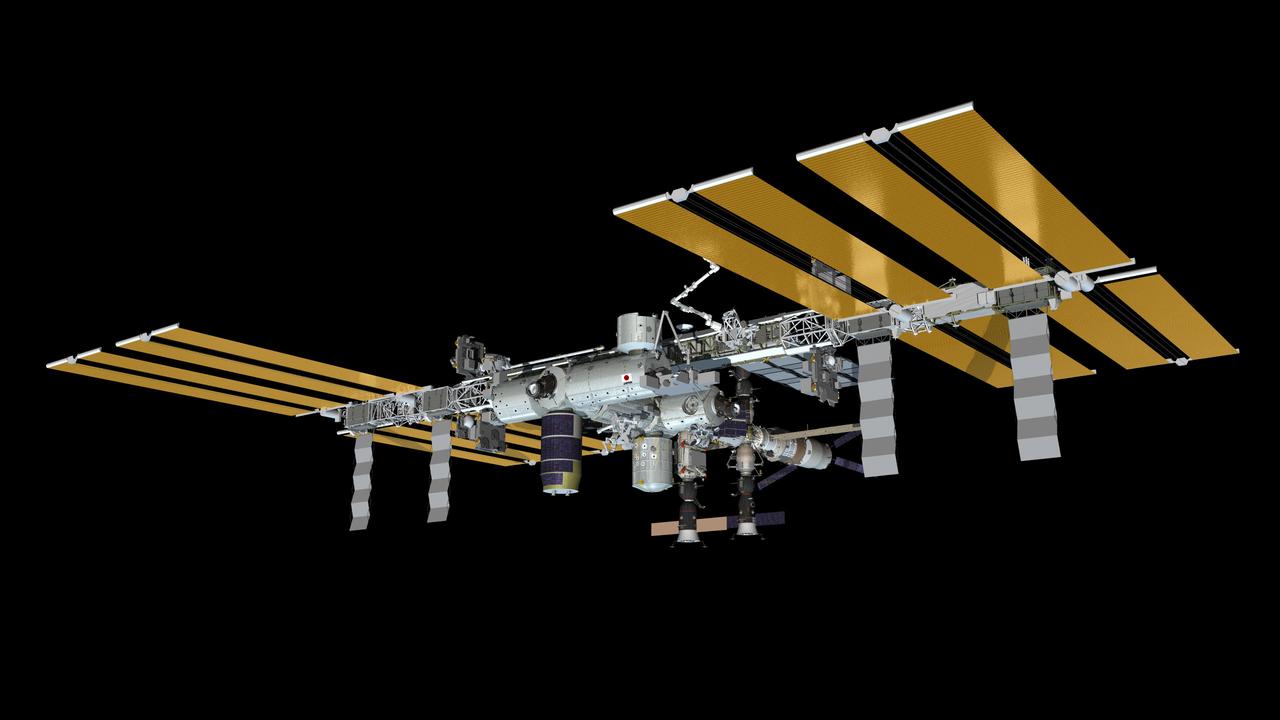
JSC2012-E-107190 (August 2012) --- Computer-generated artist?s rendering of the International Space Station as of August 2, 2012. Progress 48 docks to the Pirs Docking Compartment. Japan Aerospace Exploration Agency (JAXA) H-II Transfer Vehicle (HTV-3) is connected to the Harmony nadir port. Soyuz 31 (TMA-05M) is docked to the Rassvet Mini-Research Module 1 (MRM1). European Space Agency?s Automated Transfer Vehicle-3 (ATV-3) ?Edoardo Amaldi? is attached to the Zvezda Service Module and Soyuz 30 (TMA-04M) is linked to the Poisk Mini-Research Module 2 (MRM2). Photo credit: NASA
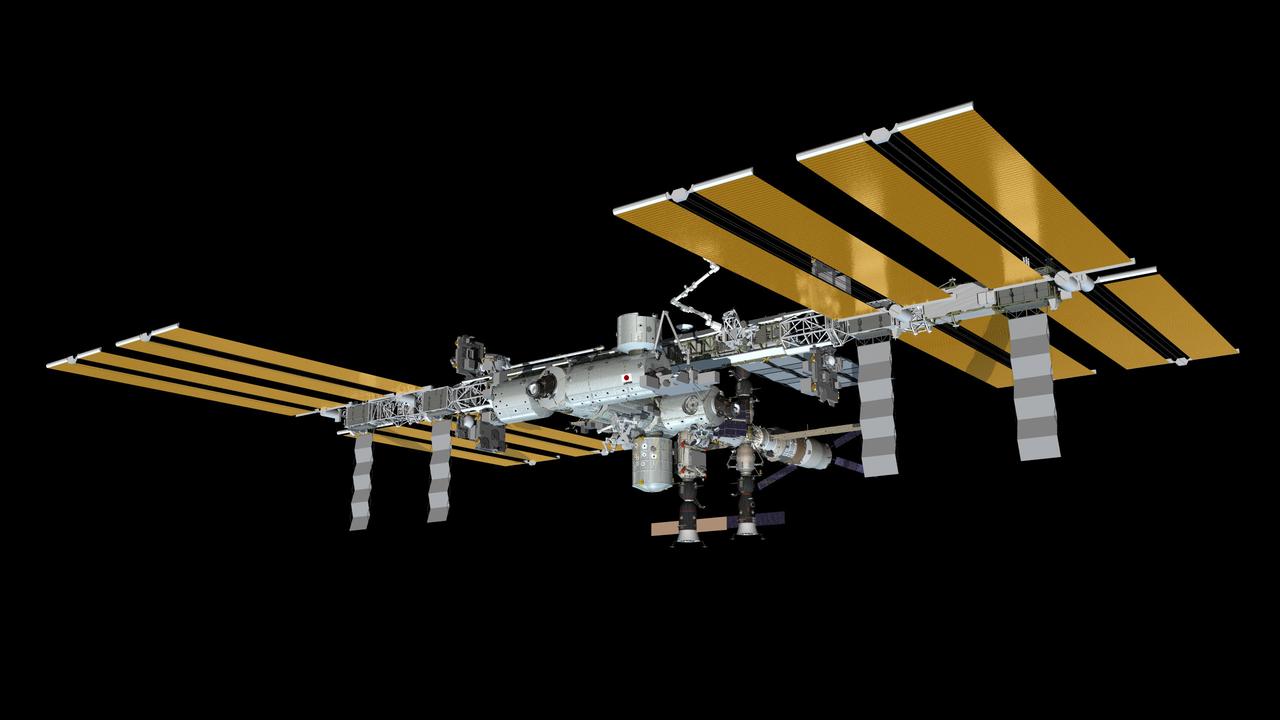
JSC2012-E-214799 (September 2012) --- Computer-generated artist?s rendering of the International Space Station as of Sept. 12, 2012. Japan Aerospace Exploration Agency (JAXA) H-II Transfer Vehicle (HTV-3) is unberthed from the Harmony nadir port. Progress 48 is docked to the Pirs Docking Compartment. Soyuz 31 (TMA-05M) is attached to the Rassvet Mini-Research Module 1 (MRM1). European Space Agency?s Automated Transfer Vehicle-3 (ATV-3) ?Edoardo Amaldi? is docked to the Zvezda Service Module and Soyuz 30 (TMA-04M) is linked to the Poisk Mini-Research Module 2 (MRM2). Photo credit: NASA
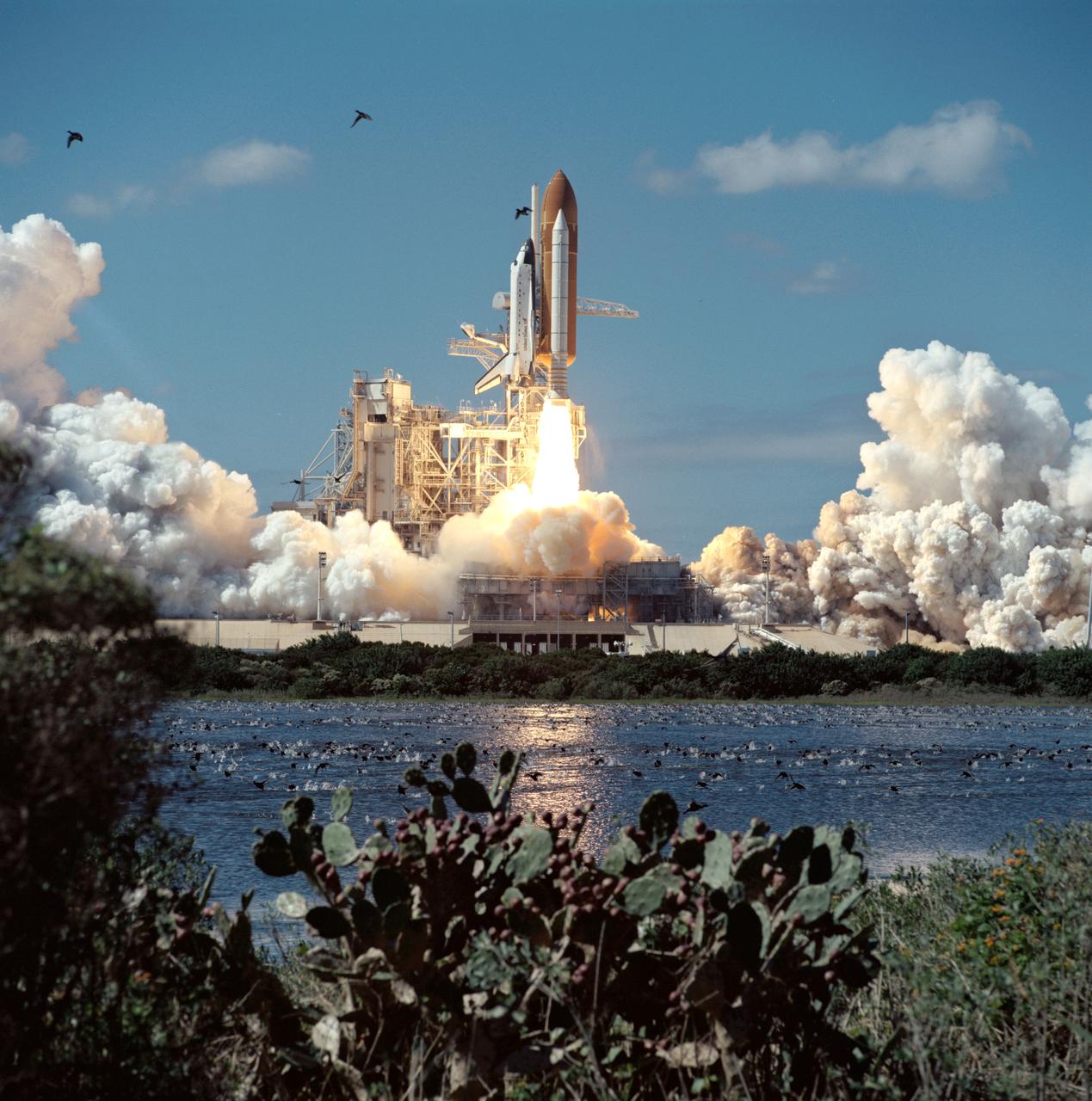
STS066-S-011 (3 November 1994) --- The Space Shuttle Atlantis returns to work after a refurbishing and a two-year layoff, as liftoff for the mission occurs at noon (EDT), November 3, 1994. Five NASA astronauts and a European mission specialist are onboard for the Atmospheric Laboratory for Applications and Science (ATLAS-3) mission. A 70mm camera was used to record this image. Onboard were astronauts Donald R. McMonagle, mission commander; Curtis L. Brown, Jr., pilot; Ellen S. Ochoa, payload commander; and Scott E. Parazynski, Joseph R. Tanner and Jean-Francois-Clervoy, all mission specialists. Clervoy represents the European Space Agency (ESA).
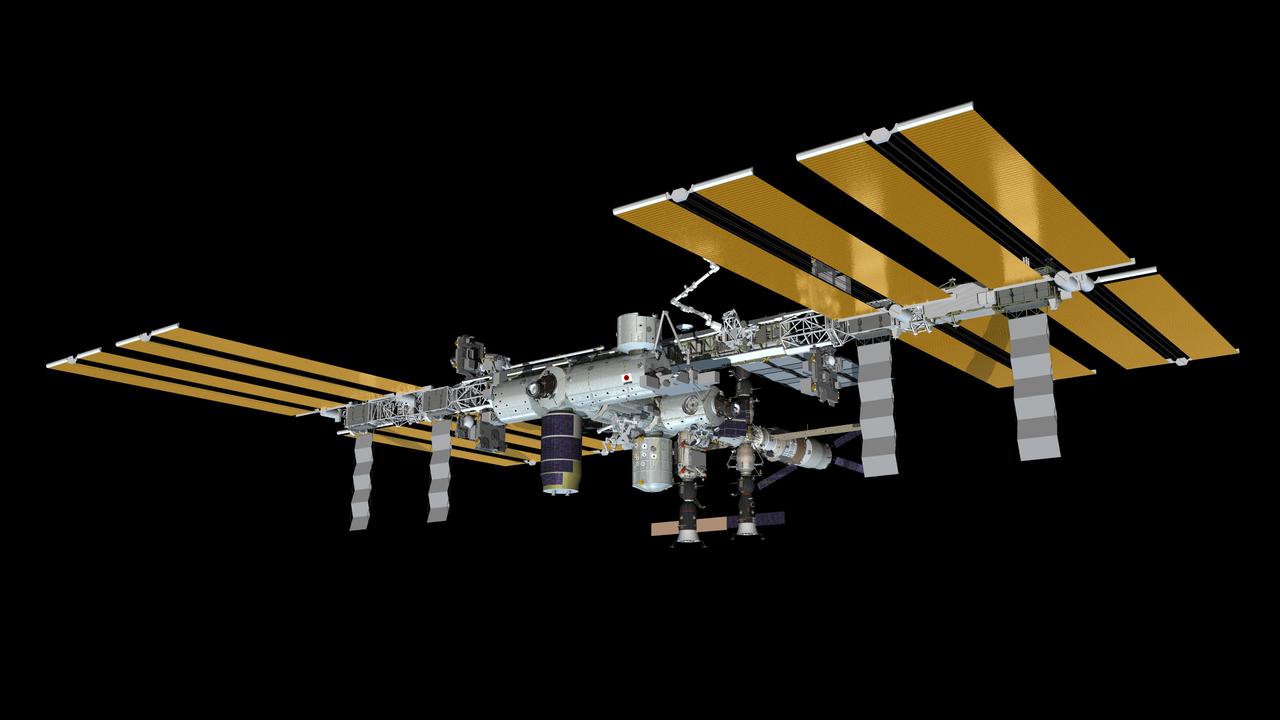
JSC2012-E-107188 (July 2012) --- Computer-generated artist?s rendering of the International Space Station as of July 28, 2012. Progress 47 redocks to the Pirs Docking Compartment. Japan Aerospace Exploration Agency (JAXA) H-II Transfer Vehicle (HTV-3) is connected to the Harmony nadir port. Soyuz 31 (TMA-05M) is docked to the Rassvet Mini-Research Module 1 (MRM1). European Space Agency?s Automated Transfer Vehicle-3 (ATV-3) ?Edoardo Amaldi? is attached to the Zvezda Service Module and Soyuz 30 (TMA-04M) is linked to the Poisk Mini-Research Module 2 (MRM2). Photo credit: NASA
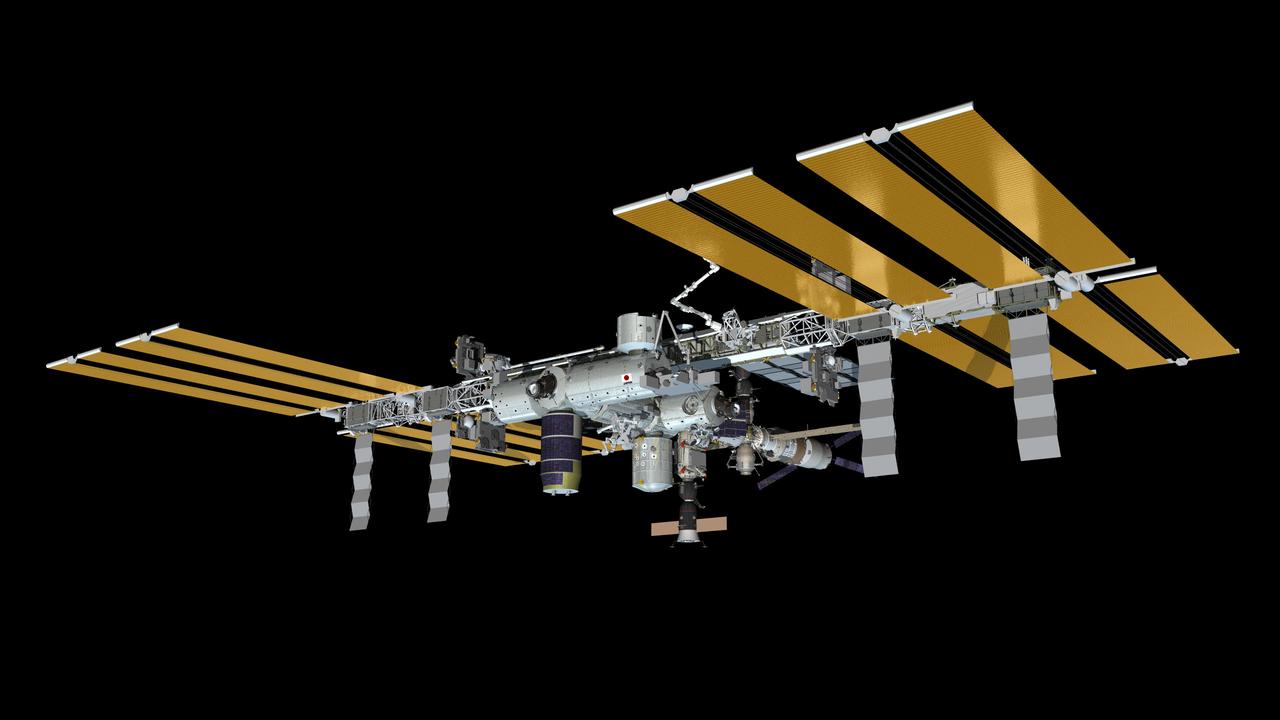
JSC2012-E-107189 (July 2012) --- Computer-generated artist?s rendering of the International Space Station as of July 30, 2012. Progress 47 completes final undocking from the Pirs Docking Compartment. Japan Aerospace Exploration Agency (JAXA) H-II Transfer Vehicle (HTV-3) is connected to the Harmony nadir port. Soyuz 31 (TMA-05M) is docked to the Rassvet Mini-Research Module 1 (MRM1). European Space Agency?s Automated Transfer Vehicle-3 (ATV-3) ?Edoardo Amaldi? is attached to the Zvezda Service Module and Soyuz 30 (TMA-04M) is linked to the Poisk Mini-Research Module 2 (MRM2). Photo credit: NASA
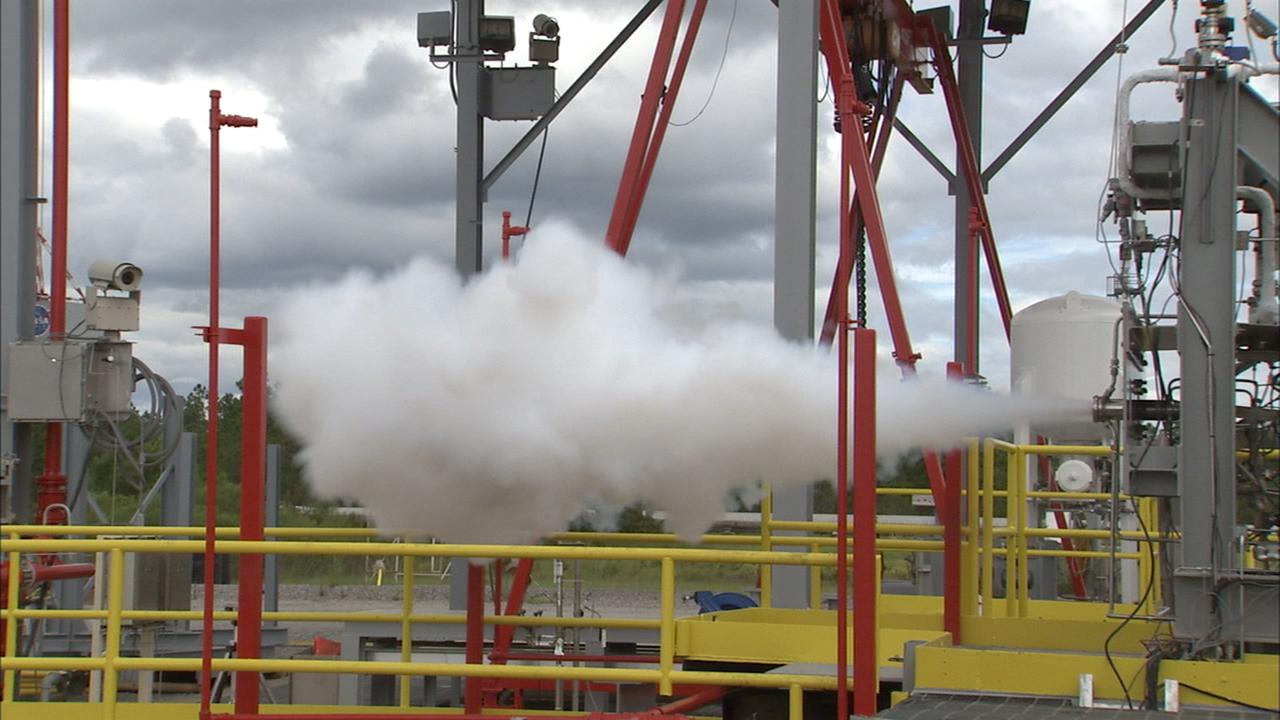
Tests begun at Stennis Space Center's E Complex Sept. 13 evaluated a liquid oxygen lead for engine start performance, part of the A-3 Test Facility Subscale Diffuser Risk Mitigation Project at SSC's E-3 Test Facility. Phase 1 of the subscale diffuser project, completed Sept. 24, was a series of 18 hot-fire tests using a 1,000-pound liquid oxygen and gaseous hydrogen thruster to verify maximum duration and repeatability for steam generation supporting the A-3 Test Stand project. The thruster is a stand-in for NASA's developing J-2X engine, to validate a 6 percent scale version of A-3's exhaust diffuser. Testing the J-2X at altitude conditions requires an enormous diffuser. Engineers will generate nearly 4,600 pounds per second of steam to reduce pressure inside A-3's test cell to simulate altitude conditions. A-3's exhaust diffuser has to be able to withstand regulated pressure, temperatures and the safe discharge of the steam produced during those tests. Before the real thing is built, engineers hope to work out any issues on the miniature version. Phase 2 testing is scheduled to begin this month.
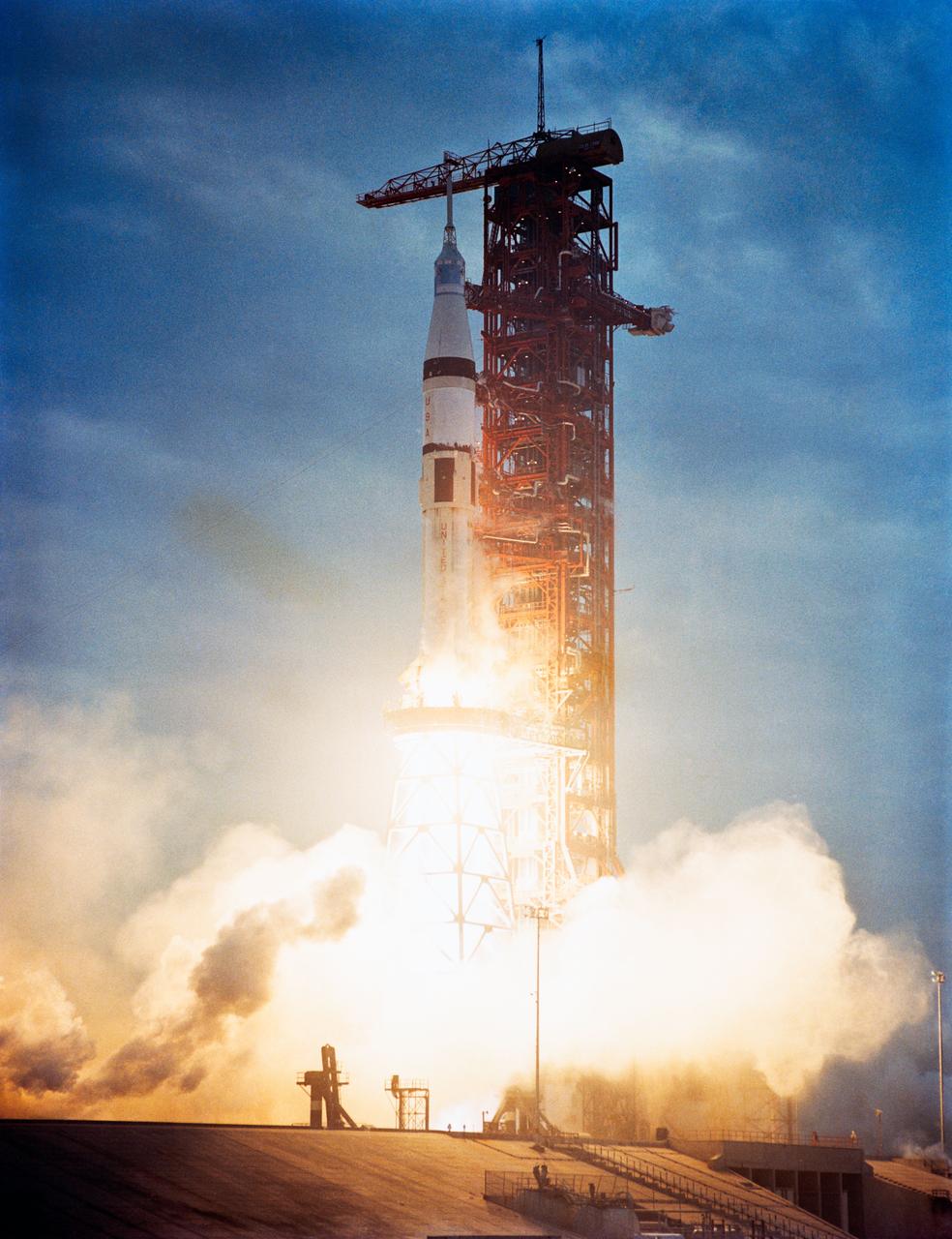
S73-32570 (28 July 1973) --- The Skylab 3/Saturn 1B space vehicle is launched from Pad B, Launch Complex 39, Kennedy Space Center, Florida, at 7:11 a.m. (EDT), Saturday, July 28, 1973. Skylab 3 is the second of three scheduled Skylab manned missions. Aboard the Skylab 3 Command/Service Module were astronauts Alan L. Bean, Owen K. Garriott and Jack R. Lousma. The Skylab 3 CSM later docked with the Skylab space station cluster in Earth orbit. In addition to the CSM and its launch escape system, the Skylab 3 space vehicle consisted of the Saturn 1B first (S-1B) stage and the Saturn 1B second (S-1VB) stage. (The Skylab 1/Saturn V space vehicle with the space station payload was launched from Pad A on May 14, 1973). Photo credit: NASA
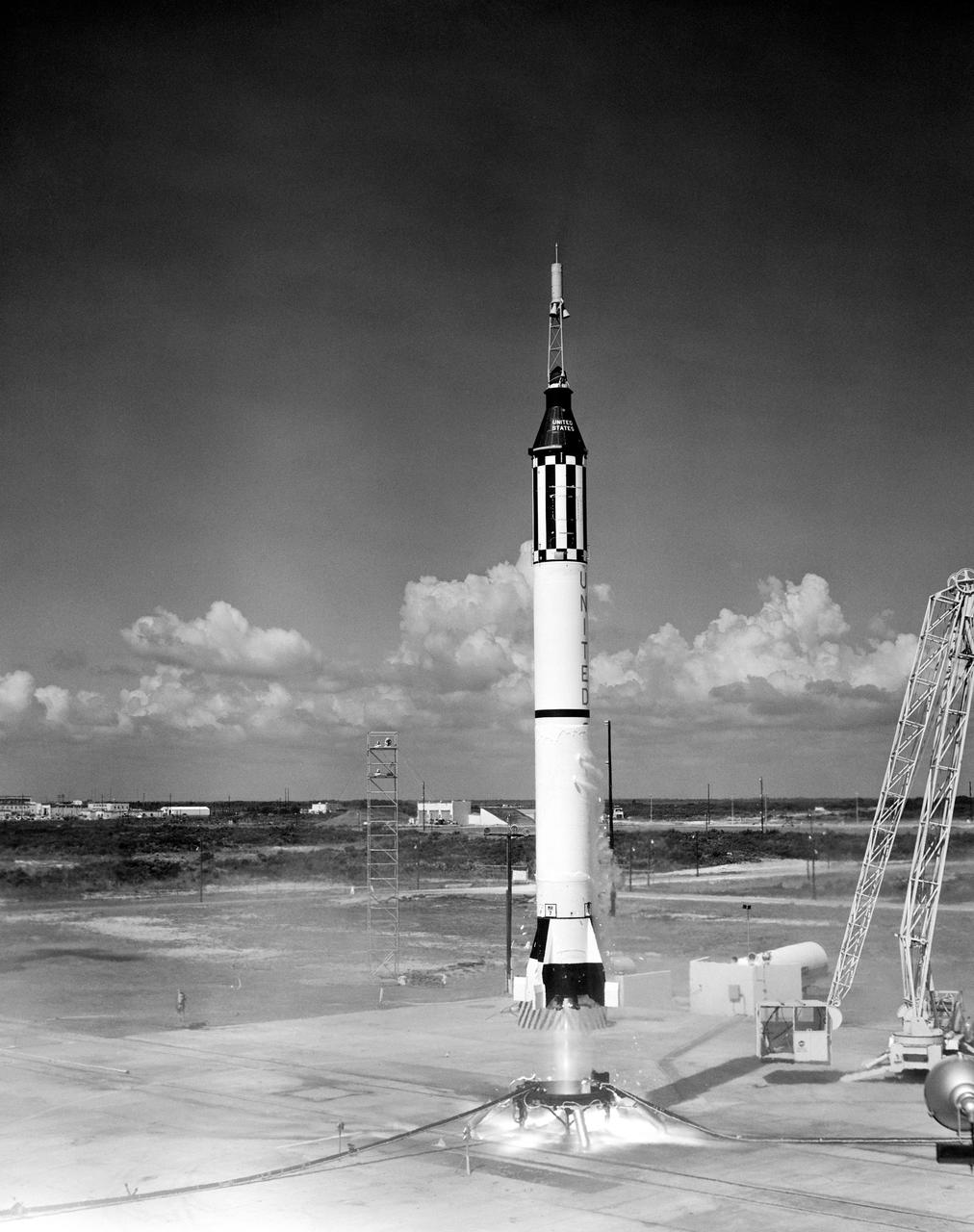
S61-02408 (5 May 1961) --- Launching of the Mercury-Redstone 3 (MR-3) rocket from Cape Canaveral on astronaut Alan B. Shepard?s suborbital mission. Photo credit: NASA or National Aeronautics and Space Administration
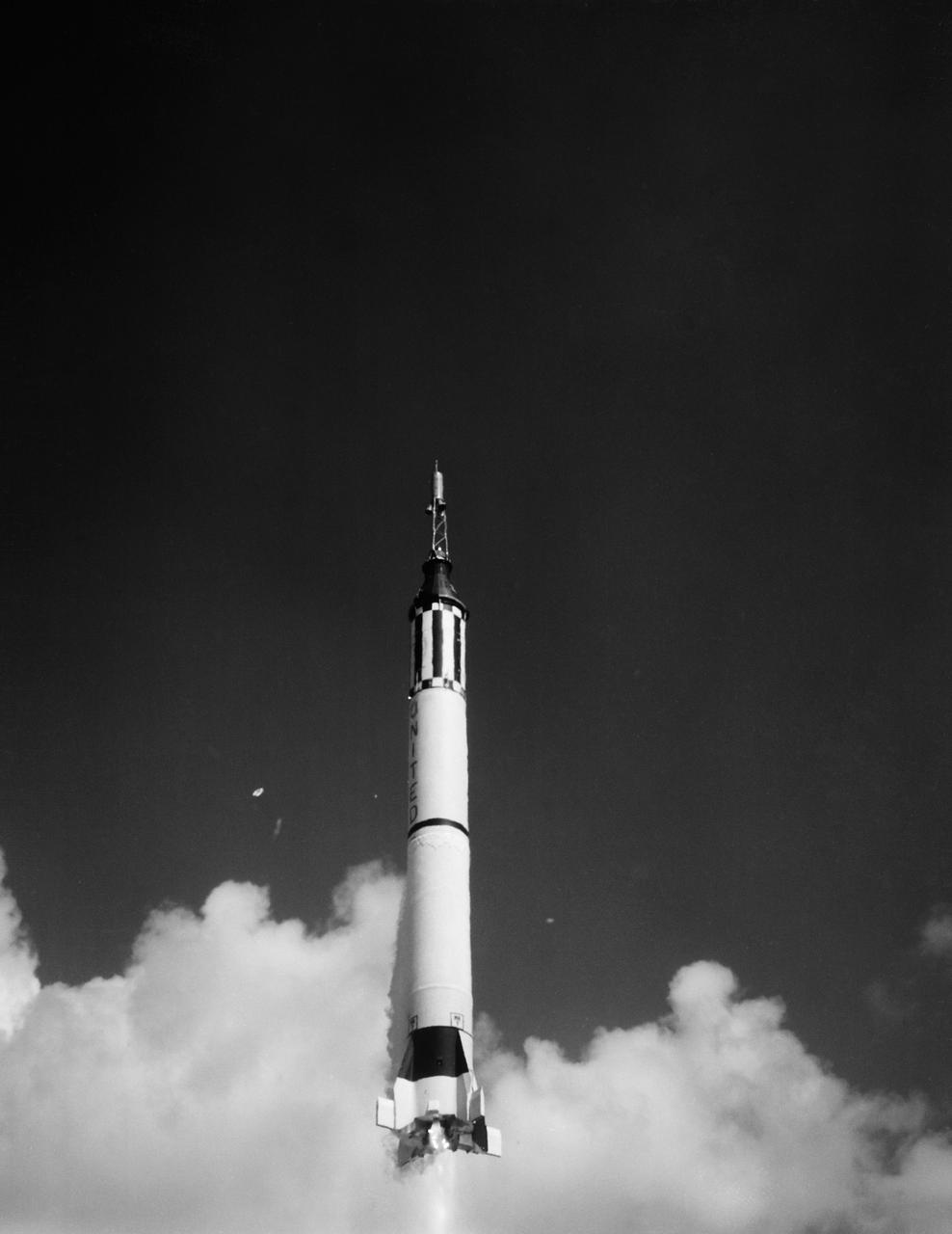
S61-02409 (5 May 1961) --- Launching of the Mercury-Redstone 3 (MR-3) rocket from Cape Canaveral on astronaut Alan B. Shepard?s suborbital mission. Photo credit: NASA or National Aeronautics and Space Administration
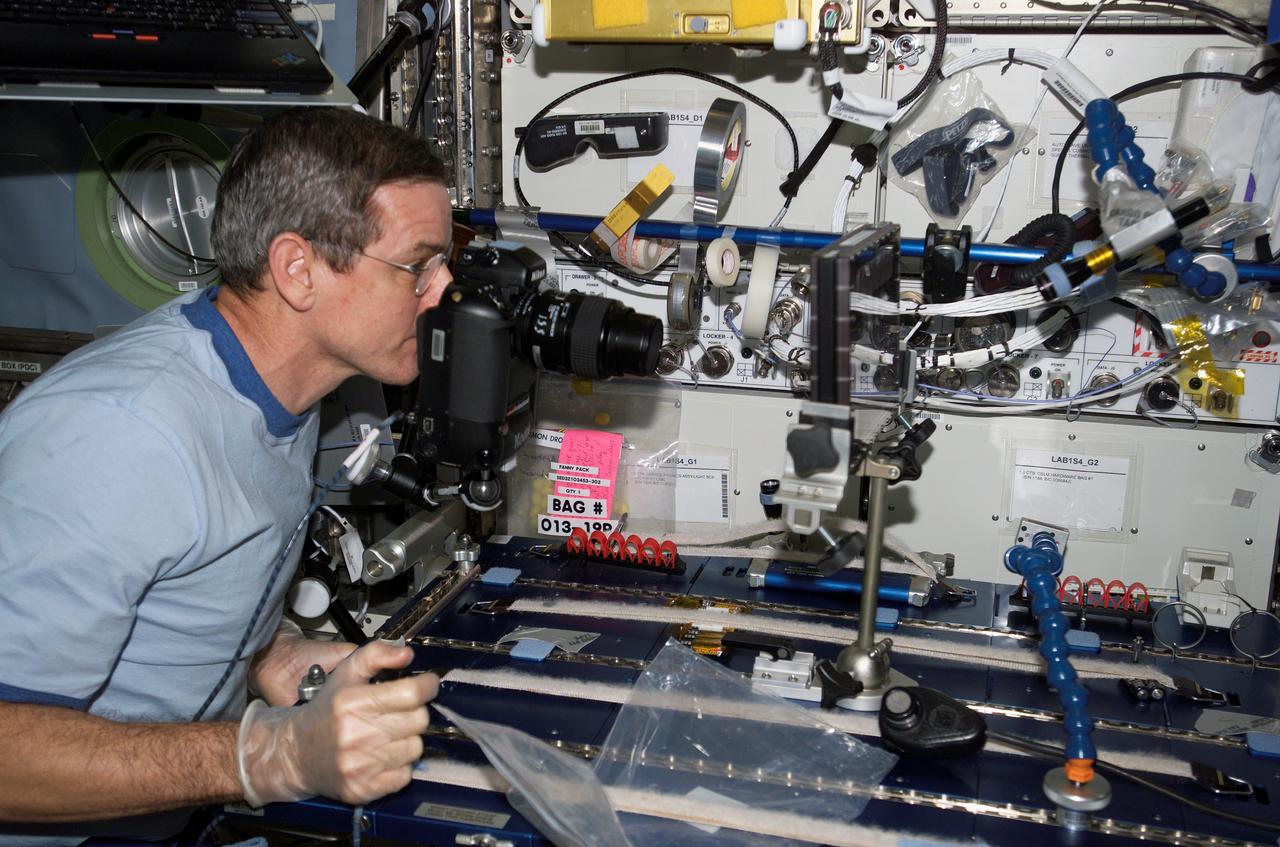
ISS012-E-07685 (11 Nov. 2005) --- Astronaut William S. (Bill) McArthur Jr., Expedition 12 commander and NASA space station science officer, photographs Binary Colloidal Alloy Test-3 (BCAT-3) experiment samples in the Destiny laboratory of the international space station.
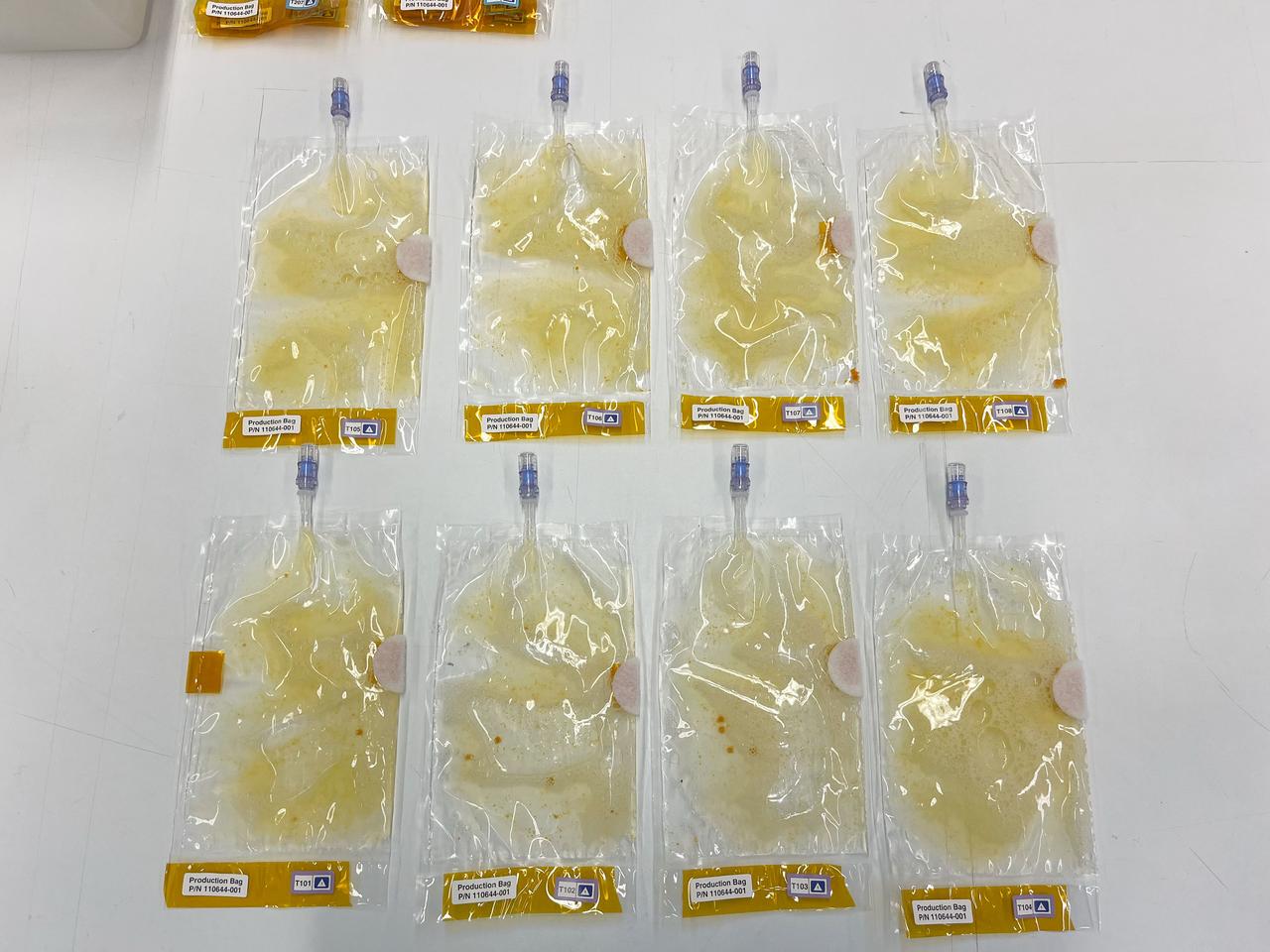
Eight BioNutrients-3 production bags containing yeast (S. cerevisiae Y55 strain 1034) photographed against a white background during the BioNutrients-3 Experiment Verification Test. Note the orange yeast pellets which are visible in some of the bags. Photo Credit: NASA Ames
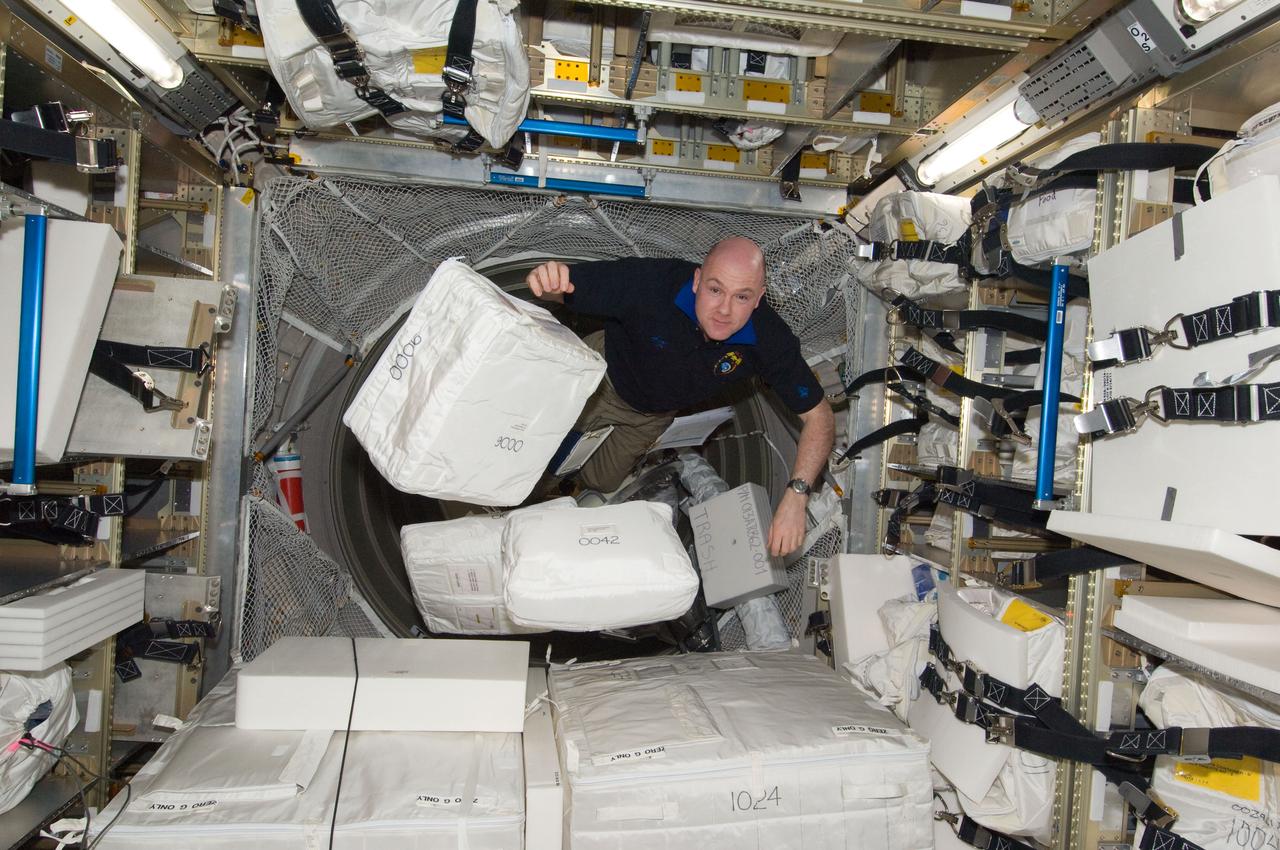
ISS031-E-084591 (15 May 2012) --- European Space Agency astronaut Andre Kuipers, Expedition 31 flight engineer, is pictured during cargo operations in ESA?s "Edoardo Amaldi" Automated Transfer Vehicle-3 (ATV-3) currently docked with the International Space Station.
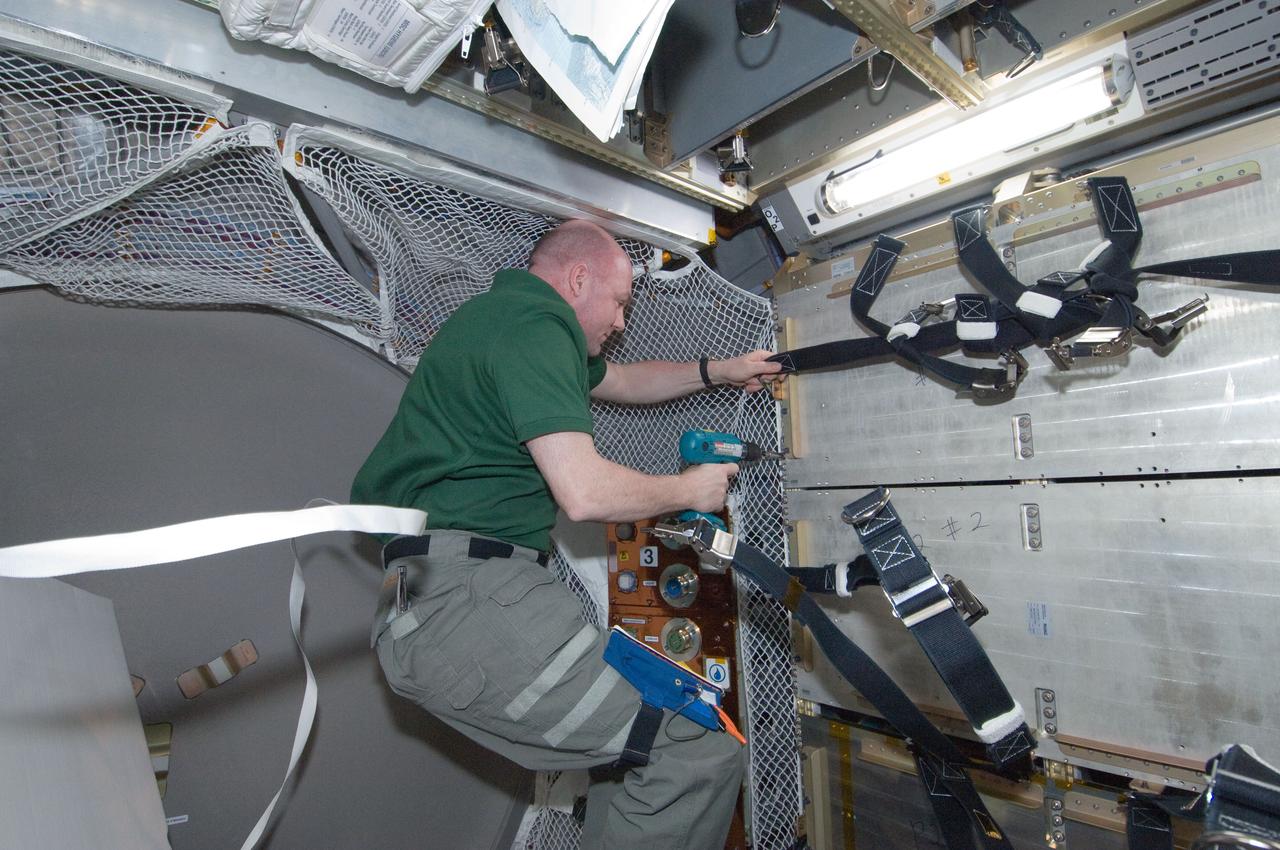
ISS030-E-178670 (31 March 2012) --- European Space Agency astronaut Andre Kuipers, Expedition 30 flight engineer, works in the newly attached European Space Agency?s ?Edoardo Amaldi? Automated Transfer Vehicle-3 (ATV-3). The ATV docked with the space station on March 28, 2012.
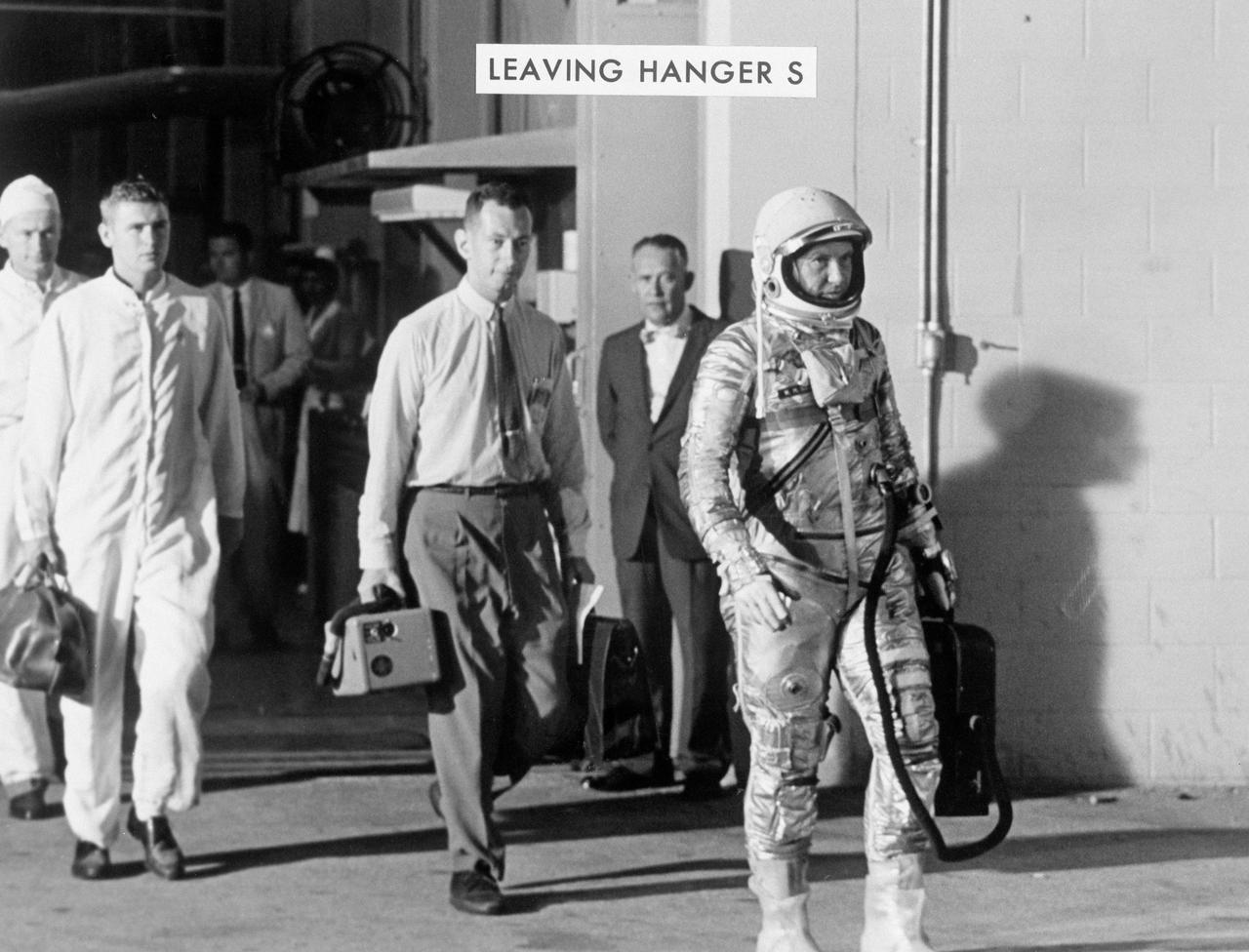
S63-00695 (3 Oct. 1962) --- Astronaut Walter M. Schirra Jr., pilot of the Mercury-Atlas 8 (MA-8) Earth-orbital spaceflight, leaves Hangar "S" at Cape Canaveral on his way to his scheduled Oct. 3, 1962 flight. Photo credit: NASA
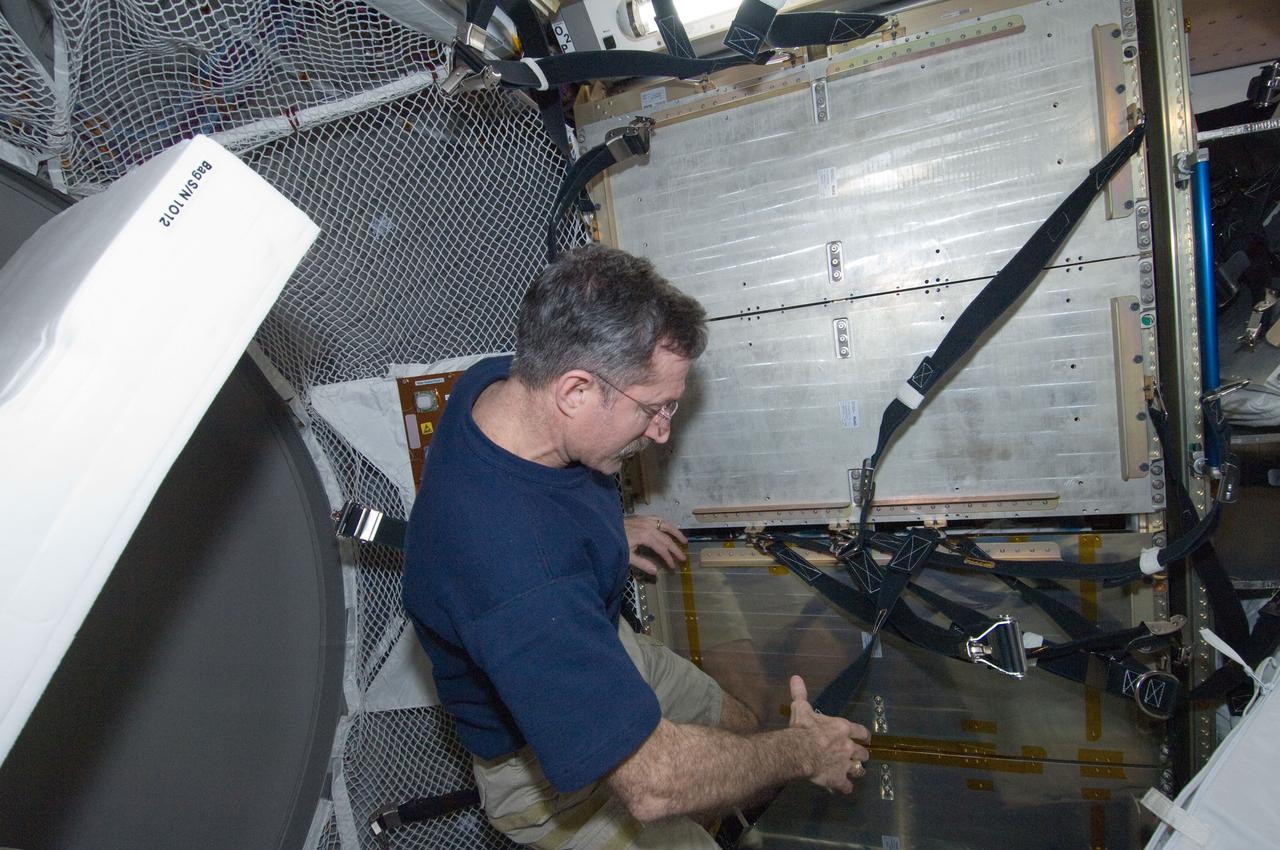
ISS030-E-178667 (31 March 2012) --- NASA astronaut Dan Burbank, Expedition 30 commander, works in the newly attached European Space Agency?s ?Edoardo Amaldi? Automated Transfer Vehicle-3 (ATV-3). The ATV docked with the space station on March 28, 2012.
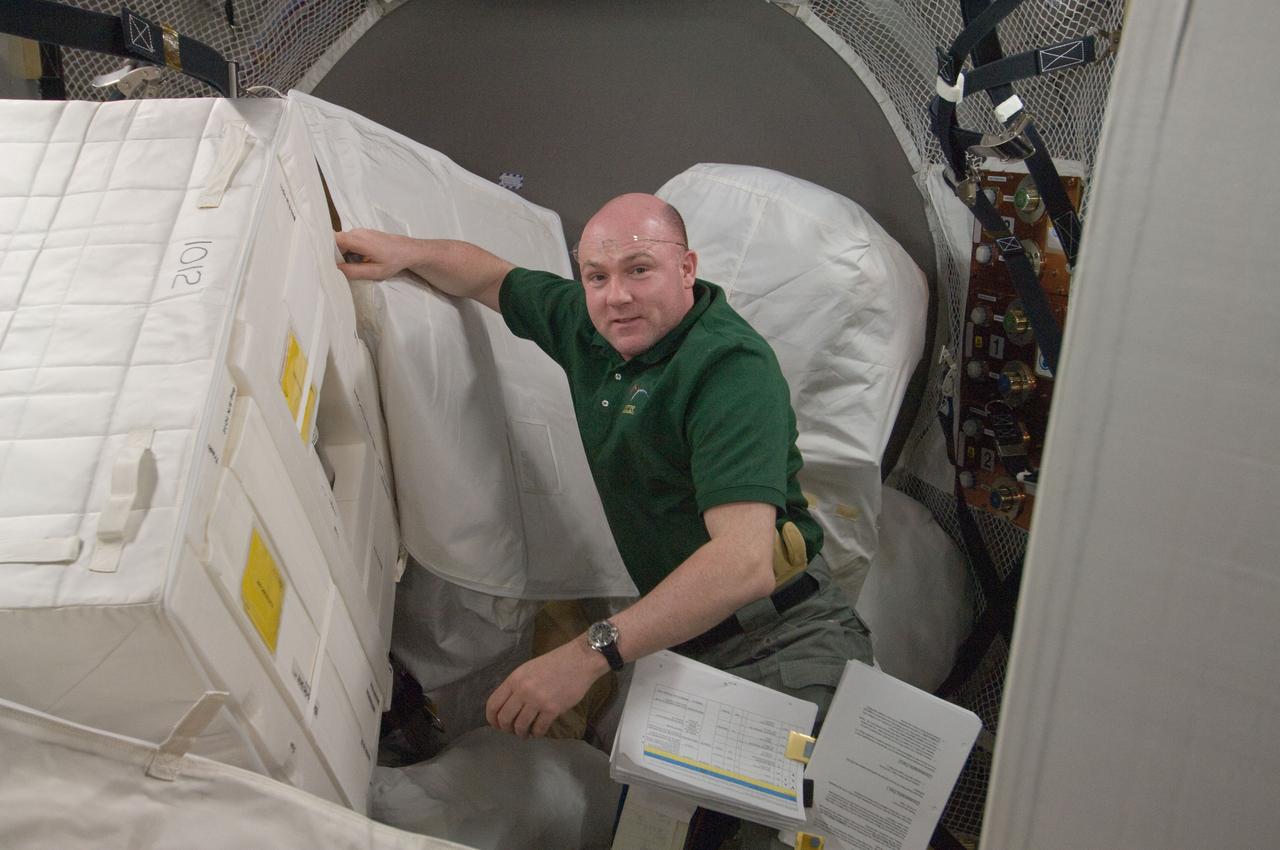
ISS030-E-178659 (31 March 2012) --- European Space Agency astronaut Andre Kuipers, Expedition 30 flight engineer, unpacks stowage containers in the newly attached European Space Agency?s ?Edoardo Amaldi? Automated Transfer Vehicle-3 (ATV-3). The ATV docked with the space station on March 28, 2012.
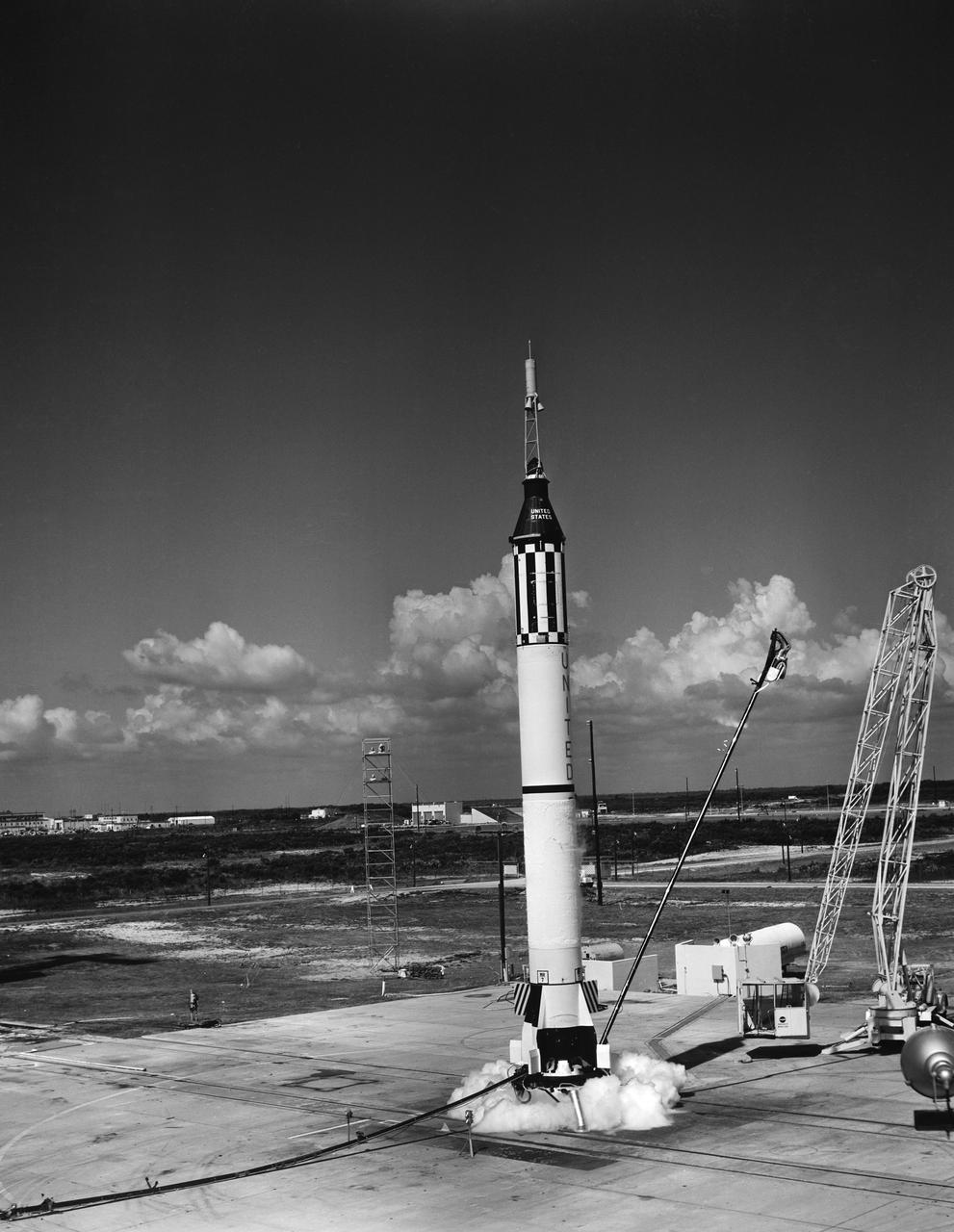
S61-02407 (5 May 1961) --- Launching of the Mercury-Redstone 3 (MR-3) rocket from Cape Canaveral on astronaut Alan B. Shepard?s suborbital mission. Photo credit: NASA or National Aeronautics and Space Administration
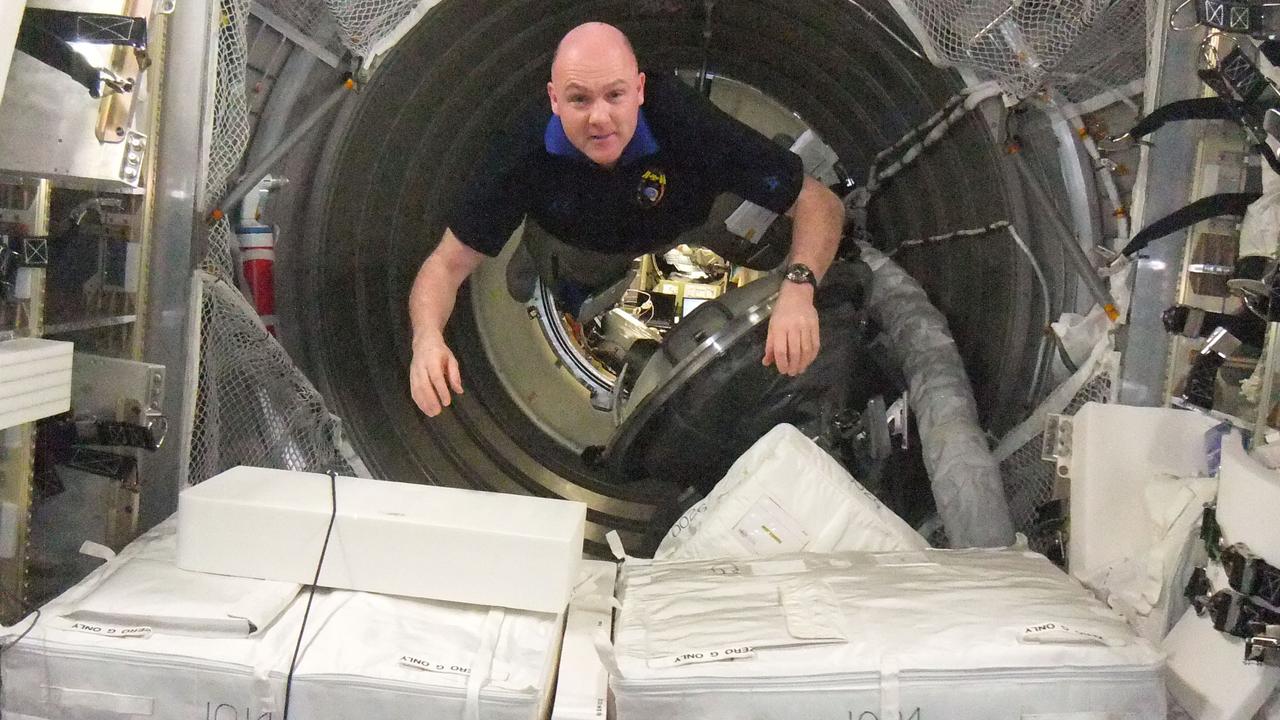
ISS031-E-157790 (15 May 2012) --- European Space Agency astronaut Andre Kuipers, Expedition 31 flight engineer, floats freely in ESA?s "Edoardo Amaldi" Automated Transfer Vehicle-3 (ATV-3) currently docked with the International Space Station.
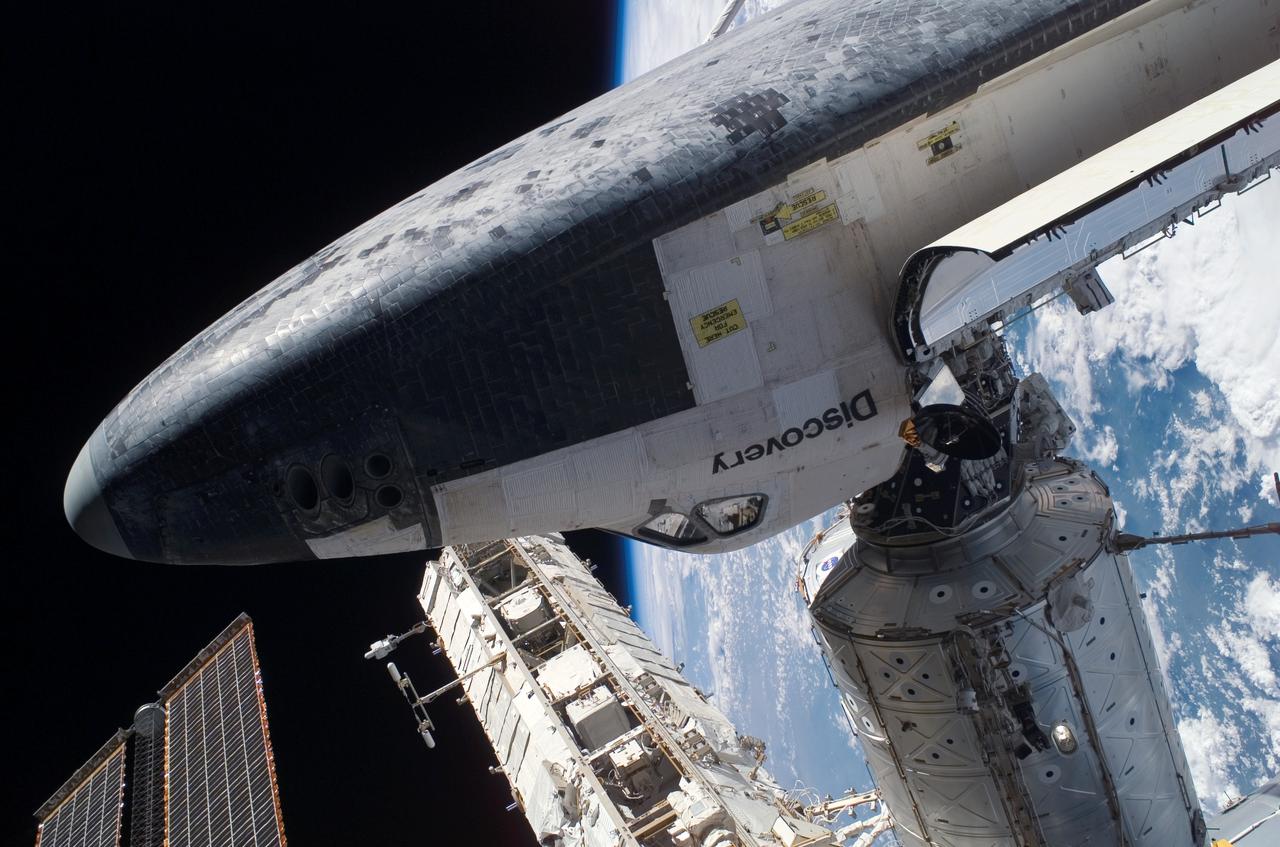
S114-E-6452 (3 August 2005) --- The Space Shuttle Discovery, docked to the Destiny laboratory of International Space Station, is featured in this image photographed by astronaut Stephen K. Robinson (out of frame), STS-114 mission specialist, during today;s spacewalk. Astronaut Soichi Noguchi, mission specialist representing Japan Aerospace Exploration Agency (JAXA), is partially visible between Discovery;s payload bay and Destiny. The blackness of space and Earth;s horizon formed the backdrop for the image.
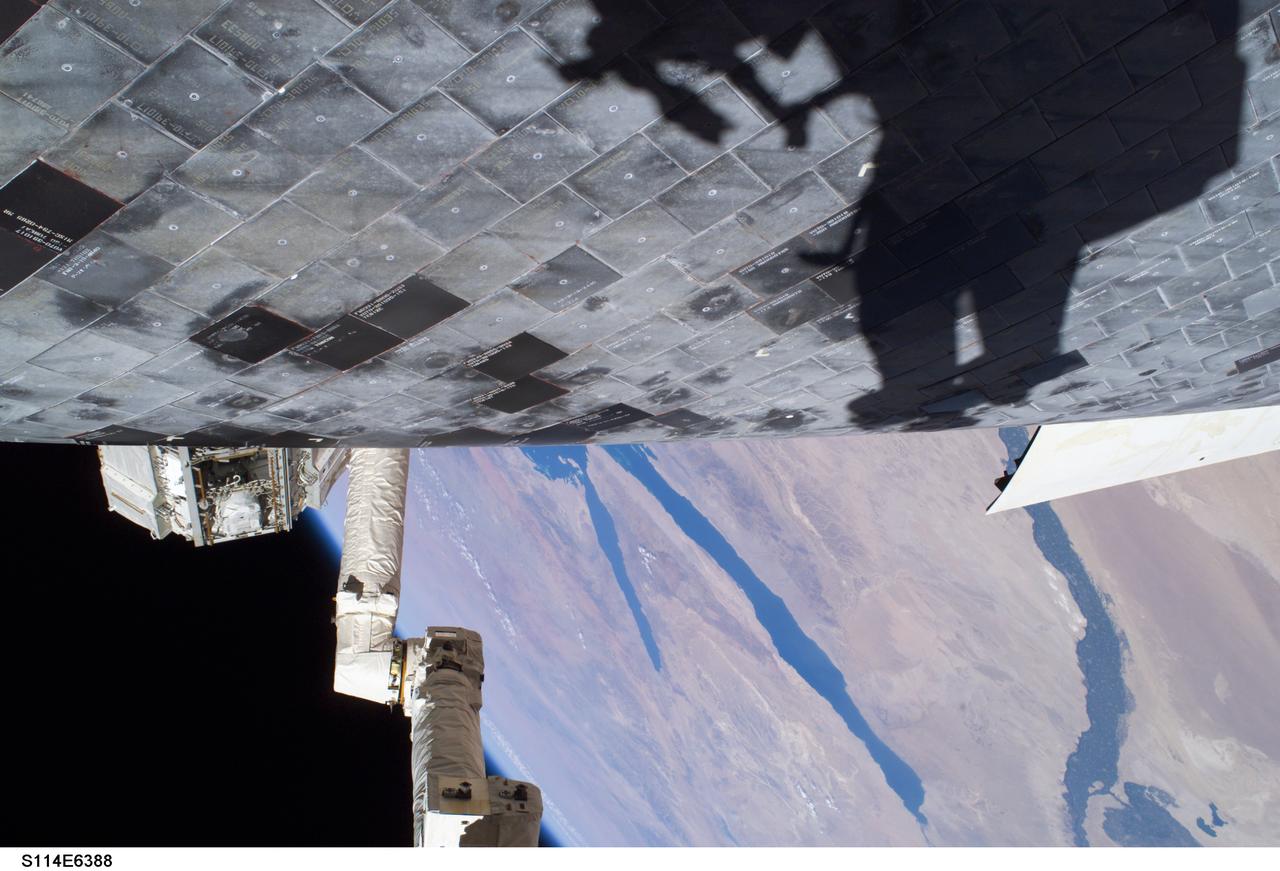
S114-E-6388 (3 August 2005) --- A close-up view of a portion of the thermal protection tiles on Space Shuttle Discovery’s underside is featured in this image photographed by astronaut Stephen K. Robinson, STS-114 mission specialist, during the mission’s third session of extravehicular activities (EVA). Robinson’s shadow is visible on the thermal protection tiles and a portion of the Canadian-built remote manipulator system (RMS) robotic arm and the Nile River is visible at bottom.
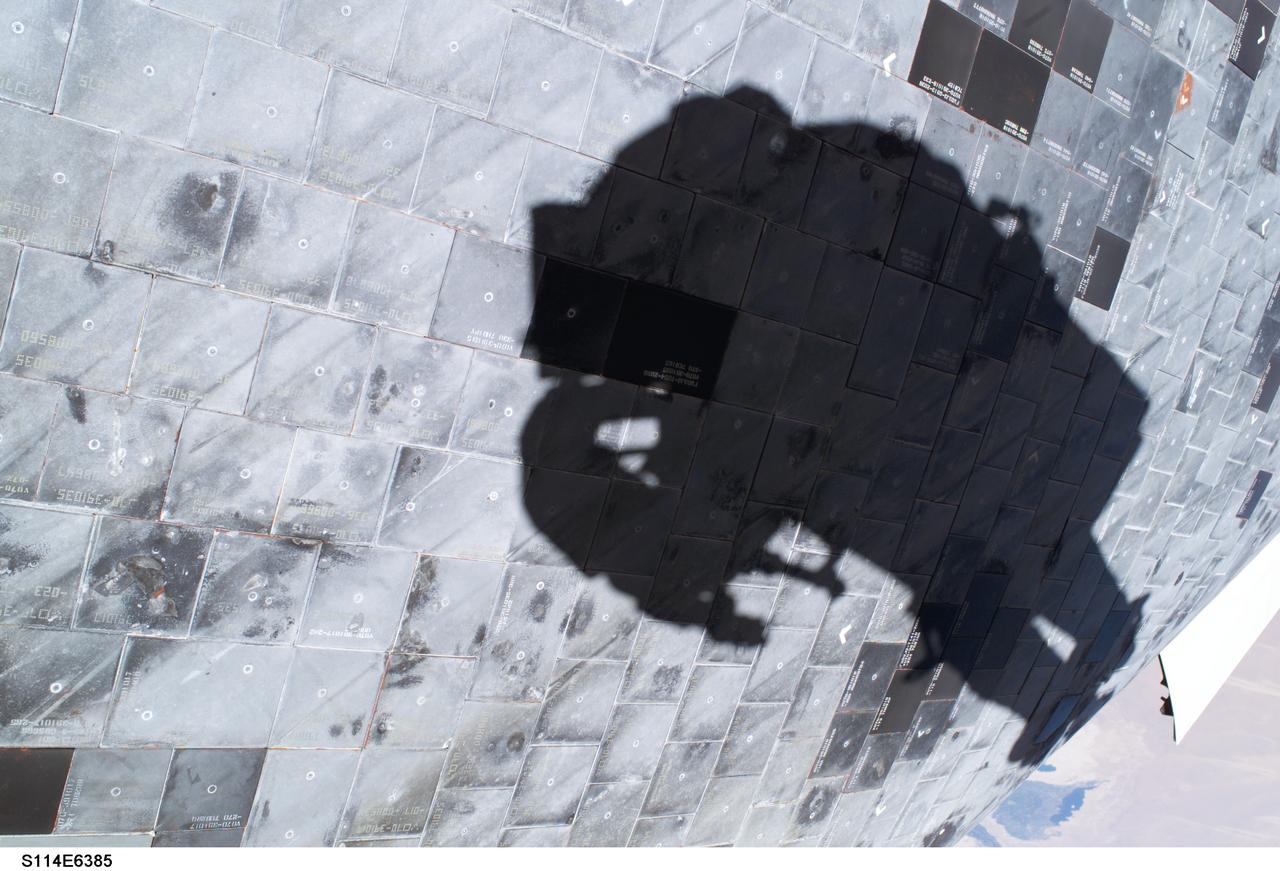
S114-E-6385 (3 August 2005) --- A close-up view of a portion of Space Shuttle Discovery’s underside is featured in this image photographed by astronaut Stephen K. Robinson, STS-114 mission specialist, during the mission’s third session of extravehicular activities (EVA). Robinson’s shadow is visible on the thermal protection tiles.
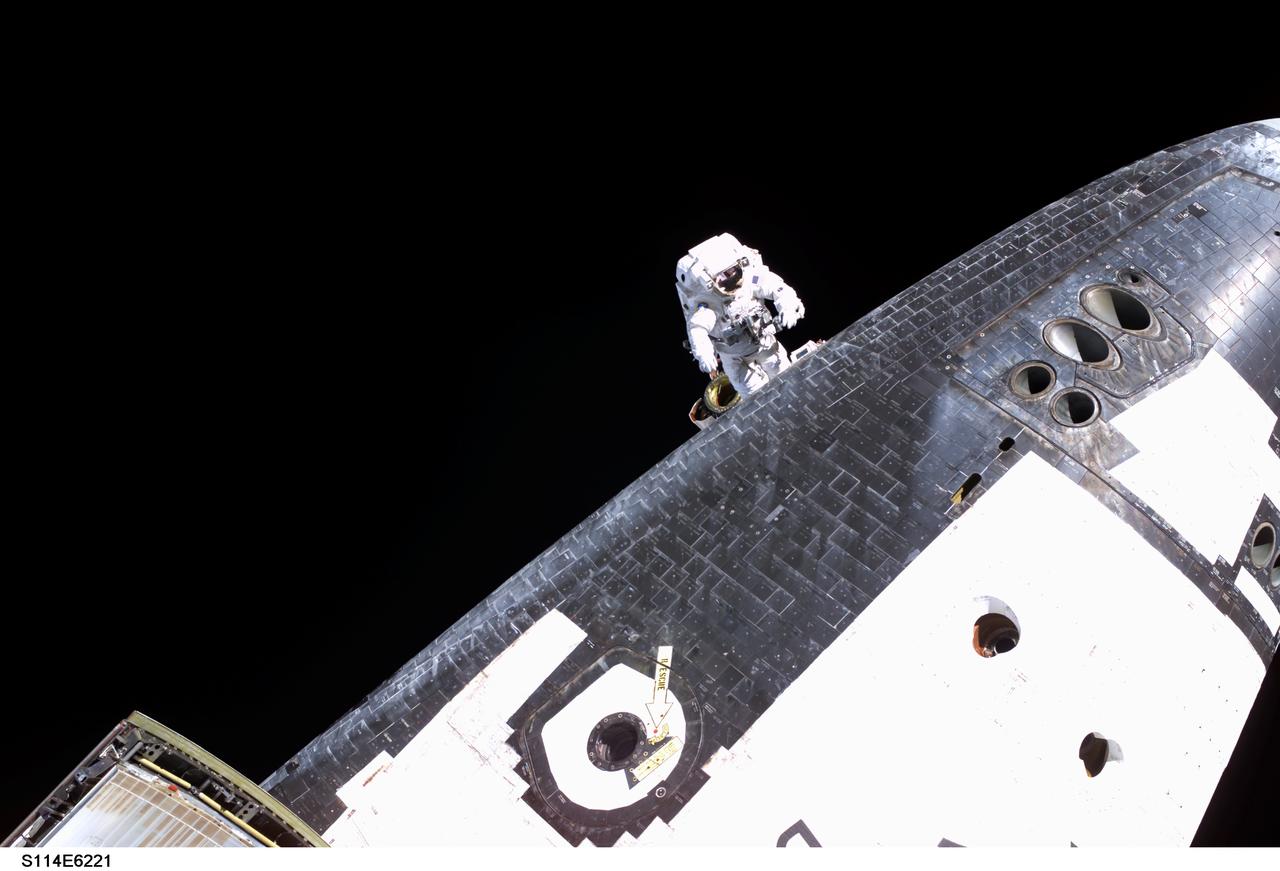
S114-E-6221 (3 August 2005) --- Astronaut Stephen K. Robinson, STS-114 mission specialist, on the end of the station’s Canadarm2 (out of frame), slowly and cautiously makes his way to the underside of Space Shuttle Discovery to remove gap fillers from between the orbiter’s heat-shielding tiles during the mission’s third session of extravehicular activity (EVA).
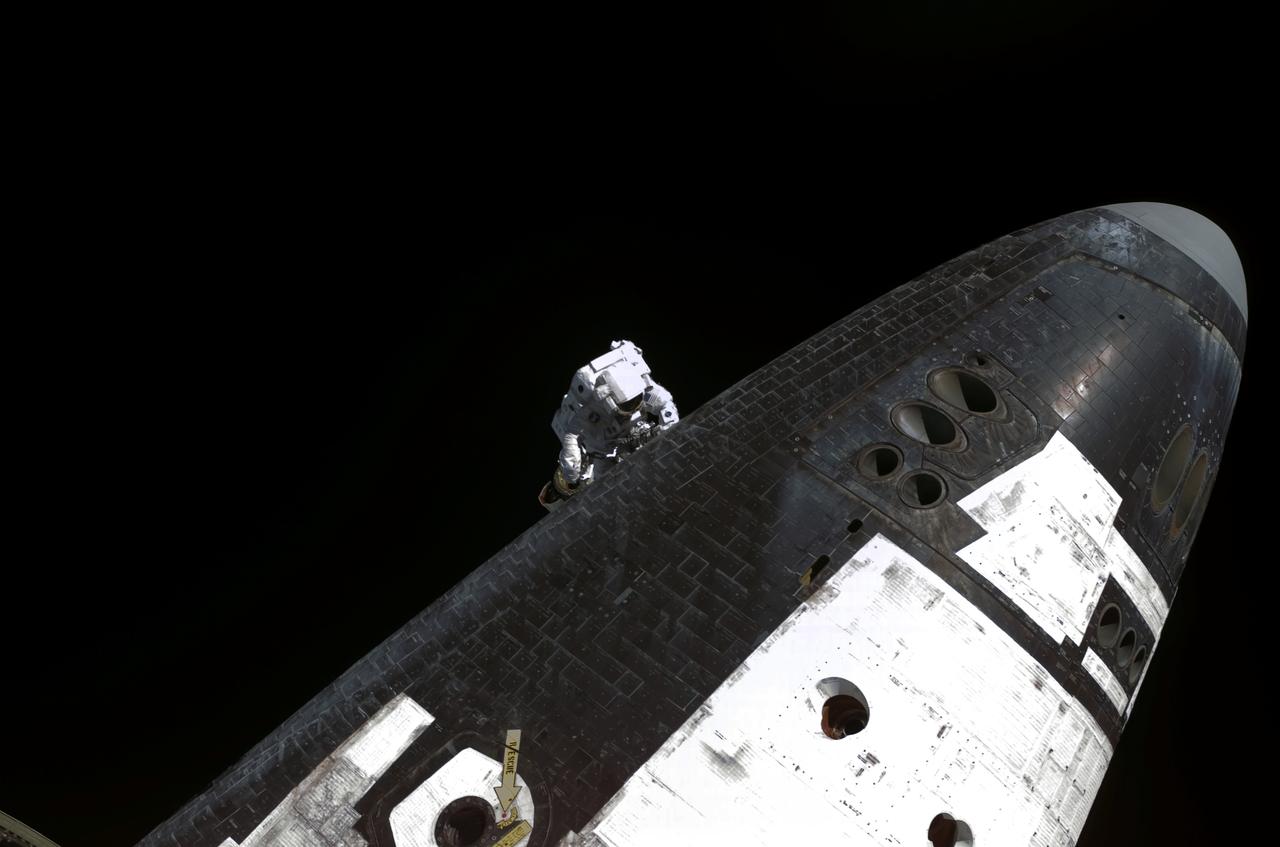
S114-E-6215 (3 August 2005) --- Astronaut Stephen K. Robinson, STS-114 mission specialist, on the end of the station’s Canadarm2 (out of frame), slowly and cautiously makes his way to the underside of Space Shuttle Discovery to remove gap fillers from between the orbiter’s heat-shielding tiles during the mission’s third of three sessions of extravehicular activity (EVA).
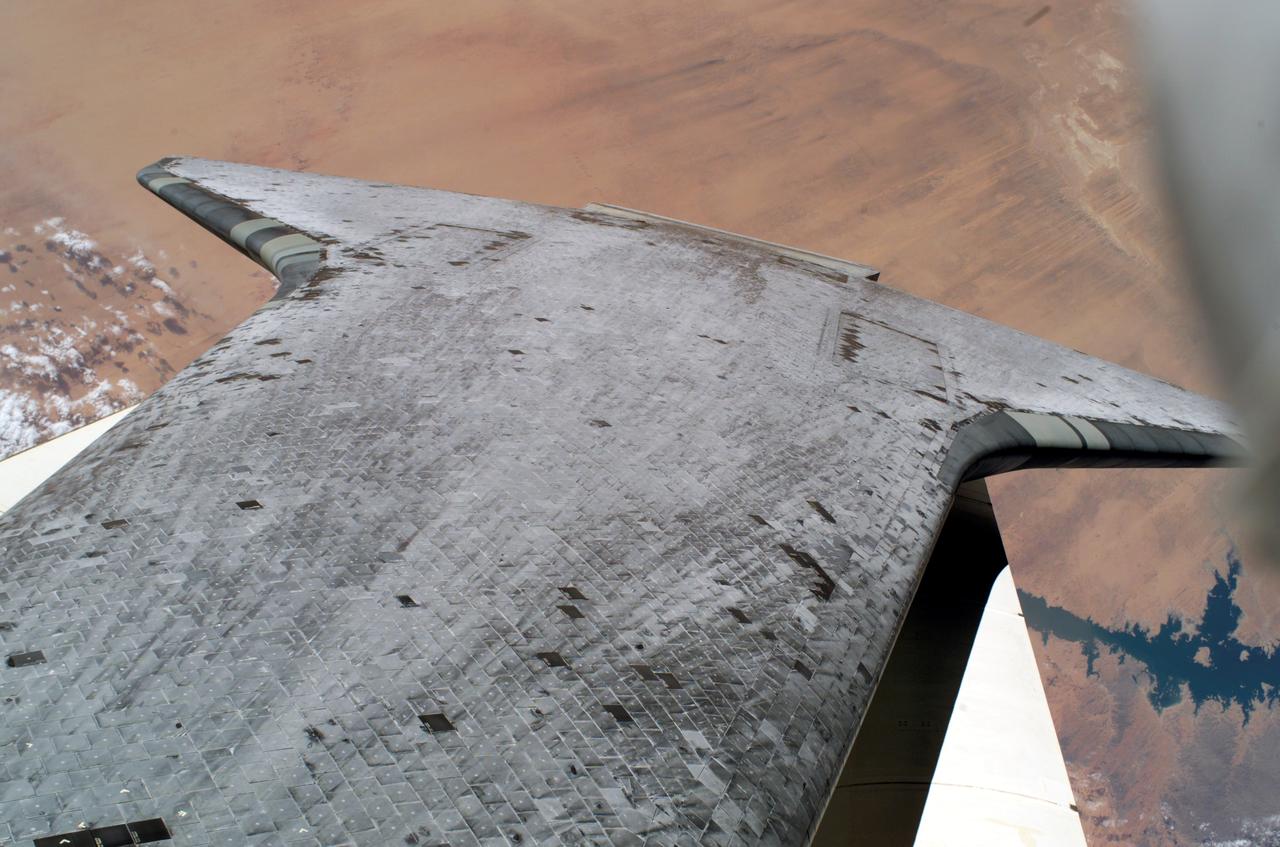
S114-E-6396 (3 August 2005) --- Space Shuttle Discovery’s underside thermal protection tiles are featured in this image photographed by astronaut Stephen K. Robinson, STS-114 mission specialist, during the mission’s third session of extravehicular activities (EVA). Lake Nasser along the Nile River, Egypt is visible near Discovery’s starboard wing.
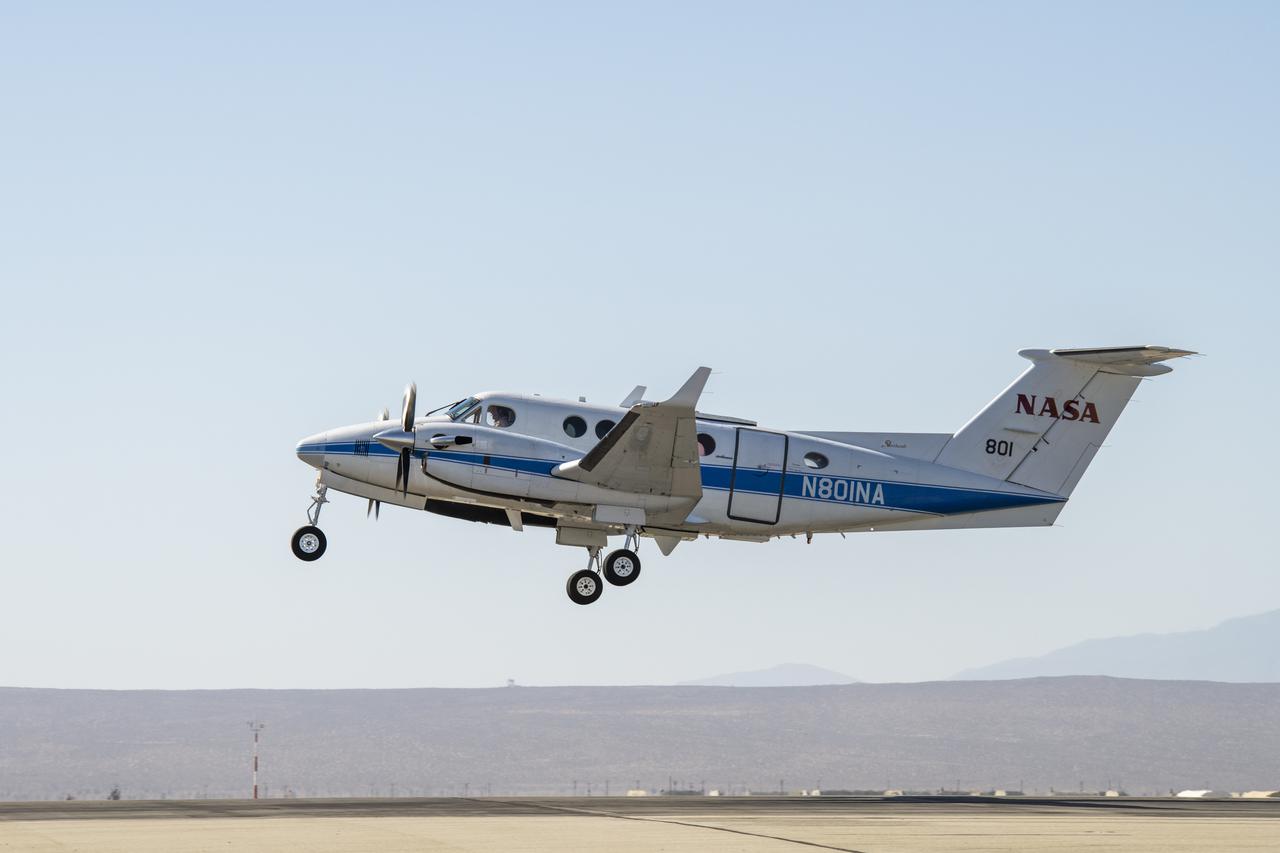
Flight crews at NASA's Armstrong Flight Research Center in Edwards, California, flew the Sub-Mesoscale Ocean Dynamics Experiment (S-MODE) installed in the B200 King Air on May 3, 2021.
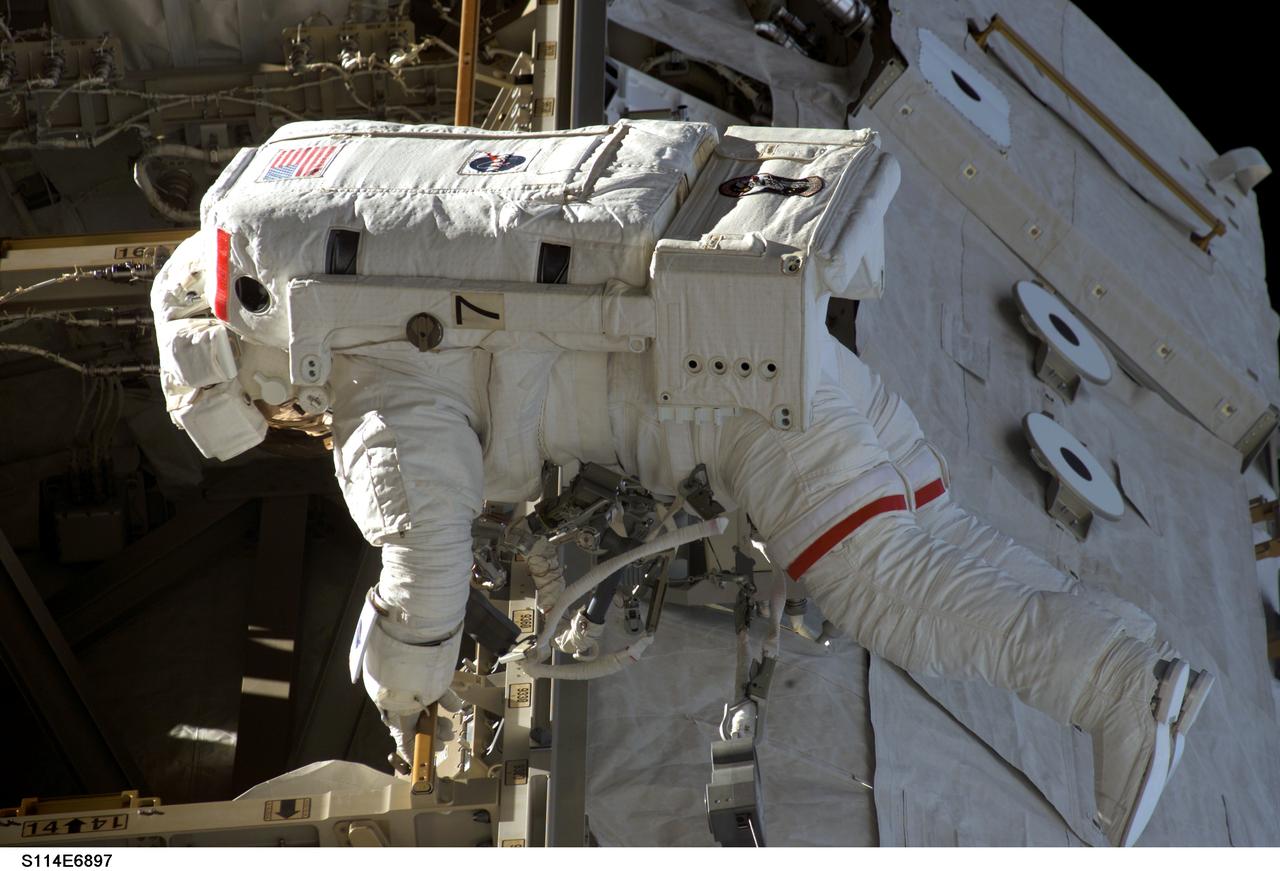
S114-E-6897 (3 August 2005) --- Astronaut Soichi Noguchi, STS-114 mission specialist representing Japan Aerospace Exploration Agency (JAXA), participates in the mission;s third session of extravehicular activity (EVA).
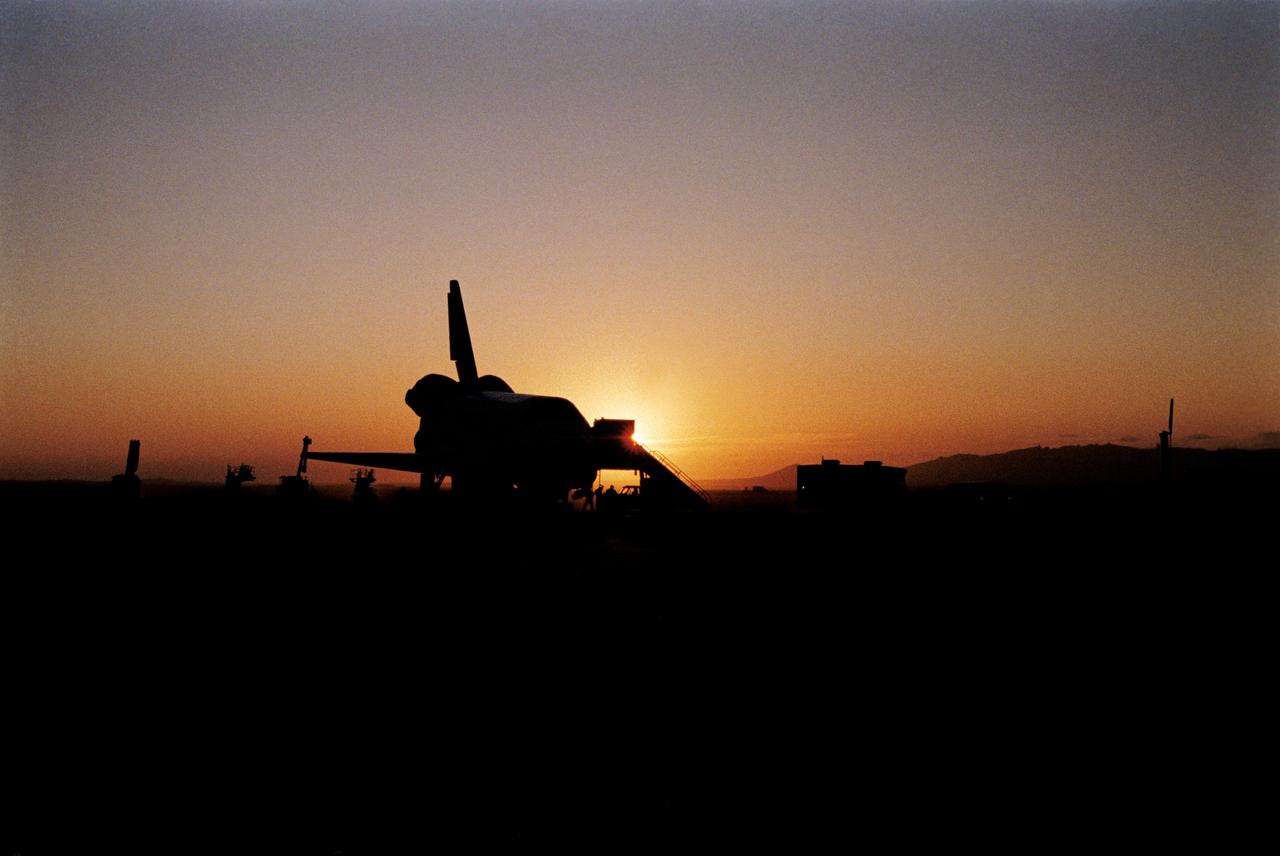
51I-S-240 (3 Sept. 1985) --- Servicing of the space shuttle Discovery after its landing at Edwards Air Force Base ending the STS-51I mission. Photo credit: NASA
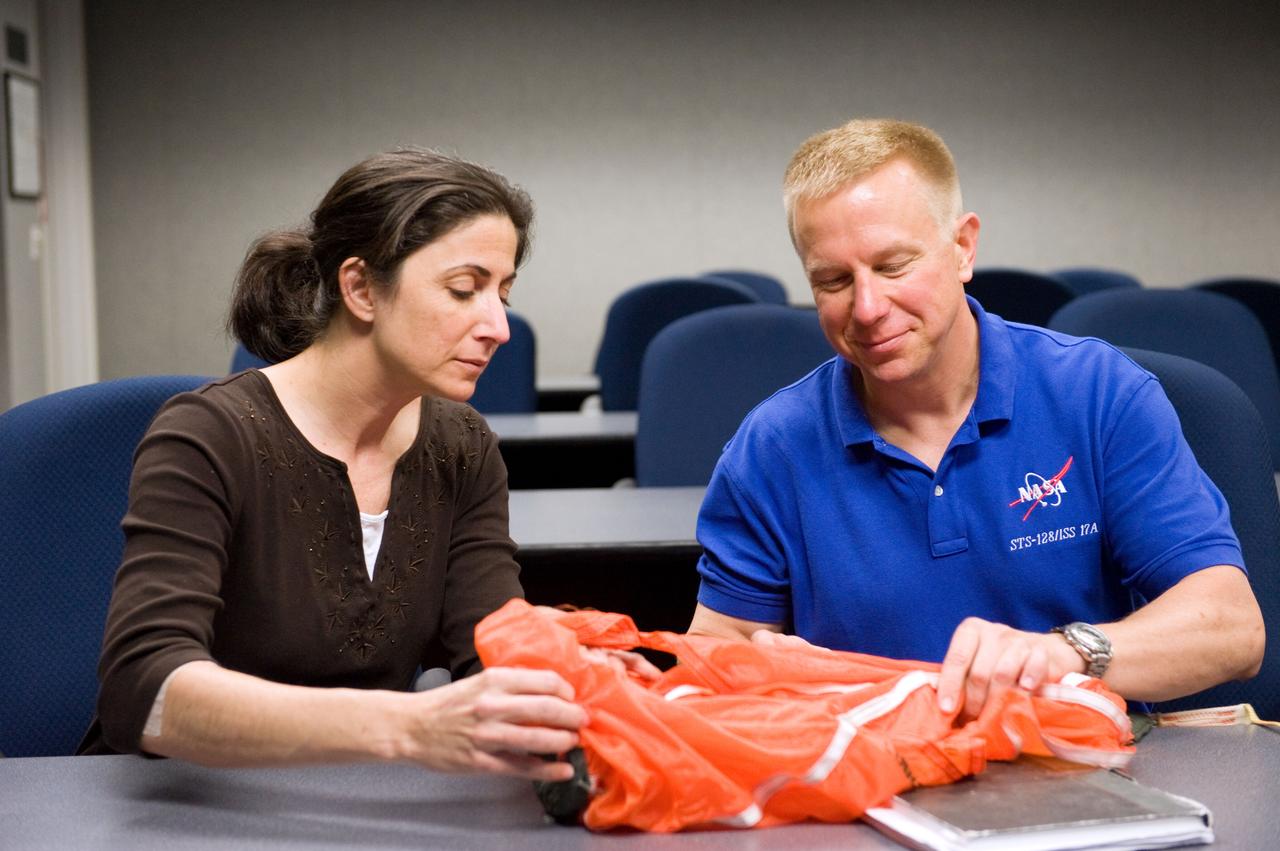
JSC2010-E-063773 (3 May 2010) --- NASA astronauts Nicole Stott and Tim Kopra, both STS-133 mission specialists, participate in a classroom session of water survival training at NASA?s Johnson Space Center.
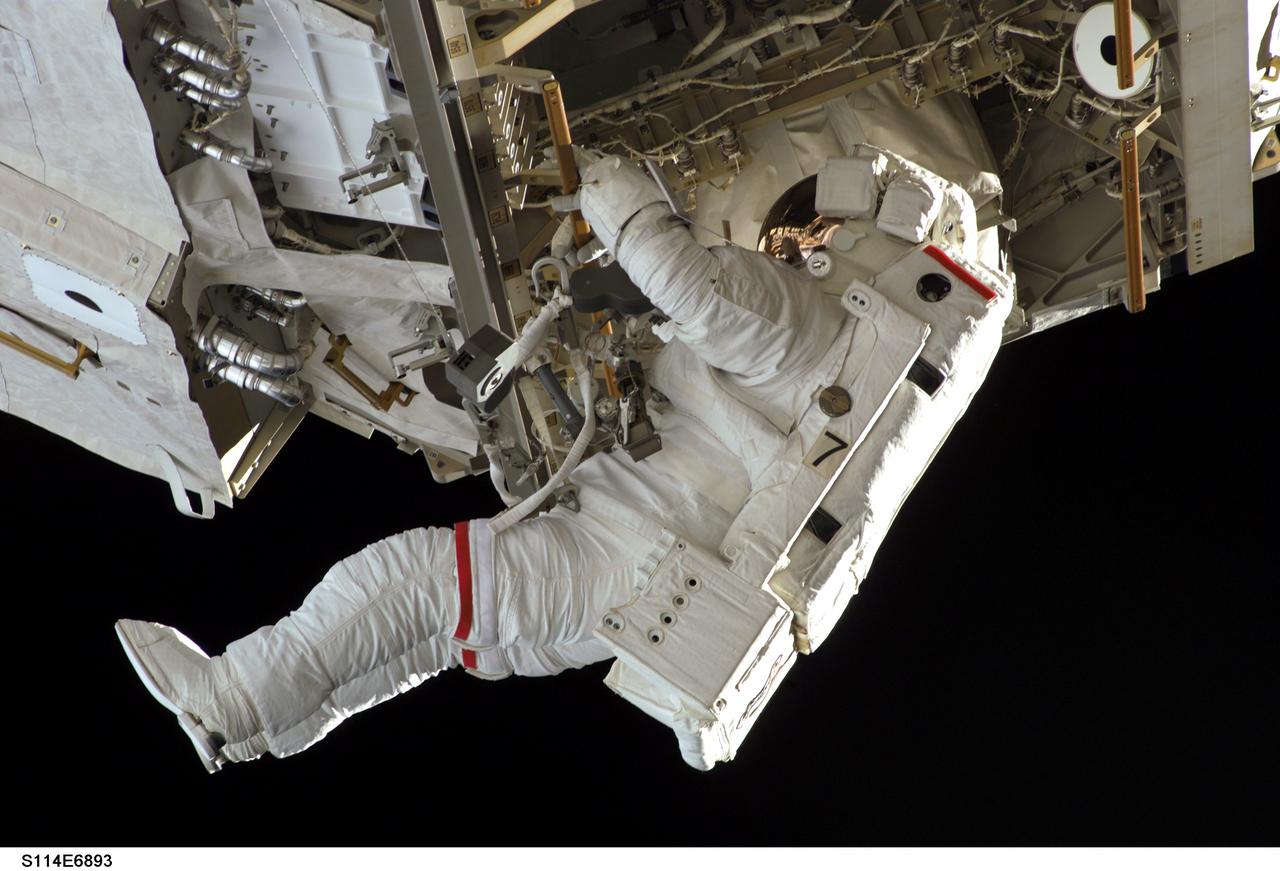
S114-E-6893 (3 August 2005) --- Astronaut Soichi Noguchi, STS-114 mission specialist representing Japan Aerospace Exploration Agency (JAXA), participates in the mission;s third session of extravehicular activity (EVA).

S73-32568 (20 July 1973) --- Floodlights illuminate this nighttime view of the Skylab 3/Saturn 1B space vehicle at Pad B, Launch Complex 39, Kennedy Space Center, Florida, during prelaunch preparations. The reflection is the water adds to the scene. In addition to the Command/Service Module and its launch escapte system, the Skylab 3 space vehicle consists of the Saturn 1B first (S-1B) stage and the Saturn 1B second (S-IVB) stage. The crew for the scheduled 59-day Skylab 3 mission in Earth orbit will be astronauts Alan L. Bean, Owen K. Garriott and Jack R. Lousma. Skylab 3 was launched on July 28, 1973. Photo credit: NASA
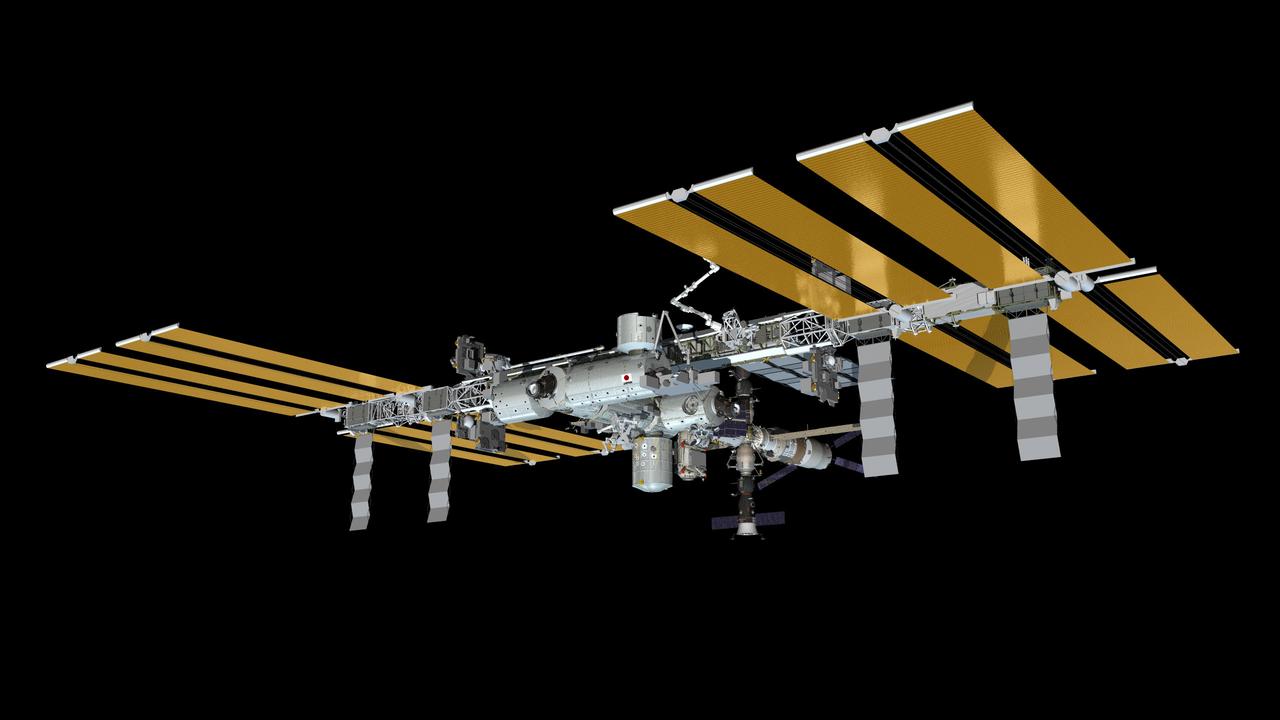
JSC2012-E-096603 (July 2012) --- Computer-generated artist?s rendering of the International Space Station as of July 1, 2012. Soyuz 29 (TMA-03M) undocks from the Rassvet Mini-Research Module 1 (MRM1), returning Expedition 31 crew members (Kononenko, Pettit and Kuipers) to Earth. Progress 47 is linked to the Pirs Docking Compartment. European Space Agency?s Automated Transfer Vehicle-3 (ATV-3) ?Edoardo Amaldi? is attached to the Zvezda Service Module and Soyuz 30 (TMA-04M) is docked to the Poisk Mini-Research Module 2 (MRM2). Photo credit: NASA

STS110-S-039 (19 April 2002) --- The Space Shuttle Atlantis heads for touchdown on the runway at the KSC landing facility to complete a nearly 11-day journey. Astronaut Michael J. Bloomfield, mission commander, eased Atlantis to a textbook landing on runway 3-3 at the Florida spaceport at 12:27 p.m. (EDT), April 19, 2002, under clear skies and light winds. The landing completed a 4.5-million-mile mission that saw successful delivery and installation of the centerpiece of the International Space Station’s main truss and the inaugural run of the first space railcar, the Mobile Transporter.
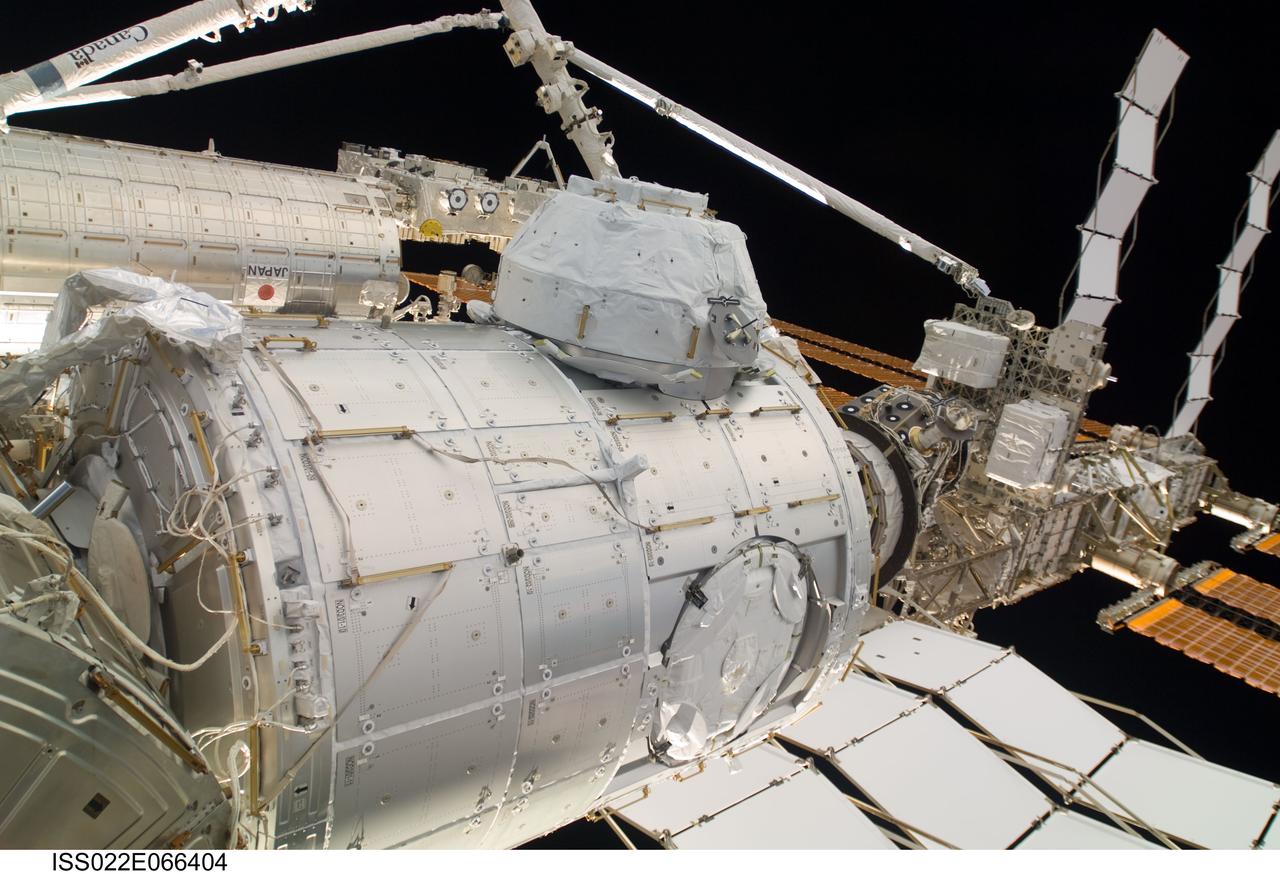
ISS022-E-066404 (16 Feb. 2010) --- In the grasp of the Canadarm2, the Pressurized Mating Adapter 3 (PMA-3) is relocated from the Harmony node to the open port on the end of the newly-installed Tranquility node. NASA astronauts Robert Behnken and Nicholas Patrick, both STS-130 mission specialists, operated the station?s robotic arm for the move, while Jeffrey Williams, Expedition 22 commander; and Japan Aerospace Exploration Agency (JAXA) astronaut Soichi Noguchi, Expedition 22 flight engineer, dealt with latches and bolts, connecting the port to its new home. Tranquility?s Cupola is visible at top center.
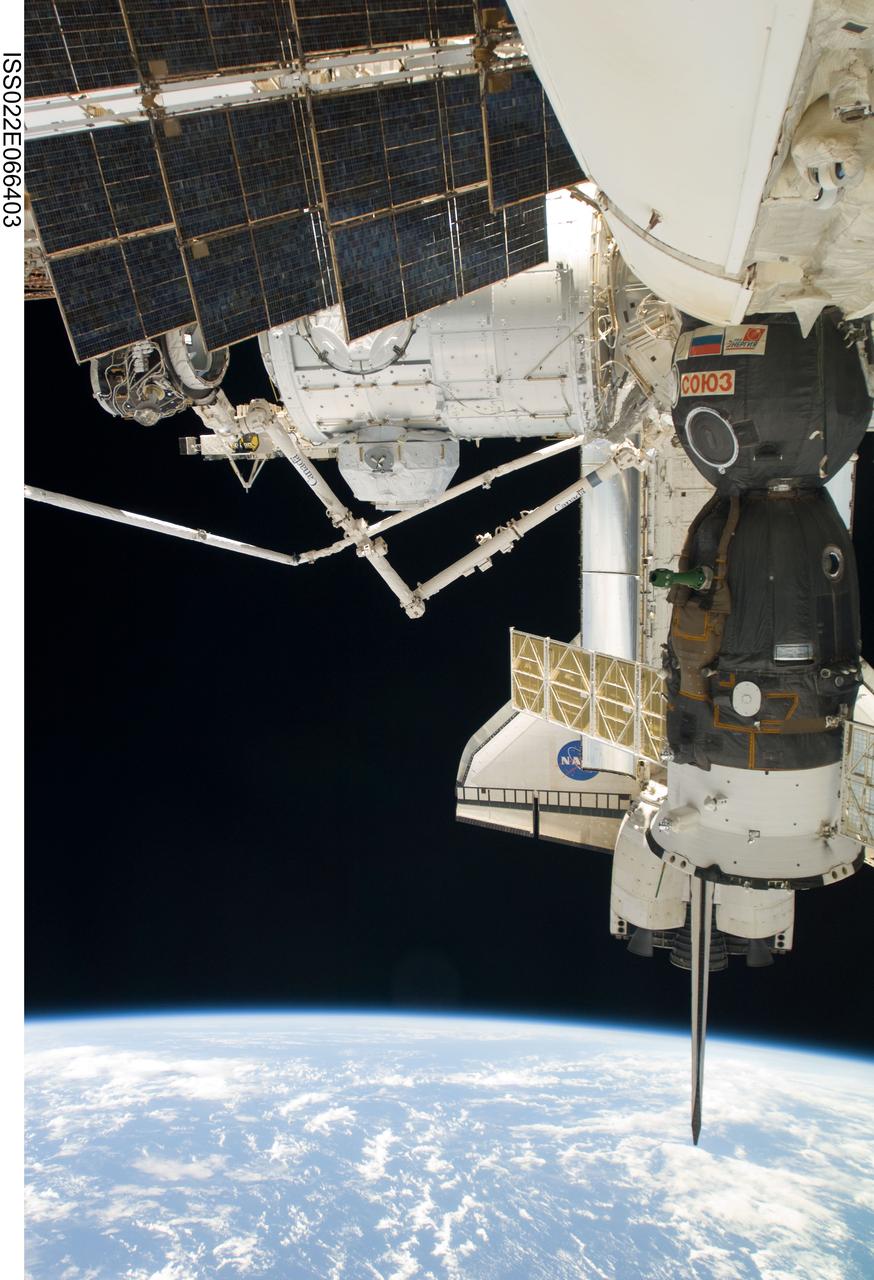
ISS022-E-066403 (16 Feb. 2010) --- In the grasp of the Canadarm2, the Pressurized Mating Adapter 3 (PMA-3) is relocated from the Harmony node to the open port on the end of the newly-installed Tranquility node. NASA astronauts Robert Behnken and Nicholas Patrick, both STS-130 mission specialists, operated the station?s robotic arm for the move, while Jeffrey Williams, Expedition 22 commander; and Japan Aerospace Exploration Agency (JAXA) astronaut Soichi Noguchi, Expedition 22 flight engineer, dealt with latches and bolts, connecting the port to its new home. Tranquility?s Cupola is visible at top center and a docked Russian Soyuz spacecraft and space shuttle Endeavor are at right.
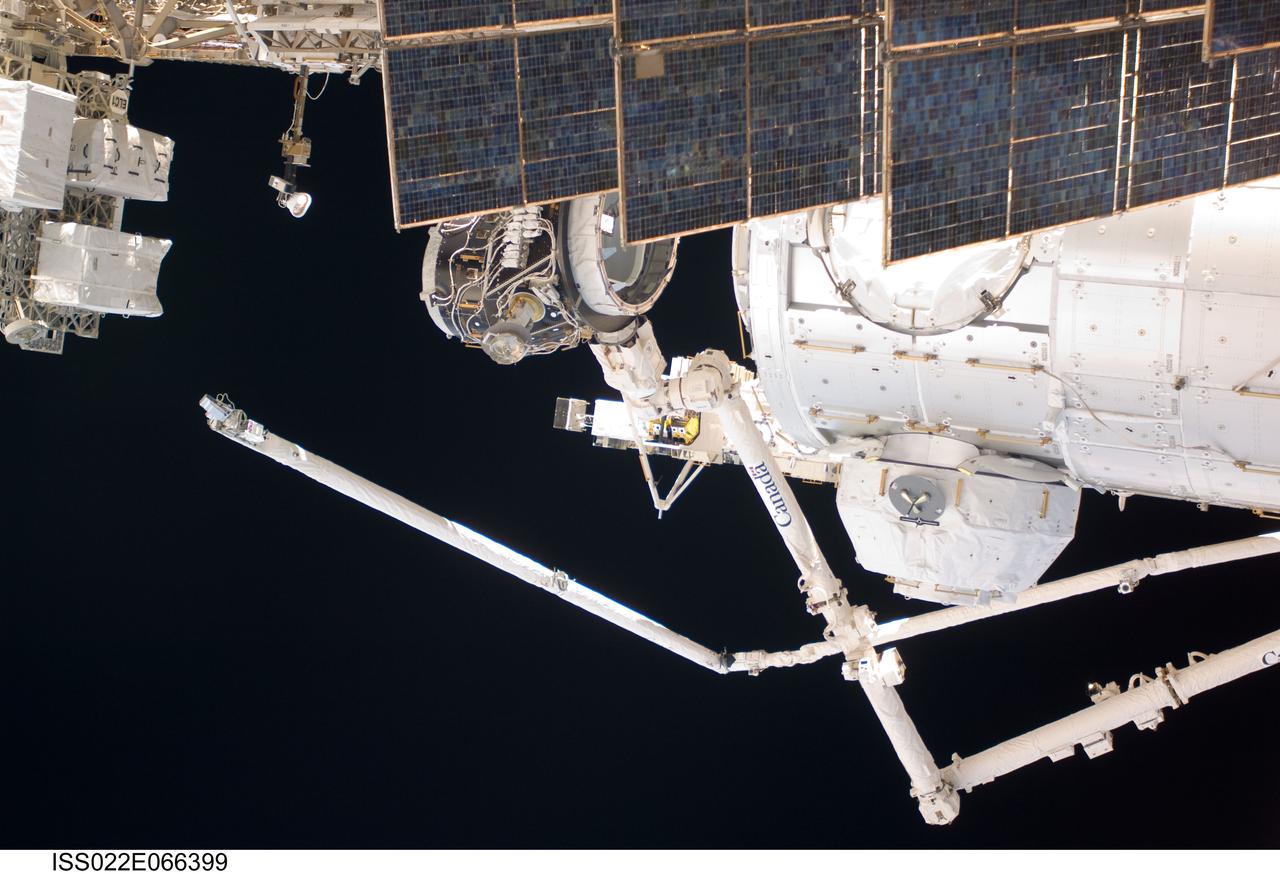
ISS022-E-066399 (16 Feb. 2010) --- In the grasp of the Canadarm2, the Pressurized Mating Adapter 3 (PMA-3) is relocated from the Harmony node to the open port on the end of the newly-installed Tranquility node (right). NASA astronauts Robert Behnken and Nicholas Patrick, both STS-130 mission specialists, operated the station?s robotic arm for the move, while Jeffrey Williams, Expedition 22 commander; and Japan Aerospace Exploration Agency (JAXA) astronaut Soichi Noguchi, Expedition 22 flight engineer, dealt with latches and bolts, connecting the port to its new home. Tranquility?s Cupola is visible at lower right.
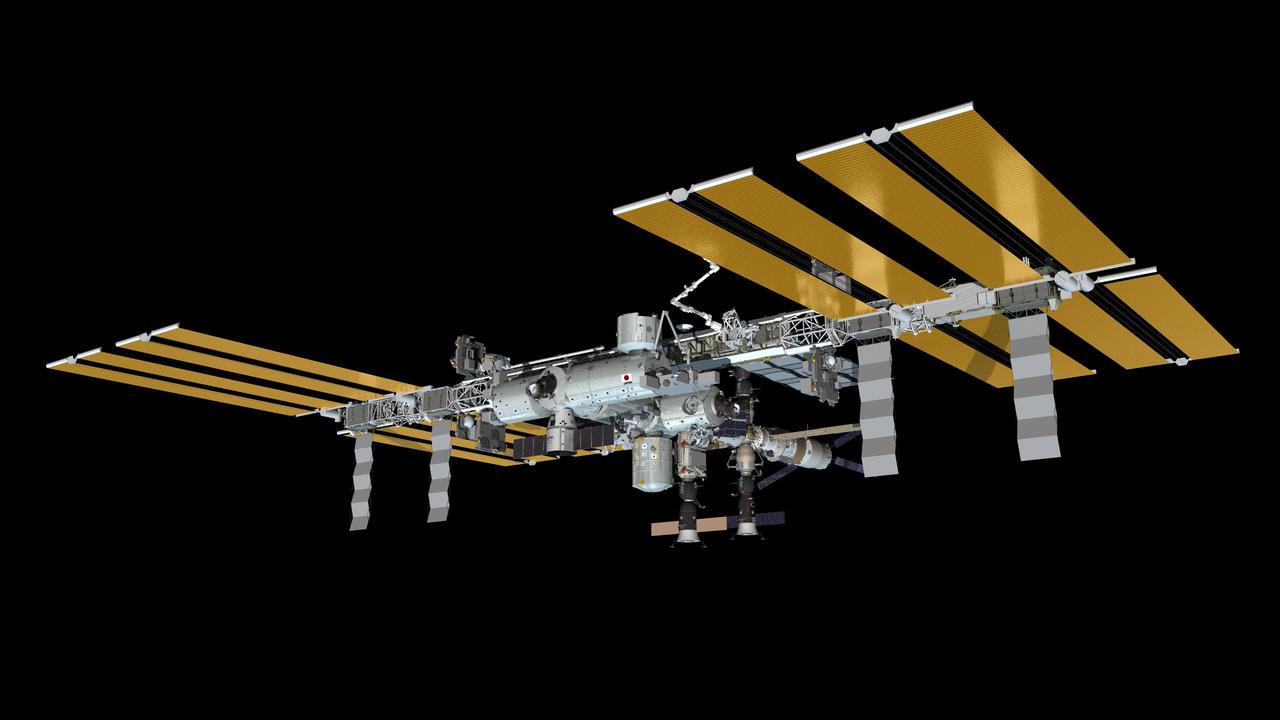
JSC2012-E-064352 (May 2012) --- Computer-generated artist?s rendering of the International Space Station as of May 25, 2012. The SpaceX Dragon commercial cargo craft is berthed to the Harmony node. Soyuz 30 (TMA-04M) is docked to the Poisk Mini-Research Module 2 (MRM2). Progress 47 is linked to the Pirs Docking Compartment. European Space Agency?s Automated Transfer Vehicle-3 (ATV-3) ?Edoardo Amaldi? is attached to the Zvezda Service Module. Soyuz 29 (TMA-03M) is docked to the Rassvet Mini-Research Module 1 (MRM1). Photo credit: NASA
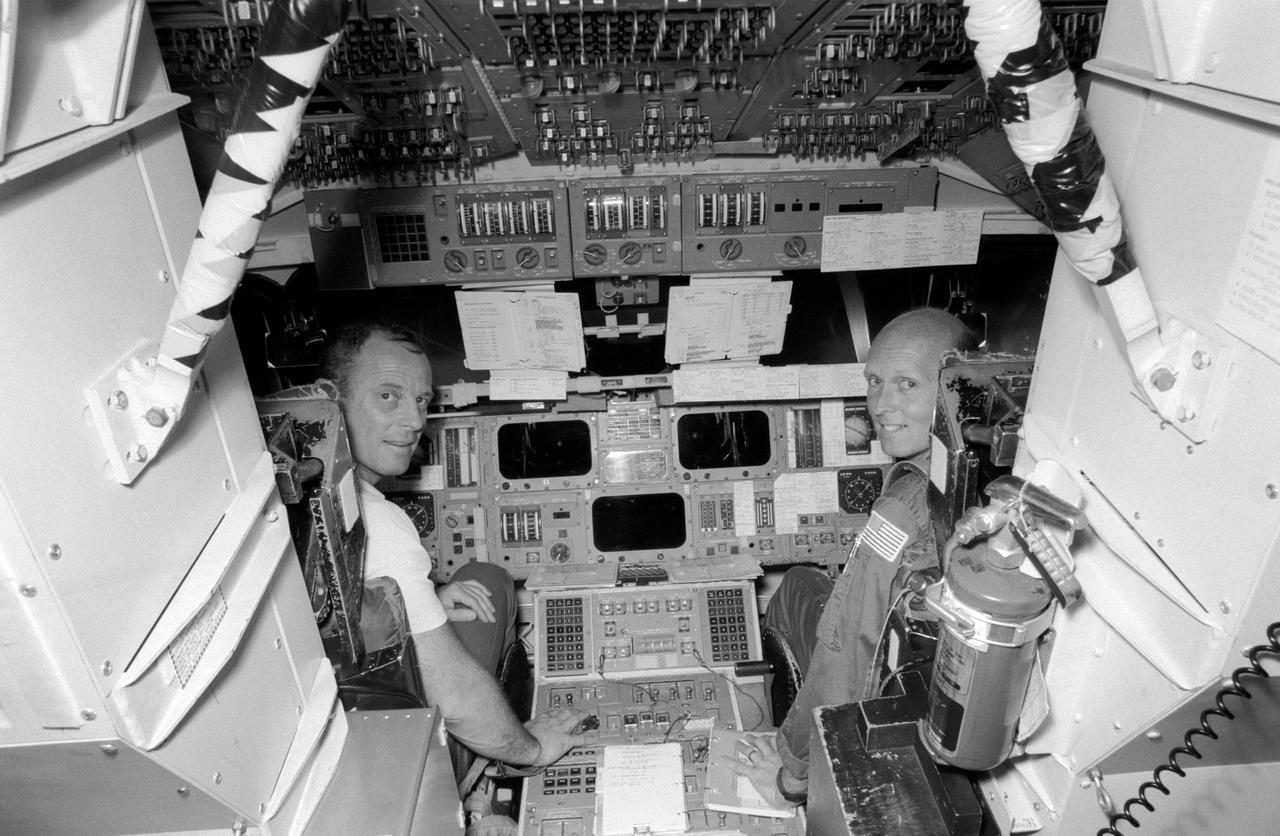
S82-28534 (16 March 1982) --- Astronauts Jack R. Lousma, left, and C. Gordon Fullerton are at the commander and pilot?s station, respectively, in the shuttle mission simulator at the LBJ Space Centers mission simulation and training facility. They have less than a week of training left in preparation for NASA?s third space transportation system (STS-3) flight. Scheduled to launch on March 22, STS-3 in expected to give space shuttle Columbia its longest stay (seven days) thus far. Photo credit: NASA
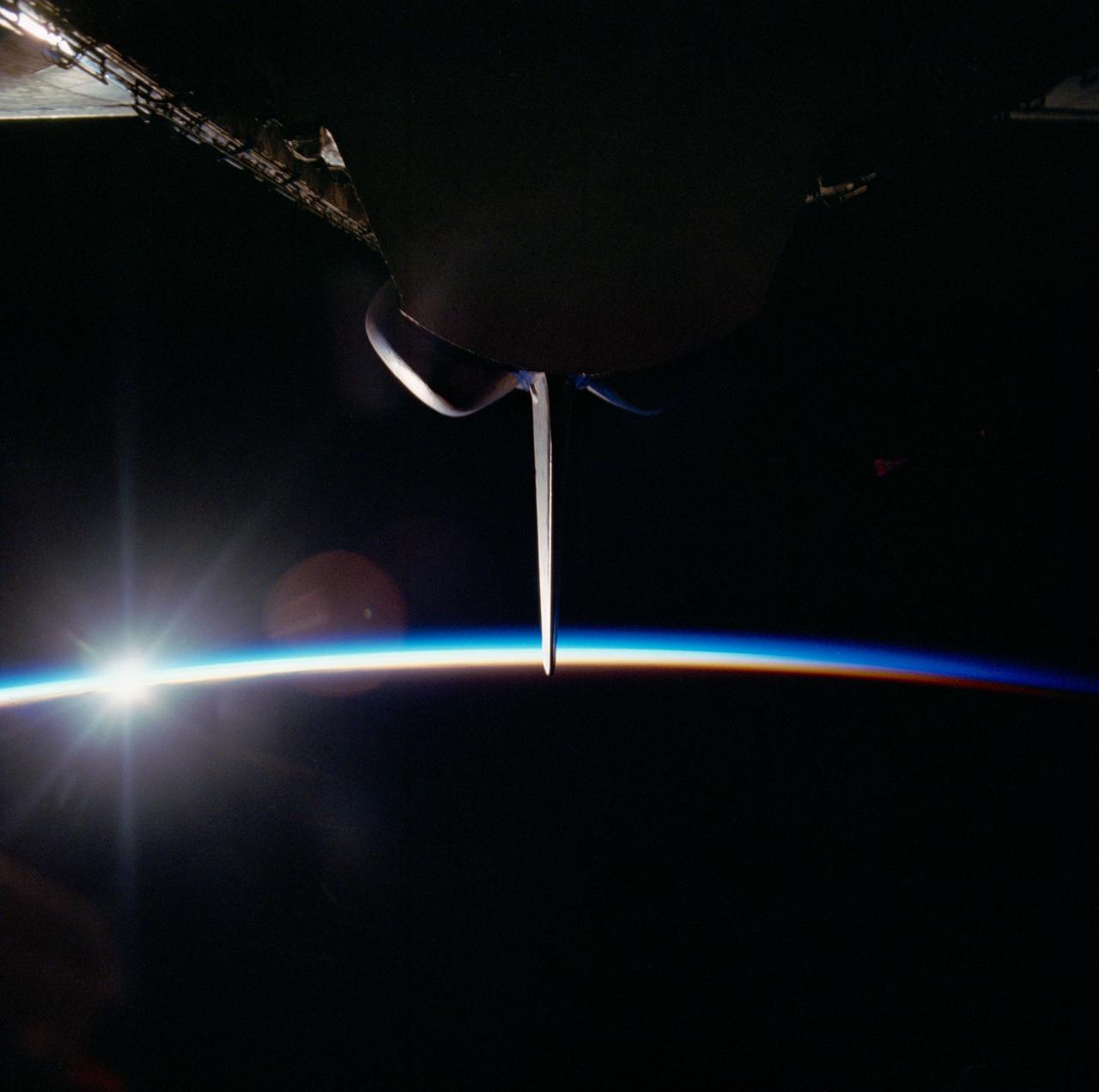
S82-39796 (11-16 Nov. 1982) --- A ?night? scene of the STS-5 space shuttle Columbia in orbit over Earth?s glowing horizon was captured by an astronaut crew member aiming a 70mm handheld camera through the aft windows of the flight deck. The aft section of the cargo bay contains two closed protective shields for satellites which were deployed on the flight. The nearest ?cradle? or shield houses the Satellite Business System?s (SBS-3) spacecraft and is visible in this frame while the Telesta Canada ANIK C-3 shield is out of view. The vertical stabilizer, illuminated by the sun, is flanked by two orbital maneuvering system (OMS) pods. Photo credit: NASA
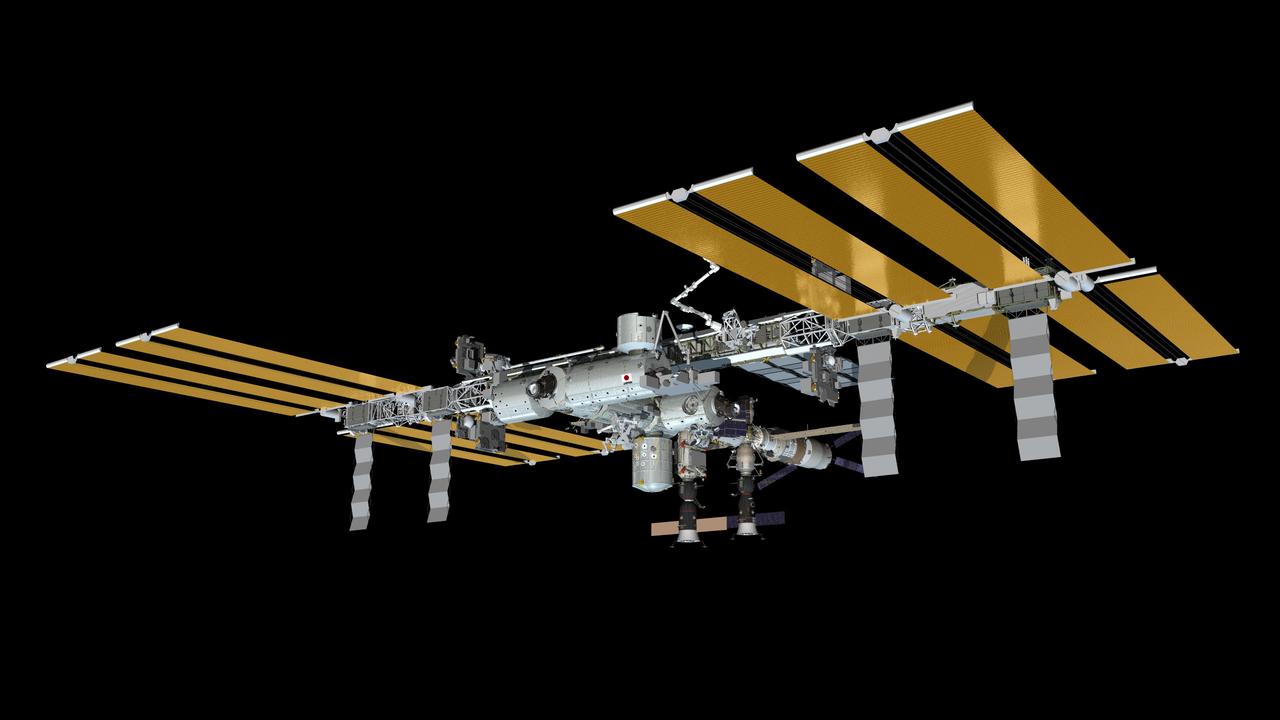
JSC2012-E-214800 (September 2012) --- Computer-generated artist?s rendering of the International Space Station as of Sept. 16, 2012. Soyuz 30 (TMA-04M) undocks from the Poisk Mini-Research Module 2 (MRM2), returning Expedition 32 crew members (Padalka, Acaba, Revin) to Earth. Progress 48 is docked to the Pirs Docking Compartment. Soyuz 31 (TMA-05M) is attached to the Rassvet Mini-Research Module 1 (MRM1). European Space Agency?s Automated Transfer Vehicle-3 (ATV-3) ?Edoardo Amaldi? is linked to the Zvezda Service Module. Photo credit: NASA
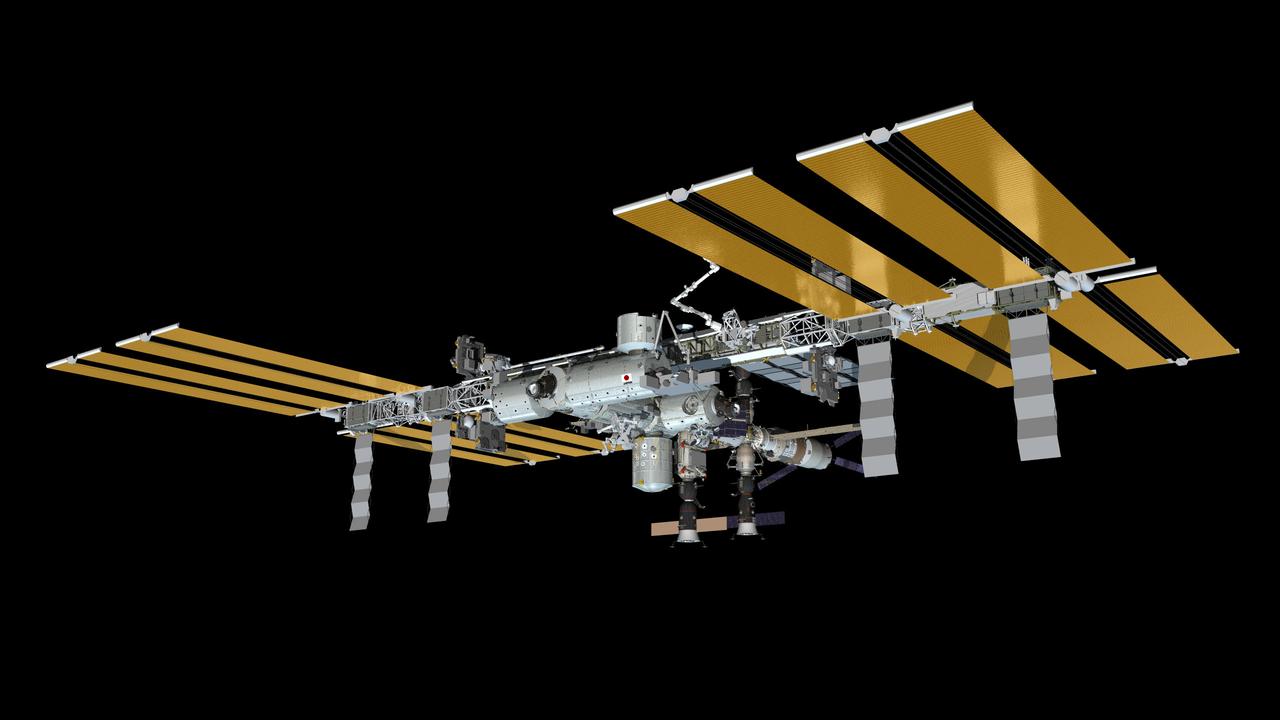
JSC2012-E-064353 (May 2012) --- Computer-generated artist?s rendering of the International Space Station as of May 31, 2012. The SpaceX Dragon commercial cargo craft is unberthed from the Harmony node for splashdown in the Pacific Ocean. Soyuz 30 (TMA-04M) is docked to the Poisk Mini-Research Module 2 (MRM2). Progress 47 is linked to the Pirs Docking Compartment. European Space Agency?s Automated Transfer Vehicle-3 (ATV-3) ?Edoardo Amaldi? is attached to the Zvezda Service Module. Soyuz 29 (TMA-03M) is docked to the Rassvet Mini-Research Module 1 (MRM1). Photo credit: NASA
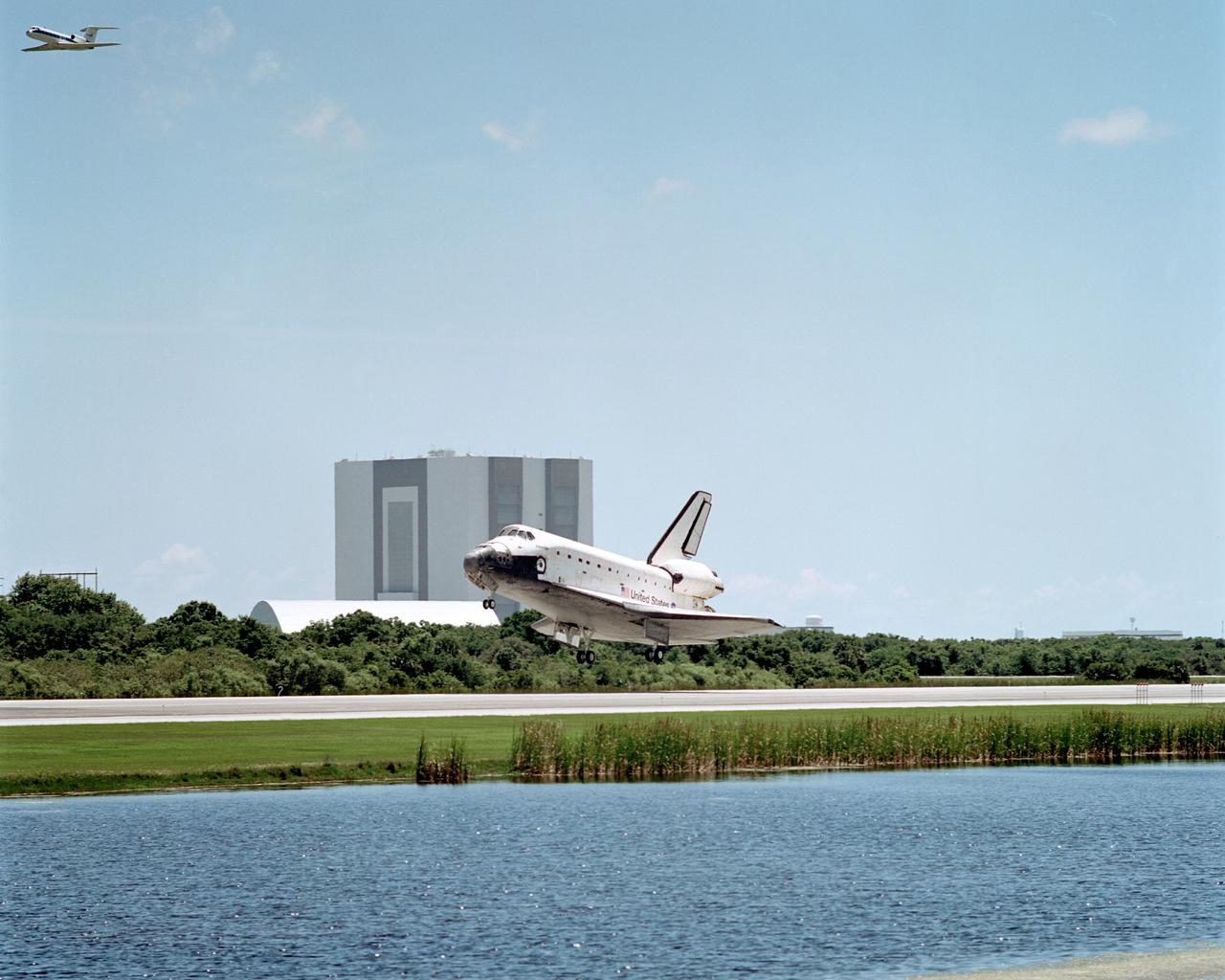
STS110-S-057 (19 April 2002) --- The Space Shuttle Atlantis heads for touchdown on the runway at the KSC landing facility to complete the nearly 11-day STS-110 journey. Astronaut Michael J. Bloomfield, mission commander, eased Atlantis to a textbook landing on runway 3-3 at the Florida spaceport at 12:27 p.m. (EDT), April 19, 2002, under clear skies and light winds. The landing completed a 4.5-million-mile mission that saw successful delivery and installation of the centerpiece of the International Space Station?s main truss and the inaugural run of the first space railcar, the Mobile Transporter.
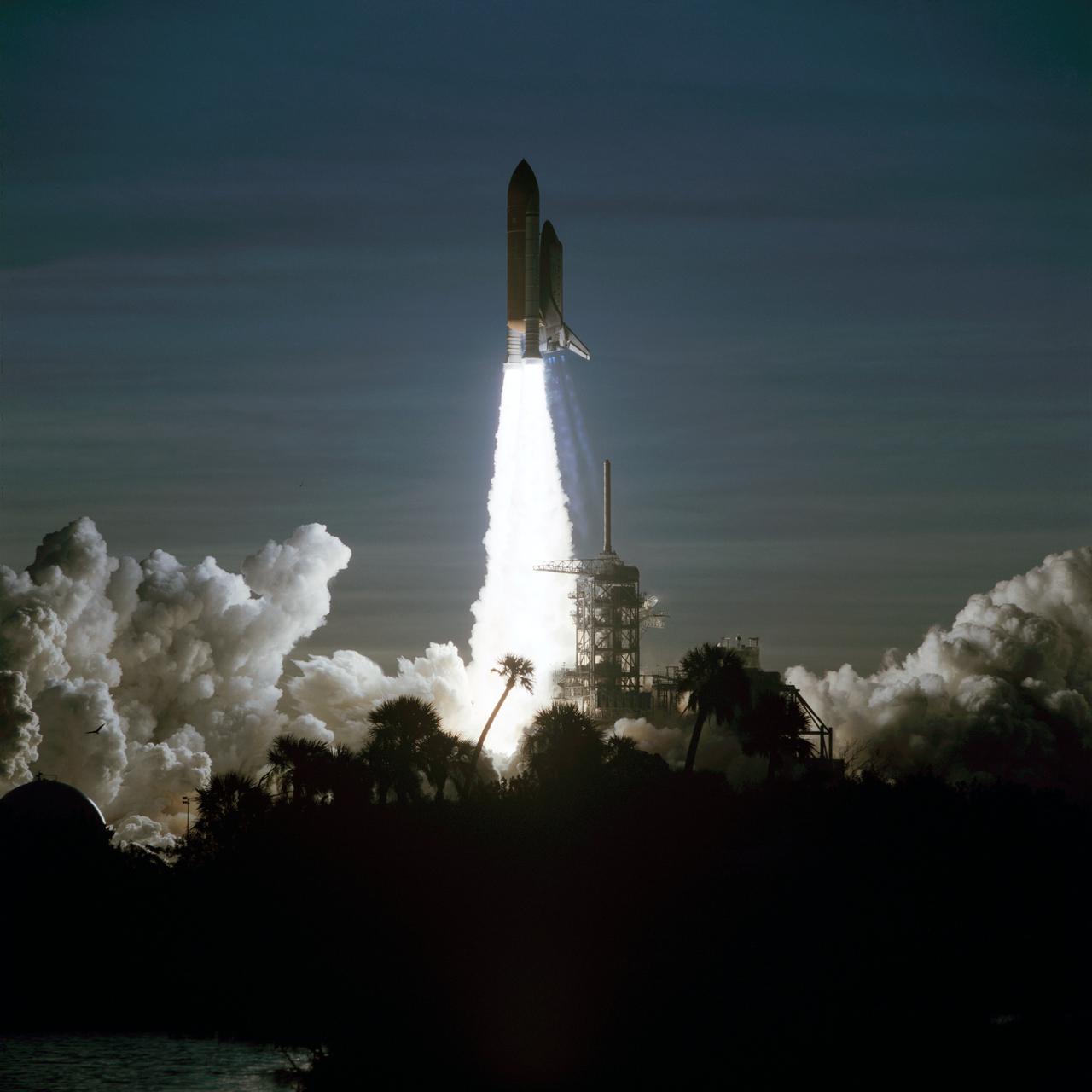
STS060-S-106 (3 Feb 1994) --- Palm trees are silhouetted in the foreground of this 70mm image as the Space Shuttle Discovery heads toward an eight-day mission in Earth orbit. Liftoff occurred as scheduled at 7:10 a.m. (EST), February 3, 1994. Aboard the spacecraft were astronauts Charles F. Bolden Jr., commander; Kenneth S. Reightler Jr., pilot; Franklin R. Chang-Diaz, payload commander; and N. Jan Davis and Ronald M. Sega, mission specialists, along with Russian cosmonaut Sergei K. Krikalev, also a mission specialist.
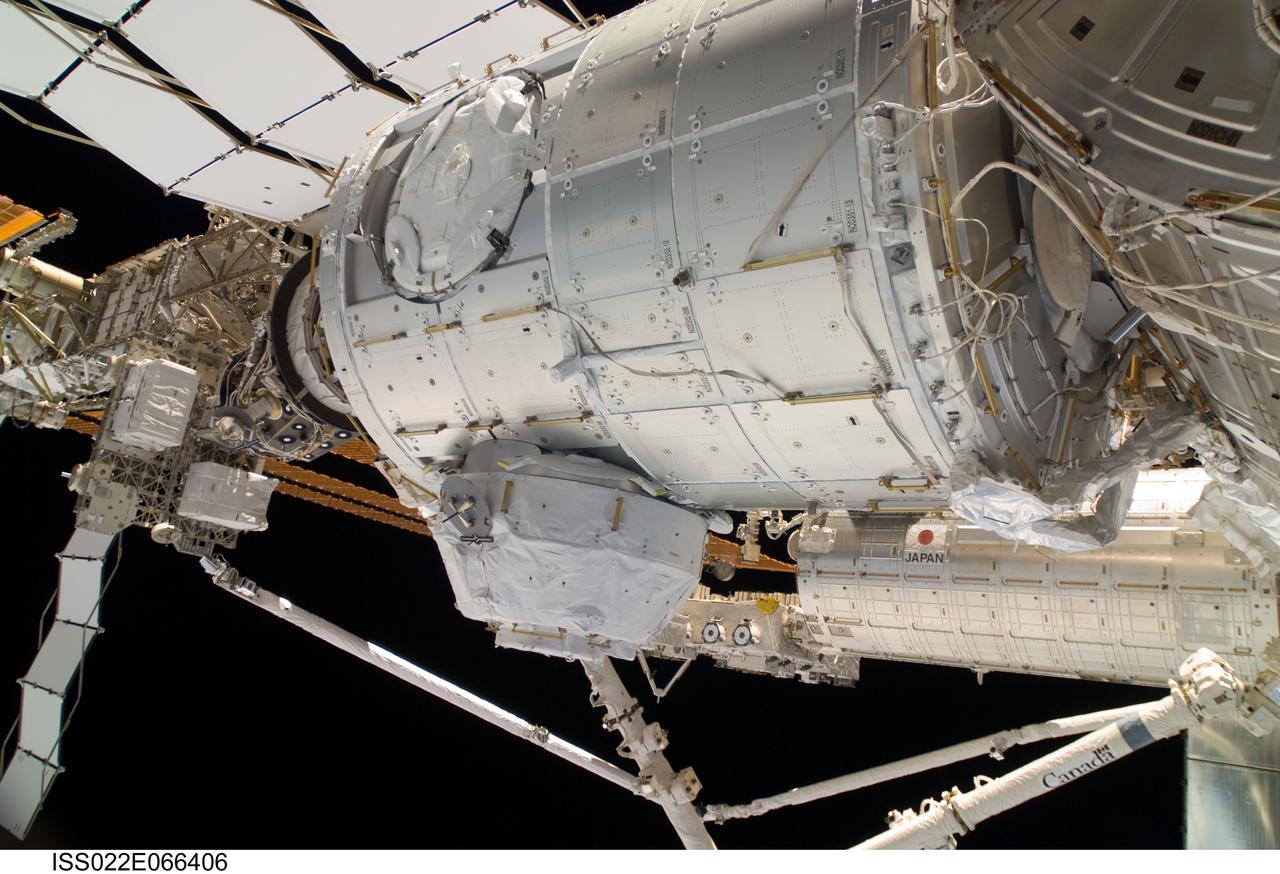
ISS022-E-066406 (16 Feb. 2010) --- In the grasp of the Canadarm2, the Pressurized Mating Adapter 3 (PMA-3) is relocated from the Harmony node to the open port on the end of the newly-installed Tranquility node. NASA astronauts Robert Behnken and Nicholas Patrick, both STS-130 mission specialists, operated the station?s robotic arm for the move, while Jeffrey Williams, Expedition 22 commander; and Japan Aerospace Exploration Agency (JAXA) astronaut Soichi Noguchi, Expedition 22 flight engineer, dealt with latches and bolts, connecting the port to its new home. Tranquility?s Cupola is visible at bottom center.
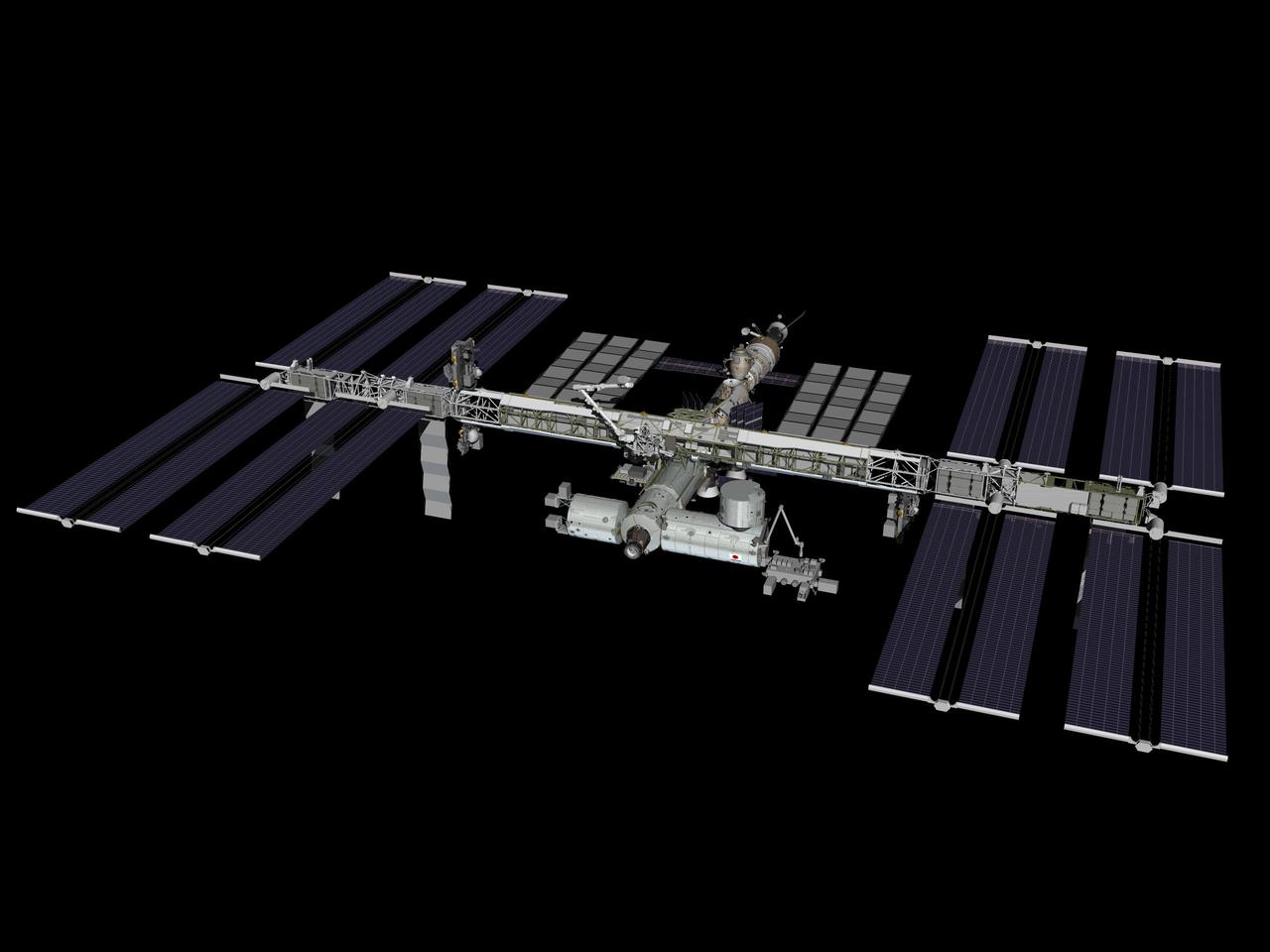
JSC2010-E-008591 (January 2010) --- Computer-generated artist?s rendering of the International Space Station as of Jan. 11, 2010. Over a two-day robotic operation, External Stowage Platform 3 (ESP-3) is relocated from the P3 truss upper site to the S3 truss lower site. Soyuz 21 (TMA-17) is docked to the Zarya nadir port. Progress 35 resupply vehicle is linked to the Pirs Docking Compartment and Soyuz 20 (TMA-16) remains docked to the Zvezda Service Module?s aft port.
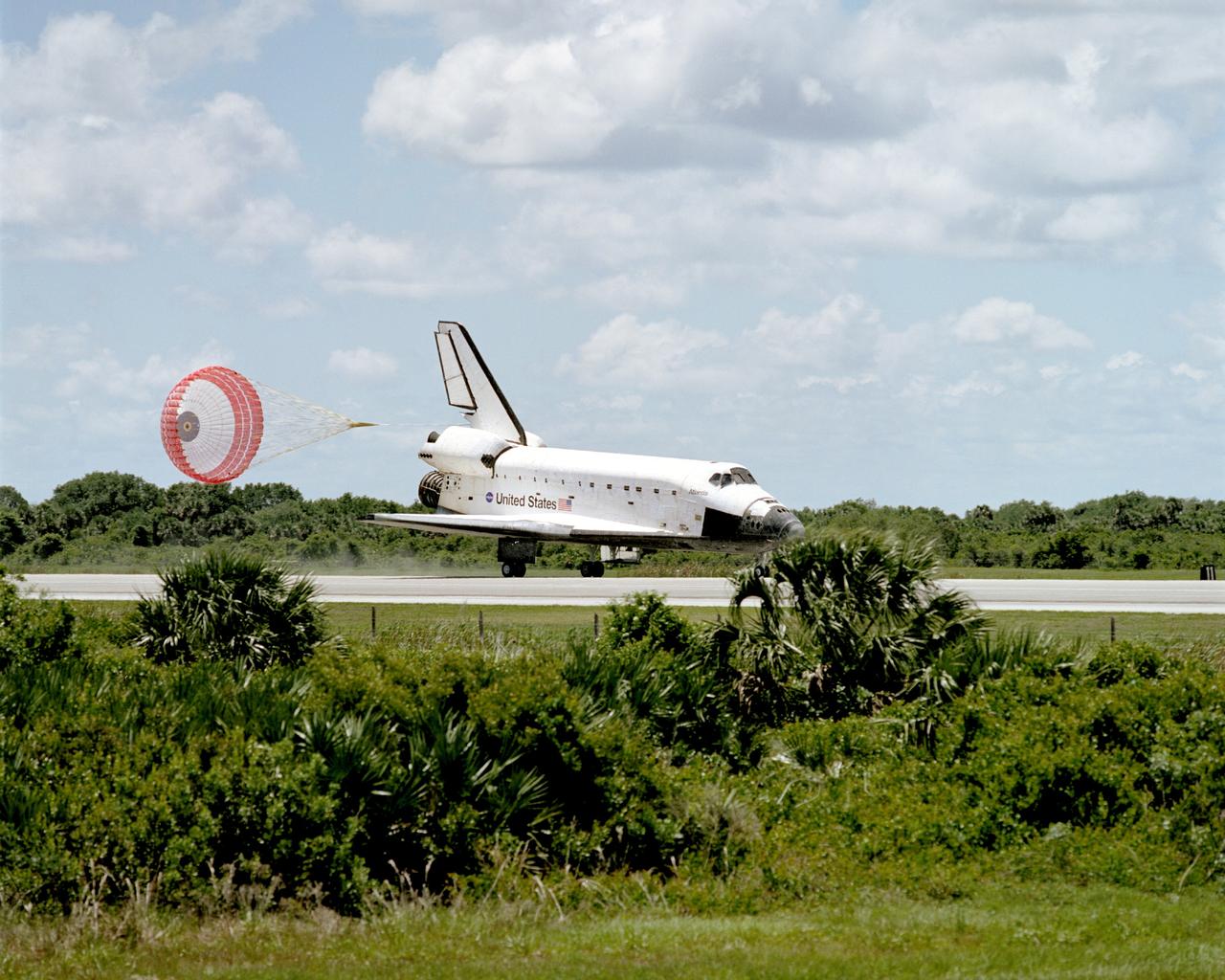
STS110-S-055 (19 April 2002) --- With its drag chute gear deployed, the Space Shuttle Atlantis eases to a stop on the runway at the KSC landing facility to complete the nearly 11-day STS-110 journey. Astronaut Michael J. Bloomfield, mission commander, eased Atlantis to a textbook landing on runway 3-3 at the Florida spaceport at 12:27 p.m. (EDT), April 19, 2002, under clear skies and light winds. The landing completed a 4.5-million-mile mission that saw successful delivery and installation of the centerpiece of the International Space Station?s main truss and the inaugural run of the first space railcar, the Mobile Transporter.
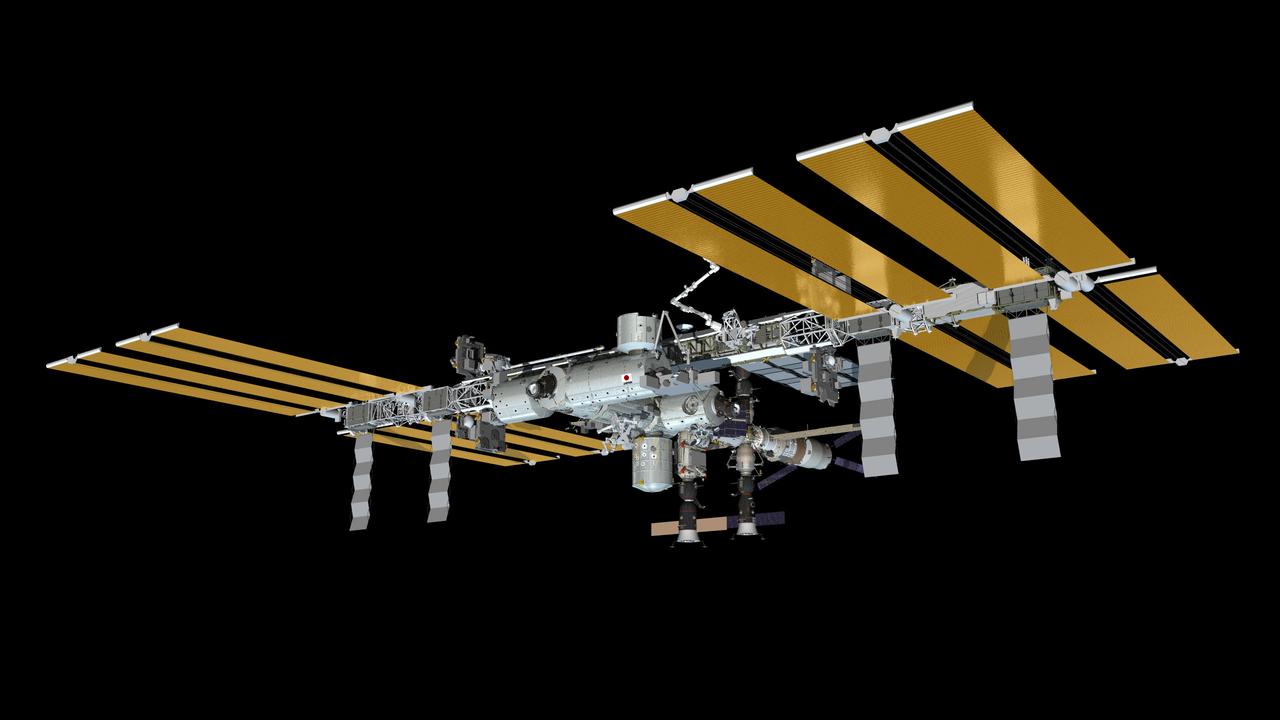
JSC2012-E-064351 (May 2012) --- Computer-generated artist?s rendering of the International Space Station as of May 16, 2012. Soyuz 30 (TMA-04M) docks to the Poisk Mini-Research Module 2 (MRM2), bringing Expedition 31/32 crew members (Padalka, Revin, Acaba) to the space station. Progress 47 is docked to the Pirs Docking Compartment. European Space Agency?s Automated Transfer Vehicle-3 (ATV-3) ?Edoardo Amaldi? is attached to the Zvezda Service Module. Soyuz 29 (TMA-03M) is linked to the Rassvet Mini-Research Module 1 (MRM1). Photo credit: NASA
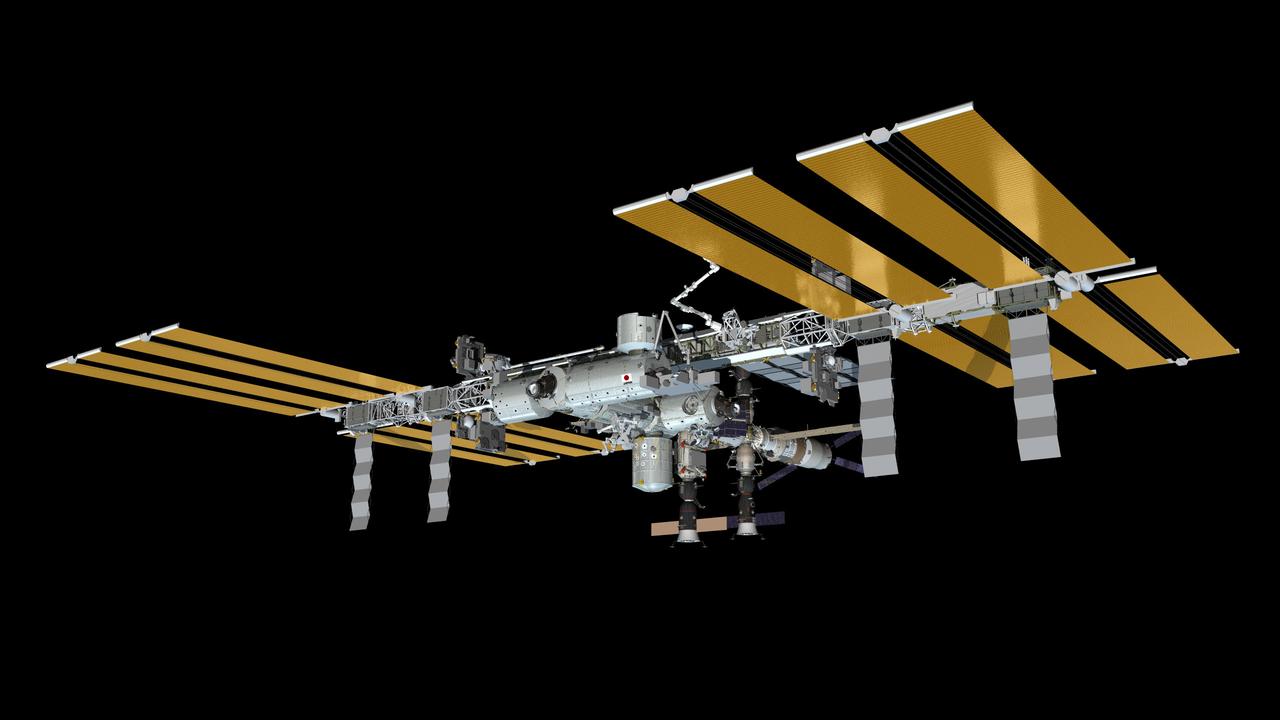
JSC2012-E-103017 (July 2012) --- Computer-generated artist?s rendering of the International Space Station as of July 17, 2012. Soyuz 31 (TMA-05M) docks to the Rassvet Mini-Research Module 1 (MRM1), bringing Expedition 32 crew members (Sunita Williams, Yuri Malenchenko, Aki Hoshide) to the space station. Progress 47 is linked to the Pirs Docking Compartment. European Space Agency?s Automated Transfer Vehicle-3 (ATV-3) ?Edoardo Amaldi? is attached to the Zvezda Service Module and Soyuz 30 (TMA-04M) is docked to the Poisk Mini-Research Module 2 (MRM2). Photo credit: NASA
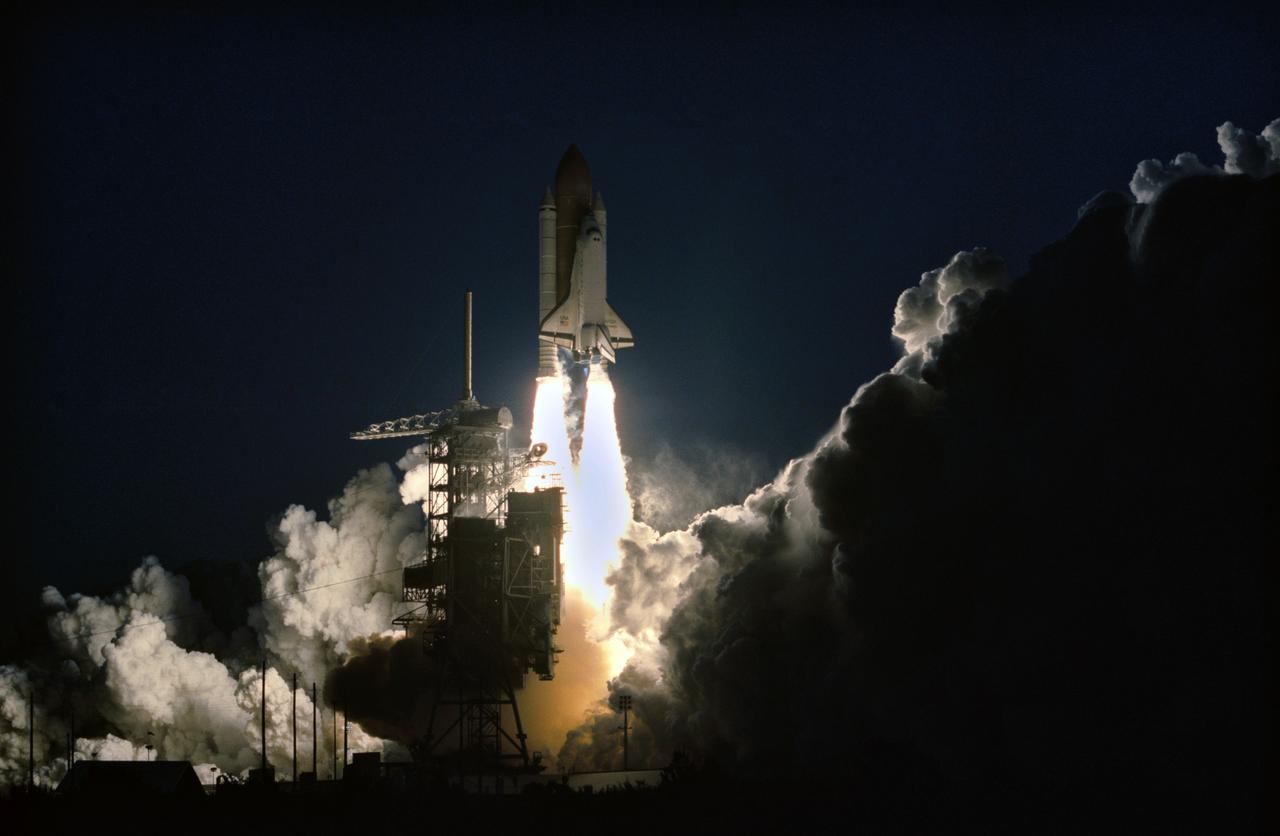
STS060-S-105 (3 Feb 1994) --- The Space Shuttle Discovery heads toward an eight-day mission in Earth orbit with five NASA astronauts and a Russian cosmonaut aboard. Liftoff occurred as scheduled at 7:10 a.m. (EST), February 3, 1994. Aboard the spacecraft were astronauts Charles F. Bolden Jr., commander; Kenneth S. Reightler Jr., pilot; Franklin R. Chang-Diaz, payload commander; and N. Jan Davis and Ronald M. Sega, mission specialists, along with Russian cosmonaut Sergei K. Krikalev, also a mission specialist.
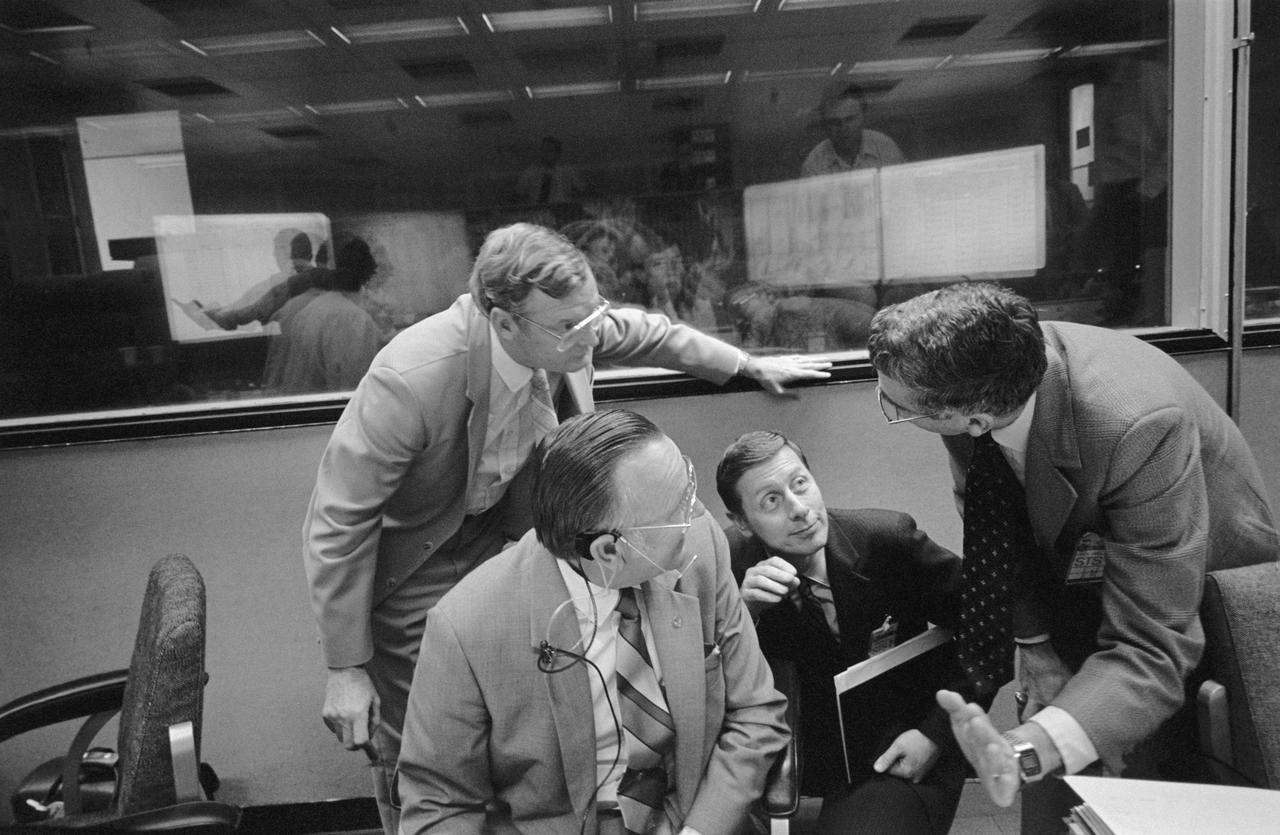
Mission Control Activities during the STS-3 Mission, Day-4 with: Maj. Gen. James A. Abrahamson, Associate Administrator of the Space Transportation System (STS), NASA Hdqs., conversing with Dr. Kraft; Glynn S. Lunney, Manager, Space Shuttle Program Office, JSC, Aaron Cohen, Manager, Space Shuttle Orbiter Project Office; and, J. E. Conner, Ford Aerospace Engineer at the Instrumentation and Communications Officer (INCO) Console position. 1. Glynn S. Lunney 2. Major General James A. Abrahamson 3. Aaron Cohen 4. J. E. Conner 5. Dr. Christopher Kraft JSC, Houston, TX