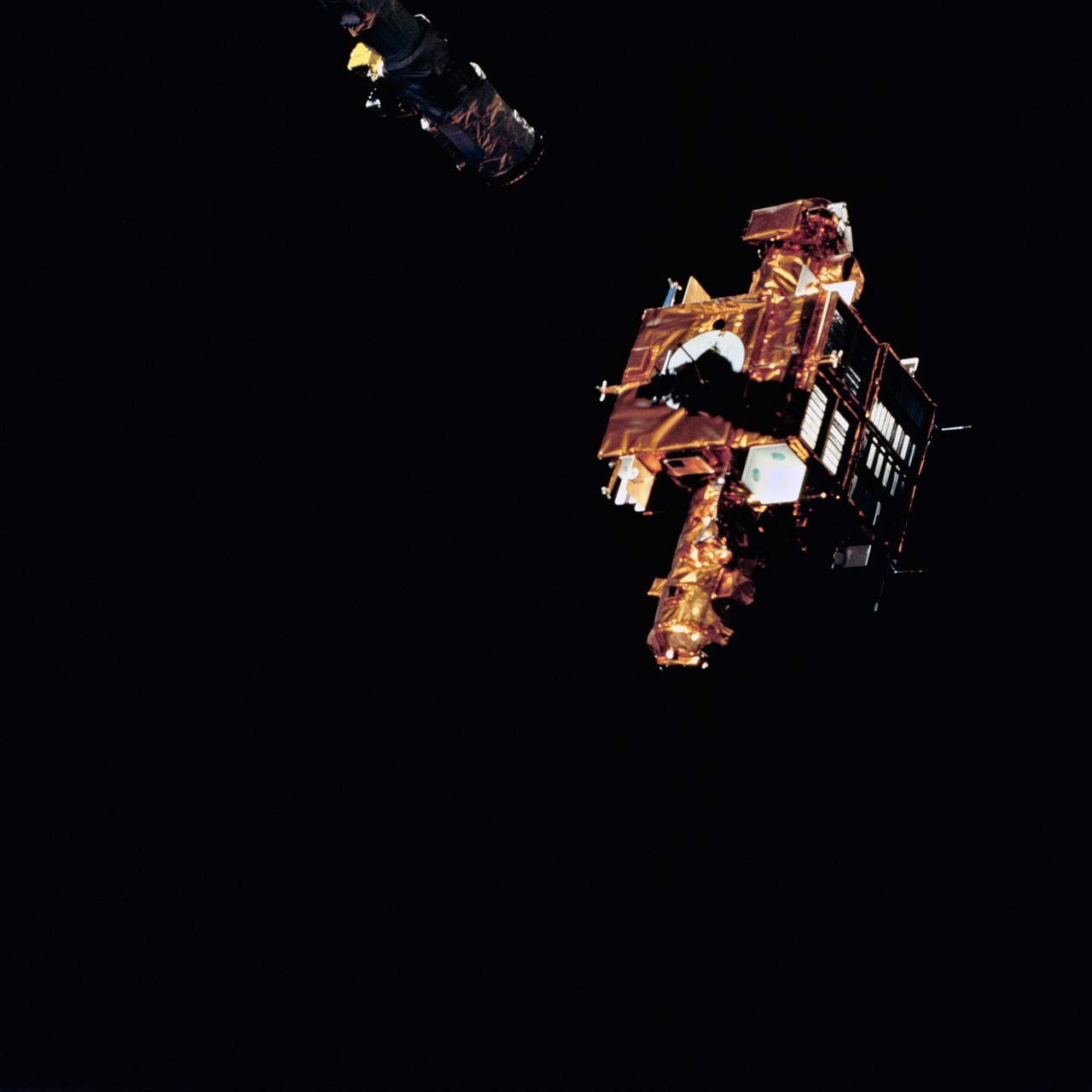
STS064-76-035 (15 Sept. 1994) --- Backdropped against the darkness of space, the Shuttle Pointed Autonomous Research Tool for Astronomy 201 (SPARTAN-201) satellite is lined up with the space shuttle Discovery's Remote Manipulator System (RMS) arm for re-capture. The free-flying spacecraft had remained some 40 miles away from Discovery for over two days. Photo credit: NASA or National Aeronautics and Space Administration
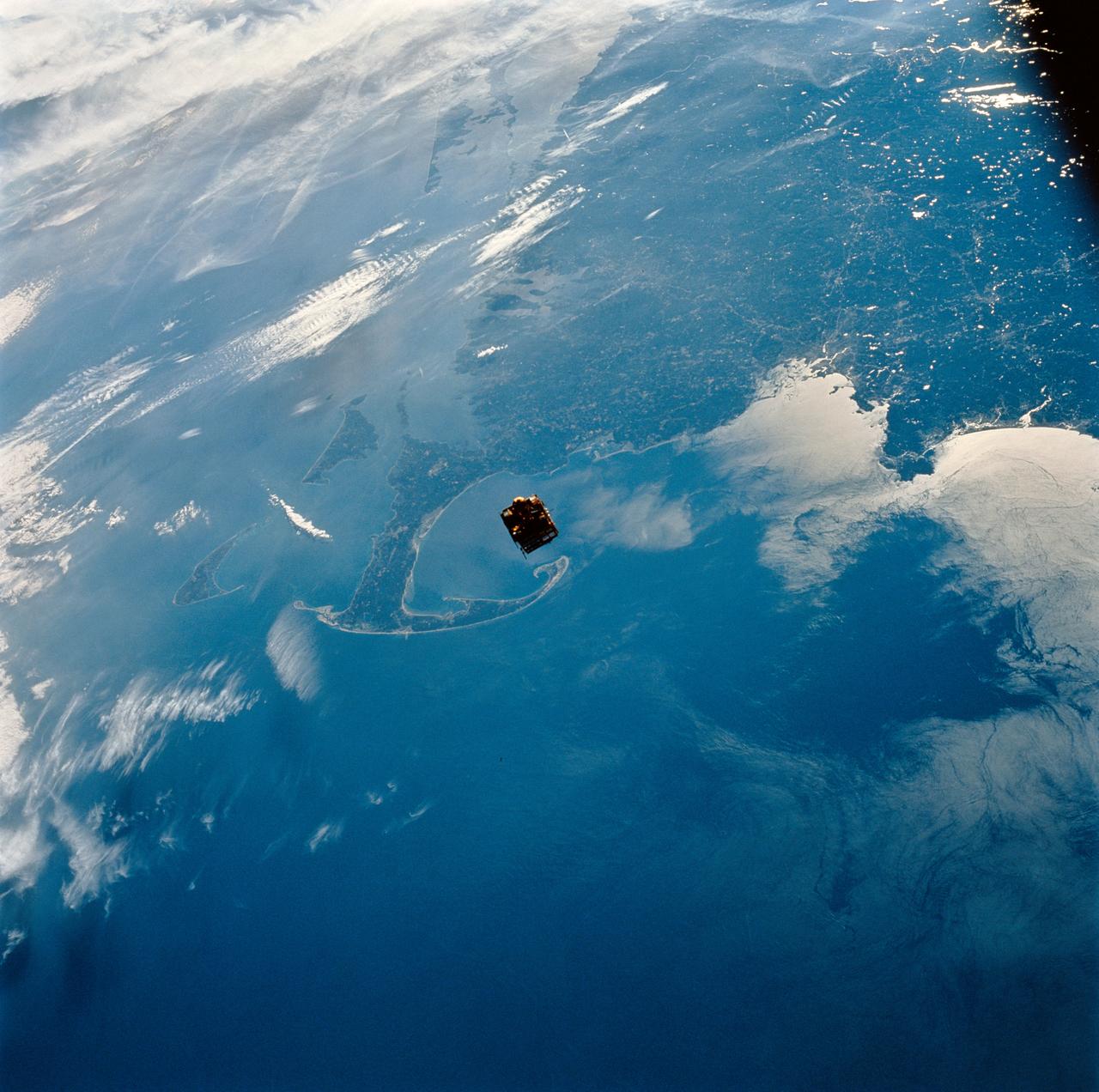
STS064-111-041 (12 Sept. 1994) ---- Backdropped against New England's coast, the Shuttle Pointed Autonomous Research Tool for Astronomy (SPARTAN-201) satellite begins its separation from the space shuttle Discovery. The free-flying spacecraft, 130 nautical miles above Cape Cod at frame center, remained some 40 miles away from Discovery until the crew retrieved it two days later. Photo credit: NASA or National Aeronautics and Space Administration
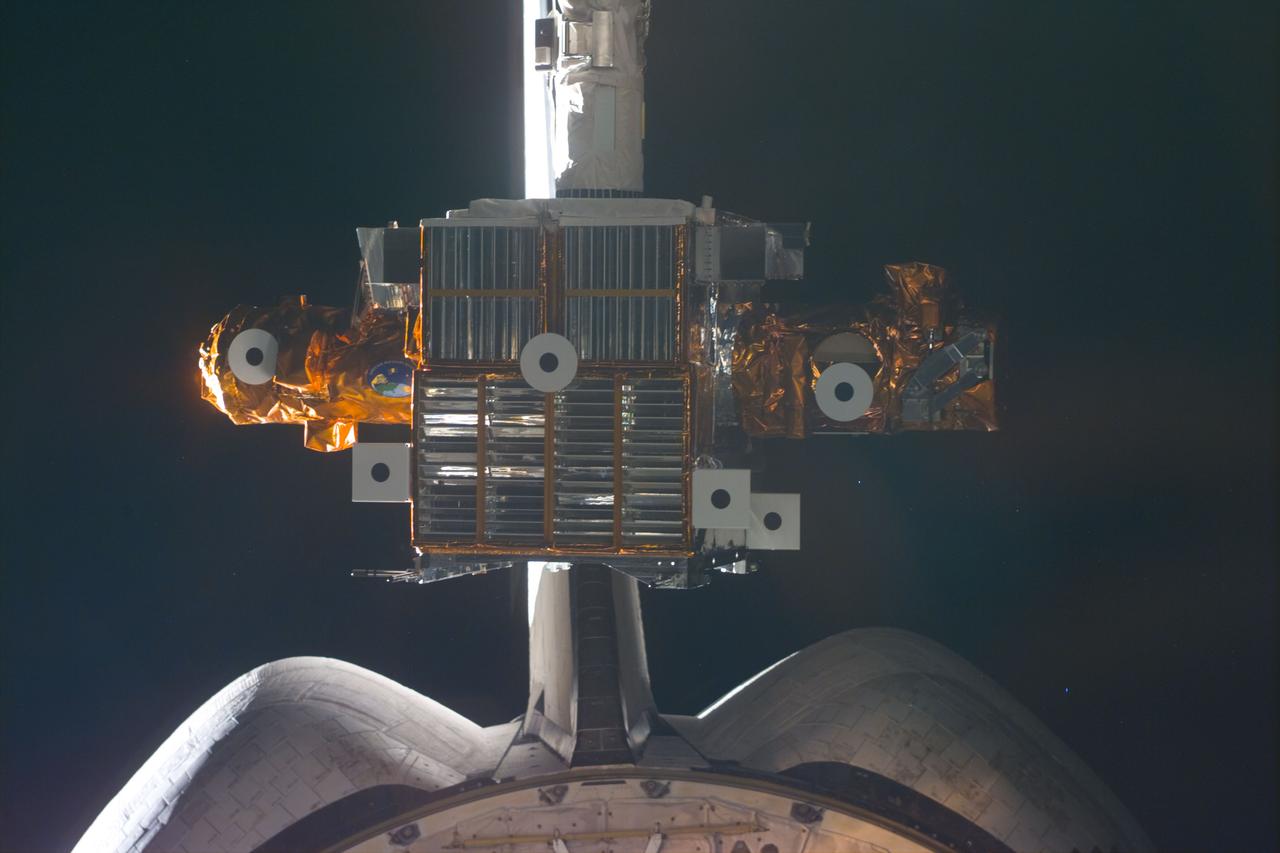
STS095-E-5143 (3 Nov. 1998) --- The Spartan 201-05 satellite is pictured prior to its berthing in the cargo bay of the Space Shuttle Discovery. The photo was taken with an electronic still camera (ESC) at 4:00:58 GMT, Nov. 3.
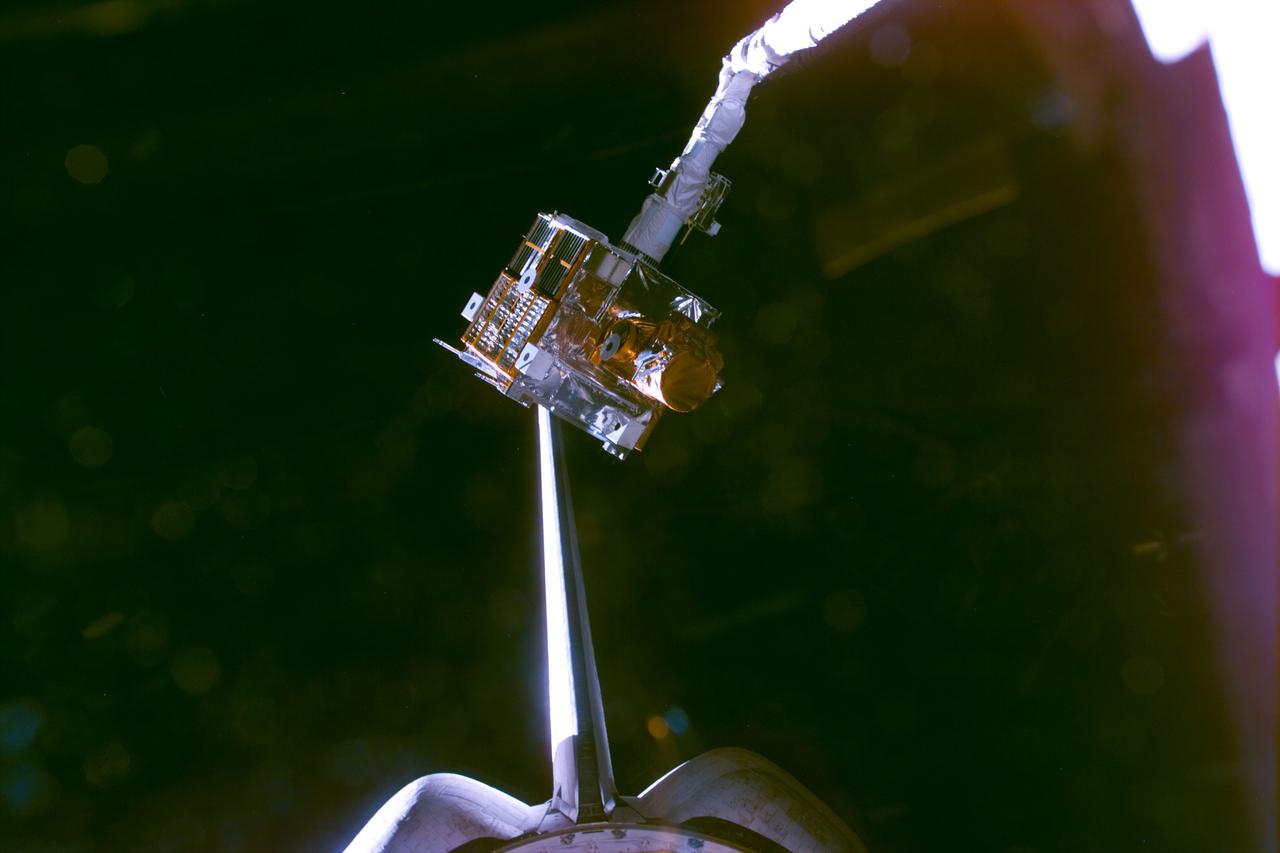
STS095-E-5139 (3 Nov. 1998) --- In the grasp of Discovery's remote manipulator system (RMS) arm, the Spartan 201-05 satellite hovers over the cargo bay prior to its berthing there. The photo was taken with an electronic still camera (ESC) at 03:59:12 GMT, Nov. 3.
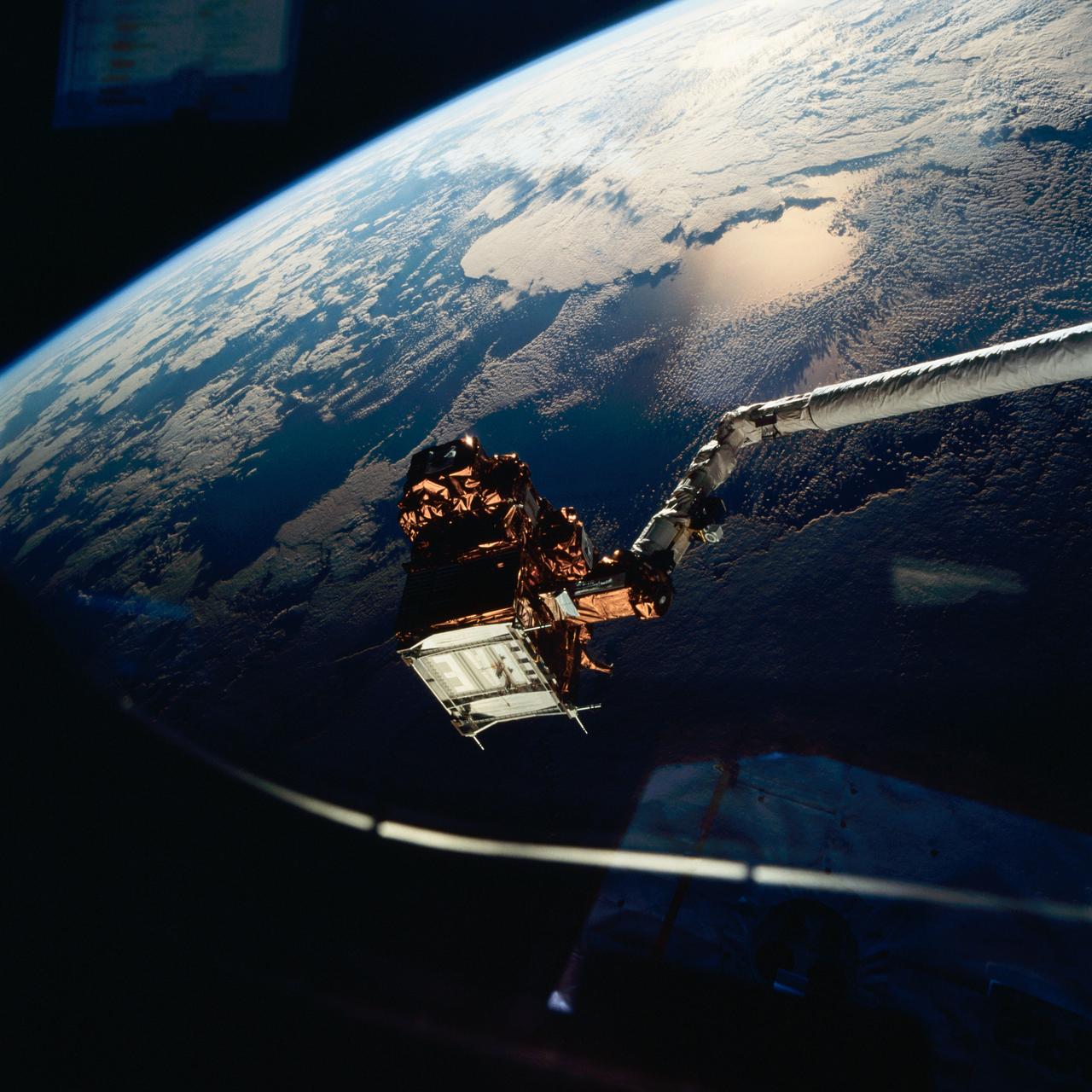
STS077-711-054 (21 May 1996) --- The Spartan 207 free flyer is held in the grasp of the Remote Manipulator System (RMS). As photographed through an overhead window on the Space Shuttle Endeavour?s aft flight deck, the satellite is backdropped against a heavily sunglinted horizon over the Middle East. The Spartan was re-captured by the six crew members on May 21, 1996 following a period of free-flight. The Endeavour crew spent a portion of the flight time in various activities involving the Spartan 207 and the related Inflatable Antenna Experiment (IAE). The Spartan project is managed by NASA?s Goddard Space Flight Center for NASA?s Office of Space Science, Washington, D.C.
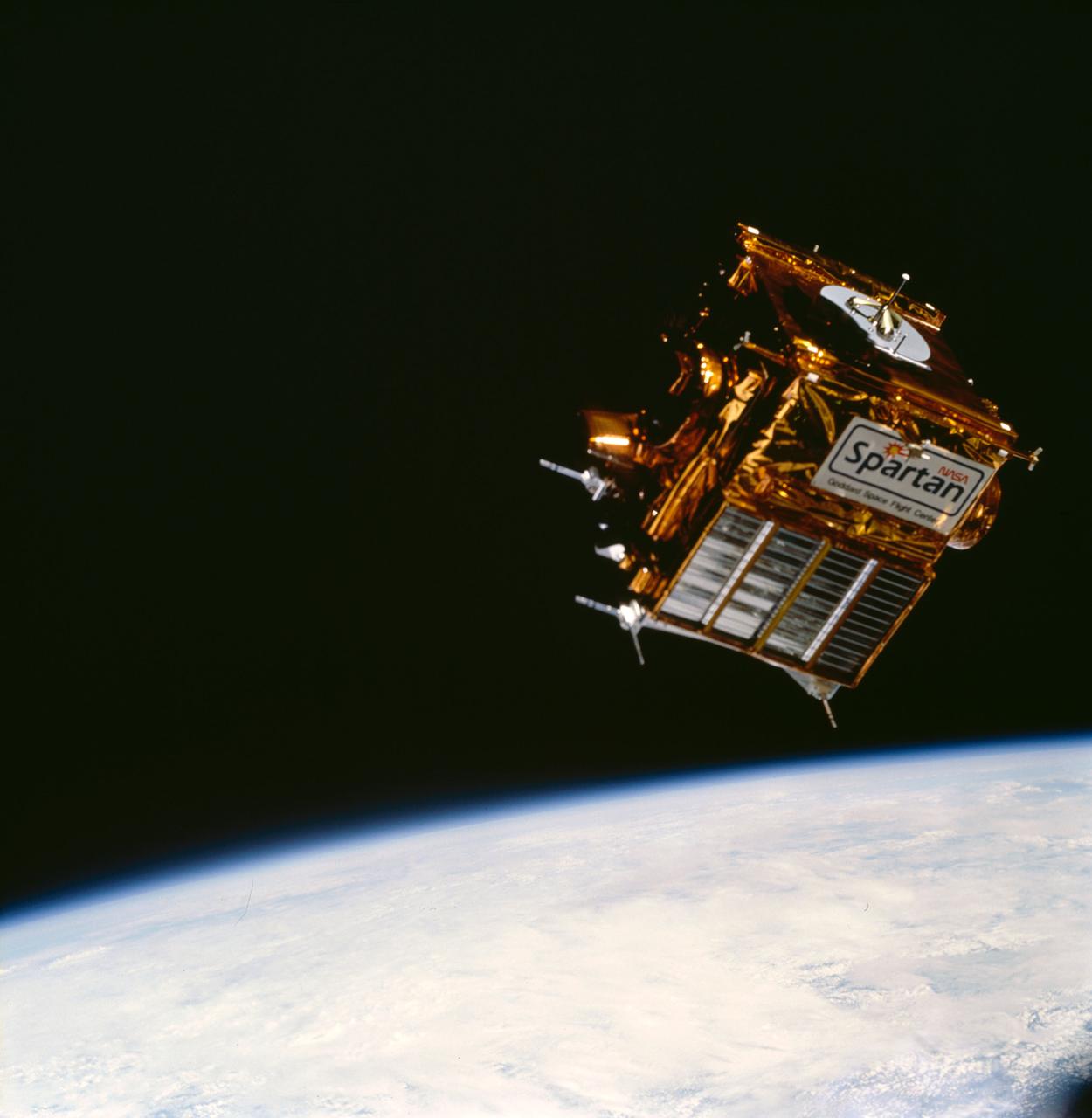
The blackness of space and part of Earth's horizon form the backdrop for this 70mm frame of the free-flying SPARTAN 204 mission. Carried into space by the STS-63 crewmembers, the satellite was later re-captured by the crew and used for maneuvering evaluations by the two space walkers, astronauts Bernard Harris and Michael Foale.
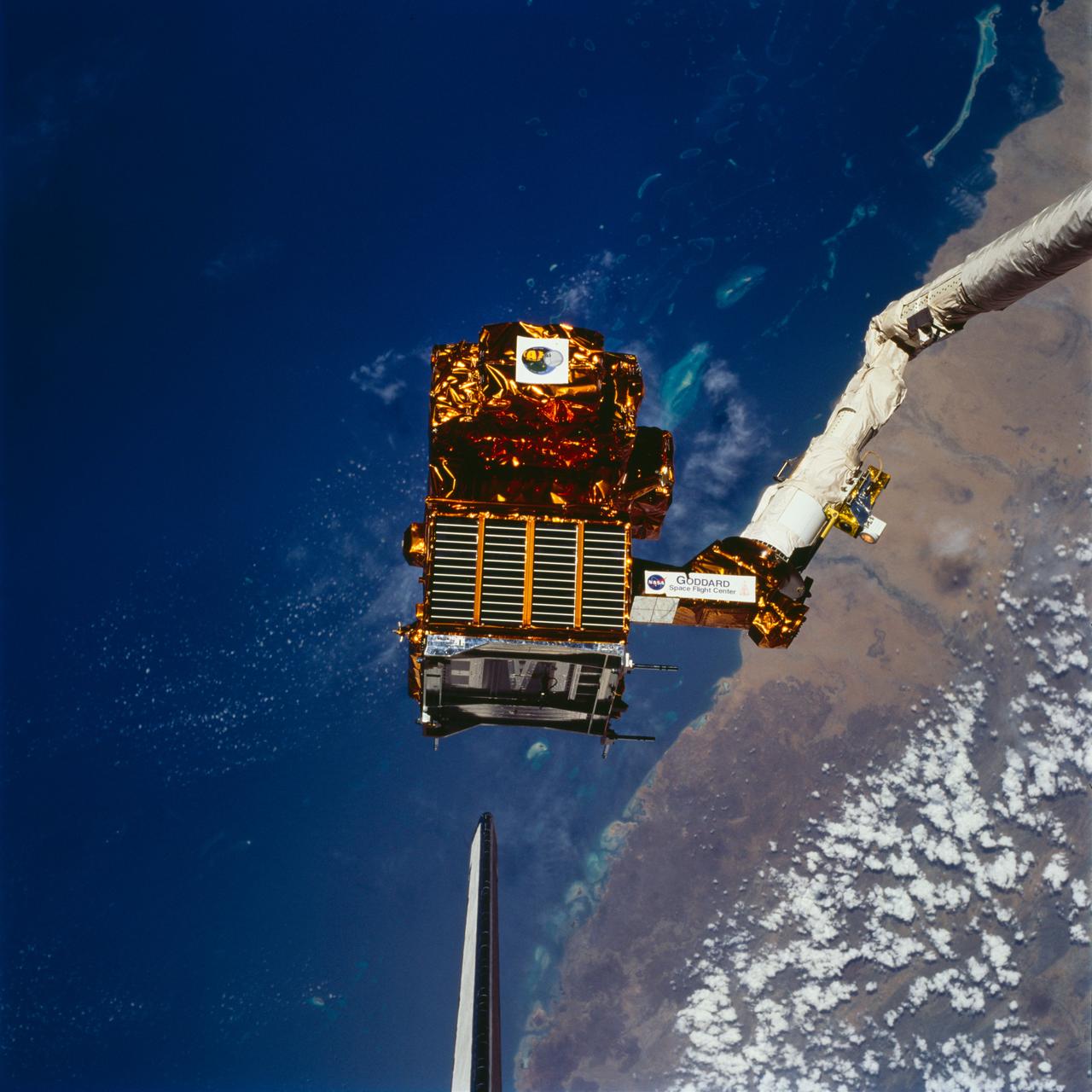
STS077-711-039 (21 May 1996) --- The Spartan 207 free flyer is held in a hover mode above its berth (out of frame) in the Space Shuttle Endeavour?s cargo bay in the grasp of the Remote Manipulator System (RMS). The satellite is backdropped over the coast of Saudi Arabia, about 200 miles south of Jiddah near Al Qunfudhah. The free-flyer was re-captured by the six crew members on May 21, 1996. The Endeavour crew spent a portion of the flight time in various activities involving the Spartan 207 and the related Inflatable Antenna Experiment (IAE). The Spartan project is managed by NASA?s Goddard Space Flight Center for NASA?s Office of Space Science, Washington, D.C.
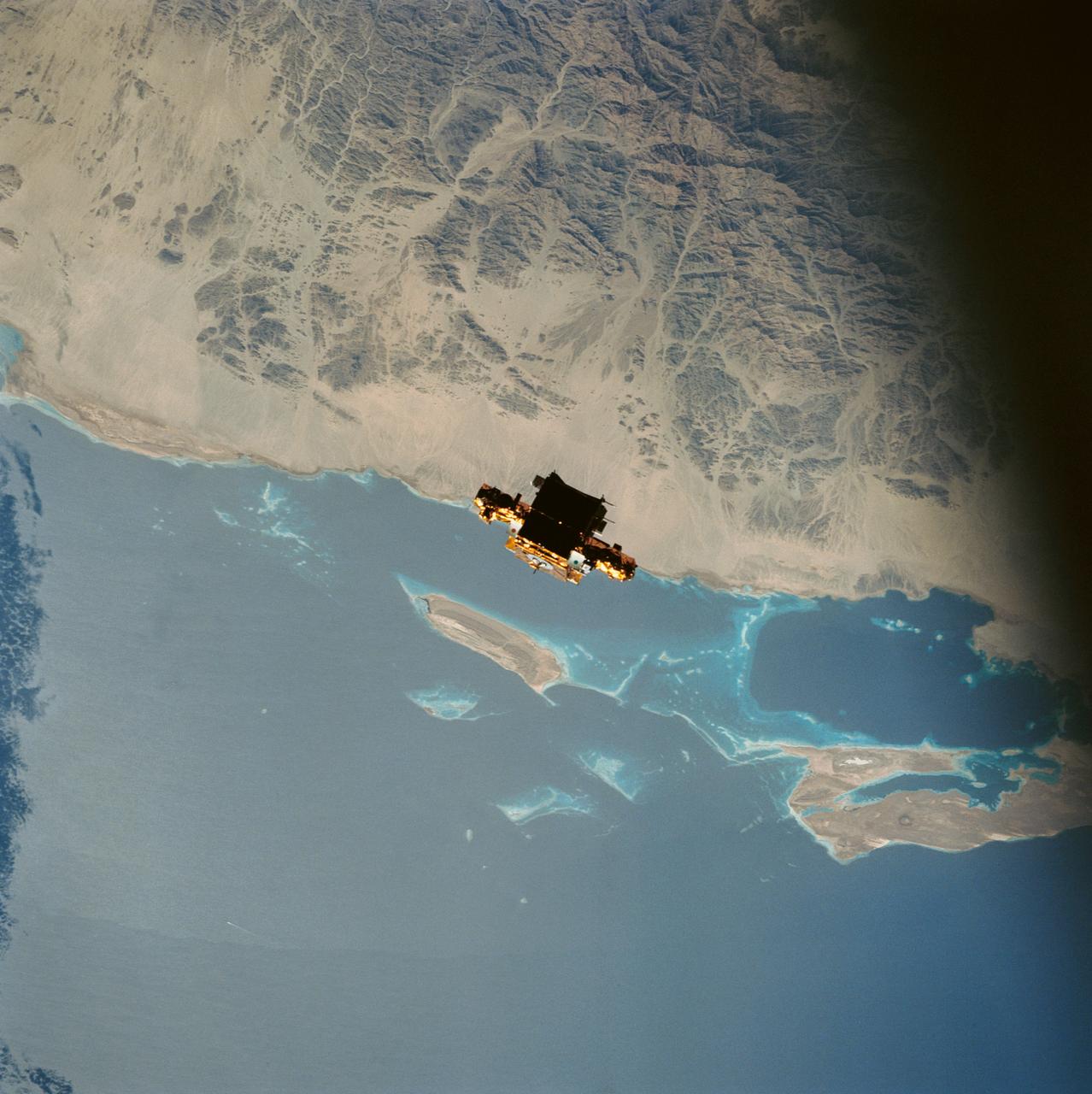
During STS-56, the Shuttle Pointed Autonomous Research Tool for Astronomy 201 (SPARTAN-201), a freeflying payload, was captured on 70mm film as it drifts over the Red Sea coast of Sudan. SPARTAN-201 was photographed by the crewmembers aboard Discovery, Orbiter Vehicle (OV) 103. On the mission's third day, crewmembers used the remote manipulator system (RMS) to lift the satellite from its support structure in OV-103's payload bay (PLB) and release it into space. SPARTAN-201 was later recaptured by OV-103's RMS and returned to Earth with the astronaut crew. The cape structure in the background is Ras abu Shagara, north of Port Sudan.
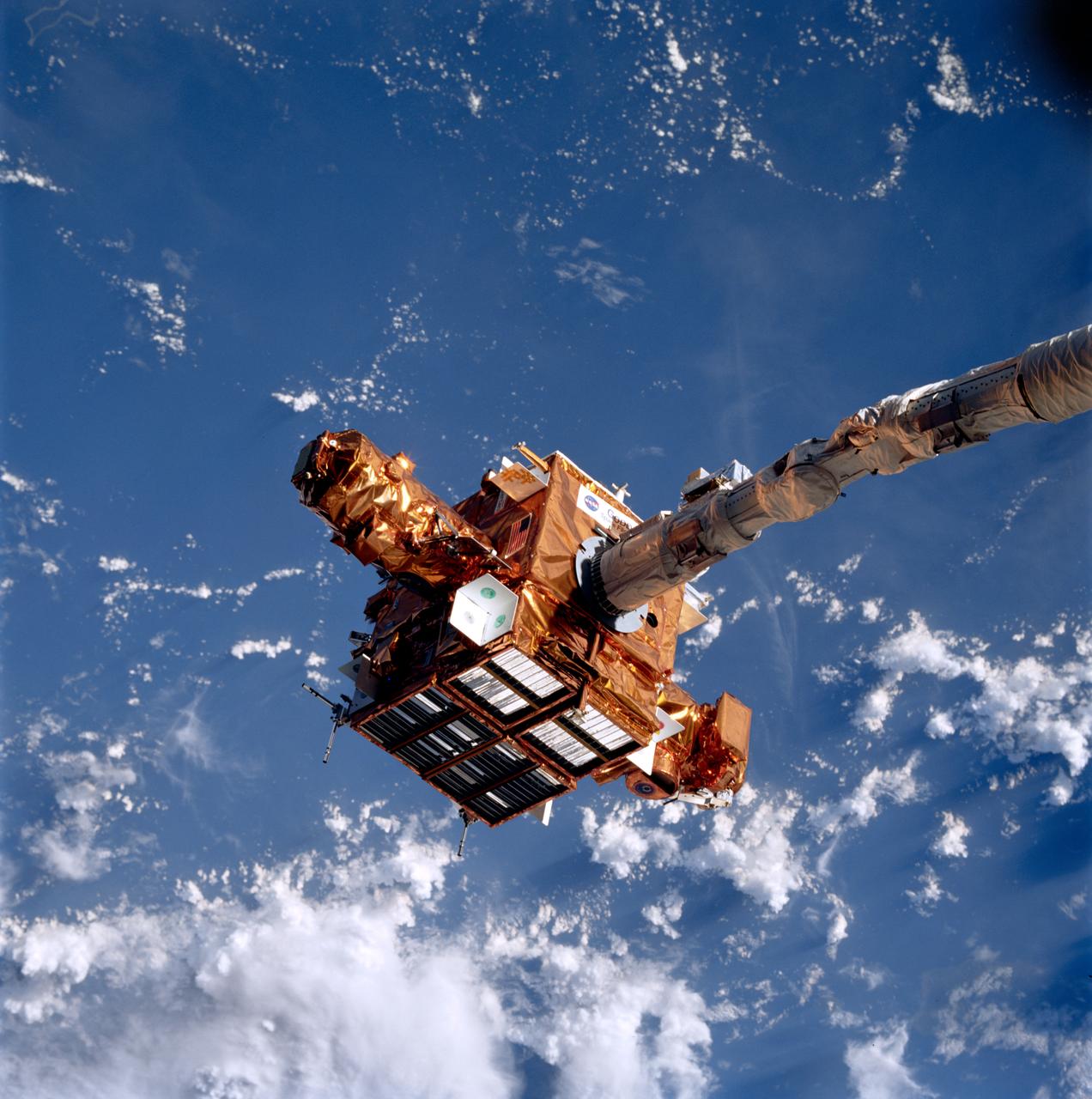
STS087-706-020 (19 November – 5 December 1997) --- The Spartan 201 satellite, held in the grasp of the Space Shuttle Columbia's Remote Manipulator System (RMS) arm, is backdropped over white clouds and blue waters of the Pacific Ocean. Long Island, off the coast of Papua New Guinea, is barely visible in the lower left corner.
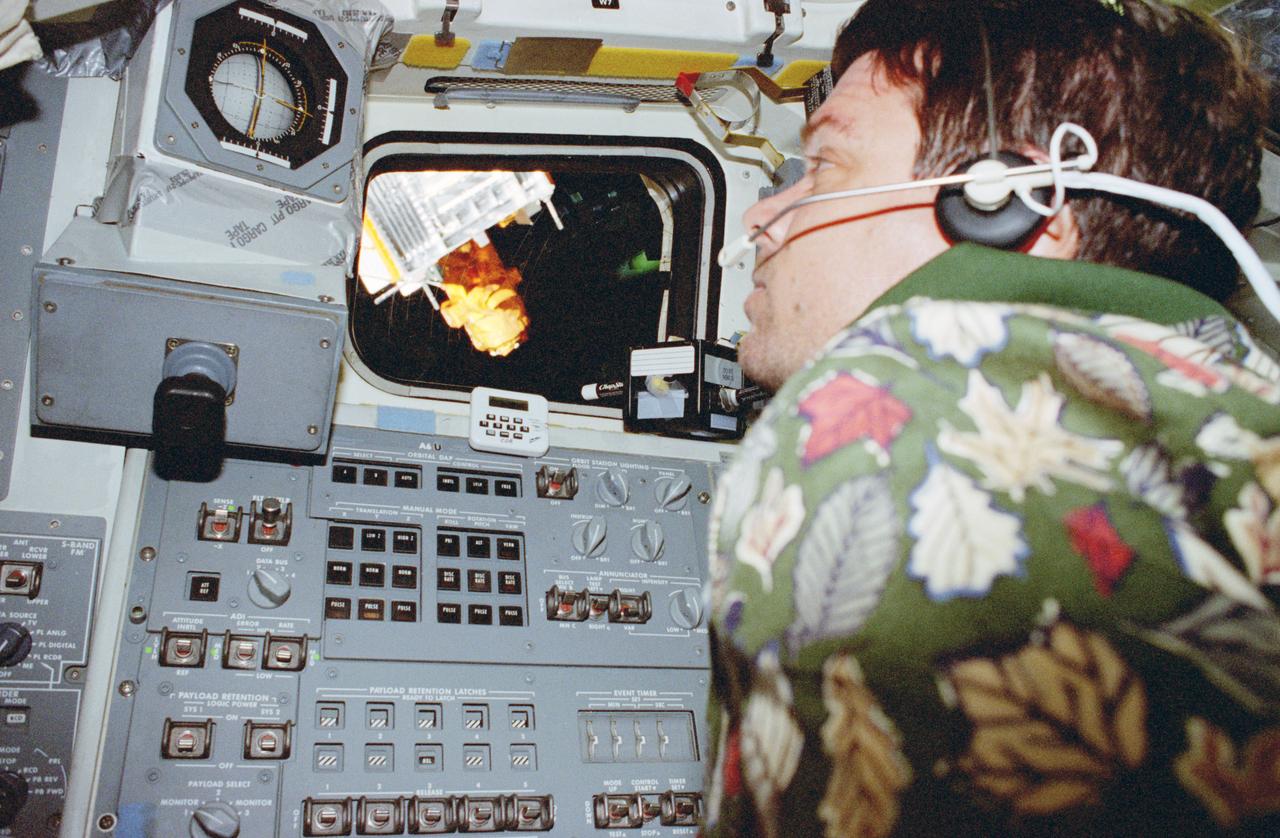
STS087-320-028 (19 November – 5 December 1997) --- Astronaut Kevin R. Kregel, mission commander, studies the movement of the SPARTAN-201 satellite while communicating with ground controllers and fellow crew members. He is using the Space Shuttle Columbia's aft starboard window to monitor the free-flyer, which earlier had been deployed from Columbia’s cargo bay.
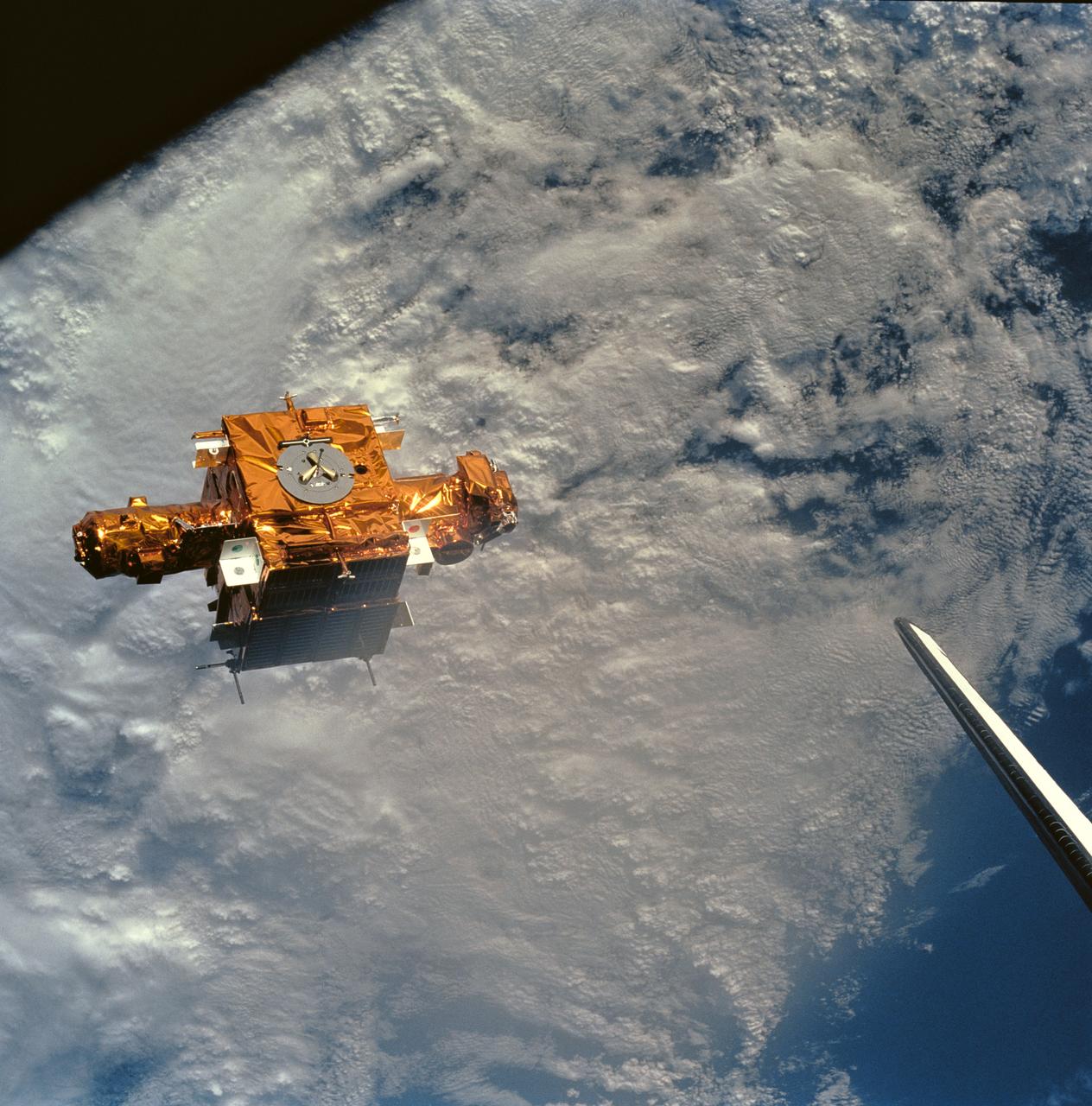
STS056-90-034 (8-17 April 1993) --- Backdropped against heavy cloud cover over the Mediterranean Sea, the SPARTAN-201 satellite was captured on 70mm by crewmembers aboard the Space Shuttle Discovery. SPARTAN is a free-flying payload designed to study the solar wind and part of the sun's corona. The project was conceived in the late 1970s to take advantage of the opportunity offered by the Space Shuttle to provide more observation time for the increasingly more sophisticated experiments than the five to ten minutes provided by sounding rocket flights. On the mission's third day, Astronaut Ellen Ochoa, Mission Specialist, used the remote manipulator system (RMS) to lift the satellite from its support structure on Discovery and release it in space. The reusable craft was later recaptured and returned to Earth with the crew. Note the tip of Discovery's vertical stabilizer at frame's edge.

S77-E-5065 (21 May 1996) --- With a cloudy horizon scene as a backdrop, the Spartan 207 free-flyer is held in the grasp of the Space Shuttle Endeavour's Remote Manipulator System (RMS) following its re-capture on May 21, 1996. The view was captured with an onboard Electronic Still Camera (ESC). The six-member crew has spent a portion of the early stages of the mission in various activities involving the Spartan 207 and the related Inflatable Antenna Experiment (IAE). The Spartan project is managed by NASA's Goddard Space Flight Center (GSFC) for NASA's Office of Space Science, Washington, D.C.
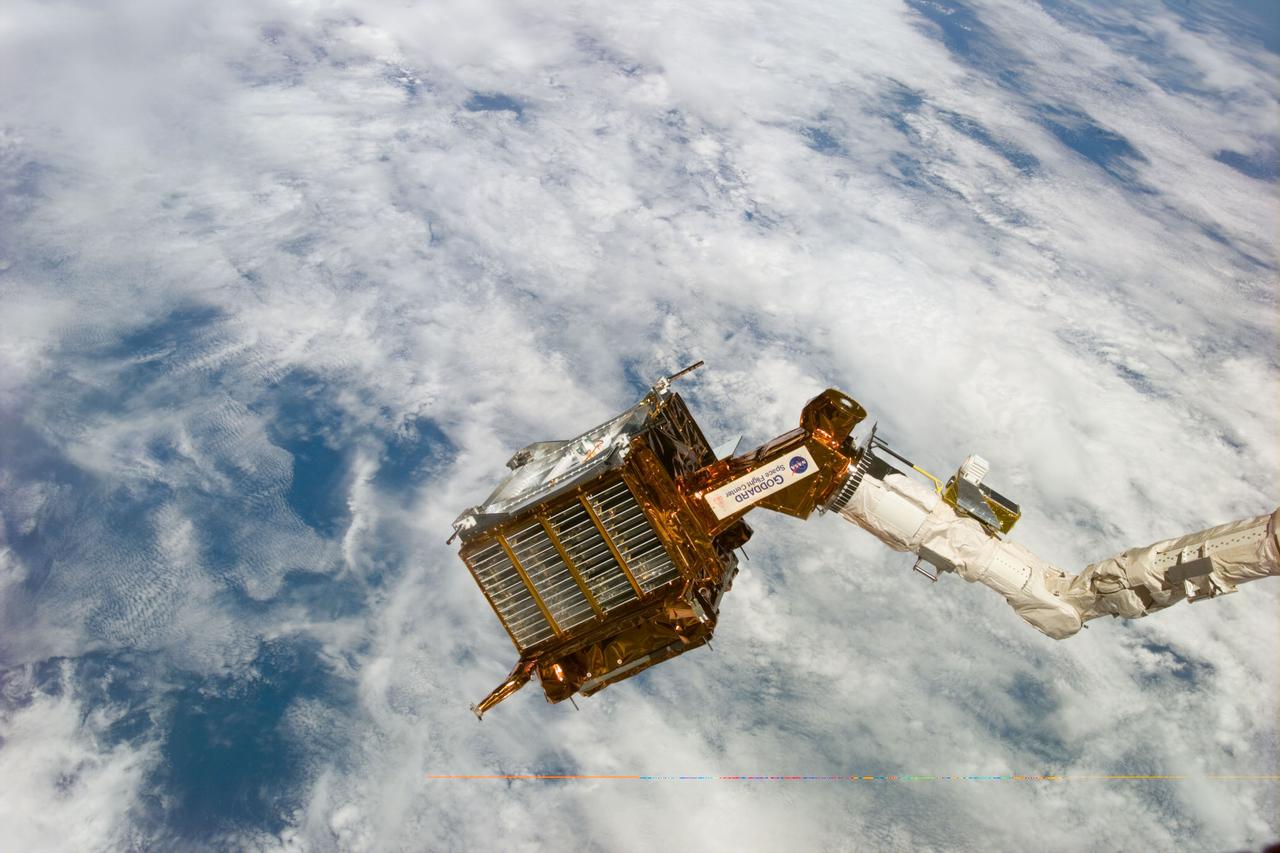
S77-E-5064 (21 May 1996)--- In this medium close-up view, captured by an Electronic Still Camera (ESC), the Spartan 207 free-flyer is held in the grasp of the Space Shuttle Endeavour's Remote Manipulator System (RMS) following its re-capture on May 21, 1996. The six-member crew has spent a portion of the early stages of the mission in various activities involving the Spartan 207 and the related Inflatable Antenna Experiment (IAE). The Spartan project is managed by NASA's Goddard Space Flight Center (GSFC) for NASA's Office of Space Science, Washington, D.C.
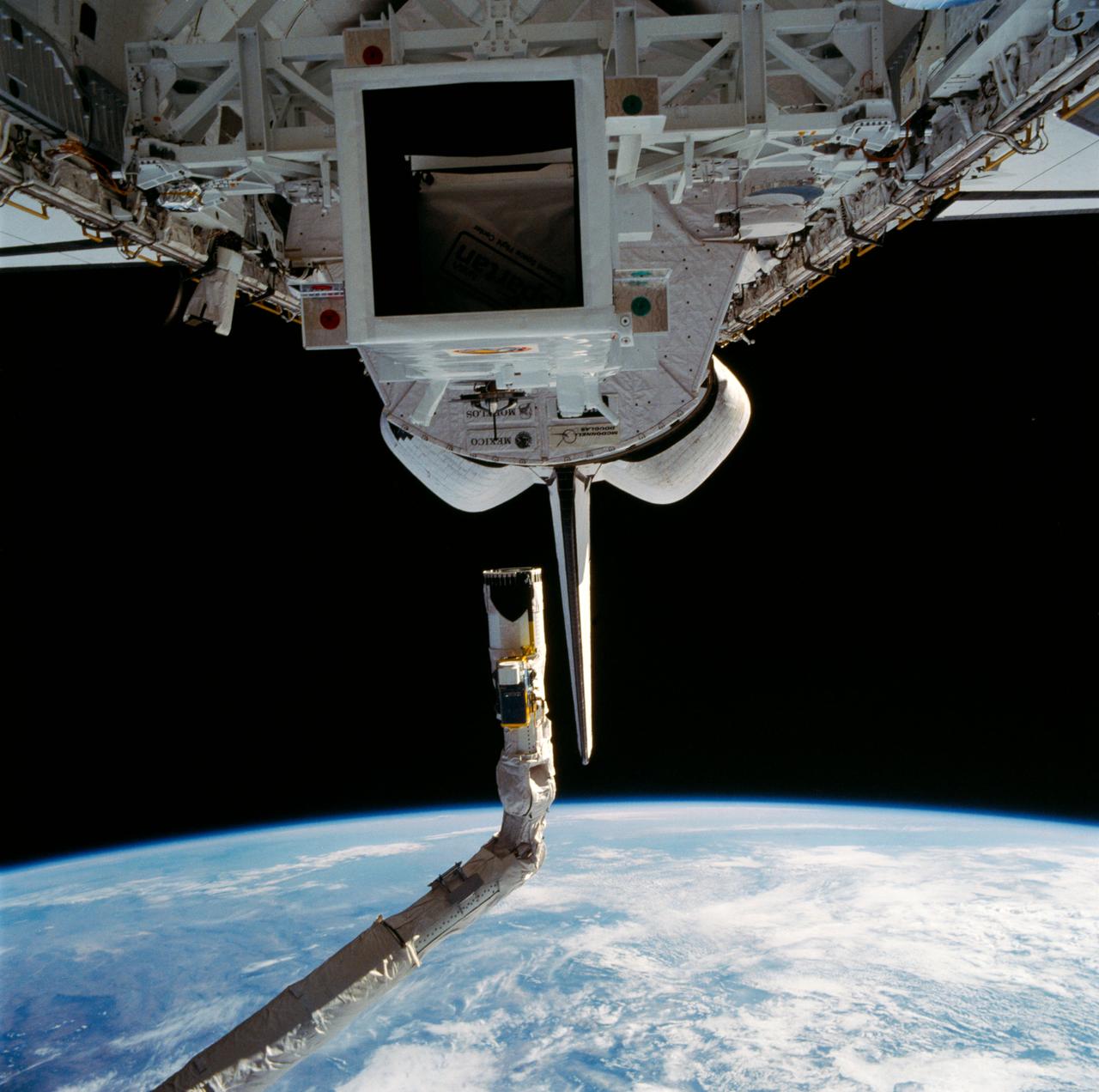
Spartan I satellte sits in the Discovery's payload bay prior to being deployed. Above it can be seen the remote manipulator system (RMS) arm and end effector. The Earth's horizon can also be seen above the orbiter.

KENNEDY SPACE CENTER, Fla. -- In preparation for Space Shuttle Mission STS-87, Columbia rolls out to Launch Complex 39B atop the crawler-transporter. STS-87 will be the fourth flight of the United States Microgravity Payload and the Spartan-201 deployable satellite. Launch is tentatively scheduled for Nov. 19

In preparation for Space Shuttle Mission STS-87, the United States Microgravity Payload-4 undergoes final processing in the Space Station Processing Facility before its move to Launch Complex 39B. STS-87 will be the fourth flight of the United States Microgravity Payload and the Spartan-201 deployable satellite
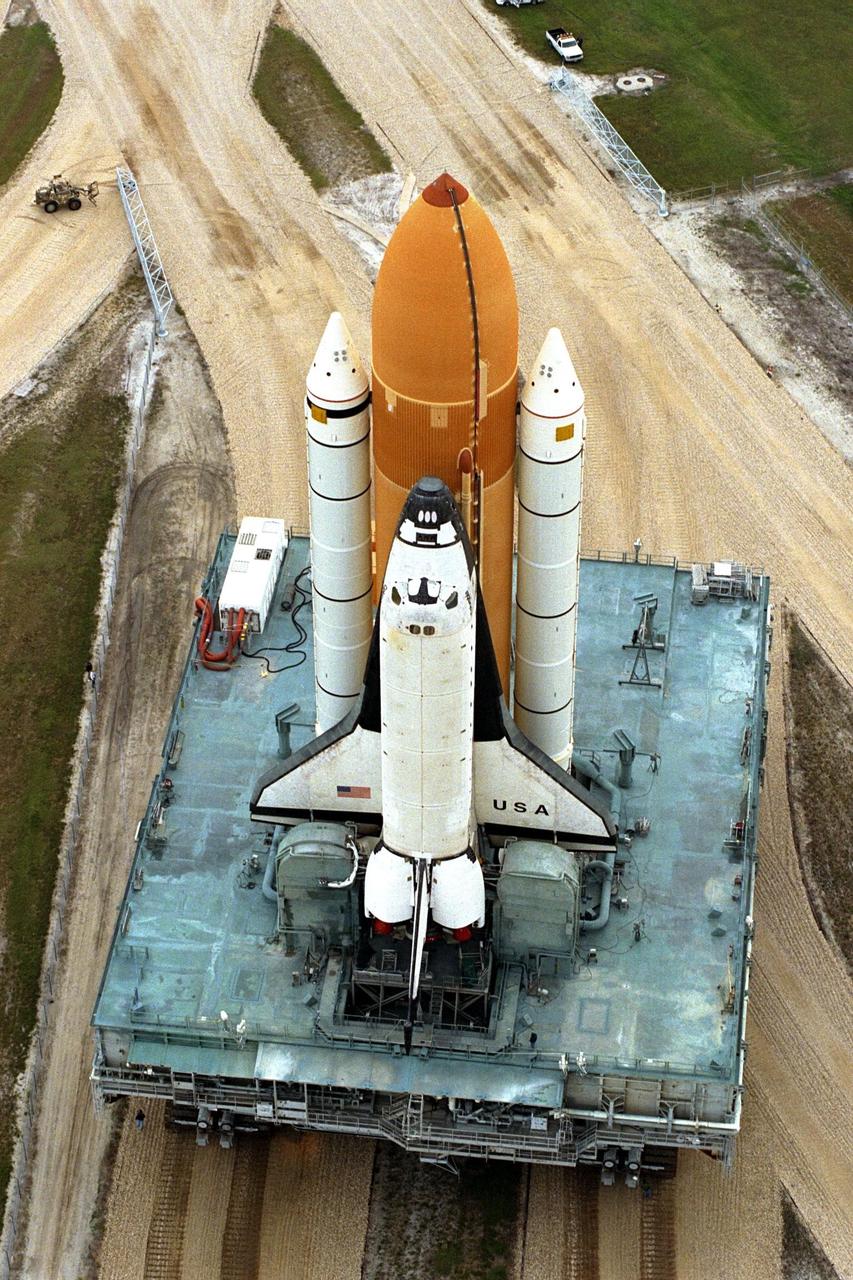
In preparation for Space Shuttle Mission STS-87, Columbia rolls out to Launch Complex 39B atop the crawler-transporter. STS-87 will be the fourth flight of the United States Microgravity Payload and the Spartan-201 deployable satellite. Launch is tentatively scheduled for Nov. 19
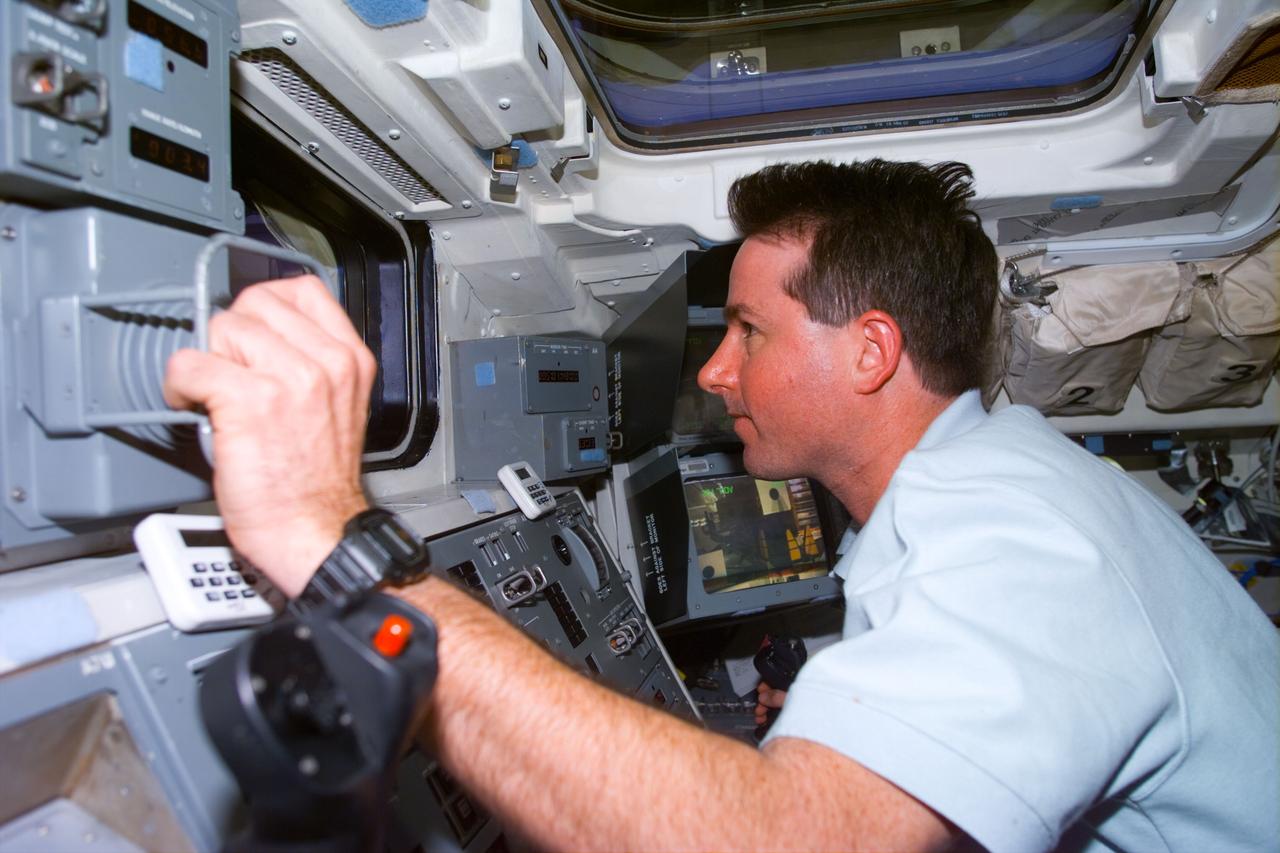
STS095-E-5131 (3 Nov. 1998) --- Astronaut Stephen K. Robinson, STS-95 mission specialist, is busy on Discovery's aft flight deck during operations to retrieve the free-flying Spartan 201-05 satellite. The photograph was taken with an electronic still camera (ESC) at 04:11:41 GMT, Nov. 3.
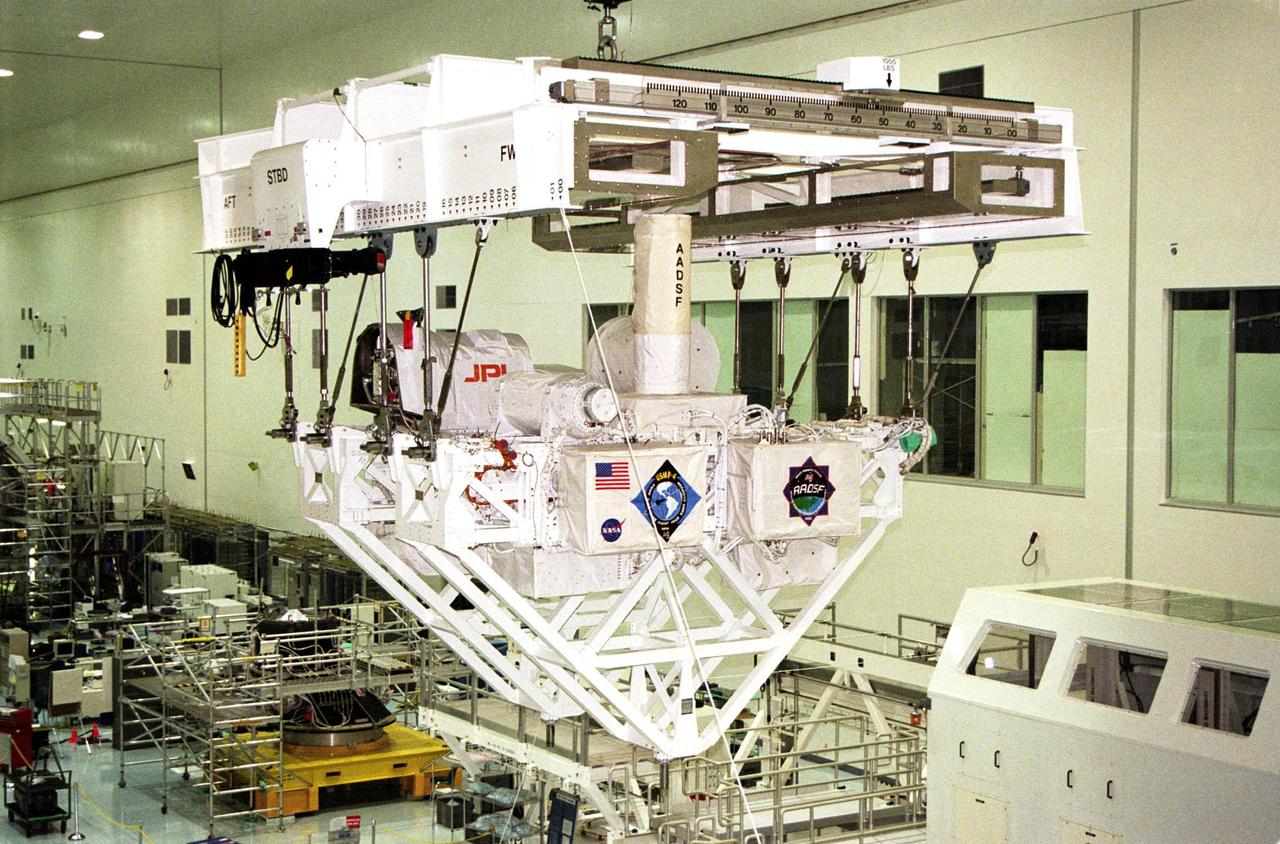
In preparation for Space Shuttle Mission STS-87, the United States Microgravity Payload-4 undergoes final processing in the Space Station Processing Facility before its move to Launch Complex 39B. STS-87 will be the fourth flight of the United States Microgravity Payload and the Spartan-201 deployable satellite
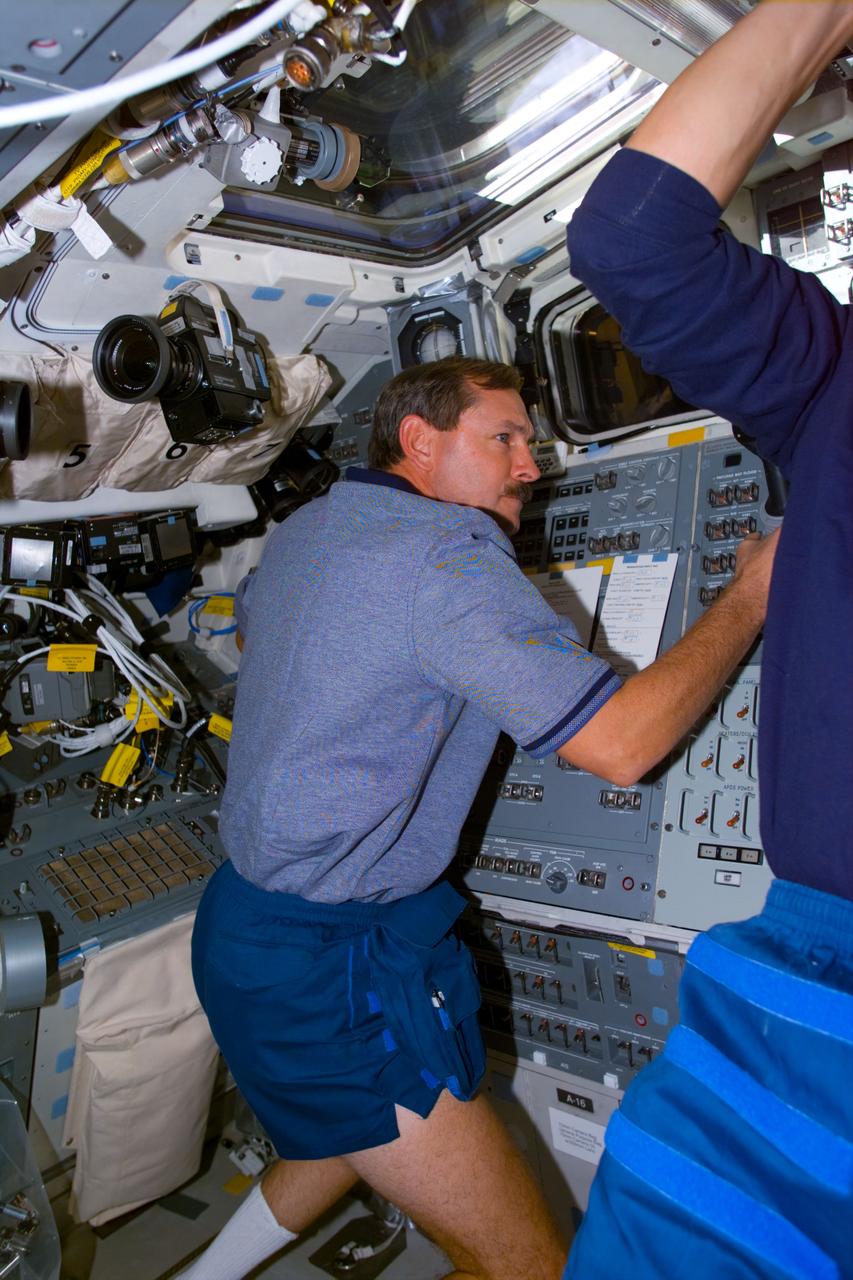
STS095-E-5134 (3 Nov. 1998) --- Astronaut Curtis L. Brown, STS-95 commander, on Discovery's aft flight deck during operations to retrieve the free-flying Spartan 201-05 satellite. The photograph was taken with an electronic still camera (ESC) at 3:17:38 GMT, Nov. 3.
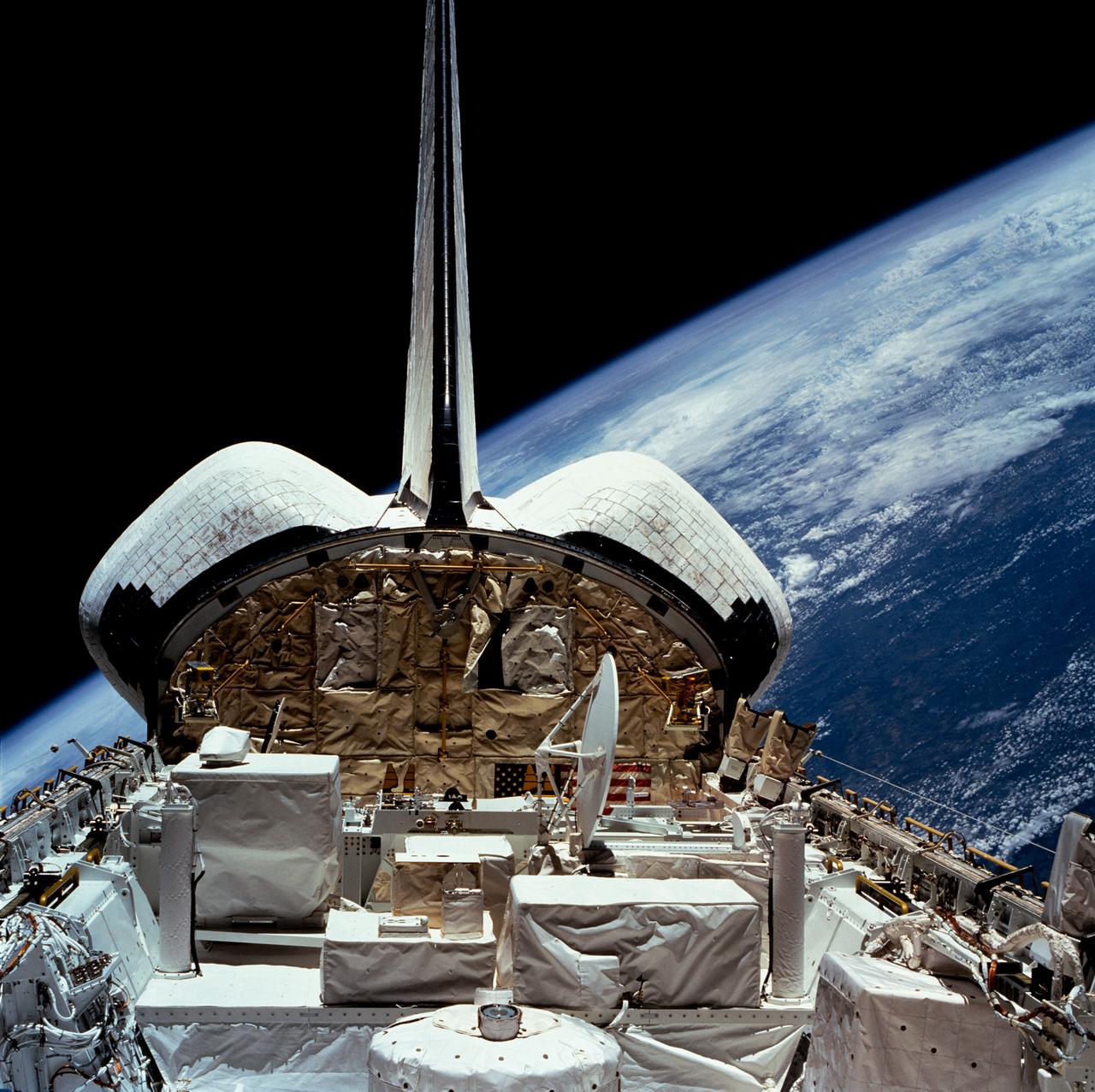
STS056-91-050 (8-17 April 1993) --- This 70mm frame shows the cargo bay of the Earth-orbiting Space Shuttle Discovery backdropped against clouds. Most of the elements of the ATLAS-2 payload can be seen, but missing is the SPARTAN-201 satellite which was in the midst of its separation from Discovery when the photo was made.

In preparation for Space Shuttle Mission STS-87, Columbia rolls out to Launch Complex 39B atop the crawler-transporter. STS-87 will be the fourth flight of the United States Microgravity Payload and the Spartan-201 deployable satellite. Launch is tentatively scheduled for Nov. 19

In preparation for Space Shuttle Mission STS-87, the United States Microgravity Payload-4 undergoes final processing in the Space Station Processing Facility before its move to Launch Complex 39B. STS-87 will be the fourth flight of the United States Microgravity Payload and the Spartan-201 deployable satellite
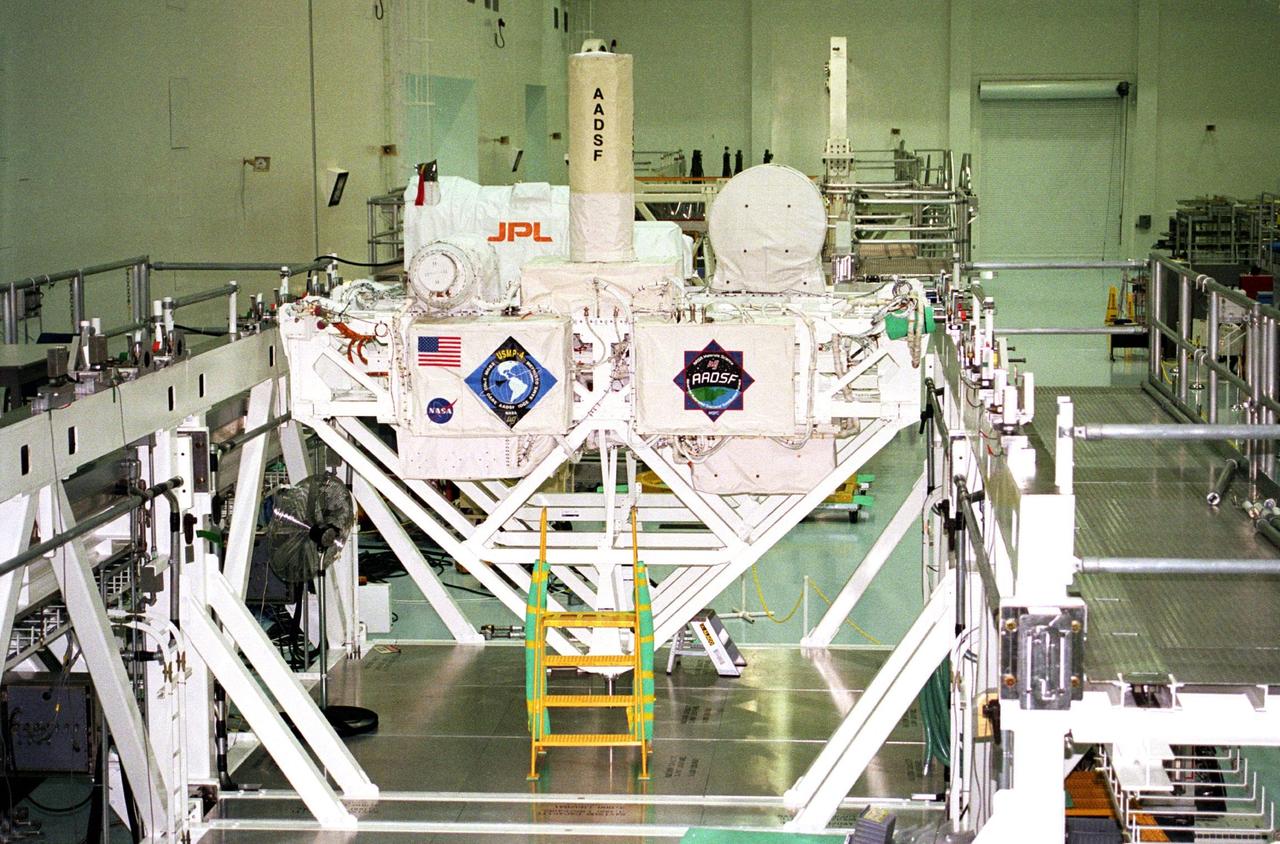
In preparation for Space Shuttle Mission STS-87, the United States Microgravity Payload-4 undergoes final processing in the Space Station Processing Facility before its move to Launch Complex 39B. STS-87 will be the fourth flight of the United States Microgravity Payload and the Spartan-201 deployable satellite
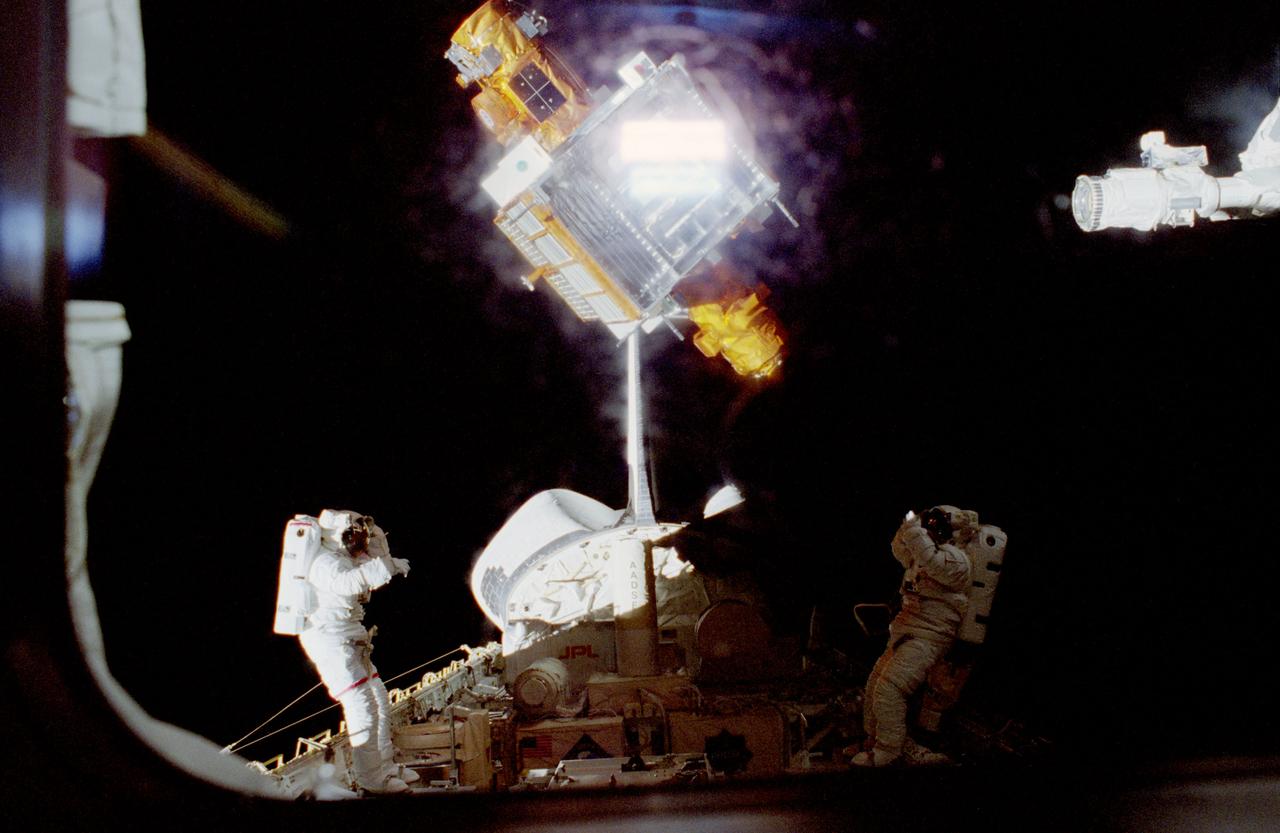
STS087-320-025 (19 November – 5 December 1997) --- Astronauts Winston E. Scott (left) and Takao Doi (partially obscured by his location in the dark shadows), await the right opportunity to grab onto the Spartan satellite. Later, when the Space Shuttle Columbia had moved closer to Spartan, the two mission specialists were able to successfully grab the satellite manually and berth it in Columbia's cargo bay. The end effector of Columbia's Remote Manipulator System (RMS), with its video camera recording the activities, is in the upper right corner. Winston E. Scott was making his second space flight and his second extravehicular activity (EVA). Takao Doi, an international mission specialist stationed at the Johnson Space Center (JSC), represents the Japan’s National Space Development Agency (NASDA).
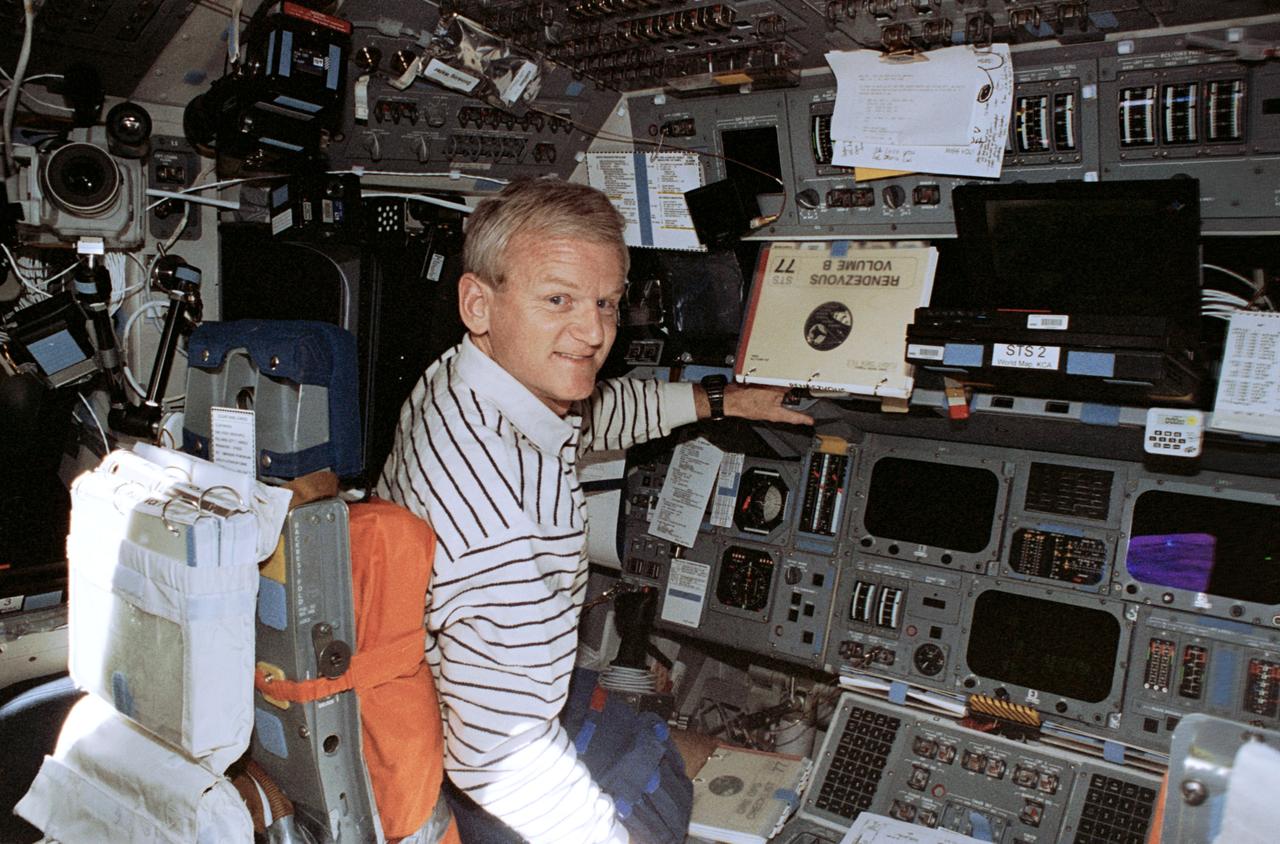
STS077-364-037 (19-29 May 1996) --- Astronaut John H. Casper, mission commander, mans the commander?s station during rendezvous operations. During the flight, the six-member crew was involved in deployment and rendezvous operations with the Spartan 207/Inflatable Antenna Experiment (IAE) as well as the Passive Aerodynamically Stabilized Magnetically Damped Satellite (PAMS)/Satellite Test Unit (STU).
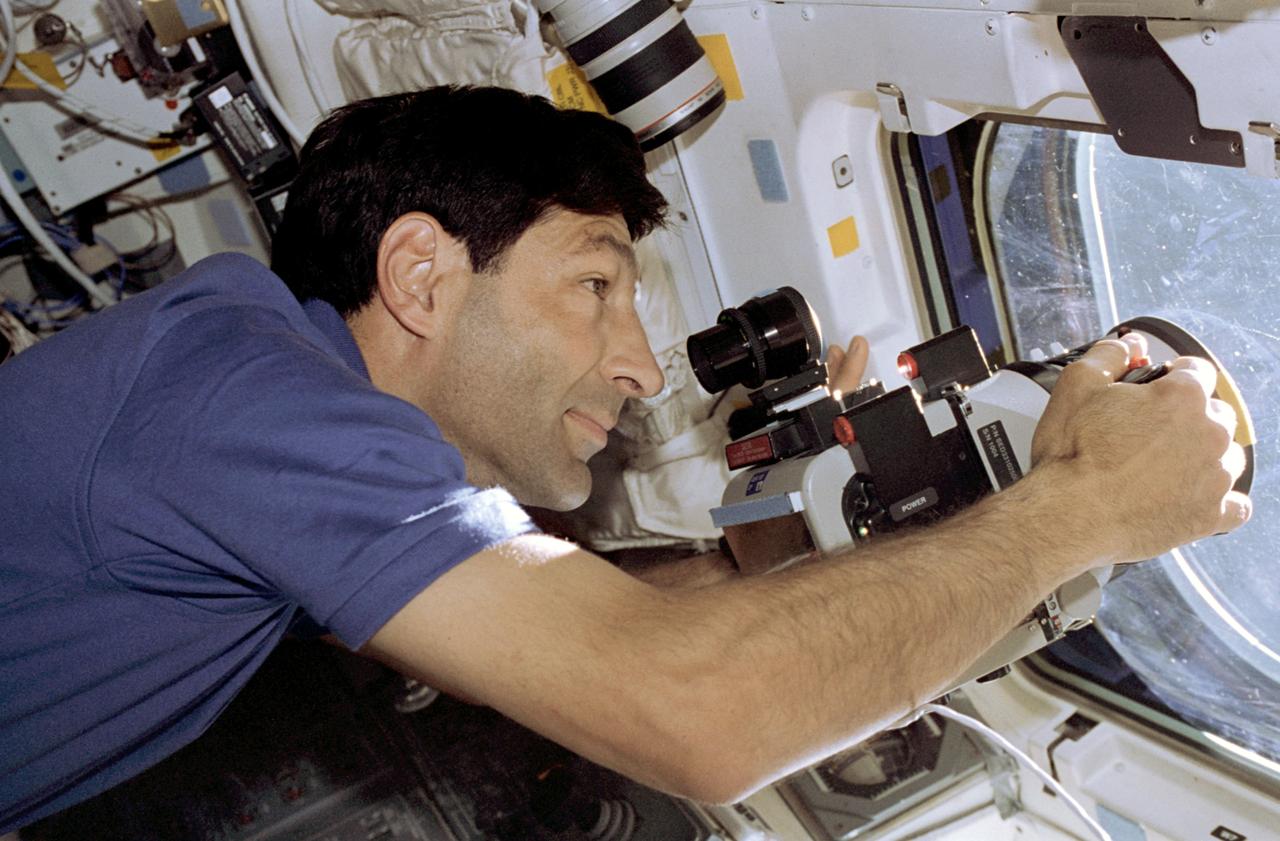
STS077-372-020 (19-29 May 1996) --- On the Space Shuttle Endeavour?s aft flight deck, astronaut Mario Runco, Jr., mission specialist, uses a large format camera during station keeping operations with the Passive Aerodynamically Stabilized Magnetically Damped Satellite (PAMS)/Satellite Test Unit (STU). During the flight, the six-member crew was involved in deployment and rendezvous operations with the Spartan 207/Inflatable Antenna Experiment (IAE) as well as the PAMS/STU.
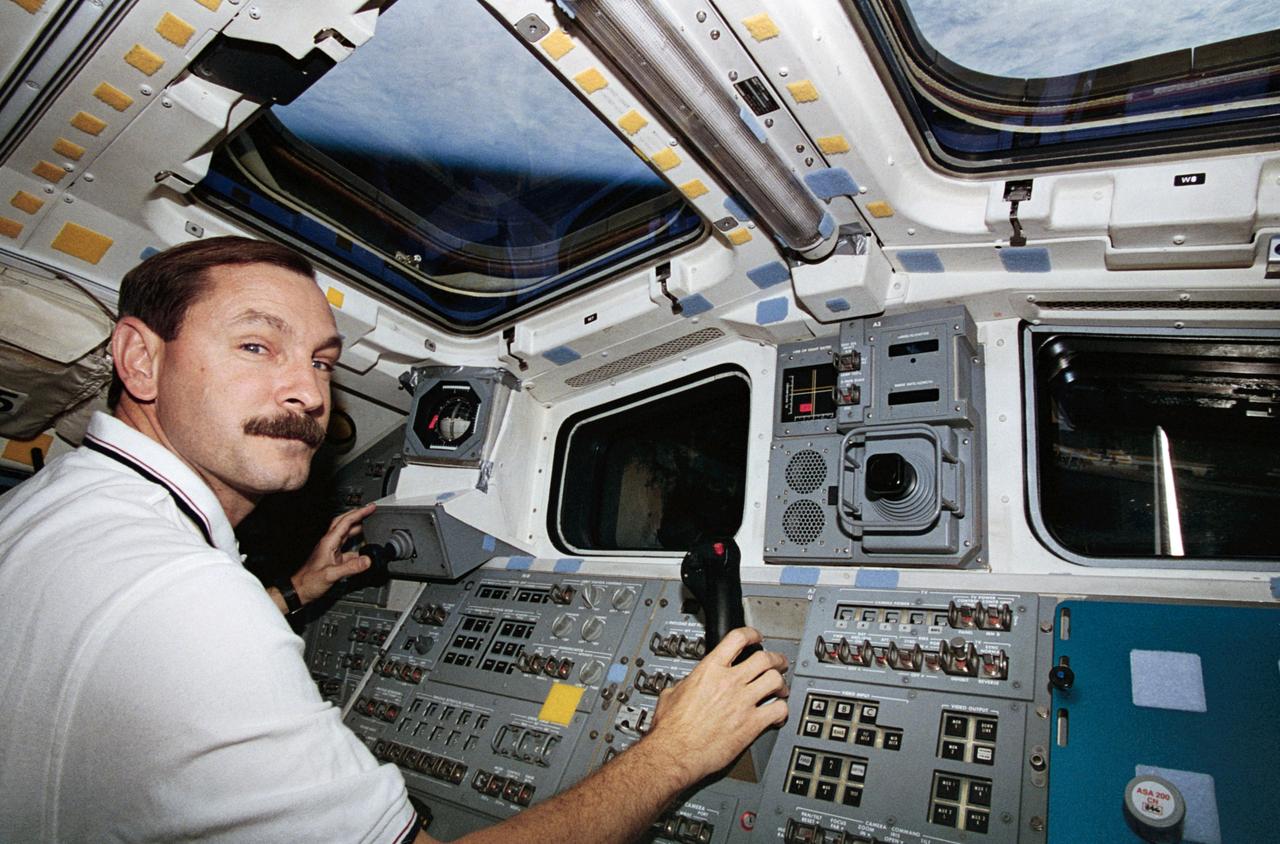
STS077-312-015 (19-29 May 1996) --- Astronaut Curtis L. Brown, Jr., pilot, mans the controls for the Remote Manipulator System (RMS) on the Space Shuttle Endeavour?s aft flight deck during rendezvous operations. During the flight, the six-member crew was involved in deployment and rendezvous operations with the Spartan 207/Inflatable Antenna Experiment (IAE) as well as the Passive Aerodynamically Stabilized Magnetically Damped Satellite (PAMS)/Satellite Test Unit (STU).
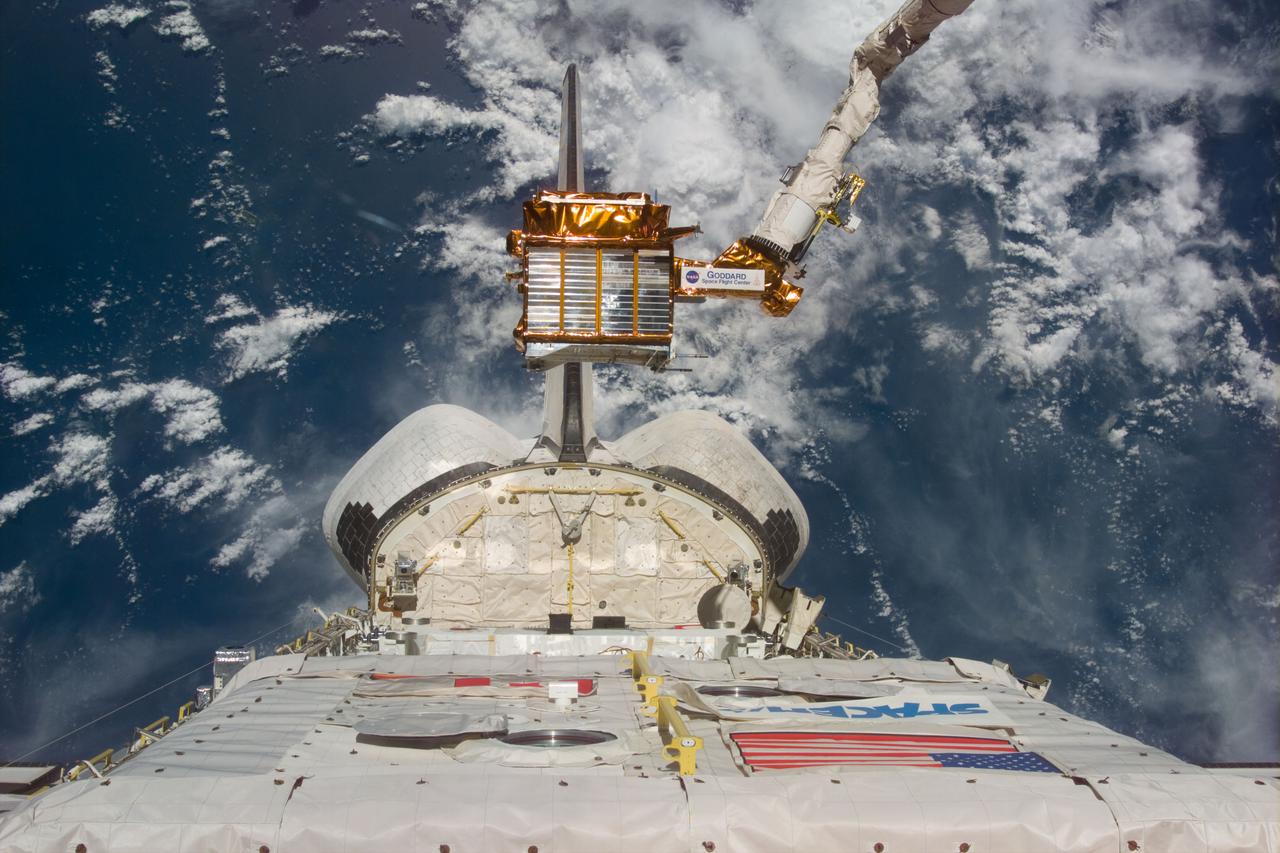
S77-E-5052 (21 May 1996) --- The Spartan 207 free-flyer is held in a low-hover mode above its berth in the Space Shuttle Endeavour's cargo bay in the grasp of the Remote Manipulator System (RMS). The free-flyer was re-captured by the six crew members on May 21, 1996. The crew has spent a portion of the early stages of the mission in various activities involving the Spartan 207 and the related Inflatable Antenna Experiment (IAE). The Spartan project is managed by NASA's Goddard Space Flight Center (GSFC) for NASA's Office of Space Science, Washington, D.C.
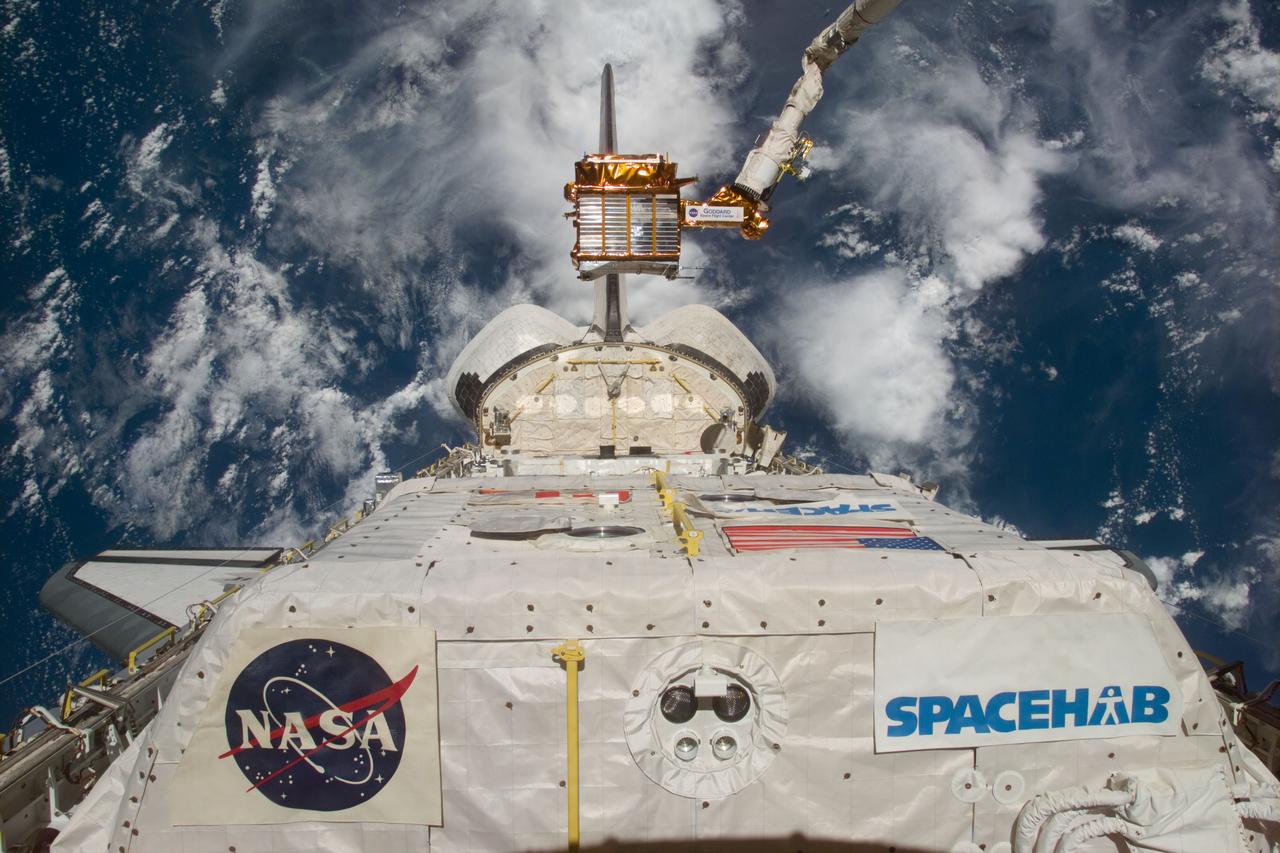
S77-E-5053 (21 May 1996) --- The Spartan 207 free-flyer is held in a low-hover mode above its berth in the Space Shuttle Endeavour's cargo bay in the grasp of the Remote Manipulator System (RMS). The Spacehab module can be seen in the foreground. The free-flyer was re-captured by the six crew members on May 21, 1996. The crew has spent a portion of the early stages of the mission in various activities involving the Spartan 207 and the related Inflatable Antenna Experiment (IAE). The Spartan project is managed by NASA's Goddard Space Flight Center (GSFC) for NASA's Office of Space Science, Washington, D.C.
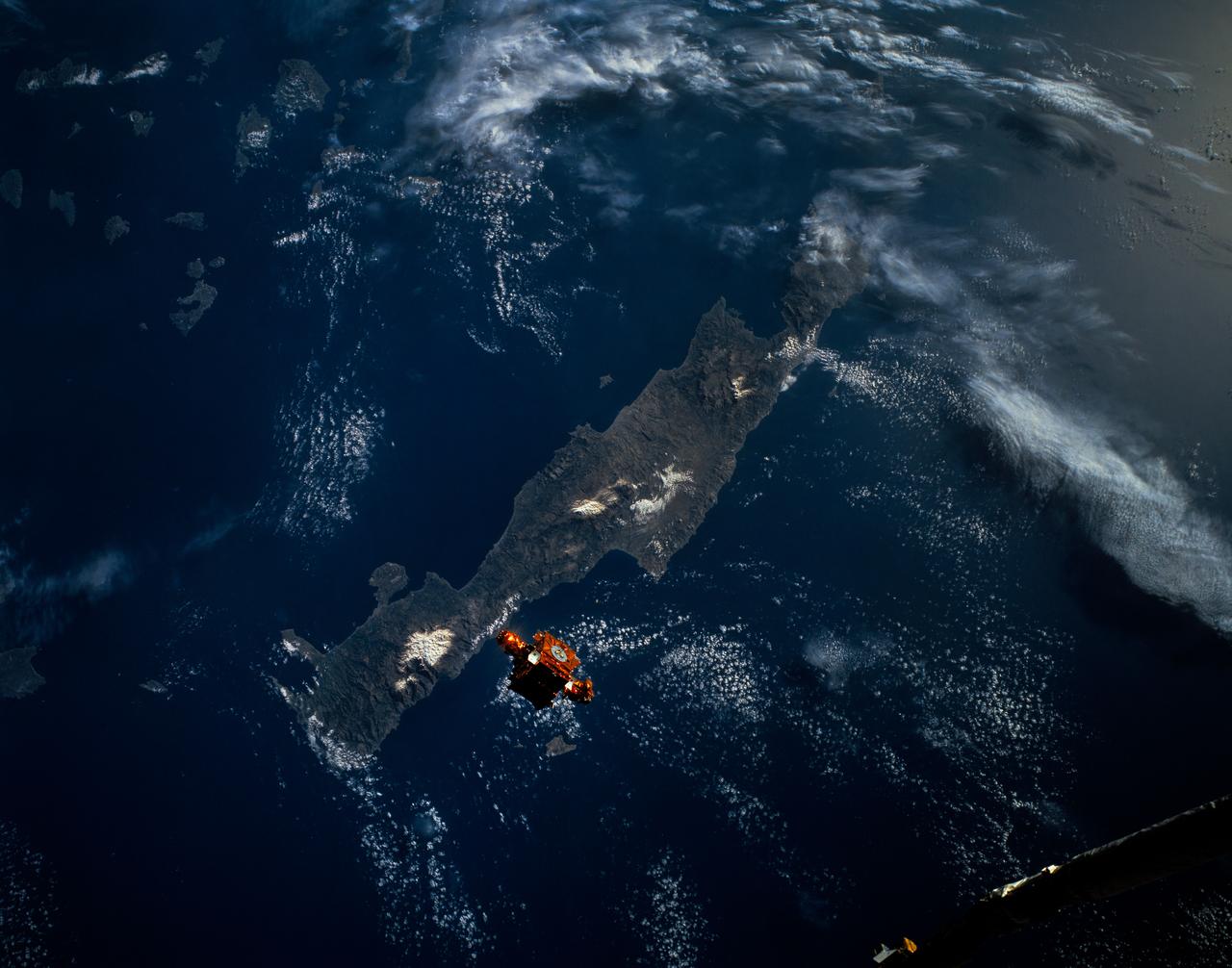
During STS-56, the Shuttle Pointed Autonomous Research Tool for Astronomy 201 (SPARTAN-201), a freeflying payload, was photographed by Discovery's, Orbiter Vehicle (OV) 103's, crewmembers as it drifted above the Mediterranean Sea near the island of Crete. On the mission's third day, the remote manipulator system (RMS) arm was used to lift SPARTAN-201 from its support structure in OV-103's payload bay and release it in space. SPARTAN-201 was later recaptured by OV-103's RMS and returned to Earth with the astronaut crew.
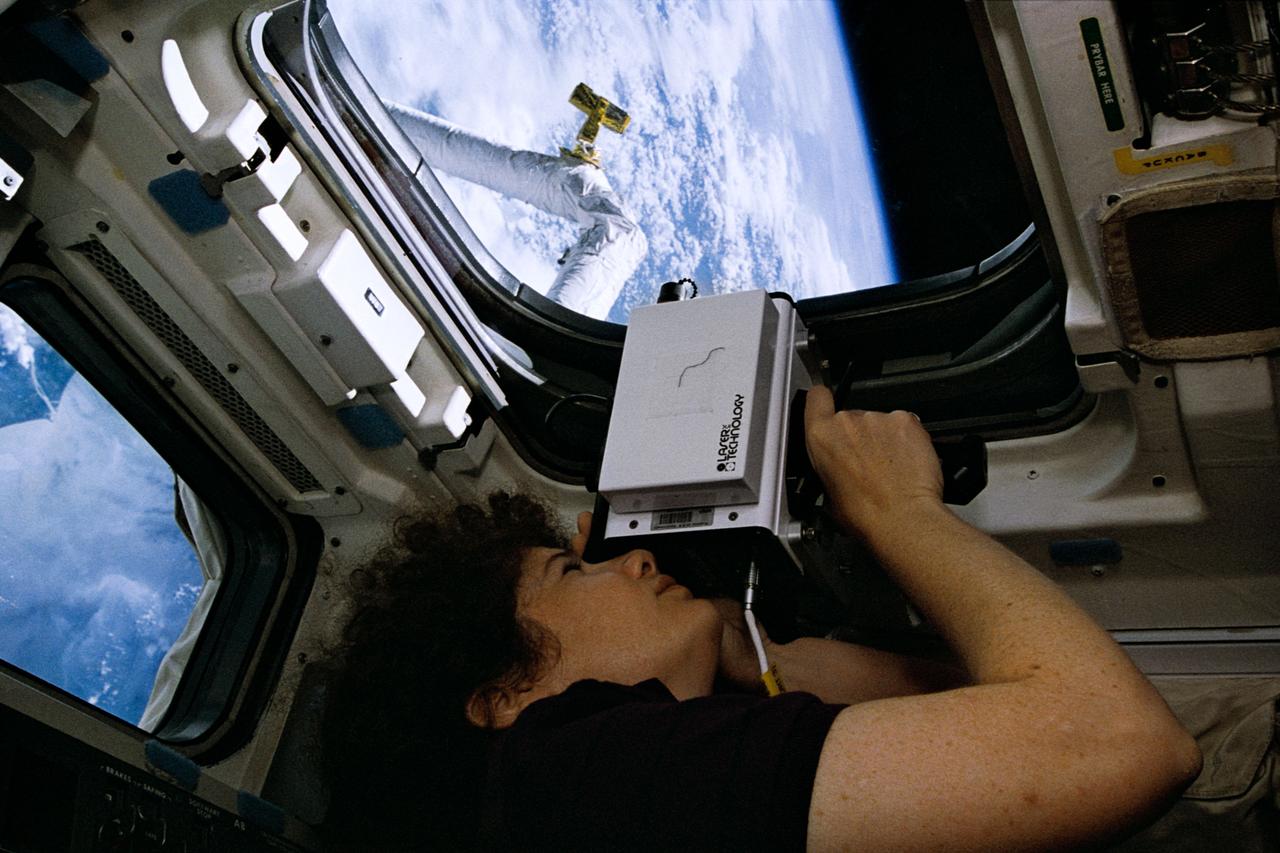
STS064-33-003 (9-20 Sept. 1994) --- Astronaut Susan J. Helms, STS-64 mission specialist, uses a laser instrument during operations with the Shuttle Pointed Autonomous Research Tool for Astronomy 201 (SPARTAN 201). Helms, who spent many mission hours at the controls of the Remote Manipulator System (RMS), joined five other NASA astronauts for almost 11 days in Earth orbit aboard the space shuttle Discovery. Photo credit: NASA or National Aeronautics and Space Administration
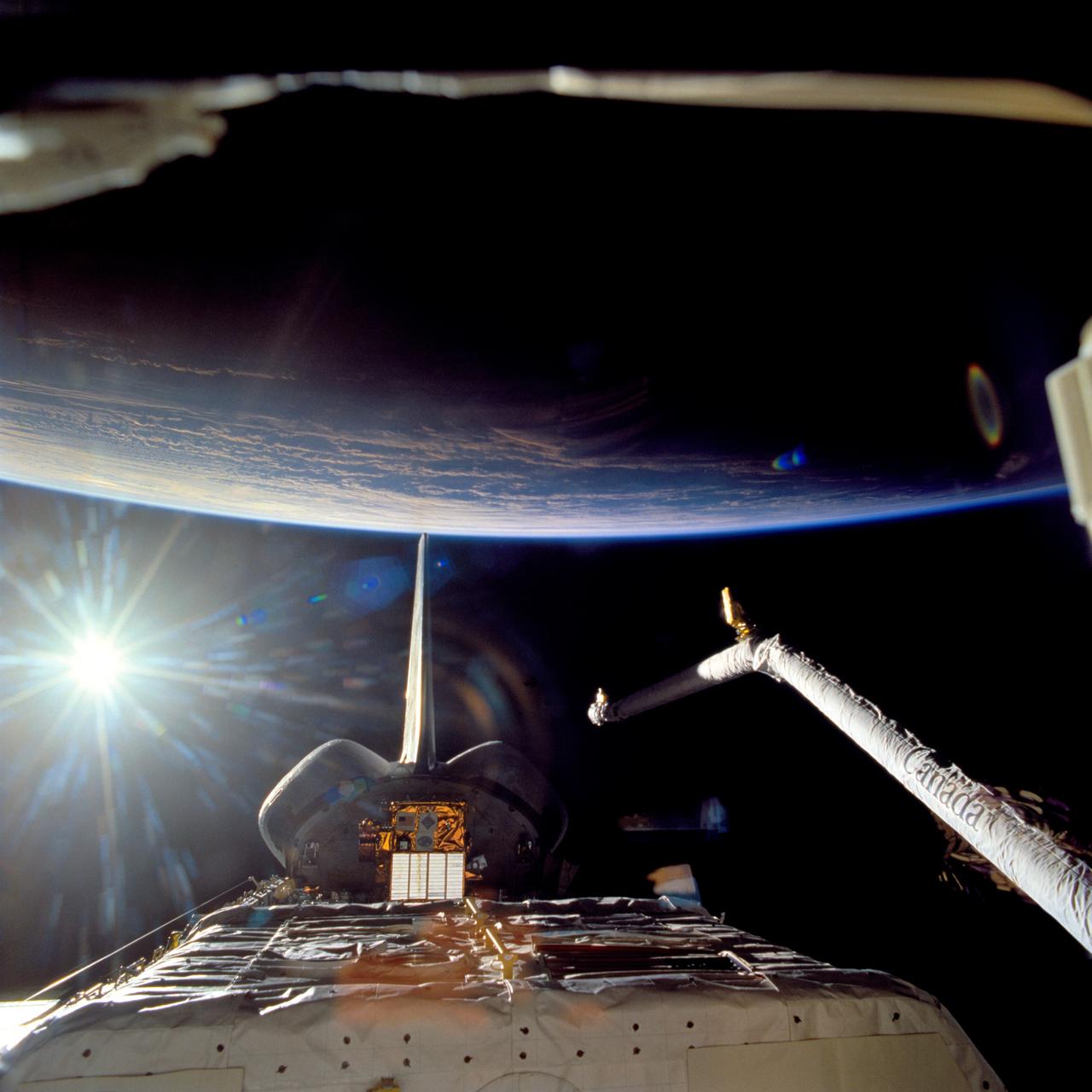
STS063-716-025 (9 Feb. 1995) --- In tail-to Earth mode, the Space Shuttle Discovery is backdropped against dark space, Sunburst and massive clouds over the ocean. The Spartan 204 is visible in the cargo bay. This is one of 16 still photographs released by the NASA Johnson Space Center (JSC) Public Affairs Office (PAO) on February 14, 1995. Onboard Discovery were astronauts James D. Wetherbee, mission commander; Eileen M. Collins, pilot; Bernard A. Harris, Jr., payload commander; mission specialists C. Michael Foale, Janice E. Voss, and cosmonaut Vladimir G. Titov.
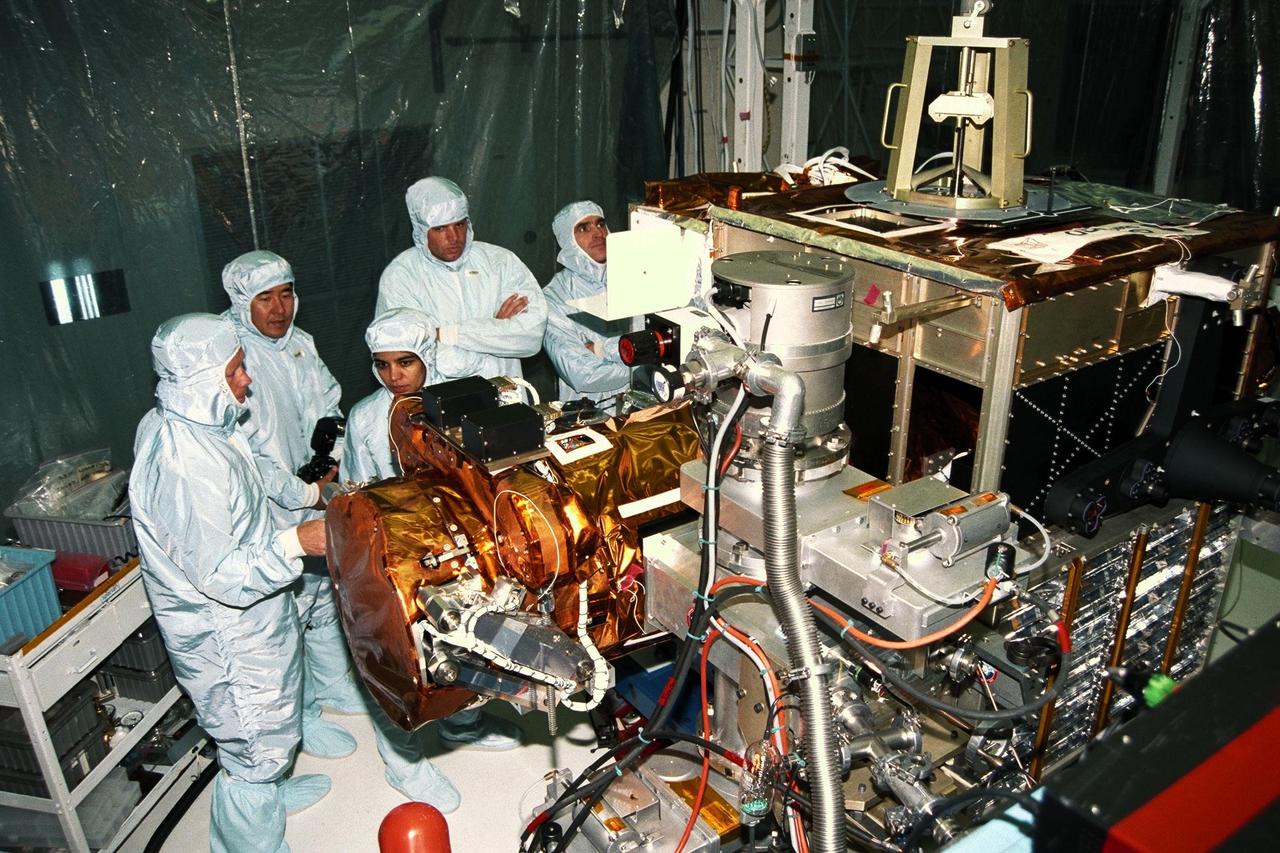
STS-87 astronaut crew members participate in the Crew Equipment Integration Test (CEIT) with the Spartan-201 payload in Kennedy Space Center’s (KSC's) Vertical Processing Facility. From left are Pilot Steven Lindsey; Mission Specialist Takao Doi, Ph.D., of the National Space Development Agency of Japan; Mission Specialist Kalpana Chawla, Ph.D.; Commander Kevin Kregel; and Payload Specialist Leonid Kadenyuk of the National Space Agency of Ukraine. The CEIT gives astronauts an opportunity to get a hands-on look at the payloads with which they will be working on-orbit. STS-87 will be the fourth United States Microgravity Payload and flight of the Spartan-201 deployable satellite. During the mission, Dr. Doi will be the first Japanese astronaut to perform a spacewalk. STS-87 is scheduled for a Nov. 19 liftoff from KSC
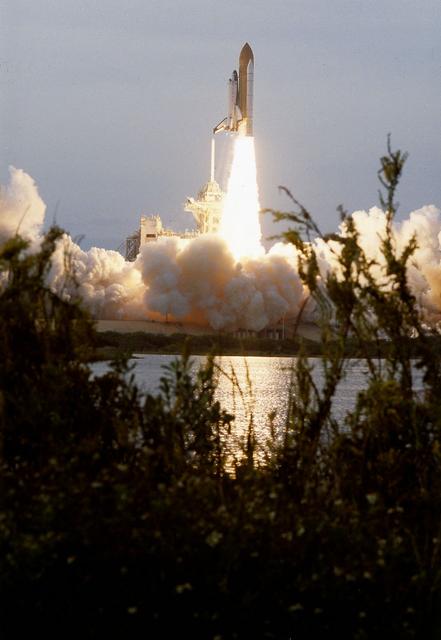
Like a rising sun lighting up the afternoon sky, the Space Shuttle Columbia (STS-87) soared from Launch Pad 39B on the fourth flight of the United States Microgravity Payload (USMP-4) and Spartan-201 satellite which were managed by scientists and engineers from the Marshall Space Flight Center. During the 16-day mission, the crew oversaw experiments in microgravity; deployed and retrieved a solar satellite; and tested a new experimental camera, the AERCam Sprint. Two crew members, Dr. Takao Doi and Winston Scott also performed a spacewalk to practice International Space Station maneuvers.
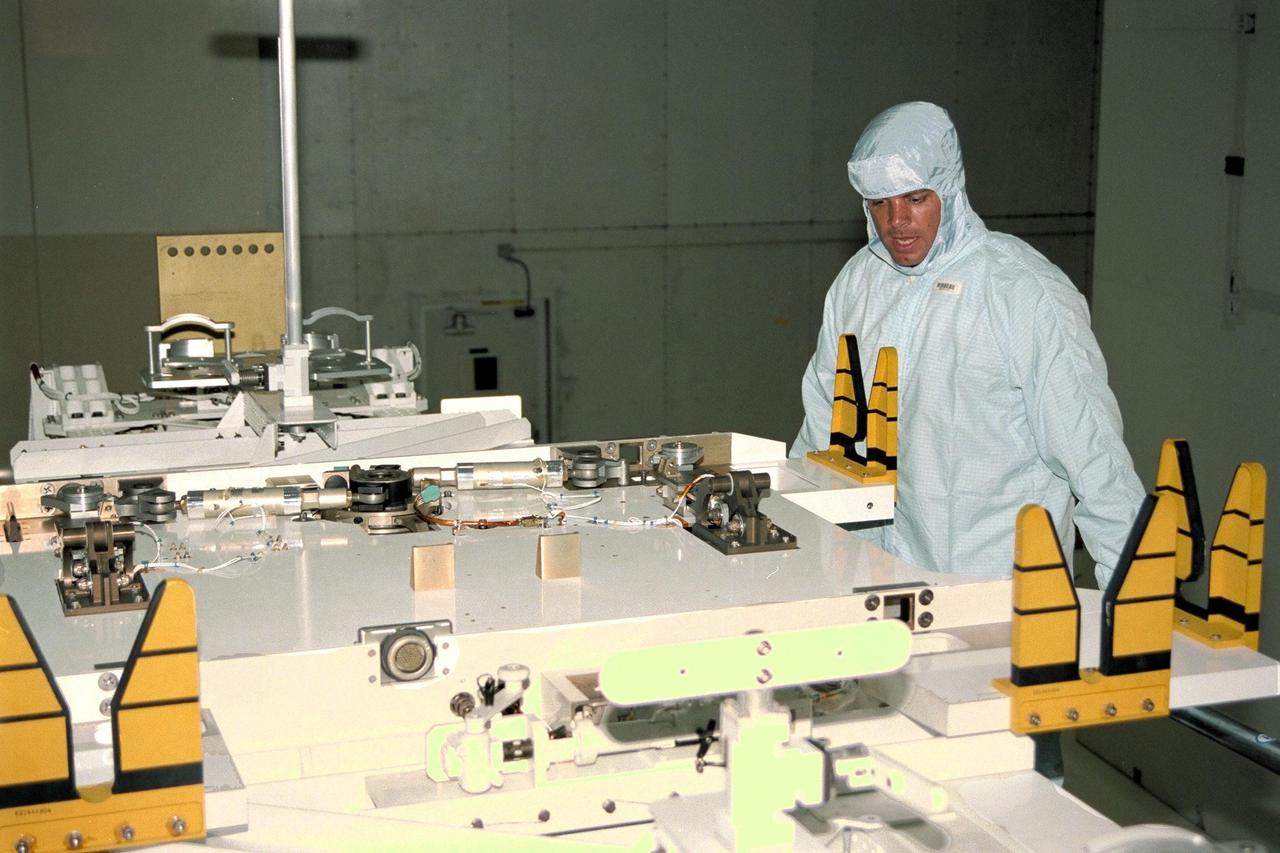
STS-87 Commander Kevin Kregel participates in the Crew Equipment Integration Test (CEIT) in Kennedy Space Center’s (KSC's) Vertical Processing Facility. The CEIT gives astronauts an opportunity to get a hands-on look at the payloads with which they will be working on-orbit. STS-87 will be the fourth United States Microgravity Payload and flight of the Spartan-201 deployable satellite. STS-87 is scheduled for a Nov. 19 liftoff from KSC
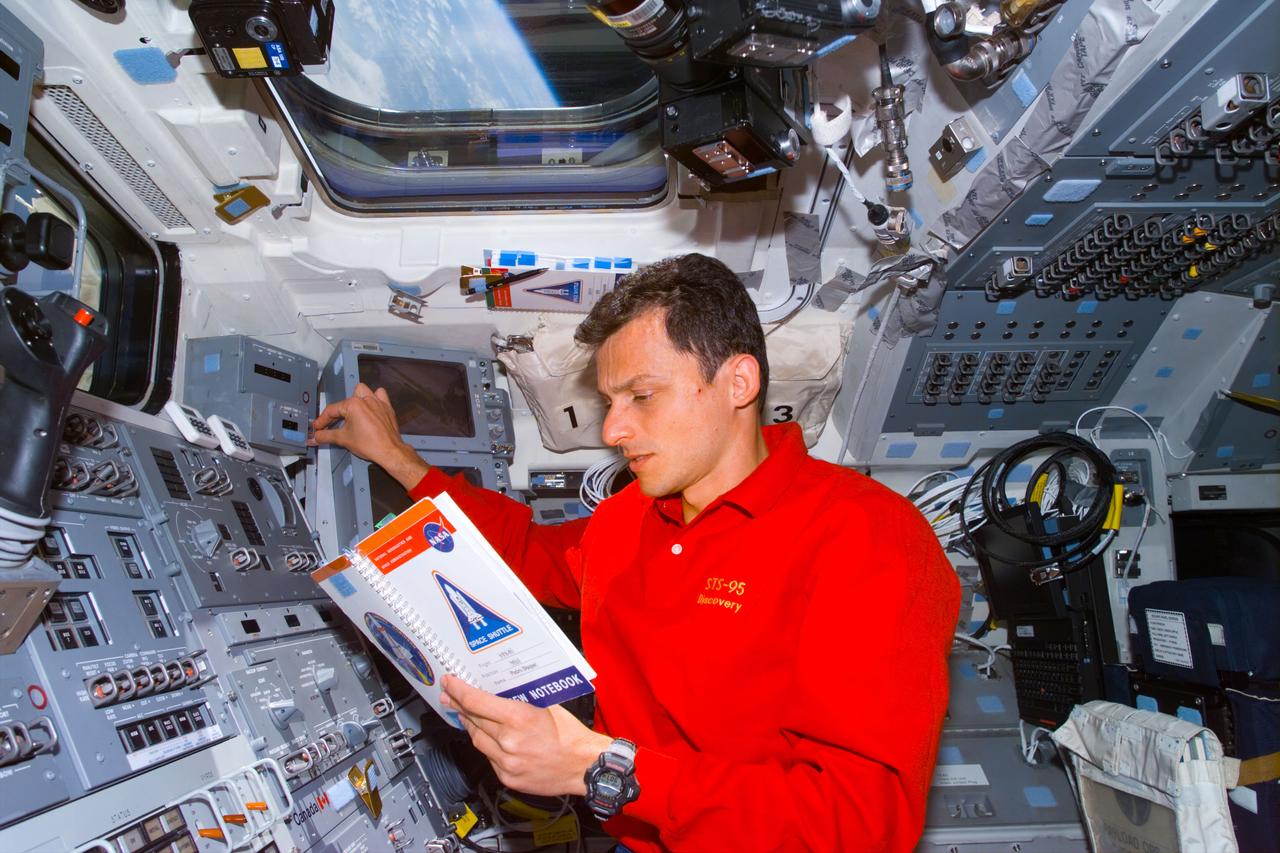
STS095-E-5027 (10-29-98) Astronaut Pedro Duque, mission specialist representing the European Space Agency (ESA)looks over notes on the Discovery's aft flight deck during Flight Day 1 activities. At left frame are controls for the remote manipulator system (RMS) and part of the frame of one of the windows overlooking the cargo bay, where the Spartan 201 satellite is berthed. The photo was taken at 11:30:18 GMT, Oct. 29.
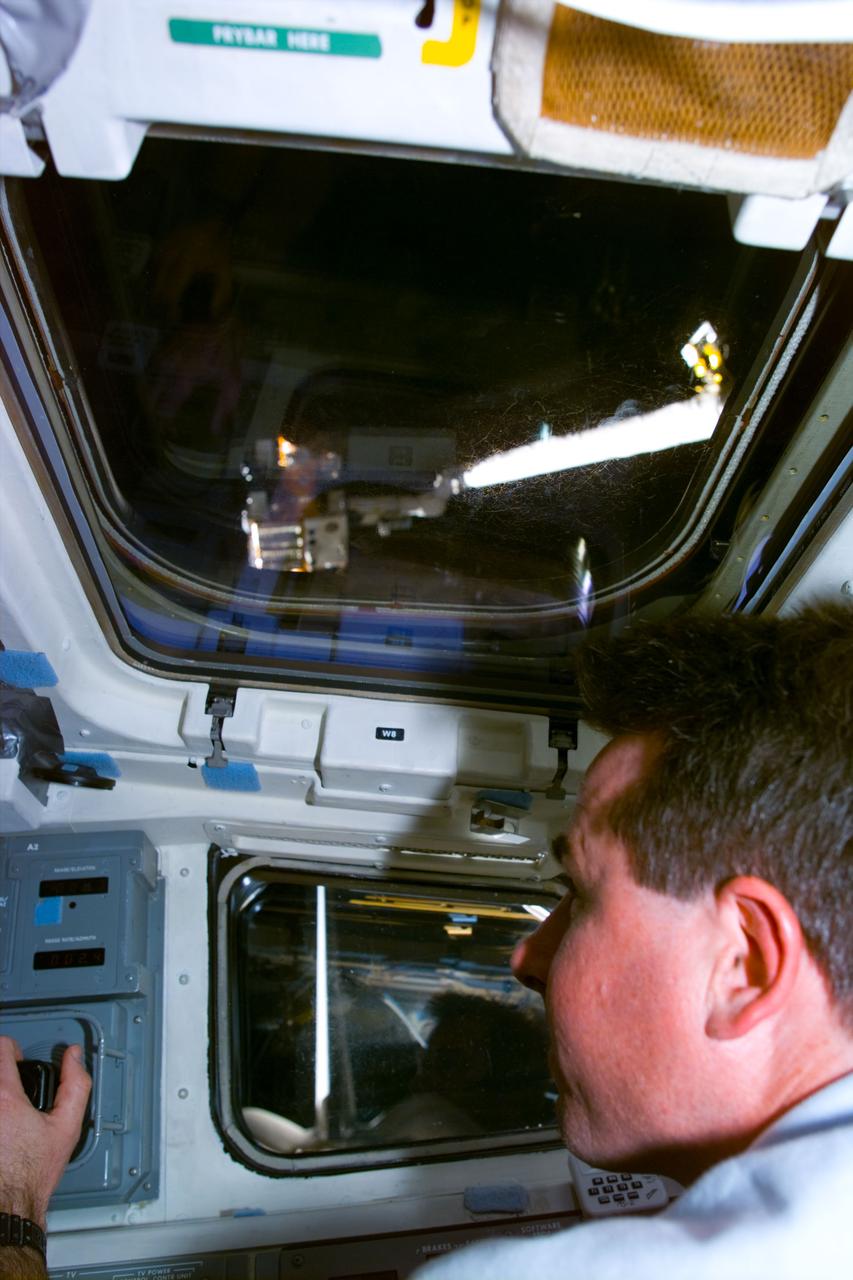
STS095-E-5138 (3 Nov. 2998) --- Astronaut Stephen K. Robinson, STS-95 mission specialist, at the controls of Discovery's remote manipulator system (RMS) robot arm. The Spartan 201-05 satellite can be seen in the grasp of the RMS at left. The photo was taken with an electronic still camera (ESC) at 03:55:25 GMT, Nov. 3.
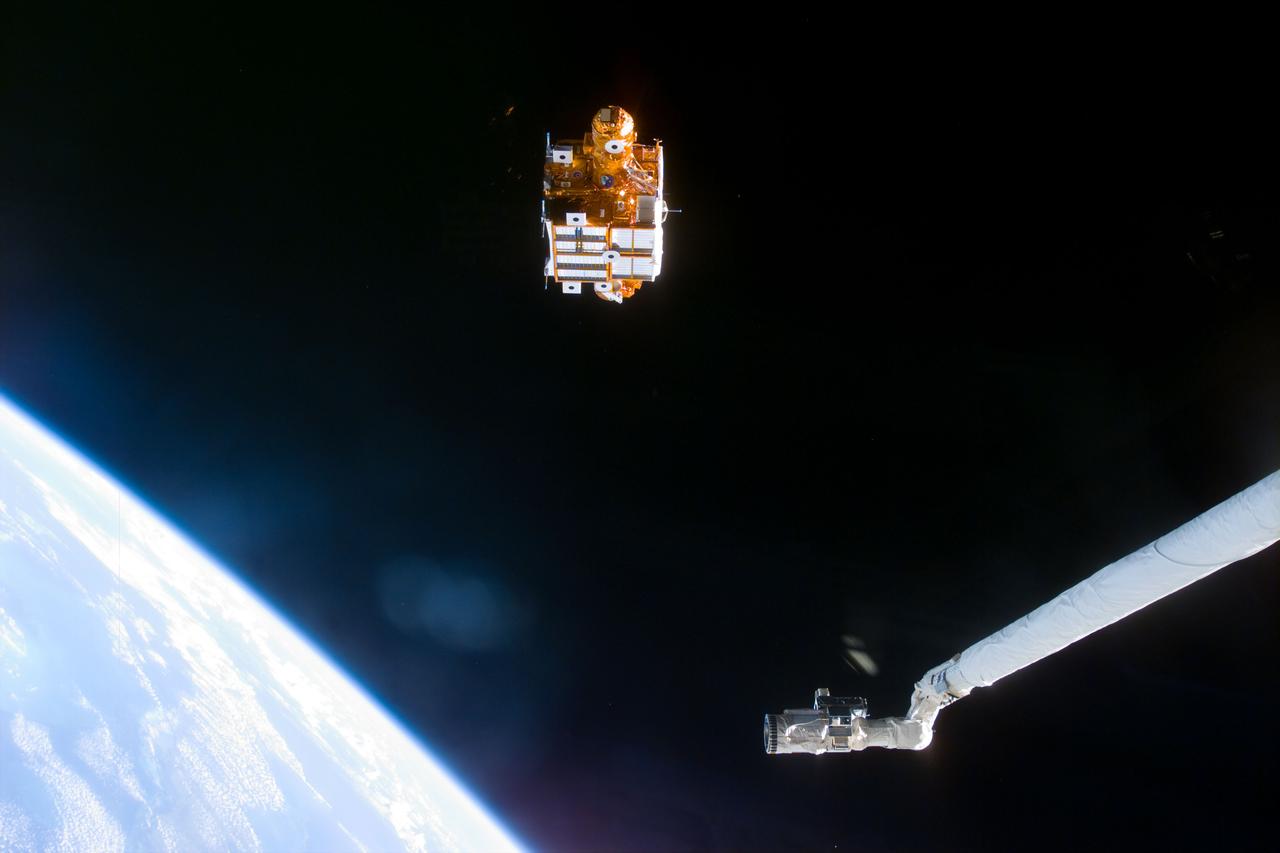
STS095-E-5082 (1 Nov. 1998) --- Backdropped against the blackness of space, Spartan 201-05 leaves the cargo bay of the Space Shuttle Discovery. The satellite will remain a free-flyer for several days while it records data on the solar wind and the sun's corona. This data is hoped to increase knowledge of the sun's effect on our planet. The Canadian-built remote manipulator system (RMS)is partially visible in the frame. The photograph was taken with an electronic still camera (ESC) at 2:10:31 GMT, November 1.
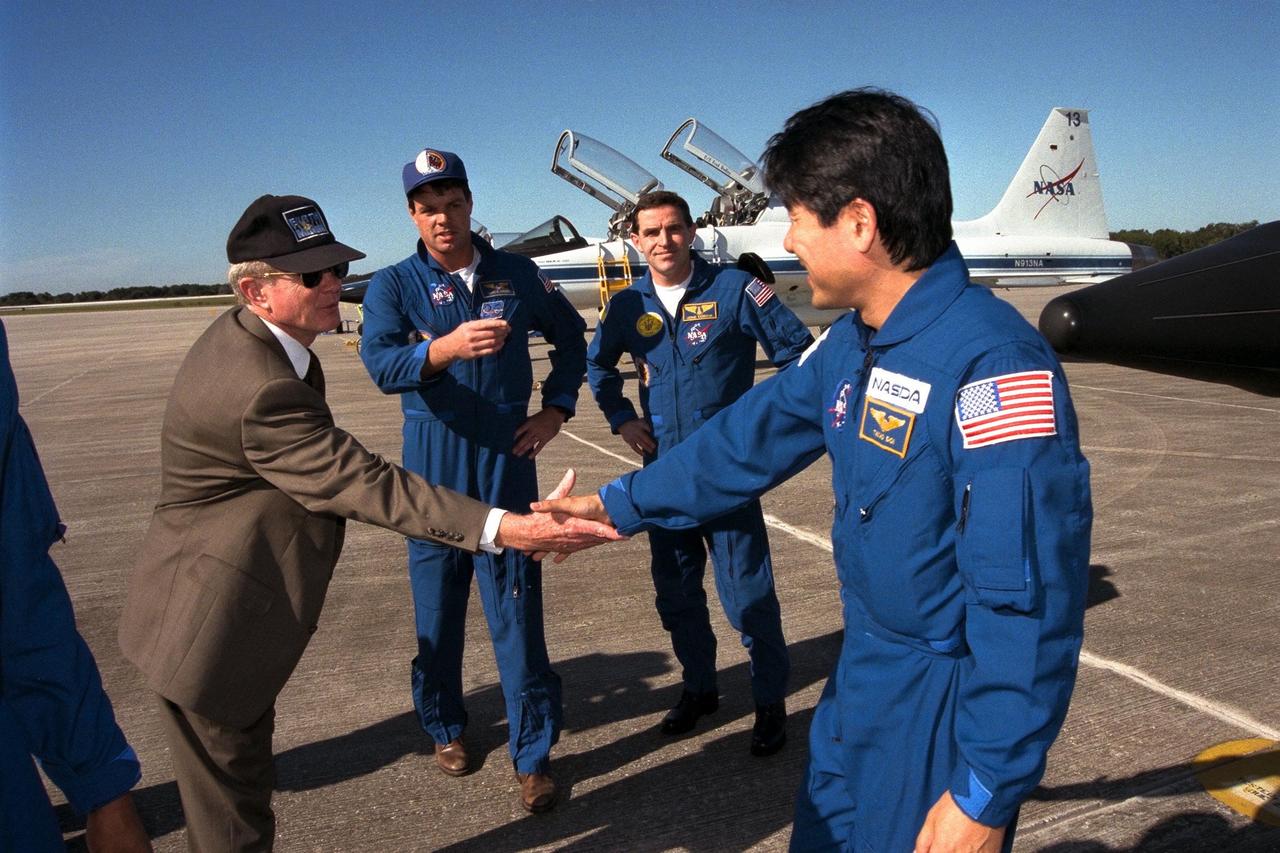
In preparation for Space Shuttle Mission STS-87, the crew arrives at the Kennedy Space Center Shuttle Landing Facility to participate in the Terminal Countdown Demonstration Test (TCDT) for their mission. The TCDT is a dress rehearsal for launch. STS-87 will be the fourth flight of the United States Microgravity Payload and the Spartan-201 deployable satellite. Launch is targeted for Nov. 19
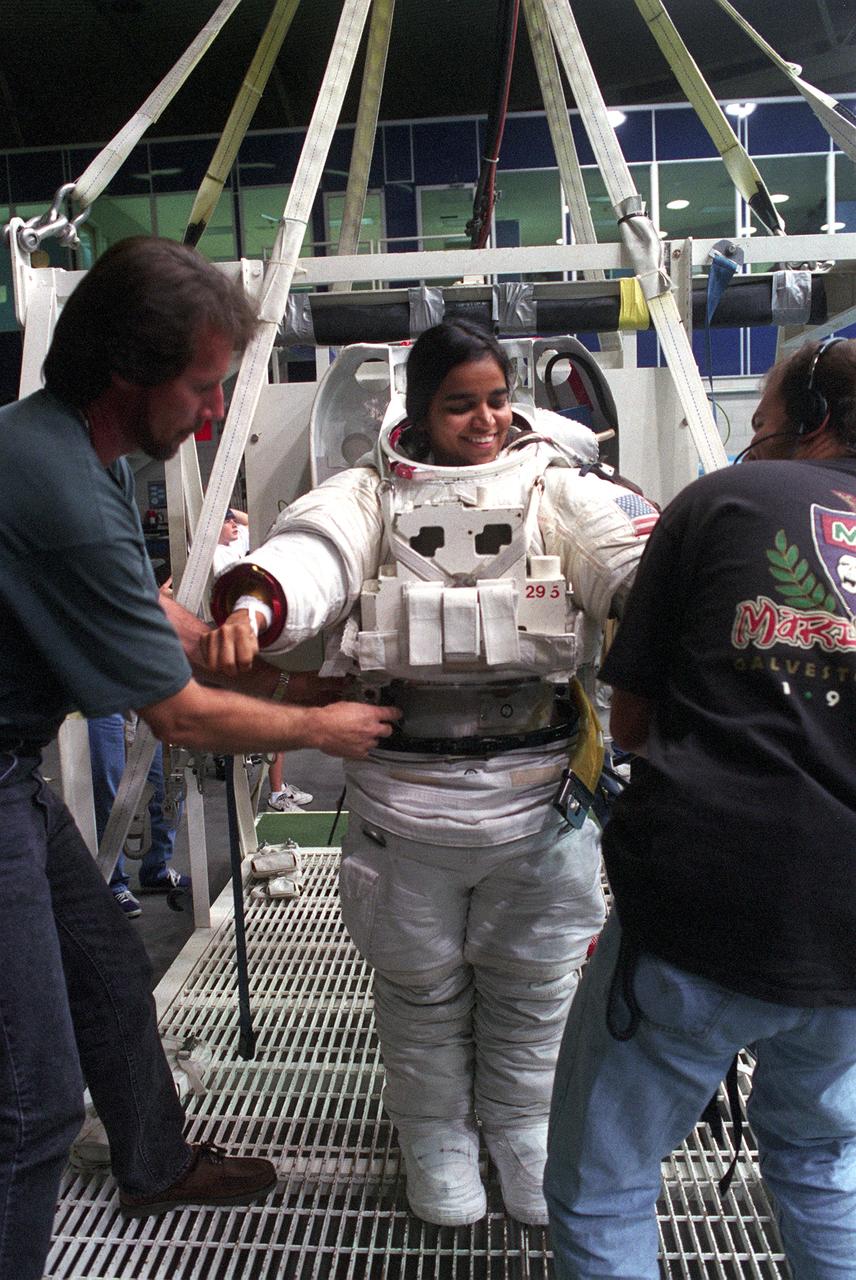
Astronaut and mission specialist Kalpana Chawla, receives assistance in donning a training version of the Extravehicular Mobility Unit (EMU) space suit, prior to an underwater training session in the Neutral Buoyancy Laboratory (NBL) near Johnson Space Center. This particular training was in preparation for the STS-87 mission. The Space Shuttle Columbia (STS-87) was the fourth flight of the United States Microgravity Payload (USMP-4) and Spartan-201 satellite, both managed by scientists and engineers from the Marshall Space Flight Center.
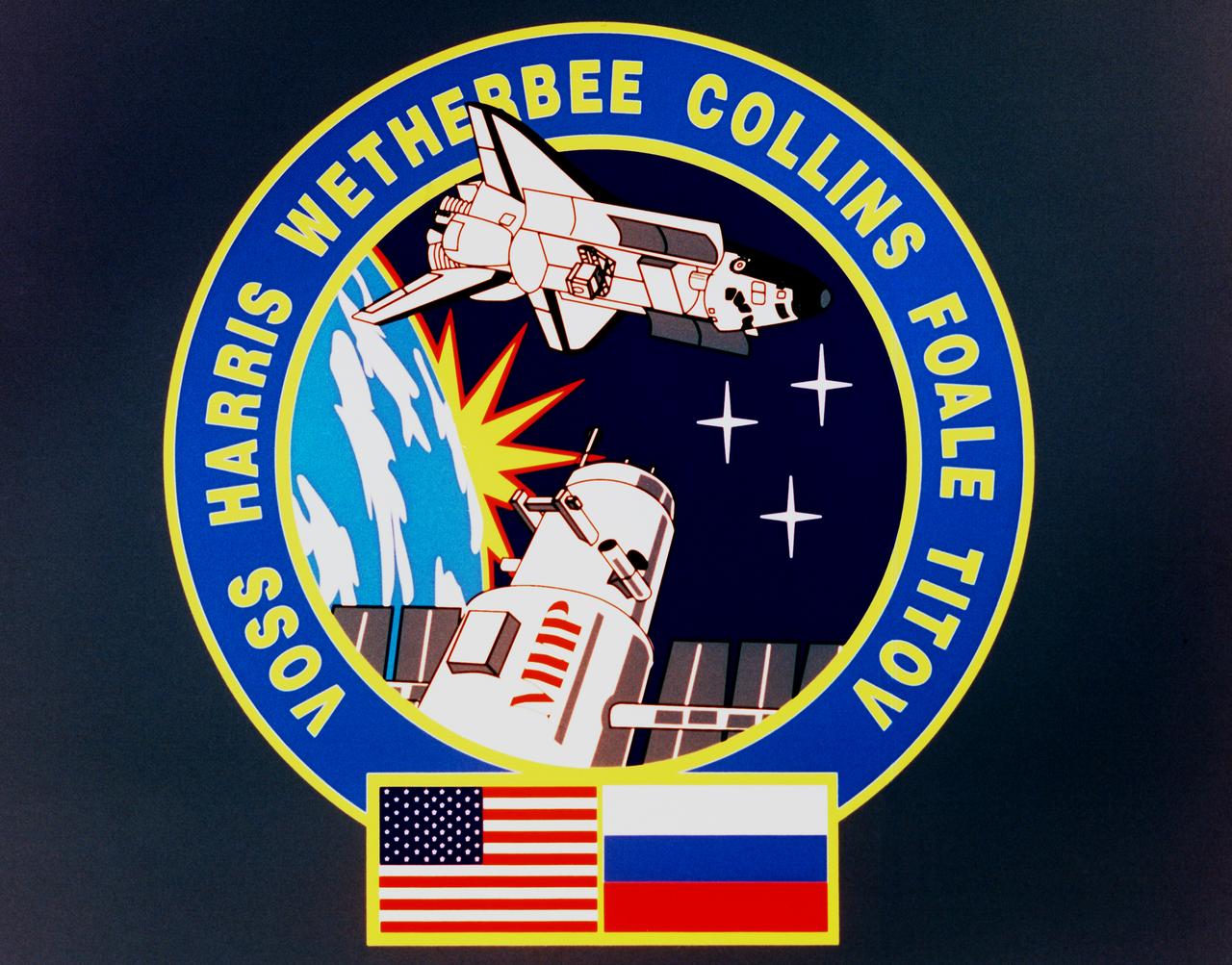
Designed by the crew members, the STS-63 crew patch depicts the orbiter maneuvering to rendezvous with Russia's Space Station Mir. The name is printed in Cyrillic on the side of the station. Visible in the Orbiter's payload bay are the commercial space laboratory Spacehab and the Shuttle Pointed Autonomous Research Tool for Astronomy (SPARTAN) satellite which are major payloads on the flight. The six points on the rising sun and the three stars are symbolic of the mission's Space Transportation System (STS) numerical designation. Flags of the United States and Russia at the bottom of the patch symbolize the cooperative operations of this mission.

In preparation for Space Shuttle Mission STS-87, the orbiter Columbia is lifted into high bay 3 in the Vehicle Assembly Building. The orbiter will be mated to the <a href="http://www-pao.ksc.nasa.gov/kscpao/nasafact/count3.htm#et">external tank</a> and <a href="http://www-pao.ksc.nasa.gov/kscpao/nasafact/ships.htm#srbs">solid rocket boosters</a> over the weekend and is slated to roll out to Pad 39B on Wednesday. STS-87 will be the fourth flight of the United States Microgravity Payload and the Spartan-201 deployable satellite
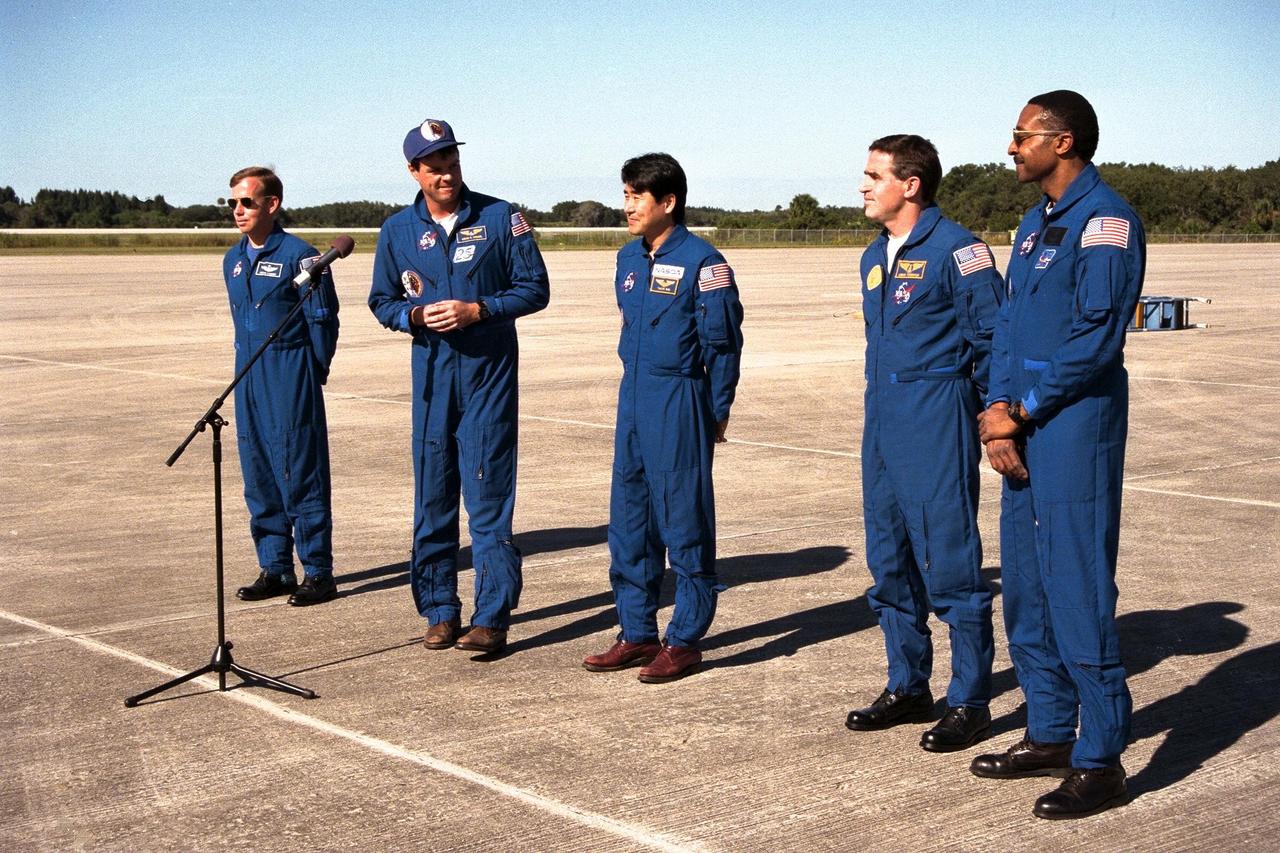
In preparation for Space Shuttle Mission STS-87, the crew arrives at the Kennedy Space Center Shuttle Landing Facility to participate in the Terminal Countdown Demonstration Test (TCDT) for their mission. The TCDT is a dress rehearsal for launch. STS-87 will be the fourth flight of the United States Microgravity Payload and the Spartan-201 deployable satellite. Launch is targeted for Nov. 19
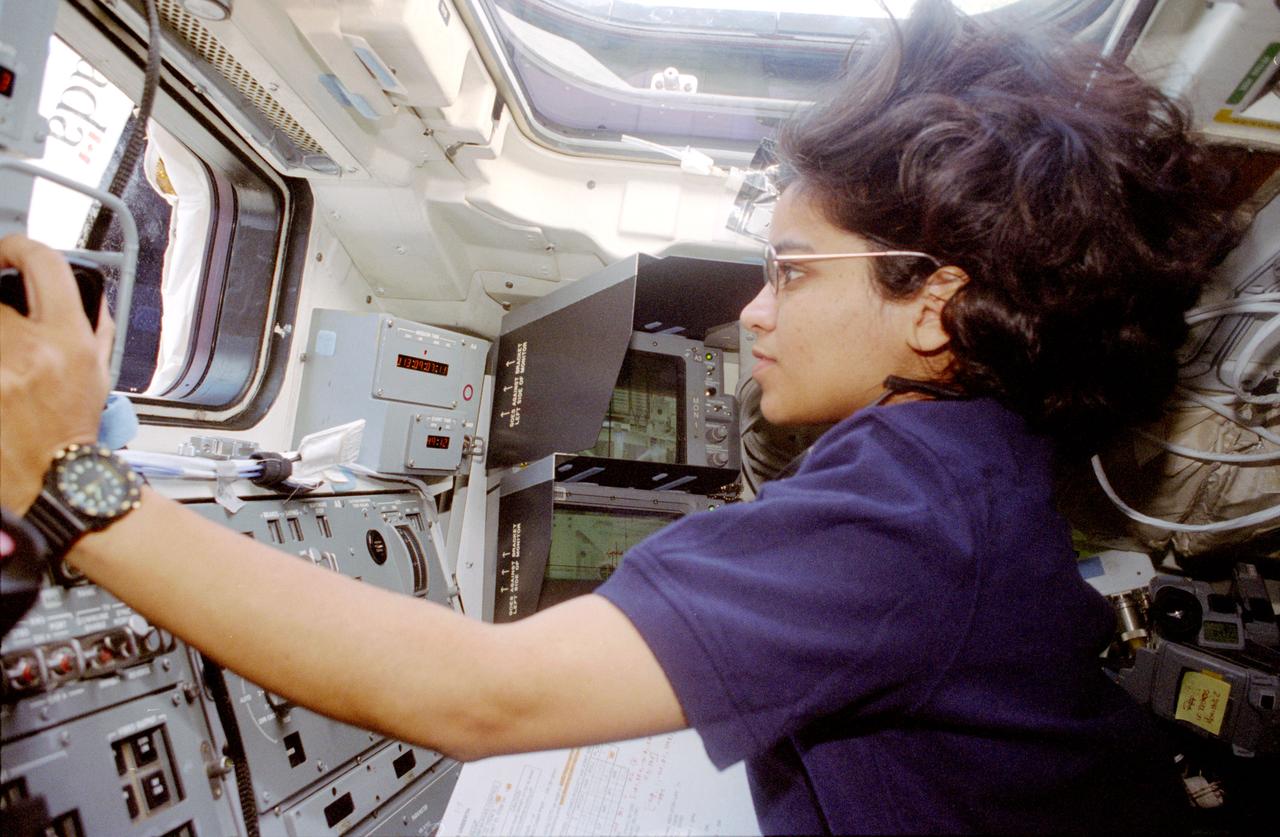
STS087-357-019 (19 November - 5 December 1997) --- Astronaut Kalpana Chawla, mission specialist, operates Columbia's Remote Manipulator System (RMS) on the aft flight deck during operations with the Spartan 201 satellite. Chawla joined four other astronauts and a Ukrainian payload specialist for 16-days of research in Earth-orbit in support of the United States Microgravity Payload 4 (USMP-4) mission.
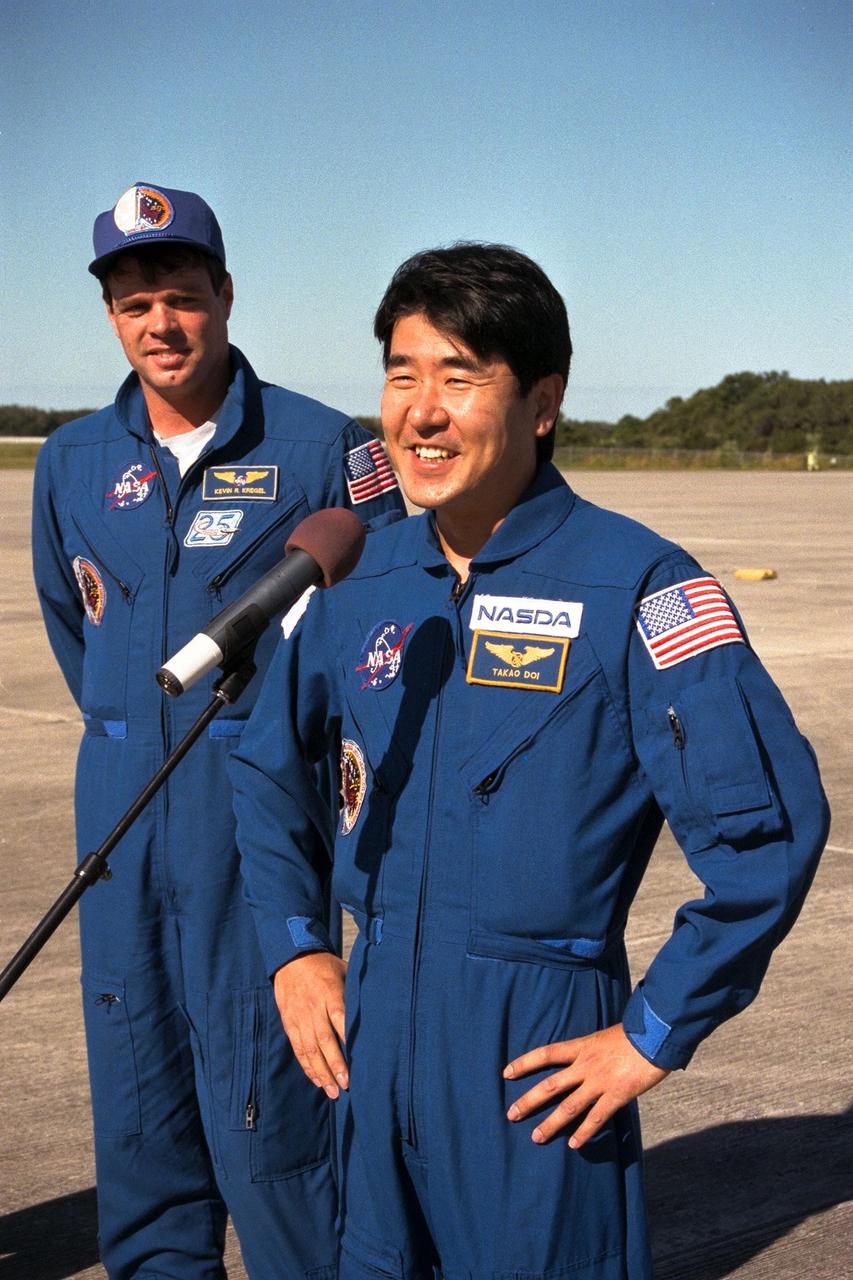
In preparation for Space Shuttle Mission STS-87, the crew arrives at the Kennedy Space Center Shuttle Landing Facility to participate in the Terminal Countdown Demonstration Test (TCDT) for their mission. The TCDT is a dress rehearsal for launch. STS-87 will be the fourth flight of the United States Microgravity Payload and the Spartan-201 deployable satellite. Launch is targeted for Nov. 19
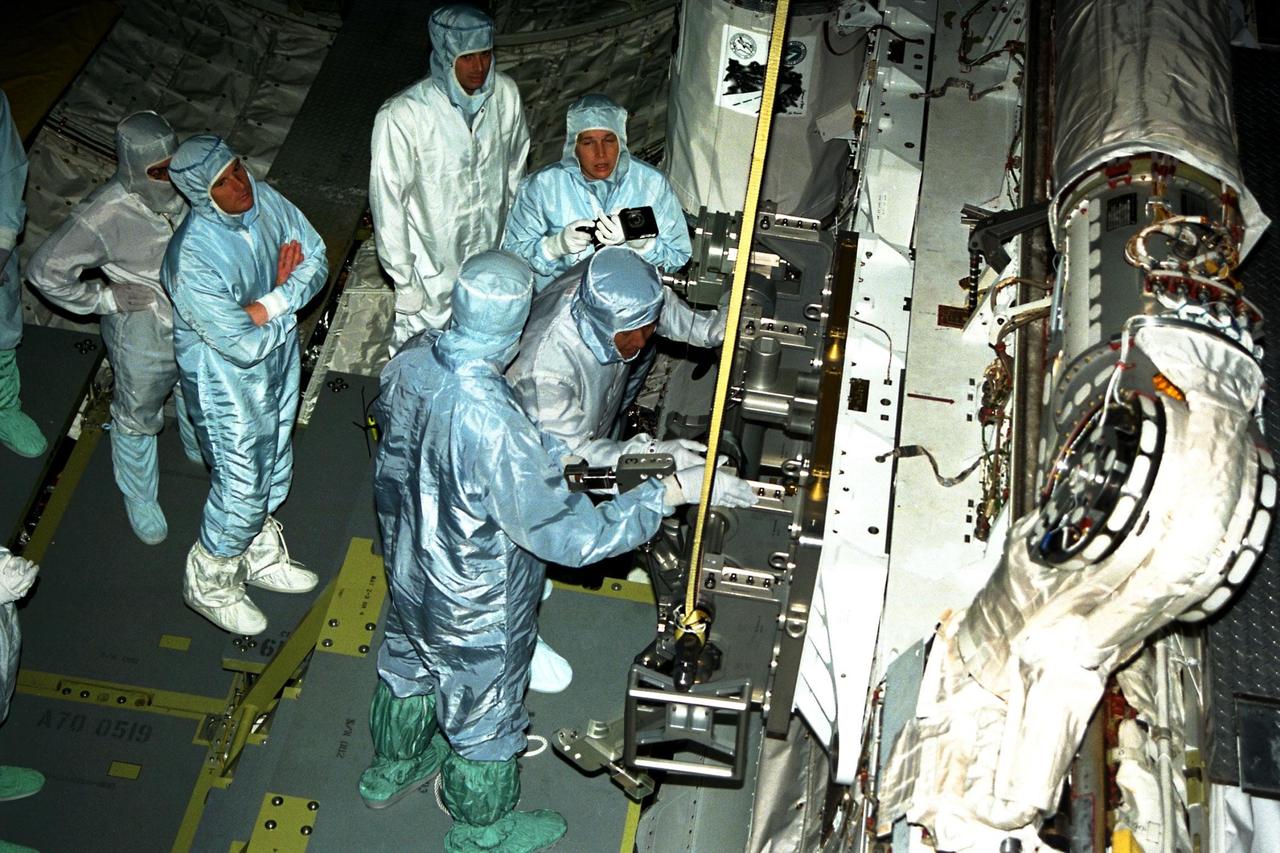
STS-87 astronaut crew members participate in the Crew Equipment Integration Test (CEIT) at Kennedy Space Center (KSC). The CEIT gives astronauts an opportunity to get a hands-on look at the payloads with which they will be working on-orbit. STS-87 will be the fourth United States Microgravity Payload and flight of the Spartan-201 deployable satellite. STS-87 is scheduled for a Nov. 19 liftoff from KSC
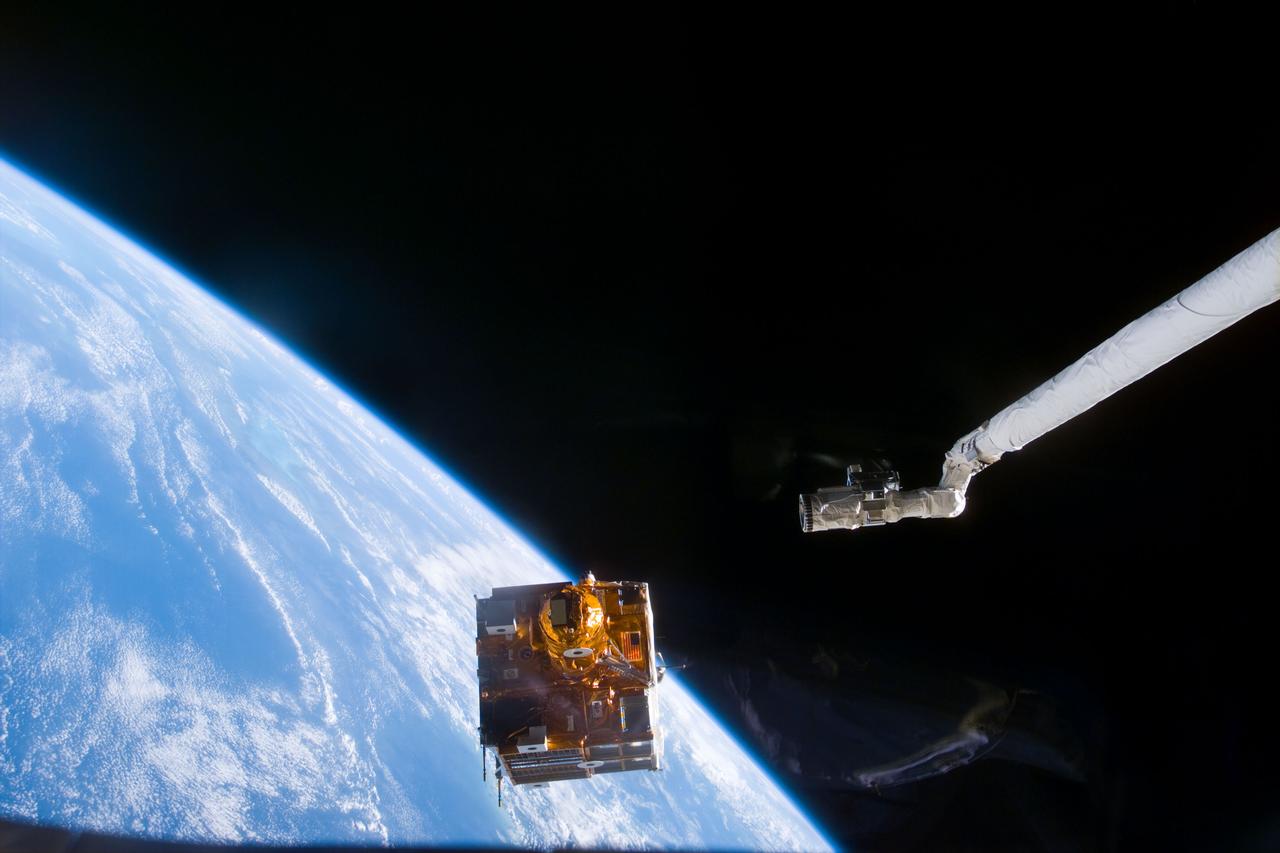
STS095-E-5071 (1 Nov. 1998) --- Backdropped against the blackness of space and Earth's horizon, Spartan 201-05 leaves the cargo bay of the Space Shuttle Discovery. The satellite will remain a free-flyer for several days while it records data on the solar wind and the sun's corona. This data is hoped to increase knowledge of the sun's effect on our planet. The Canadian-built remote manipulator system (RMS)is partially visible in the frame. The photograph was taken with an electronic still camera (ESC) at 2:08:48 GMT, November 1.
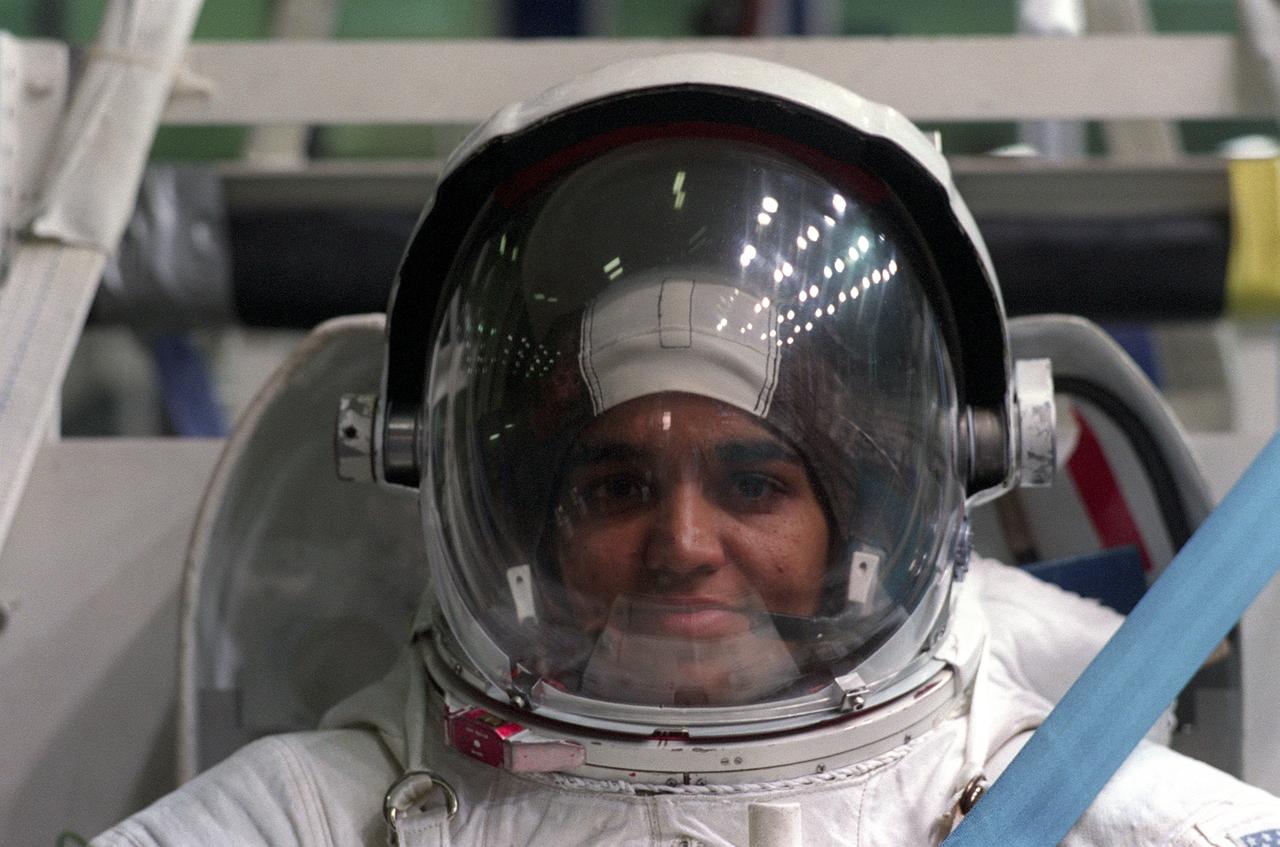
Attired in a training version of the Extravehicular Mobility Unit (EMU) space suit, astronaut and mission specialist Kalpana Chawla, prepares to go underwater in the Neutral Buoyancy Laboratory (NBL) near Johnson Space Center. This particular training was in preparation for the STS-87 mission. The Space Shuttle Columbia (STS-87) was the fourth flight of the United States Microgravity Payload (USMP-4) and Spartan-201 satellite, both managed by scientists and engineers from the Marshall Space Flight Center.
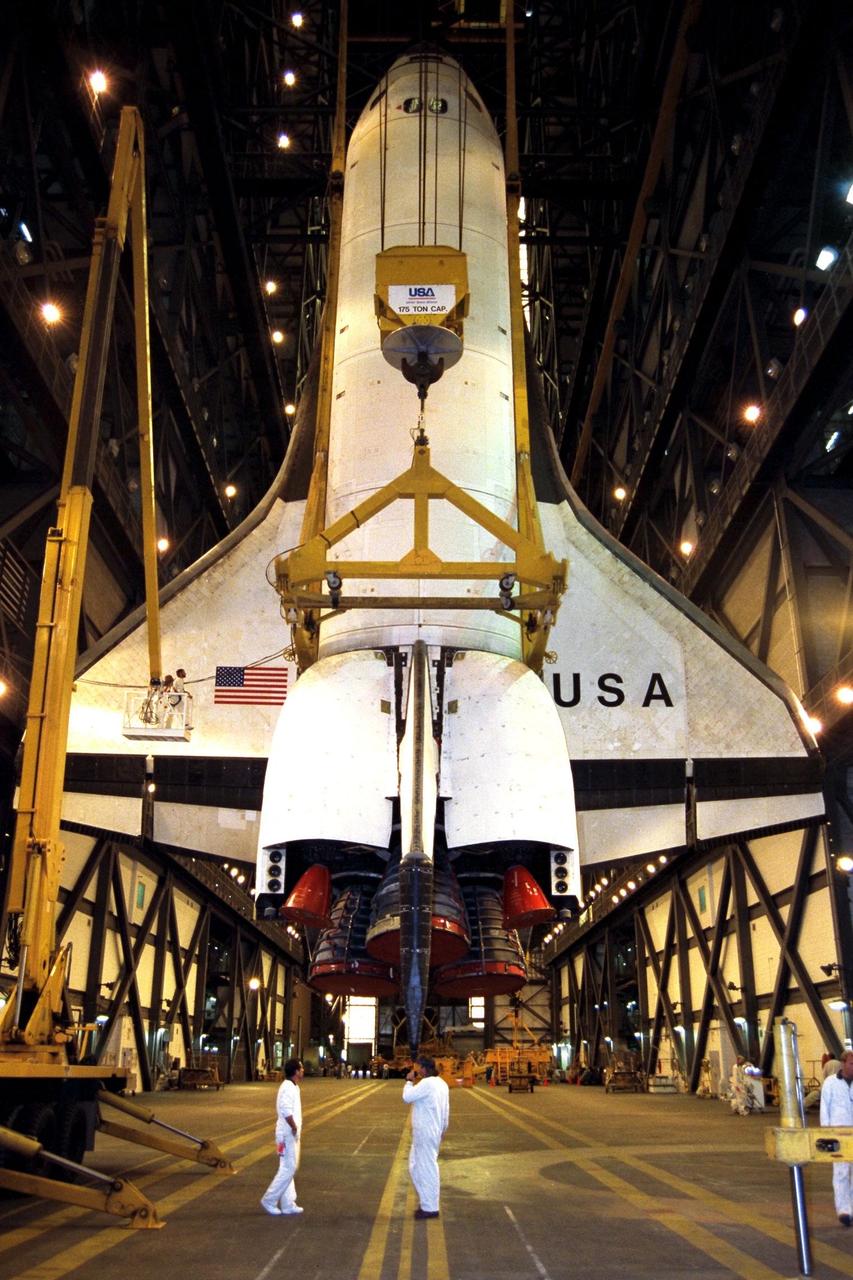
In preparation for Space Shuttle Mission STS-87, the orbiter Columbia is lifted into high bay 3 in the Vehicle Assembly Building. The orbiter will be mated to the <a href="http://www-pao.ksc.nasa.gov/kscpao/nasafact/count3.htm#et">external tank</a> and <a href="http://www-pao.ksc.nasa.gov/kscpao/nasafact/ships.htm#srbs">solid rocket boosters</a> over the weekend and is slated to roll out to Pad 39B on Wednesday. STS-87 will be the fourth flight of the United States Microgravity Payload and the Spartan-201 deployable satellite

STS087-338-003 (19 November - 5 December 1997) --- Astronaut Kalpana Chawla, mission specialist, aims a 70mm camera through the Space Shuttle Columbia's overhead window. Crew members used the camera for the ongoing Earth observations project but they used it as well to document operations with the Spartan-201 satellite and the two Extravehicular Activities (EVA) performed by astronauts Winston E. Scott and Takao Doi.
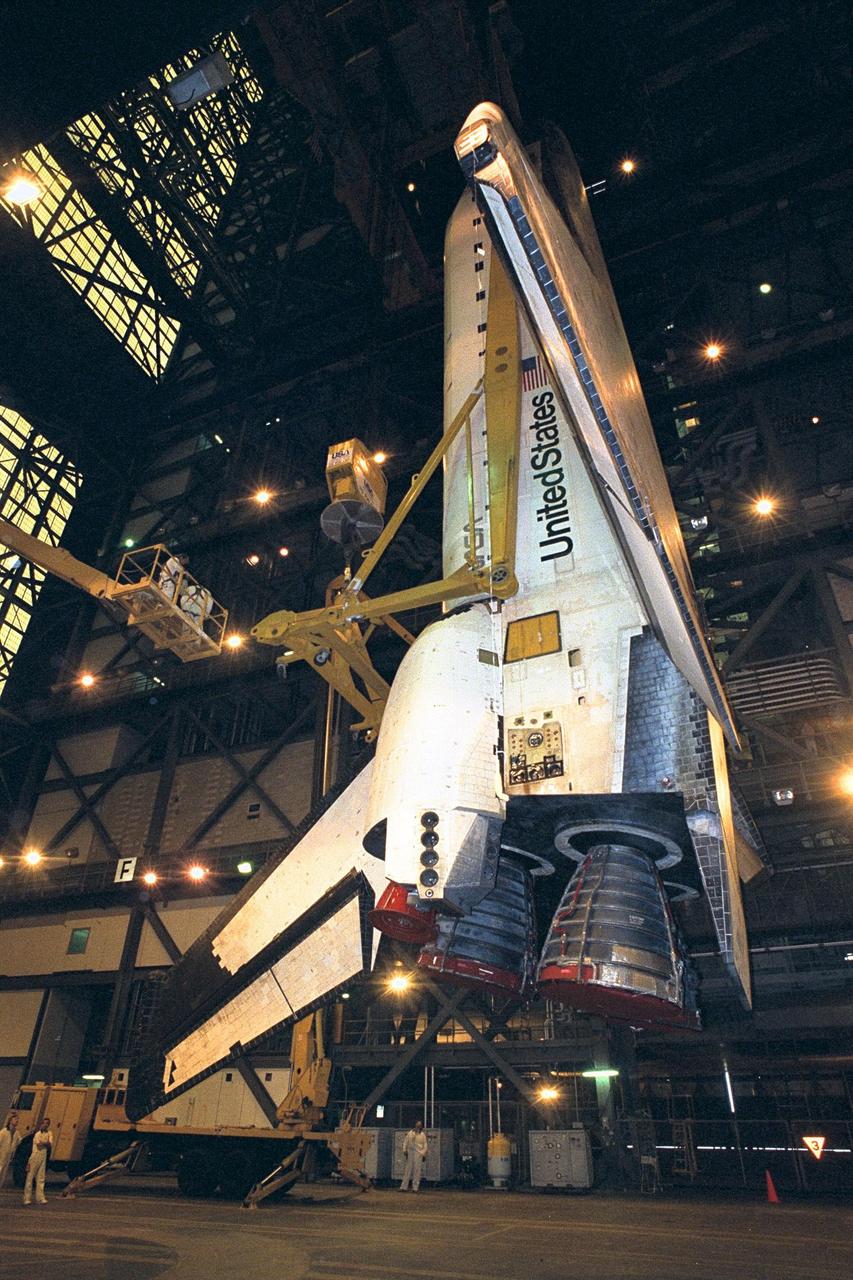
In preparation for Space Shuttle Mission STS-87, the orbiter Columbia is lifted into high bay 3 in the Vehicle Assembly Building. The orbiter will be mated to the <a href="http://www-pao.ksc.nasa.gov/kscpao/nasafact/count3.htm#et">external tank</a> and <a href="http://www-pao.ksc.nasa.gov/kscpao/nasafact/ships.htm#srbs">solid rocket boosters</a> over the weekend and is slated to roll out to Pad 39B on Wednesday. STS-87 will be the fourth flight of the United States Microgravity Payload and the Spartan-201 deployable satellite
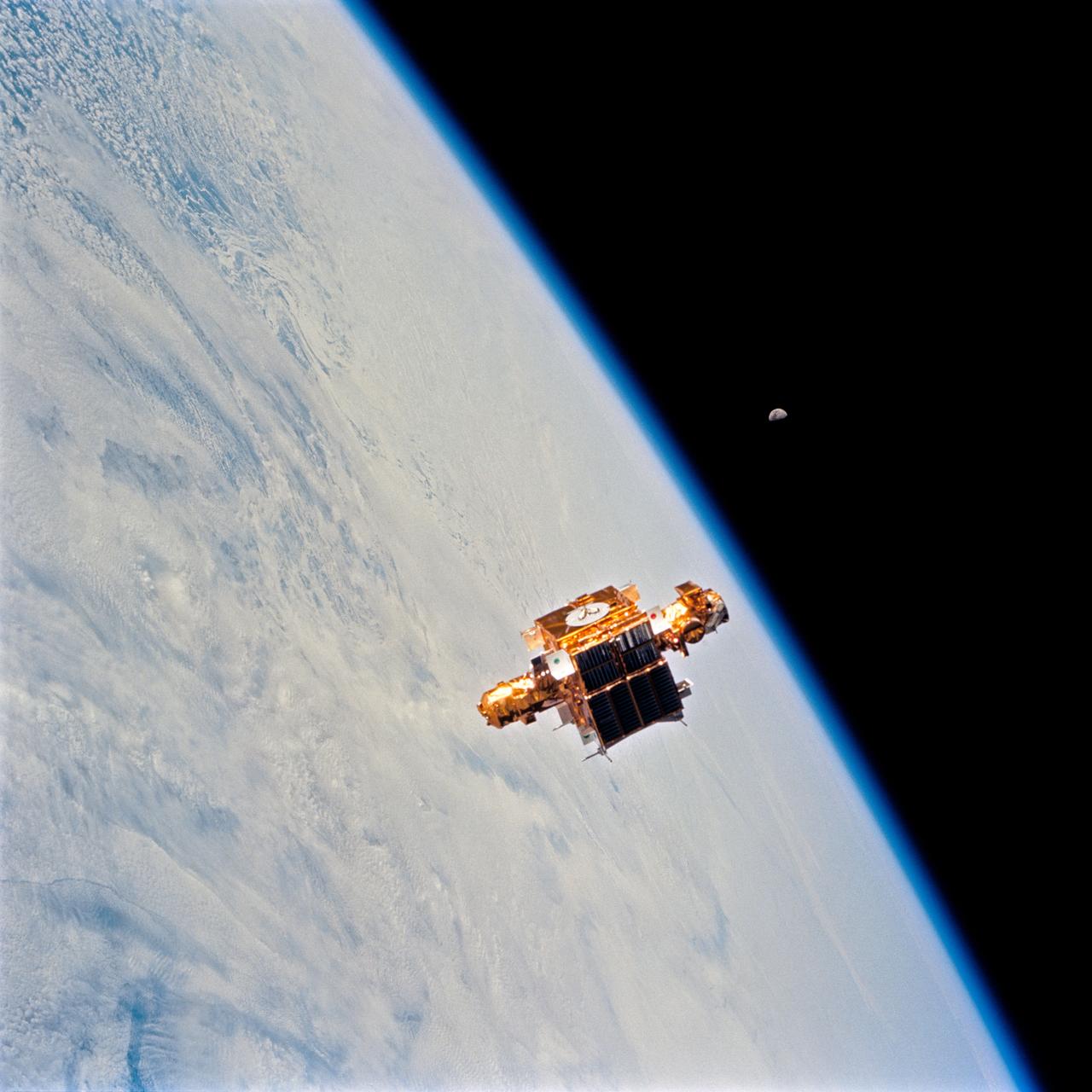
STS064-74-052 (9-20 Sept. 1994) --- Astronauts onboard the space shuttle Discovery used a 70mm camera to capture this photograph of the retrieval operations with the Shuttle Pointed Autonomous Research Tool for Astronomy 201 (SPARTAN 201). A gibbous moon can be seen in the background. Photo credit: NASA or National Aeronautics and Space Administration
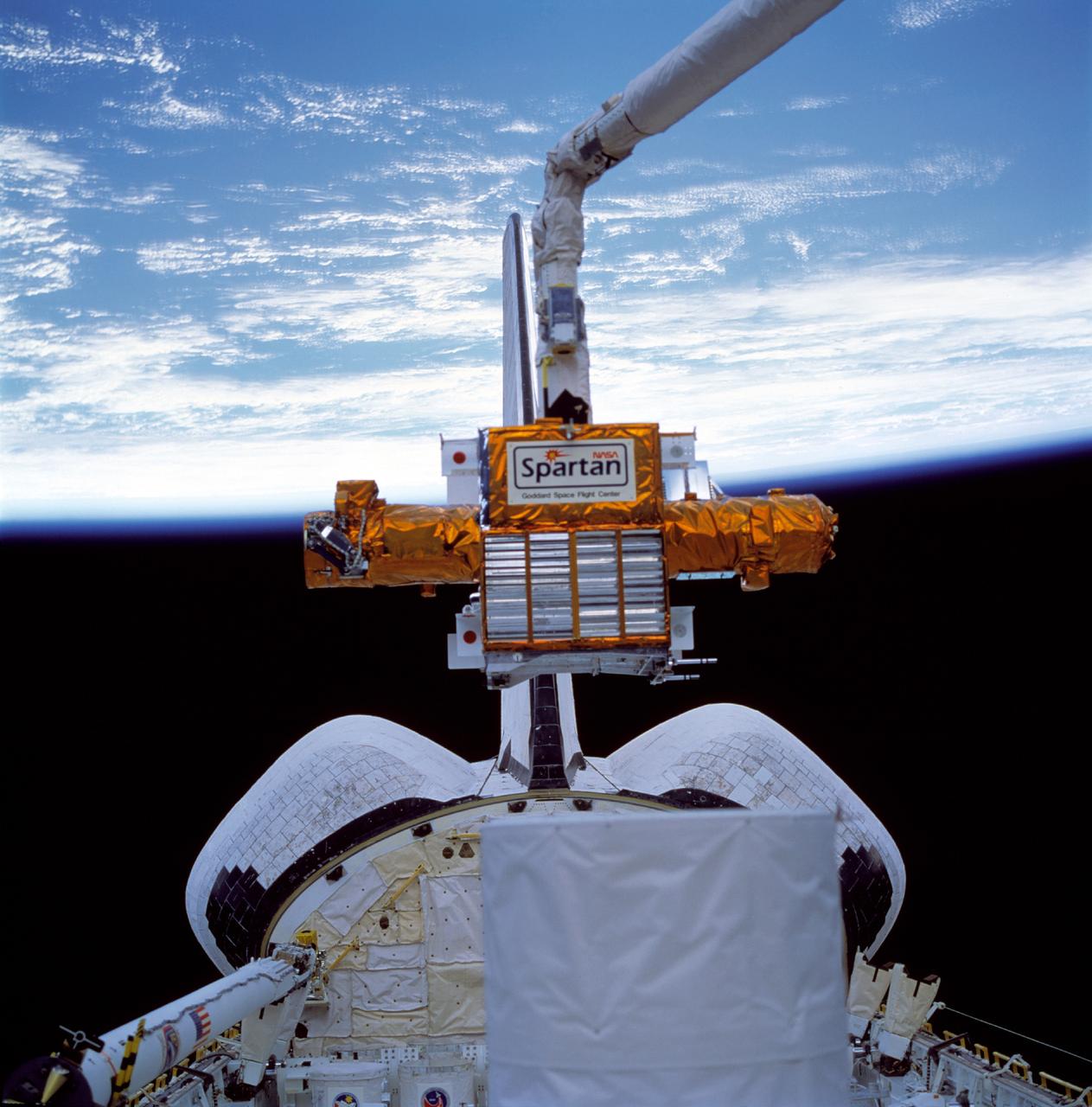
STS064-111-070 (9-20 Sept. 1994) --- The astronauts onboard the space shuttle Discovery used a 70mm camera to capture this view of the pre-deploy operations with the Shuttle Pointed Autonomous Research Tool for Astronomy (SPARTAN-201) 201. In the grasp of the robot arm device of the Remote Manipulator System (RMS), SPARTAN 201 hovers above Discovery's cargo bay prior to its two days of free-flight, some 40 miles away from the parent spacecraft. Photo credit: NASA or National Aeronautics and Space Administration
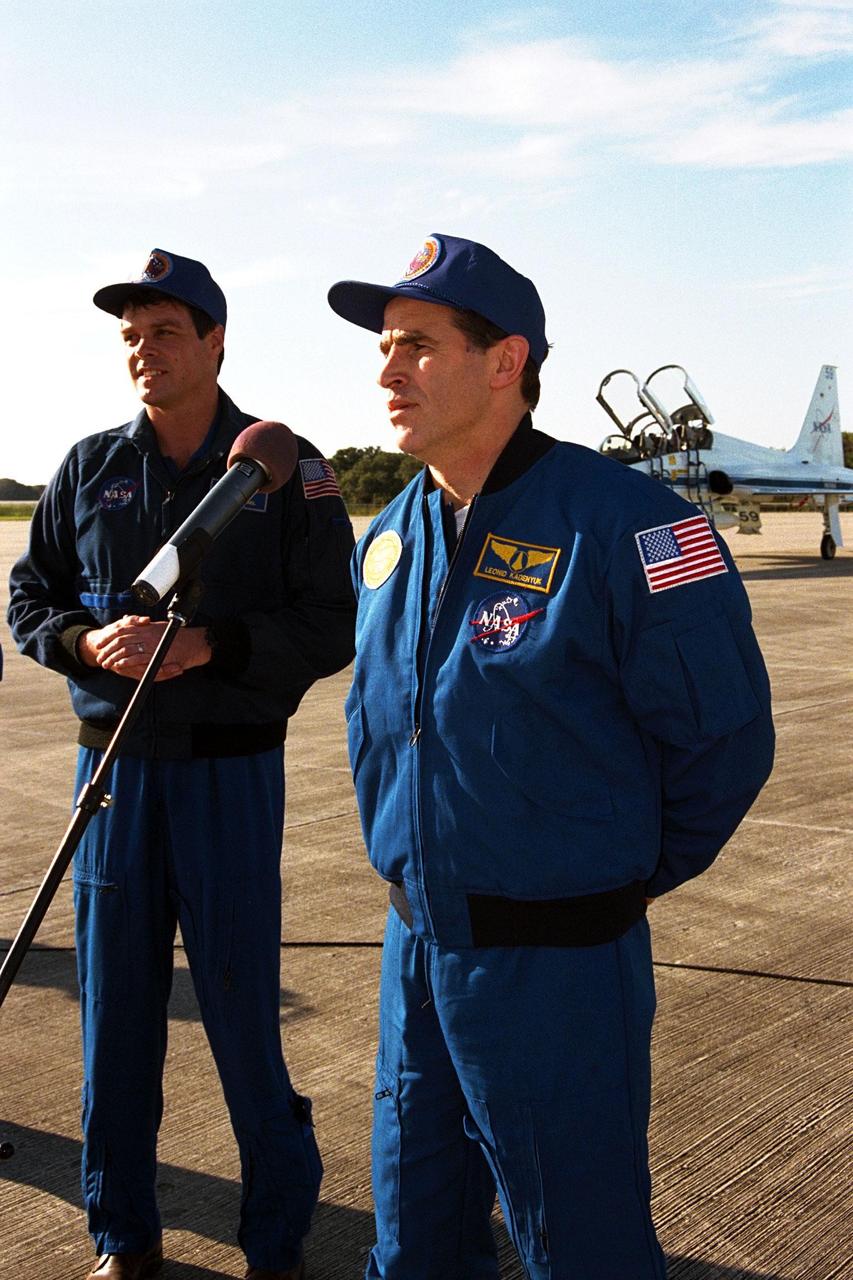
As STS-87 Commander Kevin Kregel looks on, Payload Specialist Leonid Kadenyuk of the National Space Agency of Ukraine addresses members of the press and media at Kennedy Space Center's Shuttle Landing Facility after arriving for the final prelaunch activities leading up to the scheduled Nov. 19 liftoff. Other STS-87 crew members not pictured are Pilot Steven Lindsey; and Mission Specialists Kalpana Chawla, Ph.D.; Takao Doi, Ph.D., of the National Space Development Agency of Japan; and Winston Scott. STS-87 will be the fourth flight of the United States Microgravity Payload and the Spartan-201 deployable satellite
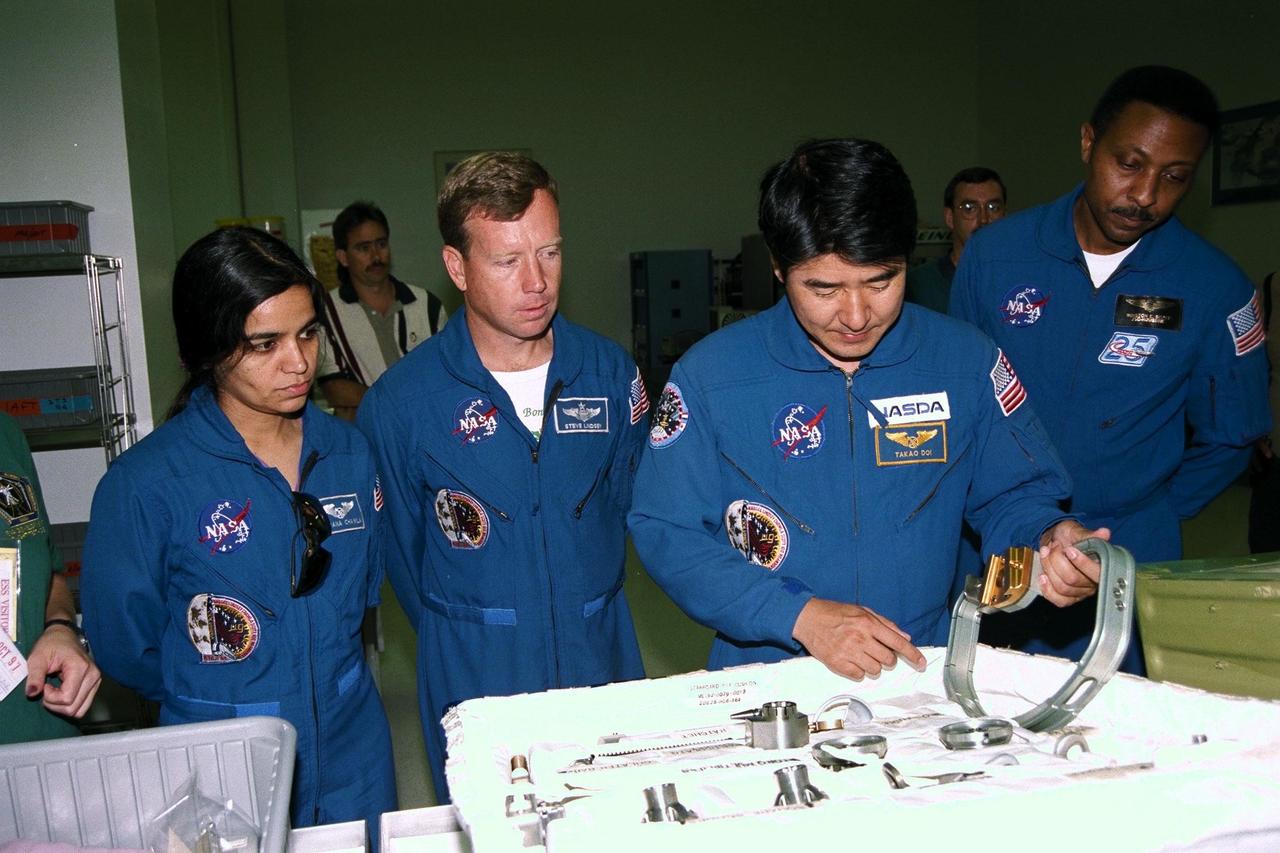
STS-87 astronaut crew members participate in the Crew Equipment Integration Test (CEIT) in Kennedy Space Center’s (KSC's) Vertical Processing Facility. From left are Mission Specialist Kalpana Chawla, Ph.D.; Pilot Steven Lindsey; Mission Specialist Takao Doi , Ph.D., of the National Space Development Agency of Japan; and Mission Specialist Winston Scott. The CEIT gives astronauts an opportunity to get a hands-on look at the payloads with which they will be working onorbit. STS-87 will be the fourth United States Microgravity Payload and flight of the Spartan-201 deployable satellite. During the STS-87 mission, scheduled for a Nov. 19 liftoff from KSC, Dr. Doi and Scott will both perform spacewalks
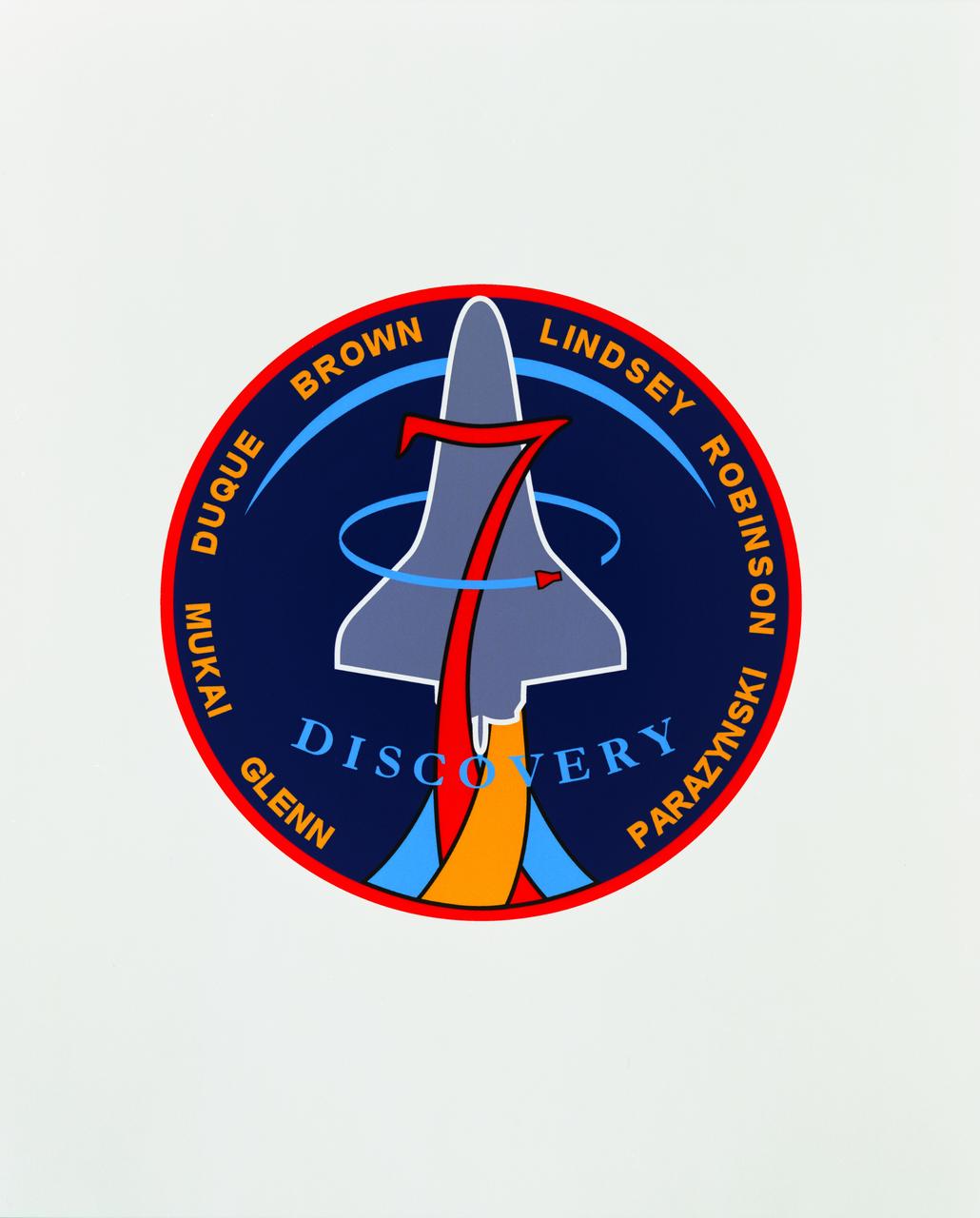
The STS-95 patch, designed by the crew, is intended to reflect the scientific, engineering, and historic elements of the mission. The Space Shuttle Discovery is shown rising over the sunlit Earth limb, representing the global benefits of the mission science and the solar science objectives of the Spartan Satellite. The bold number '7' signifies the seven members of Discovery's crew and also represents a historical link to the original seven Mercury astronauts. The STS-95 crew member John Glenn's first orbital flight is represented by the Friendship 7 capsule. The rocket plumes symbolize the three major fields of science represented by the mission payloads: microgravity material science, medical research for humans on Earth and in space, and astronomy.
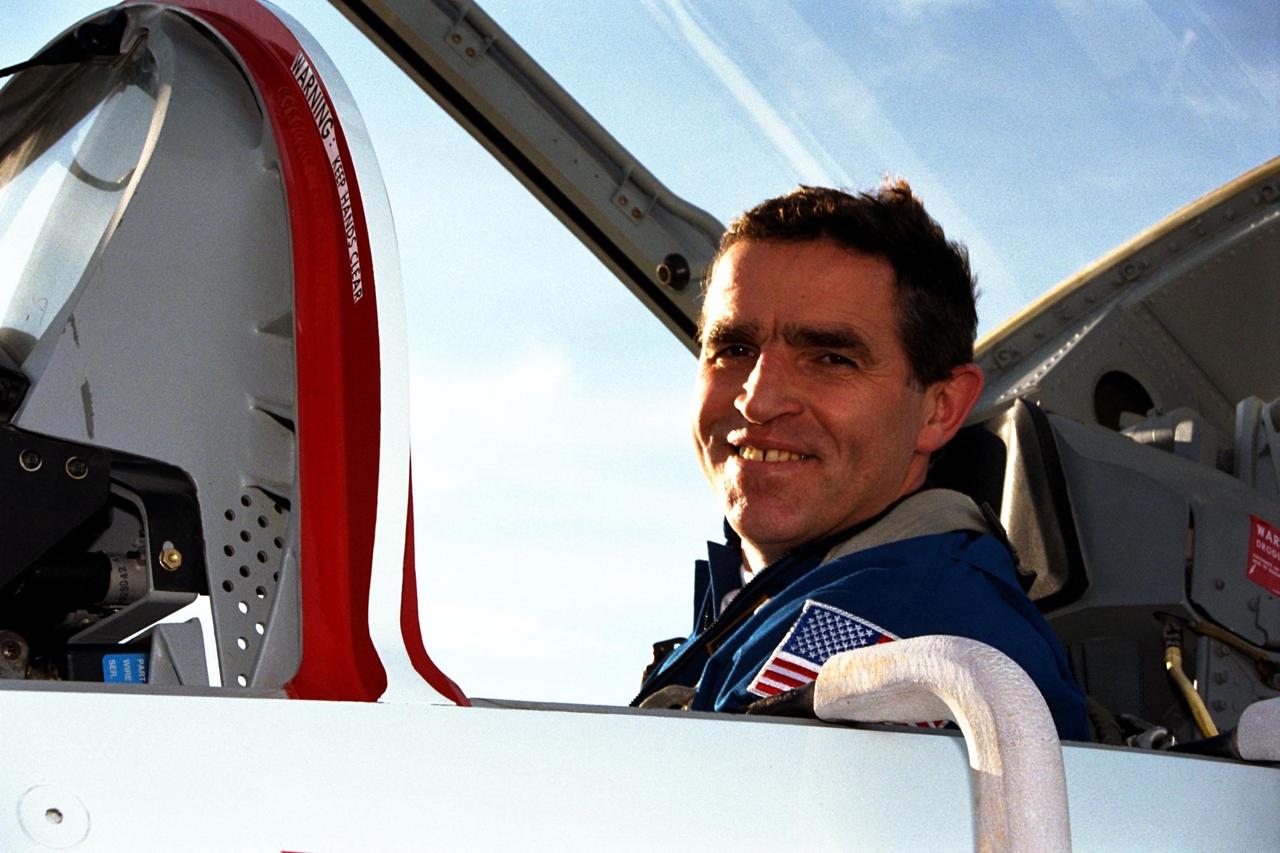
STS-87 Payload Specialist Leonid Kadenyuk of the National Space Agency of Ukraine arrives at Kennedy Space Center's Shuttle Landing Facility aboard a T-38 jet for the final prelaunch activities leading up to the scheduled Nov. 19 liftoff. The other STS-87 crew members are Commander Kevin Kregel; Pilot Steven Lindsey; and Mission Specialists Kalpana Chawla, Ph.D.; Takao Doi, Ph.D., of the National Space Development Agency of Japan; and Winston Scott. STS-87 will be the fourth flight of the United States Microgravity Payload and the Spartan-201 deployable satellite
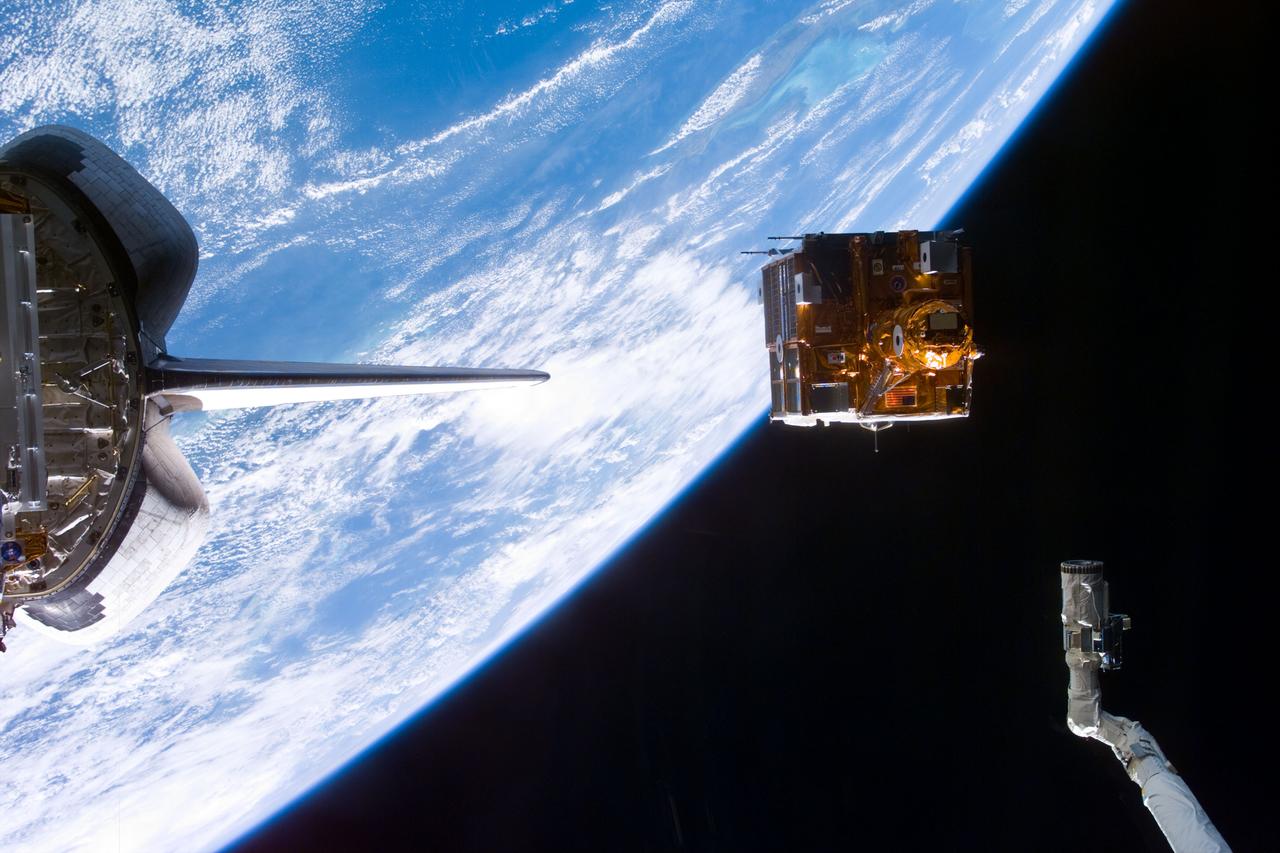
STS095-E-5077 (1 Nov. 1998) --- Backdropped against the blackness of space and Earth's horizon, Spartan 201-05 leaves the cargo bay of the Space Shuttle Discovery. The satellite will remain a free-flyer for several days while it records data on the solar wind and the sun's corona. This data is hoped to increase knowledge of the sun's effect on our planet. Cargo bay of Discovery is partially visible at left. The Canadian-built remote manipulator system (RMS)is partially visible at right. The photograph was taken with an electronic still camera (ESC) at 2:09:35 GMT, November 1.
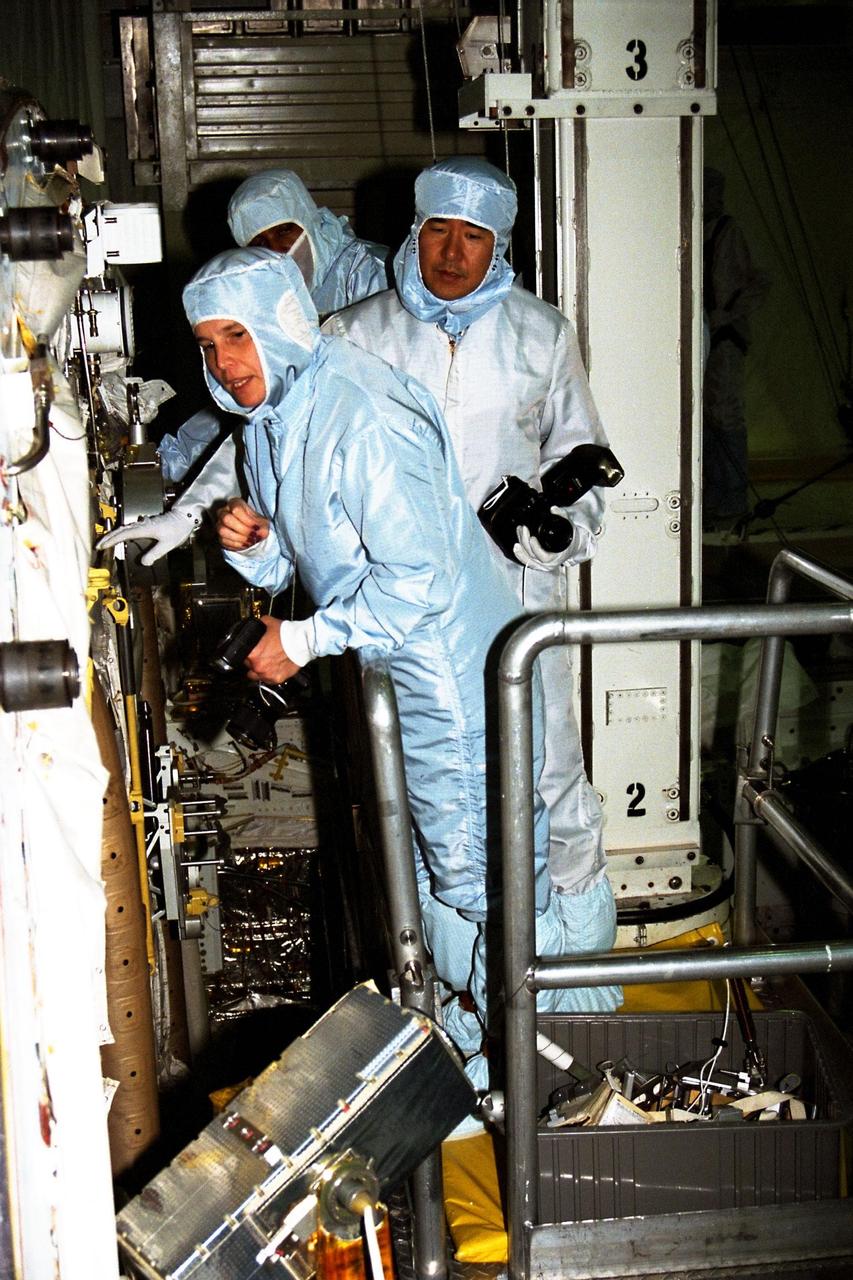
Participating in the Crew Equipment Integration Test (CEIT) at Kennedy Space Center are STS-87 crew members, assisted by Glenda Laws, extravehicular activity (EVA) coordinator, Johnson Space Center. Standing behind Laws are Takao Doi, Ph.D., of the National Space Development Agency of Japan, and Winston Scott, both mission specialists on STS-87. The STS-87 mission will be the fourth United States Microgravity Payload and flight of the Spartan-201 deployable satellite. During the mission, scheduled for a Nov. 19 liftoff from KSC, Dr. Doi and Scott will both perform spacewalks
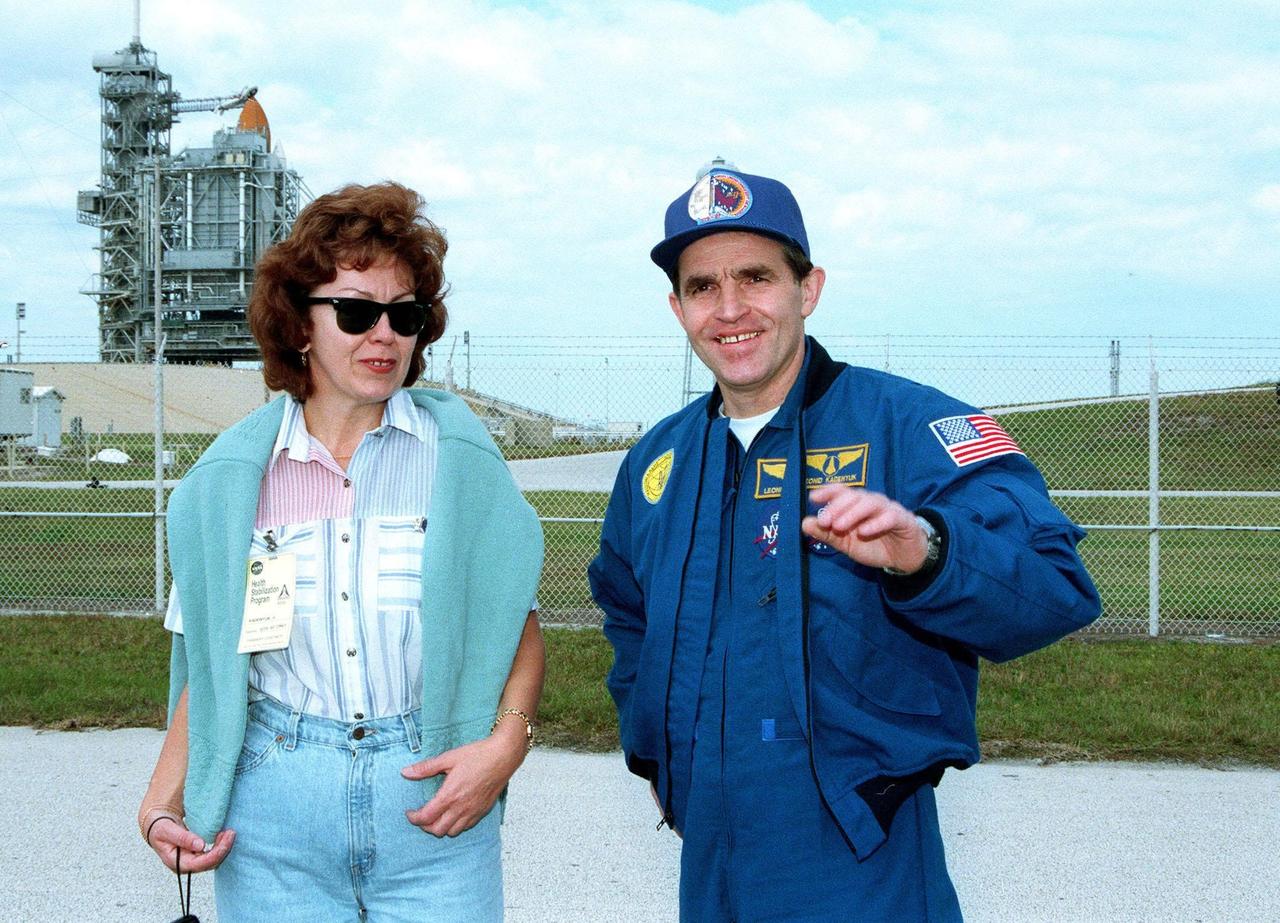
STS-87 Payload Specialist Leonid Kadenyuk of the National Space Agency of Ukraine poses with his wife, Vera Kadenyuk, in front of Kennedy Space Center's Launch Pad 39B during final prelaunch activities leading up to the scheduled Nov. 19 liftoff. The other STS-87 crew members are Commander Kevin Kregel; Pilot Steven Lindsey; and Mission Specialists Kalpana Chawla, Ph.D.; Winston Scott; and Takao Doi, Ph.D., National Space Development Agency of Japan. STS-87 will be the fourth flight of the United States Microgravity Payload and the Spartan-201 deployable satellite
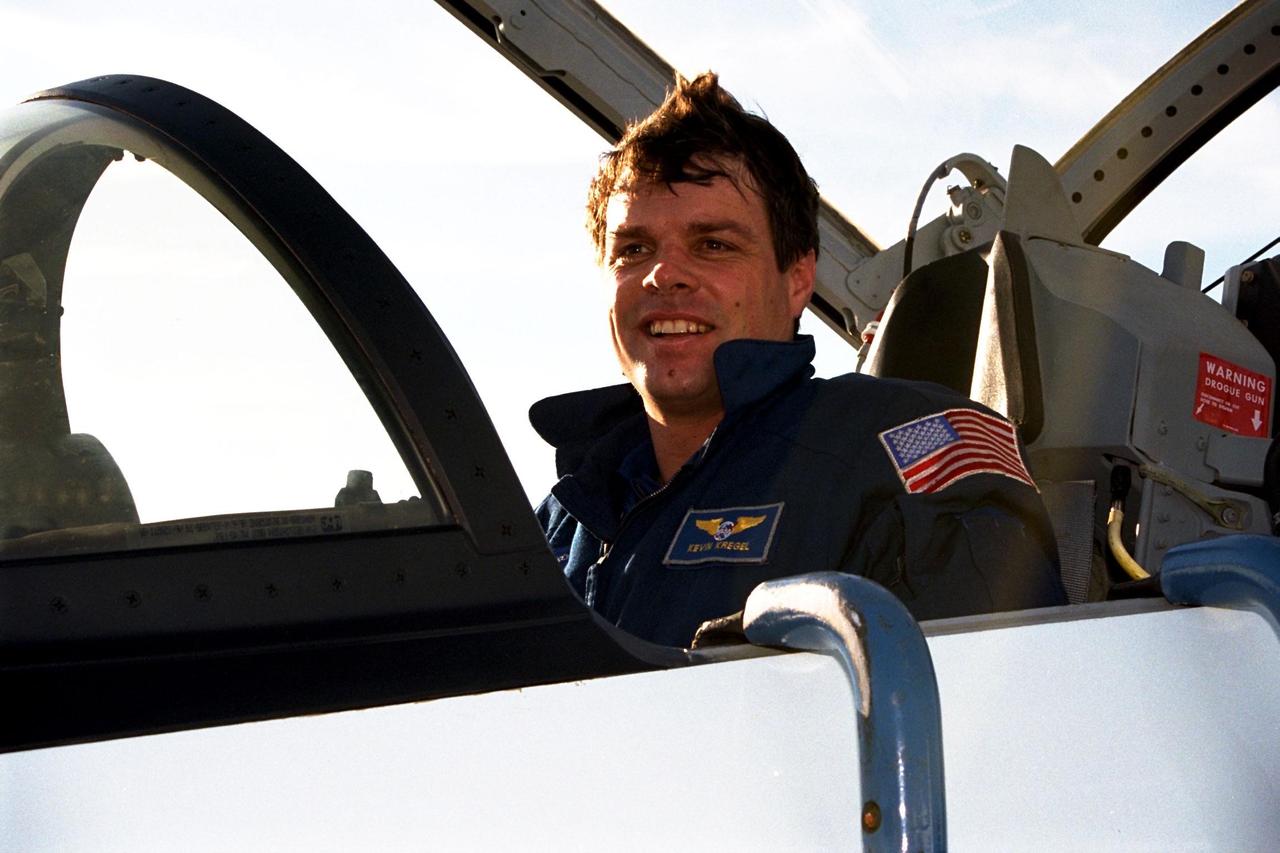
STS-87 Commander Kevin Kregel arrives at Kennedy Space Center's Shuttle Landing Facility aboard a T-38 jet for the final prelaunch activities leading up to the scheduled Nov. 19 liftoff. The other STS-87 crew members are Pilot Steven Lindsey; Mission Specialists Kalpana Chawla, Ph.D.; Takao Doi, Ph.D., of the National Space Development Agency of Japan; and Winston Scott; and Payload Specialist Leonid Kadenyuk of the National Space Agency of Ukraine. STS-87 will be the fourth flight of the United States Microgravity Payload and the Spartan-201 deployable satellite
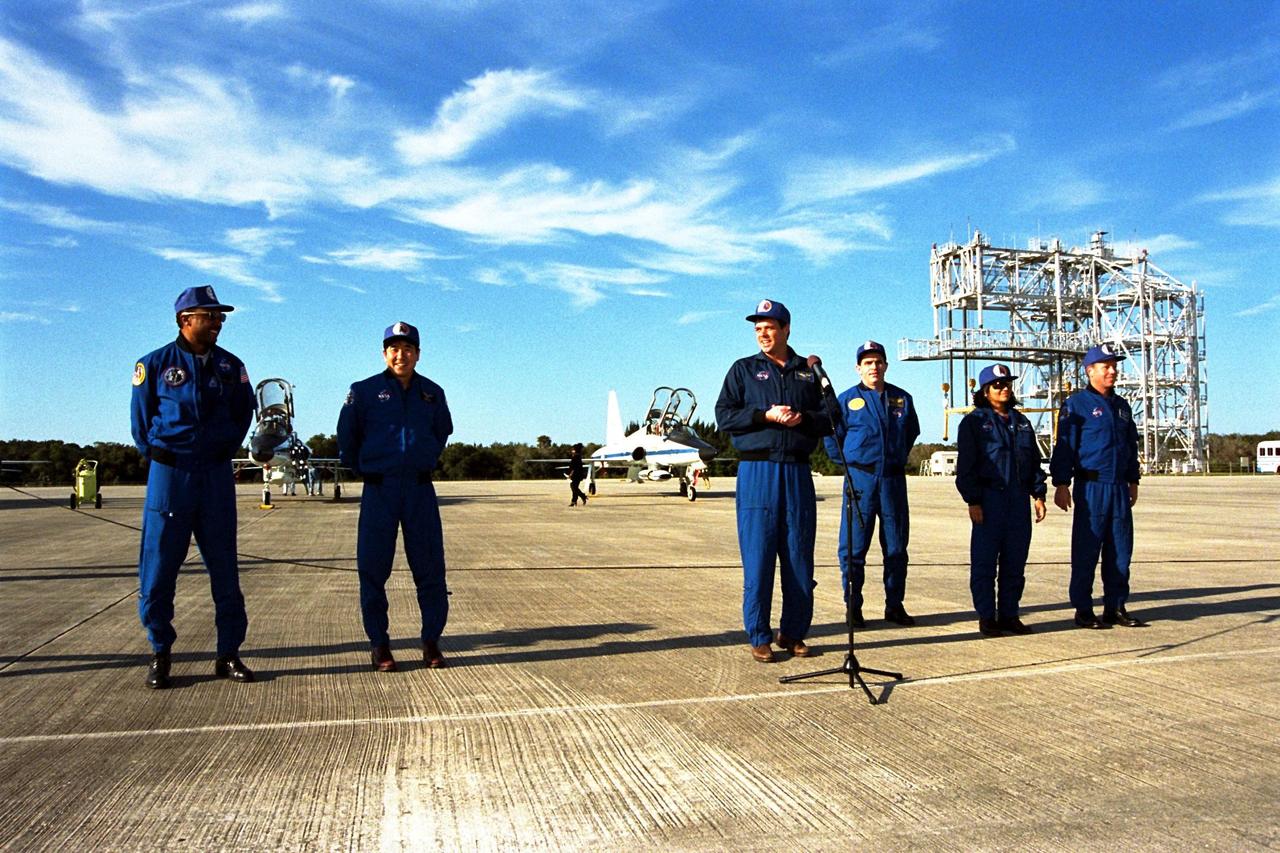
STS-87 Commander Kevin Kregel addresses members of the press and media at Kennedy Space Center's Shuttle Landing Facility after arriving for the final prelaunch activities leading up to the scheduled Nov. 19 liftoff. The STS-87 crew members are, from left to right, Mission Specialists Winston Scott and Takao Doi, Ph.D., of the National Space Development Agency of Japan; Commander Kevin Kregel; Payload Specialist Leonid Kadenyuk of the National Space Agency of Ukraine; Mission Specialist Kalpana Chawla, Ph.D.; and Pilot Steven Lindsey. STS-87 will be the fourth flight of the United States Microgravity Payload and the Spartan-201 deployable satellite
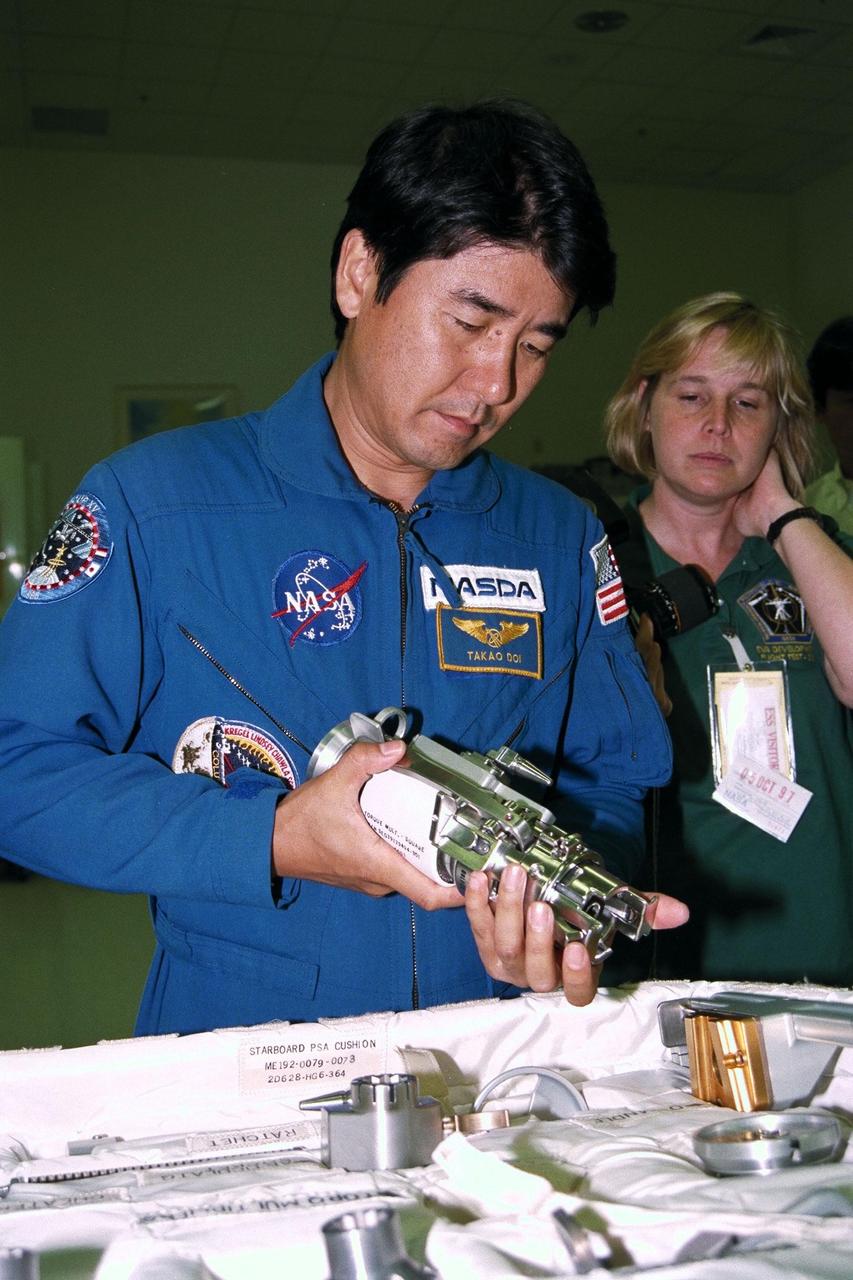
STS-87 Mission Specialist Takao Doi , Ph.D., of the National Space Development Agency of Japan, participates in the Crew Equipment Integration Test (CEIT) in Kennedy Space Center’s (KSC's) Vertical Processing Facility. Glenda Laws, the extravehicular activity (EVA) coordinator, Johnson Space Center, stands behind Dr. Doi. The CEIT gives astronauts an opportunity to get a hands-on look at the payloads with which they will be working on-orbit. STS-87 will be the fourth United States Microgravity Payload and flight of the Spartan-201 deployable satellite. During the mission, Dr. Doi will be the first Japanese astronaut to perform a spacewalk. STS-87 is scheduled for a Nov. 19 liftoff from KSC
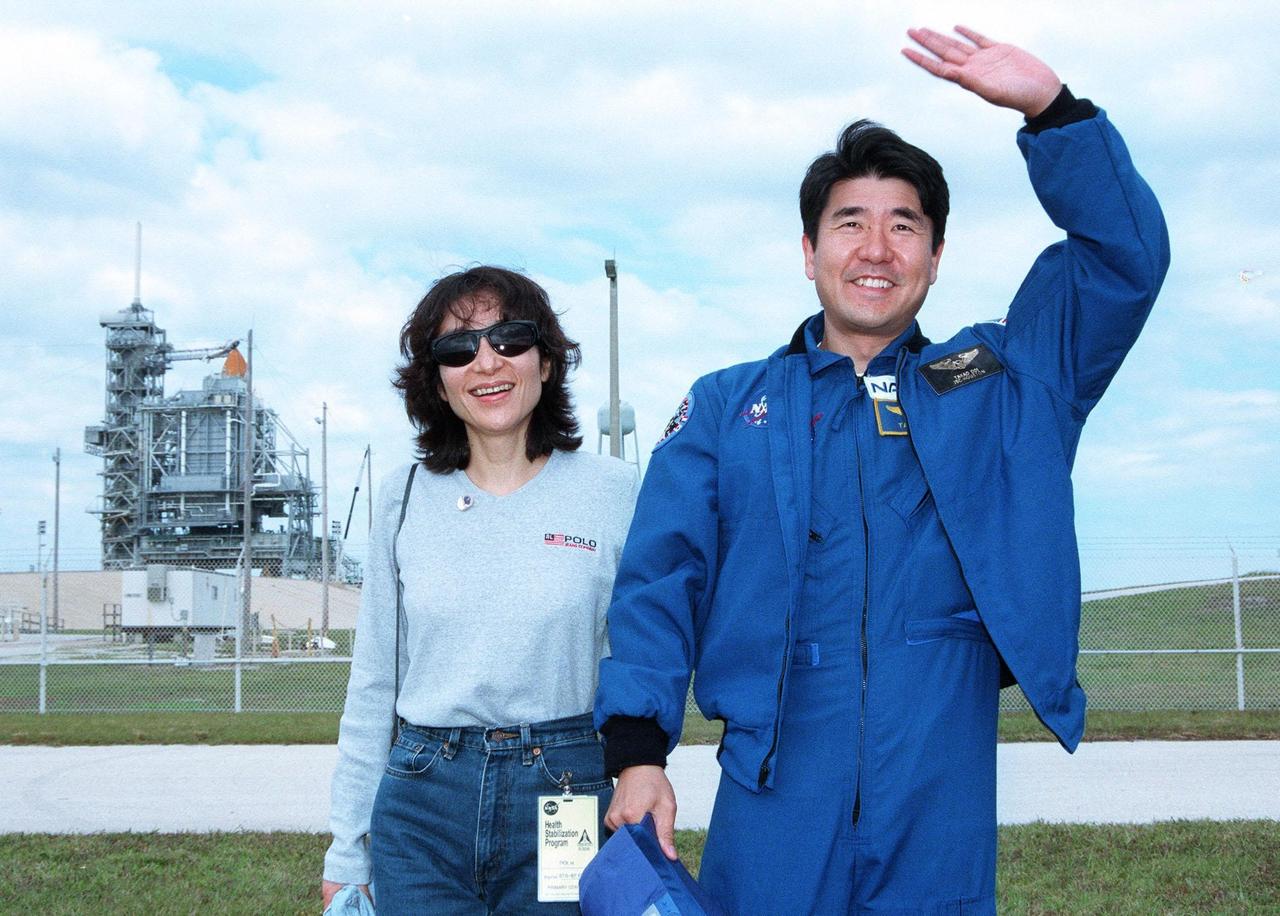
STS-87 Mission Specialist Takao Doi, Ph.D., of the National Space Development Agency of Japan poses with his wife, Hitomi Doi, in front of Kennedy Space Center's Launch Pad 39B during final prelaunch activities leading up to the scheduled Nov. 19 liftoff. The other STS-87 crew members are Commander Kevin Kregel; Pilot Steven Lindsey; Mission Specialists Kalpana Chawla, Ph.D., and Winston Scott; and Payload Specialist Leonid Kadenyuk of the National Space Agency of Ukraine. STS-87 will be the fourth flight of the United States Microgravity Payload and the Spartan-201 deployable satellite
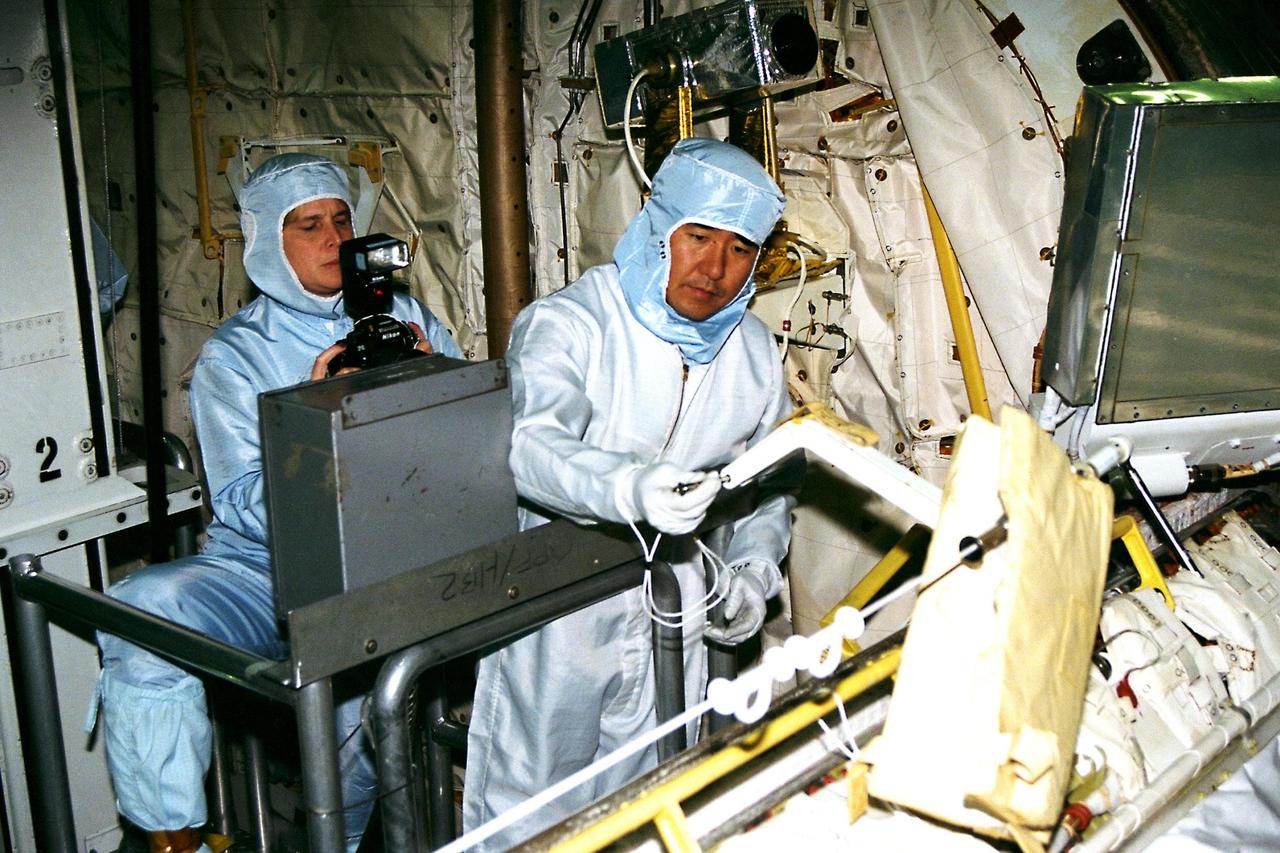
STS-87 Mission Specialist Takao Doi , Ph.D., of the National Space Development Agency of Japan, participates in the Crew Equipment Integration Test (CEIT) at Kennedy Space Center (KSC). Glenda Laws, the extravehicular activity (EVA) coordinator, Johnson Space Center, stands behind Dr. Doi. The CEIT gives astronauts an opportunity to get a hands-on look at the payloads with which they will be working on-orbit. STS-87 will be the fourth United States Microgravity Payload and flight of the Spartan-201 deployable satellite. During the mission, Dr. Doi will be the first Japanese astronaut to perform a spacewalk. STS-87 is scheduled for a Nov. 19 liftoff from KSC
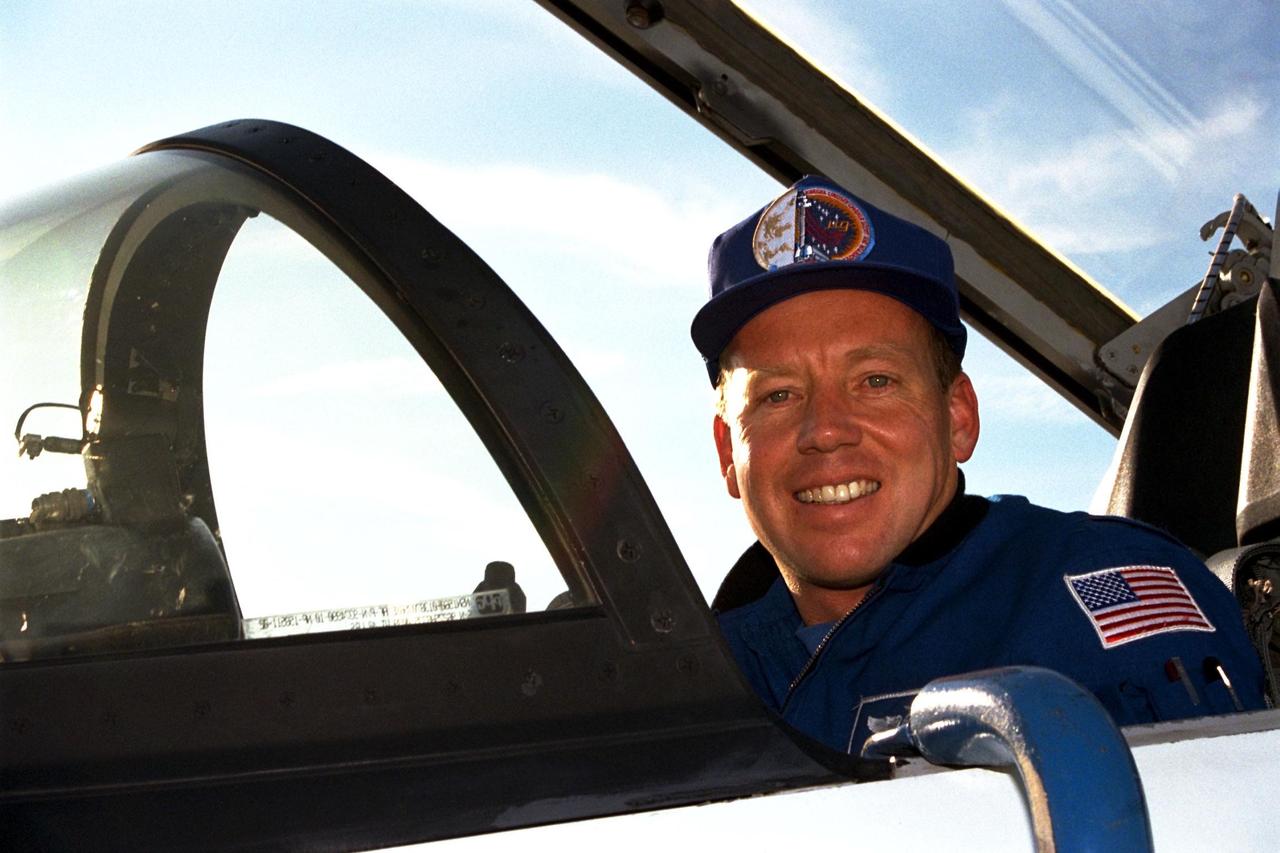
STS-87 Pilot Steven Lindsey arrives at Kennedy Space Center's Shuttle Landing Facility aboard a T-38 jet for the final prelaunch activities leading up to the scheduled Nov. 19 liftoff. The other STS-87 crew members are Commander Kevin Kregel; Mission Specialists Kalpana Chawla, Ph.D.; Takao Doi, Ph.D., of the National Space Development Agency of Japan; and Winston Scott; and Payload Specialist Leonid Kadenyuk of the National Space Agency of Ukraine. STS-87 will be the fourth flight of the United States Microgravity Payload and the Spartan-201 deployable satellite
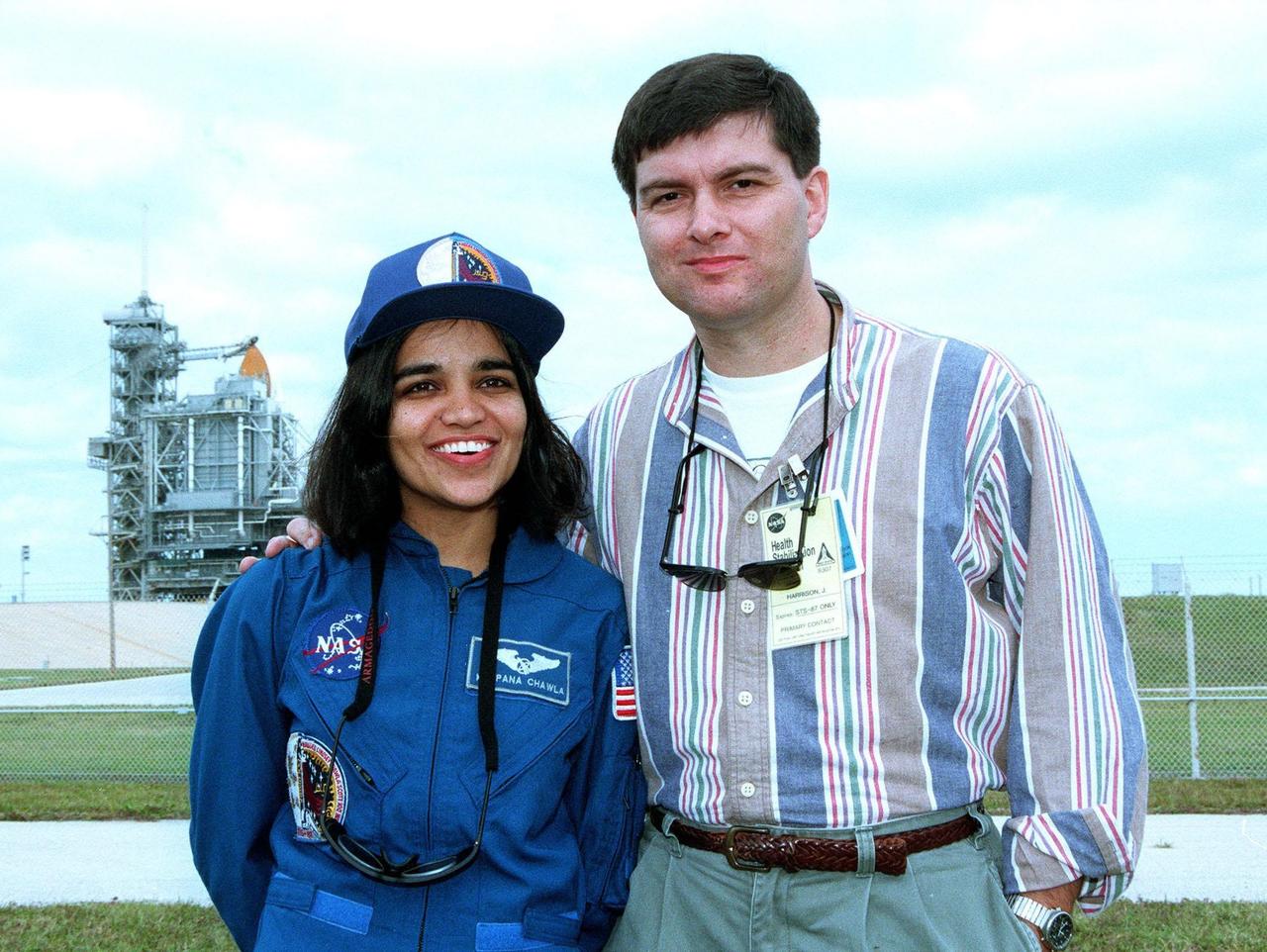
STS-87 Mission Specialist Kalpana Chawla, Ph.D., poses with her husband, Jean-Pierre Harrison, in front of Kennedy Space Center's Launch Pad 39B during final prelaunch activities leading up to the scheduled Nov. 19 liftoff. The other STS-87 crew members are Commander Kevin Kregel; Pilot Steven Lindsey; Mission Specialists Winston Scott and Takao Doi, Ph.D., of the National Space Development Agency of Japan; and Payload Specialist Leonid Kadenyuk of the National Space Agency of Ukraine. STS-87 will be the fourth flight of the United States Microgravity Payload and the Spartan-201 deployable satellite
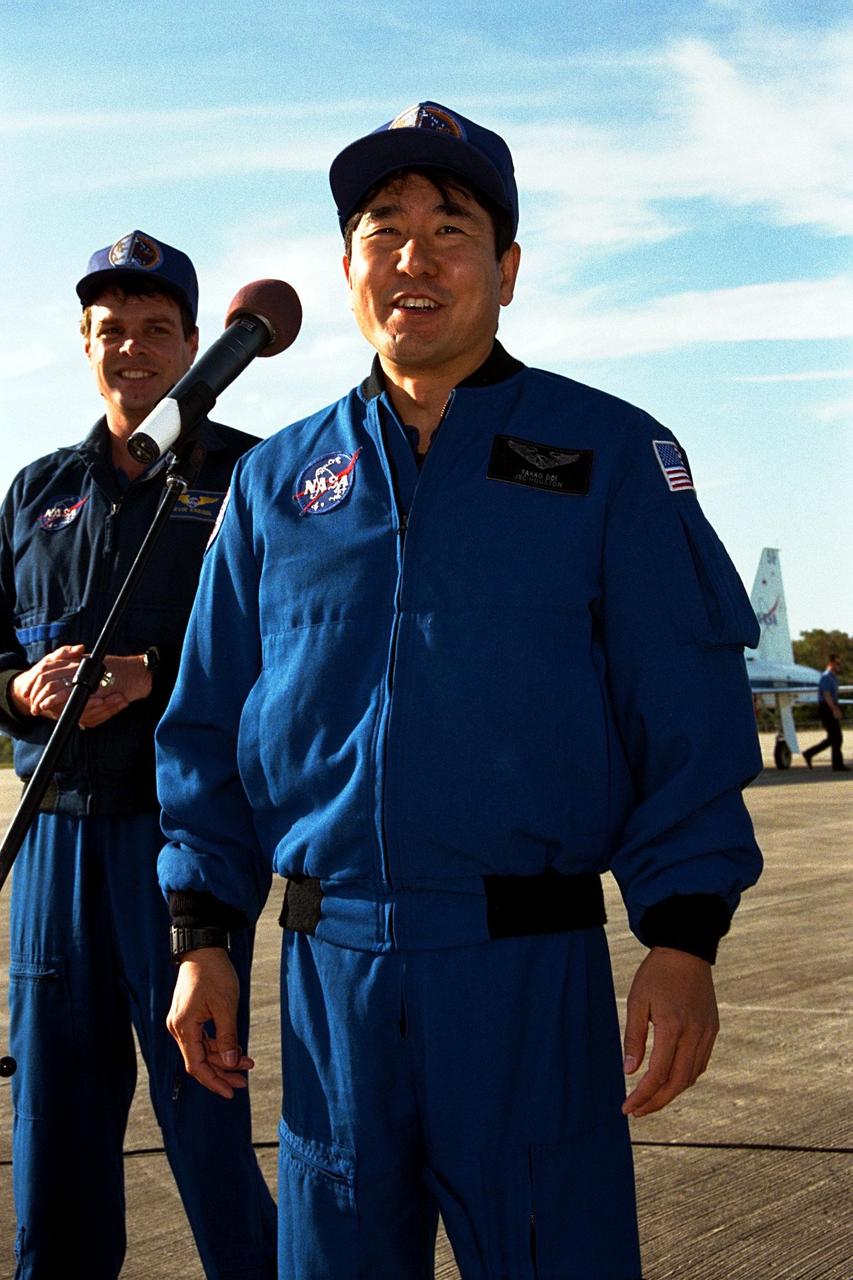
As STS-87 Commander Kevin Kregel looks on, Mission Specialist Takao Doi, Ph.D., of the National Space Development Agency of Japan addresses members of the press and media at Kennedy Space Center's Shuttle Landing Facility after arriving for the final prelaunch activities leading up to the scheduled Nov. 19 liftoff. Other STS-87 crew members not pictured are Pilot Steven Lindsey; Mission Specialists Kalpana Chawla, Ph.D., and Winston Scott; and Payload Specialist Leonid Kadenyuk of the National Space Agency of Ukraine. STS-87 will be the fourth flight of the United States Microgravity Payload and the Spartan-201 deployable satellite
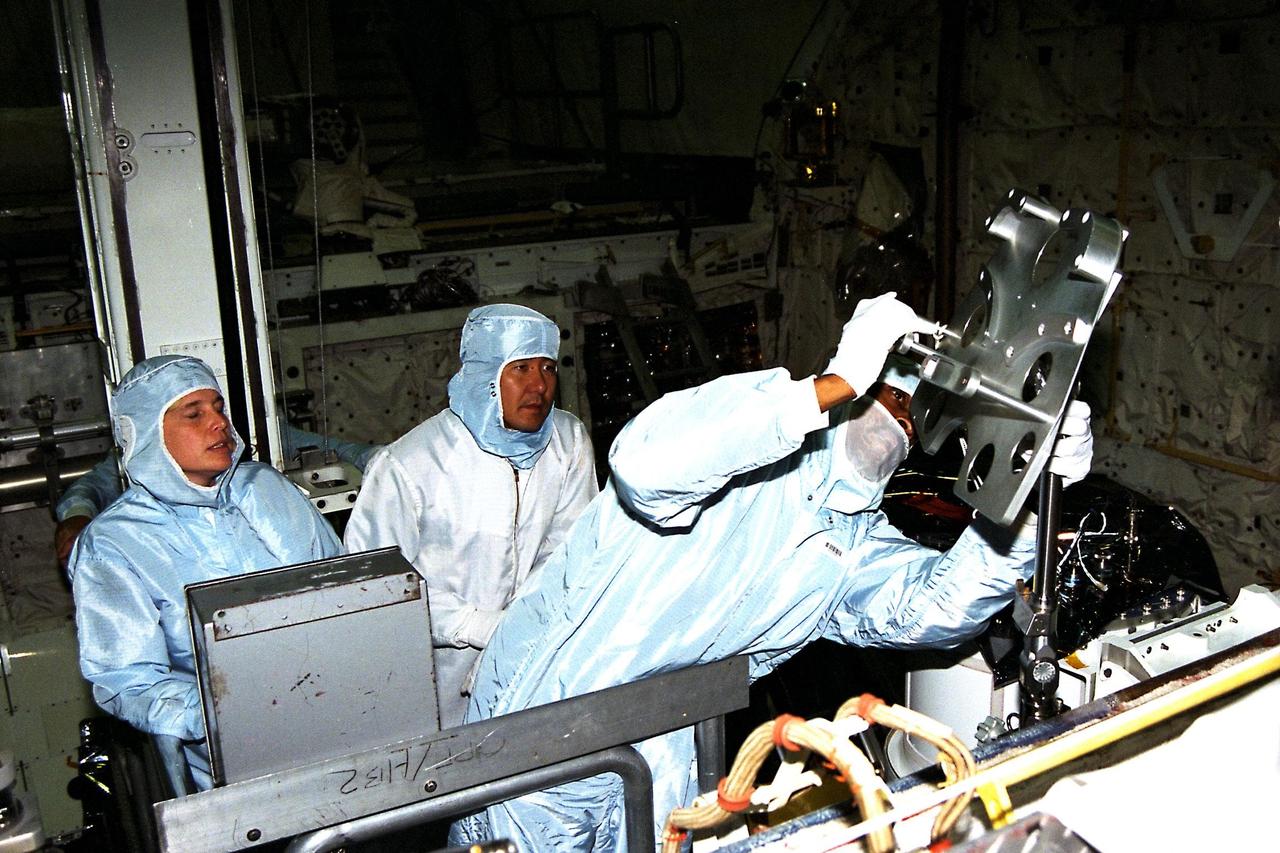
Participating in the Crew Equipment Integration Test (CEIT) at Kennedy Space Center are STS-87 crew members, assisted by Glenda Laws, extravehicular activity (EVA) coordinator, Johnson Space Center, at left. Next to Laws is Mission Specialist Takao Doi, Ph.D., of the National Space Development Agency of Japan, who is looking on as Mission Specialist Winston Scott gets a hands-on look at some of the equipment. The STS-87 mission will be the fourth United States Microgravity Payload and flight of the Spartan-201 deployable satellite. During the mission, scheduled for a Nov. 19 liftoff from KSC, Dr. Doi and Scott will both perform spacewalks
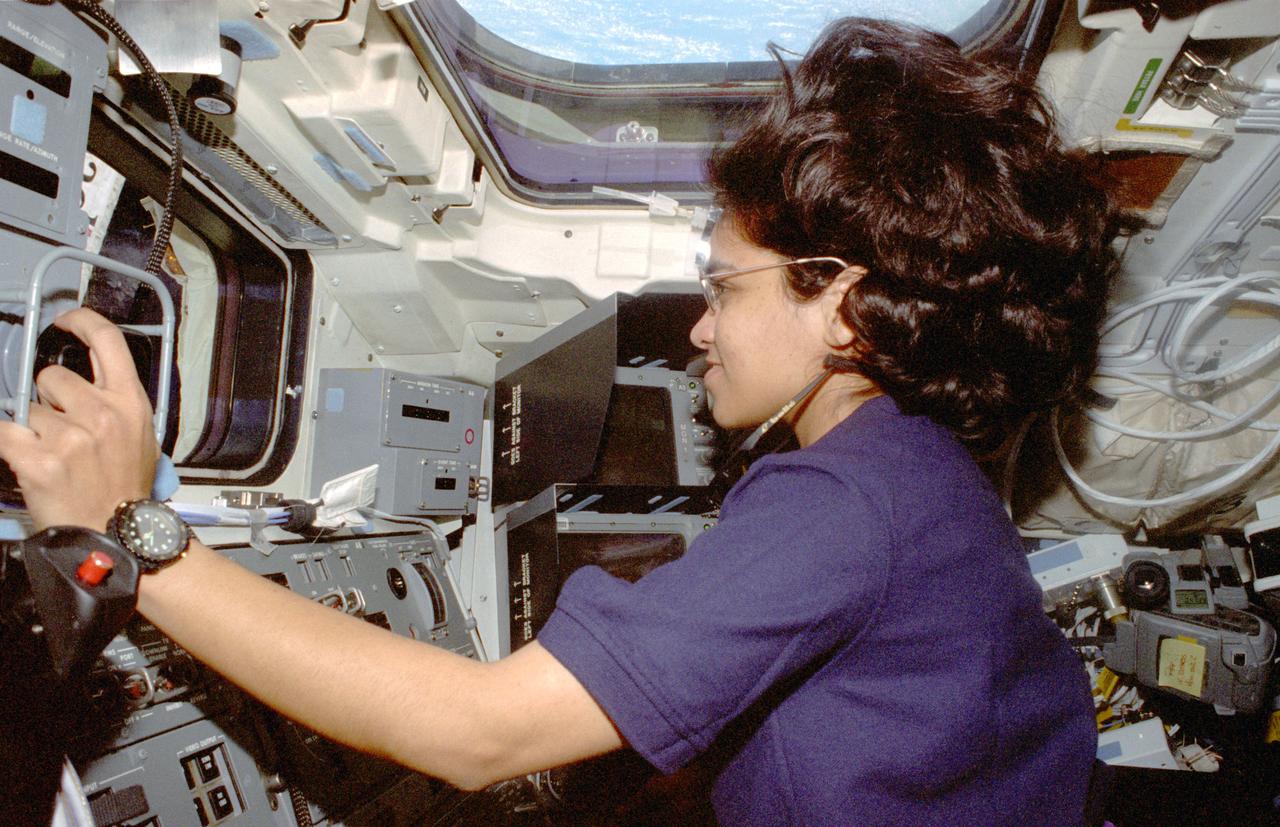
STS087-357-022 (19 November – 5 December 1997) --- Astronaut Kalpana Chawla, mission specialist, operates the Space Shuttle Columbia's Remote Manipulator System (RMS) on the aft flight deck during operations with the Spartan 201 satellite. Kalpana Chawla joined four other astronauts and a Ukrainian payload specialist for 16-days of research in Earth-orbit in support of the United States Microgravity Payload 4 (USMP-4) mission. The light blue and white colors associated with the crew's nearby home planet are visible in the overhead window.
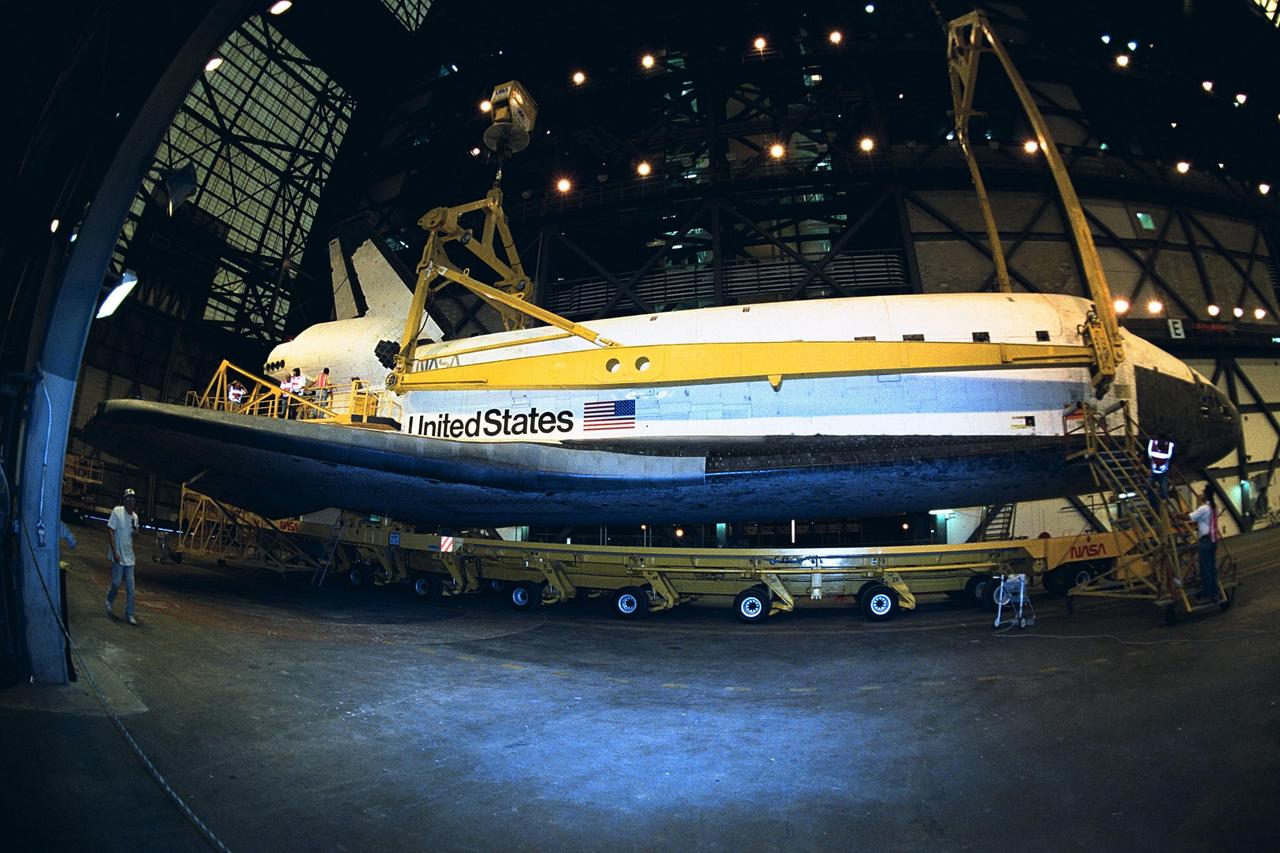
In preparation for Space Shuttle Mission STS-87, the orbiter Columbia rolled into the Vehicle Assembly Building transfer aisle at about 6 a.m. today. The orbiter will be mated to the <a href="http://www-pao.ksc.nasa.gov/kscpao/nasafact/count3.htm#et">external tank</a> and <a href="http://www-pao.ksc.nasa.gov/kscpao/nasafact/ships.htm#srbs">solid rocket boosters</a> in high bay 3 over the weekend and is slated to roll out to Pad 39B on Wednesday. STS-87 will be the fourth flight of the United States Microgravity Payload and the Spartan-201 deployable satellite
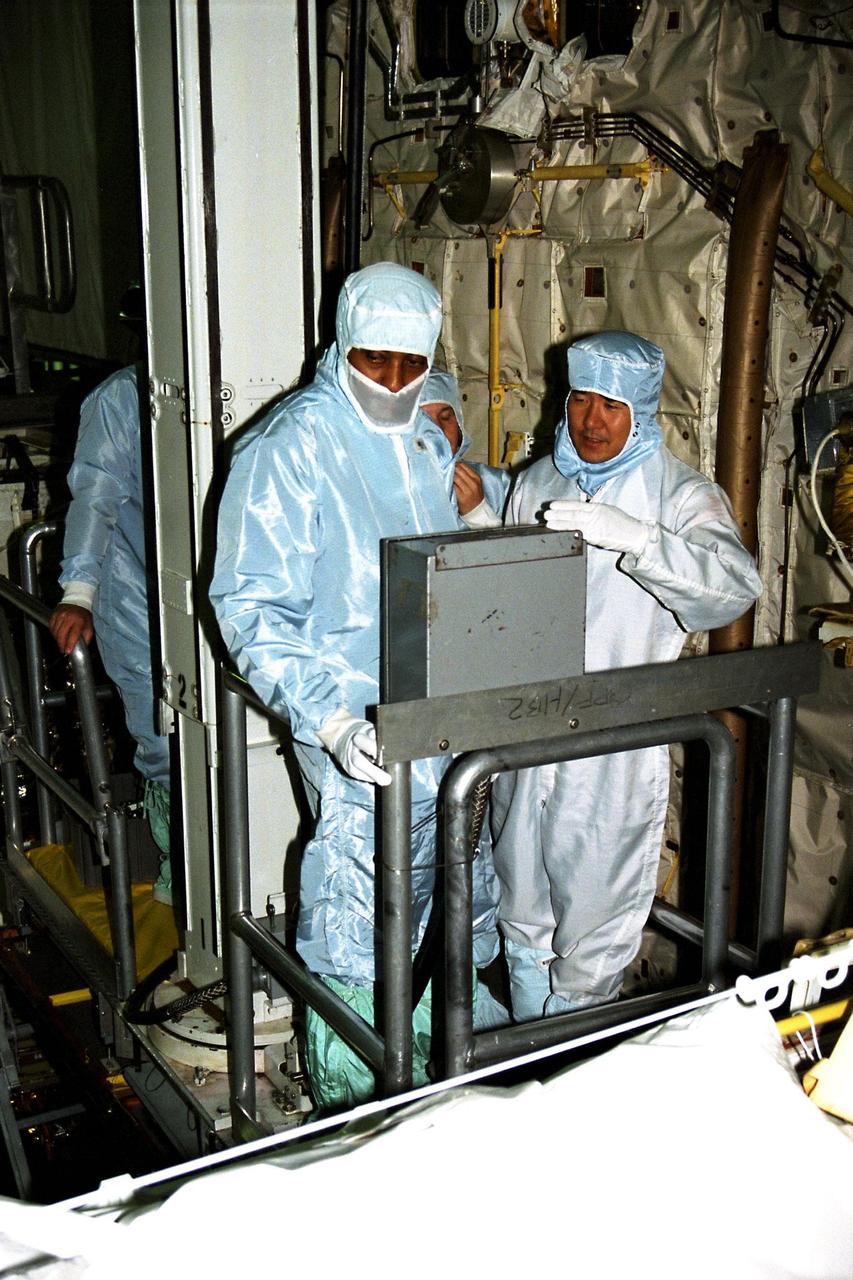
Participating in the Crew Equipment Integration Test (CEIT) at Kennedy Space Center are STS-87 crew members Winston Scott, at left, and Takao Doi, Ph.D., of the National Space Development Agency of Japan, both mission specialists on STS-87. The CEIT gives astronauts an opportunity to get a hands-on look at the payloads with which they will be working on-orbit. STS-87 will be the fourth United States Microgravity Payload and flight of the Spartan-201 deployable satellite. During the STS-87 mission, scheduled for a Nov. 19 liftoff from KSC, Dr. Doi and Scott will both perform spacewalks. STS-87 is scheduled for a Nov. 19 liftoff from KSC
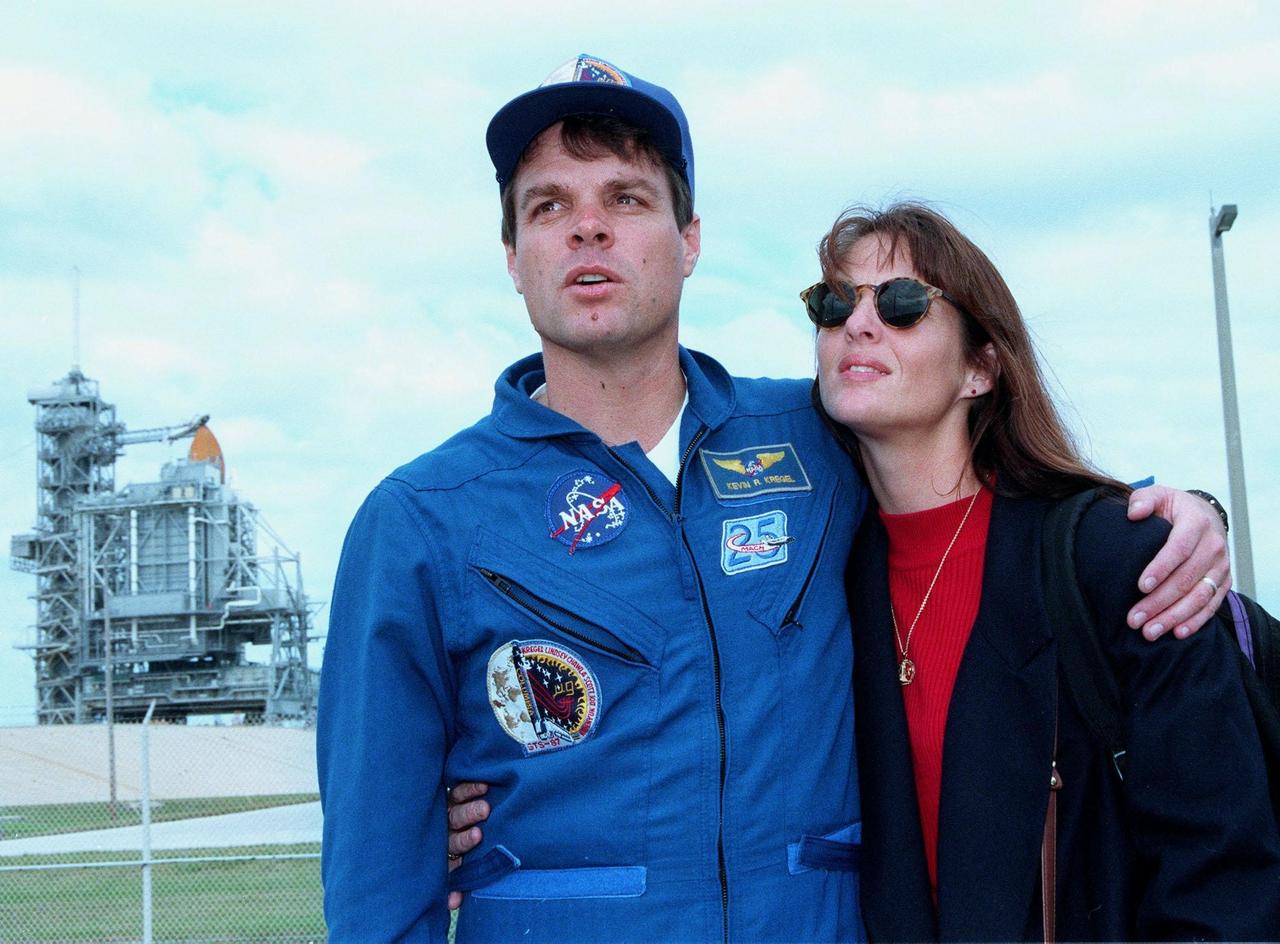
STS-87 Commander Kevin Kregel poses with his wife, Jeannie Kregel, in front of Kennedy Space Center's Launch Pad 39B during final prelaunch activities leading up to the scheduled Nov. 19 liftoff. The other STS-87 crew members are Pilot Steven Lindsey; Mission Specialists Kalpana Chawla, Ph.D., Winston Scott, and Takao Doi, Ph.D., of the National Space Development Agency of Japan; and Payload Specialist Leonid Kadenyuk of the National Space Agency of Ukraine. STS-87 will be the fourth flight of the United States Microgravity Payload and the Spartan-201 deployable satellite
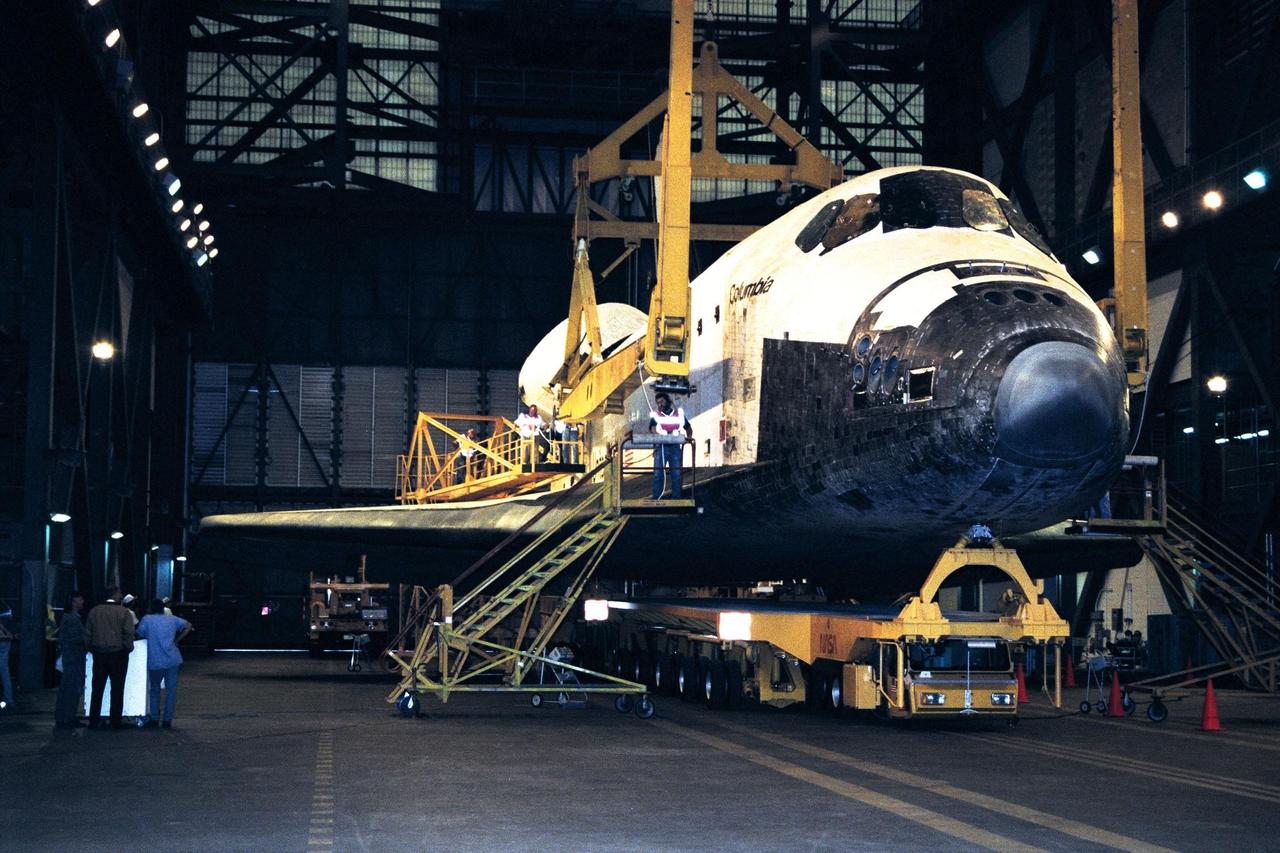
In preparation for Space Shuttle Mission STS-87, the orbiter Columbia rolled into the Vehicle Assembly Building transfer aisle at about 6 a.m. today. The orbiter will be mated to the <a href="http://www-pao.ksc.nasa.gov/kscpao/nasafact/count3.htm#et">external tank</a> and <a href="http://www-pao.ksc.nasa.gov/kscpao/nasafact/ships.htm#srbs">solid rocket boosters</a> in high bay 3 over the weekend and is slated to roll out to Pad 39B on Wednesday. STS-87 will be the fourth flight of the United States Microgravity Payload and the Spartan-201 deployable satellite
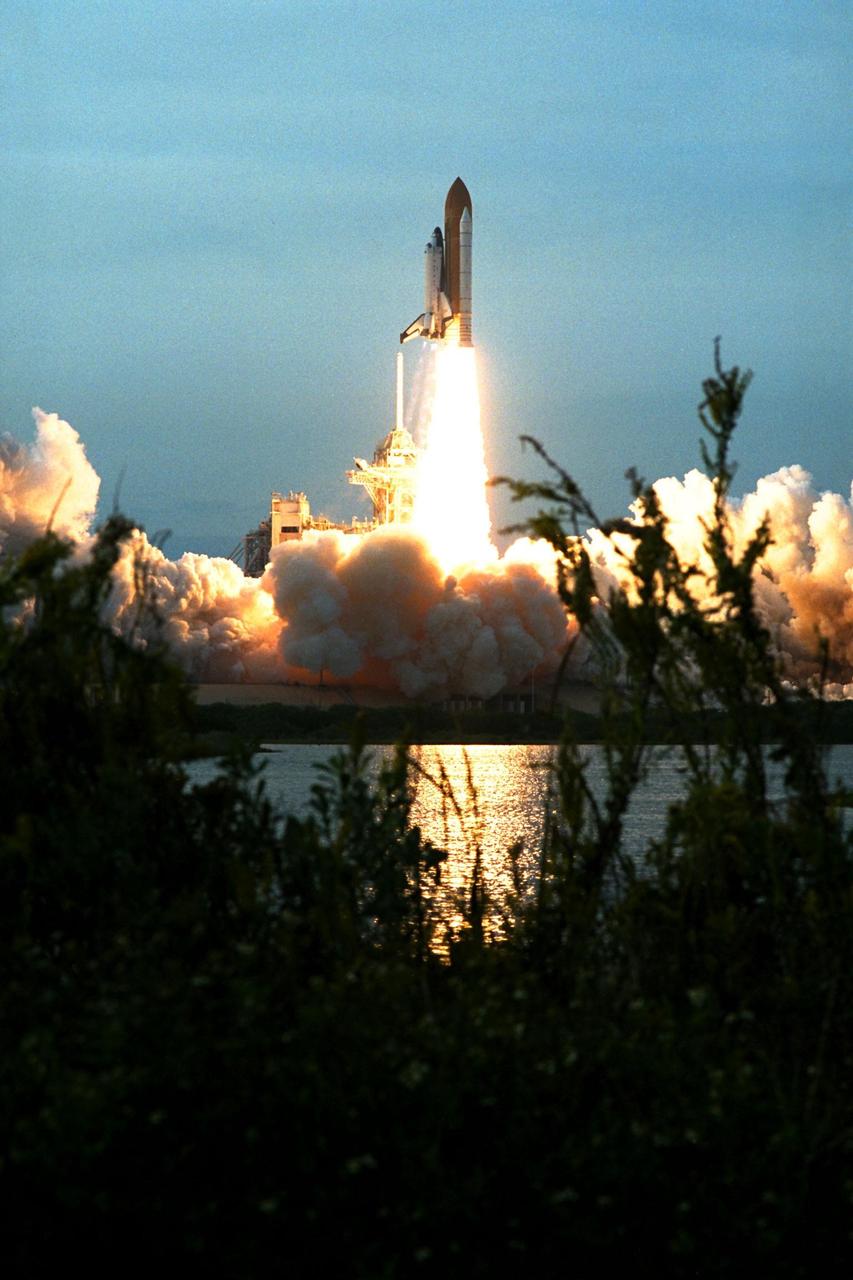
Like a rising sun lighting up the afternoon sky, the Space Shuttle Columbia soars from Launch Pad 39B at 2:46:00 p.m. EST, November 19, on the fourth flight of the United States Microgravity Payload and Spartan-201 satellite. The crew members include Mission Commander Kevin Kregel.; Pilot Steven Lindsey; Mission Specialists Kalpana Chawla, Ph.D., Winston Scott, and Takao Doi, Ph.D., of the National Space Development Agency of Japan; and Payload Specialist Leonid Kadenyuk of the National Space Agency of Ukraine. During the 16-day STS-87 mission, the crew will oversee experiments in microgravity; deploy and retrieve a solar satellite; and test a new experimental camera, the AERCam Sprint. Dr. Doi and Scott also will perform a spacewalk to practice International Space Station maneuvers
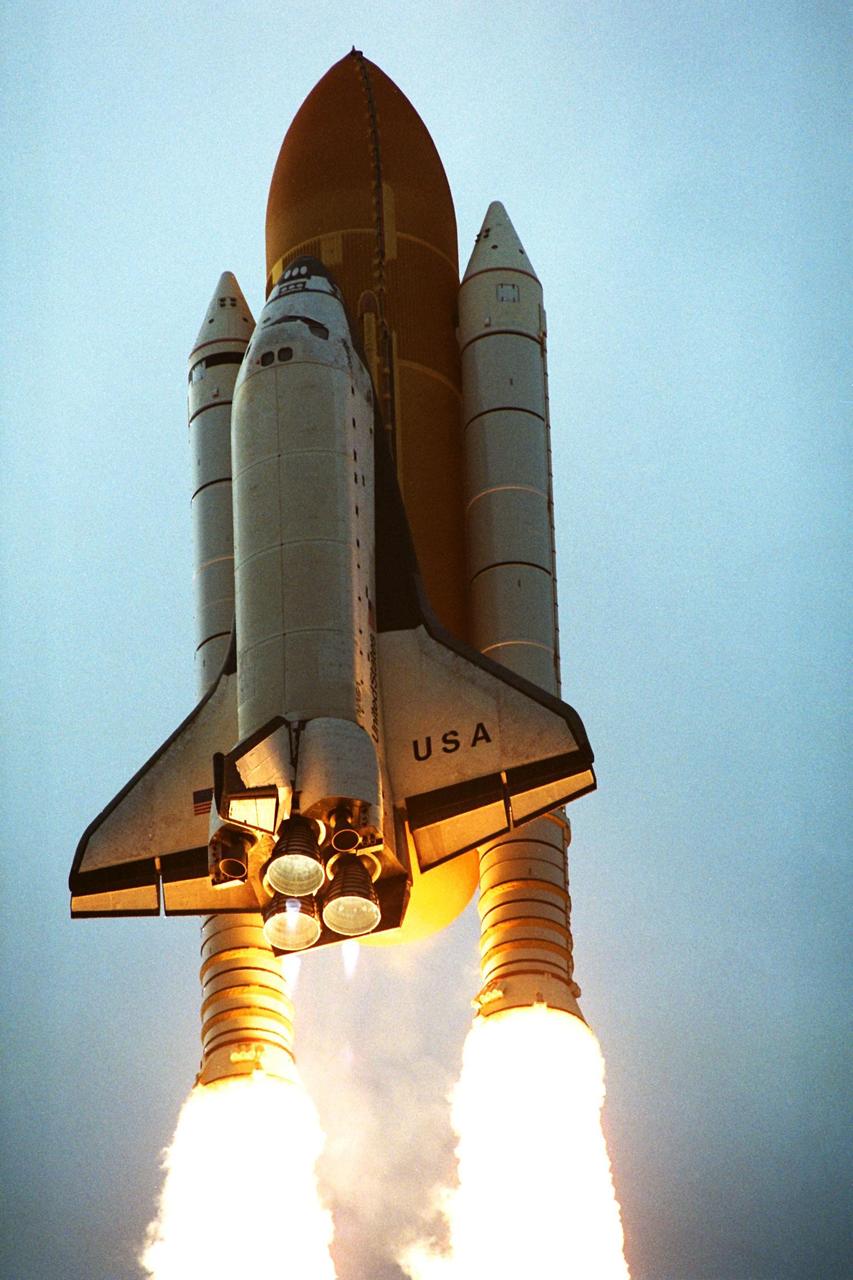
Like a rising sun lighting up the afternoon sky, the Space Shuttle Columbia soars from Launch Pad 39B at 2:46:00 p.m. EST, November 19, on the fourth flight of the United States Microgravity Payload and Spartan-201 satellite. The crew members include Mission Commander Kevin Kregel.; Pilot Steven Lindsey; Mission Specialists Kalpana Chawla, Ph.D., Winston Scott, and Takao Doi, Ph.D., of the National Space Development Agency of Japan; and Payload Specialist Leonid Kadenyuk of the National Space Agency of Ukraine. During the 16-day STS-87 mission, the crew will oversee experiments in microgravity; deploy and retrieve a solar satellite; and test a new experimental camera, the AERCam Sprint. Dr. Doi and Scott also will perform a spacewalk to practice International Space Station maneuvers
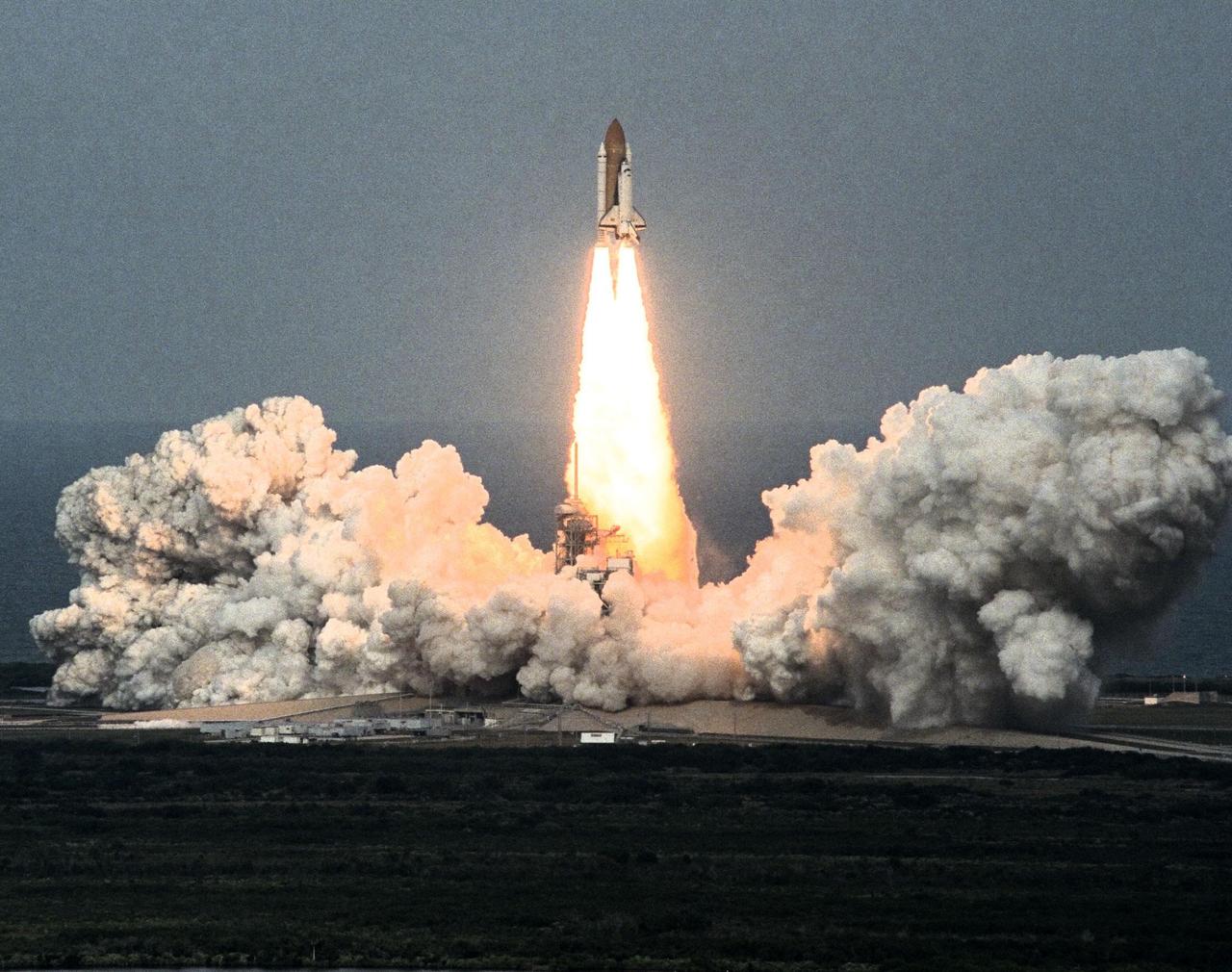
Like a rising sun lighting up the afternoon sky, the Space Shuttle Columbia soars from Launch Pad 39B at 2:46:00 p.m. EST, November 19, on the fourth flight of the United States Microgravity Payload and Spartan-201 satellite. The crew members include Mission Commander Kevin Kregel.; Pilot Steven Lindsey; Mission Specialists Kalpana Chawla, Ph.D., Winston Scott, and Takao Doi, Ph.D., of the National Space Development Agency of Japan; and Payload Specialist Leonid Kadenyuk of the National Space Agency of Ukraine. During the 16-day STS-87 mission, the crew will oversee experiments in microgravity; deploy and retrieve a solar satellite; and test a new experimental camera, the AERCam Sprint. Dr. Doi and Scott also will perform a spacewalk to practice International Space Station maneuvers
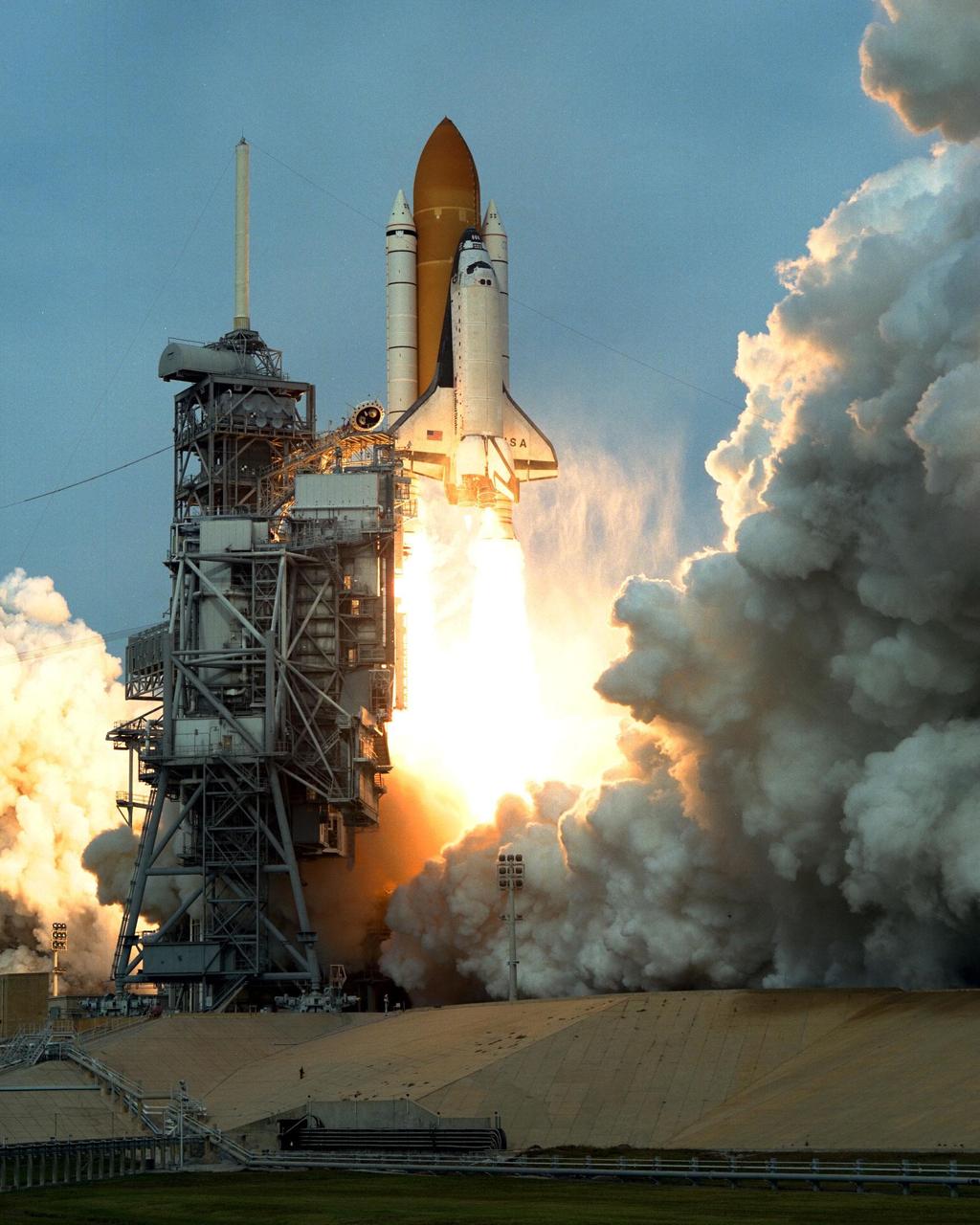
Like a rising sun lighting up the afternoon sky, the Space Shuttle Columbia soars from Launch Pad 39B at 2:46:00 p.m. EST, November 19, on the fourth flight of the United States Microgravity Payload and Spartan-201 satellite. The crew members include Mission Commander Kevin Kregel.; Pilot Steven Lindsey; Mission Specialists Kalpana Chawla, Ph.D., Winston Scott, and Takao Doi, Ph.D., of the National Space Development Agency of Japan; and Payload Specialist Leonid Kadenyuk of the National Space Agency of Ukraine. During the 16-day STS-87 mission, the crew will oversee experiments in microgravity; deploy and retrieve a solar satellite; and test a new experimental camera, the AERCam Sprint. Dr. Doi and Scott also will perform a spacewalk to practice International Space Station maneuvers
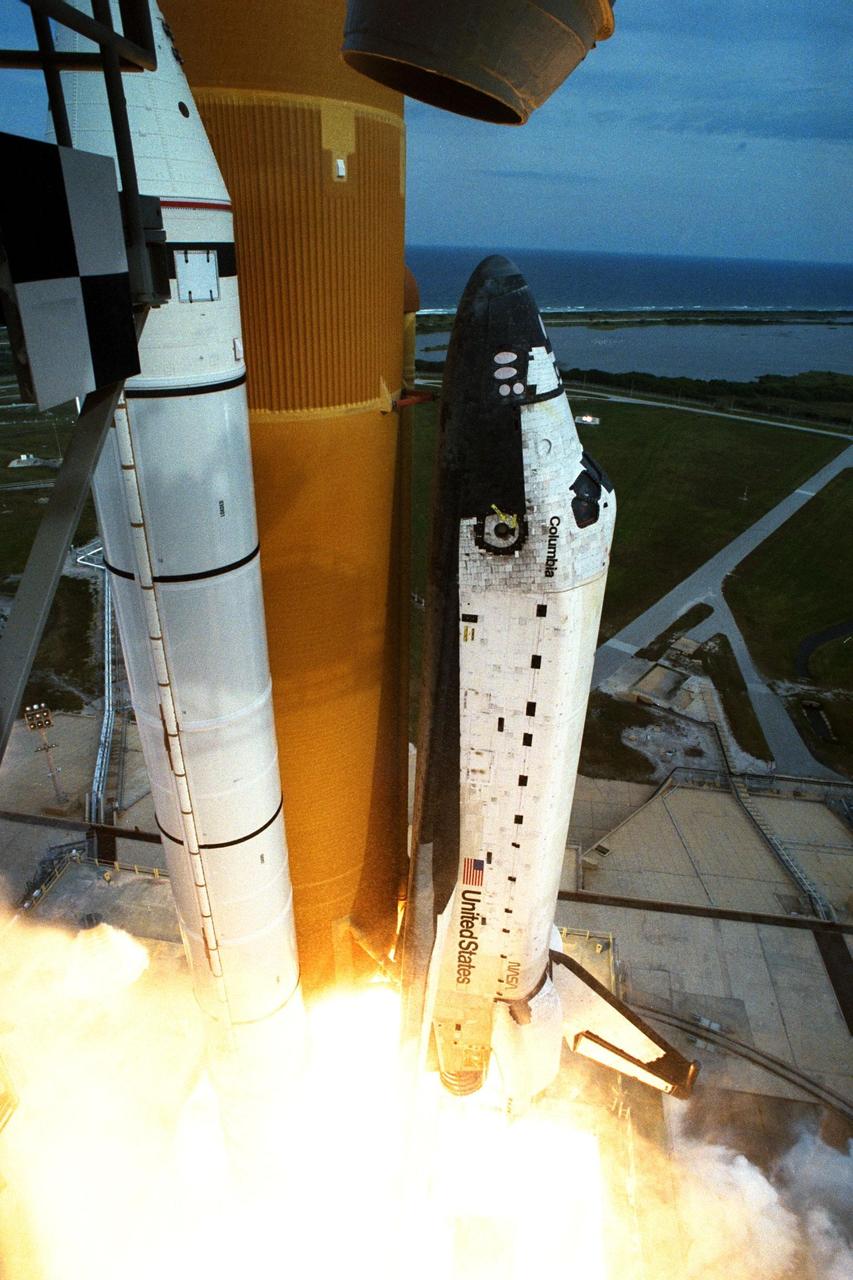
Like a rising sun lighting up the afternoon sky, the Space Shuttle Columbia soars from Launch Pad 39B at 2:46:00 p.m. EST, November 19, on the fourth flight of the United States Microgravity Payload and Spartan-201 satellite. The crew members include Mission Commander Kevin Kregel.; Pilot Steven Lindsey; Mission Specialists Kalpana Chawla, Ph.D., Winston Scott, and Takao Doi, Ph.D., of the National Space Development Agency of Japan; and Payload Specialist Leonid Kadenyuk of the National Space Agency of Ukraine. During the 16-day STS-87 mission, the crew will oversee experiments in microgravity; deploy and retrieve a solar satellite; and test a new experimental camera, the AERCam Sprint. Dr. Doi and Scott also will perform a spacewalk to practice International Space Station maneuvers
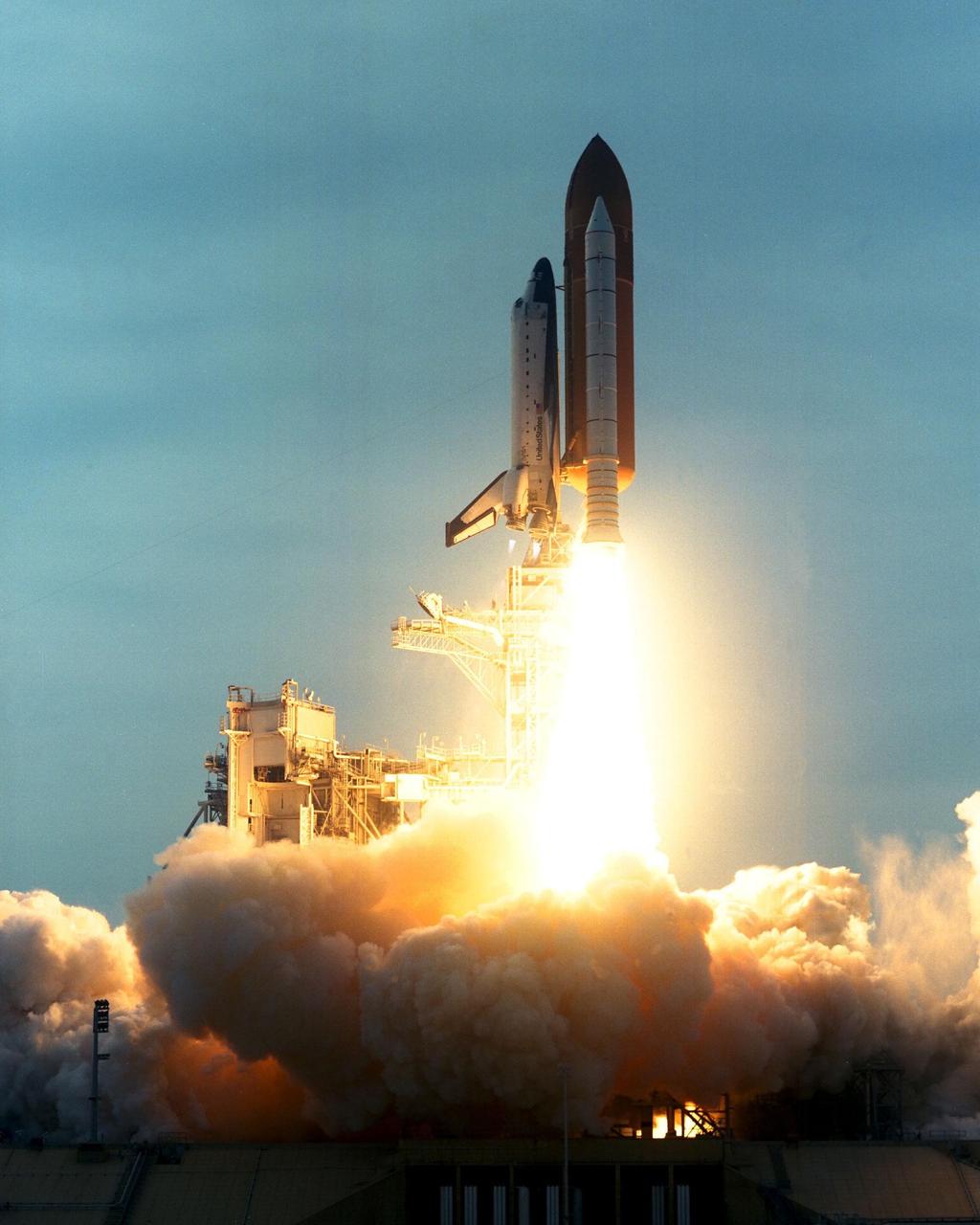
Like a rising sun lighting up the afternoon sky, the Space Shuttle Columbia soars from Launch Pad 39B at 2:46:00 p.m. EST, November 19, on the fourth flight of the United States Microgravity Payload and Spartan-201 satellite. The crew members include Mission Commander Kevin Kregel.; Pilot Steven Lindsey; Mission Specialists Kalpana Chawla, Ph.D., Winston Scott, and Takao Doi, Ph.D., of the National Space Development Agency of Japan; and Payload Specialist Leonid Kadenyuk of the National Space Agency of Ukraine. During the 16-day STS-87 mission, the crew will oversee experiments in microgravity; deploy and retrieve a solar satellite; and test a new experimental camera, the AERCam Sprint. Dr. Doi and Scott also will perform a spacewalk to practice International Space Station maneuvers

Like a rising sun lighting up the afternoon sky, the Space Shuttle Columbia soars from Launch Pad 39B at 2:46:00 p.m. EST, November 19, on the fourth flight of the United States Microgravity Payload and Spartan-201 satellite. The crew members include Mission Commander Kevin Kregel.; Pilot Steven Lindsey; Mission Specialists Kalpana Chawla, Ph.D., Winston Scott, and Takao Doi, Ph.D., of the National Space Development Agency of Japan; and Payload Specialist Leonid Kadenyuk of the National Space Agency of Ukraine. During the 16-day STS-87 mission, the crew will oversee experiments in microgravity; deploy and retrieve a solar satellite; and test a new experimental camera, the AERCam Sprint. Dr. Doi and Scott also will perform a spacewalk to practice International Space Station maneuvers

Like a rising sun lighting up the afternoon sky, the Space Shuttle Columbia soars from Launch Pad 39B at 2:46:00 p.m. EST, November 19, on the fourth flight of the United States Microgravity Payload and Spartan-201 satellite. The crew members include Mission Commander Kevin Kregel.; Pilot Steven Lindsey; Mission Specialists Kalpana Chawla, Ph.D., Winston Scott, and Takao Doi, Ph.D., of the National Space Development Agency of Japan; and Payload Specialist Leonid Kadenyuk of the National Space Agency of Ukraine. During the 16-day STS-87 mission, the crew will oversee experiments in microgravity; deploy and retrieve a solar satellite; and test a new experimental camera, the AERCam Sprint. Dr. Doi and Scott also will perform a spacewalk to practice International Space Station maneuvers
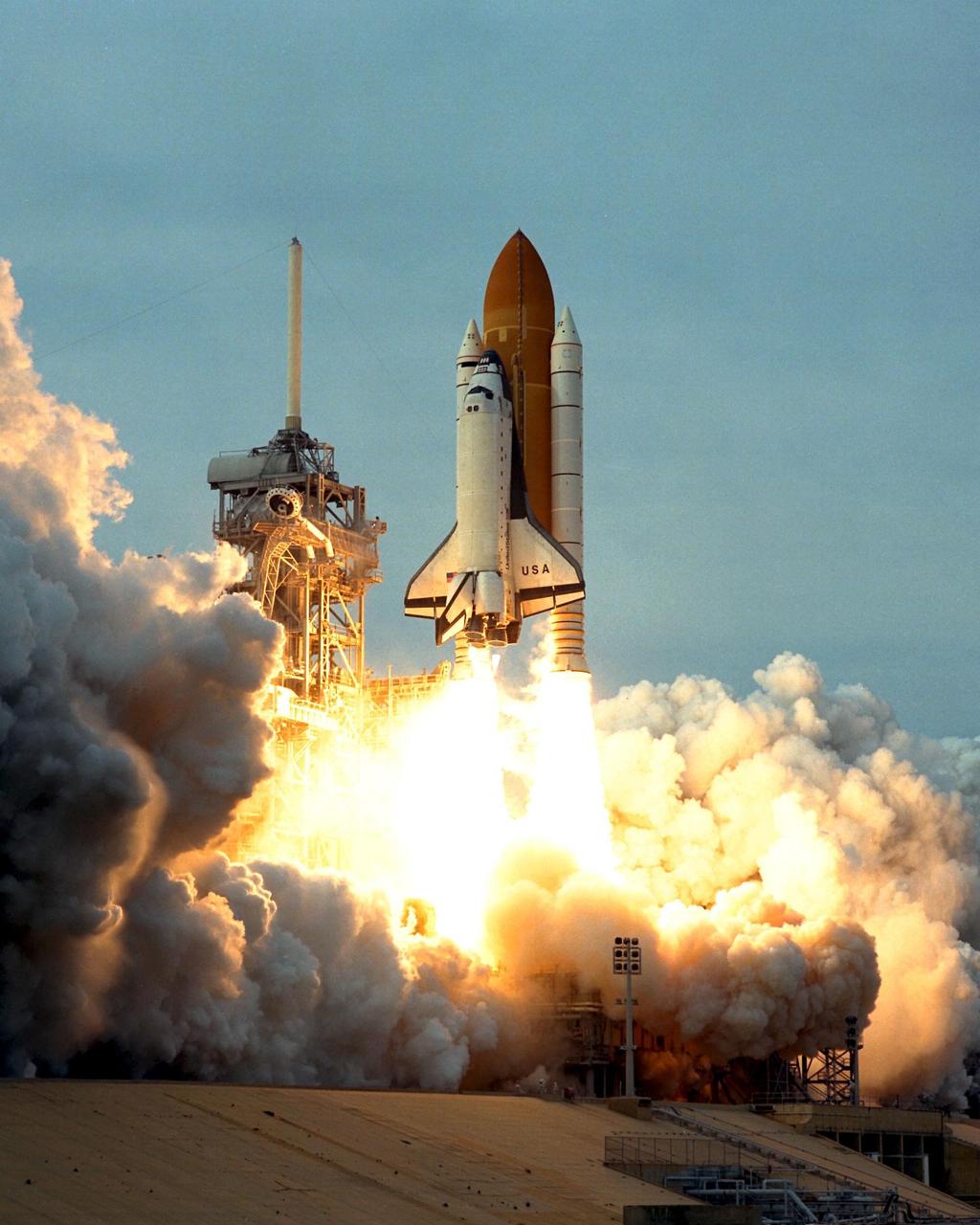
Like a rising sun lighting up the afternoon sky, the Space Shuttle Columbia soars from Launch Pad 39B at 2:46:00 p.m. EST, November 19, on the fourth flight of the United States Microgravity Payload and Spartan-201 satellite. The crew members include Mission Commander Kevin Kregel.; Pilot Steven Lindsey; Mission Specialists Kalpana Chawla, Ph.D., Winston Scott, and Takao Doi, Ph.D., of the National Space Development Agency of Japan; and Payload Specialist Leonid Kadenyuk of the National Space Agency of Ukraine. During the 16-day STS-87 mission, the crew will oversee experiments in microgravity; deploy and retrieve a solar satellite; and test a new experimental camera, the AERCam Sprint. Dr. Doi and Scott also will perform a spacewalk to practice International Space Station maneuvers

Like a rising sun lighting up the afternoon sky, the Space Shuttle Columbia soars from Launch Pad 39B at 2:46:00 p.m. EST, November 19, on the fourth flight of the United States Microgravity Payload and Spartan-201 satellite. The crew members include Mission Commander Kevin Kregel.; Pilot Steven Lindsey; Mission Specialists Kalpana Chawla, Ph.D., Winston Scott, and Takao Doi, Ph.D., of the National Space Development Agency of Japan; and Payload Specialist Leonid Kadenyuk of the National Space Agency of Ukraine. During the 16-day STS-87 mission, the crew will oversee experiments in microgravity; deploy and retrieve a solar satellite; and test a new experimental camera, the AERCam Sprint. Dr. Doi and Scott also will perform a spacewalk to practice International Space Station maneuvers
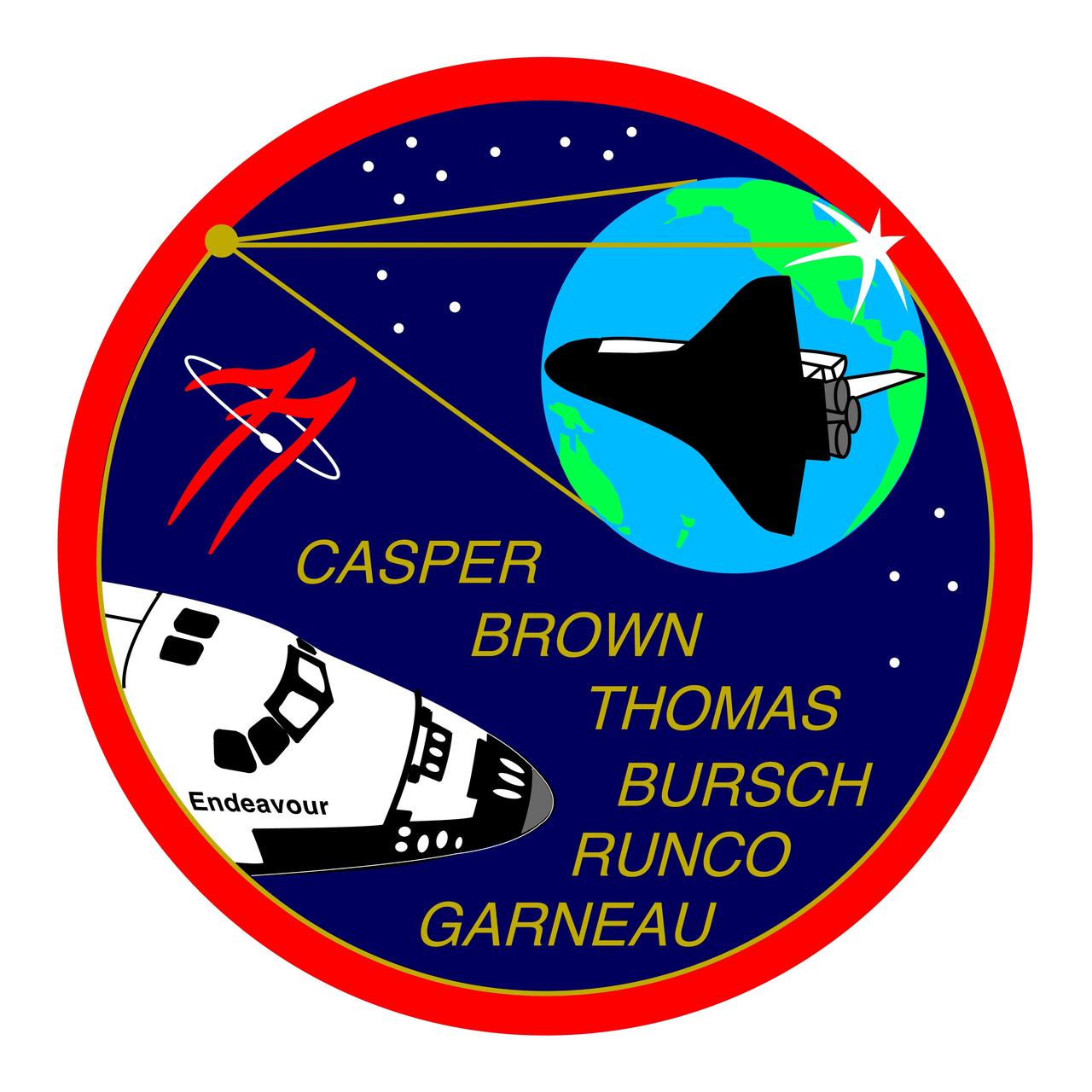
STS077-S-001 (February 1996) --- The STS-77 crew patch, designed by the crew members, displays the space shuttle Endeavour the lower left and its reflection within the tripod and concave parabolic mirror of the Shuttle Pointed Autonomous Research Tool for Astronomy (SPARTAN) Inflatable Antenna Experiment (IAE). The center leg of the tripod also delineates the top of the Spacehab?s shape, the rest of which is outlined in gold just inside the red perimeter. The Spacehab is carried in the payload bay and houses the Commercial Float Zone Furnace (CFZF) and Space Experiment Facility (SEF) experiments. Also depicted within the confines the IAE mirror are the mission?s rendezvous operations with the Passive Aerodynamically Stabilized Magnetically Damped Satellite/Satellite Test Unit (PAM/STU) satellite and a reflection of Earth. The PAM/STU satellite appears as a bright six-pointed star-like reflection of the sun on the edge of the mirror with the space shuttle Endeavour in position to track it. The sunglint on the mirror?s edge, which also appears as an orbital sunset, is located over Goddard Space Flight Center (GSFC), the development facility for the SPARTAN/IAE and Technology Experiments Advancing Missions in Space (TEAMS) experiments. The reflection of Earth is oriented to show the individual countries of the crew as well as the ocean which Captain Cook explored in the original Endeavour. The mission number ?77? is featured as twin stylized chevrons and an orbiting satellite as adapted from NASA?s logo. The stars at the top are arranged as seen in the northern sky in the vicinity of the constellation Ursa Minor. The field of 11 stars represents both the TEAMS cluster of experiments (the four antennae of Global Positioning System Attitude and Navigation Experiment (GANE), the single canister of Liquid Metal Thermal Experiment (LMTE), the three canisters of Vented Tank Resupply Experiment (VTRE), and the canisters of PAM/STU, and the 11th flight of the Endeavour. The constellation at the right shows the four stars of the Southern Cross for the fourth flight of Spacehab. The NASA insignia design for space shuttle flights is reserved for use by the astronauts and for other official use as the NASA Administrator may authorize. Public availability has been approved only in the forms of illustrations by the various news media. When and if there is any change in this policy, which is not anticipated, the change will be publicly announced. Photo credit: NASA
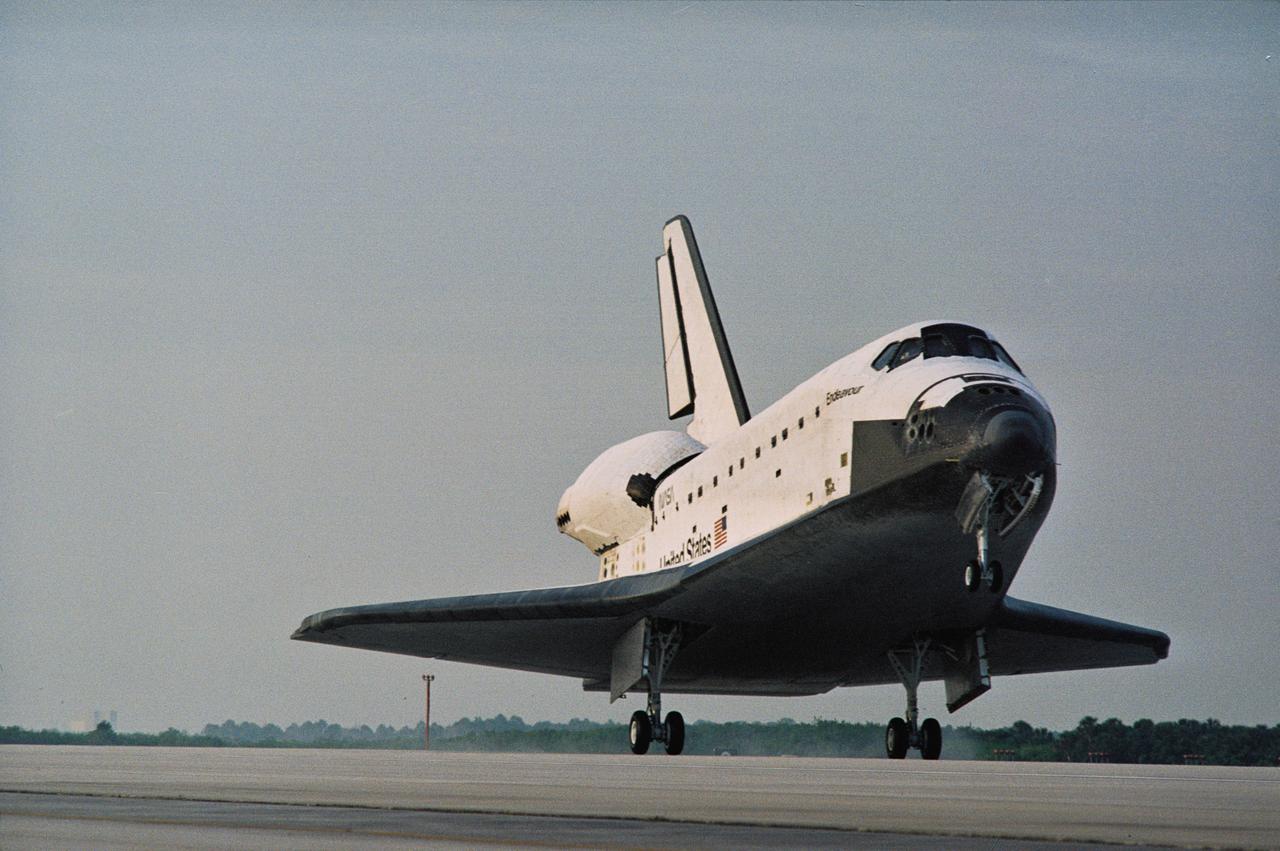
STS077-S-011 (29 May 1996) --- As its main landing gear touches down on Runway 33 at the Kennedy Space Center (KSC), the Space Shuttle Endeavour returns to Florida following a ten-day mission in space. Touchdown came at 7:09 a.m. (EDT), May 29, 1996. Leading the crew onboard was astronaut John H. Casper, mission commander. Other crew members were astronauts Curtis L. Brown, Jr., pilot; along with Daniel W. Bursch, Mario Runco, Jr., Andrew S. W. Thomas and Marc Garneau, all mission specialists. Garneau represents the Canadian Space Agency (CSA). During the approximately 10-day mission, the crew performed a variety of payload activities, including microgravity research aboard the Spacehab 4 Module, deployment and retrieval of the Spartan 207 and deployment and rendezvous with the Passive Aerodynamically-Stabilized Magnetically-Damped Satellite (PAMS).
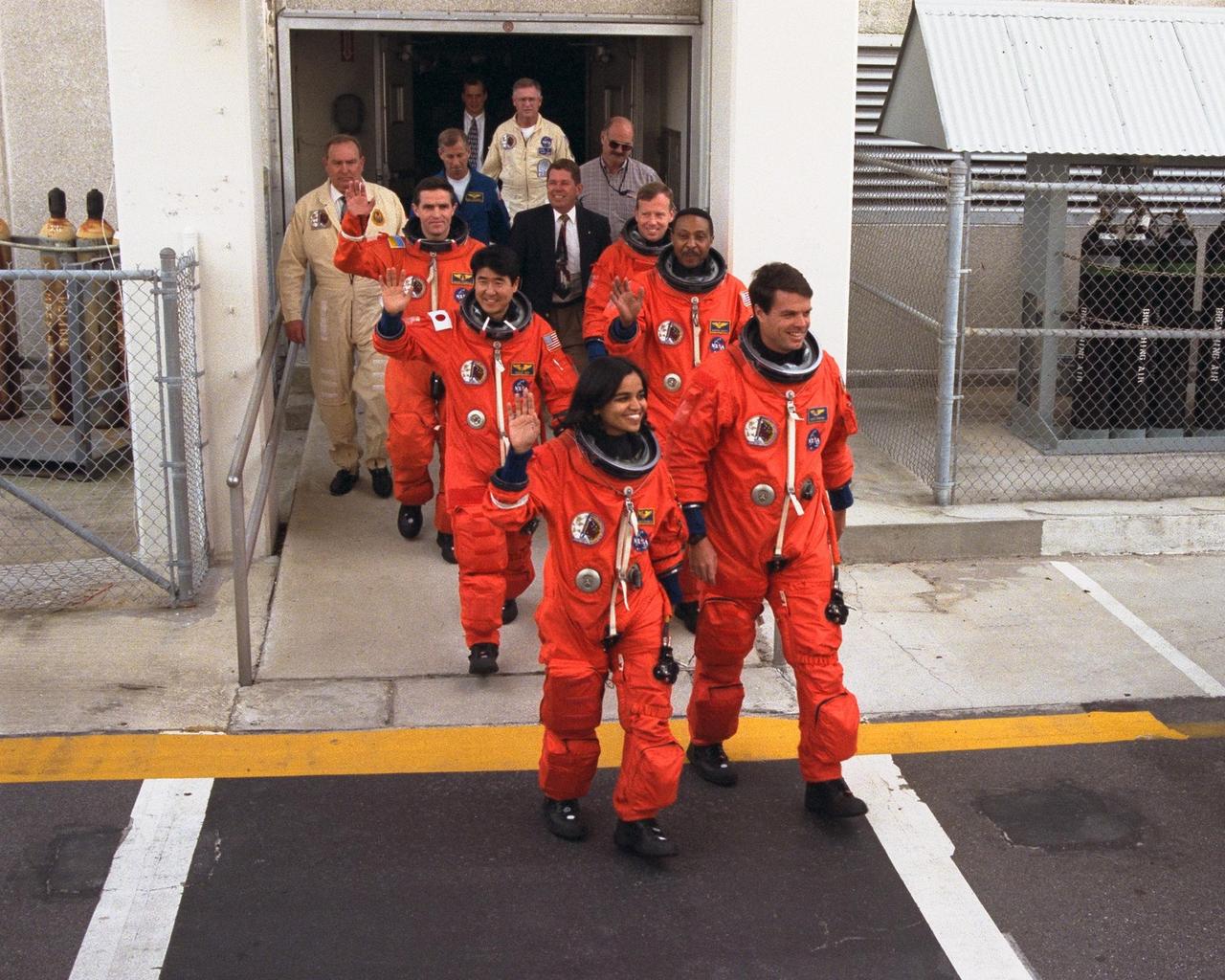
The crew of Mission STS-87 depart from the Operations and Checkout Building en route to Launch Pad 39B, where the Space Shuttle Columbia awaits liftoff on the fourth flight of the United States Microgravity Payload and the Spartan-201 deployable satellite. Leading the way are, from left to right, front to back: Mission Specialist Kalpana Chawla, Ph.D.; Commander Kevin Kregel; Mission Specialist Takao Doi, Ph.D., of the National Space Development Agency of Japan; Mission Specialist Winston Scott; Payload Specialist Leonid Kadenyuk of the National Space Agency of Ukraine; and Pilot Steven Lindsey. The Space Shuttle Columbia and its crew of six members are scheduled to lift off during a two-and-a-half hour launch window, which opens at 2:46 p.m
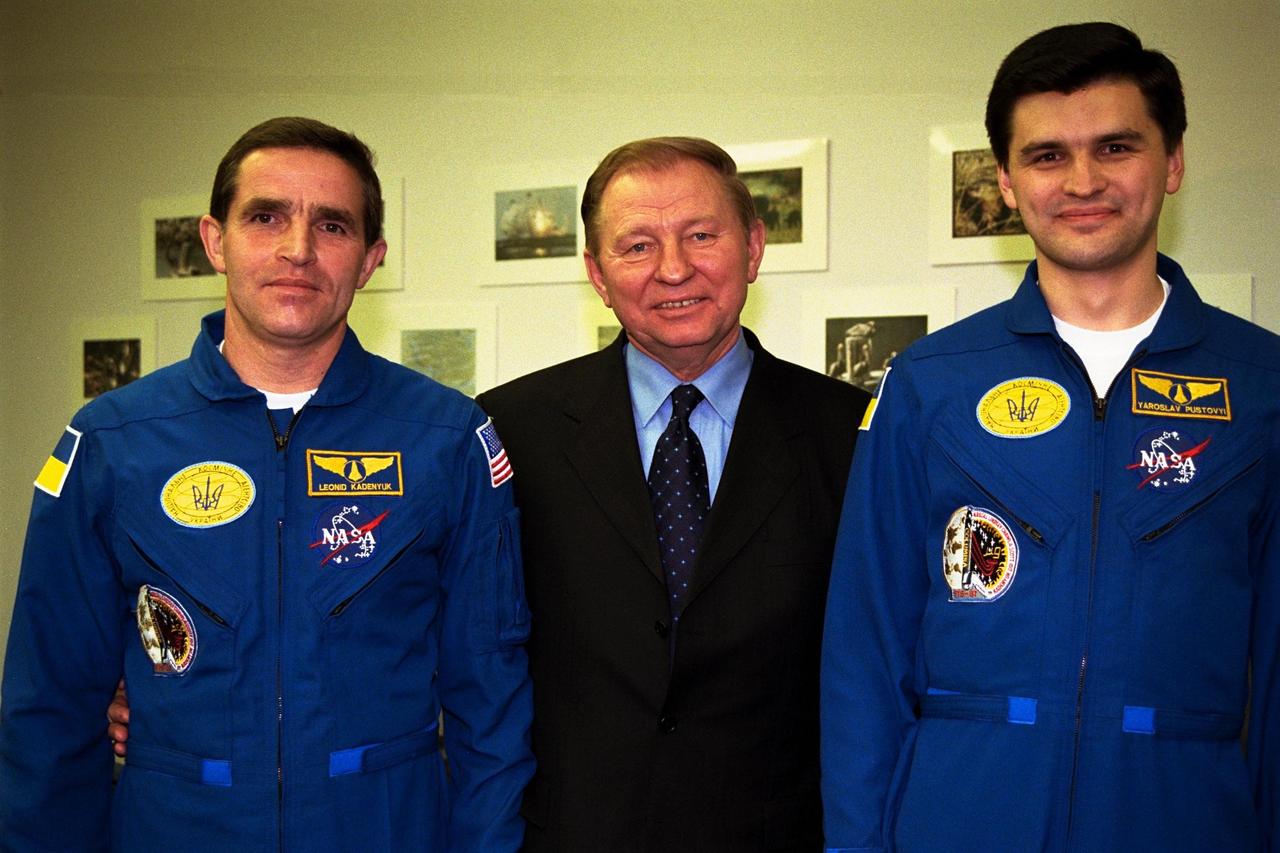
The president of the Ukraine, Leonid Kuchma, is flanked by Payload Specialist Leonid Kadenyuk, at left, and backup Payload Specialist Yaroslav Pustovyi, at right, both of the National Space Agency of Ukraine, during prelaunch activities leading up to the scheduled Nov. 19 launch of STS-87. STS-87 will be the fourth flight of the United States Microgravity Payload and the Spartan-201 deployable satellite. During the mission, Kadenyuk will pollinate Brassica rapa plants as part of the Collaborative Ukrainian Experiment, or CUE, aboard Columbia during its 16-day mission. The CUE experiment is a collection of 10 plant space biology experiments that will fly in Columbia's middeck and will feature an educational component that involves evaluating the effects of microgravity on Brassica rapa seedlings. Students in Ukrainian and American schools will participate in the same experiment with Kadenyuk in space. Kadenyuk will be flying his first Shuttle mission on STS-87
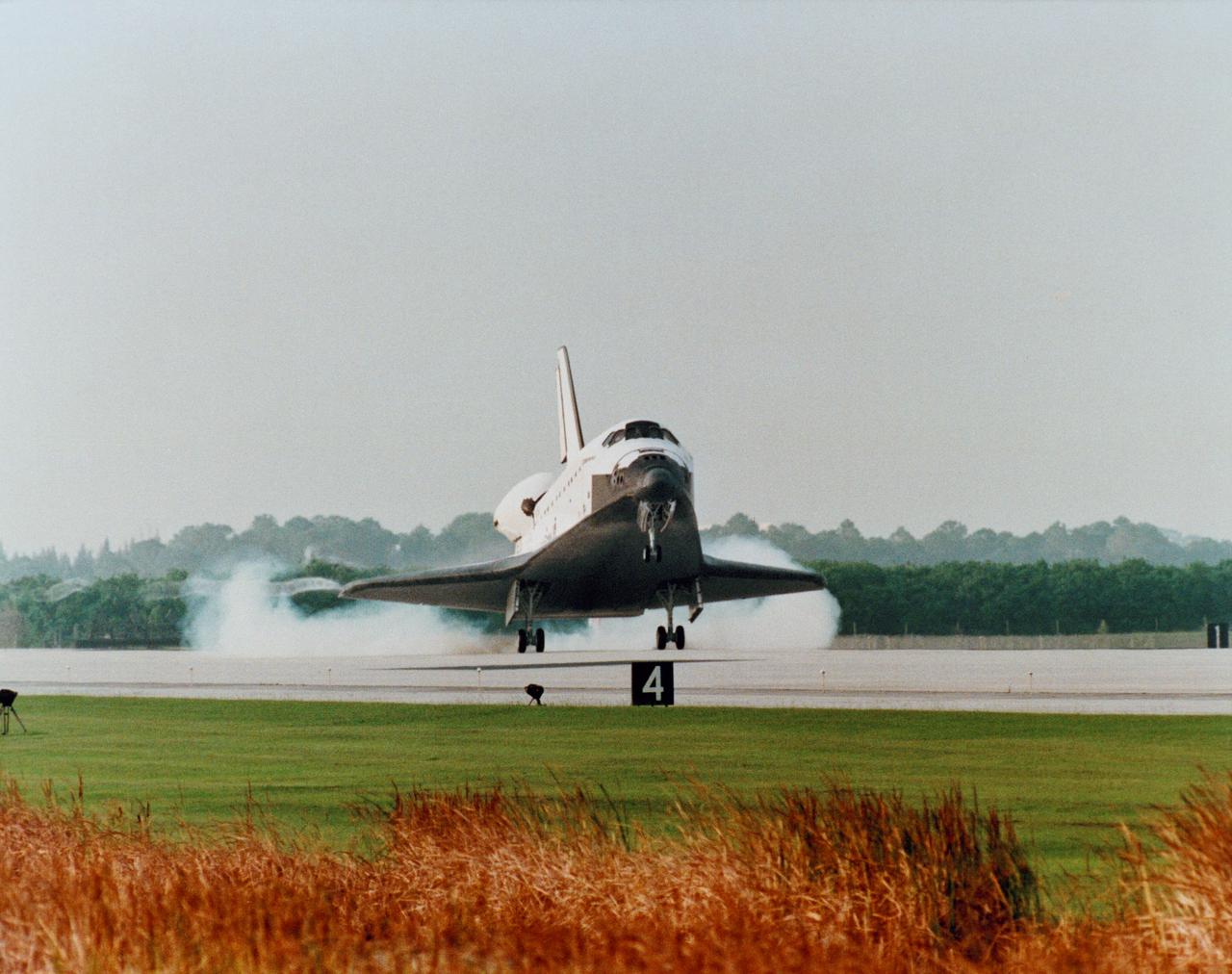
STS077-S-045 (29 May 1996) --- As its main landing gear touches down on Runway 33 at the Kennedy Space Center (KSC), the Space Shuttle Endeavour marks its return to Earth following a ten-day mission in space. Touchdown came at 7:09 a.m. (EDT), May 29, 1996. Leading the crew onboard was astronaut John H. Casper, mission commander. Other crew members were astronauts Curtis L. Brown, Jr., pilot; along with Daniel W. Bursch, Mario Runco, Jr., Andrew S. W. Thomas and Marc Garneau, all mission specialists. Garneau represents the Canadian Space Agency (CSA). During the approximately 10-day mission, the crew performed a variety of payload activities, including microgravity research aboard the Spacehab 4 Module, deployment and retrieval of the Spartan 207 and deployment and rendezvous with the Passive Aerodynamically-Stabilized Magnetically-Damped Satellite (PAMS).
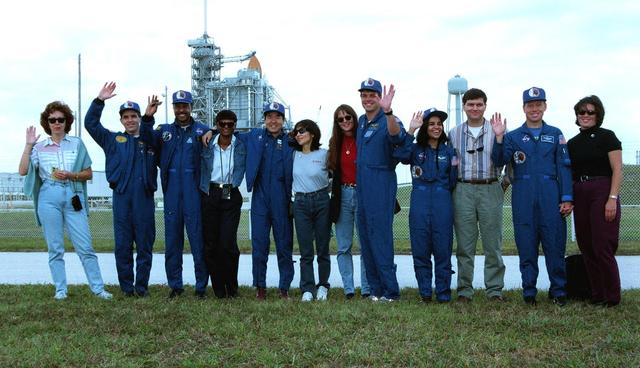
The crew of STS-87 pose with their spouses in front of Kennedy Space Center’s Launch Pad 39B during final prelaunch activities leading up to the scheduled Nov. 19 liftoff. From left to right are: Vera Kadenyuk, wife of Payload Specialist Leonid Kadenyuk of the National Space Agency of Ukraine who is next to Vera; Mission Specialist Winston Scott and his wife, Marilyn; Mission Specialist Takao Doi, Ph.D., of the National Space Development Agency of Japan, and his wife, Hitomi; Jeannie Kregel, who is married to Commander Kevin Kregel standing next to her; Mission Specialist Kalpana Chawla, Ph.D., and her husband, Jean-Pierre Harrison; and Pilot Steven Lindsey and his wife Diane. STS-87 will be the fourth flight of the United States Microgravity Payload and the Spartan-201 deployable satellite
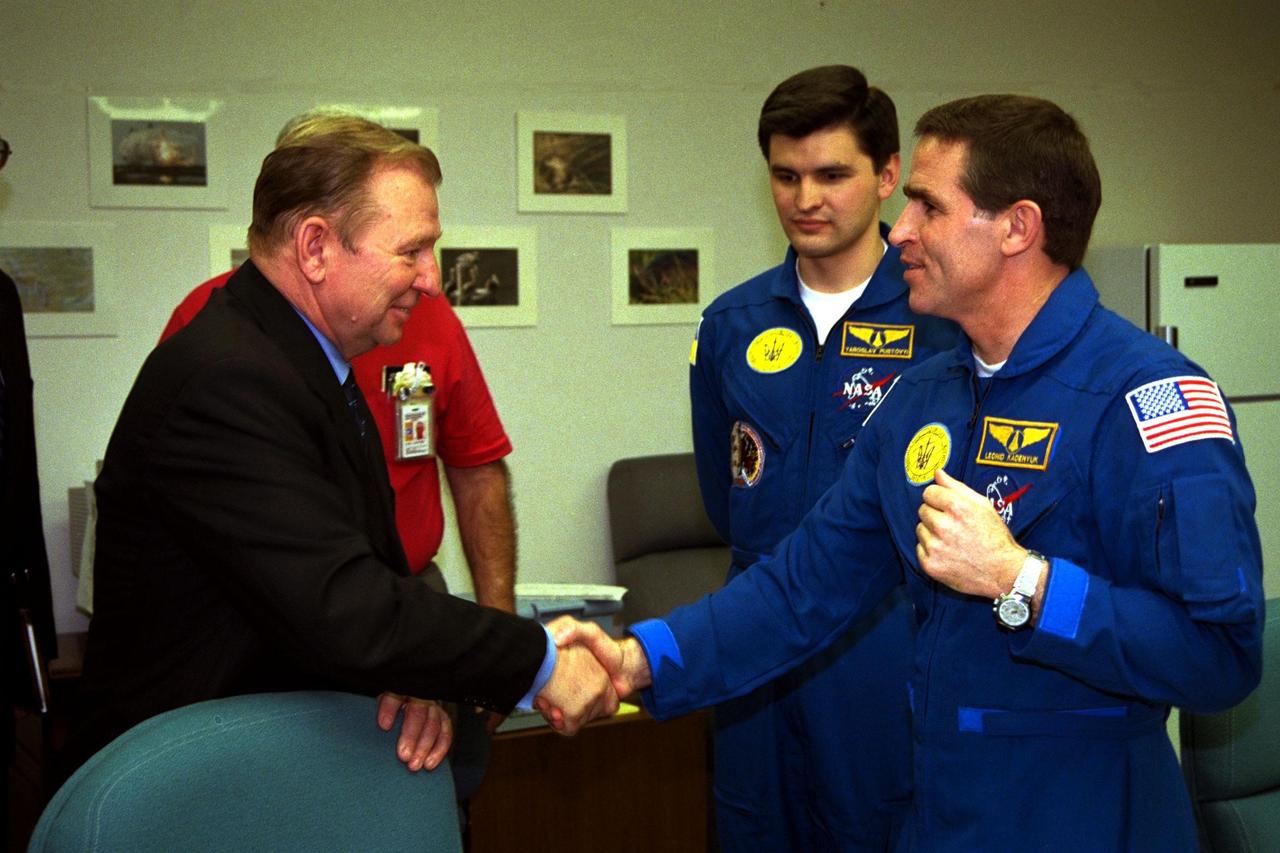
The president of the Ukraine, Leonid Kuchma, shakes hands with Payload Specialist Leonid Kadenyuk, at right, as backup Payload Specialist Yaroslav Pustovyi, both of the National Space Agency of Ukraine, looks on during prelaunch activities leading up to the scheduled Nov. 19 launch of STS-87. STS-87 will be the fourth flight of the United States Microgravity Payload and the Spartan-201 deployable satellite. During the mission, Kadenyuk will pollinate Brassica rapa plants as part of the Collaborative Ukrainian Experiment, or CUE, aboard Columbia during its 16-day mission. The CUE experiment is a collection of 10 plant space biology experiments that will fly in Columbia's middeck and will feature an educational component that involves evaluating the effects of microgravity on Brassica rapa seedlings. Students in Ukrainian and American schools will participate in the same experiment with Kadenyuk in space. Kadenyuk will be flying his first Shuttle mission on STS-87
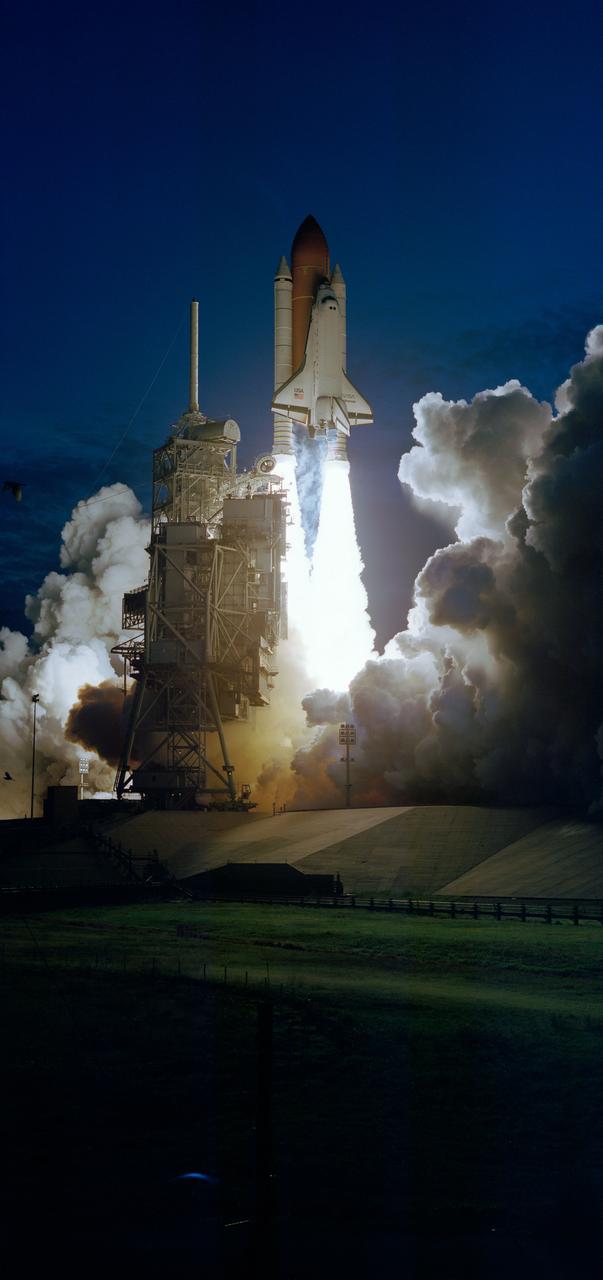
STS077-S-004 (19 May 1996) --- The Space Shuttle Endeavour lifts off with six astronauts headed toward the fourth NASA Space Shuttle mission of the year. The launch occurred at 6:30:00 a.m. (EDT), May 19, 1996. Heading the crew onboard is astronaut John H. Casper, mission commander. Other crew members are astronauts Curtis L. Brown, Jr., pilot; along with Daniel W. Bursch, Mario Runco, Jr., Andrew S. W. Thomas and Marc Garneau, all mission specialists. Garneau represents the Canadian Space Agency (CSA). During the approximately 10-day mission, the crew will perform a variety of payload activities, including microgravity research aboard the Spacehab 4 Module, deployment and retrieval of the Spartan 207 and deployment and rendezvous with the Passive Aerodynamically-Stabilized Magnetically-Damped Satellite (PAMS).
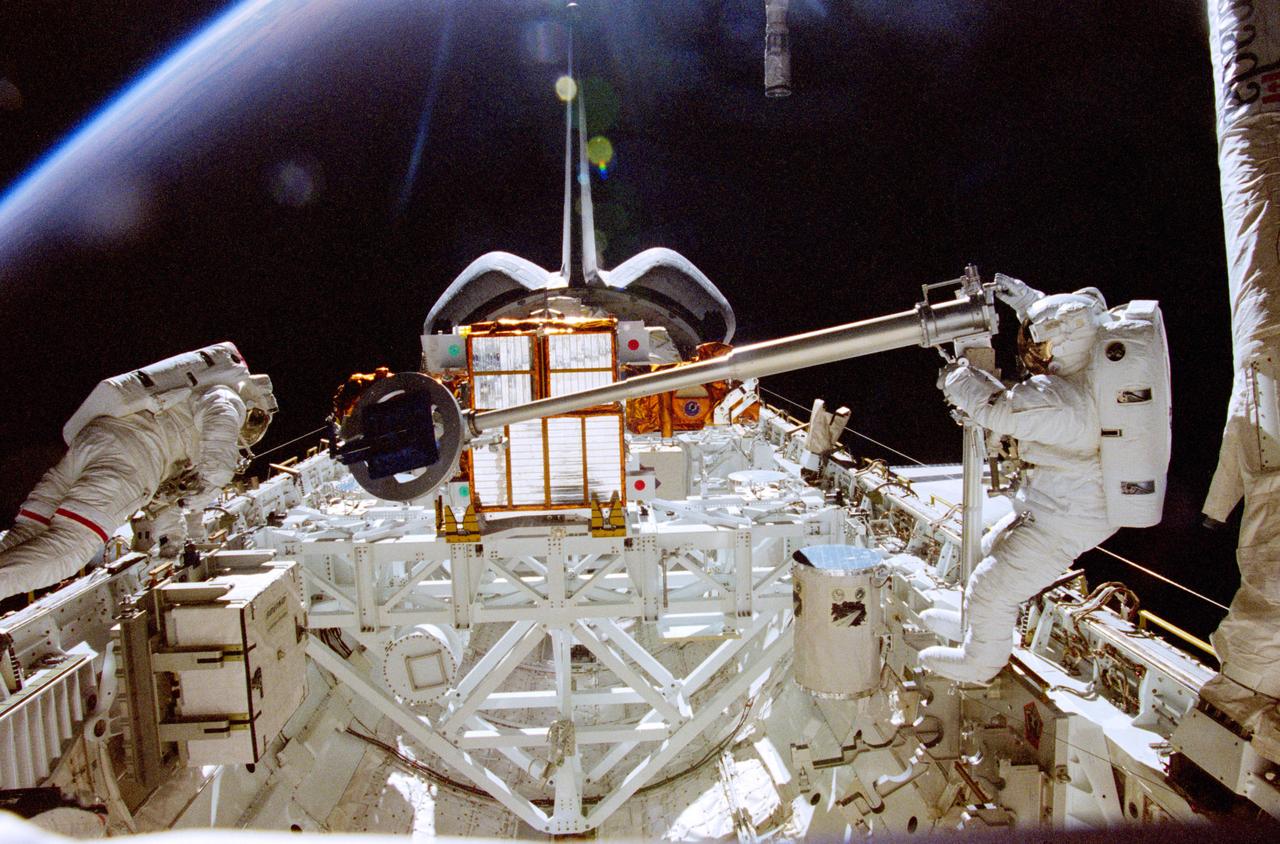
STS087-341-036 (3 Dec. 1997) --- Backdropped against a dark Earth and a light blue horizon, astronaut Takao Doi (right), international mission specialist representing Japan's National Space Development Agency (NASDA), works with a crane while astronaut Winston E. Scott looks on. This second extravehicular activity (EVA) of the mission continued the evaluation of techniques and hardware to be used in constructing the International Space Station (ISS). Near Scott can be seen the representation of a small Orbital Replacement Unit (ORU) in the grasp of the 156-pound crane operated by Doi. A similar crane could be used to transport various sized ORU’s from translation carts on the exterior of the ISS to various worksites on the truss structure. This view was captured, on 35mm film, by a crew mate in the shirt sleeve environment of the Space Shuttle Columbia's cabin. The SPARTAN-201 satellite is in its stowed position at frame center.

The crew of Mission STS-87 depart from the Operations and Checkout Building en route to Launch Pad 39B, where the Space Shuttle Columbia awaits liftoff on the fourth flight of the United States Microgravity Payload and the Spartan-201 deployable satellite. They are, from left to right, front to back: Mission Specialist Takao Doi, Ph.D., of the National Space Development Agency of Japan; Mission Specialist Winston Scott (near van); Payload Specialist Leonid Kadenyuk of the National Space Agency of Ukraine; and Pilot Steven Lindsey (near van). Missing from this photo are Commander Kevin Kregel and Mission Specialist Kalpana Chawla, Ph.D. The Space Shuttle Columbia and its crew of six members are scheduled to lift off during a two-and-a-half hour launch window, which opens at 2:46 p.m
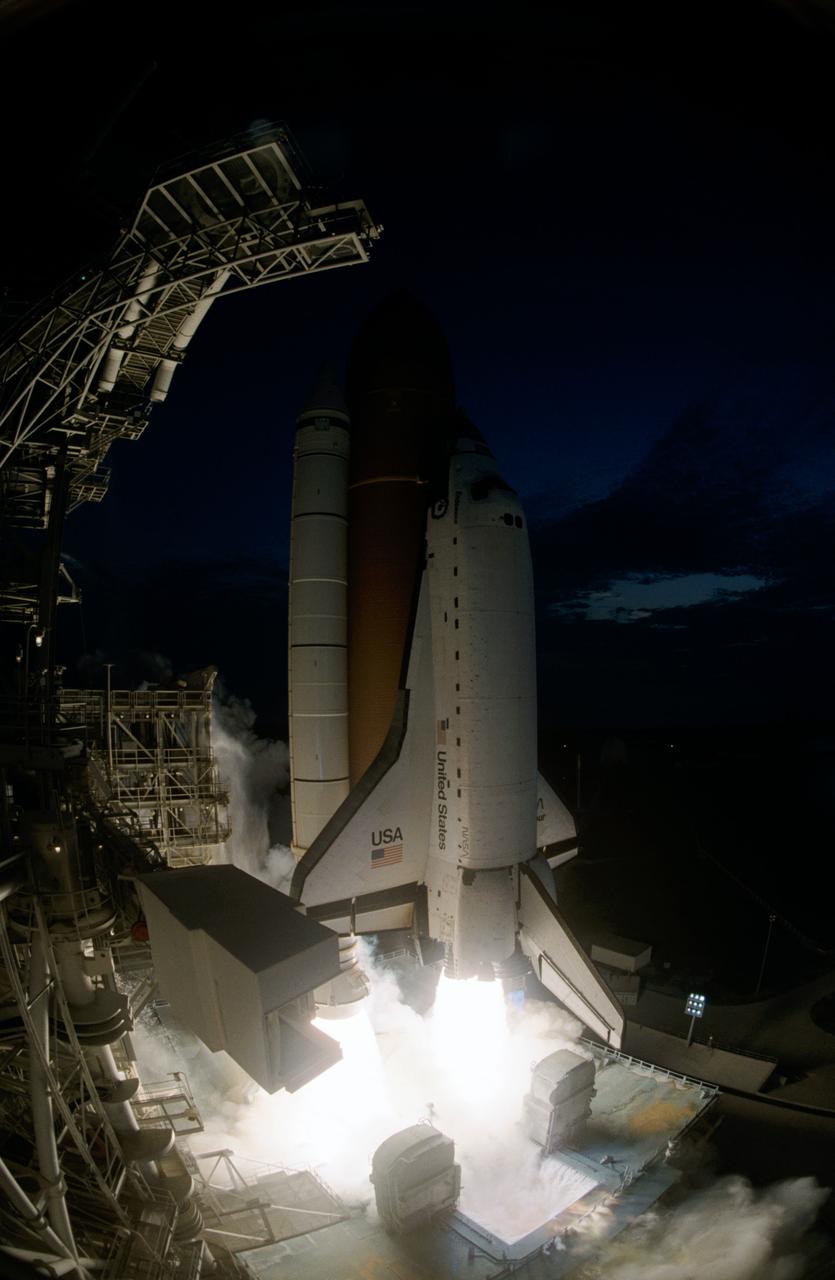
STS077-S-005 (19 May 1996) --- As seen through the ?fish-eye? lens of a 35mm camera at the service structure, the Space Shuttle Endeavour lifts off with six astronauts aboard. It was headed toward the fourth NASA Space Shuttle mission of the year. The launch occurred at 6:30:00 a.m. (EDT), May 19, 1996. Leading the crew onboard is astronaut John H. Casper, mission commander. Other crew members are astronauts Curtis L. Brown, Jr., pilot; along with Daniel W. Bursch, Mario Runco, Jr., Andrew S. W. Thomas and Marc Garneau, all mission specialists. Garneau represents the Canadian Space Agency (CSA). During the approximately 10-day mission, the crew will perform a variety of payload activities, including microgravity research aboard the Spacehab 4 Module, deployment and retrieval of the Spartan 207 and deployment and rendezvous with the Passive Aerodynamically-Stabilized Magnetically-Damped Satellite (PAMS).
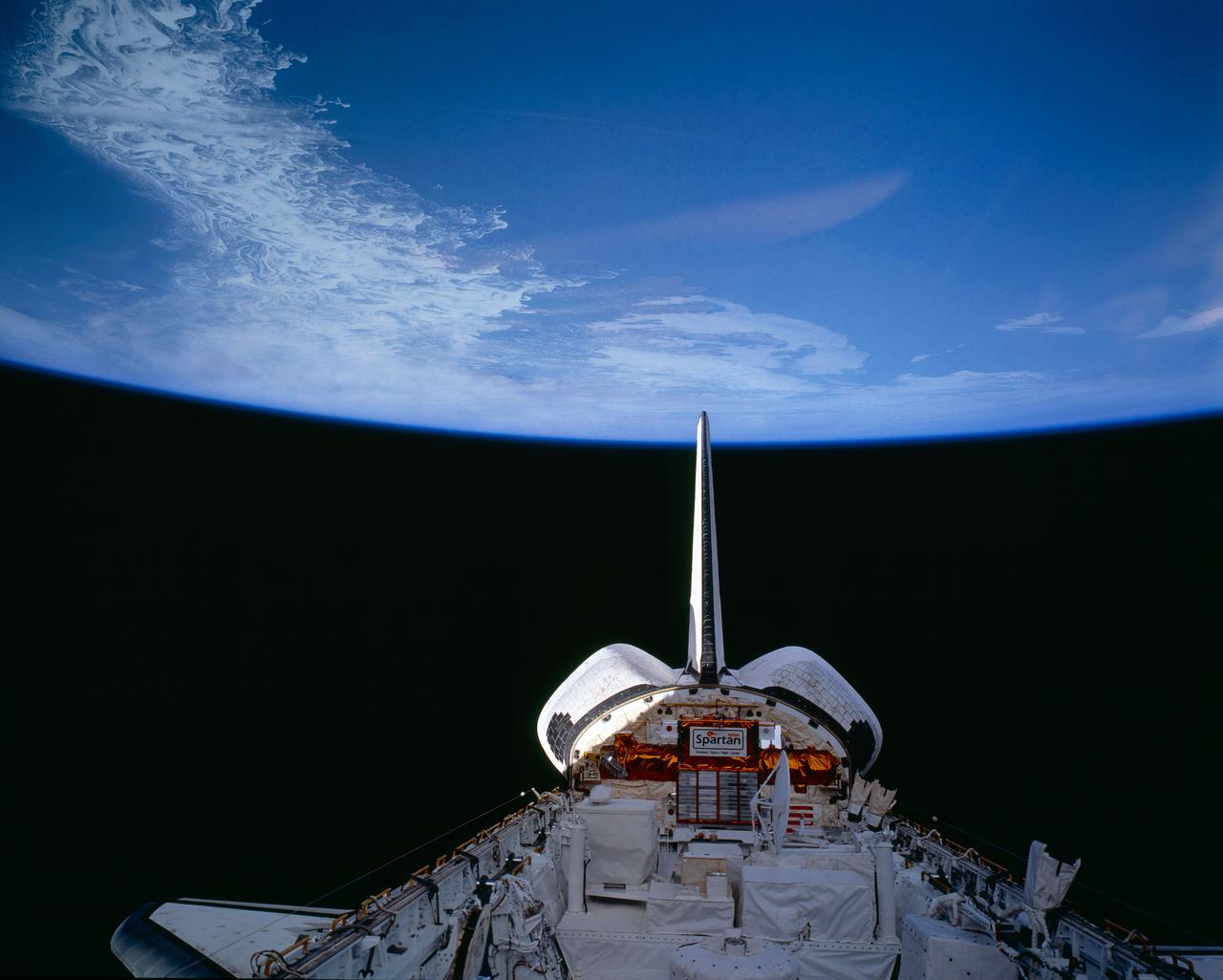
STS056-151-257 (8-17 April 1993) --- The Atlas-2 payloads are featured in this cargo bay scene aboard Discovery, backdropped against an oblique view of the Kamchatka Peninsula. The Shuttle was in an atmospheric monitoring attitude. The supportive Igloo structure is partially visible in the foreground. The canisters for the Shuttle Solar Backscatter Ultraviolet (SSBU) experiment are just out of frame on the starboard side of the bay. Between the ATLAS-2 experiment pallet and the aft firewall of the payload bay is the SPARTAN-201 satellite, which was later released from the cargo bay into a free-flying period and returned to its stowage area for return to Earth. Also visible in frame are the MAS Antenna, Active Cavity Radiometer Irradiance Monitor, SOLCON, SOLSPEC and SUSIM.
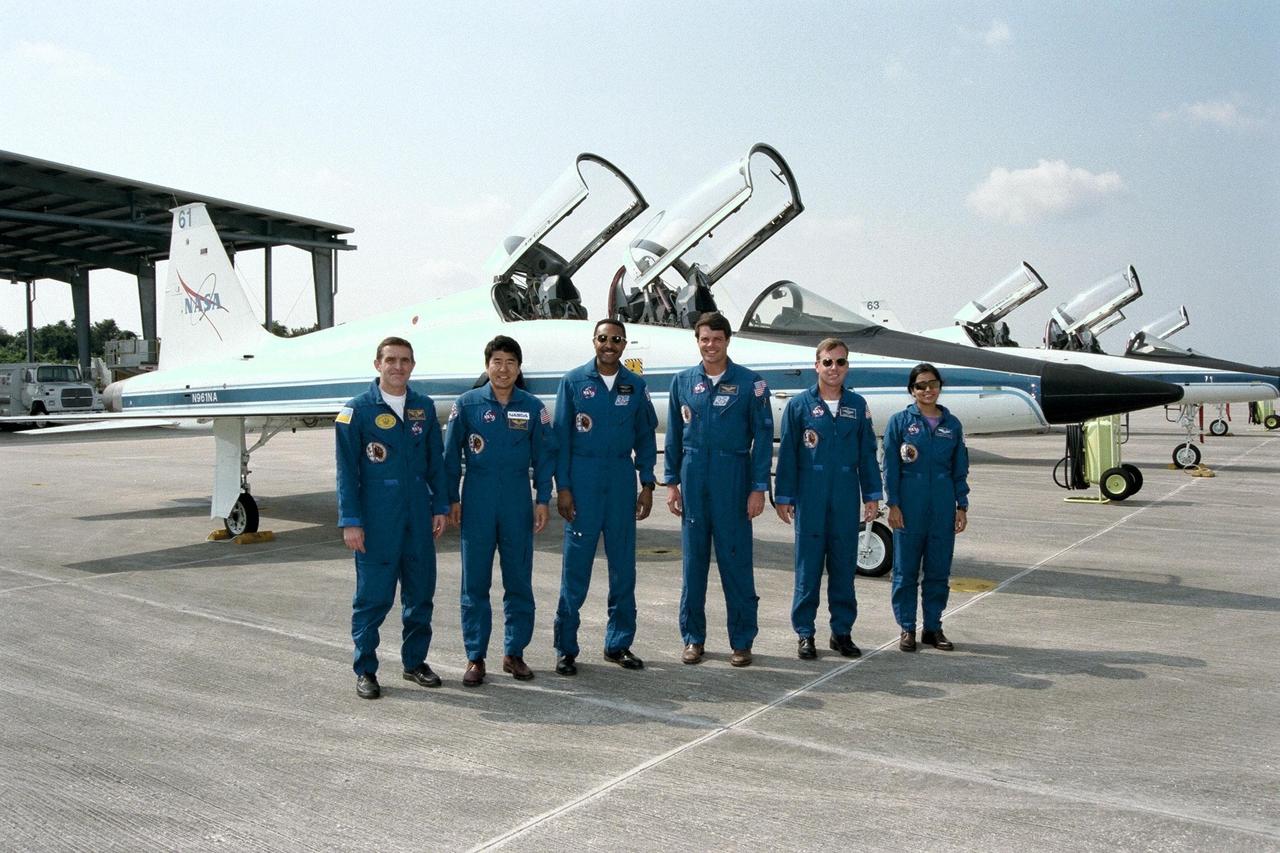
STS-87 astronaut crew members prepare to fly back to Johnson Space Center in Houston after participating in the Crew Equipment Integration Test (CEIT) at Kennedy Space Center (KSC) in early October. From left are Payload Specialist Leonid Kadenyuk of the National Space Agency of Ukraine; Mission Specialist Takao Doi, Ph.D., of the National Space Development Agency of Japan; Mission Specialist Winston Scott; Commander Kevin Kregel; Pilot Steven Lindsey; and Mission Specialist Kalpana Chawla, Ph.D. The CEIT gives astronauts an opportunity to get a hands-on look at the payloads with which they will be working on-orbit. STS-87 will be the fourth United States Microgravity Payload and flight of the Spartan-201 deployable satellite. During the STS-87 mission, scheduled for a Nov. 19 liftoff from KSC, Dr. Doi and Scott will both perform spacewalks
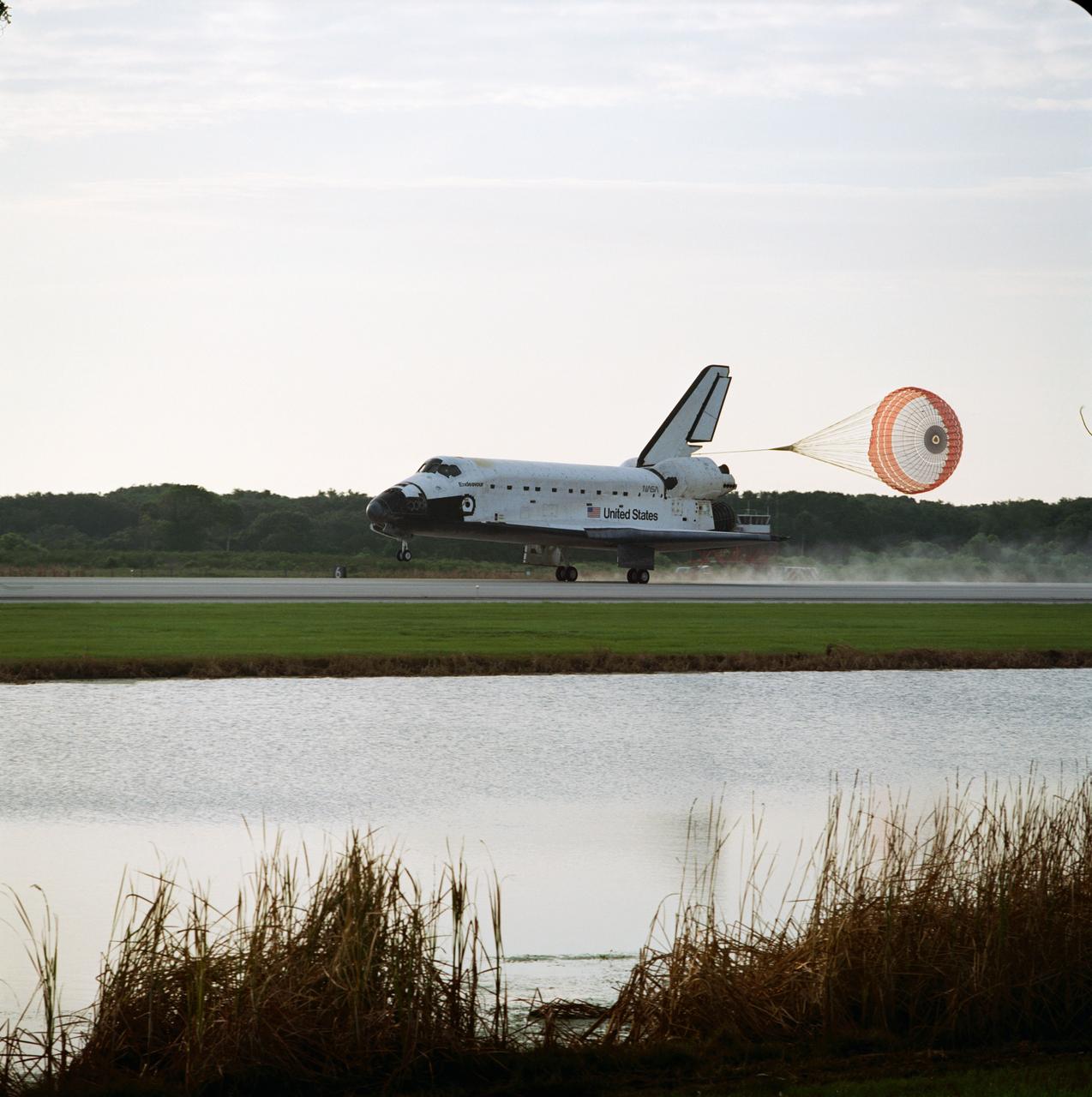
STS077-S-012 (29 May 1996) --- As its drag chute is released on Runway 33 at the Kennedy Space Center (KSC), the Space Shuttle Endeavour marks its return to Earth following a ten-day mission in space. Touchdown came at 7:09 a.m. (EDT), May 29, 1996. Leading the crew onboard was astronaut John H. Casper, mission commander. Other crew members were astronauts Curtis L. Brown, Jr., pilot; along with Daniel W. Bursch, Mario Runco, Jr., Andrew S. W. Thomas and Marc Garneau, all mission specialists. Garneau represents the Canadian Space Agency (CSA). During the approximately 10-day mission, the crew performed a variety of payload activities, including microgravity research aboard the Spacehab 4 Module, deployment and retrieval of the Spartan 207 and deployment and rendezvous with the Passive Aerodynamically-Stabilized Magnetically-Damped Satellite (PAMS).
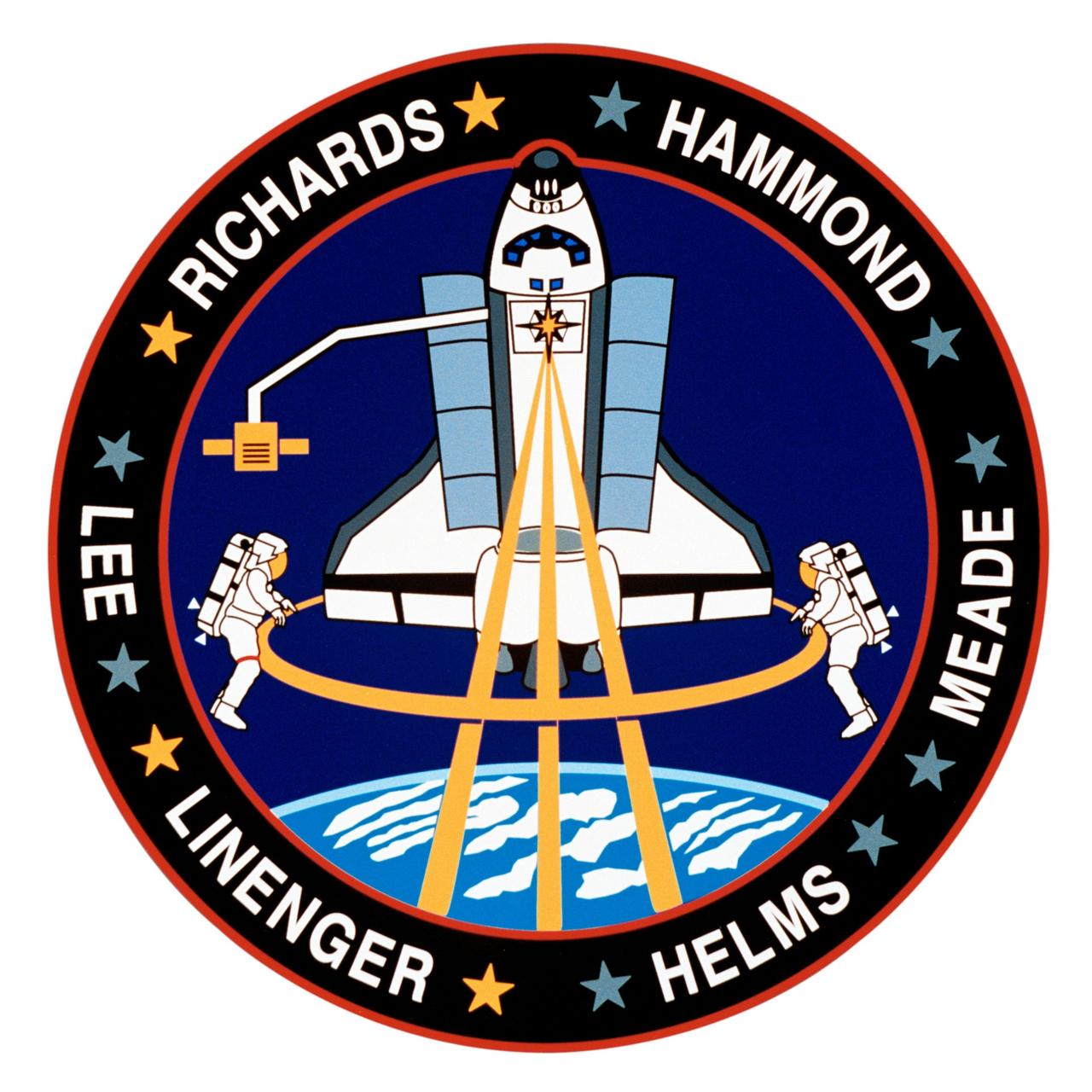
STS064-S-001 (July 1994) --- The patch depicts the space shuttle Discovery in a payload-bay-to-Earth attitude with its primary payload, Lidar In-Space Technology Experiment (LITE-1) operating in support of Mission to Planet Earth. LITE-1 is a lidar (light detection and ranging) system that uses a three-wavelength laser, symbolized by the three gold rays emanating from the star in the payload bay that form part of the astronaut symbol. The major objective of this first flight of LITE-1 is to validate its design and operating characteristics by gathering data about the Earth's troposphere and stratosphere, represented by the clouds and dual-colored Earth limb. A secondary payload on STS-64 is the free-flier SPARTAN-201 satellite shown on the Remote Manipulator System (RMS) arm post-retrieval. The objective of SPARTAN-201 is to investigate the physics of the solar wind and complement data being obtained from the ULYSSES satellite launched on STS-41. The RMS will also operate another secondary payload, Shuttle Plume Impingement Flight Experiment (SPIFEX), which will assess the plume effects from the Orbiter's Reaction Control System thrusters. Additionally, STS-64 will test a new extravehicular activity (EVA) maneuvering device, Simplified Aid for EVA Rescue (SAFER), represented symbolically by the two small nozzles on the backpacks of the two untethered EVA crew men. The names of the crew members encircle the patch: astronauts Richard N. Richards, commander; L. Blaine Hammond Jr., pilot; Jerry M. Linenger; Susan J. Helms, Carl J. Meade and Mark C. Lee, all mission specialists. The gold or silver stars by each name represent that person's parent service. The NASA insignia design for space shuttle flights is reserved for use by the astronauts and for other official use as the NASA Administrator may authorize. Public availability has been approved only in the forms of illustrations by the various news media. When and if there is any change in this policy, which is not anticipated, the change will be publicly announced. Photo credit: NASA