
Expedition Five flight engineer Peggy Whitson is shown installing the Solidification Using a Baffle in Sealed Ampoules (SUBSA) experiment in the Microgravity Science Glovebox (MSG) in the Destiny laboratory aboard the International Space Station (ISS). SUBSA examines the solidification of semiconductor crystals from a melted material. Semiconductor crystals are used for many products that touch our everyday lives. They are found in computer chips, integrated circuits, and a multitude of other electronic devices, such as sensors for medical imaging equipment and detectors of nuclear radiation. Materials scientists want to make better semiconductor crystals to be able to further reduce the size of high-tech devices. In the microgravity environment, convection and sedimentation are reduced, so fluids do not remove and deform. Thus, space laboratories provide an ideal environment of studying solidification from the melt. This investigation is expected to determine the mechanism causing fluid motion during production of semiconductors in space. It will provide insight into the role of the melt motion in production of semiconductor crystals, advancing our knowledge of the crystal growth process. This could lead to a reduction of defects in semiconductor crystals produced in space and on Earth.

Semiconductor crystals are an essential component in all computer chips, sensors, and wireless communication devices. Noguchi conducts the SUBSA investigation inside the microgravity glovebox to test a new method for producing semiconductor crystals. Findings from this work may improve the quality of the chips used inside consumer devices on Earth.
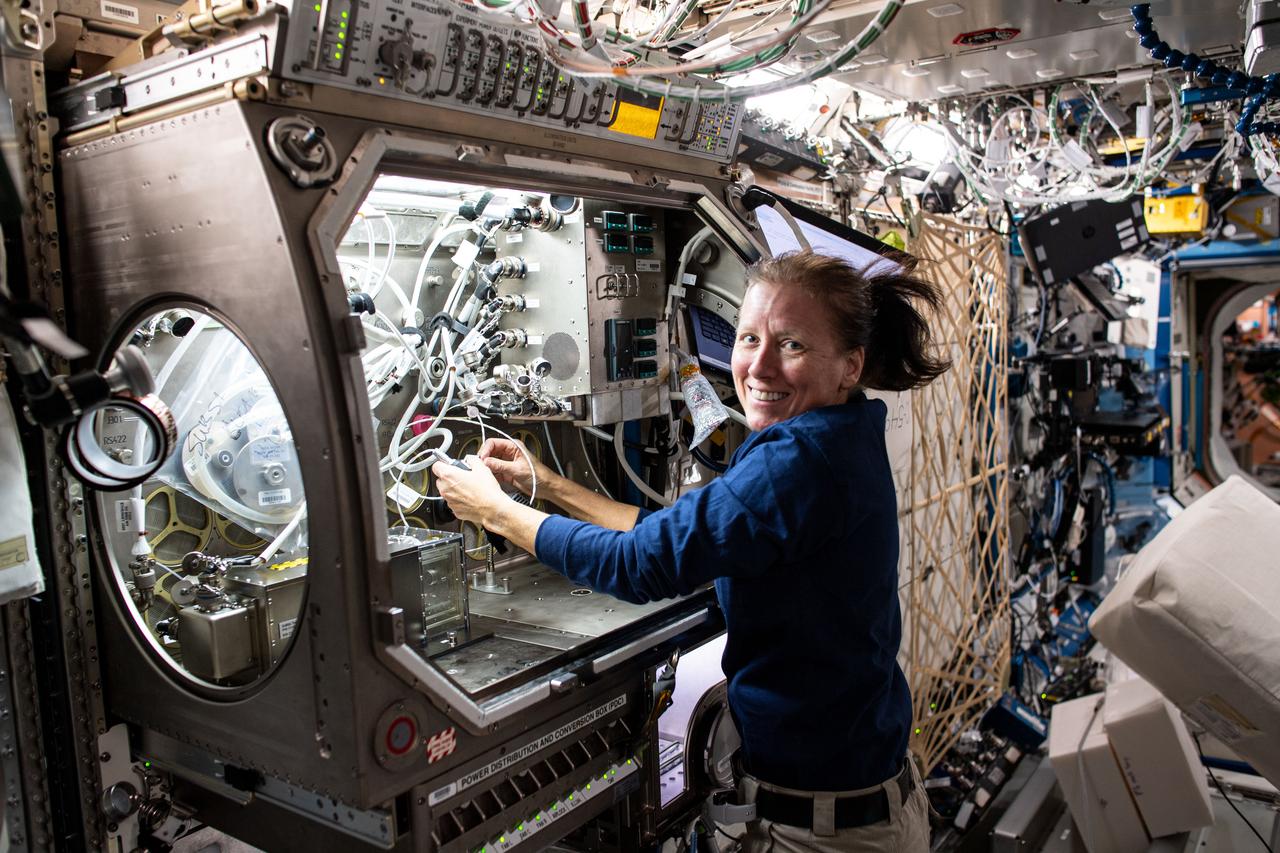
iss064e016385 (Dec. 29, 2020) --- NASA astronaut and Expedition 64 Flight Engineer Shannon Walker sets up hardware inside the Microgravity Science Glovebox for the Solidification Using a Baffle in Sealed Ampoules (SUBSA) experiment. SUBSA crystallizes melts in microgravity to learn more about the process of semiconductor crystal growth to benefit Earth and space industries. Results may lead to reduced fluid motion in the melt, leading to better distribution of subcomponents and the potential for improved technology used in producing semiconductor crystals.
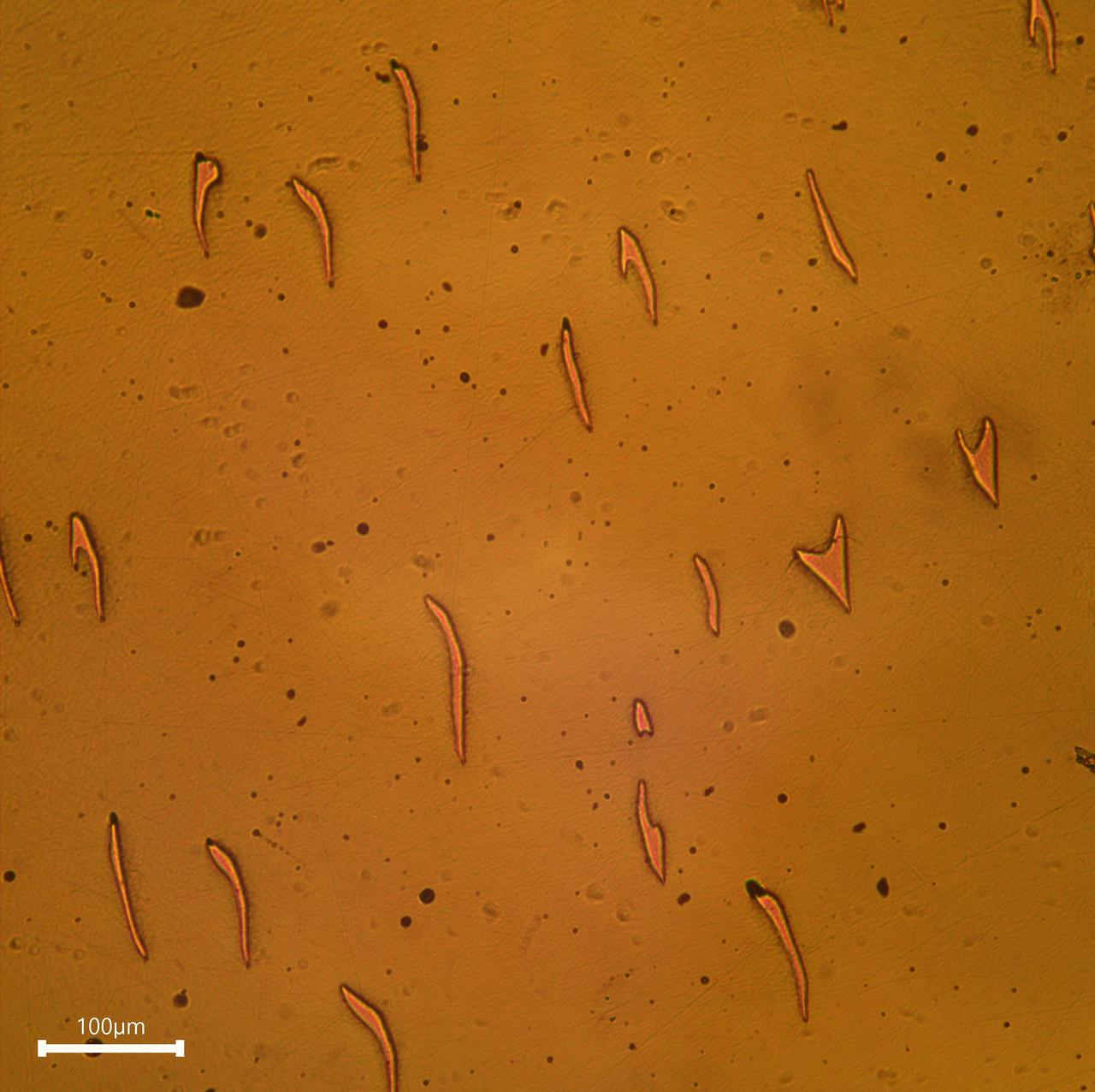
jsc2025e067418 (8/5/2025) --- Microscopic image of a semimetal-semiconductor composite (SSC) wafer extracted from one of four crystals grown in the International Space Station’s SUBSA facility during the first SUBSA-InSPA-SSCug mission. Credit: United Semiconductors LLC

jsc2025e067416 (8/5/2025) --- Microscopic image of a semimetal-semiconductor composite (SSC) wafer extracted from one of four crystals grown in the International Space Station’s SUBSA facility during the first SUBSA-InSPA-SSCug mission. Credit: United Semiconductors LLC

jsc2025e067417 (8/5/2025) --- Microscopic image of a semimetal-semiconductor composite (SSC) wafer extracted from one of four crystals grown in the International Space Station’s SUBSA facility during the first SUBSA-InSPA-SSCug mission. Credit: United Semiconductors LLC

jsc2025e067415 (8/5/2025) --- Microscopic image of a semimetal-semiconductor composite (SSC) wafer extracted from one of four crystals grown in the International Space Station’s SUBSA facility during the first SUBSA-InSPA-SSCug mission. Credit: United Semiconductors LLC
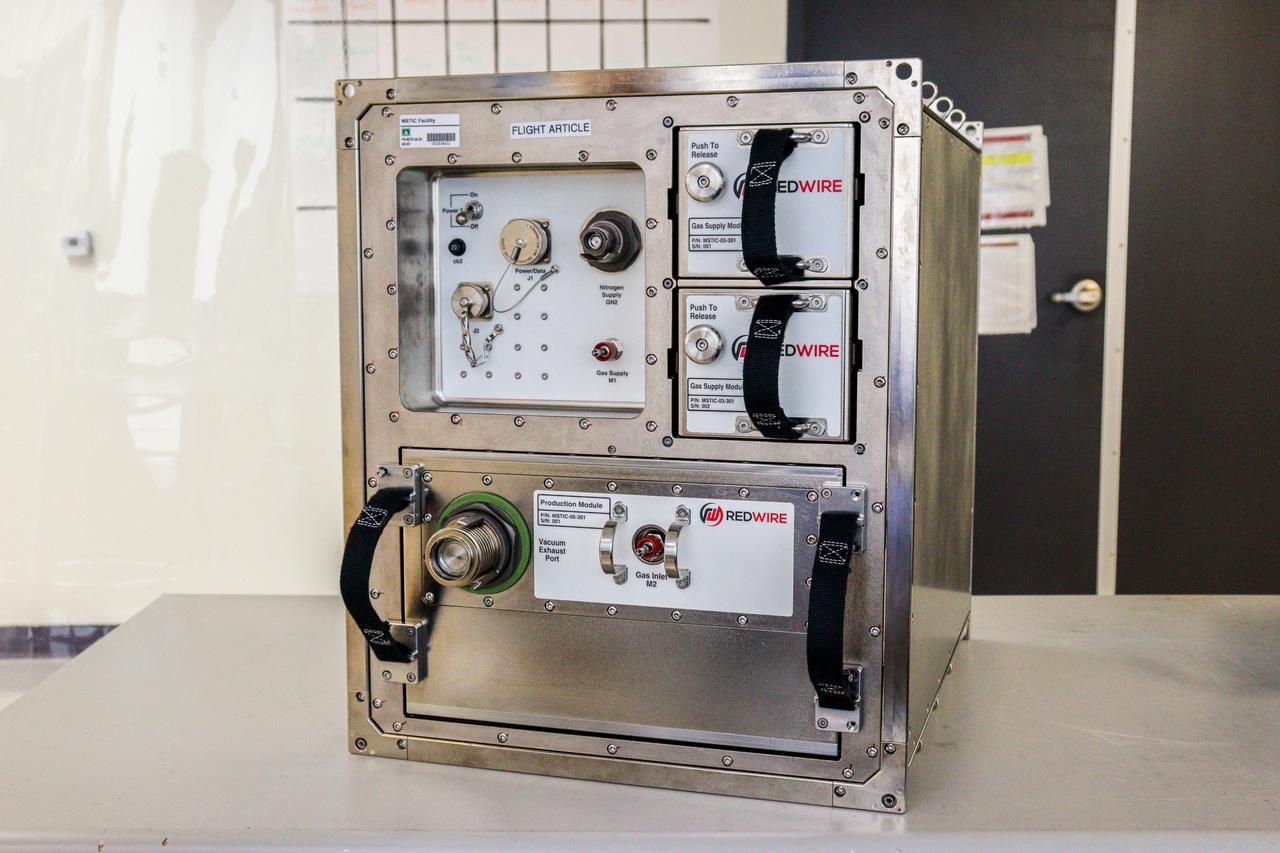
jsc2024e005973 (10/3/2023) --- The gas supply modules and production module for Redwire's Manufacturing of Semiconductors and Thin-film Integrated Coating (MSTIC) facility are pictured on the ground. Redwire's MSTIC facility is an innovative pilot program aimed at advancing the production of semiconductors, metallic films, and crystals aboard the International Space Station. Image courtesy of Redwire.

jsc2024e005974 (10/3/2023) --- The production module for Redwire's Manufacturing of Semiconductors and Thin-film Integrated Coating (MSTIC) facility is pictured on the ground. MSTIC produces semiconductors, metallic films, and crystals using advanced techniques in 3D printing. Image courtesy of Redwire.
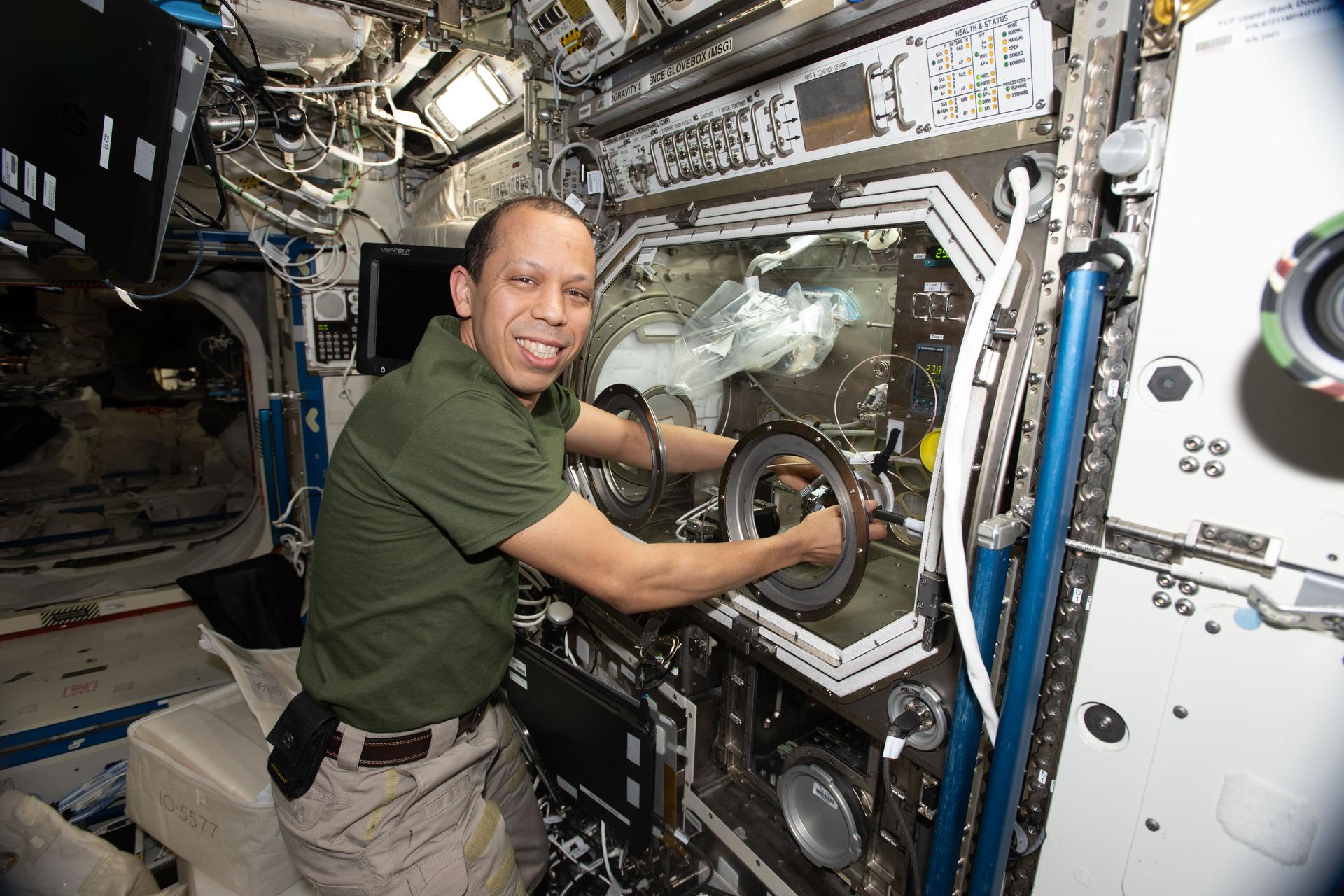
iss074e0620142 (May 28, 2026) --- NASA astronaut and Expedition 74 Flight Engineer Chris Williams replaces sample hardware inside the Destiny laboratory module’s Microgravity Science Glovebox aboard the International Space Station to support semiconductor crystal research. Growing crystals in weightlessness may enable future large-scale semiconductor manufacturing, advancing the commercial space economy and supporting Earth-based industries. Credit: NASA/Jack Hathaway
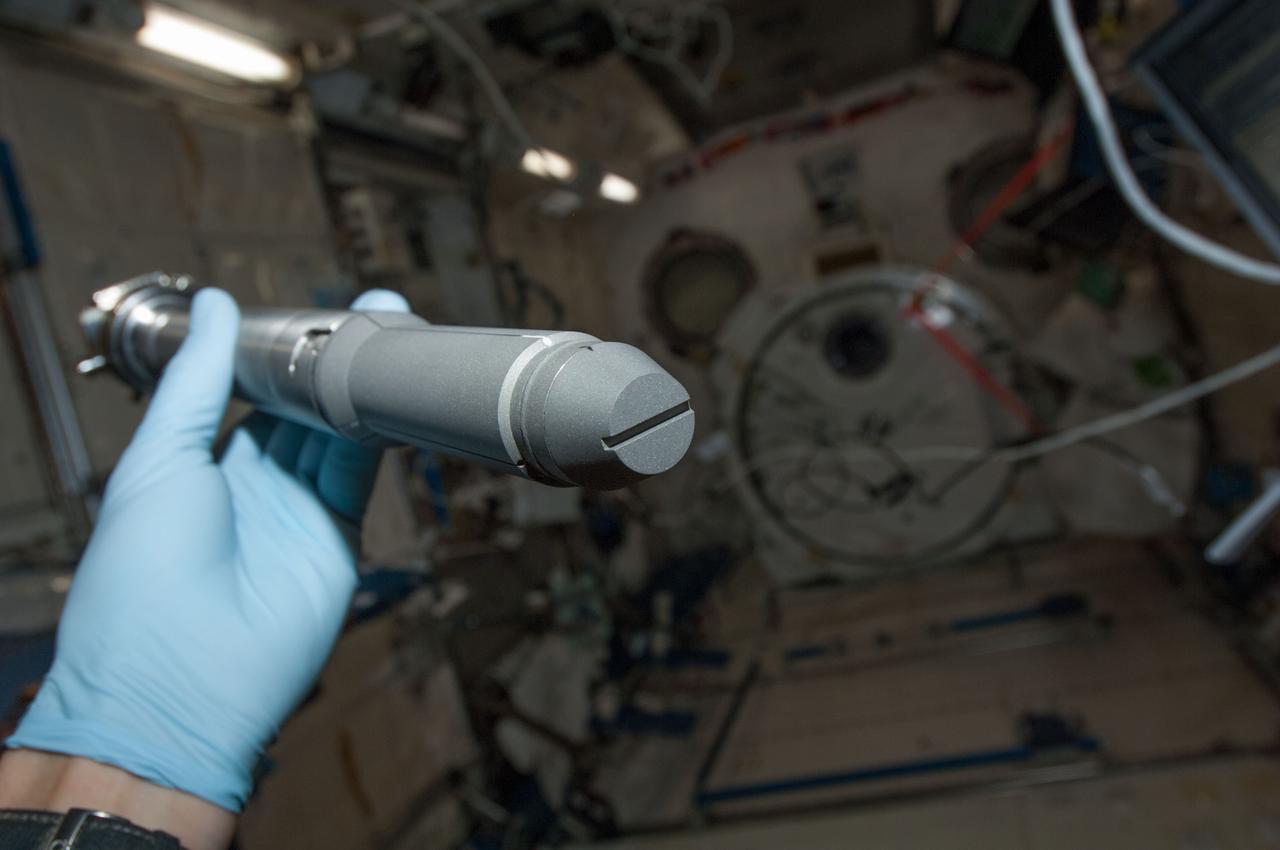
iss035e007095 (3/22/2013) --- A close-up view of an alloy cartridge to be installed in the Gradient Heating Furnace (GHF) of the Kobairo rack for the Alloy Semiconductor experiment. Image was taken in the Kibo Japanese Experiment Pressurized Module (JPM) aboard the International Space Station (ISS). The Alloy Semiconductor investigation aims to develop a clear understanding of how semiconductor materials grow and crystallize in microgravity. The materials studied are also known to be useful as devices which convert heat into electricity (thermoelectrics).
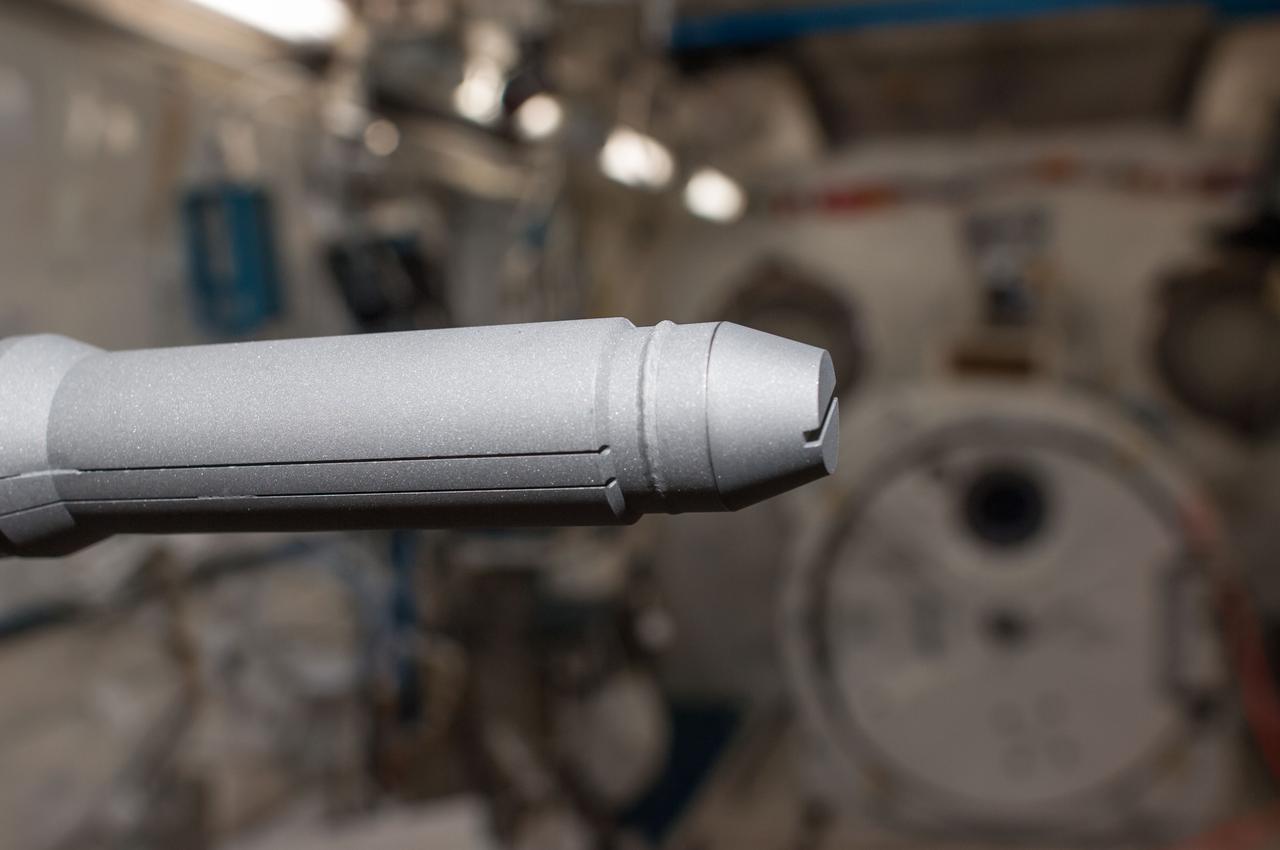
iss040e139205 (9/10/2014) ---Photographic documentation aboard the International Space Station (ISS) of the removal of an Alloy Semiconductor cartridge for return on a future flight. The Alloy Semiconductor investigation aims to develop a clear understanding of how semiconductor materials grow and crystallize in microgravity. The materials studied are also known to be useful as devices which convert heat into electricity (thermoelectrics).
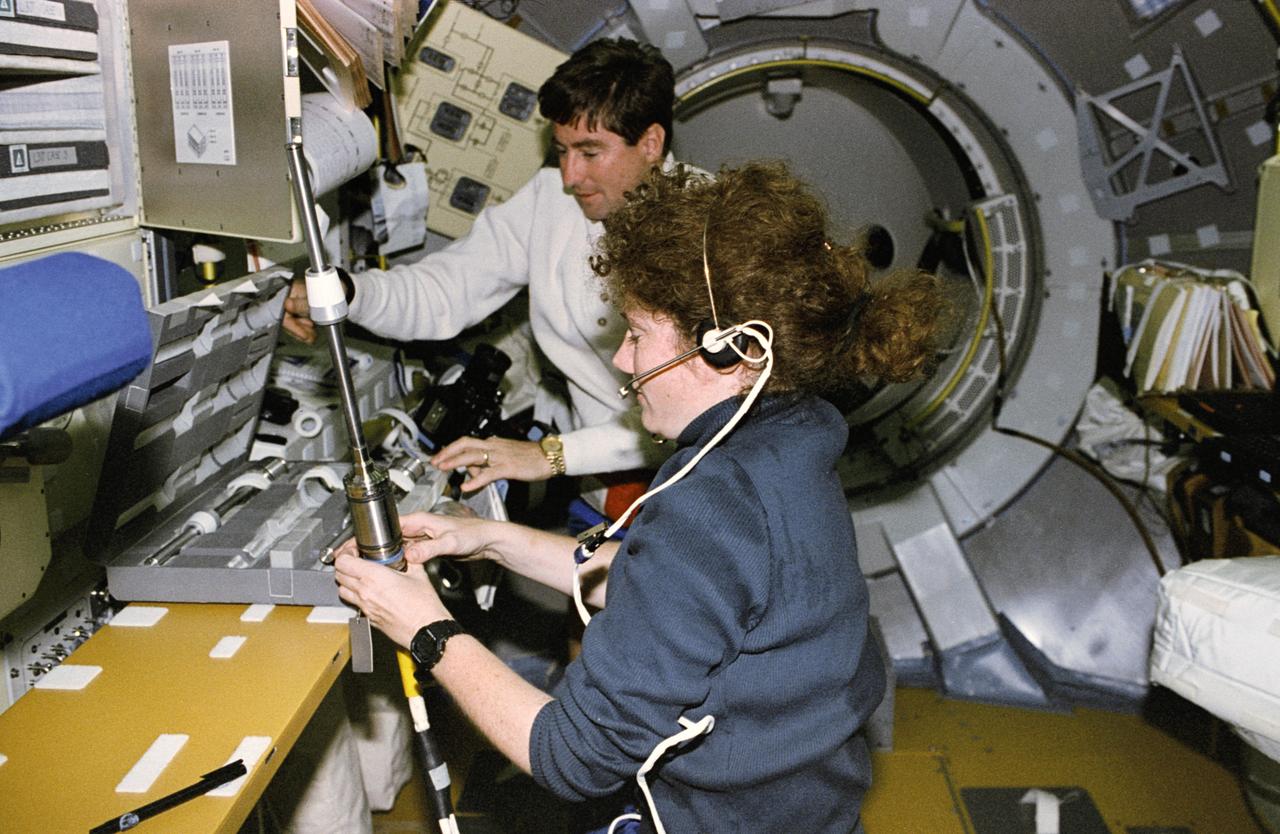
STS078-368-022 (20 June - 7 July 1996) --- Astronauts Susan J. Helms, payload commander, and Terence T. (Tom) Henricks, mission commander, prepare a sample cartridge containing semiconductor crystals for Spacelab research. The crystals were later placed in the Advanced Gradient Heating Furnace (AGHF) in the Life and Microgravity Spacelab (LMS-1) Science Module. The AGHF is designed for directional solidification of the crystals in the sample cartridges. The microgravity of space allows the crystals to grow in a perfect state that can not be accomplished in Earth's gravity.
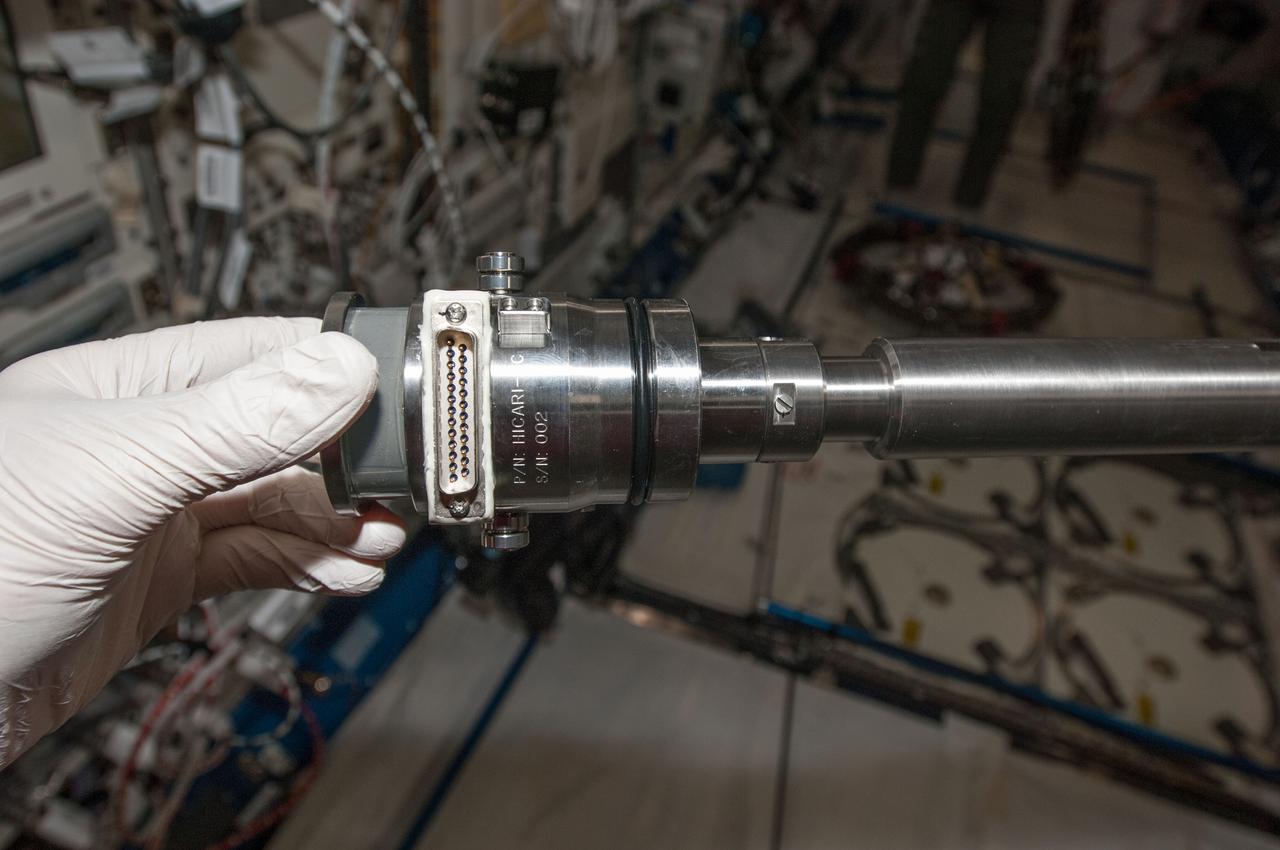
iss040e054521 (7/10/2014) --- A photo of Hicari sample cartridge 2 from the Gradient Heating Furnace (GHF) removed in preparation for return on SpaceX-4. The materials science investigation Growth of Homogeneous SiGe Crystals in Microgravity by the TLZ Method (Hicari) aims to verify the crystal-growth by Travelling Liquidous Zone method, and to produce high-quality crystals of Silicon-Germanium (SiGe) semiconductor using the Japanese Experiment Module-Gradient Heating Furnace (JEM-GHF).
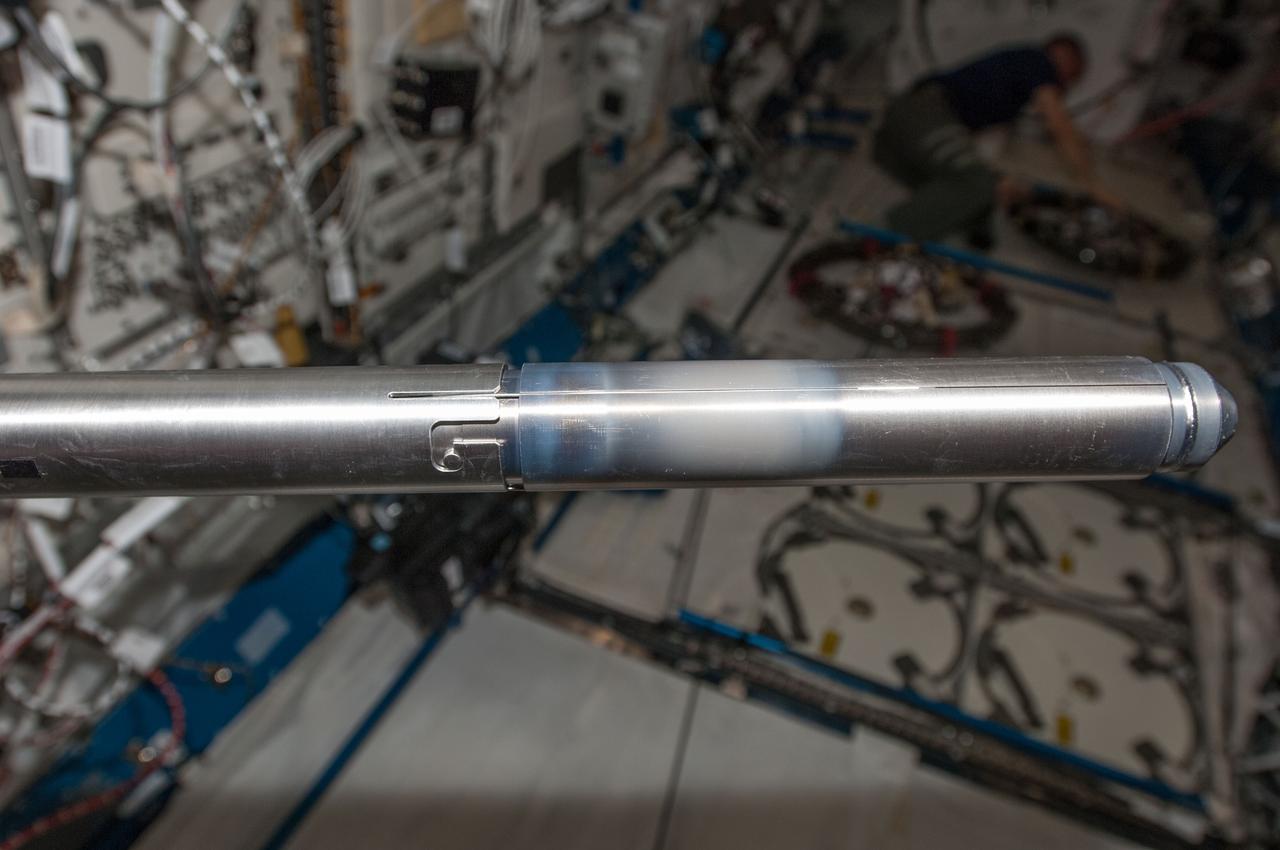
iss040e054526 (7/10/2014) --- A photo of Hicari sample cartridge 2 from the Gradient Heating Furnace (GHF) removed in preparation for return on SpaceX-4. The materials science investigation Growth of Homogeneous SiGe Crystals in Microgravity by the TLZ Method (Hicari) aims to verify the crystal-growth by Travelling Liquidous Zone method, and to produce high-quality crystals of Silicon-Germanium (SiGe) semiconductor using the Japanese Experiment Module-Gradient Heating Furnace (JEM-GHF).
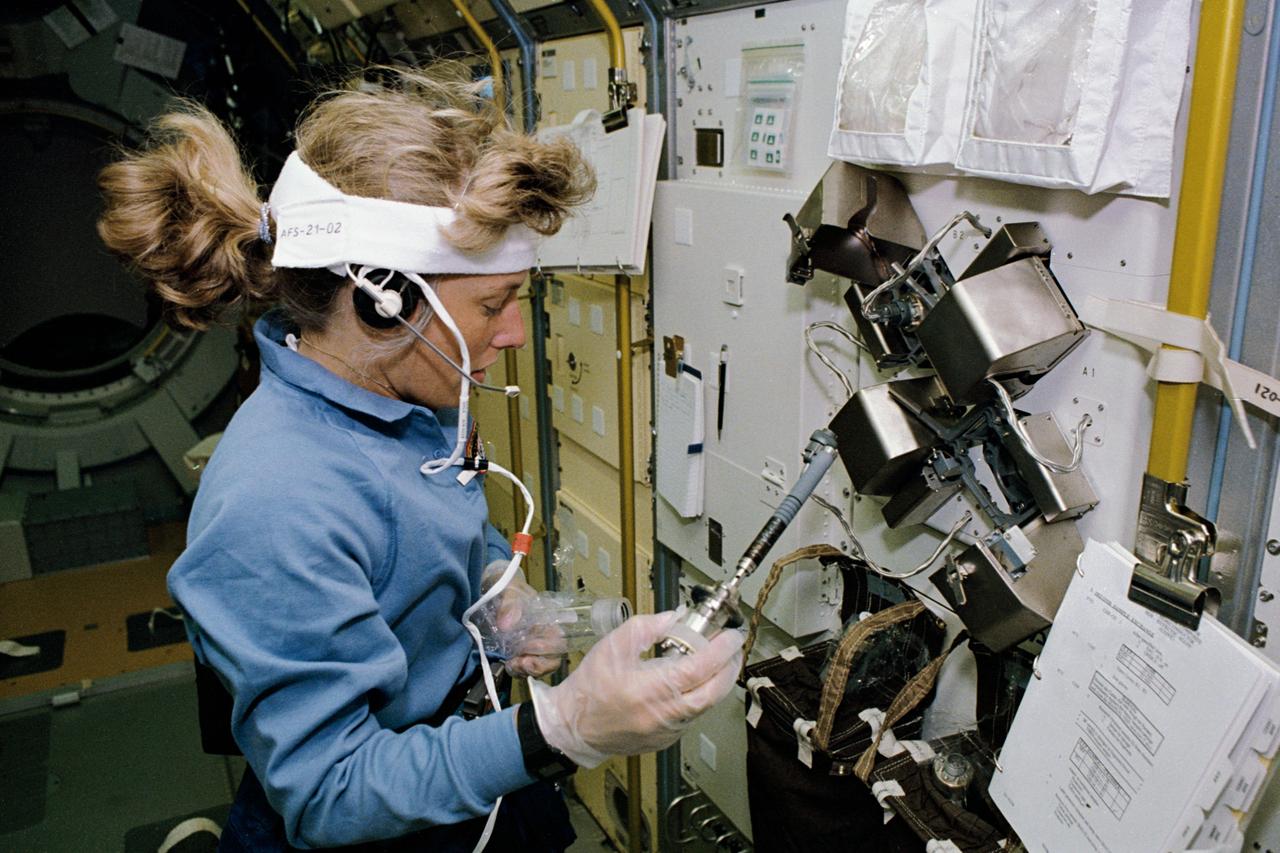
STS047-02-003 (12 - 20 Sept 1992) --- Astronaut N. Jan Davis, mission specialist, works at the Continuous Heating Furnace (CHF) in the Spacelab-J Science Module. This furnace provided temperatures up to 1,300 degrees Celsius and rapid cooling to two sets of samples concurrently. The furnace accommodated in-space experiments in the Fabrication of Si-As-Te:Ni Ternary Amorphous Semiconductor and the Crystal Growth of Compound Semiconductors. These were two of the many experiments designed and monitored by Japan's National Space Development Agency (NASDA).
![iss035e006283 (3/18/2013) --- Photo documentation of the Hicari (Growth of Homogeneous Silicon-Germanium [SiGe] Crystals in Microgravity by the Traveling Liquidous Zone [TLZ] Method) Experiment Sample Cartridge (SC) following its removal from the Kobairo Rack during Expedition 35. The materials science investigation Growth of Homogeneous SiGe Crystals in Microgravity by the TLZ Method (Hicari) aims to verify the crystal-growth by Travelling Liquidous Zone method, and to produce high-quality crystals of Silicon-Germanium (SiGe) semiconductor using the Japanese Experiment Module-Gradient Heating Furnace (JEM-GHF).](https://images-assets.nasa.gov/image/iss035e006283/iss035e006283~medium.jpg)
iss035e006283 (3/18/2013) --- Photo documentation of the Hicari (Growth of Homogeneous Silicon-Germanium [SiGe] Crystals in Microgravity by the Traveling Liquidous Zone [TLZ] Method) Experiment Sample Cartridge (SC) following its removal from the Kobairo Rack during Expedition 35. The materials science investigation Growth of Homogeneous SiGe Crystals in Microgravity by the TLZ Method (Hicari) aims to verify the crystal-growth by Travelling Liquidous Zone method, and to produce high-quality crystals of Silicon-Germanium (SiGe) semiconductor using the Japanese Experiment Module-Gradient Heating Furnace (JEM-GHF).
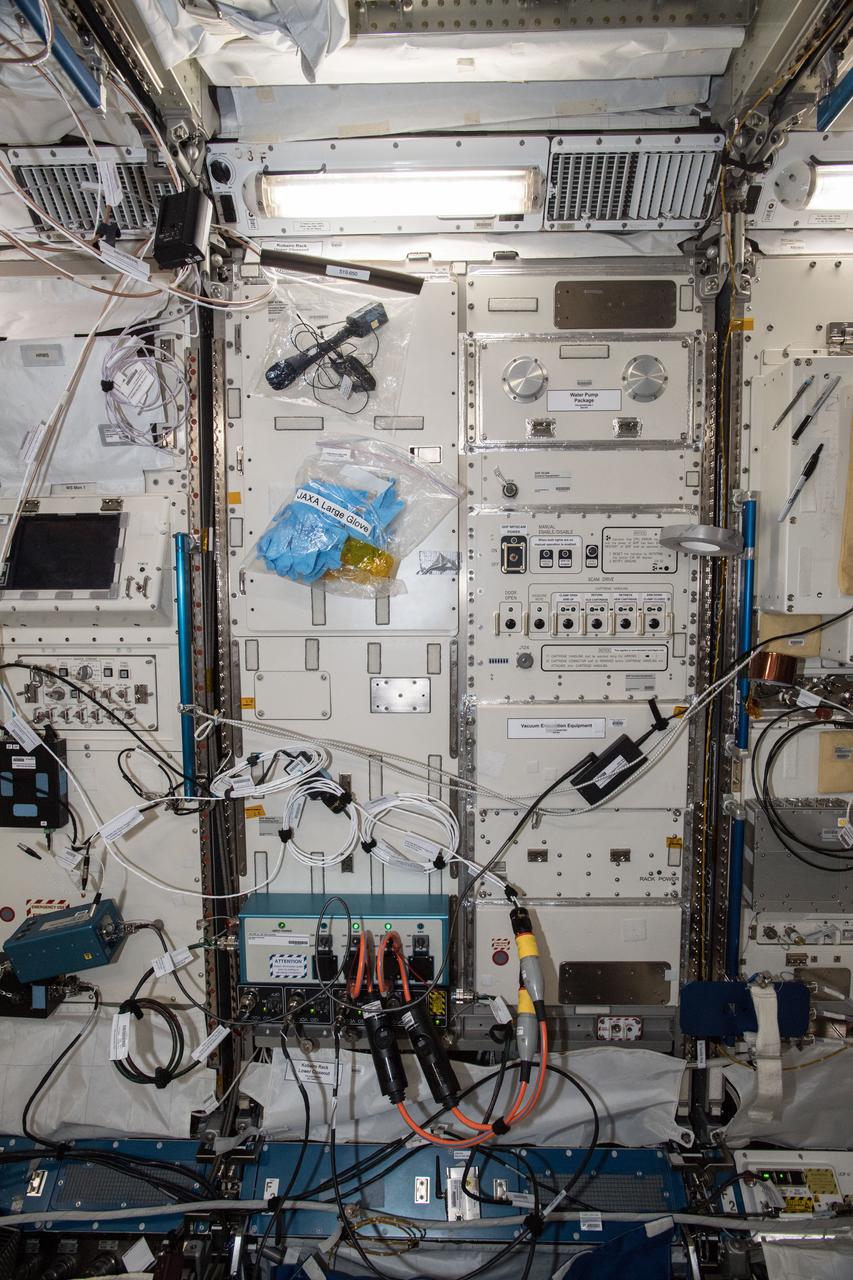
iss057e092614 (11/14/2018) --- Photo documentation of the Kobairo Rack front, JPM1F3 in the Kibo Japanese Experiment Module (JEM) aboard the International Space Staion (ISS). The KOBAIRO Rack houses the Gradient Heating Furnace (GHF), an experiment facility for investigating crystal growth of semiconductors. This furnace has the capability of directional solidification of samples.
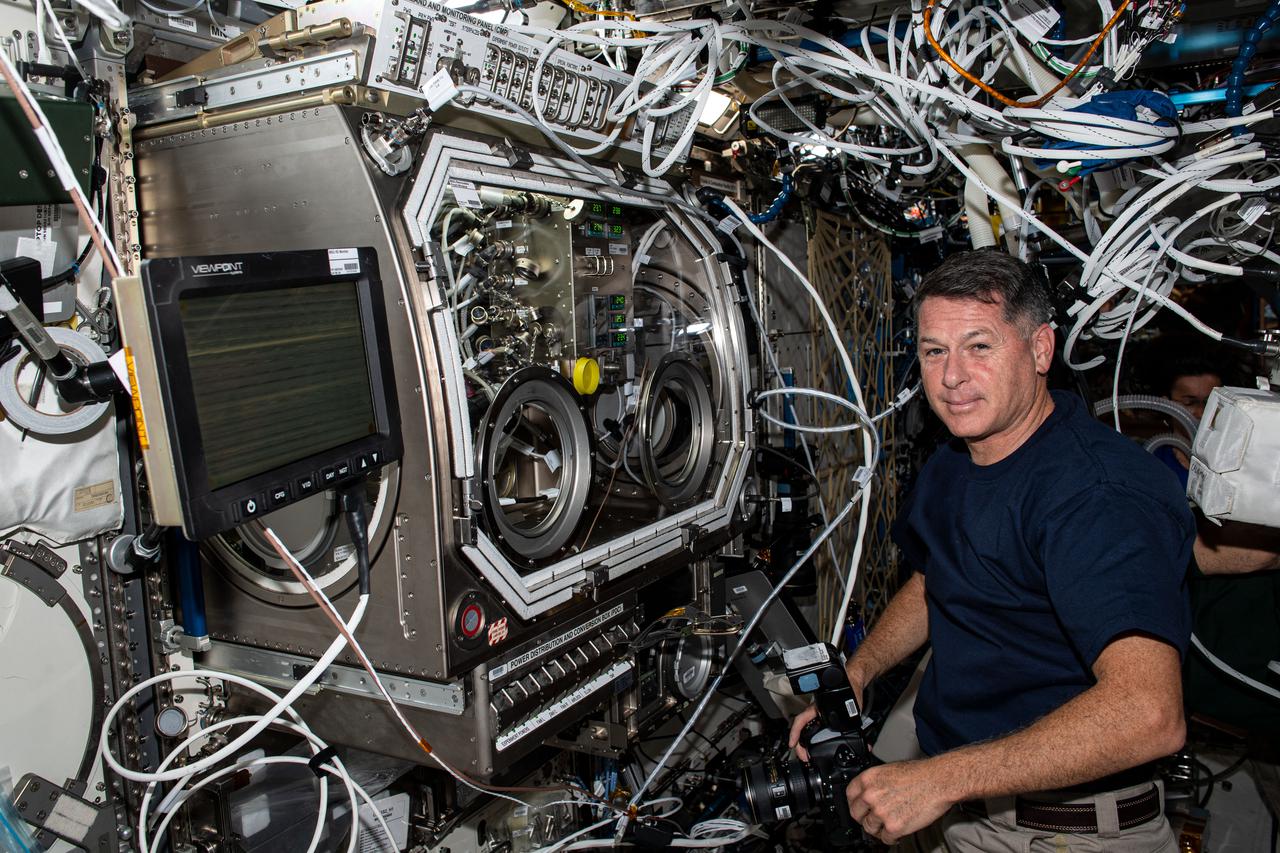
iss065e020575 (May 6, 2021) --- NASA astronaut and Expedition 65 Flight Engineer Shane Kimbrough sets up the U.S. Destiny laboratory module's Microgravity Science Glovebox for a physics investigation. The study known as Solidification Using a Baffle in Sealed Ampoules, or SUBSA, explores improving technology used in producing semiconductor crystals.

iss065e073965 (May 26, 2021) --- Expedition 65 Commander Akihiko Hoshide of the Japan Aerospace Exploration Agency checks out hardware for a physics experiment also known as SUBSA, or Solidification Using a Baffle in Sealed Ampoules. The space physics study is exploring ways to improve the production of semiconductor crystals.
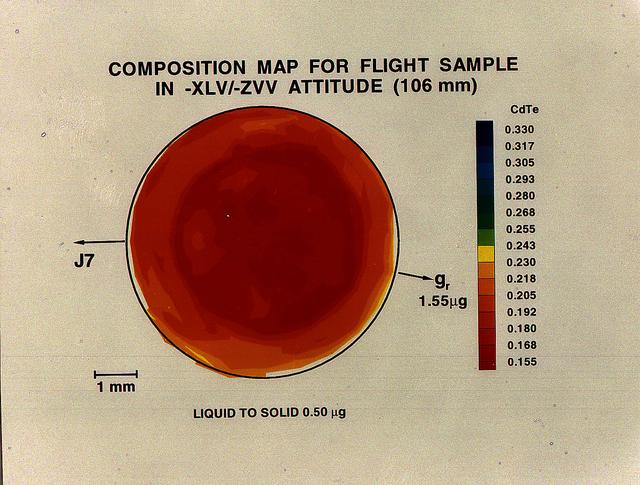
A semiconductor's usefulness is determined by how atoms are ordered within the crystal's underlying three-dimensional structure. While this mercury telluride and cadmium telluride alloy sample mixes completely in Earth -based laboratories, convective flows prevent them from mixing uniformly. In space, the ingredients mix more homogenously, resulting in a superior product.
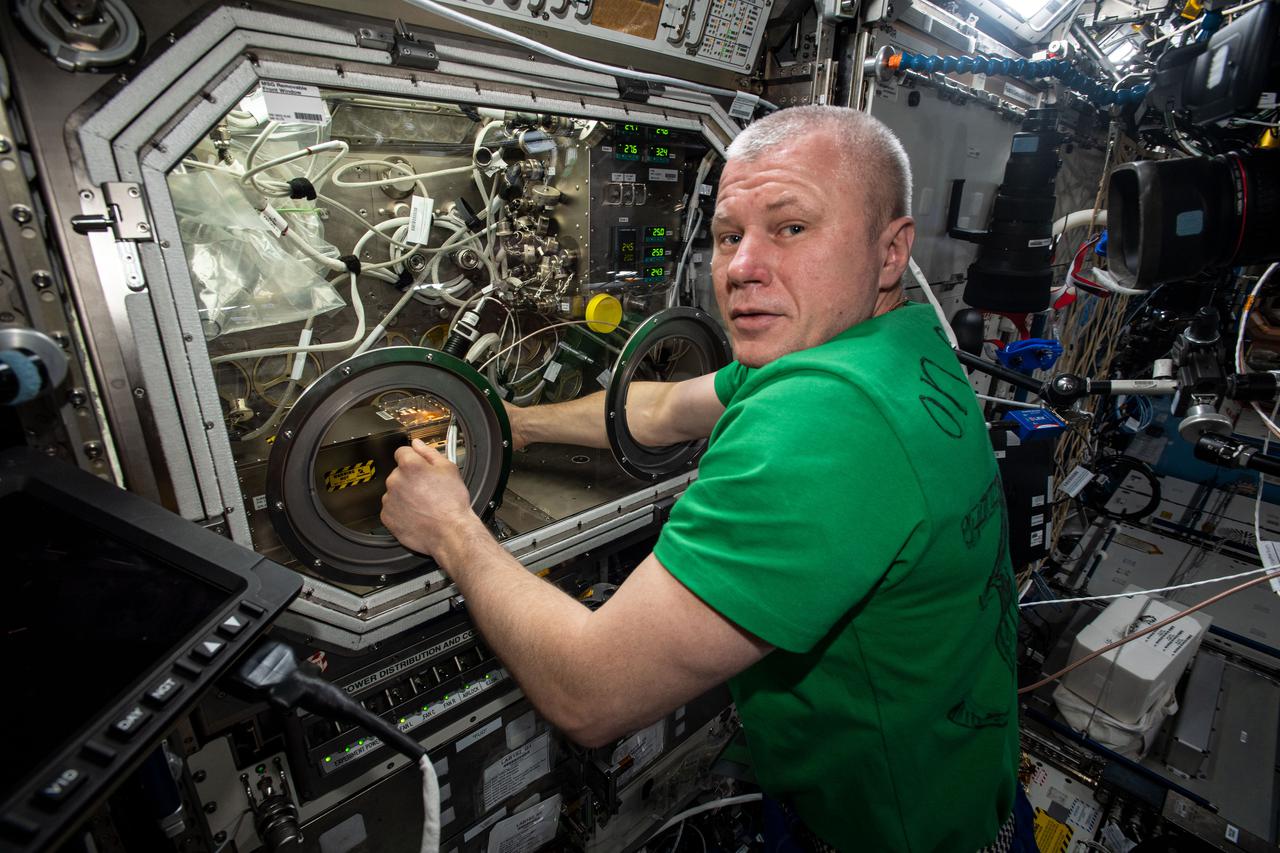
iss065e021208 (May 6, 2021) --- Roscosmos cosmonaut and Expedition 65 Flight Engineer Oleg Novitskiy swaps hardware inside the U.S. Destiny laboratory module's Microgravity Science Glovebox for a physics investigation. The study known as Solidification Using a Baffle in Sealed Ampoules, or SUBSA, explores improving technology used in producing semiconductor crystals.
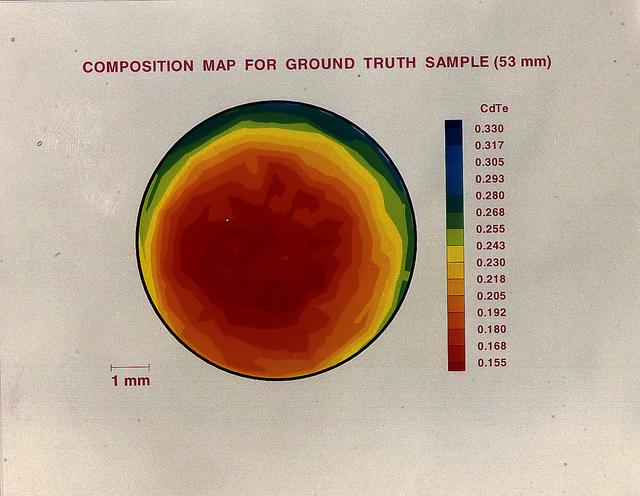
A semiconductor's usefulness is determined by how atoms are ordered within the crystal's underlying three-dimensional structure. While this mercury telluride and cadmium telluride alloy sample mixes completely in Earth -based laboratories, convective flows prevent them from mixing uniformly.
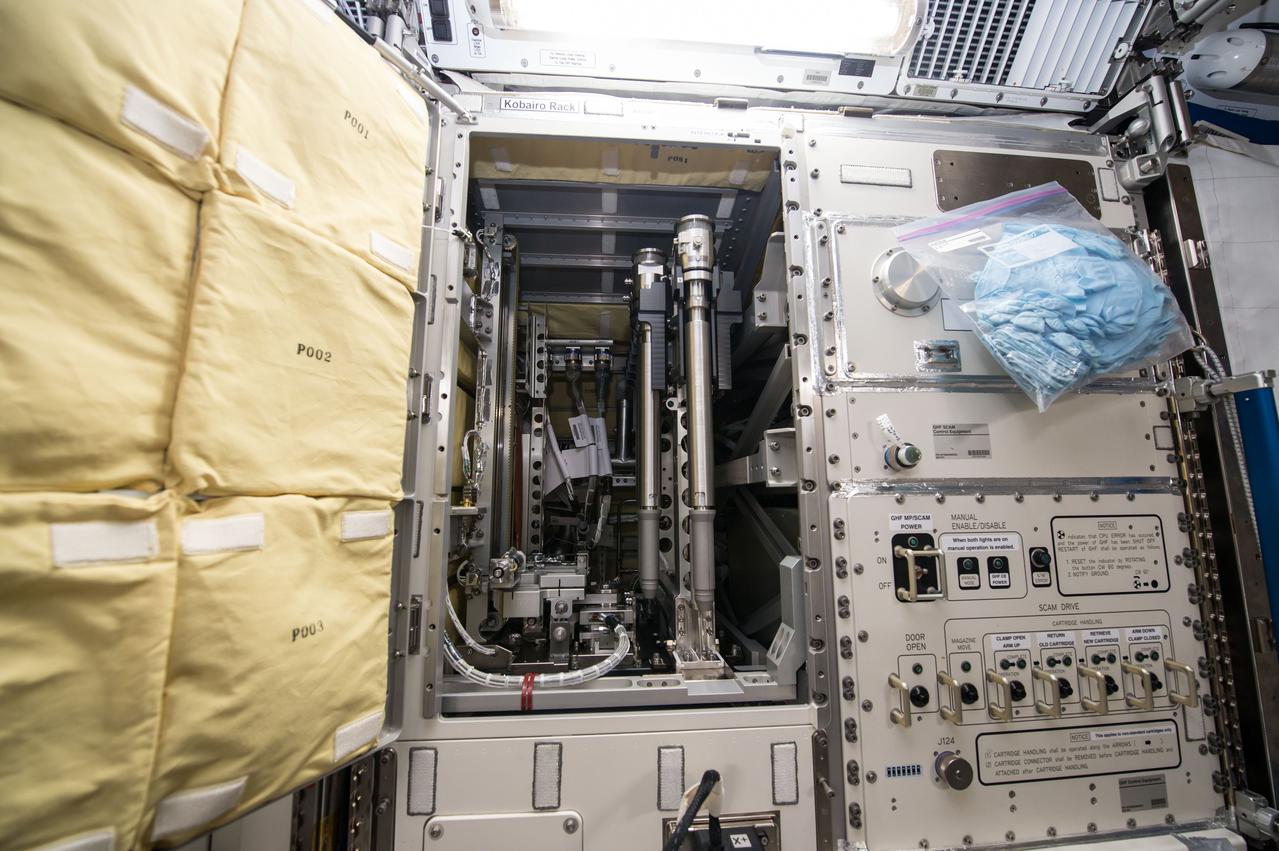
iss042e049014 (12/18/2014) --- A view of the interior of the Kobairo rack of the Japanese Experiment Module (JEM) aboard the International Space station (ISS).The KOBAIRO Rack houses the Gradient Heating Furnace (GHF), an experiment facility for investigating crystal growth of semiconductors. This furnace has the capability of directional solidification of samples.

iss066e044525 (Nov. 4, 2021) --- NASA astronaut and Expedition 66 Flight Engineer Mark Vande Hei works inside the Microgravity Science Glovebox setting up hardware for a space physics study, known as Solidification Using a Baffle in Sealed Ampoules (SUBSA), seeking to improve the production of higher quality semiconductor crystals.
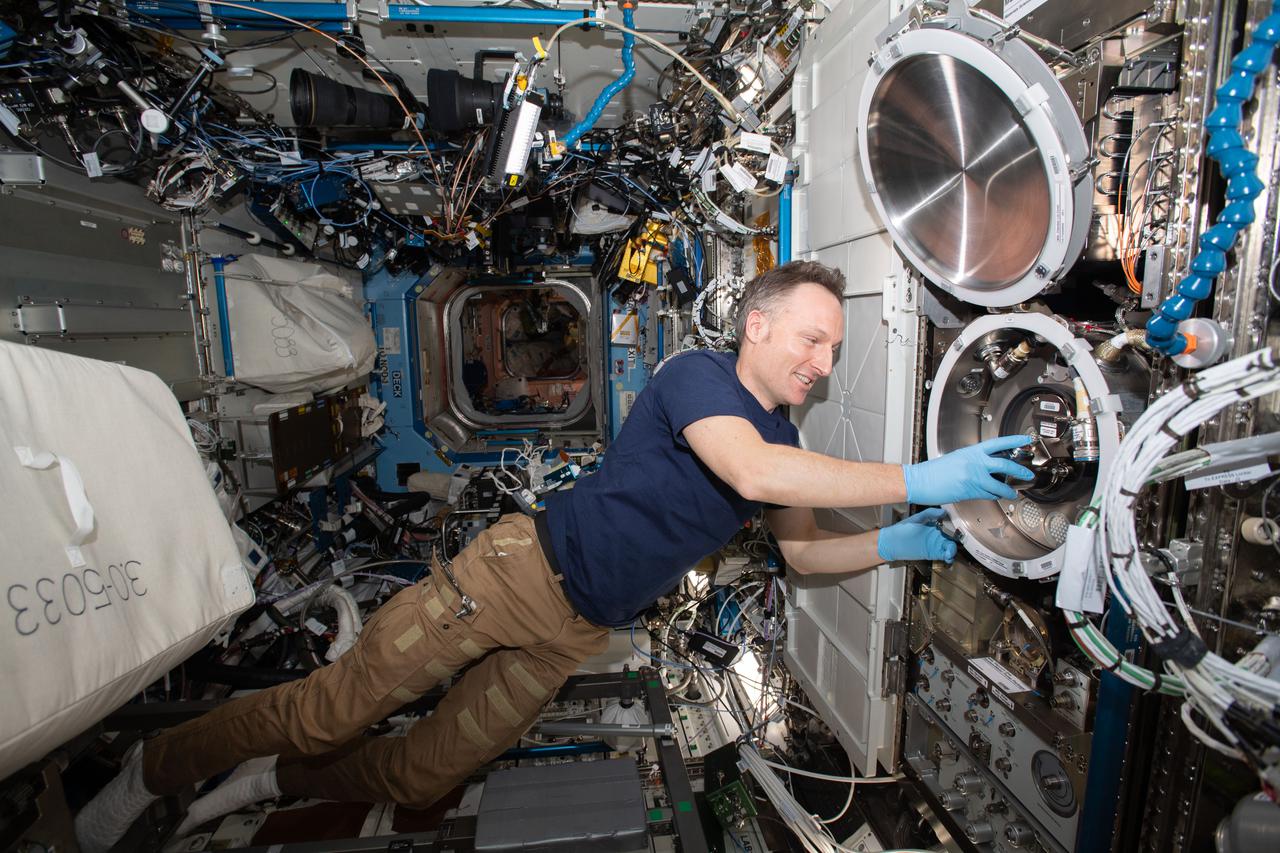
iss066e114140 (Jan. 12, 2022) --- ESA (European Space Agency) astronaut and Expedition 66 Flight Engineer Matthias Maurer swaps samples inside the Materials Science Laboratory, a physics research device that observes metals, alloys, polymers, semiconductors, ceramics, crystals, and glasses, to discover new applications for existing materials and new or improved materials.
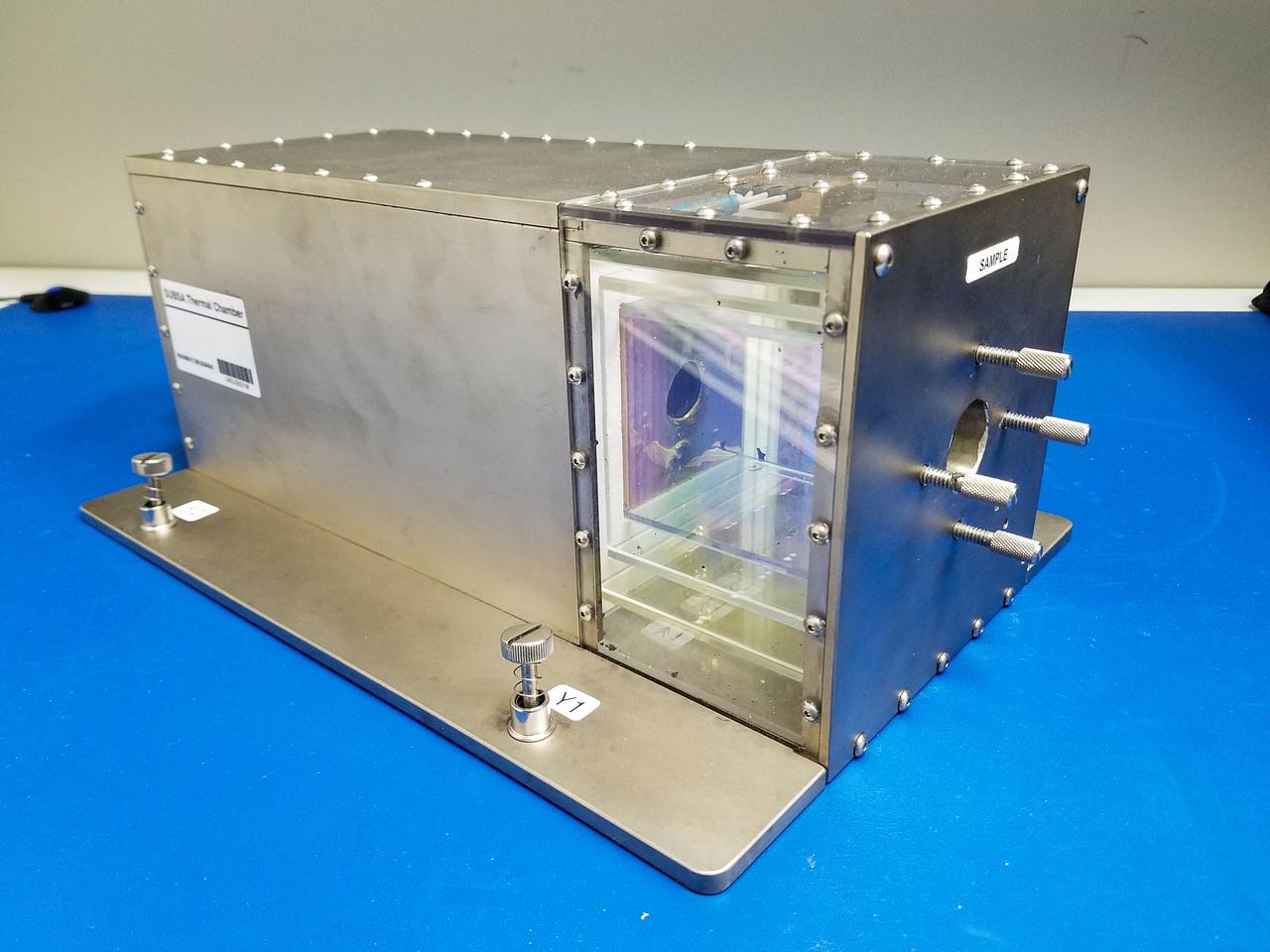
jsc2020e016982 (7/24/2019) --- A preflight view of the SUBSA Thermal Chamber. SUBSA is a high-temperature furnace that can be used to study how microgravity affects the synthesis of semiconductor and scintillator crystals. Image courtesy of: Kenneth Barton, Techshot, Inc.

iss065e084906 (June 1, 2021) --- Expedition 65 Flight Engineer Thomas Pesquet of ESA (European Space Agency) swaps samples inside the Microgravity Sciences Glovebox for an experiment called Solidification Using a Baffle in Sealed Ampoules, or SUBSA. The physics investigation explores experimental methods of crystallizing melts in microgravity and is expected to result in reduced fluid motion in the melt, leading to better distribution of subcomponents and the potential for improved technology used in producing semiconductor crystals.
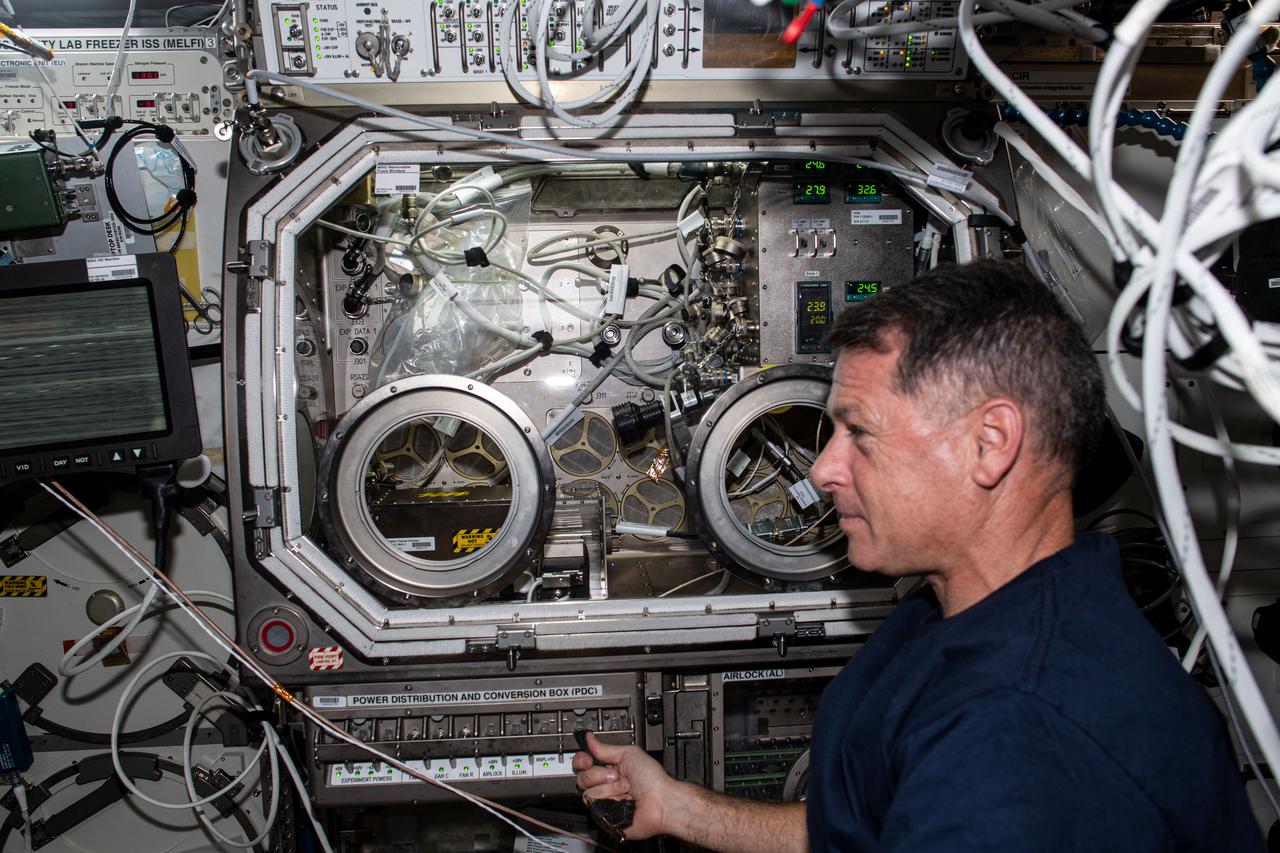
iss065e020580 (May 5, 2021) --- NASA astronaut and Expedition 65 Flight Engineer Shane Kimbrough is pictured in front of the Microgravity Science Glovebox setting up hardware for a physics investigation. The experiment known as Solidification Using a Baffle in Sealed Ampoules, or SUBSA, explores experimental methods of crystallizing melts in microgravity and is expected to result in reduced fluid motion in the melt, leading to better distribution of subcomponents and the potential for improved technology used in producing semiconductor crystals.
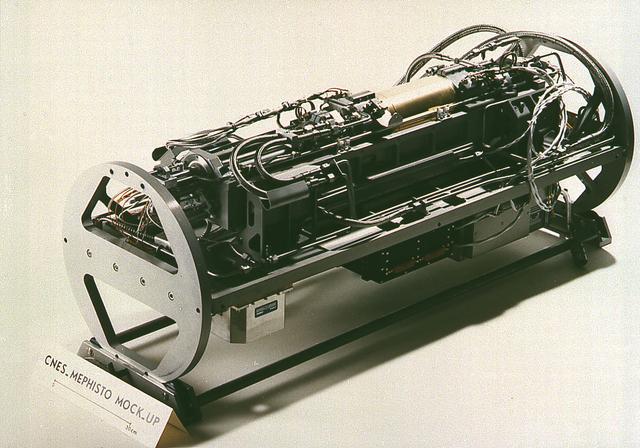
The MEPHISTO experiment is a cooperative American and French investigation of the fundamentals of crystal growth. MEPHISTO is a French-designed and built materials processing furnace. MEPHISTO experiments study solidation (also called freezing) during the growth cycle of liquid materials used for semiconductor crystals. Solidification is the process where materials change from liquid (melt) to solid. An example of the solidification process is water changing into ice.
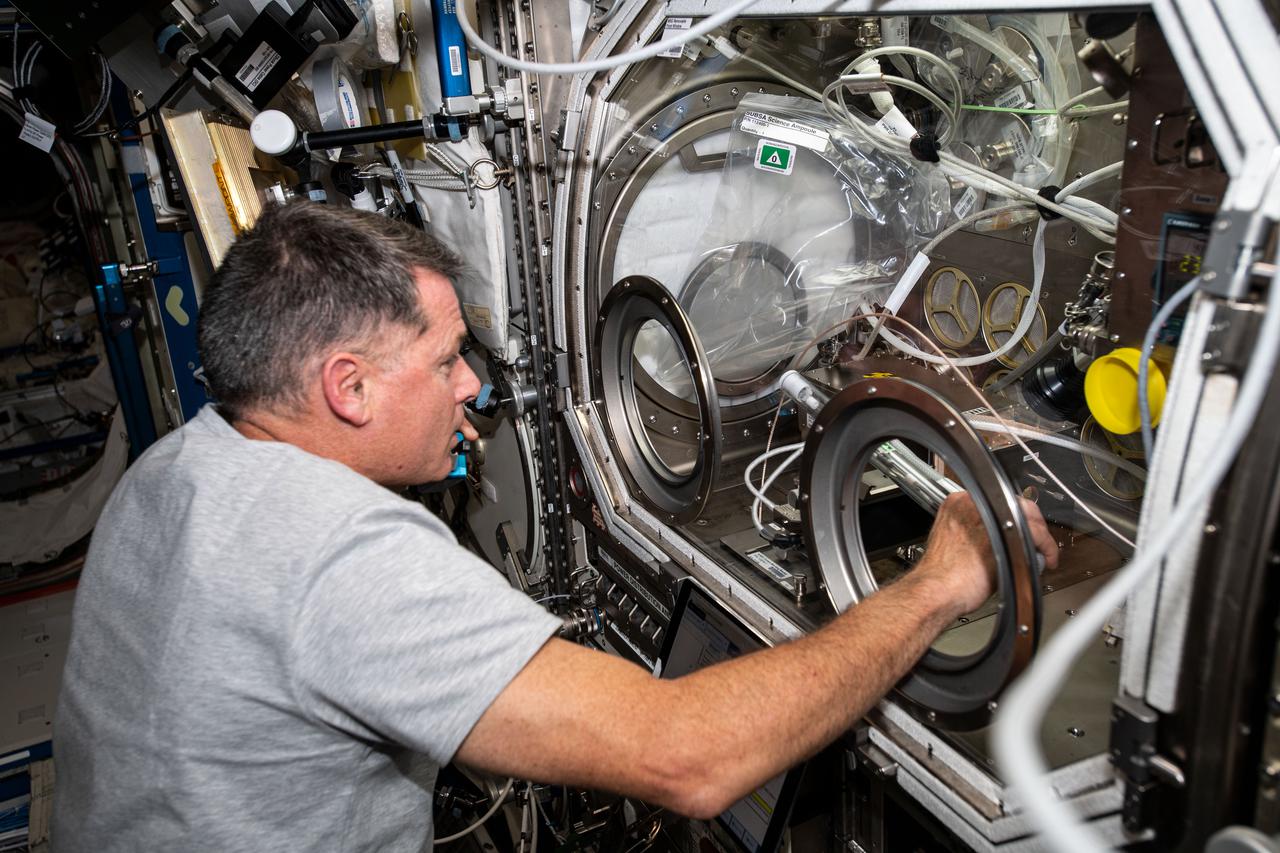
iss065e050120 (May 21, 2021) --- NASA astronaut and Expedition 65 Flight Engineer Shane Kimbrough swaps samples inside the Microgravity Science Glovebox for an experiment called Solidification Using a Baffle in Sealed Ampoules, or SUBSA. The physics investigation explores experimental methods of crystallizing melts in microgravity and is expected to result in reduced fluid motion in the melt, leading to better distribution of subcomponents and the potential for improved technology used in producing semiconductor crystals.

iss064e032426 (Feb. 12, 2021) --- NASA astronaut and Expedition 64 Flight Engineer Michael Hopkins swaps samples inside the Microgravity Science Glovebox for the SUBSA (Solidification Using Baffles in Sealed Ampoules) experiment. The SUBSA physics study explores experimental methods of crystallizing melts in microgravity that may contribute to the production of higher quality semiconductor crystals.
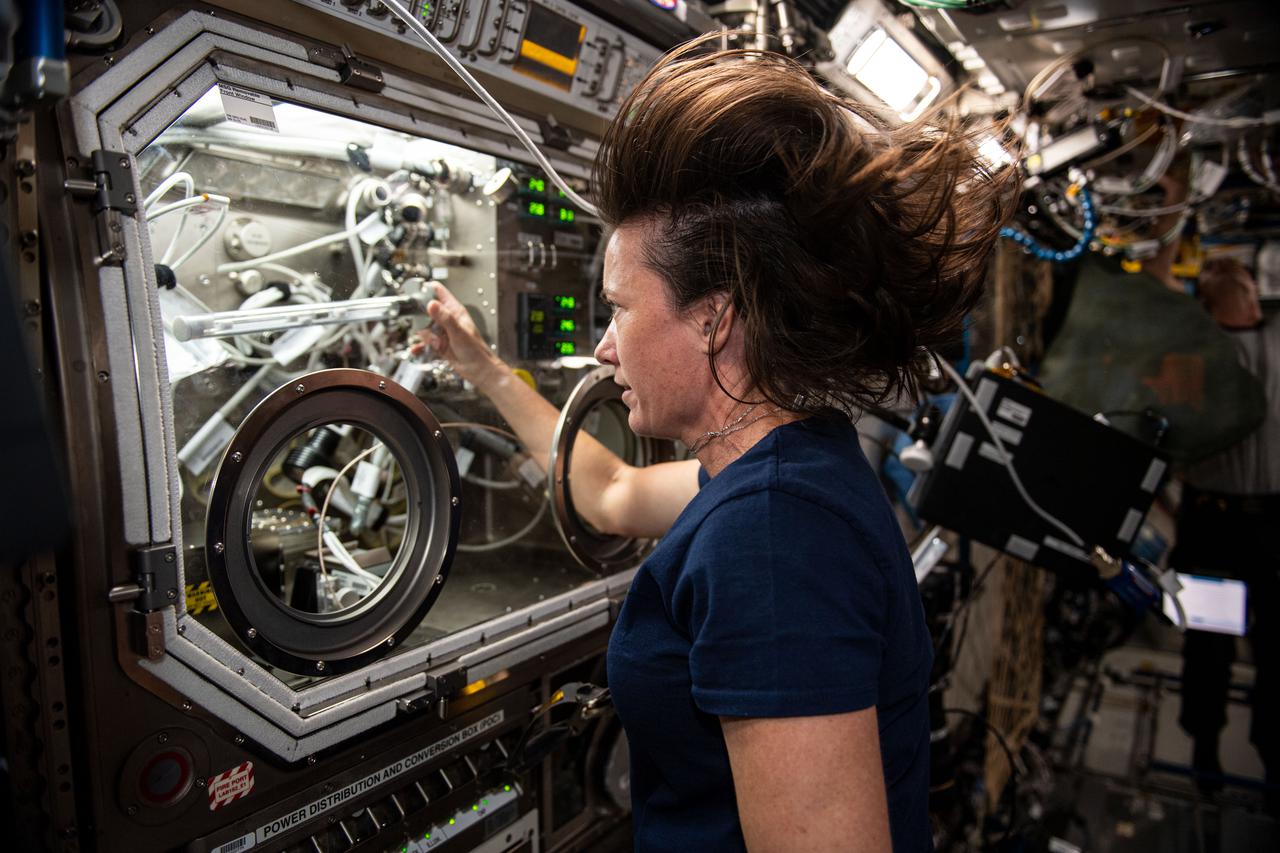
iss065e061407 (May 24, 2021) --- NASA astronaut and Expedition 65 Flight Engineer Megan McArthur works in the Microgravity Science Glovebox swapping samples for an experiment called Solidification Using a Baffle in Sealed Ampoules, or SUBSA. The physics investigation explores experimental methods of crystallizing melts in microgravity and is expected to result in reduced fluid motion in the melt, leading to better distribution of subcomponents and the potential for improved technology used in producing semiconductor crystals.
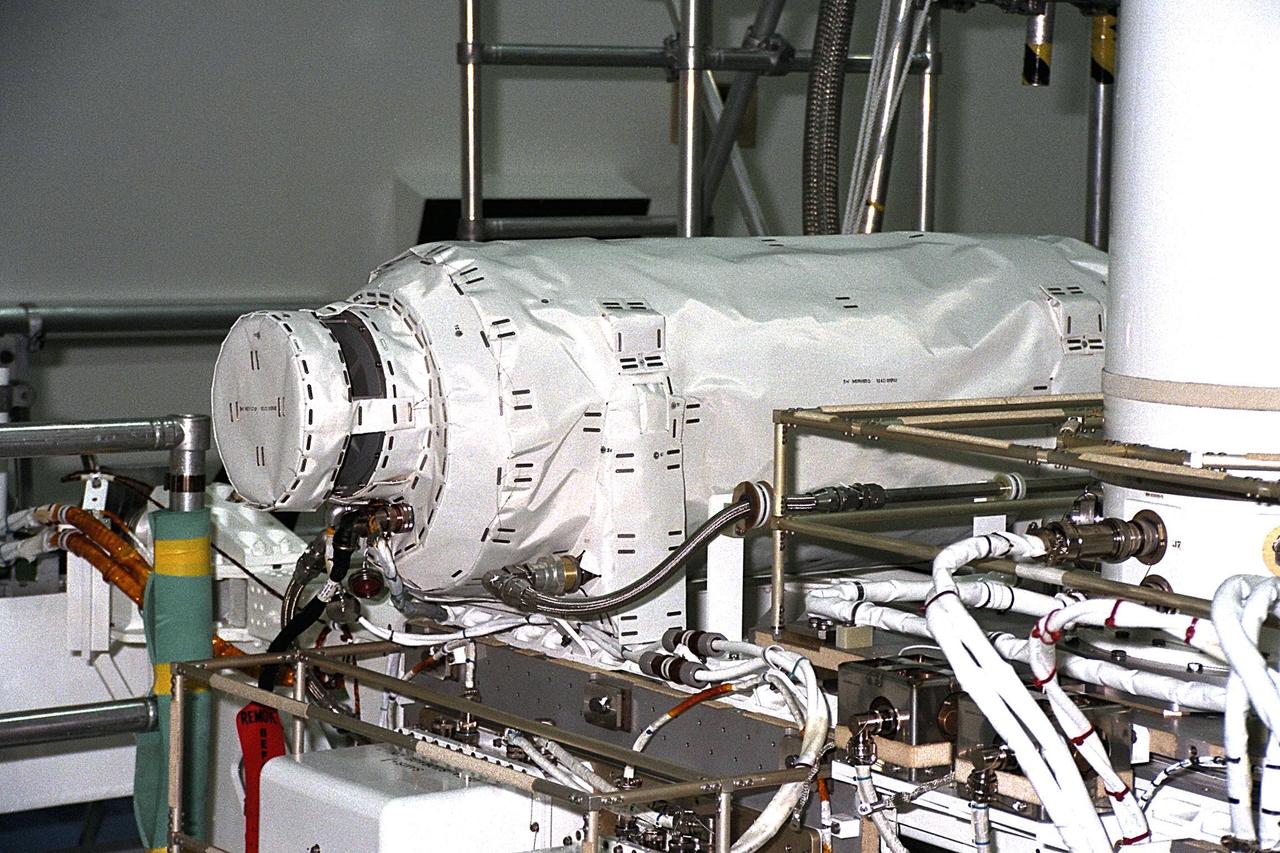
United States Microgravity Payload-4 (USMP-4) experiments are prepared to be flown on Space Shuttle mission STS-87 in the Space Station Processing Facility at Kennedy Space Center (KSC). This horizontal tube is known as MEPHISTO, the French acronym for a cooperative American-French investigation of the fundamentals of crystal growth. This experiment, designed for the study of solidification (or freezing) during the growth cycle of liquid materials used for semiconductor crystals, aims to aid in the development of techniques for growing higher quality crystals on Earth. All STS-87 experiments are scheduled for launch on Nov. 19 from KSC
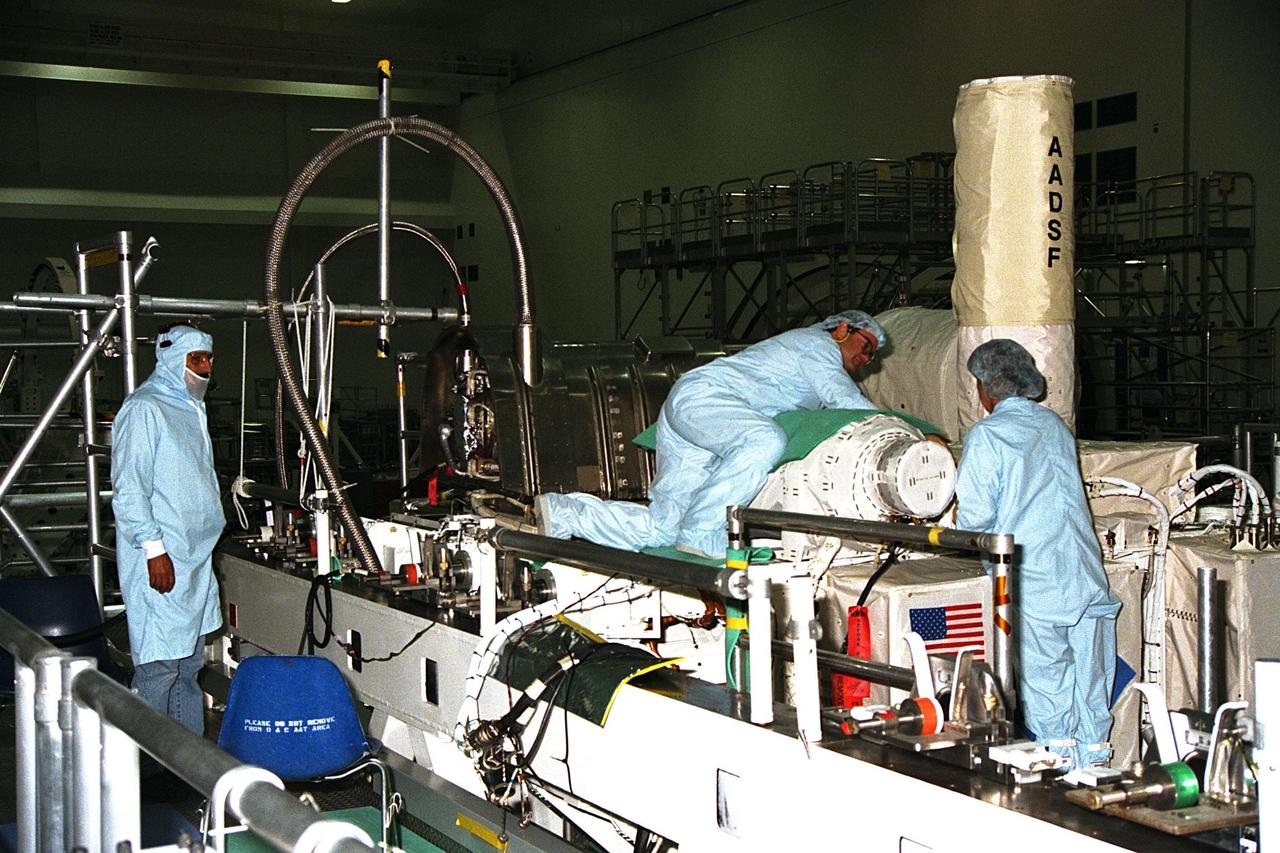
Technicians are monitoring experiments on the United States Microgravity Payload-4 (USMP-4) in preparation for its scheduled launch aboard STS-87 on Nov. 19 from Kennedy Space Center (KSC). USMP-4 experiments are prepared in the Space Station Processing Facility at KSC. The large white vertical cylinder at the right of the photo is the Advanced Automated Directional Solidification Furnace (AADSF ), which is a sophisticated materials science facility used for studying a common method of processing semiconductor crystals called directional solidification. The technician in the middle of the photo is leaning over MEPHISTO, a cooperative American-French investigation of the fundamentals of crystal growth
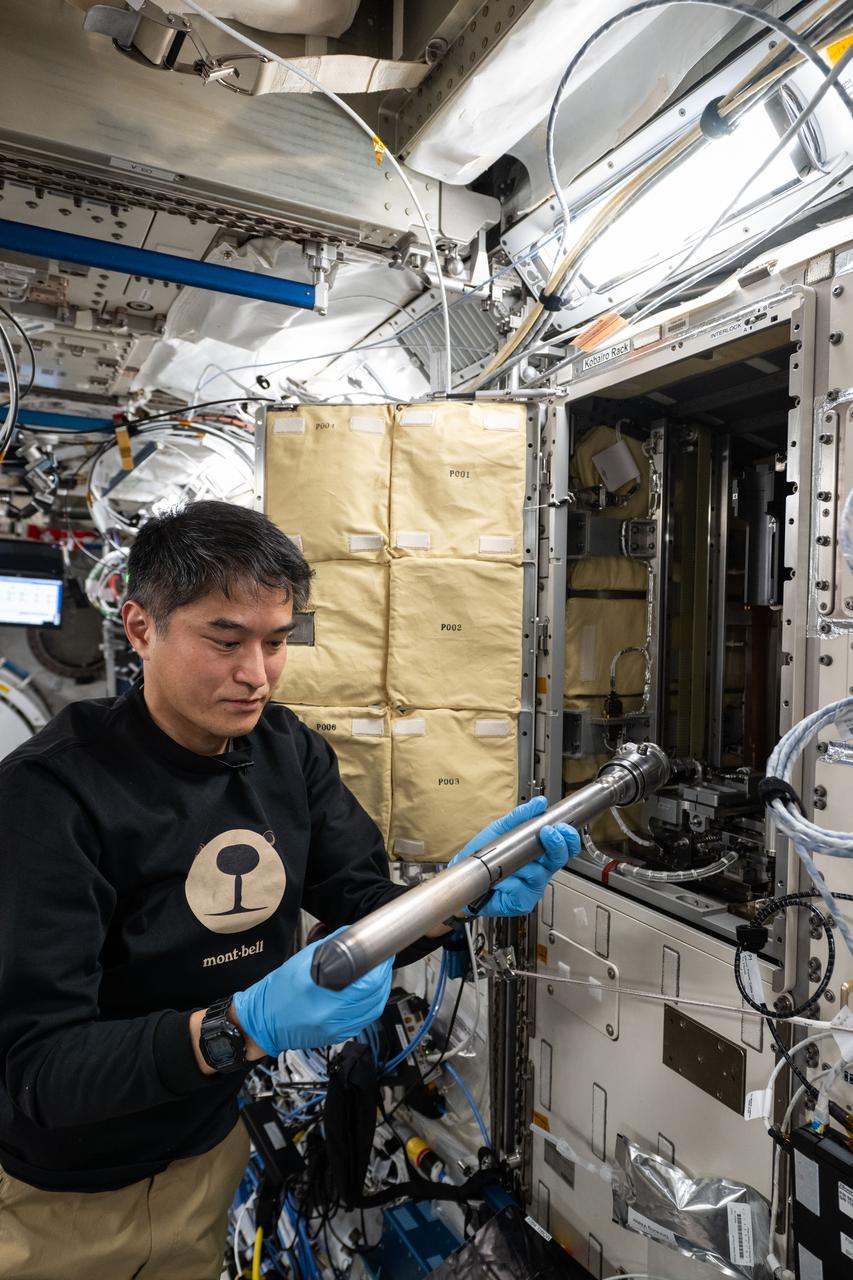
iss073e0383926 (July 4, 2025) --- JAXA (Japan Aerospace Exploration Agency) astronaut and Expedition 73 Commander Takuya Onishi removes experiment hardware and sample cartridges from inside the Kibo laboratory module's Gradient Heating Furnace (GHF). The GHF is a research facility and a vacuum furnace that can safely heat samples up to a maximum temperature of 1,600 degrees Celsius and is used for the production of high quality crystals in new semiconductor materials.
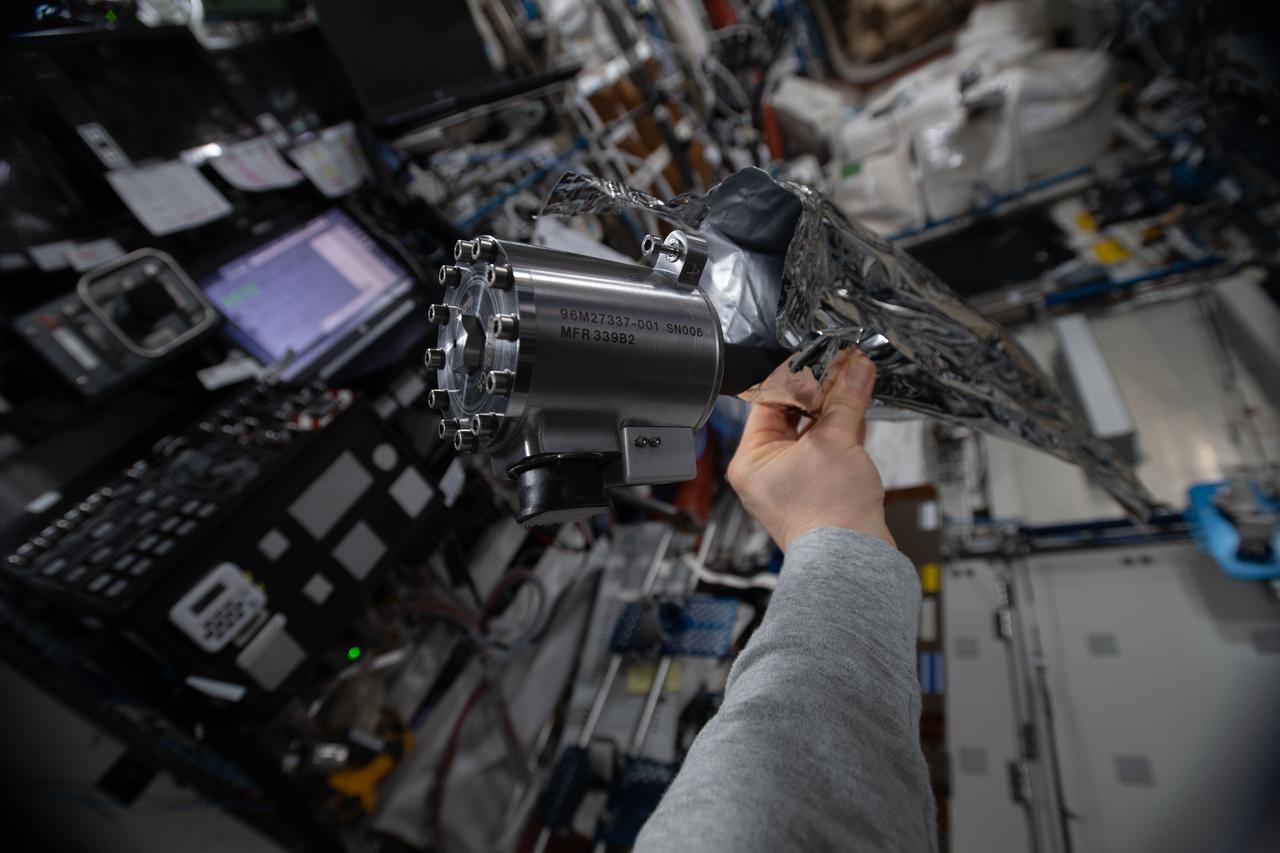
iss061e092274 (12/18/2019) --- A view of the Materials Science Laboratory (MSL) Sample Cartridge Assembly (SCA) in the Destiny module aboard the International Space Station (ISS). The Materials Science Laboratory (MSL) is used for basic materials research in the microgravity environment of the International Space Station (ISS). The MSL can accommodate and support diverse Experiment Modules. In this way many material types, such as metals, alloys, polymers, semiconductors, ceramics, crystals, and glasses, can be studied to discover new applications for existing materials and new or improved materials.
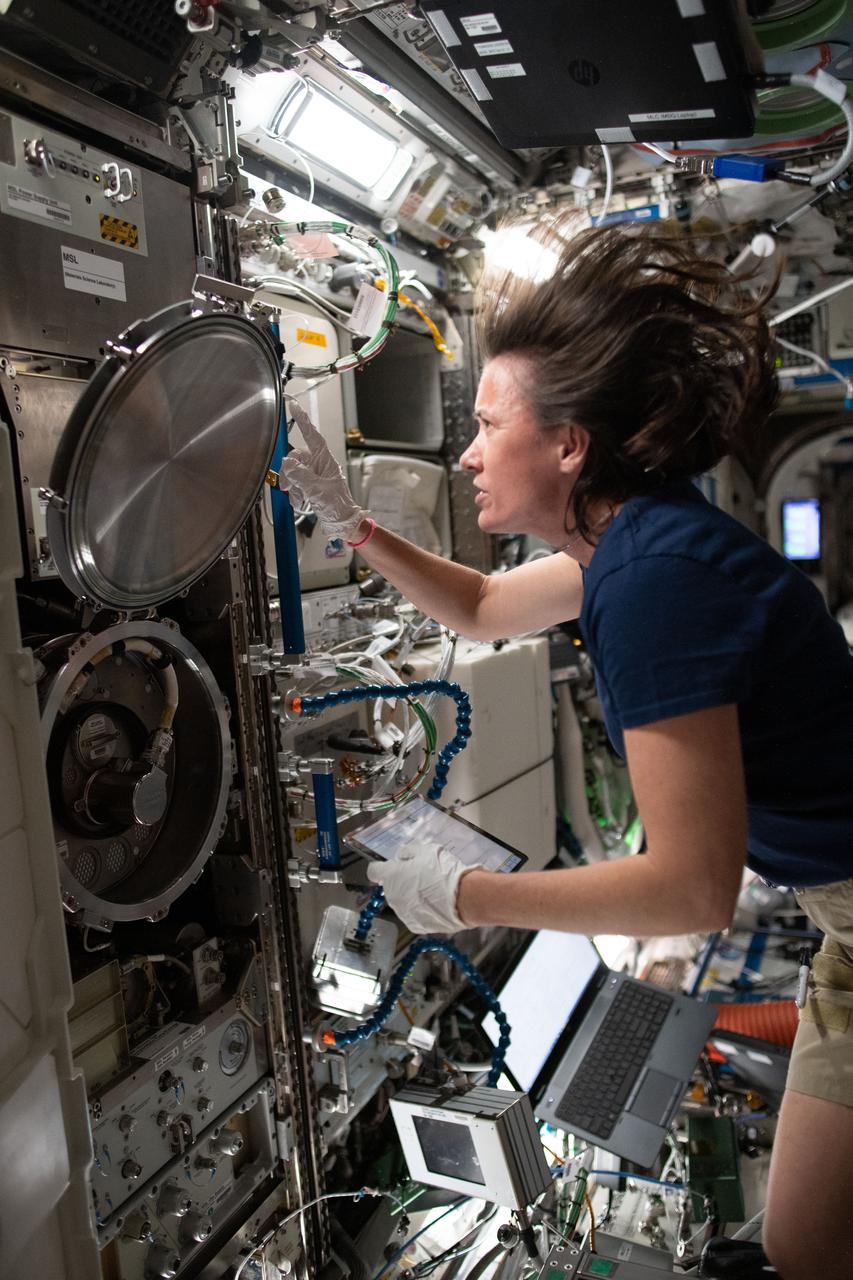
iss065e081297 (May 28, 2021) --- NASA astronaut and Expedition 65 Flight Engineer Megan McArthur swaps sample cartridges inside the Materials Science Laboratory (MSL) rack. The MSL enables observations of microgravity's impact on a variety metals, alloys, polymers, semiconductors, ceramics, crystals, and glasses, to discover new applications for existing materials and new or improved materials.
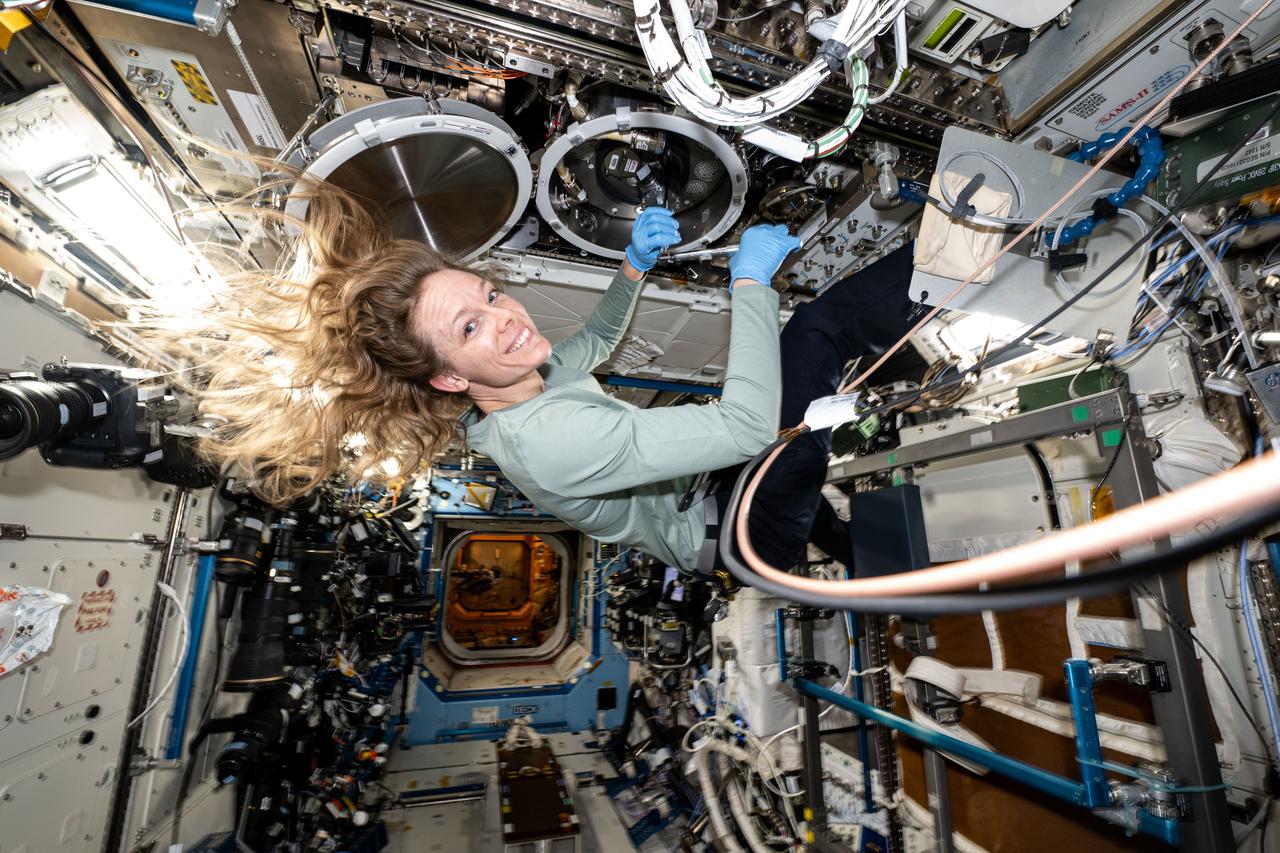
iss073e0071487 (May 15, 2025) --- NASA astronaut and Expedition 73 Flight Engineer Nichole Ayers swaps sample cartridges inside the Material Science Laboratory (MSL) that supports high temperature space physics research using furnaces aboard the International Space Station's Destiny laboratory module. The properties of many types of materials such as metals, alloys, polymers, semiconductors, ceramics, crystals, and glasses, can be studied in the MSL to discover new applications for existing materials and new or improved materials.
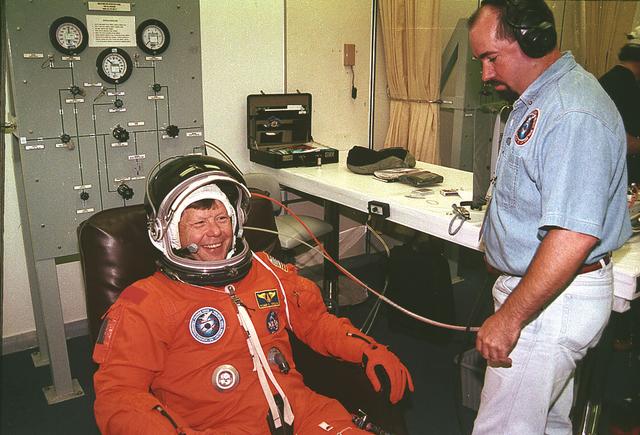
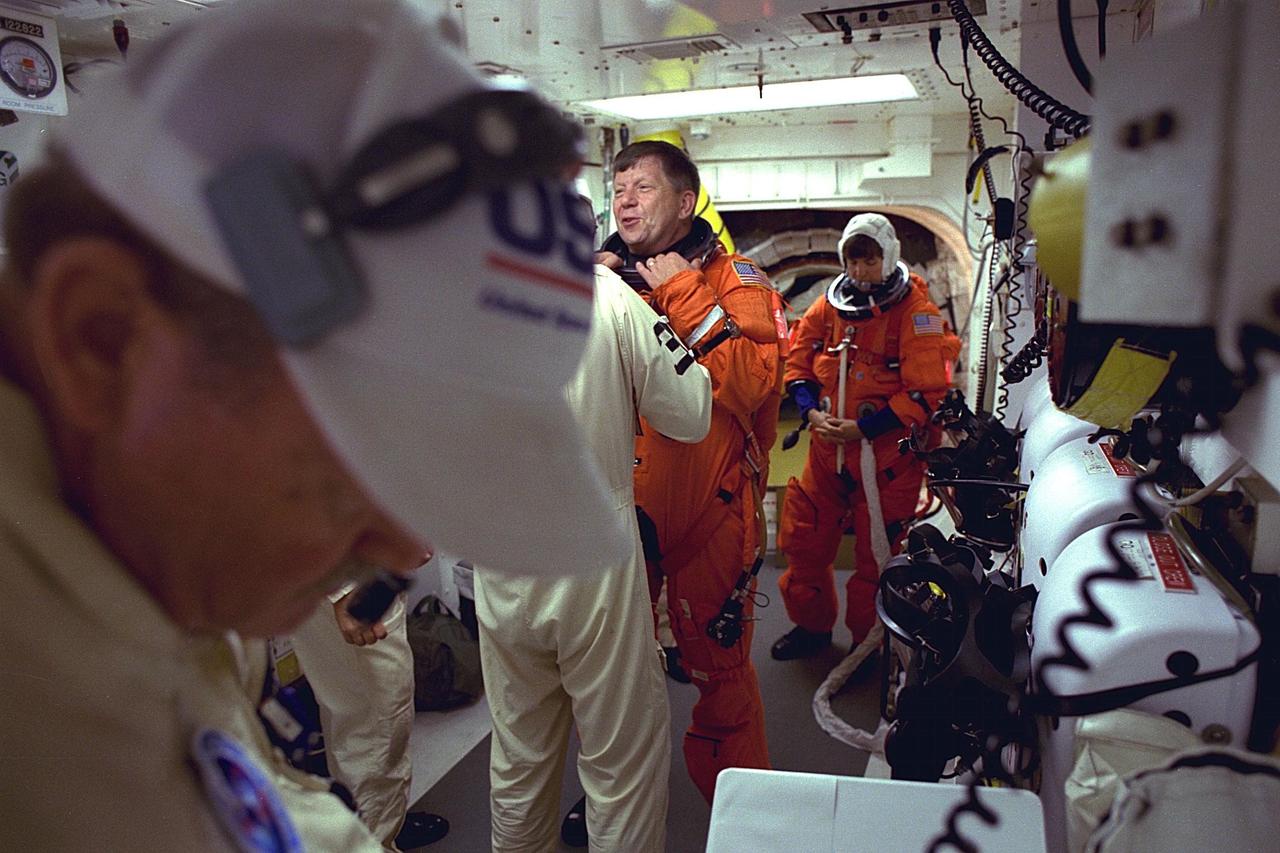
STS-94 Payload Specialist Roger K. Crouch is helped into his launch/entry suit by a suit technician in the Operations and Checkout (OC) building after the suit has been given a pressure test. He is the Chief Scientist of the NASA Microgravity Space and Applications Division. He also has served as a Program Scientist for previous missions and is an expert in semiconductor crystal growth. Crouch and six other crewmembers prepare to depart the OC and head for Launch Pad 39a, where the Space Shuttle Columbia will lift off.
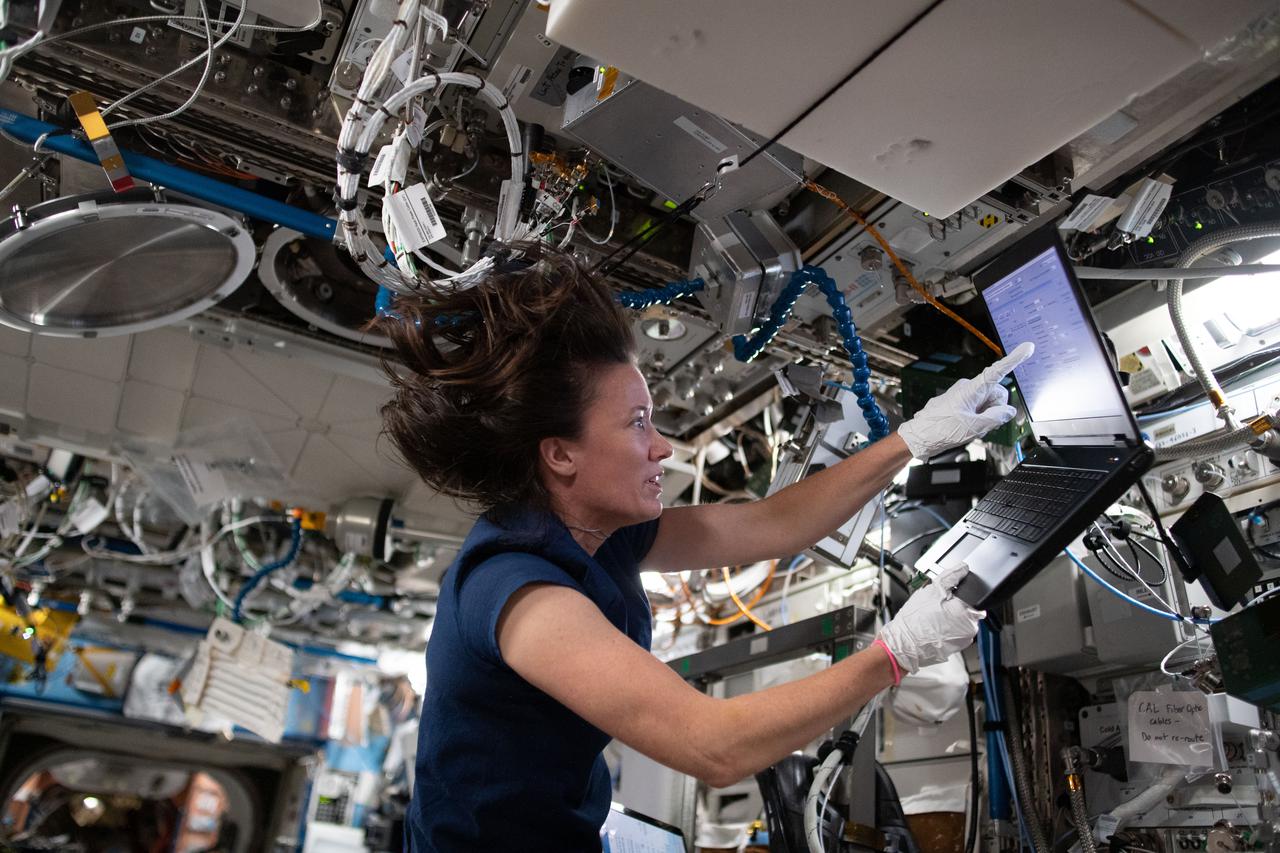
iss065e081296 (May 28, 2021) --- NASA astronaut and Expedition 65 Flight Engineer Megan McArthur reviews procedures to swap sample cartridges inside the Materials Science Laboratory (MSL). The MSL enables research into microgravity's affects on materials such as metals, alloys, polymers, semiconductors, ceramics, crystals, and glasses. Observations may reveal new applications for existing materials and new or improved materials.
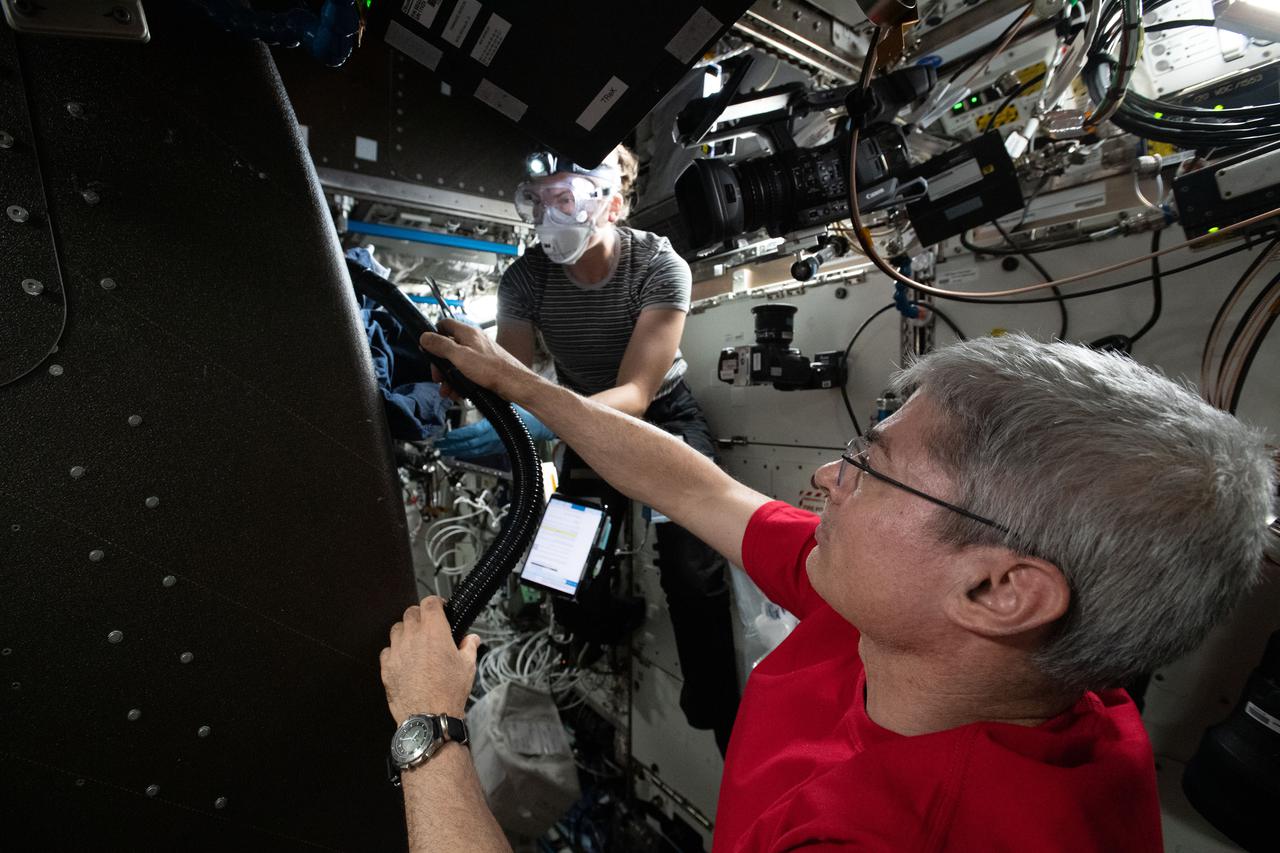
iss066e086431 (Dec. 4, 2021) --- NASA astronauts and Expedition 66 Flight Engineers Mark Vande Hei and Kayla Barron inspect cables inside the Materials Science Research Rack. The space physics device enables the observation of many material types, such as metals, alloys, polymers, semiconductors, ceramics, crystals, and glasses, to study and discover new applications for existing materials and new or improved materials.
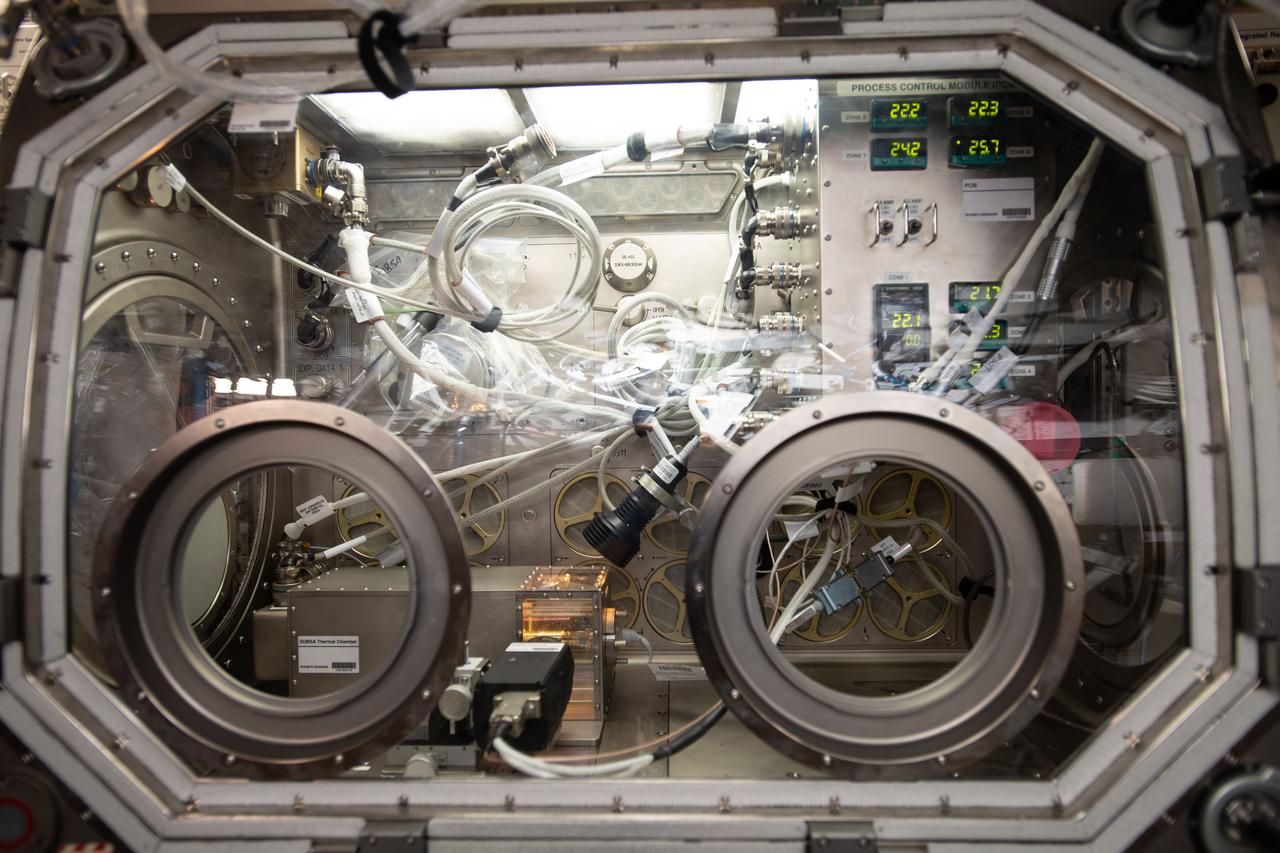
iss058e028142 (3/7/2019) --- View of the Microgravity Sciences Glovebox (MSG) during configuration of the SUBSA (Solidification Using Baffles in Sealed Ampoules) hardware in the MSG Work Volume in the Destiny Laboratory aboard the International Space Staion(ISS). SUBSA is a high-temperature furnace that can be used to study how microgravity affects the synthesis of semiconductor and scintillator crystals.
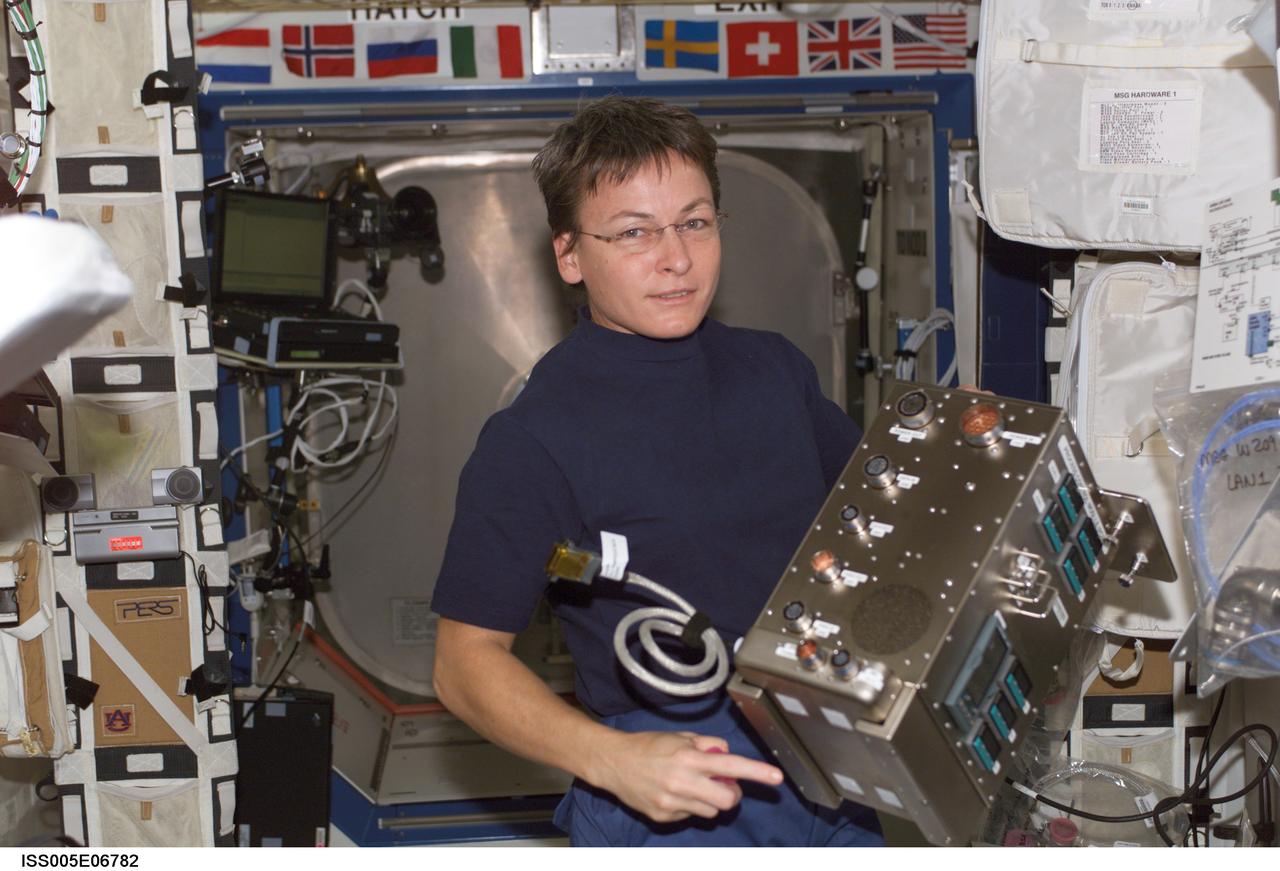
iss005e06782 (7/5/2002) --- NASA astronaut Peggy Whitson installs a Solidification Using a Baffle in Sealed Ampoules (SUBSA) Process Control Module in the Microgravity Science Glovebox (MSG). The SUBSA objective is to advance our understanding of the processes involved in semiconductor crystal growth. It offers a gradient freeze furnace for materials science investigations that can reach 850°C. Samples are contained in transparent quartz or ceramic ampoules with high definition video imaging available in real-time along with remote commanding of thermal control parameters.
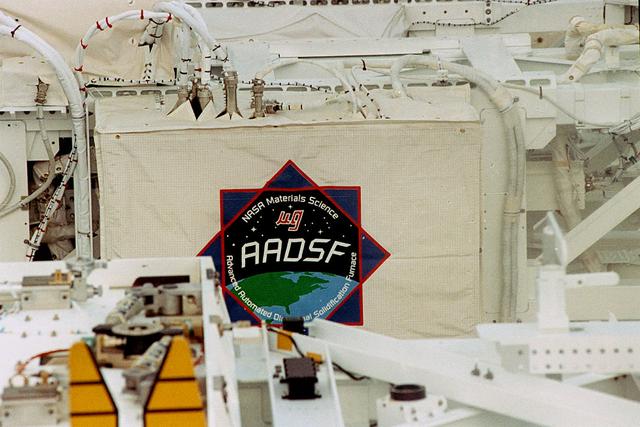
The purpose of the experiments for the Advanced Automated Directional Solidification Furnace (AADSF) is to determine how gravity-driven convection affects the composition and properties of alloys (mixtures of two or more materials, usually metal). During the USMP-4 mission, the AADSF will solidify crystals of lead tin telluride and mercury cadmium telluride, alloys of compound semiconductor materials used to make infrared detectors and lasers, as experiment samples. Although these materials are used for the same type application their properties and compositional uniformity are affected differently during the solidification process.
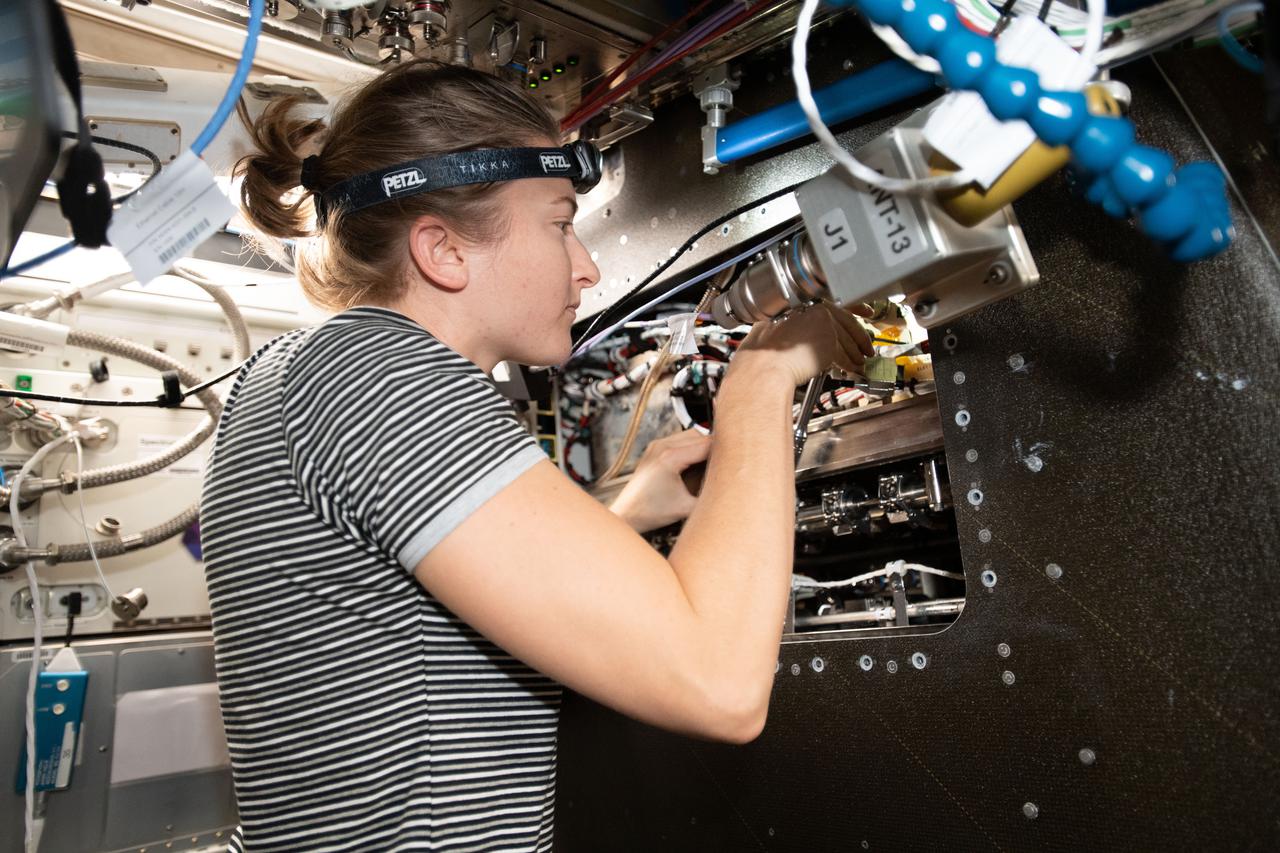
iss066e086417 (Dec. 4, 2021) --- NASA astronaut and Expedition 66 Flight Engineer Kayla Barron inspects cables inside the Materials Science Research Rack. The space physics research device enables the observation of many material types, such as metals, alloys, polymers, semiconductors, ceramics, crystals, and glasses, to study and discover new applications for existing materials and new or improved materials.

iss074e0608854 (May 27, 2026) --- NASA astronaut and Expedition 74 flight engineer Chris Williams shows off the Destiny laboratory module’s Microgravity Science Glovebox aboard the International Space Station. WIlliams was supporting semiconductor crystal research to help advance the commercial space economy and promoting Earth-based industries. Credit: NASA/Chris Williams
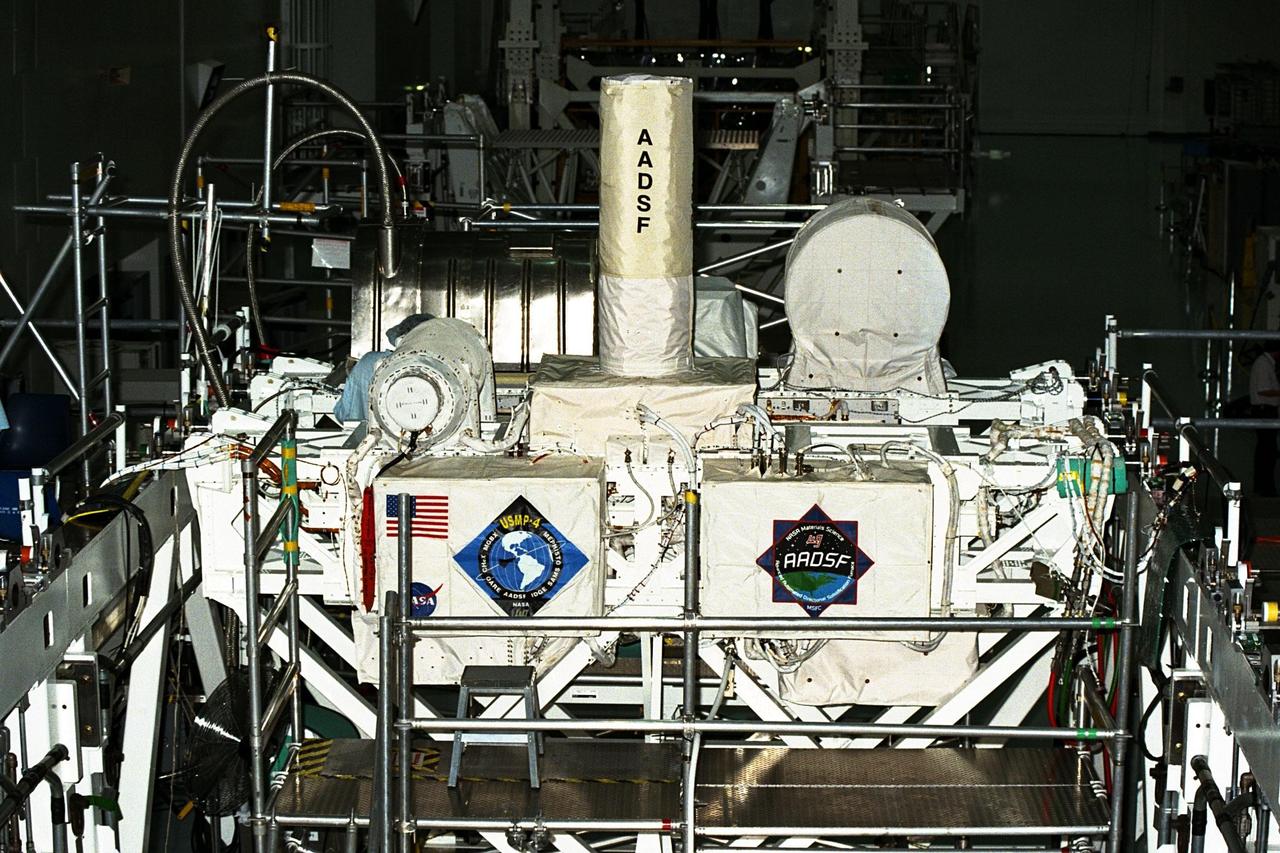
United States Microgravity Payload-4 (USMP-4) experiments are prepared to be flown on Space Shuttle mission STS-87 in the Space Station Processing Facility at Kennedy Space Center (KSC). Seen in the foreground at left is the USMP-4 logo with the acronyms of its experiments. Above the American flag at left is the MEPHISTO experiment, a cooperative American and French investigation of the fundamentals of crystal growth. The large white vertical cylinder in the center of the photo is the Advanced Automated Directional Solidification Furnace (AADSF), which is a sophisticated materials science facility used for studying a common method of processing semiconductor crystals called directional solidification. The white horizontal tube to the right is the Isothermal Dendritic Growth Experiment (IDGE), which will be used to study the dendritic solidification of molten materials in the microgravity environment. All USMP-4 experiments are scheduled for launch aboard STS-87 on Nov. 19 from KSC
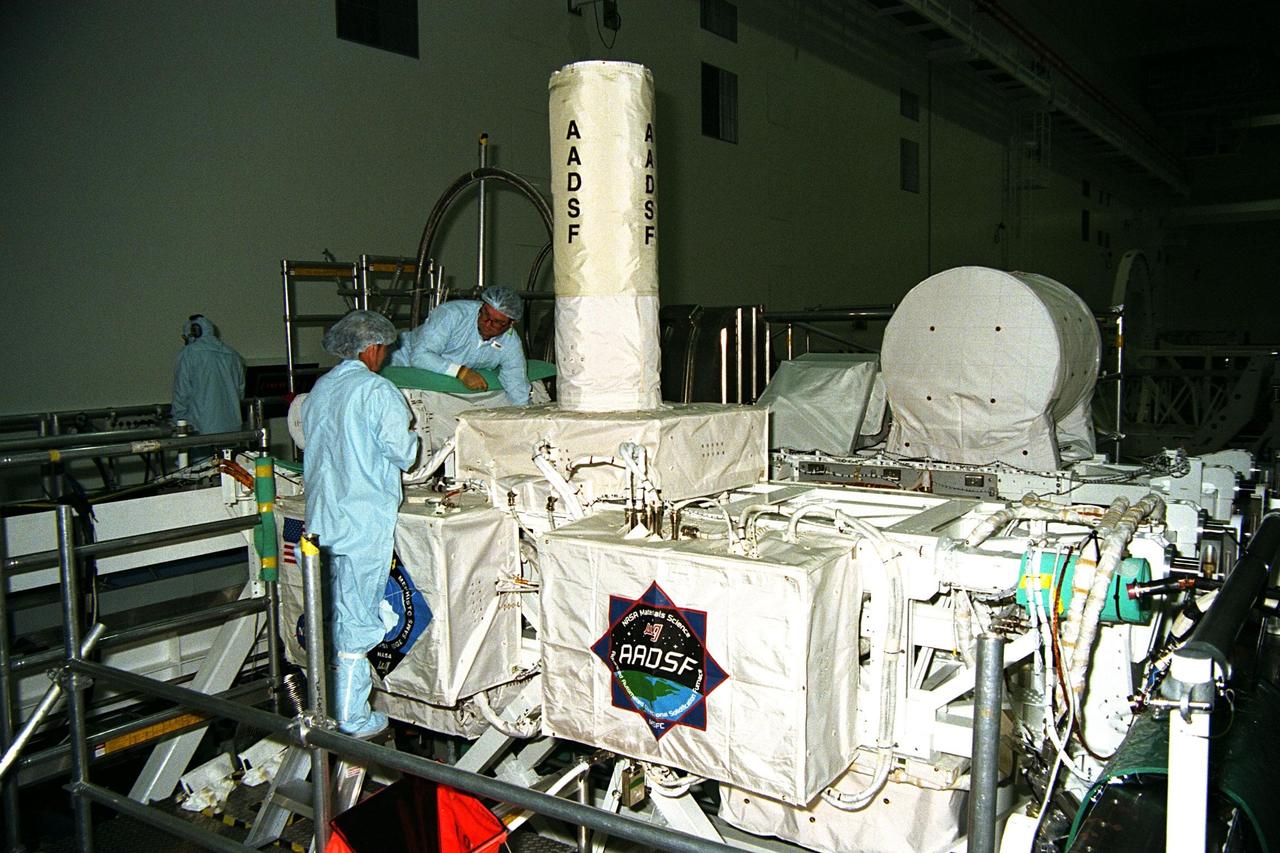
Technicians are monitoring experiments on the United States Microgravity Payload-4 (USMP-4) in preparation for its scheduled launch aboard STS-87 on Nov. 19 from Kennedy Space Center (KSC). USMP-4 experiments are prepared in the Space Station Processing Facility at KSC. The large white vertical cylinder in the center of the photo is the Advanced Automated Directional Solidification Furnace (AADSF), which is a sophisticated materials science facility used for studying a common method of processing semiconductor crystals called directional solidification. The white horizontal tube to the right is the Isothermal Dendritic Growth Experiment (IDGE), which will be used to study the dendritic solidification of molten materials in the microgravity environment
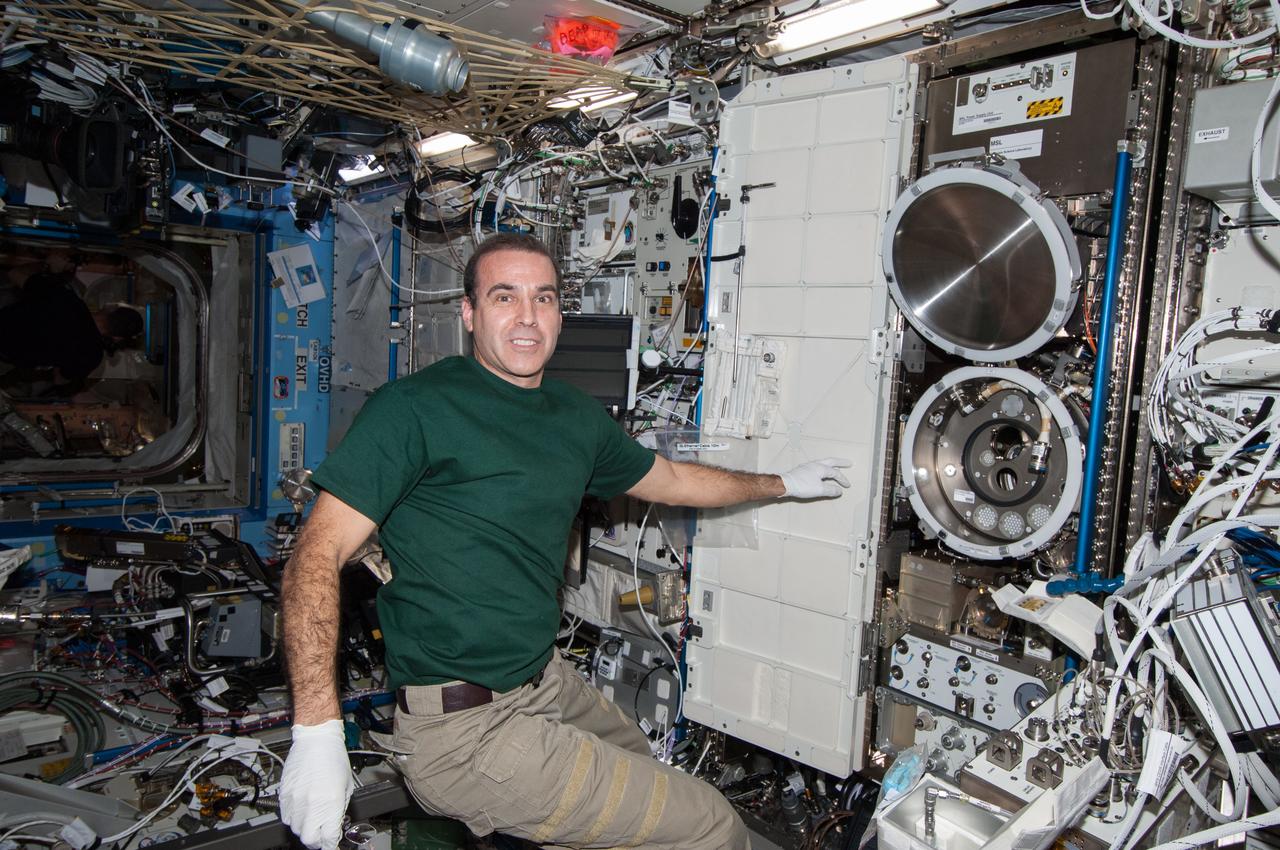
ss038e008298 (11/26/2013) --- A view of NASA astronaut Rick Mastracchio, during the Material Science Laboratory (MSL) Solidification and Quench Furnace (SQF) Sample Cartridge Exchange aboard the International Space Station (ISS). The Materials Science Laboratory (MSL) is used for basic materials research in the microgravity environment of the ISS. The MSL can accommodate and support diverse Experiment Modules. In this way many material types, such as metals, alloys, polymers, semiconductors, ceramics, crystals, and glasses, can be studied to discover new applications for existing materials and new or improved materials.
STS-94 Payload Specialist Roger K. Crouch prepares to enter the Space Shuttle Columbia at Launch Pad 39A in preparation for launch. He is the Chief Scientist of the NASA Microgravity Space and Applications Division. He also has served as a Program Scientist for previous Spacelab microgravity missions and is an expert in semiconductor crystal growth. Since Crouch has more than 25 years of experience as a materials scientist, he will be concentrating on the five physics of materials processing experiments in the Middeck Glovebox Facility on the Blue shift. He will also share the workload with Thomas by monitoring the materials furnace experiments during this time. Crouch and six fellow crew members will lift off during a launch window that opens at 1:50 p.m. EDT, July 1. The launch window will open 47 minutes early to improve the opportunity to lift off before Florida summer rain showers reach the space center
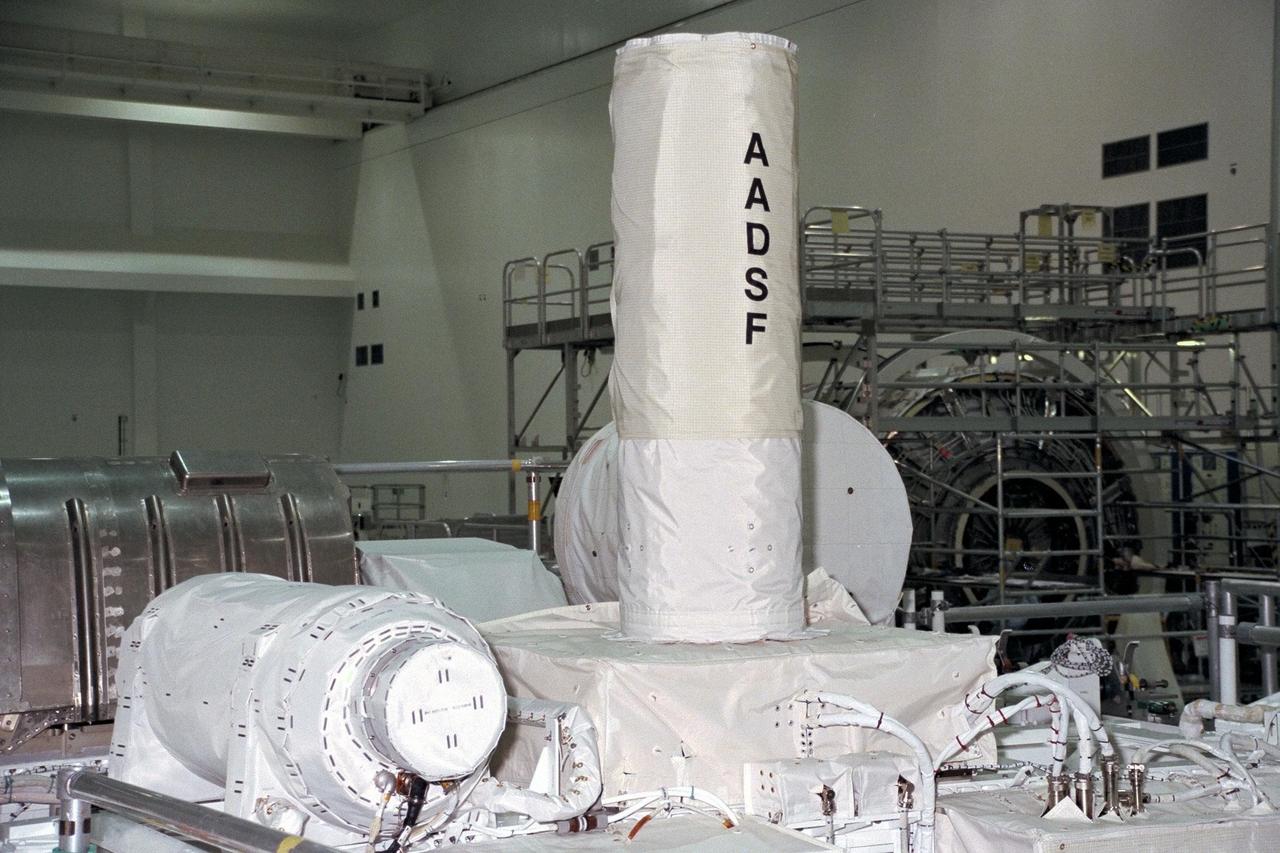
United States Microgravity Payload-4 (USMP-4) experiments are prepared to be flown on Space Shuttle mission STS-87 in the Space Station Processing Facility at Kennedy Space Center (KSC). The vertical tube in the center of the photo is the Advanced Automated Directional Solidification Furnace (AADSF), which will be used by researchers to study the solidification of semiconductor materials in microgravity. Scientists will be able to better understand how microgravity influences the solidification process of these materials and develop better methods for controlling that process during future Space flights and Earth-based production. To its left is MEPHISTO, the French acronym for a cooperative American-French investigation of the fundamentals of crystal growth. All STS-87 experiments are scheduled for launch on Nov. 19 from KSC
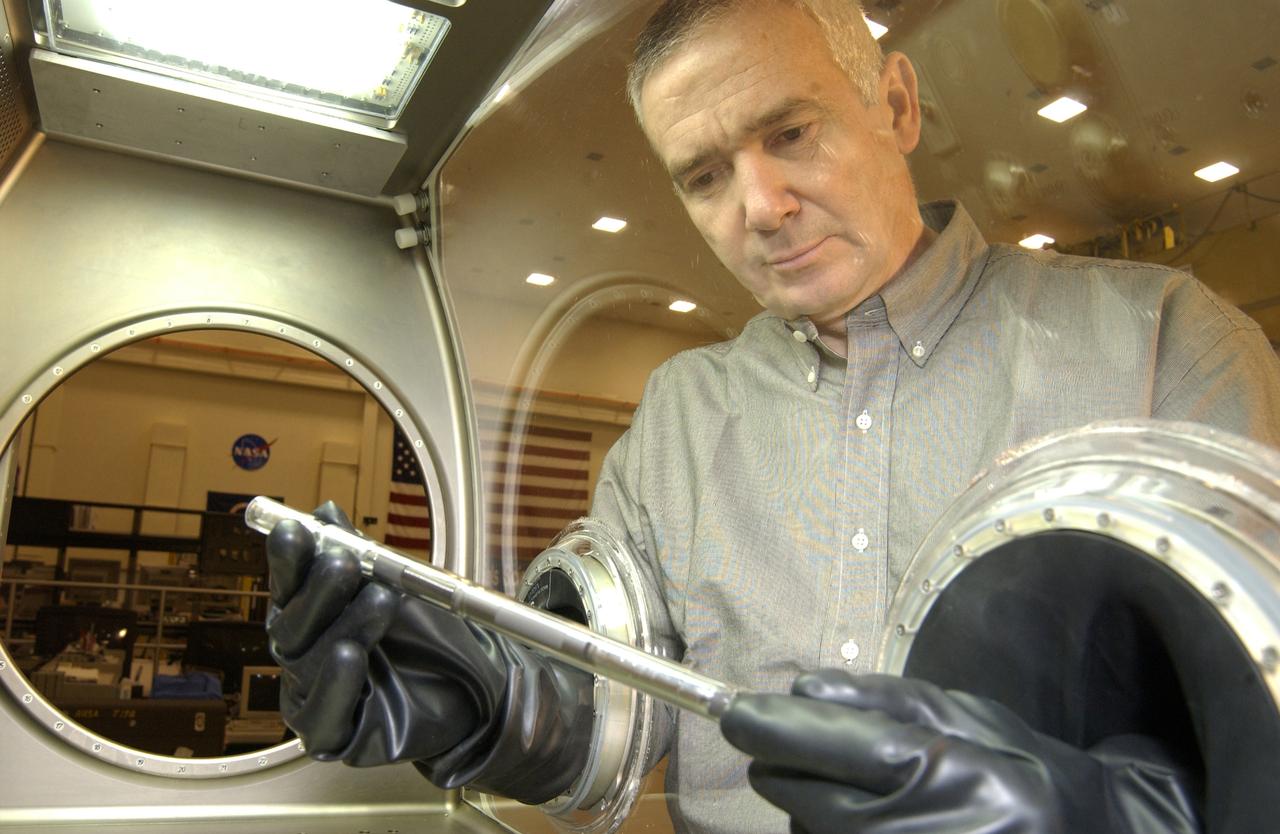
One of the first materials science experiments on the International Space Station -- the Solidification Using a Baffle in Sealed Ampoules (SUBSA) -- will be conducted during Expedition Five inside the Microgravity Science Glovebox. The glovebox is the first dedicated facility delivered to the Station for microgravity physical science research, and this experiment will be the first one operated inside the glovebox. The glovebox's sealed work environment makes it an ideal place for the furnace that will be used to melt semiconductor crystals. Astronauts can change out samples and manipulate the experiment by inserting their hands into a pair of gloves that reach inside the sealed box. Dr. Aleksandar Ostrogorsky, a materials scientist from the Rensselaer Polytechnic Institute, Troy, N.Y., and the principal investigator for the SUBSA experiment, uses the gloves to examine an ampoule like the ones used for his experiment inside the glovebox's work area. The Microgravity Science Glovebox and the SUBSA experiment are managed by NASA's Marshall Space Flight Center in Huntsville, Ala.
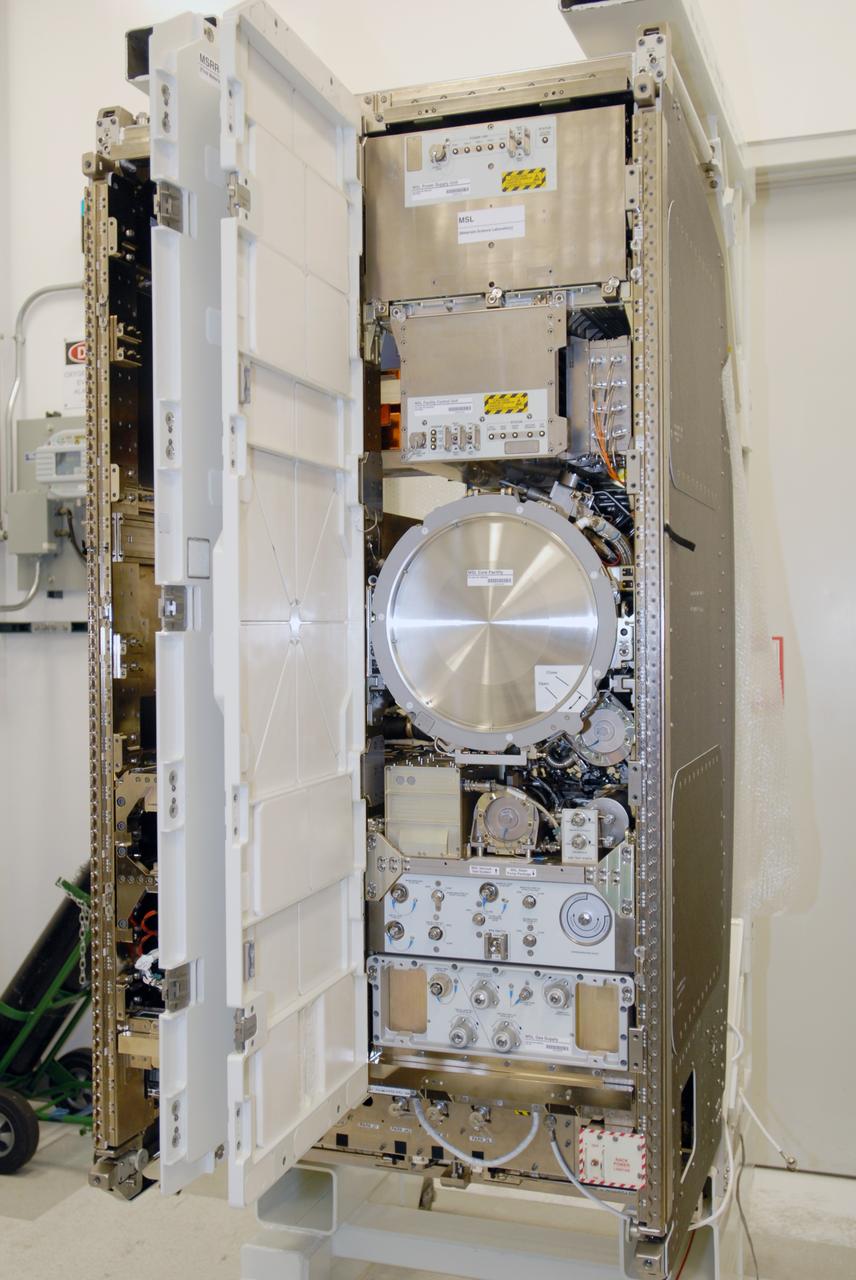
CAPE CANAVERAL, Fla. – This close-up shows some of the components of the Materials Science Research Rack-1, or MSRR-1, which arrived at NASA's Kennedy Space Center in Florida for final flight preparations. The size of a large refrigerator, MSRR-1 is 6 feet high, 3.5 feet wide and 40 inches deep and weighs about 1 ton. MSRR-1 is the payload for the STS-128 mission targeted to launch in August. The rack will be installed in the Leonardo Multi-Purpose Logistics Module for transport to the International Space Station . After arriving at the station, the rack will be housed in the U.S. Destiny laboratory. MSRR-1 will allow for study of a variety of materials including metals, ceramics, semiconductor crystals and glasses onboard the orbiting laboratory. Photo credit: NASA/Jim Grossmann
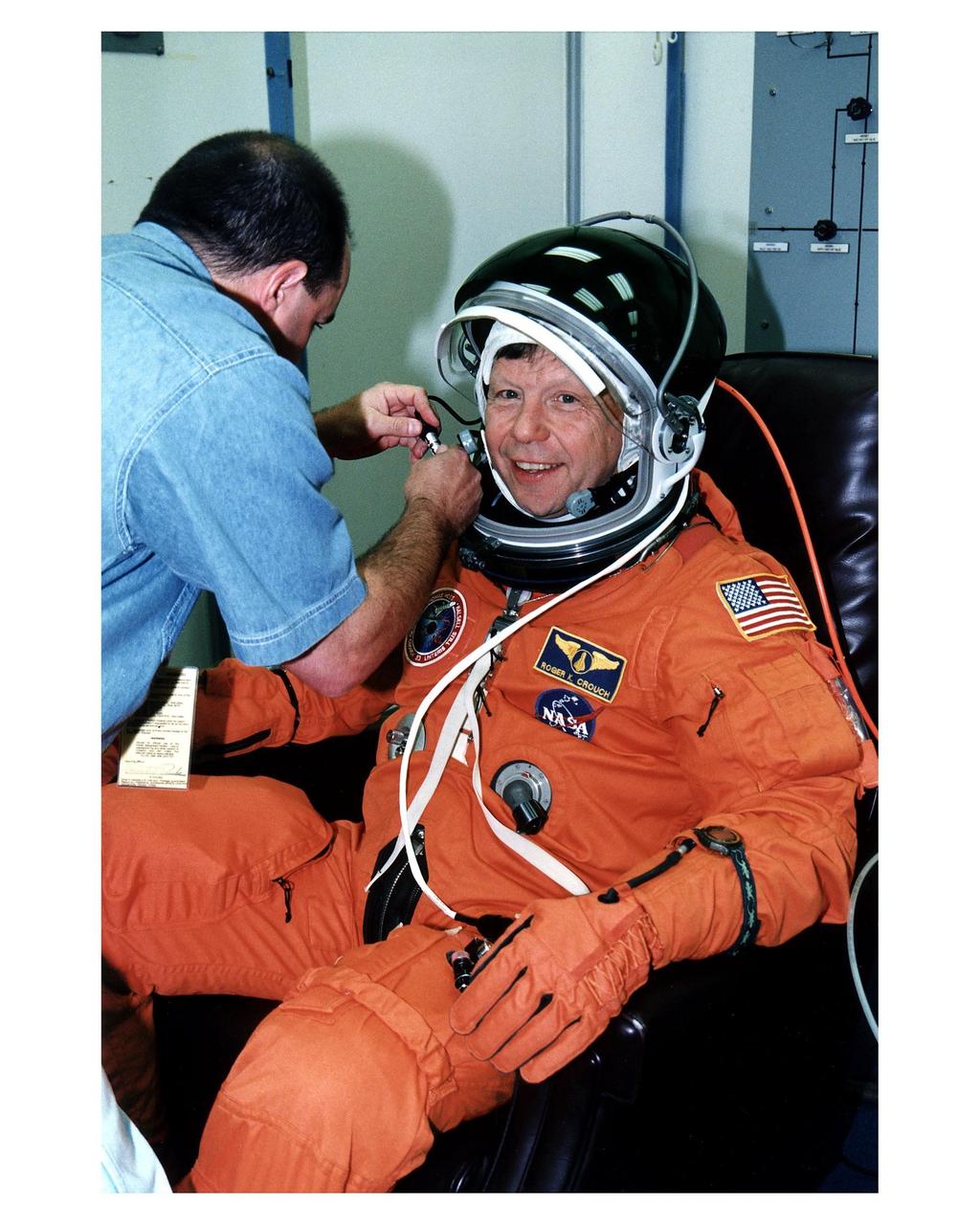
STS-83 Payload Specialist Roger K. Crouch is assisted into his launch/entry suit in the Operations and Checkout (O&C) Building. He is the Chief Scientist of the NASA Microgravity Space and Applications Division. He also has served as a Program Scientist for previous Spacelab microgravity missions and is an expert in semiconductor crystal growth. Since Crouch has more than 25 years of experience as a materials scientist, he will be concentrating on the five physics of materials processing experiments in the Middeck Glovebox Facility on the Blue shift. He will also share the workload with Thomas by monitoring the materials furnace experiments during this time. Crouch and six fellow crew members will shortly depart the O&C and head for Launch Pad 39A, where the Space Shuttle Columbia will lift off during a launch window that opens at 2:00 p.m. EST, April 4
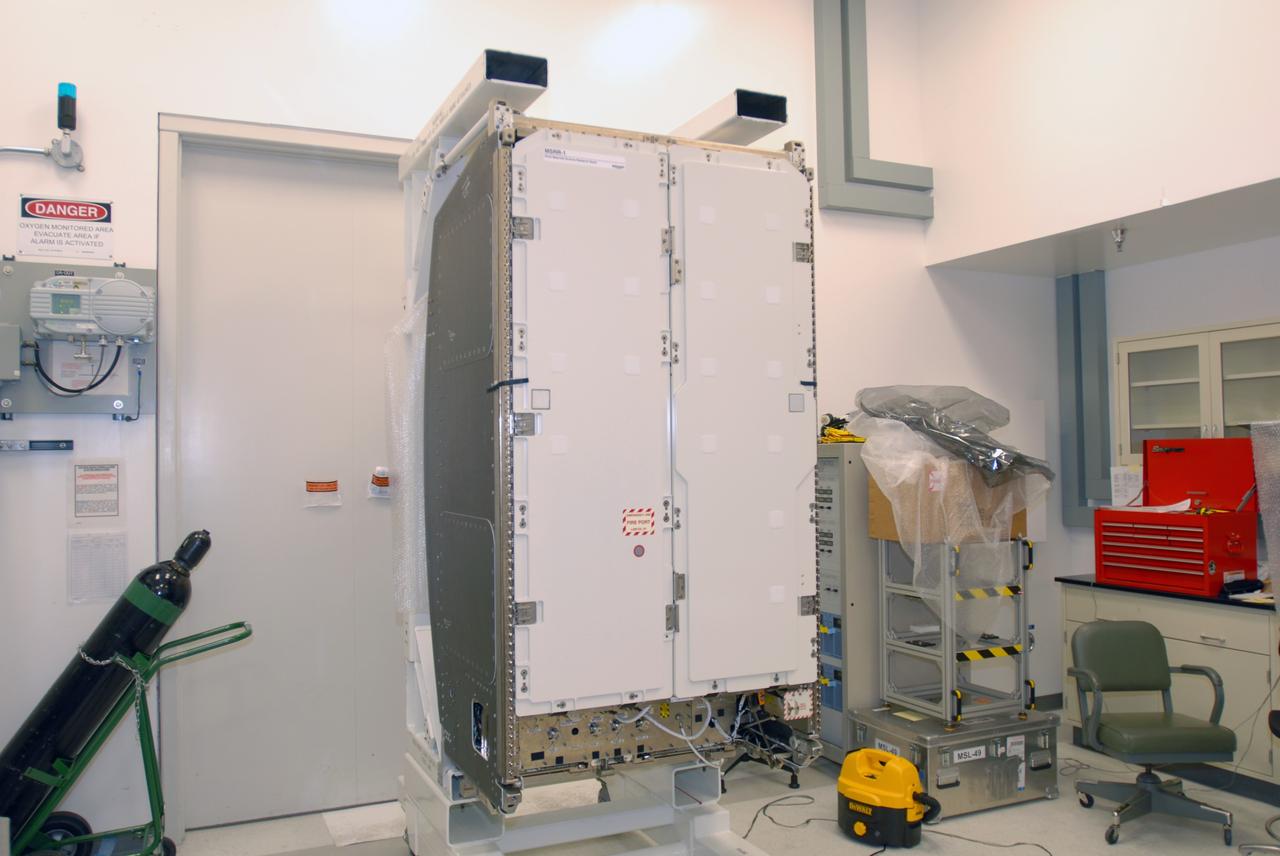
CAPE CANAVERAL, Fla. – The Materials Science Research Rack-1, or MSRR-1, arrived at NASA's Kennedy Space Center in Florida for final flight preparations. The size of a large refrigerator, MSRR-1 is 6 feet high, 3.5 feet wide and 40 inches deep and weighs about 1 ton. MSRR-1 is the payload for the STS-128 mission targeted to launch in August. The rack will be installed in the Leonardo Multi-Purpose Logistics Module for transport to the International Space Station . After arriving at the station, the rack will be housed in the U.S. Destiny laboratory. MSRR-1 will allow for study of a variety of materials including metals, ceramics, semiconductor crystals and glasses onboard the orbiting laboratory. Photo credit: NASA/Jim Grossmann
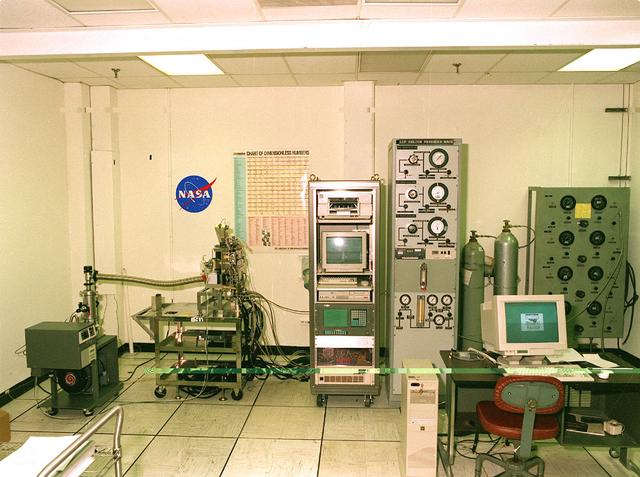
Large Isothermal Furnace (LIF) was flown on a mission in cooperation with the National Space Development Agency (NASDA) of Japan. LIF is a vacuum-heating furnace designed to heat large samples uniformly. The furnace consists of a sample container and heating element surrounded by a vacuum chamber. A crewmemeber will insert a sample cartridge into the furnace. The furnace will be activated and operations will be controlled automatically by a computer in response to an experiment number entered on the control panel. At the end of operations, helium will be discharged into the furnace, allowing cooling to start. Cooling will occur through the use of a water jacket while rapid cooling of samples can be accomplished through a controlled flow of helium. Data from experiments will help scientists better understand this important process which is vital to the production of high-quality semiconductor crystals.
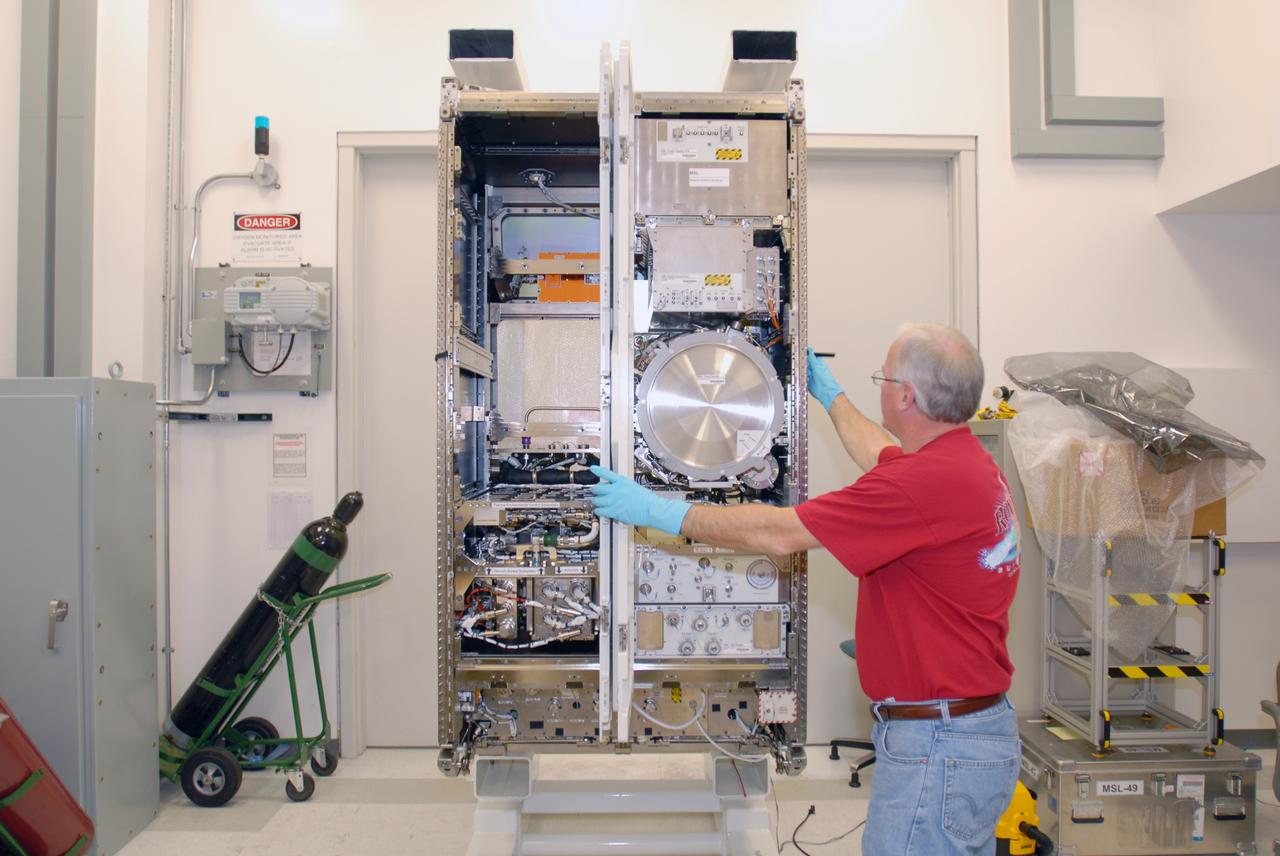
CAPE CANAVERAL, Fla. – At NASA's Kennedy Space Center in Florida, a technician checks out the Materials Science Research Rack-1, or MSRR-1, which will undergo final flight preparations. The size of a large refrigerator, MSRR-1 is 6 feet high, 3.5 feet wide and 40 inches deep and weighs about 1 ton. MSRR-1 is the payload for the STS-128 mission targeted to launch in August. The rack will be installed in the Leonardo Multi-Purpose Logistics Module for transport to the International Space Station . After arriving at the station, the rack will be housed in the U.S. Destiny laboratory. MSRR-1 will allow for study of a variety of materials including metals, ceramics, semiconductor crystals and glasses onboard the orbiting laboratory. Photo credit: NASA/Jim Grossmann
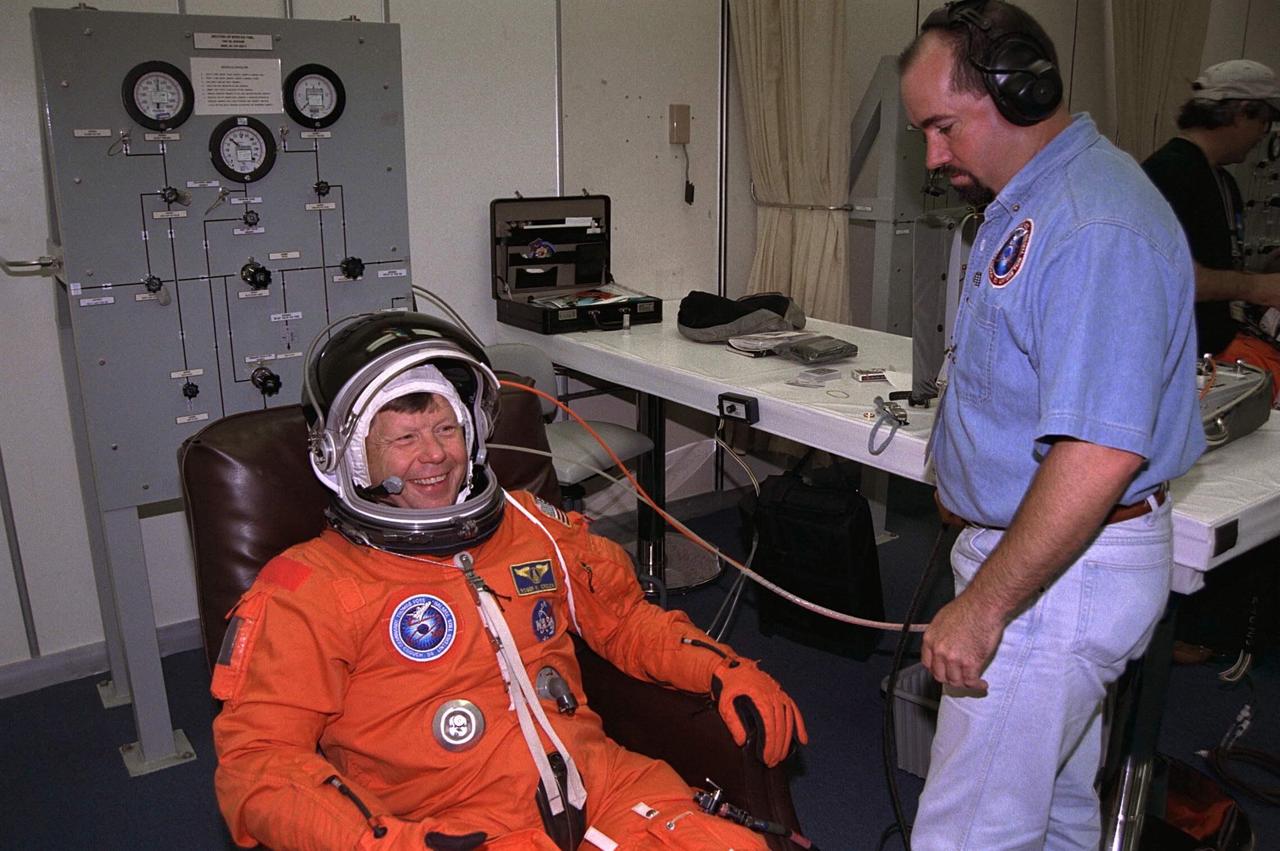
STS-94 Payload Specialist Roger K. Crouch is helped into his launch/entry suit by a suit technician in the Operations and Checkout (O&C) Building after the suit has been given a pressure test. He is the Chief Scientist of the NASA Microgravity Space and Applications Division. He also has served as a Program Scientist for previous Spacelab microgravity missions and is an expert in semiconductor crystal growth. Since Crouch has more than 25 years of experience as a materials scientist, he will be concentrating on the five physics of materials processing experiments in the Middeck Glovebox Facility on the Blue shift. He will also share the workload with Thomas by monitoring the materials furnace experiments during this time. Crouch and six fellow crew members will shortly depart the O&C and head for Launch Pad 39A, where the Space Shuttle Columbia will lift off during a launch window that opens at 1:50 p.m. EDT, July 1. The launch window was opened 47 minutes early to improve the opportunity to lift off before Florida summer rain showers reached the space center