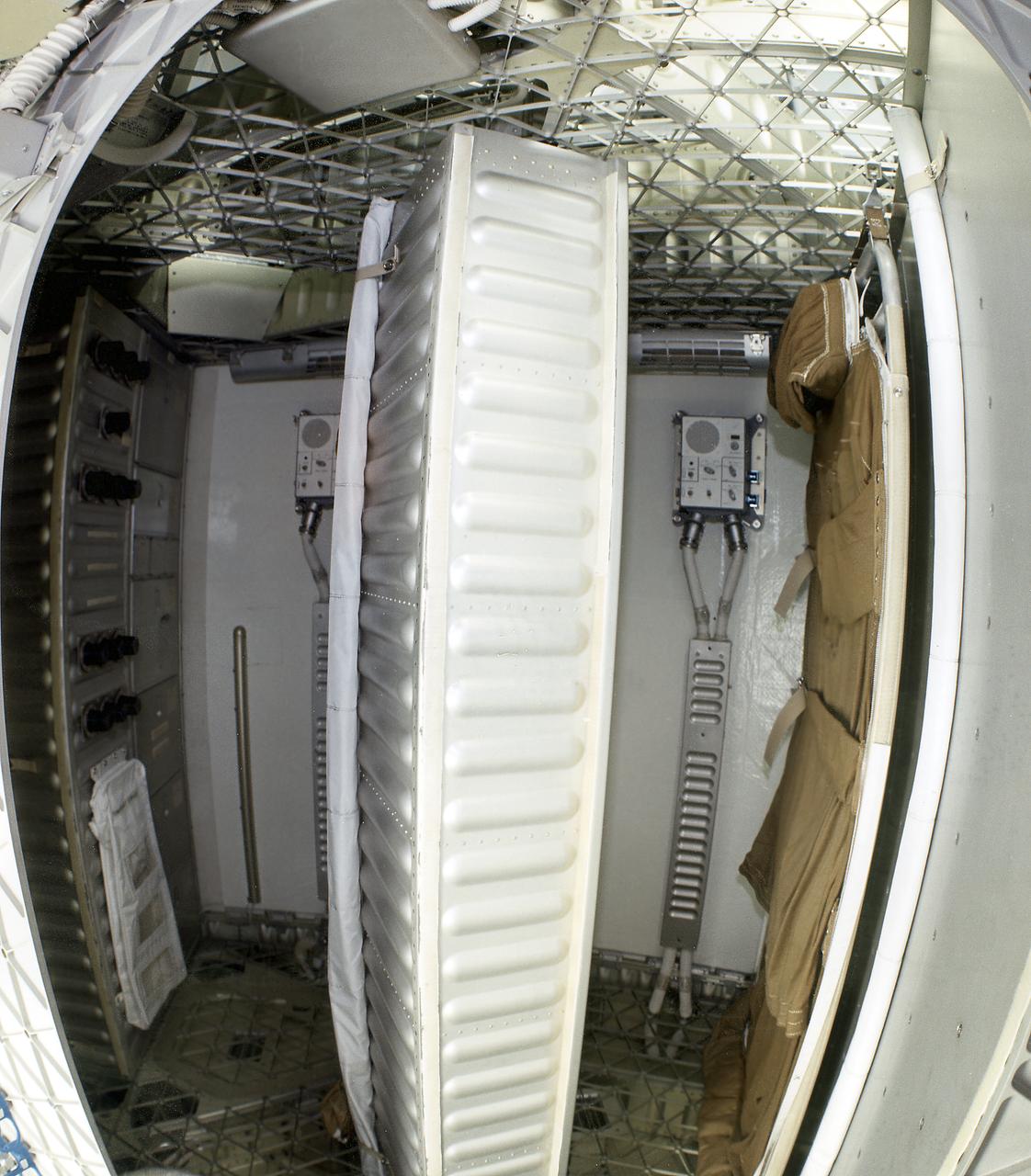
This wide-angle view is of the Orbital Workshop (OWS) sleep compartment, located in the lower level of the OWS. Each crewman was assigned a small space for sleeping and zipped themselves into sleeping bags stretched against the wall. Because of the absence of gravity, sleeping comfort was achieved in any position relative to the spacecraft; body support was not necessary. Sleeping could be accommodated quite comfortably in a bag that held the body at a given place in Skylab.
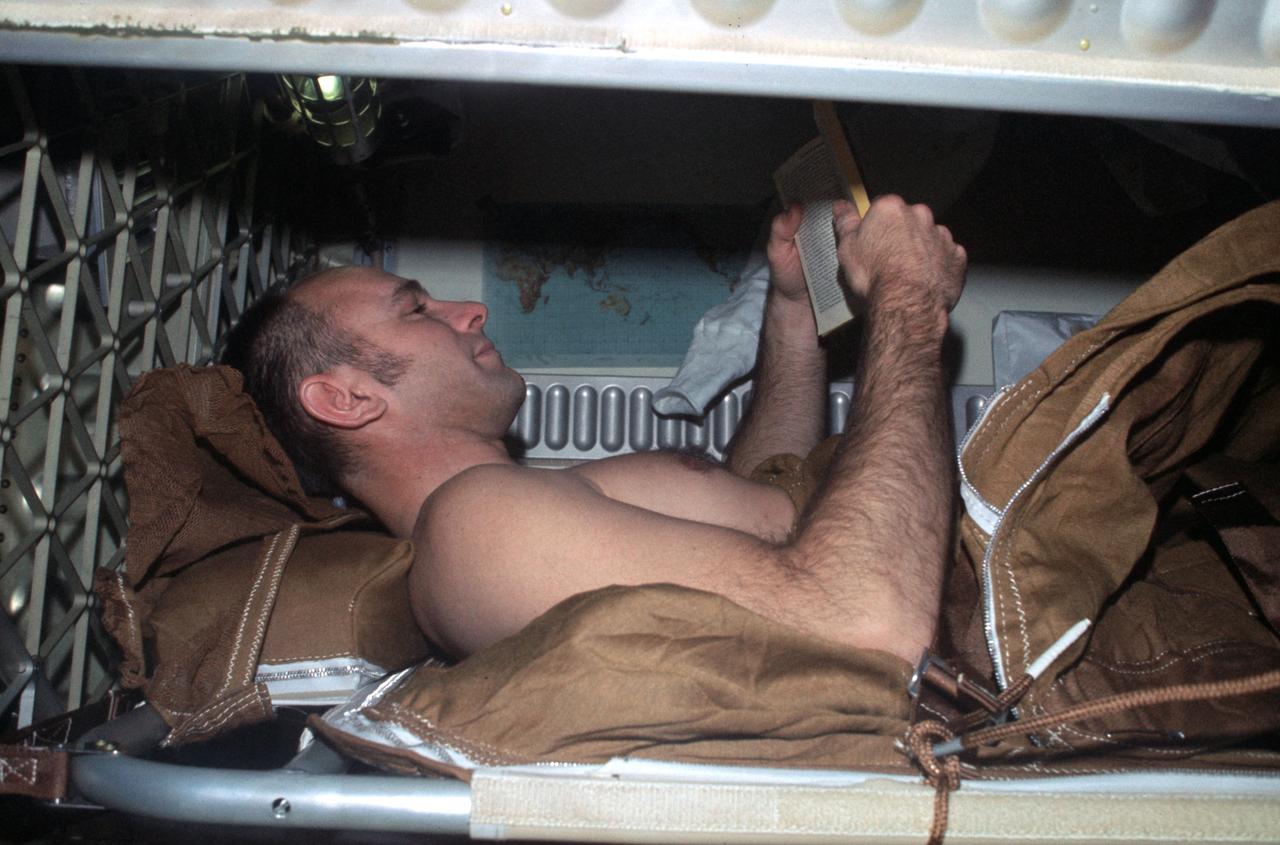
SL3-112-1527 (July-September 1973) --- View of astronaut Alan L. Bean, Skylab 3 commander, in his sleep compartment, reading a book. Photo credit: NASA
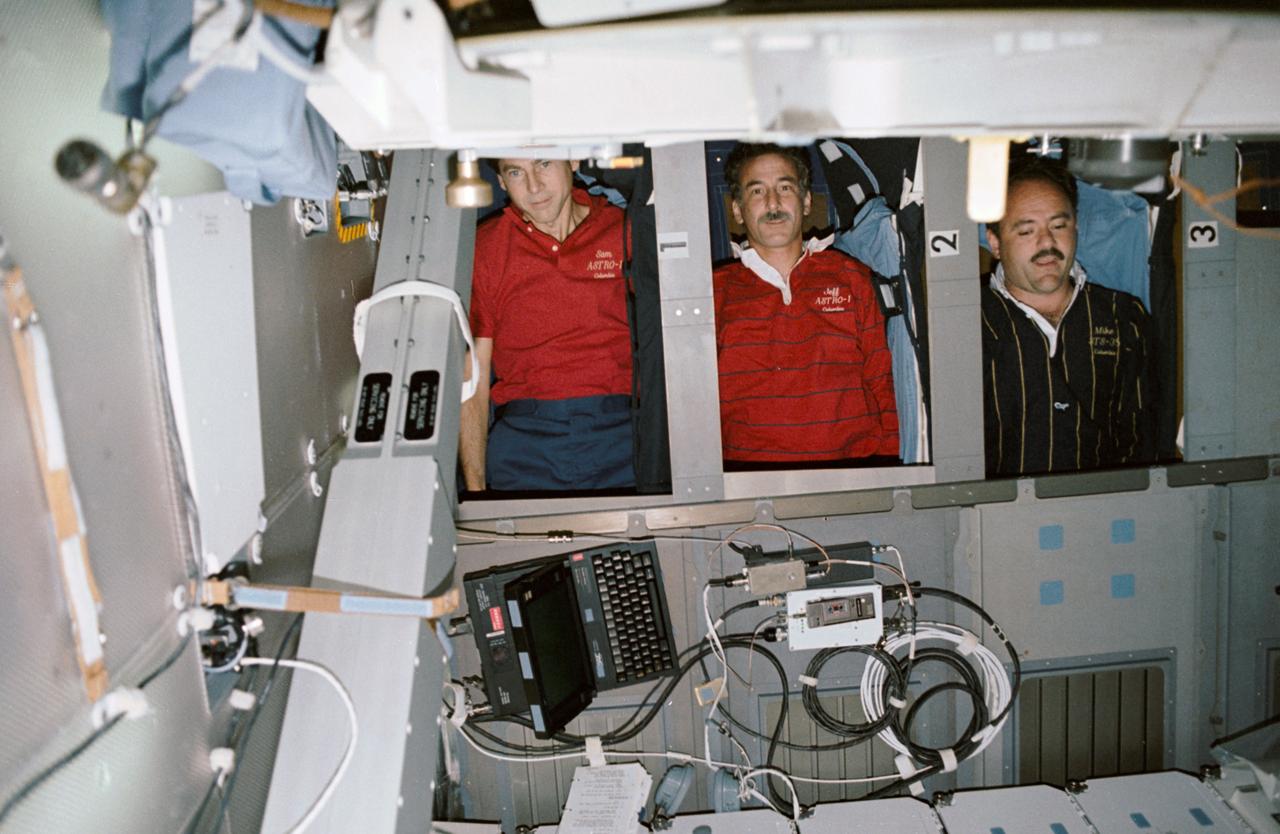
Though they are not actually asleep, three STS-35 crewmembers demonstrate the bunk-style sleep compartments onboard Columbia's, Orbiter Vehicle (OV) 102's, middeck. From top to bottom are Payload Specialist Samuel T. Durrance, Mission Specialist (MS) Jeffrey A. Hoffman, and MS John M. Lounge. At the left is the shuttle amateur radio experiment (SAREX). The crew escape pole (CES) is visible overhead and the open airlock hatch in the foreground. The sleep station is located against the middeck starboard wall.
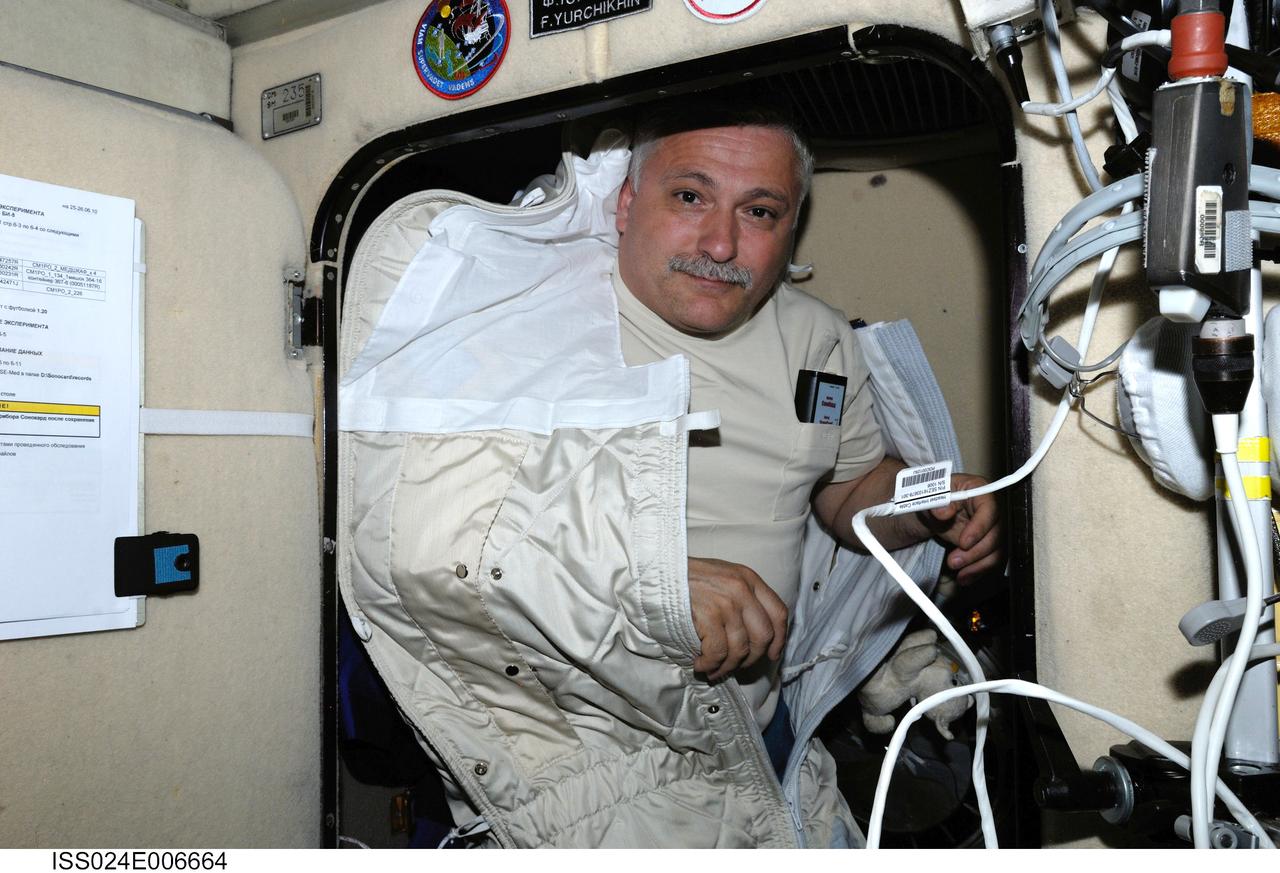
ISS024-E-006664 (25 June 2010) --- With most of his body tucked away in a sleeping bag, Russian cosmonaut Fyodor Yurchikhin, Expedition 24 flight engineer, is pictured in his crew quarters compartment in the Zvezda Service Module of the International Space Station.
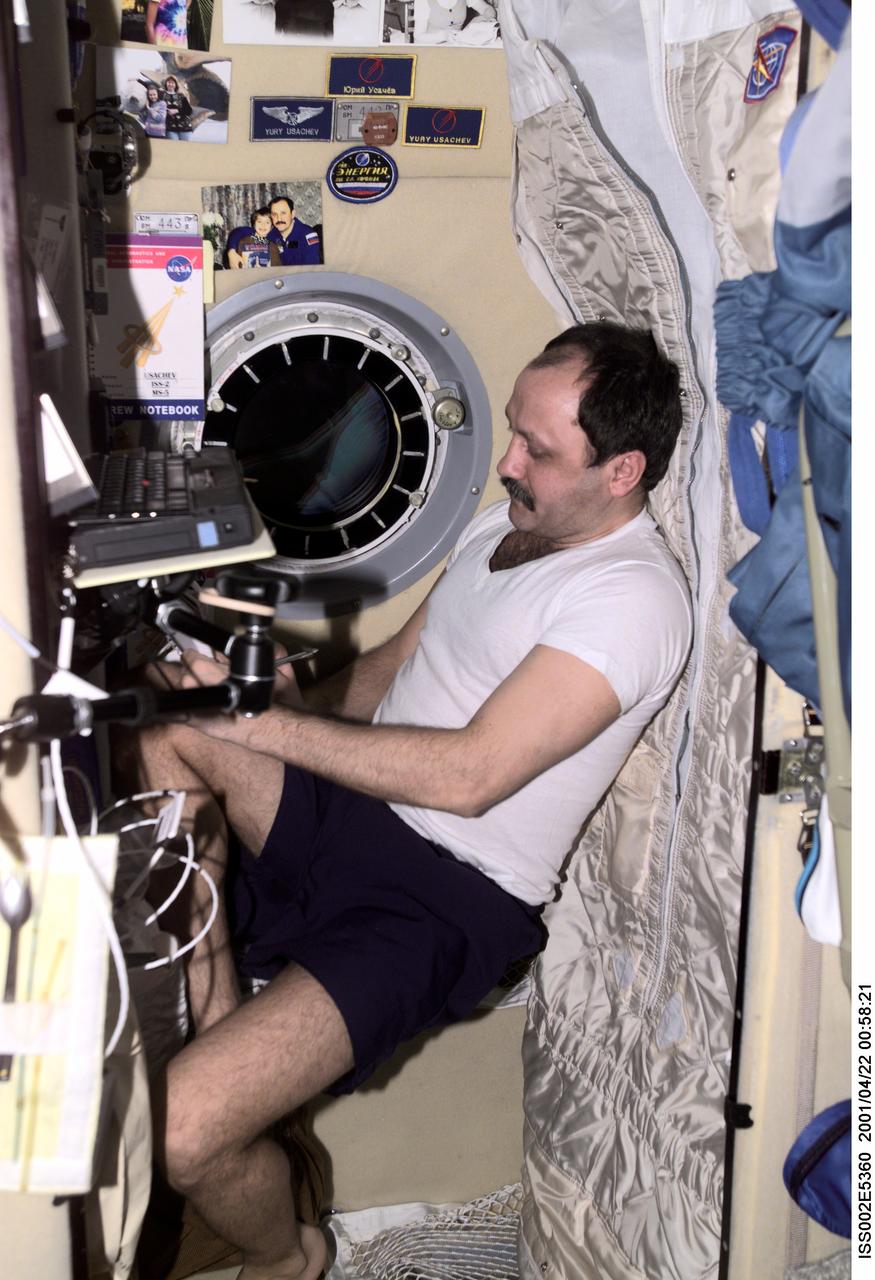
ISS002-E-5360 (22 April 2001) --- Cosmonaut Yury V. Usachev, Expedition Two mission commander, writes down some notes in his sleeping compartment in the Zvezda / Service Module of the International Space Station (ISS). This image was recorded with a digital still camera.
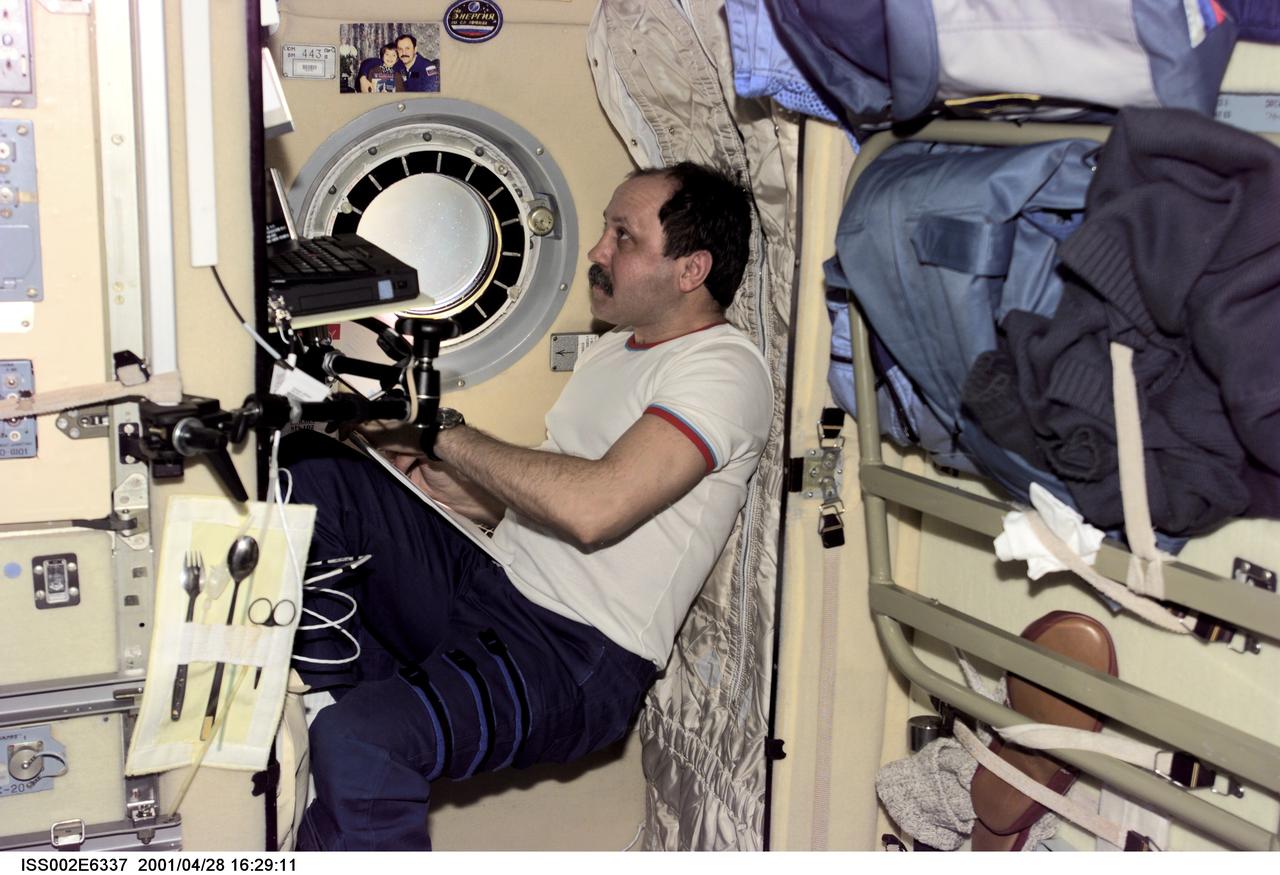
ISS002-E-6337 (28 April 2001) --- Cosmonaut Yury V. Usachev, Expedition Two mission commander, writes down some notes in his sleeping compartment in the Zvezda / Service Module of the International Space Station (ISS). The image was taken with a digital still camera.
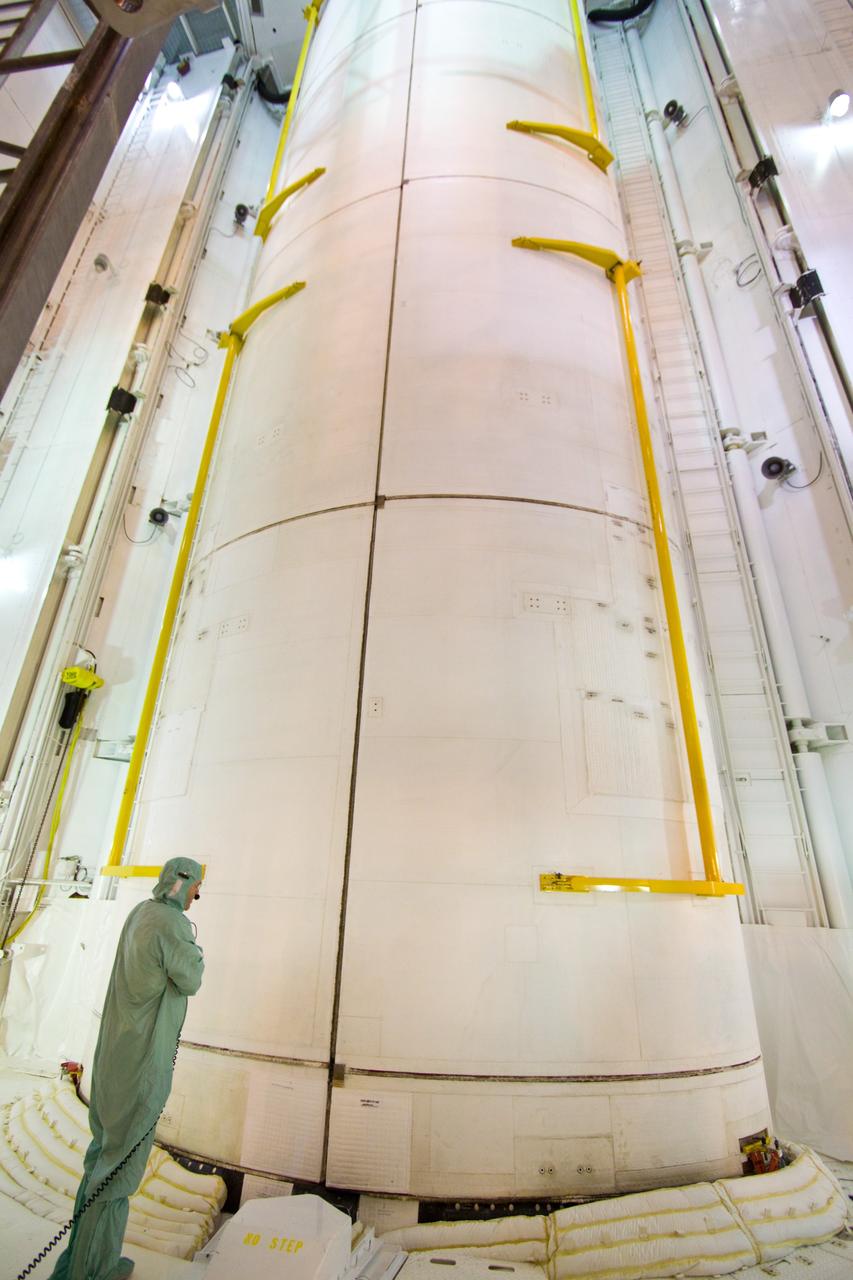
CAPE CANAVERAL, Fla. – On Launch Pad 39A, a technician checks the closing of the payload bay door around the multi-purpose logistics module Leonardo and the lightweight multi-purpose experiment support structure carrier inside space shuttle Discovery's payload bay. Discovery will deliver 33,000 pounds of equipment to the station, including science and storage racks, a freezer to store research samples, a new sleeping compartment and the COLBERT treadmill. Launch is targeted for late August. Photo credit: NASA/Jack Pfaller
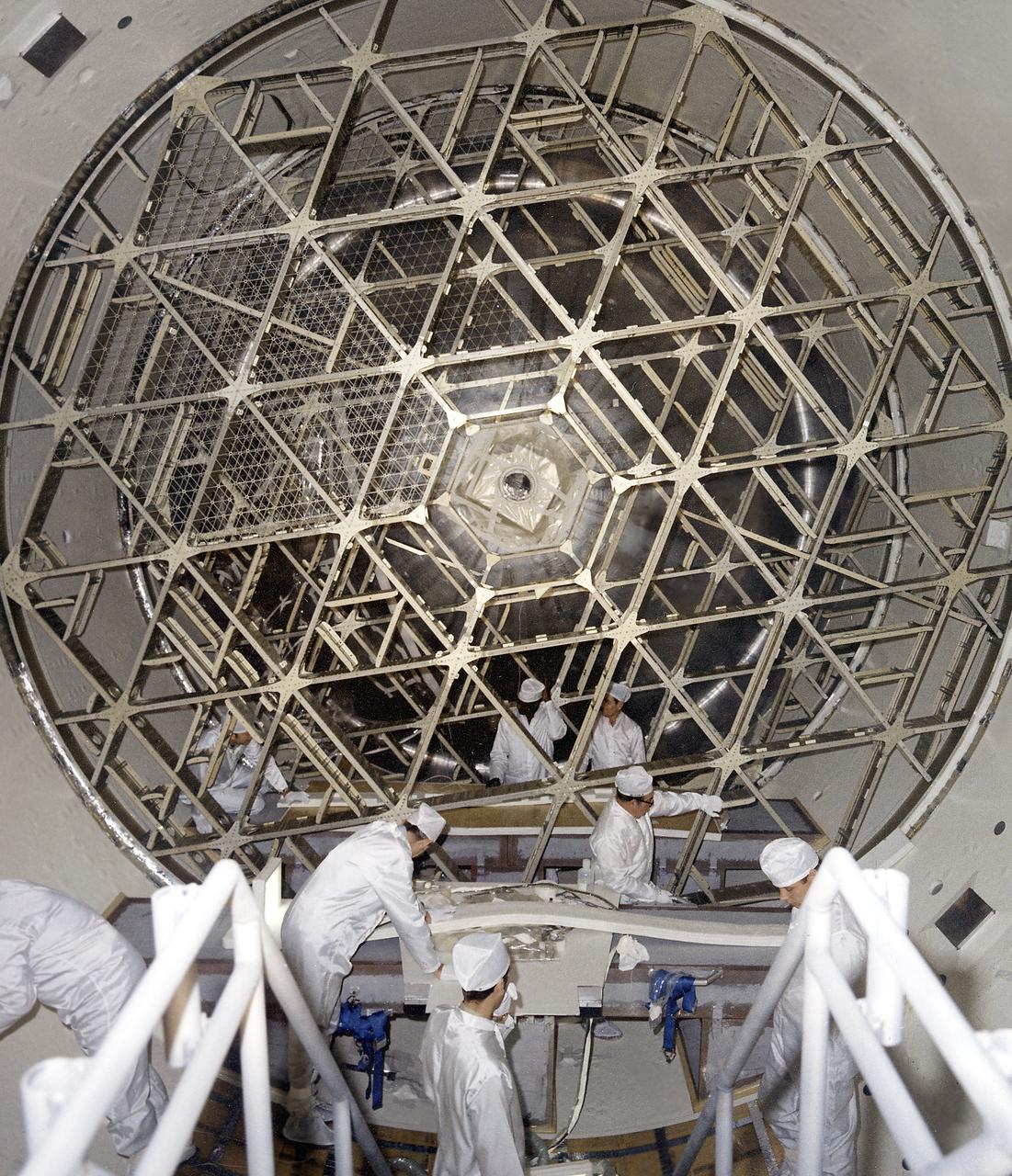
This photograph was taken during installation of floor grids on the upper and lower floors inside the Skylab Orbital Workshop at the McDornell Douglas plant at Huntington Beach, California. The OWS was divided into two major compartments. The lower level provided crew accommodations for sleeping, food preparation and consumption, hygiene, waste processing and disposal, and performance of certain experiments. The upper level consisted of a large work area and housed water storage tanks, a food freezer, storage vaults for film, scientific airlocks, mobility and stability experiment equipment, and other experimental equipment.
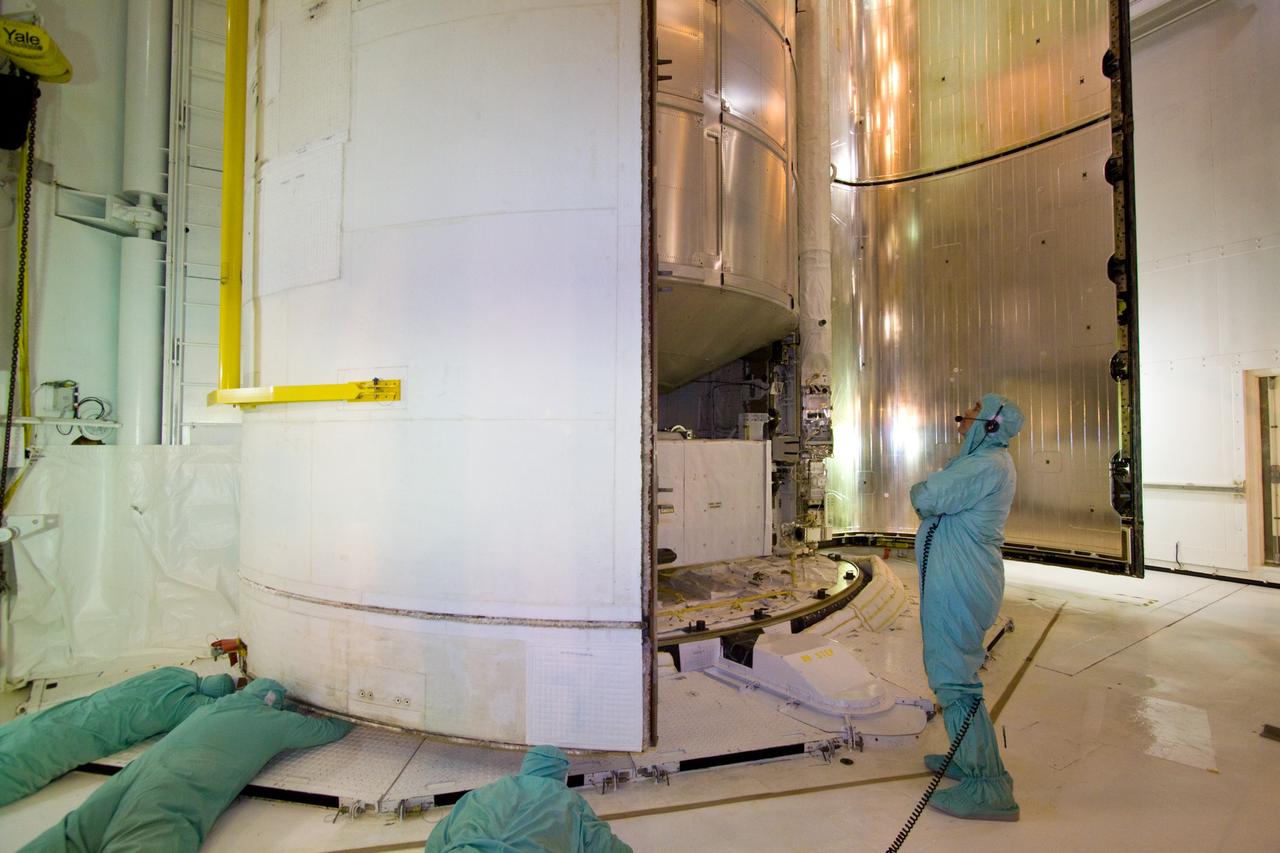
CAPE CANAVERAL, Fla. – On Launch Pad 39A, technicians check underneath as space shuttle Discovery's payload bay doors begin closing. Seen in the payload bay are the multi-purpose logistics module Leonardo and the lightweight multi-purpose experiment support structure carrier. Discovery will deliver 33,000 pounds of equipment to the station, including science and storage racks, a freezer to store research samples, a new sleeping compartment and the COLBERT treadmill. Launch is targeted for late August. Photo credit: NASA/Jack Pfaller
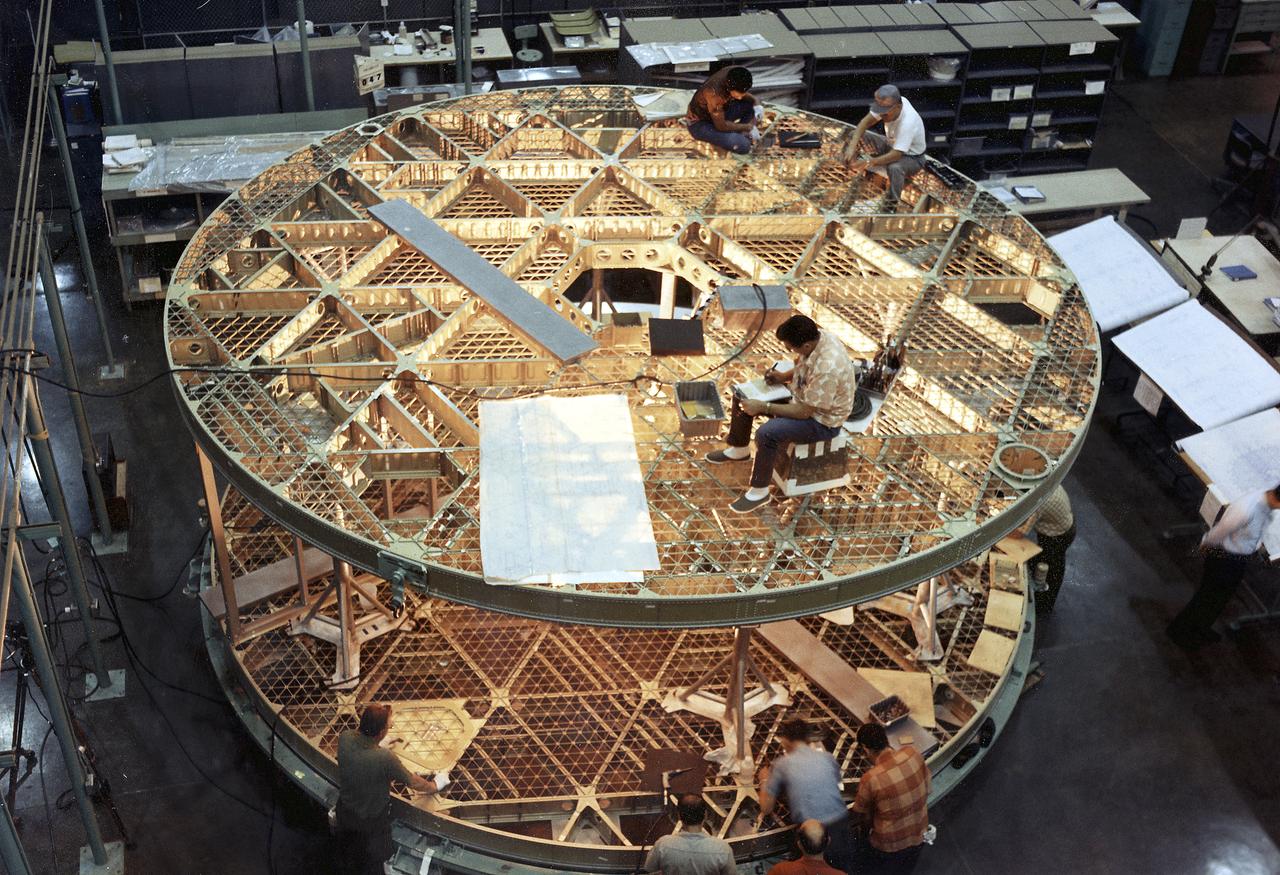
This photograph was taken during assembly of the bottom and upper floors of the Skylab Orbital Workshop (OWS). The OWS was divided into two major compartments. The lower level provided crew accommodations for sleeping, food preparation and consumption, hygiene, waste processing and disposal, and performance of certain experiments. The upper level consisted of a large work area and housed water storage tanks, a food freezer, storage vaults for film, scientific airlocks, mobility and stability experiment equipment, and other experimental equipment.
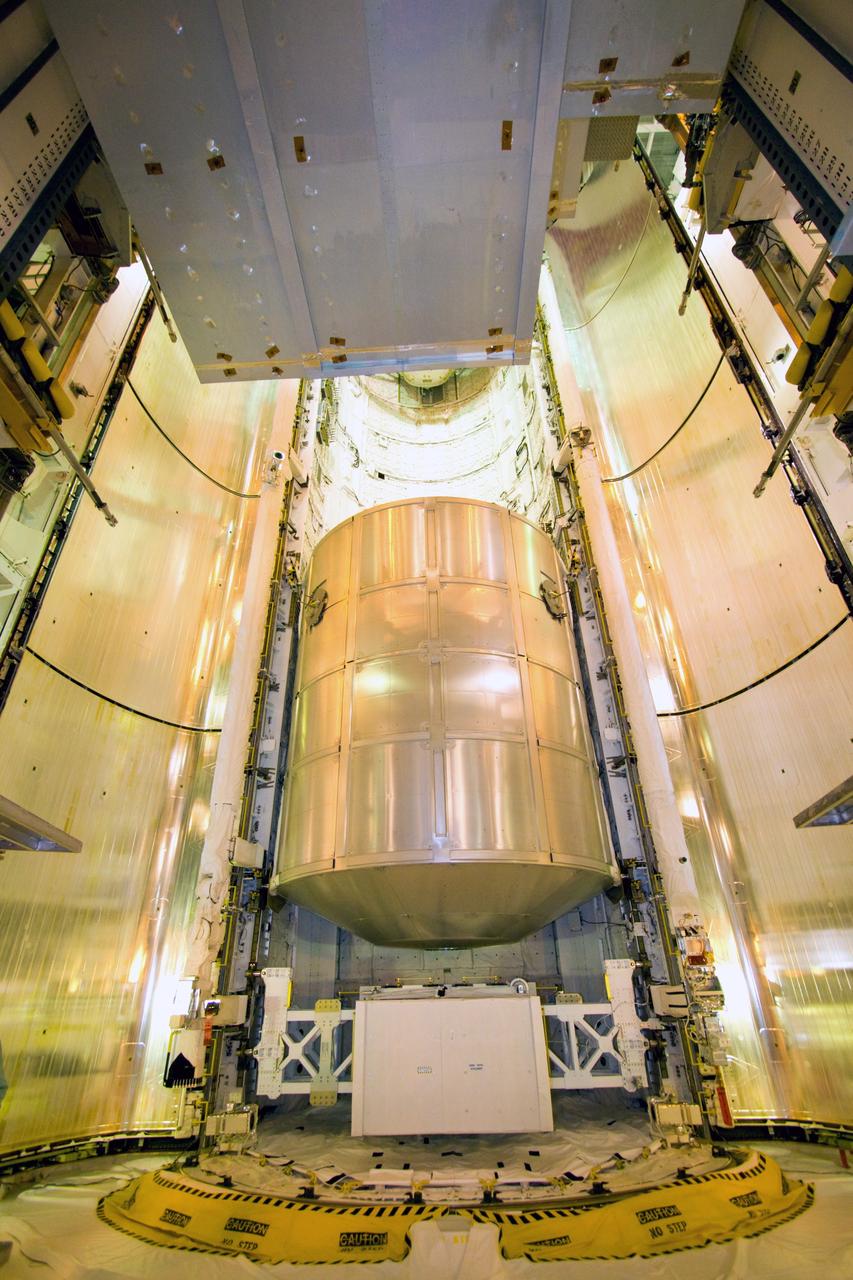
CAPE CANAVERAL, Fla. – On Launch Pad 39A, the payload for space shuttle Discovery's STS-128 mission has been installed in the payload bay. At the bottom is the Lightweight multi-purpose experiment support structure carrier. Above it is the multi-purpose logistics module Leonardo. Discovery will deliver 33,000 pounds of equipment to the station, including science and storage racks, a freezer to store research samples, a new sleeping compartment and the COLBERT treadmill. Launch is targeted for late August. Photo credit: NASA/Jack Pfaller
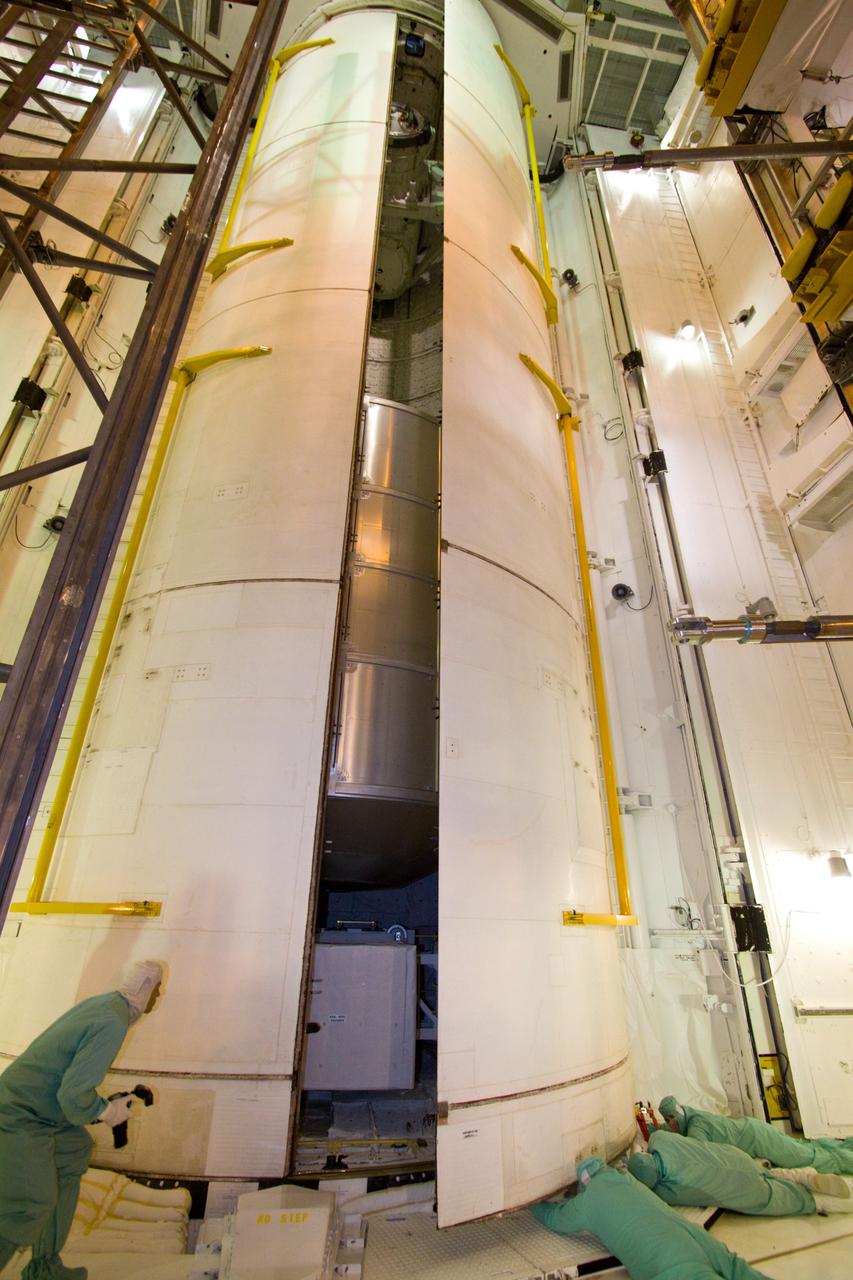
CAPE CANAVERAL, Fla. – On Launch Pad 39A, technicians ensure the payload bay door closes properly around the multi-purpose logistics module Leonardo and the lightweight multi-purpose experiment support structure carrier inside space shuttle Discovery's payload bay. Discovery will deliver 33,000 pounds of equipment to the station, including science and storage racks, a freezer to store research samples, a new sleeping compartment and the COLBERT treadmill. Launch is targeted for late August. Photo credit: NASA/Jack Pfaller
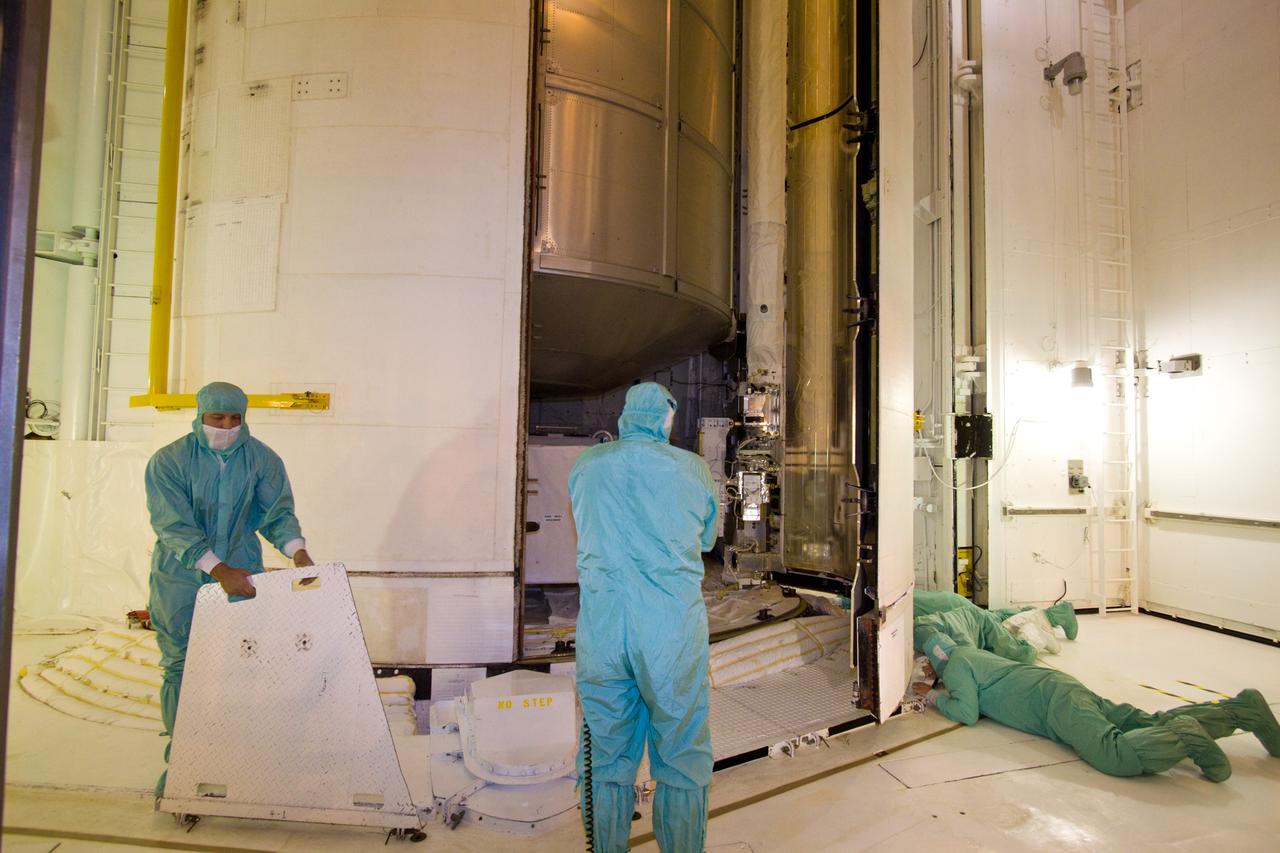
CAPE CANAVERAL, Fla. – On Launch Pad 39A, technicians check the clearance of the payload bay door as it closes around the multi-purpose logistics module Leonardo and the lightweight multi-purpose experiment support structure carrier inside space shuttle Discovery's payload bay. Discovery will deliver 33,000 pounds of equipment to the station, including science and storage racks, a freezer to store research samples, a new sleeping compartment and the COLBERT treadmill. Launch is targeted for late August. Photo credit: NASA/Jack Pfaller

CAPE CANAVERAL, Fla. – On Launch Pad 39A, the payload for space shuttle Discovery's STS-128 mission waits for closure of the payload bay doors. At the bottom is the lightweight multi-purpose experiment support structure carrier. Above it is the multi-purpose logistics module Leonardo. Discovery will deliver 33,000 pounds of equipment to the station, including science and storage racks, a freezer to store research samples, a new sleeping compartment and the COLBERT treadmill. Launch is targeted for late August. Photo credit: NASA/Jack Pfaller
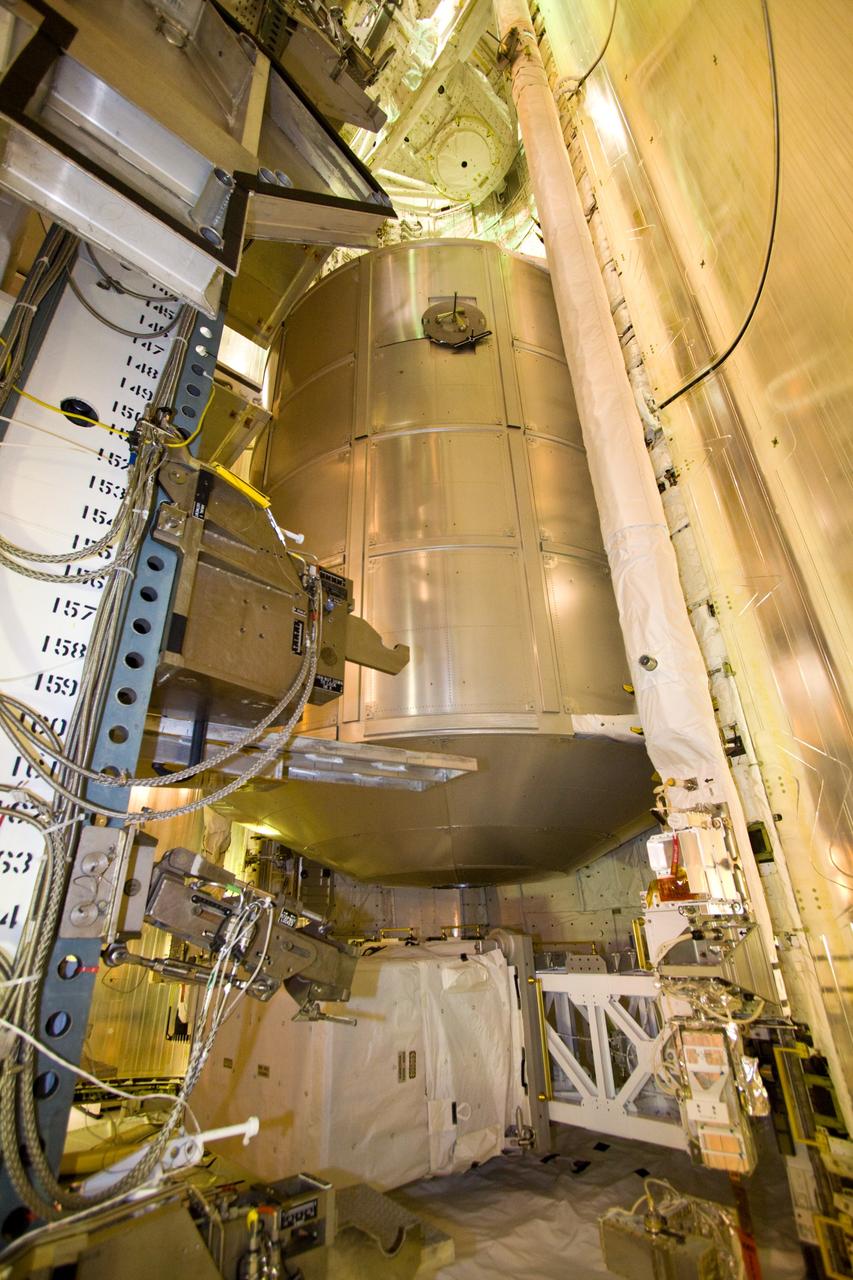
CAPE CANAVERAL, Fla. – On Launch Pad 39A, the payload ground-handling mechanism moves the multi-purpose logistics module Leonardo toward space shuttle Discovery's payload bay. Leonardo is the primary payload on Discovery's STS-128 mission to the International Space Station. Discovery will deliver 33,000 pounds of equipment to the station, including science and storage racks, a freezer to store research samples, a new sleeping compartment and the COLBERT treadmill. Launch is targeted for late August. Photo credit: NASA/Jack Pfaller
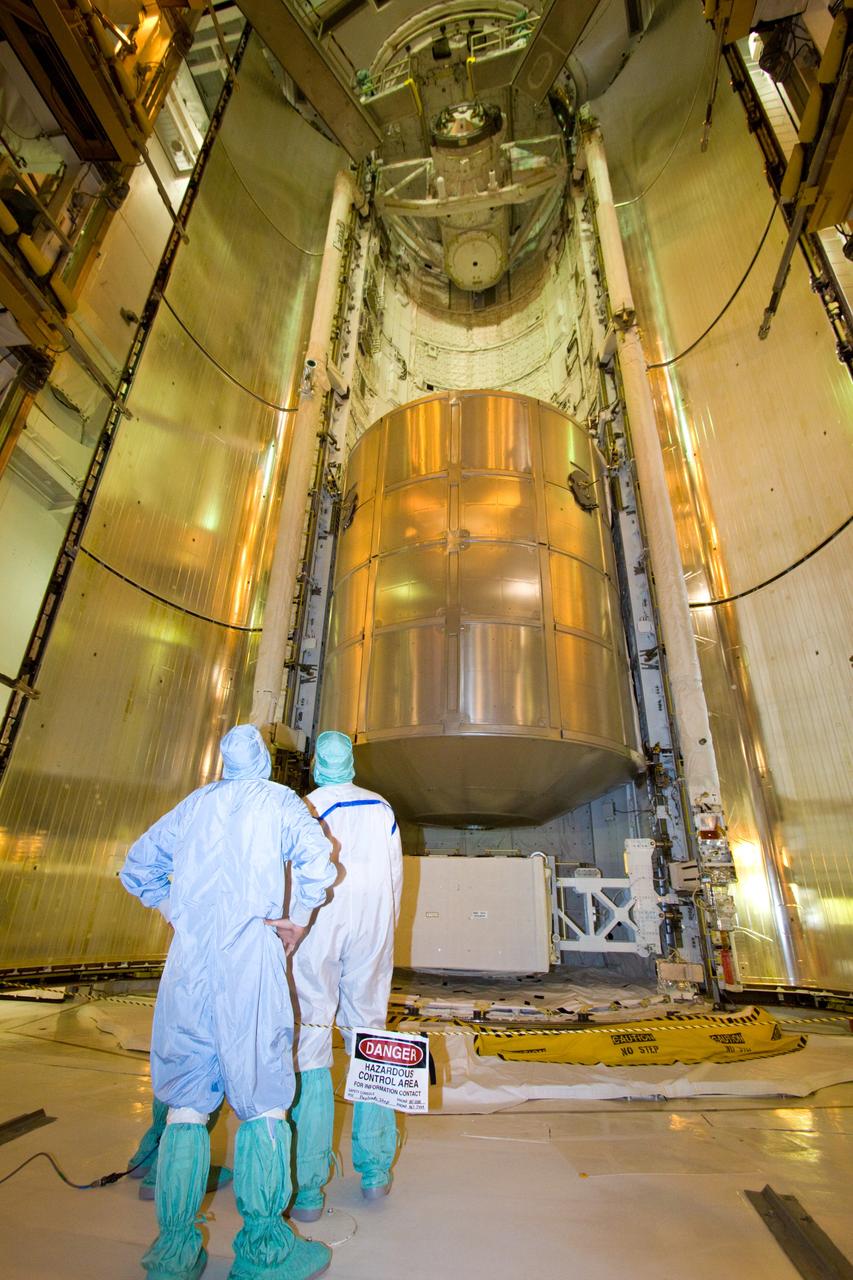
CAPE CANAVERAL, Fla. – On Launch Pad 39A, technicians observe as space shuttle Discovery's payload bay doors begin closing. Seen in the payload bay are the multi-purpose logistics module Leonardo and the lightweight multi-purpose experiment support structure carrier. Discovery will deliver 33,000 pounds of equipment to the station, including science and storage racks, a freezer to store research samples, a new sleeping compartment and the COLBERT treadmill. Launch is targeted for late August. Photo credit: NASA/Jack Pfaller
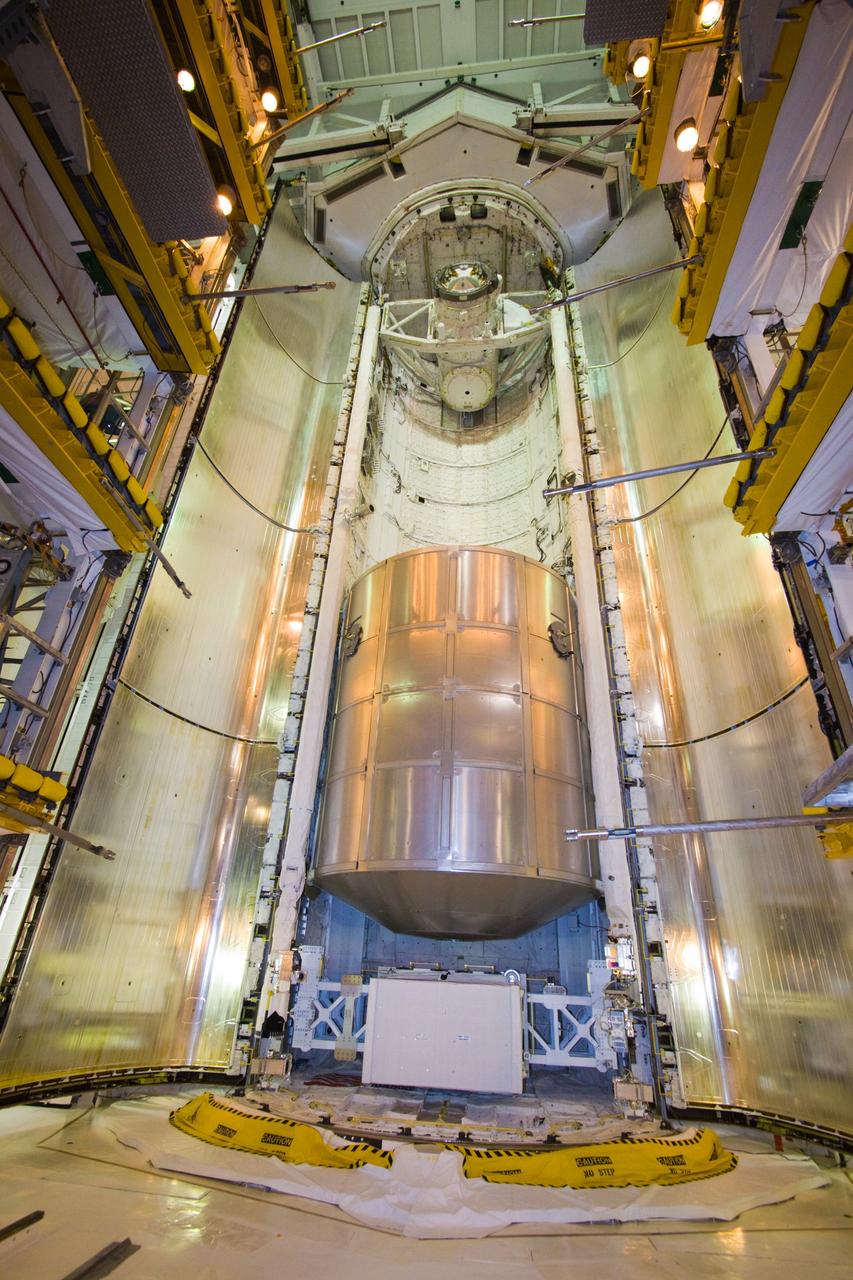
CAPE CANAVERAL, Fla. – On Launch Pad 39A, space shuttle Discovery's payload bay doors begin closing. Seen in the payload bay are the multi-purpose logistics module Leonardo and the lightweight multi-purpose experiment support structure carrier. Discovery will deliver 33,000 pounds of equipment to the station, including science and storage racks, a freezer to store research samples, a new sleeping compartment and the COLBERT treadmill. Launch is targeted for late August. Photo credit: NASA/Jack Pfaller
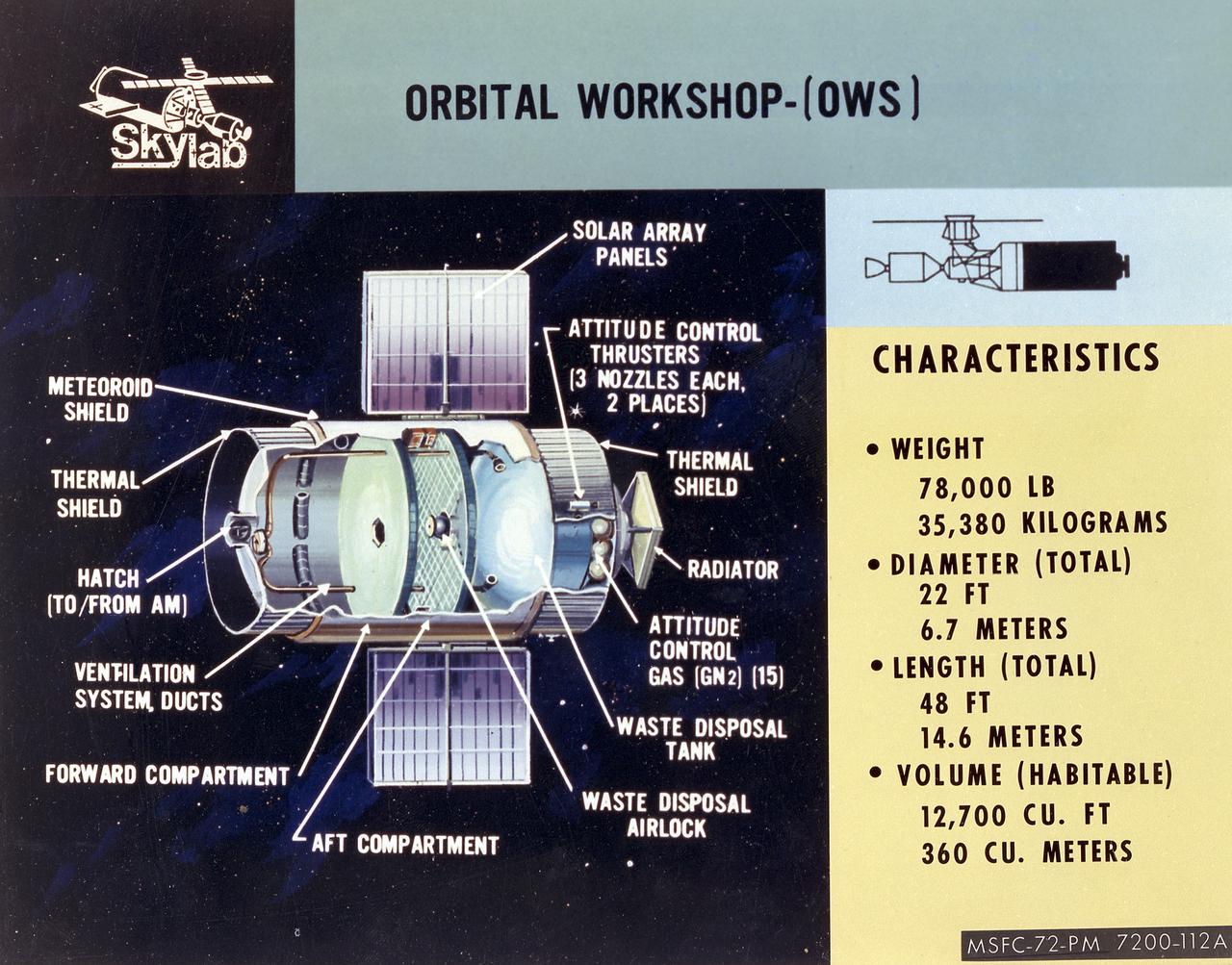
This cutaway illustration shows the characteristics and basic elements of the Skylab Orbiter Workshop (OWS). The OWS was divided into two major compartments. The lower level provided crew accommodations for sleeping, food preparation and consumption, hygiene, waste processing and disposal, and performance of certain experiments. The upper level consisted of a large work area and housed water storage tanks, a food freezer, storage vaults for film, scientific airlocks, mobility and stability experiment equipment, and other experimental equipment. The compartment below the crew quarters was a container for liquid and solid waste and trash accumulated throughout the mission. A solar array, consisting of two wings covered on one side with solar cells, was mounted outside the workshop to generate electrical power to augment the power generated by another solar array mounted on the solar observatory. Thrusters were provided at one end of the workshop for short-term control of the attitude of the space station.
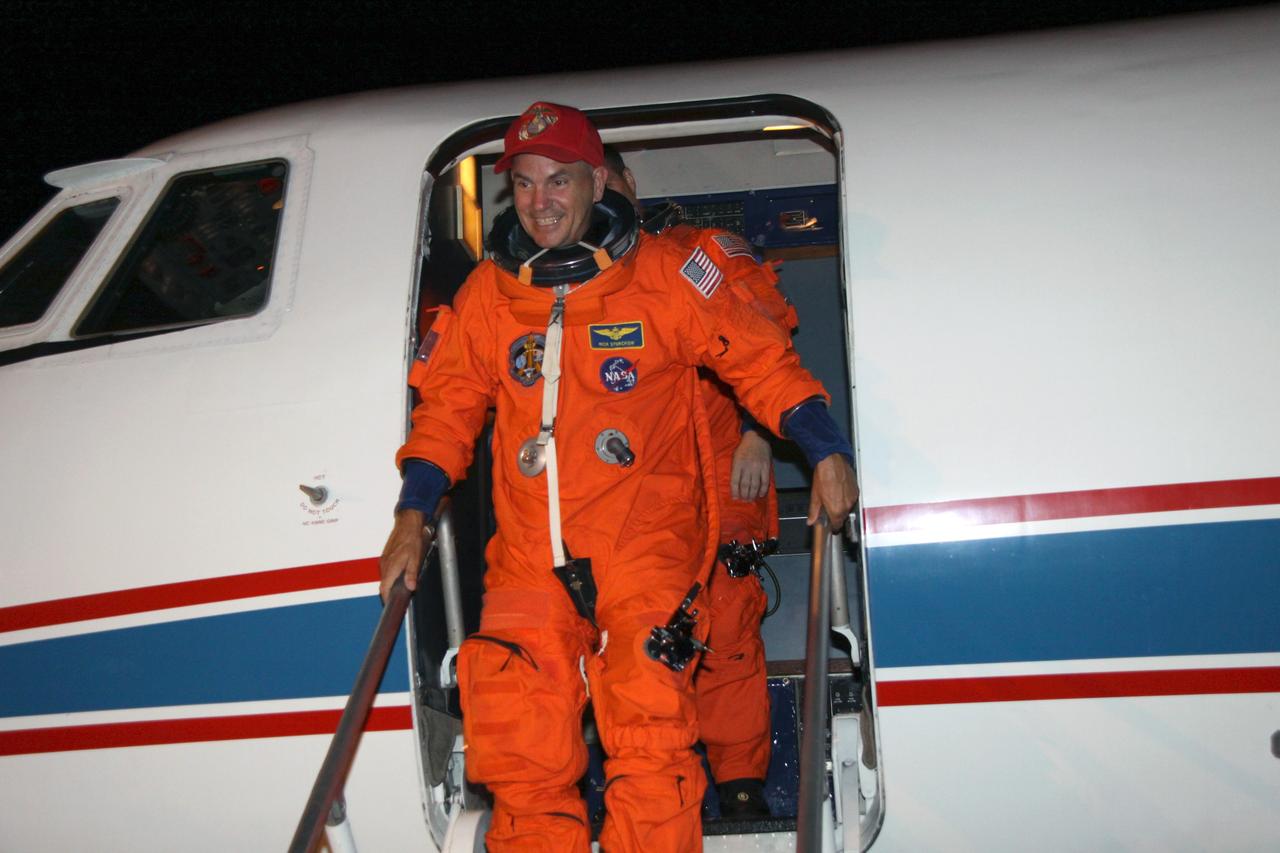
CAPE CANAVERAL, Fla. – At NASA Kennedy Space Center's Shuttle Landing Facility, STS-128 Commander Rick Sturckow exits the Shuttle Training Aircraft after completing practice shuttle landings as preparation for space shuttle Discovery's launch Aug. 25 on the STS-128 mission. The 13-day mission will deliver a new crew member and 33,000 pounds of equipment to the International Space Station. The equipment includes science and storage racks, a freezer to store research samples, a new sleeping compartment and the COLBERT treadmill. Photo credit: NASA/Troy Cryder
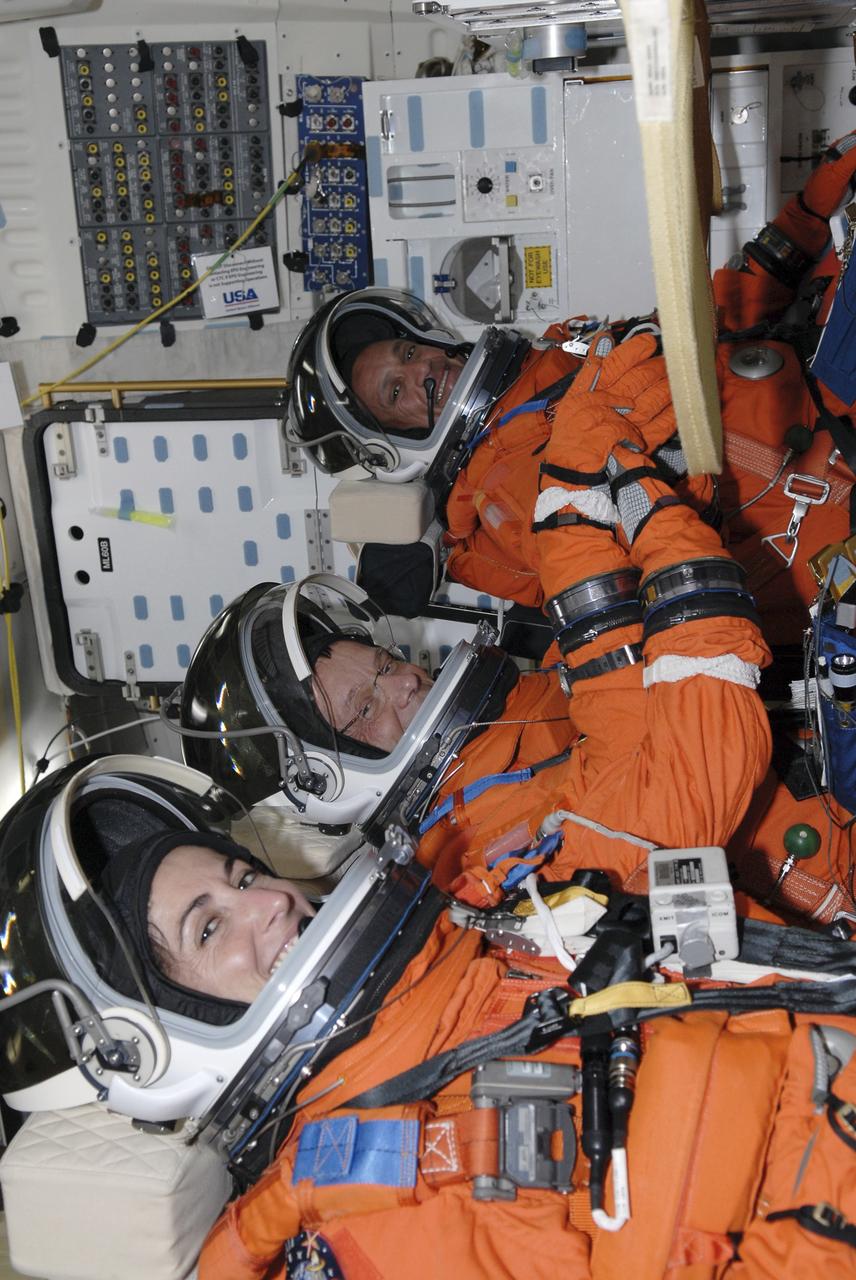
CAPE CANAVERAL, Fla. – Seated in space shuttle Discovery's cockpit on NASA Kennedy Space Center's Launch Pad 39A, STS-128 Mission Specialists (from left) Nicole Stott, Christer Fuglesang and Danny Olivas have completed the simulated launch countdown. They and other mission crew members are at Kennedy to take part in the terminal countdown demonstration test, or TCDT, which includes emergency exit training and culminates in the simulated countdown. On the STS-128 mission, Discovery will deliver 33,000 pounds of equipment to the station, including science and storage racks, a freezer to store research samples, a new sleeping compartment and the COLBERT treadmill. Launch is targeted for late August. Photo credit: NASA/Kim Shiflett
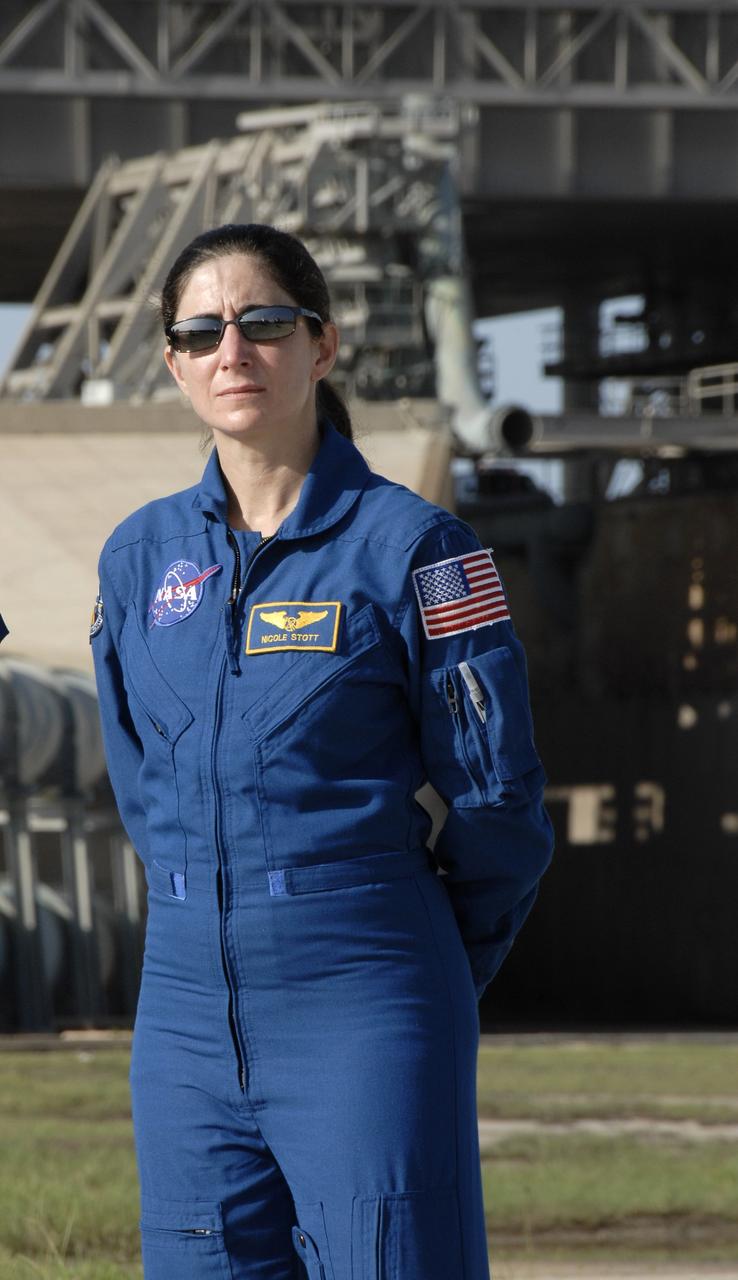
CAPE CANAVERAL, Fla. – At NASA's Kennedy Space Center in Florida, STS-128 Mission Specialist Nicole Stott listens to a question from the media during a question-and-answer session near Launch Pad 39A. The crew is at Kennedy for a launch dress rehearsal called the terminal countdown demonstration test, or TCDT, which includes emergency exit training and equipment familiarization, as well as a simulated launch countdown. Discovery will deliver 33,000 pounds of equipment to the station, including science and storage racks, a freezer to store research samples, a new sleeping compartment and the COLBERT treadmill. Photo credit: NASA/Kim Shiflett

CAPE CANAVERAL, Fla. – At NASA Kennedy Space Center's Shuttle Landing Facility, the two Shuttle Training Aircraft are waiting to take off. STS-128 Commander Rick Sturckow and Pilot Kevin Ford are scheduled to practice shuttle landings as preparation for space shuttle Discovery's launch Aug. 25 on the STS-128 mission. The 13-day mission will deliver a new crew member and 33,000 pounds of equipment to the International Space Station. The equipment includes science and storage racks, a freezer to store research samples, a new sleeping compartment and the COLBERT treadmill. Photo credit: NASA/Troy Cryder
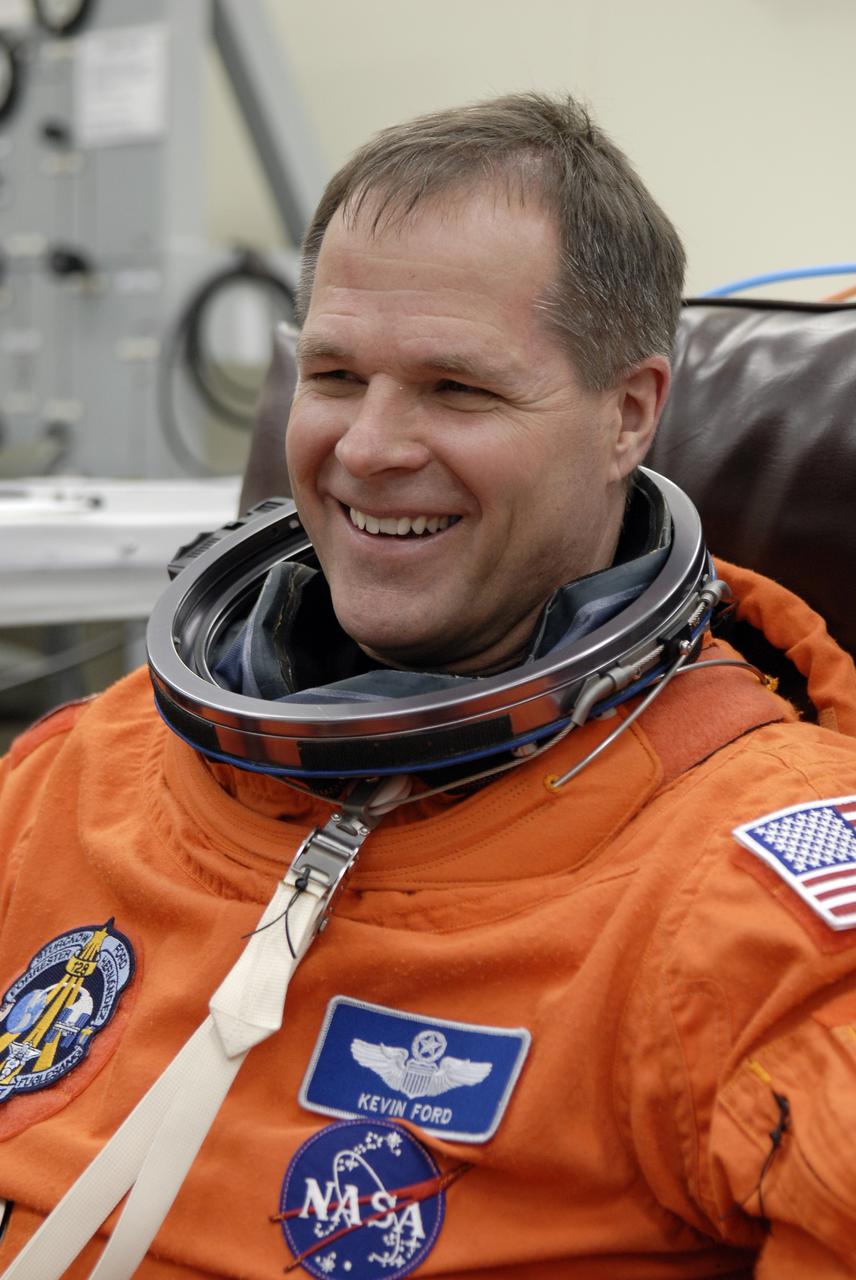
CAPE CANAVERAL, Fla. – STS-128 Pilot Kevin Ford checks the fit of his launch and entry suit before heading to the NASA Kennedy Space Center's Launch Pad 39A for the simulated launch countdown. The countdown is the culmination of terminal countdown demonstration test activities to prepare the STS-128 crew for launch on space shuttle Discovery's STS-128 mission. Discovery will deliver 33,000 pounds of equipment to the station, including science and storage racks, a freezer to store research samples, a new sleeping compartment and the COLBERT treadmill. Launch is targeted for late August. Photo credit: NASA/Kim Shiflett
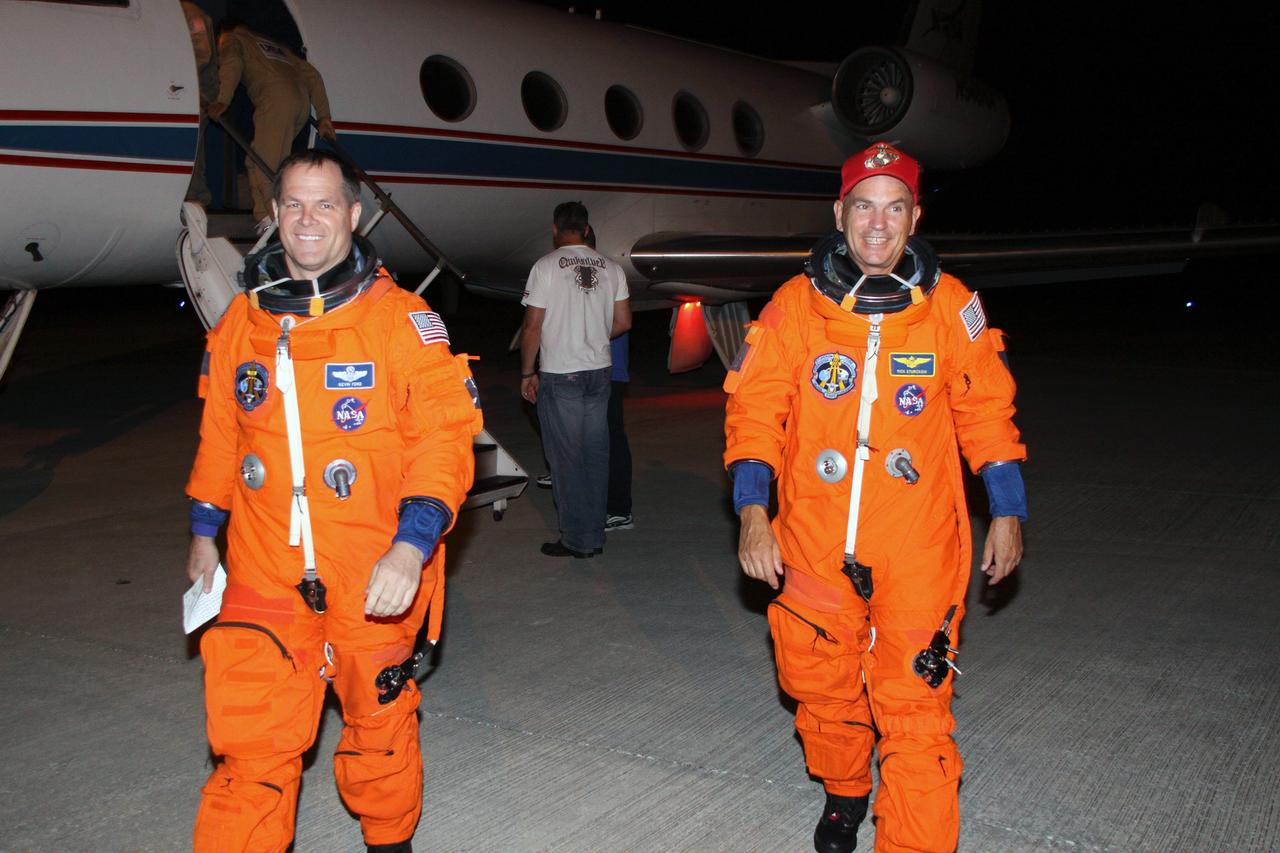
CAPE CANAVERAL, Fla. – STS-128 Commander Rick Sturckow (right) and Pilot Kevin Ford walk across NASA Kennedy Space Center's Shuttle Landing Facility after completing practice shuttle landings as preparation for space shuttle Discovery's launch Aug. 25 on the STS-128 mission. The 13-day mission will deliver a new crew member and 33,000 pounds of equipment to the International Space Station. The equipment includes science and storage racks, a freezer to store research samples, a new sleeping compartment and the COLBERT treadmill. Photo credit: NASA/Troy Cryder
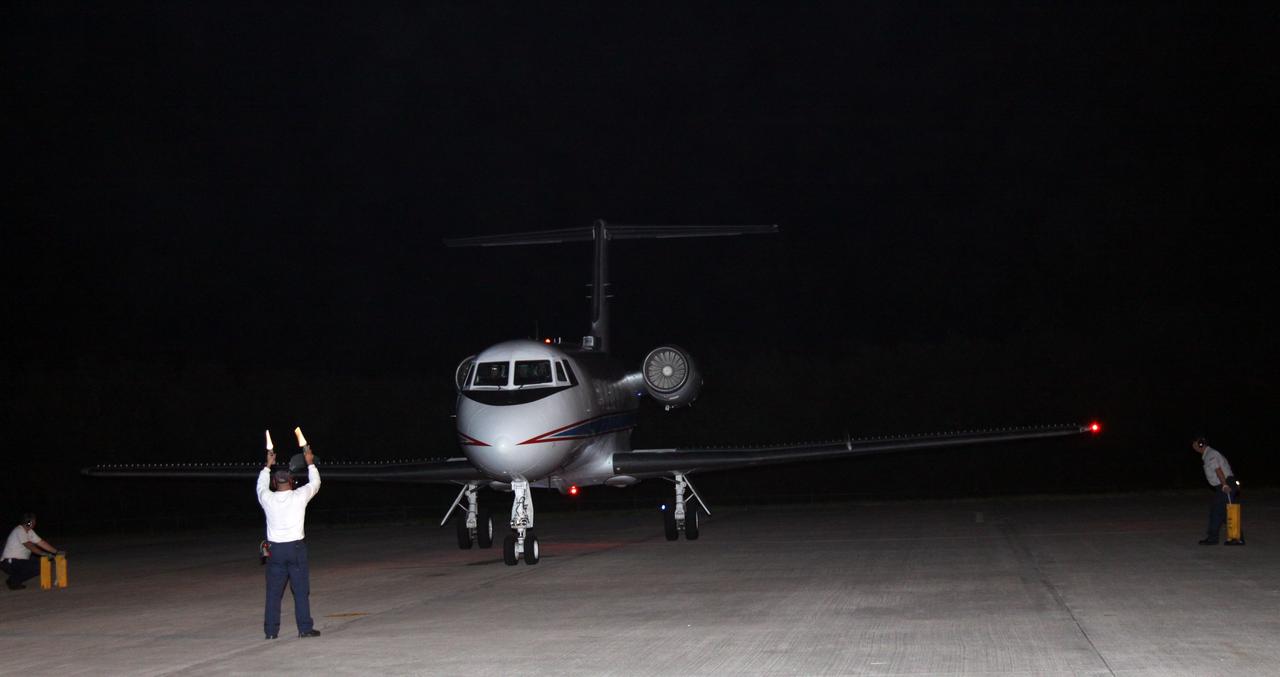
CAPE CANAVERAL, Fla. – At NASA Kennedy Space Center's Shuttle Landing Facility, a Shuttle Training Aircraft is directed for takeoff. STS-128 Commander Rick Sturckow and Pilot Kevin Ford are practicing shuttle landings as preparation for space shuttle Discovery's launch Aug. 25 on the STS-128 mission. The 13-day mission will deliver a new crew member and 33,000 pounds of equipment to the International Space Station. The equipment includes science and storage racks, a freezer to store research samples, a new sleeping compartment and the COLBERT treadmill. Photo credit: NASA/Troy Cryder
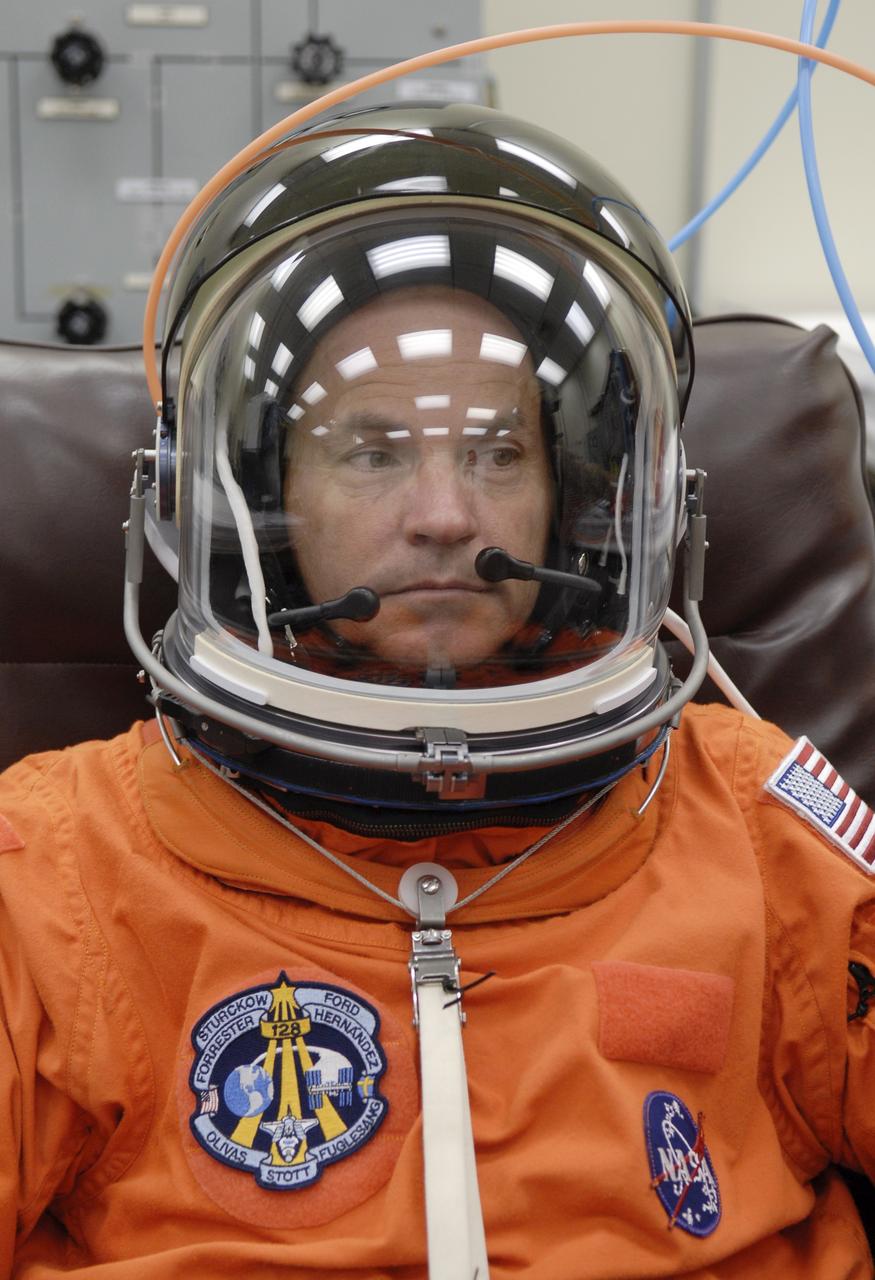
CAPE CANAVERAL, Fla. – STS-128 Commander Rick Sturckow completes the fit check of his launch and entry suit and helmet before heading to the NASA Kennedy Space Center's Launch Pad 39A for the simulated launch countdown. The countdown is the culmination of terminal countdown demonstration test activities to prepare the STS-128 crew for launch on space shuttle Discovery's STS-128 mission. Discovery will deliver 33,000 pounds of equipment to the station, including science and storage racks, a freezer to store research samples, a new sleeping compartment and the COLBERT treadmill. Launch is targeted for late August. Photo credit: NASA/Kim Shiflett
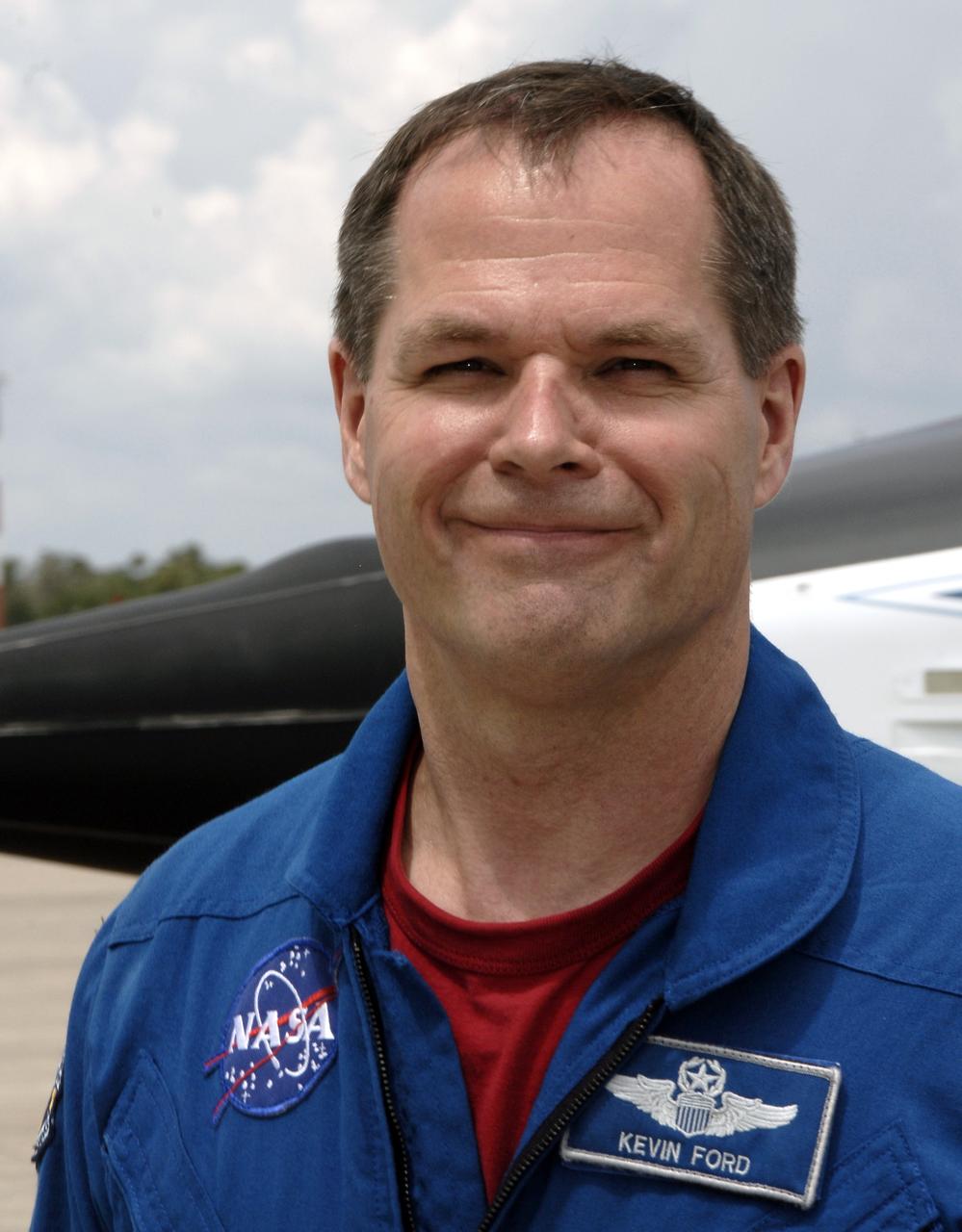
CAPE CANAVERAL, Fla. – Space shuttle Discovery's STS-128 mission crew members arrive in T-38 training jets at NASA Kennedy Space Center's Shuttle Landing Facility. Pilot Kevin Ford is seen here.The astronauts will be taking part in terminal countdown demonstration test activities that include equipment familiarization and emergency egress training, and will culminate in a simulated launch countdown aboard Discovery. The mission will deliver a new crew member and 33,000 pounds of equipment to the International Space Station. The equipment includes science and storage racks, a freezer to store research samples, a new sleeping compartment and the COLBERT treadmill. Launch of Discovery is targeted for late August. Photo credit: NASA/Kim Shiflett

CAPE CANAVERAL, Fla. – After a successful simulated launch countdown, STS-128 Mission Specialists Patrick Forrester (left) and Jose Hernandez hurry to the slidewire basket area on NASA Kennedy Space Center's fixed service structure. They are practicing emergency exit from the pad. Mission crew members are at Kennedy to take part in the terminal countdown demonstration test, or TCDT, which includes emergency exit training and culminates in the simulated countdown. On the STS-128 mission, Discovery will deliver 33,000 pounds of equipment to the station, including science and storage racks, a freezer to store research samples, a new sleeping compartment and the COLBERT treadmill. Launch is targeted for late August. Photo credit: NASA/Kim Shiflett
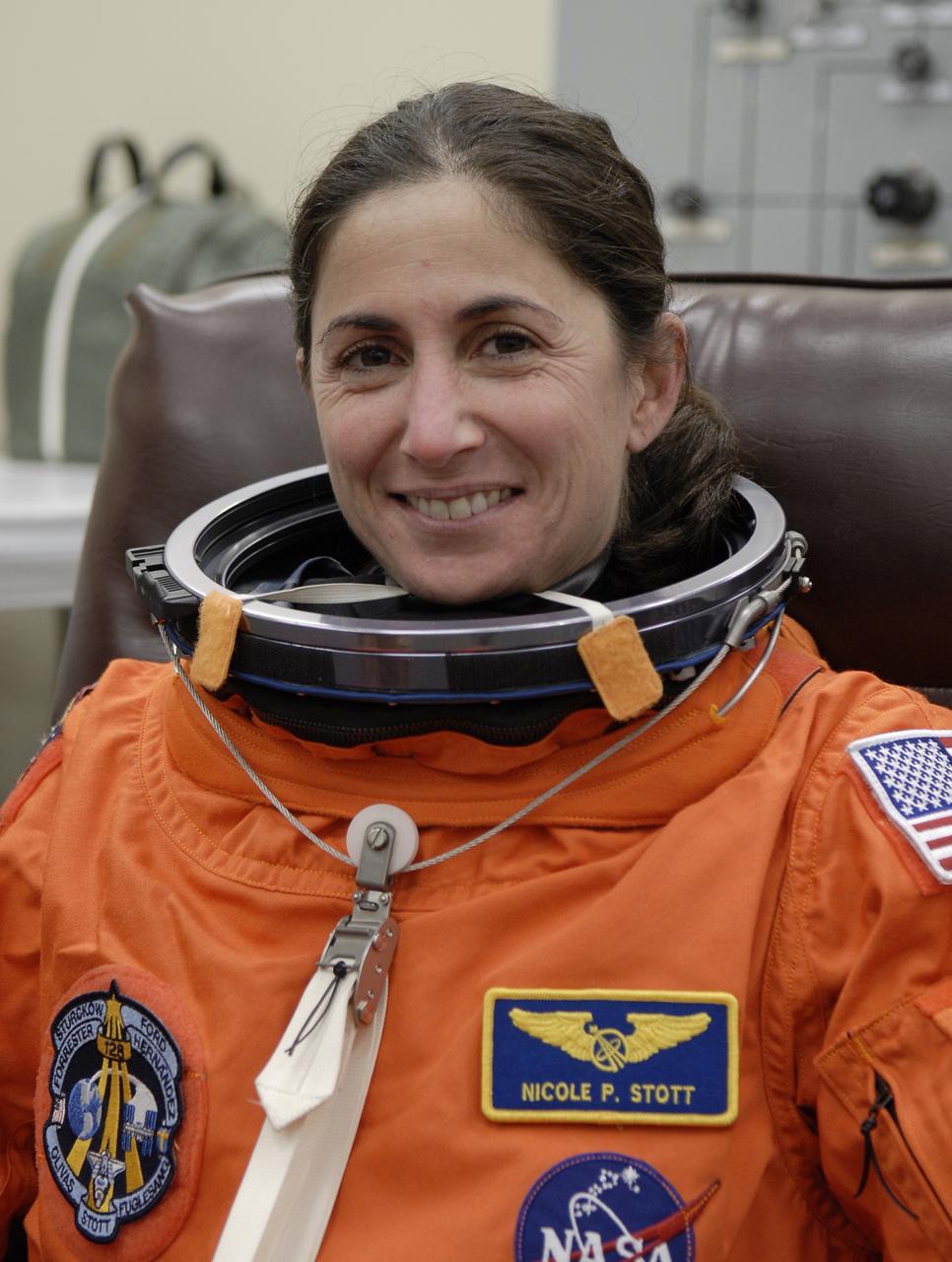
CAPE CANAVERAL, Fla. – STS-128 Mission Specialist Nicole Stott is donning her launch and entry suit for a fit check before the simulated launch countdown at NASA Kennedy Space Center's Launch Pad 39A. The countdown is the culmination of terminal countdown demonstration test activities to prepare the STS-128 crew for launch on space shuttle Discovery's STS-128 mission. Discovery will deliver 33,000 pounds of equipment to the station, including science and storage racks, a freezer to store research samples, a new sleeping compartment and the COLBERT treadmill. Launch is targeted for late August. Photo credit: NASA/Kim Shiflett
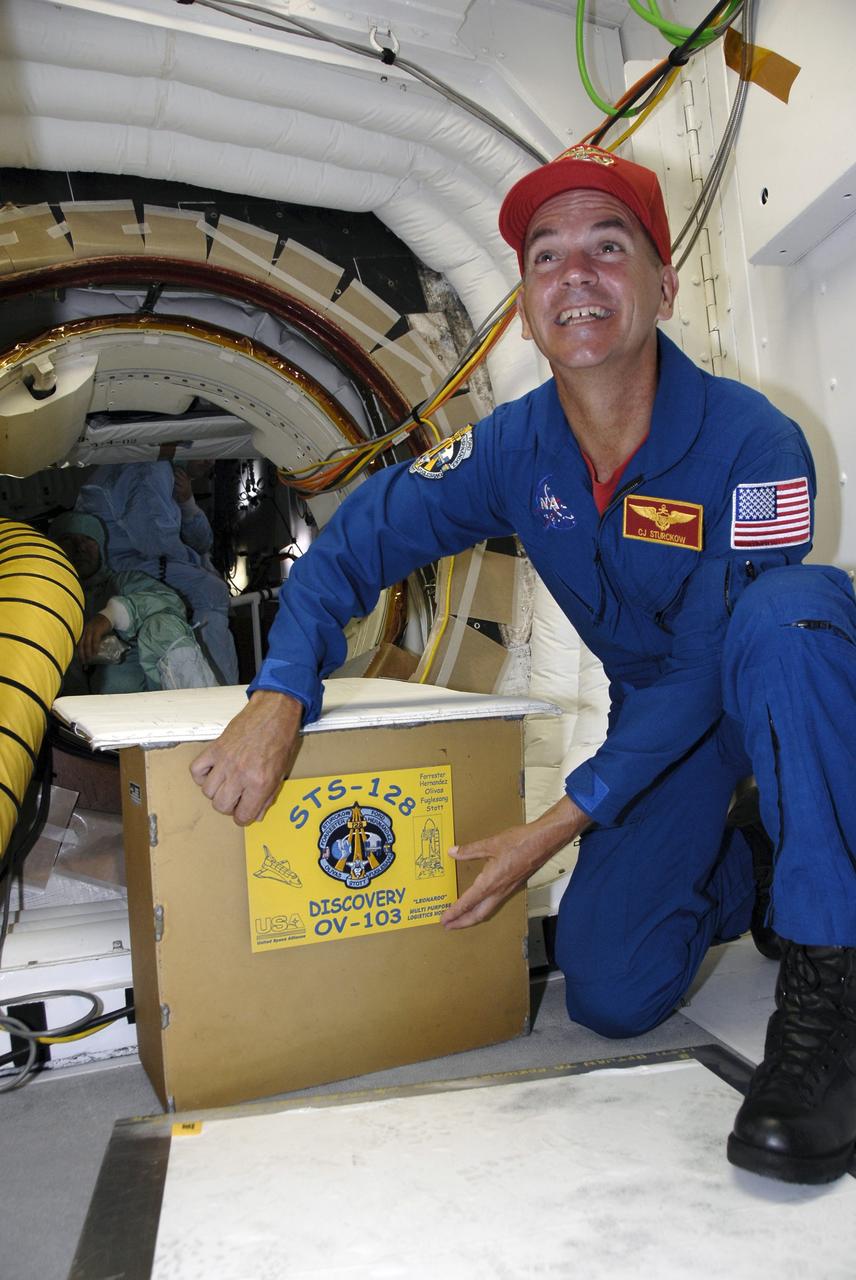
CAPE CANAVERAL, Fla. – Inside the White Room on Launch Pad 39A at NASA's Kennedy Space Center in Florida, STS-128 Commander Rick Sturckow places a mission patch on part of the hatch for space shuttle Discovery. The crew is at Kennedy for a launch dress rehearsal called the terminal countdown demonstration test, or TCDT, which includes emergency exit training and equipment familiarization, as well as a simulated launch countdown. Discovery will deliver 33,000 pounds of equipment to the station, including science and storage racks, a freezer to store research samples, a new sleeping compartment and the COLBERT treadmill. Photo credit: NASA/Kim Shiflett
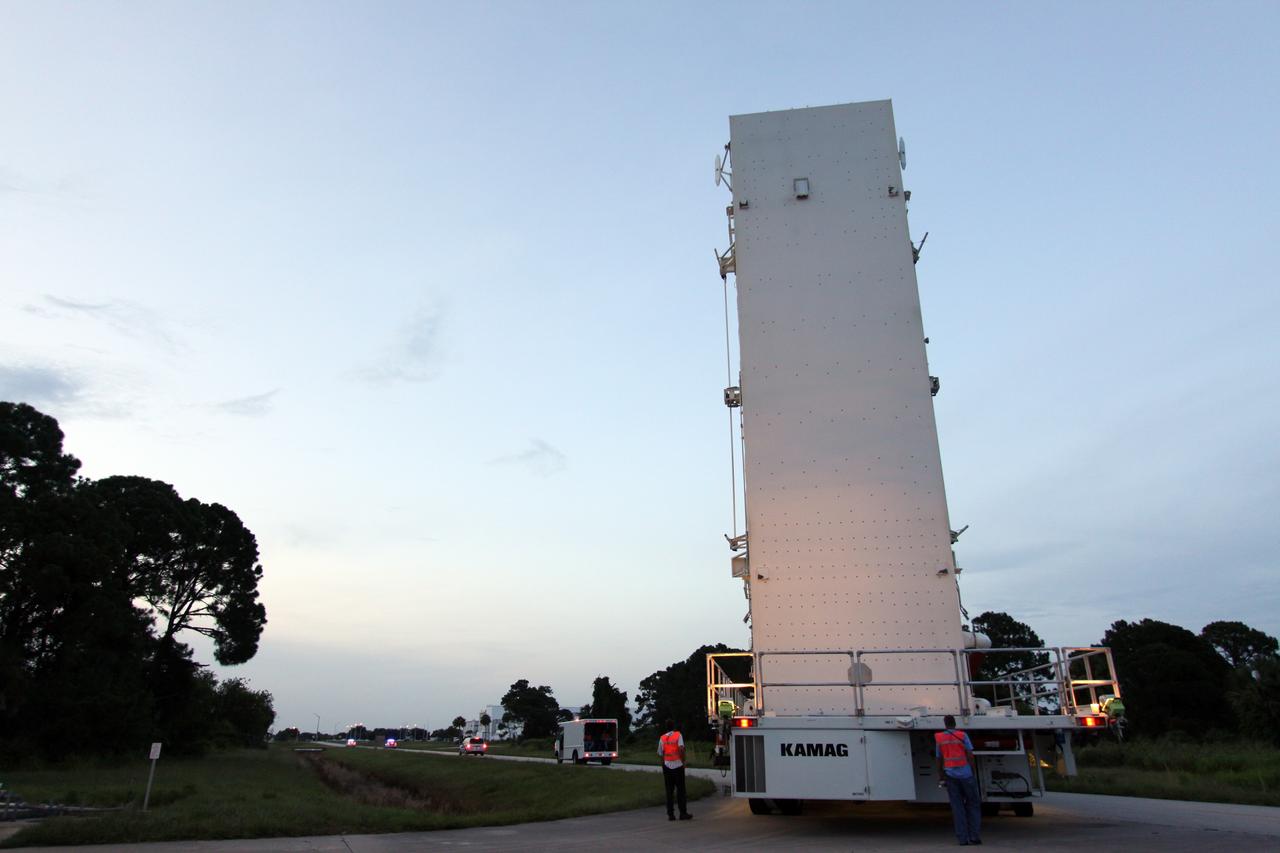
CAPE CANAVERAL, Fla. – The payload canister rolls to Launch Pad 39A at NASA's Kennedy Space Center in Florida. Inside is the payload for space shuttle Discovery and the STS-128 mission, the Multi-Purpose Logistics Module Leonardo and the Lightweight Multi-Purpose Experiment Support Structure Carrier. Discovery's 13-day flight will deliver a new crew member and 33,000 pounds of equipment to the International Space Station. The equipment includes science and storage racks, a freezer to store research samples, a new sleeping compartment and the COLBERT treadmill. Launch of Discovery on its STS-128 mission is targeted for August 25. Photo credit: NASA/Jack Pfaller.
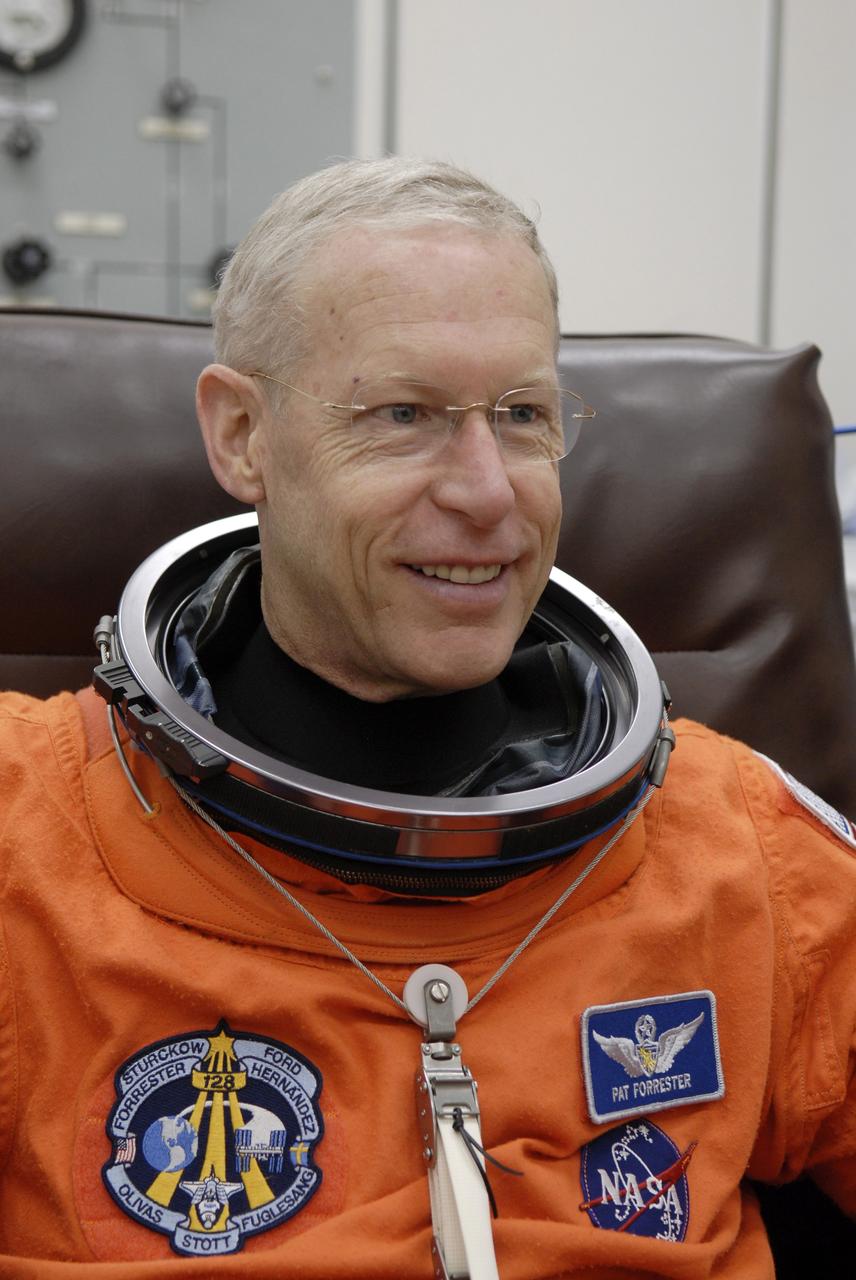
CAPE CANAVERAL, Fla. – STS-128 Mission Specialist Patrick Forrester checks the fit of his launch and entry suit before heading to the NASA Kennedy Space Center's Launch Pad 39A for the simulated launch countdown. The countdown is the culmination of terminal countdown demonstration test activities to prepare the STS-128 crew for launch on space shuttle Discovery's STS-128 mission. Discovery will deliver 33,000 pounds of equipment to the station, including science and storage racks, a freezer to store research samples, a new sleeping compartment and the COLBERT treadmill. Launch is targeted for late August. Photo credit: NASA/Kim Shiflett
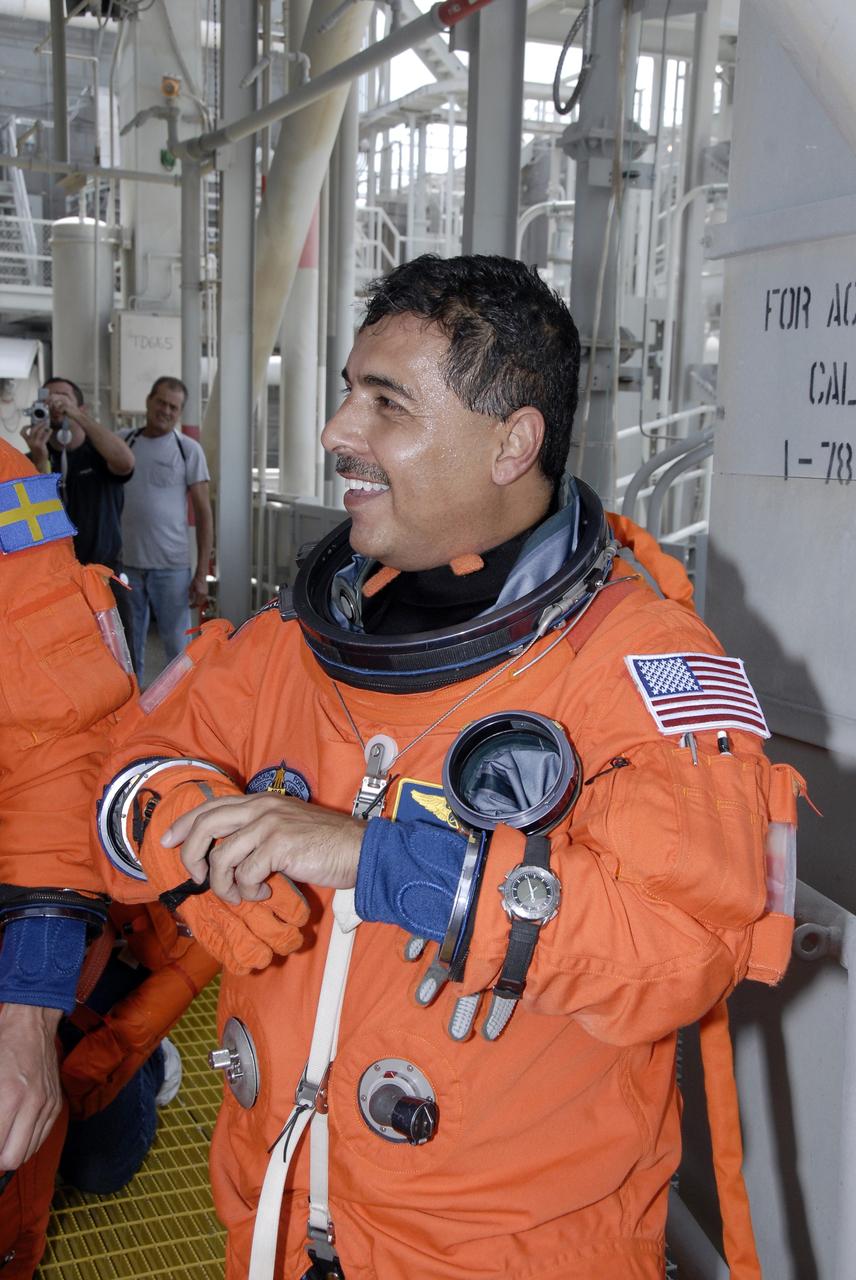
CAPE CANAVERAL, Fla. – After completing emergency exit practice from NASA Kennedy Space Center's fixed service structure, STS-128 Mission Specialist Jose Hernandez removes his gloves. Mission crew members are at Kennedy to take part in the terminal countdown demonstration test, or TCDT, which includes emergency exit training and culminates in the simulated countdown. On the STS-128 mission, Discovery will deliver 33,000 pounds of equipment to the station, including science and storage racks, a freezer to store research samples, a new sleeping compartment and the COLBERT treadmill. Launch is targeted for late August. Photo credit: NASA/Kim Shiflett
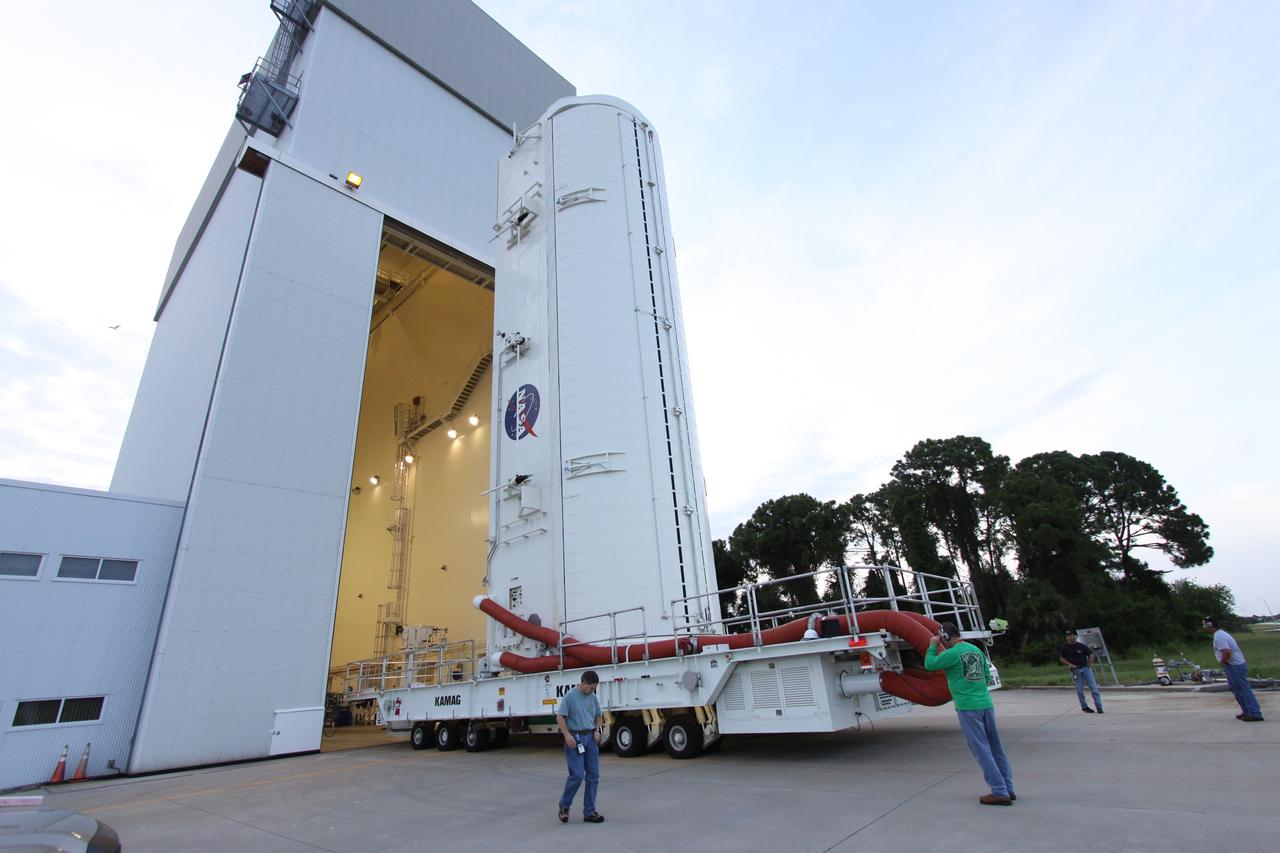
CAPE CANAVERAL, Fla. – The payload canister rolls out of the Vertical Integration Facility at NASA's Kennedy Space Center in Florida. Inside is the payload for space shuttle Discovery and the STS-128 mission, the Multi-Purpose Logistics Module Leonardo and the Lightweight Multi-Purpose Experiment Support Structure Carrier. Discovery's 13-day flight will deliver a new crew member and 33,000 pounds of equipment to the International Space Station. The equipment includes science and storage racks, a freezer to store research samples, a new sleeping compartment and the COLBERT treadmill. Launch of Discovery on its STS-128 mission is targeted for August 25. Photo credit: NASA/Jack Pfaller.
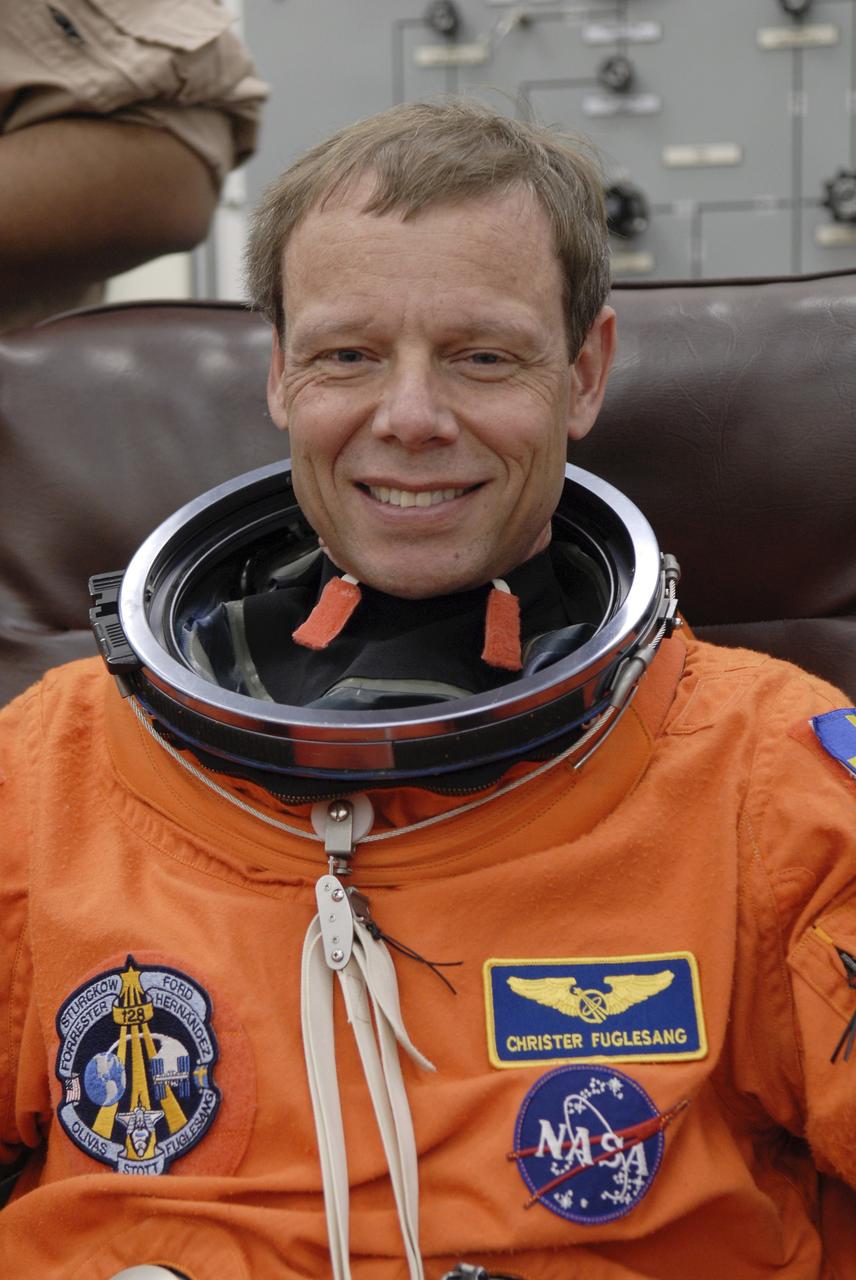
CAPE CANAVERAL, Fla. – STS-128 Mission Specialist Christer Fuglesang is donning his launch and entry suit for a fit check before the simulated launch countdown at NASA Kennedy Space Center's Launch Pad 39A. The countdown is the culmination of terminal countdown demonstration test activities to prepare the STS-128 crew for launch on space shuttle Discovery's STS-128 mission. Discovery will deliver 33,000 pounds of equipment to the station, including science and storage racks, a freezer to store research samples, a new sleeping compartment and the COLBERT treadmill. Launch is targeted for late August. Photo credit: NASA/Kim Shiflett
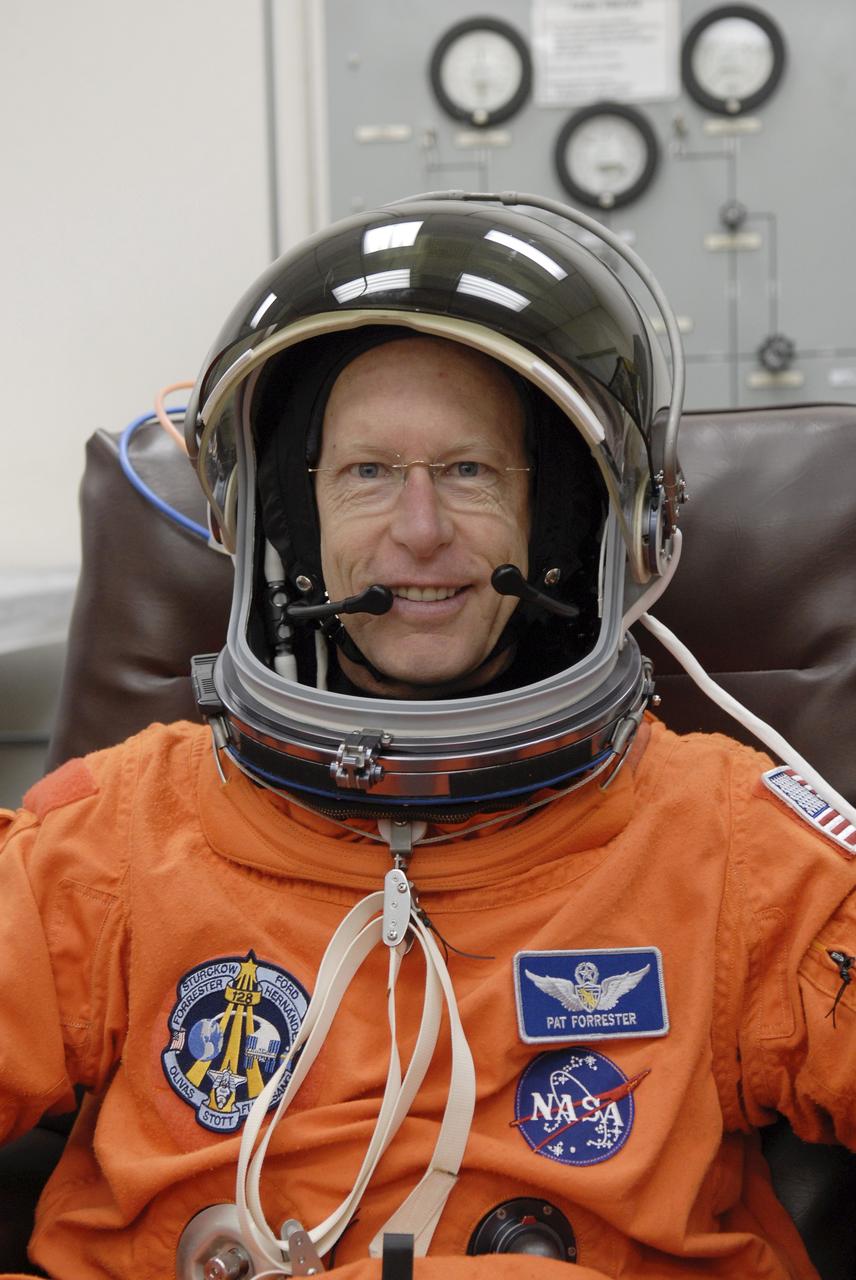
CAPE CANAVERAL, Fla. – STS-128 Mission Specialist Patrick Forrester tests the fit of his helmet before heading to the NASA Kennedy Space Center's Launch Pad 39A for the simulated launch countdown. The countdown is the culmination of terminal countdown demonstration test activities to prepare the STS-128 crew for launch on space shuttle Discovery's STS-128 mission. Discovery will deliver 33,000 pounds of equipment to the station, including science and storage racks, a freezer to store research samples, a new sleeping compartment and the COLBERT treadmill. Launch is targeted for late August. Photo credit: NASA/Kim Shiflett
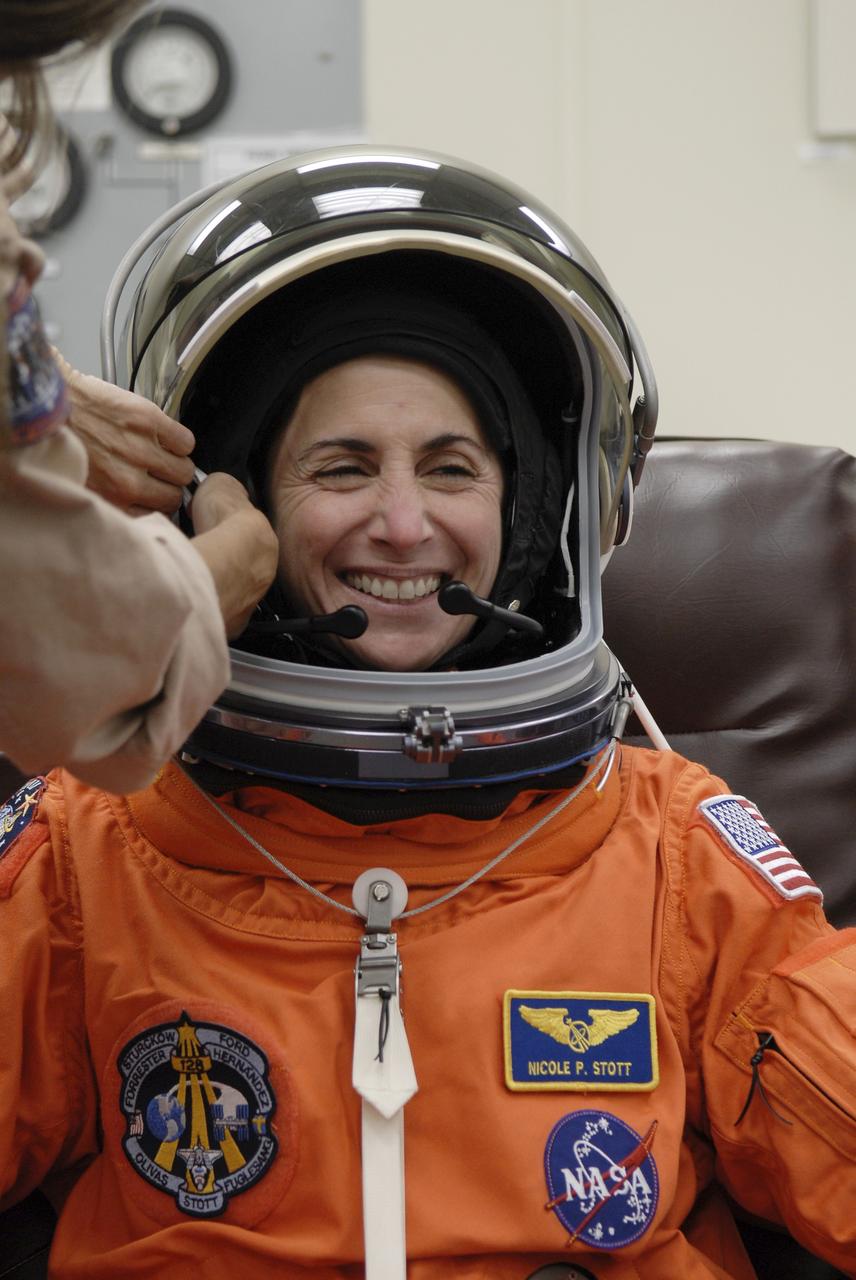
CAPE CANAVERAL, Fla. – STS-128 Mission Specialist Nicole Stott tests the fit of her helmet before the simulated launch countdown at NASA Kennedy Space Center's Launch Pad 39A. The countdown is the culmination of terminal countdown demonstration test activities to prepare the STS-128 crew for launch on space shuttle Discovery's STS-128 mission. Discovery will deliver 33,000 pounds of equipment to the station, including science and storage racks, a freezer to store research samples, a new sleeping compartment and the COLBERT treadmill. Launch is targeted for late August. Photo credit: NASA/Kim Shiflett
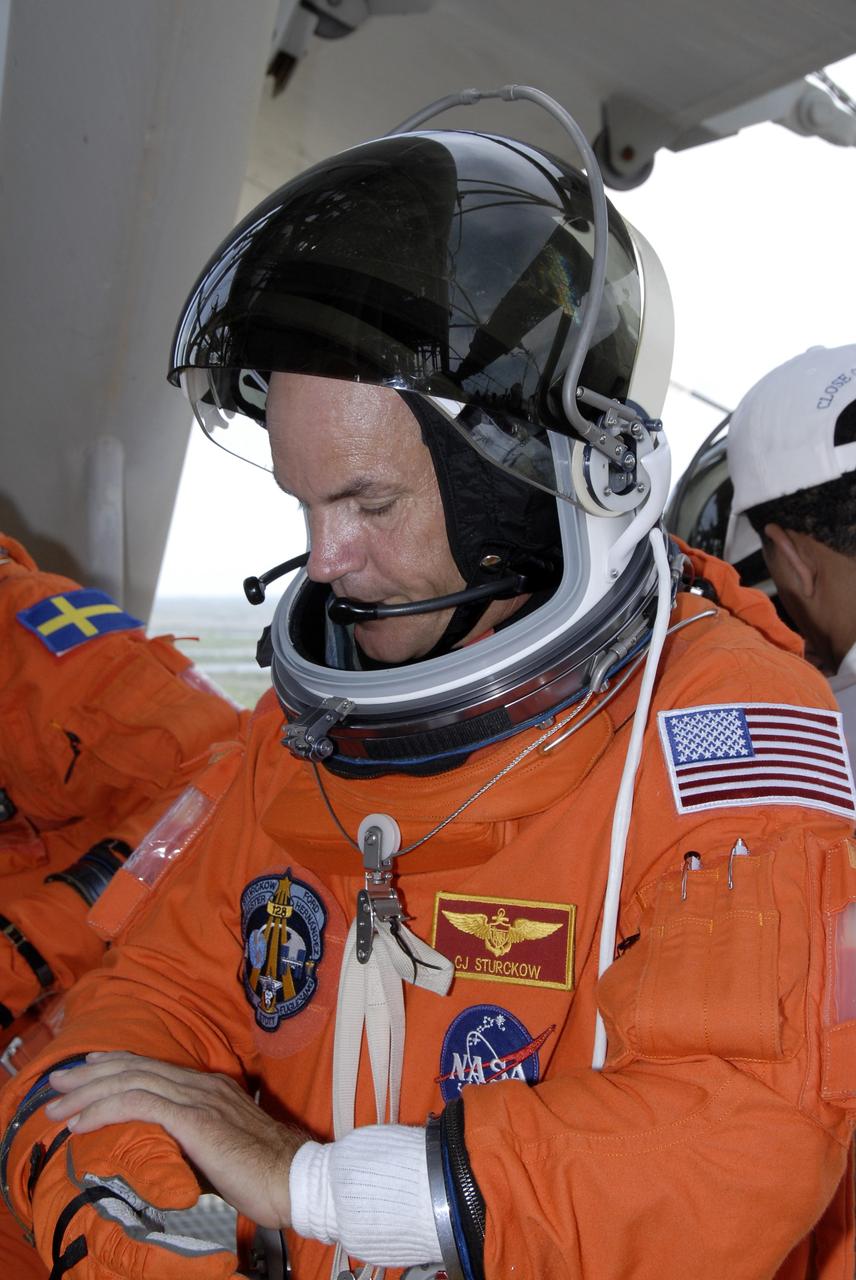
CAPE CANAVERAL, Fla. – After completing emergency exit practice from NASA Kennedy Space Center's fixed service structure, STS-128 Commander Rick Sturckow removes his gloves. Mission crew members are at Kennedy to take part in the terminal countdown demonstration test, or TCDT, which includes emergency exit training and culminates in the simulated countdown. On the STS-128 mission, Discovery will deliver 33,000 pounds of equipment to the station, including science and storage racks, a freezer to store research samples, a new sleeping compartment and the COLBERT treadmill. Launch is targeted for late August. Photo credit: NASA/Kim Shiflett
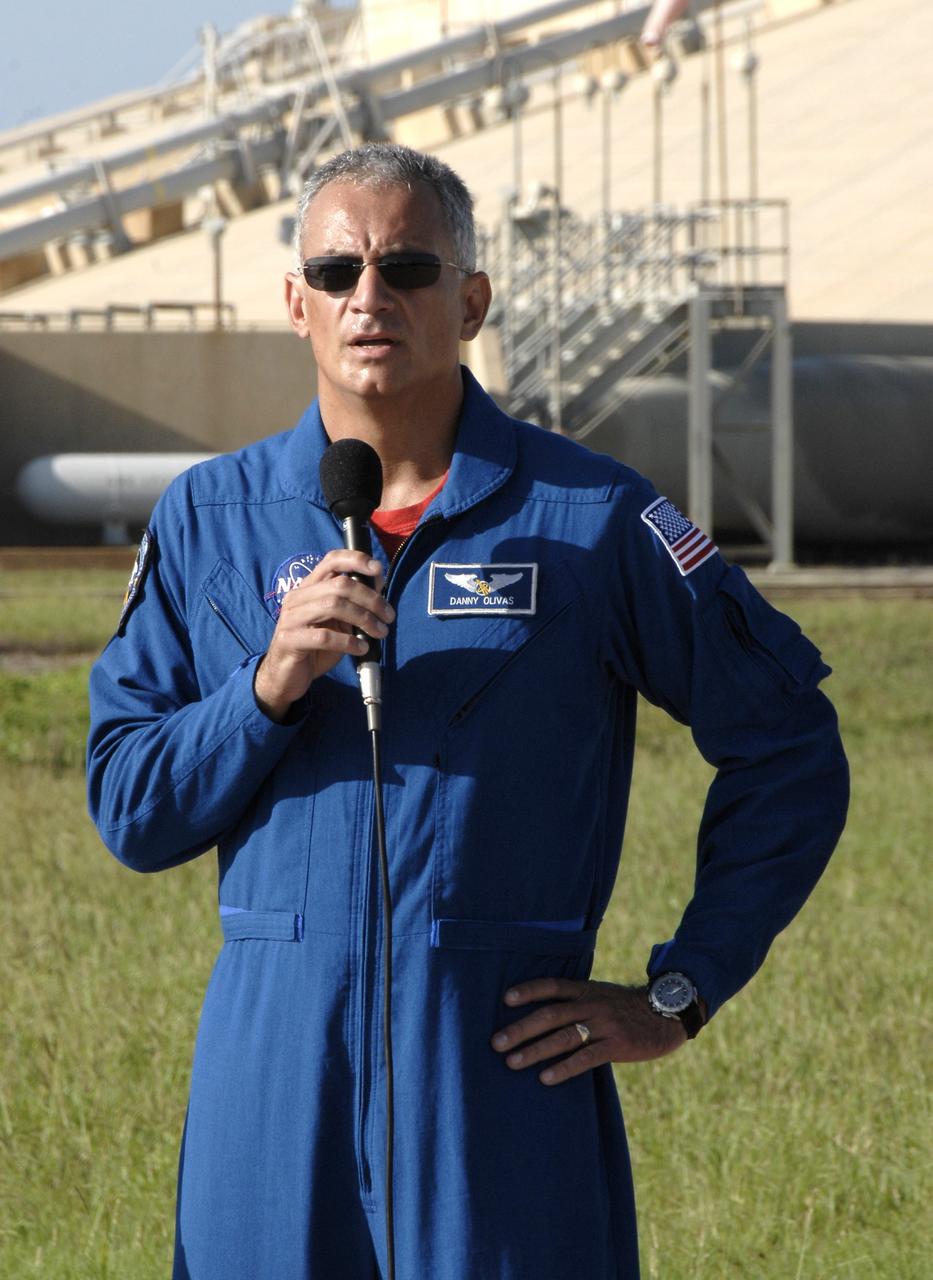
CAPE CANAVERAL, Fla. – At NASA's Kennedy Space Center in Florida, STS-128 Mission Specialist John "Danny" Olivas answers a question from the media during a question-and-answer session near Launch Pad 39A. The crew is at Kennedy for a launch dress rehearsal called the terminal countdown demonstration test, or TCDT, which includes emergency exit training and equipment familiarization, as well as a simulated launch countdown. Discovery will deliver 33,000 pounds of equipment to the station, including science and storage racks, a freezer to store research samples, a new sleeping compartment and the COLBERT treadmill. Photo credit: NASA/Kim Shiflett
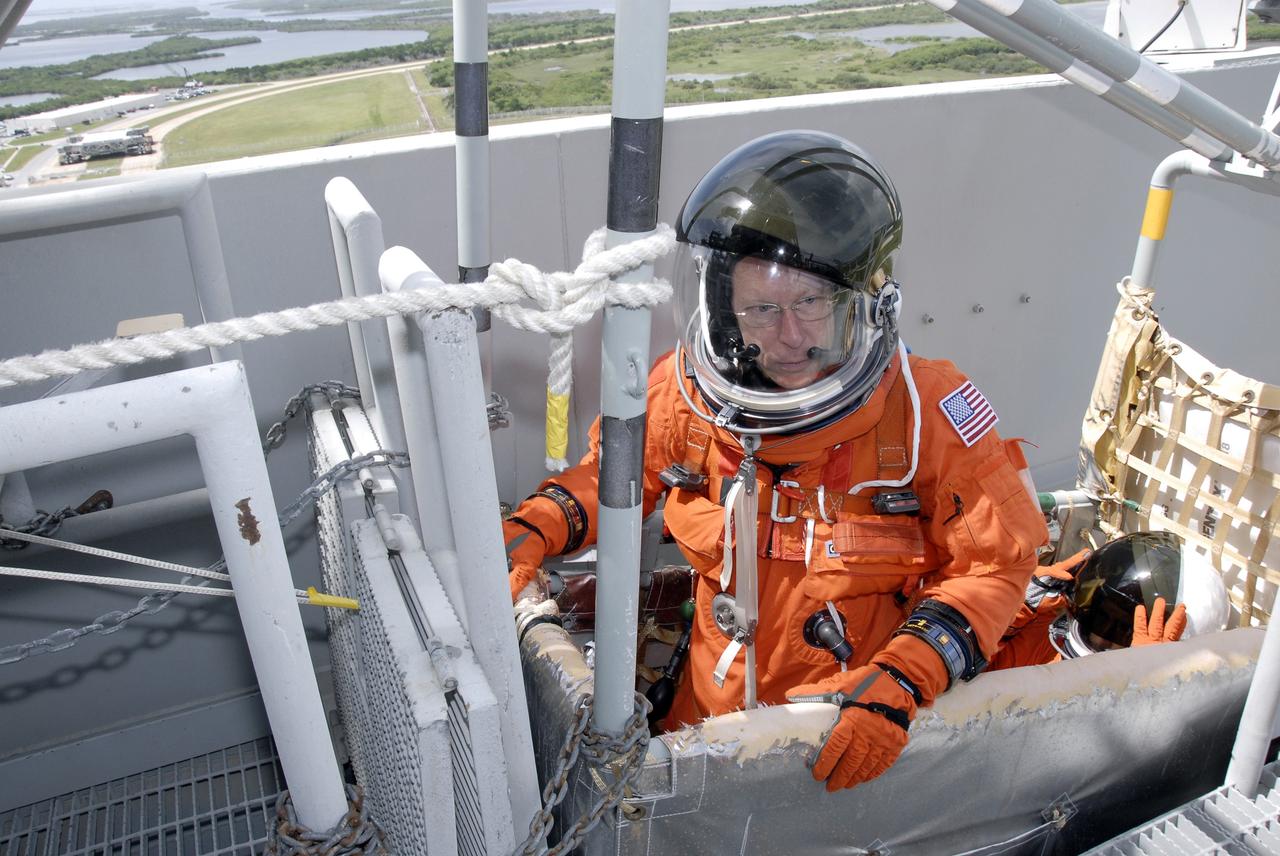
CAPE CANAVERAL, Fla. – After a successful simulated launch countdown, STS-128 Mission Specialists Patrick Forrester (left) and Jose Hernandez settle in the slidewire basket on NASA Kennedy Space Center's fixed service structure. They are practicing emergency exit from the pad. Mission crew members are at Kennedy to take part in the terminal countdown demonstration test, or TCDT, which includes emergency exit training and culminates in the simulated countdown. On the STS-128 mission, Discovery will deliver 33,000 pounds of equipment to the station, including science and storage racks, a freezer to store research samples, a new sleeping compartment and the COLBERT treadmill. Launch is targeted for late August. Photo credit: NASA/Kim Shiflett
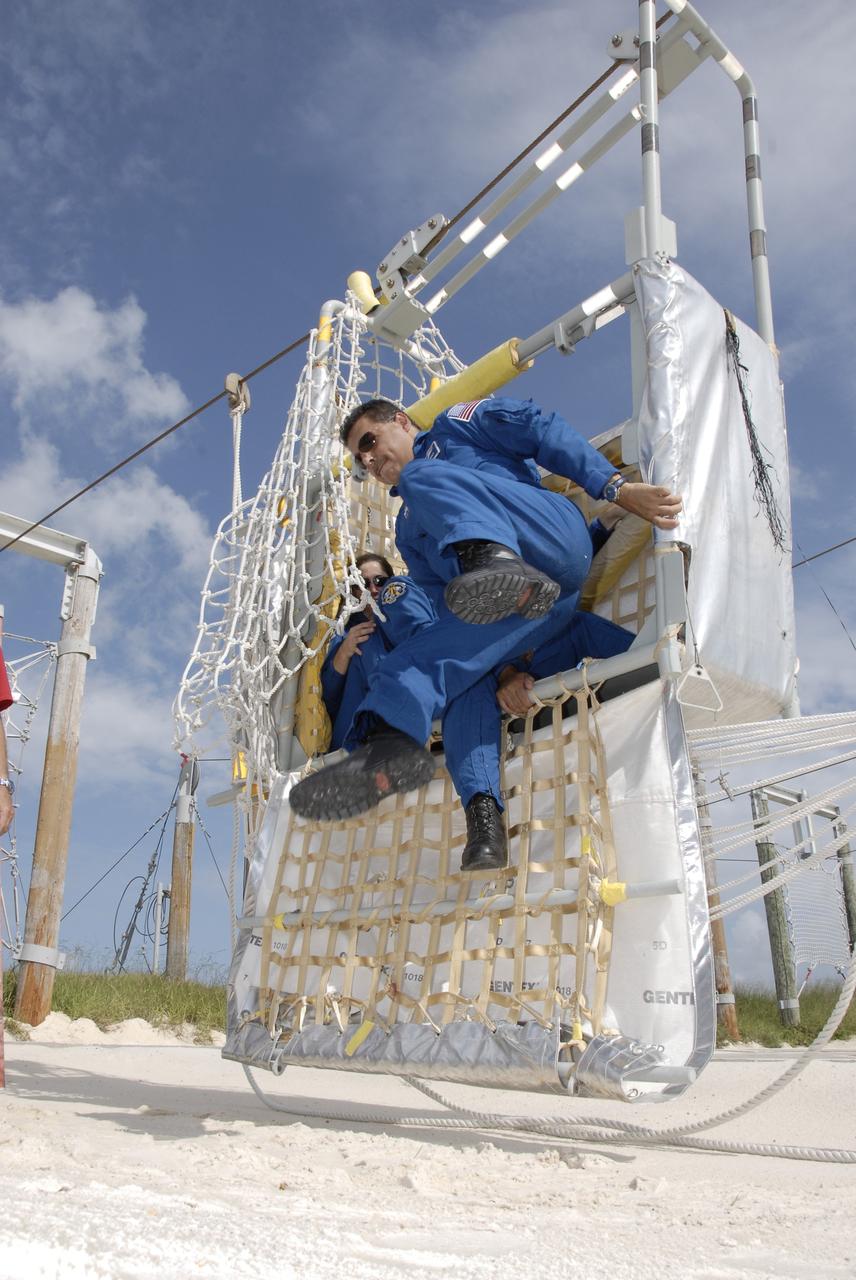
CAPE CANAVERAL, Fla. – At NASA's Kennedy Space Center in Florida, STS-128 Mission Specialist Jose Hernandez practices getting out of a slidewire basket that can be used for emergency exit from Launch Pad 39A. Still in the basket, at left, is Mission Specialist Nicole Stott. The crew is at Kennedy for a launch dress rehearsal called the terminal countdown demonstration test, or TCDT, which includes emergency exit training and equipment familiarization, as well as a simulated launch countdown. Discovery will deliver 33,000 pounds of equipment to the station, including science and storage racks, a freezer to store research samples, a new sleeping compartment and the COLBERT treadmill. Photo credit: NASA/Kim Shiflett
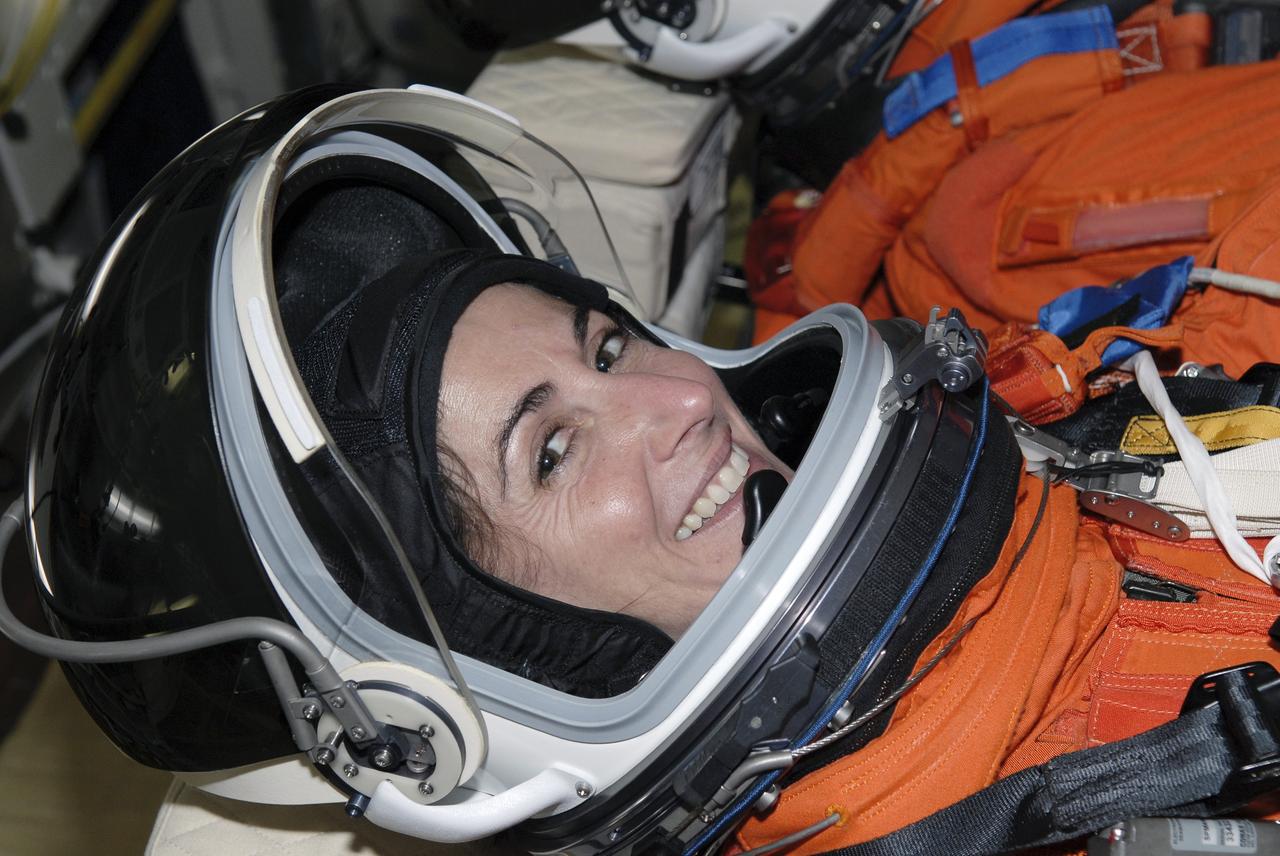
CAPE CANAVERAL, Fla. – Seated in space shuttle Discovery's cockpit on NASA Kennedy Space Center's Launch Pad 39A, STS-128 Mission Specialist Nicole Stott is glad to have completed the simulated launch countdown. She and other mission crew members are at Kennedy to take part in the terminal countdown demonstration test, or TCDT, which includes emergency exit training and culminates in the simulated countdown. On the STS-128 mission, Discovery will deliver 33,000 pounds of equipment to the station, including science and storage racks, a freezer to store research samples, a new sleeping compartment and the COLBERT treadmill. Launch is targeted for late August. Photo credit: NASA/Kim Shiflett
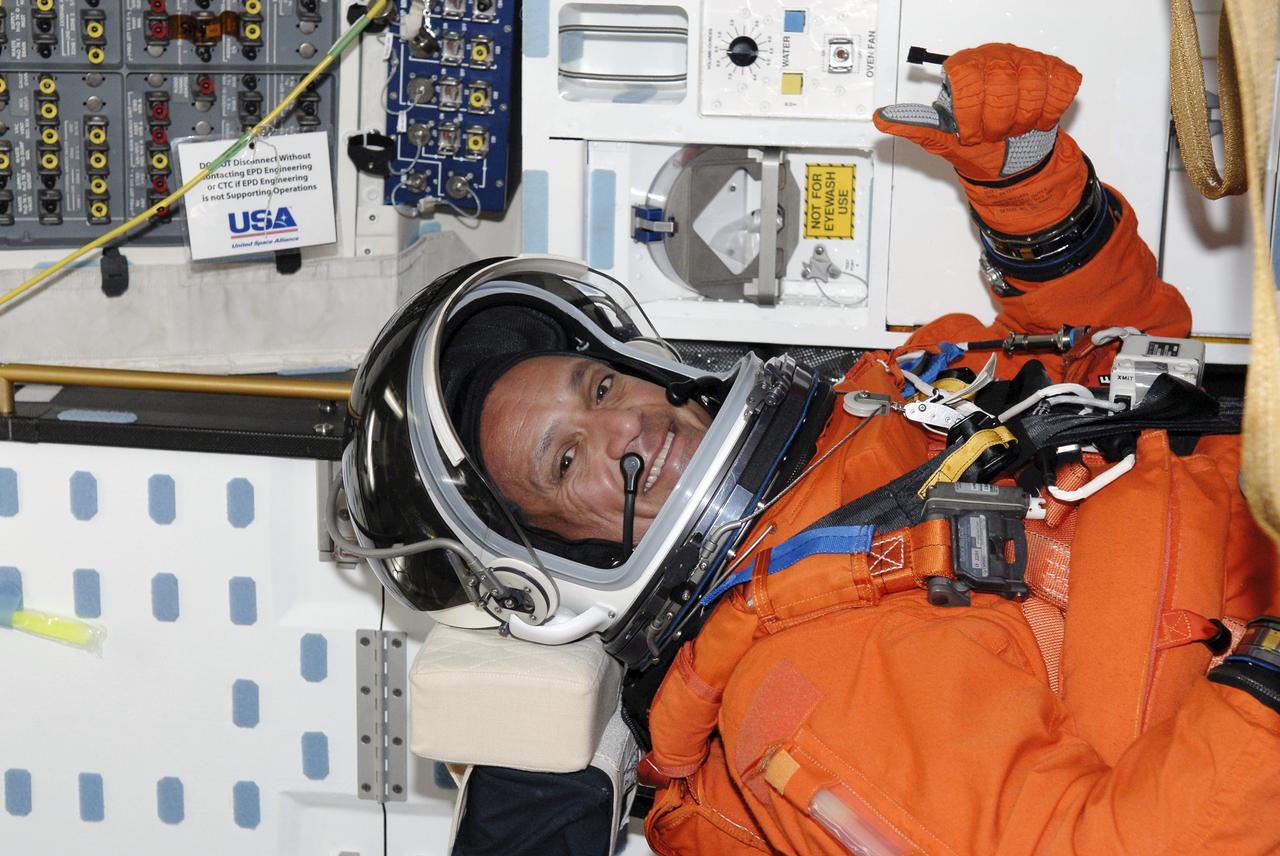
CAPE CANAVERAL, Fla. – Seated in space shuttle Discovery's cockpit on NASA Kennedy Space Center's Launch Pad 39A, STS-128 Mission Specialist Danny Olivas is glad to have completed the simulated launch countdown. He and other mission crew members are at Kennedy to take part in the terminal countdown demonstration test, or TCDT, which includes emergency exit training and culminates in the simulated countdown. On the STS-128 mission, Discovery will deliver 33,000 pounds of equipment to the station, including science and storage racks, a freezer to store research samples, a new sleeping compartment and the COLBERT treadmill. Launch is targeted for late August. Photo credit: NASA/Kim Shiflett
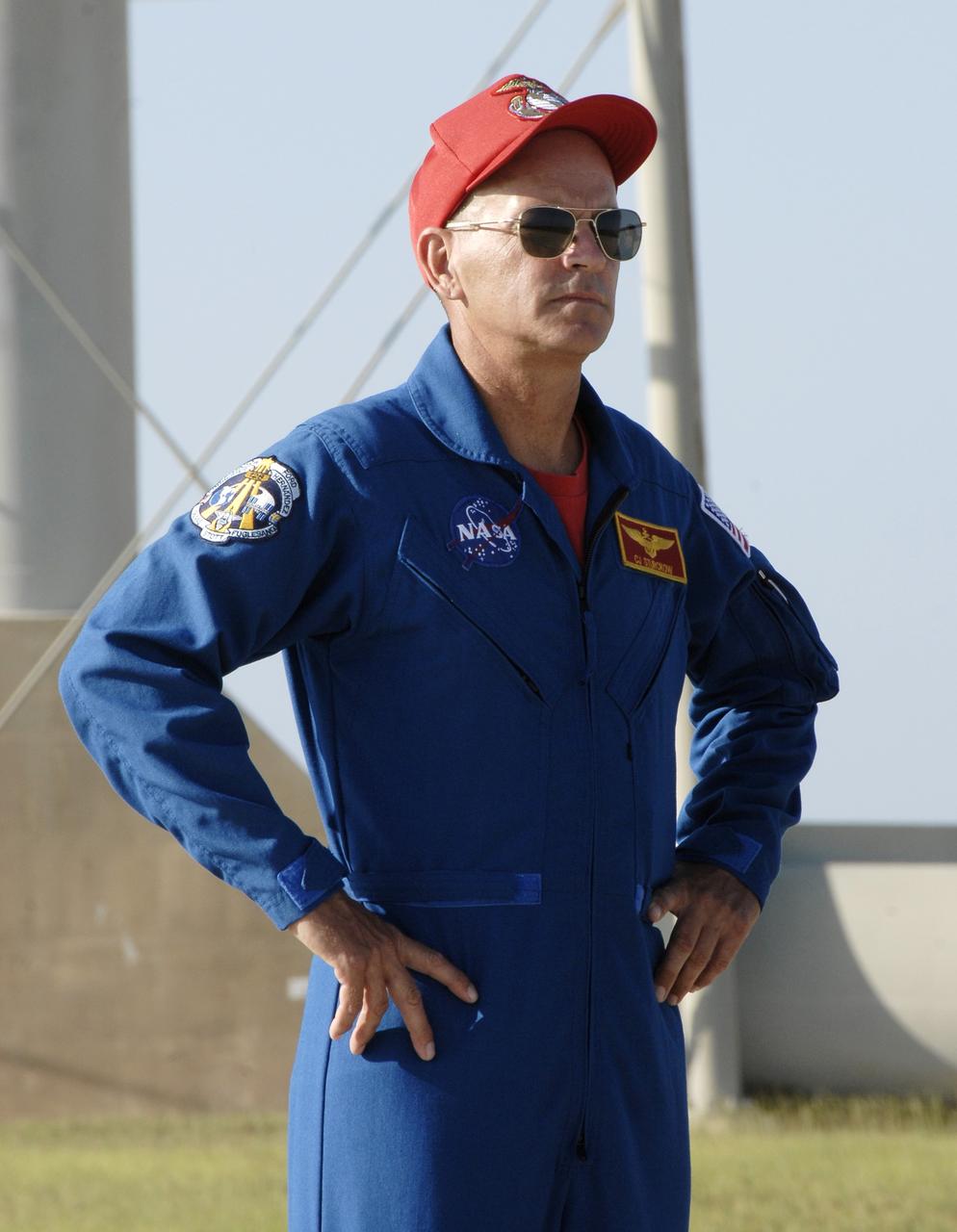
CAPE CANAVERAL, Fla. – At NASA's Kennedy Space Center in Florida, STS-128 Commander Rick Sturckow listens to a question from the media during a question-and-answer session near Launch Pad 39A. The crew is at Kennedy for a launch dress rehearsal called the terminal countdown demonstration test, or TCDT, which includes emergency exit training and equipment familiarization, as well as a simulated launch countdown. Discovery will deliver 33,000 pounds of equipment to the station, including science and storage racks, a freezer to store research samples, a new sleeping compartment and the COLBERT treadmill. Photo credit: NASA/Kim Shiflett
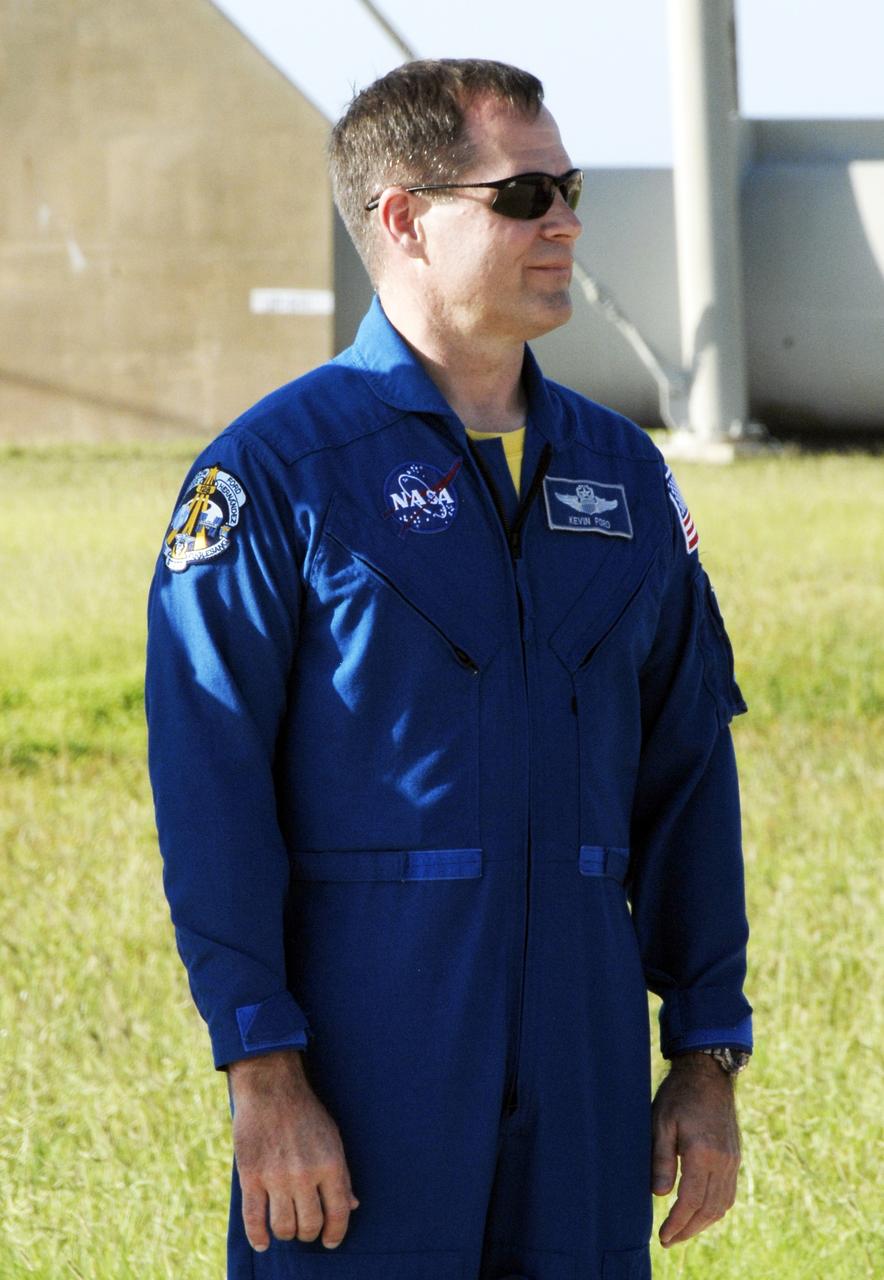
CAPE CANAVERAL, Fla. – At NASA's Kennedy Space Center in Florida, STS-128 Pilot Kevin Ford waits his turn to answer questions from the media during a question-and-answer session near Launch Pad 39A. The crew is at Kennedy for a launch dress rehearsal called the terminal countdown demonstration test, or TCDT, which includes emergency exit training and equipment familiarization, as well as a simulated launch countdown. Discovery will deliver 33,000 pounds of equipment to the station, including science and storage racks, a freezer to store research samples, a new sleeping compartment and the COLBERT treadmill. Photo credit: NASA/Kim Shiflett
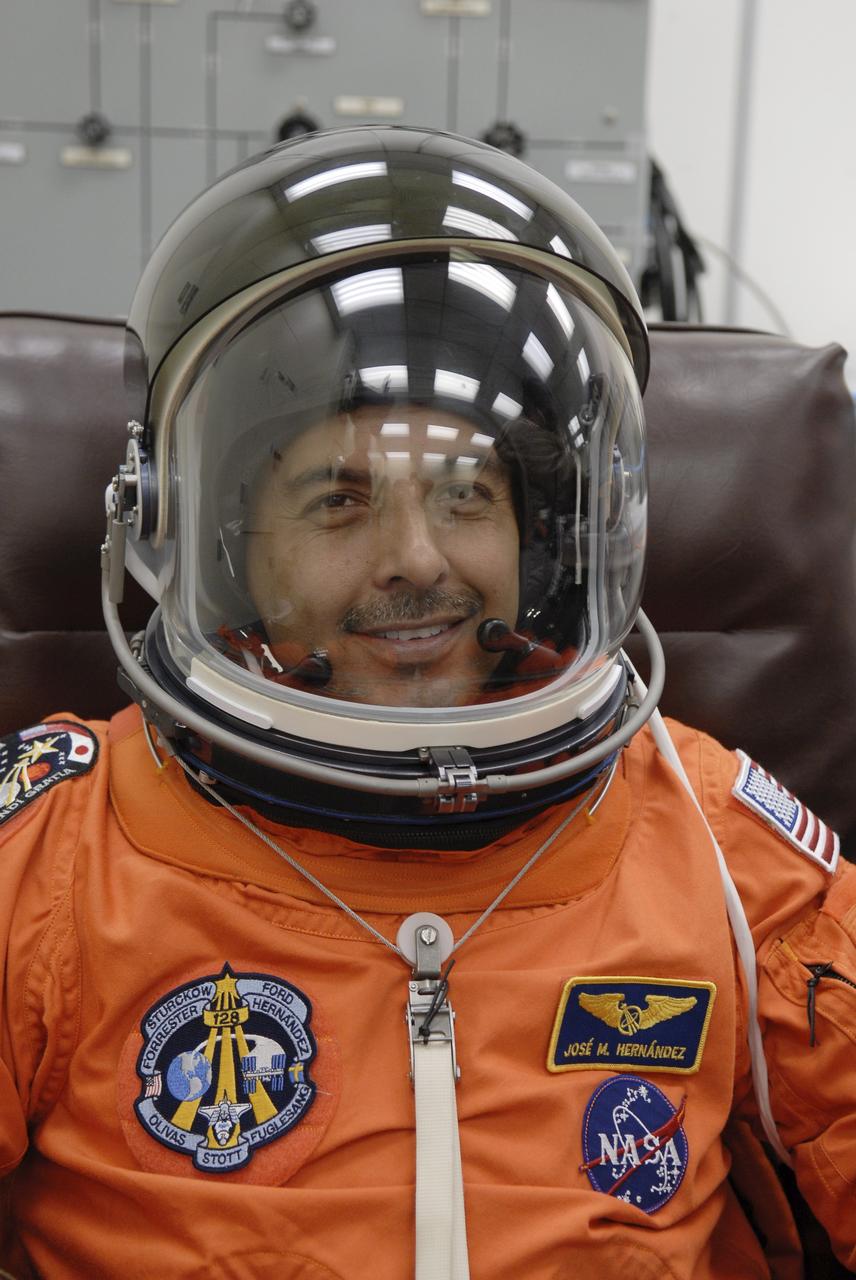
CAPE CANAVERAL, Fla. – STS-128 Mission Specialist Jose Hernandez completes the fit check of his launch and entry suit and helmet before heading to the NASA Kennedy Space Center's Launch Pad 39A for the simulated launch countdown. The countdown is the culmination of terminal countdown demonstration test activities to prepare the STS-128 crew for launch on space shuttle Discovery's STS-128 mission. Discovery will deliver 33,000 pounds of equipment to the station, including science and storage racks, a freezer to store research samples, a new sleeping compartment and the COLBERT treadmill. Launch is targeted for late August. Photo credit: NASA/Kim Shiflett
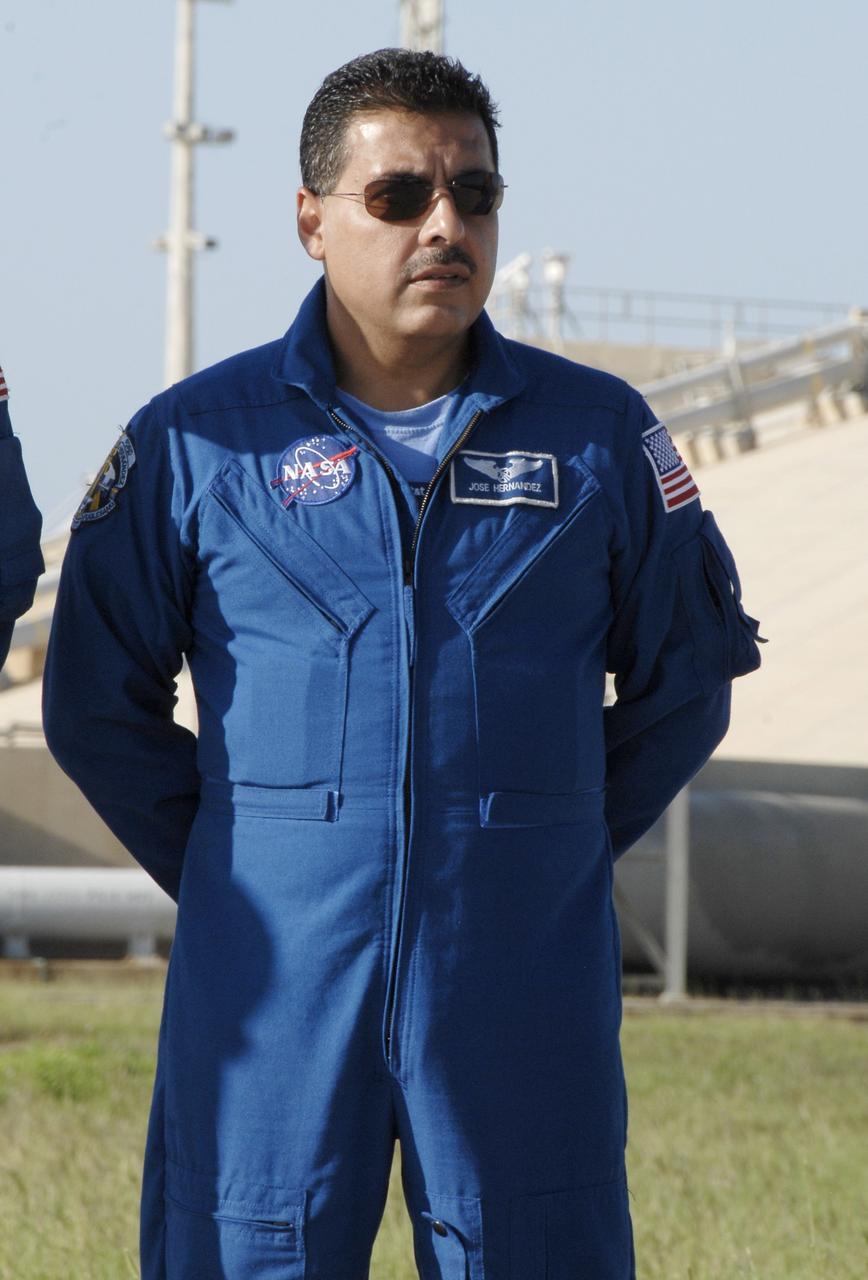
CAPE CANAVERAL, Fla. – At NASA's Kennedy Space Center in Florida, STS-128 Mission Specialist Jose Hernandez listens to a question from the media during a question-and-answer session near Launch Pad 39A. The crew is at Kennedy for a launch dress rehearsal called the terminal countdown demonstration test, or TCDT, which includes emergency exit training and equipment familiarization, as well as a simulated launch countdown. Discovery will deliver 33,000 pounds of equipment to the station, including science and storage racks, a freezer to store research samples, a new sleeping compartment and the COLBERT treadmill. Photo credit: NASA/Kim Shiflett
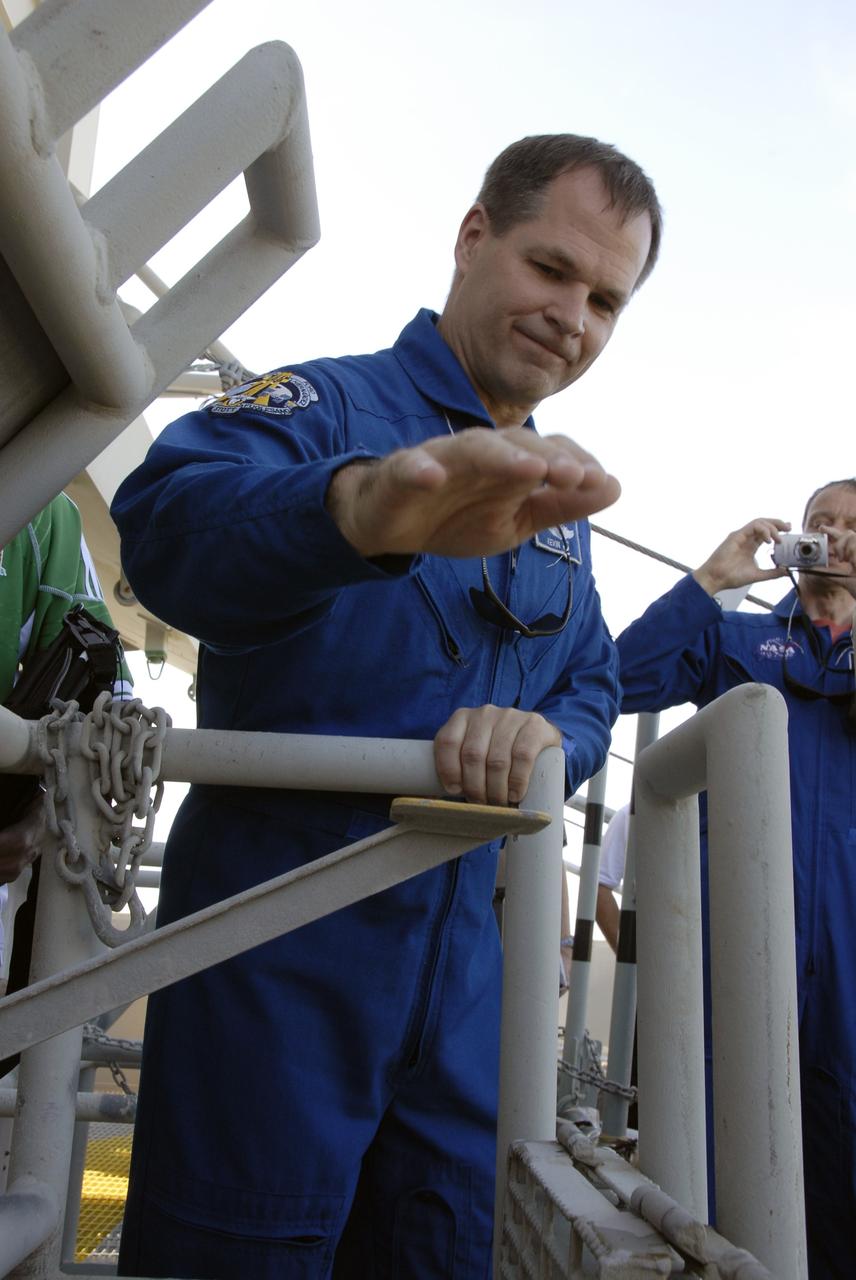
CAPE CANAVERAL, Fla. – STS-128 Pilot Kevin Ford gets ready to push the lever for the slidewire basket on Launch Pad 39A at NASA's Kennedy Space Center in Florida. He and other crew members are being instructed in emergency exit procedures from the pad. The crew is at Kennedy for a launch dress rehearsal called the terminal countdown demonstration test, or TCDT, which includes emergency exit training and equipment familiarization, as well as a simulated launch countdown. Discovery will deliver 33,000 pounds of equipment to the station, including science and storage racks, a freezer to store research samples, a new sleeping compartment and the COLBERT treadmill. Photo credit: NASA/Kim Shiflett
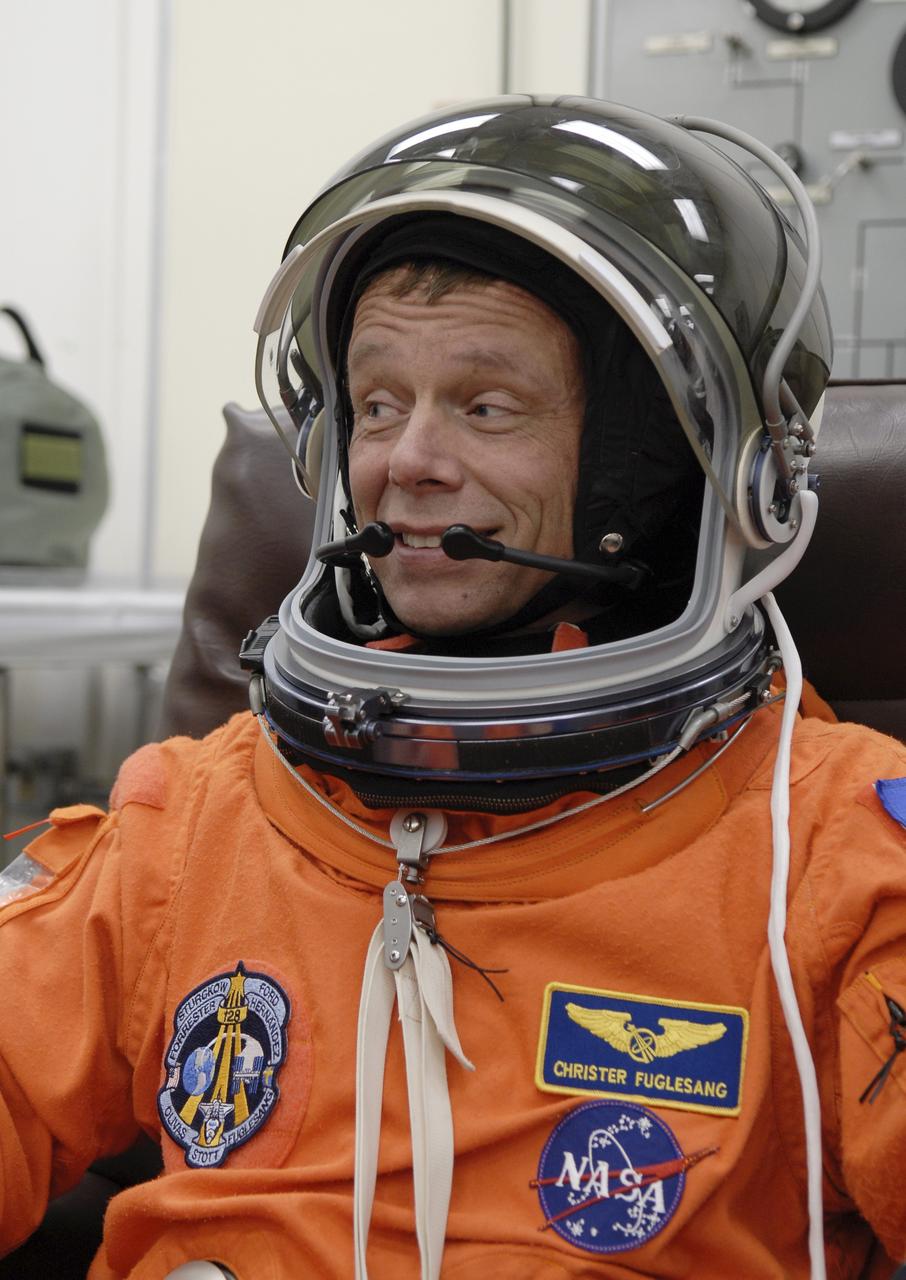
CAPE CANAVERAL, Fla. – STS-128 Mission Specialist Christer Fuglesang tests the fit of his helmet before heading to the NASA Kennedy Space Center's Launch Pad 39A for the simulated launch countdown. The countdown is the culmination of terminal countdown demonstration test activities to prepare the STS-128 crew for launch on space shuttle Discovery's STS-128 mission. Discovery will deliver 33,000 pounds of equipment to the station, including science and storage racks, a freezer to store research samples, a new sleeping compartment and the COLBERT treadmill. Launch is targeted for late August. Photo credit: NASA/Kim Shiflett
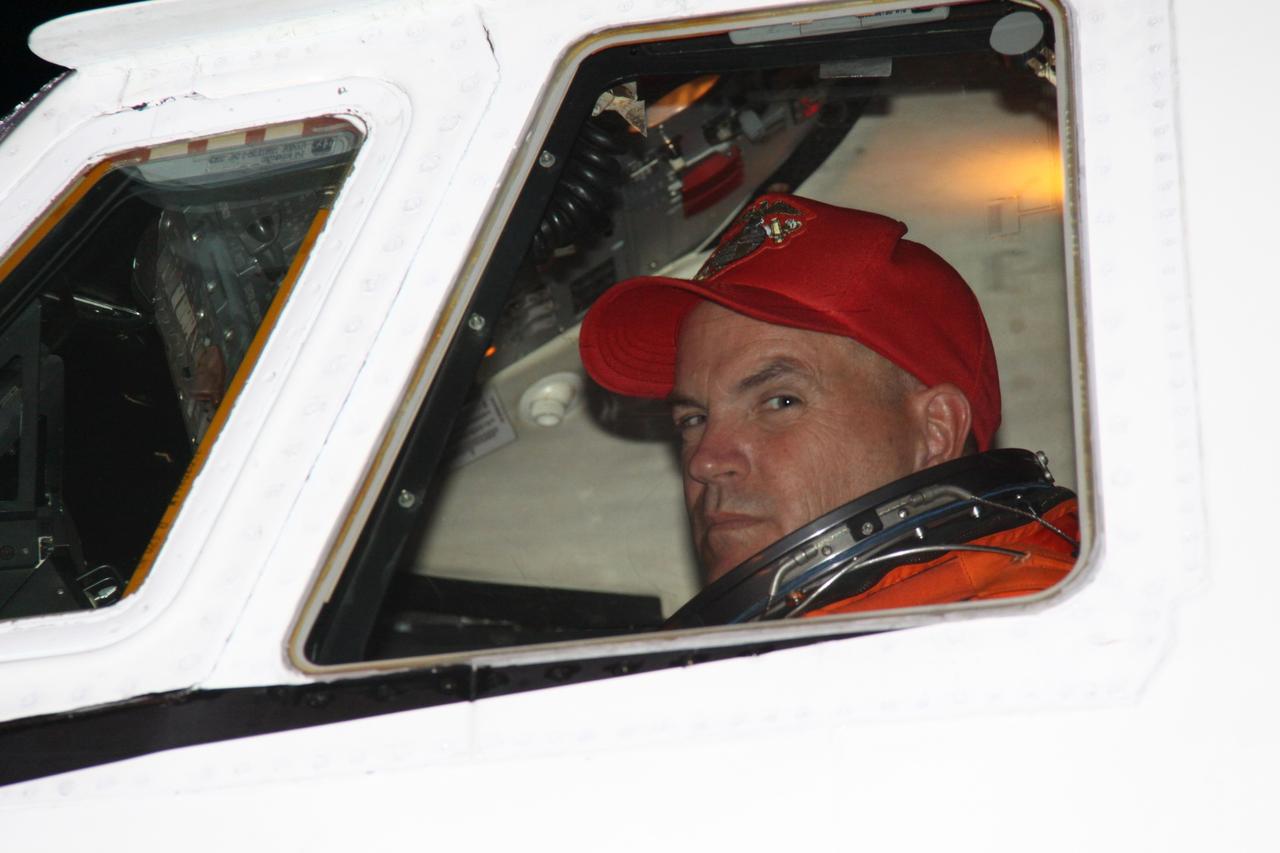
CAPE CANAVERAL, Fla. – STS-128 Commander Rick Sturckow sits in the Shuttle Training Aircraft cockpit at NASA Kennedy Space Center's Shuttle Landing Facility. Sturckow and Pilot Kevin Ford are ready to practice shuttle landings as preparation for space shuttle Discovery's launch Aug. 25 on the STS-128 mission. The 13-day mission will deliver a new crew member and 33,000 pounds of equipment to the International Space Station. The equipment includes science and storage racks, a freezer to store research samples, a new sleeping compartment and the COLBERT treadmill. Photo credit: NASA/Troy Cryder
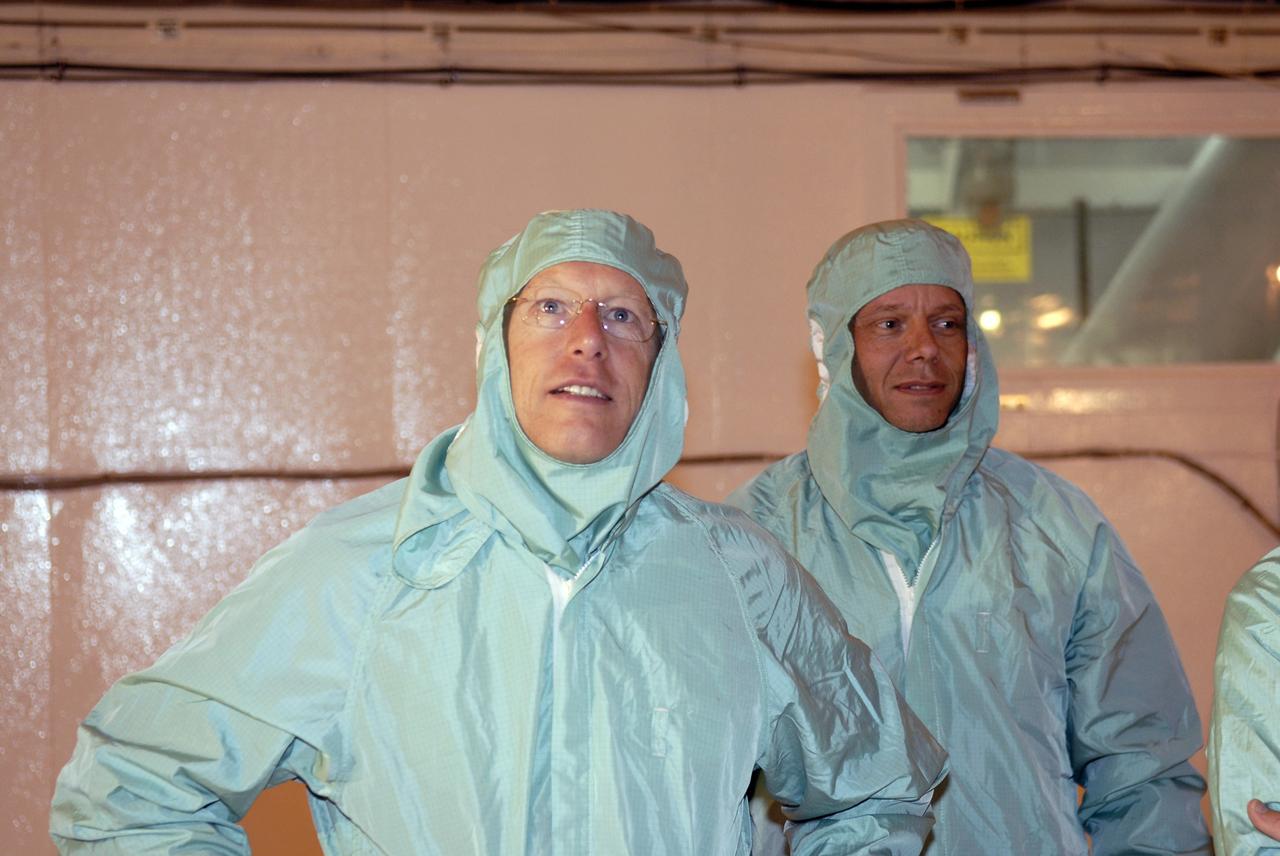
CAPE CANAVERAL, Fla. – In the Payload Changeout Room on NASA Kennedy Space Center's Launch Pad 39A, STS-128 Mission Specialists Patrick Forrester (left) and Christer Fuglesang take a close look at the payloads to be installed in space shuttle Discovery. The crew is at Kennedy to take part in the terminal countdown demonstration test, or TCDT, which includes equipment familiarization, emergency exit training and a simulated countdown. On the STS-128 mission, Discovery will deliver 33,000 pounds of equipment to the station, including science and storage racks, a freezer to store research samples, a new sleeping compartment and the COLBERT treadmill. Launch is targeted for late August. Photo credit: NASA/Kim Shiflett
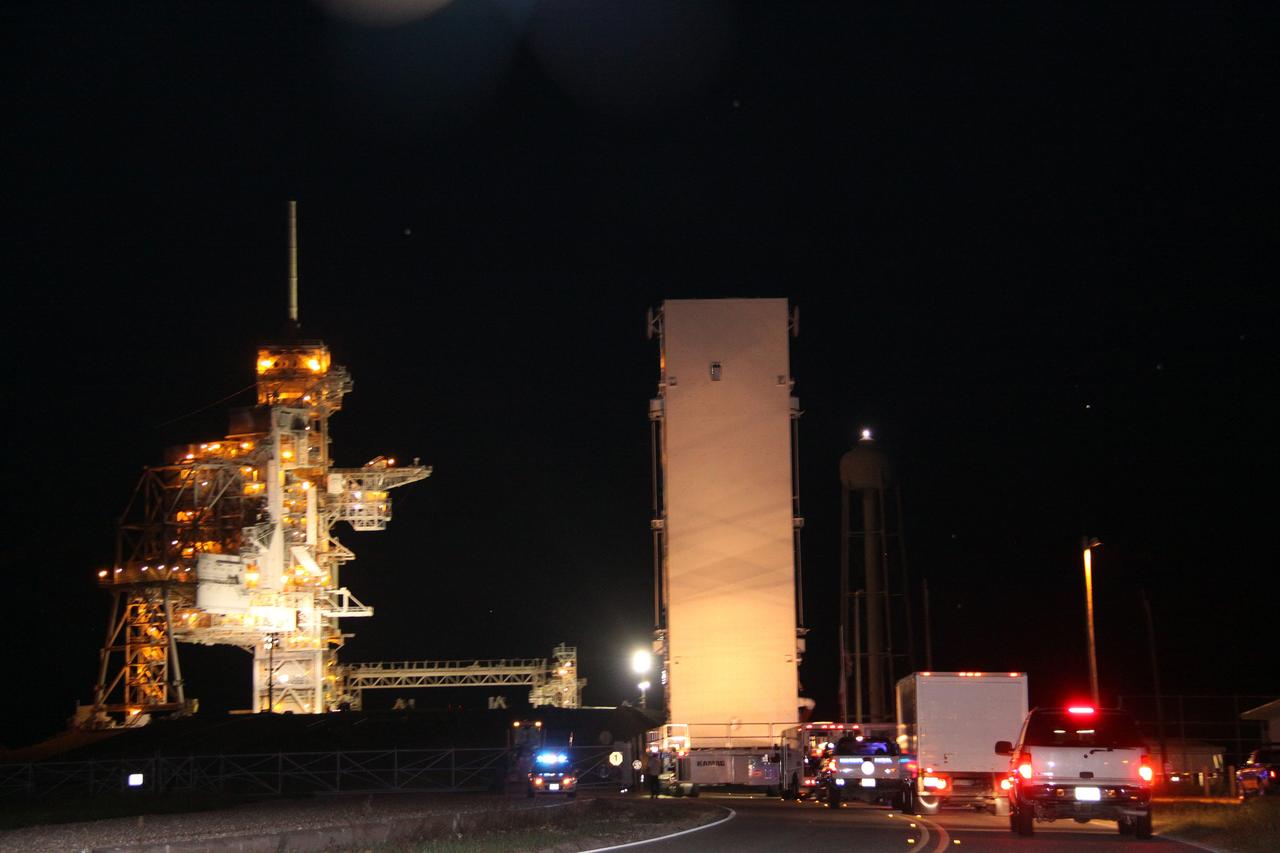
CAPE CANAVERAL, Fla. – The payload canister rolls toward Launch Pad 39A at NASA's Kennedy Space Center in Florida. Inside is the payload for space shuttle Discovery and the STS-128 mission, the Multi-Purpose Logistics Module Leonardo and the Lightweight Multi-Purpose Experiment Support Structure Carrier. Discovery's 13-day flight will deliver a new crew member and 33,000 pounds of equipment to the International Space Station. The equipment includes science and storage racks, a freezer to store research samples, a new sleeping compartment and the COLBERT treadmill. Launch of Discovery on its STS-128 mission is targeted for August 25. Photo credit: NASA/Jack Pfaller.
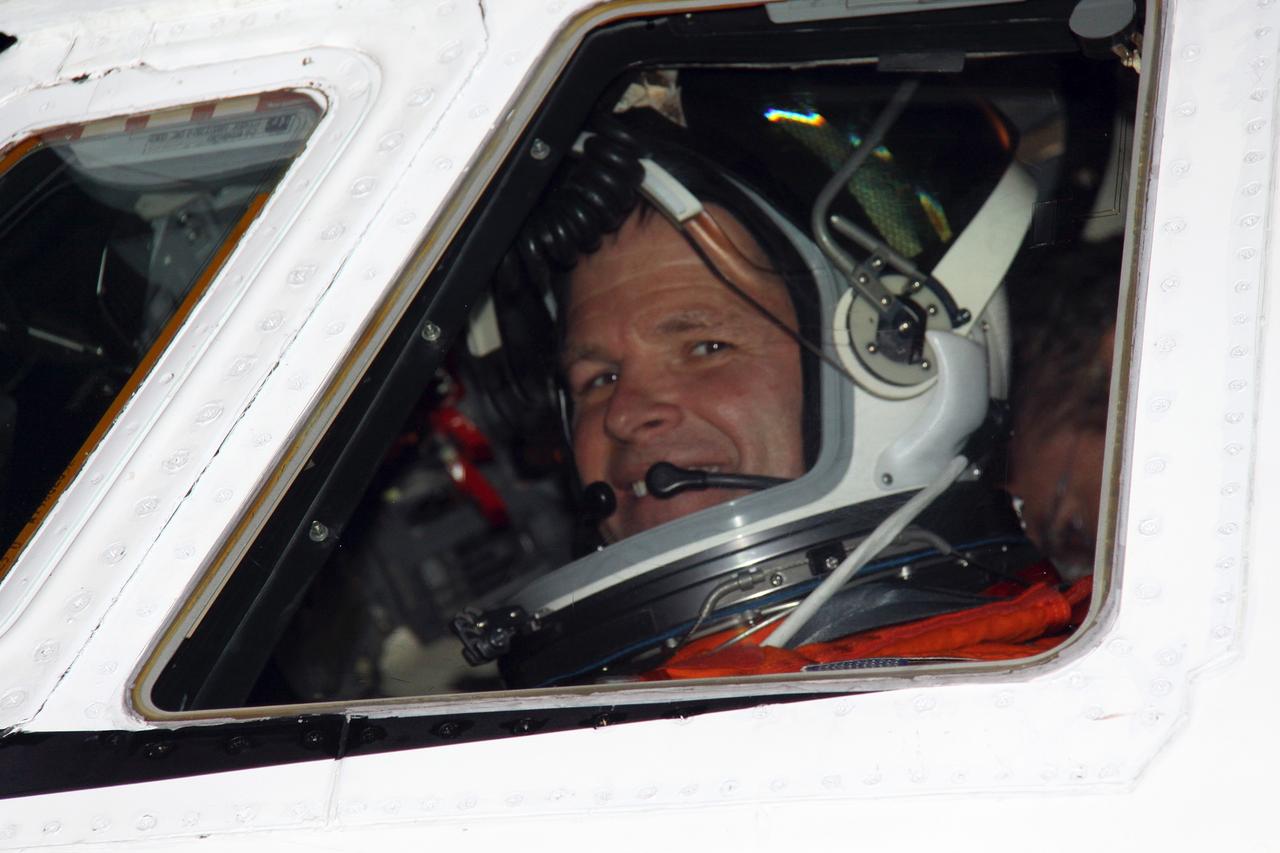
CAPE CANAVERAL, Fla. – STS-128 Pilot Kevin Ford sits in the Shuttle Training Aircraft cockpit at NASA Kennedy Space Center's Shuttle Landing Facility. Ford and Commander Rick Sturckow are ready to practice shuttle landings as preparation for space shuttle Discovery's launch Aug. 25 on the STS-128 mission. The 13-day mission will deliver a new crew member and 33,000 pounds of equipment to the International Space Station. The equipment includes science and storage racks, a freezer to store research samples, a new sleeping compartment and the COLBERT treadmill. Photo credit: NASA/Troy Cryder
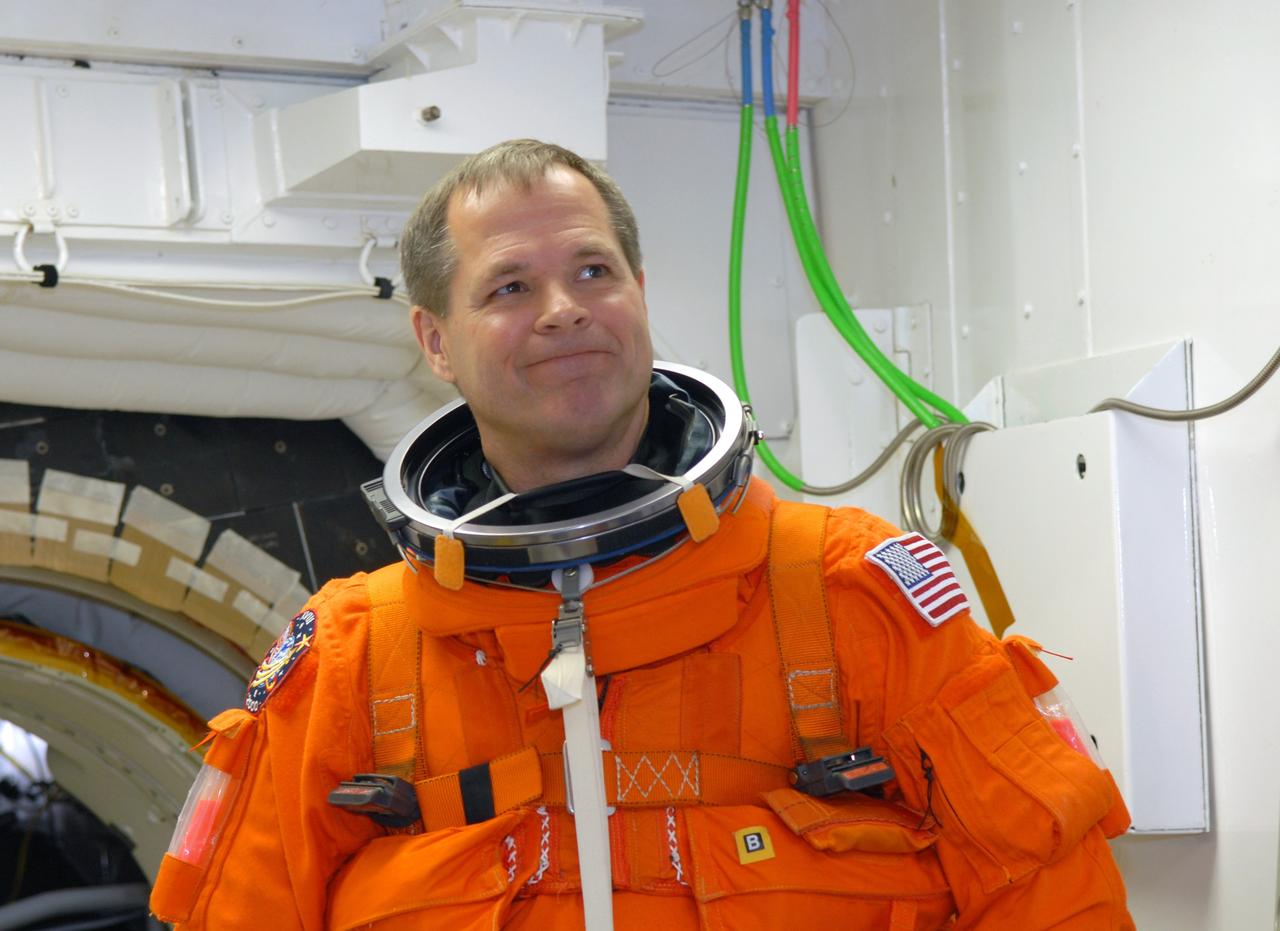
CAPE CANAVERAL, Fla. – STS-128 Pilot Kevin Ford is the White Room on NASA Kennedy Space Center's Launch Pad 39A getting ready to enter space shuttle Discovery. The White Room is at the end of the orbiter access arm and provides entry into the shuttle. Mission crew members are at Kennedy to take part in the terminal countdown demonstration test, or TCDT, which culminates in a simulated launch countdown inside the shuttle. On the STS-128 mission, Discovery will deliver 33,000 pounds of equipment to the station, including science and storage racks, a freezer to store research samples, a new sleeping compartment and the COLBERT treadmill. Launch is targeted for late August. Photo credit: NASA/Jim Grossmann
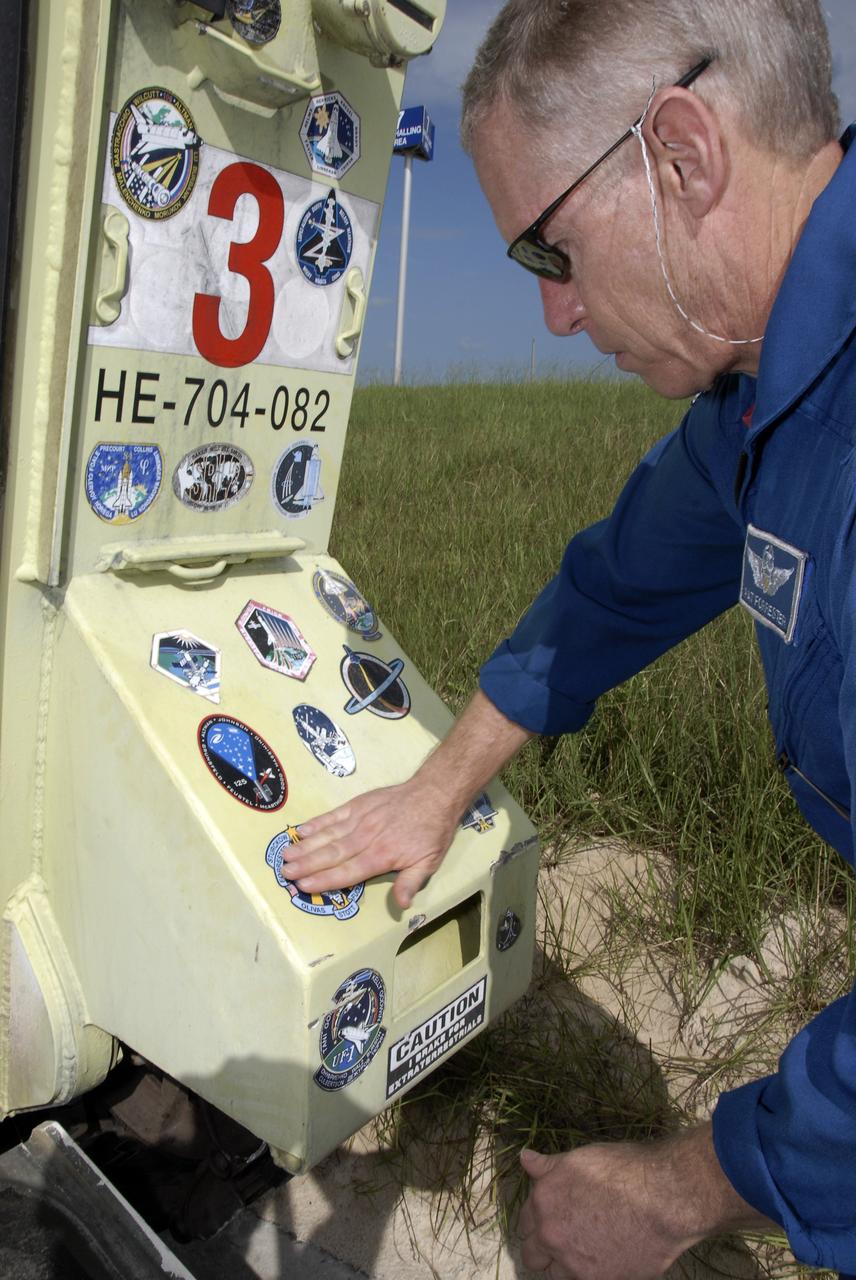
CAPE CANAVERAL, Fla. – At NASA's Kennedy Space Center in Florida, STS-128 Mission Specialist Patrick Forrester places the mission patch on part of the M-113 armored personnel carrier that can be used for emergency exit from the launch pad. The crew is at Kennedy for a launch dress rehearsal called the terminal countdown demonstration test, or TCDT, which includes emergency exit training and equipment familiarization, as well as a simulated launch countdown. Discovery will deliver 33,000 pounds of equipment to the station, including science and storage racks, a freezer to store research samples, a new sleeping compartment and the COLBERT treadmill. Photo credit: NASA/Kim Shiflett
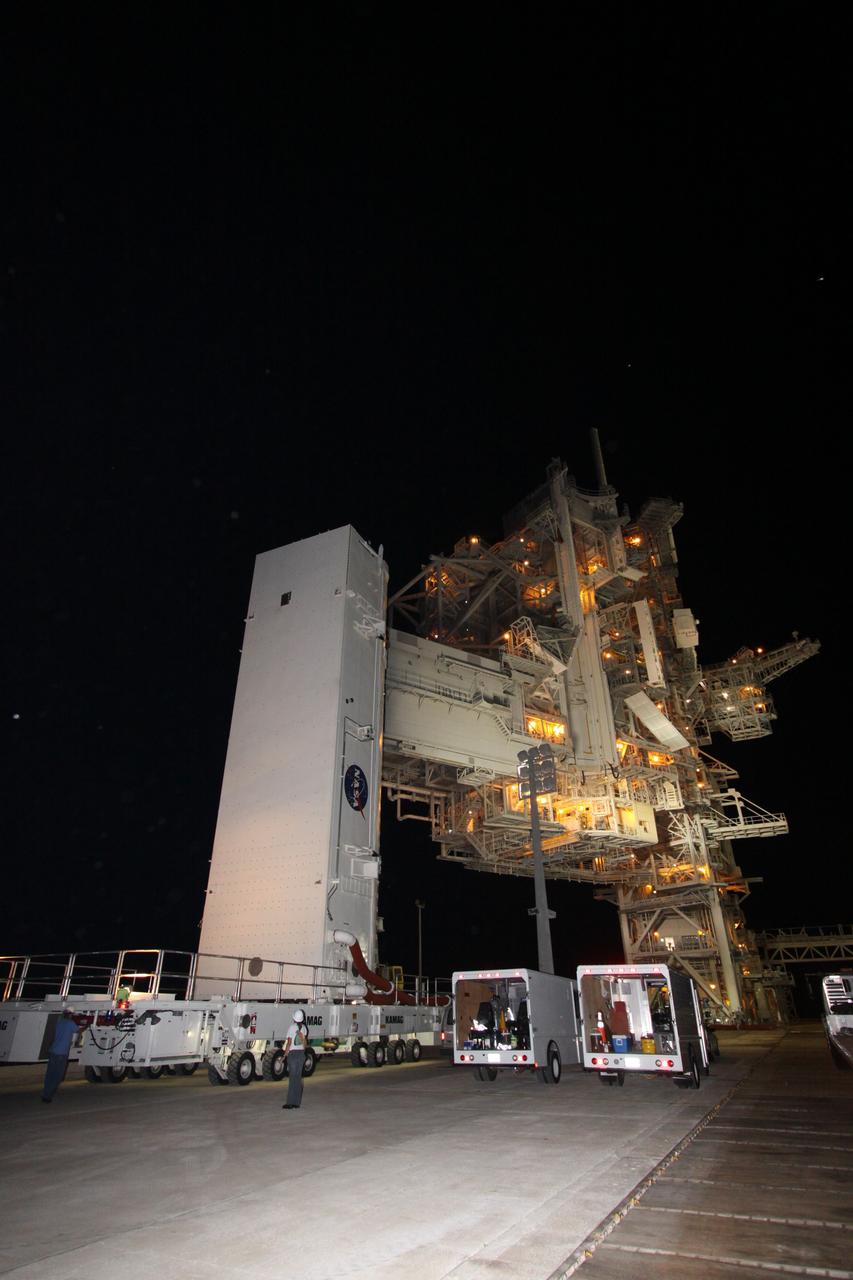
CAPE CANAVERAL, Fla. – The payload canister rolls onto Launch Pad 39A at NASA's Kennedy Space Center in Florida. Inside is the payload for space shuttle Discovery and the STS-128 mission, the Multi-Purpose Logistics Module Leonardo and the Lightweight Multi-Purpose Experiment Support Structure Carrier. Discovery's 13-day flight will deliver a new crew member and 33,000 pounds of equipment to the International Space Station. The equipment includes science and storage racks, a freezer to store research samples, a new sleeping compartment and the COLBERT treadmill. Launch of Discovery on its STS-128 mission is targeted for August 25. Photo credit: NASA/Jack Pfaller.
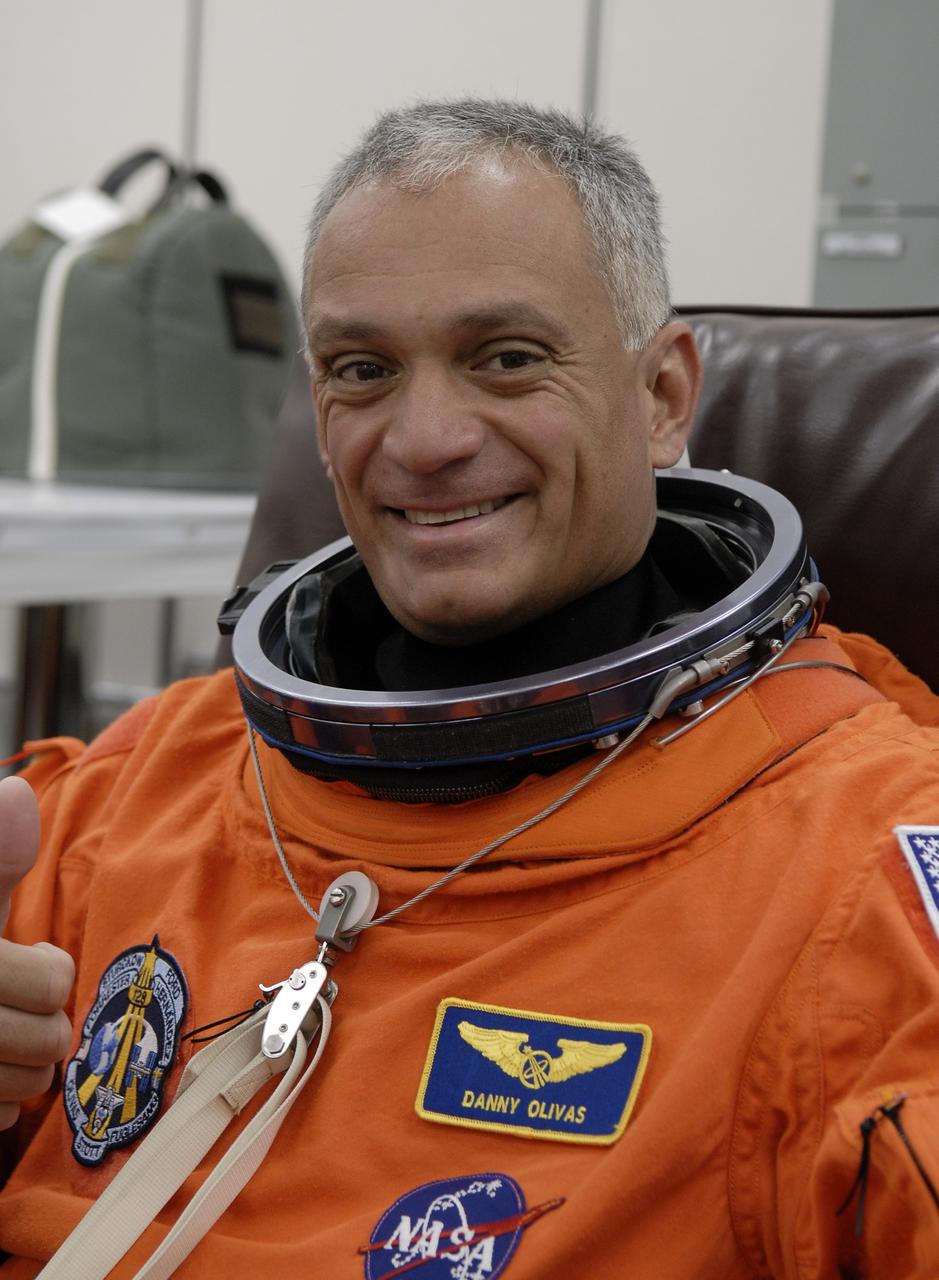
CAPE CANAVERAL, Fla. – STS-128 Mission Specialist Danny Olivas is donning his launch and entry suit for a fit check before the simulated launch countdown at NASA Kennedy Space Center's Launch Pad 39A. The countdown is the culmination of terminal countdown demonstration test activities to prepare the STS-128 crew for launch on space shuttle Discovery's STS-128 mission. Discovery will deliver 33,000 pounds of equipment to the station, including science and storage racks, a freezer to store research samples, a new sleeping compartment and the COLBERT treadmill. Launch is targeted for late August. Photo credit: NASA/Kim Shiflett
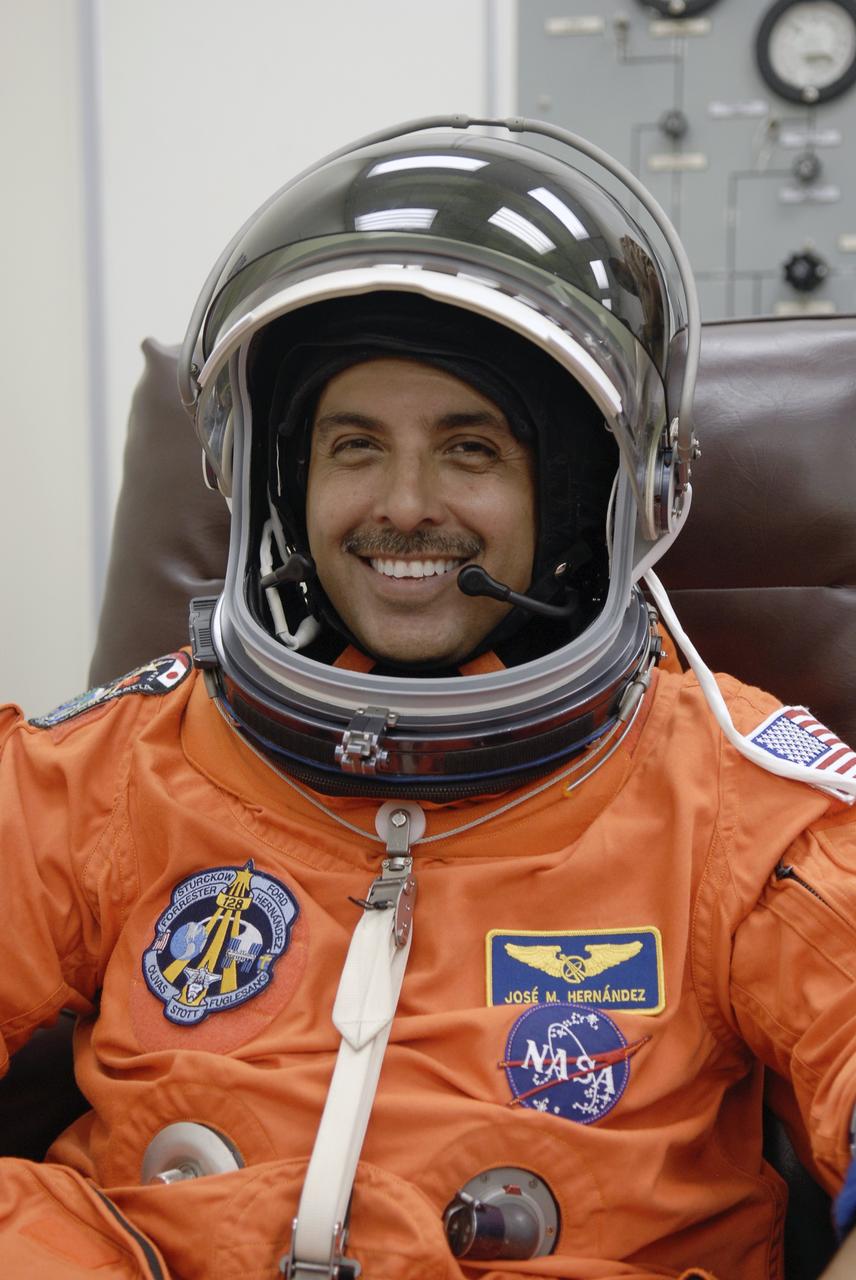
CAPE CANAVERAL, Fla. – STS-128 Mission Specialist Jose Hernandez makes a fit-check on his launch-and-entry suit to prepare for launch. He and the rest of the crew are scheduled to lift off on space shuttle Discovery at 1:36 a.m. EDT Aug. 25. The 13-day mission will deliver a new crew member and 33,000 pounds of equipment to the International Space Station. The equipment includes science and storage racks, a freezer to store research samples, a new sleeping compartment and the COLBERT treadmill. Photo credit: NASA/Kim Shiflett
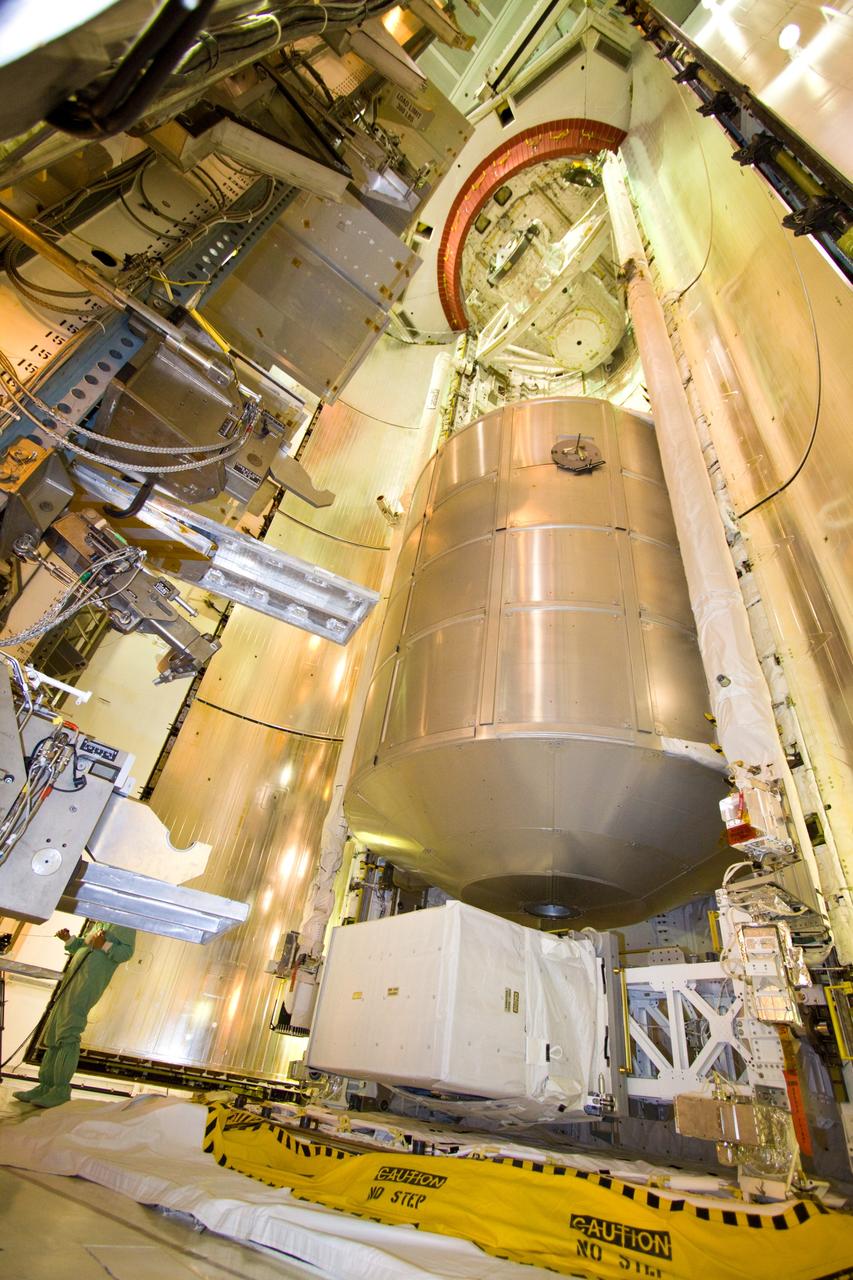
CAPE CANAVERAL, Fla. – On Launch Pad 39A, the payload ground-handling mechanism moves back after placing the multi-purpose logistics module Leonardo in space shuttle Discovery's payload bay. Leonardo is the primary payload on Discovery's STS-128 mission to the International Space Station. Beneath the module is the Lightweight Multi-Purpose Experiment Support Structure Carrier. Discovery will deliver 33,000 pounds of equipment to the station, including science and storage racks, a freezer to store research samples, a new sleeping compartment and the COLBERT treadmill. Launch is targeted for late August. Photo credit: NASA/Jack Pfaller
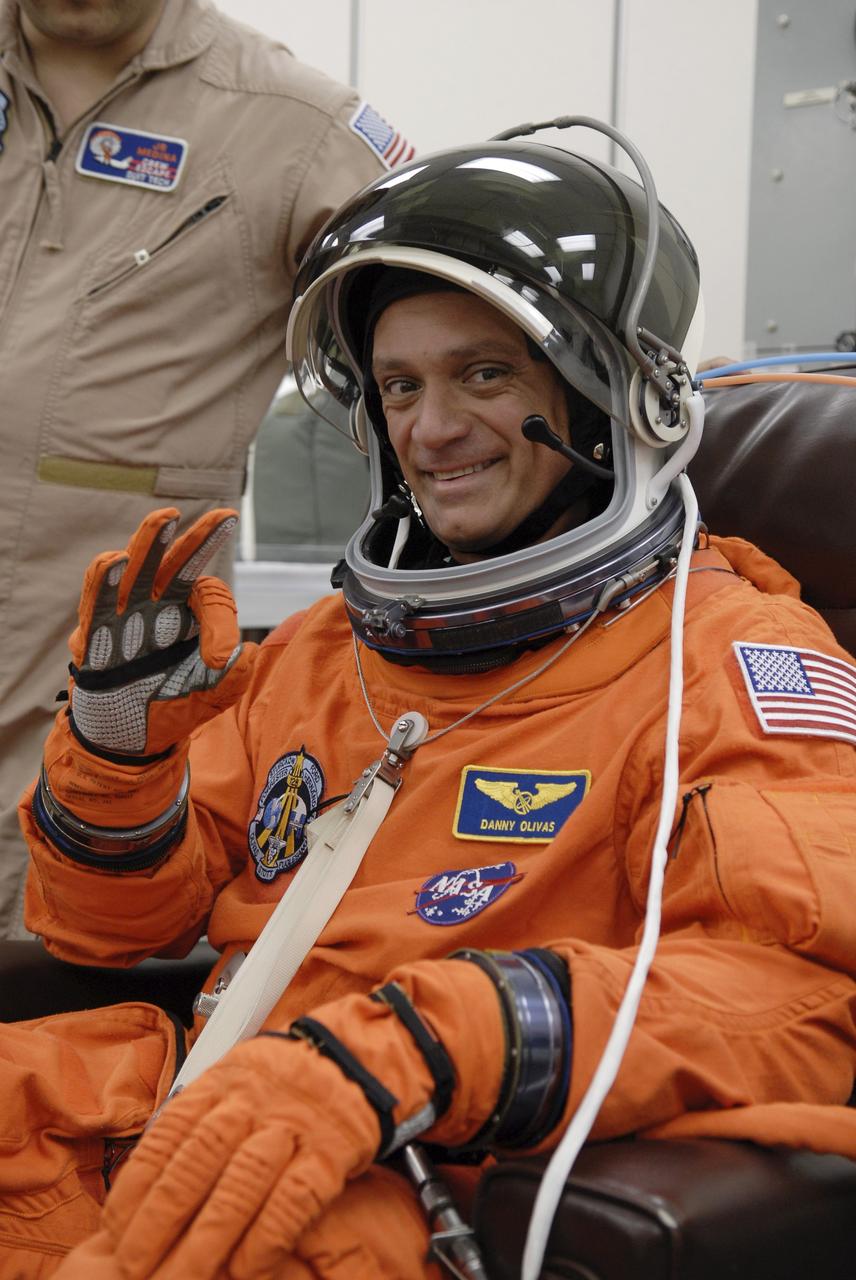
CAPE CANAVERAL, Fla. – STS-128 Mission Specialist Danny Olivas signals the fit of his launch and entry suit and helmet before heading to the NASA Kennedy Space Center's Launch Pad 39A for the simulated launch countdown. The countdown is the culmination of terminal countdown demonstration test activities to prepare the STS-128 crew for launch on space shuttle Discovery's STS-128 mission. Discovery will deliver 33,000 pounds of equipment to the station, including science and storage racks, a freezer to store research samples, a new sleeping compartment and the COLBERT treadmill. Launch is targeted for late August. Photo credit: NASA/Kim Shiflett
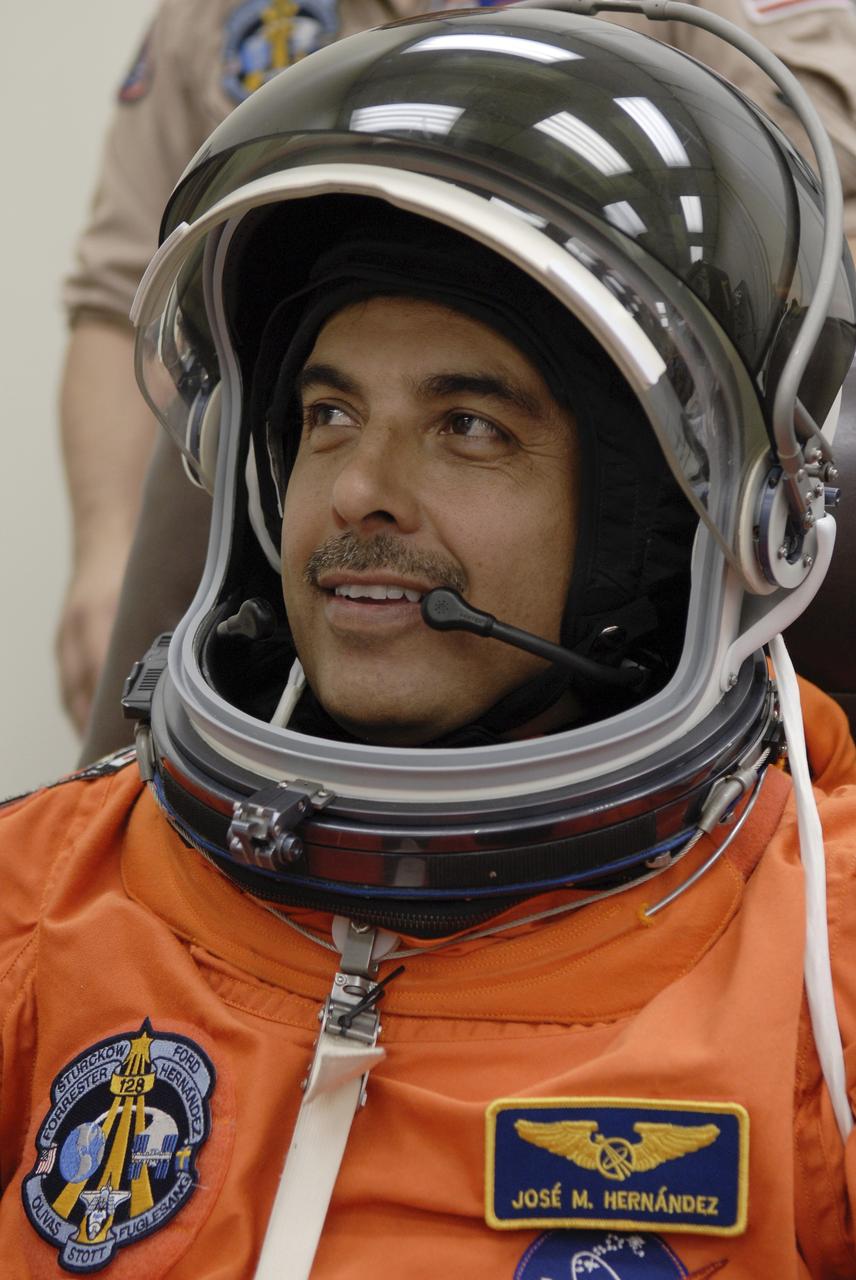
CAPE CANAVERAL, Fla. – STS-128 Mission Specialist Jose Hernandez completes the fit check of his launch and entry suit and helmet before heading to the NASA Kennedy Space Center's Launch Pad 39A for the simulated launch countdown. The countdown is the culmination of terminal countdown demonstration test activities to prepare the STS-128 crew for launch on space shuttle Discovery's STS-128 mission. Discovery will deliver 33,000 pounds of equipment to the station, including science and storage racks, a freezer to store research samples, a new sleeping compartment and the COLBERT treadmill. Launch is targeted for late August. Photo credit: NASA/Kim Shiflett
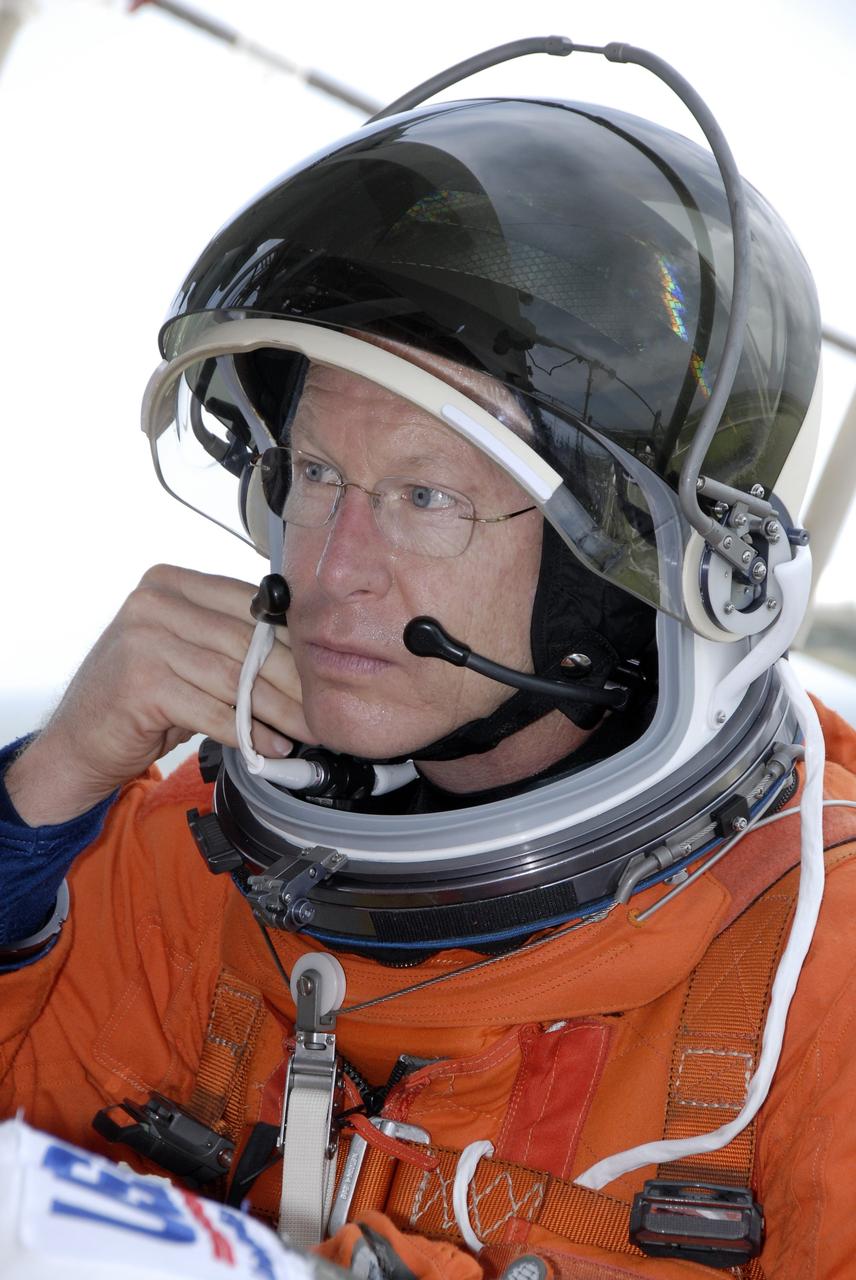
CAPE CANAVERAL, Fla. – After completing emergency exit practice from NASA Kennedy Space Center's fixed service structure, STS-128 Mission Specialist Patrick Forrester removes his helmet. Mission crew members are at Kennedy to take part in the terminal countdown demonstration test, or TCDT, which includes emergency exit training and culminates in the simulated countdown. On the STS-128 mission, Discovery will deliver 33,000 pounds of equipment to the station, including science and storage racks, a freezer to store research samples, a new sleeping compartment and the COLBERT treadmill. Launch is targeted for late August. Photo credit: NASA/Kim Shiflett
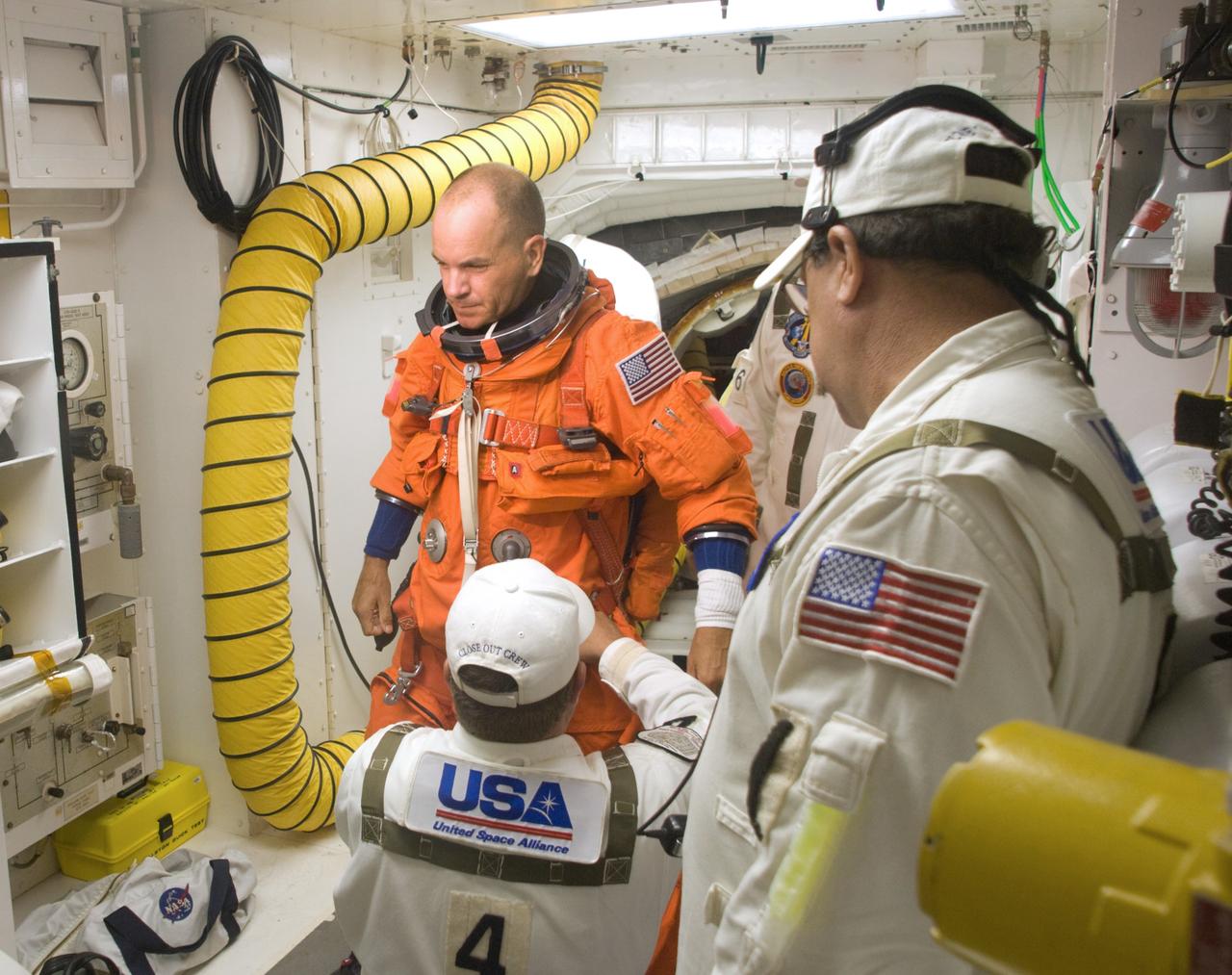
CAPE CANAVERAL, Fla. – In the White Room on NASA Kennedy Space Center's Launch Pad 39A, STS-128 Commander Rick Sturckow is helped with his harness before entering space shuttle Discovery. The White Room is at the end of the orbiter access arm and provides entry into the shuttle. The crew is at Kennedy to take part in the terminal countdown demonstration test, or TCDT, which includes equipment familiarization, emergency exit training and a simulated countdown. On the STS-128 mission, Discovery will deliver 33,000 pounds of equipment to the station, including science and storage racks, a freezer to store research samples, a new sleeping compartment and the COLBERT treadmill. Launch is targeted for late August. Photo credit: NASA/Kim Shiflett
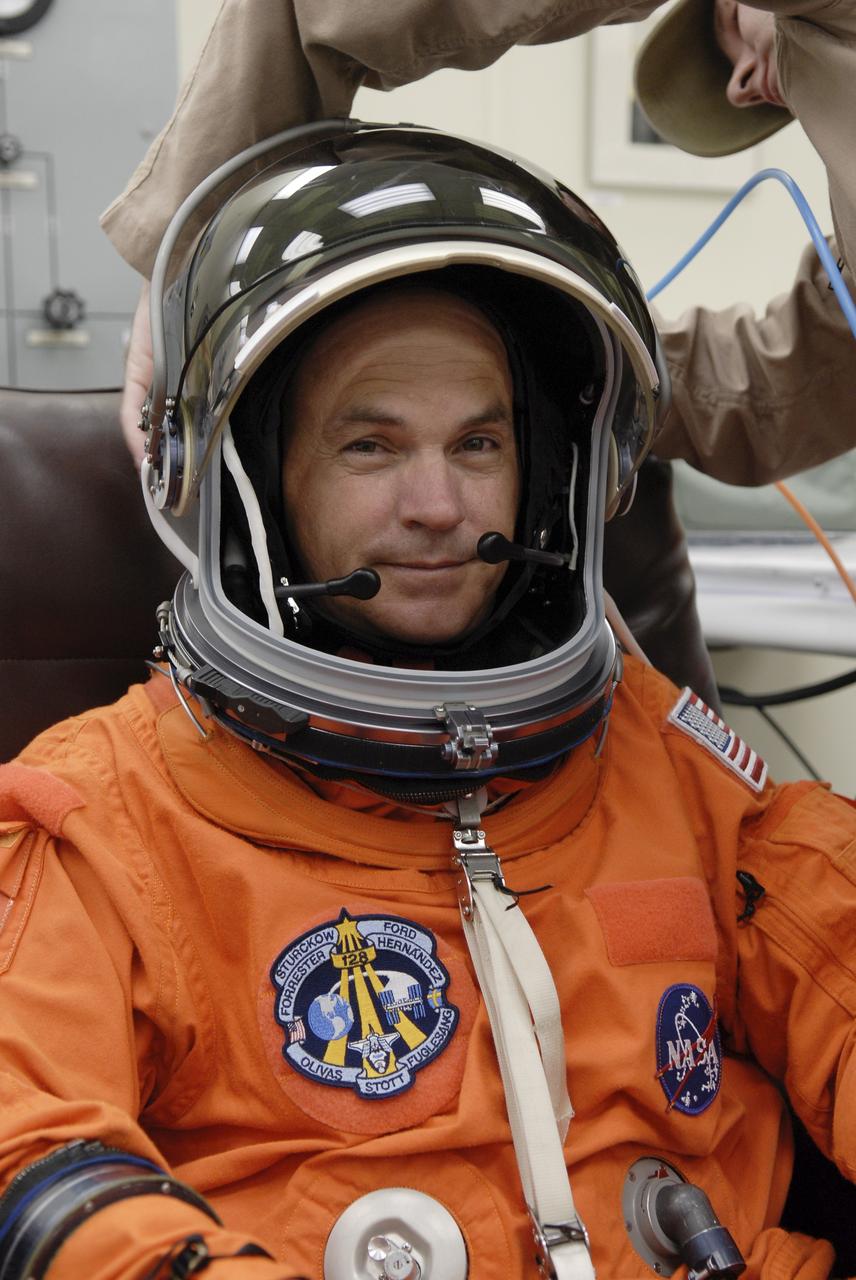
CAPE CANAVERAL, Fla. – A worker helps secure the helmet on STS-128 Commander Rick Sturckow as he checks the fit before heading to the NASA Kennedy Space Center's Launch Pad 39A for the simulated launch countdown. The countdown is the culmination of terminal countdown demonstration test activities to prepare the STS-128 crew for launch on space shuttle Discovery's STS-128 mission. Discovery will deliver 33,000 pounds of equipment to the station, including science and storage racks, a freezer to store research samples, a new sleeping compartment and the COLBERT treadmill. Launch is targeted for late August. Photo credit: NASA/Kim Shiflett
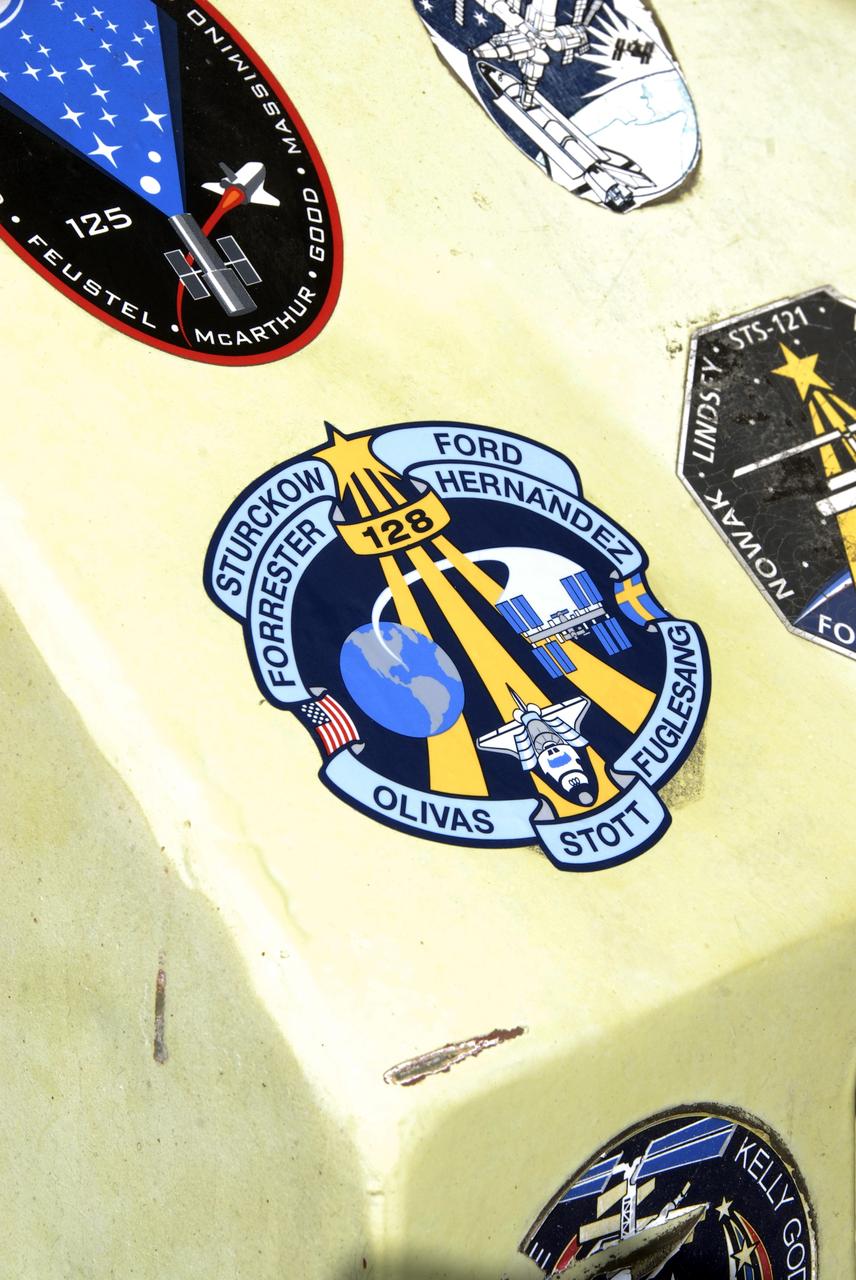
CAPE CANAVERAL, Fla. – A closeup of the STS-128 mission patch placed on the M-113 armored personnel carrier that can be used for emergency exit from Launch Pad 39A at NASA's Kennedy Space Center in Florida. The crew is at Kennedy for a launch dress rehearsal called the terminal countdown demonstration test, or TCDT, which includes emergency exit training and equipment familiarization, as well as a simulated launch countdown. Discovery will deliver 33,000 pounds of equipment to the station, including science and storage racks, a freezer to store research samples, a new sleeping compartment and the COLBERT treadmill. Photo credit: NASA/Kim Shiflett
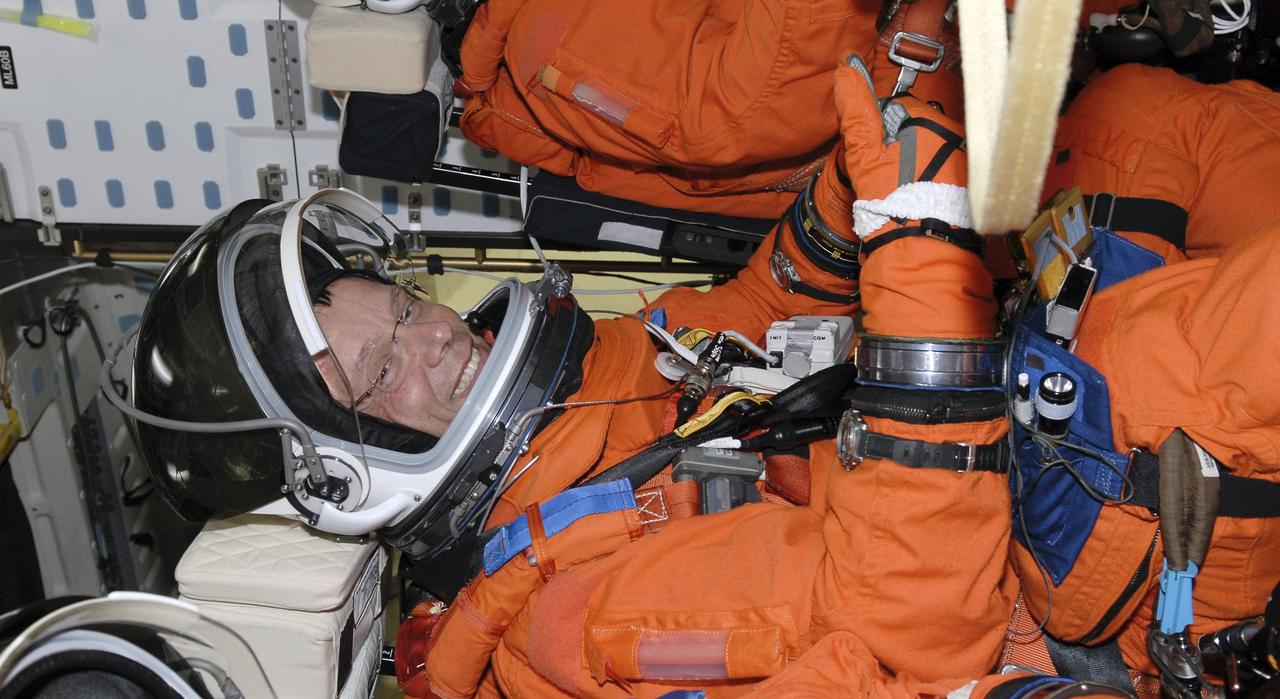
CAPE CANAVERAL, Fla. – Seated in space shuttle Discovery's cockpit on NASA Kennedy Space Center's Launch Pad 39A, STS-128 Mission Specialist Christer Fuglesang is glad to have completed the simulated launch countdown. He and other mission crew members are at Kennedy to take part in the terminal countdown demonstration test, or TCDT, which includes emergency exit training and culminates in the simulated countdown. On the STS-128 mission, Discovery will deliver 33,000 pounds of equipment to the station, including science and storage racks, a freezer to store research samples, a new sleeping compartment and the COLBERT treadmill. Launch is targeted for late August. Photo credit: NASA/Kim Shiflett
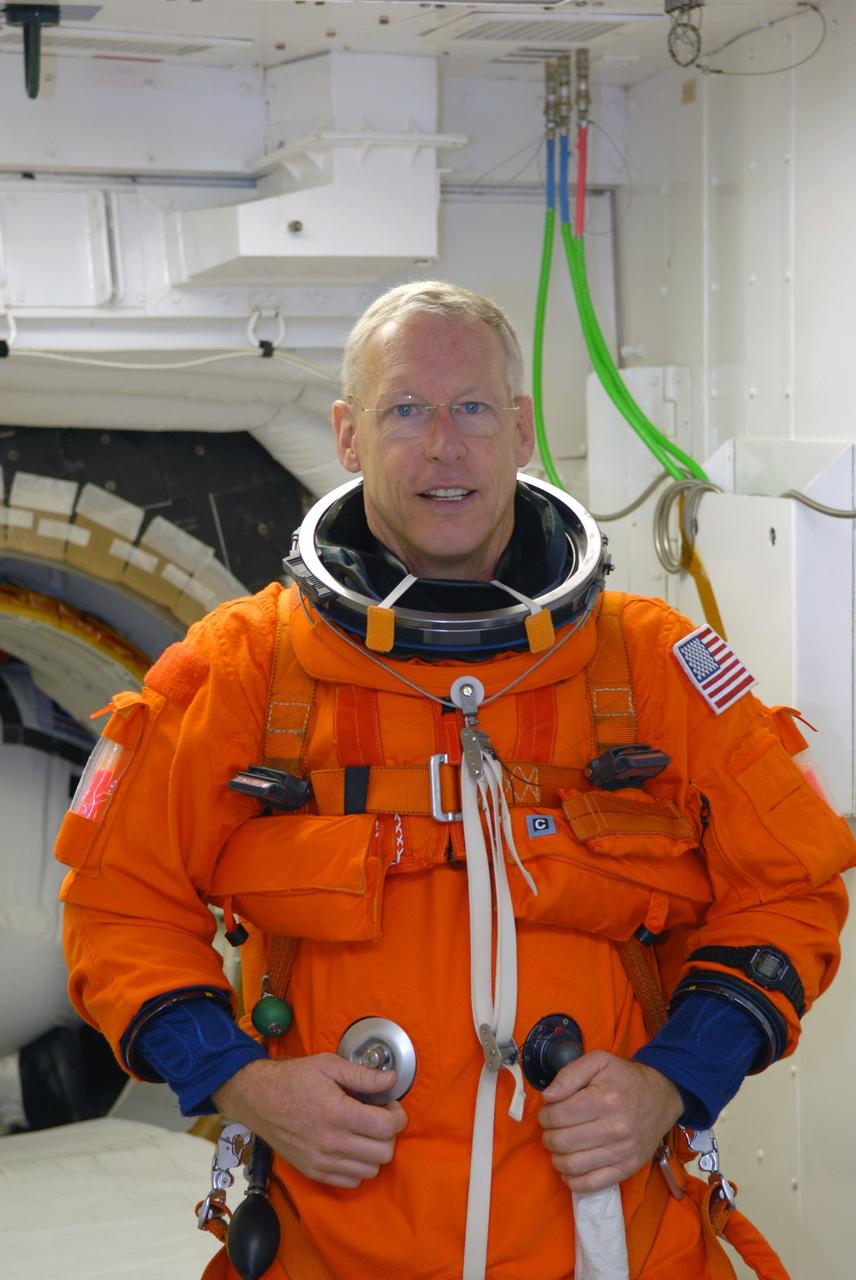
CAPE CANAVERAL, Fla. – STS-128 Mission Specialist Patrick Forrester is the White Room on NASA Kennedy Space Center's Launch Pad 39A getting ready to enter space shuttle Discovery. The White Room is at the end of the orbiter access arm and provides entry into the shuttle. Mission crew members are at Kennedy to take part in the terminal countdown demonstration test, or TCDT, which culminates in a simulated launch countdown inside the shuttle. On the STS-128 mission, Discovery will deliver 33,000 pounds of equipment to the station, including science and storage racks, a freezer to store research samples, a new sleeping compartment and the COLBERT treadmill. Launch is targeted for late August. Photo credit: NASA/Jim Grossmann
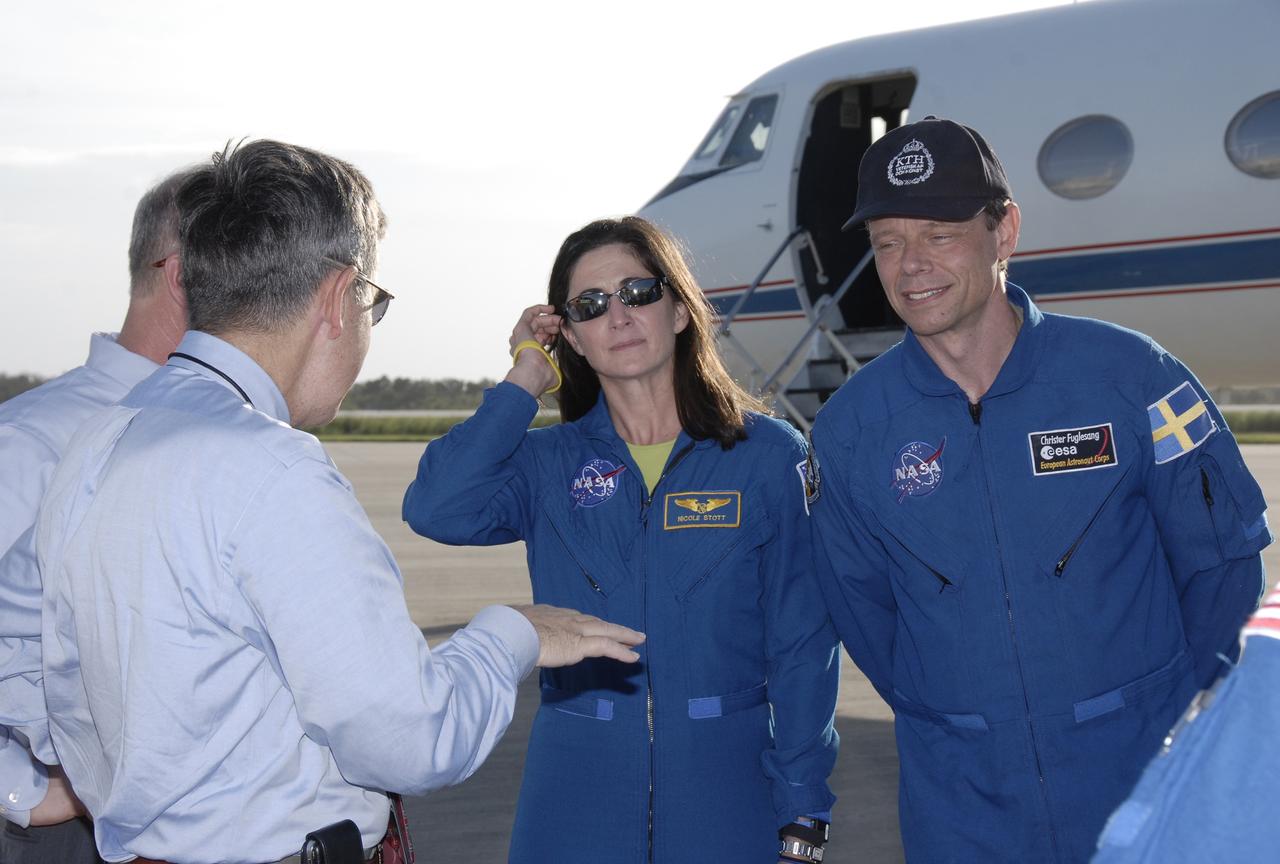
CAPE CANAVERAL, Fla. – STS-128 Mission Specialists Nicole Stott and Swedish astronaut Christer Fuglesang, of the European Space Agency, are welcomed to Kennedy Space Center by Center Director Bob Cabana, at left, a former astronaut himself. Stott will remain on the International Space Station as flight engineer for Expedition 20. Space shuttle Discovery's STS-128 mission crew members arrived in a NASA Shuttle Training Aircraft, a modified Gulfstream II jet behind them, at Kennedy's Shuttle Landing Facility at 6:34 p.m. EDT. The crew has returned to Kennedy to prepare for launch on Aug. 25 at 1:36 a.m. EDT. The 13-day mission will deliver a new crew member and 33,000 pounds of equipment to the International Space Station. The equipment includes science and storage racks, a freezer to store research samples, a new sleeping compartment and the COLBERT treadmill. Photo credit: NASA/Kim Shiflett
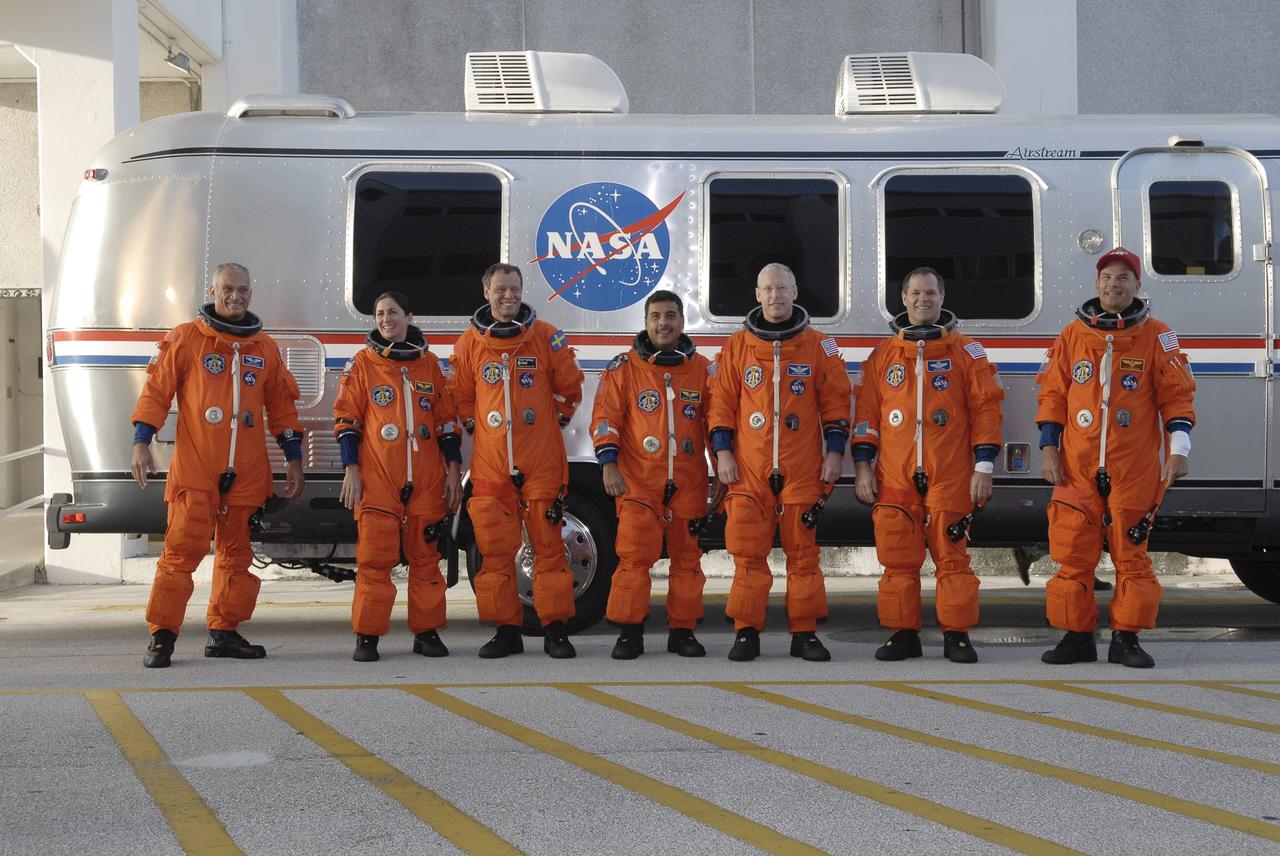
CAPE CANAVERAL, Fla. – The suited STS-128 crew members pause for a photo in front of the Astrovan before heading to NASA Kennedy Space Center's Launch Pad 39A and a simulated launch countdown. From left are Mission Specialists Danny Olivas, Nicole Stott, Christer Fuglesang, Jose Hernandez and Patrick Forrester, Pilot Kevin Ford and Commander Rick Sturckow. The countdown is the culmination of terminal countdown demonstration test activities to prepare the STS-128 crew for launch on space shuttle Discovery's STS-128 mission. Discovery will deliver 33,000 pounds of equipment to the station, including science and storage racks, a freezer to store research samples, a new sleeping compartment and the COLBERT treadmill. Launch is targeted for late August. Photo credit: NASA/Kim Shiflett
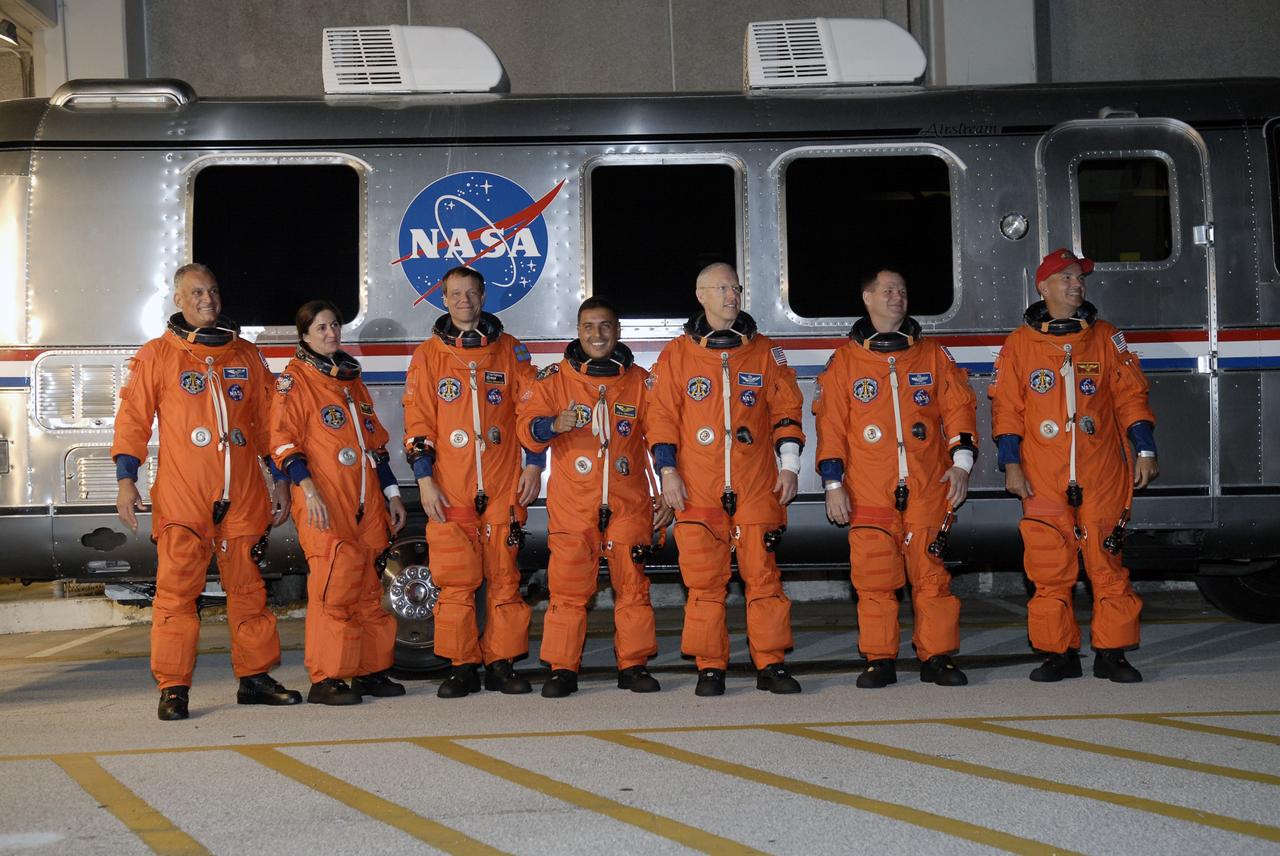
CAPE CANAVERAL, Fla. – The STS-128 crew members pause in front of the Astrovan that will take them to Launch Pad 39A. From left are Mission Specialists Danny Olivas, Nicole Stott, Christer Fuglesang, Jose Hernandez and Patrick Forrester, Pilot Kevin Ford and Commander Rick Sturckow. At the pad, the astronauts will complete their suitup and enter space shuttle Discovery for the 1:36 a.m. EDT liftoff. The 13-day mission will deliver more than 7 tons of supplies, science racks and equipment, as well as additional environmental hardware to sustain six crew members on the International Space Station. The equipment includes a freezer to store research samples, a new sleeping compartment and the COLBERT treadmill. The mission is the 128th in the Space Shuttle Program, the 37th flight of Discovery and the 30th station assembly flight. Photo credit: NASA/Kim Shiflett
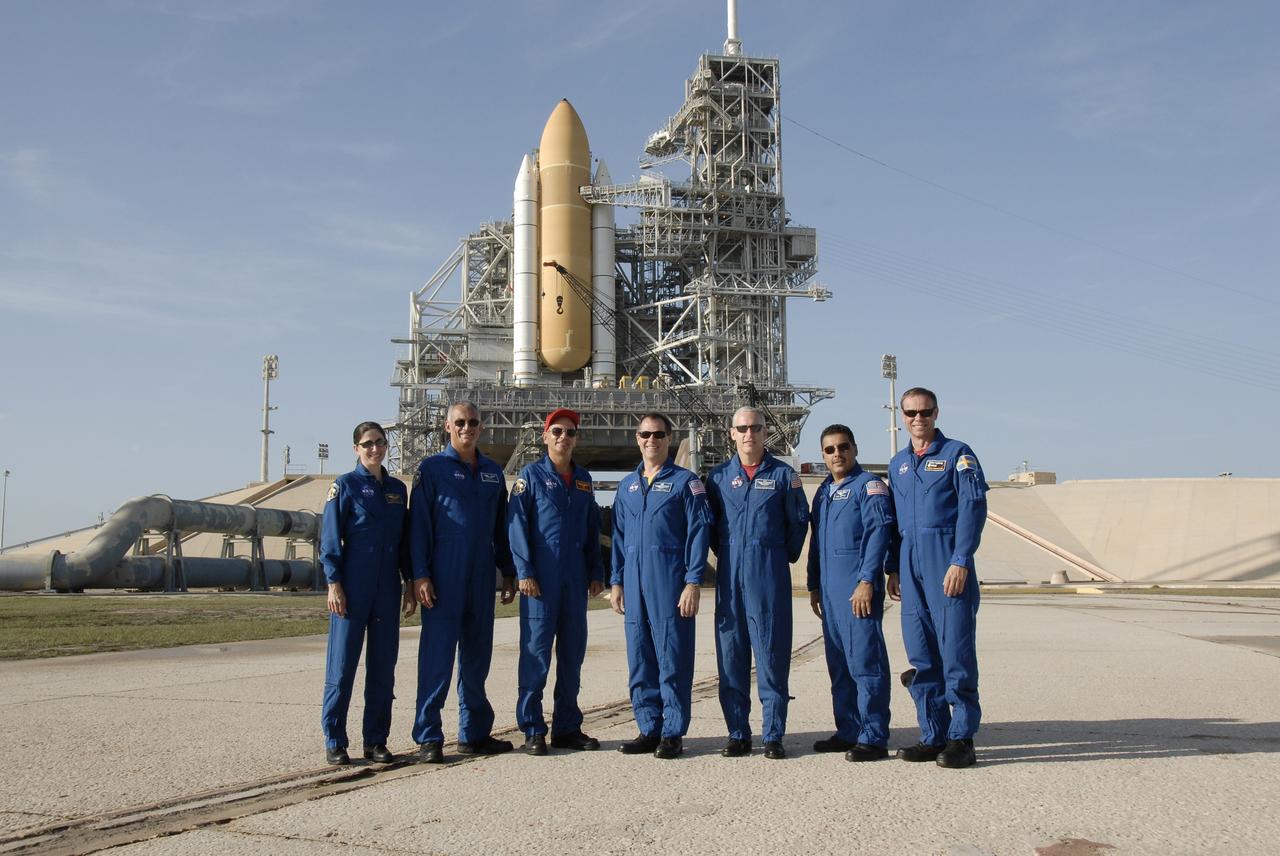
CAPE CANAVERAL, Fla. – At NASA's Kennedy Space Center in Florida, STS-128 crew members gather near Launch Pad 39A to answer questions from the media. From left are Mission Specialists Nicole Stott and John "Danny" Olivas, Commander Rick Sturckow, Pilot Kevin Ford and Mission Specialists Patrick Forrester, Jose Hernandez and Christer Fuglesang, who represents the European Space Agency. On the pad behind them is seen the solid rocket boosters and external fuel tank of space shuttle Discovery. The crew is at Kennedy for a launch dress rehearsal called the terminal countdown demonstration test, or TCDT, which includes emergency exit training and equipment familiarization, as well as a simulated launch countdown. Discovery will deliver 33,000 pounds of equipment to the station, including science and storage racks, a freezer to store research samples, a new sleeping compartment and the COLBERT treadmill. Photo credit: NASA/Kim Shiflett

CAPE CANAVERAL, Fla. – Billows of smoke and steam rise flow across Launch Pad 39A at NASA's Kennedy Space Center in Florida as space shuttle Discovery hurtles toward space on the STS-128 mission. Liftoff from Launch Pad 39A was on time at 11:59 p.m. EDT. The first launch attempt on Aug. 24 was postponed due to unfavorable weather conditions. The second attempt on Aug. 25 also was postponed due to an issue with a valve in space shuttle Discovery's main propulsion system. The STS-128 mission is the 30th International Space Station assembly flight and the 128th space shuttle flight. The 13-day mission will deliver more than 7 tons of supplies, science racks and equipment, as well as additional environmental hardware to sustain six crew members on the International Space Station. The equipment includes a freezer to store research samples, a new sleeping compartment and the COLBERT treadmill. Photo courtesy of Scott Andrews
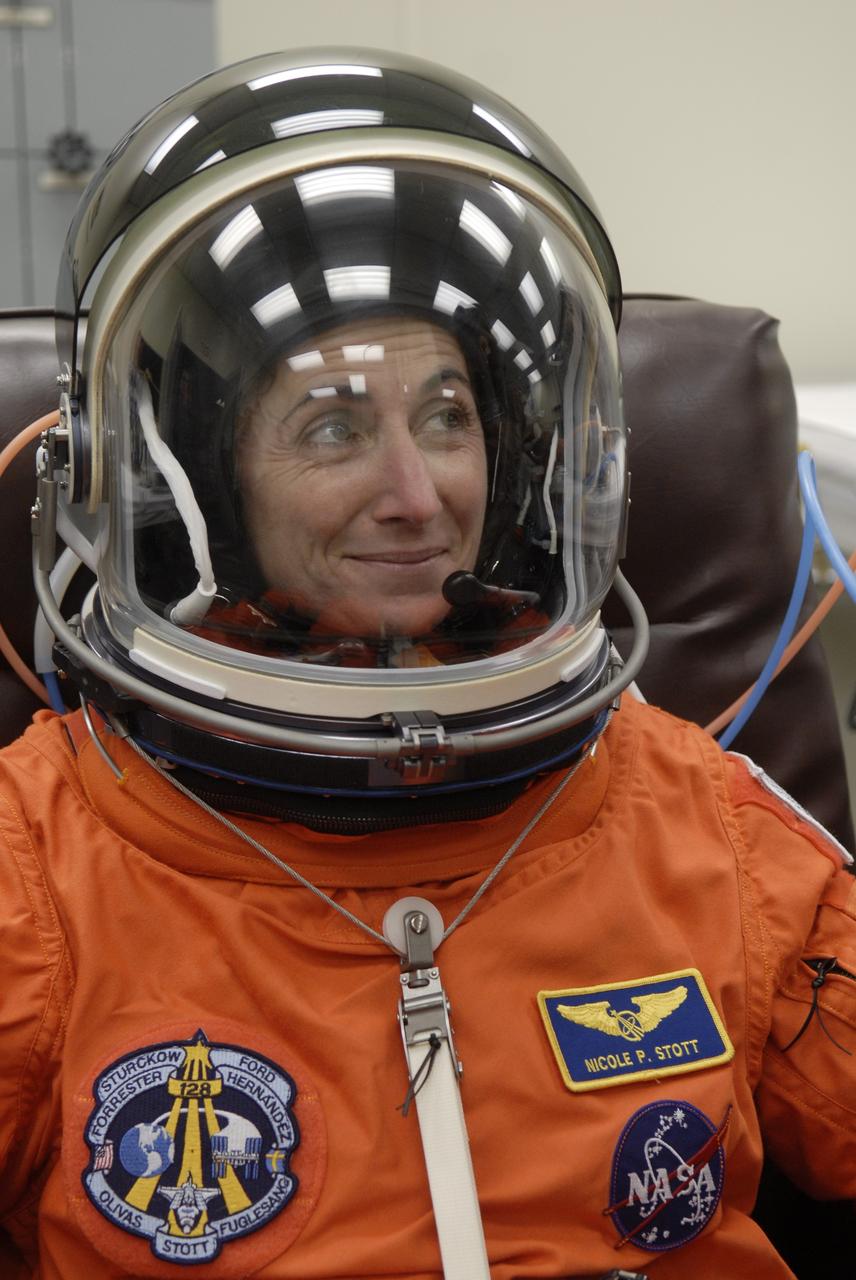
CAPE CANAVERAL, Fla. – In the Operations and Checkout Building at NASA's Kennedy Space Center in Florida, STS-128 crew members put on their launch-and-entry suits before heading to the Astrovan for the 3.4-mile drive to Launch Pad 39A. There, crew members will complete their suitup and enter space shuttle Discovery for the 1:36 a.m. EDT liftoff. Seen here is Mission Specialist Nicole Stott, checking communications in her helmet. The 13-day mission will deliver more than 7 tons of supplies, science racks and equipment, as well as additional environmental hardware to sustain six crew members on the International Space Station. The equipment includes a freezer to store research samples, a new sleeping compartment and the COLBERT treadmill. The mission is the 128th in the Space Shuttle Program, the 37th flight of Discovery and the 30th station assembly flight. Photo credit: NASA/Kim Shiflett
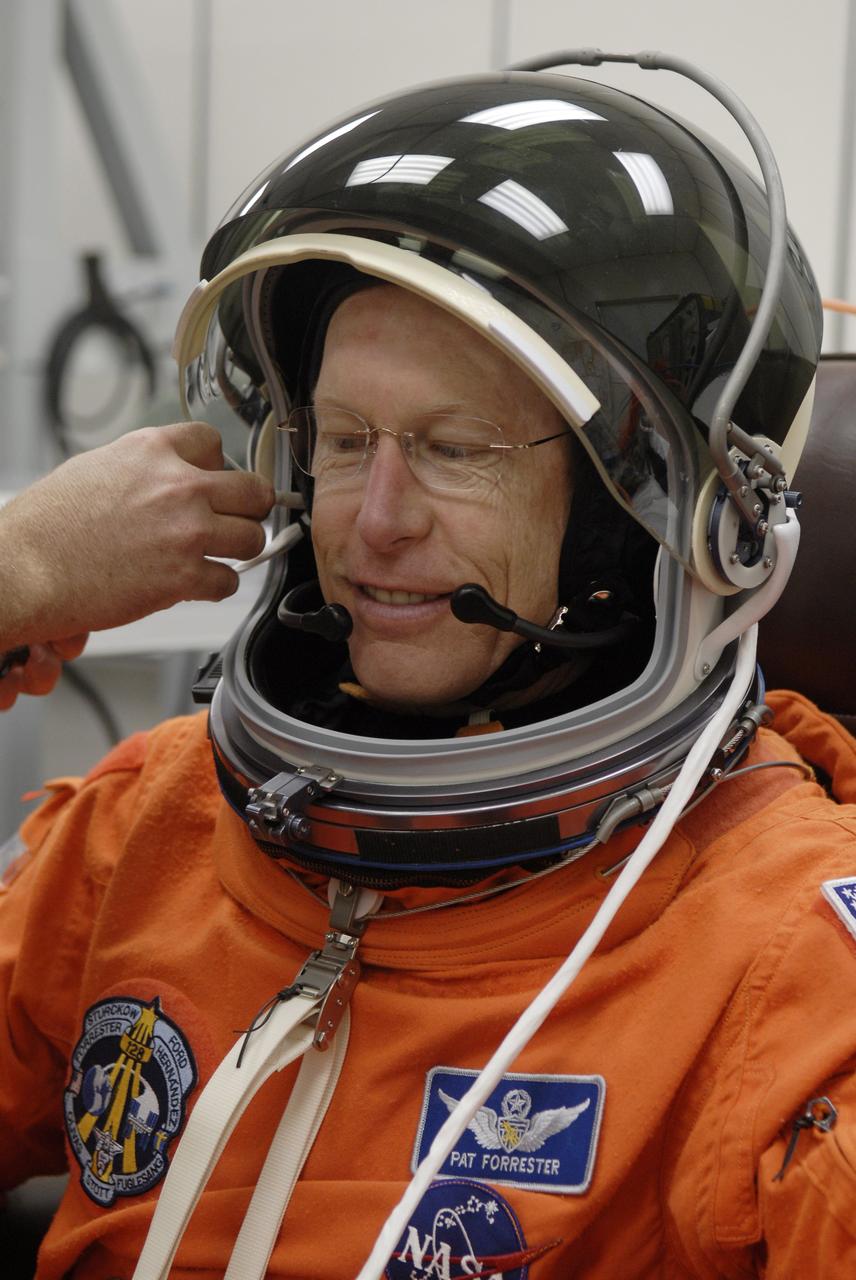
CAPE CANAVERAL, Fla. – In the Operations and Checkout Building at NASA's Kennedy Space Center in Florida, STS-128 crew members put on their launch-and-entry suits before heading to the Astrovan for the 3.4-mile drive to Launch Pad 39A. There, crew members will complete their suitup and enter space shuttle Discovery for the 1:36 a.m. EDT liftoff. Seen here, Mission Specialist Patrick Forrester has his helmet communications system connected. The 13-day mission will deliver more than 7 tons of supplies, science racks and equipment, as well as additional environmental hardware to sustain six crew members on the International Space Station. The equipment includes a freezer to store research samples, a new sleeping compartment and the COLBERT treadmill. The mission is the 128th in the Space Shuttle Program, the 37th flight of Discovery and the 30th station assembly flight. Photo credit: NASA/Kim Shiflett
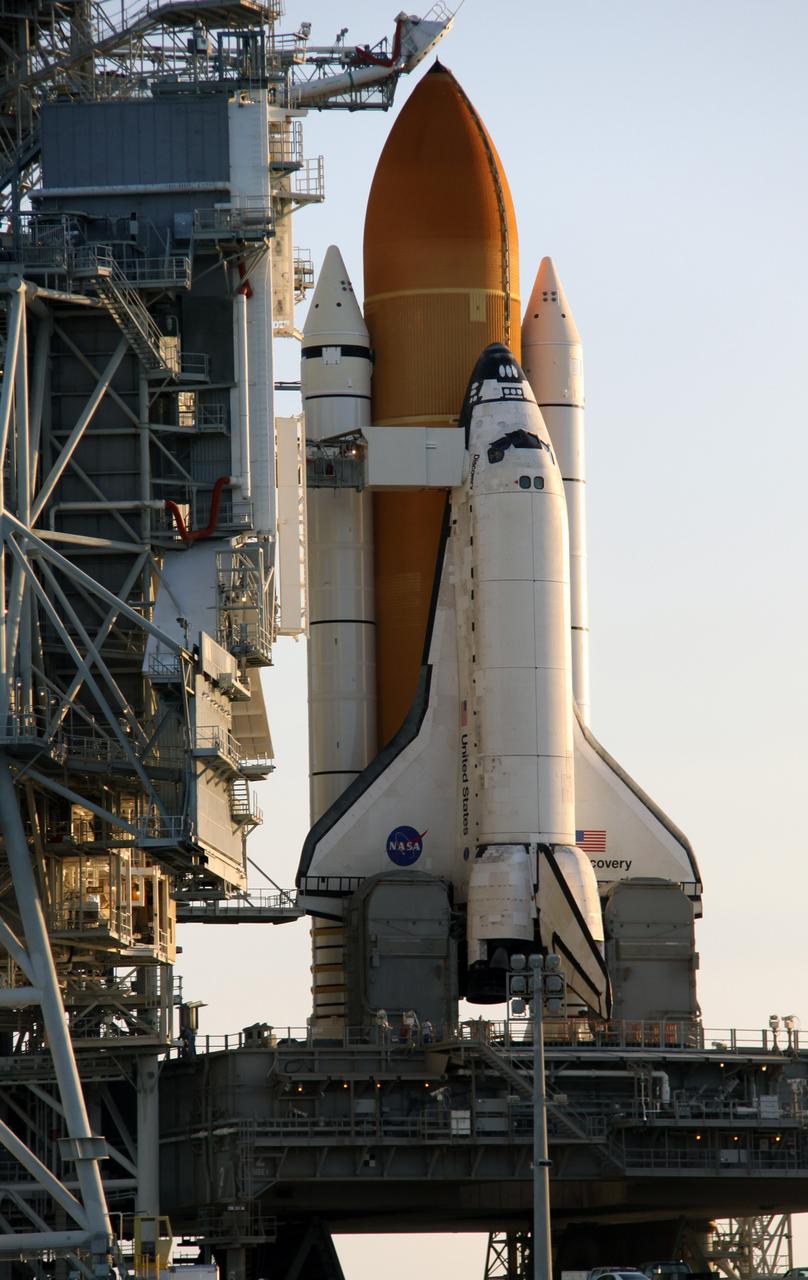
CAPE CANAVERAL, Fla. – On Launch Pad 39A at NASA's Kennedy Space Center in Florida, space shuttle Discovery is revealed during sunrise after the rollback of the rotating service structure, or RSS. On top of the external fuel tank is the oxygen vent hood, called the "beanie cap," which is designed to vent gaseous oxygen vapors away from the shuttle. The rollback is preparation for Discovery's scheduled 1:36 a.m. EDT liftoff Aug. 25 with a crew of seven on the STS-128 mission. The service structure provides weather protection and access to the space shuttle at the launch pad. The 13-day mission will deliver a new crew member and 33,000 pounds of equipment to the International Space Station. The equipment includes science and storage racks, a freezer to store research samples, a new sleeping compartment and the COLBERT treadmill. STS-128 will be Discovery's 37th mission and the 30th shuttle flight dedicated to station assembly and maintenance. Photo credit: NASA/Troy Cryder
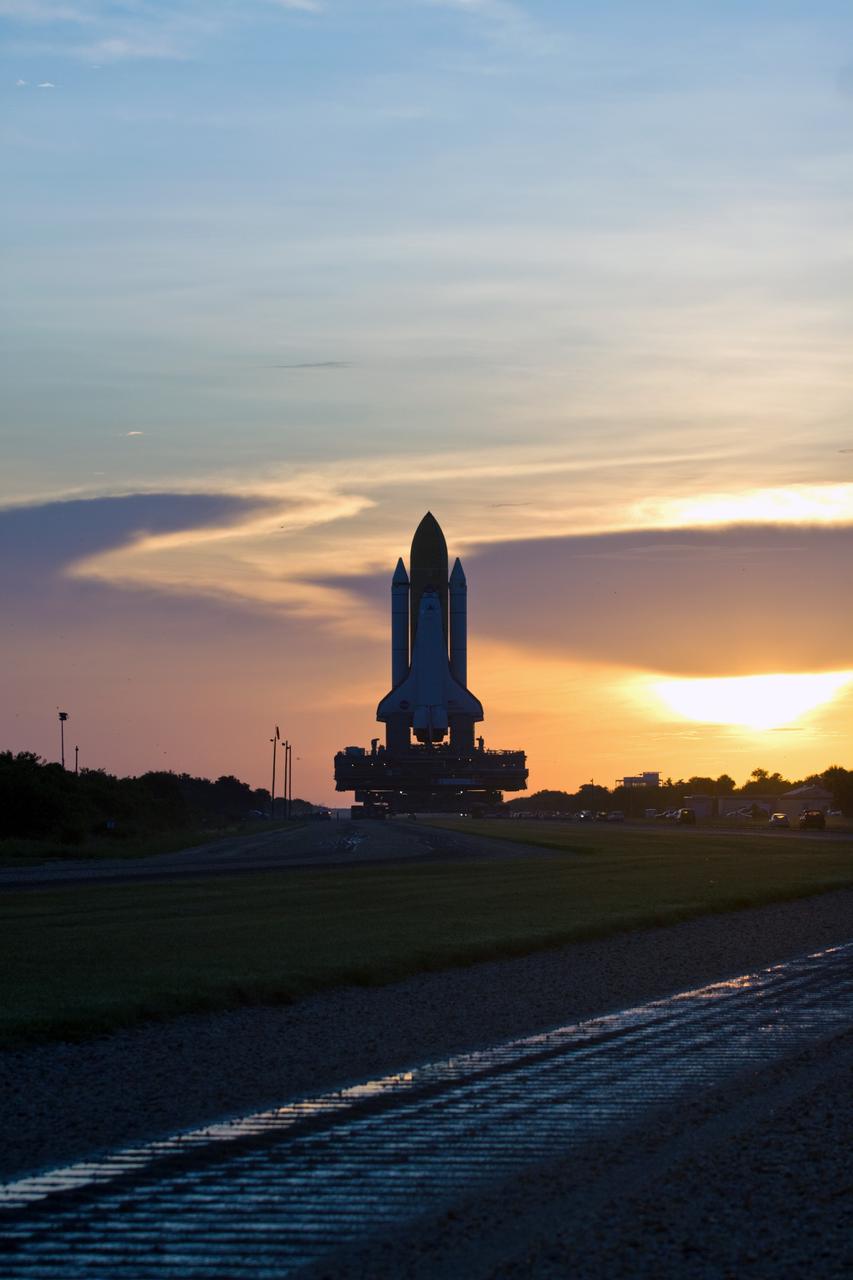
CAPE CANAVERAL, Fla. – Space shuttle Discovery is silhouetted against the dawn sky as it rolls out to Launch Pad 39A at NASA's Kennedy Space Center in Florida. The 3.4-mile journey was slower than usual as technicians stopped several times to clear mud from the crawler's treads and bearings. The waterlogged crawlerway can be seen in the foreground. First motion out of the Vehicle Assembly Building was at 2:07 a.m. EDT Aug. 4. Rollout was delayed approximately 2 hours due to lightning in the area. Discovery's 13-day flight will deliver a new crew member and 33,000 pounds of equipment to the International Space Station. The equipment includes science and storage racks, a freezer to store research samples, a new sleeping compartment and the COLBERT treadmill. Launch of Discovery on its STS-128 mission is targeted for late August. Photo credit: NASA/Dimitri Gerondidakis
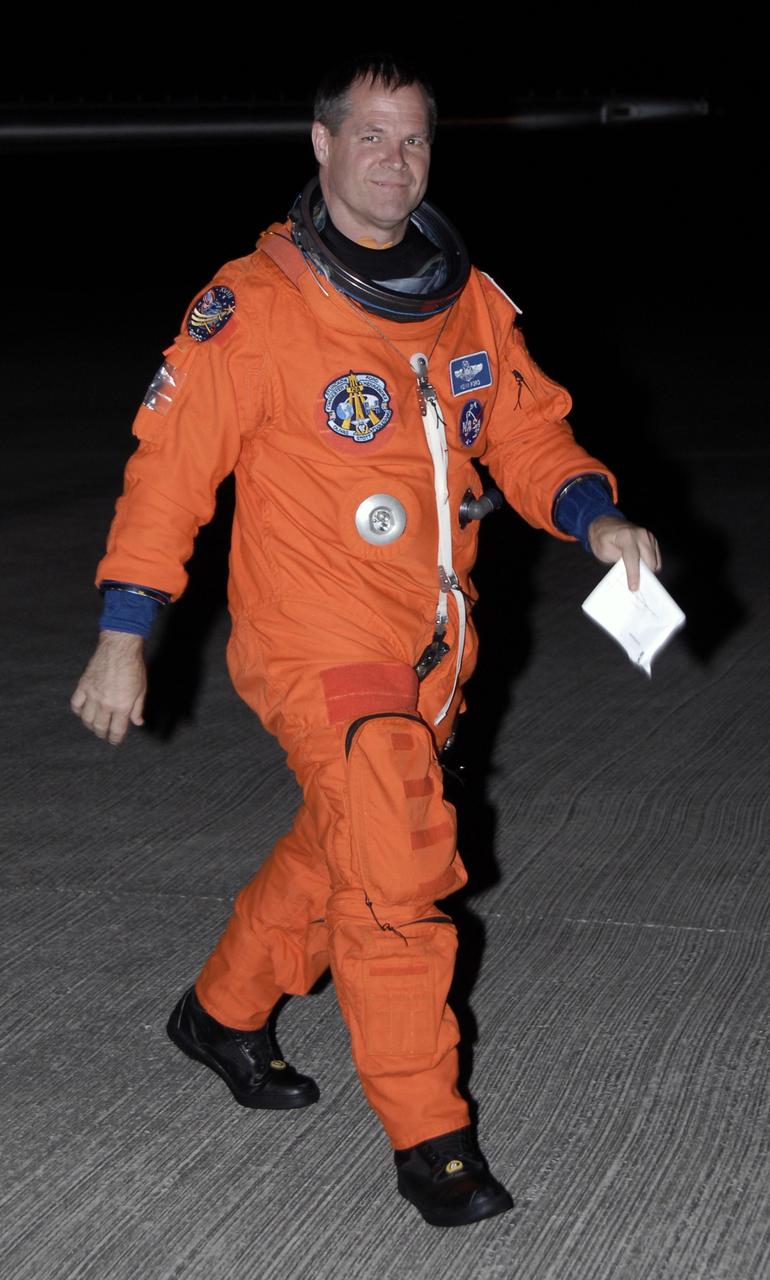
CAPE CANAVERAL, Fla. –At the Shuttle Landing Facility at NASA's Kennedy Space Center in Florida, STS-128 Pilot Kevin Ford walks away from the Shuttle Training Aircraft, or STA, after completing shuttle landing practice. The practice is in preparation for launch of space shuttle Discovery's STS-128 mission in late August to the International Space Station. The STA is a Grumman American Aviation-built Gulfstream II jet that was modified to simulate a shuttle’s cockpit, motion and visual cues, and handling qualities. The STS-128 crew is at Kennedy for a launch dress rehearsal called the terminal countdown demonstration test, or TCDT, which includes emergency exit training and equipment familiarization, as well as a simulated launch countdown. Discovery will deliver 33,000 pounds of equipment to the station, including science and storage racks, a freezer to store research samples, a new sleeping compartment and the COLBERT treadmill. Photo credit: NASA/Kim Shiflett
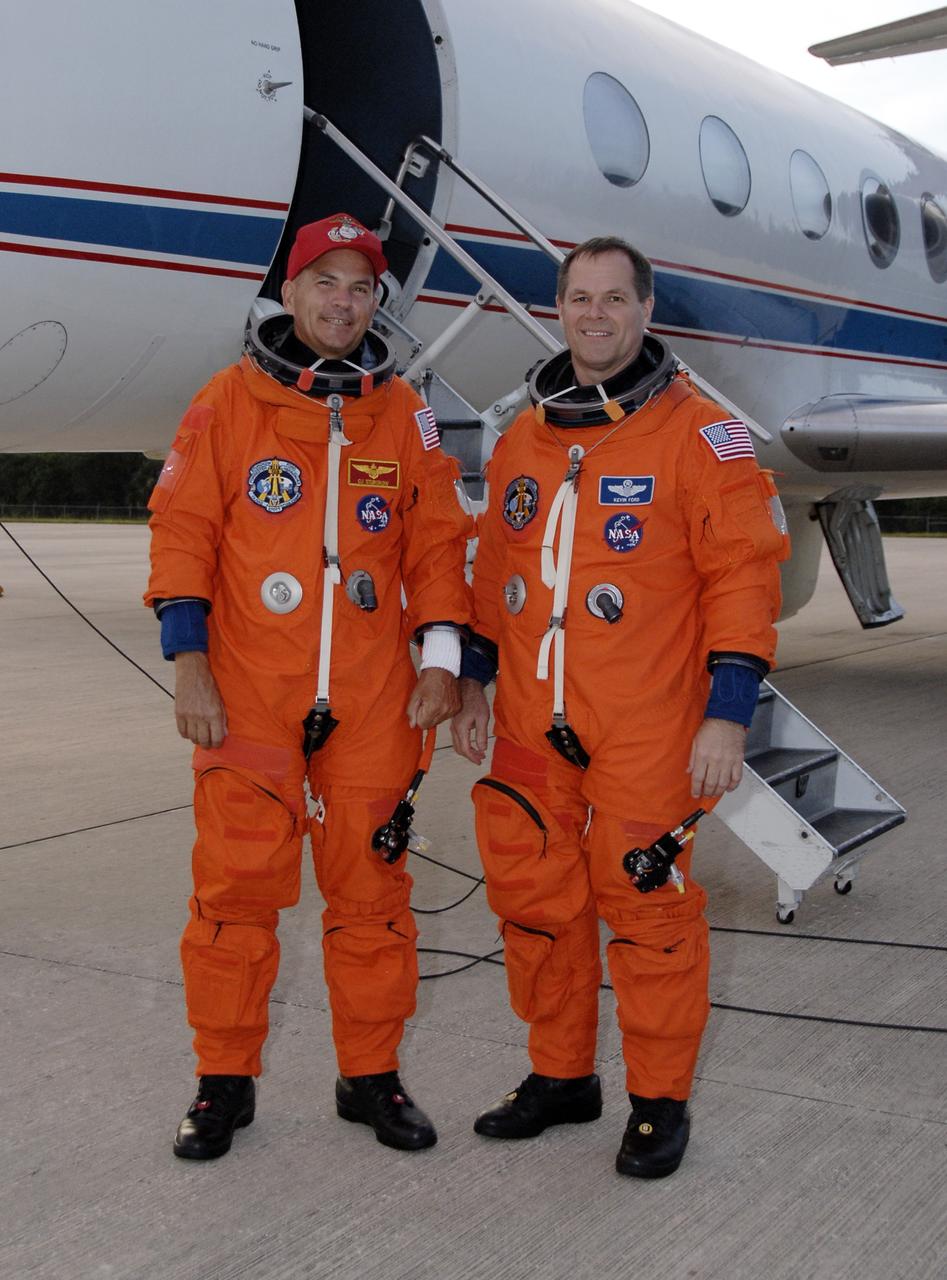
CAPE CANAVERAL, Fla. – At the Shuttle Landing Facility at NASA's Kennedy Space Center in Florida, STS-128 Commander Rick Sturckow (left) and Pilot Kevin Ford are ready to begin practicing shuttle landings in the Shuttle Training Aircraft, or STA. The practice is in preparation for launch of space shuttle Discovery's STS-128 mission in late August to the International Space Station. The STA is a Grumman American Aviation-built Gulfstream II jet that was modified to simulate a shuttle’s cockpit, motion and visual cues, and handling qualities. The STS-128 crew is at Kennedy for a launch dress rehearsal called the terminal countdown demonstration test, or TCDT, which includes emergency exit training and equipment familiarization, as well as a simulated launch countdown. Discovery will deliver 33,000 pounds of equipment to the station, including science and storage racks, a freezer to store research samples, a new sleeping compartment and the COLBERT treadmill. Photo credit: NASA/Kim Shiflett
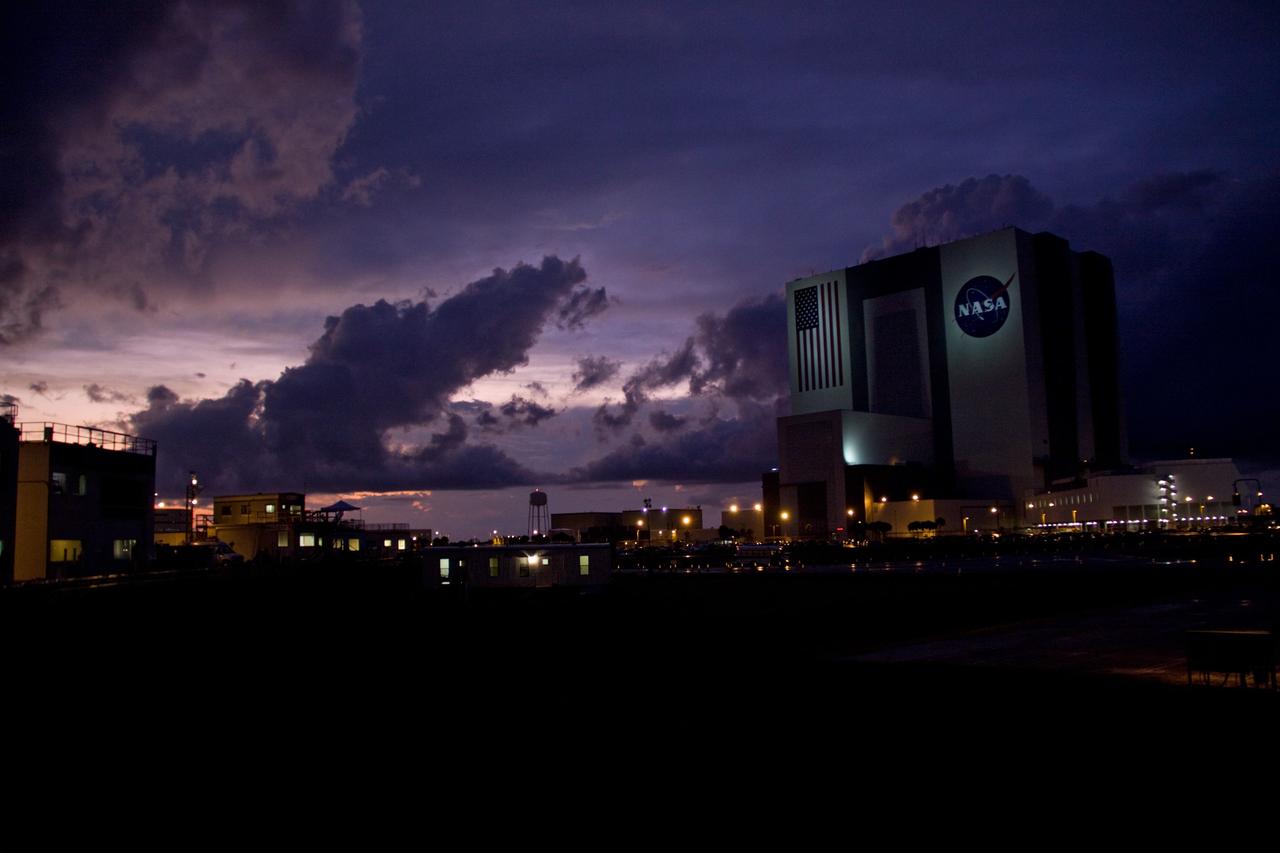
CAPE CANAVERAL, Fla. – Shortly after 8 p.m. EDT, black clouds from the west roll past the Vehicle Assembly Building at NASA's Kennedy Space Center in Florida. The center is in launch mode as the countdown continues for liftoff of space shuttle Discovery at 1:36 a.m. EDT Aug. 25 on the STS-128 mission. Weather plays a significant role in any launch attempt. Forecasters give only 20 percent probability of weather prohibiting launch. Discovery's 13-day mission will deliver more than 7 tons of supplies, science racks and equipment, as well as additional environmental hardware to sustain six crew members on the International Space Station. The equipment includes a freezer to store research samples, a new sleeping compartment and the COLBERT treadmill. The mission is the 128th in the Space Shuttle Program, the 37th flight of Discovery and the 30th station assembly flight. Photo credit: NASA/Troy Cryder
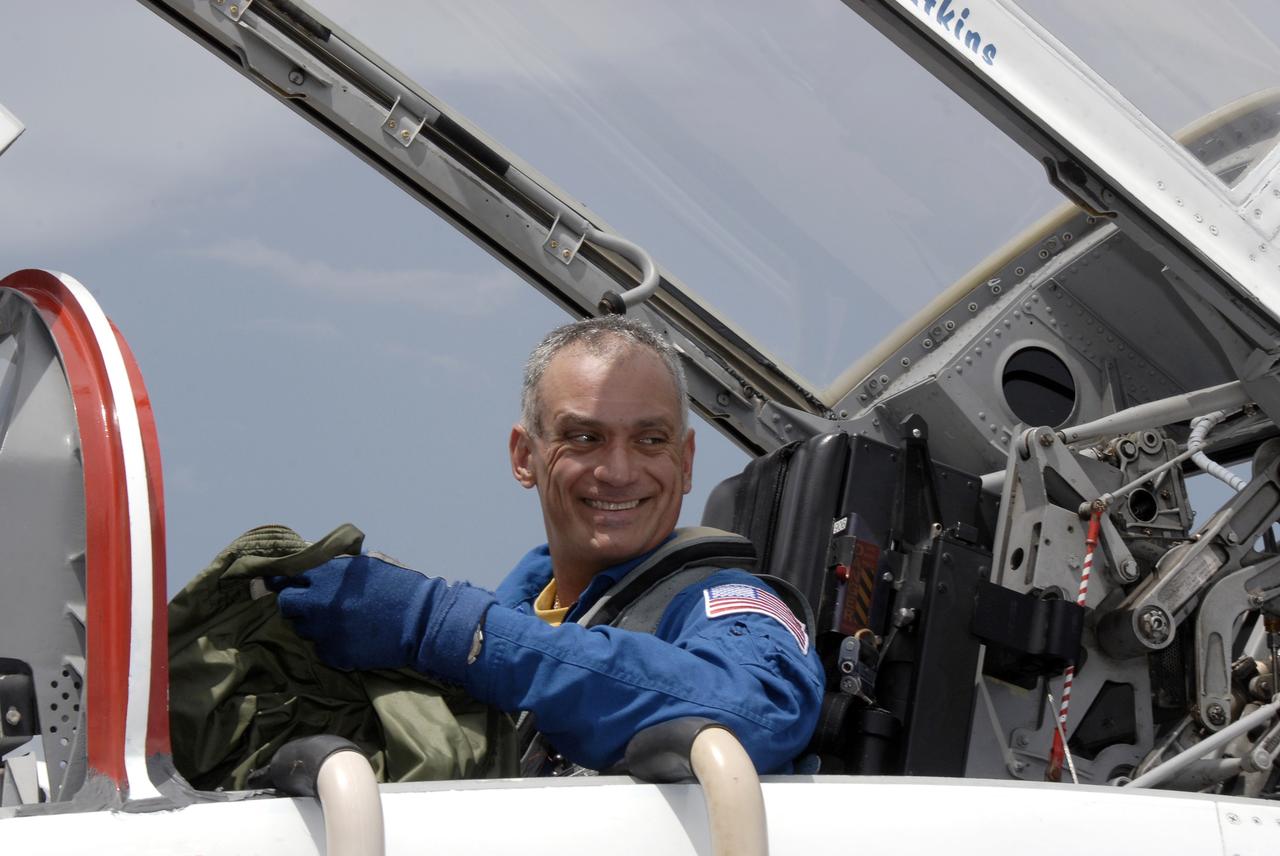
CAPE CANAVERAL, Fla. – Space shuttle Discovery's STS-128 mission crew members arrive in T-38 training jets at NASA Kennedy Space Center's Shuttle Landing Facility. Mission Specialist John "Danny" Olivas is seen here. The astronauts will be taking part in terminal countdown demonstration test activities that include equipment familiarization and emergency egress training, and will culminate in a simulated launch countdown aboard Discovery. The mission will deliver a new crew member and 33,000 pounds of equipment to the International Space Station. The equipment includes science and storage racks, a freezer to store research samples, a new sleeping compartment and the COLBERT treadmill. Launch of Discovery is targeted for late August. Photo credit: NASA/Kim Shiflett
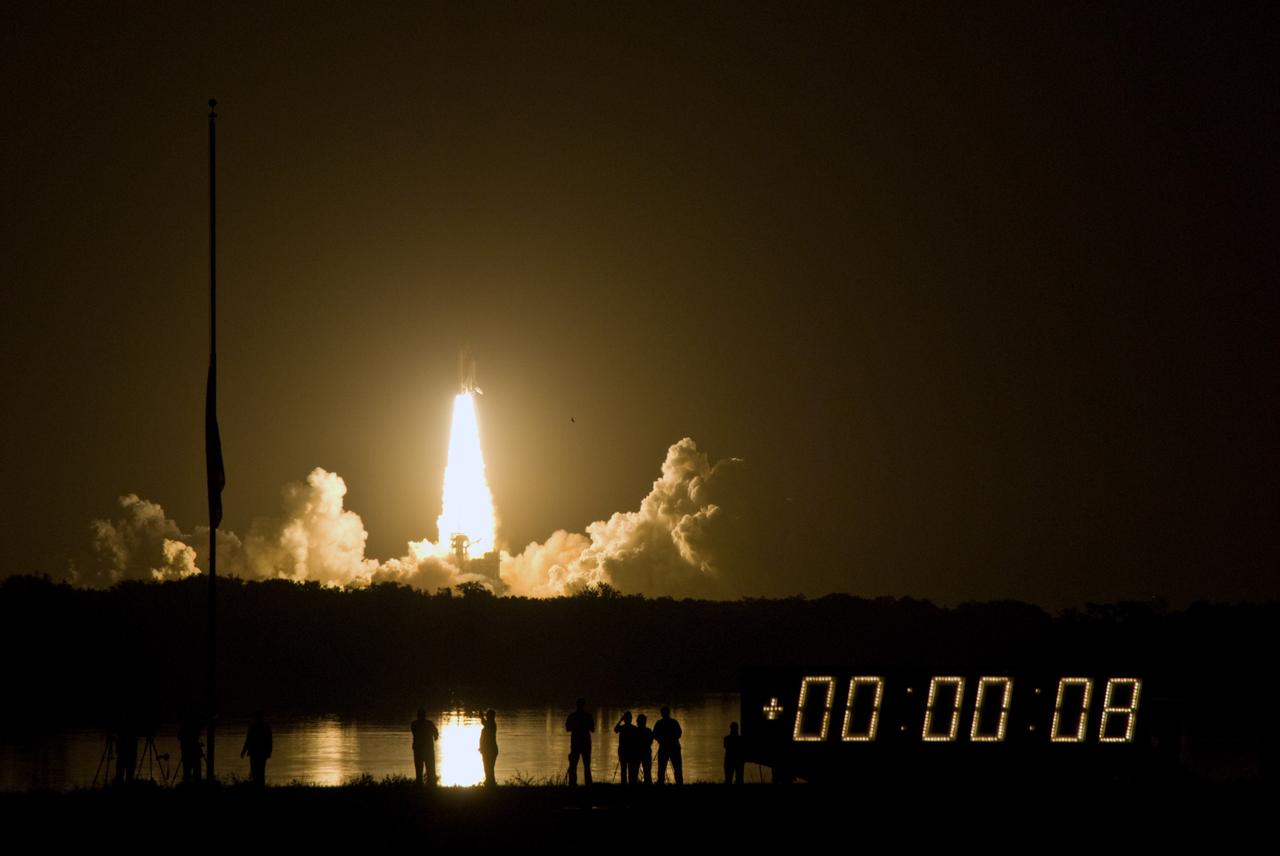
CAPE CANAVERAL, Fla. – Riding a tower of flames, space shuttle Discovery punches through a fabric of clouds as it roars toward space from NASA's Kennedy Space Center in Florida on the STS-128 mission. Liftoff from Launch Pad 39A was on time at 11:59 p.m. EDT. The first launch attempt on Aug. 24 was postponed due to unfavorable weather conditions. The second attempt on Aug. 25 also was postponed due to an issue with a valve in space shuttle Discovery's main propulsion system. The STS-128 mission is the 30th International Space Station assembly flight and the 128th space shuttle flight. The 13-day mission will deliver more than 7 tons of supplies, science racks and equipment, as well as additional environmental hardware to sustain six crew members on the International Space Station. The equipment includes a freezer to store research samples, a new sleeping compartment and the COLBERT treadmill. Photo credit: NASA/Jim Grossmann

CAPE CANAVERAL, Fla. – On Launch Pad 39A at NASA's Kennedy Space Center in Florida, the payload canister is lifted up to the Payload Changeout Room in the rotating service structure. Umbilical lines that keep the payload in an environmentally controlled environment are still attached. Inside is the payload for space shuttle Discovery and the STS-128 mission, the Multi-Purpose Logistics Module Leonardo and the Lightweight Multi-Purpose Experiment Support Structure Carrier. Discovery's 13-day flight will deliver a new crew member and 33,000 pounds of equipment to the station. The equipment includes science and storage racks, a freezer to store research samples, a new sleeping compartment and the COLBERT treadmill. Launch of Discovery on its STS-128 mission is targeted for August 25. Photo credit: NASA/Kim Shiflett

CAPE CANAVERAL, Fla. – Workers in the Vehicle Assembly Building at NASA's Kennedy Space Center in Florida wait patiently by the crawler-transporter for the decision to start rolling space shuttle Discovery to Launch Pad 39A. Rollout was delayed approximately 2 hours due to lightning in the area. First motion out of the Vehicle Assembly Building was at 2:07 a.m. EDT Aug. 4. The 3.4-mile journey was slower than usual as technicians stopped several times to clear mud from the crawler's treads and bearings. Discovery's 13-day flight will deliver a new crew member and 33,000 pounds of equipment to the International Space Station. The equipment includes science and storage racks, a freezer to store research samples, a new sleeping compartment and the COLBERT treadmill. Launch of Discovery on its STS-128 mission is targeted for late August. Photo credit: NASA/Dimitri Gerondidakis
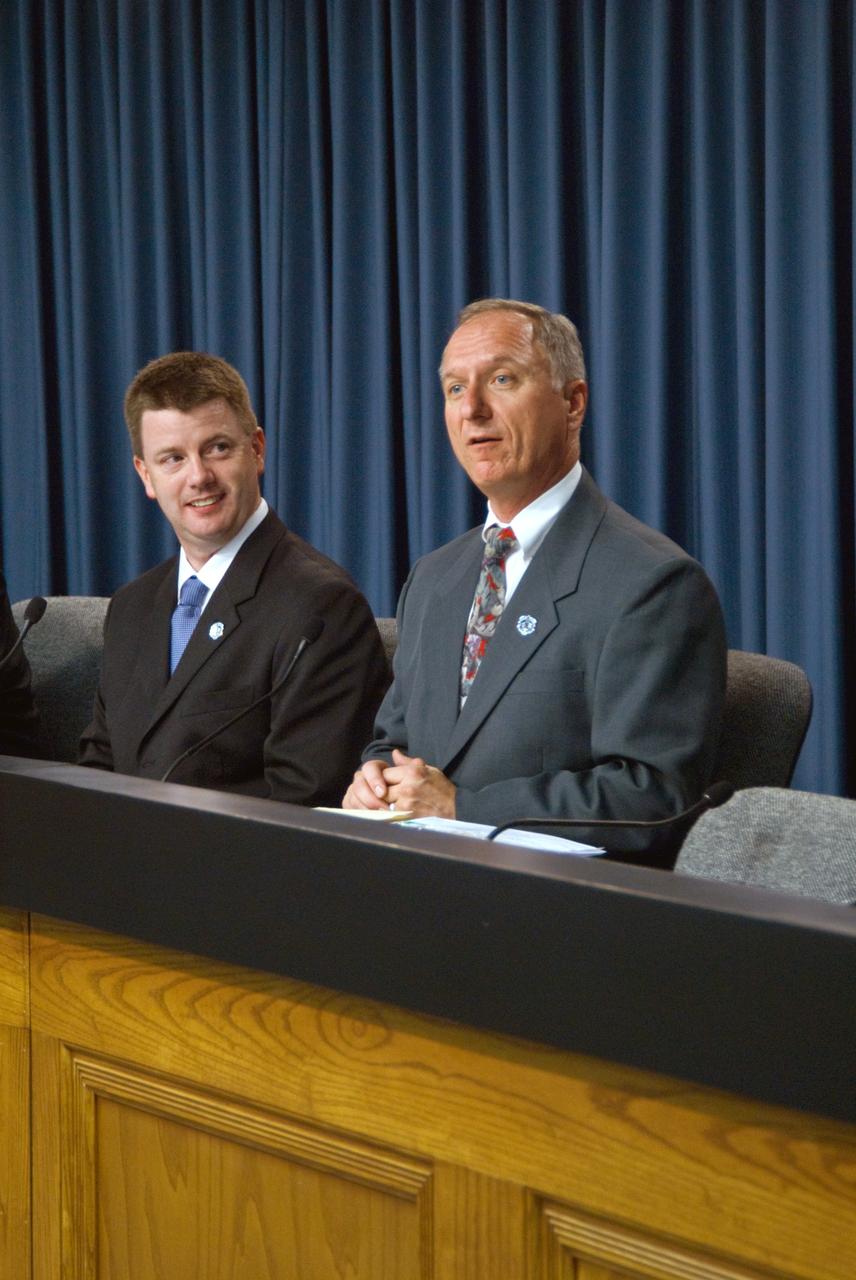
CAPE CANAVERAL, Fla. – In the Press Site auditorium at NASA's Kennedy Space Center in Florida, NASA managers brief the media following the scrub of a launch attempt of space shuttle Discovery. From left are Mission Management Team Chair Mike Moses and STS-128 Launch Director Pete Nickolenko. The launch attempt was scrubbed due to a problem with a liquid hydrogen valve in the main propulsion system. Liftoff now is no earlier than 12:22 a.m. EDT on Aug. 28.The 13-day STS-128 mission will deliver more than seven tons of supplies, science racks and equipment, as well as additional environmental hardware to sustain six crew members on the International Space Station. The equipment includes a freezer to store research samples, a new sleeping compartment and the COLBERT treadmill. The mission is the 128th in the Space Shuttle Program, the 37th flight of Discovery and the 30th station assembly flight. Photo credit: NASA/Cory Huston
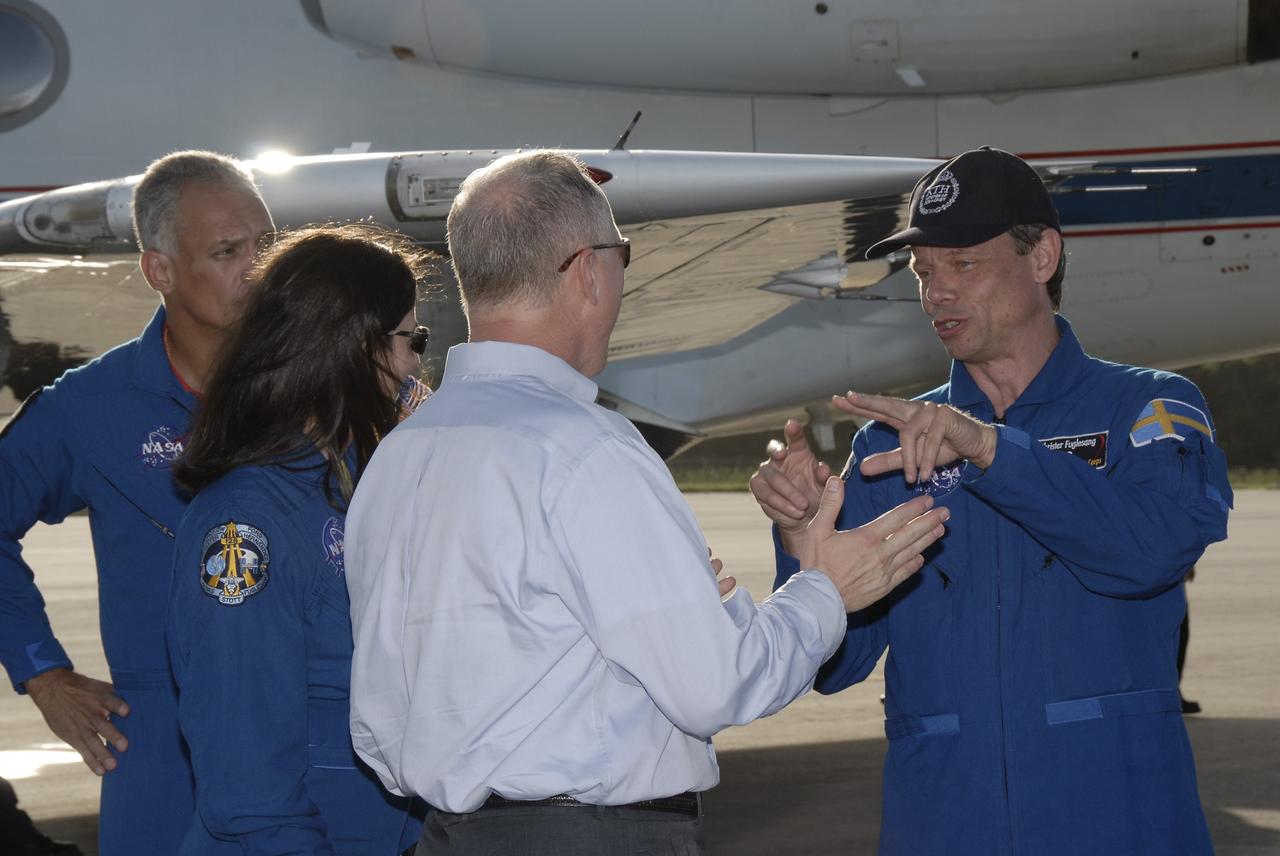
CAPE CANAVERAL, Fla. – STS-128 Launch Director Pete Nickolenko welcomes members of space shuttle Discovery's STS-128 crew to Kennedy Space Center. The crew arrived in a NASA Shuttle Training Aircraft, the modified Gulfstream II jet behind them, at Kennedy's Shuttle Landing Facility at 6:34 p.m. EDT. The astronauts are, from left, Mission Specialists John "Danny" Olivas, Nicole Stott who will remain on the International Space Station as flight engineer for Expedition 20, and Swedish astronaut Christer Fuglesang of the European Space Agency. The crew has returned to Kennedy to prepare for launch on Aug. 25 at 1:36 a.m. EDT. The 13-day mission will deliver a new crew member and 33,000 pounds of equipment to the International Space Station. The equipment includes science and storage racks, a freezer to store research samples, a new sleeping compartment and the COLBERT treadmill. Photo credit: NASA/Kim Shiflett
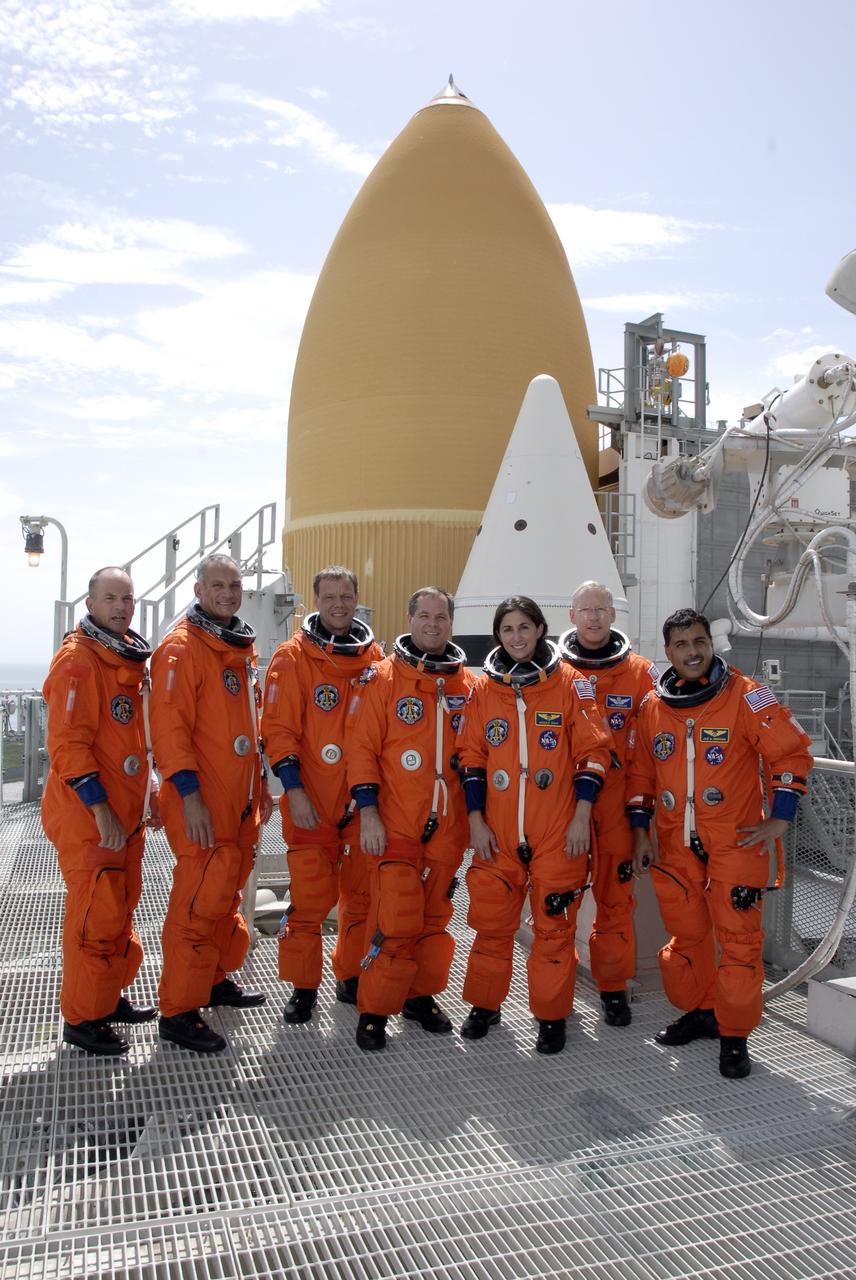
CAPE CANAVERAL, Fla. – The STS-128 crew members gather on the 225-foot level of NASA Kennedy Space Center's fixed service structure. From left are Commander Rick Sturckow, Mission Specialists Danny Olivas and Christer Fuglesang, Pilot Kevin Ford and Mission Specialists Nicole Stott, Patrick Forrester and Jose Hernandez. Mission crew members are at Kennedy to take part in the terminal countdown demonstration test, or TCDT, which includes emergency exit training and culminates in the simulated countdown. On the STS-128 mission, Discovery will deliver 33,000 pounds of equipment to the station, including science and storage racks, a freezer to store research samples, a new sleeping compartment and the COLBERT treadmill. Launch is targeted for late August. Photo credit: NASA/Kim Shiflett

CAPE CANAVERAL, Fla. – Brilliant flames spread light across Launch Pad 39A at NASA's Kennedy Space Center in Florida as space shuttle Discovery roars toward space on the STS-128 mission. Liftoff from Launch Pad 39A was on time at 11:59 p.m. EDT. The first launch attempt on Aug. 24 was postponed due to unfavorable weather conditions. The second attempt on Aug. 25 also was postponed due to an issue with a valve in space shuttle Discovery's main propulsion system. The STS-128 mission is the 30th International Space Station assembly flight and the 128th space shuttle flight. The 13-day mission will deliver more than 7 tons of supplies, science racks and equipment, as well as additional environmental hardware to sustain six crew members on the International Space Station. The equipment includes a freezer to store research samples, a new sleeping compartment and the COLBERT treadmill. Photo courtesy of Scott Andrews

CAPE CANAVERAL, Fla. – The morning sun highlights the back of space shuttle Discovery as it makes its way to Launch Pad 39A at NASA's Kennedy Space Center in Florida. The 3.4-mile journey was slower than usual as technicians stopped several times to clear mud from the crawler's treads and bearings caused by the waterlogged crawlerway. First motion out of the Vehicle Assembly Building was at 2:07 a.m. EDT Aug. 4. Rollout was delayed approximately 2 hours due to lightning in the area. Discovery's 13-day flight will deliver a new crew member and 33,000 pounds of equipment to the International Space Station. The equipment includes science and storage racks, a freezer to store research samples, a new sleeping compartment and the COLBERT treadmill. Launch of Discovery on its STS-128 mission is targeted for late August. Photo credit: NASA/Dimitri Gerondidakis
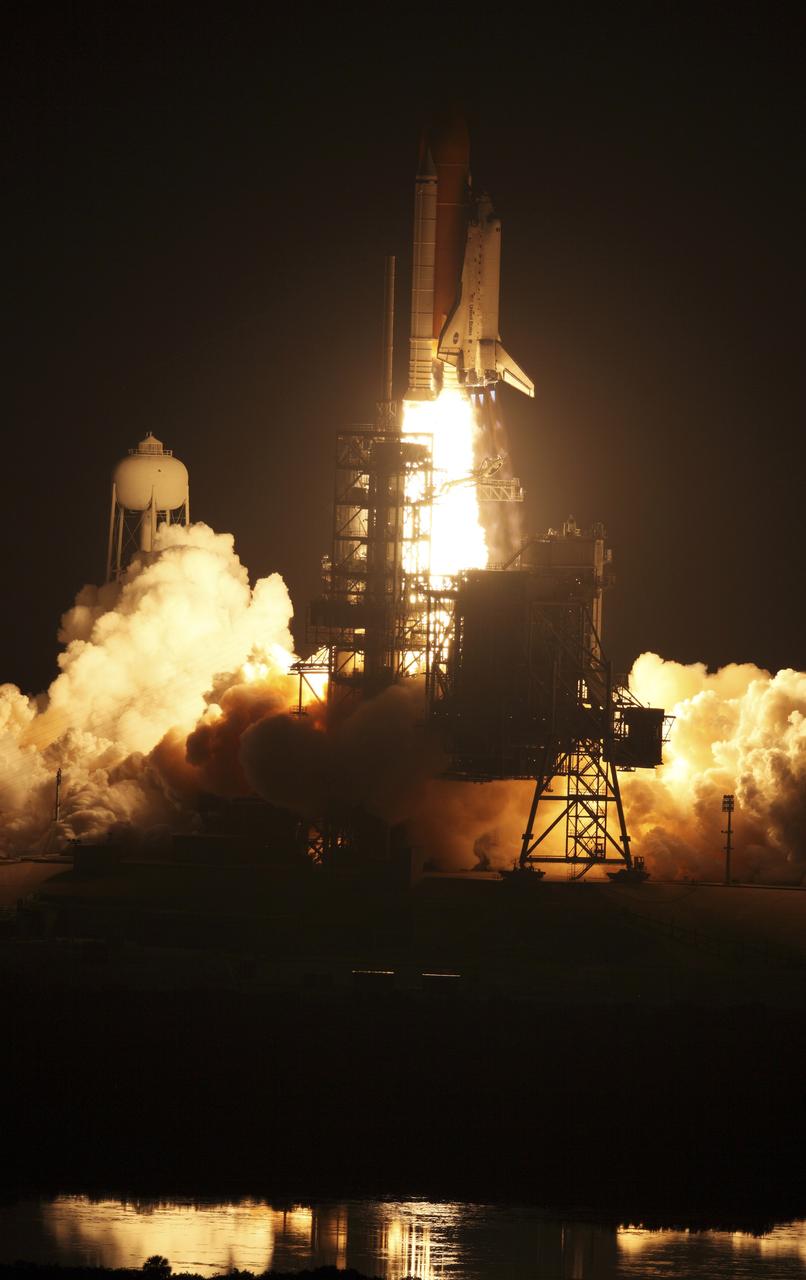
CAPE CANAVERAL, Fla. – At NASA's Kennedy Space Center in Florida, steam and smoke billow in the light from space shuttle Discovery's fiery launch on the STS-128 mission. Liftoff from Launch Pad 39A was on time at 11:59 p.m. EDT. The first launch attempt on Aug. 24 was postponed due to unfavorable weather conditions. The second attempt on Aug. 25 also was postponed due to an issue with a valve in space shuttle Discovery's main propulsion system. The STS-128 mission is the 30th International Space Station assembly flight and the 128th space shuttle flight. The 13-day mission will deliver more than 7 tons of supplies, science racks and equipment, as well as additional environmental hardware to sustain six crew members on the International Space Station. The equipment includes a freezer to store research samples, a new sleeping compartment and the COLBERT treadmill. Photo courtesy of Scott Andrews
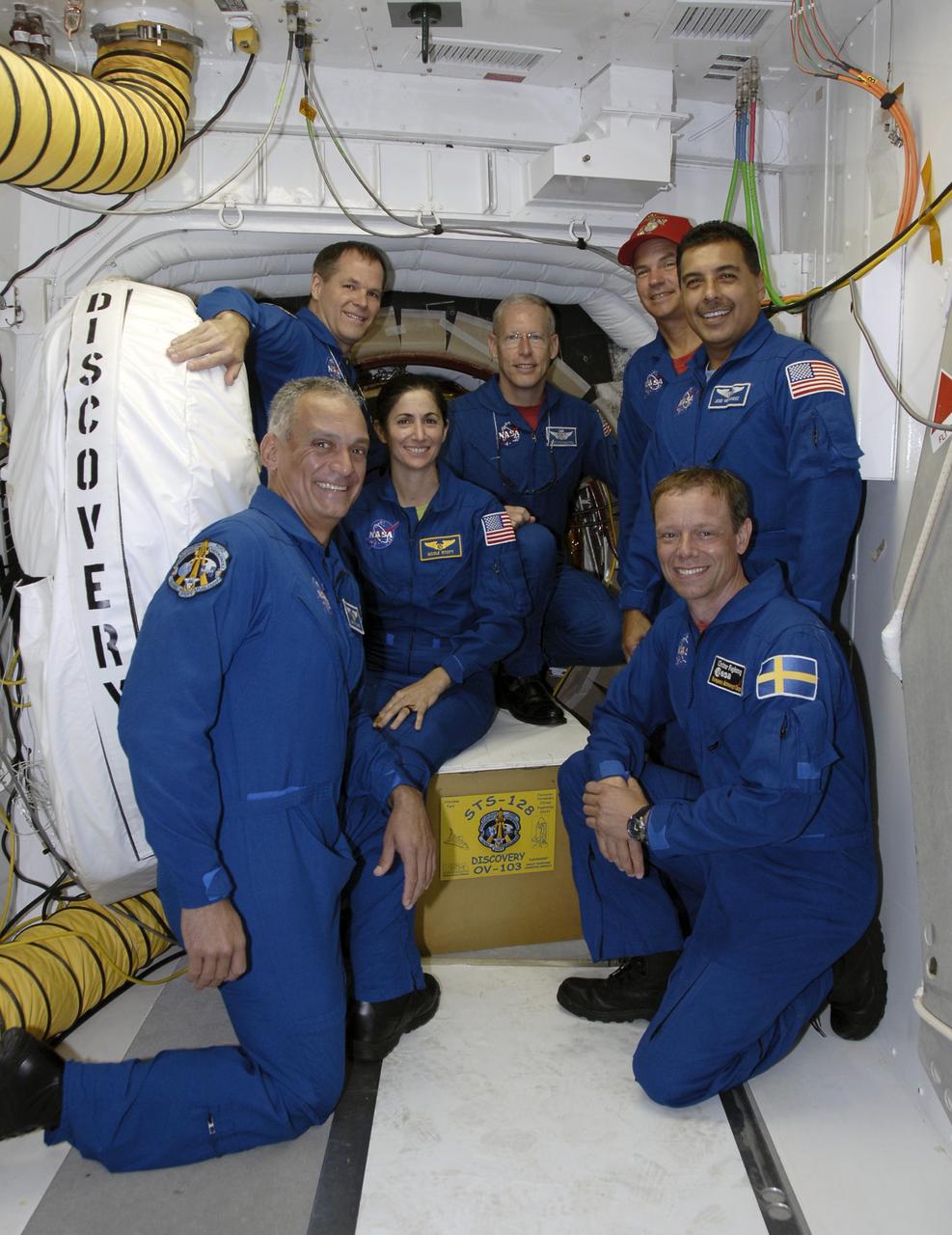
CAPE CANAVERAL, Fla. – Inside the White Room on Launch Pad 39A at NASA's Kennedy Space Center in Florida, STS-128 crew members pose in front of the space shuttle Discovery's hatch. Clockwise from lower left are Mission Specialist John "Danny" Olivas, Pilot Kevin Ford, Mission Specialists Nicole Stott and Patrick Forrester, Commander Rick Sturckow, and Mission Specialists Jose Hernandez and Christer Fuglesang, who represents the European Space Agency. The crew is at Kennedy for a launch dress rehearsal called the terminal countdown demonstration test, or TCDT, which includes emergency exit training and equipment familiarization, as well as a simulated launch countdown. Discovery will deliver 33,000 pounds of equipment to the station, including science and storage racks, a freezer to store research samples, a new sleeping compartment and the COLBERT treadmill. Photo credit: NASA/Kim Shiflett
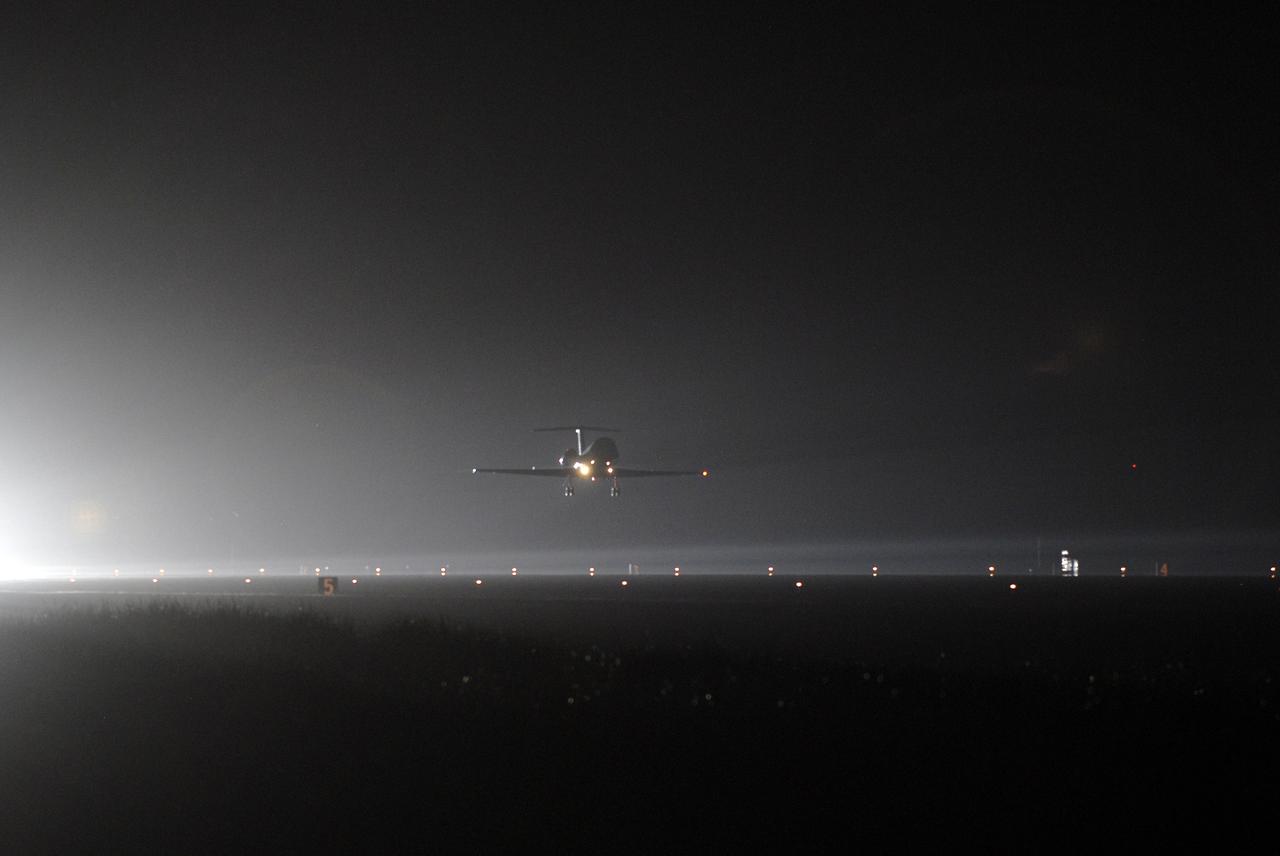
CAPE CANAVERAL, Fla. –At the Shuttle Landing Facility at NASA's Kennedy Space Center in Florida, a Shuttle Training Aircraft, or STA, approaches the runway during landing practice. STS-128 Commander Rick Sturckow and Pilot Kevin Ford are using the STAs to practice shuttle landings. The practice is in preparation for launch of space shuttle Discovery's STS-128 mission in late August to the International Space Station. The STA is a Grumman American Aviation-built Gulfstream II jet that was modified to simulate a shuttle’s cockpit, motion and visual cues, and handling qualities. The STS-128 crew is at Kennedy for a launch dress rehearsal called the terminal countdown demonstration test, or TCDT, which includes emergency exit training and equipment familiarization, as well as a simulated launch countdown. Discovery will deliver 33,000 pounds of equipment to the station, including science and storage racks, a freezer to store research samples, a new sleeping compartment and the COLBERT treadmill. Photo credit: NASA/Kim Shiflett

CAPE CANAVERAL, Fla. – In NASA Kennedy Space Center's Firing Room 4, Center Director Bob Cabana, at right, watches the launch of space shuttle Discovery on the STS-128 mission. Liftoff from Launch Pad 39A was on time at 11:59 p.m. EDT. The first launch attempt on Aug. 24 was postponed due to unfavorable weather conditions. The second attempt on Aug. 25 also was postponed due to an issue with a valve in space shuttle Discovery's main propulsion system. The STS-128 mission is the 30th International Space Station assembly flight and the 128th space shuttle flight. The 13-day mission will deliver more than 7 tons of supplies, science racks and equipment, as well as additional environmental hardware to sustain six crew members on the International Space Station. The equipment includes a freezer to store research samples, a new sleeping compartment and the COLBERT treadmill. Photo credit: NASA/Kim Shiflett

CAPE CANAVERAL, Fla. –Sitting on top of the mobile launcher platform and propelled by the crawler-transporter, space shuttle Discovery rolls onto Launch Pad 39A at NASA's Kennedy Space Center in Florida after a nearly 12-hour journey from the Vehicle Assembly Building. First motion out of the VAB was at 2:07 a.m. EDT Aug. 4. Rollout was delayed approximately 2 hours due to lightning in the area. The rollout was slower than usual as technicians stopped several times to clear mud from the crawler's treads and bearings caused by the waterlogged crawlerway. Discovery's 13-day flight will deliver a new crew member and 33,000 pounds of equipment to the International Space Station. The equipment includes science and storage racks, a freezer to store research samples, a new sleeping compartment and the COLBERT treadmill. Launch of Discovery on its STS-128 mission is targeted for late August. Photo credit: NASA/Troy Cryder

CAPE CANAVERAL, Fla. – In the Operations and Checkout Building at NASA's Kennedy Space Center in Florida, STS-128 crew members put on their launch-and-entry suits before heading to the Astrovan for the 3.4-mile drive to Launch Pad 39A. There, crew members will complete their suitup and enter space shuttle Discovery for the 1:36 a.m. EDT liftoff. Seen here, Commander Rick Sturckow has his helmet communications system connected. The 13-day mission will deliver more than 7 tons of supplies, science racks and equipment, as well as additional environmental hardware to sustain six crew members on the International Space Station. The equipment includes a freezer to store research samples, a new sleeping compartment and the COLBERT treadmill. The mission is the 128th in the Space Shuttle Program, the 37th flight of Discovery and the 30th station assembly flight. Photo credit: NASA/Kim Shiflett
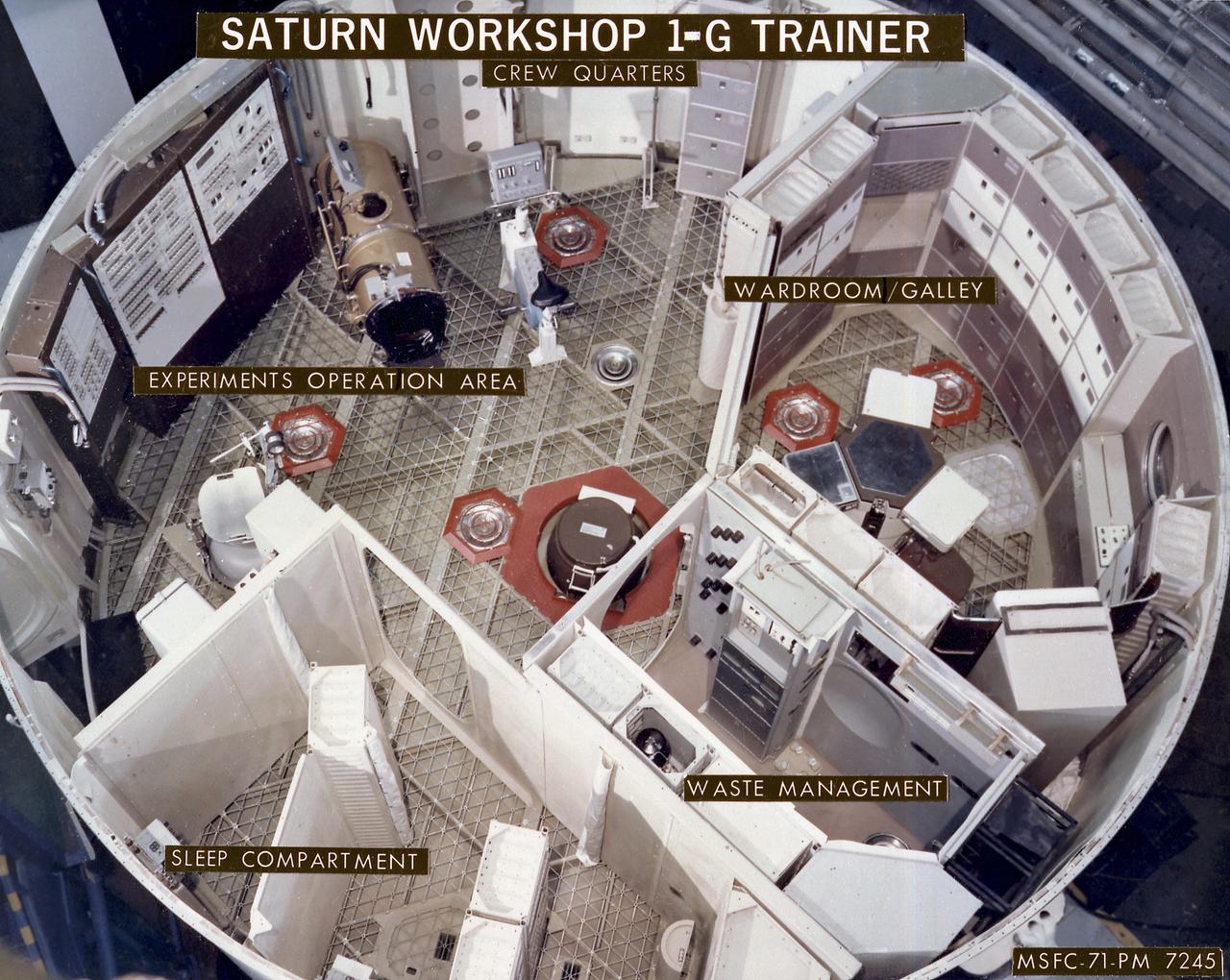
This image depicts a layout of the Skylab workshop 1-G trainer crew quarters. At left, in the sleep compartment, astronauts slept strapped to the walls of cubicles and showered at the center. Next right was the waste management area where wastes were processed and disposed. Upper right was the wardroom where astronauts prepared their meals and foods were stored. In the experiment operation area, upper left, against the far wall, was the lower-body negative-pressure device (Skylab Experiment M092) and the Ergometer for the vectorcardiogram experiment (Skylab Experiment M063). The trainers and mockups were useful in the developmental phase, while engineers and astronauts were still working out optimum designs. They provided much data applicable to the manufacture of the flight articles.

CAPE CANAVERAL, Fla. – CAPE CANAVERAL, Fla. – The astronauts for space shuttle Discovery’s STS-128 mission arrive at Kennedy Space Center’s Shuttle Landing Facility at 6:34 p.m. EDT in a NASA Shuttle Training Aircraft, a modified Gulfstream II jet. Mission Specialist Patrick Forrester addresses the media on hand to witness their arrival. Forrester is making his fourth spaceflight. The crew has returned to Kennedy to prepare for launch on Aug. 25 at 1:36 a.m. EDT. The 13-day mission will deliver a new crew member and 33,000 pounds of equipment to the International Space Station. The equipment includes science and storage racks, a freezer to store research samples, a new sleeping compartment and the COLBERT treadmill. Photo credit: NASA/Kim Shiflett
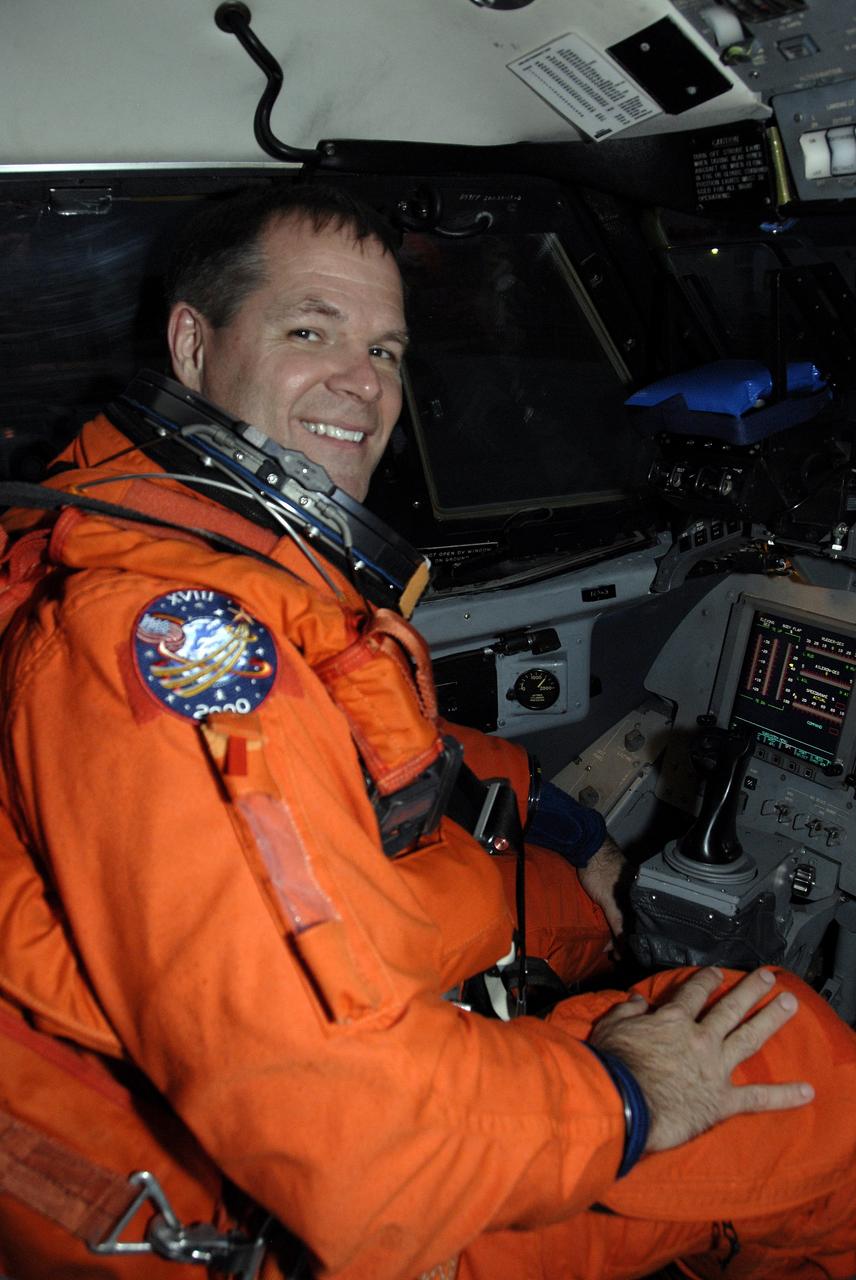
CAPE CANAVERAL, Fla. –At the Shuttle Landing Facility at NASA's Kennedy Space Center in Florida, STS-128 Pilot Kevin Ford settles in the cockpit of the Shuttle Training Aircraft, or STA, to practice shuttle landings. The practice is in preparation for launch of space shuttle Discovery's STS-128 mission in late August to the International Space Station. The STA is a Grumman American Aviation-built Gulfstream II jet that was modified to simulate a shuttle’s cockpit, motion and visual cues, and handling qualities. The STS-128 crew is at Kennedy for a launch dress rehearsal called the terminal countdown demonstration test, or TCDT, which includes emergency exit training and equipment familiarization, as well as a simulated launch countdown. Discovery will deliver 33,000 pounds of equipment to the station, including science and storage racks, a freezer to store research samples, a new sleeping compartment and the COLBERT treadmill. Photo credit: NASA/Kim Shiflett

CAPE CANAVERAL, Fla. – STS-128 Mission Specialist Jose Hernandez is welcomed to Kennedy Space Center by Center Director Bob Cabana, a former astronaut himself. Hernandez will be making his first spaceflight. Space shuttle Discovery's STS-128 mission crew members arrived in a NASA Shuttle Training Aircraft, a modified Gulfstream II jet, at Kennedy's Shuttle Landing Facility at 6:34 p.m. EDT. The crew has returned to Kennedy to prepare for launch on Aug. 25 at 1:36 a.m. EDT. The 13-day mission will deliver a new crew member and 33,000 pounds of equipment to the International Space Station. The equipment includes science and storage racks, a freezer to store research samples, a new sleeping compartment and the COLBERT treadmill. Photo credit: NASA/Kim Shiflett

CAPE CANAVERAL, Fla. – In the Operations and Checkout Building at NASA's Kennedy Space Center in Florida, STS-128 crew members put on their launch-and-entry suits before heading to the Astrovan for the 3.4-mile drive to Launch Pad 39A. There, crew members will complete their suitup and enter space shuttle Discovery for the 1:36 a.m. EDT liftoff. Seen here, Mission Specialist Danny Olivas signals he is ready for launch. The 13-day mission will deliver more than 7 tons of supplies, science racks and equipment, as well as additional environmental hardware to sustain six crew members on the International Space Station. The equipment includes a freezer to store research samples, a new sleeping compartment and the COLBERT treadmill. The mission is the 128th in the Space Shuttle Program, the 37th flight of Discovery and the 30th station assembly flight. Photo credit: NASA/Kim Shiflett
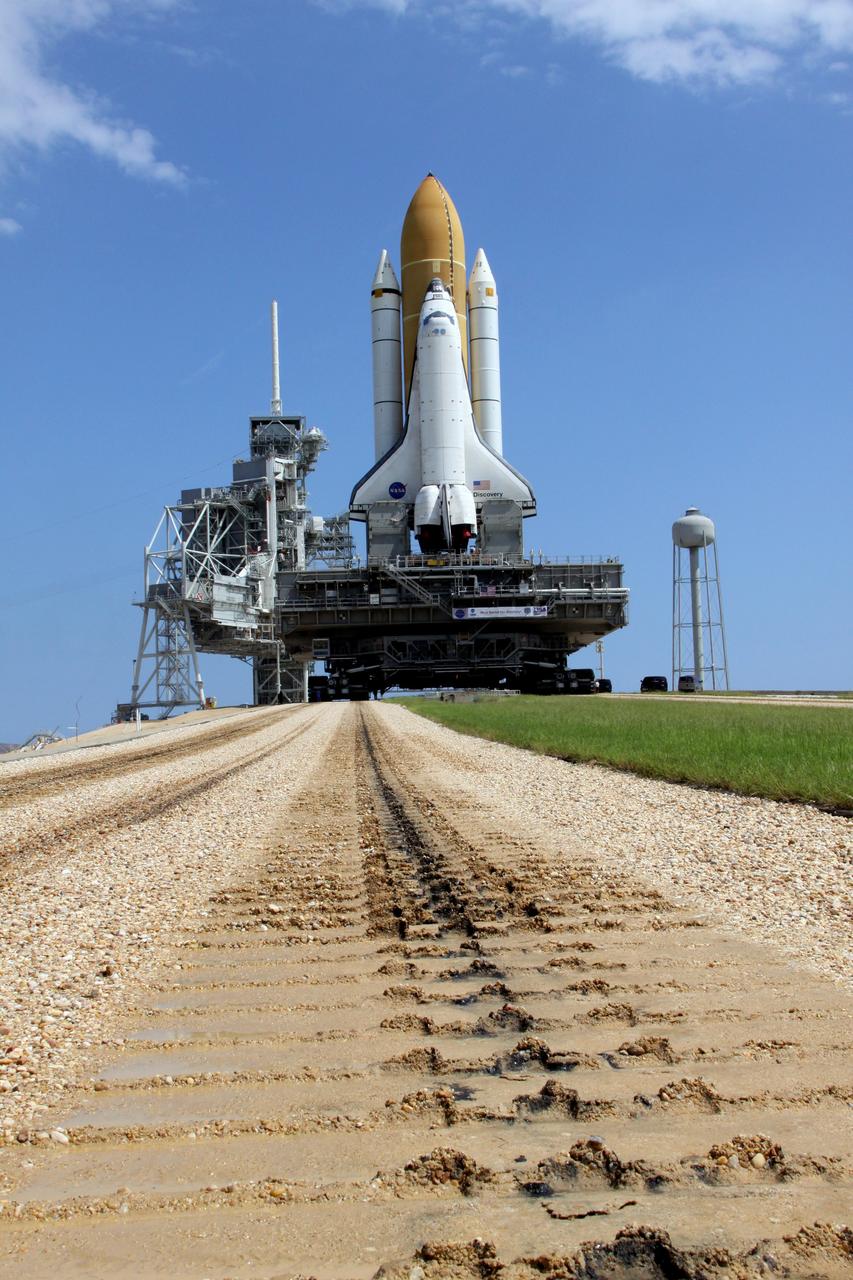
CAPE CANAVERAL, Fla. –Sitting on top of the mobile launcher platform and propelled by the crawler-transporter, space shuttle Discovery rolls up Launch Pad 39A at NASA's Kennedy Space Center in Florida after a nearly 12-hour journey from the Vehicle Assembly Building. First motion out of the VAB was at 2:07 a.m. EDT Aug. 4. Rollout was delayed approximately 2 hours due to lightning in the area. The rollout was slower than usual as technicians stopped several times to clear mud from the crawler's treads and bearings caused by the waterlogged crawlerway. Discovery's 13-day flight will deliver a new crew member and 33,000 pounds of equipment to the International Space Station. The equipment includes science and storage racks, a freezer to store research samples, a new sleeping compartment and the COLBERT treadmill. Launch of Discovery on its STS-128 mission is targeted for late August. Photo credit: NASA/Troy Cryder